Author: Andy Ogbarmey-Tettey

  • Let Ramadan strengthen our pursuit for peace, neighbourliness – Akufo-Addo to Ghanaians

    Let Ramadan strengthen our pursuit for peace, neighbourliness – Akufo-Addo to Ghanaians

    Former President Nana Akufo-Addo has extended his heartfelt wishes to Muslims in Ghana, Africa, and beyond as they begin the holy month of Ramadan.

    In his message to the Muslim Ummah, he expressed hope that the sacred period of fasting and prayer would serve as a reminder of the values of peace and unity among individuals and communities.

    “It is my wish that the period of Ramadan will strengthen further, our individual and collective resolve in the pursuit of peace and good neighborliness,” he stated.

    Ramadan is a time of deep spiritual reflection, devotion, and self-discipline observed by millions of Muslims across the world. It is also marked by acts of charity and togetherness.

    During the month-long observance, Muslims will fast from dawn to dusk, engage in prayers, and extend kindness to others as part of their faith.

  • 5000 Ghanaian pilgrims to be airlifted to Mecca for Hajj – Mahama

    5000 Ghanaian pilgrims to be airlifted to Mecca for Hajj – Mahama

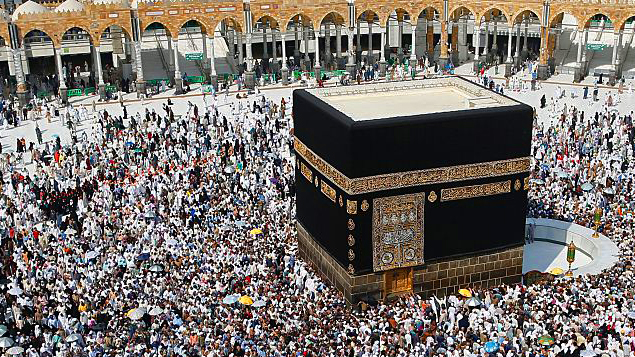
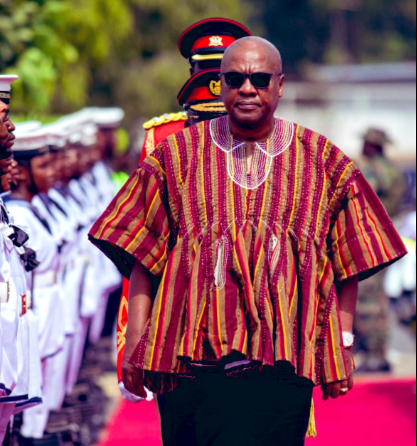
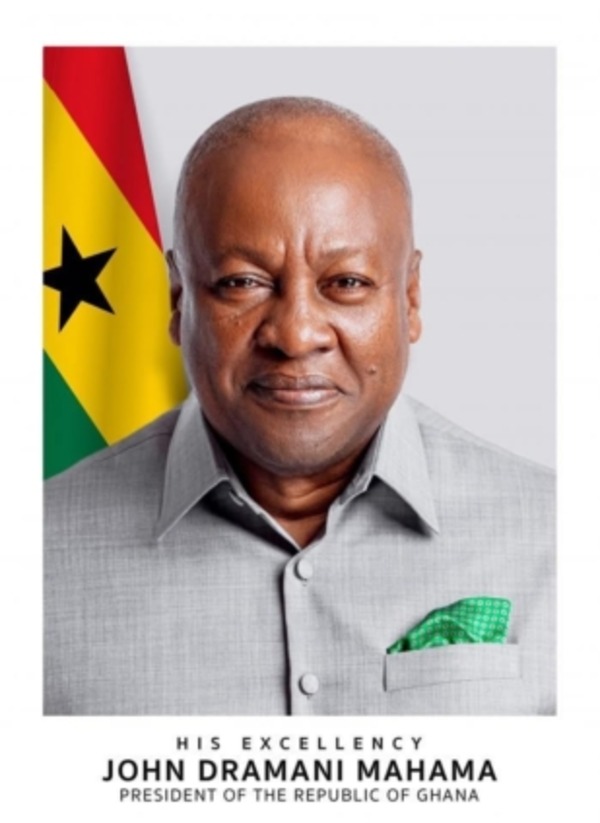
    President John Dramani Mahama has confirmed plans to transport 5,000 Ghanaian Muslims to Mecca for this year’s Hajj pilgrimage.

    Speaking at the sod-cutting ceremony for the Hajj village on Friday, February 28, President Mahama stressed the need for timely payments and efficient coordination to ensure a smooth travel process.

    “This year, we intend to airlift exactly 5,000 pilgrims to the holy land, and the task force has announced 13th March as the deadline for payment,” he stated.

    He further revealed that a pre-financing arrangement had been secured with a local bank, guaranteeing that all essential payments for accommodation, transport, and other services had been settled in advance.

    To avoid logistical challenges, President Mahama directed the Hajj task force to strictly adhere to the 5,000-pilgrim limit.

    “I’ve instructed the hard task force that they should cut off at exactly 5,000 and not go beyond 5,000. We don’t want the previous situation where people rush with late payments, and we are unable to airlift them and become complaining,” he added.

  • EC, NDC, NPP to discuss unresolved Ablekuma North electoral results

    EC, NDC, NPP to discuss unresolved Ablekuma North electoral results

    The Electoral Commission (EC) has revealed plans to engage the National Democratic Congress (NDC) and the New Patriotic Party (NPP) in a bid to resolve the long-standing impasse over the Ablekuma North Constituency parliamentary election results.

    EC Chairperson Jean Mensa disclosed this during an Inter-Party Advisory Committee (IPAC) meeting held at the EC’s corporate office in Accra last Wednesday. The meeting, attended by political parties, civil society organizations, media representatives, and state institutions, focused on strengthening collaboration between the commission and its stakeholders.

    “We will have an in-depth meeting to discuss it,” Mrs. Mensa stated, highlighting the need for dialogue to bring finality to the dispute. However, no date has been set for the engagement.

    The controversy surrounding the election results stems from incomplete results sheets from three polling stations, delaying the official declaration. The situation has fueled tension in the constituency, with supporters of both parties engaging in heated confrontations.

    The NDC maintains that its candidate, Ewurabena Aubyn, emerged victorious, while the NPP insists Nana Akua Owusu Afriyie won. In the absence of an official verdict, both parties have erected billboards thanking voters for their support.

    The Ablekuma North Constituency has 281 polling stations, with verified results from 278. The three remaining polling stations remain the focal point of the dispute, keeping the final outcome in limbo.

  • Antrak Shipping Line founder, Asoma Banda, has died

    Antrak Shipping Line founder, Asoma Banda, has died

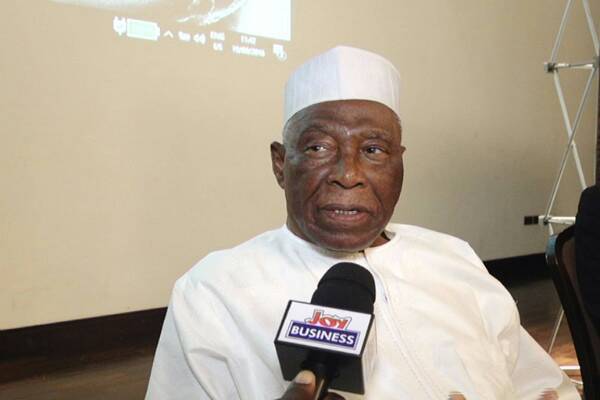
    Alhaji Asoma Banda, a towering figure in Ghana’s shipping and aviation industries, has passed away, leaving behind a legacy of business excellence and national impact.

    His death has been confirmed by prominent figures, including Sam Jonah and Delle Mahmoud.

    A trailblazer in maritime and air transport, Alhaji Banda played a crucial role in revolutionizing Ghana’s domestic aviation sector. As the founder of Antrak Shipping Line, he reshaped the industry and facilitated smoother trade and travel across West Africa.

    Beyond his entrepreneurial achievements, he was admired for his resilience, sharp business acumen, and dedication to Ghana’s progress. His contributions inspired a new generation of business leaders determined to follow in his footsteps.

    Though he is no more, his influence will continue to be felt through the industries he transformed and the lives he touched.

  • CPP calls for maintenance of graves of 3 ex-service men

    CPP calls for maintenance of graves of 3 ex-service men

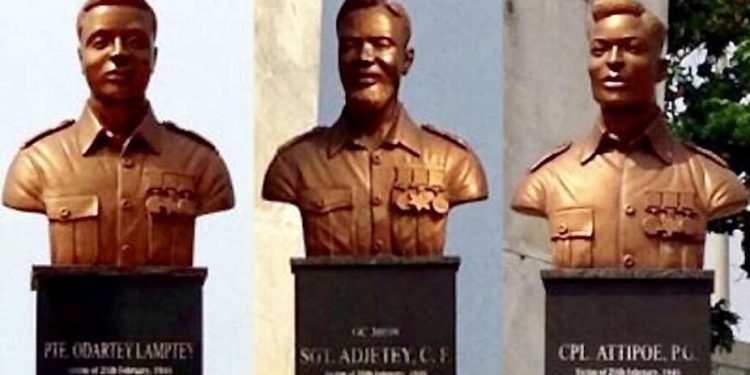
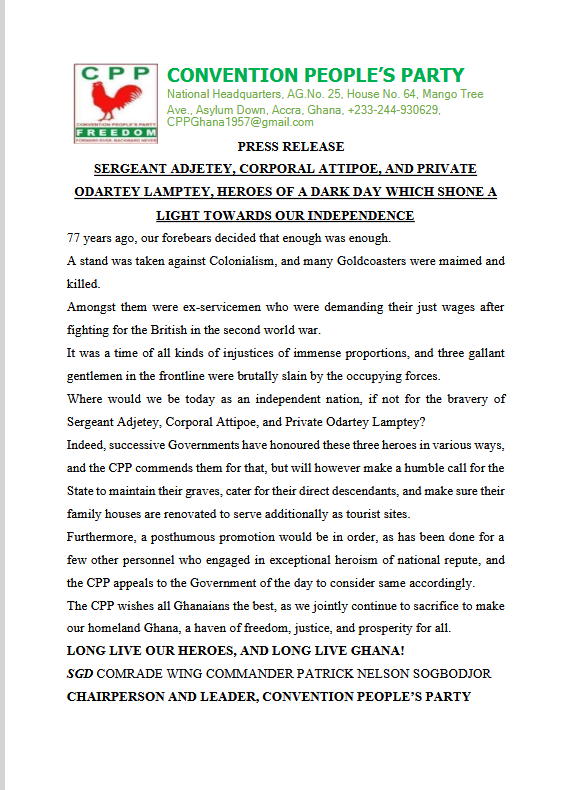
    The Convention People’s Party (CPP) has called on the government to ensure the proper upkeep of the graves of three fallen ex-servicemen—Sergeant Adjetey, Corporal Attipoe, and Private Odartey Lamptey—whose sacrifices were instrumental in Ghana’s fight for independence.

    In a press release, the party paid tribute to the bravery of the three soldiers, who lost their lives while demanding fair compensation after serving in the British forces during World War II. The CPP stressed the need to preserve their legacy, ensuring that future generations recognize their role in the country’s history.

    The party acknowledged past efforts by successive governments to honour the memory of the slain soldiers but called for additional measures. It urged the state to not only maintain their graves but also support their direct descendants and renovate their family homes into historical sites of national interest.

    Additionally, the CPP proposed a posthumous promotion for the three men, stating that such recognition had been extended to others who exhibited outstanding national heroism. The party appealed to the government to consider this as a means of appropriately honouring their contributions.

    In conclusion, the CPP extended goodwill to all Ghanaians and reiterated its dedication to building a nation founded on the principles of freedom, justice, and prosperity.

  • GES shuts down 21 schools over attacks in Bunkprugu/Nakpanduri District

    GES shuts down 21 schools over attacks in Bunkprugu/Nakpanduri District

    The Ghana Education Service (GES) has ordered the closure of 21 basic primary schools in the Bimbagu Circuit of the Bunkprugu/Nakpanduri District in the North East Region due to escalating violence in the area.

    Dalukirir Jakper Jolly, Supervisor for the Bimbagu Central and East Circuits, confirmed the closure, stating that the decision followed a directive from the Regional Director of Education.

    The shutdown comes in response to renewed clashes between the Nanik and Bimbagu communities, which erupted at dawn on Friday, February 28. The conflict resulted in the deaths of three Nanik residents, including a teacher from Walewale, all of whom were burned beyond recognition.

    Eyewitnesses reported that heavily armed men attacked the community around 5 a.m., opening fire and setting several houses ablaze. Security personnel, who arrived two hours later, found that homes and food supplies had been destroyed in the violence.

    Jakper Jolly explained that the closure was a precautionary measure to protect students and staff from potential spillover attacks.

  • Trump, Zelensky clash at White House over Russia-Ukraine war

    Trump, Zelensky clash at White House over Russia-Ukraine war

    A meeting between U.S. President Donald Trump and Ukrainian President Volodymyr Zelensky at the White House took a tense turn as the two leaders clashed over Ukraine’s approach to peace talks with Russia.

    During the Oval Office discussion, Trump made it clear that continued American support was contingent on Ukraine’s willingness to negotiate. “Make a deal or we’re out,” he warned, hinting at a potential shift in U.S. policy regarding the ongoing war.

    He also accused Zelensky of “gambling with World War Three” and suggested that Ukraine should show more appreciation for the aid it has received from the United States.

    Zelensky, however, pushed back, maintaining that Ukraine “should not compromise” with Russian President Vladimir Putin, standing firm against any forced settlement.

    The talks ended without an agreement, and Zelensky left the White House without signing a minerals deal that had been a central part of the discussions. Plans for a joint news conference with Trump were also scrapped, and Zelensky departed without addressing reporters.

    Shortly after, Trump took to his Truth Social platform, writing, “He can come back when he is ready for peace.”

    Vice President JD Vance also questioned whether Zelensky had demonstrated sufficient gratitude for America’s continued support throughout the war.

  • Regional Directors on disability-friendly healthcare compliance to be evaluated by GHS

    Regional Directors on disability-friendly healthcare compliance to be evaluated by GHS

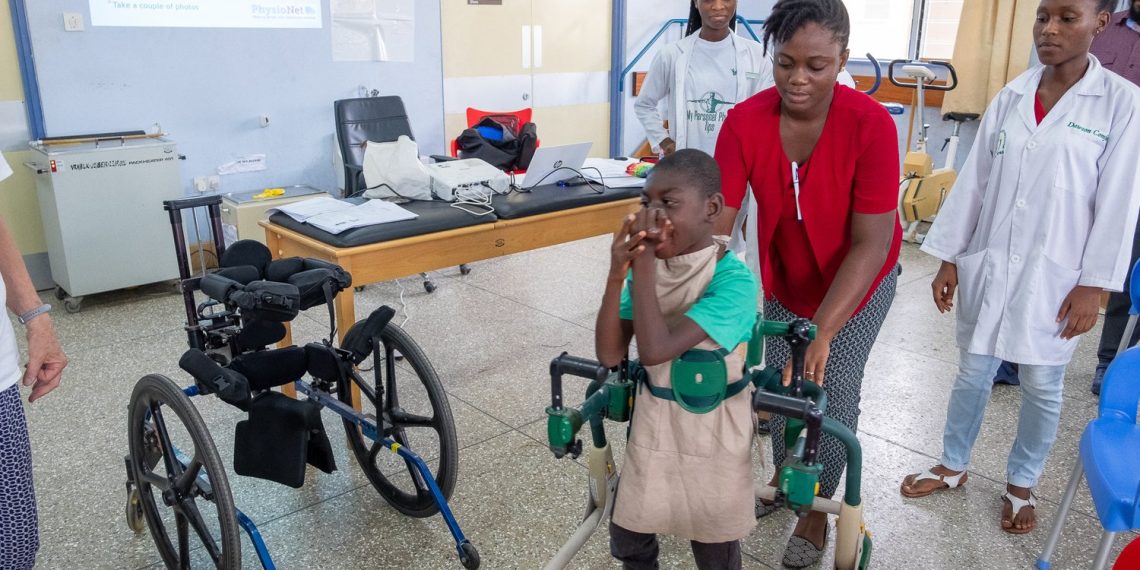
    The Ghana Health Service (GHS) has instructed all Regional Directors of Health to take immediate steps to enhance disability-friendly healthcare services across the country, with compliance set to be a key factor in performance evaluations.

    A directive issued by Acting Director-General, Prof. Samuel Kaba Akoriyea, outlines specific measures aimed at improving accessibility and inclusivity for persons with disabilities in hospitals.

    The directive follows discussions with Regional Directors on February 13, 2025, where the need for improved disability-friendly facilities was highlighted.

    Following this, GHS engaged with the National Disability Council and the Ghana Federation of Disability Organizations to develop strategies for strengthening rehabilitation services and implementing critical modifications in healthcare facilities.

    Citing Section 33 of the Disability Act, the directive underscores the legal obligation of health institutions to provide equal access to healthcare for persons with disabilities. These requirements include making structural adjustments, ensuring priority care for individuals with disabilities, and providing sign language interpreters where necessary.

    To drive these reforms, Regional Directors have been instructed to activate and reinforce existing structures in hospitals, ensure functional social welfare offices, update peer review checklists to include inclusivity measures, and reorient disability focal persons at regional and district levels.

    Prof. Akoriyea emphasized that adherence to these directives will be closely monitored and reflected in performance assessments, reinforcing GHS’s commitment to ensuring equitable healthcare access for all.

  • We must write the OSP into the constitution and board it up firmly – Special Prosecutor

    We must write the OSP into the constitution and board it up firmly – Special Prosecutor

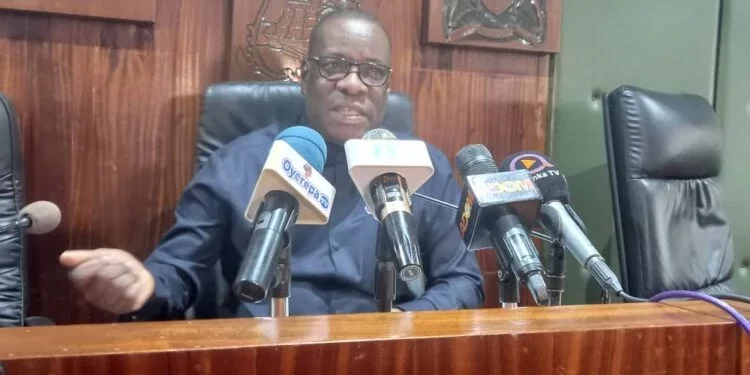
    Special Prosecutor Kissi Agyebeng has called for the formal inclusion of the Office of the Special Prosecutor (OSP) in Ghana’s constitution to ensure its longevity and independence beyond any individual’s tenure.

    Speaking at the UPSA Law School and One Ghana Movement Constitution Day Public Lecture, he emphasized the need for structural reforms to strengthen the fight against corruption.

    “First, we must write the Office of the Special Prosecutor into the constitution and board it up firmly. Do not dwell on me. Leave me out of the equation. I am just one person – obviously. My tenure will end at some point, and like everyone else, I will leave the scene,” he stated.

    Agyebeng warned against associating the work of the OSP with his personal efforts, stressing that the fight against corruption must be institutionalized for sustainability.

    Beyond constitutional entrenchment, he proposed the enactment of a Corrupt Practices Act to clearly define corruption-related offenses and eliminate ambiguities that hinder effective prosecution. He criticized the current legal framework, describing it as unnecessarily complex.

    “The present formulation under section 79 of Act 959 is unhelpful and circuitous. It engenders confusion. It is symptomatic of our penchant for crafting criminal legislation in an arcane and roundabout fashion instead of simply stating what we mean to say,” he remarked.

    To enhance the efficiency of corruption trials, the Special Prosecutor recommended the establishment of specialized anti-corruption courts with judges specifically trained to handle such cases.

    “Third, we must set up specialised anti-corruption courts manned by especially trained judges in the field to swiftly and efficiently deal with corruption cases,” he noted, adding that swift justice would serve as a deterrent to corrupt practices.

    Agyebeng also stressed the need to tackle unexplained wealth, not just among public officials but also within the private sector. He advocated for rigorous lifestyle audits and greater transparency in political party financing.

    “On this score, we must forcefully address unexplained wealth not only among public officers but also private persons, with biting lifestyle auditing. Then again, we must highlight the vexed question of the opacity attending political party financing and the monetisation of public elections,” he urged.

    He further suggested incorporating anti-corruption education into Ghana’s basic and secondary school curricula to instill a culture of integrity from an early age.

    “All I am saying is this – we must channel our anti-corruption laws as a construct for national development,” he concluded.

  • Over GHc5bn profit after tax declared by MTN in 2024

    Over GHc5bn profit after tax declared by MTN in 2024

    MTN Ghana has announced a profit after tax of GH₵5.03 billion for the financial year ending December 21, 2024.

    This marks a significant 26.3 per cent increase from the GH₵3.98 billion recorded in 2023, reflecting the company’s continued growth and resilience.

    Following this strong financial performance, the Board of Directors has proposed a final dividend of GH₵0.24 per share, up from GH₵0.175 per share in the previous year.

    With this adjustment, the total dividend payout for 2024 stands at GH₵0.305 per share, representing a 35.6 per cent increase compared to 2023. This payout accounts for 80.26 per cent of profit after tax, aligning with MTN Ghana’s established dividend policy.

    The final dividend is subject to shareholder approval, with key dates set for the ex-dividend date on Wednesday, April 2, 2025, and the dividend payment scheduled for Wednesday, April 16, 2025. Shareholders listed in MTN Ghana’s books as of Thursday, April 4, 2025, will qualify for the payout.

    MTN Ghana CEO, Stephen Blewett, expressed confidence in the company’s performance despite prevailing economic challenges. “Our strategic initiatives and commitment to operational efficiency have delivered strong results, ensuring we continue to create value for our shareholders,” he stated.

  • BoG Governor updates Parliament on scope, cost of new headquarters on March 5

    BoG Governor updates Parliament on scope, cost of new headquarters on March 5

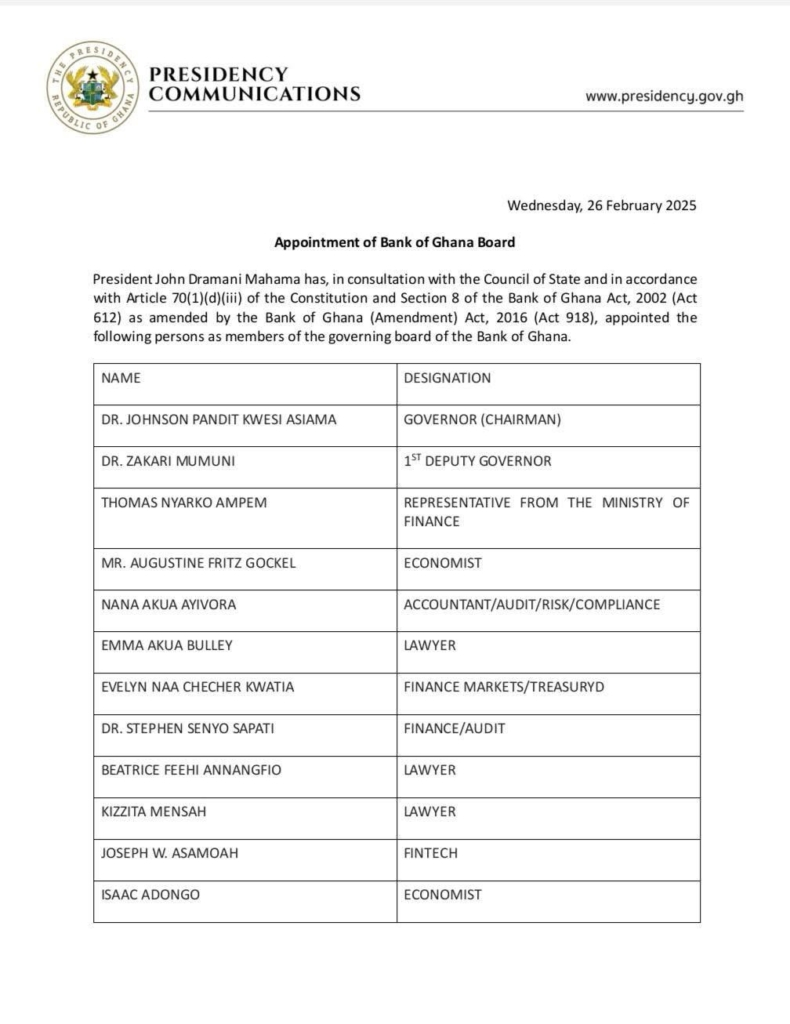
    Governor of the Bank of Ghana (BoG), Dr. Johnson Asiama, is set to appear before Parliament on Wednesday, March 5, to provide details on the construction of the central bank’s new headquarters, reportedly costing $250 million.

    His invitation follows demands from National Democratic Congress (NDC) Members of Parliament (MPs) for a breakdown of the project’s financing, cost variations, scope, and timeline.

    Addressing lawmakers, Majority Leader Mahama Ayariga emphasized the need for accountability and transparency in the project.

    “We have decided at the committee meeting that next week, Wednesday, we will invite the Governor of the Bank of Ghana, as an independent constitutional body, to come to this house to brief us on the pricing of the new Bank of Ghana head office building. We want to know how the price variation took place, how quantities were, and the justification for the need for a new Bank of Ghana Headquarters,” he stated.

    The inquiry follows the official inauguration of the Bank Square by former President Nana Addo Dankwa Akufo-Addo on November 20, 2024. The facility was designed to integrate advanced technology with modern architecture to enhance the BoG’s capacity in regulating Ghana’s financial system.

    During the inauguration, former President Akufo-Addo highlighted the significance of the new headquarters in strengthening Ghana’s financial infrastructure and aligning it with global standards.

    Meanwhile, the Office of the Special Prosecutor (OSP) is investigating potential corruption in the procurement process of the BoG headquarters. This probe was initiated in response to a petition from Bawku Central MP Mahama Ayariga, who raised concerns over cost escalations without approval from the Public Procurement Authority (PPA).

    The investigation targets former BoG Governor Dr. Ernest Addison, former Deputy Governors Dr. Maxwell Opoku-Afari and Mrs. Elsie Addo Awadzi, as well as the project contractor, Goldkey Properties Ltd.

    Ayariga disclosed that in response to his inquiries, Dr. Addison cited “National Security” as the reason for withholding details on project cost variations in a letter dated August 22, 2023. The OSP has yet to release its findings to the public.

  • Danger finds me due to my work as SP, it’s a thankless job – Kissi Agyebeng

    Danger finds me due to my work as SP, it’s a thankless job – Kissi Agyebeng

    Special Prosecutor Kissi Agyebeng has described his role as a perilous and unappreciated one, stating that his relentless pursuit of corruption earns him enemies daily.

    According to him, the nature of his work puts him in constant danger, making him a target of both smear campaigns and physical threats.

    Speaking at the Constitution Day Public Lecture in Accra on Friday, February 28, Mr. Agyebeng lamented the paradox surrounding the fight against corruption—while many claim to support it, they resist when the spotlight turns on them.

    “The position of the Special Prosecutor is a very thankless job. It fetches you droves of enemies daily and it brings you into frontal contact with the lowest forms of debasement in humans.

    “You do not go asking for it, it finds you. That is the nature of the job. Everyone wants to do his job, yet no one wants the Special Prosecutor to do his job. It all depends on the subject of the investigation,” he stated.

    He explained that this resistance often manifests in attacks on his reputation and attempts to undermine the credibility of the Office of the Special Prosecutor (OSP).

    “No one happily accedes to indictment, no one accepts investigations, no one wants to be called out as suspected of engaging in corruption and corruption-related activities and so there is always a strong pushback intended at deflecting the focus of scrutiny and accountability,” he noted.

    Beyond the reputational smears, Mr. Agyebeng disclosed that his job comes with significant security threats. He revealed that some of those affected by his investigations would go to extreme lengths to eliminate him.

    “My security risk is ultra high and I have to be perpetually on the lookout for attacks on my person,” he added.

    Despite these challenges, the Special Prosecutor reaffirmed his commitment to fighting corruption, emphasizing that he remains undeterred by the risks associated with the role.

  • 2024 WASSCE for Private Candidates: 108 results withheld

    2024 WASSCE for Private Candidates: 108 results withheld

    The West African Examinations Council (WAEC) has released the provisional results for the 2024 West African Senior School Certificate Examination (WASSCE) for Private Candidates, Second Series.

    However, the results of 108 candidates have been withheld due to suspected malpractice, pending further investigations.

    A total of 38,316 candidates sat for the examination, comprising 17,596 males and 21,131 females. Despite registering, 1,354 candidates were absent.

    John Kapi, Head of Public Affairs at WAEC, confirmed in a statement on Friday, February 28, that irregularities were detected both during the examination and the subsequent marking process. As a result, the subject results of 303 candidates have also been withheld.

    Candidates can now check their results online via www.waecgh.org.

    Performance Breakdown

    The results for the four core subjects show varying levels of success:

    • English Language: 54.79% scored A1-C6, 13.49% obtained D7, 12.90% received E8, and 13.45% had F9.
    • Mathematics (Core): 37.44% scored A1-C6, 11.00% obtained D7, 12.30% received E8, while 37.42% had F9.
    • Integrated Science: 53.31% secured A1-C6, 12.02% obtained D7, 13.68% received E8, and 18.46% had F9.
    • Social Studies: 87.88% achieved A1-C6, 3.11% obtained D7, 2.26% received E8, and 5.76% had F9.

    Caution Against Scammers

    WAEC has issued a strong warning against individuals and fraudsters who claim they can alter examination results for a fee. The council assures the public that its database remains secure and that results can only be verified through official channels.

    “Institutions and organizations are encouraged to verify results directly from WAEC or use the online verification service at www.waecgh.org,” the statement added.

    WAEC expressed appreciation to all stakeholders who contributed to the smooth conduct of the examination and the timely release of results.

  • 3 dead in violent attack at Nanik in Northern Region

    3 dead in violent attack at Nanik in Northern Region

    Three people have been burnt beyond recognition following a deadly attack at Nanik, a community in the Bunkprugu/Nakpanduri District of the North East Region.

    The incident, which occurred at dawn on Friday, has left the area in distress as residents count their losses.

    Among the deceased is 27-year-old Nashiru Maijida, a teacher who hailed from Walewale in the West Mamprusi Municipality. Maijida had been posted to Nanik two years ago and was reportedly caught in the chaos when attackers stormed the village.

    Their charred remains have been transferred to the Binde Hospital morgue, where autopsies will be conducted.

    Eyewitnesses say the assault was carried out by a rival faction from Bimbagu, escalating tensions over an ongoing chieftaincy dispute. The attackers allegedly set nearly 50 houses ablaze, reducing properties worth thousands of Ghana cedis to ashes.

    The violence is linked to opposition from Bimbagu residents against plans to elevate Nanik’s chief, Nanik Daana, to a paramount chief status. The traditional leadership in the North East Region and the Mamprugu Traditional Council have backed the move, but it has been met with resistance.

    Earlier, the chief and people of Bimbagu held a press conference, urging National Security and the National House of Chiefs to intervene and halt the elevation process. They also issued a stern warning to Nanik Daana, stating that he should never set foot in Bimbagu if he is promoted to paramountcy.

    Authorities are yet to make any official statement on the latest attack, but tensions remain high in the area.

  • Persons with Disability (Amendment) Bill to be passed by Parliament

    Persons with Disability (Amendment) Bill to be passed by Parliament

    Parliament is set to pass the Persons with Disability (Amendment) Bill, a move aimed at strengthening legal protections and improving the rights and welfare of persons with disabilities (PWDs) in Ghana.

    The government has also announced plans to introduce a Legislative Instrument (LI) to enhance the implementation of the Persons with Disability Act, 2006 (Act 715), ensuring stronger enforcement of disability rights.

    President John Dramani Mahama reaffirmed the government’s dedication to disability inclusion while delivering his State of the Nation Address in Parliament on Thursday. He emphasized the need for equal employment opportunities and the importance of ensuring PWDs have access to education, social protection, and sustainable livelihoods.

    As part of this commitment, Mahama stated that the government was determined to enforce the law requiring both public and private sector employers to allocate five per cent of their job vacancies to persons with disabilities.

    This push aligns with a Private Member’s Bill tabled in Parliament by Francis-Xavier Sosu, the Member of Parliament (MP) for Madina, on September 5, 2022. The proposed bill seeks to make it mandatory for all public and private institutions to employ PWDs while addressing broader issues related to disability rights.

    Beyond employment, Mahama reiterated the government’s commitment to expanding access to education and financial support for persons with disabilities.

    “… I want to reiterate our commitment to ensuring that individuals with disabilities have access to free tertiary education and equal opportunities to pursue their academic and professional ambitions,” he stated.

    To further enhance social protection, the government is also expanding the Livelihood Empowerment Against Poverty (LEAP) Programme under its “Big LEAP” initiative.

    “As we work towards completing the Ghana National Household Data Census by 2025, we will reassess the status of LEAP beneficiary households to facilitate the enrolment of new beneficiaries,” Mahama added.

    The passage of the Persons with Disability (Amendment) Bill is expected to provide stronger legal backing for disability rights, ensuring greater inclusion and equal opportunities in all sectors of the economy.

  • Complete construction of Atibie, Twenedurase-Akwasiho roads – Mpraeso MP to govt

    Complete construction of Atibie, Twenedurase-Akwasiho roads – Mpraeso MP to govt

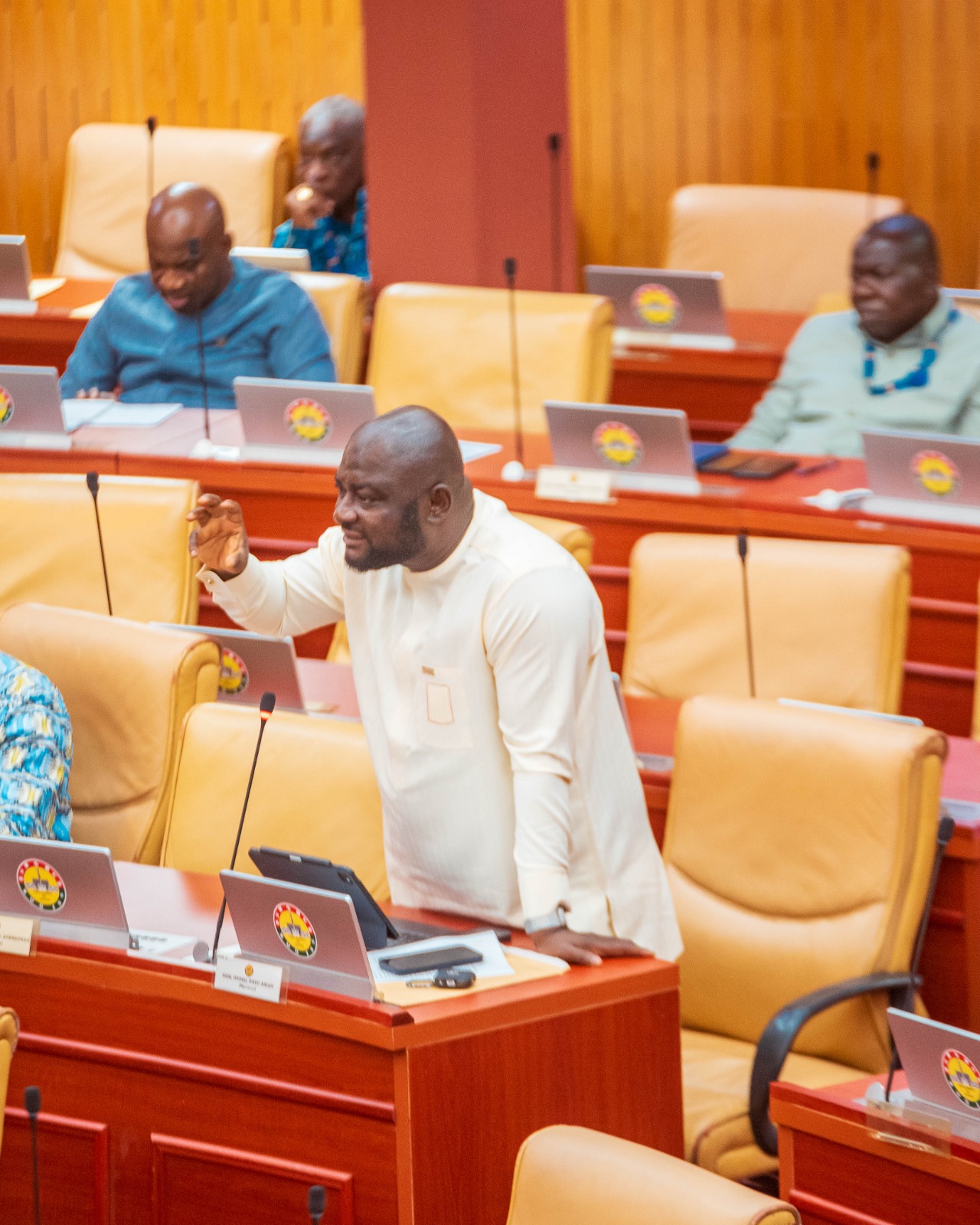
    Member of Parliament for Mpraeso, Davis Ansah Opoku, has urged the Minister for Roads and Highways, Kwame Governs Agbodza, to expedite the completion of the Atibie and Twenedurase-Akwasiho roads, stressing their significance for economic activity and tourism in the Kwahu area.

    Addressing Parliament during its 26th sitting, Opoku expressed frustration over the delayed roadworks, emphasizing their importance ahead of the Kwahu Easter Festival, which annually attracts thousands of visitors.

    In response, Agbodza provided updates on the projects, revealing that they had been separately awarded. The Atibie Paragliding Road, a crucial route for tourists, was initially scheduled for completion in December 2020 after construction commenced on December 18, 2019. However, financial constraints stalled progress, with Phase 1 (Km 0 – 2.5) reaching 55.34% completion and Phase 2 (Km 2.5 – 5.0) advancing to 78.79%.

    Similarly, work on the Twenedurase-Akwasiho road, one of four major access routes to Greater Kwahu, remains incomplete, causing frustration among local residents and businesses that depend on it for trade and transportation.

    Opoku stressed the urgency of these road projects, particularly as Kwahu gears up for Easter, an event synonymous with paragliding, cultural showcases, and tourism.

    “Easter in Ghana is synonymous with Kwahu, and many people, including tourists, will be coming for the paragliding activities. Completing these roads is essential to ensuring a smooth and enjoyable experience for all,” he said.

    Recognizing the concerns raised, Agbodza reassured Parliament that despite financial limitations, the ministry was committed to seeing the projects through.

    “I fully agree that these projects are crucial, and we will do everything possible within the financial scope to address the situation,” he assured.

    To emphasize the region’s tourism appeal, Opoku extended a personal invitation to the minister, encouraging him to visit Kwahu during Easter with his spouse and experience the rich cultural heritage and festivities firsthand.

    The call for urgent road completion forms part of broader efforts to enhance infrastructure development in the constituency, ensuring smoother travel and greater economic opportunities for locals.

  • Former ABSA Bank staff caught stealing GHC1.2m to spend 10 years in jail

    Former ABSA Bank staff caught stealing GHC1.2m to spend 10 years in jail

    An Accra High Court has sentenced Emmanuel Sakyi Afriyie, a former contract employee of ABSA Bank, to 10 years in prison for stealing GH¢1.2 million from the accounts of bank staff, including a deceased judge and a former Inspector General of Police (IGP).

    Afriyie, 25, had been on trial since 2023 after his arrest at Kotoka International Airport (KIA) while attempting to flee the country with his girlfriend, Ivy Okertchiri. He had allegedly planned to escape to Dubai, UAE, using money he fraudulently withdrew from customer accounts over two months.

    However, his alleged accomplice, Cecil Nyamesem Agyarkwa, was acquitted and discharged of all charges related to the theft.

    Authorities caught wind of his fraudulent activities and moved quickly to track him down. As he prepared to board his Dubai-bound flight on June 4, 2023, security officials apprehended him at KIA.

    “On June 4, 2023, A1 together with his girlfriend Ivy Okertchiri, who stood as surety for him attempted to escape from the jurisdiction to Dubai, but he was arrested at the Kotoka International Airport by the Ghana Immigration Service and handed over to the police,” a report from The Chronicle Newspaper quoted case facts as saying.

    Investigations revealed that Afriyie managed to steal the funds by secretly recording his boss as she entered her password on her mobile phone. He later used the footage to decode her credentials, granting him unauthorized access to customer accounts.

    With this access, he transferred large sums to his personal bank account, as well as to 17 accomplices across various banks and mobile money platforms.

    Reports indicate that Afriyie lavishly spent his stolen money, purchasing a Toyota Camry and an iPhone 14 Pro Max.

    Afriyie faced 13 charges, including conspiracy to commit theft, falsification of accounts, and forgery of documents. He pleaded not guilty to all charges.

    Some of his accomplices were also arrested and brought before the court, with initial remand orders before securing bail.

  • VIDEO: Christian Methodist SHS students assault colleague over alleged phone theft

    VIDEO: Christian Methodist SHS students assault colleague over alleged phone theft

    A student of Christian Methodist Senior High School in Weija has been brutally assaulted by a group of fellow students after being accused of stealing a mobile phone.

    In a viral video circulating on social media, the agitated mob stormed a nearby store in an attempt to continue their attack. However, some residents in the vicinity swiftly intervened, rescuing the student from further harm.

    Despite the residents’ efforts to protect the student, the enraged students turned on them, attempting to overpower those who tried to restrain them. Nevertheless, the residents successfully dispersed the mob and escorted them away from the scene.

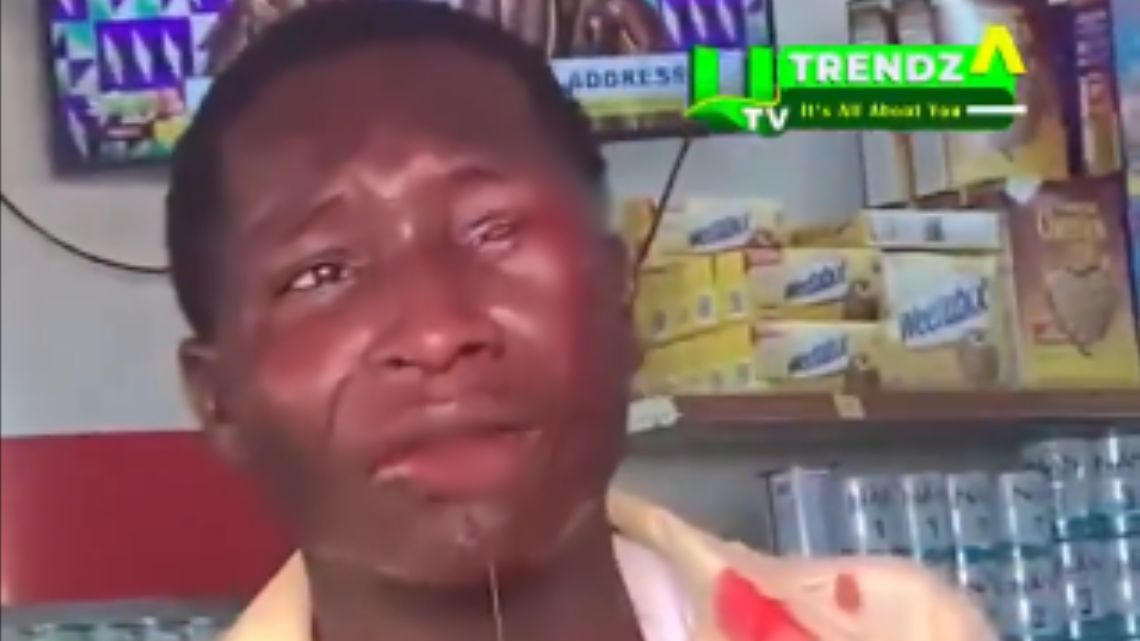
    In one of the videos, the victim appears severely beaten, with a swollen face and a bloody mouth. Struggling to speak, he attempts to narrate his ordeal but is visibly in distress.

    This incident that has been widelyt condemned by X users adds to the growing concern over rising indiscipline among students in second-cycle institutions. Recently, authorities at Sokode Senior High/Technical School in the Ho Municipality of the Volta Region were forced to temporarily shut down the school due to security concerns following violent clashes between students and local youth from the Gbogame community.

    According to reports, some male students had illegally left the school premises and attacked youth at local pubs, believing they were responsible for an earlier assault on a fellow student at a beans eatery. In retaliation, about 40 armed youth from Gbogame stormed the male dormitories, vandalizing property.

    With such incidents on the rise, education stakeholders are calling for the reinstatement of corporal punishment in schools as a measure to curb student indiscipline.

    In Ghana, what is now termed as ‘instant justice’ where an angry mob launches at attack at a suspect is unlawful. What is legal, requires citizens reporting the incident to the police for investigations to commence.

  • Early Power threatens to cut supply over ECG’s $48.2M debt

    Early Power threatens to cut supply over ECG’s $48.2M debt

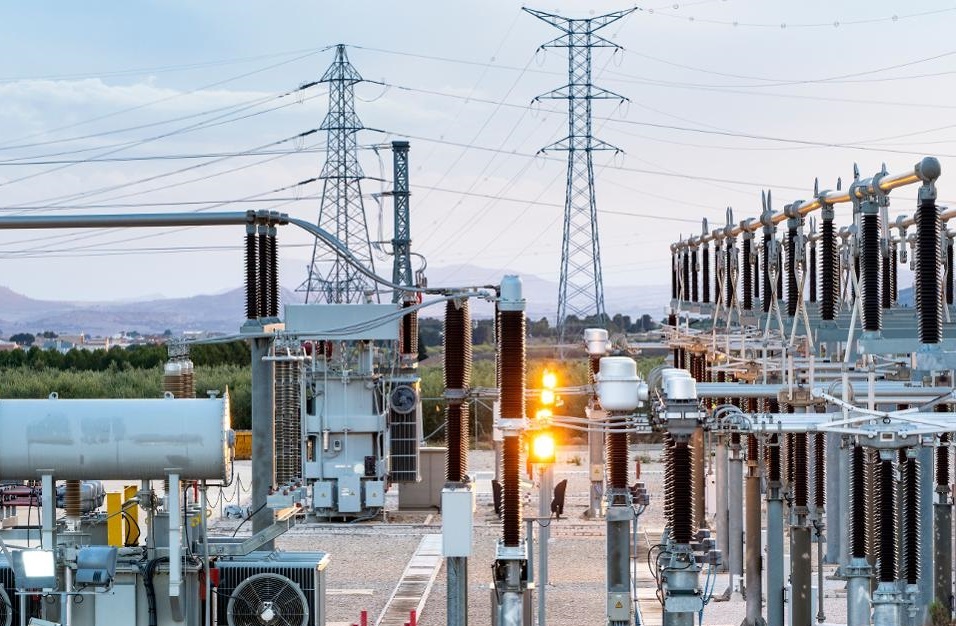
    Ghana’s electricity supply is under threat as independent power producer Early Power has warned of a potential shutdown due to the Electricity Company of Ghana’s (ECG) failure to clear an outstanding debt of $48,215,405.89.

    In a letter addressed to ECG’s Acting Managing Director on Friday, February 28, 2025, Early Power expressed deep concern over ECG’s failure to honor its financial obligations, noting that $47,249,898.93 of the total amount was already overdue.

    The letter, which was copied to the Minister for Finance, the Minister for Energy, the Executive Secretary of the Public Utilities Regulatory Commission (PURC), and the Board Chairman, stressed the severe financial strain ECG’s default has placed on the company.

    “As a result of ECG’s default in payment, the Seller finds itself in a precarious financial position and will not be able to meet its debt service obligations and operating costs,” Early Power stated.

    The company has set February 28, 2025, as the deadline for ECG to settle the overdue amount. Failure to meet this deadline, Early Power warned, would compel it to activate provisions under the Power Purchase Agreement (PPA) and the Power Compact Operations Agreement (PCOA), which could result in the suspension of electricity supply.

    Meanwhile, Ghana’s energy sector is facing another crisis as N-Gas Limited has formally notified the Volta River Authority (VRA) of its decision to halt gas supply to Ghana by March 6, 2025, due to unpaid arrears exceeding $75 million.

    In a letter to VRA’s Managing Director on Tuesday, February 18, N-Gas expressed frustration over the continuous delays in payment despite previous assurances. The company highlighted the ripple effect on its own operations, as it has been unable to pay its gas suppliers and transporters since November 2024 due to the mounting debt.

    “However, VRA’s action could soon result in gas supply and transportation reliability issues,” the letter stated.

    N-Gas noted that VRA had failed to make a committed $25 million payment by February 21, 2025, nor had it met the stipulated conditions precedent, thereby violating the Takoradi Gas Sales Agreement (TGSA).

    Citing specific clauses in the contract, N-Gas outlined its intended course of action:

    “Remove the stay order on the SBLC call and proceed with calling on the Letter of Credit by Monday, 18 February 2025, and effective 6 March 2025, N-Gas shall cease further gas supply to VRA, in accordance with Clause 13.6(a) of the Takoradi Gas Sales Agreement, which provides for the cessation of gas supply in the event of non-fulfillment of payment obligations by Buyer.”

    To safeguard contractual agreements across the energy value chain, N-Gas has indicated it may require VRA to make one month of pre-payment before restoring supply.

    These developments raise serious concerns over Ghana’s energy security, as the potential suspension of gas supply could significantly affect power generation. With VRA depending on gas from N-Gas to fuel thermal power plants, the country may be forced to explore alternative energy sources to prevent widespread electricity disruptions.

  • My ministry owes over GHc21bn – Roads Minister

    My ministry owes over GHc21bn – Roads Minister

    The Ministry of Roads and Highways is grappling with a massive financial burden, with its total debt exceeding GH¢21 billion as of December 2024, according to Minister Governs Kwame Agbodza.

    Addressing Parliament on Friday, February 28, Agbodza responded to a question on the ministry’s financial health, acknowledging the significant liabilities facing the sector.

    “The total indebtedness in the Ministry of Roads and Highways as at December 2024 is GH¢21 billion,” he disclosed.

    The debt, which includes outstanding payments to contractors, suppliers, and other stakeholders in the road infrastructure sector, raises serious concerns about the government’s capacity to sustain ongoing projects and launch new ones.

    With road conditions remaining a top issue for many Ghanaians, the revelation comes at a critical time when expectations for infrastructure improvements are high. However, the ministry’s financial constraints could slow development, leaving key projects stalled or delayed.

    Analysts caution that without immediate financial intervention, the road sector may struggle to meet national demands, potentially affecting economic growth and transportation efficiency.

    Agbodza’s statement is expected to trigger heated discussions in Parliament, with lawmakers likely to demand solutions to the escalating debt crisis.

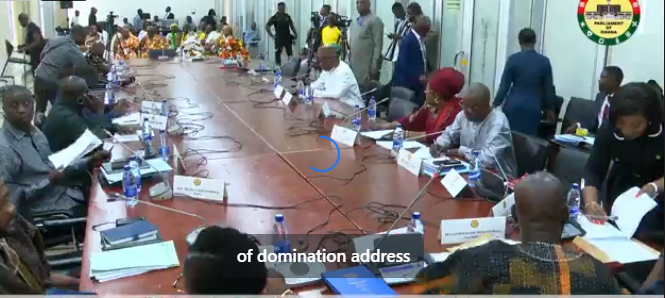
  • LIVESTREAMING: Rita Naa Odoley Sowah, Gizella Tettey-Agbotui face Appointments Committee

    LIVESTREAMING: Rita Naa Odoley Sowah, Gizella Tettey-Agbotui face Appointments Committee

    The Minority members has rejoined the Appointments Committee for the vetting process today, contributing to government business.

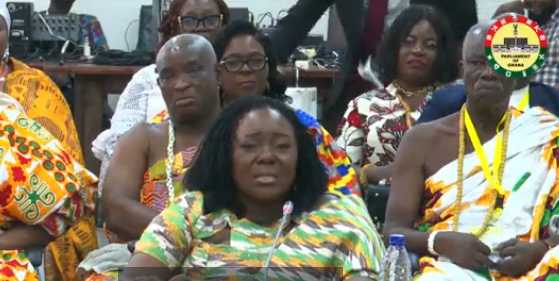
    Nominees appearing before the committee include Gizella Tettey-Agbotui (Works, Housing & Water Resources) and Rita Naa Odoley Sowah (Local Government, Chieftaincy & Religious Affairs).

    Those who have already faced vetting include Thomas Nyarko Ampem (Finance), John Kofi Setor Dumelo (Food & Agriculture), Samson Ahi (Trade, Agribusiness & Industry), Yussif Issaka Jajah (Tourism, Culture & Creative Arts), and Clement Abas Apaak (Education).

  • Deputy Ministerial vetting resumes today with cooperation from Minority

    Deputy Ministerial vetting resumes today with cooperation from Minority

    After a tense standoff between key members of the Appointments Committee, the vetting of deputy ministerial nominees is set to continue today, with the Minority now fully participating in the process.

    Their return follows Wednesday’s heated session, which saw a walkout and the rejection of three nominees.

    The controversy erupted when Ranking Member Alexander Afenyo-Markin clashed with Committee Chairman Bernard Ahiafor over a request for Deputy Attorney General and Minister for Justice-designate, Srem-Sai, to perform a traditional dance.

    When the nominee declined to perform ‘Agbadza’ and instead mentioned his preference for ‘Akpi’ and ‘Borborbor,’ Afenyo-Markin insisted he demonstrate the alternative. Ahiafor swiftly overruled the request.

    “Honourable nominee, the question is overruled,” the Chairman declared.

    Displeased with the ruling, Afenyo-Markin accused Ahiafor of acting arbitrarily.

    “Chairman, if you decide to be whimsical and capricious, it will not advance the work of this committee,” he argued, justifying his request as an effort to educate Ghanaians on lesser-known traditions.

    Ahiafor, however, deemed Afenyo-Markin’s remarks inappropriate and demanded a retraction. The Ranking Member refused.

    “You rudely overruled me,” Afenyo-Markin shot back, standing his ground.

    The tension culminated in Ahiafor barring Afenyo-Markin from further questioning and discharging the nominee. In response, the Minority boycotted the session and rejected the nominations of Srem-Sai, Alhassan Suhuyini (Deputy Roads Minister-designate), and Yussif Sulemana (Deputy Lands Minister-designate), citing concerns over fairness in the vetting process.

    Despite the walkout, Ahiafor proceeded with the vetting in their absence. Before exiting, Afenyo-Markin hinted at a possible return, depending on how proceedings unfolded.

    “On Friday, God willing, we will be available, and if the posture remains the same, we will advise ourselves on the next line of action,” he stated.

    As anticipated, the Minority has rejoined the process today, contributing to government business. Nominees appearing before the committee include Gizella Tettey-Agbotui (Works, Housing & Water Resources) and Rita Naa Odoley Sowah (Local Government, Chieftaincy & Religious Affairs).

    Those who have already faced vetting include Thomas Nyarko Ampem (Finance), John Kofi Setor Dumelo (Food & Agriculture), Samson Ahi (Trade, Agribusiness & Industry), Yussif Issaka Jajah (Tourism, Culture & Creative Arts), and Clement Abas Apaak (Education).

    With the Minority back at the table, expectations are high for a smoother vetting process moving forward.

  • Ato Forson has always been ahead of me – Isaac Adongo on Finance Minister role

    Ato Forson has always been ahead of me – Isaac Adongo on Finance Minister role

    Bolgatanga Central MP, Isaac Adongo, has downplayed suggestions that he should have been appointed Finance Minister, acknowledging that Dr. Cassiel Ato Forson has always held a more senior role in parliamentary financial matters.

    His response follows concerns from some constituents who felt he was unfairly overlooked by President John Dramani Mahama in favor of Dr. Ato Forson. Supporters had argued that Adongo was equally qualified for the role.

    Speaking on Asempa FM’s Ekosii Sen on Thursday, February 27, Adongo emphasized Forson’s seniority and experience, stating, “In the issue of Finance Minister proper, since I came to Parliament, I’ve always been behind Ato Forson.”

    He explained that when he first entered Parliament, Forson was already serving as the Ranking Member of the Finance Committee while he was just a member. “In my second term, they promoted me to be Deputy Ranking, and he was still the Ranking Member. Then, when there was a reshuffle in Parliament, he was made the Leader of the Caucus, and I was made the Ranking Member of the Finance Committee,” Adongo added.

    Highlighting Forson’s prior role as Deputy Minister of Finance, Adongo admitted that his appointment made sense, saying, “He has also been a Deputy Minister of Finance before. So it was really a tall ask.”

    Reassuring his supporters, he urged them to trust the political process, assuring them that his time would come. “My time will come,” he stated, emphasizing his commitment to serving both his constituents and the nation.

    His remarks were aimed at easing tensions and reinforcing the structured nature of political appointments.

  • Anti-LGBTQ bill has been reintroduced, Mahama must sign it – Assin South MP

    Anti-LGBTQ bill has been reintroduced, Mahama must sign it – Assin South MP

    The controversial Human Sexual Rights and Family Values Bill, commonly referred to as the anti-LGBTQ bill, has been reintroduced in Parliament, according to Assin South MP, Reverend John Ntim Fordjour.

    In an interview with The Independent Ghana on Thursday, February 27, Ntim Fordjour urged President John Dramani Mahama to sign the bill into law if Parliament approves it again.

    He emphasized that the legislation reflects Ghanaian cultural values and called for swift action to ensure its implementation.

    The bill, which aims to outlaw LGBTQ+ activities and criminalize their promotion, advocacy, and funding, was previously passed by the 8th Parliament. However, it did not receive Presidential assent under former President Nana Akufo-Addo’s tenure.

    Below is his engagement with The Independent Ghana.

    President John Dramani Mahama has declared that the Anti-LGBTQ+ Bill, formally known as the Human Sexual Rights and Family Values Bill, is no longer active, as it expired with the previous Parliament’s session.

    Speaking during a meeting with clergy, Mahama clarified the bill’s current status, explaining, “As far as I know, the bill did not get to the President for assent. And so the convention is that all bills that are not assented to before the expiration of the life of Parliament expired, and so that Bill is effectively dead, it has expired.”

    He underscored the importance of reinitiating discussions on the bill, suggesting a collaborative review process. “I do think that we should have a conversation on it again, so that all of us, if we decide to move that bill forward, moving forward with a consensus,” Mahama stated.

    Proposing a shift in the bill’s sponsorship, the former president argued that it should no longer be introduced as a private member’s bill but rather receive formal government backing. “I don’t know what the promoters of the bill want to do, but we should have a conversation about it again… probably it shouldn’t be a private members bill. It should be a government bill with government behind it after consultation with all the stakeholders to see how to move this forward,” he noted.

    Before his return to office, Mahama had already expressed a cautious approach toward the bill, emphasizing the need for a constitutional review. Speaking with BBC Africa on December 4, he elaborated: “It is not an anti-LGBTQI Bill; it is a Family Values Bill. It was approved unanimously by our Parliament. [LGBTQI] is against our African culture, it is against our religious faith, but I think we must look at the Bill, and the president must indicate what he finds wrong with that bill and send it back to Parliament or alternatively he must send it to the Council of State and get the Council of State’s advice.”

    When asked if he would sign the bill into law if elected, Mahama responded cautiously, stating, “It depends on what is in the Bill.” He emphasized that any decision would be based on a thorough examination of the bill’s content and legal compliance. “That is what I would have done,” he affirmed.

    The non-existent Human Sexual Rights and Family Values Bill sought to criminalize LGBTQ+ activities, including the promotion and funding of related advocacy efforts. If reintroduced and passed, the bill would impose sanctions on individuals and organizations supporting LGBTQ+ causes.

    While proponents argue the bill is necessary to safeguard Ghanaian cultural and moral values from external influences, human rights advocates have raised concerns, stating it infringes on freedoms of expression, association, and equality under the law.

    The bill previously faced legal opposition from journalist Richard Dela Sky and academic Dr. Amanda Odoi, who contested its passage, citing a lack of parliamentary quorum. The Supreme Court, however, dismissed their challenge, with Justice Lovelace Johnson clarifying that a bill can only be subject to constitutional scrutiny after receiving presidential assent.

  • Teen loses suit against parents for moving him from London to Ghana for boarding school

    Teen loses suit against parents for moving him from London to Ghana for boarding school

    A 14-year-old boy has lost a legal battle against his parents, who relocated him from London to Ghana for boarding school, citing concerns over his safety in the UK.

    The teenager, described as shy and passionate about football and cooking, told the High Court in London that his parents had misled him about the trip, initially saying it was to visit a sick relative.

    “If I had known I was being sent to school in Ghana, there’s no way I would have agreed to it,” he said in his testimony.

    His parents, however, argued that they feared he was being drawn into gang activity and made the move to protect him.

    “I feel like I am living in hell,” the boy told the court. “I really do not think I deserve this, and I want to come home, back to England, as soon as possible.”

    Justice Hayden, who presided over the case, acknowledged the difficult situation, describing the case as both “sobering and rather depressing.” However, he ruled in favour of the parents, saying their decision was motivated by “deep, obvious, and unconditional love” for their son.

    The court accepted the parents’ concerns that their son was at risk of gang influence and developing an “unhealthy interest in knives.” His father, justifying their decision, told the court, “We didn’t want our son to become yet another black teenager stabbed to death in the streets of London.”

    The teenager, who was born and raised in the UK, said he struggled to adjust to life in Ghana. He claimed he was mocked by his peers, found it difficult to understand lessons, and was involved in fights.

    Feeling “scared and desperate,” he contacted the British High Commission in Accra and the charity Children and Family Across Borders, who helped him connect with lawyers from the International Family Law Group.

    “I am from London, England, and I want to go back home,” he wrote in a plea for help. He alleged mistreatment at his school and begged to return to his former school in the UK.

    His mother told the court their decision was not a punishment but a necessary step to protect him. She cited the fatal stabbing of 14-year-old Kelyan Bokassa in Woolwich earlier this year as an example of the dangers facing young people in London.

    The court also heard concerns from his UK school, which suspected the boy was involved in criminal activity, pointing to his possession of expensive clothes and multiple mobile phones.

    Rebecca Foulkes, representing the boy’s father, argued that he exhibited 11 out of 12 warning signs of gang involvement, as outlined by the NSPCC, including absenteeism, unexplained money, and carrying weapons.

    The teenager denied these claims, stating, “I do not know anyone involved in a gang,” and insisting he did not carry a knife. He admitted his behaviour “wasn’t the best” but believed that was the reason his parents sent him to Ghana.

    The case centred on parental responsibility and whether the parents had acted unlawfully by moving their son without his consent. The court ultimately ruled in their favour.

    Following the verdict, the parents released a statement saying, “This has been a really difficult time for us all. Our priority has always been protecting our son, and our focus now is on moving forward as a family.”

    James Netto, the boy’s lawyer, described the ruling as “a real shock” to the teenager.

    “He was incredibly disappointed, incredibly upset, and is considering his next steps carefully,” Netto said.

    The teenager also expressed concerns about his education, arguing that the Ghanaian curriculum was less challenging. He claimed he had been out of formal schooling since last summer, relying on online studies.

    “I want to have an education again and grow up like a normal person. I feel like my brain is hurt here. I feel like now I am dumber than people I used to be smarter than,” he wrote.

    His father, who recently visited him in Ghana, said they had explored another boarding school for him to transfer to, but no placement was available until September.

    Netto noted an increase in similar cases, where teenagers seek legal intervention to return to the UK after being relocated by their parents.

    “Teenagers are often placed in exceptionally challenging or vulnerable situations and are now beginning to turn to the court for protection,” he said.

    He added, “We have already received enquiries from young people in exactly the same situation as this young man.”

    This story was reported by the BBC.

  • Treat Ghanaian visa applicants with dignity – Foreign Minister urges Diplomatic Missions

    Treat Ghanaian visa applicants with dignity – Foreign Minister urges Diplomatic Missions

    Minister of Foreign Affairs, Samuel Okudzeto Ablakwa, has urged Diplomatic Missions in Ghana to uphold the dignity and respect of Ghanaian nationals seeking visas.

    Speaking at a diplomatic gathering at Jubilee House on Thursday, February 27, Mr. Ablakwa expressed concern over reports of mistreatment of visa applicants at various embassies and consulates. He emphasized that all individuals applying for travel documents deserve to be treated fairly and humanely.

    “We would like to entreat all Diplomatic Missions in Ghana to ensure that they treat our nationals who visit their premises in pursuit of their visa applications with dignity and respect,” he stated.

    He further called on embassies to improve conditions for visa applicants by offering proper waiting areas, reasonable appointment schedules, emergency services, and resolving difficulties associated with online visa applications.

    While acknowledging that some diplomatic missions have made commendable strides in refining their procedures, Mr. Ablakwa encouraged others to adopt similar measures to create a more seamless and dignified process for Ghanaians.

    His remarks formed part of a broader discussion on Ghana’s foreign policy, which highlighted the significance of international partnerships, economic diplomacy, and tackling global challenges such as climate change, terrorism, and food insecurity.

    Reaffirming Ghana’s commitment to multilateralism, he assured Diplomatic Missions of the government’s willingness to engage in dialogue and collaboration to strengthen diplomatic and economic relations while protecting the rights and dignity of its citizens.

  • Youth Minister directed to present new L.I to introduce military training to National Service, others

    Youth Minister directed to present new L.I to introduce military training to National Service, others

    The government is set to introduce short military training as part of the National Service scheme to promote fitness and discipline among young people.

    This is part of efforts to strengthen the National Service structure following the passage of the National Service Authority Act 2024 (Act 1119).

    Delivering the 2025 State of the Nation Address in Parliament today, President John Dramani Mahama revealed that he has instructed the Minister for Youth Development and Empowerment, George Opare Addo, to develop a Legislative Instrument (L.I.) to provide a legal framework for the new reforms.

    “To achieve a legally robust regime to govern National Service, I have also tasked the Minister for Youth Development and Empowerment to coordinate and present to Parliament a Legislative Instrument (L.I.) to support the implementation of the newly passed National Service Authority Act 2024 (Act 1119),” President Mahama stated.

    The proposed reforms will also introduce short military training as part of the National Service programme, which the President believes will instill discipline and physical fitness in Ghanaian youth.

    “We will introduce short military training as part of our national service scheme. This will instill a sense of fitness and discipline into our youth,” he added.

    National Service programmes, including military or paramilitary training, are implemented in several countries worldwide. According to the World Population Review, around 80 countries, including Sweden, Norway, Denmark, and China, currently have some form of National Service or conscription.

    Some nations, like Russia, enforce mandatory military service, while others operate under a conscription model, requiring individuals to serve for a fixed period without necessarily being deployed for active duty.

    In contrast, some countries maintain a de jure system, where military service is legally mandated but rarely enforced. The United States, for instance, retains a draft system in law, though it has not been actively applied in decades.

    The introduction of military training into Ghana’s National Service scheme aligns with global trends and is expected to equip young people with valuable skills while fostering a sense of national discipline.

  • Govt to introduce Renewable Energy and Green Transition Fund to aid transition to renewable energy

    Govt to introduce Renewable Energy and Green Transition Fund to aid transition to renewable energy

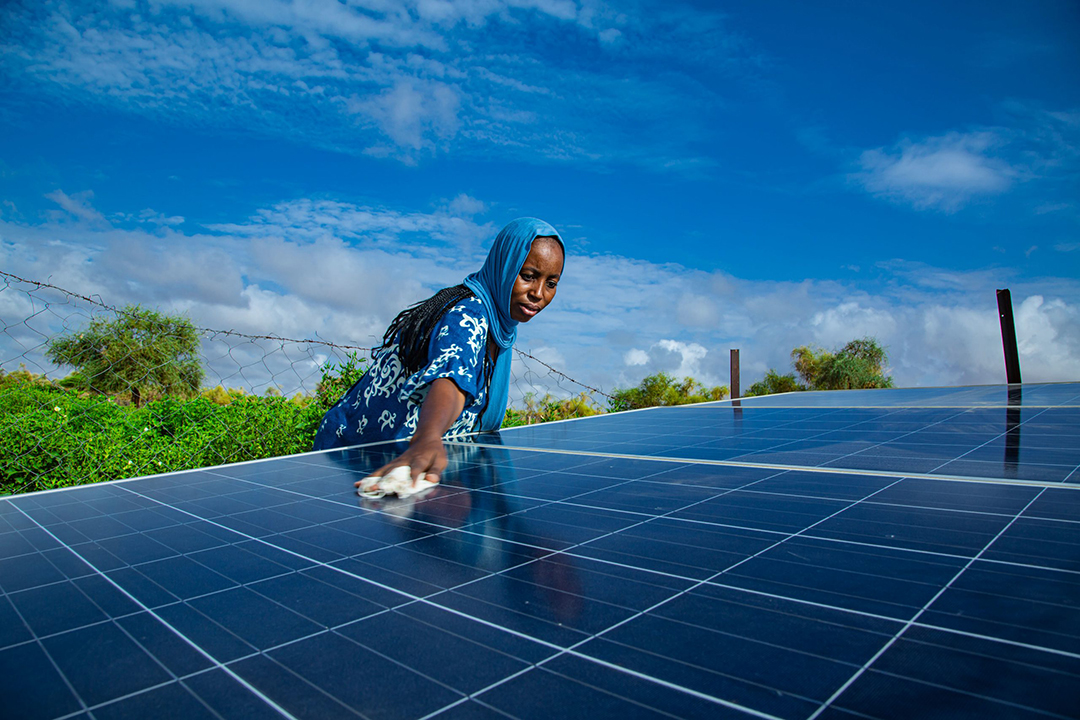
    The government is set to launch a Renewable Energy and Green Transition Fund as part of efforts to accelerate Ghana’s shift towards sustainable energy solutions.

    Delivering the 2025 State of the Nation Address in Parliament today, President John Dramani Mahama announced that the initiative will play a crucial role in enhancing energy efficiency and expanding renewable energy infrastructure across the country.

    “With regards to renewable energy, this administration will soon operationalise a Renewable Energy and Green Transition Fund to enhance efficiency and accelerate Ghana’s transition to renewable energy,” he stated.

    According to President Mahama, the fund will drive investment in solar streetlights, rooftop solar installations, off-grid solar systems, electric vehicle charging stations, and rechargeable outboard motors. These measures, he noted, will help reduce reliance on the national grid while positioning Ghana as a leader in Africa’s green energy transition.

    The President also reaffirmed his government’s commitment to achieving 100% gas utilisation for power generation to eliminate the use of crude oil and fossil fuels. He stressed that this shift would bring relief to electricity consumers and save Ghana hundreds of millions of dollars spent annually on fuel imports.

    “We will bring relief to all users of electric power. We also aim in the medium to achieve hundred per cent gas utilisation for power production and to eliminate the use of crude oil and fossil fuel. This will save Ghana hundreds of millions of dollars spent on the importation of fuel oils for power production annually,” he said.

    Ghana has taken significant steps towards energy transition in recent years. In September 2023, former President Nana Akufo-Addo launched the Ghana Energy Transition and Investment Plan during the UN General Assembly. The plan outlines a pathway for Ghana to achieve net-zero energy-related carbon emissions by 2060, integrating low-carbon solutions in key sectors such as oil and gas, industry, transport, and power.

    The government’s new Renewable Energy and Green Transition Fund is expected to build on these efforts by attracting investments in clean energy and reinforcing Ghana’s commitment to sustainable economic development and climate action.

  • Full speech of Mahama in delivery of 2025 SONA

    Full speech of Mahama in delivery of 2025 SONA

    Right Honourable Speaker, Your Excellency, the Vice President, Your Excellency, the First Lady, Your Ladyship, the Chief Justice, Honourable Members of Parliament, Honourable Members of the Judiciary, Distinguished Leaders of Our Security Forces, Excellencies, Members of the Diplomatic Corps, Our revered Niimei, Naamei, Chiefs, Traditional Rulers, and Religious Leaders, The National Chairman and executives of the National Democratic Congress, The good people of Ghana,

    I wish you a very good morning.

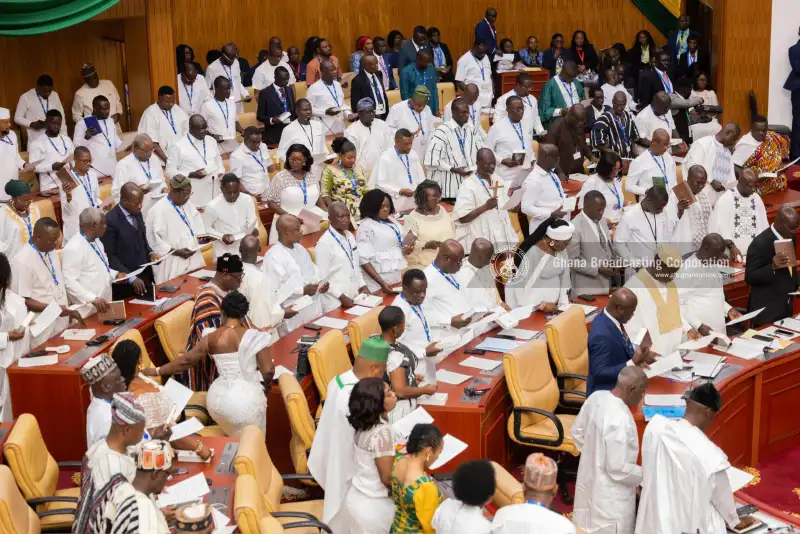
    Mr. Speaker, Article 67 of the 1992 Constitution requires the President to address the people of Ghana, in whom sovereignty resides, on the state of the nation.

    Thirty years ago, in 1996, I took my first steps in public service when I was elected to this august house as the Member of Parliament for the Bole Bamboi Constituency. For twelve memorable years, I forged enduring friendships and alliances while working with colleagues from both sides of the house to shape Ghana’s legislative agenda and advance the development of our beloved country.

    It has also been nearly a decade since I bid farewell to this house after delivering what many, including myself, thought would be my final address to Parliament. Yet, by the grace of God, providence, and the unpredictability of life, I stand before you once again, entrusted with a historic electoral mandate from the people of Ghana to deliver a message on the State of the Nation.

    That mandate came with an unprecedented majority in Parliament, and here I am, once again, to present the real state of our nation.

    Mr. Speaker, I wish to express my heartfelt gratitude to Parliament for the swift vetting and approval of my Ministerial nominees. This efficiency is unmatched in the history of the Fourth Republic and demonstrates the progress we can achieve when we come together with a shared commitment to serving our great country. I trust that a similar urgency will be applied to the approval of my Deputy Ministerial nominees, enabling them to promptly assume office and assist their Ministers in delivering on our noble vision of Resetting Ghana.

    In making these nominations, I took into account the long-expressed concerns of the Ghanaian people regarding the size of previous administrations and their associated costs. I trust that this significant reduction to sixty (60) Ministers and Deputy Ministers, including Regional Ministers, will set a precedent for further downsizing in future governments.

    With the inauguration of the Council of State, we can now begin appointing staff for the Presidency. I intend to significantly reduce the number of staff compared to the previous administration. This is part of my commitment to leading by example in cutting government expenditures and reducing the budget deficit.

    Mr. Speaker, let me begin by invoking the timeless words of hymnist John Oatman Jr., who encourages us to count our blessings and name them one by one. Yes, we are a nation troubled on many fronts, but we also have many blessings. Among them is our firmly established democracy which, despite its imperfections, has enabled four peaceful transfers of power. In a sub-region often plagued by strife and political instability, we should take pride in the fact that these successive peaceful power transitions have become a norm in our nation.

    Fifty days ago, I took the solemn oath to assume leadership of this country and serve with truth and humility. This followed watershed elections that offered us an opportunity to revive our nation’s fortunes and embark on a new path of growth and prosperity. The election results provided a crucial opportunity to change course and steer away from the slippery slope that had inflicted economic pain, suffering, and grief on our people.

    Through their votes, Ghanaians made it abundantly clear that they demand the highest standards of governance from those entrusted with leadership. They elected me with a historic margin of nearly 1.7 million votes separating me from my closest opponent. For the National Democratic Congress (NDC), this resounding victory is a selfless call to duty from a people weary of economic hardships and poor governance.

    That call places an obligation on me and all who serve with me, including legislators from both sides of the house, to work with decency and humility to change the circumstances and state of our country.

    Mr. Speaker, as I stated earlier, Article 67 of the 1992 Constitution requires that I give an account of the State of our Nation to Parliament. I am sad to report that the state of our nation is not good. Our economy is in crisis, and our people are experiencing unprecedented hardships.

    To address this, we will host a National Economic Dialogue on March 3rd and 4th. Additionally, on March 11th, the Minister for Finance, on my behalf, will present the budget estimates for the financial year to this august house. These two events will allow us to present the real state of Ghana’s economic crisis to the people.

    Mr. Speaker, it is not my style to lament or shift blame when confronted with challenges. My approach is to acknowledge problems and work hard to resolve them. That is precisely what the people of Ghana elected me to do. I have not come here to lament the state of our country, though there is much to lament. I understand why I was elected with such high voter confidence—to solve our problems.

    With your permission, Mr. Speaker, and within the constraints of time, I will outline how we intend to address these problems.

    Yesterday, February 26, 2025, marked exactly ten years since I stood in this chamber and declared my determination to fix Dumsor, a legacy problem of power shortages. And I fixed it! Yes, I promised to fix it, and I did! From January 2016 until I handed over the administration of this country on January 7, 2017, there was no power rationing or load management in Ghana.

    Today, inspired by the almighty God and propelled by the massive mandate given to me by the people of Ghana, I am making a similar bold declaration: I, John Dramani Mahama, will fix the economic crisis confronting our country and reset it on a path of growth and prosperity.

    My government, working with you and every Ghanaian, will solve these challenges because we have developed a comprehensive plan with the support of our people. When I decided to run for President again, I did so with full knowledge of the dire state of our nation. But nothing could have prepared anyone for the true depths of our economic and governance crises.

    As our elders say, a frog’s true length can only be ascertained after it has died. And how true that is!

    It is common knowledge that our economy is in dire straits. However, after an initial assessment, we have discovered that our economic problems are far deeper than was publicly known. We have inherited a country that is broken on many fronts, and the enormity of the challenges is staggering.

    We are saddled with staggering debts and glaring signs of almost deliberate and, in some cases, criminal mismanagement of our resources. Even the restraints of an IMF programme did not deter the previous economic managers from mismanaging our finances.

    After setting an inflation target of 18% by the end of 2024, the actual rate was 23.8%, significantly exceeding the IMF threshold. The Ghana cedi continued its downward slide, losing 19% of its value against the dollar in 2024, after already depreciating by 27.8% in 2023.

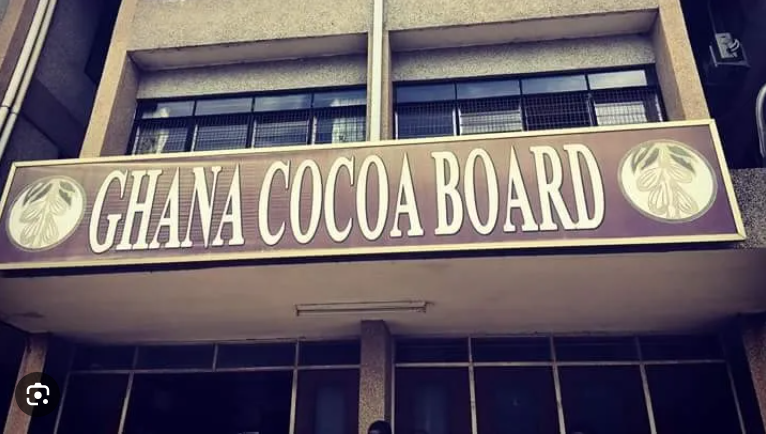
    In addition to the public debt, which stands at a staggering GHS 721 billion, several State-Owned Enterprises are also deeply indebted. For example, the Electricity Company of Ghana (ECG) owes GHS 68 billion, while the Ghana Cocoa Board (COCOBOD) has accumulated debts totaling GHS 32.5 billion. These figures underscore the dire economic situation we must confront.

    Ghana Cocoa Board—the hope of cocoa farmers—is also highly indebted. Its balance sheet indicates a total debt of GHS 32.5 billion, of which GHS 9.7 billion is due to be paid at the end of September 2025.

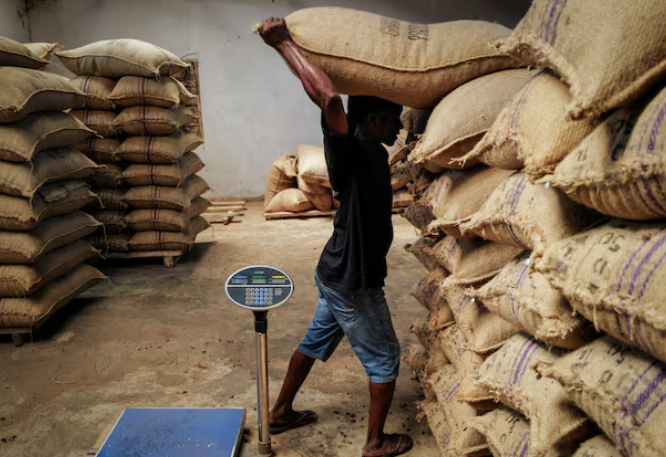
    In the 2023/2024 crop season, COCOBOD could not supply three hundred and thirty-three thousand seven hundred and sixty-seven (333,767) tonnes of cocoa, which it sold at US$ 2,600 per tonne. As a result, the then management of COCOBOD rolled over these contracts into the 2024/2025 cocoa season.

    This implies that for every tonne of cocoa delivered this year in fulfilment of the rolled-over contracts, COCOBOD and the Ghanaian farmer would lose US$ 4,000 in revenue.

    Mr. Speaker, as I address this honourable house, COCOBOD has supplied 210,000 tonnes out of the rolled-over contract, resulting in a revenue loss of US$ 840 million for both COCOBOD and the Ghanaian farmer.

    COCOBOD and the Ghanaian farmer will lose another US$495 million when the Board finishes supplying the remaining rolled-over contracts.

    Additionally, cocoa road commitments alone total GHS 21.7 billion, of which only GHS 4.4 billion is included in the total debt of GHS 32.5 billion. This debt has arisen mainly because of the decision in 2019 and 2020 to award road contracts worth over US$1 billion because of the election.

    Mr. Speaker, the energy sector faces significant financing challenges primarily due to collection and system losses, non-compliance with the Cash Waterfall Mechanism, and legacy debts.

    The financing shortfall has risen considerably to approximately US$2.2 billion or GHS 34 billion for 2025, and urgent measures will be needed to reduce it to sustainable levels and ultimately eliminate it.

    The financial sector continues to struggle despite the previous government reportedly spending GHS 29.9 billion on the financial sector clean-up exercise to date.

    They also left scant reserves for debt servicing despite implementing what may be considered the most severe and distressing economic policy in the annals of the Fourth Republic, if not in the entirety of our nation’s history—the Domestic Debt Exchange Programme.

    This is in stark contrast to our actions in 2017, before we left office, when we allocated US$ 250 million to the Sinking Fund to service debt.

    While there have been claims that buffers were left for debt repayment, the statement of accounts for the Debt Service Reserve Account, also known as the Sinking Fund, shows a balance of only $64,000 and GHS 143 million in the dollar and Ghana cedi accounts, respectively.

    The repercussions of reckless debt accumulation and economic mismanagement will require extensive work and sacrifice to repair.

    In the next four years, debt servicing will amount to GHS 280 billion, comprising GHS 150 billion for domestic and GHS 130 billion in external debt servicing.

    The catastrophic debt position has also severely impacted infrastructure projects that should have been completed. There are fifty-five (55) stalled projects due to the default of debt and subsequent restructuring, with a total amount of US$ 2.95 billion not disbursed. The stalling of these projects is expected to result in a cost overrun of about GHS 15 billion.

    Notwithstanding this gloomy background, I remain committed to leading this government, taking every necessary step to reset our economy, getting things back on track, and working with the good people of our country to build the Ghana we want.

    We are doubling our efforts to complete all outstanding structural reforms. Through the budget, we will implement corrective measures to restore fiscal discipline and debt sustainability. We are also working towards completing the upcoming fourth review of the IMF-supported Programme.

    The review is scheduled from April 2nd to April 15th, 2025, and the IMF Executive Board is expected to approve it in June 2025. As we have done previously, we are also building buffers in the Sinking Fund and adopting prudent debt management practices to ensure prompt repayment of upcoming domestic and external debt maturities.

    In this respect, the government successfully honoured the matured coupon payment of GHS 6.081 billion (in cash) and GHS 3.46 billion (in kind) due in February 2025 to all Domestic Debt Exchange Programme (DDEP) bondholders.

    We have also built additional buffers in the Sinking Fund to honour maturing DDEP bonds due in July and August.

    With the transparent and prudent measures we have implemented since taking over the administration of this country, I urge my countrymen and women, business owners, and foreign investors to trust our competence in turning our economic fortunes around.

    Mr. Speaker, since we took office on January 7, 2025, we have upheld our commitment to a fiscal consolidation agenda with a streamlined government. We have eliminated unnecessary expenditures and reduced our reliance on borrowing.

    Our prudent debt management practices have led to a substantial reduction in interest rates.

    The 91-day treasury bill rate, which was 28.51% on January 6, 2025, has decreased to 24.48% as of February 24, 2025. Similarly, the 182-day Treasury bill rate, which was 29.07% as of January 6, 2025, has decreased to 25.388%.

    The 364-day Treasury bill rate has also moved from 30.41% to 27.30% in the same period.

    We signed a Memorandum of Understanding (MoU) with our Official Creditor Committee (OCC) to formalise the debt treatment agreed upon with official creditors. This marks a crucial step toward Ghana’s restoration of long-term debt sustainability. The agreement will enable financial resources to support and strengthen economic recovery.

    Mr. Speaker, on February 20, 2025, the National Tripartite Committee (NTC) and the Public Services Joint Standing Negotiating Committee (PSJSNC) concluded negotiations on the 2025 minimum wage and base pay for the Single Spine Salary Structure (SSS), respectively.

    I want to use this opportunity to reiterate my sincere gratitude to Organised Labour and the Ghana Employers Association for their understanding and cooperation in reaching this agreement on the minimum wage and base pay.

    On the final day of negotiations, I enjoyed the privilege of joining my comrades, the leaders of organised labour, for the concluding discussions. I am confident that the sacrifice we all have to make this year will significantly benefit our economy’s health.

    We look forward to a positive economic outlook as we restore macroeconomic stability, encourage exports, activate the 24-Hour Economy initiative, implement the US$ 10 billion ‘Big Push’ policy for swift infrastructure development, rationalize taxes, and foster inclusive growth.

    The goal is prosperity for all, which must be shared, not the prerogative of a select few.

    Mr. Speaker, in fulfilment of our 120-day social contract with the Ghanaian people, we have put in place the planning committee to host the National Economic Dialogue. This dialogue is expected to discuss the state of the economy and reach a consensus on the key policies needed to address the devastating economic crisis confronting us.

    It will support the development of a home-grown fiscal consolidation programme and highlight key structural reforms and policy priorities essential for resetting the economy and creating prosperity for all.

    I believe there is absolute wisdom in what our elders say: that two heads are better than one. Consultation and consensus building have always proven to be better than unilateral decision-making. It is my hope that our colleagues on the other side of the divide will display love of country and participate in this National Dialogue, unlike their boycott of the Senchi Forum in 2014.

    I humbly choose a different path of accommodation and cooperation with all stakeholders. We will continuously engage on important issues so that together, we can reset our country and focus on sustainable development. Together, we shall build the Ghana we want.

    Mr. Speaker, my administration inherited an energy sector on the brink of collapse, which was weighed down by unsustainable debts. This unfortunate situation has led to many Independent Power Producers (IPPs) and fuel suppliers threatening to cease their operations.

    Despite collecting over GHS 45 billion in Energy Sector Levies (ESLA) over the last eight years, the outgone NPP administration has left the Ghanaian people an energy sector burdened with a staggering GHS 70 billion debt as of December 2024.

    It is of deep concern that several state-owned enterprises (SOEs) in the energy sector are struggling to stay afloat. Unless urgent interventions are made, many of them will go under.

    Financial distress in the energy sector remains a significant obstacle to delivering consistent and affordable electricity to Ghanaians and poses an existential threat to the economy in general.

    Compounding these challenges, critical maintenance activities—such as the scheduled pigging of the West African Gas Pipeline (WAPCO)—were postponed from 2024 to 2025 without sufficient contingency measures for alternative fuel supply.

    As a result, my administration has had to swiftly mobilise resources to secure emergency fuel supplies, ensuring that electricity generation continues despite the difficult circumstances.

    I have been informed that the pigging exercise will be completed in the first weeks of March. Once additional gas flows from Nigeria, we anticipate a marked improvement in the power situation.

    While the current state of the energy sector poses grave concerns, we must remain resolute in our commitment to restoring stability. I have directed the Minister for Energy and Green Transitions to implement far-reaching reforms, including enforcing a single revenue collection account, strictly adhering to the Cash Waterfall Mechanism (CWM), and eliminating wasteful expenditures.

    The Minister, following my directive, has set up an advisory committee to guide the participation of the private sector in metering and billing in order to improve efficiency in revenue collection and reduce the high commercial and technical losses that are threatening to drown the state-owned utility company.

    A pilot partnership between ECG and Enclave power has proved highly successful and provides us with a workable framework. ECG provides bulk supply of power to Enclave Power Limited. Enclave Power provides meters and bills all companies operating in the Free Zones Enclave with 99% revenue collection and nearly 100% uptime in power supply.

    Reduction in commercial and technical losses will lead to affordable tariffs for everyone and bring relief to all users of electric power. We also aim in the medium term to achieve 100% gas utilisation for power production and eliminate the use of crude oil.

    This will save Ghana hundreds of millions of dollars spent on the importation of fuel oils for power production.

    With regards to renewable energy, this administration will soon operationalise a Renewable Energy and Green Transition Fund to enhance efficiency and accelerate Ghana’s transition to renewable energy.

    This initiative will drive investment in sustainable energy solutions, including solar street lighting, rooftop solar installations, off-grid solar systems, electric vehicle charging stations, and chargeable outboard motors. These measures will reduce dependence on the national grid and position Ghana as a leader in Africa’s green energy transition.

    Mr. Speaker, Ghana’s petroleum sector has witnessed a precipitous decline, with crude oil production shrinking by more than 32%. This has resulted from high opacity levels, a hostile business climate, and excessive political interference, culminating in most major oil companies exiting and stalling upstream activities.

    The decline in upstream activity is obvious to any person familiar with the twin cities of Sekondi-Takoradi. Just under a decade ago, the twin cities were the bustling epicentre of fabrication, logistics, and service activity associated with the upstream oil and gas sector. Unfortunately, my recent visit reveals many shut down facilities and many businesses that have packed and left.

    Hundreds of workers have been laid off and left unemployed. I wish to assure the people of Sekondi-Takoradi and indeed the whole Western Region that we will breathe life back into the area.

    We have commenced revitalisation of our upstream petroleum sector by creating a business-friendly and congenial environment for our partners and other prospective investors. My meetings with players in the upstream sector has been extremely positive and we have been assured of substantial investments running into billions of dollars in the very near future.

    Mr Speaker, Ghana has fertile lands, abundant water, and human resources. Yet, we face a paradox. Our food import bill continues to soar, reaching alarming levels of over US$2 billion annually. In addition, rising food inflation is burdening households and threatening livelihoods.

    To address this, we are implementing several well-considered policies to grow the agricultural sector, including agro-processing. This will be backed by a reliable power supply, to meet our country’s needs while advancing exports to earn foreign exchange and strengthen our economy.

    The Agriculture for Economic Transformation Agenda (AETA) will modernise agriculture, enhance agribusiness, ensure food security, lower food inflation, boost exports, and create sustainable jobs.

    The Feed Ghana Programme will increase food production and reduce prices through projects like the Grains Development Project, focusing on rice, maize, and soybean production. The Vegetable Development Project will target crops such as tomatoes, onions, and pepper.

    Our poultry farm-to-table project will eliminate poultry imports and increase local production. Ghana imports 95% of its poultry needs, which costs over US$ 300 million annually. To reverse this trend, government’s plan is to revamp the poultry sector by investing in hatcheries, feed mills, processing, and distribution, working toward eliminating poultry imports.

    The Nkoko nkitinkiti project will cover 55,000 households producing eggs and fresh poultry for the market and help reduce the $300 million we spend on importing chicken annually.

    To strengthen the connection between agriculture and industry, we will prioritise value addition, processing, and distribution. This will position agriculture as a profitable and appealing activity, making it more attractive to young people.

    We will implement an AgriNext Programme to facilitate access to land banks by young farmers, connect graduates with opportunities in the agricultural value chain, and promote greenhouse agriculture among the youth. This initiative will benefit approximately 30,000 young people.

    Mr Speaker, the Livestock Development Project will address Ghana’s reliance on imported meat by restocking breeder farms and increasing local livestock production, creating jobs and boosting self-sufficiency.

    For years, access to mechanisation, quality seeds, fertilisers, and extension services has been a major challenge for farmers. To address this, government will establish Farmer Service Centres in every agricultural district, ensuring farmers receive essential resources to improve productivity and efficiency.

    In the fisheries sector, we will implement strategic interventions to enhance productivity and sustainability. Key among these initiatives is the continued enforcement of measures to curb illegal, unreported, and unregulated (IUU) fishing, which threatens marine biodiversity and the livelihoods of our hardworking fisherfolk.

    We have intensified surveillance and monitoring operations, bolstered by the deployment of modern technology and strengthened collaboration with key stakeholders.

    In the last month, we have expanded the supply of subsidised premix fuel to support artisanal and industrial fishers, ensuring affordability and availability. We will also invest further in modern fish landing sites and cold storage facilities to improve post-harvest handling, reduce losses, and enhance the quality of fish products.

    Aquaculture development is a key focus of our administration. We will provide financial and technical support to fish farmers, increasing local fish production and reducing our dependence on fish imports.

    To increase value addition in the sector, we will encourage the establishment of fish processing facilities, create more jobs and boost exports. Our commitment to supporting women in fisheries remains steadfast as we implement programmes to empower female fish processors and traders with financial resources and capacity-building initiatives.

    While we work hard to fix the economy, and provide job opportunities in all sectors, including agribusiness, one of the biggest crisis we face is youth unemployment.

    Youth unemployment has led to despair and frustration. The latest estimates show that up to two million youth are unemployed. This poses a major security risk for our country and requires urgent attention.

    To bring much-needed focus to the desperate and widely scattered youth employment programmes and ensure stricter accountability in their implementation, I have set up the Ministry for Youth Development and Empowerment in furtherance of my campaign promise.

    The Ministry is mandated to formulate, coordinate and monitor policies and programmes to promote youth development and empowerment in the country.

    Mr Speaker, as part of our Operation Recover All Loot policy, I have already tasked our investigative bodies to bring the culprits of the National Service ghost names scandal to justice. Such brazen theft of public funds must be stopped and punished.

    It is estimated that the criminal addition at some point of more than eighty thousand (80,000) ghost names could have yielded the suspects over GHS 50 million a month. Unfortunately, some of the suspects are believed to have absconded from the country. I have directed that they be declared wanted and their assets traced and frozen until investigations are completed.

    To achieve a legally robust regime to govern National Service, I have also tasked the Minister for Youth Development and Empowerment to coordinate and present to Parliament a Legislative Instrument (LI) to support the implementation of the newly passed National Service Authority Act 2024 (Act 1119).

    We will introduce short military training as part of our national service scheme. This will instill a sense of fitness and discipline into our youth.

    The administration of scholarships is another challenge. It has been fraught with many challenges. The poor who genuinely need scholarships are unable to access them because the rich always crowd them out.

    While the current state of the energy sector poses grave concerns, we must remain resolute in our commitment to restoring stability. I have directed the Minister for Energy and Green Transitions to implement far-reaching reforms, including enforcing a single revenue collection account, strictly adhering to the Cash Waterfall Mechanism (CWM), and eliminating wasteful expenditures.

    The Minister, following my directive, has set up an advisory committee to guide the participation of the private sector in metering and billing in order to improve efficiency in revenue collection and reduce the high commercial and technical losses that are threatening to drown the state-owned utility company.

    A pilot partnership between ECG and Enclave power has proved highly successful and provides us with a workable framework. ECG provides bulk supply of power to Enclave Power Limited. Enclave Power provides meters and bills all companies operating in the Free Zones Enclave with 99% revenue collection and nearly 100% uptime in power supply.

    Reduction in commercial and technical losses will lead to affordable tariffs for everyone and bring relief to all users of electric power. We also aim in the medium term to achieve 100% gas utilisation for power production and eliminate the use of crude oil.

    This will save Ghana hundreds of millions of dollars spent on the importation of fuel oils for power production.

    With regards to renewable energy, this administration will soon operationalise a Renewable Energy and Green Transition Fund to enhance efficiency and accelerate Ghana’s transition to renewable energy.

    This initiative will drive investment in sustainable energy solutions, including solar street lighting, rooftop solar installations, off-grid solar systems, electric vehicle charging stations, and chargeable outboard motors. These measures will reduce dependence on the national grid and position Ghana as a leader in Africa’s green energy transition.

    Mr. Speaker, Ghana’s petroleum sector has witnessed a precipitous decline, with crude oil production shrinking by more than 32%. This has resulted from high opacity levels, a hostile business climate, and excessive political interference, culminating in most major oil companies exiting and stalling upstream activities.

    The decline in upstream activity is obvious to any person familiar with the twin cities of Sekondi-Takoradi. Just under a decade ago, the twin cities were the bustling epicentre of fabrication, logistics, and service activity associated with the upstream oil and gas sector. Unfortunately, my recent visit reveals many shut down facilities and many businesses that have packed and left.

    Hundreds of workers have been laid off and left unemployed. I wish to assure the people of Sekondi-Takoradi and indeed the whole Western Region that we will breathe life back into the area.

    We have commenced revitalisation of our upstream petroleum sector by creating a business-friendly and congenial environment for our partners and other prospective investors. My meetings with players in the upstream sector has been extremely positive and we have been assured of substantial investments running into billions of dollars in the very near future.

    Mr Speaker, Ghana has fertile lands, abundant water, and human resources. Yet, we face a paradox. Our food import bill continues to soar, reaching alarming levels of over US$2 billion annually. In addition, rising food inflation is burdening households and threatening livelihoods.

    To address this, we are implementing several well-considered policies to grow the agricultural sector, including agro-processing. This will be backed by a reliable power supply, to meet our country’s needs while advancing exports to earn foreign exchange and strengthen our economy.

    The Agriculture for Economic Transformation Agenda (AETA) will modernise agriculture, enhance agribusiness, ensure food security, lower food inflation, boost exports, and create sustainable jobs.

    The Feed Ghana Programme will increase food production and reduce prices through projects like the Grains Development Project, focusing on rice, maize, and soybean production. The Vegetable Development Project will target crops such as tomatoes, onions, and pepper.

    Our poultry farm-to-table project will eliminate poultry imports and increase local production. Ghana imports 95% of its poultry needs, which costs over US$ 300 million annually. To reverse this trend, government’s plan is to revamp the poultry sector by investing in hatcheries, feed mills, processing, and distribution, working toward eliminating poultry imports.

    The Nkoko nkitinkiti project will cover 55,000 households producing eggs and fresh poultry for the market and help reduce the $300 million we spend on importing chicken annually.

    To strengthen the connection between agriculture and industry, we will prioritise value addition, processing, and distribution. This will position agriculture as a profitable and appealing activity, making it more attractive to young people.

    We will implement an AgriNext Programme to facilitate access to land banks by young farmers, connect graduates with opportunities in the agricultural value chain, and promote greenhouse agriculture among the youth. This initiative will benefit approximately 30,000 young people.

    Mr Speaker, the Livestock Development Project will address Ghana’s reliance on imported meat by restocking breeder farms and increasing local livestock production, creating jobs and boosting self-sufficiency.

    For years, access to mechanisation, quality seeds, fertilisers, and extension services has been a major challenge for farmers. To address this, government will establish Farmer Service Centres in every agricultural district, ensuring farmers receive essential resources to improve productivity and efficiency.

    In the fisheries sector, we will implement strategic interventions to enhance productivity and sustainability. Key among these initiatives is the continued enforcement of measures to curb illegal, unreported, and unregulated (IUU) fishing, which threatens marine biodiversity and the livelihoods of our hardworking fisherfolk.

    We have intensified surveillance and monitoring operations, bolstered by the deployment of modern technology and strengthened collaboration with key stakeholders.

    In the last month, we have expanded the supply of subsidised premix fuel to support artisanal and industrial fishers, ensuring affordability and availability. We will also invest further in modern fish landing sites and cold storage facilities to improve post-harvest handling, reduce losses, and enhance the quality of fish products.

    Aquaculture development is a key focus of our administration. We will provide financial and technical support to fish farmers, increasing local fish production and reducing our dependence on fish imports.

    To increase value addition in the sector, we will encourage the establishment of fish processing facilities, create more jobs and boost exports. Our commitment to supporting women in fisheries remains steadfast as we implement programmes to empower female fish processors and traders with financial resources and capacity-building initiatives.

    While we work hard to fix the economy, and provide job opportunities in all sectors, including agribusiness, one of the biggest crisis we face is youth unemployment.

    Youth unemployment has led to despair and frustration. The latest estimates show that up to two million youth are unemployed. This poses a major security risk for our country and requires urgent attention.

    To bring much-needed focus to the desperate and widely scattered youth employment programmes and ensure stricter accountability in their implementation, I have set up the Ministry for Youth Development and Empowerment in furtherance of my campaign promise.

    The Ministry is mandated to formulate, coordinate and monitor policies and programmes to promote youth development and empowerment in the country.

    Mr Speaker, as part of our Operation Recover All Loot policy, I have already tasked our investigative bodies to bring the culprits of the National Service ghost names scandal to justice. Such brazen theft of public funds must be stopped and punished.

    It is estimated that the criminal addition at some point of more than eighty thousand (80,000) ghost names could have yielded the suspects over GHS 50 million a month. Unfortunately, some of the suspects are believed to have absconded from the country. I have directed that they be declared wanted and their assets traced and frozen until investigations are completed.

    To achieve a legally robust regime to govern National Service, I have also tasked the Minister for Youth Development and Empowerment to coordinate and present to Parliament a Legislative Instrument (LI) to support the implementation of the newly passed National Service Authority Act 2024 (Act 1119).

    We will introduce short military training as part of our national service scheme. This will instill a sense of fitness and discipline into our youth.

    The administration of scholarships is another challenge. It has been fraught with many challenges. The poor who genuinely need scholarships are unable to access them because the rich always crowd them out.

    In line with our promise, the Minister for Education has announced the restoration of Parent-Teacher Associations (PTAs). It is important for parents and communities to participate in the administration of their schools. The Ministry of Education and GES will ensure that PTAs do not impose unbearable financial burdens on parents and students who cannot afford them.

    The double-track system remains a challenge, and we are committed to eliminating it by accelerating school infrastructure expansion and completing stalled projects. To fund this, the Education and Finance Ministries are working to uncap the GETFund for secondary school projects.

    As promised, we have begun improving secondary school feeding. Efforts to decentralise food management include strengthening procurement and store management capacity. Once completed, food procurement and management will be fully handed over to secondary school heads.

    Science, Technology, Engineering, and Mathematics (STEM) are central to national development. We will expand STEM programmes at all levels to equip students for the global economy. Regional TVET Centres of Excellence will be established to provide practical skills.

    Ghana has consistently missed its Gross Tertiary Enrolment targets, with the rate below 22%—far from the 40% goal by 2030. Despite over 460,000 secondary graduates annually, 55% qualify for tertiary education, and only 35% (161,000) enrol, leaving over 300,000 without access.

    To address this, government is introducing a no-fee stress policy to eliminate tertiary admission fees, which currently serve as a barrier to higher education for some students.

    This will be supported by an enhanced Student Loan Scheme (Student Loan Plus). The no-fee policy will also cover all Persons with Disabilities (PwD) who gain admission to tertiary institutions. Additionally, TVET enrolment will be increased from 11% to 20% to boost employability.

    Rising enrolment has strained university infrastructure, causing overcrowding and inadequate accommodation. We are determined to expand access, improve quality, and align tertiary education with national goals, particularly in STEM.

    Feasibility studies for new public universities or campuses of existing universities to be established in the six new regions will commence this year.

    Seed funding for these projects will come from the GETFund to enhance nationwide access.

    Government will engage with the existing public universities to identify suitable sites on their acquired lands for the implementation of the private sector participation in the provision of hostels. This will allow more students to be accommodated on the campuses to allow for a better learning environment.

    Academic freedom will be upheld, and institutions will be required to ensure good governance.

    Mr. Speaker, the health sector faces significant challenges that jeopardize the very foundation of our health system. The Ministry of Health has a total liability of nearly GHS 15 billion when co-financing obligations, judgment debts, and payments to clear medical commodities at the ports are put together.

    The last major hospital equipment replacement programme was undertaken in 2014 when I was President. Since then, most hospital equipment in GHS facilities have deteriorated or broken down.

    The Agenda 111 programme started as a knee-jerk reaction during the COVID-19 pandemic when the Ghanaian public began to appreciate the significant investment the previous NDC administration had made in health facilities and lament the many hospital projects that had stalled under the Akufo-Addo administration.

    The promise was to build 111 hospitals, but no dedicated funding source was secured for such a gargantuan project.

    Mr. Speaker, for the record, as I speak, not a single Agenda 111 hospital is operational in any part of Ghana. It is worth disclosing that US $400 million has already been disbursed under Agenda 111 project. At a rate of approximately $18m per hospital, the US$ 400 million spent could have completed at least 22 hospitals for Ghanaians. We will now require GHS 22 billion to complete the projects.

    I have tasked the Minister for Health to present a plan on the way forward for this programme. Let me add that we are open to public-private partnerships and franchising to complete and operationalise these hospitals.

    Mr. Speaker, one of the most pressing issues confronting our health sector is USAID’s sudden 90-day pause in services without prior notice and the looming threat of complete withdrawal of programmes that do not align with the USA’s strategic interests.

    Programmes that this will affect include the delivery of medical commodities to regional medical stores and health facilities in the Upper West, Upper East, Northern, and Savannah regions.

    USAID’s support for the National HIV/AIDS Control Programme, including the supply of antiretroviral therapies (ARTs) in the Western, Western North, and Ahafo Regions is also affected.

    This withdrawal puts at risk approximately $78 million earmarked for malaria, maternal and child health, nutrition, and HIV/AIDS programmes.

    The impact will be devastating without urgent intervention. I have therefore directed the Minister for Finance to make immediate financial arrangements to mitigate this loss, and I expect that this will be reflected in his budget, which will be presented next month.

    Working with the NHIA, we will revive the ONUADOR mobile healthcare vans to provide OPD, ophthalmology, dental, ENT, and cancer screening care in remote and vulnerable communities. An earlier attempt to provide mobile healthcare facilities was abandoned after the change of government in 2017.

    Mr. Speaker, public health experts are grappling with the conundrum of new diseases and the re-emergence of old diseases. The unpredictable nature of disease outbreaks suggests we must make our health system resilient to shocks.

    Since October last year, Ghana has faced a severe cholera outbreak. As of February 17, 2025, 6,300 suspected cases, 545 confirmed cases, and 49 deaths had been recorded.

    The outbreak has affected 118 districts across Greater Accra, Central, Western, Ashanti, and Eastern Regions. To control the situation, we have launched an aggressive vaccination and public education campaign, among other interventions.

    Mr Speaker, sanitation within the context of infectious disease outbreaks, personal hygiene and environmental sanitation must be a major priority. Our cities and towns must be cleaner than what is being delivered so far.

    We commit to right the wrongs to keep our communities and cities clean through appropriate investments, supervision, and performance tracking.

    Mr. Speaker, the Upper West Region is facing a severe meningitis outbreak. As of February 17, 2025, 135 suspected cases, 22 confirmed cases, and 16 deaths had been reported across ten (10) districts.

    We have instituted free treatment for affected persons and deployed a national team of health experts to encourage early reporting to health facilities.

    Mr Speaker, as outlined in the 2024 Manifesto of the NDC, my administration is actively developing the framework for the rollout of the Free Primary Healthcare Programme. When fully implemented, this initiative will mark a significant step towards achieving Goal 3.8 (universal health coverage) of the SDGs by eliminating financial barriers to basic healthcare access.

    Also, in line with our 120-day manifesto commitment, the composition of the technical committee is far advanced, with plans to establish the Ghana Medical Trust Fund (MahamaCare) in the coming weeks.

    This fund will be dedicated to financing the treatment of non-communicable diseases (NCDs), which have seen a significant rise over the past decade. As part of this initiative, the government is committing to allocating financial resources towards this project in 2025, with further support to be mobilised from private sector partners to ensure the sustainability of the fund.

    Once operational, the Ghana Medical Trust Fund will directly address the financial burden of patients requiring dialysis treatment, cancer care, and other critical NCD-related interventions.

    Together, the Free Primary Healthcare Programme—which will focus on prevention, early detection, and treatment—and MahamaCare, which will focus on relieving the financial burden of treating Non-Communicable Diseases, will help revolutionise Ghana’s healthcare system by improving healthcare accessibility and outcomes and enhancing productivity and well-being across the country.

    Mr. Speaker, as a Social Democrat, I am resolutely committed to eradicating all forms of discrimination in our society. Our vision is to foster fairness and cultivate an inclusive environment where everyone can engage fully and equally in social, economic, and political life.

    With my Vice President, Prof. Naana Jane Opoku-Agyemang, we will engage with all stakeholders, including development partners and civil society organisations, to prioritise gender equality, equity, and social justice. We will establish strong social protection mechanisms and enhance legal safeguards for women, girls, and other vulnerable groups.

    Our initiatives will include enacting comprehensive laws and policies designed to dismantle harmful social norms, enhance access to crucial resources and opportunities—particularly for young women—and reduce overall vulnerability within our society.

    Mr. Speaker, I would like to take a moment to commend you for your unwavering support and guidance, which were instrumental in passing the Affirmative Action Act, 2024 (Act 1121) during the 8th Parliament of the Fourth Republic.

    My government is dedicated to successfully implementing the Affirmative Action Act of 2024 (Act 1121) to ensure gender equity across political, social, economic, educational, and cultural spheres.

    The Ministry of Gender, Children, and Social Protection is actively collaborating with relevant stakeholders to guarantee that this Act is fully operational, including attaining the 30% target quota for women in political appointments.

    I am pleased to report that women currently make up 23.21% of all appointments, and we are diligently working toward reaching the target set forth in Act 1121.

    I am concerned about achieving gender balance, especially at the local government level. Very few women muster the courage to apply for the position of MMDCE. The few who do are edged out on very flimsy and parochial grounds. It is my hope that the National Constitution Review Conference will clear a pathway for the election of DCEs. The Gender Ministry will have the obligation to encourage and support more women to apply for these positions.

    In our pursuit of empowering women, Mr Speaker, we will establish the Women’s Development Bank, a specialised financial institution designed to support businesses owned and led by women through low-interest loans and tailored financial services offered under flexible terms.

    Consultative processes are underway to ensure the successful launch of this bank. As part of our 120-day social contract, the Minister for Finance will allocate initial funding for the Women’s Development Bank in the upcoming Budget presentation.

    We are also implementing measures to expand the Livelihood Empowerment Against Poverty (LEAP) Programme under our “Big LEAP” initiative. As we work towards completing the Ghana National Household Data Census by 2025, we will reassess the status of LEAP beneficiary households to facilitate the enrolment of new beneficiaries.

    Mr. Speaker, we are committed to enhancing the legal framework surrounding disability rights by passing the Persons with Disability (Amendment) Bill. Additionally, we will introduce a Legislative Instrument to strengthen further the provisions of the Persons with Disability Act of 2006 (Act 715).

    I want to reiterate our commitment to ensuring that individuals with disabilities have access to free tertiary education and equal opportunities to pursue their academic and professional ambitions.

    The government intends to ensure the implementation of the legislation that enjoins public and private employers to reserve 5% of their employment for persons with disabilities.

    Mr Speaker, Ghana’s sports sector, once a shining example of excellence within Africa, now finds itself at a critical juncture. Historically, our nation has celebrated remarkable achievements in boxing, football, and athletics. However, recent years have unveiled pressing structural deficiencies in administration, funding, infrastructure, and talent development.

    Immediate and comprehensive reforms are imperative to reclaim our rightful place on the global sports stage. We will develop a comprehensive National Sports Policy to align with international norms. This policy will be accompanied by an exhaustive review of the Sports Act of 2016 (Act 934) and the rigorous enforcement of the Sports Regulations 2023 (LI 2477).

    Infrastructure development remains paramount in our strategy. The government is committed to refurbishing existing national stadiums, completing youth resource centres, and constructing new sports facilities in underserved regions. We will also prioritise community recreational facilities to foster greater participation in sports at the grassroots level.

    Recognising the critical role of youth development, we are implementing a significant overhaul of grassroots sports with the establishment of the School Sports Authority. This body will oversee structured inter-school competitions and talent identification initiatives essential for nurturing future sporting champions. Over 60% of Ghana’s elite athletes have emerged from these school sports programmes.

    The ministry has now been renamed the Ministry of Sports and Recreation. To acknowledge the significance of recreation, we will launch a National Recreation Day—a monthly initiative centred on community engagement—alongside an annual National Recreation Festival. These initiatives will encourage keep-fit activities and promote active lifestyles, promote traditional games, and strengthen community bonds.

    Next month, the senior national team, the Black Stars, now a pale shadow of its former glory, will play two World Cup qualifying matches. I have instructed my Office and the Minister to hold the Ghana Football Association accountable to the people of Ghana as we prepare for these games, especially regarding the budget the FA has presented for the two matches.

    There will be no secrecy in how much the government spends on the national teams. The budgets presented by the FA and other sports associations must be known by the public. After all, it is the taxpayer’s funds that are used to fund these activities.

    The reduction in government expenditure and waste reduction apply to all sectors of the economy, including the Ministry of Sports and Recreation.

    Mr. Speaker, Tourism, Culture, and Creative Arts remain vital cornerstones of our national development strategy, playing a significant role in job creation, cultural exchange, and economic growth.

    In recent years, the ministry has launched transformative initiatives to position Ghana as a premier global destination. These initiatives aim to harness the country’s rich cultural heritage, natural beauty, and dynamic creative sector.

    Our flagship initiative, ‘THE BLACK STAR EXPERIENCE,’ aims to establish Ghana as the gateway to Africa for the global diaspora, featuring thoughtfully curated cultural, historical, and creative arts experiences in collaboration with the private sector, diplomatic missions, ministries, departments, and agencies.

    Our aim is to position the Black Star Experience as a uniquely Ghanaian Tourism brand. The Pan African Month will be a part of the Black Star Experience. It will include street carnivals, film week, a Fashion festival, a food fair, theatrical and drama performances, concert party competitions, and monthly domestic tourism destinations.

    We will strategically promote Meetings, Incentives, Conferences, and Exhibitions (MICE) tourism to diversify our tourism offerings. Ghana’s peaceful and democratic environment positions us as an attractive hub for international summits, business conventions, and high-profile gatherings. We must capitalise on this unique advantage to maximise our benefits and strengthen our reputation as the Centre of the World.

    We are also committed to revitalising the Accra Marine Drive Project, a significant urban redevelopment initiative designed to transform approximately 241 acres of Accra’s coastline into a vibrant tourism and economic hub.

    Although the Cabinet approved this vital project during my presidency in 2016, progress stalled under the previous administration. We will reassess the work completed and take decisive action to bring this important project back on track.

    We will develop the Osu Castle, the former seat of Government, and the area surrounding it as a tourist attraction, a pedestrian precinct, with arts and craft markets, and a jewellery and gold market.

    Therefore, the road sector is in crisis, mainly due to years of mismanagement. As many as 85% of awarded contracts have been stalled, and contractors have stopped work due to non-payment.

    As of December 2024, unpaid bills owed to contractors exceeded GHS 20 billion for work carried out between 2018 and 2024.

    For instance, the Ghana Road Fund obtained a loan of GHS 600 million in March 2018 to refinance outstanding debts and borrowed an additional GHS 1.2 billion from a syndicate of banks in November 2019.

    Alarmingly, upon assuming office, the Ghana Road Fund still had outstanding payments—including some as low as GHS 2,000—dating back to 2018. Current commitments for road projects now total an astonishing GHS 105 billion.

    Despite these considerable challenges, this government remains steadfast in its commitment to prioritise vital infrastructure projects that address the pressing backlog of poor roads.

    Our strategy will be anchored in executing flagship initiatives under the “Big Push” Programme. The Big Push will see major rehabilitation of many key roads in the feeder roads, urban roads and Highway sectors.

    We will also undertake the following key initiatives to revitalise the road sector:

    • Reintroduce tolls using modern technology,
    • Rationalise the Road Sector Portfolio to focus on high-impact initiatives,
    • De-cap the Road Fund,
    • Minimise sole-source procurement to encourage competitive bidding and enhance public transparency in procurement processes.

    The DRIP equipment acquired at the last moment as a knee-jerk reaction for electioneering purposes will be reorganised into Regional mobile maintenance units to provide emergency road works in the regions.

    Mr. Speaker, I have realigned the Ministry of Transport to oversee four modes of transport: Aviation, Maritime and Inland Water Transport, Road Transport, and Railways.

    The government will commission a feasibility study to develop coastal water transport services. This initiative aims to promote alternative modes of transport and ensure their integration with existing systems under the National Transport Policy. It also aims to enhance tourism, reduce road traffic, and mitigate environmental pollution.

    Motorcycles and tricycles, commonly known as “Okada,” hold significant potential as a more convenient, timely, safe, and cost-effective mode of transportation. Currently, the Road Traffic Regulations of 2012 (L.I. 2180) prohibit licensing motorcycles and tricycles for fare-paying passengers.

    As part of our Government Policy, the Ministry will amend the regulatory framework to regularise their use for commercial passenger transport.

    In our ongoing efforts to revitalise the Ho Airport, the government will facilitate the establishment of a state-of-the-art pilot training academy and a Maintenance, Repair, and Overhaul (MRO) facility.

    The Volta Region will become a centre of excellence for aviation training and aircraft maintenance. This project will create significant employment opportunities, stimulate economic growth, and bolster tourism in Ho and the surrounding communities.

    With the completion of the Tema-Mpakadan rail line, the government will launch passenger services between Tema and Adome. We will also begin developing the necessary infrastructure on Volta Lake to facilitate freight transport between Tema Port and Buipe as part of our Eastern Corridor multi-modal transport system.

    The Western Railway Line will continue to be modernised in partnership with the private sector. This initiative aims to support the efficient transport of bulk cargo and minerals from the mines in Nsuta, Awaso, and Nyinahin to the Takoradi Port while providing passenger transport along the Western corridor.

    The last attempt by the previous administration to re-establish a National Airline has failed. We will reopen a transparent expression of interest to invite competent, established partners to work with us to establish a national airline.

    We believe that an efficient national carrier can help reduce fares on routes where external carriers are currently enjoying a monopoly.

    Mr. Speaker, our Communication and Digital Technology initiatives focus on expanding our national digital infrastructure to stimulate innovation and enhance public service delivery.

    We are also dedicated to improving access to information and communication technologies, promoting the digital economy, and ensuring inclusive and equitable growth across all sectors.

    Nevertheless, the sector faces several significant challenges that hinder our progress. These include insufficient infrastructure for delivering weather and climate services across all time scales, fragmented and uncoordinated databases, outdated legislation and policies that do not keep pace with this rapidly evolving sector, a lack of adequate technology to effectively detect, prevent, and respond to cybersecurity incidents and a daunting debt burden exceeding GHS 2 billion.

    Mr. Speaker, to revitalise this sector, my government is committed to reviewing existing laws and policies to better align them with emerging technologies, such as Artificial Intelligence, Big Data, the Internet of Things, and Machine Learning.

    Additionally, we will develop and expedite the enactment of the Kofi Annan Centre of Excellence in ICT (KACE) Bill. This legislation will establish the necessary framework for the Centre to concentrate on research and development, consultancy services, and capacity building.

    Mr Speaker, Access to safe and reliable water and affordable housing significantly enhances the well-being and quality of life. These elements are integral to our reset agenda and fundamental to our vision to build a Ghana we want for a prosperous future.

    However, the water sector in Ghana faces considerable challenges, particularly from illegal mining activities that contaminate freshwater sources, rendering them unsafe for drinking and agriculture.

    This alarming situation highlights the critical need for a decisive and ongoing effort to combat illegal mining to save our environment and public health. Government will prioritise completing new and ongoing water projects to improve access to safe drinking water.

    This commitment should be good news for communities in Keta, Wenchi, Sekondi-Takoradi, Asankragwa, Sefwi Wiawso, Duadaso, Kweiman Danfa, Goaso, Juaben, Aveyime, and Adu Bamso.

    We will also tackle critical water projects in Damongo, Tamale, Yendi, Sunyani, Techiman, and Tarkwa to ensure broader access to potable water nationwide.

    Mr Speaker, Ghana’s coastline stretches approximately 550 kilometres. Two-thirds of it is threatened by tidal wave erosion, which impacts nearly 30% of our population.

    Rising sea levels have exacerbated vulnerabilities in coastal areas, leading to wetland flooding, habitat loss, and community displacement. Consequently, coastal protection has emerged as a national priority.

    Flooding has become an all-too-frequent occurrence in many urban centres across the country, resulting in tragic losses of life, livelihoods, and property. This scenario underscores the urgent need for sustainable solutions to address these pressing developmental challenges.

    Many of our drainage systems are inadequate, worsened by careless waterway construction and the relentless encroachment on wetlands and floodplains. To tackle these issues, we will explore alternative funding sources to support essential drainage, desilting, flood control, and coastal protection initiatives.

    Mr. Speaker, the quality of life in any nation relies significantly on a well-regulated and efficient housing market that guarantees access to decent homes.

    The housing deficit, estimated at 1.8 million units, has loomed large over us for years. High costs associated with land, construction materials, and financing have made homeownership unattainable for many, primarily affecting vulnerable populations and contributing to the rise of slums.

    My government is steadfast in its commitment to completing all ongoing housing initiatives, beginning with the Saglemi Affordable Housing Project.

    We will also implement a low-cost Social Housing Project supported by a District Housing Scheme. This project aims to remove the financial barriers to home ownership.

    Workers in the formal sector, public or private, with 15 to 20 years before retirement can purchase and own a house in cedis and have the cost deducted monthly from their salaries until it is fully paid up.

    Mr. Speaker, illegal mining, commonly known as ‘Galamsey,’ has inflicted tremendous harm on our forests, leading to significant land degradation and the pollution of vital water sources.

    This reckless activity threatens Ghana’s environment and public health. Presently, 44 of the country’s 288 forest reserves have been impacted, an area that is alarmingly equivalent to approximately 7,504 football pitches.

    The pollution levels in major rivers within the Southwestern Basin are critically high, with turbidity levels far exceeding permissible limits.

    To combat this urgent crisis, we are implementing a proactive approach that includes robust and impartial law enforcement, meaningful stakeholder engagement, and the creation of alternative livelihood programmes.

    We are expanding the Minerals Commission’s regional offices to strengthen regulatory oversight. We are establishing a framework that categorises mining activities into small, medium, and large-scale operations, each with tailored regulations.

    Establishing a Gold Board will ensure effective governance of the gold industry. At the same time, we wish to take advantage of Ghana’s salt production capacity to place it as a central export commodity under the AfCFTA.

    Government is also seizing opportunities presented by the global shift towards net-zero emissions to craft policies related to critical minerals such as lithium. The anticipated development of integrated aluminium and iron industries will significantly increase the value of Ghana’s natural resources.

    In our commitment to restoring degraded forests, we will launch the ‘Tree for Life’ restoration policy and the Blue Water Initiative, which will transform mined-out areas into ecological recovery zones.

    This ambitious afforestation programme aims to establish 20,000 hectares of new plantations and undertake 5,000 hectares of enrichment planting annually. We will also implement public sensitisation campaigns to foster sustainable forest management practices and uphold the Wildlife Resources Management Act.

    Comprehensive reforms will be introduced to enhance transparency and efficiency while ensuring tenure security in land administration.

    Mr. Speaker, climate change remains a pressing concern for Ghana and the global community. To meet our climate mitigation targets, Ghana has allocated 24 million metric tonnes of its carbon budget—totalling 64 million metric tonnes—for authorisation under Article 6 of the Paris Agreement.

    We have successfully authorised three projects that are poised to reduce 5.2 million tonnes of carbon emissions.

    In line with the National Democratic Congress’s 2024 Manifesto, we are committed to strengthening institutional and human capacity through necessary adaptation and mitigation measures to bolster resilience in critical sectors such as agriculture, forestry, energy, and water resources.

    We also pledge to align our national policies with international efforts to limit global warming to 1.5°C by 2050 and promote a fair and just transition to renewable energy sources.

    Mr. Speaker, we stand on the cusp of making history—the history of a country that prioritises transparency and accountability as key elements of governance.

    During my campaign for President, I pledged, as captured by the NDC’s 2024 Manifesto, to take a strong stance against corruption, end state capture, and end the purchase of State and public assets such as lands and other immovable assets by members of the political class.

    I also pledged to fight corruption head-on by implementing Operation Recover All Loot (ORAL). In that regard, Mr. Speaker, one of the first committees I established even before my investiture as President, was to establish the ORAL committee on the sidelines of the transition committee.

    It is instructive to announce that the committee received over two thousand (2,000) complaints and has since submitted a comprehensive report. The report has been handed over to the Attorney General for further review, thorough investigation, and eventual prosecution.

    The recent arrests related to the unwarranted payment of Two Million US Dollars in the Skytrain saga and the National Service ghost names scandal mark only the beginning of a comprehensive response based on the ORAL Committee’s findings.

    Let me state, Mr. Speaker, that my commitment to fighting corruption will continue with the establishment of a unit at the presidency where complaints and reports regarding graft and corruption will continue to be received and transferred to the office of the Attorney General.

    We will shortly submit for consideration a bill to regulate and restrict the sale or disposal of public and state assets.

    As soon as the 2025 Budget is approved, my government will immediately take steps to reform the existing anti-corruption agencies, increase funding, and improve transparency and accountability.

    Mr. Speaker, Ghanaians voted largely and overwhelmingly endorsed the NDC because we demonstrated a strong commitment and abhorrence for corruption. We pledged to fight corruption and implement far-reaching reforms that will eventually achieve a sustainable zero-tolerance policy against corruption.

    Mr. Speaker, the Justice and Legal sectors play pivotal roles in ensuring accountability and fostering the fair, equitable treatment of our citizens by the State and its agencies.

    Delays and uncertainties have plagued justice delivery in Ghana, leading many Ghanaians to perceive a politicisation of the judicial process. The public’s trust in the judiciary’s independence is alarmingly low.

    We must restore confidence in the judiciary. My government will uphold its independence, work with the judicial council and services to depoliticise justice delivery and collaborate closely with the Chief Justice to combat corruption effectively.

    Mr. Speaker, in line with our manifesto commitment to reform and expand legal education, we have developed a Legal Education Reform Bill, ready to be presented to the Cabinet for approval and laying before Parliament.

    Mr. Speaker, on January 30, 2025, I inaugurated the Constitution Review Committee to undertake a comprehensive review of our fundamental law and ensure that it reflects the hopes and aspirations of our citizens.

    The committee, composed of distinguished scholars, jurists, and professionals who have made significant contributions to our nation in the public and private sectors, will engage Ghanaians and consult with relevant stakeholders and experts over the next six months.

    The findings will ultimately be presented to the public for approval in a referendum, followed by submission to Parliament for enactment into law.

    Mr. Speaker, I am pleased to report that Ghana’s internal security remains stable despite developments primarily rooted in chieftaincy disputes. We firmly believe that even amidst conflict, it is essential for our citizens to coexist peacefully and seek resolution.

    We will initiate comprehensive reforms across all security agencies to strengthen national security.

    One area that has garnered significant public scrutiny is the recruitment process within our security forces. Accusations of politicisation, favouritism, and selectivity have been prevalent. Let me assure you that we are committed to changing that narrative and fostering a more transparent and equitable recruitment process.

    We are dedicated to enhancing the capabilities of the Ghana Police Service, the Prisons Service, the Ghana National Fire Service, the Immigration Service, the Narcotics Control Commission, the Customs Division of the Ghana Revenue Authority, and all investigative bodies operating under the Ministry for the Interior.

    By motivating and re-equipping these agencies, we aim to effectively maintain internal peace and security.

    Mr. Speaker, I want to reaffirm this government’s unwavering commitment to prioritising the welfare and well-being of our brave men and women who sacrifice daily to uphold law and order and secure our nation’s peace. We will invest in adequate equipment and suitable accommodation for our security personnel.

    As Commander-in-Chief of the Armed Forces, I want to emphasise our determination to strengthen democracy.

    This is particularly true given the troubling proliferation of military-grade weapons that fell into unauthorised hands under the previous administration.

    These weapons pose a significant threat to our national security and constitutional democracy, endangering the safety of all Ghanaians and potentially exacerbating existing conflicts, such as chieftaincy disputes and armed robbery.

    Since taking office, we have pursued a responsible approach to account for these unregistered weapons while maintaining stability within the security apparatus. I am pleased to report that we have made substantial progress and are committed to ensuring that those responsible for this situation are brought to justice.

    In our efforts to safeguard our citizens, territory, and democracy, we remain vigilant against the threats of violent extremism and terrorism. Therefore, we are resolute in enhancing our defence mechanisms through diplomacy, counter-intelligence, information sharing, infrastructure development, and acquisition of specialised technologies.

    Achieving a stable and secure nation necessitates the motivation of our uniformed personnel. Currently, the Ghana Armed Forces face a housing shortfall of over 17,000 units, and we recognise that the inadequate state of barrack accommodation must be addressed promptly.

    In addition to housing, we will prioritise improvements to ration and fuel supplies for our security forces.

    Quality healthcare is another critical aspect of motivating our Armed Forces. As we work to expand and improve facilities at the 37 Military Hospital—complemented by the recently restored Oxygen Plant—we remain committed to finishing the delayed Aferi (Kumasi) Military Hospital, which is a top priority for my government.

    My goal is to complete and operationalise this facility before the end of the year.

    Mr Speaker, like many other state institutions under the previous administration, the Ministry of Defence is burdened with approximately GHS 3.7 billion in debt, a figure that continues to grow as new undisclosed debts are uncovered.

    However, the demands of our Army, Navy, and Air Force continue to rise, necessitating modern platforms for effective operations. Despite these financial challenges, I am confident that the Ghana Armed Forces possesses the human resources necessary to revitalise the Defence Industries Holding Company (DIHOC), which can support the government’s efforts.

    DIHOC, which began under the late President John Atta Mills during my tenure as the Chair of the Armed Forces Council, is essential for fuelling Ghana’s industrialisation drive, which is aligned with our 24-hour economy initiative.

    Although DIHOC has expanded, it has yet to be fully optimised to deliver the returns needed for the Ghana Armed Forces and our nation.

    I have tasked the Minister for Defence with incorporating innovation and significant private sector participation into DIHOC’s operations to harness its considerable potential for economic growth.

    Mr Speaker, Ghana’s strong international reputation was reaffirmed by the historic participation of foreign leaders during the swearing-in of the President (myself) and Vice President Naana Jane Opoku-Agyemang on January 7, 2025.

    It reflects the confidence in our country’s stability and democratic progress. Ghana remains committed to Pan-Africanism, non-alignment, democracy, and global cooperation, embracing a “friends to all and enemies to none policy.”

    We will continue to cultivate diplomatic ties based on mutual respect and shared values.

    Mr Speaker, Ghana is open for business. Our policy on economic diplomacy focuses on export diversification, foreign investment, and job creation. A new blueprint and delivery unit at the Ministry of Foreign Affairs with clear Key Performance Indicators will be launched soon to ensure foreign engagements yield tangible benefits.

    Because of emerging security threats, especially on our borders, Ghana is committed to security initiatives, particularly in the Sahel. We will maintain a continuous engagement with our Sahelian neighbours and continue to work with them to resolve the difficult situation they are confronted with.

    I have appointed a Special Envoy to help sustain diplomatic relations, aiming to achieve their reintegration into the regional bloc.

    Mr Speaker, we will expand passport application centres nationwide to reduce processing times to seven days. These comprehensive reforms at the Passport Office will align with the vision of a 24-hour economy.

    As we reset Ghana to serve Ghanaians better, the government will also revamp labour administration institutions in the country. We will promote social dialogue and foster harmonious industrial relations among stakeholders.

    In the coming months, the National Tripartite Committee, led by the sector minister, will organise a National Labour Conference to discuss pertinent issues affecting labour and employers. The recommendations are expected to influence and shape the Government’s policies and programmes.

    The government will maintain strict fiduciary responsibility for the operations of the National Pensions Regulatory Authority and the Social Security and National Insurance Trust.

    This year, the NPRA will fully automate its internal operations, and the pension industry will be regulated. This is critical to safeguarding the growing pension fund assets.

    As part of measures to increase pension coverage in the informal sector, which currently stands at 11%, the Government will implement an Informal Sector Pension Inclusion Initiative to increase participation in micro pension schemes.

    Decentralisation has been at the heart of our governance system, yet key players in the process such ad Assemblyman and women often face neglect and inadequate compensation.

    I did promise to pay modest allowances to our Assemblymen and women. I am committed to that promise.

    Mr. Speaker, I have just unveiled the State of the Nation as I met it. I have also disclosed several measures to address the challenges we have inherited.

    Nonetheless, no matter how well-intentioned our efforts to reset our country are, they will not yield the desired outcome without the support of the people of Ghana.

    To my dear countrymen and women, you have clearly and unmistakably expressed your displeasure with the previous government’s poor governance. Some of our compatriots did so even at the peril of their lives, just as our 28th February Crossroads Shooting National Heroes did in the Gold Coast.

    May all such martyrs rest peacefully in the bosom of the Lord as we celebrate our February 28 fallen heroes tomorrow.

    My Brothers and Sisters, you gave me a compelling mandate that leaves no one in doubt about your expectations of me and my government.

    You embraced the vision to generate new and well-paying jobs through the 24-Hour Economy initiative.

    The arrogance of power you so much abhor will be a thing of the past. I will enforce and demand the highest standards of performance from those I have chosen to work with me to improve the circumstances of our country.

    Mr Speaker, I would be remiss if I didn’t admit that the entire economic value chain is indeed in the ICU, as I recall mentioning a few years ago when we were still in opposition. The economy is even worse than we envisaged, but this gives us ample opportunity to be innovative in our efforts to reset and rebuild it.

    What are the takeaways from me for the people of Ghana?

    1. Fighting corruption effectively.
    2. Running a lean government of not more than 60 Ministers.
    3. Realignment of the ministries, agencies and departments.
    4. Introducing austerity, reducing wasteful expenditure and spending, and improving tax collections.
    5. Widening Ghana’s tax net, reforming tax waivers, especially on investments and returning to our homegrown solutions.
    6. Grow what we eat and reduce imports of food and goods that can easily be produced at home.

    Your voice and contributions will prove invaluable on this journey of national reset, and I encourage you to make your voice heard.

    I commit to the judicious use of your resources and eschewing waste and ostentation. We will always endeavour to make the most of the little we have so that together, we can guarantee a brighter future for our children and our children’s children.

    Though the State of our nation now may appear bleak and the task of addressing it may seem daunting, nothing should stop us from achieving our goals once we set our minds to them.

    In one collective push, we can resolve to make this great nation bequeathed to us by our forebears and see it come to fruition.

    Mr Speaker, Ghana’s economic challenges are not insurmountable; they present the government and everyone else the opportunity to innovate, Reflect, Review and Reset, which is the theme for the commemoration of our 68th Independence Anniversary.

    Mr Speaker, it is said that there is strength in unity. Ghana’s greatest strength lies in its people—its young and energetic youth. If we stand united, we can be more resilient and build together the power of collective action to overcome economic and social challenges.

    Every Ghanaian, regardless of political affiliation, background, or status, has a responsibility to play a key role in nation-building and work towards a complete reset of our country.

    Mr Speaker, let me assure you that we are leaving no one behind as we reset to build the Ghana we want—a Ghana that works for All.

    We shall live the dreams of our forebears in our lifetime!

    And so, my countrymen and women, where despair once existed, hope must radiate and where the sun appeared to set on our bright prospect as a nation, let a new dawn of enthusiasm and renewal supplant it so that when next I stand before you to present a message on the State of our nation, it will be one brimming with evidence of progress.

    I thank you, Mr. Speaker and Honourable members, for your kind attention.

    May God Bless Our Homeland, Ghana.

  • Mahama announces 23.21% of women’s participation in his govt, focuses on hitting 30%

    Mahama announces 23.21% of women’s participation in his govt, focuses on hitting 30%

    President John Dramani Mahama has highlighted his administration’s progress in gender equity, revealing that women currently hold 23.21% of all government appointments.

    Delivering his first State of the Nation Address in his second term on Thursday, February 27, 2025, Mahama reaffirmed his commitment to increasing women’s participation in leadership and fully implementing the Affirmative Action Act of 2024 (Act 1121).

    “I am pleased to report that women currently make up 23.21% of all appointments, and we are diligently working towards reaching the targets set forth in Act 1121,” he stated.

    Mahama assured Parliament that his government, through the Ministry of Gender, Children, and Social Protection, is working with stakeholders to ensure the law’s full execution. A key goal is to achieve the 30% quota for women in political appointments.

    “Mister Speaker, I would like to take a moment to commend you and this house for your unwavering support and guidance, which were instrumental in passing the Affirmative Action Act of 2024. My government is dedicated to successfully implementing this Act to ensure gender equity,” he added.

    Despite progress at the national level, Mahama acknowledged that female representation at the local government level remains low, as few women apply for Metropolitan, Municipal, and District Chief Executive (MMDCE) positions.

    He attributed this to structural barriers and called for constitutional reforms to allow for the election of DCEs, a move he believes will enable the Gender Ministry to actively support more women in contesting for these roles.

    In a move to strengthen economic empowerment for women, Mahama announced the establishment of the Women’s Development Bank, a specialized financial institution that will cater to businesses owned and led by women.

    “This bank will provide low-interest loans and tailored financial services under very flexible terms. Consultative processes are underway to ensure its successful launch. Additionally, as part of our 120-day social contract, the Minister for Finance will allocate initial funding for the Women’s Development Bank in the upcoming budget,” he disclosed.

    With these initiatives, Mahama reaffirmed his government’s commitment to fostering gender equity across political, economic, and social spheres, ensuring a more inclusive governance structure.

  • Ghana’s energy sector debt stands at GHC70bn – Mahama

    Ghana’s energy sector debt stands at GHC70bn – Mahama

    President John Dramani Mahama has disclosed that Ghana’s energy sector is grappling with an overwhelming debt burden of GH¢70 billion, despite the collection of billions in energy sector levies over the past eight years.

    Delivering his first State of the Nation Address (SONA) on Thursday, February 27, 2025, Mahama expressed concern over the dire financial state of state-owned enterprises in the energy sector, warning that many could collapse without urgent intervention.

    *”Despite collecting over GHC45 million in energy sector levies (ESLA) over the last 8 years, the outgoing administration has left the Ghanaian people with an energy sector burdened with a staggering debt of GHC70 billion as of December 2024.

    “It is of deep concern that several State-Owned Enterprises in the energy sector are struggling to stay afloat, and unless urgent interventions are made, many of them would go under,”* he stated.

    Mahama further highlighted that maintenance of the West African Gas Pipeline—originally scheduled for 2024—had been deferred to 2025, increasing the risk of power shortages. To prevent widespread blackouts, his administration had secured emergency fuel supplies to sustain electricity generation until the maintenance is completed in March.

    “We expect a marked improvement in the power situation once the pipeline is back in operation, allowing additional gas flow from Nigeria,” he assured.

    To prevent future crises, Mahama directed the Minister for Energy and Green Transitions to roll out key reforms, including:

    • Creating a single revenue collection account to eliminate financial leakages.
    • Strictly enforcing the cash waterfall mechanism to ensure a structured approach to debt repayment.
    • Reducing wasteful spending across state-owned utilities.

    He also announced plans to deepen private sector participation in metering and billing, citing the success of a partnership between the Electricity Company of Ghana (ECG) and Enclave Power Limited.

    “This model, which has achieved 99% revenue collection and near-uninterrupted power supply, provides a practical solution for improving efficiency,” Mahama noted.

    President Mahama expressed confidence that these measures would not only stabilize the energy sector but also guarantee a reliable and affordable power supply for Ghanaians.

    “This is not just about resolving today’s challenges—it is about creating a resilient and sustainable energy sector that drives national development,” he emphasized.

  • IMF Executive Board expected to approve Ghana’s 4th review of facility in June

    IMF Executive Board expected to approve Ghana’s 4th review of facility in June

    Ghana’s economic program under the International Monetary Fund (IMF) is set for another critical evaluation, with the fourth review of the Extended Credit Facility (ECF) scheduled to take place from April 2 to April 15.

    President John Dramani Mahama, delivering the 2025 State of the Nation Address in Parliament, indicated that the IMF Executive Board is expected to approve the review in June.

    “The (fourth) review is scheduled from April 2 to April 15, and the IMF Executive Board is expected to approve it in June of this year,” Mahama stated.

    The upcoming assessment will be pivotal in determining Ghana’s progress under the $3 billion IMF-backed program and could influence further financial support.

    A previous IMF mission, led by Stéphane Roudet, visited Ghana from February 10-14 to engage government officials and assess macroeconomic developments. Following the visit, Roudet noted that discussions had begun on key policies that would shape the 2025 budget while also reviewing the government’s adherence to the IMF-supported economic framework.

    “The mission team engaged the Ghanaian authorities on recent macroeconomic developments. It also started discussions on the policies that will underpin the 2025 budget. This dialogue is set to continue over the coming weeks.

    “We also took stock of the authorities’ progress in meeting key commitments under the Fund-supported program. These will be formally assessed in the context of the fourth review of the Extended Credit Facility arrangement, which is expected to be undertaken in April 2025,” Roudet stated.

    The IMF acknowledged the cooperation of Ghanaian authorities and stakeholders, expressing appreciation for the engagement during their mission.

    “IMF staff held meetings with H.E. President Mahama, Finance Minister Forson, and Bank of Ghana Acting Governor Asiama, and their teams, as well as representatives from various government agencies, and other key stakeholders. Staff would like to express their gratitude to the Ghanaian authorities and other stakeholders for their constructive engagement and support during this mission.”

    The Extended Credit Facility agreement, approved by the IMF Executive Board for Ghana, spans 36 months with a total allocation of $3 billion. The initiative aligns with the government’s Post COVID-19 Program for Economic Growth (PC-PEG), which aims to stabilize the economy, manage debt, and implement structural reforms to foster long-term resilience.

    So far, Ghana has received approximately $1.9 billion from the IMF, with the most recent disbursement of about $360 million following the completion of the third review in December 2024. The outcome of the fourth review will determine the country’s eligibility for additional financial support under the program.

  • COCOBOD, farmers to lose $495m at the completion of rolled-over contracts – Mahama

    COCOBOD, farmers to lose $495m at the completion of rolled-over contracts – Mahama

    COCOBOD and Ghanaian cocoa farmers are set to lose a staggering $495 million by the time all outstanding rolled-over contracts are fulfilled, President John Dramani Mahama has disclosed.

    Delivering the 2025 State of the Nation Address in Parliament, he attributed the losses to poor financial decisions and mismanagement within the cocoa sector in recent years.

    “The hope of cocoa farms is also highly indebted. Its balance sheet indicates a total debt of GH¢32.5 billion, of which GH¢9.7 billion is due to be paid at the end of September 2025,” Mahama stated.

    He revealed that in the 2023/24 crop season, COCOBOD was unable to supply 333,767 metric tonnes of cocoa that had already been sold at $2,600 per tonne. Instead, the contracts were deferred to the 2024/25 season, leading to significant financial setbacks.

    “This implies that for every tonne of cocoa delivered this year, in fulfillment of the rolled-over contract, COCOBOD and cocoa farmers are going to lose $4,000 in revenue,” he added.

    So far, COCOBOD has supplied 210,000 tonnes under the deferred contracts, incurring a revenue loss of $840 million. The remaining deliveries are expected to result in an additional $495 million loss, further deepening the financial strain on the cocoa sector.

    Beyond these losses, Mahama pointed to excessive spending on road projects under the Cocoa Roads Programme, which has worsened COCOBOD’s financial position. He disclosed that while commitments for cocoa roads amount to GH¢21.7 billion, only GH¢4.4 billion of this figure is reflected in COCOBOD’s official debt records.

    “This debt has arisen mainly because of the decision in 2019 and 2020 to award road contracts worth over a billion dollars because of the election,” he noted.

    COCOBOD’s worsening financial position has raised serious concerns about Ghana’s economic stability. A 2021 Auditor-General’s report put the regulator’s debt at GH¢12.3 billion ($1 billion) as of September 2020, but the situation has since deteriorated.

    Earlier this year, COCOBOD defaulted on payments for its 182-day treasury bill, rolling over GH¢940 million ($79 million) in outstanding securities, and later restructured debts amounting to GH¢7.93 billion ($661 million).

    Ghana had initially planned to secure $1.2 billion in syndicated loans for the 2023/24 cocoa season, but this was later revised to $800 million due to IMF-imposed debt management restrictions, marking the lowest financing secured in nearly two decades.

  • Govt to pay GHC9.7bn in September to settle part of COCOBOD debt – Mahama

    Govt to pay GHC9.7bn in September to settle part of COCOBOD debt – Mahama

    The government is set to pay GH¢9.7 billion by the end of September 2025 to settle part of COCOBOD’s growing debt, President John Dramani Mahama has revealed.

    Addressing Parliament during the 2025 State of the Nation Address, he detailed the financial distress facing the cocoa sector, warning that mismanagement and poor decisions in recent years have plunged COCOBOD into severe debt.

    “The hope of cocoa farms is also highly indebted. Its balance sheet indicates a total debt of GH¢32.5 billion, of which GH¢9.7 billion is due to be paid at the end of September 2025,” Mahama stated.

    He explained that COCOBOD’s financial struggles worsened after it failed to deliver 333,767 metric tonnes of cocoa sold in the 2023/24 crop season at $2,600 per tonne. The contracts were instead rolled over into the 2024/25 season, creating massive revenue losses for both the cocoa regulator and farmers.

    “This implies that for every tonne of cocoa delivered this year, in fulfillment of the rolled-over contract, COCOBOD and cocoa farmers are going to lose $4,000 in revenue,” he added.

    So far, COCOBOD has supplied 210,000 tonnes under the rolled-over contract, leading to an estimated revenue loss of $840 million. By the time all outstanding contracts are fulfilled, Mahama warned, COCOBOD and farmers would have lost a total of $495 million.

    Beyond the immediate revenue shortfalls, the president highlighted the additional financial burden caused by cocoa road commitments, which amount to GH¢21.7 billion. However, only GH¢4.4 billion of this figure is included in COCOBOD’s overall debt.

    “This debt has arisen mainly because of the decision in 2019 and 2020 to award road contracts worth over a billion dollars because of the election,” Mahama noted.

    COCOBOD’s financial decline has intensified concerns about Ghana’s economic outlook, particularly its ability to meet debt obligations. A 2021 Auditor-General’s report had placed COCOBOD’s debt at GH¢12.3 billion ($1 billion) as of September 2020, but the situation has significantly worsened in the years since.

    Earlier this year, COCOBOD defaulted on payments for its 182-day treasury bill, rolling over GH¢940 million ($79 million) in outstanding securities, and later restructuring debts totaling GH¢7.93 billion ($661 million).

    Ghana had initially planned to secure $1.2 billion in syndicated loans for the 2023/24 cocoa season, but this was later reduced to $800 million due to IMF-imposed debt management restrictions, marking the lowest financing secured in 18 years.

  • COCOBOD has a total debt of GHC32.5bn – Mahama

    COCOBOD has a total debt of GHC32.5bn – Mahama

    COCOBOD is grappling with a staggering debt of GH¢32.5 billion, with GH¢9.7 billion due by the end of September 2025, President John Dramani Mahama has revealed.

    Delivering the 2025 State of the Nation Address in Parliament today, he painted a bleak picture of the cocoa sector’s finances, warning of massive revenue losses for both COCOBOD and Ghanaian farmers.

    According to Mahama, COCOBOD’s financial woes deepened in the 2023/24 crop season when it failed to supply 333,767 metric tonnes of cocoa that had been pre-sold at $2,600 per tonne. Instead, the contracts were carried over to the 2024/25 season, leading to significant revenue shortfalls.

    “This implies that for every tonne of cocoa delivered this year in fulfillment of the rolled-over contract, COCOBOD and cocoa farmers are going to lose $4,000 in revenue,” Mahama stated.

    He disclosed that out of the rolled-over contract, 210,000 tonnes had already been supplied, resulting in an $840 million loss. By the time the remaining contracts are fulfilled, COCOBOD and cocoa farmers will have lost a total of $495 million.

    Beyond the supply challenges, the president also highlighted the financial strain caused by cocoa road commitments, which stand at GH¢21.7 billion. Of this amount, only GH¢4.4 billion is accounted for in COCOBOD’s total debt.

    “This debt has arisen mainly because of the decision in 2019 and 2020 to award road contracts worth over a billion dollars because of the election,” Mahama noted.

    COCOBOD’s deteriorating financial position, coupled with Ghana’s broader economic challenges, has raised concerns about its ability to meet debt obligations. The 2021 Auditor-General’s report had pegged COCOBOD’s debt at GH¢12.3 billion ($1 billion) as of September 2020, but the situation has since worsened.

    Earlier this year, COCOBOD defaulted on payments for its 182-day bill, rolling over outstanding securities worth GH¢940 million ($79 million) and later restructuring debts amounting to GH¢7.93 billion ($661 million).

    The cocoa sector’s struggles have been further compounded by Ghana’s efforts to secure international financing. While the country initially planned to raise $1.2 billion for the 2023/24 cocoa season, the amount was later revised down to $800 million due to IMF-imposed debt management restrictions, marking an 18-year low in syndicated loans for COCOBOD.

  • Minority clad in black, Majority in white for Mahama’s 2025 SONA

    Minority clad in black, Majority in white for Mahama’s 2025 SONA

    President John Mahama arrived in Parliament today, Thursday, February 27, to deliver his first State of the Nation Address (SONA) since beginning his second term.

    However, the atmosphere in the chamber was marked by a stark contrast in attire, with the Minority Caucus dressed in black and the Majority in white, symbolizing their opposing stances on the president’s address.

    As Mahama began his speech, outlining his vision under the “Resetting Ghana” agenda, the Minority responded with boos and chants, signaling their disapproval. Their reaction reflected broader concerns about the state of the economy, governance, and the effectiveness of Mahama’s policies.

    With inflation soaring, unemployment rising, and economic hardships affecting citizens, the president’s address is seen as a pivotal moment to provide clarity and reassurance. A major highlight of his speech is expected to be the 24-hour economy policy, aimed at stimulating industrial growth, boosting productivity, and creating sustainable jobs.

    Labour unions, business leaders, and civil society organizations are closely following the address, hoping for concrete measures to tackle the high cost of living, wage concerns, and infrastructure challenges.

    https://twitter.com/tigpost_/status/1895065464880935372

  • LIVESTREAMING: Mahama delivers 2025 SONA

    President John Mahama is in Parliament set to deliver his first State of the Nation Address (SONA) today, Thursday, February 27, since starting his second term in office.

    His speech is expected to outline his plans for reviving Ghana’s struggling economy, creating jobs, and restoring stability under his “Resetting Ghana” agenda.

  • COVID-19 tax poses a threat to Ghana’s transit traffic – GPHA

    COVID-19 tax poses a threat to Ghana’s transit traffic – GPHA

    The Ghana Ports and Harbours Authority (GPHA) has warned that Ghana risks losing a significant share of its transit trade to Togo and Côte d’Ivoire if the government does not reconsider the imposition of COVID-19 tax and VAT on transit cargo.

    The authority says the high cost of doing business at Ghanaian ports is pushing landlocked nations such as Burkina Faso and Mali to seek alternative routes through neighbouring ports that offer more competitive tariffs.

    Speaking during a working visit by Transport Minister Joseph Bukari Nikpe to the Tema Port, Brigadier General Paul Seidu Tanye-Kulono, Director General of GPHA, stressed the urgency of reviewing port charges to retain transit trade.

    “The transit market is highly competitive, and any disruption can lead customers to shift their business to neighbouring Lomé in Togo and Abidjan in Côte d’Ivoire,” he cautioned.

    He urged the government to reconsider VAT and other levies on transit cargo, emphasizing that removing these costs would enhance trade and create more jobs.

    Ghana has long been a key transit hub for West and Central Africa, but increasing port charges are making its ports less attractive compared to those in Togo and Côte d’Ivoire.

    Despite repeated pleas from traders and freight forwarders for a tax reduction, Ghana’s ports remain more expensive than their competitors. This pricing gap is driving business away from the country’s maritime industry.

    In an effort to better understand the competitive advantages of neighbouring ports, GPHA has deployed a fact-finding team to study operations in Lomé and Abidjan.

    “Currently, we have a team in Lomé trying to understand the processes there because we understand they don’t charge these levies. Earlier, they were in Abidjan for the same mission, and after the trip, they will submit a report for policy direction,” Brig. Gen. Tanye-Kulono disclosed.

    Responding to the concerns, Transport Minister Joseph Bukari Nikpe assured GPHA that the government is committed to keeping Ghana’s ports regionally competitive.

    “If goods are not meant for our economy, I’m not sure we have any business charging them. This is a worthy point for us to look at,” he noted.

    On the COVID-19 tax, the Minister acknowledged the need for a reassessment, indicating that discussions between the Transport and Finance Ministries would explore possible adjustments.

    “It’s important to incorporate the ideas of our partners, especially the landlocked countries that do business with us. If Ghana’s rates are not competitive, they will simply choose ports in Francophone countries,” he warned.

    As part of the visit, officials from GPHA and the Transport Ministry toured key sections of Tema Port, including the Shipyard and Terminals 2 and 3, to align government policies with industry needs.

    With Ghana facing mounting competition from its regional neighbours, industry experts emphasize that tax reforms and business-friendly policies are crucial to maintaining Ghana’s relevance in the maritime sector and sustaining transit trade.

  • Better crop, smuggling crackdown see cocoa arrivals surge to 70% – Report

    Better crop, smuggling crackdown see cocoa arrivals surge to 70% – Report

    Cocoa deliveries to Ghana’s warehouses have seen a remarkable surge, with arrivals up by approximately 70% compared to the previous season.

    This increase has been credited to a combination of improved yields and a successful clampdown on smuggling.

    According to Bloomberg, an estimated 560,250 tons of cocoa beans have been received by the industry regulator’s warehouses since the start of the 2024-25 season on February 13, 2025. This figure marks a sharp rise from the 330,000 tons recorded during the same period last year.

    The turnaround in cocoa production comes at a crucial time, as the global market remains focused on West African supplies following a challenging previous season. Poor harvests had led to a significant global cocoa shortage, pushing prices to record highs.

    In 2024, Ghana’s cocoa export earnings dropped sharply from US$2.152 billion in December 2023 to US$1.696 billion, largely due to extreme weather conditions and the impact of illegal mining activities (galamsey) on farmlands.

    With production bouncing back, industry stakeholders are closely monitoring Ghana’s ability to sustain this momentum and stabilize global cocoa supply chains.

  • Jinapor engages partners of East Cape Three Point Block to  develop oil and gas sector

    Jinapor engages partners of East Cape Three Point Block to develop oil and gas sector

    Minister for Energy and Green Transition, John Abdulai Jinapor, has reaffirmed the government’s commitment to fostering strategic partnerships for the advancement of the country’s offshore oil and gas sector.

    During a high-level meeting on the sidelines of the International Energy Week in the United Kingdom, Mr. Jinapor engaged key stakeholders involved in the development of the 1,560-square-kilometre East Cape Three Point Block, located in the Offshore Tano Basin.

    The block is currently operated by Medea Development Ltd and Cola Natural Resources, with additional interest from potential partners such as Strategic Fuel Fund, Safri West Energies, and Jade Energy. These companies expressed their commitment to pushing exploration activities forward, aiming for first oil production between 2028 and 2029.

    According to the stakeholders, preparatory work is underway to drill the first exploration well, which is expected to commence either later this year or early next year.

    Mr. Jinapor assured investors that Ghana’s upstream petroleum sector remains open for business, highlighting the country’s strong regulatory framework and favorable investment environment.

    He emphasized the importance of a balanced and sustainable approach to resource development, urging stakeholders to collaborate effectively to drive innovation and efficiency in the industry.

    The engagement served as a platform to reinforce partnerships and strengthen Ghana’s position as a key player in the global energy landscape. With exploration efforts set to advance, the East Cape Three Point Block is poised to become a significant contributor to the nation’s long-term energy strategy.

  • We must act urgently to check galamsey – Veep to MPs

    We must act urgently to check galamsey – Veep to MPs

    Vice President Naana Jane Opoku-Agyemang has urged Members of Parliament, particularly those from mining regions, to take decisive action in supporting the government’s renewed efforts to combat illegal mining, commonly known as galamsey.

    Speaking at the Parliamentarians Conference on Restoring the Culture of Small-Scale Mining in Ghana, Professor Opoku-Agyemang emphasized that MPs have a crucial role in addressing the ongoing environmental destruction caused by unlawful mining activities.

    She called on them to complement government interventions by actively engaging their constituents and advocating for responsible mining practices.

    “Over the years, we have witnessed an alarming level of environmental degradation caused by illegal and irresponsible mining practices. Our forests are being degraded; our water bodies are being heavily polluted, rendering our lands barren. This is not only threatening our ecosystem but has also jeopardized the livelihoods of many communities that depend on these natural resources. All three water-basin systems in the country are under threat! We have lost forty-four of our forest reserves to illegal mining activities, and it would cost us several hundred thousands to reclaim. The public outcry on this issue is a testament to the urgency with which we must act,” she stated.

    She commended the Minister for Lands and Natural Resources, Emmanuel Armah-Kofi Buah, for implementing new strategies to address the menace, stressing that an all-hands-on-deck approach was required to restore Ghana’s environment.

    The Vice President underscored the need for Parliament’s involvement in the fight against galamsey, saying their influence in shaping policies and ensuring their enforcement within their respective constituencies was critical.

    “You, our Honourable Members, are not only lawmakers but also the direct representatives of the people most affected by the impact of mining activities. We have seen the effects of pollution of our water bodies in the very communities we oversee – babies born with birth defects, stillbirths, and the like. It is, therefore, fitting that we convene here today to engage in meaningful dialogue and orientation on how we can collectively tackle this national concern.

    “The Government of Ghana recognizes that restoring responsible mining practices requires a multi-stakeholder approach. This is why we have outlined deliberate steps to curb illegal mining, regulate the sector effectively, and ensure that small-scale mining is conducted in a manner that benefits the economy and the local communities without compromising our environment. We appreciate that this is a battle that cannot be fought by the government alone, and we acknowledge the crucial role of Parliament in shaping policies, providing oversight, and ensuring compliance within the constituencies you serve,” she added.

    Emmanuel Armah-Kofi Buah, the Minister for Lands and Natural Resources, echoed the Vice President’s call for immediate action, warning that the unchecked destruction of Ghana’s forests, water bodies, and farmlands posed a serious threat to the country’s future.

    “One of the most pressing issues facing our country today is the sustainable management of our natural resources and hydrology. At the heart of this challenge is the need to revive a culture of responsible, multi-scale mining,” he noted.

    The minister emphasized the public’s growing frustration over illegal mining and urged parliamentarians to demonstrate stronger leadership in tackling the issue.

    “Our destiny, my friends, is in our hands. It is deeply unsettling to reflect on the environmental devastation we have witnessed over the past two decades,” he remarked.

    Buah issued a stern warning to individuals engaged in illegal mining, stressing that the government would no longer tolerate such activities.

    “What is different this time is that the Presidency will not condone any illegalities whatsoever, and regardless of your social status, when caught, you will face the law and there will be no one to bail you out,” he cautioned.

    The Majority Leader, Mahama Ayariga, also addressed the gathering, explaining that the forum aimed to rally MPs to support the government’s efforts in curbing the small-scale mining crisis.

    He highlighted the importance of parliamentary involvement, stating that since every small-scale mining operation occurs within a constituency, lawmakers must work closely with the Lands Ministry to find sustainable solutions to the menace.

    The conference brought together key stakeholders, including environmental experts, industry players, and legislators, to deliberate on sustainable strategies for Ghana’s small-scale mining sector. Discussions centered on balancing economic growth with environmental conservation, ensuring that mining activities benefit both present and future generations.

  • Minority boycotts vetting, rejects nomination of Srem-Sai, others

    Minority boycotts vetting, rejects nomination of Srem-Sai, others

    A disagreement during the vetting of Deputy Ministers-designate escalated into a standoff between Appointments Committee Chairman Bernard Ahiafor and Ranking Member Alexander Afenyo-Markin, culminating in the Minority boycotting the session and rejecting the nomination of Deputy Attorney General and Minister for Justice-designate, Srem-Sai, along with two other nominees.

    The tension began when Afenyo-Markin asked Srem-Sai to perform ‘Agbadza,’ a traditional Ewe dance. The nominee, however, clarified that his preferred traditional dances were ‘Akpi’ and ‘Borborbor.’ This prompted Afenyo-Markin to request that the nominee briefly demonstrate ‘Akpi,’ a suggestion immediately overruled by Chairman Ahiafor.

    “Honourable nominee, the question is overruled,” the Chair declared.

    Unhappy with the decision, Afenyo-Markin accused Ahiafor of acting arbitrarily. “Chairman, if you decide to be whimsical and capricious, it will not advance the work of this committee,” he remarked, arguing that allowing the dance would help Ghanaians learn about an unfamiliar tradition.

    Ahiafor demanded that Afenyo-Markin retract his comment, calling it unparliamentary. The Ranking Member, however, stood his ground. “You rudely overruled me,” he stated, refusing to withdraw his words.

    https://twitter.com/GTV_Ghana/status/1894785783640273224

    Following the exchange, the Chairman exercised his authority to bar Afenyo-Markin from asking further questions and subsequently discharged the nominee.

    The Minority Caucus responded by rejecting Srem-Sai’s nomination, along with those of Alhassan Suhuyini, Deputy Roads Minister-designate, and Yussif Sulemana, Deputy Lands Minister-designate.

    The Minority members cited what they called unfair treatment of their colleagues on the committee as the basis for their decision.

    In protest, the Minority boycotted the vetting of Suhuyini and Sulemana. Before leaving the session, Afenyo-Markin signaled their intent to reassess their participation.

    “On Friday, God willing, we will be available, and if the posture remains the same, we will advise ourselves on the next line of action,” he said before walking out.

    Despite the boycott, Chairman Ahiafor proceeded with the vetting in the absence of the Minority members.

  • Future publication of false ‘military convoy’ comments will lead to defamation suit – Dame to Dafeamekpor

    Future publication of false ‘military convoy’ comments will lead to defamation suit – Dame to Dafeamekpor

    Former Attorney-General and Minister for Justice, Godfred Yeboah Dame, has issued a stern warning to South Dayi MP, Rockson-Nelson Dafeamekpor, cautioning that any further claims suggesting he moved around with a military convoy will result in legal action.

    In a letter dated February 25, 2025, addressed to the legislator, Dame rejected the allegations made on TV3’s The Key Points, describing them as “false, misleading, and a deliberate attempt to tarnish my reputation.”

    Setting the record straight, he emphasized, “At no point in my eight years of public service did I have more than one bodyguard. I never had a military convoy, nor did I have Land Cruisers full of security officers following me.”

    Dame dismissed Dafeamekpor’s assertions that his security detail expanded when he transitioned from Deputy Attorney-General to the substantive Attorney-General. “From the moment I was appointed Deputy Attorney-General, I was assigned a single bodyguard based on security assessments. That arrangement remained unchanged until the end of my tenure in January 2025.”

    He also refuted claims that he lived extravagantly at the expense of the state, stating, “I resided in my private property throughout my time in office, made no claims for government accommodation, and used my own vehicles for official duties in Accra.”

    Dame has demanded a full retraction of the allegations through the same TV platform where they were made. “I require you to withdraw these baseless claims on The Key Points. Any future publication of such falsehoods will result in a lawsuit for defamation with punitive damages,” he warned.

    The former Attorney-General also copied the Speaker of Parliament and parliamentary leadership, drawing attention to what he called Dafeamekpor’s “dishonourable conduct outside the House.”

  • Ahiafor, Afenyo-Markin clash over demand for Srem-Sai to perform ‘Akpi’ traditional dance during vetting

    Ahiafor, Afenyo-Markin clash over demand for Srem-Sai to perform ‘Akpi’ traditional dance during vetting

    There was a brief standoff during today’s vetting of Deputy Ministers-designate between Appointments Committee Chairman Bernard Ahiafor and Ranking member Alexander Afenyo-Markin.

    The two engaged in a power clash after Afenyo-Markin directed the Deputy Attorney General and Minister for Justice-designate, Srem-Sai, to demonstrate the ‘Agbadza’ – a traditional dance of the Ewe people of Ghana.
    The nominee indicated to the committee that his traditional dance is not ‘agbadza’ but ‘akpi’ and ‘borborbor’, prompting Mr Afenyo-Markin to request that the nominee briefly dances ‘akpi’.

    The ranking member’s request did not sit well with Mr Ahaifor, who then overruled Mr. Afenyo-Markin’s directive.

    “Honourable nominee, the question is overruled,” the Chair said.

    In response, Afenyo-Markin said, “Chariman, if you decide to be whimsical and capricious, it will not advance the work of this committee,” further adding that this would be a good opportunity to allow Ghanaians appreciate a traditional dance not known to him and possibly, many others.

    The Chair then demanded that such unparliamentary comments be withdrawn by Mr Afenyo-Markin, but the ranking member refused adding that “you rudely overruled me.”

    This is not the first time Afenyo-Markin has accused Mr Ahiafor has been rude to him, a comment that has always received diverse opinions.

  • Retract false ‘military convoy’ claims against me – Dame to Dafeamekpor

    Retract false ‘military convoy’ claims against me – Dame to Dafeamekpor

    Former Attorney-General and Minister for Justice, Godfred Yeboah Dame, has demanded a full retraction of claims that he moved around with a military convoy while in office.

    He described the allegations, made by South Dayi MP Rockson-Nelson Dafeamekpor on TV3’s The Key Points, as “blatantly false and misleading.”

    In a letter dated February 25, 2025, Dame firmly refuted the claims, stating, “At no point in my eight-year public service did I have more than one bodyguard. I never had a military convoy or a Land Cruiser full of security officers following me.”

    Dafeamekpor had alleged that Dame, even as a Deputy Attorney-General, had a large security escort, which increased when he was appointed as Attorney-General. But Dame dismissed this, asserting, “The allegations by you are a fabrication and a deliberate attempt to mislead the public.”

    He further clarified that his security detail remained unchanged throughout his tenure. “As Deputy Attorney-General, I was assigned one bodyguard following a security risk assessment. When I became Attorney-General, I retained the same single bodyguard until I left office in January 2025.”

    Dame also addressed suggestions that he lived extravagantly at the expense of the state. “I stayed in my private property throughout my time in office, never applied for state accommodation funds, and used my own vehicles for official duties in Accra,” he stated.

    Insisting on a retraction, Dame warned of legal consequences if the claims were repeated. “I require you to withdraw these falsehoods on the same platform where you made them. Any future repetition will result in legal action for defamation.”

    The former Attorney-General also copied the Speaker of Parliament and parliamentary leadership, highlighting what he termed Dafeamekpor’s “dishonourable conduct outside the House of Parliament.”

  • I never had a military convoy, more than one bodyguard while in office – Godfred Dame clarifies

    I never had a military convoy, more than one bodyguard while in office – Godfred Dame clarifies

    Former Attorney-General and Minister for Justice, Godfred Yeboah Dame, has refuted claims that he had an elaborate security detail during his tenure in public office, stating categorically that he “never had a military convoy” and was never accompanied by “more than one bodyguard.”

    Dame’s response was contained in a letter dated February 25, addressed to South Dayi Member of Parliament Rockson-Nelson Dafeamekpor, following remarks made by the legislator on TV3’s The Key Points program on February 22.

    “For the record, at no point in time in my eight-year public service, between 2017 and 2025, did I have more than one bodyguard. At no point in time did I have more than one bodyguard sitting in a vehicle I used. At no point in time did I have a Land Cruiser or any other brand of vehicle following me with bodyguards. I never had a military convoy,” Dame clarified.

    Dafeamekpor had alleged that the former Attorney-General, even as a Deputy Minister, moved around with a significant military escort, a claim Dame dismissed as false and misleading.

    “The allegations by you are clearly a product of your fertile imagination and highlight your skill at fabricating facts, a tendency most unworthy of a leader of the Majority in Parliament,” he stated.

    He further emphasized that his security arrangements remained consistent throughout his tenure. “As a Deputy Attorney-General, I was assigned one bodyguard following an assessment of the security risks around me. Following my appointment as the substantive Attorney-General and Minister for Justice on March 5, 2021, I continued with the same [one] bodyguard to the end of my tenure on January 6, 2025.”

    Dame also addressed suggestions that his lifestyle placed a burden on the public purse, asserting that he personally bore many of his expenses.

    “Throughout my public service, I stayed in one of my private properties which I acquired long before my initial appointment as Deputy Attorney-General. I never made a claim for payment of any money by the State in lieu of the provision of residential accommodation. Further, I never used any government vehicle for my official functions during the week in Accra. All vehicles used by me in Accra for my official functions were privately owned.”

    He demanded a “total retraction” of the claims via the same platform where they were made, warning of legal action should the allegations persist.

    “I hereby serve you notice that a future publication of the same or similar falsehoods by your good self will result in an institution of legal proceedings for punitive damages for defamation together with costs of litigation,” he cautioned.

    Dame also copied the Speaker of Parliament and the leadership of the House to bring their attention to what he described as Dafeamekpor’s “dishonourable conduct outside the House of Parliament.”

  • Suhuyini suggests using pension funds to finance critical road projects

    Suhuyini suggests using pension funds to finance critical road projects

    Deputy Minister-Designate for Roads and Highways, Alhassan Suhuyini, has proposed that Ghana explore the use of pension funds to finance key infrastructure projects, particularly in the road sector.

    During his vetting before Parliament on Wednesday, February 26, Suhuyini argued that long-term pension investments could be strategically redirected to support the country’s pressing infrastructure needs. His suggestion comes at a time when policymakers are discussing innovative ways to secure funding for major road projects.

    A day before his vetting, on Tuesday, February 25, Parliament debated the potential of Public-Private Partnerships (PPP) as a viable financing model for road construction and other government projects.

    Suhuyini, who is also the MP for Tamale Central, pointed to the investment strategies of institutions like the Social Security and National Insurance Trust (SSNIT), which have traditionally invested in luxury hotels and high-value assets.

    “Personally, I think we have to also begin to look at the investment portfolios of some of our pension fund management institutions. For example, the report of SSNIT shows that they invest in luxurious hotels and other assets,” he noted.

    While acknowledging the returns generated from such investments, Suhuyini questioned whether some of these funds could instead be channeled into much-needed infrastructure projects.

    “I wonder if moving forward, some of these funds can now be used to support this very critical infrastructure—roads of the country—and, just like we are talking about tolling, toll those roads over the years.

    “For example, if you have an agency supporting the construction of a three-tier dual carriageway from Accra to Kumasi, and have like four tolling stops, for a number of years that investment can be recouped,” he explained.

    Recognizing the long-term nature of pension investments, Suhuyini stressed the need for further discussions on the feasibility of such an approach.

    “We all know that pension funds are supposed to have investments for long terms because people who invest in pensions do so for longer terms. So, I think that that conversation should go on, and I will be guided by my minister and look at how far the law allows for us to look to those options,” he added.

  • Be honest with matters affecting the country in 2025 SONA – NPP MPs to Mahama

    Be honest with matters affecting the country in 2025 SONA – NPP MPs to Mahama

    Some New Patriotic Party (NPP) Members of Parliament ihave urged him to be forthright about Ghana’s current state and the challenges ahead of his first State of the Nation Address (SONA) on Thursday, February 27.

    Members of Parliament (MPs) from the New Patriotic Party (NPP) have called on the president to acknowledge the realities of the country’s economy, job situation, and power crisis as he begins his second term in office.

    Speaking to journalists in Parliament, NPP lawmakers, including Akwasi Konadu (Manhyia North), Kofi Amankwah Manu (Atwima Kwanwoma), and Collins Adomako Mensah (Afigya Kwabre North), stressed the need for an honest and transparent address.

    “The president must be truthful about the situation on the ground. Ghanaians deserve clarity on the economy, employment, and energy challenges,” said Collins Adomako Mensah.

    Meanwhile, the National Democratic Congress (NDC) remains optimistic that President Mahama’s address will offer hope and direction for national progress.

    MPs such as Sebastian Deh (Kpando) and Lawrencia Dziwornu (Akuapem South) believe the speech will highlight key policies aimed at stabilizing and growing the economy.

    “We expect the president to outline a clear path forward—one that resets Ghana on the right track,” Sebastian Deh stated.

    As anticipation builds for the address, Ghanaians will be looking for a speech that balances honesty with a compelling vision for the nation’s future.

  • Richard Sky’s review application on anti-LGBTQ Bill struck out by Supreme Court

    Richard Sky’s review application on anti-LGBTQ Bill struck out by Supreme Court

    The Supreme Court has dismissed a review application filed by journalist and lawyer Richard Sky, challenging its earlier ruling on the constitutionality of Parliament’s passage of the Human Sexual Rights and Family Values Bill, widely known as the anti-gay bill.

    The application was struck out on Tuesday, February 26, after Sky, through his lawyer, Paa Kwasi Abaidoo, withdrew the case when it was called. The nine-member review panel, presided over by Justice Paul Baffoe-Bonnie, accordingly dismissed the case as withdrawn.

    Despite striking out the case, the panel expressed dissatisfaction over Sky’s absence from court.

    Chief State Attorney Sylvia Adisu urged the bench to impose costs on the applicant for summoning the highest court only to withdraw his case.

    Justice Prof. Henrietta Joy Abena Nyarko Mensa-Bonsu questioned whether it was appropriate for Sky to call upon nine Justices of the apex court without appearing in person.

    Justice Samuel Kwame Adibu-Asiedu also raised concerns, stating that, as a legal practitioner, Sky should have been present.

    However, Justices Emmanuel Yonny Kulendi and Issifu Omoro Tanko Amadu opposed the call for costs, arguing that the case was of public interest and imposing financial penalties on the applicant was unnecessary.

    Before dismissing the case, the panel’s president reiterated the court’s disappointment over the applicant’s absence.

    Background

    On February 28, 2024, Parliament passed the Human Sexual Rights and Family Values Bill, a bipartisan private member’s bill that criminalizes same-sex relationships and LGBTQ+ advocacy in Ghana. If signed into law by the President, it will impose prison sentences ranging from three to five years for individuals engaged in or promoting LGBTQ+ activities.

    The bill also includes penalties for organizations and individuals who provide funding or support for LGBTQ+ advocacy.

    Richard Sky and Dr. Amanda Odoi separately challenged the bill in the Supreme Court, arguing that it failed to comply with Article 108 of the 1992 Constitution and Act 921. They contended that, as a private member’s bill, it could impose financial obligations on the state by requiring the incarceration of convicted individuals at the state’s expense.

    On December 18, 2024, the Supreme Court unanimously dismissed the suits, ruling that they had failed to properly invoke the court’s jurisdiction to interpret and enforce the Constitution. The judges also held that, since the bill had not yet become law, the challenge was premature.

    It was this decision that Sky sought to have reviewed—before ultimately withdrawing his application.

  • Isaac Adongo, Asiama and 10 others appointed Board members of BoG

    Isaac Adongo, Asiama and 10 others appointed Board members of BoG

    President John Mahama has appointed a new 12-member governing board for the Bank of Ghana, with Dr. Johnson Pandit Asiama as chairman and his deputy, Dr. Zakari Mumuni, serving as vice-chair.

    The appointment, made in consultation with the Council of State and in line with the Bank of Ghana Act, was announced in a communiqué released by Minister of State in charge of Government Communication, Felix Ofosu Kwakye, on Wednesday, February 26.

    The board includes Bolgatanga Central Member of Parliament, Isaac Adongo, and deputy finance minister nominee, Thomas Nyarko Ampem. Other appointees are Nana Akua Ayivora, Emma Akua Bulley, Dr. Stephen Senyo Sapati, and Joseph W. Asamoah. The remaining members are Kizzita Mensah, Beatrice Feehi Annangfio, Evelyn Naa Checher Kwatia, and Mr. Augustine Fritz Gockel.

    The appointments follow the swearing-in of BoG Governor Dr. Asiama and his deputy Dr. Mumuni by President Mahama on Tuesday, February 25, at the Jubilee House.