Author: Chris Kodo

  • Bright Simons: 7 Flaws in Ghana’s debt restructuring and how to fix them

    Many might recall how in the year 2000 Ghana found itself, for the sixth time in its history, unable to continue servicing its accumulated debts, accepted the tag of a ‘Highly Indebted Poor Country’ (HIPC), and underwent a series of reforms that ended in 2003.

    As a result of the HIPC program, Ghana, between 2003 and 2006, became the second largest recipient of debt relief in Africa, which bonanza led to a fall in the proportion of government revenues spent servicing debt from roughly 40% to just above 10%.

    Almost everyone also now knows that this massive fiscal room gave Ghana fresh latitude to explore new financing options. The country discovered the Eurobond market in 2007; and proceeded to build the Ghana Fixed Income Market (GFIM) in August 2015 to dramatically expand domestic borrowing.

    Unfortunately, the rate at which the country accumulated debt soon outstripped the rate of growth in national output and government revenue. Between 2018 and 2021, domestic debt alone grew, on average, more than 26% per year.

    Bright Simons: 7 Flaws in Ghana’s debt restructuring and how to fix them
    Source: Ministry of Finance, Ghana

    Foreign borrowing also expanded dramatically from 2018 onwards, resulting in Ghana’s outstanding Eurobond debt more than tripling in just 3 years. Indeed, annual foreign borrowing exceeded $6 billion per year until the taps were shut in late 2021, when the government failed to raise a $1.5 billion facility in October of that year.

    That failure triggered a spiraling loss of market confidence as investors looked more closely at Ghana’s books and saw clear signs of pending insolvency. For instance, debt servicing costs had started to consume more than 50% of domestic tax revenue (today, it tops 70%). A selloff of Ghana’s bonds then followed leading to massive losses for investors, belated ratings downgrades, and an estrangement of Ghana from the international capital markets.

    In July of 2022, the government reversed earlier decisions not to return to the IMF for a bailout and soon thereafter faced up to the unsustainability of public debt. In October 2022, it began to explore a restructuring of its debt, as a precondition for securing an IMF program, and formed a five-member committee of eminent bankers to solicit viewpoints from across the financial industry. Repeated claims were made about the government’s commitment to a “market-led” (not just “market-friendly”) process that will embrace the perspectives of the country’s key creditors.

    Then, almost out of the blue, Finance Ministry mandarins met finance industry stakeholders on December 2nd 2022, and abruptly announced an imminent debt restructuringin which many creditors on the domestic front stood to lose more than 60% of the value of their government of Ghana securities (i.e. debt instruments, mostly bonds). Not only had no report by the 5-member committee been disclosed to any of the creditor groups, none of the proposals presented by the government on December 2nd reflected any of the perspectives and suggestions the industry representatives had shared with the committee.

    On 5th December, the government formally launched the debt restructuring program and set a two-week deadline for creditors to sign away billions of Cedis of asset value. Industry players were not even expected to seriously consult with legal and financial advisors. Theirs was merely to acquiesce.

    Yet, the financial effect of the government’s initial proposal was far bigger than any tax or other fiscal burden ever imposed on any Ghanaian sector in one fell swoop. Had the proposals been accepted in the form presented, the financial industry and other creditors would have forgone nearly 27 billion GHS in 2023 alone.

    In comparison, the government expects to receive, in 2022, 12.1 billion GHS from oil and gas; 1.19 billion GHS from donor grants; 12.75 billion GHS from personal income tax; 16.5 billion GHS from corporate taxes (by the end of September 2022, the government had made less than 10 billion GHS of this target amount); 15.4 billion GHS from VAT (barely 10 billion GHS accrued by end-September); and 8.573 billion GHS from import duties.

    The same picture plays out in 2023, as readers can see below; no tax handle generates anywhere close to the amount of resources the government intends to mobilise from domestic investors through the debt restructuring exercise.

    Bright Simons: 7 Flaws in Ghana’s debt restructuring and how to fix them

    The debt program therefore represents, undoubtedly, the largest single transfer of wealth from the Ghanaian private sector to the government in a single fiscal measure, in living memory. It is equivalent to doubling taxes on the entire corporate sector and giving the bill to only banks, insurance companies, pension funds and a few other investor categories to pay.

    Whilst various exemptions since the original proposals were mooted have reduced the initial debt relief amount by some 15%, the “debt exchange” program still remains the biggest single domestic fiscal measure in the country’s history.

    The least the government could have done before embarking on such a massive wealth transfer exercise was to have engaged closely with those whose wealth is being expropriated in the crafting of the overall program. This was not done. Instead, a fait accompli was presented to creditors.

    Not surprising then to see the government postpone its unilateral deadlines twice, initially from 19th December to 30th December, and subsequently from 30th December to 16thJanuary 2023. 

    In the rest of this short essay, we discuss the 7 main stumbling blocks in the way of a smooth debt restructuring program.

    1. Poor Stakeholder Management

    As already hinted above, the poor stakeholder consultations characterizing the Ghanaian government’s approach strikingly differentiate it from the approach adopted in many other countries where similar exercises have taken place in the recent past. In the case of Jamaica, to name but one example, the Advisory Committee representing the interests of the creditors had full access to all financial data underlying the government’s assumptions. It held regular engagements on a wide range of design issues to inform and shape the overall strategy. And it was seen to be articulating the full range of concerns shared by all major creditors.

    The Ghanaian government’s idea of consultations is a couple of meetings where monologues are exchanged and vague reassurances of “support” given, this having been how it has conducted all matters of policy since coming to power in 2017. Unfortunately, in a debt restructuring exercise of this magnitude, where such massive amounts of money are involved, its usual style simply won’t cut it.

    Creditors are instead demanding to co-create the program through a formal committee process. Creditors are furthermore demanding the engagement of top-notch financial and legal experts to serve this advisory committee, paid for by the government. Failure to accede to these demands would likely lead to more feet-dragging by the major institutions holding a very significant proportion of the debt, and by implication the failure of the exercise.

    Considering the government’s incredible good luck in not facing any actual organized opposition to the entire IMF and/or debt restructuring program, it is mindboggling how it has still succeeded in bungling the process so far by failing to engage critical stakeholders in good faith. Given the general sense of resignation across all factions of elite society about the inevitability of some kind of debt restructuring to salvage the economic situation, the government’s inability to build a strong national consensus around the measures needed for the recovery betrays a woeful lack of leadership. 

    Domestic investors may take some cold comfort from the fact that the government has not limited this practice to the home front. It announced a freeze on servicing external debt without bothering with the niceties of applying for consent from its foreign creditors.

    It is true that there was no assurance that a “consent solicitation” of this nature would have been automatically granted. Zambia learnt that hard lesson in 2020. However, research shows that countries that default on their debt before initiating the restructuring process, as Ghana has done on the external front, tend to inflict greater losses on investors. This was the case in Russia in 2000 (50% NPV losses) and Argentina in 2005 (75% NPV losses), for instance. 

    By contrast, in situations where countries default only after the formal restructuring engagement has commenced, like Pakistan in 1998, Dominican Republic in 2005, and Uruguay in 2003, investors tend to face relatively lower losses (less than 5% NPV losses in the case of the Dominican Republic, for instance). Ghana’s decision to freeze debt servicing before prior consultations have, therefore, signalled an intent to be aggressive in the upcoming negotiations and to be dismissive of investor anxieties. Such vibes, unfortunately, could delay the reaching of an amicable settlement with foreign investors, thereby slowing the consummation of the provisional IMF deal announced on 13th December in the government’s preferred timeline of the 1st quarter of 2023.

    It bears mentioning that the Ghanaian government’s timeline of weeks for the conclusion of the debt restructuring process, though not completely unrealistic, is highly optimistic. 

    Lebanon has been working on its restructuring program since early 2020; Zambia since late 2020; and Suriname since mid-2020. Belize needed 15 months to complete a homegrown program with only technical input, and no direct financial support, from the IMF. 

    Of course, there are also more encouraging episodes like Ecuador’s that took just 4 months to conclude (in the heat of the pandemic) and, also, the case of Argentina which required 5 months. Instructively, analysts have highlighted the sharp contrast between the Argentinian and Ecuadorian approaches; The latter did not allow a focus on haste to damage investor relations and thus obtained more quality concessions without the acrimony that characterised the Argentinian process. 

    However one looks at it, Ghana’s attempt to ram through the entire process in barely 3 weeks without even a formal creditor coordinating mechanism is somewhat unprecedented. A case can be made that haste is getting in the way of prudence.

    2. Effective Burden-Sharing

    Data from the IMF, Barclays Capital, and others on comparative debt relief levels recorded in various debt restructuring programs around the world  reveal a worrying feature of Ghana’s debt crisis response plan: the government wants to shift too much of the common pain to investors.

    Bright Simons: 7 Flaws in Ghana’s debt restructuring and how to fix them

    More than a few international analysts are complaining that the amount of government debt burden reduction being sought by Ghana relative to its overall public debt is considerably higher than was witnessed in many previous debt restructuring episodes around the world.

    Bright Simons: 7 Flaws in Ghana’s debt restructuring and how to fix them
    Source: IMF & Barclays Capital

    Such a belief tends to quickly degenerate into suspicion that the debtor government is being strategic rather than fair and accommodating. Ghana’s behaviour is slowly beginning to resemble that of Greece during its 2011/2012 default episode, which eventually descended into legal squabbles and litigation.

    Research by Moody’s shows that investors these days have, since 2015, become used to recovering on average more than 63% of the value of their investments during sovereign debt defaults instead of the 52% average recovery rate seen since 1983. The recovery rate in Ghana’s domestic exercise is lower than 45% for many creditors. The country’s unilateral debt service freeze signals for some analysts prospects of similar steep losses for external creditors too.

    There is no doubt that investors have to take a major hit. They are better positioned to absorb financial losses than ordinary Ghanaian citizens are to suffer cuts in social services. But the government is even better placed to bear the mere political costs of cutting patronage spending and wasteful perks. 

    3. Credibility of the Fiscal Adjustment Strategy

    Sovereign creditors get jittery from any sign that the sovereign debtor (Ghana in this case) is not willing to absorb its fair share of the harsh adjustments needed to balance the books and restore fiscal stability and macroeconomic health. Ghana’s seeming overreliance on debt relief and tax raises, and the authorities’ reticence in cutting expenditure by trimming wanton waste identified by many fiscal activists, appear to be steadily giving credence to such a suspicion.

    Researchers, such as Veronique de Rugy and Jack Salmon, have shown however that fiscal adjustment programs that balance tax raises more robustly with meaningful expenditure cuts succeed 55% of the time versus only 38% for those that rely predominantly on tax raises.

    Creditors worry about the credibility of the overall fiscal adjustment plan because they hate to be bitten twice. Supposing they give in to Ghana’s demands and accept the massive losses being proposed on the basis that half a loaf is better than none. If Ghana’s fiscal strategy turns out to be poor, they may end up losing the other half of the loaf should Ghana default again or start to show signs of future insolvency and the value of the already devalued debt they hold depress further.

    The historical evidence does suggest that once a country has defaulted once, the prospects of a future default does go up, and, according to Tamon Asonuma, a subset of countries, about 24 or so of them being frontier economies, tend to default serially. On average, such countries have defaulted more than 4 times each at intervals of just a little over 3 years. 

    Thus, without considerable assurance about the fiscal consolidation strategy being pursued by the government, restructuring negotiations could drag out for months, as has been the case elsewhere.

    4. Absence of Credit Enhancements in Exchange Instruments

    Modern creditors have become used to receiving perks when sovereign debtors want debt relief through the exchange of new instruments for old. The new instruments can be enhanced in various ways to make up for the upfront losses. For example, when Seychelles defaulted in 2010 the new debt instruments it tendered to investors had a fresh guarantee backed by the African Development Bank (similar to how the US Treasury backed the “Brady Bonds” used in resolving the 1980s Latin America debt crisis). Even hard-handed Greece offered exchange notes that had English law protection to replace the old bonds that had less-valued domestic law protection. Russia, in a similar vein, added Eurobond features to its replacement bonds in 2000 in order to placate bond investors.

    Ghana, by contrast, is pushing to insert single-limb collective action clauses into the new bonds that would make future defaults easier (because, unlike the case at present, a vote by a majority of creditors will impact all creditors). It is removing English law protection from the ESLA and Templeton bonds. And it is applying a total interest standstill that should all but eliminate tradeability of the new bonds in 2023 (an approach that demolishes the prospect of the new bonds providing the liquidity to satisfy redemption that some fund managers claim to be anticipating). 

    In short, the new lower-value bonds the government of Ghana is offering investors to replace their existing government bonds not only lack attractive enhancements, but they are also manifestly of lower quality in other respects too. 

    Everyone agrees with the general principle of debt restructuring leading to real liquidity relief and thus providing the government with fiscal room to reset the economy on a better trajectory of sustainable growth. The issue is one of fairness. Investors were actively courted to inject funds that made the government look good. If things have taken a turn for the worse, they can’t be milked twice to make the government’s life easy. 

    5. Lack of Legislative Guardrails

    Much has been made of an advisory opinion by Ghana’s Attorney General suggesting that laws cannot be made to retrospectively attack the rights of creditors and that any such laws would be unconstitutional.

    But this advice was quite pointless as that much has always been obvious. In the Greek debt default episode (2011 – 2012), which has become a benchmark of some sort, similar issues were exhaustively addressed. Eventually the statutes that were specially made for the occasion provided a kind of framework for government bankruptcy proceedings in relation to the voting mechanisms required to allow orderly resolution. They were not necessarily expropriation tools.

    An example closer to home would be the 2016 law used to resolve Ghanaian banks, several of whom were founded before the law the passed. It would have been preposterous for anyone to argue that the law was being applied “retrospectively” to dispossess bank owners.

    The simple fact of the current situation is that the government of Ghana needs to undergo some kind of bankruptcy process. The country is in completely uncharted waters. Rights and obligations are being improvised on the go. It helps to have laws passed on a bipartisan basis to clarify some of the grey areas and to elevate the weightiness of these momentous developments. To leave everything to the administrative fiat of the Finance Ministry is to seriously underestimate the scope of the crisis and its sociopolitical implications going forward.

    6. Upside Sharing & Downside Mitigation

    Because all debt restructuring programs are undertaken based on forward-looking assumptions, considerable uncertainty is usually a constraint on the calculations of the parties. For example, the government-debtor in making the case of its inability to service debts going forward does so based on macroeconomic projections several years into the future. But some of the anticipated trends could pan out differently. Growth may be higher, interest rates may rise, and inflation may stay stubbornly high.

    The true value of the new bonds given to investors in place of their original holdings could thus fluctuate wildly based on how the macroeconomic winds blow. A government that anticipates hardship some years down the line could instead experience a commodity boom that dramatically transforms its finances. Or an influx of massive Chinese investment could change the original trajectory of public borrowing requirements. Or something else. 

    Moreover, some aspects of any economic improvement may well come from the fiscal room created by the debt restructuring and would in that sense have been partly paid for by investors.

    Investors would hate to make massive sacrifices for the long-term only for the situation to abruptly improve and all the gains accrue to the government counterparty. Whilst this is not an easy concern to accommodate, the rise of contingency instruments has revamped the legal technologies available in crafting strategic options for both the government and its creditors to equitably share any windfalls or upside. Argentina in both 2005 and 2010, Ukraine in 2015, and Greece in 2012, all utilised so-called “GDP warrants” to offer investors assurance of higher earnings should the economy grow faster than the baseline. Grenada in 2015 tied its warrant offers to growth in government revenue, which is harder to game. 

    In a similar vein, some investors have sought protection from a worsening downturn that could exacerbate inflationary and interest rate conditions, whilst some government-debtors have sought to add additional cover for natural catastrophes and other severe reversals of fortune.

    Ghana’s current proposals offer none of these creative possibilities. Perhaps it is time to think up one or two gaming-proof mechanisms.

    7. Narrative Consistency

    A sovereign debt default is a wealth destruction event of megaton proportions. In the panic, paranoia breeds. In such an environment, nothing muddies the waters like inconsistent messaging from the defaulting sovereign.

    A. It started with the president and various of his assigns promising investors that there will be “no haircuts”. And then proceeding to unveil a debt exchange program with stiff haircuts. Current domestic bonds maturing, on average, within 3 years will be replaced with a new set maturing on average in more than 10 years. Coupon rates have been cut from an average of more than 20% down to an average of less than 10%. The only way to preserve the value of a bond after such heavy reprofiling (and thus avoid the equivalence of a principal haircut) would have been to increase coupon rates in latter years. Despite near-consensus among investors that there have been haircuts, government spin-doctors continue to persist in the false “no haircuts” narrative.

    B. The government has made significant political capital from the decision to exclude treasury bills by presenting it as a gesture of compassion towards the many ordinary citizens who save through these instruments. The real reason of course is that with the bond market having collapsed, and the Eurobond market shut to Ghana, the only public financing lifeline available to the government is the treasury bill market. Some investors were thus surprised to see a caveat in the original exchange agreement hinting at the possible future inclusion of treasury bills in the exchange program.

    Bright Simons: 7 Flaws in Ghana’s debt restructuring and how to fix them
    Extract from the Debt Exchange Prospectus

    C. Similar discrepancies between rhetoric and action can also be seen in the decision to abandon the earlier pledge to co-create the debt restructuring program with local creditors and the total reliance on foreign advisors and consultants when the actual process got underway.

    It would be vitally important going forward that such twists and turns in the official narrative stop for the good of the program.

    Conclusion: More Carrots than Sticks

    On 24th December, the Ghanaian authorities announced a new deadline for the debt restructuring program of 16th January 2023. The announcement is the first acknowledgement that the government is beginning to take the concerns of creditors seriously. 

    In the new proposal, the authorities have increased the number of new instruments intended to replace the 69 extant bonds they are seeking to retire from 4 to 12. They also seem to have walked back on an earlier strategy to exempt non-institutional bondholders en masse. Coming on the back of a decision to exempt pension funds from the exercise, the revocation of the exemption for non-institutional bondholders has been interpreted variously as a shortfall-plugging mechanism and/or as an attempt to seal a loophole that would have allowed institutional holders to enjoy an exemption by transferring holdings to individuals and masking ultimate corporate beneficial shareholders through offshore trusts.

    The new proposal, whilst showing capacity for flexibility, still falls short of the co-creation demands being made by creditors. It is not clear why the government prefers to engage with creditors without a coordinating mechanism such as a formal advisory committee representing the bulk of outstanding debt. Perhaps it fears that such a process might undermine its negotiation position by removing the “divide and conquer” option. The danger with the attempt to preserve the fragmentation of the creditor community is the likelihood of inertia being traded for lack of organised resistance. 

    At any rate, there are hints of external holders of domestic debt making preparations to litigate. A group holding derivatives that expose them to defaults on the underlying government of Ghana securities has already filed for an advisory opinion on whether Ghana is already in default. 

    With nearly 50% of domestic debt likely to fall under one or the other exemption even before formal, coordinated, negotiations, the government is watching in slow motion as bits and pieces of the estimated 22.5 billion GHS in possible liquidity relief for 2023 from the debt exercise start to vapourise. 

    It is natural in these circumstances for the Finance Ministry to harden its resolve and try and hold the line without further concessions. But such an approach would do little to deter holdouts. The leaked attorney general report has revealed major chinks in the government’s legal armor: there is very limited prospect that holdouts will get a worse deal from the Ghanaian courts. And given the one-year moratorium on interest payments affecting all creditors, the time delay penalty – stemming from litigation – is less onerous for holdouts if government chooses to outrightly default on their bonds. 

    The Finance Ministry has threatened to render old domestic bonds essentially useless by making it difficult for them to be treated as banking assets. But such threats seem foolhardy when the government’s number one risk management concern in this entire exercise is maintaining financial sector stability, for which cause it is even willing to relax prudential regulations. 

    There are further logistical complications stemming from the decision to allow exemptees like pension funds to enjoy the full value of old bonds, which presumably means the ability to trade them. Trying to implement elaborate rules on the GFIM trading platforms, including the CSD settlement system, to discriminate against certain old bonds could lead to serious confusion, and would at any rate take time as international contractors and IP owners are involved in managing the platform. And should holdouts exceed 40%, the logistical issues will merely compound. 

    In a previous essay we pointed out how certain holders of government debt, like insurance companies, operate in a sensitive market such that any attempt by the government to selectively default on their holdings would trigger various other contagion effects. Similar to the banks, it is not in the government’s interest to take actions that could destabilise insurance companies due to the sensitive intermediation roles they play within the financial system. 

    All told, therefore, the authorities have very few sticks to coerce the kind of rapid capitulation they have been hoping for since the onset of the debt restructuring program. What they have going for them is the widespread convergence across the entire society on the view that debt restructuring is inevitable. The government should not squander this real benefit. Rather, it should look carefully at its stock of less expensive carrots and leverage them to the hilt. Most of its cards centre around the engineering of consensus by giving creditor groups the sense of truly being part of the solution rather than the problem. A time-bound co-creation process, supported by the industry’s preferred expert modellers, may be far less costly and program-derailing than the government fears. In fact, if designed effectively, it may even save time and considerably nudge the participation rate towards the highly optimistic 80% target the Finance Ministry has now set itself.

    The government would do well to move decisively in addressing at least some of the issues raised in this essay well before the 16th January 2023 deadline. If by then teething issues still remain, it would be wise not to announce another new unilateral deadline. Whatever announcements it makes from here on out should be done with the full acquiescence of the leadership of the key creditor groups in a show of collective purpose. 

    Such optics are hugely critical in dispensing with the image of high-handed fiat the government’s tactics have to date painted. And, even more critically, they are needed to salvage what credibility remains in the government’s ability to steer a successful debt restructuring program and progress from there to successfully launch the new IMF deal.

    Source: Bright Simons
  • Media personality Oheneni Adazoa celebrates Christmas with ghetto boys

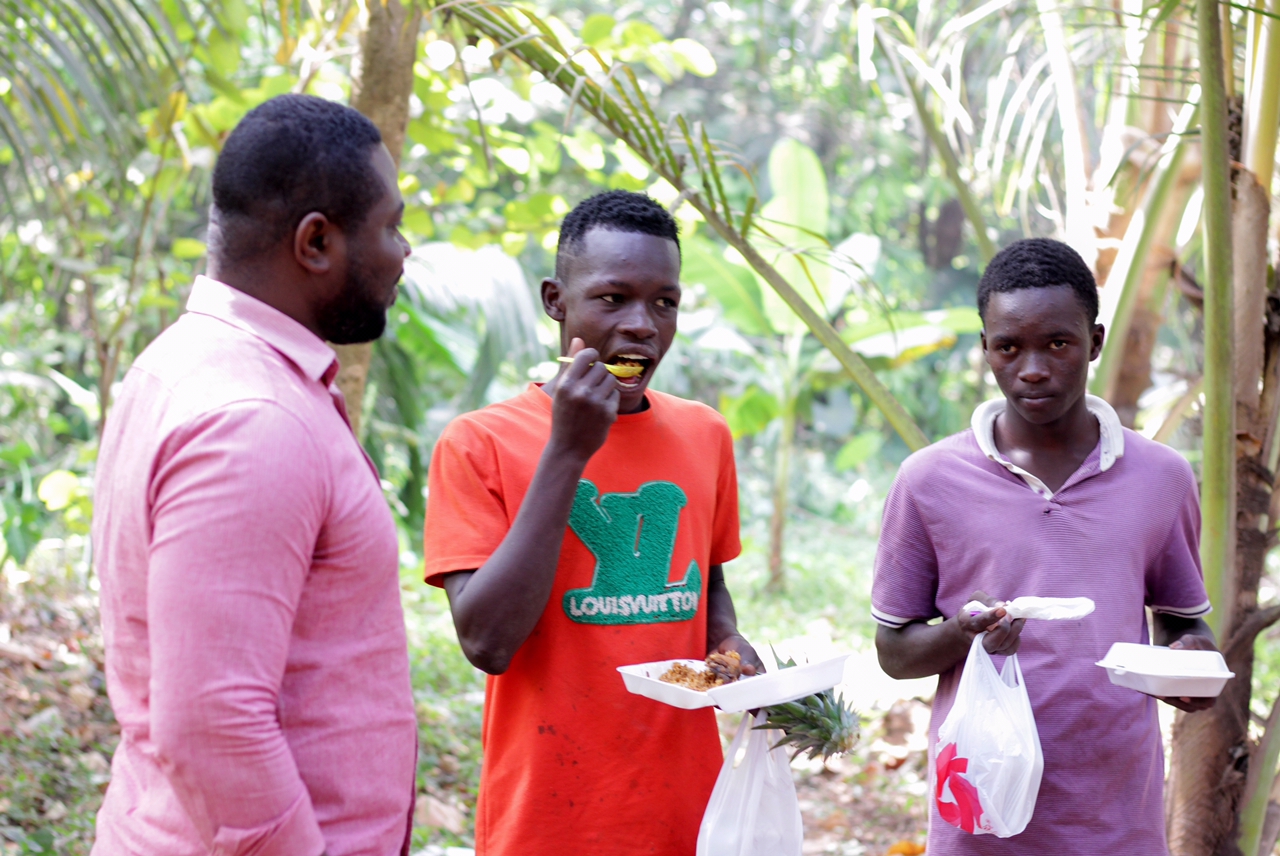
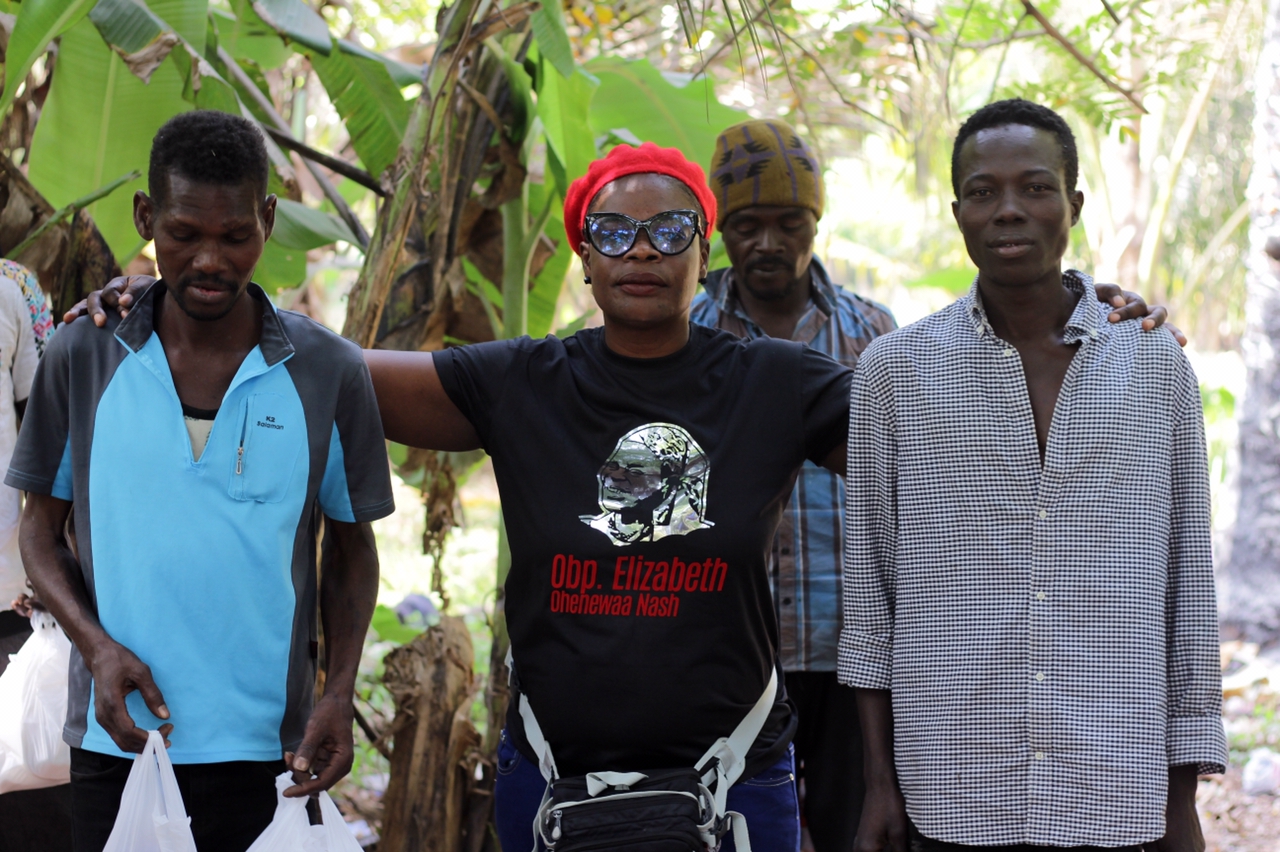
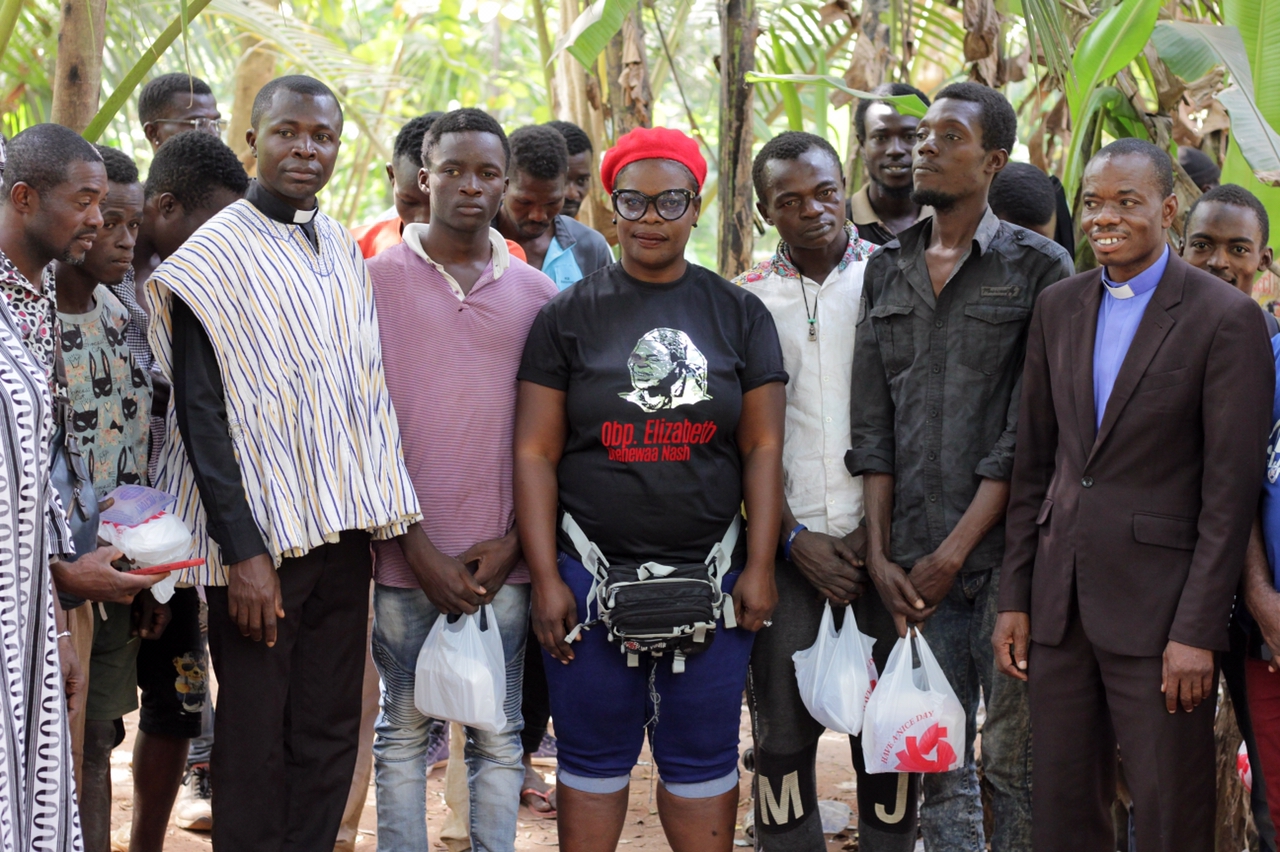
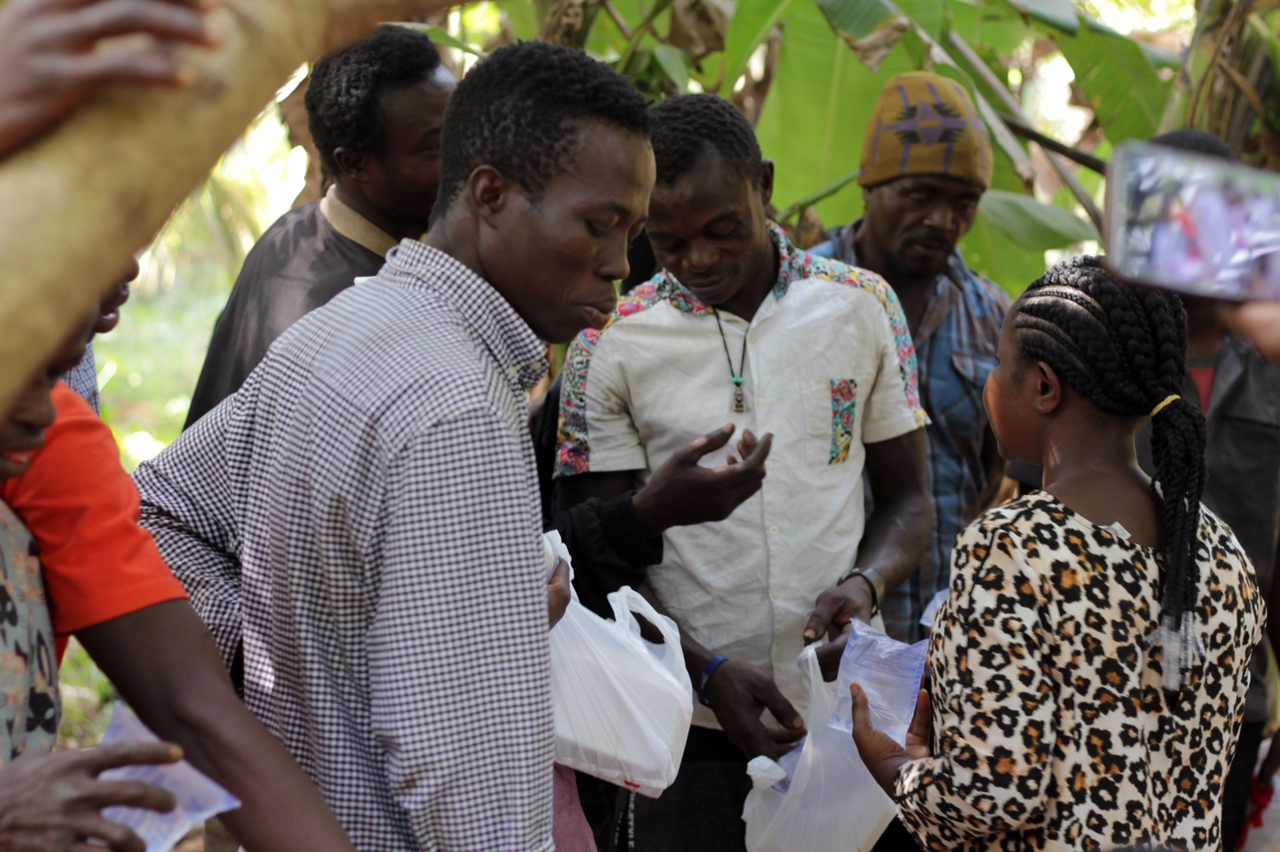
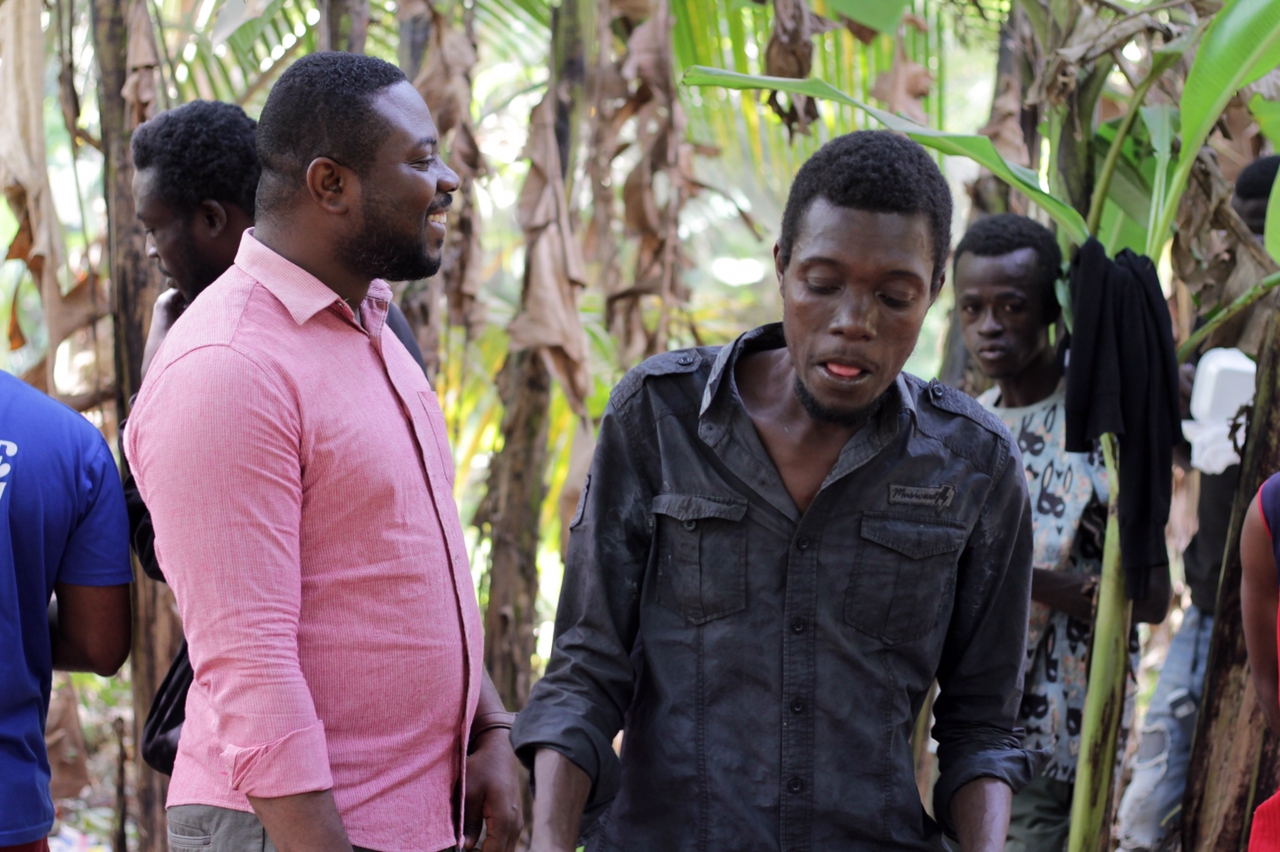
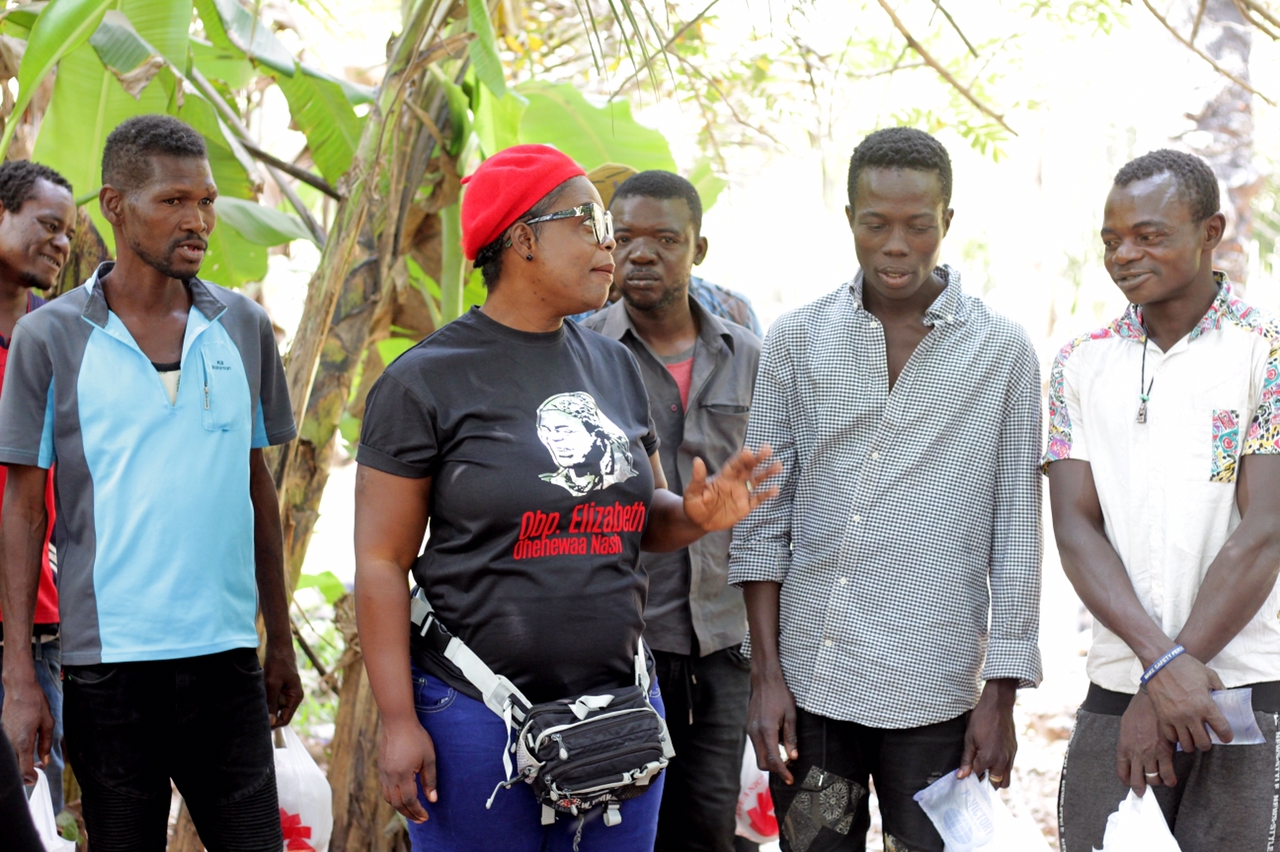
    Ghanaian media personality and news anchor for TeraOne Media, Oheneni Ama Korankye, popularly known as Adazoa has joined some ghetto brethren in Techiman in the Bono East Region to celebrate the Christmas.

    It is an annual celebration known as “Christmas with Ghetto Boys” organized by Adazoa for the youth in the Techiman Municipality who are primarily restricted to the ghettos.

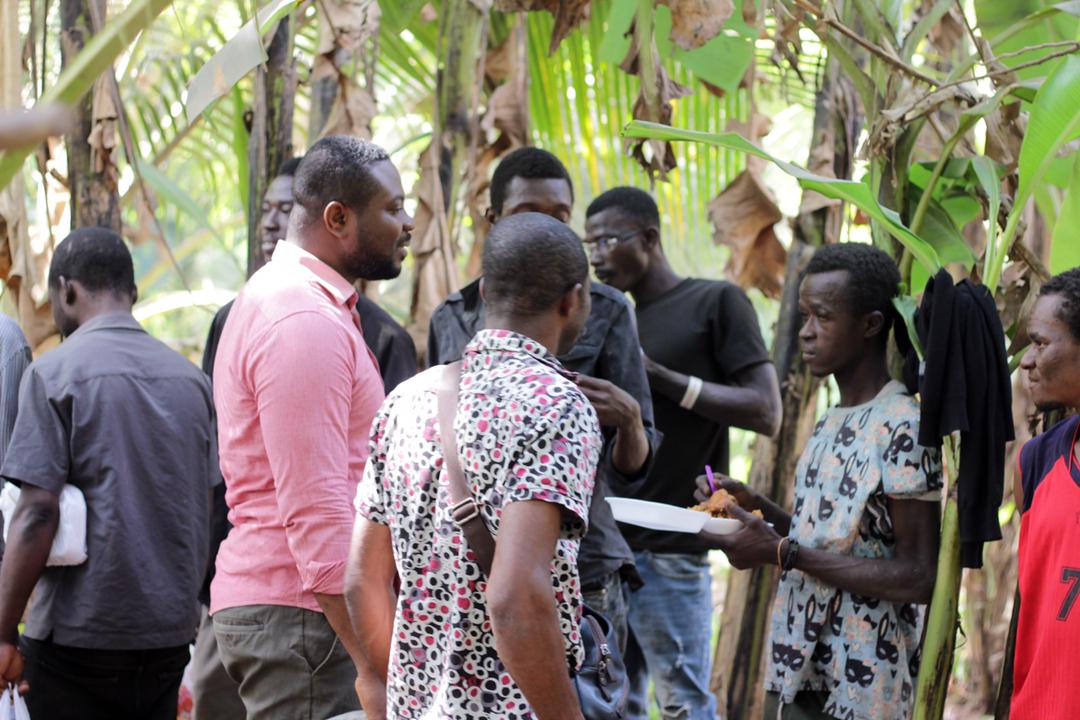
    The occasion this year took place on Tuesday, December 27, 2022, and the popular journalist gave the ghetto brothers nicely parked hot meals.

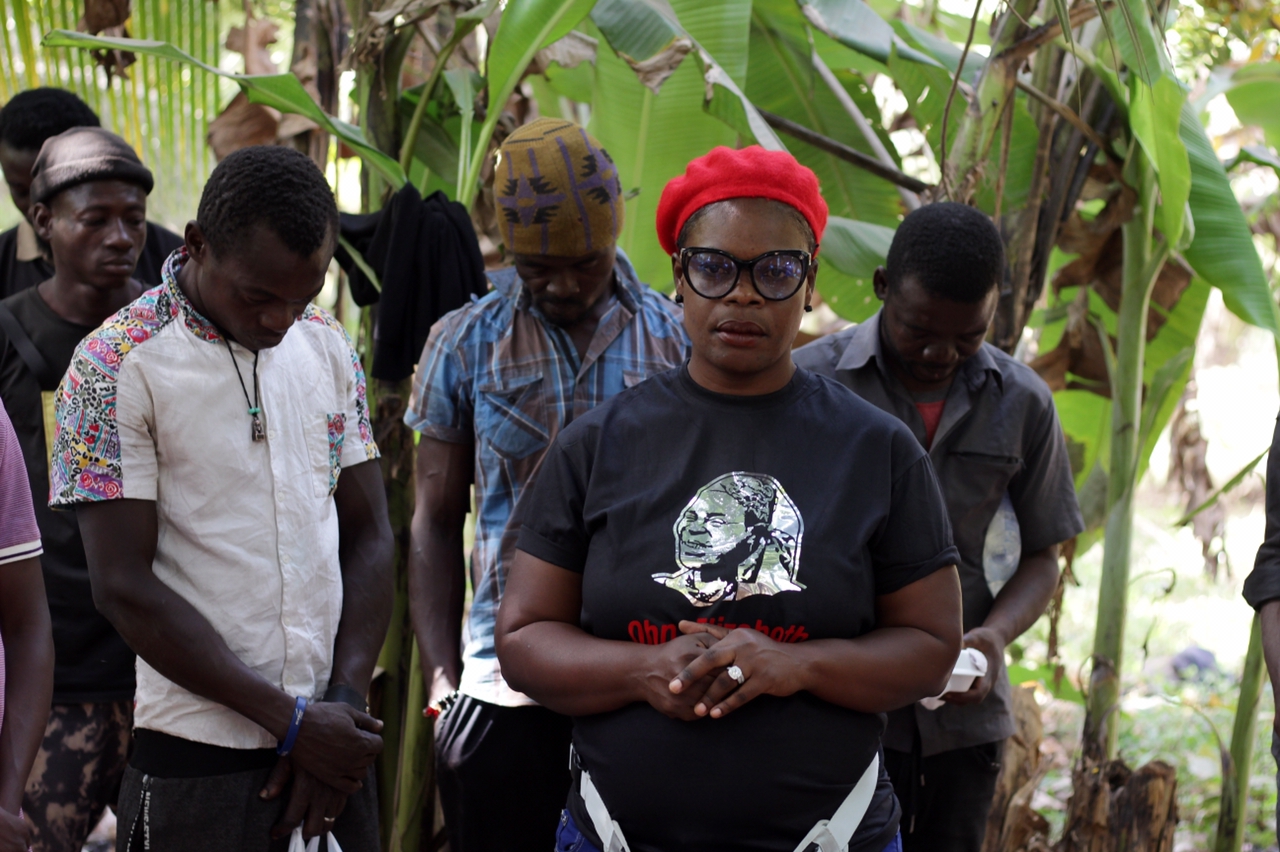
    Adazoa spent time with them and gave them a message from God to enable them to reintegrate into society. She counseled them on the need to get back to the society as all hope was not lost.

    When asked what inspired her to start this charitable endeavor, she replied that she wanted to brighten the Christmas season for the less fortunate members of society.

    She continues by pointing out that this is a time of the year when we should be loving and kind to one another.

    Adazoa emphasized that those who live in isolated or segregated places are similar to everyone else, except that they have chosen to limit their freedom as a result of past social issues.

    She urged corporate organizations and individuals to offer love to those who were living in ghettos since, in her opinion, doing so would help reshape them and bring them back into society.

    She noted that interacting with them will encourage them to share their personal struggles and life stories.

    She took the opportunity to express her gratitude to everyone who helped her make this year’s program a success.

    The ghetto brothers thanked Adazoa and her crew for the thoughtful act.

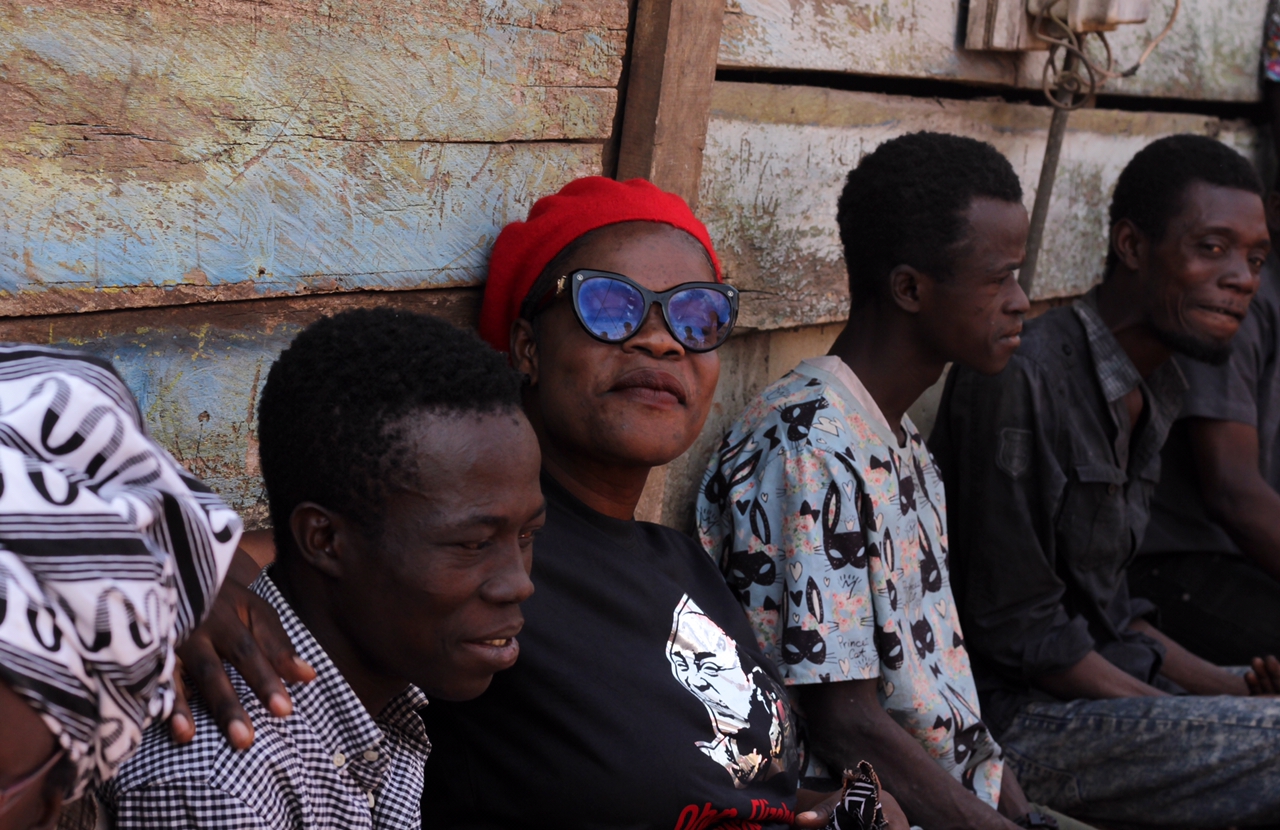
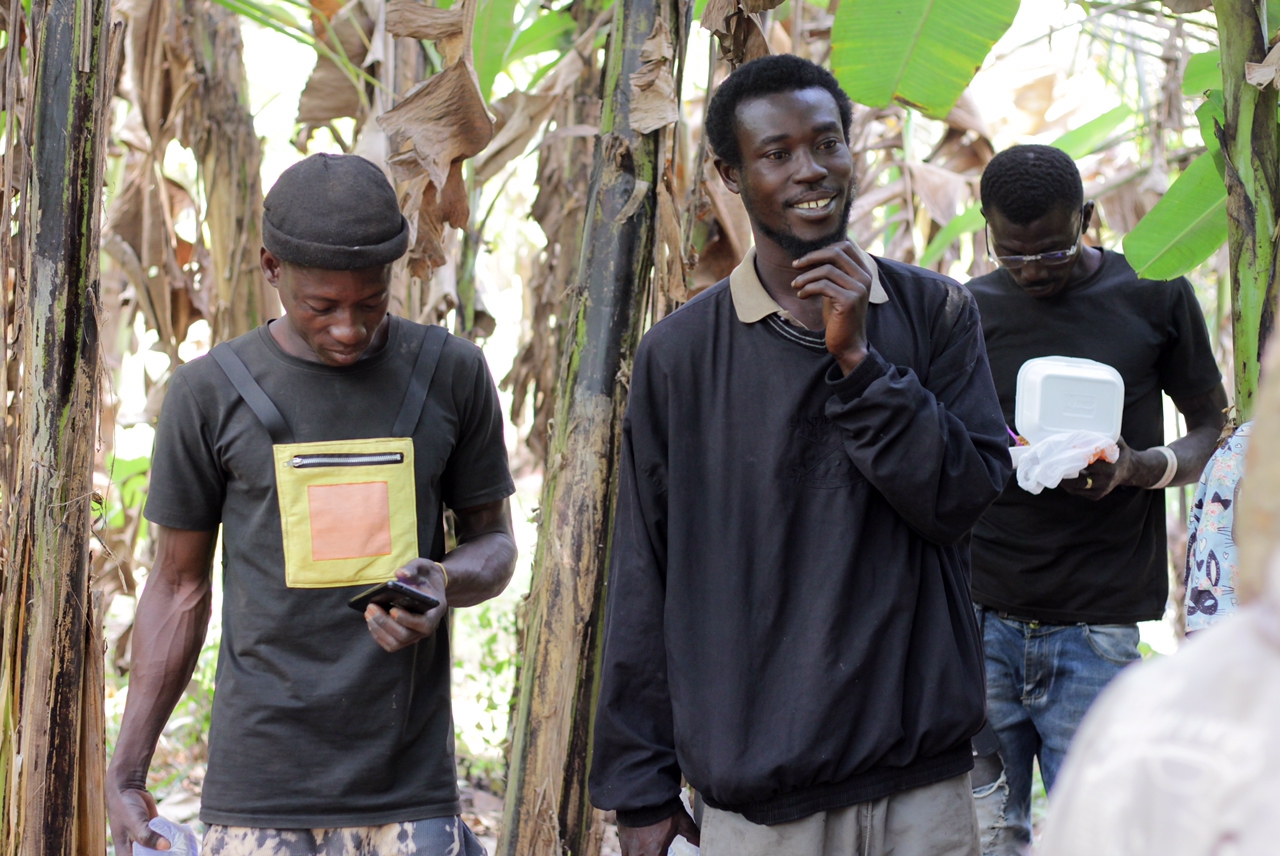
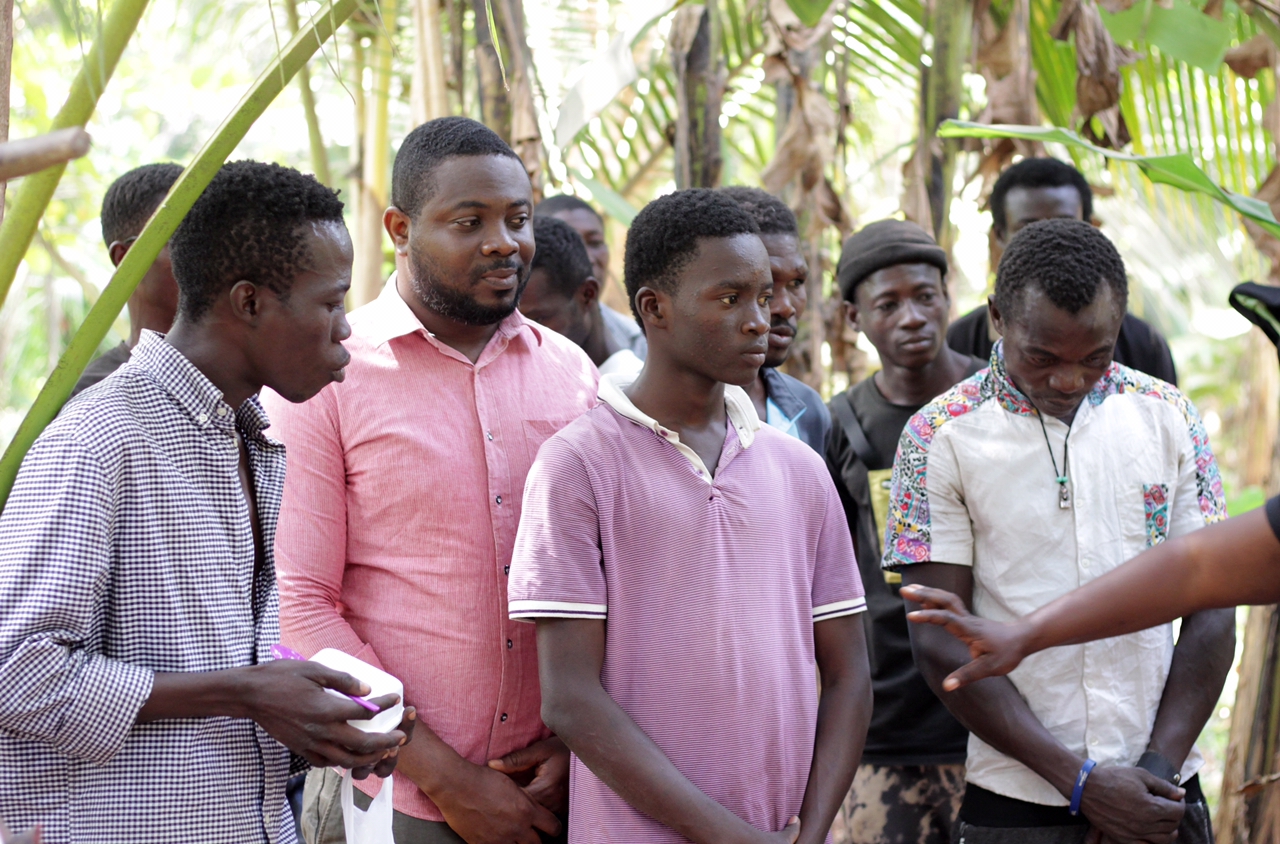
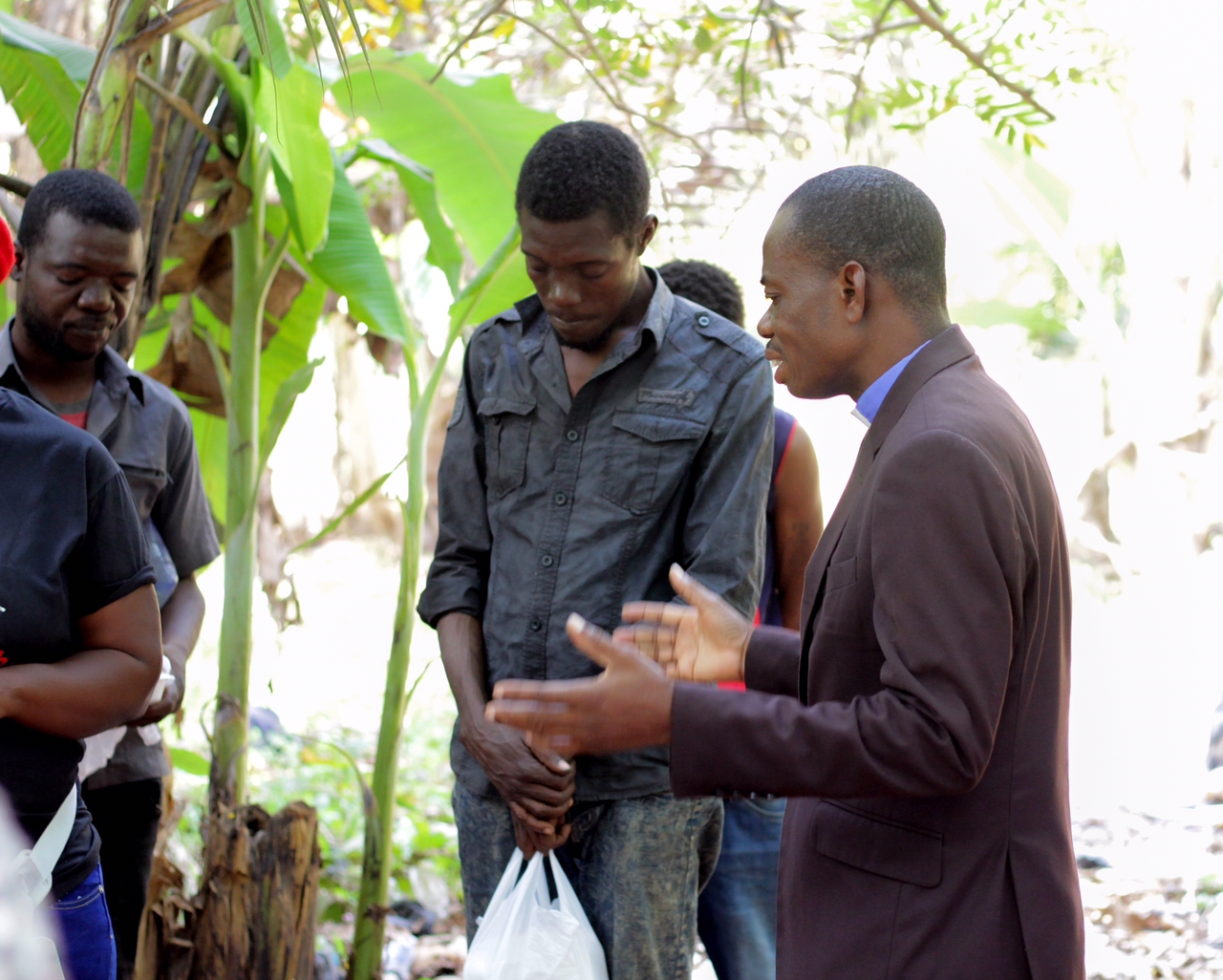
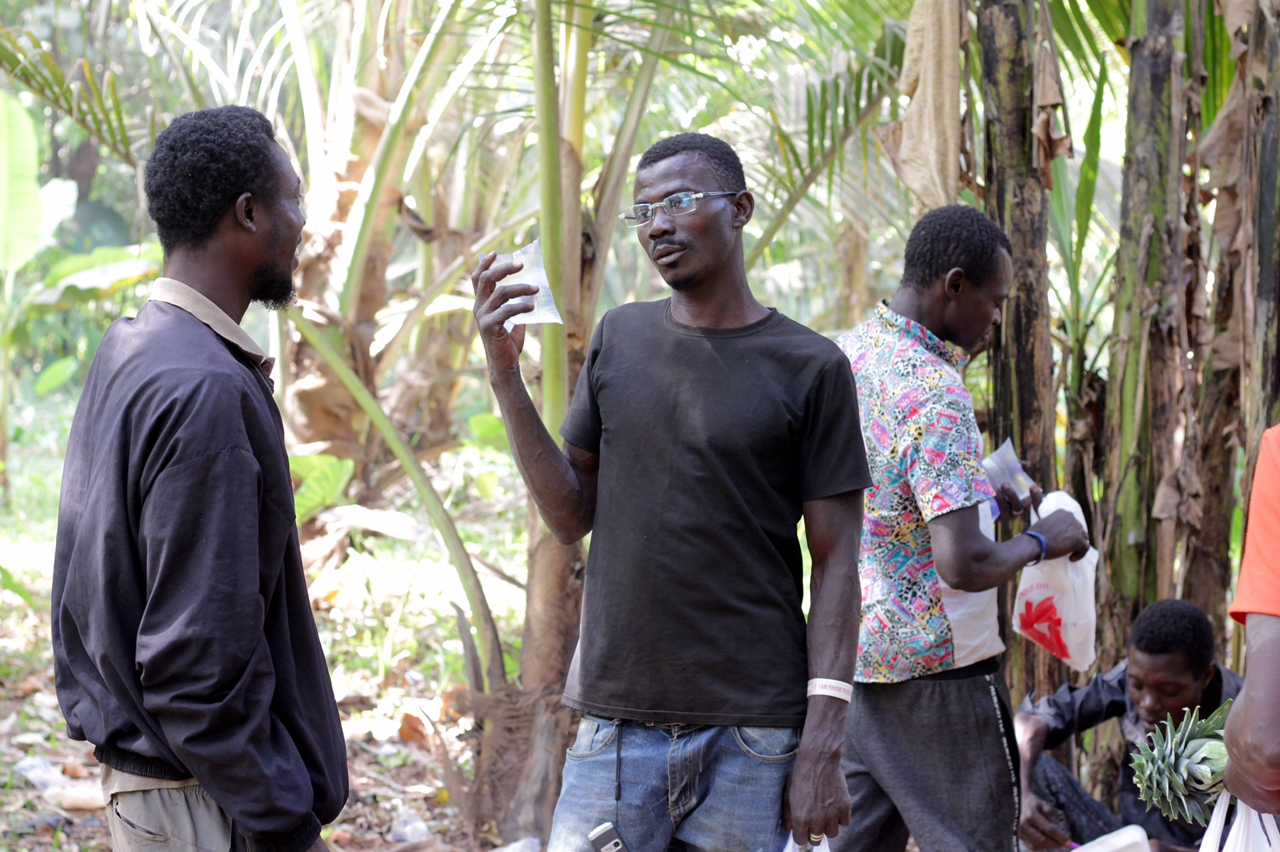
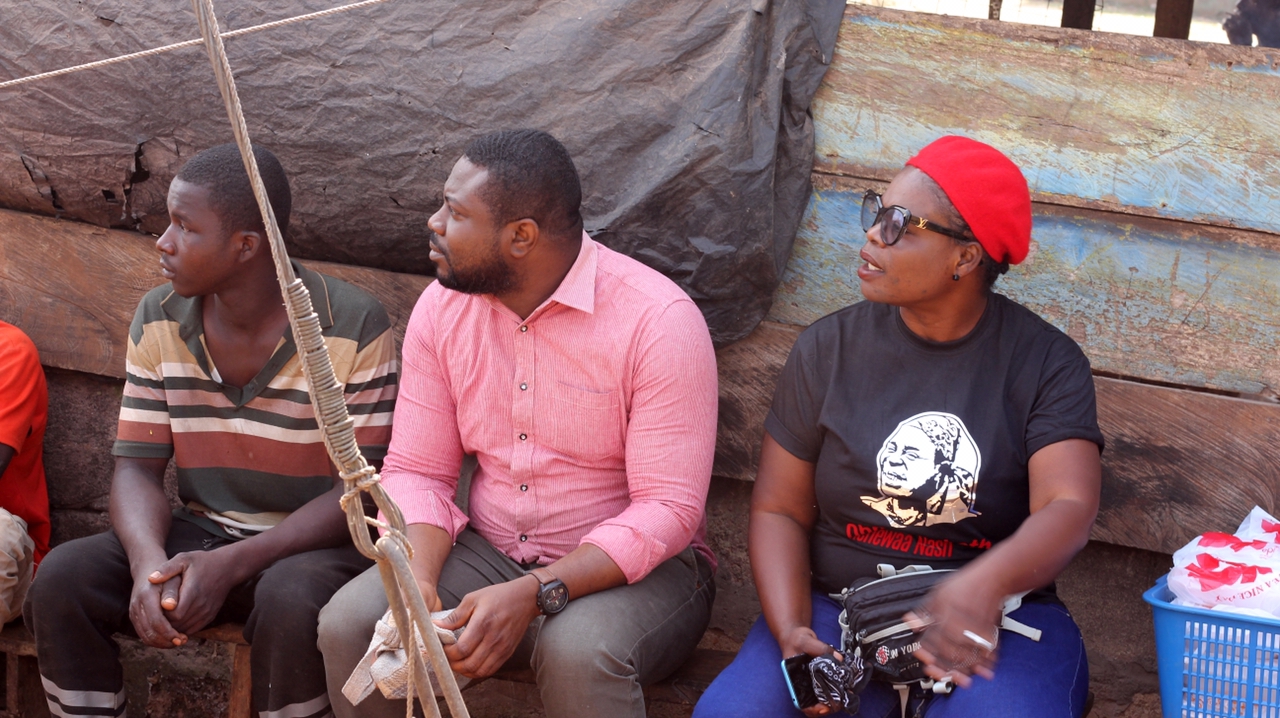
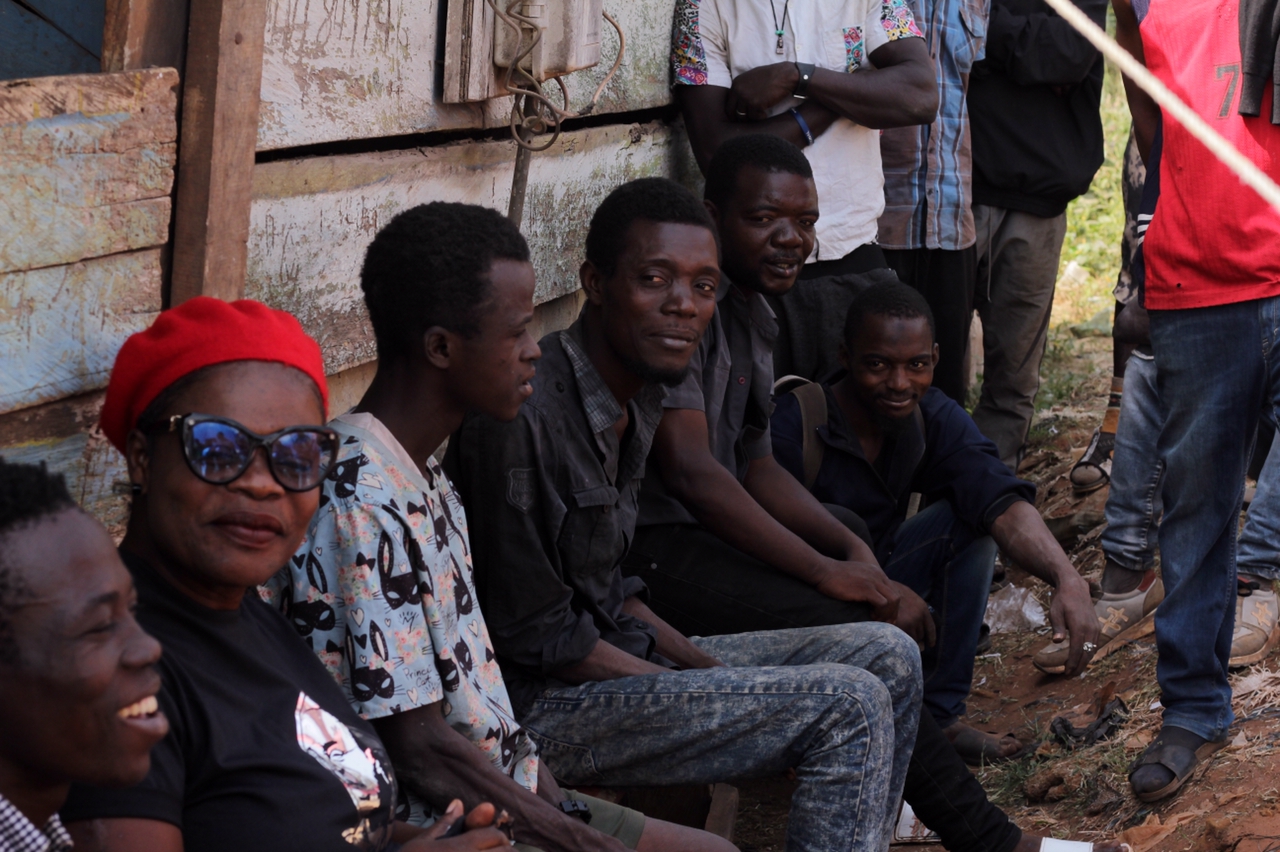
    Below are pictures from Adazoa’s visit to the ghetto:

  • Forex bureaus sell $1 at GH¢11.80, BoG at GH¢8.30 as at December 28

    .

    The Interbank forex rates from the Bank of Ghana today, December 28, 2022, have shown that the Ghana Cedi is trading against the dollar at a buying price of 8.2988 and a selling price of 8.3072.

    As compared to Friday’s trading of a buying price of 8.2959 and a selling price of 8.3042. At a forex bureau in Accra, the dollar is being bought at a rate of 10.30 and sold at a rate of 11.80.

    Against the Pound Sterling, the Cedi is trading at a buying price of 10.0200 and a selling price of 10.0325 as compared to Friday’s trading of a buying price of 9.9633 and a selling price of 9.9741.

    At a forex bureau in Accra, the pound sterling is being bought at a rate of 11.50 and sold at a rate of 14.50.

    The Euro is trading at a buying price of 8.8173 and a selling price of 8.8276 as compared to yesterday’s trading of a buying price of 8.7899 and a selling price of 8.7986.

    At a forex bureau in Accra, Euro is being bought at a rate of 10.50 and sold at a rate of 12.00.

    The South African Rand is trading at a buying price of 0.4889 and a selling price of 0.4893 as compared to Friday’s trading of a buying price of 0.4837 and a selling price of 0.4840.

    At a forex bureau in Accra, South African Rand is being bought at a rate of 0.45 and sold at a rate of 0.90.

    The Nigerian Naira is trading at a buying price of 54.6501 and a selling price of 54.7332 as compared to Friday’s trading at a buying price of 56.5771 and a selling price of 56.5664.

    At a forex bureau in Accra, Nigerian Naira is being bought at a rate of 12.50 Naira for every 1 Cedi and sold at a rate of 17.50.

  • National Cathedral project will continue despite MPs’ rejection of budget allocation – Dr Joyce Aryee

    A member of the Board of Trustees of the National Cathedral of Ghana, Dr Joyce Rosalind Aryee has said that the National Cathedral project will continue despite Parliament’s rejection of GH¢80 million budgetary allocation to it.

    According to her, the said amount rejected by Parliament was only part of the seed money the government promised for the construction of the cathedral “not the entire money that is needed to construct and complete the edifice.”

    Speaking on the Midday News on Joy FM, Dr Aryee said “…It does not mean the project can not go on because I know you are going to bring your money and I will bring mine and everybody that we will approach and is willing will bring theirs.”

    She said on Thursday that “really, those who are willing are the people making the money available for the construction. I think we should all keep calm and not be disturbed.”

    Dr Aryee clarified that there is a provision of seed money is from the Consolidated Vault.

    “People have said that there has not been transparency, but every year in the budget there has been some seed money not taken from what I understand from the Contingency Fund, but I heard there’s something called Contingency Vault,” she said.

    The former Minister of State acknowledged that Parliament has every right not to accept what a budget brings or otherwise.

    Recently the Minority in Parliament accused Finance Minister, Ken Ofori-Atta of releasing GHC25million to the National Cathedral Secretariat as additional seed money for the project without Parliament’s approval.

    However, Ken Ofori-Atta has denied taking money from the Consolidated Fund to finance the National Cathedral project.

    “I have taken no money from the Contingency Fund to make payments for the National Cathedral,” he clarified.

    Source: Myjoyonline

  • Local weavers’ apprentices complain about the expense of the graduation ceremony

    In the Nabdam District of the Upper East Region, apprentices in the local textile weaving business have complained about the allegedly excessive sums their instructors have requested of them before conducting their passing out rituals.

    They claim that despite the fact that no payment is required upon completion, their trainers used their discretion to impose any amount on them, even requiring them to buy certain products for them before they passed out.

    The trainees, who undergo a three-year intensive training on how to weave the fabric which is used for sewing smocks, and other dresses, said their trainers demanded items such as refrigerators, iron pots, basins, drums for water and crates of drinks, in addition to guinea fowls, goats and cash among others, before they were given the blessings of their trainers.

    Some of the trainees, who spoke to the Ghana News Agency on condition of anonymity, said most of them were school dropouts, who, through the benevolence of certain individuals, got them enrolled onto the training to better their lives, so to be faced with such problems was a big blow.

    Ms Lizy, (not her real name), an apprentice said, “Aside the outrageous fees, you are being forced to buy lots of items and you risk not being allowed to pass out when you fail to comply. Yet, they would brand it as gift, which I think no one should be forced on what exactly to give when you cannot afford,” she lamented.

    “How does cloth weaving even relates to items like fridge or pot, but you see, it has become a business venture where the plight of apprentices matters to no one and I’m afraid that, most of us will not be able to pass out because we were brought here through the benevolence of others and they are fed up with these demands,” she added.

    Ms Gifty (not her real name) also an apprentice, told the GNA that, apart from the listed items of which they were compelled to buy for their bosses, they were again instructed on the day of the ceremony to pay amounts between GH₵400.00 and GH₵600.00 as powder fee which she said cost less than GH₵30 in the market.

    She explained that an apprentice may opt to receive blessings instead of partaking in the passing out ceremony, “but one can never avoid buying the items she may be asked to nor avoid paying the amount of money the trainer may demand.”

    Mrs Lariba Kologbon, Chairperson, Weaving Association of Zanlerigu – Dagliga branch of the Nabdam District, confirmed to the GNA that, there was no fixed fee by the Association on the amount to pay for passing out but insisted the items were ordinarily supposed to be gifts.

    She said the District Executives were yet to meet the regional executives of the weaving Association to determine a fixed fee.

    Meanwhile, Mr Nsorbila, tailor and weaver in the Bolgatanga Municipality who is a trainer, and tailor as well in hand woven smocks, said apprentices upon completion in the tailoring and weaving in the smock sector, paid cola nut and soft drinks only.

    However, he noted that the trend had changed with powder fees ranging between GH¢300.00 and GH¢ 600.00 and sheep and on entry pay fees of GH¢ 300.00 when one is starting as Apprenticeship.

  • Abuakwa Noth MP Gifty Twum-Ampofo supports constituents with foodstuffs

    Deputy Minister for Education, In-charge of TVET and MP for Abuakwa North constituency in the Eastern Region, Hon. Gifty Twum-Ampofo has donated foodstuffs to over 35,000 people in the area.

    The donation forms part of her annual contribution of sharing foodstuff to the constituents.

    She said the global economic crisis has made things very difficult for many people to get money to purchase foodstuffs for their various families for the Christmas festive, hence the need to support them.

    The Deputy Minister also appealed to Ghanaian traders especially those from her constituency to reduce their items so people to patronize them in this period of economic hardship.

    Nothing’s changed, except I’ve been driven out of the country, says Azeem Rafiq

  • Koforidua: ‘Irresponsible men’ abandon their wives after giving birth – Midwife cries out

    The Eastern Regional midwife in charge of the Neonatal unit at the Koforidua Regional Hospital, Mrs. Joana Yorke Amoah has revealed that many men abandon their wives in the hospital after delivery.

    According to her, the men take the decision to leave their wives at the unit over their inability to meet the bill conditions.

    She revealed that because most pregnant women attend the Neonatal unit financially unprepared, they are unable to foot the bill therefore such cases are referred to social welfare to contact their family members to settle their debts.

    Mrs. Joana Yorke Amoah said this when MTN Ghana as part of its annual Yello Care initiative donated some hampers to support some new babies born on Christmas day at the Regional Hospital.

    “Some of them have insurance, it’s just a few who don’t have, and sometimes too they are not well prepared when you ask if the money that they are having is not enough.

    “They cannot foot the bills so sometimes we encourage them to deposit what they have then we later call the family members to come and pay the rest for them.

    “With the financial aspect their husbands don’t show up, they just come and dump them here and then they leave them, we take their numbers and call them and they don’t respond to us,” she disclosed.

    She said 9 new babies were born on the Christmas Day (25th of December) this year out of which six women were taken through a Cesarean Section while the other three delivered on their own.

    Mr. Mohammed Haruna Yamba, who led the MTN Team noted that the donation forms part of their annual ritual that MTN always do just to welcome the newborn babies.

    He explained that MTN Ghana Yello Care is supporting 25 babies born on Christmas day and their mothers only in the region with hampers which consist of soaps, diapers, detergents, detail as well as airtime and other basic needs necessary to take care of newborn babies.

    The Yello Care team further went to Koforidua SDA Hospital and St. Joseph Hospital and distributed hampers to some mothers and babies born on Christmas day.

  • First National Bank provides some ATM safety advice

    The holiday season has returned, and this is a time of year when people spend a lot of money spoiling their loved ones.

    Unfortunately, this time period is also rife with fraudulent activities as con artists try to defraud people at ATMs and other cash-out locations.

    Akweley Laryea, the head of retail banking at First National Bank, has provided some instructions to ATM users who would be using the cash vending system this holiday season.

    She said, “Consumers typically withdraw substantial amounts of cash at this time of year for a variety of reasons. Some may withdraw cash to pay for long-distance public transportation or to purchase products in cash-only locations. Because cash is so widely used, we frequently see an increase in ATM-related fraud, therefore it is important to remind consumers to be cautious.”

    Akweley shares top ATM tips to help you keep your money safe this festive season:

    1. Always inspect the ATM to ensure the card reader(slot) and PIN pad are not tampered with.

    2. Never use an ATM that appears to be broken or tampered with or force your card into it.

    3. Before entering your PIN, carefully read the instructions on the ATM screen.

    4. If the ATM screen is strange to you, do not input your PIN; instead, cancel the transaction.

    5. Never tell anyone your ATM PIN, never write it down, and never share it.

    6. Never let someone distract you when you are making a transaction

    7. Cover the ATM keypad with your hand as you input your PIN.

    8. Keep cash out of sight before leaving the ATM.
    9. To protect yourself, set a daily withdrawal limit that is reasonable via the APP or Online Banking. Remember that you can cancel a compromised card via same channels

    10. Cardless cash withdrawals at First National Bank ATMs are always safe and secure.

    “First National Bank customers have multiple options to transact safely whenever and wherever they are. They can use the First National Bank App, Online and Cellphone Banking, or the agency bank partners to process most transactions. First National Bank customers can make free withdrawals at all VISA ATMs nationwide and any payment you make with your First National Bank card this December, earns you up to 1% cash back as a reward. Generally, we encourage customers to transact securely and remind them to always be alert, especially during the busiest periods of the year,” Akweley concluded.

  • I don’t have money for food and my rent is up – Ghanaian striker in Zimbabwe cries

    Ghanaian striker Dela Akorli has cried out about the financial struggles he is currently going through at his Zimbabwean club Bulawayo Chiefs.

    The striker has not been paid by the Zimbabwean side since June 2022 and has been crying about struggling to survive.

    Akorli, 19, is contracted to the club till 31st December 2022 when his contract with the club expires.

    But he is struggling to even get money for flight tickets back home to Ghana as his club’s financial woes deepen.

    The player in an interview with soccer24.co.zw, that he is struggling to afford food, and also his rent has expired, and has been perching with a colleague

    .

    “Since I signed for the club, they have not given me my signing on fee and they are owing me 5 months salary,” Akorli told Soccer24.

    “Since we finished the league, I had no money on me, to even buy food or data bundle. I have no entertainment at home it has been very tough for me.

    “I couldn’t watch the World Cup that took place recently. Life has been very tough for me,” he added.

    The player says that he has contacted the Zimbabwean Player Union to help to him get his money  in order to return to Ghana.

    “I want to go back home because the stress that I have gone through this season with this club (Chiefs) is too much for me,” said Arkoli.

    He urged the Zimbabwe Football Association (ZIFA) to carefully vet all individuals who want to own football clubs in the country, so that the dignity of players is not lost.

    “I’m calling on ZIFA to make sure football is being run by proper football people who respect players,” he said.

    “Club owners and executives should treat players well because this job of ours needs a sound mind to be able to perform on the field of play,” added Arkoli.

  • If consumers are not protected, businesses will fail – Kofi Kapito

    Kofi Owusu Hene, the chief executive officer of the Consumer Rights Protection Agency and better known as Kofi Kapito in the media, has lamented Ghana’s failure to approve the Consumer Rights Bill, claiming that businesses cannot thrive without protecting customers.

    On the GTV Breakfast Show episode airing on December 28, 2022, he said this.

    He claims that from the Kufuor administration to the current administration led by President Akufo Addo, the Consumer Protection Nill has undergone consecutive government administrations.

    He attributed the failure of its passage to a lack of continuity of issues, suggesting a best practices approach as remedy.

  • Ethiopia’s Tigray conflict: Flights resume between Addis Ababa and Mekelle

    Families wept and kissed the tarmac at the main airport in Ethiopia’s northern Tigray region as they reunited after being kept apart by war for more than 18 months.

    The emotional scenes followed the resumption of commercial flights between the federal capital Addis Ababa and the regional capital Mekelle.

    The city, which has a population of around 500,000, was largely cut off from the rest of the world during a brutal two-year war that claimed the lives of tens of thousands of people, and displaced millions of others.

    The government and Tigray People’s Liberation Front (TPLF) finally signed a peace accord last month, opening the way for passenger flights to resume.

    TPLF-controlled Tigrai TV showed footage of passengers dropping to their knees and kissing the tarmac at the airport in Mekelle.

    There were also emotional scenes at Addis Ababa’s Bole International Airport, as people flew in from Tigray.

    As telephone services had also been cut, some people had no contact with their relatives in Tigray for more than 18 months, and were anxiously waiting to find out whether they were still at home and safe.

    They included 47-year-old Kahssay Hailu, who had been stranded in Addis Ababa since she came to the city to be with her daughter, as she prepared for her exams.

    “I lived here, separated from my husband and child whom I love,” Mrs Kahssay told Reuters news agency, as she waited at the airport in Addis Ababa to catch her flight to Mekelle.

    “When I heard of the news [of flights resuming], I fell to the ground and cried,” she added.

    Another woman, 67-year-old Nigsti Hailemariam, said she had arrived in Addis Ababa in 2020 to help her pregnant daughter give birth.

    “I came here to see my daughter who was giving birth. My plan was to stay just two weeks and then everything was shut down suddenly. It has been more than a year-and-a-half. I’m very happy that peace is returning, and excited that I am finally going home,” she told Reuters.

    The war started after a massive fall-out between Ethiopian Prime Minister Abiy Ahmed and the TPLF-controlled regional government.

    Mr Abiy accused Tigrayan forces of attacking military bases and trying to overthrow him.

    He responded by ordering air strikes, and sending troops to Tigray to dislodge the TPLF from power in the region.

    The African Union (AU) brokered a deal between the two sides last month to end hostilities and to restore basic services in Tigray.

  • Residents of Sunyani request price regulation for goods and services

    Many people in Sunyani and the surrounding areas have pleaded with the government to implement regulated pricing of products and services to restrict the costs of commodities as a measure of relief for consumers in the nation.

    They claimed that would stop traders and other service providers from escalating prices of goods and services arbitrarily to thwart government efforts to stabilize the economy. They claimed that even a small increase in the value of the US Dollar relative to the Ghana Cedi would prevent them from doing so.

    It would be recalled in the past few months, the country was hit with economic challenges, which resulted to the rise in inflation and the Ghanaian Cedi facing its worse performance on the forex market and other factors that contributed to the sharp rise in prices of goods and other services across the country.

    They made the plea in in an interview with the Ghana News Agency (GNA) in Sunyani, saying the refusal of traders to reduce the prices of items despite the Cedi appreciating at the forex market “is a great worry” impeding national economic progress.

    The respondents believed the Cedi had started appreciating against the major foreign currencies, but “the prices of most goods and services are still at the hiked levels.”

    Madam Elizabeth Yeboah, a public servant sharing her experience indicated, ”I am shocked prices of some commodities are still the same though the price of fuel has come down considerably and the Cedi is doing well against the foreign currencies in recent times.”

    Mr George Ofori, also a public servant, appealed to the government to enact a law to compel wholesalers, retailers, and other services providers to regulate prices of goods and services as and when necessary.

    He said that would be the determinant factor to control prices of commodities and services, saying, “we must have price floors and price ceilings” to control the system and not anybody randomly increasing prices of items because the foreign currencies had gone high.

    Christian Ahianyo, a Senior High School student observed most people, especially traders and those who rendered services like drivers were becoming insensitive in the country because, “all they care about is increasing the prices of items and lorry fares without considering the plight of consumers.”

    ”I hope that they would heed the call of President Nana Addo Dankwa Akufo-Addo by reducing prices of goods and services to make socio-economic lives more bearable for Ghanaians,” he added.

    But some of the respondents such as Madam Grace Afia Brago, a trader at the Sunyani central business district however, explained that a factor causing delay in reduction of commodities’ prices was that most of the commodities were purchased when the foreign currencies were high and therefore those stocks must finish before consumers could experience a better price drop.

  • BREAKING NEWS: Medeama SC mutually part ways with David Duncan after four months in charge

    Ghana Premier League side, Medeama SC have mutually parted ways with head coach, David Duncan.

    The former Black Stars assistant was named as the new boss for the Yellow and Mauve on a one-year deal on September 2, 2022, before the start of the ongoing season.

    However, Duncan has struggled to improve the side.

    After nine matches played, Medeama SC sit on the 13th position with 11 points. However, Duncan only supervised five games.

    A club statement read, “Medeama Sporting Club and Head Coach David Duncan today parted company on mutual ground.

    “On behalf of everyone at Medeama SC, the Club would like to place on record its gratitude to David Duncan for his efforts during his time with the club and wish him well in his future endeavour.”

    Duncan’s return to the Ghana Premier League was his first job after he was sacked by Asante Kotoko in 2016.

    Duncan is a former coach AshantiGold SC, Great Olympics, Hearts of Oak as well as outside the country with South African side, Free State Stars.

    Medeama SC will return to action when they host Accra Lions at Akoon Park in the matchday 10 of the 2022/23 Ghana Premier League on Sunday, January 1, 2023.

    Meanwhile, assistant coach, Umar Rabi is expected to take charge of upcoming games before a new coach is appointed.

  • Two police officers interdicted for extortion

    The Ghana Police Service has interdicted two of its officers for unprofessional conduct.

    The officers PW/Inspr Martha Ackah and No. 6233 PW/Sergeant Felicia Ocran of Asokwa Divisional MTTD, Kumasi were captured in a video extorting money from a driver.

    In the 28-second video making rounds on social media, the two officers were seen interacting with a driver who, unbeknownst to them, recorded their engagement. 

    One of the officers threatened to send the driver to the Asokwa Police station if he refused to accede to their request. The driver subsequently handed over some money.

    Meanwhile, the Ghana Police Service in a statement, signed by the Public Affairs Officer, ASP Godwin Ahianyo, noted that they would initiate a thorough investigation into the case.

    They added that disciplinary action will be taken after the investigations.

    @kwakuboateng917♬ original sound – Kwaku Boateng917

    “We would like to urge the affected victims to come forward and support Police investigation to enable us take the officers through the due process of the law as we seek to ensure that our officers uphold the highest form of professional standards,” they stated.

    Two police officers interdicted for extortion
  • Won Si Pea – Humiliation As Despite Calls Street Boys To Push His Bugatti After Getting Stuck In Town

    Ghanaian millionaire, Osei Kwame Despite is trending after being captured in an awkward situation.

    In a viral video, Despite is seen getting help to move his Bugatti after getting stuck in town.

    Some street boys are seen pushing the car to set it in motion!

    It’s quite confusing how such a huge machine, Bugatti for that matter got stuck on a tarred road.

    Currently, social media is dragging Despite over such a humiliating encounter.

    Some claims Osei Kwame Despite could not buy a quality version of Bugatti but imported his own from China.

    Others who also find the situation funny passed comments like; ‘won si pea, this is embarrassing, and more.

    Meanwhile, millionaire Osei Kwame Despite has been causing a stir with his huge and expensive whips.

    The business mogul recently stole a show with his Cadillac Escalade!

    He stormed the thanksgiving service of the East Legon Executive Club with his Cadillac Escalade and immediately, everybody mellowed!

  • Labor unions applaud the Council of State

    Dr. Anthony Yaw Baah, Secretary of the Trades Union Congress, has thanked the Council of State for its role in helping the government and organized labor reach a good accord.

    On December 22, 2022, in Accra, at a ceremony where a memorandum of understanding was signed between the government and organized labor regarding the exclusion of pension funds from the Domestic Debt Exchange program, Dr. Baah, who represented organized labor, thanked President Akufo-Addo and his administration for paying attention to the country’s workers’ plight.

    In his speech, Dr. Baah expressed his sincere gratitude to the Council of State for its contribution towards the exemption of pension funds.

    In addressing the media, he acknowledged the role played by the Council of State under the leadership of Nana Otuo Siriboe II.

    He stated that the Chairman of the Council of State personally worked tirelessly by engaging both government and Labour to ensure that there was peace in the country.

    He explained that the organised labour had no intention of causing destruction, but they believe that pension funds should not be touched. He rather stated that if anything, pensions should be improved in the country.

    The statement by Dr. Baah on the impact of the Council of State in the exemption of pension funds from the domestic debt exchange programme has come at a time when the Council has been under serious criticism for its relevance and there has been calls for the scrapping of the or replacing of the Council of State with the senate system which others believe will be more effective.

    The current Council of State has been working tirelessly in line with its mandate as stipulated by chapter 9 of the 1992 Constitution. It has had several engagements with the government and other stakeholders especially during these financial crises on the way forward.

    The Council has had series of meetings with the Finance Ministry, the Bank of Ghana and other stakeholders in the trade and industry sector on measures to improve the strength of the cedi to other major foreign currencies. Possibly, the current appreciation of the cedi against major foreign currencies could be some of the outcomes of the Council’s work.

    It must be noted that the Council of State is unable to make known most of its work to public as a result of provisions of the constitution which limits the public activities of the Council of State.

  • How the first ever Amapiano Party in Accra went down

    South Africa’s finest Amapiano king, Costa Titch, delivered a thrilling performance at the maiden edition of the Amapiano Party, in Accra on Friday, December 23, 2022.

    The event, dubbed the Afro Beach Festival, took place at the Marina Mall’s SOHO bar and restaurant.

    Back-to-back hit songs performed by the incredibly talented rapper and songwriter enthralled the crowd, who enthusiastically danced to each song.

    The crowd erupted in applause and joy when Costa Titch added some dance moves to his performance.

    The audience could not get enough of him as they also moved along with his dance moves
    Costa Titch is a South African Artist best known for hit songs like ‘Activate, Just do it, Big Flexa, Superstar, Maitama, Azul, Nkalakatha etc.

    The attendees of ‘The Amapiano Party’ had the opportunity to enjoy an awesome playlist from SOHO’s baddest DJ, Baylor.

    Other celebrities at the event were Ghanaian comedian DKB, CEO of EIB media group Bola Ray, and Dee Wills, son of Archbishop Duncan Williams.

    The Maiden edition of the Amapiano Party was sponsored by John Walker Blue Label.

  • Bright Simons addresses the seven problems in Ghana’s debt restructuring

    Many people may remember how Ghana, for the sixth time in its history, was unable to continue paying its debts in 2000. As a result, Ghana was designated a “Highly Indebted Poor Country” (HIPC), and a series of reforms that began in 2000 finished in 2003.

    Between 2003 and 2006, Ghana received the second-highest amount of debt relief in Africa as a result of the HIPC program, and as a result, the percentage of government income used to service debt decreased from almost 40% to just over 10%.

    Almost everyone also now knows that this massive fiscal room gave Ghana fresh latitude to explore new financing options. The country discovered the Eurobond market in 2007; and proceeded to build the Ghana Fixed Income Market (GFIM) in August 2015 to dramatically expand domestic borrowing.

    Unfortunately, the rate at which the country accumulated debt soon outstripped the rate of growth in national output and government revenue. Between 2018 and 2021, domestic debt alone grew, on average, more than 26% per year.

    Foreign borrowing also expanded dramatically from 2018 onwards, resulting in Ghana’s outstanding Eurobond debt more than tripling in just 3 years. Indeed, annual foreign borrowing exceeded $6 billion per year until the taps were shut in late 2021, when the government failed to raise a $1.5 billion facility in October of that year.

    That failure triggered a spiraling loss of market confidence as investors looked more closely at Ghana’s books and saw clear signs of pending insolvency. For instance, debt servicing costs had started to consume more than 50% of domestic tax revenue (today, it tops 70%). A selloff of Ghana’s bonds then followed leading to massive losses for investors, belated ratings downgrades, and an estrangement of Ghana from the international capital markets.

    In July of 2022, the government reversed earlier decisions not to return to the IMF for a bailout and soon thereafter faced up to the unsustainability of public debt. In October 2022, it began to explore a restructuring of its debt, as a precondition for securing an IMF program, and formed a five-member committee of eminent bankers to solicit viewpoints from across the financial industry. Repeated claims were made about the government’s commitment to a “market-led” (not just “market-friendly”) process that will embrace the perspectives of the country’s key creditors.

    Then, almost out of the blue, Finance Ministry mandarins met finance industry stakeholders on December 2nd 2022, and abruptly announced an imminent debt restructuringin which many creditors on the domestic front stood to lose more than 60% of the value of their government of Ghana securities (i.e. debt instruments, mostly bonds). Not only had no report by the 5-member committee been disclosed to any of the creditor groups, none of the proposals presented by the government on December 2nd reflected any of the perspectives and suggestions the industry representatives had shared with the committee.

    On 5th December, the government formally launched the debt restructuring program and set a two-week deadline for creditors to sign away billions of Cedis of asset value. Industry players were not even expected to seriously consult with legal and financial advisors. Theirs was merely to acquiesce.

    Yet, the financial effect of the government’s initial proposal was far bigger than any tax or other fiscal burden ever imposed on any Ghanaian sector in one fell swoop. Had the proposals been accepted in the form presented, the financial industry and other creditors would have forgone nearly 27 billion GHS in 2023 alone.

    In comparison, the government expects to receive, in 2022, 12.1 billion GHS from oil and gas; 1.19 billion GHS from donor grants; 12.75 billion GHS from personal income tax; 16.5 billion GHS from corporate taxes (by the end of September 2022, the government had made less than 10 billion GHS of this target amount); 15.4 billion GHS from VAT (barely 10 billion GHS accrued by end-September); and 8.573 billion GHS from import duties.

    The same picture plays out in 2023, as readers can see below; no tax handle generates anywhere close to the amount of resources the government intends to mobilise from domestic investors through the debt restructuring exercise.

    Bright Simons: 7 Flaws in Ghana’s debt restructuring and how to fix them
    The debt program therefore represents, undoubtedly, the largest single transfer of wealth from the Ghanaian private sector to the government in a single fiscal measure, in living memory. It is equivalent to doubling taxes on the entire corporate sector and giving the bill to only banks, insurance companies, pension funds and a few other investor categories to pay.

    Whilst various exemptions since the original proposals were mooted have reduced the initial debt relief amount by some 15%, the “debt exchange” program still remains the biggest single domestic fiscal measure in the country’s history.


    The least the government could have done before embarking on such a massive wealth transfer exercise was to have engaged closely with those whose wealth is being expropriated in the crafting of the overall program. This was not done. Instead, a fait accompli was presented to creditors.

    Not surprising then to see the government postpone its unilateral deadlines twice, initially from 19th December to 30th December, and subsequently from 30th December to 16th January 2023.

    In the rest of this short essay, we discuss the 7 main stumbling blocks in the way of a smooth debt restructuring program.

    Poor Stakeholder Management
    As already hinted above, the poor stakeholder consultations characterizing the Ghanaian government’s approach strikingly differentiate it from the approach adopted in many other countries where similar exercises have taken place in the recent past. In the case of Jamaica, to name but one example, the Advisory Committee representing the interests of the creditors had full access to all financial data underlying the government’s assumptions. It held regular engagements on a wide range of design issues to inform and shape the overall strategy. And it was seen to be articulating the full range of concerns shared by all major creditors.

    The Ghanaian government’s idea of consultations is a couple of meetings where monologues are exchanged and vague reassurances of “support” given, this having been how it has conducted all matters of policy since coming to power in 2017. Unfortunately, in a debt restructuring exercise of this magnitude, where such massive amounts of money are involved, its usual style simply won’t cut it.

    Creditors are instead demanding to co-create the program through a formal committee process. Creditors are furthermore demanding the engagement of top-notch financial and legal experts to serve this advisory committee, paid for by the government. Failure to accede to these demands would likely lead to more feet-dragging by the major institutions holding a very significant proportion of the debt, and by implication the failure of the exercise.

    Considering the government’s incredible good luck in not facing any actual organized opposition to the entire IMF and/or debt restructuring program, it is mindboggling how it has still succeeded in bungling the process so far by failing to engage critical stakeholders in good faith. Given the general sense of resignation across all factions of elite society about the inevitability of some kind of debt restructuring to salvage the economic situation, the government’s inability to build a strong national consensus around the measures needed for the recovery betrays a woeful lack of leadership.

    Domestic investors may take some cold comfort from the fact that the government has not limited this practice to the home front. It announced a freeze on servicing external debt without bothering with the niceties of applying for consent from its foreign creditors.

    It is true that there was no assurance that a “consent solicitation” of this nature would have been automatically granted. Zambia learnt that hard lesson in 2020. However, research shows that countries that default on their debt before initiating the restructuring process, as Ghana has done on the external front, tend to inflict greater losses on investors. This was the case in Russia in 2000 (50% NPV losses) and Argentina in 2005 (75% NPV losses), for instance.

    By contrast, in situations where countries default only after the formal restructuring engagement has commenced, like Pakistan in 1998, Dominican Republic in 2005, and Uruguay in 2003, investors tend to face relatively lower losses (less than 5% NPV losses in the case of the Dominican Republic, for instance). Ghana’s decision to freeze debt servicing before prior consultations have, therefore, signalled an intent to be aggressive in the upcoming negotiations and to be dismissive of investor anxieties. Such vibes, unfortunately, could delay the reaching of an amicable settlement with foreign investors, thereby slowing the consummation of the provisional IMF deal announced on 13th December in the government’s preferred timeline of the 1st quarter of 2023.

    It bears mentioning that the Ghanaian government’s timeline of weeks for the conclusion of the debt restructuring process, though not completely unrealistic, is highly optimistic.

    Lebanon has been working on its restructuring program since early 2020; Zambia since late 2020; and Suriname since mid-2020. Belize needed 15 months to complete a homegrown program with only technical input, and no direct financial support, from the IMF.

    Of course, there are also more encouraging episodes like Ecuador’s that took just 4 months to conclude (in the heat of the pandemic) and, also, the case of Argentina which required 5 months. Instructively, analysts have highlighted the sharp contrast between the Argentinian and Ecuadorian approaches; The latter did not allow a focus on haste to damage investor relations and thus obtained more quality concessions without the acrimony that characterised the Argentinian process.

    However one looks at it, Ghana’s attempt to ram through the entire process in barely 3 weeks without even a formal creditor coordinating mechanism is somewhat unprecedented. A case can be made that haste is getting in the way of prudence.

    2. Effective Burden-Sharing

    Data from the IMF, Barclays Capital, and others on comparative debt relief levels recorded in various debt restructuring programs around the world reveal a worrying feature of Ghana’s debt crisis response plan: the government wants to shift too much of the common pain to investors.

    Bright Simons: 7 Flaws in Ghana’s debt restructuring and how to fix them
    More than a few international analysts are complaining that the amount of government debt burden reduction being sought by Ghana relative to its overall public debt is considerably higher than was witnessed in many previous debt restructuring episodes around the world.

    Bright Simons: 7 Flaws in Ghana’s debt restructuring and how to fix them Source: IMF & Barclays Capital
    Such a belief tends to quickly degenerate into suspicion that the debtor government is being strategic rather than fair and accommodating. Ghana’s behaviour is slowly beginning to resemble that of Greece during its 2011/2012 default episode, which eventually descended into legal squabbles and litigation.

    Research by Moody’s shows that investors these days have, since 2015, become used to recovering on average more than 63% of the value of their investments during sovereign debt defaults instead of the 52% average recovery rate seen since 1983. The recovery rate in Ghana’s domestic exercise is lower than 45% for many creditors. The country’s unilateral debt service freeze signals for some analysts prospects of similar steep losses for external creditors too.

    There is no doubt that investors have to take a major hit. They are better positioned to absorb financial losses than ordinary Ghanaian citizens are to suffer cuts in social services. But the government is even better placed to bear the mere political costs of cutting patronage spending and wasteful perks.

    3. Credibility of the Fiscal Adjustment Strategy

    Sovereign creditors get jittery from any sign that the sovereign debtor (Ghana in this case) is not willing to absorb its fair share of the harsh adjustments needed to balance the books and restore fiscal stability and macroeconomic health. Ghana’s seeming overreliance on debt relief and tax raises, and the authorities’ reticence in cutting expenditure by trimming wanton waste identified by many fiscal activists, appear to be steadily giving credence to such a suspicion.

    Researchers, such as Veronique de Rugy and Jack Salmon, have shown however that fiscal adjustment programs that balance tax raises more robustly with meaningful expenditure cuts succeed 55% of the time versus only 38% for those that rely predominantly on tax raises.

    Creditors worry about the credibility of the overall fiscal adjustment plan because they hate to be bitten twice. Supposing they give in to Ghana’s demands and accept the massive losses being proposed on the basis that half a loaf is better than none. If Ghana’s fiscal strategy turns out to be poor, they may end up losing the other half of the loaf should Ghana default again or start to show signs of future insolvency and the value of the already devalued debt they hold depress further.

    The historical evidence does suggest that once a country has defaulted once, the prospects of a future default does go up, and, according to Tamon Asonuma, a subset of countries, about 24 or so of them being frontier economies, tend to default serially. On average, such countries have defaulted more than 4 times each at intervals of just a little over 3 years.

    Thus, without considerable assurance about the fiscal consolidation strategy being pursued by the government, restructuring negotiations could drag out for months, as has been the case elsewhere.

    4. Absence of Credit Enhancements in Exchange Instruments

    Modern creditors have become used to receiving perks when sovereign debtors want debt relief through the exchange of new instruments for old. The new instruments can be enhanced in various ways to make up for the upfront losses. For example, when Seychelles defaulted in 2010 the new debt instruments it tendered to investors had a fresh guarantee backed by the African Development Bank (similar to how the US Treasury backed the “Brady Bonds” used in resolving the 1980s Latin America debt crisis). Even hard-handed Greece offered exchange notes that had English law protection to replace the old bonds that had less-valued domestic law protection. Russia, in a similar vein, added Eurobond features to its replacement bonds in 2000 in order to placate bond investors.

    Ghana, by contrast, is pushing to insert single-limb collective action clauses into the new bonds that would make future defaults easier (because, unlike the case at present, a vote by a majority of creditors will impact all creditors). It is removing English law protection from the ESLA and Templeton bonds. And it is applying a total interest standstill that should all but eliminate tradeability of the new bonds in 2023 (an approach that demolishes the prospect of the new bonds providing the liquidity to satisfy redemption that some fund managers claim to be anticipating).

    In short, the new lower-value bonds the government of Ghana is offering investors to replace their existing government bonds not only lack attractive enhancements, but they are also manifestly of lower quality in other respects too.

    Everyone agrees with the general principle of debt restructuring leading to real liquidity relief and thus providing the government with fiscal room to reset the economy on a better trajectory of sustainable growth. The issue is one of fairness. Investors were actively courted to inject funds that made the government look good. If things have taken a turn for the worse, they can’t be milked twice to make the government’s life easy.

    5. Lack of Legislative Guardrails

    Much has been made of an advisory opinion by Ghana’s Attorney General suggesting that laws cannot be made to retrospectively attack the rights of creditors and that any such laws would be unconstitutional.

    But this advice was quite pointless as that much has always been obvious. In the Greek debt default episode (2011 – 2012), which has become a benchmark of some sort, similar issues were exhaustively addressed. Eventually the statutes that were specially made for the occasion provided a kind of framework for government bankruptcy proceedings in relation to the voting mechanisms required to allow orderly resolution. They were not necessarily expropriation tools.

    An example closer to home would be the 2016 law used to resolve Ghanaian banks, several of whom were founded before the law the passed. It would have been preposterous for anyone to argue that the law was being applied “retrospectively” to dispossess bank owners.

    The simple fact of the current situation is that the government of Ghana needs to undergo some kind of bankruptcy process. The country is in completely uncharted waters. Rights and obligations are being improvised on the go. It helps to have laws passed on a bipartisan basis to clarify some of the grey areas and to elevate the weightiness of these momentous developments. To leave everything to the administrative fiat of the Finance Ministry is to seriously underestimate the scope of the crisis and its sociopolitical implications going forward.

    6. Upside Sharing & Downside Mitigation

    Because all debt restructuring programs are undertaken based on forward-looking assumptions, considerable uncertainty is usually a constraint on the calculations of the parties. For example, the government-debtor in making the case of its inability to service debts going forward does so based on macroeconomic projections several years into the future. But some of the anticipated trends could pan out differently. Growth may be higher, interest rates may rise, and inflation may stay stubbornly high.

    The true value of the new bonds given to investors in place of their original holdings could thus fluctuate wildly based on how the macroeconomic winds blow. A government that anticipates hardship some years down the line could instead experience a commodity boom that dramatically transforms its finances. Or an influx of massive Chinese investment could change the original trajectory of public borrowing requirements. Or something else.

    Moreover, some aspects of any economic improvement may well come from the fiscal room created by the debt restructuring and would in that sense have been partly paid for by investors.

    Investors would hate to make massive sacrifices for the long-term only for the situation to abruptly improve and all the gains accrue to the government counterparty. Whilst this is not an easy concern to accommodate, the rise of contingency instruments has revamped the legal technologies available in crafting strategic options for both the government and its creditors to equitably share any windfalls or upside. Argentina in both 2005 and 2010, Ukraine in 2015, and Greece in 2012, all utilised so-called “GDP warrants” to offer investors assurance of higher earnings should the economy grow faster than the baseline. Grenada in 2015 tied its warrant offers to growth in government revenue, which is harder to game.

    In a similar vein, some investors have sought protection from a worsening downturn that could exacerbate inflationary and interest rate conditions, whilst some government-debtors have sought to add additional cover for natural catastrophes and other severe reversals of fortune.

    Ghana’s current proposals offer none of these creative possibilities. Perhaps it is time to think up one or two gaming-proof mechanisms.

    7. Narrative Consistency

    A sovereign debt default is a wealth destruction event of megaton proportions. In the panic, paranoia breeds. In such an environment, nothing muddies the waters like inconsistent messaging from the defaulting sovereign.

    A. It started with the president and various of his assigns promising investors that there will be “no haircuts”. And then proceeding to unveil a debt exchange program with stiff haircuts. Current domestic bonds maturing, on average, within 3 years will be replaced with a new set maturing on average in more than 10 years. Coupon rates have been cut from an average of more than 20% down to an average of less than 10%. The only way to preserve the value of a bond after such heavy reprofiling (and thus avoid the equivalence of a principal haircut) would have been to increase coupon rates in latter years. Despite near-consensus among investors that there have been haircuts, government spin-doctors continue to persist in the false “no haircuts” narrative.

    B. The government has made significant political capital from the decision to exclude treasury bills by presenting it as a gesture of compassion towards the many ordinary citizens who save through these instruments. The real reason of course is that with the bond market having collapsed, and the Eurobond market shut to Ghana, the only public financing lifeline available to the government is the treasury bill market. Some investors were thus surprised to see a caveat in the original exchange agreement hinting at the possible future inclusion of treasury bills in the exchange program.

    Bright Simons: 7 Flaws in Ghana’s debt restructuring and how to fix them Extract from the Debt Exchange Prospectus
    C. Similar discrepancies between rhetoric and action can also be seen in the decision to abandon the earlier pledge to co-create the debt restructuring program with local creditors and the total reliance on foreign advisors and consultants when the actual process got underway.

    It would be vitally important going forward that such twists and turns in the official narrative stop for the good of the program.

    Conclusion: More Carrots than Sticks

    On 24th December, the Ghanaian authorities announced a new deadline for the debt restructuring program of 16th January 2023. The announcement is the first acknowledgement that the government is beginning to take the concerns of creditors seriously.

    In the new proposal, the authorities have increased the number of new instruments intended to replace the 69 extant bonds they are seeking to retire from 4 to 12. They also seem to have walked back on an earlier strategy to exempt non-institutional bondholders en masse. Coming on the back of a decision to exempt pension funds from the exercise, the revocation of the exemption for non-institutional bondholders has been interpreted variously as a shortfall-plugging mechanism and/or as an attempt to seal a loophole that would have allowed institutional holders to enjoy an exemption by transferring holdings to individuals and masking ultimate corporate beneficial shareholders through offshore trusts.

    The new proposal, whilst showing capacity for flexibility, still falls short of the co-creation demands being made by creditors. It is not clear why the government prefers to engage with creditors without a coordinating mechanism such as a formal advisory committee representing the bulk of outstanding debt. Perhaps it fears that such a process might undermine its negotiation position by removing the “divide and conquer” option. The danger with the attempt to preserve the fragmentation of the creditor community is the likelihood of inertia being traded for lack of organised resistance.

    At any rate, there are hints of external holders of domestic debt making preparations to litigate. A group holding derivatives that expose them to defaults on the underlying government of Ghana securities has already filed for an advisory opinion on whether Ghana is already in default.

    With nearly 50% of domestic debt likely to fall under one or the other exemption even before formal, coordinated, negotiations, the government is watching in slow motion as bits and pieces of the estimated 22.5 billion GHS in possible liquidity relief for 2023 from the debt exercise start to vapourise.

    It is natural in these circumstances for the Finance Ministry to harden its resolve and try and hold the line without further concessions. But such an approach would do little to deter holdouts. The leaked attorney general report has revealed major chinks in the government’s legal armor: there is very limited prospect that holdouts will get a worse deal from the Ghanaian courts. And given the one-year moratorium on interest payments affecting all creditors, the time delay penalty – stemming from litigation – is less onerous for holdouts if government chooses to outrightly default on their bonds.

    The Finance Ministry has threatened to render old domestic bonds essentially useless by making it difficult for them to be treated as banking assets. But such threats seem foolhardy when the government’s number one risk management concern in this entire exercise is maintaining financial sector stability, for which cause it is even willing to relax prudential regulations.

    There are further logistical complications stemming from the decision to allow exemptees like pension funds to enjoy the full value of old bonds, which presumably means the ability to trade them. Trying to implement elaborate rules on the GFIM trading platforms, including the CSD settlement system, to discriminate against certain old bonds could lead to serious confusion, and would at any rate take time as international contractors and IP owners are involved in managing the platform. And should holdouts exceed 40%, the logistical issues will merely compound.

    In a previous essay, we pointed out how certain holders of government debt, like insurance companies, operate in a sensitive market such that any attempt by the government to selectively default on their holdings would trigger various other contagion effects. Similar to the banks, it is not in the government’s interest to take actions that could destabilise insurance companies due to the sensitive intermediation roles they play within the financial system.

    All told, therefore, the authorities have very few sticks to coerce the kind of rapid capitulation they have been hoping for since the onset of the debt restructuring program. What they have going for them is the widespread convergence across the entire society on the view that debt restructuring is inevitable. The government should not squander this real benefit. Rather, it should look carefully at its stock of less expensive carrots and leverage them to the hilt. Most of its cards centre around the engineering of consensus by giving creditor groups the sense of truly being part of the solution rather than the problem. A time-bound co-creation process, supported by the industry’s preferred expert modellers, may be far less costly and program-derailing than the government fears. In fact, if designed effectively, it may even save time and considerably nudge the participation rate towards the highly optimistic 80% target the Finance Ministry has now set itself.

    The government would do well to move decisively in addressing at least some of the issues raised in this essay well before the 16th January 2023 deadline. If by then teething issues still remain, it would be wise not to announce another new unilateral deadline. Whatever announcements it makes from here on out should be done with the full acquiescence of the leadership of the key creditor groups in a show of collective purpose.

    Such optics are hugely critical in dispensing with the image of high-handed fiat the government’s tactics have to date painted. And, even more critically, they are needed to salvage what credibility remains in the government’s ability to steer a successful debt restructuring program and progress from there to successfully launch the new IMF deal.

  • You can explore inexpensive interior decoration options this Christmas

    It may seem like a difficult effort, but it may not be, to decorate your space and make your home seem like home to you, your family, or your friends.

    Interior design is frequently seen to be expensive, which, depending on your perspective and where you sit, may or may not be accurate.

    First and foremost, every person has a personal style, and they may choose a décor style that emphasizes that style.

    However, there are some general rules and principles that must be applied to achieve a perfect look. This article seeks to highlight a few ideas that can be employed on a low budget.

    In that light, it is also important to note that achieving a classy look does not mean it should be expensive.

    Here are 7 tips to follow.

    1. Carefully take note of the size of your space

    The size of your space, i.e., home, office, shop, etc is a very important tip to note because space plays a major role in what décor pieces and furniture you can choose.

    2. Ensure your space has enough light

    Lighting plays a fundamental role in every space that you find yourself in. How bright or dim, a place is can be very crucial to its ability to look beautiful.

    Poor lighting can affect the beauty of your space, no matter how expensive your décor is. Investing in lighting does not mean one should break the bank to buy chandeliers and other fancy lights. Getting a stylish light bulb or an inbuilt light can help save some coins.

    Also, you must ensure that the lights are placed in places where the brightness can get to almost every part of the room.

    3. Using mirrors

    Mirrors are able to multiply light in your room and apartment while giving the items a duplicated view. Mirrors make your room sparkle and make your space look great.

    4. Choosing a theme

    Choosing a theme and ensuring that it runs through in your home or space will give off a cool and classy vibe when all is set and done. Some people love one colour type of theme while others prefer to blend colours. Now, the colours you choose may not be a problem, it will only be a problem if they are not arranged in a certain sequence.

    5. Don’t overcrowd your space

    As much as it depends on you, make a conscious effort to hide small pieces of items, such as hairbrushes, combs, plates and bowls, cutlery, worn clothes, etc. Leaving these items unattended can make your space look clumsy, no matter how expensive your décor is.

    6. Paint regularly/Take good care of your walls

    It may be quite inconvenient and difficult to paint your space regularly, therefore, it is important to take good care of your walls and protect them from hands, cobwebs, and foreign agents. Dirty walls defeat the whole purpose of a good-looking space.

    7. After all these are done, just go easy, you don’t have to do much. You don’t have to spend so much. Buy only the essential items you may need and keep it simple and classy.

  • Over $5 million expected in remittances in 2023 to ease forex pressure – Darryl Abraham

    With an anticipated $5 billion in remittances for 2023, following a $4.7 billion inflow of remittances in 2022, the strain on Ghana’s foreign exchange is anticipated to diminish.

    The remittance for the following year is anticipated to help the government’s efforts to establish a stable economy and greater macroeconomic confidence, together with the $3 billion loan-support package from the IMF.

    This was stated in an interview with the Ghana News Agency on Tuesday by Darryl Mawutor Abraham, the growth director in charge of Africa for the remittance provider Tap Tap Send.

    The company celebrated the Christmas with families who received money through them by giving locally produced rice and cooking oil to about 1,000 families who received remittances through the company.

    Mr Mawutor was confident that the financial technology (fintech) sector would still be strong in 2023 and said: “I’m forecasting that the amount of remittances coming into the country would grow from $4.7 billion this year to $5 billion next year.”

    He said the 4.4 per cent growth in remittances for 2022, per data by the World Bank Migration and Development Brief, which made Ghana, the second largest recipient of remittance in Africa would grow in 2023.

    “We believe that every Ghanaian in the diaspora, if they choose to use Tap Tap Send, and other remittance platforms, we can hit this big, massive figure for Ghana, and it would help meet our foreign exchange needs,” he added.

    Mr Mawutor, therefore, called for a stronger collaboration between the Bank of Ghana (BoG) and all sector players to ensure that Ghana earned more foreign exchange next year, noting that: “This would massively change the economy.”

    He said: “This would make the IMF not that bad because it would ease the pressure on the Cedi and the pressure on the economy and make the Government to find some money to improve not only the economy’s health, but the life of everyone.”

    On the issue of some remittance companies short-changing the Government in terms of revenue, the Growth Director said the Central Bank had put together a regulatory framework to make Ghana get what it was due.

    He said that the Fintech and Innovation Office of the Bank granted licenses to fintech, remittance and consulting firms, worked with third parties and monitored their operations within the sector to makemonies pass through banks.

    He said: “All our foreign entry inflows are still being Seen and going through an arm of the Bank of Ghana regulators. Now, it is up to them to work out how they can make some revenue from that source.”

    Mr Wawutor, then cautioned against putting tax on remittance, saying: “Any tax on remittance would lead to people sending less. If people send less, there would be less foreign exchange in the country and there would be little foreign capital, which would negatively impact the economy.”

    The Growth Director for Tap Tap Send, then asked the Government to come up with innovative ways to make commercial banks and license holders thrive and build a system to make some revenue from there.

    He expressed their willingness to support the government to ensure that more revenue was generated to support national development and improve the livelihoods of the people.

    Regarding the celebration of the festive season with their customers, Mr Mawutor said: “We’ve lots of

    Loyal customers who send money through us every time, so, we’re saying thank you to them by helping them celebrate Christmas better by providing them with some items for their loved ones in Ghana.”

    Madam Oforiwaa Yartey, who received a package of rice and cooking oil, told GNA that she was happy because it was the first time in more than five years that a company had made such a gesture.

  • In just three days, you can work magic with GH 100

    Even though 2022 will officially end in less than 72 hours and 2023 will officially begin, there are still plenty of things that may be accomplished in this year.

    Many people may ask what they may do with very little money after having a generally challenging year, especially as the year draws to a close.

    Let’s not forget that the first month of every year has its own secrets, and that due to a number of superstitions, many people believe it to be the longest month of the year.

    The fact that in January, most people would have lavished all their monies on the Christmas holidays and only come to the realisation that there is a whole month ahead of them where they might have to live on almost nothing, makes the matter an even more difficult one.

    If proper financial planning is not put in place, it compounds the situation even more for people.

    GhanaWeb has however devised a strategy around how you can have little and still be able to manage it within a very short period.

    So, have you wondered what you can do adequately do with an amount of GH¢100 in 3 days? This question must be placed in perspective as the present is when standards of living are very high.

    With GH¢100, instead of stepping out these holidays to eat, you can visit the market and consider a stay-at-home plan that will see you making your own food to eat.

    It doesn’t have to be an elaborate meal, much as the temptations of the period could demand it. Sometimes, little is more and there would not be the need to prove any kind of point to anyone with a ‘show off.’

    In more specific terms, you can, for instance, prepare stew (which should not exceed GH¢50, provided you have to buy oil).

    But corn dough for GH¢10 that you can use to prepare banku. That leaves you with GH¢40, from which you can buy bread at GH¢15, leaving you with a balance of GH¢25.

    For the next three days, if you prepare to have any beverage for breakfast, you can get some GH¢9 for either Hausa koko or any of tea replacement.

    With GH¢16 left on you, you can now decide to commit it into purchasing mobile data on your phone just so you are in touch with the social world. It can also be a perfect backup for you in case you really, badly have to contact an emergency contact for some urgent financial support.

    And just in case you are not a banku person, you can either cook a cup of plain rice, buy some kenkey, or get yourself some gari from the shop nearby and prepare your own eba at home.

    At the end of it all, the aim is to stay alive and what you put into your stomach may not mean much to most people as long as you are satisfied so, live within your means.

    Don’t forget that January comes and there can be no certain projection on how well or not it will get for anyone until the next salaries come through, but you can play smart and stay alive.

  • Traders and customers bemoan the sharp increase in the cost of Christmas products

    According to a market survey conducted by the Ghana News Agency, shoppers and merchants have expressed dissatisfaction with the cost of goods for the next holiday season, some of which have experienced price increases of more than threefold from 2021.

    Many consumers told GNA that this year’s Christmas food and non-food prices had increased in comparison to last year, making it harder for them to purchase the items they desired. At the same time, vendors lamented the lack of customers.

    In various markets and shops visited by GNA in the Central Business of Accra and other markets for two days, it was noted that the Christmas items on sale were in abundance, with heavy human traffic, as people massed up to shop.

    The places visited included Makola, Tudu, Malata, Nima, Agbogbloshie, Dome, Kaneshie, Madina, Adabraka and Konkomba markets, where traders tried to attract people to their wares with enticing words, some in the form of songs.

    It was noted that the prices of food items, including rice, cooking oil, vegetables, and frozen chicken as well as Christmas decorations – trees, wreath, ribbons, ‘Santa hat,’ had either doubled or tripled compared to the same period last year.

    Similarly, the prices of lace fabrics, clothes, shoes, bags, dresses, hampers, and jewelleries, which are heavily patronised during festive season had equally seen a sharp rise, compared to the same period last year.

    For example, the price of a five-kilogramme rice, which ranged between GHS45 and GHS60 last year, sold between GHS80 and GHS125, while a five-litre cooking oil, which was sold for GHS70 – GHS80 last year, was GHS270 and GHS280.

    In 2021, a local chicken breed cost as much as GHS50, but one needed about GHS100 for the same this year, while the imported breed, sold between GHS50 and GHS70 within the period, now went for GHS170 and GHS220.

    For vegetables, a full basket of fresh tomatoes, which was sold at GHC35 last year, was GHS50 and a small basket of onion, which was GHS25, going for GHS50.

    The prices of goods and services have been on the rise since the beginning of the year, a situation, the traders attributed to hikes in fuel prices (which recently saw a 15.3 per cent reduction), inflation (currently, 50.3 per cent) and depreciation of the Cedi.

    The Ghana Union of Traders Association (GUTA) had earlier warned of soaring prices of goods and services for the yuletide due to the unfavourable trade environment.

    Madam Afia Konadu, who sold vegetables, said the prices of vegetables had increased this time because of the high inflation rate and the depreciation of the cedi.

    Sharing the same a sentiment, Mad Naa Akorkor added that the fare for transporting food stuff from the hinterlands to the cities had increased, forcing them to increase their prices to stay in business.

    Mr Olu Okafor, a jeweller, said: “The prices of jewelleries have increased from five to 15 per cent due to the Christmas festivities, and we have no option than to add something to it so that we can get money to go for them.”

    “I’ve been moving from one place to the other since I came to the market to get some moderate price, but to no avail. I’m not sure the money I brought could get me the things I planned for,” a shopper said.

    Few days back, the Cedi started appreciating against the dollar, leading to a decline in fuel and transport prices, which both traders and consumers said, they expected would lead to some reduction in goods and services.

  • GFL seeks a vigorous labor front in 2023

    The Ghana Federation of Labor (GFL) has urged organized labor to unite for a proactive labor front in 2023 to vigorously and successfully defend the rights of workers in the nation.

    The GFL Secretary General, Mr. Abraham Koomson, claimed that the unrest or unhappiness shown by workers this year was a result of policymakers and the government’s activities that were detrimental to the development of workers.

    He asserted that the labor front must come together and take on anyone—including the government and establishment management—whose acts or inactions are not in the best interests of the worker.

    “Labour unions must not seat again, we must rise up and fight for our fair share of the national cake,” he said.

    Mr Koomson, who was speaking at the Ghana News Agency Platform, questioned the reason for some workers retiring on their full salary with all other entitlements while others on virtually nothing.

    “These are errors and unfair treatment in the labour front which we must all work together to correct next year,” he said.

    “We all work for the same state, either we all retire on our full salaries and other benefits or we all go home without it, the animal farm policies must give way”.

    The GFL Secretary General expressed concern that while the create, loot and share go on over the years, the labour leaders continued to fight and move toward different directions seemingly pursuing the same agenda, adding “organized labour must unite now or we all perish soon”.

    He said because of disunity on the labour front, successive governments had exploited the division and infiltrated into the labour leadership to pursue political interest.

    Mr Koomson said it was inappropriate for any labour union to put their political interests above the needs of workers and called for pragmatic solutions to the disjointed labour front in 2023.

    He condemned people who occupy positions solely for their selfish interest, saying “some people come to the union for something different, they come to make money without the regard of the people who have given them the mandate”.

    Mr Francis Ameyibor, Ghana News Agency Tema Regional Manager, called on organized labour to deepen its relations with the media in 2023, “as the media in a modern world has become a more powerful tool for labour advocacy”.

    Mr Ameyibor said labour unions could not achieve set objectives without the active involvement of the media.

    “Journalists must not be pushed to the sidelines only to be called upon occasionally when need be. Media is a strategic partner for the development and growth of forces of labour and must be in the centre of organized labour,” he sai

  • Ghana’s cargo volumes decline by 15 to 17 percent

    According to Mr. Michael Luguje, Director General of the Ghana Ports and Harbours Authority (GPHA), between January and September 2022, cargo at Ghana’s ports decreased by 15 and 17%.

    “GPHA is hoping and trusting for a stronger traffic flow to Ghana’s ports in 2023,” Mr. Luguje stated.

    He said this while speaking with a group of Tema-based journalists at a Press Soiree the GPHA hosted to thank the media for the year.

    Mrs Sandra Opoku, Director of Tema Port, said while the numbers for transit cargo were still hitting the upper ceiling during the period, all the others experienced a dip.

    Mrs Opoku said GPHA expects 2023 to come along with good fortune now that the cedi was stabilizing as many of the importers were adopting the wait and see attitude, leading to the drop in the volumes.

    She stated that one of the things GPHA found in their operations was that Ghana had a very low export drive, even though the Ghana Export Promotion Authority was doing very well to reverse the trend.

    Mr. Samuel Ntow Kumi, General Manager, Corporate Planning, GPHA, on his part, said the Port Authority invested heavily in infrastructure and its running operations, which needed to be recovered through tariffs.

    Mr Kumi explained that the port was being run without any budgetary support from the government, adding that it, therefore, developed the Tema and Takoradi Ports with commercial debts and collaborations with the private sector.

    He said before tariffs were set, a rigorous process was adopted which included stakeholder engagement with freight forwarders, and regulatory agencies, among others.

    He said GPHA was the sole establishment that invested in the Ports while its tariffs were less than 12 percent of all charges on cargoes.

    He called on stakeholders to understand the situation and bear with them whenever there was an increment.

    Journalists during the soiree commended the GPHA for the cordial relations with the media and asked questions on the Keta Port, Tema Shipyard, and MPS concession, among others.

  • “If you can’t handle the economy with 40 ministers, then quit – Prof. Bokpin advised

    Professor Godfred Bokpin, an economist and lecturer of finance at the University of Ghana, has urged President Nana Addo Dankwa Akufo-Addo to immediately scale back his administration.

    He contends that the president ought to resign if he believes he will be unable to oversee Ghana’s economy with no more than 40 ministers of state.

    According to myjoyonline.com, he also said that some ministers and their ministries should be combined with other ministries because they have grown inactive.

    “As a matter of urgency, a reduction in the size of ministers… if our President cannot govern with less than 40 ministers and the other reforms, he should resign and give Ghana a chance.

    “.. with the number of ministers and associated calls, State Owned Enterprises, new agencies being created, some of them are actually not doing anything but their lifestyles are loaded on the public purse,” Prof Bokpin is quoted to have said on Joy FM’s Super Morning Show on Friday.

    The Economist added that the president must also temporarily suspend some emoluments given to political office holders including ex-gratia.

    He reiterated that if President Akufo-Addo wants Ghanaians to sacrifice to help the country get out of the current economic situation he must lead by example by cutting the government’s expenditure drastically.

  • Forex bureaus sells at $1 at GH¢11.80, BoG at GH¢8.30 as at December 28

    The Interbank forex rates from the Bank of Ghana today, December 28, 2022, have shown that the Ghana Cedi is trading against the dollar at a buying price of 8.2988 and a selling price of 8.3072.

    As compared to Friday’s trading of a buying price of 8.2959 and a selling price of 8.3042. At a forex bureau in Accra, the dollar is being bought at a rate of 10.30 and sold at a rate of 11.80.

    Against the Pound Sterling, the Cedi is trading at a buying price of 10.0200 and a selling price of 10.0325 as compared to Friday’s trading of a buying price of 9.9633 and a selling price of 9.9741.

    At a forex bureau in Accra, the pound sterling is being bought at a rate of 11.50 and sold at a rate of 14.50.

    The Euro is trading at a buying price of 8.8173 and a selling price of 8.8276 as compared to yesterday’s trading of a buying price of 8.7899 and a selling price of 8.7986.

    At a forex bureau in Accra, Euro is being bought at a rate of 10.50 and sold at a rate of 12.00.

    The South African Rand is trading at a buying price of 0.4889 and a selling price of 0.4893 as compared to Friday’s trading of a buying price of 0.4837 and a selling price of 0.4840.

    At a forex bureau in Accra, South African Rand is being bought at a rate of 0.45 and sold at a rate of 0.90.

    The Nigerian Naira is trading at a buying price of 54.6501 and a selling price of 54.7332 as compared to Friday’s trading at a buying price of 56.5771 and a selling price of 56.5664.

    At a forex bureau in Accra, Nigerian Naira is being bought at a rate of 12.50 Naira for every 1 Cedi and sold at a rate of 17.50

  • PAPSS receives ISO accreditation for the international security norm

    An international standard for privacy information management systems, ISO27701:2019, has been certified by the Pan-African Payment & Settlement System (PAPSS).

    This comes just four months after PAPSS received ISO 27001 certification, demonstrating the organization’s continued dedication to ensuring that stakeholder data collected and received for transaction processing is managed, shared, and disposed of in accordance with international best practices for data security and privacy.

    Additionally, this accomplishment offers confirmation that PAPSS processes personal data in accordance with relevant data privacy legislation.

    ISO/IEC 27701:2019 is a privacy extension to ISO27001 with the design goal to enhance the existing Information Security Management System (ISMS) with additional requirements in order to establish, implement, maintain, and continually improve a Privacy Information Management System (PIMS).

    The standard outlines a framework for Personally Identifiable Information (PII) Controllers and Processors to manage privacy controls that will minimize to acceptable levels risks associated with privacy and privacy rights.

    The CEO of PAPSS Mike Ogbalu III, CEO in his remarks said earning the ISO 27701 certification reflects PAPSS’ ongoing commitment to the security and privacy of its stakeholders data in the current context of evolving cyber threats and global data privacy obligations, such as GDPR, especially in this business of cross border payment where a transaction is initiated in one jurisdiction and terminates in a different jurisdiction.

    The certification he emphasized would provide a level of assurance to all stakeholders that information used to complete a transaction in different jurisdictions is processed and maintained securely and within applicable laws.

    About PAPSS

    The Pan-African Payment and Settlement System – PAPSS is a centralized Financial Market Infrastructure that enables the efficient flow of money securely across African borders, minimizing risk and contributing to financial integration across the regions.

    PAPSS works in collaboration with Africa’s central banks to provide a payment and settlement service to which commercial banks and licensed payment service providers across the region can connect as ‘Participants’.

    Afreximbank and the African Union (“AU”) endorsed the PAPSS at the Twelfth Extraordinary Summit of the African Union held on July 7, 2019, in Niamey, Niger Republic, therefore adopting PAPSS as a key instrument for the implementation of the African Continental Free Trade Agreement (AfCFTA).

    Further, in its thirteenth (13th) extraordinary session, held on the December 5, 2020, the assembly of African Union recommitted and instructed the Afreximbank and the AfCFTA secretariat to finalize among others, work on the Pan-African Payments and Settlements System (PAPSS).

    The 35th Ordinary Session of the Assembly of the AU, further directed the AfCFTA and Afreximbank to deploy the system to cover the entire continent. PAPSS was officially launched on the January 13, 2021 in Accra, Ghana.

  • The Supreme Court of Angola has ordered Isabel dos Santos’s $1 billion worth of assets to be seized

    Isabel dos Santos’ assets worth $1 billion have been ordered to be seized by the Angola Supreme Court (ASC).
    In support of their request, the Public Ministry provided proof of money laundering, influence-peddling, embezzlement, and economic engagement in business.

    Dos Santos is the main beneficiary of the ruling, which also calls for the seizure of 70% of her shares in Upstar Comunicaço and the freezing of 70% of the shares in the Mozambican telecom business Mstar.

    Dos Santos, who was once considered Africa’s wealthiest woman by Forbes with a net worth of more than $2 billion, was removed from the list in January 2021 after her bank accounts and assets were seized in Angola, Portugal, and the Netherlands.

    The recent move by the ASC follows the issuance of a red notice by the International Criminal Police Organization (Interpol) to dos Santos, the daughter of Angola’s late former President Jose Eduardo dos Santos.

    The Angolan government, led by President Joao Lourenco, previously seized shares in Unitel S.A., the country’s leading mobile telecommunications company, from the billionaire businesswoman and one of her deceased father’s associates, Leopoldino Fragoso do Nascimento.

    The seizure of dos Santos’ assets is part of a larger crackdown on corruption in Angola, which has long been plagued by allegations of mismanagement and embezzlement of public funds.

    The government’s efforts to combat corruption have been met with praise from international organizations and countries, but have also faced criticism from some who argue that the campaign has targeted political opponents and overlooked corruption within the ruling party.

    Despite the legal challenges facing dos Santos, it remains to be seen how much of her $1 billion worth of assets will actually be seized by the ASC. The legal process can be lengthy, and it is possible that some of her assets may be protected by international laws or treaties.

    However, the seizure of such a significant amount of assets is a clear sign of the Angolan government’s determination to hold those accused of corruption accountable and send a message that such actions will not be tolerated.

  • Tullow secures a production-sharing agreement for a fresh offshore exploration permit

    To explore offshore in Côte d’Ivoire, Tullow Oil plc (Tullow) has signed a production-sharing contract (PSC).

    The remaining 10% is owned by PetroCi, while Tullow will run the license with 90% equity.

    The licenses CI-803 and CI-524, both of which are held by Tullow (90%, operator) and PetroCi (10%), respectively, encompass an area of 1,345 square kilometers

    With this new exploration licence, Tullow strengthens its position in the Tano Basin where significant prospectivity has been identified within the proven Cretaceous turbidite plays, similar to the plays which are producing in the adjacent TEN and Jubilee Fields.

    The work programme for the initial two and a half years includes reprocessing of existing 3D seismic data, along with prospect evaluation.

    In CI-524, a number of drill candidates are being matured while preparations continue for an exploration well to be drilled during 2024.

    Rahul Dhir, Chief Executive Officer, Tullow Oil plc, commented: “This new licence underscores our strong commitment to investing in and unlocking the resource potential in Côte d’Ivoire. Our exploration strategy is focussed around existing producing fields in basins where we have a differentiated understanding, in this case through our deep understanding of the Tano Basin.”

  • School fees hike: NUGS to petition parliament, others on December 28

    The National Union of Ghana Students (NUGS) has announced it will today, Wednesday, December 28, 2022, submit a petition to all relevant stakeholders in tertiary education.

    The petition is against the recent increase in school fees at the various tertiary institutions in Ghana.

    The union will hence be at the Ghana Tertiary Education Commission, the Ministry of Health, the Ministry of Education, and the Parliament of Ghana, where it will present its petition.

    The union will later hold a press conference on the increase in fees at the various tertiary institutions.

    In a statement issued by NUGS on Friday, December 23, 2022, the union expressed worry over any form of an increase in fees.

    The union explained: “On 16 December 2022, the Ghana Tertiary Education Commission wrote to all stakeholders, setting the threshold for any increment to 15%”.

    “This was done in line with the Fees and Charges (Miscellaneous Provisions) Act, 2022 (Act 1080), with the reasoning that fees had not been increased in the last three years, with some institutions submitting increment proposals over 100% to parliament.”

    The union disclosed that the “approval is applicable to all public tertiary institutions (public universities, technical universities, colleges of education) under GTEC.”

    It indicated: “Any attempt to increase fees above the stated threshold will be a contempt of Parliament.”

    The union, therefore, called on all institutions that “have illegally increased fees beyond the threshold to immediately reverse such increment.”

    It added that it will prepare a report to publish the names of such institutions and “take every legal and reasonable means to correct such injustice on Ghanaian students.”

  • No IMANI executive had a private meeting with Menzgold – Bright Simons

    IMANI Africa’s vice president has refuted reports that his organization met privately with Nana Appiah Mensah of Menzgold or the Menzgold management.

    Bright claims that no meetings of any kind have ever taken place with the corporation regarding any issue.

    In a tweet on December 24, Nana Appiah Mensah, also known as NAM1, predicted that the truth regarding IMANI’s connection to Menzgold will come to light over time.
    He claims that he has evidence to support his assertions, including a previously documented and securely “vaulted” meeting with IMANI.

    He wrote: “Time has painfully conceived. It will certainly birth the TRUTH one day.”

    NAM1’s tweet was in response to a statement made by the President of IMANI, Franklin Cudjoe on December 24 that read, “NAM1 must be smiling and waving at us now. This life no balance”.

    However, Bright Simons responded by saying “IMANI as an org has never met Menzgold or its founders/execs in any context. 2. No exec of IMANI has met them or Menzgold privately on ANY subject EVER. 3. The suggestion that some info in a “vault” relates to secret meetings is ENTIRELY false & borders on defamation.”

    Bright Simons also noted that the claims by NAM1 are “perverse and actionable at law”.

    Meanwhile, the IMANI Veep referenced a GhanaWeb article with the headline “Menzgold has become a public policy issue – IMANI suggests way forward” to point out that The only analytical work done on Menzgold by IMANI urged SEC, not BoG, to take the lead & questioned the gold-based business model. That is it.”

  • Two dead in Obuasi-Tamale road accident, one in critical condition

    Staff of Obuasi Gold Mines who were travelling from Obuasi to Tamale have been involved in a fatal car accident.

    According to sources, the vehicle they were travelling in veered off the road near Kintampo in the Bono East Region, and hit a tree resulting in the death of two passengers.

    The only lady onboard is said to be responding to treatment at the Kintampo Government Hospital.

    The deceased have also been deposited at the Kintampo Hospital morgue.

    This is one of a series of vehicular accidents that have occurred during the festive season.

    Four days ago, three persons were reported dead with another in critical condition following an accident at Breman Boame- Nkwanta on the Breman Kuntenase road in the Central Region.

    The accident occurred on Saturday morning.

    Adom News’ Kofi Adjei reports that the accident involved a motor and a tricycle fully loaded with sachets of water.

    Eyewitnesses said the accident occurred after the tricycle rider made a wrong overtaking resulting in a collision.

    Two people on the motorbike died instantly including one person on the tricycle.

  • A 32-year-old entrepreneur raises $20 million to finance ventures run by women

    As the founder of Aruwa Capital Management, a female-founded and -led growth-equity impact investing firm based in Lagos, Nigeria, Adesuwa Okunbo Rhodes is making waves in the financial industry.

    Rhodes, who is only 32 years old, has already made significant progress. She is the first female solo general partner to raise over $10 million for an institutional first fund in Nigeria.

    Just two weeks ago, she made headlines as the youngest solo general partner to raise a $20-million fund in Nigeria when her firm, Aruwa Capital, surpassed its $20-million target in its first institutional fund, which was led by the Visa Foundation and the MasterCard Foundation Africa Growth Fund.

    But Rhodes’ achievements go beyond just raising capital. She is one of the few African women to create an investment fund and is possibly the youngest to do so. Through Aruwa Capital, she has worked to create one of the few women-owned and led early-stage growth equity funds on the continent, focused on investing in untapped investment opportunities in West Africa in the small to lower mid-market.

    In addition to making investments in several businesses, including healthcare firms and fintech start-ups, Aruwa Capital plans to use the $20 million fund to invest between $500,000 and $2.5 million in businesses run by and geared toward women in West Africa.

    Her dedication to closing the investment gap affecting women-owned businesses in Africa extends beyond just her work with Aruwa Capital. Prior to starting the company, she was a partner and managing Director at Syntaxis Africa, a member of Syntaxis Capital, a leading provider of growth credit for mid- to lower mid-market companies.

    During her time as an Investment Banker at J.P. Morgan, Rhodes executed $2 billion of M&A transactions in the UK and United States across the industrial, consumer, and healthcare, sectors, and $3.6 billion of structured credit transactions across emerging markets, including Africa.

    It’s clear that her experience and track record make her a valuable asset in the investment world. But her efforts to close the funding gap for women-owned businesses in Africa and use her skills to make a positive impact in society have not gone unrecognized. She has been named one of the top 35 women moving Africa forward in 2020, one of the top 100 global leaders combining profit and purpose in 2021, and one of the top 50 inspiring women in Nigeria in 2022.

    Rhodes’ success with Aruwa Capital highlights the importance of increasing the number of women-led investment firms in order to close the funding gap for women-owned businesses.

    It also showcases the potential for local capital to play a crucial role in supporting and investing in these businesses. As one of the youngest female private equity fund managers in Africa, she is leading the way in breaking down barriers and paving the way for other women in the industry.

  • Debt exchange: Use the World Bank and others to create a “bad bank” for Ghana’s bonds – Terkper

    Seth Terkper, a former finance minister, has recommended that the government establish a “bad bank” where it may sell current bonds until the economy recovers.

    He claims that the action is being taken to help those people affected by the debt swap scheme by using development partners, such as the World Bank, as leverage.

    He also said that other nations had done the same thing in the past during hard financial circumstances.

    The US he noted made a profit of US$3 trillion when it sold the ‘bad’ bonds after the crisis.

    “This is what happened during the global financial crisis where governments stepped in. We can prevail on the development partners – the World Bank and others who have had experience in this to set up a fund to pay those who are really in need or set up a ‘bad bank’ and when the time is good you can buy back the bonds,” he is quoted by myjoyonline.com.

    “Look, the US Treasury – Federal Reserve when it bought the bad debt from the banks, it offloaded those bonds when the condition improved and made 3 trillion US$ profit which was given to the treasurer and the US put the funds aside,” he added.

    Seth Terpker also recommended that some financial institutions that hold big stakes in government bonds can also be leveraged in this current state of the economy.

    “The solution may be fiscal or monetary. There are financial institutions, especially those we called primary dealers, those who buy the most government bonds – the ones who can even come in and stand in for the government when the auction is failing. They may be more liquid, so we may want to prevail on them to set up funds.

    “If somebody wants to offload out of hardship, we can determine the criteria for those who have to pay children’s school fees and whatever we invested in the bonds for various reasons. They [bondholders] can go to these institutions, offload their bonds for a discount, and when the conditions improve, they can sell at a higher rate,” he said.

  • At Detty Rave, I spent $50,000 on security – Mr. Eazi

    It’s that time of the month when folks go out and have a good time until they become tired or the sun sets.

    Both employees on break and those who are still on the job find time to attend these December festivities.

    Afronation, Detty Wave, the BHIM concert, Freedom Wave, and Afrochella, among other events, are must-attends before the year is up.

    Patrons of events mostly look out for their safety aside considering the location where the event is held.

    It is for this reason that the African music business entrepreneur, Oluwatosin Oluwole Ajibade, popularly known as Mr Eazi has pumped money into the security of his fans who attended his event, Detty Rave.

    According to him, an amount of US$50,000 was spent on security for his Detty Rave concert.

    In a tweet sighted by GhanaWeb, he explained that over 500 security personnel were deployed to ensure patrons were safe.

    Mr Eazi said, “Damn I just spent 50k usd on Detty Rave security.”

    “In terms of security, we’re working on having 500 security personnel. I don’t want to hear say dem kwashey somebody for one side,” he stated.

    Detty Rave concert was held at untamed Empire in Accra on Tuesday, December 27, 2022.

  • Debt Restructuring: New Plan Still Doesn’t Meet Demands of Creditors – Bright Simons

    Bright Simons, the vice president of IMANI Africa, has raised worry over the government’s decision to forego involving a formal advisory group that would have represented the majority of the outstanding debt during talks for the implementation of the IMANI Africa.

    Even while he said the new plan put forth by the Finance Ministry in a press release dated December 24, 2022 was admirable, the modified terms still don’t reflect the necessary cooperation with creditors to direct the process.

    “The new proposal, whilst showing capacity for flexibility, still falls short of the co-creation demands being made by creditors. It is not clear why the government prefers to engage with creditors without a coordinating mechanism such as a formal advisory committee representing the bulk of outstanding debt. Perhaps it fears that such a process might undermine its negotiation position by removing the “divide and conquer” option. The danger with the attempt to preserve the fragmentation of the creditor community is the likelihood of inertia being traded for lack of organised resistance,” Bright Simons noted in a write-up that identified 7 flaws in Ghana’s Debt Restructuring and how to fix them.

    He also argued that the Finance Ministry’s apparent efforts to harden its resolve and try and hold the line without further concessions will have very little influence to deter holdouts.

    “The leaked attorney general report has revealed major chinks in the government’s legal armor: there is very limited prospect that holdouts will get a worse deal from the Ghanaian courts. And given the one-year moratorium on interest payments affecting all creditors, the time delay penalty – stemming from litigation – is less onerous for holdouts if government chooses to outrightly default on their bonds,” Bright Simons said.

    The amended GH¢137.3 billion domestic bond exchange programme is expected to be published this week.

    The amended terms would be set forth fully in an Amended and Restated Exchange Memorandum, a statement issued by the Finance Ministry dated 24th December, 2022 said.

    As part of efforts by the government to restructure the debt programme, individual investors have been included.

    Individual bondholders were originally exempted from the domestic debt exchange, however, after government excluded pension funds following pressure from organised labour, the programme is expanded to cover individual investments.

    In addition to the modifications, there would be eight new instruments to the composition of the new bonds, for a total of 12 new bonds, one maturing each year starting January 2027 and ending January 2038. 

    The government is also setting a non-binding target minimum level of overall participation of 80 per cent of aggregate principal amount outstanding of eligible bonds among others. 

  • Ghana will profit $56 million from the marijuana sale.

    If parliamentary approval is granted, Ghana is expected to earn roughly US$56 million from industrial hemp production and exportation over the course of five years.

    The hemp association lamented Ghana’s politicians and administration for being slow to act in the face of a multi-billion dollar worldwide business that has the potential to soon outpace the value of crude oil.

    Read the full story originally published on December 28, 2021, by GhanaWeb

    Ghana is said to make an amount of US$56 million in five years from both the cultivation and exportation of industrial hemp pending parliamentary approval.

    Having about 100 acres of land ready for business, The Hemp Association of Ghana (HAG) signed a Memorandum of Understanding (MoU) with a Ghanaian-owned cannabis operator based in Portugal for this ‘mouth-watering’ deal.

    According to the duo, cannabis has a maturity period of 16 weeks. Because Ghana has a favourable weather conditions, the substance can be planted and harvested about four times in 12 months.

    Every year, a sum of US$11.2 million will be accrued for HAG therefore, at the end of the agreement in five years, a total of over US$50 million will be generated revenue.

    A representative of Soringa TM, Raphael Ofori-Adeniran bemoaned that “it is unfortunate that the Ghanaian government and lawmakers are dragging their feet in this burgeoning multi-billion dollars global industry-an industry that can exceed the value of crude oil in the nearest future.”

    He continued that “There are Ghanaians living in countries that are eagerly lifting restrictions of Cannabis (especially industrial hemp which does not have any psychoactive effect) and these people are not waiting for the Ghanaian authorities to come off their stupor. We are putting our best foot into the doorway of this growing industry. It will be unfortunate that all the revenues that Ghana could have made from its citizens involved in the industry are made to stay outside Ghana and for foreign economies to enjoy the tax benefits”.

    This deal comes on the back of some African countries including Zambia and Uganda making billions of dollars after the legalisation of cannabis in their countries.

    But the story in Ghana is different as Parliament is hesitant to decriminalise the growing, use, and export for medical and cosmetic purposes.

    Meanwhile, stakeholders, including Ras Mubarak, Blakk Rasta have over the years called for the decriminalization of the use of cannabis popularly known as ‘wee’ in the country.

    Though the new Narcotics Control Commission Bill has been placed before Parliament, when passed would replace the existing Narcotics Drugs (Control, Enforcement, and Sanctions) Law, PNDC 236, 1990 which does not really give attention to the benefits of the substance.

    According to them, the bill when implemented would create more jobs as well as increase the revenue of the country.

  • Agona East records 60 HIV/AIDS cases in 2022

    vailable records at the Agona East District Health Directorate show that from January to December this year, of the 2,225 pregnant women tested for HIV, 15 came out positive . 

    Mrs Janet Odei Paintsil, the Agona East District Chief Executive (DCE), disclosed this in an interview with the Ghana News Agency  after addressing the third ordinary meeting of the Assembly at Nsaba, the district capital. 

    Of the 1,083 people who voluntarily availed themselves to know their HIV/AIDS status, 45 tested positive. 

    She, therefore, called for re-strategising, especially during the festive season, to ensure people were measured in their activities to curtail the situation. 

    Mrs Paintsil entreated the Assembly members, chiefs and opinion leaders to join the crusade in creating awareness for community members, particularly the youth, to participate in the voluntary counselling and testing to know their status to stem further spread. 

     “While we celebrate the occasion we must remember that the COVID-19 pandemic is still with us and so let us continue to keep safe and adhere strictly to the safety protocols to avoid contracting the virus,” she advised. 

    “It is about time things were done in moderation, particularly during the Yuletide, to protect  all from anti-social vices such as drunkenness, drug abuse and immoral sexual activities.” 

     “Life is precious so let’s all take care and stay safe because the Assembly needs all and sundry to be alive and healthy to help in executing our core mandate to make Agona East District a place of choice.” 

    The DCE commended the chiefs, Assembly members and partners for the overwhelming support and acknowledged the sacrifices and commitment of the staff that  created a healthy and safer environment for the district. 

    She said the health of the people was given serious attention upon assuming office in 2021, and that the Fante Bawjiase, Duoto and Nanmowura Community Health Centers had been completed. 

    Mrs Paintsil expressed concern over the sanitation challenges, which the Assembly had taken measures to address to make the district clean and open defecation free. 

    She informed the house that from January to date, the assembly supported persons with disabilities (PWD) with deep freezers, cassava and tomato grinding machines to enable them to engage in business ventures to make them self-sufficient. 

    Fifty of the PWDs were also supported to pay their school fees, while 68 others had  their health insurance cards renewed.  

    On education, the assembly focused on reducing the dropout rate and was creating healthier environment for teaching and learning with the construction of  two three unit class room blocks at Tawaora and Duakwa. 

    The assembly received 400 pieces of streetlights and had since distributed them to several communities to improve road safety as both pedestrians and motorists would see clearly during the night. 

    She urged the people to be security conscious and go by the mantra “when you see something say something” to keep crime in check. 

    Mrs Paintsil wished the people well in the coming year, urging them to offer the Assembly their full support to fast-track development . 

  • Economist advises against including Treasury bills in debt exchanges

    Professor Godfred Bokpin, an economist and professor of finance at the University of Ghana Business School, has claimed that include Treasury notes in the debt swap program will be devastating for the financial sector of the nation.

    The government stated that the debt exchange scheme will not have an impact on holders of Treasury bills or individual bonds when it announced the program on December 5, 2022.

    However, the government revealed that the program will also cover individual bondholders in a statement on December 24.

    It is against this backdrop that Prof. Bokpin is warning against the addition of Treasury bills.

    “If you look at the financing landscape right now, that [T-bills] is the only means government has kept to sustaining itself. So, I am not expecting that government will make any announcement of roping in treasury bills.

    “What it means is that the regime will collapse because that is the only source of funding apart from the Bank of Ghana sustaining government on its balance sheet,” he is quoted by myjoyonline.

    He also added that Ghanaians have lost trust in the government and its promises due to the several U-turns they have made in recent times.

    “But the way things are going, it is very difficult to trust the government and their statement, that’s unfortunate. But for now, the government will keep the window open as a way of interacting with the market.

    “From the approach, the government has adopted and the terms, by the time we are done, if the government is unwilling to accommodate further revision to the terms of the domestic debt, we will systematically weaken the balance sheet of the participating financial institutions,” he said.

    He further intimated that “Without even introducing the debt exchange, if you do mark-to-market, government financial instrument is manifesting explicitly in income losses. And some banks may be asked to bring in additional capital or they will have to be recapitalized. If you assess the banks’ balance sheet today under IFRS 9, a number of banks will go underwater [collapse].”

  • Man impersonates army officer for 4 years to impress women

    A Chinese man was recently arrested after it was discovered that he had posed as a senior colonel in the Chinese army in order to impress women.

    A couple of days ago, police in Ji’an County, China’s Jianxi Province, put out a statement regarding the apprehension of a man who had been posing as a senior colonel in the army’s rocket division for over four years. The man, identified only as ‘Zhu’, had apparently turned up for Covid-19 testing at a medical facility in Ao Township dressed in an official uniform that featured all the insignia of a high-ranking officer. He even had genuine-looking identification documents on him, but when the staff ran his name through a database, they found no one with his title in the Chinese army, so they called the police.

    Man impersonates army officer for 4 years to impress women

    Upon questioning Zhu, police agents weren’t satisfied with his explanations, so he was taken to the Ao Township Police Station for further investigation. After failing to talk his way out of trouble, the middle-aged man admitted that he was no colonel, and that he has bought his uniform and identification documents on the internet.

    Zhe confessed that he had always dreamed of having a highly respected and coveted position in the Chinese army, mostly because women seemed to be attracted to officers, so when he found a realistic colonel uniform on the internet back in 2018, he decided to start a new life as an army officer.

    The uniform was very well done, and with the help of a fake ID, Zhu allegedly managed to trick his way into the hearts of several women, just like he had dreamed. The title also opened up several other doors for him in Chinese society, so he decided to stick with it for over four years.

    Although Zhu’s actions don’t seem that serious at first glance, the man now faces severe consequences, as impersonating army personnel is considered a very serious crime.

  • Ghana Police Service warns against doomsday prophecies

    Ahead of the 31st December watch night celebrations, the Ghana Police Service (GPS) has issued a warning against illegal communications of prophecies.

    The service in a statement entreated the general public, especially prophets and pastors, to be measured in delivering their prophecies.

    “A year ago today, December 27, 2021, the Ghana Police Service drew the attention of the general public, especially members of the religious community to the law regarding the communication of prophecies and urged compliance to the law to ensure continuous security and law and order in the country.

    “We wish to commend the public, particularly religious groups, for their cooperation over the period by being circumspect and conscious of the law and adopting legally acceptable means of communicating prophecies to those affected,” the statement.

    It has become a trend in the country that on the last day of the year (i.e 31st December), pastors and prophets issue prophesies with regards to events that will happen in the coming year. Most of these proclamations are doom prophecies that create fear and panic, especially for those targeted at.

    However, last year the Ghana Police Service cautioned churches to be mindful of such activities since they can attract sanctions including a prison term of up to five years.

    The Police service has indicated that the caution “has contributed greatly in creating an environment where people are able to freely profess their faith without unnecessary anxiety and fear of impending harm or death.”

    GPS, thus, commended religious leaders for complying with the directive.

    “Ghana is indeed grateful to the religious leaders in particular and the religious community as a whole for their patriotic understanding of the situation.

    “As the year 2022 draws to a close, we wish to once again entreat the general public, especially faith-based groups to ensure continuous compliance with the law as it relates to the communication of prophecies.

    “Let us continue to remember that whereas we have the right to practise our faith in religion, freedom of worship and speech, this right must not be exercised in violation of the rights of others and the public interest,” the statement signed by the Director of Police Public Affairs at the service, Grace Ansah Akrofi, said.

    The statement added that “as part of sustaining the gains made so far, the Police Service has adopted 27th December of each year as the Prophecy Communication Compliance Day. This day is being set aside to remind all of us, to practise our faith within the confines of the law to ensure a safe, secure environment, free of anxiety generated from predictions of impending harm, danger, or death.

    “We wish to take this opportunity to wish everyone a Merry Christmas and a Prosperous New Year.”

    Source: The Independent Ghana

  • Costa Titch, AV and Kinaata shake Accra with electrifying performance at maiden Afrobeach festival

    Ghana’s capital, Accra, went agog on Friday, December 23, 2022, with the maiden Afrobeach festival which took place at the plush Best Western hotel in Accra.

    Three talented artists from the African Continent; AV, Costa Titch and Kofi Kinaata, graced the occasion and put up spectacular performances during the much anticipated event.

    Nigeria’s baby boy, AV, kicked started the show with a wild performance of his song “Confession” and got the audience confessing their love for him and especially his songs.

    South Africa’s Amapiano ‘king’ Costa Titch, who promised to give his all for the first time in Ghana prior to the show, also set the place on fire with his show-stopping performance.

    Kofi Kinaata brought the event to a close with a back-to-back performance of his older and more recent songs, including Everyday, his most recent single.

    Comedian DKB and popular MC and broadcaster Kofi Okyere Darko known in showbiz as KOD were on hand to MC the show for the evening.

    Source: The Independent Ghana

  • Man stabbed to death on Birmingham nightclub dance floor

    A murder investigation is under way after a 23-year-old man was stabbed to death on the dance floor of a Birmingham nightclub.

    The man was fatally injured at The Crane on Adderley Street, Digbeth just before 23:45 GMT on 26 December.

    Despite efforts to save him, he was pronounced dead about 30 minutes later, West Midlands Police said.

    “This was a young man enjoying himself with friends on a Boxing Day night out,” Det Insp Michelle Thurgood said.

    The incident happened during a Boxing Day event featuring well-known techno DJ Marco Carola, which started at 15:00 GMT.

    Police believe the victim was approached by a group before being stabbed and are urging anyone in the club to get in touch.

    “We know there were hundreds of people in the nightclub at the time,” added Ms Thurgood.

    “While we’ve spoken to a number of them already, we still need to hear from anyone who was there and who witnessed or even filmed what happened.”

    No arrests have been made but the scene remains closed while officers gather evidence and review CCTV footage.

    Neighbourhood officers will be patrolling the area over the coming days to offer reassurance, police added.

  • Antoine Semenyo makes a brief appearance as Bristol City loses to West Brom

    Ghana striker Antoine Semenyo was in action for Bristol City in their 2-0 defeat to lose to West Bromwich Albion  in the English Championship.

    Semeny climbed off the bench in the 79th minute to replace Alex Jay Scott but could not help his side snatch a point at Ashton Gate.

    West Brom took the lead through Matt Phillips who was sent clear down the left to fire in a ninth-minute opener.

    Substitute Brandon Thomas-Asante then came off the bench to score the second with a sublime left-foot chip on the run, just 11 minutes after coming on for Daryl Dike.

    It was a first defeat in four games for former Albion assistant manager Nigel Pearson’s City, who now lie 18th in the Championship – five points behind the Baggies.

    Semenyo represented Ghana at the 2022 FIFA World Cup as the Black Stars exited the group stage after finishing bottom of their group.

    He has made 21 appearances, scored four goals and provided one assist for Bristol City this season.

  • Forex bureaus sells at $1 at GH¢11.80, BoG at GH¢8.30 as at December 28

    Our forex bureau rates are provided by Afriswap Bureau De Change in Osu, Accra.

    The Interbank forex rates from the Bank of Ghana today, December 28, 2022, have shown that the Ghana Cedi is trading against the dollar at a buying price of 8.2988 and a selling price of 8.3072.

    As compared to Friday’s trading of a buying price of 8.2959 and a selling price of 8.3042. At a forex bureau in Accra, the dollar is being bought at a rate of 10.30 and sold at a rate of 11.80.

    Against the Pound Sterling, the Cedi is trading at a buying price of 10.0200 and a selling price of 10.0325 as compared to Friday’s trading of a buying price of 9.9633 and a selling price of 9.9741.

    At a forex bureau in Accra, the pound sterling is being bought at a rate of 11.50 and sold at a rate of 14.50.

    The Euro is trading at a buying price of 8.8173 and a selling price of 8.8276 as compared to yesterday’s trading of a buying price of 8.7899 and a selling price of 8.7986.

    At a forex bureau in Accra, Euro is being bought at a rate of 10.50 and sold at a rate of 12.00.

    The South African Rand is trading at a buying price of 0.4889 and a selling price of 0.4893 as compared to Friday’s trading of a buying price of 0.4837 and a selling price of 0.4840.

    At a forex bureau in Accra, South African Rand is being bought at a rate of 0.45 and sold at a rate of 0.90.

    The Nigerian Naira is trading at a buying price of 54.6501 and a selling price of 54.7332 as compared to Friday’s trading at a buying price of 56.5771 and a selling price of 56.5664.

    At a forex bureau in Accra, Nigerian Naira is being bought at a rate of 12.50 Naira for every 1 Cedi and sold at a rate of 17.50.

    Source: Ghanaweb

  • Women want to copy me because I changed the game of liposuction – Moesha Boduong

    Despite becoming a born-again Christian who aspires to be herself, Moesha Boduong has boasted about being the first to make liposuctions a big deal in Ghana.

    According to her, she’s a pacesetter and will always continue to set the trends.

    In some photos she published on her Snapchat, she described herself as Ghana’s Kim Kardashian who would change the world.

    “My new look would make many women love to copy my hairstyle as God made everyone learn soo much from how I changed the game by having liposuction and now, let’s agree that Ghana’s Kim K is going to sell Ghana to the world. Kim k should watch out for me,” she said.

    She also indicated that after watching several interviews of American socialite, Kim Kardashian, she was confident that Kim was a follower of Christ and that God can make her just like reality show actress.

    “Kim Kardashian loves Jesus, and I have watched most of her interviews loving God and still posing for brands that sell her brand.

    “God can also make me like her, I hate to say this, but God never hated on Kim and I would always be soo different from everyone,” Moesha Boduong added.

    Source: Ghanaweb

  • Fotocopy details how he balances school with music

    Fast-rising Ghanaian juvenile singer and songwriter, Fotocopy, who performed at the just-ended Free Wave Concert, has disclosed how he manages school and music.

    Speaking with GhanaWeb’s Paula Amma Broni, he mentioned that he focuses on music on the weekend while doing school on the weekdays.

    “I do music on weekends, and from Monday to Friday, I go to school. Right now, I am on vacation, so it’s all music,” he added.

    The young musician stated that he feels blessed due to the success he has chalked up as a child.

    Fotocopy pointed out that some artistes have been in the business for close to a decade but haven’t featured prominent artistes, while he has been able to do so.

    “I feel so great because not every artiste could get what I am getting. Having a song with Shatta Wale makes me feel so good because some people can stay in the industry for five years, or ten years but they couldn’t get even Kofi Kinaata to get on their song,” he shared.

    At the Freedom Wave Concert, the young musician dazzled patriots with his performance.

    He was among some of the top artistes, like Wendy Shay, and Medikal, who were present at the concert.

    Source: Ghanaweb

  • Traders cannot reduce prices of goods now – Importers and Exporters Association

    Expectations of a reduction in the prices of goods on the market were high following the appreciation of the cedi and the subsequent fall in the price of petroleum products.

    However, the Importers and Exporters Association of Ghana is warning Ghanaians to be measured in such expectations. 

    According to Executive Secretary of the Association Samson Awingobit says heeding to such calls at this time will not augur well for traders since some importers had bought their goods at certain prices and paid duty on them before the cedi started appreciating.

    Following the developments, there have also been calls from the government on Trade Unions and especially traders to reduce the prices of their products. 

    But addressing the concerns in an interview, Mr Awingobit noted that it is not within the confines of the government to make such calls. 

    He contended that the market should be allowed to determine whether to reduce prices or not.

    “We cannot sit down and claim that all was well when all was not well. I strongly believe that in this current dispensation, we need to know that the dollar has started gaining ground again,” he said.

    He further asserted that there is now no dollar available to those in need of it.

    He found it odd that the cedi rose in value versus the dollar in December because that is when firms require more money to conduct business. He, thus, has requested that the administration show up and inform the populace of how this was possible.

    Source: The Independent Ghana

  • Sarkodie, Stonebwoy move Anne Sophie Avé to tears

    Ghanaian music stars Sarkodie and Stonebwoy have moved the former French ambassador to Ghana, Anne Sophie Avé, to uncontrollable tears.

    In a video circulating on social media, the former French diplomat is seen among the massive crowd at the 2022 Rapperholic X Concert.

    The organising artiste Sarkodie came on stage performing his record ‘Strength of a Woman’ from his 2019 ‘Black Love’ album. When the chorus started, Stonebwoy’s voice was heard live. He soon joined Sarkodie on stage. The audience went ecstatic as they sang along in shouts.

    A camera focusing on Ms Avé captured her visibly overcome with emotion. Several times, she desperately covered her mouth trying to hold back an audible cry, it appeared, as she wet her cheeks with tears.

    With her was media executive Bola Ray who looking on and singing the chorus of the song, hugged her to perhaps comfort her.

    Behind the diplomat was entertainment entrepreneur and politician Baba Sadiq Abdulai Abu.

    Nicknamed Akosua, and the founder of the Akosua Fund, she has posted the Kobby Kyei-tagged video on her Twitter with a caption which reads: “This is it @sarkodie x @stonebwoy.”

    On Saturday, December 24, 2022, she tweeted a photo of Sarkodie and Stonebwoy hugging each other at the Bhim Concert.

    She captioned it with the words: “This is a moment I dreamed of ever since #AccraInParis. My most emotional Christmas present [gift emoji]. I love you guys so much. Simply thank you [blue heart emoji].”

    From her tweet, the reason for her emotional reaction to Rapperholic X, at the Grand Arena of the Accra International Conference Centre (AICC), Sunday, December 25, is obvious. She had been wanting to see the two BET award-winners publicly reconcile and perform together since April when she had them on the bill for her ‘Accra in Paris Concert’ in Paris, France.

    Though they were on the same stage, they did not perform together.

    Sarkodie, alias Landlord, and Stonebwoy, alias 1Gad, formerly frequent collaborators, had become alienated since 2020 when Stonebwoy allegedly assaulted Sarkodie’s manager Angel Town at a rehearsal for the ‘Black Love’ virtual concert.

    At the 2022 Bhim Concert, the organising artiste 1Gad was surprised by the Landlord, while he was on stage performing their 2014 megahit collaboration ‘Baafira’.

    Ms Avé arrived in Ghana, per a tweet by Ghanaian blogger Kobby Kyei who received her at the Kotoka International Airport Terminal 3, that night, Friday, December 23.

    She would later witness the two display their renewed solidarity two days later at Sarkodie’s 10th anniversary of the annual Rapperholic concert. She was moved to tears. It was a dream come true.

    Source: Ghanaweb

  • Baba Rahman plays defense as Reading defeats Swansea City

    Baba Rahman, a left back from Ghana, played for Reading in their 2-1 English Championship victory over Swansea City.

    In the 65th minute, Rahman came off the bench to replace Yakou Meite and helped his team tie the Championship play-off spots in points.

    Andy Carroll put the Royals ahead in a first half in which they also missed a penalty as Yakou Meite blasted way over.

    The Swans played themselves into trouble after the break, with goalkeeper Steven Benda’s misplaced pass falling to Tom Ince, whose deflected shot doubled Reading’s lead.

    Substitute Liam Cullen scored on the rebound to raise hopes of yet another Swansea comeback but the visitors’ late attempts to salvage a point were in vain.

    The win lifts Reading to eighth in the table, level on points with fifth-placed Norwich City and short of the top six on goal difference alone.

    Rahman represented Ghana at the 2022 FIFA World Cup in Qatar, featuring in all the games as Black Stars exited the group stage after finishing bottom of their group.

    He has made 13 league appearances for Reading this season.