Author: Chris Kodo

  • Thai captives transported to medical facility in Tel Aviv

    Thai captives transported to medical facility in Tel Aviv

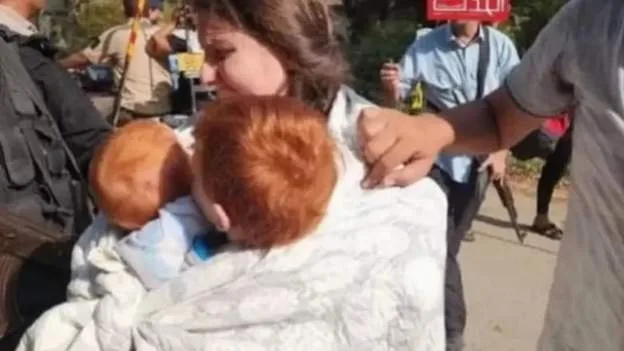
    More on the 12 Thai hostages that were just freed from Hamas custody in Gaza.

    According to Thai media, the hostages were being transported to the Shamir Medical Centre (Assaf Harofeh), which is located south of Tel Aviv in Jerusalem, after entering Israel through the Rafah crossing.

    They are expected to stay for 48 hours and receive medical attention there.

    According to an official briefed on the talks, they were released under a separate accord with Hamas mediated by Egypt and Qatar.

    The 12 Thai hostages, according to the official, were all men.

    More update on this story soon…

  • Red Cross in Gaza has reportedly received hostages – Israeli media

    Red Cross in Gaza has reportedly received hostages – Israeli media

    Israeli news sources say that a bunch of Israeli people who were taken by Hamas on October 7th, have been given to the Red Cross in Gaza.

    The reports say they are going towards the border of Egypt – but the Israeli government has not said this officially.
    They were set free after 12 people from Thailand were also rescued by Hamas.

    Later today, 39 Palestinian people who were held in Israeli jails are going to be set free and sent to the West Bank.

    Israel and Hamas made an agreement to release 50 hostages and 150 Palestinians over four days.

    Qatar helped make an agreement to stop the fighting for four days.

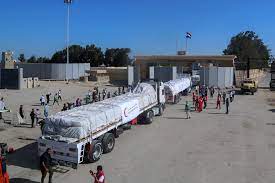
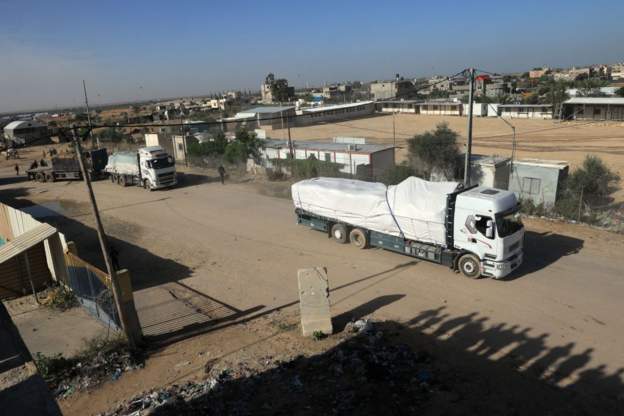
    Additional help is also coming into Gaza – 60 trucks carrying medicine, fuel, and food came in today from Egypt.

    The health ministry in Gaza, which is controlled by Hamas, says that over 14,000 people have been killed in Israel’s campaign of revenge.

  • IDF finishes preparing to transport hostages

    IDF finishes preparing to transport hostages

    The Israel Defense Forces are ready to receive hostages.

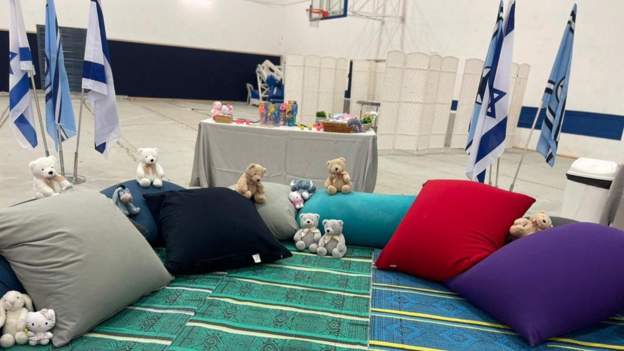
    On social media, the IDF says they have prepared several places for transfer, including medical help.

    The hostages will go to hospitals in Israel to see their families, after they get medical help and the reception.

    The IDF also shares pictures of getting ready, like a place for kids to play, bags of medical or other helpful things, and a military helicopter to transport the hostages.

  • World Health Organisation “very concerned” about patients in al-Shifa

    World Health Organisation “very concerned” about patients in al-Shifa

    The World Health Organization said it was helping to move more people from hospitals in northern Gaza as quickly as they could.

    A representative said they are very worried about the safety of around 100 patients and healthcare workers still at al-Shifa.

    Dr Mohamed Ghoneim was working at al-Shifa Hospital until a few days ago. He spoke to the BBC earlier today.

    He tried to talk to his patients and coworkers at the hospital to see if they were able to leave, but he couldn’t reach them yet.

  • IDF soldiers and tanks seen in video departing northern Gaza

    IDF soldiers and tanks seen in video departing northern Gaza

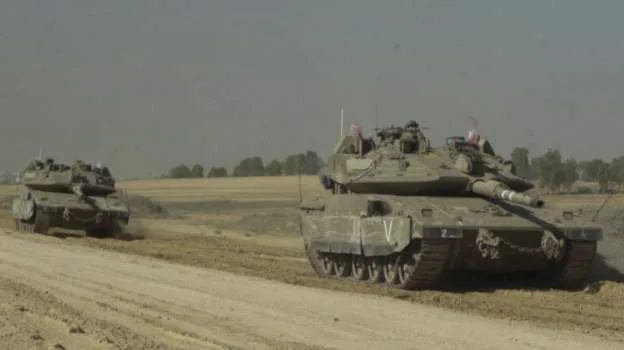
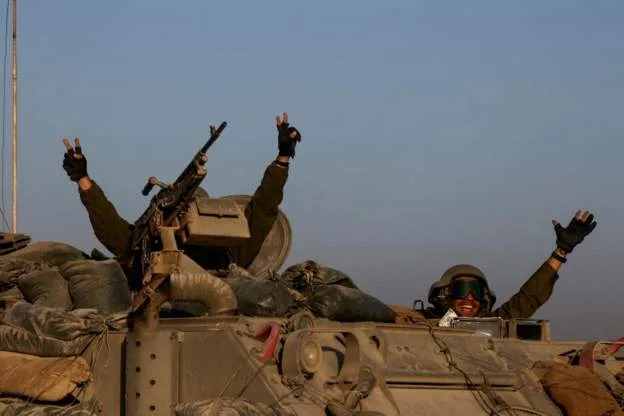
    Some Israel army tanks and vehicles have been spotted leaving northern Gaza while a break in fighting is happening for four days.

    In a video of the soldiers leaving, some were smiling, holding the Israeli flag, giving a thumbs-up or raising their fists.

    It is not known if this was part of Israeli soldiers switching with others.

    The Israel army says that north Gaza is still a dangerous place with fighting.

  • Hostage release procedure will be intricate

    Hostage release procedure will be intricate

    The Red Cross is helping to free hostages in Gaza with a team that is already there. Today, they will get information about where in Gaza they can pick up the things from Hamas. It might be one place where all 13 hostages will be released today, or it might be more than one place.

    The surgery is difficult, and it could only happen if both sides stop fighting and trust the Red Cross to help. After the Red Cross saves the hostages, they will be brought to the border with Egypt and given to Israeli soldiers.

    At the same time, another group from ICRC in Israel will make sure the Palestinian prisoners are healthy and want to go back home after Israel releases them.

    The Red Cross has a lot of experience doing this kind of work.

    In April, it helped 900 prisoners of war in Yemen to exchange places.

    It doesn’t make deals like this, but it will help with the agreed plan to free the hostages.

  • Numerous obstacles to arise if Palestinians attempt to return northward

    Numerous obstacles to arise if Palestinians attempt to return northward


    First, as we’ve been observing, the fighting didn’t stop at 07:00 in Gaza. In fact, there was very intense fighting just before this deadline.

    Now we need to see what’s happening on the ground. Israel is strict about people moving back to the north after being told to relocate to the south.

    Many Palestinians in Gaza want to go back to their homes and see if they can find anything that wasn’t destroyed. They want to check if their houses are still there and if they can find their belongings.

    Some people want to have the ability to bury their deceased loved ones.

    Movement inside Gaza is being controlled very strictly and it’s not clear how Israeli forces will handle it if they face resistance.

  • First Friday prayers held in public in Khan Younis

    First Friday prayers held in public in Khan Younis

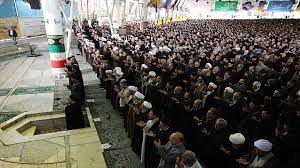
    Things are calmer now in southern Israel after many weeks of chaos. It seems like the ceasefire is working well based on what we can see and hear.

    That is really impacting the people living in Gaza. We have heard that the first public Friday prayers since the war started on October 7th will be held at a football stadium in Khan Younis.

    The Israeli army has been dropping papers in Gaza to tell people not to go north. It’s quiet now, so people might try to go back home to get their things and see if their homes are still there.

    The IDF told them to stay in the south of the Gaza strip. They say the northern part is still a war zone and advise people not to go back there during the break in fighting.

  • 39 Palestinian detainees scheduled to be released to West Bank

    39 Palestinian detainees scheduled to be released to West Bank

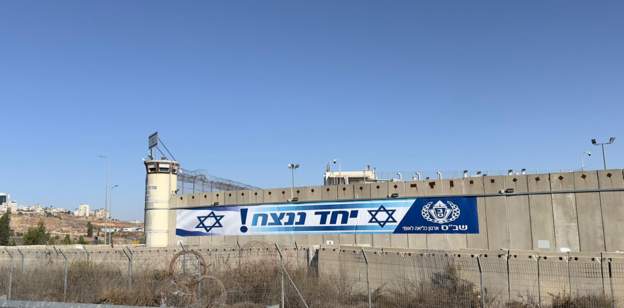
    Big signs hang on the walls of Ofer prison complex in the West Bank that is occupied by Israel – the words “United we will succeed. ” in big blue and white letters, alongside the Israeli flag.

    Today, 39 Palestinian prisoners are expected to come here. They were let out of Israeli jails in return for 13 people that Hamas was keeping as hostages.

    Israel is going to pick 39 prisoners from a group of 300 women and young people. They are accused of doing bad things like throwing stones or trying to hurt someone.

    Most of them are locked up without being put on trial. Most of the people on the list are teenage boys, with 40% of them being under 18 years old.

    The families of the 39 prisoners who are getting out today will meet at a checkpoint nearby to welcome them.

    Human rights groups say more Palestinians have been put in Israeli jails without being charged since the attacks on October 7th.

    Currently, there are over 6,000 Palestinians in Israeli custody for security reasons, with many still waiting for their trials to begin.

  • Palestinian shot dead for attempting to get to north Gaza few hours after ceasefire

    Palestinian shot dead for attempting to get to north Gaza few hours after ceasefire

    Several videos on social media show Palestinians getting shot at while trying to go from the south to the north of Gaza.

    In some places, there are lots of people running away because they hear gunshots. At least one man has been killed by a gun and several others are badly hurt.

    The Israeli army is checking the reports and will reply to me soon.

    The IDF said that Palestinians cannot travel from the bottom to the top of Gaza during the truce.

    More update on this story soon…

  • Intense exchange of fire, bombs precede Gaza true

    Intense exchange of fire, bombs precede Gaza true

    In the lead-up to the scheduled truce, Gaza experienced both sides exchanged fire and bombs until the last minute before the pause in hostilities took effect.

    Israeli planes conducted bombing raids, resulting in billows of smoke engulfing the region. The tumultuous atmosphere was punctuated by the cacophony of gunfire and cannon blasts, creating a distressing backdrop.

    In Israeli villages near Gaza, sporadic gunshots and sirens served as harbingers of incoming missiles or mortar fire, alerting residents to potential threats.

    While the recent escalation is disconcerting, historical patterns indicate that this has been the trend preceding truces or longer ceasefires in past wars.

  • “War not over yet” – Israeli military warns

    “War not over yet” – Israeli military warns

    Just before the temporary ceasefire began, the Israeli army put up a video.

    On social media telling people in Gaza that “the war is still happening”.

    “The humanitarian pause will only last for a short time,” said Avichay Adraee, the spokesman for the Israel Defense Forces, while speaking in Arabic.

    “The northern Gaza Strip is a very dangerous place because of the war, so it’s not safe to go there. “

  • Relief trucks beginning to enter Gaza

    Relief trucks beginning to enter Gaza

    We have been informed that around 200 trucks will deliver medical supplies, food, water, and fuel every day for the next four days as part of this agreement.

    Israel said no fuel should go into Gaza for many days. They thought Hamas was keeping a lot of fuel and if they sent more in, militants would use it against Israeli forces.

    In this agreement made by Qatar, they will send four fuel tankers every day to places like hospitals. They have promised that the fuel will not be given to Hamas.

    Right now, we can see trucks carrying important aid starting to cross into Gaza at the Rafah crossing.

  • Palestinians in Khan Younis hoping for extended truce

    Palestinians in Khan Younis hoping for extended truce

    The media talked to people in Khan Younis in southern Gaza about the ceasefire.

    Mohammad Meqbil, who had to leave his home in Jabaliya in the north of the territory, said he is happy about the ceasefire, but he still can’t go back home.

    “We, the people who live in the north, had to leave our homes because they were bombed. We can’t go back there anymore. ”

    “We want to see the people who died for their beliefs, the people who got hurt, we want to see our kids that we had to leave at home,” Meqbil said.

    “We want the ceasefire to continue, so everyone can return home,” Meqbil said.

    Jihan Qanan, who lives in Khan Younis, said she wants the ceasefire to last a long time.

    “May God make people peaceful and stop homes from being destroyed. ” “People’s houses fell on them, they had to leave in a hurry and lost everything they owned,” Qanan said.

  • More aid won’t be sufficient – Oxfam

    More aid won’t be sufficient – Oxfam

    More help is coming to Gaza because of a deal made by Qatar to stop the fighting.

    The World Food Programme has over 100 trucks ready to bring food to people.

    Egypt will send 130,000 liters of diesel and four truckloads of gas every day.

    However, Laila Barhoum from Oxfam told BBC News that the amount of aid deliveries suggested would not be enough to meet the level of need.

    “Two million people in Gaza rely on aid. For four days, 200 trucks will bring in food, fuel, and gas to help them. ” “It’s definitely not enough,” she says.

  • Hostage-prisoner exchange scheme going well so far

    Hostage-prisoner exchange scheme going well so far

    It’s been a really up-and-down time for the families of the hostages and for Palestinians waiting for three times as many people to be released from Israeli jails.

    On the first day everything is going according to plan. At 2:00 PM GMT, 13 Israeli hostages will be released and handed over to the International Committee of the Red Cross (ICRC). They will then go to Egypt for medical checks before going back to Israel to be with their families.

    Israel will let go of 39 Palestinian prisoners once they have them. This will happen over the next three days.

    After that, there might be a longer break from fighting if Hamas lets go of 10 hostages each day.

    Yesterday there was a problem with the numbers and lists not matching, but now everything seems okay.

  • Israel to receive hostages via Egypt

    Israel to receive hostages via Egypt

    After a rough beginning, the truce is starting to become more stable.

    We are seeing more help going to the Gaza Strip, and Palestinians are able to move around more safely.

    We are waiting for 4:00 PM local time (2:00 PM GMT). At that time, 13 out of 50 Israeli hostages will be given to the International Committee of the Red Cross.

    They will be taken out through Egypt’s Rafah crossing and there are specific rules for what happens next.

    People crossing from Egypt to Israel will meet Israeli security officers. Their identities will be checked, and they will have a medical check. Then, they will be flown to Israel by helicopter.

    After that, it will be a few hours until the first Palestinian prisoners are released from Israeli jails as agreed.

  • Pictures from cease-fire scenes

    Pictures from cease-fire scenes

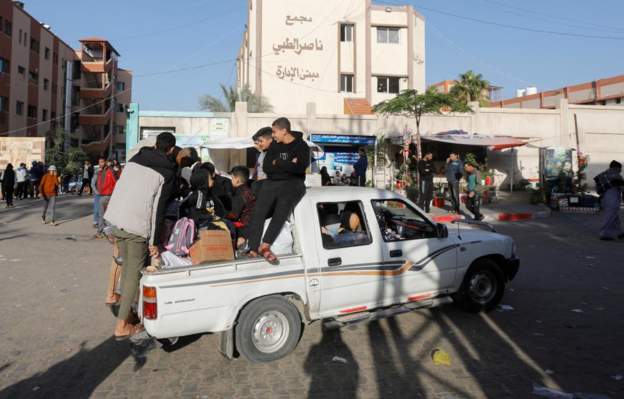
    It has been almost two hours since a four-day break in fighting between Israel and Hamas started, and we are starting to receive the first photos from Israel and Gaza.

    Both sides have agreed that the break in fighting will not last long.

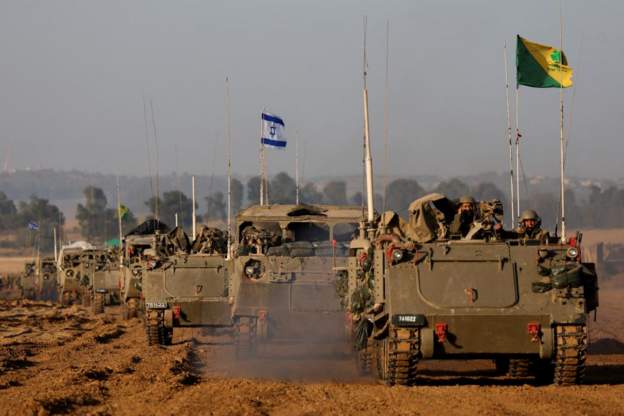
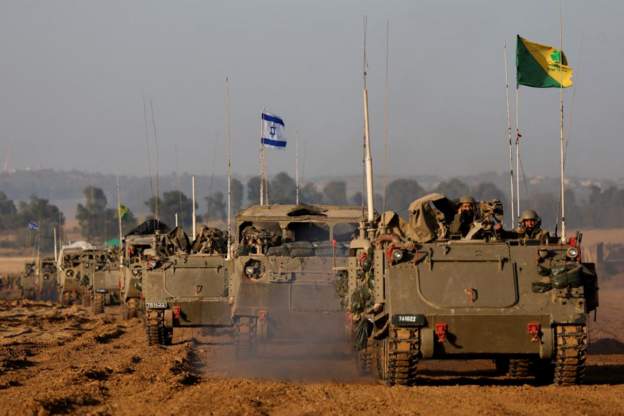
    And a convoy of Israeli military vehicles arrives back in Israel after leaving the Gaza Strip
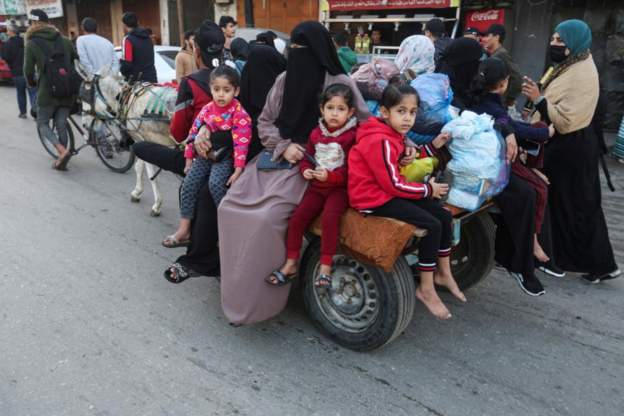
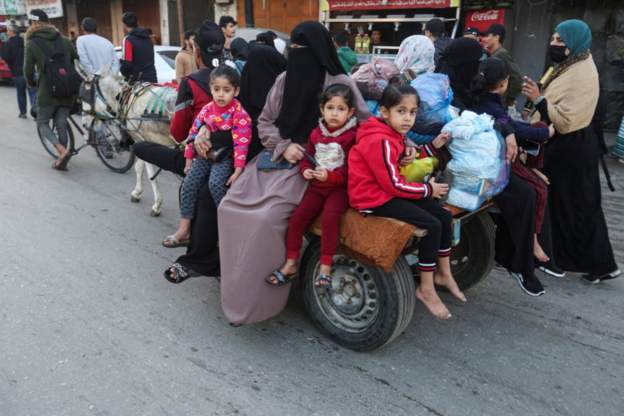
    A group of Palestinians ride on a donkey cart as they return to their homes
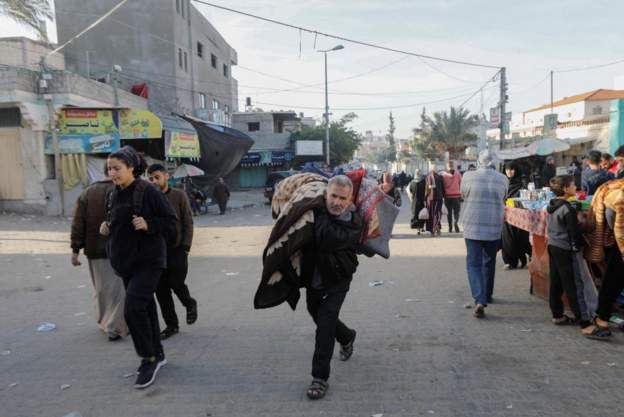
    A displaced Palestinian man makes his way back home after leaving due to the conflict
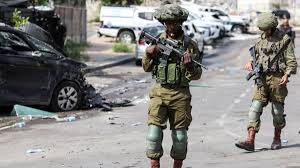
    Israeli soldiers gesture from an armoured vehicle as the temporary truce takes hold
  • David Cameron to speak with leaders of Palestinian people

    David Cameron to speak with leaders of Palestinian people

    David Cameron is going to talk with Palestinian leaders today during his visit to the Middle East.

    The UK’s top diplomat said that the country would give an extra £30m to help with the increasing humanitarian problems in Gaza.

    The money will help the United Nations and other agencies provide vital aid like shelter and medical care.

    He said Britain was quickly exploring all options to send help to Gaza, including by land, air, and sea.

    Lord Cameron stressed that the hostage deal was important because it would bring back some captives and also allow more aid to be sent to Gaza during a break in the fighting.

    Lord Cameron will talk to Palestinian leaders about finding a way to solve the crisis for the long term.

  • UN expects combat pauses could extend to border between Israel and Lebanon

    UN expects combat pauses could extend to border between Israel and Lebanon

    It might be wishful thinking to hope that the break in fighting between Israel and Hamas in Gaza could also stop the conflict on Israel’s border with Lebanon.

    UNIFIL is a group from the United Nations that has been watching and helping to keep peace in the area called the “Blue Line” since the 2006 war between Israel and Hezbollah, a strong group in southern Lebanon.

    At the UNIFIL base in Lebanon, spokesperson Andrea Tenenti says he wants peace to come back, even for a short time. But he knows there’s no official way or direct talks between the fighting groups to make it happen.

    Since fights started here on 8 October, Tenenti says there has been a steady increase in rocket and missile attacks from both sides.

    However, he also said that there have already been attacks that go further into Lebanon and Israel, and he recognizes that these “mistakes” could cause a bigger war.

    The 2006 agreement said Hezbollah had to eventually give up its weapons. Many people, especially in Israel, believe that not being able to accomplish this has made tensions along the border worse and could lead to another big war.

    Tenenti says that everyone needs to do something about the resolution and make the regular Lebanese army stronger. He knows that many people in Lebanon support Hezbollah, not just in the south but in other parts of the country too.

    A return to how things were before the events in early October is the best outcome that the UN and the people in the villages on both sides of the border can expect.

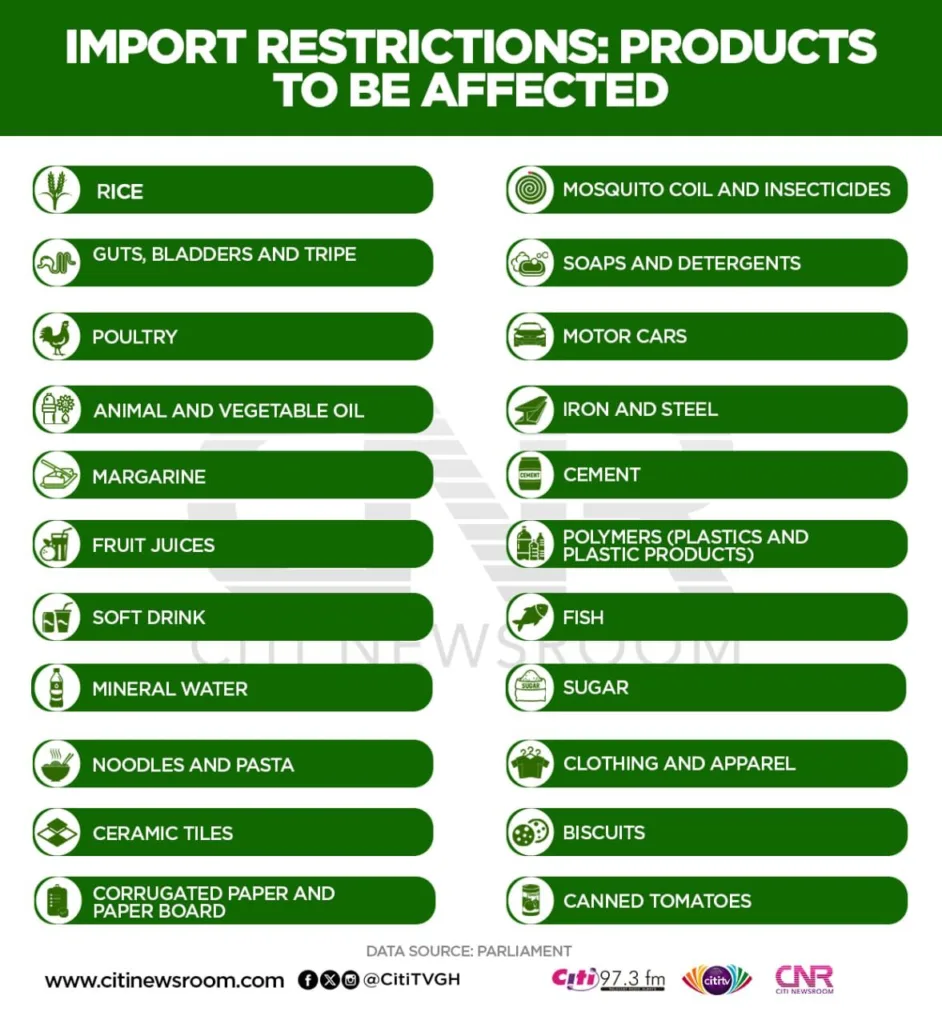
  • Noodles, oil, soaps, rice, sugar, water, drinks – list of imported items gov’t wants to ban

    Noodles, oil, soaps, rice, sugar, water, drinks – list of imported items gov’t wants to ban

    The laying of the Legislative Instrument aimed at restricting the importation of 22 strategic products into the country has been suspended by Parliament.

    This decision comes in response to the minority caucus’ calls for further engagement with the Minister for Trade and Industry, K.T Hammond, regarding concerns surrounding the L.I.

    The Minority argues that the proposed regulation is not in the best interest of the country.

    Speaker Alban Bagbin has urged the sector minister to address these concerns before presenting the Legislative Instrument to the house.

    “Leadership, try to resolve these matters before we move on because we are dealing with instruments. And you know the impact of these instruments; that is why I am saying we should try and resolve it,” stated Mr. Bagbin.

    He emphasized the importance of discussing and resolving issues related to the instrument due to its constitutional and legal implications.

  • Even the best running mate would make no difference if the President is incompetent – Bawumia

    Even the best running mate would make no difference if the President is incompetent – Bawumia

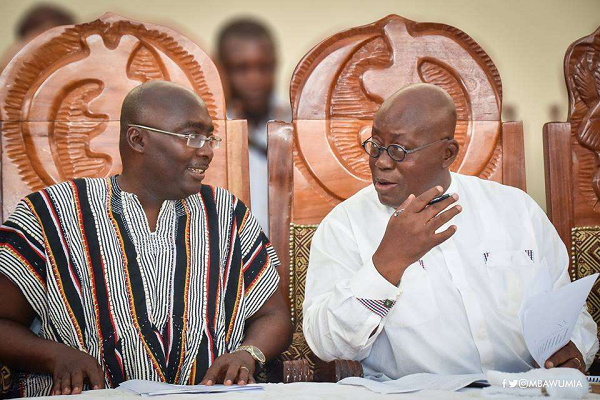
    In a resurfaced video, Vice President Dr. Mahamudu Bawumia and flagbearer of the New Patriotic Party (NPP), has stirred curiosity with remarks that have left many pondering the dynamics of his role as a running mate.

    The footage captures Dr. Bawumia making a noteworthy statement that has triggered speculation about his views on the competence of his current boss, President Akufo-Addo.

    Addressing a seated audience in the video, Vice President Bawumia boldly proclaimed, “The best running mate in the world will not make a difference if the President is indecisive or incompetent.” The statement received applause from those present, but it has now prompted questions about whether Dr. Bawumia was aware of the perceived shortcomings of President Akufo-Addo when he accepted the position as his running mate.

    The emergence of this video has ignited discussions on social media, with many seeking to understand the context of the statement and whether it reflects Dr. Bawumia’s current sentiments regarding the leadership of President Akufo-Addo. Some are questioning the vice president’s decision to join forces with a leader who has been viewed as indecisive or incompetent, as suggested by his past remarks.

    https://twitter.com/Oh_Menua/status/1727758542864617820?s=20
  • “I did no evil so why are you protesting against Jubilee House” – Chief of Staff asks Bernard Mornah

    “I did no evil so why are you protesting against Jubilee House” – Chief of Staff asks Bernard Mornah

    A video circulating on social media captures Chief of Staff Akosua Frema Osei-Opare questioning the participation of popular pressure group leader and former PNC chairman, Bernard Mornah, in a protest march to the Jubilee House. The video, taken during a funeral where the Chief of Staff and Bernard Mornah exchanged pleasantries, reveals Mrs. Osei-Opare expressing her discontent.

    In the video, the Chief of Staff, referring to Bernard Mornah as her son, appeared visibly unhappy about his involvement in the protest. She emphasized her lack of ill intentions toward him and questioned why he would join a demonstration against the ruling NPP party.

    “This is my son, and you can stand in front of Jubilee, we don’t do that. He is my son, and I don’t have any bad intentions against him, so why would he think of evil against me?” Mrs. Osei-Opare remarked.

    Addressing Bernard Mornah directly, she questioned his decision to carry placards against the NPP party and invited him to her office for a discussion, stating, “Bernard Mona my son why carry placards against my NPP party, see me in my office.”

    The video has sparked discussions on social media, with many speculating on the nature of the grievances and the potential meeting between the Chief of Staff and Bernard Mornah. As the story unfolds, the public remains curious about the details of this interaction and the dynamics between the Chief of Staff and the pressure group leader.

    Source: backend.theindependentghana.com

  • I will never forget what I saw while in Israel – UK foreign secretary

    I will never forget what I saw while in Israel – UK foreign secretary

    In the past, when politicians visited Israel, they used to go to Yad Vashem in Jerusalem to show their respect for the Holocaust.

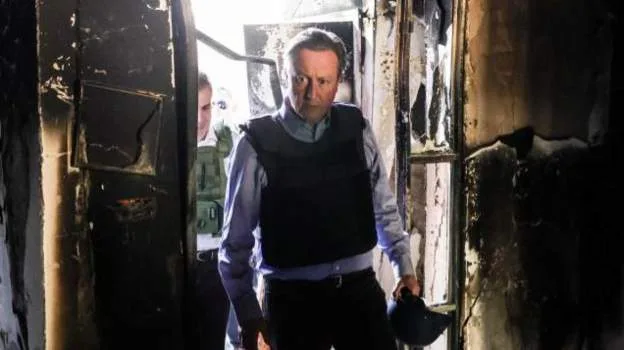
    Nowadays, they are going to visit a kibbutz close to Gaza where many Israelis were killed by Hamas on 7 October. This morning, David Cameron visited kibbutz Be’eri, which was his first trip to Israel as the new UK foreign secretary.

    Cameron and his Israeli friend Eli Cohen walked through the farm area where about 100 people were killed, not far from Gaza.

    He went over the broken rocks and entered the destroyed homes that still smelled of burnt materials. Then he said that he had seen and heard things that he will always remember.

    Cameron asked everyone in the stopped hostage deal to make it happen. He said it was important to take a break to help people in Gaza and let the hostages go.

    But Cohen said that even after setting the hostages free, Israel would keep fighting to reach its aim – which is to get rid of Hamas control in Gaza.

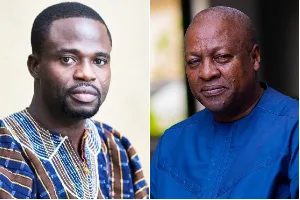
  • Some hard criminals in Akufo-Addo gov’t still signing deals – Manasseh tells Mahama

    Some hard criminals in Akufo-Addo gov’t still signing deals – Manasseh tells Mahama

    Award-winning investigative journalist Manasseh Awuni Azure has directed former president and flagbearer of the opposition National Democratic Congress (NDC) where to focus his attention should he win power in the 2024 general election as predicted by various polls.

    Mr Azure charged the former president to investigate and arrest corrupt officials in the current Akufo-Addo led administration who have plundered and still plundering resources of the country.

    “Some hardened criminals in this administration are not satisfied with what they’ve looted. They’re signing deals that will keep siphoning monies from the state coffers for decades after they are off the scene.” Mr Azure wrote in an open letter to Mahama.


    It will be measured by how TOUGH you will be against those who are ruining our nation now and also against your own people, some of whom are already jostling for cabinet and other positions.” he added.

    Dear John Dramani Mahama,

    Various predictions point to a win for you in the next election. But if the gods predict a bountiful harvest, the farmer does not go to sleep. In your work in this political farming season, you will be tempted to woo voters with promises. For the next president of Ghana, however, the options are limited.

    If you think this nation is in a mess, wait until you win the next election and assume office. If that happens, you will realise that Ghana is worse than we are made to believe.

    Some hardened criminals in this administration are not satisfied with what they’ve looted. They’re signing deals that will keep siphoning monies from the state coffers for decades after they are off the scene. 

    Not only will you inherit empty coffers; you’re going to inherit huge debts, some of which have been hidden.

    So, be measured in your promises. Any reasonable human being in this country knows that the next government won’t be able to do much, and will not judge your next presidency by the standards of infrastructure and other freebies.

    Our nation is headed for a deadly crash unless the disastrous course is changed. If you want to leave a legacy, focus on policies that will put our democracy back on track. Focus on accountability. If the brazenness with which our republic has been raped goes unpunished, we will survive for long. 

    Focus on how to rein in your own men and women, those who will use your presidency to loot for their political futures. Don’t make the mistake of giving sensitive positions to those who are marking their time to do worse versions of what the NPP administration has done. By now, you should know that some of your people are accomplices and will work against any attempt to give Ghanaians justice should you win the next election. Keep them at bay if you win and want to assemble your team.
    You and your team should brainstorm on how to put this nation back on track if you win the next election. 

    Take drastic legal and constitutional reforms to save this country. If you win in 2024, you won’t have any elections to contest. You’re properly placed to make tough decisions. 

    Our nation needs to be reset, and if a democratic regime cannot do it, the nation will erupt in flames one day. 

    After an inglorious exit in 2017, you should be concerned about how to make your mark this time around. You will have a legacy to protect. And brick and mortar won’t be the benchmark against which that legacy will be measured.

    It will be measured by how TOUGH you will be against those who are ruining our nation now and also against your own people, some of whom are already jostling for cabinet and other positions.

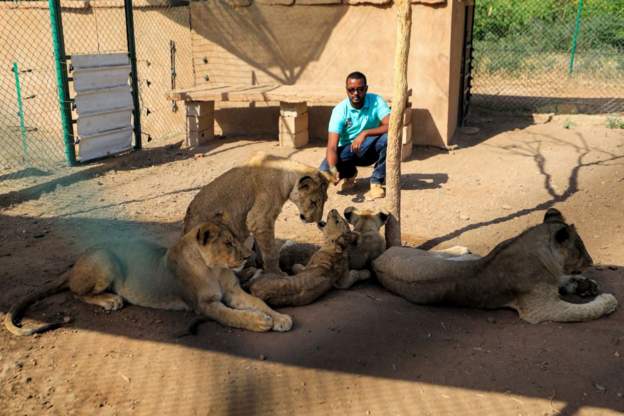
  • ‘Nerve-wracking’: Lions leave conflict area in Sudan

    ‘Nerve-wracking’: Lions leave conflict area in Sudan

    The person in charge of a place that takes care of animals in the middle of a war zone said it is very hard to rescue trapped animals, like lions and hyenas, in a safeway.


    Osman Salih said it took a fewdays to save the stuck animals from a Sudanese animal rescue center near the cityKhartoum.
    For the past seven months, it has been hard to find enough food and take care of the animals because of the fighting between the Sudanese Armed Forces and the Rapid Support Forces.


    “It was a difficult mission,lots of vehicles were taken and we brought supplies with them… Our base has been attacked many times,” Osman Salih told the BBC’s Newsday show.


    When the war started, there were 23 lions, 6 hyenas and 30 other types of animals in the center.
    But after a few months, some of the animals got sick and died because the veterinarians couldn’t get them the medicine they needed,according to Salih.


    He said it was hard to evacuate the conflict area because we needed to get permission,talk to both sides and it took a long time to plan. This is because the RSF controls the area. He said it was a very difficult job and a big risk for the team.


    The animals are being moved to safer places in different cities outside the capital.

  • WHO requests data from China regarding paediatric ‘pneumonia clusters’

    WHO requests data from China regarding paediatric ‘pneumonia clusters’

    The World Health Organization (WHO) has asked China for more information about “a cluster of undiagnosed pneumonia” spreading among children in northern China.

    According to non-state media, children’s hospitals in some areas of the country are full of sick children.

    Chinese authorities have linked the lifting of COVID-19 restrictions to an increase in flu-like illnesses this winter.

    The World Health Organization (WHO) has urged Chinese citizens to take measures to reduce the spread of the virus.

    The UN health agency said in a statement it wanted more information about media reports and the global outbreak surveillance system ProMed about “a cluster of undiagnosed pneumonia in children in northern China“.

    Following the World Health Organization (WHO) announcement, state-run Xinhua News Agency published an article on Thursday quoting a National Health Commission official as saying the country is focusing on diagnosing and treating children with respiratory illnesses.

    China and the rise in infections may worry people as they bring back memories of the coronavirus pandemic, but it is good practice for the WHO to ask for clarification. But it’s impossible to know why the rise in infections is happening until Beijing responds.

    The WHO added that since October, northern China has reported “an increase in flu-like illnesses” compared to the past three years.

    Last week, China’s National Health Commission said there had been an increase in several respiratory diseases, including influenza, Covid, mycoplasma pneumoniae (a common bacterial infection affecting young children) and respiratory syncytial virus (RSV).

    Officials explained that this turnout was due to the lifting of COVID-19 restrictions.

    Other countries, including the United Kingdom and the United States, have seen similar increases in flu-like illnesses after pandemic restrictions were lifted.

    Professor François said: “There is a high possibility that respiratory infections will become widespread in children in China.

    This is because the circulation of respiratory infections dropped sharply for the first time after the long period of isolation, and the immunity against endemic insects was reduced.

    He graduated from the Institute of Genetics, University College London.

    The World Health Organization (WHO) said it was unclear whether the reported pneumonia outbreak was linked to the overall increase in respiratory infections reported by Beijing and formally requested further information.

    He urged Chinese citizens to take basic precautions, including getting vaccinated, wearing masks and washing hands.

  • Israel’s memorial for kidnapped student from Tanzania

    Israel’s memorial for kidnapped student from Tanzania

    A memorial service was held Wednesday at a mortuary in Petah Tikva, Israel, to honor the life of Clemens Mtenga, a Tanzanian student taken hostage during a Hamas attack on Israel.

    The event was attended by representatives of the Tanzanian Ministry of Foreign Affairs, the Israeli Ministry of Foreign Affairs and colleagues from the academic program in which Clemens is completing his studies. Ezekiel Kitiku, a student who lives with Mr Mtenga in Kibbutz Nir Oz, told the BBC it was a very difficult time.

    “We spent a lot of time together, we cooked together and at dinner we always talked about our day together.

    His sudden departure was very painful.

    “But I’m a Christian, and I think I’ll meet him someday.”

    Mr. Kitiku currently lives in Kiryat Malachi and continues to engage in agriculture.

    Tanzania’s foreign ministry said it had contacted the Israeli government to repatriate Mtenga’s body.

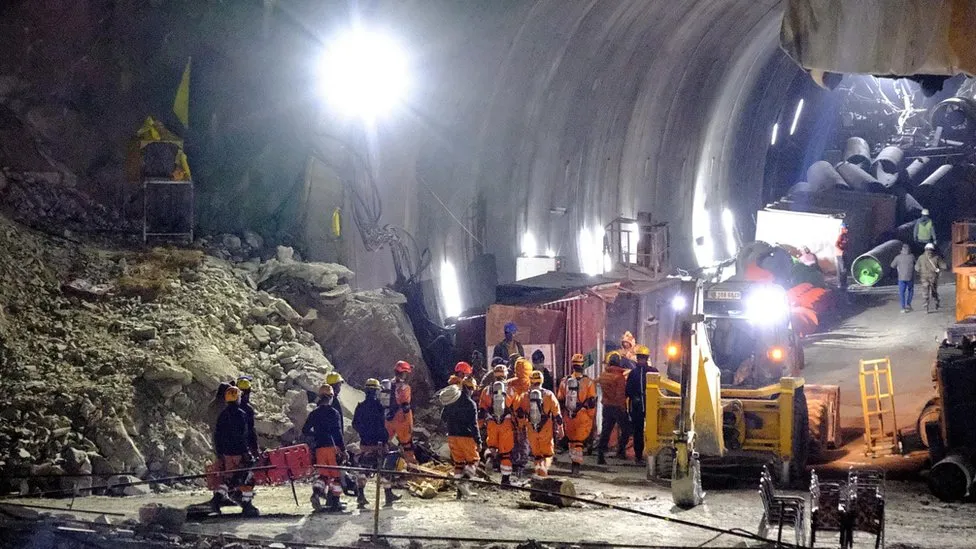
  • India tunnel rescue delayed by last-minute issue

    India tunnel rescue delayed by last-minute issue

    An operation to rescue 41 workers trapped in a tunnel in the Indian state of Uttarakhand has resumed after a blockage was hit, officials said.

    If all goes according to plan, they hope to release workers within the next 10 to 12 hours.

    Workers were working inside the tunnel after part of it collapsed due to a landslide on November 12.

    Rescue efforts were slowed Wednesday night when the drill encountered a steel structure that could not be cut.

    Rescuers have so far dug through three-quarters of the rubble where the workers were trapped, and hopes were high that they would be freed by Thursday morning.

    A gas cutter was then used to cut through the obstruction, delaying the work by approximately six hours.

    “If everything goes as planned and there are no obstacles, we should complete the rescue operation by tonight,” National Disaster Response Force (NDRF) Director General Atul Karwal told BBC Hindi on Thursday morning.

    Kaval added that the authorities are ready to deal with any obstacles that may arise.

    “We’re going to get these people out,” he said.

    Officials contacted those trapped hours after the collapse.

    They were supplied with oxygen, dry snacks and water through a pipe that was pulled to supply water to the construction tunnel.

    They also keep in touch with them regularly and update them about their health status.

    Friends and relatives of the workers are anxious to find out why it is taking so long for people to come out.

    Earlier this week, some of them were able to catch a glimpse of their loved ones through endoscopic cameras installed in the tunnel.

    On Thursday, Mr. Karwal said that Uttarakhand Chief Minister Pushkar Singh Dhami had spoken to the workers in the morning and that he was in good spirits.

    “I think even they will be saved soon,” he said.

    Authorities are working to run several pipes of different widths through a 60-meter-long gravel wall to create microtunnels for workers to take refuge in.

    However, the work faced several delays and obstacles due to loose soil, hard rock and fallen debris.

    American-made drills were hauled in from across the country after excavators failed to remove thick layers of dirt and rock.

    The powerful tool has a spiral shaft at the end that rotates and pushes dirt and rocks into the ground.

    When the last lifeline reaches the worker, a doctor is sent to check on his condition.

    An ambulance is waiting outside the tunnel.

    Officials said the goal is to keep workers safe and transport them to the nearest hospital if possible.

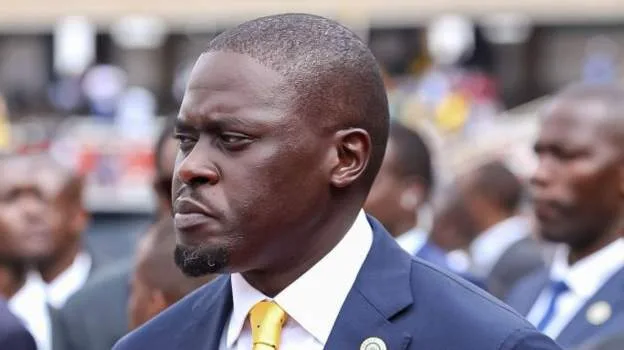
  • Kenyan governor assists 14-year-old Burundian kidnapped

    Kenyan governor assists 14-year-old Burundian kidnapped

    The governor of Kenya‘s capital, Nairobi, has contacted a 14-year-old Burundian boy who was harassed by county officials for selling peanuts on the street.

    A video of a boy crying after county officials allegedly scattered peanuts on the street went viral Tuesday, drawing sympathy for the boy and anger from county officials.

    This prompted a response from Nairobi Governor Johnson Sakaya, who on Wednesday revealed that the boy was a Burundian minor who had been sold to Kenyan traffickers.

    He added that he had held talks with the Burundian ambassador about the boy’s return to school.

    However, he denied the allegations of molestation and said district officials did not allow the boy to sneak out after hours.

    He added: “Unfortunately, when he was caught and police officers confiscated his belongings, the minor struggled to reach the bucket and the contents of the bucket spilled onto the ground after the handle broke.” Sakaya said she would work with the State Department to address child trafficking and illegal immigration.

    Authorities have previously said that foreigners, including children and the disabled, are being brought to Kenya to work, often as beggars or traders.

  • Close friend of Putin linked to missing Ukrainian youngster

    Close friend of Putin linked to missing Ukrainian youngster

    A key political ally of Vladimir Putin has adopted a detained child from a Ukrainian orphanage, according to documents revealed by BBC Panorama.

    Sergei Mironov, the 70-year-old leader of a Russian political party, is listed in the adoption records of a two-year-old girl kidnapped in 2022 by a woman he was married to.

    Records show the girl’s identity was changed in Russia. Mr Mironov did not respond to a request for comment.

    The child, initially named Margarita, was one of 48 people who went missing from a Kherson regional children’s home when Russian forces took control of the city.

    They are among about 20,000 children the Ukrainian government says have been captured by Russian forces since the full-scale invasion began in 2022. Earlier this year, the International Criminal Court (ICC) issued arrest warrants for President Vladimir Putin and his children’s rights commissioner, Maria Lvova-Belova, for allegedly illegally deporting Ukrainian children to the region.

    Territory controlled by Russia, with a view to permanent expulsion. Surname of their own country.

    The Russian government said it did not deport Ukrainian children but evacuated them to protect them from war.

    The BBC worked with Ukrainian human rights investigator Victoria Novikova to find out what happened to Margarita and the other children.

    Ms Novikova prepared a new dossier of evidence for the Prosecutor General’s Office of Ukraine to forward to the ICC.

    The 10-month-old was receiving treatment for bronchitis at Kherson’s children’s hospital in August 2022 when a woman wearing a lilac dress appeared. This is when the mystery surrounding Margarita started.

    Margarita was the youngest inhabitant of the nearby children’s home, which provided care for kids with health issues or whose parents had passed away or lost custody.

    Margarita’s father was absent, and her mother had relinquished custody soon after the child was born.

    Her paediatrician, Dr. Nataliya Lyutikova, described her as a happy baby who cherished person cuddles.

    The woman in the lilac shirt introduced herself as “the person incharge of children’s affairs in Moscow,”Dr. Lyutikova recalled

    Kherson – now back under Ukrainian control – was then in its sixth month of Russian occupation.

    Immediately after the woman left, Dr. Lyutikova said she received several phone calls from a Russian-appointed official who had just been put in charge of the nursery. The manager asked to take Margarita home immediately.
    Within a week, Margarita was discharged from the hospital. The next morning, nursery staff were asked to prepare the girl for the trip.

    “We are very scared, everyone is scared,” said Lyubov Sayko, a nurse at the home.

    She described how Russian men – some wearing military-style camouflage pants, another wearing dark glasses and holding a briefcase – came to pick up the girl.
    “It feels like it came out of a movie,” she said.

    Seven weeks later, Igor Kastyukevich, a Russian military deputy, arrived at the house and with other officials began organizing the deportation of the remaining children, including Margarita’s half-brother, Maxym.

    “They took them away from us and executed them,” Ms. Sayko said The video – posted by Mr Kastyukevich on Telegram – shows children dressed in outdoor clothing being carried onto buses and ambulances, then driven away.

    “The children will be safely taken to Crimea,” Mr. Kastyukevich said as the children were loaded into the car. Crimea was annexed by Russia from Ukraine in 2014. Mr Kastyukevich described the event as a humanitarian mission.

    Midnight train For five months, the BBC tried to find Margarita and 47 other children in collaboration with Victoria Novikova.

    Finding lost children in a large country like Russia, a country with an area of ​​more than 17 million square kilometers, is not an easy task. The first task is to identify the mysterious woman in a lilac shirt who visited Margarita in the hospital last August.

    Victoria discovers a Russian document authorizing Margarita’s transfer to a Moscow hospital for medical examination. A woman is named in the document: Inna Varlamova.

    A search on social media confirmed her as the mystery woman in the lilac suit. We then showed Ms. Varlamova’s photo to Dr. Lyutikova and she identified her as the woman who had visited Margarita in the children’s ward.

    After further research, we discovered that Ms. Varlamova works in the Russian Parliament, although it is unclear what position, and that she owns a property in Podolsk, near Moscow.

    We have solved part of the mystery. But there are still questions.

    “Margarita did not need any special examination,” Dr. Lyutikova said of the night the child was taken away. “Why take a child so far. ”

    Panorama looks into the fate of around 40 kids who were abducted by Russian authorities from a Kherson children’s home. Collaborating with Ukrainian journalists, the filmmakers unearth proof of a covert adoption, forged birth certificates, and a trail of evidence that reaches the Russian parliament.

    With Inna Varlamova’s name in hand, Panorama then obtained train records from Russian sources. These programs show her arriving in occupied Ukraine on the same day witnesses say Margarita was taken from the nursery.

    That evening, at 12:20, Ms. Varlamova took the train back to Moscow, bringing with her a return ticket. Margarita, according to evidence, was in high spirits on that midnight train.

    A Russian source then provided another important piece of information: a document showing that Ms. Varlamova had recently married political party leader Sergei Mironov.

    Mironov, a former paratrooper, is a member of the Russian opposition, leader of the Just Russia Party and a supporter of President Putin.

    It has been endorsed by several Western countries, including the UK and the EU.

    Then came the big reveal.

    I obtained the birth certificate of a 14-month-old girl named “Marina” written last December. The boy’s parents were Inna Varlamova and Sergey Mironov.

    The registration was irregular and there were no original documents to confirm the birth of the child.

    “Marina’s” birthday is set for October 31, 2021, the day Margarita was born.

    “I knew it was ‘Bingo’ when I saw that Marina’s birthday was the same as Margarita’s,” Victoria said.

    Our team received information about Margarita’s adoption from anonymous Russian sources. Margarita Prokopenko was renamed Marina Mironova after her stepfather Sergei Mironov.

    His birthplace is called Podolsk.

    The Russian government said it was not aware of the Margarita case and could not comment.

    Earlier this year, when the International Criminal Court indicted President Putin and his children’s commissioner Maria Lvova-Belova, the court alleged that hundreds of Ukrainian children had been illegally deported from orphanages and orphanages.

    This is beyond “target”.

    Deport these children forever from their countries.

    This happened after President Putin decided to issue a decree making it easier for Russians to adopt Ukrainian children.

    Ms. Lvov-Belov said that Russia only places children in foster care or guardianship.

    “We don’t adopt,” she said last month.

    “This is a very important fact, because adoption means that the child is completely indigenous. You can change his surname, first name, patronymic [middle name], you can change his place of birth.”

    However, in response to our inquiry, the Russian government said it was “wrong” to think that Russia was preventing the adoption of Ukrainian children from newly declared Russian territories. It says that much of Ukraine is now considered part of Russia and that people living there, including children, are Russian citizens.

    child together

    We have written to Sergey Mironov and Inna Varlamova and asked where Margarita is now, but they have not yet responded.

    Almost all other children taken from their homes are believed to remain in Russian hands.

    According to Russian authorities, at least 17 people are in Crimea.

    Viktoriya Novikova said that everyone had relatives in Ukraine.

    Ukraine said it had confirmed that 19,546 children had been taken to Russia.

    Fewer than 400 people are reported to have returned.

    Russia disputes these figures.

    Moscow says it will help reunite children with family or friends if a legal claim is made and the children are recovered. But many parents do not know where their children are, and the process of finding and retrieving them is difficult and complicated.

    As far as is known, only one child from the Kherson orphanage was brought to Ukraine.

    Last month, three-year-old Viktor Puzik was taken from Crimea by his mother, Olha, while he was awaiting surgery due to his health condition.

    She said it was painful to wait for him to be safe.

    “I keep thinking where is he, how is he doing? Is he still alive or dead? Everything ran through my mind.”

    Victoria hopes to find all the other missing children from the Kherson orphanage, but fears that they will soon be discovered.

    “Time is not on our side,” she said.

    “The problem is that (Russian authorities) are trying to erase children’s identities by issuing Russian birth certificates and even passports.”

    At the same time, she did not give up hope of returning Margarita to Ukraine.

    She has not found any relatives to take Margarita in with, so the Ukrainian government has appointed her as the little girl’s legal guardian and plans to petition the Russian authorities for deportation.

    “The world needs to know that Margarita exists. They wanted to erase him. We have to bring her back.”

  • DR Congo promises to penalise soldiers connected to rebel organisations

    DR Congo promises to penalise soldiers connected to rebel organisations

    The Democratic Republic of Congo’s army said it would punish any soldier linked to the mainly Hutu rebel group linked to the 1994 Rwandan genocide.

    The army said anyone – regardless of rank – who violates the ban on dealing with FDLR militias will be arrested.

    The announcement follows US pressure on Congo and Rwanda to ease tensions between them.

    Many believe that Rwanda formed the Tutsi-led M23 rebel group to fight the FDLR. Rwandan authorities have always denied accusations that they support this group.

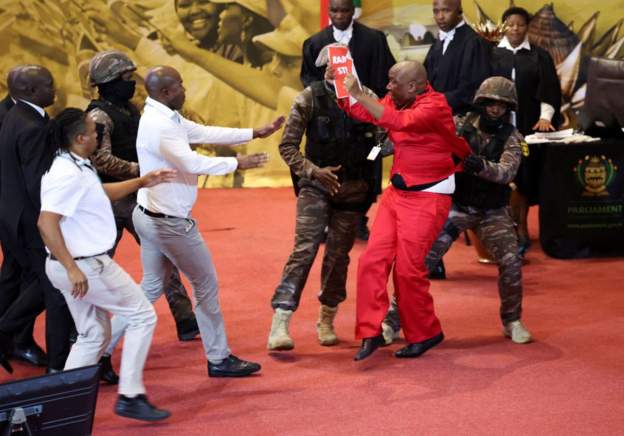
  • Malema and other MPs suspended by South Africa parliament for a month

    Malema and other MPs suspended by South Africa parliament for a month

    South African opposition leader Julius Malema and five other lawmakers from his Economic Freedom Fighters (EFF) party were suspended by Parliament for a month without pay on Wednesday.

    The Parliamentary Powers and Privileges Committee found them guilty of contempt of Parliament for storming the stage during President Cyril Ramaphosa’s State of the Nation address in February.

    The speaker then suspended the proceedings while security forces took Mr Malema and other MPs out of the room.

    The committee added that “each member must also personally apologize to the Speaker, the Speaker and the people of South Africa” for interrupting the president’s speech and “putting the country in a bad light. ”

    ” The suspension of the six MPs will last until February next year, meaning Mr Malema and the remaining five MPs will not be able to attend the president’s next State of the Union address, scheduled for February.

    This there On Monday, EFF MPs refused to participate in the hearings against them after the committee rejected their request for an adjournment.

    Mr Malema also objected to the appointment of lawyer Anton Katz as the initiator of the hearing. “I will not be persecuted by white people,” Mr. Malema said

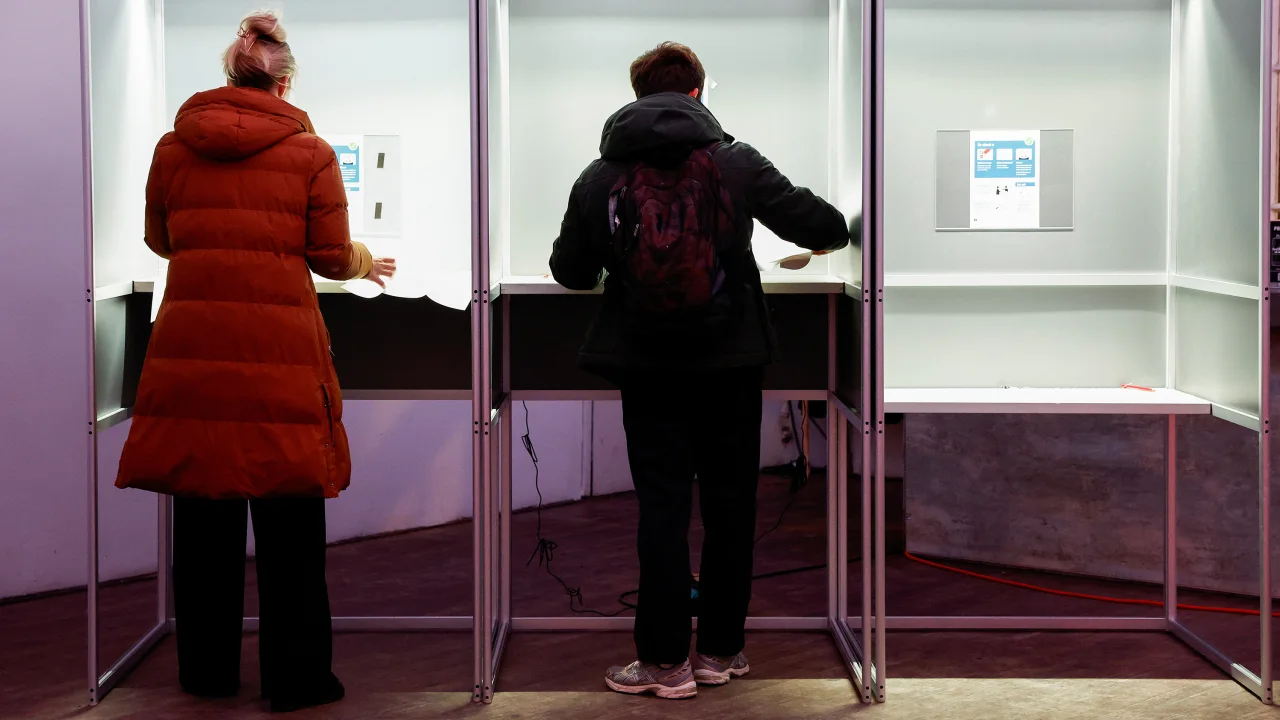
  • Geert Wilders anti-Islamic populist wins Dutch election

    Geert Wilders anti-Islamic populist wins Dutch election

    Geert Wilders, a leader who is against Islam, has won the Dutch general election by a large margin.

    After being in parliament for 25 years, his party (PVV) is going to win 37 seats, which is more than the left-wing alliance.

    “The PVV is too important to ignore,” he said. We will lead.

    His victory has surprised the government in the Netherlands and it will also surprise other countries in Europe.

    However, to keep his promise to be a leader for all people, he will need to convince other political parties to work together with him. He wants to win 76 seats out of the 150 seats in parliament.

    In his winning speech, he was ready to fight and said, “We want to lead and. ” we will be in charge. Receiving the seat numbers is a big honor, but it also comes with a big responsibility.

    Before people voted, the three other major parties said they would not join a government led by Wilders because they do not agree with his extreme right-wing ideas. But things could be different because he won by a lot.

    The group led by Frans Timmermans, who used to work for the EU, got 25 seats in the election, which means they came in second place. This is based on a forecast from 94% of the votes.

    He said he didn’t want to be in a government led by Wilders and promised to protect the way the country is run and the laws that govern it. “We will not allow anyone to enter the Netherlands. ” In the Netherlands, everyone is treated the same,” he said to his followers.

    This means the VVD party is in third place with a new leader, Dilan Yesilgöz, and a new party made by MP Pieter Omtzigt is in fourth place.

    Before the election, she said she wouldn’t be in charge of a government led by Wilders, but she didn’t say she wouldn’t work with him if she won.

    Mr Omtzigt originally said his New Social Contract party wouldn’t work with Mr Wilders, but now he says they are willing to take the trust of voters and put it into action.

    Wilders winning would surprise Europe because the Netherlands helped create the European Union.

    Nationalist and people on the far-right in Europe said they liked what he did. In France, Marine Le Pen, who leads the National Rally, said that this shows that more people are feeling strongly about defending national identities.

    Mr Wilders wants to have a vote to leave the EU, which he calls a “Nexit”, even though he knows most people in the country don’t want to leave. It will be difficult for him to convince any important potential partner to agree to that.

    He toned down his strong words against Islam before the vote. He said there were other important issues right now and that he was willing to set aside his plans to ban mosques and Islamic schools.

    The plan worked well and increased the PVV party’s numbers in parliament by more than twice.


    During the campaign, Mr. Wilders used people’s unhappiness with the old government, which fell apart because of a disagreement about asylum rules.

    Political scientist Martin Rosema from the University of Twente said that it was one of many advantages that had been given to Mr Wilders in a short period of time. Another thing was that the leader from the center-right who believes in freedom and open markets, said that he is open to working together with him in a partnership.

    “He said that we have seen in other countries that extreme right-wing parties do not do well when they are not included. ”

    Migration is a big topic, and Mr. Wilders said on Wednesday he wants to deal with a large number of people seeking asylum and coming to live in the country.

    Last year, more than 220,000 people moved to the Netherlands, and the number more than doubled. Some of the people moved because they were running away from Russia’s attack on Ukraine. But the problem got worse because there are not enough homes – about 390,000 homes are missing.

    At Yesilgöz’s VVD headquarters in The Hague, her supporters were getting ready to celebrate the possibility of having the first female prime minister in the Netherlands.

    However, everyone was shocked when the exit polls were shown on the screens, and they gathered around their phones trying to figure out what went wrong.

    Ms Yesilgöz became the leader of the centre-right party after the country’s prime minister, Mark Rutte, left politics in July. She moved to the Netherlands when she was seven years old because she had to leave Turkey. Now, she is very strict about letting people into the country.

    Some politicians and Muslim leaders say she is allowing the far-right to become more powerful by not saying she won’t work with Geert Wilders.

    Ms Yesilgöz, who is 46 years old, tried to separate herself from the Rutte government where she worked as justice minister. However, she was not able to meet the expectations of the people.

    Just before the election, almost half of the voters were undecided on who to vote for. Many people may have chosen not to support her.

    One Muslim voter in The Hague said that if Mr Wilders wasn’t so against Muslims, they would be interested in him. This shows that some voters are not in favor of Mr Wilders’ views on Muslims.

    Before the vote, Mr. Wilders felt confident about his chances and told the BBC. “I believe this is the first time ever in Holland that we have gained 10 seats in the polls in just one week. ”

    He knew it would be hard to form a government, but he believed in being positive and winning would make it hard for other parties to ignore him.

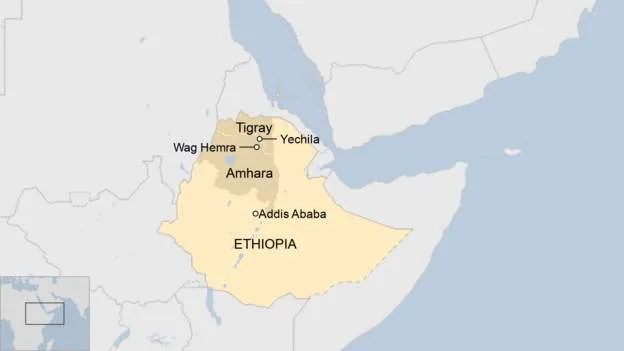
  • 50 Ethiopians die from hunger as result of drought

    50 Ethiopians die from hunger as result of drought

    More than 50 people have died in northern Ethiopia because there wasn’t enough food and water due to a drought, according to local officials who spoke to the BBC.

    The Tigray Disaster Risk Management office said that 46 people who were forced to leave their homes due to drought have died.

    People died in a town called Yechila, according to Gebrehiwot Gebregziabher, who is in charge of the office there.

    In the nearby Amhara region of Wag Hemra, a local leader said that six people and 4,000 cows have died because there is not enough food due to a drought.

    For over five months, the US and the UN stopped giving food to Ethiopia because they heard that a lot of it was being stolen.

    This made the humanitarian crisis in the country worse. The war and bad weather events left millions of people needing help.

    Parts of northern Ethiopia don’t have enough rain, but in the southern and eastern regions, there will be lots of rain.

    The UN says that over 40 people have died because of floods and landslides in the past few weeks, with many of the deaths happening in the eastern Somali region.

  • Far-right populists in Netherlands wait to seize power after after surprise election win

    Far-right populists in Netherlands wait to seize power after after surprise election win

    Geert Wilders, a politician from the Netherlands who is against the European Union and has extreme views, won a big election. Now he is going to try to find other politicians to work with him. This is going to have a big impact on the Netherlands and Europe.

    A supporter of Hungary’s Prime Minister Viktor Orban, Wilders wants to stop all immigration, reduce money given to the EU, and prevent any new countries from joining, including Ukraine.

    His Freedom Party (PVV) won 37 out of 150 seats in the election, which is more than the Labour/Green group with 25 seats and the conservative People’s Party for Freedom and Democracy (VVD) with 24 seats.

    The Rutte time is over because right-wing people rebel and cause big changes in The Hague. The PVV had a big win in the election on Wednesday, more than anyone expected, according to the Dutch newspaper NRC.

    The Freedom Party, VVD, and NSC party, led by Pieter Omtzigt, together would have 81 seats. This makes them a strong group, but it could still take a long time for them to agree on working together.

    None of the other groups he could work with to run the country agree with his thoughts on the EU.

    “I believe we can make a deal,” Wilders said in his speech after winning on Wednesday night. “We want to rule and we will rule. ”

    Wilders won two months after Robert Fico, who is also against the EU, came back into power in Slovakia. Fico has promised to stop giving military help to Ukraine and reduce immigration.

    Last year, Italy made a more conservative government than it has had since World War Two. Giorgia Meloni won the election.

    “The winds of change have arrived. Congratulations to Geert Wilders for winning the Dutch elections,” Orban said Wednesday night.

    In France, the extreme right was also very happy.

    “Marine Le Pen said that there are people who want to keep the hope for change in Europe alive, so the national torch doesn’t go out. ”

    Wilders thinks that the Netherlands should not give weapons to Ukraine because he believes Ukraine needs the weapons to protect itself.

    “We need to find ways to meet the expectations of our voters and make the Dutch people proud again. ” “Wilders said, ‘1. ‘”

    After winning, he said “the Netherlands will be given back to the Dutch, and we will control the number of asylum seekers and immigrants coming into the country. ”

    Wilders and his party have never been part of the government, but they supported Rutte’s first coalition government about ten years ago.

    Islamic and Moroccan groups are worried about Wilders winning. 5 out of every 100 people are Muslims.

    “The distress and fear are huge,” said Habib el Kaddouri, who leads a group that represents Moroccans in the Netherlands, to the Dutch news agency ANP. “We are worried that he will show us as not as important as others. ”

    Now, everyone will be watching to see if Wilders’ potential government partners, who had concerns about working with him before, are now less vocal about their doubts after he won the election.

    “We are ready to lead,” said Omtzigt from the NSC party. “This is a hard result. ” We will talk on Thursday about how we can help the most.

    Dilan Yesilgoz, the leader of the VVD party, said earlier this week that her party wouldn’t be in a government led by Wilders. She said now it’s up to the winner to prove they can get the most votes.

    “We can’t be in charge,” she said.

    Both sides are going to have a meeting on Thursday to talk about what to do next. On Friday, the leaders of the parties will meet to choose someone who is not a politician to learn about what the parties want in coalition talks.

  • Lethal green mamba snake at large in Dutch city

    Lethal green mamba snake at large in Dutch city

    A dangerous snake got out of a house in Tilburg, the Netherlands on Monday. It is a very poisonous snake.

    The local government is telling people to stay away from the dangerous green mamba snake, which is about 6 to 6. 5 feet long

    If someone gets bitten by the snake, they should call for emergency help right away, the spokesperson said.

    The tropical snake likes warm and dark places. The spokesperson said it’s unlikely that the snake has left its owner’s house to be in the cold winter in the Netherlands.

    There are three kinds of green mamba snakes that come from Africa. One lives in the east and south, another in the west, and another in the middle. The person from the local government didn’t say what kind of snake is missing.

    This shy snake lives in trees and has venom that can kill fast, but it usually doesn’t hurt people. It likes to eat birds, small animals, and lizards.

  • UAE corporation acquires land in Africa for contentious carbon offset projects

    UAE corporation acquires land in Africa for contentious carbon offset projects

    In late September, the environment minister of Zimbabwe gave a foreign company control of almost 20% of the country’s land. Blue Carbon was a small and new company, only less than a year old. But the person in charge was not new to business. He was a royal from Dubai with a family that had been in power for a long time and had a lot of money from oil.

    The company Blue Carbon from Dubai has bought a lot of forest land in Africa to protect it from being cut down. This will stop a lot of carbon dioxide from going into the air and heating up the planet.

    Blue Carbon can take the savings from the conservation and sell them to companies and governments as carbon credits. These credits can help them make up for the pollution they create from burning fossil fuels that harm the planet.

    Several forest conservation agreements were announced in the months leading up to the annual United Nations‘ climate summit. The summit will be held in December in the United Arab Emirates and will include deals with Zimbabwe, Zambia, Kenya, Liberia, and Tanzania. But many experts and environmental activists CNN talked to say that these deals are just another way for the oil-producing country to keep extracting fossil fuels while making it seem like they care about the environment.

    Meanwhile, the UAE wants to use all its oil in 50 years, even though scientists say we should stop using fossil fuels long before that.

    A person who speaks for the company didn’t tell CNN if they would sell the credits to the UAE. But because the chairman of Blue Carbon, Sheikh Ahmed Dalmook Al Maktoum, is related to Dubai’s royal ruler, who is also the UAE’s prime minister, most analysts think the credits will be sold to the UAE to help with their big carbon footprint. They could also be sold to other countries and companies that need oil in the Gulf and other places. CNN has asked the UAE government for a comment.

    Blue Carbon did not tell CNN the size of all its projects, the amount of money it has given for funding, or how many credits it wants to make. The agreements are just starting and not finished yet.

    The company said it will share its deals at the COP28 summit in Dubai as a plan for carbon trading. Every year, leaders and negotiators from almost 200 countries come together at the climate summit to make decisions about using less fossil fuels. The UAE will use its COP28 presidency to try to make sure that carbon removal from both forests and oil and gas is a big part of solving the climate crisis. This means taking carbon from the air when oil and gas are burned and storing it underground.

    People who care about the environment don’t like carbon removal because they think it allows companies to keep making and burning fossil fuels and make a lot of money. Scientists also have doubts about whether it actually works.

    The UAE stands to lose a lot of money. Oil and gas make up about 30% of its economy and 13% of the things it sells to other countries, according to the US Department of Commerce. Over 80 countries want to stop using fossil fuels. Wind and solar power are now just as cheap as oil and gas in many places, so eventually, they will replace them.

    If fossil fuel companies and lobbyists can convince the world at COP28 not to trust wind and solar too much, and to keep using oil and gas, then it might happen.

    The UAE is getting a lot of criticism because Sultan Al Jaber, who runs the big oil and gas company ADNOC, is leading the negotiations. Over 100 US Congress and European Parliament members want Al Jaber to be replaced as COP28 president in May.

    Al Jaber says that he doesn’t think it’s a problem to have many different jobs at once. He has talked about this in several interviews. ADNOC told CNN in an email that they think he is the best person to lead the talks because of his experience leading Masdar and the oil and gas company.

    Al Jaber believes that companies that use fossil fuels should be involved in discussions about the environment to make sure that the transition to green energy really happens.

    The argument makes sense to some people, but climate advocates don’t believe it. They say the fossil fuel industry has had plenty of time to lead on the issue, but they haven’t. Some companies that produce fuels from ancient plant and animal remains were the first to realize that their products are causing changes in the Earth’s climate. About forty years ago, they kept making money from coal, oil, and gas.

    Jamie Henn, who started Fossil Free Media, said that ADNOC is using the UN climate talks to make themselves look good even though they are one of the biggest oil companies. “The UAE wanted to host this meeting to show that their oil and gas industry can help with the climate problem. ”

    In 2020, the UAE contributed about 0. 53% of the world’s CO2 emissions. Even though it has a small population of around 10 million people, it ranks as the sixth-largest carbon polluter per person. Even though the UAE has fewer people, it was the seventh-largest oil producer in the world in 2022.

    Henn thought it was ridiculous that fossil fuel companies were controlling the negotiations.

    “It feels like the tobacco control talks are being controlled by Philip Morris. ” “We have to have that at COP. ”

    The COP, which happens in a new city every year, has never had this many obvious conflicts of interest before. Al Jaber is leading efforts to address climate change and reduce the use of fossil fuels. Blue Carbon is closely connected to the royal family and leaders of the UAE, making it hard to tell if they are truly supporting carbon offsets or just want to keep producing fossil fuels.

    The rules for buying and selling carbon credits will be decided in Dubai at COP28.

    When CNN asked Blue Carbon if they were planning to do more carbon offset deals in Africa, a company spokesperson said they would announce some new initiatives at COP28. A source familiar with the COP28 agenda said the company will use the deals to promote carbon credits as an important part of addressing climate change.

    Many countries have agreed to work with Blue Carbon, which is not surprising. The company that owns it, Global Carbon Investments, has agreed to give Zimbabwe $1. 5 billion in advance for carbon credits. This is more money than the country spends on education and childcare, which are its biggest national expenses when added together.

    Forest-rich countries can make money from carbon credit schemes because they don’t get enough financial help from rich countries to deal with the climate crisis.

    Destroying forests or allowing them to deteriorate contributes to at least 12% of the world’s emissions that cause the planet to become warmer. They are valuable for the environment because they can take in carbon dioxide from the air.

    However, many people have criticized the idea of trading carbon credits for not cutting down forests. Some of the largest companies that certify carbon credits have been found to use methods that make their projects seem more effective at fighting climate change than they really are.

    In the beginning of November, Renat Heuberger, the boss of a company called South Pole, quit his job. His company was supposed to trade carbon credits. But people found out that they had lied about how much the credits helped the environment in a forest project in Zimbabwe.

    South Pole said that the news reports about over-issuing carbon credits are not true. They think the reports are exaggerated and misleading. They are denying the allegations made by the media.

    A South Pole spokesperson told CNN in an email that Heuberger left because the company needed a new leader for quality assurance and careful controls.

    “Supporting efforts to protect forests is a good idea. ” “But the problem is that protecting forests is not a simple solution,” Julia Jones, a scientist who works to protect nature at Bangor University in Wales, explained.

    She said we need to save forests and reduce emissions a lot all over the world. “Trying to balance one with the other, without spending a lot to reduce emissions, is a problem. ”

    Land ownership is another problem. In some situations, native people and landowners have been forced out of their land to make room for big projects. They see their homes, which were once considered not very valuable, being used by companies and countries to make a lot of money, even if it harms the environment.

    The Forest Peoples Programme, a group that is not part of the government, says that more and more people are being forced to leave their homes in Kenya because the government is giving away land for carbon credits.

    “Companies want to make a lot of money from Africa’s forests, and it seems like they are trying to take control of them. ” Justin Kenrick, who works for the Forest Peoples Programme, said this in an email to CNN. “In Kenya, they are still trying to conserve nature, but they are doing it in a way that doesn’t work. They are forcing the people who know how to take care of the forests out of their homes. ”

    No matter what happens at COP28, ADNOC, the oil and gas company owned by the UAE government, could benefit a lot. This is especially true if they can show the world that they are focused on producing the most energy. The phrase “Minimum Emissions” is a good way to help the environment, especially as the Earth gets hotter and scientists urge for quick reductions in using fossil fuels.

    A person from ADNOC did not say how many people from the company would go to COP28 when asked by CNN. They also said that the idea that the company would gain from the conference is wrong and has no basis.

    ADNOC plans to increase its oil production by 41% and its gas production by one-third by 2030, compared to this year. This information comes from an analysis by Global Witness, a non-profit that focuses on environmental and human rights issues. Global Witness said that its greenhouse gas emissions have gone up by 40%.

    Other oil companies like Shell and BP have different plans compared to the production increase. Shell’s production is expected to stay the same, while BP plans to reduce their production by 25% by 2030. By 2030, ADNOC plans to produce more than both companies.

    ADNOC is becoming a big global oil company. It’s buying oil and gas fields in other countries and partnering with BP to explore for gas in the eastern Mediterranean. The company is also investing in renewable energy and chemical projects, according to what they told CNN.

    ADNOC wants to reduce the amount of CO2 it produces when it grows. They said they aim to capture 10 million metric tons of CO2 a year by 2030. But Global Witness says this number is much too big.

    ADNOC can currently produce 800,000 metric tons per year. It wants to make 3 megatons more each year once it finishes building two new facilities. Even if ADNOC’s facilities start working, it would take them over 340 years to catch all the carbon they’re expected to emit between 2023 and 2030. This includes the carbon from their operations and the carbon released from using their oil and gas.

    ADNOC did not talk about the calculation in its reply to CNN. They only mentioned their goal to reach net zero by 2045 and that they will spend $15 billion to achieve this.

    “Before this year, most people probably didn’t know about ADNOC. ” Patrick Galey, a senior investigator at Global Witness, told CNN that the more we learn about this company, the more we realize that it is very different from other companies. Its CEO is supposed to work on reducing emissions at COP28, but the company seems to be going in a different direction.

    “ADNOC wants to make a lot of oil for many years and also wants to expand their production of oil and gas. ”

    The UAE company will grow after 2030 based on how much negotiators support carbon capture at COP28, and if it can find new customers overseas. COP28 might change ADNOC into a big global oil company.

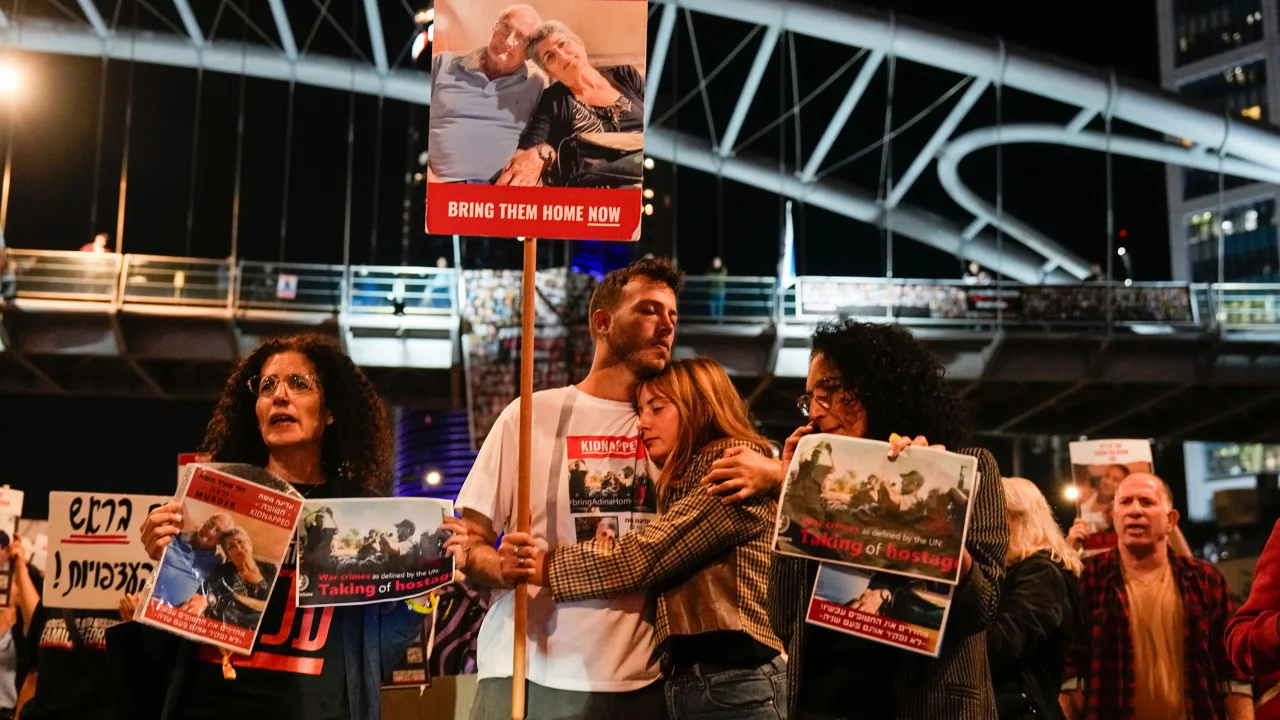
  • Israel claims hostages won’t be freed before Friday

    Israel claims hostages won’t be freed before Friday

    The plan to release the first hostages as part of the deal between Israel and Hamas was postponed on Wednesday night, just hours before the expected start of a temporary break in fighting.

    Israel’s National Security Council said that the first group of hostages will not be released until Friday. An Israeli government person told CNN that the planned break from fighting has been postponed and will start on Friday instead.

    “Negotiations to free our hostages are making progress and are still happening. ” The release process will begin on Friday as agreed by both sides.

    Israel and Hamas agreed to stop fighting for four days and free at least 50 women and children out of the 230 hostages in Gaza. An Israeli official told CNN that the truce was supposed to start at 10 a. mThe time where you are, it’s 3 o’clock in the morning. He passed the exam on Thursday.

    It’s not clear why the delay happened.

    A spokesperson from the US National Security Council said on Wednesday that the hostage deal is still agreed upon. They are working on final details for the first day of the deal.

    “We believe that we should not take any risks as the hostages start returning home,” said NSC spokesperson Adrienne Watson. “Our main goal is to make sure they come back home safely. ” “We’re making good progress and we hope to start putting it into action on Friday morning. ”

    One Israeli official who knows about the situation said it’s not a big deal and just small things that need to be fixed.

    But another person from the government told CNN that one reason was because Israel hadn’t gotten the names of the first hostages that Hamas would release.

    On Wednesday evening, Prime Minister Benjamin Netanyahu talked to reporters before the delay was announced. He said he was sure the agreement would start soon, but didn’t give many details about how it would happen.

    However, people in charge and experts in Israel have always warned that any agreement would be risky until the hostages were safely out of danger.

    On Wednesday, the Israel Defense Forces (IDF) kept fighting in Gaza by using both soldiers on the ground and planes in the air. They did this in the north-eastern and central parts of Gaza. This happened even though a truce was supposed to begin soon. Places in the south, like Khan Younis and Rafah, were also damaged, as reported by Palestinians.

    On Wednesday, before the announcement of the delay, a spokesperson for the Israeli army, Daniel Hagari, said that the upcoming truce is a complicated process and has not been finalized yet.

    “It might take a while and have several steps,” he said.

    The agreement was a big step forward in diplomacy, coming almost seven weeks after the conflict began. The conflict has led to a serious humanitarian crisis in the area. The families of the hostages felt relieved and very excited when they heard the announcement.

    The agreement would also let more humanitarian aid and relief convoys to come in.

    The pause can be up to 10 days, but Israeli officials don’t think it will last that long.

    Netanyahu said that for every 10 more hostages released, there will be one more day without fighting.

    Hamas has 236 people as prisoners in Gaza, and they come from 26 different countries. This information is from the Israeli military. During October 7, a lot of people were taken by force at gunpoint. The attackers were part of Hamas and they killed about 1,200 people in a surprise attack on Israel. This was the biggest attack on Israel since the country started in 1948.

    Before the agreement, only a few hostages had been set free.

    Around 12,700 people have died in Gaza since October 7, according to the Palestinian health ministry in the West Bank. They got this information from health authorities run by Hamas.

  • North Korea to station ‘new’ armaments along border with South Korea

    North Korea to station ‘new’ armaments along border with South Korea

    North Korea plans to put new weapons near the border with South Korea. This is because South Korea did not follow the agreement made in 2018 to calm tensions at the border. State media said this on Thursday.

    North Korea did something because South Korea promised to increase its surveillance along the border in response to North Korea launching a spy satellite. The satellite could help North Korea target its enemies better.

    Seoul’s action shows that they are stepping back from the Inter-Korean Military Agreement signed in 2018. This agreement was meant to prevent war and create a safe area between North and South Korea with the help of the US.

    The South Korean president and North Korean leader signed a document at the border. It said that there would be no more war in Korea and that a new time of peace has started.

    However, any positive feelings created by the agreement have disappeared in the last few years. Kim did not get what he wanted from the US and South Korea, so now he is making the North’s missile program stronger. He said he will give North Korea a nuclear deterrent like the one that the United States has.

    As North Korea is getting stronger, the US, South Korea, and Japan are working together more to make their militaries stronger. But North Korea sees this as a danger to them.

    Earlier this week, North Korea criticized the US for possibly selling advanced missiles to Japan and military equipment to South Korea. They called it a “dangerous act,” according to a report from KCNA.

    North Korea said it clearly knows who the weapons are meant to be used against.

    On Thursday, North Korea’s Defense Ministry said that its army will not be limited by the military agreement. They promised to bring in stronger armed forces and new military equipment near the Military Demarcation Line. This was reported by KCNA.

    It said South Korea’s actions have made the agreement useless and they will have to suffer for their irresponsible behavior.

    Pyongyang said that South Korea will be fully responsible for any fights that happen between the two Koreas.

    “The situation at the military demarcation line is very dangerous. A small mistake could start a big war. This is because the leaders of South Korea made a serious mistake. The situation is now out of control. ” – KCNA said.

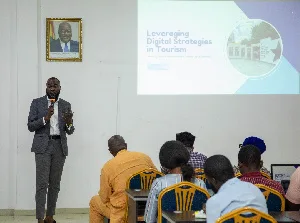
  • Ghanaian tourism needs radical change – Global Media Alliance

    Ghanaian tourism needs radical change – Global Media Alliance

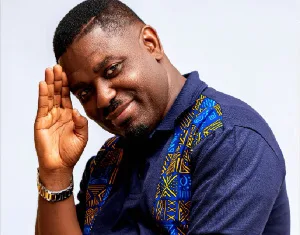
    Felix Afriyie Opoku, who is in charge of the Digital & Innovation Group at Global Media Alliance, wants Ghana’s tourism industry to have better digital plans.

    Mr Smith talked about how to sell and advertise in the digital age at a seminar for local tourism. Afriyie said that using better digital plans can make the tourism industry better. This can bring in more money and sales.

    The Ghana Tourism Authority planned an event that brought important people from the country’s tourism industry together. “Mr” means a man. Afriyie said it’s really important for people to keep an eye on what’s being said on social media to help increase tourism around the world.

    He believes that social media listening is a helpful digital strategy for tourism businesses. It can help them understand their customers, see trends, and control their reputation. Tourism businesses can learn a lot about what customers want and don’t like by paying attention to what people say on social media. This information can be used to make better ads, improve products, and fix customer problems.

    During his talk, Afriyie talked about how using social media can help businesses reach more people, interact better with customers, make the customer experience better, and make more money.

    He talked about how the “Experience Ghana, Share Ghana” campaign used different ways to get people involved online and showed data about how Ghanaians felt during the campaign.

    The event made people think deeply and consider all the different options in tourism.

    Other people who talked at the event were Mr. Richard Selase Anum, who knows a lot about SEO and building websites, and Madam Shirley Ann Osei Owusu, who creates content and influences people about tourism marketing. The team talked about more real-life examples of successful companies using social media to stand out and do well online.

    Mr Smith Anum said that it’s important to keep learning and adapting to be good at sales and marketing in today’s digital world. It’s an ongoing process to stay ahead of the competition. Consistently check your plans, ask for feedback, and adjust your approach to constantly make your online presence better and increase sales.

  • Media in Ghana is biassed against reggae music – Mr. Logic

    Media in Ghana is biassed against reggae music – Mr. Logic

    The media personality, Mr. Logic, who causes a lot of disagreement and argument. Logic scolded the Ghanaian media for not giving enough attention to reggae music, which has made it less popular in the country.

    He says the media favors reggae music because they think it’s not from here, but that’s not true. The media should work harder to promote reggae music.

    The show biz expert complained that big musicians like Shatta Wale and Stonebwoy,who do reggae and dancehall music,don’t get enough attention.

    Mr Logic spoke to MX24 in an interview with GhanaWeb, Logic asked the media in Ghana to help promote reggae songs by Ghanaian artists so they can be known world wide.

    He said that reggae music is not appreciated enough in Ghana because the media is unfair. We think Afrobeat is from our culture and reggae is from another culture. It’s not from another country.

    “Our best music artists,or our most popular music that we send to other countries, is reggae. “Artists like Shatta Wale and Stoneboy are our reggae dancehall singers,so there are quite a few of them. Why are we still prejudiced against reggae dancehall. This music is making us famous allover the world.

    Heal so talked more about why it’s important for the media to support reggae songs by Ghanaian artists and how it can help the country.

    I believe that the media and everyone should be more open to new things, like reggae music. We need to continue using that path. Someone asked if afrobeat and my piano could keep reggae alive. It’s still alive. Stoneboy is doing okay. “We will do it,”Mr. Logic is using reasoning to come to conclusions or make decisions.

    People are still talking about how to promote reggae music, and experts want the media to talk about it in the right way.

  • Bessa Simons needs to be willing to take criticism – Nacee

    Bessa Simons needs to be willing to take criticism – Nacee

    Famous Ghanaian gospel singer Nana Osei, also known as Nacee, believes in the new president of the Musicians Union of Ghana, Bessa Simons.

    During the TV show on TV3 with Berla Mundi on November 22, Nacee expressed his confidence in Bessa Simons’ abilities and believes she is qualified for the job. He asked his coworkers to work together and help the Bessa-led administration reach its goals.
    “I have faith in Uncle Bessa. I think he knows all about the system, music organization, and what we need to do. ” We have to work together and let him be in charge to get this done. Even if he isn’t very skilled, he will try his hardest when we make him in charge,” he said.

    Nacee told Bessa Simons to be prepared to handle and accept criticism,even if it’s tough to hear.

    “He needs to be okay with getting feedback because musicians are sensitive and some times it’s best not to react too strongly when people express their thoughts. “”Listen to both criticism and praise,” he said.

    He got 324 votes and his opponent Ras Caleb Appiah-Levi got 66 votes. He became the President in 2019 after Obour stopped being the President. Other leaders of the union were chosen too.

    The MUSIGA elections have been delayed five times since 2019 because two members took the union to court and wanted it to explain its money situation.

    The court rejected the request to stop something and told the people suing to give money to the union. The new MUSIGA leaders were supposed to make the union better and bring in more musicians.

  • Fameye hints at possible collaboration with Black Sherif

    Fameye hints at possible collaboration with Black Sherif

    Fameye and Black Sherif, two popular musicians in Ghana, might be working together soon. Fameye, who has won many awards, mentioned a possible collaboration with Black Sherif, who won Artist of the Year at the Ghana Music Awards.

    Fameye announced on social media that his new song will come out on December 1st. He said it will make people in the country and the world very happy.

    Fameye has been releasing a series of successful songs this year, “Not God” has been a hit on many charts. Black Sherif also recently released a new song called “Oh No. ”

    The idea that these two big names in Ghanaian music might work together is making a lot of music fans really excited. They both have a talent for telling great stories and writing amazing songs.

    Fameye and Black Sherif are popular in the music industry and have a lot of fans. They have made a lot of good songs and people really like them.

    https://www.youtube.com/watch?v=oBb_ghLcubM
  • Meet Miss Malaika Ghana 2023 top ten finalists

    Meet Miss Malaika Ghana 2023 top ten finalists

    When the invitation for this year’s event called #thebloomseason was sent out, thousands of people answered and came. After lots of auditions, 20 women were chosen to start this important journey.

    Several weeks have passed, during which there has been a lot of hard training, and many emotions including happiness and sadness. Also, some people have been forced to leave, leaving only 10 finalists. Now it’s time for the big event, the Miss Malaika Ghana 2023 Grand Finale. It will be on Friday, November 24th at the Grand Arena (AICC) at 8pm.

    Meet the Final 10 Delegates.

    Pristine Adzo Agbozo is a 23-year-old graduate of KNUST (voting code 43).

    Bridgetta Glover is a 24-year-old graduate of the Koforidua Technical University (code 19).

    Comfort Amoah, AKA Reina, is a 23-year-old graduate of Action Progressive Institute (code 31).

    Fareeda Habib is a 23-year-old graduate of KNUST (code 33).

    Fortune Akua Agyeman is a 23-year-old graduate of KNUST (code 21).

    Christiana Bervelyn Anim is a 22-year-old graduate of UPSA (code 14).

    Lady Nana Yaa Nyarko is a 22-year-old graduate of KNUST (code 2).

    Kimberly Akornortey is a 23-year-old student of University of Ghana (code 6).

    Charlotte Mawusi Gokah is a 25-year-old graduate of Adonten (code 1).

    Enyam Dzandu is a 21-year-old student of University of Ghana (code 45).

    Prepare to see a night where fashion and glamour come together, as the pretty and smart finalists show off their elegance on stage.

    This is the best moment for the flower season queen. Who will be the next Queen. Who will win the Crown, Car, and Cash.

    Tickets for this special event are available for purchase at Charterhouse for GHc100, or you can dial *713*33*24# and follow the instructions.

    For more details, dial 0501288520.
    The new school artists performing live are Mr Drew, Sefa, Olive the Boy, Loli X Lola, Maya Blu, and Banzy Banero.

    Find out more about Miss Malaika Ghana on their social media pages. Follow them on Instagram and Twitter @missmalaikagh and on Facebook at Miss Malaika Ghana. Get updates wherever you are. Watch every show on CharterhouseLive channel on YouTube.

    Miss Malaika Ghana is made by Charterhouse and supported by GTP, Shandy Bosoe, and Pepsodent. With help from Vaseline, Atlas Rent-A-Car, Geisha, BVS Butchery, Ecogel, Locus Estates, Special Ice, Tasty Tom, Best Western Plus Beach Hotel, Tigon Creative Studios and Media partners.

    https://www.youtube.com/results?search_query=Meet+Miss+Malaika+Ghana+2023+top+ten+finalists
  • Fighting in Gaza will halt on Thursday at 10 a.m – Hamas

    Fighting in Gaza will halt on Thursday at 10 a.m – Hamas

    Hamas says there will be no fighting between Israel and them for four days starting at 10am on Thursday.

    Israel has not said when the break will start, but Foreign Minister Eli Cohen thinks the first hostages will arrive on Thursday.
    According to the agreement, Hamas will let go of 50 Israeli hostages and Israel will release 150 Palestinian women and teenagers from jail.

    Families of people held in Gaza say that every person who is captive needs to come home, and that every hour is very important.
    An additional 150 Palestinians and 50 hostages from Gaza could be set free after the first four-day break.

    Israel said that its military operation in Gaza is still going on, even before the break begins.

    The Israeli government says the war isn’t over yet. They promise to finish off Hamas completely.

    Israel started fighting against Gaza after fighters from Hamas came across the border on 7 October. They killed 1,200 people and captured around 240 others.

    The health ministry in Gaza, which is controlled by Hamas, says that over 14,000 people, including more than 5,000 children, have been killed in Israel’s campaign.

    More update on this story soon…

  • Arab foreign ministers welcome Israel-Hamas pact cautiously

    Arab foreign ministers welcome Israel-Hamas pact cautiously

    This is great news. Saudi Foreign Minister Prince Faisal bin Farhan said the new deal is a step in the right direction, but more needs to be done.

    He said, “We hope it can lead to a ceasefire,” while sitting with Arab foreign ministers in a London hotel.

    He said at a press conference that they were told to tell the world that the fighting in Gaza needs to stop right away.

    They were very angry with how the Western powers had responded. Jordan’s Foreign Minister Ayman Safadi said that the lack of response from the Western countries is letting Israel keep committing war crimes. Just so you remember, Israel says they are attacking Hamas buildings and trying to not hurt regular people since October 7th.

    Many ministers said the best way to stop a bad idea is to come up with a better one. They believe that the only way to respond to Hamas’s attacks is to work towards a two-state solution through a political process. They also stated that they strongly condemn the attacks.

    More update on this story soon…

  • We’re not sure if they’re still alive – Hostage’s relative

    We’re not sure if they’re still alive – Hostage’s relative

    Yosi Shnaider is waiting to see if his cousin Shiri and her two kids will be released by Hamas. He’s not sure if they’re on the list.

    On 7th October, they were seen being taken by Hamas fighters. Schnaider said, “We don’t know if they are alive, hurt, or okay in their minds. ”

    Shnaider said he was worried that the release might not happen because he doesn’t trust Hamas. He thinks it’s important to be realistic and cautious when dealing with them.

    “They will try their best to ruin this deal and I’m afraid. ”

    The agreement allows fighting to stop for an extra day for every 10 more hostages freed.

    Shnaider said his family is feeling more and more sad because they have to wait each night to see if Shiri and her children are going to be released.

    More update on this story soon…

  • World leaders applaud agreement reached between Hamas and Israel

    World leaders applaud agreement reached between Hamas and Israel

    Now let’s talk about how countries are responding to the agreement between Israel and Hamas. This agreement will stop the fighting that has been happening since October 7th and will also include the release of 50 hostages from Gaza.

    The prime minister of Qatar, Sheikh Mohammed bin Abdulrahman bin Jassim Al Thani, helped make the truce happen. He said in a statement that he hopes the truce will lead to an end to the war.

    The UK’s Foreign Secretary David Cameron said the agreement was an important move towards freeing hostages and giving aid to people in Gaza. French President Emmanuel Macron said that efforts are being made non-stop to free all hostages.

    The truce made Palestinian Authority leader Mahmoud Abbas, the EU, and countries like the US, Jordan, Russia, China, Egypt, France, and Germany happy.

    More update on this story soon…

  • IDF claims to have discovered and demolished 400 tunnel shafts in Gaza

    IDF claims to have discovered and demolished 400 tunnel shafts in Gaza

    The Israel Defense Forces (IDF) said they found and destroyed about 400 Hamas tunnels since the fighting began on October 7th.

    It says that lots of the tunnels are under hospitals, schools, and homes where regular people live.

    The IDF showed videos and pictures of tunnels to prove their claims, but the BBC couldn’t confirm it on their own.

    Israel says that Hamas in Gaza is using civilians to protect themselves. Hamas says that this is not true.

    More update on this story soon…