Author: Phoebe Martekie Doku

  • Middle East tensions: Ghana Embassy in Tehran closed indefinitely 

    Middle East tensions: Ghana Embassy in Tehran closed indefinitely 

    Ghana has closed its embassy in Tehran indefinitely and evacuated all diplomatic staff in response to escalating tensions involving the United States, Israel, and Iran.

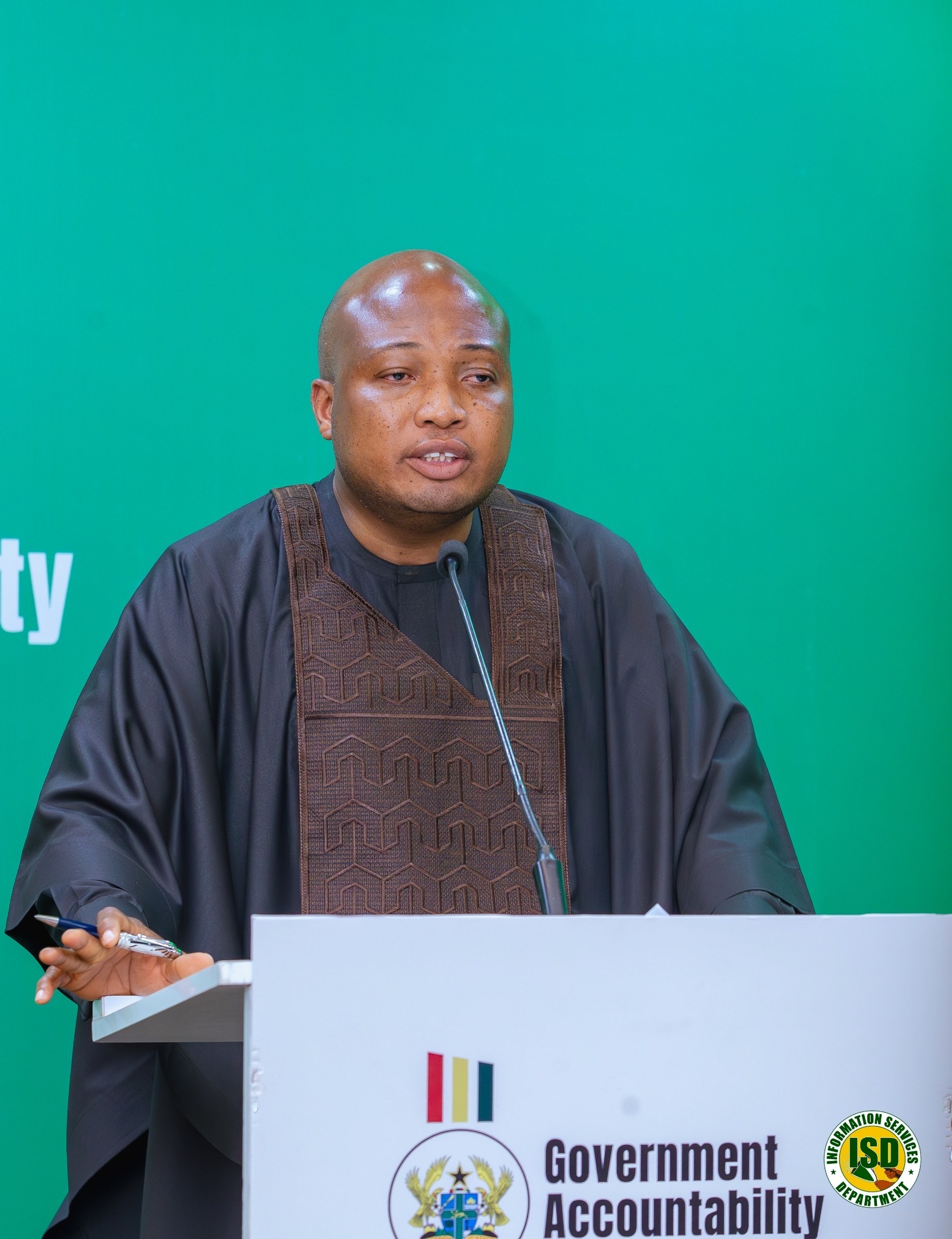
    Announcing the decision on social media on Monday, March 2, Foreign Affairs Minister Samuel Okudzeto Ablakwa confirmed that all Ghanaian embassy staff have been safely evacuated from Iran. 

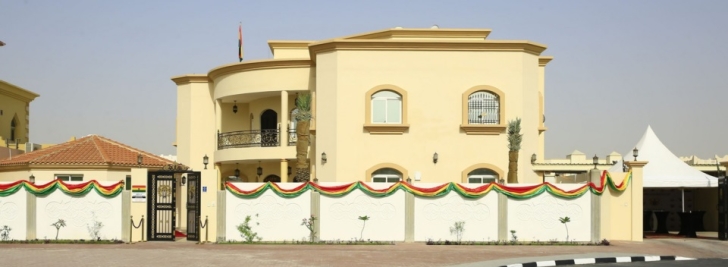
    “The safety, welfare, and protection of Ghanaians remains our utmost priority in these tempestuous times,” he stated. On Monday, March 2, the Ghanaian Embassy in Doha directed all Ghanaian nationals residing in Qatar to register with the mission as part of emergency preparedness measures amid escalating tensions in the Middle East.

    The Embassy in a statement explained that this forms part of ongoing efforts to ensure the safety of Ghanaian nationals. The Embassy of Ghana Doha, State of Qatar on Sunday, March 1, advised Ghanaians living in the area to exercise caution and remain vigilant during this period.

    A press statement from the Embassy of Ghana Doha, State of Qatar read, “Due to missle attack and its impact in Doha, please take shelter until further notice, obtain information from official sources. We urge everyone to stay from military states, remain indoors, avoid crowded areas for any exposure to danger and keep essentials supplies like medication and food”.

    “The Embassy of the Republic of Ghana in Doha hereby urges all Ghanaian nationals residing in the State of Qatar who have not registered to immediately do so, as part of ongoing emergency preparedness measures.

    “In view of the heightened tensions and unrest within the region, this registration will enable the Embassy to effectively communicate with, assist, and, if necessary, coordinate evacuation arrangements for Ghanaian citizens,” it noted.

    The ongoing tensions have been linked to the death of Iran’s Supreme Leader, Ayatollah Ali Khamenei. Ayatollah Ali Khamenei was reportedly killed in strikes by the Unites States (U.S.) and Israel. This development significantly impacting travelers from Ghana to Asia, Europe, and North America, as Dubai is a major transit hub connecting travelers through the United Arab Emirates.

    On Saturday, 28 February, Emirates flight EK 788 from Kotoka International Airport (ACC) in Accra to Dubai International Airport (DXB) was cancelled, and passengers were advised to contact their airlines for rebooking or refund options due the ongoing tensions.

    The airline suspended its services following reported bombings in Iraq and retaliatory attacks across the region.

    The flight from Accra to Dubai International Airport, scheduled for 7:15 pm GMT on Saturday, 28 February 2026, was canceled at the last minute through a notice.

    Last year, the Minister for Foreign Affairs, Samuel Okudzeto Ablakwa, warned the Israeli Embassy against maltreating Ghanaian nationals. Speaking to the media on Thursday, December 11, Mr. Ablakwa noted that Ghana will respond with equal force if any of its citizens are deported.

    According to him, “If they deport ten Ghanaians, we will deport ten. If they deport twenty, we will deport twenty. If they deport fifty, we will deport fifty. We are not going to accept this.”

    His comments are in response to an incident in which several Ghanaian travellers, including four members of a parliamentary delegation en route to Tel Aviv for an international cybersecurity conference, were detained and deported by Israel Embassy officials.

    Mr. Ablakwa narrated, “We were told that the Ghanaian Embassy was uncooperative, but the facts simply do not support that. Out of the six people on the list that Israel provided, one is not even Ghanaian. He is Gabonese. Our embassy had every right to verify the identity of the individuals involved.

    “One of the people listed was seriously ill, and Israeli doctors themselves advised that she should not travel until she had recovered. How can you deport someone who is unwell and needs medical attention? Another individual had already been issued a travel certificate, so there was no reason to stop their entry into Israel.”

    But in their actions, Israeli officials indicated that six Ghanaians who were supposedly due for deportation failed to provide the necessary details needed by Ghana’s Embassy in Tel Aviv to issue travel certificates.

    The matter adds to broader concerns surrounding deportation practices. In September, eleven West African nationals filed two ex-parte applications at the Labour Division of the High Court in Accra, challenging their alleged detention in Ghana after being deported from the United States (U.S).

    The eleven individuals include Nigerians Daniel Osas Aigbosa, Ahmed Animashaun, Ifeanyi Okechukwu, and Taiwo K. Lawson; Liberian national Kalu John; Togolese nationals Zito Yao Bruno and Agouda Richarla Oukpedzo Sikiratou; Gambian national Sidiben Dawda; and Malians Toure Dianke and Boubou Gassama.

    According to the applicants, they were forcibly transported to Ghana without prior notice. They allege that they were secretly moved from the U.S. detention centers between September 5 and 6 in shackles.

    They want the court to temporarily stop them from being deported back to their home countries until the court decides on their case. Their submission further revealed that Ghanaian authorities allegedly confined them in a military facility.

    They cited Article 14(1) of Ghana’s 1992 Constitution, which guarantees personal liberty, as well as Article 23, which protects the right to administrative justice.

    They are arguing that Ghana is violating international law by trying to send them back to countries where their lives or freedom could be at risk.

    As a result, they have demanded that the Attorney-General, the Chief of Defence Staff, and the Comptroller-General of the Ghana Immigration Service appear before the Human Rights Division of the High Court with valid reasons. The court has fixed Tuesday, September 23, to hear the case.
  • Court strikes Democracy Hub’s suit seeking to disqualify Baba Jamal in Ayawaso-East by-election

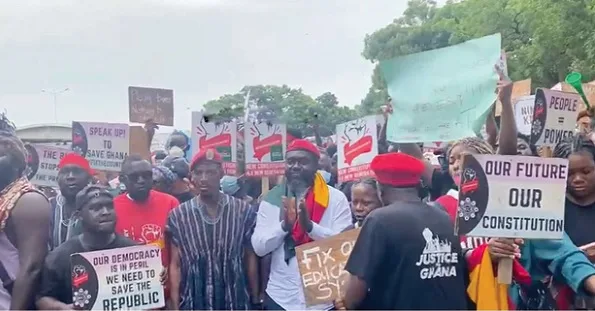
    Court strikes Democracy Hub’s suit seeking to disqualify Baba Jamal in Ayawaso-East by-election

    A lawsuit seeking to disqualify the National Democratic Congress’ (NDC) candidate in the upcoming Ayawaso East by-election scheduled for Tuesday, March 3, 2026, has been thrown out by the High Court in Accra.

    The High Court gave the ruling on Monday, March 2, after it described the lawsuit as “incompetent”.

    On Tuesday, February 17, the pressure group, Democracy Hub, challenged the Ayawaso East by-election. The group alleged vote-buying during the NDC’s parliamentary primaries held on February 7.
    Democracy Hub prayed the High Court to direct the Electoral Commission (EC) to conduct a fresh primary in accordance with democratic principles.


    In the suit, the NDC is cited as the first defendant, the Electoral Commission as the second, and the Attorney-General as the third.
    The suit further added, “An order of mandamus directed at the 2nd Defendant to refuse to accept or act upon the nomination of the said candidate unless and until a primary conducted in accordance with democratic principles is held.”


    “A declaration that the parliamentary primary conducted by the 1st Defendant for the Ayawaso East Constituency, having been found to have been characterised by widespread vote buying, inducement and monetisation, did not conform to the democratic principles required under Article 55(5) of the Constitution, and that the continued reliance on the outcome thereof and the presentation of a candidate founded on that process constitute actions contrary to and inconsistent with the Constitution in violation of section 9 of the Political Parties Act, 2000 (Act 574).”


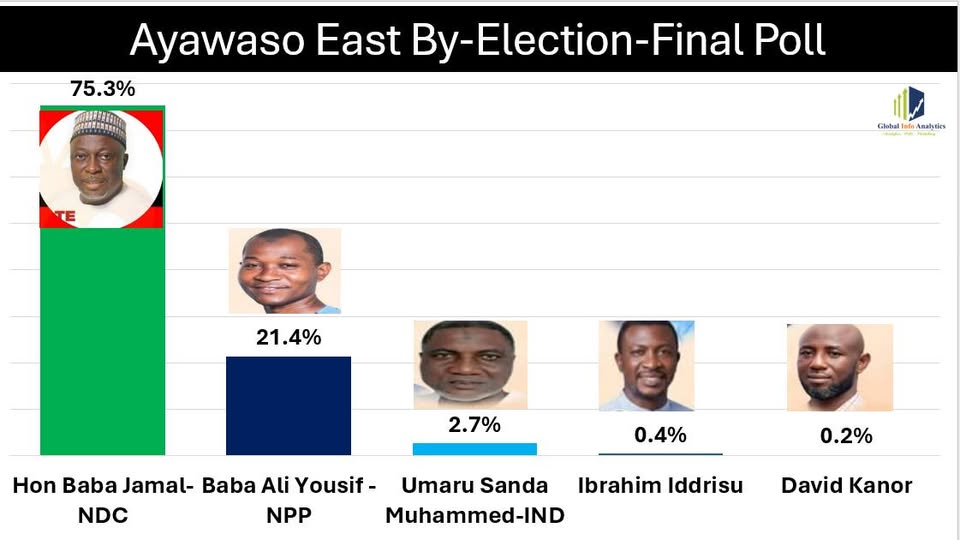
    Meanwhile, a new poll by Global InfoAnalytics has predicted Baba Jamal to secure about 75% of the votes ahead of his main contender, Baba Ali of the New Patriotic Party (NPP).


    According to the poll, the New Patriotic Party’s Baba Al will trail with 21%, independent candidate Umaru Sanda Muhammed is expected to poll 3% of the vote, with other remaining candidates, Ibrahim Iddrisu and David to garner less than 1%.


    The survey was conducted between February 28 and March 1, sampling 972 voters across the constituency.


    The EC has scheduled the Ayawaso East by-election for March 3, 2026, the by-election has attracted heightened attention in recent days amid internal developments within the NDC, including allegations of vote buying during its parliamentary primary.


    Mr Baba Jamal Mohammed Ahmed won the Ayawaso East Constituency primary and is set to represent the NDC as its parliamentary candidate in the March 3 by-election, following the party’s internal primary held on February 7, 2026.


    After the close of polls, provisional results showed that Baba Jamal polled 431 votes out of the total votes cast, followed by the widow of the late Ayawaso MP, Naser Toure Hajia Amina Adam who secured 399 votes. Mr Mohammed Ramne, the Ayawaso East NDC Constituency Chairman, placed third with 88 votes.


    Dr Yakubu Azindow obtained 45 votes, while Mr Najib Mohammed Sani recorded one vote.


    The closely contested primary attracted more than 1,100 accredited delegates from across the constituency, reflecting the high stakes involved in selecting a candidate for the by-election in a seat widely regarded as a stronghold of the governing NDC.


    Five aspirants contested the race: Hajia Amina Adam, Mr Baba Jamal, Dr Yakubu Azindow, who had previously contested the late MP in the 2023 primary, Mr. Mohammed Ramne, and Mr Mohammed Sani.


    Although the race was initially considered open, it later narrowed into a tight contest among Mr Jamal, Hajia Amina Adam and Dr Azindow.

    Even though the election was peaceful on Saturday, reports of vote buying emerged on the eve of the election and on election day, involving some candidates, including Baba Jamal, who at the time was Ghana’s High Commissioner to Nigeria and allegedly offered television sets and other items to delegates.


    Videos circulating on social media showed some delegates leaving polling centres carrying television sets and other items.Reacting to the vote-buying allegations, the NDC, in a statement signed by its Secretary, Fiifi Kwetey, announced that it would investigate the allegations.

    It noted that a three-member committee had been set up to probe the matter.


    In a statement issued on the same day, the NDC said its national executives had taken note of what it described as widespread incidents of inducement and vote buying allegedly perpetrated by some aspirants.
    The party condemned the acts, describing them as an affront to its values and principles, and announced that it had launched investigations into the matter.


    “In line with the Party’s commitment to internal democracy, transparency, and ethical political conduct, the Committee will investigate the allegations and make appropriate recommendations, including sanctions where necessary,” the statement said.


    The Presidency has announced the recall of Ghana’s High Commissioner to Nigeria, Baba Jamal, over voter inducement during the just-ended Ayawaso East primaries held on Saturday, February 7.


    In a statement titled “President recalls Ghana’s High Commissioner to Nigeria,” shared by the Spokesperson to the President, Felix Kwakye Ofosu, and dated February 7, it noted that “President John Dramani Mahama has directed the immediate recall of Mohammed Baba Jamal Ahmed (Baba Jamal) from his position as Ghana’s High Commissioner to the Federal Republic of Nigeria.


    The decision follows allegations of voter inducement during today’s National Democratic Congress (NDC) primaries in the Ayawaso East Constituency, in which Mr Baba Jamal, a candidate, participated.”


    The President stressed that reports of vote buying were made against several candidates seeking to win the Ayawaso East seat, but Baba Jamal stood out because he was the only serving public officer at the time, making his case a peculiar one.


    “In his directive to the Minister for Foreign Affairs recalling Mr Baba Jamal as High Commissioner, the President noted that while allegations of vote-buying were made against multiple candidates who contested the primaries, Baba Jamal was the only serving public officer among them.”


    Consequently, to protect the integrity of public office and to avoid any public suspicion of misconduct or violation of the Government’s Code of Conduct for Political Appointees, the President stated:


    “Without prejudice to the ongoing internal party processes, and strictly in view of the standards of conduct expected of public officers, the President considers it necessary to act decisively to preserve the integrity of public office and to avoid any perception of impropriety or conflict with the Government’s Code of Conduct for Political Appointees.”


    The statement continued that “the recall takes effect immediately, and the Minister for Foreign Affairs has been directed to take the necessary administrative and diplomatic steps to give effect to this directive.”

  • Family of four drowns in abandoned galamsey pit at Wassa Dankwa

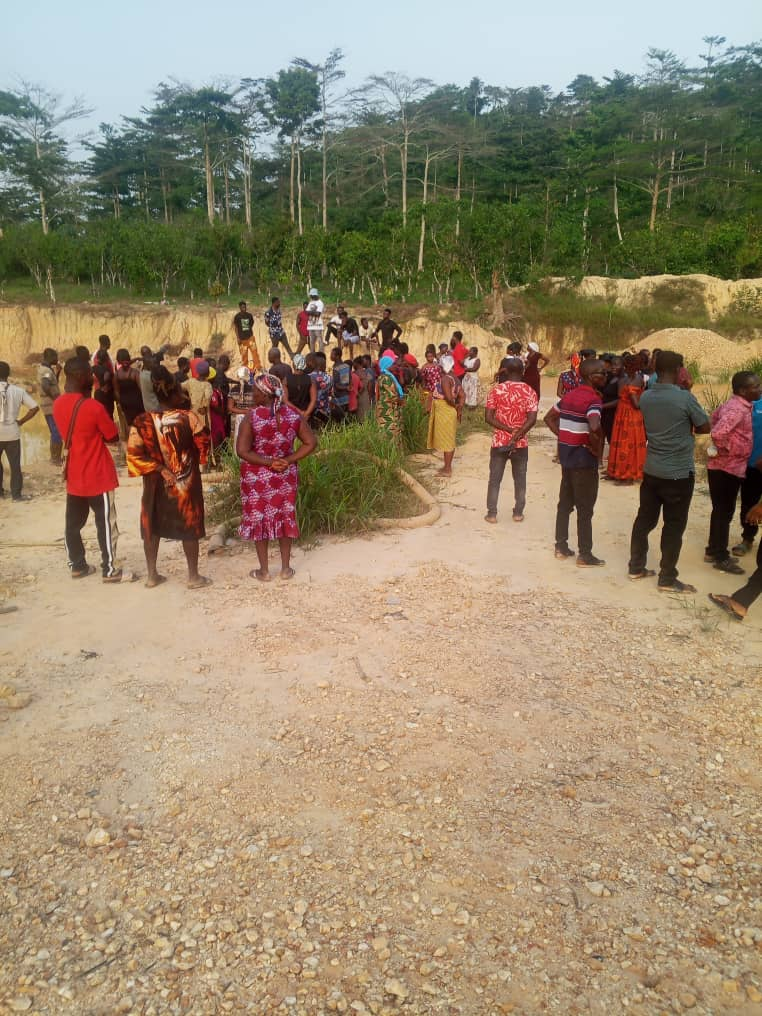
    Family of four drowns in abandoned galamsey pit at Wassa Dankwa

    A 42-year-old mother and her three children have been confirmed dead after drowning in a water-filled galamsey pit at Wassa Dunkwa in the Amenfi West Municipality of the Western Region on Saturday, February 28.


    The family of four had gone near the abandoned illegal mining site in search of firewood. The eldest child, aged 14, reportedly led his younger siblings into the water-filled pit.

    The boys became trapped and were unable to escape. In an attempt to rescue her children, the 42-year-old mother also entered the pit but tragically drowned.

    The bodies of the four family members have been deposited at the Catholic Hospital morgue. Abandoned illegal mining pits have claimed the lives of Ghanaians in recent times.

    Galamsey pit collapse at Atta Ne Atta in Asutifi South has claimed the lives of nine individuals, with four others currently receiving treatment at St. Elizabeth Catholic Hospital in Hwidiem following the incident, which occurred on Monday, March 2.


    Recently, a 20-year-old student, Evans Allotey, of Okomfo Anokye Senior High School (SHS), died after falling into an abandoned mining pit on Tuesday, February 17, 2026, at Manso Akwesiso, Amansie South District of the Ashanti Region.


    The unfortunate incident reportedly occurred while he was attempting to flee military personnel who had visited the site to crack down on illegal mining activities. In reaction to the unfortunate incident, residents staged a protest to express their dissatisfaction.


    In 2025, a pit collapse at an illegal mining site at Kasotie in the Atwima Mponua District of the Ashanti Region claimed the lives of seven illegal miners who were trapped underground.

    The pit collapse, which occurred on Wednesday night, October 1, also left four injured, while several miners were trapped.


    For years, the country’s efforts to nip the canker in the bud have not yielded the needed results. Among recent measures taken to protect water bodies from illegal miners is the deployment of the National Anti-Illegal Mining Operations Secretariat (NAIMOS).


    The Secretariat includes the Ghana Armed Forces, the Ghana Police Service, the Ghana Immigration Service, the National Intelligence Bureau (NIB), the Narcotics Control Commission, and the National Security Secretariat.


    Addressing the security forces, the Minister for Lands and Natural Resources, Emmanuel Amarh Kofi-Buah, directed the team to ruthlessly counter the activities of galamsey operators as they are the enemies of the state.


    “Any recalcitrant entering into these zones is not merely a trespasser. They are an enemy of the state. You are to be firm. You are to be resolute. You are to be ruthless.


    “And please, take it from me, you will take no obstructionist instruction from any big man. Remember, the biggest man in Ghana is the President of the Republic, and he’s the one who has sent you,” Mr Kofi-Buah charged.


    Government deployed soldiers to permanently guard 44 galamsey hotspots, including waterbodies and areas threatened by galamsey activities.


    Speaking to the media on Tuesday, September 16, the Minister of State in charge of Government Communications, Felix Kwakye Ofosu, noted, “All the 44 areas that are threatened by galamsey, there is going to be a permanent military presence”.


    According to statistics from the Lands Minister, 1,400 persons have been arrested from January to August this year in the government’s efforts to crack down on galamsey.


    According to him, the achievement was attained through the government’s renewed efforts. He noted that the government has seized 440 excavators and more than 800 changfans.


    “We have seized 440 excavators and more than 800 changfans. We have mobilised Blue Water Guards in key regions, and they are making a difference,” Mr. Buah stated.


    The government’s move is a response to mounting calls to declare a state of emergency over galamsey. The river guards are selected from communities most affected by illegal mining, ensuring they have a deep understanding of the local landscape and challenges.


    The government has issued an official order requiring all machinery used in mining operations to be registered with the Driver and Vehicle Licensing Authority (DVLA) by August 1st.


    A statement issued by the Ministry of the Interior on Tuesday, July 15, states that the state will proceed with confiscating unregistered mining equipment after the deadline.


    “The Government, as part of efforts to reform the mining sector in the country, requires that all machinery used in mining activities must be registered with the Driver and Vehicle Licensing Authority (DVLA) by 1st August 2025. Equipment that remains unregistered after this deadline will be confiscated by the State,” the Ministry stated on its website.


    Mr Mubarak has empowered the Ghana Police Service and DVLA to begin strict enforcement of the new rule from August 2. “The Ghana Police Service and DVLA have been directed to enforce this directive from 2nd August 2025 onward rigorously. The general public, especially those who use mining machinery, is advised to take note and comply with the directive,” he wrote.


    The Ministry reiterates its resolve to maintain national peace through effective internal security and law enforcement. Meanwhile, a similar directive came in months ago, where excavator owners and operators were asked to register their machines with the Driver and Vehicle Licensing Authority (DVLA) within two weeks or risk losing them to the state, as the government intensifies efforts to clamp down on illegal mining activities.


  • Asutifi South: Pit collapse at Atta Ne Atta leaves 9 dead

    Asutifi South: Pit collapse at Atta Ne Atta leaves 9 dead

    An illegal mining (galamsey) pit collapse at Atta Ne Atta in Asutifi South has claimed the lives of nine individuals, with four others currently receiving treatment at St. Elizabeth Catholic Hospital in Hwidiem following the incident, which occurred on Monday, March 2.

    Recently, a 20-year-old student, Evans Allotey, of Okomfo Anokye Senior High School (SHS), died after falling into an abandoned mining pit on Tuesday, February 17, 2026, at Manso Akwesiso, Amansie South District of the Ashanti Region.

    The unfortunate incident reportedly occurred while he was attempting to flee military personnel who had visited the site to crack down on illegal mining activities. In reaction to the unfortunate incident, residents staged a protest to express their dissatisfaction.

    In 2025, a pit collapse at an illegal mining site at Kasotie in the Atwima Mponua District of the Ashanti Region claimed the lives of seven illegal miners who were trapped underground. The pit collapse which occurred on Wednesday night, October 1, also left four injured, while several miners trapped.

    For years, the country’s efforts to nip the canker in the bud have not yielded the needed results. Among recent measures taken to protect water bodies from illegal miners is the deployment of the National Anti-Illegal Mining Operations Secretariat (NAIMOS).

    The Secretariat includes the Ghana Armed Forces, the Ghana Police Service, the Ghana Immigration Service, the National Intelligence Bureau (NIB), the Narcotics Control Commission, and the National Security Secretariat.

    Addressing the security forces, the Minister for Lands and Natural Resources, Emmanuel Amarh Kofi-Buah, directed the team to ruthlessly counter the activities of galamsey operators as they are the enemies of the state.

    “Any recalcitrant entering into these zones is not merely a trespasser. They are an enemy of the state. You are to be firm. You are to be resolute. You are to be ruthless.

    “And please, take it from me, you will take no obstructionist instruction from any big man. Remember, the biggest man in Ghana is the President of the Republic, and he’s the one who has sent you,” Mr Kofi-Buah charged.

    Government deployed soldiers to permanently guard 44 galamsey hotspots, including waterbodies and areas threatened by galamsey activities.

    Speaking to the media on Tuesday, September 16, the Minister of State in charge of Government Communications, Felix Kwakye Ofosu, noted, “All the 44 areas that are threatened by galamsey, there is going to be a permanent military presence”.

    According to statistics from the Lands Minister, 1,400 persons have been arrested from January to August this year in the government’s efforts to crack down on galamsey.

    According to him, the achievement was attained through the government’s renewed efforts. He noted that the government has seized 440 excavators and more than 800 changfans.

    “We have seized 440 excavators and more than 800 changfans. We have mobilised Blue Water Guards in key regions, and they are making a difference,” Mr. Buah stated.

    The government’s recent move is a response to mounting calls for the declaration of a state of emergency on galamsey.The river guards are selected from communities most affected by illegal mining, ensuring they have a deep understanding of the local landscape and challenges.

    The government has issued an official order requiring all machinery used in mining operations to be registered with the Driver and Vehicle Licensing Authority (DVLA) by August 1st.

    A statement issued by the Ministry of the Interior on Tuesday, July 15, states that the state will proceed with confiscating unregistered mining equipment after the deadline.

    “The Government, as part of efforts to reform the mining sector in the country, requires that all machinery used in mining activities must be registered with the Driver and Vehicle Licensing Authority (DVLA) by 1st August 2025. Equipment that remains unregistered after this deadline will be confiscated by the State,” the Ministry stated on its website.

    Mr Mubarak has empowered the Ghana Police Service and DVLA to begin strict enforcement of the new rule from August 2. “The Ghana Police Service and DVLA have been directed to enforce this directive from 2nd August 2025 onward rigorously. The general public, especially those who use mining machinery, is advised to take note and comply with the directive,” he wrote.

    The Ministry reiterates its resolve to maintain national peace through effective internal security and law enforcement. Meanwhile, a similar directive came in months ago, where excavator owners and operators were asked to register their machines with the Driver and Vehicle Licensing Authority (DVLA) within two weeks or risk losing them to the state, as the government intensifies efforts to clamp down on illegal mining activities.

    The Chief Executive Officer (CEO) of the DVLA, Julius Neequaye Kotey, issued the directive in Accra, warning that effective June 1, any excavator not registered with the DVLA will be confiscated.

    Speaking at a press briefing, Mr. Kotey announced that the Ghana Police Service and the DVLA’s operational team commenced a nationwide enforcement after the deadline, arresting and impounding excavators being used at mining sites or for commercial purposes without proper documentation.

    “This exercise will help identify every excavator that enters the country and trace how it is being used. The goal is to ensure we can monitor and hold people accountable,” Mr. Kotey said.

    The directive fell in line with Section 38 of the Road Traffic Act, 2004 (Act 683), which mandates the registration of all motor vehicles and trailers, including farm and heavy-duty equipment.

    Despite the law, the DVLA found many unregistered excavators operating in mining areas, some of which have been used in illegal activities.Mr Kotey emphasised that the DVLA, with its 34 offices nationwide, could register all excavators and farm machinery within two weeks and was ready to strictly enforce the directive.

    “Excavators in the hands of illegal miners have worsened the destruction of our environment. This is why we must act,” Mr Kotey said.To further control the situation, the DVLA, in collaboration with key agencies like the Minerals Commission, National Security, the Ghana Ports and Harbours Authority (GPHA), and the Customs Division of the Ghana Revenue Authority (GRA), commenced tagging all newly imported excavators.

    In addition to tagging new imports, the Minerals Commission was tasked with leading a team to tag all excavators already in the country. Legal small-scale mining sites have also been geo-fenced, with their site coordinates integrated into the Ghana Mine Repository and Tracking software for better oversight.

    The move is part of the government’s broader efforts to combat illegal mining. Three months ago, Lands and Natural Resources Minister Emmanuel Armah-Kofi Buah announced the rollout of a system to monitor excavator imports and usage, involving port tagging and digital tracking in partnership with several state agencies.

    According to the sector minister. The third most valuable item imported into this country is excavators, and it is worth GHC6.2 billion. In April, a total of 47 individuals were arrested for engaging in illegal mining activities along the Tano River and within the Aboi, Subri, and Nimiri forests in the Western Region.

    This followed a special four-day intelligence-led operation that commenced on April 17, within the Samreboi enclave.

    According to the Ghana Police Service, the suspects include 39 Ghanaians and 8 Chinese nationals. The Police indicated that a significant amount of equipment and materials believed to have been used for the mining operations were retrieved.

    These include seventeen excavators, one bulldozer, four motorbikes, two Toyota Hilux vehicles, one Rav4 vehicle, four pump-action guns, one single-barreled gun, fifty-four live BB cartridges, and eight pumping machines.

    Prosecution began for the arrested suspects. On Tuesday, 41 of them were arraigned, with 29 remanded into Police custody to reappear before the court on April 30, 2025. Twelve others were also remanded to return to court on May 2, 2025.

    The remaining seven were put before the court on April 23, 2025. Two coordinated operations conducted on Friday, June 20, at Nikanika and Adeade in the Central Region led to the arrest of 3 suspects and the seizure of several pieces of mining equipment.

    The operations were executed by the Ghana Police Service through its Special Anti-Galamsey Task Force. The task force proceeded to a mining site at Nikanika. Although no operators were found at the scene, the team retrieved a single-barrel shotgun loaded with a cartridge and three water-pumping machines.

    The task force extended its operation to Adeade, where three suspects, Prosper Quansah, Chrispin Nartey, and Owusu Gambra, were arrested with an excavator on a lowbed trailer. One SANY excavator, four unregistered Haojin motorbikes, and one lowbed vehicle with registration number GN 2136-24 were seized from the scene.All exhibits were secured in police custody.

    Some 12 accused persons standing trial for engaging in illegal mining activities at Tumetu near Princess Town in the Ahanta West Municipality of the Western Region have been remanded into prison custody.

    While 10 of the accused persons were arrested at a palm plantation, two were arrested at the Elluabo Chavene Ghana Rubber Estate Limited (GREL) plantation.This was due to a coordinated police intelligence-led operation within the Ahanta West Municipality.

    The accused persons are Lord Yankey, Caleb Adu Kwaw, Stephen Agyei, Ebenezer Barnes, Mathew Somagevi, Paa Grant, Bashiru Kaviru, Joseph Borney, Aminu Issah, Kofi Sogah, Albert Normah, and Robert Mensah.Four water pumping machines, one tricycle with registration number M-20-WR 1045, and two motorbikes were retrieved from the sites, according to the police.

    All twelve accused persons admitted to the offence during police interrogations. They were subsequently put before the Takoradi Harbour Area Circuit Court ‘A’, and were remanded into prison custody at Sekondi and reappeared before the court on Tuesday, July 8.Also, fifteen individuals are in police custody for engaging in illegal mining activities at Manso Adubia.

    They were arrested following a special intelligence-led operation at Watreso and Preacher Krom.The suspects include Tahiru Ibrahim (24), Shaibu Idrissu, (23), Boateng Emmanuel (27), Jamon Kwaku Samuel (21), Yaro Patrick (29), Kofi Boakye (21), Gubong Mathew (45), Fatawu Zackari Seidu (26), and Abdul Malik Seidu (22).The others are Dauda Tahiru (23), Sampson Grace (21), Boolangkpuo Freda (24), Arima Hagar (26), Kwarteng Vasco (30), and Kwame Adutwum (24).

    Two excavator control boards, two automatic pump-action guns, two Musler 12 firearms, 59 BB cartridges, three AA cartridges, one water pumping machine, two power generators, one vulcanizing machine, and one Apsonic motorbike were seized from the site.

  • Middle East tensions: Ghanaians in Qatar directed to register over safety concerns

    Middle East tensions: Ghanaians in Qatar directed to register over safety concerns

    All Ghanaian nationals residing in Qatar have been directed by Ghana’s Embassy in Doha to register with the mission as part of emergency preparedness measures amid escalating tensions in the Middle East.

    The Embassy explained that this forms part of ongoing efforts to ensure the safety of Ghanaian nationals. This was contained in a statement issued by the Embassy on Monday, March 2.


    “The Embassy of the Republic of Ghana in Doha hereby urges all Ghanaian nationals residing in the State of Qatar who have not registered to immediately do so, as part of ongoing emergency preparedness measures.

    “In view of the heightened tensions and unrest within the region, this registration will enable the Embassy to effectively communicate with, assist, and, if necessary, coordinate evacuation arrangements for Ghanaian citizens,” it noted.

    On Saturday, 28 February, Emirates flight EK 788 from Kotoka International Airport (ACC) in Accra to Dubai International Airport (DXB) was cancelled, and passengers were advised to contact their airlines for rebooking or refund options due to the escalating tensions in the Middle East.

    The airline suspended its services following reported bombings in Iraq and retaliatory attacks across the region, prompting airlines to suspend services.


    The flight from Accra to Dubai International Airport, scheduled for 7:15 pm GMT on Saturday, 28 February 2026, was canceled at the last minute through a notice.


    In response to the ongoing tensions, the Embassy of Ghana, Doha, State of Qatar, on Sunday, March 1, advised Ghanaians living in the area to exercise caution and remain vigilant during this period.


    A press statement from the Embassy of Ghana Doha, State of Qatar read, “Due to missle attack and its impact in Doha, please take shelter until further notice, obtain information from official sources. We urge everyone to stay from military states, remain indoors, avoid crowded areas for any exposure to danger and keep essentials supplies like medication and food”.


    This development is expected to significantly impact travelers from Ghana to Asia, Europe, and North America, as Dubai is a major transit hub connecting travelers through the United Arab Emirates.


    The ongoing tensions have been linked to the death of Iran’s Supreme Leader, Ayatollah Ali Khamenei. Ayatollah Ali Khamenei was reportedly killed in strikes by the Unites States (U.S.) and Israel.


    Last year, the Minister for Foreign Affairs, Samuel Okudzeto Ablakwa, warned the Israeli Embassy against maltreating Ghanaian nationals. Speaking to the media on Thursday, December 11, Mr. Ablakwa noted that Ghana will respond with equal force if any of its citizens are deported.


    According to him, “If they deport ten Ghanaians, we will deport ten. If they deport twenty, we will deport twenty. If they deport fifty, we will deport fifty. We are not going to accept this.”


    His comments are in response to an incident in which several Ghanaian travellers, including four members of a parliamentary delegation en route to Tel Aviv for an international cybersecurity conference, were detained and deported by Israel Embassy officials.


    Mr. Ablakwa narrated, “We were told that the Ghanaian Embassy was uncooperative, but the facts simply do not support that. Out of the six people on the list that Israel provided, one is not even Ghanaian. He is Gabonese. Our embassy had every right to verify the identity of the individuals involved.


    “One of the people listed was seriously ill, and Israeli doctors themselves advised that she should not travel until she had recovered. How can you deport someone who is unwell and needs medical attention? Another individual had already been issued a travel certificate, so there was no reason to stop their entry into Israel.”


    But in their actions, Israeli officials indicated that six Ghanaians who were supposedly due for deportation failed to provide the necessary details needed by Ghana’s Embassy in Tel Aviv to issue travel certificates.

    The matter adds to broader concerns surrounding deportation practices. In September, eleven West African nationals filed two ex-parte applications at the Labour Division of the High Court in Accra, challenging their alleged detention in Ghana after being deported from the United States (U.S).


    The eleven individuals include Nigerians Daniel Osas Aigbosa, Ahmed Animashaun, Ifeanyi Okechukwu, and Taiwo K. Lawson; Liberian national Kalu John; Togolese nationals Zito Yao Bruno and Agouda Richarla Oukpedzo Sikiratou; Gambian national Sidiben Dawda; and Malians Toure Dianke and Boubou Gassama.


    According to the applicants, they were forcibly transported to Ghana without prior notice. They allege that they were secretly moved from the U.S. detention centers between September 5 and 6 in shackles.


    They want the court to temporarily stop them from being deported back to their home countries until the court decides on their case. Their submission further revealed that Ghanaian authorities allegedly confined them in a military facility.


    They cited Article 14(1) of Ghana’s 1992 Constitution, which guarantees personal liberty, as well as Article 23, which protects the right to administrative justice.

    They are arguing that Ghana is violating international law by trying to send them back to countries where their lives or freedom could be at risk.


    As a result, they have demanded that the Attorney-General, the Chief of Defence Staff, and the Comptroller-General of the Ghana Immigration Service appear before the Human Rights Division of the High Court with valid reasons. The court has fixed Tuesday, September 23, to hear the case.

  • Ayawaso East by-election is tomorrow

    Ayawaso East by-election is tomorrow

    Constituents in the Ayawaso East region will elect a Member of Parliament (MP) for the area on Tuesday March 3.

    The by-election follows the death of the constituency’s Member of Parliament, Naser Toure Mahama, leaving the seat unrepresented.

    Meanwhile, the National Democratic Congress (NDC) candidate, Baba Jamal, is projected to win in the upcoming Ayawaso East by-election.


    According to a new poll by Global InfoAnalytics Baba Jamal will secure about 75% of the votes ahead of his main contender, Baba Ali of the New Patriotic Party (NPP).


    The New Patriotic Party’s (NPP) Baba Ali has been projected to trail with 21%, independent candidate Umaru Sanda Muhammed is expected to poll 3% of the vote, with other remaining candidates, Ibrahim Iddrisu and David, to garner less than 1%.


    The survey was conducted between February 28 and March 1, sampling 972 voters across the constituency.


    The EC has scheduled the Ayawaso East by-election for March 3, 2026, the by-election has attracted heightened attention in recent days amid internal developments within the NDC, including allegations of vote buying during its parliamentary primary.


    Mr Baba Jamal Mohammed Ahmed won the Ayawaso East Constituency primary and is set to represent the NDC as its parliamentary candidate in the March 3 by-election, following the party’s internal primary held on February 7, 2026.


    After the close of polls, provisional results showed that Baba Jamal polled 431 votes out of the total votes cast, followed by the widow of the late Ayawaso MP, Naser Toure Hajia Amina Adam who secured 399 votes. Mr Mohammed Ramne, the Ayawaso East NDC Constituency Chairman, placed third with 88 votes.


    Dr Yakubu Azindow obtained 45 votes, while Mr Najib Mohammed Sani recorded one vote.


    The closely contested primary attracted more than 1,100 accredited delegates from across the constituency, reflecting the high stakes involved in selecting a candidate for the by-election in a seat widely regarded as a stronghold of the governing NDC.


    Five aspirants contested the race: Hajia Amina Adam, Mr Baba Jamal, Dr Yakubu Azindow, who had previously contested the late MP in the 2023 primary, Mr. Mohammed Ramne, and Mr Mohammed Sani.


    Although the race was initially considered open, it later narrowed into a tight contest among Mr Jamal, Hajia Amina Adam and Dr Azindow.


    Even though the election was peaceful on Saturday, reports of vote buying emerged on the eve of the election and on election day, involving some candidates, including Baba Jamal, who at the time was Ghana’s High Commissioner to Nigeria and allegedly offered television sets and other items to delegates.


    Videos circulating on social media showed some delegates leaving polling centres carrying television sets and other items.Reacting to the vote-buying allegations, the NDC, in a statement signed by its Secretary, Fiifi Kwetey, announced that it would investigate the allegations. It noted that a three-member committee had been set up to probe the matter.


    In a statement issued on the same day, the NDC said its national executives had taken note of what it described as widespread incidents of inducement and vote buying allegedly perpetrated by some aspirants.


    The party condemned the acts, describing them as an affront to its values and principles, and announced that it had launched investigations into the matter.


    “In line with the Party’s commitment to internal democracy, transparency, and ethical political conduct, the Committee will investigate the allegations and make appropriate recommendations, including sanctions where necessary,” the statement said.


    The Presidency has announced the recall of Ghana’s High Commissioner to Nigeria, Baba Jamal, over voter inducement during the just-ended Ayawaso East primaries held on Saturday, February 7.


    In a statement titled “President recalls Ghana’s High Commissioner to Nigeria,” shared by the Spokesperson to the President, Felix Kwakye Ofosu, and dated February 7, it noted that “President John Dramani Mahama has directed the immediate recall of Mohammed Baba Jamal Ahmed (Baba Jamal) from his position as Ghana’s High Commissioner to the Federal Republic of Nigeria.


    The decision follows allegations of voter inducement during today’s National Democratic Congress (NDC) primaries in the Ayawaso East Constituency, in which Mr Baba Jamal, a candidate, participated.”


    The President stressed that reports of vote buying were made against several candidates seeking to win the Ayawaso East seat, but Baba Jamal stood out because he was the only serving public officer at the time, making his case a peculiar one.


    “In his directive to the Minister for Foreign Affairs recalling Mr Baba Jamal as High Commissioner, the President noted that while allegations of vote-buying were made against multiple candidates who contested the primaries, Baba Jamal was the only serving public officer among them.”


    Consequently, to protect the integrity of public office and to avoid any public suspicion of misconduct or violation of the Government’s Code of Conduct for Political Appointees, the President stated:


    “Without prejudice to the ongoing internal party processes, and strictly in view of the standards of conduct expected of public officers, the President considers it necessary to act decisively to preserve the integrity of public office and to avoid any perception of impropriety or conflict with the Government’s Code of Conduct for Political Appointees.”


    The statement continued that “the recall takes effect immediately, and the Minister for Foreign Affairs has been directed to take the necessary administrative and diplomatic steps to give effect to this directive.”

  • Baba Jamal on track for 75% win in Ayawaso East by-election – Global InfoAnalytics

    Baba Jamal on track for 75% win in Ayawaso East by-election – Global InfoAnalytics

    The National Democratic Congress (NDC) candidate, Baba Jamal, is projected to win in the upcoming Ayawaso East by-election scheduled for Tuesday, March 3, 2026.

    According to a new poll by Global InfoAnalytics Baba Jamal will secure about 75% of the votes ahead of his main contender, Baba Ali of the New Patriotic Party (NPP).

    The New Patriotic Party’s (NPP) Baba Ali has been projected to trail with 21%, independent candidate Umaru Sanda Muhammed is expected to poll 3% of the vote, with other remaining candidates, Ibrahim Iddrisu and David to garner less than 1%.

    The survey was conducted between February 28 and March 1, sampling 972 voters across the constituency.

    The EC has scheduled the Ayawaso East by-election for March 3, 2026, the by-election has attracted heightened attention in recent days amid internal developments within the NDC, including allegations of vote buying during its parliamentary primary.


    Mr Baba Jamal Mohammed Ahmed won the Ayawaso East Constituency primary and is set to represent the NDC as its parliamentary candidate in the March 3 by-election, following the party’s internal primary held on February 7, 2026.


    After the close of polls, provisional results showed that Baba Jamal polled 431 votes out of the total votes cast, followed by the widow of the late Ayawaso MP, Naser Toure Hajia Amina Adam who secured 399 votes. Mr Mohammed Ramne, the Ayawaso East NDC Constituency Chairman, placed third with 88 votes.


    Dr Yakubu Azindow obtained 45 votes, while Mr Najib Mohammed Sani recorded one vote.

    The closely contested primary attracted more than 1,100 accredited delegates from across the constituency, reflecting the high stakes involved in selecting a candidate for the by-election in a seat widely regarded as a stronghold of the governing NDC.


    Five aspirants contested the race: Hajia Amina Adam, Mr Baba Jamal, Dr Yakubu Azindow, who had previously contested the late MP in the 2023 primary, Mr. Mohammed Ramne, and Mr Mohammed Sani.


    Although the race was initially considered open, it later narrowed into a tight contest among Mr Jamal, Hajia Amina Adam and Dr Azindow.


    Even though the election was peaceful on Saturday, reports of vote buying emerged on the eve of the election and on election day, involving some candidates, including Baba Jamal, who at the time was Ghana’s High Commissioner to Nigeria and allegedly offered television sets and other items to delegates.


    Videos circulating on social media showed some delegates leaving polling centres carrying television sets and other items.
    Reacting to the vote-buying allegations, the NDC, in a statement signed by its Secretary, Fiifi Kwetey, announced that it would investigate the allegations. It noted that a three-member committee had been set up to probe the matter.


    In a statement issued on the same day, the NDC said its national executives had taken note of what it described as widespread incidents of inducement and vote buying allegedly perpetrated by some aspirants.


    The party condemned the acts, describing them as an affront to its values and principles, and announced that it had launched investigations into the matter.


    “In line with the Party’s commitment to internal democracy, transparency, and ethical political conduct, the Committee will investigate the allegations and make appropriate recommendations, including sanctions where necessary,” the statement said.


    The Presidency has announced the recall of Ghana’s High Commissioner to Nigeria, Baba Jamal, over voter inducement during the just-ended Ayawaso East primaries held on Saturday, February 7.


    In a statement titled “President recalls Ghana’s High Commissioner to Nigeria,” shared by the Spokesperson to the President, Felix Kwakye Ofosu, and dated February 7, it noted that “President John Dramani Mahama has directed the immediate recall of Mohammed Baba Jamal Ahmed (Baba Jamal) from his position as Ghana’s High Commissioner to the Federal Republic of Nigeria.

    The decision follows allegations of voter inducement during today’s National Democratic Congress (NDC) primaries in the Ayawaso East Constituency, in which Mr Baba Jamal, a candidate, participated.”


    The President stressed that reports of vote buying were made against several candidates seeking to win the Ayawaso East seat, but Baba Jamal stood out because he was the only serving public officer at the time, making his case a peculiar one.


    “In his directive to the Minister for Foreign Affairs recalling Mr Baba Jamal as High Commissioner, the President noted that while allegations of vote-buying were made against multiple candidates who contested the primaries, Baba Jamal was the only serving public officer among them.”


    Consequently, to protect the integrity of public office and to avoid any public suspicion of misconduct or violation of the Government’s Code of Conduct for Political Appointees, the President stated:


    “Without prejudice to the ongoing internal party processes, and strictly in view of the standards of conduct expected of public officers, the President considers it necessary to act decisively to preserve the integrity of public office and to avoid any perception of impropriety or conflict with the Government’s Code of Conduct for Political Appointees.”


    The statement continued that “the recall takes effect immediately, and the Minister for Foreign Affairs has been directed to take the necessary administrative and diplomatic steps to give effect to this directive.”

  • Accra-Dubai flights canceled until further notice as Middle East tensions escalate

    Accra-Dubai flights canceled until further notice as Middle East tensions escalate

    Escalating tensions in the Middle East have led to the cancellation of flights from Accra to Dubai.

    The situation involves reported bombings in Iraq and retaliatory attacks across the region, prompting airlines to suspend services.

    Emirates flight EK 788 from Kotoka International Airport (ACC) in Accra to Dubai International Airport (DXB) has been cancelled, and passengers are advised to contact their airlines for rebooking or refund options.

    The flight from Accra to Dubai International Airport, scheduled for 7:15 pm GMT on Saturday, 28 February 2026, was canceled at the last minute through a notice.

    In response to the ongoing tensions, the Embassy of Ghana Doha, State of Qatar has advised Ghanaians living in the area to exercise caution and remain vigilant during this period.

    A press statement from the Embassy of Ghana Doha, State of Qatar read, “Due to missle attack and its impact in Doha, please take shelter until further notice, obtain information from official sources. We urge everyone to stay from military states, remain indoors, avoid crowded areas for any exposure to danger and keep essentials supplies like medication and food”.

    This development is expected to significantly impact travelers from Ghana to Asia, Europe, and North America, as Dubai is a major transit hub connecting travelers through the United Arab Emirates.

    The ongoing tensions have been linked to the death of Iran’s Supreme Leader, Ayatollah Ali Khamenei.

    Ayatollah Ali Khamenei was reportedly killed in strikes by the Unites States (U.S.) and Israel.

    Last year, the Minister for Foreign Affairs, Samuel Okudzeto Ablakwa, warned the Israeli Embassy against maltreating Ghanaian nationals.

    Speaking to the media on Thursday, December 11, Mr. Ablakwa noted that Ghana will respond with equal force if any of its citizens are deported.

    According to him, “If they deport ten Ghanaians, we will deport ten. If they deport twenty, we will deport twenty. If they deport fifty, we will deport fifty. We are not going to accept this.”

    His comments are in response to an incident in which several Ghanaian travellers, including four members of a parliamentary delegation en route to Tel Aviv for an international cybersecurity conference, were detained and deported by Israel Embassy officials.

    Mr. Ablakwa narrated, “We were told that the Ghanaian Embassy was uncooperative, but the facts simply do not support that. Out of the six people on the list that Israel provided, one is not even Ghanaian. He is Gabonese. Our embassy had every right to verify the identity of the individuals involved.

    “One of the people listed was seriously ill, and Israeli doctors themselves advised that she should not travel until she had recovered. How can you deport someone who is unwell and needs medical attention? Another individual had already been issued a travel certificate, so there was no reason to stop their entry into Israel.”

    But in their actions, Israeli officials indicated that six Ghanaians who were supposedly due for deportation failed to provide the necessary details needed by Ghana’s Embassy in Tel Aviv to issue travel certificates.

    The matter adds to broader concerns surrounding deportation practices. In September, eleven West African nationals filed two ex-parte applications at the Labour Division of the High Court in Accra, challenging their alleged detention in Ghana after being deported from the United States (U.S).

    The eleven individuals include Nigerians Daniel Osas Aigbosa, Ahmed Animashaun, Ifeanyi Okechukwu, and Taiwo K. Lawson; Liberian national Kalu John; Togolese nationals Zito Yao Bruno and Agouda Richarla Oukpedzo Sikiratou; Gambian national Sidiben Dawda; and Malians Toure Dianke and Boubou Gassama.

    According to the applicants, they were forcibly transported to Ghana without prior notice. They allege that they were secretly moved from the U.S. detention centers between September 5 and 6 in shackles.

    They want the court to temporarily stop them from being deported back to their home countries until the court decides on their case. Their submission further revealed that Ghanaian authorities allegedly confined them in a military facility.

    They cited Article 14(1) of Ghana’s 1992 Constitution, which guarantees personal liberty, as well as Article 23, which protects the right to administrative justice. They are arguing that Ghana is violating international law by trying to send them back to countries where their lives or freedom could be at risk.

    As a result, they have demanded that the Attorney-General, the Chief of Defence Staff, and the Comptroller-General of the Ghana Immigration Service appear before the Human Rights Division of the High Court with valid reasons. The court has fixed Tuesday, September 23, to hear the case.
  • Support Fund for helicopter crash victims’ children receives over GH¢10m and $20k

    GHS 10,150,495.00 and US$20,000.00 in donations have so far been received into the Support Fund established for the children of victims of the August 6 helicopter crash.

    These amounts were recorded between October 17, 2025, and February 7, 2026.

    This was contained in a statement by Dr Valerie Sawyerr, Senior Presidential Advisor on Governmental Affairs and Coordinator of the Fund.

    The Fund had accrued a total of 8,600,905.00 and US$20,000.00 in October 2025.

    GHS 7,292,135 and US$20,000 were accrued as of September 12 and 24. So far, the Fund has received contributions from various institutions and individuals, including Risk Management Ltd., Federated Commodities, Willbeck Consult, Sida Global Logistics & Engineering Ltd., the Ghana Gold Board (GoldBod), and the Ministry of Foreign Affairs.

    Other notable donors include the Metropolitan Chief Executive of Accra, Michael Kpakpo Allotey, Dr. Li and Chen Guo Wei, the Ghana Civil Aviation Authority, BOST Energies, Bui Power Authority, Energy Commission, Ghana Cylinder Manufacturing Company Limited, as well as several individuals and agencies under the Ministry of Lands and Natural Resources.

    The latest donors include Ghana Reinsurance, the Ministry of Tourism, Vitol Ghana Services Limited, Kosmos Energy Ghana, the Ministry of the Interior, and staff from the Office of the President, alongside various individuals and professional groups.

    Between September 1 and September 11, the Fund had received GHS6,583,600 and US$20,000 in donations from Telco giant MTN, National Investment Bank (NIB) Ghana, Keda Ghana Ceramics Limited, Cynthia Naa Odotey, Nana Victoria Akyaa Afriyie-Abrokwa, Chase Group Foundation, Kay Simmon, Dela Radio, KGL Technology Charles Incoom, Ghana Commercial Bank (GCB).

    Concerned firms and individuals who would like to donate are to do so parties either to the cedi account or dollar account “via the following Stanbic Bank Ghana Limited accounts (Stanbic Heights Branch, Accra): Ghana Cedi (GHS) Account: 9040013628372 US Dollar (USD) Account: 9040013628534” adding that “Cheques and bank drafts should be made payable to: CHILDREN SUPPORT FUND 6825. MOMO payments can also be made via the attached payment platforms”.

    The Children Support Fund was set up by President John Mahama .He announced the creation of the fund during an address on Tuesday, August 12, while attending the funeral rites for the late Deputy National Security Coordinator, Alhaji Mohammed Muniru Limuna, which was held at Adenta but officially announced it while speaking at the State funeral organized for the victims at Black Star Square on Friday, August 15..”At the funeral, we will announce a programme for creating a fund that will assist with the education of their children. Persons who want to contribute to the future of the children they’ve left behind would have the opportunity to do so.”

    President Mahama emphasised the need to protect the victims’ dependents from hardship, specifically mentioning the two-month-old child of the military pilot, Peter Bafemi.

    “It’s a difficult calamity. Because if you look at all those who died, they were at the prime of their lives and had so much responsibility, children still in school, and some even with infants as young as two months.

    “These responsibilities are what we have to take up to make sure that the absence of the parents does not adversely affect the innocent children,” he said.

    Following the announcement, several people have donated, both Ghanaians and foreigners. In a statement issued on Friday, 29 August 2025, by Dr Valerie Sawyerr, Senior Presidential Advisor on Governmental Affairs and Coordinator of the Fund. According to the presidency, 14 individuals and organizations have made donations to the Fund between August 19 and August 28.

    The donors include Ghana Airport Ltd, Kennedy Hedoe, Peter Adongo, Mensah Michael, Appaul Wiredu Lateef, Samuel Hodalor, Dauda Iddi, ARB Apex Bank PLC, STL Foundation, Olam Agric, Fidelity Bank Ghana, ADB Bank, GLICO General Insurance, and the National Insurance Commission.The Fund was officially launched by President John Dramani Mahama.

    As of August 27, the fund had accrued a total of GH₵3,576,600 and US$20,000. On Tuesday, August 27, families of six out of the eight deceased persons received GHC 2 million in donations from Ghana’s leading insurance company, GLICO General Insurance.

    The beneficiaries include the families of the Acting Deputy National Security Coordinator in charge of Human Security, Alhaji Muniru Limuna Mohammed; Vice Chairman of the National Democratic Congress, Samuel Sarpong; Deputy Director-General of NADMO, Samuel Aboagye; Wing Commander Peter Baafemi Analaa; Flight Lieutenant Manaen Twum Ampadu; and Flight Sergeant Mensah Ernest Addo.

    The families of the two ministers, Minister for Defense, Dr. Edward Kofi Omane Boamah, and Minister for Environment, Science, Technology, and Innovation, Dr. Ibrahim Murtala Mohammed, have also received benefits under the personal accident cover, as both were insured with the company.

    Speaking during the presentation, Andrew Achampong-Kyei, Managing Director of GLICO, urged the families of the deceased to take advantage of insurance packages as a safeguard against unforeseen circumstances.

    “I’ll encourage you all that it’s important we protect our lives. Having insurance should be part of our social fabric, so we safeguard our lives and investments,” he said.

    The Group Chief Executive Officer, Edward Forkuo Kyei, expressed sympathy to the grieving families while assuring them of the company’s support during these difficult times.

    “You are not standing alone; we are with you. It is for this reason we express our deepest condolences,” he noted. Meanwhile, President Mahama has expressed his gratitude to Stanbic Bank Ghana for donating GHS 500,000 to the Fund, as well as to companies including Procus GH Limited, GB Foods Ghana, Sunda FM Manufacturing Ltd, Sage Distribution Ltd, Quantum Oil Terminals, Quantum LPG Logistics Ltd, Newgas Cylinder Ltd, and Quantum Terminals PLC for their contributions.

    During the August 15 state burial, the President also announced posthumous promotions for three Ghana Air Force officers who perished in the crash. Squadron Leader Peter Analaa, Flying Officer Tsum Ampadu, and Sergeant Ernest Addo were all elevated to their next ranks as a tribute to their professionalism, sacrifice, and dedication.

    Their new ranks are Wing Commander Peter Baafemi Analaa, Flight Lieutenant Manaen Twum Ampadu, and Flight Sergeant Mensah Ernest Addo.

    On Friday, the government organized a State funeral to lay to rest six out of the eight victims of the Adansi helicopter crash. Dr. Ibrahim Murtala Mohammed and Alhaji Muniru Limuna Mohammed, however, had been buried earlier on Sunday, August 10.

    Janazah prayers were held at the Forecourt of the State House in Accra before their burial at the Military Cemetery in Tse Addo. At the State burial, tributes were read by the bereaved families, who reflected on the love, peace, and joy they had shared with the deceased.

    President Mahama, in his tribute, eulogized each of the victims, highlighting their contributions and outstanding qualities. “Each of these men had a story. Each had a family they cherished, a vision they pursued, and a heart that beat with love for Ghana,” the President said.

    The solemn and emotional ceremony brought together families, friends, mourners, and representatives of international organizations. Following the interfaith service at Black Star Square, the gathering proceeded to the Military Cemetery in Tse Addo, Greater Accra Region, where the burials took place.

    President Mahama, Vice President Professor Jane Naana Opoku-Agyemang, the families of the deceased, the Ghana Armed Forces, government officials, members of the National Democratic Congress (NDC), and other dignitaries took turns to lay wreaths in memory of the victims of the tragic incident.

    Investigations into the Z-9 helicopter crash have officially begun following the establishment of an investigative Board, as announced by the Ministry of Defense.

  • Eastern Region: 38, including teenagers, arrested in Birim North for galamsey activities

    Eastern Region: 38, including teenagers, arrested in Birim North for galamsey activities

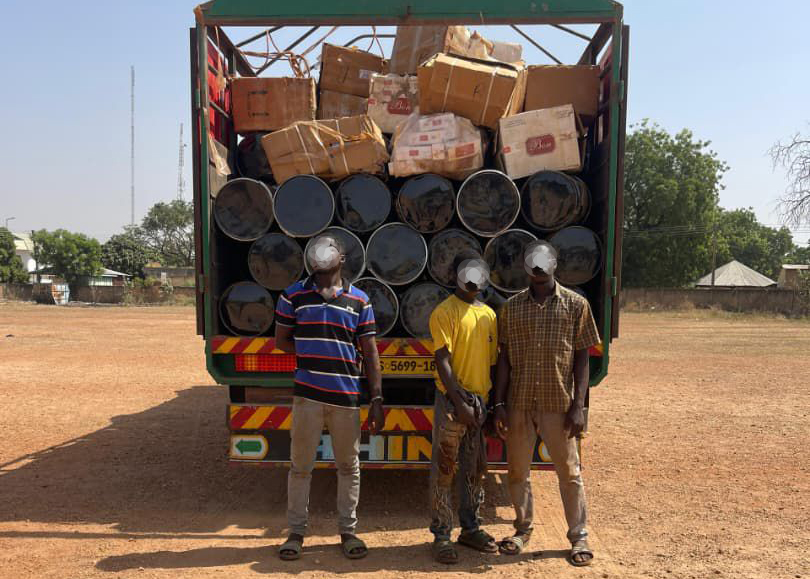
    Thirty-eight (38) individuals have been arrested by the Eastern South Regional Police Command for engaging in illegal mining activities at Ntoranang on the outskirts of New Abirem on Friday, February 27.

    Their arrest comes after the police received an intelligence over their illegal activities at a palm plantation in the area.

    The police disclosed that of the 38 arrested, 17 are Burkinabe nationals and 21 are Ghanaians, including 9 juveniles aged 13-17.

    The police destroyed items used by the suspects in their operations; including water pumping machines, power plants, water hoses and makeshift shelters.

    All 38 suspects will be arraigned before the court on Monday, March 2, for prosecution.

    Illegal mining continues to pose a major challenge to the country, with several foreign nationals implicated and multiple arrests made. In June, NAIMOS warned criminal groups to vacate galamsey areas.
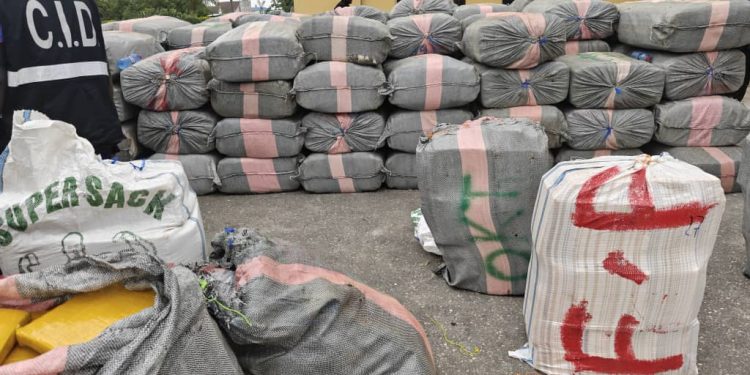
    Weeks ago, the Commanding Officer of NAIMOS, Colonel Dominic Buah, signaled an imminent and aggressive crackdown on illegal miners.

    “I would like to send this warning to illegal miners, their assignees, and financiers that they are the first or prime enemies of the state, and they will be dealt with as such. There will be no room for them to escape or to hide. NAIMOS will smoke them out very soon. There’s no resting place for them,” he said at a stakeholder engagement at the Jubilee House on October 3, 2025.

    Meanwhile, President John Dramani Mahama has emphasized that his government is not backing down in its fight against the longstanding menace of illegal mining (galamsey).

    According to the President, the country will soon be cleared of the menace as the government plans to launch a programme in the coming days to reclaim degraded lands.

    He added that youths in affected communities will be employed under the programme, each receiving a monthly stipend of GH₵1,500.

    “We’re restoring degraded lands while creating thousands of jobs for young people in affected communities. I have asked the Minister of Finance to increase the budget allocation so that we can recruit more youth into forest tree planting and the Blue Water Guard to safeguard our water bodies.

    “These youth are to be recruited from affected communities, and they will receive a monthly stipend of GHC1,500. I wish to commend journalists who persist in exposing environmental crime at great personal risk. Your bravery is noted, and it’s patriotic. I wish to assure you, as the President, that I will never give up the fight,” President Mahama said.

    President Mahama made the remarks at the 2025 GJA/KGL National Awards held at the Manhyia Palace on Saturday, November 8.

    Speaking at a stakeholder engagement in Accra on October 3, the President said: “There are new chemicals that have come that allow you to treat water and take out the toxins and the heavy metals. One of them is called dowtine. The people came, and we sent them there. They took samples, tested. We are waiting for them to bring the results back.”

    President Mahama urged patience in the long-running battle against galamsey, noting that declaring a state of emergency alone will not end the menace.

    He said government advisors believe the country can overcome galamsey by adopting best practices in small-scale mining and technologies that neutralize or remove harmful chemicals from water bodies.

    He also pledged to act on calls for a state of emergency if his advisors recommend it.

    “While we are fighting the menace, I am also saying we should uptake technology in order to protect the environment. So yes, let’s fight the illegal mining but at the same time, let’s bring the new technology that will help us protect our environment.

    “Now with the elephant in the room, state of emergency, yes, I have the power to do it, but the president acts on the advice of the National Security Authority, and as at now, this moment, the National Security Authority believes that we can win the fight against galamsey without declaring a state of emergency. I want to assure you that the day they advise me otherwise, that boss, now we need a state of emergency, I won’t hesitate,” he added.

    Despite renewed efforts, the canker continues to wreak havoc.

    The National Anti-Illegal Mining Operations Secretariat (NAIMOS) task force narrowly escaped death in a mob assault at Hwidiem in the Ahafo Region on Saturday, November 1, during an operation that resulted in several arrests, including a Burkinabe national.

    Locals were seen in a viral video confronting the NAIMOS team and demanding the release of those arrested. NAIMOS spokesperson Paa Kwesi Schandorf described the attack as “extremely and profoundly disappointing,” saying the officials “survived clearly by the mercy of God. If you look at how they were charged, the rest of the team could have lost their lives.”

  • Mob attacks firefighters at Kasoa

    Mob attacks firefighters at Kasoa

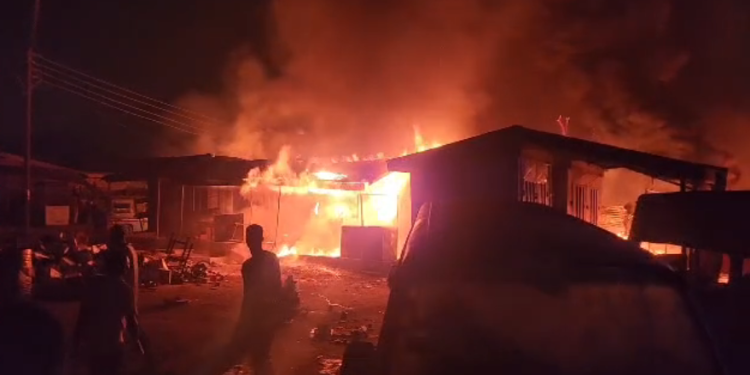
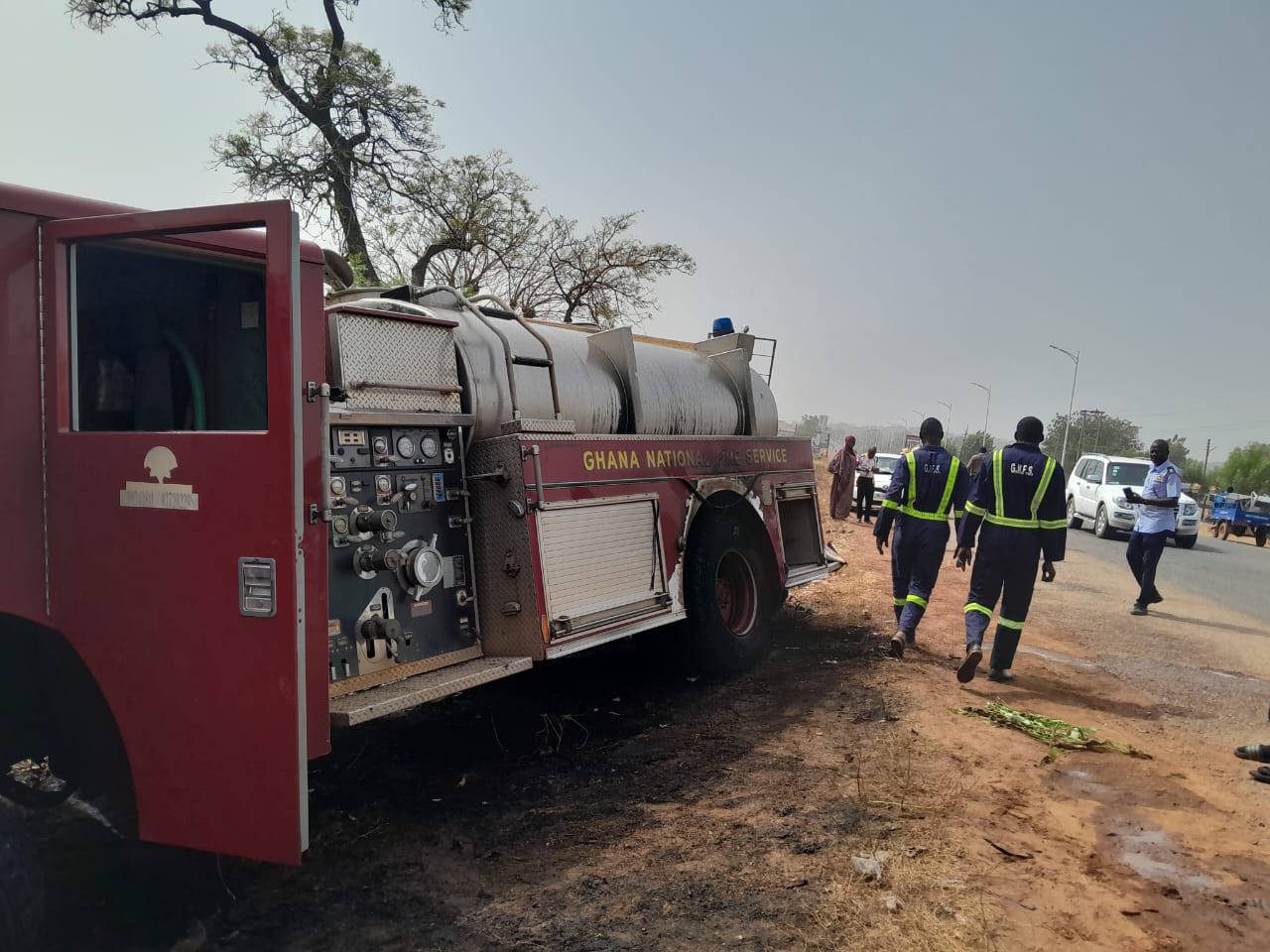
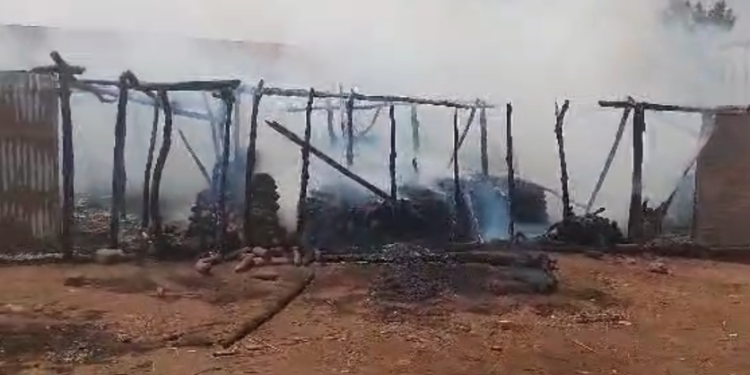
    A group of furious youth at the Odupongkpehe Zongo section of the Kasoa Old Market has attacked firefighters on Saturday, February 28.

    The personnel dispatched from the Weija Fire Station were in the area to douse an inferno, however, they were attacked by the group for failing to be there on time. It took the intervention of the police to calm the tension between the two groups.

    Speaking to the media, the Weija Fire Station Administrator, DO Addo Danso, noted that the group pelted stones at the personnel and also smashed their vehicle’s windscreen. They reportedly hampering efforts to contain the flames. Two container shops had been completely destroyed by the blaze by the time access was secured.

    Attacks on firefighters are a growing concern in Ghana. The Minister of Interior, Muntaka Mohammed Mubarak in 2024 warned that individuals caught attacking fire officers in the line of their duties will be arrested and prosecuted.

    He gave the cautionary notice while commissioning a new fire station at Gomoa Fetteh in the Central Region.According to him, his outfit has put in place necessary measures to easily pick up individuals who will flout the warning.

    He noted that henceforth, firefighters will be accompanied to the field by the Ghana Police Service in order to take action against culprits.

    “We are going to enhance the safety of our staff from the national fire service. This is a collaboration with the Ghana Police Service.

    Anytime our fire fighters move to a fire site or move to a place for rescue, the police will be in their company for those who find it interesting to attack them, will be immediately arrested and prosecuted.

    For some time, Ghana National Fire Service (GNFS) has faced criticism over claims of slow response to emergencies.

    In 2024, the Service threatened to boycott its activities in certain areas over the incessant attacks on its personnel.On Saturday, February 10, in Konongo, angry residents alleged that fire officers responded late to a fire outbreak.

    This led to an attack on the officers and damage to a fire tender.Meanwhile, the Service has on several occasions contributed to response delays due to outdated equipment.

    The GNFS has called for an increase in fire stations nationwide as well as a supply of modern equipment.

    Last year, the GNFS launched a Health and Safety Fund in Accra to support personnel who sustain severe injuries in the line of duty and to cater for the education of children of firefighters who lose their lives while serving the nation.

    The launch of the Fund comes against the backdrop of concerns raised by the Public Relations Officer of the service who said that “When firefighters get injured at the scene of the fire, they use their own resources to take care of themselves and later apply for refund to be paid to them. So, if at that moment you don’t have money, you would have to go and borrow money from people to be able to take care of yourself”

    Thus, in commemoration of International Firefighters’ Day (IFFD), observed annually under the theme: “Appreciating Our Heroes: Say No to Firefighter Assault and Firefighting Truck Vandalism,” Minister for the Interior, Hon. Muntaka Mohammed-Mubarak, assured personnel that government remains committed to retooling and modernising the Service to improve its operations.

    The service recorded three separate mob attacks in Ejisu, Konongo, and Mamponteng in early 2025

    He condemned the growing trend of attacks on firefighters and the vandalism of firefighting trucks, calling on civil society, religious groups, and community leaders to speak out against such acts.

    The Minister also encouraged individuals, institutions, and development partners to contribute to the Fund to ensure it remains sustainable and fit for purpose.

    The Chief Fire Officer (CFO) Daniella Ntow Sapong also addressed the gathering. She reiterated the challenges faced by the Service but expressed pride in the achievements of personnel despite the constraints.

    She thanked the Minister for his ongoing support and reaffirmed the Service’s commitment to saving lives and protecting property.

    The event also saw the presentation of awards to firefighters who have demonstrated exceptional service

  • We have borrowed less and spent responsibly – President Mahama

    We have borrowed less and spent responsibly – President Mahama

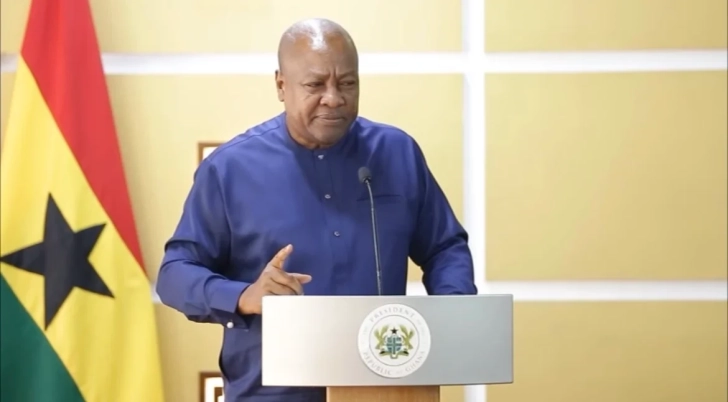
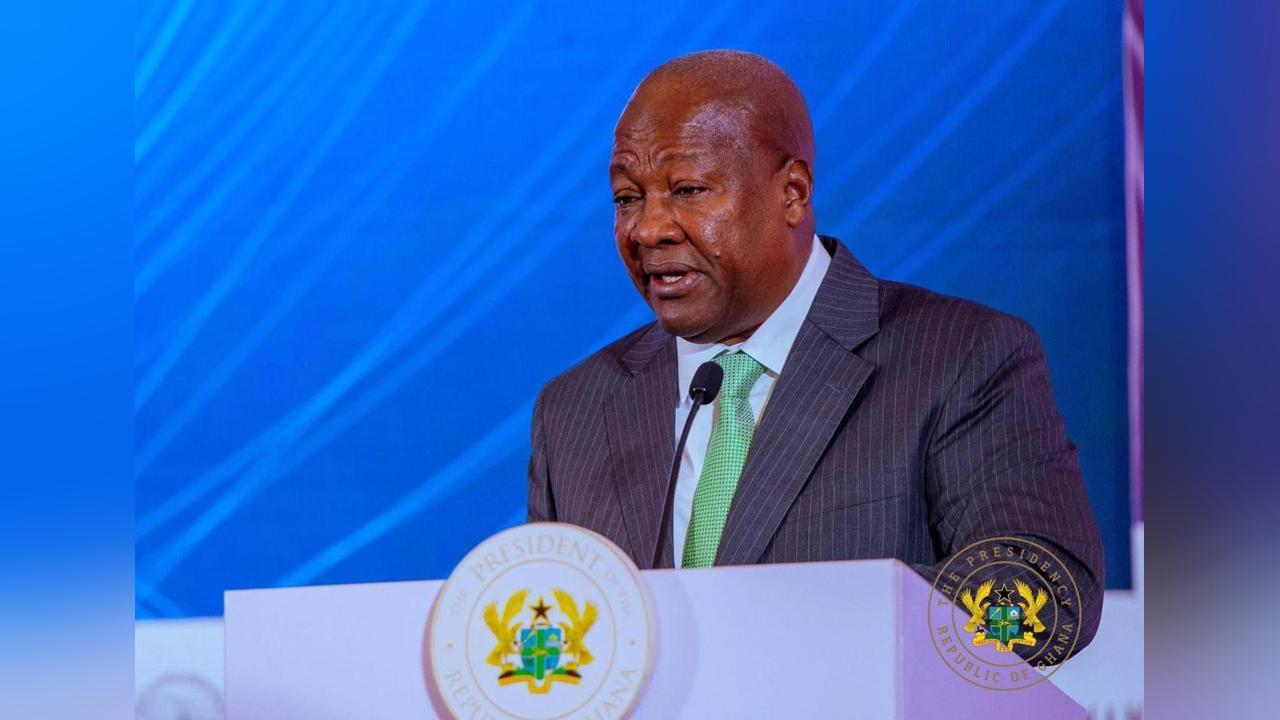
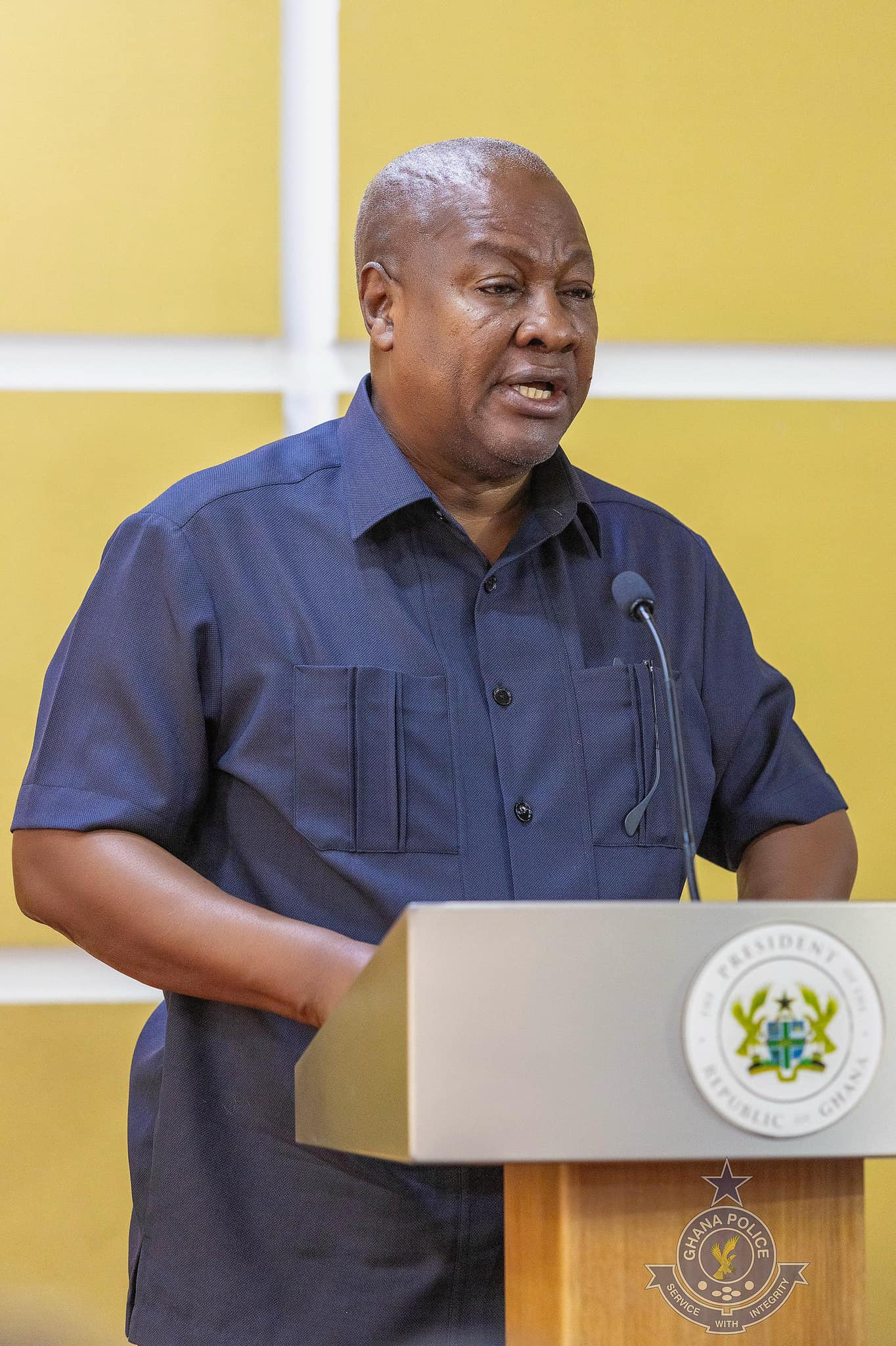
    President John Dramani Mahama has touted his administration’s efforts for what he described as decisive steps taken to address the country’s economic challenges.

    According to him, his government has exercised fiscal responsibility, noting that it has been borrowing less to manage the country’s finances prudently.

    The President John Dramani Mahama boasted about this while giving an update on the country’s state and highlighting the progress achieved since he assumed office. As part of outlining his administration’s vision and priorities under the ambitious Resetting Ghana agenda, he noted that “We have borrowed less and spent more responsibly”.


    According to him, the government has fully settled all outstanding gas invoices owed to Eni and Vitol, totaling approximately $500 million.


    He added that the settlement has strengthened Ghana’s international financial reputation and reinforced confidence in the country’s ability to honour its obligations.


    “As of December 31, 2025, government has fully repaid and restored the entire $500 million World Bank guarantee, including interest. This has reinstated the facility in full and reaffirmed Ghana’s standing as a credible and reliable partner on the global stage. We are paying for every gas we are consuming today,” he declared.


    The clearance is expected to stabilize the energy sector, ensure uninterrupted gas supply for power generation, ease financial pressure on key industry players, and restore investor confidence in Ghana’s energy value chain.


    A report by the Bank of Ghana (BoG), last year, indicated that the government spent less than it had budgeted for between January and July.


    According to the Bank of Ghana’s September 2025 Monetary Policy Report, the government spent GH¢131.1 billion, which is less than the planned amount of GH¢152.6 billion.


    Thus, government spending accounted for 9.4% of GDP, falling short of the target of 10.9%. The report noted that the government spending was 14.1% below target but 9.3% higher than the same period in the previous year.

    The BoG report attributed the gains to tighter fiscal discipline and improved expenditure control.


    The report indicated that, except for compensation of employees, all major spending categories came in below target. Salaries and wages for public sector workers recorded GH¢44.9 billion from the projected amount. Spending on infrastructure and development projects was GH¢10 billion, much lower than what was expected.


    In September, Ghana’s public debt stock rose by GH¢15.8 billion in July 2025, bringing the overall debt to GH¢628.8 billion, which is equivalent to $59.9 billion.


    According to the BoG, the rise is equal to 44.9% of the country’s total economic output. This follows three consecutive months of declines and is partly attributed to the earlier appreciation of the Ghanaian cedi. Ghana recorded GH¢613 billion in June and GH¢769.4 billion in March.


    The fluctuations in the figures during that period were largely influenced by changes in the exchange rate of the cedi.Ghana’s external debt stayed mostly unchanged in July at $29.0 billion. However, domestic debt climbed to GH¢323.7 billion, or 23.1% of GDP, from GH¢312.7 billion in the previous month.


    The Bank of Ghana also announced a 6.3% Gross Domestic Product (GDP) growth in the second quarter of 2025. While acknowledging global financial pressures at the 126th Monetary Policy Committee (MPC) meeting held on September 15, BoG Governor Johnson Pandit Asiama stated that Ghana has seen a 1.0% increase in GDP from the previous 5.3% in the first quarter.


    “Ghana’s recovery is gaining momentum even as the global environment remains uncertain. Worldwide, growth is easing, and financial conditions are still tight amid trade tensions and geopolitical risks; yet domestically, improved fundamentals have strengthened confidence in our outlook.”Real activity has firmed. Provisional data show GDP growth accelerated to 6.3 percent in Q2 2025, led by services and agriculture, with non-oil GDP expanding by 7.8 percent,” Dr. Asiama stated.


    According to him, some short-term economic measurements, also known as high-frequency indicators, show that the economy is still growing. Among these, the Bank of Ghana’s Composite Index of Economic Activity was 6.1% higher in July than a year earlier.


    “High-frequency indicators confirm this momentum: the Bank’s Composite Index of Economic Activity was up 6.1 percent year-on-year in July, and recent PMI readings alongside our business and consumer surveys point to improving sentiment,” he added.


    In his update, he also touched on inflation, stating that it fell from 12.1% in July to 11.5% in August, marking a 0.6 percentage point drop in just one month, the eighth consecutive month of decline, and the lowest inflation rate since October 2021.


    He added that, even though there was a decline in remittance inflows, the cedi remains one of the strongest-performing currencies globally.

    “On the price front, headline inflation fell further to 11.5 percent in August, its lowest since October 2021, supported by a tight monetary stance, fiscal consolidation, and better food supplies; core measures and expectations continue to re-anchor.


    “External buffers have strengthened. For the first eight months of the year, Ghana recorded a trade surplus of US$6.2 billion, underpinned by robust gold exports and higher cocoa receipts. Gross international reserves stood at US$10.7 billion in August, covering about 4½ months of imports.


    “Despite seasonal pressures and a moderation in remittance inflows in recent weeks, the cedi remains among the strongest currencies globally year-to-date, appreciating by about 21 per cent as of September 12.

    “It now ranks alongside high performers such as the Russian ruble, Swedish krona, Norwegian krone, Swiss franc, Euro, and British pound. This outperformance reflects prudent monetary policy, effective liquidity management, fiscal consolidation, and increased foreign exchange inflows,” he stressed.


    The Bank of Ghana in late July projected that inflation was likely to decline further and fall within the medium-term target range of 6 to 10 percent during the third quarter of 2025, ahead of earlier expectations.


    According to a statement released by the Chairman of the Monetary Policy Committee (MPC) and Governor of the Bank of Ghana, Dr. Johnson Asiama, on July 30, 2025, macroeconomic conditions had significantly improved, inflation expectations were broadly anchored, external buffers were strengthened, and confidence in the economy was returning.


    “The July forecast also shows that headline inflation is expected to decline further in the third quarter of 2025 and trend within the medium-term target of 8±2 percent by the end of 2025, earlier than initial projections,” the statement indicated.


    It further explained that the external sector outlook was positive, anchored on favourable commodity prices and improved remittance inflows, despite the resumption of external debt service.


    The statement added that the cedi has further strengthened against major trading currencies on the back of strong external sector performance and increased reserve accumulation.


    Meanwhile, the BoG cautioned that there are upside risks to the inflation outlook, including potential supply chain challenges from global trade tensions and upward adjustments in utility tariffs.

    This notwithstanding, the central bank maintained that the impact of these risks on inflation is expected to be offset by an appropriately tight monetary policy stance and continued fiscal consolidation.


    The IMF has projected a decrease in global inflation while predicting slower 2025 economic growth in the U.S. and other regions. The Bretton Woods institution attributed this anticipated improvement to the debt restructuring programme implemented by the previous government, noting its positive impact in placing the country on a path toward debt sustainability.


    During the IMF press briefing held on September 11 in Washington, D.C., Director of Communications Julie Kozack responded to a journalist’s question on Ghana’s debt sustainability and the impact of the restructuring agreement.


    She explained that Ghana’s “debt service indicators” have improved significantly because of the restructuring.According to her, this development provides the country with greater space to recover economically and channel resources into key investments.


    “The recent restructuring agreement has significantly improved debt service indicators for Ghana, and that has created more space for economic recovery and also much-needed investments in the economy,” she stated.


    Kozack added that IMF research indicates Ghana’s public debt will decline from 82% of GDP in 2022 to around 60% in 2025, describing the trend as a “fairly steep reduction” that demonstrates progress toward fiscal stability.


    “According to our latest assessment, public debt is expected to fall fairly sharply from 82% in 2022. We estimate or project that it will reach 60% of GDP in 2025. That is a fairly steep reduction in public debt and marks a significant step toward durably restoring fiscal sustainability,” she said.

  • Full Text: President Mahama delivers 2026 SONA

    Full Text: President Mahama delivers 2026 SONA

    On Friday, February 27, President John Dramani Mahama addressed the nation, providing an update on the state of the country and the progress made since he assumed office.

    During his second State of the Nation Address (SONA) of his second term, the president outlined his administration’s vision and priorities under the ambitious Resetting Ghana agenda.

    He also called on Ghanaians to unite and support his administration as it rolls out key initiatives aimed at improving the country’s development and overall well-being.

    He made this comment during the 2026 State of the Nation Address (SONA)held in Parliament on Friday, February 27.

    According to him, “ the resetting agenda is working, the Accra reset is gaining momentum, and together we are laying the foundation for a stronger, more resilient and more prosperous Ghana. Mr Speaker, our nation is on a runaway, it will take off now, and you are all advised to fasten your seat belts”.

    He added, ” Mr Speaker, the journey continues as the direction is set and the hope is real, our theme today of building prosperity and restoring hope is not mainly aspirational. It reflects the tangible transformation we have delivered for the Ghanaian people”.

    See the document below:

    The President applauded the country’s current economic state, adding that “in 2025, Ghana’s GDP was expected to reach $113bn, an increase of $83bn at the end of 2024. This has placed Ghana among the top 10 largest economies in Africa.

    The delivery of SONA by the president aligns with the constitutional mandate stated in Article 67 of the 1992 Constitution.

    According to a report issued by the Office of the President, president Mahama is required to present the SONA at the beginning of each session of Parliament and may also deliver a supplementary SONA at the end of the session to update the nation on the state of the country.

    In his second term under the 9th Parliament, President Mahama is expected to outline Ghana’s current state and his administration’s strategy for navigating the country through this challenging period, especially as Ghana remains under an International Monetary Fund (IMF) support program.

    With Ghana’s ongoing economic challenges and recent warnings from the World Bank regarding the government’s fiscal decisions, many expect key issues to be addressed in the upcoming speech.

    The IMF’s recent discussions with the government, including talks on scrapping certain taxes and recommendations to tackle the country’s growing debt crisis, are also crucial topics.

    Additionally, President Mahama is expected to address important sectors such as education, health, and energy. On January 3, 2024, the immediate past president, Nana Akufo-Addo, outlined the state of the economy, which has now been handed over to the Mahama-led administration.

    Former President Akufo-Addo highlighted the resilience of Ghana’s economy, which faced significant hurdles, particularly during the COVID-19 pandemic. Through the IMF-supported Post-COVID-19 Programme for Economic Growth (PC-PEG), his administration stabilized the economy.

    “Economic growth has also returned to the pre-COVID trajectory, with an impressive growth rate, rising from 4.8 percent in the first quarter of 2024, 7 percent in the second quarter, and 7.2 percent in the third quarter. It is projected that this year’s growth rate will be 6.3 percent, significantly higher than the 3.4 percent my administration inherited in 2017,” he said.

    President Akufo-Addo also emphasized strides in healthcare, including the Agenda 111 project to expand access to medical facilities and the revitalization of the National Health Insurance Scheme (NHIS).

    Coverage now includes critical treatments for childhood cancers and sickle cell disease, reflecting a commitment to enhancing health equity.

  • Ghana’s $500m gas debt paid in full – President Mahama

    Ghana’s $500m gas debt paid in full – President Mahama

    The government has fully settled all outstanding gas invoices owed to Eni and Vitol, totaling approximately $500 million as disclosed by President John Dramani Mahama.


    Delivering the 2026 State of the Nation Address (SONA) in Parliament on Friday, February 27, President Mahama stated that the debt, including accrued interest, was completely paid off as of December 31 last year.


    He added that the settlement has strengthened Ghana’s international financial reputation and reinforced confidence in the country’s ability to honour its obligations.


    “As of December 31, 2025, government has fully repaid and restored the entire $500 million World Bank guarantee, including interest. This has reinstated the facility in full and reaffirmed Ghana’s standing as a credible and reliable partner on the global stage.We are paying for every gas we are consuming today,” he declared.


    The clearance is expected to stabilize the energy sector, ensure uninterrupted gas supply for power generation, ease financial pressure on key industry players, and restore investor confidence in Ghana’s energy value chain.


    As part of his address, John Dramani Mahama commended his administration for what he described as decisive steps taken to address the country’s economic challenges.

    He added that Ghana is now ranked among the top ten largest economies in West Africa, attributing the progress to prudent fiscal management and renewed investor confidence.


    He added that “in 2025, Ghana’s GDP was expected to reach $113bn, an increase of $83bn at the end of 2024. This has placed Ghana among the top 10 largest economies in Africa. We did not just arrest currency instability; we strengthened the cedi to put up a good fight against other currencies,” he said.


    The delivery of SONA by the president aligns with the constitutional mandate stated in Article 67 of the 1992 Constitution.


    Under Ghana’s constitutional framework, the President is required to deliver a State of the Nation Address at the beginning of each session of Parliament.

    The President may also present a supplementary address at the end of the session to update the nation on developments and the overall state of the country.


    In his second term under the 9th Parliament, President Mahama outlined Ghana’s current state and his administration’s strategy for navigating the country through this challenging period, especially as Ghana remains under an International Monetary Fund (IMF) support program.


    However, cocoa pods unexpectedly became the center of political tension in Parliament as Minority Members held a symbolic demonstration just before the President delivered the SONA.


    The dramatic scenes took place immediately after the Speaker of Parliament, Alban Bagbin, invited President John Mahama to speak to the House.


    Majority MPs responded with a celebratory Twi chant — “Ɔde asɛmpa na aba oo, Ɔde asɛmpa na aba ooo (He has brought good news). The chant included references to the government’s proposed “24-Hour Economy,” a plan designed to increase productivity and drive economic growth.


    In response, the Minority group quickly began their own chant, changing the final line to “atɔ nsuom” — literally meaning “it has fallen into water,” a phrase often used to indicate failure.


    However, it was not the musical exchange that captured the most attention. In a bold visual statement, Minority MPs displayed cocoa pods in the chamber, focusing attention on what they describe as a worsening situation in Ghana’s cocoa sector.


    Cocoa remains one of Ghana’s most vital exports and a key part of the national economy. The crop provides livelihoods for hundreds of thousands of farmers and continues to be an important source of foreign currency.


    By bringing cocoa pods into Parliament, the Minority aimed to draw attention to concerns about declining production, financial difficulties in the sector, and the wider economic impact of the slump.


    The protest by the Minority indicates growing dissatisfaction with how these challenges are being handled, especially as the government promotes a narrative of economic recovery and reform.


    While the Majority’s song portrayed the President’s speech as delivering “good news,” the cocoa pods acted as a silent but forceful response — a reminder, according to the Minority, that key parts of the economy are still facing serious problems.


    Aggrieved cocoa farmers picketed at the headquarters of the Ghana Cocoa Board (COCOBOD) in Accra, on Friday, February 20, over a slash in producer prices and delayed payments, which they say have placed them in economic and financial distress.


    With placards bearing inscriptions of government betrayal and chanting slogans, they called on authorities and all stakeholders to protect their livelihoods.


    Some of the inscriptions read: “We worked, you lied,” “Government celebrates, but our families mourn,” and “We can’t pay our kids’ school fees,” among others.


    The distressed farmers expressed deep concerns through their chants and placards, stating that despite their significant contribution to the economy, their income has been eroded.

    They warned that unless urgent measures are taken, they may lose their livelihoods, a situation likely to push many farmers away from cocoa farming and potentially affect future production levels, which is likely to affect the economy.


    They are demanding an upward review of the prices and expedited processing to ensure the settlement of outstanding payments owed to them by Licensed Buying Companies operating under COCOBOD’s supervision.


    “The prices were not reduced under the previous regimes; why is this administration reducing them. We have no problem with the government; they should just leave the prices to remain the same,” a frustrated woman told journalists.


    According to the farmers, delays in payment and the recent downward adjustment in cocoa prices have made it increasingly difficult to cover basic household needs, including school fees, healthcare, and farm maintenance.


    “We depend entirely on cocoa. When payments are delayed, or prices drop, our families suffer,” one protester said, adding that many farmers are struggling to prepare for the next crop season due to a lack of funds.


    The demonstration at COCOBOD headquarters follows similar protests in cocoa-growing regions, particularly in the Western North Region, where farmers marched through major towns to protest the reduced farmgate price.


    The unrest comes amid broader challenges facing Ghana’s cocoa sector, including global price volatility, declining output in some regions, and financial pressures on COCOBOD.


    Meanwhile, the new cocoa producer prices set by the government for the remainder of the 2025/26 cocoa season took effect on Friday, February 13.


    This was confirmed in a statement issued to the Ghana News Agency on Tuesday, which indicated that the new price would apply to all cocoa purchased nationwide.


    The statement mentioned that under the revised prices, the producer price to be paid at all buying centres is GH¢1,241.76 per load of 30 kilograms of Grade I and II cocoa beans, naked ex-scale.


    It continued that the newly approved price per bag of 64 kilograms gross is GH¢2,587.00, adding that a tonne of cocoa, comprising 16 bags, now attracts a total payment of GH¢41,392.00.

    Although COCOBOD has announced payments to Licensed Buying Companies to facilitate farmer payments, many producers say the relief has yet to reach them at the farmgate level.


    Barely a week ago, COCOBOD announced a salary cut for some staff members and top management as part of efforts to resolve its cash flow challenges.


    The announcement was contained in a formal press release issued by the Chief Executive, Dr. Ransford A. Abbey, and dated Monday, February 16.


    The release noted that the cuts would take effect on the same day the announcement was made, explaining that the leaders of the government’s cocoa-regulating agency would bear the reductions for the remainder of the 2025/26 crop year.


    According to the statement, “The Executive Management and the Senior Staff of COCOBOD have, effective today, Monday, February 16, 2026, reduced their salaries for the remainder of the 2025/26 crop year in recognition of the current liquidity challenges in the cocoa industry.”


    It continued, “The Executive Management has taken a twenty (20) percent cut, while the Senior Staff have taken a ten (10) percent reduction in their respective salaries,” as part of a broader cost-containment measure aimed at aligning expenditure with revenue.


    Management indicated that additional steps, “other cost-cutting measures in procurement and a staff rationalisation exercise, are aimed at reducing the overall expenditure of COCOBOD and aligning costs with revenue.”


    Meanwhile, the statement did not disclose how much the salary cuts would save the sector or the size of the liquidity gap. The announcement comes at a time of heightened strain in the cocoa industry, marked by rising operational costs, financing pressures, concerns over farmer welfare, and intensified public scrutiny over cocoa pricing and COCOBOD’s financial position.


    In recent weeks, the sector has been at the centre of national debate, particularly over producer prices and the sustainability of cocoa farming.


    Industry observers have also pointed to the heavy financing burden associated with cocoa purchases, operational commitments, and exposure to global price volatility.


    Last year, the Ghana Cocoa Board (COCOBOD) announced that it would not secure any syndicated loan to finance cocoa purchases for the 2025/26 crop season.


    According to them, the shortage of cocoa beans at the global level informed such a decision.


    “We’re not doing syndication…this year [2025], we’re not doing syndication. What has necessitated us not to do syndication is that we’re experiencing a global shortage of the cocoa bean,” he said.


    He made these remarks during an interview with Accra-based radio station Citi FM on Monday, August 4. The Head of Public Affairs at COCOBOD, Jerome Kwaku Sam, explicitly stated that the Board had not sought syndicated financing for the 2024/2025 season and had no intention of doing so this year.


    “…To be very honest, last year [2024], we didn’t do syndication, and this year [2025], we’re not doing syndication.”


    Mr. Sam further noted that the move also reflects a strategic effort to reduce costs under prevailing market conditions.


    “We’re not doing syndication whereby we’re going to incur additional expenses and what have you. That is out of the system or table for now,” he emphasised.

  • Ghana is on a runaway, fasten your seat belts – President Mahama

    Ghana is on a runaway, fasten your seat belts – President Mahama

    President John Dramani Mahama has called on Ghanaians to unite and support his administration as it rolls out key initiatives aimed at improving the country’s development and overall well-being.

    He made this comment during the 2026 State of the Nation Address (SONA)held in Parliament on Friday, February 27.


    According to him, “ the resetting agenda is working, the Accra reset is gaining momentum, and together we are laying the foundation for a stronger, more resilient and more prosperous Ghana. Mr Speaker, our nation is on a runaway, it will take off now, and you are all advised to fasten your seat belts”.

    He added, ” Mr Speaker, the journey continues as the direction is set and the hope is real, our theme today of building prosperity and restoring hope is not mainly aspirational. It reflects the tangible transformation we have delivered for the Ghanaian people”.

    The President applauded the country’s current economic state, adding that “in 2025, Ghana’s GDP was expected to reach $113bn, an increase of $83bn at the end of 2024. This has placed Ghana among the top 10 largest economies in Africa.

    The delivery of SONA by the president aligns with the constitutional mandate stated in Article 67 of the 1992 Constitution.

    Watch the livestream here:

    According to a report issued by the Office of the President, president Mahama is required to present the SONA at the beginning of each session of Parliament and may also deliver a supplementary SONA at the end of the session to update the nation on the state of the country.

    In his second term under the 9th Parliament, President Mahama is expected to outline Ghana’s current state and his administration’s strategy for navigating the country through this challenging period, especially as Ghana remains under an International Monetary Fund (IMF) support program.

    With Ghana’s ongoing economic challenges and recent warnings from the World Bank regarding the government’s fiscal decisions, many expect key issues to be addressed in the upcoming speech.

    The IMF’s recent discussions with the government, including talks on scrapping certain taxes and recommendations to tackle the country’s growing debt crisis, are also crucial topics.

    Additionally, President Mahama is expected to address important sectors such as education, health, and energy. On January 3, 2024, the immediate past president, Nana Akufo-Addo, outlined the state of the economy, which has now been handed over to the Mahama-led administration.

    Former President Akufo-Addo highlighted the resilience of Ghana’s economy, which faced significant hurdles, particularly during the COVID-19 pandemic. Through the IMF-supported Post-COVID-19 Programme for Economic Growth (PC-PEG), his administration stabilized the economy.

    “Economic growth has also returned to the pre-COVID trajectory, with an impressive growth rate, rising from 4.8 percent in the first quarter of 2024, 7 percent in the second quarter, and 7.2 percent in the third quarter. It is projected that this year’s growth rate will be 6.3 percent, significantly higher than the 3.4 percent my administration inherited in 2017,” he said.

    President Akufo-Addo also emphasized strides in healthcare, including the Agenda 111 project to expand access to medical facilities and the revitalization of the National Health Insurance Scheme (NHIS).

    Coverage now includes critical treatments for childhood cancers and sickle cell disease, reflecting a commitment to enhancing health equity.

  • Playback: President Mahama delivers 2026 SONA today

    Playback: President Mahama delivers 2026 SONA today

    President John Dramani Mahama presented his first State of the Nation Address (SONA) today, Friday, February 27. The President began his address at 10:00 am in Parliament.

    Majority Leader and Leader of Government Business, Mahama Ayariga, announced the president’s address on the floor of Parliament on Friday, February 14.

    The Office of the President communicated this date to Parliament, and it was confirmed during the session.

    The delivery of SONA by the president aligns with the constitutional mandate stated in Article 67 of the 1992 Constitution.

    Watch the playback here:

    According to the constitution, the president is required to present the SONA at the beginning of each session of Parliament and may also deliver a supplementary SONA at the end of the session to update the nation on the state of the country.

    In his second term under the 9th Parliament, President Mahama is expected to outline Ghana’s current state and his administration’s strategy for navigating the country through this challenging period, especially as Ghana remains under an International Monetary Fund (IMF) support program.

    With Ghana’s ongoing economic challenges and recent warnings from the World Bank regarding the government’s fiscal decisions, many expect key issues to be addressed in the upcoming speech.

    The IMF’s recent discussions with the government, including talks on scrapping certain taxes and recommendations to tackle the country’s growing debt crisis, are also crucial topics.

    Additionally, President Mahama is expected to address important sectors such as education, health, and energy. On January 3, the immediate past president, Nana Akufo-Addo, outlined the state of the economy, which has now been handed over to the Mahama-led administration.

    Former President Akufo-Addo highlighted the resilience of Ghana’s economy, which faced significant hurdles, particularly during the COVID-19 pandemic. Through the IMF-supported Post-COVID-19 Programme for Economic Growth (PC-PEG), his administration stabilized the economy.

    “Economic growth has also returned to the pre-COVID trajectory, with an impressive growth rate, rising from 4.8 percent in the first quarter of 2024, 7 percent in the second quarter, and 7.2 percent in the third quarter. It is projected that this year’s growth rate will be 6.3 percent, significantly higher than the 3.4 percent my administration inherited in 2017,” he said.

    President Akufo-Addo also emphasized strides in healthcare, including the Agenda 111 project to expand access to medical facilities and the revitalization of the National Health Insurance Scheme (NHIS).

    Coverage now includes critical treatments for childhood cancers and sickle cell disease, reflecting a commitment to enhancing health equity.

  • Hit-and-run victim Charles Amissah to be buried today

    Hit-and-run victim Charles Amissah to be buried today

    The funeral service for the hit-and-run victim, Charles Amissah, who was allegedly neglected by two medical doctors and two nurses at the Korle Bu Teaching Hospital, is underway. The two medical doctors and two nurses have been interdicted.

    Charles Amissah was reportedly denied further medical attention at the Police Hospital, the Greater Accra Regional Hospital, and the Korle Bu Teaching Hospital due to a lack of available beds, after being stabilised by Emergency Medical Services (EMS) personnel.

    The deceased, a 29-year-old engineer with Promasidor Ghana Limited, sustained multiple injuries, particularly to his shoulders, after he was knocked down by a speeding vehicle at the Kwame Nkrumah Circle Overpass in Accra on February 6.

    Following the incident, the management of the hospital, in a press statement issued on Monday, February 23, indicated that it had constituted a committee to ascertain the circumstances surrounding the death of the victim.

    “The Management of Korle Bu Teaching Hospital wishes to announce that two medical doctors and two nurses have been interdicted following their alleged failure to provide emergency medical care to a hit-and-run victim.

    “In line with established administrative procedures, a committee has been constituted to conduct a thorough investigation into the circumstances surrounding the incident and the unfortunate death of the victim.

    “Pending the outcome of the committee’s work, the Board and Management call on all persons connected to the matter to cooperate fully with the committee to ensure a fair and transparent inquiry,” part of the statement read.

    Meanwhile, the Korle Bu Teaching Hospital has assured that it remains committed to transparency, accountability, and the delivery of quality healthcare services, adding that further information will be communicated upon completion of the investigation.

    The development has sparked public outrage, with many Ghanaians demanding answers. Reports indicate that Charles Amissah’s father has, over the years, donated hospital beds to health facilities.

    Ghana has been struggling with the ‘no bed syndrome’ for decades, with no lasting solution to the situation. The ‘no bed syndrome’ describes the practice of hospitals and clinics turning away patients seeking walk-in or referral emergency care, citing reasons such as “no bed available” or “all beds are full.”

    The term, which has become a familiar phrase in Ghana, has led several others to their untimely deaths.

    In 2023, an eleven-year-old girl, Linda Mirekua, who was suffering from kidney disease, was reportedly denied admission at Korle Bu Teaching Hospital due to the unavailability of a medical bed.

    Mirekua, from Nobi, a farming community in the Abuakwa North Municipality, was diagnosed with kidney disease but was left at home due to the inability of her physically challenged mother to afford the cost of her dialysis.

    Her condition worsened in recent times, and she was admitted to Akyem Tafo Government Hospital.

    Linda’s situation was shared on a local social media platform, where GH¢6,000 was mobilised through contributions from philanthropists to support dialysis treatment at Korle Bu Teaching Hospital.

    However, on Thursday, February 16, 2023, Korle Bu Teaching Hospital reportedly denied her admission due to the unavailability of a bed.

    Management of Akyem Tafo Hospital subsequently contacted the University of Ghana Medical Center (UGMC) to refer Linda Mirekua.

    However, UGMC reportedly demanded that the patient settle GH¢8,000 in outstanding medical bills owed to the facility from the previous year and be prepared for “cash and carry” before she would be admitted for dialysis treatment.

  • President Mahama delivers 2026 SONA today

    President Mahama delivers 2026 SONA today

    President John Dramani Mahama is scheduled to present his first State of the Nation Address (SONA) today, Friday, February 27. The time for his address has been slated for 10:00 am at Parliament.


    This was announced by the Majority Leader and Leader of Government Business, Mahama Ayariga, on the floor of Parliament on Friday, February 14.

    The Office of the President communicated this date to Parliament, and it was confirmed during the session.


    The delivery of SONA by the president aligns with the constitutional mandate stated in Article 67 of the 1992 Constitution.

    According to this article, the president is required to present the SONA at the beginning of each session of Parliament and may also deliver a supplementary SONA at the end of the session to update the nation on the state of the country.


    In his second term under the 9th Parliament, President Mahama is expected to outline Ghana’s current state and his administration’s strategy for navigating the country through this challenging period, especially as Ghana remains under an International Monetary Fund (IMF) support program.


    With Ghana’s ongoing economic challenges and recent warnings from the World Bank regarding the government’s fiscal decisions, many expect key issues to be addressed in the upcoming speech.

    The IMF’s recent discussions with the government, including talks on scrapping certain taxes and recommendations to tackle the country’s growing debt crisis, are also crucial topics.


    Additionally, President Mahama is expected to address important sectors such as education, health, and energy. On January 3, the immediate past president, Nana Akufo-Addo, outlined the state of the economy, which has now been handed over to the Mahama-led administration.


    Former President Akufo-Addo highlighted the resilience of Ghana’s economy, which faced significant hurdles, particularly during the COVID-19 pandemic. Through the IMF-supported Post-COVID-19 Programme for Economic Growth (PC-PEG), his administration stabilized the economy.


    “Economic growth has also returned to the pre-COVID trajectory, with an impressive growth rate, rising from 4.8 percent in the first quarter of 2024, 7 percent in the second quarter, and 7.2 percent in the third quarter. It is projected that this year’s growth rate will be 6.3 percent, significantly higher than the 3.4 percent my administration inherited in 2017,” he said.


    President Akufo-Addo also emphasized strides in healthcare, including the Agenda 111 project to expand access to medical facilities and the revitalization of the National Health Insurance Scheme (NHIS).


    Coverage now includes critical treatments for childhood cancers and sickle cell disease, reflecting a commitment to enhancing health equity.

  • Poor waste management costs Ghana GHS6.2bn yearly – ISSER

    Poor waste management costs Ghana GHS6.2bn yearly – ISSER

    The Institute of Statistical, Social and Economic Research (ISSER) has raised alarm over the economic impact of poor sanitation in Ghana.

    According to research led by Prof. Peter Quartey and Dr. Kwame Adjei-Mantey, poor waste management and sanitation cost Ghana more than GHS 6.2 billion annually. 

    The research, titled An Economic Analysis of the Benefits of Adequate Investment in Waste Management and Sanitation in Ghana” has called for urgent reforms to address the situation. 

    This was disclosed during a high-level stakeholder engagement in Accra, on Thursday, February 26,  2026. Before the disclosure, the Kumasi Metropolitan Assembly (KMA) decried the huge sums of money it spends daily on waste management, citing deficits in the cost of running the landfill site.

    According to officials, the high cost of operating the landfill site does not match the revenue collected from waste management activities. Speaking during an interview on Kumasi-based radio station Luv FM, the Head of Waste Management at the KMA, Prosper Kotoka, revealed that the city manages approximately 2,000 tonnes of refuse daily at a cost of between GHS 300,000 and GHS 320,000.

    He noted that an amount of GHS 83 is required per tonne for waste management in the city.

    “The GHS 83 per tonne is not the total cost of managing the waste. After collecting and transporting the waste to the landfill, that is the landfill cost alone,” Mr Kotoka explained.

    He highlighted the intensive operations involved at the landfill site, including the deployment of two bulldozers, an excavator, a payloader, and a shift push constructor, all of which are fuelled daily.

    These machines are responsible for compacting waste, transporting laterite to cover compacted refuse, and creating access roads for subsequent operations.

    He continued that some of the measures taken by his outfit include odour control and the management of flies and rodents at the site. He emphasised that all these operations cost about GHS 150 to GHS 160 per tonne.

    “On average, KMA spends GHS 150 to GHS 160 per tonne per day just on operations and maintenance, excluding capital costs such as cell construction,” he stated.

    How KMA funds waste management

    Among the ways KMA funds waste management, Mr Kotoka indicated that this is done through the collection of fees, property rates, and licences. He added that KMA is responsible for 50 per cent of the waste delivered to the site, while the remaining 50 per cent falls under the jurisdiction of another assembly.

    Speaking on some of the challenges currently blocking effective sanitation, Mr Kotoka blamed public attitude.

    “I would attribute it to attitudinal problems. We have done a lot of education and sensitisation,” he noted.

    To address this, he announced the planned deployment of a dedicated task force, accompanied by military personnel, to enforce proper waste disposal and curb indiscriminate dumping.

    “The Mayor plans to put a task force and a military escort to accompany the task force. They will be ensuring that the right things are done,” Mr Kotoka stated.

    He acknowledged the challenges ahead but expressed optimism about the outcome.

    “It’s not going to be very easy or quick, but we believe we will get there,” he assured.

    A report shared by the Ghana Statistical Service (GSS) last year revealed a worrying statistic: about two million two hundred thousand households in the country face poor sanitation, overcrowding, and unsafe housing conditions.

    Speaking at the launch of the report, the New Slums and Informal Settlements Thematic Report, on Monday, June 30, the Government Statistician, Dr Alhassan Iddrisu, noted that these individuals have established their homes in slums and informal settlements.

    According to him, nearly one in three city dwellers in Ghana, representing about 4.8 million people, live in slums. He emphasised that other countries experience even higher rates of slum habitation, particularly within the sub-Saharan African region.

    “Roughly 30.8 per cent of the urban population, or 4.8 million people, are living in slums, a ratio that exceeds the global average of 24.7 per cent but is lower than the sub-Saharan Africa average of 53.9 per cent,” he said.

    “Additionally, 46.1 per cent of urban households, or over 2.2 million households, are living in slum conditions. That means nearly one in every two urban households is facing one or more of the four deprivations,” he added.

    He indicated that many households in urban areas are living in environments that do not support proper housing and urban development.

    The data revealed that the Greater Accra and Ashanti regions are heavily challenged by slum conditions, with Greater Accra recording 52.5 per cent and Ashanti Region 51.8 per cent. The report noted that most of these dwellers live in rented accommodation.

    The other regions reported significantly lower proportions, highlighting a stark regional disparity.

    “The Northern Region (4.2 per cent), followed by Savannah (3.6 per cent) and Oti (1.1 per cent), recorded the highest extreme slum intensities. By extreme slum intensity, we mean the proportion of neighbourhoods that exhibit all four slum characteristics in the region.

    “But even in more developed regions like Greater Accra and Ashanti, over half of slum households live in rented accommodation,” parts of the report read.

    The Service described the findings as alarming and called for a collaborative national effort to address the growing housing and sanitation challenges.

    To check the rise in slum communities, the GSS called on local government authorities to implement targeted strategies within districts and municipalities.

    In February this year, the Member of Parliament for Ahanta West, Mavis Kuukua Bissue, noted that sanitation issues, homelessness, and the proliferation of slums remain critical challenges undermining the health, dignity, and economic potential of citizens, particularly the youth.

    She cited inadequate housing, economic hardship, unemployment, poverty, and rapid rural-urban migration as contributory factors to the expansion of slums, homelessness, and streetism. These challenges, she said, have also given rise to improper and indiscriminate waste disposal practices and the poor sanitation situation in the country.

    “We cannot continue to downplay the severity of this challenge, seeing the very danger it poses to our survival as a people,” she noted.

    Honourable Bissue proposed a national dialogue on rural-urban migration and economic empowerment, deliberations on housing and urbanisation strategies for rural communities, a national drive on proper waste segregation and disposal, public-private partnerships, the provision of labelled litter bins in designated areas and public spaces, and the strict enforcement of sanitation laws, among others.

  • Tamale: Fire tender catches fire en route to emergency scene

    Tamale: Fire tender catches fire en route to emergency scene

    A fire tender, DPT No. FS 450, dispatched on Wednesday, February 26, to douse a fire at Sakpaligu along the Savelugu Highway in Tamale, caught fire en route to the scene.


    The fire tender from the Tamale Metro Fire Station had an eight-member crew led by Station Officer I Mohammad Gadafi. Fortunately, no casualties have been recorded.


    However, the Sagnarigu Fire Station immediately deployed another tender to continue the response to the original emergency.

    Ghana recorded over 3,595 fire incidents nationwide in the first half of 2025, with regional breakdowns showing hundreds of cases across the Greater Accra, Ashanti, and Central Regions.

    In the first half of 2025, the Service reported a marginal increase in fire outbreaks.

    A comparison of data from January to June 2024 and that of the first six months of 2025 indicates that Ghana recorded 3,595 fire cases.

    According to the Ghana National Fire Service, that is about 19 more cases than the 3,576 cases recorded during the same time in 2024, a sharp increase in cases representing a 0.53% rise.

    The monthly breakdown of fire cases reported this year is as follows: January (964), February (678), March (619), April (483), May (457), and June (394).

    Fire outbreaks across the country in the first half of 2025 led to the destruction of properties valued at over GH¢188 million.

    Top causes of fire incidents, according to the Ghana National Fire Service, include electrical faults through illegal connections, poor wiring, and overloading of circuits; improper use of electrical appliances, such as overused extension cords and unattended devices.

    Also, unattended cooking, especially with gas, electric, or coal-based stoves. Careless use of naked flames like candles, mosquito coils, lighters, and matches, gas leakages, and poor handling of LPG cylinders are also responsible for fire incidents in the country.

    2025 fire cases in Ghana

    A fierce fire ravaged seven container shops at Spintex, Accra, around the Marina, in the early hours of Saturday, February 7.

    According to the Ghana National Fire Service (GNFS), it received a distress call at about 12:01 a.m. But was unable to respond immediately due to a faulty fire engine at the Kasapreko Fire Station, which is closest to the scene. As a result, the Tema Motorway Fire Engine was dispatched as the base pump.

    In a Facebook post, the GNFS explained that it had to deploy three fire tenders from the Motorway, Tema Metro, and Tema Industrial Area Fire Stations to bring the blaze under control.

    The firefighting team, led by ADO I Derrick Sarkodie, arrived at the scene at 12:19 a.m. to find the fire already at an advanced stage and spreading rapidly.

    However, a coordinated and tactical operation by the firefighters brought the fire under control, and by 4:32 a.m., it had been completely extinguished.

    The affected shops included seven container shops housing furniture, tailoring, and grocery businesses, along with their contents. No casualties were recorded.

    Firefighters also reported that they prevented the fire from spreading to nearby structures, including Marina Mall, and successfully protected a car garage containing more than 35 vehicles, as well as several adjoining shops and nearby residential buildings.

    The GNFS said investigations are underway to determine the cause of the fire.

    According to reports, Greater Accra has recorded about 5 fire incidents, with the Spintex fire being the latest.

    The Ashanti Region, on the other hand, has seen an alarming number of fire incidents since January 1, recording about 132 cases, a decline from the 187 cases reported during the same period in 2025.

    Barely a week into the New Year, some Kasoa residents had their stalls completely burnt after a fire ravaged stalls in a major outbreak at the Kasoa New Market on Sunday, January 4, 2026.

    According to the Ghana National Fire Service (GNFS), a distress call was received around 4:50 p.m., after which the Kasoa Fire Station swiftly reached the scene, only to find the fire at a very advanced stage.

    Earlier this month, four vehicles were burnt beyond recognition in a fire outbreak around 3:00 a.m. on Friday, February 20, at the Kronum branch of Goil Filling Station in the Suame Municipality.

    The affected vehicles, a Nissan Urvan bus, a Kia Pregio, and two tricycles were parked near the station’s premises. According to eyewitnesses, the fire started from the Kia Pregio before spreading to the other vehicles.

    It took the intervention of the station’s security guard and some residents to bring the fire under control before personnel from the Ghana National Fire Service, Bohyen Fire Station, arrived at the scene. Thankfully, no casualties were reported, and investigations into the incident are ongoing.

    This update comes less than a week after a fuel tanker explosion in the early hours of Saturday, February 14, destroyed multiple vehicles along the Nsawam-Accra Highway, causing heavy traffic congestion on the busy stretch.

    The fire claimed the lives of three (3) victims including two males and one female. According to a report from the Ghana National Fire Service (GNFS), a total of fifteen (15) casualties were recorded following the incident, comprising eleven (11) males and four (4) females.

    Preliminary reports indicate that the explosion occurred after the tanker was involved in a collision, which caused the vehicle to catch fire.

    Thick black smoke was seen rising from the scene, sparking fear among motorists and residents in nearby communities.

    Personnel from the Ghana National Fire Service responded promptly and are working to bring the blaze under control and prevent it from spreading to other vehicles and properties.

    Emergency responders have since cordoned off the affected section of the road as firefighting operations continue.

    No casualties were confirmed so far. However, emergency teams are still assessing the situation and searching the area to ensure that no victims are trapped.

    The incident has caused significant traffic disruption along the Nsawam-Accra route, which serves as a major link between the Eastern Region and Accra.

  • We never sponsored Black Stars with GHS12m – COCOBOD

    We never sponsored Black Stars with GHS12m – COCOBOD

    The Ghana Cocoa Board (COCOBOD) has responded to reports suggesting that it provided a GH¢12 million sponsorship package to the Ghana national football team, Black Stars. 

    According to reports, COCOBOD reallocated money intended for cocoa farmers for football-related activities.But the Board in a press statement  has described such claims as “false, misleading, and without any factual basis.”

    “The Ghana Cocoa Board (COCOBOD) wishes to categorically state that the claim suggesting COCOBOD has donated $12 million to the Black Stars while neglecting cocoa farmers is false, misleading, and without any factual basis. At no point has COCOBOD diverted funds meant for farmer payments to support the Black Stars”.

    “We urge the public to disregard this misinformation and rely only on official COCOBOD communication channels for accurate and verified information,” parts of the statement read.

    Additionally, COCOBOD emphasised that it  remains fully committed to its core mandate of prioritising the welfare of cocoa farmers, including the prompt payment for cocoa purchases, provision of inputs, extension services, and sustained investment in the sector.

    The cocoa industry has recently experienced major global price swings. Prices rose to record highs of over $10,000 per tonne in 2024 before declining following improved production forecasts and market adjustments. These changes have created uncertainty for both farmers and policymakers.

    President Mahama stressed that decisions on cocoa pricing and reforms must take into account the conditions farmers face, since their earnings depend largely on producer prices announced annually by the Ghana Cocoa Board.

    He noted that policies affecting cocoa farmers directly influence rural incomes, access to education, and household welfare, adding that reforms must focus on sustainability, fairness, and long-term sector growth.

    The summit, organised with support from the Ghana Tree Crops Authority, seeks to attract investment into major tree crops such as cocoa, cashew, rubber, coconut, and oil palm as part of efforts to diversify Ghana’s agricultural sector and increase value addition.

    President Mahama reaffirmed the government’s commitment to improving the cocoa industry through better pricing systems, increased productivity, and measures aimed at ensuring farmers receive fair compensation for their produce.

    He added that aligning policies with the lived experiences of farmers will be key to protecting the future of Ghana’s cocoa sector and maintaining its competitiveness on the global market.

    President John Mahama has unveiled major reforms that will have Ghana buying its cocoa with local currency and ending the export of unprocessed mineral ores by 2030, signaling a bold move toward greater economic independence.

    At the conclusion of his high-level side event, “Accra Reset’s Addis Reckoning,” held alongside the 39th African Union Assembly of Heads of State, President Mahama outlined urgent measures aimed at freeing Ghana’s cocoa industry from long-standing reliance on restrictive foreign financing.

    “One of the key decisions we’ve made is to stop accepting foreign funding for the purchase of our cocoa. We are going to raise domestic bonds. We have enough Cedis in Ghana to pay for our cocoa,” President Mahama declared, outlining a radical departure from decades-old practices.

    The President explained that Ghana’s cocoa crisis highlighted long-standing problems in the system. When the government set the cocoa price while international cocoa was $7,200 per ton and the Ghana Cedi was 11.5 to the dollar, changes in the market caused big losses as prices dropped to $4,200 and the Cedi strengthened to 10.7 per dollar.

    President Mahama also pointed out that relying on foreign funding has limited Ghana’s ability to add value to its cocoa.

    “You know what the collateral for the funding is? Our own cocoa beans. You collateralise the beans with the financier, buy them, ship them, and they pay you the international market price,” he explained.

    “You know the interesting part? We have the capacity to process 400,000 tons of those beans in Ghana, but because they are collateralised, we cannot even allocate them to local processors. We must ship all the beans outside.”

    Under the new arrangement, Ghana will raise domestic bonds in Ghana Cedis to purchase cocoa directly from farmers, eliminating the need to pledge the beans as collateral.

    This will immediately unlock 400,000 tons of cocoa beans for local processors, creating thousands of jobs and retaining significantly more value within Ghana’s economy.

    President Mahama went further, setting an ambitious yet firm deadline to end the export of unprocessed minerals from Ghana.“I say by 2030, there won’t be any raw mineral ores leaving Ghana. You’re not going to ship raw manganese ore out of Ghana. You’re not going to ship raw bauxite ore out of Ghana. You’re not going to ship raw iron ore out of Ghana. You must process all that locally,” he stated emphatically.

    The announcement represents what President Mahama says is a comprehensive application of the Accra Reset philosophy, his continental initiative aimed at scaling up development across Africa by asserting sovereignty over natural resources and building domestic processing capacity.

    The President framed his bold moves in the context of mounting pressure from Africa’s youthful population, which is increasingly desperate for economic opportunities.

    “That is the only way we can provide opportunities for our young people. Our young people are less patient than our generation. They want to see that progress and prosperity today,” he said.

    He connected the urgency of implementation directly to the migration crisis: “That is why Accra Reset needs that urgency to stop our young people from braving the dangers of the Sahara and the Mediterranean as they try to reach Europe in search of opportunity.”

    Acknowledging that continental transformation requires immediate action rather than endless planning, President Mahama endorsed a proposal for rapid implementation through willing partners.

    “We come with the decisions. We agree. We do the frameworks. What is missing is urgency and implementation. We take time. And we behave like time is waiting for us,” he said, channelling concerns raised during the discussion.

    “That is why Accra Reset is a good idea. But let’s implement urgently. If parts of the continent are not ready, let’s form a coalition of the willing to move this as quickly as possible. And let all the others follow and join.”

    The Accra Reset initiative, introduced by President Mahama, aims to reshape Africa’s economic ties with the rest of the world, focusing on processing resources locally, building industries, and taking control of the continent’s natural wealth to boost prosperity for Africa’s 1.4 billion people.

    Ghana’s statements in Addis Ababa show that the country plans to set an example, putting real actions in place that other African nations can follow as part of a wider movement across the continent.

    “From Addis, we must stop talking and start implementing,” President Mahama concluded, crystallising the theme of the gathering he dubbed “the Addis reckoning.”

    Meanwhile, Chairman of Parliament’s Finance Committee and Member of Parliament for Bolgatanga Central, Isaac Adongo has indicated that COCOBOD requires GH¢30 billion in working capital to remain operational.

    Isaac Adongo disclosed on Thursday, February 19, during a press briefing to address concerns surrounding the recently announced cocoa prices.

    “COCOBOD requires over GH¢30 billion in working capital for it to survive, not the GH¢60 billion left behind. If you look at the accounts, you realise that there is a big hole in there,” he stated.

  • Obrachire assault: Two SWESBUS students to appear before court on March 11

    Obrachire assault: Two SWESBUS students to appear before court on March 11

    Two students of the Swedru School of Business (SWESBUS) will appear before the court on Wednesday, March 11, assaulting a student of Obrachire Senior High Technical School during an inter-schools sports festival in Agona Swedru.

    Benedict Appiah and Bilal Mamid were arraigned before the District Court, presided over by His Worship Victor Kusi, on Wednesday and were subsequently remanded into custody.

    The suspects allegedly pelted stones at the victim, identified as Fiadzigbe, during a district inter-schools athletics competition on the same day.


    Fiadzigbe has since suffered a broken tooth and multiple facial injuries following the assault. In a video that has gone viral, the trio was seen attacking the student for reasons best known to them.
    However, Fiadzigbe has maintained that he did nothing to incur the cruel treatment by his fellow students.


    Narrating the circumstances surrounding the incident, Fiadzigbe noted, “They threw a stone at me when I was looking for a place to sit so that I could use the medicine on my eye. I didn’t do anything. I was just standing there.”


    “When I turned, I saw my colleagues running, but I didn’t know what was happening. By the time I realised, the stones came to hit me.”
    Prior to this development, the Ghana Police Service on Monday gave the management of Swedru School of Business a 24-hour ultimatum to produce the students who had allegedly committed the crime.

    Speaking to the media, the Director-General of the Police Criminal Investigations Department (CID), Lydia Yaako Donkor, warned that the Service would go to all lengths to ensure their arrests.
    “If you fail to produce them, we are going to adopt means to produce these suspects. This is because what we are seeing is not an act of indiscipline; it is a criminal act, and I do not want to storm this school in my name.


    “As law enforcement, when incidents of this nature occur, we have to investigate and arrest. We have a number of ways by which we can make the arrest. But because this is a school environment, we are not going to adopt one of those means. That is why I am giving you, as a school authority, that responsibility to produce them,” she said.


    But in a press statement issued today, the police indicated that, “About 9:00 pm of the same day, the authorities of Swedru School of Business brought to the Swedru Divisional Police Command three suspects, all students in the aforementioned school.”


    Meanwhile, the Ghana Education Service and the Ministry of Education have condemned the violence, calling for those responsible to face the full rigours of the law.


    The Ghana Education Service Central Regional Directorate has further suspended all zonal inter-school sporting activities among Senior High Schools (SHSs) and Senior High Technical Schools (SHTSs) in the region, to allow a thorough probe into the matter.


    Violence during inter-school athletics competitions has become a norm in Ghana. Recently, the Ghana Education Service slapped a two-year ban on three Senior High Schools in the Eastern Region over acts of hooliganism.


    The schools include the Koforidua Senior High Technical School (SECTECH), New Juaben Senior High School (NJUSCO), and Nsutam Senior High Technical School (NSUTECH). Until 2028, these schools will not be allowed to participate in all sports and related co-curricular activities.


    This comes after stakeholders’ investigations proved that these schools were involved in hooliganism during the just-ended Regional Super Zonal Sports Competition.


    In a letter dated February 11, 2026, the Eastern Regional Education Directorate stated the joint expression of regret by the affected schools’ sports executives and school authorities following the chaos that happened during the zonal games on February 4 and 6, 2026.


    “Koforidua Senior High Technical School (Sectech), New Juaben Senior High School (Njuasco), New Nsutam Senior High Technical School (Nsutech).


    The Management of Eastern Regional Education Directorate and the Regional 2 Cycle Schools’ Sports Executives express their displeasure in the recent incidents before, during, and after the Regional Super Zonal Sports (Games) Competition,” parts of the statement said.


    It continued that their students, during the regional games, violated some provisions that guide the conduct of students as far as GES laws are concerned.


    It said, “in accordance with the Ghana Education Service Code of Conduct (2.17 Physical and Psychological Violence) and the Eastern Region Schools and Colleges Sports Association (ERSCSA) Code of Discipline: ARTICLE VII (Disturbances/Riots/Hooliganisms) and ARTICLE VIII (Sanctions/Punishments), the students in your school were found engaging in acts of hooliganism which are unacceptable and contradicts to the rule of discipline in GES.”


    This section prohibits any acts of physical assault, intimidation, bullying, or psychological abuse among students, stressing that violence, whether physical (fighting, attacking, causing injury) or psychological (harassment, threats, humiliation), is a serious breach of discipline.


    The penalties for violations under Article VII. Sanctions include: Suspension or banning of schools from sports and extracurricular activities. Withdrawal of privileges such as hosting or participating in competitions.


    Additional disciplinary measures imposed by GES or the regional sports association. The severity of punishment depends on the gravity of the offence, with repeat or violent incidents attracting harsher sanctions.


    In addition, the affected schools have been directed to pay a GHC 500 fine and be charged for any damage caused to any property or individual, or injury that was caused.


    GES said, “…….liable to a fine of Five hundred Ghana cedis (GhC500.00). b. surcharged to pay for the cost of any damage/injury to Property or Individual, which shall be determined by a Committee based on the extent of the damage/injury,” urging authorities of the affected schools to caution all their students, both old and new, to avoid further sanctions.


    “Please ensure that your students, staff, old students, and other supporters adhere to all rules and regulations governing GES and ERSCSA to avoid any further disciplinary actions. Management counts on your cooperation,” GES added.


    The ban by the GES comes barely a week after a student of Koforidua Senior High Technical School (SECTECH) was hospitalised and given medical care after a violent attack by some Form Two students of New Juaben Senior High School during a clash at the Eastern Regional Inter-Schools Sports Festival in Koforidua.


    According to reports, the victim, identified as Jerome Appiah, was eating waakye on his way to campus when the Juaben students attacked him with a machete, leaving him with a deep wound to the shoulder and bleeding profusely.


    This prompted fears of reprisal attacks and heightened security concerns. Police intervened and quickly ushered Jerome to the Eastern Regional Hospital, where he was receiving treatment and was said to be in stable condition.


    To prevent an escalation, the Headmaster of Koforidua SECTECH, Emmanuel Frimpong Benjabeng, joined by other teachers, rushed to the Koforidua Youth Resource Centre, where the inter-schools sports festival was being held.


    However, while the headmaster was in an engagement with the New Juaben South Municipal Education Director, Mustapha Haruna Appiah, he was informed that further disturbances had broken out, forcing him to leave the meeting abruptly.


    Later, it emerged that a teacher of SECTECH, Henry Kudiabor, had also sustained a head injury after being struck by a flying stone during clashes involving students of Nsutam Senior High Technical School, who were allegedly pelting stones.


    The New Juaben South Municipal Education Director, Mustapha Haruna Appiah, expressed concern over the recurring violence and called on the police and event organisers to investigate the incident thoroughly and tighten security to prevent further attacks.


    This added to a worrying trend of rising indiscipline and violent confrontations among students in Ghanaian schools, particularly second-cycle schools nationwide.


    Last year was marked by at least five major violent incidents recorded between January and July 2025, from Kinbu’s teacher assault to Nalerigu’s fatal shootings.

  • 41 injured by bees at police station in Gomoa East

    41 injured by bees at police station in Gomoa East

    Activities at the Daavi Blessed Police Station at Gomoa Amoada Junction in the Gomoa East District, Central Region, have been brought to a halt following a bee attack.

    Providing details, a victim of the incident, Sakora Ahiadome, said one person is in critical condition, while 40 others sustained varying degrees of injuries. 

    “One person is in critical condition and urgently needs medical attention, or he could die,” he said. According to him, the swarm entered the police station after a faulty tipper, in which the bees had been hiding, was opened by its owner. He noted that the bees also attacked animals, killing three fowls.

    A bee sting occurs when the stinger of a female bee pierces the skin, resulting in pain and a wound. Unlike insect bites, bee stings can vary in severity due to the chemical composition of the venom.

    Individual reactions to bee stings may differ depending on the species of bee involved. While most people experience mild pain from bee venom, the severity of the reaction can vary.

    One common home remedy for alleviating bee sting discomfort is to apply wet aspirin or aspirin paste to the affected area.

    In 2025, a bee attack on supporters of the National Democratic Congress (NDC) in the Kpandai District after a campaign programme on Sunday, December 14, has claimed the life of an individual.

    The deceased has been identified as a chief from one of the communities in the district. He is said to have been attacked by the bees while riding a motorbike after the campaign had concluded.

    This information was disclosed by the NDC’s Secretary for the Kpandai Constituency, Mr. Robert. Meanwhile, investigations are ongoing to determine the exact circumstances surrounding the incident.

    In 2024, Islamic prayers at the Sunyani Central Mosque were unexpectedly interrupted on Friday, October 18, 2024, when a swarm of bees invaded, causing panic and chaos among worshippers.

    Hundreds of congregants, gathered for the traditional Friday prayers, were forced to flee the mosque, shielding their faces as they sought to escape the bees’ attack, which began around 1:20 p.m.

    Fortunately, a prompt response from the Bono Regional Command of the Ghana National Fire Service (GNFS) and the Ghana Ambulance Service helped manage the situation.

    While GNFS personnel successfully rescued some worshippers, the bees targeted many, particularly the elderly and women who were unable to quickly escape the chaos.

    The attack extended beyond the mosque, affecting nearby shopkeepers and traders along the Sunyani-Zongo one-way street.

    Assistant Divisional Officer Grade One (ADO1) Kwame Adomako Antwi, Public Relations Officer of the Bono Regional GNFS, confirmed the incident to the Ghana News Agency (GNA), noting that even some fire personnel were not spared from the bee stings.

    He added that all victims received medical treatment.

    ADO1 Antwi explained that the fire service initially responded to a distress call about a suspected fire at the mosque, but upon arrival, they discovered the true cause of the disturbance was the swarm of bees.

    Muslims in the Sunyani Zongo community expressed their shock at the unprecedented incident, stating that such an event had never occurred at the mosque before.

    Also in related development, an elderly woman’s routine visit to church on Good Friday took a tragic turn when she was fatally attacked by a swarm of angry bees in 2025.

    The incident occurred at a local Catholic Church in Owuoso, situated in the Sekyere South District of the Ashanti Region, as congregants gathered for service.

    Witnesses reported that the bees launched their assault as worshippers exited the church onto the main road to conclude the day’s events.

    The sudden attack prompted chaos as congregants scrambled for safety, enduring multiple stings from the enraged insects.

    Assemblyman Akwasi Tawia, representing the Owuoso Electoral Area, recounted the harrowing ordeal to Asaase News, highlighting that even non-members were not spared from the attack.

    “What happened is a sad one. We haven’t seen such a thing before. We still can’t ascertain the source of the swarm of bees. We were told they were praying in church when they were attacked by the swarm of bees. Even a teacher and her Canadian guest were also attacked. Most of them, including the Reverend Father had to take cover”.

    “The elderly woman suffered severe injury and so she was rescued and rushed to the Agona Government Hospital, but died moments later. Those who survived with minor injuries were being treated at the same hospital, even most of them have been discharged”.

  • Doctors failing to report to duty to be taken off payroll – H­­ealth Minister

    Doctors failing to report to duty to be taken off payroll – H­­ealth Minister

    Medical doctors who refuse postings to deprived areas will be removed from the government’s payroll system, the Ministry of Health has announced.

    The Minister of Health, Kwabena Mintah Akandoh, disclosed during a working visit to the University of Ghana Medical School last week. He noted that a validation exercise will begin this month to identify and filter out medical doctors who have ignored their duty posts. 

    According to the Minister, individuals who express interest in serving in those areas will be posted accordingly.  “By the end of February, we will do validation. If you have not reported, your name will be taken off the payroll and the slots will be opened for those who are willing to go,” he stated.

    Earlier this month, the Minister rejected claims that newly deployed doctors are being punished through postings to rural districts. He explained that such deployments are necessary to ensure equitable access to healthcare across the country.

    “Since I took office as Minister responsible for the health sector, I have indicated that no health professional should see going to serve in rural areas as a punishment. For me, in my humble opinion, it’s a call to duty,” he said, during a working visit to the Oti Region.

    The minister revealed during the visit that although 25 medical doctors were posted to Oti in 2025, only two have so far reported for duty.

    Nonetheless, the Health Minister has emphasized that, the Ministry of Health will not change postings outside the approved process, stressing that doctors must serve where vacancies exist.

    “We are not going to change anybody’s posting. If you have been posted to Oti, you will go to Oti. That is where the government has a vacancy, and that is where you will go,” Mr Akandoh stated. Mr Akandoh also raised concerns about health data from the region, noting that Oti remains one of the most deprived areas in terms of key health indicators.

    During the visit, he inspected the proposed site for the construction of the Oti Regional Hospital and disclosed that the government has made budgetary provision for the construction of three new regional hospitals in 2026.

    “In the 2026 budget, the government has made provision for the construction of three regional hospitals, Oti Region, Savannah Region, and Western North Region,” he said.

    According to the minister, Oti is among the first regions where construction will commence, subject to the completion of all land documentation and the resolution of any litigation issues.

    “The processes will start when we have full documentation on the land, devoid of litigation. If you bring your documents tomorrow, you start your processes the next day. If you delay it, it’s your own issue,” he added.

    Mr Andoh has therefore called on Stakeholders, “A Member of Parliament, a Regional Minister, whoever you are, we must all put our heads together to find the solution.”

    In early November 2025, the Health Ministry announced the allocation of doctors nationwide, with about 80% earmarked for district health facilities.

    Fast forward to November 5, Health Minister Kwabena Mintah Akandoh revealed that his outfit was processing about 700 junior medical doctors for posting.

    According to the statutes of the Ghana Health Service (GHS), newly posted medical officers are generally expected to report to their assigned health facility within two weeks of receiving their posting letter.

    However, a recent report dated November 28 released by the health authority shows that about 70% of the newly posted doctors have yet to report to their new posts.

    An overwhelming 305 doctors, or 66%, have still not shown up. This means that 7 out of 10 doctors failed to report to their assigned regions.

    According to the data, urban facilities in Greater Accra and Kumasi, as well as the Eastern region, are recording the highest turnout, with many doctors reporting to their posts, representing over 60% of the total turnout, to the neglect of rural centres. Several health centres in rural areas still wait in hopes of the appearance of medical officers deployed to their districts.

    Out of the 20 medical officers allocated to Greater Accra, 16 have reported, with only 4 left to show up. representing an 80 percent turnout. In the Ashanti Region, there were 33 allocations, and so far, 25 have reported, representing a 76 percent turnout. Also, the 36 allocations to the Eastern Region had 23, representing a 64 percent turnout.

    On the other hand, regions in the North have recorded an abysmal turnout. North East so far has recorded a zero turnout after a 19 medical officers’ allocation. The Upper West Region also had no reporting despite an allocation of 32. Oti, with 21 allocations, saw only one officer reporting (4.8%), Western North recorded two out of 31, representing a 6.5% turnout, and Savannah had seven officers reporting out of 19 allocated, representing a 36.8%. In the other low-performing regions, Upper East recorded seven reports out of 35 allocations, representing a 20% turnout, while the Northern Region saw seven out of 32 officers reporting, representing 21.9% percent.

    Following this, GHS have encouraged Regions to intensify engagements with the medical officers to improve the current numbers.

    The low turnout recorded in Ghana’s rural centres, particularly in the |Northern sectors, is nothing new as it is a long-standing challenge in Ghana’s health sector. Over the years, doctors have refused or delayed postings to rural and deprived areas, mainly due to poor infrastructure, lack of accommodation, and limited career opportunities.

    Consequently, President John Dramani Mahama announced in his healthcare manifesto and policy statements, some reforms his government intends to make in the health sector to make postings to these rural areas attractive. Part of these include providing affordable accommodation at health facilities, offering home ownership schemes, and introducing risk exposure insurance for health workers.

    The doctor–patient ratio in Ghana is about 1:10,450, with most doctors concentrated in Accra, Kumasi, and other urban centres, while areas like the Upper West and Northern regions have historically faced severe shortages, leaving rural populations underserved.

    The posting of these doctors came about a month after the President of the Ghana Medical Association (GMA), Dr Frank Serebour, disclosed that approximately 800 doctors are jobless because they are waiting to be posted to various institutions to commence work.

    Dr Frank Serebour, told Channel One TV in an interview sighted by GhanaWeb on Friday, October 3, 2025, that failure to resolve the situation could compel these yet to be posted doctors to seek opportunities abroad.

    “We still have about 800 doctors who are also at home who need to be posted, because if we don’t post them, this is the avenue we create, and then people begin to look for other areas to go.

    “If we are not careful before we want to employ them, we won’t find them. So, I think it’s also a call for these doctors to be posted,” he said.

    The GMA president appealed to the government to process the salaries of newly posted doctors promptly, emphasising that further delays could worsen their discontent.

    “Once you finish school and you start work, everybody knows that you are supposed to be on a salary. So, I believe we will be able to resolve this matter amicably without the nuances of the strike action kicking off,” he added.

    Meanwhile, a nationwide withdrawal of services by the Junior Doctors’ Association of Ghana (JDA-GH) was declared on Tuesday, October 7, 2025, over unpaid salaries and stalled postings.

    A statement signed by its President, Dr Louisa Afia Nkrumah, and General Secretary, Dr Rhoda Wun-Nam Amadu, disclosed that on Friday, October 10, emergency services will be withdrawn until further notice. It noted that all patients who are currently in the hospital will continue to receive treatment until they are discharged.

    Explaining further, the statement said over 200 junior doctors have been left unpaid for 10 to 14 months. The statement added that some medical officers have been suspended without explanation, although they were previously on the government payroll.

    “Despite goodwill shown towards the government, no solutions have been offered. The continued exploitation of junior doctors will no longer be tolerated,” the statement read.

  • Fake NAIMOS officers arrested for allegedly extorting miners

    Fake NAIMOS officers arrested for allegedly extorting miners

    Four individuals posing as officials of the National Anti-Illegal Mining Operations Secretariat (NAIMOS) and extorting money from miners have been arrested by the police.

    The quartet reportedly approached miners at various mining sitesin the Atwima Nwabiagya South Municipality of the Ashanti Region, demandingmoney under the pretext of enforcing anti-galamsey laws.

    According to reports, the suspects used a private pump-action gun and a vehicle reportedly belonging to the National Democratic Congress (NDC) Chairman for the Atwima Kwanwoma Constituency, Simon Alolga, to carry out their operations. Impersonating security operatives remains a serious criminal offence in Ghana.

    In 2025, the Ministry of Lands and Natural Resources revealed plans to introduce an identification system to address concerns of impersonation affecting the work of the task force combatting illegal mining activities (galamsey) in the country.

    Engaging the media, Director of Communications at the Ministry of Lands and Natural Resources, Mawusi Mawuenyaefia, stated that this will aid in distinguishing between legitimate individuals and those impersonating them.

    “As part of our efforts to clamp down on illegal mining, we are working closely with local communities and have engaged regional ministers. We will soon introduce an identification system to clearly distinguish legitimate taskforce members,” she said.

    The recent decision comes after the Ghana National Association of Small Scale Miners (GNASSM) reported persistent intimidation and extortion by alleged task force.

    Speaking to the media on Monday, June 30, the Ashanti Regional Secretary of the Association, Michael Adu-Gyamfi, said these individuals act in the guise of working with the National Anti-Illegal Mining Operation Secretariat.

    “I have five zones under my jurisdiction. Each zone is a full district, and on some days, you can have three or four different teams showing up at a site, all claiming to be there for inspections”.

    “Some say they’re from the national level, others from the region or district. This unregulated situation has led to intimidation and extortion of our members,” he added.

    The government set up the National Anti-Galamsey Taskforce to tackle the menace of illegal mining.

    Efforts by the task force are aimed at regulating the mining industry to ensure operations are both responsible and environmentally sustainable.

    The Ministry of Lands and Natural Resources, Emmanuel Armah-Kofi Buah, has revealed that over 500 arrests have been made from January to May this year in response to efforts to combat illegal mining, locally known as galamsey.

    He attributed the achievement to the government’s renewed efforts.

    According to him, the previous government faced challenges due to its inability to convict the suspects.

    “From 2022 to 2024, out of 845 arrests we made, we couldn’t even prosecute. Only 35 were prosecuted, and that is 4%, and that is really the challenge we had to face,” he noted.

    The government recently announced that it has reclaimed eight out of nine forest reserves that are known as no-go zones and controlled by illegal miners (galamseyers).

    Speaking at the Global Mining Summit on Monday, June 2, President Mahama noted that the recent development marks a significant milestone in Ghana’s ongoing efforts to rehabilitate mined lands and foster sustainable mining practices.

    “Let me be clear at this juncture: artisanal miners are not enemies of the state. If properly trained and supported, they can be allies in our development. Working together with the small-scale mining sector, we will reclaim our forest reserves and restore the purity of our water bodies,” the President said.

    According to President John Dramani Mahama, the government plans to reclaim 10,000 hectares of mined-out lands from illegal mining activities.

    The Ghana Police Service, in recent times, has embarked on several operations to crack down on illegal mining activities.

    Its special Anti-Galamsey Taskforce seized more than 100 excavators, along with weapons, chanfang machines, bulldozers, and other illegal mining equipment.

    The police’s efforts have also resulted in the arrest of numerous individuals who are undergoing legal proceedings.

    Meanwhile, President John Dramani Mahama has announced that the government, in the coming days, will approve the importation of excavators except through a valid permit.

    “We will track excavators to know whether they are being used for illegal mining. Ghana currently has more excavators than the rest of Africa combined. The new permitting regime will not allow you to import any excavator unless you have a valid permit to do so,” President Mahama stated.

    A few months ago, the Lands and Natural Resources Minister, Emmanuel Armah-Kofi Buah, announced the rollout of a system to monitor excavator imports and usage, involving port tagging and digital tracking in partnership with several state agencies.

    The third most valuable item imported into this country is excavators, and it is worth GHC6.2 billion, according to the sector minister.

    The joint Military-Forestry Commission task force that conducted targeted operations in high-risk districts across the Ashanti, Western, and Western North Regions led to the seizure of 100 excavators, three bulldozers, and four vehicles.

    Excavator owners and operators who have failed to register their machines with the Driver and Vehicle Licensing Authority (DVLA) risk losing them to the state, as the government intensifies efforts to clamp down on illegal mining activities.

    The Chief Executive Officer (CEO) of the DVLA, Julius Neequaye Kotey, issued the directive in Accra, warning that effective June 1, any excavator not registered with the DVLA will be confiscated.

    Speaking at a press briefing, Mr. Kotey announced that the Ghana Police Service and the DVLA’s operational team will begin nationwide enforcement after the deadline, arresting and impounding excavators being used at mining sites or for commercial purposes without proper documentation.

    “This exercise will help identify every excavator that enters the country and trace how it is being used. The goal is to ensure we can monitor and hold people accountable,” Mr. Kotey said.

    The directive falls in line with Section 38 of the Road Traffic Act, 2004 (Act 683), which mandates the registration of all motor vehicles and trailers, including farm and heavy-duty equipment. Despite the law, the DVLA has found many unregistered excavators operating in mining areas, some of which have been used in illegal activities.

    Mr. Kotey emphasized that the DVLA, with its 34 offices nationwide, has the capacity to register all excavators and farm machinery within the two-week period and is ready to strictly enforce the directive.

    He stressed the environmental toll caused by unregulated excavator use in illegal mining, saying, “Excavators in the hands of illegal miners have worsened the destruction of our environment. This is why we must act.”

    To further control the situation, the DVLA, in collaboration with key agencies like the Minerals Commission, National Security, the Ghana Ports and Harbours Authority (GPHA), and the Customs Division of the Ghana Revenue Authority (GRA), has started tagging all newly imported excavators.

    In addition to tagging new imports, the Minerals Commission has been tasked to lead a team that will tag all excavators already in the country. Legal small-scale mining sites have also been geo-fenced, with their site coordinates integrated into the Ghana Mine Repository and Tracking software for better oversight.

  • Gratuity arrears for retired military personnel to be settled on Friday – GAF

    Gratuity arrears for retired military personnel to be settled on Friday – GAF

    The retired personnel of the Ghana Armed Forces (GAF) will receive payment of long-standing gratuity arrears under Constitutional Instrument (CI) 129 on Friday, February 25, following government approval. 

    Gratuity is a lump-sum payment given to an employee when they leave a job, usually as a form of financial reward for long service or retirement.

    A total of two hundred and thirty-eight (238) officers and two thousand, one hundred and fifty-five (2,155) retired soldiers are expected to receive the gratuity arrears, which date back five years.

    The payments will be made in four installments from February 2026 to December 2027 under the new gratuity formula.

    The new development brings closure to a matter that had remained unresolved since 2020 and ensures that affected personnel and all others who will retire subsequently receive their full entitlements at the correct rate.

    This was revealed by the Department of Public Relations at General Headquarters, Burma Camp, the Ghana Armed Forces, in a statement issued on Wednesday, February 25. 

    The statement said, “Government has approved and will commence payment of gratuity arrears for all retired military personnel under the implementation of Constitutional Instrument (CI) 129. The first tranche will be released by close of business on Friday, February 27”. 

    In a related development aimed at boosting welfare for another branch of the nation’s uniformed services, the Minister for Interior, Muntaka Mohammed-Mubarak, announced in 2025 a GHC 100,000 insurance package for personnel of the Ghana National Fire Service (GNFS) who sustain permanent injuries in the line of duty. 

    The scheme also provides GH₵50,000 for non-permanent injuries, GH₵100,000 for deaths in active service, and GH₵50,000 for natural deaths while in service.

    The announcement was made during his address as Special Guest of Honour and Reviewing Officer at the passing-out ceremony of 1,658 recruits (Course 55) on June 20 at the Fire Academy and Training School in Jamestown, Accra.

    Hon. Muntaka emphasized that the insurance package is designed to boost morale and ensure financial security for officers injured or killed in their line of duty.

    “This is just the beginning. We are committed to improving welfare packages, logistics support, and working conditions for our gallant fire officers, whose sacrifices often go unnoticed,” he stated.

    The ceremony marked the successful completion of 28 weeks of rigorous training, covering theoretical instruction and practical skills in fire science, first aid, fire prevention, electrical safety, breathing apparatus operations, and more. 

    Four recruits were recognized for exceptional performance: Samuel Kenneth Ayibontey as Overall Best Recruit, Anamfo Gerrard Adombila as Best in Academics, Emmanuel Addo Ahunu as Best in Foot Drill, and Anita Awagah with the Commandant’s Award for Best Conduct.

    Hon. Muntaka encouraged the new officers to uphold values of integrity, courage, and selflessness, emphasizing that their journey had just begun.

    He also highlighted challenges facing the Service, including prank calls to emergency lines and the need for public cooperation in fire prevention.

    The graduation of Course 55 represents a significant milestone in modernizing the GNFS. With enhanced training, improved welfare support, and growing public awareness, Ghana’s firefighting force is better equipped than ever to respond effectively to emergencies and protect communities nationwide.

    Together, these developments the disbursement of long-delayed gratuity arrears for retired GAF personnel and the introduction of a comprehensive insurance package for GNFS officers underscore the government’s commitment to ensuring the welfare, security, and recognition of Ghana’s uniformed services.

  • Heads of Fire and Immigration Services sworn-in by President Mahama

    Heads of Fire and Immigration Services sworn-in by President Mahama

    Heads of the Ghana Immigration Service and the Ghana National Fire Service,  Samuel Basintale Amadu and Daniella Mawusi Ntow Sarpong have been sworn in by President John Dramani Mahama. 

    Samuel Basintale Amadu is now the Comptroller-General of the Ghana Immigration Service and Daniella Mawusi Ntow Sarpong the substantive Chief Fire Officer following the  swearing-in ceremony held at the Presidency on Wednesday, February 25. 

    Daniella Mawusi Ntow Sarpong has been charged to oversee the operations of the Fire Service, ensuring that it remains efficient, responsive, and well-equipped to protect lives and property across the country.  Samuel Basintale Amadu is responsible for ensuring all operations at the Ghana Immigration Service meet standards and and comply with national laws, while promoting efficiency, security, and professionalism at all points of entry and exit.

     Daniella Mawusi Ntow Sarpong, a member of the Fire Management Board, previously served as the Director of Fire Safety and has been honored with multiple awards for her outstanding service and contributions. Whereas, Samuel Basintale Amadu holds a Master of Arts (MA) in International Relations Affairs and a Bachelor of Arts (BA) in Psychology, both from the University of Ghana.

    In 2025, President John Dramani Mahama assigned new leadership roles within the Ghana Immigration Service, the Ghana National Fire Service, and the Ghana Prisons Service.

    A communiqué from the presidency, signed by Felix Kwakye Ofosu, the President’s Spokesperson and Minister of Government Communications, announced the appointments on Friday, March.

    The newly designated officials are DDGP 3 Patience Baffoe-Bonnie, who took over as Director-General of the Ghana Prisons Service; DCFO Daniella Mawusi Ntow Sarpong, appointed as Chief Fire Officer; and DCI Samuel Basentale Amadu, named as Comptroller-General of the Ghana Immigration Service.

    Mrs. Patience Baffoe-Bonnie is a highly experienced corrections and security professional with over 37 years of dedicated service in the Ghana Prisons Service. She began her career as a recruit in 1987 and steadily advanced, attaining senior officer status in 1994 after earning her first degree from the University of Ghana.

    Over the years, she has held several key leadership positions, including Director of Prison Health, Director of Services, Director of Operations, and Deputy Director General (Finance and Administration). Her contributions have been pivotal in shaping prison policies, enhancing staff welfare, and implementing vital reforms to improve conditions for both inmates and officers. As Chief Legal Officer, she played a crucial role in revising prison regulations and strengthening parole laws.

    During her tenure at James Camp Prisons, she led significant rehabilitation initiatives, transforming it into a model correctional facility. Her leadership during the COVID-19 pandemic was instrumental in securing medical supplies, advocating for judicial measures to reduce overcrowding, and ensuring Ghana’s prison system recorded no deaths.

    In an unrelated development, five new ambassadors were sworn in by President John Dramani Mahama on Monday, February 9, to represent Ghana abroad.

    During the swearing-in ceremony, the new ambassadors were charged by President Mahama to prioritise economic diplomacy as part of efforts to attract foreign investment.

    “As heads of mission you are required to reflect this national reset agenda by moving from passive representaion to purposeful engagement from routine reporting to proactive problem solving and from presence to impact. Your mission plans must be firmly aligned with Ghana’s development prorities,” he urged.

    The ⁠recently sworn-in include: Ambassador to the Kingdom of Saudi Arabia, Alhaji Said Saleh Sinare, Ambassador to the Republic of Mali, Lt. Col. Al Hajj Umar Sanda Ahmed, Mr Kofi Attor Ambassador to the Republic of Cuba, Mr Emmanuel Opeku Ambassador-in-Situ, and High Commissioner to the Republic of Malta, Mrs. Regina Appiah-Sam.

    On Thursday, September 4, 2025, fifteen (15) of appointees Ghana’s appointed envoys were sworn-in. They are: Benjamin A. Quashie will oversee the operations of Ghana’s diplomatic mission in the Republic of South Africa, while Kojo Bonsu takes charge of the People’s Republic of China. Kulsoume Sinare Baffoe will head affairs in the Kingdom of Spain.

    Hammed Rashid Tunde Ali will the United Arab Emirates, Hon. Captain George Kofi Nfojoh in the Togolese Republic, and Grace El Mahmoud Marabe in Dubai, United Arab Emirates. Prof. Ohene Adjei will head the mission in the Federal Republic of Germany, Abdul Nasiru-Deen in the Republic of Turkey.

    Theresah Adjei-Mensah in the Czech Republic, and Prof. Kwasi Obiri-Danso in India. Dora Francisca Edu-Buandoh, Ph.D., will serve in Canada, Dr. Margaret Miewien Chebere in Denmark, Labik Joseph Yaani in Equatorial Guinea, Nii Amasah Namoale in the Federative Republic of Brazil, and Dr. Felix Kumah Godwin Anebo in the Republic of Senegal.

    The twenty-three individuals are expected to promote Ghana’s foreign policy and protect the welfare of Ghanaians overseas. Speaking at the induction ceremony for the 15 distinguished individuals, President Mahama noted that their “appointment is a mark of the confidence reposed in you and a recognition of your years of dedicated service, sterling achievement, and exemplary contributions both in the public and private sectors”.

    He urged the envoys to uphold transparency in carrying out their duties. Additionally, the President disclosed that taxpayers would no longer bear the cost of expensive properties rented by diplomatic missions abroad.

    According to him, the country cannot bear the cost of more than $15 million every year on renting properties for diplomatic missions.

    He called the practice wasteful and one that can no longer be tolerated under the ruling National Democratic Congress’ (NDC) Reset Agenda.

    The President added that the Cabinet has given the nod to the government’s new initiative, Strategic Transition from Rental to Developing (STRIDE).

    The STRIDE policy is to reduce unnecessary losses the country absorbs on renting properties abroad for its diplomatic missions, hence, ensuring Ghana’s foreign missions are accommodated in state-owned properties.

    “From my latest briefing, a transaction advisor has been appointed, standard developments are being prepared, and funding mechanisms are already being negotiated.This shift will ensure that our missions abroad are housed in proper homes owned by the republic, reducing wasteful expenditure while safeguarding Ghana’s dignity on the international stage.

    “Ghana cannot continue spending more than $15 million every year on renting properties abroad for our diplomatic use. This is not a judicious use of taxpayers’ resources, and the Reset Agenda is an immediate reversal of this trend,” he stated.

    On Monday, September 1, Ghana’s historic five hundred (500) Key Performance Indicators (KPI) for heads of missions was launched by President John Dramani Mahama.

    The initiative is to provide heads of mission with a clear framework for assessing their work and supporting the President’s Reset Vision for the country.

    Delivering his keynote address, President Mahama stated that Ghana’s mission had advanced into paths of economic engagement, facilitating trade, attracting investment, and promoting innovation.

    Thus, he charged the heads of missions to promote investments in Ghana’s priority sectors, industrialization, renewable energy, digital services, agro-processing, infrastructure and tourism.

    “I charge you to expand our export markets, especially for value-added goods such as processed food, shea butter, textiles, crafts, and digital services. I charge you to move the life of our diaspora not only as remittance of money, but also as investors, innovators, and partners in Ghana’s development,” he said.

    The 500 KPIs cover areas such as securing scholarships and promoting exchange programmes with foreign institutions to build human capacity as well as increasing tourist arrivals by a least 10 per cent each year to create jobs and strengthen foreign reserves.

    They also require strict compliance with financial and procurement rules, enhancing national security through stronger intelligence sharing and partnerships with foreign agencies, navigating Permanent Joint Commissions for Cooperation (PJCC) with major partners, and shifting from renting office spaces to building permanent infrastructure to cut down rent costs.

    He stressed that the performance of the heads of missions will be judged not by ceremonial protocols, but by the level of investment, trade, and opportunities they can attract for the country.

    President Mahama explained that the Government’s Reset Agenda also focuses on governance, particularly restoring public trust through transparency and accountability.

    He added that as Ghana’s envoys abroad, the heads of mission are expected to reflect these principles, managing the nation’s missions with integrity, efficiency, and professionalism.

    “Our citizens abroad must experience fairness and respect, for our diplomacy’s credibility is inseparable from the credibility of our governments,” he added.

  • 5 Customs officers suspended for over alleged transit cargo misconduct

    5 Customs officers suspended for over alleged transit cargo misconduct

    Five officers of the Ghana Revenue Authority (GRA) Customs Division have been removed from their positions with immediate effect for allegedly breaching its code of conduct. The officers have been accused of procedural breaches linked to a transit cargo operation bound for Niger.

    According to the Authority, a press statement issued on Tuesday, February 24, indicates that their removal is to allow a probe into discrepancies detected during an enforcement operation with regard to a consignment declared as transit cargo for onward movement to Niger on February 18.

    The Authority added that inconsistencies in documentation and non-compliance with established transit procedures were detected after thorough checks.

    Meanwhile, the Office of the Special Prosecutor (OSP) has disclosed that the consignment in question was destined for Burkina Faso and was transiting through Ghana.

    However, it failed to reach its intended destination and was instead offloaded in Ghana without the payment of the appropriate taxes and applicable duties.

    Consequently, the OSP disclosed that Ghana has lost an estimated GHS 10.5 million in taxes as a result of the diversion.

    “The Office of the Special Prosecutor (OSP) is investigating suspected corruption involving the diversion of fifty (50) twenty-foot containers of palm oil valued at GHS 25.8 million…. The Office has identified the involvement of some Customs officers, National Security operatives, and clearing agents in a corrupt scheme. The consignment, declared as in transit to Burkina Faso, was unlawfully diverted into the local market without payment of applicable duties and taxes,” the statement noted.

    Though the GRA and the OSP have yet to disclose what was contained in the transit cargo, reports indicate that 18 articulated trucks impounded at the Akanu and Aflao border posts on February 18 were carrying assorted goods, including cooking oil, spaghetti, and tomato paste, and were suspected to be part of a broader transit diversion scheme.

    Transit cargo or trucks are goods destined for landlocked countries such as Niger, Burkina Faso, and Mali, which usually pass through Ghana’s ports before arriving at their destinations due to the absence of seaports in those countries.

    The transit cargo system is very important to Ghana’s trade and revenue monitoring system. Therefore, the country is exposed to revenue leakages and smuggling risks should there be a breach in documentation or enforcement. Such practice leaves a dent on Ghana’s reputation within the West African trade corridor.

    Under the Customs Act, 2015 (Act 891) and GRA guidelines, goods declared as “in transit,” passing through Ghana to another country such as Niger, must follow transit rules, which include mandatory escort to prevent diversion of goods to designated countries to avoid import duties, thereby causing huge losses to the state.

    Preliminary investigations indicated that the consignments could have led to potential revenue losses of GH¢85.3 million, with an immediate revenue exposure estimated at GH¢2.62 million.

    Post-interception examinations in the recent case uncovered material discrepancies in declared unit values, tariff classifications, and weights, which revised the suspended revenue exposure from approximately GH¢2.6 million to over GH¢85 million.

    The Deputy Minister for Finance, Thomas Nyarko Ampem, has described the incident as a norm at the Customs Division of the Ghana Revenue Authority.

    According to him, some officers collaborate with importers to deliberately undervalue goods by paying lower taxes or import duties. These individuals, he added, reduce insurance costs, which results in significant revenue losses to the state.

    According to authorities, the trucks were stopped following a suspected irregularity and the absence of a customs human escort, which is considered a major violation of transit regulations.

    Speaking on Citi FM’s Citi Breakfast Show, Mr Nyarko Ampem said concerns about customs officers aiding importers in manipulating declarations had persisted for some time. He revealed that officers had been monitoring the trucks before their interception.

    “I have seen a letter from one officer to the Aflao border, directing that the goods should not be allowed to enter. This indicates the matter had been under surveillance for a while,” he noted.

    While acknowledging that most customs officers perform their duties professionally, the Deputy Minister said a few “bad nuts” within the system are undermining efforts to protect state revenue.

    “There are some bad nuts in customs who are aiding importers to defraud the nation through practices such as undervaluation and diversion of goods. When diligent officers realised what was happening, they acted,” he stated.

    Due to the recent bust, Ghana will no longer transit cooking oils through its borders, as the Finance Minister has announced a sweeping ban on such consignments following the interception of 18 articulated trucks declared for transit to Niger but suspected to be part of a broader transit diversion scheme.

    The Finance Minister, Cassiel Ato Forson, announced the ban in a formal statement on Friday, February 21. According to the new directive, all such consignments must henceforth be routed exclusively through the country’s seaports.

    The statement indicated that cooking oil shipments destined for landlocked countries that transit via Ghana will no longer be permitted to move through land border collection points; they must be processed exclusively through Ghana’s seaports, where stricter valuation systems, electronic tracking, scanning infrastructure, and layered customs controls are in place.

    Aside from the border ban, the Finance Minister charged the Ghana Revenue Authority (GRA) to implement enhanced monitoring and strict enforcement of compliance for all transactions originating from land collection points, including intensified cargo tracking, reinforced escort protocols, and tighter supervisory oversight.

    In a suspected case of customs complicity, Dr Ato Forson ordered a crackdown on customs officers, importers, and clearing agents implicated in diversion schemes, warning that officers found culpable would face strict sanctions and that heightened monitoring systems at seaports would be strengthened to prevent future diversions.

    The Minister also ordered the prompt commencement of disciplinary proceedings against any Customs officers found culpable in similar breaches. Criminal investigations are to extend to importers and clearing agents where evidence supports prosecution.

    Officials said the measures are designed not only to protect state revenue but also to safeguard local edible oil producers from unfair competition arising from diverted transit goods.

    The government reaffirmed its resolve to apply the full rigour of the law, including confiscation and auction of impounded goods where applicable, and to ensure that Ghana’s customs regime is not exploited to undermine domestic revenue mobilisation and national development.

  • Renaming of Kotoka Airport will not strain public purse – Transport Minister

    Renaming of Kotoka Airport will not strain public purse – Transport Minister

    The Minister for Transport, Joseph Bukari Nikpe, has emphasised that taxpayers will not be financially burdened by the renaming of the country’s main international airport, Kotoka.

    His comment comes in response to critics lamenting the potential costs associated with the name change.

    A week ago, the government declared its intention to revert the International Airport to its original name, Accra International Airport, despite backlash from the opposition. Standing against all odds, the Transport Ministry, in a formal statement, officially announced the successful renaming.

    The statement read: “The Ministry hereby informs the general public that the Government of Ghana has officially reverted the name of Kotoka International Airport to its original name, Accra International Airport. The facility was originally known as Accra International Airport before its redesignation. The government has considered it appropriate to restore the Airport to its former and internationally recognised name.”

    However, addressing the media on Tuesday, February 24, the Transport Minister disclosed that the renaming does not involve huge costs, as the facility is not undergoing major renovations.

    He explained that the only changes required are to the signage and billboards, which do not demand a significant amount of money. According to him, the government has already made provision for all necessary expenses.

    He added: “The good news for us is that all these organisations that control aviation in Ghana, since the name change from Accra to Kotoka, have not changed the country code. The International Civil Aviation Organisation still maintains the country code DGAA, and the International Air Transport Association also kept the ACC code.

    “So, there is nothing to change at the international level; the only things to change are the signage and the billboards. Even with that, the KIA, as a company, already has vendors who produce its letterheads for it on a daily basis.

    “So, it is not a new contract. It is just a matter of Kotoka now being changed to Accra. The same vendors who produce their stamps and letterheads are the same company that now changes them. So, what will be the cost there?”

    The Transport Ministry had earlier indicated that the name change would not affect operations or any existing travel arrangements; however, it will involve the systematic update of official documentation, statutory instruments where necessary, airport signage, digital platforms, aviation publications, and related communication materials.

    “This change will not affect airport operations, safety standards, or international travel arrangements. Notably, within the records of the International Civil Aviation Organisation (ICAO), the airport code has remained ‘ACC.’”

    Consequently, the Minister urged the general public and all other stakeholders to comply with the relevant authorities for a seamless transition.

    “The general public, stakeholders, and international partners are kindly requested to support and cooperate with the relevant authorities to ensure a smooth and seamless transition. The Ministry appreciates the continued cooperation of all stakeholders,” the statement noted.

    About Kotoka and the redesignation to Accra International Airport

    The renaming of Accra International Airport to Kotoka International Airport was done in 1969, after it was opened in 1961, when the then military government redesignated the facility in honour of Lieutenant General Emmanuel Kwasi Kotoka, a Ghanaian army officer who played a key role in the 1966 coup that overthrew President Kwame Nkrumah.

    The airport originally served as a military base for the British Royal Air Force during World War II before being handed over to civilian authorities. In 1956, under President Kwame Nkrumah, a project was launched to convert the site into a passenger terminal.

    The project was completed in 1958, transforming the former military installation into a civilian airport capable of handling about 500,000 passengers a year.

    The renaming was announced on February 3 by Majority Leader Mahama Ayariga during a parliamentary leadership briefing, noting that the Minister for Transport, Joseph Nikpe, was going to present a bill in Parliament to legally effect the name change.

    The proposed name change is intended to honour the Ga people, reclaim Ghana’s historical identity, and reflect democratic values, rather than glorifying a coup leader, Lt. Gen. Emmanuel Kwasi Kotoka, a military officer who played a central role in the 1966 coup d’état that overthrew Ghana’s first president, Dr. Kwame Nkrumah.

    He explained that the airport was originally called Accra International Airport, but its name was later changed.

    “It is not fair to the people of Accra that they gave out their land for the construction of an airport that was named after them, and the one who received the land changed it and named it with his name,” he said.

    “To honour the people who gave the land, government is going back to using it,” he added.

    Minority reacts to name change

    However, some members of the Minority Caucus in Parliament, including its leader, Afenyo-Markin, defended the current name of the airport and criticised the decision to rename it.

    On his part, the name “Kotoka” is among the very few names on national monuments, such as the airport, that celebrate the heroism of Voltarians; therefore, renaming it would deny the people of the Volta Region the recognition they deserve.

    He said: “All these years, we’ve had General Kotoka’s name on the airport, and suddenly it’s being changed. The name Kotoka International Airport, Accra, is already there, so you don’t need to remove Kotoka’s name.

    “How many prominent Voltarians have their names on national assets or monuments? This is the only thing the people of Volta can also see as something that recognises heroism from the Volta Region, and they’re being denied.”

    He added that successive governments had retained the name and accused current NDC leaders from the Volta Region of remaining silent on the issue.

    He described the move as an indictment of the National Democratic Congress (NDC) and urged key figures within the party, particularly those from the Volta Region, to oppose the proposal.

    “Majority Chief Whip Rockson-Nelson Dafeamekpor, NDC General Secretary Fifi Kwetey, Foreign Affairs Minister Okudzeto Ablakwa, First Deputy Speaker Bernard Ahiafor, they’re from Volta, they’re in government and are watching Volta lose its pride. It’s up to them,” he said.

    Legal action and advocacy

    In February last year, the Democracy Hub, in partnership with the Convention People’s Party (CPP), took legal action at the Supreme Court to push for a change in the name of Ghana’s international airport, Kotoka.

    They asserted that associating the facility with Emmanuel Kwasi Kotoka goes against the country’s democratic values, as he was instrumental in the 1966 government takeover.

    “For 59 years, Ghana has lived with the contradiction of denouncing coups while honouring one of the architects of the first military overthrow of an elected government,” the group stated.

    The CPP and advocacy group Democracy Hub contended that the continued use of Kotoka’s name for the country’s main airport represents an official approval of military takeovers. They argue that renaming the facility would reinforce Ghana’s dedication to democratic governance.

    “It is time for Ghana to make a clear statement that it stands against unconstitutional rule, not just in rhetoric but in practice,” the statement added.

    This court case, initiated with the support of legal professionals from Merton & Everett LLP, follows in-depth historical and legal examinations.

    Democracy Hub appealed to civic organisations, youth movements, and champions of democracy to endorse the lawsuit, describing it as “more than a legal battle—this is about confronting our history.”

    Prominent among those calling for the airport’s name to be changed back is Samia Yaba Christina Nkrumah, daughter of Ghana’s first President, Osagyefo Dr Kwame Nkrumah. She has repeatedly suggested that the facility should return to its original name, Accra International Airport.

  • Police arrest 6 Aggrey Memorial students for alleged assault on ADISCO student

    Police arrest 6 Aggrey Memorial students for alleged assault on ADISCO student

    Rising violence at inter–Senior High School (SHS) sporting competitions has taken another alarming turn, as six students of Aggrey Memorial A.M.E. Zion Senior High School have been implicated in the alleged assault of a final-year student of Adisadel College (ADISCO).

    According to police reports, the victim, Rexford Owusu-Ansah, was violently attacked by the six students after the final day of an inter-colleges sports festival at the Cape Coast Stadium in the Central Region on Friday, February 20.

    The report added that the six juveniles ambushed Rexford Owusu-Ansah and his two friends at Pedu Junction while they were returning to campus. The victim’s friends fled the scene, leaving Rexford at the mercy of his attackers.

    In the course of the incident, Rexford’s attackers further robbed him of his iPhone 17 Pro Max, GH¢1,400 in cash, and his shoes. Fortunately, the victim was discharged on Sunday, February 22, from the Cape Coast Regional Hospital after showing signs of recovery.

    “The Central Regional Police Command strongly condemns the violence and assures the public that due process will be followed as the juvenile offenders will face the full rigours of the law,” the statement, signed by Acting Head of Public Affairs, ASP Patrick Bentum, concluded.

    Meanwhile, a police medical report has disclosed that Rexford sustained a fractured bone around his right eye as a result of the incident. In a related development, three students of the Swedru School of Business are expected to appear in court in the coming days in connection with the assault of a student at Obrachire Senior High Technical School . They were arrested by the Ghana Police Service on Monday, February 23.

    The suspects, Joseph Amoh, 20; Benedict Appiah, 18; and Bilal Mamud, 18, allegedly pelted stones at the victim, identified as Fiadzigbe, during a district inter-schools athletics competition on the same day.

    Fiadzigbe has since suffered a broken tooth and multiple facial injuries following the assault. In a video that has gone viral, the trio was seen attacking the student for reasons best known to them.

    However, Fiadzigbe has maintained that he did nothing to incur the cruel treatment by his fellow students.

    Narrating the circumstances surrounding the incident, Fiadzigbe noted, “They threw a stone at me when I was looking for a place to sit so that I could use the medicine on my eye. I didn’t do anything. I was just standing there.”

    “When I turned, I saw my colleagues running, but I didn’t know what was happening. By the time I realised, the stones came to hit me.”

    Prior to this development, the Ghana Police Service on Monday gave the management of Swedru School of Business a 24-hour ultimatum to produce the students who had allegedly committed the crime. Speaking to the media, the Director-General of the Police Criminal Investigations Department (CID), Lydia Yaako Donkor, warned that the Service would go to all lengths to ensure their arrests.

    “If you fail to produce them, we are going to adopt means to produce these suspects. This is because what we are seeing is not an act of indiscipline, it is a criminal act, and I do not want to storm this school in my name.

    “As law enforcement, when incidents of this nature occur, we have to investigate and arrest. We have a number of ways by which we can make the arrest. But because this is a school environment, we are not going to adopt one of those means. That is why I am giving you, as a school authority, that responsibility to produce them,” she said.

    But in a press statement issued today, the police indicated that, “About 9:00 pm of the same day, the authorities of Swedru School of Business brought to the Swedru Divisional Police Command three suspects, all students in the aforementioned school.”

    Meanwhile, the Ghana Education Service and the Ministry of Education have condemned the violence, calling for those responsible to face the full rigours of the law.

    The Ghana Education Service Central Regional Directorate has further suspended all zonal inter-school sporting activities among Senior High Schools (SHSs) and Senior High Technical Schools (SHTSs) in the region, to allow a thorough probe into the matter.

    Violence during inter-schools athletics competition has become a norm in Ghana, recently, the Ghana Education Service slapped a two-year ban on three Senior High Schools in the Eastern Region over acts of hooliganism.

    The schools include the Koforidua Senior High Technical School (SECTECH), New Juaben Senior High School (NJUSCO), and Nsutam Senior High Technical School (NSUTECH). Until 2028, these schools will not be allowed to participate in all sports and related co-curricular activities.

    This comes after stakeholders’ investigations proved that these schools were involved in hooliganism during the just-ended Regional Super Zonal Sports Competition.

    In a letter dated February 11, 2026, the Eastern Regional Education Directorate stated the joint expression of regret by the affected schools’ sports executives and school authorities following the chaos that happened during the zonal games on February 4 and 6, 2026.

    “Koforidua Senior High Technical School (Sectech), New Juaben Senior High School (Njuasco), New Nsutam Senior High Technical School (Nsutech).

    The Management of Eastern Regional Education Directorate and the Regional 2 Cycle Schools’ Sports Executives express their displeasure in the recent incidents before, during, and after the Regional Super Zonal Sports (Games) Competition,” parts of the statement said.

    It continued that their students, during the regional games, violated some provisions that guide the conduct of students as far as GES laws are concerned.

    It said, “in accordance with the Ghana Education Service Code of Conduct (2.17 Physical and Psychological Violence) and the Eastern Region Schools and Colleges Sports Association (ERSCSA) Code of Discipline: ARTICLE VII (Disturbances/Riots/Hooliganisms) and ARTICLE VIII (Sanctions/Punishments), the students in your school were found engaging in acts of hooliganism which are unacceptable and contradicts to the rule of discipline in GES.”

    This section prohibits any acts of physical assault, intimidation, bullying, or psychological abuse among students, stressing that violence, whether physical (fighting, attacking, causing injury) or psychological (harassment, threats, humiliation), is a serious breach of discipline.

    The penalties for violations under Article VII. Sanctions include:Suspension or banning of schools from sports and extracurricular activities. Withdrawal of privileges such as hosting or participating in competitions.

    Additional disciplinary measures imposed by GES or the regional sports association. The severity of punishment depends on the gravity of the offence, with repeat or violent incidents attracting harsher sanctions.

    In addition, the affected schools have been directed to pay a GHC 500 fine and be charged for any damage caused to any property or individual, or injury that was caused.

    GES said, “…….liable to a fine of Five hundred Ghana cedis (GhC500.00). b. surcharged to pay for the cost of any damage/injury to Property or Individual, which shall be determined by a Committee based on the extent of the damage/injury,” urging authorities of the affected schools to caution all their students, both old and new, to avoid further sanctions.

    “Please ensure that your students, staff, old students and other supporters adhere to all rules and regulations governing GES and ERSCSA to avoid any further disciplinary actions. Management counts on your cooperation,” GES added.

    The ban by the GES comes barely a week after a student of Koforidua Senior High Technical School (SECTECH) was hospitalised and given medical care after a violent attack by some Form Two students of New Juaben Senior High School during a clash at the Eastern Regional Inter-Schools Sports Festival in Koforidua.

    According to reports, the victim, identified as Jerome Appiah, was eating waakye on his way to campus when the Juaben students attacked him with a machete, leaving him with a deep wound to the shoulder and bleeding profusely.

    This prompted fears of reprisal attacks and heightened security concerns. Police intervened and quickly ushered Jerome to the Eastern Regional Hospital, where he was receiving treatment and was said to be in stable condition.

    To prevent an escalation, the Headmaster of Koforidua SECTECH, Emmanuel Frimpong Benjabeng, joined by other teachers, rushed to the Koforidua Youth Resource Centre, where the inter-schools sports festival was being held.

    However, while the headmaster was in an engagement with the New Juaben South Municipal Education Director, Mustapha Haruna Appiah, he was informed that further disturbances had broken out, forcing him to leave the meeting abruptly.

    Later, it emerged that a teacher of SECTECH, Henry Kudiabor, had also sustained a head injury after being struck by a flying stone during clashes involving students of Nsutam Senior High Technical School, who were allegedly pelting stones.

    The New Juaben South Municipal Education Director, Mustapha Haruna Appiah, expressed concern over the recurring violence and called on the police and event organisers to investigate the incident thoroughly and tighten security to prevent further attacks.

    This added to a worrying trend of rising indiscipline and violent confrontations among students in Ghanaian schools, particularly second-cycle schools nationwide.

    Last year was marked by at least five major violent incidents recorded between January and July 2025, from Kinbu’s teacher assault to Nalerigu’s fatal shootings.

  • Obrachire SHS assault: 3  SWESBUS students to appear before court

    Obrachire SHS assault: 3 SWESBUS students to appear before court

    The three students of the Swedru School of Business, in connection with the assault of a student at Obrachire Senior High Technical School, are expected to appear in court in the coming days. They were arrested by the Ghana Police Service on Monday, February 23.


    The suspects, Joseph Amoh, 20; Benedict Appiah, 18; and Bilal Mamud, 18, allegedly pelted stones at the victim, identified as Fiadzigbe, during a district inter-schools athletics competition on the same day.


    Fiadzigbe has since suffered a broken tooth and multiple facial injuries following the assault. In a video that has gone viral, the trio was seen attacking the student for reasons best known to them.

    However, Fiadzigbe has maintained that he did nothing to incur the cruel treatment by his fellow students.


    Narrating the circumstances surrounding the incident, Fiadzigbe noted, “They threw a stone at me when I was looking for a place to sit so that I could use the medicine on my eye. I didn’t do anything. I was just standing there.”


    “When I turned, I saw my colleagues running, but I didn’t know what was happening. By the time I realised, the stones came to hit me.”


    Prior to this development, the Ghana Police Service on Monday gave the management of Swedru School of Business a 24-hour ultimatum to produce the students who had allegedly committed the crime. Speaking to the media, the Director-General of the Police Criminal Investigations Department (CID), Lydia Yaako Donkor, warned that the Service would go to all lengths to ensure their arrests.


    “If you fail to produce them, we are going to adopt means to produce these suspects. This is because what we are seeing is not an act of indiscipline, it is a criminal act, and I do not want to storm this school in my name.


    “As law enforcement, when incidents of this nature occur, we have to investigate and arrest. We have a number of ways by which we can make the arrest. But because this is a school environment, we are not going to adopt one of those means. That is why I am giving you, as a school authority, that responsibility to produce them,” she said.


    But in a press statement issued today, the police indicated that, “About 9:00 pm of the same day, the authorities of Swedru School of Business brought to the Swedru Divisional Police Command three suspects, all students in the aforementioned school.”


    Meanwhile, the Ghana Education Service and the Ministry of Education have condemned the violence, calling for those responsible to face the full rigours of the law.

    The Ghana Education Service Central Regional Directorate has further suspended all zonal inter-school sporting activities among Senior High Schools (SHSs) and Senior High Technical Schools (SHTSs) in the region, to allow a thorough probe into the matter.


    Violence during inter-schools athletics competition has become a norm in Ghana, recently, the Ghana Education Service slapped a two-year ban on three Senior High Schools in the Eastern Region over acts of hooliganism.


    The schools include the Koforidua Senior High Technical School (SECTECH), New Juaben Senior High School (NJUSCO), and Nsutam Senior High Technical School (NSUTECH). Until 2028, these schools will not be allowed to participate in all sports and related co-curricular activities.


    This comes after stakeholders’ investigations proved that these schools were involved in hooliganism during the just-ended Regional Super Zonal Sports Competition.


    In a letter dated February 11, 2026, the Eastern Regional Education Directorate stated the joint expression of regret by the affected schools’ sports executives and school authorities following the chaos that happened during the zonal games on February 4 and 6, 2026.


    “Koforidua Senior High Technical School (Sectech), New Juaben Senior High School (Njuasco), New Nsutam Senior High Technical School (Nsutech).

    The Management of Eastern Regional Education Directorate and the Regional 2 Cycle Schools’ Sports Executives express their displeasure in the recent incidents before, during, and after the Regional Super Zonal Sports (Games) Competition,” parts of the statement said.


    It continued that their students, during the regional games, violated some provisions that guide the conduct of students as far as GES laws are concerned.


    It said, “in accordance with the Ghana Education Service Code of Conduct (2.17 Physical and Psychological Violence) and the Eastern Region Schools and Colleges Sports Association (ERSCSA) Code of Discipline: ARTICLE VII (Disturbances/Riots/Hooliganisms) and ARTICLE VIII (Sanctions/Punishments), the students in your school were found engaging in acts of hooliganism which are unacceptable and contradicts to the rule of discipline in GES.”


    This section prohibits any acts of physical assault, intimidation, bullying, or psychological abuse among students, stressing that violence, whether physical (fighting, attacking, causing injury) or psychological (harassment, threats, humiliation), is a serious breach of discipline.


    The penalties for violations under Article VII. Sanctions include:Suspension or banning of schools from sports and extracurricular activities. Withdrawal of privileges such as hosting or participating in competitions.


    Additional disciplinary measures imposed by GES or the regional sports association. The severity of punishment depends on the gravity of the offence, with repeat or violent incidents attracting harsher sanctions.


    In addition, the affected schools have been directed to pay a GHC 500 fine and be charged for any damage caused to any property or individual, or injury that was caused.


    GES said, “…….liable to a fine of Five hundred Ghana cedis (GhC500.00). b. surcharged to pay for the cost of any damage/injury to Property or Individual, which shall be determined by a Committee based on the extent of the damage/injury,” urging authorities of the affected schools to caution all their students, both old and new, to avoid further sanctions.


    “Please ensure that your students, staff, old students and other supporters adhere to all rules and regulations governing GES and ERSCSA to avoid any further disciplinary actions. Management counts on your cooperation,” GES added.


    The ban by the GES comes barely a week after a student of Koforidua Senior High Technical School (SECTECH) was hospitalised and given medical care after a violent attack by some Form Two students of New Juaben Senior High School during a clash at the Eastern Regional Inter-Schools Sports Festival in Koforidua.


    According to reports, the victim, identified as Jerome Appiah, was eating waakye on his way to campus when the Juaben students attacked him with a machete, leaving him with a deep wound to the shoulder and bleeding profusely.


    This prompted fears of reprisal attacks and heightened security concerns. Police intervened and quickly ushered Jerome to the Eastern Regional Hospital, where he was receiving treatment and was said to be in stable condition.


    To prevent an escalation, the Headmaster of Koforidua SECTECH, Emmanuel Frimpong Benjabeng, joined by other teachers, rushed to the Koforidua Youth Resource Centre, where the inter-schools sports festival was being held.


    However, while the headmaster was in an engagement with the New Juaben South Municipal Education Director, Mustapha Haruna Appiah, he was informed that further disturbances had broken out, forcing him to leave the meeting abruptly.


    Later, it emerged that a teacher of SECTECH, Henry Kudiabor, had also sustained a head injury after being struck by a flying stone during clashes involving students of Nsutam Senior High Technical School, who were allegedly pelting stones.


    The New Juaben South Municipal Education Director, Mustapha Haruna Appiah, expressed concern over the recurring violence and called on the police and event organisers to investigate the incident thoroughly and tighten security to prevent further attacks.


    This added to a worrying trend of rising indiscipline and violent confrontations among students in Ghanaian schools, particularly second-cycle schools nationwide.


    Last year was marked by at least five major violent incidents recorded between January and July 2025, from Kinbu’s teacher assault to Nalerigu’s fatal shootings.

  • Farmers’ markets to be rolled out nationwide to boost demand – John Dumelo

    Farmers’ markets to be rolled out nationwide to boost demand – John Dumelo

    The administration of President John Dramani Mahama will, in the coming days, launch a nationwide initiative aimed at increasing demand for farmers’ produce and strengthening Ghana’s agricultural sector.


    Deputy Minister of Food and Agriculture, John Dumelo, made the disclosure on Monday, February 23, while speaking to the media. He explained that, under the initiative, farmers will be provided with centres across the districts to sell their produce directly to consumers without depending on middlemen.


    “We are coming to also establish farmers market across the regions, necessarily across where everybody can come in the produce come directly from the farm and goes to these centres and people come and buy and so there is a lot of demand for pepper, onion, tomatoes and other vegetables and so this is not the time for farmers to give up at all because this is the best time to be a farmer,” he added.


    Additionally, John Dumelo admonished farmers to rally behind the government ahead of the upcoming agricultural initiatives, urging them to take advantage of the support being provided.


    In a related development, President Mahama says the government is preparing to introduce a significant new policy called the School Agriculture Programme, designed to boost the nation’s food security by giving students hands-on training in agriculture.


    Addressing the National Farmers’ Day event in Ho, the Volta Regional capital, President Mahama explained that the initiative will mandate every secondary and tertiary institution to run its own school farm.


    “We are asking all secondary schools and tertiary education institutions to have a school farm. They can produce their own chickens; they can raise livestock such as goats, sheep, and even larger animals like cattle. They can also grow vegetables like tomatoes, peppers, okra, and other crops they consume,” he said.


    The President noted that a National School Agriculture Coordinator has already been designated to lead the programme and oversee its nationwide rollout.


    He added that he is confident the initiative will improve hands-on learning for students while helping to boost the country’s overall food production.


    The School Agriculture Programme is expected to promote self-sufficiency in schools while encouraging young people to develop greater interest in agriculture.


    Vice President Professor Jane Naana Opoku-Agyeman has revealed that the government will soon engage five thousand (5,000) graduates in agriculture and veterinary science to support farmers nationwide.


    The initiative aims to close the gap between research findings and practical application in the agricultural sector.
    She made this known at the 2025 Asogli Yam Festival held in the Volta Region on October 4, 2025.


    The annual festival, also called Asogli Te Za, began on July 14 and concluded on October 5, under the theme “Together in Honesty and Purpose, We Build a Just, Peaceful and Prosperous Nation.”
    The celebration highlighted the importance of Unity, transparency and national growth.


    It featured lively cultural performances, drumming and traditional dances.


    It sought to foster peace and togetherness, preserve cultural values, and boost tourism and local business growth in the Volta Region.


    It brought Asogli people together to honour the yam harvest and highlight their enduring culture.


    A colourful durbar took place on October 4, to climax the entire festival.


    “Indeed, the Volta Region is showing her potential to be our agricultural backbone under the Feed Ghana Programme. With an irrigation system that is underutilized and ready to be rehabilitated, the region is ideally placed to scale up crop production, especially rice and yam”.


    Meanwhile, the Agbogbomefia of the Asogli state, Togbe afede XIV, urged leaders, including chiefs and politicians, to show commitment to the development of the country. He says corruption is a bane of the country’s underdevelopment and wants people to embrace honesty for a United Ghana.


    Meanwhile, in July this year, Minister for Foreign Affairs, Honourable Samuel Okudzeto Ablakwa, and the Ambassador of the Kingdom of Morocco, Her Excellency Imane Ouaadil, on July 28, handed over two thousand (2,000) tons of fertilizer, equivalent to 40,000 bags of fertilizer, to the Ministry of Food and Agriculture.


    According to the Foreign Ministry, the fertilizer was donated to the West African country by the Kingdom of Morocco during the official visit of Mr Okudzeto Ablakwa to Morocco last month as part of the two countries’ commitment to sustainable agriculture to enhance food security.


    Deputy Minister for Food and Agriculture, John Setor Dumelo, received the donated fertilizers on behalf of the Minister for Food and Agriculture, Eric Opoku. He expressed gratitude to the Morrocan government for the donation. He assured that farmers will receive the fertilizers to aid crop production.


    “Yesterday, 40,000 bags of fertilizer was donated to Ghana by the Kingdom of Morocco through the Ministry of Foreign Affairs. On behalf of my boss Hon Eric Opoku, I want to say a big thank you to Hon Ablakwa and Her Excellency Ouaadil for this kind gesture. We at the Ministry of Agriculture will ensure the fertilizers get straight to the deserving farmers as soon as possible,” he wrote in a post on the X platform on July 29.


    Stakeholders in the agricultural sector have bemoaned the absence of a single chemical fertiliser plant in the country. The Institute for Fiscal Studies noted that the absence of such a plant is having an adverse impact on crop production and the contribution of the agricultural sector to the country’s economy i.e. the Gross Domestic Product (GDP).

    The sector’s contribution to the country’s GDP declined from 26.9% in 2010 to 22.7% in 2023.


    In March this year, Senior Research Fellow at the Institute for Fiscal Studies, Dr. Said Boakye, said, “We need to establish several fertiliser manufacturing plants to ensure that adequate and affordable fertiliser is available to farmers, which will help boost agricultural productivity.”


    “The sad reality is that Ghana lacks a single chemical fertiliser plant. In our rice studies, we have been comparing with Vietnam, where they have more than 7,000 plants. Vietnam’s success in achieving high agricultural productivity is largely due to fertilisers being readily available to farmers at no cost, along with incentivized prices,” he added.


    The Institute for Fiscal Studies has entreated the government to allocate significant funding to establish a fertiliser manufacturing plant.


    Ghana’s engagement with Morocco


    Foreign Affairs Minister Samuel Okudzeto Ablakwa, who also doubles as the Member of Parliament for North Tongu, was in the Kingdom of Morocco from 5th to 6th June for a visit aimed at strengthening the longstanding bilateral relations between Ghana and Morocco and identifying new opportunities for economic cooperation and strategic partnerships.


    During the visit, the Ministries of Foreign Affairs of Ghana and Morocco signed a Memorandum of Understanding (MoU) on political consultations during the Ministerial Session with Moroccan Minister H.E. Mr. Nasser Bourita, which is expected to facilitate regular diplomatic dialogue and promote mutual understanding on regional and international issues.


    Another outcome of the visit was the commitment to the signing of a bilateral visa waiver agreement for holders of ordinary passports to facilitate trade and tourism and deepen people-to-people engagements between both countries.

    Pending the finalisation of the agreement, the immediate implementation of an Electronic Travel Authorisation (ETA) in favour of Ghanaian travellers to Morocco was announced.


    The Ghanaian minister also paid courtesy calls on the Minister for Industry and Trade, H.E. Mr. Ryad Mezzour; Minister for Transport and Logistics, H.E. Mr. Abdessamad Kayouh; Director-General of the Moroccan Agency for International Cooperation, Amb.

    Mohamed Methqal, as well as the Vice-President of the General Confederation of Moroccan Enterprises (CGEM), Mr. Mehdi Tazi.


    The discussions with the Moroccan Government officials focused on enhancing cooperation in key sectors such as maritime and air transport, trade and investment, and human resource development, among others.

    Both sides reaffirmed their commitment to promoting stronger institutional collaboration and private sector engagement.
    Mr Okudzeto Ablakwa also had fruitful discussions with the Ghanaian community in Morocco and briefed them about developments back home.


    Following the minister’s meeting, the Foreign Affairs Ministry announced Ghanaian citizens who wish to visit Morocco will not need traditional visas to do so.


    He revealed that a streamlined online travel authorisation has replaced the previous application process for Ghanaian citizens.
    According to him, the latest move will grant the application within 24 hours without the need to visit the Moroccan embassy.


    “With immediate effect, Ghanaians will no longer require traditional visas to travel to Morocco. An online authorization which will be granted within 24-hours without embassy appointments is all that’s needed,” he wrote.


    The visa waiver to Morocco is expected to increase tourism, improve trade, and strengthen the relationship between Morocco and Ghana.


    “With existing direct flights which would be increased following this new agreement, we expect this bilateral visa waiver policy to greatly facilitate trade, tourism and deepen people to people engagements between both countries,” he added.


    The Moroccan government is also investing in the education of Ghanaians. In March this year, the government of Morocco announced an increase in scholarships for Ghanaian students, raising the number from 90 to 180 starting this year.


    This development follows high-level discussions between Ghana’s Minister of Foreign Affairs, Samuel Okudzeto Ablakwa, and the Moroccan Ambassador to Ghana, Her Excellency Imane Ouaadil.


    During their engagement, Ambassador Ouaadil reassured that Ghanaians and other Africans residing in Morocco remain safe, dispelling social media claims that 700 Africans were being massacred.


    She clarified that the circulated footage was from a border incident on June 24, 2022, which resulted in the deaths of 23 individuals. The incident was investigated by Moroccan and Spanish authorities, with no Ghanaian casualties recorded.


    Beyond education, Morocco and Ghana have agreed to establish a visa waiver for all categories of travelers between the two nations. The agreement is expected to be presented to both parliaments for ratification soon.


    “We have both additionally pledged to deepen collaboration in Agribusiness, Tourism, and Security,” Ablakwa stated.

  • Korle Bu interdicts two doctors, two nurses, for not attending to a hit-and-run victim

    Korle Bu interdicts two doctors, two nurses, for not attending to a hit-and-run victim

    Two medical doctors and two nurses at the Korle Bu Teaching Hospital have been temporarily relieved of their duties to allow for investigations into the alleged negligence involving a hit-and-run victim, Charles Amissah.


    Management of the hospital, in a press statement issued on Monday, February 23, indicated that it has constituted a committee to ascertain the circumstances surrounding the death of the victim.


    “The Management of Korle Bu Teaching Hospital wishes to announce that two medical doctors and two nurses have been interdicted following their alleged failure to provide emergency medical care to a hit-and-run victim.

    “In line with established administrative procedures, a committee has been constituted to conduct a thorough investigation into the circumstances surrounding the incident and the unfortunate death of the victim.


    “Pending the outcome of the committee’s work, the Board and Management call on all persons connected to the matter to cooperate fully with the committee to ensure a fair and transparent inquiry,” part of the statement read.

    Meanwhile, the Korle Bu Teaching Hospital has assured that it remains committed to transparency, accountability, and the delivery of quality healthcare services, adding that further information will be communicated upon completion of the investigation.

    General Secretary of the Ghana Medical Association (GMA), Dr Richard Selormey, has called for urgent reforms in Ghana’s emergency healthcare system.

    According to him, “There’s no centralised point where we can know how many beds are available … any capacity system that can tell us this”. 

    He noted that it is about time the government invested in peripheral hospitals to address the country’s persistent “no bed syndrome”.

    He added, “There’s also the challenge of dumping. No matter how many beds we provide in Korle Bu, if all the peripheries are dumping into Korle Bu and are not strengthened, Korle Bu always have no beds. Ridge will always have no bed. Komfo Anokye will always have no bed”.

    Dr Richard Selormey, General Secretary of the Ghana Medical Association (GMA), has urged the government to strengthen peripheral hospitals to prevent the persistent “no bed syndrome” at major facilities such as Korle Bu, Ridge, and Komfo Anokye.


    The deceased, a 29-year-old engineer with Promasidor Ghana Limited, sustained multiple injuries, particularly to his shoulders, after he was knocked down by a speeding vehicle at the Kwame Nkrumah Circle Overpass in Accra on February 6.


    Charles Amissah was reportedly denied further medical attention at the Police Hospital, the Greater Accra Regional Hospital, and the Korle Bu Teaching Hospital due to a lack of available beds, after being stabilised by Emergency Medical Services (EMS) personnel.


    The development has sparked public outrage, with many Ghanaians demanding answers. Reports indicate that Charles Amissah’s father has, over the years, donated hospital beds to health facilities.

    Ghana has been struggling with the ‘no bed syndrome’ for decades, with no lasting solution to the situation. The ‘no bed syndrome’ describes the practice of hospitals and clinics turning away patients seeking walk-in or referral emergency care, citing reasons such as “no bed available” or “all beds are full.”


    The term, which has become a familiar phrase in Ghana, has led several others to their untimely deaths.


    In 2023, an eleven-year-old girl, Linda Mirekua, who was suffering from kidney disease, was reportedly denied admission at Korle Bu Teaching Hospital due to the unavailability of a medical bed.


    Mirekua, from Nobi, a farming community in the Abuakwa North Municipality, was diagnosed with kidney disease but was left at home due to the inability of her physically challenged mother to afford the cost of her dialysis.


    Her condition worsened in recent times, and she was admitted to Akyem Tafo Government Hospital.


    Linda’s situation was shared on a local social media platform, where GH¢6,000 was mobilised through contributions from philanthropists to support dialysis treatment at Korle Bu Teaching Hospital.


    However, on Thursday, February 16, 2023, Korle Bu Teaching Hospital reportedly denied her admission due to the unavailability of a bed.


    Management of Akyem Tafo Hospital subsequently contacted the University of Ghana Medical Center (UGMC) to refer Linda Mirekua.

    However, UGMC reportedly demanded that the patient settle GH¢8,000 in outstanding medical bills owed to the facility from the previous year and be prepared for “cash and carry” before she would be admitted for dialysis treatment.

  • Ohwim robbery: Police arrest four, gang leader killed

    Ohwim robbery: Police arrest four, gang leader killed

    The gang leader, Eric Acheampong Adu, in a robbery incident at Ohwim Tigo Junction in Kumasi, has been confirmed dead.

    Addressing the media on Monday, February 23, the Inspector-General of Police (IGP) Christian Tetteh Yohuno, disclosed that the deceased, who is specialised in the snatching of pickup and Land Cruiser vehicles, sustained gunshot wounds during the operation with the police and later passed on. 

    The IGP noted “Suspect Eric Acheampong Adu, who sustained gunshot wounds during the operation, has passed on. Our investigation further established that this criminal syndicate, led by the deceased suspect, specialised in the snatching of pickup and Land Cruiser vehicle”. 

    The four other culprits; Akwasi Manu, Bashiru Tanko, Kwaju Amponsah and Emmanuel Kwame Apea are in police custody assisting with investigations. Akwasi Manu was arrested after the police traced a mobile phone belonging to the deceased in his possession on Wednesday, February 18. Bashiru Tanko, was arrested at Atonsu High School Junction in Kumasi on February 19. 

    Kwaju Amponsah and Emmanuel Kwame Apea, on February 21 and 22 at Hwireso near Buokrom and the Danyame Soldier Barracks in Kumasi, respectively. On Tuesday February 10, the gang reportedly attacked the victim, identified as Andrews Amankwa, shot him, and made away with his Toyota Hilux vehicle. Andrews Amankwa was receiving treatment at the hospital was later pronounced dead.

    In recent years, the Ghana Police Service has made significant progress in tackling robberies and prosecuting offenders. The Service assured the public of its commitment to ensuring security, law, and order across the country.

    On February 2, five persons have been arrested for their alleged involvement in a robbery attack that occurred on December 2 last year at Nkaseim in the Ahafo Region.

    The armed suspects invaded the Goaso–Tepa road and simultaneously attacked the Nkaseim Police Station, the Adwumapa Cocoa Buying Company, the Kobby Gold Buying Company, and the Asutifi Rural Bank area in Nkaseim, stealing their belongings. Stolen belongings of the victims include two AK47 rifles, unspecified amounts of cash, and other valuables.

    In a Facebook post on Sunday, February 1, the police disclosed that the armed robbers also shot one victim during the attack, causing injuries.

    They include 45-year-old Mahamadu Sagio, 28-year-old Shaibu Issah Jallo, 25-year-old Bukari Sulley, also known as Tailor, a commercial tricycle rider, 35-year-old Mutar Kofi, and 40-year-old Abdul Suleman. Meanwhile, three other suspects, identified as Dauda, Mohammed Ali, and Hoyeefi, are on the run.

    On Thursday, January 29, seven individuals were arrested over a highway robbery incident that took place last year on the Tamale–Buipe highway, during which a member of the Council of State was assaulted.

    The suspects, identified as Rashida Yussif, Aaron Abaana, Wilson Abasong, Muntaru Iddrisu, Aminu Zibrilla, Innusa Sumaila and Haruna Safianu, were arrested on January 11, 2026, after weeks of sustained investigations.

    Addressing the media at the Police Headquarters in Accra, the Director-General of the Criminal Investigations Department (CID), COP Lydia Yaako Donkor, disclosed that inquiries into the case are still ongoing.

    She recounted that the incident occurred on July 21, 2025, when the victim was travelling on the Tamale–Buipe highway and was attacked by six armed men who fled with several personal items, including mobile phones, cash, wristwatches, reading glasses, laptops and other valuables.

    “The arrests form part of intelligence-led operations aimed at dismantling highway robbery networks across the country,” COP Donkor said.

    She also revealed that a separate police operation led to the arrest of five suspects linked to another robbery incident at Nkasei in the Ahafo Region.

    According to her, the suspects — Muta Kofi, Mahamadu Sajoe, alias Salifu, Shaibu Issah, Abdul Suleman and Bukari Sule, alias Taylor — were picked up on different dates following investigations into a robbery that occurred on December 2, 2025.

    She explained that the suspects, together with other accomplices, allegedly mounted a blockade on the Goaso–Tepa road while armed and launched attacks on unsuspecting motorists.

    COP Donkor added that investigations into both robbery cases are still underway as police efforts continue to recover stolen property and track down additional suspects.

    She further appealed to the public to stay alert, place a premium on personal safety when travelling, and refrain from sharing sensitive information with strangers, as police intensify nationwide operations to combat criminal activity.

    Last year, the government intensified security efforts along the Walewale-Bolgatanga Highway by deploying military personnel and drones to curb rising attacks on passenger buses.

    Minister for the Interior, Mr. Muntaka Mohammed-Mubarak, made this known in Parliament on Tuesday, March 18, 2025, while responding to concerns raised by the Member of Parliament for Walewale regarding escalating robberies and vehicle burnings in the North East Region.

    According to Mr. Muntaka Mubarak, although Walewale has seen a steady decline in armed robbery cases—from 30 incidents in 2022 to 18 in 2024—the attacks targeting passenger buses remain a pressing concern.

    He linked the recent surge in highway violence to the ongoing Bawku chieftaincy conflict, explaining that the unrest was spilling over into surrounding areas and contributing to insecurity along the route.

    To address the situation, the government imposed a curfew on Walewale and its environs on February 15, 2025, while also reinforcing security operations in the area.

    In addition to the military deployment, extra police officers have been dispatched from Tamale to support the Walewale District Command. The government has also increased logistical support, including the provision of more patrol vehicles.

    Furthermore, three police bases have been established in Walewale, Janga, and Gombiliga, each manned by 30 officers to enhance security patrols. To protect traders, police escorts have been introduced for market women traveling to and from Walewale’s markets.

    Despite these interventions, Mr. Muntaka Mubarak acknowledged that no arrests were made in connection with this year’s robbery incidents. He noted that tracking suspects had been challenging due to the widespread use of motorbikes in the area but remained optimistic about the impact of the new surveillance measures.

    “I will continue engaging the police, and with drone surveillance now in place, I believe we will see improvements. But as of now, I have no information on arrests,” he said.

    Authorities remain hopeful that these enhanced security measures will restore safety along the highway and deter further attacks.

    The Ghana Police Service announced its readiness to face any criminal network and criminal activities with rigour after the boost that comes with the government handing over forty armoured vehicles.

    President Mahama handed over the vehicles yesterday, Thursday, December 4, in a handing-over ceremony held at the Ghana Police Headquarters in Accra, and in response to this, the IGP, Christian Tetteh Yohunu, in an acceptance speech, sent a word of caution to all who seek to disrupt national security and peace that his outfit will relentlessly pursue and apprehend anyone involved in criminal activities.

    “Let me use this opportunity to send a strong word of caution to persons who have decided to threaten the security of this country: we are coming for you. You can run all you want and hide wherever you wish, but we will surely get you,” taunting the police service’s achievements so far under his leadership.

    “We have made several breakthroughs. In addition to numerous robbery attempts that have been foiled through sustained intelligence operations, we have successfully arrested suspects who operated under the illusion that they could get away with crime.

    “These include the suspect behind the rural bank robberies, the robbery of the Radiance Filling Station, the robbery at Enfasatia, attacks on mobile vendors, the Wire and Bullet serial murders, vehicle theft syndicates, and perpetrators behind fake online food-delivery platforms,” he mentioned.

  • Zabzugu market destroyed by fire

    Zabzugu market destroyed by fire

    The Zabzugu market in the Northern Region has been destroyed by a fire incident which occurred in the early hours of Monday, February 23.

    The incident has left several traders stranded, as they assess the large quantities of yams and other goods lost in the fire outbreak. Ghana has experienced several market fire incidents in recent years.


    Earlier this year, a large fire has swept through sections of the Madina Market in Accra, triggering a swift response from the Ghana National Fire Service as efforts continue to contain the blaze.

    The GNFS, in a Facebook update, said fire appliances from the Madina and Legon stations were dispatched to the market shortly after the incident was reported. Fire officers are working under difficult conditions to control the flames, with heavy smoke spreading across the busy trading area.


    While the exact scale of destruction has not yet been determined, early indications point to damage to a number of stalls and merchandise.


    In response, traders and nearby residents have been moved away from the affected areas, as security personnel restrict access to parts of the market to enable firefighters to carry out their operations.


    Authorities have not yet established the cause of the fire, noting that investigations will begin after the situation is fully brought under control.


    In the same area, an inferno destroyed several makeshift wooden and metal structures used for both commercial and residential purposes at Madina Washing Bay near Redco Flat on Sunday evening, August 3.


    The blaze destroyed utility poles, traders’ wares, personal belongings, and an unspecified number of structures worth several thousand cedis, according to the Ghana National Fire Service (GNFS).


    In a Facebook post, the Fire Service noted that while battling the inferno, one of its firefighters sustained a minor leg injury.


    The Ghana National Fire Service noted that it received the distress call at 12:36 hours and responded swiftly, with the first crew from Madina Fire Station arriving within 4 minutes at 12:40 hours to confront the fully developed fire.


    Also, four (4) fire engines from Legon, Abelempke, and GNFS Headquarters joined the operation to contain the blaze. According to the GNFS, thanks to the timely and coordinated efforts, the fire was confined at 13:42 hours and fully brought under control at 13:54 hours.


    Overhaul operations continued until 20:50 hours, with firefighters salvaging multiple adjoining structures and their contents. Investigation into the cause of the fire is currently underway, according to the Ghana National Fire Service.


    Last month, a fire outbreak occurred at Madina Ritz Junction. It was earlier reported that a 2-month-old baby died as a result of the fire incident. However, GNFS, in a Facebook post on July 17, said that after engaging with some victims, particularly women, they confirmed that no lives were lost.


    “A verification team was dispatched to the scene this morning, and after engaging affected residents, particularly the women, and a Unit Committee Member of the area, the Service can confirm that no lives were lost.”


    The Fire Service has thus entreated the public and media outlets to “disregard any reports suggesting otherwise, as they are inaccurate and misleading,” adding that it remains firmly committed to public safety, emergency responsiveness, and transparent communication.”


    The fire began after a gas explosion in one of the shops and quickly spread to adjacent containers, consuming everything in its path.


    The incident, which involved multiple wooden structures used for both residential and commercial purposes, was fully contained through the swift and professional response of firefighters from the Madina, Legon, and Abelemkpe Fire Stations.


    An investigation by the Service was launched to ascertain the cause of the fire, which destroyed several properties. It is yet to be reported the cause of the fire.


    In April this year, a raging fire ripped through the Madina Redco Flats area, reducing more than 150 structures to ashes and claiming the life of a young Nigerian woman.

    The inferno, which began around 11:15 p.m., rapidly spread across 140 wooden kiosks and 20 metal containers that served as homes and business outlets.


    Though firefighters from the Madina Fire Station arrived on the scene within two minutes, the blaze had already intensified. One fatality was recorded, a Nigerian woman affectionately known in the area as Beauty.

    Believed to be in her early twenties, she was trapped in her room and could not escape. Her charred remains were retrieved and handed over to the Madina Police for preservation and further investigation.


    Last year, about 50 stalls were burnt to ashes after the Madina Market in Accra caught fire. Deputy Director of Operations at the Ghana National Fire Service, D.O.1. Kofi Forson, who engaged the media, recounted the challenges the firefighters faced in quenching the flame.


    “It was not easy for us and there was a lack of access to where the fire was spreading, and because it happened in the night, the shops were closed and we had to break through and that made it tedious,” he said.


    In the first half of the year, the Ghana National Fire Service has reported a marginal increase in fire outbreaks. A comparison of data from January to June last year and that of this year’s first six months indicates that Ghana recorded 3,595 fire cases.


    According to the Ghana National Fire Service, that is about 19 more cases than the 3,576 cases recorded during the same time in 2024, a sharp increase in cases representing a 0.53% rise.


    The monthly breakdown of fire cases reported this year is as follows: January (964), February (678), March (619), April (483), May (457), and June (394).


    The Greater Accra Region recorded the highest number of fire incidents, with 628 cases, followed by the Ashanti Region with 581 cases and the Central Region with 408. The North East Region reported the lowest number of incidents—just 10.


    Head of Public Relations at the Ghana National Fire Service (GNFS), Desmond Ackah, revealed that due to their improved and swift response to fire cases, they were able to save over GH¢203 million worth of properties.


    Fire outbreaks across the country in the first half of 2025 led to the destruction of properties valued at over GH¢188 million.


    Top causes of fire incidents, according to the Ghana National Fire Service, include electrical faults through illegal connections, poor wiring, and overloading of circuits; improper use of electrical appliances, such as overused extension cords and unattended devices.


    Also, unattended cooking, especially with gas, electric, or coal-based stoves. Careless use of naked flames like candles, mosquito coils, lighters, and matches, gas leakages, and poor handling of LPG cylinders are also responsible for fire incidents in the country.

  • Bongo DCE, Akasake Abaa passes on after short illness

    Bongo DCE, Akasake Abaa passes on after short illness

    The Bongo District Chief Executive (DCE), Joseph Akasake Abaa, has been confirmed dead. The Bongo Constituency Chairman of the National Democratic Congress (NDC), Alhaji Tahiru Aberinga, confirmed the news in an interview on Sunday, February 22, 2026.

    According to him, Joseph Akasake Abaa died on Sunday, February 22, 2026, at the Upper East Regional Hospital in Bolgatanga following a short illness. Meanwhile, the family of the deceased has yet to issue a formal statement regarding his passing.

    President John Dramani Mahama appointed the late DCE  in April 2025 after he was confirmed by members of the Bongo District Assembly.

    Joseph Akasake Abaa had served as an Assembly Member for Zorko-Goo-Awaah for three consecutive terms. In 2022, he held the position of Bongo Constituency Youth Organizer before later being appointed as the Constituency Secretary.

    He attended Sirigu Integrated Senior High School and Zuarungu Senior High School, where he worked as a storekeeper at both institutions. Mr. Abaa’s passing has left the NDC and the people of Bongo devastated. 

    The party has already suffered the loss of several key figures in 2025 and early 2026, including former Greater Accra Regional Chairman Joseph Ade Coker, local communicator Nana Kwadwo Busia and Ayawaso East MP Naser Toure Mahama.

    The Member of Parliament (MP) for the Ayawaso East constituency was laid to rest on Monday, January 5. Naser Toure Mahama was reported dead on January 4, following a short illness at the Korle Bu-Teaching hospital.

    As a Muslim, he is expected to be buried within 24 hours of his death; consequently, his final burial rites will be held, drawing thousands of mourners to Nima and Kanda, the heart of the constituency he served for years.

    Speaking on the preparations, the Member of Parliament for Ayawaso North, Yussif Jajah, disclosed that an intervention by President John Dramani Mahama helped fast-track coordination of the administrative processes at the mortuary.

    “As we speak now, we have brought the body home,” Mr Jajah said late Sunday evening, confirming that the remains had been released to the family for burial.

    Naser Toure Mahama was widely regarded as a grassroots politician whose parliamentary work focused on urban renewal in Nima and youth empowerment within Zongo communities.

    Last year, Ghana lost several people in power, with the last Ghana and other members of the world bid farewell to the late former first lady Nana Konadu Agyeman Rawlings.

    One of the biggest losses of the state was the death of eight gallant men who died in service to the nation. They met their untimely death in a helicopter crash at Adansi on the 6th of august enroute to a programme on galamsey, a menace that is eating deep into the cloth of Ghana.

    The deceased included Dr Edward Kofi Omane Boamah, Minister for Defence; Minister for Environment, Science, Technology and Innovation, Dr Ibrahim Murtala Mohammed; Acting Deputy National Security Coordinator in charge of Human Security, Alhaji Muniru Limuna Mohammed; Vice Chairman of the National Democratic Congress, Samuel Sarpong; and Deputy Director-General of NADMO, Samuel Aboagye.

    Others included Squadron Leader Peter Analaa of the Ghana Air Force, Flying Officer Tsum Ampadu of the Ghana Air Force, and Sergeant Ernest Addo of the Ghana Air Force.

    Ghana’s entertainment industry mourned the loss of several beloved figures this year. Highlife musician Dada KD passed away after a short illness. Legendary highlife musician, Daddy Lumba, born Charles Kwadwo Fosu, succumbed at the Ridge hospital, though the exact cause of his death was not publicly disclosed, but speculations attributed it to medical negligence. The film industry also suffered a blow with the death of Abdullai Tahiru, popularly known as Taidu from the Junka Town series, who died on February 9, 2025. His cause of death was not specified.

    The nation also bid farewell to Apostle Dr. Kwadwo Safo Kantanka, a revered cleric, inventor, and founder of the Kristo Asafo Mission. He died peacefully on September 11, 2025, shortly after celebrating his birthday. His passing marked the end of an era for Ghana’s innovation and spiritual leadership.

    The very recent death was that of rising Ghanaian boxer, Ernest Akushey aka Bahubali, who passed just 11 days after a thrashing defeat to Jacob Dickson, his opponent.

  • 40 drums of Sodium Cyanide, 58 cartons of cigarettes impounded by NACOC

    40 drums of Sodium Cyanide, 58 cartons of cigarettes impounded by NACOC

    58 cartons of foreign cigarettes, 182 cartons of unapproved pharmaceutical products and 40 drums of sodium cyanide en route to Burkina Faso, have been impounded by the Narcotics Control Commission (NACOC).


    The items which were being transported in two trucks with registration numbers GS 5699-18 and GC 1871-11 were on Monday, February 23 at Kaleo in the Nadowli District of the Upper West Region.

    Briefing the public on Facebook, NACOC disclosed that the seizure followed actionable intelligence received on Sunday, February 1, 2026.

    In recent times, authorities have intensified efforts in clamping down on the trafficking and transportation of illicit drugs across the country.


    In a related development, two truckloads carrying large quantities of a substance suspected to be Indian hemp have been intercepted by police at the Assokor barrier in the Shama Municipality of the Western Region.


    The discovery was made during a routine inspection at the barrier on Monday, February 23.


    According to police sources, the suspects allegedly attempted to bribe the officers in a bid to secure the release and passage of the trucks. However, the officers reportedly rejected the offer.


    On February 18, a Sinotruk tipper truck with registration number GN 993-14, carrying over 3,000 slabs of plant material suspected to be narcotic drugs, was impounded by the Ghana Police Service at Sege Akpla Manya in the Greater Accra Region on Sunday, February 15.


    The seizure followed an intelligence-led operation. According to a press release from the Tema Regional Police Command, the suspected drugs were packed in fertilizer sacks. The statement added that the driver abandoned the truck and fled the scene upon spotting the police.


    On Wednesday, February 11, a DAF long trailer with registration number GW 1943-09, carrying 4,000 parcels of suspected narcotics, was intercepted by the Oti Regional Police Command at Dambai, Oti Region.


    The police, in a press release, disclosed that the interception was made possible following intelligence gathered by their officers.

    According to the statement, thousands of compressed dried leaf parcels, wrapped in yellow masking tape and hidden in secret compartments sealed with six metal plates, were discovered by the officers.


    “The concealed compartments beneath the trailer were opened in the presence of suspect Amidu Jubril, aged 40. A search in the secret compartments led to the discovery of Four Thousand (4000) parcels of compressed dried leaf substances wrapped in a yellow masking tape suspected to be narcotics, carefully concealed within the compartments,” the statement said.


    Meanwhile, driver, Amidu Jubril, is in police custody. Last month, a 50-year-old commercial driver, Atampugri Akanyani, was nabbed by the police after 714 slabs of suspected Indian hemp were found in his possession.


    The slabs, which were hidden in nine nylon sacks, were discovered during a routine snap check by police officers at the Asanso checkpoint along the Bekwai–Aputogya road on Tuesday, January 26, 2026.


    Atampugri Akanyani disclosed that an unknown individual at the Kejetia Lorry Terminal in Kumasi handed over the suspected Indian hemp to him for delivery, at a fee of six hundred Ghana cedis, to another unidentified person in Obuasi.


    Elevate your investment strategy with structured decision-making workflows luxen verix site.


    Meanwhile, Atampugri Akanyani has since been arraigned before the court. Last year, 600 fertiliser sacks of Indian hemp, weighing a total of 47,530kg and valued at about GH¢4.2 billion, were destroyed by the Volta Regional Police Command.


    The destruction exercise, which occurred on Monday, November 17, was carried out pursuant to an order from the Ho Circuit Court.

    This information was contained in a statement issued on Thursday, November 20, and signed by Chief Inspector Francis Kwaru Gomado, Head of the Public Affairs Unit of the Volta Region.


    Parts of the statement read, “the six hundred sacks contained a total of forty-seven thousand, five hundred and thirty kilograms (47,530kg) with an estimated face value of about 4.2 billion Ghana cedis.”


    In August 2025, the Central East Regional Police Command arrested two suspects in possession of 519 compressed parcels of dried leaves suspected to be Indian Hemp.


    The suspects, identified as Eric Nkyeke, 30, and Francis Klu, 28, were held in police custody. The Toyota Hilux pick-up with registration number GS 6849-21 was impounded at Nyanyano in the Gomoa East District.


    This was revealed in a statement issued by the Nyanyano District police command. In June, the police nabbed two suspects for having in their possession 84 parcels of substances suspected to be Indian hemp.


    The police team, through an intelligence-led operation on June 15, intercepted an Opel Astra vehicle with registration number GT 6430-13 driven by suspect John Dzeble, together with suspect Adzobi Mesiwotso on board.


    A search conducted on the vehicle revealed 86 compressed parcels of substances suspected to be Indian hemp, discreetly concealed in the inner compartments of the car, including the engine, doors, and boot.


    In addition to the compressed parcels, the officers retrieved a portable measuring scale machine and a roll of masking tape, also concealed, believed to have been used in the packaging of the substances.


    The suspects, along with the exhibits, are currently in Police custody, assisting with investigations.


    The Oti Regional Police Command has commended the swift and professional action of the personnel involved in the arrest and reaffirmed its commitment to curbing drug trafficking and related criminal activities.


    The arrest comes after a recent incident where the police captured one Christopher Partey for unlawful possession of 40 parcels of a substance suspected to be narcotic drugs.The National Highway Patrol Unit of the Ghana Police Service arrested on Wednesday, June 11.


    The team intercepted a Ford Transit bus with registration number AS 524-16 near the outskirts of Ayikuma township while on routine patrol along the Accra–Somanya corridor.


    A search of the vehicle revealed 40 tightly wrapped parcels concealed in a fertilizer sack in the vehicle’s boot. Upon interrogation, Christopher Partey, a passenger on board, admitted ownership of the items.


    The exhibits retrieved have been handed over to the Drug Law Enforcement Unit at the Police Headquarters for further investigation. The suspect is currently in police custody, assisting investigations, and will be put before the court.


    In April, a total of 189 Cadets were officially inducted into service to support Ghana’s ongoing efforts to combat narcotic drug trafficking and related crimes.


    The induction, held at the Eastern Naval Command, marked a significant collaboration between the Leadership Training School (LTS) and the NACOC.

    The event, which featured the ceremonial swearing of an oath of allegiance, signified the recruits’ commitment to serve the nation with dedication and uphold the values of integrity and national security.


    The training, led by the Commanding Officer of LTS, is designed to build cadets’ capacity by focusing on the fundamentals of narcotics law and enforcement.


    The course places particular emphasis on confidence-building, professional discipline, and a thorough understanding of legal procedures necessary for their roles in narcotics control.


    As part of the induction, NACOC leadership underscored the importance of adherence to institutional rules and the responsible handling of classified information.


    The Commission reiterated its mission to disrupt the narcotics trade and act as a stabilizing force in communities vulnerable to the influence of drug-related activities.


    NACOC reaffirmed its commitment to making Ghana an unattractive hub for drug trafficking, prioritizing public safety and the protection of the nation’s borders.


    Calls have also been made for increased government support to enhance the Commission’s operational capacity, including the recruitment of additional personnel and the provision of improved financial and logistical resources.


    The new cadets are expected to play a key role in reinforcing the Commission’s enforcement operations across the country.

  • Two truckloads of suspected Indian Hemp intercepted at Assokor barrier

    Two truckloads of suspected Indian Hemp intercepted at Assokor barrier

    Two truckloads carrying large quantities of a substance suspected to be Indian hemp have been intercepted by police at the Assokor barrier in the Shama Municipality of the Western Region.


    The discovery was made during a routine inspection at the barrier on Monday, February 23.

    According to police sources, the suspects allegedly attempted to bribe the officers in a bid to secure the release and passage of the trucks. However, the officers reportedly rejected the offer.


    In recent times, authorities have intensified efforts in clamping down on the trafficking and transportation of illicit drugs across the country.


    On February 18, a Sinotruk tipper truck with registration number GN 993-14, carrying over 3,000 slabs of plant material suspected to be narcotic drugs, was impounded by the Ghana Police Service at Sege Akpla Manya in the Greater Accra Region on Sunday, February 15.


    The seizure followed an intelligence-led operation. According to a press release from the Tema Regional Police Command, the suspected drugs were packed in fertilizer sacks. The statement added that the driver abandoned the truck and fled the scene upon spotting the police.


    On Wednesday, February 11, a DAF long trailer with registration number GW 1943-09, carrying 4,000 parcels of suspected narcotics, was intercepted by the Oti Regional Police Command at Dambai, Oti Region.


    The police, in a press release, disclosed that the interception was made possible following intelligence gathered by their officers.
    According to the statement, thousands of compressed dried leaf parcels, wrapped in yellow masking tape and hidden in secret compartments sealed with six metal plates, were discovered by the officers.


    “The concealed compartments beneath the trailer were opened in the presence of suspect Amidu Jubril, aged 40. A search in the secret compartments led to the discovery of Four Thousand (4000) parcels of compressed dried leaf substances wrapped in a yellow masking tape suspected to be narcotics, carefully concealed within the compartments,” the statement said.


    Meanwhile, driver, Amidu Jubril, is in police custody. Last month, a 50-year-old commercial driver, Atampugri Akanyani, was nabbed by the police after 714 slabs of suspected Indian hemp were found in his possession.


    The slabs, which were hidden in nine nylon sacks, were discovered during a routine snap check by police officers at the Asanso checkpoint along the Bekwai–Aputogya road on Tuesday, January 26, 2026.


    Atampugri Akanyani disclosed that an unknown individual at the Kejetia Lorry Terminal in Kumasi handed over the suspected Indian hemp to him for delivery, at a fee of six hundred Ghana cedis, to another unidentified person in Obuasi.

    Elevate your investment strategy with structured decision-making workflows luxen verix site.


    Meanwhile, Atampugri Akanyani has since been arraigned before the court. Last year, 600 fertiliser sacks of Indian hemp, weighing a total of 47,530kg and valued at about GH¢4.2 billion, were destroyed by the Volta Regional Police Command.


    The destruction exercise, which occurred on Monday, November 17, was carried out pursuant to an order from the Ho Circuit Court. This information was contained in a statement issued on Thursday, November 20, and signed by Chief Inspector Francis Kwaru Gomado, Head of the Public Affairs Unit of the Volta Region.


    Parts of the statement read, “the six hundred sacks contained a total of forty-seven thousand, five hundred and thirty kilograms (47,530kg) with an estimated face value of about 4.2 billion Ghana cedis.”

    In August 2025, the Central East Regional Police Command arrested two suspects in possession of 519 compressed parcels of dried leaves suspected to be Indian Hemp.


    The suspects, identified as Eric Nkyeke, 30, and Francis Klu, 28, were held in police custody. The Toyota Hilux pick-up with registration number GS 6849-21 was impounded at Nyanyano in the Gomoa East District.


    This was revealed in a statement issued by the Nyanyano District police command. In June, the police nabbed two suspects for having in their possession 84 parcels of substances suspected to be Indian hemp.


    The police team, through an intelligence-led operation on June 15, intercepted an Opel Astra vehicle with registration number GT 6430-13 driven by suspect John Dzeble, together with suspect Adzobi Mesiwotso on board.


    A search conducted on the vehicle revealed 86 compressed parcels of substances suspected to be Indian hemp, discreetly concealed in the inner compartments of the car, including the engine, doors, and boot.


    In addition to the compressed parcels, the officers retrieved a portable measuring scale machine and a roll of masking tape, also concealed, believed to have been used in the packaging of the substances.

    The suspects, along with the exhibits, are currently in Police custody, assisting with investigations.


    The Oti Regional Police Command has commended the swift and professional action of the personnel involved in the arrest and reaffirmed its commitment to curbing drug trafficking and related criminal activities.


    The arrest comes after a recent incident where the police captured one Christopher Partey for unlawful possession of 40 parcels of a substance suspected to be narcotic drugs.
    The National Highway Patrol Unit of the Ghana Police Service arrested on Wednesday, June 11.


    The team intercepted a Ford Transit bus with registration number AS 524-16 near the outskirts of Ayikuma township while on routine patrol along the Accra–Somanya corridor.


    A search of the vehicle revealed 40 tightly wrapped parcels concealed in a fertilizer sack in the vehicle’s boot. Upon interrogation, Christopher Partey, a passenger on board, admitted ownership of the items.


    The exhibits retrieved have been handed over to the Drug Law Enforcement Unit at the Police Headquarters for further investigation.The suspect is currently in police custody, assisting investigations, and will be put before the court.


    In April, a total of 189 Cadets were officially inducted into service to support Ghana’s ongoing efforts to combat narcotic drug trafficking and related crimes.


    The induction, held at the Eastern Naval Command, marked a significant collaboration between the Leadership Training School (LTS) and the Narcotics Control Commission (NACOC).


    The event, which featured the ceremonial swearing of an oath of allegiance, signified the commitment of the new recruits to serve the nation with dedication and uphold the values of integrity and national security.


    The training, led by the Commanding Officer of LTS, is designed to build the capacity of cadets by focusing on the fundamentals of narcotics law and enforcement.


    The course places particular emphasis on confidence-building, professional discipline, and a thorough understanding of legal procedures necessary for their roles in narcotics control.


    As part of the induction, NACOC leadership underscored the importance of adherence to institutional rules and the responsible handling of classified information.


    The Commission reiterated its mission to disrupt the narcotics trade and act as a stabilizing force in communities vulnerable to the influence of drug-related activities.


    NACOC reaffirmed its commitment to making Ghana an unattractive hub for drug trafficking, prioritizing public safety and the protection of the nation’s borders.


    Calls have also been made for increased government support to enhance the Commission’s operational capacity, including the recruitment of additional personnel and the provision of improved financial and logistical resources.


    The new cadets are expected to play a key role in reinforcing the Commission’s enforcement operations across the country.

  • Woman who allegedly stole baby from Mamprobi Hospital remanded for 14 days

    Woman who allegedly stole baby from Mamprobi Hospital remanded for 14 days

    The 33-year-old woman, Latifa Iddrisu, who allegedly stole a baby from the Mamprobi Polyclinic, has been remanded for two weeks by an Accra Circuit Court. She will reappear before the court on March 4, 2026.

    Latifa Iddrisu a cloth seller in Accra has recently made headlines, for allegedly stealing a newborn baby delivered via cesarean section by the child’s biological mother on Tuesday, February 17.

    The incident caused panic among staff and patients at the facility, calling for an intervention by authorities. 

    Fortunately, the facility’s CCTV cameras captured her carrying the infant and leaving the premises with what appeared to be a sack disguised as a nurse. Following the discovery, the police traced her whereabouts at the Korle Bu Teaching Hospital, where she was found with the baby on Wednesday, February 18.

    Many Ghanaians have expressed concern over apparent gaps in hospital security systems.

    Meanwhile, the Ghana Police Service, Member of Parliament for Ablekuma South, Alfred Okoe Vanderpuije, and the Minister for Gender, Children and Social Protection, Agnes Naa Momo Lartey have been lauded for their collective efforts, which led to the baby’s rescue.

    A similar incident occurred in Zebilla District Hospital in the Bawku West district of the Upper East Region where a one-week-old baby was reportedly stolen.

    The infant, born to Felicia Dery, was taken in a concerning incident, shedding light on significant gaps in hospital security protocols. Zangina Grace, a midwife on duty, recounted the series of events to Adom News.

    According to her, the baby’s mother delivered on May 25, 2024, at the hospital. The mother, having formed a bond with a stranger posing as a patient’s relative, entrusted her baby to the stranger while she bathed. Later, it was discovered that this imposter had a male accomplice.

    “When she returned, the man and the lady were not to be found. They left with the baby. So it has been very sad. A mother who came to deliver through a C-section met some strange people who befriended her. She left her baby with them to go and have her bath, and when she returned, they had disappeared,” she added.

    Grace also lamented the hospital’s inadequate security measures. She disclosed the lack of CCTV cameras and proper fencing, making it easier for such incidents to go unnoticed.

    Furthermore, the midwife advocated for stricter visitor regulations, proposing adherence to visiting hours and limiting visitors to prevent similar occurrences in the future.

    The baby’s father also spoke with Adom News, offering additional insights into how the culprits were identified and apprehended.

    “She left her ID cards, and that was how we were able to identify her. They circulated it, and that was how they caught her. I wanted to see her, but the police didn’t allow me to enter the station,” he explained.

    “We had an unforeseen incident where someone was able to outwit a mother and steal her baby. During visiting hours, she gained the mother’s trust, who gave her baby to take her bath. When she returned, the baby was gone. Through timely community intervention, we have apprehended the suspect, and the baby is safe in our custody. The suspect has since been arrested by the police,” Dr. Abdul-Rahaman stated.

    In Walewale, North East Region, a 27-year-old woman, Abdulai Zalia, has been arrested by the West Mamprusi Police Command for allegedly stealing a 13-month-old baby.

    The suspect took the baby while the mother was asleep, and the baby’s absence was only noticed when the father returned.

  • Kronum: Fire outbreak at Goil destroys four vehicles

    Kronum: Fire outbreak at Goil destroys four vehicles

    Four vehicles were burnt beyond recognition in a fire outbreak around 3:00 a.m. on Friday, February 20, at the Kronum branch of Goil Filling Station in the Suame Municipality.


    The affected vehicles, a Nissan Urvan bus, a Kia Pregio, and two tricycles were parked near the station’s premises. According to eyewitnesses, the fire started from the Kia Pregio before spreading to the other vehicles.

    It took the intervention of the station’s security guard and some residents to bring the fire under control before personnel from the Ghana National Fire Service, Bohyen Fire Station, arrived at the scene. Thankfully, no casualties were reported, and investigations into the incident are ongoing.


    This update comes less than a week after a fuel tanker explosion in the early hours of Saturday, February 14, destroyed multiple vehicles along the Nsawam-Accra Highway, causing heavy traffic congestion on the busy stretch.


    The fire claimed the lives of three (3) victims including two males and one female. According to a report from the Ghana National Fire Service (GNFS), a total of fifteen (15) casualties were recorded following the incident, comprising eleven (11) males and four (4) females.


    Preliminary reports indicate that the explosion occurred after the tanker was involved in a collision, which caused the vehicle to catch fire.


    Thick black smoke was seen rising from the scene, sparking fear among motorists and residents in nearby communities.


    Personnel from the Ghana National Fire Service responded promptly and are working to bring the blaze under control and prevent it from spreading to other vehicles and properties.


    Emergency responders have since cordoned off the affected section of the road as firefighting operations continue.

    No casualties have been confirmed so far. However, emergency teams are still assessing the situation and searching the area to ensure that no victims are trapped.


    The incident has caused significant traffic disruption along the Nsawam-Accra route, which serves as a major link between the Eastern Region and Accra.


    Motorists have been advised to exercise caution when approaching the area and to use alternative routes while firefighting and vehicle recovery operations continue. Police personnel are also at the scene managing traffic and ensuring the safety of road users.


    Meanwhile, Eastern South Regional Police Commander, DCOP George Ohene Bossman Boadi, has warned the public against stealing fuel from tankers involved in road accidents.

    The warning comes after a fatal fuel tanker explosion was reported at Ntoaso on the Accra–Nsawam Highway in the Eastern Region, which killed three people and damaged property.


    According to a report by 3News.com, Suhum Fire Service Public Relations Officer ADO1 Akonoh Opare Ohene Daniel explained that the blast occurred when residents tried to steal fuel from the overturned tanker.


    “The residents in this area were siphoning the fuel, leading to the explosion. Traffic had already built up, and a female motorist who was trapped behind was burnt too.This is wrong. Residents along highways must stop engaging in such illegal activities,” he stated.


    He therefore urged the public to refrain from such dangerous and illegal acts and allow experts to manage accident scenes at all times.


    The 3News.com report added that Eyewitnesses revealed that the incident happened around 5:00 a.m. on Saturday, when a fuel tanker heading toward Kumasi reportedly overturned along the shoulder of the busy highway.


    Several residents and motorcycle riders rushed to the scene to steal fuel from the overturned vehicle.


    The situation quickly turned deadly when the tanker ignited, causing an explosion that claimed the lives of two men and one woman.


    The blast also destroyed around five vehicles caught in traffic, including motorcycles believed to belong to the victims. Passengers and bystanders fled as flames spread across the area.


    Personnel from the Ghana National Fire Service, Ghana Police Service, National Disaster Management Organisation (NADMO), and National Ambulance Service responded swiftly.


    Several individuals who sustained life-threatening injuries were rescued and taken to Nsawam Government Hospital, where they are receiving treatment. The bodies of the deceased have been taken to the Suhum Government Hospital morgue.


    Eastern South Regional Police Commander DCOP George Ohene Bossman Boadi stated that police officers would remain at the scene to manage traffic while Fire Service personnel continue efforts to extinguish the flames.

    Fire cases in Ghana since last year

    A fierce fire ravaged seven container shops at Spintex, Accra, around the Marina, in the early hours of Saturday, February 7.

    According to the Ghana National Fire Service (GNFS), it received a distress call at about 12:01 a.m. But was unable to respond immediately due to a faulty fire engine at the Kasapreko Fire Station, which is closest to the scene. As a result, the Tema Motorway Fire Engine was dispatched as the base pump.

    In a Facebook post, the GNFS explained that it had to deploy three fire tenders from the Motorway, Tema Metro, and Tema Industrial Area Fire Stations to bring the blaze under control.

    The firefighting team, led by ADO I Derrick Sarkodie, arrived at the scene at 12:19 a.m. to find the fire already at an advanced stage and spreading rapidly.

    However, a coordinated and tactical operation by the firefighters brought the fire under control, and by 4:32 a.m., it had been completely extinguished.

    The affected shops included seven container shops housing furniture, tailoring, and grocery businesses, along with their contents. No casualties were recorded.

    Firefighters also reported that they prevented the fire from spreading to nearby structures, including Marina Mall, and successfully protected a car garage containing more than 35 vehicles, as well as several adjoining shops and nearby residential buildings.

    The GNFS said investigations are underway to determine the cause of the fire.

    According to reports, Greater Accra has recorded about 5 fire incidents, with the Spintex fire being the latest.

    The Ashanti Region, on the other hand, has seen an alarming number of fire incidents since January 1, recording about 132 cases, a decline from the 187 cases reported during the same period in 2025.

    A fire outbreak on Monday evening, February 2, partially destroyed the girls’ dormitory at Pong Tamale Senior High School in northern Ghana.

    According to reports, the fire originated from the washrooms and later spread through other parts, triggering panic among students.

    Firefighters from the Ghana National Fire Service (GNFS) worked tirelessly to bring the fire under control. Pong Tamale Senior High School has become the latest second-cycle institution in northern Ghana to record a fire outbreak.

    A fire broke out at Tolon Senior High School in the Northern Region on Monday, February 2, destroying parts of a dormitory. Nearly 900 female students were displaced following a fire at Tolon Senior High School in the region.

    The recurring of fire incidents have raised concerns, Ghana recorded over 3,595 fire incidents nationwide in the first half of 2025, with regional breakdowns showing hundreds of cases across the Greater Accra, Ashanti, and Central Regions.

    Barely a week into the New Year, some Kasoa residents had their stalls completely burnt after a fire ravaged stalls in a major outbreak at the Kasoa New Market on Sunday, January 4, 2026.

    According to the Ghana National Fire Service (GNFS), a distress call was received around 4:50 p.m., after which the Kasoa Fire Station swiftly reached the scene and found the fire in a very advanced stage.

    The fire was spreading so rapidly that fire tenders had to immediately call for reinforcement from Weija, Anyaa, Dansoman, Industrial Area, Flagstaff House, Madina, and Swedru fire stations.

    According to reports, Greater Accra has recorded about 5After about two hours of firefighting, the tenders managed to extinguish the flames at 6:52 p.m., brought the fire under control at 7:52 p.m., and fully extinguished it by 10:00 p.m.

  • 20-year-old dies after falling in abandoned mining pit

    20-year-old dies after falling in abandoned mining pit

    A 20-year-old student, Evans Allotey, of Okomfo Anokye Senior High School (SHS), has died after falling into an abandoned mining pit on Tuesday, February 17, 2026, at Manso Akwesiso, Amansie South District of the Ashanti Region. 

    The unfortunate incident reportedly occurred while he was attempting to flee military personnel who had visited the site to crack down on illegal mining activities. In reaction to the unfortunate incident, residents staged a protest to express their dissatisfaction.  

    In 2025, a pit collapse at an illegal mining site at Kasotie in the Atwima Mponua District of the Ashanti Region claimed the lives of seven illegal miners who were trapped underground. The pit collapse which occurred on Wednesday night, October 1, also left four injured, while several miners trapped. 

    For years, the country’s efforts to nip the canker in the bud have not yielded the needed results. Among recent measures taken to protect water bodies from illegal miners is the deployment of the National Anti-Illegal Mining Operations Secretariat (NAIMOS).

    The Secretariat includes the Ghana Armed Forces, the Ghana Police Service, the Ghana Immigration Service, the National Intelligence Bureau (NIB), the Narcotics Control Commission, and the National Security Secretariat.

    Addressing the security forces, the Minister for Lands and Natural Resources, Emmanuel Amarh Kofi-Buah, directed the team to ruthlessly counter the activities of galamsey operators as they are the enemies of the state.

    “Any recalcitrant entering into these zones is not merely a trespasser. They are an enemy of the state. You are to be firm. You are to be resolute. You are to be ruthless.

    “And please, take it from me, you will take no obstructionist instruction from any big man. Remember, the biggest man in Ghana is the President of the Republic, and he’s the one who has sent you,” Mr Kofi-Buah charged.

    Government deployed soldiers to permanently guard 44 galamsey hotspots, including waterbodies and areas threatened by galamsey activities.

    Speaking to the media on Tuesday, September 16, the Minister of State in charge of Government Communications, Felix Kwakye Ofosu, noted, “All the 44 areas that are threatened by galamsey, there is going to be a permanent military presence”.

    According to statistics from the Lands Minister, 1,400 persons have been arrested from January to August this year in the government’s efforts to crack down on galamsey.

    According to him, the achievement was attained through the government’s renewed efforts. He noted that the government has seized 440 excavators and more than 800 changfans.

    “We have seized 440 excavators and more than 800 changfans. We have mobilised Blue Water Guards in key regions, and they are making a difference,” Mr. Buah stated.

    The government’s recent move is a response to mounting calls for the declaration of a state of emergency on galamsey.The river guards are selected from communities most affected by illegal mining, ensuring they have a deep understanding of the local landscape and challenges.

    The government has issued an official order requiring all machinery used in mining operations to be registered with the Driver and Vehicle Licensing Authority (DVLA) by August 1st.

    A statement issued by the Ministry of the Interior on Tuesday, July 15, states that the state will proceed with confiscating unregistered mining equipment after the deadline.

    “The Government, as part of efforts to reform the mining sector in the country, requires that all machinery used in mining activities must be registered with the Driver and Vehicle Licensing Authority (DVLA) by 1st August 2025. Equipment that remains unregistered after this deadline will be confiscated by the State,” the Ministry stated on its website.

    Mr Mubarak has empowered the Ghana Police Service and DVLA to begin strict enforcement of the new rule from August 2. “The Ghana Police Service and DVLA have been directed to enforce this directive from 2nd August 2025 onward rigorously. The general public, especially those who use mining machinery, is advised to take note and comply with the directive,” he wrote.

    The Ministry reiterates its resolve to maintain national peace through effective internal security and law enforcement. Meanwhile, a similar directive came in months ago, where excavator owners and operators were asked to register their machines with the Driver and Vehicle Licensing Authority (DVLA) within two weeks or risk losing them to the state, as the government intensifies efforts to clamp down on illegal mining activities.

    The Chief Executive Officer (CEO) of the DVLA, Julius Neequaye Kotey, issued the directive in Accra, warning that effective June 1, any excavator not registered with the DVLA will be confiscated.

    Speaking at a press briefing, Mr. Kotey announced that the Ghana Police Service and the DVLA’s operational team commenced a nationwide enforcement after the deadline, arresting and impounding excavators being used at mining sites or for commercial purposes without proper documentation.

    “This exercise will help identify every excavator that enters the country and trace how it is being used. The goal is to ensure we can monitor and hold people accountable,” Mr. Kotey said.

    The directive fell in line with Section 38 of the Road Traffic Act, 2004 (Act 683), which mandates the registration of all motor vehicles and trailers, including farm and heavy-duty equipment.

    Despite the law, the DVLA found many unregistered excavators operating in mining areas, some of which have been used in illegal activities.Mr Kotey emphasised that the DVLA, with its 34 offices nationwide, could register all excavators and farm machinery within two weeks and was ready to strictly enforce the directive.

    “Excavators in the hands of illegal miners have worsened the destruction of our environment. This is why we must act,” Mr Kotey said.To further control the situation, the DVLA, in collaboration with key agencies like the Minerals Commission, National Security, the Ghana Ports and Harbours Authority (GPHA), and the Customs Division of the Ghana Revenue Authority (GRA), commenced tagging all newly imported excavators.

    In addition to tagging new imports, the Minerals Commission was tasked with leading a team to tag all excavators already in the country. Legal small-scale mining sites have also been geo-fenced, with their site coordinates integrated into the Ghana Mine Repository and Tracking software for better oversight.

    The move is part of the government’s broader efforts to combat illegal mining. Three months ago, Lands and Natural Resources Minister Emmanuel Armah-Kofi Buah announced the rollout of a system to monitor excavator imports and usage, involving port tagging and digital tracking in partnership with several state agencies.

    According to the sector minister. The third most valuable item imported into this country is excavators, and it is worth GHC6.2 billion. In April, a total of 47 individuals were arrested for engaging in illegal mining activities along the Tano River and within the Aboi, Subri, and Nimiri forests in the Western Region.

    This followed a special four-day intelligence-led operation that commenced on April 17, within the Samreboi enclave.

    According to the Ghana Police Service, the suspects include 39 Ghanaians and 8 Chinese nationals. The Police indicated that a significant amount of equipment and materials believed to have been used for the mining operations were retrieved.

    These include seventeen excavators, one bulldozer, four motorbikes, two Toyota Hilux vehicles, one Rav4 vehicle, four pump-action guns, one single-barreled gun, fifty-four live BB cartridges, and eight pumping machines.

    Prosecution began for the arrested suspects. On Tuesday, 41 of them were arraigned, with 29 remanded into Police custody to reappear before the court on April 30, 2025. Twelve others were also remanded to return to court on May 2, 2025.

    The remaining seven were put before the court on April 23, 2025. Two coordinated operations conducted on Friday, June 20, at Nikanika and Adeade in the Central Region led to the arrest of 3 suspects and the seizure of several pieces of mining equipment.

    The operations were executed by the Ghana Police Service through its Special Anti-Galamsey Task Force. The task force proceeded to a mining site at Nikanika. Although no operators were found at the scene, the team retrieved a single-barrel shotgun loaded with a cartridge and three water-pumping machines.

    The task force extended its operation to Adeade, where three suspects, Prosper Quansah, Chrispin Nartey, and Owusu Gambra, were arrested with an excavator on a lowbed trailer. One SANY excavator, four unregistered Haojin motorbikes, and one lowbed vehicle with registration number GN 2136-24 were seized from the scene.All exhibits were secured in police custody.

    Some 12 accused persons standing trial for engaging in illegal mining activities at Tumetu near Princess Town in the Ahanta West Municipality of the Western Region have been remanded into prison custody.

    While 10 of the accused persons were arrested at a palm plantation, two were arrested at the Elluabo Chavene Ghana Rubber Estate Limited (GREL) plantation.This was due to a coordinated police intelligence-led operation within the Ahanta West Municipality.

    The accused persons are Lord Yankey, Caleb Adu Kwaw, Stephen Agyei, Ebenezer Barnes, Mathew Somagevi, Paa Grant, Bashiru Kaviru, Joseph Borney, Aminu Issah, Kofi Sogah, Albert Normah, and Robert Mensah.Four water pumping machines, one tricycle with registration number M-20-WR 1045, and two motorbikes were retrieved from the sites, according to the police.

    All twelve accused persons admitted to the offence during police interrogations. They were subsequently put before the Takoradi Harbour Area Circuit Court ‘A’, and were remanded into prison custody at Sekondi and reappeared before the court on Tuesday, July 8.Also, fifteen individuals are in police custody for engaging in illegal mining activities at Manso Adubia.

    They were arrested following a special intelligence-led operation at Watreso and Preacher Krom.The suspects include Tahiru Ibrahim (24), Shaibu Idrissu, (23), Boateng Emmanuel (27), Jamon Kwaku Samuel (21), Yaro Patrick (29), Kofi Boakye (21), Gubong Mathew (45), Fatawu Zackari Seidu (26), and Abdul Malik Seidu (22).The others are Dauda Tahiru (23), Sampson Grace (21), Boolangkpuo Freda (24), Arima Hagar (26), Kwarteng Vasco (30), and Kwame Adutwum (24).

    Two excavator control boards, two automatic pump-action guns, two Musler 12 firearms, 59 BB cartridges, three AA cartridges, one water pumping machine, two power generators, one vulcanizing machine, and one Apsonic motorbike were seized from the site.

  • COCOBOD needs GHS30bn to keep running – Majority

    COCOBOD needs GHS30bn to keep running – Majority

    The Ghana Cocoa Board (COCOBOD) requires GH¢30 billion in working capital to remain operational, according to Isaac Adongo, Chairman of Parliament’s Finance Committee and Member of Parliament for Bolgatanga Central.

    Isaac Adongo disclosed on Thursday, February 19, during a press briefing to address concerns surrounding the recently announced cocoa prices.

    “COCOBOD requires over GH¢30 billion in working capital for it to survive, not the GH¢60 billion left behind. If you look at the accounts, you realise that there is a big hole in there,” he stated.

    The farmgate price of cocoa was reduced from GH¢3,625 to GH¢2,587 per bag to align with movements on the international market.


    The reduction is part of the government’s reforms to revive the Ghana Cocoa Board, which faces several challenges, triggering the Ghanaian cocoa fraternity and cocoa farmers repeatedly call on the government to settle months of unpaid arrears.


    Ghana, the world’s second-largest cocoa producer after Côte d’Ivoire, depends heavily on cocoa as a major source of foreign exchange and livelihoods for more than 800,000 farming households.

    The sector also supports millions of people through transportation, processing, and other related economic activities.


    The cocoa industry has recently experienced major global price swings. Prices rose to record highs of over $10,000 per tonne in 2024 before declining following improved production forecasts and market adjustments. These changes have created uncertainty for both farmers and policymakers.


    President Mahama stressed that decisions on cocoa pricing and reforms must take into account the conditions farmers face, since their earnings depend largely on producer prices announced annually by the Ghana Cocoa Board.

    He noted that policies affecting cocoa farmers directly influence rural incomes, access to education, and household welfare, adding that reforms must focus on sustainability, fairness, and long-term sector growth.


    The summit, organised with support from the Ghana Tree Crops Authority, seeks to attract investment into major tree crops such as cocoa, cashew, rubber, coconut, and oil palm as part of efforts to diversify Ghana’s agricultural sector and increase value addition.


    President Mahama reaffirmed the government’s commitment to improving the cocoa industry through better pricing systems, increased productivity, and measures aimed at ensuring farmers receive fair compensation for their produce.


    He added that aligning policies with the lived experiences of farmers will be key to protecting the future of Ghana’s cocoa sector and maintaining its competitiveness on the global market.


    President John Mahama has unveiled major reforms that will have Ghana buying its cocoa with local currency and ending the export of unprocessed mineral ores by 2030, signaling a bold move toward greater economic independence.

    At the conclusion of his high-level side event, “Accra Reset’s Addis Reckoning,” held alongside the 39th African Union Assembly of Heads of State, President Mahama outlined urgent measures aimed at freeing Ghana’s cocoa industry from long-standing reliance on restrictive foreign financing.


    “One of the key decisions we’ve made is to stop accepting foreign funding for the purchase of our cocoa. We are going to raise domestic bonds. We have enough Cedis in Ghana to pay for our cocoa,” President Mahama declared, outlining a radical departure from decades-old practices.


    The President explained that Ghana’s cocoa crisis highlighted long-standing problems in the system. When the government set the cocoa price while international cocoa was $7,200 per ton and the Ghana Cedi was 11.5 to the dollar, changes in the market caused big losses as prices dropped to $4,200 and the Cedi strengthened to 10.7 per dollar.


    President Mahama also pointed out that relying on foreign funding has limited Ghana’s ability to add value to its cocoa.


    “You know what the collateral for the funding is? Our own cocoa beans. You collateralise the beans with the financier, buy them, ship them, and they pay you the international market price,” he explained.


    “You know the interesting part? We have the capacity to process 400,000 tons of those beans in Ghana, but because they are collateralised, we cannot even allocate them to local processors. We must ship all the beans outside.”


    Under the new arrangement, Ghana will raise domestic bonds in Ghana Cedis to purchase cocoa directly from farmers, eliminating the need to pledge the beans as collateral.

    This will immediately unlock 400,000 tons of cocoa beans for local processors, creating thousands of jobs and retaining significantly more value within Ghana’s economy.


    President Mahama went further, setting an ambitious yet firm deadline to end the export of unprocessed minerals from Ghana.
    “I say by 2030, there won’t be any raw mineral ores leaving Ghana. You’re not going to ship raw manganese ore out of Ghana. You’re not going to ship raw bauxite ore out of Ghana. You’re not going to ship raw iron ore out of Ghana. You must process all that locally,” he stated emphatically.

    The announcement represents what President Mahama says is a comprehensive application of the Accra Reset philosophy, his continental initiative aimed at scaling up development across Africa by asserting sovereignty over natural resources and building domestic processing capacity.


    The President framed his bold moves in the context of mounting pressure from Africa’s youthful population, which is increasingly desperate for economic opportunities.


    “That is the only way we can provide opportunities for our young people. Our young people are less patient than our generation. They want to see that progress and prosperity today,” he said.


    He connected the urgency of implementation directly to the migration crisis: “That is why Accra Reset needs that urgency to stop our young people from braving the dangers of the Sahara and the Mediterranean as they try to reach Europe in search of opportunity.”


    Acknowledging that continental transformation requires immediate action rather than endless planning, President Mahama endorsed a proposal for rapid implementation through willing partners.


    “We come with the decisions. We agree. We do the frameworks. What is missing is urgency and implementation. We take time. And we behave like time is waiting for us,” he said, channelling concerns raised during the discussion.


    “That is why Accra Reset is a good idea. But let’s implement urgently. If parts of the continent are not ready, let’s form a coalition of the willing to move this as quickly as possible. And let all the others follow and join.”


    The Accra Reset initiative, introduced by President Mahama, aims to reshape Africa’s economic ties with the rest of the world, focusing on processing resources locally, building industries, and taking control of the continent’s natural wealth to boost prosperity for Africa’s 1.4 billion people.


    Ghana’s statements in Addis Ababa show that the country plans to set an example, putting real actions in place that other African nations can follow as part of a wider movement across the continent.


    “From Addis, we must stop talking and start implementing,” President Mahama concluded, crystallising the theme of the gathering he dubbed “the Addis reckoning.”

  • No tolerance for violence – Education Ministry warns students against attacking teachers

    No tolerance for violence – Education Ministry warns students against attacking teachers

    The Ministry of Education has frowned upon the persistent assaults on teachers in some Senior High Schools (SHSs).

    According to a press release issued by the Ministry of Education on Thursday, February 19, it has observed violent attacks on teachers by students, emphasizing that it is working to address the situation through stringent measures.

    “The Ministry notes with grave concern incidents involving assaults on teachers and related acts of violence in schools across the country. We take strong exception to these developments and are determined to nip them in the bud. Perpetrators will face severe consequences under Ghanaian law,” parts of the release read.

    President Mahama has condemned the rising attacks on teachers by students. His remarks come after a video capturing a group of final-year students from Kade Senior High School (SHS) ambushing and beating the teacher outside the school premises.


    The teacher, identified as Mr. Michael Quayson, was attacked by the students while he was invigilating the WASSCE exam and strictly enforcing rules. The students slapped and struck him, allegedly using sticks and tree branches, while others recorded the attack.


    Speaking on Monday, January 5, 2026, while addressing the Delegates Conference of the Ghana National Association of Teachers (GNAT) in Accra, Ghana, President Mahama highlighted the need for the students to be prosecuted and not allowed to go scot free. According to him, such acts are criminal, slamming the conduct of the students as an audacious “sense of entitlement”.


    “Disciplinary action. I saw that video of, I think, a math teacher being beaten because, when he was invigilating, he refused to allow our children to cheat. They had a sense of entitlement and asked, “Why did you not allow us to cheat?”.I mean, how is that? This is assault. It’s criminal, you know, the President mentioned.
    President Mahama expressed his disdain about the case being settled out of legal proceedings.


    “The unfortunate thing is that the matter went to the police station, and the parents of the students went to the police and said they had settled the matter amicably. But when we inquired, the police also said that the teacher was compensated, so he didn’t want to press charges anymore,” he added.


    He recommended, “But I said, at least the children should have been booked. They should have been taken through the legal process. And at least, if nothing else, they should have been bonded to be of good behaviour for a period of time. Then we would believe that justice had been done.”


    This, he believes, will serve as a deterrent to others, as an amicable settlement was the best resolution.


    “But just for parents to come and pay a little compensation, it will encourage others to do the same, you know, adding that, “And so, as for assaults on teachers, I am with you 100%. We will deal with it.”


    Violence in SHSs has become a trend in the country. Between January and February this year, Ghana recorded five violent clashes in SHSs.

    These incidents have witnessed students possessing weapons, destroying properties and others engaging in brutal confrontations.


    Stakeholders on the other hand, have bemoaned the growing indiscipline and insecurity on school campuses, prompting calls for an immediate intervention.


    The Ghana Education Service (GES) in the Eastern Region has slapped a two-year ban on three Senior High Schools over acts of hooliganism.


    The schools include the Koforidua Senior High Technical School (SECTECH), New Juaben Senior High School (NJUSCO), and Nsutam Senior High Technical School (NSUTECH). Until 2028, these schools will not be allowed to participate in all sports and related co-curricular activities.


    This comes after stakeholders’ investigations proved that these schools were involved in hooliganism during the just-ended Regional Super Zonal Sports Competition.


    In a letter dated February 11, 2026, the Eastern Regional Education Directorate stated the joint expression of regret by the affected schools’ sports executives and school authorities following the chaos that happened during the zonal games on February 4 and 6, 2026.


    “Koforidua Senior High Technical School (Sectech), New Juaben Senior High School (Njuasco), New Nsutam Senior High Technical School (Nsutech). The Management of Eastern Regional Education Directorate and the Regional 2 Cycle Schools’ Sports Executives express their displeasure in the recent incidents before, during, and after the Regional Super Zonal Sports (Games) Competition,” parts of the statement said.


    It continued that their students, during the regional games, violated some provisions that guide the conduct of students as far as GES laws are concerned.


    It said, “in accordance with the Ghana Education Service Code of Conduct (2.17 Physical and Psychological Violence) and the Eastern Region Schools and Colleges Sports Association (ERSCSA) Code of Discipline: ARTICLE VII (Disturbances/Riots/Hooliganisms) and ARTICLE VIII (Sanctions/Punishments), the students in your school were found engaging in acts of hooliganism which are unacceptable and contradicts to the rule of discipline in GES.”


    This section prohibits any acts of physical assault, intimidation, bullying, or psychological abuse among students, stressing that violence, whether physical (fighting, attacking, causing injury) or psychological (harassment, threats, humiliation), is a serious breach of discipline.


    The penalties for violations under Article VII. Sanctions include:
    Suspension or banning of schools from sports and extracurricular activities. Withdrawal of privileges such as hosting or participating in competitions.

    Additional disciplinary measures imposed by GES or the regional sports association. The severity of punishment depends on the gravity of the offence, with repeat or violent incidents attracting harsher sanctions.


    In addition, the affected schools have been directed to pay a GHC 500 fine and be charged for any damage caused to any property or individual, or injury that was caused.


    GES said, “…….liable to a fine of Five hundred Ghana cedis (GhC500.00). b. surcharged to pay for the cost of any damage/injury to Property or Individual, which shall be determined by a Committee based on the extent of the damage/injury,” urging authorities of the affected schools to caution all their students, both old and new, to avoid further sanctions.


    “Please ensure that your students, staff, old students and other supporters adhere to all rules and regulations governing GES and ERSCSA to avoid any further disciplinary actions. Management counts on your cooperation,” GES added.


    The ban by the GES comes barely a week after a student of Koforidua Senior High Technical School (SECTECH) was hospitalised and given medical care after a violent attack by some Form Two students of New Juaben Senior High School during a clash at the Eastern Regional Inter-Schools Sports Festival in Koforidua.


    According to reports, the victim, identified as Jerome Appiah, was eating waakye on his way to campus when the Juaben students attacked him with a machete, leaving him with a deep wound to the shoulder and bleeding profusely.


    This prompted fears of reprisal attacks and heightened security concerns. Police intervened and quickly ushered Jerome to the Eastern Regional Hospital, where he was receiving treatment and was said to be in stable condition.


    To prevent an escalation, the Headmaster of Koforidua SECTECH, Emmanuel Frimpong Benjabeng, joined by other teachers, rushed to the Koforidua Youth Resource Centre, where the inter-schools sports festival was being held.

    However, while the headmaster was in an engagement with the New Juaben South Municipal Education Director, Mustapha Haruna Appiah, he was informed that further disturbances had broken out, forcing him to leave the meeting abruptly.


    Later, it emerged that a teacher of SECTECH, Henry Kudiabor, had also sustained a head injury after being struck by a flying stone during clashes involving students of Nsutam Senior High Technical School, who were allegedly pelting stones.


    The New Juaben South Municipal Education Director, Mustapha Haruna Appiah, expressed concern over the recurring violence and called on the police and event organisers to investigate the incident thoroughly and tighten security to prevent further attacks.


    This added to a worrying trend of rising indiscipline and violent confrontations among students in Ghanaian schools, particularly second-cycle schools nationwide.


    Last year was marked by at least five major violent incidents recorded between January and July 2025, from Kinbu’s teacher assault to Nalerigu’s fatal shootings.

  • Ghana loses four lives lost daily to okada crashes – Report

    Ghana loses four lives lost daily to okada crashes – Report

    Ten (10) persons die daily in road crashes in Ghana, with four of those deaths resulting from motorcycle accidents, popularly known as ‘okada’, according to the Ghana Institution of Engineering (GhIE).

    GhIE cited unpublished data from the Building and Road Research Institute (BRRI) as the source of the statistics. The data expose significant gaps in road safety and policy implementation. 

    According to the report, a total of 14,743 road crashes were recorded, representing a 9.3 per cent increase in 2025 as compared to 2024. Fatalities rose sharply to 3,653, representing a 21.5 per cent increase compared to the previous year. It added that motorcyclists and bicyclists accounted for 39 per cent of total deaths in 2025, compared to 35 per cent in 2024.

    Ghana has reported a surge in the number of fatalities resulting from road crashes this year. The National Road Safety Authority (NRSA) recorded one thousand five hundred and four (1,504) deaths, compared to one thousand two hundred and thirty-seven (1,237) fatalities reported in the same period in 2024, representing a 21.58 percent increase in the first half of 2025.

    According to provisional data released by the National Road Safety Authority in collaboration with the Police Motor Traffic and Transport Department (MTTD), a total of 7,289 road crashes were recorded between January and June this year. Per the data, a total of twelve thousand three hundred and fifty-four (12,354) vehicles were involved in these crashes.

    As a result of these incidents, eight thousand three hundred (8,300) individuals sustained injuries. Additionally, one thousand three hundred and one (1,301) pedestrians were knocked down across the country.

    According to recent data provided by the National Road Safety Authority, on average, eight (8) lives are lost every day due to road crashes. Each day, forty (40) road crashes are recorded, and forty-six (46) individuals sustain injuries. Daily, sixty-nine (69) vehicles and motorcycles are involved in road crashes.

    To help combat the rising number of road crashes, the National Road Safety Authority has called for stricter enforcement of traffic regulations and increased public education.

    The NRSA has emphasized the need for stronger enforcement to curb the alarming trend. The Road Traffic Act 2004, an Act to consolidate and revise the Road Traffic Ordinance, 1952 (No. 55), provides for more comprehensive regulation of road traffic and road use to ensure safety on the roads and to address related matters.

    A person who drives a motor vehicle dangerously on a road commits an offence and is liable on summary conviction:

    (a) where (i) a bodily injury does not occur, or (ii) a minor bodily injury occurs to a person other than the driver, to a fine of not less than one hundred penalty units and not exceeding two hundred penalty units, or to a term of imprisonment not exceeding nine months, or to both;

    (b) where bodily injury of an aggravated nature occurs to a person other than the driver, to a minimum fine of two hundred penalty units and not exceeding five hundred penalty units, or to a term of imprisonment of not less than twelve months and not exceeding two years, or to both;(c) where death occurs, to a term of imprisonment of not less than three years;

    (d) where there is damage to state property, to a fine of not less than one hundred penalty units and payment for the damage caused in an amount determined by the Court.

    The Court may, upon conviction of a person under subsection (1), (a) order the payment of appropriate compensation to an injured person or to the estate of that person, or (b) order the withdrawal of the driver’s license for a period of not less than three years and not more than five years.

    A person who drives a motor vehicle on a road without due care and attention, or without reasonable consideration for other persons using the road, commits an offence and is liable on summary conviction to a fine not exceeding two thousand penalty units or to a term of imprisonment not exceeding five years, or to both.

    A person commits an offence if, without lawful authority or reasonable excuse, that person:

    (a) causes anything to be on or over a road;(b) interferes with a motor vehicle, trailer, or cycle; or(c) interferes, directly or indirectly, with traffic equipment, where it would be obvious to a reasonable person that doing so would be dangerous.

    A person who commits an offence under subsection (1) is liable on summary conviction to a fine not exceeding two hundred and fifty penalty units or to a term of imprisonment not exceeding twelve months, or to both.

    Meanwhile, over one-third of emergency cases at the Komfo Anokye Teaching Hospital (KATH) have been linked to road crashes, according to statistics from the facility.

    Speaking to the media, Deputy Medical Director of KATH, Dr. Yaw Opare Larbi, noted that road crash victims brought to the emergency unit often do not survive because their injuries are very severe.

    “A little over 30 per cent of the cases that come to this facility, this Accident and Emergency Unit, are due to accidents, and most of the accidents, a few are domestic, but the majority of them are road traffic accidents.

    “Now in Ghana, we know that our statistics, a lot of our road accidents are from errors, driver errors, pedestrian errors. And then we know that we have some percentage that is attributable to maybe things like faulty vehicles or maybe road conditions, but a lot of the accidents are preventable,” he stated.

  • President Mahama signs 24-Hour Economy Bill into law

    President Mahama signs 24-Hour Economy Bill into law

    President John Dramani Mahama has assented to the 24-Hour Economy Authority Bill, 2025, following its approval by Parliament.

    The president approved on Thursday in a brief ceremony held ahead of the 13th Cabinet meeting at Jubilee House.

    The president noted after the signing the Bill, “Cabinet colleagues, I just appended my signature to give assent to the 24-hour Authority Bill. This Bill, which Ghanaians have been waiting for, was one of our flagship strategies for economic transformation”. 

    He added that, “Now we must move from strategy to implementation. The business sector is waiting, Ghanaian investors are waiting, foreign investors are waiting”.

    “They want to see the package of incentives that we can afford, so that they can invest more and expand productivity and also create more employment for our young people, and so it’s my pleasure to assent to this Bill today.”

     On Friday, February 6, the House gave the nod after extensive deliberations and debate between the Majority and Minority caucuses.

    During the debate, members of the Minority caucus cautioned that if not carefully implemented, the policy could pose security challenges and cause inconvenience to Ghanaians.

    In response, the Majority caucus argued that the government has put in place adequate regulatory measures to ensure the smooth and effective implementation of the policy.

    The Association of Ghana Industries (AGI) adds to the majority who are pessimistic about the success of the government’s 24-hour economy policy.

    AGI has pointed to the increases in utility tariffs. Speaking to Citi News, Greater Accra Regional Chairman of AGI, Tsonam Akpeloo, said businesses that will participate in the programme will run at a loss as they will consume much electricity.

    According to him, “If you’re talking about a 24-hour economy, you’re asking industry to work beyond the usual eight hours and continue through the night. That means higher electricity consumption. The cost of power will increase—possibly doubling what we’ve previously paid.”

    “A 2.5% increase under normal production is one thing, but with extended hours, the actual cost impact will be far greater,” he added.

    About the 24-hour economy

    The government’s 24-hour economy policy, a key promise during President John Mahama’s campaign in 2024, was launched today, Wednesday, July 2, 2025.

    The policy’s objective is to enhance economic productivity by encouraging businesses to operate continuously, creating more job opportunities, boosting revenue generation, and improving service delivery.

    Sectors such as manufacturing, transportation, retail, healthcare, hospitality, and financial services stand to benefit significantly from this model.

    Presenting the policy to the Speaker of Parliament, Kingsford Sumana Alban Bagbin, last year, July, Mr Goosie Tanoh, the Presidential Advisor on the 24-hour economy policy, mentioned the move is to officially inform ‘the people’s representatives’ about the government’s readiness to roll out the programme.

    On some details on the policy, Mr Goosie Tanoh said the programme is expanded into three anchors: “production transformation, supply chain and market efficiency, and human capital development.” The three anchors, according to him, are supported by eight sub-programmes.

    “Roll 24 – which is the agricultural component, Make 24 – which is the manufacturing component, Connect 24 – the supply chain component, Aspire 24 – which is the mindset change, the resetting of the Ghanaian and Ghanaian bureaucracy with a strong and powerful attitude to work and productivity,” he explained.

    According to him, the government was set to include strong digital technology training in the TVET curriculum to train and equip an employable workforce with the requisite skills for employment opportunities.

    Another component, dubbed ‘Show Ghana,’ is also set to focus on an intentional effort and approach by the government to give visibility to Ghana’s rich cultural heritage to the rest of the world, to attract more tourists and increase revenue generation through tourism.

    Speaker Alban Bagbin, in response, mentioned that the team’s arrival had been anticipated and his outfit would call on them for any clarity when the need be, urging the legislation to back the programme.

    Earlier, President John Dramani Mahama stated that the 24-Hour Economy Policy is a long-term goal that will keep the country productive on a 24/7 basis, alongside stabilising the economy through the creation of more jobs.

    According to him, the final draft of the policy has undergone review by him, and he is confident it will realise its objectives.

    Meanwhile, Speaker of Parliament, Alban Bagbin, noted that the Parliamentary Service will begin operating under the 24-hour economy policy.

    This initiative, according to the Speaker, will enhance national productivity and address unemployment. He made this known during the presentation of the 24-hour economy policy document.

    He bemoaned the lack of time to tackle the numerous tasks in Parliament and expressed optimism in addressing this issue with the 24-hour economy policy.

    “This means they are going to work more hours; they will be reporting at 8:00 a.m. and may be going home at 10:00 p.m. or sometimes 11:00 p.m., particularly those in the official division of the House.

    This will allow more people to work here and will help reduce unemployment. I can assure you that the load of work here is unimaginable,” Bagbin stated.

  • Playback: Majority Caucus addresses cocoa price situation

    Playback: Majority Caucus addresses cocoa price situation

    The Majority Caucus in Parliament held a press briefing today, Thursday, February 19, to address concerns surrounding the recently announced cocoa prices. The farmgate price of cocoa was reduced from GH¢3,625 to GH¢2,587 per bag to align with movements on the international market.

    The reduction is part of the government’s reforms to revive the Ghana Cocoa Board (COCOBOD), which faces several challenges, triggering the Ghanaian cocoa fraternity and cocoa farmers repeatedly call on the government to settle months of unpaid arrears.

    Watch playback here:

    Ghana, the world’s second-largest cocoa producer after Côte d’Ivoire, depends heavily on cocoa as a major source of foreign exchange and livelihoods for more than 800,000 farming households. The sector also supports millions of people through transportation, processing, and other related economic activities.

    The cocoa industry has recently experienced major global price swings. Prices rose to record highs of over $10,000 per tonne in 2024 before declining following improved production forecasts and market adjustments. These changes have created uncertainty for both farmers and policymakers.

    President Mahama stressed that decisions on cocoa pricing and reforms must take into account the conditions farmers face, since their earnings depend largely on producer prices announced annually by the Ghana Cocoa Board.

    He noted that policies affecting cocoa farmers directly influence rural incomes, access to education, and household welfare, adding that reforms must focus on sustainability, fairness, and long-term sector growth.

    The summit, organised with support from the Ghana Tree Crops Authority, seeks to attract investment into major tree crops such as cocoa, cashew, rubber, coconut, and oil palm as part of efforts to diversify Ghana’s agricultural sector and increase value addition.

    President Mahama reaffirmed government’s commitment to improving the cocoa industry through better pricing systems, increased productivity, and measures aimed at ensuring farmers receive fair compensation for their produce.

    He added that aligning policies with the lived experiences of farmers will be key to protecting the future of Ghana’s cocoa sector and maintaining its competitiveness on the global market.

    President John Mahama has unveiled major reforms that will have Ghana buying its cocoa with local currency and ending the export of unprocessed mineral ores by 2030, signaling a bold move toward greater economic independence.

    At the conclusion of his high-level side event, “Accra Reset’s Addis Reckoning,” held alongside the 39th African Union Assembly of Heads of State, President Mahama outlined urgent measures aimed at freeing Ghana’s cocoa industry from long-standing reliance on restrictive foreign financing.

    “One of the key decisions we’ve made is to stop accepting foreign funding for the purchase of our cocoa. We are going to raise domestic bonds. We have enough Cedis in Ghana to pay for our cocoa,” President Mahama declared, outlining a radical departure from decades-old practices.

    The President explained that Ghana’s cocoa crisis highlighted long-standing problems in the system. When the government set the cocoa price while international cocoa was $7,200 per ton and the Ghana Cedi was 11.5 to the dollar, changes in the market caused big losses as prices dropped to $4,200 and the Cedi strengthened to 10.7 per dollar.

    President Mahama also pointed out that relying on foreign funding has limited Ghana’s ability to add value to its cocoa.

    “You know what the collateral for the funding is? Our own cocoa beans. You collateralise the beans with the financier, buy them, ship them, and they pay you the international market price,” he explained.

    “You know the interesting part? We have the capacity to process 400,000 tons of those beans in Ghana, but because they are collateralised, we cannot even allocate them to local processors. We must ship all the beans outside.”

    Under the new arrangement, Ghana will raise domestic bonds in Ghana Cedis to purchase cocoa directly from farmers, eliminating the need to pledge the beans as collateral. This will immediately unlock 400,000 tons of cocoa beans for local processors, creating thousands of jobs and retaining significantly more value within Ghana’s economy.

    President Mahama went further, setting an ambitious yet firm deadline to end the export of unprocessed minerals from Ghana.

    “I say by 2030, there won’t be any raw mineral ores leaving Ghana. You’re not going to ship raw manganese ore out of Ghana. You’re not going to ship raw bauxite ore out of Ghana. You’re not going to ship raw iron ore out of Ghana. You must process all that locally,” he stated emphatically.

    The announcement represents what President Mahama says is a comprehensive application of the Accra Reset philosophy, his continental initiative aimed at scaling up development across Africa by asserting sovereignty over natural resources and building domestic processing capacity.

    The President framed his bold moves in the context of mounting pressure from Africa’s youthful population, which is increasingly desperate for economic opportunities.

    “That is the only way we can provide opportunities for our young people. Our young people are less patient than our generation. They want to see that progress and prosperity today,” he said.

    He connected the urgency of implementation directly to the migration crisis: “That is why Accra Reset needs that urgency to stop our young people from braving the dangers of the Sahara and the Mediterranean as they try to reach Europe in search of opportunity.”

    Acknowledging that continental transformation requires immediate action rather than endless planning, President Mahama endorsed a proposal for rapid implementation through willing partners.

    “We come with the decisions. We agree. We do the frameworks. What is missing is urgency and implementation. We take time. And we behave like time is waiting for us,” he said, channelling concerns raised during the discussion.

    “That is why Accra Reset is a good idea. But let’s implement urgently. If parts of the continent are not ready, let’s form a coalition of the willing to move this as quickly as possible. And let all the others follow and join.”

    The Accra Reset initiative, introduced by President Mahama, aims to reshape Africa’s economic ties with the rest of the world, focusing on processing resources locally, building industries, and taking control of the continent’s natural wealth to boost prosperity for Africa’s 1.4 billion people.

    Ghana’s statements in Addis Ababa show that the country plans to set an example, putting real actions in place that other African nations can follow as part of a wider movement across the continent.

    “From Addis, we must stop talking and start implementing,” President Mahama concluded, crystallising the theme of the gathering he dubbed “the Addis reckoning.”

  • U.S. court to review legal basis for Ofori-Atta’s extradition

    U.S. court to review legal basis for Ofori-Atta’s extradition

    The United States (U.S.) court will today, Thursday, February 19, decide whether to extradite the former Finance Minister, Ken Ofori‑Atta, to Ghana.

    The court will give its verdict after reviewing the legal documents and evidence submitted by Ghanaian authorities to support their extradition request.


    According to an immigration judge at the Arlington Immigration Court in Virginia, David A. Gardey the court today’s bond hearing is necessary as the “cannot act on assertions without proof”.


    On January 20, a closed-door court session to consider Ofori-Atta’s bail application was brought to a halt after his lawyers demanded that the court first verify the legality and completeness of Ghana’s extradition request before any decision on his release could be made.


    He has remained in detention since his arrest on 6 January by the U.S. Immigration and Customs Enforcement (ICE).


    Consequently, his lawyers requested bail so that he could be released while his case is pending. However, this was rejected by the government lawyers over his extradition links, though the judge, David A. Gardey, didn’t make any final decision on the extradition but noted that no documents were shown in court to prove that an extradition request had actually been submitted.


    “The court cannot act on assertions without proof,” the judge indicated, directing the federal government to file any evidence of an extradition request on or before February 19, 2026.


    The case has been adjourned to Thursday, April 27, at 1 pm, when the tribunal is expected to hear both the bail application and any documents the government may submit. Until then, Mr Ofori-Atta will remain in ICE detention.


    His detention was first announced on January 7 by his Ghanaian legal representatives, Minkah-Premo, Osei-Bonsu, Bruce-Cathline & Partners (MPOBB), who said he had been taken into custody a day earlier over concerns about his immigration status.


    “The United States Immigration and Customs Enforcement (ICE), as of January 6, 2026, detained the former Minister for Finance, Mr Ken Ofori-Atta, regarding the status of his current stay in the United States,” the firm said in a public notice signed by Justice Kusi-Minkah Premo, Esq.

    According to the lawyers, Mr Ofori-Atta has a pending petition for adjustment of status, a legal process that allows individuals to remain in the US beyond the validity of their visa.


    “Under US law, a change of status by this method is common,” the statement added, stressing that the former minister is “a law-abiding person” and is fully cooperating with ICE.


    Official records from the US Department of Homeland Security indicate that Mr Ofori-Atta is currently being held at the Caroline Detention Facility in Bowling Green, Virginia.


    The development has attracted attention in Ghana, especially given Mr Ofori-Atta’s recent legal and medical history.


    On January 7, Ken Ofori-Atta’s lawyers, Menka-Premo, Osei-Bonsu, Bruce-Cathline and Partners issued a statement confirming their client’s arrest by US Immigration and Customs Enforcement (ICE) over his immigration status.


    While it was widely reported that he had been detained for overstaying his visa term, the Attorney General’s Department has clarified that his visa was revoked in June last year and he was given up to November 29 to leave the USA; however, he ignored the order, leading to his detention by ICE.


    “ICE will not come for you unless you have visa issues; that is what has happened. In June 2025, his visa was revoked; it’s not an expiration of the Visa. The information we have is that his visa was revoked. So he has been living in America without a visa,” he said on the KeyPoints on TV3 Saturday, January 10.


    According to reports, a US visa can be revoked if the holder becomes ineligible for it. This can happen if they violate their status, commit fraud, or otherwise fall under a ground of inadmissibility.


    Dr Srem-Sai also mentioned that Ghanaian authorities collaborated with the US law enforcement agencies on Ken’s arrest.


    “We are keenly involved in this matter. We collaborate with law enforcement agencies in this matter,” he said on the Key Points on TV3 Saturday, January 10.


    Mr Ofori-Atta has been on Ghana’s wanted list for months now, and all efforts to bring him down to Ghana appear to have proven futile.
    Ofori-Atta continues to be a central figure in a legal battle, despite his current health condition. He appeared on Interpol’s website for “using public office for profit” after being declared wanted by the Office of the Special Prosecutor (OSP). This followed his failure to appear before the OSP on Monday, June 2.
    His lawyers are said to have formally communicated the development to the OSP and the Human Rights Court, submitting medical reports that detail his current condition and outline scheduled surgical procedures. The OSP, during an engagement with the press on Tuesday, June 3, noted the failure of the former minister to inform the OSP of changes in medical procedures that were to have happened in March of this year.
    “He has failed to show any medical report that shows he is a medical risk. We want him physically, and we insist on it,” the OSP said, while noting that Mr Ofori-Atta cannot indicate the mode of investigation. “His conduct is totally unacceptable. We will no longer tolerate him,” the OSP noted.
    Later, the legal representatives of the former finance minister informed the OSP that their client is currently undergoing medical treatment in the United States and is unable to honour an invitation for questioning. Ofori-Atta then assured the OSP of his commitment to appearing for questioning on a fixed date, which influenced the OSP’s decision to temporarily take his name off the wanted list in March.
    However, the office stressed that he is legally obligated to show up on June 2. Failure to do so would result in an Interpol Red Notice being issued and extradition proceedings being initiated in any country where he may be located.
    Ken Ofori-Atta then took legal steps to block the OSP from re-declaring him wanted. His lawsuit argues that the agency’s actions are baseless and unjustified. Ofori-Atta has dismissed allegations of financial misconduct and corruption, insisting that he has been cooperating with investigators through his legal representatives.
    In his court filing, he contends that the OSP’s actions have inflicted serious harm on his reputation and personal life. He is seeking a legal injunction to prevent further declarations against him until the case is fully resolved.
    The Human Rights Court adjourned to June 18 for a ruling on the motion filed by the former finance minister, seeking to restrain the OSP from declaring him wanted, among other reliefs. In February, the OSP declared Ofori-Atta wanted for causing financial loss to the state in several dealings.
    These dealings include contractual arrangements between Strategic Mobilisation Ghana Limited (SML) and the Ghana Revenue Authority, aimed at enhancing revenue assurance in the downstream petroleum sector, upstream petroleum production, and the minerals and metals resource value chain.
    They also include the termination of a distribution, loss reduction, and associated network improvement project contract between the Electricity Company of Ghana Limited and Beijing Xiao Chen Technology BXC. Other issues involve the procurement of contractors, materials, and activities, as well as payments related to the National Cathedral project.
    Additionally, activities and payments connected to a contract awarded by the Ministry of Health-initially commenced by the Ministry for Special Development Initiative -to service Ghana Auto Group Limited for the purchase, after-sales service, and maintenance of 307 Mercedes-Benz Sprinter 304 5 CDI ambulances for the National Ambulance Service are included.
    Finally, payments from and utilisation of the tax refund account of the Ghana Revenue Authority were also cited.

  • COCOBOD reviews over 10k employee records

    COCOBOD reviews over 10k employee records

    An internal audit of staff at the Ghana Cocoa Board (COCOBOD) will be conducted in the coming days as part of reforms to revive the struggling cocoa sector.

    The exercise is expected to improve operational efficiency and ensure prudent use of resources within the organisation. The Head of Public Affairs at COCOBOD, Jerome Sam disclosed this while addressing the media on Thursday, February 19.

    “It is not even about the numbers. If we unearth that the over 10,000 staff are each productive and efficient in what they are doing, that is fine.

    “But if, upon a forensic or Human Resource audit, it is revealed that we can operate effectively with 5,000, 1,000 or even 500 people, and that will ensure the sustenance of the industry, then so be it,” Jerome Sam added.

    He noted that, “The HR audit will ascertain whether we indeed have over 10,000 permanent staff, as the Chief Executive was presented with. Beyond that, it will determine whether all these staff members warrant the portfolios they currently occupy. This is important, and it will be done”.

    A new producer price for cocoa has been announced by the government to stabilise the sector and support farmers. Finance Minister Dr. Cassiel Ato Forson, while addressing the Press on Thursday, February 12, explained that the decision was influenced by prevailing circumstances within the international cocoa trade.

    “As a result of that, the PPRC thereby announces that effective today, Thursday 12th February 2026, the new producer price for the remainder of the 2025–2026 crop season will now be 41,392 Ghana Cedis per ton and 2,587 Ghana Cedis per bag,” he said.

    The new price approved by the Producer Price Review Committee (PPRC) will take effect from Today Thursday, February 12, with the revised price translating to GH¢2,587 per bag.

    This development comes in the aftermath of an emergency Cabinet meeting convened by President John Dramani Mahama On Wednesday, February 11, 2026 to address thousands of cocoa farmers across the country who have been left unpaid for months, with some struggling to afford even basic meals.

    Meanwhile, the Government has directed the Ghana Cocoa Board to commence immediate payment to all affected cocoa farmers who are owed money.

    The Finance Minister revealed that the Cabinet has approved comprehensive reforms to guarantee fair prices to cocoa farmers, secure the financial viability of the cocoa sector, and ensure the long-term sustainability of the industry.

    “To bring relief to unpaid cocoa farmers, Cabinet has accordingly directed the Ghana Cocoa Board to commence immediate payment of all affected cocoa farmers,” he added.

    The Ghana Cocoa Board is dealing with about 50,000 metric tonnes of cocoa that remain unsold at the ports, while Licensed Buying Companies (LBCs) are owed roughly GH¢2.04 billion ($185 million) by the regulator.

    Several farmers have gone without payment since November 2025, compelling many to cut down on meals, pull their children out of school, and neglect routine farm upkeep. The situation has further escalated, with reports indicating that some farmers have held purchasing clerks over unpaid cocoa transactions.

    The delays in payment have been attributed to several issues, including the loss of international financial support, a disparity between Ghana’s farmgate pricing and the sharp drop in global cocoa prices, as well as inherited forward sales agreements signed when prices were significantly lower.

    Under the planned reforms, the government intends to submit a new Cocoa Board bill to Parliament aimed at introducing an automatic system for adjusting producer prices.

    The draft legislation seeks to synchronise cocoa producer prices with global market price trends, currency exchange fluctuations, and other essential indicators.

    Importantly, the proposed bill will ensure that cocoa farmers receive no less than 70% of the gross FOB (Free on Board) price.

    “Cabinet has therefore decided on the following reforms to guarantee a fair price to the cocoa farmer, secure the financial viability of the cocoa sector, and ensure the long-term sustainability of the cocoa industry,” Dr Ato Forson stated.

    In May 2025, COCOBOD CEO Dr. Randy Abbey expressed deep concern over the limited results achieved from a major cocoa rehabilitation initiative, despite the significant financial investment it received.

    He revealed that although $263 million was borrowed to restore 156,000 hectares of cocoa farms damaged by disease, only 40,000 hectares had been rehabilitated when he took over leadership.

    “If we had successfully done this 156,000 hectares, it would have contributed up to 200,000 tonnes to our production; we took all this money, and all we have to show is just 40,000 hectares completed,” he said, speaking to farmers in Nkawie in the Ashanti Region.

    The rehabilitation program was introduced after nearly 40 percent of cocoa farms were found to be infected, prompting urgent intervention by COCOBOD’s previous administration—a move Dr. Abbey said was well-intentioned.

    However, he added that the project later received an additional GHS700 million, and he questioned how the funds were applied, given the modest progress achieved. He disclosed that the matter is now under scrutiny by the relevant investigative institutions.

    “There are agencies responsible for the investigation of these things. I am saddened by what has happened because it was the golden opportunity to turn things around in the sector,” he noted.

    To reverse the trend and bolster production, Dr. Abbey said COCOBOD was focused on rehabilitating 21,000 hectares of abandoned cocoa farms at the time.

    He affirmed his personal commitment to seeing it through, stating, “We have left some in the bush, and that is what I am trying to go and work on them and be able to hand them over so we can add them to the productive stock of farms we have.”He also mentioned that the new management inherited road contracts worth GHS21 billion and debt of GHS4.4 billion, posing additional challenges to the sector’s recovery.

  • FDA cracks down on 16 unlicensed eateries in Accra

    FDA cracks down on 16 unlicensed eateries in Accra

    Sixteen (16) food service establishments operating without valid hygiene permits in the Greater Accra Region have been closed by the Food and Drugs Authority (FDA) on Wednesday, February 18.

    Cheesecake House, Dolce Frizzante, Onda, and Alora Beach Resort, among others, are the affected facilities.

    They have been shut down for failing to meet regulatory requirements. Before the exercise FDA issued a two-week public notice to all food service establishments operating, instructing them to acquire a valid Food Hygiene Permit effective February 1, 2026.

    The FDA has consistently warned against the sale, distribution, and consumption of unregistered and unapproved products on the Ghanaian market, particularly drugs, herbal medicines, cosmetics, and food items that have not undergone proper safety and quality checks.

    In 2025, FDA shut down the Famude Catering Services in the Ashanti Region and revoked its license for illegally producing two alcoholic drinks – Kings Orange Flavoured Liquer and Jupiter 1990.

    These drinks are unregistered and have been found to contain marijuana (cannabis) extracts, according to the FDA.

    The matter has been referred to the Suntresu District Police for investigation and prosecution.

    Background

    Kings Orange Flavoured Liquer was originally registered with the FDA in 2022. However, in July 2023, during routine market checks and lab tests, it was found to contain traces of marijuana.

    Since then, the FDA, in collaboration with the Drug Law Enforcement Unit (DLEU) of the Ghana Police Service and the Narcotics Control Commission (NACOC), monitored the situation to prevent further violations.

    However, in April 2025, the FDA received intelligence that Kings Orange Flavoured Liquer was still being sold in Koforidua.

    Investigations led the team to a new unlicensed site. On April 30, a joint team from the FDA, NACOC, and the DLEU raided this illegal site at Jachie Abidjan Nkwanta.

    They found bags and parcels of dried marijuana, labels of Kings Orange Flavoured Liqueur, and another unregistered drink called Jupiter 1990.

    Samples of both products tested positive for marijuana extracts. All seized items were handed over to the DLEU of the Central Police Command in Kumasi to support ongoing investigations.

    FDA’s directive to wholesalers

    Retailers and wholesalers have been directed to immediately stop selling these drinks and return all stock to the nearest FDA office.

    Consumers have also been advised to avoid buying or drinking these products.

    “Consuming such unsafe alcoholic drinks can seriously harm your health, including causing permanent damage to organs like the liver and kidneys,” the FDA noted in a statement.

    The FDA assured its commitment to protecting public health by ensuring that all regulated products, including alcoholic beverages, are safe, of good quality, and properly produced.

    Meanwhile, a new joint research by the United Nations Children’s Fund (UNICEF) and the Food and Drugs Authority has revealed disturbing levels of lead contamination in many products used daily by Ghanaians, posing serious health threats, particularly to children and pregnant women.


    The report, according to Class Fm explains that lead, a toxic heavy metal, can cause lasting harm to a child’s health and development even in small quantities.


    Prolonged exposure, it said, may lead to brain damage, poor growth, learning difficulties, and a reduction in intelligence quotient (IQ).


    The study, which covered all sixteen regions of Ghana, found multiple sources of lead exposure in common household materials.

    It discovered that 80 percent of traditional eyeliners, locally referred to as kaji kaji or kholi, contained extremely high levels of lead. It also revealed that 25 percent of white baked clay, known as shire, ayilor, or farinkasa and commonly eaten by pregnant women, were contaminated. In addition, 42 percent of turmeric powder and 4 percent of corn-based “Tom Brown” samples contained traces of the toxic metal.


    The research further identified outdated plumbing systems and certain cooking utensils as potential contributors to the problem. In some cases, lead was found to leach into drinking water or be released during food preparation.


    UNICEF emphasized that lead poisoning is completely preventable and called for collective national action to protect children and families. The agency urged the government to intensify public education, strengthen product safety regulations, and promote widespread screening to enable early detection and treatment.


    “Every child deserves a healthy start in life,” UNICEF stated, reaffirming its commitment to collaborate with the Government of Ghana, the FDA, and other partners to eliminate lead exposure and safeguard public health.


    The findings serve as a wake-up call for stronger regulatory enforcement, increased consumer awareness, and urgent measures to reduce the presence of lead in homes and the environment across Ghana.


    Research conducted by the Environmental Protection Agency (EPA), in 2024 indicates that a significant number of fish and water bodies in the country have been contaminated with mercury due to its use in gold refining by illegal miners.
    Dr. Jackson Adiyiah Nyantakyi, the Ashanti Regional Director of the EPA and a researcher, stated, “Mercury has infiltrated a considerable number of fish in our water bodies,” emphasizing that this poses a serious public health risk.


    He urged everyone to support the government in curbing illegal mining practices before the situation escalates.


    In addition to its environmental implications, Dr. Nyantakyi highlighted in an interview with the Ghana News Agency (GNA) in Sunyani that mercury remains a poisonous chemical harmful to human health and well-being.


    He pointed out that abnormal skin rashes, body discoloration, rough skin, and other physical defects in infants could be linked to the effects of mercury absorption in the body.


    Dr. Nyantakyi warned that research has indicated widespread mercury contamination in many water bodies, leading to the poisoning of numerous fish, and expressed concerns that the situation could deteriorate further if illegal mining activities (galamsey) are not effectively controlled in the country.


    “My fears are that many Ghanaians eat lot of kenkey and fishes and who might tell if the fish you are eating is contaminated and so it is imperative for everybody to contribute his or her quota towards fighting illegal mining in the country”, he explained.
    In Ghana, Dr. Nyantakyi explained that gold refiners primarily use either Cyanidation (cyanide) or Amalgamation (mercury). Since the use of cyanide is illegal, illegal miners predominantly use large quantities of mercury for gold refining purposes.


    He said because their activities were illegal, the miners “use mercury anyhow and thereby pollute our environment and water bodies which is a serious public health concern that threatens human existence.”


    He emphasized that combating illegal mining was not solely the government’s responsibility, urging everyone, particularly those in mining communities—assembly members, traditional authorities, youth groups, and associations—to stay vigilant and assist in combating the problem.


    Dr. Nyantakyi explained that mercury, being a toxic chemical, can enter the human bloodstream through skin absorption, inhalation into the lungs and digestive system, and uptake by fish and microorganisms.


    He noted that sources of mercury emissions include volcanic activity, rock weathering, movement of water bodies, forest fires, biological processes, and deliberate use of the chemical.


    “Mercury easily infiltrates water bodies, the sediment and fishes and that is why we must all contribute to the national fight against illegal mining”, Dr Nyantakyi stated.

  • Cocoa farmers receive GHS237m payment from COCOBOD

    Cocoa farmers receive GHS237m payment from COCOBOD

    An amount of GHC237 million has been paid to cocoa farmers for 50,000 metric tonnes of cocoa by the Ghana Cocoa Board (COCOBOD).

    In a Facebook post on Wednesday, February 18, head of Public Affairs at the Ghana Cocoa Board (COCOBOD), Jerome Kwaku Sam wrote, “I’m happy to report COCOBOD has started payment of the 50,000 metric tonnes. An amount of GHC237 million has been paid.”


    Last week, the Ghana Cocoa Board’s commenced payments to Licensed Buying Companies to clear outstanding arrears owed Ghanaian cocoa farmers who sold and delivered their cocoa beans without receiving payment.


    This followed several calls by cocoa farmers demanding payment for months of prolonged arrears from the government. On the floor of Parliament on Thursday, February 5, the Minority caucus raised concerns about the sustainability of the cocoa sector if the demands of cocoa farmers are not addressed.


    Although LBCs have paid over GH¢620 million to cocoa farmers, a significant amount remains. Speaking to the media, Head of Corporate Communications at COCOBOD, Jerome Kwaku Sam “In November, we paid over GH¢6 billion, in December more than GH¢5 billion, and in January another GH¢6 billion.


    “This month alone, we have paid over GH¢620 million, and we are continuing to pay the LBCs so they can clear outstanding payments to farmers”.


    The President of the Ghana National Association of Cocoa Farmers (GNACOF), Stevenson Anane Boateng, has lamented the government’s hesitation to pay them for the cocoa sold out to them.


    He said, the situation has rendered a number of cocoa farmers broke since November last year and are calling for intervention“The government is buying our cocoa but has refused to pay us. Since November, we have not been paid. They accept the cocoa, but they don’t pay us,” he lamented during an interview on Frontline on Rainbow Radio 87.5FM.


    When asked what might have caused the delay, he responded: “We don’t know. We are not part of the government, so please, you need to ask them why they have refused to pay cocoa farmers. This is troubling, and we want the government to address our concerns.”


    Meanwhile, the Ghana National Cocoa Farmers Association (GNACOFA) has cautioned the government that failure to introduce a pension scheme, improve health insurance, and ensure access to quality healthcare will leave farmers with no option but to take action themselves.


    GNACOFA has made a formal call for swift reforms aimed at improving the welfare and security of cocoa farmers across the country, noting that they currently do not have sufficient social protection.


    The Association urged the government to establish a pension scheme for cocoa farmers, broaden and enhance their health insurance benefits, and guarantee access to quality healthcare services.


    Anane Boateng called on the government to respond without delay, warning that inaction would force farmers to mobilise for a nationwide protest to push their demands.


    Meanwhile, in August 2025 Finance Minister, Dr. Ato Forson announced at a press conference after a meeting with the Producer Price Review Committee that Cocoa farmers in the country will soon receive free fertiliser and other inputs from the government starting from the 2025/2026 crop season.


    According to Mr Forson, the government’s decision to reintroduce free fertilisers is aimed at supporting farmers to increase production.


    “In preparation for the new season, COCOBOD has made available jute sacks and related logistics for the smooth take-off of the 2025/2026 crop Season. Ladies and Gentlemen, and to the cocoa farmer, I am pleased to announce that President John Mahama’s administration has reintroduced the free cocoa fertiliser programme as an additional support to the Ghanaian cocoa farmer, beginning the 2025/2026 crop year.”


    Dr. Forson added that every single farmer will benefit from this initiative.


    “Beginning this crop year, President Mahama’s administration will supply free cocoa fertilisers (both liquid and granular), free insecticides, free spraying machines, free fungicides, and free flower inducers to farmers.”


    Farmers were therefore cautioned against smuggling. “Government strongly advises cocoa farmers to apply these inputs solely for the purpose of improving cocoa yield and their income. Please do not smuggle them,” he said.


    Minister for Foreign Affairs, Honourable Samuel Okudzeto Ablakwa, and the Ambassador of the Kingdom of Morocco, Her Excellency Imane Ouaadil, on July 28, handed over two thousand (2,000) tons of fertilizer, equivalent to 40,000 bags of fertilizer, to the Ministry of Food and Agriculture.


    According to the Foreign Ministry, the fertilizer was donated to the West African country by the Kingdom of Morocco during Mr. Okudzeto Ablakwa’s official visit to Morocco last month, as part of the two countries’ commitment to sustainable agriculture to enhance food security.


    Deputy Minister for Food and Agriculture, John Setor Dumelo, received the donated fertilizers on behalf of the Minister for Food and Agriculture, Eric Opoku. He expressed gratitude to the Moroccan government for the donation. He assured that farmers will receive the fertilizers to aid crop production.


    “Yesterday, 40,000 bags of fertilizer was donated to Ghana by the Kingdom of Morocco through the Ministry of Foreign Affairs. On behalf of my boss Hon Eric Opoku, I want to say a big thank you to Hon Ablakwa and Her Excellency Ouaadil for this kind gesture. We at the Ministry of Agriculture will ensure the fertilizers get straight to the deserving farmers as soon as possible,” he wrote in a post on the X platform on July 29.


    Agricultural stakeholders have long raised concerns over Ghana not having a single chemical fertiliser plant.


    According to the Institute for Fiscal Studies, this gap is affecting crop yields and weakening the sector’s overall contribution to the economy, with agriculture’s share of GDP falling from 26.9% in 2010 to 22.7% in 2023.