Author: Phoebe Martekie Doku

  • 23-year-old dies at Okyerekrom in tricycle crash

    23-year-old dies at Okyerekrom in tricycle crash

    A fatal accident at Okyerekrom in the Atwima Mponua District of the Ashanti Region has claimed the life of a 23-year-old man, Kingsley Kwaku Atta, after an aboboyaa (tricycle) carrying timber crashed.

    According to reports, the deceased was seated as a pillion passenger on the tricycle, which was loaded with approximately 20 timber logs, at the time of the incident. The vehicle was said to be en route from Bayerebon Number 5 to Antwi Adjei Nkwanta when the crash occurred.

    Providing details, the Assemblyman for the area, Alexander Akwasi Yeboah, indicated that the accident happened when the rider lost control of the overloaded tricycle on a poor section of the road.

    “A group of young men had loaded the tricycle with timber and were heading toward Antwi Adjei Nkwanta when the rider lost control upon reaching a bad portion of the road, leading to the crash,” he told journalists.

    He further stated that the rider and another injured person were taken to the Nyinahin Government Hospital, where they are currently receiving treatment.

    Yeboah also raised concerns about the rising number of such incidents in the area, linking them to the improper use of tricycles.

    “The misuse of aboboyaa is becoming alarming and poses a serious risk to lives. We continue to record preventable accidents because of overloading and reckless handling,” he warned.

    He went on to caution young people in the district to be more careful and follow safety guidelines.

    “I want to appeal to the youth to use tricycles strictly for their intended purpose—transporting goods—and avoid overloading or engaging in unsafe practices that could lead to more tragic losses,” he advised.

    A collision involving a Benz car and a tricycle loaded with refuse at the downside section of the Achimota Forest Roundabout, near the DSTV bus stop, has resulted in the death of one individual. The unfortunate incident occurred today, Friday, October 31.

    According to eyewitnesses, the tricycle driver reportedly died on the spot due to the severe impact of the crash.

    Meanwhile, the driver of the Benz is in police custody assisting with investigations. In a related development, one person was confirmed dead and three others injured following a tragic accident near the Anyinam Health Line on the Accra-Kumasi Highway on Sunday, October 27.

    The incident occurred when a Toyota Hilux with registration number ER 2956-20 collided with a Howo trailer numbered GM 592-21. The victims are receiving medical attention at the Enyiresi Government Hospital. Ghana has recorded a series of road accidents this year.

    On Saturday, October 25, a fatal crash involving a stationary tipper truck and a Sprinter bus at Atwedie, near Konongo on the Kumasi–Accra Highway, left at least 14 people severely injured. The Sprinter bus, with registration number GR 6626-22, reportedly rammed into the stationary truck, causing the unfortunate incident.

    Less than forty-eight hours later, several individuals reportedly died in a road crash that occurred near the Kasoa tollbooth in the Central Region. En route to Kasoa, the fully loaded minibus somersaulted multiple times after colliding with a Jeep 4×4, registration number GR 7673. Meanwhile, the number of casualties is yet to be made public by authorities.

    Furthermore, three individuals lost their lives in a fatal crash that occurred on Friday night, October 24, on the Tatale–Zabzugu road in the Northern Region. More than ten others were injured in the aftermath of the incident. The victims in the crash were traders returning from the Kukpalgu market.

    They encountered the unfortunate incident when the Kia truck, with registration number GW-5828-17, carrying them collided with an abandoned motorking tricycle on the road. The bodies of the deceased have been deposited at the Tatale District Hospital, while the injured are receiving treatment at the same facility.

    In a similar development, the Founder and Leader of the All People’s Congress (APC), Hassan Ayariga’s Toyota V8, reportedly crashed into a commercial vehicle with registration number GS 3642-12 at the Ashaiman overhead in Accra. The near-fatal road accident, which occurred on Friday, October 24, left one individual injured.

    According to eyewitnesses, Hassan Ayariga’s driver hit the commercial vehicle, causing the V8 to lose control and veer off the road into a gutter. Ghana has recorded a series of road accidents this year. Some months ago, an accident at Bechem in the Bono Region claimed the lives of two individuals, including a church leader of the Seventh Day Adventist (SDA) Church.

    The fatal crash, which occurred on Sunday, August 10, left several others with injuries, including children. According to reports, the victims, who were close to Aburaso, were returning from a camp meeting they attended in Kumasi. Reportedly, the tire of the bus carrying the individuals had a fracture, leading to a burst, which caused the vehicle to somersault.

    On Monday, July 28, a tragic road accident on the Atwedie stretch of the Kumasi–Accra Highway resulted in the deaths of sixteen members of the Saviour Church of Ghana. Days later, an accident at Asamankese in the Eastern Region, on Wednesday, August 6, reportedly claimed the life of an individual. Officials have yet to confirm any additional casualties.

    The unfortunate incident occurred after a tipper truck veered off the road, crashing into shops around the Dukes Filling Station. According to sources, many other individuals sustained injuries. Reports indicate that the tipper truck was overspeeding when it veered off the road.

    “It happened so fast—one moment the road was clear, the next, the truck was crashing into everything in its path,” an eyewitness recounted. Following the incident, emergency services reportedly arrived at the scene to rescue trapped individuals. Medical assistance was also provided, according to reports.

    Per reports, the Police Service has commenced investigations into the accident, with the driver of the tipper truck assisting. Local officials have reportedly given assurances of aiding the victims of the accident. The deceased were reportedly returning from the church’s annual programme in the Eastern Region.

    Their deaths were confirmed after their bus crashed into an oncoming fuel tanker. All sixteen victims were laid to rest in a single large grave on Thursday, July 31, by the Obogu community and church leadership.

    Ghana has reported a surge in the number of fatalities resulting from road crashes. In the first half of 2025, the National Road Safety Authority (NRSA) reported one thousand, five hundred and four (1,504) deaths, compared to one thousand, two hundred and thirty-seven (1,237) fatalities recorded in the corresponding period in 2024, representing a 21.58 percent increase.

    According to provisional data released by the National Road Safety Authority in collaboration with the Police Motor Traffic and Transport Department (MTTD), a total of 7,289 road crashes were recorded between January and June this year.

    Per the data, a total of twelve thousand, three hundred and fifty-four (12,354) vehicles were involved in these road crashes. As a result of the accidents, eight thousand, three hundred (8,300) individuals sustained injuries.

    Also, one thousand, three hundred and one (1,301) pedestrians were knocked down across the country. According to the recent data provided by the National Road Safety Authority, on average, eight (8) lives are lost every day due to road crashes.

    Each day, forty (40) road crashes are recorded, and forty-six (46) individuals sustain injuries. Daily, sixty-nine (69) vehicles and motorcycles are involved in road crashes. To help combat this growing menace, the National Road Safety Authority has called for the strict enforcement of traffic regulations and increased public education.

    The NRSA has emphasized the need for stricter enforcement of traffic laws and sustained public awareness campaigns to help curb the rising number of road accidents across the country.

  • GH¢122.8 million duplicated claims under Dominic Nitiwul uncovered

    GH¢122.8 million duplicated claims under Dominic Nitiwul uncovered

    The Ministry of Defence has been found to have submitted duplicated and re-recorded claims amounting to some GH¢122.8 million to the Ministry of Finance for payment prior to the departure of former Defence Minister Dominic Nitiwul, the New Patriotic Party (NPP) Member of Parliament for Bimbilla in the Northern Region.

    The Mahama administration, which inherited liabilities from the Akufo-Addo era, would have settled the claims but for a decision to conduct an audit.

    For instance, a contract between the Ministry of Defence and a company for the supply of vehicles, at a cost of GH¢ 4.8 million, intended for border surveillance and monitoring during the 2024 general election, revealed serious discrepancies.

    Despite the issuance of a Stores Receipt Advice (SRA), an official document dated 12 October 2024 confirming that goods had been received, the vehicles were never delivered.

    The same ministry, under Nitiwul, was also found to have recycled invoices worth GH¢40.9 million that had already been paid. The former teacher held the Defence portfolio for eight years under the Akufo-Addo administration.

    The findings form part of a broader audit review of government arrears and payables totalling GH¢68.7 billion, which was presented to Parliament on Tuesday, 10 March, by Deputy Finance Minister Thomas Nyarko Ampem on behalf of Finance Minister Cassiel Ato Forson.

    The recycling of already paid Interim Payment Certificates (IPCs) and invoices was part of claims totalling GH¢4.4 billion that had been settled between 2020 and 2024 but were fraudulently resubmitted for payment.

    These recycled claims originated from several ministries, departments and agencies (MDAs), including the Ministry of Roads and Highways (GH¢3.6 billion), Ministry of Health (GH¢384.8 million), Ministry of Energy (GH¢216.7 million), Ministry of Food and Agriculture (GH¢57 million), Independent Power Producers (GH¢36.4 million), Ministry of Finance (GH¢26.4 million), and the Ministry of the Interior (GH¢3.1 million).

    “Mr Speaker, but for our vigilance, the Ghanaian taxpayer would have lost a colossal GH¢4.4 billion in these recycled claims,” the Deputy Finance Minister told Parliament.

    The Defence Ministry was also found to have recorded expired contracts as fresh liabilities, reporting GH¢77.1 million in outstanding claims for which IPCs and invoices had been issued, even though the contracts had lapsed and the required deliveries had not been made.

    During Nitiwul’s tenure, the ministry procured Soviet-era armoured vehicles reportedly more than five decades old at a cost exceeding US$10 million.

    The specialised vehicles, which had previously been scrapped by the Azerbaijani government, were acquired by the Akufo-Addo administration and commissioned for use by Ghanaian troops on a United Nations peacekeeping mission.

    It remains unclear whether this procurement formed part of the audit review. The vehicles, which were fitted with mounted weapons, are no longer in use, having been described as unsuitable and in poor condition, perforated, leaking and broken down beyond repair.

    Auditors also uncovered transactions worth GH¢9.4 million, supported by forged Stores Receipt Advices, which were used to justify payment requests for goods that were not delivered.

    In a separate development, the Judicial Service was also cited in connection with falsified SRAs. An SRA dated 25 October 2024 indicated the receipt of seven Toyota saloon cars. However, following the commencement of the audit, the supplier wrote to the Judicial Service on 10 April 2025, indicating that it was unable to deliver the vehicles as scheduled.

    The development revealed that fraudulent documentation had been submitted to the Ministry of Finance to support payment claims. Authorities say steps have since been taken to prevent a recurrence.

    According to the Deputy Finance Minister, the cases point to a troubling pattern of fraud capable of exposing the state to significant financial losses.

    The audit further revealed that several MDAs lacked adequate records of their contractual commitments, payments made and outstanding obligations. As a result, the Government was often reliant on contractors and suppliers to determine the extent of its liabilities a situation officials say underscores the need for an urgent review and redesign of the public financial management framework.

    Auditors also identified duplicated and overstated claims by MDAs totalling GH¢1.4 billion. Among the institutions cited were the Ministry of Local Government, Chieftaincy and Religious Affairs (GH¢408.31 million), Ministry of Energy (GH¢386.71 million), National Service Scheme (overstated arrears of GH¢334.5 million), Ministry of Roads and Highways (GH¢125.65 million), Ministry of Health (GH¢114.2 million), and the National Commission for Civic Education (GH¢8.8 million).

    Source: theheraldghana.com

  • Ghana’s public debt falls to GH¢641 billion but dollar value rises

    Ghana’s public debt falls to GH¢641 billion but dollar value rises

    Ghana’s public finances recorded a notable turnaround at the end of 2025, with the country’s total public debt falling to GH¢641 billion in December, according to the latest data from the Bank of Ghana.

    This represents a slight drop from GH¢644.6 billion in November 2025, but a more significant decline from GH¢726.7 billion recorded in December 2024. Overall, the public debt stock reduced by GH¢82.1 billion over the year, bringing the debt-to-GDP ratio down sharply from 61.8 percent to 45.3 percent.

    While the figures show improvement in cedi terms, the situation looks different when measured in US dollars as Ghana’s total debt increased to $61.3 billion in December 2025, up from $49.4 billion a year earlier.

    This increase is largely due to exchange rate movements, with the cedi weakening to about GH¢10.45 to the dollar. Despite this, the lower debt-to-GDP ratio suggests the economy is gradually stabilising.

    Domestic vs External Debt

    A closer look at the debt shows contrasting trends:

    External debt fell significantly in cedi terms to GH¢307.2 billion, down from GH¢416.8 billion in December 2024.

    Domestic debt, however, increased to GH¢333.8 billion, reflecting the government’s growing reliance on local borrowing.

    Additionally, government revenue strengthened toward the end of the year, reaching 16.1 percent of GDP in December 2025, up from 13.4 percent in November. Tax revenue remained the main source, contributing 13.1 percent of GDP.

    At the same time, government spending was kept at 16.1 percent of GDP, slightly lower than the previous year as capital spending remained low at 1.4 percent of GDP.

    As a result, the fiscal deficit narrowed to 3.1 percent of GDP, down from 5.2 percent in 2024. The government also recorded a primary surplus of 0.5 percent of GDP, meaning it generated more revenue than it spent before interest payments.

    What this means for government and citizens

    For the government, the drop in debt and improved fiscal balance provide some breathing room. It reduces pressure on public finances and may make it easier to borrow at better rates or invest in key sectors.

    For citizens and the business community, the impact is more gradual but important as lower debt and tighter fiscal discipline can help stabilise the economy, support the cedi, and reduce inflation over time.

    However, continued reliance on domestic borrowing and limited capital spending may affect job creation and infrastructure development in the short term.

    Overall, the recent data points to early signs of economic recovery, although sustaining these gains will depend on consistent revenue growth, controlled spending, and broader economic expansion.

    Source: GhanaWeb

  • Watch Stonebwoy and Shatta Wale’s silent moment at raffle launch

    Watch Stonebwoy and Shatta Wale’s silent moment at raffle launch

    Ghanaian dancehall stars Stonebwoy and Shatta Wale have sparked online discussions after a video from the Ghana World Cup raffle draw surfaced.

    The event, held in Accra, featured several notable figures in the music industry, including Nacee, Akwaboah, Kweku Flick, and Bella Mundi.

    During the event, the two artistes were invited on stage alongside other officials for a group photograph.

    The video has since circulated widely on social media, generating diverse reactions from fans and followers.

    While some users described the occurrence as harmless, others interpreted it as reflective of the long-standing rivalry between the two dancehall heavyweights.

    @the1957news

    LIVE | Stonebwoy and Shatta Wale join Kofi Adams, Minister for Sports and Recreation, and Thomas Ampem Nyarko, Deputy Minister for Finance, to officially launch the Ghana World Cup Fundraising Committee’s World Cup Raffle draw at the Ministry of Finance. #the1957news

    ♬ original sound – The1957News

    Shatta Wale, addressed long-standing rumours of animosity between himself and fellow musician Stonebwoy, blaming the media for fueling a false narrative.

    During a TikTok live session, the “On God” hitmaker insisted there is no real tension between them and said they actually live very close to each other.

    “Where I live is only about a 30-second drive from Stonebwoy’s place, so we are neighbours. Sometimes, I see that people are worried about us not being at peace, but it’s important to understand that this perception is largely influenced by the media,” Shatta Wale said.

    He stressed that even Stonebwoy is unhappy with the way their relationship is often misrepresented.

    “Stonebwoy doesn’t like this portrayal either. However, it’s all part of the game, and we just have to live with it,” he explained.

    Shatta Wale further pointed out that the media’s persistent portrayal of rivalry has made fans believe there is genuine bad blood between them.

    “The media tends to create a narrative that suggests we are at loggerheads, and many of you take it seriously,” he added.

    Over the years, the relationship between the two artistes has been characterised by public disagreements, brief reconciliations, and renewed speculations — a situation Shatta Wale now says is far from reality.

  • I want to marry Diana Asamoah and break her virginity – Broda Sammy

    I want to marry Diana Asamoah and break her virginity – Broda Sammy

    Gospel musician Broda Sammy has disclosed his desire to marry Diana Asamoah and start a family with her, insisting his intentions are genuine.

    Speaking in an interview with Nana Romeo on Okay FM on March 17, 2026, the gospel artiste maintained that his earlier comments about pursuing Diana Asamoah were not made in jest.

    “Evangelist Diana Asamoah is a virgin, and now that I’m divorced, my dream is to get her pregnant because she is my dream girl. I believe one day it will happen because whatever I say with my mouth comes to pass,” he added.

    He also reiterated his seriousness about entering into a relationship with her, pointing to his involvement during the final funeral rites of her late mother as evidence.

    “What I said about trying to get into a relationship with Diana Asamoah is not a joke, I’m very serious about it. If I were joking, would I have gone to help her serve at her mother’s funeral?” he asked.

    Broda Sammy further indicated that Diana Asamoah fits his ideal preference, noting his attraction to slim women.

    “Diana is my type. I like slim women, but because I was married at the time, I couldn’t approach her directly. Now that I’m divorced, I’ll make my intentions clear when I see her,” Sammy shared.

    He explained that although he had feelings for her in the past, he was unable to act on them due to his marriage, but now plans to make his intentions known following his divorce.

    On March 14, 2026, the gospel musician revealed on United Showbiz that he had separated from his France-based wife, Obaa Yaa.

    According to him, during the 2025 Christmas period while performing at an event in Manso, he received a call from his family head informing him that his wife had returned the customary drinks used in their traditional marriage, signalling the end of their union.

    @nanaromeoexclusive

    WATCH FULL INTERVIEW ON YOUTUBE @nanaromeowelewele

    ♬ original sound – Interviews with Nana Romeo

    Meanwhile,Ghanaian gospel musician Edward Akwasi Boateng made headlines after news of his dire circumstances emerged.

    This followed a charitable donation by Prophet Bernard Elbernard Nelson-Eshun of Spiritlife Revival Ministries.

    The ‘Nokore Asem’ hitmaker has revealed his desires to remarry after the collapse of his first marriage over financial difficulties and hardships.

    During an interview with Adom TV’s to Afia Amankwaa Tamakloe on her ‘One-on-One’ show he noted his desire to remarry but to younger woman, one within the ages of 30-4.

    Quizzed about his interest in gospel musician turned fashionista Diana Asamoah he quickly interjected saying,

    “No no no no , Diana Asamoah isn’t my taste. Her character and all… I know what I want, I want a helper so as any other person, you recognise your helper, and I don’t think Diana Asamoah is one.

    She is out of the league and my wish list” he said.

    Warned to look out for Diana Asamoah’s reply to his ‘triggering’ remarks about her, he noted that he expects that and that is something he enjoys.

    On his part, he has become an enemy to Diana Asamoah because he said a truth.

    “Oh yeah I know and that is what I want, I have become an enemy because I spoke the truth.

    Recently, her outfit needs to be carried by people and I doubt I want to be with someone like that” he added.

  • Lali x Lola appeals to Charterhouse to reinstate Group of the Year category

    Lali x Lola appeals to Charterhouse to reinstate Group of the Year category

    Ghanaian music duo Lali x Lola have urged organisers of the Telecel Ghana Music Awards (TGMA) to reinstate the “Group of the Year” category, which was left out of the 2026 nominations.

    In a statement issued on March 17, 2026, the twin sisters voiced their disappointment over the decision, highlighting the need to continue recognising group acts within Ghana’s growing music industry.

    “We write to respectfully express our concern regarding the omission of the ‘Group of the Year’ category from this year’s nominations. We understand the Board’s position that there may not be a sufficient number of qualifying groups to sustain the category. However, we believe this reasoning presents a classic ‘chicken-and-egg’ situation,” the duo noted.

    The pair further argued that removing the category could hinder the very growth it is meant to support.

    “The absence of the category may inadvertently contribute to the limited number of active and competitive music groups in Ghana. Award platforms such as TGMA play a critical role not only in recognising excellence but also in shaping industry behaviour and growth,” they added.

    They stressed that keeping the “Group of the Year” category is vital to promoting the creation and longevity of music groups.

    “By maintaining the category, the scheme actively encourages the formation, development, and sustainability of music groups. Conversely, its removal risks discouraging investment in group acts, which are already more complex to manage, brand, and sustain compared to solo artistes,” they said.

    Lali x Lola also highlighted the role of music groups in enriching the industry, noting that they bring together varied talents, encourage collaboration, and often create impactful cultural moments beyond what solo acts achieve.

    The duo ended with a strong but respectful appeal to the TGMA board: “We therefore respectfully appeal to the Board to reconsider this decision and reinstate the ‘Group of the Year’ category. Doing so would send a strong signal of support to existing groups and inspire emerging talents to explore collaborative artistry.

    “In the long term, this decision will not only preserve an important aspect of our musical heritage but also contribute to a more diverse and competitive industry.”

    The awards scheme had earlier scrapped the category in 2022 before bringing it back in 2025, when gospel group Team Eternity emerged as winners. However, the category has once again been excluded from the 2026 edition.

    Meanwhile, Gospel artiste Joe Mettle has disclosed that he will not be part of this year’s Telecel Ghana Music Awards (TGMA), clarifying that the choice is a short-term break and not a total exit from the scheme.

    In an interview on Hitz Praise Zone hosted by Nii Noi, Joe Mettle stated, “I won’t be available on the date scheduled for the 2026 awards, so I will be taking a break from the event this year.” He further noted, “This is only for this edition. It doesn’t mean I am stepping away from TGMA permanently.”

    As part of his decision to step aside, the celebrated gospel singer will neither present his songs for nomination nor take part in events connected to the awards. He revealed that Charterhouse, organisers of the TGMA, have officially been notified and have accepted his decision.

    Looking back on his journey, Joe Mettle recounted a defining achievement in 2017 when he secured the VGMA Artiste of the Year title, triumphing over contenders such as Sarkodie, EL, Medikal, Stonebwoy, and MzVee.

    “That win was not just for me,” he said. “It was a victory for the entire gospel music family in Ghana, proving that our voices and our work matter on the national stage.”

    He also highlighted the growing influence of gospel music in the awards space, noting that four years later, in 2021, fellow gospel artiste Diana Hamilton claimed the ultimate award.

    Joe Mettle’s temporary pause comes as he focuses on other creative projects, promising fans that he will return stronger for future editions of TGMA.

  • You must be a Ga royal to be buried on the land – GaDangme leaders on Daddy Lumba’s burial at private residence

    You must be a Ga royal to be buried on the land – GaDangme leaders on Daddy Lumba’s burial at private residence

    Concerns have emerged from GaDangme traditional authorities after the burial of Highlife legend Daddy Lumba at his private residence in East Legon, with leaders insisting the act does not align with their customs.

    The situation has triggered questions about who is permitted to be buried in a private home on Ga land.

    Addressing the media on March 17, 2026, GaDangme traditional leaders explained that burial within one’s residence is not a widespread practice but is strictly reserved for certain individuals under established traditional rules.

    They indicated that for such a burial to take place, the deceased must be a royal, and the decision must be endorsed by an entire traditional stool.

    “For a person to be buried in his home, that person must be of royalty, and that person should have this kind of burial only when an entire stool has agreed that this royal must be buried in his home,” Rev Jesse Ankrah, spokesperson of the Gborbu Wulomo-Shitse’s office said.

    Rev Jesse Ankrah further clarified that even where an individual is a royal from another ethnic group or jurisdiction, that status is confined to their place of origin, meaning they cannot be buried in private homes on Ga land if they are not Ga royals.

    “If you are a royal and you come from another tribe different from the GaDangme, your royalty limits you to where you come from,” he clarified.

    He added that non-royals, described as “ordinary people,” are generally not allowed to be buried in their homes unless exceptional circumstances exist.

    He explained that such an exception may only be granted if the individual made a significant and recognised contribution to the GaDangme people or their land.

    “If you are just ordinary, we do not permit it. If somebody is to be buried in his home and that has to be accepted, then that person must have something very special for the GaDangme people or the GaDangme land. Without these things, you’re not permitted to be buried in your house,” he added.

    Tensions are still simmering over events following the burial of Highlife icon Daddy Lumba.

    On February 25, 2026, sections of the musician’s extended family reportedly summoned their family head, Abusuapanyin Kofi Owusu, demanding that he reveal the burial location of the late singer or face possible removal from his role.

    In an interview with Ezra TV on February 26, 2026, Kofi Owusu questioned why those making the demands claimed they were unaware of the burial site despite choosing not to attend the funeral.

    He also confirmed earlier statements by Afia Schwarzenegger that Daddy Lumba was laid to rest at his East Legon residence in Accra, in line with his final wishes.

    According to the family head, the relatives involved were already aware of where the burial took place and their claims of ignorance were false.

    “If you chose not to attend the funeral because you were upset about the court’s verdict, how can you now claim you don’t know where Daddy Lumba was buried? You can’t skip the funeral and expect to know the burial site. They are lucky that Afia Schwarzenegger made the location of Lumba’s burial known publicly, so saying you don’t know where he was buried is a lie,” he said.

    Back in December 2025, Afia Schwarzenegger had revealed that the Highlife legend was buried at his East Legon home, stating that it was his dying wish — a claim now backed by the family head.

    “He was buried at his residence in East Legon, which was his dying wish. Do you know what killed him? He died from a cardiac arrest,” Afia Schwarzenegger said.

    Meanwhile, the extended family convened a meeting at Parkoso on February 25, 2026, where discussions focused on the actions of the family head and moves to remove him from office.

    They accused Abusuapanyin Kofi Owusu of failing to follow proper procedures before, during, and after Daddy Lumba’s burial.

    As a result, he has been given until March 11, 2026, to appear before family elders to address the concerns raised or risk being stripped of his position.

  • Joycelyn Dumas scammed over DStv subscription

    Joycelyn Dumas scammed over DStv subscription

    Actress Joselyn Dumas has opened up about how she was allegedly defrauded in a mobile money scam that drained her account.

    In a video she shared on her social media platforms on March 17, 2026, she detailed how the incident occurred, revealing that a significant sum was taken from her MTN Ghana mobile money wallet.

    She explained that the ordeal started when she reached out to someone she believed to be a representative of DStv Ghana to upgrade her subscription.

    According to her, the person sounded courteous and convincing during their interaction and later forwarded a link, instructing her to input her decoder details along with her PIN.

    Joselyn said she initially had doubts, but the individual reassured her, insisting there were technical challenges on their end and that they needed to complete part of the process themselves.

    She noted that the person later sent another link and rushed her to input her mobile money code within a very limited time, guiding her through further steps.

    Moments later, she realised her account had been completely emptied.

    She further revealed that the scammer used her PIN and phone number to access her mobile money app, where they registered her for a service called XtraCash, which offers short-term loans, took a loan in her name, and withdrew the money.

    She added that after she regained access to her account and deposited funds, deductions were made by MTN Ghana to repay the loan that had been taken without her knowledge.

    “As soon as I said to him that was my number, I felt a vibration on my phone. All my money was emptied. In the process of talking to me as well, because he had my PIN and my number, he was able to get into my MoMo app, and he signed me up for something called XtraPay. I deposited money to send to somebody, and that money was also used to pay the loan,” she narrated.

    She used the incident to caution the public, advising people to stay vigilant, avoid sharing their mobile money PINs, and be wary of suspicious links or requests.

    Joselyn also called on DStv Ghana to take action, emphasising the importance of stronger security measures to protect customers from similar fraud.

    The Economic and Organised Crime Office (EOCO) has warned the public to be on the lookout for fraudsters and romance scammers.

    EOCO explained that these scammers often appear perfect and move quickly with their emotions, making them seem genuine. They also tend to always have excuses for why they can’t meet in person.

    “Do you know the red flags to look out for when dealing with a fraud boy, Sakawa boy or a romance scammer? Romance Fraud is a Crime, Your mind for Dey. Report Sakawa on the following numbers: 0800- 910 910 or 0547- 419 419,” EOCO posted on its Facebook page.

    Too good to be true:  they seem perfect and move fast emotionally.

    Excuses not to meet. Always have a reason why they can’t meet in person or a video call.

    Emotional manipulation. They profess love quickly and create a sense of urgency or dependency.

    Request for money:  they ask for help due to a sudden emergency, medical bill or travel expense.

    Inconsistent stories: Details about their life don’t quite add up.

    The Economic and Organised Crime Office (EOCO) has warned the public to be on the lookout for fraudsters and romance scammers.

    EOCO explained that these scammers often appear perfect and move quickly with their emotions, making them seem genuine. They also tend to always have excuses for why they can’t meet in person.

    “Do you know the red flags to look out for when dealing with a fraud boy, Sakawa boy or a romance scammer? Romance Fraud is a Crime, Your mind for Dey. Report Sakawa on the following numbers: 0800- 910 910 or 0547- 419 419,” EOCO posted on its Facebook page.

    Too good to be true:  they seem perfect and move fast emotionally.

    Excuses not to meet. Always have a reason why they can’t meet in person or a video call.

    Emotional manipulation. They profess love quickly and create a sense of urgency or dependency.

    Request for money:  they ask for help due to a sudden emergency, medical bill or travel expense.

    The Economic and Organised Crime Office (EOCO) has warned the public to be on the lookout for fraudsters and romance scammers.

    EOCO explained that these scammers often appear perfect and move quickly with their emotions, making them seem genuine. They also tend to always have excuses for why they can’t meet in person.

    “Do you know the red flags to look out for when dealing with a fraud boy, Sakawa boy or a romance scammer? Romance Fraud is a Crime, Your mind for Dey. Report Sakawa on the following numbers: 0800- 910 910 or 0547- 419 419,” EOCO posted on its Facebook page.

    Too good to be true:  they seem perfect and move fast emotionally.

    Excuses not to meet. Always have a reason why they can’t meet in person or a video call.

    Emotional manipulation. They profess love quickly and create a sense of urgency or dependency.

    Request for money:  they ask for help due to a sudden emergency, medical bill or travel expense.

    This image has an empty alt attribute; its file name is image-16.png
  • NCA audit reveals zero fingerprint matches in SIM Registrations from 2021–2023

    NCA audit reveals zero fingerprint matches in SIM Registrations from 2021–2023

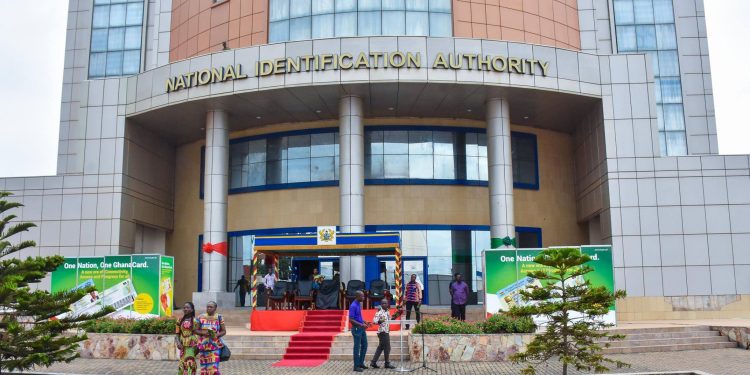
    An audit of SIM card registrations carried out by the National Communications Authority between 2021 and 2023 has revealed that none of the fingerprints on file matched those in the national identity database, raising serious questions about the accuracy and credibility of subscriber information.

    The findings were disclosed by the NCA Director-General, Edmund Yirenkyi Fianko, during a stakeholder engagement on Tuesday, March 17, 2026. He explained that the audit is part of preparations for a nationwide SIM card re-registration exercise, designed to tighten verification processes and strengthen security.

    “In June 2025, we sampled about 2 million registrations and cross-checked them against the National Identification Authority (NIA) database. We found that some SIM records could not be verified. As for fingerprints, there was zero match with biometric capture methods,” he said. “This is primarily because NIA captures fingerprints using contact methods, while SIM registration was done using contactless techniques.”

    Mr. Fianko noted that other discrepancies were uncovered during the audit. “Some registrations contained incorrect identity details, some biometrics could not be confirmed, and inconsistencies were observed across systems,” he added.

    Facial recognition checks fared better, though gaps remain. Out of 2.3 million registrations validated for facial data, 81.1% matched, while 18.9% did not. However, there was no liveness check to verify that the person presenting the SIM card was the rightful owner.

    The revelations come even as nearly 40 million SIM cards have been registered nationwide. The NCA emphasised that the upcoming re-registration exercise will focus on closing these verification gaps by aligning SIM registration more closely with the NIA database and improving overall data accuracy.

    Mr. Fianko urged all mobile subscribers to participate fully in the re-registration process, highlighting the importance of accurate data for national security and proper SIM subscription management.

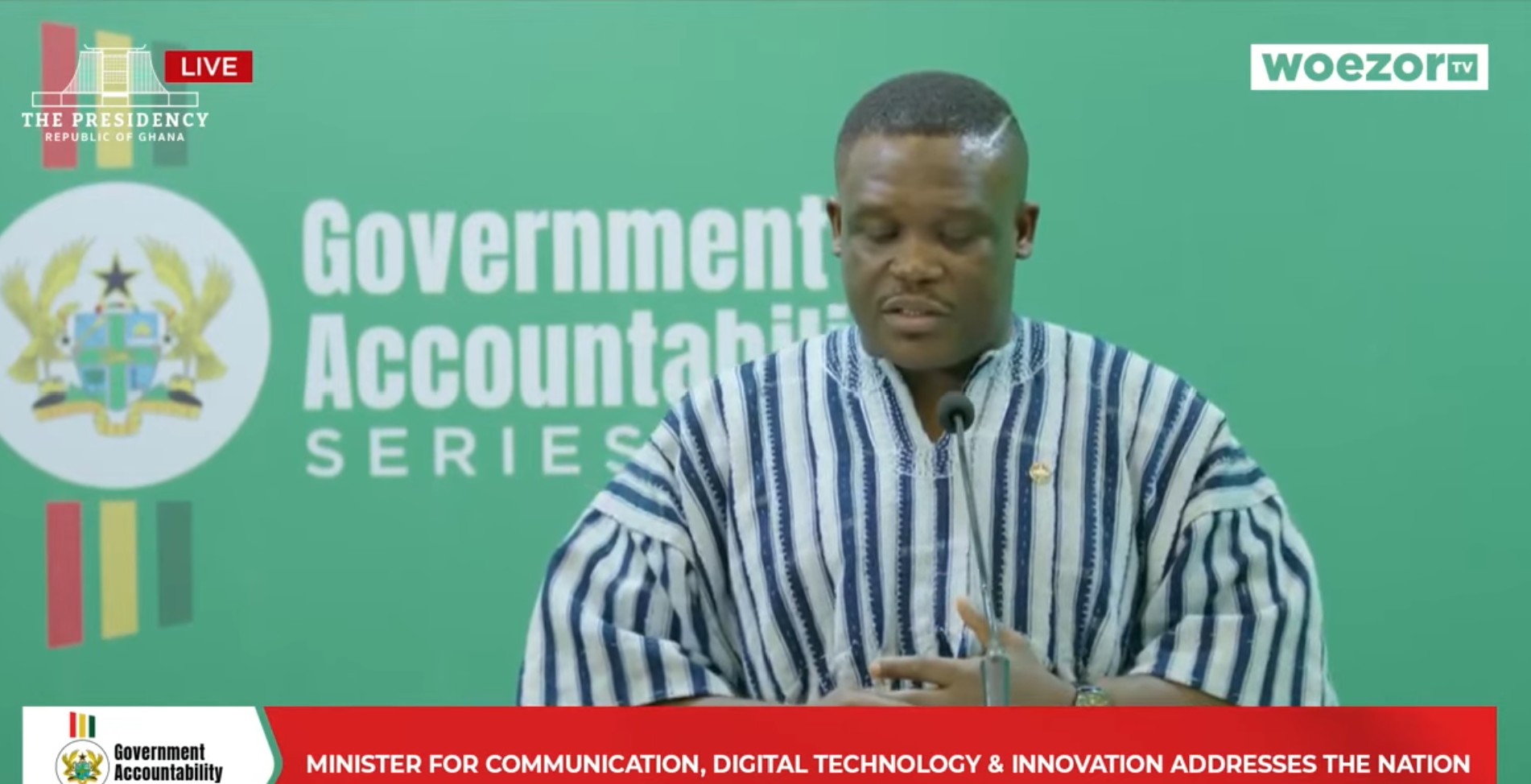
    The Cabinet has given the green light for a completely new SIM registration exercise following an extensive review of the previous process.

    This was announced by the Communication Minister, Samuel Nartey George, during high-level discussions with the Ghana Chamber of Telecommunications and the National Communications Authority on March 9.

    Between 2021 and 2023, the erstwhile government ordered a SIM registration exercise in Ghana, which required all mobile subscribers to re‑register their SIM cards using the Ghana Card; an exercise aimed at checking fraud and enhancing national security, but was plagued by weak biometric enforcement, data inconsistencies, long queues, and widespread complaints, leaving many citizens frustrated and some SIMs blocked over incomplete processes or unsuccessful registration process.

    Consequently, the Ningo Prampram MP revealed that the imminent exercise will not be a continuation of the previous one, which was undertaken by the former government, but will be a completely new reset exercise.

    How different is this exercise from the previous one?

    Detailing the difference between the previous registration and the yet to be conducted one, Mr Nartey noted that the imminent exercise will feature centralised data under the National Communications Authority, strict biometric enforcement, cross‑network fraud prevention, and new legislation

    The Minister said, “A Central Equipment Identity Register (CEIR) will be introduced to enable cross-network blocking of stolen or fraud-linked devices”, adding that, “a revised Legislative Instrument (L.I.) is being prepared to regulate the exercise.”

    Telecom operators who participated in the meeting welcomed the initiative but raised some operational concerns.

    However, it is not yet clear when the new registration exercise will commence or who will bear the cost of implementing it.

    Samuel Nartey George, has indicated that telecommunications companies will cover the entire cost of the upcoming SIM card registration process in Ghana.

    In an interview on The Point of View on Channel One TV on Monday, April 14, Sam George emphasized his commitment to ensuring that telcos take on the financial responsibility for this essential registration, which he views as a key step in modernizing the country’s telecommunications infrastructure.

    He shared that plans are underway to introduce a Legislative Instrument (LI) to Parliament to formally establish this directive.

    “They [telcos] will pay for it. I will make them pay for it. There is an LI that we will be laying before Parliament,” George said.

    He also compared his approach to the SIM re-registration conducted under former Minister Ursula Owusu, criticizing the process during her tenure.

    “That was one of my criticisms of Ursula Owusu—that the re-registration she did… and that is why I have been clear that I am not doing a re-registration. I am doing a SIM registration,” he clarified.

    George explained that his initiative is not a continuation of the previous re-registration efforts but rather a complete SIM registration designed to create a credible and unified database, with the Ghana Card serving as the “single source of truth.”

    He also highlighted that the existing SIM registration law, which dates back to 2010 under former Minister Haruna Iddrisu, was enacted before the Ghana Card was introduced.

    “The last LI on the record for registration was 2010 by Haruna Iddrisu and don’t forget that registration Haruna did—there was no Ghana Card at the time and so there was no single source of truth,” George added.

  • 3 suspects arrested over murder of Kusasi Chief at Asowase

    3 suspects arrested over murder of Kusasi Chief at Asowase

    Three suspects have been arrested in connection with the killing of the Kusasi Chief at Asawase in Kumasi, following ongoing police investigations into the incident.

    This was announced by the Ashanti South Regional Police Commander, Joseph Nyaaba, during a media briefing on Tuesday, March 17, 2026. He identified the suspects as Jamil Usman, also known as Babamu or Guru; Suleman Yasir Arafat, alias Obasanjo; and Ashaidu Sumbieda, popularly called Eyeshadow.

    According to him, steps are being taken to transfer the suspects to the Ashanti Regional Police Command to assist with further investigations.

    He disclosed that a cache of weapons and ammunition was retrieved during the operation, including two AK-47 rifles, a pump-action shotgun, two pistols, 44 rounds of .32 ammunition, and 24 rounds of 9mm ammunition.

    Providing background to the arrests, DCOP Nyaaba recalled an earlier intelligence-led operation along the Obuasi-Dunkwa highway, where police engaged a group of armed men. Two suspects—David Aheto, 42, and Illiasu Bawa, 32—were fatally shot during the exchange, while several others were apprehended and weapons seized.

    Subsequent operations and follow-up intelligence have led to more arrests and the recovery of additional arms, while also helping police identify individuals believed to be linked to the Asawase killing.

    DCOP Nyaaba revealed that the number of suspects currently in custody has risen to 12. Among those arrested are Illiasu Dauda, Majeed Issaka Jibril, Gafar Ibrahim, Mohammed Mumuni (alias Mama), Tanko Malik (alias Bronze), and Mohammed Bawa (alias Mallam), along with others previously named.

    Out of the 12 suspects, nine have been remanded, while efforts are ongoing to track down a key suspect, Illiasu, also known as Abodam, who remains on the run.

    He stressed that the police remain committed to retrieving all illegal firearms believed to be in circulation within the network, noting that the scale of arrests and weapons seized highlights the seriousness of the operation.

    Reaffirming the police service’s stance, he emphasised zero tolerance for armed robbery and the illegal possession or trafficking of weapons, assuring the public that all individuals involved will be pursued and brought to justice.

    On behalf of the Inspector-General of Police, Christian Tetteh Yohuno, DCOP Nyaaba commended officers who took part in the operation for their professionalism and dedication.

    He also expressed appreciation to members of the public for providing useful intelligence and urged anyone with information on the whereabouts of the fugitive suspect or others involved in illegal arms trade to report to the nearest police station.

    Gang leader, Eric Acheampong Adu, in a robbery incident at Ohwim Tigo Junction in Kumasi, has been confirmed dead.

    Addressing the media on Monday, February 23, the Inspector-General of Police (IGP) Christian Tetteh Yohuno, disclosed that the deceased, who is specialised in the snatching of pickup and Land Cruiser vehicles, sustained gunshot wounds during the operation with the police and later passed on. 

    The IGP noted “Suspect Eric Acheampong Adu, who sustained gunshot wounds during the operation, has passed on. Our investigation further established that this criminal syndicate, led by the deceased suspect, specialised in the snatching of pickup and Land Cruiser vehicle”. 

    The four other culprits; Akwasi Manu, Bashiru Tanko, Kwaju Amponsah and Emmanuel Kwame Apea are in police custody assisting with investigations. Akwasi Manu was arrested after the police traced a mobile phone belonging to the deceased in his possession on Wednesday, February 18. Bashiru Tanko, was arrested at Atonsu High School Junction in Kumasi on February 19, 2026

    Kwaju Amponsah and Emmanuel Kwame Apea, on February 21 and 22 at Hwireso near Buokrom and the Danyame Soldier Barracks in Kumasi, respectively. On Tuesday February 10, the gang reportedly attacked the victim, identified as Andrews Amankwa, shot him, and made away with his Toyota Hilux vehicle. Andrews Amankwa was receiving treatment at the hospital was later pronounced dead.

    Two suspects by name Kelvin Addai and Samuel Gyamfi were arrested after being accused of brutally assaulting and murdering a 36-year-old woman in Sene Bokankye, Ashanti Region.

    The incident, which took place on February 8, 2024, involved the suspects invading the woman’s home during a robbery attempt.

    According to reports from myjoyonline.com, the accused individuals allegedly used a cement block to strike the victim’s head twice while she was asleep.

    They then proceeded to sexually assault her after realising she had died, also stealing her mobile phone and GHC42.00 in cash.

    The victim’s body was discovered by neighbours in a pool of blood, prompting her son to raise an alarm upon returning from school and finding his mother in such a state.

    Police investigations revealed deep cuts on her left ear, severe head injuries, blunt force trauma, and signs of sexual assault.

    The suspects confessed during interrogation that they had entered the victim’s residence to smoke Indian hemp before deciding to rob her.

    Inspector Abdul-Wahab Yusif Seoune from the Abuakwa Police led the investigation, which resulted in the recovery of the stolen phone and sim card, leading to the arrests of the suspects.

    Her autopsy report indicated severe head injuries, blunt force trauma and unnatural sex.

    The suspects, during police interrogation, confirmed that they had gone to the uncompleted building where the deceased resides to smoke Indian hemp, following which they invaded her room to steal.

    Police detective, Inspector Abdul-Wahab Yusif Seoune of the Abuakwa Police, led the investigation which traced the stolen phone and sim card of the deceased to the two suspects, leading to their arrests.

    Samuel Addai was apprehended on March 17, 2024, in Atwima Bokankye, while his accomplice was captured in Medie-Accra two days later after attempting to flee.

    Both suspects face charges of murder and conspiracy to commit murder and have appeared before the Akropong District Court.
    The investigation is ongoing, with DNA tests planned to match swabs from the victim’s body to the accused, further solidifying the case against them.

  • No ‘side-chick’, boyfriend is qualified to benefit from pension funds – SSNIT tells employees

    No ‘side-chick’, boyfriend is qualified to benefit from pension funds – SSNIT tells employees

    The Social Security and National Insurance Trust (SSNIT) has stated that contributors cannot list a boyfriend or girlfriend as a beneficiary under its pension scheme.

    According to the Trust, only legally recognised family members or blood relatives are eligible to be nominated to receive benefits.

    This clarification was given by the General Manager in charge of Benefits, Frank Molbila, during a regional engagement held in Sunyani on Monday, March 17, 2026. The event was organised in partnership with the Trades Union Congress (TUC) as part of efforts to educate workers on pensions.

    Held under the theme “Empowering Unions, Secure Futures: Deepening Pension Literacy Across Ghana,” the forum forms part of a nationwide campaign to boost understanding of pension systems and deepen collaboration between SSNIT and organised labour groups.

    Mr. Molbila described SSNIT’s pension scheme as one of the most dependable financial plans available, stressing that beneficiaries continue to receive payments for as long as they live. He encouraged workers across the country to enrol and actively participate in the scheme.

    He further advised contributors to take retirement planning seriously, noting that the scheme remains a vital source of long-term financial support.

    Providing figures to illustrate the scheme’s impact, he revealed that SSNIT disbursed GH¢6.77 billion in pensions in 2025, with projections indicating an increase to about GH¢8.21 billion by the close of 2026.

    He also disclosed that the oldest pensioner on record is 107 years old, emphasising that payments continue throughout a beneficiary’s lifetime. The highest monthly pension currently stands at GH¢213,000, while the lowest is around GH¢400.

    Touching on invalidity pensions, Mr. Molbila explained that the scheme caters to members who are permanently unable to work due to physical or mental conditions. He noted that the longest-serving invalidity pensioner, now 86 years old, has been receiving a monthly amount of GH¢19,923 after 36 years on the scheme.

    He added that SSNIT paid GH¢40.8 million in invalidity benefits in 2025 alone, urging members to regularly update their personal records, particularly details of their nominated beneficiaries.

    A new pensioner certificate renewal policy will be implemented from April 2026.

    The Social Security and National Insurance Trust (SSNIT) announced in a statement copied to JOYBUSINESS that the revised policy will introduce mandatory annual pensioner certificate renewal for all pensioners.

    “Instructively, once an individual retires, whether at the compulsory retirement age of 60 or the voluntary age of 55, the pensioner must renew their Pensioner Certificate every year during their birth month to guarantee continuous payment of their pensions,” SSNIT added in a statement.

    The new policy is designed to enhance the integrity of the SSNIT Pension Scheme by ensuring that pension payments go only to living and eligible beneficiaries.

    It explained that pensioners may renew their certificates through several channels, including the SSNIT Mobile App using facial verification for both resident and non-resident pensioners, the SSNIT Virtual Branch, and SSNIT partner banks through their co-location points.

    The state pension trust added that all SSNIT branches nationwide will assist to promote accessibility and inclusion.

    It further indicated that arrangements have been made for pensioners with mobility challenges to undergo verification at home. Pensioners may also contact the SSNIT Contact Centre or book a home visit to complete their pensioner certificate renewal.

    “Pensioners will receive reminders at least one month before their birth month via SMS, email or other approved communication channels,” it stated.

    In October, SSNIT announced that it had made a payment of about five billion Ghana Cedis (GH¢5 billion) in pensions this year.

    SSNIT, Ghana’s statutory public trust responsible for administering the country’s basic national pension scheme, mostly make payments on the 20th of every month.

    The payment was confirmed by the Director-General of the Social Security and National Insurance Trust (SSNIT), Kwesi Afreh Biney, during an appearance on Citi TV’s Breakfast show on Thursday, October 30.

    He made these remarks in response to affirming the viability, capacity and commitment of the scheme to meet its obligations.

    “What I will say is that we have successfully paid pensions since 1965. In 1965, only three pensioners were being paid. Today, we pay over 257,000 pensioners each month. This year alone, we paid in excess of five billion cedis in pensions. Is it sustainable? The trust will continue to evolve, we will continue to make it stronger, and we’ll put in systems to ensure that we never fail,” he noted.

    Around October last year, multiple investigations and Right to Information (RTI) disclosures revealed that SSNIT had tied up over GH¢1.8 billion in underperforming or mismanaged real estate projects, which included commercial properties valued at GH¢1 billion, residential projects exceeding GH¢500 million, and land banks with questionable strategic value, sparking fears that poor returns could threaten the fund’s long-term sustainability. These fears, according to reports, still linger in the minds of some Ghanaians.

    But the SSNIT Director General has assured the public that the scheme remains strong, highlighting that pensioners’ pensions will not be in jeopardy.

    Mr Biney acknowledged the shortfalls in the scheme and the challenges he inherited from the previous administration; however, he revealed that his outfit has worked on a three-year strategy to address these issues.

    “The institution remains strong. There were challenges, but there were opportunities in there. I inherited challenges and positives, but we worked together to define a strategy for what the future will look like. This is a defined benefit scheme, so it’s one that we have to pay. It’s what the government even has to guarantee as well. So there’s nothing like the trust will fail, for which reason people’s pensions will be in jeopardy, non” he added.

    During the Trust’s 60th anniversary in July, Dr Afreh Biney highlighted that the time it takes to process a pension has significantly dropped from several weeks to under ten working days.

    He also touted the accessibility of SSNIT’s digital services, looking forward to rolling out its fully-fledged digital branch by September 2025.

    He asserted that institutions survive not because they are flawless, but because they reflect, reform, renew, and take feedback constructively.

    “The road ahead,” he said, “is challenging but also full of promise.” He added, “We must expand coverage, especially for the informal sector, because every worker deserves to retire in dignity. We must innovate with technology, deepen transparency, and strengthen public confidence, and we must do it with government, employers, labour, and civil society.”

    “SSNIT must not just be a system people contribute to; it must be a partner they believe in,” he continued. “So yes, if you are over 60 and still dancing at parties, remember social security is 60 and still standing, still serving, and still strong. If the walls of SSNIT could speak, they would whisper stories of service, of quiet sacrifice, of hard lessons, and of a deep, unwavering belief in simple promises.”

    Meanwhile, SSNIT paid a total of GHS521.96 million to over 257,000 pensioners in July. In a Facebook post, the Trust noted that the disbursement forms part of its commitment to ensuring the timely payment of pensions to retirees under the national scheme. Pensioners are expected to receive their next payment on August 21.

    Earlier this year, SSNIT announced a 12% adjustment in pensions for 2025, starting in January, with payments scheduled for the third Thursday of every month.

    This revision was made in coordination with the National Pensions Regulatory Authority (NPRA) and complies with Section 80 of the National Pensions Act, 2008 (Act 766).

    As per SSNIT, all retirees receiving benefits as of December 31, 2024, will see an average increase of 12% in their monthly payments.

    The adjustment includes a fixed increment of 8% along with an additional GH¢72.58, which accounts for 4% redistributed to assist lower-income pensioners.

    “Redistribution is a mechanism applied to the indexation rate to cushion low-earning pensioners in conformity with the solidarity principle of social security.

    As a result, pensioners will have an effective increment between 32.19% at the bottom end and 8.04% at the top end. Redistribution ensures that the minimum monthly pension of GH¢300 in 2024 will increase to GH¢396.58 in 2025, an effective increase of 32.19%,” a statement from SSNIT said.

    This redistribution policy aims to provide extra relief for pensioners with lower earnings, following the social security solidarity principle.

    Consequently, those receiving the least will experience a 32.19% boost, while those at the highest level will see an 8.04% rise.

    With this revision, the minimum monthly pension will increase from GH¢300 in 2024 to GH¢396.58 in 2025. For retirees under PNDC Law 247, the highest monthly benefit will now stand at GH¢201,792.37, marking an 8.04% growth.

    Meanwhile, the average pension will move from GH¢1,776.81 in 2024 to GH¢1,990.03 in 2025. SSNIT further disclosed that 63% of pensioners, particularly those earning GH¢1,814.50 or less per month, will benefit from increases ranging from 12% to 32.19%, ensuring their income keeps pace with inflation.

  • 20-year-old Promise Yayra Asamani arrested for accusing Uber driver as a murderer on social media

    20-year-old Promise Yayra Asamani arrested for accusing Uber driver as a murderer on social media

    A 20-year-old woman, Promise Yayra Asamani, has been picked up by the Cyber Vetting and Enforcement Team under the Inspector-General of Police for allegedly spreading false information online that portrayed an Uber driver as a criminal.

    Her arrest comes after a complaint was filed on Wednesday, March 11, 2026, by 43-year-old driver Selasie Kwaku Anthonio, whose image and vehicle details were widely shared on social media with serious allegations attached.

    According to the report, Mr. Anthonio was first alerted by his nephew about a viral Snapchat post that displayed his photo alongside his vehicle registration number (AD-1479-25). The post accused him of being both a murderer and a thief, further alleging that he used signal jamming devices to cut off passengers’ networks and carried weapons to commit crimes.

    The publication had immediate consequences, as Uber suspended his account shortly after the claims surfaced, cutting off his main source of livelihood.

    Mr. Anthonio also reported receiving several alarming calls from relatives and clients, leaving him fearful for his safety. He expressed concern that the damaging claims could expose him to possible mob action.

    Investigations by the police traced the origin of the post to a misunderstanding involving the suspect’s sister, Stephanie Asamani.

    On March 9, 2026, Stephanie had booked a ride from Spintex to Oyibi. In her statement, she said an argument broke out when the driver suggested completing the trip outside the app. She also claimed she noticed items such as a cloth and a hammer in the boot and overheard the driver speaking in Ewe about delivering goods somewhere.

    After returning home, she shared her concerns and a screenshot of the driver’s profile with her sisters. Based on this, Promise Yayra Asamani created and shared the Snapchat post, later stating that her intention was to “raise awareness.”

    Police arrested Promise on Saturday, March 14, 2026, after she failed to respond to an earlier invitation. During questioning, she admitted that the claims she made online—particularly labelling the driver a “killer”—were based entirely on her sister’s account and were not verified.

    She was later granted police enquiry bail on Monday, March 16, 2026, as investigations continue.

    Following the incident, the police have cautioned the public against the spread of unverified information online, stressing that such actions carry legal consequences.

    They further reminded citizens that false publications are punishable under Ghanaian law and urged people to confirm the accuracy of information before sharing, noting the serious harm such claims can cause.

    Minister of Communications and Digital Innovation, Samuel Nartey George,disclosed that a coordinated, intelligence-led operation led to the arrest of 141 suspects linked to organised cybercrime networks involved in Mobile Money fraud and Business Email Compromise scams.

    The early-morning operation on December 27, last year,was carried out by the Cyber Security Authority Ghana in collaboration with the Ghana Police Service, National Security, and the Ghana Immigration Service.

    According to a post shared by Sam George on Facebook , “100 suspects were arrested in Tabora, while 41 suspects were apprehended in Lashibi, resulting in a total of 141 arrests. Preliminary investigations indicate that the suspects are believed to be Nigerian nationals,”

    He stated that law enforcement agencies also retrieved 38 laptops and 150 mobile phones believed to have been used in carrying out cyber-enabled financial crimes. Investigators say the suspects are believed to be Nigerian nationals alleged to have engaged in multiple criminal activities, including MoMo fraud, romance scams, sextortion, Business Email Compromise, and wire fraud.

    The operation also led to the arrest of a Ghanaian landlord who allegedly accommodated 100 of the suspects in his residence. Authorities stressed that property owners have a responsibility to ensure their premises are not used to facilitate criminal activities.

    Mr George noted that forensic analysis of the seized devices is ongoing and assured that those found culpable will be dealt with according to the law. “Forensic analysis of the seized devices is underway, and individuals found to be culpable will be processed in accordance with Ghanaian law,” he stated.

    He urged the public to remain alert and support national efforts to combat cybercrime, while reaffirming Ghana’s openness to legitimate business activities.

    “Ghana remains welcoming to all of our friends and neighbours interested in legitimate enterprise. However, if you are interested in committing a cybercrime, we will find you, arrest you, and deal with you decisively according to our laws,” he warned.

    Earlier this year, Director of Fintech and Innovation at the Bank of Ghana, Kwame Oppong, raised concerns over the rising cases of mobile money fraud.

    He explained that fraudsters are coming up with new ways to scam both mobile money vendors and users.

    Speaking at the swearing-in ceremony of the new leaders of the Mobile Money Advocacy Group, Oppong pointed out that Ghana’s mobile money regulations have been recognized as the best in the world, which is a big boost for the fintech industry.

    However, he emphasized the importance of protecting this sector from fraud.

    Since mobile money was introduced in Ghana, it has made sending and receiving money much easier. But with this convenience has come the problem of fraud, with both vendors and customers becoming victims.

    To raise awareness and protect people in the industry, the Mobile Money Advocacy Group was formed. Over the past eight years, the group has traveled across all 16 regions of the country to educate the public and mobile money operators about fraud.

    Despite some progress, fraud continues to be a challenge as scammers keep finding new tricks. To further strengthen the fight against fraud, the Mobile Money Advocacy Group has elected new executives who will lead the group for the next four years.

    Kwame Oppong assured that mobile money is benefiting the country and needs protection from fraudsters.

    Edward Ofori Agyemang, the new president of the Mobile Money Advocacy Group, shared that the group is working closely with the police to ensure the safety of mobile money vendors.

    He also provided security tips on how to protect mobile money accounts from scammers.

    Telecom giant MTN Group also confirmed a cybersecurity breach that may have compromised the personal data of approximately 5,700 customers in Ghana.

    In a statement dated April 28, MTN acknowledged the incident, noting that while the full extent of the breach was still under investigation, “early indications are that about 5,700 MTN Ghana customers’ data may have been affected.”

    The company emphasized that all its platforms remain functional and that it is closely monitoring its systems to safeguard operations. “The confidentiality, integrity and availability of our systems remain central to how we operate and serve our customers,” MTN stated.

    The affected customers will be contacted directly, according to the company, which has since launched a forensic investigation in partnership with top cybersecurity professionals. “We are working closely with leading cybersecurity experts and are conducting a forensic investigation to assess any impact to our environment in line with our established security protocols.”

    Although the investigation is ongoing, MTN urged all customers to take extra precautions. Users are advised to remain alert and follow standard cybersecurity practices. These include updating all MTN, Mobile Money (MoMo), and banking applications; using strong, unique passwords; and being wary of suspicious messages or links.

    Customers are also reminded not to share sensitive information like passwords, PINs, or One-Time Passwords (OTPs) via phone calls, texts, or emails, and to enable multifactor authentication wherever possible. In cases of suspected fraud, MTN recommends placing a fraud alert with major credit bureaus.

    “We understand that this incident may raise concerns,” the company said, assuring customers that their privacy remains a top priority. “We will continue to contain and manage this matter carefully.”

    MTN has encouraged concerned customers to reach out through its toll-free number 100 for further information or assistance.

  • We will strike again if you fail to address our concerns within 14 days – CLOGSAG to gov’t

    We will strike again if you fail to address our concerns within 14 days – CLOGSAG to gov’t

    The Civil and Local Government Staff Association, Ghana (CLOGSAG) has put on hold its ongoing strike to allow the government sometime to address its grievances.

    However, speaking to the media on Tuesday, March 17, the Public Relations Officer (PRO) of CLOGSAG, Edmund Acquaye, warned that the Association will lay down its tools again if the government fails to act within 14 days. 

    The group reversed its decision after the government assured its leadership that concerns raised during the industrial action, which began nearly three weeks ago over demands for a review of its salary structure and conditions of service, would be addressed.

    “This action we have taken is based on the assurance given by government that within 14 days, they are going to take a critical look at our issues with the salary structure and also our conditions of service. After the 14 days, we will assess the situation, and if our issues remain unresolved, we will decide our next line of action,” the PRO stated.

    The Association announced on March 5 through a formal press release addressed to key government offices that it will embark on a nationwide strike over what they describe as a delay in the government’s failure to implement a unique salary structure and improved conditions of service.

    The notice, signed by Executive Secretary Isaac Bampoe Addo, ordered all members of the Civil Service and Local Government Service to stay home until further notice.

    The circular, addressed to the Head of Civil Service, the Head of Local Government Service, regional secretaries, and all members of the association across the country, simply instructed: “Stay at home until further notice.”

    According to the Executive Secretary of CLOGSAG, Isaac Bampoe Addo, negotiations on the proposed salary framework began as far back as 2019, i.e, seven (7) years ago, following which two separate Memoranda of Understanding were signed between the association and government representatives.

    Under the agreement, the government was supposed to implement the new salary structure effective January 1, 2023. However, authorities later requested additional time, pushing the implementation date to January 1, 2025. That deadline also passed without the agreed-upon changes being implemented.

    Consequently, Mr Addo said his outfit had to take the necessary steps to ensure their demands were met, leading to the strike after several attempts to secure an audience with the Ministry of Labour, Jobs and Employment and the Fair Wages and Salaries Commission through multiple letters requesting action, but without a satisfactory response.

    Mr Addo continued that, before they announced the industrial action on March 5, they had informed the National Labour Commission (NLC) of their intention to strike after a National Executive Council meeting held on February 19.

    The association said the government was given nearly three weeks to demonstrate what Mr Bampoe Addo described as “good intentions” before the strike took effect.

    However, the National Labour Commission has described the strike as illegal and has directed the union to appear before it on Wednesday, March 11, 2026, at 2:00 p.m. to discuss the matter.

  • President Mahama expands security recruitment intake target from 20k to 40k

    President Mahama expands security recruitment intake target from 20k to 40k

    The government made a U-turn regarding the number of personnel to be recruited into the country’s security services.

    Originally, 20,000 personnel were expected to be recruited, but this has now been increased to 40,000. These recruits will be deployed gradually from now until 2029.

    President Mahama, together with heads of security agencies, Interior Minister Mohammed Muntaka Mubarak, and Acting Defence Minister Cassiel Ato Forson, reviewed and approved the decision on Monday, March 16.

    According to a press release by the presidency indicated, “Following a briefing on the process, the President has directed that the number of men and women to be recruited to the various security agencies should be increased from twenty-thousand (20,000) to forty thousand (40,000) over a four year period”.

    Present at the meeting were the Chief of Staff, Secretary to the President, Senior Presidential Advisor on Governmental Affairs, National Security Coordinator, Inspector General of Police, Director General Prisons, Director General Fire Service, Comptroller-General of the Ghana Immigration Service and the Director General of the Narcotics Control Commission.

    Meanwhile, the government’s ongoing recruitment into Ghana’s security services continues to dominate discussions in Parliament and among scores of Ghanaians. However, the  Minority in parliament has pressed the government to refund about GH¢113 million of registration fees collected from applicants who failed to progress to the medical screening stage.

    Most applicants were dropped from the recruitment process, which began last year, after failing an online aptitude test organised by the government.
    The online test which was confronted with a lot of challenges, according to reports, was generated using artificial intelligence (AI).

    In a media engagement on Wednesday, March 11, the Interior Minister, Mubarak Mohammed Muntaka, revealed that the government will only employ only 5,000 individuals out of the 105,000 applicants who have made it to the last stage.

    He further disclosed that about 500,000 applications were submitted by Ghanaian youth. “Are you going to allow over 400,000 people to go and do medicals when you know you have space for only 5,000? How fair are you to the people? You need to devise a method to slow down the numbers and have a reasonable figure.

    “So at 65, as we speak, we still have 105,000 that have qualified for medicals when in actual sense the total number that we can now take after medicals is 5,000,” he added.

    Speaking at a press briefing on Wednesday, March 10, Mr. Muntaka explained that authorities set the pass mark for the recruitment examinations at 65 to control the number of candidates progressing to the medical stage.

    Reacting to the Interior Minister’s revelation, the Minority of Parliament has called the entire recruitment process a Ponzi scheme to extort from suffering youth.

    The caucus has questioned why the government would accept applications from half a million persons when it intends to employ a small number.

    With immediate effect, the Minority in Parliament has pressed the government to refund monies collected from the affected applicants.“Already, we have a national security threat and unemployment on our hands. You promised them jobs. You didn’t add any conditions. Then you turn around, you politically expand the age limit from twenty-five to thirty-five, signaling that there is more room and more access, more financial clearance, which was a lie.

    “You knew from the very beginning you were recruiting only 5,000, and yet you did all this to lure half a million people, took their money, milked them GH¢113 million cedis and over, only to turn around yesterday, after you have knocked them out by technology and internet disruptions from the aptitude test,” he said.

    The development has left scores of Ghanaians, particularly affected applicants, criticising the government. Some unsuccessful applicants say they answered the questions without engaging in examination malpractice, yet failed the test, while others who allegedly outsmarted the system have qualified.
    Prior to the test, the Ministry of the Interior Ghana warned applicants against cheating, stating that the system used for the online aptitude test had been designed to detect and disqualify individuals who attempted any form of malpractice.

    Some applicants have also recounted how they purchased recruitment forms for multiple security agencies, including the Ghana Police Service, Ghana Prisons Service, Ghana National Fire Service, and the Ghana Immigration Service, but were denied the opportunity to proceed after failing the aptitude test.

    Under the recruitment guidelines, applicants who fail the aptitude test are automatically eliminated from the process, regardless of the number of forms purchased, since only one test is taken for all the security agencies. Others have also disclosed that although they initially qualified for the test, they were later disqualified after revisiting their recruitment portals.

    Despite the frustrations expressed by many disqualified applicants, the Interior Minister, Mubarak Mohammed Muntaka, maintains that the recruitment exercise has been free and fair, unlike those organised by previous governments.

    He explained that the government introduced a third-party aptitude test with a pass mark of 65% as a measure to manage the large number of applicants.

    Meanwhile, some grassroots members of the National Democratic Congress (NDC) who were disqualified from the process have expressed disappointment in the government. They claim the administration has turned its back on them despite their role in helping the party return to power.

    However, the Minister indicated that the recruitment process will not end this year. According to him, applicants who successfully pass the medical examination but are unable to secure placement this year will be considered for employment in the following year.

    “I know a lot of young people may be disappointed, but they should exercise restraint as this is not going to be the first and last recruitment that the government is going to have,” the Minister noted.

    Recruitment into Ghana’s security services has frequently been criticised as a process susceptible to corruption, with reports alleging that some individuals pay substantial sums of money to secure positions within agencies such as the Ghana Police Service, Ghana Prisons Service, Ghana National Fire Service, and the Ghana Immigration Service.

  • New standard electricity meters to be rolled out in April – Energy Ministry

    New standard electricity meters to be rolled out in April – Energy Ministry

    As part of efforts to enhance revenue mobilisation in the energy sector, as well as stabilizing power, the Ministry of Energy and Green Transition has announced the introduction of standardised and accurate electricity meters from next month.

    The Minister disclosed this while answering questions on the floor of Parliament on Monday, March 16. According to him, all households will benefit from upgraded electricity infrastructure.

    “Next month, we will start the large-scale rollout of transformers. Within that same month, we should see a much more massive injection of new, standardised and accurate meters. That is how we can make sure that there is guaranteed revenue for investment.All meters procured are tested. I can assure you that these meters are of high quality; they meet the standards, and they do the job they are supposed to do,” he said.

    His comments come amid growing concerns from sections of the public, who claim they are being overcharged and that their prepaid credit no longer lasts as long as before.

    Meanwhile, the Communications Director of the Electricity Company of Ghana (ECG), William Boateng, has asserted that heat conditions, wiring and earthing are most likely contributing factors to excessive electricity consumption affecting its customers.

    This was in response to concerns from sections of the public who have made claims of being overcharged and that their prepaid credit no longer lasts as long as before.

    In an interview on Adom FM’s morning show Dwaso Nsem, Mr. Boateng advised customers to frequently check for possible electrical faults in their homes.

    “When the heat increases, someone can even double the use of cooling appliances. That alone can affect your consumption. Sometimes the issue may be with wiring or earthing. That is why we have certified electrical contractors who can check whether there is leakage or any fault affecting consumption,” he said.”

    Mr. Boateng urged customers who notice irregularities in their billing to report them directly to ECG for investigation, so that engineers can inspect the meter, review consumption patterns, and identify the cause of the problem.

    “We work with machines; it is not about defending anything. There could be a margin of error. If your bill exceeds what you expected or your credit finishes unusually fast, report it to ECG,” he urged, adding that, “When customers report, we can properly investigate, analyse the situation, and resolve it if there is a genuine problem,” he assured.

    Last year, the Director-General of the Ghana Standards Authority (GSA), Professor Alex Dodoo, warned of the dangers associated with uncalibrated electricity meters which were in use nationwide.

    These uncalibrated metres being utilised by the Electricity Company of Ghana (ECG), he said, did not guarantee the protection of consumers and also are not able to hold industry accountable for fair charges.

    Calibration of meters ensures that energy usage is measured accurately, preventing overbilling or underbilling for consumers.

    His comments came amid growing public concerns of overbilling, inconsistent power supply, and inefficiencies in the power-producing company’s services.

    Speaking at a stakeholder conference organized by the International Electrotechnical Commission yesterday, May 20, 2025 in Accra, Prof. Dodoo revealed that many ECG meters in circulation had not been calibrated or verified by the Ghana Standards Authority, as has been mandated by the National Instrumentation Regulation NI2413.

    “Very few of our meters have been calibrated and verified by the GSA. If the meter you are using has not been calibrated or verified by the Ghana Standards Authority, as required by NI2413, its accuracy is questionable. We simply cannot vouch for it,” he said.

    Prof. Dodoo said meters not being calibrated put consumers at risk of under- and overbilling.

    The NI2413 law mandates that all electricity meters in circulation must be calibrated and verified by the GSA to ensure accuracy, fair billing, and energy efficiency.

    Additionally, the Weights and Measures Decree, NRCD 326 of 1975, empowers the GSA to oversee legal metrology, ensuring that measuring instruments used in trade and industry meet standardized accuracy requirements.

    However, to resolve this, he mentioned that his outfit is currently working with the ECG and Public Utility and Regulatory Commission (PURC) to configure the millions of meters currently in circulation in the country.

    “The law states it must be verified and calibrated. Thankfully, we are working with ECG and PURC to ensure that all the millions of meters in Ghana are properly calibrated and verified by the GSA,” he noted.

    He also linked the issue to national development, emphasizing its importance in the government’s ambition to implement a 24-hour economy.

    “And I know it’s a very troubling issue. But as we support the President in rolling out a 24-hour economy, it’s important that we provide the quality infrastructure that will make the 24-hour economy succeed,” he concluded.

    In the same year, the government, through the Ministry of Energy and Green Transition, approved the procurement of 200 new transformers for the Electricity Company of Ghana (ECG) to strengthen power transmission and distribution to major cities across the country.

    The sector minister, John Abdulai Jinapor, made information public on May 28, 2025 during the opening session of the 18th West Africa Mining and Power Exhibition (WAMPEX) at the Grand Arena and Accra International Convention Centre (AICC) in Accra.

    The Electricity Company of Ghana (ECG) made a formal request for 200 new transformers in April 2025, and after barely a month, the government gave the green light for the deployment of the transformers.

    “Despite the challenges we inherited, recent reports show that power generation has been very stable” What we need to do is improve the transmission and distribution network. In this regard, I have granted approval to ECG as a matter of urgency to inject about 200 transformers in our major capital cities in order to ensure that we not only generate power but we can distribute power to (sic) consumers effectively and efficiently,” Mr Jinapor said.

    Minister Jinapor noted that initial challenges with power generation have been stabilized, and Ghana is now exporting electricity to neighboring countries. The current focus is on improving power transmission and distribution systems.

    WAMPEX, the largest forum for mining and power industries in West Africa, attracted over 240 exhibitors from 30 countries and more than 5,000 visitors this year.

    The event, however provided a platform for industry professionals, policymakers, and stakeholders to discuss challenges, innovations, and future opportunities.

  • C/R: Fire engulfs fuel tanker after explosion at Potsin Junction

    C/R: Fire engulfs fuel tanker after explosion at Potsin Junction

    Nearby houses around Potsin Junction on the Kasoa–Winneba Highway were thrown into turmoil after a fuel tanker overturned and exploded on Tuesday, March 17. The tanker reportedly fell on its side, triggering a fire.


    Last month, the Ghana National Fire Service (GNFS) confirmed that the fire outbreak on the Accra-Nsawam Highway near Okanta in the early hours of Saturday, February 14 claimed the lives of six people and injured seven others.


    The deceased persons include, three (3) victims including two males and one female.


    According to the Service a total of fifteen (15) casualties were recorded following the incident, comprising eleven (11) males and four (4) females.


    In a press statement the Ghana National Fire Service added that “A total of 15 casualties were recorded (11 males and 4 females). Three (3) victims (two males, one female) tragically died at the scene, and their badly charred bodies were handed over to the Police for preservation and further investigation”.


    In the early hours of Saturday, February 14, a fuel tanker explosion destroyed multiple vehicles along the Nsawam-Accra highway, causing heavy traffic congestion on the busy stretch.


    Preliminary reports indicate that the explosion occurred after the tanker was involved in a collision, which caused the vehicle to catch fire.


    Thick black smoke was seen rising from the scene, sparking fear among motorists and residents in nearby communities.


    Personnel from the Ghana National Fire Service responded promptly and are working to bring the blaze under control and prevent it from spreading to other vehicles and properties.


    Emergency responders have since cordoned off the affected section of the road as firefighting operations continue.No casualties have been confirmed so far.


    However, emergency teams are still assessing the situation and searching the area to ensure that no victims are trapped.


    The incident has caused significant traffic disruption along the Nsawam-Accra route, which serves as a major link between the Eastern Region and Accra.


    Motorists have been advised to exercise caution when approaching the area and to use alternative routes while firefighting and vehicle recovery operations continue. Police personnel are also at the scene managing traffic and ensuring the safety of road users.


    Meanwhile, Eastern South Regional Police Commander, DCOP George Ohene Bossman Boadi, has warned the public against stealing fuel from tankers involved in road accidents.


    The warning comes after a fatal fuel tanker explosion was reported at Ntoaso on the Accra–Nsawam Highway in the Eastern Region, which killed three people and damaged property.


    According to a report by 3News.com, Suhum Fire Service Public Relations Officer ADO1 Akonoh Opare Ohene Daniel explained that the blast occurred when residents tried to steal fuel from the overturned tanker.


    “The residents in this area were siphoning the fuel, leading to the explosion. Traffic had already built up, and a female motorist who was trapped behind was burnt too.This is wrong. Residents along highways must stop engaging in such illegal activities,” he stated.


    He therefore urged the public to refrain from such dangerous and illegal acts and allow experts to manage accident scenes at all times.

    The 3News.com report added that Eyewitnesses revealed that the incident happened around 5:00 a.m. on Saturday, when a fuel tanker heading toward Kumasi reportedly overturned along the shoulder of the busy highway.


    Several residents and motorcycle riders rushed to the scene to steal fuel from the overturned vehicle.


    The situation quickly turned deadly when the tanker ignited, causing an explosion that claimed the lives of two men and one woman.


    The blast also destroyed around five vehicles caught in traffic, including motorcycles believed to belong to the victims. Passengers and bystanders fled as flames spread across the area.


    Personnel from the Ghana National Fire Service, Ghana Police Service, National Disaster Management Organisation (NADMO), and National Ambulance Service responded swiftly.


    Several individuals who sustained life-threatening injuries were rescued and taken to Nsawam Government Hospital, where they are receiving treatment. The bodies of the deceased have been taken to the Suhum Government Hospital morgue.


    Eastern South Regional Police Commander DCOP George Ohene Bossman Boadi stated that police officers would remain at the scene to manage traffic while Fire Service personnel continue efforts to extinguish the flames.

  • BoG warns Middle East tensions may derail inflation progress

    BoG warns Middle East tensions may derail inflation progress

    The Governor of the Bank of Ghana (BoG), Dr. Johnson Asiama, has warned that despite recent improvements in the country’s macroeconomic indicators, Ghana could face economic pressures if tensions in the Middle East intensify.

    He gave the caution at the opening of the 129th meeting of the Monetary Policy Committee (MPC), Dr Asiama on Monday, March 16. Dr Johnson Asiama said the caution stems from tensions affecting key global energy and shipping routes, potentially causing volatility in global oil markets.

    He added “Geopolitical uncertainty tends to support gold prices. Given the importance of gold in our export earnings, this could improve our trade balance”.


    The ongoing tensions have been linked to the death of Iran’s Supreme Leader, Ayatollah Ali Khamenei. Ayatollah Ali Khamenei was reportedly killed in strikes by the Unites States (U.S.) and Israel. This development significantly impacting travelers from Ghana to Asia, Europe, and North America, as Dubai is a major transit hub connecting travelers through the United Arab Emirates.

    Ghana, being one of the dependents of the global oil supply, stakeholders began to express concerns about a possible shortage of fuel across the country. However, the Corporate Affairs Officer of the Tema Oil Refinery (TOR), Godwin Mahama Ayaba, during an appearance on March 11, indicated that Ghana is unlikely to experience fuel shortages despite rising tensions in the Middle East, citing the country’s diversified sources of petroleum imports and growing local refining capacity.

    According to him, the NPA recently issued a statement indicating that the situation in the Middle East will not lead to shortages of petroleum products in the country.

    “The National Petroleum Authority, which is the regulator, some three to four hours ago issued an official statement assuring all of us that as for shortage, there is no way the Iran–Israel conflict is going to affect us,” he said.

    Mr Ayaba explained that Ghana’s fuel import structure significantly reduces the risk of supply disruption because the country imports most of its finished petroleum products from Europe.

    “Ghana largely imports from two different areas: Europe and the Arabian region. Where we import most is Europe,” he noted.

    “We import about 80 per cent of our finished petroleum products from Europe and about 20 per cent from the Arabian region, where this conflict may have an impact.”

    While acknowledging that the Middle East tensions could affect that 20 per cent supply, he said Ghana’s domestic refining capacity is expected to fill the gap.

    “So we are likely to lose that 20 per cent, but with TOR coming on stream, we will be able to block that gap,” he said.

    Mr Ayaba revealed that the refinery is currently producing about 28,000 barrels and expects output to increase significantly after ongoing upgrades.

    “Currently, we are producing about 28,000 barrels. After the tie-in, we will move to about 45,000 and further move to 60,000,” he explained.

    He added that increased output from other refineries in the country will also contribute to stabilising supply.

    “Sentuo is doing around 36,000 to 40,000 barrels a day, Akwaaba is doing somewhere less than 10,000, and Platon is around a little below 3,000,” he stated.

    “Together, all these companies will be able to block that 20 per cent that would have come from the Arabian region.”

    Mr Ayaba emphasised that Ghana will still maintain the bulk of its imports from Europe, further ensuring supply stability.

    “We will still have the 80 per cent from Europe coming in,” he said.

    He therefore urged the public not to panic, reiterating the assurances provided by the National Petroleum Authority.

    “I will add my voice to the official communiqué from the NPA that we should rest assured that we are not going to record fuel shortages,” he stated.

    Meanwhile, in a separate interview about 3 days ago, Mr Ayaba revealed that TOR is eyeing a sixty-one (61%) percent increase in its production capacity as part of renewed efforts to strengthen operations and improve output at the facility.

    Currently, the refinery seeks to expand its crude distillation capability from 28,000 barrels per stream day to 45,000 barrels per stream day.

    Speaking during an interview on Citi FM’s Eyewitness News on Monday, March 9, he stated that,

    “The refinery is currently undertaking technical processes aimed at expanding its processing capability from 28,000 barrels per stream day to 45,000 barrels per stream day. This represents a sixty-one percent increase in capacity, and it forms part of our broader plans to revitalise operations and enhance TOR’s contribution to Ghana’s petroleum sector.”

    He continued that, the planned increase will be achieved through the integration of an additional processing unit, known as the F61 unit, which will operate alongside the existing F1 unit.

    Both units will be connected to the refinery’s crude distillation system to improve overall efficiency and output.

    Mr Mahama also noted that engineers are currently carrying out some temporary technical steps to connect a new unit to the refinery’s main processing system, which is expected to increase the refinery’s output from the current level.

    The refinery is presently operating under a tolling arrangement, a system in which private companies supply crude oil to the facility for processing.

    Under this arrangement, the refinery refines the crude and charges a processing fee, while the refined petroleum products are returned to the companies that provided the crude.He explained that under the tolling system, the refinery does not control the marketing or distribution of the finished products, as those decisions are taken by the crude oil suppliers.

    Mr Ayaba added that while the refinery’s current nameplate capacity stands at 28,000 barrels per stream day, the introduction of the F61 unit will push output to 45,000 barrels per stream day.

    He further indicated that management is also considering plans to expand capacity to about 60,000 barrels per stream day in the medium term.

    After several years of inactivity, the management of Tema Oil Refinery announced the resumption of operations. The resumption was possible following the completion of extensive Turnaround Maintenance (TAM) works on the refinery’s Crude Distillation Unit (CDU). Maintenance works began on August 1 and on October 30 in 2025. This information was contained in a press statement released by the management on Saturday, December 27.

    TOR’s resumption was expected to boost energy security, industrial growth and national development, potentially saving Ghana up to $10.2 billion in oil import bills annually.

  • No govt directive barring farmers from purchasing cocoa beans – LBCs president

    No govt directive barring farmers from purchasing cocoa beans – LBCs president

    President of the Licensed Cocoa Buying Companies (LBCs), Samuel Adimado, has dismissed reports that the government instructed cocoa buyers to halt purchases nationwide due to an alleged inability to pay for newly harvested beans.

    During the Akwasidae festival in Offinso, presided over by the Paramount Chief of the Offinso Traditional Area, Nana Dwamena Akenten II, the Member of Parliament (MP) for Nsawam-Adoagyiri, Frank Annoh-Dompreh, alleged that the government had instructed Licensed Cocoa Buying Companies to halt purchases of cocoa beans due to challenges in paying for newly harvested produce. 

    However, Samuel Adimado has rejected the claim, insisting that “There has been no directive from government asking Licensed Buying Companies to suspend cocoa purchases. LBCs are still buying cocoa beans and farmers are also selling to us.”

    According to him, “Payments have started, although not all farmers have received theirs yet. Measures are in place to ensure that every farmer who supplied cocoa beans will be paid,” he assured.

    Engaging the press on Thursday, March 13, the Head of Public Affairs at the Ghana Cocoa Board (COCOBOD), Jerome Sam, disclosed that cocoa farmers who have been owed since November last year are set to receive the monies owed to them.

    He noted that the government has disbursed approximately GH¢4.2 billion to LBCs for onward payment to cocoa farmers.

    He added, “Some of the payments are recent, while others are older. Since 2023, when we experienced challenges with the syndicated loan, Licensed Buying Companies sometimes stepped in to pre-finance cocoa purchases. COCOBOD later reimburses them for those purchases.

    “That is why some farmers are not owed by the LBCs, while others still have outstanding payments. As COCOBOD, we are working tirelessly to ensure that every cedi owed to the Licensed Buying Companies is paid so they can also settle any outstanding debts with their cocoa farmers”.

    Last month, an amount of GHC237 million has been paid to cocoa farmers for 50,000 metric tonnes of cocoa by the Ghana Cocoa Board (COCOBOD).

    In a Facebook post on Wednesday, February 18, head of Public Affairs at the Ghana Cocoa Board (COCOBOD), Jerome Kwaku Sam wrote, “I’m happy to report COCOBOD has started payment of the 50,000 metric tonnes. An amount of GHC237 million has been paid.”

    Last week, the Ghana Cocoa Board’s commenced payments to Licensed Buying Companies to clear outstanding arrears owed Ghanaian cocoa farmers who sold and delivered their cocoa beans without receiving payment.

    This followed several calls by cocoa farmers demanding payment for months of prolonged arrears from the government. On the floor of Parliament on Thursday, February 5, the Minority caucus raised concerns about the sustainability of the cocoa sector if the demands of cocoa farmers are not addressed.

    Although LBCs have paid over GH¢620 million to cocoa farmers, a significant amount remains. Speaking to the media, Head of Corporate Communications at COCOBOD, Jerome Kwaku Sam “In November, we paid over GH¢6 billion, in December more than GH¢5 billion, and in January another GH¢6 billion.

    “This month alone, we have paid over GH¢620 million, and we are continuing to pay the LBCs so they can clear outstanding payments to farmers”.

    The President of the Ghana National Association of Cocoa Farmers (GNACOF), Stevenson Anane Boateng, has lamented the government’s hesitation to pay them for the cocoa sold out to them.

    He said, the situation has rendered a number of cocoa farmers broke since November last year and are calling for intervention“The government is buying our cocoa but has refused to pay us. Since November, we have not been paid. They accept the cocoa, but they don’t pay us,” he lamented during an interview on Frontline on Rainbow Radio 87.5FM.

    When asked what might have caused the delay, he responded: “We don’t know. We are not part of the government, so please, you need to ask them why they have refused to pay cocoa farmers. This is troubling, and we want the government to address our concerns.”

    Meanwhile, the Ghana National Cocoa Farmers Association (GNACOFA) has cautioned the government that failure to introduce a pension scheme, improve health insurance, and ensure access to quality healthcare will leave farmers with no option but to take action themselves.

    GNACOFA has made a formal call for swift reforms aimed at improving the welfare and security of cocoa farmers across the country, noting that they currently do not have sufficient social protection.

    The Association urged the government to establish a pension scheme for cocoa farmers, broaden and enhance their health insurance benefits, and guarantee access to quality healthcare services.

    Anane Boateng called on the government to respond without delay, warning that inaction would force farmers to mobilise for a nationwide protest to push their demands.

    Meanwhile, in August 2025 Finance Minister, Dr. Ato Forson announced at a press conference after a meeting with the Producer Price Review Committee that Cocoa farmers in the country will soon receive free fertiliser and other inputs from the government starting from the 2025/2026 crop season.

    According to Mr Forson, the government’s decision to reintroduce free fertilisers is aimed at supporting farmers to increase production.

    “In preparation for the new season, COCOBOD has made available jute sacks and related logistics for the smooth take-off of the 2025/2026 crop Season. Ladies and Gentlemen, and to the cocoa farmer, I am pleased to announce that President John Mahama’s administration has reintroduced the free cocoa fertiliser programme as an additional support to the Ghanaian cocoa farmer, beginning the 2025/2026 crop year.”

    Dr. Forson added that every single farmer will benefit from this initiative.“Beginning this crop year, President Mahama’s administration will supply free cocoa fertilisers (both liquid and granular), free insecticides, free spraying machines, free fungicides, and free flower inducers to farmers.”

    Farmers were therefore cautioned against smuggling. “Government strongly advises cocoa farmers to apply these inputs solely for the purpose of improving cocoa yield and their income. Please do not smuggle them,” he said.

    Minister for Foreign Affairs, Honourable Samuel Okudzeto Ablakwa, and the Ambassador of the Kingdom of Morocco, Her Excellency Imane Ouaadil, on July 28, handed over two thousand (2,000) tons of fertilizer, equivalent to 40,000 bags of fertilizer, to the Ministry of Food and Agriculture.

    According to the Foreign Ministry, the fertilizer was donated to the West African country by the Kingdom of Morocco during Mr. Okudzeto Ablakwa’s official visit to Morocco last month, as part of the two countries’ commitment to sustainable agriculture to enhance food security.

    Deputy Minister for Food and Agriculture, John Setor Dumelo, received the donated fertilizers on behalf of the Minister for Food and Agriculture, Eric Opoku. He expressed gratitude to the Moroccan government for the donation. He assured that farmers will receive the fertilizers to aid crop production.

    “Yesterday, 40,000 bags of fertilizer was donated to Ghana by the Kingdom of Morocco through the Ministry of Foreign Affairs. On behalf of my boss Hon Eric Opoku, I want to say a big thank you to Hon Ablakwa and Her Excellency Ouaadil for this kind gesture. We at the Ministry of Agriculture will ensure the fertilizers get straight to the deserving farmers as soon as possible,” he wrote in a post on the X platform on July 29.

    Agricultural stakeholders have long raised concerns over Ghana not having a single chemical fertiliser plant.

    According to the Institute for Fiscal Studies, this gap is affecting crop yields and weakening the sector’s overall contribution to the economy, with agriculture’s share of GDP falling from 26.9% in 2010 to 22.7% in 2023.

  • Any attempt to extradite Ofori-Atta from U.S. will be opposed – Frank Davies

    Any attempt to extradite Ofori-Atta from U.S. will be opposed – Frank Davies

    Frank Davies, lawyer for former Finance Minister Ken Ofori-Atta, has indicated that it will be difficult for the government to successfully extradite his client from the United States (U.S.).

    According to him, any attempt to do so will face significant legal hurdles and is unlikely to succeed without a lengthy court process.


    Addressing the media on Sunday, March 15, he stated, “The government has put in an extradition request. Following from that will be an extradition proceedings. So one way or the other, there is every indication that this matter will be contested. So, when we get there we will cross. I believe the intention of the extradition is to have Ken removed from the US and be brought down to Ghana”.
    On January 20, a closed-door court session to consider Ofori-Atta’s bail application was brought to a halt after his lawyers demanded that the court first verify the legality and completeness of Ghana’s extradition request before any decision on his release could be made.


    He has remained in detention since his arrest on 6 January by the U.S. Immigration and Customs Enforcement (ICE).


    Consequently, his lawyers requested bail so that he could be released while his case is pending. However, this was rejected by the government lawyers over his extradition links, though the judge, David A. Gardey, didn’t make any final decision on the extradition but noted that no documents were shown in court to prove that an extradition request had actually been submitted.


    “The court cannot act on assertions without proof,” the judge indicated, directing the federal government to file any evidence of an extradition request on or before February 19, 2026.


    The case has been adjourned to Thursday, April 27, at 1 pm, when the tribunal is expected to hear both the bail application and any documents the government may submit. Until then, Mr Ofori-Atta will remain in ICE detention.


    His detention was first announced on January 7 by his Ghanaian legal representatives, Minkah-Premo, Osei-Bonsu, Bruce-Cathline & Partners (MPOBB), who said he had been taken into custody a day earlier over concerns about his immigration status.


    “The United States Immigration and Customs Enforcement (ICE), as of January 6, 2026, detained the former Minister for Finance, Mr Ken Ofori-Atta, regarding the status of his current stay in the United States,” the firm said in a public notice signed by Justice Kusi-Minkah Premo, Esq.


    According to the lawyers, Mr. Ofori-Atta has a pending petition for adjustment of status, a legal process that allows individuals to remain in the US beyond the validity of their visa.


    “Under US law, a change of status by this method is common,” the statement added, stressing that the former minister is “a law-abiding person” and is fully cooperating with ICE.


    Official records from the US Department of Homeland Security indicate that Mr Ofori-Atta is currently being held at the Caroline Detention Facility in Bowling Green, Virginia.


    The development has attracted attention in Ghana, especially given Mr Ofori-Atta’s recent legal and medical history.


    On January 7, Ken Ofori-Atta’s lawyers, Menka-Premo, Osei-Bonsu, Bruce-Cathline and Partners issued a statement confirming their client’s arrest by US Immigration and Customs Enforcement (ICE) over his immigration status.


    While it was widely reported that he had been detained for overstaying his visa term, the Attorney General’s Department has clarified that his visa was revoked in June last year and he was given up to November 29 to leave the USA; however, he ignored the order, leading to his detention by ICE.


    “ICE will not come for you unless you have visa issues; that is what has happened. In June 2025, his visa was revoked; it’s not an expiration of the Visa. The information we have is that his visa was revoked. So he has been living in America without a visa,” he said on the KeyPoints on TV3 Saturday, January 10.


    According to reports, a US visa can be revoked if the holder becomes ineligible for it. This can happen if they violate their status, commit fraud, or otherwise fall under a ground of inadmissibility.


    Dr Srem-Sai also mentioned that Ghanaian authorities collaborated with the US law enforcement agencies on Ken’s arrest.


    “We are keenly involved in this matter. We collaborate with law enforcement agencies in this matter,” he said on the Key Points on TV3 Saturday, January 10.


    Mr Ofori-Atta has been on Ghana’s wanted list for months now, and all efforts to bring him down to Ghana appear to have proven futile.Ofori-Atta continues to be a central figure in a legal battle, despite his current health condition.


    He appeared on Interpol’s website for “using public office for profit” after being declared wanted by the Office of the Special Prosecutor (OSP). This followed his failure to appear before the OSP on Monday, June 2.

    His lawyers are said to have formally communicated the development to the OSP and the Human Rights Court, submitting medical reports that detail his current condition and outline scheduled surgical procedures.


    The OSP, during an engagement with the press on Tuesday, June 3, noted the failure of the former minister to inform the OSP of changes in medical procedures that were to have happened in March of this year.

    ” He has failed to show any medical report that shows he is a medical risk. We want him physically, and we insist on it,” the OSP said, while noting that Mr Ofori-Atta cannot indicate the mode of investigation. “His conduct is totally unacceptable. We will no longer tolerate him,” the OSP noted.


    Later, the legal representatives of the former finance minister informed the OSP that their client is currently undergoing medical treatment in the United States and is unable to honour an invitation for questioning.

    Ofori-Atta then assured the OSP of his commitment to appearing for questioning on a fixed date, which influenced the OSP’s decision to temporarily take his name off the wanted list in March.


    However, the office stressed that he is legally obligated to show up on June 2. Failure to do so would result in an Interpol Red Notice being issued and extradition proceedings being initiated in any country where he may be located.

    Ken Ofori-Atta then took legal steps to block the OSP from re-declaring him wanted.


    His lawsuit argues that the agency’s actions are baseless and unjustified. Ofori-Atta has dismissed allegations of financial misconduct and corruption, insisting that he has been cooperating with investigators through his legal representatives.


    In his court filing, he contends that the OSP’s actions have inflicted serious harm on his reputation and personal life. He is seeking a legal injunction to prevent further declarations against him until the case is fully resolved.


    The Human Rights Court adjourned to June 18 for a ruling on the motion filed by the former finance minister, seeking to restrain the OSP from declaring him wanted, among other reliefs. In February, the OSP declared Ofori-Atta wanted for causing financial loss to the state in several dealings.


    These dealings include contractual arrangements between Strategic Mobilisation Ghana Limited (SML) and the Ghana Revenue Authority, aimed at enhancing revenue assurance in the downstream petroleum sector, upstream petroleum production, and the minerals and metals resource value chain.


    They also include the termination of a distribution, loss reduction, and associated network improvement project contract between the Electricity Company of Ghana Limited and Beijing Xiao Chen Technology BXC.


    Other issues involve the procurement of contractors, materials, and activities, as well as payments related to the National Cathedral project.

    Additionally, activities and payments connected to a contract awarded by the Ministry of Health, initially commenced by the Ministry for Special Development Initiative, to service Ghana Auto Group Limited for the purchase, after-sales service, and maintenance of 307 Mercedes-Benz Sprinter 304 5 CDI ambulances for the National Ambulance Service are included.

    Finally, payments from and utilisation of the tax refund account of the Ghana Revenue Authority were also cited.

  • Ghana to take delivery of new presidential jet in November – Callistus Mahama

    Ghana to take delivery of new presidential jet in November – Callistus Mahama

    Dr Callistus Mahama, Executive Secretary to President John Dramani Mahama, has revealed that the government is planning to expand its fleet of aircraft for official and presidential use.

    Speaking to the media on Sunday, March 15, Dr Mahama noted that by November this year, Ghana will take delivery of the aircraft.

    “Plans are already underway to strengthen Ghana’s presidential air transport capability as part of the broader retooling of the Armed Forces. By November this year, the country is expected to have additional aircraft within the presidential fleet, including one dedicated to the President’s travel,” he said.

    The revelation comes after criticism from Ghanaians about the President Mahama using his brother’s private jet for official travel. Meanwhile, the Minister of State for Government Communications, Felix Ofosu Kwakye, has explained that President John Dramani Mahama is using his brother’s private jet for official international travel due to the lack of a reliable state aircraft.

    Speaking to the media, on Thursday, March 12, he noted that the practice is a temporary one and will be ceased once a more dependable state aircraft is obtained by the government.
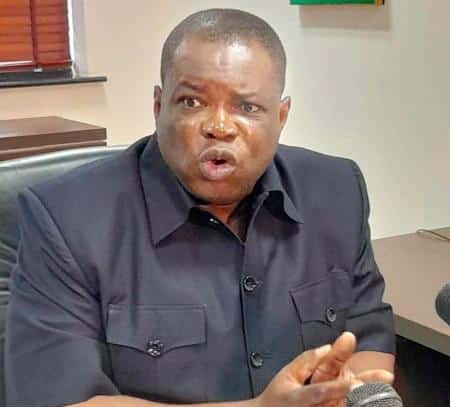
    He further explained that the decision to use President Mahama’s brother’s jet is intended to avoid the high costs of renting chartered planes for official trips, ultimately saving the government money.

    He added, “The state of Ghana has a deficit in terms of its ability to ferry the president.Before he became president, his brother had an aircraft that he was using. It is a fact well known to everybody. The president says that rather than going to take taxpayers’ money to rent an aircraft, let me continue using that aircraft that I was using pending the arrival of the arrangement the state has made.

    “If it were the case that the state had an aircraft that was functioning and the president disregarded that and hopped into his brother’s aircraft and paid for it, in other words, rented it at a cost to the state, then there would be a legitimate basis to raise complaints of conflict of interest and profiteering by his brother. The Air Force itself has said that because of security concerns and the frequent breakdown, they won’t recommend it be used for the president. They have indicated that its operations have proved unreliable and that it costs too much to maintain because the slightest movement requires repairs”.

    Ghana’s presidential jet has been in France’s Dassault Falcon Service in Le Bourget, France, for its mandatory 24-month and 1,600-flying-hour inspection since March. Eight months on, the Falcon 900EX EASy with registration number 9G-EXE remained grounded, with new faults discovered each time it was scheduled to be dispatched back home.

    The Minister, during his presentation, mentioned that the aircraft would only be allowed to return when it was declared airworthy.

    However, Vice President of IMANI Africa, Bright Simons, in an X (formerly Twitter) post on Sunday, November 16, shared that the jet had arrived in Accra, Ghana. According to him, the Falcon 900EX has been in Ghana since Monday, November 10.

    Parts of his post read: “Ghana’s presidential jet has been delivered safely back into the custody of the Ghana Air Force since Monday, the 10th of November. Exactly 8 months after it was sent to the Dassault Falcon Service MRO base at Paris Le Bourget (PLB).”

    He reiterated Mr. Brogya’s explanation in Parliament earlier that the faults that were detected required manufacturer-level intervention and prolonged the maintenance schedule, as the repairs could only be executed at that specific Dassault-authorised site.

    “Whilst at PLB, it underwent a MANDATORY 24-month and 1600-hour technical inspection. During this extensive inspection, severe defects affecting the fuel tank and a turbofan were discovered, triggering prolonged repairs that could only be done with manufacturer assistance at that specific Dassault facility.”

    Following this, “all the complex repairs, final tests (including leak tests, engine ground runs, and acceptance flights) have been successfully completed. The long delay in completing the repairs was due to some apparent difficulty sourcing certain OEM-certified spare parts. The aircraft has, however, been given the all clear by DFS now.”

    He continued that, before the jet was allowed to return, “a positioning flight from Marseille, relating to minor logistics, was conducted.”

    In July 2025, news about the jet surfaced after Member of Parliament for Old Tafo, Vincent Ekow Assafuah, questioned why the Vice President travelled by a rented jet instead of the state’s upon her return from the UK following her medical treatment.

    He asked whether the presidential jet was unavailable, restricted, or reassigned at the time of her private return in May.

    In response to this, late Defence Minister Dr. Edward Omane Boamah revealed that the jet had been grounded in France for repairs and due to the unavailability of a critical component — the turbofan — which had become severely rusted and required urgent replacement.

    He said, “Ghana’s presidential jet, if I am to summarize, is an aircraft that is almost 15 years old that has massive multifocal corrosion, including very important parts of the machine.”

    “These defects, we are trying to fix them, but they keep identifying new defects as they fix them. And one serious aspect of the identification is that, when they realised that the turbofan was heavily corroded and it required replacement, the company did not have a readily available spare,” he noted.

    He also highlighted the challenges of accessing certain spare parts in the coming months or years, given the rapid advancement of technology and the fact that aircraft manufacturers rarely produce many components for older jets like Ghana’s Falcon.

    “Normally, like all technologies over time, when you do not have many of that in circulation, companies do not produce many of such spares. But after a series of negotiations, a spare was received, and that has been installed successfully. And no one can predict, going forward, if other spares also get dysfunctional, whether we are going to be able to have others for replacement,” the Defence Minister added.

    The document, which states the detailed status report of the Falcon 900EX, indicates that technicians discovered severe corrosion in the aircraft’s left-hand (LH) and right-hand (RH) feeder tanks, as well as the centre wing tanks. Corrosion and damage were also found on Engine No.

    2’s air intake plug receptacle and turbofan, which had to be completely replaced, along with intermittent tripping of the starter-generator on Engine No. 2.

    A series of deferred defects had accumulated over previous operations that required manufacturer-level repair. The report also noted that the fuel tank contamination, if left untreated, could potentially cause engine failure during flight, posing a serious safety risk.

    All these issues pushed back the initial return of the presidential jet, which was originally scheduled for March 26, 2025; the aircraft’s delivery has since been postponed multiple times.

    According to the Defence Minister, the delays the jet has faced at the workshop are a “worrying pattern” and indicate “an ageing presidential jet.”

    When the jet was flown for repairs in 2020–2021, it saw no delays. In 2022–2023, it was delayed by 2.5 months. Fast forward to 2024, it saw another 2 months, and in 2025, it has been delayed for four months and counting, with hopes of its return now pinned on July.

    Meanwhile, a security analyst, Emmanuel Kotin, did not mince words when he spoke about Ghana’s presidential jet on TV3’s The KeyPoints on Saturday, July 12.

    He said, “Six years ago, I described it as a flying coffin. That is what it is. Let’s put politics aside; let’s treat this as a national emergency.”Given Ghana’s status as a sovereign and independent country, Kotin believes, “Nobody would advise the president to use the jet. We need an aircraft befitting our status as a sovereign country.”

    While some netizens have advised purchasing a new jet, others have accused the government of wanting to exploit Ghanaians to buy a new jet for their own comfort and selfish gains.

    The Defence Minister has highlighted the need to treat the state of the jet as a national and security issue rather than a partisan one, citing that “…this is an air asset of the Air Force that carries not just the President, not just the Executive, but sometimes the Legislature, sometimes other arms of government, and sometimes other institutions.”

  • Over 11k guns retrieved prior to gun amnesty programme – Muntaka

    Over 11k guns retrieved prior to gun amnesty programme – Muntaka

    Interior Minister Muntaka Mohammed-Mubarak has revealed that about 11,000 firearms were surrendered by civilians prior to the official gun amnesty programme.

    According to him, so far more than 4,000 have been voluntarily handed over by civilians following its launch.

    Speaking to the media, the Interior Minister indicated, “That’s why we came in with the amnesty. And when we rolled out the amnesty period, the statistics showed that we were able to retrieve over 4,000 guns in the hands of civilians”.

    The Gun Amnesty Programme is led by the National Commission on Small Arms and Light Weapoms (NACSA). Last year, Executive Secretary of NACSA, Dr Adam Bonaa disclosed that the Greater Accra Region is leading in the number of firearms retrieved under the programme.

    He noted,”The Greater Accra Region is one of the areas where most of the weapons we have collected are coming from. It is currently leading in terms of arms surrendered under the amnesty programme, with the support of the security commanders”.

    The gun amnesty program is a window of grace. It offers every law-abiding Ghanaian who holds an unregistered or illicit firearm the opportunity to surrender it without fear of interrogation, arrest, or prosecution.


    As part of the initiative, Ghanaians were given from December 1, 2025, to January 15, 2026, to voluntarily hand over such weapons at designated collection points and will be commended, not condemned.


    “You will be recognised as a patriot contributing to the peace and safety of our nation”, the Interior Minister said during an engagement with the media.


    However, individuals who fail to surrender any illegal weapon in their possession, the Asawase Member of Parliament noted, will be treated as criminals and be made to face the full course of the law.


    “But let me be clear: when this amnesty period ends, the law will take its full course. The Ghana Police Service and all security agencies will intensify operations to recover illicit arms. Those who refuse this generous offer will be treated as criminals, and the consequences will be firm and uncompromising”, the Minister added, stressing that the effort is essential to creating a safer and more secure environment for all Ghanaians.


    The Minister also announced a temporary ban on the use of firearms during traditional festivities within the amnesty period, a measure intended to curb celebratory gunfire, prevent injuries, and save lives in communities nationwide.


    He also noted that, “We cannot continue to bury our loved ones while the tools of violence remain unchecked. The statistics are not looking good at all”.


    Also, on the gun, Minister Muntaka revealed during a session with the Public Accounts Committee (PAC) of Parliament in Accra, on Tuesday, 30 September, in response to questions on firearm regulation and monitoring, announced that gun registration, which is currently done manually, will be digitalised to make it easily accessible and less daunting for citizens.


    In a detailed explanation, he broke down what measures the Ministry intends to put in place.


    He said, “So this is what is going to happen: You register, and we have you in the registry. In the registry, we have your contact number and all your details. So, three months before expiry, we will send you a notification that your license will expire on 31st December. And you no longer need to walk to any CID office where you have to join a queue to pay for the renewal. Because the databases will be talking to each other, and over the one year, we will have recorded no criminal activities about the person we granted the license to hold the firearm, you will be able to pay through your MoMo or using your bank details. You can renew it immediately without any struggle.


    “Many people even tend to forget that the time has come for them to renew it. Maybe along the line, they just see the gun and say, “Hey, when was the last time I renewed this?” So we want to digitalise this, and by the grace of God, when we are done, by the close of the year, worst case, by the close of the year, all these things will be digitalised. It will give people the opportunity to do the renewal online without necessarily having to walk to the Police Headquarters.


    However, Mr Muntaka added that gun owners flagged for criminal activity during the renewal period will not be allowed to complete the process online.


    “The only thing is that if there’s a criminal record over the period when you want to renew, it may deny you, and that may require that you come physically. But it also helps us. Even if you change address; because we are going to link it to your Ghana Card, we will be able to tell that Maka has a gun, has not renewed it over this period, and has changed his address from Asar to Bima. We will be able to track him and either retrieve the gun from him or get him to renew his license”, he continued.


    Meanwhile, in a related development, Ghana joined sixty-nine (69) other nations in efforts to reduce and ultimately eradicate dangerous weapons, particularly nuclear bombs, from the world.
    Announcing the development on Saturday, September 27, via the X platform, the Minister for Foreign Affairs, Samuel Okudzeto Ablakwa, stated that Ghana has officially ratified the Treaty on the Prohibition of Nuclear Weapons (TPNW).

    The move, according to the Minister, reflects Ghana’s commitment to supporting global peace and a stable security for the world.

    The Minister further applauded both the Cabinet and Parliament for their unanimous approval of the treaty.
    He also recalled how Ghana’s first president, Osagyefo Dr Kwame Nkrumah, was a strong advocate of disarmament in 1962, adding that the late President would be proud of this groundbreaking step.


    “Yesterday, Ghana boldly demonstrated to the world that we shall be a Nuclear-Weapon-Free State by depositing our instrument of ratification on the Treaty on the Prohibition of Nuclear Weapons (TPNW) at the UN. I commend the Ghanaian Cabinet and Parliament for the unanimous ratification. As I indicated in my UN address, Ghana has been consistent across all political parties in advocating for total disarmament and creating a new world without nuclear weapons.


    “Ghana’s Founder, Osagyefo Kwame Nkrumah, who convened the 1962 World Without the Bomb conference in Accra, would be absolutely proud of this moment. It was an honour to meet with the inspiring Melissa Parke and Seth Shelden of the International Campaign to Abolish Nuclear Weapons (ICAN). ICAN won the 2017 Nobel Peace Prize for their groundbreaking work to attain a world without nuclear weapons. We shall triumph and end global impunity,” he wrote.

  • Cocoa farmers to receive 27k sprayers and 89k PPEs from COCOBOD

    Cocoa farmers to receive 27k sprayers and 89k PPEs from COCOBOD

    About 27,000 motorised spraying machines and 89,000 personal protective equipment (PPE) are expected to be distributed by the Ghana Cocoa Board (COCOBOD) to cocoa farmers.

    This was announced by the Board Chairman of the Ghana Cocoa Board (COCOBOD), Dr. Samuel Ofosu Ampofo, on Thursday, March 12. He explained that it is to assist Ghanaian cocoa farmers despite current sectoral challenges.

    “COCOBOD has decided that, in spite of all the challenges, all the interventions we are putting in place to assist the cocoa farmers, we will continue to do them. We will supply free fertilizer and insecticide.

    “As we speak with you, we have procured 27,000 spraying machines to be given to farmers. We have also been able to buy 89,000 PPEs to be given to farmers,” he stated.

    Meanwhile, cocoa farmers who have been owed since November last year are set to receive the monies owed to them as the Ghana Cocoa Board (COCOBOD) moves to clear the outstanding arrears.

    Engaging the press on Thursday, March 13, the Head of Public Affairs at the Ghana Cocoa Board (COCOBOD), Jerome Sam, disclosed that the Board has disbursed approximately GH¢4.2 billion to Licensed Buying Companies (LBCs) for onward payment to cocoa farmers.

    He added, “Some of the payments are recent, while others are older. Since 2023, when we experienced challenges with the syndicated loan, Licensed Buying Companies sometimes stepped in to pre-finance cocoa purchases. COCOBOD later reimburses them for those purchases.


    “That is why some farmers are not owed by the LBCs, while others still have outstanding payments. As COCOBOD, we are working tirelessly to ensure that every cedi owed to the Licensed Buying Companies is paid so they can also settle any outstanding debts with their cocoa farmers”.

    Last month, an amount of GHC237 million has been paid to cocoa farmers for 50,000 metric tonnes of cocoa by the Ghana Cocoa Board (COCOBOD).

    In a Facebook post on Wednesday, February 18, head of Public Affairs at the Ghana Cocoa Board (COCOBOD), Jerome Kwaku Sam wrote, “I’m happy to report COCOBOD has started payment of the 50,000 metric tonnes. An amount of GHC237 million has been paid.”

    Last week, the Ghana Cocoa Board’s commenced payments to Licensed Buying Companies to clear outstanding arrears owed Ghanaian cocoa farmers who sold and delivered their cocoa beans without receiving payment.

    This followed several calls by cocoa farmers demanding payment for months of prolonged arrears from the government. On the floor of Parliament on Thursday, February 5, the Minority caucus raised concerns about the sustainability of the cocoa sector if the demands of cocoa farmers are not addressed.

    Although LBCs have paid over GH¢620 million to cocoa farmers, a significant amount remains. Speaking to the media, Head of Corporate Communications at COCOBOD, Jerome Kwaku Sam “In November, we paid over GH¢6 billion, in December more than GH¢5 billion, and in January another GH¢6 billion.

    “This month alone, we have paid over GH¢620 million, and we are continuing to pay the LBCs so they can clear outstanding payments to farmers”.

    The President of the Ghana National Association of Cocoa Farmers (GNACOF), Stevenson Anane Boateng, has lamented the government’s hesitation to pay them for the cocoa sold out to them.

    He said, the situation has rendered a number of cocoa farmers broke since November last year and are calling for intervention“The government is buying our cocoa but has refused to pay us. Since November, we have not been paid. They accept the cocoa, but they don’t pay us,” he lamented during an interview on Frontline on Rainbow Radio 87.5FM.

    When asked what might have caused the delay, he responded: “We don’t know. We are not part of the government, so please, you need to ask them why they have refused to pay cocoa farmers. This is troubling, and we want the government to address our concerns.”

    Meanwhile, the Ghana National Cocoa Farmers Association (GNACOFA) has cautioned the government that failure to introduce a pension scheme, improve health insurance, and ensure access to quality healthcare will leave farmers with no option but to take action themselves.

    GNACOFA has made a formal call for swift reforms aimed at improving the welfare and security of cocoa farmers across the country, noting that they currently do not have sufficient social protection.

    The Association urged the government to establish a pension scheme for cocoa farmers, broaden and enhance their health insurance benefits, and guarantee access to quality healthcare services.

    Anane Boateng called on the government to respond without delay, warning that inaction would force farmers to mobilise for a nationwide protest to push their demands.

    Meanwhile, in August 2025 Finance Minister, Dr. Ato Forson announced at a press conference after a meeting with the Producer Price Review Committee that Cocoa farmers in the country will soon receive free fertiliser and other inputs from the government starting from the 2025/2026 crop season.

    According to Mr Forson, the government’s decision to reintroduce free fertilisers is aimed at supporting farmers to increase production.

    “In preparation for the new season, COCOBOD has made available jute sacks and related logistics for the smooth take-off of the 2025/2026 crop Season. Ladies and Gentlemen, and to the cocoa farmer, I am pleased to announce that President John Mahama’s administration has reintroduced the free cocoa fertiliser programme as an additional support to the Ghanaian cocoa farmer, beginning the 2025/2026 crop year.”

    Dr. Forson added that every single farmer will benefit from this initiative.

    “Beginning this crop year, President Mahama’s administration will supply free cocoa fertilisers (both liquid and granular), free insecticides, free spraying machines, free fungicides, and free flower inducers to farmers.”

    Farmers were therefore cautioned against smuggling. “Government strongly advises cocoa farmers to apply these inputs solely for the purpose of improving cocoa yield and their income. Please do not smuggle them,” he said.

    Minister for Foreign Affairs, Honourable Samuel Okudzeto Ablakwa, and the Ambassador of the Kingdom of Morocco, Her Excellency Imane Ouaadil, on July 28, handed over two thousand (2,000) tons of fertilizer, equivalent to 40,000 bags of fertilizer, to the Ministry of Food and Agriculture.

    According to the Foreign Ministry, the fertilizer was donated to the West African country by the Kingdom of Morocco during Mr. Okudzeto Ablakwa’s official visit to Morocco last month, as part of the two countries’ commitment to sustainable agriculture to enhance food security.

    Deputy Minister for Food and Agriculture, John Setor Dumelo, received the donated fertilizers on behalf of the Minister for Food and Agriculture, Eric Opoku. He expressed gratitude to the Moroccan government for the donation. He assured that farmers will receive the fertilizers to aid crop production.

    “Yesterday, 40,000 bags of fertilizer was donated to Ghana by the Kingdom of Morocco through the Ministry of Foreign Affairs. On behalf of my boss Hon Eric Opoku, I want to say a big thank you to Hon Ablakwa and Her Excellency Ouaadil for this kind gesture. We at the Ministry of Agriculture will ensure the fertilizers get straight to the deserving farmers as soon as possible,” he wrote in a post on the X platform on July 29.

    Agricultural stakeholders have long raised concerns over Ghana not having a single chemical fertiliser plant.

    According to the Institute for Fiscal Studies, this gap is affecting crop yields and weakening the sector’s overall contribution to the economy, with agriculture’s share of GDP falling from 26.9% in 2010 to 22.7% in 2023.

  • Ghanaian soldier injured in Lebanon missile strike recovering after surgery – UN

    Ghanaian soldier injured in Lebanon missile strike recovering after surgery – UN

    The United Nations (UN) has assured that the Ghanaian soldier, Lance Corporal Albert Abrefa Busia who got injured in a missile attack on a United Nations peacekeeping base in southern Lebanon is recovering.

    In a press statement the UN said, “Great to learn that Lance Corporal Albert Abrefa Busia of Ghana, one of the peacekeepers serving with the United Nations Interim Force in Lebanon who was recently injured during a missile attack, is recovering”.

    Last week, two Ghanaian soldiers serving with the United Nations Interim Force in Lebanon (UNIFIL) were seriously injured following an attack in southern Lebanon.

    The attack occurred on March 6, 2026, targeting members of the Ghanaian Battalion deployed under the UN peacekeeping mission. 

     In a letter addressed to the UN Secretary-General, Antonio Guterres Foreign Affairs Minister Samuel Okudzeto Ablakwa has demanded an immediate investigation into the matter while the government strongly condemned the attack.

    “The Minister for Foreign Affairs, Hon. Samuel Okudzeto Ablakwa, has on behalf of the Government of the Republic of Ghana formally lodged a protest with the United Nations following the attack on the Ghanaian Battalion serving with the United Nations Interim Force in Lebanon (UNIFIL) in Southern Lebanon on 6th March 2026, which left two Ghanaian soldiers seriously injured.”

    “The Government of Ghana has called for a full, immediate, impartial and transparent investigation into the circumstances surrounding the attack on personnel deployed in the service of international peace and security,” Mr Ablakwa said in a statement dated March 6, 2026.

    While describing the incident as unacceptable, the government stressed that United Nations peacekeeping personnel must be safeguarded as they perform their duties of maintaining international peace and security.

    Officials also insisted that those behind the attack be traced and brought to justice, noting that the incident amounts to a serious breach of international law and violates the protections accorded to UN peacekeeping forces.

    The government also reassured the wounded soldiers and their families that efforts will be made to secure justice while discussions with UN authorities continue to ensure improved protection for Ghanaian troops on international peacekeeping missions.

    Government spokesperson Felix Kwakye Ofosu also condemned the incident, stating that no nation or group should be permitted to assault non-combatants without facing consequences.

    Speaking on Newsfile on Saturday, Mr. Kwakye Ofosu indicated that the attack on the Ghanaian contingent serving under the United Nations Interim Force in Lebanon (UNIFIL) was unacceptable and must be examined by the United Nations.

    “No country is allowed to behave with such impunity and set about attacking non-combatants, people who have not shown any aggression and who are in fact there to keep the peace,” he said.

    He further pointed out that Ghanaian soldiers participating in UN peacekeeping operations have earned global recognition and have been involved in such missions for many years to help maintain peace and stability in conflict zones.

    “They are people who are there to keep the peace and they have done this for decades. It is an internationally recognised activity that they are engaging in.The activities do not pose any threat whatsoever to anybody within the region to warrant such an attack. As the country whose troops have been at the receiving end of this attack, we need to take it very seriously. That is why we have lodged this formal complaint,” Mr Kwakye Ofosu expressed.

    Bright Simons, Honorary Vice President of IMANI Africa, has also expressed worries about the credibility and future sustainability of the United Nations peacekeeping mission.

    In an interview on Newsfile on Joy News on Saturday, Mr Simons criticised the attack but noted that it also brings into focus important concerns about the effectiveness of the peacekeeping operation.

    He explained that UNIFIL was initially established to stop further Israeli military advances into Lebanese territory and to facilitate the disarmament of Hezbollah fighters. Nevertheless, he said these central goals have not been achieved.

    “The action is utterly condemnable, and I agree with everything that has been said by the preceding speakers. But we must also ask fundamental questions about the credibility and viability of this particular UNIFIL contingent,” he stated.

    The mission functions under the provisions of United Nations Security Council Resolution 1701, which called for a ceasefire between Israel and Hezbollah after the 2006 conflict.

    The resolution directed both parties to halt hostilities and proposed the disarmament of Hezbollah, while assigning UN peacekeepers the responsibility of assisting the Lebanese Armed Forces in maintaining stability in the area.

    However, IMANI Africa maintains that the main provisions of the resolution have not been fully carried out. Israeli forces have continued operations in southern Lebanon, while Hezbollah remains armed and active.

    Mr Simons observed that stopping Israeli incursions would largely rely on pressure from the United States, which he believes has not demonstrated strong readiness to enforce such actions.

    He also raised doubts about whether any international actor other than Iran has the influence to push for the disarmament of Hezbollah. Under these circumstances, IMANI Africa questioned the ongoing purpose of UN peacekeepers in the region.

    Mr Simons further pointed out that the mission was already expected to conclude by the end of September, heightening concerns about the dangers peacekeepers may still encounter before then.

    “What exactly are UN forces still doing there as auxiliaries of the Lebanese army, which was their original mandate?” he asked.

    Following the recent attack on Ghanaian soldiers, IMANI Africa has advised the government to consider speeding up Ghana’s withdrawal from the mission.

    It described the situation as “double unfortunate,” warning that UNIFIL may no longer represent a credible international peacekeeping force under the current geopolitical realities.

    Meanwhile, the Ministry of Foreign Affairs noted that it will continue to monitor developments closely while engaging with relevant UN authorities regarding the incident.

  • Gold mining levy reduced from 3% to 1%

    Gold mining levy reduced from 3% to 1%

    Amendments to the Growth and Sustainability Levy (Amendment) Act, 2026, have received parliamentary approval.

    As a result, levy on mining firms will drop from 3 percent of gross production to 1 percent. This, according to the government, is to reduce financial burden created by newly introduced royalty rules, as well as boosting the mining sector.

    The President Mahama-led administration has repealed certain taxes in recent times, They include the Electronic Transfer Levy (E-Levy), Betting Tax, and Emissions Tax.

    This decision became official on April 2, 2025, when President Mahama signed the necessary legislative bills into law.

    The Finance Minister, Dr. Ato Forson emphasized that the move reflects the government’s dedication to easing financial pressures on Ghanaians.

    In a social media post on April 2, he declared, “It is finished,” signifying the successful implementation of Mahama’s tax reforms.

    The new laws include the Electronic Transfer Levy (E-Levy) Repeal Bill 2025, which officially eliminates the controversial levy on mobile money and electronic transactions.

    Article image 1

    The Emissions Levy Repeal Bill, another key measure, removes a tax originally meant to reduce pollution but widely opposed by businesses and individuals.

    Changes to the Value Added Tax (VAT) system have also been approved to improve compliance while lessening the burden on businesses and consumers.

    The Income Tax Amendment Bill 2025 introduces adjustments to tax rates and exemptions aimed at improving fairness and revenue collection.

    Further revisions include the Petroleum Revenue Management Amendment Bill 2025, which seeks to enhance the allocation of petroleum sector funds.

    The Public Financial Management Amendment Bill focuses on strengthening accountability and transparency in government spending.

    Additionally, the Earmarked Funds Capping and Realignment Bill aims to optimize budget allocations by setting limits and redistributing earmarked funds.

    Other legislative changes include a second amendment to the VAT system to refine tax administration.

    The Energy Sector Levy Act has also been introduced to restructure levies within the sector to boost financial stability and attract investment.

    The Gold Board Bill 2025 provides a regulatory framework for gold mining, trade, and exports to maximize its economic impact.

    The Growth and Sustainability Levy Act establishes measures designed to ensure the long-term stability of the economy.


  • W/R: Police nab 5 suspects in connection with armed robbery incident at Chinese firm

    W/R: Police nab 5 suspects in connection with armed robbery incident at Chinese firm

    Five suspects have been nabbed by the police for the involvement in an armed robbery incident at a Chinese heavy-duty machinery company, Velotop Co. Ltd at Malta, a suburb of Asankrangwa in the Amenfi West Municipal Assembly.

    The group reportedly invaded the premises of the machinery company with pump-action guns, a pistol, and machetes on Thursday, March 12, 2026, at about 7:20 p.m. They allegedly made way with GHS 200,000 after holding workers of the company hostage.

    The vehicle of the suspects, a black Toyota Voxy vehicle with registration number GS 576-25 was intercepted at a checkpoint during an inspection by the police.

    One iPhone 13 mobile phone, one Nokia C300 mobile phone, one Villooan mobile phone, two CCTV camera decoders, three pairs of handcuffs, two pump action guns, 14 AA cartridges, and cash amounting to GHS 198,200 were retrieved by the police during the inspection.

    Meanwhile, the police has revealed that efforts are underway to arrest the leader of the gang and any other accomplices.

    Last month, the gang leader, Eric Acheampong Adu, in a robbery incident at Ohwim Tigo Junction in Kumasi, has been confirmed dead.

    Addressing the media on Monday, February 23, the Inspector-General of Police (IGP) Christian Tetteh Yohuno, disclosed that the deceased, who is specialised in the snatching of pickup and Land Cruiser vehicles, sustained gunshot wounds during the operation with the police and later passed on.

    The IGP noted “Suspect Eric Acheampong Adu, who sustained gunshot wounds during the operation, has passed on. Our investigation further established that this criminal syndicate, led by the deceased suspect, specialised in the snatching of pickup and Land Cruiser vehicle”.

    The four other culprits; Akwasi Manu, Bashiru Tanko, Kwaju Amponsah and Emmanuel Kwame Apea are in police custody assisting with investigations. Akwasi Manu was arrested after the police traced a mobile phone belonging to the deceased in his possession on Wednesday, February 18. Bashiru Tanko, was arrested at Atonsu High School Junction in Kumasi on February 19.

    Kwaju Amponsah and Emmanuel Kwame Apea, on February 21 and 22 at Hwireso near Buokrom and the Danyame Soldier Barracks in Kumasi, respectively. On Tuesday February 10, the gang reportedly attacked the victim, identified as Andrews Amankwa, shot him, and made away with his Toyota Hilux vehicle. Andrews Amankwa was receiving treatment at the hospital was later pronounced dead.

    In recent years, the Ghana Police Service has made significant progress in tackling robberies and prosecuting offenders. The Service assured the public of its commitment to ensuring security, law, and order across the country.

    On February 2, five persons have been arrested for their alleged involvement in a robbery attack that occurred on December 2 last year at Nkaseim in the Ahafo Region.

    The armed suspects invaded the Goaso–Tepa road and simultaneously attacked the Nkaseim Police Station, the Adwumapa Cocoa Buying Company, the Kobby Gold Buying Company, and the Asutifi Rural Bank area in Nkaseim, stealing their belongings. Stolen belongings of the victims include two AK47 rifles, unspecified amounts of cash, and other valuables.

    In a Facebook post on Sunday, February 1, the police disclosed that the armed robbers also shot one victim during the attack, causing injuries.

    They include 45-year-old Mahamadu Sagio, 28-year-old Shaibu Issah Jallo, 25-year-old Bukari Sulley, also known as Tailor, a commercial tricycle rider, 35-year-old Mutar Kofi, and 40-year-old Abdul Suleman. Meanwhile, three other suspects, identified as Dauda, Mohammed Ali, and Hoyeefi, are on the run.

    On Thursday, January 29, seven individuals were arrested over a highway robbery incident that took place last year on the Tamale–Buipe highway, during which a member of the Council of State was assaulted.

    The suspects, identified as Rashida Yussif, Aaron Abaana, Wilson Abasong, Muntaru Iddrisu, Aminu Zibrilla, Innusa Sumaila and Haruna Safianu, were arrested on January 11, 2026, after weeks of sustained investigations.

    Addressing the media at the Police Headquarters in Accra, the Director-General of the Criminal Investigations Department (CID), COP Lydia Yaako Donkor, disclosed that inquiries into the case are still ongoing.

    She recounted that the incident occurred on July 21, 2025, when the victim was travelling on the Tamale–Buipe highway and was attacked by six armed men who fled with several personal items, including mobile phones, cash, wristwatches, reading glasses, laptops and other valuables.

    “The arrests form part of intelligence-led operations aimed at dismantling highway robbery networks across the country,” COP Donkor said.

    She also revealed that a separate police operation led to the arrest of five suspects linked to another robbery incident at Nkasei in the Ahafo Region.

    According to her, the suspects — Muta Kofi, Mahamadu Sajoe, alias Salifu, Shaibu Issah, Abdul Suleman and Bukari Sule, alias Taylor — were picked up on different dates following investigations into a robbery that occurred on December 2, 2025.

    She explained that the suspects, together with other accomplices, allegedly mounted a blockade on the Goaso–Tepa road while armed and launched attacks on unsuspecting motorists.

    COP Donkor added that investigations into both robbery cases are still underway as police efforts continue to recover stolen property and track down additional suspects.

    She further appealed to the public to stay alert, place a premium on personal safety when travelling, and refrain from sharing sensitive information with strangers, as police intensify nationwide operations to combat criminal activity.

    Last year, the government intensified security efforts along the Walewale-Bolgatanga Highway by deploying military personnel and drones to curb rising attacks on passenger buses.

    Minister for the Interior, Mr. Muntaka Mohammed-Mubarak, made this known in Parliament on Tuesday, March 18, 2025, while responding to concerns raised by the Member of Parliament for Walewale regarding escalating robberies and vehicle burnings in the North East Region.

    According to Mr. Muntaka Mubarak, although Walewale has seen a steady decline in armed robbery cases—from 30 incidents in 2022 to 18 in 2024—the attacks targeting passenger buses remain a pressing concern.

    He linked the recent surge in highway violence to the ongoing Bawku chieftaincy conflict, explaining that the unrest was spilling over into surrounding areas and contributing to insecurity along the route.

    To address the situation, the government imposed a curfew on Walewale and its environs on February 15, 2025, while also reinforcing security operations in the area.

    In addition to the military deployment, extra police officers have been dispatched from Tamale to support the Walewale District Command. The government has also increased logistical support, including the provision of more patrol vehicles.

    Furthermore, three police bases have been established in Walewale, Janga, and Gombiliga, each manned by 30 officers to enhance security patrols. To protect traders, police escorts have been introduced for market women traveling to and from Walewale’s markets.

    Despite these interventions, Mr. Muntaka Mubarak acknowledged that no arrests were made in connection with this year’s robbery incidents. He noted that tracking suspects had been challenging due to the widespread use of motorbikes in the area but remained optimistic about the impact of the new surveillance measures.

    “I will continue engaging the police, and with drone surveillance now in place, I believe we will see improvements. But as of now, I have no information on arrests,” he said.

    Authorities remain hopeful that these enhanced security measures will restore safety along the highway and deter further attacks.

    The Ghana Police Service announced its readiness to face any criminal network and criminal activities with rigour after the boost that comes with the government handing over forty armoured vehicles.

    President Mahama handed over the vehicles yesterday, Thursday, December 4, in a handing-over ceremony held at the Ghana Police Headquarters in Accra, and in response to this, the IGP, Christian Tetteh Yohunu, in an acceptance speech, sent a word of caution to all who seek to disrupt national security and peace that his outfit will relentlessly pursue and apprehend anyone involved in criminal activities.

    “Let me use this opportunity to send a strong word of caution to persons who have decided to threaten the security of this country: we are coming for you. You can run all you want and hide wherever you wish, but we will surely get you,” taunting the police service’s achievements so far under his leadership.

    “We have made several breakthroughs. In addition to numerous robbery attempts that have been foiled through sustained intelligence operations, we have successfully arrested suspects who operated under the illusion that they could get away with crime.

    “These include the suspect behind the rural bank robberies, the robbery of the Radiance Filling Station, the robbery at Enfasatia, attacks on mobile vendors, the Wire and Bullet serial murders, vehicle theft syndicates, and perpetrators behind fake online food-delivery platforms,” he mentioned.

  • Electricity tariffs to drop by 4.81%, water by 3.06% from April 1

    Electricity tariffs to drop by 4.81%, water by 3.06% from April 1

    Electricity and water tariffs will be reduced by 4.81% and 3.06%, respectively, effective Wednesday, April 1, the Public Utilities Regulatory Commission (PURC) has announced. The reduction follows the Commission’s quarterly tariff review. 


    The Public Utilities Regulatory Commission attributed the decision to changes in the Ghanaian Cedi–United States Dollar exchange rate, domestic inflation, electricity generation mix, and the cost of fuel, particularly natural gas used in thermal power plants. This was contained in a statement issued by the Commission on Friday, March 13.

    “The Public Utilities Regulatory Commission (PURC) wishes to inform consumers of electricity and water that the existing electricity and water tariffs have been reviewed downwards to take effect from April 01, 2026.

    “The Commission applied a projected Weighted Average Ghana Cedi-US Dollar Exchange Rate of GHS11.1931/US$1.0000 for the second Quarter of 2026. This projected exchange rate is based on a 3- month Actual Inter-Bank Average Ghana Cedi-US Dollar Selling Exchange Rate for the period December 01, 2025, to February 28, 2026. This indicates a 6.78% reduction from the last Quarter rate of GHS12.0067/ US$1.0000,” the statement said.

    As part of PURC’s multi-year tariff review process covering 2026 to 2030, electricity tariffs were increased by 9.86 percent, while water tariffs were rose by 15.92 percent.

    Justifying the increases, the Public Utilities Regulatory Commission cited the investment requirements of utility providers, the need to ensure industry competitiveness, and the necessity of safeguarding consumer interests. PURC also attributed the adjustments to the cedi–dollar exchange rate, domestic inflation, the electricity generation mix, and rising fuel prices, especially natural gas.

    However, speaking to the media on Tuesday, December 9, GWCL’s Public Relations Officer, Stanley Martey, indicated that the 15.92% tariff increase is inadequate to ensure taps keep flowing often. He stressed that the adjustment fails to provide lasting solutions to GWCL’s major financial and operational problems.

    “Let’s admit that we can only keep the taps on 24/7 when we have built new treatment plants, when we have extended pipelines and all that. This tariff cannot do that,” he said.

    In October, electricity tariffs for all consumer categories increased by 1.14 percent. However, water tariffs saw no increase for the same period. According to a press statement by Acting Executive Secretary Shafic Suleman, the Commission indicated that the adjustment had become necessary due to factors such as the Ghana cedi–US dollar exchange rate, domestic inflation, the electricity generation mix, and fuel prices, especially natural gas.

    The review was in line with the Commission’s Quarterly Tariff Review Mechanism, which tracks key economic factors that affect the cost of delivering utility services.

    The PURC notes that the incoming hike will maintain the real value of tariffs and keep service providers financially stable. The Commission stated that it did not fully recover some costs in the previous quarter (Q3), due to currency changes or other factors.

    It added that it was short of GHS0.3980 per US$1 in the third quarter and therefore incorporated this shortfall into the new tariff.

    Earlier in September this year, the Public Utilities Regulatory Commission (PURC) received proposals from eight utility companies calling for a significant adjustment in utility tariffs to ensure they can fully operate at their capacities.

    Proposals from the electricity distributors and the water provider for the 2025–2029 tariff period cited rising operational costs and the need to maintain efficient service delivery.

    The eight companies include the Electricity Company of Ghana (ECG), Volta River Authority (VRA), Northern Electricity Distribution Company (NEDCo), Ghana Water Limited (GWL), the Ghana Grid Company (GRIDCo), Ghana National Gas Limited, among others.

    ECG pushed for a massive 225% hike in its distribution service charge. For instance, a household consuming 150 kWh monthly would pay an additional GHS64, while a residence using 100 kWh per month would pay about GHS43 more in distribution charges.

    As part of ECG’s request, the current Distribution Service Charge (DSC) of 19 pesewas per kilowatt-hour should be raised to nearly 62 pesewas per kilowatt-hour.

    “The PURC will undertake the major adjustment in the 4th quarter of 2025 to reflect capacity charges, additional liquid fuel usage, and additional capex. The current charge is below industry benchmarks, and cedi depreciation has reduced its value. US$408m spent on network upgrades and smart meters,” parts of ECG’s petition read.

    ECG has emphasised that the adjustment has long been overdue, noting that in 2022 it proposed 39.95 pesewas, but only 19.04 pesewas was approved.

    According to ECG, it has invested $48 million in network upgrades and smart metering systems to enhance power reliability, reduce outages, and align tariffs with international industry standards, yet these efforts have not yielded the expected cost recovery.

    Furthermore, ECG has projected an annual revenue of GHS9.5 billion between 2025 and 2029 if the new charges are approved. The proceeds, according to the utility company, would be allocated to cover operational costs, depreciation of assets, staff salaries, and the recovery of recent capital expenditures.

    VRA sought a 59% increase to cover the rising costs of producing electricity. If approved, the current tariff of 45.0892 Ghana pesewas per kilowatt-hour will be increased to 71.8862 pesewas per kilowatt-hour for the Bulk Generation Charge.

    Speaking during a public hearing on Tuesday, September 9, Senior Economic Analyst at VRA, Evans Somuah Mensah, said, “Over the years, VRA has not been compensated for doing this work to assist the national connectivity system. We are saying that on an annual basis, VRA should be given compensation $30.49 million for Akosombo power generation, and Kpone Thermal plant, a little bit of $30,000.

    “Justification for tariff increase, we are saying that we want to recover the cost of our power supply to the distribution companies, and recover the cost of transmission and also be compensated for the provisions of ancillary services. We are requesting the PURC to increase the existing tariff of BGC from 45.0892 Ghana pesewas per kilowatt-hour to 71.8862 Ghana pesewas per kilowatt-hour.”

    VRA has justified the increase as necessary to fully recover the cost of power generation supplied to distribution companies (DISCOs). It has noted that sustaining reliable electricity generation and meeting its operational and financial obligations will become increasingly difficult if its proposal is rejected.

    Ghana Water Limited has proposed a jump from GH¢5.28 per cubic metre to GH¢20.09 per cubic metre, seeking regulatory approval for a 281% increase in its water tariff.

    NEDCo has also called for its tariff to be increased to 153.03 pesewas per kilowatt-hour from the current 56.474 pesewas, representing a 171% rise. GRIDCo, meanwhile, is demanding that the current 5.6422 pesewas per kilowatt-hour on its transmission service tariff be raised to 12.9768 pesewas per kilowatt-hour.

    Ghana National Gas Limited is proposing to increase its tariff from US$1.10 to US$2.10 per million metric British thermal units (MMBtu). However, the onus lies on PURC to carefully review the requests, assess whether the increases are justified, and determine how the costs will be distributed.

    In July this year, electricity tariffs increased by 2.45% across the board, with no increase in water tariffs.

    The adjustments, according to PURC, were carried out in line with the Commission’s Quarterly Tariff Review Mechanism, which tracks and incorporates movements in key factors beyond the control of the Utility Service Providers (USPs).

    These factors include the exchange rate between the US dollar and the Ghana cedi, the domestic inflation rate, the electricity generation mix, and the cost of fuel, mainly natural gas.

    According to the Commission, additional factors considered before concluding the hike in tariffs include outstanding debt of GHS488 million carried over from the previous three quarters, reserve capacity for grid stability and reliability, and the inclusion of 27% of the cost of alternative fuels such as Distillate Fuel Oil (DFO), Heavy Fuel Oil (HFO), and Light Crude Oil (LCO).

    The Commission expressed gratitude to stakeholders for their support as it continues to implement the Quarterly Tariff Reviews in accordance with its Rate Setting Guidelines to address changes in operational conditions of the service providers.

    Majority Leader Mahama Ayariga justified PURC’s decision to increase electricity tariffs. Speaking on the floor of Parliament on Friday, June 27, he noted that there is a need for ECG to be able to settle its growing debt.

    “You all know that the whole of last year and before that, there was an effort to prevent the PURC from adjusting the tariffs. So that whole period, there was no adjustment, and you know very well that bills were accruing; payments have to be made. ECG is accumulating huge [debt] and it has to be paid, so who is supposed to pay? Is it not the consumer?” he questioned.

    According to him, failure to address ECG’s indebtedness would render the company powerless in supplying power to its consumers.

    “And if you are not adjusting the tariffs to enable ECG to pay, ECG is going to collapse. They are no longer able to buy the input needed to keep the generators on, and we are going to have a power outage; the bills have to be paid.

    “The bill has to be paid. So if PURC is doing its work, I do not think there is a basis for saying that because we have improved the economy, it doesn’t mean that the debt at ECG will just be whisked away. The bill has to be paid partly by consumers,” he asserted.

  • President Mahama forced to use brother’s jet due to unreliable state aircraft – Ofosu Kwakye

    President Mahama forced to use brother’s jet due to unreliable state aircraft – Ofosu Kwakye

    The Minister of State for Government Communications, Felix Ofosu Kwakye, has revealed that President John Dramani Mahama is using his brother’s private jet for official international travel due to the lack of a reliable state aircraft.

    Speaking to the media, on Thursday, March 12, he noted that the practice is a temporary one and will be ceased once a more dependable state aircraft is obtained by the government.
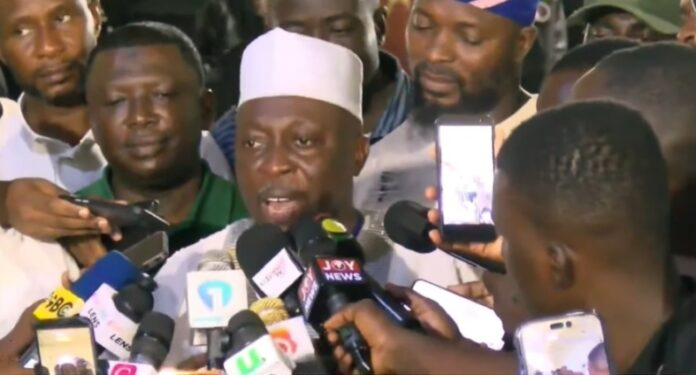
    He further explained that the decision to use President Mahama’s brother’s jet is intended to avoid the high costs of renting chartered planes for official trips, ultimately saving the government money.

    He added, “The state of Ghana has a deficit in terms of its ability to ferry the president.Before he became president, his brother had an aircraft that he was using. It is a fact well known to everybody. The president says that rather than going to take taxpayers’ money to rent an aircraft, let me continue using that aircraft that I was using pending the arrival of the arrangement the state has made.

    “If it were the case that the state had an aircraft that was functioning and the president disregarded that and hopped into his brother’s aircraft and paid for it, in other words, rented it at a cost to the state, then there would be a legitimate basis to raise complaints of conflict of interest and profiteering by his brother. The Air Force itself has said that because of security concerns and the frequent breakdown, they won’t recommend it be used for the president. They have indicated that its operations have proved unreliable and that it costs too much to maintain because the slightest movement requires repairs”.

    The explanation follows recent criticism from scores of Ghanaians. Last year, Deputy Minister for Defence, Brogya Genfi, during a briefing on the floor of Parliament on the reasons for the delay in the return of the presidential jet, noted that new technical faults were discovered while the original fault, a corroded fuel tank, was being fixed.


    Ghana’s presidential jet has been in France’s Dassault Falcon Service in Le Bourget, France, for its mandatory 24-month and 1,600-flying-hour inspection since March. Eight months on, the Falcon 900EX EASy with registration number 9G-EXE remained grounded, with new faults discovered each time it was scheduled to be dispatched back home.


    The Minister, during his presentation, mentioned that the aircraft would only be allowed to return when it was declared airworthy.


    However, Vice President of IMANI Africa, Bright Simons, in an X (formerly Twitter) post on Sunday, November 16, shared that the jet had arrived in Accra, Ghana. According to him, the Falcon 900EX has been in Ghana since Monday, November 10.


    Parts of his post read: “Ghana’s presidential jet has been delivered safely back into the custody of the Ghana Air Force since Monday, the 10th of November. Exactly 8 months after it was sent to the Dassault Falcon Service MRO base at Paris Le Bourget (PLB).”


    He reiterated Mr. Brogya’s explanation in Parliament earlier that the faults that were detected required manufacturer-level intervention and prolonged the maintenance schedule, as the repairs could only be executed at that specific Dassault-authorised site.


    “Whilst at PLB, it underwent a MANDATORY 24-month and 1600-hour technical inspection. During this extensive inspection, severe defects affecting the fuel tank and a turbofan were discovered, triggering prolonged repairs that could only be done with manufacturer assistance at that specific Dassault facility.”


    Following this, “all the complex repairs, final tests (including leak tests, engine ground runs, and acceptance flights) have been successfully completed. The long delay in completing the repairs was due to some apparent difficulty sourcing certain OEM-certified spare parts. The aircraft has, however, been given the all clear by DFS now.”


    He continued that, before the jet was allowed to return, “a positioning flight from Marseille, relating to minor logistics, was conducted.”


    In July 2025, news about the jet surfaced after Member of Parliament for Old Tafo, Vincent Ekow Assafuah, questioned why the Vice President travelled by a rented jet instead of the state’s upon her return from the UK following her medical treatment.

    He asked whether the presidential jet was unavailable, restricted, or reassigned at the time of her private return in May.


    In response to this, late Defence Minister Dr. Edward Omane Boamah revealed that the jet had been grounded in France for repairs and due to the unavailability of a critical component — the turbofan — which had become severely rusted and required urgent replacement.


    He said, “Ghana’s presidential jet, if I am to summarize, is an aircraft that is almost 15 years old that has massive multifocal corrosion, including very important parts of the machine.”


    “These defects, we are trying to fix them, but they keep identifying new defects as they fix them. And one serious aspect of the identification is that, when they realised that the turbofan was heavily corroded and it required replacement, the company did not have a readily available spare,” he noted.


    He also highlighted the challenges of accessing certain spare parts in the coming months or years, given the rapid advancement of technology and the fact that aircraft manufacturers rarely produce many components for older jets like Ghana’s Falcon.


    “Normally, like all technologies over time, when you do not have many of that in circulation, companies do not produce many of such spares. But after a series of negotiations, a spare was received, and that has been installed successfully. And no one can predict, going forward, if other spares also get dysfunctional, whether we are going to be able to have others for replacement,” the Defence Minister added.


    The document, which states the detailed status report of the Falcon 900EX, indicates that technicians discovered severe corrosion in the aircraft’s left-hand (LH) and right-hand (RH) feeder tanks, as well as the centre wing tanks. Corrosion and damage were also found on Engine No.

    2’s air intake plug receptacle and turbofan, which had to be completely replaced, along with intermittent tripping of the starter-generator on Engine No. 2.


    A series of deferred defects had accumulated over previous operations that required manufacturer-level repair. The report also noted that the fuel tank contamination, if left untreated, could potentially cause engine failure during flight, posing a serious safety risk.


    All these issues pushed back the initial return of the presidential jet, which was originally scheduled for March 26, 2025; the aircraft’s delivery has since been postponed multiple times.


    According to the Defence Minister, the delays the jet has faced at the workshop are a “worrying pattern” and indicate “an ageing presidential jet.”


    When the jet was flown for repairs in 2020–2021, it saw no delays. In 2022–2023, it was delayed by 2.5 months. Fast forward to 2024, it saw another 2 months, and in 2025, it has been delayed for four months and counting, with hopes of its return now pinned on July.


    Meanwhile, a security analyst, Emmanuel Kotin, did not mince words when he spoke about Ghana’s presidential jet on TV3’s The KeyPoints on Saturday, July 12.


    He said, “Six years ago, I described it as a flying coffin. That is what it is. Let’s put politics aside; let’s treat this as a national emergency.”
    Given Ghana’s status as a sovereign and independent country, Kotin believes, “Nobody would advise the president to use the jet. We need an aircraft befitting our status as a sovereign country.”


    While some netizens have advised purchasing a new jet, others have accused the government of wanting to exploit Ghanaians to buy a new jet for their own comfort and selfish gains.


    The Defence Minister has highlighted the need to treat the state of the jet as a national and security issue rather than a partisan one, citing that “…this is an air asset of the Air Force that carries not just the President, not just the Executive, but sometimes the Legislature, sometimes other arms of government, and sometimes other institutions.”

  • Petrol now GHS11.57, diesel GHS14.35 as NPA revises fuel price floors

    Petrol now GHS11.57, diesel GHS14.35 as NPA revises fuel price floors

    Effective Monday, March 16 petroleum products at the pumps will see an increase following adjustment by the National Petroleum Authority (NPA) for the  second pricing window for the month. 

    As a result, petrol priced at GHȼ10.46 per litre will now be sold at GHȼ11.57. The price floor for diesel has jumped from GH¢11.42 to GH¢14.35 per litre, and LPG has risen from GH¢9.38 to GH¢10.67 per kilogramme.

    Meanwhile, Ghana’s petroleum sector recorded a decline in the second half of 2025.

    The data from the Bank of Ghana (BoG), contained in the Central Bank’s Semi-Annual Report on the Petroleum Holding Fund (PHF) and shared on Tuesday, February 3, shows total receipts of US$399.65 million, significantly lower than returns recorded during the same period in 2024.

    The report explains that the amount represents combined inflows from crude oil liftings and petroleum-related taxes. However, it fell below the US$369.25 million realised from crude oil liftings alone in the second half of 2024, pointing to weaker overall performance in the sector.

    “The total amount received into the PHF account for H2 2025 was US$399.65 million (crude oil lifting total of US$198.25 million and other total income of US$201.40 million),” the report indicated.

    The report further indicates that revenue between July 1 and December 31, 2025, was drawn from two main sources. Crude oil liftings from the Jubilee and Sankofa Gye Nyame (SGN) fields generated US$198.25 million, following the lifting of two Jubilee cargoes and one SGN cargo by the Ghana Group, represented by the Ghana National Petroleum Corporation (GNPC).

    Ghana earned US$201.40 million from petroleum-related taxes and interest during the period. The bulk of this amount, US$198.09 million, came from corporate income taxes, while US$3.31 million was earned as interest on the Petroleum Holding Fund.

    The BoG also explained that revenue from the 25th cargo from the TEN field, valued at US$60.79 million, was not included in the report because the funds had not been received by the end of 2025, even though they were expected in November.

    Even though Ghana received less new money from oil during the period, it still spent and distributed a total of US$493.40 million. The spending was cushioned by savings accumulated by the government from previous years to cover the shortfall.

    Semi-Annual-Report-H2-2025Download

    According to the report, the government used about 57.8% of the total US$493.40 million, amounting to US$285.06 million, to fund its projects and programmes through the national budget. About 23.5%, representing US$115.99 million, was saved to stabilise the economy during difficult times, while US$49.71 million was saved for future generations. Another US$42.63 million was given to the Ghana National Petroleum Corporation to help cover its operational and investment costs.

    The report further showed positive investment performance for Ghana’s petroleum savings. The Ghana Petroleum Funds recorded a net realised income of US$28.11 million, with returns of 2.28 per cent for the Heritage Fund and 2.51 per cent for the Stabilisation Fund.

    As of December 31, 2025, total petroleum reserves stood at US$1.55 billion, with the Heritage Fund accounting for US$1.38 billion.

    Looking ahead, the Bank of Ghana adopted a cautious outlook for 2026, noting that Brent crude prices declined from US$66.61 to US$60.81 per barrel by the end of 2025.

    While the International Monetary Fund projects global growth of 3.3 per cent, the report warned that Ghana’s petroleum revenues remain exposed to geopolitical developments in the Middle East and OPEC+ production decisions, with oil prices expected to average about US$62.13 per barrel in 2026.

    Meanwhile, in a related development, motorists have started the New Year on a good note, with less pressure on their pockets, as several Oil Marketing Companies (OMCs) have effected a reduction in fuel prices at their respective pumps across the country in the January pricing window.

    The price cuts, which took effect in the early hours of the New Year, signify a continued downward trend in petroleum costs, offering much-needed breathing room for both commercial and private transport users.

    Among the first OMCs to effect the reduction was market leader Star Oil. It set the pace and a benchmark for other OMCs as it adjusted its digital displays, reflecting a marginal dip from previous prices.

    Petrol is now selling at GH¢10.86 per litre, diesel is priced at GH¢11.96 per litre, and RON 95 is selling at GH¢13.56 per litre.

    According to Star Oil management, the reduction in oil prices is a result of a “favourable domestic and external cost environment,” citing the cedi’s appreciation and a dip in international refined product prices.

    It said the current reductions may only be the tip of the iceberg for January. The Chamber of Oil Marketing Companies (COMAC) projected a robust outlook for the month, suggesting that competitive pressures will force more OMCs to follow suit in the coming days.

    In its January pricing outlook, COMAC provided a breakdown of the expected percentage declines. It projected that petrol would fall by up to 4.80 per cent, while diesel was also estimated to drop by approximately 3.77 per cent. LPG, on the other hand, was expected to see a reduction of roughly 2.19 per cent.

    Industry analysts believe that if the cedi maintains its current trajectory and international crude prices remain below US$80 per barrel, Ghanaians could see even more substantial relief by the second pricing window in mid-January.

    While fuel prices are dropping, Ghanaians have had to brace themselves for an increase in utility tariffs, which took effect on January 1, 2026.

    Following the announcement, there was widespread disapproval, particularly from stakeholders and the general public.

    On December 2, 2025, the Public Utilities Regulatory Commission (PURC) announced an imminent increase in tariffs, with the new rates set to take effect from January 1, 2026. The Commission said the increases—9.86 per cent for electricity and 15.92 per cent for water—had become necessary to meet utility investment needs, respond to macroeconomic pressures, and ensure the long-term stability of the sector.

  • Security recruitment: Minority presses govt to refund GHS113m registration fees to unsuccessful applicants

    Security recruitment: Minority presses govt to refund GHS113m registration fees to unsuccessful applicants

    The controversy surrounding the government’s ongoing recruitment into Ghana’s security services continues to dominate discussions in Parliament and among scores of Ghanaians.


    Addressing the press on Thursday, March 12, the Ranking Member on Parliament’s Defence and Interior Committee, John Ntim Fordjour, pressed the government to refund about GH¢113 million of registration fees collected from applicants who failed to progress to the medical screening stage.


    Most applicants were dropped from the recruitment process, which began last year, after failing an online aptitude test organised by the government.
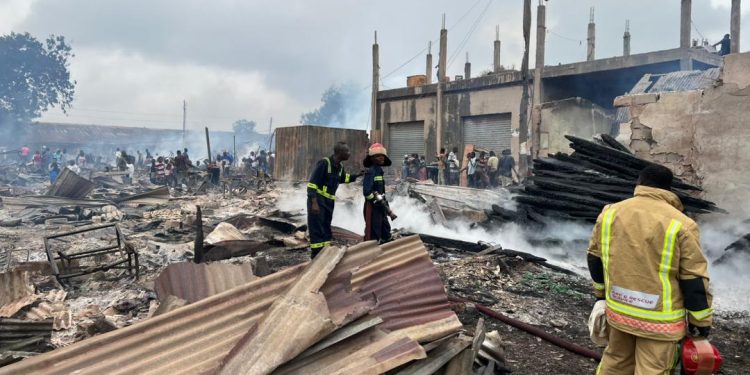
    The online test which was confronted with a lot of challenges, according to reports, was generated using artificial intelligence (AI).

    https://www.facebook.com/share/v/1HhC1Jiz45


    In a media engagement on Wednesday, March 11, the Interior Minister, Mubarak Mohammed Muntaka, revealed that the government will only employ only 5,000 individuals out of the 105,000 applicants who have made it to the last stage.


    He further disclosed that about 500,000 applications were submitted by Ghanaian youth. “Are you going to allow over 400,000 people to go and do medicals when you know you have space for only 5,000? How fair are you to the people? You need to devise a method to slow down the numbers and have a reasonable figure.


    “So at 65, as we speak, we still have 105,000 that have qualified for medicals when in actual sense the total number that we can now take after medicals is 5,000,” he added.


    Speaking at a press briefing on Wednesday, March 10, Mr. Muntaka explained that authorities set the pass mark for the recruitment examinations at 65 to control the number of candidates progressing to the medical stage.


    Reacting to the Interior Minister’s revelation, the Minority of Parliament has called the entire recruitment process a Ponzi scheme to extort from suffering youth.

    The caucus has questioned why the government would accept applications from half a million persons when it intends to employ a small number.


    With immediate effect, the Minority in Parliament has pressed the government to refund monies collected from the affected applicants.
    “Already, we have a national security threat and unemployment on our hands. You promised them jobs. You didn’t add any conditions. Then you turn around, you politically expand the age limit from twenty-five to thirty-five, signaling that there is more room and more access, more financial clearance, which was a lie.


    “You knew from the very beginning you were recruiting only 5,000, and yet you did all this to lure half a million people, took their money, milked them GH¢113 million cedis and over, only to turn around yesterday, after you have knocked them out by technology and internet disruptions from the aptitude test,” he said.


    The development has left scores of Ghanaians, particularly affected applicants, criticising the government. Some unsuccessful applicants say they answered the questions without engaging in examination malpractice, yet failed the test, while others who allegedly outsmarted the system have qualified.


    Prior to the test, the Ministry of the Interior Ghana warned applicants against cheating, stating that the system used for the online aptitude test had been designed to detect and disqualify individuals who attempted any form of malpractice.


    Some applicants have also recounted how they purchased recruitment forms for multiple security agencies, including the Ghana Police Service, Ghana Prisons Service, Ghana National Fire Service, and the Ghana Immigration Service, but were denied the opportunity to proceed after failing the aptitude test.


    Under the recruitment guidelines, applicants who fail the aptitude test are automatically eliminated from the process, regardless of the number of forms purchased, since only one test is taken for all the security agencies. Others have also disclosed that although they initially qualified for the test, they were later disqualified after revisiting their recruitment portals.


    Despite the frustrations expressed by many disqualified applicants, the Interior Minister, Mubarak Mohammed Muntaka, maintains that the recruitment exercise has been free and fair, unlike those organised by previous governments.

    He explained that the government introduced a third-party aptitude test with a pass mark of 65% as a measure to manage the large number of applicants.


    Meanwhile, some grassroots members of the National Democratic Congress (NDC) who were disqualified from the process have expressed disappointment in the government. They claim the administration has turned its back on them despite their role in helping the party return to power.


    However, the Minister indicated that the recruitment process will not end this year. According to him, applicants who successfully pass the medical examination but are unable to secure placement this year will be considered for employment in the following year.


    “I know a lot of young people may be disappointed, but they should exercise restraint as this is not going to be the first and last recruitment that the government is going to have,” the Minister noted.


    Recruitment into Ghana’s security services has frequently been criticised as a process susceptible to corruption, with reports alleging that some individuals pay substantial sums of money to secure positions within agencies such as the Ghana Police Service, Ghana Prisons Service, Ghana National Fire Service, and the Ghana Immigration Service.

  • New judge takes charge of Adu-Boahene case in court

    New judge takes charge of Adu-Boahene case in court

    A new judge, Justice Francis Apangabuno Achibonga, has taken over the trial of former National Security Bureau Director-General Kwabena Adu-Boahene and two others at the Accra High Court.

    Justice Francis Apangabuno Achibonga took over from Justice John Eugene Nyante Nyadu as the presiding judge. At the first hearing on Wednesday, March 11, the new judge, the defense lawyer, Samuel Atta Akyea, questioned the prosecution’s finance witness, Head of Finance at the National Security, Edith Ruby Opokua Adumuah, to test the evidence against Adu-Boahene.

    The defense lawyer asked the prosecution’s finance witness to explain how government money for national security is managed and tracked using Ghana Integrated Financial Management Information System (GIFMIS).

    Meanwhile, an application by the Deputy Attorney-General (A-G), Dr Justice Srem-Sai, seeking a review of a key aspect of its earlier ruling in the criminal trial involving the former National Signals Bureau Director-General, and his wife has been thrown out by the Supreme Court.


    The request by the Deputy Attorney-General seeks to ensure the Supreme Court reinstates a key aspect of the Practice Direction on Further Disclosures.


    The Practice Direction on Further Disclosures mandates the prosecution to disclose materials that are in its possession and “relevant” to the case.


    However, the Supreme Court revised this to require the prosecution to disclose materials that are in its possession and connected to the case.
    The adjustment by the Supreme Court followed an application by Adu Boahen and his wife, who had formally asked the Court to stop the High Court judge handling their criminal trial from continuing with the case.


    But counsel for Mr Adu Boahen, Samuel Atta Akyea, has argued that the Deputy Attorney-General’s reasons for the review lack merit and fail to meet the exceptional circumstances required for the Supreme Court to exercise its review jurisdiction.


    Last year, prosecution against the third accused person, Mildred Donkor, in the ongoing GHS49 million theft case involving former National Signals Bureau boss, Kwabena Adu-Boahene, and his wife, Angela Adjei-Boateng, was discontinued by the Attorney-General (A-G), Dr. Dominic Ayine.


    Ms. Donkor was formally discharged under Section 59 of the Criminal and Other Offenses (Procedure) Act, 1960 (Act 30) after she declared her willingness to testify for the state in the ongoing trial.


    Kwabena Adu-Boahene is the first accused, while his wife and their company, Advantage Solutions Limited, are the second and fourth accused, respectively.


    Adu Boahen was arrested in March this year at the Kotoka International Airport (KIA) after allegedly attempting to elude authorities using multiple passports.


    Attorney-General Dominic Ayine formally charged Mr. Adu Boahene and his wife, Angela Adjei Boateng, with corruption offences to the tune of GHS49 million on Wednesday, April 30, 2025.


    According to the writ filed at the High Court on April 30, Mr. Adu-Boahene, who was responsible for overseeing critical national security infrastructure, including contracts with foreign companies, signed a deal with an Israeli company, ISC Holdings Limited, to purchase cyber defence software for $7 million.


    In total, Adu-Boahene is alleged to have transferred approximately GHS49 million (approximately $7 million) from the NSB’s funds into his personal accounts, falsely justifying these transactions as payments for the cyber defense systems, together with his accomplice.


    “Further investigations have revealed that no cybersecurity system of the description in the January 30, 2020, contract was ever received by the Bureau of National Communication or by its successor agency, the National Signals Bureau, or by the Government of Ghana,” court documents indicated.


    Adu-Boahene’s wife, Angela Adjei Boateng, is one of three directors of Advantage Solutions Limited, the sole shareholder of BNC Communications Bureau Limited. Mildred Donkor is a former bank relationship officer for Adu-Boahene, his wife, and BNC Communications Bureau Limited.


    The A-G, during a media address in March, detailed that on February 6, 2020, Adu Boahene authorized the transfer of GHC27.1 million from the National BNC’s account at Fidelity Bank to a private BNC account at UMB.


    The stated purpose of this transaction was to facilitate the acquisition of cyber defense system software from ISC Holdings in Israel for $7 million.


    Further scrutiny of the bank records showed that Mr. Adu Boahene instructed the private BNC to transfer GHC9,537,520, equivalent to $1,750,000 at the time, to ISC Holdings.


    However, the Attorney-General revealed that “Mr. Adu Boahene fraudulently attached a copy of the government of Ghana ISC contract as well as an invoice, which he held as an invoice issued by ISC Holdings.”


    In addition to the initial transaction, two further payments amounting to GHC21 million were transferred from the National BNC Director’s account at Fidelity Bank to the same private BNC account at UMB on March 18 and March 30, 2020. These payments were recorded as funding for the cyber defense system.


    However, upon closer examination, it was discovered that although a total of GHC49 million had been moved into the private BNC account—an amount equivalent to $7 million at the prevailing exchange rate—only a fraction of the money had been paid to ISC Holdings, raising concerns about the whereabouts of the remaining funds.


    According to court documents, it is alleged that Adu-Boahene, his wife, and Mildred “ran an elaborate criminal enterprise using A4 (Advantage Solutions Limited) as a holding company through which the stolen funds were funneled and laundered for their own benefit.”


    The documents added that as the holding company for several subsidiary companies, including the private BNC, A4 received a substantial portion of the stolen funds, which its shareholders and directors then invested in the business activities of the subsidiaries, including investments in treasury bills, real estate, the manufacturing of fertilizers, and the rental of luxury cars to VIP customers.


    In July, the former Director-General of the National Signals Bureau (NSB), Mr. Adu Boahene, along with three co-defendants, including his wife, made their formal court appearance on the 18th day after the High Court in Accra, presided over by Justice John Nyante Nyadu, set July 18 as the date for the trial following a pre-trial hearing on July 3.


    The pre-trial was held for the court to address a motion filed by the defendants’ legal team requesting access to national security accounts dating back to 1992.


    However, their request was dismissed due to inadequate justification by the presiding judge. During proceedings, the defence lawyer, Samuel Atta Akyea, raised concerns about missing evidence, specifically claiming that 83 pages of bank statements had not been disclosed to the defence.


    In response, Deputy Attorney-General Justice Srem Sai objected to allegations that the Attorney-General’s office had lost evidence in the ongoing criminal case involving former NSB Director-General, Kwabena Adu-Boahene.


    These claims emerged after the defence team reiterated during a Case Management Conference on June 26 that the bank statements provided by the prosecution were incomplete and that essential pages were missing.


    They suggested that these omissions might contain exculpatory evidence and accused the Attorney-General’s office of “cherry-picking” documents to support its case while withholding material that could potentially clear the accused.


    The Attorney-General’s office, in a statement shared on its official X page on August 28, stated that it is still in possession of all the rightful evidence against the accused. Justice Srem Sai added that all necessary documents needed to prove the charges have been filed.


    The documents include contracts, bank records, property ownership documents, INTERPOL reports, and witness testimonies.


    “The Attorney-General’s office has not lost any evidence regarding the ongoing Republic v Adu-Boahene criminal trial. As of June 18, we had filed all the documents which we intend to rely on to prove the charges against the 4 Accused Persons in the case.


    “The documents include contracts of sale, bank wire transfer records, bank account statements, company registration documents, property ownership records and purchase receipts, INTERPOL stolen vehicle records, investigative caution statements and charge statements of each Accused Person, records of asset non-declaration, a flow chart of money movements through a complex web of bank accounts, and testimonies of our 3 witnesses,” he noted.


    According to him, Adu-Boahen’s legal team is wrong and misguided to believe that the government has lost evidence in the case against their client. He added that “there is no cherry picking as all accused persons have been duly served.”


    “Further, court-certified copies of each of these documents have been duly served on each of the Accused Persons. So, it is not even realistic that the documents could be lost to jeopardise the prosecution of the case.”


    On the current status of the case, the Deputy A-G revealed that before the court went on recess, three prosecution witnesses had already testified, proving that the case is still on track and not disrupted by any lack of evidence.


    “…Before the start of the legal vacation on July 31, the first of our 3 prosecution witnesses had completed testifying and had been cross-examined by the lawyers of 3 of the 4 Accused Persons,” he said, adding that, “The trial will resume in earnest in mid-October when the courts return from the legal vacation.”

  • Parliament adopts motion after concluding debate on 2026 SONA

    Parliament adopts motion after concluding debate on 2026 SONA

    Parliament has adopted the motion on the 2026 State of the Nation Address (SONA) delivered by John Dramani Mahama after days of intense debate.

    The House adopted the motion of the SONA, which was moved by the MP for Bolgatanga Central, Hon. Isaac Adongo and seconded by the MP for Assin South, Hon. John Ntim Fordjour.

    During the Parliamentary session on Wednesday, March 11, both the Majority and Minority caucuses made their final remarks to conclude the debate.

    The Minority Leader, Hon. Alexander Afenyo-Markin, opposed the government’s decision to buy a Presidential Jet, arguing that the country has other priorities to address, such as healthcare, education, and infrastructure.

    He mentioned that President Mahama has failed in creating jobs for the youth, stressing that many youths were denied the opportunity to take part in the recent security recruitment because they could not access the internet.
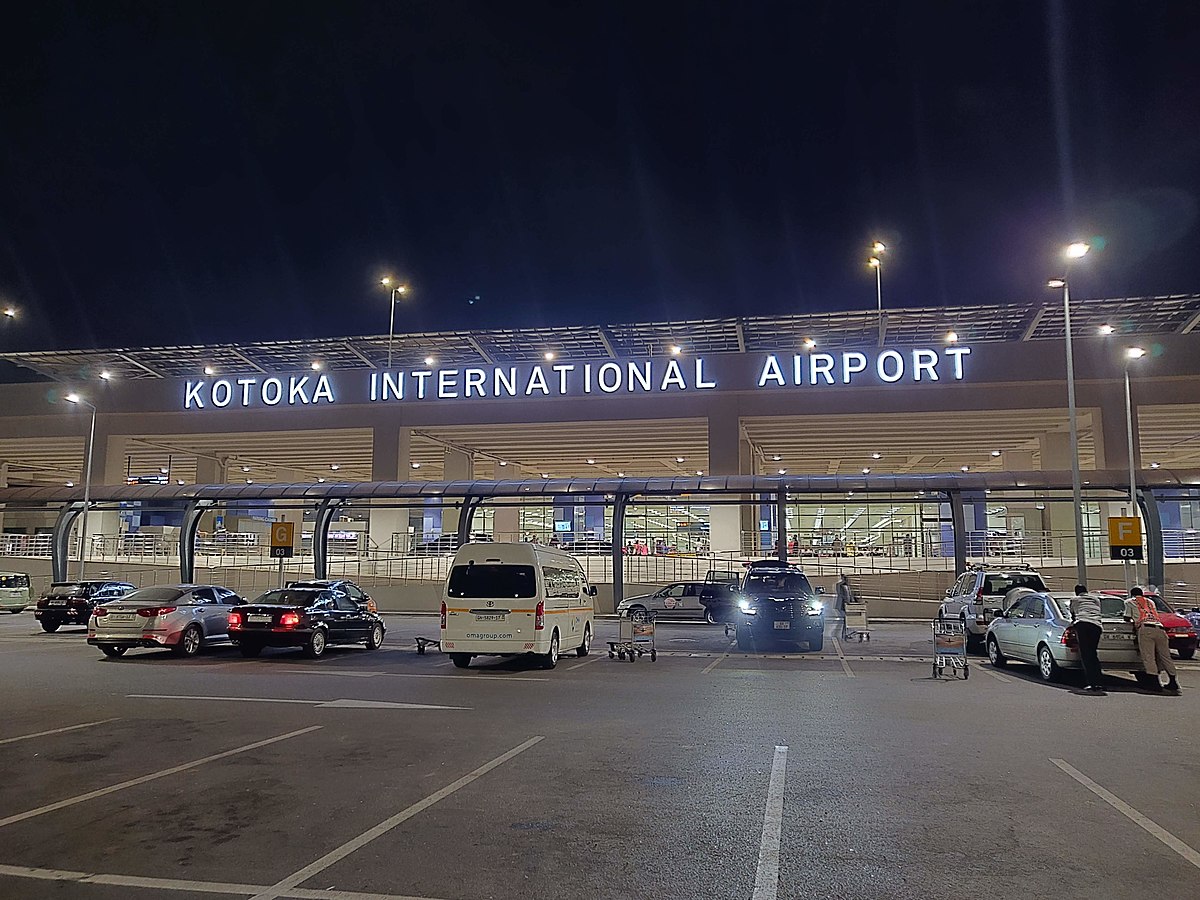
    Additionally, he noted that the government has worsened the plight of Ghanaian cocoa farmers by reducing the cocoa producer price, despite the sector already being in crisis.

    But in making his counterargument, the Majority Leader, Hon. Mahama Ayariga, noted that the producer price has been increased to unprecedented heights under President Mahama, ensuring that when the world pays more for a bar of chocolate, the farmer in Sefwi, Enchi, and Tepa finally sees a reflection of that value in his pocket.

    “This is not mere commerce; it is the restoration of the dignity of the Ghanaian soil. We are moving from being exporters of raw toil to masters of our own industrial destiny, investing in local processing so that “Made in Ghana” becomes a global standard of excellence, not a colonial footnote,” he stated.

    On Friday, February 27, President John Dramani Mahama addressed the nation, providing an update on the state of the country and the progress made since he assumed office.

    During his second State of the Nation Address of his second term, the president outlined his administration’s vision and priorities under the ambitious Resetting Ghana agenda.

    He also called on Ghanaians to unite and support his administration as it rolls out key initiatives aimed at improving the country’s development and overall well-being.

    According to him, “ the resetting agenda is working, the Accra reset is gaining momentum, and together we are laying the foundation for a stronger, more resilient and more prosperous Ghana. Mr Speaker, our nation is on a runaway, it will take off now, and you are all advised to fasten your seat belts”.

    He added, ” Mr Speaker, the journey continues as the direction is set and the hope is real, our theme today of building prosperity and restoring hope is not mainly aspirational. It reflects the tangible transformation we have delivered for the Ghanaian people”.

    President John Mahama also announced fresh progress toward the re-establishment of a national airline, stating that concrete steps have been taken to ensure the initiative becomes a reality.

    The President revealed that a ten-member task force set up to oversee the process has completed its work and submitted a detailed business model together with an operational framework.

    The documents, he explained, will guide the government in selecting a credible strategic partner to run the new national carrier.

    “In fulfilment of my pledge to re-establish a national airline, a ten-member taskforce established to oversee this initiative has submitted a business model and operational framework to guide the selection of a strategic partner for the new national airline. And this new national airline will take off soon. Isha Allah,” President Mahama stated.

    He indicated that the creation of a new national airline forms part of a broader plan to strengthen Ghana’s aviation sector, boost tourism, create jobs, and position the country as a key aviation hub in West Africa.

    The President also highlighted growth in air travel, pointing to increased passenger numbers handled by the Ghana Airports Company Limited. According to him, passenger traffic rose to 3.625 million in 2025, up from 3.4 million recorded in 2024.

    “Mr Speaker, passenger traffic handled by the Ghana Airport Company increased to 3.625 million passengers in 2025 from 3.4 million in 2024,” he added.

    The rise in passenger movement, he noted, demonstrates renewed confidence in Ghana’s aviation industry and underscores the importance of establishing a national airline to meet growing demand.

    He expressed optimism that once operational, the airline would enhance connectivity, facilitate trade and investment, and contribute significantly to national development.

  • Special police team deployed to Gbenyiri after reprisal attacks

    Special police team deployed to Gbenyiri after reprisal attacks

    A special security team has been deployed by the Inspector-General of Police (IGP), Christian Tetteh Yohuno, to Gbenyiri in the Savannah Region in response to the recent tension in the area.

    Last week, violent clashes between residents and herdsmen in Gbeniyiri and surrounding communities in the Sawla-Tuna-Kalba District of the Savannah Region have claimed the lives of four individuals and injured five others.

    The injured are receiving treatment at various health facilities in the area.

    The violence erupted after a resident was killed during a robbery attack. In revenge, some relatives of the deceased launched an attack on herdsmen suspected of being behind the crime.

    Last year, several properties were destroyed, with more than 50,000 individuals displaced due to the tension in the area. The ongoing conflict in Gbenyiri stems from a land dispute between a Gbenyiri resident and the chief’s son, which began on Saturday, August 23.

    The unresolved conflict is spreading to Kalba and other parts of the district. Despite the deployment of 400 police personnel to the area to ensure law and order, clashes between the rival groups persisted.

    Unknown assailants shot a middle-aged man to death near Kalba, a suburb of the Sawla-Tuna-Kalba District in the Savannah Region, on Sunday, September 7.

    The gunmen ambushed the deceased person and opened fire as he rode his motorcycle. According to the police, the deceased, whose identity is yet to be revealed, traveled from his community, Uro, to Kalba to charge his mobile phone due to the lack of power in his area.

    The body of the deceased has since been deposited at the St. Anne’s Catholic Hospital in Damongo by the Ghana Police Service. The incident is amid the ongoing protracted conflict in Gbenyiri, which has claimed multiple lives.

    The latest death brings the official toll from the conflict to 32.

    Residents have, however, expressed fear over the security situation.

    Speaking to the media, a resident noted, “With this killing, who do you think will trust the system again? Some of us suspected this to happen because the guys are still around in Kalba town, and if you deceive yourself and go there, they will just end your life like this farmer. To me, this reaffirms the fears and mistrust in the system. The authorities need to do more than just talk and go”.

    Meanwhile, a seven-member mediation committee has been established by the Interior Ministry in response to the ongoing land conflict in Gbenyiri in the Savannah Region.

    The committee has been tasked with a one-month mandate to assist the government in finding a lasting solution to the tension in the area.

    During the inauguration ceremony at the Interior Ministry in Accra, the sector Minister, Mubarak Mohammed Muntaka, noted that the establishment of the committee was a recommendation from the National Security Council.

    The Inspector General of Police (IGP), Christian Tetteh Yohunu, alongside senior officials from the Armed Forces, Prisons Service, and Immigration Service, have already visited Kalba, Sawla, and other affected communities in efforts to bring calm to the area.

    In a related development, President John Mahama has initiated steps to restore peace in the Sawla-Bole area of the Savannah Region following renewed tensions between the Gonja and Brifor communities.

    Upon his return from a state visit to Singapore, the President received a full briefing from the National Security Coordinator and the Minister for the Interior on the latest developments in the conflict.

    While abroad, Mr. Mahama held a telephone conversation with the King of Gonja, Yagbonwura Jira Bikunuto Jewu Soale I, during which they discussed measures to end the clashes and foster lasting peace in the area.

    As part of efforts to de-escalate the situation, the President has dispatched a government delegation led by the Minister for the Interior, Hon. Muntaka Mohamed-Mubarak, to engage the Yagbonwura and other key stakeholders.

    Meanwhile, security has been reinforced with the deployment of additional police and military personnel to the conflict zone. President Mahama has urged all parties to support the peace initiatives being rolled out, stressing the importance of dialogue in resolving outstanding disputes.

    He has further directed the government delegation to work closely with the Regional Security Council, traditional authorities, and community leaders to ensure calm is restored and law and order upheld.

    Minister for the Interior, Muntaka Mohammed-Mubarak, has assured the Overlord of Gonja, Yagbonwura Bii-Kunuto Jewu Soale I, that the government will take every necessary step to restore peace in the Sawla-Bole area.

    “We have taken note of all the concerns, and we have also assured him that we will do everything humanly possible to ensure that peace will be restored. But we need his cooperation and the cooperation of all others. Surely, what talking can solve, dance cannot solve,” he stated.

    “Surely, what talking can solve, dance cannot solve, so we are hoping that after all the lengthy discussion and the conclusion that we have come to, we will go and implement our part, we are hopeful that they will also listen to us and also adhere to whatever agreement that we’ve had,” he noted.

    Less than a week ago, the sector minister imposed a curfew on the Sawla-Tuna-Kalba township and its surrounding communities in the Savannah Region.

    The curfew is in effect from 6:00 p.m. to 6:00 a.m., commencing on Wednesday, August 27, 2025, and remains in place until further notice.

    This measure was taken in response to the recent outbreak of conflict in the area. In addition to the curfew, there is a total ban on the possession of firearms, ammunition, or any offensive weapons. Any individual found with such items will be arrested and prosecuted.

    Furthermore, no two or more persons are permitted to ride on motorbikes throughout the day, and the wearing of war regalia has also been prohibited.

    Last year, intense security measures were implemented in the Bole and Sawla districts of the Savannah Region due to the chieftaincy dispute between the Bolewura and the Jahori clan.

    This heightened security response followed a ruling by the Tamale High Court concerning the dispute between the Jahori and Bolewura factions.

    In response to the court ruling, youths from Bole set fire to houses belonging to members of the Jahori community residing in both Bole and Sawla districts.

    The devastating fires resulted in significant property losses for the affected individuals, leaving many tenants in despair and tears. In recent years, the country has witnessed a number of casualties and destruction of property arising from chieftaincy disputes.

    The Minister for the Interior, Muntaka Mubarak, has also reviewed the earlier curfew hours imposed on Bawku and Nalerigu townships following recent attacks.

    The previous curfew, which ran from 6 a.m. to 2 p.m., has been revised to 6 p.m. to 6 a.m. The minister took this decision after receiving advice from the National Security Council.The Bawku Municipality in the Upper East Region and the East Mamprusi Municipality in the North East Region are affected by the new directive.

    The curfew has created an environment conducive for the evacuation of students from educational institutions in the affected areas, some of whom had unfortunately been targeted during the conflict.

    In a statement issued on July 27, the government announced that it is stepping up its approach from peacekeeping to peace enforcement in Bawku and other affected areas due to the recent escalation of violence, which threatens to derail the peace-building process.

    These heightened tensions and conflicts have had an impact on the country’s global peace ranking. Ghana has been ranked 61st out of 163 countries in the 2025 Global Peace Index (GPI), marking a continued decline in its standing on peacefulness.

    The latest ranking follows a downward trajectory from 55th in 2024, 51st in 2023, and 40th in 2022.

    Despite the decline, Ghana still ranks ahead of several of its West African neighbours, including Senegal (69th), Liberia (70th), and Nigeria (148th).

    The Global Peace Index, compiled annually by the Institute for Economics and Peace (IEP), measures the peacefulness of nations based on 23 indicators across three broad domains: societal safety and security, ongoing domestic and international conflict, and militarisation.

  • Importers charged wrong surcharge to get refunds – GSA

    Importers charged wrong surcharge to get refunds – GSA

    All importers who were wrongly billed new shipping surcharges due to tensions in the Middle East will receive refunds in the coming days.

    Speaking to the media on Wednesday, March 11, Chief Executive Officer of the Ghana Shippers Authority (GSA), Ransford Gyampo, indicated that the refunds has become possible following an internal investigation.

    “Our investigations show that there was a global announcement to all CMA-CGM shipping agencies to invoke the War Clause Surcharge in their list of charges.The shipping lines use a shared centre where invoices are generated globally. The shared centre automated the system to generate the currently disputed cost line. This anomaly is at the moment being corrected, and all who have been surcharged would receive a refund from the shipping line,”he added.

    His comment follows persistent calls from affected importers who have been demanding for a probe into the natter.

    The ongoing tensions have been linked to the death of Iran’s Supreme Leader, Ayatollah Ali Khamenei. Ayatollah Ali Khamenei was reportedly killed in strikes by the Unites States (U.S.) and Israel. This development significantly impacting travelers from Ghana to Asia, Europe, and North America, as Dubai is a major transit hub connecting travelers through the United Arab Emirates.

    On Saturday, 28 February, Emirates flight EK 788 from Kotoka International Airport (ACC) in Accra to Dubai International Airport (DXB) was cancelled, and passengers were advised to contact their airlines for rebooking or refund options due the ongoing tensions.

    The airline suspended its services following reported bombings in Iraq and retaliatory attacks across the region.

    The flight from Accra to Dubai International Airport, scheduled for 7:15 pm GMT on Saturday, 28 February 2026, was canceled at the last minute through a notice.

    Last year, the Minister for Foreign Affairs, Samuel Okudzeto Ablakwa, warned the Israeli Embassy against maltreating Ghanaian nationals. Speaking to the media on Thursday, December 11, Mr. Ablakwa noted that Ghana will respond with equal force if any of its citizens are deported.

    According to him, “If they deport ten Ghanaians, we will deport ten. If they deport twenty, we will deport twenty. If they deport fifty, we will deport fifty. We are not going to accept this.”

    His comments are in response to an incident in which several Ghanaian travellers, including four members of a parliamentary delegation en route to Tel Aviv for an international cybersecurity conference, were detained and deported by Israel Embassy officials.

    Mr. Ablakwa narrated, “We were told that the Ghanaian Embassy was uncooperative, but the facts simply do not support that. Out of the six people on the list that Israel provided, one is not even Ghanaian. He is Gabonese. Our embassy had every right to verify the identity of the individuals involved.

    “One of the people listed was seriously ill, and Israeli doctors themselves advised that she should not travel until she had recovered. How can you deport someone who is unwell and needs medical attention? Another individual had already been issued a travel certificate, so there was no reason to stop their entry into Israel.”

    But in their actions, Israeli officials indicated that six Ghanaians who were supposedly due for deportation failed to provide the necessary details needed by Ghana’s Embassy in Tel Aviv to issue travel certificates.

    The matter adds to broader concerns surrounding deportation practices. In September, eleven West African nationals filed two ex-parte applications at the Labour Division of the High Court in Accra, challenging their alleged detention in Ghana after being deported from the United States (U.S).

    The eleven individuals include Nigerians Daniel Osas Aigbosa, Ahmed Animashaun, Ifeanyi Okechukwu, and Taiwo K. Lawson; Liberian national Kalu John; Togolese nationals Zito Yao Bruno and Agouda Richarla Oukpedzo Sikiratou; Gambian national Sidiben Dawda; and Malians Toure Dianke and Boubou Gassama.

    According to the applicants, they were forcibly transported to Ghana without prior notice. They allege that they were secretly moved from the U.S. detention centers between September 5 and 6 in shackles.

    They want the court to temporarily stop them from being deported back to their home countries until the court decides on their case. Their submission further revealed that Ghanaian authorities allegedly confined them in a military facility.

    They cited Article 14(1) of Ghana’s 1992 Constitution, which guarantees personal liberty, as well as Article 23, which protects the right to administrative justice.

    They are arguing that Ghana is violating international law by trying to send them back to countries where their lives or freedom could be at risk.

    As a result, they have demanded that the Attorney-General, the Chief of Defence Staff, and the Comptroller-General of the Ghana Immigration Service appear before the Human Rights Division of the High Court with valid reasons. The court has fixed Tuesday, September 23, to hear the case.

  • Gov’t tightens public land lease terms with 70% upfront payment

    Gov’t tightens public land lease terms with 70% upfront payment

    The government has launched a new framework to improve transparency in the leasing of public lands in Ghana. Speaking to the media on Wednesday, March 11, Deputy Minister for Lands and Natural Resources, Yusif Sulemana, announced a 70% upfront payment requirement for public land leases.

    He explained that the remaining 30% will be spread over the duration of the lease as ground rent. According to him, the new development is to boost state revenue while ensuring that public land resources are managed more efficiently.

    “The Ministry, in collaboration with the Lands Commission, has introduced a new premium framework for public lands leases. Under this new framework, a minimum of 70 percent of the assessed market value of a public land will be paid upfront as a premium. The remaining 30 percent will be structured over the tenure of the lease as grand rent.

    “This reform is intended to promote value for money, enhance revenue generation for the state, and ensure that public lands are allocated in a manner consistent with national economic interests,” he added.

    The reform was developed through collaboration between the Ministry of Lands and Natural Resources and the Lands Commission. Last month, Minister for Lands and Natural Resources, Emmanuel Armah-Kofi Buah, revealed the termination of all incomplete public land deals carried out between 2017 and 2024 that did not comply with required procedures, while unveiling wide-ranging reforms intended to improve accountability, openness, and cost-effectiveness in managing state lands.


    Speaking at a press briefing, the Minister described the decision as “a critical milestone in our collective efforts to strengthen integrity, transparency, and accountability in the administration of public lands, which are held in trust for the people of Ghana.”


    Presidential directive and committee assessment


    He indicated that on January 10, 2025, John Dramani Mahama instructed the Lands Commission to suspend all processes connected to leasing and handling transactions involving public lands.
    He explained that the directive was introduced to protect state lands from misuse, restore order within land management systems, and ensure that such transactions “deliver value for money to the State.”


    Following the directive, a committee led by the Deputy Minister was established on June 5, 2025, to examine public land leases under the Government’s Resetting Agenda.


    The committee reviewed 8,160 lease applications that were either completed or initiated between 2017 and 2024 across all sixteen regions.

    These included:


    4,176 Direct Allocations


    2,799 Regularizations


    19 Direct Allocations relating to State Bungalows
    108 Land Swap or Public-Private Partnership arrangements
    795 Subsequent Transactions


    263 Fresh Allocations


    The review revealed that a number of these allocations did not fully comply with the Lands Commission’s internal procedures, thereby undermining transparency and exposing the system to potential abuse.


    Immediate Cancellations and Case-by-Case Reviews
    Cabinet has approved the Committee’s recommendations and directed their immediate implementation. The Minister announced that:


    All uncompleted transactions within the reviewed categories have been cancelled, and affected applicants will be formally notified.
    Completed transactions will undergo case-by-case review, and any allocation processed without full compliance will be cancelled.


    All uncompleted regularisation applications remain suspended pending a comprehensive review and standardisation of procedures.
    “For the avoidance of doubt,” he clarified, “a transaction will be treated as completed where a formal offer has been issued and accepted by the applicant.”


    Both completed and uncompleted application lists will be published region-by-region, beginning with Greater Accra, on the Ministry and Lands Commission websites.


    Completed transactions under review will be assessed against clear benchmarks, including statutory compliance, value for money, conformity with planning requirements, and enhanced disclosure to prevent misuse of corporate structures.


    “These measures are not intended to unfairly disadvantage anyone,” the Minister emphasised, adding that affected applicants will be allowed to reapply under the new regime.


    Major reforms introduced


    The Minister outlined six major reform pillars.


    Revision of Public Land Application Form (Form 5)


    A key finding was the inconsistent application of Form 5 across regions, resulting in discretionary practices.The Ministry has revised Form 5 to serve as the single mandatory application instrument nationwide. It will be published online and made accessible for electronic submission.


    Overhaul of internal allocation processes


    The Ministry has also reviewed the Lands Commission’s internal procedures to eliminate inconsistencies and strengthen internal checks.


    Under the revised framework, “no public land will be allocated by the Lands Commission without the prior written approval of the Minister for Lands and Natural Resources.”The move, he explained, reinforces ministerial oversight and adds a safeguard against unauthorised allocations.


    Legislative backing


    To prevent a return to past practices, the revised application form and internal processes will be incorporated into a draft Land Regulation currently under review.


    New 70% premium framework


    One of the most significant changes relates to land valuation.
    The Minister revealed that premiums for public land leases had historically ranged between 1% and 30% of market value, significantly undervaluing state assets.


    Under the new framework, “a minimum of 70 per cent of the assessed market value of public land will be payable upfront as a premium, with the remaining 30 per cent structured over the tenure of the lease as ground rent.”


    He further reminded State Institutions, pursuant to Section 235(4) of the Land Act, 2020 (Act 1036), that allocations confer only user rights and do not permit transactions without prior written ministerial approval.


    Publication of market value data


    To enhance transparency, the Ministry and Lands Commission will compile and publish reliable market value data for defined land clusters nationwide.


    The data will serve as a reference for assessing premiums and ensuring objective, predictable decision-making.


    A Public Land Protection Task Force will be established during the reform transition period.


    The Task Force will operate within the framework of the Constitution, the Lands Commission Act, 2008 (Act 767), the Land Act, 2020 (Act 1036), and applicable criminal laws.It will comprise personnel from:

  • Court to rule on Wontumi’s no-case application on March 16

    Court to rule on Wontumi’s no-case application on March 16

    The no-case application filed by lawyers for Bernard Antwi Boasiako, popularly known as Chairman Wontumi, in his ongoing trial over alleged illegal mining at Samreboi, is set to be decided on Monday, March 16.


    The outcome of the court’s decision will determine the next step in the trial. If the court upholds the application, the charges against Wontumi will be dismissed and the trial will end.

    Should the court reject the submission, he will be required to present his defence, and the trial will continue. Chairman Wontumi has been accused of aiding individuals to mine without a proper licence at the Samreboi concession.


    This was made known during a court proceeding on Tuesday, October 7. Prosecutors have accused Chairman Wontumi, owner of Akonta Mining, and his co-director, Kwame Antwi, of illegally authorizing mining operations without the necessary licenses.


    The duo’s acts are criminal offenses under Ghana’s mining laws. According to prosecutors, one Henry Okum told investigators that he got permission from Chairman Wontumi to mine in the Samreboi area because he thought Wontumi owned the land.


    In Ghana, the Minister of Lands and Natural Resources, Emmanuel Armah-Kofi Buah, is solely responsible for authorizing mining licenses.


    Authorities are currently pursuing Kwame Antwi. Meanwhile, on Monday, October 6, he was granted bail in the sum of GH¢1 million with two sureties.


    Chairman Wontumi made an appearance at the Criminal Investigations Department (CID) of the Ghana Police Service with his lawyer, Andy Appiah-Kubi, on Monday, October 6, after an order from the Attorney-General (A-G), Dr. Dominic Ayine.


    On Friday, October 3, Dr. Dominic Ayine threatened to arrest him if he failed to surrender himself to the CID. According to the Attorney-General, little progress has been made in investigating the allegations as key documents have been withheld by some officials of the previous administration.


    In April, the Minister for Lands and Natural Resources, Emmanuel Armah-Kofi Buah, revoked the company’s mining license for illegally mining within the Tano Nimiri Forest Reserve in the Western North Region.


    The Minister explained that Akonta Mining has extended its illegal activities to the Aboi and Tano Nimiri Forest Reserves, despite possessing a valid license to operate outside of forest reserves. Reacting to the Minister’s statement, the company refuted claims leveled against its operations.


    It emphasized in a press statement, “We are not responsible for the activities in the Tano Nimiri Forest Reserve. That responsibility lies solely with the Forestry Commission and the Ministry of Lands and Natural Resources.”


    The company added that such claims are a deliberate attempt by the Minister to tarnish the reputation of the company.


    “The decision by the Minister to publicly accuse us and call for the revocation of our license without any investigation or hearing is not just unfair, it is a clear breach of natural justice and a politically motivated act,” the company said.


    In May, the Special Police Anti-galamsey Taskforce from the National Police Headquarters apprehended 17 suspects in connection with illegal mining activities (galamsey) at Samreboi in the Western Region.


    The police nabbed the suspects, comprising seven Chinese nationals and 10 Ghanaians. The suspects were transported to Accra to assist with further investigations.


    The anti-galamsey task force is intensifying operations within the Aowin Tano and Tano Anwia areas near Enchi, focusing on identifying additional persons of interest and protecting the affected forest reserves.


    The Ghana Police Service announced that it remains resolute in its support for national efforts to combat illegal mining.

    There have been earlier anti-galamsey operations at Samreboi. Months ago, the police arrested 58 suspects, comprising 50 Ghanaians and eight Chinese, and retrieved 85 excavators and three bulldozers to halt galamsey operations at Samreboi, along the Tano River, Wassa Dunkwa, Tigarikrom, and surrounding communities in the Western Region.


    Similar anti-galamsey operations were carried out by various Regional Police Commands across the regions as follows: The Western Regional Police Command arrested 19 suspects and retrieved three excavators and three pump-action guns, among other exhibits.


    The Upper West Regional Police Command arrested seven Ghanaian suspects and retrieved 11 changfangs and three motorbikes, among other exhibits.


    The Eastern South Regional Police Command arrested 24 suspects, including one Burkinabe, and retrieved five excavators, three single-barrel guns, and one pump-action gun, among other exhibits.


    The Western Central Regional Police Command arrested 85 suspects, comprising 76 Ghanaians and nine Chinese, and also retrieved 11 excavators and other exhibits.


    The Eastern North Regional Police Command also arrested 15 suspects, including one Chinese, and retrieved four excavator control boards, nine monitors, and one pistol, among other exhibits. Meanwhile, the prosecution of suspected illegal miners is being pursued by the police.


    On May 20, the Koforidua Circuit Court B granted 14 suspected illegal miners bail, each in the sum of GHC350,000 with two sureties, with one to be justified with movable property.

    The suspects were arrested on May 15 for illegally mining at Akyem Muoso in the Eastern Region by the Eastern South Regional Police Command.


    At the time of the arrest, police retrieved a pump-action gun from one of the suspects, Zuberu Nuhoho, who failed to produce documentation for the weapon. Two excavator control boards were also retrieved from the mining site. The accused persons were arraigned before the Koforidua Circuit Court B on May 16.

  • FULL TEXT: A-G’s report on govt arrears and payables at end of 2024

    FULL TEXT: A-G’s report on govt arrears and payables at end of 2024

    The Auditor-General (A-G) has presented a report on government arrears and payables as at the end of 2024, highlighting outstanding debts and pending payments across ministries and agencies.

    Read the full text below:

    STATEMENT DELIVERED ON BEHALF OF MINISTER RESPONSIBLE FOR FINANCE, DR. CASSIEL ATO FORSON, ON THE REPORT OF THE AUDITOR-GENERAL ON ARREARS AND PAYABLES AS AT END 2024, PURSUANT TO ORDER 91(2) OF THE STANDING ORDERS OF PARLIAMENT

    1. Hon. Speaker, I am grateful for the opportunity to make this statement, on a matter that is very important to this Republic.
    1. This is a report on the systemic plunder and abuse of the public financial management system. By the time I am done with this presentation, it will become clear that something needed to be done to save our economy.
    1. Hon. Speaker, the Minister for Finance informed this august House during the mid-year review of the 2025 Budget of the ongoing audit of Government arrears and commitments as at end-2024 and promised to submit same to this House when the process is completed.
    1. The Ghana Audit Service, working in partnership with EY and PwC, undertook an exercise to verify and validate a total of GH¢68.7 billion submitted to the Ministry of Finance in unpaid Interim Payment Certificates (IPCs), invoices and Bank Transfer Advices (BTAs) owed to contractors and suppliers.
    1. Out of this, outstanding IPCs and Invoices amounted to GH¢5 billion, while outstanding Bank Transfer Advices (BTAs) amounted to GH¢18.3 billion.

    FINDINGS

    1. Hon. Speaker, permit me to present some of the troubling findings of the audit:
    2. out of the GH¢68.7 billion submitted for audit, a total of GH¢45.4 billion was deemed to be valid for payment;
    3. a total of GH¢8.1 billion was rejected for various reasons including unsupported documentation, duplication, overstatements, already-paid items, falsified stores receipts advice and no work done;
    • about GH¢1 billion of the outstanding BTAs which refers to invoices and IPCs processed by MDAs in 2024, approved by Ministry of Finance, submitted to Controller and Accountant Generals’ Department (CAGD) and pending payment, were rejected;

    Rt. Hon. Speaker, this GH¢1 billion that was rejected by the audit would have been paid if the Ministry of Finance had not made a bold decision to stop payments in January 2025;

    1. about GH¢7.1 billion of the outstanding IPCs and invoices which refers to requests by MDAs for payments to suppliers and contractors, and certified for payment by various public officers across the approval hierarchies, have also been rejected.

    They were rejected for various reasons, including absence of supporting documents, duplications, recycled invoices and IPCs, overstatements, and no work done;

    1. again, an amount of GH¢13.3 billion is yet to be validated for various reasons including lack of third-party confirmation, inadequate documentation and no supporting contracts.
    Table 1: SUMMARY OF AUDIT FINDINGS
    DetailsAmount submitted by MoF for auditAmount Validated
    for payment
    Amount RejectedAmount to be justified before payment
    IPCs & Invoices50,488,960,22929,176,149,1287,086,084,67012,212,540,410
    BTAs18,278,835,59116,227,987,008992,551,1841,055,697,399
    Grand Total68,767,795,82045,404,136,1368,078,635,85413,268,237,809
    NB: An amount of GH¢2,016,786,022 was reclassified from claims and BTAs to commitments
    1. Speaker, permit me to highlight some details of these significant findings.

    FINDINGS FROM BANK TRANSFER ADVICE (BTAS)

    1. Fictitious Debt of GH¢89.4 million – The then Ministry of Trade and Industry in 2024 submitted a request of GH¢89.4 million to the Ministry of Finance to be transferred to five commercial banks as government contribution to interest payments under the One District, One Factory (1D1F) initiative.
    1. The Ministry of Finance subsequently processed same to the Controller and Accountant General’s Department for payment.
    1. This particular request was part of BTAs sitting at the Controller and Accountant General’s Department awaiting cash for payment.
    1. When auditors contacted these five banks to confirm the liability, every single one of them denied being owed any amount by government under the said arrangement.
    1. According to the Auditors, the said GH¢4 million debt was fictitious. Without the audit intervention, a whopping GH¢89.4 million of hard-earned public money could have been disbursed to settle this non-existent liability.
    1. Speaker, only God knows how much of taxpayers money has been lost to similar fictitious claims.
    1. Hon. Speaker, payment of GH¢10.5 million was recorded as having been made into an account named the “Buffer Account” at a commercial bank.
    1. Upon verification, the bank confirmed that it had never received such payment. The account number cited did not exist within the bank’s records and did not even conform to its account numbering format.
    1. The evidence from the audit pointed to a completely fictitious account.
    1. Speaker, as a result of these fictitious accounts linked to One District, One Factory payments, the entire 1D1F scheme requires a forensic audit which will be carried out soon. Moreso when Government is said to have spent GH¢391 million as its contribution towards 1D1F interest subsidies as at the end of 2024.

    THE DRY SPELL EXPENDITURE

    1. Speaker, in 2024, the Government of Ghana paid for 34,000MT of rice to address the impact of the dry spell.
    1. However, the Ministry of Food and Agriculture received and distributed 24,000MT of rice. To date, 10,000MT remains unaccounted for even though the entire quantity has been fully paid for.
    1. The Audit revealed that the Government of Ghana also contracted a company to supply 100,000MT of maize. The Ministry of Food and Agriculture submitted stores receipt advice as evidence of delivery of the 100,000MT maize worth GH¢771.2 million to Ministry of Finance for payment, but only 11,900MT was supplied and distributed.
    1. It is worth noting that the stores receipt advice was supported by a checklist that was certified by the internal auditor of the Ministry of Food and Agriculture.

    OVER PAYMENTS FOR TRANSPORTATION OF GRAINS

    1. Under the Farmer Food Relief and Recovery Programme, a transportation company was contracted to transport 134,000 metric tonnes of maize and rice to farmers across the country at a contract sum of GH¢115.2 million.
    1. Even though the company transported only 35,000 metric tonnes which should have costed GH¢30.9 million, the company was paid GH¢50 million.
    1. In addition to this payment, the company was given 7,311 metric tonnes of rice equivalent to 14,622 bags of 50kg rice, which amounts to GH¢7 million in lieu of cash for no work done. This brings total payment to GH¢61.7 million.
    1. As a result, the Auditor-General accordingly rejected an amount of GH¢65.2 million that was requested by the Ministry of Food and Agriculture as additional payment to the said transport company.

    THE UNFOUNDED TEACHER TRAINEE ARREARS

    1. The Ministry of Education reported unpaid allowances totaling GH¢160 million to teacher trainees under the Ghana Tertiary Education Commission (GTEC).
    2. When auditors engaged GTEC, the agency confirmed that as of December 2024, there were no outstanding arrears. Over GH¢159 million would have been lost, but for this audit.

    DUPLICATED ENTRIES UNDER THE EDUCATION MINISTRY –

    1. Speaker, an amount of GH¢6.1 million appeared on the Ministry of Education’s BTA schedule at the CAGD, even though the same funds had already been paid by a donor partner.
    1. Such entries opened a door for double payment and exposed a dangerous pattern of weak oversight, and porous coordination between donor and government financial records.

    BANK TRANSFER ADVICES WITHOUT SUPPORTING DOCUMENTS

    1. Speaker, auditors identified BTAs totaling GH¢293 million for six MDAs with no documentation. There were no contracts, no IPCs, and no record of any executed work.
    1. Speaker, the breakdown of the unsupported BTAs are as follows:
    • Ministry of Gender, Children and Social Protection (MoGCSP) – GH¢ 241.2 million;
    • Ministry of Roads and Highways – GH¢26.3 million;
    • Judicial Service – GH¢18.2 million;
    • Ministry of Special Initiatives – GH¢3.7 million;
    • Ministry of Health – GH¢2.4 million; and
    • Office of the Attorney-General & Ministry of Justice (OAGMOJ) – GH¢ 782,262.00.

    FALSIFIED STORES RECEIPT ADVICES INTENDED FOR MISAPPROPRIATION OF PUBLIC FUNDS

    1. Speaker, auditors uncovered transactions worth GH¢9.4 million supported by forged Stores Receipt Advices (SRAs) that had been used to justify requests for payment for goods that were not delivered at the time:
    • Ministry of Defence – GH¢ 4.8 million

    A contract between the Ministry of Defence and a company for vehicles intended for border surveillance and monitoring of the 2024 general election revealed that despite the issuance of a Stores Receipt Advice (SRA) — an official document confirming that goods have been received — dated 12th October 2024, the vehicles were never delivered; and

    • Similarly, the Judicial Service appeared to be caught in a web of falsified Stores Receipt Advice (SRAs). While an SRA dated 25th October, 2024 claimed the receipt of 7 Toyota saloon cars, as soon as the audit was initiated, the supplier wrote to the Judicial Service on 10th April, 2025 indicating their inability to supply the said vehicles as scheduled.
    1. This shows that fraudulent documents were submitted to the Ministry of Finance for payments and steps have been taken to avoid a recurrence.
    1. Speaker, these cases illustrate a disturbing pattern of fraud designed to deprive the people of Ghana hundreds of millions of cedis of public funds at risk.

    FINDINGS ON CLAIMS

    Recycling of Already Paid IPCs/Invoices

    1. Speaker, claims amounting to GH¢4.4 billion which had already been paid between 2020 and 2024 were fraudulently resubmitted for payment.
    2. These recycled claims originated from the following MDAs:
    • Ministry of Roads and Highways- GH¢3.6 billion;
    • Ministry of Health – GH¢384.8 million;
    • Ministry of Energy – GH¢216.7 million;
    • Ministry of Food and Agriculture – GH¢57 million;
    • Ministry of Defence – GH¢40.9 million;
    • Independent Power Producers – GH¢36.4 million;
    • Ministry of Finance – GH¢26.4 million; and
    • Ministry of Interior – GH¢3.1 million.
    1. Speaker, but for our vigilance, the Ghanaian taxpayer would have lost a colossal GH¢4.4 billion in these recycled claims.
    1. Hon. Speaker, one eye-opening finding of this audit was that MDAs did not have sufficient records of what they had contracted, what they had paid, and what was outstanding.
    1. Shockingly, Government of Ghana was at the mercy of contractors and suppliers to determine how much is owed to
    1. This calls for an urgent review, redesign, and implementation of an appropriate PFM architecture to manage public funds.

    Duplicated and Overstated Claims

    1. Speaker, auditors identified duplicated and overstated claims by MDAs totaling GH¢1.4 billion.
    1. These MDAs include:
    • Ministry of Local Government, Chieftaincy and Religious Affairs duplicated claims were to the tune of GH¢408.31 million;
    • Ministry of Energy duplicated claims were GH¢386.71 million;
    • The National Service Scheme alone overstated allowance arrears by GH¢334.5 million;
    • Ministry of Roads and Highways duplicated claims of GH¢125.65 million;
    • Ministry of Health duplicated claims amounted to GH¢114.2 million; and
    • NCCE duplicated claims was GH¢8.8 million.

    EXPIRED CONTRACTS RECORDED AS FRESH LIABILITIES

    1. The Ministry of Defence reported GH¢77.1 million as outstanding claims, for which IPCs and invoices were issued although the contract had expired and deliveries were not made.

    OVERSTATED CLAIMS

    1. Mr. Speaker, according to the Auditors, confirmation responses received indicated an overstatement in claims by GH¢161.98 million.
    2. These emanated from:
    • Department of Urban Roads – GH¢57.01 million;
    • Ministry of Transport – GH¢39.92 million;
    • Department of Feeder Roads – GH¢ 22.46 million;
    • Ministry of Food and Agriculture – GH¢20.08 million;
    • Ghana Highways Authority – GH¢17.50 million; and
    • Ministry of Foreign Affairs – GH¢2.68 million.

    AGENDA 111 

    1. Speaker, the audit of Agenda 111 projects also revealed that a total amount of US$7.9 million was paid to 35 contractors as advance mobilization under the programme, but these contractors have either failed to mobilise to site or the work done is not commensurate with the amount paid.

    The advance mobilization guarantees secured by the 35 contractors who received the US$7.9 million have all expired. The Auditor General has subsequently issued notices of surcharge to the offending contractors.

    CONCLUSION

    1. Speaker, this audit has exposed a rotten system designed to fleece the people of Ghana.
    1. It reveals not just lapses in our public financial management architecture, but a pervasive and systemic plunder of the public purse. A culture marked by:
    2. the fabrication of fictitious claims;
    3. the resubmission of recycled invoices;
    • the forgery of stores receipt advice; and
    1. the treatment of public funds as personal entitlement rather than public trust.
    2. The Mahama administration refuses to accept this rotten system, in fact, we refuse to normalise waste. And we refuse to ask the Ghanaian people to pay for fraud.
    3. Speaker, the Minister for Finance has formally referred the report of the Auditor-General to the Attorney-General to bring to account those responsible for this rape of the public purse.
    1. Those who abused their offices, colluded with contractors, falsified records, or attempted to loot the public purse through the back door will be held to account.
    1. Speaker, the Ministry of Finance, will no longer serve as a rubber stamp for weak controls and falsified claims.
    1. GOING FORWARD, NO PAYMENT WILL BE MADE WITHOUT FULL VERIFICATION, NO COMMITMENT WILL BE ENTERED INTO WITHOUT BUDGETARY ALLOCATION, AND NO OFFICER, REGARDLESS OF RANK, WILL BE SHIELDED FROM ACCOUNTABILITY.
    1. This moment marks a decisive break from the past. A reset of public financial management. A declaration that discipline has returned to the centre of fiscal and economic governance.
    1. Speaker, the Ghanaian people demand accountability.
    1. And under the Government of H.E President Mahama, that demand will be met with action.
    1. Thank you, Mr. Speaker.
  • Police seize large cannabis consignment hidden in charcoal bags in Techiman

    Police seize large cannabis consignment hidden in charcoal bags in Techiman

    Three hundred and ninety-seven (397) slabs of suspected cannabis were seized by police in Techiman on Sunday, March 8.

    The seizure followed a crash involving the vehicle carrying the consignment and a stationary Kia Rhino truck near Techiman Methodist Park.

    After the incident, police searched the vehicle and discovered compressed slabs of suspected cannabis concealed in charcoal bags.

    This was disclosed in a press statement released by the police on Tuesday, March 10. Last month, a Sinotruk tipper truck with registration number GN 993-14, carrying over 3,000 slabs of plant material suspected to be narcotic drugs, was impounded by the Ghana Police Service at Sege Akpla Manya in the Greater Accra Region on Sunday, February 15.


    The seizure followed an intelligence-led operation. According to a press release from the Tema Regional Police Command, the suspected drugs were packed in fertilizer sacks. The statement added that the driver abandoned the truck and fled the scene upon spotting the police.


    Last week, a DAF long trailer with registration number GW 1943-09, carrying 4,000 parcels of suspected narcotics, was intercepted by the Oti Regional Police Command at Dambai, Oti Region, on Wednesday, February 11.


    The police, in a press release, disclosed that the interception was made possible following intelligence gathered by their officers.
    According to the statement, thousands of compressed dried leaf parcels, wrapped in yellow masking tape and hidden in secret compartments sealed with six metal plates, were discovered by the officers.


    “The concealed compartments beneath the trailer were opened in the presence of suspect Amidu Jubril, aged 40. A search in the secret compartments led to the discovery of Four Thousand (4000) parcels of compressed dried leaf substances wrapped in a yellow masking tape suspected to be narcotics, carefully concealed within the compartments,” the statement said.


    Meanwhile, driver, Amidu Jubril, is in police custody. Last month, a 50-year-old commercial driver, Atampugri Akanyani, was nabbed by the police after 714 slabs of suspected Indian hemp were found in his possession.


    The slabs, which were hidden in nine nylon sacks, were discovered during a routine snap check by police officers at the Asanso checkpoint along the Bekwai–Aputogya road on Tuesday, January 26, 2026.


    Atampugri Akanyani disclosed that an unknown individual at the Kejetia Lorry Terminal in Kumasi handed over the suspected Indian hemp to him for delivery, at a fee of six hundred Ghana cedis, to another unidentified person in Obuasi.Elevate your investment strategy with structured decision-making workflows luxen verix site.


    Meanwhile, Atampugri Akanyani has since been arraigned before the court. Last year, 600 fertiliser sacks of Indian hemp, weighing a total of 47,530kg and valued at about GH¢4.2 billion, were destroyed by the Volta Regional Police Command.


    The destruction exercise, which occurred on Monday, November 17, was carried out pursuant to an order from the Ho Circuit Court. This information was contained in a statement issued on Thursday, November 20, and signed by Chief Inspector Francis Kwaru Gomado, Head of the Public Affairs Unit of the Volta Region.


    Parts of the statement read, “the six hundred sacks contained a total of forty-seven thousand, five hundred and thirty kilograms (47,530kg) with an estimated face value of about 4.2 billion Ghana cedis.”


    In August 2025, the Central East Regional Police Command arrested two suspects in possession of 519 compressed parcels of dried leaves suspected to be Indian Hemp.


    The suspects, identified as Eric Nkyeke, 30, and Francis Klu, 28, were held in police custody. The Toyota Hilux pick-up with registration number GS 6849-21 was impounded at Nyanyano in the Gomoa East District.


    This was revealed in a statement issued by the Nyanyano District police command. In June, the police nabbed two suspects for having in their possession 84 parcels of substances suspected to be Indian hemp.


    The police team, through an intelligence-led operation on June 15, intercepted an Opel Astra vehicle with registration number GT 6430-13 driven by suspect John Dzeble, together with suspect Adzobi Mesiwotso on board.


    A search conducted on the vehicle revealed 86 compressed parcels of substances suspected to be Indian hemp, discreetly concealed in the inner compartments of the car, including the engine, doors, and boot.


    In addition to the compressed parcels, the officers retrieved a portable measuring scale machine and a roll of masking tape, also concealed, believed to have been used in the packaging of the substances. The suspects, along with the exhibits, are currently in Police custody, assisting with investigations.


    The Oti Regional Police Command has commended the swift and professional action of the personnel involved in the arrest and reaffirmed its commitment to curbing drug trafficking and related criminal activities.


    The arrest comes after a recent incident where the police captured one Christopher Partey for unlawful possession of 40 parcels of a substance suspected to be narcotic drugs.


    The National Highway Patrol Unit of the Ghana Police Service arrested on Wednesday, June 11.


    The team intercepted a Ford Transit bus with registration number AS 524-16 near the outskirts of Ayikuma township while on routine patrol along the Accra–Somanya corridor.


    A search of the vehicle revealed 40 tightly wrapped parcels concealed in a fertilizer sack in the vehicle’s boot. Upon interrogation, Christopher Partey, a passenger on board, admitted ownership of the items.


    The exhibits retrieved have been handed over to the Drug Law Enforcement Unit at the Police Headquarters for further investigation.

    The suspect is currently in police custody, assisting investigations, and will be put before the court.


    In April, a total of 189 Cadets were officially inducted into service to support Ghana’s ongoing efforts to combat narcotic drug trafficking and related crimes.


    The induction, held at the Eastern Naval Command, marked a significant collaboration between the Leadership Training School (LTS) and the Narcotics Control Commission (NACOC).


    The event, which featured the ceremonial swearing of an oath of allegiance, signified the commitment of the new recruits to serve the nation with dedication and uphold the values of integrity and national security.


    The training, led by the Commanding Officer of LTS, is designed to build the capacity of cadets by focusing on the fundamentals of narcotics law and enforcement.


    The course places particular emphasis on confidence-building, professional discipline, and a thorough understanding of legal procedures necessary for their roles in narcotics control.


    As part of the induction, NACOC leadership underscored the importance of adherence to institutional rules and the responsible handling of classified information.


    The Commission reiterated its mission to disrupt the narcotics trade and act as a stabilizing force in communities vulnerable to the influence of drug-related activities.


    NACOC reaffirmed its commitment to making Ghana an unattractive hub for drug trafficking, prioritizing public safety and the protection of the nation’s borders.


    Calls have also been made for increased government support to enhance the Commission’s operational capacity, including the recruitment of additional personnel and the provision of improved financial and logistical resources.


    The new cadets are expected to play a key role in reinforcing the Commission’s enforcement operations across the country.

  • Gov’t to prosecute Agenda 111 contractors who failed to execute projects – Ofosu Kwakye

    Gov’t to prosecute Agenda 111 contractors who failed to execute projects – Ofosu Kwakye

    On Tuesday, March 10, Deputy Finance Minister Thomas Nyarko Ampem disclosed that thirty (35) contractors under the then Akufo-Addo government’s Agenda 111 initiative received US$7.9 million in mobilisation funds but failed to start work on the projects.

    He made the revelation in Parliament on Tuesday, March 10, while presenting the Report of the Auditor-General on Arrears and Payables as at the end of 2024.

    The Deputy Finance Minister indicated that the contractors received an advance payment US$7.9m “but these contractors have either failed to mobilise to the site or the work done is not commensurate with the amount paid.”

    “Mr Speaker, the audit of Agenda 111 projects also revealed that a total amount of US$7.9 million was paid to 35 contractors as advance mobilisation under the programme, but these contractors have either failed to mobilise to the site or the work done is not commensurate with the amount paid,” he said.

    Reacting to the report, Mr Kwakye Ofosu, has assured a thorough investigation into the matter, adding, “The crimes have been identified, and people will be taken to court to punish them for these offences immediately”.

    These developments have intensified concerns surrounding the administration of the Agenda 111 project, widely regarded as one of the largest healthcare infrastructure programmes initiated during the tenure of former President Nana Akufo-Addo and the New Patriotic Party government.

    Introduced in 2021, the project aimed to build 111 district and regional hospitals nationwide to expand healthcare access, particularly in communities lacking adequate medical facilities.

    Despite its objectives, the programme has repeatedly come under scrutiny due to construction delays, escalating costs, and concerns about monitoring and accountability.

    Mr Ampem also revealed that the advance payment guarantees associated with the 35 contracts have all lapsed, leaving the government with limited contractual safeguards to recover the money should the contractors fail to honour the surcharge directives.

    The Ministry of Finance did not specify whether further legal action or recovery strategies would be pursued beyond the measures already initiated by the Ghana Audit Service.

    It also remains uncertain how many of the proposed 111 hospitals have been completed or have reached significant stages of construction.

    The Minister of Health, Kwabena Mintah Akandoh, has attributed the decision by President John Mahama to order an audit into the Agenda 111 project to the lack of clarity and transparency surrounding its implementation under the previous administration.

    Speaking on Asempa FM’s Ekosii Sen, Mr. Akandoh revealed that none of the hospitals promised under the initiative is currently operational.

    “None of the Agenda 111 hospitals is operational as we speak, which is why President Mahama has directed that an audit be conducted to understand the true status of the project,” he stated.

    He criticised the former Akufo-Addo administration for what he described as poor planning and mismanagement of the health infrastructure project.

    “We all know how Agenda 111 started. The way the project was handled wasn’t the best. Even if you intend to build 111 hospitals, you could stagger the project and complete them in phases,” the Minister said.

    He pointed out that the Akufo-Addo government had assured the public that some of the hospitals would be completed and handed over before the end of their term. However, none of these facilities are in use.

    “He mentioned that they had completed three hospitals and even commissioned some on December 5. But when President Mahama gave his first State of the Nation Address and referenced it, I went to verify, and unfortunately, none of those hospitals was operational,” Mr. Akandoh noted.

    Highlighting inconsistencies in the project’s financing, the Minister disclosed that about $400 million had already been spent out of the estimated $1.7 billion to $1.9 billion budgeted for the entire project.

    “The interesting part is, if they had staggered the project as they should have, by now we could have completed more than 20 hospitals with that amount. But that wasn’t the case,” he lamented.

    With the Agenda 111 initiative now under the purview of the Ministry of Health, Mr. Akandoh said steps are being taken to assess its feasibility and ensure proper execution moving forward.

    “President Mahama has directed us to audit the Agenda 111 project and present him with a clear blueprint for the way forward, and we’ve been given timelines,” he added.

    The Ministry of Health has dismissed statements made by former Finance Minister Dr. Mohammed Amin Adam, who claimed that three hospitals under the Agenda 111 initiative were completed, furnished with medical equipment, and inaugurated before the previous administration left office.

    During a press briefing on Monday, Dr. Adam asserted that three hospitals had been fully completed and that $1.3 billion had been allocated to finish the remaining Agenda 111 projects.

    However, in a statement released on Tuesday, March 4, 2025, the Health Ministry denied these assertions and urged the public to disregard them.

    The Ministry reported that on March 3, officials visited the Trede and Kokoben hospital sites in the Ashanti Region to evaluate progress. Their assessment found that essential medical infrastructure, including imaging devices, medical gas systems, and mortuary equipment, was yet to be installed.

    Despite the previous government investing $400 million in the initiative, the Ministry emphasized that none of the Agenda 111 hospitals had been completed and made operational. Although the facilities at Trede, Kokoben, and Ahanta had been inaugurated by former President Nana Akufo-Addo, construction was still in progress, with an estimated completion rate of 95 percent. Some laboratory sections remained unfinished, and no medical devices had been put in place.

    Furthermore, the Ministry clarified that these hospitals had not been handed over to the Ghana Health Service for use. It estimated that an additional $8.03 million would be required to make each of the three hospitals fully functional. The overall cost to complete all pending Agenda 111 hospital projects had now risen to $1.589 billion.

  • Five arrested for producing, distributing counterfeit DV plates

    Five arrested for producing, distributing counterfeit DV plates

    The government’s planned nationwide SIM re-registration exercise is expected to establish a more reliable subscriber database while correcting irregularities identified during earlier registration processes.

    This information was disclosed by the Director-General of the National Communications Authority (NCA), Edmund Yirenkyi Fianko on Monday, March 9.

    He noted that, “What we want to do is to have a single source of truth. We want to ensure the ID details are correct and that the person who brought the ID is indeed the person”.

     According to him, documents submitted by subscribers during the first registration exercise conducted in 2011 did not meet verification standards, leading to inconsistencies in the subscriber database.

    “This will be the third official registration process. The first one was done in 2011. The challenge with it is that there was no verification at all of the IDs. What we did was a manual verification of some limited cases along the way,” he said.

    He added that, “There was supposed to be verification of the ID card; we did one part of it, but the second part didn’t happen. The policymaker, NIA, couldn’t get alignment to do the second phase, which was the validation of the biometric”.

    “There are cases, including fake photos, where the same name is used by a different person. We saw fake IDs used to register”.

    On Monday, March 9, the Cabinet gave the green light for a completely new SIM registration exercise following an extensive review of the previous process.

    This was announced by the Communication Minister, Samuel Nartey George, during high-level discussions with the Ghana Chamber of Telecommunications and the National Communications Authority on March 9.

    Between 2021 and 2023, the erstwhile government ordered a SIM registration exercise in Ghana, which required all mobile subscribers to re‑register their SIM cards using the Ghana Card; an exercise aimed at checking fraud and enhancing national security, but was plagued by weak biometric enforcement, data inconsistencies, long queues, and widespread complaints, leaving many citizens frustrated and some SIMs blocked over incomplete processes or unsuccessful registration process.

    Consequently, the Ningo Prampram MP revealed that the imminent exercise will not be a continuation of the previous one, which was undertaken by the former government, but will be a completely new reset exercise.

    How different is this exercise from the previous one?

    Detailing the difference between the previous registration and the yet to be conducted one, Mr Nartey noted that the imminent exercise will feature centralised data under the National Communications Authority, strict biometric enforcement, cross‑network fraud prevention, and new legislation

    The Minister said, “A Central Equipment Identity Register (CEIR) will be introduced to enable cross-network blocking of stolen or fraud-linked devices”, adding that, “a revised Legislative Instrument (L.I.) is being prepared to regulate the exercise.”

    Telecom operators who participated in the meeting welcomed the initiative but raised some operational concerns.

    However, it is not yet clear when the new registration exercise will commence or who will bear the cost of implementing it.

    Earlier in May 2025, an INTERPOL-led operation codenamed “Safe Wheels” dismantled a major vehicle trafficking network in West Africa. The exercise detected about 150 stolen vehicles and seized over 75 across 12 countries, including Ghana and Nigeria.

    The two-week operation also launched 18 new investigations and exposed two organised crime syndicates. Most of the stolen vehicles were trafficked from Canada, with others originating from France, Germany, and the Netherlands.

    In response, DVLA Chief Executive Officer Julius Neequaye Kotey, in a statement shared on Facebook on Monday, August 25, 2025, announced that the new plates will be fitted with Radio Frequency Identification (RFID) technology and linked directly to a central database. This innovation, he explained, will make it impossible to register “Togo cars” or vehicles smuggled into the country without proper documentation.

    “The new system will ensure that every vehicle can be authenticated against our database. This way, smuggled cars or those that have avoided the payment of duties cannot slip through the cracks,” he explained.

    He emphasized that the new number plate system is designed not only to ensure compliance but also to enhance road safety.“The introduction of a new number plate system is a significant step forward for vehicle regulation and security. The new plates will be equipped with RFID technology and other features to modernise vehicle management and improve road safety,” he said.

    According to the DVLA, the new plates will also facilitate toll payment in the future, as the embedded chip will allow vehicles to make automatic, cashless payments at toll points.

    Instead of showing the year of registration, the plates will display a regional code to simplify the identification of a vehicle’s origin. Other security features include a reflective surface to improve visibility at night and in bad weather conditions.

    Mr. Kotey added that although the nationwide rollout is expected in 2026, work is still ongoing to finalise the design and ensure the plates meet both local and international security standards.“This is about more than just plates — it is about creating a secure, transparent, and modern vehicle management system that benefits both motorists and the general public,” he added.

    Beyond the new plates, the DVLA has also revealed that it will soon roll out an e-licence as part of its broader digital transformation agenda to modernise service delivery and improve convenience for Ghanaian drivers.

    This was disclosed by Mr. Kotey on Tuesday, August 5, 2025, during the launch of the DVLA Lorry Terminal Project at Circle.He said: “The launch of the Lorry Terminal Project aims to bring DVLA services closer to drivers. The services provided are acquisition of a driver’s licence, renewal of licence, replacement of missing and expired licences, and conversion of a foreign driver’s licence.”

    According to him, the DVLA has significantly improved its operations by adopting digital solutions in line with global technological trends. He noted that the introduction of the e-licence will enable drivers to prove their eligibility to drive without necessarily carrying their hardcopy licence.

    “Most of us don’t carry our licenses with us, and it shouldn’t be the case that the police or any other party takes advantage of that. If I don’t have my license with me and I am a driver, I’m still a driver. I should have an app that allows me to identify myself as a legitimate driver on the street, and that’s what the e-licence is about.”

    He clarified that the e-licence will not replace the traditional one but will serve as a complement.“It is not here to replace the physical licence but rather to provide an additional option to access your licence on your Android or iPhone.”

    Meanwhile, the DVLA has cautioned the public against the misuse of Defective Vehicle (DV) plates. Shedding light on their proper usage, Mr. Kotey explained that DV plates are exclusively designated for car dealers and are only valid when a car has not yet been certified as roadworthy.

    “Only car dealers are supposed to use DV plates. It stands for ‘Defective Vehicle’ because the vehicle hasn’t yet been inspected by us for roadworthiness. That’s why we call it a DV plate. It’s not meant for any other person, only for dealers when they’re working on the vehicle,” the DVLA CEO stated.

    He further explained that, in partnership with the State Insurance Company (SIC), a two-week insurance cover is provided for cars at the ports.

    These vehicles are then given a DP sticker, after which they must be registered.“SIC is providing two weeks of insurance cover. After that, you must register your car because DV plates are not supposed to be used by ordinary citizens,” he clarified.

    The use of DV and DP plates is governed by the Road Traffic Act 683/04, as amended by Act 761/08, and the Road Traffic Regulations 2012, L.I. 2180.

    Speaking on the persistent presence of “goro boys” — unofficial middlemen who often pose as helpers at DVLA offices — Mr. Kotey acknowledged that they have long been part of the Authority’s environment.

    These individuals typically offer assistance with vehicle registration, licensing, and other administrative processes for a fee, despite not being officially employed by the DVLA.

    He noted that the operations of “goro boys” have spanned decades, from the era of the late Jerry John Rawlings to the present Mahama-led administration, forming an informal but persistent part of the Authority’s ecosystem.

  • PLAYBACK: Speaker swears in Baba Jamal as MP for Ayawaso East

    PLAYBACK: Speaker swears in Baba Jamal as MP for Ayawaso East

    The Speaker of Parliament, Alban Bagbin, on Tuesday, March 10, 2026, officially swore in the Member of Parliament (MP) for Ayawaso East, Baba Jamal.

    His swearing-in came after constituents in Ayawaso East on Tuesday, March 3, elected the National Democratic Congress (NDC) candidate Mohammed Baba Jamal Ahmed as their MP.

    More than 49,000 registered voters participated in the by-election conducted at 113 polling stations. Baba Jamal polled 10,884 votes to beat the New Patriotic Party’s (NPP), Yussif Baba Ali who secured 4,009 votes.

    The three other contestants were the Liberal Party of Ghana’s (LPG) candidate, Ibrahim Iddrisu, who polled 43 votes; Independent candidate Alhaji Mohammed Umaru Sanda secured 1,885 votes; and another Independent candidate, David Kanor, had 104 votes.

    Ahead of the by-election, a poll by Global InfoAnalytics predicted victory for Baba Jamal. The survey projected that the NDC candidate would secure about 75 per cent of the votes, ahead of his main contender, the NPP’s Baba Ali.

    Watch livestream:

    The by-election saw low voter turnout. The NDC now has 186 seats in Parliament.

    “At the end of the voting exercise for the parliamentary by-election for the Ayawaso East constituency,five candidates contested in the polls, the first one is Baba Jamal Mohammed and he polled 10,884 votes, the second candidate on the ballot, Ibrahim Iddrisu Mohammed also polled 43 votes, Yusuf Ali Baba polled 4,009 votes.

    “The fourth candidate, Mohammed Umah Sunda, also polled 1,885 votes. The fifth candidate, an independent candidate David Kanor polled 104 votes.

    “In all we had 16,928 valid votes, 120 votes were rejected and in that case total votes cast amounts to 17048. Looking at the just announced results, I Samuel Anim Ofori, the retaining officer of the Ayawaso East constituency, hereby announce to you your new MP elect Baba Jamal Mohammed,” the retaining officer stated.

    Reacting to the announcement, Baba Jamal noted, “In the first place I want to thank the almighty Allah for giving us this victory. Let me say that I dedicate this victory to my 93 old mother. I also want to thank my wife and my children for standing beside me and supporting me this far”.

    For months, the constituency had been without representation following the death of its long-serving legislator, Alhaji Mahama Naser Toure. He was reported dead on January 4 after a short illness at the Korle Bu Teaching Hospital. In accordance with Islamic customs, he was buried within 24 hours of his passing.

    Naser Toure Mahama was widely regarded as a grassroots politician whose parliamentary work focused on urban renewal in Nima and youth empowerment within Zongo communities.

    Baba Ali was projected to trail with 21%, independent candidate Umaru Sanda Muhammed expected to poll 3% of the vote, with the other remaining candidates, Ibrahim Iddrisu and David, to garner less than 1%.

    Independent aspirant Umaru Sanda Muhammed, who recently severed ties with the NDC, was projected to secure about 3 per cent of the vote.

    The by-election attracted heightened attention in recent days amid internal developments within the NDC, including allegations of vote buying during its parliamentary primary.

    On February 7, Baba Jamal won the Ayawaso East Constituency primary following the party’s internal primary held.

    After the close of polls, provisional results showed that Baba Jamal polled 431 votes out of the total votes cast, followed by the widow of the late Ayawaso MP, Naser Toure Hajia Amina Adam who secured 399 votes.

    Mr. Mohammed Ramne, the Ayawaso East NDC Constituency Chairman, placed third with 88 votes. Dr. Yakubu Azindow received 45 votes, while Mr. Najib Mohammed Sani received 1 vote.

    The closely contested primary attracted more than 1,100 accredited delegates from across the constituency, reflecting the high stakes involved in selecting a candidate for the by-election in a seat widely regarded as a stronghold of the governing NDC.

    Five aspirants contested the race: Hajia Amina Adam, Mr Baba Jamal, Dr Yakubu Azindow, who had previously contested the late MP in the 2023 primary, Mr. Mohammed Ramne, and Mr Mohammed Sani.Although the race was initially considered open, it later narrowed into a tight contest among Mr Jamal, Hajia Amina Adam and Dr Azindow.Even though the election was peaceful on Saturday, reports of vote buying emerged on the eve of the election and on election day, involving some candidates, including Baba Jamal, who at the time was Ghana’s High Commissioner to Nigeria and allegedly offered television sets and other items to delegates.Videos circulating on social media showed some delegates leaving polling centres carrying television sets and other items. Reacting to the vote-buying allegations, the NDC, in a statement signed by its Secretary, Fiifi Kwetey, announced that it would investigate the allegations.It noted that a three-member committee had been set up to probe the matter.In a statement issued on the same day, the NDC said its national executives had taken note of what it described as widespread incidents of inducement and vote buying allegedly perpetrated by some aspirants.The party condemned the acts, describing them as an affront to its values and principles, and announced that it had launched investigations into the matter.“In line with the Party’s commitment to internal democracy, transparency, and ethical political conduct, the Committee will investigate the allegations and make appropriate recommendations, including sanctions where necessary,” the statement said.

  • SIM re-registration aimed at ensuring reliable subscriber database – NCA

    SIM re-registration aimed at ensuring reliable subscriber database – NCA

    The government’s planned nationwide SIM re-registration exercise is expected to establish a more reliable subscriber database while correcting irregularities identified during earlier registration processes.

    This information was disclosed by the Director-General of the National Communications Authority (NCA), Edmund Yirenkyi Fianko on Monday, March 9.

    He noted that, “What we want to do is to have a single source of truth. We want to ensure the ID details are correct and that the person who brought the ID is indeed the person”.

    According to him, documents submitted by subscribers during the first registration exercise conducted in 2011 did not meet verification standards, leading to inconsistencies in the subscriber database.


    “This will be the third official registration process. The first one was done in 2011. The challenge with it is that there was no verification at all of the IDs. What we did was a manual verification of some limited cases along the way,” he said.


    He added that, “There was supposed to be verification of the ID card; we did one part of it, but the second part didn’t happen. The policymaker, NIA, couldn’t get alignment to do the second phase, which was the validation of the biometric.”

    “There are cases, including fake photos, where the same name is used by a different person. We saw fake IDs used to register”.

    On Monday, March 9, the Cabinet gave the green light for a completely new SIM registration exercise following an extensive review of the previous process.


    This was announced by the Communication Minister, Samuel Nartey George, during high-level discussions with the Ghana Chamber of Telecommunications and the National Communications Authority on March 9.


    Between 2021 and 2023, the erstwhile government ordered a SIM registration exercise in Ghana, which required all mobile subscribers to re‑register their SIM cards using the Ghana Card; an exercise aimed at checking fraud and enhancing national security, but was plagued by weak biometric enforcement, data inconsistencies, long queues, and widespread complaints, leaving many citizens frustrated and some SIMs blocked over incomplete processes or unsuccessful registration process.


    Consequently, the Ningo Prampram MP revealed that the imminent exercise will not be a continuation of the previous one, which was undertaken by the former government, but will be a completely new reset exercise.


    How different is this exercise from the previous one?
    Detailing the difference between the previous registration and the yet to be conducted one, Mr Nartey noted that the imminent exercise will feature centralised data under the National Communications Authority, strict biometric enforcement, cross‑network fraud prevention, and new legislation.

    The Minister said, “A Central Equipment Identity Register (CEIR) will be introduced to enable cross-network blocking of stolen or fraud-linked devices”, adding that, “a revised Legislative Instrument (L.I.) is being prepared to regulate the exercise.”


    Telecom operators who participated in the meeting welcomed the initiative but raised some operational concerns.
    However, it is not yet clear when the new registration exercise will commence or who will bear the cost of implementing it.

  • Several morticians dying due to lack of protective gear – Registrar

    Several morticians dying due to lack of protective gear – Registrar

    Registrar of the Mortuaries and Funeral Facilities Agency, Francis Ennin, has attributed the death of several Ghanaian mortuary workers to lack of Personal Protective Equipment (PPE).

    During a recent visit to the Aowin Municipality in the Western North Region, he described the situation as alarming and called for urgent action to address the PPE shortage. 

    PPEs protect workers from health and safety risks when handling dead bodies and biological materials.

    Dead bodies carrying infectious diseases such as Tuberculosis, Hepatitis B, Hepatitis C, and COVID-19 can transmit these diseases to the morticians handling them. Items like gloves, boots, and masks help prevent cuts, needle injuries, or exposure to sharp instruments used during body preparation.

    In a related development, in 2024, the Mortuary Workers Association of Ghana (MOWAG),  called for better working conditions, fairer wages, a safer workplace, and sufficient personal protective equipment (PPE) for its workers.

    According to MOWAG, these concerns have been unresolved since 2019, despite repeated appeals to the government.

    Richard Kofi Jordan, MOWAG’s General Secretary, voiced the Association’s frustration during an interview with Citi FM, accusing the government of stalling the process by frequently requesting irrelevant information rather than tackling the issues directly.

    Jordan highlighted that, despite efforts to engage with officials, mortuary workers continue to operate in hazardous environments that jeopardise their health and safety.

    MOWAG contends that the government’s delayed response has created an unsustainable situation for its members.

    As a final measure, Jordan noted, MOWAG members are now prepared to strike if no progress is made, hoping that this warning will compel the authorities to act promptly to prevent disruptions to essential services nationwide.

    “We cannot strike in the middle of the month. So we are planning towards another week. It could be the end of this month, it could be the first week of next month [November], whichever it is, we will communicate the same to the public, and then you understand.”

    “As I speak to you, the government has demanded certain data from us, and we feel that it is a way to delay the process. They demanded certain data from us, which we are providing.

    “But that is not enough for us to say that we are not going to embark on our strike. We will surely strike if what we are asking for is not met within this month,” he said.

    In 2024, families found themselves unable to access the Korle-Bu Hospital Mortuary to retrieve their deceased loved ones on September 26.

    At the same time, those wishing to deposit bodies for preservation faced disappointment as mortuary workers were on strike, seeking better working conditions.

    During a visit to the morgue by a TV3 news team, groups of distraught families gathered only to learn that the morticians were not available. After waiting for hours without any assistance, many sought shade under nearby trees to escape the heat.

    While the families did not participate in formal interviews, they voiced their frustration over the situation and its implications for their burial plans. Several families had hoped to have the bodies released on Thursday in preparation for weekend funerals, but that was not possible.

    The strike by the mortuary workers is a protest against poor working conditions and mistreatment. They reported hazardous work environments, inadequate protective gear, and insufficient facilities, stressing that the lack of respect for their vital services has pushed them to take this action.

    As outlined in Section 159 of Ghana’s Labour Law, Act 651 (2003), this strike is legitimate, allowing workers to withdraw their services due to unsafe or unfair conditions.

    The Mortuary Workers Association of Ghana demanded improvements in their working conditions, as well as fair wages, benefits, and overtime pay.

    Off the record, the workers told TV3 that they would not dress the bodies for several days and would allow them to smell until their demands were met by authorities.

  • Deadly clash in Gbeniyiri claims four lives, several hurt

    Deadly clash in Gbeniyiri claims four lives, several hurt

    Violent clashes between residents and herdsmen in Gbeniyiri and surrounding communities in the Sawla-Tuna-Kalba District of the Savannah Region have claimed the lives four individuals and five others injured.

    The injured are receiving treatment at various health facilities in the area.

    The violence erupted after a resident was killed during a robbery attack. In revenge, some relatives of the deceased launched an attack on herdsmen suspected to be behind the crime.

    Last year, several properties were destroyed, with more than 50,000 individuals displaced due to the tension in the area. The ongoing conflict in Gbenyiri stems from a land dispute between a Gbenyiri resident and the chief’s son, which began on Saturday, August 23.


    The unresolved conflict is spreading to Kalba and other parts of the district. Despite the deployment of 400 police personnel to the area to ensure law and order, clashes between the rival groups persisted.


    Unknown assailants shot a middle-aged man to death near Kalba, a suburb of the Sawla-Tuna-Kalba District in the Savannah Region, on Sunday, September 7.

    The gunmen ambushed the deceased person and opened fire as he rode his motorcycle. According to the police, the deceased, whose identity is yet to be revealed traveled from his community, Uro to Kalba to charge his mobile phone due to the lack of power in his area.


    The body of the deceased has since been deposited at the St. Anne’s Catholic Hospital in Damongo by the Ghana Police Service. The incident is amid the ongoing protracted conflict in Gbenyiri, which has claimed multiple lives.

    The latest death brings the official toll from the conflict to 32.
    Residents have, however, expressed fear over the security situation. Speaking to the media, a resident noted, “With this killing, who do you think will trust the system again? Some of us suspected this to happen because the guys are still around in Kalba town, and if you deceive yourself and go there, they will just end your life like this farmer. To me, this reaffirms the fears and mistrust in the system. The authorities need to do more than just talk and go”.


    Meanwhile, a seven-member mediation committee has been established by the Interior Ministry in response to the ongoing land conflict in Gbenyiri in the Savannah Region.


    The committee has been tasked with a one-month mandate to assist the government in finding a lasting solution to the tension in the area.

    During the inauguration ceremony at the Interior Ministry in Accra, the sector Minister, Mubarak Mohammed Muntaka, noted that the establishment of the committee was a recommendation from the National Security Council.


    The Inspector General of Police (IGP), Christian Tetteh Yohunu, alongside senior officials from the Armed Forces, Prisons Service, and Immigration Service, have already visited Kalba, Sawla, and other affected communities in efforts to bring calm to the area.

    In a related development, President John Mahama has initiated steps to restore peace in the Sawla-Bole area of the Savannah Region following renewed tensions between the Gonja and Brifor communities.


    Upon his return from a state visit to Singapore, the President received a full briefing from the National Security Coordinator and the Minister for the Interior on the latest developments in the conflict.


    While abroad, Mr. Mahama held a telephone conversation with the King of Gonja, Yagbonwura Jira Bikunuto Jewu Soale I, during which they discussed measures to end the clashes and foster lasting peace in the area.


    As part of efforts to de-escalate the situation, the President has dispatched a government delegation led by the Minister for the Interior, Hon. Muntaka Mohamed-Mubarak, to engage the Yagbonwura and other key stakeholders.


    Meanwhile, security has been reinforced with the deployment of additional police and military personnel to the conflict zone. President Mahama has urged all parties to support the peace initiatives being rolled out, stressing the importance of dialogue in resolving outstanding disputes.


    He has further directed the government delegation to work closely with the Regional Security Council, traditional authorities, and community leaders to ensure calm is restored and law and order upheld.


    Minister for the Interior, Muntaka Mohammed-Mubarak, has assured the Overlord of Gonja, Yagbonwura Bii-Kunuto Jewu Soale I, that the government will take every necessary step to restore peace in the Sawla-Bole area.


    “We have taken note of all the concerns, and we have also assured him that we will do everything humanly possible to ensure that peace will be restored. But we need his cooperation and the cooperation of all others. Surely, what talking can solve, dance cannot solve,” he stated.


    “Surely, what talking can solve, dance cannot solve, so we are hoping that after all the lengthy discussion and the conclusion that we have come to, we will go and implement our part, we are hopeful that they will also listen to us and also adhere to whatever agreement that we’ve had,” he noted.


    Less than a week ago, the sector minister imposed a curfew on the Sawla-Tuna-Kalba township and its surrounding communities in the Savannah Region. The curfew is in effect from 6:00 p.m. to 6:00 a.m., commencing on Wednesday, August 27, 2025, and remains in place until further notice.


    This measure was taken in response to the recent outbreak of conflict in the area. In addition to the curfew, there is a total ban on the possession of firearms, ammunition, or any offensive weapons. Any individual found with such items will be arrested and prosecuted.


    Furthermore, no two or more persons are permitted to ride on motorbikes throughout the day, and the wearing of war regalia has also been prohibited.


    Last year, intense security measures were implemented in the Bole and Sawla districts of the Savannah Region due to the chieftaincy dispute between the Bolewura and the Jahori clan.


    This heightened security response followed a ruling by the Tamale High Court concerning the dispute between the Jahori and Bolewura factions.


    In response to the court ruling, youths from Bole set fire to houses belonging to members of the Jahori community residing in both Bole and Sawla districts.


    The devastating fires resulted in significant property losses for the affected individuals, leaving many tenants in despair and tears. In recent years, the country has witnessed a number of casualties and destruction of property arising from chieftaincy disputes.


    The Minister for the Interior, Muntaka Mubarak, has also reviewed the earlier curfew hours imposed on Bawku and Nalerigu townships following recent attacks.

    The previous curfew, which ran from 6 a.m. to 2 p.m., has been revised to 6 p.m. to 6 a.m. The minister took this decision after receiving advice from the National Security Council.


    The Bawku Municipality in the Upper East Region and the East Mamprusi Municipality in the North East Region are affected by the new directive.


    The curfew has created an environment conducive for the evacuation of students from educational institutions in the affected areas, some of whom had unfortunately been targeted during the conflict.


    In a statement issued on July 27, the government announced that it is stepping up its approach from peacekeeping to peace enforcement in Bawku and other affected areas due to the recent escalation of violence, which threatens to derail the peace-building process.


    These heightened tensions and conflicts have had an impact on the country’s global peace ranking. Ghana has been ranked 61st out of 163 countries in the 2025 Global Peace Index (GPI), marking a continued decline in its standing on peacefulness.


    The latest ranking follows a downward trajectory from 55th in 2024, 51st in 2023, and 40th in 2022.

    Despite the decline, Ghana still ranks ahead of several of its West African neighbors, including Senegal (69th), Liberia (70th), and Nigeria (148th).


    The Global Peace Index, compiled annually by the Institute for Economics and Peace (IEP), measures the peacefulness of nations based on 23 indicators across three broad domains: societal safety and security, ongoing domestic and international conflict, and militarization.

  • Baba Jamal to be sworn in as Ayawaso East MP today

    Baba Jamal to be sworn in as Ayawaso East MP today

    The Speaker of Parliament, Alban Bagbin, will today, Tuesday, March 10, 2026, swear into office the Member of Parliament for Ayawaso East, Baba Jamal.

    His swearing in comes after constituents in Ayawaso East on Tuesday, March 3, elected the National Democratic Congress (NDC) candidate Mohammed Baba Jamal Ahmed as their MP.


    More than 49,000 registered voters participated in the by-election conducted at 113 polling stations. Baba Jamal polled 10,884 votes to beat the New Patriotic Party’s (NPP), Yussif Baba Ali who secured 4,009 votes.


    The three other contestants were the Liberal Party of Ghana’s (LPG) candidate, Ibrahim Iddrisu, who polled 43 votes; Independent candidate Alhaji Mohammed Umaru Sanda secured 1,885 votes; and another Independent candidate, David Kanor, had 104 votes.


    Ahead of the by-election, a poll by Global InfoAnalytics predicted victory for Baba Jamal. The survey projected that the NDC candidate would secure about 75 per cent of the votes, ahead of his main contender, the NPP’s Baba Ali.


    The by-election saw low voter turnout. The NDC now has 186 seats in Parliament.


    “At the end of the voting exercise for the parliamentary by-election for the Ayawaso East constituency,five candidates contested in the polls, the first one is Baba Jamal Mohammed and he polled 10,884 votes, the second candidate on the ballot, Ibrahim Iddrisu Mohammed also polled 43 votes, Yusuf Ali Baba polled 4,009 votes.


    “The fourth candidate, Mohammed Umah Sunda, also polled 1,885 votes. The fifth candidate, an independent candidate David Kanor polled 104 votes.


    “In all we had 16,928 valid votes, 120 votes were rejected and in that case total votes cast amounts to 17048. Looking at the just announced results, I Samuel Anim Ofori, the retaining officer of the Ayawaso East constituency, hereby announce to you your new MP elect Baba Jamal Mohammed,” the retaining officer stated.


    Reacting to the announcement, Baba Jamal noted, “In the first place I want to thank the almighty Allah for giving us this victory. Let me say that I dedicate this victory to my 93 old mother. I also want to thank my wife and my children for standing beside me and supporting me this far”.


    For months, the constituency had been without representation following the death of its long-serving legislator, Alhaji Mahama Naser Toure. He was reported dead on January 4 after a short illness at the Korle Bu Teaching Hospital. In accordance with Islamic customs, he was buried within 24 hours of his passing.


    Naser Toure Mahama was widely regarded as a grassroots politician whose parliamentary work focused on urban renewal in Nima and youth empowerment within Zongo communities.


    Baba Ali was projected to trail with 21%, independent candidate Umaru Sanda Muhammed expected to poll 3% of the vote, with the other remaining candidates, Ibrahim Iddrisu and David, to garner less than 1%.


    Independent aspirant Umaru Sanda Muhammed, who recently severed ties with the NDC, was projected to secure about 3 per cent of the vote.

    The by-election attracted heightened attention in recent days amid internal developments within the NDC, including allegations of vote buying during its parliamentary primary.


    On February 7, Baba Jamal won the Ayawaso East Constituency primary following the party’s internal primary held.


    After the close of polls, provisional results showed that Baba Jamal polled 431 votes out of the total votes cast, followed by the widow of the late Ayawaso MP, Naser Toure Hajia Amina Adam who secured 399 votes.


    Mr. Mohammed Ramne, the Ayawaso East NDC Constituency Chairman, placed third with 88 votes. Dr. Yakubu Azindow received 45 votes, while Mr. Najib Mohammed Sani received 1 vote.


    The closely contested primary attracted more than 1,100 accredited delegates from across the constituency, reflecting the high stakes involved in selecting a candidate for the by-election in a seat widely regarded as a stronghold of the governing NDC.


    Five aspirants contested the race: Hajia Amina Adam, Mr Baba Jamal, Dr Yakubu Azindow, who had previously contested the late MP in the 2023 primary, Mr. Mohammed Ramne, and Mr Mohammed Sani.
    Although the race was initially considered open, it later narrowed into a tight contest among Mr Jamal, Hajia Amina Adam and Dr Azindow.
    Even though the election was peaceful on Saturday, reports of vote buying emerged on the eve of the election and on election day, involving some candidates, including Baba Jamal, who at the time was Ghana’s High Commissioner to Nigeria and allegedly offered television sets and other items to delegates.
    Videos circulating on social media showed some delegates leaving polling centres carrying television sets and other items. Reacting to the vote-buying allegations, the NDC, in a statement signed by its Secretary, Fiifi Kwetey, announced that it would investigate the allegations.
    It noted that a three-member committee had been set up to probe the matter.
    In a statement issued on the same day, the NDC said its national executives had taken note of what it described as widespread incidents of inducement and vote buying allegedly perpetrated by some aspirants.
    The party condemned the acts, describing them as an affront to its values and principles, and announced that it had launched investigations into the matter.
    “In line with the Party’s commitment to internal democracy, transparency, and ethical political conduct, the Committee will investigate the allegations and make appropriate recommendations, including sanctions where necessary,” the statement said.

  • NSA scandal: Prosecutors slap 21 counts on Fmr NSA boss in amended charges

    NSA scandal: Prosecutors slap 21 counts on Fmr NSA boss in amended charges

    The number of counts against the  former Executive Director of the National Service Authority (NSA), Mr. Assibey Antwi in the criminal case has been increased from 14 to 21.

    The charge sheet and key particulars of the alleged offenses against him were amended today, Monday, March 9.   Assibey Antwi has pleaded not guilty to all counts.

    The principal charge of causing financial loss to the state has undergone a significant revision. Initially, it was alleged that Assibey Antwi authorized payments totaling GH¢500,861,744.02 to over 60,000 ghost national service personnel.

    But the recently amended sheet indicates that the principal has been reduced to GH¢431,761,556.76. According to the particulars, funds were authorised for payment to “non-service personnel and unverified individuals,” rather than “over 60,000 ghost names.”

    Osei Assibey Antwi and his former deputy, Gifty Oware-Mensah, are standing trial for their alleged involvement in financial irregularities and procurement breaches during their tenure at the National Service Authority.

    Gifty Oware-Mensah has been released after fulfilling the GH¢10 million bail requirement set by the court, while Osei Assibey Antwi remains in custody as he has yet to meet his bail condition. Gifty Oware-Mensah has pleaded not guilty to charges of causing a financial loss of over GH¢38 million to the state.

    She faces five counts, while her former boss, Osei Assibey Antwi, faces fourteen charges. In total, the alleged offenses connected to Mr. Antwi are valued at approximately GH¢615,117,744.02. Last month, the court indefinitely adjourned the case after the duo failed to appear before it for a hearing.

    Explaining their absence, Mr. Assibey Antwi’s legal counsel noted that his client was busy cooperating with the police on a separate matter in Kumasi. Mrs. Oware-Mensah’s lawyers disclosed that their client was unwell and unable to attend proceedings.

    Their charges include willfully causing financial loss to the state, stealing, money laundering, and using public office for profit.The accusations include causing financial loss to the Republic, with the main charge suggesting that Mr. Antwi approved payments of allowances to over 60,000 ghost national service personnel, leading to a total loss of GH¢500,861,744.02.

    He is also charged with several counts of theft amounting to GH¢8,256,000, which allegedly occurred between August 2023 and May 2024. Prosecutors allege that Mr. Antwi diverted project funds by authorizing the withdrawal of GH¢106 million from the NSA’s Kumawu Farm Project account on five different occasions without using any of it for the intended purpose.

    The state also contends that he engaged in money laundering by transferring GH¢8.26 million into his personal e-zwich account and taking control of the funds despite knowing they were criminal proceeds.

    Court documents indicate that Oware-Mensah, who managed the Finance and Procurement units of the NSA, allegedly masterminded a sophisticated scheme centered on the Authority’s “marketplace” platform—a system intended to offer hire-purchase services to national service personnel.

    Prosecutors claim she gained control of a private entity, Blocks of Life Consult, and created a list of 9,934 fictitious names within the NSA database. She is said to have then approached the Agricultural Development Bank (ADB), falsely asserting that her company had supplied goods to those ghost beneficiaries and required a loan, using their fake allowances as collateral.

    This deception allegedly led to a loan arrangement between ADB and the NSA, resulting in GH¢31.5 million being paid directly into her company’s account. Of that amount, she is accused of transferring over GH¢22.9 million to another company where she also served as a director. Investigations revealed that no goods were ever delivered to any service personnel.

    Her actions, with interest included, are alleged to have cost the state a total of GH¢38,458,248.87. A couple of months ago, the Attorney-General (A-G) and Minister for Justice, Dr. Dominic Ayine, revealed that eight individuals, including three former officers of the National Service Authority (NSA), had admitted to their involvement in the misappropriation of funds at the National Service Scheme (NSS).

    Providing an update on the case as part of the Government Accountability Series on Monday, July 28, Dr. Ayine disclosed that eight individuals wished to plead guilty in exchange for lighter punishment. He explained that the office intended to file formal charges last week; however, this was postponed following new revelations regarding the ongoing case.

    The new evidence, he noted, is tied to a Bank of Ghana account linked to former NSA Director-General, Mr. Osei Assibey, suggesting potential embezzlement involving public funds.

    According to him, a total of GH¢189 million was deposited into the account of Mr. Osei Assibey; however, GH¢80 million cannot be accounted for. Furthermore, nearly GH¢2 million was allegedly withdrawn using two cheques that carried Mr. Assibey’s name and account information.

    The A-G stated that the office has reached out to the Bank of Ghana, the Ministry of Finance, and the Controller and Accountant-General’s Department for further information and documentation.“The National Service Authority scandal case was due to be filed last week. However, we stumbled upon evidence of malfeasance involving an account at the Bank of Ghana. Out of the GH¢189 million transferred, GH¢80 million cannot be traced.

    Two cheques linked to the former Director-General were used to withdraw just under GH¢2 million,” Dr. Ayine stated. He added that some of the accused have shown readiness to provide testimony against their fellow accused, with several vendors and service providers also reportedly willing to support the prosecution as witnesses.

    Earlier this year, a non-profit investigative body, The Fourth Estate, released a report into payroll records from 2017 to 2023 and the 2024 National Service Year. The findings revealed serious irregularities within the NSA, uncovering how a 72-year-old Kenyan, Kwame Donkor, was wrongly listed as a beneficiary.

    Mr. Donkor was enlisted on the payroll with a photo but without an official ID card, which is unusual. However, the photo belonged to Emmanuel Mutio, a Human Resource Manager at a private IT company in Kenya. The 72-year-old Kenyan had his name appear on the payroll 226 times as a registered beneficiary.

    The Fourth Estate initially uncovered the issue in November 2024, but the NSA obtained a court order preventing them from publishing the findings. After the court lifted the injunction, the report was finally released.

    In response, President John Dramani Mahama ordered a probe into the matter. Following the President’s directive, the NIB interrogated the former Deputy Director of the National Service Authority (NSA), Gifty Oware-Mensah, and Kwaku Ohene Djan, who is also a former Deputy Executive Director of the NSA.

    The payroll fraud reportedly costs Ghana GH¢50 million monthly. In May, the Authority interdicted two of its officials in the Birim North District of the Eastern Region.

  • Accident on Accra-Kumasi Highway kills one

    Accident on Accra-Kumasi Highway kills one

    A head-on collision on the Accra-Kumasi Highway claimed the life of an individual on Saturday, March 7. The deceased male, reportedly the owner of a Toyota Voxy, crashed into a parked MAN Diesel truck at Teacher Mantey.

    Detailing the incident on Facebook on Sunday, March 8, the Ghana National Fire Service (GNFS) that the Toyota Voxy had badly crashed into the stationary truck prior to the arrival of the rescue team.

    Ghana has reported a surge in the number of fatalities resulting from road crashes this year.

    Weeks ago, eleven (11) persons sustained injuries following a head-on-collision at Eduadjei on the Cape Coast-Takoradi Highway. The victims, eight males and two females, are receiving medical attention at the Elmina Polyclinic.

    Per the the Central Regional Fire Service’s account, the two vehicles, an Opel Astra (WR 4860-13) traveling from Cape Coast towards Komenda collided head-on with a Nissan mini bus (CR 1414-23) heading from Takoradi to Cape Coast. Meanwhile, officials are yet to ascertain the cause of the accident.

    The National Road Safety Authority (NRSA) recorded one thousand five hundred and four (1,504) deaths, compared to one thousand two hundred and thirty-seven (1,237) fatalities reported in the same period in 2024, representing a 21.58 percent increase in the first half of 2025.

    According to provisional data released by the National Road Safety Authority in collaboration with the Police Motor Traffic and Transport Department (MTTD), a total of 7,289 road crashes were recorded between January and June this year. Per the data, a total of twelve thousand three hundred and fifty-four (12,354) vehicles were involved in these crashes.

    As a result of these incidents, eight thousand three hundred (8,300) individuals sustained injuries. Additionally, one thousand three hundred and one (1,301) pedestrians were knocked down across the country.

    According to recent data provided by the National Road Safety Authority, on average, eight (8) lives are lost every day due to road crashes. Each day, forty (40) road crashes are recorded, and forty-six (46) individuals sustain injuries. Daily, sixty-nine (69) vehicles and motorcycles are involved in road crashes.

    To help combat the rising number of road crashes, the National Road Safety Authority has called for stricter enforcement of traffic regulations and increased public education.

    The NRSA has emphasized the need for stronger enforcement to curb the alarming trend. The Road Traffic Act 2004, an Act to consolidate and revise the Road Traffic Ordinance, 1952 (No. 55), provides for more comprehensive regulation of road traffic and road use to ensure safety on the roads and to address related matters.

    A person who drives a motor vehicle dangerously on a road commits an offence and is liable on summary conviction:

    (a) where (i) a bodily injury does not occur, or (ii) a minor bodily injury occurs to a person other than the driver, to a fine of not less than one hundred penalty units and not exceeding two hundred penalty units, or to a term of imprisonment not exceeding nine months, or to both;

    (b) where bodily injury of an aggravated nature occurs to a person other than the driver, to a minimum fine of two hundred penalty units and not exceeding five hundred penalty units, or to a term of imprisonment of not less than twelve months and not exceeding two years, or to both;(c) where death occurs, to a term of imprisonment of not less than three years;

    (d) where there is damage to state property, to a fine of not less than one hundred penalty units and payment for the damage caused in an amount determined by the Court.

    The Court may, upon conviction of a person under subsection (1), (a) order the payment of appropriate compensation to an injured person or to the estate of that person, or (b) order the withdrawal of the driver’s license for a period of not less than three years and not more than five years.

    A person who drives a motor vehicle on a road without due care and attention, or without reasonable consideration for other persons using the road, commits an offence and is liable on summary conviction to a fine not exceeding two thousand penalty units or to a term of imprisonment not exceeding five years, or to both.

    A person commits an offence if, without lawful authority or reasonable excuse, that person:

    (a) causes anything to be on or over a road;(b) interferes with a motor vehicle, trailer, or cycle; or(c) interferes, directly or indirectly, with traffic equipment, where it would be obvious to a reasonable person that doing so would be dangerous.

    A person who commits an offence under subsection (1) is liable on summary conviction to a fine not exceeding two hundred and fifty penalty units or to a term of imprisonment not exceeding twelve months, or to both.

    Meanwhile, over one-third of emergency cases at the Komfo Anokye Teaching Hospital (KATH) have been linked to road crashes, according to statistics from the facility.

    Speaking to the media, Deputy Medical Director of KATH, Dr. Yaw Opare Larbi, noted that road crash victims brought to the emergency unit often do not survive because their injuries are very severe.

    “A little over 30 per cent of the cases that come to this facility, this Accident and Emergency Unit, are due to accidents, and most of the accidents, a few are domestic, but the majority of them are road traffic accidents.

    “Now in Ghana, we know that our statistics, a lot of our road accidents are from errors, driver errors, pedestrian errors. And then we know that we have some percentage that is attributable to maybe things like faulty vehicles or maybe road conditions, but a lot of the accidents are preventable,” he stated.

  • Crude oil prices surpass $100 a barrel as US-Israel war on Iran impedes production and shipping

    Crude oil prices surpass $100 a barrel as US-Israel war on Iran impedes production and shipping

    The ongoing Middle East conflict involving the United States, Israel, and Iran continues to take a toll on the globe. For the first time since 2022, a barrel of crude oil is selling at $100 globally. 

    According to reports, a barrel of Brent crude is currently trading slightly above $107, while West Texas Intermediate (WTI) is selling at around $104.

     The massive increase is expected to negatively impact petroleum product prices in Ghana, particularly in the second pricing window of March.

    COPEC warns that Ghana could soon feel the impact at the pumps, as higher global prices and supply uncertainty may force fuel price adjustments. 

    International energy markets have been thrown into turmoil following a complete shutdown of the Strait of Hormuz, sending crude oil prices soaring above 91 dollars per barrel.

    The Executive Secretary of the Chamber of Petroleum Consumers (COPEC), Duncan Amoah, says the escalation of tensions in the Middle East has effectively crippled one of the world’s most critical oil transit routes.

    Speaking on Saturday, February 28, Mr. Amoah described the situation as a tense naval standoff. He claims forces from Iran, Russia, and China,  a bloc he referred to as the “Iron Triangle,” have positioned naval assets in the strategic corridor, halting oil shipments. 

    He added that U.S. forces are also moving toward the area, raising fears of a broader confrontation.

    According to him, more than 22 percent of the global oil supply that should have moved within the past 24 hours has not been transported.

    In these few days oil prices have jumped sharply from about 67 dollars per barrel to over 91 dollars, representing an increase of more than 30 percent in a single day. The geopolitical premium on oil is now at levels not seen since the 2022 Russia-Ukraine conflict.

    The ongoing tensions have been linked to the death of Iran’s Supreme Leader, Ayatollah Ali Khamenei. Ayatollah Ali Khamenei was reportedly killed in strikes by the Unites States (U.S.) and Israel. This development significantly impacting travelers from Ghana to Asia, Europe, and North America, as Dubai is a major transit hub connecting travelers through the United Arab Emirates.

    On Saturday, 28 February, Emirates flight EK 788 from Kotoka International Airport (ACC) in Accra to Dubai International Airport (DXB) was cancelled, and passengers were advised to contact their airlines for rebooking or refund options due the ongoing tensions.

    The airline suspended its services following reported bombings in Iraq and retaliatory attacks across the region.

    The flight from Accra to Dubai International Airport, scheduled for 7:15 pm GMT on Saturday, 28 February 2026, was canceled at the last minute through a notice.

    Last year, the Minister for Foreign Affairs, Samuel Okudzeto Ablakwa, warned the Israeli Embassy against maltreating Ghanaian nationals. Speaking to the media on Thursday, December 11, Mr. Ablakwa noted that Ghana will respond with equal force if any of its citizens are deported.

    According to him, “If they deport ten Ghanaians, we will deport ten. If they deport twenty, we will deport twenty. If they deport fifty, we will deport fifty. We are not going to accept this.”

    His comments are in response to an incident in which several Ghanaian travellers, including four members of a parliamentary delegation en route to Tel Aviv for an international cybersecurity conference, were detained and deported by Israel Embassy officials.

    Mr. Ablakwa narrated, “We were told that the Ghanaian Embassy was uncooperative, but the facts simply do not support that. Out of the six people on the list that Israel provided, one is not even Ghanaian. He is Gabonese. Our embassy had every right to verify the identity of the individuals involved.

    “One of the people listed was seriously ill, and Israeli doctors themselves advised that she should not travel until she had recovered. How can you deport someone who is unwell and needs medical attention? Another individual had already been issued a travel certificate, so there was no reason to stop their entry into Israel.”

    But in their actions, Israeli officials indicated that six Ghanaians who were supposedly due for deportation failed to provide the necessary details needed by Ghana’s Embassy in Tel Aviv to issue travel certificates.

    The matter adds to broader concerns surrounding deportation practices. In September, eleven West African nationals filed two ex-parte applications at the Labour Division of the High Court in Accra, challenging their alleged detention in Ghana after being deported from the United States (U.S).

    The eleven individuals include Nigerians Daniel Osas Aigbosa, Ahmed Animashaun, Ifeanyi Okechukwu, and Taiwo K. Lawson; Liberian national Kalu John; Togolese nationals Zito Yao Bruno and Agouda Richarla Oukpedzo Sikiratou; Gambian national Sidiben Dawda; and Malians Toure Dianke and Boubou Gassama.

    According to the applicants, they were forcibly transported to Ghana without prior notice. They allege that they were secretly moved from the U.S. detention centers between September 5 and 6 in shackles.

    They want the court to temporarily stop them from being deported back to their home countries until the court decides on their case. Their submission further revealed that Ghanaian authorities allegedly confined them in a military facility.

    They cited Article 14(1) of Ghana’s 1992 Constitution, which guarantees personal liberty, as well as Article 23, which protects the right to administrative justice.

    They are arguing that Ghana is violating international law by trying to send them back to countries where their lives or freedom could be at risk.

    As a result, they have demanded that the Attorney-General, the Chief of Defence Staff, and the Comptroller-General of the Ghana Immigration Service appear before the Human Rights Division of the High Court with valid reasons. The court has fixed Tuesday, September 23, to hear the case.

  • PLAYBACK: Ghana turns 69 today

    PLAYBACK: Ghana turns 69 today

    On Friday, March 6, Ghana turned sixty-nine (69) years since it gained independence from British colonial rule in 1957.

    To commemorate the day, the government declared it a statutory holiday. As part of the celebration, scores of Ghanaians gathered at the forecourt of Jubilee House, the seat of government in Accra.

    Ghana’s Independence Day celebrations features national parades, ceremonial events and reflections on the country’s democratic journey and socio-economic progress. This year’s theme is Building Prosperity, Restoring Hope.

    Watch playback:

    Ghana marked its 68th Independence Day on March 6, 2025, with a scaled-down national celebration in Accra, at the forecourt of the Presidency, instead of the usual Independence Square.

    This decision was part of the government’s efforts to reduce costs while still honouring the country’s historic milestone.

    The 2025 theme, “Reflect, Review, Reset,” underscored the need for national introspection as Ghana navigates its current socio-economic landscape. The Presidency also unveiled an official logo for the occasion, symbolising the country’s resilience and aspirations for the future.

    Unlike previous years, the government suspended the rotational hosting of the national event. This decision was announced by Presidential Spokesman and Minister of State in charge of Government Communications, Felix Kwakye Ofosu.

    Despite the scaled-down nature of the event, key elements of the Independence Day tradition were maintained. The President inspected a Military Guard of Honour, followed by cultural performances by two groups of basic school pupils and a poetry recital from a senior high school student.

    Ten schools; six basic schools and four senior high schools, including Accra Wesley Girls and St. Mary’s SHS Cadet, participated in the march past.

    Dignitaries at the ceremony included traditional rulers, religious leaders, students, political party representatives, and members of the business community.

    President John Dramani Mahama delivered a ceremonial speech highlighting the significance of the nation’s independence and its path forward.

    Similar celebrations took place across the country at the metropolitan, municipal, and district levels, following directives from the Presidency.

    The 68th Independence Day celebration, though more modest in scale, remained a moment for Ghanaians to reflect on their history, assess their progress, and renew their commitment to national development.

    As part of the celebration, the President honoured 52 awardees, including 32 students from public schools, 16 from private schools, and four students with hearing and visual impairments for their outstanding performance in the 2024 Basic Education Certificate Examination (BECE).

  • Customs intercepts 560 Chanfang machines at Tema Port

    Customs intercepts 560 Chanfang machines at Tema Port

    Officers of the Preventive Unit of the Customs Division of the Ghana Revenue Authority (GRA) have intercepted and seized about 560 Chanfang diesel engines at the Golden Jubilee Terminal, Tema Port.

    Illegal shipments of Chanfang machines have repeatedly been confiscated at the port in recent days.


    On March 3, the Environmental Protection Authority (EPA) also seized about 1,070 Chanfang machines, which were concealed in separate containers.

    The seized machines are believed to be destined for unlawful mining operations in parts of the country.


    Illegal mining activities continue to pose a major challenge to the country. Several individuals have been involved in such illegal operations, leading to multiple arrests. In October last year, the EPA banned the fabrication, importation, sale, and use of ‘Changfan’ machines in Ghana.

    The move is a response to severe environmental destruction caused by the usage of the machines for illegal mining activities.
    According to a statement issued by the authority on October 29, 2025, the EPA addressed users of the machine without necessary authorization.


    “The fabrication, importation, and use of Changfan machines without EPA permit are prohibited. Any workshops or shops found producing or selling these machines will be shut down, and all existing equipment will be seized and dismantled,” the EPA stated.


    It warned all those engaged in illegal mining activities, otherwise known as galamsey, to desist from the practice.


    “The Authority also issues a final warning to individuals, groups, and companies engaged in mining within water bodies to stop such illegal activities immediately as these actions are serious violations of national environmental and mining regulations,” it noted.


    The EPA stated that it would carry out enforcement operations in collaboration with security agencies to ensure full compliance through monitoring, seizure, and prosecution where necessary.

    Ghana’s annual food import bill, which amounts to $3.5 billion could rise further if the government fails to act against illegal mining.


    This is as a result of a new study by Pure Earth and the Environmental Protection Agency (EPA) that exposes the extensive contamination of mercury, arsenic, lead, and other heavy metals across artisanal and small-scale gold mining areas.


    Thus, the Executive Director of the Peasant Farmers Association of Ghana, Bismark Nortey, warned that the cost of food imports may increase if farmlands and water resources are not protected.


    “I urge all ministries and government agencies responsible to use this report as a benchmark to protect our farmers. If the situation continues and farmers are forced to abandon production, the impact on our nation will be catastrophic.

    “The current amount we spend on food imports, which we have already complained about, could escalate even more if nothing is done, especially as Ghanaian consumers become increasingly cautious about the safety of locally produced food,” he told Citi Business News.


    The year-long study titled, Mercury and Other Heavy Metals Impact Assessment, conducted from August 2024 to September 2025 by Pure Earth in collaboration with the Ghana Environmental Protection Agency (EPA), examined soil, water, air, fish, and food crops in six regions: Ashanti, Eastern, Central, Western, Western North, and Savannah.


    Earlier in 2025, when Ghana’s annual food import stood at about $2 billion, the Peasant Farmers Association of Ghana (PFAG) called on the government to make strategic investments in the agricultural sector to reduce the country’s growing dependence on imports.


    The association insisted that Ghana has the capacity to produce a significant portion of its imported food items locally if the right policies and support systems are put in place.


    Acting Executive Director of PFAG, Bismark Nortey, emphasized the need for urgent policy interventions to boost productivity and lower the cost of food production.


    Speaking to Citi Business News, he noted that the high cost of agricultural inputs and services were major contributor to food price inflation in the country.


    “Currently, one of the major causes of high cost of food is the fact that we are spending so much on production. We are spending so much on cost of input and agricultural services. These are because these things are so high. If the government can find a mechanism to either subsidize or reduce the prices of these inputs, then we can produce at low cost and that will translate into high productivity,” he said.


    Mr Nortey further highlighted the pressing need for improved access to mechanized farming to replace the outdated reliance on manual labor.


    “If you go to a lot of farming districts, they have no access to mechanization, so we are still using the hoe and cutlass which is not helping,” he stated.


    He stressed that with targeted investments in smallholder farming, infrastructure, and all-year-round agricultural production, Ghana could significantly cut down on its food imports and strengthen its food security.


    “If we are able to invest in agriculture, we are able to invest in smallholder farming and infrastructure, I am sure the kind of monies that we spend on importing the food we have the capacity to produce…we are one step away from reducing our dependence on that food import,” he added.


    The PFAG believed that prioritizing agriculture through policy reforms and financial support would not only ease Ghana’s reliance on imported food but also create jobs, enhance food security, and strengthen the local economy.

    In 2024, the Peasant Farmers Association of Ghana (PFAG) issued a grave warning about a potential generational food and nutrition crisis if immediate action was not taken against illegal mining.
    The Association called on the government to impose a ban on these activities to safeguard the environment, protect farmers’ livelihoods, and ensure food security.


    In a statement released on Tuesday, September 10, PFAG highlighted the severe impacts of illegal mining on Ghana’s agriculture.

    Over 1.2 million hectares of farmland has been lost to these activities, while vital water bodies and irrigation facilities have been polluted, complicating efforts to maintain sustainable agricultural production.


    The Association noted that the cocoa sector and food crop production have been particularly hard hit, with farmers struggling to access clean water and fertile soil. PFAG warned that if these issues are not addressed, they could lead to a catastrophic generational food crisis.


    “Failure to act now will have devastating consequences for future generations,” PFAG stressed, adding that they support an immediate ban on illegal mining. They also encouraged farmers to back efforts to end these harmful practices.


    Major rivers, including the Bonsa and Pra, have suffered severe pollution from toxic chemicals used in mining operations. Additionally, forest reserves such as Tano Nimiri have been irreversibly damaged.

    Health unions, concerned about the widespread environmental degradation, have echoed the call for a ban as a critical measure to prevent further harm.


    Under the Minerals and Mining Act, 2006 (Act 703), the Inspections and Compliance Division of the Minerals Commission is responsible for conducting mine inspections and ensuring adherence to mining laws. The Act also mandates that licensed miners operate within legal parameters.


    However, PFAG pointed out that regulatory institutions have struggled to enforce these laws effectively, with some mining companies continuing operations in violation of regulations.

    The Environmental Protection Agency is tasked with integrating environmental policy and planning to ensure long-term maintenance of environmental quality, but its efforts have not been sufficient to curb illegal mining.


    In a related event, some unions, led by the Ghana Medical Association (GMA) and supported by groups like the Ghana Registered Nurses and Midwives Association (GRNMA) and the Health Services Workers Union of Ghana (TUC), are calling for a ban on small-scale mining, citing serious environmental and public health concerns tied to illegal mining.

  • Over 5.2k hectares of Ghanaian forest reserves lost to galamsey – Forestry Commission

    Over 5.2k hectares of Ghanaian forest reserves lost to galamsey – Forestry Commission

    Illegal mining activities (galamsey) continue to take a toll on Ghana’s natural resources, despite intensified measures by the government to clamp down on the practice.

    During a recent media engagement on Wednesday, March 4, 2026, the Chief Executive Officer of the Forestry Commission, Hugh Brown, disclosed that nearly 9,000 hectares of Ghana’s forest reserves have been destroyed by galamsey, with more than 5,200 hectares lost between 2021 and 2024.

    He added, “The military was withdrawn on the 1st of November, and we were left to our own devices. We had to strengthen our rapid response teams quickly, sometimes putting them in situations where they were not well-equipped.

    “We cannot continue protecting forests as we did in the 1920s and 1930s, when forest guards held cutlasses and patrolled boundaries to detect offences. There has been insufficient investment in modern protection measures”.

    Illegal mining continues to pose a major challenge to the country, with several foreign nationals implicated and multiple arrests made. In June, NAIMOS warned criminal groups to vacate galamsey areas.

    As part of efforts to crack down the canker, thirty-eight (38) individuals were arrested by the Eastern South Regional Police Command for engaging in illegal mining activities at Ntoranang on the outskirts of New Abirem on Friday, February 27.

    Their arrest comes after the police received an intelligence over their illegal activities at a palm plantation in the area. The police disclosed that of the 38 arrested, 17 are Burkinabe nationals and 21 are Ghanaians, including 9 juveniles aged 13-17.

    The police destroyed items used by the suspects in their operations; including water pumping machines, power plants, water hoses and makeshift shelters. All 38 suspects will be arraigned before the court on Monday, March 2, for prosecution.

    Months ago, the Commanding Officer of NAIMOS, Colonel Dominic Buah, signaled an imminent and aggressive crackdown on illegal miners.

    “I would like to send this warning to illegal miners, their assignees, and financiers that they are the first or prime enemies of the state, and they will be dealt with as such. There will be no room for them to escape or to hide. NAIMOS will smoke them out very soon. There’s no resting place for them,” he said at a stakeholder engagement at the Jubilee House on October 3, 2025.

    Meanwhile, President John Dramani Mahama has emphasized that his government is not backing down in its fight against the longstanding menace of illegal mining (galamsey).

    According to the President, the country will soon be cleared of the menace as the government plans to launch a programme in the coming days to reclaim degraded lands.

    He added that youths in affected communities will be employed under the programme, each receiving a monthly stipend of GH₵1,500.

    “We’re restoring degraded lands while creating thousands of jobs for young people in affected communities. I have asked the Minister of Finance to increase the budget allocation so that we can recruit more youth into forest tree planting and the Blue Water Guard to safeguard our water bodies.

    “These youth are to be recruited from affected communities, and they will receive a monthly stipend of GHC1,500. I wish to commend journalists who persist in exposing environmental crime at great personal risk. Your bravery is noted, and it’s patriotic. I wish to assure you, as the President, that I will never give up the fight,” President Mahama said.

    President Mahama made the remarks at the 2025 GJA/KGL National Awards held at the Manhyia Palace on Saturday, November 8.

    Speaking at a stakeholder engagement in Accra on October 3, the President said: “There are new chemicals that have come that allow you to treat water and take out the toxins and the heavy metals. One of them is called dowtine. The people came, and we sent them there. They took samples, tested. We are waiting for them to bring the results back.”

    President Mahama urged patience in the long-running battle against galamsey, noting that declaring a state of emergency alone will not end the menace.

    He said government advisors believe the country can overcome galamsey by adopting best practices in small-scale mining and technologies that neutralize or remove harmful chemicals from water bodies.

    He also pledged to act on calls for a state of emergency if his advisors recommend it.

    “While we are fighting the menace, I am also saying we should uptake technology in order to protect the environment. So yes, let’s fight the illegal mining but at the same time, let’s bring the new technology that will help us protect our environment.

    “Now with the elephant in the room, state of emergency, yes, I have the power to do it, but the president acts on the advice of the National Security Authority, and as at now, this moment, the National Security Authority believes that we can win the fight against galamsey without declaring a state of emergency. I want to assure you that the day they advise me otherwise, that boss, now we need a state of emergency, I won’t hesitate,” he added.

    Despite renewed efforts, the canker continues to wreak havoc. The National Anti-Illegal Mining Operations Secretariat (NAIMOS) task force narrowly escaped death in a mob assault at Hwidiem in the Ahafo Region on Saturday, November 1, during an operation that resulted in several arrests, including a Burkinabe national.

    Locals were seen in a viral video confronting the NAIMOS team and demanding the release of those arrested. NAIMOS spokesperson Paa Kwesi Schandorf described the attack as “extremely and profoundly disappointing,” saying the officials “survived clearly by the mercy of God. If you look at how they were charged, the rest of the team could have lost their lives.”