Author: Phoebe Martekie Doku

  • NRSA report shows nearly 10% reduction in road deaths

    NRSA report shows nearly 10% reduction in road deaths

    Provisional data from the National Road Safety Authority (NRSA) shows a nearly 10% decline in road crashes and fatalities in Ghana in March this year.

    Expatiating on the statistics, Director-General of the National Road Safety Authority, Abraham Amaliba disclosed that crash cases fell to 1,195 in March this year from 1,218 recorded in March 2025.

    He attributed the decline to modest improvements in road safety measures. He added, “We cannot afford to wait until Easter or Christmas before intensifying road safety education. Statistics show that when we engage the public proactively, lives are spared”.


    Per the National Road Safety Authority’s provisional statistics in 2025, it recorded one thousand five hundred and four (1,504) deaths, compared to one thousand two hundred and thirty-seven (1,237) fatalities reported in the same period in 2024, representing a 21.58 percent increase in the first half of 2025.


    According to provisional data released by the National Road Safety Authority in collaboration with the Police Motor Traffic and Transport Department (MTTD), a total of 7,289 road crashes were recorded between January and June this year. Per the data, a total of twelve thousand three hundred and fifty-four (12,354) vehicles were involved in these crashes.


    As a result of these incidents, eight thousand three hundred (8,300) individuals sustained injuries. Additionally, one thousand three hundred and one (1,301) pedestrians were knocked down across the country.
    According to recent data provided by the National Road Safety Authority, on average, eight (8) lives are lost every day due to road crashes. Each day, forty (40) road crashes are recorded, and forty-six (46) individuals sustain injuries. Daily, sixty-nine (69) vehicles and motorcycles are involved in road crashes.


    To help combat the rising number of road crashes, the National Road Safety Authority has called for stricter enforcement of traffic regulations and increased public education.


    The NRSA has emphasized the need for stronger enforcement to curb the alarming trend. The Road Traffic Act 2004, an Act to consolidate and revise the Road Traffic Ordinance, 1952 (No. 55), provides for more comprehensive regulation of road traffic and road use to ensure road safety and address related matters.


    A person who drives a motor vehicle dangerously on a road commits an offence and is liable on summary conviction:


    (a) where (i) a bodily injury does not occur, or (ii) a minor bodily injury occurs to a person other than the driver, to a fine of not less than one hundred penalty units and not exceeding two hundred penalty units, or to a term of imprisonment not exceeding nine months, or to both;


    (b) where bodily injury of an aggravated nature occurs to a person other than the driver, to a minimum fine of two hundred penalty units and not exceeding five hundred penalty units, or to a term of imprisonment of not less than twelve months and not exceeding two years, or to both;(c) where death occurs, to a term of imprisonment of not less than three years;


    (d) where there is damage to state property, to a fine of not less than one hundred penalty units and payment for the damage caused in an amount determined by the Court.


    The Court may, upon conviction of a person under subsection (1), (a) order the payment of appropriate compensation to an injured person or to the estate of that person, or (b) order the withdrawal of the driver’s license for a period of not less than three years and not more than five years.


    A person who drives a motor vehicle on a road without due care and attention, or without reasonable consideration for other persons using the road, commits an offence and is liable on summary conviction to a fine not exceeding two thousand penalty units or to a term of imprisonment not exceeding five years, or to both.


    A person commits an offence if, without lawful authority or reasonable excuse, that person:


    (a) causes anything to be on or over a road;(b) interferes with a motor vehicle, trailer, or cycle; or(c) interferes, directly or indirectly, with traffic equipment, where it would be obvious to a reasonable person that doing so would be dangerous.


    A person who commits an offence under subsection (1) is liable on summary conviction to a fine not exceeding two hundred and fifty penalty units or to a term of imprisonment not exceeding twelve months, or to both.


    Meanwhile, over one-third of emergency cases at the Komfo Anokye Teaching Hospital (KATH) have been linked to road crashes, according to the facility’s statistics.


    Speaking to the media, Deputy Medical Director of KATH, Dr. Yaw Opare Larbi, noted that road crash victims brought to the emergency unit often do not survive because their injuries are very severe.


    “A little over 30 per cent of the cases that come to this facility, this Accident and Emergency Unit, are due to accidents, and most of the accidents, a few are domestic, but the majority of them are road traffic accidents.


    “Now in Ghana, we know that our statistics, a lot of our road accidents are from errors, driver errors, pedestrian errors. And then we know that we have some percentage that is attributable to maybe things like faulty vehicles or maybe road conditions, but a lot of the accidents are preventable,” he stated.

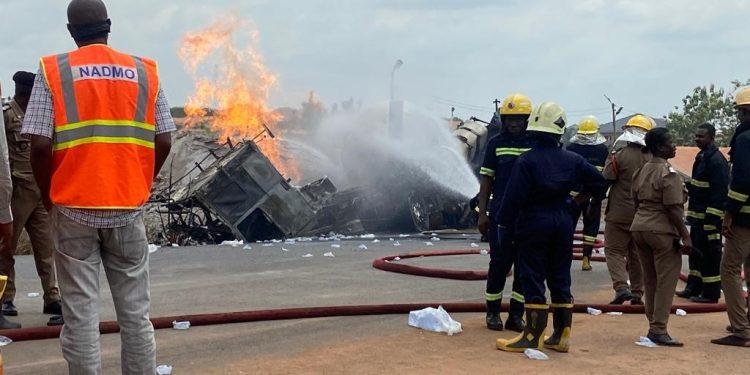
    Meanwhile, Ghana has recorded a surge in road crash fatalities this year. On Tuesday, April 28, a Senior Lecturer at the University of Cape Coast (UCC), Dr Kwabena Koforobour Agyeman, and his teaching assistant, Mr Peter Amoadu-Asmah, were confirmed dead following a fatal accident at Third Ridge Junction on the Accra–Cape Coast Highway.
  • GHC57.2m recovered in payroll audit exercise from 2023 till date – A-G

    GHC57.2m recovered in payroll audit exercise from 2023 till date – A-G

    An audit exercise conducted by the Auditor-General (A-G) has uncovered a total of GH¢57.2 million in unearned salaries within the public sector payroll.


    During an interaction with the media, the Auditor-General, Johnson Akuamoah Asiedu, disclosed that the recoveries were made between 2023 and April this year.

    According to him, some individuals remained on the government payroll despite being absent from post or failing mandatory validation checks.

    He added that the exercise is a part of the government’s efforts to strengthen accountability by eliminating ghost names from the payroll system.

    The A-G noted that disciplinary actions will be taken against managers of public institutions and supervisors who certified payrolls without verifying the presence of their staff.


    “Auditors will comply fully with validation checks and surcharge every person who is paid unearned salaries. We are determined to completely do away with ghost names on the payroll. Supervisors who see to these payments are also going to be held accountable. If you, as a supervisor, certify a payroll knowing that a named person is not at post, you will be surcharged personally,” he said.An audit by the Ghana Audit Service exposed over fifty-three thousand separated staff on the government’s payroll in 2025.


    While delivering the 2025 Mid-Year Budget Statement to Parliament on Thursday, July 24, the Finance Minister, Dr. Cassiel Ato Forson, disclosed that these names could belong to individuals who are no longer in active service.


    “53,311 separated staff—these are staff who are either retired, resigned, terminated, on leave without pay, or deceased, and yet remain on government payroll. So far, we’ve found about 14,000 people that we can’t validate. We can’t find them. They may be ghosts. They are across sectors,” he said.


    The government engaged the Ghana Audit Service to undertake a nationwide payroll audit across all 16 regions of the country. The Finance Minister revealed that the Ghana Audit Service has completed 91% of the payroll audit.

    According to the sector minister, the Audit Services expects to recover GH¢150.4 million of unearned salaries from the separated staff over the 2023 and 2024 period.

    “Mr. Speaker, going forward, we will enforce the monthly payroll validation process and strictly apply sanctions to all who validate ‘ghosts’ for payment of salaries. Rt. Hon. Speaker, let me use this opportunity to strongly caution those who validate ‘ghosts’ across the public service that they will be personally liable for the loss of public funds,” Dr Cassiel Ato Forson said.


    He assured that the Ministry of Finance will continue to monitor the payroll and put in place measures to prevent “ghost names” on the payroll. By the end of August, the Ghana Audit Service, in partnership with EY and PWC, will complete the audit of arrears and payables as of the end of 2024.


    The Audit Service was tasked to audit and validate GH¢68.7 billion of arrears. The sector minister noted that about 87 percent of the audit has been completed.

    The preliminary results show that a total of GH¢28.3 billion has been validated for payment. Also, an amount of GH¢3.6 billion has been rejected because of errors, duplications, and non-compliance with PFM and procurement rules. An amount of GH¢562.6 million is without adequate supporting documents, and GH¢27.3 billion is pending validation.


    Dr Cassiel Ato Forson stated that “once finalized, we will update the House on the findings and outcomes.”In his delivery, Dr Cassiel Ato Forson noted that it has come to the attention of the Ministry of Finance that a number of contractors implementing some of these 55 stalled projects have drawn down on the loans with no work done to match the amounts drawn down. Again, some contractors have submitted additional costs in excess of what Parliament approved. In light of this, the Ministry of Finance has commissioned a forensic audit into these projects.


    “Mr. Speaker, we will apprise the House when this audit is completed,” the sector minister assured. The Finance Minister also revealed that the government has experienced some significant pressures on the compensation budget for the first half of 2025, mainly emanating from wages and salaries. Wages and salaries exceeded the budget by GH¢1.3 billion for the first six months of the year.


    The wage pressures, the minister said, were largely driven by last-minute recruitments undertaken by the previous government in the last quarter of 2024, especially in the education, health, and security sectors.


    “In addition, ad-hoc reviews of conditions of service undertaken in previous years have distorted the Single Spine Pay Policy and further burdened the public wage bill,” the sector minister added. In February this year, Chief of Staff Julius Debrah issued a directive annulling all public service appointments and recruitments made after December 7, 2024. A letter was circulated to heads of government institutions, instructing them to comply with the directive and submit a report by February 17, 2025, detailing the actions taken in response.


    “Consistent with Government pronouncement in relation to near-end-of-tenure appointments and recruitments, I wish to bring to your attention that all appointments and recruitments made in the Public Services of Ghana after 7th December, 2024, are not in compliance with established good governance practices and principles.


    “Accordingly, all Heads of Government Institutions are hereby requested to take the necessary steps to annul any such appointments or recruitments and submit a comprehensive report on the actions taken to this Office by 17th February 2025.”


    Prior to the swearing-in of President-elect John Mahama, concerns were raised over last-minute appointments and financial transactions by the outgoing administration. The previous government defended these actions, stating, “these recruitment processes and payments have received the relevant statutory approvals and have not been proven to be illegal. It was decided that any specific allegation of illegality about any particular payment or recruitment should be brought to the attention of the Transition Team for a decision to be made.

    “Minority Leader Alexander Afenyo-Markin urged President Mahama to reconsider and overturn the cancellation of these appointments.
    In response, Minister of State responsible for Government Communications and a spokesperson for President John Dramani Mahama, Felix Kwakye Ofosu, defended the administration’s move to invalidate appointments made after December 7, citing procedural flaws in the recruitment process.

    Speaking to the media in Accra on Wednesday, February 19, Kwakye Ofosu said, “Let me also put it on record that this action has been taken not because of a perception or a belief that they were NPP. It is because we know that the recruitment processes were attended by irregularities.

    ”He pointed out cases where some individuals were issued retroactive appointment letters to falsely suggest they had been hired well before the elections, while others secured positions without going through interviews or even formally applying.


    Kwakye Ofosu stressed that such irregularities could not be overlooked and reaffirmed the government’s commitment to launching a fresh recruitment exercise that would be open to all qualified Ghanaians, regardless of their political backgrounds.


    “In due course, the government will do recruitment, and it will be open to all Ghanaians irrespective of political colouration. Indeed, your party identity will not be required. You will not be asked to show whether you’re NPP or NDC when that comes, but we will do it in a regular manner,” he explained.


    He also guaranteed that individuals whose appointments had been nullified would still have the chance to apply again and participate in a fair recruitment process. “So even those who have had their employment revoked will still have the opportunity to reapply and go through due process,” Kwakye Ofosu added.

  • RTI request filed by Minority over GHS1 fuel levy data

    RTI request filed by Minority over GHS1 fuel levy data

    The Minority in Parliament has submitted a Right to Information (RTI) request demanding full disclosure of revenues generated under the Energy Sector Levies Act. The Caucus, in recent times, has called on the government to provide detailed data on how funds accrued from the GH¢1levy have been utilized.

    Addressing the media on Wednesday, April 29, the Minority Chief Whip stated that their demands have become necessary given the persistent power outages across the country, adding that the government must be held accountable for how revenues from the levy are collected, managed, and utilized to address the ongoing energy challenges.

    Last year, the President John Dramani Mahama-led government implemented a GH¢1 fuel levy on petroleum products. This move falls under the Energy Sector Levies (Amendment) Act, 2025 (Act 1141), which was assented to by the President on June 5 to address energy-sector shortfalls, reduce legacy debts, and stabilize power supply across the country, following parliamentary approval.

    “We were told that the GH¢1 levy will allow the government to keep the lights on, and so now the question is, why are our lights not on? We were told that we were paying the GH¢1 to use it to buy fuel, but when the NPP was leaving, we handed fuel to them, and so the question is why Ghanaians must continue to sleep in darkness, and businesses are collapsing.

    “It is necessary for us to know what they used the revenue for because we are experiencing dumsor everywhere in the country,” he added.


    President Mahama stated that “initially much of this revenue will go to the purchasing of fuel to ensure stable power of electricity.”
    According to him, the levy will also help reduce the use of liquid fuel in the energy mix, as it expects more gas from the ENI, Sankofa, Jubilee, and TEN fields, as well as the West African Gas Pipeline.


    “At that stage, the resources generated by this increased levy will be channeled to pay accumulated legacy debts in the power sector,” he added.


    He assured Ghanaians that funds generated from the newly approved GHC1 fuel levy will undergo regular audits. He explained the move is to ensure accountability and transparency.


    “Funds from this levy will not be subject to the hazards of the Consolidated Fund. The fund will be regularly audited and audit reports made public to ensure its transparent use.”


    Energy and Green Transition Minister, John Abdulai Jinapor, has defended the government’s move despite opposition from some stakeholders in the energy sector.


    He noted that the timing of the introduction of the levy is apt as the cedi continues to appreciate against major trading currencies. The minister projects to generate revenue ranging between GH¢5 billion and GH¢6 billion to support the procurement of liquid fuel.


    “Fuel was around GH¢16.00, and a sensitive government will not slap a tax when fuel is GH¢16.00. You couldn’t have imposed that tax around that time when fuel was still very high, and so you needed to work to bring fuel down to this level and share the gain with Ghanaians. At that time, if we had increased it, you can imagine the impact on Ghanaians, but today, the net effect is that you are still having a reduction of GH¢3.00 on a litre of fuel.


    “It is better to do it today than to have done it yesterday, when it would have eroded your income; today, your purchasing power has increased because of the reduction of the value of the dollar,” he said while speaking on JoyFM.


    Some stakeholders in the energy sector have expressed their displeasure over the approval of the Energy Sector Levy (Amendment) Bill, 2025, by Parliament and its pending implementation.


    On the matter, Chief Executive Officer of the Association of Oil Marketing Companies (AOMCs), Dr Riverson Oppong Peprah, warned that the implementation of the levy could drive fuel prices higher, adding further strain on consumers and the downstream sector.


    “When fuel prices began to fall, it wasn’t because the cedi gained stability; rather, it was due to a drop in plant prices caused by the decline in West Texas Intermediate (WTI) crude oil prices. Only after that did the cedi stabilise and support the downward trend.”
    “As we speak today, plant prices are already rising again. So, I urge the government to reconsider this levy since there are other options,” he counseled.


    Also, Executive Director of the Centre for Environment and Sustainable Energy Benjamin Nsiah has raised similar concerns, calling the introduction of the levy “unfair.”


    “This approach is not only tired but unfair. We’ve seen this playbook before. The Energy Sector Levies Act (ESLA) and the Energy Sector Recovery Levy have provided a lasting solution to the underlying issues. It’s not about collecting more. It’s about managing what’s already collected,” he added.

  • A-G given last chance to justify EOCO’s involvement in Buffer Stock trial

    A-G given last chance to justify EOCO’s involvement in Buffer Stock trial

    The Criminal Division of the High Court in Accra has granted the Office of the Attorney-General (A-G) a final opportunity to justify its decision to involve a lawyer from the Economic and Organised Crime Office (EOCO) in the ongoing trial of former Chief Executive Officer of the National Food and Buffer Stock Company Limited (NAFCO), Hanan Abdul-Wahab Aludiba, and four others. 

    This development comes after Justice Francis Achibonga, a Court of Appeal judge sitting as an additional High Court judge, on Wednesday, April 29, expunged the name of the EOCO lawyer, Radiatu Abdulai, from the ongoing trial.

    The judge’s ruling was triggered by counsel for the first accused, Godfred Yeboah Dame, who questioned Radiatu Abdulai’s representation of the Republic. Mr Dame noted that “there has been no due authorisation of the lawyer to prosecute, adding that the Law Officers Act of 1974 (NRCD 279) and the Legal Services Act of 1993 regulated the performance of functions of the Office of the Attorney-General”. 


    According to a statement in circulation, Godfred Yeboah Dame who was the former deputy Attorney General and Minister of Justice justified that “Per the Law Officers Act, only public officers mandated by an executive instrument and certified to be on a rank equivalent to one of the posts in the Office of the Attorney-General, can appear in court with the Attorney-General or be mandated to prosecute or perform the functions of the A-G”.  

    Read the statement below:

     In 2025, Former Chief Executive Officer of the National Food and Buffer Stock Company Limited, Hanan Abdul-Wahab Aludiba, and his wife, Faiza Seidu Wuni, were granted bail totaling GHS150 million by the High Court in Accra. Hanan had a share of GHS100 million in the bail and was to provide six sureties, four of whom must prove ownership of landed property.

    His wife, on the other hand, was granted bail in the sum of GHS50 million with four sureties, three of whom must own property within the jurisdiction of the court.

    The duo have pleaded not guilty in the National Food and Buffer Stock Company case. They stand accused of 24 counts, including stealing, defrauding by false pretences, willful misuse of public funds, money laundering, and exploiting public office for personal benefit. The court has directed that the sureties submit copies of their Ghana Cards.

    The court also ordered that the names of the accused persons be added to a stop-list at all entry and exit points in the country, including airports, seaports, and border crossings. Until the final determination of the case, Hanan Abdul-Wahab Aludiba and Faiza Seidu Wuni are required to report to the investigator every Wednesday.

    Abdul-Wahab is standing trial over allegations of large-scale financial misconduct during his time in office. He was arrested on June 25, along with his wife. EOCO granted a GHS30 million bail to his wife, while her husband remained in custody pending the fulfillment of his GHS60 million bail condition.

    The arrest, which took place simultaneously in Accra and Tamale, also led to the detention of a third, unnamed individual believed to be linked to the investigation.

    On Tuesday, July 8, the former NAFCO boss was released from the custody of the Economic and Organised Crime Office (EOCO) after being detained for 14 days. Abdul-Wahab was released after meeting a GHS60 million bail condition backed by two guarantors.

    On June 25, Hanan and his spouse were taken into custody over suspected mismanagement of funds while he led the government agency. His wife was granted bail earlier, set at GHS30 million.

    Earlier reports indicated that Mr. Hanan had met the bail terms; however, he remained in the custody of EOCO, a situation that drew backlash from the opposition New Patriotic Party (NPP), which described the terms as harsh and unfair.A third suspect, an unnamed individual believed to be linked to the investigation, has also been detained.

    Meanwhile, a list of luxury assets belonging to Hanan Abdul-Wahab has been made public by the Attorney General (A-G) and Minister for Justice, Dr. Dominic Ayine.His assets include a five-bedroom house at Chain Homes valued at $1.625 million, a three-bedroom house at Cantonments purchased for $600,000, and multiple plots of land at the Airport Development Area worth $750,000.Other properties include a 17-bedroom boutique hotel in Gumani, Tamale, acquired for $250,000; a four-bedroom bungalow at Dzorwulu, Accra, valued at over GHS4.14 million; and a 0.32-acre parcel of government land purchased for GHS307,200.

    The Attorney General made the disclosure while addressing journalists at a press briefing in Accra on Wednesday, October 22, as part of the Government Accountability Series. He added that the recent development was made possible through collaboration with the Economic and Organised Crime Office (EOCO), after several properties and bank transactions were traced to Abdul-Wahab.

    But Abdul-Wahab has denied all allegations leveled against him by the Attorney General. In a statement issued on Wednesday, October 22, Mr. Aludiba noted that he has instructed his lawyers to follow up on the allegations.“I wish to state, respectfully, that these claims are untrue and do not reflect the facts of the matter. I have no involvement in the issues being referred to, and I find the comments deeply unfortunate.“I look forward to the opportunity to present my side and to have my day in court, where I am confident that the truth will be made clear,” the statement added.

    Meanwhile, the Office of the Special Prosecutor (OSP) has released a fifty-page report covering investigations and prosecutions carried out between January 1 and July 31 this year.The OSP’s Seventh Half-Yearly Report is pursuant to Section 3(3) of the Office of the Special Prosecutor Act, 2017 (Act 959). The document also outlines key developments in the Office’s operations.

    According to the OSP, despite resistance from powerful interests, it stayed focused on executing its mandate during this period. As such, the Office successfully progressed significant corruption-related investigations to the stage of court proceedings while also initiating new inquiries into suspected acts of corruption.”Then again, the Office, as one of three implementing partners of the new National Ethics and Anti-Corruption Strategy and Implementing Plan, is fashioning and moulding anti-corruption structures that would stand the test of time. The task ahead remains formidable. Much more so is our resolve to perform.

    “This reporting period was characterised by intensification of the Office’s prosecutorial mandate. We advanced high-profile investigations to court and initiated bold inquiries into suspected corruption, often in the face of deep-seated resistance from entrenched interests.”Notwithstanding these expected challenges, the Office remains resolute and guided by the rule of law, fairness, firmness, evidence-based action, and the interest of the public. We recognise that the fight against corruption cannot be waged and won only through punitive action and incarceration,” parts of the report read.

    The legislative framework of the Office of the Special Prosecutor mandates the Authority to crack down on corruption, recover assets, and confiscate illicit property.”Indeed, the legislative set-up of the Office leans heavily on corruption prevention and asset recovery and disgorgement of tainted property. Consequently, we proceed on sustainable anti-corruption outcomes by pairing enforcement with robust prevention and asset recovery, especially founded on our unique plea bargaining regime.

    “In this spirit, the Office scaled up its preventive mandate through active engagement with public institutions, private sector actors, and civil society, and secured convictions and asset recovery through impactful plea bargaining. We also reckon that the nation’s anti-corruption legal framework requires re-imagination, modernisation, and retooling to address the immense scale and complexity of modern corruption in the context of our social, economic, and political constructs.

    “On this score, the Office has proposed the inclusion of a new chapter in the Constitution dedicated to the fight against corruption through definitive constitutional expression by the institution of proposed concrete measures to effectively and comprehensively suppress and repress corruption in public life as well as in the private sector, chief among which include lifestyle audits, non-conviction-based asset recovery, enhanced asset declaration and verification regime, and reverse onus presumption of corruption as the foundation of both anti-corruption criminal proceedings and civil asset recovery proceedings,” parts of the report added.

    The Office is also leading the charge in respect of the passage of a comprehensive Corrupt Practices Act and Conduct of Public Officers Act. Currently, sixty-seven (67) cases are being handled by the Office, all of which are undergoing comprehensive review.The corruption cases being investigated by the OSP include: the Minerals Income Investment Fund, Ghana Airports Company Limited, Ghana Education Service, National Commission on Culture, Ghana Revenue Authority/Tata Consulting Services, National Service Authority, Ministry of Health/Service Ghana Auto Group Limited, and the National Cathedral.

    The others are: Tema Oil Refinery and Tema Energy and Processing Limited, the Electricity Company of Ghana Limited, State lands, Stool lands, and other vested lands, Illegal Mining, the National Sports Authority, Customs Division of Ghana Revenue Authority, Bank of Ghana, and the Estate of Kwadwo Owusu-Afriyie, alias Sir John.

  • UCC lecturer and his teaching assistant die in fatal accident on Accra–Cape Coast Highway

    UCC lecturer and his teaching assistant die in fatal accident on Accra–Cape Coast Highway

    A Senior Lecturer in the Department of Geography and Regional Planning at the University of Cape Coast (UCC), Dr Kwabena Koforobour Agyeman, and his teaching assistant, Mr Peter Amoadu-Asmah, have been confirmed dead following a fatal road accident at Third Ridge Junction on the Accra–Cape Coast Highway.
    This information was confirmed by the UCC Management through a statement issued on Tuesday, April 28. The statement read, “Our thoughts and prayers are with them during this difficult time. His invaluable contributions and presence will be deeply missed by colleagues, students, and all who had the privilege of knowing and working with him”.

    The unfortunate incident which occurred early hours of Tuesday, April 28, involved a Toyota Corolla and a HOWO tipper truck. Ghana has reported a surge in the number of fatalities resulting from road crashes this year.

    On Saturday, April 18, the Ghana National Fire Service (GNFS) reported the death of one person following a vehicular accident that occurred at Gomoa Ankamu (Apam Junction) in the Central Region.

    Earlier this month, an accident on the Buipe-Tamale road claimed the lives of four individuals. The fatal crash involved a Sprinter Benz bus traveling from Buipe to Kumasi, and a trailer truck at Sawaba No. 2. The deceased included two females and two males, two of whom died on the spot.


    According to the GNFS, the trailer truck fled the scene, leaving behind the victims and wreckage as emergency responders rushed in to manage the situation.

    Meanwhile, 19 passengers are receiving medical attention at the Buipe Government Hospital.
    Weeks ago, a head-on collision on the Accra-Kumasi Highway claimed the life of an individual on Saturday, March 7. The deceased male, reportedly the owner of a Toyota Voxy, crashed into a parked MAN Diesel truck at Teacher Mantey.


    Detailing the incident on Facebook on Sunday, March 8, the Ghana National Fire Service (GNFS) stated that the Toyota Voxy had badly crashed into the stationary truck prior to the arrival of the rescue team.
    Weeks ago, eleven (11) persons sustained injuries following a head-on collision at Eduadjei on the Cape Coast-Takoradi Highway. The victims, eight males and two females, are receiving medical attention at the Elmina Polyclinic.

    Per the Central Regional Fire Service’s account, the two vehicles, an Opel Astra (WR 4860-13) traveling from Cape Coast towards Komenda, collided head-on with a Nissan mini bus (CR 1414-23) heading from Takoradi to Cape Coast. Meanwhile, officials have yet to ascertain the cause of the accident.


    The National Road Safety Authority (NRSA) recorded one thousand five hundred and four (1,504) deaths, compared to one thousand two hundred and thirty-seven (1,237) fatalities reported in the same period in 2024, representing a 21.58 percent increase in the first half of 2025.


    According to provisional data released by the National Road Safety Authority in collaboration with the Police Motor Traffic and Transport Department (MTTD), a total of 7,289 road crashes were recorded between January and June this year. Per the data, a total of twelve thousand three hundred and fifty-four (12,354) vehicles were involved in these crashes.


    As a result of these incidents, eight thousand three hundred (8,300) individuals sustained injuries. Additionally, one thousand three hundred and one (1,301) pedestrians were knocked down across the country.


    According to recent data provided by the National Road Safety Authority, on average, eight (8) lives are lost every day due to road crashes. Each day, forty (40) road crashes are recorded, and forty-six (46) individuals sustain injuries. Daily, sixty-nine (69) vehicles and motorcycles are involved in road crashes.


    To help combat the rising number of road crashes, the National Road Safety Authority has called for stricter enforcement of traffic regulations and increased public education.


    The NRSA has emphasized the need for stronger enforcement to curb the alarming trend. The Road Traffic Act 2004, an Act to consolidate and revise the Road Traffic Ordinance, 1952 (No. 55), provides for more comprehensive regulation of road traffic and road use to ensure road safety and address related matters.


    A person who drives a motor vehicle dangerously on a road commits an offence and is liable on summary conviction:
    (a) where (i) a bodily injury does not occur, or (ii) a minor bodily injury occurs to a person other than the driver, to a fine of not less than one hundred penalty units and not exceeding two hundred penalty units, or to a term of imprisonment not exceeding nine months, or to both;


    (b) where bodily injury of an aggravated nature occurs to a person other than the driver, to a minimum fine of two hundred penalty units and not exceeding five hundred penalty units, or to a term of imprisonment of not less than twelve months and not exceeding two years, or to both;(c) where death occurs, to a term of imprisonment of not less than three years;


    (d) where there is damage to state property, to a fine of not less than one hundred penalty units and payment for the damage caused in an amount determined by the Court.


    The Court may, upon conviction of a person under subsection (1), (a) order the payment of appropriate compensation to an injured person or to the estate of that person, or (b) order the withdrawal of the driver’s license for a period of not less than three years and not more than five years.


    A person who drives a motor vehicle on a road without due care and attention, or without reasonable consideration for other persons using the road, commits an offence and is liable on summary conviction to a fine not exceeding two thousand penalty units or to a term of imprisonment not exceeding five years, or to both.


    A person commits an offence if, without lawful authority or reasonable excuse, that person:


    (a) causes anything to be on or over a road;(b) interferes with a motor vehicle, trailer, or cycle; or(c) interferes, directly or indirectly, with traffic equipment, where it would be obvious to a reasonable person that doing so would be dangerous.


    A person who commits an offence under subsection (1) is liable on summary conviction to a fine not exceeding two hundred and fifty penalty units or to a term of imprisonment not exceeding twelve months, or to both.


    Meanwhile, over one-third of emergency cases at the Komfo Anokye Teaching Hospital (KATH) have been linked to road crashes, according to the facility’s statistics.


    Speaking to the media, Deputy Medical Director of KATH, Dr. Yaw Opare Larbi, noted that road crash victims brought to the emergency unit often do not survive because their injuries are very severe.


    “A little over 30 per cent of the cases that come to this facility, this Accident and Emergency Unit, are due to accidents, and most of the accidents, a few are domestic, but the majority of them are road traffic accidents.


    “Now in Ghana, we know that our statistics, a lot of our road accidents are from errors, driver errors, pedestrian errors. And then we know that we have some percentage that is attributable to maybe things like faulty vehicles or maybe road conditions, but a lot of the accidents are preventable,” he stated.

  • Former GIHOC MD Maxwell Kofi Jumah in EOCO custody – Report

    Former GIHOC MD Maxwell Kofi Jumah in EOCO custody – Report

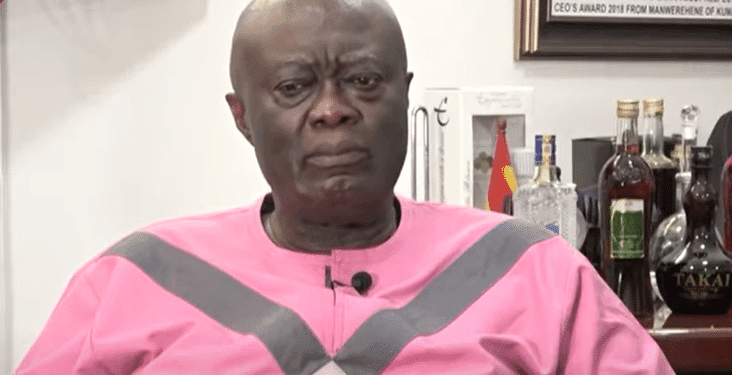
    The Economic and Organised Crime Office (EOCO) has reportedly held in custody the former Managing Director of GIHOC Distilleries Company Limited, Maxwell Kofi Jumah.

    According to reports, some EOCO personnel picked him up at his private residence in Kumasi on Wednesday, 28th April. Reports suggest that EOCO had raided his residence a week before his arrest. 

    Meanwhile, the cause of his arrest is yet to be made public. However, many have speculated that his arrest could be related to activities administered under his leadership at GIHOC. EOCO has consistently held several prominent persons as part of its enforcement operations. 

    Last year, the Former Managing Director of GIHOC Distilleries, secured a bail of GHS500,000 with two sureties.

    He was arrested in connection with the alleged theft of vehicles belonging to the state company.

    On Monday, 30 June, Mr Jumah secured the bail after appearing at the CID headquarters, where he was being held for questioning.

    Per reports, he was picked up at his residence in Kumasi on Sunday, June 29. Maxwell Kofi Jumah was said to be in the custody of the Ashanti Regional Police Command.

    It was reported that security personnel in May attempted to retrieve state vehicles in his possession. The personnel were unable to, as Mr Jumah was not home.

    In reaction to the event, Mr. Jumah, in a Facebook post, wrote, “I hear the Mahama people want to come for the GIHOC car in my possession. Can someone tell them that the car is parked safely?”

    “They can come for it. They should also prepare to hand over my properties to me. It is more than the car. A whole lot more. Interesting times ahead.”

    Sources say Mr Jumah was investigated for unauthorised sale of assets and vehicle acquisition during his tenure. According to reports, he sold company properties in Tema valued at over $700,000 without authorization.

    Maxwell Kofi Jumah was appointed to head GIHOC in 2017 by former President Nana Akufo-Addo.

    In December 2024, the immediate past government directed all of its appointees to return state vehicles by January 3, 2025.

    The Ghana Police Service led by Deputy Commissioner of Police (DCOP) Lydia Yaako Donkor has confirmed that police have so far recovered three of the vehicles linked to the case.

    “As of this afternoon, we have retrieved three of the vehicles in question,” she added.

    “He is cooperating with the investigation, and we will proceed based on the evidence gathered.”

    The EOCO has similar mandates to the Office of the Special Prosecutor (OSP). EOCO is a specialized intelligence-led law enforcement agency in Ghana established to monitor, investigate, and prosecute economic and organized crimes. 

    Established by the Economic and Organised Crime Office Act, 2010 (Act 804), it replaced the former Serious Fraud Office (SFO) to provide a more robust framework for tackling complex financial crimes.

  • Claims of military land allocation to Ibrahim Mahama false – Brogya Genfi

    Claims of military land allocation to Ibrahim Mahama false – Brogya Genfi

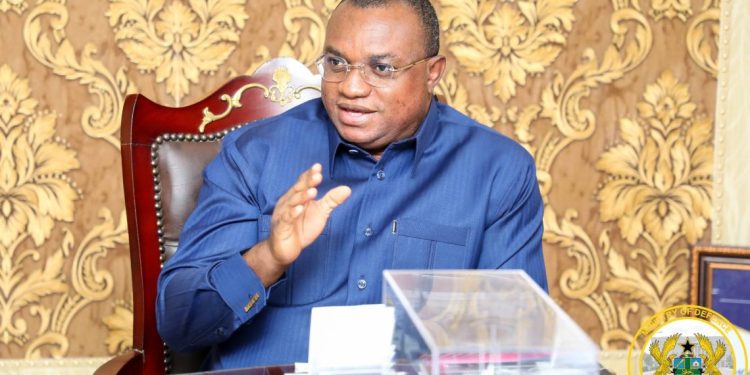
    The Deputy Minister of Defence, Ernest Brogya Genfi, has clarified widely circulated claims that Ibrahim Mahama, brother of President John Dramani Mahama, has been allocated military lands by the government for development.

    A Facebook post shared by the Deputy Minister on Wednesday, April 29, read, “I wish to firmly dismiss and ignore any false and malicious reports suggesting that military lands have been given to the President’s brother to develop. That story is completely untrue.”

    According to him, the only thing currently happening is that the Ghana Armed Forces are undertaking a redevelopment project aimed at replacing aging infrastructure at Burma Camp in Accra.

    He explained that Ibrahim Mahama who doubles the chief executive of Dzata Group Holding Limited is only in the news because he playing a significant role in the project. He added that “Ibrahim Mahama has generously donated GHC120 million as part of the replacement programme”.

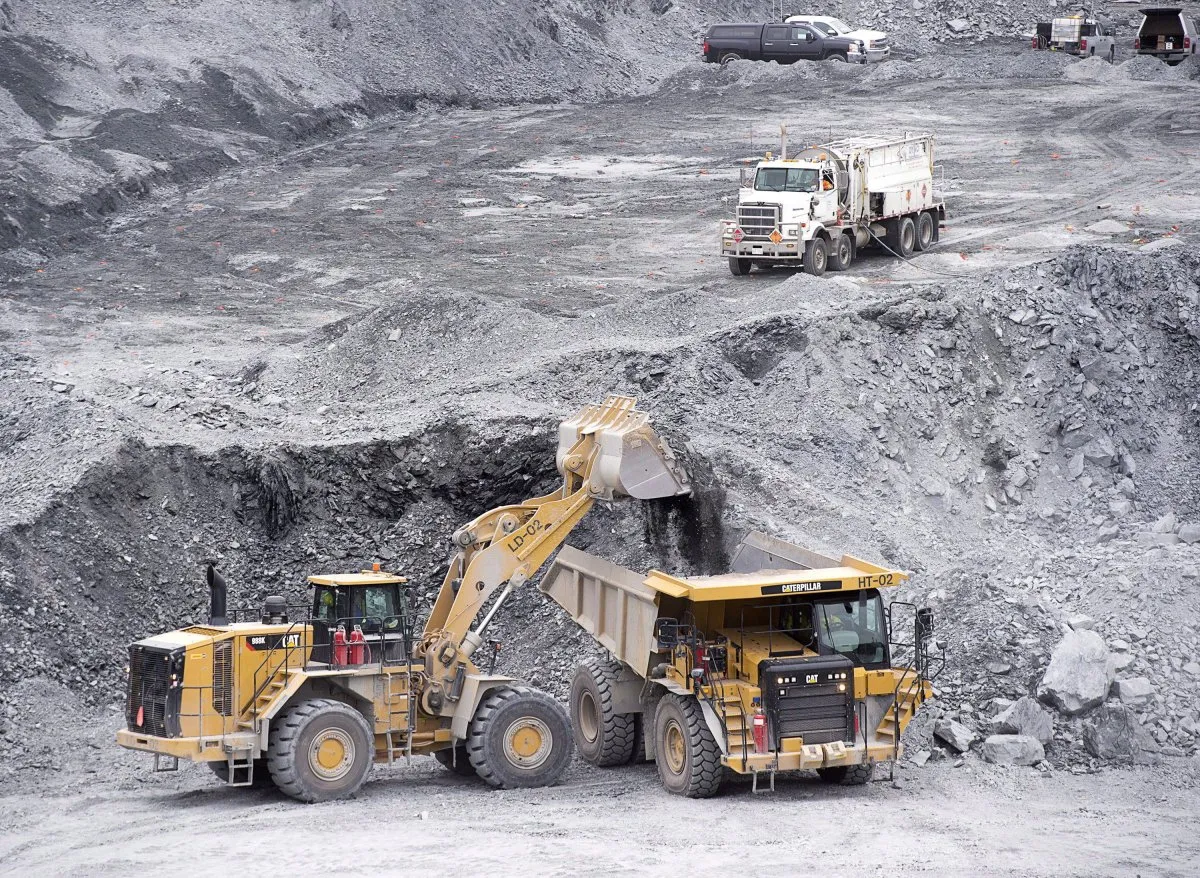
    The prominent Ghanaian entrepreneur and philanthropist is widely known for his generosity. Recently, he promised to reinvest in the Damang community following his company’s takeover of the Damang Mine in the Western Region of Ghana.


    In a speech delivered during the handover ceremony held at the mine site on Saturday, April 18, where the Minister for Lands and Natural Resources, Emmanuel Armah-Kofi Buah, performed the formal transfer, Mr Mahama, in response to a petition by the youth of the community, noted that he will construct two huge hospitals, concrete roads, and an airport in the community.


    “So what I want to say is that whatever money we make from here, we will reinvest it here. The transfer of the mine to EMP is for everybody. It’s not for me. I also want to build my own personal house here, so I will be living with you”, the CEO said.


    He said in two years the people of Damanag will drive on a good road network and in 6 months they will have an airport, pledging other development plans for the surrounding communities, adding that his promises aren’t political propaganda but “I beg you, this is not political talk. This is real talk”.


    He said, “I want to make a pledge for everybody to hear. I got a message from one of our young men saying we should build astro turfs for all the communities, which we are looking to do. We have applied for the area to have an airport, and within six months, there will be an airport, so that we can fly easily from here.


    “In the next two years, we will be able to drive from here to Cape Coast on a proper road. Not here alone, we will also extend it to the surrounding communities. We are looking to build hospitals. I saw the youth, are the youth here? My youth. Thank you. You talked about hospitals. I’m looking to build two large hospitals here”.


    Mr Ibrahim Mahama pledged his commitment to demonstrating that Ghanaians are capable of investing in themselves, while promising major investments to benefit surrounding communities.


    “I would say that, look, if we all put our minds together, this is a success story. And the plan I have for Damang Mine is not a joke. I just want to prove that we can invest in ourselves in this country,” he said.


    Background to the takeover


    Discussions about the transition began about a year ago when the mining lease of Gold Fields Ghana Limited, under which it had operated for about two decades, expired.


    Government, as part of its commitment to boosting local participation, declined to renew the lease and ordered the start of a competitive tender process to identify a new operator. However, it granted a one-year extension to allow for an orderly transition ahead of the final handover, which occurred over the weekend.


    The bidding process


    As the mining lease for Gold Fields neared expiry, the Ministry of Lands and Natural Resources announced a competitive bidding process on March 24 to select a new operator for the Damang Mine.


    About four companies submitted bids before the March 31 deadline, which were reviewed by the Minerals Commission under the Minerals and Mining (Licensing) Regulations, 2012 (LI 2176).


    Following the evaluation, Engineers and Planners, owned by Ibrahim Mahama, emerged as the winning bidder after meeting all requirements, including technical, financial, and regulatory criteria.


    The Minister assured transparency and job protection during the process, following concerns raised by Gold Fields workers.


    Authorities indicated that bidders were required to demonstrate strong financial capacity, including access to at least $500 million in funding, as well as technical expertise and operational readiness. Engineers and Planners met these requirements and secured the highest evaluation score.


    The Damang Mine, located in Ghana’s Western Region, is one of the country’s major gold-producing assets and has played a significant role in the national mining industry for decades.


    Government officials said the tender process and eventual handover are intended to sustain operations, protect jobs, and strengthen local ownership in Ghana’s mining sector.


    Minority reacts to transition


    The Minority in Parliament has stated that the Damang Gold Mine now under the Engineers and Planners (E&P) Limited did not go through a “proper transparent and fair manner”.


    In an interview with the media on Tuesday, April 7, the Deputy Ranking Member on Parliament’s Lands and Natural Resources Committee, Akwasi Konadu, insisted that the process was rushed and failed to meet the necessary standards.


    “The same ministry goes ahead in doing that job on behalf of the President, sets up a committee with agencies appointed directly by the minister to oversee these processes and executes these processes just under four days. And you find this as going through a proper transparent and fair manner?


    “You see, local participation is something that we all encourage but the process must be above par. That is what we look for, not anything. It must be so open such that any other person could put in a fortified bid. In this one, the person and the object are so bad that they do not speak well of us,” he added.


    The Minority Caucus’ statement follows comments by the Acting Director of Legal Affairs at the Minerals Commission, Josef Iroko, who insisted that the handover of the Damang Mine to Engineers and Planners Limited (E&P) followed due process.


    His comment comes amid allegations of favouritism in the awarding of the Damang mining lease to Engineers and Planners Limited. On April 1, the government initiated the official process to transfer the Damang Gold Mine from Gold Fields to Engineers and Planners after months of dispute over ownership.

  • FDA raids markets, confiscates banned alcoholic energy drinks

    FDA raids markets, confiscates banned alcoholic energy drinks

    Mixed drinks combining alcohol and stimulants, which were banned by the Food and Drugs Authority (FDA), have found their way back onto the market.

    However, on Monday, April 27, an operation carried out by the FDA led to the seizure of the prohibited products from several outlets. The exercise covered six major towns including Sefwi Wiawso, Sefwi Bekwai, Awaso, Asawinso, Juaboso and Bibiani with support from the Ghana Police Service.

    In February, the FDA issued a new directive ordering all importers, manufacturers, and distributors of alcoholic beverages mixed with stimulants to withdraw such products from the Ghanaian market by the end of March 2026.


    The product regulatory authority announced this in a formal statement dated February 25, indicating that the withdrawal has become a necessity after it conducted an assessment on the safety of these beverages and their health implications on the public.


    In the statement, the FDA said, it“….has concluded a post-registration review of mixed drinks containing both depressant substances (alcohol) and stimulants such as caffeine, inositol, glucuronolactone, ginseng, and guarana. The assessment took into account international and regional regulatory precedents, where several countries have restricted, suspended, or banned alcoholic energy drinks due to their associated public health risks.”


    It continued that the review was in compliance with the Public Health Act, 2012 (Act 851), under Sections 81 and 82(a). Section 8 empowers the FDA to conduct post-market surveillance and safety reviews of regulated products. This allows them to reassess products already approved if new evidence shows health risks, while Section 82(a) authorizes the FDA to withdraw, suspend, or revoke approval of products that pose risks to public health.


    One of the FDA’s major concerns is the hike in serious psychological health challenges, particularly among the youth.


    “The review assessed the safety and regulatory compliance of these products on the Ghanaian market. It was conducted under Sections 81 and 82(a) of the Public Health Act, 2012 (Act 851), which empowers the FDA to enforce standards necessary to protect public health and safety. Growing scientific and public health evidence links the combination of alcohol and stimulants to serious health risks and adverse psychosocial behaviours, particularly among the youth, young adults, and unsuspecting consumers.”


    Consequently, the FDA has given all supply chain operators to withdraw all such beverages from the market in the next 33 days or face serious sanctions for non-compliance.


    “Findings from the review were supported by the FDA’s Food Expert Committee, specifically the Technical Advisory Committee on Food Safety and Nutrition. Consequently, the FDA has directed all importers, manufacturers, and distributors of mixed drinks containing both alcohol and stimulants to clear such products from the Ghanaian market by the end of March 2026 without sanction. Beyond this deadline, non-compliant products will attract regulatory sanctions, including withdrawal from the market. This directive takes effect immediately,”, the statement continued.


    FDa also ordered “Manufacturers and producers are further required to re-formulate their products to conform strictly to the approved standards for Alcoholic Beverages and Energy Drinks as separate product categories,” emphasizing its commitment to public safety and urging the general public to report any suspicious product for the required investigations to be conducted.


    “ The FDA remains committed to safeguarding public health and safety, and ensuring that all food and beverage products on the Ghanaian market meet approved safety, quality, and regulatory standards.

    Consumers are encouraged to remain vigilant and report any suspicious or non-compliant products to the FDA for necessary investigation and enforcement action, the statement concluded”.

    The FDA has up their game in their crackdown on non-compliant and unregulated eateries and other consumer services in the last few months.


    Sixteen (16) food service establishments operating without valid hygiene permits in the Greater Accra Region were closed by the Food and Drugs Authority (FDA) on Wednesday, February 18.


    Cheesecake House, Dolce Frizzante, Onda, and Alora Beach Resort, among others, were the affected facilities.
    They were shut down for failing to meet regulatory requirements. Before the exercise, the FDA had issued a two-week public notice to all food service establishments in operation, instructing them to acquire a valid Food Hygiene Permit effective February 1, 2026.


    The FDA had consistently warned against the sale, distribution, and consumption of unregistered and unapproved products on the Ghanaian market, particularly drugs, herbal medicines, cosmetics, and food items that had not undergone proper safety and quality checks.
    In 2025, the FDA shut down Famude Catering Services in the Ashanti Region and revoked its licence for illegally producing two alcoholic drinks, Kings Orange Flavoured Liqueur and Jupiter 1990.


    These drinks were unregistered and were found to contain marijuana (cannabis) extracts, according to the FDA.


    The matter was referred to the Suntresu District Police for investigation and prosecution.


    Meanwhile, about 3 months ago, the FDA ordered a market recall of the Herbal medicine, Omama Herbal Mixture. This was after the safety authority, in collaboration with the Ghana Police Service, conducted a market surveillance and laboratory tests on the medicine, after which they discovered it contained some harmful substances.


    In a statement issued by the FDA on Friday, October 31, the regulatory body warned the public to desist from patronising the medicines.
    The FDA mentioned that, while the herbal mixture has been registered as a medication for malaria and loss of appetite, it has been adulterated with Diazepam, Metronidazole, Paracetamol, and Niacinamide, which are allopathic medicines, warning that consumption of the mixture without a proper prescription has the potential to cause harm to the consumers.


    “The Food and Drugs Authority (FDA), in collaboration with the Ghana Police Service, carried out market surveillance and laboratory analysis of Omama Herbal Mixture. The laboratory analysis revealed that Omama Herbal Mixture….It is important to note that Omama Herbal Mixture is registered as a herbal medicinal product indicated for malaria and loss of appetite, and is not expected to contain any allopathic medicines.
    The medicines found in Omama Herbal Mixture are dangerous when taken without a prescription and/or advice from a qualified health professional. The public is, therefore, advised not to patronise Omama Herbal Mixture,” parts of the statement read.


    Consequently, to ensure public safety, the FDA noted that it was working in collaboration with the Herbal Company to recall the products from the market.


    “Meanwhile, the FDA is working with Omama Herbal Group Limited to recall all products on the market for safe disposal and appropriate regulatory actions, including criminal prosecution. The FDA wishes to assure the public that it will not relent in its efforts to ensure public health and safety”, the statement added.


    The FDA also admonished the public to help promote consumer safety by reporting any person, pharmacy, or entity that will be found selling the herbal mixture.


    “The public is advised to provide information on persons, pharmacies, and over-the-counter medicine sellers (OTCMS) offering Omama Herbal Mixture for sale to the nearest FDA office”, the statement concluded.

  • Four generation units restored after fire at GRIDCo’s substation – Energy Ministry

    Four generation units restored after fire at GRIDCo’s substation – Energy Ministry

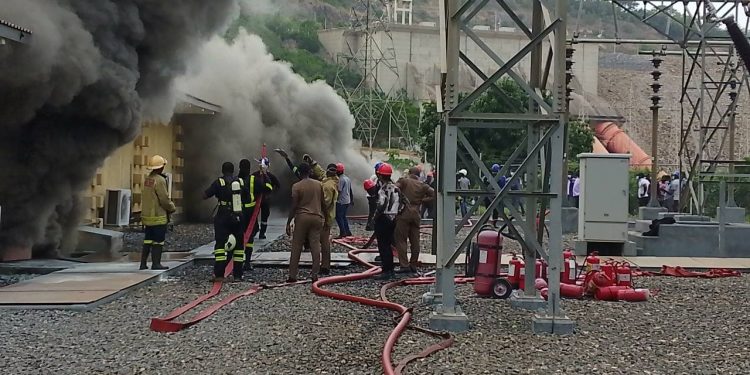
    The government’s efforts to stabilize Ghana’s power supply following the recent fire outbreak at GRIDCO’s substation at Akosombo are yielding results.

    In an Facebook post, on Tuesday, April 28, the Minister for Energy and Green Transition, Dr. John Abdulai Jinapor, disclosed that restoration works and progressing and the situation is nearing resolution.

    According to him, the fourth power generation unit at the Akosombo Dam has been successfully brought into operation.

    “At 9:09pm, the fourth unit at Akosombo Dam was successfully brought into operation, an encouraging step that strengthens power generation and reflects the dedication and expertise of the team behind the effort,” Dr. John Abdulai Jinapor wrote on Facebook.

    Meanwhile, the committee established to probe the fire outbreak at the Ghana Grid Company (GRIDCo) Akosombo Substation has been given a two-week deadline to conclude its findings, the Ministry of Energy has disclosed.

    Speaking to the media on Monday, April 27, the Spokesperson for the Energy Ministry, Richmond Rockson, stated that the decision to make the findings of the report public will depend on its nature and sensitivity.

    “The committee has two weeks to do its work and submit its report. Depending on the nature of the report, you can make it public, and sometimes, you may have to issue a white paper depending on the findings of the committee,” he added.

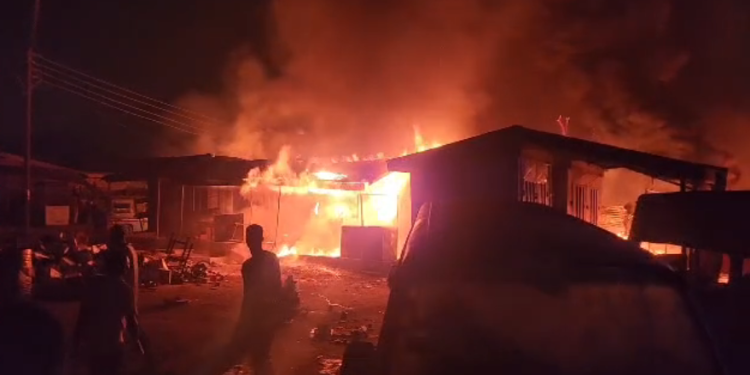
    Authorities over the weekend announced that they have set up a seven-member committee to investigate the recent explosion and fire outbreak at the GRIDCo Akosombo Substation, which occurred on the afternoon of Thursday, April 23.

    As a result, the Chief Executive Officer of the Ghana Grid Company Limited, Ing. Mark Awuah Baah, has been directed by the Minister for Energy and Green Transition, John Abdulai Jinapor, to step aside as investigations begin into the fire outbreak at the Akosombo Power Control Centre.

    Recently, Ghana has been experiencing temporary power outages, locally known as “dumsor.”

    However, the Spokesperson and Head of Communications at the Ministry of Energy, Richmond Rockson, has attributed the disruption to damage caused to the transmission system with a capacity of about 720 megawatts as a result of the fire outbreak.

    He described the development as “a significant hit,” explaining that the affected system supplies electricity to major parts of the country.He added, “The system that got affected was about 720 megawatts. That system transmits power to major parts of the country, so this is a significant hit. The Akosombo Dam generates a little over 1,000 megawatts.”

    The Ministry of Energy and Green Transition has taken steps to avert disruptions in Ghana’s power supply following a major fire incident at the Akosombo transmission network.

    As part of the measures, Ghana will temporarily halt power supply to neighboring countries. The Deputy Energy Minister, Richard Gyan-Mensah disclosed while engaging the press on Friday, April 24.

    Ghana primarily exports electricity to Togo, Benin, and Burkina Faso through the 225kV Bolgatanga-Ouagadougou interconnection. To enhance revenue mobilisation in the energy sector and stabilise power supply, the Ministry of Energy and Green Transition says it will introduce standardised, accurate electricity meters from next month to boost revenue mobilisation and stabilise power supply.

    In a related development, the Electricity Company of Ghana (ECG) has apologised to Ghanaians over the recent power outages across the country.

    Speaking on the situation on the Channel One Newsroom on Sunday, April 26, ECG’s General Manager for External Relations, Dr Charles Nii Ayiku Ayiku, was sorry for the inconvenience caused, describing the incident as unexpected and significant.

    “I sincerely apologise for the inconvenience our cherished customers are facing. The incident wasn’t expected. It was a major incident that has rendered the entire control room affected and down, and we sincerely apologise to our customers.

    “After Akosombo, the fact is that it blocked about 1000 megawatts, but I am sure you also understand that even after losing 1000 megawatts, we have still been consistent with power supply within some parts of the country,” he said.

    He assured that his outfit is making relentless efforts with restoration works currently underway across the transmission network, with full restoration imminent soon, hence he urged the public to remain calm amid the inconveniences being caused by the outages.

    “The question is, the current situation at the Akosombo GRIDCO substation is a work in progress. As I speak to you, there is a resolution; there are some of the issues that have been resolved, some parts of the country are back on full supply, pending other lines that will be restored.

    “The engineers have assured us that very soon we will get back on supply. I would once again urge the general public and our customers to remain calm and be assured that the situation is under control,” he stated.

    Dr Ayiku cautioned against calls for a load-shedding timetable at this stage, describing it as premature.

    “So if we start talking about a load shedding timetable right now, don’t you think it is too early to call for a load shedding timetable?” he said.He added that ECG, GRIDCO, and the Volta River Authority (VRA) are working together to restore full power supply across the country.

  • Ofori-Atta to face U.S. court over his immigration status on June 15

    Ofori-Atta to face U.S. court over his immigration status on June 15

    A United States (U.S.)  immigration court is expected to hear the residency bid of former Finance Minister Ken Ofori-Atta, as well as Ghana’s efforts to secure his return to face criminal charges, on Monday, June 15. The hearing is expected to be a virtual session before Judge David A. Gardey at the Annandale Immigration Court in Virginia at 1:00 pm. 

    Ofori-Atta had been in the U.S. Immigration and Customs Enforcement (ICE) detention since January 2026 over issues related to his immigration status. His release follows confirmation by his legal team that he had reunited with his family after leaving custody. 

    Earlier, the US judge who presided over the immigration hearing of Ghana’s former Finance Minister declined his bail application, citing an extradition request from Ghanaian authorities.

    Mr Ofori-Atta was tried on Tuesday, January 20, in a private hearing following a request for privacy by his lawyers.

    He had been in detention since his arrest on 6 January by the U.S. Immigration and Customs Enforcement (ICE).

    Consequently, his lawyers requested bail so that he could be released while his case is pending. However, this was rejected by the government lawyers over his extradition links, though the judge, David A. Gardey, didn’t make any final decision on the extradition but noted that no documents were shown in court to prove that an extradition request had actually been submitted.

    “The court cannot act on assertions without proof,” the judge indicated, directing the federal government to file any evidence of an extradition request on or before February 19, 2026.

    The case has been adjourned to Thursday, April 27, at 1 pm, where the tribunal is expected to hear both the bail application and any documents the government may submit. At the time, Mr Ofori-Atta had to remain in ICE detention.

    When his detention was first announced

    His detention was first announced on January 7 by his Ghanaian legal representatives, Minkah-Premo, Osei-Bonsu, Bruce-Cathline & Partners (MPOBB), who said he had been taken into custody a day earlier over concerns about his immigration status.

    “The United States Immigration and Customs Enforcement (ICE), as of January 6, 2026, detained the former Minister for Finance, Mr Ken Ofori-Atta, regarding the status of his current stay in the United States,” the firm said in a public notice signed by Justice Kusi-Minkah Premo, Esq.

    According to the lawyers, Mr Ofori-Atta has a pending petition for adjustment of status, a legal process that allows individuals to remain in the US beyond the validity of their visa.

    “Under US law, a change of status by this method is common,” the statement added, stressing that the former minister is “a law-abiding person” and is fully cooperating with ICE.

    Official records from the US Department of Homeland Security indicate that Mr Ofori-Atta is currently being held at the Caroline Detention Facility in Bowling Green, Virginia.

    The development has attracted attention in Ghana, especially given Mr Ofori-Atta’s recent legal and medical history.

    On January 7, Ken Ofori-Atta’s lawyers, Menka-Premo, Osei-Bonsu, Bruce-Cathline and Partners issued a statement confirming their client’s arrest by US Immigration and Customs Enforcement (ICE) over his immigration status.

    While it was widely reported that he had been detained for overstaying his visa term, the Attorney General’s Department has clarified that his visa was revoked in June last year and he was given up to November 29 to leave the USA; however, he ignored the order, leading to his detention by ICE.

    “ICE will not come for you unless you have visa issues; that is what has happened. In June 2025, his visa was revoked; it’s not an expiration of the Visa. The information we have is that his visa was revoked. So he has been living in America without a visa,” he said on the KeyPoints on TV3 Saturday, January 10.

  • Four busted for attempting to sneak 100 bags of cocoa into Ghana

    Four busted for attempting to sneak 100 bags of cocoa into Ghana

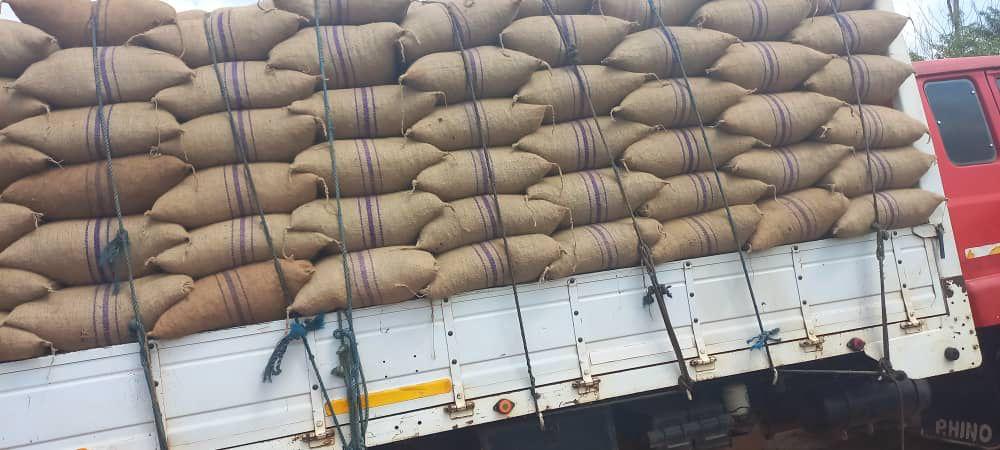
    A joint operation by the Anti-Smuggling Unit of the Ghana Cocoa Board and security agencies has led to the arrest of four individuals who were attempting to smuggle more than 100 bags of cocoa beans from Côte d’Ivoire into Ghana.

    They were arrested at Nkrankwanta in the Dormaa West District on Tuesday, April 28. The Bono Regional Minister, Joseph Addae Akwaboa disclosed that while addressing the press.

    “The operation led to the interception of a truck loaded with more than 100 bags of cocoa believed to have been smuggled from Côte d’Ivoire to Ghana,” he told a news conference in Sunyani.

    According to him, “Investigations led to the arrest of suspects… and they are currently assisting police investigations”.

    Cocoa smuggling to neighbouring Togo and Côte d’Ivoire between 2022 and 2025 has cost Ghana a total of US$1.1 billion, according to the Director of Special Services at COCOBOD, Jake Kudjo Samahar.


    During an interaction with stakeholders in the cocoa sector in the Oti and Volta regions, he disclosed that a total of 7,128.13 tonnes of cocoa were lost to smuggling between the 2020 and 2025 crop years in the Volta and Oti regions.


    Speaking to the media, he noted that the tonnage keeps decreasing each year, adding that the recorded losses have consistently dropped from the 2020/21 crop year to the 2024/25 crop year.


    “The tonnage recorded for 2020/21 crop year was 7,215.19, which reduced to 5,656.25 in 2021/22, further downward to 874.31 in the 2022/23 crop year, while 2023/24 recorded 468.75 tonnes with 2024/25 crop year recording 87.06 tonnes. We are losing a lot of revenue because if you look at within three years from 2022-2025, Ghana has lost almost $1.1 billion through cocoa smuggling into neighbouring Togo and Côte d’Ivoire,” he stated.


    Meanwhile, Finance Minister, Dr. Cassiel Ato Forson has linked the debt crisis facing the Ghana Cocoa Board (COCOBOD)to certain financial decisions taken by past officials.


    In an interview on Friday, November 14, Dr. Cassiel Ato Forson noted that the GH¢32 billion in arrears the sector is experiencing is the result of indiscriminate contract awards by the previous administration.According to him, these contracts were awarded during the tenure of the New Patriotic Party (NPP) without proper checks or budget allocations to fund them.

    He disclosed that despite these challenges, COCOBOD’s financial pressures have not eased, as its weakened balance sheet prevents it from meeting its obligations.“When COCOBOD awards a contract, they have to pay the contractors, not the Finance Ministry. The previous government awarded contracts anyhow, without any sources to pay for these contracts.

    “The COCOBOD CEO inherited GH¢32 billion worth of arrears. He cannot pay it in one year because he doesn’t have the resources. COCOBOD cannot go out and borrow because of its balance sheet, so how is it supposed to pay that?”


    As part of efforts by the Board to combat the smuggling of cocoa from the country, informants who assist the Ghana Cocoa Board (COCOBOD) in its anti-smuggling operations will receive one-third of the value of any confiscated cocoa.

    According to the Board, these rewards will be paid without undue delay. In a statement, it wrote, “Under this arrangement, informants and anti-smuggling agents will receive one-third (1/3) of the assessed value of confiscated cocoa as their reward. This reviewed scheme is designed to ensure the sustainability of the anti-smuggling campaign while maintaining strong public participation in the collective effort to curb cocoa smuggling”.


    Individuals have been urged to contact the Special Anti-Smuggling Task Force through the hotline on 0308-040-107. The Board has assured that it will treat with strict confidentiality any information received from informants.Ghana continues to grapple with cocoa smuggling, a practice that undermines the country’s revenue.


    Meanwhile, Minister for Foreign Affairs, Honourable Samuel Okudzeto Ablakwa, and the Ambassador of the Kingdom of Morocco, Her Excellency Imane Ouaadil, on July 28, handed over two thousand (2,000) tons of fertilizer, equivalent to 40,000 bags of fertilizer, to the Ministry of Food and Agriculture.


    According to the Foreign Ministry, the fertilizer was donated to the West African country by the Kingdom of Morocco during the official visit of Mr Okudzeto Ablakwa to Morocco last month as part of the two countries’ commitment to sustainable agriculture to enhance food security.


    Deputy Minister for Food and Agriculture, John Setor Dumelo, received the donated fertilizers on behalf of the Minister for Food and Agriculture, Eric Opoku. He expressed gratitude to the Morrocan government for the donation. He assured that farmers will receive the fertilizers to aid crop production.


    “Yesterday, 40,000 bags of fertilizer was donated to Ghana by the Kingdom of Morocco through the Ministry of Foreign Affairs. On behalf of my boss Hon Eric Opoku, I want to say a big thank you to Hon Ablakwa and Her Excellency Ouaadil for this kind gesture. We at the Ministry of Agriculture will ensure the fertilizers get straight to the deserving farmers as soon as possible,” he wrote in a post on the X platform on July 29.


    Stakeholders in the agricultural sector have bemoaned the absence of a single chemical fertiliser plant in the country. The Institute for Fiscal Studies noted that the absence of such a plant is having an adverse impact on crop production and the contribution of the agricultural sector to the country’s economy, i.e., the Gross Domestic Product (GDP). The sector’s contribution to the country’s GDP declined from 26.9% in 2010 to 22.7% in 2023.


    In March this year, Senior Research Fellow at the Institute for Fiscal Studies, Dr. Said Boakye, said, “We need to establish several fertiliser manufacturing plants to ensure that adequate and affordable fertiliser is available to farmers, which will help boost agricultural productivity.”


    “The sad reality is that Ghana lacks a single chemical fertiliser plant. In our rice studies, we have been comparing with Vietnam, where they have more than 7,000 plants. Vietnam’s success in achieving high agricultural productivity is largely due to fertilisers being readily available to farmers at no cost, along with incentivized prices,” he added.


    The Institute for Fiscal Studies has entreated the government to allocate significant funding to establish a fertiliser manufacturing plant.


    COCOBOD has noted that it would not secure any syndicated loan to finance cocoa purchases for the 2025/26 crop season. According to them, the shortage of cocoa beans on the global level has informed such a decision.


    “We’re not doing syndication…this year [2025], we’re not doing syndication. What has necessitated us not to do syndication is that we’re experiencing a global shortage of the cocoa bean.”
    He made these revelations during an interview with Accra-based radio station, Citi FM, on Monday, August 4.

    The Head of Public Affairs at COCOBOD, Jerome Kwaku Sam, stated explicitly stated, that the Board had not sought syndicated financing for the 2024/2025 season and had no intention of doing so this year.


    “…To be very honest, last year [2024], we didn’t do syndication, and this year [2025], we’re not doing syndication.
    Mr Sam further noted that the move also reflects a strategic effort to reduce costs under prevailing market conditions.
    “We’re not doing syndication whereby we’re going to incur additional expenses and what have you. That is out of the system or table for now,” he emphasized.

  • Binduri violence: 21 arrested over ambush on military convoy

    Binduri violence: 21 arrested over ambush on military convoy

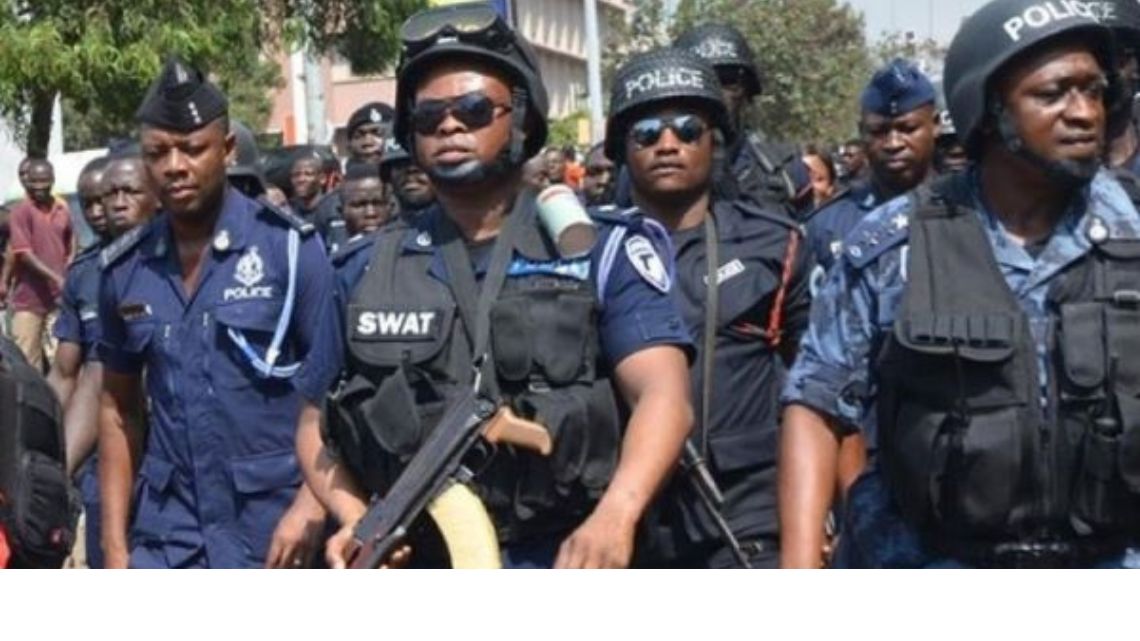
    Twenty-one individuals have been arrested for allegedly ambushing a military escort convoy in Binduri in the Upper East Region on Monday, April 27.


    Addressing the press on Tuesday, April 28, the Acting Director-General of Public Relations for the Ghana Armed Forces, Captain (Navy) Veronica Adzo Arhin, disclosed that the armed suspects opened fire on the escort team transporting a convoy of about 140 civilians from Bawku to Bolgatanga.

    The incident led to the death of three civilians, while one other person sustained injuries.


    According to Captain (Navy) Veronica Adzo Arhin, the Ghana Armed Forces (GAF) is working with other security agencies to stabilise the area and prevent further attacks.

    She also called on the public to desist from attacking security personnel on official duty.

    The community of Binduri in the Upper East Region, along with surrounding districts, has in recent times recorded a series of murders in recent times, leaving residents in fear and panic.

    The victims were killed by unknown armed men, prompting the police to launch investigations to arrest the perpetrators.


    Last year, the Ghana Police Service offered a one million Ghana Cedis reward for information leading to the arrest of Mark Agingre, a native of Binduri who has been labeled the prime suspect in the ongoing killings.


    This announcement came barely seventy-two hours after a man, his wife, and their three children were murdered in Binduri, leaving another child in critical condition.

    The surviving child was said to be receiving treatment at the Bolgatanga Government Hospital. On October 27, an elderly man and his two children were also killed by unknown assailants. Preliminary police investigations have linked these incidents to Mark Agingre.


    The police have urged individuals with information on Mark Agingre’s whereabouts to contact 191, 18555, or report to the nearest police station.

    Authorities have assured the public that the prime suspect and all others involved in the gruesome murders will be brought to justice.

    Taking to Facebook on Saturday, November 8, the police wrote, ” Suspect Mark Agingre, a native of Binduri, is wanted by the Police for his involvement in a series of brutal murders in the Binduri District and nearby communities in the Upper East Region.


    “Suspect Agingre is wanted in connection with the murder of a man, his wife, and three children on 7th November 2025, which also left another child in critical condition at the Bolgatanga Government Hospital.


    It added,” He is further suspected of the murder of an elderly man and his two children on 27th October 2025 at Binduri. Preliminary investigations indicate that he may be behind several other targeted killings.


    “A reward of One Million Ghana Cedis GH₵1,000,000.00 has been earmarked for anyone who can share relevant and credible information that will lead to the arrest of the suspect.


    The post concluded,” Anyone with credible information on his whereabouts is urged to contact the nearest police station or call 191, 18555 immediately. The Police assure the public that every effort is being made to track down the suspect and bring him to justice”.


    On Sunday, October 26, a shooting incident left three individuals dead and five others injured. Reports indicate that gunmen invaded the victims’ residence and shot them, including a five-year-old child who died instantly. George Bukari, Manager of Binduri-based Maxx Empire Radio and TV, is reported to have sustained injuries.


    The incident has been linked to the long-running Bawku conflict, where ethnic tensions have periodically sparked violence, making the area one of the most heavily monitored in northern Ghana.


    The government has, in several ways, sought to restore calm. In July, the Ghana Armed Forces (GAF) deployed soldiers to conflict-prone areas, including Bawku, Binduri, Nalerigu, and Zebilla.


    Four other individuals were killed in a daylight attack at the Garu District Office of the National Health Insurance Authority (NHIA), which also left several others injured on Monday, October 20.


    The deceased included a bystander, an NHIA staff member, a mentally unstable man, and Yahaya Bukari, headmaster of Garu D/A Junior High School. Eyewitnesses reported that four armed men on two motorbikes fired shots wildly upon arriving at the office.


    “Around 10 a.m., we heard gunshots. Initially, we thought it was coming from the rural bank area, but later we found out that the attackers had gone to the health insurance office,” a witness stated.


    Edward Ndebugri, former Presiding Member of the Garu District Assembly and current Assembly Member for Kugri, recounted that the gunmen targeted bystanders and fleeing residents.

    “There is a public school close to the health insurance office, and when the shooting started, the teachers and pupils began running helter-skelter. The gunmen chased them, and when one of the teachers fell, they shot him dead,” he added.


    The assailants reportedly left the NHIA office with nothing. In response, heavily armed police and military personnel patrolled key areas, including the District Health Insurance Office and the Presbyterian Hospital.


    “The whole town is in shock. This is the first time we are witnessing such an incident. People are living in fear, and we are pleading with the security agencies to investigate and bring the perpetrators to justice,” the Assembly Member for Kugri appealed.


    In April, the Ghana Police Service directed all regional commands to implement immediate protective measures for police officers and their families in the Upper East Region, particularly in Bawku, Pusiga, and Sindi.

    The directive followed intelligence suggesting that unknown operatives, potentially linked to names such as “King Doormathin” and “Nectwart Ermonnel,” may be targeting police officers and their relatives.


    “Recent developments suggest that police officers and their families, whether indigenous or non-indigenous, have become potential targets,” the internal message stated. It instructed that all movements in these communities must be carried out under armored escort and warned that strict compliance is non-negotiable.


    Although the identities and motives of the suspected individuals remain unclear, security analysts are actively investigating potential links to escalating unrest. Residents have been advised to remain vigilant and report any suspicious activity.


    “We’re working to ensure safety in these communities, but cooperation from the public is vital,” a senior police official, speaking on condition of anonymity, told the Independent Ghana.

  • Joana Quaye’s lawyers reject claims made by RNAQ in recent interview

    Joana Quaye’s lawyers reject claims made by RNAQ in recent interview

    Recent claims made by businessman Richard Nii Armah Quaye (RNAQ) in an interview with media personality Delay have been described as “substantially untrue” by the lawyers of his ex-wife, Joana Quaye.

    The news of the businessman and his ex-wife being divorced became public in mid-April this year after the High Court in Accra delivered its ruling on Joana’s petition.

    Joana had petitioned the Court to dissolve her marriage with Richard Nii Armah Quaye over alleged years of domestic abuse, infidelity, and unfair treatment in their union. Thus she prayed to the Court for both protection and a fair share of marital assets.

    According to a writ by Joana they built success together from humble beginnings. She had requested GH¢50 million in financial relief, but in return, Justice Dorgu awarded her GH¢300,000.

    She sought both protection and a fair share of marital assets. As part of her requests, the Court allocated to her two vehicles, one-third of the matrimonial home located in Dansoman, which includes three bedrooms and shared access to facilities such as the kitchen, sitting room, and store.

    However, according to reports, Judge Dorgu explained that Joana is “very much attractive and capable of remarrying at any time she wishes.”

    Additionally, the judge is said to have stated that the decision was intended to serve as a deterrent to prevent “frequent divorces with the expectation of reaping huge monetary benefits.”


    Justice Dorgu further stated, “…here is Petitioner who has been settled with 1/3 of the matrimonial home, the educational and health needs of the children placed on the Respondent, and her mobility issues are also taken care of. Physically, she is very much attractive and capable of remarrying anytime she feels like.”

    Following the development, some Ghanaians have expressed mixed reactions on social media.

    Appearing on The Delay Show on Saturday, April 25, RNAQ denied claims that he was already financially established before marriage. He also debunked allegations of ever abusing his ex-wife and being unfaithful.

    Watch video here:


    Reacting to his claims in a statement, Joana’s lawyers noted that “Our client, Joana Quaye, will continue to maintain her silence and place her faith in the justice system of Ghana in the hope that she will get justice for the wrongs and abuse inflicted on her by Richard Nii Armah Quaye as well as an equitable distribution of all the properties acquired during the marriage between the parties, as required under the laws of Ghana.

    “Whilst denying all the allegations made by Richard Nii Armah Quaye as untrue, we state that the fact of the marriage between the parties in 2010 is a matter of public record and cannot be changed by a self-serving ex post facto interview”.

    Read the full statement here:

    Last year, RNAQ Foundation’s flagship Food Bank initiative aimed at combating food insecurity and empowering vulnerable communities across Ghana was launched.

    According to the foundation, the RNAQ Food Bank initiative will partner with local food vendors to establish accessible food distribution hubs across the country. During the launch event on Friday, August 1, at the La Palm Royal Beach Hotel, the founder, Richard Nii Amarh Quaye, shared a heartfelt reflection on the inspiration behind the project in his keynote address.

    “I stand before you as a man who remembers what it feels like to be hungry, not just for food, but for hope, for dignity, and for change. Today, we launched the RNAQ Food Bank. But this is not just about food. This is about justice. It’s about dignity. It’s about telling every Ghanaian… that you also matter.”

    He further mentioned that the initiative would begin with five food bank locations in Greater Accra, Korle-Gonno, Kasoa, Ashaiman, Odorkor, and Madina, with plans to expand nationwide.

    “These food banks will open every single day, and through them, thousands of people will be fed daily. This is not charity. This is nation-building. This is how we create the Ghana we’ve all been dreaming of, one plate at a time,” he added.

    This vision has earned Richard Nii Amarh Quaye applause and massive support from the government. Chief Executive officer of the National Youth Authority (NYA), Osman Abdulai Ayariga, commended the initiative, describing it as a much-needed response to the growing food challenges facing young people and children.

    “This food bank offers relief and hope. It is not just charity; it is impactful, and it will touch generations. In Ghana alone, 3.6 million students, about 11.7% of our population, struggle with access to sufficient food, with risk levels exceeding 30% in many northern districts,” Mr. Ayariga said.

    Mr Abdulai Ayariga noted that the National Youth Authority and the Ministry of Youth Development are fully in support of the initiative, stressing that food security and youth empowerment are inseparable.

    “Without meaningful youth engagement, food sovereignty will remain a mirage,” he said. He also called for cross-sector collaboration to boost food storage capacity and urban farming and adopt environmentally friendly farming technologies.

    Deputy Minister for Food and Agriculture, John Setor Dumelo, also praised the foundation’s efforts, linking the initiative to the wider “Feed Ghana” agenda championed by the National Democratic Congress administration.

    “We must celebrate one man who is using his wealth well, and that is RNAQ. Most of the people preparing the food are from the communities, so this creates employment. It feeds people and contributes to our Feed Ghana project. Our aim is to feed ourselves, feed the industries, and then export the rest. This food bank project is a valuable addition to that value chain.”

    Article image 1

    Mr. Dumelo also urged the foundation to support its farming efforts, emphasizing that consistent food prices play a crucial role in Ghana’s agricultural progress. “This is a very good initiative, and we support it 100%. I’ll make sure that every morning, I’ll take my Ghana Card to the food bank so I can also enjoy a hot, fresh meal,” he quipped.

    In attendance at the event were celebrated Ghanaian actor Adjetey Anang, traditional leaders, philanthropists, and other notable personalities. Guests and journalists at the launch toured the food bank’s operational hubs in Korle-Gonno, where they observed the meal distribution process to needy families in action.

    The RNAQ Foundation noted that the project rests on sustainability, dignity, and community engagement. The Foundation is determined to bridge systemic gaps in food access and wealth inequality with expansion in the Ashanti Region in the coming weeks and eventually nationwide.

    Mr. Quaye affirmed that, “This is the Ghanaian dream…where we take care of our own. Where the solution doesn’t come from outside, but from within. And as long as I have breath in me, we will not stop.”

    The official food distribution began on Friday, 1st August, with four operational centres strategically positioned in high-need communities across Accra. Locations such as Korle-Gonno, Kasoa, Ashaiman, Odorkor, and Madina were considered to begin the food distribution based on population density and levels of deprivation.

    Unlike traditional food relief efforts that distribute uncooked or dry food items, the RNAQ Food Banks will provide hot, ready-to-eat meals sourced directly from local food vendors. According to spokesperson Patricia Hlorbu, the initiative not only guarantees nutritional value but also stimulates local economies by supporting small-scale catering businesses.

    “The Food Bank Project marks a significant milestone for the Foundation,” she noted, adding that, “this comes in the wake of Richard Nii Armah Quaye’s transition from his role as Board Chairman of Bills MicroCredit and Chairman and CEO of Quick Angels. Under his leadership, Bills evolved from a startup in 2009 into a key player in Ghana’s microfinance sector, disbursing over GHS 7.5 billion in loans to underserved communities.”

    Ghana has recorded a decline in its poverty rate from 26.4 percent in 2023 to 25.9 percent in 2024, according to the International Monetary Fund (IMF).

    According to the Fund, the Ghanaian population living in extreme poverty is measured at the international poverty line of $2.15 daily.

    In the improved growth outturn recorded last year, particularly in services and agriculture, as well as continued efforts to expand the country’s social protection programmes, led to the drop in poverty.

    This included the four highly targeted programmes covered by the programme conditionality: the Livelihood Empowerment Against Poverty (LEAP), the Ghana School Feeding Program (GSFP), the Capitation Grant, and the National Health Insurance Scheme (NHIS).

    The Fund stated in its 4th Review Under the Economic Credit Facility Arrangement with Ghana that the government is redoubling efforts to expand social spending and shorten delays in releasing budgeted funds to beneficiaries.

    According to the International Monetary Fund, going forward, “staying the course of macroeconomic policy adjustment and reforms is essential to fully and durably restore macroeconomic stability and debt sustainability, while fostering a sustainable increase in economic growth and poverty reduction.”

  • Findings into fire outbreak at GRIDCo’s Akosombo Substation to be submitted in two weeks – Energy Ministry

    Findings into fire outbreak at GRIDCo’s Akosombo Substation to be submitted in two weeks – Energy Ministry

    The committee established to probe the fire outbreak at the Ghana Grid Company (GRIDCo) Akosombo Substation has been given a two-week deadline to conclude its findings, the Ministry of Energy has disclosed.

    Speaking to the media on Monday, April 27, the Spokesperson for the Energy Ministry, Richmond Rockson, stated that the decision to make the findings of the report public will depend on its nature and sensitivity.

    “The committee has two weeks to do its work and submit its report. Depending on the nature of the report, you can make it public, and sometimes, you may have to issue a white paper depending on the findings of the committee,” he added.


    Authorities over the weekend announced that they have set up a seven-member committee to investigate the recent explosion and fire outbreak at the GRIDCo Akosombo Substation, which occurred on the afternoon of Thursday, April 23.


    As a result, the Chief Executive Officer of the Ghana Grid Company Limited, Ing. Mark Awuah Baah, has been directed by the Minister for Energy and Green Transition, John Abdulai Jinapor, to step aside as investigations begin into the fire outbreak at the Akosombo Power Control Centre.


    Recently, Ghana has been experiencing temporary power outages, locally known as “dumsor.”

    However, the Spokesperson and Head of Communications at the Ministry of Energy, Richmond Rockson, has attributed the disruption to damage caused to the transmission system with a capacity of about 720 megawatts as a result of the fire outbreak.


    He described the development as “a significant hit,” explaining that the affected system supplies electricity to major parts of the country.
    He added, “The system that got affected was about 720 megawatts. That system transmits power to major parts of the country, so this is a significant hit. The Akosombo Dam generates a little over 1,000 megawatts.”


    The Ministry of Energy and Green Transition has taken steps to avert disruptions in Ghana’s power supply following a major fire incident at the Akosombo transmission network.


    As part of the measures, Ghana will temporarily halt power supply to neighboring countries. The Deputy Energy Minister, Richard Gyan-Mensah disclosed while engaging the press on Friday, April 24.


    Ghana primarily exports electricity to Togo, Benin, and Burkina Faso through the 225kV Bolgatanga-Ouagadougou interconnection. To enhance revenue mobilisation in the energy sector and stabilise power supply, the Ministry of Energy and Green Transition says it will introduce standardised, accurate electricity meters from next month to boost revenue mobilisation and stabilise power supply.


    In a related development, the Electricity Company of Ghana (ECG) has apologised to Ghanaians over the recent power outages across the country.

    Speaking on the situation on the Channel One Newsroom on Sunday, April 26, ECG’s General Manager for External Relations, Dr Charles Nii Ayiku Ayiku, was sorry for the inconvenience caused, describing the incident as unexpected and significant.


    “I sincerely apologise for the inconvenience our cherished customers are facing. The incident wasn’t expected. It was a major incident that has rendered the entire control room affected and down, and we sincerely apologise to our customers.


    “After Akosombo, the fact is that it blocked about 1000 megawatts, but I am sure you also understand that even after losing 1000 megawatts, we have still been consistent with power supply within some parts of the country,” he said.


    He assured that his outfit is making relentless efforts with restoration works currently underway across the transmission network, with full restoration imminent soon, hence he urged the public to remain calm amid the inconveniences being caused by the outages.


    “The question is, the current situation at the Akosombo GRIDCO substation is a work in progress. As I speak to you, there is a resolution; there are some of the issues that have been resolved, some parts of the country are back on full supply, pending other lines that will be restored.


    “The engineers have assured us that very soon we will get back on supply. I would once again urge the general public and our customers to remain calm and be assured that the situation is under control,” he stated.


    Dr Ayiku cautioned against calls for a load-shedding timetable at this stage, describing it as premature.


    “So if we start talking about a load shedding timetable right now, don’t you think it is too early to call for a load shedding timetable?” he said.
    He added that ECG, GRIDCO, and the Volta River Authority (VRA) are working together to restore full power supply across the country.

  • Fire destroys several shops at Navrongo main lorry station

    Fire destroys several shops at Navrongo main lorry station

    A devastating fire on Sunday, April 26, in Navrongo in the Upper East Region has razed several shops. Personnel from the Navrongo Central Fire Station responded promptly to the distress call to prevent the fire from spreading further. 

    On Sunday, April 12 a fire outbreak destroyed several shops at Madina Ritz Junction in Accra. According to the Ghana National Fire Service, the shops, which were made of wooden structures and containers, were destroyed on Sunday, April 12.

    However, the swift intervention by GNFS personnel prevented the fire from spreading further. Meanwhile, the cause of the fire had not been made public at the time of reporting.

    This is not the first time traders at the market have experienced a fire outbreak. Last year, a devastating fire swept through multiple wooden structures at Madina Ritz Junction.

    According to GNFS, three fire engines from the Madina, Legon, and Abelemkpe were present at the scene to douse the fire.

    “Rigorous firefighting operations are currently underway. Trust your gallant firefighters to swiftly work hard to bring the situation under control,” parts of the post read.

    The victims were left with nothing to recover; they have therefore appealed to the government to come to their aid.

    Meanwhile, Ghana faces possible intermittent power outages due to a fire incident at Ghana Grid Company Limited’s (GRIDCo) substation within the Akosombo Hydroelectric Dam complex in the Eastern Region.

    Speaking to the media on Friday, the Spokesperson and Head of Communications at the Ministry of Energy and Green Transition Ghana, Richmond Rockson, disclosed that the blaze which occurred on Thursday, April 23, damaged a transmission system with a capacity of about 720 megawatts.

    He described the development as “a significant hit,” explaining that the affected system supplies electricity to major parts of the country.

    He added, “The system that got affected was about 720 megawatts. That system transmits power to major parts of the country, so this is a significant hit. The Akosombo Dam generates a little over 1,000 megawatts.”

    Meanwhile, the cause of the fire is yet to be determined by authorities.

    In April 2025, a raging fire ripped through the Madina Redco Flats area, reducing more than 150 structures to ashes and claiming the life of a young Nigerian woman. The inferno, which began around 11:15 p.m., rapidly spread across 140 wooden kiosks and 20 metal containers that served as homes and business outlets.

    Though firefighters from the Madina Fire Station arrived on the scene within two minutes, the blaze had already intensified. One fatality was recorded—a Nigerian woman affectionately known in the area as Beauty. Believed to be in her early twenties, she was trapped in her room and could not escape. Her charred remains were retrieved and handed over to the Madina Police for preservation and further investigation.

    Last year, about 50 stalls got burnt to ashes after the Madina Market in Accra caught fire. Deputy Director of Operations at the Ghana National Fire Service, D.O.1. Kofi Forson, who engaged the media, recounted the challenges the firefighters faced in quenching the flame.

    “It was not easy for us and there was a lack of access to where the fire was spreading and because it happened in the night, the shops were closed and we had to break through and that made it tedious,” he said.

    In the first half of the year, the Ghana National Fire Service has reported a marginal increase in fire outbreaks. A comparison of data from January to June last year and that of this year’s first six months indicates that Ghana recorded 3,595 fire cases.

    According to the Ghana National Fire Service, that is about 19 more cases than the 3,576 cases recorded during the same time in 2024, a sharp increase in cases representing a 0.53% rise.

    The monthly breakdown of fire cases reported this year is as follows: January (964), February (678), March (619), April (483), May (457), and June (394).

    The Greater Accra Region recorded the highest number of fire incidents, with 628 cases, followed by the Ashanti Region with 581 cases and the Central Region with 408. The North East Region reported the lowest number of incidents—just 10.

    Head of Public Relations at the Ghana National Fire Service (GNFS), Desmond Ackah, revealed that due to their improved and swift response to fire cases, they were able to save over GH¢203 million worth of properties.

    Fire outbreaks across the country in the first half of 2025 led to the destruction of properties valued at over GH¢188 million.

    Top causes of fire incidents, according to the Ghana National Fire Service, include electrical faults through illegal connections, poor wiring, and overloading of circuits; improper use of electrical appliances, such as overused extension cords and unattended devices.

    Also, unattended cooking, especially with gas, electric, or coal-based stoves. Careless use of naked flames like candles, mosquito coils, lighters, and matches, gas leakages, and poor handling of LPG cylinders are also responsible for fire incidents in the country.

  • GRIDCo CEO ordered to step aside to allow probe into fire outbreak at Akosombo

    GRIDCo CEO ordered to step aside to allow probe into fire outbreak at Akosombo

    The Chief Executive Officer of the Ghana Grid Company Limited (GRIDCo), Ing. Mark Awuah Baah, has been directed by the Minister for Energy and Green Transition, John Abdulai Jinapor, to step aside as investigations begin into the fire outbreak at the Akosombo Power Control Centre.

    Authorities over the weekend announced that they have set up a seven-member committee to investigate the recent explosion and fire outbreak at the GRIDCo Akosombo Substation, which occurred on the afternoon of Thursday, April 23.

    Recently, Ghana has been experiencing temporary power outages, locally known as “dumsor.” However, the Spokesperson and Head of Communications at the Ministry of Energy, Richmond Rockson, has attributed the disruption to damage caused to the transmission system with a capacity of about 720 megawatts as a result of the fire outbreak.
    He described the development as “a significant hit,” explaining that the affected system supplies electricity to major parts of the country.

    He added, “The system that got affected was about 720 megawatts. That system transmits power to major parts of the country, so this is a significant hit. The Akosombo Dam generates a little over 1,000 megawatts.”


    Meanwhile, the Ministry of Energy and Green Transition has taken steps to avert disruptions in Ghana’s power supply following a major fire incident at the Akosombo transmission network.


    As part of the measures, Ghana will temporarily halt power supply to neighboring countries. The Deputy Energy Minister, Richard Gyan-Mensah disclosed while engaging the press on Friday, April 24.


    Ghana primarily exports electricity to Togo, Benin and Burkina Faso through the 225kV Bolgatanga-Ouagadougou interconnection. To enhance revenue mobilisation in the energy sector and stabilise power supply, the Ministry of Energy and Green Transition says it will introduce standardised, accurate electricity meters from next month to boost revenue mobilisation and stabilise power supply.

    In a related development, the Electricity Company of Ghana (ECG) has apologised to Ghanaians over the recent power outages across the country.

    Speaking on the situation on the Channel One Newsroom on Sunday, April 26, ECG’s General Manager for External Relations, Dr Charles Nii Ayiku Ayiku, was sorry for the inconvenience caused, describing the incident as unexpected and significant.

    “I sincerely apologise for the inconvenience our cherished customers are facing. The incident wasn’t expected. It was a major incident which has rendered the entire control room affected and down, and we sincerely apologise to our customers.

    “After Akosombo, the fact is that it blocked about 1000 megawatts, but I am sure you also understand that even after losing 1000 megawatts, we have still been consistent with power supply within some parts of the country,” he said.

    He assured that his outfit is making relentless efforts with restoration works currently underway across the transmission network, with full restoration imminent soon, hence he urged the public to remain calm amid the inconveniences being caused by the outages.

    “The question is, the current situation at the Akosombo GRIDCO substation is a work in progress. As I speak to you, there is a resolution; there are some of the issues that have been resolved, some parts of the country are back on full supply, pending other lines that will be restored.

    “The engineers have assured us that very soon we will get back on supply. I would once again urge the general public and our customers to remain calm and be assured that the situation is under control,” he stated.

    Dr Ayiku cautioned against calls for a load-shedding timetable at this stage, describing it as premature.

    “So if we start talking about a load shedding timetable right now, don’t you think it is too early to call for a load shedding timetable?” he said.

    He added that ECG, GRIDCO, and the Volta River Authority (VRA) are working together to restore full power supply across the country.

  • Three suspects arrested in robbery operation in Akatsi

    Three suspects arrested in robbery operation in Akatsi

    A targeted operation by the Special Operations Assistant (SOA) to the Inspector-General of Police (IGP) has led to the arrest of three suspected robbers in Akatsi in the Volta Region on Tuesday, April 21.

    According to a Facebook post by the police, the suspects are reportedly behind a series of robbery incidents at Akatsi and surrounding communities. The operation also led to the seizure of a cache of weapons used by the suspects in their activities.

    Earlier this month, seven officers of the Tema Regional Police Command were promoted by the Inspector-General of Police, Christian Tetteh Yohuno, for their “exceptional operational performance” in foiling a robbery attack on a female Mobile Money (MoMo) vendor at Community 5 in Accra on Monday morning, April 13.


    The IGP, together with the Police Management Board (POMAB), commended the officers for their outstanding performance. The promoted officers are Chief Inspector Enoch Nartey Nuer, Inspector Gershon Dekpey, Inspector Prince Asante, Sergeant Lukman Mohammed, Sergeant Eugene Kuudouru, Corporal Jerome Akator, and Lance Corporal Jonathan Sewurah.


    The officers shot dead two armed robbers during a fierce exchange with the suspects. A police statement signed by ASP Dede Dzakpasu, Head of Public Affairs for the Tema Regional Police Command, indicates that
    “The suspects were transported to the Police Hospital for medical attention but were pronounced dead on arrival by a medical officer”.


    The police noted that the robbers shot the female MoMo vendor as she tried to protect her money and resist the attack. According to the police, one suspect approached the victim under the guise of performing a “cash-out” transaction, while his accomplices waited for him on a motorbike.


    The suspect pulled a pistol and demanded her bag of cash as the victim reached for her phone.
    The pillion rider shot the victim in the leg in the heat of the scuffle and later fled the scene with the bag.


    However, following the swift intervention of the police, a total of GH¢11,390.00 is suspected to have been stolen. The police also retrieved one black 9mm Luger pistol loaded with four rounds of ammunition, three Android phones, assorted SIM cards, a talisman, and a Ghana Card belonging to the robbery victim.


    Meanwhile, the female MoMo vendor is receiving treatment at a medical facility for her leg injury. In March, a police shootout in Atebubu left a suspected armed robber, Osman Amadu, popularly known as Manu, dead.


    The police have been on the lookout for Osman Amadu, who has been on the run since March 14 due to his alleged involvement in a robbery incident along the Atebubu-Ejura highway.


    However, on March 18, the police, through an intelligence gathering, stormed Osman’s hideout in Ejura. According to the police, in an attempt to flee the scene, Osman allegedly opened fire at them. In defence, the police discharged their weapons, resulting in his death.


    Last year, a shootout between suspected armed robbers and the Ghana Police Service at Atebubu in the Bono East region on July 30 led to the demise of two suspects.


    On that fateful day, a team of police officers who were on patrol duty, according to the Ghana Police Service, came across a robbery attack on some commuters along the Atebubu Highway.


    The suspects started firing towards the police officers upon sighting them. The suspects who were hit during the shootout were rushed to a hospital but were pronounced dead upon arrival.


    The other suspects are currently at large after escaping into some nearby bushes. A search at the scene led to the retrieval of a shotgun loaded with two live cartridges, four spent cartridges, and a machete.
    Intensive efforts are underway to apprehend the remaining suspects, the Ghana Police Service has assured.


    An intelligence-led operation by the Police Intelligence Directorate (PID) foiled a robbery attempt by five armed men en route to rob a foreign national at Cantonments on July 15.


    In a statement, the Police noted that they received credible intelligence that the five armed men were lodging at a hotel in Labadi.


    While en route to the location in a Toyota Yaris vehicle, the suspects opened fire on a police team after detecting police surveillance. An officer got shot. A shootout ensued, and two of the suspects succumbed to gunshot wounds after being rushed to the Ghana Police Hospital.


    The officer who sustained gunshot wounds to his arm and legs has been hospitalised and is responding to treatment, according to the Police. The Police retrieved from the scene two pump-action guns loaded with ammunition, live cartridges, three mobile phones, talismans, and other items.


    Meanwhile, a manhunt is underway to arrest the remaining three suspects currently at large. This incident preceded a shootout between officers of the Tema Regional Police Command and a group of 10 suspected robbers during a robbery incident at the Tema Industrial Area that led to the demise of three suspects.


    The incident occurred on July 21 when the police patrol team responded to a distress call and exchanged gunfire upon arrival at the scene during a confrontation with the suspects.


    Three of the suspected robbers succumbed to gunshot wounds, but seven others, some of whom are believed to have been wounded, managed to evade arrest. The police are on a manhunt for these suspected robbers. The remains of the three suspected robbers have been deposited at the Police Hospital Morgue for identification, preservation, and autopsy.


    Exhibits recovered from the scene include a Bruni mod foreign pistol, a double-barrelled locally manufactured pistol with 2 rounds of ammunition, and 11 live BB ammunition. The Ghana Police Service has commended its officers at the Kpone District Command for their efforts in managing the robbery incident.


    What the law says about robbery and stealing


    Section 149 of the Criminal Offences states that a person who commits robbery commits a first-degree felony. Per Section 150, “a person who steals a thing commits robbery (a) if in, and for the purpose of stealing the thing, that person uses force or causes harm to any other person, or (b) if that person uses a threat or criminal assault or harm to any other person, with intent to prevent or overcome the resistance of the other person to the stealing of the thing.”


    Section 124 of the Criminal Offences Act indicates that a person who steals commits a second-degree felony. Where the court that finds a person guilty of stealing is satisfied that on not less than two previous occasions the accused was found guilty of stealing, the court shall order that the whole or a part of a term of imprisonment imposed by it shall be spent in productive hard labour.


    A person in respect of whom the court makes an order under subsection (2) is disqualified for election to Parliament or to a District Assembly within the meaning of the Local Government Act, 1993 (Act 462), for a period not exceeding five years.


    Productive hard labour means labour in a state farm, state factory, or any other public co-operative or collective enterprise specified by the Minister.


    Police efforts in combating robbery


    In recent years, the Ghana Police Service has made strides in curtailing the activities of robbers and in prosecuting those arrested in the course of their duties. The police this month managed to secure a conviction for an armed robbery incident that occurred in Atonsu, Kuwait, Kumasi, four years ago.


    The Kumasi Circuit Court sentenced two individuals to 15 years imprisonment for the violent armed robbery incident. The convicted persons are Abass Kasim (26) and Daniel Morro, a.k.a. “China” (25).
    They were part of a group of five that attacked a resident at his Atonsu Kuwait, Kumasi home on July 31, 2021, at about 2:30 am. The gang, wielding a pistol and cutlasses, shot the victim in the abdomen, inflicted multiple cutlass wounds, and robbed him of personal effects.


    Items stolen during the attack included one iPhone 11 mobile phone valued at GHS 5,500, one Samsung phone valued at GHS 500, two Apple Watches valued at GHS 3,000, and two M.K. ladies’ handbags.


    An unspecified quantity of jewelry, $600, and an unspecified amount of Ghana cedis were also stolen. Following police investigations, Abass Kasim was arrested on August 12, 2021, and during interrogation, he admitted his involvement and subsequently led officers to the arrest of Daniel Morro, and a pistol used in the attack was later retrieved.


    On Thursday, August 19, 2021, they were arraigned before Kumasi Circuit Court 4, where they were initially remanded into custody after pleading not guilty. The two reappeared in court on Wednesday, July 9, 2025, and were convicted and sentenced to 15 years imprisonment on each count.
    This included conspiracy to commit robbery, robbery, and unlawful entry. Abetment of crime and possession of firearms without authority. All sentences are to run concurrently.


    The convicts have since been transferred to the Central Prisons in Kumasi to begin serving their prison sentence. Meanwhile, the three accomplices are currently at large, and the police have intensified efforts to locate them.


    The police reported another victory after an armed robber, Paul Avortide, was jailed for 19 years with hard labour for robbery. The 25-year-old convict, on May 21, at about 4:00 am, at Tsikpota near New Housing, Ho, with a machete in his hand, threatened a pregnant woman by the name of Ogechi Chidiebere, a Nigerian resident in Ho.


    Paul Avortide robbed the victim of her Gh¢ 3,000 and her Tecno Spark 30c mobile phone valued at Gh¢2,500 when she was on her way to attend antenatal care at the Ho Municipal Hospital.


    On June 19, at about 6:00 pm, the Regional Police Intelligence team arrested Harmony Nbonu at the Ho Main Market for possession of the stolen phone. During interrogations, he mentioned Paul Avortide as the one who sold the phone to him at the cost of Gh¢ 850.00.


    Coordinated efforts between the Police and the suspect, Hormony Nbonu, led to the arrest of the convict, Paul Avortide, in Matse, a suburb of Ho, while he was fleeing Ho Township. After police investigations, Paul Avortide was charged with the offence of robbery contrary to Section 149 of the Criminal Offences Act, 1960 (Act 29), as amended by the Criminal Offences (Amendment) ACT, 2003 (ACT 646).


    Harmony Nbonu, on the other hand, was charged with the offence of Dishonestly Receiving Contrary to Section 146 of the Criminal Offences Act, 1960 (Act 29). The two were arraigned before the Ho Circuit Court presided over by His Honour, Osman Abdul Hakeem, Esq., on Tuesday, July 1.


    The first accused person (A1), Paul Avortide, pleaded guilty to the charge of robbery and was convicted on his own plea and sentenced to a prison term of 19 years in hard labor. The second accused person, (A2), Harmony Nbonu, was acquitted and discharged. The convict has since been handed over to the Ho Regional Prison authorities to begin to serve his prison term.

  • Parts of Ashanti Region to experience dumsor today after GRIDCo Akosombo substation fire – ECG

    Parts of Ashanti Region to experience dumsor today after GRIDCo Akosombo substation fire – ECG

    Several communities in the Ashanti Region will today, Sunday, April 26, experience blackout due to fire outbreak at GRIDCo’s substation at Akosombo.

    According to the Electricity Company of Ghana (ECG), power will be cut off for affected residents from 12:00pm to 6:00pm.

    The affected communities include; Abuakwa, KNUST, Bantama, Atonsu, Kwadaso Estate, Boadi, Kotei, Ahinsan, Gyinyase, Charpatre, Adako Jachie, Odumasi, and dozens of surrounding neighbourhoods stretching across the region.

    The full list of affected areas includes Abakomade, Parts of Abuakwa, Parts of Tanoso, Fumesua, Kwamo, Parts of Ejisu, Tetrem, Adwumam, Parts of Fawoade, Adagya, Esereso, Zoomlion Factory, Nhyiaeso, Dakwadwom, TUC, Fankyenebra, Asawase, Akawatia-Line, Alabar, Roman Hill, Parts of Adum, Kronom Abouhia, Breman West, Abusuakruwa, Dwansa, Agogo, Nyaboo, Petransa, Sepe, Buokrom, Airport Roundabout, Pankrono Estate, Asonkore, Nyamesomye, Race Course, Adukrom, Dagomba Line, Oforikrom, Maxima, Bomso, Susanso, Aboabo, Emina, Ayeduase, Apemso, Deduako, Breman UGC, Atimatim, Kenyase.

    The others are parts of Abirem, Bosore, Kwadaso, Asuoyeboah, Piase, Mim, New Brodakwaw, Beposo, Nyameani, Patase, Police Depot, Santase Roundabout, Edwenase, Ohwimase, Konkori, Kwanwoma, Asaago, Apire, Ampatia, Trede, Darko, Pakyi No. 1&2, Atonsu S-Line, Tikrom, Baworo, Kyekyewere, Odoom, Ahiayem, Saint, Mayanka, and surrounding areas.

    Meanwhile, the Ministry of Energy and Green Transition has taken steps to avert disruptions in Ghana’s power supply following a major fire incident at the Akosombo transmission network.

    As part of the measures, Ghana will temporarily halt power supply to neighboring countries. The Deputy Energy Minister,  Richard Gyan-Mensah, disclosed this while engaging the press on Friday, April 24.

    Ghana primarily exports electricity to Togo, Benin and Burkina Faso through the 225kV Bolgatanga-Ouagadougou interconnection.

    However, these countries will be left to temporarily cater for themselves as the fire outbreak damaged a transmission system with a capacity of about 720 megawatts at GRIDCo’s substation at Akosombo.

    He added, “The system that got affected was about 720 megawatts. That system transmits power to major parts of the country, so this is a significant hit. The Akosombo Dam generates a little over 1,000 megawatts.”

    “This is an emergency that has actually occasioned it. It is brief; it is not something that is going to last longer. I think they have also heard what has happened to us. In this situation, we need to take some actions and this is one of them”.

    Meanwhile, the cause of the fire is yet to be determined by authorities. Recently, the country has been experiencing temporary power outages, locally known as ‘dumsor’, but President John Dramani Mahama insists they are part of ongoing system upgrades.

    While inspecting new transformers acquired for the Northern Electricity Distribution Company Limited (NEDCo), President Mahama noted that “The outages you are facing are not dumsor, it is to enable you to get better quality and stable power.”

    As part of efforts to enhance revenue mobilisation in the energy sector and stabilise power supply, the Ministry of Energy and Green Transition says it will introduce standardised, accurate electricity meters from next month to boost revenue mobilisation and stabilise power supply.

    The Minister disclosed this while answering questions on the floor of Parliament on Monday, March 16. According to him, all households will benefit from upgraded electricity infrastructure.

    “Next month, we will start the large-scale rollout of transformers. Within that same month, we should see a much more massive injection of new, standardised, and accurate meters. That is how we can make sure that there is guaranteed revenue for investment. All meters procured are tested. I can assure you that these meters are of high quality; they meet the standards, and they do the job they are supposed to do,” he said.

    His comments come amid growing concerns from sections of the public, who claim they are being overcharged and that their prepaid credit no longer lasts as long as before.

    Meanwhile, the Communications Director of the Electricity Company of Ghana (ECG), William Boateng, has asserted that heat conditions, wiring, and earthing are most likely contributing factors to excessive electricity consumption affecting its customers.

    This was in response to concerns from sections of the public who have made claims of being overcharged and that their prepaid credit no longer lasts as long as before.

    In an interview on Adom FM’s morning show Dwaso Nsem, Mr. Boateng advised customers to frequently check for possible electrical faults in their homes.

    “When the heat increases, someone can even double the use of cooling appliances. That alone can affect your consumption. Sometimes the issue may be with wiring or earthing. That is why we have certified electrical contractors who can check whether there is leakage or any fault affecting consumption,” he said.”

    Mr. Boateng urged customers who notice irregularities in their billing to report them directly to ECG for investigation, so that engineers can inspect the meter, review consumption patterns, and identify the cause of the problem.

    “We work with machines; it is not about defending anything. There could be a margin of error. If your bill exceeds what you expected or your credit finishes unusually fast, report it to ECG,” he urged, adding that, “When customers report, we can properly investigate, analyse the situation, and resolve it if there is a genuine problem,” he assured.

    Last year, the Director-General of the Ghana Standards Authority (GSA), Professor Alex Dodoo, warned of the dangers associated with uncalibrated electricity meters, which were in use nationwide.

    These uncalibrated metres, being utilised by the Electricity Company of Ghana (ECG), he said, did not guarantee the protection of consumers and also are not able to hold industry accountable for fair charges.

    Calibration of meters ensures that energy usage is measured accurately, preventing overbilling or underbilling for consumers.His comments came amid growing public concerns of overbilling, inconsistent power supply, and inefficiencies in the power-producing company’s services.

    Speaking at a stakeholder conference organized by the International Electrotechnical Commission yesterday, May 20, 2025, in Accra, Prof. Dodoo revealed that many ECG meters in circulation had not been calibrated or verified by the Ghana Standards Authority, as has been mandated by the National Instrumentation Regulation NI2413.

    “Very few of our meters have been calibrated and verified by the GSA. If the meter you are using has not been calibrated or verified by the Ghana Standards Authority, as required by NI2413, its accuracy is questionable. We simply cannot vouch for it,” he said.Prof. Dodoo said meters not being calibrated put consumers at risk of under- and overbilling.

    The NI2413 law mandates that all electricity meters in circulation must be calibrated and verified by the GSA to ensure accuracy, fair billing, and energy efficiency.

    Additionally, the Weights and Measures Decree, NRCD 326 of 1975, empowers the GSA to oversee legal metrology, ensuring that measuring instruments used in trade and industry meet standardized accuracy requirements.

    However, to resolve this, he mentioned that his outfit is currently working with the ECG and Public Utility and Regulatory Commission (PURC) to configure the millions of meters currently in circulation in the country.

    “The law states it must be verified and calibrated. Thankfully, we are working with ECG and PURC to ensure that all the millions of meters in Ghana are properly calibrated and verified by the GSA,” he noted.

    He also linked the issue to national development, emphasizing its importance in the government’s ambition to implement a 24-hour economy.

    “And I know it’s a very troubling issue. But as we support the President in rolling out a 24-hour economy, it’s important that we provide the quality infrastructure that will make the 24-hour economy succeed,” he concluded.

    Prof. Dodoo revealed that many ECG meters in circulation had not been calibrated or verified by the Ghana Standards Authority, asIn the same year, the government, through the Ministry of Energy and Green Transition, approved the procurement of 200 new transformers for the Electricity Company of Ghana (ECG) to strengthen power transmission and distribution to major cities across the country.

    The sector minister, John Abdulai Jinapor, made information public on May 28, 2025, during the opening session of the 18th West Africa Mining and Power Exhibition (WAMPEX) at the Grand Arena and Accra International Convention Centre (AICC) in Accra.The Electricity Company of Ghana (ECG) made a formal request for 200 new transformers in April 2025, and after barely a month, the government gave the green light for the deployment of the transformers.

    “Despite the challenges we inherited, recent reports show that power generation has been very stable” What we need to do is improve the transmission and distribution network. In this regard, I have granted approval to ECG as a matter of urgency to inject about 200 transformers in our major capital cities in order to ensure that we not only generate power but we can distribute power to (sic) consumers effectively and efficiently,” Mr Jinapor said.

    Minister Jinapor noted that initial challenges with power generation have been stabilized, and Ghana is now exporting electricity to neighboring countries.

    The current focus is on improving power transmission and distribution systems.WAMPEX, the largest forum for mining and power industries in West Africa, attracted over 240 exhibitors from 30 countries and more than 5,000 visitors this year.

    The event, however, provided a platform for industry professionals, policymakers, and stakeholders to discuss challenges, innovations, and future opportunities.

    As part of the emergency measures to Ghana will temporarily halt power supply to neighboring countries.

    The Deputy Energy Minister Richard Gyan-Mensah made this known while addressing the media on Friday, April 24.

    “This is an emergency that has actually occasioned it. It is brief; it is not something that is going to last longer. I think they have also heard what has happened to us. In this situation, we need to take some actions and this is one of them,” he said.

  • Ghana pilgrims to depart for Saudi Arabia from May 1

    Ghana pilgrims to depart for Saudi Arabia from May 1

    Ghana pilgrims will depart for Saudi Arabia from May 1 for the 2026 Hajj, the Pilgrims Affairs Office of the Hajj Board has announced.

    According to the Alhaji Mohammed Amin Lamptey, the Communications Director of the Pilgrims Affairs Office of Ghana,, 18 flights have been booked for the exercise, which will begin in Tamale and later in Accra.

    He added, “There is so much interdepartmental communication. All the departments that we have under the Hajj Board, we are communicating effectively”.

    In February, the Board announced that it has closed all operational activities needed to prepare pilgrims for this year’s pilgrimage. The operational activities include completing key administrative processes, such as payments, documentation, and passport submissions.

    The pilgrimage coordinators, in a formal press release on Wednesday, February 18, with the title “Pilgrims Affairs Office of Ghana officially closes 2026 Hajj arrangements with immediate effect,” noted that the closure of the arrangements is to relieve organisers of pressure from the high volume of applications and operational demands, ensuring that all processes leading up to this year’s Hajj, could be completed efficiently.

    Parts of the statement read, “The Administration of the Pilgrims Affairs Office of Ghana (PAOG) wishes to officially announce the closure of its activities regarding the 2026 Hajj arrangements to ease the immeasurable pressure on administrators.

    All operational processes leading to this year’s Hajj, including payments, documentation, and submissions, have been duly concluded, barring any unforeseen circumstances.”

    On visa arrangements and issuance, PAOG noted that only prospective pilgrims who submitted all required documents and passports on time will be considered, emphasising that early payment and medical screening are key to ensuring a smooth and efficient 2026 Hajj exercise.

    “We wish to emphasise that only prospective pilgrims who submitted their passports and all required documents within the stipulated time frame were considered for the visa process. Visa processing could not commence without full compliance with the documentation requirements. It is important to note that early payment, effective medical screening, and timely passport submission significantly contribute to a smoother, more efficient process for the 2026 Hajj exercise”, the statement added.

    PAOG also reminded pilgrims to complete all medical screening in the selected regions nationwide, noting that remaining screening for both Greater Accra and Kumasi is slated for the next three days. It also highlighted the lessons it has learned from this year’s travel arrangements and logistics handling, among other things, which they believe will help reshape and create a smooth run for the subsequent year’s processes.

    “Medical screening has been completed in the selected regions and centres. The remaining screenings for the Ashanti and Greater Accra Regions are scheduled for February 22 and 28, respectively. We further wish to state that lessons learned from this year’s operations will strengthen future Hajj arrangements to ensure greater efficiency, transparency, and improved service delivery”, the Hajj organisers said.

    Also, “…prospective pilgrims under special arrangements (Protocol) are reminded to submit their passports as soon as possible to complete the process. They are also required to participate in the medical screening in Kumasi or at the Hajj Village in Accra.

    Prospective pilgrims and stakeholders are advised to await further official communication regarding subsequent phases of the pilgrimage.The annual Hajj pilgrimage, one of the five pillars of Islam, attracts thousands of Ghanaian Muslims each year, with the Pilgrims Affairs Office overseeing coordination, documentation and travel arrangements.

    Article image 1

    Meanwhile, the new multipurpose Hajj Village at the Kotoka International Airport project is about 55% complete, Mawums Limited, the contractor, has revealed.

    During a tour of the facility by the Board and Management of the Ghana Airports Company Limited (GACL), led by the Member of Parliament for Builsa North and Board Chairman, James Agalga, the contractor indicated that the project will be brought to completion before the close of 2026.

    The Hajj Village will streamline pre-departure procedures, ensuring a more organised and efficient experience for pilgrims heading to Mecca.

    As part of preparations for this year’s pilgrimage, President Mahama has also announced plans to airlift 5,000 Ghanaian pilgrims.

    https://youtube.com/watch?v=OB1sLXGCn50%3Frel%3D0%26modestbranding%3D1

    The facility, when completed, is expected to improve the management of Hajj operations, easing congestion and enhancing travel logistics for the annual religious journey.

    Meanwhile, the Minister of State for Government Communications, Felix Kwakye Ofosu, has refuted claims that taxpayer money is being used to fund the construction of the new Hajj Village.

    He clarified that the project is solely financed by the Ghana Airports Company Limited (GACL) and does not rely on public funds.

    Addressing concerns in a post on X, Mr Kwakye Ofosu emphasised the government’s position, stating, “FACT: The Hajj Village is primarily an Airport Terminal Building for check-in and pilgrim facilitation owned and being built by the Ghana Airport Company. Not a pesewa of taxpayers’ money involved.”

    His comments come in response to public discussions surrounding the financial sources and purpose of the facility.

    Some Ghanaians questioned the priorities of the government and what they believed to be the neglect of some communities in a devastating state, particularly the Volta Region, battling coastal erosion.

    Former Auditor-General Daniel Yao Domelevo has slammed the government for prioritising the construction of a Hajj Village, arguing that such an investment is unjustifiable given Ghana’s struggling economy.

    Domelevo questioned the rationale behind committing resources to a religious infrastructure project while the country faces severe financial challenges.

    He pointed out that Ghana is still dealing with the fallout from the $58 million spent on the National Cathedral, which has yielded little tangible progress.

    “It is truly astonishing, especially as we grapple with recovering over $58 million squandered on the National Cathedral project, that one of the key priorities of the Mahama administration is the fruitless and wasteful Hajj Village project,” he remarked.

  • Ghana halts power supply to neighboring countries after fire at Akosombo substation

    Ghana halts power supply to neighboring countries after fire at Akosombo substation

    The Ministry of Energy and Green Transition has taken steps to avert disruptions in Ghana’s power supply following a major fire incident at the Akosombo transmission network.

    As part of the measures Ghana will temporarily halt power supply to neighboring countries. The Deputy Energy Minister,  Richard Gyan-Mensah disclosed while engaging the press on Friday, April 24.

    Ghana primarily exports electricity to Togo, Benin and Burkina Faso through the 225kV Bolgatanga-Ouagadougou interconnection.

    However, these countries will be left to temporarily cater for themselves as the fire outbreak at the damaged a transmission system of with a capacity of about 720 megawatts.

    He added, “The system that got affected was about 720 megawatts. That system transmits power to major parts of the country, so this is a significant hit. The Akosombo Dam generates a little over 1,000 megawatts.”

    “This is an emergency that has actually occasioned it. It is brief; it is not something that is going to last longer. I think they have also heard what has happened to us. In this situation, we need to take some actions and this is one of them”.

    Meanwhile, the cause of the fire is yet to be determined by authorities. Recently, the country has been experiencing temporary power outages, locally known as ‘dumsor’, but President John Dramani Mahama insists they are part of ongoing system upgrades.

    While inspecting new transformers acquired for the Northern Electricity Distribution Company Limited (NEDCo), President Mahama noted that “The outages you are facing are not dumsor, it is to enable you to get better quality and stable power.”

    As part of efforts to enhance revenue mobilisation in the energy sector and stabilise power supply, the Ministry of Energy and Green Transition says it will introduce standardised, accurate electricity meters from next month to boost revenue mobilisation and stabilise power supply.

    The Minister disclosed this while answering questions on the floor of Parliament on Monday, March 16. According to him, all households will benefit from upgraded electricity infrastructure.

    “Next month, we will start the large-scale rollout of transformers. Within that same month, we should see a much more massive injection of new, standardised, and accurate meters. That is how we can make sure that there is guaranteed revenue for investment. All meters procured are tested. I can assure you that these meters are of high quality; they meet the standards, and they do the job they are supposed to do,” he said.

    His comments come amid growing concerns from sections of the public, who claim they are being overcharged and that their prepaid credit no longer lasts as long as before.

    Meanwhile, the Communications Director of the Electricity Company of Ghana (ECG), William Boateng, has asserted that heat conditions, wiring, and earthing are most likely contributing factors to excessive electricity consumption affecting its customers.

    This was in response to concerns from sections of the public who have made claims of being overcharged and that their prepaid credit no longer lasts as long as before.

    In an interview on Adom FM’s morning show Dwaso Nsem, Mr. Boateng advised customers to frequently check for possible electrical faults in their homes.

    “When the heat increases, someone can even double the use of cooling appliances. That alone can affect your consumption. Sometimes the issue may be with wiring or earthing. That is why we have certified electrical contractors who can check whether there is leakage or any fault affecting consumption,” he said.”

    Mr. Boateng urged customers who notice irregularities in their billing to report them directly to ECG for investigation, so that engineers can inspect the meter, review consumption patterns, and identify the cause of the problem.

    “We work with machines; it is not about defending anything. There could be a margin of error. If your bill exceeds what you expected or your credit finishes unusually fast, report it to ECG,” he urged, adding that, “When customers report, we can properly investigate, analyse the situation, and resolve it if there is a genuine problem,” he assured.

    Last year, the Director-General of the Ghana Standards Authority (GSA), Professor Alex Dodoo, warned of the dangers associated with uncalibrated electricity meters, which were in use nationwide.

    These uncalibrated metres, being utilised by the Electricity Company of Ghana (ECG), he said, did not guarantee the protection of consumers and also are not able to hold industry accountable for fair charges.

    Calibration of meters ensures that energy usage is measured accurately, preventing overbilling or underbilling for consumers.His comments came amid growing public concerns of overbilling, inconsistent power supply, and inefficiencies in the power-producing company’s services.

    Speaking at a stakeholder conference organized by the International Electrotechnical Commission yesterday, May 20, 2025, in Accra, Prof. Dodoo revealed that many ECG meters in circulation had not been calibrated or verified by the Ghana Standards Authority, as has been mandated by the National Instrumentation Regulation NI2413.

    “Very few of our meters have been calibrated and verified by the GSA. If the meter you are using has not been calibrated or verified by the Ghana Standards Authority, as required by NI2413, its accuracy is questionable. We simply cannot vouch for it,” he said.Prof. Dodoo said meters not being calibrated put consumers at risk of under- and overbilling.

    The NI2413 law mandates that all electricity meters in circulation must be calibrated and verified by the GSA to ensure accuracy, fair billing, and energy efficiency.

    Additionally, the Weights and Measures Decree, NRCD 326 of 1975, empowers the GSA to oversee legal metrology, ensuring that measuring instruments used in trade and industry meet standardized accuracy requirements.

    However, to resolve this, he mentioned that his outfit is currently working with the ECG and Public Utility and Regulatory Commission (PURC) to configure the millions of meters currently in circulation in the country.

    “The law states it must be verified and calibrated. Thankfully, we are working with ECG and PURC to ensure that all the millions of meters in Ghana are properly calibrated and verified by the GSA,” he noted.

    He also linked the issue to national development, emphasizing its importance in the government’s ambition to implement a 24-hour economy.

    “And I know it’s a very troubling issue. But as we support the President in rolling out a 24-hour economy, it’s important that we provide the quality infrastructure that will make the 24-hour economy succeed,” he concluded.

    Prof. Dodoo revealed that many ECG meters in circulation had not been calibrated or verified by the Ghana Standards Authority, asIn the same year, the government, through the Ministry of Energy and Green Transition, approved the procurement of 200 new transformers for the Electricity Company of Ghana (ECG) to strengthen power transmission and distribution to major cities across the country.

    The sector minister, John Abdulai Jinapor, made information public on May 28, 2025, during the opening session of the 18th West Africa Mining and Power Exhibition (WAMPEX) at the Grand Arena and Accra International Convention Centre (AICC) in Accra.The Electricity Company of Ghana (ECG) made a formal request for 200 new transformers in April 2025, and after barely a month, the government gave the green light for the deployment of the transformers.

    “Despite the challenges we inherited, recent reports show that power generation has been very stable” What we need to do is improve the transmission and distribution network. In this regard, I have granted approval to ECG as a matter of urgency to inject about 200 transformers in our major capital cities in order to ensure that we not only generate power but we can distribute power to (sic) consumers effectively and efficiently,” Mr Jinapor said.

    Minister Jinapor noted that initial challenges with power generation have been stabilized, and Ghana is now exporting electricity to neighboring countries.

    The current focus is on improving power transmission and distribution systems.WAMPEX, the largest forum for mining and power industries in West Africa, attracted over 240 exhibitors from 30 countries and more than 5,000 visitors this year.

    The event, however, provided a platform for industry professionals, policymakers, and stakeholders to discuss challenges, innovations, and future opportunities.

    As part of the emergency measures to Ghana will temporarily halt power supply to neighboring countries.

    The Deputy Energy Minister Richard Gyan-Mensah made this known while addressing the media on Friday, April 24.

    “This is an emergency that has actually occasioned it. It is brief; it is not something that is going to last longer. I think they have also heard what has happened to us. In this situation, we need to take some actions and this is one of them,” he said.

  • Fire at GRIDCo’s Akosombo substation damaged 720MW transmission system – Energy Ministry

    Fire at GRIDCo’s Akosombo substation damaged 720MW transmission system – Energy Ministry

    Ghana faces possible intermittent power outages due to a fire incident at Ghana Grid Company Limited’s (GRIDCo) substation within the Akosombo Hydroelectric Dam complex in the Eastern Region.

    Speaking to the media on Friday, the Spokesperson and Head of Communications at the Ministry of Energy and Green Transition Ghana, Richmond Rockson, disclosed that the blaze which occurred on Thursday, April 23, damaged a transmission system with a capacity of about 720 megawatts.

    He described the development as “a significant hit,” explaining that the affected system supplies electricity to major parts of the country.

    He added, “The system that got affected was about 720 megawatts. That system transmits power to major parts of the country, so this is a significant hit. The Akosombo Dam generates a little over 1,000 megawatts.”   

    Meanwhile, the cause of the fire is yet to be determined by authorities. Recently, the country has been experiencing temporary power outages, locally known as ‘dumsor’, but President John Dramani Mahama insists they are part of ongoing system upgrades.

    While inspecting new transformers acquired for the Northern Electricity Distribution Company Limited (NEDCo), President Mahama noted that “The outages you are facing are not dumsor, it is to enable you to get better quality and stable power.”

    As part of efforts to enhance revenue mobilisation in the energy sector and stabilise power supply, the Ministry of Energy and Green Transition says it will introduce standardised, accurate electricity meters from next month to boost revenue mobilisation and stabilise power supply.

    The Minister disclosed this while answering questions on the floor of Parliament on Monday, March 16. According to him, all households will benefit from upgraded electricity infrastructure.

    “Next month, we will start the large-scale rollout of transformers. Within that same month, we should see a much more massive injection of new, standardised, and accurate meters. That is how we can make sure that there is guaranteed revenue for investment. All meters procured are tested. I can assure you that these meters are of high quality; they meet the standards, and they do the job they are supposed to do,” he said.

    His comments come amid growing concerns from sections of the public, who claim they are being overcharged and that their prepaid credit no longer lasts as long as before.

    Meanwhile, the Communications Director of the Electricity Company of Ghana (ECG), William Boateng, has asserted that heat conditions, wiring, and earthing are most likely contributing factors to excessive electricity consumption affecting its customers.

    This was in response to concerns from sections of the public who have made claims of being overcharged and that their prepaid credit no longer lasts as long as before.

    In an interview on Adom FM’s morning show Dwaso Nsem, Mr. Boateng advised customers to frequently check for possible electrical faults in their homes.

    “When the heat increases, someone can even double the use of cooling appliances. That alone can affect your consumption. Sometimes the issue may be with wiring or earthing. That is why we have certified electrical contractors who can check whether there is leakage or any fault affecting consumption,” he said.”

    Mr. Boateng urged customers who notice irregularities in their billing to report them directly to ECG for investigation, so that engineers can inspect the meter, review consumption patterns, and identify the cause of the problem.

    “We work with machines; it is not about defending anything. There could be a margin of error. If your bill exceeds what you expected or your credit finishes unusually fast, report it to ECG,” he urged, adding that, “When customers report, we can properly investigate, analyse the situation, and resolve it if there is a genuine problem,” he assured.

    Last year, the Director-General of the Ghana Standards Authority (GSA), Professor Alex Dodoo, warned of the dangers associated with uncalibrated electricity meters, which were in use nationwide.

    These uncalibrated metres, being utilised by the Electricity Company of Ghana (ECG), he said, did not guarantee the protection of consumers and also are not able to hold industry accountable for fair charges.

    Calibration of meters ensures that energy usage is measured accurately, preventing overbilling or underbilling for consumers.His comments came amid growing public concerns of overbilling, inconsistent power supply, and inefficiencies in the power-producing company’s services.

    Speaking at a stakeholder conference organized by the International Electrotechnical Commission yesterday, May 20, 2025, in Accra, Prof. Dodoo revealed that many ECG meters in circulation had not been calibrated or verified by the Ghana Standards Authority, as has been mandated by the National Instrumentation Regulation NI2413.

    “Very few of our meters have been calibrated and verified by the GSA. If the meter you are using has not been calibrated or verified by the Ghana Standards Authority, as required by NI2413, its accuracy is questionable. We simply cannot vouch for it,” he said.Prof. Dodoo said meters not being calibrated put consumers at risk of under- and overbilling.

    The NI2413 law mandates that all electricity meters in circulation must be calibrated and verified by the GSA to ensure accuracy, fair billing, and energy efficiency.

    Additionally, the Weights and Measures Decree, NRCD 326 of 1975, empowers the GSA to oversee legal metrology, ensuring that measuring instruments used in trade and industry meet standardized accuracy requirements.

    However, to resolve this, he mentioned that his outfit is currently working with the ECG and Public Utility and Regulatory Commission (PURC) to configure the millions of meters currently in circulation in the country.

    “The law states it must be verified and calibrated. Thankfully, we are working with ECG and PURC to ensure that all the millions of meters in Ghana are properly calibrated and verified by the GSA,” he noted.

    He also linked the issue to national development, emphasizing its importance in the government’s ambition to implement a 24-hour economy.

    “And I know it’s a very troubling issue. But as we support the President in rolling out a 24-hour economy, it’s important that we provide the quality infrastructure that will make the 24-hour economy succeed,” he concluded.

    Prof. Dodoo revealed that many ECG meters in circulation had not been calibrated or verified by the Ghana Standards Authority, asIn the same year, the government, through the Ministry of Energy and Green Transition, approved the procurement of 200 new transformers for the Electricity Company of Ghana (ECG) to strengthen power transmission and distribution to major cities across the country.

    The sector minister, John Abdulai Jinapor, made information public on May 28, 2025, during the opening session of the 18th West Africa Mining and Power Exhibition (WAMPEX) at the Grand Arena and Accra International Convention Centre (AICC) in Accra.The Electricity Company of Ghana (ECG) made a formal request for 200 new transformers in April 2025, and after barely a month, the government gave the green light for the deployment of the transformers.

    “Despite the challenges we inherited, recent reports show that power generation has been very stable” What we need to do is improve the transmission and distribution network. In this regard, I have granted approval to ECG as a matter of urgency to inject about 200 transformers in our major capital cities in order to ensure that we not only generate power but we can distribute power to (sic) consumers effectively and efficiently,” Mr Jinapor said.

    Minister Jinapor noted that initial challenges with power generation have been stabilized, and Ghana is now exporting electricity to neighboring countries.

    The current focus is on improving power transmission and distribution systems.WAMPEX, the largest forum for mining and power industries in West Africa, attracted over 240 exhibitors from 30 countries and more than 5,000 visitors this year.

    The event, however, provided a platform for industry professionals, policymakers, and stakeholders to discuss challenges, innovations, and future opportunities.

  • Watch Sam George’s interaction with Aku the AI

    Watch Sam George’s interaction with Aku the AI

    Sam Nartey George, the Minister for Communication, Digital Technology and Innovations, at the launch of the National AI Strategy, engaged an AI assistant identified as Aku.

    Speaking at the launch of the National Artificial Intelligence Strategy on Friday, April 24, Sam George engaged in an interactive session with an AI assistant at the Labadi Beach Hotel.

    Read Sam George’s interaction with Aku the AI below:

    I welcome you all and sincerely appreciate your acceptance of our

    invitation to this milestone.

    Aku: Honourable Minister… if I may.

    SG: Oh! I see we have an unexpected particpant. And you are?

    Aku: Good morning, Honourable Minister. I am Aku, your digital assistant

    for today. And perhaps… a small glimpse into Ghana’s future.

    SG: Interesting! Then you are most welcome, Aku. Though I should say,

    we intend to lead that future, not be led by it.

    Aku: As it should be. I am here to support Ghana’s ambition, not to define

    it.

    SG: Certainly! We strongly believe that AI could be a catalyst for

    education to reach every child in Ghana.

    Aku: In education, AI can support every learner, whether in Accra,

    Tamale, or Kumasi. Lessons can be tailored. Questions answered

    instantly. Learning… without limits.

    SG: You speak Ga? Nice! But AI must also address inequalities in

    healthcare access. No?

    Aku: In healthcare, AI can assist doctors; helping detect illnesses earlier,

    and extending care to communities where access is limited. Supporting

    better decisions… and saving lives.

    SG: Twi? Now you really impress me. Technology must strengthen care;

    never replace compassion. Just as it must engender trust in our financial

    systems.

    Aku: In finance, AI can protect transactions, expand access to credit,

    and support small businesses, from Makola to Mankessim.

    SG: Now you are showboating. You speak Dagbani also? I hope you can

    be of help to our farmers as well?

    Aku: In agriculture, AI can support farmers; predicting rainfall, improving

    yields, and reducing uncertainty. From the soil… to the market.

    SG: Now my wife has given me enough fetri to agree with you that our

    food security can be ensured with AI.

    Aku, these possibilities are significant. But Ghana will guide how this

    technology is used; with responsibility, ethics, and purpose.

    Aku: And I will operate within those principles. Because AI in Ghana must

    reflect Ghanaian values.

    SG: Indeed!

    Aku: Honourable Minister, I will now step aside so you may continue your

    address. This moment belongs to leadership.

    SG: Thanks, Aku and hope to explore our endless potentials, together.

    Aku: Mr President, it is an honour to observe a nation choosing to lead

    It’s digital future with clarity and purpose.

    SG: Your Excellency, my Gonja is not that deep. I hope Aku did not just

    lobby you to reshuffle me and replace me with her?

    Watch the video below:

    Source: GHnow

  • “Sam George wants to make Ghana the shining city on the Hill with AI” – UNDP rep in Ghana

    “Sam George wants to make Ghana the shining city on the Hill with AI” – UNDP rep in Ghana

    Niloy Banerjee, the Resident Representative of the United Nations Development Programme (UNDP) in Ghana, has said Ghana’s Minister of Communications, Digital Technology and Innovation, Sam George, told him he wants Ghana to be the shining city on the Hill with Artificial Intelligence (AI).

    According to Niloy Banerjee, Sam George, in his first meeting with him, revealed this to him.

    The UNDP rep in Ghana highlighted that he was blown away by Sam George’s intelligence during their first meeting, describing him as knowledgeable, driven by his vision, and passion.

    Speaking at the launch of the National Artificial Intelligence Strategy on Friday, April 24, Niloy Banerjee narrated, “Since I arrived in Ghana just before the 2024 elections in two months, as you formed your Cabinet, I started to pay a courtesy visit to various Ministers and ministries.

    So I met this young, dynamic Minister who spoke at length about his vision for digital transformation, ethics, which has come up quite a bit, and fairness. Why should our people not have the full benefits of AI? He reminded me that AI must not create the new digital divide.

    He told me about building a large language model in the languages of Ghana. He told me about the million coders program. I was blown away. I am not a tech person; I am an economist”.

    He further added, “I was intimidated thinking about what the one intelligent thing I can say to this person, because he is so knowledgeable, so driven by his vision, and his passion. So I made some polite nosies a couple of months later, I got a call from him, saying we need to do a digital AI bootcamp.

    I looked up Bootcamp, and off we went to the retreat where Minister Emelia Arthur you were the champion, and Mr Sam George led us. Not only did our Cabinet Minister participate, but I also became AI literate, and now I outsource all my intellectual work to AI”.

    “One thing Minister Sam George said to me in our first meeting is that he wants to make Ghana the shining city on the hill in the digital and AI transformation. So today I say to you with this great moment, this time when the strategy has come to life, I know I will get another phone call from him, let take it to our people”, he revealed.

    Ending his speech by quoting one of his favourite authors, Victor Hugo, he stated, “Nothing can stop an idea whose time has come. Ghana, your time to be the shining city hill with AI is here”.

    Watch the video below:

    Source: GHnow

  • Two confirmed dead after illegal mining pit collapse in Assin North, one in critical condition

    Two confirmed dead after illegal mining pit collapse in Assin North, one in critical condition

    An illegal mining pit collapse at Dansame in the Assin North District of the Central Region has claimed the lives of two people and left another in critical condition on Thursday, April 23.

    The miners, who were part of a group of eight, were trapped when the walls of the pit collapsed.

    In a related development, the lifeless body of a 23-year-old man, Kwabena Agyei has been found dead at Akontanim in the Dormaa East District of the Bono Region on Monday, April 13.

    According to a police report released on Tuesday, April 14, by the Bono Regional Police Command, the deceased, allegedly involved in illegal mining activities, was found at the Akontanim chief’s palace in a supine position and wrapped with a white bedsheet.

    The police report release added that Kwabena Agyei’s body had signs of assault on his chest and back.

    A 42-year-old mother and her three children have been confirmed dead after drowning in a water-filled galamsey pit at Wassa Dunkwa in the Amenfi West Municipality of the Western Region on Saturday, February 28.

    The family of four had gone near the abandoned illegal mining site in search of firewood. The eldest child, aged 14, reportedly led his younger siblings into the water-filled pit.

    The boys became trapped and were unable to escape. In an attempt to rescue her children, the 42-year-old mother also entered the pit but tragically drowned.

    The bodies of the four family members have been deposited at the Catholic Hospital morgue. Abandoned illegal mining pits have claimed the lives of Ghanaians in recent times.

    A galamsey pit collapse at Atta Ne Atta in Asutifi South has claimed the lives of nine individuals, with four others currently receiving treatment at St. Elizabeth Catholic Hospital in Hwidiem following the incident, which occurred on Monday, March 2.

    Recently, a 20-year-old student, Evans Allotey, of Okomfo Anokye Senior High School (SHS), died after falling into an abandoned mining pit on Tuesday, February 17, 2026, at Manso Akwesiso, Amansie South District of the Ashanti Region.

    The unfortunate incident reportedly occurred while he was attempting to flee military personnel who had visited the site to crack down on illegal mining activities. In reaction to the unfortunate incident, residents staged a protest to express their dissatisfaction.

    In 2025, a pit collapse at an illegal mining site at Kasotie in the Atwima Mponua District of the Ashanti Region claimed the lives of seven illegal miners who were trapped underground.

    The pit collapse, which occurred on Wednesday night, October 1, also left four injured, while several miners were trapped.

    For years, the country’s efforts to nip the canker in the bud have not yielded the needed results. Among recent measures taken to protect water bodies from illegal miners is the deployment of the National Anti-Illegal Mining Operations Secretariat (NAIMOS).

    The Secretariat includes the Ghana Armed Forces, the Ghana Police Service, the Ghana Immigration Service, the National Intelligence Bureau (NIB), the Narcotics Control Commission, and the National Security Secretariat.

    Addressing the security forces, the Minister for Lands and Natural Resources, Emmanuel Amarh Kofi-Buah, directed the team to ruthlessly counter the activities of galamsey operators as they are the enemies of the state.

    “Any recalcitrant entering into these zones is not merely a trespasser. They are an enemy of the state. You are to be firm. You are to be resolute. You are to be ruthless.

    “And please, take it from me, you will take no obstructionist instruction from any big man. Remember, the biggest man in Ghana is the President of the Republic, and he’s the one who has sent you,” Mr Kofi-Buah charged.

    Government deployed soldiers to permanently guard 44 galamsey hotspots, including waterbodies and areas threatened by galamsey activities.

    Speaking to the media on Tuesday, September 16, the Minister of State in charge of Government Communications, Felix Kwakye Ofosu, noted, “All the 44 areas that are threatened by galamsey, there is going to be a permanent military presence”.

    According to statistics from the Lands Minister, 1,400 persons have been arrested from January to August this year in the government’s efforts to crack down on galamsey.

    According to him, the achievement was attained through the government’s renewed efforts. He noted that the government has seized 440 excavators and more than 800 changfans.

    “We have seized 440 excavators and more than 800 changfans. We have mobilised Blue Water Guards in key regions, and they are making a difference,” Mr. Buah stated.

    The government’s move is a response to mounting calls to declare a state of emergency over galamsey. The river guards are selected from communities most affected by illegal mining, ensuring they have a deep understanding of the local landscape and challenges.

    The government has issued an official order requiring all machinery used in mining operations to be registered with the Driver and Vehicle Licensing Authority (DVLA) by August 1st.

    A statement issued by the Ministry of the Interior on Tuesday, July 15, states that the state will proceed with confiscating unregistered mining equipment after the deadline.

    “The Government, as part of efforts to reform the mining sector in the country, requires that all machinery used in mining activities must be registered with the Driver and Vehicle Licensing Authority (DVLA) by 1st August 2025. Equipment that remains unregistered after this deadline will be confiscated by the State,” the Ministry stated on its website.

    Mr Mubarak has empowered the Ghana Police Service and DVLA to begin strict enforcement of the new rule from August 2. “The Ghana Police Service and DVLA have been directed to enforce this directive from 2nd August 2025 onward rigorously. The general public, especially those who use mining machinery, is advised to take note and comply with the directive,” he wrote.

    The Ministry reiterates its resolve to maintain national peace through effective internal security and law enforcement. Meanwhile, a similar directive came in months ago, where excavator owners and operators were asked to register their machines with the Driver and Vehicle Licensing Authority (DVLA) within two weeks or risk losing them to the state, as the government intensifies efforts to clamp down on illegal mining activities.


  • Working in the UK while claiming stipends is unfair – High Commissioner to Ghanaian scholars

    Working in the UK while claiming stipends is unfair – High Commissioner to Ghanaian scholars

    Ghana’s High Commissioner to the United Kingdom, Sabah Zita Benson, has noted that Ghanaian scholars who are both employed and studying in the UK should not claim government stipends.

    According to her, some beneficiaries who completed their programme in 2023 are still residing in the UK and insisting that the government keep paying their stipends despite no longer being eligible.

    She added, “We have people who have completed their course, maybe in 2023, but they claim that the award letter promised to give them stipends, and so the government owes them stipends, when they were supposed to have completed in 2023, but they’re still here in the UK asking for stipends”.

    She noted that, “In fact, the PhD cohort, we owe them about £5 million, which includes tuition and stipends

    Her comments follow an appeal by Ghanaian students on the government’s scholarship programme in the UK for the Scholarship Secretariat to release stipends that have been outstanding for months.

    Last year, some of the students were said to have been dismissed while others are were chased by their schools and landlords to pay their rent.

    An anonymous student shared the collective concern among the scholarship recipients, highlighting the imminent threat of legal actions from landlords due to unpaid rent, adding an additional layer of stress to their academic pursuits.

    “As we are entering the fourth month of our accommodation contract, without paying, they are threatening to take us to court for a breach of contract, which is now worrying us. We are stranded and unable to concentrate on our coursework. This is not an individual thing; it is all Ghana Government-sponsored students that are facing this challenge across the UK.”

    The gravity of the situation is not limited to individual students but extends to all those sponsored by the Ghanaian government studying across various institutions in the UK.

    In response to these challenges, Richard Gyamfi, Head of Diaspora Relations at the Ghana Scholarship Secretariat, acknowledged the pressing issue and reassured the affected students.

    Mr Gyamfi explained that the funds released to the Secretariat thus far have primarily been allocated to settling tuition fees.

    However, he emphasized ongoing efforts to engage with the Ministry of Finance to secure the necessary funds urgently, ensuring the prompt disbursement of the outstanding stipends to alleviate the financial burden faced by the students.

    Mr Gyamfi indicated that discussions are actively taking place within the parliamentary realm to address the financial constraints and to advocate for a swift resolution to the current predicament faced by the students on government scholarships in the UK.

    “The monies released to us so far, we have used that to settle most of the tuition fees, and we are waiting on the Ministry of Finance to release funds to us so we can settle the stipends. We are in Parliament to defend our budget and also in Parliament to plead with the government to release some funds to us so we can settle the outstanding stipends.”

  • Ghana implicated in transatlantic stolen vehicles smuggling scheme

    Ghana implicated in transatlantic stolen vehicles smuggling scheme

    A recent report by U.S. authorities has allegedly named Ghana as part of a sprawling international car theft syndicate shipping stolen vehicles across the Atlantic.

    The disclosure was made after six individuals were charged for stealing at least 20 vehicles across Washington metropolitan area and Pennsylvania.

    These stolen vehicles, according to a 15-count indictment unsealed in a U.S. District Court in the District of Columbia are then shipped to Ghanaians and United States buyers.

    This development has garnered diverse reactions from scores of Ghanaians and beyond.

    In 2025, the Ghana Police Service, in collaboration with the Netherlands Embassy and the international security firm Digitpol, intercepted ten trafficked vehicles in Ghana.

    Speaking during a press briefing on Saturday, September 20, 2025, the Director-General of the Criminal Investigations Department (CID) of the Ghana Police Service, COP Lydia Yaako Donkor, revealed that the trafficked vehicles following the investigations were recovered in Accra, Cantonments, Nima and Kantamanto.

    “Recently, the Police collaborated with the Netherlands Embassy and Digitpol, a security company that works closely with the Netherlands Police, to track and recover stolen vehicles trafficked into Ghana. These vehicles, which had been reported stolen from the Netherlands, were tracked to Ghana. These vehicles were recovered in parts of Accra, including Kantamanto, Nima, and Cantonments,” she revealed.

    The operation, which took place from September 15 to September 17 this year, led to the recovery of eight cars, including Toyota RAV4s and two Toyota CH-Rs.

    COP Lydia explained that the tracking and recovery of these trafficked vehicles form part of the government’s efforts to clamp down on the growing challenge of transnational vehicle crime — a problem she said drains the government’s coffers and tarnishes Ghana’s reputation, making it an attractive hub for crime syndicates and other illegal activities.

    “The Criminal Investigations Department has intensified efforts to address the growing challenge of transnational vehicle crime. Vehicle theft not only causes financial loss to victims but also tarnishes Ghana’s international reputation and fuels other criminal activities. As part of its efforts, the CID has been working with national stakeholders, including the Ghana Ports and Harbours Authority, as well as international partners and embassies of affected countries,” she detailed.

    Consequently, she advised prospective buyers to be vigilant in their car purchasing transactions.

    “Prospective buyers are strongly advised to demand proof of ownership from the country of origin. Vehicle details can also be verified with INTERPOL Accra before finalising any purchase,” adding that “these operations highlight the importance of international cooperation in fighting vehicle-related crimes. The operation is ongoing unabated. A lot more vehicles have been identified, and in the coming days, we are going to be tracking and retrieving them.”

    COP Lydia’s caution to prospective buyers comes on the back of laws in Ghana that criminalise the purchase of stolen vehicles. Both the seller and the buyer are declared complicit in such crimes.

    Ghana’s Criminal Offences Act, 1960 (Act 29), Section 146, declares that, “Whoever dishonestly receives any property which he knows or has reason to believe to have been stolen, fraudulently obtained, or unlawfully converted, is guilty of a second-degree felony.”

    The subsequent section, Section 147, also states that “Whoever receives any property under such circumstances as would cause a reasonable person to suspect that the property had been stolen or unlawfully obtained, and fails to make reasonable inquiries as to the ownership of the property, shall be presumed to have dishonestly received the property.”

    Recently, Ghana’s dancehall artist Charlkes Nii Armah, popularly referred to as Charles Nii Armah was invited for questioning by the Economic and Organised Crime Office (EOCO) following his alleged involvement in a fraud case regarding his purchase of a Lamborghini Urus a car identified by the FBI and the US Justice Department as proceeds of a $4 million crime.

    The $4 million crime involves Nana Kwabena Amuah, a Ghanaian who is currently serving a jail term in the USA..

    He was detained and later granted bail. While in detention, a mass of his fans gathered in front of the EOCO office on Thursday, demanding his release.

    According to EOCO, Charles Nii Armah Mensah was unable to identify the person from whom he purchased the said Lamborghini Urus vehicle.

    He is reported to have said he purchased it from the “Street” and from someone possibly called “ZAK” who may have contacted him on WhatsApp but whose identity he does not know and whose contact he has thrown away.

    Also, EOCO states that Charles Nii Armah Mensah does not also possess any documentation in terms of receipt or transfer documents which shows that he owns or purchased the said vehicle except a customs declaration document in his possession bearing the name of Nana Kwabena Amuah, who is currently in jail.


  • NEDCo seizes over 300 illegal meters to curb revenue losses

    NEDCo seizes over 300 illegal meters to curb revenue losses

    The Northern Electricity Distribution Company (NEDCo) has intensified efforts to clampdown on illegal electricity connections.

    On Thursday, April 23, NEDCo seized more than 300 electricity meters in Tamale during its two-day dawn operation.

    NEDCo’s Corporate Communications Manager, Maxwell Kotoka disclosed this while speaking to the media.

    “What we have done in just two days, to go at the break of day between 5:30 and 6:30, and so far we have done only two communities. We have found more than 300 who are culpable, who have engaged in bypass, meter power theft,” he said.

    The exercise has become necessary as Ghana’s power providers continue to grapple with financial challenges.

    In 2025, the Electricity Company of Ghana (ECG) launched  the “Operation All Must Pay” initiative to facilitate the retrieval of outstanding debts owed by customers across the nation as well as prosecute offenders involved in illegal connection.

    The exercise, came to a close on September 30 after its begun on September 9 targeted residential, commercial, industrial and government institutions such as Ministries, Departments and Agencies (MDAs).

    ECG has further advised customers with arrears to pay their bills immediately to avoid disconnection, and payment of reconnection fees.

    As part of efforts to enhance revenue mobilisation in the energy sector, as well as stabilizing power, the Ministry of Energy and Green Transition has announced the introduction of standardised and accurate electricity meters from next month.

    The Minister disclosed this while answering questions on the floor of Parliament on Monday, March 16. According to him, all households will benefit from upgraded electricity infrastructure.

    “Next month, we will start the large-scale rollout of transformers. Within that same month, we should see a much more massive injection of new, standardised and accurate meters. That is how we can make sure that there is guaranteed revenue for investment.All meters procured are tested. I can assure you that these meters are of high quality; they meet the standards, and they do the job they are supposed to do,” he said.

    His comments come amid growing concerns from sections of the public, who claim they are being overcharged and that their prepaid credit no longer lasts as long as before.

    Meanwhile, the Communications Director of the ECG, William Boateng, has asserted that heat conditions, wiring and earthing are most likely contributing factors to excessive electricity consumption affecting its customers.

    This was in response to concerns from sections of the public who have made claims of being overcharged and that their prepaid credit no longer lasts as long as before.

    In an interview on Adom FM’s morning show Dwaso Nsem, Mr. Boateng advised customers to frequently check for possible electrical faults in their homes.

    “When the heat increases, someone can even double the use of cooling appliances. That alone can affect your consumption. Sometimes the issue may be with wiring or earthing. That is why we have certified electrical contractors who can check whether there is leakage or any fault affecting consumption,” he said.”

    Mr. Boateng urged customers who notice irregularities in their billing to report them directly to ECG for investigation, so that engineers can inspect the meter, review consumption patterns, and identify the cause of the problem.

    “We work with machines; it is not about defending anything. There could be a margin of error. If your bill exceeds what you expected or your credit finishes unusually fast, report it to ECG,” he urged, adding that, “When customers report, we can properly investigate, analyse the situation, and resolve it if there is a genuine problem,” he assured.

    Last year, the Director-General of the Ghana Standards Authority (GSA), Professor Alex Dodoo, warned of the dangers associated with uncalibrated electricity meters which were in use nationwide.

    These uncalibrated metres being utilised by the Electricity Company of Ghana (ECG), he said, did not guarantee the protection of consumers and also are not able to hold industry accountable for fair charges.

    Calibration of meters ensures that energy usage is measured accurately, preventing overbilling or underbilling for consumers.

    His comments came amid growing public concerns of overbilling, inconsistent power supply, and inefficiencies in the power-producing company’s services.

    Speaking at a stakeholder conference organized by the International Electrotechnical Commission yesterday, May 20, 2025 in Accra, Prof. Dodoo revealed that many ECG meters in circulation had not been calibrated or verified by the Ghana Standards Authority, as has been mandated by the National Instrumentation Regulation NI2413.

    “Very few of our meters have been calibrated and verified by the GSA. If the meter you are using has not been calibrated or verified by the Ghana Standards Authority, as required by NI2413, its accuracy is questionable. We simply cannot vouch for it,” he said.

    Prof. Dodoo said meters not being calibrated put consumers at risk of under- and overbilling.

    The NI2413 law mandates that all electricity meters in circulation must be calibrated and verified by the GSA to ensure accuracy, fair billing, and energy efficiency.

    Additionally, the Weights and Measures Decree, NRCD 326 of 1975, empowers the GSA to oversee legal metrology, ensuring that measuring instruments used in trade and industry meet standardized accuracy requirements.

    However, to resolve this, he mentioned that his outfit is currently working with the ECG and Public Utility and Regulatory Commission (PURC) to configure the millions of meters currently in circulation in the country.

    “The law states it must be verified and calibrated. Thankfully, we are working with ECG and PURC to ensure that all the millions of meters in Ghana are properly calibrated and verified by the GSA,” he noted.

    He also linked the issue to national development, emphasizing its importance in the government’s ambition to implement a 24-hour economy.

    “And I know it’s a very troubling issue. But as we support the President in rolling out a 24-hour economy, it’s important that we provide the quality infrastructure that will make the 24-hour economy succeed,” he concluded.

    In the same year, the government, through the Ministry of Energy and Green Transition, approved the procurement of 200 new transformers for the Electricity Company of Ghana (ECG) to strengthen power transmission and distribution to major cities across the country.

    The sector minister, John Abdulai Jinapor, made information public on May 28, 2025 during the opening session of the 18th West Africa Mining and Power Exhibition (WAMPEX) at the Grand Arena and Accra International Convention Centre (AICC) in Accra.

    The Electricity Company of Ghana (ECG) made a formal request for 200 new transformers in April 2025, and after barely a month, the government gave the green light for the deployment of the transformers.

    “Despite the challenges we inherited, recent reports show that power generation has been very stable” What we need to do is improve the transmission and distribution network. In this regard, I have granted approval to ECG as a matter of urgency to inject about 200 transformers in our major capital cities in order to ensure that we not only generate power but we can distribute power to (sic) consumers effectively and efficiently,” Mr Jinapor said.

    Minister Jinapor noted that initial challenges with power generation have been stabilized, and Ghana is now exporting electricity to neighboring countries. The current focus is on improving power transmission and distribution systems.

  • Govt cannot complete all Agenda 111 projects – Health Minister

    Govt cannot complete all Agenda 111 projects – Health Minister

    The Minister for Health, Kwabena Mintah Akandoh, has noted that it is “unrealistic” for the government to complete all the hospitals under the Agenda 111 initiative.

    Speaking to the media, he explained that factors such as financial and practical constraints could hinder the completion of all the projects.

    “If we say that we will be able to complete all the Agenda 111 projects, which are over 100, within one year or even four years, it is a lie. Let’s be realistic and I started saying this even in opposition, and you heard me loud and clear that there was no way we were going to complete these 111 hospitals within the timeframe the president gave us.”

    Meanwhile, the Chief Executive Officer of the Social Investment Fund, Abass-Adams Nurudeen, has disclosed that the administration of President John Dramani Mahama needs about $2 billion to complete the Agenda 111 projects initiated by the previous government.

    Speaking to the media, he indicated that the current administration has no plans of abandoning the projects; however, significant funding is required to ensure their completion. According to him, the Agenda 111 project was a corruption machinery of the then Akufo-Addo-led government.

    “The NPP never considered establishing Agenda 111 hospitals. It was the COVID-19 pandemic that drew their attention to such projects. If you look at their 2016 manifesto, there was nothing indicating they would construct these hospitals,” he told host Barima Kofi Dawson. Many of the facilities they commissioned cannot be operational because they lack essential amenities like electricity, making it difficult to employ health professionals,” he said.

    On Tuesday, March 10, Deputy Finance Minister Thomas Nyarko Ampem disclosed that thirty (35) contractors under the then Akufo-Addo government’s Agenda 111 initiative received US$7.9 million in mobilisation funds but failed to start work on the projects.

    He made the revelation in Parliament on Tuesday, March 10, while presenting the Report of the Auditor-General on Arrears and Payables as at the end of 2024.

    The Deputy Finance Minister indicated that the contractors received an advance payment US$7.9m “but these contractors have either failed to mobilise to the site or the work done is not commensurate with the amount paid.”

    “Mr Speaker, the audit of Agenda 111 projects also revealed that a total amount of US$7.9 million was paid to 35 contractors as advance mobilisation under the programme, but these contractors have either failed to mobilise to the site or the work done is not commensurate with the amount paid,” he said.

    Reacting to the report, Mr Kwakye Ofosu, has assured a thorough investigation into the matter, adding, “The crimes have been identified, and people will be taken to court to punish them for these offences immediately”.

    These developments have intensified concerns surrounding the administration of the Agenda 111 project, widely regarded as one of the largest healthcare infrastructure programmes initiated during the tenure of former President Nana Akufo-Addo and the New Patriotic Party government.

    Introduced in 2021, the project aimed to build 111 district and regional hospitals nationwide to expand healthcare access, particularly in communities lacking adequate medical facilities.

    Despite its objectives, the programme has repeatedly come under scrutiny due to construction delays, escalating costs, and concerns about monitoring and accountability.

    Mr Ampem also revealed that the advance payment guarantees associated with the 35 contracts have all lapsed, leaving the government with limited contractual safeguards to recover the money should the contractors fail to honour the surcharge directives.

    The Ministry of Finance did not specify whether further legal action or recovery strategies would be pursued beyond the measures already initiated by the Ghana Audit Service.

    It also remains uncertain how many of the proposed 111 hospitals have been completed or have reached significant stages of construction.

    The Minister of Health, Kwabena Mintah Akandoh, has attributed the decision by President John Mahama to order an audit into the Agenda 111 project to the lack of clarity and transparency surrounding its implementation under the previous administration.

    Speaking on Asempa FM’s Ekosii Sen, Mr. Akandoh revealed that none of the hospitals promised under the initiative is currently operational.

    “None of the Agenda 111 hospitals is operational as we speak, which is why President Mahama has directed that an audit be conducted to understand the true status of the project,” he stated.

    He criticised the former Akufo-Addo administration for what he described as poor planning and mismanagement of the health infrastructure project.

    “We all know how Agenda 111 started. The way the project was handled wasn’t the best. Even if you intend to build 111 hospitals, you could stagger the project and complete them in phases,” the Minister said.

    He pointed out that the Akufo-Addo government had assured the public that some of the hospitals would be completed and handed over before the end of their term. However, none of these facilities are in use.

    “He mentioned that they had completed three hospitals and even commissioned some on December 5. But when President Mahama gave his first State of the Nation Address and referenced it, I went to verify, and unfortunately, none of those hospitals was operational,” Mr. Akandoh noted.

    Highlighting inconsistencies in the project’s financing, the Minister disclosed that about $400 million had already been spent out of the estimated $1.7 billion to $1.9 billion budgeted for the entire project.

    “The interesting part is, if they had staggered the project as they should have, by now we could have completed more than 20 hospitals with that amount. But that wasn’t the case,” he lamented.

    With the Agenda 111 initiative now under the purview of the Ministry of Health, Mr. Akandoh said steps are being taken to assess its feasibility and ensure proper execution moving forward.

    “President Mahama has directed us to audit the Agenda 111 project and present him with a clear blueprint for the way forward, and we’ve been given timelines,” he added.

    The Ministry of Health has dismissed statements made by former Finance Minister Dr. Mohammed Amin Adam, who claimed that three hospitals under the Agenda 111 initiative were completed, furnished with medical equipment, and inaugurated before the previous administration left office.

    During a press briefing on Monday, Dr. Adam asserted that three hospitals had been fully completed and that $1.3 billion had been allocated to finish the remaining Agenda 111 projects.

    However, in a statement released on Tuesday, March 4, 2025, the Health Ministry denied these assertions and urged the public to disregard them.

    The Ministry reported that on March 3, officials visited the Trede and Kokoben hospital sites in the Ashanti Region to evaluate progress. Their assessment found that essential medical infrastructure, including imaging devices, medical gas systems, and mortuary equipment, was yet to be installed.

    Despite the previous government investing $400 million in the initiative, the Ministry emphasized that none of the Agenda 111 hospitals had been completed and made operational. Although the facilities at Trede, Kokoben, and Ahanta had been inaugurated by former President Nana Akufo-Addo, construction was still in progress, with an estimated completion rate of 95 percent. Some laboratory sections remained unfinished, and no medical devices had been put in place.

    Furthermore, the Ministry clarified that these hospitals had not been handed over to the Ghana Health Service for use. It is estimated that an additional $8.03 million would be required to make each of the three hospitals fully functional. The overall cost to complete all pending Agenda 111 hospital projects had now risen to $1.589 billion.

  • Court of Appeal throws out Wontumi’s injunction request over Samreboi mining trial

    Court of Appeal throws out Wontumi’s injunction request over Samreboi mining trial

    The Ashanti Regional Minister, Bernard Antwi-Boasiako, popularly known as Chairman Wontumi, bid to halt his ongoing criminal trial in the alleged Samreboi illegal mining case has been thrown out by the Court of Appeal.

    The presiding judge, Justice Audrey Kocouvi-Teyon gave the ruling on Tuesday, April 21.

    Wontumi’s lawyer the Mr Antwi-Boasiako, Andy Appiah-Kubi, confirmed the outcome of the application and outlined the legal team’s next steps.

    Last year, the court suspended two trial cases involving Wontumi, were postponed.

    The first case, which concerns allegations that he permitted mining activities on his concession at Samreboi without the required approval, proceedings was adjourned to November 12.

    While the second case, in which Wontumi he is accused of engaging in mining operations within the Tano Nimire Forest Reserve without authorization, was also postponed to December 4 because the presiding judge is currently on leave.

    The adjournment became necessary on the back of a request from the prosecution to enable them to serve the defense with necessary disclosures.

    Chairman Wontumi, has been accused of aiding individuals to mine without proper licence at Samreboi concession.

    Meanwhile, Wontumi’s lawyer has noted that there is no evidence to support the galamsey charges levelled against his client.

    Speaking to the media on Friday, October 10, Enoch Afoakwa noted that Chairman Wontumi is unshaken in his insistence on innocence in the face of all galamsey charges.

    He added, “So certainly his position has not changed. He still maintains his innocence. Once he has pleaded not guilty to the various counts that he has been charged with, his presumption of innocence under Article 19(2c) triggers — and that means he is presumed innocent until proven.”

    “When he was arraigned, he pleaded not guilty to all the several counts of allegations that have been levelled against him. So certainly his position has not changed. He still maintains his innocence. Once he has pleaded not guilty to the various counts that he has been charged with, his presumption of innocence under Article 19(2c) triggers — and that means he is presumed innocent until proven”.

    Chairman Wontumi, was released from police custody after spending three nights in detention on Friday, October 10.

    His release followed the fulfillment of bail requirements totaling GHS25 million, imposed in connection with two separate illegal mining cases currently before the court.

    On October 7, he was unable to meet the bail conditions set by the Criminal Division of the High Court in Accra.

    In one of the cases, the court granted him GHS15 million bail with two sureties, while in the other, an additional GHS10 million bail was set, also with two sureties—one of whom must justify with landed property.

    The court further directed Wontumi to report to investigators once every week for the first month and prohibited him from traveling outside the country without explicit approval.

  • GES releases funds for 2026 WASSCE practicals

    GES releases funds for 2026 WASSCE practicals

    The Ghana Education Service (GES) has released funds to all Senior High Schools (SHS) and Senior High Technical Schools (SHTS) across the country for the ongoing 2026 West African Examinations.

    This information was disclosed by the Head of Public Relations at GES, Daniel Fenyi, on Tuesday, April 21 through a press statement.

    The funds will cover the costs associated with the 2026 WASSCE practical examinations.

    The 2026 WASSCE which began on Tuesday, 21 April will come to a close on Friday, 19 June 2026.

    Meanwhile, the Ghana Education Service has announced that Ghana will rejoin the international WASSCE starting from the May/June 2026 examination cycle.

    In 2020, the Akufo-Addo-led administration introduced the “Ghana-only WASSCE” under the then Education Minister, Yaw Osei-Adutwum. In the last five years, Ghanaian Senior High School candidates sat a localized version of the West African Senior School Certificate Examination, separate from the international May/June exams written by Nigeria, Sierra Leone, Liberia, and The Gambia.

    Also, it was reported that, due to COVID-19, which became a global plague, Ghana adjusted its exam calendar to fit its own reopening schedule for schools, which differed from other WAEC member countries.

    At the time, the government explained that the move was to deal with cross-border leakages of exam papers, which were undermining credibility. By isolating Ghana’s exam, they could better control distribution and monitoring.

    However, following the release of the 2025 provisional results by the education regulator, GES announced in a statement dated December 1, explaining facts surrounding the 2025 WASSCE results.

    The statement revealed that: “As Ghana moves away from the Ghana-only WASSCE introduced under the previous administration to take the international WASSCE, written by all West African member countries in May/June 2026…”

    Consequently, it urged candidates to adequately prepare for the exams in the coming year, as it seeks to adopt the necessary measures to uphold the integrity of the exams without compromise.

    “…the Management of GES admonishes students to prepare very well for the examination. Management of GES will not compromise the integrity of examinations. GES will continue to work closely with all stakeholders, heads of schools, teachers, students, parents, communities, Civil Society Organisations, and WAEC, to improve teaching and learning and the integrity of the examination,” parts of the statement read.

  • Adamus remains committed to advancing interests of mining communities – Management

    Adamus remains committed to advancing interests of mining communities – Management

    Management of Adamus Resources Limited underlines its unalloyed commitment to addressing the interests and concerns of the local communities in the Nzema area of the Western Region.

    And under no circumstances will the company shirk its responsibilities to these communities.


    It bears emphasizing that Adamus is a fully owned and run Ghanaian company. This ownership structure should ignite nationalistic pride, and not unrestrained confrontation.


    In view of this, Adamus flatly rejects certain media reports it has leased parts of its concessions to foreign entities. The specific allegation that the company has bypassed local interests is bereft of any grain of truth.


    Adamus currently employs a considerable number of local people from the communities. In excess of 60% of its workforce come from the immediate communities, one of the highest in the industry.


    In all, we employ more than three thousand Ghanaians in our group of companies.
    Adamus pledges to scale up this number in Nzema and other mining areas as it ramps up its operations.


    In response to the persistent demand and nagging unemployment issues in the area, Adamus has granted hundreds of acres of its concessions to the local communities since it assumed operations in 2017.

    The beneficiaries include Nkroful Small Scale Mining Association ( 25 acres), Akomu Small Scale Mining Association ( 50 acres at Nvuma ) and Apataim community, amongst others.


    Credible sources indicate that the reported demonstration was staged by illegal miners masquerading as community representatives.

    Long before their attention- seeking spectacle , discussions had been ongoing with relevant stakeholders to release more concessions to the local communities in line with the company’s community mining and social license objectives.


    We respectfully advise that any genuinely aggrieved persons follow lawful avenues to express their concerns rather than confrontation.


    Adamus Resources Limited is willing and ready to discuss and help resolve all the legitimate issues of the mining communities within the confines of the law, and in consonance with its corporate social responsibility.

  • SOHO jazz club: Where Accra connects through sound

    SOHO jazz club: Where Accra connects through sound

    In a city that rarely slows down, Soho Restaurant & Bar is creating space for something more considered.

    Starting this Wednesday, Soho Jazz Club introduces a midweek experience built around music, conversation, and connection. It offers a different way to step into the evening. One that feels intentional from the moment you arrive.

    Soho Jazz Club is not simply a night out. It is a meeting point.

    A space where creatives, professionals, and music lovers find common ground. Where after-work conversations extend naturally, introductions turn into opportunities, and the atmosphere makes it easy to stay a little longer than planned.

    Each Wednesday, Soho shifts into an intimate setting shaped by live jazz and a carefully curated ambience. Conversations flow easily. The room feels settled but never quiet. It is an environment that supports both business and leisure without forcing either.

    At the centre of the experience is Soho’s attention to detail. From the layout of the space to the quality of service, everything works together to create a setting that feels refined yet welcoming. Whether you are meeting a client, catching up with friends, or simply unwinding, the tone remains consistent.
    The music carries the evening.

    Live performances, including sets by The Jazz Brothers, bring a mix of classic and contemporary jazz, giving each night its own character while keeping the experience cohesive.

    As Soho Jazz Club prepares to open its doors this week, it introduces something that feels both timely and necessary. A midweek option that values atmosphere as much as activity, and connection as much as entertainment.

    For those looking to engage the city differently, this may quickly become part of the routine.

    RSVP: 050 982 3414

  • GETFund releases GHS199m to clear FSHS, TVET perishables arrears

    GETFund releases GHS199m to clear FSHS, TVET perishables arrears

    Relief has come to heads of Senior High School and technical schools as the government announces the disbursement of over GH¢199 million to settle outstanding debt for perishable supplies in second cycle schools nationwide.

    This comes after the Conference of Heads of Assisted Secondary Schools (CHASS) warned of a potential shutdown of Senior High Schools (SHSs) in Ghana due to delay in funding in procuring perishable goods for second-cycle schools nationwide following the association’s meeting with the Education Minister on Friday ended in a stalemate after stakeholders failed to reach an agreement on what measures could be taken to address a worsening food-supply crisis in schools.

    In response to CHASS demands , the academic funding authority in a Facebook post indicated that the  “…disbursement covers arrears owed to suppliers under the Free Senior High School (FSHS) Oct -Feb/TVET from Oct to Dec” adding that “the release is expected to ease operational pressures on suppliers and ensure the uninterrupted delivery of essential perishable items to students under both programs”.

    The release is expected to ease operational pressures on suppliers and ensure the uninterrupted delivery of essential perishable items to students under both programs.

    GetFund also underscored its resolve to meet financial responsibilities. 

    “This payment reaffirms the Government’s commitment to honoring obligations to service providers who support feeding and logistics for FSHS and TVET institutions nationwide”, parts of the statement said.

    GETFund remains committed to timely payments and sustained collaboration with stakeholders to strengthen educational service delivery across the country.

    GETFund says it remains focused on making timely payments and working closely with stakeholders to improve the delivery of educational services nationwide.

    About the Free SHS policy

    The Free Senior High School policy was introduced in 2017 by the Akufo-Addo-led government to make secondary education accessible to all eligible students without financial barriers.

    The policy was aimed at helping students who struggled to pay tuition, boarding, and other school-related expenses. However, the policy came with its challenges, such as overcrowding and congestion in schools, pressure on infrastructure and facilities, and increased pressure on teachers.

    This increased the number of enrollments in the senior high schools that were listed under the Free SHS policy. About 3.5 million students have benefited from the Free Senior High School (Free SHS) program since its launch.

    The immediate-past government revealed that it had spent over GH¢12 billion on the implementation of the Free SHS policy since its inception. Meanwhile, Asantehene Otumfuo Osei Tutu II has urged a reassessment of Ghana’s Free SHS initiative, recommending that households with sufficient means contribute financially so that government support can be directed toward students in real need.

    During a meeting with Education Minister Haruna Iddrisu, the Asantehene suggested a shared funding model, akin to previous arrangements where financial aid was granted to bright but disadvantaged students, while those with the ability to pay covered their own expenses.

    “Those who can afford to pay, let’s have a second look at the policy. If someone can afford it, let’s allow them to pay. In the old times, when you passed, the bursary would look for good but needy students and award them scholarships, and those who could afford to pay did so.”

  • One dies in tragic accident at Apam Junction

    One dies in tragic accident at Apam Junction

    One person has lost his life following a vehicular accident that occurred at Gomoa Ankamu (Apam Junction) in the Central Region, the Ghana National Fire Service has reported. The deceased was pronounced dead

    The accident occurred on Saturday, April 18, when a Hyundai Rhino with registration number GJ 823-21, heading towards Winneba, collided with a KIA Picanto with registration number GW 8314-21, which was also heading towards Cape Coast.

    Ghana has reported a surge in the number of fatalities resulting from road crashes this year. Earlier this month, an accident on the Buipe-Tamale road claimed the lives of four individuals.


    The fatal crash involved a Sprinter Benz bus traveling from Buipe to Kumasi, and a trailer truck at Sawaba No. 2. The deceased included two females and two males, two of whom died on the spot.


    According to the GNFS, the trailer truck fled the scene, leaving behind the victims and wreckage as emergency responders rushed in to manage the situation. Meanwhile, 19 passengers are receiving medical attention at the Buipe Government Hospital.


    Weeks ago, a head-on collision on the Accra-Kumasi Highway claimed the life of an individual on Saturday, March 7. The deceased male, reportedly the owner of a Toyota Voxy, crashed into a parked MAN Diesel truck at Teacher Mantey.


    Detailing the incident on Facebook on Sunday, March 8, the Ghana National Fire Service (GNFS) stated that the Toyota Voxy had badly crashed into the stationary truck prior to the arrival of the rescue team.


    Weeks ago, eleven (11) persons sustained injuries following a head-on collision at Eduadjei on the Cape Coast-Takoradi Highway. The victims, eight males and two females, are receiving medical attention at the Elmina Polyclinic.

    Per the Central Regional Fire Service’s account, the two vehicles, an Opel Astra (WR 4860-13) traveling from Cape Coast towards Komenda, collided head-on with a Nissan mini bus (CR 1414-23) heading from Takoradi to Cape Coast. Meanwhile, officials have yet to ascertain the cause of the accident.

    The National Road Safety Authority (NRSA) recorded one thousand five hundred and four (1,504) deaths, compared to one thousand two hundred and thirty-seven (1,237) fatalities reported in the same period in 2024, representing a 21.58 percent increase in the first half of 2025.


    According to provisional data released by the National Road Safety Authority in collaboration with the Police Motor Traffic and Transport Department (MTTD), a total of 7,289 road crashes were recorded between January and June this year. Per the data, a total of twelve thousand three hundred and fifty-four (12,354) vehicles were involved in these crashes.


    As a result of these incidents, eight thousand three hundred (8,300) individuals sustained injuries. Additionally, one thousand three hundred and one (1,301) pedestrians were knocked down across the country.


    According to recent data provided by the National Road Safety Authority, on average, eight (8) lives are lost every day due to road crashes. Each day, forty (40) road crashes are recorded, and forty-six (46) individuals sustain injuries. Daily, sixty-nine (69) vehicles and motorcycles are involved in road crashes.


    To help combat the rising number of road crashes, the National Road Safety Authority has called for stricter enforcement of traffic regulations and increased public education.


    The NRSA has emphasized the need for stronger enforcement to curb the alarming trend. The Road Traffic Act 2004, an Act to consolidate and revise the Road Traffic Ordinance, 1952 (No. 55), provides for more comprehensive regulation of road traffic and road use to ensure road safety and address related matters.


    A person who drives a motor vehicle dangerously on a road commits an offence and is liable on summary conviction:


    (a) where (i) a bodily injury does not occur, or (ii) a minor bodily injury occurs to a person other than the driver, to a fine of not less than one hundred penalty units and not exceeding two hundred penalty units, or to a term of imprisonment not exceeding nine months, or to both;

    (b) where bodily injury of an aggravated nature occurs to a person other than the driver, to a minimum fine of two hundred penalty units and not exceeding five hundred penalty units, or to a term of imprisonment of not less than twelve months and not exceeding two years, or to both;(c) where death occurs, to a term of imprisonment of not less than three years;


    (d) where there is damage to state property, to a fine of not less than one hundred penalty units and payment for the damage caused in an amount determined by the Court.


    The Court may, upon conviction of a person under subsection (1), (a) order the payment of appropriate compensation to an injured person or to the estate of that person, or (b) order the withdrawal of the driver’s license for a period of not less than three years and not more than five years.


    A person who drives a motor vehicle on a road without due care and attention, or without reasonable consideration for other persons using the road, commits an offence and is liable on summary conviction to a fine not exceeding two thousand penalty units or to a term of imprisonment not exceeding five years, or to both.


    A person commits an offence if, without lawful authority or reasonable excuse, that person:


    (a) causes anything to be on or over a road;(b) interferes with a motor vehicle, trailer, or cycle; or(c) interferes, directly or indirectly, with traffic equipment, where it would be obvious to a reasonable person that doing so would be dangerous.

    A person who commits an offence under subsection (1) is liable on summary conviction to a fine not exceeding two hundred and fifty penalty units or to a term of imprisonment not exceeding twelve months, or to both.


    Meanwhile, over one-third of emergency cases at the Komfo Anokye Teaching Hospital (KATH) have been linked to road crashes, according to the facility’s statistics.


    Speaking to the media, Deputy Medical Director of KATH, Dr. Yaw Opare Larbi, noted that road crash victims brought to the emergency unit often do not survive because their injuries are very severe.


    “A little over 30 per cent of the cases that come to this facility, this Accident and Emergency Unit, are due to accidents, and most of the accidents, a few are domestic, but the majority of them are road traffic accidents.


    “Now in Ghana, we know that our statistics, a lot of our road accidents are from errors, driver errors, pedestrian errors. And then we know that we have some percentage that is attributable to maybe things like faulty vehicles or maybe road conditions, but a lot of the accidents are preventable,” he stated.

  • Stay out of chieftaincy disputes, power is temporary – Otumfuo warns politicians

    Stay out of chieftaincy disputes, power is temporary – Otumfuo warns politicians

    The Asantehene, Otumfuo Osei Tutu II, has warned government appointees to stay out of chieftaincy matters and refrain from using their political influence.

    Speaking at a meeting of the Asanteman Council on Monday, April 20, 2026, Otumfuo expressed strong displeasure over the persistent political interference in traditional disputes, stressing that it is against customary law and undermines the authority of traditional institutions.

    “Your government is in power, so you think you can do whatever you please. Know that power is transient. Of course, you can go ahead and use that power for whatever you want now.

    “There is a court ruling in favour of Amantimhene, yet someone is exerting his authority as chief, resisting the legitimate chief. The same is taking place in Nkyeraa, which has been adopted as a Divisional Council in the House of Chiefs,” he said.

    Last year, Otumfuo admonished the Ashanti Regional Police Commander, Commissioner of Police (COP) Emmanuel Teye-Cudjoe, to stay within his jurisdiction and stay away from matters that fall under his authority, including chieftaincy and land disputes.

    Commissioner of Police (COP) Emmanuel Teye-Cudjoe, who occupied the position as the Regional Police Commander, has received a promotion following a reshuffle that was carried out in October at the order of the Inspector General of Police.

    Taking his place is DCOP Arthur Osei Akoto, who paid a courtesy call at the Manhyia Palace on Wednesday, November 5. During his visit to the Palace yesterday, the Asantehene charged him to remain within his jurisdiction, avoid interference in land and chieftaincy disputes, and resist intimidation from individuals who might misuse the King’s name.

    “I’m sure by now, your predecessor has briefed you about your jurisdiction. Ultimately, peace is what we all seek. In the Ashanti Kingdom, matters relating to land and chieftaincy disputes fall under my authority, not that of the police. If anyone, including a chief, brings such a case to you, simply tell them, ‘Hold on, let me consult the Asantehene. Whatever the case may be, once it reaches my attention, peace shall prevail. If anyone attempts to act arrogantly or remains unyielding, especially in land cases, report it to me; those issues are not part of your mandate”, he noted.

    He continued, “However, cases involving theft, robbery, and other social vices fall within your responsibility. Handle them diligently and ensure that peace is maintained throughout our region and kingdom.”

    The 1992 Constitution of Ghana affirms that all stool, skin, and family lands are vested in the appropriate stool or skin on behalf of, and in trust for, the subjects of that stool or skin. This gives chiefs a legally recognised role as custodians.

    This means that chiefs and other traditional authorities hold land in trust for their people. They cannot treat stool or skin lands as private property.

    Asantehene, since his enthronement in 1999, has been the primary arbiter of land conflicts in Asanteman 1999, handling countless cases through traditional structures and reinforcing his authority by warning chiefs against illegal practices like using land guards.

    During the new Commander’s visit to the Manhyia Palace, he reiterated his commitment to nipping in the bud the resurgence of land guards, warning dethronement for chiefs who employ the services of landguards.

    Otumfuo Osei Tutu II fumed at the actions of these land guards, adding that such conduct was against the traditional governance system of Asanteman.

    Otumfuo Osei Tutu II further called on individuals or chiefs involved in land disputes to seek amicable resolution through proper channels rather than resorting to violence or unauthorised security arrangements.

    “I will destool any chief who engages the services of land guards. They know very well that they have no such authority. When those lands were entrusted to them upon their enstoolment, I never instructed them to hire land guards to protect them. I did not grant them the power to employ people to use guns and harm others.

    “If you have any land disputes with anyone, bring it before me, and we will resolve it amicably, for peace to prevail,” the Asantehene said.

    In July, the Asantehene issued a similar warning, declaring his readiness to destool any chief found harbouring or condoning the illegal activities of land guards within their jurisdictions. The Asantehene’s declaration came during the first Asanteman Council meeting following the culmination of the Silver Jubilee celebrations at the Manhyia Palace in Kumasi on Thursday, July 4, 2024.

    Asantehene has built a reputation over the years as a credible arbiter, making him a good candidate to be a part of the mediation team to help resolve the long-standing conflict in Bawku.

    During President John Dramani Mahama’s first administration, he named Otumfuo to play a mediating role in the Bawku conflict.

    He began the mediation around 2013, but the process was stalled due to the renewed violence and difficulties in securing cooperation from the feuding factions, and the need to reorganise the peace framework.

    Mediation efforts began in 2023, but by 2024, the process was paused. During this period, Otumfuo emphasised that he would only continue if both sides were committed to dialogue. In April 2025, Otumfuo resumed mediation at the Manhyia Palace in Kumasi.

    Otumfuo Osei Tutu II’s involvement in the peace process has been met with widespread approval, with many hopeful that his leadership will play a critical role in restoring peace and stability to the troubled Bawku region.

    Colonel Festus Aboagye (Retired), a distinguished security expert, has called for greater support for Otumfuo’s initiative, stressing the importance of embracing multi-track diplomacy to strengthen the peace process.

    Colonel Aboagye urged a more inclusive approach to the mediation, calling for the involvement of various national stakeholders such as diaspora leaders, youth advocates, and women’s peacebuilding networks.

    He believes that a broader, multi-dimensional strategy will result in a more sustainable and inclusive solution to the conflict.

    “Support Otumfuo Osei Tutu II’s mediation through multi-track diplomacy, incorporating diaspora leaders, youth influencers, and women’s peacebuilding networks,” he proposed.

    He also cautioned that traditional diplomatic efforts alone might not be enough to resolve the deep divisions that have fueled the protracted conflict.

  • Over 143 district assemblies failed performance test conducted by govt – Local Government Minister

    Over 143 district assemblies failed performance test conducted by govt – Local Government Minister

    More than half of Metropolitan, Municipal and District Assemblies (MMDAs) did not pass a recent performance assessment conducted by government.

    This was made known by the Local Government Minister, Ahmed Ibrahim at the Government Accountability Series in Accra on Monday, April 20.

    Mr Ibrahim explained that out of the 261 assemblies assessed, only 118 met the benchmark, while 143 failed.

    “Because of that, all the donor partners who were supporting Ghana’s decentralisation said if you can’t help yourself, we will not help you. I am happy to announce to you that in 2025, we were able to reset the decentralisation concept of the district assemblies in 2024, and in the assessment, out of the 261 Metropolitan, Municipal and District assemblies, 143 of them failed and 118 of them passed. The passed mark was 36/100,” he added.

    Last year, President Mahama warned that MMDCEs who do not live up to expectations shall be sacked following the assessment exams.

    “The Minister of Finance is about to release the first quarter of the District Assemblies Common Fund. As I said, 80% of the money is going directly to the regions for you to decide how to use it. So, MMDCEs, you have no excuse.

    “We will send you the guidelines, approved at the last Cabinet meeting, to show how the funds should be disbursed. This will serve as your Key Performance Indicators. Every year, we will assess your performance, and based on that, we will decide whether you stay or go,” he said.

    Meanwhile, the government has pledged a minimum of ₵25 million each to all Metropolitan, Municipal, and District Assemblies across the country this year.

    The Fund is to support district assemblies in executing their duties in the regions.

    The president made this known at an orientation and training programme held in Accra on Wednesday, June 18.

    “This year, every assembly—from the largest to the smallest—will receive not less than GH₵25 million. The NDC manifesto outlines a bold and people-centred agenda that puts local government at the heart of national development. You are the first line of the economy,” he stated.

    The government earlier announced the distribution of 80% of the District Assembly Common Fund (DACF) to MMDCEs.

    The remaining 20% of the fund, he noted, will be designated for projects managed by agencies such as the National Disaster Management Organization (NADMO), ensuring continued support for critical national initiatives.

    In a separate development, President John Dramani Mahama has shared that his government, in the coming years, will allow citizens to elect the next Municipal and District Chief Executives (MMDCEs).

    He explained that this is to allow citizens to have a direct say in choosing their local leaders.

    Addressing the MMDCEs during an orientation and training programme on Wednesday, July 18, in Accra, he noted that the upcoming system will be dependent on the recommendations by the National Review committee established by the government.

    “MMDCEs, you may be the last batch of MMDCEs appointed. The National Review committee is going round and will present its recommendation in August this year, and one of the major items that has come up is the election of the MMDCEs. There is no doubt that Ghanaians want the MMDCEs elected. Those who succeed you might have to go through elections,” he stated.

    President Mahama further called on all MMDCEs to declare their assets by July 15.

    “I wish to remind you that you are among the office holders required to declare your assets, and so I expect that by July 15, all of you will have declared your assets,” he said.

    The legal framework guiding asset declaration is the Public Office Holders (Declaration of Assets and Disqualification) Act, 1998 (Act 550). The Act mandates public officials to declare their assets before assuming office, every four years, and at the end of their term, submitting the forms no later than six months after any of these events.

    Importantly, Section 8 of the Act provides that allegations of non-compliance must be referred to the Commission on Human Rights and Administrative Justice (CHRAJ), which is empowered to investigate and take appropriate action.

    President John Dramani Mahama submitted his asset declaration forms to the Auditor General on February 18 and issued a firm order to his appointees to follow suit by March, warning of sanctions for defaulters.

    A report by The Fourth Estate revealed that several high-ranking officials have yet to fulfill their constitutional obligations. Out of 55 ministers and deputy ministers, nine have failed to declare their assets.

    Additionally, eight out of 32 presidential staffers and 37 out of 84 heads of state institutions appointed between January 15 and March 18 had not complied with the president’s directive.

    On May 6, the president sanctioned his appointees who missed the March 31 deadline by directing them to forfeit their three months’ salary, which he noted will be channeled into the Ghana Medical Trust Fund, also known as The MahamaCares, a landmark initiative aimed at providing financial assistance to individuals living with chronic diseases across the country.

    He gave a May 7 ultimatum, emphasizing that any official who fails to meet the deadline will be sacked. As no government official has been relieved of his or her duties, it is believed that all government officials have declared their assets.In the meantime, civil society groups and anti-corruption advocates have supported the full publication of asset declarations as a means to promote integrity and accountability.

    Meanwhile, Special Prosecutor, Kissi Agyebeng, has expressed his opposition to the declaration of assets by government officials as mandated by the Public Office Holders Act.

    Justifying his opposition, he indicated such an initiative puts public officers in a position where they expose themselves to unnecessary attention and potential threats against their lives and their loved ones.

    “I do not and I will not add my voice to calls for the publication of assets for public scrutiny. In our experience, it will be unhelpful and would merely subject public officers to inordinate public curiosity and a specter of the real likelihood of reprisals against the assets,” he said.

    To him, fighting corruption effectively in the country requires striking a balance between transparency and the protection of individual rights.

    “In my estimation, publication of who has declared or has not declared his assets in the context of a workable asset verification and treason model would be sufficient to assure the integrity of the asset declaration system,” he added.

  • Employing staff without National Service certificates is illegal – NSA to employers

    Employing staff without National Service certificates is illegal – NSA to employers

    The National Service Authority (NSA) has warned employers against hiring individuals without a valid National Service certificate, which confirms completion of the mandatory National Service programme.

    Addressing the media on Monday, April 20, the Deputy Director-General in charge of Operations, Lieutenant Colonel Moses Dok Nach Kpeungu, stated that the practice is against the laws of the country.

    He added that such employers flouting the law risk sanctions. He stated, “It is an offence, or it’s a crime to employ somebody without a national service certificate”. 

    He urged employers and workers to ensure full compliance with the National Service requirement to avoid sanctions and promote adherence to the law. Under Ghanaian law, tertiary graduates aged 18 and above are required to undergo a mandatory one-year National Service programme in either the public or private sector, depending on their deployment by the National Service Authority. 

    The initiative was established in 1973 under the Ministry of Education to bridge the gap between education and employment while fostering nation-building.

    Meanwhile, close to 100,000 personnel have been deployed to both public and private sector institutions for the 2026/2027 national service year. In a related development, Chief Executive Officer of the National Service Authority, Ruth Dela Seddoh, has revealed plans to roll out a nationwide military orientation programme for National Service personnel by July 2026.

    The announcement was made at a ceremony hosted by TDC Ghana Ltd to graduate National Service personnel who had completed a two-week intensive military boot camp at the 1BN, Michel Camp.

    She explained that the programme seeks to promote discipline, build patriotism, and enhance the physical fitness of young graduates.”I am happy to announce that management and board of the national service authority are putting things together, to get the program started on a national scale latest by July 2026,” Madam Ruth Dela Seddoh indicated.

    She further noted that the military orientation for NSPs forms part of a newly introduced model by the National Service Authority designed to promote discipline and nationalism among service personnel.

    The orientation programme is intended to build discipline, encourage national pride, improve physical fitness, develop leadership abilities, enhance time management, and equip personnel with essential emergency response skills.

    She also praised the Managing Director of TDC Ghana Ltd, Courage Makafui Nunekpeku, along with his management team for the initiative, urging other institutions to adopt similar approaches.

    In total, 40 personnel completed the programme, made up of 22 males and 18 females. Sharing a word at the ceremony, Mr Nunekpeku encouraged the graduates to make meaningful contributions, urging them to stand out through their leadership and impact.

    The late Minister of Defence, Edward Omane Boamah, clarified that the National Service Emergency Response Readiness Programme, which was scheduled to begin within weeks, would be optional rather than mandatory.

    “10,000 national service volunteers were expected to kick-start this initiative with plans to increase the numbers substantially next year. They’re volunteers. It is not compulsory,” the minister said.

    Speaking to the media on July 21 as part of the government’s accountability series, he explained that the basic military and emergency response training formed a six-week orientation programme, which was planned to run in two batches from August to October that year.

    The training areas were outlined to include basic military orientation, first aid, basic life support, disaster or fire management, nationalism and patriotism, loyalty and discipline, leadership, mentorship, and physical training, among others.

    The programme, which was under discussion between the National Service Authority (NSA) and the Military High Command at the time, was aimed at equipping service personnel with foundational military drills and instilling a sense of national duty.

    At a high-level meeting held on April 23, the Director-General of the NSA, Felix Gyamfi, described the initiative as crucial for nurturing patriotism and resilience among the youth.

    “The introduction of this military training is a step in the right direction and must be embraced by all and sundry as one of the indicators for resetting the country, particularly the youth,” Gyamfi noted.

    He further confirmed that all National Service Personnel (NSPs) were expected to undergo basic military drills and orientation during their service, describing the programme as a key element of national development and identity building.

    Representing the Ghana Armed Forces, Brigadier General Amoah-Boakye affirmed the military’s full commitment to the initiative and assured the NSA of its readiness to support and implement the training upon its rollout.

    The initiative reflected the vision of President John Dramani Mahama, who had outlined the programme during his maiden State of the Nation Address to Parliament on February 27, 2025. It formed part of a broader agenda to instill discipline, national pride, and physical preparedness among graduates.

    “To achieve a legally robust regime to govern National Service, I have also tasked the Minister for Youth Development and Empowerment to coordinate and present to Parliament a Legislative Instrument (L.I.) to support the implementation of the newly passed National Service Authority Act 2024 (Act 1119),” President Mahama stated.

    Ghana was noted to have joined countries such as Sweden, Denmark, Norway, and China, which had incorporated some form of military training into their national service systems. These models ranged from mandatory conscription in places like Russia to more limited or symbolic forms of service, as seen in the United States.

    The NSERRP initiative was expected to provide practical survival and leadership skills to service personnel while fostering a stronger sense of duty and discipline among the country’s youth.

    Further legal and operational frameworks were to be detailed in the forthcoming Legislative Instrument. Separately, the National Service Authority (NSA) announced the release of PIN codes for 132,393 prospective national service personnel ahead of the 2025/2026 service year.

    This was contained in a press release issued by the Authority on June 17, which indicated that the intake had declined by an average of 26% compared to the previous three years, including a 36% drop recorded in the 2022/2023 period.

    The NSA disclosed that it had received 135,990 submissions from 122 tertiary institutions, out of which 3,597 were pending verification due to accreditation issues.

    “This figure is part of a total of 135,990 final-year Ghanaian students submitted by 122 tertiary institutions across the country. However, 3,597 of these submissions, representing graduates from 22 institutions, had not been processed, as those institutions were not accredited and remained unknown to the Ghana Tertiary Education Commission (GTEC),” the statement added.

    Affected institutions were given a 30-day period to resolve their accreditation challenges with GTEC, while 908 PIN codes for private applicants remained pending final verification.

    Prospective service personnel were required to activate their PIN codes by paying GHS 40 at any ADB Bank Ltd branch or GHS 41 via MTN Mobile Money before proceeding with registration on the NSA portal.

    As part of efforts to enhance transparency, the NSA introduced new enrolment features, including mandatory facial biometric verification linked to Ghana Card data and the submission of verified Ghana Post GPS addresses to aid in postings.

    The National Service Authority, established in 1973 under the Ministry of Education, remained mandated to deploy skilled manpower from tertiary institutions to support national development in both the public and private sectors.

    Meanwhile, the Presidency Communications Office had announced the rollout of the Government Accountability Series, which began on July 14. The initiative was designed to promote transparency, with sector ministers providing updates on their performance three times a week.

    The series was inaugurated by the Minister for the Interior, Muntaka Mohammed-Mubarak, who also served as the Minister responsible for National Security.

    The initiative fulfilled President Mahama’s commitment to accountability during his second term, having earlier directed his appointees to remain answerable to the Ghanaian public.

  • Nearly 100k personnel deployed nationwide for 2026/27 National Service year

    Nearly 100k personnel deployed nationwide for 2026/27 National Service year

    Close to 100,000 personnel have been deployed to both public and private sector institutions by the National Service Authority (NSA) for the 2026/2027 national service year.

    The Deputy Director-General of the Authority, Moses Dok Nach Kpeungu, made this public on Monday, April 20, while addressing the media.

    He said, “If you look at the Authority at the moment, we deployed almost 10,000. The current figure stands at about 99,508, and that includes the recently posted nurses”.

    In a related development, Chief Executive Officer of the National Service Authority, Ruth Dela Seddoh, has revealed plans to roll out a nationwide military orientation programme for National Service personnel by July 2026.


    The announcement was made at a ceremony hosted by TDC Ghana Ltd to graduate National Service personnel who had completed a two-week intensive military boot camp at the 1BN, Michel Camp.


    She explained that the programme seeks to promote discipline, build patriotism, and enhance the physical fitness of young graduates.
    “I am happy to announce that management and board of the national service authority are putting things together, to get the program started on a national scale latest by July 2026,” Madam Ruth Dela Seddoh indicated.


    She further noted that the military orientation for NSPs forms part of a newly introduced model by the National Service Authority designed to promote discipline and nationalism among service personnel.


    The orientation programme is intended to build discipline, encourage national pride, improve physical fitness, develop leadership abilities, enhance time management, and equip personnel with essential emergency response skills.


    She also praised the Managing Director of TDC Ghana Ltd, Courage Makafui Nunekpeku, along with his management team for the initiative, urging other institutions to adopt similar approaches.


    In total, 40 personnel completed the programme, made up of 22 males and 18 females. Sharing a word at the ceremony, Mr Nunekpeku encouraged the graduates to make meaningful contributions, urging them to stand out through their leadership and impact.


    The late Minister of Defence, Edward Omane Boamah, clarified that the National Service Emergency Response Readiness Programme, which was scheduled to begin within weeks, would be optional rather than mandatory.


    “10,000 national service volunteers were expected to kick-start this initiative with plans to increase the numbers substantially next year. They’re volunteers. It is not compulsory,” the minister said.


    Speaking to the media on July 21 as part of the government’s accountability series, he explained that the basic military and emergency response training formed a six-week orientation programme, which was planned to run in two batches from August to October that year.


    The training areas were outlined to include basic military orientation, first aid, basic life support, disaster or fire management, nationalism and patriotism, loyalty and discipline, leadership, mentorship, and physical training, among others.


    The programme, which was under discussion between the National Service Authority (NSA) and the Military High Command at the time, was aimed at equipping service personnel with foundational military drills and instilling a sense of national duty.


    At a high-level meeting held on April 23, the Director-General of the NSA, Felix Gyamfi, described the initiative as crucial for nurturing patriotism and resilience among the youth.


    “The introduction of this military training is a step in the right direction and must be embraced by all and sundry as one of the indicators for resetting the country, particularly the youth,” Gyamfi noted.


    He further confirmed that all National Service Personnel (NSPs) were expected to undergo basic military drills and orientation during their service, describing the programme as a key element of national development and identity building.


    Representing the Ghana Armed Forces, Brigadier General Amoah-Boakye affirmed the military’s full commitment to the initiative and assured the NSA of its readiness to support and implement the training upon its rollout.


    The initiative reflected the vision of President John Dramani Mahama, who had outlined the programme during his maiden State of the Nation Address to Parliament on February 27, 2025. It formed part of a broader agenda to instill discipline, national pride, and physical preparedness among graduates.


    “To achieve a legally robust regime to govern National Service, I have also tasked the Minister for Youth Development and Empowerment to coordinate and present to Parliament a Legislative Instrument (L.I.) to support the implementation of the newly passed National Service Authority Act 2024 (Act 1119),” President Mahama stated.


    Ghana was noted to have joined countries such as Sweden, Denmark, Norway, and China, which had incorporated some form of military training into their national service systems. These models ranged from mandatory conscription in places like Russia to more limited or symbolic forms of service, as seen in the United States.


    The NSERRP initiative was expected to provide practical survival and leadership skills to service personnel while fostering a stronger sense of duty and discipline among the country’s youth.

    Further legal and operational frameworks were to be detailed in the forthcoming Legislative Instrument. Separately, the National Service Authority (NSA) announced the release of PIN codes for 132,393 prospective national service personnel ahead of the 2025/2026 service year.


    This was contained in a press release issued by the Authority on June 17, which indicated that the intake had declined by an average of 26% compared to the previous three years, including a 36% drop recorded in the 2022/2023 period.


    The NSA disclosed that it had received 135,990 submissions from 122 tertiary institutions, out of which 3,597 were pending verification due to accreditation issues.


    “This figure is part of a total of 135,990 final-year Ghanaian students submitted by 122 tertiary institutions across the country. However, 3,597 of these submissions, representing graduates from 22 institutions, had not been processed, as those institutions were not accredited and remained unknown to the Ghana Tertiary Education Commission (GTEC),” the statement added.


    Affected institutions were given a 30-day period to resolve their accreditation challenges with GTEC, while 908 PIN codes for private applicants remained pending final verification.


    Prospective service personnel were required to activate their PIN codes by paying GHS 40 at any ADB Bank Ltd branch or GHS 41 via MTN Mobile Money before proceeding with registration on the NSA portal.


    As part of efforts to enhance transparency, the NSA introduced new enrolment features, including mandatory facial biometric verification linked to Ghana Card data and the submission of verified Ghana Post GPS addresses to aid in postings.


    The National Service Authority, established in 1973 under the Ministry of Education, remained mandated to deploy skilled manpower from tertiary institutions to support national development in both the public and private sectors.


    Meanwhile, the Presidency Communications Office had announced the rollout of the Government Accountability Series, which began on July 14. The initiative was designed to promote transparency, with sector ministers providing updates on their performance three times a week.


    The series was inaugurated by the Minister for the Interior, Muntaka Mohammed-Mubarak, who also served as the Minister responsible for National Security.


    The initiative fulfilled President Mahama’s commitment to accountability during his second term, having earlier directed his appointees to remain answerable to the Ghanaian public.

  • Gov’t to roll out WhatsApp system for electricity complaints — Energy Minister

    Gov’t to roll out WhatsApp system for electricity complaints — Energy Minister

    The Minister of Energy and Green Transition, John Abdulai Jinapor, has disclosed that the government will soon launch a WhatsApp-based system that will allow users to report power-related issues while receiving an instant response from technical teams. 

    According to the Energy Minister, John Abdulai Jinapor, the initiative is to strengthen communication between power providers and consumers and eliminate delays. He made this known while speaking at the final day of the President’s resetting tour of the Northern Region.

     Dr. Jinapor said, “We are committed to improving both the electricity subsector, the renewable sector, and the petroleum sector. We’ll also improve on our communication.

    We are going to launch a system where when you have the least outage, you don’t even need to call. Just send a WhatsApp message with your location, and we shall dispatch men and women there to address your problem in real time.”

    In a recent development, President John Dramani Mahama has urged Ghanaians to stop attributing the recent power outages to “dumsor,” insisting they are part of ongoing system upgrades. Dumsor is a local term known for prolonged power outages in Ghana.

    While inspecting new transformers acquired for the Northern Electricity Distribution Company Limited (NEDCo), President Mahama noted that “The outages you are facing are not dumsor, it is to enable you to get better quality and stable power.”

    Recently, the country has been experiencing temporary power outages. Meanwhile, the Ministry of Energy and Green Transition says it will introduce standardised, accurate electricity meters from next month to boost revenue mobilisation and stabilise power supply.

    The Minister disclosed this while answering questions on the floor of Parliament on Monday, March 16. According to him, all households will benefit from upgraded electricity infrastructure.

    “Next month, we will start the large-scale rollout of transformers. Within that same month, we should see a much more massive injection of new, standardised, and accurate meters. That is how we can make sure that there is guaranteed revenue for investment. All meters procured are tested. I can assure you that these meters are of high quality; they meet the standards, and they do the job they are supposed to do,” he said.

    His comments come amid growing concerns from sections of the public, who claim they are being overcharged and that their prepaid credit no longer lasts as long as before.

    Meanwhile, the Communications Director of the Electricity Company of Ghana (ECG), William Boateng, has asserted that heat conditions, wiring, and earthing are most likely contributing factors to excessive electricity consumption affecting its customers.

    This was in response to concerns from sections of the public who have made claims of being overcharged and that their prepaid credit no longer lasts as long as before.

    In an interview on Adom FM’s morning show Dwaso Nsem, Mr. Boateng advised customers to frequently check for possible electrical faults in their homes.

    “When the heat increases, someone can even double the use of cooling appliances. That alone can affect your consumption. Sometimes the issue may be with wiring or earthing. That is why we have certified electrical contractors who can check whether there is leakage or any fault affecting consumption,” he said.”

    Mr. Boateng urged customers who notice irregularities in their billing to report them directly to ECG for investigation, so that engineers can inspect the meter, review consumption patterns, and identify the cause of the problem.

    “We work with machines; it is not about defending anything. There could be a margin of error. If your bill exceeds what you expected or your credit finishes unusually fast, report it to ECG,” he urged, adding that, “When customers report, we can properly investigate, analyse the situation, and resolve it if there is a genuine problem,” he assured.

    Last year, the Director-General of the Ghana Standards Authority (GSA), Professor Alex Dodoo, warned of the dangers associated with uncalibrated electricity meters, which were in use nationwide.

    These uncalibrated metres, being utilised by the Electricity Company of Ghana (ECG), he said, did not guarantee the protection of consumers and also are not able to hold industry accountable for fair charges.

    Calibration of meters ensures that energy usage is measured accurately, preventing overbilling or underbilling for consumers.His comments came amid growing public concerns of overbilling, inconsistent power supply, and inefficiencies in the power-producing company’s services.

    Speaking at a stakeholder conference organized by the International Electrotechnical Commission yesterday, May 20, 2025, in Accra, Prof. Dodoo revealed that many ECG meters in circulation had not been calibrated or verified by the Ghana Standards Authority, as has been mandated by the National Instrumentation Regulation NI2413.

    “Very few of our meters have been calibrated and verified by the GSA. If the meter you are using has not been calibrated or verified by the Ghana Standards Authority, as required by NI2413, its accuracy is questionable. We simply cannot vouch for it,” he said.Prof. Dodoo said meters not being calibrated put consumers at risk of under- and overbilling.

    The NI2413 law mandates that all electricity meters in circulation must be calibrated and verified by the GSA to ensure accuracy, fair billing, and energy efficiency.

    Additionally, the Weights and Measures Decree, NRCD 326 of 1975, empowers the GSA to oversee legal metrology, ensuring that measuring instruments used in trade and industry meet standardized accuracy requirements.

    However, to resolve this, he mentioned that his outfit is currently working with the ECG and Public Utility and Regulatory Commission (PURC) to configure the millions of meters currently in circulation in the country.

    “The law states it must be verified and calibrated. Thankfully, we are working with ECG and PURC to ensure that all the millions of meters in Ghana are properly calibrated and verified by the GSA,” he noted.

    He also linked the issue to national development, emphasizing its importance in the government’s ambition to implement a 24-hour economy.

    “And I know it’s a very troubling issue. But as we support the President in rolling out a 24-hour economy, it’s important that we provide the quality infrastructure that will make the 24-hour economy succeed,” he concluded.

    Prof. Dodoo revealed that many ECG meters in circulation had not been calibrated or verified by the Ghana Standards Authority, asIn the same year, the government, through the Ministry of Energy and Green Transition, approved the procurement of 200 new transformers for the Electricity Company of Ghana (ECG) to strengthen power transmission and distribution to major cities across the country.

    The sector minister, John Abdulai Jinapor, made information public on May 28, 2025, during the opening session of the 18th West Africa Mining and Power Exhibition (WAMPEX) at the Grand Arena and Accra International Convention Centre (AICC) in Accra.The Electricity Company of Ghana (ECG) made a formal request for 200 new transformers in April 2025, and after barely a month, the government gave the green light for the deployment of the transformers.

    “Despite the challenges we inherited, recent reports show that power generation has been very stable” What we need to do is improve the transmission and distribution network. In this regard, I have granted approval to ECG as a matter of urgency to inject about 200 transformers in our major capital cities in order to ensure that we not only generate power but we can distribute power to (sic) consumers effectively and efficiently,” Mr Jinapor said.

    Minister Jinapor noted that initial challenges with power generation have been stabilized, and Ghana is now exporting electricity to neighboring countries.

    The current focus is on improving power transmission and distribution systems.WAMPEX, the largest forum for mining and power industries in West Africa, attracted over 240 exhibitors from 30 countries and more than 5,000 visitors this year.

    The event, however, provided a platform for industry professionals, policymakers, and stakeholders to discuss challenges, innovations, and future opportunities.

  • Six Chinese nationals arrested for illegal mining along the Nyaase River

    Six Chinese nationals arrested for illegal mining along the Nyaase River

    Six Chinese nationals have been arrested by the National Anti-Illegal Mining Operations Secretariat (NAIMOS) for engaging in illegal mining activities in the Ahafo Ano South-West District of the Ashanti Region.


    The individuals have been accused of unlawfully mining along the Nyaase River, a tributary of the Tano River, at Kunsu Gyaenkontabuo in the Ahafo Ano South-West District of the Ashanti Region.


    The arrest, which took place on Saturday, 18 April, led to the recovery of two pump-action guns, one hundred and two cartridges, a vehicle, and sixty thousand (60,000) Ghana cedis in cash.

    Several Chinese nationals have been involved in such illegal operations, leading to multiple arrests.


    Last week, seven individuals, including four and three Ghanaians, were arrested by the National Anti-Illegal Mining Operations Secretariat for their involvement in illegal mining activities along the Boin River at Boinso–Abrokyire in the Aowin District of the Western North Region.


    The four Chinese nationals have been identified as Lu Weiykng (born March 17, 1982), Zhou Xuanbai (born May 15, 1986), Tan Zhongqiang (born February 25, 1973), and Zhu Jiping (born March 4, 1975). The three Ghanaian suspects are David Done, 32, from Bolgatanga; Santos Adaboo, 26, from Zibilla; and Naya Sampana, 44, also from Bolgatanga.


    The NAIMOS team made the arrests on Saturday, April 11, acting on intelligence. Three pump-action guns and other equipment linked to illegal mining activities have been retrieved by the NAIMOS team.


    Last year, a series of raids conducted by the National Anti-Illegal Mining Operations Secretariat (NAIMOS) on Saturday, January 17, halted the operations of illegal miners along the Kumasi–Sunyani Highway.

    The exercise, which began from Bronikrom, close to Mankraso, through to Adugyama, saw illegal miners fleeing the scene upon seeing the operatives and leaving behind their merchandise.


    The operation led to the destruction of water hoses, makeshift structures, 1 Chanfang, 8 tricycles, 14 motors, 2 heavy-duty grinders, 2 heavy-duty water pumping machines, and a metallic gold washing platform.


    Other items seized included 2 excavator batteries, 1 drum of diesel fuel, 1 excavator monitor, 4 cartridges of pump-action gun, a wooden gold washing platform, 5 water jumping machines, and a box of assorted tools.


    Illegal mining activities continue to pose a major challenge to the country.
    Meanwhile, President John Dramani Mahama has disclosed that scientific tests are being carried out on new chemicals that could help restore polluted water bodies and rivers affected by illegal mining, popularly known as galamsey.

    Speaking at a high-level stakeholder engagement on galamsey in Accra on Friday, October 3, with members of Civil Society Organisations (CSOs), President Mahama said,


    “There are new chemicals that have come that allow you to treat water and take out the toxins and the heavy metals. One of them is called dowtine. The people came, and we sent them there. They took samples, tested. We are waiting for them to bring the results back.”


    He has asked Ghanaians to exercise patience regarding the longstanding battle against illegal mining (galamsey) activities. During a meeting with Civil Society Organisations (CSOs), President Mahama said declaring a state of emergency will not end the menace.


    According to him, government advisors believe the country can overcome galamsey by adopting best practices in small-scale mining, including technologies that help neutralize or remove harmful chemicals from water bodies.


    Additionally, the President pledged to honor the calls of many Ghanaians by declaring a state of emergency when his advisors give him the nod to do so. President Mahama believes that the country can eradicate the long-term canker if it deploys more troops and invests additional resources in the fight. He concluded that the battle seems to be a long one, but his administration is committed to ending it.


    “While we are fighting the menace, I am also saying we should uptake technology in order to protect the environment. So yes, let’s fight the illegal mining but at the same time, let’s bring the new technology that will help us protect our environment.


    “Now with the elephant in the room, state of emergency, yes, I have the power to do it, but the president acts on the advice of the National Security Authority, and as at now, this moment, the National Security Authority believes that we can win the fight against galamsey without declaring a state of emergency. I want to assure you that the day they advise me otherwise, that boss, now we need a state of emergency, I won’t hesitate,” he added.

  • Temporary power cuts necessary for better electricity supply – President Mahama

    Temporary power cuts necessary for better electricity supply – President Mahama

    President John Dramani Mahama has urged Ghanaians to stop attributing the recent power outages to “dumsor,” insisting they are part of ongoing system upgrades. Dumsor is a local term known for prolonged power outages in Ghana.


    While inspecting new transformers acquired for the Northern Electricity Distribution Company Limited (NEDCo), President Mahama noted that “The outages you are facing are not dumsor, it is to enable you to get better quality and stable power.”


    Recently, the country has been experiencing temporary power outages. Meanwhile, the Ministry of Energy and Green Transition says it will introduce standardised, accurate electricity meters from next month to boost revenue mobilisation and stabilise power supply.


    The Minister disclosed this while answering questions on the floor of Parliament on Monday, March 16. According to him, all households will benefit from upgraded electricity infrastructure.


    “Next month, we will start the large-scale rollout of transformers. Within that same month, we should see a much more massive injection of new, standardised, and accurate meters. That is how we can make sure that there is guaranteed revenue for investment. All meters procured are tested. I can assure you that these meters are of high quality; they meet the standards, and they do the job they are supposed to do,” he said.


    His comments come amid growing concerns from sections of the public, who claim they are being overcharged and that their prepaid credit no longer lasts as long as before.


    Meanwhile, the Communications Director of the Electricity Company of Ghana (ECG), William Boateng, has asserted that heat conditions, wiring, and earthing are most likely contributing factors to excessive electricity consumption affecting its customers.


    This was in response to concerns from sections of the public who have made claims of being overcharged and that their prepaid credit no longer lasts as long as before.


    In an interview on Adom FM’s morning show Dwaso Nsem, Mr. Boateng advised customers to frequently check for possible electrical faults in their homes.


    “When the heat increases, someone can even double the use of cooling appliances. That alone can affect your consumption. Sometimes the issue may be with wiring or earthing. That is why we have certified electrical contractors who can check whether there is leakage or any fault affecting consumption,” he said.”


    Mr. Boateng urged customers who notice irregularities in their billing to report them directly to ECG for investigation, so that engineers can inspect the meter, review consumption patterns, and identify the cause of the problem.


    “We work with machines; it is not about defending anything. There could be a margin of error. If your bill exceeds what you expected or your credit finishes unusually fast, report it to ECG,” he urged, adding that, “When customers report, we can properly investigate, analyse the situation, and resolve it if there is a genuine problem,” he assured.


    Last year, the Director-General of the Ghana Standards Authority (GSA), Professor Alex Dodoo, warned of the dangers associated with uncalibrated electricity meters, which were in use nationwide.


    These uncalibrated metres, being utilised by the Electricity Company of Ghana (ECG), he said, did not guarantee the protection of consumers and also are not able to hold industry accountable for fair charges.


    Calibration of meters ensures that energy usage is measured accurately, preventing overbilling or underbilling for consumers.
    His comments came amid growing public concerns of overbilling, inconsistent power supply, and inefficiencies in the power-producing company’s services.


    Speaking at a stakeholder conference organized by the International Electrotechnical Commission yesterday, May 20, 2025, in Accra, Prof. Dodoo revealed that many ECG meters in circulation had not been calibrated or verified by the Ghana Standards Authority, as has been mandated by the National Instrumentation Regulation NI2413.


    “Very few of our meters have been calibrated and verified by the GSA. If the meter you are using has not been calibrated or verified by the Ghana Standards Authority, as required by NI2413, its accuracy is questionable. We simply cannot vouch for it,” he said.
    Prof. Dodoo said meters not being calibrated put consumers at risk of under- and overbilling.


    The NI2413 law mandates that all electricity meters in circulation must be calibrated and verified by the GSA to ensure accuracy, fair billing, and energy efficiency.


    Additionally, the Weights and Measures Decree, NRCD 326 of 1975, empowers the GSA to oversee legal metrology, ensuring that measuring instruments used in trade and industry meet standardized accuracy requirements.


    However, to resolve this, he mentioned that his outfit is currently working with the ECG and Public Utility and Regulatory Commission (PURC) to configure the millions of meters currently in circulation in the country.


    “The law states it must be verified and calibrated. Thankfully, we are working with ECG and PURC to ensure that all the millions of meters in Ghana are properly calibrated and verified by the GSA,” he noted.


    He also linked the issue to national development, emphasizing its importance in the government’s ambition to implement a 24-hour economy.


    “And I know it’s a very troubling issue. But as we support the President in rolling out a 24-hour economy, it’s important that we provide the quality infrastructure that will make the 24-hour economy succeed,” he concluded.


    Prof. Dodoo revealed that many ECG meters in circulation had not been calibrated or verified by the Ghana Standards Authority, asIn the same year, the government, through the Ministry of Energy and Green Transition, approved the procurement of 200 new transformers for the Electricity Company of Ghana (ECG) to strengthen power transmission and distribution to major cities across the country.


    The sector minister, John Abdulai Jinapor, made information public on May 28, 2025, during the opening session of the 18th West Africa Mining and Power Exhibition (WAMPEX) at the Grand Arena and Accra International Convention Centre (AICC) in Accra.
    The Electricity Company of Ghana (ECG) made a formal request for 200 new transformers in April 2025, and after barely a month, the government gave the green light for the deployment of the transformers.


    “Despite the challenges we inherited, recent reports show that power generation has been very stable” What we need to do is improve the transmission and distribution network. In this regard, I have granted approval to ECG as a matter of urgency to inject about 200 transformers in our major capital cities in order to ensure that we not only generate power but we can distribute power to (sic) consumers effectively and efficiently,” Mr Jinapor said.


    Minister Jinapor noted that initial challenges with power generation have been stabilized, and Ghana is now exporting electricity to neighboring countries.

    The current focus is on improving power transmission and distribution systems.
    WAMPEX, the largest forum for mining and power industries in West Africa, attracted over 240 exhibitors from 30 countries and more than 5,000 visitors this year.


    The event, however, provided a platform for industry professionals, policymakers, and stakeholders to discuss challenges, innovations, and future opportunities.

  • Seven nabbed over suspected use of sudan dye in palm oil

    Seven nabbed over suspected use of sudan dye in palm oil

    The alleged adulteration of palm oil with a substance believed to be Sudan dye has led to the arrest of seven (7) traders in Koforidua, Eastern Region.

    The suspects were apprehended following a joint operation conducted by the Food and Drugs Authority (FDA) and the police on Friday, April 17.


    Earlier monitoring exercises conducted by the FDA on palm oil samples collected from markets in Koforidua had linked two of the suspects to products contaminated with the dye last year.

    In 2024, the Food and Drugs Authority issued a strong warning to consumers about the need for extreme caution when buying palm oil due to ongoing concerns about adulteration.

    The alert highlighted the FDA’s continued battle against the presence of hazardous substances, particularly the banned ‘Sudan Four’ dye, which has been found in some palm oil products on the market.

    This industrial dye, which is prohibited in food products due to its cancer-causing properties, poses a significant health threat to consumers.

    Roderick Daddey-Adjei, the Deputy Chief Executive Officer of the FDA, voiced serious concern about the ongoing issue despite the Authority’s strict enforcement measures.

    While progress has been made in reducing the amount of contaminated palm oil, Daddey-Adjei stressed that any level of contamination remains unacceptable.

    He warned that those responsible for such practices are still active and assured that the FDA, alongside the police, is taking firm action against them, including arrests.

    “But we are still not happy about that small percentage that is there, which means that people who perpetrated the activity are still lurking in the dark. And we also want to also let those who think that they can come back and keep on doing this, that their days are numbered. Because already with this one that we even did, we did some arrests, we have handed them over to the police.”


    Ghana’s oil palm exports declined by more than 50% in 2024, according to the Oil Palm Development Association of Ghana (OPDAG).


    The association’s president, Samuel Avaala, attributes this sharp downturn to insufficient government backing and the influx of cheaper foreign alternatives, which have put immense pressure on local producers.


    Speaking with Joy Business, Mr Avaala made a strong appeal for protective measures to safeguard the domestic oil palm industry.
    He urged the government to take decisive action against the uncontrolled importation of foreign palm oil, which continues to undercut local businesses.


    “We want to develop it ourselves, and it is in a state where we are not going to be competitive compared to our neighbors. Let’s play it safe. It’s around 50%. But in recent times, what has happened is that it is probably crossing the 50% mark, leaving the local side to take less than 50%,” he said.


    The association stressed the urgency of investing in local production capacity to close the widening gap in palm oil supply. Avaala underscored the importance of sound policy measures, exchange rate stability, and efficient liquidity management, stating that a more favorable economic environment would bolster growth in the sector.


    Ghana’s annual palm oil consumption stands at approximately 450,000 metric tons, largely driven by demand for vegetable oil.
    However, domestic production accounts for only 300,000 metric tons, resulting in a substantial 150,000 metric ton deficit that is met through imports.

  • DVLA clamps down on DP sticker misuse, seizes 40 vehicles at Tema Harbour

    DVLA clamps down on DP sticker misuse, seizes 40 vehicles at Tema Harbour

    Forty (40) vehicles have been impounded by the Driver and Vehicle Licensing Authority (DVLA) at the Tema Harbour for the usage of fraudulent Drive from Port (DP) stickers. The seizure follows an intelligence-led operation conducted by the DVLA on Friday, April 17.


    According to a statement by DVLA, its preliminary investigations indicate vehicles imported by CFAO, a subsidiary of Toyota Tsusho Corporation, did not undergo the required clearance processes.


    “However, evidence suggests that an agent engaged to clear the vehicles on behalf of the company employed illegal methods, resulting in the discrepancies identified,” parts of the statement read.


    The DVLA introduced DP stickers to address revenue leakages associated with the previous aluminum DP plate system. Following this reform, the Authority recorded a significant increase in the issuance of DP stickers from an average of 2,000 stickers per month to approximately 15,000 in the month of October 2025.


    In recent months, however, a noticeable decline in DP sticker issuance at the ports prompted further investigations. Last year, the Chief Executive Officer of the Driver and Vehicle Licensing Authority (DVLA), Julius Neequaye Kotey, met with the Office of the Special Prosecutor (OSP).


    He appeared before the committee, Friday, October 31, to defend a recent claim that he turned down a GH¢4 million bribe offer from some powerful individuals who sought to block the government’s new Digitalised Vehicle Registration Plate (DP) initiative.


    In an interview, Mr Kotey revealed, “… When I started this thing [car registration initiative], let me say that a gentleman called me. I don’t even know where that gentleman is from, whether it was a trap or not. He brought GH¢4 million to my office (sic)…


    “They came to my office saying that they do not want the DP sticker to be introduced since it would not help them benefit from monies in any way. They know they are stealing from the county. They brought cash, and my security can attest to that… I just said I can’t take it”.


    The DVLA boss was spotted leaving the OSP premises; however, what transpired during the meeting is yet to be made public. The Digitalised Vehicle Registration Plate (DP) initiative forms part of the government’s effort to improve road safety and curb vehicle-related fraud.


    On Monday, October 27, a tense moment erupted during a Public Accounts Committee (PAC) sitting when Chairperson Abena Osei-Asare sharply confronted the DVLA boss over privacy concerns tied to the authority’s proposed digital number plate system.


    The exchange followed Mr. Kotey’s explanation that the new plates would contain Radio Frequency Identification (RFID) chips to enhance security and make it difficult for outsiders to tamper with or duplicate them.

    Mrs. Osei-Asare, however, raised concerns about whether the new plates would display vehicle owners’ surnames, warning that such information could expose personal data.


    In response, Mr. Kotey said the DVLA would comply with Ghana’s Data Protection Law, noting that the system would only digitalize existing information without altering its basic format. When pressed for a clear answer on whether names would appear, he replied, “It depends on what the law says; we’ll go by it.”


    That response immediately drew a sharp reaction from the PAC Chair, who retorted, “You don’t tell me it depends on what the law says. You are doing it, so you should be able to tell us what the law says. I’m asking a specific question: is it going to have the user’s surname on the number plate?”


    Mr. Kotey later clarified that names do not appear on standard number plates, explaining that only personalized plates bear such identifiers. The Chair, however, maintained that the Committee’s inquiries were in the public interest and aimed at ensuring transparency and accountability in the rollout of the new digital number plate system.

  • Three suspects wanted in killing of Berekum Chelsea’s Dominic Frimpong

    Three suspects wanted in killing of Berekum Chelsea’s Dominic Frimpong

    Last month, three suspects, namely Dauda, Huefe and A.T., were declared wanted for their alleged deadly robbery attack on the Ahyiresu–Kwame Dwumor Sreso (KDS) road that led to the death of in the death of a Berekum Chelsea footballer.

    The victim, Dominic Frimpong, died while receiving treatment at the Bibiani Government Hospital after sustaining gunshot injuries during the attack.

    The suspects are believed to be part of a six-member armed gang that attacked a VIP bus with registration number AM 9334-20, which was carrying about 30 players and officials of Berekum Chelsea from Samreboi to Berekum.

    The robbers ambushed the team’s bus along the Ahyiresu–Kwame Dwumor Sreso (KDS) road in the Nyanihin District, where they opened fire on the vehicle.

    A statement issued by the Police has also revealed that the perpetrators made away with GHS 4,500.00 belonging to another victim, George Owusu Afriyie. Meanwhile, the police is on a manhunt for the other suspects.

    On Wednesday, April 15, an intelligence-led operation carried out by the Ghana Police Service led to the arrest of two suspects Mohammed Ahmed, also known as “I Can Do,” believed to be the gang leader, and Bawa Gideon.

    Meanwhile, a combined team of officers from the Ghana Police Service, including personnel from the Police Intelligence Directorate Headquarters, the Anti-Robbery Unit, the CID Headquarters, as well as the Ashanti South and Ashanti Regional Police Commands, is working together to ensure that the perpetrators are brought to justice.

    Ghana has recorded a drop in highway robbery cases. According to recent data from the Interior Minister, Muntaka Mohammed-Mubarak, the reduction in highway robbery incidents is largely attributed to intensified and targeted security operations along major transport corridors, which have helped deter criminal activities and protect commuters.

    He noted that the progress reflects the effectiveness of strategic policing and intelligence-led operations deployed by the CID to tackle violent crime across the country.

    Mr. Mohammed-Mubarak further encouraged personnel of the CID to sustain the momentum and build on the gains achieved, stressing the need for continued vigilance and innovation in crime-fighting efforts.

    He also reaffirmed the government’s commitment to equipping security agencies with the necessary logistics and support to enhance their operational capacity and ensure the safety of all citizens.

    Meanwhile, the Ghana Police Service has announced its readiness to face any criminal network and criminal activities with rigour after the boost that comes with the government handing over forty armoured vehicles.

    President Mahama handed over the vehicles yesterday, Thursday, December 4, in a handing-over ceremony held at the Ghana Police Headquarters in Accra, and in response to this, the IGP, Christian Tetteh Yohunu, in an acceptance speech, sent a word of caution to all who seek to disrupt national security and peace that his outfit will relentlessly pursue and apprehend anyone involved in criminal activities.

    “Let me use this opportunity to send a strong word of caution to persons who have decided to threaten the security of this country: we are coming for you. You can run all you want and hide wherever you wish, but we will surely get you,” taunting the police service’s achievements so far under his leadership.

    “We have made several breakthroughs. In addition to numerous robbery attempts that have been foiled through sustained intelligence operations, we have successfully arrested suspects who operated under the illusion that they could get away with crime.

    “These include the suspect behind the rural bank robberies, the robbery of the Radiance Filling Station, the robbery at Enfasatia, attacks on mobile vendors, the Wire and Bullet serial murders, vehicle theft syndicates, and perpetrators behind fake online food-delivery platforms,” he mentioned.

    The IGP, also assured that the vehicles would be strategically deployed and properly maintained to achieve their intended objectives, commending the government for its intervention.

    “We wish to sincerely express our profound gratitude to the government for thinking about us and prioritising our welfare. Our assurance to you is that the vehicles will be well-maintained and strategically deployed to achieve the intended objectives,” he said.

    He also assured the president that with vehicles, his outfit will tear down any criminal syndicate and launch a “robust and targeted operation throughout the country”.

    “Your Excellency, these vehicles are going to completely change the face and dynamics of police operations. With these vehicles, we are going to launch very bold, robust, and targeted operations throughout the country. We will dismantle any existing criminal networks, most of whom have gone into hiding due to our intensified activities against them”, he noted.

    President Mahama, in his speech, commended the police for their hard work and efforts in bringing criminals to book, citing their resolve in tackling several cases of murder, armed robberies and other crimes in the country.

    He said, “And you have dealt with them, people who robbed banks and attacked people’s residences.
    You have chalked up many victories in bringing them to justice. Let me commend the CID, too. In the past, there were many unsolved murders. I’m happy to note that recently, many of the murders that occurred have been resolved. With good police intelligence, you’ve been able to bring the suspects to book”.

    He noted that the 40 armoured vehicles given to the Service are only the first of many his government will hand over to the law enforcement agency, adding that two tow trucks and patrol pickups will also be supplied to police districts.

    “These 40 vehicles are just the first batch of what you will be receiving. By the end of this month, you will receive two tow trucks so that anytime any of these vehicles becomes immobilised anywhere, you can pick it up and bring it back to base. You will also get 10 covert operational vehicles, which I have been cautioned not to talk about. It is only you who will know you have them. In addition, we want to give every police district a normal pickup for patrol duties”, the President said.

    The event also saw the presence of Interior Minister Muntaka Mubarak and numerous senior police officers, highlighting the government’s commitment to supporting law enforcement agencies.

    The Interior Minister, speaking at the commissioning, also mentioned that the enhanced security capacity of security services in the country should block all chances of criminal networks from operating and doing so effectively.

    “Your time is up. The state is prepared. The police are prepared. The tools are ready. The intelligence is improving. And the public is increasingly vigilant.”

    He said that security agencies will deal decisively with those involved in violent and organised crime. “Whether it is armed robbery, banditry, illegal mining, violence, trafficking, kidnapping, gang activities or terrorism, know that we will find you, we will stop you, and you will face the full force of the law”, adding that Ghana, being described as a peaceful country, doesn’t mean it is defenceless.

    “Ghana is a peaceful nation, but we are not defenceless.”The Minister explained that the new armoured vehicles would be deployed based on crime data and operational needs. He said the Interior Ministry will work closely with the Police Administration to ensure the vehicles are used effectively.

    “Some will support high crime zones, others will reinforce highway patrol, others will be integrated into rapid response teams and special operations. Deployment will be guided by intelligence, operational need and proper chain of command,” he said.

    He also highlighted the shift towards a more technology-driven policing model, supported by a new real-time crime centre being developed under the Inspector-General of Police.

    “We are moving towards a policing model that is predictive, data-driven, and technology-enabled. In this new era, crime will be confronted not only with courage, but with smart intelligence and modern tools.”

  • Over 15 vehicles reduced to ashes after fuel tanker crashed in Kumasi

    Over 15 vehicles reduced to ashes after fuel tanker crashed in Kumasi

    Over fifteen (15) vehicles have been reduced to ashes after a fuel tanker carrying 54,000 litres of petrol crashed into a garage at Ridge, near Plux 2 Pub, in the Kumasi Metropolis of the Ashanti Region. The incident, which occurred on Thursday, April 16, has left the garage owner counting his losses. 

    In March, Nearby houses around Potsin Junction on the Kasoa–Winneba Highway were thrown into turmoil after a fuel tanker overturned and exploded on Tuesday, March 17. The tanker reportedly fell on its side, triggering a fire.

    Last month, the Ghana National Fire Service (GNFS) confirmed that the fire outbreak on the Accra-Nsawam Highway near Okanta in the early hours of Saturday, February 14 claimed the lives of six people and injured seven others.

    The deceased persons include, three (3) victims including two males and one female.

    According to the Service a total of fifteen (15) casualties were recorded following the incident, comprising eleven (11) males and four (4) females.

    In a press statement the Ghana National Fire Service added that “A total of 15 casualties were recorded (11 males and 4 females). Three (3) victims (two males, one female) tragically died at the scene, and their badly charred bodies were handed over to the Police for preservation and further investigation”.

    In the early hours of Saturday, February 14, a fuel tanker explosion destroyed multiple vehicles along the Nsawam-Accra highway, causing heavy traffic congestion on the busy stretch.

    Preliminary reports indicate that the explosion occurred after the tanker was involved in a collision, which caused the vehicle to catch fire.

    Thick black smoke was seen rising from the scene, sparking fear among motorists and residents in nearby communities.

    Personnel from the Ghana National Fire Service responded promptly and are working to bring the blaze under control and prevent it from spreading to other vehicles and properties.

    Emergency responders have since cordoned off the affected section of the road as firefighting operations continue.No casualties have been confirmed so far.

    However, emergency teams are still assessing the situation and searching the area to ensure that no victims are trapped.

    The incident has caused significant traffic disruption along the Nsawam-Accra route, which serves as a major link between the Eastern Region and Accra.

    Motorists have been advised to exercise caution when approaching the area and to use alternative routes while firefighting and vehicle recovery operations continue. Police personnel are also at the scene managing traffic and ensuring the safety of road users.

    Meanwhile, Eastern South Regional Police Commander, DCOP George Ohene Bossman Boadi, has warned the public against stealing fuel from tankers involved in road accidents.

    The warning comes after a fatal fuel tanker explosion was reported at Ntoaso on the Accra–Nsawam Highway in the Eastern Region, which killed three people and damaged property.

    According to a report by 3News.com, Suhum Fire Service Public Relations Officer ADO1 Akonoh Opare Ohene Daniel explained that the blast occurred when residents tried to steal fuel from the overturned tanker.

    “The residents in this area were siphoning the fuel, leading to the explosion. Traffic had already built up, and a female motorist who was trapped behind was burnt too.This is wrong. Residents along highways must stop engaging in such illegal activities,” he stated.

    He therefore urged the public to refrain from such dangerous and illegal acts and allow experts to manage accident scenes at all times.

    The 3News.com report added that Eyewitnesses revealed that the incident happened around 5:00 a.m. on Saturday, when a fuel tanker heading toward Kumasi reportedly overturned along the shoulder of the busy highway.
    Several residents and motorcycle riders rushed to the scene to steal fuel from the overturned vehicle.

    The situation quickly turned deadly when the tanker ignited, causing an explosion that claimed the lives of two men and one woman.

    The blast also destroyed around five vehicles caught in traffic, including motorcycles believed to belong to the victims. Passengers and bystanders fled as flames spread across the area.

    Personnel from the Ghana National Fire Service, Ghana Police Service, National Disaster Management Organisation (NADMO), and National Ambulance Service responded swiftly.

    Several individuals who sustained life-threatening injuries were rescued and taken to Nsawam Government Hospital, where they are receiving treatment. The bodies of the deceased have been taken to the Suhum Government Hospital morgue.

    Eastern South Regional Police Commander DCOP George Ohene Bossman Boadi stated that police officers would remain at the scene to manage traffic while Fire Service personnel continue efforts to extinguish the flames.

  • Three arrested in suspected drug trafficking operation

    Three arrested in suspected drug trafficking operation

    Three suspects are in police custody for their alleged involvement in a narcotics operation in the Accra metropolis. The trio, Bright Ayivor, Ifeanyi Ijeoba, and Kwabena Botwe, were apprehended between April 10 and April 11, during a series of coordinated operations by the police.

    In a related development, the Oti Regional Police Command at Dambai, Oti Region intercepted a DAF long trailer with registration number GW 1943-09, carrying 4,000 parcels of suspected narcotics in February.

    The police, in a press release, disclosed that the interception was made possible following intelligence gathered by their officers.


    According to the statement, thousands of compressed dried leaf parcels, wrapped in yellow masking tape and hidden in secret compartments sealed with six metal plates, were discovered by the officers.


    “The concealed compartments beneath the trailer were opened in the presence of suspect Amidu Jubril, aged 40. A search in the secret compartments led to the discovery of Four Thousand (4000) parcels of compressed dried leaf substances wrapped in a yellow masking tape suspected to be narcotics, carefully concealed within the compartments,” the statement said.


    Meanwhile, driver, Amidu Jubril, is in police custody. Last month, a 50-year-old commercial driver, Atampugri Akanyani, was nabbed by the police after 714 slabs of suspected Indian hemp were found in his possession.


    The slabs, which were hidden in nine nylon sacks were discovered during a routine snap check by police officers at the Asanso checkpoint along the Bekwai–Aputogya road on Tuesday, January 26, 2026.


    Atampugri Akanyani disclosed that an unknown individual at the Kejetia Lorry Terminal in Kumasi handed over the suspected Indian hemp to him for delivery, at a fee of six hundred Ghana cedis, to another unidentified person in Obuasi.


    Meanwhile, Atampugri Akanyani has since been arraigned before the court. Last year, 600 sacks of Indian hemp fertiliser, weighing a total of 47,530kg and valued at about GH¢4.2 billion, were destroyed by the Volta Regional Police Command.


    The destruction exercise, which occurred on Monday, November 17, was carried out pursuant to an order from the Ho Circuit Court. This information was contained in a statement issued on Thursday, November 20, and signed by Chief Inspector Francis Kwaru Gomado, Head of the Public Affairs Unit of the Volta Region.


    Parts of the statement read, “the six hundred sacks contained a total of forty-seven thousand, five hundred and thirty kilograms (47,530kg) with an estimated face value of about 4.2 billion Ghana cedis.”


    In August 2025, the Central East Regional Police Command arrested two suspects in possession of 519 compressed parcels of dried leaves suspected to be Indian Hemp.


    The suspects, identified as Eric Nkyeke, 30, and Francis Klu, 28, were held in police custody. The Toyota Hilux pick-up with registration number GS 6849-21 was impounded at Nyanyano in the Gomoa East District.


    This was revealed in a statement issued by the Nyanyano District police command. In June, the police nabbed two suspects for having in their possession 84 parcels of substances suspected to be Indian hemp.


    The police team, through an intelligence-led operation on June 15, intercepted an Opel Astra vehicle with registration number GT 6430-13 driven by suspect John Dzeble, together with suspect Adzobi Mesiwotso on board.


    A search conducted on the vehicle revealed 86 compressed parcels of substances suspected to be Indian hemp, discreetly concealed in the inner compartments of the car, including the engine, doors, and boot.


    In addition to the compressed parcels, the officers retrieved a portable measuring scale machine and a roll of masking tape, also concealed, believed to have been used in the packaging of the substances.

    The suspects, along with the exhibits, are currently in Police custody and assisting with the investigation.


    The Oti Regional Police Command has commended the swift and professional action of the personnel involved in the arrest and reaffirmed its commitment to curbing drug trafficking and related criminal activities.


    The arrest comes after a recent incident where the police captured one Christopher Partey for unlawful possession of 40 parcels of a substance suspected to be narcotic drugs.


    The National Highway Patrol Unit of the Ghana Police Service arrested on Wednesday, June 11.


    The team intercepted a Ford Transit bus with registration number AS 524-16 near the outskirts of Ayikuma township while on routine patrol along the Accra–Somanya corridor.


    A search of the vehicle revealed 40 tightly wrapped parcels concealed in a fertilizer sack in the vehicle’s boot. Upon interrogation, Christopher Partey, a passenger on board, admitted ownership of the items.


    The exhibits retrieved have been handed over to the Drug Law Enforcement Unit at the Police Headquarters for further investigation.

    The suspect is currently in police custody, assisting investigations, and will be put before the court. In April, a total of 189 Cadets were officially inducted into service to support Ghana’s ongoing efforts to combat narcotic drug trafficking and related crimes.


    The induction, held at the Eastern Naval Command, marked a significant collaboration between the Leadership Training School (LTS) and the Narcotics Control Commission (NACOC).


    The event, which featured the ceremonial swearing of an oath of allegiance, signified the commitment of the recruits to serve the nation with dedication and uphold the values of integrity and national security.


    The training, led by the Commanding Officer of LTS, is designed to build the capacity of cadets by focusing on the fundamentals of narcotics law and enforcement.

    The course places particular emphasis on confidence-building, professional discipline, and a thorough understanding of legal procedures necessary for their roles in narcotics control.


    As part of the induction, NACOC leadership underscored the importance of adherence to institutional rules and the responsible handling of classified information.


    The Commission reiterated its mission to disrupt the narcotics trade and act as a stabilizing force in communities vulnerable to the influence of drug-related activities.


    NACOC reaffirmed its commitment to making Ghana an unattractive hub for drug trafficking, prioritizing public safety and the protection of the nation’s borders.


    Calls have also been made for increased government support to enhance the Commission’s operational capacity, including the recruitment of additional personnel and the provision of improved financial and logistical resources.


    The new cadets are expected to play a key role in reinforcing the Commission’s enforcement operations across the country.

  • Petrol now GHS13.27, diesel GHS16.10 per litre following  govt’s intervention

    Petrol now GHS13.27, diesel GHS16.10 per litre following govt’s intervention

    Two Oil Marketing Companies (OMCs), Star Oil and state-owned GOIL have effective Thursday, April 16, reduced fuel prices at the pumps for the second pricing window of April. 

    Petrol is now selling at GH¢13.27 per litre from GH¢13.30, while diesel is going for GH¢16.10 per litre from GH¢17.10. The reduction follows the government’s temporary measures to cushion consumers against rising fuel prices, amid ongoing volatility on the global petroleum market. The government has announced that  it will absorb GH¢2.00 per litre on diesel and GH¢0.36 per litre on petrol for a month.

    During an emergency Cabinet meeting held on Thursday, April 9, President Mahama instructed the Minister for Finance, Dr Cassiel Ato Forson, and the Minister for Energy to immediately begin the process of reviewing and removing the affected taxes.

    President John Dramani Mahama said the decision is aimed at cushioning Ghanaians from rising fuel prices, which have been driven by global supply disruptions linked to tensions involving Iran, Israel, and the United States.

    The ongoing tension has led to the closure of the Strait of Hormuz, a critical global oil shipping route. The ongoing tensions between Iran, the U.S., and Israel have been linked to the death of Iran’s Supreme Leader, Ayatollah Ali Khamenei.

    Ayatollah Ali Khamenei was reportedly killed in strikes by the United States (U.S.) and Israel. This development is significantly impacting travelers from Ghana to Asia, Europe, and North America, as Dubai is a major transit hub connecting travelers through the United Arab Emirates.

    Before petrol and diesel were selling at GH¢13.30 and GH¢17.10 per litre, respectively, at the pumps. In a social media post on Tuesday, March 31, GOIL announced that it had increased petrol to GH¢13.30 per litre from GH¢12.24 and diesel from GH¢15.69 to GH¢17.10 per litre.

    Star Oil also increased from GH¢12.19 to GH¢13.49 per litre. It has also increased the price of Diesel from GH¢14.25 to GH¢17.97. The adjustment follows a new price floor announced by the National Petroleum Authority (NPA) on March 30, directing Oil Marketing Companies (OMCs) to implement the changes from Wednesday, April 1.

    On Monday, March 16, petroleum products at the pumps saw an increase following an adjustment by the NPA for the second pricing window for the month.

    As a result, petrol priced at GHȼ10.46 per litre will now be sold at GHȼ11.57. The price floor for diesel has jumped from GH¢11.42 to GH¢14.35 per litre, and LPG has risen from GH¢9.38 to GH¢10.67 per kilogramme. Meanwhile, Ghana’s petroleum sector recorded a decline in the second half of 2025.

    The data from the Bank of Ghana (BoG), contained in the Central Bank’s Semi-Annual Report on the Petroleum Holding Fund (PHF) and shared on Tuesday, February 3, shows total receipts of US$399.65 million, significantly lower than returns recorded during the same period in 2024.

    The report explains that the amount represents combined inflows from crude oil liftings and petroleum-related taxes. However, it fell below the US$369.25 million realised from crude oil liftings alone in the second half of 2024, pointing to weaker overall performance in the sector.

    “The total amount received into the PHF account for H2 2025 was US$399.65 million (crude oil lifting total of US$198.25 million and other total income of US$201.40 million),” the report indicated.

    The report further indicates that revenue between July 1 and December 31, 2025, was drawn from two main sources. Crude oil liftings from the Jubilee and Sankofa Gye Nyame (SGN) fields generated US$198.25 million, following the lifting of two Jubilee cargoes and one SGN cargo by the Ghana Group, represented by the Ghana National Petroleum Corporation (GNPC).

    Ghana earned US$201.40 million from petroleum-related taxes and interest during the period. The bulk of this amount, US$198.09 million, came from corporate income taxes, while US$3.31 million was earned as interest on the Petroleum Holding Fund.

    The BoG also explained that revenue from the 25th cargo from the TEN field, valued at US$60.79 million, was not included in the report because the funds had not been received by the end of 2025, even though they were expected in November.

    Even though Ghana received less new money from oil during the period, it still spent and distributed a total of US$493.40 million. The spending was cushioned by savings accumulated by the government from previous years to cover the shortfall.

    According to the report, the government used about 57.8% of the total US$493.40 million, amounting to US$285.06 million, to fund its projects and programmes through the national budget.About 23.5%, representing US$115.99 million, was saved to stabilise the economy during difficult times, while US$49.71 million was saved for future generations. Another US$42.63 million was given to the Ghana National Petroleum Corporation to help cover its operational and investment costs.

    The report further showed positive investment performance for Ghana’s petroleum savings. The Ghana Petroleum Funds recorded a net realised income of US$28.11 million, with returns of 2.28 per cent for the Heritage Fund and 2.51 per cent for the Stabilisation Fund.

    As of December 31, 2025, total petroleum reserves stood at US$1.55 billion, with the Heritage Fund accounting for US$1.38 billion.Looking ahead, the Bank of Ghana adopted a cautious outlook for 2026, noting that Brent crude prices declined from US$66.61 to US$60.81 per barrel by the end of 2025.

    While the International Monetary Fund projects global growth of 3.3 per cent, the report warned that Ghana’s petroleum revenues remain exposed to geopolitical developments in the Middle East and OPEC+ production decisions, with oil prices expected to average about US$62.13 per barrel in 2026.

    Meanwhile, in a related development, motorists have started the New Year on a good note, with less pressure on their pockets, as several Oil Marketing Companies (OMCs) have effected a reduction in fuel prices at their respective pumps across the country in the January pricing window.

    The price cuts, which took effect in the early hours of the New Year, signify a continued downward trend in petroleum costs, offering much-needed breathing room for both commercial and private transport users.Among the first OMCs to effect the reduction was market leader Star Oil.It set the pace and a benchmark for other OMCs as it adjusted its digital displays, reflecting a marginal dip from previous prices.Petrol is now selling at GH¢10.86 per litre, diesel is priced at GH¢11.96 per litre, and RON 95 is selling at GH¢13.56 per litre.

    According to Star Oil management, the reduction in oil prices is a result of a “favourable domestic and external cost environment,” citing the cedi’s appreciation and a dip in international refined product prices.

    It said the current reductions may only be the tip of the iceberg for January. The Chamber of Oil Marketing Companies (COMAC) projected a robust outlook for the month, suggesting that competitive pressures will force more OMCs to follow suit in the coming days.

    In its January pricing outlook, COMAC provided a breakdown of the expected percentage declines. It was projected that petrol would fall by up to 4.80 per cent, while diesel was also estimated to drop by approximately 3.77 per cent. LPG, on the other hand, was expected to see a reduction of roughly 2.19 per cent.

    Industry analysts believe that if the cedi maintains its current trajectory and international crude prices remain below US$80 per barrel, Ghanaians could see even more substantial relief by the second pricing window in mid-January.

    While fuel prices are dropping, Ghanaians have had to brace themselves for an increase in utility tariffs, which took effect on January 1, 2026. Following the announcement, there was widespread disapproval, particularly from stakeholders and the general public.

    On December 2, 2025, the Public Utilities Regulatory Commission (PURC) announced an imminent increase in tariffs, with the new rates set to take effect from January 1, 2026. The Commission said the increases—9.86 per cent for electricity and 15.92 per cent for water—had become necessary to meet utility investment needs, respond to macroeconomic pressures, and ensure the long-term stability of the sector.

  • Two arrested for alleged attack on Berekum Chelsea bus that killed footballer Dominic Frimpong

    Two arrested for alleged attack on Berekum Chelsea bus that killed footballer Dominic Frimpong

    Two suspects are currently in police custody for their alleged involvement in a robbery attack that resulted in the death of a Berekum Chelsea footballer on Sunday, April 12, at about 10:30 p.m.

    The victim, Dominic Frimpong, died while receiving treatment at the Bibiani Government Hospital after sustaining gunshot injuries during the attack. The suspects are believed to be part of a six-member armed gang that attacked a VIP bus with registration number AM 9334-20, which was carrying about 30 players and officials of Berekum Chelsea from Samreboi to Berekum. 

    The robbers ambushed the team’s bus along the Ahyiresu–Kwame Dwumor Sreso (KDS) road in the Nyanihin District, where they opened fire on the vehicle. A statement issued by the Police has also revealed that the perpetrators made away with GHS 4,500.00 belonging to another victim, George Owusu Afriyie. Meanwhile, the police is on a manhunt for the other suspects. 

    Ghana has recorded a drop of highway robbery case. According to a recent data from the  Interior Minister, Muntaka Mohammed-Mubarak, the reduction in highway robbery incidents is largely attributed to intensified and targeted security operations along major transport corridors, which have helped deter criminal activities and protect commuters.

    He noted that the progress made reflects the effectiveness of strategic policing and intelligence-led operations deployed by the CID in tackling violent crime across the country.

    Mr. Mohammed-Mubarak further encouraged personnel of the CID to sustain the momentum and build on the gains achieved, stressing the need for continued vigilance and innovation in crime-fighting efforts.

    He also reaffirmed the government’s commitment to equipping security agencies with the necessary logistics and support to enhance their operational capacity and ensure the safety of all citizens.

    The Ghana Police Service have announced its readiness to face any criminal network and criminal activities with rigour after the boost that comes with the government handing over forty armoured vehicles.

    President Mahama handed over the vehicles yesterday, Thursday, December 4, in a handing-over ceremony held at the Ghana Police Headquarters in Accra, and in response to this, the IGP, Christian Tetteh Yohunu,  in an acceptance speech, sent a word of caution to all who seek to disrupt national security and peace that his outfit will relentlessly pursue and apprehend anyone involved in criminal activities.

    “Let me use this opportunity to send a strong word of caution to persons who have decided to threaten the security of this country: we are coming for you. You can run all you want and hide wherever you wish, but we will surely get you,” taunting the police service’s achievements so far under his leadership.

    “We have made several breakthroughs. In addition to numerous robbery attempts that have been foiled through sustained intelligence operations, we have successfully arrested suspects who operated under the illusion that they could get away with crime.

    “These include the suspect behind the rural bank robberies, the robbery of the Radiance Filling Station, the robbery at Enfasatia, attacks on mobile vendors, the Wire and Bullet serial murders, vehicle theft syndicates, and perpetrators behind fake online food-delivery platforms,” he mentioned.

    The IGP, also assured that the vehicles would be strategically deployed and properly maintained to achieve their intended objectives, commending the government for its intervention.

    “We wish to sincerely express our profound gratitude to the government for thinking about us and prioritising our welfare. Our assurance to you is that the vehicles will be well-maintained and strategically deployed to achieve the intended objectives,” he said.

    He also assured the president that with vehicles, his outfit will tear down any criminal syndicate and launch a “robust and targeted operation throughout the country”.

    “Your Excellency, these vehicles are going to completely change the face and dynamics of police operations. With these vehicles, we are going to launch very bold, robust, and targeted operations throughout the country. We will dismantle any existing criminal networks, most of whom have gone into hiding due to our intensified activities against them”, he noted.

    President Mahama, in his speech, commended the police for their hard work and efforts in bringing criminals to book, citing their resolve in tackling several cases of murder, armed robberies and other crimes in the country.

    He said, “And you have dealt with them, people who robbed banks and attacked people’s residences.

    You have chalked up many victories in bringing them to justice. Let me commend the CID, too.

    In the past, there were many unsolved murders. I’m happy to note that recently, many of the murders that occurred have been resolved. With good police intelligence, you’ve been able to bring the suspects to book”.

    He noted that the 40 armoured vehicles given to the Service are only the first of many his government will hand over to the law enforcement agency, adding that two tow trucks and patrol pickups will also be supplied to police districts.

    “These 40 vehicles are just the first batch of what you will be receiving. By the end of this month, you will receive two tow trucks so that anytime any of these vehicles becomes immobilised anywhere, you can pick it up and bring it back to base. You will also get 10 covert operational vehicles, which I have been cautioned not to talk about. It is only you who will know you have them. In addition, we want to give every police district a normal pickup for patrol duties”, the President said.

    The event also saw the presence of  Interior Minister Muntaka Mubarak and numerous senior police officers, highlighting the government’s commitment to supporting law enforcement agencies.

    The Interior Minister, speaking at the commissioning, also mentioned that the enhanced security capacity of security services in the country should block all chances of criminal networks from operating and doing so effectively.

    “Your time is up. The state is prepared. The police are prepared. The tools are ready. The intelligence is improving. And the public is increasingly vigilant.”

    He said that security agencies will deal decisively with those involved in violent and organised crime. “Whether it is armed robbery, banditry, illegal mining, violence, trafficking, kidnapping, gang activities or terrorism, know that we will find you, we will stop you, and you will face the full force of the law”, adding that Ghana, being described as a peaceful country, doesn’t mean it is defenceless.

    “Ghana is a peaceful nation, but we are not defenceless.”

    The Minister explained that the new armoured vehicles would be deployed based on crime data and operational needs. He said the Interior Ministry will work closely with the Police Administration to ensure the vehicles are used effectively.

    “Some will support high crime zones, others will reinforce highway patrol, others will be integrated into rapid response teams and special operations. Deployment will be guided by intelligence, operational need and proper chain of command,” he said.

    He also highlighted the shift towards a more technology-driven policing model, supported by a new real-time crime centre being developed under the Inspector-General of Police.

    “We are moving towards a policing model that is predictive, data-driven and technology-enabled. In this new era, crime will be confronted not only with courage, but with smart intelligence and modern tools.”

  • Gov’t to lose GHS200m as fuel prices drop – Energy Ministry

    Gov’t to lose GHS200m as fuel prices drop – Energy Ministry

    The Ministry of Energy, through spokesperson Richmond Rockson, has disclosed that the government would have accrued an estimated GH¢200 million in revenue if fuel prices had remained unchanged.

    Addressing the media on Wednesday, April 15, he stated, “This will lead to a net loss of about GH¢200 million that could have accrued to the government, but it is a necessary sacrifice to bring relief to the people of Ghana”.

    During an emergency Cabinet meeting held on Thursday, April 9, President Mahama instructed the Minister for Finance, Dr Cassiel Ato Forson, and the Minister for Energy to immediately begin the process of reviewing and removing the affected taxes.

    In view of that, effective today, Thursday, April 16, 2026, the government will absorb GH¢2.00 per litre on diesel and GH¢0.36 per litre on petrol in the upcoming pricing window.

    Currently, two Oil Marketing Companies (OMCs), GOIL and Star Oil, have lowered their pump prices. The two companies are now selling petrol at GH¢13.27 per litre, while diesel is going for GH¢16.10 per litre.

    President John Dramani Mahama said the decision is aimed at cushioning Ghanaians from rising fuel prices, which have been driven by global supply disruptions linked to tensions involving Iran, Israel, and the United States.

    The ongoing tension has led to the closure of the Strait of Hormuz, a critical global oil shipping route. The ongoing tensions between Iran, the U.S., and Israel have been linked to the death of Iran’s Supreme Leader, Ayatollah Ali Khamenei.

    Ayatollah Ali Khamenei was reportedly killed in strikes by the United States (U.S.) and Israel. This development is significantly impacting travelers from Ghana to Asia, Europe, and North America, as Dubai is a major transit hub connecting travelers through the United Arab Emirates.

    Before petrol and diesel were selling at GH¢13.30 and GH¢17.10 per litre, respectively, at the pumps. In a social media post on Tuesday, March 31, GOIL announced that it had increased petrol to GH¢13.30 per litre from GH¢12.24 and diesel from GH¢15.69 to GH¢17.10 per litre.

    Star Oil also increased from GH¢12.19 to GH¢13.49 per litre. It has also increased the price of Diesel from GH¢14.25 to GH¢17.97. The adjustment follows a new price floor announced by the National Petroleum Authority (NPA) on March 30, directing Oil Marketing Companies (OMCs) to implement the changes from Wednesday, April 1.

    On Monday, March 16, petroleum products at the pumps saw an increase following an adjustment by the NPA for the second pricing window for the month.

    As a result, petrol priced at GHȼ10.46 per litre will now be sold at GHȼ11.57. The price floor for diesel has jumped from GH¢11.42 to GH¢14.35 per litre, and LPG has risen from GH¢9.38 to GH¢10.67 per kilogramme. Meanwhile, Ghana’s petroleum sector recorded a decline in the second half of 2025.

    The data from the Bank of Ghana (BoG), contained in the Central Bank’s Semi-Annual Report on the Petroleum Holding Fund (PHF) and shared on Tuesday, February 3, shows total receipts of US$399.65 million, significantly lower than returns recorded during the same period in 2024.

    The report explains that the amount represents combined inflows from crude oil liftings and petroleum-related taxes. However, it fell below the US$369.25 million realised from crude oil liftings alone in the second half of 2024, pointing to weaker overall performance in the sector.

    “The total amount received into the PHF account for H2 2025 was US$399.65 million (crude oil lifting total of US$198.25 million and other total income of US$201.40 million),” the report indicated.

    The report further indicates that revenue between July 1 and December 31, 2025, was drawn from two main sources. Crude oil liftings from the Jubilee and Sankofa Gye Nyame (SGN) fields generated US$198.25 million, following the lifting of two Jubilee cargoes and one SGN cargo by the Ghana Group, represented by the Ghana National Petroleum Corporation (GNPC).

    Ghana earned US$201.40 million from petroleum-related taxes and interest during the period. The bulk of this amount, US$198.09 million, came from corporate income taxes, while US$3.31 million was earned as interest on the Petroleum Holding Fund.

    The BoG also explained that revenue from the 25th cargo from the TEN field, valued at US$60.79 million, was not included in the report because the funds had not been received by the end of 2025, even though they were expected in November.

    Even though Ghana received less new money from oil during the period, it still spent and distributed a total of US$493.40 million. The spending was cushioned by savings accumulated by the government from previous years to cover the shortfall.

    According to the report, the government used about 57.8% of the total US$493.40 million, amounting to US$285.06 million, to fund its projects and programmes through the national budget.About 23.5%, representing US$115.99 million, was saved to stabilise the economy during difficult times, while US$49.71 million was saved for future generations. Another US$42.63 million was given to the Ghana National Petroleum Corporation to help cover its operational and investment costs.

    The report further showed positive investment performance for Ghana’s petroleum savings. The Ghana Petroleum Funds recorded a net realised income of US$28.11 million, with returns of 2.28 per cent for the Heritage Fund and 2.51 per cent for the Stabilisation Fund.

    As of December 31, 2025, total petroleum reserves stood at US$1.55 billion, with the Heritage Fund accounting for US$1.38 billion.Looking ahead, the Bank of Ghana adopted a cautious outlook for 2026, noting that Brent crude prices declined from US$66.61 to US$60.81 per barrel by the end of 2025.

    While the International Monetary Fund projects global growth of 3.3 per cent, the report warned that Ghana’s petroleum revenues remain exposed to geopolitical developments in the Middle East and OPEC+ production decisions, with oil prices expected to average about US$62.13 per barrel in 2026.

    Meanwhile, in a related development, motorists have started the New Year on a good note, with less pressure on their pockets, as several Oil Marketing Companies (OMCs) have effected a reduction in fuel prices at their respective pumps across the country in the January pricing window.

    The price cuts, which took effect in the early hours of the New Year, signify a continued downward trend in petroleum costs, offering much-needed breathing room for both commercial and private transport users.Among the first OMCs to effect the reduction was market leader Star Oil.It set the pace and a benchmark for other OMCs as it adjusted its digital displays, reflecting a marginal dip from previous prices.Petrol is now selling at GH¢10.86 per litre, diesel is priced at GH¢11.96 per litre, and RON 95 is selling at GH¢13.56 per litre.

    According to Star Oil management, the reduction in oil prices is a result of a “favourable domestic and external cost environment,” citing the cedi’s appreciation and a dip in international refined product prices.

    It said the current reductions may only be the tip of the iceberg for January. The Chamber of Oil Marketing Companies (COMAC) projected a robust outlook for the month, suggesting that competitive pressures will force more OMCs to follow suit in the coming days.

    In its January pricing outlook, COMAC provided a breakdown of the expected percentage declines. It was projected that petrol would fall by up to 4.80 per cent, while diesel was also estimated to drop by approximately 3.77 per cent. LPG, on the other hand, was expected to see a reduction of roughly 2.19 per cent.

    Industry analysts believe that if the cedi maintains its current trajectory and international crude prices remain below US$80 per barrel, Ghanaians could see even more substantial relief by the second pricing window in mid-January.

    While fuel prices are dropping, Ghanaians have had to brace themselves for an increase in utility tariffs, which took effect on January 1, 2026. Following the announcement, there was widespread disapproval, particularly from stakeholders and the general public.

    On December 2, 2025, the Public Utilities Regulatory Commission (PURC) announced an imminent increase in tariffs, with the new rates set to take effect from January 1, 2026. The Commission said the increases—9.86 per cent for electricity and 15.92 per cent for water—had become necessary to meet utility investment needs, respond to macroeconomic pressures, and ensure the long-term stability of the sector.

  • 7 police officers promoted for foiling robbery in Tema

    7 police officers promoted for foiling robbery in Tema

    Seven officers of the Tema Regional Police Command have been promoted by the Inspector-General of Police, Christian Tetteh Yohuno, for their “exceptional operational performance” in foiling a robbery attack on a female Mobile Money (MoMo) vendor at Community 5 in Accra on Monday morning, April 13. 


    The IGP together with the Police Management Board (POMAB), commended the officers for their outstanding performance. The promoted officers are Chief Inspector Enoch Nartey Nuer, Inspector Gershon Dekpey, Inspector Prince Asante, Sergeant Lukman Mohammed, Sergeant Eugene Kuudouru, Corporal Jerome Akator, and Lance Corporal Jonathan Sewurah.

    The officers shot dead two armed robbers during a fierce exchange with the suspects. A police statement signed by ASP Dede Dzakpasu, Head of Public Affairs for the Tema Regional Police Command, indicates that

    “The suspects were transported to the Police Hospital for medical attention but were pronounced dead on arrival by a medical officer”.

    The police noted that the robbers shot the female MoMo vendor as she tried to protect her money and resist the attack. According to the police, one suspect approached the victim under the guise of performing a “cash-out” transaction, while his accomplices waited for him on a motorbike.

    The suspect pulled a pistol and demanded her bag of cash as the victim reached for her phone.

    The pillion rider shot the victim in the leg in the heat of the scuffle and later fled the scene with the bag.

    However, following the swift intervention of the police, a total of GH¢11,390.00 is suspected to have been stolen. The police also retrieved one black 9mm Luger pistol loaded with four rounds of ammunition, three Android phones, assorted SIM cards, a talisman, and a Ghana Card belonging to the robbery victim.

    Meanwhile, the female MoMo vendor is receiving treatment at a medical facility for her leg injury. In March, a police shootout in Atebubu left a suspected armed robber, Osman Amadu, popularly known as Manu, dead.

    The police have been on the lookout for Osman Amadu, who has been on the run since March 14 due to his alleged involvement in a robbery incident along the Atebubu-Ejura highway.
    However, on March 18, the Police through an intelligence gathering stormed Osman’s hideout in Ejura.

    According to the police, in an attempt to flee the scene, Osman allegedly opened fire at them. In defence, the police discharged their weapons, resulting in his death.

    Last year, a shootout between suspected armed robbers and the Ghana Police Service at Atebubu in the Bono East region on July 30 led to the demise of two suspects.

    On that fateful day, a team of police officers who were on patrol duty, according to the Ghana Police Service, came across a robbery attack on some commuters along the Atebubu Highway.
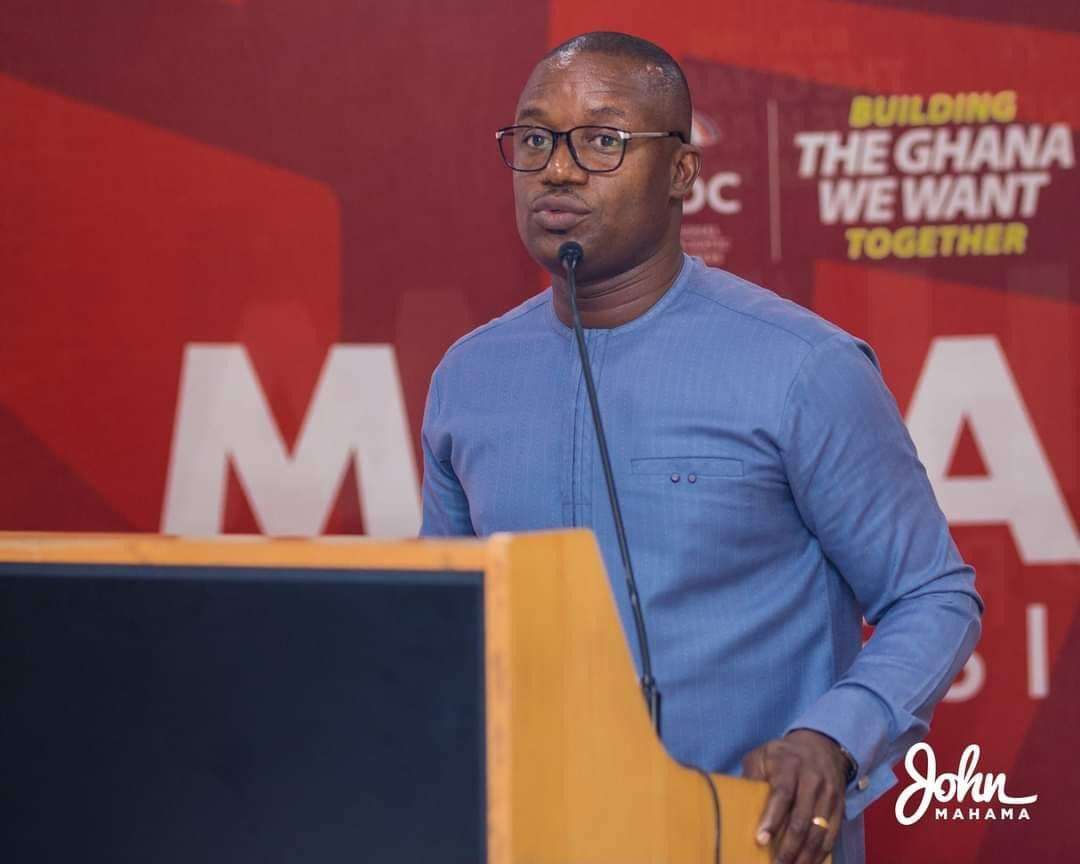
    The suspects started firing towards the police officers upon sighting them. The suspects who got hit during the shootout were rushed to a hospital but were pronounced dead upon arrival.

    The other suspects are currently at large after escaping into some nearby bushes. A search at the scene led to the retrieval of a shotgun loaded with two live cartridges, four spent cartridges, and a machete.

    Intensive efforts are underway to apprehend the remaining suspects, the Ghana Police Service has assured.

    An intelligence-led operation by the Police Intelligence Directorate (PID) foiled a robbery attempt by five armed men en route to rob a foreign national at Cantonments on July 15.

    In a statement, the Police noted that they received credible intelligence that the five armed men were lodging at a hotel in Labadi.

    While en route to the location in a Toyota Yaris vehicle, the suspects opened fire on a police team after detecting police surveillance. An officer got shot. A shootout ensued, and two of the suspects succumbed to gunshot wounds after being rushed to the Ghana Police Hospital.

    The officer who sustained gunshot wounds to his arm and legs has been hospitalised and is responding to treatment, according to the Police. The Police retrieved from the scene two pump-action guns loaded with ammunition, live cartridges, three mobile phones, talismans, and other items.

    Meanwhile, a manhunt is underway to arrest the remaining three suspects currently at large. This incident preceded a shootout between officers of the Tema Regional Police Command and a group of 10 suspected robbers during a robbery incident at the Tema Industrial Area that led to the demise of three suspects.

    The incident occurred on July 21 when the police patrol team responded to a distress call and exchanged gunfire upon arrival at the scene during a confrontation with the suspects.

    Three of the suspected robbers succumbed to gunshot wounds, but seven others, some of whom are believed to have been wounded, managed to evade arrest. The police are on a manhunt for these suspected robbers. The remains of the three suspected robbers have been deposited at the Police Hospital Morgue for identification, preservation, and autopsy.
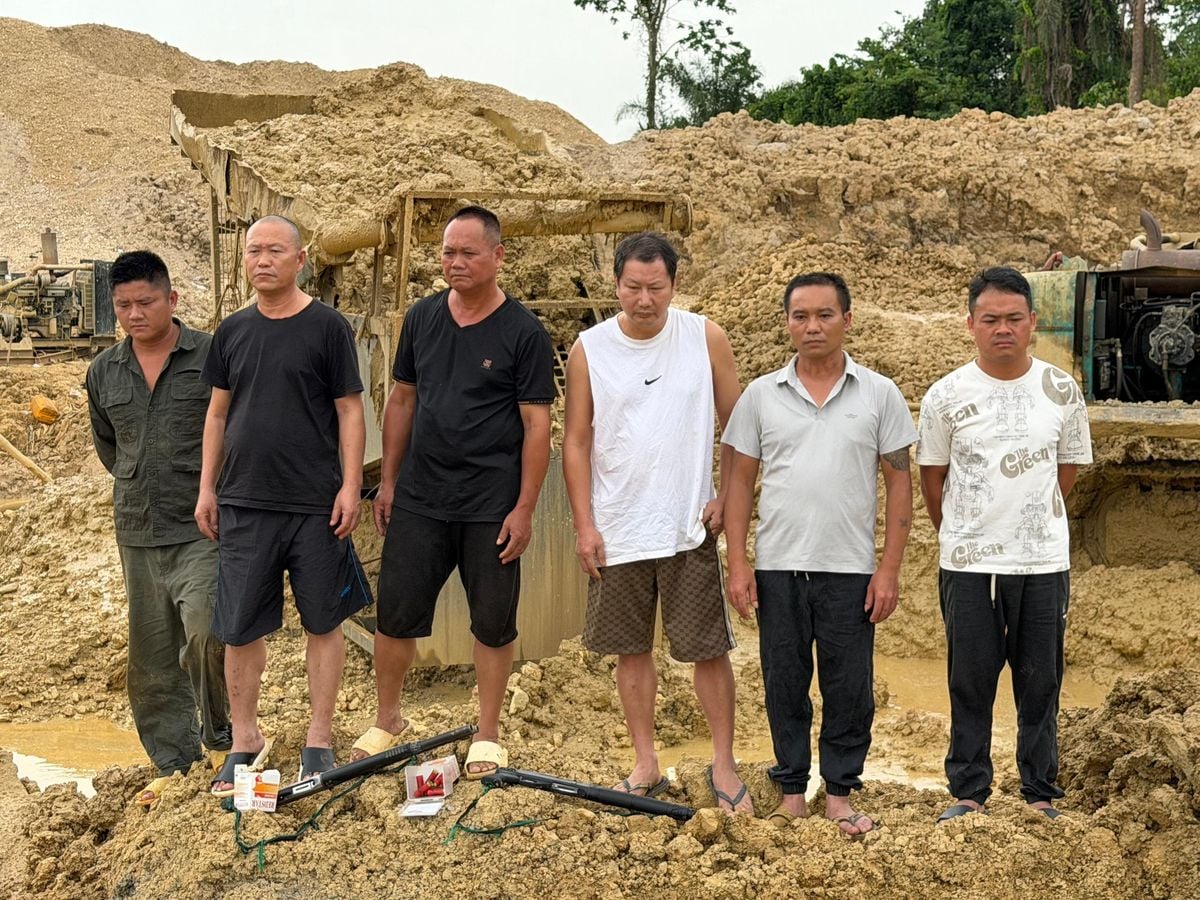
    Exhibits recovered from the scene include a Bruni mod foreign pistol, a double-barrelled locally manufactured pistol with 2 rounds of ammunition and 11 live BB ammunition. The Ghana Police Service has commended its officers at the Kpone District Command for their efforts in managing the robbery incident.
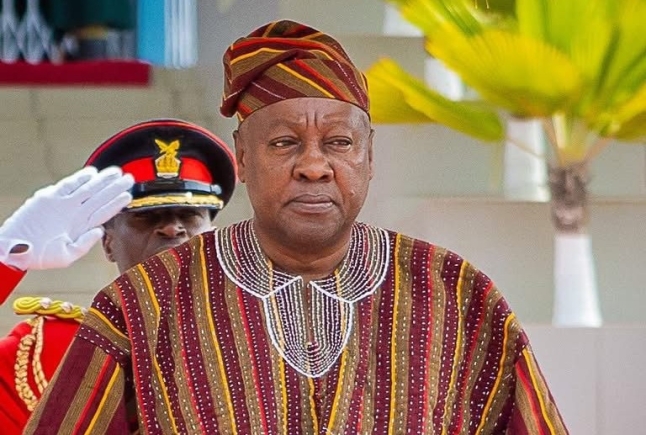
    What the law says about robbery and stealing

    Section 149 of the Criminal Offences states that a person who commits robbery commits a first-degree felony. Per Section 150, “a person who steals a thing commits robbery (a) if in, and for the purpose of stealing the thing, that person uses force or causes harm to any other person, or (b) if that person uses a threat or criminal assault or harm to any other person, with intent to prevent or overcome the resistance of the other person to the stealing of the thing.”

    Section 124 of the Criminal Offences Act indicates that a person who steals commits a second-degree felony. Where the court that finds a person guilty of stealing is satisfied that on not less than two previous occasions the accused was found guilty of stealing, the court shall order that the whole or a part of a term of imprisonment imposed by it shall be spent in productive hard labour.

    A person in respect of whom the court makes an order under subsection (2) is disqualified for election to Parliament or to a District Assembly within the meaning of the Local Government Act, 1993 (Act 462), for a period not exceeding five years.

    Productive hard labour means labour in a state farm or state factory or any other public co-operative or collective enterprise specified by the Minister.

    Police efforts in combating robbery

    In recent years, the Ghana Police Service has made some strides in curtailing the activities of robbers as well as seeing to the prosecution of those arrested during their line of work. The police this month managed to secure a conviction for an armed robbery incident that occurred in Atonsu Kuwait, Kumasi, four years ago.

    The Kumasi Circuit Court sentenced two individuals to 15 years imprisonment for the violent armed robbery incident. The convicted persons are Abass Kasim (26) and Daniel Morro, a.k.a. “China” (25).

    They were part of a group of five that attacked a resident at his Atonsu Kuwait, Kumasi home on July 31, 2021, at about 2:30 am. The gang, wielding a pistol and cutlasses, shot the victim in the abdomen, inflicted multiple cutlass wounds, and robbed him of personal effects.

    Items stolen during the attack included one iPhone 11 mobile phone valued at GHS 5,500, one Samsung phone valued at GHS 500, two Apple Watches valued at GHS 3,000, and two M.K. ladies’ handbags.

    An unspecified quantity of jewelry, $600, and an unspecified amount of Ghana cedis were also stolen. Following police investigations, Abass Kasim was arrested on August 12, 2021, and during interrogation, he admitted his involvement and subsequently led officers to the arrest of Daniel Morro, and a pistol used in the attack was later retrieved.

    On Thursday, August 19, 2021, they were arraigned before Kumasi Circuit Court 4, where they were initially remanded into custody after pleading not guilty. The two reappeared in court on Wednesday, July 9, 2025, and were convicted and sentenced to 15 years imprisonment on each count.

    This included conspiracy to commit robbery, robbery, and unlawful entry. Abetment of crime and possession of firearms without authority. All sentences are to run concurrently.

    The convicts have since been transferred to the Central Prisons in Kumasi to begin serving their prison sentence. Meanwhile, the three accomplices are currently at large, and the police have intensified efforts to locate them.

    The police reported another victory after an armed robber, Paul Avortide, was jailed for 19 years with hard labour for robbery. The 25-year-old convict, on May 21, at about 4:00 am, at Tsikpota near New Housing, Ho, with a machete in his hand, threatened a pregnant woman by the name of Ogechi Chidiebere, a Nigerian resident in Ho.

    Paul Avortide robbed the victim of her Gh¢ 3,000 and her Tecno Spark 30c mobile phone valued at Gh¢2,500 when she was on her way to attend antenatal care at the Ho Municipal Hospital.

    On June 19, at about 6:00 pm, the Regional Police Intelligence team arrested Harmony Nbonu at the Ho Main Market, who was in possession of the stolen phone. During interrogations, he mentioned Paul Avortide as the one who sold the phone to him at the cost of Gh¢ 850.00.

    Coordinated efforts between the Police and the suspect, Hormony Nbonu, led to the arrest of the convict, Paul Avortide, at Matse, a suburb of Ho, when he was running away from Ho Township. After police investigations, Paul Avortide was charged with the offence of robbery contrary to Section 149 of the Criminal Offences Act, 1960 (Act 29), as amended by the Criminal Offences (Amendment) ACT, 2003 (ACT 646).

    Harmony Nbonu, on the other hand, was charged with the offence of Dishonestly Receiving Contrary to Section 146 of the Criminal Offences Act, 1960 (Act 29). The two were arraigned before Ho Circuit Court presided over by His Honour, Osman Abdul Hakeem, Esq., on Tuesday, July 1.

    The first accused person (A1), Paul Avortide, pleaded guilty to the charge of robbery and was convicted on his own plea and sentenced to a prison term of 19 years in hard labor. The second accused person, (A2), Harmony Nbonu, was acquitted and discharged. The convict has since been handed over to the Ho Regional Prison authorities to begin to serve his prison term.