Author: Phoebe Martekie Doku

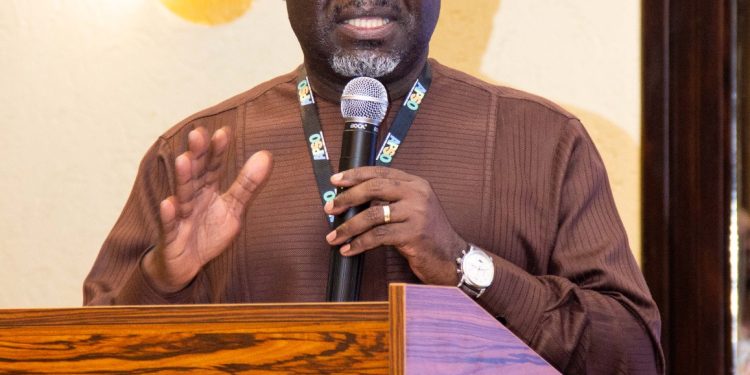
  • Election is about competence, ideas, and not religion or ethnicity – Chairman of Christian Council

    Election is about competence, ideas, and not religion or ethnicity – Chairman of Christian Council

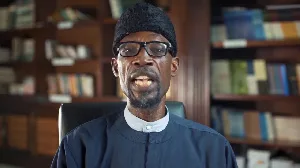
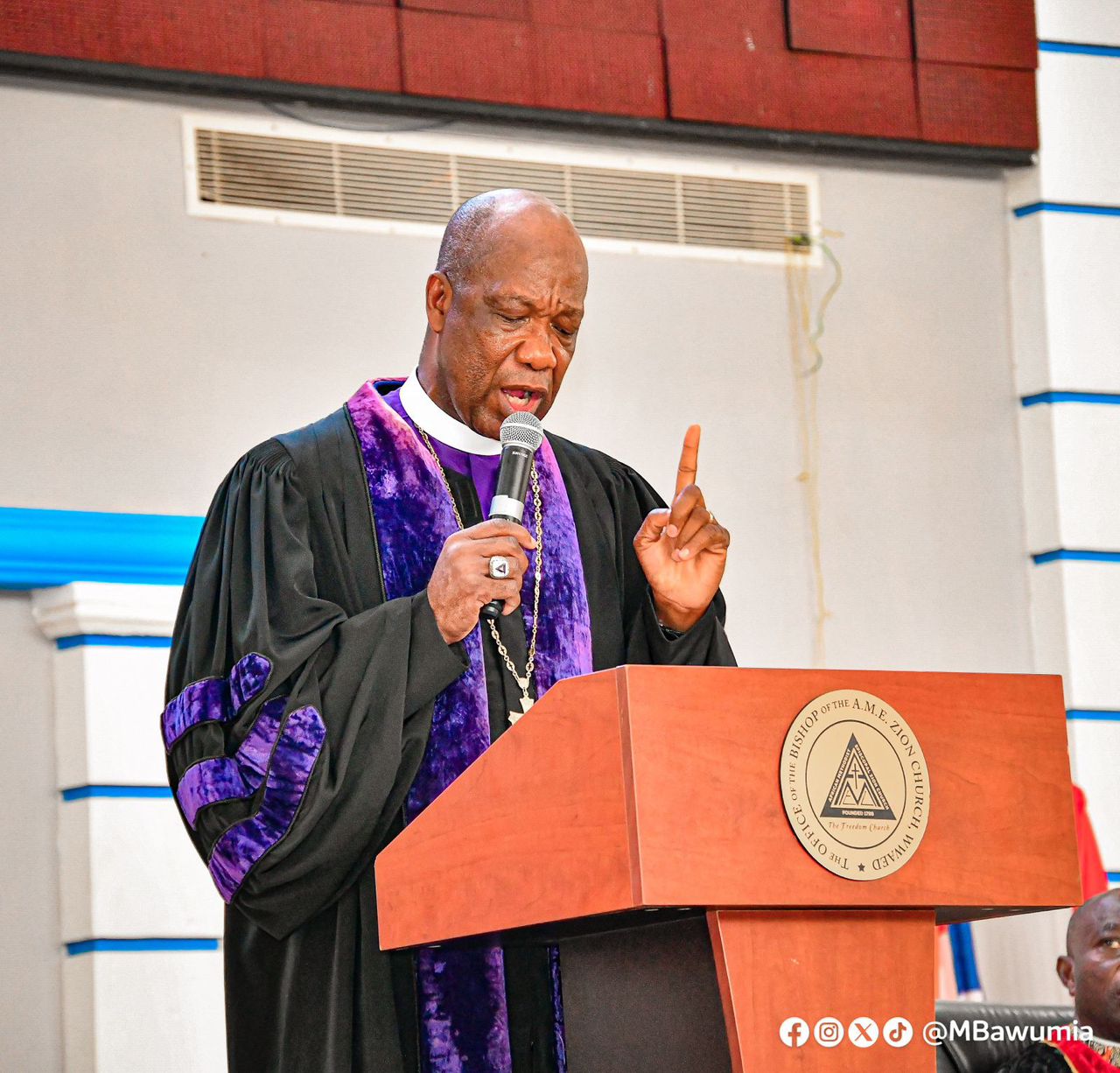
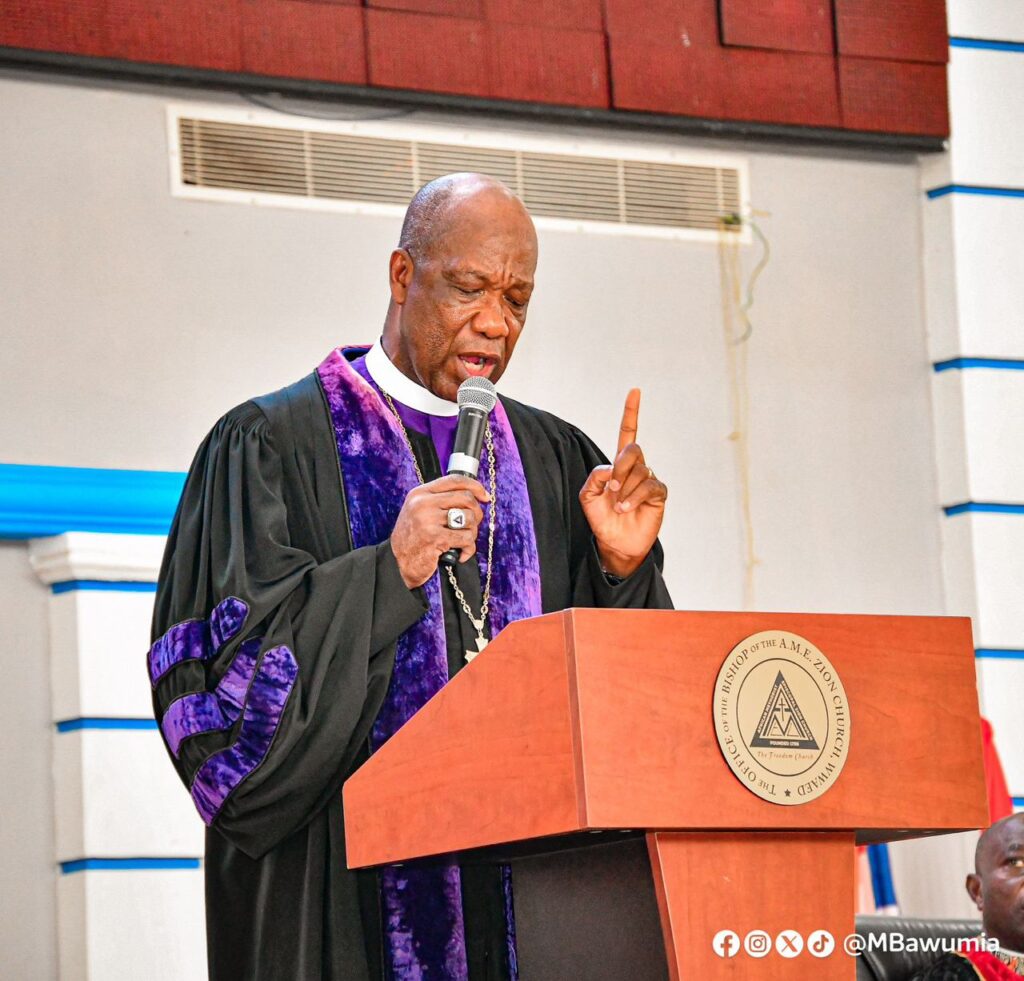
    The Chairman of the Christian Council of Ghana, Reverend Dr. Hilliard Dela Dogbe, has emphasised that elections should be based on the competence and ideas of candidates, rather than their religion or ethnicity.

    Speaking at the second biennial session of East, West and mid-Ghana conferences in session at Pentecost Convention Centre in Gomoa, Reverend Dogbe highlighted the importance of focusing on the qualifications and vision of those running for office.

    He urged Ghanaians to look beyond superficial attributes and to evaluate candidates on their ability to deliver effective governance.

    Reverend Dogbe pointed out that reducing elections to issues of religion or ethnicity undermines the democratic process and can lead to divisiveness.
    He argued that such considerations distract from the critical issues that affect the daily lives of citizens, such as economic development, healthcare, education, and infrastructure.

    By prioritizing competence and ideas, voters can ensure that the elected leaders are those best suited to address these pressing challenges.

    The Christian Council Chairman also called on political parties to promote candidates who demonstrate a commitment to public service and possess a clear plan for the nation’s progress.

    He noted that political parties have a responsibility to present the electorate with choices that reflect the highest standards of leadership.

    Reverend Boafo encouraged parties to engage in policy-driven campaigns that foster informed decision-making among voters.
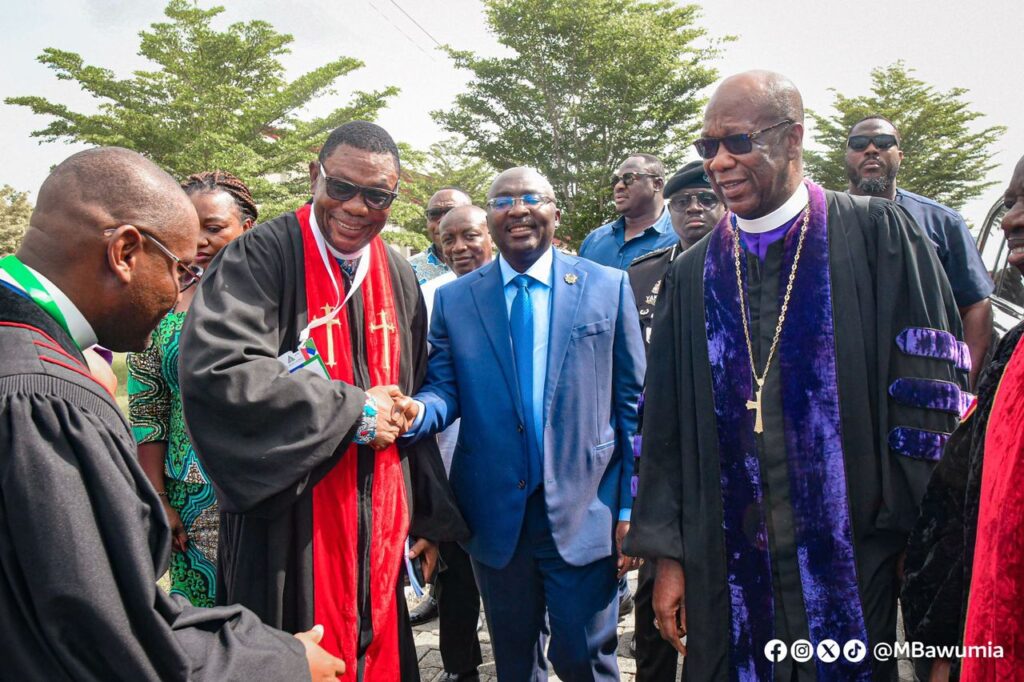
    In addition to addressing the role of political parties, Reverend Boafo appealed to religious and community leaders to educate their followers on the importance of voting based on merit.

    He emphasised that religious and ethnic affiliations should not influence electoral choices, and leaders should advocate for a focus on the capabilities and proposals of candidates. This, he said, would contribute to a more inclusive and effective political system.

    “Bishop Chair, Your Excellency Dr. Mahmoud Bawumia, beloved here gathered, 2024 is a very significant year for us as a country: the Election of a new president of the Republic of Ghana. As we well know we have several candidates wanting to be President. I wish to admonish our political players and all of us to be wary of our language and uphold utmost tolerance in our engagements. Ghana is the only country that we have and it is imperative we do our best to protect its dignity and its peace.”

    “Campaigns and engagements based on parochial interest, negative propaganda, and denigrating each other to win power are unhealthy. I further wish to admonish all of us the electorate to exercise decorum in our engagements. Our political party differences, ethnic differences and religious difference, should not divide us but rather reiterate our unity in diversity. Let us endeavour to be tolerant to the extent that ethnic, religious, and social identities should not be the basis of our decision-making or engagements.”

    “Let us listen for ideas, reflect on the experience of the candidates, and prayerfully discern where to put your vote, and go out and vote,” he said.

    Reverend Dogbe’s remarks come at a crucial time as Ghana prepares for its upcoming elections.

    His call for an election centred on competence and ideas rather than religion or ethnicity resonates with many who seek a more mature and progressive political landscape.
  • SSNIT is going all out to sell hotels amid CHRAJ petition – Ghana Federation of Labour

    SSNIT is going all out to sell hotels amid CHRAJ petition – Ghana Federation of Labour

    The Ghana Federation of Labour has reported that the Social Security and National Insurance Trust (SSNIT) is continuing discussions to sell its stake in four hotels to Rock City Hotel, owned by the Minister of Agriculture, Bryan Acheampong, despite an ongoing petition before the Commission on Human Rights and Administrative Justice (CHRAJ).

    This development was revealed shortly after the Minority in Parliament, led by North Tongu MP Samuel Okudzeto Ablakwa, and representatives of organized labour staged a protest urging the government to halt the transaction.

    In an interview with JoyNews, Secretary General of the Ghana Federation of Labour, Abraham Koomson, expressed his dismay at SSNIT’s persistence.

    “They have not stopped it. You know how things work in this country. For CHRAJ, how soon will they finish this? CHRAJ cannot injure the process, I don’t think they can do that. They don’t have that authority to injunct the process so they will still go ahead and do what they want to do.”

    Koomson added that the Federation would boycott an upcoming meeting with the President to show their displeasure.

    “We are going to meet and discuss what? What we are saying is that stop the process. They should not continue, they should wait or stop it. That is all. We are going to meet him so he tells us what? I will not be part of it. I won’t go there. I won’t go.

    “I don’t know what I am going there to discuss. It is as simple as telling the Employment Minister that ‘look, make sure this whole process is stopped’,” he stressed.

    In May, Samuel Okudzeto Ablakwa exposed the deal, questioning why SSNIT would sell 60% of its stake in the hotels to a minister. While some government officials and citizens defended Acheampong, arguing he could revitalize the hotels, Ablakwa remained skeptical.

    Ablakwa emphasized the lack of evidence supporting Acheampong’s ability to enhance the performance of the state-owned hotels, some of which are already profitable. He further criticized Acheampong for not using his expertise for the public good while serving as a cabinet minister.

    “… If you have such great ideas to transform hotels, Bryan Acheampong sits in Cabinet. Why do we send people to Cabinet? Under the constitution, Cabinet is a place where you brainstorm and bring your expertise and know-how to bear. So why will you only bring your expertise to bear when it is your private property when you have bought it, when you have annexed it and it is within your private domain?

    “Is that the only time you will bring that expertise to bear? Is that not unpatriotic? Is that not callousness?” he questioned.

    He continued, “That is not being nationalistic. Why then are we paying you as a cabinet minister? It means we shouldn’t pay you, you shouldn’t be in Cabinet. This is the height of wickedness,” he noted.

  • Woman kills mother after pastor called her a witch at Abuakwa

    A 55-year-old woman, Joyce Boateng, allegedly stabbed her 76-year-old mother, Afia Sarpomaah, to death in Abuakwa Asonomaso, Atwima Nwabiagya South Municipality, Ashanti Region, following accusations by a pastor that Afia Sarpomaah was a witch.

    The tragic incident occurred on Sunday, June 16, 2024.

    The Assembly member who confirmed the event to Kumasi-based OTEC FM, Isaac Adu Boateng, stated that Joyce attempted suicide by drinking weedicide after killing her mother.

    However, residents apprehended her and took her to the hospital for treatment.

    Joyce was later handed over to the police, where she admitted to committing the crime.

    The body of the deceased has been deposited at Afari Hospital Mortuary pending investigations.

  • Ghana’s energy sector receives US$260m for recovery programme

    Ghana’s energy sector receives US$260m for recovery programme

    Ghana has secured US$260 million from the World Bank to boost the financial stability of its electricity distribution and expand access to clean cooking solutions.

    This funding includes a US$250 million credit from the Bank’s International Development Association (IDA) and an additional US$10 million grant from the Energy Sector Management Assistance Programme.

    The Energy Sector Management Assistance Programme provides expertise, technical assistance, and advisory services to enhance countries’ institutional capacity and implement sustainable energy solutions.

    The four-year financial support for the Ghana Energy Sector Recovery Programme (ESRP) under the Programme for Results (PforR) will directly fund energy sector utilities for capital expenditure programs.

    This initiative will complement regulatory and policy reforms in the energy sector, supported by the World Bank’s Development Policy Financing series, in alignment with the ongoing International Monetary Fund (IMF) program.

    A statement from the Finance Ministry, released to the Ghana News Agency on Monday, June 17, noted that the PforR will provide direct incentives to subsidize the cost of stoves and accessories for Ghanaians.

    The clean cooking component aims to increase access to Liquified Petroleum Gas (LPG) for households, schools, and businesses for both domestic and commercial use.

    The ESRP will offer benefits such as market development, affordable and equitable energy access, and health and environmental protection against air pollution and related health risks.

    Robert Taliercio, World Bank Country Director for Ghana, Liberia, and Sierra Leone, stated,“through this important results-based financing, the World Bank is committed to supporting the recovery of Ghana’s energy sector and its financial sustainability.”

    “The operation aims to strengthen revenue collection and improve the quality of energy supply through investments in prepaid metering and in the commercial and meter management systems of distribution utilities”.

    He added that the operation aims to enhance revenue collection and improve energy supply quality through investments in prepaid metering and commercial and meter management systems of distribution utilities.

    Dr. Mohammed Amin Adam, Minister of Finance, expressed the government’s gratitude to the World Bank for its financial assistance under the ESRP.

    He highlighted that the support will help Ghana achieve the Sustainable Development Goals (SDGs), particularly Goal Seven – Affordable and Clean Energy.

    “Our quest to achieve financial viability in electricity distribution and increasing access to clean cooking solutions is essential for building sustainable energy systems that support economic development, improve public health, and protect the environment while promoting energy access and equity for all,” he said.

    “Our access to sustainable energy is not just about powering homes and businesses, it’s about empowering communities, protecting the environment, and fostering inclusive and sustainable development,” the Minister added.

  • Rehabilitation work begins on Nungua Interchange

    Rehabilitation work begins on Nungua Interchange

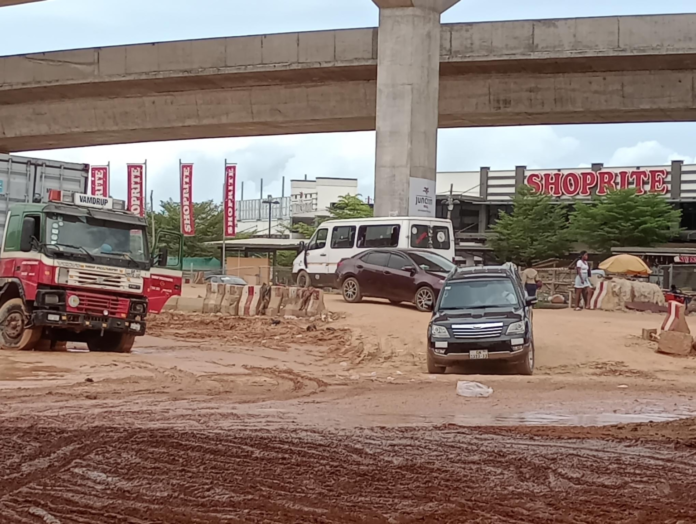
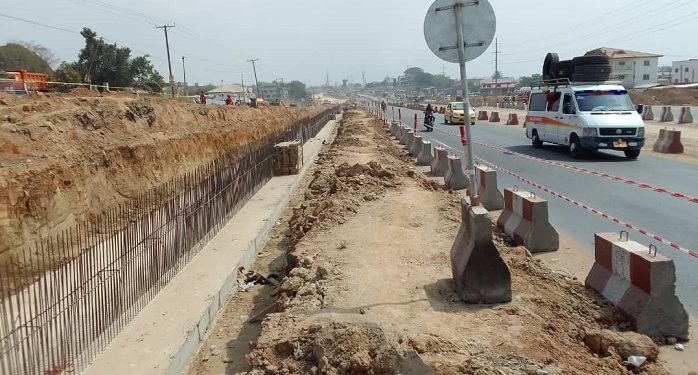
    The Department of Urban Roads (DUR) has started repairing roads surrounding the stalled Nungua Interchange project in Accra.

    The aim is to alleviate traffic congestion and improve accessibility for drivers and commuters.

    The remedial project covers three kilometers of road, focusing on asphalting previously untarred sections from Nungua Barrier in the Krowor Municipality to Sakumono Estate Junction in the Tema West Municipality.

    Additionally, it includes rehabilitating 19 kilometers of inner roads within the Nungua area, with an anticipated completion time of two months.

    During a recent site visit in Nungua, Minister of Roads and Highways, Francis Asenso-Boakye, mentioned that he instructed DUR to engage local contractors to repair deteriorated sections.

    “We are aware that this project is causing inconveniences to motorists, commuters and residents. In fact, this area is a strategic location in terms of population density and businesses. That is why the government is implementing such a major intervention,” he said.

    This initiative aims to reduce daily challenges faced by motorists due to poor road conditions.

    Acknowledging the inconvenience caused to residents and businesses, Minister Asenso-Boakye explained that the project faced delays, initially slated for completion in February last year, due to ongoing debt restructuring with the International Monetary Fund (IMF).

    He noted that despite reaching an 85% completion rate previously, subsequent neglect led to significant deterioration of the road.

    The Nungua Interchange project is part of a larger 31-kilometer road development plan divided into two segments: a 14-kilometer stretch from Osu to Boade Junction and a 17-kilometer section from Boade Junction to Tema Community Three.

    Minister Asenso-Boakye reassured the public of the government’s commitment to revitalizing stalled projects, including the Takoradi Interchange, Ashaiman, and Tema-Aflao roads, once agreements with the IMF and the Paris Club are finalized.

    He urged residents in affected areas to remain patient during this process.

  • ECG not responsible for recent power cuts – NAPO

    ECG not responsible for recent power cuts – NAPO

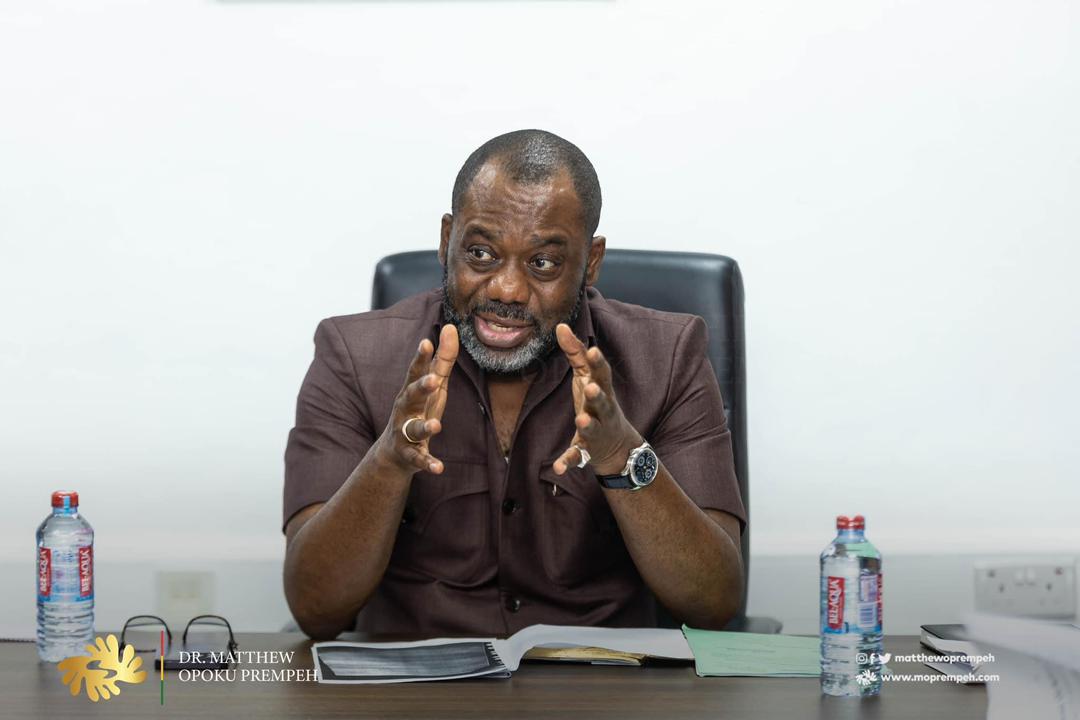
    The Minister of Energy, Dr. Matthew Opoku Prempeh, has clarified that the recent power outages across the country are not due to load-shedding by the Electricity Company of Ghana (ECG).

    Over the past few months, various regions have been experiencing intermittent power disruptions, affecting businesses and households alike.

    Addressing inquiries in Parliament, Dr. Matthew Opoku Prempeh provided several reasons for the unstable power supply.

    “The question was asked over two months ago…No, ECG is not undertaking load-shedding as at the time the question was asked. Consumers were experiencing outages due to a number of factors. That included localised outages due to overload online and transformers.

    “There are certain areas in this country where all of a sudden, the number of residents and businesses have accumulated, parts of East Legon which was purely residential area have now become a business district, increasing power consumption.

    “Thereby hampering the existing lines there, so the transformers and lines had to be updated. Outages to the average capacity of overloaded lines and transformers.

    “At the time the questionnaire put the question, CenPower had an emergency which meant a complete shutdown, losing immediately 40 megawatts. That also contributed and the plant maintenance on Amandi power was also ongoing at the same time.

    “The emergency outages sometimes requested by GRIDCo have also contributed, so there were myriads of factors that had unfortunately happened, that is causing the power outages in different times. The reason ECG said they were not load-shedding is because most of the incidents were not planned and so they couldn’t have come out with a pre-programme to say they were loading” the Energy Minister explained.

  • We’ve sacrificed our independence due to excessive reliance on external aid – Prof Quartey

    We’ve sacrificed our independence due to excessive reliance on external aid – Prof Quartey

    Director of the Institute of Statistical, Social, and Economic Research (ISSER), Professor Peter Quartey, has underscored the hidden costs associated with aid dependency.

    He pointed out that Ghana’s heavy reliance on external financial assistance undermines the country’s policy autonomy and leads to economic impoverishment.

    According to Prof. Quartey, despite the perception of foreign aid as free money, it comes with significant strings attached.

    “We receive aid, you will think it is free money but aid is not free; it comes at a cost. Your country loses its independence. Your policies are not independent,” he told the Host, Kojo Yankson on the Super Morning Show on Joy FM on Wednesday, June 19.

    Highlighting the adverse impacts of aid dependency, Prof. Quartey emphasized that foreign donors often impose policies, resulting in frequent policy reversals and instability.

    “Sometimes policies are dictated. So we do not have absolute independence when it comes to policies; that is why we have policy reversals. We introduce a policy and then we remove it,” he said on Thursday.

    “Sometimes we introduce policies that are very harsh, which brings hardships to the citizens and forces them to jump on the streets to demonstrate,” he said.

    Professor Peter Quartey, Director of the Institute of Statistical, Social, and Economic Research (ISSER), has underscored the hidden costs associated with aid dependency.

    He pointed out that Ghana’s heavy reliance on external financial assistance undermines the country’s policy autonomy and leads to economic impoverishment.

    According to Prof. Quartey, despite the perception of foreign aid as free money, it comes with significant strings attached.

    “In receiving aid, one might think it’s free money, but it’s not. Aid comes with conditions. Your country loses its independence; your policies are not autonomous,” he explained during an interview with Kojo Yankson on Joy FM’s Super Morning Show.

    Highlighting the adverse impacts of aid dependency, Prof. Quartey emphasized that foreign donors often impose policies, resulting in frequent policy reversals and instability.

    “External influences sometimes dictate policies, depriving us of policy independence. This leads to policy reversals where policies are introduced and then abruptly removed,” he stated.

    Prof. Quartey further cautioned that externally influenced policies could lead to severe socio-economic consequences, often causing hardships that prompt public demonstrations.

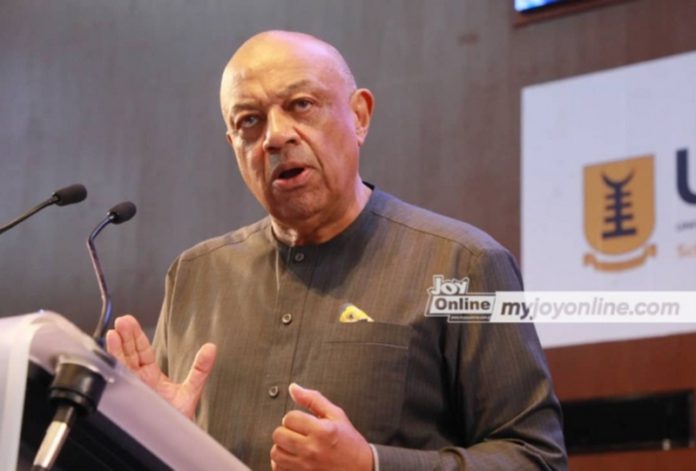
    His remarks follow a keynote speech by UK House of Lords member Lord Paul Boateng at a leadership lecture at UPSA in Accra. Lord Boateng urged Ghana to reduce reliance on foreign aid, emphasizing that such dependence impedes significant national growth.

  • Banning celebrities from alcohol ads archaic – George Quaye

    Banning celebrities from alcohol ads archaic – George Quaye

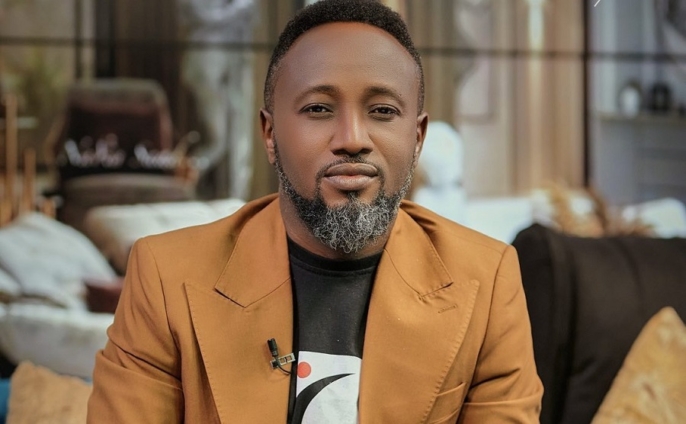
    Media personality George Quaye, has expressed dissatisfaction with the Supreme Court’s decision to uphold the ban on notable figures from advertising alcoholic beverages in the country.

    Quaye argued that it would have been more beneficial for the Food and Drugs Authority (FDA) to lift the ban, which has been enforced since 2015.

    He suggested that collaborating with celebrities could be an effective strategy to educate youth about the risks of alcohol consumption, rather than restricting their participation in advertising.

    Chief Justice Gertrude Torkornoo delivered a summarized version of the Supreme Court’s ruling, affirming that the FDA’s directive aligns with constitutional principles.

    In an interview with JoyNews, Mr Quaye emphasized the potential of celebrities in raising awareness about more dangerous substances among youth, implying that involving them in sensitization efforts could mitigate harmful behaviors.

    “Rather find a way to engage popular people and celebrities to help educate these kids. Don’t fight them and make them feel like they have to stay home and not find jobs to do just because you want to create some laws that modern times don’t align with,” he said.

    Today’s ruling concludes a lengthy legal battle initiated by Mark Darlington Osae, CEO of Black Kulcha Music, against the FDA’s regulations prohibiting celebrities from endorsing alcoholic drinks.

    The full verdict is scheduled for public release on Friday, June 21. Joseph Bennie, Director for Legal and Corporate Affairs at FDA, welcomed the ruling, pledging measures to prevent circumvention of the ban by well-known personalities.

    Representatives from the Ghana Music Alliance, including Nii Ofoli Yartey, expressed disappointment but vowed to continue advocating for the creative arts industry.

    Background:
    In 2015, the FDA implemented guidelines aimed at regulating alcohol consumption in Ghana, which included restrictions on celebrity endorsements in alcohol advertising.

    The rationale cited was the potential influence of celebrities in promoting alcohol consumption among minors.

    Mark Darlington Osae filed a lawsuit challenging the FDA’s directive as discriminatory against the creative arts industry. The case highlighted constitutional concerns regarding equality and discrimination based on occupation.

    Several figures from the creative industry, such as Wendy Shay, Shatta Wale, Brother Sammy, Kuami Eugene, and Camidoh, have opposed the ban, arguing that it limits their income opportunities and livelihoods.

  • Our wages fall below expectations – MELPWU

    Our wages fall below expectations – MELPWU

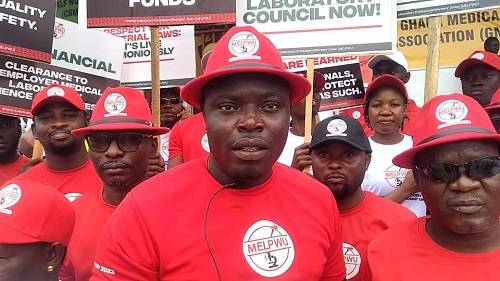
    General Secretary of the Medical Laboratory Professional Workers’ Union (MELPWU), Cephas Kofi Akortor, has criticized the Fair Wages and Salaries Commission (FWSC) for failing to fulfill its obligations.

    The union initiated a strike on June 17 after nearly two years of unsuccessful negotiations with the FWSC regarding conditions of service for its members.

    Describing the last meeting on May 31, 2024, as “disappointing,” the union stated that the FWSC’s promises to the National Labour Commission remained unfulfilled, prompting their industrial action.

    Patients seeking lab services at public health facilities have been adversely affected, often resorting to higher-cost options at private facilities.

    In an interview on Joy FM’s Midday News on June 19, Mr. Akortor criticized the FWSC for its lack of proactive engagement, particularly noting the essential role of lab workers.

    “Fair Wages is not being fair. Fair Wages should have been a bit more proactive in their engagement because we are essential service workers. We should not be treated like any kind of people,” he said.

    Mr. Akortor alleged that the FWSC consistently ignored the union’s requests for timely engagement, often reacting only when faced with protests. He highlighted prolonged gaps between meetings, sometimes spanning three to four months, which he described as unfair treatment.

    “We have never written to them [FWSC] requesting a meeting and Fair Wages will act upon that. At all times our engagement will take about three months cycle. We will have one meeting today, the next engagement will be about three months later, four months later. It has not been fair,” he added.

    Regarding the strike’s impact on healthcare delivery, Mr. Akortor acknowledged challenges but explained that union members felt compelled due to perceived government inaction.

    He expressed hope that the FWSC would initiate negotiations to resolve the ongoing dispute.

    In response, the Ministry of Health issued a statement on June 17, indicating substantial progress in negotiations and urging the union to cease the strike and return to the negotiation table.

  • WHO unveils innovative strategy to boost sickle cell disease management

    WHO unveils innovative strategy to boost sickle cell disease management

    The World Health Organization (WHO) in the African Region has unveiled groundbreaking new guidelines aimed at bolstering efforts to tackle the rising threat of sickle cell disease in the region.

    These innovative technical documents are significant for their holistic approach, providing detailed strategies and practical insights to support countries in improving healthcare quality, enhancing treatment accessibility, and boosting overall health outcomes.

    Despite substantial global advancements in sickle cell disease treatment, including newborn screening, hydroxyurea therapy, gene therapy, and improved management strategies, equitable access to these treatments remains a challenge, particularly in low- and middle-income countries across Africa.

    Each year, an estimated 240,000 children are born with sickle cell disease in Africa, with up to 80% succumbing to severe infections or acute chest syndrome before reaching the age of five — the highest mortality rate for sickle cell disease-related childhood deaths globally.

    “As we continue the fight against sickle cell disease, we are confident that this guidance for countries will serve as a valuable new addition to their toolkit, specifically because the guidance is tailored to the African reality, where a multi-faceted approach is key,” said Dr Benido Impouma, Director, Universal Health Coverage/Communicable&Noncommunicable Diseases Programme at WHO Africa.

    Dr. Benido Impouma, Director of the Universal Health Coverage/Communicable & Noncommunicable Diseases Programme at WHO Africa, expressed confidence in the relevance of these guidelines tailored to the African context, stressing the necessity of a multifaceted approach in combating sickle cell disease.

    The newly released WHO Africa guidelines — titled Guidance Framework for Sickle Cell Disease Management and Harmonized Guide for Sickle Cell Disease Management in Africa — provide strategic direction for policy formulation, comprehensive care planning, and advocacy initiatives.

    Together, these documents constitute the WHO SICKLE Package of Interventions for Sickle Cell Disease Management, aimed at offering a comprehensive and integrated approach to managing the disease. The package seeks to ensure access to necessary interventions, promote education and advocacy, improve care quality, and empower patients and communities.

    Developed with financial support from the Government of Monaco and other partners, the package integrates the latest research findings, best practices, and innovative approaches to sickle cell disease management, positioning them as essential resources for healthcare providers, policymakers, and advocates alike.

    Since 2010, WHO Africa has been at the forefront of the battle against sickle cell disease, focusing on disease intervention scaling, enhancing access to innovative treatments, and improving healthcare infrastructure.

    Despite these advancements, significant challenges persist, including limited healthcare infrastructure, low awareness, inadequate access to comprehensive care, limited newborn screening, insufficient research and development, and restricted access to advanced treatments.

    Issued by APO Group on behalf of WHO Regional Office for Africa, these guidelines underscore WHO’s commitment to addressing the multifaceted challenges posed by sickle cell disease across the African Region.

  • Muntaka, Haruna Iddrisu missing in Mahama’s campaign team?

    Muntaka, Haruna Iddrisu missing in Mahama’s campaign team?

    The opposition National Democratic Congress (NDC) has announced its campaign team for its flagbearer John Dramani Mahama, sparking discussions due to the absence of prominent figures.

    Notably absent from the 2024 campaign team are former Minority Leader Haruna Iddrisu and former Minority Chief Whip Mohammed-Mubarak Muntaka.

    Their removal from parliamentary leadership positions was viewed as a forceful ousting by political observers.

    Initially included in the campaign team, both were later dropped reportedly due to objections from influential figures close to Mahama, who view them as detractors unlikely to support his candidacy.

    Sources within Mahama’s circle label Iddrisu and Muntaka as “detractors” who would not work in Mahama’s favor, justifying their exclusion.

    Interestingly, Dr. Cassiel Ato Forson, who replaced Haruna Iddrisu as minority leader, has been given a significant role in the Campaign Steering Committee overseeing all sub-committees.

    There were earlier speculations that Haruna Iddrisu, also the Member of Parliament for Tamale South, would lead Mahama’s campaign in the Northern Sector. However, he is not part of the broader campaign team, reflecting his diminished standing among pro-Mahama factions.

  • Our security forces lack tools to combat crime effectively – Rashid Pelpuo

    Our security forces lack tools to combat crime effectively – Rashid Pelpuo

    Leader of the Northern Caucus in Parliament, Abdul-Rashid Pelpuo, has emphasized that many of Ghana’s security personnel, both in public and private sectors, lack adequate equipment to effectively combat crime.

    The Wa Central MP highlighted that security officers who rely solely on physical strength are particularly vulnerable.

    The Ghana Police Service has initiated an investigation into two fatalities in the Wa Municipality of the Upper West Region, occurring at the Wa East Education Service office and Wa Model JHS School on Tuesday.

    In a statement, the service assured the public, especially Wa residents, of ongoing efforts to apprehend those responsible.

    “We would like to assure the public, especially the residents of Wa, to remain calm as the police work to get those involved arrested to face justice,” the service said in a statement.

    During an interview on the JoyNews AM Show, Abdul-Rashid Pelpuo expressed concern “The people who are killed are normally security men whose weapons are their bodies, and besides that, the police who go after them do not seem to be well-equipped technically and with the needed equipment.”

    He noted disparities observed in Western law enforcement, citing films and reports, underscoring Ghana’s police force’s insufficient tools for investigating and apprehending perpetrators, posing significant challenges.

    Pelpuo advocated for deploying specially trained personnel to Wa to handle investigations and apprehend the criminals involved.

    “For the kind of police work we are doing now, it does not look like we are prepared for a thorough investigation into issues like this, which is internal and very sophisticated. We do not have that sophistication at all,” he noted.

  • Bonwire SHS student in hot waters for uploading colleagues’ nakedness on TikTok

    Bonwire SHS student in hot waters for uploading colleagues’ nakedness on TikTok

    A student named Ama Diamond from Bonwire Senior High School in the Ashanti Region faces trouble with school authorities for posting a video from her dormitory online.

    Ama Diamond filmed her classmates bathing from a distance and shared the video on TikTok, causing it to spread widely.

    Once the video gained attention and school officials became aware, Ama reportedly removed it from her TikTok account and subsequently deleted her entire profile.

    School authorities are said to be aware of the incident, but their response to Ama Diamond has not been disclosed.

    Check out a reaction to the video below…

  • Ghana rolls out new strategy for sustainable cocoa cultivation

    Ghana rolls out new strategy for sustainable cocoa cultivation

    Ghana has launched a new initiative in partnership with the United Nations Development Programme (UNDP), the Forestry Commission, and the Ghana Cocoa Board (COCOBOD), supported by funding from the Swiss State Secretariat for Economic Affairs (SECO).

    This collaboration marks Ghana’s participation in the third phase of the Green Commodities Programme (III), which builds on progress made since 2010 toward sustainable agricultural production. The initiative, titled Effective Collaborative Action for Sustainable Commodity Production and Trade, aims to drive meaningful change and promote environmentally friendly practices within Ghana’s agricultural sector.

    Specifically, the project seeks to enhance governance within Hotspot Intervention Areas (HIA) and strengthen stakeholder effectiveness to address issues like deforestation, forest degradation, farm resilience, cocoa farmers’ incomes, and poverty reduction.

    This initiative is aligned with the Ghana Cocoa Forest REDD+ Programme (GCFRP) HIA structure, facilitating dialogue and collaborative action among cocoa sector stakeholders through a multi-stakeholder platform. Originally launched in 2015 focusing on Peru and Indonesia, the Green Commodities Programme now extends to Brazil, Malaysia, and Ghana (cocoa).

    In Ghana, GCP III targets the vital cocoa production landscape, crucial for the country’s economy and environmental sustainability. Ayirebi Frimpong, Forest Specialist at UNDP Ghana, expressed enthusiasm for the initiative, emphasizing its role in enhancing sustainable cocoa production through strengthened coordination mechanisms at sub-national levels.

    The initiative responds to the 2021 Glasgow World Leaders Declaration on Forests and Land Use, aiming to halt deforestation by 2030. GCP Phase III emphasizes multi-stakeholder collaboration to enhance national, social, and environmental performance in agricultural commodity sectors.

    This strategic partnership aims to promote sustainable agriculture practices, support smallholder farmers, and assist Ghana in achieving its 2030 Agenda climate goals while maintaining its status as a leading cocoa producer.

    Melissa Salazar, Programme Specialist at UNDP Food and Agricultural Commodity Systems, highlighted the critical need to address agricultural growth challenges, advocating for policies and practices that ensure a sustainable future during the national inception workshop.

    This initiative represents a significant step in Ghana’s commitment to sustainable cocoa production. Leveraging the Green Commodities Programme, Ghana aims to create a collaborative environment supporting smallholder farmers and enhancing agricultural practices.

    The outcomes of this partnership are expected to contribute significantly to Ghana’s economic and environmental objectives, serving as a model for sustainable agriculture globally.

  • SSNIT board must be dissolved – Ablakwa to govt

    SSNIT board must be dissolved – Ablakwa to govt

    Member of Parliament (MP) for North Tongu, Samuel Okudzeto Ablakwa, has called for the removal of the board of the Social Security and National Insurance Trust (SSNIT), accusing them of ignoring calls to stop the sale of hotels to Agric Minister Bryan Acheampong.

    Speaking on the New Day show on TV3, Ablakwa insisted that the entire SSNIT board should be dissolved for their lack of responsiveness to labor concerns.

    He emphasized the need for a majority of board members to represent organized labor to prevent political interference and ensure SSNIT operates in the best interest of workers.

    Ablakwa also stated his opposition to any government official, regardless of party affiliation, acquiring state assets, citing his long-standing stance against what he terms “state capture.”

    “That whole board must be dissolved, how can labour ask you to stop the sale of the hotels and you are not stopping, SSNIT has been so unresponsive,” he said on the New Day show on TV3 Wednesday, June 19.

    “We have to change the SSNIT Law, the majority of the board members should be organized labour representatives, at least labour should appoint the chair,” he said.

    He raised concerns about a conflict of interest involving Agric Minister Bryan Acheampong in the SSNIT hotels sale, pointing out that Acheampong’s company, Rock City, won the bid for the hotels while he was a Minister of State.

    Ablakwa has petitioned the Commission on Human Rights and Administrative Justice (CHRAJ) to investigate this matter, organizing demonstrations and voicing public outrage over what he perceives as irregularities in the transaction.

    In response, Richard Ahiagbah of the New Patriotic Party (NPP) defended the process, arguing that the procurement to sell SSNIT’s hotel shares to Rock City began in 2018, long before Acheampong became Minister for Food and Agriculture.

    He dismissed claims of conflict of interest, asserting that the process has been transparent and above board.

    The controversy continues to unfold as Ablakwa and supporters demand accountability and transparency in the handling of SSNIT’s assets.

  • Atta Mills was honored with a street name by Vanderpuye, what did you do? – Anyidoho to Mahama

    Atta Mills was honored with a street name by Vanderpuye, what did you do? – Anyidoho to Mahama

    Former spokesperson for late President John Evans Atta Mills, Samuel Koku Anyidoho, has criticized Mills’ vice president for neglecting to honor the late president after assuming office.

    Anyidoho, known for his frequent criticisms of former President John Dramani Mahama, strongly asserted that during Mahama’s presidency, no significant national or regional monument was named after Mills.

    Mahama served a brief period finishing Mills’ term in 2012 before being elected for a full term later that year.

    In a post dated June 18, 2024, Anyidoho pointed out that even a former Mayor of Accra (now MP for Ablekuma South, NDC) had named a stretch of road in Accra after the late president, but his vice president failed to take similar action.

    “As we continue to speak to facts, do you know that apart from Oko Vanderpuye using his position as Mayor of Accra, to name the High Street after President Atta-Mills, JM on his own did NOT name anything after his late boss?” Anyidoho quizzed.

    Anyidoho has also accused Mahama of neglecting the upkeep of Asomdwee Park, where Mills was laid to rest. Recently, the park was renovated through efforts from Anyidoho’s Atta Mills Institute in collaboration with the Coastal Development Authority (CoDA).

    In August 2012, shortly after Mills’ passing, the Accra Metropolitan Assembly under Alfred Oko Vanderpuije’s leadership decided to rename the Accra High Street and the new Millennium City School at the Salvation Army Cluster of Schools after the late president John Evans Atta Mills.

    During an urgent assembly meeting to approve the name changes, it was decided that the Accra High Street would be known as “Evans Atta Mills Street”, while the Salvation Army Cluster of Schools as will now be known as “President Evans Atta Mills Educational Center of Excellence”.

    Mayor of the City, Dr. Alfred Oko Vanderpuije, announced that these changes would be implemented even before Mills’ funeral on August 10, 2012.

  • E/R: Over 900k fully vaccinated against COVID-19

    E/R: Over 900k fully vaccinated against COVID-19

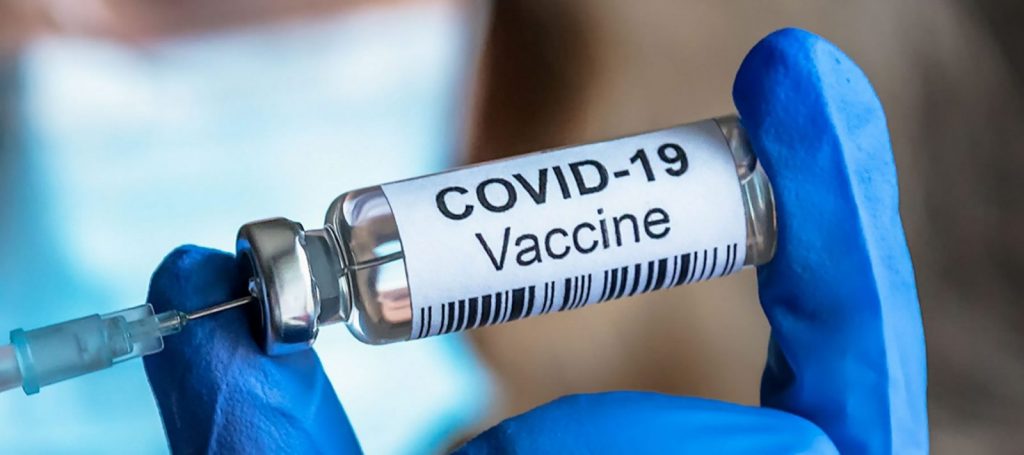
    Deputy Director of Public Health and Incident Manager for COVID-19 at the Eastern Regional Ghana Health Service (GES), Dr. John Ekow Otoo, has reported that 904,696 individuals in the Eastern Region have completed their COVID-19 vaccination.

    This number corresponds to 46.2 percent of the target population of 1.9 million individuals aged 15 and above in the region.

    Dr. Otoo shared these details with the Ghana News Agency during an interview to update on the region’s COVID-19 vaccination progress and the status of COVID-19 cases as of May 26, 2024, and June 9, 2024.

    He indicated that 1,227,526 people, constituting 62.6 percent of the targeted population, have received at least one dose of the COVID-19 vaccine.

    Among those fully vaccinated, 420,770 have received a booster dose to enhance protection against COVID-19.

    The Eastern Regional Health Directorate received and distributed 1,704,400 doses of AstraZeneca, 1,065,150 doses of Pfizer-BioNTech, 807,900 doses of the COVID-19 Vaccine Janssen, and 122,640 doses of the Moderna COVID-19 Vaccine to health centers.

    Dr. Otoo reported that a total of 2,238,459 vaccine doses were administered, with 171 individuals experiencing Adverse Events Following Immunization (AEFI), including 165 severe cases and 6 mild cases.

    AEFI refers to unintended medical reactions caused by vaccination, which can range from mild to severe.

    Of the reported AEFI cases, 56 percent were females and 44 percent were males, with symptoms including headaches, abscesses, severe local reactions, fevers above 38 degrees Celsius, vomiting, diarrhea, painful ribs, nausea, loss of appetite, malaise, anaphylaxis, general body pains, and muscle pains as of March 31, 2024.

    As of June 9, 2024, the region recorded 65 COVID-19 cases, with three active cases in the New Juaben South Municipality.

    Dr. Otoo acknowledged challenges such as misinformation and myths about COVID-19 vaccines hindering vaccination efforts but urged those eligible to get vaccinated to protect themselves against the virus, which remains a threat.

    He emphasized that immunization is crucial for preventing and reducing illness and death across societies and countries.

  • Committee delivers findings on leaked IGP tape to Parliament

    Committee delivers findings on leaked IGP tape to Parliament

    The ad hoc committee established by Speaker of Parliament Alban Bagbin to investigate the leaked audio discussing an alleged plot to remove Inspector General of Police Dr. George Akuffo Dampare has submitted its report to Parliament.

    Chaired by Abuakwa South MP Samuel Atta Akyea, the committee was assigned to examine the leaked audio in which senior police officers were heard conversing with former Northern Regional Chairman of the New Patriotic Party (NPP) Bugri Naabu about planning the IGP’s removal.

    The audio included remarks indicating that the IGP was considered too professional and difficult to compromise.

    On Tuesday, June 18, the committee’s report was formally presented to Parliament.

    “Report of the Special Committee of Inquiry into the contents of a leaked audio tape of a high-ranking police officer and others in an alleged conspiracy to remove the current Inspector General of Police, Dr George Akuffo Dampare and related matters has been duly presented,” the Clerk of Parliament announced.

  • Ofankor-Nsawam Highway project hits a snug

    Ofankor-Nsawam Highway project hits a snug

    The chief resident engineer on the Pokuase-Nsawam Highway project, Ing. Kwabena Bempong, has announced that the construction work will not meet its scheduled completion date of July 2024 and will be delayed.

    In an interview with Bernard Avle on Citi FM’s Citi Breakfast Show, Ing. Bempong explained that the extensive remaining work makes it impossible to meet the initial July deadline.

    He mentioned that the project’s contractor has not yet provided a revised completion date.

    “We have requested the contractor to give us a revised programme and obviously for a project like this, we need to have an extension of time approved by the Ministry of Roads and Highways and until that, we cannot say anything.

    “So far as we are concerned, the completion date is July but we all know that it is not possible so the contractor will have to give us compelling reasons why it is not possible to complete it [the project] on the date that was originally scheduled.”

    He attributed the delay to the relocation of utility lines and the need to compensate those affected by the project.

    “Relocation of utility lines and longitudinal drains are some of the major reasons the project has been delayed. We are relocating electricity, water and communication lines.

    “The other challenge is the relocation of people affected by the project. There are people who are trying to injunct the project and we still have litigations. We are two years into the project and we still have some of the utility lines in the road space.”

  • Ghana has backtracked in economic transformation – Dr Kingsley Amoako

    Ghana has backtracked in economic transformation – Dr Kingsley Amoako

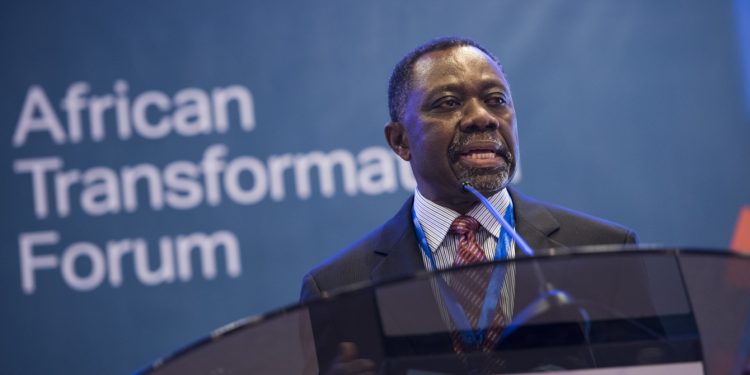
    Founder of the African Center for Economic Transformation, Dr Kingsley Y. Amoako, has asserted that Ghana has lost its momentum in economic transformation.

    He made this statement at the Ghana Compact Citizens Convention held at the University of Ghana, where leaders convened to discuss a comprehensive vision for the nation’s political and economic future.

    The Citizens’ Convention is part of the Ghana Compact process, an initiative aimed at fostering a consultative dialogue among all stakeholders to develop a vision for Ghana— a Compact for Ghana’s Political and Economic Transformation.

    The convention’s main objective is to finalize the provisions of a ‘Social Contract,’ an agreement between Ghana’s leaders and citizens that outlines the nation’s collective aspirations and goals through 2050.

    This contract will detail the responsibilities and commitments of both ordinary citizens and the country’s leadership to ensure these goals are met.

    In his address, Dr. Amoako highlighted that despite some economic growth, Ghana’s economy remains vulnerable to crises and has not significantly improved the livelihoods of its citizens.

    Speaking to the media, Yaw Baah, General Secretary of the Trade Union Congress, emphasized that the compact will serve as a reference for electing future leaders to ensure accountability.

    Additionally, Kodjo Mensah Abrampah, Director-General of the National Development Planning Commission, announced plans to restructure the National Development Planning Committee to better fulfill its functions and incorporate citizen feedback.

  • Don’t be partial in 2024 elections – Korankye-Ankrah urges police

    Don’t be partial in 2024 elections – Korankye-Ankrah urges police

    The Apostle-General of the Royalhouse Chapel International (RCI), Rev. Sam Korankye-Ankrah, has passionately urged the Ghana Police Service to maintain impartiality in their duties, especially as Ghana approaches its election year.

    During his visit to Tamale as part of the Encounter With The Oil initiative in the Northern Region, he emphasized the critical role of the police and other security agencies in ensuring peace and upholding Ghana’s democracy.

    Rev. Sam Korankye-Ankrah stressed that amidst the backdrop of the 2024 general elections, where significant expectations rest on them, the police must remain steadfast and resolute.

    He highlighted the complexities of this election year, noting the religious and familial dynamics of the leading candidates, alongside economic challenges, which heighten the stakes for a peaceful electoral process.

    “This is an election year and Ghana will be looking to the police for security and for a smooth before, during and after elections of 2024. This year’s election is dicey on so many fronts; on the fronts of religion, on the front of the two candidates all coming from the north – they are brothers and cousins, and against the backdrop of the economic conditions and situation that we have. This election is a make me, or, unmake me.

    “This is where we will need the police of Ghana and the security services of Ghana to take a strong, solid, non-compromising position to make sure that our citizenry is preserved and protected; our institutions are preserved and protected; our democracy is preserved and protected,” he said.

    He underscored the importance of the police taking a firm, unwavering stance to protect citizens, institutions, and democratic values.

    “On this score, I will ask the police to be non-partisan as always, and not partial as always for we the clergy, and particularly for me, the Apostle-General, and the fathers of the land, we have said that we will support you in prayer, we will also be non-partial and we are praying for the welfare and the wellbeing of our nation and our democratic practice,” he added.

    Expressing his spiritual support, he called upon the police to maintain their non-partisan stance and avoid partiality, reassuring them of the clergy’s commitment to pray for the nation’s welfare and democratic practice.

    Additionally, Rev. Sam Korankye-Ankrah issued a caution to politicians, urging them to fulfill their promises and warning against manipulating public opinion.

    He emphasized the church’s role in holding politicians accountable and ensuring transparency in governance.

    “We, the church, will do business with anyone that the people choose, except that we are cautioning politicians that gone are the days that promises were made and promises were not fulfilled. This time, our eyes are very red and this time, we are going to call power to account; we are going to hold politicians accountable. What they say, they must perform because the people must not be taken for a ride anymore,” he stressed.

    As Ghana prepares for the elections on December 7, 2024, with significant implications for its future leadership, the Apostle-General’s visit included a courtesy call on local chiefs in Tamale, underscoring the broader community engagement of his ministry.

  • Police will face the law for injuring “Hands Off Our Hotels” protesters with pepper spray – Ablakwa

    Police will face the law for injuring “Hands Off Our Hotels” protesters with pepper spray – Ablakwa

    Organizer of the ‘Hands Off Our Hotels’ demonstration, Samuel Okudzeto Ablakwa, has expressed his disappointment with the police for their treatment of some demonstrators.

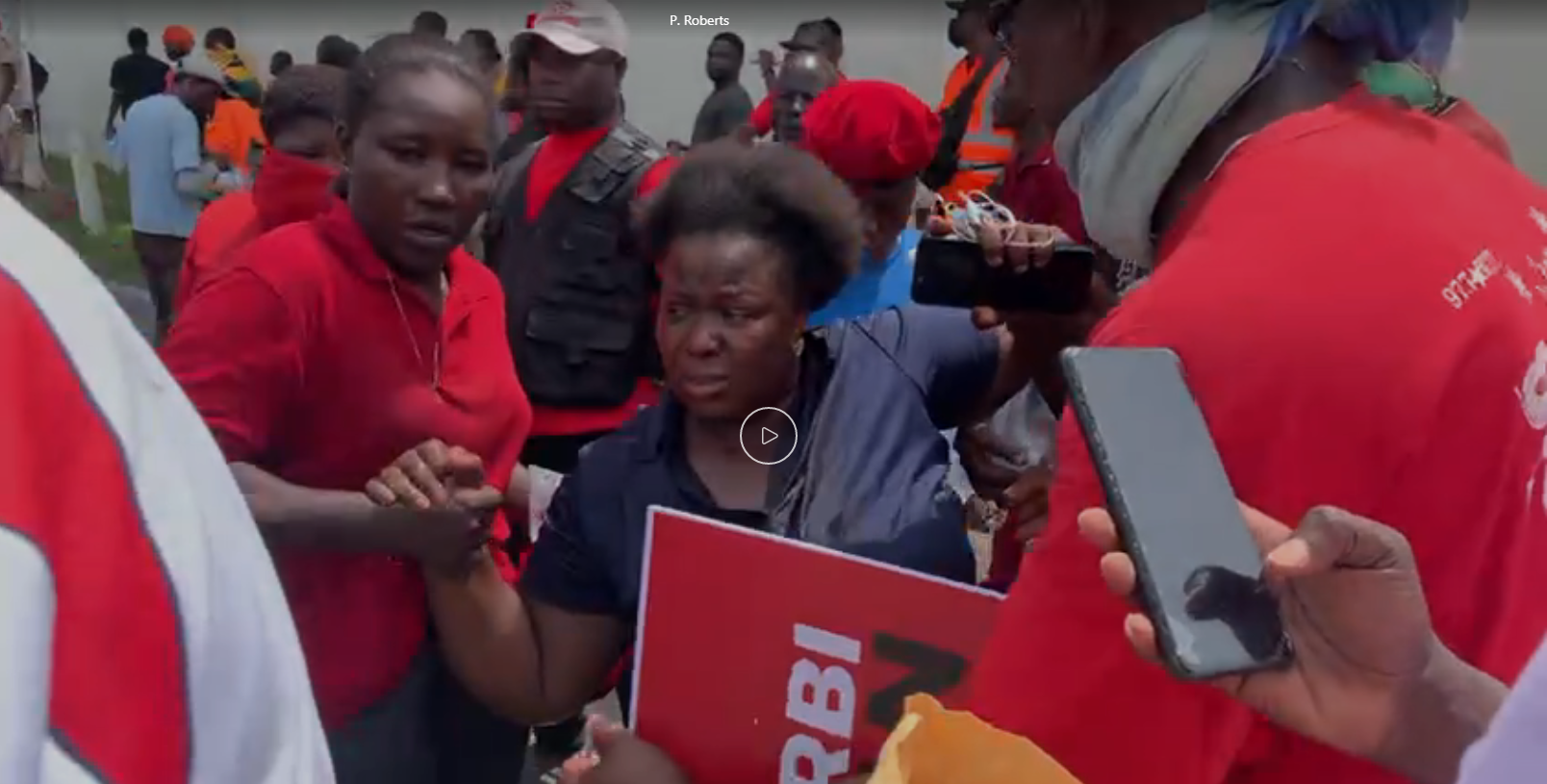
    “Let me condemn what the police did, this is a peaceful march, our people conducted themselves well so why do you fire tear gas on innocent civilians? Now we have to rush a few to the hospital?

    “The Police will be held accountable if anything happens to them. They can’t take the law into their own hands and intimidate innocent citizens.”

    He emphasized that the police would be held accountable for any harm caused to the demonstrators. “They cannot take the law into their own hands and intimidate innocent citizens.”

    The police halted the demonstration protesting the sale of the Social Security and National Insurance Trust (SSNIT) hotels midway through their march on Tuesday, June 19.

    Instead of reaching the agreed endpoint at Christ The King, they were stopped on the Switchback Road in Cantonments, Accra.

    “Is this the Christ the King?” He questioned the Police while speaking on the New Central on TV3.

    He added that some protesters had been taken to the hospital for treatment after being affected by the tear gas.

    “Some of the demonstrators have been rushed to the hospital. If anything happens to any demonstrators we will hold the Police accountable,” he said.

  • Africa’s public transport needs significant upgrades – Ofori Asiamah

    Africa’s public transport needs significant upgrades – Ofori Asiamah

    Minister of Transport, Kwaku Ofori Asiamah, has called on African countries to unite in developing a robust public transport system to ease the burden on commuters caused by transport operators.

    Highlighting the pressing issue of inadequate public transportation systems in Africa, he attributed the challenge to insufficient infrastructure.

    He emphasized that this can be addressed through effective legislation and regulations, which are crucial in preventing transport operators from overcharging commuters.

    “We need to establish legislation, regulations, and laws to ensure that commuters are not exploited by transport operators. This doesn’t mean transport operators don’t deserve fair compensation, but without regulation, they may overcharge our people,” he emphasised.

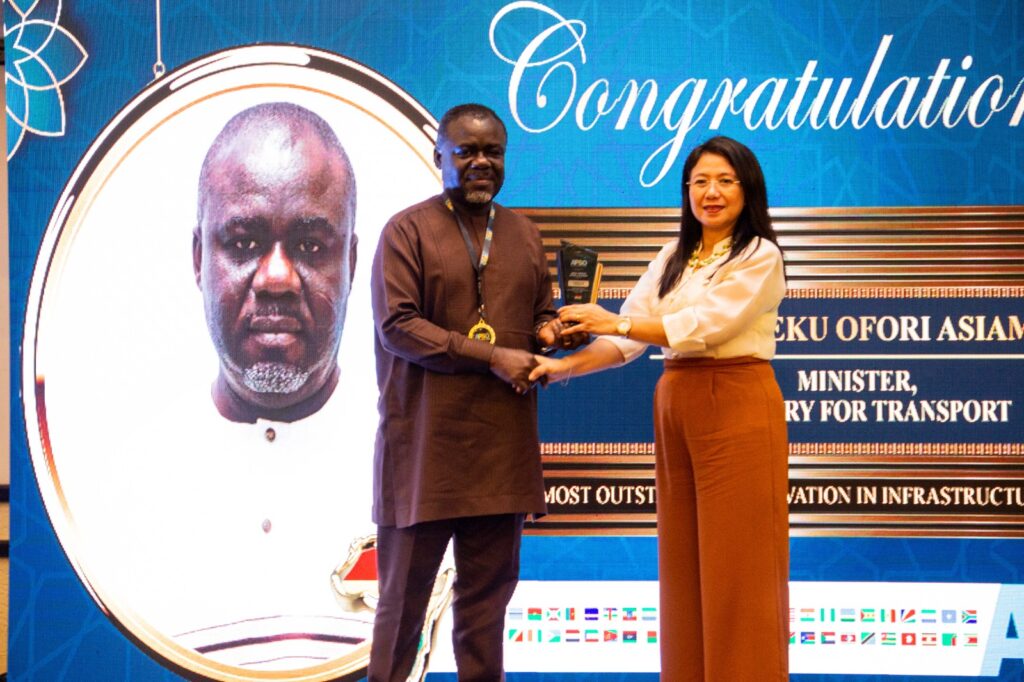
    Asiamah made these comments while interacting with the press after receiving the ‘Most Outstanding Innovation in Infrastructure Development’ Award at the 2024 African Public Service Optimum (APSO) Conference & Awards night in Accra on June 5, 2024.

    The event, themed “Transforming Africa through Public Service Professionalism and Excellence,” aimed to recognize outstanding public institutions and public servants for their excellence in delivering public goods and services, and to foster cooperation among award-winning institutions and public officials across Africa.

    The event saw attendance from ambassadors, ministers, traditional rulers, and diplomats from across the continent.

    Asiamah further stressed that unregulated transport operators could exploit passengers, resulting in increased prices for essential goods and services. He cited the Matatus (minibus) industry in East Africa as an example, where safety and affordability are significant concerns.

    He underscored the need for African governments to balance allowing transport operators to earn a fair income and protecting commuters from exploitation. By implementing laws and strengthening institutions, Africa can build a more robust public transport system, recognizing that not everyone can afford private vehicles.

    This move, Asiamah clarified, is not anti-transport operator but rather a call for empathy and understanding for the continent’s economically vulnerable populations.

    “By prioritising commuter welfare and safety, Africa can work towards a more equitable and sustainable transportation sector,” he underscored.

  • Interior Minister summoned by Parliament over recent deaths in Wa

    Interior Minister summoned by Parliament over recent deaths in Wa

    The Second Deputy Speaker of Parliament, Andrew Asiamah Amoako, has summoned the Interior Minister, Henry Quartey, to appear before the House on Wednesday, June 26, 2024, to brief lawmakers on the recent killings of private security officers in various parts of the country.

    This decision comes in response to the murders of two private security guards at their duty posts in separate incidents at the Wa East office of the Ghana Education Service (GES) and the Wa Model Junior High School.

    Members of Parliament for Bole-Bamboi and Wa Central, Yusif Sulemana and Dr. Rashid Pelpuo, have expressed deep concern and frustration over the lack of progress in the investigations and emphasized the need for more proactive measures to address the situation.

    Mr. Sulemana stated, “The Minister of Interior last week sent for men and women to Bole to help curb this situation. However, I think that much more is needed to be able to avoid the situation. The members are targeting watchmen. And so a watchman is lying, taking care of whatever he’s supposed to take care of, and then a stone or a block is used in hitting his head and killing the person instantly.”

    “Within this short period, three people have been killed. And even before that, Serial killings were taking different folks. And I think that this is a very important matter. And I want to draw your attention to it so that the Interior Minister can come to this house and brief us and give some hope to those areas that are affected.”

    Dr. Pelpuo also indicated “You remember that last year, nearly nine people were killed in this manner in Wa Central, and these were people who didn’t even know that they had enemies, who just go to work with the hope that they will go home and take care of their kids.

    “The police, since last year, have indicated that there is some investigation going on. But before we even got a result of the investigation, some of the killings are happening again in Bole, and the return to Wa just happened, with two people killed at a stretch.”

    “I think that the police must sit down, and I also think that some further and quality investigations have to happen in this matter. We are worried about the situation, we are worried that lives are lost, and not much is done to investigate and bring out the murderers and perpetrators of this crime, and we are calling on the police to be up and doing.

    “So apart from asking the police to do something about it, we are asking him [Interior Minister] to represent here, to report exactly what has happened and what they will do to address this very dangerous situation.”

    The MPs called for the Interior Minister to provide a detailed briefing on the situation and outline the measures being taken to ensure the safety of private security officers and the general public.

    In response, the Second Deputy Speaker directed that the Interior Minister appear before the House next Wednesday to provide the necessary briefing and assurances to the affected communities.

  • End strike, let’s finalize proposed conditions of service with govt – MoH to MELPWU

    End strike, let’s finalize proposed conditions of service with govt – MoH to MELPWU

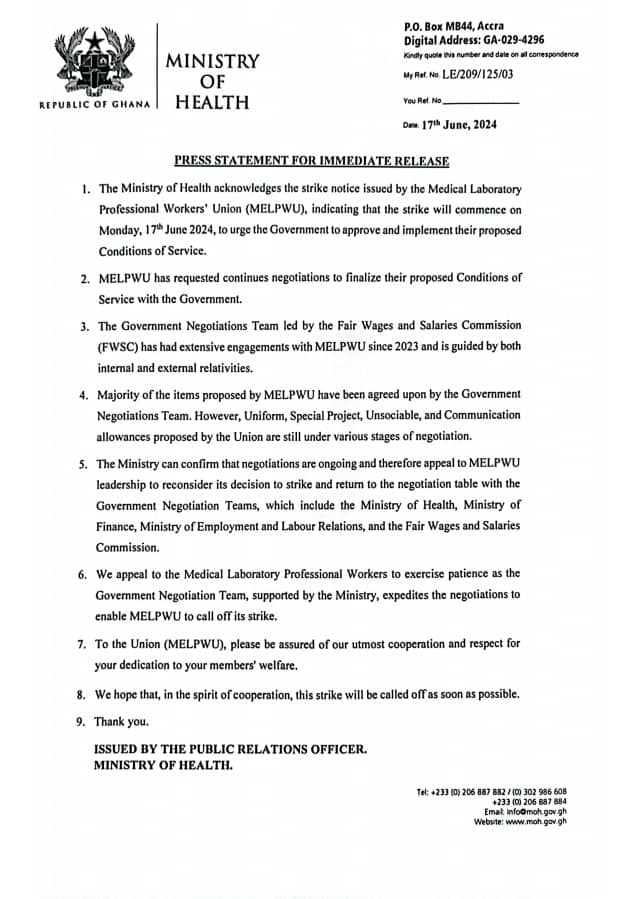
    The Ministry of Health (MoH) has urged the Medical Laboratory Professional Workers’ Union (MELPWU) to halt its nationwide strike, which commenced on June 17, 2024, and resume negotiations.

    MELPWU initiated the strike due to the absence of Conditions of Service for its members, despite nearly two years of discussions with the Fair Wages and Salaries Commission (FWSC).

    The union expressed disappointment with the outcome of the last meeting held on May 31, 2024.

    In a statement dated Monday, June 17, 2024, MoH acknowledged significant progress in negotiations, noting that most proposed items had been agreed upon by the Government Negotiations Team.

    However, discussions are ongoing regarding remaining matters such as uniforms, Special Projects, Unsociable, and Communication allowances.

    MoH recognized the challenges faced by MELPWU and urged its leadership to demonstrate patience while negotiations continue to be expedited.

    The Ministry assured the union of its commitment to cooperating and respecting their efforts to safeguard the welfare of their members.

  • Ghana’s Creative Arts losing value due to globalisation – National Theatre Director

    Ghana’s Creative Arts losing value due to globalisation – National Theatre Director

    The Executive Director of the National Theatre of Ghana, Amy Appiah Frimpong, has raised concerns about the diminishing value of Ghana’s creative arts and culture due to the effects of globalisation.

    Speaking at the Citi Business Festival, Mrs. Frimpong highlighted the erosion of Ghanaian cultural practices, noting instances where traditional attire at festivals is increasingly being replaced by Western-style clothing, such as jeans.

    Mrs. Frimpong stressed the significance of preserving Ghana’s arts and culture, which are integral to the nation’s identity. She called for a balance between embracing globalisation and protecting Ghana’s cultural heritage, urging a renewed appreciation and valuation of the country’s arts and culture.

    “Over the years, I think that the value of our Arts and Culture has diminished and you can tell even when you attend festivals. Sometimes I go to festivals and I cringe because the people that surround the chief are for instance wearing jeans and I’m like this will never happen or the recent one with the GUCCI kente, I mean how can this happen.”

    “I know we are at the point where globalisation is affecting us but we do need to keep who we are because our arts and culture define us as Ghanaians. It’s that thing that when you go somewhere, for instance outside the country, it will define you.

    “I think that going forward, we need to figure out how to value our arts and culture with the global sector so that there’s appreciation for who we are as a people and at the same time keep an eye on whatever is happening around us.”

  • I was sacked from the military for misconduct – Jakpa tells court

    I was sacked from the military for misconduct – Jakpa tells court

    Today, on Tuesday, June 18, during the court proceedings of the Ambulance case, the third accused, Richard Jakpa, openly acknowledged that he was dismissed from the Armed Forces due to misconduct and insubordination.

     The cross-examination by the prosecution, led by the Director of Public Prosecution (DPP), uncovered significant revelations.

    Jakpa disclosed that he had been commissioned into the Armed Forces in 1998 but was subsequently dismissed in 2007. 

    He cited allegations of insubordination and repeated failure to pass mandatory intelligence exams as the reasons for his dismissal, occurring five times in 2000, 2002, 2005, 2006, and 2007. 

    “Japka confirmed that he was commissioned in the Armed Forces in 1998 and got dismissed in 2007 for misconduct/ insubordination and failure to pass the required intelligence exams 5 times within 7 years.

    “He failed in 2000, 2002, 2005, 2006 and 2007. He however claimed he was only victim of victimization by the senior officers of the Armed Forces because they were envious of his exceptional performance as a soldier,” he added.

    Jakpa maintained that his dismissal was unjust, asserting that senior officers victimized him due to jealousy over his exemplary performance as a soldier.

    During the proceedings, Jakpa also admitted that the conversation between himself and the Attorney-General (AG), presented in court as Exhibit 10 by the defense, did not encompass the entire dialogue.

     He claimed that only portions favorable to their defense were included in the submission.

    “Japka confirmed in open court that the conversation between him and the AG that is in circulation and which was tendered in court by the accused persons as Exhibit 10, is actually not the full conversation. And that, they only presented the aspects of the conversation that will help their case,”.

    The current Minority Leader in Parliament, Dr. Ato Forson,  and businessman Richard Jakpa face allegations of deliberately causing financial loss to the state amounting to 2.37 million euros through the procurement of ambulances. 

    Both have pleaded not guilty and are currently standing trial.

  • US$12bn deal signed by govt to initiate Petroleum Hub project

    US$12bn deal signed by govt to initiate Petroleum Hub project

    Ghana has taken a major step towards revolutionizing its energy sector by signing a landmark US$12 billion agreement.

    This deal involves a partnership between the Ghanaian government and the TCP-UIC Consortium, which includes Touchstone Capital Group Holdings Ltd., UIC Energy Ghana Ltd., China Wuhan Engineering Co. Ltd., and China Construction Third Engineering Bureau Co. Ltd.

    This consortium will lead the initial phase of the Petroleum Hub project located in the Jomoro Municipal area of the Western Region, with the total project cost estimated at around US$60 billion.

    At the signing ceremony, Energy Minister Dr. Matthew Opoku Prempeh highlighted that the project aims to position Ghana as a key energy trading hub in West Africa.

    “Scheduled in three phases from 2024 to 2036, the initial phase will focus on building a refinery capable of processing 300,000 barrels per day, a petrochemical plant, a large-scale storage facility, and essential port infrastructure,” he explained.

    The project will feature three refineries, five petrochemical plants, extensive storage facilities, jetties, and port infrastructure spread over a 20,000-acre site.


    “This hub has been a long time coming, and I am excited that today we can sign for work to begin in earnest. We are hopeful that all the hard work we put in will yield the results that we desire. We are determined to achieve this goal, and we will continue working to see this materialize,” he said.

    He emphasized that this private sector-led initiative is expected to attract substantial foreign investment, create jobs, and enhance Ghana’s energy security.

    Scheduled in three phases from 2024 to 2036, the initial phase will include a refinery capable of processing 300,000 barrels per day, a petrochemical plant, a large-scale storage facility, and critical port infrastructure.

    The Paramount Chief of the Western Nzema Traditional Council and Chairperson of the Petroleum Hub Development Corporation, Awulea Annor Adjaye III, urged the corporation and its partners to ensure value addition and wealth creation for the people of Jomoro and Ghana as a whole.

    “We as leaders hold in trust these natural resources for our people, so anytime we have to use them, we must ensure our people are the main beneficiaries of them,” Awulea Annor Adjaye III said.

    The Petroleum Hub, upon completion, is expected to generate over 780,000 direct and indirect jobs by 2036. The project aims to foster local entrepreneurship, promote knowledge transfer through international partnerships, and elevate Ghana’s position in the global petroleum industry.

    Additionally, the Petroleum Hub project will focus on community engagement to ensure local communities benefit from improved infrastructure, healthcare, and educational opportunities.

  • If you will do as you say Ghana will sure develop under you – Otumfuo to Bawumia

    If you will do as you say Ghana will sure develop under you – Otumfuo to Bawumia

    Asantehene, Otumfuo Osei Tutu II Praises Dr. Mahamadu Bawumia’s Vision for Ghana’s Development

    During a courtesy visit by Dr. Mahamadu Bawumia, the flagbearer of the governing New Patriotic Party (NPP), to the Manhyia Palace on Wednesday, June 12, 2024, Asantehene Otumfuo Osei Tutu II expressed optimism about the potential of Dr. Bawumia’s outlined policies to propel Ghana’s development, provided they are effectively implemented.

    “I know Ghana will thrive under your regime looking at the policies you have laid bare in relation to the various sectors of the economy, if indeed you will do as you say, Ghana will for sure develop.”

    The Asantehene reiterated his confidence in Dr. Bawumia’s capabilities, affirming his belief that Dr. Bawumia will deliver effectively as Ghana’s leader.

    Highlighting Dr. Bawumia’s humility, Otumfuo Osei Tutu II commended the Vice President for consistently displaying humility despite holding high office. He emphasized that humility is a crucial attribute for effective leadership.

    In response, Dr. Bawumia expressed gratitude to Otumfuo Osei Tutu II for his unwavering support.

    During the meeting, Dr. Bawumia sought the Asantehene’s prayers and guidance as he prepares for the upcoming 2024 elections.

    He also articulated his vision for Ghana’s economic sectors, underscoring his commitment to implement policies aimed at driving significant development in the country.

    Dr. Bawumia assured Otumfuo Osei Tutu II of his readiness to lead Ghana, promising to roll out transformative policies that will foster exponential growth and development.

  • Smooth financial operations depend on compliance and internal auditing – BoG Governor

    Smooth financial operations depend on compliance and internal auditing – BoG Governor

    Governor of the Bank of Ghana, Dr. Ernest Addison, has called on savings and loans companies to prioritize adherence to prudential regulations and ensure robust internal audit functions.

    He emphasized that these measures are essential for maintaining safe and ethical financial operations.

    Dr. Addison made these remarks during a dinner event marking the 20th anniversary of Opportunity International Savings and Loans Limited (OISL).

    He highlighted the importance of growth coupled with strong risk management, which is vital for regulated financial institutions to operate securely, ethically, and within legal frameworks.

    He encouraged savings and loans companies to enhance their corporate governance practices to support operational expansion.

    The Governor also reassured the industry of the Central Bank’s dedication to its advisory role, ensuring all financial institutions comply with regulatory requirements to foster trust and confidence in the sector.

    Additionally, he urged savings and loans companies to collaborate with banks and telecommunications firms to adopt emerging technologies.

    The Central Bank will continue to work with sector players to address their challenges, he assured.

    The anniversary dinner of Opportunity International Savings and Loans Limited showcased its journey and achievements, reflecting its growth and commitment to providing top-tier financial and non-financial services nationwide.

    A variety of distinguished personalities from the financial sector attended the event, including Dr. Nii Ayi-Bonte II (Gbese Mantse), Nii Abossey Okai III (Chief of Abossey Okai, representing the Ga Mantse), and King Tackie Teiko Tsuru II.

    The immediate past board chairman of OISL, welcomed guests, Mr. Katey Assem, noting,”We have stood the test of time, surviving and standing tall as one of the leading savings and loan companies in Ghana.”

    He attributed the institution’s success to its commitment to sound corporate governance, risk management standards, accountability, transparency, and ethical conduct.

    He also acknowledged the contributions of past and present board members, staff, and clients.

    Mr. Kwame Owusu-Boateng, CEO of Opportunity International Savings and Loans Ltd, reiterated the company’s commitment to compliance with all regulatory frameworks and standards.

    He highlighted the institution’s significant progress, growing from just three branches in 2004 to thirty-five branches and three agencies serving over 668,000 clients.

    “In addition to the loans that are advanced to clients in these sectors, the institution also provides tailor-made non-financial services to create the right impact on its clients,” he said.

    Mr. Owusu-Boateng also noted the institution’s achievements, including 45 industry awards since 2018 for innovative products like the Empowerment Loan, a special product for the physically challenged.

    He reaffirmed the institution’s dedication to its core values, leveraging technology for sustainable growth, and expanding operations to the remaining six regions of Ghana.

    4o

  • Let’s prioritize sanitation to achieve SDG goals – Lord Boateng

    Let’s prioritize sanitation to achieve SDG goals – Lord Boateng

    A member of the House of Lords in the United Kingdom, Lord Paul Boateng, has underscored the critical importance of addressing water and sanitation issues to achieve the Sustainable Development Goals (SDGs).

    During his keynote speech at the 2024 UPSA Annual Leadership Lecture, Lord Boateng emphasized that ensuring access to clean water and sanitation directly contributes to achieving multiple SDGs.

    He highlighted their vital role in human biology, noting their significant impact on health and well-being.

    “We are made up largely of water. That is the nature of human biology and the human condition. The disposal of bodily waste is an intensely personal activity that throws up practical challenges and has very real consequences for health and well-being.

    “In delivering clean water and sanitation and a sustainable city, we help with SDG 3 which is good health and wellbeing,” he said on Tuesday.

    He stressed the importance of clean water and sanitation in advancing SDG 3, which focuses on good health and well-being.

    Lord Boateng also emphasized the link between sanitation and girl-child education, pointing out that inadequate facilities in schools can prevent girls from attending classes, particularly during menstruation.

    Lord Boateng urged prioritizing water and sanitation to fulfill SDGs 4 and 5, emphasizing the need for concerted efforts amid challenges such as illegal mining’s severe impact on Ghana’s water bodies.

    “In delivering clean water and sanitation we help SDG 5 which is Gender Equality because there is no way we can be serious about girls education unless each and every school has safe and decent sanitary for girls.

    “This is because if you don’t have that, girls during their period are not going to come to school. And girls’ education will suffer,” he stressed.

    Lord Boateng continued, “If we are serious about girls’ education and we’re serious about quality education and SDGs 4 and 5, we need to take water and sanitation seriously.”

    The Ghana Water Company Limited (GWCL) has already warned of potential water shortages if illegal mining activities continue to pollute major water sources, increasing operational costs for water treatment.

    Despite challenges, the government has touted achievements in expanding access to safe drinking water and sanitation facilities across Ghana.

  • I am still a member of NDC – Dr. William Atta Owusu

    I am still a member of NDC – Dr. William Atta Owusu

    A prominent business figure and member of the National Democratic Congress (NDC), Dr. William Atta Owusu, has refuted recent media claims suggesting his resignation from the party.

    The NDC’s National Communication Bureau had issued a directive to media outlets nationwide, advising against including Dr. Atta Owusu in the party’s communication team for radio and TV programs. Subsequently, reports emerged alleging his resignation from the party.

    However, in an exclusive interview with Pure FM’s Evans Osei-Bonsu, Dr. Atta Owusu, a known NDC financier in the Ashanti region, clarified that he remains a committed member of the party.

    He urged the public to dismiss rumors of his resignation, stressing that he has not received any formal communication from the party regarding his status in its regional communication setup.

    “I am a true NDC member, I contested for Subin Constituency as a Parliamentary Candidate and lost. I have not resigned from the party.”

    “I remain a key member of the party in the region and my vision is to see that President Mahama is declared President of Ghana in 2024.

    But I shall respect the party’s leadership and directives if indeed I’ve been asked to stop going on media platforms for now in the party’s name.

    But I can say on authority that I’m yet to receive a formal letter communicating to me to that effect,” he said.

    Background

    In a recent widely circulated video on social media, Dr William Atta Owusu appeared on Kessben FM in Kumasi. While discussing the National Democratic Congress (NDC) ’24-hour economy’ policy proposal, he made some claims and analogies which sparked widespread discussion and alleged confusion regarding the feasibility of the proposal.

    Abass Nurudeen, the Ashanti Regional Communications Officer for the NDC, subsequently released a statement to clarify the situation.

    Abass Nurudeen explained that the party financier was not a member of the NDC’s regional communications team and that media houses should desist from engaging him to speak on behalf of the NDC on their networks.

    Meanwhile, independent checks conducted by Purefmonline.com reveal that Dr. Atta Owusu has been privately financing the NDC in the Ashanti region over the period, including its communication bureau.

    Our checks reveal that the current Plant used by the party at its Ashanti regional head office, valued at GHC160,000 was procured and paid for by Dr. Atta Owusu.

  • No politician is worth the blood of any citizen – National Peace Council to Ghanaians

    No politician is worth the blood of any citizen – National Peace Council to Ghanaians

    A member of the National Peace Council, Sheikh Aremeyaw Shaibu, has issued a heartfelt appeal to Ghanaians, urging them to prioritize unity and peace as the nation prepares for the crucial December polls.

    He stressed the importance of placing national interests above individual or political affiliations.

    In an interview with UTV, Sheikh Aremeyaw emphasized the necessity for collective sacrifice to ensure a brighter future for Ghana.

    He underscored the significance of fostering national cohesion beyond political divides and reiterated that no citizen’s life should ever be sacrificed for the sake of any politician.

    “We need to sacrifice to help Ghana become better, we need peace, let’s portray the love and peace of God towards each other. Let’s not get divided due to political differences. Let’s make December polls successful. Let’s not engage in violence due to politics. We are all one people. No politician is worth the blood of any citizens,” he added.

    Watch video below:

  • Two security officers killed in Wa

    Two security officers killed in Wa

    On June 18, 2024, two private security guards met a tragic end in Wa.

    Separate incidents of brutality occurred at their respective posts: one at the Wa East office of the Ghana Education Service (GES) and the other at the Wa Model Junior High School.

    The incidents have stirred fear among residents, prompting calls for increased police presence to bolster town security.

    These tragedies add to the grim toll, as eleven security guards were similarly killed in Wa during 2023, under circumstances that remain shrouded in mystery.

  • The mafia in drugs industry is less than that in oil sector – Aliko Dangote

    The mafia in drugs industry is less than that in oil sector – Aliko Dangote

    Nigerian industrialist, Aliko Dangote, has shared a pivotal insight gained from his endeavor to establish Africa’s largest refinery.

    After a wait spanning over eight years, the Dangote Refinery has finally been completed, with diesel production already underway.

    Situated at the expansive Lekki Free Zone outside Lagos, Nigeria, the refinery commenced operations in May 2023 and is poised to produce 650,000 barrels per day once fully operational.

    Spanning an area equivalent to 4,000 football fields, this $19 billion investment has encountered significant hurdles.

    Dangote disclosed that a major lesson learned was the existence of a powerful cartel that wields considerable influence over Africa’s oil industry.

    This entrenched cartel, operating for decades, has hindered efforts to establish local refineries and instead favored oil imports into the continent.

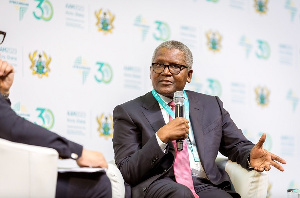
    Speaking at the 31st Afreximbank Annual Meetings in the Bahamas, Dangote remarked candidly, “I knew there would be a fight, but I didn’t know that the mafia in the oil industry was stronger than the mafia in the drugs industry.

    “I can tell you this for a fact because I knew they [oil industry mafia] existed, but not as strong as the way I have faced them. They are very strong. There’s a local one, a global one, and it’s all mixed up,” Dangote shared as the crowd burst into laughter.

    Acknowledging the challenges faced, Dangote noted, “all my life, I have been fighting for what I believe, so I think it’s part of my life to fight for things I believe in.”

    Despite these obstacles, Dangote reaffirmed his commitment to the project, stating, “We will win because the population and the government will be on our side because what we are doing is right.”

    Oil cartels, akin to drug cartels in their operational tactics, collaborate among oil-producing nations and companies to exert control over global oil production, pricing, and distribution.

  • Galamsey, poor weather and smuggling contribute to $500m decline in Ghana’s cocoa income

    Galamsey, poor weather and smuggling contribute to $500m decline in Ghana’s cocoa income

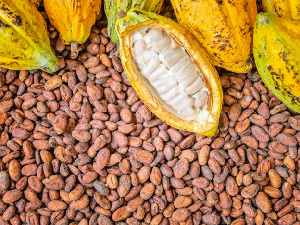
    Illegal mining activities, adverse weather conditions, the Cocoa Swollen Shoot Virus Disease (CSSVD), and widespread smuggling have collectively caused a substantial drop in Ghana’s cocoa revenue for the first quarter of 2024.

    Head of Public Affairs at COCOBOD, Fiifi Boafo, outlined these critical factors during an interview on JoyNews Desk, explaining that they contributed to a staggering decline of over $500 million in cocoa revenue, as reported by the Bank of Ghana.

    “Illegal mining activities are cutting off farmers from their farms,” he stated, highlighting the detrimental impact of these illicit activities on cocoa production.

    In addition to illegal mining, adverse weather conditions exacerbated the revenue decline.

    The Cocoa Swollen Shoot Virus Disease (CSSVD) has further compounded the situation, leading to the loss of over 500,000 hectares of cocoa farms.

    “Over $200 million was spent to rehabilitate farms affected by Cocoa Swollen Shoot Virus Disease,” Boafo explained, underscoring the scale of the problem.

    To address these issues, COCOBOD has implemented several measures. Legal actions against smugglers and illegal miners are underway, with “five individuals already incarcerated and numerous cases pending in court,” Boafo revealed.

    COCOBOD is also providing financial support to cocoa farmers.

    “We are motivating cocoa farmers by paying them more for their produce,” Mr Boafo stated.

    Furthermore, COCOBOD’s legal team is supporting farmers in prosecuting miners who encroach on their farms.

    The environmental impact of illegal mining has also been profound, with polluted water bodies adversely affecting irrigation.

    “Our legal team is assisting farmers in prosecuting miners who disrupt the use of their farms,” he said.

    Despite the production setbacks, Boafo expressed confidence in COCOBOD’s ability to secure necessary funding.

    “Our production challenges will not hinder our access to the cocoa syndicated loan,” he assured, highlighting the organization’s commitment to maintaining financial stability.

  • Everyone is happy, this government is the best – M3nsa

    Everyone is happy, this government is the best – M3nsa

    British-Ghanaian rapper Mensah Ansah, known as M3nsa, has expressed support for the current New Patriotic Party (NPP) government, praising its impact on Ghana’s livability.

    He highlighted the flourishing economy, citing thriving businesses and improved provision of essential services like water, which he believes marks this administration as one of Ghana’s best.

    Regarding the persistent critique of power fluctuations (‘dumsor’), M3nsa stated that he personally experiences no such issues, as his electricity remains stable without interruptions.

    Speaking with Starr FM, M3nsa praised the Akufo-Addo-led government, suggesting that criticisms against it are driven by smear tactics, “I always have electricity; in Dansoman, we don’t experience power cuts. What is ‘dumsor’? I’m unfamiliar with it. I don’t anticipate power outages.

    “This government is exemplary. On the streets, everyone seems happy, prices are low, businesses thrive, electricity is steady, water is available, there’s money to spend, and everyone is content. Thus, everything is perfect. The ‘dumsor’ being discussed is merely negative propaganda by those opposed to the government,” he stated.

  • Police fire tear gas, pepper spray protestors against sale of SSNIT hotels

    Police fire tear gas, pepper spray protestors against sale of SSNIT hotels

    Tensions escalated earlier today, Tuesday, June 18, as police deployed pepper spray and fired tear gas to disperse demonstrators protesting the sale of Social Security and National Insurance Trust (SSNIT) hotels. 

    The protest, organized by North Tongu MP Samuel Okudzeto Ablakwa, aims to halt the sale of four SSNIT hotels to Rock City Hotel Limited, owned by Ghana’s Minister of Agriculture, Bryan Acheampong.

    Mr. Ablakwa, a member of the National Democratic Congress (NDC), led the demonstration to exert pressure on President Akufo-Addo to intervene and prevent the controversial sale. 

    Speaking at a news conference yesterday, Mr. Ablakwa emphasized the peaceful nature of the protest and assured the Ghana Police Service’s cooperation in maintaining

  • Government must refrain from fuel procurement – Ben Boakye

    Government must refrain from fuel procurement – Ben Boakye

    Executive Director of the African Centre for Energy Policy, Ben Boakye, has urged the government to consider privatizing fuel purchases to alleviate financial strain during power crises.

    He emphasized that the government’s exclusive role in purchasing fuel burdens the state with constant financial injections during energy shortages.

    Speaking on Joy FM’s Top Story on June 14, Boakye advocated for a shift in approach “I think our position is that Government should just go off. Government is not the one who is supposed to ensure that there is fuel supply. This is a commercial enterprise. Let’s see power as a business and let people who have money to do the business come and do it,” he said.

    The call for privatization comes amidst an announcement on June 13 by Ghana Grid Company Limited (GRIDCo) and Electricity Company of Ghana (ECG) of a potential three-week load management plan.

    This plan, as clarified in a joint statement, is necessitated by maintenance work by a Nigerian gas supplier, reducing Ghana’s power generation capacity since June 12.

    Boakye stressed that the government should focus on regulatory roles in the power sector rather than direct involvement in fuel procurement and distribution

    “Due to maintenance works being undertaken by a gas supplier in Nigeria and is projected to last three (3) weeks.”The maintenance has caused a reduction in overall power generation capacity in Ghana which could result in load management over the period of the work,” the joint release indicated.

    In summary, Boakye urged a restructuring where private capital takes the lead in fuel purchases for the power sector while government focuses on its regulatory role and broader socio-economic concerns.

    “When we keep doing the politics with it and always looking to government to go and buy fuel in 21st century to come and produce electricity and distribute to the people that is why we have this challenges.

    “So we abuse the system, create the inefficiencies and we are always looking to government when government should be doing other things. Looking at the other socio-economic welfare of the people and allowing the business side of things where private capital is interested to actually manage… we can’t keep looking to government to provide money for the power sector at the expense of any other socio-economic intervention we do have,” he said.

  • I will scrap 1V1D, other wasteful projects by NPP – Mahama

    I will scrap 1V1D, other wasteful projects by NPP – Mahama

    The National Democratic Congress (NDC) flagbearer, John Mahama Dramani, has vowed to scrap non-essential projects such as the “One Village-One Dam” initiative if elected, redirecting funds towards more profitable ventures to bolster state revenue.

    Mahama argues that the country’s current economic difficulties necessitate strategic policymaking, particularly in reducing government spending.

    He criticized the incumbent government for its failure to curtail expenses while focusing solely on revenue enhancement.

    “This government made many mistakes and we find ourselves in this crisis again and we need to cut down expenditure. This government is not willing to cut expenditure. In a crisis, you slash expenditure and increase revenues.

    “All they are doing is increasing revenues but without reducing expenditure. We are going to eliminate all those wasteful projects; One Village-One Dam and all those things that they spent billions on so that we can use that money in the more productive sectors to make the economy grow again. Like Planting for Food and Jobs,” the former president said.

    Mahama emphasized, highlighting his plan to eliminate what he deems as wasteful projects to redirect resources into sectors like Planting for Food and Jobs, aimed at revitalizing the economy.

    In contrast, Vice President Mahamudu Bawumia, aspiring to succeed President Akufo-Addo, contends that their administration has prudently managed the economy amidst global challenges, including implementing expenditure cuts.

    Speaking at Eid-ul-Adha prayers on June 16, the New Patriotic Party (NPP) flagbearer acknowledged global economic impacts but stressed progress in steering the economy towards recovery despite setbacks.

    “This has led to a series of uncomfortable situations for our citizens. Even though we are not yet where we want to be, which is back to the economic boom we experienced a few years prior to the crisis, data shows that our economy is on the path of recovery.”

    He underscored the government’s efforts in reducing general expenditure, citing Finance Ministry data showing a total budgetary allocation of GH₵259 billion.

    Amid ongoing economic challenges, there is mounting pressure on the government to downsize and prioritize policies to streamline spending.

  • Kota Tema vessel arrives at Tema Port

    Kota Tema vessel arrives at Tema Port

    The Tema Port recently welcomed one of Pacific International Lines’ (PIL) largest container vessels, named Kota Tema after the port city itself.

    Built in 2024, the vessel spans 272 meters in length, boasts a gross tonnage of 73,172, and has a capacity of 7,000 Twenty-Foot Equivalent Units (TEUs).

    During a ceremony at MPS Terminal 3 of the Port of Tema, Mr. Michael Luguje, Director-General of the Ghana Ports and Harbour Authority (GPHA), affirmed their commitment to enhancing infrastructure and support facilities. He emphasized GPHA’s dedication to ensuring efficient, safe, and cost-effective handling of ships and cargo.

    Highlighting Tema Port’s pivotal role as West Africa’s hub, Mr. Luguje noted its significance in receiving containers destined for the sub-region, spanning from Senegal to Douala, Cameroon.

    Efforts are underway to position Tema Port as Africa’s largest hub, underscoring ongoing initiatives for expansion.

    Mr. Luguje expressed appreciation to PIL for their enduring partnership with Ghana and Tema Port, emphasizing the importance of strengthening these ties. He reiterated GPHA’s role in fostering an enabling environment for Ghana’s imports and exports through comprehensive infrastructure and support services.

    Mr. Mohammed Samara, CEO of Meridian Ports Services (MPS), lauded their company’s readiness to handle vessels of any size and container volumes. He commended GPHA’s investments in marine crafts, including port tugs and harbor crafts, crucial for safe docking and managing increased port traffic effectively.

  • NPP govt has no ‘brains’ that is why it sold Trade Fair Center – Joseph Nunoo-Mensah

    Former National Security Advisor Brigadier General (Rtd) Joseph Nunoo-Mensah has stated that a government with a vision for the country would not tear down and sell an iconic building like the Trade Fair Center.

    In an interaction with TV3, he indicated that the demolition of the Trade Fair Center has rendered many Ghanaian citizens unemployed, as they once depended on it for their livelihoods.

    He pointed out that one of the reasons why Accra’s busiest markets, such as Makola, are crowded with traders hawking on the pavements is that many of them are victims of the Trade Fair Center’s collapse.

    The former National Security Advisor Brigadier General indicated that the building served as an avenue where people could easily trade and sell, hence, reduced pressure and traffic congestion in town.

    According to him, there will come a time when Ghana will be hollowed out due to the habits of certain individuals who are fond of selling the country’s assets.

    He added that the current generation and those yet to be born may be left with nothing if the behavior of Ghanaian leaders is not checked.

    “What is happening to Ghana is that we are prepared to sell our assets and destroy them. This is what saddens me sometimes at my age. In a few years I am gone. I don’t know what I am leaving behind for my grandchildren. 

    We are leaving them with nothing. Today, as I speak with you the road to Kingsway, Cocobod, the road there is choked, you can’t drive on it. Mothers are sitting on the road and selling there and nobody cares about them. If the government has brains it will not  demolish and sell Trade Fair Center because people shop there. It is terrible,” he added.

    On February 16, 2020, the Ghana Trade Fair Company Limited (GTFCL) demolished properties of its tenants at the Trade Fair Centre to pave way for the redevelopment of the site.

    Among the tenants at the trade fair centre whose properties were taken down under the supervision of armed security personnel by a bulldozer included Universal Labels & Packaging Co. Ltd and Colour Planet, a printing company owned by Raymond Archer, a journalist, the Fantasy Dome etc. 

    GTFCL explained that Since 2017, the Ghana Trade Fair Company has been working with key stakeholders to redevelop the site. A Masterplan has been approved by the Board and Cabinet, and on June 28, 2019, a horizontal developer was secured with PPA approval to provide the necessary infrastructure.

    This infrastructure is crucial for leasing the site to private developers, who will develop various facilities outlined in the Masterplan to support the Ghana Trade Fair Company’s Convention and Exhibition Facilities.

  • Police nab 6 suspects for stabbing Okada rider to death at Ga South

    Police nab 6 suspects for stabbing Okada rider to death at Ga South

    Six individuals have been apprehended in connection with the tragic death of 20-year-old Okada rider Sampson Eka, who was fatally stabbed at a funeral in Ballagonor near Tebu, within the Ga South Municipality of Greater Accra Region.

    According to police reports, the suspects attacked the victim with a sharp object following a brief altercation on Saturday evening.

    Friends of the victim rushed him to a nearby hospital, from where he was later transferred to Mother and Child Hospital in Kasoa. Despite efforts to save him, Sampson Eka succumbed to his injuries.

    Distraught family members have demanded a thorough investigation from the police to ensure justice for the deceased.

    “We need more policemen, patrol vehicles, and a police post in Tebu to combat criminal activities,” he said.

    The Weija Divisional Police Command has arrested six individuals, including the main suspect, who are currently assisting with the investigation.

  • We can’t purchase data bundle anymore, the system is hard – Woman cries out to MTN

    We can’t purchase data bundle anymore, the system is hard – Woman cries out to MTN

    In a heartfelt outcry reflecting the sentiments of many, a Ghanaian woman has voiced her frustration over the escalating costs of data bundles provided by telecommunications provider MTN Ghana. 

    In a viral video, she urged MTN to consider the economic realities of their customers and called for more affordable data options.

    The woman emphasized the hardship faced by business owners who rely on internet connectivity for their operations, noting that they are increasingly using their profits to purchase data bundles. 

    According to her, the increase in data prices has impacted everyday life for many in the country, forcing individuals to use their food money to buy data bundles.

    “MTN, why, you people doing too much. Data bundle is almost 70 GH which is not even up to 10 gig. We can’t buy data for 3gh no more. The lowest is 15 GH. Business owners are using their profits to purchase data bundles. You people are killing us. Ghana is hard, we use the little money that can be used for food to purchase data. Ghana is in a dire state. I am tired,” she added.

    MTN Ghana’s price adjustment, implemented on Tuesday, November 28, 2023, affected various services, including voice, SMS, data, Fiber Broadband, and Fixed Wireless Access (4G Router/Turbonet) for customers.

    Despite criticism from Ghanaians on social media expressing dissatisfaction with the significant price hike, MTN Ghana defended the move.

    As a Significant Market Power (SMP) firm, MTN Ghana explained that the price increase was necessary to sustain its business operations.

    Chief Commercial Officer for MTN Ghana, Mr. Noel Kojo-Ganson, explained that market pressures necessitated the increase.

    “The review has become necessary due to increased operational costs. The review will allow MTN Ghana to continue to make the investments required to sustain its business going forward,” MTN said in a statement.

    “We are very mindful of the challenging economic conditions and the increasing cost of inputs for our business. The price review is necessary to enable us to continue to sustain the business and make the needed investments in the network and new innovations to enhance customer experience,” Mr. Noel Kojo-Ganson added.

  • Why England no longer relies on Harry Kane as their playmaker

    Why England no longer relies on Harry Kane as their playmaker

    Harry Kane played a different role in England’s Euro 2024 victory over Serbia compared to his usual style, but it was equally crucial for the team.

    Typically known for dropping deep and providing incisive passes for runners, Kane adjusted his approach in Gelsenkirchen.

    Facing a deep-lying Serbian defense marking man-to-man, Kane explained that he stayed higher up the pitch early in the game.

    This strategy aimed to create more space for England’s midfielders and forwards by drawing defenders away from them.

    In the first 35 minutes, Kane had minimal touches but effectively acted as a focal point in attack, crucial for England’s game plan.

    His presence kept Serbian defenders occupied, allowing England’s other players room to maneuver.

    As the game progressed and England faced pressure in the second half, Kane’s role evolved. Instead of dropping deep to assist defensively, which risked leaving England without an outlet when they regained possession, Kane focused on holding up play, protecting the ball, and winning free-kicks.

    While England sometimes rushed these set-piece opportunities, Kane’s experience underscored the need for composure in such moments to control the tempo of the game.

    Reflecting on his performance, Kane acknowledged that different games may require him to adapt his positioning, highlighting the versatility needed from a center-forward.

    His efforts in creating space and opportunities for teammates exemplified his commitment to team success, even when not directly involved in scoring chances.

    Looking ahead, Kane’s role for England has evolved from his earlier days resembling his role at Tottenham Hotspur. With talented midfielders like Jude Bellingham and Trent Alexander-Arnold now providing creative playmaking, Kane’s focus includes facilitating their involvement in England’s attacking maneuvers.

  • Video: Father throws lavish graduation party for 19-year-old daughter at Trassaco

    Video: Father throws lavish graduation party for 19-year-old daughter at Trassaco

    In a dazzling display of celebration, a recent 19-year-old graduate of Tema International School, Jaia Senyo, was treated to an extravagant party at the prestigious Country Club in Trassaco, East Legon.

    The event, organized by her father, was a testament to his pride in her academic achievements and marked a memorable milestone in Jaia’s journey.

    The festivities unfolded in grand style as guests were greeted with opulent decorations and a lively atmosphere befitting the occasion.

    The graduate, adorned in an elegant dress, radiated joy and gratitude amidst the gathering of family and friends who had gathered to commemorate her success.

    Watch video below:

  • I am still a member of NPP – Kennedy Agyapong

    I am still a member of NPP – Kennedy Agyapong

    The Member of Parliament for Assin Central Constituency, Kennedy Ohene Agyapong, has firmly refuted rumors suggesting his intention to contest as an independent candidate in the upcoming December 7 elections.

    During his 64th birthday celebration on Sunday, June 16, Agyapong addressed friends, loved ones, and key members of the New Patriotic Party (NPP), emphasizing his loyalty to the party and dismissing any plans to run independently.

    “What I want all the party faithfuls to know is that I have not resigned from the party. I am not going independent. I’m still an NPP member,” the legislator said.

    While acknowledging past conflicts during the primaries, Agyapong called for unity and urged his supporters to rally behind Vice President Dr. Mahamudu Bawumia for the upcoming elections.

    “Whatever happened during the primaries is behind me. If you know me
    very well, I am not selfish, and people have come to me several times
    saying ‘Go independent, go independent’. I think that is not a wise
    thing to do. Therefore, I have refused to do that,” he said.

    Agyapong’s appeal for unity aims to ease tensions within the NPP, particularly amidst perceptions of rivalry with Dr. Bawumia. Despite alleged instances of intimidation from the Vice President’s supporters, he advocated reconciliation for the party’s greater good.

    “Once I’m a party member, no matter what happened during the primaries, I think we are all one people and it will be best for all of us to come together,” Agyapong said.

    He also called for mutual respect between his supporters and those of the Vice President, emphasizing the need for reconciliation and cooperation.

    “I’m also appealing to the Vice President’s supporters. I know they are intimidating my supporters. If they want us to come together and unite for a united front, then they should also reciprocate the same favors I am rendering on behalf of my supporters,” he concluded.

  • Acheampong was warned of a coup but he didn’t listen – Retired Captain Joel Sowu

    Acheampong was warned of a coup but he didn’t listen – Retired Captain Joel Sowu

    Retired Captain Joel Sowu has shared astonishing revelations about a prophecy predicting the coup against former President Ignatius Kutu Acheampong in July 1978.

    In an interview on the YouTube series “45 Years On: Memories of Ghana 1979” with Kafui Dey, Capt. Sowu recounted how a prophetess had warned Acheampong about an imminent betrayal from his inner circle.

    “Acheampong was cocooned. When he was cocooned, then came the palace coup to happen. Because that palace coup would not have happened if he had listened,” he said.

    According to Capt. Sowu, during a gathering, a prophetess delivered a chilling prophecy to Acheampong.

    According to Capt. Sowu, during a gathering, a prophetess delivered a chilling prophecy to Acheampong.

    “There was a woman there, that woman was a prophetess. And she was prophesying and she said (to Acheampong) that a time will come when your own people will betray you and the people around you will be part of it,” he recounted.

    Despite the gravity of the prophetess’s warning, Acheampong’s associates dismissed her words.

    The prophetess’s prophecy included a specific directive for Acheampong to avoid going to work on a certain day.

    “The people around immediately said, ‘Oh no, there is nothing like that,’ and the prophetess told Acheampong on this day don’t go to work,” Capt. Sowu revealed.

    On that fateful day, a young boy claiming to be a man of God arrived at Burma Camp with an urgent message for Acheampong.

    “The people thought the small boy had smoked weed, and he [the small boy] told them that Acheampong should not leave the house,” Capt. Sowu continued.

    Disregarding the boy’s warning, Acheampong left his home and, as predicted by the prophecy, never returned.

  • Don’t stop taking promotional exams – Court tells Chief Inspector Krah

    Don’t stop taking promotional exams – Court tells Chief Inspector Krah

    The High Court in Kumasi has advised Chief Inspector Samuel Krah, who brought a lawsuit against the Inspector-General of Police (IGP) and the State over his promotion, to persist in taking the promotion exams, as future opportunities may work in his favor.

    Justice Kwasi Anokyi Gyimah, presiding over the case, ruled on Friday that Chief Inspector Krah is not entitled to automatic promotion solely based on his higher academic qualifications.

    “After the trial, the Court held inter alia that the plaintiff has failed to prove his claim on the preponderance of probability. The Plaintiff’s attainment of higher academic qualification is not entitled to promotion by reason only of that academic qualification. Thus, depending on the mode of recruitment, an entry to the Police Academy is by competitive examination or by special recommendation in line with Police Service Regulation,” the judgment noted.

    The court further encouraged the plaintiff to continue taking the entrance examination, stating: “The Court therefore encourages the Plaintiff to continue writing the entrance examination as he may find favour in the exams in future.”

    The court further encouraged Chief Inspector Krah to continue participating in the entrance examinations, suggesting that he might succeed in future attempts.

    Chief Inspector Krah had argued that despite his 25 to 30 years of service in the police force, the Police Administration promoted his junior colleagues under the same special amnesty but did not extend the same opportunity to him for entry into the Police Academy and promotion to Assistant Superintendent of Police (ASP).

  • Kwame Nkrumah wept the day he was told Ghana was broke – Capt. Joel Sowu (Rtd)

    Kwame Nkrumah wept the day he was told Ghana was broke – Capt. Joel Sowu (Rtd)

    Retired Captain Joel Sowu has recounted a significant moment in Ghanaian history when its first President, Kwame Nkrumah, was moved to tears upon learning of the country’s financial insolvency.

    In an interview with host Kafui Dey, Capt. Sowu shared insights into the challenges faced by heads of state, highlighting how powerful and self-serving groups can influence and isolate them from the true state of affairs.

    Capt. Sowu explained the phenomenon where these influential groups form a protective barrier around presidents, shielding them from harsh realities upon assuming office.

    “Immediately upon becoming heads of state, there are certain people who constitute a mafia, and they cocoon you. It happened to Kwame Nkrumah. They make sure you don’t see the reality on the ground; you don’t know what is happening. So what they tell you, to you, that is the thing,” he elaborated.

    Reflecting on a specific incident involving Nkrumah, Capt. Sowu described the emotional impact when the president was informed of the dire financial situation.

    “The day they told Kwame Nkrumah we were broke, he wept,” he said, stressing the profound impact of such revelations on national leaders who are often shielded from harsh realities by those around them.