Author: Phoebe Martekie Doku

  • Anti-gay legislation threatens brain drain – Gender Activist

    Anti-gay legislation threatens brain drain – Gender Activist

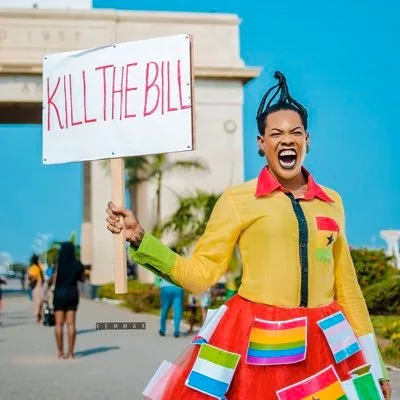
    A gender activist and research fellow at the Centre for Gender Research, Advocacy, and Documentation (CEGRAD), Dr. Amanda Odoi, has cautioned that the enactment of the Human Sexual Rights and Family Values Bill, commonly referred to as the anti-gay bill, could intensify brain drain in the country.

    The bill, which outlaws LGBTQ activities, along with their promotion, advocacy, and funding, received parliamentary approval on Wednesday, February 28, 2024.

    Speaking on The Big Issue on Citi FM and Citi TV, Dr. Odoi expressed her concerns, stating that the bill’s passage exposes individuals to potential attacks, leading to skilled labor leaving Ghana due to a perceived lack of safety.

    Dr. Odoi highlighted that since discussions surrounding the bill intensified, individuals have faced attacks for displaying even the slightest femininity.

    “One reason why we make the argument of the bill having a potential of worsening brain drain is the fact that it sets people up for attacks and no one will want to live in an environment that is hostile.”

    “The argument being made is that there are provisions in the bill to protect people from being harassed and abused but we are also aware that since discussions on the subject heightened, we have seen numerous attacks, even on suspected persons.

    “Right now, if you are on social media and you see people that are doing skits or exhibit any signs of femininity, they are attacked and so people that feel unsafe will leave and there is enough evidence from other countries to show that in such instances, people migrated,” Dr Odoi told Selorm Adonoo.

  • Flashback: Ghana on track for 5th Eurobond – IMF

    Flashback: Ghana on track for 5th Eurobond – IMF

    On 15th May 2016, the then Minister of Finance, Seth Terkper, announced the country’s intention to enter the international bonds market with the goal of raising around one billion dollars.

    Despite earlier concerns from financial experts about the International Monetary Fund (IMF) withholding approval due to Ghana’s debt levels, the IMF has now given its endorsement for the issuance of Ghana’s 5th Eurobond during its review of the Extended Credit Facility program.

    Minister Terkper led a government delegation in a non-deal road show, presenting Ghana’s expanding economic prospects to potential investors.

    With parliamentary approval already secured, the government aims to secure additional funds from the global market to bolster the nation’s growing infrastructure requirements and address maturing debts.

    While the timing of the Eurobond issuance remains uncertain, Joel Toujas-Bernaté, the head of the IMF mission to Ghana, shared in a press conference that the decision would be influenced by prevailing market conditions.

    He emphasized the flexibility of adapting to market fluctuations, suggesting that if conditions are unfavorable at the beginning of the year, the government can utilize existing cash balances.

    Toujas-Bernaté reassured that the IMF supports Ghana’s ability to smoothly adapt to changing circumstances without jeopardizing financing for the year.

    “The concern about debt dynamic season is driven by the fiscal position. At the start of the year, they can use a large part of these cash balances if indeed the market conditions are not right for issuing a new Eurobond,” he said.

    “If the market conditions improve and would make issuance of a Eurobond more attractive, then the strategy may change. And it is here that I think the idea is to adapt to market conditions and the fact that the authorities have this cash,” he explained.

  • Ghanaian Musician, KK Kabobo receives donation from Second Lady, Samira Bawumia

    Ghanaian Musician, KK Kabobo receives donation from Second Lady, Samira Bawumia

    Deputy Minister for Tourism, Arts and Culture, Mark Okraku-Mantey, has delivered a charitable donation on behalf of Second Lady, Samira Bawumia to the veteran Ghanaian music legend, KK Kabobo, who is currently battling liver disease.

    The undisclosed amount was presented during Okraku-Mantey’s visit to KK Kabobo at the University of Ghana Medical Centre (UGMC) in Accra.

    KK Kabobo’s family expressed deep gratitude for the compassionate gesture from Mrs. Bawumia, acknowledging the significant impact of her support during this challenging time. Despite facing health challenges, KK Kabobo took a moment to appreciate the overwhelming support from loved ones, family, and friends in the media.

    In response to the outpouring of concern, KK Kabobo urged Ghanaians to keep him in their thoughts and prayers as he navigates the path to recovery.

    The initiative to assist KK Kabobo gained momentum after broadcaster Barima Kaakyire Agyemang highlighted his situation on Facebook on February 26, triggering widespread solidarity from industry players, fans, and well-wishers.

  • Swift action needed to avert collapse of COCOBOD – Minority to govt

    Swift action needed to avert collapse of COCOBOD – Minority to govt

    The Minority in Parliament is expressing serious concerns about the potential collapse of the Ghana Cocoa Board (COCOBOD) as a result of its substantial indebtedness to banks.

    As indicated by the Minority, COCOBOD’s 2024 budget foresees a significant loss of 2.6 billion Ghana Cedis, raising worries about possible defaults on loan payments.

    In the aftermath of President Nana Akufo-Addo’s recent State of the Nation Address, Eric Opoku, the Minority Spokesperson on the Food, Agriculture, and Cocoa Affairs Committee of Parliament, conveyed his concerns about COCOBOD’s precarious financial situation in an interview with Citi News.

    Opoku expressed apprehension about COCOBOD’s financial distress, stating, “The President created an erroneous impression that importation of rice in Ghana has been on the decline. That is not true.”

    Contrary to President Akufo-Addo’s claim in his State of the Nation Address that rice importation into Ghana decreased between 2021 and 2023, Eric Opoku disputed this assertion, saying, “The President created an erroneous impression that importation of rice in Ghana has been on the decline. That is not true.”

    Additionally, Opoku highlighted the challenges faced by workers, revealing that approximately 35,000 employees of the Produce Buying Company (PBC) are now unemployed due to the collapse of the firm.

  • Video of improperly dressed Sister Derby ‘forcing’ innocent school pupil to accept LGBTQ

    Video of improperly dressed Sister Derby ‘forcing’ innocent school pupil to accept LGBTQ

    A viral video shows Ghanaian musician and LGBTQ+ advocate, Deborah Vanessa, also known as Sister Derby seated among a panel, addressing students of North Legon Little Angels school, emphasizing the existence of different sexual identities beyond male and female.

    She advocated for acceptance and discouraged discrimination based on how individuals are born, drawing parallels to racial discrimination.

    Parliament approved the Proper Human Rights and Family Values Bill, commonly known as the anti-gay bill.

    The bill criminalizes and proscribes LGBT+ activities, including their promotion, advocacy, and funding, with penalties ranging from six months to three years for individuals involved and three to five years for promoters and sponsors.

    Now awaiting President Akufo-Addo’s endorsement to become law, the bill has sparked widespread debate and controversy regarding human rights and LGBTQ+ issues in Ghana.

  • Nigeria seeks $10bn from Binance over alleged currency manipulation

    Nigeria seeks $10bn from Binance over alleged currency manipulation

    The Nigerian government has formally requested compensation of nearly $10 billion (£8 billion) from the cryptocurrency company Binance, alleging that it engaged in manipulative practices affecting foreign exchange rates through currency speculation and rate-fixing.

    These actions are claimed to have resulted in a significant depreciation of the Nigerian naira, losing almost 70% of its value in recent months.

    Earlier in the week, two Binance executives were arrested in Nigeria, and the company has not yet responded to inquiries from the BBC.

    Nigeria, as the largest economy in Africa and a major player in the global cryptocurrency market, has been grappling with the implications of these allegations.

    The central bank governor, Olayemi Cardoso, asserted that Binance Nigeria moved $26 billion in untraceable funds. Cryptocurrency transactions, constituting approximately 12% of Nigeria’s GDP, occurred in the year leading up to June 2023, according to Reuters.

    “These allegations are weighty,” Tilewa Adebajo CFG Advisory tells the BBC. “That’s a huge sum – even more than the annual Nigeria diaspora remittances of $24bn”.

    “The government must have done their homework, hence the allegations.”

    While cryptocurrencies are not illegal in Nigeria, the government insists that firms must register to operate within the country.

    Binance allegedly failed to comply with this requirement, as claimed by a special adviser to Nigeria’s president.

    The recent surge in exchange rates, leading to the abrupt collapse of the naira, is attributed to activities on the Binance platform, prompting the government’s intervention.

    Binance, a popular cryptocurrency platform in Nigeria, has faced suspension in the country, along with other firms like Coinbase, Kraken, Forextime, OctaFX, Crypto, and FXTM, in an attempt to stabilize the naira.

    The government also accuses cryptocurrencies of being utilized for money laundering and terror financing, citing the anonymity and privacy features of the cryptocurrency system.

    In response to the economic challenges posed by the depreciation of the naira, Nigeria has taken measures such as closing numerous bureaux de change and putting pressure on its central bank to stabilize the national currency. The current exchange rate is 1,595 naira to US$1, a significant decline from about 460 a year ago. This currency collapse has contributed to a cost-of-living crisis, including high food and commodity prices, fueling protests in recent weeks.

  • Delta Airlines to introduce new Aircraft in Ghana – Transport Minister

    Delta Airlines to introduce new Aircraft in Ghana – Transport Minister

    Transport Minister, Kwaku Ofori Asiamah, has assured Parliament of ongoing talks with Delta Airlines for the acquisition of new aircraft in Ghana, addressing concerns over the Accra-New York route.

    The Minister acknowledges discussions with Delta to enhance service quality following recent criticism.

    Responding to MP Alhaji Mohammed-Mubarak Muntaka’s urgent question regarding Delta’s emergency landing in Praia Da Vitoria, the Minister outlines efforts to ensure Delta ceases using older aircraft in Ghana.

    “The government is in discussion with three other airlines who have applied to service the Accra-New York route,” he said.

    Ofori-Asiamah notes that despite some aircraft being older, if approved by the International Civil Aviation Organisation (ICAO), restricting them is challenging.

    The Minister discloses ongoing government discussions with three other airlines seeking to operate the Accra-New York route.

    He anticipates concluding these talks in the third quarter of 2024, addressing MPs’ queries about a specific timeline.

  • Airlines and Airports commit $35bn to IT system – Report

    Airlines and Airports commit $35bn to IT system – Report

    The 2023 Air Transport IT Insights report by SITA reveals a year-on-year increase in IT spending for Airports and Airlines, reaching an estimated 10.8 billion USD and 34.5 billion USD in 2023.

    Over two-thirds of CIOs anticipate continued growth into 2024.

    Airlines and airports focus on optimizing passenger experience, with 50% implementing IT for efficiency in check-in, bag tag, and boarding.

    Biometrics are gaining popularity, with 70% of airlines expecting biometric ID management by 2026, and 90% of airports investing in related programs.

    CIOs prioritize business intelligence (BI), artificial intelligence, and data sharing for operational efficiency.

    BI is the leading technology investment for airlines, with 73% planning major programs. AI and machine learning, embraced by 97% of airlines and 82% of airports by 2026, aim to leverage data for insights and operational improvement.

    David Lavorel, CEO of SITA, emphasized the role of advanced data tools in uniting stakeholders for efficient, agile responses to disruptions.

    “As we approach a full recovery of passenger demand for air travel, with domestic travel even surpassing pre-pandemic levels in some regions, airlines and airports have learned from the congestion and disruptions seen in the past two years. Advanced data sharing and analytics tools will allow them to unite stakeholders and identify opportunities for greater efficiency and leaner operations. Solutions like total airport management and BI for passenger processing provide airports and airlines real-time insight into the management of assets and passenger flow, allowing for agile, collaborative responses to any disruptions.”

    Sustainability is a key focus, with over 90% of airlines planning IT solutions for emissions reduction by 2026.

    On the airport side, energy management systems are a priority for emissions reduction, with over half planning investment by 2026.

    Airlines and airports aim to achieve net-zero CO2 emissions by 2050, adopting digital tools for accurate monitoring and optimization of energy consumption.

    The research, based on the views of over 250 senior airline and airport executives, covers a quarter of global passenger traffic and was conducted from August to November 2023.

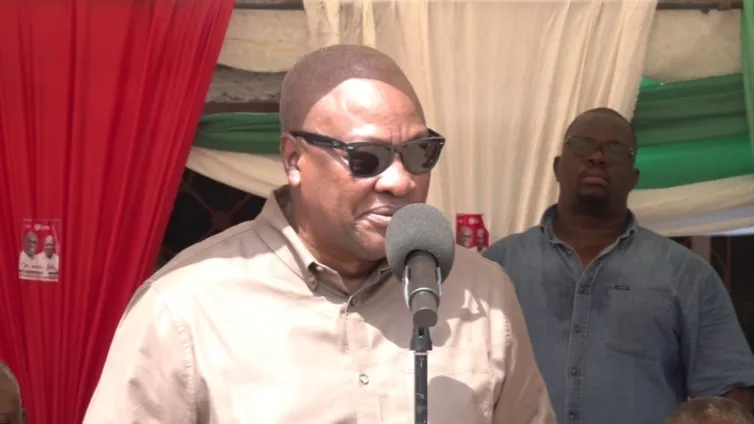
  • Bawumia is younger and more versatile unlike Mahama – Martin Amidu

    Bawumia is younger and more versatile unlike Mahama – Martin Amidu

    Anti-corruption advocate and former Special Prosecutor, Martin Amidu, has opined that the governing New Patriotic Party’s (NPP) presidential candidate, Vice President Dr. Mahamudu Bawumia, holds a significant advantage due to his youth and versatility.

    Mr Amidu emphasized that this advantage positions Bawumia for potential re-elections, unlike the National Democratic Congress’ (NDC) candidate, John Mahama, who is older and has limited attempts at the presidency.

    Highlighting the NPP’s incumbency advantage in the upcoming 2024 General Elections, Mr Amidu urged the NDC to focus on convincing Ghanaians with substantive messages rather than relying on slogans.

    He pointed out the NPP’s executive power and influence on electoral processes and security agencies, acknowledging that despite President Akufo-Addo’s strategic plans, the 2024 elections are not predetermined.

    Mr Amidu advised the NDC to attract disenchanted individuals from various political affiliations by rallying behind the theme “Build The Ghana We Want Together.”

    He emphasized the NDC’s challenge of presenting a candidate limited to a single four-year term, aiming to dispel comparisons to short-lived presidencies like that of Jimmy Carter.

    “The NPP has the advantage of being in government and exercising executive power with its attendant tacit influence on the electoral processes and security agencies. The NPP has a younger and more versatile Presidential Candidate who would still be young beyond elections 2024 and 2028. The NPP knows that the 2024 elections is not a fait accompli for it despite President Akufo-Addo’s long game to succeed himself with a surrogate. The NDC must also not be deceived with poll numbers or outward public displeasure with the regime because there is still some time to the elections. Anything could happen,” Mr Amidu noted.

    He continued: “The NDC on the other hand needs to entice everybody disgruntled with his present condition of life across political party lines to support its call to “Build The Ghana We Want Together” and, therefore, it has a more daunting task. Secondly, the NDC is presenting a Presidential Candidate who can assume the reins of government for only four years as a former President to nullify the perception of a Jimmy Carter-like presidency that is terminated after his first term in office. But it is in the interest of the NDC that after face-saving, the NDC must be able to win a second term of four years with a successor to John Mahama who has age on his or her side. The impression must never be created that the NDC is still not sure of contesting and winning the 2024 elections and hopes to put forward its Presidential Candidate for re-election in the 2028 election again.”

    He stressed the importance of the NDC securing a second term with a successor to John Mahama, reinforcing the perception of confidence in contesting and winning the 2024 elections.

    In a critical note, Amidu criticized both the NDC and NPP for allowing party elites to unduly influence the selection of running mates, a practice he deemed contrary to the dictates of the 1992 Constitution.

  • 4.8m unregistered SIMS blocked by MTN

    4.8m unregistered SIMS blocked by MTN


    In adherence to a directive from the National Communications Authority (NCA), MTN Ghana has taken action to block 4.8 million subscribers who did not re-register their SIM cards with a Ghana card.

    As a result, there has been a 6.3% decline in the telecom giant’s subscriber base, now totaling 26.8 million as of the conclusion of 2023.

    Earlier, by May 31, 2023, MTN Ghana had initially blocked 5.4 million SIMs not registered with the Ghana card; however, 600,000 of them were successfully re-registered.

    The comprehensive re-registration of all SIM cards using the Ghana National ID card was carried out nationwide by the NCA and telecom operators, completing the process by May 2023.

  • Clash between Asanko Mines Security and illegal miners leaves 3 dead

    Clash between Asanko Mines Security and illegal miners leaves 3 dead


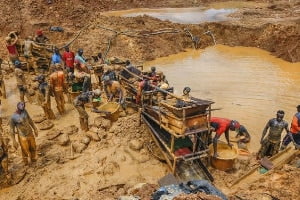
    Violent clashes between illegal miners and private security at Asanko Mines in Manso Tontokrom, Ashanti Region, have resulted in three confirmed deaths.

    The clash followed an invasion of the Asanko Mines concession, allegedly supported by Tontokrom traditional leaders.

    On March 1, 2024, community members protested Asanko Mines’ refusal to release part of its legal concession for small-scale mining, accusing the mining firm of intimidation through armed law enforcement.

    Adu Gyamfi Kumanin, a chief in Tontokrom, urged President Nana Akufo-Addo to compel the mining firm to release the concession for community mining to address unemployment.

    The traditional leader threatened potential violence if Asanko Mines persisted in using armed personnel to intimidate them. A day after the protest, clashes occurred between private security and illegal miners, resulting in one alleged fatality.

    In a reprisal attack, illegal miners lynched two Asanko Mines private security personnel.

    Amansie South District Chief Executive Opoku Gyemfi confirmed the deaths and expressed efforts to restore calm.

    Asanko Mines’ Environment and Sustainability Manager, Eric Darko, verified the lynching of private security personnel, noting the incident happened days after military and police intervention to reclaim the invaded concession.

  • No sex toys, BJs: Afia Vim Lady shares interpretation of Anti-LGBTQ bill

    No sex toys, BJs: Afia Vim Lady shares interpretation of Anti-LGBTQ bill

    Media personality Afia Pokua, also known as Vim Lady, has elaborated on behaviors that may lead to a violation of the recently passed anti-LGBT law.

    Explaining the provisions of the Promotion of Proper Human Sexual Rights and Ghanaian Family Values Bill, known as the anti-LGBTQ bill, Vim Lady highlighted that engaging in oral sex and using sex toys are explicitly prohibited by the legislation passed on February 28 by parliament.

    “Let me take you to section 6 (3) there’s something there that affects both straight and LGBTQ persons, it says for the purpose of this section sexual intercourse where a person penetrates the anus or the mouth of another person with the penis of that person or another contraption. So if you use dildos on another woman you are guilty or if you use dildos on another man you are guilty. If you blowjob you are guilty.

    She emphasized that section 6 (3) of the law applies to both LGBTQ+ and anti-LGBTQ+ individuals, making individuals who incorporate dildos into sexual activities or participate in blowjob activities subject to legal consequences.

    Furthermore, Vim Lady noted that individuals who cross-dress, assuming the appearance of the opposite gender with the intent of engaging with someone, face imprisonment for a term not less than 6 months and not exceeding one year.

    Adding to the explanation, she pointed out that any indecent acts, such as same-sex kissing, could result in imprisonment if observed, discouraging any public display of affection between individuals of the same gender.

    She further mentioned that engaging in any indecent act, such as the display of affection like kissing between two men or women, can lead to imprisonment if observed.

    “Those who are doing cross dressing, section 10 subsection 2 C says any intention of cross dressing to portray that the person is of a gender different from the gender assigned at birth with the intent to engage in an act prohibited under this act. Any public show of amorous relationship between or among persons of the same sex who woefully commits grossly indecent acts commits a misdemeanour and is liable to a conviction for a term of imprisonment not less than 6 months and not more than one year,” she added.

    During Wednesday’s parliamentary session, Majority Leader Alexander Afenyo-Markin proposed amendments to the bill at the second consideration stage, citing concerns about human rights infringement.

    Despite his efforts, the Minority rejected the request, leading the Speaker to advance to the third consideration stage, ultimately resulting in the bill’s passage.

    The bill has now been presented to the President for his assent, marking the final step before it becomes law. Aimed at criminalizing LGBTQ+ activities in Ghana, the Anti-LGBTQ+ bill imposes stringent penalties, including imprisonment, for involvement in homosexual acts and LGBTQ+ advocacy. It also aims to prohibit the promotion of LGBTQ+ rights, organizations, and events within the country.

    Before its passage, numerous amendments were made to the bill.

    Parliament determined that promoters and sympathizers would face a minimum custodial sentence of three years, extendable to a maximum of five years. Individuals directly engaged in these activities would be subject to a minimum sentence of six months, extendable to a maximum of three years.

    Ghana joins several African nations in addressing LGBTQ+ issues within society. Uganda notably enacted severe anti-gay laws in May, including the death penalty for specific same-sex acts, leading to sanctions from the international community.

    Concerns have arisen that Ghana might face similar sanctions, potentially impeding financial aid from countries advocating for LGBTQ+ rights.

    Nevertheless, Ghanaian Parliamentarians have expressed determination to withstand any repercussions from pro-LGBTQ+ countries.

    The UN High Commissioner for Human Rights, Volker Türk, has already labeled the bill’s passage as “profoundly disturbing.”

    A portion of the UN Human Rights statement read “I call for the bill not to become law. I urge the Ghanaian Government to take steps to ensure everyone can live free from violence, stigma and discrimination, regardless of their sexual orientation or gender identity. Consensual same-sex conduct should never be criminalized.”

  • Bawku victims deserve compensation – Mahama Ayariga

    Bawku victims deserve compensation – Mahama Ayariga

    The Deputy Clerk of Corporate and Financial Management Services Division in Parliament, Ebenezer Ahumah Djietror, has refuted claims that Parliament is indebted to the tune of GH¢23 million to the Electricity Company of Ghana (ECG).

    On Thursday, February 29, 2024, there was a power outage in Parliament House and Job 600, the office complex for Members of Parliament, attributed to the purported GH¢23 million debt, as part of the ongoing “Operation Zero Balance” initiative by the ECG.

    In an interview with Citi News, Mr. Ahumah Djietror clarified that Parliament does not owe the stated amount, asserting that the house has been making payments. He acknowledged occasional discrepancies, citing failures in the ECG’s system to accurately record the payments.

    According to him, Parliament made a GH¢13 million payment on Tuesday, February 27, 2024, reducing the outstanding debt to approximately GH¢12 million. He emphasized that they possess records of all payments made as evidence.

    Mr. Ahumah Djietror expressed the situation in Parliament as unfortunate and assured that efforts are underway to reconcile the accounts and settle the outstanding balance.

    “I expect that with everything that has happened in Bawku, the people of Bawku have suffered military brutalities as a result of the activities of the military. As part of the measures the president is implementing to deal with the situation in Bawku, I expect that we will address the plight of those who have suffered military brutalities. People have been killed by soldiers, and I have petitioned institutions and made complaints and expect that these issues will also be addressed by the president.”

  • No government has invested in education as much as Akufo-Addo – Samuel Jinapor

    No government has invested in education as much as Akufo-Addo – Samuel Jinapor

    The Minister for Lands and Natural Resources, Samuel Abu Jinapor, has asserted that drawing comparisons between the Akufo-Addo government and the Mahama government in terms of education is akin to comparing day and night.

    During the debate following the State of the Nation Address on February 29, he highlighted that, apart from Kwame Nkrumah, no Ghanaian president or government has invested in education as significantly as the Akufo-Addo government.

    He remarked, “With the exception of Kwame Nkrumah, no Ghanaian president or government has invested in education as much as the Akufo-Addo government. Certainly, in the fourth republic, no government has invested in education as much as the Akufo-Addo government, and certainly, a comparison between the Akufo-Addo government and the Mahama government when it comes to education is like day and night.”

    President Akufo-Addo delivered his State of the Nation Address on February 27, 2024, providing updates on various sectors, including security, governance, education, health, infrastructure, and anti-corruption efforts.

  • Energy Minister must brief parliament on recent power outages – Minority

    Energy Minister must brief parliament on recent power outages – Minority

    Members of the Minority in Parliament have urged the House leadership to summon the Minister of Energy, Dr. Matthew Opoku Prempreh, to provide an update on the government’s actions to address the recent power outages.

    The Member of Parliament for Tamale North, Alhassan Suhuyini, expressed concerns about the adverse effects of the power cuts on households and businesses during the presentation of the business statement for the upcoming year on Friday, March 1.

    Mr Suhuyini emphasized the need for the Energy Minister to brief the House on the power situation and the reasons behind the inconsistent power supply.

    He highlighted the challenges faced by people and businesses in planning their activities and programs, urging the leadership to ensure clarity on the ongoing power issues.

    The MP for Tamale Central, Ibrahim Murtala Mohammed, shared a distressing incident involving a National Service Personnel trapped in a Parliament lift during a power outage.

    He stressed the importance of the Energy Minister addressing the House to provide explanations and insights into the power sector’s developments, allowing MPs to inform their constituents about the situation.

    “Many people and businesses are unable to plan their activities and their programmes and they also sometimes have to find extra money to power their generators for their businesses and many people do not know what is happening.

    “They are told that there are planned and unplanned programmes and load is being shed, so it is important that the leadership of the House makes it possible for the Energy Minister to brief the House next week on the power situation and why fellow countrymen and women have to deal with the on and off situation. Ghanaians need to understand why they sleep in darkness.”

    “My issue has to do with the erratic power supply. Just two days ago, there was a National Service Personnel who was trapped in one of the lifts when the power went off. She was traumatized when she finally exited the lift and so are we able to quantify the psychological trauma that people go through as a result of this and so it is essential that the Minister for Energy responds to this House to explain to us so we can explain to our constituents what is happening.”

  • A court awarded GHC1.273bn to a company that deserved GHC14,000? – Bright Simons quizzes AG

    A court awarded GHC1.273bn to a company that deserved GHC14,000? – Bright Simons quizzes AG

    Vice president for Imani Africa, Bright Simons, has expressed shock at a report from the Attorney General’s (AG) office alleging that a court awarded a whopping 1.273 billion Ghana Cedis to a company that should have received 14,000 Ghana Cedis.

    Taking to the X platform Mr Simons shared an image purportedly from the AG indicates that in December 2011, the High Court ruled in favor of NDK Financial Services Ltd, compelling the State to pay a specified sum along with an interest rate of 6.5% per month, calculated daily.

    It added that the interest accrued from January 7, 2009, until the final payment, despite the State paying GHC79,000,000 by 2020, the judgment debt had soared to GHC1,273,000,000.

    “ SUIT No. J4/23/2014 NDK Financial Services Ltd Vrs. Ahamaan Enterprises & The Attorney-GeneralOn 21st December, 2011, the High Court granted judgment against the State for payment of sums claimed by plaintiff together with interest at the rate of 6.5% per month calculated at the close of each day and payable at the end of every month from 7th January, 2009 up to date of final payment.

    “By 2020, the judgment debt had increased GHC1,273,000,000.00, even after the State had already paid GHC79,000,000.“Pursuant to an application by the A-G for an order that the judgment debt was unconscionable and that the amount paid by the State should be considered to be full satisfaction of the judgment debt, the Supreme Court in July, 2021, held that the amount outstanding to be paid was only GHC14,000,” it added.

    “c. Suit No. RPC/345/2007 – African Automobile Ltd Vrs. Ministry of Employment & Manpower Development & The Attorney-GeneralOn 31st July, 2009, the High Court granted judgment in favour of the plaintiff and awarded simple interest on the sum claimed. On 24th February, 2011, the Court of Appeal awarded interest at the rate of 10% compounded monthly on the sum claimed.

    Following an application by the Attorney-General (A-G), the Supreme Court, in July 2021, determined that only GHC14,000 remained outstanding.

    On the other hand, the High Court, on July 31, 2009, granted judgment in favor of African Automobile Ltd, awarding simple interest on the claimed sum.

    The Court of Appeal, on February 24, 2011, later increased the interest rate to 10%, compounded monthly.In April 2021, the High Court issued a garnishee nisi order for GHC10,331,841,859,411.20.

    A subsequent challenge by the Attorney-General led to a revision of the claim to GHC3,615,826,184,388.24, confirmed by the High Court.

    Dissatisfied with this outcome, the A-G initiated a new action on June 19, 2023 (SUIT No. GJ/0956/23), seeking to set aside the entire judgment against the State.

    The A-G argued that the legitimate claim by the plaintiff is only GHC28,000, already paid.

    “On 26th April, 2021, the High Court granted an order for garnishee nisi in the sum of GHC10,331,841,859,411.20 in favour of the plaintiff.A challenge of the order for garnishee nisi by the Attorney- General led to the plaintiff drastically revising its claim to GHC3,615,826,184,388.24 which the High Court confirmed.

    “Dissatisfied, the A-G on 19th June, 2023, instituted a fresh action against the judgment creditor to set aside the entire judgment against the State – SUIT No. GJ/0956/23.It is the contention of the A-G that the plaintiff’s legitimate claim was in the sum of GHC28,000 which has been paid,” it added.

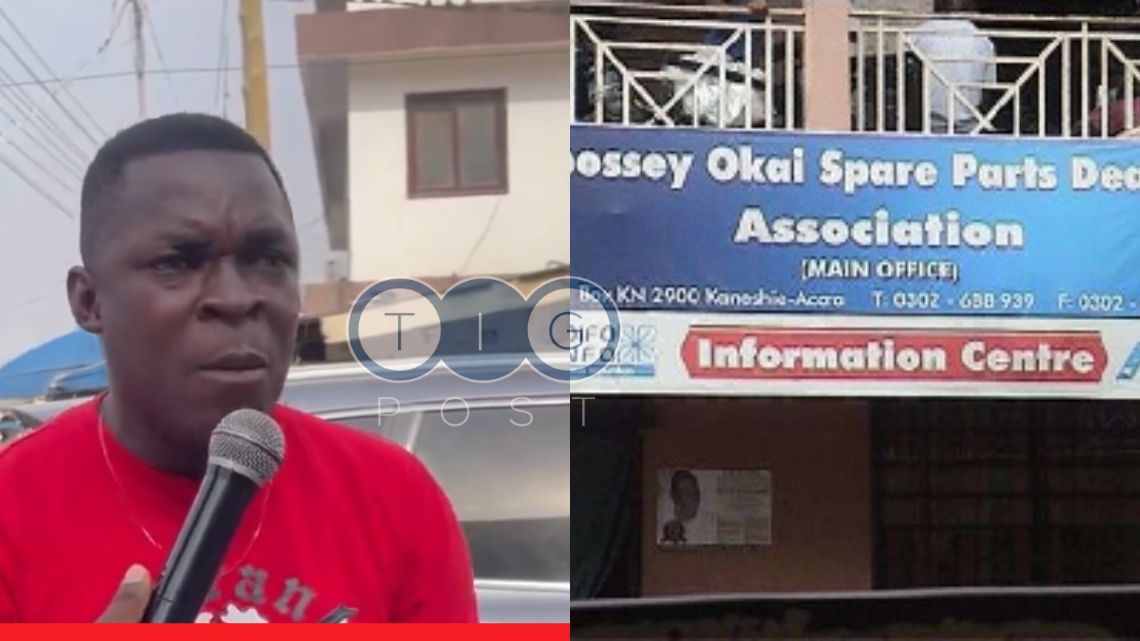
  • Mahama has contributed to the high duty at Tema Harbour – Abossey Okai spare parts dealers

    Mahama has contributed to the high duty at Tema Harbour – Abossey Okai spare parts dealers

    The Abossey Okai spare parts dealers have alleged that the sale of Tema Harbour by the former president, John Dramani Mahama during his tenure is taking a toll on their businesses.

    Speaking to the media, the dealers claimed that the decision by the flagbearer of the National Democratic (NDC) has contributed to the surge in import duties at the port, negatively impacting their businesses and the economy at large.

    The spokesperson for the spare parts dealers, whose identities were not disclosed, voiced concerns about the economic ramifications of what they termed as the “sale of national assets.”

    They emphasized the adverse effects on their businesses, citing increased import duties that have reportedly resulted from the alleged sale of the Tema Harbour.


    “I would like to convey to him that, just as in the past when Ghanaians and Abossey Okai spare parts dealers initially benefited from the Tema Harbour but later sold it to Vincent Ballore for 2.5 billion for 35 years. In a similar vein, Akufo-Addo attempted to reclaim the harbor for the country but faced a demand of about 25 billion dollars. Where can we source such a substantial amount? This predicament is causing hardship, hindering Abossey Okai Spare Parts dealers from retrieving their items from the port.

    Furthermore, the spare parts dealers took the opportunity to commend President Akufo-Addo for his efforts in governance, describing his leadership as tremendous.

    They applauded various initiatives undertaken by the Akufo-Addo administration that they believe have positively impacted the economy and created a conducive business environment.

    The spare parts dealers expressed their endorsement for Vice President Dr. Mahamudu Bawumia to be the next President of Ghana.

    They lauded Dr. Bawumia’s role in economic management and policy implementation, stating that he possesses the vision and competence required to lead the nation effectively as well as regain the Tema Harbour.

    “I implore Akufo-Addo to consider handing over power to Bawumia, as this could facilitate the recovery of the Tema Harbour, enabling our businesses to thrive once again,” he added.

    Background

    A special report by the Pan-African publication African Confidential exposed how Bolloré Africa Logistics secured the rights to construct and operate a cutting-edge container terminal at Ghana’s Tema Port.

    Described as a “lifeline” for Ghana, Burkina Faso, and Mali through the joint venture Meridian Port Services (MPS), the agreement, signed during the tenure of former Ghanaian President John Mahama, faced a ministerial investigation after his 2016 defeat to President Nana Akufo-Addo.

    The report revealed that Bolloré influenced Mahama to award MPS a secret container terminal contract, violating procurement laws. It alleged overstated investments, reduced Ghana’s equity, established a container handling monopoly, and reduced government fees by $4.1 billion.

    Despite the ministerial committee’s recommendation for renegotiation, the Akufo-Addo administration maintained the criticized contracts. The history of these relations, marked by “serious ethical professional deficiencies,” necessitates a careful review, but Akufo-Addo chose to preserve the contracts, raising concerns about ethical standards and party affiliations.

    “The terms of the agreements between MPS and the state are so tilted against Ghana’s interests, concluded the report, delivered to ministers in February 2018, they should be renegotiated immediately. Yet the much-criticized contracts are still unchanged,” Africa Confidential said.

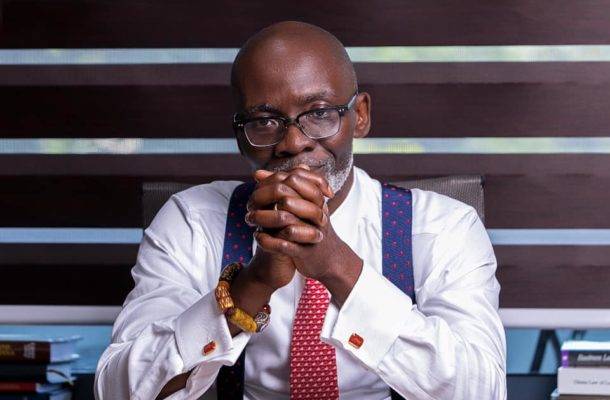
  • Ghana remains a sovereign state with cultural norms that must be respected – Gabby Otchere-Darko on LGBTQ+

    Ghana remains a sovereign state with cultural norms that must be respected – Gabby Otchere-Darko on LGBTQ+

    In the aftermath of the recent passage of an anti-LGBTQ+ bill by parliament, Gabby Otchere-Darko, a prominent member of the New Patriotic Party (NPP), has emphasized that Ghana remains a sovereign state with cultural norms that demand respect.

    Gabby Otchere-Darko underscored that the recently passed anti-LGBTQ+ bill in Ghana mirrors the will of the people, as articulated by members of parliament.

    However, he acknowledged the potential political ramifications that led to a culture of silence among MPs who might have opposed the bill.

    In a series of tweets, Mr Otchere-Darko affirmed the democratic nature of parliament, emphasizing that the decision, though harsh, enjoys substantial popular support in the country.

    He urged transparency from the media and politicians in presenting the pros and cons of imposing stricter penalties against the LGBTQ+ community, recognizing the inevitable consequences of such choices.

    Encouraging those who believe the law is constitutionally flawed, Otchere-Darko advocated for legal challenges through proper channels, expressing confidence in the strength of Ghana’s democratic institutions.

    He called for respect for the choices made and their consequences, emphasizing Ghana’s status as a sovereign state with cultural norms that demand respect.

    Additionally, Otchere-Darko proposed the need to balance traditional family values with tolerance and diversity, cautioning against values based on hypocrisy.

    He identified side relationships as a significant threat to family values and questioned the apparent indifference of Members of Parliament towards addressing this issue.

    The objective of the bill is to establish proper human sexual rights and uphold Ghanaian Family Values, explicitly prohibiting activities related to lesbian, gay, bisexual, and transgender (LGBT+) individuals.

    The bill prescribes penalties, including imprisonment, for engaging in or promoting such activities, awaiting presidential assent to become law.

    “Ghana’s parliament, in which is vested the sovereign will of the people, has democratically passed a harsher anti-LGBTQ Bill. Yes, democratically!

    “In fact, the threat of being unseated for standing for the rights of gays, etc, certainly created its own culture of silence in the House! But, it is the decision of parliament and one which enjoys huge popular support in the country.

    “The world must understand that. But Ghanaians must also understand that it comes with consequences. Choices have consequences. We expect the media and the politicians to be fair to the people by letting them know the pros and cons of this decision to impose stiffer penalties against gays, etc,” he said.

    “We also expect those who believe the bill is constitutionally wrong to do what is right and go to court. That is democracy! Our institutions of democracy are still strong and alive. Let’s have faith in our democracy.

    “Let’s respect the choices we make and their consequences and believe in the process. Ghana remains a sovereign state, with cultural norms that cannot be wished away but must be respected,” he added.

    “Values should not be premised on hypocrisy. That is, I suspect, ungodly. The biggest threat to family values in our society is caused by side chicks and side dudes. They break homes and family values cannot survive in broken homes. But, our MPs don’t care. Do they?” he questioned.

  • Natural gas vital for large-scale industrialization in Africa – Opoku Prempeh

    Natural gas vital for large-scale industrialization in Africa – Opoku Prempeh

    The Minister of Energy, Dr. Matthew Opoku Prempeh, has underscored natural gas as a pivotal resource for fueling extensive industrialization in Africa and narrowing the poverty divide with the global community.

    According to Dr. Opoku Prempeh, African governments must play a pivotal role in financing the development of natural gas resources to ensure their sustainability.

    He advocated mobilizing funds through local financial institutions and collaborative efforts among African nations.

    During the Gas Day session of the Nigeria International Energy Summit on February 29, the Energy Minister proposed leveraging the African Energy Bank, supported by Ghana and expected to be headquartered there.

    This bank could secure competitive financing for accelerated natural gas projects, research and development infrastructure, and processing, transportation, and transformation of natural resources.

    Dr. Opoku Prempeh highlighted Africa’s substantial gas reserves, led by Nigeria with over 200 trillion cubic feet, and others like Mozambique, Angola, Senegal, and Cameroon in the sub-Saharan region.

    Ghana, actively exploring and developing its oil and gas resources sustainably, anticipates ongoing investment in natural gas infrastructure over the next decade.

    The Energy Minister stressed the importance of adequate infrastructure for processing, storage, transportation, and transformation of natural gas resources to meet market demands.

    He commended initiatives such as Dangote’s 650,000 barrels per day oil refinery and petrochemical complex in Nigeria, along with Ghana’s recent commissioning of a hundred barrels per day oil refinery.

    Ongoing projects in Ghana, including the Tema LNG Terminal and the Tema City Gate and Gas Distribution Pipeline Network, contribute to expanding refining capacity.

    Ghana envisions Nigeria as a primary supplier of affordable and reliable gas, complementing domestic sources and the West African Gas Pipeline.

    Dr. Opoku Prempeh also highlighted the potential impact of the Nigeria to Morocco pipeline, stimulating gas patronage and expanding the gas market across the continent, especially in countries along the pipeline route.

    “We can leverage the African Energy Bank which Ghana is supporting and whose headquarters Ghana expects to host, to raise competitive financing for the faster development of natural gas projects and the development of infrastructure for research and development, and for processing, transportation and transformation of our natural resources,” he said.

    “In the next decade, we can expect to see continued investment in natural gas infrastructure such as pipelines, liquefied natural gas (LNG) terminals, power plants and petrochemical establishments on the continent, which present a unique opportunity for Africa to take charge of its own destiny,” he added.

    He continued: “As indicated earlier, infrastructure development is key in fulfilling the massive untapped potential the resource presents. There has to be adequate infrastructure for processing, storage, transportation and transformation of natural gas resources to meet the market demands. In this regard, the initiative of Dangote to build the 650,000 barrels per day oil refinery and a petrochemical complex here in Nigeria is laudable.

    “In Ghana, we recently commissioned a hundred barrels per day oil refinery to increase our refining capacity and have plans in place to further increase our refining capacity in the near future. Other on-going projects include Tema LNG Terminal and the Tema City Gate and Gas Distribution Pipeline Network.”

    “The execution of the Nigeria to Morocco pipeline will also stimulate the patronage of gas and expand the gas market on the Continent, especially in countries along the pipeline route,” he adds.

  • Side chicks and dudes threatening family values – Gabby Otchere-Darko

    Side chicks and dudes threatening family values – Gabby Otchere-Darko

    A prominent figure within the New Patriotic Party (NPP), Gabby Otchere-Darko, has voiced his concerns regarding the recent approval of Ghana’s anti-LGBTQ+ bill by the parliament.

    He acknowledged that while the bill reflects the democratic will of the people as expressed by parliamentarians, it also creates an environment where potential political repercussions lead to a culture of silence among MPs who might have opposed the bill.

    “Values should not be premised on hypocrisy. That is, I suspect, ungodly. The biggest threat to family values in our society is caused by side chicks and side dudes. They break homes and family values cannot survive in broken homes. But, our MPs don’t care. Do they?” he questioned.

    In a series of tweets, Otchere-Darko emphasized that the passage of the bill comes with consequences and encouraged fair reporting on the pros and cons of imposing stricter penalties against the LGBTQ+ community.

    He urged those who believe the law is constitutionally flawed to challenge it through appropriate legal channels, highlighting the strength of Ghana’s democratic institutions.

    While acknowledging Ghana’s cultural norms, Otchere-Darko suggested that there is room to balance traditional family values with tolerance and diversity.

    He questioned the prioritization of certain values over others, emphasizing the need for consistency in upholding family values.

    The bill aims to safeguard what it defines as proper human sexual rights and Ghanaian Family Values by prohibiting and criminalizing various LGBTQ+ activities. It outlines penalties for individuals engaged in such acts, including imprisonment, and awaits presidential assent to become law.

    Otchere-Darko’s commentary adds to the ongoing discourse surrounding the bill, emphasizing the importance of respecting democratic processes while encouraging dialogue on the implications of legislative decisions.

    “Ghana’s parliament, in which is vested the sovereign will of the people, has democratically passed a harsher anti-LGBTQ Bill. Yes, democratically!

    “In fact, the threat of being unseated for standing for the rights of gays, etc, certainly created its own culture of silence in the House! But, it is the decision of parliament and one which enjoys huge popular support in the country.

    “The world must understand that. But Ghanaians must also understand that it comes with consequences. Choices have consequences. We expect the media and the politicians to be fair to the people by letting them know the pros and cons of this decision to impose stiffer penalties against gays, etc,” he said.

    “We also expect those who believe the bill is constitutionally wrong to do what is right and go to court. That is democracy! Our institutions of democracy are still strong and alive. Let’s have faith in our democracy.

    “Let’s respect the choices we make and their consequences and believe in the process. Ghana remains a sovereign state, with cultural norms that cannot be wished away but must be respected,” he added.

  • Investment in key sectors of economy must be priortised – ACEP to government

    Investment in key sectors of economy must be priortised – ACEP to government

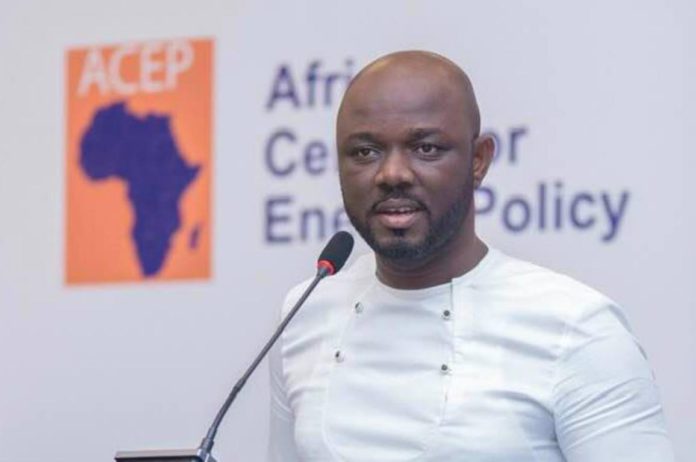
    Policy Lead for Petroleum and Conventional Energy at the African Centre for Energy Policy (ACEP), Kodzo Yaotse, has called on the government to prioritize investments in critical sectors such as health, education, and agriculture for comprehensive economic transformation.

    He emphasized the importance of avoiding excessive reliance on petroleum revenue for the growth of these sectors.

    Mr Yaotse noted that ACEP observed a failure by the government to allocate budgetary funds to these sectors in recent years, attributing it to the belief that extractive sector revenues adequately supported them.

    “The observation we have no­ticed in the data is that, as more resource revenues are allocated to a particular sector then the traditional government revenue that is originally supposed to go there keeps reducing”.

    “Have control over the country’s debt profile and free up more space to be able to carry out other devel­opmental projects to help resolve current challenges,”Mr Yaotse.

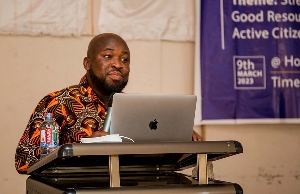
    Speaking at an engagement with students of Wisconsin International University College, Ghana (WIUC-Ghana), Mr Yaotse highlighted the need for revenue from the extractive sector to complement other funding sources for key sectors, rather than being the primary source.

    The theme of the engagement focused on strengthening accountability for good resource governance through active citizenship.

    Mr Yaotse cautioned against the trend of allocating more resource revenues to specific sectors, resulting in a reduction of traditional government revenue intended for those sectors.

    He stressed the negative impact such trends could have on the government’s economic recovery program, hindering progress measurement in health, education, and agriculture.

    Mr Yaotse urged the government to manage the country’s debt profile effectively, freeing up resources for other developmental projects to address current challenges.

    He emphasized the importance of tracking and monitoring projects funded by extractive sector revenue, stating that debt declaration alone did not ensure accountability.

    Encouraging students to engage in national policies, Mr Yaotse urged them to contribute through research, advocacy, project tracking, monitoring, reporting, and partnerships.

    The President of WIUC-Ghana, Professor Obeng Mireku, echoed the importance of collective action and shared responsibility in managing the country’s natural resources sustainably.

    Dr. Bright Mawudor, Dean of the School of Business at WIUC-Ghana, called on the government to focus on people, processes, performance, purpose, and planning to maximize the benefits of resource management.

  • You’re heartless – Randy Abbey to Akufo-Addo over ‘haircuts’ remark

    Renowned political analyst, Dr. Randy Abbey, has criticized the government for its debt exchange program and alleged ‘haircuts’ on certain bonds.

    Speaking on Metro TV’s Good Morning Ghana show on Thursday, February 29, 2024, Dr. Abbey accused the government of being unjust and dishonest to investors who purchased bonds backed by the Energy Sector Levy Act (ESLA) and the Ghana Education Trust Fund (GETFund).

    He emphasized that these bonds were meant to be secure, guaranteed by the tax revenues from ESLA and GETFund levies, which remained untouched.

    Dr. Abbey argued that the government was breaking its promise to pay the full value of the bonds, imposing ‘haircuts’ or reductions on principal and interest payments.

    In questioning the government’s actions, Dr. Abbey highlighted the breach of trust and disrespect towards investors and the public.

    He expressed concern that the government appeared indifferent to the feelings and reactions of the people, stating, “You come to me and you tell me ‘look, I have a levy called ESLA. It brings in X amount of money every time. And so I want to use this to raise funds. I am selling ESLA bonds. Come and buy. Or there is a tax handle called the GETFUND levy, this is how much it rakes every month. I am creating a bond for you to come and buy. This is a tax handle, statutory funds are going in. Your money is safe and based on that, I invest.

    “These tax handles have not been withdrawn. They have not been reduced. They have not been scrapped. And then you tell me that you won’t pay me what I’m entitled to. And then, after all that, you tell me you will reduce it?”


    “It’s like you’ve checked out. You don’t even care how people will feel. Because when you feel how they will feel, you will not act like that.”

    Dr. Abbey urged the government to honor its obligations and cease playing games with the economy.

    Background:

    In 2022, Ghana confronted a severe debt crisis jeopardizing fiscal sustainability and international market access. The government initiated a domestic debt exchange program, inviting holders of eligible bonds, including ESLA bonds, to voluntarily exchange them for new bonds with extended maturities and lower coupon rates.

    The intention was to reduce the present value of public debt and alleviate pressure on debt servicing. The government assured bondholders of no principal haircuts, only interest payment reductions.

    Despite assurances, some bondholders, particularly foreign investors, hesitated to participate, fearing potential devaluation and currency risks.

    The debt exchange program was a prerequisite for Ghana to receive a $3 billion IMF bailout, contingent on implementing fiscal consolidation measures and structural reforms.

    While the IMF anticipated the debt exchange would restore Ghana’s debt sustainability and market confidence, critics, including analysts and civil society groups, viewed it as a form of default that could harm Ghana’s reputation and credit rating. Calls for transparency and accountability in public debt management ensued.

  • Government disrespecting bondholders – Randy Abbey

    Government disrespecting bondholders – Randy Abbey

    Popular Ghanaian broadcaster and political commentator, Dr. Randy Abbey, has criticized the government’s debt exchange program, specifically addressing alleged ‘haircuts’ on certain bonds.

    Speaking on Metro TV’s Good Morning Ghana show on February 29, 2024, Dr. Abbey accused the government of being unjust and dishonest towards investors who purchased bonds backed by the Energy Sector Levy Act (ESLA) and the Ghana Education Trust Fund (GETFund).

    Dr. Abbey argued that these bonds were meant to be secure and guaranteed by tax revenues from ESLA and GETFund levies, which have not been altered or eliminated.

    According to him, the government is failing to fulfill its commitment to pay the full value of the bonds and is imposing reductions on both principal and interest payments.

    Highlighting the breach of trust, Dr. Abbey expressed his dissatisfaction with the government’s actions, stating that it demonstrates a lack of concern for how the public and investors would perceive its decisions.

    “You come to me and you tell me ‘look, I have a levy called ESLA. It brings in X amount of money every time. And so I want to use this to raise funds. I am selling ESLA bonds. Come and buy. Or there is a tax handle called the GETFUND levy, this is how much it rakes every month. I am creating a bond for you to come and buy. This is a tax handle, statutory funds are going in. Your money is safe and based on that, I invest.

    “These tax handles have not been withdrawn. They have not been reduced. They have not been scrapped. And then you tell me that you won’t pay me what I’m entitled to. And then, after all that, you tell me you will reduce it?” he quizzed.

    “It’s like you’ve checked out. You don’t even care how people will feel. Because when you feel how they will feel, you will not act like that,” he said.

    Background:

    In 2022, Ghana encountered a severe debt crisis jeopardizing fiscal sustainability and access to international markets. The government introduced a domestic debt exchange program, encouraging holders of eligible bonds, including ESLA bonds, to voluntarily exchange them for new bonds with extended maturities and reduced coupon rates.

    While the government assured bondholders of no principal haircut, only interest payments, some, especially foreign investors, were hesitant, fearing devaluation and exposure to currency risks.

    The debt exchange was a condition for Ghana to receive a $3 billion IMF bailout, requiring fiscal consolidation and structural reforms. The IMF anticipated it would enhance debt sustainability, market confidence, and support Ghana’s post-COVID-19 economic recovery. However, critics raised concerns about transparency and accountability in public debt management, labeling the debt exchange as a potential default damaging Ghana’s reputation and credit rating.

  • Ghana’s power sector on the brink of collapse – IES boss

    Ghana’s power sector on the brink of collapse – IES boss

    The Executive Director of the Institute for Energy Security (IES), Nana Amoasi VII, has urged the government to focus on the nation’s power sector to prevent a potential collapse due to escalating debts.

    Nana Amoasi revealed that the power sector’s debt, excluding the petroleum component, is currently exceeding US$2 billion.

    Speaking on Ghana Tonight with Alfred Ocansey on February 29, Nana Amoasi emphasized the need for careful handling of the power sector, cautioning that negligence could lead to a collapse.

    “For the power sector alone, if we should add the Forex losses, the idle capacity charges, and the fuel supply that has not been paid to the invoices raised for power sales to governments, it is over 2 billion dollars. Just for the power sector, we’ve not touched on the petroleum segments of the sector,” he told Alfred Ocansey on Ghana Tonight yesterday, [February 29].

    “So, we should be very careful with the way we’re handling the sector, one day it may collapse in our face,” he advised.


    He highlighted that the power sector’s financial challenges include Forex losses, idle capacity charges, and unpaid fuel supply invoices, contributing to the substantial debt.

    Nana Amoasi stressed that the government’s mismanagement of funds from the energy sector debt recovery, particularly under the Energy Sector Levy Act (ESLA), is partly responsible for the current situation.

    He expressed concern about the government’s handling of ESLA, which was intended to generate $650 million annually for clearing the legacy debt accumulated over five years.

    Despite significant investments in the sector by the previous government, Nana Amoasi lamented the persistence of ‘dumsor’ (erratic power outages).

    He explained that the prior administration had addressed the capacity to generate power, leaving the task of financing fuel supply and clearing debts through the ESLA introduced in December 2015.

    “We shouldn’t be seeing ‘dumsor’ [erratic power outages] by now because of the kind of investment that was made in the sector by the previous government. It ensured that we don’t have any questions or issues about our capacity to generate.

    “What was left was financing the fuel supply and by that, they also sought to clear the debts in the energy sector introducing ESLA in December 2015. ESLA was expected to generate 650 million dollars a year so in a space of five years, that legacy debt that sat in our chest of almost 2.7 million should have been cleared…but we sat aloof, we mishandled the ESLA and we still have the energy sector debt going up, ” Nana Amoasi added.

    However, he criticized the government for mishandling ESLA, resulting in the continued increase of the energy sector debt.

    In recent weeks, various parts of the country have experienced frequent complaints from residents about erratic power supply.

  • You will make Ghanaians happy if you assent to anti-gay bill – GPCC tells Akufo-Addo

    You will make Ghanaians happy if you assent to anti-gay bill – GPCC tells Akufo-Addo

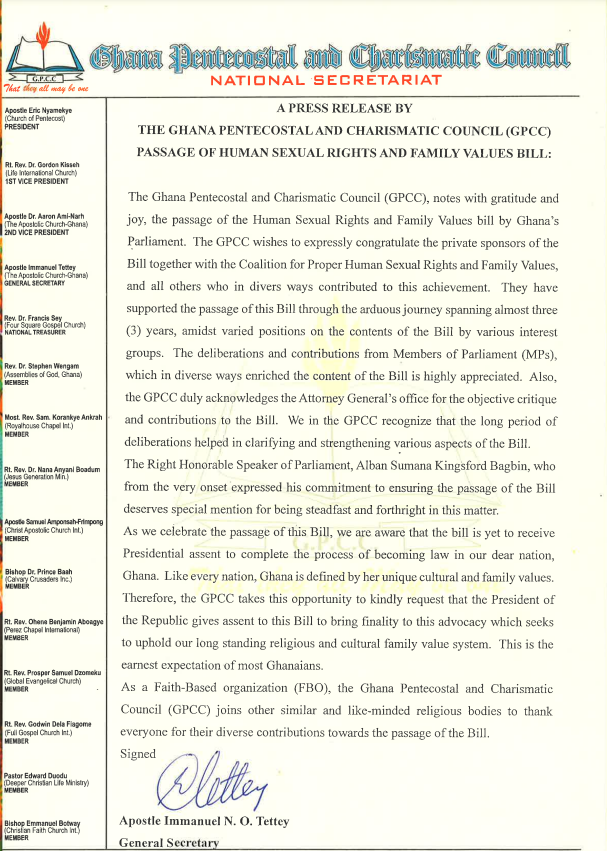
    The Ghana Pentecostal and Charismatic Council (GPCC) have conveyed their appreciation and contentment following the approval of the Human Sexual Rights and Family Values Bill, commonly referred to as the anti-gay bill, by Parliament.

    Despite criticism from various quarters, including notable figures like Professor Audrey Gadzekpo and the United States ambassador, the GPCC, in a statement, lauded the private sponsors of the bill, the Coalition for Proper Human Sexual Rights and Family Values, and all others who played a role in its success.

    Recognizing the contributions and critiques from Members of Parliament and the Attorney General’s office, GPCC highlighted the efforts of the Right Honourable Speaker of Parliament, Alban Sumana Kingsford Bagbin, for his dedication to the bill’s passage.

    Emphasizing the importance of preserving Ghana’s distinctive cultural and family values, GPCC urged the President to grant assent to the bill, completing the process of making it law in the country.

    As a Faith-Based Organization, GPCC expressed gratitude to all contributors to the bill’s passage and showed solidarity with other religious bodies in celebrating this achievement, believing that the bill will help uphold values crucial to the people of Ghana.

    Below is the full statement here

  • “My dumsor is better than your dumsor” – Barker-Vormawor mocks NDC, NPP

    “My dumsor is better than your dumsor” – Barker-Vormawor mocks NDC, NPP

    In a satirical take on the ongoing power crisis in Ghana, activist and convener of the FixTheCountry movement, Barker-Vormawor, has humorously jabbed the National Democratic Congress (NDC) and the New Patriotic Party (NPP).

    In a post on X platform he wrote, “ Ready! Set! Go! ‘My Dumsor is better than your Dumsor”.

    Both the NPP and the NDC have been apportioning blame on each other regarding the current state of the country’s energy sector.

    Parts of Accra and other regions have been grappling with inconsistent power outages for several weeks commonly referred to as ‘dumsor’.

    Former president, John Dramani Mahama has asserted that he assumed responsibility for resolving the power crisis that gripped the nation before his taking a bow in 2016.

     Mahama has emphasized that his leadership merits recognition for putting an end to the intermittent power outages.

    In an interview with Ugandan-based NBS television, Mahama acknowledged the existence of intermittent power outages and stressed that he took accountability for addressing the challenge.

     He highlighted that relying solely on the Akosombo Dam was not a perpetual solution to resolve ‘dumsor.’

    Mahama clarified that he refrained from assigning blame to past administrations for the crisis but, instead, embraced the responsibility of rectifying the power dilemma. 

    He expressed, “What did I do? I took responsibility. I didn’t blame previous governments. I said yes you call me ‘Mr. Dumsor’…I inherited this problem but I take responsibility because you voted me into power to take responsibility and fix things and so I said I’m going to fix this and by 2015 I had added an additional almost 3,000 megawatts to Ghana’s generation.”

    “I was actually accused of putting in an excess generation…more generation than we needed. We are consuming 2,600 megawatts. Today we are consuming 1000 megawatts more and so if I didn’t put in that excess generation we probably would have started having an energy crisis again and it’s beginning to happen.

    “Outages every day because the consumption has caught up the amount of energy that is available and we are beginning to have problems,” he added.

    On the other hand, president Akufo-Addo has  emphasized his achievements in ensuring a consistent power supply for Ghanaians, countering recent outages affecting parts of the country.

    During his State of the Nation Address (SONA) on February 27, 2024, the President dismissed claims of intermittent power supply amid the financial crisis, asserting that the country has not experienced the phenomenon known as DUMSOR over the past seven years.

    “Mr Speaker, between 2012 and early 2017, there was nothing more demoralising than the phenomenon we called DUMSOR. It was symptomatic of a dysfunctional system, and it caused widespread depression amongst businesses and households.

    After that experience, my government was determined that DUMSOR would not be inflicted upon Ghana and Ghanaians under an NPP government, and I am glad to be able to say, SO FAR, SO GOOD, we have managed to keep the lights on these last seven (7) years, even in the midst of a financial crisis.  We have managed the energy sector with discipline and expertise, to avoid a repetition of the hardships inflicted on Ghanaians some years ago.”

    Meanwhile, Managing Director of the Electricity Company of Ghana (ECG), Mr Dubik Mahama has pointed out that the intermittent power outages are due maintenance issues rather than fuel-related problems as reported.

    He revealed that much can not be done when a power plant producing 360 megawatts begins to develop problems with its gas emergency safety valve.

    Mr. Mahama assured that ECG is working diligently to resolve the challenges and restore power to affected areas.

  • Video: Jinapor brothers battle it out in parliament over ‘dumsor’

    Video: Jinapor brothers battle it out in parliament over ‘dumsor’

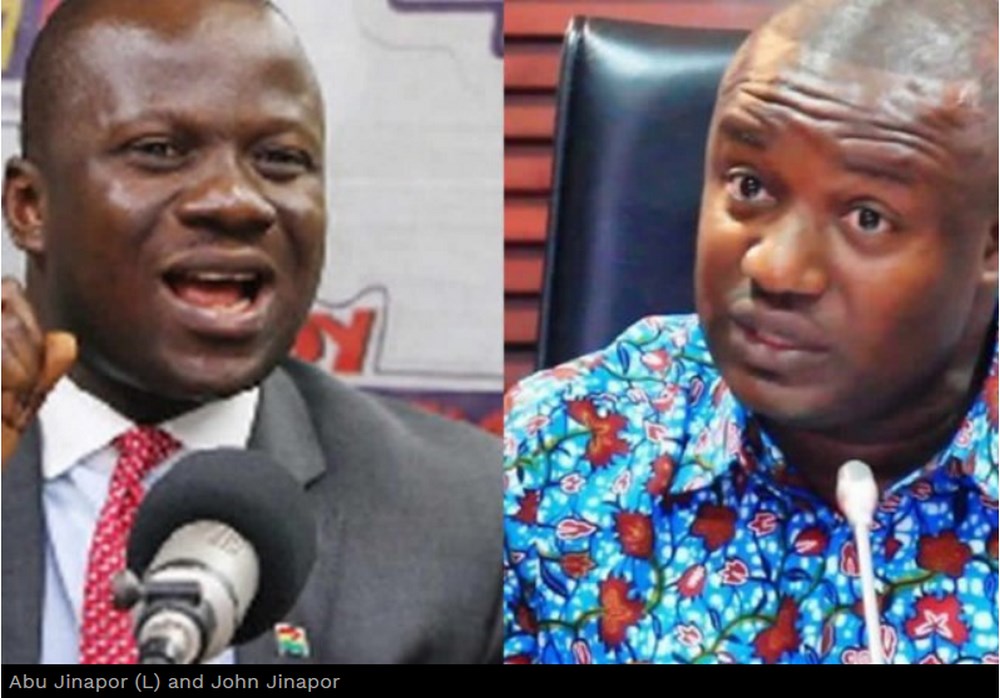
    Amidst the escalating tension and public outcry over persistent power outages in Ghana, a debate unfolded in Parliament between two brothers.

    The duo, a ranking member of the committee on Mines and Energy, John Abdulai Jinapor, and the Minister for Lands and Natural Resources, Samuel Abu Jinapor.

    John Abdulai Jinapor accused the current administration of insufficiently allocating funds for fuel to power the nation’s thermal plants, exacerbating the erratic electricity supply.

    In contrast, Samuel defended the government’s track record, asserting that the current situation is an improvement over previous administrations and highlighting the achievements under President Akufo-Addo’s leadership.

    Parts of Accra and other regions have been grappling with inconsistent power outages for several weeks.

    Engaging the media, Managing Director of the Electricity Company of Ghana (ECG), Mr Dubik Mahama pointed out that the intermittent power outages are due maintenance issues rather than fuel-related problems as reported.

    He revealed that much can not be done when a power plant producing 360 megawatts begins to develop problems with its gas emergency safety valve.

    Mr. Mahama assured that ECG is working diligently to resolve the challenges and restore power to affected areas.

    Watch video below:


  • Opambour told my girlfriend I have HIV/AIDS because he wanted her – Maurice Ampaw

    Opambour told my girlfriend I have HIV/AIDS because he wanted her – Maurice Ampaw

    Private legal practitioner, Maurice Ampaw has shed light on the origins of his feud with founder of Ebenezer Miracle Worship Centre Prophet Ebenezer Adarkwa Yiadom, widely known as Opambour.

     According to Mr Ampaw, the conflict arose when Opambour allegedly used supernatural means to lure away his girlfriend, who sought healing for her father at Opambour’s church.

    Mr Ampaw claimed that Opambour falsely informed his girlfriend that Mr Ampaw had been infected with HIV/AIDS, tarnishing his image and causing the girlfriend to reject him sexually.

    “There was a time when my girlfriend’s father was seriously ill, so she went to Opambour’s church for healing. She slept at his place for four days and wasn’t answering my calls. I was disturbed, so when she finally came to my place, I attempted to have sexual intercourse with her, but she denied me.

    “She gave an excuse that there was a prophecy about me, so I had to go for deliverance from Opambour before we could continue the relationship. When I asked her to explain, she indicated that Opambour said that her boyfriend is a womanizer and has been infected with HIV/AIDS too,” he narrated while speaking in an interview with RTV.

    “So, when I realised Opambour was interested in her, we broke up the relationship,” he added.

    During a recent church service, Opambour took the opportunity to question the rationality of Maurice Ampaw and those who stood against him.

    The pastor expressed his disapproval of Ampaw labeling him as a “comedian” and someone lacking the divine anointing of God.

    “Is the person okay? Is he senseless? What nonsense is this? I crack jokes during my service so that people can have relief from the stress of this life. I am done doing that; they are going to see real fire from henceforth. Tell them,” Opambour earlier charged.

  • Nearly 80% of Ghana’s youth are unemployed – Barker-Vormawor

    Nearly 80% of Ghana’s youth are unemployed – Barker-Vormawor

    Private legal practitioner, Oliver Barker-Vormawor, has claimed that approximately 80% of the country’s youth find themselves without gainful employment.

    Taking to the X platform he wrote “I don’t think you heard me the first time, nearly 80% of Ghana’s youth are unemployed oo,”.
    The high unemployment rate, particularly among the youth, is a cause for worry, prompting calls for urgent intervention from both the government and private sector.
    Recent data indicates that the lack of employment opportunities has left a significant portion of Ghana’s youth struggling to secure stable jobs.

    This concerning trend poses challenges not only to individual livelihoods but also to the overall economic development of the country.

    Experts and analysts attribute the surge in youth unemployment to various factors, including economic downturns, inadequate job creation initiatives, and the impact of global events on the local job market.

    The country’s average unemployment rate has surged to 14.7 percent in the first three quarters of 2023, marking a concerning rise, according to data from the Annual Household Income and Expenditure Survey Quarter Three Labour Bulletin by the Ghana Statistical Service (GSS).

    Specifically, the number of unemployed youth aged 15 to 35 has increased from approximately 1.2 million to over 1.3 million during this period. Notably, the unemployment rate among females consistently surpasses that among males.

    The survey reveals that the number of jobless youth experienced a slight decline only in the second quarter of the previous year, emphasizing the persistent challenge of unemployment.

    An alarming trend is observed in the significant rise in the unemployment rate among females between the fourth quarter of 2022 and the first quarter of 2023, resulting in a widened gender gap in unemployment compared to 2022.

    In the labor force, approximately 440,000 individuals joined between 2023 Q1 and 2023 Q3, with over 60.0 percent finding employment during this period. Notably, consistently more females than males have secured employment, with the difference averaging around 600,000 and 900,000 for the years 2022 and 2023, respectively. These statistics shed light on the complexities of the current employment landscape, urging a closer examination and strategic interventions to address the growing unemployment challenges.

  • You’re part of Ghana’s mess; stop deceiving us – Isaac Adongo to Bawumia

    You’re part of Ghana’s mess; stop deceiving us – Isaac Adongo to Bawumia

    The Member of Parliament for Bolgatanga Central, Isaac Adongo, has asserted that if the flagbearer of the New Patriotic Party (NPP), Dr. Mahamudu Bawumia, believes he can quietly win the favor of Ghanaians after contributing to an economic crisis, he needs to reconsider his strategy.

    Mr Adongo notes that he has observed Vice President Bawumia employing tactics to divert attention from his role in the country’s economic challenges in a bid to secure victory in the December 2024 polls and become Ghana’s president.

    However, Mr Adongo questioned why anyone should vote for Dr. Bawumia if he fails to present solutions to these issues during the remaining 10 months of his vice presidency.

    He further stated that Dr. Bawumia has practically checked out of office and the economy, leaving the country to its fate, except to exploit the hardships imposed on citizens as leverage for the presidency.

    “As for Alhaji, he uses very derogatory and often inferiority minded descriptions of himself such as I’m a driver’s mate, I’m not my own man etc to con and blackmail Ghanaians to make him President before he clears his own mess. As a matter of fact he says he knows how to resolve the hardships he has imposed on us and even though he still has some 10 months left, he will not do it unless we make him President.

    “Technically Alhaji has checked out of office and the economy and leaving us to our fate except to use the hardship he has imposed on us to blackmail us to the Presidency to finish us ‘kwatakwata,’” he said.

  • Ashanti Region: Accident on Akomadan road claims lives of pregnant woman

    Ashanti Region: Accident on Akomadan road claims lives of pregnant woman

    A collision between a tricycle carrying passengers, including a pregnant woman, and a tipper truck has resulted in three fatalities and six injuries in Akomadan, situated in the Offinso North District of the Ashanti Region.

    The tragic incident unfolded around 6 pm on Thursday, February 29, on the Akomadan-Konkoma road.

    The tricycle, transporting several artisans, was heading to Akomadan township when it collided head-on with the tipper truck, loaded with sand, on a narrow section of the road.

    Speaking to the media, the Offinso North District Director of the National Disaster Management Organisation (NADMO), Elijah Mamoa stated “It was a crash between a tipper truck and a tricycle. The tipper truck was returning to their base, where they harvest sand and the tricycle was also returning to Akomadan, where it was carrying people before the head-on collision occurred”.

  • We will vote for the political party that will fulfill our proposals – GNAPS

    We will vote for the political party that will fulfill our proposals – GNAPS

    The Ghana National Association of Private Schools (GNAPS) has explicitly expressed its willingness to support any political party that commits to addressing its outlined proposals in the Private Education Manifesto.

    During the launch of the Ghana National Association of Private Schools Week, themed ‘2024 Elections: The Private Education Manifesto,’ GNAPS leadership emphasized seven crucial issues they hope the incoming government will tackle.

    Primary among these concerns is the request for the government to eliminate the 30% Priority Placement System, cover BECE and WASSCE registration fees for private school students, and extend the Free SHS program to encompass students in private schools.

    Addressing the audience, GNAPS President, Prof. Damasus Tuurosong, stressed that implementing the Private Education Manifesto would not only contribute to educational development but also enhance profitability within the private school sector.

    He further underlined GNAPS’ readiness to throw its support behind any political party that incorporates these concerns into its manifesto for the upcoming 2024 general elections.

    “This election year, GNAPS is a ripe spinster eager to be laid, waiting for a political party to put a wedding ring on the Association’s finger. Marriage to a political party is our survival instinct. And because we are eager to marry, our list of dowry items is not too long,” he said.

    He further listed these concerns as follows:

    i. Scrap the 30% Priority Placement System;

    ii. Just as it does for public school learners, the government should absorb the BECE and WASSCE registration fees paid by private school learners;

    iii. Extend the Free SHS programme to private school students;

    iv. Review the Education Regulatory Bodies Act 2020 Act 1023 to do away with exorbitant regulatory charges by the National Schools Inspectorate Authority (NaSIA), National Teaching Council (NTC), and National Council for Curriculum and Assessment (NaCCA);

    v. Recognize Low Fee Private Schools as social interventions aimed 2 at educating children in deprived communities, and support them as such;

    vi. Abolish nuisance taxes that are hiking the cost of doing business, and review property rates and business operating permits charged by the assemblies; and

    vii. Above all, fix the country’s economy to create a conducive business environment for the operation of private schools.

  • NDC taking credit for Free SHS policy they opposed – Bawumia 

    NDC taking credit for Free SHS policy they opposed – Bawumia 

    In one of vice president, Dr Mahamudu Bawumia’s lectures on Nation Building he accused the National Democratic Congress (NDC) for taking credit for initiating Free Senior High School (FSHS).

    According to him, the New Patriotic Party (NPP) through president Akufo-Addo implemented the policy despite various sabotages and criticism from the NDC.

    He added due to the NPP’s determination of making Ghana’s educational system, fought through the hurdles to make the policy a reality.


    “Ladies and gentlemen, I want you to remember that the NDC opposed and bastardised the Free Senior High School policy  proposed by president Nana Akufo-Addo. They said it was a hoax, they said it was a 419 promise, they said if they had 2 billion Ghana cedis they would not spend it on free SHS. They said free SHS education will collapse the education system”.

    “They went on demonstrations against Free SHS. They even went to the Supreme Court to stop the implementation of Free SHS. They run over 40 adverts against free SHS, but the study and visionary Nana Addo Dankwa Akufo-Addo, he stuck to his grounds because he knew what was good for this country and he has successfully implemented Free SHS policy. But what we hear today, the NDC and their flag bearer is looking us straight in the eye and saying they started free SHS. Ewurade Nyankopong. Are they confused?,” he added.

    The Free Senior High School (Free SHS) education policy in Ghana was initiated during the September 2017 administration of President Nana Akufo-Addo.

    Originating from one of the President’s campaign promises during the 2016 election period, the policy has evolved into a crucial component of Ghana’s educational system.

    As per reports from Africa Education Watch (Eduwatch) over 5.7 million Ghanaian students have benefitted from the programme.

    The education think tank has revealed that the Free SHS policy has granted  a substantial increase in secondary school enrollment, soaring from 813,448 in the 2016/17 academic year to 1.3 million in the 2022/23 academic year.

    The Akufo-Addo-led administration has faced criticism from various civil society organizations and educational institutions.

    The Institute of Statistical, Social and Economic Research (ISSER) and other analysts have also highlighted fiscal and quality challenges that require careful reconsideration.

    In November 2023, ISSER underscored the importance of reviewing specific aspects of the Free SHS program, including the sustainability of the government fully covering students’ tuition and costs within budget constraints.

    The escalating teacher-student ratios in public SHS schools were also noted, impacting resources and learning.

    The World Bank suggested means-testing and cost-sharing arrangements by parents to optimize program benefits and affordability.

    In February 2024,  the Executive Director of the Institute for Education Services (IFEST),Dr. Peter Anti, emphasized that acknowledging funding challenges in the Free SHS program is crucial for making progress in addressing the issue.

    “While we were doing double track, we should have made a conscious effort to improve the infrastructure in our schools. Now we don’t know what is happening, we decided to go and do other kinds of projects within the same education sector,” he said.


  • I haven’t slept since passage of LGBTQ+ bill – Ghanaian transgender

    I haven’t slept since passage of LGBTQ+ bill – Ghanaian transgender

    In the wake of parliament passing the anti-LGBTQ+ bill, a Ghanaian musician transgender and a longstanding advocate against the bill, Angel Maxine, has expressed profound concerns for her safety.

    Maxine, along with activists, had hoped for the bill’s rejection when it first reached parliament in 2021, but their efforts have been in vain.

    In an interview with DW News, Maxine expressed sadness, stating, “I felt devastated, I was heartbroken, I haven’t slept. It is painful to know that your life as a human being is being criminalised. The life you have always struggled for, the life you want to live, you haven’t lived a decent life as any other being is now criminalised,”

     “I am sad because we have been working all these years for this bill not to be passed.”

    Parliament approved the bill on Wednesday, February 28, the controversial bill, aimed at restricting the rights of LGBTQ+ individuals in Ghana, imposes a jail term of up to three years for those identifying as LGBTQ+ engaged in same-sex relationships and activities.

    It further entails a prison sentence of up to five years for the promotion, sponsorship, or support of LGBTQ+ activities. Individuals convicted of promoting and funding LGBTQ+ related activities could face up to a decade behind bars.

    Ghana’s conservative society, influenced by religious and cultural beliefs, has long considered homosexuality taboo.

    The new legislation enjoys widespread support among Ghanaians, evident in the unanimous backing from lawmakers on Wednesday.

    This support came from a coalition of Christian, Muslim, and Ghanaian traditional leaders.

    The bill’s main sponsor, opposition lawmaker Sam George, urged President Akufo-Addo not to delay signing the bill into law, emphasizing its effectiveness in dealing with LGBTQ+ issues.

    President Akufo-Addo’s decision to sign the bill is now under scrutiny. 

    Last year, he declined to sign certain human rights-related bills, citing financial implications for the state. 

    The anti-LGBTQ+ bill could face similar considerations.

    Human rights groups, including the “Big 18” umbrella group in Ghana, have urged the president not to sign the bill.

    Professor Takyiwaa Manuh, a member of the coalition, emphasized, “You cannot criminalize a person’s identity, and that’s what the bill is doing, and it’s absolutely wrong.”

    Global condemnation has followed, with the United States expressing deep concerns, and UNAIDS warning that the bill could obstruct access to crucial services and jeopardize Ghana’s development success.

    The international community’s response is a point of concern for some Ghanaians, with worries about potential negative impacts on Ghana’s image and economy.

     Local opinions on the bill remain mixed, with some applauding the legislation and others expressing reservations about potential fallout.

  • We drink water with sheep, goats and cows – Damongo residents call on Mahama

    We drink water with sheep, goats and cows – Damongo residents call on Mahama

    Some women in Damongo, Savannah region, have alleged that they resort to boreholes for water, which also serves as a source of water for sheep, goats and cows.

    Speaking to the media, the women who had lighted kerosene lanterns on their heads stated asserted that the region has been rejected by the Akufo-Addo-led administration despite assurances to provide potable water .

    According to them, the flagbearer of the National Democratic Congress (NDC), John Dramani Mahama is the only individual who can change the current state of the region.According to them, “ We are looking for JM because we are in darkness, we are looking for JM in the Savannah region to come and save us, he is our light. We drink water from tanks, we don’t have water, no water, what we need is just the water. NPP promised us water and zero. We’re booking for John to come and give us water. We drink from dam water and not pipe water. We drink water with sheep, goats and cows. We want proper water.

    Explaining the significance of carrying lanterns the Akufo-Addo-led administration has plagued Ghana into a state of darkness and it is about time assumes presidency in other to save the country.

    The aggrieved on Sunday, February 25, 2024 John Mahama paid a working visit to Damongo.

    Mahama won over 55% votes in the 2020 elections.

    The former president has not been to Jakpa Palace since he witnessed Yagbonwura Bii-Kunutu Jewu Soale I’s outdooring as the Overlord of Gonja approximately a year ago, this was his first visit.

    Yagbonwura Bii-Kunutu Jewu Soale I invited all paramount chiefs, divisional chiefs, sub-chiefs, and traditional leaders of all the tribes in the Savannah Region to attend a durbar in honor of Mr. Mahama.

  • Marijuana could cause heart attack, stroke – Report

    Marijuana could cause heart attack, stroke – Report

    Recent findings in the Journal of the American Heart Association reveal a potential link between cannabis use, regardless of consumption method (smoking, eating, or vaping), and an increased risk of heart attacks and strokes.

    Dr. Abra Jeffers, the lead author of the study and a data analyst at Massachusetts General Hospital in Boston, underscored the surge in cannabis use and the insufficient awareness surrounding its cardiovascular risks.

    She noted, “Despite common use, little is known about the risks of cannabis use and, in particular, the cardiovascular disease risks.”

    The research analyzed survey data from over 400,000 U.S. adults spanning the years 2016 to 2020, exploring the correlation between cannabis use and self-reported cardiovascular outcomes.

    The results indicated a higher risk of heart attacks and strokes among individuals using marijuana, with daily users showing the greatest odds.

    Dr. Robert L. Page II, a professor at the University of Colorado School of Medicine, stressed the significance of healthcare practitioners discussing cannabis use with patients.

    “As cannabis use continues to grow in legality and access across the U.S., practitioners and clinicians need to remember to assess cannabis use at each patient encounter,” he commented.

  • No air, no help; my life was almost ended in parliament’s elevator – Staffer

    No air, no help; my life was almost ended in parliament’s elevator – Staffer

    On Thursday, February 29 2024, a parliamentary staff member shared a harrowing experience of almost collapsing in an elevator within the Job 600 building due to a power outage.

    The incident unfolded as both Parliament House and Job 600, the office complex for Members of Parliament (MPs), were affected by a power cut resulting from a GHc23 million debt.

    The disconnection, executed by the National Taskforce of the Electricity Company of Ghana on February 29, was part of the ongoing “Operation Zero Balance” initiative to address outstanding arrears.

    Fortunately, the distressed individual, concerned for their life, was rescued by colleagues and security personnel.

    Speaking anonymously to Citi News, the employee described being on the second floor when the lights went out on their way to the ninth floor.

    Despite unsuccessful attempts to contact engineers, the staff member managed to reach out to colleagues, who, along with security personnel, intervened.

    The employee highlighted the challenges faced during the ordeal, including struggles to open elevator doors and seeking assistance from passersby. The lack of air during the incident nearly led to fainting, underscoring the severity of the situation.

    “I went downstairs and when I was coming from down to the ninth floor, I think somewhere on the second floor the light went out so I got stuck in the elevator and I tried calling the engineers too, but it wasn’t going through.

    “The one I had too said he was at the annex. I called the other ones too still, they were taking time. So, I called my colleagues, and they came down there with the military guys and tried opening the gates so that at least I could take in some air. It is not a pleasant situation. I could see that I was passing out and I was out of air.”

    “But with the help of my colleagues and the security guards finally after about 30 minutes of being stuck there, they were able to open it and get me out of there. I was the only person in there.

    “Most of the time whenever I take the elevator I imagine being in the elevator and being stuck in it with no light in there how I will feel in there, I think today I have got to experience it but it is not a pleasant situation. It is just like you being locked up in a cell or something,” he said.

    Responding to the thoughts running through his during the ordeal, he noted “…Oh God I didn’t plan for this and I hope this is not going to be my last day but when I got my colleagues on the line I knew that in no time they will get me out of there.”

  • UG School of Law to build new complex for graduate students

    UG School of Law to build new complex for graduate students

    The University of Ghana School of Law (UGSoL) is undertaking a transformative initiative that will revolutionize infrastructure and enhance the educational environment, specifically for post-graduate students.

    This ambitious project involves the construction of a modern, multi-purpose building complex, symbolizing innovation and commitment to reshaping legal education in Ghana.

    The new Ghana School of Law building complex aims to contribute to national development by producing skilled legal professionals, fostering a culture of justice and accountability, strengthening international ties, and promoting inclusivity and prosperity.

    Beyond the classroom, the impact will resonate in shaping the legal landscape, influencing policies, and advocating for democracy, human rights, and the rule of law.

    The decision to build the new complex stems from accommodation challenges faced by UGSoL, including inadequate infrastructure, limited accessibility, and insufficient facilities due to a significant increase in student population, particularly in post-graduate programs.

    By addressing these challenges, the school seeks to provide an improved living and learning environment, ensuring safety, accessibility, and an experiential atmosphere conducive to academic success and personal development.

    The construction project is crucial for sustaining UGSoL’s legacy of producing well-prepared legal professionals capable of addressing contemporary challenges.

    The Vice-Chancellor of the University of Ghana, Professor Nana Aba Appiah Amfo, underscores the significance of investing in this project, emphasizing its role in ensuring the continued success of UGSoL in producing professionals ready to tackle complex issues.

    The modernization project aligns with the evolving needs of the legal sector, tackling global challenges such as climate change, environmental degradation, human rights, and social justice.

    New post-graduate courses and dedicated spaces, such as the Africa Center for Data Governance and Digital Rights, reflect UGSoL’s commitment to staying at the forefront of legal education.

    The construction project is a testament to UGSoL’s commitment to excellence, innovation, and relevance, embodying the wise choice of creating a modern and multi-purpose complex.

    The architectural design seamlessly blends modern aesthetics with functional efficiency, providing state-of-the-art facilities to enhance the learning experience.

    The new complex includes auditoriums, moot courts, offices, research centers, a clinic, a gym, a sky bar, and a baby bay. It stands as the largest auditorium in Ghana and showcases the foresight and fortitude of UGSoL’s leadership in expanding and growing to position the University of Ghana as the premier destination for quality legal education.

    This transformative project invites support from all stakeholders, offering opportunities for individuals, year groups, and law firms to contribute and have their names associated with the project.

    The call to action encourages collective support to ensure the success of UGSoL’s modernization and expansion efforts, ultimately contributing to a brighter tomorrow where excellence knows no bounds.

  • Government politicizing dumsor – ACEP

    Government politicizing dumsor – ACEP

    The Executive Director of the Africa Center for Energy Policy (ACEP), Benjamin Boakye, has raised concerns about the increasing politicization of Ghana’s power sector.

    Mr Boakye emphasized the need for the government to adopt transparency and openly address the current challenges facing the power sector.

    In an interview on Adom FM’s morning show, Dwaso Nsem Friday, Boakye expressed skepticism about the government’s transparency, stating, “They are not being truthful to us.

    We are facing challenges because of the politics our leaders are playing in the power sector.”

    He highlighted the pivotal role politicians play in procurement and management decisions, attributing the current struggles in the power sector to this political interference.

    Mr Boakye argued that involving private entities in the sector’s management could potentially alleviate these challenges.

    Mr Boakye identified a management crisis within the power sector, asserting that the shortage of power generation goes beyond technical inadequacies and is exacerbated by political interventions.

    He cited factors such as the shutdown of certain power plants and insufficient fuel as contributors to the recent power disruptions.

    In response to the situation, Mr Boakye called on the government to openly announce scheduled load shedding, providing citizens with the necessary information to adjust their activities accordingly.

    This, he believes, could mitigate the impact of the power challenges on the daily lives of Ghanaians.

  • We won’t stop fighting until anti-gay bill is squashed – CDD

    We won’t stop fighting until anti-gay bill is squashed – CDD

    The Center for Democratic Development (CDD) has expressed profound disappointment following the approval of the Human Sexual Rights and Family Values Bill, 2021 by Parliament.

    In a press release dated February 29, the CDD described the legislation as grossly ill-conceived, unconstitutional, and contrary to the nation’s best interests.

    The Think-Tank emphasized that if enacted into law, the bill would constitute a significant setback for Ghana and its democratic principles.

    The statement by CDD is a response to Parliament’s passage of the bill on February 28, culminating in a third reading and a voice vote led by Speaker Alban Sumana Bagbin, who declared, “the ayes have it.”

    While acknowledging the passage of the bill, the CDD underscored that its legal status remains that of a bill, not law.

    The organization asserted, “Passage of the bill is, of course, not the end of the matter. We note, importantly, that the bill is still only a bill, not law. Thus, passage of the bill does not change the legal status quo.”

    Furthermore, the CDD emphasized its commitment to opposing the bill outside of Parliament, asserting that Ghana’s democracy is not solely a majoritarian system. The organization stressed that constitutional democracy protects minorities against the potential oppression by a majority, insisting that the bill, if enacted, would stigmatize and oppress a social minority.

    Please read full press release below:

    On Wednesday, February 28, 2024, the Parliament of Ghana, by a voice vote, passed the so-called Human Sexual Rights and Family Values Bill, 2021. While we find passage of this bill by Ghana’s Parliament regrettable, the action of Parliament does not come as a surprise.

    The mass hysteria and fanaticism which proponents of the bill had mobilized in support of the bill and against anyone who dared to oppose it made level-headed debate about the bill practically impossible. Consequently, its passage by Parliament became politically unstoppable, particularly in a tough election year. Notwithstanding Parliament’s action yesterday, we remain resolute in our conviction that this bill is grossly ill-conceived, unconstitutional, and not in the best interest of the nation. It would be a major setback for Ghana and its standing as a democratic society if such a bill was to become law.

    Passage of the bill is, of course, not the end of the matter. We note, importantly, that the bill is still only a bill, not law. Thus, passage of the bill does not change the legal status quo.

    Parliament is only one player in the law-making process. Moreover, Parliament does not have the final say in determining whether a bill becomes law or, even if a bill were to become law, whether that law passes the test of constitutionality.

    We remain determined to fight this bill outside Parliament. Ghana’s democracy is not a simple majoritarian democracy where the majority can impose their will or prejudices on a minority merely because they have numbers on their side. Ours is a constitutional democracy, in which even a majority, no matter how numerous or vociferous, is restricted as to what it can and cannot do in the name of law. Importantly, our constitution protects minorities against oppression at the hands of a majority. We believe that this bill passed by Parliament is a clear instance of a majority or an influential coalition of interests, acting through Parliament, to stigmatize and oppress a social minority.

    Now that Parliament has proceeded to pass this bill, we believe the time is ripe for the Supreme Court to hear and finally determine the case that is already before it, challenging the constitutionality of this bill, in light of the restrictions placed on Parliament under Article 108 of the Constitution. That provision enjoins Parliament to not enact or pass a Private Member’s bill that has the purpose or effect of imposing a charge on public funds. We believe, as the suit before the Supreme Court rightfully alleges, that this bill, which, among other things, imposes penal sanctions, including years of imprisonment for a violation, is precisely the kind of Private Member’s bill that Article 108 prohibits Parliament from considering or acting upon.

    Quite apart from being defective in terms of Article 108, the bill also fails the constitutional test on multiple substantive grounds. Among other things, the bill infringes on the rights of privacy, freedom of association, freedom of speech and expression, freedom of opinion, freedom of the media, and the right to equality under the law. In fact, the bill prohibits even advocacy intended to change or repeal the bill were it to become law. In other words, if this bill were to become law, no person, LGBTQ or otherwise, could advocate publicly for its repeal. Not even the Constitution of Ghana, the supreme law of the land, enjoys this untouchable status!

    We note that an interim injunction was previously sought from the Supreme Court to prevent Parliament from acting upon this bill while the bill was still making its way through Parliament.

    The Court denied that application for interim injunction, as Parliament had not completed its legislative work. Now that the Legislature’s work is done and the bill has been passed, we expect the Court to adjudicate the merits of the Article 108 case that has been pending before it for several months. Indeed, we believe that the bill’s unconstitutionality under Article 108 provides sufficient grounds for the President to refuse the sign the bill into law. We remain confident that this bill will ultimately fail the constitutional test.

    We wish to remind Ghanaians, especially our law enforcement authorities, that the legal status quo has not changed in any way as a result of the passage of this bill by Parliament.

    Thus, no provision of the bill passed by Parliament may be enforced against any person, as the bill, despite having been passed by Parliament, is not law. We especially urge our law enforcement authorities to be mindful of their professional and legal obligation to enforce only the laws of Ghana and to do so without prejudice, fear, ill-will or discrimination against any person or group of persons. In particular, our law enforcement authorities must work to safeguard the rights of all persons, including persons suspected or accused of being LGBTQ, and ensure that people do not attack or cause harm to persons suspected or accused of being LGBTQ.
  • NPP has shattered our livelihoods; they must be voted out – Small-scale miners

    NPP has shattered our livelihoods; they must be voted out – Small-scale miners

    The National Concerned Small Scale Miners Association in Ghana has issued a call to citizens adversely affected by the ongoing economic challenges, urging them not to cast their votes for the New Patriotic Party (NPP) in the upcoming December 7 elections.
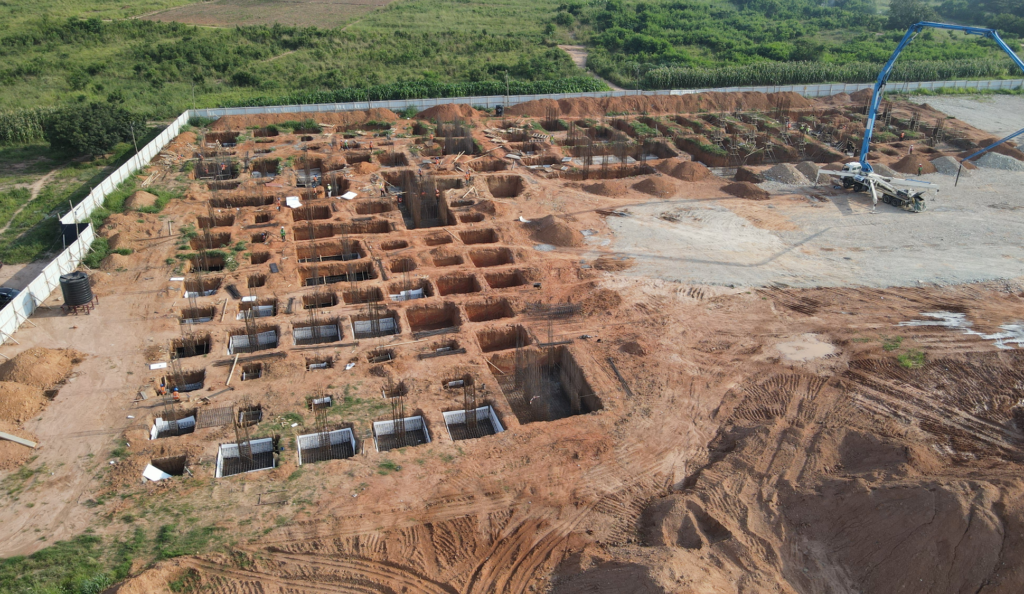
    The association asserts that the NPP’s ban on small-scale mining has significantly impacted its members.

    In a press release signed by its President, Michael Kwadwo Peprah, the association stated, “We wish to call on all well-meaning Ghanaians and small-scale miners whose livelihoods have been shattered by the NPP in the last seven years due to the insensitive ban on small-scale mining to reject the party at the polls, come December 2024.”

    The small-scale miners also directed a query towards Dr. Bawumia, requesting clarity on how he plans to revitalize the small-scale mining sector after, as they allege, contributing to its decline alongside President Akufo-Addo.

    Citing evidence, the association claims that the current state of the small-scale mining sector predominantly benefits the NPP and its affiliates. They argue that promises made by Dr. Bawumia, such as decentralizing the Minerals Commission and the Environmental Protection Agency (EPA), as well as establishing district mining committees, have not materialized. The collapse of local banks that were key financiers for small-scale mining operations is also attributed to the government’s actions.

    Additionally, the association dismisses government initiatives like Galamstop, the introduction of drone technology, and the mapping of concessions as ineffective and wasteful endeavors. They highlight the military’s retention of over 200 excavators belonging to small-scale miners and other investors as indicative of the NPP’s alleged inability to salvage the small-scale mining sector.

    “We wish to call on all well-meaning Ghanaians and small-scale miners whose livelihoods have been shattered by the NPP in the last seven years due to the insensitive ban on small scale mining to reject the party at the polls, come December, 2024,” the Association urged in a press release signed by its President, Michael Kwadwo Peprah.

    “We wish by this press release to remind and also ask Dr. Bawumia to tell us how he intends to rescue the small-scale mining sector after helping Nana Akufo-Addo to collapse same,” the small-scale miners demanded.

    They alleged that, “There is incontrovertible evidence that the current state of things in the small-scale mining sector only benefits the NPP and its apparatchiks, local banks which were the primary source of financing for small scale mining operations like UniBank, UT Bank and GN Bank were collapsed under the shady banking sector clean up, the promise by Dr. Bawumia to decentralize the Minerals Commission and the EPA, and to set up district mining committees is nothing but an empty promise; in any case, his boss vowed to put his presidency on the line to fight galamsey, but the opposite is what pertains today.”

    The Association further alleged that, “Programmes like Galamstop and the introduction of drone technology, mapping of concessions and tracking of excavators that were haphazardly instituted by this government was nothing but a waste of taxpayers’ money, and the fact that the military continues to hold over 200 excavators belonging to small scale miners  and other investors in the small-scale mining sector, only goes to cement the fact that, the NPP  and their flag bearer, Dr. Mahamudu Bawumia lacks the acumen to steer the salvage the small scale mining sector.”

  • Ghana has stopped providing power to Cote d’Ivoire, Burkina Faso – Jinapor

    Ghana has stopped providing power to Cote d’Ivoire, Burkina Faso – Jinapor

    Ghana has officially ceased the provision of electrical power to its West African neighbors, Cote d’Ivoire and Burkina Faso according to the Ranking Member for the Committee on Mines and Energy, John Jinapor.

    Mr Jinapor pointed out that on the same day the president delivered the State of the Nation Address, utility companies were actively shedding load, revealing a worsening situation.

    He alleged that there was a substantial 580 MW deficit, resulting in the cessation of power supply to Cote d’Ivoire, Burkina Faso, and Togo.

    “The very day the president was delivering the State of the Nation Address and boosting, at that very period, the utility companies were shedding load.

    “The situation appears to be exacerbating. Yesterday alone there was a whooping 580MW of deficit culminating in the stop of power supply to Cote d’Ivoire, Burkina Faso and to Togo,” Mr. Jinapor alleged.

    The Opposition in Parliament has called upon the government to urgently address the recent electricity instability plaguing consumers.

    Numerous communities have endured inconsistent power supply for several weeks.

    During a press conference at Parliament,disclosed that a significant reduction of 530 MW occurred on Wednesday.

    This led to consumers experiencing prolonged periods of darkness and disrupted supply to neighboring nations.

    The Member of Parliament for Yapei Kusawgu attributed this issue to a lack of funds for fuel procurement, emphasizing that some thermal plants are also non-operational, indicating a dire state in the country’s power sector.

  • I’ll lead a protest against ECG, GRIDCO – Ashanti Regional Minister over dumsor

    I’ll lead a protest against ECG, GRIDCO – Ashanti Regional Minister over dumsor

    The Ashanti Regional Minister, Simon Osei Mensah, is contemplating leading demonstrations against the Electricity Company of Ghana (ECG) and Ghana Grid Company (GRIDCo) due to the ongoing erratic power supply in the region.

    Osei Mensah expressed frustration over the recurring power outages without clear explanations and revealed his intention to meet the Ministry of Energy for answers.

    In an interview with Angel FM, he warned that if the responses are unsatisfactory, he will organize demonstrations against the two companies, emphasizing his commitment to ensuring the people of his region have consistent electricity.

    “The word of caution I’m sounding to the ECG and GRIDCO is that if I don’t get a satisfactory explanation after listening to the Ministry of Energy with their response, I’ll demonstrate against them,” he threatened.

    “I’m saying this, and everybody should put on record, I’ll be the first government appointee, the first regional minister to lead a demonstration in this region if they are not able to give a reasonable explanation”, Osei Mensah told Kwame Tanko in his interview.

    “I’ll lead a demonstration in the region, and when the time comes, nobody should come and stop me,” he added.

    Despite being a part of the government, Mr Osei Mensah emphasized his readiness to lead protests if the power supply issue persists in the Ashanti Region while other regions remain unaffected.

    The threat comes amid concerns over frequent power outages in Greater Kumasi, sparking discussions about the return of “dumsor.”

    Residents have called for a timetable from ECG. If the minister proceeds with the demonstrations, he would become the first government appointee to lead a protest against his own administration.

  • We don’t owe ECG – Parliament after ‘dumsor’ report

    We don’t owe ECG – Parliament after ‘dumsor’ report

    The Deputy Clerk of Corporate and Financial Management Services Division in Parliament, Ebenezer Ahumah Djietror, has refuted claims that Parliament is indebted to the tune of GH¢23 million to the Electricity Company of Ghana (ECG).

    On Thursday, February 29, 2024, there was a power outage in Parliament House and Job 600, the office complex for Members of Parliament, attributed to the purported GH¢23 million debt, as part of the ongoing “Operation Zero Balance” initiative by the ECG.

    In an interview with Citi News, Mr. Ahumah Djietror clarified that Parliament does not owe the stated amount, asserting that the house has been making payments. He acknowledged occasional discrepancies, citing failures in the ECG’s system to accurately record the payments.

    According to him, Parliament made a GH¢13 million payment on Tuesday, February 27, 2024, reducing the outstanding debt to approximately GH¢12 million.

    He emphasized that they possess records of all payments made as evidence.

    He said, “As far as we are concerned, we’ve made payment, all the payment we have made, some have not reflected in their system, that’s what I’m saying, some do not reflect in their system. We have a breakdown, so we showed it to the Deputy Managing Director, we are just coming from his office. I said they should reconcile the account. We are going to get the bank to extract all the payments we’ve made in terms of the dates. I’m not sure how it’s captured, so there’s a gap in terms of the reconciliation as to what is the outstanding bill.”

    Mr. Ahumah Djietror expressed the situation in Parliament as unfortunate and assured that efforts are underway to reconcile the accounts and settle the outstanding balance.

  • Akufo-Addo will assent to anti-LGBTQ+ bill because he is smart politician – Foh Amoaning

    Akufo-Addo will assent to anti-LGBTQ+ bill because he is smart politician – Foh Amoaning

    The Executive Secretary for the National Coalition for Human Sexual Rights and Family Values Bill, Moses Foh-Amoaning, is optimistic that President Akufo-Addo will endorse the recently passed anti-LGBTQ+ Bill.

    Parliament approved the bill on February 28, 2024, criminalizing LGBTQ activities along with the promotion, advocacy, and funding of such activities. Convictions could result in jail terms ranging from 6 months to 5 years.

    While the bill has faced criticism, including remarks from the U.S. Ambassador to Ghana, Virginia Evelyn Palmer, Foh-Amoaning emphasized the potential political consequences if the President opts not to sign the bill. He warned that the opposition National Democratic Congress (NDC) might gain an advantage in the upcoming 2024 general elections.

    In an interview on 3FM, Foh-Amoaning expressed confidence in President Akufo-Addo’s alignment with Ghanaian family values and vowed to confront opponents of the anti-gay bill in court.

    “Well, the President is a very smart politician and what I’ve told everybody who asked me this question is, first of all, there’s no President who has ascended the presidency of Ghana who has used the word of God more than this President. So, the point I’m trying to make is, with all that I know about the President, I know he will sign this bill.

    “If he refuses to sign, it would be very easy for the NDC, [they] will just package the NPP as Trumu Trumu party,” he stated in an interview on 3FM.

  • Dr Otchere Ankrah ‘gives’ Akufo Addo pen to sign anti-LGBTQ bill

    Dr Otchere Ankrah ‘gives’ Akufo Addo pen to sign anti-LGBTQ bill

    A lecturer at the Central University, Dr. Benjamin Otchere-Ankrah, has offered president Akufo-Addo a pen to fast track the implementation of the anti-gay bill passed by parliament.

    On Wednesday, February, 28 2024, parliament approved an On Wednesday, February 28, 2024, Parliament approved an amendment to the Human Sexual Rights and Family Values Bill, introducing penalties, including up to six months of custodial sentence for those found guilty of aiding, facilitating, encouraging, or promoting LGBTQ activities.

    During a discussion on Peace FM, Dr. Otchere-Ankrah expressed his support for the bill and commended Parliament for endorsing it.

    He raised concerns about perceived attempts by external influences, particularly from Western nations, to impose certain lifestyles on Africans due to the aid provided to deprived countries.

    “Being impoverished as a nation shouldn’t warrant external imposition of their way of life simply because we seek assistance. This is something we shouldn’t tolerate. Therefore, President Akufo-Addo, I’ll have a pen ready at the Jubilee Gate in case you need one. Please endorse the anti-gay bill promptly upon receipt,” he added.

    Dr. Otchere-Ankrah emphasized that President Akufo-Addo should not hesitate to sign the bill once it reaches his desk, suggesting that it is a matter of national sovereignty and cultural values.

    However, during a discussion on Peace FM expressed his stance on the bill and applauded parliament for endorsing the bill.

    According to him, the Whites are imposing certain lifestyles on Africans as a result of help they offer to deprived countries.

    He added that Akufo-Addo does not need a second thought in signing the bill and must assent to it once he receives it.

    Meanwhile, president Akufo-Addo has rejected three bills passed by the House last year, citing their status as private members’ bills and their impact on the Consolidated Fund.

    Minority Leader Dr Cassiel Ato Forson has communicated Parliament’s readiness to override President Akufo-Addo’s potential veto of the Promotion of Proper Human Sexual Rights and Ghanaian Family Values Bill, commonly known as the anti-LGBTQ+ Bill.Dr Ato Forson emphasized Parliament’s dedication to fulfilling its duties regardless of any unconstitutional actions taken by President Akufo-Addo.

  • 19-year-old resorts to selling sugarcane to raise funds to further education

    19-year-old resorts to selling sugarcane to raise funds to further education

    A 19-year-old graduate from Dompoase Senior High School, Abigail Abrokwah, facing financial constraints hindering her further education, has embarked on selling packaged sugarcane on the streets of Accra to fund her dreams.

    Hailing from Awhiaso in the Adansi Asokwa District of the Ashanti Region, Abigail, determined to overcome adversity, is navigating the bustling streets of Accra in pursuit of the funds required for her educational aspirations.

    Abigail’s journey into entrepreneurship was sparked when her unemployed single mother, grappling with financial challenges, conveyed the unfortunate news that continuing her education was unfeasible.

    Faced with the stark reality of her friends progressing into universities, Abigail refused to be defeated by adversity. An aunt, engaged in the bulk sugarcane trade in Accra, extended an invitation to join the ranks of young women selling packaged sugarcane at traffic light intersections.

    Encountering Abigail and her peers at Kaneshie, where they prepare their merchandise for sale at the Abossey Okai spare parts market, sheds light on the entrepreneurial endeavors undertaken by these determined young women.

    Despite having some customers among Abossey Okai shop owners, Abigail grapples with challenges, particularly with those who fail to pay for bulk orders.

    While sales have not consistently met Abigail’s expectations, she faces the pressing concern that raising sufficient funds for her planned nursing training might be a prolonged endeavor. With a hope that her story reaches sympathetic ears, Abigail, the eldest daughter in her family following her father’s early demise, seeks assistance in realizing her educational aspirations.

  • Should any junk be placed on us because of poverty? – Lawrence Tetteh chides LGBTQ+ advocates

    Should any junk be placed on us because of poverty? – Lawrence Tetteh chides LGBTQ+ advocates

    Reverend Lawrence Tetteh has voiced his opinion on LGBTQ+ matters, referring to it as “nonsense” asserting that it cannot be embraced in certain parts of the world.

    Speaking on GTV, the renowned clergyman, known for his candid expressions, particularly highlighted that LGBTQ+ issues would face strong opposition in countries like Kuwait and Saudi Arabia.

    Addressing the controversial topic, Rev. Tetteh questioned whether the introduction of LGBTQ+ initiatives is justified solely based on poverty considerations.

    He strongly emphasized that cultural, religious, and traditional values in various societies, including Ghana, do not align with the acceptance of homosexuality.

    “This is nonsense cannot be taken to Kuwait, cannot be taken to Saudi Arabia. It cannot be taken to certain parts of the world. Does it mean that because of poverty any junk should be placed on us? Homosexuality, our cultural value doesn’t accept it, our religious values doesn’t accept it and traditional norms do not accept it,” he added.  

    On Wednesday, February, 28 2024, parliament approved an On Wednesday, February 28, 2024, Parliament approved an amendment to the Human Sexual Rights and Family Values Bill, introducing penalties, including up to six months of custodial sentence for those found guilty of aiding, facilitating, encouraging, or promoting LGBTQ activities.

    Meanwhile, president Akufo-Addo is yet to assent to the anti-gay bill passed by parliament.

    President Akufo-Addo has rejected three bills passed by the House last year, citing their status as private members’ bills and their impact on the Consolidated Fund.

    Minority Leader Dr Cassiel Ato Forson has communicated Parliament’s readiness to override President Akufo-Addo’s potential veto of the Promotion of Proper Human Sexual Rights and Ghanaian Family Values Bill, commonly known as the anti-LGBTQ+ Bill.

    Dr Ato Forson emphasized Parliament’s dedication to fulfilling its duties regardless of any unconstitutional actions taken by President Akufo-Addo.


  • How much did Ghana lose over termination of PDS contract?

    How much did Ghana lose over termination of PDS contract?

    In recent days, the National Communications Officer of the National Democratic Congress (NDC), Sammy Gyamfi, has on two occasions claimed that Ghana lost $2 billion as a result of the termination of the Power Distribution Service (PDS) concession agreement.

    In a press statement on February 12, he wrote that “Ghana lost 2 billion dollars as a result of this scandal according to the IEA.”

    A week later, on February 19, at the NDC’s moment of truth press conference, he reiterated that “according to the Institute of Economic Affairs, Ghana lost $2 billion as a result of this scandal, which was orchestrated by Bawumia alone.”

    What are the facts?

    On August 5, 2014, the Government of Ghana signed a deal with the United States Government that required, among other things, that Ghana introduce private sector participation (PSP) in the operations of the Electricity Company of Ghana (ECG).

    The U.S. government signed the deal, known as the Power Compact, through the Millennium Challenge Corporation (MCC).

    The deal enjoined Ghana to allow a private operator to inject USD 580 million into ECG over a five-year period. This private operator was to be in charge of the retail and distribution business of ECG.

    According to the original Power Compact agreement, private participation was to involve both foreign and local entities. The foreign entity was to hold 80 per cent of the shares while the local entities were entitled to a 20 per cent stake.

    However, the Akufo-Addo-led government re-negotiated the shareholding structure to 51 per cent Ghanaian and 49 per cent foreign when it assumed office in 2017.

    The government finally settled on three Ghanaian companies, and two foreign entities, which formed the PDS consortium, which started operations in March 2019. In July of that same year, the government suspended the company’s operations because of an issue with PDS’s Demand Guarantee.

    Three months later, in October, the government terminated the contract, claiming that the Ghanaian companies presented a fraudulent Demand Guarantee.

    The US government, through its embassy in Ghana, swiftly responded that the government should reinstate PDS.

    The U.S. government insisted that, regardless of what the government had found, the concessionaire should stand. The government of Ghana did not budge.

    Through the Power Compact, the US had planned to make available USD498,200,000 to improve Ghana’s energy situation. As a result of the Ghana government’s insistence on not reinstating PDS and failing to ensure that ECG was privatized, as the Compact mandated, the US made it clear it will not release the second tranche of USD190 million to Ghana.

    In a presentation in November 2019, the Director of Research at the IEA, Dr John Kwakye, said the US had cancelled several programs because Ghana did not privatise its power companies.

    “Now we found that there was some fraud with the deal and the government decided to cancel it. The US said we need to reinstate it. And they [Ghana government] said no. And they [U.S. government] said, okay, if you are not doing that then you are going to suffer the following consequences,” Dr. Kwakye said.

    “The remaining amount of USD190 million has been cancelled. There is also the cancellation of the concessionaire of USD 580 million. Apart from the Ghana Compact, Ghana was to benefit from a regional compact amounting to 400 million dollars; that has also been cancelled. And then, there is also a World Bank facility which is also energy-related going into the bracket of USD500 million. That has also been cancelled. If you add this all up you are getting close to maybe USD2 billion that we are going to lose.”

    Dr Kwakye went on to say that the American government’s decision “demonstrated the extent” to which they are willing to go to “punish a country that they consider to be recalcitrant or wayward.”

    “Is that fair? Don’t African countries have the right to choose the management structure of their strategic industries? Does it always have to be imposed on us from outside?” he asked.

    When Fact-Check Ghana added the figures put out by Dr John Kwakye of the IEA the figure stood at USD 1.67 billion, which is about 330 million shy of USD2 billion.

    In conclusion, Ghana indeed lost a significant amount of money as a result of the cancellation of the PDS deal. According to the IEA, the amount was close to USD 2 billion. The amount was lost not directly because of the “scandal” but because the U.S. refused to make certain amounts of money available to Ghana after the government objected to demands to reinstate PDS or continue with the privatisation of ECG.

    Source: fact-checkghana.com

  • Private secondary schools will be featured on free SHS programme – Mahama

    Private secondary schools will be featured on free SHS programme – Mahama

    Addressing the launch of the 2024 annual week celebration of the Ghana National Association of Private Schools, the flag bearer of the National Democratic Congress (NDC), John Dramani Mahama, underscored the pivotal role of private schools as collaborative partners with the government in delivering quality education for Ghanaian children.

    Mr Mahama commended the significant contributions of private schools to the educational sector, describing them as trailblazers and pioneers responsible for introducing innovative teaching techniques.

    Notably, he cited the Montessori curriculum as an exemplary instance, initially implemented by private schools and later adopted by some public institutions to enhance teaching and learning methodologies.

    The former president, leading the NDC into the upcoming December presidential and parliamentary elections, emphasized the effectiveness of private schools in addressing the needs of special children, attributing it to their favorable teacher-to-pupil ratio.

    He highlighted the challenges faced by public schools with high student numbers, making it difficult for educators to cater to individualized needs, especially for those with special requirements.

    Mr Mahama assured the private schools’ association that an NDC government, if elected, would prioritize education, convening stakeholders to conduct a comprehensive review of the entire education structure, spanning from basic to tertiary levels.

    He outlined plans for substantial investments in basic education starting from 2025, aiming to fortify the foundation of the education sector.

    Regarding secondary education, the NDC leader committed to extending the free Senior High School (SHS) program to include private secondary schools.

    Mr Mahama acknowledged the infrastructure and human resources capabilities of many private institutions, positioning them as integral contributors to the successful implementation of the free SHS initiative.

    Mr Mahama referenced a recent Edu-Watch report, shedding light on the persistent financial burden shared by parents and the government at the secondary education level.

    Despite the implementation of the free SHS policy, parents still bear approximately 77% of the total cost of their children’s education, as revealed in the report.