Author: Phoebe Martekie Doku

  • Secret ballot would have altered fate of anti-LGBTQ+ bill – Afenyo-Markin

    Secret ballot would have altered fate of anti-LGBTQ+ bill – Afenyo-Markin

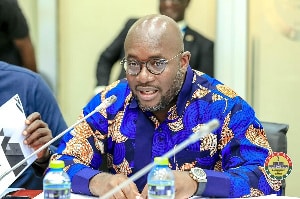
    The Majority Leader in Parliament, Afenyo-Markin, has revealed that a significant number of Members of Parliament (MP) would have opposed the LGBT+ bill if a secret vote had been conducted.

    Speaking on GHOne TV’s State of Affairs with Francis Abban, the legislator disclosed that a majority of MPs were against the penalties outlined in the bill.

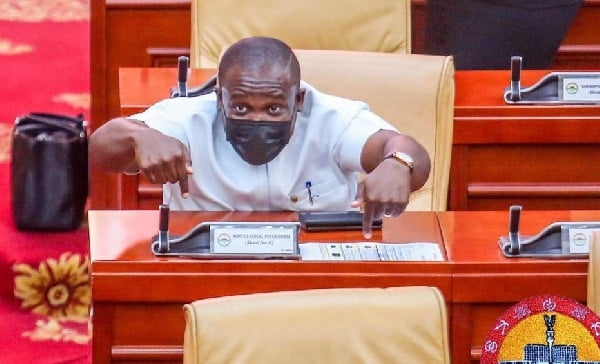
    Afenyo-Markin shared that many lawmakers were waiting for the Speaker’s decision to allow a secret ballot, as opposed to the usual voice vote during consideration. He explained that his call for a secret ballot was supported by numerous colleagues who preferred the anonymity of voting.

    The lawmaker emphasized that the issue revolved around the severity of the prescribed punishment, expressing concern about sending individuals to jail for their involvement with the LGBT+ community.

    He clarified that his stance was not a mere suggestion but a statement of fact, underscoring the importance of prioritizing convictions over political considerations.

    Afenyo-Markin acknowledged the risks associated with his position, stating that focusing on matters of conviction rather than electoral concerns was essential, even if it meant taking unpopular stances.

    “When I raised the issue of a secret ballot, it was actually a call from a lot of colleagues. Because normally at consideration, we use voice vote. So they wanted should the Speaker rule in my favour for a secret ballot then they will come in a slot in their ballot,” Mr. Afenyo-Markin stated.

    “I am not suggesting… I am stating so as a statement of fact, it is not a suggestion. I am telling you what it is. What’s the first rule of nature, reservation? It was a risk I took and I have said that I really don’t mind because if a politician is always thinking about the next election and not looking at issues of conviction, this is how I feel,” the lawmaker stated.

  • My decision to leave NPP has been rescinded – Obiri Boahen

    My decision to leave NPP has been rescinded – Obiri Boahen

    Former Deputy General Secretary of the New Patriotic Party (NPP), Nana Obiri Boahen, has reversed his earlier decision to establish his own political party.

    Previous report suggests that the legal practitioner was contemplating leaving the NPP due to being excluded from a role in the 2024 campaign.

    Expressing his frustration at being overlooked after years of service, he initially declared his intention to part ways with the party.

    However, in a recent interview with OKAY FM in Accra, Nana Obiri Boahen stated, “I have rescinded my decision to leave the party. I must say that it’s not everything I can discuss on air.”

    Simultaneously, Nana Obiri Boahen has been appointed as a co-chair of the local government subcommittee within the political party’s manifesto committee.

  • I will push for funds to finalize National Cathedral – Egyapa Mercer

    I will push for funds to finalize National Cathedral – Egyapa Mercer

    The nominee for the position of Tourism Minister, Andrew Egyapa Mercer, has affirmed his dedication to securing funding for the completion of the National Cathedral project in Ghana.

    Speaking before the Appointments Committee on Tuesday, March 5, 2024, Mr. Mercer, formerly Deputy Energy Minister, stressed the importance of finishing the National Cathedral.

    He expressed concern about its current status, humorously referred to as ‘the world’s most expensive hole,’ and emphasized its significance as a national asset.

    “It is our national asset that is in that state. It has to be completed, to my mind. So if you want a definitive answer that if I have the opportunity to request parliament to consider and approve a budget for the completion of the National Cathedral, then yes,” Mr. Mercer stated during his vetting.

    Addressing resource allocation during his vetting, Mr. Mercer acknowledged the finite nature of resources but asserted that funding should be prioritized for completing the National Cathedral.

    He expressed readiness to propose a budget specifically for this purpose, seeking approval from parliament.

    “As we look at something like the Cathedral that has economic benefits beyond what we see…In Africa, we have some 600 million people who are Christians so imagine Ghana as the new Jerusalem and these 600 million people floating through with $3,000 to spend, it is a very different reality.”

    The National Cathedral project, initiated by the government, has sparked debates and controversies due to its cost and use of state resources. In December 2023, former Finance Minister Ken Ofori-Atta suggested reconsidering discussions on the cathedral’s construction, emphasizing its potential to drive economic growth.

    Speaking at the Ghana Tourism Investment Summit 2023, Ofori-Atta highlighted the cathedral as a strategic investment to boost the nation’s tourism sector. He envisioned it becoming a pilgrimage destination for millions of Christians across Africa, contributing to substantial economic benefits for Ghana.

    Ofori-Atta urged a more constructive approach to the ongoing debates, suggesting that the government carefully consider the cathedral’s potential contribution to Ghana’s economic development.

  • LGBTQ not part of Ghana’s IMF agreement – Prof. John Gatsi

    LGBTQ not part of Ghana’s IMF agreement – Prof. John Gatsi

    Economics professor and dean of the University of Cape Coast Business School, Professor John Gatsi, has contended that LGBTQ issues were not a stipulation for Ghana when seeking the International Monetary Fund’s (IMF) external credit facility support.

    In response to the IMF’s comments on the anti-LGBTQ+ bill, Gatsi sees these remarks as merely reflecting the organization’s interests.

    Despite the IMF emphasizing diversity and inclusion, Professor Gatsi believes Ghana’s finance ministry is being used to pressure support for the bill’s non-signing.

    He highlighted that during negotiations with the IMF, LGBTQ concerns were not part of the conditions.

    Mr Gatsi stressed that Ghana’s financial dealings involve repayable loans, with parliamentary approval being the primary condition, which has already been met.

    The finance ministry’s report to President Akufo-Addo warned of potential financial losses, estimating over US$3.8 billion from World Bank financing.

    Areas at risk include ongoing projects and negotiations, such as the First and Second Ghana Resilient Recovery Development Policy Operation and the Ghana Financial Stability Fund.

    Additionally, the ministry fears consequences for Ghana’s financial position, which heavily relies on IMF support following debt restructuring and access to foreign exchange.

    As Ghana awaits the review and approval of the third tranche from the IMF, uncertainties persist regarding the impact of the anti-LGBTQ+ bill on these financial arrangements.

    “Diversity and inclusion are values that the IMF embraces,” the Fund emphasised.

  • Ghana won’t compromise human rights legacy – Akufo-Addo

    Ghana won’t compromise human rights legacy – Akufo-Addo

    President Akufo-Addo has reassured the diplomatic community that the anti-LGBTQI bill, recently passed by Parliament, will not compromise the country’s strong human rights track record.

    The President stated that no such regression in human rights will be considered or allowed.

    In a message to the diplomatic community on Monday, March 4, President Akufo-Addo clarified that the bill has not yet reached his desk for approval.

    He acknowledged concerns raised by the international community and friends of Ghana but emphasized that no backsliding on human rights principles would occur.

    President Akufo-Addo urged patience, mentioning that a concerned citizen has challenged the constitutionality of the proposed legislation at the Supreme Court.

    He emphasized the importance of awaiting the court’s decision before taking any action.

    “I am aware that last week’s bi-partisan passage by Parliament of the Proper Human Sexual Rights and Ghanaian Family Values Bill, on a Private Member’s motion, has raised considerable anxieties in certain quarters of the diplomatic community and amongst some friends of Ghana that she may be turning her back on her, hitherto, enviable, longstanding record on human rights observance and attachment to the rule of law. I want to assure you that no such back-sliding will be contemplated or occasioned.

    “I think it will serve little purpose to go, at this stage, into the details of the origin of this proposed law, which is yet to reach my desk. But, suffice it to say, that I have learnt that, today, a challenge has been mounted at the Supreme Court by a concerned citizen to the constitutionality of the proposed legislation.

    “In the circumstances, it would be, as well, for all of us to hold our hands, and await the decision of the Court before any action is taken. The operation of the institutions of the Ghanaian state will determine the future trajectory of the rule of law and human rights compliance in our country,” President Akufo-Addo said.

    Parliament passed the Proper Human Sexual Rights and Ghanaian Family Values Bill on February 28, commonly known as the anti-gay Bill, sparking various reactions, including concerns from the diplomatic community.

    The Ministry of Finance, in a brief on March 4, highlighted dire implications of assenting to the bill.

  • PAC to vet Egyapa Mercer, 4 others today

    PAC to vet Egyapa Mercer, 4 others today

    The Parliament’s Appointments Committee (PAC) is set to commence the vetting of President Akufo-Addo’s newly nominated ministers today, March 5, 2024.

    Scheduled participants include Andrew Egyapa Mercer, nominated for the Ministry of Tourism, Arts, and Culture; Lydia Seyram Alhassan, designated for the Ministry of Sanitation and Water Resources; Martin Adjei-Mensah Korsah, slated for the Ministry of Local Government, Decentralisation, and Rural Development; Ophelia Mensah Hayford, appointed for the Ministry of Environment, Science, Technology, and Innovation; and Darkoa Newman, selected for the Ministry of Gender, Children, and Social Protection.

    The vetting will continue until March 12, 2024, and the schedule for appearances is as follows:

    Tuesday, March 5:

    9 am: Andrew Egyapa Mercer, Minister-designate for the Ministry of Tourism, Arts and Culture
    10 am: Lydia Seyram Alhassan, Minister-designate for the Ministry of Sanitation and Water Resources
    11 am: Martin Adjei-Mensah Korsah, Minister-designate for the Ministry of Local Government, Decentralisation, and Rural Development
    12 pm: Ophelia Mensah Hayford, Minister-designate for the Ministry of Environment, Science, Technology, and Innovation
    2 pm: Darkoa Newman, Minister-designate for the Ministry of Gender, Children, and Social Protection
    Thursday, March 7:

    9 am: Dr. Bernard Okoe Boye, Minister-designate for the Ministry of Health
    10 am: Titus Glover, Minister-designate for the Greater Accra Region
    11 am: Fatimatu Abubakar, Minister-designate for the Ministry of Information
    2 pm: Daniel Machator, Minister-designate for the Oti Region
    Friday, March 8:

    9 am: Dr. Benjamin Sekyere Yeboah, Deputy Minister-designate for the Ministry of Gender, Children, and Social Protection
    10 am: Sylvester Tetteh, Deputy Minister-designate for the Ministry of Information
    11 am: Charles Acheampong, Deputy Minister-designate for the Ministry of Communication and Digitalisation
    12 pm: Adelaide Ntim, Deputy Minister-designate for the Ministry of Health
    2 pm: Alexander Akwasi Acquah, Deputy Minister-designate for the Health Ministry
    Monday, March 11:

    9 am: Vincent Ekow Assafuah, Deputy Minister-designate for the Ministry of Local Government, Decentralisation, and Rural Development
    10 am: John Kobina Sanie, Deputy Minister-designate for the Energy Ministry
    10 am: Collins Adomako Mensah, Deputy Minister-designate at the Energy Ministry
    12 pm: Dr. Prince Hamidu Armah, Deputy Minister-designate for the Works and Housing Ministry

    Tuesday, March 12:

    9 am: Kingsley Nyarko, Deputy Minister-designate for the Education Ministry
    10 am: Festus Awuah Kwofie, Deputy Minister-designate for the Employment and Labour Ministry
    11 am: Akwasi Konadu, Deputy Minister-designate for the Ministry of Lands and Natural Resources
    12 pm: Musah Abdul Aziz Ayaba, Deputy Minister-designate for the Ministry of Fisheries and Aquaculture and Development

  • We are yet to receive 2024 elections calendar from EC -NPP

    We are yet to receive 2024 elections calendar from EC -NPP

    The New Patriotic Party (NPP) has confirmed it has not received an official communication from the Electoral Commission(EC) on the schedule for the upcoming general elections.

    This aligns with the National Democratic Congress (NDC)’s critique of the public release of the election calendar.

    Reports suggest the Electoral Commission plans to receive nominations for the presidential and parliamentary elections from September 9 to 13. Subsequently, the presidential ballot paper positions will be drawn on September 23, 2024, and the parliamentary positions on September 24, 2024.

    The Commission aims to declare 2024 presidential poll results within three days post-election.

    Additionally, a voters’ registration period runs from May 7 to May 27, 2024, alongside a nationwide effort to replace missing voter ID cards starting May 30, 2024.

    NPP’s Director of Research and Elections, Evans Nimako, stated in an interview that the party received an invite for an Inter-Party Advisory Committee (IPAC) meeting on Thursday, March 7, 2024, but no official communication on the election program.

    “The NPP has not received any official communication from the EC concerning the programme of activities for the 2024 presidential and parliamentary elections.”

    “All that we have gotten is a notice of invitation to for an IPAC meeting to be held on Thursday 7th of this month at the EC Headquarters so I will also confirm that we have not received any such communication from the EC,” he said.

  • The positives of Free SHS must outweigh its challenges – Deputy Coordinator

    The positives of Free SHS must outweigh its challenges – Deputy Coordinator

    The Deputy Coordinator of the Free Senior High School (SHS) Secretariat, Nana Afrah Sika Mensah, urges the nation to focus on the achievements of the policy rather than its challenges.

    Despite recognizing issues like food shortages in some schools, she contends that the benefits of the policy surpass its drawbacks.

    During an interview with Nii Larte Lartey on Eyewitness News on Citi FM, she stressed that the policy has significantly benefited children from underprivileged backgrounds.

    Emphasizing the need to highlight the positive aspects over the negatives, she expressed gratitude for the opportunities the Free SHS has provided to students from less privileged communities.

    She stated, “Free SHS has truly been instrumental for our country.

    Without it, individuals like my siblings wouldn’t have access to quality education. Despite facing challenges, we should prioritize the positive impact and make it outweigh the difficulties encountered by the secretariat.”

    Mensah emphasized the crucial role of Free SHS in granting education access to those in less endowed or underprivileged communities, asserting that, without it, many individuals would lack the means to support their children’s education.

    “Free SHS has really helped us as a country and then maybe had it not been the Free SHS people like my siblings out there wouldn’t get access to quality education. So even though we have challenges, we should rather make the positives outweigh the challenges we are facing as a secretariat.”

    “We’ve given people access to education. People from the less endowed communities or people who are less privileged in the communities had it not been for Free SHS, they would not get the opportunities to foot bills for their wards,” she stated.

  • Evolution of Coat of Arms before and after independence

    Evolution of Coat of Arms before and after independence

    The Coat of Arms functions as a country’s logo, symbolizing its identity and values.

    Paired with the Ghanaian flag, it appears on official documents, letterheads, and as badges denoting membership or allegiance.

    Heraldry, the system regulating armorial bearings, originated in England around 1100 when knights painted unique ‘arms’ on shields for recognition.

    Ghana’s Coat of Arms has undergone changes for sometime now, the first which was introduced during the Gold era has an elephant featuring a tree, grasses with G.C boldly inscribed on it.

    However in 1957, when the Gold Coast gained independence from Britain and adopted the name Ghana, the flag transitioned to a tricolor of red, gold, and green, adorned with a black five-pointed star.

    Commissioned in 1956 by the British colonial government, the current Coat of Arms replaced symbols representing the West African British Colonies.

    Coat of Arms before and after

    Meaning of Ghana’s Coat of Arms:


    Ghana’s Coat of Arms bears a shield held by golden eagles, signifying watchful protection.

    The shield’s blue background is divided into quarters, featuring symbols like a traditional sword, Christianborg Castle, a cocoa tree, and a mine shaft, representing traditional power, governance, agriculture, and mineral wealth.

    A black star atop the shield symbolizes African freedom.’A black star atop the shield symbolizes African freedom.

    The scroll beneath holds the motto “Freedom and Justice,” with grass on each side.

    Mr. Nii Amon Kotei, a skilled surveyor and artist, designed it, incorporating elements symbolizing chieftaincy, government, mineral wealth, and fertile land.

    Mr. Nii Amon Kotei’s Contribution:
    Born on May 24, 1915, Mr. Kotei studied art in London after World War II service.

    His design incorporated the elephant’s skin, symbolizing chieftaincy, the Castle for the Seat of Government, and motifs depicting the country’s mineral wealth and fertile land.

    The draft underwent minor changes, approved by the Queen’s College of Heraldry in the UK.

  • Tontokrom clash: Culprits will face the law – Lands Ministry

    Tontokrom clash: Culprits will face the law – Lands Ministry

    The Ministry of Lands and Natural Resources has declared its determination to take decisive action against those implicated in the recent clash between Manso Tontokrom residents in the Ashanti region and private security personnel from Asanko Gold Mines Limited.

    In a press release issued on Monday, March 4, the Ministry affirmed its commitment to ensuring that individuals found responsible will face the full force of the law.

    The ministry, in collaboration with relevant security agencies, has initiated a comprehensive investigation into the incident.

    “The Ministry is currently investigating the matter in collaboration with the appropriate security authorities.”

    “The public is hereby assured that, the perpetrators of such act will be dealt with in accordance with the laws of the Republic if found culpable,” an excerpt of the statement said.

    While expressing condemnation for the regrettable event, the ministry has urged the public to remain calm as investigations unfold.

    The statement assures the public that if the perpetrators are found guilty, they will be held accountable in accordance with the laws of the Republic.

    The clash, which occurred on Saturday, March 2, resulted in three fatalities.

    A resident was reportedly killed by gunfire from the Asanko Mines security personnel, triggering retaliatory attacks from residents.

    Two security officers were lynched, and another sustained severe injuries during the altercation.

    Authorities are working to restore calm in the affected community following the incident.

  • Govt spent GHS33m in procuring past questions in 2020 – Education minister tells parliament

    Govt spent GHS33m in procuring past questions in 2020 – Education minister tells parliament

    The Minister of Education, Yaw Osei Adutwum, has defended the government’s decision to utilize sole-source procurement for acquiring past questions for Senior High School (SHS) students in 2020 and 2021.

    Revealed in 2020, the government reportedly disbursed over GH¢68.5 million to a supplier for materials distributed to SHS students ahead of the 2021 West African Senior High School Certificate Examination (WASSCE).

    Detailing the transaction in Parliament on March 4, 2024, the minister clarified that the government “procured 446,954 West African Senior School Certificate Examination (WASSCE) questions from Messrs Kingdom Books and Stationery at a unit price of GH¢78.00.”

    The procurement, he disclosed, was financed through the Free Senior High School account.

    “Mr. Speaker, in 2020, the government through its efforts to help students amidst COVID-19 to prepare for the 2020 West African Senior School Certificate Examination (WASSCE) procured 568,755 past questions for students to try their hands on before sitting for the actual exams.”

    He continued: “The Ministry of Education contracted Messrs Kingdom Books and Stationery to supply 568,755 WASSCE past questions at a contract price of GHS 33,641,043.75.

    “The procurement of these questions was funded through the Free Senior High School Account and the results of the 2020 WASSCE were tremendous compared to previous years’ WASSCE performance,” he stressed.

    The minister also gave updates on efforts to supply textbooks to basic schools: “Mr. Speaker, the procurement process for the supply of published textbooks to Basic Schools is currently ongoing.

    “The Ministry placed an advert in the Ghanaian Times on 1st June 2020, where various publishers approved by NaCCA, submitted their books and relevant documents to be taken through a Pre-Qualification procurement process,” he added.

    Additionally, the minister provided updates on the textbook supply efforts to basic schools: “The procurement process for the supply of published textbooks to Basic Schools is currently underway. The Ministry initiated the process on 1st June 2020, with various publishers approved by NaCCA submitting their books and relevant documents for a Pre-Qualification procurement process.”

  • Lifeless body of woman found at Kasoa-Kaemebre

    An unidentified woman in her forties was discovered lifeless at the Kasoa-Kaemebre junction in the Awutu Senya East Municipality of the Central Region.

    Her lifeless body was found beside her phone, sparking concerns about the circumstances of her demise.

    According to an eyewitness who shared details with Rainbow Radio’s Oheneba Ademah, the woman was initially found on a bench in front of a store on Sunday, March 3, 2024, in the morning.

    However, she was later discovered on the ground with blood emanating from her nostrils and mouth.

    The eyewitness suggested the possibility of the woman having endured severe beatings or poisoning, leading to her tragic death.

    This incident has instilled fear and panic within the local residents, who are now urging the police to investigate the matter thoroughly.

  • Election 2024: Presidential results will be declared within 72 hours – EC

    Election 2024: Presidential results will be declared within 72 hours – EC

    The Electoral Commission (EC) has outlined its plan to announce the results of the presidential election within three days after December 7, 2024, as disclosed in the Commission’s election calendar.

    Although there is no legal requirement for a specific declaration timeframe, the EC aims to ensure the timely release of presidential results, aiming for a maximum of three days.

    Additionally, the election management body has scheduled the opening of nominations for both presidential and parliamentary candidates for the upcoming election from September 9 to September 19.

    “There was no law requiring the EC to declare the results within a specified period, the EC intended to ensure that it would be able to declare the presidential results within a maximum of three days,” the statement stated.

    The provisional voters’ register is set to be submitted to political parties between July 9 and July 18, 2024.

    Balloting for positions on the presidential ballot paper is scheduled for September 23, 2024, providing clarity on the sequence of candidates.

    The EC has also designated December 2 for special voting for selected professionals, with the main election scheduled for December 7, 2024.

  • Western powers using Finance Ministry to blackmail Akufo-Addo – Economist

    Western powers using Finance Ministry to blackmail Akufo-Addo – Economist


    An economics professor and dean of the University of Cape Coast Business School, Professor John Gasti, has alleged a significant lobbying effort aimed at persuading President Akufo-Addo not to endorse the recently passed anti-gay bill.

    He suggested that the Ministry of Finance is being influenced in its plea to the President not to sign the Proper Human Sexual Rights and Ghanaian Family Values Bill, 2021.

    Prof. Gasti’s comments follow the Ministry of Finance’s financial report to President Akufo-Addo, outlining potential losses in international donor funds, particularly from the World Bank, should the controversial bill be enacted.

    According to the ministry’s report, Ghana stands to lose over US$3.8 billion from the World Bank if the anti-gay bill becomes law. However, the President, in a statement on March 4, mentioned that the bill has not reached his desk.

    Speaking on TV3’s Ghana Tonight on March 4, Prof. Gasti questioned the relevance of the anti-gay bill in relation to the conditions set for the IMF bailout.

    He asserted that the bill, whether passed or not, was not part of the conditions required for Ghana to receive approval for the US$3 billion rescue loan from the IMF.

    “It sounds like there is a heavy dose of lobbying activities going on [in] these last minutes of the process. We knew that the constituents of the world that are not happy with the stand of Ghana on LGBTQ were very clear. All attempts were made to stop the process in parliament that didn’t happen”, he said, adding that the international community, having seen the signs of a unanimous decision to pass the bill in parliament, has occasioned “the upscale of lobbying activities across the board”.

    “And now they are using our own finance ministry to blackmail Ghanaians to support the President not to sign the bill”, Prof. Gasti added.

    “When we went to the IMF, there was no condition regarding LGBTQ issues”, the economics professor said.

    “In fact, when the World Bank was giving us [Ghana] money, the only thing that they were waiting for was the signing of the IMF deal that opened the door for them to provide those credits that they’re providing to us”, he told Alfred Ocansey on Ghana Tonight.

    He expressed concern about the apparent surge in lobbying activities, especially in the final stages of the process. Prof. Gasti noted that the global entities opposing Ghana’s stance on LGBTQ issues intensified their lobbying efforts when attempts to halt the bill’s progress in parliament were unsuccessful.

    Addressing the role of Ghana’s Finance Ministry, Prof. Gasti accused international forces of using it to pressure Ghanaians to support the President in not signing the bill into law.

    He emphasized that the conditions set by the IMF did not include LGBTQ issues and highlighted that the World Bank’s financial support was contingent on Ghana signing the IMF deal, which had already been done.

    The Finance Ministry’s concerns about potential cuts in World Bank financing included the First Ghana Resilient Recovery Development Policy Operation (US$300 million), the ongoing negotiation for the Second Ghana Resilient Recovery Development Policy Operation (US$300 million), and the Ghana Financial Stability Fund (US$250 million). Additionally, fears were raised about the cessation of disbursements for ongoing projects worth US$2.1 billion and another US$900 million in projects if the anti-gay bill were to become law.

  • I am yet to receive anti-gay bill – Akufo-Addo

    I am yet to receive anti-gay bill – Akufo-Addo


    President Akufo-Addo clarified in a message to the diplomatic community on Monday, March 4, that the anti-LGBTQI bill has not yet reached his office.

    Despite concerns within certain diplomatic circles, the president assured that the recent bipartisan approval of the Proper Human Sexual Rights and Ghanaian Family Values Bill by Parliament will not compromise the country’s commendable human rights record.

    Addressing anxieties about a potential shift in Ghana’s stance on human rights and the rule of law, President Akufo-Addo emphasized that he would not entertain any regression in these principles.

    While refraining from delving into the bill’s origin, which is pending on his desk, he acknowledged that a concerned citizen has filed a constitutional challenge at the Supreme Court regarding the proposed legislation.

    The president urged patience, suggesting that everyone await the court’s decision before taking any action.

    He underscored the pivotal role of Ghanaian state institutions in shaping the future trajectory of rule of law and human rights compliance in the country.

  • Video: ASEC Mimosas stranded at Kumasi airport over no stairways

    Video: ASEC Mimosas stranded at Kumasi airport over no stairways

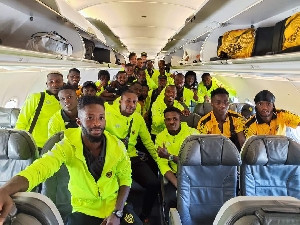
    An Ivorian professional football club based in Abidjan, ASEC Mimosas, aircraft was forced to return to base shortly after landing at Kumasi Airport due to the unavailability of a stairway driver.

    In a video circulating online, the Ivorian team made a U-turn on the tarmac before taking off from the airport.

    According to photojournalist Kofi Sika, who witnessed the incident, the driver responsible for the stairways had reportedly traveled to Accra.

    Consequently, Asec was compelled to return, but it remains unclear whether they headed back to Ivory Coast or proceeded to Accra.

    Asec Mimosas’ visit was intended to participate in the 2024 President’s Cup at the Baba Yara Sports Stadium, scheduled for March 5, 2024.

    Asante Kotoko, having lost the last two editions to Hearts of Oak, aims to secure victory this time as they host the game on their home ground.

    The Reds’ last triumph in the President’s Cup dates back to 2019.


    The President’s Cup is an annual single-match cup organized by GHALCA to honor the sitting president of Ghana.

    Kotoko stands as the most successful club in the history of the Cup, winning it 8 times, while Hearts of Oak has claimed victory 6 times.

    Watch video:

  • Deloitte found lack of internal controls, basic manuals on National Cathedral project – Bright Simons alleges

    Deloitte found lack of internal controls, basic manuals on National Cathedral project – Bright Simons alleges

    An ongoing audit of the National Cathedral, led by consulting, financial advisory, Deloitte, has exposed a disconcerting absence of internal controls and basic manuals, according tothe Vice President of Imani Afric, Bright Simons.

    He alleged that the audit, which commenced a year ago, aimed to assess the financial and operational aspects of the prestigious National Cathedral project.

    However, the findings reported by Mr Simons indicate a glaring lack of fundamental structures necessary for effective governance.

    “Sources say that upon commencing an audit of Ghana’s National Cathedral, Deloitte was met with a shocking lack of internal controls & the absence of even basic manuals. It is now 1 year since the exercise began. Sources say the right opinion should be adverse, not even qualified,” he wrote.

    The National Cathedral project has faced controversies and opposition, with some arguing its relevance amid Ghana’s economic challenges.

    Despite public opposition, President Akufo-Addo has consistently expressed his determination to proceed with the cathedral’s construction.

    In response to recent issues surrounding the project, the Board of Trustees decided in January to subject it to a “normal statutory audit.” 

    A proposal from the Minority caucus suggested that the project  and all related issues be investigated by a committee.

    In that regard the audit firm, Deloitte, that registered the National Cathedral, was engaged to conduct the audit.

    The committee was tasked with making appropriate recommendations for Parliament’s consideration. The Chairman of the Board, Apostle Prof. Opoku Onyinah, mentioned, “The Board is already in discussions to engage Deloitte, which accepted to be the auditors when the National Cathedral was registered, to commence the normal statutory audit”.

    Meanwhile, the Secretary of the Board of Trustees, Rev. Kusi Boateng, has been accused by Okudzeto Ablakwa of having multiple identities and receiving 2.6 million cedis without performing any work.

  • Transport fares to increase by 30% starting March 7

    Transport fares to increase by 30% starting March 7

    The Transport Operators Union and the Concerned Drivers Association of Ghana have jointly declared a 30 percent hike in transport fares, effective March 7, 2024, citing the government’s failure to address their grievances.

    In a collective statement, the associations expressed disappointment in leadership for neglecting concerns and failing to implement fare adjustments to offset rising operational costs, particularly due to continuous fuel price increases.

    “As drivers’ associations, we expressed disappointment in the leadership for failing to address the concerns and implement fare adjustments to counterbalance the increased operational costs.

    The full statement from the Regional Chairmen of both unions highlights their disappointment in leadership’s lack of proactive measures to align fares with market conditions amid escalating fuel costs.

    The unions emphasized the necessity of fare adjustments to sustain their businesses and maintain service quality.

    They called on the government and relevant authorities to engage in constructive dialogue with leaders to address sector challenges and implement fare adjustments reflecting economic realities.

    If concerns remain unaddressed by March 6, 2024, the unions warn of an inevitable fare increase as a means of coping with the escalating operational costs.

    Below is the full statement.

    Regional Chairmen of both the Transport Operators Union and the Concerned Drivers Association of Ghana are announcing our intention to consider a fare increment in response to the recent hike in fuel prices across the country.

    As drivers’ associations, we expressed disappointment in the leadership for failing to address the concerns and implement fare adjustments to counterbalance the increased operational costs.

    The continuous rise in fuel prices has had a significant impact on our livelihoods, leading to financial strains and hardships in maintaining our operations.

    We would like to express our disappointment in our leadership, Despite the escalating costs of fuel, our leadership has not taken proactive measures to increase fares in line with market conditions.

    This has prompted us Regional executives to consider fare adjustments as a necessary step to sustain our businesses.

    The fare adjustments are essential to ensure the financial viability of the transportation sector and to maintain the quality of service provided to the public. The failure of the government to address this critical issue has left us with no choice but to consider fare increments as a means of coping with the escalating operational costs.

    We are calling on the government and relevant authorities to engage in constructive dialogue with our leaders to address the challenges faced by our sector and to implement fare adjustments that reflect the current economic realities.

    Failure to address these concerns by 6th March 2024 will leave us with no choice but to increase fares.

  • Deepened Ghana-Caribbean ties necessary – Foreign minister

    Deepened Ghana-Caribbean ties necessary – Foreign minister

    Foreign Minister, Shirley Ayorkor Botchwey, participated as a special guest at the Caribbean Community (Caricom) Summit in Georgetown, Guyana.

    She engaged in bilateral and multilateral talks with Caribbean leaders, including Prime Ministers of St. Kitts and Nevis, Grenada, Antigua and Barbuda, and Dominica.

    Dr. Amery Browne of Trinidad and Tobago represented Prime Minister Keith Rowley. Botchwey addressed the CARICOM Council of Ministers and attended a reception with leaders from the region, emphasizing the desire to strengthen ties between Africa and the Caribbean.

    Both sides aim to build on the success of Ghana’s “Year of Return” initiative and “Beyond the Return” policy, fostering increased tourism and investment.

    Recognizing the historical connection between Africa and the diaspora, Madam Botchwey highlighted the potential for a direct air link to enhance travel and commerce.

    “Those initiatives by President Akufo-Addo have really ignited interest in bringing the Caribbean countries and Ghana in particular, and Africa in general, closer together.

    “They present an important opportunity to enlarge the market size of Africa and its diaspora and grow our economies, as well as bring together our people who have been separated by history and the ocean,” she said, adding that “a direct air link would boost travel and commerce significantly between us.”

    She held additional meetings with foreign ministers from St. Lucia, Trinidad and Tobago, Belize, and the director-general of the foreign ministry of the Bahamas.

    As Ghana’s candidate for Commonwealth Secretary-General, Botchwey is poised to play a crucial role in fostering collaboration between the Caribbean and Africa.

    The African Union has designated the Caribbean as the “sixth region” of Africa, signifying efforts to bridge political and economic gaps. The Commonwealth leaders are set to choose a new secretary-general in October, with Botchwey positioned as a key candidate for the role.

  • List of countries that passed laws against LGBTQ+

    List of countries that passed laws against LGBTQ+

    National laws criminalizing consensual same-sex relations between adults exist in a minimum of 67 countries.

    These laws may specifically target certain sexual acts, and in some cases, they are general and open to interpretation.

    Penalties range from fines to life imprisonment and, in extreme cases, the death penalty.

    Law enforcement agencies in certain places actively pursue and prosecute individuals suspected of being lesbian, gay, bisexual, or transgender.

    In other instances, while the laws are rarely enforced, they still have severe consequences for LGBTQ+ people, affecting their access to employment, health services, and police protection.

    Furthermore, at least nine countries have national laws criminalizing forms of gender expression that disproportionately impact transgender and gender nonconforming individuals. For example:

    1. Southern and Western Asia (Brunei and Oman) criminalize “posing as” or “imitating” a person of a different sex.

    2.Saudi Arabia routinely arrests people based on their gender expression.

    3. Malaysia penalizes “posing as” a different sex in its Sharia codes.

    3. Nigeria criminalizes transgender and gender nonconforming people in its northern states under Sharia.

    4. South Sudan applies such laws only to men who “dress as women.”

    5. Malawi criminalizes men who wear their hair long.

    6. Tonga prohibits any “male person” from presenting as a female while “soliciting for an immoral purpose.”

    7. The United Arab Emirates (UAE) has laws prohibiting men from “posing as” women in women-only spaces, which they have used to prosecute gay and transgender people even in mixed-gender spaces.

    Additionally, 15 countries maintain unequal ages of consent, imposing a higher bar for same-sex couples than different-sex couples or for anal sex compared to vaginal sex.

    This includes countries like Canada and Chile.

    In 11 states of the United States, unenforceable laws prohibiting consensual same-sex conduct remain on the books despite a 2003 Supreme Court decision that found such laws unconstitutional.

    However, in Ghana, the law to criminalize lesbian, gay, bisexual, and transgender (LGBT) activities and criminalizes their promotion, advocacy, and funding in the country awaits approval from President Akufo-Addo .

  • Meet Nkrumah’s first 12 ministers

    Meet Nkrumah’s first 12 ministers


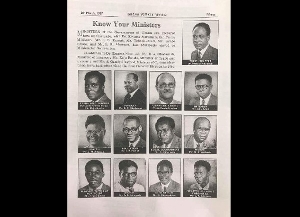
    Osagyefo Dr. Kwame Nkrumah appointed a select group of individuals to assist him in managing the affairs of the nation upon establishing his government as the inaugural president and prime minister.

    Key figures like Dr Kwame Nkrumah, Mr K. A. Gbedemah, Mr Kojo Botsio, and Mr A. Casely-Hayford have held office since the first General Election in 1951.

    Here’s a compilation of the first twelve (12) individuals who undertook ministerial roles in the newly independent Ghana in 1957.

    Trade and Labor, Leader of the House: Kojo Botsio

    Kojo Botsio (21 February 1916–6 February 2001) was a Ghanaian diplomat and politician who, after studying in Britain, served as Ghana’s first Minister of Education and Social Welfare in 1951. He later held the position of Minister for Foreign Affairs twice in Kwame Nkrumah’s government and played a significant role in the ruling Convention People’s Party (CPP).

    Finance: Komla Agbeli Gbedemah

    Komla Agbeli Gbedemah (17 June 1913–11 July 1998), known as “Afro Gbede,” was a Ghanaian politician and Minister for Finance in the Kwame Nkrumah government from 1954 to 1961. Hailing from Anyako in the Volta Region, Gbedemah made significant contributions in the financial sector.

    Communications: Archibald “Archie” Casely-Hayford

    Archibald “Archie” Casely-Hayford, a British-trained Ghanaian barrister, and politician joined the Convention People’s Party in 1951.

    Elected as the Municipal Member for Kumasi, he later became the Minister of Agriculture and Natural Resources in the First Republic under Kwame Nkrumah. He was present when Ghana declared independence on March 6, 1957.

    Interior: Ebenezer Ako-Adjei

    Dr. Ebenezer Ako Adjei (17 June 1916–14 January 2002) was a Ghanaian statesman, politician, lawyer, and journalist. A founding member of the United Gold Coast Convention (UGCC), he played a crucial role in Ghana’s struggle for independence and was part of The Big Six.

    Health: Joseph Henry Allasani

    Joseph Henry Allassani, a Ghanaian teacher and politician, served as the first Health Minister during the first republic of Ghana. He also held a seat in parliament.

    Education: John Bogolo Erzuah

    John Bogolo Erzuah (1914-1979), a Ghanaian diplomat, politician, and teacher, served as a minister of state in 1956. He represented Ghana in various foreign missions from 1957 to 1966.

    Local Government: Kofi Asante Ofori-Atta

    Kofi Asante Ofori-Atta, a Minister for Local Government in Kwame Nkrumah’s CPP government, also served as the Minister for Justice. He later became the Speaker of Parliament in the First Republic of Ghana.

    Works: Nathaniel Azarco Welbeck

    Nathaniel Azarco Welbeck (1915–1972), a Ghanaian politician and diplomat, was a founding member of the Convention People’s Party and a minister of state in the first republic. He briefly served as the resident minister of Ghana in Guinea and Congo.

    Minister Without Portfolio: Krobo Edusei

    Krobo Edusei, a prominent member of Kwame Nkrumah’s government, was a popular Ashanti activist and a key figure in the Ghanaian independence movement.

    Housing: Ashford Emmanuel Inkumsah

    Ashford Emmanuel Inkumsah, a Ghanaian chemist and politician, served in various ministerial portfolios during the First Republic. He also held the position of the First Deputy Speaker of Parliament from 1965 to 1966.

    Agriculture: Kwame Boahene Yeboah-Afari

    Kwame Boahene Yeboah-Afari (13 November 1920–22 May 1996), an educator and politician, served as Ghana’s first Minister for Agriculture and the first Regional Minister for the Brong Ahafo Region. He also represented the Sunyani East constituency in Parliament.

    Minister Without Portfolio: Lawrence Rosario Abavana

    Lawrence Rosario Abavana (1920–29 May 2004), a Ghanaian politician and teacher, served in various ministerial portfolios in the First Republic. He was a member of the Convention People’s Party (CPP) and later a member of the Council of State in the Third Republic.

    In the caption of the March 6, 1957, Ghana Weekly Review, the publication that captured these ministers and their respective portfolios, it reads:

    “Ministers of the Government of Ghana are pictured here on this page, with Dr. Kwame Nkrumah, the Prime Minister. Mr. J. B. Erzuah, Mr. Yeboah-Afari, Mr. Krobo Edusei, and Mr. L. R. Abavana had previously served as Ministerial Secretaries.

    “In addition to Dr. Kwame Nkrumah, Mr. K. A. Gbedemah, Minister of Finance; Mr. Kojo Botsio, Minister of Trade and Labour; and Mr. A. Casely-Hayford, Minister of Communications, have held office since the first General Election in 1951.”

  • Asanko Gold has employed ‘machomen’ to intimidate us – Tontokrom Chief claims

    Asanko Gold has employed ‘machomen’ to intimidate us – Tontokrom Chief claims

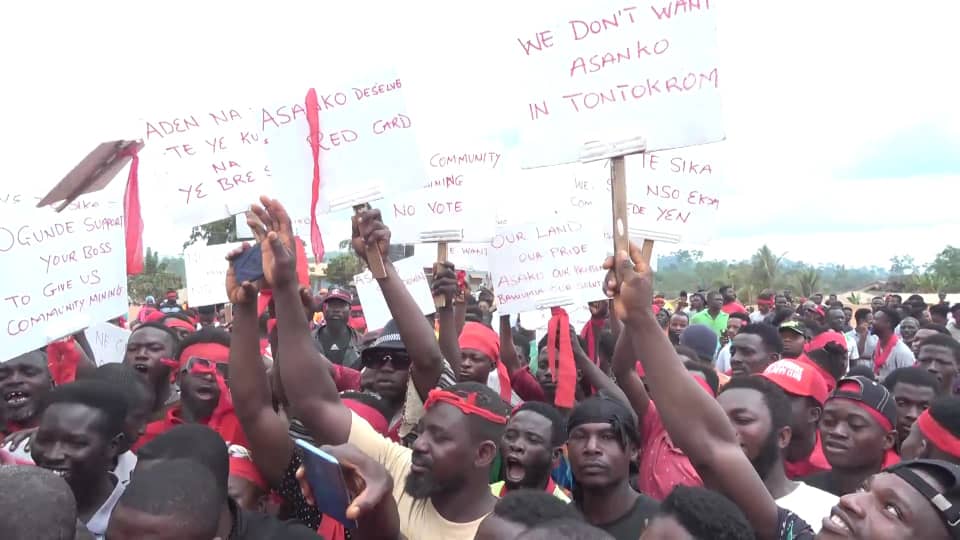
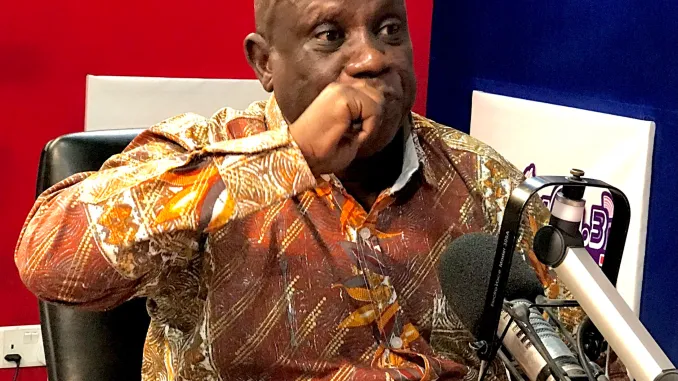
    Chief Nana Adu Gyamfi from Tontokrom has alleged that the managers of Asanko Gold are engaging in intimidation tactics against the youth in the community.

    This accusation follows a reported incident where security officers from the mining firm allegedly fired a gunshot, resulting in the death of a resident.

    Longstanding tension between Asanko Gold and the locals revolves around allegations of youth trespassing on the company’s legally acquired concessions.

    Many of these youths have turned to illegal mining due to a lack of decent job opportunities in the area.

    The recent incident coincides with a Friday protest by residents, urging the establishment of a Community Mining Scheme to address ongoing disputes.

    Expressing his disappointment on Adom FM’s morning show, Dwaso Nsem Monday, Chief Nana Adu Gyamfi stated, “The company always intimidates the youth with machomen, soldiers, and police just to take what belongs to the community. They don’t respect us and refuse to bring any letter of permit to that effect”.

    In his perspective, the community is under threat and being taken advantage of by the company.

    He concluded by urging the president to intervene immediately and issue a community mining license for them.

    Furthermore, he stressed, “The company has not informed us that they have land there. We only want residents in the community to find work to do”.

    “We do not like the conduct of the company. We appeal to the president to immediately intervene and issue a community mining license for us.” he said.
  • Buduburam demolition: Liberians turn basic school into marketplace

    Buduburam demolition: Liberians turn basic school into marketplace

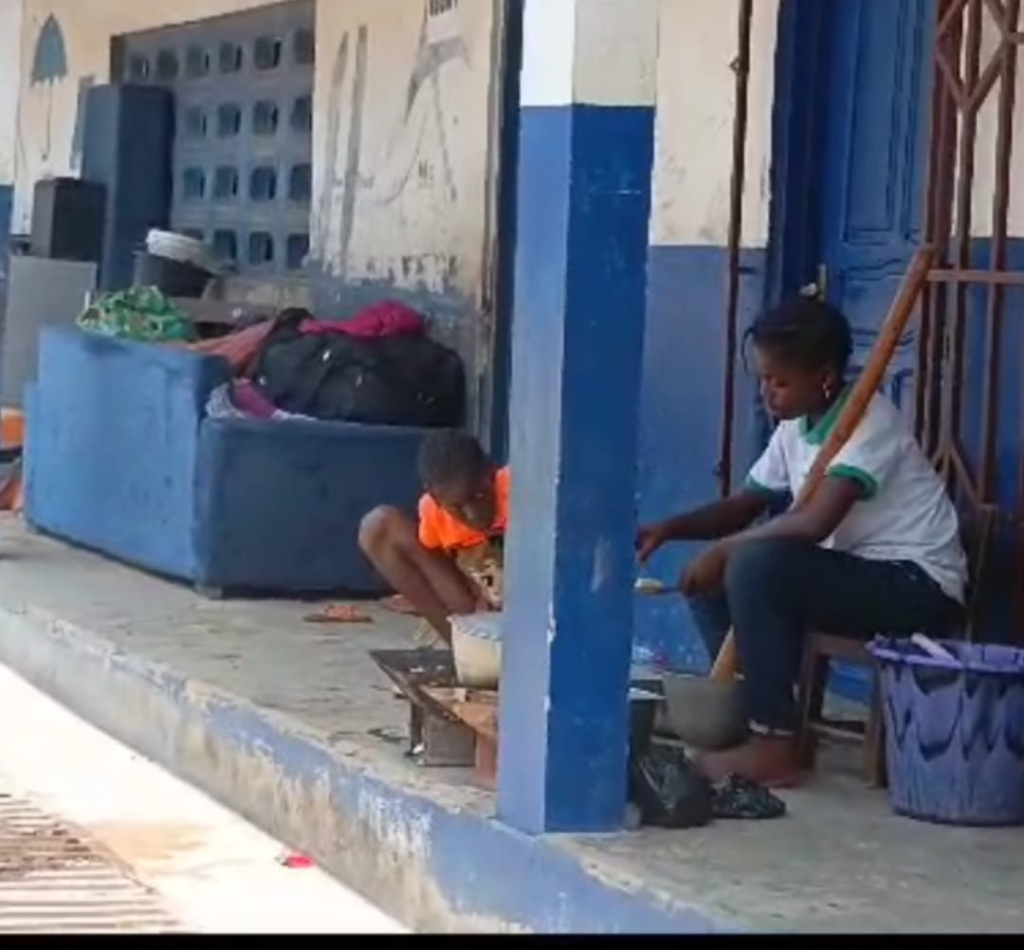
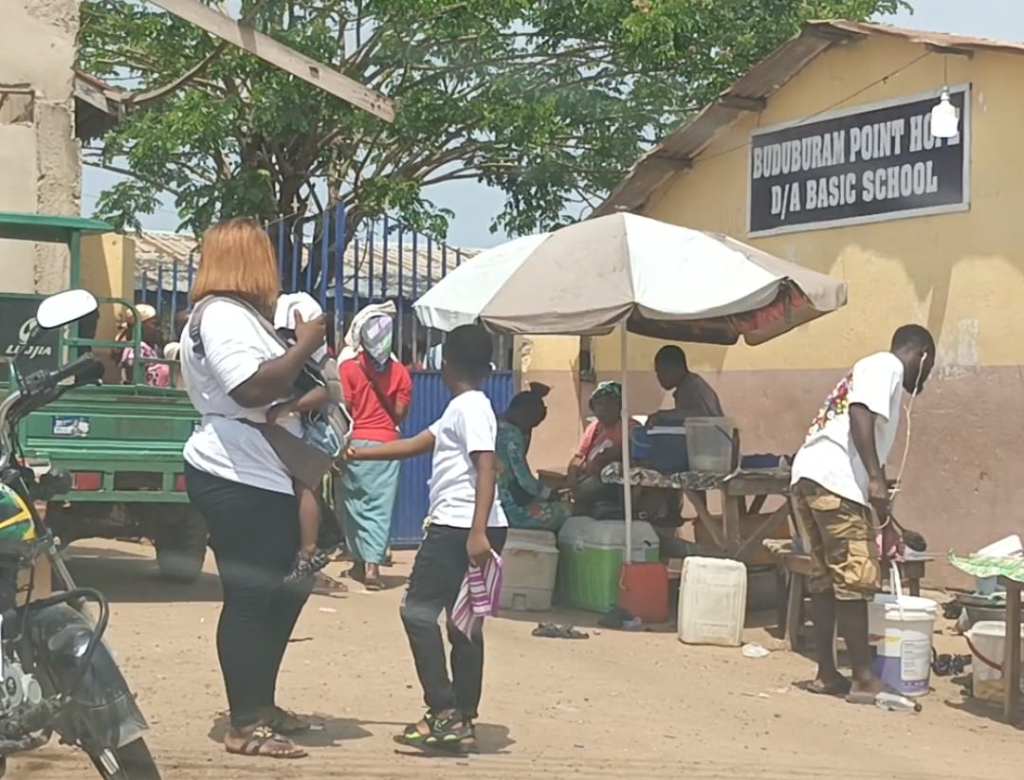
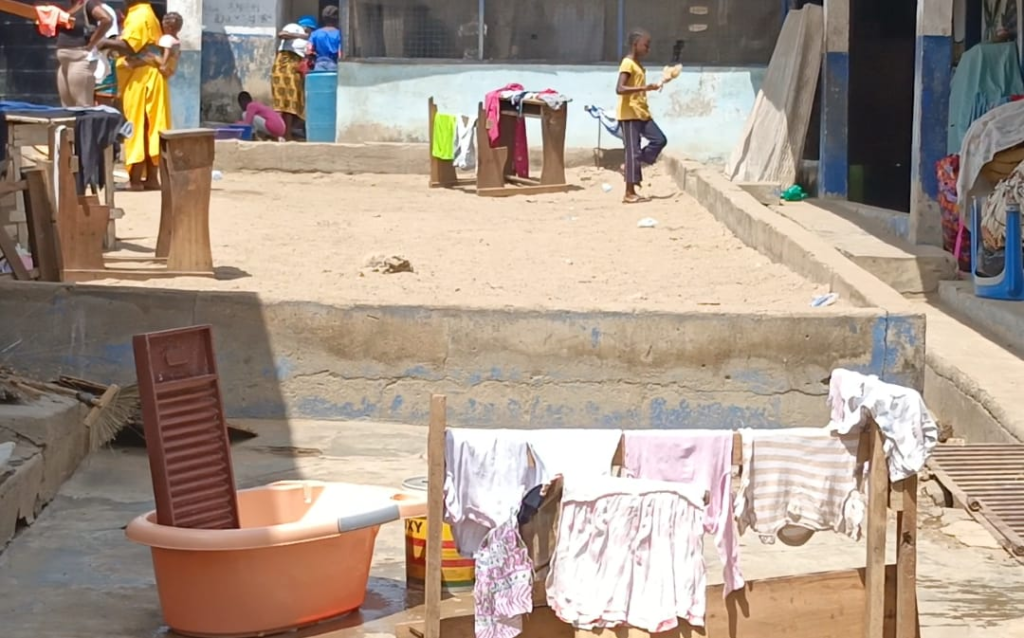
    Liberians, seeking refuge at the Point Hope D/A Basic School following the Buduburam demolition, are now actively involved in trading activities on the premises.

    Apart from engaging in trade, the displaced residents also use the school compound for activities such as pounding fufu.

    The Buduburam demolition, aimed at clearing the area of miscreants, impacted over 5000 individuals.

    Unfortunately, following the exercise, some Liberian nationals took over the school, leaving students stranded.

    The Central Regional Security Council, on Thursday, ordered the displaced residents to vacate the classrooms. Despite the directive, they have refused to leave, citing a lack of alternative accommodations.

    During a visit by Adom News to the school premises, the squatters were observed actively involved in pounding fufu and participating in various trading activities within the school grounds.

  • Mahama’s 24-hour economy proposal lacks substance – Deputy Railway Minister

    Mahama’s 24-hour economy proposal lacks substance – Deputy Railway Minister


    The Deputy Minister of Railway Development and Member of Parliament (MP) for Asante Akim South in the Ashanti Region, Kwaku Asante-Boateng, has opposed the 24-hour economy policy advocated by the National Democratic Congress (NDC) flagbearer, John Dramani Mahama.

    Mr Asante-Boateng criticized the policy, deeming it clichéd and lacking substance. He raised concerns about its foundation, direction, and efficacy in addressing youth unemployment and economic challenges in the country.

    John Dramani Mahama, the 2024 NDC flagbearer, has been steadfast in his commitment to empowering Ghana’s youth with knowledge and skills for a sustainable future.

    His proposal includes the introduction of a 24-hour economy, aimed at maximizing agricultural potential and providing essential social and IT infrastructure to spur economic growth.

    Mahama pledged incentives and tax breaks for manufacturers operating additional shifts to boost employment opportunities.

    ”We will introduce a 24-hour economy with incentives and tax breaks for manufacturers who will run extra shifts to create more room for employment, ” he assured.

    In a recent appearance on the Etifi Nsem show on Onua FM, Asante-Boateng dismissed the NDC’s 24-hour economy proposal as inadequate, expressing disappointment in the opposition’s lack of comprehensive solutions to address unemployment and economic challenges despite their lengthy period in opposition.

    He emphasized that the NDC’s constant fallback on the 24-hour economy as a solution raised questions about its foundation and direction.

    Asante-Boateng went further to assert that the NDC’s promotion of the 24-hour economy is a strategic ploy to garner public support, cautioning against falling victim to such tactics.

    He subtly suggested that choosing the NDC in the upcoming general elections could lead to regret for Ghanaians, emphasizing the need to consider alternative, bold solutions presented by figures like Dr. Bawumia.

  • EC to hold IPAC meeting on March 7

    EC to hold IPAC meeting on March 7

    The Electoral Commission of Ghana (EC) has taken a pivotal step towards addressing the upcoming December 7, 2024 general elections by convening an Inter-Party Advisory Committee (IPAC) meeting scheduled for Thursday, March 7, 2024.

    Responding to mounting pressure from political parties and members of parliament demanding clarity on the election timeline, the EC officially invited party representatives through a letter dated March 1, 2024.

    Signed by Mr. Bossman Eric Asare, Deputy Chairman for Corporate Services at the EC, the invitation instructs each party to send three representatives to the IPAC meeting.

    The central focus of the meeting, slated to commence at 10 am in the IPAC room of the Electoral Commission, is to lay the groundwork for the announcement of election 2024 programs.

    Furthermore, the gathering of political stakeholders provides an opportunity for open discussions on any other pertinent matters relevant to the upcoming elections.

  • You don’t have to dictate Akufo-Addo’s decision on anti-LGBTQ+ bill – Economist to Finance Ministry

    You don’t have to dictate Akufo-Addo’s decision on anti-LGBTQ+ bill – Economist to Finance Ministry

    An Economist at the University of Ghana Business, Dr. Patrick Asuming, has criticized the Finance Ministry’s recent statement urging the president Akufo-Addo not to sign the anti-gay bill, citing potential adverse financial effects on Ghana’s economy.

    He argued that the Finance Ministry’s intervention was premature and emphasized that it is not their role to instruct the president, as the people of Ghana, through their parliamentary representatives, were aware of the bill’s nature during the passage.

    In an interview with Beatrice Adu on 3FM’s mid-day news on March 4, Dr. Asuming stated that the Finance Ministry should not assume that Ghanaians, through their representatives, were unaware of the legislation they were passing.

    While acknowledging the potential financial implications, he stressed that it is not the Finance Ministry’s place to pressure the president to override the expressed sentiments of the Ghanaian people through Parliament.

    “Right from the beginning we have heard from the same development partners sounding the warning of what may happen when the bill is passed but we have to understand that the Finance Ministry cannot use its position as Finance Ministry to stampede the process and to tell the president to override the feelings of the ordinary Ghanaians as expressed through the Parliament of Ghana.

    “So while the possible financial implications may be real I don’t think it is in the place of the Finance Ministry to tell the president not to sign the bill that the people who have passed.

    “Don’t forget that Ghanaians are economic beings but we are also social beings, we are political beings, and cultural beings and it is for Ghanaians to decide if. If you say this bill has economic implications it is for Ghanaians to decide which cause of action to take.”

    Dr. Asuming reminded that Ghanaians are not only economic beings but also social, political, and cultural beings, and the decision on the bill should be made collectively. He highlighted the importance of Ghanaians deciding the appropriate course of action, considering the bill’s economic implications.

    The Ministry of Finance, on March 4, outlined the dire consequences of the president assenting to the anti-LGBTQ+ Bill, including a potential loss of significant financial support from international institutions like the World Bank. The Ministry detailed the possible impact on budget support, financial stability funds, ongoing projects, and pipeline projects, cautioning that the loss of these financial resources could lead to a financing gap in the 2024 budget, requiring additional domestic revenue mobilization and substantial expenditure reduction.

  • Selected professionals who will conduct 2024 elections to vote December 2 – EC

    Selected professionals who will conduct 2024 elections to vote December 2 – EC

    The Electoral Commission (EC) is set to conduct a special voting day on December 2, 2024, allowing professionals such as security agencies and accredited media practitioners, who will be on duty during the main election day on December 7, 2024, to cast their ballots.

    Nominations for candidates will be accepted from September 9 to 13, with the presidential and parliamentary balloting scheduled for September 23 and 24, 2024, respectively.

    In an effort to expedite the announcement of the 2024 presidential poll results within three days, the EC has outlined various key dates in the political calendar.

    The voter registration exercise is planned for May 7 to May 27, 2024, followed by a nationwide effort to replace missing voter ID cards starting May 30, 2024.

    A comprehensive 56-day public education campaign will run from April 1 to May 26, 2024, ahead of the registration exercise.

    Special Voting, a unique opportunity for registered voters engaged in election duties, will be available to security officials, accredited media personnel, and Electoral Management Body (EMB) staff.

    These individuals must submit an application to the EC, showing proof of their election-related responsibilities.

    Special Voting, which only occurs during general election years, involves casting ballots in a constituency where the individual will be working on the main Election Day.

    The EC plans to present the provisional voters’ register to political parties between July 9 and 18, 2024, and conduct an exhibition of the register from July 15 to 24, 2024.

    The final voters’ register is expected to be submitted to political parties between August 30 and September 5, 2024. The EC will also engage stakeholders and the public through various initiatives, including the “Let the Citizen Know” series.

    “Special Voting” is an opportunity given to certain registered voters to cast their ballots on a date earlier than the advertised national voting day because such persons will be considered too occupied on the day ensuring the smooth running of the elections.

  • Anti-gay bill: Ghana is not part of your States; leave us alone  – Sam George to US

    Anti-gay bill: Ghana is not part of your States; leave us alone – Sam George to US

    The Member of Parliament (MP) for Ningo-Prampram, Sam Nartey George, has responded to the ‘threat’ from the United States government regarding Ghana’s Promotion of Human Sexual Rights and Family Values Bill (anti-LGBT+ bill).

    In an interview with Nigeria-based News Central TV on March 3, 2024, Sam George accused the US government of hypocrisy, pointing out that they freely trade with Arab countries like Qatar, where engaging in homosexual activities is punishable by death.

    He emphasized Ghana’s independence and the liberty to enact laws that govern its people, asserting that American businesses operating in Ghana are there for profit, not solely due to LGBTQ issues.

    Sam George stated, “Ghana is not the 51st state of the United States. Tell the American people. You either do business with us on our terms, or you can walk.

    “American businesses that operate in Ghana are not in Ghana because of LGBTQ. They’re in Ghana because they make a profit. If you think that because we are protecting our cultural values and saying no to LGBTQ, you want to lose $100 million in profit, pack up and go,” Sam George said.

    He added, “Africa must begin to assert our rights. We are not puppets and stooges of the West. And it’s just the sheer hypocrisy of America and the West. Qatar buys a billion dollars of military hardware every year from America. The punishment for homosexuality in Qatar is death… the maximum in Ghana’s law is just three years.”

    Regarding the passage of the anti-gay bill, Ghana’s Parliament passed the Promotion of Human Sexual Rights and Family Values Bill on February 28, 2024.

    The bill, awaiting presidential assent, criminalizes and proscribes LGBT activities, along with their promotion, advocacy, and funding. Offenders face jail terms, with the bill requiring presidential assent within seven days or parliamentary approval by a two-thirds majority if rejected.

    The US government responded by threatening serious consequences if the bill becomes law. Matthew Miller, a spokesperson for the United States State Department, stated that the US administration is in discussions with Ghana to prevent the bill’s passage.

    He warned that the bill could lead to sanctions similar to those imposed on Uganda, which passed an anti-gay law in 2023.

    The US government supports Ghana with aid, and Miller emphasized potential ramifications on US assistance, affecting areas such as agriculture, malaria prevention, HIV/AIDS control, and military assistance.

    In a statement, Miller argued that Ghana’s anti-LGBT+ bill violates the rights of its citizens, damages its international reputation, and jeopardizes economic agreements.

  • I will give soft loans to traders in Central Region to boost their businesses – Alan Kyerematen

    I will give soft loans to traders in Central Region to boost their businesses – Alan Kyerematen

    The Founder of the Movement for Change, Alan Kyerematen, has vowed to transform the Central Region into West Africa’s financial services hub if elected president.

    Expressing dissatisfaction with both the NPP and NDC, Kyerematen pledged to uplift the fortunes of the Central Region, emphasizing its historical significance as a former capital.

    Believing the region holds untapped potential, Mr Kyerematen committed to establishing the largest financial services center in West Africa to boost trade activities and enhance the local economy.

    “There is no major project the people of the Central Region have benefited from. The Ashanti, Western and Greater Accra Region have benefited but the Central Region has not and that is why I want to make the Central Region the International Financial Services Centre of West Africa. This will help open up the region to investors. This will be done within two years of assuming office as the President of the Republic,” he added.

    “The Central Region has the Majority of UNESCO World Heritage sites in Ghana and the people of the Central Region must take advantage of it to boost the economy of the region. My leadership will invest heavily in that sector to boost the sector,” Mr Kyerematen said.

    “The Traders Market initiative will see market women have soft loans to invest in their businesses. The Bank will specifically be set up for traders since they don’t have a bank on their own that serves their interest.”

    He criticized the lack of major projects benefiting the Central Region under the administration of the NPP and NDC and promised to make it the International Financial Services Centre of West Africa within two years if elected president.

    Mr Kyerematen also aims to promote the Central Region as a tourism hub, leveraging its abundance of UNESCO World Heritage sites. He plans to invest significantly in the sector to bolster the region’s economy.

    Expressing concern about the region’s poor market infrastructure, Mr Kyerematen assured improvements during his presidency. Additionally, he announced plans to establish a traders’ bank to provide financing for market women through soft loans to invest in their businesses.

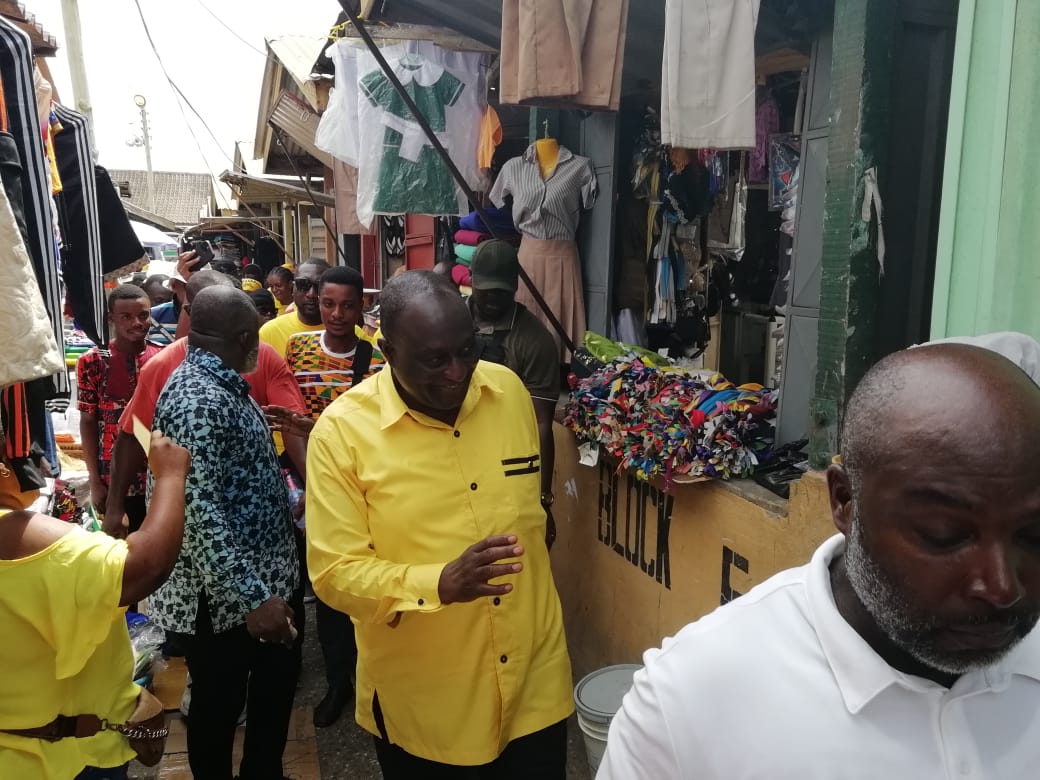
    Traders across various markets, including Kasoa, Winneba, Agona Swedru, Cape Coast, and Elmina, greeted Kyerematen with excitement, considering him a beacon of hope for the country’s economic development.

    They expressed disappointment with the performance of the major political parties (NPP and NDC) and believe Mr Kyerematen will bring about positive change if elected president.

  • Bridget Otoo’s husband ‘shames’ Prof Gadzekpo over “LGBTQ among Ga people” comment

    Bridget Otoo’s husband ‘shames’ Prof Gadzekpo over “LGBTQ among Ga people” comment

    Husband of prominent Ghanaian broadcaster Bridget Otoo, Dr. Evans Ago Tetteh, has dismissed claims made by the Board Chair of the Ghana Center for Democratic Development (CDD-Ghana), Professor Audrey Gadzekpo.

    Professor Audrey Gadzekpo had claimed that various Ghanaian cultures, including Ga and Nzema, historically incorporate homosexual practices.

    However, she did not specify the particular rituals or ceremonies within these cultures where such practices purportedly took place, leaving room for skepticism regarding the alleged integration into their cultural heritage.

    “The whole argument Mr Sam George advances, and it seems very logical that if you go into our history, because Kojo Besia is a coinage, it doesn’t mean that we practice it; look, I have heard people who were against the bill but have admitted that when you look into some of our cultural practices, there are homosexual practices. It didn’t come from the West,” she stated.

    “Which one? Well, I was in a training, and somebody told us that when you look in… there are practices in Ga culture, there are practices in Nzema culture, for example, that sociologists have documented,” she stated.

    Addressing the matter on the X platform, Dr. Evans Ago Tetteh emphasized that while the Gas have coexisted with queer individuals in their communities for centuries due to their inclusive nature, it does not imply that such practices are inherent in their cultural traditions.

    He asserted that there is no evidence of any homosexual practices within Ga culture, despite the belief among the Ga people that God embodies both masculine and feminine qualities.

    He cautioned Professor Audrey Gadzekpo against making baseless allegations without proper substantiation.

    “Ma’am there’s no single homosexual practice in Ga culture even though we believe God is both a man and a woman. Stop misleading people. Gas have lived with queer people in our societies for centuries because we are accomodative but doesn’t mean it’s imbibed in our culture,” he wrote.

  • Sam George recounts details of his life as a young boy who grew up in Nigeria

    Sam George recounts details of his life as a young boy who grew up in Nigeria

    A proponent of the LGBTQ bill, Sam George, has recalled the warm reception he received while growing up in Nigeria.

    According to him, while schooling at Command Day Secondary School in Osun, Nigeria, he could go to school and get home alone without his parents being worried about his safety.

    “Growing up in Nigeria, I could walk to my neighbors house and have a meal with them. My parents weren’t scared when I attended Command Day Secondary School in Osugun at Nafri Barack knew I was going to school and come back, they weren’t  afraid their son was going to get killed by a child who has been affected mentally because he is transgendered,” he sated.  

    He disclosed this in an interview with the Nigeria-based television station News Central TV.

    He added that the serene environment he enjoyed while in Nigeria is the same being exhibited in Ghana as children go to school and return safely.

    This, Sam George said, has left parents focused on their day-to-day activities because they can vouch for the safety of their wards during and after the close of school.

    “In Ghana today, children go to school and play on their way back home and their parents are safe, their parents are able to contribute to Ghana’s Economic Development because they know their children are safe,” he added.

    Sam George shared this information while discussing the effects of LGBTQ on countries. He stated that not opposing LGBTQ activities could be detrimental to the lives of innocent children living in the country.

    He cited a recent incident that happened in the United States (US) where a young man massacred 22 kids. “In Ghana today, children go to school and play on their way back home and their parents are safe, their parents are able to contribute to Ghana’s Economic Development because they know their children are safe,” he added.

    Sam George shared this information while discussing the effects of LGBTQ on countries. He stated that not opposing LGBTQ activities could be detrimental to the lives of innocent children living in the country.

    He cited a recent incident that happened in the United States (US) where a young man massacred 22 kids.

    Sam George alleged that the individual’s action was fueled by a mental disorder he was battling with after he underwent gender transition. To him, African leaders must stand tall and prohibit the dire consequences LGBTQ activities will bring to the country.

    Parliament on Wednesday, the February 28 2024, passed the Proper Human Sexual Rights and Ghanaian Family Values, also known as the anti-LGBTQ bill. 

    The legislation prohibits lesbian, gay, bisexual, and transgender (LGBT) activities and criminalizes their promotion, advocacy, and funding in the country.

    The bill awaits approval from President Akufo-Addo for implementation.

    The United States of America (USA) has warned that Ghana’s public health, media, civic spaces, and economy could be affected should the bill be endorsed.

    In a statement, US State Department Spokesperson Matthew Miller stated that the legislation threatens Ghana’s tradition of tolerance, peace, and respect for human rights. 

    Mr. Miller has called for a review of the bill to safeguard the rights of all individuals in Ghana, citing its inconsistency with the country’s values.

  • Vote NPP out of office for collapsing cocoa sector – Economist to farmers

    Vote NPP out of office for collapsing cocoa sector – Economist to farmers

    A Chartered Economist and member of the National Democratic Congress (NDC), Bernard Oduro Takyi (BOT), has urged farmers to oppose the New Patriotic Party (NPP) government in the upcoming 2024 elections, attributing the decline of the agriculture sector to their policies.

    BOT highlighted that government budget statements and data from the Ghana Statistical Service indicate a contraction in the agricultural sector since President Akufo-Addo assumed power.

    According to him, figures from the budget reveal that the agricultural sector experienced growth during the Mahama era but started to decline under Akufo-Addo‘s administration.

    Specifically pointing to the cocoa sector, BOT noted a significant downturn under Akufo-Addo, attributing it to the discontinuation of free fertilizers for cocoa farmers by the current government, emphasizing the negative impact on the sector.

    BOT also criticized the suspension of the Cocoa road projects initiated by the Mahama administration to rehabilitate feeder roads in Cocoa-growing areas, claiming that Akufo-Addo halted these projects to tarnish the image of the former COCOBOD boss, Dr. Opuni.

    He alleged that the government spent substantial amounts on an audit by Kroll and Associates yet failed to publish the report confirming the project as a clean contract.

    Encouraging cocoa farmers affected by the Akufo-Addo government’s policies to protest, BOT declared, “The cocoa sector has collapsed under President Akufo-Addo. Farmers should vote the NPP government out on December 7 as their way of expressing protest.”

    Additionally, BOT assured farmers that the cocoa road projects would resume under the next NDC/John Mahama government.

    The Chartered Economist made these remarks during an interview on Accra-based Power FM.

  • Anti-LGBTQ+ bill: “Africans are not puppets and stooges of the West” – Sam George

    Anti-LGBTQ+ bill: “Africans are not puppets and stooges of the West” – Sam George

    Member of Parliament for Ningo-Prampram, Sam Nartey George, has stated that Africans are not individuals who can be manipulated by the West for selfish interests. 

    In an interview with Nigeria-based television station News Central TV, he indicated that it’s long overdue for African countries to object to the rule and intimidation from the West.

     “Ghana is a fertile ground for business; Africa must begin to assert our rights. We are not puppets and stooges of the West,” he added.

     His comments come after parliament, on Wednesday, the February 28 2024, passed the Proper Human Sexual Rights and Ghanaian Family Values, also known as the anti-LGBTQ bill. 

    The legislation prohibits lesbian, gay, bisexual, and transgender (LGBT) activities and criminalizes their promotion, advocacy, and funding in the country.

    The bill awaits approval from President Akufo-Addo for implementation.

    The United States of America (USA) has warned that Ghana’s public health, media, civic spaces, and economy could be affected should the bill be endorsed.

    In a statement, US State Department Spokesperson Matthew Miller stated that the legislation threatens Ghana’s tradition of tolerance, peace, and respect for human rights. 

    Mr. Miller has called for a review of the bill to safeguard the rights of all individuals in Ghana, citing its inconsistency with the country’s values.

     However, Sam George, who is also the proponent of the LGBTQ bill, has indicated that President Akufo-Addo must be confident enough to assent to the bill as Ghana stands to lose. 

    He emphasized that American businesses operate in Ghana to make profits and not because of LGBTQ-related agendas.

    According to him, no American business owners in Ghana will cease operations if they are making huge profits just to oppose the country’s cultural values.

    He added that whoever will not be comfortable with what the country supports can suspend their businesses, as those willing to will come and occupy their spaces.

    “Well Ghana is a proud African Nation, first country in sub saharan Africa to gain independence and lead a light for the rest of Africa. I expect the leaders of our country, the president of our country to stand shoulder high and tell the American people you either do business on our terms or you can walk. 

    “American businesses that operate in Ghana are not here because of LGBTQ, they are here because they make a profit. If you are an American business working in Ghana and you turn 100 million dollars in profit every year, if you think that because we are protecting our cultural values and say no to LGBTQ you want to lose a 100 million dollars in profit, pack up and go another company to come to Ghana and do business, he added.


  • Koforidua to host 67th Independence Day celebration

    Koforidua to host 67th Independence Day celebration

    Ghana’s 67th Independence Day celebration will be held at the Youth Resource Centre in Koforidua in the Eastern Region, the Ministry of the Interior has announced.

    The day for the celebration is slated for Wednesday, March 6, 2024, as such government offices and agencies, schools, and businesses are expected to be closed in honour of the day.

    “The general public is hereby informed that Wednesday, 6th March 2024 which marks Independence Day, is a Statutory Public Holiday and should be observed as such throughout the country.”

    Independence Day carries significant importance for Ghanaians, representing the sacrifices made by the country’s forefathers for freedom and sovereignty.

    Citizens engage in diverse celebratory activities, including flag-raising ceremonies, cultural performances, and national and district parades, all aimed at fostering patriotism and unity.

  • I’m happy Apostle Ben York is dead, he made my dad call my mum a witch, he uprooted bones in our house – Lady

    I’m happy Apostle Ben York is dead, he made my dad call my mum a witch, he uprooted bones in our house – Lady

    The passing of Apostle Ben York has elicited mixed emotions for a lady, Akosua Kanewu Vawulence, who took to Facebook to express her feelings.

    While acknowledging the sadness associated with the news, she revealed a sense of happiness over the demise of the Ghanaian pastor due to the alleged harm he caused her family.

    Akosua shared that the sadness stemmed from the memories of the encounters between the late Apostle Ben York and her father, of which she was a witness. However, the source of her happiness lies in the belief that a false prophet is no longer active.

    In her Facebook post, she recounted how the pastor, whom she referred to as a false prophet, played a role in causing her father to label her mother as a witch. The false accusations spread throughout the town of Nkawkaw, leading to the upheaval of her family.

    Akosua Kanewu Vawulence wrote:

    “A brother Moor Grace tagged me in a post and I saw this man dead! Today doubles as a a sad day and a happy day.

    I’m sad because it reminded me of all the encounters with my dad , which I witnessed and I’m happy because a false prophet is out of the game! He destroyed my dad’s life and I’ll never forgive him for that.

    This man is the reason my mum was called a witch by my dad and it was all over Nkawkaw township. He uprooted bones in our house and blamed my mum for it. That was how he break our family up and my mum had to deal with the stigmatization!

    Nobody should preach to me about forgiveness cos I already know about it but I’m so happy about his death. He should rest in pieces 😬😬😬😬“

  • 30% priority on SHS placement system must be scrapped – GNAPS to govt

    30% priority on SHS placement system must be scrapped – GNAPS to govt

    The Chairman of the Ghana National Association of Private Schools (GNAPS) in the Eastern Region, Michael Adjei Sakyi, has urged the government to reconsider the 30 percent priority placement system.

    This system reserves 30 percent of available vacancies in Category ‘A’ schools for public schools before allocating the remaining 70 percent based on merit to both public and private schools.

    Mr. Sakyi highlighted that this policy, along with other challenges faced by private schools, is contributing to the collapse of the private school sector.

    He made this plea during a private education stakeholder engagement organized by GNAPS in Koforidua, the Eastern Regional Capital, focusing on leveraging the potential of private education for quality and holistic learning. Mr. Sakyi emphasized the need for a policy review to sustain private schools.

    The Director in Charge of Licensing of Teachers at the National Teaching Council (NTC), Francis Addai, addressed participants, stating that the Education Regulatory Bodies Act 2020, Act 1023, empowers the NTC to register and license all teachers in the country.

    He emphasized the prohibition of engaging non-professional teachers, with provisions for training and certification. Mr. Addai informed that the NTC has already trained approximately 4,720 teachers in the Greater Accra Region and commenced issuing licenses.

    The New Juaben North Municipal Chief Executive, Dr. Asante Antwi, encouraged teachers lacking the requisite qualifications to strive for them to enhance the delivery of quality education in the region.

    The participants, including representatives from GES, the National Schools Inspectorate Authority, heads of institutions, politicians, pupils, teachers, and school owners, voiced their concerns through placards.

    “Stop the discrimination, private schools matter,” “High government charges kill private schools,” “Private schools are partners, not competitors”, and “Private schools demand justice and equity, not charity”, among others.

  • 24-hour economy won’t work, bring another policy – Ghanaian to NDC

    24-hour economy won’t work, bring another policy – Ghanaian to NDC

    A man in a viral video has stated that the Ghanaians will not cast their votes to the flagbearer of the National Democratic Congress (NDC), John Dramani Mahama come December 7.

    He explained that John Dramani Mahama’s intention to implement a 24-hour economy is a fiasco as it is a way to scam Ghanaians.

    According to him, Mahama must come up with a policy that will garner support from electorates and not one that will not contribute to the development of the country.

    “NDC National Chairman, Aseidu Nketia, JohnDramani Mahama and Fiifi Kwetey, Ghanaians say your 24-hour economy is a scam. Bring another plan on board It won’t work,” he added.

    Mahama’s proposal for a 24-hour economy forms a key component of his 2024 presidential election agenda, driven by the belief that such a policy would significantly contribute to economic expansion and youth employment.

    In commemoration of the 2023 International Youth Day, Mahama affirmed his administration’s commitment to nurturing a skilled and entrepreneurial youth.

    However, Mr. Kyerematen has stressed that the successful realization of this ambitious goal necessitates robust frameworks for industrialization, comprehensive infrastructure development, and a thriving tourism sector.

    Despite Mahama’s economic policy drawing support, it has faced criticism, notably from Vice President Dr. Mahamudu Bawumia.

    During his Northern Region tour, Dr. Bawumia expressed skepticism about the feasibility of implementing a 24-hour economy.

    He argued that such an endeavor requires a profound understanding of its implications and prerequisites.

    “I hear John Mahama has a new idea, and he wants to run a 24-hour economy. I say, where did he get this idea from? It is not a bright idea! A 24-hour economy cannot be legislated by the government. Today, there are many businesses that are already working for 24 hours. Hospitals are open for 24 hours. You can buy electricity for 24 hours. Because of digitalization, you can transfer money for 24 hours. There are many chop bars and restaurants that are open for 24 hours,” said Dr. Bawumia.

    Watch video below:

  • Ghana to mark 67th Independence Day on March 6

    Ghana to mark 67th Independence Day on March 6

    The Ministry of the Interior has officially designated Wednesday, March 6, 2024, as a public holiday to mark Ghana’s 67th Independence Day celebration.

    In commemoration of this significant day, government offices, agencies, schools, and businesses are slated to remain closed as a mark of respect.

    Henry Quartey, the Minister for the Interior, emphasized the importance of observing the day, stating in a release, “The general public is hereby informed that Wednesday, 6th March 2024, which marks Independence Day, is a Statutory Public Holiday and should be observed as such throughout the country.”

    Independence Day is a poignant occasion for Ghanaians, symbolizing the sacrifices made by the country’s forefathers for freedom and sovereignty.

    During this celebration, citizens engage in various activities, including flag-raising ceremonies, cultural performances, and national and district parades, fostering a sense of patriotism and unity.

    This year’s national anniversary festivities are scheduled to take place at the Youth Resource Centre in Koforidua, Eastern Region.

    “The general public is hereby informed that Wednesday, 6th March 2024 which marks Independence Day, is a Statutory Public Holiday and should be observed as such throughout the country.”

  • We are yet to take stance on anti-LGBTQ+ bill passage – Peace Council

    We are yet to take stance on anti-LGBTQ+ bill passage – Peace Council

    The Chairman of the National Peace Council, Rev. Dr. Ernest Adu-Gyamfi, clarified that the council remains neutral on Ghana’s Parliament approving the anti-LGBT+ bill, citing their role as mediators and abstaining from taking sides on contentious issues.

    Speaking on TV3’s Hot Issue program, he mentioned that the council is closely monitoring the situation and will consider mediation if conflicts arise.

    He emphasized,”We don’t have a position on the passage of the anti-LGBTQ+ bill because we are mediators; we don’t take sides on issues like this”.

    The passage of the bill has sparked debate within Ghana, drawing attention from the international community, including concerns raised by the U.S. embassy in Accra.

    Gabby Otchere-Darko, a leading member of the New Patriotic Party (NPP), defended Parliament’s decision, urging those opposed to the bill to seek legal recourse if they find it unconstitutional.

    “There are several issues that have come to us that people expected us to take sides on, but we realized it was important to remain neutral when they later came for conflict resolution.

    “We are waiting to see how things will unfold so we know if to mediate/intervene in the event of a conflict.”

    He emphasized the democratic process but acknowledged the potential consequences, urging media and politicians to inform the public about the bill’s pros and cons.

    Mr Otchere-Darko highlighted the importance of respecting Ghana’s sovereign state status and cultural norms while suggesting a balance between traditional family values and values of tolerance and diversity.

    “Ghana’s Parliament, in which is vested the sovereign will of the people, has democratically passed a harsher anti-LGBTQ+ Bill. Yes, democratically! In fact, the threat of being unseated for standing for the rights of gays, etc., certainly created its own culture of silence in the House! But, it is the decision of Parliament and one which enjoys huge popular support in the country.

    “The world must understand that. But Ghanaians must also understand that it comes with consequences. Choices have consequences. We expect the media and the politicians to be fair to the people by letting them know the pros and cons of this decision to impose stiffer penalties against gays, etc. We also expect those who believe the bill is constitutionally wrong to do what is right and go to court.

    “That is democracy! Our institutions of democracy are still strong and alive. Let’s have faith in our democracy. Let’s respect the choices we make and their consequences and believe in the process. Ghana remains a sovereign state with cultural norms that cannot be wished away but must be respected.

    “I still believe, though, that we can balance our traditional family values with our traditional values of tolerance and diversity. That’s the Ghanaian way. The Ghanaian culture. The Ghanaian spirit. Our history. Our DNA. That is Ghanaian,” he expressed.

    Commissioner of the Commission on Human Rights and Administrative Justice (CHRAJ), Joseph Whittal, expressed concerns about potential legal challenges if the bill is signed into law by the President. He advised careful handling due to the bill’s possible impact, emphasizing the need to respect Ghanaian values.

  • Ejisu Secondary Technical School dormitory ripped off by rainstorm

    Ejisu Secondary Technical School dormitory ripped off by rainstorm

    More than 150 students at Ejisu Senior High Technical School in the Ejisu Municipality of the Ashanti Region find themselves without shelter following a severe rainstorm on the evening of Saturday, March 2, 2024.

    The male dormitory block bore the brunt of the storm, intensifying the discomfort for the school, already grappling with congested male dormitories.

    Persisting for nearly two hours, the violent downpour impacted seven classrooms, resulting in the unfortunate soaking of learning materials.

    The adjacent Ejisu Krapa Basic School and Ejisu Experimental Basic Schools, Samuel Oduro Frimpong, also experienced the adverse effects of the storm.

    The Municipal Chief Executive of Ejisu, who has been evaluating the extent of the damage, assured that despite the challenges, the school would not be closed.

    He acknowledged the discomfort faced by students but emphasized the importance of maintaining the academic calendar.

    Plans to address the housing crisis for affected students are underway, with a meeting scheduled with school authorities to discuss the best course of action.

    The Municipal Education Director, Kwabena Owusu, acknowledged the severity of the damage but expressed determination to provide temporary solutions while repairs are carried out.

    “I thought of breaking the student to go home for their parents to see them but we also have to consider the academic calendar as well. So we will meet the head and members of the teaching staff of the school to discuss the issue in the interest of teachers and students as well. We don’t want them to go home and return to do what they were supposed to learn this semester in the next semester before we break on Tuesday. We want to assure parents that we are also parents, so we make sure they get a better place to sleep before we end the term.”

    “The situation is not proper. We are preparing a place for them now. This morning, we met the student population with the support of the head mistress. We comforted them and told them that we are with them. We have told them to support us to get them a place to lodge their heads. The building affected by the rains is the oldest building in the school. We are currently taking an estimate after that we will communicate with the MP Hon. John Kuma to get it done for the students to return to their school’’ he assured.

    He highlighted collaborative efforts with the students and urged their assistance in finding suitable temporary lodging.

    The affected building, identified as the oldest on the school premises, is being assessed for repairs, with plans to engage local representatives to facilitate swift action for the students’ return.

  • NPP’s South MCE for Akwapim loses primary

    NPP’s South MCE for Akwapim loses primary

    On Saturday, March 2, 2024, the Municipal Chief Executive of Akwapim South in the Eastern Region faced defeat in the New Patriotic Party (NPP) primaries aimed at selecting a parliamentary candidate for the 2024 general elections.

    Mr. Frank Aidoo accumulated 67 votes during the polls, while his primary competitor, Eric Yeboah Apeadu, suspected to be the personal assistant to the incumbent Member of Parliament, secured a substantial lead with 267 votes.

    The present Member of Parliament for Akwapim South Constituency, had previously announced his decision not to partake in the December 7 polls due to personal reasons.

    In the race, another contender, Mr. Annor Mensah, received 54 votes, and Mr. Kwame Ofori Gyau surpassed the Municipal Chief Executive (MCE) by acquiring 152 more votes than Mr. Aidoo.

  • Sanitizer, liquid and washing soaps: Otumfuo’s daughter making it big in the detergent-production industry

    Sanitizer, liquid and washing soaps: Otumfuo’s daughter making it big in the detergent-production industry

    The private life of one of Ghana’s highly esteemed monarchs, Otumfuo Osei Tutu II, has traditionally been shrouded in secrecy, particularly concerning the number of children he has with his wife, Lady Julia Osei Tutu.

    However, a recent emergence of a video on social media has brought one of the King’s children into the public eye.

    Dr. Caryn Agyeman Prempeh, affectionately known as Ohemaa, has surfaced as an entrepreneur in the detergent-production business.

    A Biomedical Science graduate from the University College of London and a medical degree holder from the School of Medical Science at KNUST in Kumasi, she is the proud owner and CEO of Ohemaa Detergents.

    Despite her royal lineage, Dr. Caryn Prempeh has forged her own path in the detergent-producing industry.

    In 2020, amidst the challenges of the coronavirus pandemic, she transformed her skills into entrepreneurship, creating sought-after detergent products. Her product line includes alcohol-based sanitizer, liquid and washing soaps, and baby detergents, all FDA-approved.

    Dr. Caryn Prempeh’s products are uniquely designed for all skin types, and her social media presence reflects her distinctive marketing style, incorporating music and dance in carefully crafted videos for her customers.

    In interviews, Dr. Caryn Agyeman Prempeh attributes her passion for business to her late grandmother, Ohemaa Afia Kobe Serwaa Ampem II, after whom she was named. She acknowledges the influence of her family matriarchs, particularly her aunt and grandmother, who instilled a sense of responsibility and care in her from an early age.

    Beyond her entrepreneurial endeavors, Dr. Caryn Prempeh has worked as a resident medical officer at Claron Health International, as well as at 37 Military and Komfo Anokye Teaching Hospitals. She is also the founder of the non-profit organization ‘CERVIVA,’ dedicated to raising awareness and educating women on cervical cancer.

  • My birthplace, Jamestown, now a “mess” of homosexuality – Rev. Lawrence Tetteh

    My birthplace, Jamestown, now a “mess” of homosexuality – Rev. Lawrence Tetteh

    The founder and president of Worldwide Miracle Outreach, Rev. Lawrence Tetteh, has raised concerns about his birthplace, Accra Jamestown, transforming into what he deems a ‘notorious’ neighborhood for homosexuals.

    In an interview with GTV’s morning show, the religious leader, born in the primarily Gas-inhabited community, expressed dismay over the current state of Jamestown, describing it as a “mess.”

    Rev. Lawrence Tetteh highlighted the apparent openness of indigenes to endorse and practice various LGBTQ+ activities, emphasizing the negative consequences he perceives.

    “I was born in Jamestown, and it is a privilege to be born in Jamestown. But in that community, when you go there now, it’s a mess. Why should we impose LBGTQ+ on our children? Why do we want to destroy our nation,” he lamented.

    He questioned the imposition of LGBTQ+ values on children and lamented the potential impact on the nation.

    His comments come in response to international pressure for the acceptance of LGBTQ+ practices in Ghana.

    This debate intensified following the passage of the Human Sexual Rights and Family Values Bill (anti-LGBTQ+ bill) on February 28, 2024.

    The international community has expressed disapproval and issued warnings of potential economic challenges if the bill receives President Akufo-Addo’s assent.

  • Meet the Guan woman who became Ga’s first female king, Naa Dode Akabi

    Meet the Guan woman who became Ga’s first female king, Naa Dode Akabi

    Naa Dode Akabi, who ruled the Ga state for over 25 years (1610-1635), remains a controversial figure, dividing opinions among both those she ruled and historians chronicling her story.

    Historians are split into two factions regarding her legacy.

    Some portray her as an unpopular, tyrannical figure who forcefully assumed the powerful seat of ‘king,’ while the majority describe her as a trailblazer, breaking gender, ethnic, and religious barriers to become the Ga people’s first non-male, non-Ga, and non-priest leader.

    Despite the differing perspectives, both groups appreciate her as a great leader who skillfully blended indigenous Ga rulership methods with European styles, effectively governing the Ga people for nearly three decades.

    Her reign focused on powerful legislations empowering women and transitioning the Ga state from a theocracy to a law-based system.

    Naa Dode Akabi, originally a Guan princess from the Awutu people, became associated with the Ga state through marriage to the powerful Ga chief Mampong Okai.

    Supporting her husband, she played a crucial role in expanding the Ga state’s influence along coastal areas.

    After her husband’s death in 1610, she became the regent, breaking tradition to prevent the kingship from leaving her family until her son, Okaikoi, came of age.

    Being a woman and unable to become a Wulomei, a requirement for becoming a king in the theocratic Ga State, Naa Dode ruled with strict regulations to maintain order. Her punishments for law-breakers included self-exile, death, sending men to hunt without accoutrements, fines, among others.

    In a departure from the norm, she led her people into wars by sitting on the stool, introducing a distinctive display of jewelry and colorful attire into chieftaincy. Continuing her husband’s expansion strategy, she won several wars, making the Ga State formidable along the coastal areas of ancient Ghana.

    Naa Dode’s demise was tragic. Reportedly, she was buried alive after falling into a pit that she had ordered to be dug for those who broke her stringent rules.

  • Ghana’s dynamic, hybrid parliamentary democracy will be addressed by new Standing Orders – Speaker

    Ghana’s dynamic, hybrid parliamentary democracy will be addressed by new Standing Orders – Speaker

    The Speaker of Parliament, Alban Sumana Kingsford Bagbin, has emphasized that the January 2024 Standing Orders provide an opportunity to address the evolving needs of Ghana’s parliamentary democracy.

    The Speaker noted challenges in the processes and procedures of the House, highlighting gaps in the November 2000 Standing Orders.

    He urged alignment with the January 2024 Standing Orders, emphasizing the need for adaptation as per the proverb, “When the drummers alter their beats, the dancers must adjust their steps.”

    Speaking at an orientation workshop for Members of Parliament and Procedural Staff in Ho, the Speaker acknowledged challenges arising from diverse interpretations, verbal disputes, tensions, and the Supreme Court’s pronouncement on the November 2000 Standing Orders.

    The current Standing Orders, effective from January 2, 2024, aim for the effective and efficient performance of Parliament and Parliamentarians.

    The Speaker highlighted that Ghana’s Standing Orders are deeply rooted in the 1992 Constitution, embodying a “living organism” concept.

    He stressed the dynamic nature of the document, adapting to societal changes, and cited Laurent Fabius, expressing the need for revisions to build the desired institution and country. Amid increasing public distrust post the 2020 general elections, the Speaker urged MPs to approach their work with diligence and innovation.

    Deputy Majority Leader, Hon. Alexander Kwamina Afenyo-Markin, emphasized the importance of the rules book (Standing Orders) as MPs’ weapon. He advised MPs to take the rules seriously for meaningful contributions and survival in the face of intimidation. Minority Chief Whip, Hon. Kwame Governs Agbodza, commended the Speaker for the Standing Orders’ revision, anticipating that the orientation would address members’ concerns.

    Clerk to Parliament, Mr. Cyril Kwabena Oteng Nsiah, highlighted contemporary challenges faced by Parliaments, including the Covid-19 pandemic and the unique nature of the Eighth Parliament.

    He outlined new provisions in the January 2024 Standing Orders, such as the recital of the National Pledge and an increased number of Parliamentary Committees, reflecting the House’s expanded focus on oversight.

    “We must start aligning the conduct of business in the House with the evolving and changing trends and requirements of our Parliament. We need to know how to apply and cope with the January 2024 Standing Orders which has replaced the 2000 Orders. These are some of the reasons we are here today. As we say in Africa, “When the drummers alter their beats, the dancers must adjust their steps” he added.

  • Aliko Dangote’s enterprises hit $280m profit mark in 2023

    Aliko Dangote’s enterprises hit $280m profit mark in 2023

    Dangote Cement Plc., the multinational cement powerhouse predominantly owned by Africa’s wealthiest individual, Aliko Dangote, has unveiled robust financial outcomes for the fiscal year 2023.

    Despite navigating a challenging macroeconomic and operational climate with widespread earnings impacts, the company achieved a noteworthy 19 percent surge in profits, exceeding $280 million.

    Dangote Cement’s financial report highlighted an impressive profit escalation, escalating from N382.31 billion ($236.3 million) in 2022 to N455.58 billion ($282 million) in 2023.

    This reaffirms the company’s dominant market position in Nigeria and the broader African landscape.

    The substantial profit growth primarily stemmed from a remarkable 36.4 percent surge in revenue, ascending from N1.61 trillion ($995.4 million) in 2022 to N2.21 trillion ($1.37 billion) in 2023.

    The company’s revenue surge was a testament to strategic initiatives and market dominance.

    Additionally, Dangote Cement enjoyed a lower tax expense in 2023, with a total tax payment of N97.5 billion ($60.3 million), marking a notable decrease from the N141.7 billion ($87.6 million) paid in the preceding year.

    This robust performance is reflected in the company’s strengthened balance sheet, with total assets surging from N2.61 trillion ($1.61 billion) as of December 31, 2022, to N3.94 trillion ($2.44 billion) as of December 31, 2023.

    Retained earnings also witnessed an uptick from N969.48 billion ($599.4 million) to N1.098 trillion ($678.9 million), underscoring Dangote Cement’s financial resilience.

    As the foremost cement producer in Sub-Saharan Africa, Dangote Cement boasts an annual production capacity of 55 million tonnes spanning 10 countries.

    The recent establishment of a six-million-tonne plant in Itori, Ogun State, underscores the company’s commitment to enhancing export capabilities and contributing to Nigeria’s economic diversification efforts.

    Aliko Dangote, with over 50 percent of his wealth tied to an 86.6-percent stake in Dangote Cement, is poised to benefit substantially.

    In line with the company’s strategic growth objectives, the board recommended a dividend of N30 ($0.0185) per share at the conclusion of the 2023 fiscal year.

    This represents a noteworthy increase from the N20 ($0.0124) final dividend paid in 2022, aligning with the company’s commitment to significant shareholder returns, including Aliko Dangote, who stands to receive substantial dividends from his stake.

  • Parents seek $16k funds for daughter’s heart surgery

    Parents seek $16k funds for daughter’s heart surgery


    Parents in Anloga, Volta Region, are urgently seeking financial assistance for their 14-year-old daughter, Millicent Nukornoo, who is currently admitted to the 37 Military Hospital.

    Medical professionals at the hospital have diagnosed Millicent with damaged heart valves, one of which is irreparably harmed, causing swollen legs and considerable discomfort.

    To address her critical condition, her parents urgently require $16,000 to cover the expenses of heart surgery, which is scheduled to take place at the Korle-Bu Teaching Hospital.

    In an interview with Citinewsroom.com, Millicent’s mother, Madam Peace Quatewo, shared the challenges her daughter is facing, emphasizing the urgent appeal for financial support from Ghanaians, philanthropists, organizations, and individuals.

    Madam Peace Quatewo also expressed how Millicent’s health condition has disrupted her education.

    “Her illness began as a regular fever and body aches. It was identified as a heart disease at Battor Hospital 2 years ago, where it could be managed. She had a relapse when we visited the 37 Military Hospital, where she was diagnosed with damaged heart valves in December 2023.

    “We were informed that she would need surgery to regain her health. Her education has been halted due to her illness. She was admitted to OLA Girls’ Senior High School, and we were in the process of requesting a transfer to Keta Senior High School when her condition worsened.

    The father, Nukornno Jonas Kudzo, also appealed to the public for support in an interview with the media added “at the moment, I am financially drained. We desperately need help and are appealing to the public to assist us in any way possible. Our daughter is in great distress, please support us”.

    The parents can be reached via MTN MOMO on:

    Mother – Peace Quartewo – 0249244513

    Father – Nukornno Jonas Kudzo – 0245789968

  • Anti-gay legislation threatens brain drain – Gender Activist

    Anti-gay legislation threatens brain drain – Gender Activist

    A gender activist and research fellow at the Centre for Gender Research, Advocacy, and Documentation (CEGRAD), Dr. Amanda Odoi, has cautioned that the enactment of the Human Sexual Rights and Family Values Bill, commonly referred to as the anti-gay bill, could intensify brain drain in the country.

    The bill, which outlaws LGBTQ activities, along with their promotion, advocacy, and funding, received parliamentary approval on Wednesday, February 28, 2024.

    Speaking on The Big Issue on Citi FM and Citi TV, Dr. Odoi expressed her concerns, stating that the bill’s passage exposes individuals to potential attacks, leading to skilled labor leaving Ghana due to a perceived lack of safety.

    Dr. Odoi highlighted that since discussions surrounding the bill intensified, individuals have faced attacks for displaying even the slightest femininity.

    “One reason why we make the argument of the bill having a potential of worsening brain drain is the fact that it sets people up for attacks and no one will want to live in an environment that is hostile.”

    “The argument being made is that there are provisions in the bill to protect people from being harassed and abused but we are also aware that since discussions on the subject heightened, we have seen numerous attacks, even on suspected persons.

    “Right now, if you are on social media and you see people that are doing skits or exhibit any signs of femininity, they are attacked and so people that feel unsafe will leave and there is enough evidence from other countries to show that in such instances, people migrated,” Dr Odoi told Selorm Adonoo.

  • Flashback: Ghana on track for 5th Eurobond – IMF

    Flashback: Ghana on track for 5th Eurobond – IMF

    On 15th May 2016, the then Minister of Finance, Seth Terkper, announced the country’s intention to enter the international bonds market with the goal of raising around one billion dollars.

    Despite earlier concerns from financial experts about the International Monetary Fund (IMF) withholding approval due to Ghana’s debt levels, the IMF has now given its endorsement for the issuance of Ghana’s 5th Eurobond during its review of the Extended Credit Facility program.

    Minister Terkper led a government delegation in a non-deal road show, presenting Ghana’s expanding economic prospects to potential investors.

    With parliamentary approval already secured, the government aims to secure additional funds from the global market to bolster the nation’s growing infrastructure requirements and address maturing debts.

    While the timing of the Eurobond issuance remains uncertain, Joel Toujas-Bernaté, the head of the IMF mission to Ghana, shared in a press conference that the decision would be influenced by prevailing market conditions.

    He emphasized the flexibility of adapting to market fluctuations, suggesting that if conditions are unfavorable at the beginning of the year, the government can utilize existing cash balances.

    Toujas-Bernaté reassured that the IMF supports Ghana’s ability to smoothly adapt to changing circumstances without jeopardizing financing for the year.

    “The concern about debt dynamic season is driven by the fiscal position. At the start of the year, they can use a large part of these cash balances if indeed the market conditions are not right for issuing a new Eurobond,” he said.

    “If the market conditions improve and would make issuance of a Eurobond more attractive, then the strategy may change. And it is here that I think the idea is to adapt to market conditions and the fact that the authorities have this cash,” he explained.

  • Ghanaian Musician, KK Kabobo receives donation from Second Lady, Samira Bawumia

    Ghanaian Musician, KK Kabobo receives donation from Second Lady, Samira Bawumia

    Deputy Minister for Tourism, Arts and Culture, Mark Okraku-Mantey, has delivered a charitable donation on behalf of Second Lady, Samira Bawumia to the veteran Ghanaian music legend, KK Kabobo, who is currently battling liver disease.

    The undisclosed amount was presented during Okraku-Mantey’s visit to KK Kabobo at the University of Ghana Medical Centre (UGMC) in Accra.

    KK Kabobo’s family expressed deep gratitude for the compassionate gesture from Mrs. Bawumia, acknowledging the significant impact of her support during this challenging time. Despite facing health challenges, KK Kabobo took a moment to appreciate the overwhelming support from loved ones, family, and friends in the media.

    In response to the outpouring of concern, KK Kabobo urged Ghanaians to keep him in their thoughts and prayers as he navigates the path to recovery.

    The initiative to assist KK Kabobo gained momentum after broadcaster Barima Kaakyire Agyemang highlighted his situation on Facebook on February 26, triggering widespread solidarity from industry players, fans, and well-wishers.