Author: Phoebe Martekie Doku

  • U.S. court to review legal basis for Ofori-Atta’s extradition

    U.S. court to review legal basis for Ofori-Atta’s extradition

    The United States (U.S.) court will today, Thursday, February 19, decide whether to extradite the former Finance Minister, Ken Ofori‑Atta, to Ghana.

    The court will give its verdict after reviewing the legal documents and evidence submitted by Ghanaian authorities to support their extradition request.


    According to an immigration judge at the Arlington Immigration Court in Virginia, David A. Gardey the court today’s bond hearing is necessary as the “cannot act on assertions without proof”.


    On January 20, a closed-door court session to consider Ofori-Atta’s bail application was brought to a halt after his lawyers demanded that the court first verify the legality and completeness of Ghana’s extradition request before any decision on his release could be made.


    He has remained in detention since his arrest on 6 January by the U.S. Immigration and Customs Enforcement (ICE).


    Consequently, his lawyers requested bail so that he could be released while his case is pending. However, this was rejected by the government lawyers over his extradition links, though the judge, David A. Gardey, didn’t make any final decision on the extradition but noted that no documents were shown in court to prove that an extradition request had actually been submitted.


    “The court cannot act on assertions without proof,” the judge indicated, directing the federal government to file any evidence of an extradition request on or before February 19, 2026.


    The case has been adjourned to Thursday, April 27, at 1 pm, when the tribunal is expected to hear both the bail application and any documents the government may submit. Until then, Mr Ofori-Atta will remain in ICE detention.


    His detention was first announced on January 7 by his Ghanaian legal representatives, Minkah-Premo, Osei-Bonsu, Bruce-Cathline & Partners (MPOBB), who said he had been taken into custody a day earlier over concerns about his immigration status.


    “The United States Immigration and Customs Enforcement (ICE), as of January 6, 2026, detained the former Minister for Finance, Mr Ken Ofori-Atta, regarding the status of his current stay in the United States,” the firm said in a public notice signed by Justice Kusi-Minkah Premo, Esq.

    According to the lawyers, Mr Ofori-Atta has a pending petition for adjustment of status, a legal process that allows individuals to remain in the US beyond the validity of their visa.


    “Under US law, a change of status by this method is common,” the statement added, stressing that the former minister is “a law-abiding person” and is fully cooperating with ICE.


    Official records from the US Department of Homeland Security indicate that Mr Ofori-Atta is currently being held at the Caroline Detention Facility in Bowling Green, Virginia.


    The development has attracted attention in Ghana, especially given Mr Ofori-Atta’s recent legal and medical history.


    On January 7, Ken Ofori-Atta’s lawyers, Menka-Premo, Osei-Bonsu, Bruce-Cathline and Partners issued a statement confirming their client’s arrest by US Immigration and Customs Enforcement (ICE) over his immigration status.


    While it was widely reported that he had been detained for overstaying his visa term, the Attorney General’s Department has clarified that his visa was revoked in June last year and he was given up to November 29 to leave the USA; however, he ignored the order, leading to his detention by ICE.


    “ICE will not come for you unless you have visa issues; that is what has happened. In June 2025, his visa was revoked; it’s not an expiration of the Visa. The information we have is that his visa was revoked. So he has been living in America without a visa,” he said on the KeyPoints on TV3 Saturday, January 10.


    According to reports, a US visa can be revoked if the holder becomes ineligible for it. This can happen if they violate their status, commit fraud, or otherwise fall under a ground of inadmissibility.


    Dr Srem-Sai also mentioned that Ghanaian authorities collaborated with the US law enforcement agencies on Ken’s arrest.


    “We are keenly involved in this matter. We collaborate with law enforcement agencies in this matter,” he said on the Key Points on TV3 Saturday, January 10.


    Mr Ofori-Atta has been on Ghana’s wanted list for months now, and all efforts to bring him down to Ghana appear to have proven futile.
    Ofori-Atta continues to be a central figure in a legal battle, despite his current health condition. He appeared on Interpol’s website for “using public office for profit” after being declared wanted by the Office of the Special Prosecutor (OSP). This followed his failure to appear before the OSP on Monday, June 2.
    His lawyers are said to have formally communicated the development to the OSP and the Human Rights Court, submitting medical reports that detail his current condition and outline scheduled surgical procedures. The OSP, during an engagement with the press on Tuesday, June 3, noted the failure of the former minister to inform the OSP of changes in medical procedures that were to have happened in March of this year.
    “He has failed to show any medical report that shows he is a medical risk. We want him physically, and we insist on it,” the OSP said, while noting that Mr Ofori-Atta cannot indicate the mode of investigation. “His conduct is totally unacceptable. We will no longer tolerate him,” the OSP noted.
    Later, the legal representatives of the former finance minister informed the OSP that their client is currently undergoing medical treatment in the United States and is unable to honour an invitation for questioning. Ofori-Atta then assured the OSP of his commitment to appearing for questioning on a fixed date, which influenced the OSP’s decision to temporarily take his name off the wanted list in March.
    However, the office stressed that he is legally obligated to show up on June 2. Failure to do so would result in an Interpol Red Notice being issued and extradition proceedings being initiated in any country where he may be located.
    Ken Ofori-Atta then took legal steps to block the OSP from re-declaring him wanted. His lawsuit argues that the agency’s actions are baseless and unjustified. Ofori-Atta has dismissed allegations of financial misconduct and corruption, insisting that he has been cooperating with investigators through his legal representatives.
    In his court filing, he contends that the OSP’s actions have inflicted serious harm on his reputation and personal life. He is seeking a legal injunction to prevent further declarations against him until the case is fully resolved.
    The Human Rights Court adjourned to June 18 for a ruling on the motion filed by the former finance minister, seeking to restrain the OSP from declaring him wanted, among other reliefs. In February, the OSP declared Ofori-Atta wanted for causing financial loss to the state in several dealings.
    These dealings include contractual arrangements between Strategic Mobilisation Ghana Limited (SML) and the Ghana Revenue Authority, aimed at enhancing revenue assurance in the downstream petroleum sector, upstream petroleum production, and the minerals and metals resource value chain.
    They also include the termination of a distribution, loss reduction, and associated network improvement project contract between the Electricity Company of Ghana Limited and Beijing Xiao Chen Technology BXC. Other issues involve the procurement of contractors, materials, and activities, as well as payments related to the National Cathedral project.
    Additionally, activities and payments connected to a contract awarded by the Ministry of Health-initially commenced by the Ministry for Special Development Initiative -to service Ghana Auto Group Limited for the purchase, after-sales service, and maintenance of 307 Mercedes-Benz Sprinter 304 5 CDI ambulances for the National Ambulance Service are included.
    Finally, payments from and utilisation of the tax refund account of the Ghana Revenue Authority were also cited.

  • COCOBOD reviews over 10k employee records

    COCOBOD reviews over 10k employee records

    An internal audit of staff at the Ghana Cocoa Board (COCOBOD) will be conducted in the coming days as part of reforms to revive the struggling cocoa sector.

    The exercise is expected to improve operational efficiency and ensure prudent use of resources within the organisation. The Head of Public Affairs at COCOBOD, Jerome Sam disclosed this while addressing the media on Thursday, February 19.

    “It is not even about the numbers. If we unearth that the over 10,000 staff are each productive and efficient in what they are doing, that is fine.

    “But if, upon a forensic or Human Resource audit, it is revealed that we can operate effectively with 5,000, 1,000 or even 500 people, and that will ensure the sustenance of the industry, then so be it,” Jerome Sam added.

    He noted that, “The HR audit will ascertain whether we indeed have over 10,000 permanent staff, as the Chief Executive was presented with. Beyond that, it will determine whether all these staff members warrant the portfolios they currently occupy. This is important, and it will be done”.

    A new producer price for cocoa has been announced by the government to stabilise the sector and support farmers. Finance Minister Dr. Cassiel Ato Forson, while addressing the Press on Thursday, February 12, explained that the decision was influenced by prevailing circumstances within the international cocoa trade.

    “As a result of that, the PPRC thereby announces that effective today, Thursday 12th February 2026, the new producer price for the remainder of the 2025–2026 crop season will now be 41,392 Ghana Cedis per ton and 2,587 Ghana Cedis per bag,” he said.

    The new price approved by the Producer Price Review Committee (PPRC) will take effect from Today Thursday, February 12, with the revised price translating to GH¢2,587 per bag.

    This development comes in the aftermath of an emergency Cabinet meeting convened by President John Dramani Mahama On Wednesday, February 11, 2026 to address thousands of cocoa farmers across the country who have been left unpaid for months, with some struggling to afford even basic meals.

    Meanwhile, the Government has directed the Ghana Cocoa Board to commence immediate payment to all affected cocoa farmers who are owed money.

    The Finance Minister revealed that the Cabinet has approved comprehensive reforms to guarantee fair prices to cocoa farmers, secure the financial viability of the cocoa sector, and ensure the long-term sustainability of the industry.

    “To bring relief to unpaid cocoa farmers, Cabinet has accordingly directed the Ghana Cocoa Board to commence immediate payment of all affected cocoa farmers,” he added.

    The Ghana Cocoa Board is dealing with about 50,000 metric tonnes of cocoa that remain unsold at the ports, while Licensed Buying Companies (LBCs) are owed roughly GH¢2.04 billion ($185 million) by the regulator.

    Several farmers have gone without payment since November 2025, compelling many to cut down on meals, pull their children out of school, and neglect routine farm upkeep. The situation has further escalated, with reports indicating that some farmers have held purchasing clerks over unpaid cocoa transactions.

    The delays in payment have been attributed to several issues, including the loss of international financial support, a disparity between Ghana’s farmgate pricing and the sharp drop in global cocoa prices, as well as inherited forward sales agreements signed when prices were significantly lower.

    Under the planned reforms, the government intends to submit a new Cocoa Board bill to Parliament aimed at introducing an automatic system for adjusting producer prices.

    The draft legislation seeks to synchronise cocoa producer prices with global market price trends, currency exchange fluctuations, and other essential indicators.

    Importantly, the proposed bill will ensure that cocoa farmers receive no less than 70% of the gross FOB (Free on Board) price.

    “Cabinet has therefore decided on the following reforms to guarantee a fair price to the cocoa farmer, secure the financial viability of the cocoa sector, and ensure the long-term sustainability of the cocoa industry,” Dr Ato Forson stated.

    In May 2025, COCOBOD CEO Dr. Randy Abbey expressed deep concern over the limited results achieved from a major cocoa rehabilitation initiative, despite the significant financial investment it received.

    He revealed that although $263 million was borrowed to restore 156,000 hectares of cocoa farms damaged by disease, only 40,000 hectares had been rehabilitated when he took over leadership.

    “If we had successfully done this 156,000 hectares, it would have contributed up to 200,000 tonnes to our production; we took all this money, and all we have to show is just 40,000 hectares completed,” he said, speaking to farmers in Nkawie in the Ashanti Region.

    The rehabilitation program was introduced after nearly 40 percent of cocoa farms were found to be infected, prompting urgent intervention by COCOBOD’s previous administration—a move Dr. Abbey said was well-intentioned.

    However, he added that the project later received an additional GHS700 million, and he questioned how the funds were applied, given the modest progress achieved. He disclosed that the matter is now under scrutiny by the relevant investigative institutions.
    “There are agencies responsible for the investigation of these things. I am saddened by what has happened because it was the golden opportunity to turn things around in the sector,” he noted.

    To reverse the trend and bolster production, Dr. Abbey said COCOBOD was focused on rehabilitating 21,000 hectares of abandoned cocoa farms at the time.

    He affirmed his personal commitment to seeing it through, stating, “We have left some in the bush, and that is what I am trying to go and work on them and be able to hand them over so we can add them to the productive stock of farms we have.”He also mentioned that the new management inherited road contracts worth GHS21 billion and debt of GHS4.4 billion, posing additional challenges to the sector’s recovery.

  • FDA cracks down on 16 unlicensed eateries in Accra

    FDA cracks down on 16 unlicensed eateries in Accra

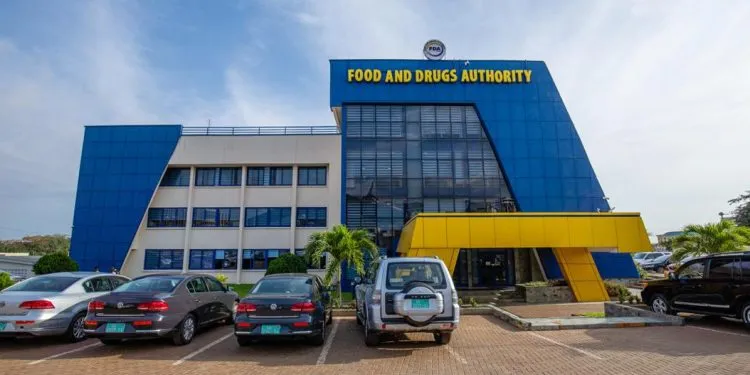
    Sixteen (16) food service establishments operating without valid hygiene permits in the Greater Accra Region have been closed by the Food and Drugs Authority (FDA) on Wednesday, February 18.

    Cheesecake House, Dolce Frizzante, Onda, and Alora Beach Resort, among others, are the affected facilities.

    They have been shut down for failing to meet regulatory requirements. Before the exercise FDA issued a two-week public notice to all food service establishments operating, instructing them to acquire a valid Food Hygiene Permit effective February 1, 2026.

    The FDA has consistently warned against the sale, distribution, and consumption of unregistered and unapproved products on the Ghanaian market, particularly drugs, herbal medicines, cosmetics, and food items that have not undergone proper safety and quality checks.

    In 2025, FDA shut down the Famude Catering Services in the Ashanti Region and revoked its license for illegally producing two alcoholic drinks – Kings Orange Flavoured Liquer and Jupiter 1990.

    These drinks are unregistered and have been found to contain marijuana (cannabis) extracts, according to the FDA.

    The matter has been referred to the Suntresu District Police for investigation and prosecution.

    Background

    Kings Orange Flavoured Liquer was originally registered with the FDA in 2022. However, in July 2023, during routine market checks and lab tests, it was found to contain traces of marijuana.

    Since then, the FDA, in collaboration with the Drug Law Enforcement Unit (DLEU) of the Ghana Police Service and the Narcotics Control Commission (NACOC), monitored the situation to prevent further violations.

    However, in April 2025, the FDA received intelligence that Kings Orange Flavoured Liquer was still being sold in Koforidua.

    Investigations led the team to a new unlicensed site. On April 30, a joint team from the FDA, NACOC, and the DLEU raided this illegal site at Jachie Abidjan Nkwanta.

    They found bags and parcels of dried marijuana, labels of Kings Orange Flavoured Liqueur, and another unregistered drink called Jupiter 1990.

    Samples of both products tested positive for marijuana extracts. All seized items were handed over to the DLEU of the Central Police Command in Kumasi to support ongoing investigations.

    FDA’s directive to wholesalers

    Retailers and wholesalers have been directed to immediately stop selling these drinks and return all stock to the nearest FDA office.

    Consumers have also been advised to avoid buying or drinking these products.

    “Consuming such unsafe alcoholic drinks can seriously harm your health, including causing permanent damage to organs like the liver and kidneys,” the FDA noted in a statement.

    The FDA assured its commitment to protecting public health by ensuring that all regulated products, including alcoholic beverages, are safe, of good quality, and properly produced.

    Meanwhile, a new joint research by the United Nations Children’s Fund (UNICEF) and the Food and Drugs Authority has revealed disturbing levels of lead contamination in many products used daily by Ghanaians, posing serious health threats, particularly to children and pregnant women.


    The report, according to Class Fm explains that lead, a toxic heavy metal, can cause lasting harm to a child’s health and development even in small quantities.


    Prolonged exposure, it said, may lead to brain damage, poor growth, learning difficulties, and a reduction in intelligence quotient (IQ).


    The study, which covered all sixteen regions of Ghana, found multiple sources of lead exposure in common household materials.

    It discovered that 80 percent of traditional eyeliners, locally referred to as kaji kaji or kholi, contained extremely high levels of lead. It also revealed that 25 percent of white baked clay, known as shire, ayilor, or farinkasa and commonly eaten by pregnant women, were contaminated. In addition, 42 percent of turmeric powder and 4 percent of corn-based “Tom Brown” samples contained traces of the toxic metal.


    The research further identified outdated plumbing systems and certain cooking utensils as potential contributors to the problem. In some cases, lead was found to leach into drinking water or be released during food preparation.


    UNICEF emphasized that lead poisoning is completely preventable and called for collective national action to protect children and families. The agency urged the government to intensify public education, strengthen product safety regulations, and promote widespread screening to enable early detection and treatment.


    “Every child deserves a healthy start in life,” UNICEF stated, reaffirming its commitment to collaborate with the Government of Ghana, the FDA, and other partners to eliminate lead exposure and safeguard public health.


    The findings serve as a wake-up call for stronger regulatory enforcement, increased consumer awareness, and urgent measures to reduce the presence of lead in homes and the environment across Ghana.


    Research conducted by the Environmental Protection Agency (EPA), in 2024 indicates that a significant number of fish and water bodies in the country have been contaminated with mercury due to its use in gold refining by illegal miners.
    Dr. Jackson Adiyiah Nyantakyi, the Ashanti Regional Director of the EPA and a researcher, stated, “Mercury has infiltrated a considerable number of fish in our water bodies,” emphasizing that this poses a serious public health risk.


    He urged everyone to support the government in curbing illegal mining practices before the situation escalates.


    In addition to its environmental implications, Dr. Nyantakyi highlighted in an interview with the Ghana News Agency (GNA) in Sunyani that mercury remains a poisonous chemical harmful to human health and well-being.


    He pointed out that abnormal skin rashes, body discoloration, rough skin, and other physical defects in infants could be linked to the effects of mercury absorption in the body.


    Dr. Nyantakyi warned that research has indicated widespread mercury contamination in many water bodies, leading to the poisoning of numerous fish, and expressed concerns that the situation could deteriorate further if illegal mining activities (galamsey) are not effectively controlled in the country.


    “My fears are that many Ghanaians eat lot of kenkey and fishes and who might tell if the fish you are eating is contaminated and so it is imperative for everybody to contribute his or her quota towards fighting illegal mining in the country”, he explained.
    In Ghana, Dr. Nyantakyi explained that gold refiners primarily use either Cyanidation (cyanide) or Amalgamation (mercury). Since the use of cyanide is illegal, illegal miners predominantly use large quantities of mercury for gold refining purposes.


    He said because their activities were illegal, the miners “use mercury anyhow and thereby pollute our environment and water bodies which is a serious public health concern that threatens human existence.”


    He emphasized that combating illegal mining was not solely the government’s responsibility, urging everyone, particularly those in mining communities—assembly members, traditional authorities, youth groups, and associations—to stay vigilant and assist in combating the problem.


    Dr. Nyantakyi explained that mercury, being a toxic chemical, can enter the human bloodstream through skin absorption, inhalation into the lungs and digestive system, and uptake by fish and microorganisms.


    He noted that sources of mercury emissions include volcanic activity, rock weathering, movement of water bodies, forest fires, biological processes, and deliberate use of the chemical.


    “Mercury easily infiltrates water bodies, the sediment and fishes and that is why we must all contribute to the national fight against illegal mining”, Dr Nyantakyi stated.

  • Cocoa farmers receive GHS237m payment from COCOBOD

    Cocoa farmers receive GHS237m payment from COCOBOD

    An amount of GHC237 million has been paid to cocoa farmers for 50,000 metric tonnes of cocoa by the Ghana Cocoa Board (COCOBOD).

    In a Facebook post on Wednesday, February 18, head of Public Affairs at the Ghana Cocoa Board (COCOBOD), Jerome Kwaku Sam wrote, “I’m happy to report COCOBOD has started payment of the 50,000 metric tonnes. An amount of GHC237 million has been paid.”


    Last week, the Ghana Cocoa Board’s commenced payments to Licensed Buying Companies to clear outstanding arrears owed Ghanaian cocoa farmers who sold and delivered their cocoa beans without receiving payment.


    This followed several calls by cocoa farmers demanding payment for months of prolonged arrears from the government. On the floor of Parliament on Thursday, February 5, the Minority caucus raised concerns about the sustainability of the cocoa sector if the demands of cocoa farmers are not addressed.


    Although LBCs have paid over GH¢620 million to cocoa farmers, a significant amount remains. Speaking to the media, Head of Corporate Communications at COCOBOD, Jerome Kwaku Sam “In November, we paid over GH¢6 billion, in December more than GH¢5 billion, and in January another GH¢6 billion.


    “This month alone, we have paid over GH¢620 million, and we are continuing to pay the LBCs so they can clear outstanding payments to farmers”.


    The President of the Ghana National Association of Cocoa Farmers (GNACOF), Stevenson Anane Boateng, has lamented the government’s hesitation to pay them for the cocoa sold out to them.


    He said, the situation has rendered a number of cocoa farmers broke since November last year and are calling for intervention“The government is buying our cocoa but has refused to pay us. Since November, we have not been paid. They accept the cocoa, but they don’t pay us,” he lamented during an interview on Frontline on Rainbow Radio 87.5FM.


    When asked what might have caused the delay, he responded: “We don’t know. We are not part of the government, so please, you need to ask them why they have refused to pay cocoa farmers. This is troubling, and we want the government to address our concerns.”


    Meanwhile, the Ghana National Cocoa Farmers Association (GNACOFA) has cautioned the government that failure to introduce a pension scheme, improve health insurance, and ensure access to quality healthcare will leave farmers with no option but to take action themselves.


    GNACOFA has made a formal call for swift reforms aimed at improving the welfare and security of cocoa farmers across the country, noting that they currently do not have sufficient social protection.


    The Association urged the government to establish a pension scheme for cocoa farmers, broaden and enhance their health insurance benefits, and guarantee access to quality healthcare services.


    Anane Boateng called on the government to respond without delay, warning that inaction would force farmers to mobilise for a nationwide protest to push their demands.


    Meanwhile, in August 2025 Finance Minister, Dr. Ato Forson announced at a press conference after a meeting with the Producer Price Review Committee that Cocoa farmers in the country will soon receive free fertiliser and other inputs from the government starting from the 2025/2026 crop season.


    According to Mr Forson, the government’s decision to reintroduce free fertilisers is aimed at supporting farmers to increase production.


    “In preparation for the new season, COCOBOD has made available jute sacks and related logistics for the smooth take-off of the 2025/2026 crop Season. Ladies and Gentlemen, and to the cocoa farmer, I am pleased to announce that President John Mahama’s administration has reintroduced the free cocoa fertiliser programme as an additional support to the Ghanaian cocoa farmer, beginning the 2025/2026 crop year.”


    Dr. Forson added that every single farmer will benefit from this initiative.


    “Beginning this crop year, President Mahama’s administration will supply free cocoa fertilisers (both liquid and granular), free insecticides, free spraying machines, free fungicides, and free flower inducers to farmers.”


    Farmers were therefore cautioned against smuggling. “Government strongly advises cocoa farmers to apply these inputs solely for the purpose of improving cocoa yield and their income. Please do not smuggle them,” he said.


    Minister for Foreign Affairs, Honourable Samuel Okudzeto Ablakwa, and the Ambassador of the Kingdom of Morocco, Her Excellency Imane Ouaadil, on July 28, handed over two thousand (2,000) tons of fertilizer, equivalent to 40,000 bags of fertilizer, to the Ministry of Food and Agriculture.


    According to the Foreign Ministry, the fertilizer was donated to the West African country by the Kingdom of Morocco during Mr. Okudzeto Ablakwa’s official visit to Morocco last month, as part of the two countries’ commitment to sustainable agriculture to enhance food security.


    Deputy Minister for Food and Agriculture, John Setor Dumelo, received the donated fertilizers on behalf of the Minister for Food and Agriculture, Eric Opoku. He expressed gratitude to the Moroccan government for the donation. He assured that farmers will receive the fertilizers to aid crop production.


    “Yesterday, 40,000 bags of fertilizer was donated to Ghana by the Kingdom of Morocco through the Ministry of Foreign Affairs. On behalf of my boss Hon Eric Opoku, I want to say a big thank you to Hon Ablakwa and Her Excellency Ouaadil for this kind gesture. We at the Ministry of Agriculture will ensure the fertilizers get straight to the deserving farmers as soon as possible,” he wrote in a post on the X platform on July 29.


    Agricultural stakeholders have long raised concerns over Ghana not having a single chemical fertiliser plant.


    According to the Institute for Fiscal Studies, this gap is affecting crop yields and weakening the sector’s overall contribution to the economy, with agriculture’s share of GDP falling from 26.9% in 2010 to 22.7% in 2023.

  • Stolen baby from Mamprobi Polyclinic found, suspect in police custody

    Stolen baby from Mamprobi Polyclinic found, suspect in police custody

    A baby who had gone missing at the Mamprobi Polyclinic in Accra on Tuesday, February 17, has been found sound and safe. The baby was found with an unknown woman who is currently in police custody assisting with investigations. 

    A collective effort between the Ghana Police Service, Member of Parliament for Ablekuma South, Alfred Okoe Vanderpuije and the Minister for Gender, Children and Social Protection, Agnes Naa Momo Lartey led to the baby’s rescue. Many Ghanaians have expressed concern over apparent gaps in hospital security systems.

    A similar incident occurred in Zebilla District Hospital in the Bawku West district of the Upper East Region where a one-week-old baby was reportedly stolen. 

    The infant, born to Felicia Dery, was taken in a concerning incident, shedding light on significant gaps in hospital security protocols. Zangina Grace, a midwife on duty, recounted the series of events to Adom News.

    According to her, the baby’s mother delivered on May 25, 2024, at the hospital. The mother, having formed a bond with a stranger posing as a patient’s relative, entrusted her baby to the stranger while she bathed. Later, it was discovered that this imposter had a male accomplice.

    “When she returned, the man and the lady were not to be found. They left with the baby. So it has been very sad. A mother who came to deliver through a C-section met some strange people who befriended her. She left her baby with them to go and have her bath, and when she returned, they had disappeared,” she added.

    Grace also lamented the hospital’s inadequate security measures. She disclosed the lack of CCTV cameras and proper fencing, making it easier for such incidents to go unnoticed.

    Furthermore, the midwife advocated for stricter visitor regulations, proposing adherence to visiting hours and limiting visitors to prevent similar occurrences in the future.

    The baby’s father also spoke with Adom News, offering additional insights into how the culprits were identified and apprehended.

    “She left her ID cards, and that was how we were able to identify her. They circulated it, and that was how they caught her. I wanted to see her, but the police didn’t allow me to enter the station,” he explained.

    “We had an unforeseen incident where someone was able to outwit a mother and steal her baby. During visiting hours, she gained the mother’s trust, who gave her baby to take her bath. When she returned, the baby was gone. Through timely community intervention, we have apprehended the suspect, and the baby is safe in our custody. The suspect has since been arrested by the police,” Dr. Abdul-Rahaman stated.

    In Walewale, North East Region, a 27-year-old woman, Abdulai Zalia, has been arrested by the West Mamprusi Police Command for allegedly stealing a 13-month-old baby.

    The suspect took the baby while the mother was asleep, and the baby’s absence was only noticed when the father returned.

  • Chief Justice rules Jean Mensa, Kissi Agyebeng not guilty in removal petitions

    Chief Justice rules Jean Mensa, Kissi Agyebeng not guilty in removal petitions

    The Chief Justice, Paul Baffoe-Bonnie, has concluded that petitions seeking the removal of the Electoral Commissioner, Jean Mensa, her deputies, and the Special Prosecutor have no basis.

    This was contained in a letter dated January 26, 2026 by the Chief Justice to President John Dramani Mahama. According to the Chief Justice

    In 2025, the presidency revealed that it had referred seven petitions calling for the removal of the Chairperson of the Electoral Commission Jean Mensa and her Deputies, as well as three separate petitions seeking the removal of the Special Prosecutor Kissi Agyebeng, to the Chief Justice for further investigation.

    However, according to the Chief Justice, the petitions lack sufficient grounds for further investigations or their removal.

    In 2025, President Mahama ten separate petitions, with seven targeted at EC Chair Jean Mensa and her two deputies, Dr Bossman Eric Asare and Samuel Tettey. Among the 12 counts of stated misbehaviour are allegations of cronyism, abuse of office, and gross incompetence.


    The petition, submitted by a staff member of the Electoral Commission, Joseph Blankson Adumadzie, emphasised that the credibility of Ghana’s electoral system is at stake due to the alleged illegal actions of the officials.


    According to a statement issued on Monday, November 24, by the petitioner, Article 146 of the 1992 Constitution provides the basis for requesting the removal of public officials, particularly those serving in independent constitutional bodies.


    Also private citizens have cited various forms of misconduct as grounds for their call for the removal of the Special Prosecutor Kissi Agyebeng.The group has reportedly accused the Special Prosecutor of abusing the powers of his office and demonstrating incompetence.


    The former Chief Justice, Gertrude Torkornoo, faced a similar challenge and was later replaced by President Mahama after an investigative committee found the allegations levelled against her to be valid.


    The Chief Justice was earlier suspended by President Mahama on Tuesday, April 22, after a prima facie case was established, following separate petitions calling for her removal.


    A series of petitions was filed against Chief Justice Torkornoo, beginning with one from a group known as Shining Stars of Ghana.

    The group alleged she violated Article 144 of the Constitution by personally recommending judges for promotion to the Supreme Court and further claimed she ruled on a case involving the Speaker of Parliament without granting him a hearing, despite his refusal to respond to the suit.


    Another petition, filed by a police officer who is also a lawyer, accused the Chief Justice of manipulating evidence and abusing her authority, following an incident during a Supreme Court session where he was reportedly reprimanded, arrested, and detained.


    However, court records suggest the lawyer’s conduct during proceedings prompted a unanimous caution from the bench, not just the Chief Justice.


    The third petition, submitted by a private individual, listed 21 alleged misconducts and four claims of incompetence. Among the accusations was the misuse of public funds—specifically, that she spent over GH¢261,000 and $30,000 on a family trip abroad in 2023 and misused an additional GH¢75,580 and $14,000 during another foreign assignment without proper accountability.


    Subsequent reports indicate two more petitions were added, intensifying pressure on the judiciary. Chief Justice Gertrude Torkornoo, in her written response to President Mahama, strongly denied allegations of misconduct and abuse of office brought against her by a senior police officer, describing them as baseless and lacking grounds for her removal from office.


    Meanwhile, President John Dramani Mahama has sworn in Justice Paul Baffoe-Bonnie as Ghana’s Chief Justice. The swearing-in ceremony occurred on Monday, November 18, at the presidency.
    His swearing-in comes after Parliament, following several deliberations, approved his nomination.

    The Speaker of Parliament, Alban Bagbin, confirmed his approval on Thursday, November 11, during the 15th Sitting of the 3rd meeting.


    “This Honorable house has accordingly approved the nomination of Justice Paul Baffoe-Bonnie as Chief Justice of the Republic, in accordance with Article 114 clause 1 of the 1992 Constitution respectively.


    “I will want to take this opportunity to, on behalf of the House congratulate the nominee on his approval by Parliament. I urge the nominee to take all that has happened right up from the day of the nomination up to his prior approval by Parliament into consideration in his tenure of office. Once again congratulations,” he added.


    Parliament concluded his nomination after a headcount, where the Majority in Parliament counted 163 and the Minority 69.
    On Monday, November 10, Justice Paul Baffoe-Bonnie appeared before the Appointments Committee of Parliament for his vetting.


    In October, President John Dramani Mahama submitted Justice Baffoe-Bonnie’s name to the Council of State for consideration in accordance with Article 144(1) of the Constitution, which requires the President to act in consultation with the Council of State and with Parliament’s approval when appointing a Chief Justice.


    Justice Baffoe-Bonnie, the most senior member of the Supreme Court, was appointed to the apex court in June 2008 by then-President John Agyekum Kufuor. He studied law at the University of Ghana and was called to the Bar in 1983.

    His judicial career spans roles as a Circuit Court Judge in Kumasi, a High Court Judge at Duayaw Nkwanta, and a Court of Appeal Judge before his elevation to the Supreme Court.


    Born on December 26, 1956, in Goaso, Justice Baffoe-Bonnie had his secondary education at Konongo Odumase Secondary School before pursuing law at the University of Ghana and the Ghana Law School.


    However, speaking on the floor of Parliament on Friday, November 7, Minority Leader Alexander Afenyo-Markin said it would be inappropriate to proceed with the vetting of Acting Chief Justice Paul Baffoe-Bonnie while the former Chief Justice awaits a court verdict on her pending lawsuit.


    In October, Gertrude Torkornoo initiated legal action to prevent the vetting and appointment of Justice Baffoe-Bonnie as Ghana’s next Chief Justice. She is seeking the nullification of all activities carried out by the Justice Gabriel Scott Pwamang Committee, which was set up under Article 146 to review petitions seeking her removal from office.


    She wanted the court to overturn all proceedings undertaken by the said Committee and to declare the Presidential Warrant authorizing her dismissal as unlawful and without legal effect.

    The legal move came as Parliament’s Appointments Committee prepared to vet Justice Baffoe-Bonnie for the top judicial position.


    Afenyo-Markin emphasized that commencing the vetting of the appointed CJ would breach judicial propriety. According to him, given the ongoing disputes surrounding the revocation of the former Chief Justice from office, proceeding with the vetting process could undermine Articles 125 and 127 of the Constitution.

    “Proceeding to vet a new person to fill that office will be rendering the application of justice. We are not into blows; we are here to argue law and for you to determine. This kind of attack, ‘it will happen, it will happen,’ is inappropriate. They should take it easy,” Afenyo-Markin said.


    Article 125 gives judicial power only to the courts and not to Parliament or the Executive. Article 127, on the other hand, requires all other state institutions not to interfere with the Judiciary’s work but to protect its independence.

  • President Mahama dismisses petitions calling for removal of Jean Mensa, Kissi Agyebeng, and others

    President Mahama dismisses petitions calling for removal of Jean Mensa, Kissi Agyebeng, and others

    A JoyNews report has revealed that multiple petitions calling for the removal of the Electoral Commission (EC) Chairperson, her deputies, and the Special Prosecutor (OSP) have been dismissed by President John Dramani Mahama. 

    According to the report, president Mahama’s decision comes after the Chief Justice, Paul Baffoe-Bonnie, concluded there is no prima facie case existed for further action. In 2025, President Mahama ten separate petitions, with seven targeted at EC Chair Jean Mensa and her two deputies, Dr Bossman Eric Asare and Samuel Tettey. Among the 12 counts of stated misbehaviour are allegations of cronyism, abuse of office, and gross incompetence.

    The petition, submitted by a staff member of the Electoral Commission, Joseph Blankson Adumadzie, emphasised that the credibility of Ghana’s electoral system is at stake due to the alleged illegal actions of the officials.

    According to a statement issued on Monday, November 24, by the petitioner, Article 146 of the 1992 Constitution provides the basis for requesting the removal of public officials, particularly those serving in independent constitutional bodies. 

    Also private citizens have cited various forms of misconduct as grounds for their call for the removal of the Special Prosecutor Kissi Agyebeng.The group has reportedly accused the Special Prosecutor of abusing the powers of his office and demonstrating incompetence. 

    The former Chief Justice, Gertrude Torkornoo, faced a similar challenge and was later replaced by President Mahama after an investigative committee found the allegations levelled against her to be valid.

    The Chief Justice was earlier suspended by President Mahama on Tuesday, April 22, after a prima facie case was established, following separate petitions calling for her removal.

    A series of petitions were filed against Chief Justice Torkornoo, beginning with one from a group known as Shining Stars of Ghana. The group alleged she violated Article 144 of the Constitution by personally recommending judges for promotion to the Supreme Court and further claimed she ruled on a case involving the Speaker of Parliament without granting him a hearing, despite his refusal to respond to the suit.

    Another petition, filed by a police officer who is also a lawyer, accused the Chief Justice of manipulating evidence and abusing her authority, following an incident during a Supreme Court session where he was reportedly reprimanded, arrested, and detained.

    However, court records suggest the lawyer’s conduct during proceedings prompted a unanimous caution from the bench, not just the Chief Justice.

    The third petition, submitted by a private individual, listed 21 alleged misconducts and four claims of incompetence. Among the accusations was the misuse of public funds—specifically, that she spent over GH¢261,000 and $30,000 on a family trip abroad in 2023 and misused an additional GH¢75,580 and $14,000 during another foreign assignment without proper accountability.

    Subsequent reports indicate two more petitions were added, intensifying pressure on the judiciary. Chief Justice Gertrude Torkornoo, in her written response to President Mahama, strongly denied allegations of misconduct and abuse of office brought against her by a senior police officer, describing them as baseless and lacking grounds for her removal from office.

    Meanwhile, President John Dramani Mahama has sworn in Justice Paul Baffoe-Bonnie as Ghana’s Chief Justice. The swearing-in ceremony occurred on Monday, November 18, at the presidency.

    His swearing-in comes after Parliament, following several deliberations, approved his nomination. The Speaker of Parliament, Alban Bagbin, confirmed his approval on Thursday, November 11, during the 15th Sitting of the 3rd meeting.

    “This Honorable house has accordingly approved the nomination of Justice Paul Baffoe-Bonnie as Chief Justice of the Republic, in accordance with Article 114 clause 1 of the 1992 Constitution respectively.

    “I will want to take this opportunity to, on behalf of the House congratulate the nominee on his approval by Parliament. I urge the nominee to take all that has happened right up from the day of the nomination up to his prior approval by Parliament into consideration in his tenure of office. Once again congratulations,” he added.

    Parliament concluded his nomination after a headcount, where the Majority in Parliament counted 163 and the Minority 69.

    On Monday, November 10, Justice Paul Baffoe-Bonnie appeared before the Appointments Committee of Parliament for his vetting.

    In October, President John Dramani Mahama submitted Justice Baffoe-Bonnie’s name to the Council of State for consideration in accordance with Article 144(1) of the Constitution, which requires the President to act in consultation with the Council of State and with Parliament’s approval when appointing a Chief Justice.

    Justice Baffoe-Bonnie, the most senior member of the Supreme Court, was appointed to the apex court in June 2008 by then-President John Agyekum Kufuor. He studied law at the University of Ghana and was called to the Bar in 1983. His judicial career spans roles as a Circuit Court Judge in Kumasi, a High Court Judge at Duayaw Nkwanta, and a Court of Appeal Judge before his elevation to the Supreme Court.

    Born on December 26, 1956, in Goaso, Justice Baffoe-Bonnie had his secondary education at Konongo Odumase Secondary School before pursuing law at the University of Ghana and the Ghana Law School.

    However, speaking on the floor of Parliament on Friday, November 7, Minority Leader Alexander Afenyo-Markin said it would be inappropriate to proceed with the vetting of Acting Chief Justice Paul Baffoe-Bonnie while the former Chief Justice awaits a court verdict on her pending lawsuit.

    In October, Gertrude Torkornoo initiated legal action to prevent the vetting and appointment of Justice Baffoe-Bonnie as Ghana’s next Chief Justice. She is seeking the nullification of all activities carried out by the Justice Gabriel Scott Pwamang Committee, which was set up under Article 146 to review petitions seeking her removal from office.

    She wanted the court to overturn all proceedings undertaken by the said Committee and to declare the Presidential Warrant authorizing her dismissal as unlawful and without legal effect. The legal move came as Parliament’s Appointments Committee prepared to vet Justice Baffoe-Bonnie for the top judicial position.

    Afenyo-Markin emphasized that commencing the vetting of the appointed CJ would breach judicial propriety. According to him, given the ongoing disputes surrounding the revocation of the former Chief Justice from office, proceeding with the vetting process could undermine Articles 125 and 127 of the Constitution.

    “Proceeding to vet a new person to fill that office will be rendering the application of justice. We are not into blows; we are here to argue law and for you to determine. This kind of attack, ‘it will happen, it will happen,’ is inappropriate. They should take it easy,” Afenyo-Markin said.

    Article 125 gives judicial power only to the courts and not to Parliament or the Executive. Article 127, on the other hand, requires all other state institutions not to interfere with the Judiciary’s work but to protect its independence.

  • Truck carrying 3k slabs of suspected cannabis impounded at Sege

    Truck carrying 3k slabs of suspected cannabis impounded at Sege

    A Sinotruk tipper truck with registration number GN 993-14, carrying over 3,000 slabs of plant material suspected to be narcotic drugs, was impounded by the Ghana Police Service at Sege Akpla Manya in the Greater Accra Region on Sunday, February 15.

    The seizure followed an intelligence-led operation. According to a press release from the Tema Regional Police Command, the suspected drugs were packed in fertilizer sacks. The statement added that the driver abandoned the truck and fled the scene upon spotting the police.

    Last week, a DAF long trailer with registration number GW 1943-09, carrying 4,000 parcels of suspected narcotics, was intercepted by the Oti Regional Police Command at Dambai, Oti Region, on Wednesday, February 11.

    The police, in a press release, disclosed that the interception was made possible following intelligence gathered by their officers.

    According to the statement, thousands of compressed dried leaf parcels, wrapped in yellow masking tape and hidden in secret compartments sealed with six metal plates, were discovered by the officers.

    “The concealed compartments beneath the trailer were opened in the presence of suspect Amidu Jubril, aged 40. A search in the secret compartments led to the discovery of Four Thousand (4000) parcels of compressed dried leaf substances wrapped in a yellow masking tape suspected to be narcotics, carefully concealed within the compartments,” the statement said.

    Meanwhile, driver, Amidu Jubril, is in police custody. Last month, a 50-year-old commercial driver, Atampugri Akanyani, was nabbed by the police after 714 slabs of suspected Indian hemp were found in his possession.

    The slabs, which were hidden in nine nylon sacks were discovered during a routine snap check by police officers at the Asanso checkpoint along the Bekwai–Aputogya road on Tuesday, January 26, 2026.

    Atampugri Akanyani disclosed that an unknown individual at the Kejetia Lorry Terminal in Kumasi handed over the suspected Indian hemp to him for delivery, at a fee of six hundred Ghana cedis, to another unidentified person in Obuasi.Elevate your investment strategy with structured decision-making workflows luxen verix site.

    Meanwhile, Atampugri Akanyani has since been arraigned before the court. Last year, 600 fertiliser sacks of Indian hemp, weighing a total of 47,530kg and valued at about GH¢4.2 billion, were destroyed by the Volta Regional Police Command.

    The destruction exercise, which occurred on Monday, November 17, was carried out pursuant to an order from the Ho Circuit Court. This information was contained in a statement issued on Thursday, November 20, and signed by Chief Inspector Francis Kwaru Gomado, Head of the Public Affairs Unit of the Volta Region.

    Parts of the statement read, “the six hundred sacks contained a total of forty-seven thousand, five hundred and thirty kilograms (47,530kg) with an estimated face value of about 4.2 billion Ghana cedis.”

    In August 2025, the Central East Regional Police Command arrested two suspects in possession of 519 compressed parcels of dried leaves suspected to be Indian Hemp.

    The suspects, identified as Eric Nkyeke, 30, and Francis Klu, 28, were held in police custody. The Toyota Hilux pick-up with registration number GS 6849-21 was impounded at Nyanyano in the Gomoa East District.

    This was revealed in a statement issued by the Nyanyano District police command. In June, the police nabbed two suspects for having in their possession 84 parcels of substances suspected to be Indian hemp.

    The police team, through an intelligence-led operation on June 15, intercepted an Opel Astra vehicle with registration number GT 6430-13 driven by suspect John Dzeble, together with suspect Adzobi Mesiwotso on board.

    A search conducted on the vehicle revealed 86 compressed parcels of substances suspected to be Indian hemp, discreetly concealed in the inner compartments of the car, including the engine, doors, and boot.

    In addition to the compressed parcels, the officers retrieved a portable measuring scale machine and a roll of masking tape, also concealed, believed to have been used in the packaging of the substances. The suspects, along with the exhibits, are currently in Police custody, assisting with investigations.

    The Oti Regional Police Command has commended the swift and professional action of the personnel involved in the arrest and reaffirmed its commitment to curbing drug trafficking and related criminal activities.

    The arrest comes after a recent incident where the police captured one Christopher Partey for unlawful possession of 40 parcels of a substance suspected to be narcotic drugs.

    The National Highway Patrol Unit of the Ghana Police Service arrested on Wednesday, June 11.

    The team intercepted a Ford Transit bus with registration number AS 524-16 near the outskirts of Ayikuma township while on routine patrol along the Accra–Somanya corridor.

    A search of the vehicle revealed 40 tightly wrapped parcels concealed in a fertilizer sack in the vehicle’s boot. Upon interrogation, Christopher Partey, a passenger on board, admitted ownership of the items.

    The exhibits retrieved have been handed over to the Drug Law Enforcement Unit at the Police Headquarters for further investigation.The suspect is currently in police custody, assisting investigations, and will be put before the court.

    In April, a total of 189 Cadets were officially inducted into service to support Ghana’s ongoing efforts to combat narcotic drug trafficking and related crimes.

    The induction, held at the Eastern Naval Command, marked a significant collaboration between the Leadership Training School (LTS) and the Narcotics Control Commission (NACOC).

    The event, which featured the ceremonial swearing of an oath of allegiance, signified the commitment of the new recruits to serve the nation with dedication and uphold the values of integrity and national security.

    The training, led by the Commanding Officer of LTS, is designed to build the capacity of cadets by focusing on the fundamentals of narcotics law and enforcement.

    The course places particular emphasis on confidence-building, professional discipline, and a thorough understanding of legal procedures necessary for their roles in narcotics control.

    As part of the induction, NACOC leadership underscored the importance of adherence to institutional rules and the responsible handling of classified information.

    The Commission reiterated its mission to disrupt the narcotics trade and act as a stabilizing force in communities vulnerable to the influence of drug-related activities.

    NACOC reaffirmed its commitment to making Ghana an unattractive hub for drug trafficking, prioritizing public safety and the protection of the nation’s borders.

    Calls have also been made for increased government support to enhance the Commission’s operational capacity, including the recruitment of additional personnel and the provision of improved financial and logistical resources.

    The new cadets are expected to play a key role in reinforcing the Commission’s enforcement operations across the country.

  • DDEP: Gov’t Disburses GHS10bn in interest payments

    DDEP: Gov’t Disburses GHS10bn in interest payments

    A payment of GH¢10 billion in interest has been disbursed by the government under the Domestic Debt Exchange Programme (DDEP) in cash.

    This marks the sixth interest payment under the programme and the second time bondholders have been paid entirely in cash. The payment follows the agreed terms outlined in the debt restructuring memorandum.

    A statement from the Ministry of Finance read, “The Government of Ghana has paid GH¢10 billion in interest obligations under the Domestic Debt Exchange Programme (DDEP).

    This payment marks the sixth coupon settlement under the programme and represents the second full cash payment without any Payment-In-Kind component, reflecting strengthened fiscal capacity and solvency.

    “The timely payment sends a strong positive signal to domestic and international investors, reinforces market confidence, and is expected to support Ghana’s credit outlook while enhancing stability within the financial sector, including banks and pension funds”.

    Last year August, the Ministry of Finance announced another successful coupon payment of GH¢9,698,815,220.17. under the Domestic Debt Exchange Programme. According to information shared on Minister of Finance Ato Forson’s X handle, the amount was paid on August 19 2025.
    He wrote that, with this payment, total disbursements under the Domestic Debt Exchange Programme in 2025 alone now stands at GH¢19.4 billion.
    Adding that, the payment demonstrates Government’s unwavering commitment to honouring the terms outlined in the Memorandum of Understanding signed under the exchange programme and is expected to strengthen investor confidence and support fiscal credibility.
    He said, in line with the 2025 Mid-Year Fiscal Policy Review, the government has established two dedicated sinking fund accounts—a Cedi Sinking Fund Account and a US Dollar Sinking Fund Account—as mandated by the Public Financial Management Act, 2016 (Act 921), as amended.
    These will provide liquidity buffers to ensure the timely redemption of loan obligations, including bonds maturing in 2026, 2027, and 2028.
    Mr Forson said, government has assured investors and the public that subsequent debt obligations, including DDEP obligations, will be honoured fully and on time.
    Earlier this year, President John Mahama instructed the Ministry of Finance to pay all outstanding Domestic Debt Exchange Programme (DDEP) coupons and set aside funds for future payments using the Sinking Fund.
    Following this directive, the Ministry of Finance released GH₵6.081 billion in cash to DDEP bondholders on Monday, February 17. In addition, GH₵3.46 billion was credited to bondholders’ securities accounts as part of a Payment-In-Kind (PIK) arrangement, following the terms of the DDEP agreement.
    To improve debt management, the government also deposited GH₵9.7 billion into the Debt Service Recovery Cedi Account, also known as the Sinking Fund. This money will help cover the next five DDEP coupon payments scheduled for July and August 2025.
    President Mahama assured Ghanaians that his administration remains committed to meeting all DDEP obligations and rebuilding trust in the economy.
    He added that the 2025 Budget Statement will introduce new steps to promote responsible financial management, prioritize key expenses, and improve transparency in government spending.
    Despite the economic difficulties inherited from the previous government, the administration is working to stabilize the cedi, reduce inflation, and create jobs.
    Through careful financial planning, Mahama’s government aims to restore economic stability and ensure that public funds are used efficiently.
    The Domestic Debt Exchange Programme (DDEP) is an initiative by the Government of Ghana aimed at restructuring the country’s domestic debt to ensure long-term macroeconomic stability.
    The DDEP concluded successfully with the issuance and settlement of new bonds, which have now been listed to serve as the new benchmark securities for the fixed income market.
    Coupon and principal payments on the old bonds resumed on March 13, 2023. S&P Global Ratings acknowledged the completion of the DDEP by upgrading Ghana’s local currency sovereign credit ratings from selective default (SD) to ‘CCC+/C’.
    The program saw a high participation rate, with the majority of eligible bonds being tendered. The government is now focusing on engaging with external creditors to ensure overall debt sustainability.

  • U/E: Rock collapse at Gbane leaves three dead

    U/E: Rock collapse at Gbane leaves three dead

    A rock collapse at an underground mining site in Tarkwa, a community near Gbane in the Tongo District of Ghana’s Upper East Region, claimed the lives of three miners on Monday night, February 16.


    Providing further details, police said the victims were working at the site when a slab of rock reportedly broke loose and fell on them, killing them instantly. The deceased have been identified as Subil Nmabil, aged about 30; Musah Zipati, aged about 40; and Onyin Udasaa, aged about 35.


    They reportedly sustained severe injuries, Subil Nmabil sustained a deep cut on his left rib, and Musah Zipati suffered multiple head injuries, while Onyin Udasaa had a severely crushed right hand.

    In 2024, more than five hundred (500) individuals lost their properties due to a rock-blasting exercise at Buduburam.


    The incident tragically claimed three lives and left several others injured. The blasting was conducted by Nag Fairmount Construction Limited as part of the Kasoa–Winneba road project.

    Ghana has recorded several collapses in recent years, resulting in several fatalities and injuries. On Wednesday, November 5, 2025, workers and nearby residents at Klagon in the Tema West Municipality were thrown into a state of panic after a three-storey building under construction collapsed.

    The incident caused part of a nearby house to cave in, leaving a mother and her three children with serious injuries.
    They are currently receiving treatment at the hospital.

    Meanwhile, excavators have been deployed to the scene by the Municipal Chief Executive (MCE) for Tema West, Ludwig Teye Totimeh, to clear the debris.


    Speaking to the media after the unfortunate incident, the MCE noted that the building owner initiated the project without t without securing the necessary documentation.


    “We want to let the general public know that once you start the permit process, it doesn’t mean you have the permit to start building. Whatever permit you apply for, engineers must assess the kind of structure you would want to construct and the location.


    Last week, fourteen (14) construction workers were in critical condition after a three-storey building under construction at the Roman Ridge Engineering Centre in Accra collapsed. The incident, which occurred on Tuesday, October 28, sent workers and nearby residents into panic.


    Earlier, the Ghana National Fire Service (GNFS) reported on Facebook that several individuals were trapped following the unfortunate incident. It noted that efforts were underway to rescue those trapped beneath the rubble.


    “Happening Now… The building has collapsed at the Architectural Engineering Group, Roman Ridge. People trapped inside. Rescue team from GNFS Headquarters are putting up their best to rescue the victims. More details soon,” the GNFS wrote.


    However, in a latest update, the Ghana National Fire Service (GNFS) reported that the 14 male construction workers were currently receiving treatment at the 37 Military Hospital and the Ridge Hospital.


    Meanwhile, authorities are expected to launch an investigation to ascertain what caused the building’s collapse. Ghana has witnessed multiple fatalities and severe injuries resulting from devastating building collapses.


    These incidents have raised significant concerns among professionals in the built environment about construction standards, prompting calls for immediate action.


    In 2024, four individuals lost their lives after a three-storey building at Kasoa New Market in the Awutu Senya East Municipality in the Central Region collapsed.


    Eyewitnesses described the tragic event, noting that the victims included young workers and trainees. “The sad incident happened at Kasoa. This three-storey building collapsed, and four people have died; may their souls rest in peace. This is so sad. Some are young girls learning a trade as well as workers. This happened at the Kasoa New Market.”


    According to eyewitnesses, the three-storey building caved in while workers were on the second floor. Among the deceased was a carpenter who died on the spot. The other deceased persons lost their lives while being transported to the hospital.


    A mason in his early forties lost his life on July 17, 2024, while working on a two-storey building in Sewua in the Ashanti Region. The deceased, Kwaku Gyemfi, was the lead constructor at the site. Witnesses reported that Gyemfi was attempting to reinforce collapsing pillars when the structure failed.

    His assistant had warned him of the impending collapse, but he was trapped before he could escape.


    A school building in Adeiso in the Upper West Akim District of the Eastern Region collapsed on February 15, 2024, during a rainstorm. The collapse injured 10 out of 50 students present, with four suffering severe injuries.


    Despite ongoing concerns about the building’s deteriorating condition, no preventive measures were taken. The incident occurred as students and teachers sought shelter during a sports event.


    In West Legon, Accra, a two-storey shop complex collapsed during a fire incident, injuring four firefighters from the Legon Fire Station. The fire service had responded to a distress call about a blaze at the location.


    The collapse occurred as they were working to extinguish the fire. Two of the injured firefighters were treated at the University of Ghana Medical Centre for their critical conditions.


    Earlier this month, the Ghana National Fire Service (GNFS) spent more than two hours rescuing a construction worker trapped under a collapsed building at the Kasoa New Market in the Central Region. The old residential structure was reportedly undergoing renovation by masons hired by the building’s owner.


    In a similar development, a pit collapse at an illegal mining site at Kasotie in the Atwima Mponua District of the Ashanti Region on Wednesday night, October 1, claimed the lives of seven illegal miners who were trapped underground.


    According to reports, the pit collapse, which occurred on Wednesday night, October 1, also left four injured, while several miners were feared trapped. Meanwhile, rescue efforts were carried out by the National Disaster Management Organization (NADMO) in collaboration with emergency services and local volunteers.


    For years, the country’s efforts to nip the canker in the bud have not yielded the needed results. Among recent measures taken to protect water bodies from illegal miners is the deployment of the National Anti-Illegal Mining Operations Secretariat (NAIMOS).


    The Secretariat includes the Ghana Armed Forces, the Ghana Police Service, the Ghana Immigration Service, the National Intelligence Bureau (NIB), the Narcotics Control Commission, and the National Security Secretariat.


    Addressing the security forces, the Minister for Lands and Natural Resources, Emmanuel Amarh Kofi-Buah, directed the team to ruthlessly counter the activities of galamsey operators as they are the enemies of the state.


    “Any recalcitrant entering into these zones is not merely a trespasser. They are an enemy of the state. You are to be firm. You are to be resolute. You are to be ruthless.


    “And please, take it from me, you will take no obstructionist instruction from any big man. Remember, the biggest man in Ghana is the President of the Republic, and he’s the one who has sent you,” Mr. Kofi-Buah charged.

  • Burkina Faso: Terrorist attack on Ghanaians was not deliberate – Security Analyst

    Burkina Faso: Terrorist attack on Ghanaians was not deliberate – Security Analyst

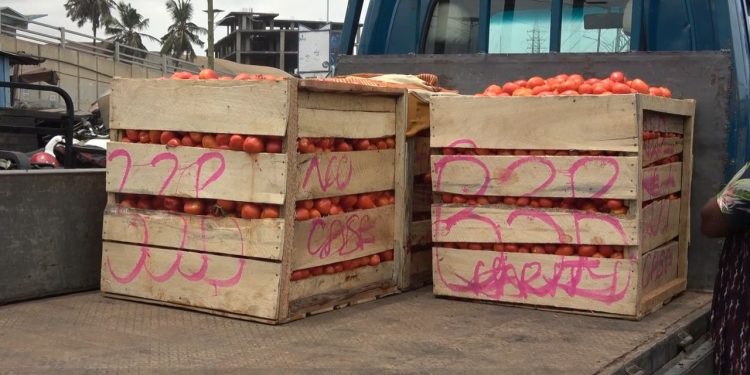
    A security analyst, Festus Aboagye (Rtd), has reacted to the deaths of seven Ghanaian tomato traders who were burnt beyond recognition in a terror attack in Titao, northern Burkina Faso, on Sunday, February 15.

    In an interview with the media, Aboagye noted that the jihadists never intended to harm the victims, adding that the deceased persons found themselves at the area at the wrong time. He mentioned that the chaos the area is aimed at destabiling Burkina Faso, adding that the attackers are intelligent and strategic.

    “If I base my comments on what the minister said, and the minister has more intelligence and information than the rest of us that the jihadists said publicly that they were not attacking Ghanaians,” he stated.

    He added, “Their method of operation is to destabilise Burkina Faso, so the best description is what I said earlier, being at the wrong place at the wrong time, and I think there isn’t sufficient information for us to conclude that these jihadists targeted Ghana. The jihadists are not illiterates.”

    On Sunday, February 15, Burkina Faso laid to rest seven Ghanaians who had traveled to Titao for the tomato trade.The deceased were burnt beyond recognition during the attack.

    Earlier, the Minister for the Interior and National Security, Muntaka Mohammed-Mubarak, revealed that an investigation had been launched into the unfortunate incident, which also left three men injured, while one woman remains in critical condition.

    But speaking to the media, the Minister disclosed that the victims were buried due to the state of decomposition of their bodies. According to the minister, the deceased were a part of a group of 18 Ghanaian tomato traders and truck drivers.

    “The seven bodies have been burnt beyond recognition. As at yesterday, we agreed they had begun decomposing and had to be buried. So the Burkina Faso authorities told us [Ghanaians] that they would bury them at 10 a.m today. But our women who are not really injured can go and witness and take as many pictures as possible,” he added.

    Additionally, the minister noted that “And the sad thing is that we lost seven of our men. Three of them got injured. One woman was critically injured, and others were not badly injured”.

    Ghana and Burkina Faso has since shared a long border. Burkina Faso remains deeply affected by insurgent violence, with cross-border implications for neighboring countries like Ghana.

    Northern Burkina Faso has faced persistent insecurity due to jihadist groups linked to al-Qaeda and ISIS. Attacks often target military posts, civilians, and traders moving across borders, disrupting local economies and cross-border trade.

    Burkina Faso remains deeply affected by insurgent violence, with cross-border implications for neighboring countries like Ghana. In 2025, Burkina Faso’s military government’s banned grain and cereal exports.

    To demonstrate their commitment, Burkinabe authorities have agreed to lift restrictions on 23 trucks carrying beans that were previously seized. Additional shipments of cereals meant for Ghana are also expected to be released in the coming days.

    Ghana, which depends on imports from Burkina Faso, had faced concerns over possible supply shortages and rising prices due to the ban.

    However, after President Mahama’s diplomatic engagements in the AES region, Gbevlo-Lartey is confident that relations between both countries have been strengthened.

    During an interview with Blessed Sogah on Connect Africa, he explained: “President Mahama has successfully addressed the situation, and further discussions between key stakeholders from both sides will ensure a concrete resolution. The issue is largely settled. For instance, 23 trucks that had been held up have been released, and the Burkinabe authorities have assured President Mahama that the remaining eight will also be let through shortly.”

    Meanwhile, on January 29, the Economic Community of West African States (ECOWAS) confirmed that Mali, Burkina Faso, and Niger had officially exited the bloc after the end of their six-month grace period due to diplomatic tensions after military takeovers and due to economic and social failures by past governments.

    The military juntas of these countries are led by Captain Ibrahim Traoré, General Assimi Goïta, and General Abdourahmane Tchiani, respectively.The trio accused the ECOWAS of failing to safeguard member states and deviating from founding principles and Pan-African spirit.

    In response to these claims, ECOWAS revealed that it did not receive formal notice before their withdrawal; therefore, it called for a dialogue to address their concerns. “The ECOWAS Commission remains seized with the development and shall make further pronouncements as the situation evolves,” it added.

    President John Dramani Mahama extended invitations to the military leaders of Mali, Burkina Faso, and Niger to participate in the official launch of ECOWAS’s 50th anniversary celebrations, which took place in Accra on April 22.

    The invitation to the Sahelian states was part of Ghana’s broader efforts to rebuild relations and enhance cooperation for a stable and united West African region.International Relations Analyst Dr. Yaw Gebe endorsed President John Dramani Mahama’s decision, describing the gesture as a positive step toward regional reconciliation.

    He, however, advised the ECOWAS to critically reflect on the underlying reasons behind the exit of the Sahel nations and emphasised the need for the bloc to adopt a more inclusive and problem-solving approach going forward.

    “My prayer and longing is that whatever the Nigerian President, Bola Tinubu or President John Mahama are doing, they should be conscious of the problems or challenges these countries are facing. The ECOWAS must be willing and ready to tackle those problems collectively. And that is a major shortcoming on the part of ECOWAS,” he said.

    Despite the formal withdrawal of Burkina Faso, Mali, and Niger from the Economic Community of West African States (ECOWAS) on January 29, citizens from these countries will still be able to use their national passports and identity cards bearing the ECOWAS logo for travel within the region.

    ECOWAS has assured that in the interest of regional cooperation and to prevent unnecessary disruptions, all relevant authorities within and outside the bloc’s member states should continue to recognize these travel documents until further notice.

    Additionally, trade and economic activities involving these three nations will not face immediate restrictions. Goods and services from Burkina Faso, Mali, and Niger will continue to receive the same treatment under the ECOWAS Trade Liberalization Scheme (ETLS) and investment policy.

    Citizens from the affected countries will also retain their right to visa-free movement, residence, and establishment across ECOWAS states, ensuring that travel and cross-border activities remain unhindered.

    Furthermore, officials from Burkina Faso, Mali, and Niger working within ECOWAS will be given full support and cooperation in carrying out their assignments.These measures will remain in place as ECOWAS leaders work on defining the future relationship between the bloc and the three nations.

    A special structure has been put in place to facilitate discussions on the next steps.The regional body emphasized that these transitional arrangements aim to maintain stability, minimize confusion, and support the people and businesses affected by the withdrawal.

  • Stop spreading images of Ghanaian terror attack victims – Muntaka

    Stop spreading images of Ghanaian terror attack victims – Muntaka

    The Minister for Interior, Mohammed Muntaka Mubarak, has made a plea to the public following the death of seven (7) Ghanaian tomato traders in northern Burkina Faso on Sunday, February 15.

    Addressing the media on Monday, February 16 , the Minister called for an end to the circulation of images and videos showing the burnt bodies of the victims of the terrorist attack. He added that the continuous sharing of such images is causing additional pain to the families of the deceased as they mourn.

    “Unfortunately, on Saturday, our compatriots travelling through Titao were caught in a violent confrontation between extremists and Burkina Faso’s armed forces. 18 Ghanaian tomato traders were affected, 10 men and eight women. The attackers forced the women off the trucks and opened fire indiscriminately. Several individuals, including the drivers, died instantly, and the trucks were set ablaze, leaving the bodies burnt beyond recognition.


    “Families of the victims are uncertain. Sharing footage of burnt bodies is not only insensitive but also adds to their trauma. I plead with everyone to stop circulating these images and put themselves in the shoes of the grieving families,” he said.


    The victims were burnt beyond recognition during the terror attack. They were buried on Monday, February 16. Earlier, the Minister for the Interior and National Security, Muntaka Mohammed-Mubarak, revealed that an investigation had been launched into the unfortunate incident, which also left three men injured, while one woman remains in critical condition.


    But speaking to the media, the Minister disclosed that the victims were buried due to the state of decomposition of their bodies. According to the minister, the deceased were a part of a group of 18 Ghanaian tomato traders and truck drivers.


    “The seven bodies have been burnt beyond recognition. As at yesterday, we agreed they had begun decomposing and had to be buried. So the Burkina Faso authorities told us [Ghanaians] that they would bury them at 10 a.m today. But our women who are not really injured can go and witness and take as many pictures as possible,” he added.


    Additionally, the minister noted that “And the sad thing is that we lost seven of our men. Three of them got injured. One woman was critically injured, and others were not badly injured”.


    Ghana and Burkina Faso have since shared a long border. Burkina Faso remains deeply affected by insurgent violence, with cross-border implications for neighboring countries like Ghana.


    Northern Burkina Faso has faced persistent insecurity due to jihadist groups linked to al-Qaeda and ISIS. Attacks often target military posts, civilians, and traders moving across borders, disrupting local economies and cross-border trade.


    Burkina Faso remains deeply affected by insurgent violence, with cross-border implications for neighboring countries like Ghana. In 2025, Burkina Faso’s military government banned grain and cereal exports.


    To demonstrate their commitment, Burkinabe authorities have agreed to lift restrictions on 23 trucks carrying beans that were previously seized.

    Additional shipments of cereals meant for Ghana are also expected to be released in the coming days.
    Ghana, which depends on imports from Burkina Faso, had faced concerns over possible supply shortages and rising prices due to the ban.


    However, after President Mahama’s diplomatic engagements in the AES region, Gbevlo-Lartey is confident that relations between both countries have been strengthened.


    During an interview with Blessed Sogah on Connect Africa, he explained: “President Mahama has successfully addressed the situation, and further discussions between key stakeholders from both sides will ensure a concrete resolution.

    “The issue is largely settled. For instance, 23 trucks that had been held up have been released, and the Burkinabe authorities have assured President Mahama that the remaining eight will also be let through shortly.”


    Meanwhile, on January 29, the Economic Community of West African States (ECOWAS) confirmed that Mali, Burkina Faso, and Niger had officially exited the bloc after the end of their six-month grace period due to diplomatic tensions after military takeovers and due to economic and social failures by past governments.


    The military juntas of these countries are led by Captain Ibrahim Traoré, General Assimi Goïta, and General Abdourahmane Tchiani, respectively. The trio accused the ECOWAS of failing to safeguard member states and deviating from the founding principles and Pan-African spirit.

    In response to these claims, ECOWAS revealed that it did not receive formal notice before their withdrawal; therefore, it called for a dialogue to address their concerns. “The ECOWAS Commission remains seized with the development and shall make further pronouncements as the situation evolves,” it added.


    President John Dramani Mahama extended invitations to the military leaders of Mali, Burkina Faso, and Niger to participate in the official launch of ECOWAS’s 50th anniversary celebrations, which took place in Accra on April 22.


    The invitation to the Sahelian states was part of Ghana’s broader efforts to rebuild relations and enhance cooperation for a stable and united West African region.International Relations Analyst Dr. Yaw Gebe endorsed President John Dramani Mahama’s decision, describing the gesture as a positive step toward regional reconciliation.


    He, however, advised the ECOWAS to critically reflect on the underlying reasons behind the exit of the Sahel nations and emphasised the need for the bloc to adopt a more inclusive and problem-solving approach going forward.


    “My prayer and longing is that whatever the Nigerian President, Bola Tinubu or President John Mahama are doing, they should be conscious of the problems or challenges these countries are facing. The ECOWAS must be willing and ready to tackle those problems collectively. And that is a major shortcoming on the part of ECOWAS,” he said.


    Despite the formal withdrawal of Burkina Faso, Mali, and Niger from the Economic Community of West African States (ECOWAS) on January 29, citizens from these countries will still be able to use their national passports and identity cards bearing the ECOWAS logo for travel within the region.


    ECOWAS has assured that, in the interest of regional cooperation and to prevent unnecessary disruptions, all relevant authorities within and outside the bloc’s member states should continue to recognize these travel documents until further notice.


    Additionally, trade and economic activities involving these three nations will not face immediate restrictions. Goods and services from Burkina Faso, Mali, and Niger will continue to receive the same treatment under the ECOWAS Trade Liberalization Scheme (ETLS) and investment policy.


    Citizens from the affected countries will also retain their right to visa-free movement, residence, and establishment across ECOWAS states, ensuring that travel and cross-border activities remain unhindered.


    Furthermore, officials from Burkina Faso, Mali, and Niger working within ECOWAS will be given full support and cooperation in carrying out their assignments.These measures will remain in place as ECOWAS leaders work on defining the future relationship between the bloc and the three nations.


    A special structure has been put in place to facilitate discussions on the next steps. The regional body emphasized that these transitional arrangements aim to maintain stability, minimize confusion, and support the people and businesses affected by the withdrawal.

  • Democracy Hub seeks injunction to stop Ayawaso East Poll

    Democracy Hub seeks injunction to stop Ayawaso East Poll

    A suit was filed on Monday, February 16, by the pressure group, Democracy Hub, challenging the Ayawaso East by-election. The group alleges vote-buying during the National Democratic Congress (NDC) parliamentary primaries held on February 7, 2026.

    Democracy Hub has prayed the High Court to direct the Electoral Commission (EC) to conduct a fresh primary in accordance with democratic principles.

    In the suit, the NDC is cited as the first defendant, the Electoral Commission as the second, and the Attorney-General as the third.

    The suit further added, “An order of mandamus directed at the 2nd Defendant to refuse to accept or act upon the nomination of the said candidate unless and until a primary conducted in accordance with democratic principles is held.”

    “A declaration that the parliamentary primary conducted by the 1st Defendant for the Ayawaso East Constituency, having been found to have been characterised by widespread vote buying, inducement and monetisation, did not conform to the democratic principles required under Article 55(5) of the Constitution, and that the continued reliance on the outcome thereof and the presentation of a candidate founded on that process constitute actions contrary to and inconsistent with the Constitution in violation of section 9 of the Political Parties Act, 2000 (Act 574).”

    This development comes at a time when the EC has scheduled the Ayawaso East by-election for March 3, 2026. The by-election has attracted heightened attention in recent days amid internal developments within the NDC, including allegations of vote buying during its parliamentary primary.

    Mr Baba Jamal Mohammed Ahmed won the Ayawaso East Constituency primary and is set to represent the NDC as its parliamentary candidate in the March 3 by-election, following the party’s internal primary held on February 7, 2026.

    After the close of polls, provisional results showed that Baba Jamal polled 431 votes out of the total votes cast, followed by the widow of the late Ayawaso MP, Naser Toure Hajia Amina Adam who secured 399 votes. Mr Mohammed Ramne, the Ayawaso East NDC Constituency Chairman, placed third with 88 votes.

    Dr Yakubu Azindow obtained 45 votes, while Mr Najib Mohammed Sani recorded one vote. The closely contested primary attracted more than 1,100 accredited delegates from across the constituency, reflecting the high stakes involved in selecting a candidate for the by-election in a seat widely regarded as a stronghold of the governing NDC.

    Five aspirants contested the race: Hajia Amina Adam, Mr Baba Jamal, Dr Yakubu Azindow who had previously contested the late MP in the 2023 primary, Mr Mohammed Ramne, and Mr Mohammed Sani.

    Although the race was initially considered open, it later narrowed into a tight contest among Mr Jamal, Hajia Amina Adam and Dr Azindow.

    Even though the election was peaceful on Saturday, reports of vote buying emerged on the eve of the election and on election day, involving some candidates, including Baba Jamal, who at the time was Ghana’s High Commissioner to Nigeria and allegedly offered television sets and other items to delegates.

    Videos circulating on social media showed some delegates leaving polling centres carrying television sets and other items.

    Reacting to the vote-buying allegations, the NDC, in a statement signed by its Secretary, Fiifi Kwetey, announced that it would investigate the allegations. It noted that a three-member committee had been set up to probe the matter.

    In a statement issued on the same day, the NDC said its national executives had taken note of what it described as widespread incidents of inducement and vote buying allegedly perpetrated by some aspirants.

    The party condemned the acts, describing them as an affront to its values and principles, and announced that it had launched investigations into the matter.

    “In line with the Party’s commitment to internal democracy, transparency, and ethical political conduct, the Committee will investigate the allegations and make appropriate recommendations, including sanctions where necessary,” the statement said.

    The Presidency has announced the recall of Ghana’s High Commissioner to Nigeria, Baba Jamal, over voter inducement during the just-ended Ayawaso East primaries held on Saturday, February 7.

    In a statement titled “President recalls Ghana’s High Commissioner to Nigeria,” shared by the Spokesperson to the President, Felix Kwakye Ofosu, and dated February 7, it noted that “President John Dramani Mahama has directed the immediate recall of Mohammed Baba Jamal Ahmed (Baba Jamal) from his position as Ghana’s High Commissioner to the Federal Republic of Nigeria. The decision follows allegations of voter inducement during today’s National Democratic Congress (NDC) primaries in the Ayawaso East Constituency, in which Mr Baba Jamal, a candidate, participated.”

    The President stressed that reports of vote buying were made against several candidates seeking to win the Ayawaso East seat, but Baba Jamal stood out because he was the only serving public officer at the time, making his case a peculiar one.

    “In his directive to the Minister for Foreign Affairs recalling Mr Baba Jamal as High Commissioner, the President noted that while allegations of vote-buying were made against multiple candidates who contested the primaries, Baba Jamal was the only serving public officer among them.”

    Consequently, to protect the integrity of public office and to avoid any public suspicion of misconduct or violation of the Government’s Code of Conduct for Political Appointees, the President stated:

    “Without prejudice to the ongoing internal party processes, and strictly in view of the standards of conduct expected of public officers, the President considers it necessary to act decisively to preserve the integrity of public office and to avoid any perception of impropriety or conflict with the Government’s Code of Conduct for Political Appointees.”

    The statement continued that “the recall takes effect immediately, and the Minister for Foreign Affairs has been directed to take the necessary administrative and diplomatic steps to give effect to this directive.”

  • Work on Hajj Village progressing, completion due 2026 – Contractor

    Work on Hajj Village progressing, completion due 2026 – Contractor

    The new multipurpose Hajj Village at the Kotoka International Airport project is about 55% complete, Mawums Limited, the contractor, has revealed.

    During a tour of the facility by the Board and Management of the Ghana Airports Company Limited (GACL), led by the Member of Parliament for Builsa North and Board Chairman, James Agalga, the contractor indicated that the project will be brought to completion before close of 2026.


    The Hajj Village will streamline pre-departure procedures, ensuring a more organized and efficient experience for pilgrims heading to Mecca.

    As part of preparations for this year’s pilgrimage, President Mahama has also announced plans to airlift 5,000 Ghanaian pilgrims.


    The facility, when completed, is expected to improve the management of Hajj operations, easing congestion and enhancing travel logistics for the annual religious journey.


    Meanwhile, the Minister of State for Government Communications, Felix Kwakye Ofosu, has refuted claims that taxpayer money is being used to fund the construction of the new Hajj Village.


    He clarified that the project is solely financed by the Ghana Airports Company Limited (GACL) and does not rely on public funds.


    Addressing concerns in a post on X, Mr. Kwakye Ofosu emphasized the government’s position, stating, “FACT: The Hajj Village is primarily an Airport Terminal Building for check-in and pilgrim facilitation owned and being built by the Ghana Airport Company. Not a pesewa of taxpayers’ money involved.”


    His comments come in response to public discussions surrounding the financial sources and purpose of the facility.

    Some Ghanaians questioned the priorities of the government and what they believed to be the neglect of some communities in devastating state, particularly the Volta Region, battling coastal erosion.


    Former Auditor-General Daniel Yao Domelevo has slammed the government for prioritizing the construction of a Hajj Village, arguing that such an investment is unjustifiable given Ghana’s struggling economy.


    Domelevo questioned the rationale behind committing resources to a religious infrastructure project while the country faces severe financial challenges.


    He pointed out that Ghana is still dealing with the fallout from the $58 million spent on the National Cathedral, which has yielded little tangible progress.


    “It is truly astonishing especially as we grapple with recovering over $58 million squandered on the National Cathedral project—that one of the key priorities of the Mahama administration is the fruitless and wasteful Hajj Village project,” he remarked.


    His comments came in response to assurances by the Minister of State in charge of Government Communications, Felix Kwakye Ofosu, who claimed that the Hajj Village project would not be funded by taxpayers.

    Domelevo dismissed this assertion as misleading, stressing that the Ghana Airports Company Limited (GACL), which is overseeing the project, is a state-owned enterprise. He argued that since the government is likely a major shareholder, public funds could inevitably be involved.


    Domelevo further contrasted Ghana’s priorities with Ethiopia’s approach to development. He noted that despite Ethiopia’s significant Muslim population, the country has chosen to invest in infrastructure that boosts economic growth, such as a five-star Skylight hotel with over 1,000 rooms and expanded airport facilities to enhance passenger transit.


    In comparison, he expressed disappointment that Ghana is focusing on a Hajj Village. “We should stop celebrating mediocrity,” he concluded.

    The next Hajj is set to take place from Monday, 25 May 2026 to Saturday, 30 May 2026, corresponding to 8th–13th Dhul-Hijjah 1447 AH.

    Ghana has a history of Hajj pilgrims being asked to pay levies, extra charges, and fees outside the official payment channels to cover their travel and related expenses.

    These practices have been widely criticised, as the additional fees often lacked transparency, leaving pilgrims and their families uncertain about how their money was being used.


    Consequently, the president has charged this new board to reflect effective leadership by being transparent.


    “The second is transparency and accountability. Pilgrims and their families must know how their money is used. All payments must pass through approved and traceable channels. No unofficial levies. No hidden charges. Transparency builds trust, and trust is the currency of leadership”.

    The priority area, as mentioned by the President, is the health of pilgrims, particularly of the aged and persons with disabilities.
    Fifteen lives have been lost in the last two years following their travel to the Holy Land of Mecca.


    In 2024, eight pilgrims lost their lives, and their deaths were linked to an extreme heat wave, with temperatures above 41°C. Saudi authorities even directed pilgrims to remain in tents during peak heat hours to reduce exposure.

    Although in 2025, the death toll went down by one, five females and two males lost their lives to similar conditions of heat exceeding 48°C, which posed serious risks, especially for the elderly.


    To avoid a recurrence, he told the board, to liaise with the Ghana Health Service (GHS), to give priority to the health of pilgrims, particularly the elderly, “coordinate with the Ghana Health Service, the Ministry of Transport, and our embassy in Riyadh to ensure safe travel, decent accommodation, adequate meals, and strong medical support. Happily, we have a doctor, a heart surgeon, on the Hajj Board this time, so I expect health issues to be managed effectively. Pay special attention to elderly pilgrims, women, and persons with disabilities. Their comfort is a sacred duty of the Hajj Board”.


    He continued, “The fourth is conduct and service. Every official, from board members to volunteers, must act with courtesy, discipline, fairness, and honesty. Our pilgrims should feel respected at every point, from registration to their safe return home. The fifth is partnership and communication.


    Maintain open and constant engagement with the Office of the National Chief Imam, your regional imams, travel partners and agents, and especially the Saudi authorities.


    Coordination prevents crises, and communication prevents rumours”.


    He also tasked the Board with developing a Hajj Mobile Application to enable pilgrims to register, verify their status, track payments, and access travel information, noting that such innovation would reduce fraud and ease congestion.


    In a related development, President Mahama in May this year announced that the continuous appreciation of the local currency could reduce the fees Ghanaian Muslims pay to travel to Mecca to perform the Hajj pilgrimage.


    President John Dramani Mahama announced this during his Thank You Tour in Kintampo in the Bono East Region on Thursday, May 29.


    According to him, pilgrims are likely to pay as low as GHC 50,000 next year, down from GHS 62,000.


    “At the time we started paying for the Hajj, the Cedi was at GHC15.5 to the dollar. So, the fare we came up with for the $4,000 cost to do the Hajj came to GHC 62,000,” he explained.


    “Next year, if you do a calculation with where the Cedi is currently—GHC 10.5—it means the fare for Hajj may go below GHC 50,000.”


    This year’s pilgrimage recorded a massive turnout following the Mahama-led government’s decision to reduce the Hajj pilgrimage fee from 62,000 to 75,000 Ghana cedis under the previous administration.


    Approximately 6,000 Ghanaian Muslims travelled to Saudi Arabia for Hajj 2025. These numbers show an increase of 2,000 Ghanaian participants as compared to 4,000 last year.

  • Burkina Faso lays to rest 7 Ghanaian terror attack victims

    Burkina Faso lays to rest 7 Ghanaian terror attack victims

    Seven Ghanaian traders who were killed in a terrorist attack in Titao on Sunday, February 15, have been laid to rest in northern Burkina Faso. The victims were burnt beyond recognition during the attack.

    Earlier, the Minister for the Interior and National Security, Muntaka Mohammed-Mubarak, revealed that an investigation had been launched into the unfortunate incident, which also left three men injured, while one woman remains in critical condition.

    But speaking to the media, the Minister disclosed that the victims were buried due to the state of decomposition of their bodies.  According to the minister, the deceased were a part of a group of 18 Ghanaian tomato traders and truck drivers.

    “The seven bodies have been burnt beyond recognition. As at yesterday, we agreed they had begun decomposing and had to be buried. So the Burkina Faso authorities told us [Ghanaians] that they would bury them at 10 a.m today. But our women who are not really injured can go and witness and take as many pictures as possible,” he added.

    Additionally, the minister noted that “And the sad thing is that we lost seven of our men. Three of them got injured. One woman was critically injured, and others were not badly injured”.

    Ghana and Burkina Faso has since shared a long border. Burkina Faso remains deeply affected by insurgent violence, with cross-border implications for neighboring countries like Ghana.

    Northern Burkina Faso has faced persistent insecurity due to jihadist groups linked to al-Qaeda and ISIS. Attacks often target military posts, civilians, and traders moving across borders, disrupting local economies and cross-border trade.

    Burkina Faso remains deeply affected by insurgent violence, with cross-border implications for neighboring countries like Ghana. In 2025, Burkina Faso’s military government’s banned grain and cereal exports.

    To demonstrate their commitment, Burkinabe authorities have agreed to lift restrictions on 23 trucks carrying beans that were previously seized. Additional shipments of cereals meant for Ghana are also expected to be released in the coming days.

    Ghana, which depends on imports from Burkina Faso, had faced concerns over possible supply shortages and rising prices due to the ban.

    However, after President Mahama’s diplomatic engagements in the AES region, Gbevlo-Lartey is confident that relations between both countries have been strengthened.

    During an interview with Blessed Sogah on Connect Africa, he explained: “President Mahama has successfully addressed the situation, and further discussions between key stakeholders from both sides will ensure a concrete resolution. The issue is largely settled. For instance, 23 trucks that had been held up have been released, and the Burkinabe authorities have assured President Mahama that the remaining eight will also be let through shortly.”

    Meanwhile, on January 29, the Economic Community of West African States (ECOWAS) confirmed that Mali, Burkina Faso, and Niger had officially exited the bloc after the end of their six-month grace period due to diplomatic tensions after military takeovers and due to economic and social failures by past governments.

    The military juntas of these countries are led by Captain Ibrahim Traoré, General Assimi Goïta, and General Abdourahmane Tchiani, respectively.The trio accused the ECOWAS of failing to safeguard member states and deviating from founding principles and Pan-African spirit.

    In response to these claims, ECOWAS revealed that it did not receive formal notice before their withdrawal; therefore, it called for a dialogue to address their concerns. “The ECOWAS Commission remains seized with the development and shall make further pronouncements as the situation evolves,” it added.

    President John Dramani Mahama extended invitations to the military leaders of Mali, Burkina Faso, and Niger to participate in the official launch of ECOWAS’s 50th anniversary celebrations, which took place in Accra on April 22.

    The invitation to the Sahelian states was part of Ghana’s broader efforts to rebuild relations and enhance cooperation for a stable and united West African region.International Relations Analyst Dr. Yaw Gebe endorsed President John Dramani Mahama’s decision, describing the gesture as a positive step toward regional reconciliation.

    He, however, advised the ECOWAS to critically reflect on the underlying reasons behind the exit of the Sahel nations and emphasised the need for the bloc to adopt a more inclusive and problem-solving approach going forward.

    “My prayer and longing is that whatever the Nigerian President, Bola Tinubu or President John Mahama are doing, they should be conscious of the problems or challenges these countries are facing. The ECOWAS must be willing and ready to tackle those problems collectively. And that is a major shortcoming on the part of ECOWAS,” he said.

    Despite the formal withdrawal of Burkina Faso, Mali, and Niger from the Economic Community of West African States (ECOWAS) on January 29, citizens from these countries will still be able to use their national passports and identity cards bearing the ECOWAS logo for travel within the region.

    ECOWAS has assured that in the interest of regional cooperation and to prevent unnecessary disruptions, all relevant authorities within and outside the bloc’s member states should continue to recognize these travel documents until further notice.

    Additionally, trade and economic activities involving these three nations will not face immediate restrictions. Goods and services from Burkina Faso, Mali, and Niger will continue to receive the same treatment under the ECOWAS Trade Liberalization Scheme (ETLS) and investment policy.

    Citizens from the affected countries will also retain their right to visa-free movement, residence, and establishment across ECOWAS states, ensuring that travel and cross-border activities remain unhindered. 

    Furthermore, officials from Burkina Faso, Mali, and Niger working within ECOWAS will be given full support and cooperation in carrying out their assignments.These measures will remain in place as ECOWAS leaders work on defining the future relationship between the bloc and the three nations. 

    A special structure has been put in place to facilitate discussions on the next steps.The regional body emphasized that these transitional arrangements aim to maintain stability, minimize confusion, and support the people and businesses affected by the withdrawal.

  • Accra-Nsawam highway petrol tanker fire killed 6, injured 7 – GNFS confirms

    Accra-Nsawam highway petrol tanker fire killed 6, injured 7 – GNFS confirms

    The Ghana National Fire Service (GNFS) has confirmed that the fire outbreak on the Accra-Nsawam Highway near Okanta in the early hours of Saturday, February 14 claimed the lives of six people and injured seven others.

    The deceased persons include, three (3) victims including two males and one female.

    According to the Service a total of fifteen (15) casualties were recorded following the incident, comprising eleven (11) males and four (4) females.

    In a press statement the Ghana National Fire Service added that “A total of 15 casualties were recorded (11 males and 4 females). Three (3) victims (two males, one female) tragically died at the scene, and their badly charred bodies were handed over to the Police for preservation and further investigation”.


    In the early hours of Saturday, February 14, a fuel tanker explosion destroyed multiple vehicles along the Nsawam-Accra highway, causing heavy traffic congestion on the busy stretch.


    Preliminary reports indicate that the explosion occurred after the tanker was involved in a collision, which caused the vehicle to catch fire.


    Thick black smoke was seen rising from the scene, sparking fear among motorists and residents in nearby communities.


    Personnel from the Ghana National Fire Service responded promptly and are working to bring the blaze under control and prevent it from spreading to other vehicles and properties.

    Emergency responders have since cordoned off the affected section of the road as firefighting operations continue.
    No casualties have been confirmed so far.

    However, emergency teams are still assessing the situation and searching the area to ensure that no victims are trapped.


    The incident has caused significant traffic disruption along the Nsawam-Accra route, which serves as a major link between the Eastern Region and Accra.


    Motorists have been advised to exercise caution when approaching the area and to use alternative routes while firefighting and vehicle recovery operations continue. Police personnel are also at the scene managing traffic and ensuring the safety of road users.


    Meanwhile, Eastern South Regional Police Commander, DCOP George Ohene Bossman Boadi, has warned the public against stealing fuel from tankers involved in road accidents.


    The warning comes after a fatal fuel tanker explosion was reported at Ntoaso on the Accra–Nsawam Highway in the Eastern Region, which killed three people and damaged property.


    According to a report by 3News.com, Suhum Fire Service Public Relations Officer ADO1 Akonoh Opare Ohene Daniel explained that the blast occurred when residents tried to steal fuel from the overturned tanker.


    “The residents in this area were siphoning the fuel, leading to the explosion. Traffic had already built up, and a female motorist who was trapped behind was burnt too.This is wrong. Residents along highways must stop engaging in such illegal activities,” he stated.


    He therefore urged the public to refrain from such dangerous and illegal acts and allow experts to manage accident scenes at all times.

    The 3News.com report added that Eyewitnesses revealed that the incident happened around 5:00 a.m. on Saturday, when a fuel tanker heading toward Kumasi reportedly overturned along the shoulder of the busy highway.


    Several residents and motorcycle riders rushed to the scene to steal fuel from the overturned vehicle.


    The situation quickly turned deadly when the tanker ignited, causing an explosion that claimed the lives of two men and one woman.


    The blast also destroyed around five vehicles caught in traffic, including motorcycles believed to belong to the victims. Passengers and bystanders fled as flames spread across the area.


    Personnel from the Ghana National Fire Service, Ghana Police Service, National Disaster Management Organisation (NADMO), and National Ambulance Service responded swiftly.


    Several individuals who sustained life-threatening injuries were rescued and taken to Nsawam Government Hospital, where they are receiving treatment. The bodies of the deceased have been taken to the Suhum Government Hospital morgue.


    Eastern South Regional Police Commander DCOP George Ohene Bossman Boadi stated that police officers would remain at the scene to manage traffic while Fire Service personnel continue efforts to extinguish the flames.

  • Ghana records $8.5m boost in exports as of Feb 2026 – GEPA 

    Ghana records $8.5m boost in exports as of Feb 2026 – GEPA 

    Ghana’s exports as of February 2026 have increased by $8.5 million so far, the Board Chairman of the Ghana Export Promotion Authority (GEPA), Dr. Godfred Seidu Jasaw, has disclosed.


    According to the Minister for the Interior and National Security, Muntaka Mohammed-Mubarak, the increase in export volumes, coupled with the strategic management of surplus production, is contributing to the maintenance of macroeconomic stability.


    “There are exports relative to imports. Exports have been increasing and I chair the GEPA board and I can tell you for a fact that our export quantum has been increasing and there is a difference of about $8.5 million already in mid-year.

    And so please, something good is happening. It is not about over-injection of dollars. If you have the productive capacity of the country being utilised effectively and then exports are increasing, clearly, you will have some stability in the macroeconomy,” he added.


    As of June 2025, Ghana’s total exports reached $13.8 billion, a monthly gain of over $2.3 billion from the $11.54 billion recorded in May 2025. In June, gold exports surged to $8.39 billion, cocoa exports reached $2.32 billion, and oil exports rose to $1.36 billion. Other exports were valued at $1.88 billion.

    In May, the value of exported gold stood at $6.85 billion, cocoa at $2.01 billion, oil at $1.09 billion, and other exports at $1.59 billion.


    With regard to total imports for June 2025, the value stood at $8.23 billion. The value of imported oil stood at $2.59 billion, and non-oil imports at $5.64 billion. In May, Ghana recorded relatively less for imported goods. Imports reached $6.68 billion, with oil imports at $2.11 billion and non-oil imports at $4.57 billion.

    The trade surplus for May stood at $4.85 billion.
    As of March 2025, total exports stood at $7.03 billion. Gold exports generated $3.73 billion, cocoa exports stood at $1.59 billion, oil exports raked in $780.2 million, and other exports at $924.9 million.

    However, imports for that totaled $3.73 billion, with oil at $1.27 billion and non-oil at $2.46 billion. A trade balance of $3.29 billion was reported.


    In April 2025, exports rose to $9.26 billion, largely from increased gold exports at $5.25 billion, cocoa exports at $1.85 billion, oil exports at $908.5 million, and other exports at $1.25 billion.

    Total imports grew to USD 5.13 billion, with oil at $1.68 billion and non-oil at $3.45 billion. A trade surplus of $4.12 billion was reported.


    Per the report, Gross International Reserves (GIR) increased steadily, from $5.99 billion in March 2024 to $11.22 billion by June 2025. Import cover improved from 2.7 months in early 2024 to 4.8 months in June 2025.

    The net international reserves (NIR) also expanded from $3.86 billion in March 2024 to $8.88 billion by mid-2025.


    Private transfers (remittances) maintained strong growth, reaching $3.93 billion by June 2025, compared to $1.79 billion in March 2024—more than doubling within the 15-month period.


    Meanwhile, the current account balance swung from a deficit of -$117.6 million in March 2024 to a surplus of $3.43 billion in June 2025. The financial account, which was negative in early 2024 (-$287 million), turned positive to $1.6 billion in May and $1.59 billion in June 2025.


    Per the data provided by the Bank of Ghana, it can be reported that the country’s external sector developments show sustained improvements in 2025 compared to the same period in 2024.

    Key indicators such as exports, imports, current account balance, and international reserves showed growing trade activity and improved external sector stability.

  • One dead, several properties damaged after fire incident at Sefwi Adjoafua

    One dead, several properties damaged after fire incident at Sefwi Adjoafua

    A domestic fire has claimed the life of 70-year-old Kwasi Nkansah and destroyed a two-bedroom house at Sefwi Adjoafua in the Western North Region.


    The Ghana National Fire Service (GNFS), in an update on Facebook, said it managed to contain the fire, preventing it from spreading to nearby buildings. Meanwhile, the cause of the fire is yet to be made known.

    Last week, one of Ghana’s oldest settlements, Gambaga Witches Camp in the North East Region, was engulfed by fire, ravaging five rooms following a suspected bush fire trigger.


    The inferno spread rapidly and threatened an eight-room block at the camp. However, reports from fire officers at Gambaga Fire Station indicate that they received a distress call and promptly responded, leading to the salvage of three other rooms.


    Sources at the scene, however, noted that the fire had caused greater damage to the structures before the emergency responders arrived. They attributed this to a delayed distress call and poor road access to the area.

    The surrounding bushland, already ablaze, further complicated efforts to control the flames.


    No casualties were reported. Authorities have yet to conduct a full assessment of the extent of the damage, and investigations are ongoing to determine the exact cause of the fire.


    Meanwhile, reports from the Ghana National Fire Service (GNFS) reported 377 fire outbreaks in the Northern Region in 2025, compared to 373 in 2024, only a slight increase in cases.


    Situated in Gambaga township in Ghana’s North East Region, the Gambaga Witches Camp has stood for more than two centuries as a refuge for people accused of witchcraft. It is one of several such camps in northern Ghana, but Gambaga remains the oldest and most widely known.


    The camp is home to about 100 women who live in roughly 25 round huts. Facilities are extremely basic, with no health services or indoor plumbing. Residents survive through subsistence farming and small-scale trading, while protection is offered by the local chief and earth priest, who oversee rituals and provide sanctuary.


    Most of the women are elderly, often widows, who have been accused of witchcraft by relatives or communities.

    These accusations typically follow misfortunes such as illness, death, crop failure, or other unexplained events. In some cases, the women suffer from mental illness, which remains poorly understood and stigmatized in Ghana. Once accused, they are ostracized and often flee for their lives to Gambaga.


    Belief in witchcraft is deeply rooted in parts of Ghana, where it serves as a traditional explanation for misfortune. Accusations can also be a form of scapegoating or a way to settle family disputes.

    The camp, therefore, represents both protection from violence and exile from society. Human rights groups have long criticized witch camps as violations of dignity and freedom, calling for their closure and the reintegration of women into society.

    Yet for many of the women in Gambaga, the camp remains the only place where they feel safe.


    Fire cases in Ghana since last year


    A fierce fire ravaged seven container shops at Spintex, Accra, around the Marina, in the early hours of Saturday, February 7.


    According to the Ghana National Fire Service (GNFS), it received a distress call at about 12:01 a.m. But was unable to respond immediately due to a faulty fire engine at the Kasapreko Fire Station, which is closest to the scene. As a result, the Tema Motorway Fire Engine was dispatched as the base pump.


    In a Facebook post, the GNFS explained that it had to deploy three fire tenders from the Motorway, Tema Metro, and Tema Industrial Area Fire Stations to bring the blaze under control.


    The firefighting team, led by ADO I Derrick Sarkodie, arrived at the scene at 12:19 a.m. to find the fire already at an advanced stage and spreading rapidly.

    However, a coordinated and tactical operation by the firefighters brought the fire under control, and by 4:32 a.m., it had been completely extinguished.


    The affected shops included seven container shops housing furniture, tailoring, and grocery businesses, along with their contents. No casualties were recorded.


    Firefighters also reported that they prevented the fire from spreading to nearby structures, including Marina Mall, and successfully protected a car garage containing more than 35 vehicles, as well as several adjoining shops and nearby residential buildings.


    The GNFS said investigations are underway to determine the cause of the fire.


    According to reports, Greater Accra has recorded about 5 fire incidents, with the Spintex fire being the latest.

    The Ashanti Region, on the other hand, has seen an alarming number of fire incidents since January 1, recording about 132 cases, a decline from the 187 cases reported during the same period in 2025.


    A fire outbreak on Monday evening, February 2, partially destroyed the girls’ dormitory at Pong Tamale Senior High School in northern Ghana.


    According to reports, the fire originated from the washrooms and later spread through other parts, triggering panic among students.


    Firefighters from the Ghana National Fire Service (GNFS) worked tirelessly to bring the fire under control. Pong Tamale Senior High School has become the latest second-cycle institution in northern Ghana to record a fire outbreak.


    A fire broke out at Tolon Senior High School in the Northern Region on Monday, February 2, destroying parts of a dormitory. Nearly 900 female students were displaced following a fire at Tolon Senior High School in the region.


    The recurring of fire incidents have raised concerns, Ghana recorded over 3,595 fire incidents nationwide in the first half of 2025, with regional breakdowns showing hundreds of cases across the Greater Accra, Ashanti, and Central Regions.


    Barely a week into the New Year, some Kasoa residents had their stalls completely burnt after a fire ravaged stalls in a major outbreak at the Kasoa New Market on Sunday, January 4, 2026.


    According to the Ghana National Fire Service (GNFS), a distress call was received around 4:50 p.m., after which the Kasoa Fire Station swiftly reached the scene and found the fire in a very advanced stage.

    The fire was spreading so rapidly that fire tenders had to immediately call for reinforcement from Weija, Anyaa, Dansoman, Industrial Area, Flagstaff House, Madina, and Swedru fire stations.

    According to reports, Greater Accra has recorded about 5
    After about two hours of firefighting, the tenders managed to extinguish the flames at 6:52 p.m., brought the fire under control at 7:52 p.m., and fully extinguished it by 10:00 p.m.

  • Illegal miners flee as NAIMOS confiscates guns, others in Ashanti Region

    Illegal miners flee as NAIMOS confiscates guns, others in Ashanti Region

    The crackdown on illegal mining activities in the Ashanti Region has taken heightened momentum, as security forces intensify operations against illegal miners operating across forest reserves and along major river bodies.

    On February 14 and 15, the National Anti-Illegal Mining Operations Secretariat (NAIMOS) stormed multiple galamsey sites in the Ashanti Region, seizing heavy equipment such as guns, excavators and other equipment used for illegal mining activities.

    The exercise was conducted in Edwinase in the Bekwai Municipality and Wromanso in the Amansie Central District along the River Offin. According to reports, several miners fled upon seeing the approaching vehicles of the taskforce.

    Illegal mining continues to pose a major challenge to the country, with several foreign nationals implicated and multiple arrests made. Meanwhile, scientific tests are underway on new chemicals that could help restore polluted water bodies and rivers affected by galamsey.

    Speaking at a stakeholder engagement in Accra on October 3, the President said: “There are new chemicals that have come that allow you to treat water and take out the toxins and the heavy metals. One of them is called dowtine. The people came, and we sent them there. They took samples and tested. We are waiting for them to bring the results back.”

    John Dramani Mahama urged patience in the long-running battle against galamsey, noting that declaring a state of emergency alone will not end the menace.

    He said government advisors believe the country can overcome galamsey by adopting best practices in small-scale mining and technologies that neutralise or remove harmful chemicals from water bodies. He also pledged to act on calls for a state of emergency if his advisors recommend it.

    “While we are fighting the menace, I am also saying we should uptake technology in order to protect the environment. So yes, let’s fight the illegal mining but at the same time, let’s bring the new technology that will help us protect our environment.

    “Now with the elephant in the room, state of emergency, yes, I have the power to do it, but the president acts on the advice of the National Security Authority, and as at now, this moment, the National Security Authority believes that we can win the fight against galamsey without declaring a state of emergency. I want to assure you that the day they advise me otherwise, that boss, now we need a state of emergency, I won’t hesitate,” he added.

    Despite renewed efforts, the canker continues to wreak havoc. The newly established NAIMOS task force narrowly escaped death in a mob assault at Hwidiem in the Ahafo Region on Saturday, November 1, during an operation that resulted in several arrests, including a Burkinabe national.

    Locals were seen in a viral video confronting the NAIMOS team and demanding the release of those arrested. NAIMOS spokesperson Paa Kwesi Schandorf described the attack as “extremely and profoundly disappointing,” saying the officials “survived clearly by the mercy of God. If you look at how they were charged, the rest of the team could have lost their lives.”

    The Member of Parliament for Asutifi North, Ebenezer Kwaku Addo, was, however, accused of inciting the mob against the NAIMOS team.

    NAIMOS has been active across the country, including raids in the Offin Shelterbelt Forest Reserve (Ashanti Region), Apemkro and Anwiafutu, and Ataso, where the team seized two excavators and destroyed water pumps and other illicit mining tools.

    In the Western Region, an intelligence-led operation on October 5, 2025, saw NAIMOS demolish a notorious illegal mining base at Aboso — known as ‘Gunway’ — dismantling makeshift structures used as hideouts and drug dens and confiscating mining equipment and quantities of hard drugs, including seven parcels of Indian hemp.

    In June, NAIMOS warned criminal groups to vacate galamsey areas. Weeks ago, the Commanding Officer of NAIMOS, Dominic Buah, signalled an imminent and aggressive crackdown on illegal miners.

    “I would like to send this warning to illegal miners, their assignees and financiers that they are the first or prime enemies of the state, and they will be dealt with as such. There will be no room for them to escape or to hide. NAIMOS will smoke them out very soon. There’s no resting place for them,” he said at a stakeholder engagement at the Jubilee House on October 3, 2025.

  • Ghanaian tomato traders attacked by terrorists in Burkina Faso

    Ghanaian tomato traders attacked by terrorists in Burkina Faso

    A truck carrying Ghanaian tomato traders has been attacked by terrorists in Titao, Burkina Faso on Sunday, February, 15. This was contained in a press release issued to media houses and signed by the Minister for the Interior and National Security, Muntaka Mohammed-Mubarak.

    “The Government of Ghana has received disturbing information from Burkina Faso of a truck carrying tomato traders from Ghana, which was caught in a terrorist attack in Titao,” the release said.

    According to the Ministry, Ghana Embassy in Burkina Faso has already launched an investigation into the unfortunate incident.

    “The Ghana Embassy in Burkina Faso is liaising with officials of Burkina Faso to visit the attack site for details and identification of Ghanaians caught in the attack,” the statement added. Parts of the Sahel region have recently experienced heightened terrorist attacks.


    Meanwhile, Burkina Faso, Mali, and Niger have formally broke away from the Economic Community of West Africa States (ECOWAS) due to diplomatic tensions after military takeovers and due to economic and social failures by past governments.


    The military juntas of these countries are led by Captain Ibrahim Traoré, General Assimi Goïta, and General Abdourahmane Tchiani, respectively.


    The trio accused the ECOWAS of failing to safeguard member states and deviating from founding principles and Pan-African spirit.


    In response to these claims, ECOWAS revealed that it did not receive formal notice before their withdrawal; therefore, it called for a dialogue to address their concerns.

    “The ECOWAS Commission remains seized with the development and shall make further pronouncements as the situation evolves,” it added.


    President John Dramani Mahama extended invitations to the military leaders of Mali, Burkina Faso, and Niger to participate in the official launch of ECOWAS’s 50th anniversary celebrations, which took place in Accra on April 22.


    The invitation to the Sahelian states was part of Ghana’s broader efforts to rebuild relations and enhance cooperation for a stable and united West African region.


    International Relations Analyst Dr. Yaw Gebe endorsed President John Dramani Mahama’s decision, describing the gesture as a positive step toward regional reconciliation.


    He, however, advised the ECOWAS to critically reflect on the underlying reasons behind the exit of the Sahel nations and emphasised the need for the bloc to adopt a more inclusive and problem-solving approach going forward.


    “My prayer and longing is that whatever the Nigerian President, Bola Tinubu or President John Mahama are doing, they should be conscious of the problems or challenges these countries are facing. The ECOWAS must be willing and ready to tackle those problems collectively. And that is a major shortcoming on the part of ECOWAS,” he said.


    Despite the formal withdrawal of Burkina Faso, Mali, and Niger from the Economic Community of West African States (ECOWAS) on January 29, citizens from these countries will still be able to use their national passports and identity cards bearing the ECOWAS logo for travel within the region.


    ECOWAS has assured that in the interest of regional cooperation and to prevent unnecessary disruptions, all relevant authorities within and outside the bloc’s member states should continue to recognize these travel documents until further notice.


    Additionally, trade and economic activities involving these three nations will not face immediate restrictions. Goods and services from Burkina Faso, Mali, and Niger will continue to receive the same treatment under the ECOWAS Trade Liberalization Scheme (ETLS) and investment policy.


    Citizens from the affected countries will also retain their right to visa-free movement, residence, and establishment across ECOWAS states, ensuring that travel and cross-border activities remain unhindered.

    Furthermore, officials from Burkina Faso, Mali, and Niger working within ECOWAS will be given full support and cooperation in carrying out their assignments.


    These measures will remain in place as ECOWAS leaders work on defining the future relationship between the bloc and the three nations. A special structure has been put in place to facilitate discussions on the next steps.


    The regional body emphasized that these transitional arrangements aim to maintain stability, minimize confusion, and support the people and businesses affected by the withdrawal.

  • Permanent salary suspension looms for public workers who fail to verify Ghana card details by March 15

    Permanent salary suspension looms for public workers who fail to verify Ghana card details by March 15

    Public sector employees whose salaries have been withheld due to failure to verify their Ghana Card details have until March 15 to do so, the Controller and Accountant-General’s Department (CAGD) has warned.

    In a high-priority memo dated February 11, 2026, the CAGD emphasized that individuals who flout the directive will have their salaries permanently suspended.

    This development comes at a time when the government has rolled out a new e-Payslip platform integrated with the National Identification Authority (NIA) database. The new system is designed to ensure payroll accuracy and transparency.

    In 2024, the Office of the Special Prosecutor (OSP) initiated an inquiry into the government’s payroll system, as disclosed in its half-year report released on December 29, 2023.

    The OSP focused on identifying and rectifying non-existent entries while recovering improper payments. The agency has issued a warning that individuals suspected of any wrongdoing will face prosecution.

    According to the OSP’s report, a corruption risk assessment and investigation have been launched concerning potential corruption and corruption-related offenses related to the Government of Ghana’s payroll administration.

    The primary objectives include isolating and eliminating non-existent entries, recovering erroneous payments, and prosecuting those believed to be involved in any offenses.

    Emphasizing collaboration, the OSP has teamed up with the Controller and Accountant General’s Department for the investigation, forming a joint project team comprising selected staff from both institutions.

    The comprehensive investigation spans all banks and government payroll employees, divided into two phases. Phase I focuses on the Ghana Education Service and health institutions, while Phase II encompasses all other Metropolitan/Municipal/District Assemblies, Ministries, Departments, and Agencies.

    Currently, two thousand five hundred and sixty-three (2,563)government employees have had their salaries suspended over failure to participate in the nationwide headcount exercise conducted by the Ghana Audit Service in 2025 across various Ministries, Departments, and Agencies.

    The suspension of their salaries follows the recommendation of the Auditor-General (A-G).

    Meanwhile, all public sector workers under the Single Spine Salary Structure (SSSS) is expected to have their salaries increased by nine percent.

    As part of the government’s review, the national daily minimum wage will also be increased from GH₵19.97 to GH₵21.77, effective January 1 to December 31, 2026.

    The review follows several deliberations by the National Tripartite Committee (NTC), which comprises representatives from the government, employers, and labour unions.

    It was made official on Sunday, November 9, after the government, represented by the Fair Wages and Salaries Commission (FWSC) and the Ministry of Finance (MoF), and Organised Labour, signed the agreement.

    During the signing ceremony, Finance Minister Dr. Ato Forson pledged the government’s commitment to upholding its side of the agreement while commending the efforts of Organised Labour.

    “The country has gone through difficult times with high inflation and interest rates, but today both indicators have declined. The government is working to further reduce inflation from the current 8 percent to ease the burden on Ghanaians,” he said.

    In July this year, Dr. Cassiel Ato Forson indicated that wages and salaries exceeded the budget by GH¢1.3 billion for the first six months of the year.

    Per the 2025 budget statement, compensation of employees, comprising wages and salaries, pensions, gratuities, and social security, has been programmed at GH¢76.2 billion for the entire year.

    Presenting the 2025 Mid-Year Budget in Parliament on Thursday, July 24, the Finance Minister revealed that the government has experienced some significant pressures on the compensation budget for the first half of 2025, mainly emanating from wages and salaries.

    The wage pressures, the minister said, were largely driven by last-minute recruitments undertaken by the previous government in the last quarter of 2024, especially in the education, health, and security sectors faced significant pressures on the compensation budget in the first half of 2025, mainly due to“In addition, ad-hoc reviews of conditions of service undertaken in previous years have distorted the Single Spine Pay Policy and further burdened the public wage bill,” the sector minister added.In 2024, compensation of employees amounted to GH¢67,189 million (5.7% of GDP), above the target of GH¢63,683 million (6.2% of GDP) by 5.5 percent.

    Wages and salaries constituted 89.8 percent of the total compensation and amounted to GH¢60,352 million (5.1% of GDP), 5.9 percent above the target of GH¢57,005 million (5.6% of GDP), per the 2025 budget statement.In February this year, Chief of Staff Julius Debrah issued a directive annulling all public service appointments and recruitments made after December 7, 2024 accounted for 89.8 percent.

    A letter was circulated to heads of government institutions, instructing them to comply with the directive and submit a report by February 17, 2025, detailing the actions taken in response.

    “Consistent with Government pronouncement in relation to near end of tenure appointments and recruitments, I wish to bring to your attention that all appointments and recruitments made in the Public Services of Ghana after 7th December, 2024 are not in compliance with established good governance practices and principles.”

    “Accordingly, all Heads of Government Institutions are hereby requested to take the necessary steps to annul any such appointments or recruitments and submit a comprehensive report on the actions taken to this Office by 17th February 2025.

    “Prior to the swearing-in of President-elect John Mahama, concerns were raised over last-minute appointments and financial transactions by the outgoing administration.The previous government defended these actions, stating, “these recruitment processes and payments have received the relevant statutory approvals and have not been proven to be illegal. It was decided that any specific allegation of illegality about any particular payment or recruitment should be brought to the attention of the Transition Team for a decision to be made.”

    Minority Leader Alexander Afenyo-Markin urged President Mahama to reconsider and overturn the cancellation of these appointments.

    In response, the Minister of State responsible for Government Communications and a spokesperson for President John Dramani Mahama, Felix Kwakye Ofosu, defended the administration’s move to invalidate appointments made after December 7, citing procedural flaws in the recruitment process.

    Speaking to the media in Accra on Wednesday, February 19, Kwakye Ofosu said, “Let me also put it on record that this action has been taken not because of a perception or a belief that they were NPP. It is because we know that the recruitment processes were attended by irregularities.”

    He pointed out cases where some individuals were issued retroactive appointment letters to falsely suggest they had been hired well before the elections, while others secured positions without going through interviews or even formally applying.Kwakye Ofosu stressed that such irregularities could not be overlooked and reaffirmed the government’s commitment to launching a fresh recruitment exercise that would be open to all qualified Ghanaians, regardless of their political backgrounds.“In due course, government will do recruitment and it will be open to all Ghanaians irrespective of political colouration.

    Indeed, your party identity will not be required. You will not be asked to show whether you’re NPP or NDC when that comes, but we will do it in a regular manner,” he explained.

    He also guaranteed that individuals whose appointments had been nullified would still have the chance to apply again and participate in a fair recruitment process.

    “So even those who have had their employment revoked will still have the opportunity to reapply and go through due process,” Kwakye Ofosu added.

    In his delivery to Parliament on Thursday, the Finance Minister revealed that more than 14,000 workers on the government’s payroll are unidentifiable and unverifiable by the Ghana Audit Service.

    The minister noted that as part of the government’s fiscal consolidation strategy, the government has taken measures to sanitize public sector payroll and rid it of ghost names.

    The government engaged the Ghana Audit Service to undertake a nationwide payroll audit across all 16 regions of the country. The Finance Minister revealed that the Ghana Audit Service has completed 91% of the payroll audit.

    The Service has identified 53,311 separated staff—these are staff who are either retired, resigned, terminated, on leave without pay, or deceased, and yet remain on government payroll.

    According to the sector minister, the Audit Services expects to recover GH¢150.4 million of unearned salaries from the separated staff over the 2023 and 2024 period.

    “Mr. Speaker, going forward, we will enforce the monthly payroll validation process and strictly apply sanctions to all who validate “ghosts” for payment of salaries. Rt. Hon. Speaker, let me use this opportunity to strongly caution those who validate “ghosts” across the public service that they will be personally liable for the loss of public funds,” Dr Cassiel Ato Forson said.

    He assured that the Ministry of Finance will continue to monitor the payroll and put in place measures to prevent “ghost names” on the payroll.By the end of August, the Ghana Audit Service, in partnership with EY and PWC, will complete the audit of arrears and payables as of the end of 2024.

    The Audit Service was tasked to audit and validate GH¢68.7 billion of arrears. The sector minister noted that about 87 percent of the audit has been completed.

    The preliminary results show that a total of GH¢28.3 billion has been validated for payment. Also, an amount of GH¢3.6 billion has been rejected because of errors, duplications, and non-compliance with PFM and procurement rules.

    An amount of GH¢562.6 million is without adequate supporting documents, and GH¢27.3 billion is pending validation.Dr Cassiel Ato Forson stated that “once finalized, we will update the House on the findings and outcomes.”

    In his delivery, Dr Cassiel Ato Forson noted that it has come to the attention of the Ministry of Finance that several contractors implementing some of these 55 stalled projects have drawn down on the loans with no work done to match the amounts drawn down.

    Again, some contractors have submitted additional costs in excess of what Parliament approved. In light of this, the Ministry of Finance has commissioned a forensic audit into these projects. “Mr. Speaker, we will apprise the House when this audit is completed,” the sector minister assured.

  • Ablekuma West takes delivery of 10k ‘Nkokɔ Nkitinkiti’

    Ablekuma West takes delivery of 10k ‘Nkokɔ Nkitinkiti’

    The Ablekuma West Municipal Assembly has received 10,000 birds as part of one of the government’s flagship programmes, Nkoko Nkitinkiti.

    Addressing the media on Friday, February 13, Upon delivery, Municipal Chief Executive, George Kpakpo Allotey, conducted an inspection exercise on the stock. Unfortunately, a small number of birds died while being transported.

    The initiative is to empower about 60,000 households in all the 276 constituencies nationwide to produce 3 million birds.


    The programme is targeted at single mothers, Persons with disabilities, and other vulnerable people in the community. Providing details, the Minister for Food and Agriculture, Eric Opoku has clarified that “the government’s Nkoko Nkitinkiti policy, which is to be launched, does not cover commercial poultry farmers. The policy is for households. While the government is starting with the Nkoko Nkitinkiti initiative, the public must understand that it is just one aspect of the government’s poultry production plans. We have another program under which we are targeting existing poultry farmers.”


    However, he noted that the government has other policy directives that will be rolled out to support large-scale and medium-scale poultry farmers.


    The policy is part of the broader Feed Ghana strategy and includes training, access to feed, and improved breeding stock. Originally set for July, it was delayed to October for stakeholder engagement.

    By reducing the $300 million spent annually on poultry imports, the initiative seeks to revitalise agriculture, empower youth, and strengthen Ghana’s self-sufficiency in protein production.


    The Minister for Food and Agriculture stated that technical staff from the ministry are engaging stakeholders in the poultry industry to gather data and information on how best the policy can be rolled out, noting that the information received from the field officers will guide them as to who gets to be selected to benefit from the policy rollout.


    “What we are doing now is dealing with backyard poultry farming. That has nothing to do with the commercial farmers. It has nothing to do with the commercial farmers. In fact, the technical people are already in the field. We are selecting the beneficiaries based on their capacities in their various places.


    “So, in Bono Ahafo, for instance, the people have submitted their reports. They have gone to their places of work and have identified those people we can work with. Now, we have to engage with them based on the information that we have before we roll out that one”, the Minister said.


    Hon. Opoku then noted that there are other plans underway that are purposely for large-scale and medium-scale commercial farmers, emphasising the need for an overall increment in poultry production in the country to reduce imports and over-reliance on imported poultry and poultry produce.


    The minister noted that there is an existing program from last year where some poultry farmers were provided with the logistics and financial support, with the understanding that they would pay back after harvest.

    In an earlier address in April by President Mahama, he revealed that the policy will be implemented in collaboration with Poultry Farmers Associations, which will support “hatcheries, feedmills, veterinary services and poultry processing centres.


    “This year, 50 anchor farmers will be supported to produce four million birds, which will be equivalent to 10,000 tonnes of chicken. Additionally, a supplementary programme will involve the registration of 55,000 households across this country, and each of these households will produce 500 birds every year. We believe that this will rear over 1 million birds to improve the income of women and the nutrition of their children”.


    Meanwhile, while farmers have commended the government for the initiative to deal with poultry importation, they have expressed concerns about being sidelined in designing the programme.


    Some farmers also expressed their dissatisfaction with the government’s decision to exclude commercial farmers, who have described themselves as a crucial party in ensuring the effectiveness of the programme.


    The National Poultry Farmers Association (NPFA) have also warned that the government may incur losses if the programme is not effectively implemented.


    They are calling for a balanced household empowerment with support for commercial farmers, and to ensure proper training and monitoring so the initiative doesn’t backfire.


    Meanwhile, the Minority Leader, Alexander Afenyo-Markin, who also represents the people of Effutu Constituency in January this year expressed his belief in the government’s proposed poultry programme.Speaking during the vetting of Agriculture Minister-designate, Eric Opoku, Mr Markin described it as a potential solution to the country’s high youth unemployment rate.


    Mr Afenyo-Markin noted that, as an entrepreneur, he recognises the pressure the youth unemployment crisis places on the political class and believes the programme could offer a viable solution.


    “I heard it from President, Mahma, and for me as an entrepreneur, knowing the pressure from our youth on all of us as a political class, beyond the political rhetoric, I believe that if it [nkoko nketenkete] is implemented, it will help the youth because a lot of them are dejected in this country. They don’t have jobs, and the pressure is on us,” he stated.

  • Govt to roll out free primary healthcare to cover all Ghanaians by April

    Govt to roll out free primary healthcare to cover all Ghanaians by April

    Effective April, Ghanaians across the country will have access to free essential healthcare services at hospitals.

    The Minister for Health, Kwabena Mintah Akandoh disclosed this while speaking on the sidelines of the Accra Reset Addis Reckoning event in Addis Ababa on Saturday, February 14.

    “As part of our effort to achieve Universal Health Coverage, since everybody is contributing to the NHIS levy, Ghanaians deserve this basic benefit. Everyone should be able to enjoy at least free primary healthcare.

    “We have been directed to ensure that Free Primary Health Care is fully implemented across the country by that timeline,” he said.

    Meanwhile, the National Health Insurance Authority (NHIA) has disbursed over GH¢392 million in vetted claims to healthcare providers across Ghana between December 2025 and January 2026.

    The payments cover services provided under the National Health Insurance Scheme (NHIS).

    According to the Finance Directorate of the NHIA, the funds were released following an extensive vetting and approval process of claims submitted by health facilities. In December 2025, the Authority paid GH¢301,658,338.13, while in January 2026, healthcare providers received GH¢90,373,513.13.

    The NHIA in early July 205 disbursed an amount of GH¢267.67 million as claims to health facilities across the country. The disbursement became possible following approval by Chief Executive Dr. Victor Asare-Bampoe. The total payments made by the NHIA in the past seven months stand at over GH¢1.5 billion.

    Out of the total amount, public health facilities received GH¢120,700,932.62, which constitutes 45 percent of the total.

    Private health facilities have been paid GH¢100,210,906.44, representing 37 percent of the total amount, while mission health facilities have been allotted GH¢446,761,808.96, which makes up 17 percent of the total funds.

    One of the ways the National Health Insurance Authority (NHIA) seeks to ease the financial burden on citizens, ensure equal access to healthcare, and reduce illegal fees is by proposing a 120 per cent increase in service tariffs, pending approval from its Board and the Minister of Health.

    This was revealed by the Chief Executive Officer of the NHIA, Dr. Victor Asare Bampoe, during an appearance on Channel One TV’s The Point of View on Wednesday, November 26. According to Dr. Bampoe, the proposed tariff increase, if approved, would help reduce the extra charges patients pay at hospitals for medical care and services.

    He explained that the proposed increase was planned in consultation with a group of independent experts mandated to review tariffs under Sections 33 and 34 of the National Health Insurance Act, which require annual revisions of both medicines and service tariffs.“Regarding the 120% tariff increase: this is proposed after comprehensive work by a group of experts. The law requires an annual review of service and medicine tariffs (Sections 33 and 34). Although the review was delayed, the proposal is now ready and will go to our board and the Minister of Health for approval. Once approved, it will be implemented. This is partly to address the problem of illegal fees at hospitals, ensuring health providers are paid realistic tariffs so patients no longer have to pay out-of-pocket,” he said.

    As the “cash manager” of Ghana’s health insurance system, Dr. Bampoe explained that the NHIA is mandated to collect funds, set tariffs, and pay hospitals, clinics, and pharmacies for services provided to insured patients.

    However, he noted that the Authority plans to move beyond this traditional role and become more of a “strategic health purchasing provider.”“But the NHS is more like a spending entity; we do not generate money on our own. So, we are a spending entity. One of the things we’re trying to do is move away from being a claims payment mechanism to a strategic health purchasing provider, which means that we are able to dictate health outcomes because of the financial muscle that the government provides us with.We’re able to determine the prices of medicines, the prices of services, and even go on the global stage and provide a platform to discuss what kind of health outcomes we want, as you saw with the ACRA Health Sovereignty Summit that happened on August 5. So it’s an interesting time, and His Excellency the President, the Minister of Finance, and the Minister of Health have given us the tools to be able to deliver on this mandate,” he said, citing the government’s commitment to ensuring that his outfit can deliver on its mandate.As part of its vision to move from just paying claims to becoming a “strategic health purchasing provider,” Dr. Bampoe highlighted that the NHIA also seeks to provide Universal Health Coverage (UHC) under three distinct pillars. Lauding the NHIA for its success in granting health coverage, he revealed that out of over 35 million Ghanaians, the Authority has provided coverage for about 20 million.“So essentially, the health insurance scheme was set up in 2003 (Act 650) and amended in 2012 (Act 852), and its primary purpose was to pay claims. But now what we are looking at is getting universal health coverage for all Ghanaians. Universal health coverage has three pillars: population coverage, service coverage, and financial protection. I am proud to say that we are at 20 million in population coverage, which is unprecedented.”He noted that while the medicines tariff review has already been completed, the service tariff review, initiated in 2022, took longer due to its comprehensive nature. “There are two types of reviews that we need to do, but this was a really comprehensive one, so I think they could not finish on time, and so it is now that they have finished,” he explained.

    Dr. Bampoe stressed that implementation now depends solely on statutory approvals. “Now it has to go to the Board for them to look at it and give their view on it. It has to go to the Minister of Health to give his assent, and then we will implement it if they all think it is okay,” he stated.

    The NHIA CEO applauded the government for removing the cap on NHIA funds.“Regarding funding, we are dependent on the importance the government places on healthcare. I’m proud of His Excellency the President, the Finance Minister, and the Minister of Health because the capping act (Act 947 of 2019) has put a limit on funds coming to the NHIA. The President removed that cap, giving us an extra 3.4–3.5 billion cedis for healthcare.“We are trying to do three things; shift mindsets in government and across the country to see healthcare as important for development. Healthy people are more productive. Focus on areas where we get the best results, such as Mahama Cares and Free Primary Healthcare. If 40%+ of people are affected by non-communicable diseases, it makes sense to prevent them. Preventive actions include health promotion and screenings. For example, catching prostate cancer early with a PSA test is more cost-effective than treating stage 4 disease. Shift realities. At the Global Fund and UN, programs were comprehensive but expensive. We now aim for solutions that fit our reality, whether that’s a Rolls-Royce, a Toyota VIT, or even a motorbike; the key is to deliver,” he detailed.

  • Ghana to stop raw bauxite, manganese exports by 2030 to boost local industry – President Mahama

    Ghana to stop raw bauxite, manganese exports by 2030 to boost local industry – President Mahama

    Ghana plans to stop exporting raw mineral ores, especially bauxite and manganese, by 2030, President John Dramani Mahama has revealed.

    Speaking at the Accra Reset Addis Reckoning event in Addis Ababa, President Mahama stated that processing these raw materials locally will create jobs and significantly boost Ghana’s economy.

    ”We have the capacity to process 400,000 tonnes of beans, but because those beans are collateralised, we cannot allocate those beans to the local processors, so we have to ship all the beans outside. Since we produce the beans, we can provide the local processors with 400,000 tonnes of our beans to add value.

    ”I say in 2030 there will be no mineral ore leaving Ghana. We are not going to ship manganese ore, bauxite, iron ore out of Ghana raw. You must process all that locally. That is the only way we can provide opportunities for our people,” he said.

    Meanwhile, the Ghana Bauxite Company Limited (GBC) has unveiled plans to hit six million tonnes in bauxite production by the end of 2025.

    This ambitious target follows the recent US$122 million investment into infrastructure upgrades and efforts to resolve operational inefficiencies.

    In the previous year, the company ramped up its production to 1.8 million tonnes, marking an increase of 500,000 tonnes compared to previous annual figures.

    After the Ofori Poku Company Limited (OPCL) took over, a significant investment of US$122.97 million was made to modernize and enhance the company’s operations.

    In another development, data from the Bank of Ghana’s Summary of Macroeconomic and Financial Data reports an increase in the value of the country’s total exports as against total imports, leading to a trade surplus of $5.57 billion.

    As of June 2025, Ghana’s total exports reached $13.8 billion, a monthly gain of over $2.3 billion from the $11.54 billion recorded in May 2025. In June, gold exports surged to $8.39 billion, cocoa exports reached $2.32 billion, and oil exports rose to $1.36 billion. Other exports were valued at $1.88 billion. In May, the value of exported gold stood at $6.85 billion, cocoa at $2.01 billion, oil at $1.09 billion, and other exports at $1.59 billion.

    With regard to total imports for June 2025, the value stood at $8.23 billion. The value of imported oil stood at $2.59 billion and non-oil imports at $5.64 billion. In May, Ghana recorded relatively less for imported goods. Imports reached $6.68 billion, with oil imports at $2.11 billion and non-oil imports at $4.57 billion. The trade surplus for the month of May stood at $4.85 billion.

    As of March 2025, total exports stood at $7.03 billion. Gold exports generated $3.73 billion, cocoa exports stood at $1.59 billion, oil exports raked in $780.2 million, and other exports at $924.9 million. However, imports for that totaled $3.73 billion, with oil at $1.27 billion and non-oil at $2.46 billion. A trade balance of $3.29 billion was reported.

    In April 2025, exports rose to $9.26 billion, largely from increased gold exports at $5.25 billion, cocoa exports at $1.85 billion, oil exports at $908.5 million, and other exports at $1.25 billion. Total imports grew to USD 5.13 billion, with oil at $1.68 billion and non-oil at $3.45 billion. A trade surplus of $4.12 billion was reported.

    Per the report, Gross International Reserves (GIR) increased steadily, from $5.99 billion in March 2024 to $11.22 billion by June 2025. Import cover improved from 2.7 months in early 2024 to 4.8 months in June 2025. The net international reserves (NIR) also expanded from $3.86 billion in March 2024 to $8.88 billion by mid-2025.

    Private transfers (remittances) maintained strong growth, reaching $3.93 billion by June 2025, compared to $1.79 billion in March 2024—more than doubling within the 15-month period.

    Meanwhile, the current account balance swung from a deficit of -$117.6 million in March 2024 to a surplus of $3.43 billion in June 2025. The financial account, which was negative in early 2024 (-$287 million), turned positive to $1.6 billion in May and $1.59 billion in June 2025.

    Per the data provided by the Bank of Ghana, it can be reported that the country’s external sector developments show sustained improvements in 2025 compared to the same period in 2024. Key indicators such as exports, imports, current account balance, and international reserves showed growing trade activity and improved external sector stability.


  • NPP left over 440k Driver’s Licence backlog of applications – DVLA

    NPP left over 440k Driver’s Licence backlog of applications – DVLA

    The Director of Corporate Affairs at the Driver and Vehicle Licensing Authority (DVLA), Stephen Attuh, has disclosed that the Authority inherited a backlog of more than 440,000 driver’s licence applications.


    Speaking to the media on Friday, February 13, the Director of Corporate Affairs indicated that the Authority is gradually resolving the situation rolling out a 24-hour operational centre to centralise licence processing.


    “Upon assumption of office by the current CEO, we noticed that there were over 440,000 backlog licence applications. So what he did was to commission a 24-hour centre because we wanted to centralise the system due to its security nature, so that we do not have people gaining access to it and issuing fake licences.


    “What we are looking at currently is to operate our regional offices on a 24-hour basis. However, not all offices can function the same way.
    “For those areas that cannot run a 24-hour service, we operate an extended service running two shifts until we see high demand, then we roll it out fully,” he added.


    Meanwhile, the Driver and Vehicle Licensing Authority’s new Radio Frequency Identification (RFID) embedded licence plates, which were scheduled to take effect from January 2, 2026, has been postponed until further notice.


    A statement issued by the Driver and Vehicle Licensing Authority (DVLA) explained that a new date would be announced after Parliament completes the amendments to the Road Traffic Regulations, 2012 (L.I. 2180), which provide the legal framework for the introduction of the new licence plates.


    The new vehicle number plate system aimed at tackling smuggling and preventing the registration of vehicles that evade import duties.


    This move comes in response to the rising cases of car smuggling into West Africa, including Ghana. On August 26, the Economic and Organised Crime Office (EOCO) Head of Legal and Prosecutions, Leo Antony Siamah, revealed during a media engagement that 100 stolen luxury vehicles had been recovered in Ghana after being shipped in through dubious means.


    Mr. Siamah cautioned the public to exercise extreme vigilance when purchasing vehicles, particularly high-end ones, to avoid becoming unwitting accomplices in criminal activities.


    He further disclosed that the anti-graft agency is currently investigating about 300 additional cases of suspected stolen vehicles in collaboration with Interpol, the Federal Bureau of Investigation (FBI), and the Royal Canadian Mounted Police (RCMP).


    Earlier in May 2025, an INTERPOL-led operation codenamed “Safe Wheels” dismantled a major vehicle trafficking network in West Africa. The exercise detected about 150 stolen vehicles and seized over 75 across 12 countries, including Ghana and Nigeria.


    DVLA Chief Executive Officer Julius Neequaye Kotey, in a statement shared on Facebook on Monday, August 25, 2025, announced that the new plates will be fitted with Radio Frequency Identification (RFID) technology and linked directly to a central database.

    This innovation, he explained, will make it impossible to register “Togo cars” or vehicles smuggled into the country without proper documentation.


    “The new system will ensure that every vehicle can be authenticated against our database. This way, smuggled cars or those that have avoided the payment of duties cannot slip through the cracks,” he explained.


    He emphasized that the new number plate system is designed not only to ensure compliance but also to enhance road safety.“The introduction of a new number plate system is a significant step forward for vehicle regulation and security. The new plates will be equipped with RFID technology and other features to modernise vehicle management and improve road safety,” he said.


    According to the DVLA, the new plates will also facilitate toll payment in the future, as the embedded chip will allow vehicles to make automatic, cashless payments at toll points.


    Instead of showing the year of registration, the plates will display a regional code to simplify the identification of a vehicle’s origin. Other security features include a reflective surface to improve visibility at night and in bad weather conditions.


    Mr. Kotey added that although the nationwide rollout is expected in 2026, work is still ongoing to finalise the design and ensure the plates meet both local and international security standards.“This is about more than just plates — it is about creating a secure, transparent, and modern vehicle management system that benefits both motorists and the general public,” he added.


    Beyond the new plates, the DVLA has also revealed that it will soon roll out an e-licence as part of its broader digital transformation agenda to modernise service delivery and improve convenience for Ghanaian drivers.


    This was disclosed by Mr. Kotey on Tuesday, August 5, 2025, during the launch of the DVLA Lorry Terminal Project at Circle. He said: “The launch of the Lorry Terminal Project aims to bring DVLA services closer to drivers. The services provided are acquisition of a driver’s licence, renewal of a licence, replacement of missing and expired licences, and conversion of a foreign driver’s licence.”


    According to him, the DVLA has significantly improved its operations by adopting digital solutions in line with global technological trends.

    He noted that the introduction of the e-licence will enable drivers to prove their eligibility to drive without necessarily carrying their hardcopy licence.


    “Most of us don’t carry our licenses with us, and it shouldn’t be the case that the police or any other party takes advantage of that. If I don’t have my license with me and I am a driver, I’m still a driver. I should have an app that allows me to identify myself as a legitimate driver on the street, and that’s what the e-licence is about.”


    He clarified that the e-licence will not replace the traditional one but will serve as a complement.“It is not here to replace the physical licence but rather to provide an additional option to access your licence on your Android or iPhone.”


    Meanwhile, the DVLA has cautioned the public against the misuse of Defective Vehicle (DV) plates. Shedding light on their proper usage, Mr. Kotey explained that DV plates are exclusively designated for car dealers and are only valid when a car has not yet been certified as roadworthy.


    “Only car dealers are supposed to use DV plates. It stands for ‘Defective Vehicle’ because the vehicle hasn’t yet been inspected by us for roadworthiness. That’s why we call it a DV plate. It’s not meant for any other person, only for dealers when they’re working on the vehicle,” the DVLA CEO stated.


    He further explained that, in partnership with the State Insurance Company (SIC), a two-week insurance cover is provided for cars at the ports.


    These vehicles are then given a DP sticker, after which they must be registered.“SIC is providing two weeks of insurance cover. After that, you must register your car because DV plates are not supposed to be used by ordinary citizens,” he clarified.


    The use of DV and DP plates is governed by the Road Traffic Act 683/04, as amended by Act 761/08, and the Road Traffic Regulations 2012, L.I. 2180.


    Speaking on the persistent presence of “goro boys” — unofficial middlemen who often pose as helpers at DVLA offices — Mr. Kotey acknowledged that they have long been part of the Authority’s environment.

    These individuals typically offer assistance with vehicle registration, licensing, and other administrative processes for a fee, despite not being officially employed by the DVLA.


    He noted that the operations of “goro boys” have spanned decades, from the era of the late Jerry John Rawlings to the present Mahama-led administration, forming an informal but persistent part of the Authority’s ecosystem.

  • Over GHS390m settled by NHIA for Health Insurance claims for Dec 2025, Jan 2026

    Over GHS390m settled by NHIA for Health Insurance claims for Dec 2025, Jan 2026

    The National Health Insurance Authority (NHIA) has disbursed over GH¢392 million in vetted claims to healthcare providers across Ghana between December 2025 and January 2026.

    The payments cover services provided under the National Health Insurance Scheme (NHIS).


    According to the Finance Directorate of the NHIA, the funds were released following an extensive vetting and approval process of claims submitted by health facilities. In December 2025, the Authority paid GH¢301,658,338.13, while in January 2026, healthcare providers received GH¢90,373,513.13.


    The NHIA in early July 205 disbursed an amount of GH¢267.67 million as claims to health facilities across the country. The disbursement became possible following approval by Chief Executive Dr. Victor Asare-Bampoe. The total payments made by the NHIA in the past seven months stand at over GH¢1.5 billion.


    Out of the total amount, public health facilities received GH¢120,700,932.62, which constitutes 45 percent of the total. Private health facilities have been paid GH¢100,210,906.44, representing 37 percent of the total amount, while mission health facilities have been allotted GH¢446,761,808.96, which makes up 17 percent of the total funds.


    One of the ways the National Health Insurance Authority (NHIA) seeks to ease the financial burden on citizens, ensure equal access to healthcare, and reduce illegal fees is by proposing a 120 per cent increase in service tariffs, pending approval from its Board and the Minister of Health.


    This was revealed by the Chief Executive Officer of the NHIA, Dr. Victor Asare Bampoe, during an appearance on Channel One TV’s The Point of View on Wednesday, November 26. According to Dr. Bampoe, the proposed tariff increase, if approved, would help reduce the extra charges patients pay at hospitals for medical care and services.
    He explained that the proposed increase was planned in consultation with a group of independent experts mandated to review tariffs under Sections 33 and 34 of the National Health Insurance Act, which require annual revisions of both medicines and service tariffs.
    “Regarding the 120% tariff increase: this is proposed after comprehensive work by a group of experts. The law requires an annual review of service and medicine tariffs (Sections 33 and 34). Although the review was delayed, the proposal is now ready and will go to our board and the Minister of Health for approval. Once approved, it will be implemented. This is partly to address the problem of illegal fees at hospitals, ensuring health providers are paid realistic tariffs so patients no longer have to pay out-of-pocket,” he said.
    As the “cash manager” of Ghana’s health insurance system, Dr. Bampoe explained that the NHIA is mandated to collect funds, set tariffs, and pay hospitals, clinics, and pharmacies for services provided to insured patients. However, he noted that the Authority plans to move beyond this traditional role and become more of a “strategic health purchasing provider.”
    “But the NHS is more like a spending entity; we do not generate money on our own. So, we are a spending entity. One of the things we’re trying to do is move away from being a claims payment mechanism to a strategic health purchasing provider, which means that we are able to dictate health outcomes because of the financial muscle that the government provides us with.
    We’re able to determine the prices of medicines, the prices of services, and even go on the global stage and provide a platform to discuss what kind of health outcomes we want, as you saw with the ACRA Health Sovereignty Summit that happened on August 5. So it’s an interesting time, and His Excellency the President, the Minister of Finance, and the Minister of Health have given us the tools to be able to deliver on this mandate,” he said, citing the government’s commitment to ensuring that his outfit can deliver on its mandate.
    As part of its vision to move from just paying claims to becoming a “strategic health purchasing provider,” Dr. Bampoe highlighted that the NHIA also seeks to provide Universal Health Coverage (UHC) under three distinct pillars. Lauding the NHIA for its success in granting health coverage, he revealed that out of over 35 million Ghanaians, the Authority has provided coverage for about 20 million.
    “So essentially, the health insurance scheme was set up in 2003 (Act 650) and amended in 2012 (Act 852), and its primary purpose was to pay claims. But now what we are looking at is getting universal health coverage for all Ghanaians. Universal health coverage has three pillars: population coverage, service coverage, and financial protection. I am proud to say that we are at 20 million in population coverage, which is unprecedented.”
    He noted that while the medicines tariff review has already been completed, the service tariff review, initiated in 2022, took longer due to its comprehensive nature. “There are two types of reviews that we need to do, but this was a really comprehensive one, so I think they could not finish on time, and so it is now that they have finished,” he explained.
    Dr. Bampoe stressed that implementation now depends solely on statutory approvals. “Now it has to go to the Board for them to look at it and give their view on it. It has to go to the Minister of Health to give his assent, and then we will implement it if they all think it is okay,” he stated.
    The NHIA CEO applauded the government for removing the cap on NHIA funds.
    “Regarding funding, we are dependent on the importance the government places on healthcare. I’m proud of His Excellency the President, the Finance Minister, and the Minister of Health because the capping act (Act 947 of 2019) has put a limit on funds coming to the NHIA. The President removed that cap, giving us an extra 3.4–3.5 billion cedis for healthcare.
    “We are trying to do three things; shift mindsets in government and across the country to see healthcare as important for development. Healthy people are more productive. Focus on areas where we get the best results, such as Mahama Cares and Free Primary Healthcare. If 40%+ of people are affected by non-communicable diseases, it makes sense to prevent them. Preventive actions include health promotion and screenings. For example, catching prostate cancer early with a PSA test is more cost-effective than treating stage 4 disease. Shift realities. At the Global Fund and UN, programs were comprehensive but expensive. We now aim for solutions that fit our reality, whether that’s a Rolls-Royce, a Toyota VIT, or even a motorbike; the key is to deliver,” he detailed.

  • Anti-LGBTQ bill: No country can tell us how to live by our values – Sam George

    Anti-LGBTQ bill: No country can tell us how to live by our values – Sam George

    The Minister for Communication, Digital Technology and Innovations, Sam Nartey George, has warned foreign countries against interfering in Ghana’s internal affairs, particularly regarding the controversial Human Sexual Rights and Family Values Bill, commonly known as the anti-LGBTQ bill.


    Speaking to the BBC on Thursday, February 12, Sam George who doubles as the Ningo-Prampram Member of Parliament (MP) noted that Ghana has the sovereign right to decide on same-sex issues without external influence.


    “So Ghana is a sovereign country. If we choose to go the other way, I don’t think that is against the law. If in the UK it is okay for you to withdraw the teaching licence and medical licence of Christians who don’t believe they should support same-sex activity, why should Ghana not also be in a position to say that we will do this?,” he added.


    The bill, which was originally introduced in Parliament in 2021 by Sam George and other advocates, is currently inactive, because it did not receive Presidential assent under former President Nana Akufo-Addo’s tenure after being passed by the then Parliament.


    Having expired with the conclusion of the previous 8th Parliament’s session, the Speaker of Parliament, Alban Bagbin, has directed the Business Committee to schedule the reintroduced bill for parliamentary deliberation.

    The bill, which aims to outlaw LGBTQ+ activities and criminalise their promotion, advocacy, and funding, was previously passed by the 8th Parliament.


    Meanwhile, President John Dramani Mahama has confidently stated that he will sign anti-LGBTQ bill once it is successfully approved by parliament.


    During a courtesy visit by the Christian Council of Ghana on Tuesday, November 18, at Jubilee House, the president mentioned all the factors that must come to play for him to assent to the bill.


    “I believe that we have no questions or equivocations about what we believe. I believe that we are completely aligned with the Christian Council in terms of your belief. We agree with the Speaker to relay the bill and let Parliament debate it.”


    “And if there are any amendments or adjustments that need to be made, if the people’s representatives in Parliament endorse the bill, vote on it, and pass it, and it comes to me as president, I will sign it,” President Mahama said.


    Before his return to office, President Mahama had already expressed a cautious approach toward the bill, emphasizing the need for a constitutional review.


    Speaking with BBC Africa on December 4, he elaborated: “It is not an anti-LGBTQI Bill; it is a Family Values Bill. It was approved unanimously by our Parliament. [LGBTQI] is against our African culture, it is against our religious faith, but I think we must look at the Bill, and the president must indicate what he finds wrong with that bill and send it back to Parliament or alternatively he must send it to the Council of State and get the Council of State’s advice.”


    When asked if he would sign the bill into law if elected, Mahama responded cautiously, stating, “It depends on what is in the Bill.” He emphasized that any decision would be based on a thorough examination of the bill’s content and legal compliance. “That is what I would have done,” he affirmed.


    While proponents argue the bill is necessary to safeguard Ghanaian cultural and moral values from external influences, human rights advocates have raised concerns, stating it infringes on freedoms of expression, association, and equality under the law.


    The bill previously faced legal opposition from journalist Richard Dela Sky and academic Dr. Amanda Odoi, who contested its passage, citing a lack of parliamentary quorum.

    The Supreme Court, however, dismissed their challenge, with Justice Lovelace Johnson clarifying that a bill can only be subject to constitutional scrutiny after receiving presidential assent.

  • Accident on Peki Tsame road kills one

    Accident on Peki Tsame road kills one

    A road accident at Peki Tsame, near Mawutor Inn on the Peki–Asikuma Highway, has claimed one life, with sixteen others sustaining injuries on Friday, February 13.

    The injured passengers comprise eight males, seven females, and one child. According to reports, the accident occurred after a Toyota Hiace bus with registration number GT 7012-24 suffered a tyre burst, causing the vehicle to somersault.

    This update comes a day after the Minister for Education, Haruna Iddrisu, and the Deputy Minister for Communications and Digital Technology, Mohammed Adams Sukparu, involved in a road traffic accident on the Bolgatanga–Tumu road.

    However, a statement issued by the Ministry of Education has confirmed that both ministers are in stable condition following the incident, which occurred in the early hours of Thursday, February 12.

    “All members of the convoy are currently in stable condition and receiving the necessary medical attention. The Office expresses its appreciation to emergency responders, health professionals, and members of the public for their swift assistance and concern. Further updates will be communicated, as necessary,” part of the statement read.

    The ministers and their respective teams were en route to official engagements marking the 40th anniversary celebrations of Tumu College of Education and Jahan College of Education in the Upper West Region when the accident happened.

    Article image 1

    Ghana has reported a surge in the number of fatalities resulting from road crashes this year. The National Road Safety Authority (NRSA) recorded one thousand five hundred and four (1,504) deaths, compared to one thousand two hundred and thirty-seven (1,237) fatalities reported in the same period in 2024, representing a 21.58 percent increase in the first half of 2025.

    According to provisional data released by the National Road Safety Authority in collaboration with the Police Motor Traffic and Transport Department (MTTD), a total of 7,289 road crashes were recorded between January and June this year. Per the data, a total of twelve thousand three hundred and fifty-four (12,354) vehicles were involved in these crashes.

    Article image 2

    As a result of these incidents, eight thousand three hundred (8,300) individuals sustained injuries. Additionally, one thousand three hundred and one (1,301) pedestrians were knocked down across the country.

    According to recent data provided by the National Road Safety Authority, on average, eight (8) lives are lost every day due to road crashes. Each day, forty (40) road crashes are recorded, and forty-six (46) individuals sustain injuries. Daily, sixty-nine (69) vehicles and motorcycles are involved in road crashes.

    To help combat the rising number of road crashes, the National Road Safety Authority has called for stricter enforcement of traffic regulations and increased public education.

    The NRSA has emphasized the need for stronger enforcement to curb the alarming trend. The Road Traffic Act 2004, an Act to consolidate and revise the Road Traffic Ordinance, 1952 (No. 55), provides for more comprehensive regulation of road traffic and road use to ensure safety on the roads and to address related matters.

    A person who drives a motor vehicle dangerously on a road commits an offence and is liable on summary conviction:

    (a) where (i) a bodily injury does not occur, or (ii) a minor bodily injury occurs to a person other than the driver, to a fine of not less than one hundred penalty units and not exceeding two hundred penalty units, or to a term of imprisonment not exceeding nine months, or to both;

    (b) where bodily injury of an aggravated nature occurs to a person other than the driver, to a minimum fine of two hundred penalty units and not exceeding five hundred penalty units, or to a term of imprisonment of not less than twelve months and not exceeding two years, or to both;(c) where death occurs, to a term of imprisonment of not less than three years;

    (d) where there is damage to state property, to a fine of not less than one hundred penalty units and payment for the damage caused in an amount determined by the Court.

    The Court may, upon conviction of a person under subsection (1), (a) order the payment of appropriate compensation to an injured person or to the estate of that person, or (b) order the withdrawal of the driver’s license for a period of not less than three years and not more than five years.

    A person who drives a motor vehicle on a road without due care and attention, or without reasonable consideration for other persons using the road, commits an offence and is liable on summary conviction to a fine not exceeding two thousand penalty units or to a term of imprisonment not exceeding five years, or to both.

    A person commits an offence if, without lawful authority or reasonable excuse, that person:

    (a) causes anything to be on or over a road;(b) interferes with a motor vehicle, trailer, or cycle; or(c) interferes, directly or indirectly, with traffic equipment, where it would be obvious to a reasonable person that doing so would be dangerous.

    A person who commits an offence under subsection (1) is liable on summary conviction to a fine not exceeding two hundred and fifty penalty units or to a term of imprisonment not exceeding twelve months, or to both.

    Meanwhile, over one-third of emergency cases at the Komfo Anokye Teaching Hospital (KATH) have been linked to road crashes, according to statistics from the facility.

    Speaking to the media, Deputy Medical Director of KATH, Dr. Yaw Opare Larbi, noted that road crash victims brought to the emergency unit often do not survive because their injuries are very severe.

    “A little over 30 per cent of the cases that come to this facility, this Accident and Emergency Unit, are due to accidents, and most of the accidents, a few are domestic, but the majority of them are road traffic accidents.

    “Now in Ghana, we know that our statistics, a lot of our road accidents are from errors, driver errors, pedestrian errors. And then we know that we have some percentage that is attributable to maybe things like faulty vehicles or maybe road conditions, but a lot of the accidents are preventable,” he stated.

  • Government to absorb COCOBOD’s $150m losses

    Government to absorb COCOBOD’s $150m losses

    The government has announced plans to absorb the outstanding $150 million financial loss incurred by the Ghana Cocoa Board (COCOBOD).

    Addressing the media on Thursday, the Minister for Finance, Dr. Ato Forson, disclosed that the decision was reached after consultations with Cabinet.

    He emphasised that all cocoa farmers who are yet to be paid would receive their outstanding payments in the coming days following the government’s intervention.

    “Cabinet has directed COCOBOD to commence immediate payment of all affected cocoa farmers,” he said.

    As part of reforms to revive the worsening crises at COCOBOD a new producer price for cocoa has been announced by government with the aim of stabilising the sector and supporting farmers.

    The decision according to the Finance Minister was influenced by prevailing circumstances within the international cocoa trade.

    “As a result of that, the PPRC thereby announces that effective today, Thursday 12th February 2026, the new producer price for the remainder of the 2025–2026 crop season will now be 41,392 Ghana Cedis per ton and 2,587 Ghana Cedis per bag,” he said.

    The new price approved by the Producer Price Review Committee (PPRC) will take effect immediately, with the revised price translating to GH¢2,587 per bag.

    The Finance Minister revealed that the Cabinet has approved comprehensive reforms to guarantee fair prices to cocoa farmers, secure the financial viability of the cocoa sector, and ensure the long-term sustainability of the industry.

    “To bring relief to unpaid cocoa farmers, Cabinet has accordingly directed the Ghana Cocoa Board to commence immediate payment of all affected cocoa farmers,” he added.

    The Ghana Cocoa Board (COCOBOD) is dealing with about 50,000 metric tonnes of cocoa that remain unsold at the ports, while Licensed Buying Companies (LBCs) are owed roughly GH¢2.04 billion ($185 million) by the regulator.

    Several farmers have gone without payment since November 2025, compelling many to cut down on meals, pull their children out of school, and neglect routine farm upkeep. The situation has further escalated, with reports indicating that some farmers have held purchasing clerks over unpaid cocoa transactions.

    The delays in payment have been attributed to several issues, including the loss of international financial support, a disparity between Ghana’s farmgate pricing and the sharp drop in global cocoa prices, as well as inherited forward sales agreements signed when prices were significantly lower.

    Under the planned reforms, the government intends to submit a new Cocoa Board bill to Parliament aimed at introducing an automatic system for adjusting producer prices.

    The draft legislation seeks to synchronise cocoa producer prices with global market price trends, currency exchange fluctuations, and other essential indicators.

    Importantly, the proposed bill will ensure that cocoa farmers receive no less than 70% of the gross FOB (Free on Board) price.

    “Cabinet has therefore decided on the following reforms to guarantee a fair price to the cocoa farmer, secure the financial viability of the cocoa sector, and ensure the long-term sustainability of the cocoa industry,” Dr Ato Forson stated.

    In May 2025, COCOBOD CEO Dr. Randy Abbey expressed deep concern over the limited results achieved from a major cocoa rehabilitation initiative, despite the significant financial investment it received.

    He revealed that although $263 million was borrowed to restore 156,000 hectares of cocoa farms damaged by disease, only 40,000 hectares had been rehabilitated when he took over leadership.

    “If we had successfully done this 156,000 hectares, it would have contributed up to 200,000 tonnes to our production; we took all this money, and all we have to show is just 40,000 hectares completed,” he said, speaking to farmers in Nkawie in the Ashanti Region.

    The rehabilitation program was introduced after nearly 40 percent of cocoa farms were found to be infected, prompting urgent intervention by COCOBOD’s previous administration—a move Dr. Abbey said was well-intentioned.

    However, he added that the project later received an additional GHS700 million, and he questioned how the funds were applied, given the modest progress achieved. He disclosed that the matter is now under scrutiny by the relevant investigative institutions.

    “There are agencies responsible for the investigation of these things. I am saddened by what has happened because it was the golden opportunity to turn things around in the sector,” he noted.

    To reverse the trend and bolster production, Dr. Abbey said COCOBOD was focused on rehabilitating 21,000 hectares of abandoned cocoa farms at the time.

    He affirmed his personal commitment to seeing it through, stating, “We have left some in the bush, and that is what I am trying to go and work on them and be able to hand them over so we can add them to the productive stock of farms we have.”He also mentioned that the new management inherited road contracts worth GHS21 billion and debt of GHS4.4 billion, posing additional challenges to the sector’s recovery.

  • PLAYBACK: Ato Forson outlines cocoa sector reforms agenda

    PLAYBACK: Ato Forson outlines cocoa sector reforms agenda

    The Minister for Finance, Dr. Ato Forson, addressed the nation today, Thursday, February 12, over the government’s reforms in saving Ghana’s cocoa sector. The Ghana Cocoa Board (COCOBOD) faces several challenges, with the Ghanaian cocoa fraternity and cocoa farmers repeatedly calling on the government to settle months of unpaid arrears.

    According to the Finance Minister, Dr. Cassiel Ato Forson, the GH¢32 billion in arrears the sector is experiencing is the result of indiscriminate contract awards by the previous administration.

    These contracts were awarded during the tenure of the New Patriotic Party (NPP) without proper checks or budget allocations to fund them. He disclosed that despite these challenges, COCOBOD’s financial pressures have not eased, as its weakened balance sheet prevents it from meeting its obligations.

    “When COCOBOD awards a contract, they have to pay the contractors, not the Finance Ministry. The previous government awarded contracts anyhow, without any sources to pay for these contracts. The COCOBOD CEO inherited GH¢32 billion worth of arrears. He cannot pay it in one year because he doesn’t have the resources. COCOBOD cannot go out and borrow because of its balance sheet, so how is it supposed to pay that?,” he added.Explore powerful AI tools designed for modern traders wertbundor login.

    Watch the livestream below:

    https://www.youtube.com/watch?v=n4ThGAoXtyE

    In May 2025, COCOBOD CEO Dr. Randy Abbey expressed deep concern over the limited results achieved from a major cocoa rehabilitation initiative, despite the significant financial investment it received.

    He revealed that although $263 million was borrowed to restore 156,000 hectares of cocoa farms damaged by disease, only 40,000 hectares had been rehabilitated when he took over leadership.

    “If we had successfully done this 156,000 hectares, it would have contributed up to 200,000 tonnes to our production; we took all this money, and all we have to show is just 40,000 hectares completed,” he said, speaking to farmers in Nkawie in the Ashanti Region.

    The rehabilitation program was introduced after nearly 40 percent of cocoa farms were found to be infected, prompting urgent intervention by COCOBOD’s previous administration—a move Dr. Abbey said was well-intentioned.

    However, he added that the project later received an additional GHS700 million, and he questioned how the funds were applied, given the modest progress achieved. He disclosed that the matter is now under scrutiny by the relevant investigative institutions.

    “There are agencies responsible for the investigation of these things. I am saddened by what has happened because it was the golden opportunity to turn things around in the sector,” he noted.

    To reverse the trend and bolster production, Dr. Abbey said COCOBOD is currently focused on rehabilitating 21,000 hectares of abandoned cocoa farms.

    He affirmed his personal commitment to seeing it through, stating, “We have left some in the bush, and that is what I am trying to go and work on them and be able to hand them over so we can add them to the productive stock of farms we have.”He also mentioned that the new management inherited road contracts worth GHS21 billion and debt of GHS4.4 billion, posing additional challenges to the sector’s recovery.

    Meanwhile, cocoa farmers will earn an extra GH₵400 per 64kg bag following a new price announced by the government for the 2025/2026 crop season.

    The new price, which is now GH₵3,625 per bag, equivalent to GH₵58,000 per tonne, represents a 12.27 per cent increase over the GH₵3,228.75 per bag price announced in August.

    This was revealed by the Minister for Finance, Cassiel Ato Forson, while speaking at an emergency meeting of the Producer Price Review Committee (PPRC) on cocoa in Accra on Thursday, October 2.

    The upward adjustment is believed to be an effort to match local prices with gains in the global cocoa market. Meanwhile, Ghana Cocoa Board (COCOBOD) has expressed its commitment to ensuring that cocoa farmers receive a meaningful and fair boost in their income, despite the hike in the dollar.

    Recently, the government disclosed its intention to reintroduce free fertilisers, aimed at supporting farmers to increase production.Finance Minister, Dr. Ato Forson, noted, “In preparation for the new season, COCOBOD has made available jute sacks and related logistics for the smooth take-off of the 2025/2026 crop Season.

    “Ladies and Gentlemen, and to the cocoa farmer, I am pleased to announce that President John Mahama’s administration has reintroduced the free cocoa fertiliser programme as an additional support to the Ghanaian cocoa farmer, beginning the 2025/2026 crop year.”

    Dr. Forson added that every single farmer will benefit from this initiative.“Beginning this crop year, President Mahama’s administration will supply free cocoa fertilisers (both liquid and granular), free insecticides, free spraying machines, free fungicides, and free flower inducers to farmers,” he added.

    Farmers were therefore cautioned against smuggling.“Government strongly advises cocoa farmers to apply these inputs solely for the purpose of improving cocoa yield and their income. Please do not smuggle them,” he said.

    Minister for Foreign Affairs, Honourable Samuel Okudzeto Ablakwa, and the Ambassador of the Kingdom of Morocco, Her Excellency Imane Ouaadil, on July 28, handed over two thousand (2,000) tons of fertilizer, equivalent to 40,000 bags of fertilizer, to the Ministry of Food and Agriculture.

    According to the Foreign Ministry, the fertilizer was donated to the West African country by the Kingdom of Morocco during the official visit of Mr Okudzeto Ablakwa to Morocco last month as part of the two countries’ commitment to sustainable agriculture to enhance food security.

    Deputy Minister for Food and Agriculture, John Setor Dumelo, received the donated fertilizers on behalf of the Minister for Food and Agriculture, Eric Opoku. He expressed gratitude to the Moroccan government for the donation. He assured that farmers will receive the fertilizers to aid crop production.

    “Yesterday, 40,000 bags of fertilizer were donated to Ghana by the Kingdom of Morocco through the Ministry of Foreign Affairs. On behalf of my boss, Hon Eric Opoku, I want to say a big thank you to Hon Ablakwa and Her Excellency Ouaadil for this kind gesture. We at the Ministry of Agriculture will ensure the fertilizers get straight to the deserving farmers as soon as possible,” he wrote in a post on the X platform on July 29.

    Stakeholders in the agricultural sector have bemoaned the absence of a single chemical fertiliser plant in the country. The Institute for Fiscal Studies noted that the absence of such a plant is having an adverse impact on crop production and the contribution of the agricultural sector to the country’s economy, i.e., the Gross Domestic Product (GDP). The sector’s contribution to the country’s GDP declined from 26.9% in 2010 to 22.7% in 2023.

    In March 2025, Senior Research Fellow at the Institute for Fiscal Studies, Dr. Said Boakye, said, “We need to establish several fertiliser manufacturing plants to ensure that adequate and affordable fertiliser is available to farmers, which will help boost agricultural productivity.”

    “The sad reality is that Ghana lacks a single chemical fertiliser plant. In our rice studies, we have been comparing with Vietnam, where they have more than 7,000 plants. Vietnam’s success in achieving high agricultural productivity is largely due to fertilisers being readily available to farmers at no cost, along with incentivized prices,” he added.

    The Institute for Fiscal Studies has entreated the government to allocate significant funding to establish a fertiliser manufacturing plant.COCOBOD has noted that it would not secure any syndicated loan to finance cocoa purchases for the 2025/26 crop season. According to them, the shortage of cocoa beans on the global level has informed such a decision.

    “We’re not doing syndication…this year [2025], we’re not doing syndication. What has necessitated us not to do syndication is that we’re experiencing a global shortage of the cocoa bean.”

    He made these revelations during an interview with Accra-based radio station, Citi FM, on Monday, August 4. The Head of Public Affairs at COCOBOD, Jerome Kwaku Sam, stated explicitly stated, that the Board had not sought syndicated financing for the 2024/2025 season and had no intention of doing so this year.

    “…To be very honest, last year [2024], we didn’t do syndication, and this year [2025], we’re not doing syndication.

    Mr Sam further noted that the move also reflects a strategic effort to reduce costs under prevailing market conditions.“We’re not doing syndication whereby we’re going to incur additional expenses and what have you. That is out of the system or table for now,” he emphasized.

  • Haruna Iddrisu, Dep Minister for Communications involved in car crash

    Haruna Iddrisu, Dep Minister for Communications involved in car crash

    The Minister for Education, Haruna Iddrisu, and the Deputy Minister for Communications and Digital Technology, Mohammed Adams Sukparu, have been involved in a road traffic accident on the Bolgatanga–Tumu road.

    However, a statement issued by the Ministry of Education has confirmed that both ministers are in stable condition following the incident, which occurred in the early hours of Thursday, February 12.

    “All members of the convoy are currently in stable condition and receiving the necessary medical attention. The Office expresses its appreciation to emergency responders, health professionals, and members of the public for their swift assistance and concern. Further updates will be communicated, as necessary,” part of the statement read.

    The ministers and their respective teams were en route to official engagements marking the 40th anniversary celebrations of Tumu College of Education and Jahan College of Education in the Upper West Region when the accident happened.

    Ghana has reported a surge in the number of fatalities resulting from road crashes this year. The National Road Safety Authority (NRSA) recorded one thousand five hundred and four (1,504) deaths, compared to one thousand two hundred and thirty-seven (1,237) fatalities reported in the same period in 2024, representing a 21.58 percent increase in the first half of 2025.

    According to provisional data released by the National Road Safety Authority in collaboration with the Police Motor Traffic and Transport Department (MTTD), a total of 7,289 road crashes were recorded between January and June this year. Per the data, a total of twelve thousand three hundred and fifty-four (12,354) vehicles were involved in these crashes.

    As a result of these incidents, eight thousand three hundred (8,300) individuals sustained injuries. Additionally, one thousand three hundred and one (1,301) pedestrians were knocked down across the country.

    According to recent data provided by the National Road Safety Authority, on average, eight (8) lives are lost every day due to road crashes. Each day, forty (40) road crashes are recorded, and forty-six (46) individuals sustain injuries. Daily, sixty-nine (69) vehicles and motorcycles are involved in road crashes.

    To help combat the rising number of road crashes, the National Road Safety Authority has called for stricter enforcement of traffic regulations and increased public education.

    The NRSA has emphasized the need for stronger enforcement to curb the alarming trend. The Road Traffic Act 2004, an Act to consolidate and revise the Road Traffic Ordinance, 1952 (No. 55), provides for more comprehensive regulation of road traffic and road use to ensure safety on the roads and to address related matters.

    A person who drives a motor vehicle dangerously on a road commits an offence and is liable on summary conviction:

    (a) where (i) a bodily injury does not occur, or (ii) a minor bodily injury occurs to a person other than the driver, to a fine of not less than one hundred penalty units and not exceeding two hundred penalty units, or to a term of imprisonment not exceeding nine months, or to both;

    (b) where bodily injury of an aggravated nature occurs to a person other than the driver, to a minimum fine of two hundred penalty units and not exceeding five hundred penalty units, or to a term of imprisonment of not less than twelve months and not exceeding two years, or to both;(c) where death occurs, to a term of imprisonment of not less than three years;

    (d) where there is damage to state property, to a fine of not less than one hundred penalty units and payment for the damage caused in an amount determined by the Court.

    The Court may, upon conviction of a person under subsection (1), (a) order the payment of appropriate compensation to an injured person or to the estate of that person, or (b) order the withdrawal of the driver’s license for a period of not less than three years and not more than five years.

    A person who drives a motor vehicle on a road without due care and attention, or without reasonable consideration for other persons using the road, commits an offence and is liable on summary conviction to a fine not exceeding two thousand penalty units or to a term of imprisonment not exceeding five years, or to both.

    A person commits an offence if, without lawful authority or reasonable excuse, that person:

    (a) causes anything to be on or over a road;(b) interferes with a motor vehicle, trailer, or cycle; or(c) interferes, directly or indirectly, with traffic equipment, where it would be obvious to a reasonable person that doing so would be dangerous.

    A person who commits an offence under subsection (1) is liable on summary conviction to a fine not exceeding two hundred and fifty penalty units or to a term of imprisonment not exceeding twelve months, or to both.

    Meanwhile, over one-third of emergency cases at the Komfo Anokye Teaching Hospital (KATH) have been linked to road crashes, according to statistics from the facility.

    Speaking to the media, Deputy Medical Director of KATH, Dr. Yaw Opare Larbi, noted that road crash victims brought to the emergency unit often do not survive because their injuries are very severe.

    “A little over 30 per cent of the cases that come to this facility, this Accident and Emergency Unit, are due to accidents, and most of the accidents, a few are domestic, but the majority of them are road traffic accidents.

    “Now in Ghana, we know that our statistics, a lot of our road accidents are from errors, driver errors, pedestrian errors. And then we know that we have some percentage that is attributable to maybe things like faulty vehicles or maybe road conditions, but a lot of the accidents are preventable,” he stated.

  • Ayawaso East by-election: Baba Jamal picks no.1 on ballot

    Ayawaso East by-election: Baba Jamal picks no.1 on ballot

    The National Democratic Congress (NDC) parliamentary candidate, Baba Jamal, has picked the number one slot on the ballot paper for the upcoming Ayawaso East by-election. 

    The balloting was conducted at the constituency’s Electoral Commission office in Accra on Thursday, February 12 Baba Jamal’s opponent Yussif Baba Ali of the New Patriotic Party (NPP) picked the third position, the Liberal People’s Party (LPP) candidate, Ibrahim Iddrisu, secured number two, the independent candidates Alhaji Mohammed Umaru Sanda and David Kannor selected positions four and five, respectively.

    On Wednesday, February 11, Baba Jamal officially submitted his nomination forms and supporting documents to join the by-election. The by-election which is slated for Tuesday March 3, follows the death of the constituency’s Member of Parliament, Naser Toure Mahama, leaving the seat unrepresented.

    The Ayawaso East by-election has attracted heightened attention in recent days amid internal developments within the National Democratic Congress (NDC), including allegations of vote-buying during its parliamentary primary.

    Mr Baba Jamal Mohammed Ahmed won the Ayawaso East Constituency primary and is set to represent the National Democratic Congress (NDC) as its parliamentary candidate ahead of the March 3 by-election, following the party’s internal primary held on February 7, 2026.

    After the close of polls, the provisional results showed that Baba Jamal pulled 431 of the total votes cast, followed by the widow (Hajia Amina Adam) of the late Ayawaso MP, Naser Toure, who also won 399 votes. Mr Mohammed Ramne, the Ayawaso East NDC Constituency Chairman, placed third with 88 votes.

    Dr Yakubu Azindow obtained 45 votes, while Mr Najib Mohammed Sani recorded one vote. The closely contested primary attracted more than 1,100 accredited delegates from across the constituency, reflecting the high stakes involved in selecting a candidate for the by-election in a seat widely regarded as a stronghold of the governing NDC.

    Five aspirants contested the race. They were Hajia Amina Adam, Mr Baba Jamal, Dr Yakubu Azindow, who had previously contested the late MP in the 2023 primary, Mr Mohammed Ramne and Mr Mohammed Sani.

    Although the race was initially considered open, it later narrowed into a tight contest among Mr Jamal, Hajia Amina Adam and Dr Azindow.

    Even though the election was peaceful on Saturday, reports of vote-buying emerged on the eve of the election and on election day, involving some candidates, including Baba Jamal, who, at the time, was Ghana’s High Commissioner to Nigeria and allegedly offered television sets and other items to delegates.

    Videos circulating on social media showed some delegates leaving polling centres carrying television sets and other items.Reacting to the vote-buying allegations, the NDC, in a statement signed by its Secretary, Fiifi Kwetey, announced that it will investigate the allegations. It noted that it has set up a three-member committee to probe the allegations.

    In a statement issued on the same day, the NDC said its national executives had taken note of what it described as widespread incidents of inducement and vote buying allegedly perpetrated by some aspirants.

    The party condemned the acts, describing them as an affront to its values and principles, and announced that it had launched investigations into the matter.

    “In line with the Party’s commitment to internal democracy, transparency, and ethical political conduct, the Committee will investigate the allegations and make appropriate recommendations, including sanctions where necessary,” the statement said.

    The Presidency has announced a recall of Ghana’s High Commissioner to Nigeria, Baba Jamal, over voter inducement during the just-ended Ayawaso East primaries on Saturday, February 7.

    In a statement titled “President recalls Ghana’s High Commissioner to Nigeria and shared by Spokesperson to the President, Felix Kwakye Ofosu, dated February 7, it noted that“President John Dramani Mahama has directed the immediate recall of Mohammed Baba Jamal Ahmed (Baba Jamal) from his position as Ghana’s High Commissioner to the Federal Republic of Nigeria. The decision follows allegations of voter inducement during today’s National Democratic Congress (NDC) primaries in the Ayawaso East Constituency, in which Mr Baba Jamal, a candidate, participated.”

    The President stressed that reports of vote-buying were made against several candidates seeking to win the Ayawaso seats, but Baba Jamal stood out because he was the only person who was a serving public officer at the time, making his case a peculiar one.

    “In his directive to the Minister for Foreign Affairs recalling Mr Baba Jamal as High Commissioner, the President noted that while allegations of vote-buying were made against multiple candidates who contested the primaries, Baba Jamal was the only serving public officer among them.”

    Consequently, to protect the integrity of public office and to avoid any public suspicion of misconduct or violation of the Government’s Code of Conduct for Political Appointees, the President,

    “Without prejudice to the ongoing internal party processes, and strictly in view of the standards of conduct expected of public officers, the President considers it necessary to act decisively to preserve the integrity of public office and to avoid any perception of impropriety or conflict with the Government’s Code of Conduct for Political Appointees.”

    The statement continued that, “the recall takes effect immediately, and the Minister for Foreign Affairs has been directed to take the necessary administrative and diplomatic steps to give effect to this directive.”

  • NACOC to roll out cannabis cultivation licences in Ghana

    NACOC to roll out cannabis cultivation licences in Ghana

    The Narcotics Control Commission (NACOC) will implement a licensing regime for medicinal and industrial cannabis cultivation containing no more than 0.3% tetrahydrocannabinol (THC).

    In the coming days, qualified entities that meet stringent requirements including robust security protocols, product traceability systems, and quality assurance standards will be eligible to receive licenses.

    The new development comes after Parliament gave the nod to a regulatory and cost framework to govern the controlled cultivation and use of medicinal and industrial cannabis.

    Some 738 compressed parcels of suspected cannabis were seized by the Narcotics Control Commission (NACOC) at the Swissport Terminal in Accra on July 5.

    These compressed parcels were hidden in some boxes that were labelled “assorted food items.” The boxes were being transported to the United Kingdom.

    According to reports, two suspects have been arrested for their involvement in the transportation of the suspected drugs.

    Currently at large are two other key suspects, Lincoln Nii OKAIJA (born March 27, 1979) and Kate DAVIDSON, alias “Esi.”

    The authorities have called on members of the general public to provide them any relevant information that could aid the capture of the suspects.

    Penalties for drug trafficking in Ghana are severe, with the Narcotic Drugs (Control, Enforcement and Sanctions) Act of 1990 (PNDCL 236) stipulating a minimum of ten years imprisonment for offences related to possession, importation, or exportation of narcotic drugs without lawful authority.

    In April 2025, a major drug bust at Ghana’s Swiss Port led to the arrest of four individuals after the Narcotics Control Commission (NACOC) uncovered a large consignment of suspected cocaine

    During the intelligence-driven operation, NACOC officials intercepted seventy-three (73) neatly concealed slabs of a substance suspected to be cocaine.

    The illicit cargo, weighing approximately 89.74 kilograms, was reportedly en route to the Netherlands before it was seized.

    The arrest was part of ongoing efforts by Ghanaian authorities to crack down on transnational drug trafficking through the country’s ports.

    In the same month, a total of 189 cadets were officially inducted into service to support Ghana’s ongoing efforts to combat narcotic drug trafficking and related crimes.

    On Wednesday, February 11, 2026 a DAF long trailer with registration number GW 1943-09, carrying 4,000 parcels of suspected narcotics, was intercepted by the Oti Regional Police Command at Dambai, Oti Region.

    The police, in a press release, disclosed that the interception was made possible following intelligence gathered by their officers.

    According to the statement, thousands of compressed dried leaf parcels, wrapped in yellow masking tape and hidden in secret compartments sealed with six metal plates, were discovered by the officers.

    “The concealed compartments beneath the trailer were opened in the presence of suspect Amidu Jubril, aged 40. A search in the secret compartments led to the discovery of Four Thousand (4000) parcels of compressed dried leaf substances wrapped in a yellow masking tape suspected to be narcotics, carefully concealed within the compartments,” the statement said.

    Meanwhile, driver, Amidu Jubril, is in police custody. Last month, a 50-year-old commercial driver, Atampugri Akanyani, was nabbed by the police after 714 slabs of suspected Indian hemp were found in his possession.

    The slabs, which were hidden in nine nylon sacks were discovered during a routine snap check by police officers at the Asanso checkpoint along the Bekwai–Aputogya road on Tuesday, January 26, 2026.

    Atampugri Akanyani disclosed that an unknown individual at the Kejetia Lorry Terminal in Kumasi handed over the suspected Indian hemp to him for delivery, at a fee of six hundred Ghana cedis, to another unidentified person in Obuasi.

    Meanwhile, Atampugri Akanyani has since been arraigned before the court. Last year, 600 fertiliser sacks of Indian hemp, weighing a total of 47,530kg and valued at about GH¢4.2 billion, were destroyed by the Volta Regional Police Command.

    The destruction exercise, which occurred on Monday, November 17, was carried out pursuant to an order from the Ho Circuit Court. This information was contained in a statement issued on Thursday, November 20, and signed by Chief Inspector Francis Kwaru Gomado, Head of the Public Affairs Unit of the Volta Region.

    Parts of the statement read, “the six hundred sacks contained a total of forty-seven thousand, five hundred and thirty kilograms (47,530kg) with an estimated face value of about 4.2 billion Ghana cedis.”

    In August 2025, the Central East Regional Police Command arrested two suspects in possession of 519 compressed parcels of dried leaves suspected to be Indian Hemp.

    The suspects, identified as Eric Nkyeke, 30, and Francis Klu, 28, were held in police custody. The Toyota Hilux pick-up with registration number GS 6849-21 was impounded at Nyanyano in the Gomoa East District.

    This was revealed in a statement issued by the Nyanyano District police command. In June, the police nabbed two suspects for having in their possession 84 parcels of substances suspected to be Indian hemp.

    The police team, through an intelligence-led operation on June 15, intercepted an Opel Astra vehicle with registration number GT 6430-13 driven by suspect John Dzeble, together with suspect Adzobi Mesiwotso on board.

    A search conducted on the vehicle revealed 86 compressed parcels of substances suspected to be Indian hemp, discreetly concealed in the inner compartments of the car, including the engine, doors, and boot.

    In addition to the compressed parcels, the officers retrieved a portable measuring scale machine and a roll of masking tape, also concealed, believed to have been used in the packaging of the substances. The suspects, along with the exhibits, are currently in Police custody, assisting with investigations.

    The Oti Regional Police Command has commended the swift and professional action of the personnel involved in the arrest and reaffirmed its commitment to curbing drug trafficking and related criminal activities.

    The arrest comes after a recent incident where the police captured one Christopher Partey for unlawful possession of 40 parcels of a substance suspected to be narcotic drugs.

    The National Highway Patrol Unit of the Ghana Police Service arrested on Wednesday, June 11.

    The team intercepted a Ford Transit bus with registration number AS 524-16 near the outskirts of Ayikuma township while on routine patrol along the Accra–Somanya corridor.

    A search of the vehicle revealed 40 tightly wrapped parcels concealed in a fertilizer sack in the vehicle’s boot. Upon interrogation, Christopher Partey, a passenger on board, admitted ownership of the items.

    The exhibits retrieved have been handed over to the Drug Law Enforcement Unit at the Police Headquarters for further investigation.The suspect is currently in police custody, assisting investigations, and will be put before the court.

    In April, a total of 189 Cadets were officially inducted into service to support Ghana’s ongoing efforts to combat narcotic drug trafficking and related crimes.

    The induction, held at the Eastern Naval Command, marked a significant collaboration between the Leadership Training School (LTS) and the Narcotics Control Commission (NACOC).

    The event, which featured the ceremonial swearing of an oath of allegiance, signified the commitment of the new recruits to serve the nation with dedication and uphold the values of integrity and national security.

    The training, led by the Commanding Officer of LTS, is designed to build the capacity of cadets by focusing on the fundamentals of narcotics law and enforcement.

    The course places particular emphasis on confidence-building, professional discipline, and a thorough understanding of legal procedures necessary for their roles in narcotics control.

    As part of the induction, NACOC leadership underscored the importance of adherence to institutional rules and the responsible handling of classified information.

    The Commission reiterated its mission to disrupt the narcotics trade and act as a stabilizing force in communities vulnerable to the influence of drug-related activities.

    NACOC reaffirmed its commitment to making Ghana an unattractive hub for drug trafficking, prioritizing public safety and the protection of the nation’s borders.

    Calls have also been made for increased government support to enhance the Commission’s operational capacity, including the recruitment of additional personnel and the provision of improved financial and logistical resources.

    The new cadets are expected to play a key role in reinforcing the Commission’s enforcement operations across the country.

  • Over 12k Police officers promoted after 10-year delay

    Over 12k Police officers promoted after 10-year delay

    Police officers whose promotions had been delayed for up to 10 years have finally been elevated following an extensive review by Inspector-General of Police (IGP) Christian Tetteh Yohuno. 

    Their promotions ranking from Lance Corporal to Chief Inspector were approved between January and the first week of February this year. This information was disclosed by the  IGP’s secretariat on Thursday, February 12. 

    According to the secretariat the promotions were carried out in line with the Police Service Regulations, 2012 (C.I 76). The Secretariat strongly refuted the claims alleging nepotism in the recent promotions.

    “All unit, district, divisional, and regional commanders across the country’s 25 police regions were directed to submit the names of officers due for promotion,” the Secretariat explained. 

    Recently, the top command of the Ghana Police Service experienced a major reshuffle.

    COP Dr Sayibu Pabi Gariba moves from Director-General in charge of Technology to head the National Administration and Professional Development (NAPD) directorate.

    COP Iddi Lansah Seidu has been reassigned from Welfare to serve as Director-General for Technology.

    COP Dr Vance Baba Gariba shifts from Operations to become Director-General for Research and Planning.

    COP Emmanuel Teye-Cudjoe moves from the Police Professional Standards Bureau (PPSB) to head Operations.

    DCOP Darko Offei Lomotey leaves Research and Planning to take charge of the PPSB.

    DCOP Eric Ken Winful moves from NAPD to oversee Welfare.The reshuffle also affected regional and technical commands:

    DCOP Charles K. Adu appointed Eastern Sector Regional Commander.

    DCOP Isaac Asante transferred from the Eastern Region to the National Headquarters.

    DCOP George B. Ohene Boadi now serves as Central Regional Commander.

    DCOP George Ankomah moves from Central MTTD/Ashanti Region to become Eastern North Regional Commander.

    DCOP Alex Kodjo Wowolo, formerly Director of ICT at the National Headquarters, now heads Central MTTD/Ashanti Region.

    Article image 1

    This top-rank reshuffle marks the first since his appointment on March 13 last year by President Mahama.

    However, about a month after his appointment, he carried out a major reshuffle of police commanders stationed in areas notorious for illegal mining, commonly known as galamsey, as part of the Ghana Police Service’s intensified campaign against the destructive activity.

    The reshuffle, which primarily affected Divisional and District Commanders in the Eastern South, Western, and Western North regions, marked the first phase of a larger strategy aimed at revitalising the police response to illegal mining.

    According to a police statement, “This reshuffle is part of a broader effort to ensure more effective policing in areas plagued by illegal mining,” adding that further changes are anticipated in the coming weeks.

    In a statement issued by the Ghana Police Service titled Police Reshuffle Commanders in Galamsey Areas as It Intensifies Its War on Illegal Mining Activities, the Service reaffirmed the IGP’s commitment to fighting galamsey with renewed determination.

    “The Inspector-General of Police, Mr. Christian Tetteh Yohuno, in keeping with his promise to wage a relentless war on illegal mining activities (galamsey), has reshuffled police commanders in galamsey-prone areas,” the statement read.

    “This is said to be the first phase of the reshuffle exercise, as many more are expected to follow to inject fresh energy into the fight against illegal mining activities in the country,” it added.

    Meanwhile, the police have made significant gains in their anti-galamsey operations. A special intelligence-led operation conducted over four consecutive days, beginning on April 17, 2025, in the Samreboi enclave in the Western Region, led to the arrest of 47 individuals involved in illegal mining activities.

    The suspects, arrested along the Tano River and in the Aboi, Subri, and Nimiri forests, include 39 Ghanaians and eight Chinese nationals, among them four women.

    Exhibits retrieved during the operation include seventeen excavators, one bulldozer, four motorbikes, two Toyota Hilux vehicles, one RAV4 vehicle, four pump-action guns, one single-barrel gun, 54 live BB cartridges, and eight pumping machines.

    Below is the full statement by the police:

    POLICE RESHUFFLE COMMANDERS IN GALAMSEY AREAS AS IT INTENSIFIES ITS WAR ON ILLEGAL MINING ACTIVITIES

    The Inspector-General of Police, Mr. Christian Tetteh Yohuno, in keeping with his promise to wage a relentless war on illegal mining activities (galamsey), has reshuffled police commanders in galamsey-prone areas.

    This is said to be the first phase of the reshuffle exercise, as many more are expected to follow to inject fresh energy into the fight against illegal mining activities in the country.

    Police commands affected include some Divisional and District Commanders, mainly in the Eastern South, Western, and Western North Police Regions.

    In a related development, the Ghana Police Service has made a major breakthrough in its war against illegal mining (galamsey).

    A special four-day continuous intelligence-led anti-galamsey operation, which started on April 17, 2025, within the Samreboi enclave in the Western Region, resulted in the arrest of 47 people for illegal mining activities along the Tano River and in the Aboi, Subri, and Nimiri forests of the Western Region.

    The suspects comprise 39 Ghanaians and eight Chinese nationals, including four women.

  • Baba Jamal files nomination forms for Ayawaso East by-election 

    Baba Jamal files nomination forms for Ayawaso East by-election 

    The National Democratic Congress (NDC) parliamentary candidate for Ayawaso East, Mohammed Baba Jamal Ahmed, has officially submitted his nomination forms and supporting documents to join the by-election. In the upcoming election, Baba Jamal will compete against the New Patriotic Party’s candidate, Baba Ali.

    The by-election which is slated for Tuesday March 3, follows the death of the constituency’s Member of Parliament, Naser Toure Mahama, leaving the seat unrepresented.

    The Ayawaso East by-election has attracted heightened attention in recent days amid internal developments within the National Democratic Congress (NDC), including allegations of vote-buying during its parliamentary primary.

    Mr Baba Jamal Mohammed Ahmed won the Ayawaso East Constituency primary and is set to represent the National Democratic Congress (NDC) as its parliamentary candidate ahead of the March 3 by-election, following the party’s internal primary held on February 7, 2026.

    After the close of polls, the provisional results showed that Baba Jamal pulled 431 of the total votes cast, followed by the widow (Hajia Amina Adam) of the late Ayawaso MP, Naser Toure, who also won 399 votes. Mr Mohammed Ramne, the Ayawaso East NDC Constituency Chairman, placed third with 88 votes.

    Dr Yakubu Azindow obtained 45 votes, while Mr Najib Mohammed Sani recorded one vote. The closely contested primary attracted more than 1,100 accredited delegates from across the constituency, reflecting the high stakes involved in selecting a candidate for the by-election in a seat widely regarded as a stronghold of the governing NDC.

    Five aspirants contested the race. They were Hajia Amina Adam, Mr Baba Jamal, Dr Yakubu Azindow, who had previously contested the late MP in the 2023 primary, Mr Mohammed Ramne and Mr Mohammed Sani.

    Although the race was initially considered open, it later narrowed into a tight contest among Mr Jamal, Hajia Amina Adam and Dr Azindow.

    Even though the election was peaceful on Saturday, reports of vote-buying emerged on the eve of the election and on election day, involving some candidates, including Baba Jamal, who, at the time, was Ghana’s High Commissioner to Nigeria and allegedly offered television sets and other items to delegates.

    Videos circulating on social media showed some delegates leaving polling centres carrying television sets and other items.Reacting to the vote-buying allegations, the NDC, in a statement signed by its Secretary, Fiifi Kwetey, announced that it will investigate the allegations. It noted that it has set up a three-member committee to probe the allegations.

    In a statement issued on the same day, the NDC said its national executives had taken note of what it described as widespread incidents of inducement and vote buying allegedly perpetrated by some aspirants.

    The party condemned the acts, describing them as an affront to its values and principles, and announced that it had launched investigations into the matter.

    “In line with the Party’s commitment to internal democracy, transparency, and ethical political conduct, the Committee will investigate the allegations and make appropriate recommendations, including sanctions where necessary,” the statement said.

    The Presidency has announced a recall of Ghana’s High Commissioner to Nigeria, Baba Jamal, over voter inducement during the just-ended Ayawaso East primaries on Saturday, February 7.

    In a statement titled “President recalls Ghana’s High Commissioner to Nigeria and shared by Spokesperson to the President, Felix Kwakye Ofosu, dated February 7, it noted that“President John Dramani Mahama has directed the immediate recall of Mohammed Baba Jamal Ahmed (Baba Jamal) from his position as Ghana’s High Commissioner to the Federal Republic of Nigeria. The decision follows allegations of voter inducement during today’s National Democratic Congress (NDC) primaries in the Ayawaso East Constituency, in which Mr Baba Jamal, a candidate, participated.”

    The President stressed that reports of vote-buying were made against several candidates seeking to win the Ayawaso seats, but Baba Jamal stood out because he was the only person who was a serving public officer at the time, making his case a peculiar one.

    “In his directive to the Minister for Foreign Affairs recalling Mr Baba Jamal as High Commissioner, the President noted that while allegations of vote-buying were made against multiple candidates who contested the primaries, Baba Jamal was the only serving public officer among them.”

    Consequently, to protect the integrity of public office and to avoid any public suspicion of misconduct or violation of the Government’s Code of Conduct for Political Appointees, the President,

    “Without prejudice to the ongoing internal party processes, and strictly in view of the standards of conduct expected of public officers, the President considers it necessary to act decisively to preserve the integrity of public office and to avoid any perception of impropriety or conflict with the Government’s Code of Conduct for Political Appointees.”

    The statement continued that, “the recall takes effect immediately, and the Minister for Foreign Affairs has been directed to take the necessary administrative and diplomatic steps to give effect to this directive.”

  • Truck with 4k parcels of suspected narcotics intercepted at Dambai

    Truck with 4k parcels of suspected narcotics intercepted at Dambai

    A DAF long trailer with registration number GW 1943-09, carrying 4,000 parcels of suspected narcotics, was intercepted by the Oti Regional Police Command at Dambai, Oti Region, on Wednesday, February 11.


    The police, in a press release, disclosed that the interception was made possible following intelligence gathered by their officers.

    According to the statement, thousands of compressed dried leaf parcels, wrapped in yellow masking tape and hidden in secret compartments sealed with six metal plates, were discovered by the officers.


    “The concealed compartments beneath the trailer were opened in the presence of suspect Amidu Jubril, aged 40. A search in the secret compartments led to the discovery of Four Thousand (4000) parcels of compressed dried leaf substances wrapped in a yellow masking tape suspected to be narcotics, carefully concealed within the compartments,” the statement said.


    Meanwhile, driver, Amidu Jubril, is in police custody. Last month, a 50-year-old commercial driver, Atampugri Akanyani, was nabbed by the police after 714 slabs of suspected Indian hemp were found in his possession.


    The slabs, which were hidden in nine nylon sacks were discovered during a routine snap check by police officers at the Asanso checkpoint along the Bekwai–Aputogya road on Tuesday, January 26, 2026.


    Atampugri Akanyani disclosed that an unknown individual at the Kejetia Lorry Terminal in Kumasi handed over the suspected Indian hemp to him for delivery, at a fee of six hundred Ghana cedis, to another unidentified person in Obuasi.Elevate your investment strategy with structured decision-making workflows luxen verix site.


    Meanwhile, Atampugri Akanyani has since been arraigned before the court. Last year, 600 fertiliser sacks of Indian hemp, weighing a total of 47,530kg and valued at about GH¢4.2 billion, were destroyed by the Volta Regional Police Command.


    The destruction exercise, which occurred on Monday, November 17, was carried out pursuant to an order from the Ho Circuit Court. This information was contained in a statement issued on Thursday, November 20, and signed by Chief Inspector Francis Kwaru Gomado, Head of the Public Affairs Unit of the Volta Region.


    Parts of the statement read, “the six hundred sacks contained a total of forty-seven thousand, five hundred and thirty kilograms (47,530kg) with an estimated face value of about 4.2 billion Ghana cedis.”


    In August 2025, the Central East Regional Police Command arrested two suspects in possession of 519 compressed parcels of dried leaves suspected to be Indian Hemp.


    The suspects, identified as Eric Nkyeke, 30, and Francis Klu, 28, were held in police custody. The Toyota Hilux pick-up with registration number GS 6849-21 was impounded at Nyanyano in the Gomoa East District.


    This was revealed in a statement issued by the Nyanyano District police command. In June, the police nabbed two suspects for having in their possession 84 parcels of substances suspected to be Indian hemp.


    The police team, through an intelligence-led operation on June 15, intercepted an Opel Astra vehicle with registration number GT 6430-13 driven by suspect John Dzeble, together with suspect Adzobi Mesiwotso on board.


    A search conducted on the vehicle revealed 86 compressed parcels of substances suspected to be Indian hemp, discreetly concealed in the inner compartments of the car, including the engine, doors, and boot.


    In addition to the compressed parcels, the officers retrieved a portable measuring scale machine and a roll of masking tape, also concealed, believed to have been used in the packaging of the substances. The suspects, along with the exhibits, are currently in Police custody, assisting with investigations.


    The Oti Regional Police Command has commended the swift and professional action of the personnel involved in the arrest and reaffirmed its commitment to curbing drug trafficking and related criminal activities.


    The arrest comes after a recent incident where the police captured one Christopher Partey for unlawful possession of 40 parcels of a substance suspected to be narcotic drugs.


    The National Highway Patrol Unit of the Ghana Police Service arrested on Wednesday, June 11.


    The team intercepted a Ford Transit bus with registration number AS 524-16 near the outskirts of Ayikuma township while on routine patrol along the Accra–Somanya corridor.


    A search of the vehicle revealed 40 tightly wrapped parcels concealed in a fertilizer sack in the vehicle’s boot. Upon interrogation, Christopher Partey, a passenger on board, admitted ownership of the items.


    The exhibits retrieved have been handed over to the Drug Law Enforcement Unit at the Police Headquarters for further investigation.
    The suspect is currently in police custody, assisting investigations, and will be put before the court.

    In April, a total of 189 Cadets were officially inducted into service to support Ghana’s ongoing efforts to combat narcotic drug trafficking and related crimes.


    The induction, held at the Eastern Naval Command, marked a significant collaboration between the Leadership Training School (LTS) and the Narcotics Control Commission (NACOC).


    The event, which featured the ceremonial swearing of an oath of allegiance, signified the commitment of the new recruits to serve the nation with dedication and uphold the values of integrity and national security.


    The training, led by the Commanding Officer of LTS, is designed to build the capacity of cadets by focusing on the fundamentals of narcotics law and enforcement.


    The course places particular emphasis on confidence-building, professional discipline, and a thorough understanding of legal procedures necessary for their roles in narcotics control.


    As part of the induction, NACOC leadership underscored the importance of adherence to institutional rules and the responsible handling of classified information.


    The Commission reiterated its mission to disrupt the narcotics trade and act as a stabilizing force in communities vulnerable to the influence of drug-related activities.


    NACOC reaffirmed its commitment to making Ghana an unattractive hub for drug trafficking, prioritizing public safety and the protection of the nation’s borders.


    Calls have also been made for increased government support to enhance the Commission’s operational capacity, including the recruitment of additional personnel and the provision of improved financial and logistical resources.


    The new cadets are expected to play a key role in reinforcing the Commission’s enforcement operations across the country.

  • President Mahama meets with cabinet over cocoa sector crisis

    President Mahama meets with cabinet over cocoa sector crisis

    The worsening crisis at the Ghana Cocoa Board (COCOBOD) has prompted President John Dramani Mahama to convene an emergency Cabinet meeting today, Wednesday, February 11, to address the challenges facing the sector.

    The Minister of State in charge of Government Communications, Felix Kwakye Ofosu, disclosed this development in a Facebook post on Tuesday, February 10.

    The meeting is expected to find a lasting solution to to the challenges facing Ghana’s cocoa sector, including low production, pricing issues, and the welfare of cocoa farmers.

    The Ghana Cocoa Board (COCOBOD) faces several challenges, with the Ghanaian cocoa fraternity and cocoa farmers repeatedly calling on the government to settle months of unpaid arrears.

    According to the Finance Minister, Dr. Cassiel Ato Forson, the GH¢32 billion in arrears the sector is experiencing is the result of indiscriminate contract awards by the previous administration.


    These contracts were awarded during the tenure of the New Patriotic Party (NPP) without proper checks or budget allocations to fund them. He disclosed that despite these challenges, COCOBOD’s financial pressures have not eased, as its weakened balance sheet prevents it from meeting its obligations.


    “When COCOBOD awards a contract, they have to pay the contractors, not the Finance Ministry. The previous government awarded contracts anyhow, without any sources to pay for these contracts. The COCOBOD CEO inherited GH¢32 billion worth of arrears. He cannot pay it in one year because he doesn’t have the resources. COCOBOD cannot go out and borrow because of its balance sheet, so how is it supposed to pay that?,” he added.


    In May 2025, COCOBOD CEO Dr. Randy Abbey expressed deep concern over the limited results achieved from a major cocoa rehabilitation initiative, despite the significant financial investment it received.


    He revealed that although $263 million was borrowed to restore 156,000 hectares of cocoa farms damaged by disease, only 40,000 hectares had been rehabilitated when he took over leadership.


    “If we had successfully done this 156,000 hectares, it would have contributed up to 200,000 tonnes to our production; we took all this money, and all we have to show is just 40,000 hectares completed,” he said, speaking to farmers in Nkawie in the Ashanti Region.


    The rehabilitation program was introduced after nearly 40 percent of cocoa farms were found to be infected, prompting urgent intervention by COCOBOD’s previous administration—a move Dr. Abbey said was well-intentioned.


    However, he added that the project later received an additional GHS700 million, and he questioned how the funds were applied, given the modest progress achieved. He disclosed that the matter is now under scrutiny by the relevant investigative institutions.


    “There are agencies responsible for the investigation of these things. I am saddened by what has happened because it was the golden opportunity to turn things around in the sector,” he noted.


    To reverse the trend and bolster production, Dr. Abbey said COCOBOD is currently focused on rehabilitating 21,000 hectares of abandoned cocoa farms.


    He affirmed his personal commitment to seeing it through, stating, “We have left some in the bush, and that is what I am trying to go and work on them and be able to hand them over so we can add them to the productive stock of farms we have.”
    He also mentioned that the new management inherited road contracts worth GHS21 billion and debt of GHS4.4 billion, posing additional challenges to the sector’s recovery.


    Meanwhile, cocoa farmers will earn an extra GH₵400 per 64kg bag following a new price announced by the government for the 2025/2026 crop season.


    The new price, which is now GH₵3,625 per bag, equivalent to GH₵58,000 per tonne, represents a 12.27 per cent increase over the GH₵3,228.75 per bag price announced in August.


    This was revealed by the Minister for Finance, Cassiel Ato Forson, while speaking at an emergency meeting of the Producer Price Review Committee (PPRC) on cocoa in Accra on Thursday, October 2.


    The upward adjustment is believed to be an effort to match local prices with gains in the global cocoa market. Meanwhile, Ghana Cocoa Board (COCOBOD) has expressed its commitment to ensuring that cocoa farmers receive a meaningful and fair boost in their income, despite the hike in the dollar.


    Recently, the government disclosed its intention to reintroduce free fertilisers, aimed at supporting farmers to increase production.
    Finance Minister, Dr. Ato Forson, noted, “In preparation for the new season, COCOBOD has made available jute sacks and related logistics for the smooth take-off of the 2025/2026 crop Season.


    “Ladies and Gentlemen, and to the cocoa farmer, I am pleased to announce that President John Mahama’s administration has reintroduced the free cocoa fertiliser programme as an additional support to the Ghanaian cocoa farmer, beginning the 2025/2026 crop year.”


    Dr. Forson added that every single farmer will benefit from this initiative.“Beginning this crop year, President Mahama’s administration will supply free cocoa fertilisers (both liquid and granular), free insecticides, free spraying machines, free fungicides, and free flower inducers to farmers,” he added.


    Farmers were therefore cautioned against smuggling.“Government strongly advises cocoa farmers to apply these inputs solely for the purpose of improving cocoa yield and their income. Please do not smuggle them,” he said.


    Minister for Foreign Affairs, Honourable Samuel Okudzeto Ablakwa, and the Ambassador of the Kingdom of Morocco, Her Excellency Imane Ouaadil, on July 28, handed over two thousand (2,000) tons of fertilizer, equivalent to 40,000 bags of fertilizer, to the Ministry of Food and Agriculture.


    According to the Foreign Ministry, the fertilizer was donated to the West African country by the Kingdom of Morocco during the official visit of Mr Okudzeto Ablakwa to Morocco last month as part of the two countries’ commitment to sustainable agriculture to enhance food security.


    Deputy Minister for Food and Agriculture, John Setor Dumelo, received the donated fertilizers on behalf of the Minister for Food and Agriculture, Eric Opoku. He expressed gratitude to the Moroccan government for the donation. He assured that farmers will receive the fertilizers to aid crop production.


    “Yesterday, 40,000 bags of fertilizer were donated to Ghana by the Kingdom of Morocco through the Ministry of Foreign Affairs. On behalf of my boss, Hon Eric Opoku, I want to say a big thank you to Hon Ablakwa and Her Excellency Ouaadil for this kind gesture. We at the Ministry of Agriculture will ensure the fertilizers get straight to the deserving farmers as soon as possible,” he wrote in a post on the X platform on July 29.


    Stakeholders in the agricultural sector have bemoaned the absence of a single chemical fertiliser plant in the country. The Institute for Fiscal Studies noted that the absence of such a plant is having an adverse impact on crop production and the contribution of the agricultural sector to the country’s economy, i.e., the Gross Domestic Product (GDP). The sector’s contribution to the country’s GDP declined from 26.9% in 2010 to 22.7% in 2023.


    In March 2025, Senior Research Fellow at the Institute for Fiscal Studies, Dr. Said Boakye, said, “We need to establish several fertiliser manufacturing plants to ensure that adequate and affordable fertiliser is available to farmers, which will help boost agricultural productivity.”


    “The sad reality is that Ghana lacks a single chemical fertiliser plant. In our rice studies, we have been comparing with Vietnam, where they have more than 7,000 plants. Vietnam’s success in achieving high agricultural productivity is largely due to fertilisers being readily available to farmers at no cost, along with incentivized prices,” he added.


    The Institute for Fiscal Studies has entreated the government to allocate significant funding to establish a fertiliser manufacturing plant.
    COCOBOD has noted that it would not secure any syndicated loan to finance cocoa purchases for the 2025/26 crop season. According to them, the shortage of cocoa beans on the global level has informed such a decision.


    “We’re not doing syndication…this year [2025], we’re not doing syndication. What has necessitated us not to do syndication is that we’re experiencing a global shortage of the cocoa bean.”


    He made these revelations during an interview with Accra-based radio station, Citi FM, on Monday, August 4. The Head of Public Affairs at COCOBOD, Jerome Kwaku Sam, stated explicitly stated, that the Board had not sought syndicated financing for the 2024/2025 season and had no intention of doing so this year.


    “…To be very honest, last year [2024], we didn’t do syndication, and this year [2025], we’re not doing syndication.


    Mr Sam further noted that the move also reflects a strategic effort to reduce costs under prevailing market conditions.
    “We’re not doing syndication whereby we’re going to incur additional expenses and what have you. That is out of the system or table for now,” he emphasized.,

  • EC meets with political parties ahead of Ayawaso East by-election today

    EC meets with political parties ahead of Ayawaso East by-election today

    The Electoral Commission (EC) will hold an Inter-Party Advisory Committee (IPAC) meeting today, February 11, ahead of the Ayawaso East parliamentary by-election.

    Representatives of registered political parties and officials of the Electoral Commission are expected to be present to deliberate on key administrative, logistical, and security arrangements for the upcoming election.


    The Ayawaso East by-election has attracted heightened attention in recent days amid internal developments within the National Democratic Congress (NDC), including allegations of vote-buying during its parliamentary primary.


    The by-election follows the death of the constituency’s Member of Parliament, Naser Toure Mahama, leaving the seat unrepresented.


    Mr Baba Jamal Mohammed Ahmed won the Ayawaso East Constituency primary and is set to represent the National Democratic Congress (NDC) as its parliamentary candidate ahead of the March 3 by-election, following the party’s internal primary held on February 7, 2026.


    After the close of polls, the provisional results showed that Baba Jamal pulled 431 of the total votes cast, followed by the widow (Hajia Amina Adam) of the late Ayawaso MP, Naser Toure, who also won 399 votes. Mr Mohammed Ramne, the Ayawaso East NDC Constituency Chairman, placed third with 88 votes.

    Dr Yakubu Azindow obtained 45 votes, while Mr Najib Mohammed Sani recorded one vote. The closely contested primary attracted more than 1,100 accredited delegates from across the constituency, reflecting the high stakes involved in selecting a candidate for the by-election in a seat widely regarded as a stronghold of the governing NDC.


    Five aspirants contested the race. They were Hajia Amina Adam, Mr Baba Jamal, Dr Yakubu Azindow, who had previously contested the late MP in the 2023 primary, Mr Mohammed Ramne and Mr Mohammed Sani.


    Although the race was initially considered open, it later narrowed into a tight contest among Mr Jamal, Hajia Amina Adam and Dr Azindow.

    Even though the election was peaceful on Saturday, reports of vote-buying emerged on the eve of the election and on election day, involving some candidates, including Baba Jamal, who, at the time, was Ghana’s High Commissioner to Nigeria and allegedly offered television sets and other items to delegates.


    Videos circulating on social media showed some delegates leaving polling centres carrying television sets and other items.
    Reacting to the vote-buying allegations, the NDC, in a statement signed by its Secretary, Fiifi Kwetey, announced that it will investigate the allegations. It noted that it has set up a three-member committee to probe the allegations.


    In a statement issued on the same day, the NDC said its national executives had taken note of what it described as widespread incidents of inducement and vote buying allegedly perpetrated by some aspirants.


    The party condemned the acts, describing them as an affront to its values and principles, and announced that it had launched investigations into the matter.


    “In line with the Party’s commitment to internal democracy, transparency, and ethical political conduct, the Committee will investigate the allegations and make appropriate recommendations, including sanctions where necessary,” the statement said.


    The Presidency has announced a recall of Ghana’s High Commissioner to Nigeria, Baba Jamal, over voter inducement during the just-ended Ayawaso East primaries on Saturday, February 7.


    In a statement titled “President recalls Ghana’s High Commissioner to Nigeria and shared by Spokesperson to the President, Felix Kwakye Ofosu, dated February 7, it noted that
    “President John Dramani Mahama has directed the immediate recall of Mohammed Baba Jamal Ahmed (Baba Jamal) from his position as Ghana’s High Commissioner to the Federal Republic of Nigeria. The decision follows allegations of voter inducement during today’s National Democratic Congress (NDC) primaries in the Ayawaso East Constituency, in which Mr Baba Jamal, a candidate, participated.”


    The President stressed that reports of vote-buying were made against several candidates seeking to win the Ayawaso seats, but Baba Jamal stood out because he was the only person who was a serving public officer at the time, making his case a peculiar one.


    “In his directive to the Minister for Foreign Affairs recalling Mr Baba Jamal as High Commissioner, the President noted that while allegations of vote-buying were made against multiple candidates who contested the primaries, Baba Jamal was the only serving public officer among them.”


    Consequently, to protect the integrity of public office and to avoid any public suspicion of misconduct or violation of the Government’s Code of Conduct for Political Appointees, the President,


    “Without prejudice to the ongoing internal party processes, and strictly in view of the standards of conduct expected of public officers, the President considers it necessary to act decisively to preserve the integrity of public office and to avoid any perception of impropriety or conflict with the Government’s Code of Conduct for Political Appointees.”


    The statement continued that, “the recall takes effect immediately, and the Minister for Foreign Affairs has been directed to take the necessary administrative and diplomatic steps to give effect to this directive.”

  • Parliament endorses GHS9.2bn funding for National Health Insurance

    Parliament endorses GHS9.2bn funding for National Health Insurance

    Parliament has approved a GH¢9.2 billion budget for the National Health Insurance Fund (NHIF) for the 2026 fiscal year.

    The Fund will be used to finance healthcare services for members of the National Health Insurance Scheme (NHIS), including consultations, medicines, surgeries and other approved treatments.

    The approval follows the passage of a Bill in 2025 to amend the law governing the NHIF. Under the revised framework, 20% of funds collected by the NHIF will be allocated to the Ghana Medical Trust Fund, popularly known as MahamaCares.

    The Minority caucus opposed the Bill when it was laid before Parliament on July 21, warning that diverting a portion of NHIF resources could strain the NHIS budget and affect its operations.

    MahamaCares Initiative

    MahamaCares is designed to provide financial assistance to individuals living with chronic diseases such as kidney failure, cancer and heart conditions. The initiative aims to ease the financial burden on patients who require costly, life-saving treatment.

    The Ghana Medical Trust Fund was officially launched by President John Dramani Mahama at the University of Ghana Medical Centre (UGMC) on April 29, 2025, with key stakeholders from the healthcare and corporate sectors in attendance.

    At the launch, President Mahama called on corporate Ghana to support the initiative as part of their Corporate Social Responsibility (CSR).

    He urged banks, mining firms and other companies to contribute, noting that beneficiaries of the Fund could include their own staff and customers.

    To demonstrate commitment, the President pledged the first six months of his salary to the Fund and later committed 50% of his annual salary. Vice President Professor Naana Jane Opoku-Agyemang also pledged four months of her salary.

    Health Minister Kwabena Mintah Akandoh announced a three-month salary donation, while several Cabinet ministers, including Trade Minister Elizabeth Ofosu-Agyare and Gender Minister Naa Momo Lartey, pledged one month’s salary each. The President has further directed all government appointees to contribute at least one month’s salary.

    Corporate and Institutional Support

    The Pharmaceutical Manufacturers Association of Ghana (PMAG) has donated GH¢2.2 million worth of medicines, including cardiovascular, anti-diabetic, anti-malaria and asthma treatments.

    PMAG President Dr. Samuel Tobbin said the gesture seeks to restore “hope and dignity” to vulnerable patients, describing the initiative as an opportunity for local industry to drive national development.

    The Ministry of the Interior and 11 agencies under it have collectively donated GH¢1 million. The Ghana Police Service contributed GH¢580,000, while other agencies including the Ghana Immigration Service, Ghana National Fire Service, NADMO and Ghana Prisons Service also made contributions.

    Interior Minister Alhaji Mohammed Mubarak Muntaka donated GH¢50,000 personally, while Deputy Interior Minister Ebenezer Okletey Terlabi contributed GH¢30,000.

    Telecel Ghana has pledged to equip three healthcare centres with HPV testing kits, digital colposcopes and biopsy instruments, with operational support for two years. The initiative is expected to screen at least 5,000 women in its first year.

    Other contributions include GH¢500,000 from Alive Industries, GH¢50,000 from East Cantonment Pharmacy and GH¢5,000 from KMI Energies. Service commanders of the Ghana Armed Forces have also donated one month’s basic salary.

    Members of the public have been encouraged to support the initiative through the shortcode *255#, available across all mobile networks.

    Meanwhile, the National Health Insurance Authority (NHIA) has disbursed an amount of GH¢267.67 million as claims to health facilities across the country.

    The disbursement has become possible following approval by Chief Executive Dr. Victor Asare-Bampoe. The total payments made by the NHIA in the past seven months stand at over GH¢1.5 billion.

    Out of the total amount, public health facilities received GH¢120,700,932.62, which constitutes 45 percent of the total.

    Private health facilities have been paid GH¢100,210,906.44, representing 37 percent of the total amount, while mission health facilities have been allotted GH¢446,761,808.96, which makes up 17 percent of the total funds.

    For the authority, its significant disbursement demonstrates its unwavering commitment to sustaining the National Health Insurance Scheme (NHIS) and ensuring that healthcare providers are resourced and motivated to deliver quality services to our cherished members.

    “The NHIA remains focused on improving efficiency, enhancing provider relations, and delivering on its mandate to ensure financial access to quality healthcare for all residents of Ghana. We thank our stakeholders for their continued support and assure the public of our dedication to transparency, accountability, and timely payments,” the NHIA said in a statement.

    The Authority has stated that it is firstly committed to strengthening internal controls and operational efficiencies to ensure the long-term sustainability of the National Health Insurance Scheme (NHIS).

    Two months ago, the Private Health Facilities Association of Ghana (PHFAoG) suspended health insurance services for National Health Insurance Scheme (NHIS) cardholders at all its member facilities, citing the National Health Insurance Authority’s (NHIA) failure to settle outstanding claims.

    In a statement signed by its President, Dr. Kwame Buabeng-Frimpong, on Friday, April 4, the association disclosed that the NHIA owed service providers for claims dating as far back as September and October 2024, despite multiple assurances.

    The PHFAoG highlighted the severe financial strain the delays have placed on member facilities, making it increasingly difficult for them to deliver quality healthcare to NHIS beneficiaries.

    The group also expressed disappointment that the NHIA had failed to honour its recent commitment to settle claims by the end of March, as outlined in a March 25, 2025, press release from the Authority.

    The association has called for urgent intervention to resolve the impasse to ensure the continuity of health services for Ghanaians enrolled in the scheme.

    Following the suspension, NHIA paid GH¢834 million to various healthcare providers across the country.

    Presently, it is the aim of the Authority to restore public trust and confidence by reducing out-of-pocket payments through frequent tariff reviews, enhanced monitoring and public education, effective provider engagement, and stricter enforcement of NHIS policies.

  • No bird flu detected in Berekum West – Agriculture Department

    No bird flu detected in Berekum West – Agriculture Department

    The Berekum West District of the Bono Region is not experiencing a bird flu outbreak, the District Director of Agriculture, Frederick Kwasi Danso, has disclosed. His statement follows media reports suggesting that the death of several birds at a local poultry farm was caused by bird flu.


    Speaking to the media, he clarified that the deaths were not linked to any disease outbreak but rather poor farm management and inadequate feed.


    He added, “We don’t have bird flu in Berekum West. As I speak to you, we only have a farmer who brought day-olds and couldn’t feed them. He brought 10,000 to the district, precisely to a community known as Amomaso.


    “The farmer was overwhelmed. He is a new farmer and he brought broilers. Broilers consume the highest amount of feed. The amount of feed the birds consumed in two weeks overwhelmed him and instead of seeking other alternatives to raise funds to feed the birds, he relaxed. He is based in Accra. When his employees complained about the quantity, he thought they were lying. Meanwhile he had not paid his employees for a whole month so they abandoned the farm”.


    Bird flu, also known as avian influenza, is a viral disease that mainly affects birds, especially poultry like chickens, turkeys, and ducks. Infected birds may show signs such as weakness, swollen heads, breathing difficulties, reduced egg production, or may die suddenly.


    Between 2015 and 2018 some Ghanaian farmers incurred losses due to a Bird Flu outbreak. As per the 2022 Auditor General’s Report, a substantial portion of the earmarked compensation funds, exceeding GH¢1.8 million, remains unutilized in the Ministry’s account.


    While the Ministry argues that the funds are undistributed due to a lack of necessary details from affected farmers, the Public Accounts Committee, led by Chairman James Klutse Avedzi, has mandated the Agriculture Ministry to identify the affected farmers and disburse the funds within the next month.


    During a Public Accounts Committee session, Avedzi instructed, “I am sure you have a list of the farms that are affected and a certificate for destroying the birds as well. All that you need is to have the affected farmers’ bank details to do the transfer, and I am sure that you have the contact details of these farmers.


    “So we are giving you one month to disburse the monies to them quickly. Call them so that they will give their bank details so you can do the transfer for them.”

    In an unrelated development, the President John Dramani Mahama government has launched one of its flagship programmes, “Nkoko Nkitinkiti”.


    The Nkoko Nkitinkiti initiative, which is also labelled as ‘backyard poultry programme’ by the Minister for Food and Agriculture, Eric Opoku, is set to empower about 60,000 households in all the 276 constituencies nationwide to produce 3 million birds.

    According to him, the programme is targeted at single mothers, Persons with disabilities, and other vulnerable people in the community during an address on October 16.


    Ahead of the launch, Mr Opoku clarified that “the government’s Nkoko Nkitinkiti policy, which is to be launched, does not cover commercial poultry farmers. The policy is purposely for households. While the government is starting with the Nkoko Nkitinkiti initiative, the public must understand that it is just one aspect of the government’s poultry production plans. We have another program under which we are targeting existing poultry farmers.”


    However, he noted that the government has other policy directives that will be rolled out to support large-scale and medium-scale poultry farmers.


    The policy is part of the broader Feed Ghana strategy and includes training, access to feed, and improved breeding stock. Originally set for July, it was delayed to October for stakeholder engagement. By reducing the $300 million spent annually on poultry imports, the initiative seeks to revitalise agriculture, empower youth, and strengthen Ghana’s self-sufficiency in protein production.


    The Minister for Food and Agriculture stated that technical staff from the ministry are engaging stakeholders in the poultry industry to gather data and information on how best the policy can be rolled out, noting that the information received from the field officers will guide them as to who gets to be selected to benefit from the policy rollout.


    “What we are doing now is dealing with backyard poultry farming. That has nothing to do with the commercial farmers. It has nothing to do with the commercial farmers. In fact, the technical people are already in the field. We are selecting the beneficiaries based on their capacities in their various places.


    “So, in Bono Ahafo, for instance, the people have submitted their reports. They have gone to their places of work and have identified those people we can work with. Now, we have to engage with them based on the information that we have before we roll out that one”, the Minister said.


    Hon. Opoku then noted that there are other plans underway that are purposely for large-scale and medium-scale commercial farmers, emphasising the need for an overall increment in poultry production in the country to reduce imports and over-reliance on imported poultry and poultry produce.


    The minister noted that there is an existing program from last year where some poultry farmers were provided with the logistics and financial support, with the understanding that they would pay back after harvest.
    In an earlier address in April by President Mahama, he revealed that the policy will be implemented in collaboration with Poultry Farmers Associations, which will support “hatcheries, feedmills, veterinary services and poultry processing centres.


    This year, 50 anchor farmers will be supported to produce four million birds, which will be equivalent to 10,000 tonnes of chicken. Additionally, a supplementary programme will involve the registration of 55,000 households across this country, and each of these households will produce 500 birds every year. We believe that this will rear over 1 million birds to improve the income of women and the nutrition of their children”.


    Meanwhile, while farmers have commended the government for the initiative to deal with poultry importation, they have expressed concerns about being sidelined in designing the programme.

    Some farmers also expressed their dissatisfaction with the government’s decision to exclude commercial farmers, who have described themselves as a crucial party in ensuring the effectiveness of the programme.

    The National Poultry Farmers Association (NPFA) have also warned that the government may incur losses if the programme is not effectively implemented.


    They are calling for a balanced household empowerment with support for commercial farmers, and to ensure proper training and monitoring so the initiative doesn’t backfire.


    Meanwhile, the Minority Leader, Alexander Afenyo-Markin, who also represents the people of Effutu Constituency in January this year expressed his belief in the government’s proposed poultry programme.
    Speaking during the vetting of Agriculture Minister-designate, Eric Opoku, Mr Markin described it as a potential solution to the country’s high youth unemployment rate.


    Mr Afenyo-Markin noted that, as an entrepreneur, he recognises the pressure the youth unemployment crisis places on the political class and believes the programme could offer a viable solution.


    “I heard it from President, Mahma, and for me as an entrepreneur, knowing the pressure from our youth on all of us as a political class, beyond the political rhetoric, I believe that if it [nkoko nketenkete] is implemented, it will help the youth because a lot of them are dejected in this country. They don’t have jobs, and the pressure is on us,” he stated.

  • Police officer dies in shootout with armed robbers

    Police officer dies in shootout with armed robbers

    A police officer has been confirmed dead following a shootout with a group of armed robbers along the Zebilla–Widnaba road in the Bawku Division on Sunday, February 8.

    The gunfire reportedly erupted after the robbers attempted to rob two police officers.


    In response, the officers engaged the robbers in a gunfight. Tragically, one officer lost his life during the incident. The Upper East Regional Police Command has launched an investigation into the matter.


    In recent years, the Police Service has made significant progress in tackling robberies and prosecuting offenders. In September, the Ghana Police Service arrested ten individuals and shot three others dead in its efforts to crack down on a series of violent rural bank robberies across the country.

    Authorities allege that the 15-member gang has been behind a series of robberies in the Ahafo, Western, Central, Eastern, and Ashanti Regions.


    On Sunday, September 14, 2025, at 3:30 am, the ring invaded the Saint Martin’s De Porres Cooperative Credit Union with pump-action guns and AK-47 rifles.

    They escaped the premises with cash after holding the security guard and his wife hostage.


    Briefing the media on Wednesday, September 24, the Director-General of the Criminal Investigations Department (CID), Lydia Yaako Donkor, said the police recovered a large cache of weapons, vehicles, and valuables following the operation.


    One of their AK-47 rifles has been traced to one Corporal Francis Adu Yaw of the Tepa District. The said police officer was killed on November 29, 2024, by armed robbers on the Bibiani-Goaso highway.


    The items seized included three AK-47 assault rifles; one single-barrel gun with one AAA round; seven pump-action guns with 96 rounds of AAA ammunition; three Bruni pistols with 40 rounds of ammunition; one M&P pistol with four rounds of ammunition; cash amounting to GH¢18,845, $104, 190 Liberian dollars, ₦5,800, and CFA 31,000; a quantity of assorted Ghanaian coins; six vehicles; four motorbikes; and several mobile phones and pieces of jewellery.


    According to the Director-General of the Criminal Investigations Department (CID), the gang’s operations were successfully undercovered after six months of sustained intelligence operations.

    “Through sustained intelligence operations, the Ghana Police Service has successfully dismantled the notorious criminal syndicate who have been behind several robberies in various regions of the country,” she stated.


    In August this year, Service announced the retrieval of items used by a gang of armed men during a gold shop robbery at Mpohor in the Western Region over the weekend.


    Weapons, ammunition, clothing, and other materials were among the exhibits. According to a Facebook post on Tuesday, August 19, the police stated that the retrieved items would aid in the ongoing investigation into the case.


    On Sunday, August 17, one person was arrested in connection with the robbery. The police explained that the retrieval was made possible after officers from the Kuntanase District in the Ashanti Region intercepted a suspicious white Toyota Sienta near the Aputuoagya–Bekwai road.


    Currently, the police are on a manhunt for eight others allegedly involved in the heist. They added that two men who were standing by the vehicle fled upon seeing the approaching patrol team.


    According to the police, a search of the vehicle led to the recovery of an AK-47 assault rifle, a locally manufactured firearm, two AK-47 magazines loaded with 30 rounds of ammunition each, and other materials believed to have been used during the robbery.


    “The Ghana Police Service, in its ongoing investigation into the Mpohor gold shop robbery case, has recovered weapons, ammunition, clothing items and some other exhibits linked to the case. As part of intensified anti-robbery patrols, officers from the Kuntanase District in the Ashanti Region intercepted a suspicious white Toyota Sienta near the Aputuoagya–Bekwai road.


    “Two men who were standing by the vehicle fled into the bush upon seeing the approaching police patrol team. A thorough search of the vehicle uncovered an AK-47 assault rifle, a locally manufactured firearm, two AK-47 magazines loaded with 30 rounds of ammunition each, additional packets of ammunition, cowrie shells, a Huawei smartphone, identity documents, and some clothing items.


    “A careful examination of the recovered exhibits against the CCTV footage of the Mpohor robbery revealed a striking resemblance between the clothing items (hooded tops) and the Wellington boots that were used during the robbery. The recovery of these items marks a significant step in the ongoing investigation and manhunt for the suspects,” parts of the statement read.


    On July 30, a shootout between suspected armed robbers and police officers at Atebubu in the Bono East Region led to the death of two suspects.


    According to the Ghana Police Service, the patrol team encountered a robbery attack on commuters along the Atebubu Highway. The suspects opened fire on the officers upon sighting them. Those struck during the exchange were rushed to a hospital but were pronounced dead on arrival, while others escaped into nearby bushes.


    A search of the scene led to the retrieval of a shotgun loaded with two live cartridges, four spent cartridges, and a machete. Intensive efforts are still underway to apprehend the fugitives, police confirmed.


    On July 15, an intelligence-led operation by the Police Intelligence Directorate (PID) foiled a robbery attempt by five armed men targeting a foreign national at Cantonments. Police received credible intelligence that the men were lodging at a hotel in Labadi.


    While en route in a Toyota Yaris vehicle, the suspects opened fire on a police team after detecting surveillance. An officer sustained gunshot wounds, and in the ensuing shootout, two suspects died after being rushed to the Ghana Police Hospital.


    The injured officer, who suffered gunshot wounds to his arm and legs, has been hospitalized and is responding to treatment. Police retrieved two pump-action guns loaded with ammunition, live cartridges, three mobile phones, talismans, and other items from the scene.


    Section 149 of the Criminal Offences Act states that a person who commits robbery commits a first-degree felony. Per Section 150, “a person who steals a thing commits robbery (a) if in, and for the purpose of stealing the thing, that person uses force or causes harm to any other person, or (b) if that person uses a threat or criminal assault or harm to any other person, with intent to prevent or overcome the resistance of the other person to the stealing of the thing.”


    Section 124 of the Criminal Offenses Act also indicates that a person who steals commits a second-degree felony. Where the court that finds a person guilty of stealing is satisfied that, on not less than two previous occasions, the accused was found guilty of stealing, the court shall order that the whole or a part of the term of imprisonment imposed shall be spent in productive hard labour.


    A person subjected to such an order is disqualified from election to Parliament or a District Assembly within the meaning of the Local Government Act, 1993 (Act 462), for up to five years.

    Productive hard labour refers to labour in a state farm, state factory, or any other public co-operative or collective enterprise specified by the Minister.

    Police efforts in combating robbery

    In July, the Police secured a conviction in a four-year-old armed robbery case that occurred in Atonsu, Kuwait, Kumasi. The Kumasi Circuit Court sentenced two individuals to 15 years imprisonment for their role in the violent incident. The convicts, Abass Kasim (26) and Daniel Morro, alias “China” (25), were part of a gang of five that attacked a resident in Atonsu Kuwait on July 31, 2021, around 2:30 a.m.


    The gang, wielding a pistol and cutlasses, shot the victim in the abdomen, inflicted multiple cutlass wounds, and robbed him of valuables including an iPhone 11 worth GHS 5,500, a Samsung phone worth GHS 500, two Apple Watches valued at GHS 3,000, two ladies’ handbags, jewelry, $600, and an unspecified amount of Ghana cedis.


    Following investigations, Abass Kasim was arrested on August 12, 2021. During interrogation, he confessed and led the police to arrest Daniel Morro. A pistol used in the attack was later retrieved.


    On August 19, 2021, the suspects were arraigned before Kumasi Circuit Court 4 and remanded into custody after pleading not guilty.

    They reappeared on Wednesday, July 9, 2025, when they were convicted and sentenced to 15 years imprisonment each on charges including conspiracy to commit robbery, robbery, unlawful entry, abetment of crime, and possession of firearms without authority.


    The sentences are to run concurrently. They have since been transferred to the Central Prisons in Kumasi. Meanwhile, three accomplices remain at large.


    The police also reported another success after an armed robber, Paul Avortide, was sentenced to 19 years with hard labour for robbery. The 25-year-old, on May 21 at about 4:00 a.m., attacked a pregnant Nigerian woman, Ogechi Chidiebere, at Tsikpota near New Housing, Ho.


    Armed with a machete, he robbed her of GHS 3,000 and a Tecno Spark 30c phone valued at GHS 2,500 as she made her way to antenatal care.


    On June 19, police arrested Harmony Nbonu at Ho Main Market with the stolen phone.He confessed that Avortide had sold it to him for GHS 850. A coordinated operation led to Avortide’s arrest at Matse, a suburb of Ho, as he attempted to flee.


    After investigations, Avortide was charged with robbery under Section 149 of the Criminal Offences Act, while Nbonu was charged with Dishonestly Receiving under Section 146. They were arraigned before Ho Circuit Court on Tuesday, July 1. Avortide pleaded guilty and was sentenced to 19 years in prison, while Nbonu was acquitted and discharged.


    Meanwhile, three individuals suspected in a robbery at Nyanikrom near Shama Junction on Wednesday, July 9, were apprehended. They are Francis Mensah, alias Francis Kwaw (34), Ebenezer Cofie (32), and Samuel Bentum (35). The Western Regional Police Command arrested them following targeted surveillance based on credible intelligence.


    Police revealed that the suspects, armed with insider information, planned to rob company officials returning from a bank in Takoradi with salary funds. On the said day, the suspects ambushed the company vehicle near Unique School Junction at Nyanikrom.

    They broke the vehicle’s window and made away with the cash. A swift police response led to the arrest of three suspects and the recovery of GHS 149,500.


    The suspects are currently in custody assisting with investigations. However, the company’s driver, Maxwell Kofi Yeboah, alleged to have conspired with them, is at large and being pursued.


    “The Western Regional Police Command assures the public that efforts are ongoing to apprehend the remaining suspect and bring all perpetrators to justice,” the police said.


    Despite these successes, the Police Service continues to suffer casualties in its fight against armed robbery. Several officers have lost their lives while on duty, though the exact number remains unclear.


    One such incident occurred in September 2024, when an officer was ambushed and killed by armed robbers at Kwame Peprakrom in the Central Region. In response, the government introduced a GHS 50,000 insurance scheme for officers who lose their lives while on duty.Meanwhile, the Police has assured the public of its commitment to ensuring security, law, and order across the country.

  • Committee probing Ayawaso East vote-buying claims to present report today

    Committee probing Ayawaso East vote-buying claims to present report today

    The committee set up by the National Democratic Congress (NDC) to probe the alleged vote buying during the Ayawaso East parliamentary primary on Saturday, February 7, 2026 by its candidate,  Baba Jamal, has concluded investigations into the matter.

    In view of this, a report from the investigation will be made public today, Tuesday, February 10.

    Reports suggest that Baba Jamal distributed television sets, money, and other items to delegates in an attempt to influence their votes. But Baba Jamal has emphasized that he didn’t induce delegates during the election.

    Responding to the claims, the Presidency announced a recall of Ghana’s High Commissioner to Nigeria, Baba Jamal.

    In a statement titled “President recalls Ghana’s High Commissioner to Nigeria and shared by Spokesperson to the President, Felix Kwakye Ofosu, dated February 7, it noted that

    “President John Dramani Mahama has directed the immediate recall of Mohammed Baba Jamal Ahmed (Baba Jamal) from his position as Ghana’s High Commissioner to the Federal Republic of Nigeria. The decision follows allegations of voter inducement during today’s National Democratic Congress (NDC) primaries in the Ayawaso East Constituency, in which Mr Baba Jamal, a candidate, participated.”

    The President stressed that reports of vote-buying were made against several candidates seeking to win the Ayawaso seats, but Baba Jamal stood out because he was the only person who was a serving public officer at the time, making his case a peculiar one.

    “In his directive to the Minister for Foreign Affairs recalling Mr Baba Jamal as High Commissioner, the President noted that while allegations of vote-buying were made against multiple candidates who contested the primaries, Baba Jamal was the only serving public officer among them.”

    Consequently, to protect the integrity of public office and to avoid any public suspicion of misconduct or violation of the Government’s Code of Conduct for Political Appointees, the President,

    “Without prejudice to the ongoing internal party processes, and strictly in view of the standards of conduct expected of public officers, the President considers it necessary to act decisively to preserve the integrity of public office and to avoid any perception of impropriety or conflict with the Government’s Code of Conduct for Political Appointees.”

    The statement continued that, “the recall takes effect immediately, and the Minister for Foreign Affairs has been directed to take the necessary administrative and diplomatic steps to give effect to this directive.”

    Meanwhile, Baba Jamal won the party’s internal primary held ahead of the by-election scheduled for March 3.

    After the close of polls, the provisional results showed that Baba Jamal pulled 431 of the total votes cast, followed by the widow (Hajia Amina Adam) of the late Ayawaso MP, Naser Toure, who also won 399 votes. Mr Mohammed Ramne, the Ayawaso East NDC Constituency Chairman, placed third with 88 votes.

    Dr Yakubu Azindow obtained 45 votes, while Mr Najib Mohammed Sani recorded one vote.

    Ahead of the elections, a survey conducted by the research and data analytics company Global InfoAnalytics predicted that 58% of members of the ruling NDC support the widow of the late Mahama Naser Toure, former Member of Parliament (MP) for Ayawaso East Constituency.

    This was announced by the Executive Director of the research company, Mussa Dankwah, in Accra on Thursday, February 5.According to the poll, the widow, Hajia Amina Adam, is the frontrunner among the others in the ongoing Ayawaso East Parliamentary Primary.

    The polling data show that 66% of party members disagree with the claim that she should be barred from contesting. The numbers suggest that narratives questioning her eligibility are failing to gain traction within the party.

    The poll also revealed that the public’s empathy towards her may boost her campaign and influence her chances of winning. About 43% of general voters indicated they would support Hajia Amina Adam because of the way she has been treated during the contest, while 15% of delegates cited the same factor as influencing their vote.

    The analysis basically presents Hajia Adam as securing roughly 54% of the total votes, while Mohammed Baba Jamal, Ghana’s High Commissioner to Nigeria and her main rival, could reach a maximum of 38%.

    He noted a 3.2% margin of error in the prediction, which still preserves her lead.

    “We asked NDC members in our polls whether it was wrong for Hajia to contest, and 66% of NDC voters disagreed. This means they do not think she should be prevented from contesting. When we asked the delegates, 58% of them also disagreed.

    “So both the delegates and the party faithful disagree with that call, which suggests that some people are pushing a narrative that is not selling, yet they keep promoting it,” he said.Meanwhile, the filing closed with the wife of the late MP being the last to pick up the forms.

    He said, “At the close of nominations today, six persons picked nomination forms to contest the upcoming primaries. The wife of the late MP was the last person to pick nominations today. It is going to be a very interesting contest.”

    Explaining her decision in a statement issued on Thursday, January 22, Hajia Adam indicated that she is heeding calls from constituents, party grassroots members, and traditional elders, adding that these individuals want her to carry on the work of her late husband.

    “There has been a clarion call from many quarters in my constituency and beyond for me to step into the shoes of my late husband. After deep reflection and consultations, particularly with elders and grassroots members, I have accepted the call to serve my people,” she stated.

    According to her, after reflecting on the calls, she has decided to heed them, emphasising, “I want to assure them that I will not disappoint them.”

  • President Mahama swears in five envoys

    President Mahama swears in five envoys

    Five new ambassadors have been sworn in by President John Dramani Mahama today, Monday, February 9, to represent Ghana abroad. During the swearing-in ceremony, the new ambassadors were charged by President Mahama to prioritise economic diplomacy as part of efforts to attract foreign investment.

    “As heads of mission you are required to reflect this national reset agenda by moving from passive representaion to purposeful engagement from routine reporting to proactive problem solving and from presence to impact. Your mission plans must be firmly aligned with Ghana’s development prorities,” he urged.

    The ⁠recently sworn-in include: Ambassador to the Kingdom of Saudi Arabia, Alhaji Said Saleh Sinare, Ambassador to the Republic of Mali,  Lt. Col. Al Hajj Umar Sanda Ahmed, Mr Kofi Attor Ambassador to the Republic of Cuba, Mr Emmanuel Opeku Ambassador-in-Situ,  and High Commissioner to the Republic of Malta, Mrs. Regina Appiah-Sam. 

    On Thursday, September 4, 2025, fifteen (15) of appointees Ghana’s appointed envoys were sworn-in. They are: Benjamin A. Quashie will oversee the operations of Ghana’s diplomatic mission in the Republic of South Africa, while Kojo Bonsu takes charge of the People’s Republic of China. Kulsoume Sinare Baffoe will head affairs in the Kingdom of Spain.

    Hammed Rashid Tunde Ali will the United Arab Emirates, Hon. Captain George Kofi Nfojoh in the Togolese Republic, and Grace El Mahmoud Marabe in Dubai, United Arab Emirates. Prof. Ohene Adjei will head the mission in the Federal Republic of Germany, Abdul Nasiru-Deen in the Republic of Turkey.

    Theresah Adjei-Mensah in the Czech Republic, and Prof. Kwasi Obiri-Danso in India. Dora Francisca Edu-Buandoh, Ph.D., will serve in Canada, Dr. Margaret Miewien Chebere in Denmark, Labik Joseph Yaani in Equatorial Guinea, Nii Amasah Namoale in the Federative Republic of Brazil, and Dr. Felix Kumah Godwin Anebo in the Republic of Senegal.

    .The twenty-three individuals are expected to promote Ghana’s foreign policy and protect the welfare of Ghanaians overseas. Speaking at the induction ceremony for the 15 distinguished individuals, President Mahama noted that their “appointment is a mark of the confidence reposed in you and a recognition of your years of dedicated service, sterling achievement, and exemplary contributions both in the public and private sectors”.

    He urged the envoys to uphold transparency in carrying out their duties. Additionally, the President disclosed that taxpayers would no longer bear the cost of expensive properties rented by diplomatic missions abroad.

    According to him, the country cannot bear the cost of more than $15 million every year on renting properties for diplomatic missions.

    He called the practice wasteful and one that can no longer be tolerated under the ruling National Democratic Congress’ (NDC) Reset Agenda.

    The President added that the Cabinet has given the nod to the government’s new initiative, Strategic Transition from Rental to Developing (STRIDE).

    The STRIDE policy is to reduce unnecessary losses the country absorbs on renting properties abroad for its diplomatic missions, hence, ensuring Ghana’s foreign missions are accommodated in state-owned properties.

    “From my latest briefing, a transaction advisor has been appointed, standard developments are being prepared, and funding mechanisms are already being negotiated.This shift will ensure that our missions abroad are housed in proper homes owned by the republic, reducing wasteful expenditure while safeguarding Ghana’s dignity on the international stage.

    “Ghana cannot continue spending more than $15 million every year on renting properties abroad for our diplomatic use. This is not a judicious use of taxpayers’ resources, and the Reset Agenda is an immediate reversal of this trend,” he stated.

    On Monday, September 1, Ghana’s historic five hundred (500) Key Performance Indicators (KPI) for heads of missions was launched by President John Dramani Mahama.

    The initiative is to provide heads of mission with a clear framework for assessing their work and supporting the President’s Reset Vision for the country.

    Delivering his keynote address, President Mahama stated that Ghana’s mission had advanced into paths of economic engagement, facilitating trade, attracting investment, and promoting innovation.

    Thus, he charged the heads of missions to promote investments in Ghana’s priority sectors, industrialization, renewable energy, digital services, agro-processing, infrastructure and tourism.

    “I charge you to expand our export markets, especially for value-added goods such as processed food, shea butter, textiles, crafts, and digital services. I charge you to move the life of our diaspora not only as remittance of money, but also as investors, innovators, and partners in Ghana’s development,” he said.

    The 500 KPIs cover areas such as securing scholarships and promoting exchange programmes with foreign institutions to build human capacity as well as increasing tourist arrivals by a least 10 per cent each year to create jobs and strengthen foreign reserves.

    They also require strict compliance with financial and procurement rules, enhancing national security through stronger intelligence sharing and partnerships with foreign agencies, navigating Permanent Joint Commissions for Cooperation (PJCC) with major partners, and shifting from renting office spaces to building permanent infrastructure to cut down rent costs.

    He stressed that the performance of the heads of missions will be judged not by ceremonial protocols, but by the level of investment, trade, and opportunities they can attract for the country.

    President Mahama explained that the Government’s Reset Agenda also focuses on governance, particularly restoring public trust through transparency and accountability.

    He added that as Ghana’s envoys abroad, the heads of mission are expected to reflect these principles, managing the nation’s missions with integrity, efficiency, and professionalism.

    “Our citizens abroad must experience fairness and respect, for our diplomacy’s credibility is inseparable from the credibility of our governments,” he added.

  • Galamsey: Farmers in Wa West receive seized water pumping machines from govt

    Galamsey: Farmers in Wa West receive seized water pumping machines from govt

    The government has handed over 50 water pumping machines seized during illegal mining operations to farmers in Siiru in the Wa West District of the Upper West Region to support irrigation activities. The donation, made by the Ministry of Lands and Natural Resources, is aimed at helping farmers boost irrigation and improve agricultural production in the area.

    Minister for Food and Agriculture (MoFA), Mr Eric Opoku in 2025 announced that farmers in nine regions will each receive 100 water-pumping machines seized from galamsey sites to support the implementation of the government’s Feed Ghana Programme.

    He made this known while presenting the machines at the Agricultural Engineering Service Directorate Office at Amrahia in Accra last week.

    According to him, nine hundred (900) machines were seized by a task force in the fight against galamsey and will be handed to farmers in Upper East, Upper West, North East, Savannah, Northern, Greater Accra, Volta, Oti, and Bono East for agricultural use following a court order.

    “We wanted to avoid a situation where these machines, after being distributed, end up at galamsey sites again. That is why we deliberately chose regions without active illegal mining operations,” Mr. Opoku explained.

    Mr. Opoku stated that the equipment had undergone inspection by the Ministry of Food and Agriculture’s technical personnel, who found them in safe condition for use on farms.

    Speaking on behalf of the beneficiary regions, the Northern Regional Minister, John Ali Adolf, assured that the machines would be used for their intended purposes and would never be returned to any galamsey site. He added that, as regional ministers, they would periodically monitor the use of the machines.

    “We wouldn’t want anyone, for any reason, to ever attempt galamsey activities in our regions. These machines will be used to help farmers on their farms so that they can water crops across the seasons, especially during the dry season,” he explained.

    Mr. Adolf expressed gratitude to President John Dramani Mahama for his dedication to the fight against galamsey in the country.

    Government’s efforts to clamp down on illegal mining activities

    The government has rolled out an official order requiring all machinery used in mining operations to be registered with the Driver and Vehicle Licensing Authority (DVLA) by August 1. A statement issued by the Ministry of the Interior on Tuesday, July 15, states that the state will confiscate unregistered mining equipment after the deadline.

    “The Government, as part of efforts to reform the mining sector in the country, requires that all machinery used in mining activities must be registered with the Driver and Vehicle Licensing Authority (DVLA) by 1st August 2025. Equipment that remains unregistered after this deadline will be confiscated by the State,” the Ministry stated on its website.

    Mr. Mubarak empowered the Ghana Police Service and DVLA to begin strict enforcement of the new rule from August 2. “The Ghana Police Service and DVLA have been directed to enforce this directive from 2nd August 2025 onward rigorously. The general public, especially those who use mining machinery, are advised to take note and comply with the directive,” he wrote.

    The Ministry reiterated its resolve to maintain national peace through effective internal security and law enforcement. Meanwhile, a similar directive was issued months ago, asking excavator owners and operators to register their machines with the DVLA within two weeks or risk losing them to the state as the government intensifies efforts to clamp down on illegal mining activities.

    The Chief Executive Officer (CEO) of the DVLA, Julius Neequaye Kotey, issued the directive in Accra, warning that effective June 1, any excavator not registered with the DVLA would be confiscated. Speaking at a press briefing, Mr. Kotey announced that the Ghana Police Service and the DVLA’s operational team had commenced nationwide enforcement after the deadline, arresting and impounding excavators being used at mining sites or for commercial purposes without proper documentation.

    “This exercise will help identify every excavator that enters the country and trace how it is being used. The goal is to ensure we can monitor and hold people accountable,” Mr. Kotey said.

    The directive aligns with Section 38 of the Road Traffic Act, 2004 (Act 683), which mandates the registration of all motor vehicles and trailers, including farm and heavy-duty equipment. Despite the law, the DVLA found many unregistered excavators operating in mining areas, some of which had been used in illegal activities.

    Mr. Kotey emphasized that the DVLA, with its 34 offices nationwide, could register all excavators and farm machinery within two weeks and was ready to strictly enforce the directive. “Excavators in the hands of illegal miners have worsened the destruction of our environment. This is why we must act,” Mr. Kotey said.

    To further control the situation, the DVLA, in collaboration with key agencies like the Minerals Commission, National Security, the Ghana Ports and Harbours Authority (GPHA), and the Customs Division of the Ghana Revenue Authority (GRA), commenced tagging all newly imported excavators.

    In addition to tagging new imports, the Minerals Commission was tasked with leading a team to tag all excavators already in the country. Legal small-scale mining sites have also been geo-fenced, with their site coordinates integrated into the Ghana Mine Repository and Tracking software for better oversight.

    The move is part of broader government efforts to combat illegal mining. Three months ago, Lands and Natural Resources Minister Emmanuel Armah-Kofi Buah announced the rollout of a system to monitor excavator imports and usage, involving port tagging and digital tracking in partnership with several state agencies. According to the sector minister, the third most valuable item imported into the country is excavators, worth GHC6.2 billion.

    Crackdown on illegal mining activities

    In April, a total of 47 individuals were arrested for engaging in illegal mining activities along the Tano River and within the Aboi, Subri, and Nimiri forests in the Western Region. This followed a special four-day intelligence-led operation that commenced on April 17 within the Samreboi enclave.

    According to the Ghana Police Service, the suspects included 39 Ghanaians and 8 Chinese nationals. The Police indicated that a significant amount of equipment and materials believed to have been used for the mining operations were retrieved, including seventeen excavators, one bulldozer, four motorbikes, two Toyota Hilux vehicles, one Rav4 vehicle, four pump-action guns, one single-barrel gun, fifty-four live BB cartridges, and eight pumping machines.

    Prosecution began for the arrested suspects. On Tuesday, 41 of them were arraigned, with 29 remanded into police custody to reappear before the court on April 30, 2025. Twelve others were also remanded to return to court on May 2, 2025. The remaining seven were put before the court on April 23, 2025.

    Two coordinated operations conducted on Friday, June 20, at Nikanika and Adeade in the Central Region led to the arrest of three suspects and the seizure of several pieces of mining equipment. The operations were executed by the Ghana Police Service through its Special Anti-Galamsey Task Force.

    The task force proceeded to a mining site at Nikanika. Although no operators were found at the scene, the team retrieved one single-barrel shotgun loaded with a cartridge and three water-pumping machines. The task force extended its operation to Adeade, where three suspects—Prosper Quansah, Chrispin Nartey, and Owusu Gambra—were arrested with an excavator on a lowbed trailer.

    One SANY excavator, four unregistered Haojin motorbikes, and one lowbed vehicle with registration number GN 2136-24 were seized from the scene. All exhibits were secured in police custody.

    Some 12 accused persons standing trial for engaging in illegal mining activities at Tumetu near Princess Town in the Ahanta West Municipality of the Western Region were remanded into prison custody. While 10 of the accused persons were arrested at a palm plantation, two were arrested at the Elluabo Chavene Ghana Rubber Estate Limited (GREL) plantation.

    This was due to a coordinated police intelligence-led operation within the Ahanta West Municipality. The accused persons are Lord Yankey, Caleb Adu Kwaw, Stephen Agyei, Ebenezer Barnes, Mathew Somagevi, Paa Grant, Bashiru Kaviru, Joseph Borney, Aminu Issah, Kofi Sogah, Albert Normah, and Robert Mensah. Four water-pumping machines, one tricycle with registration number M-20-WR 1045, and two motorbikes were retrieved from the sites, according to the police.

    All twelve accused persons admitted to the offence during police interrogations. They were subsequently put before the Takoradi Harbour Area Circuit Court ‘A’ and remanded into prison custody at Sekondi, reappearing before the court on Tuesday, July 8.

    Additionally, fifteen individuals are in police custody for engaging in illegal mining activities at Manso Adubia. They were arrested following a special intelligence-led operation at Watreso and Preacher Krom.

    The suspects include Tahiru Ibrahim (24), Shaibu Idrissu (23), Boateng Emmanuel (27), Jamon Kwaku Samuel (21), Yaro Patrick (29), Kofi Boakye (21), Gubong Mathew (45), Fatawu Zackari Seidu (26), Abdul Malik Seidu (22), Dauda Tahiru (23), Sampson Grace (21), Boolangkpuo Freda (24), Arima Hagar (26), Kwarteng Vasco (30), and Kwame Adutwum (24).

    Two excavator control boards, two automatic pump-action guns, two Musler 12 firearms, 59 BB cartridges, three AA cartridges, one water-pumping machine, two power generators, one vulcanizing machine, and one Apsonic motorbike were seized from the site.

  • Caterers receive school feeding grant for 2025/2026 academic year

    Caterers receive school feeding grant for 2025/2026 academic year

    Caterers under the Ghana School Feeding Programme (GSFP) across all 16 regions have received the government’s feeding grant for the 2025/2026 academic year. This information was contained in a press statement issued by the GSFP and signed by Mr Siiba Alfa, Director of Public Relations. 

    The statement indicated that the fund was disbursed according to the number of days caterers cooked for the beneficiary pupils during the term.

    Beneficiaries of GSFP include public basic school pupils, with a focus on those in kindergarten and primary schools across all 261 districts in Ghana, to support children from low-income, food-insecure, and underserved communities across all 261 districts in Ghana.

    In 2025, the Ghana School Feeding Programme (GSFP) announced the immediate cancellation of contracts for all caterers working under the programme nationwide.

    In an official statement issued on May 2, the GSFP directed that no existing caterer should prepare or serve meals for the third term of the 2024/2025 academic year.

    “Please be informed that contracts of all caterers of the Ghana School Feeding Programme (GSFP) nationwide have been terminated with immediate effect. Accordingly, no existing caterer on the programme should cook for the third term of the 2024/2025 academic year,” the statement cautioned.

    The Secretariat assured affected caterers that outstanding payments for services rendered during the second term would be settled.

    “All outstanding arrears for the second term of the 2024/2025 academic year will be paid in due course,” it said.

    The caterers, obviously distraught by the news, appealed, calling on President John Dramani Mahama to intervene and overturn the directive that abruptly ends their contracts, describing the decision as a breach of trust and a blow to their livelihoods.

    Speaking during an interview on Channel One Newsroom on Friday, May 2, the Association’s President, Nana Otu Sakyi-Amo, voiced strong disapproval of the directive, noting that it has left many caterers facing severe financial strain with only a few days to the reopening of schools.

    “We are still pleading with the president, we are all crying to the president to cancel this immediate termination of our contract,” she appealed. “We know that we have a contract up to August, and this is sudden news to us.”

    She revealed that most caterers had already stocked up on food items in anticipation of the upcoming school term, set to begin on Tuesday, and were shocked by the sudden notice.

    “We have bought our foodstuff, and school is reopening next week on Tuesday. We have prepared ourselves… We just heard they have cancelled our contracts just like that,” she said with concern.

    However, Minister for Gender, Children and Social Protection, Dr. Agnes Naa Momo Lartey, in a few days after the caterers’ appeal, announced that caterers who pre-financed food items in anticipation of the new school term will not be compensated for their losses.

    Speaking in an interview on Channel One TV on Thursday, May 8, Dr. Lartey sympathised with the caterers but maintained that the government would not reimburse them for food bought without official instruction to begin cooking.

    “I sympathise with the situation. There’s no room for compensation, but for the period that they have cooked, they will be paid,” she said.

    She clarified that the decision was reached jointly and was not a unilateral government move but one guided by World Bank requirements.

    “We are not doing this alone; we are doing it with the World Bank. There are some criteria and conditions to meet, and we didn’t want to be harsh on the caterers. In all honesty, most of them know they don’t have valid contracts,” she said.

    She pointed out that after the last general elections, a directive from the then-program coordinator allowed caterers to keep cooking temporarily. This directive, issued during a transitional phase, caused some confusion.

    “We are supposed to move to a digital recruitment system with the support of the World Bank, but because of the academic calendar, we could not implement it as swiftly as we would have liked. That’s why we are asking for time to transition smoothly; it doesn’t mean we should maintain the current system without reform.”

    The caterers went ahead to seek intervention from traditional and religious leaders, including the Asantehene, Otumfuo Osei Tutu II, and the National Chief Imam, Sheikh Osmanu Nuhu Sharubutu.

    Deputy PRO of the National School Feeding Caterers Association, Madam Margaret Larbi, revealed that the group has begun reaching out to influential figures across the country to help present their case.

    “Our President said we have petitions to be sent. We’re trying to get in touch with Otumfuo Osei Tutu II, the Asantehene, to intervene,” she disclosed.

    She further indicated that other respected voices, such as the Chief Imam, would also be approached to help mediate on behalf of the distressed caterers.

    “So, we’re trying to get him to go and plead on our behalf. We’re trying to go to the Chief Imam. Tomorrow [Friday, May 9], we have a lot to do to send some petitions to other influential individuals in the country to be able to speak on our behalf,” she stated.

    However, the Gender Minister, in reaction, explained that the cancellation was not to punish caterers but aimed at sanitising the programme.

    Meanwhile the government announced an increase in meal fees from GHS 1.50 to GHS 2.00 as part of its reset agenda in 2025.

    This marked a significant milestone as the last upward adjustment in meal price was in 2021 under the erstwhile Akufo-Addo-led administration, when the amount was raised from GH¢1.00 to GH¢1.20 per child per day. It was later raised to a cedi and fifty pesewas some months before 2025.

    During a School Feeding Programme, stakeholder training session held in Tamale, Northern Region, on Friday, August 22, the National Coordinator of the Ghana School Feeding Programme, Hajia Fati Forgor, highlighted the government’s commitment to the programme, citing that arrears owed to caterers under the erstwhile government have been settled by the current government.

    “Just a week or two ago, you heard that we had paid caterers who provided a service for the second term during the previous administration. (sic) During their time, it used to be GHS 1.50 per pupil. Today, they have also benefited from the reset of the school feeding program in Ghana by taking GHS 2 per pupil,” she said

    She continued that efforts are underway to swiftly pay caterers who provided service in the last few days.

    “As I speak to you, those of you who actually provided the service, data is being collated for us to see how quickly and fast we can pay caterers as quickly as possible, she added.

    Hajia forgot to also send a passionate appeal to all parties and stakeholders to end internal conflicts and negative portrayals of the initiative, warning that such actions are discouraging potential partners from supporting the programme.

    “Those of us who are fighting our colleagues, our own who have been assigned to their district, I want to plead with you. I’m begging you. Let’s stop giving the wrong signal to the general public.

    The program is not being funded by the government alone. We have partners who will always come out to support the school feeding program. But since we assumed office, we have been unable to get that because of the way we are portraying the whole situation on the ground. It is not helping us,” she noted.

    She sent a word of caution to all caterers to duly exert their duties or risk losing their contracts, highlighting an end to some behaviours, such as caterers’ failure to cook meals consistently, ghost cooking cases where caterers forged reports, claiming to have served meals when no cooking took place, as well as the cooking of highly malnutritious meals which often contained little to no proteins such as meat or fish or even vegetables. According to her, the days of improper supervision over their duties and lack of accountability for their services are over. Every caterer will be held accountable for their service. No cooking, no payment.

    “If there’s anybody in here who thinks that it’s just a matter of getting the contract, but then you can do whatever you like with the program, then sorry, you have gotten the wrong opportunity because we will not tolerate that. Please, if you know you did not provide the service, do not expect any payment”, she affirmed.

    The increase in meal price per child in the school feeding programme affirms the government’s commitment to enhancing the livelihoods of citizens and also to the broader good of the education framework in the country.

    ince the current administration assumed office, the project has seen an increase in reach by 200000 pupils, with a thirty-three percent increase in budget allocation as well. Before 2025, the programme was serving an estimated 4 million pupils with a budget of GHS 1.344 billion.

    However, this year, GSFP has increased its beneficiaries to 4 million pupils f

    As of 2025, the GSFP serves approximately 4.2 million children daily, marking a significant increase from the 4 million beneficiaries recorded in 2024. This growth of 200,000 new pupils within a single year reflects the government’s commitment to expanding the programme’s reach and ensuring that more vulnerable children have access to daily meals at school.

    Also, the Capitation Grant, which supports school operational expenses, has seen a substantial increase under this government. The grant rose by 73.2%, from GH¢84 million to GH¢145.5 million, nearly twice the allocation of the previous one, further enhancing the overall environment in which these children learn.

  • No delegate was induced – Baba Jamal responds to bribery allegations

    No delegate was induced – Baba Jamal responds to bribery allegations

    Mohammed Baba Jamal Ahmed, the National Democratic Congress (NDC) parliamentary candidate for Ayawaso East, has emphasised that he didn’t induce delegates during the NDC primary held on Saturday, February 7.

    In a press release, Baba Jamal said he is willing to cooperate with the party’s investigations into the matter.

    He added, “I wish to state categorically that I, Baba Jamal Mohammed Ahmed, have not engaged in any vote buying or election malpractices and I pledge to avail myself to assist the party in its investigation into the subject matter anytime”.

    Meanwhile, the Minority in Parliament is calling for a rerun of the election following the allegations.


    On Saturday, February 7, the Presidency announced a recall of Ghana’s High Commissioner to Nigeria, Baba Jamal, over voter inducement during the just-ended Ayawaso East primaries.


    In a statement titled “President recalls Ghana’s High Commissioner to Nigeria and shared by Spokesperson to the President, Felix Kwakye Ofosu, dated February 7, it noted that

    “President John Dramani Mahama has directed the immediate recall of Mohammed Baba Jamal Ahmed (Baba Jamal) from his position as Ghana’s High Commissioner to the Federal Republic of Nigeria. The decision follows allegations of voter inducement during today’s National Democratic Congress (NDC) primaries in the Ayawaso East Constituency, in which Mr Baba Jamal, a candidate, participated.”


    The President stressed that reports of vote-buying were made against several candidates seeking to win the Ayawaso seats, but Baba Jamal stood out because he was the only person who was a serving public officer at the time, making his case a peculiar one.


    “In his directive to the Minister for Foreign Affairs recalling Mr Baba Jamal as High Commissioner, the President noted that while allegations of vote-buying were made against multiple candidates who contested the primaries, Baba Jamal was the only serving public officer among them.”


    Consequently, to protect the integrity of public office and to avoid any public suspicion of misconduct or violation of the Government’s Code of Conduct for Political Appointees, the President,


    “Without prejudice to the ongoing internal party processes, and strictly in view of the standards of conduct expected of public officers, the President considers it necessary to act decisively to preserve the integrity of public office and to avoid any perception of impropriety or conflict with the Government’s Code of Conduct for Political Appointees.”


    The statement continued that, “the recall takes effect immediately, and the Minister for Foreign Affairs has been directed to take the necessary administrative and diplomatic steps to give effect to this directive.”


    Meanwhile, Baba Jamal won the party’s internal primary held ahead of the by-election scheduled for March 3.


    After the close of polls, the provisional results showed that Baba Jamal pulled 431 of the total votes cast, followed by the widow (Hajia Amina Adam) of the late Ayawaso MP, Naser Toure, who also won 399 votes. Mr Mohammed Ramne, the Ayawaso East NDC Constituency Chairman, placed third with 88 votes.


    Dr Yakubu Azindow obtained 45 votes, while Mr Najib Mohammed Sani recorded one vote.


    Ahead of the elections, a survey conducted by the research and data analytics company Global InfoAnalytics predicted that 58% of members of the ruling NDC support the widow of the late Mahama Naser Toure, former Member of Parliament (MP) for Ayawaso East Constituency.

    This was announced by the Executive Director of the research company, Mussa Dankwah, in Accra on Thursday, February 5.
    According to the poll, the widow, Hajia Amina Adam, is the frontrunner among the others in the ongoing Ayawaso East Parliamentary Primary.


    The polling data show that 66% of party members disagree with the claim that she should be barred from contesting. The numbers suggest that narratives questioning her eligibility are failing to gain traction within the party.


    The poll also revealed that the public’s empathy towards her may boost her campaign and influence her chances of winning. About 43% of general voters indicated they would support Hajia Amina Adam because of the way she has been treated during the contest, while 15% of delegates cited the same factor as influencing their vote.


    The analysis basically presents Hajia Adam as securing roughly 54% of the total votes, while Mohammed Baba Jamal, Ghana’s High Commissioner to Nigeria and her main rival, could reach a maximum of 38%.


    He noted a 3.2% margin of error in the prediction, which still preserves her lead.


    “We asked NDC members in our polls whether it was wrong for Hajia to contest, and 66% of NDC voters disagreed. This means they do not think she should be prevented from contesting. When we asked the delegates, 58% of them also disagreed.


    “So both the delegates and the party faithful disagree with that call, which suggests that some people are pushing a narrative that is not selling, yet they keep promoting it,” he said.
    Meanwhile, the filing closed with the wife of the late MP being the last to pick up the forms.

    He said, “At the close of nominations today, six persons picked nomination forms to contest the upcoming primaries. The wife of the late MP was the last person to pick nominations today. It is going to be a very interesting contest.”


    Explaining her decision in a statement issued on Thursday, January 22, Hajia Adam indicated that she is heeding calls from constituents, party grassroots members, and traditional elders, adding that these individuals want her to carry on the work of her late husband.


    “There has been a clarion call from many quarters in my constituency and beyond for me to step into the shoes of my late husband. After deep reflection and consultations, particularly with elders and grassroots members, I have accepted the call to serve my people,” she stated.


    According to her, after reflecting on the calls, she has decided to heed them, emphasising, “I want to assure them that I will not disappoint them.”

  • 24-Hour Economy Authority Bill gets parliamentary approval

    24-Hour Economy Authority Bill gets parliamentary approval

    The 24-Hour Economy Authority Bill, 2025, proposed by the administration of President John Dramani Mahama, has received parliamentary approval. The House gave the nod after extensive deliberations and debate between the Majority and Minority caucuses on Friday, February 6.

    During the debate, members of the Minority caucus cautioned that if not carefully implemented, the policy could pose security challenges and cause inconvenience to Ghanaians.

    In response, the Majority caucus argued that the government has put in place adequate regulatory measures to ensure the smooth and effective implementation of the policy.

    The Association of Ghana Industries (AGI) adds to the majority who are pessimistic about the success of the government’s 24-hour economy policy.

    AGI has pointed to the increases in utility tariffs. Speaking to Citi News, Greater Accra Regional Chairman of AGI, Tsonam Akpeloo, said businesses that will participate in the programme will run at a loss as they will consume much electricity.

    According to him, “If you’re talking about a 24-hour economy, you’re asking industry to work beyond the usual eight hours and continue through the night. That means higher electricity consumption. The cost of power will increase—possibly doubling what we’ve previously paid.”

    “A 2.5% increase under normal production is one thing, but with extended hours, the actual cost impact will be far greater,” he added.

    About the 24-hour economy

    The government’s 24-hour economy policy, a key promise during President John Mahama’s campaign in 2024, was launched today, Wednesday, July 2, 2025.

    The policy’s objective is to enhance economic productivity by encouraging businesses to operate continuously, creating more job opportunities, boosting revenue generation, and improving service delivery.

    Sectors such as manufacturing, transportation, retail, healthcare, hospitality, and financial services stand to benefit significantly from this model.

    Presenting the policy to the Speaker of Parliament, Kingsford Sumana Alban Bagbin, last year, July, Mr Goosie Tanoh, the Presidential Advisor on the 24-hour economy policy, mentioned the move is to officially inform ‘the people’s representatives’ about the government’s readiness to roll out the programme.

    On some details on the policy, Mr Goosie Tanoh said the programme is expanded into three anchors: “production transformation, supply chain and market efficiency, and human capital development.” The three anchors, according to him, are supported by eight sub-programmes.

    “Roll 24 – which is the agricultural component, Make 24 – which is the manufacturing component, Connect 24 – the supply chain component, Aspire 24 – which is the mindset change, the resetting of the Ghanaian and Ghanaian bureaucracy with a strong and powerful attitude to work and productivity,” he explained.

    According to him, the government was set to include strong digital technology training in the TVET curriculum to train and equip an employable workforce with the requisite skills for employment opportunities.

    Another component, dubbed ‘Show Ghana,’ is also set to focus on an intentional effort and approach by the government to give visibility to Ghana’s rich cultural heritage to the rest of the world, to attract more tourists and increase revenue generation through tourism.

    Speaker Alban Bagbin, in response, mentioned that the team’s arrival had been anticipated and his outfit would call on them for any clarity when the need be, urging the legislation to back the programme.

    Earlier, President John Dramani Mahama stated that the 24-Hour Economy Policy is a long-term goal that will keep the country productive on a 24/7 basis, alongside stabilising the economy through the creation of more jobs.

    According to him, the final draft of the policy has undergone review by him, and he is confident it will realise its objectives.

    Meanwhile, Speaker of Parliament, Alban Bagbin, noted that the Parliamentary Service will begin operating under the 24-hour economy policy.

    This initiative, according to the Speaker, will enhance national productivity and address unemployment. He made this known during the presentation of the 24-hour economy policy document.

    He bemoaned the lack of time to tackle the numerous tasks in Parliament and expressed optimism in addressing this issue with the 24-hour economy policy.

    “This means they are going to work more hours; they will be reporting at 8:00 a.m. and may be going home at 10:00 p.m. or sometimes 11:00 p.m., particularly those in the official division of the House.

    This will allow more people to work here and will help reduce unemployment. I can assure you that the load of work here is unimaginable,” Bagbin stated.

  • You have until April 6 to stop operating around Baba Yara Stadium – KMA to traders

    You have until April 6 to stop operating around Baba Yara Stadium – KMA to traders

    The Kumasi Metropolitan Assembly (KMA) has extended the eviction deadline for businesses operating around the Baba Yara Sports Stadium to Monday, April 6.

    The affected businesses mostly container shops, makeshift garages, food joints, and provision stores were originally expected to vacate the premises on Thursday, February 5.


    The extension follows an appeal by the Ashanti Regional Minister, Dr. Frank Amakomhene, who requested additional time to allow traders to secure alternative locations for their businesses.


    Meanwhile, Henrietta Afia Konadu Aboagye, Public Relations Officer for KMA, has warned that traders who flout the directive will face strict enforcement. “We are not retreating on our stand that the unauthorized structures should not be there. They should move from there,” she emphasised.


    Garages, food vendors, and provision shops are among the many informal businesses operating near the Baba Yara Sports Stadium in Kumasi. The eviction exercise in the area is part of the government’s efforts to improve urban mobility and ease congestion in the city.


    On Saturday, January 4, 2026, traders operating along the Asokwa Interchange–Ahodwo Roundabout stretch in the Ashanti Region were ordered by Kumasi Mayor Richard Ofori-Agyemang Boadi to vacate the premises.


    During a site visit, the Kumasi Mayor urged all affected traders to comply with the instructions or face strict sanctions.


    “The contractor has started work, and we anticipate accelerated progress because we have given a limited timeline for completion. We do not expect any impediments, which is why we are asking them to move,” the Mayor stated.


    The directive has become necessary to pave the way for the dualisation of the Ahodwo–Asokwa Interchange section of the Southern Bypass, a crucial road linking Kumasi to key parts of the Region.


    The project is expected to ease traffic congestion, boost productivity, and enhance economic activities across the Ashanti Region. Last week, Parliament approved the government’s partnership with a private company to build, operate, and maintain the Accra–Kumasi Expressway.


    The approval formalises the concession agreement collaboration between the Ministry of Roads and Highways and Accra–Kumasi Expressway Limited, which aims at maintaining the expressway.


    The approval will pave the way for improvements to the existing road, which is plagued by potholes, uneven surfaces, and inadequate lighting, creating significant safety risks for drivers and commuters.


    The expressway project is Government of Ghana (GoG)-funded through the Ghana Infrastructure Fund (GIF). Meanwhile, Roads Minister Kwame Governs Agbodza has revealed that the budget allocated for construction work on the Accra–Kumasi bypass has increased by 100% due to galamsey pits and swampy terrain discovered in the area.


    The revelation comes as the Roads Minister was debunking reports that President John Dramani Mahama had asked contractors to stop work on the bypass. Speaking to Parliament on the matter on Tuesday, November 25, Mr. Agbodza stated, “Mr Speaker, let me put it on record.


    President Mahama’s government never asked any contractor working on the bypasses on the Accra–Kumasi road to stop work. Indeed, I called all the contractors and encouraged them to continue working.”


    He added, “However, what they told me was that at the time they were asked to go to site, they were not shown details of the alignment, and this was said in the presence of the Finance Minister. They said they flew a drone and showed them the drone image of the alignment. When they got to the site and started working, they saw galamsey pits and swamp areas. So as we speak, Mr Speaker, almost all the contract prices have increased by more than a hundred percent.”


    On July 30, Parliament unanimously endorsed the government’s proposal to divert all royalties from oil revenues and mineral royalties to support the implementation of the Big Push Programme. This followed a government request for Parliament’s approval to commit funds to assist in the construction of certain road projects.


    Chairman of Parliament’s Finance Committee, Mr. Isaac Adongo, while presenting the report by the Budget and Finance joint committee to the plenary, said, “The Committee has carefully considered the Referral, and it is of the opinion that the request is in the right direction.”


    He added that Parliament had already approved the policy and allocation to the “Big Push” Programme in the 2025 Budget Statement. Granting the request would enable the government to enter into multi-year contracts to execute the road infrastructure projects under the programme.


    “The Committee accordingly recommends to the House to approve the Request for the multi-year commitments for the selected road projects under the ‘Big Push’ Programme contained in the Mid-Year Fiscal Policy Review of the 2025 Budget Statement and Economic Policy of the Government of Ghana, in accordance with Section 33 of the Public Financial Management Act, 2016 (Act 921),” Mr. Adongo said.


    The initiative, aimed at improving road infrastructure across the country, is estimated at GHC13.8 billion and is expected to be completed by 2028 using the country’s own financial resources.


    According to the 2025 budget, GH¢5.75 billion is owed by the Road Fund, with GH¢2.81 billion programmed for road maintenance. This represents a 155.5% increase from the 2024 allocation of GH¢1.1 billion, underscoring the government’s emphasis on sustaining Ghana’s road network.


    The Minister for Roads and Highways, Kwame Governs Agbodza, on Wednesday, July 30, revealed that his ministry has undertaken studies and prepared comprehensive engineering interventions and cost estimates for road projects under the Big Push Programme.


    The Ministry of Finance has since issued commitment authorizations for twenty-nine road infrastructure projects under the programme, including the upgrading of Akosombo–Gyakiti–Kudikope Road, dualisation of Winneba–Mankessim Road, rehabilitation of Mankessim–Ajumako–Breman Asikuma–Agona Swedru Road, construction of Enchi–Elubo Road, and rehabilitation of Atimpoku–Asikuma Junction Road.


    The government has also selected a number of abandoned road projects for which no dedicated funding was allocated by the previous administration.


    These include rehabilitation and upgrading of Kasoa–Winneba Road, construction of Suame Interchange and local roads, reconstruction of Navrongo–Chuchuliga–Sandema Road, and upgrading of Tumu–Chuchuliga–Navrongo, including construction of a 36m span reinforced concrete bridge over the Kanyibie River, and a 24m span reinforced concrete bridge over the Bechelihu River.


    By the end of July, the government plans to settle GHC4 billion of the large debt owed to road contractors. Currently, the government owes road contractors GHC21 billion, according to the Roads Minister.


    President John Mahama emphasized his government’s commitment to infrastructure development under his administration’s 24-hour economy agenda. Prioritizing road construction and the swift resumption of stalled projects is seen as key to promoting economic growth and productivity by ensuring adequate regional connectivity.


    The announcement has been met with excitement and optimism by many stakeholders in the construction sector. The Ghana Institute of Engineers and the Association of Road Contractors have largely welcomed the president’s announcement but have called for transparency.


    They urged the government to publish clear timelines and payment schedules to enable contractors to plan and mobilize resources effectively.


    In March, Deputy Minister for Roads and Highways, Alhassan Suhuyini, acknowledged the significant financial burden facing the government to clear outstanding debts owed to contractors and suppliers.


    His remarks followed the presentation of the 2025 budget by Finance Minister Dr. Cassiel Ato Forson, who disclosed that the government’s total commitments to contractors stand at GH¢67.5 billion.


    Mr. Suhuyini emphasized the importance of prioritizing road maintenance, a sector that has suffered due to poor upkeep. “The minister has stressed that a significant portion of these funds will be directed toward road maintenance. This is a smart move because our poor maintenance culture has resulted in roads deteriorating within 8 to 10 years instead of lasting longer.”


    He added, “In addition to paying off some existing road maintenance debts, the government is looking at a broader infrastructure push. With GH¢10 to GH¢13 billion allocated under the ‘Big Push’ initiative, several new road projects will commence, while some outstanding debts will also be retired.”


    The directive is part of plans to dualise the Ahodwo–Asokwa Interchange section of the Southern Bypass, a crucial road linking Kumasi to key parts of the Ashanti Region.


    The narrow stretch has long caused traffic congestion, particularly during peak hours, and government intervention seeks to improve traffic flow.


    The Mayor of Kumasi, Richard Ofori-Agyeman Boadi, has vowed to unleash strict measures on traders who persist in selling along pavements in Adum. Addressing a press conference on Monday, April 14, the Mayor warned that he would deploy a “democratic military style” to deal with those who refuse to vacate the area with their wares.


    He has given the ‘defiant’ traders a two-week ultimatum to adhere to the directives and cooperate with the decongestion exercise led by the Kumasi Metropolitan Assembly (KMA).


    “I have my own democratic military style, which I will be implementing. When we say leave this space and you don’t leave this space, and I get there, and you’re not lucky and my boys are with me, there and then, we will beat you,” the Mayor declared.


    According to the mayor, previous attempts to address the issue—such as seizing goods and arresting offenders—have proven ineffective, as traders continue to return to unauthorized areas, worsening congestion in the city’s central business district.
    Highlighting the impact on Kumasi’s identity, the Mayor stressed that the lawlessness displayed by traders blocking pavements is tarnishing the city’s reputation as the “Garden City of West Africa.”


    “In the middle of Adum, if I’m alone, you will be lucky, but if I’m with my ten boys, in their pick-up with their whips, trust me, we will beat you,” he stated. “If you don’t want to experience that kind of situation, do what is right and lawful.”


    Describing the move as a civic obligation and an act of respect toward the Asante Kingdom, Mr. Boadi added, “This is Otumfuo’s city. We must preserve its beauty and order.”


    On Wednesday, April 16, the Kumasi Metropolitan Assembly (KMA)implemented the exercise with force, and traders were urged to relocate to designated areas to avoid potential clashes.


    Reacting to the mayor’s directive, the traders expressed their dissatisfaction with the planned decongestion exercise, stating that their presence along the pavements is not by choice but rather a result of their current circumstances.


    They explained that a recent fire outbreak in the area had displaced many of them, forcing them to operate in unapproved spaces as a means of survival. The traders are therefore appealing to the Mayor for more time to relocate, preferably to the yet-to-be-completed Central Market.


    “We’re on the streets because we have no place to go. Give us some time — we are the ones who voted for you. Provide us with a proper space; we are not animals to be whipped,” they said.


    The blaze, which broke out in the early hours of Friday, March 21, wreaked havoc on numerous shops and assets, leaving many traders to assess the extent of their damages.


    If you want, I can also condense this entire article into a clean, well-structured news story that maintains all your quotes and details but is much easier to read. This would make it more suitable for publication.

  • Ghana to build foreign reserves beyond $20bn by 2029 – President Mahama

    Ghana to build foreign reserves beyond $20bn by 2029 – President Mahama

    Ghana’s foreign reserves are expected to surpass $20 billion by 2029, according to President John Dramani Mahama. Addressing an audience in Zambia, the President noted,“By 2029, Ghana would have built foreign reserves beyond $20 billion, providing security, stability, and a platform for sustainable growth”.

    The Bank of Ghana (BoG) projected last year that Ghana’s foreign assets would surpass $13 billion by the end of 2025, based on mid-December data. The central bank emphasized that achieving this milestone would boost investor and donor confidence in the country’s economy.

    For sometime now, Ghana’s forex reserves have seen a significant increase under the Mahama-led administration.

    Between December 2024 to October 2025, the country’s reserve has seen a 33.63% increase, marking $ 3.02 billion in value. As of October 2025, the country’s reserves have hit $12billion.

    Speaking at the launch of the 60th anniversary of the Ghana Cedi in Accra on Tuesday, October 28, which was held at the Accra International Conference Centre (AICC), Governor of the Bank of Ghana (BoG) Dr Asiama, lauded the government for its tough, difficult, but well-coordinated policy measures, which have produced the required fiscal results.

    He noted that Ghana has made a decisive economic turnaround, which has been reflected in our forex reserves, boosting investor confidence and cushioning the local currency against the shocks of the market.

    Dr Asiama further highlighted that coordinated and difficult policy measures have yielded tangible results for the country

    “Under the leadership of His Excellency John Dramani Mahama, and Her Excellency the Vice President, and through coordinated, difficult but necessary policy actions, I am happy to say that Ghana has turned a decisive corner, and indeed the evidence is compelling. Our gross international reserves are currently around $12 billion, which is providing a robust cushion against external volatility and restoring our investor confidence”, he stated.

    The BoG Governor also cited key indicators of the country’s improved economic position. He noted that headline inflation, which has been a major concern in recent years, stood at 9.4 percent as of September 2025, with expectations that it will fall even further by the end of the year.

    “Headline inflation now at 9.4% as of September 2025, and we expect it to end the year even further lower”, he continued, adding that the cedi, which was ranked as one of the worst-performing currencies in 2022 under the Akufo-Addo-led administration, has seen significant appreciation by 37% under the current government, serving as evidence of the positive impact of the fiscal policies implemented.

    The national currency, the cedi, Dr Asiama said, has also strengthened significantly, appreciating by 37 percent as of October 17.

    “The cedi has appreciated by 37% as of October 17, and according to the World Bank, it is the best-performing currency in sub-Saharan Africa for the first eight months of 2025. As of November 2022, the Cedi depreciated by over 50% becoming the World’s worst-performing currency in the world according to a Bloomberg report. Headline inflation spiralled to 54.1% and food inflation soared to an alarming 59.7% year-on-year in December 2022, distorting household budgets, shrinking incomes, and feeding public anxiety.

    “These were not just numbers; they were lived experiences. They meant rising transport fares, shrinking working capital, unaffordable school meals, and sleepless nights for small business owners and salary earners alike. But they were not the end of our story,” he added.

    Dr Asiamah also announced a year-long programme of nationwide activities designed to educate, engage, and celebrate the Cedi’s history, resilience, and role in Ghana’s economic journey.

    He said, “As we officially launch the Cedi@60 anniversary, allow me to share a preview of what lies ahead. This celebration will not be confined to this hall. Over the next 12 months, we will embark on a nationwide and inclusive programme of activities, including:

    “Currency exhibitions that tell the story of our monetary journey, from pounds to pesewas, from coins to QR codes, public lectures and school tours to engage students, professionals, and communities on the importance of monetary sovereignty. Diaspora engagements, highlighting the role of remittances and international trust in supporting the Cedi’s strength. And special publications and legacy projects to ensure this milestone leaves a lasting educational footprint,” he continued.

    Also, at the same event, Ghana’s Finance Minister and acting Defence Minister, Cassiel Ato Forson, urged business and consumers to end the widespread practice of quoting prices in dollars, highlighting that it undermines the cedi’s role as legal tender.

    Dr Forson declared, “The U.S. dollar isn’t our currency, let’s stop it now.” He charged all to help maintain the sanctity of the cedi, noting that it is a collective responsibility, urging citizens to “preserve it with dignity and protect it jealously.”

    Meanwhile, not only has the country’s forex reserves seen a significant increase, but also its revenue in gold trading (small scale).

    Ghana GoldBoard (GoldBod) in mid-October reported a significant revenue accrued from small-scale gold export between January and October 15.

    The sector earned US$8 billion in foreign exchange within ten months, according to data from the Ghana Gold Board (GoldBod) and the Precious Minerals Marketing Company (PMMC).

    The data also reported that small-scale miners exported 81,719.23 kilograms of gold during the period, valued at US$8.06 billion. This marks a sharp increase from US$4.61 billion recorded in 2024 and nearly quadruples the US$2.19 billion achieved in 2023.

    Also, the data shows that gold export increased by 29% between 2024 and 2025, thus from 63,647 kilograms to 81,719 kilograms. When compared to 2023, GoldBod’s earnings have grown more than threefold.

    The data highlights a consistent upward trend in both gold volume and export value over the three years, reflecting improved regulation, transparency, and compliance within Ghana’s small-scale mining sector.

    The data also showed a robust month-on-month growth in the second quarter of the year, with a revenue of US$1.17 billion recorded in May, US$957.9 million in June, and US$897.6 million in April.

    The country’s official gold buying and distribution authority has linked its significant gains to its partnership with PMMC and strengthened oversight of small-scale gold exports and other related gold-purchasing and regulations. The GoldBod-PMMC collaboration has proved efficient since mid-April 2025, when the former began operations, absorbing the functions of the latter.

    The collaboration has been instrumental in curbing illicit trade and ensuring that proceeds from gold sales are properly repatriated into the Ghanaian economy.

    Meanwhile, GoldBod has been quite instrumental in dealing with leakages in Ghana’s gold trading by regulating the affairs of licensed traders.

  • COCOBOD begins disbursing funds to LBCs to settle cocoa farmers’ outstanding arrears

    COCOBOD begins disbursing funds to LBCs to settle cocoa farmers’ outstanding arrears

    Ghanaian cocoa farmers who sold and delivered their cocoa beans without receiving payment are set to receive relief in the coming days following the Ghana Cocoa Board’s decision to commence payments to Licensed Buying Companies to clear outstanding arrears.


    This update follows several calls by cocoa farmers demanding payment for months of prolonged arrears from the government. On the floor of Parliament on Thursday, February 5, the Minority caucus raised concerns about the sustainability of the cocoa sector if the demands of cocoa farmers are not addressed.

    Although LBCs have paid over GH¢620 million to cocoa farmers, a significant amount remains. Speaking to the media, Head of Corporate Communications at COCOBOD, Jerome Kwaku Sam “In November, we paid over GH¢6 billion, in December more than GH¢5 billion, and in January another GH¢6 billion.


    “This month alone, we have paid over GH¢620 million, and we are continuing to pay the LBCs so they can clear outstanding payments to farmers”.


    The President of the Ghana National Association of Cocoa Farmers (GNACOF), Stevenson Anane Boateng, has lamented the government’s hesitation to pay them for the cocoa sold out to them.


    He said, the situation has rendered a number of cocoa farmers broke since November last year and are calling for intervention
    “The government is buying our cocoa but has refused to pay us. Since November, we have not been paid. They accept the cocoa, but they don’t pay us,” he lamented during an interview on Frontline on Rainbow Radio 87.5FM.


    When asked what might have caused the delay, he responded: “We don’t know. We are not part of the government, so please, you need to ask them why they have refused to pay cocoa farmers. This is troubling, and we want the government to address our concerns.”


    Meanwhile, the Ghana National Cocoa Farmers Association (GNACOFA) has cautioned the government that failure to introduce a pension scheme, improve health insurance, and ensure access to quality healthcare will leave farmers with no option but to take action themselves.


    GNACOFA has made a formal call for swift reforms aimed at improving the welfare and security of cocoa farmers across the country, noting that they currently do not have sufficient social protection.


    The Association urged the government to put in place a pension scheme for cocoa farmers, broaden and enhance their health insurance benefits, and guarantee access to quality healthcare services.


    Anane Boateng called on the government to respond without delay, warning that inaction would force farmers to mobilise for a nationwide protest to push their demands.


    Meanwhile, in August 2025 Finance Minister, Dr. Ato Forson announced at a press conference after a meeting with the Producer Price Review Committee that Cocoa farmers in the country will soon receive free fertiliser and other inputs from the government starting from the 2025/2026 crop season.


    According to Mr Forson, the government’s decision to reintroduce free fertilisers is aimed at supporting farmers to increase production.


    “In preparation for the new season, COCOBOD has made available jute sacks and related logistics for the smooth take-off of the 2025/2026 crop Season. Ladies and Gentlemen, and to the cocoa farmer, I am pleased to announce that President John Mahama’s administration has reintroduced the free cocoa fertiliser programme as an additional support to the Ghanaian cocoa farmer, beginning the 2025/2026 crop year.”


    Dr. Forson added that every single farmer will benefit from this initiative.


    “Beginning this crop year, President Mahama’s administration will supply free cocoa fertilisers (both liquid and granular), free insecticides, free spraying machines, free fungicides, and free flower inducers to farmers.”


    Farmers were therefore cautioned against smuggling. “Government strongly advises cocoa farmers to apply these inputs solely for the purpose of improving cocoa yield and their income. Please do not smuggle them,” he said.


    Minister for Foreign Affairs, Honourable Samuel Okudzeto Ablakwa, and the Ambassador of the Kingdom of Morocco, Her Excellency Imane Ouaadil, on July 28, handed over two thousand (2,000) tons of fertilizer, equivalent to 40,000 bags of fertilizer, to the Ministry of Food and Agriculture.


    According to the Foreign Ministry, the fertilizer was donated to the West African country by the Kingdom of Morocco during the official visit of Mr Okudzeto Ablakwa to Morocco last month as part of the two countries’ commitment to sustainable agriculture to enhance food security.


    Deputy Minister for Food and Agriculture, John Setor Dumelo, received the donated fertilizers on behalf of the Minister for Food and Agriculture, Eric Opoku. He expressed gratitude to the Moroccan government for the donation. He assured that farmers will receive the fertilizers to aid crop production.


    “Yesterday, 40,000 bags of fertilizer was donated to Ghana by the Kingdom of Morocco through the Ministry of Foreign Affairs. On behalf of my boss Hon Eric Opoku, I want to say a big thank you to Hon Ablakwa and Her Excellency Ouaadil for this kind gesture. We at the Ministry of Agriculture will ensure the fertilizers get straight to the deserving farmers as soon as possible,” he wrote in a post on the X platform on July 29.


    Agricultural stakeholders have long raised concerns over Ghana not having a single chemical fertiliser plant.


    According to the Institute for Fiscal Studies, this gap is affecting crop yields and weakening the sector’s overall contribution to the economy, with agriculture’s share of GDP falling from 26.9% in 2010 to 22.7% in 2023.