Ghana’s renowned technological innovator, Apostle Dr. Kwadwo Safo, popularly known as “Kantanka,” has been confirmed dead. The announcement of his passing was made in a press release issued by the family on Sunday, September 14.
The late philanthropist died at the age of seventy-seven (77) years. The agriculturist and industrialist was the biological father of New Patriotic Party (NPP) member Sarah Adwoa Safo, the former Member of Parliament (MP) for Dome Kwabenya Constituency.
In the press release signed by Adwoa Safo, the family disclosed that Apostle Safo died peacefully on Thursday, September 11.
“With profound sorrow and deepest grief, the Safo Family and the Kristo Asafo Church announce the peaceful passing of Ghana’s beloved man of God, the greatest technological icon, philanthropist, agriculturist, and industrialist popularly referred to as ‘Kantanka, the African Star.’
“Our dearest Father passed away peacefully on Thursday, September 11, 2025. Romans 14:8 states: ‘For if we live, we live to the Lord and if we die, we die to the Lord,’” a portion of the statement read.
Apostle Kantanka was described as a “gallant son,” a true genius, a beacon of hope for many, and a father to the fatherless. According to the family, “Ghana has indeed lost a gallant son and a true legend.”
In the meantime, the family has noted that details of the late Apostle Kantanka’s burial will be announced in due course, while requesting privacy as they mourn their loss.
Born on August 26, 1948, in Bom (near Kensere) in the Ashanti Region, Apostle Prof. Dr. Ing. Kwadwo Safo Kantanka was a revered man of God. His parents were Opanin Yaw Safo and Obaapanin Yaa Amoanimaa. He died at the age of 77.
His son, Kwadwo Safo Kantanka Jr., is the CEO of Kantanka Group, a pilot, and an entrepreneur. His daughter, Sarah Adwoa Safo, is a politician, lawyer, and former MP and Gender Minister. His other children include Joche Safo (lawyer), Monarch Safo, among others.
Apostle Kantanka gained recognition as a practical, self-taught innovator in electronics and mechanics. He studied engineering at the Ghana Technical Works Institute, now the Kumasi Technical University. At VALCO and West African Metals, he trained as a welder for three years. He also received honorary academic titles, including an Honorary Professorship (Emeritus) from Alfred Nobel University, Ukraine, in 2019, and an Honorary Doctor of Laws from the University of Ghana in 1999.
He went on to establish Ghana’s largest indigenous technology conglomerate, spanning automotive manufacturing, electronics, agriculture, and pharmaceuticals. In 1994, he founded a Ghanaian-based automotive company that designs, manufactures, assembles, and sells luxury cars. The company produces vehicles tailored to African conditions, such as the Onantefo and pickups like the Omama. Some of his vehicles feature voice-activated systems and remote ignition.
Beyond automobiles, he built impressive futuristic machines, many of which were exhibited at the Apostle Safo Technology Research Centre in Gomoa Mpota. He also established a religious movement, Kristo Asafo, an independent church, which began as a prayer group in 1969 and was transformed into a Church on 3rd February 1971.
The church is a member of the Sabbath Association of Ghana. Within the church, both members and non-members have acquired diverse skills across different professions and trades, including carpentry, welding, and mechanics.
See the full statement from his family below:
FOR IMMEDIATE RELEASE
THE PASSING OF APOSTLE DR. KWADWO SAFO
With profound sorrow and deepest grief, the Safo Family and the Kristo Asafo Church announces the peaceful passing of Ghana’s beloved man of God, the greatest technological icon, philanthropist, agriculturalist and industrialist popularly referred to as “Kantanka, the African Star”.
Our dearest Father passed away peacefully on Thursday 11th September, 2025.
Romans 14:8 states; “For if we live, we live to the Lord and if we die, we die to the Lord”.
Apostle Safo was a true genius, the beacon of hope for many, a father to the fatherless. Ghana has indeed lost a galant son and a true legend.
His unique persona was shaped by his life struggles, dreams, resilience, courage, determination and dedication to His calling and conviction.
During this time of grief, we humbly request that the general public respects the privacy of the family and loved ones.
The burial and funeral arrangements shall be duly communicated in the coming days
A group of armed robbers have attacked at least 20 passengers at gunpoint in a Sprinter bus with registration number GG 4181-16 en route to Kumasi on the Sunyani road in the Ashanti Region.
According to Citi News, the incident occurred around 1:00 a.m. on Friday, September 12, between Tweapease and Mfensi, near the Moments of Glory Prayer Army (MOGPA).
Per a victim’s account, the armed men who were five in number ordered passengers to surrender their belongings, including money, mobile phones, and other valuables after blocking the road.
The passenger added that the victims were left severely traumatised; however, no one was physically assaulted during the robbery. Residents and commuters have since lamented over the deplorable state of that stretch.
They have attributed the increasing spate of robberies in the area to the poor road. In recent years, the Police Service has made significant progress in tackling robberies and prosecuting offenders.
Currently, the police are on a manhunt for eight others allegedly involved in a gold shop robbery at Mpohor in the Western Region . The Ghana Police declared them wanted after they retrieve of items used by a gang of armed men during a gold shop robbery.
Weapons, ammunition, clothing, and other materials were among the exhibits. According to a Facebook post on Tuesday, August 19, the police stated that the retrieved items would aid in the ongoing investigation into the case.
On Sunday, August 17, one person was arrested in connection with the robbery. The police explained that the retrieval was made possible after officers from the Kuntanase District in the Ashanti Region intercepted a suspicious white Toyota Sienta near the Aputuoagya–Bekwai road.
According to the police, a search of the vehicle led to the recovery of an AK-47 assault rifle, a locally manufactured firearm, two AK-47 magazines loaded with 30 rounds of ammunition each, and other materials believed to have been used during the robbery.
On July 30, a shootout between suspected armed robbers and police officers at Atebubu in the Bono East Region led to the death of two suspects.
According to the Ghana Police Service, the patrol team encountered a robbery attack on commuters along the Atebubu Highway. The suspects opened fire on the officers upon sighting them.
Those struck during the exchange were rushed to a hospital but were pronounced dead on arrival, while others escaped into nearby bushes.
A search of the scene led to the retrieval of a shotgun loaded with two live cartridges, four spent cartridges, and a machete. Intensive efforts are still underway to apprehend the fugitives, police confirmed.
On July 15, an intelligence-led operation by the Police Intelligence Directorate (PID) foiled a robbery attempt by five armed men targeting a foreign national at Cantonments. Police received credible intelligence that the men were lodging at a hotel in Labadi.
While en route in a Toyota Yaris vehicle, the suspects opened fire on a police team after detecting surveillance. An officer sustained gunshot wounds, and in the ensuing shootout, two suspects died after being rushed to the Ghana Police Hospital.
The injured officer, who suffered gunshot wounds to his arm and legs, has been hospitalized and is responding to treatment. Police retrieved two pump-action guns loaded with ammunition, live cartridges, three mobile phones, talismans, and other items from the scene.
What the law says about robbery and stealing
Section 149 of the Criminal Offences Act states that a person who commits robbery commits a first-degree felony. Per Section 150, “a person who steals a thing commits robbery (a) if in, and for the purpose of stealing the thing, that person uses force or causes harm to any other person, or (b) if that person uses a threat or criminal assault or harm to any other person, with intent to prevent or overcome the resistance of the other person to the stealing of the thing.”
Section 124 of the Criminal Offences Act also indicates that a person who steals commits a second-degree felony. Where the court that finds a person guilty of stealing is satisfied that, on not less than two previous occasions, the accused was found guilty of stealing, the court shall order that the whole or a part of the term of imprisonment imposed shall be spent in productive hard labour.
A person subjected to such an order is disqualified from election to Parliament or a District Assembly within the meaning of the Local Government Act, 1993 (Act 462), for up to five years. Productive hard labour refers to labour in a state farm, state factory, or any other public co-operative or collective enterprise specified by the Minister.
Police efforts in combating robbery, in July, the Police secured a conviction in a four-year-old armed robbery case that occurred in Atonsu, Kuwait, Kumasi. The Kumasi Circuit Court sentenced two individuals to 15 years imprisonment for their role in the violent incident. The convicts, Abass Kasim (26) and Daniel Morro, alias “China” (25), were part of a gang of five that attacked a resident in Atonsu Kuwait on July 31, 2021, around 2:30 a.m.
The gang, wielding a pistol and cutlasses, shot the victim in the abdomen, inflicted multiple cutlass wounds, and robbed him of valuables including an iPhone 11 worth GHS 5,500, a Samsung phone worth GHS 500, two Apple Watches valued at GHS 3,000, two ladies’ handbags, jewelry, $600, and an unspecified amount of Ghana cedis.
Following investigations, Abass Kasim was arrested on August 12, 2021. During interrogation, he confessed and led police to arrest Daniel Morro. A pistol used in the attack was later retrieved.
On August 19, 2021, the suspects were arraigned before Kumasi Circuit Court 4 and remanded into custody after pleading not guilty.
They reappeared on Wednesday, July 9, 2025, when they were convicted and sentenced to 15 years imprisonment each on charges including conspiracy to commit robbery, robbery, unlawful entry, abetment of crime, and possession of firearms without authority.
The sentences are to run concurrently. They have since been transferred to the Central Prisons in Kumasi. Meanwhile, three accomplices remain at large.
The police also reported another success after an armed robber, Paul Avortide, was sentenced to 19 years with hard labour for robbery. The 25-year-old, on May 21 at about 4:00 a.m., attacked a pregnant Nigerian woman, Ogechi Chidiebere, at Tsikpota near New Housing, Ho.
Armed with a machete, he robbed her of GHS 3,000 and a Tecno Spark 30c phone valued at GHS 2,500 as she made her way to antenatal care.On June 19, police arrested Harmony Nbonu at Ho Main Market with the stolen phone.
He confessed that Avortide had sold it to him for GHS 850. A coordinated operation led to Avortide’s arrest at Matse, a suburb of Ho, as he attempted to flee.
After investigations, Avortide was charged with robbery under Section 149 of the Criminal Offences Act, while Nbonu was charged with Dishonestly Receiving under Section 146.
They were arraigned before Ho Circuit Court on Tuesday, July 1. Avortide pleaded guilty and was sentenced to 19 years in prison, while Nbonu was acquitted and discharged.
Meanwhile, three individuals suspected in a robbery at Nyanikrom near Shama Junction on Wednesday, July 9, were apprehended. They are Francis Mensah, alias Francis Kwaw (34), Ebenezer Cofie (32), and Samuel Bentum (35).
The Western Regional Police Command arrested them following targeted surveillance based on credible intelligence.
Police revealed that the suspects, armed with insider information, planned to rob company officials returning from a bank in Takoradi with salary funds. On the said day, the suspects ambushed the company vehicle near Unique School Junction at Nyanikrom.
They broke the vehicle’s window and made away with the cash. A swift police response led to the arrest of three suspects and the recovery of GHS 149,500.
The suspects are currently in custody assisting with investigations. However, the company’s driver, Maxwell Kofi Yeboah, alleged to have conspired with them, is at large and being pursued.
“The Western Regional Police Command assures the public that efforts are ongoing to apprehend the remaining suspect and bring all perpetrators to justice,” the police said.
Despite these successes, the Police Service continues to suffer casualties in its fight against armed robbery. Several officers have lost their lives while on duty, though the exact number remains unclear.One such incident occurred in September 2024, when an officer was ambushed and killed by armed robbers at Kwame Peprakrom in the Central Region.
In response, the government introduced a GHS 50,000 insurance scheme for officers who lose their lives while on duty.
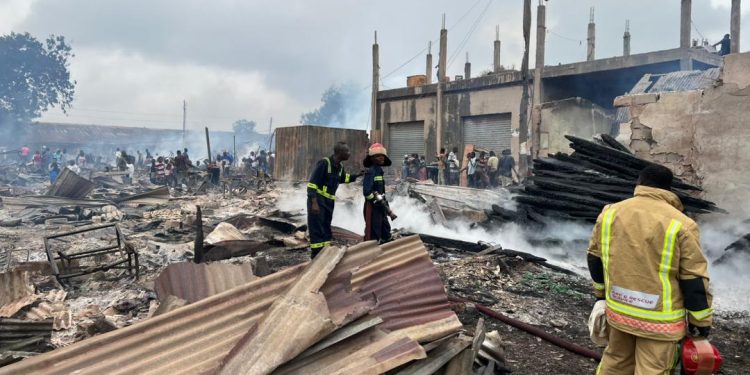
One person has been arrested in connection with the devastating fire incident at the Accra Timber Market in the early hours of Saturday, September 13. This information was made public by the Greater Accra Regional Commander of the Ghana National Fire Service (GNFS), ACFO II Rashid Kwame Nisawu, during an interview with Channel One Newsroom.
According to him, the suspect allegedly left a burning heap of rubbish unattended, which later spread and engulfed the Timber Market.
“Indeed, through the firefighting, what we normally do is that during the firefighting, we also deploy some plainclothed officers to fish out for information. And what we gathered was that there is this gentleman who gathers some rubbish around and sets it on fire, goes to sleep, and this thing degenerated, and that is the result we are having,” he explained.
He further noted that the police acted swiftly after receiving a tip-off. “The good thing is that this morning, the Police Commander came to report to the Chief Fire Officer — I was around — that they have been able to apprehend the gentleman and currently, as we speak, the alleged suspect is now in police custody at James Town Police Station,” he added.
To contain the blaze, seven fire engines from stations across Accra, together with a GNFS water tanker and two others from the Accra Metropolitan Assembly and the Ablekuma Municipal Assembly, were deployed to the scene.
Several shops selling wooden planks and hardware were razed as a result of the fire, which broke out near Aayalolo School at 1:17 a.m. on Saturday, September 13.
Meanwhile, in an update on its official page on Sunday, September 14, the Ghana National Fire Service (GNFS) confirmed: “The flames were confined at 6:26 a.m., brought under control by 6:37 a.m., and fully extinguished by 11:44 a.m.”
The GNFS added, “Two firefighters sustained injuries in the operation, one from an electric shock and another from burns to the left arm. Both were treated and discharged, and are reported to be in stable condition.”
In a related development, several houses at Darkuman Kokompe in Accra were destroyed following a fire incident in the early hours of Sunday, August 31. Reports indicated that victims were unable to salvage their belongings as they awaited emergency response. The cause of that fire is yet to be established.
Earlier this month, a fire destroyed a Benz cargo truck transporting over 2,500 bags of rice from Côte d’Ivoire to Kumasi on the Adugyama-Bechem highway, near the Star Oil Filling Station, on Monday, August 25.
Similarly, a popular pub and food joint at Nogora Junction, near the Ho Technical University, was reduced to ashes following a fire outbreak on Wednesday, August 13.
On August 4, a fire ravaged the first floor of the Accra Tourist Information Centre at Cantonments. According to the GNFS, the blaze destroyed the contents of the first floor, though the ground floor and about eight offices, including the East Wing section, were salvaged.
The first fire engine from the GNFS Headquarters arrived at 01:04 hours to find a fully developed fire spreading rapidly in all directions, aided by strong winds. Five additional appliances from Flagstaff House, Circle, Accra City, and Ministries fire stations, as well as the Rapid Intervention Vehicle (RIV) from Headquarters, were swiftly mobilized to support firefighting operations.
Although the blaze was brought under control at 03:32 hours, firefighting efforts continued until 06:35 hours to suppress the flames and prevent further spread to adjoining properties. No injuries were recorded, but the Service has launched an investigation into the cause.
Another inferno destroyed several makeshift wooden and metal structures at the Madina Washing Bay near Redco Flats on Sunday, August 3. The blaze consumed utility poles, traders’ wares, personal belongings, and structures worth several thousand cedis. The GNFS reported that while battling the fire, one firefighter sustained a minor leg injury.
The Service received the distress call at 12:36 hours, and the first crew from Madina Fire Station arrived within four minutes. Four additional fire engines from Legon, Abelemkpe, and GNFS Headquarters later joined to contain the blaze. Thanks to the swift response, the fire was confined at 13:42 hours and fully brought under control at 13:54 hours. Overhaul operations continued until 20:50 hours. An investigation into the cause is ongoing.
Last month, a fire broke out at Madina Ritz Junction. Initial reports claimed that a two-month-old baby died in the incident, but the GNFS later clarified otherwise.
“A verification team was dispatched to the scene this morning, and after engaging affected residents, particularly the women, and a Unit Committee Member of the area, the Service can confirm that no lives were lost. The Service has thus entreated the public and media outlets to disregard any reports suggesting otherwise, as they are inaccurate and misleading,” the GNFS posted on Facebook.
The Service explained that the fire began after a gas explosion in one of the shops and quickly spread to adjacent containers. Firefighters from the Madina, Legon, and Abelemkpe stations responded promptly and contained the blaze.
In April this year, another fire ripped through the Madina Redco Flats area, destroying more than 150 structures and claiming the life of a young Nigerian woman known as Beauty. The inferno, which started around 11:15 p.m., spread rapidly across 140 wooden kiosks and 20 metal containers.
Although firefighters arrived within minutes, the victim was trapped and could not escape. Her remains were handed over to the Madina Police. Last year, about 50 stalls were reduced to ashes after the Madina Market in Accra caught fire. Deputy Director of Operations at GNFS, D.O.1 Kofi Forson, who spoke to the media, recounted the challenges they faced.
“It was not easy for us, and there was a lack of access to where the fire was spreading, and because it happened in the night, the shops were closed, and we had to break through, and that made it tedious,” he said.
The GNFS has since provided statistics on fire outbreaks in the first half of 2025. The data shows a slight increase compared to the same period in 2024. Ghana recorded 3,595 fire cases between January and June this year, compared with 3,576 cases during the same period last year — an increase of 19 cases, representing a 0.53% rise.
The monthly breakdown is as follows: January (964), February (678), March (619), April (483), May (457), and June (394).
The Greater Accra Region recorded the highest number of incidents (628), followed by Ashanti (581) and Central (408). The North East Region had the lowest number, with just 10 cases.
In an interview on Tuesday, July 8, the Head of Public Relations at GNFS, Desmond Ackah, revealed that due to their improved and swift response, the Service saved over GH¢203 million worth of property in the last two quarters of 2025.
The GNFS listed the main causes of fire incidents as: electrical faults from illegal connections, poor wiring, and overloaded circuits; improper use of appliances such as overused extension cords and unattended devices; unattended cooking with gas, electric, or coal stoves; careless use of naked flames like candles, mosquito coils, lighters, and matches; gas leakages and poor handling of LPG cylinders; bush burning, especially in the dry season; vehicle fires due to poor maintenance or accidents; unsafe welding and other hot-work practices; and deliberate acts of arson.
Meanwhile, the Service reported a significant improvement in its fight against prank calls.
It recorded a 34.77% reduction, from 364,020 prank calls in the first half of 2024 to 237,470 in 2025. The GNFS attributed the decline to consistent public education campaigns and heightened awareness of the legal consequences of misusing emergency lines.
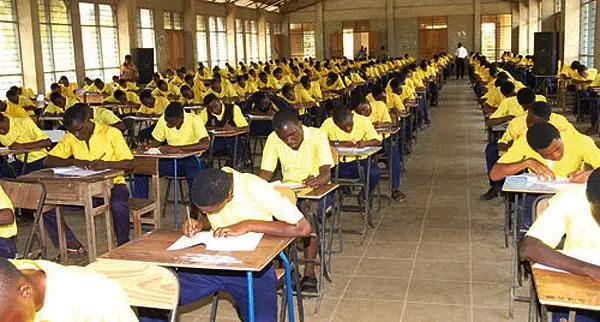
The West African Examinations Council (WAEC) is considering the introduction of computer-based testing (CBT) in response to malpractices in the West African Senior School Certificate Examination (WASSCE) and Basic Education Certificate Examination (BECE).
Speaking on Channel One TV’s Breakfast Daily on Friday, September 12, 2025, WAEC’s Head of Public Affairs, Mr. John Kapi, revealed that the computer-based testing will replace the traditional paper-based format. According to him, the Council has already had discussions and will soon conduct a trial before its nationwide rollout.
“Gradually, we are also thinking about computer-based testing, which is something that we have thought about. We have had a technical committee meeting. We want to pilot that with one of our small examination, the general and advanced business certificate examination.examinations
“This is an examination that does not have a large candidature, so we can manage them at the regional capital, where we are sure of internet connectivity, and once we are able to do that, we believe we can begin the process, so that if that works, we can replicate,”Mr. Kapi said.
The 2025 Basic Education Certificate Examination (BECE), a crucial entry point to secondary education, has been marred by what appears to be one of the most alarming cases of organised malpractice ever exposed.
A JoyNews Hotline investigation, spearheaded by GH Probe’s Francisca Enchil, uncovered how officials of the Ghana Education Service (GES), together with supervisors, headteachers, and invigilators, turned the national assessment into a coordinated racket—sacrificing academic integrity for monetary gain.
At both Derby Avenue RC Basic and St. George’s Anglican Basic in Accra, invigilators asked for GH¢60 daily, supervisors accepted GH¢400 cash envelopes, and candidates were told to contribute to an ‘Aseda Offertory.’
Instead of upholding strict monitoring, supervisors doubled as guards for invigilators, tipping them off whenever WAEC or National Security officials approached. Teachers and headteachers, though prohibited from the premises, roamed exam centres, bribed their way through, and in some instances fed answers straight to candidates.
The exposé has triggered outrage. The Acting Director-General of the Ghana Education Service, Prof. Ernest Kofi Davis, has warned that teachers face dismissal if caught. Civil society voices, such as Kofi Asare of Africa Education Watch, caution that Ghana is “teaching children corruption in basic schools”—a dangerous normalisation of dishonesty.
Meanwhile, the West African Examinations Council (WAEC) announced that at least 14 individuals had been arrested across the country for their involvement in malpractice in the 2025 West African Senior School Certificate Examination (WASSCE).
The victims, according to the Council, were teachers, students, and invigilators. Speaking to the media on Friday, September 5, Head of Public Affairs at WAEC, John Kapi, noted, “As part of our commitment to upholding the integrity and credibility of our examination, we have deployed—for we had to employ a number of staff, as well as our own specialized personnel—to monitor the examination centres. Our monitoring teams have observed irregular activity at a number of the examination centres.”
Three of the convicts were sentenced to a combined 20 months behind bars, as declared by the Kasoa-Ofaakor District Magistrate Court. The convicts include a teacher at Ghana College SHS, Samuel Armah, and two university students, Kwame Oteng Nkansah and Amedeka James.
Armah, an invigilator, was sentenced to eight months’ imprisonment with a fine of 80 penalty units. He was caught dictating answers from his mobile phone to candidates during the Social Studies Paper 1.
Nkansah, a level 100 student of Accra Technical University, impersonated one Quayson Francis Atta of Ghana College SHS. He received a jail term of six months with a fine of 80 penalty units.
A level 100 student of the University of Ghana, James, was also granted a six-month jail term after attempting to write the exam in place of his twin brother, Amedeka Justice.
On Monday, August 25, authorities caught an invigilator at the Forces SHTS with a phone loaded with exam questions while the West African Senior School Certificate Examination (WASSCE) was in progress.
His phone contained exam questions on Picture Making and Oral English. On Wednesday, August 20, WAEC commenced the 2025 WASSCE with a total of 461,640 candidates who sat for the Oral English exam.
The practical papers commenced on August 4. The number of students who sat for this year’s exams saw a 0.22 percent increase from 2024, when a total of 460,611 candidates sat for the WASSCE. This year’s candidates comprise 207,381 males and 254,259 females.
Ahead of the exams, the Ghana Education Service (GES) released funds to cater for the 2025 WASSCE practical examinations for all Senior High Schools (SHSs) and Senior High Technical Schools (SHTSs) across the country. An amount of GH¢15,849,920 was released, according to reports.
According to GES, in a statement issued on Saturday, July 27, and signed by the Head of Public Relations, Daniel Fenyi, the funds were expected to provide all necessary materials and supplies for the practical exams.
“The Management of the Ghana Education Service (GES) announces that funds had been released to all Senior High Schools (SHS) and Senior High Technical Schools (SHTS) across the country to cover the fees for the 2025 WASSCE practicals. This payment ensures that all practical examinations scheduled for the 2025 WASSCE are fully supported, including the provision of the required materials and other essential resources,” the Service noted.
WAEC cancelled and withheld the subject results and entire results of some 2,228 candidates who sat for the 2025 BECE. The Council made this known after revealing that it had released provisional results of candidates who sat for the BECE for School Candidates, 2025.
Following the completion of investigations into several cases of irregularity detected during the conduct of the examination and marking of scripts, the 36th Meeting of the Final Awards and Examiners’ Appointment Committee for the BECE, 2025, held on Friday, August 15, 2025, approved the cancellation of the subject results of 718 candidates and the entire results of 177 candidates.
The committee also withheld the subject results of 1,240 candidates and entire results of 93 candidates. Meanwhile, the subject results of some candidates from 119 schools have been cancelled.
In addition, the subject results of some candidates from 87 schools have been withheld for further scrutiny. The withheld results may be cancelled or released based on the outcome of investigations by September 6, 2025. WAEC has indicated that candidates whose results have been cancelled or withheld should visit their website for details and reasons for the withholding or cancellation of results.
The Bono Regional Chairman of the New Patriotic Party (NPP), Kwame Baffoe, popularly known as Abronye, has been remanded in prison custody after he appeared before the Accra Circuit Court today, Friday, September 12. He made his first appearance in court on Tuesday, September 9.
Abronye will return to court on Friday, September 19. He has been charged with offensive conduct conducive to the breach of the peace.
During the court proceeding, the NPP Bono Chairman’s legal team requested bail after the presiding judge scheduled his next appearance for the next three days; however, the presiding judge at the Accra Circuit Court denied their request.
Consequently, Abronye has been held in custody by the police until his next appearance. Ghana Police, in an official statement shared on their Twitter page, confirmed the NPP member’s arrest on Monday, September 8.
“The Ghana Police Service has today, 08/09/25, arrested Mr. Kwame Baffoe @ Abronye for Offensive conduct conducive to the breach of the peace”, confirming he is in their custody awaiting arraignment before the Court.
He arrived in handcuffs, escorted by police officers from a black police van known as “Black Maria, sparking bitter concerns among members of the opposition NPP, including the party’s National Youth Organiser, Salam Mustapha.
The court denying him bail visibly did not sit well with some members of the opposition NPP, who appeared in court in solidarity with their member.
During a media engagement, he complained bitterly about how the Chairman’s case of misdemeanour was being treated like a criminal case when it is a civil case.
He said Abronye wasn’t a criminal to be transported in handcuffs and in a Black Maria, citing it as a waste of taxpayers’ money and time of concerned individuals.
He warned the government against what he described as the mistreatment of NPP party members, stating that, “Power has an end, the tables will turn, and we will all have our revenge”.
Criticising the Ghana Police for bias, he announced an upcoming protest against the law enforcement agency in the coming days, which he will lead.
Also, the lawyer of the accused Daniel Martey Addo, the Managing Counsel at Nkrumah & Associates, while commending the adherence to legal proceedings following his client’s arraignment in court, he, however, stated that, “it appears that the prosecution would just want him to be remanded.
For whatever reason you gave us an invite, and the charges levelled against my client were just misdemeanors, and in law, you would know that there are categories of offences, and misdemeanor is the basic one that shouldn’t be should not be the reason an accused person should be remanded.”,
Armed police officers stormed the residence of former NPP Youth Organiser, Moses Abor, in search of Abronye on Sunday, September 8.
Last week, Abronye made headlines after he formally wrote to eight different countries, including Côte d’Ivoire, the United States, France, Italy, Canada, Spain, the United Kingdom, and Germany, seeking protection for his safety in Ghana.
Defending his reason for seeking asylum, he added that “consistent, escalating political persecution, threats to my life, and systemic abuse of state security powers by the current Government of Ghana”.
Abronye’s arrest comes days after the Economic and Organised Crime Office (EOCO) held into custody the presidential candidate and leader of the Liberal Party of Ghana (LPG), Kofi Akpaloo, for alleged financial misappropriation and other related misconduct. On Wednesday, September 3, Kofi Akpaloo was picked up at his residence in Kumasi by EOCO officials for interrogation. Mr Akpaloo vied for the presidency in the 2024 general elections.
Before the election, Akpaloo expressed strong confidence in his chances for a decisive win, predicting victory over major contenders.
However, he obtained 5,219, which is 0.09%. Recently, EOCO has given much attention to investigating high-profile political figures and business leaders.
The Economic and Organised Crime Office was established by the Economic and Organised Crime Office Act, 2010 (Act 804) as a specialized agency to monitor and investigate economic and organised crime and, on the authority of the Attorney-General, prosecute these offenses to recover the proceeds of crime and provide for related matters.
The EOCO has similar mandates to the Office of the Special Prosecutor (OSP). Recently, the OSP released a fifty-page report covering investigations and prosecutions carried out between January 1 and July 31 this year.
The OSP’s Seventh Half-yearly Report is pursuant to Section 3(3) of the Office of the Special Prosecutor Act, 2017 (Act 959). The document also outlines key developments in the Office’s operations.
According to the OSP, despite resistance from powerful interests, it stayed focused on executing its mandate during this period. As such, the Office successfully progressed significant corruption-related investigations to the stage of court proceedings, while also initiating new inquiries into suspected acts of corruption.
“Then again, the Office, as one of three implementing partners of the new National Ethics and Anti-Corruption Strategy and Implementing Plan, is fashioning and molding anti-corruption structures that would stand the test of time. The task ahead remains formidable. Much more so is our resolve to perform.
“This reporting period was characterized by intensification of the Office’s prosecutorial mandate. We advanced high-profile investigations to court and initiated bold inquiries into suspected corruption, often in the face of deep-seated resistance from entrenched interests.
“Notwithstanding these expected challenges, the Office remains resolute and guided by the rule of law, fairness, firmness, evidence-based action, and the interest of the public. We recognise that the fight against corruption cannot be waged and won only through punitive action and incarceration,” parts of the report read.
The legislative framework of the Office of the Special Prosecutor mandates the Authority to crack down on corruption, recover assets, and confiscate illicit property.
“Indeed, the legislative set-up of the Office leans heavily on corruption-prevention and asset recovery and disgorgement of tainted property. Consequently, we proceed on sustainable anti-corruption outcomes by pairing enforcement with robust prevention and asset recovery, especially founded on our unique plea bargaining regime.
In this spirit, the Office scaled up its preventive mandate through active engagement with public institutions, private sector actors, civil society- and secured convictions and asset recovery through impactful plea bargaining. We also reckon that the nation’s anti-corruption legal framework requires re-imagination, modernization, and retooling to address the immense scale and complexity of modern corruption in the context of our social, economic, and political constructs.
“On this score, the Office has proposed the inclusion of a new chapter in the Constitution dedicated to the fight against corruption through definitive constitutional expression by the institution of proposed concrete measures to effectively and comprehensively suppress and repress corruption in public life as well as in the private sector chief among which include lifestyle audit non-conviction-based asset recovery, enhanced asset declaration and verification regime, and reverse onus presumption of corruption as the foundation of both anti-corruption criminal proceedings and civil asset recovery proceedings,” parts of the report added.
The Office is also leading the charge in respect of the passage of a comprehensive Corrupt Practices Act and Conduct of Public Officers Act.
Currently, sixty-seven(67) cases are being handled by the Office, all of which are undergoing comprehensive review.
The corruption cases being investigated by OSP include: Minerals Income Investment Fund, Ghana Airports Company Limited, Ghana Education Service, National Commission on Culture, Ghana Revenue Authority/Tata Consulting Services, National Service Authority, Ministry of Health/Service Ghana Auto Group Limited, and National Cathedral.
The others are: Tema oil refinery and Tema Energy and Processing Limited and the Electricity Company of Ghana Limited, State lands, Stool lands, and other Vested lands, Illegal Mining, National Sports Authority, Customs Division of Ghana Revenue Authority, Bank of Ghana, and Estate of Kwadwo Owusu-Afriyie, alias Sir John.
It further hinted that “There were seven (7) convictions and one (1) acquittal in respect of the cases pending before the criminal courts during the period under review. The Office has filed an appeal in respect of the case in which the accused was acquitted.
Additionally, one hundred and fifty-two (152) cases are at the preliminary investigation stage, with the OSP assuring that details will be made public once they progress to the next stage.
The Office is also seized with one hundred and fifty-two (152) other cases at the preliminary investigation stage. These may be publicised if the Special Prosecutor determines that they are within the mandate of the Office and that they should be moved past the preliminary investigation stage.
This is a policy intended to protect the privacy of individuals and the business operations of institutions and companies, and to avoid unnecessary stigmatization.
The World Bank has disbursed $360 million from its International Development Association (IDA) to Ghana. This funding was made possible through the Second Resilient Recovery Development Policy Financing operation, to support Ghana’s efforts to restore macroeconomic stability.
Parliament gave the nod in July after the World Bank Board approved the facility in June. The World Bank Group is a family of five international organizations that provide leveraged loans to developing countries. It is the largest and best-known development bank in the world, serving as an observer at the United Nations Development Group.
The Bank is headquartered in Washington, D.C., United States. Its objectives are to restore fiscal sustainability, support financial sector stability and private sector development, improve energy sector financial discipline, and strengthen social and climate resilience.
The recent disbursement comes at a time when Ghana’s local currency, the cedi, has been ranked as the worst-performing currency in a recent report published by the global financial news outlet Bloomberg.
Ghana cedi’s strong performance was a central theme highlighted by President John Mahama during an interaction with potential investors in Singapore and Japan weeks ago. President Mahama emphasised the robust performance of the local currency to underscore Ghana’s macroeconomic stability and attractiveness as a destination for foreign capital.
However, the cedi’s brief gains were short-lived after its rapid depreciation made it the worst-performing currency. According to Bloomberg’s recent report released on Thursday, September 4, the Ghana cedi is the worst-performing currency among all trading currencies, attributing the depreciation to a surge in demand for dollars by companies paying for imports.
“A surge in demand for dollars by companies paying for imports has ended the Ghana cedi’s recent strong performance,” Bloomberg said. Bloomberg attributed the new development to the “strong gold prices,” while emphasizing that Ghana’s cedi has seen more than a ten percent (10%) depreciation in the current quarter.
This, Bloomberg noted, has erased the fifty percent gain against the dollar in April and June. According to Bloomberg, the cedi traded 0.1 per cent weaker at GH¢11.9507 per dollar at 1:50 a.m. Despite the losses, it has gained 23 per cent so far this year.
“Now, the currency, which had ranked first globally on the back of strong gold prices, has weakened by 13 per cent in the current quarter. Bloomberg data showed this was the steepest fall worldwide, erasing part of the 50 per cent gain recorded between April and June,” the report said.
But Bloomberg has indicated that “Despite the losses, it has gained 23 per cent so far this year based on market data.” Reacting to Bloomberg’s report, the Bank of Ghana (BoG) noted, “The cedi should be stable within a reasonable range,” the central bank said in an emailed response.
“Our role is to ensure fluctuations remain orderly, that they reflect fundamentals, and that they do not undermine confidence in the broader economy.”
Bloomberg, in April this year, ranked the cedi as the best-performing currency with a sixteen percent (16%) gain against the dollar. What made the cedi earn the tag as the worst-performing currency is the steepest decline on the global level.
The cedi’s appreciation in the last eight months helped ease inflationary pressures, pushing consumer inflation down to 21.2 per cent, the lowest in eight months at the time.
Ghana’s import-dependent economy brings in a wide range of goods, from food to machinery, with demand typically rising toward the end of the year as businesses prepare for the Christmas season.
The higher demand for dollars has piled pressure on the cedi, while the Bank of Ghana’s (BoG) limited supply of foreign exchange has added to the strain.
Head of Market-Risk Management at UMB Bank, Mr. Hamza Adam, said banks that submitted dollar requests on behalf of clients to the Bank of Ghana last week received only half of what they asked for. “This week the central bank is trying to meet all demand,” he said by phone from Accra on September 3, 2025.
Meanwhile, before Bloomberg reported on the cedi, BoG addressed the concerns of Ghanaians concerning the fast depreciation of the cedi, calling for calm. Bank of Ghana Governor, Dr. Johnson Asiama, during an interview with Joy Business, which was aired on Wednesday, August 27, mentioned that the current depreciation of the cedi was temporary, assuring a comeback soon.
“The Bank of Ghana operates a managed floating system in terms of framework; therefore, these blips will happen. But the assurance is that this is a short-term issue, and the challenges are being addressed,” he assured.
According to data from the Bank of Ghana, which was shared on 23rd August, the Ghana cedi had seen a five percent (5%) depreciation. Between August 23 and August 28, the Ghanaian cedi depreciated from GH¢10.43 to around GH¢11.00 per US dollar.
The sharpest movement was between August 23 and 24, where the cedi depreciated from GH¢10.43 to GH¢10.90. The dollar was selling at GH¢10.43 on August 23, GH¢10.90 on August 24, and between August 25–27, it staggered between GH¢10.85–11.00.
As of August 28, it had crossed GH¢11, sparking major concerns. On Dr. Johnson Asiama’s part, the current depreciation is a result of the temporary shortage of foreign exchange supply in the market, resulting from the effects of the currency appreciation coupled with other phenomena that, “…we are beginning to see those phenomena at play. Imports become a lot cheaper, so it’s just natural to begin to see pressure build up on the currency.”
He said there is no need for panic as the economic indicators are obviously strong, giving signs of a cedi recovery soon enough. Dr. Asiama attributed the depreciating cedi to the decline in remittance inflows, sharp appreciation of the cedi, and limited interbank trading.
“…what is happening is just because of the sharp appreciation, we are beginning to have some cash flow problems, specifically because we have seen some decline in terms of remittance inflows. Also, imports become a lot cheaper, so it’s just natural to begin to see pressure build up on the currency. Over the last two months, we have also seen very limited interbank trading,” he stated.
The Ghana cedi saw a remarkable appreciation against major trading currencies worldwide over the past six months. During the presentation of the 2025 Mid-Year Fiscal Policy Review on July 24, the Minister for Finance, Dr. Cassiel Ato Forson, revealed that the cedi has recorded a remarkable turnaround in the first six months of 2025, appreciating by 42.6% against the US dollar.
Dr. Forson described the cedi’s performance as “impressive” and the first of its kind in the history of Ghana’s economy. The cedi, which was initially always experiencing depreciation, is currently showing resilience against the dollar.
He noted that the cedi, which was previously trading at about GH¢17.0 to the US dollar, had strengthened to GH¢10.4 as of July 23.
“Mr. Speaker, the cedi’s performance in the first half of this year has been impressive! The Ghana cedi experienced significant appreciation against all major trading currencies in the first six months of 2025. I am happy to inform the House that our precious cedi, which once upon a time was trading at about GH¢17.0 to the US dollar, was trading at about GH¢10.4 as of yesterday, 23rd July, 2025,” he revealed.
In high spirits, the minister adopted the catchphrase from Ghanaian highlife musician King Paluta’s energetic party anthem “For the Popping (Apicki),” released on December 27, 2024, and said, “This level of appreciation of the Ghana cedi has never happened in the history of our nation. Ghanafo, cedi no apicki! Apicki apicki apicki!”
He continued that the strength of the cedi has not appreciated against just the US dollar but against the British pound as well. The cedi also gained 30.3% against the British pound and 25.6% against the euro during the same period.
This marks a sharp contrast to the same period in 2024, when the cedi depreciated by 18.6% against the dollar, 17.9% against the pound, and 16.0% against the euro.
“Similarly, the cedi, which was once trading at GH¢21.0 to the Great British Pound, was trading at about GH¢14.1 as of yesterday, 23rd July. Mr. Speaker, as of the end of June 2025, the cedi appreciated by 42.6% against the US dollar, 30.3% against the British pound, and 25.6% against the euro.
With these gains over the past few months, Dr. Cassiel stated that all the losses in the previous years had been reversed. “Mr. Speaker, I repeat, so far, we have almost reversed all the cedi depreciation in 2022, 2023, and 2024,” he mentioned.
Aide of the National Democratic Congress’ (NDC) Vice Chairman, Chief Sofo Azorka has been arrested by the Eastern Regional Police Command in connection with an alleged assault on Alhaji Masawudu Osman, the Third National Vice Chairman of the New Patriotic Party (NPP).
The police, in a statement disclosed that Chief Sofo Azorka was arrested in Tamale on Wednesday, September 10. Alhaji Azorka has since been granted bail. He is expected to appear before the court on Tuesday, September 16.
The police assured the public of a thorough investigation into the matter, while entreating all to remain calm as further development shall be communicated.
During the by-election on Tuesday, September 2, Alhaji Masawudu Osman was reportedly slapped by Alhaji Sofo Azorka. Alhaji Osman Masawudu has reported that the scuffle began while he was monitoring the ongoing election, specifically at the Akwatia Zongo area.
According to him, before the incident, the National Democratic Congress’s Vice Chairman’s aide had threatened to cane him.
“I have been assigned to supervise and monitor the election at Akwatia Zongo. In fact, I was granting an interview when a national vice chairman of the NDC, Azorka — because of ignorance — came straight to where I was granting an interview to attack me.“This incident happened in the presence of the police. He said it clearly that today he will make sure that I will be caned here, myself and Afenyo-Markin,” Masawudu recounted.
However, police personnel present at the scene managed to restore calm.
In a viral video an individual was seen being carried into a police van after the police arrested him for reportedly destroying a poster of a contestant in the Akwatia by-election.
The by-election did not witness a lot of chaos, unlike those that occurred during the Ablekuma-North rerun election.
The EC on Tuesday, September 2, held a by-election for constituents in 119 polling stations of the Akwatia constituency to provide constituents a representative, following the sudden passing of their former MP, Ernest Yaw Kumi.
Ernest Kumi was confirmed dead on Monday, July 7, 2025. At the time of his passing, Ernest Kumi had only served the constituency for six months.
On Tuesday, September 2, more than 50,000 registered constituents in Akwatia cast their ballots to select an MP to represent the constituencyin Parliament.
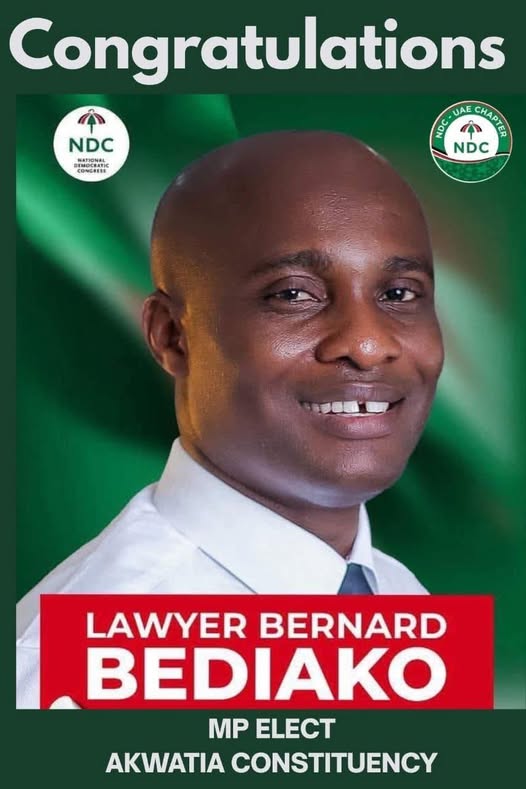
The NDC elected legal practitioner Bernard Bediako Baidoo to contest the election. The New Patriotic Party (NPP) on the other hand, selected the Chief Executive of Owuo Mining Company, Solomon Kwame Asumadu, as its parliamentary candidate for the by-election.
However, David Ankomah, who sought to contest on the ticket of the Action People’s Party (APP), was disqualified by the Electoral Commission (EC) over failing to submit his tax clearance certificate. As a result, the disqualified candidate filed a lawsuit against the Electoral Commission.
He has challenged the EC at the High Court for excluding him for failing to submit his tax clearance certificate. Ankomah argued that the Commission gave him too short a notice to produce the certificate through the Akwatia District Electoral Officer, which caused the delay to provide the required document.
Additionally, he maintains that he completed all necessary processes needed to participate in the race. He further prayed the Court to suspend the by-election until the case is determined.
Meanwhile, over 5,500 police personnel were deployed to Akwatia to ensure law and order during the by-election. The police grouped the constituency into nine security zones to ensure effective coverage.
600 officers were fully armed to swiftly respond to any disturbances that may occur during the exercise.
In the coming days, constituents of Tamale Central will vote to elect a representative in Parliament. The upcoming by-election is slated for Tuesday, September 30.
This follows the death of its legislator, Alhaji Dr. Ibrahim Murtala Mohammed. He was among the eight individuals who lost their lives in the tragic helicopter accident on August 6. He was laid to rest on August 10.
Husbands in South Africa can now adopt their wives’ family name, if they wish, the South Africa’s highest court has ruled.
The recent ruling by the Constitutional Court on Thursday, September 11, overturns a previous law enacted by a lower court last year.
The law, which was introduced during the apartheid years of white-minority rule, allowed women to change their family name when they got married.
However, the new development comes after two couples sued the Department of Home Affairs for gender discrimination. During court proceedings, Justice Loena Theron called the previous law a “colonial import” which treated men and women unequally in marriage.
The Constitutional Court noted that “in many African cultures, women retained their birth names after marriage, and children often took their mother’s clan name” but this changed after the “arrival of the European colonisers and Christian missionaries, and the imposition of Western values.”
“The custom that a wife takes the husband’s surname existed in Roman-Dutch law, and in this way was introduced into South African common law.
This custom also came into existence as a result of legislation that was introduced by countries that colonised African countries south of the Sahara,” the court said.
Meanwhile, the Minister of Home Affairs Leon Schreiber and the Minister of Justice and Constitutional Development Mamoloko Kubayi have supported the couples’ application, while arguing that the law was indeed outdated.,
The International Monetary Fund (IMF) has backed calls proposing a significant increase in Ghana’s tariffs.
Addressing journalists in Washington, D.C., on Thursday, September 11, 2025, the IMF’s Director of Communications, Julie Kozack, described the proposed adjustments vital to saving Ghana’s energy sector.
“What is essential from our perspective is that any tariff adjustments in the electricity sector aim to address longstanding inefficiencies in the sector, importantly, that they support much-needed investment in the electricity sector, and also that they are aimed at preventing the accumulation of arrears in the energy sector.
“More generally, we are continuing to support broader sector reforms, including private sector participation in ECG operations,” she noted.
On Tuesday, September 9, the Public Utilities Regulatory Commission (PURC) received proposals from eight utility companies calling for a significant adjustment in utility tariffs to ensure they can fully operate at their capacities.
Proposals from the electricity distributors and the water provider for the 2025–2029 tariff period cite rising operational costs and the need to maintain efficient service delivery.
The eight companies include the Electricity Company of Ghana (ECG), Volta River Authority (VRA), Northern Electricity Distribution Company (NEDCo), Ghana Water Limited (GWL), and the Ghana Grid Company (GRIDCo), Ghana National Gas Limited, among others.
ECG is pushing for a massive 225% hike in its distribution service charge. For instance, a household consuming 150 kWh monthly would pay an additional GHS64, while a residence using 100 kWh per month would pay about GHS43 more in distribution charges.
As part of ECG’s request, the current Distribution Service Charge (DSC) of 19 pesewas per kilowatt-hour should be raised to nearly 62 pesewas per kilowatt-hour.
“The PURC will undertake the major adjustment in the 4th quarter of 2025 to reflect capacity charges, additional liquid fuel usage, and additional capex. The current charge is below industry benchmarks, and cedi depreciation has reduced its value. US$408m spent on network upgrades and smart meters,” parts of ECG’s petition read.
ECG has emphasised that the adjustment has long been overdue, noting that in 2022 it proposed 39.95 pesewas, but only 19.04 pesewas was approved.
According to ECG, it has invested $48 million in network upgrades and smart metering systems to enhance power reliability, reduce outages, and align tariffs with international industry standards, yet these efforts have not yielded the expected cost recovery.
Furthermore, ECG has projected an annual revenue of GHS9.5 billion between 2025 and 2029 if the new charges are approved. The proceeds, according to the utility company, would be allocated to cover operational costs, depreciation of assets, staff salaries, and the recovery of recent capital expenditures.
VRA is seeking a 59% increase to cover rising costs of producing electricity. If approved, the current tariff of 45.0892 Ghana pesewas per kilowatt-hour will be increased to 71.8862 pesewas per kilowatt-hour for the Bulk Generation Charge.
Speaking during a public hearing on Tuesday, September 9, Senior Economic Analyst at VRA, Evans Somuah Mensah, said, “Over the years, VRA has not been compensated for doing this work to assist the national connectivity system. We are saying that on an annual basis, VRA should be given compensation $30.49 million for Akosombo power generation, and Kpone Thermal plant, a little bit of $30,000.
“Justification for tariff increase, we are saying that we want to recover the cost of our power supply to the distribution companies, and recover the cost of transmission and also be compensated for the provisions of ancillary services. We are requesting the PURC to increase the existing tariff of BGC from 45.0892 Ghana pesewas per kilowatt-hour to 71.8862 Ghana pesewas per kilowatt-hour.”
VRA has justified the increase as necessary to fully recover the cost of power generation supplied to distribution companies (DISCOs). It has noted that sustaining reliable electricity generation and meeting its operational and financial obligations will become increasingly difficult if its proposal is rejected.
Ghana Water Limited has proposed a jump from GH¢5.28 per cubic metre to GH¢20.09 per cubic metre, seeking regulatory approval for a 281% increase in its water tariff.
NEDCo has also called for its tariff to be increased to 153.03 pesewas per kilowatt-hour from the current 56.474 pesewas, representing a 171% rise. GRIDCo, meanwhile, is demanding that the current 5.6422 pesewas per kilowatt-hour on its transmission service tariff be raised to 12.9768 pesewas per kilowatt-hour.
Ghana National Gas Limited is proposing to increase its tariff from US$1.10 to US$2.10 per million metric British thermal units (MMBtu) However, the onus lies on PURC to carefully review the requests, assess whether the increases are justified, and determine how the costs will be distributed.
In July this year, electricity tariffs increased by 2.45% across the board, with no increase in water tariffs. The adjustments, according to PURC, were carried out in line with the Commission’s Quarterly Tariff Review Mechanism, which tracks and incorporates movements in key factors beyond the control of the Utility Service Providers (USPs).
These factors include the exchange rate between the US dollar and the Ghana Cedi, the domestic inflation rate, the electricity generation mix, and the cost of fuel, mainly natural gas.
According to the Commission, additional factors considered before concluding the hike in tariffs include outstanding debt of GHS488 million carried over from the previous three quarters, reserve capacity for grid stability and reliability, and the inclusion of 27% of the cost of alternative fuels such as Distillate Fuel Oil (DFO), Heavy Fuel Oil (HFO), and Light Crude Oil (LCO).
The Commission expressed gratitude to stakeholders for their support as it continues to implement the Quarterly Tariff Reviews in accordance with its Rate Setting Guidelines to address changes in operational conditions of the service providers.
Majority Leader Mahama Ayariga justified PURC’s decision to increase electricity tariffs. Speaking on the floor of Parliament on Friday, June 27, he noted that there is a need for ECG to be able to settle its growing debt.
“You all know that the whole of last year and before that, there was an effort to prevent the PURC from adjusting the tariffs. So that whole period, there was no adjustment, and you know very well that bills were accruing; payments had to be made. ECG is accumulating huge [debt] and it has to be paid, so who is supposed to pay? Is it not the consumer?” he questioned.
According to him, failure to address ECG’s indebtedness would render the company powerless in supplying power to its consumers.
“And if you are not adjusting the tariffs to enable ECG to pay, ECG is going to collapse. They are no longer able to buy the input needed to keep the generators on, and we are going to have a power outage; the bills have to be paid.”
“The bill has to be paid. So if PURC is doing its work, I do not think there is a basis for saying that because we have improved the economy, it doesn’t mean that the debt at ECG will just be whisked away. The bill has to be paid partly by consumers,” he asserted.
Businessman and entrepreneur, Elon Musk, has lost the title as the world’s richest person, according to wealth tracker Bloomberg. The longtime leader has been succeeded by Oracle’s co-founder, Larry Ellison.
Elon Musk was overtaken after Ellison’s software giant posted stronger-than-expected quarterly profits, boosted by multibillion-dollar customer orders for its AI-related products and services.
The 81-year-old tech billionaire now tops Musk with a net worth of $393 billion. Elon Musk is associated with companies such as Tesla, X (formerly Twitter), xAI, Neuralink, The Boring Company, PayPal, OpenAI, and many others.
Larry Ellison is also associated with companies like Oracle Corporation, NetSuite, Tesla Sensei Holdings, Skydance Media, among others.
Elon Musk had held the position for four consecutive years, first becoming the world’s richest man on January 7, 2021, when a surge in Tesla’s stock pushed his net worth past Amazon founder Jeff Bezos.
At the time, Elon Musk’s fortune exceeded $185 billion, marking one of the fastest rises in the history of global wealth rankings. Since then, he has frequently swapped places with other billionaires due to fluctuations in the stock markets.
Tesla, Elon Musk’s American multinational automotive and clean energy company, has been losing value this year. As of Tuesday, September 9, Tesla’s stock had dropped 14%.
Meanwhile, Oracle’s shares continue to rise, driven by large orders for its AI products. In March, Elon Musk sold X to his AI firm, xAI, in a deal valued at $45 billion, slightly more than he originally paid for the company in 2022. The transaction includes $12 billion in debt, bringing the company’s current valuation to $33 billion.
Musk announced on X that the transaction now places the company’s worth at $33 billion.
“xAI and X’s futures are intertwined,” Musk said in a post on X. “Today, we officially take the step to combine the data, models, compute, distribution and talent. This combination will unlock immense potential by blending xAI’s advanced AI capability and expertise with X’s massive reach.”
Elon Musk has not announced any immediate changes to X, though xAI’s Grok chatbot is already integrated into the platform. He stated that merging the two companies would create “smarter, more meaningful experiences” and revealed that their combined value is now $80 billion.
Since buying X (formerly Twitter) in 2022, Musk has introduced major changes, including laying off 80% of the workforce, altering the verification system, and reinstating accounts that were previously banned. These decisions led to an advertiser exodus and a significant drop in the company’s value.
Although X is now worth less than what Musk originally paid, it has regained some of its lost value. Investment firm Fidelity estimated in October that X had lost nearly 80% of its original worth, but by December, it had recovered to about 30% of its purchase price.
Musk’s sale of X to xAI comes at a time when he is facing scrutiny for his role in the Trump administration’s Department of Government Efficiency, raising concerns about whether he is fully focused on his companies, particularly Tesla.
Additionally, Musk has been positioning himself as a key player in artificial intelligence, an area of interest for both the tech industry and the Trump administration. Earlier this year, he led a group of investors in an attempt to buy OpenAI, the company behind ChatGPT, for nearly $100 billion, intensifying his long-running rivalry with OpenAI’s CEO, Sam Altman.
While it is unclear how merging X with xAI will advance Musk’s AI ambitions, the integration could help xAI introduce its latest AI models and features to a wider audience more quickly.
A significant reversal of X’s fortunesBig advertisers, who had largely abandoned X after hate speech surged on the platform and ads were seen running alongside pro-Nazi content, have begun to return. (X made several pro-Nazi accounts ineligible for ads following advertiser departures.) Amazon and Apple are both reportedly reinvesting in X campaigns again, a remarkable endorsement from two brands with mass appeal.
The brand’s stabilization helped a group of bondholders, who had been deep underwater in their investments, sell billions of dollars in their X debt holdings at 97 cents on the dollar earlier this month — albeit with exceedingly high interest rates — according to several recent reports.
Bloomberg in February reported that X was in talks to raise money that would value the company at $44 billion. It’s not clear what came of those talks and why xAI is valuing X at less than it could reportedly fetch from investors. X needs to pay down its massive debt load, which Musk on Friday said totals $12 billion.
A big part of why X’s valuation has rebounded in recent months is xAI, which X reportedly held a stake in. Last month, xAI was seeking a $75 billion valuation in a funding round, according to Bloomberg.
But the biggest factor in X’s stunning bounce-back is almost certainly Musk himself: Musk’s elevation to a special government employee under President Donald Trump has empowered the world’s richest person with large sway over the operations of the federal government, which he has rapidly sought to reshape.
Investors putting their money into X may be relying more on Elon Musk’s leadership than the company’s actual business performance. Over the past year, Musk has reshaped X into a platform that strongly supports former President Donald Trump, frequently using it to promote his campaign.
With an audience of 200 million followers, Musk has shared controversial views on immigration policies under the Biden administration and often speaks out against progressive movements, using the term “woke mind virus,” which some conservatives use to criticize liberal ideologies.
Now that Trump is back in office and Musk holds a position in the government, X has once again become a major platform for tracking and engaging with the administration. Musk has also used X to communicate updates on policy changes within his Department of Government Efficiency.
The National Democratic Congress’ (NDC) Prof Seidu Alidu is now the sole contestant for the Tamale Central parliamentary by-election. This comes after the People’s National Convention (PNC) and the Liberal Party of Ghana (LPG) bowed out from the race on Wednesday, September 10.
NPP had earlier declared its intention not to participate in the upcoming by-election. According to a statement signed by NPP’s General Secretary Justin Kodua Frimpong, the decision was taken by the Party at a National Steering Committee meeting held on Monday, August 11, at the Party Headquarters pursuant to Article 10(10)(1) of the Party Constitution.
The statement indicated that their decision will be the party’s better way of honoring Dr. Murtala Mohammed and the other crash victims.
In arriving at the decision, the Party considered many factors, including the circumstances under which the Tamale Central seat has become vacant and the possibility of a further polarization of the country at this critical time. The NPP is of the belief that it would be inhumane and unconscionable to subject the nation to competitive processes in search of a replacement for the departed MP.
The Party believes that the tension and acrimony often associated with the conduct of by-elections in the country should be avoided.
“It is the considered view of the Party that the greatest tribute that the NPP and the rest of the nation can pay in honour of the departed, is not only to win the fight against Galamsey but also to ensure a smooth and peaceful replacement for the good people of Tamale Central.
“Consequently, the NPP hereby announces that when the Electoral Commission of Ghana opens nominations for the Tamale Central by-election in line with Article 112 (5) of Ghana’s Constitution, the Party will, in accord with the national interest, not take part in the contest,” parts of the statement read.
Professor Alidu Seidu Mahama who is a senior lecturer at the University of Ghan’s ,Political Science Department, was elected by the NDC delegates as its candidate for the Tamale Central parliamentary primaries.
His victory was officially announced by Electoral Commission officials at the Alhaji Aliu Mahama Sports Stadium on September 6.
According to the results, he secured 840 votes out of 1,511 valid ballots cast, beating 11 other contenders in what was a hotly contested race.
His closest challenger, former Tamale Metropolitan Assembly Mayor Abdul Hanan Gundadoo, polled 536 votes, while the remaining candidates shared the rest of the ballots.
A total of 1,511 delegates out of 1,551 registered cast their votes one ballot was rejected in an election where Prof. Alidu Seidu Mahama secured a commanding lead with 840 votes, followed by Abdul Hanan Gundadoo with 536.
The remaining candidates received the following: Dr. Seidu Fiter Mohammed (44), Ing. Aliu Abdul Hamid (23), Alhassan Mbalba (10), Dr. Abdul Rahaman Rashid (9), Sadat Haruna (9), Alhassan Osman Gomda aka Naa Simani (7), Shamima Yakubu (5), Mariama Naana Salifu (5), Prof. Abdul Razak Abubakari (4), and Muleika Salisu (3).
Following his declaration as winner, he expressed his gratitude to the delegates for their support and trust in his leadership.
“I am deeply grateful to the party, the delegates, and my fellow aspirants for the clean and competitive campaign we all ran. This victory is not mine alone—it belongs to every member of this great party who believes in unity, progress, and service,” the UG Professor said.
The upcoming by-election is slated for Tuesday, September 30. The upcoming by-election has become necessary following the death of its legislator, Alhaji Dr. Ibrahim Murtala Mohammed. He was among the eight individuals who lost their lives in the tragic helicopter accident on August 6. He was laid to rest on August 10.
On August 29, National Democratic Congress (NDC) cleared 12 out of 16 aspirants who picked up nomination forms to contest the Tamale Central parliamentary primary after the completion of the vetting process.
The National Democratic Congress (NDC) opened nominations on August 21, for aspirants seeking to contest the Tamale Central Constituency primary.
Nomination forms were made available at the Northern Regional Office of the party from Friday, August 22, to Sunday, August 24, 2025, between 8:00 a.m. and 5:00 p.m. each day.
Prospective aspirants were expected to pay a non-refundable nomination fee of GH¢5,000 and a filing fee of GH¢40,000 to be paid in cash only into the party’s official account at UMB Bank, Adabraka Branch. No cheques or bankers’ drafts will be accepted, the party announced.
There is a slash for …”female aspirants and persons with disabilities are entitled to a 50 per cent reduction on the filing fee. A certified copy of the delegates’ list will be made available to all aspirants after the vetting process.”
A certified copy of the delegates’ list was to be made available to all aspirants after the vetting process.
Aside from being a Political scientist, Mr Seidu Alidu once headed the Department of Political Science of the institution. At the Water Resources Commission, Seidu Alidu holds the position of Executive Secretary. In 2014, he received a scholarship from the Donahue Institute to study U.S. Political Thought at the University of Massachusetts.
Seidu Alidu has lectured at 12 universities across Africa, including the University of Lagos, University of Ibadan, University of Dar-es-Salaam, University of Nairobi and University of Botswana. Prof. Alidu is a respected scholar who has contributed research to many well-known journals in areas like peace, justice, politics, and African development.
He has consulted for organisations, including PASGR, the Centre for International Development Issues Nijmegen, IDS at the University of Sussex, the Friedrich-Ebert Stiftung, UNDP, the Varieties of Democracy Project, and the Social Science Research Council. Seidu Alidu is also a former MIASA Fellow on Parliaments and Democracy in Africa.
A collaboration between the Microfinance and Small Loans Centre (MASLOC) and the National Security operatives have resulted in the seizure of three out of five government vehicles which were in possession of the Ashanti Regional Chairman of the New Patriotic Party (NPP), Bernard Antwi Boasiako, popularly known as Chairman Wontumi.
This information was disclosed by the Deputy Women Organizer for the National Democratic Congress (NDC), Abigail Elorm Mensah who also doubles as the CEO of MASLOC on Wednesday, September 10.
Speaking to Citi News, the retrieval of vehicles from Wontumi is in line with a broader initiative to recover government loans and vehicles from defaulters.
She noted that Chairman Wontumi adds up to one of the many individuals who receive loans and vehicles from the institutions but have refused to fulfill the terms of the agreement.
According to the CEO of MASLOC, her outfit is working tirelessly to ensure Chairman Wontumi returns the two other government-owned cars.
“I have gone with National Security operatives to the house of the Chairman of the NPP in Ashanti Region, Chairman Wontumi. Three cars. In fact, the cars were five. We’ve retrieved three. I have collected all from his house. We are still chasing him for the two.
“He has to pay for them. What we do is that once I seize the cars, the agreement we have with you is that you would have to repay whatever has accrued, and we release the cars to you,” she said.
The CEO of MASLOC mentioned that, “Between February and now, I have recovered roughly about GHS8 million, but that is not even up to 10% of what is in debt. We have in debt over GHS430m”.
MASLOC is an apex body responsible for implementing the Government of Ghana’s microfinance programmes targeted at reducing poverty. It was established in 2006 to grant loans to start-ups and small businesses to help them grow and expand as part of its core functions.
In the meantime, three radio stations owned by Chairman Wontumi and six others have been directed by the National Communications Authority (NCA) to halt operations.
Their suspension was enforced under Regulation 54 of the Electronic Communications Regulations, 2011 (L.I. 1991), which prevents the operation without a valid Certificate of Compliance.
In a press release by the National Communications Authority (NCA), the Authority explained that the affected radio stations, 95.9 FM in Accra, 101.3 FM in Kumasi, and 101.3 FM in Takoradi under the Wontumi Multimedia Company Limited, breached broadcasting regulations.
According to the Authority, it served a 30-day grace period to the affected radio stations following an order by President John Dramani Mahama; however, the stations failed to adhere to the directive.
“The National Communications Authority (NCA) has suspended the operations of nine (9) radio stations for various infractions. This action follows the expiration of the 30-day grace period granted by the President of the Republic of Ghana, His Excellency John Dramani Mahama for defaulting stations to remedy the violation of the laws and regulations governing FM radio broadcasting in Ghana
“Six (6) stations failed, refused, and neglected to comply with the regulatory amnesty by taking no action. Consequently, the operations of the following stations have been suspended; Donplus Multimedia Limited; Dreams Ghana Media Limited, Jam Multimedia Limited, Jewel Group Limited, Unique Gateway Communication Limited and Wontumi Multimedia Company Limited.
“Whereas many of the violating stations took steps to remedy breaches during the amnesty period, three (3) stations failed to remedy some of the breaches including unauthorised use of Studio-to-Transmitter Link (STL) frequencies and unapproved transmitter locations. Consequently, the operations of the following stations have been suspended for operating without a Certificate of Compliance in violation of Regulation 54 of the Electronic Communications Regulations, 2011, L.I. 1991,” parts of the release read.
Meanwhile, six other radio stations have been shut down in the same regard. The Authority has assured the general public that it remains dedicated to maintaining order in the broadcasting sector.
The NCA warned that failure to comply with its recent directive shall constitute an affront to the prescribed conditions for FM broadcasting with grave consequences for their authorizations.
On the other hand, in a letter dated August 12, Wontumi Multimedia insisted that it has met all regulatory requirements. According to Wontumi Multimedia, “We settled the outstanding regulatory and spectrum fees amounting to Twenty- Two Thousand, Three Hundred and Thirty Ghana Cedis (GHC 22,330.00).
“We invited the NCA for another inspection, which we facilitated as per the stipulated timeline. Given that all the issues highlighted in your previous letters have been addressed, we are currently working with our legal representatives to ensure that all matters related to our operations are handled appropriately.
Earlier this month, Minister for Communications, Digital Technology and Innovation, Sam Nartey George revealed that a majority of the radio stations that were provided amnesty to meet regulatory requirements after being shut down have begun regularizing their paperwork.
Providing an update to the public as part of the Government Accountability Series on August 1, the minister revealed that 58 out of the 64 radio stations are correcting their wrongs.
“About five weeks ago, the ministry issued a directive to the NCA to shut down 64 radio stations. The President, H.E. John Dramani Mahama intervened and requested amnesty, which we granted—a 30-day amnesty.
Of the 64 radio stations, 58 of them have written to the NCA and started the process of regularising their paperwork,” he said. He, however, noted that the 64 stations were just the first batch of the radio stations that were not complying with the laws.
“However, you’d recall that I indicated that the total number of radio stations in default was 210. The 64 was just not one phase. We expect that the public sensitization with the first batch of 64 would have compelled the others to have taken steps to rectify their anomaly.”
As such, the sector minister noted that “for all those who have failed to take any step, there will be no further public announcement on it. There will be simply enforcement in order to protect the public resource.”
President John Dramani Mahama in June directed the Minister for Communications, Digital Technology and Innovation to liaise with the National Communications Authority (NCA) to immediately restore the broadcast of sixty-four (64) radio stations affected by the regulator’s action.
The National Communications Authority (NCA) ordered a total of 62 FM broadcasting stations to immediately suspend operations on their respective frequencies due to persistent violations of regulatory requirements.
The non-compliant stations violated Regulations 54 and 56 of the Electronic Communications Regulations, 2011 (L.I. 1991) and the Conditions of their FM Broadcasting Authorisations. In a statement by the Presidency on June 12, it was revealed that President Mahama is of the opinion that regulatory compliance must take into account the need to uphold and enhance media freedom.
Per the statement, “requiring radio stations to shut down while awaiting the regularisation of their authorisation could limit the space for expressing such freedoms.”
The President thus requested the sector minister to work with the NCA on a reasonable timeframe within which the affected stations should regularise their authorisation. The Ministry for Communications complied with the directive.
Founder of Asaase Radio, Mr Gabby Asare Otchere-Darko confirmed the suspended operations of his radio station. In a post on X, Mr Otchere-Darko revealed that his uniform was supposed to renew its licence in October last year but only did so in December. Asaase Radio was set to commemorate its 5th anniversary on Saturday, June 14.
“Yes, it’s true. Asaase Radio 99.5, which celebrates its 5th anniversary Saturday, has been shut down. The General Manager informs me it’s because the station delayed in renewing its licence last year. It was to be renewed by October but only done in December 2024,” Gabby Otchere-Darko wrote on X.
In response, the Communications Minister Sam Nartey George entreated Mr Otchere-Darko to take advantage of the 30-days clemency the President has given and act according to what the law states. “The action by the NCA is in conformance with law. It is imperative we all respect the laws and act accordingly. Those affected are advised to take advantage of the 30-days clemency the President has given. For God and Country.”
Per a statement issued by NCA, its action followed a directive issued by the Minister for Communication, Digital Technology, and Innovation, Sam Nartey George, mandating the authority to enforce applicable sanctions on stations found to be in violation of the regulations in the recent audit conducted to ensure full compliance with licensing and operational requirements in the broadcasting sector.
The NCA thus commenced enforcement of regulatory sanctions against the defaulting entities identified in the Frequency Audit Report in phases. The categorisation of infractions under the first phase includes 28 stations operating with expired authorizations.
Some of these stations were ordered by the NCA in 2024 to cease broadcasting but have persisted in the illegality. This represents a violation of Section 2 (4) of the Electronic Communications Act. 2008 (Act 775).
Also, 14 FM stations that were issued Notices of Revocation for failure to set up within two (2) years from the date of their Authorizations subsequently requested inspection, but the process has not been completed due to various lapses they have to rectify but are still on air. These stations are in violation of Regulation 54 of the Electronic Communications Regulations, 2011. LI. 1991.
Thirteen (13) FM stations that applied for authorization to continue operating and have been issued provisional authorization but have not settled the provisional authorization fees in full and hence do not have the valid authorization to continue operating.
This represents a violation of Section 2(4) of the Electronic Communications Act, 2008 (Act 775). The NCA noted that it acknowledges the vital role radio stations play in national development; however, it is imperative that all authorization holders strictly adhere to the regulatory requirements and conditions of their authorizations.
The Authority assured the general public that it remains dedicated to maintaining order in the broadcasting sector.
In February this year, Minister for Communication, Digital Technology, and Innovation, Samuel Nartey George, ordered the closure of seven radio stations across the country for failing to comply with broadcasting regulations and national security requirements.
Fire Group of Companies, I-Zar Consult Limited, Abochannel Media Group, Okyeame Radio Limited, Mumen Bono Foundation, and Osikani Community FM—were operating without valid frequency authorizations, while one, Gumah FM in Bawku, was closed on security grounds.
Announcing the decision in a Facebook post on Tuesday, February 18, the minister emphasized the need for strict enforcement of media regulations to ensure responsible broadcasting.
The move sparked discussions on media freedom and regulation, with some welcoming the enforcement of broadcasting standards, while others questioned the potential impact on press freedom.
The Media Foundation for West Africa (MFWA) highlighted the unconstitutionality of shutting down the radio stations without consulting major stakeholders such as the independent National Media Commission (NMC). The Minority in Parliament then demanded that the Minister must appear before the House to provide clarity over the matter, but the Majority objected.
President John Dramani Mahama has lamented the United States (U.S) President Donald Trump’s refusal to allow the U.S Congress authority on tariff matters.
Speaking during his first presidential media encounter of his second term in office, he noted that the power to set tariffs lies significantly with the U.S Congress; however, President Donald Trump oversteps the boundaries.
“The power to impose tariffs is that of Congress, but in this case, the US president [Donald Trump] always pushes the limit,” President Mahama said.
According to him, African countries are under pressure due to the United States (U.S) President Donald Trump’s interest in quick deals rather than a long-term partnership. President Mahama stated that the U.S President’s recent trade policies have resulted in the “technical” collapse of the African Growth and Opportunity Act (AGOA).
He mentioned that “Countries like Africa enjoyed zero tariffs in the US because we were in the developing world. It was a concession that the US gave. In comes President Trump. He has a more transactional mindset.
“He says the US has been taken for granted for a long time so even countries like Ghana in Africa, he slapped a 15% tariff on us from a zero tariff”.
AGOA was established to give certain African countries special trade access to the U.S. market. It was enacted on May 18, 2000 by the 106th United States Congress and signed into law by President Bill Clinton.
Although AGOA was initially set to expire in 2008, the U.S. has extended it multiple times, with the current extension running through 2025.
But President Mahama has emphasized that its renewal is uncertain following President Donald Trump’s steep tariff on goods exported to the U.S by African exporters.
“AGOA is technically dead. It was due for renegotiation in September, but there is no way with this 15% tariff, AGOA is going to be renewed. We are just watching carefully,” he added.
On Friday, July 31, imposes a fifteen percent (15%) ad valorem tariff on Ghana’s exports. This means that Ghanaian goods shipped to the U.S. will be charged a 15% tax based on their price. Thus, a product at $100, would be $115 as a result of the $15 tariff.
The U.S. government explains that the new development forms part of the efforts to protect its economy, as the country buys more goods from other countries than it sells to them.
According to the Executive Order, “These modifications shall be effective with respect to goods entered for consumption, or withdrawn from warehouse for consumption, on or after 12:01 a.m.”
The policy is expected to impact Ghanaian goods entering the U.S. in the coming days, affecting many countries, including Nigeria, Zimbabwe, Zambia, Uganda, Mozambique, Mauritius, Malawi, Lesotho, and Madagascar.
Also, countries such as South Africa and Libya face a 30 percent tariff, while Tunisia will face a 25 percent steeper duty. Meanwhile, the Ghana Export Promotion Authority (GEPA) and Ghana’s Trade Ministry are yet to react to the new tariff.
The new tariff adjustment comes at a time when the Ghanaian government is implementing tax reforms to ensure the elimination of successive charges of taxation that increase the cost of goods and services.
Although the measure is premised on the principle of reciprocity, President Trump insisted in the executive order that the United States had been unfairly disadvantaged by trade barriers erected by other countries.
This policy affects numerous Ghanaian exports, notably those under the African Growth and Opportunity Act (AGOA), which previously allowed duty-free access to the U.S. market.
Ghanaian officials have criticized the move, arguing that the U.S. cannot claim the tariffs are to protect domestic industries. Ghana is not facing the issue in isolation; as such, the African Union and the African Continental Free Trade Area (AfCFTA) are coordinating a collective response.
Some African nations, such as Lesotho, could face import duties of up to 50 percent. The African Growth and Opportunity Act (AGOA), which was passed by the U.S. Congress in 2000 to provide duty-free access for African exports to the U.S. market, remains in effect but faces new scrutiny in light of the latest U.S. trade policy shift.
In 2022, two-way trade between AGOA members and the US exceeded $46 billion, with $13.5 billion more in imports than exports. That year, AGOA recipients exported $30 billion worth of goods to the US, of which $10.2 billion were sold under the duty-free AGOA preference.
However, with AGOA’s framework set to expire in September, there are growing concerns that the Trump administration’s stance may hinder any renewal.
The U.S. government in May announced a new 10% tariff on exports, but the then U.S. Ambassador to Ghana, Virginia Palmer, insisted that the new global tariff adjustments could benefit Ghana, unlike other countries.
In an interview with Citi News on Monday, May 26, she explained that the 10% tariff on exports to the U.S. is in favor of Ghana, as the nation’s key exports, oil and gas, are not affected, as it is imposed on rival countries.
“There were 10% applied globally, which the new US administration has taken, that may in the short term [be] to Ghana’s advantage, vis-à-vis its competitors. Oil and gas, which is being [a] major exporter to the US, is not subject to the tariff. If Ghana faces a 10% tariff, Bangladesh and Vietnam face 47% and 63%,” she said.
According to her, Ghana is currently in a better position in the U.S. market as compared to 60 countries that are facing a much higher rate of the 10% imposed tax.
“There were 60 countries where tariffs were much higher than 10%, which may be an advantage for Ghana in the near term. I hope that Ghana will be the one making that point to the American legislature when it expires at the end of September [2025],” she added.
Virginia Palmer therefore urged the country’s leadership to seize the advantage to persuade the U.S. government to renew a trade benefit before its expiry in September this year. She emphasized that Ghana remains a valued partner.
Trade analysts, on the other hand, suggest the U.S. is unintentionally nudging African countries toward deeper engagement with China.
In July, The U.S. Department of State-Bureau of Consular Affairs limited the number of entries and duration given under non-immigrant visa classifications.
Ghanaian visa applicants, including those applying for B-class visas—covering business and tourism travel will be issued single-entry visas valid for just three months. They can no longer access the 5-year visa and multiple-entry.
The updated guidelines, published under the U.S. Visa, reveal that Reciprocity and Civil Documents by Country for Ghana also affect student visa applicants.
F-1 visa holders, who are typically enrolled in full-time academic programmes in the U.S., will now be issued visas that allow for only one entry and expire after three months.
Diplomats and government officials will, however, continue to receive multiple-entry visas with validity ranging from 24 to 60 months.
The K1 visa, issued to the foreign-citizen fiancé(e) of a US citizen intending to marry within 90 days of arrival in the United States, and the K2 visa, provided to the unmarried dependent child (under 21 years old) of a K1 visa holder, are single-entry visas that will be valid for 6 months.
The K3 visa, for the foreign-citizen spouse of a US citizen, and the K4 visa, for their unmarried dependent child (under 21 years old), are multiple-entry visas that will be valid for 24 months.
All other visa applicants, including those applying for B-class visas, which cover business and tourism travel, will now be issued single-entry visas valid for just three months.
The Ministry of Foreign Affairs has debunked reports that it is responsible for the United States government’s revision of the reciprocity schedule for a considerable number of African countries, including Ghana.
The ministry noted that, consistent with bilateral arrangements, US passport holders are entitled to a maximum visa validity of five years, and in most instances, five-year multiple-entry visas are issued upon request.
“Some applicants, however, apply for single-entry visas owing largely to limited validity of their passports,” a statement released by the Ministry read.
Besides the maximum five-year multiple visas, Ghana also issues multiple-entry 6-month, one-year, two-year, three-year, and four-year visas based on various considerations.
From January 2025 to date, 40,648 visas have been issued by Ghana’s missions in Washington, D.C., and New York. Out of this, 28,626 are multiple-entry visas to Ghana.
The statement further indicated that “The official statistics clearly demonstrate that, contrary to false narratives, Ghana has issued, on average, an impressive 70.42% of multiple long-term visas to US passport holders, consistent with our bilateral arrangements.”
President John Dramani Mahama has noted that African countries are under pressure due to the United States (U.S) President Donald Trump’s interest in quick deals rather than a long-term partnership.
Addressing the media on Wednesday, September 8, during his first presidential media encounter of his second term in office, President Mahama stated that the U.S President’s recent trade policies have resulted in the “technical” collapse of the African Growth and Opportunity Act (AGOA).
He mentioned that “Countries like Africa enjoyed zero tariffs in the US because we were in the developing world. It was a concession that the US gave. In comes President Trump. He has a more transactional mindset. He says the US has been taken for granted for a long time so even countries like Ghana in Africa, he slapped a 15% tariff on us from a zero tariff.
“The power to impose tariffs is that of Congress, but in this case, the US president [Donald Trump] always pushes the limit”.
AGOA was established to give certain African countries special trade access to the U.S. market. It was enacted on May 18, 2000 by the 106th United States Congress and signed into law by President Bill Clinton.. Although AGOA was initially set to expire in 2008, the U.S. has extended it multiple times, with the current extension running through 2025.
But President Mahama has emphasized that its renewal is uncertain following President Donald Trump’s steep tariff on goods exported to the U.S by African exporters.
“AGOA is technically dead. It was due for renegotiation in September, but there is no way with this 15% tariff, AGOA is going to be renewed. We are just watching carefully,” he added.
On Friday, July 31, imposes a fifteen percent (15%) ad valorem tariff on Ghana’s exports. This means that Ghanaian goods shipped to the U.S. will be charged a 15% tax based on their price.
Thus, a product at $100, would be $115 as a result of the $15 tariff. The U.S. government explains that the new development forms part of the efforts to protect its economy, as the country buys more goods from other countries than it sells to them.
According to the Executive Order, “These modifications shall be effective with respect to goods entered for consumption, or withdrawn from warehouse for consumption, on or after 12:01 a.m.” The policy is expected to reflect on Ghanaian goods entering the U.S. in the coming days, which will affect many countries, including Nigeria, Zimbabwe, Zambia, Uganda, Mozambique, Mauritius, Malawi, Lesotho, and Madagascar.
Also, countries such as South Africa and Libya face a 30 percent tariff, while Tunisia will face a 25 percent steeper duty. Meanwhile, the Ghana Export Promotion Authority (GEPA) and Ghana’s Trade Ministry are yet to react to the new tariff.
The new tariff adjustment comes at a time when the Ghanaian government is implementing tax reforms to ensure the elimination of successive charges of taxation that increase the cost of goods and services.
Although the measure is premised on the principle of reciprocity, President Trump insisted in the executive order that the United States had been unfairly disadvantaged by trade barriers erected by other countries. This policy affects numerous Ghanaian exports, notably those under the African Growth and Opportunity Act (AGOA), which previously allowed duty-free access to the U.S. market.
Ghanaian officials have criticized the move, arguing that the U.S. cannot claim the tariffs are to protect domestic industries. Ghana is not facing the issue in isolation; as such, the African Union and the African Continental Free Trade Area (AfCFTA) are coordinating a collective response.
Some African nations, such as Lesotho, could face import duties of up to 50 percent. The African Growth and Opportunity Act (AGOA), which was passed by the U.S. Congress in 2000 to provide duty-free access for African exports to the U.S. market, remains in effect but faces new scrutiny in light of the latest U.S. trade policy shift.
In 2022, two-way trade between AGOA members and the US exceeded $46 billion, with $13.5 billion more in imports than exports. That year, AGOA recipients exported $30 billion worth of goods to the US, of which $10.2 billion were sold under the duty-free AGOA preference.
However, with AGOA’s framework set to expire in September, there are growing concerns that the Trump administration’s stance may hinder any renewal. The U.S. government in May announced a new 10% tariff on exports, but the then U.S. Ambassador to Ghana, Virginia Palmer, insisted that the new global tariff adjustments could benefit Ghana, unlike other countries.
In an interview with Citi News on Monday, May 26, she explained that the 10% tariff on exports to the U.S. is in favor of Ghana, as the nation’s key exports, oil and gas, are not affected, as it is imposed on rival countries.
“There were 10% applied globally, which the new US administration has taken, that may in the short term [be] to Ghana’s advantage, vis-à-vis its competitors. Oil and gas, which is being [a] major exporter to the US, is not subject to the tariff. If Ghana faces a 10% tariff, Bangladesh and Vietnam face 47% and 63%,” she said.
According to her, Ghana is currently in a better position in the U.S. market as compared to 60 countries that are facing a much higher rate of the 10% imposed tax. “There were 60 countries where tariffs were much higher than 10%, which may be an advantage for Ghana in the near term. I hope that Ghana will be the one making that point to the American legislature when it expires at the end of September [2025],” she added.
Virginia Palmer therefore urged the country’s leadership to seize the advantage to persuade the U.S. government to renew a trade benefit before its expiry in September this year. She emphasized that Ghana remains a valued partner.
Trade analysts, on the other hand, suggest the U.S. is unintentionally nudging African countries toward deeper engagement with China.
In July, The U.S. Department of State-Bureau of Consular Affairs limited the number of entries and duration given under non-immigrant visa classifications.
Ghanaian visa applicants, including those applying for B-class visas—covering business and tourism travel will be issued single-entry visas valid for just three months. They can no longer access the 5-year visa and multiple-entry.
The updated guidelines, published under the U.S. Visa, reveal that Reciprocity and Civil Documents by Country for Ghana also affect student visa applicants.
F-1 visa holders, who are typically enrolled in full-time academic programmes in the U.S., will now be issued visas that allow for only one entry and expire after three months.
Diplomats and government officials will, however, continue to receive multiple-entry visas with validity ranging from 24 to 60 months.
The K1 visa, issued to the foreign-citizen fiancé(e) of a US citizen intending to marry within 90 days of arrival in the United States, and the K2 visa, provided to the unmarried dependent child (under 21 years old) of a K1 visa holder, are single-entry visas that will be valid for 6 months.
The K3 visa, for the foreign-citizen spouse of a US citizen, and the K4 visa, for their unmarried dependent child (under 21 years old), are multiple-entry visas that will be valid for 24 months. All other visa applicants, including those applying for B-class visas, which cover business and tourism travel, will now be issued single-entry visas valid for just three months.
The Ministry of Foreign Affairs has debunked reports that it is responsible for the United States government’s revision of the reciprocity schedule for a considerable number of African countries, including Ghana.
The ministry noted that, consistent with bilateral arrangements, US passport holders are entitled to a maximum visa validity of five years, and in most instances, five-year multiple-entry visas are issued upon request.
“Some applicants, however, apply for single-entry visas owing largely to limited validity of their passports,” a statement released by the Ministry read.
Besides the maximum five-year multiple visas, Ghana also issues multiple-entry 6-month, one-year, two-year, three-year, and four-year visas based on various considerations.
From January 2025 to date, 40,648 visas have been issued by Ghana’s missions in Washington, D.C., and New York. Out of this, 28,626 are multiple-entry visas to Ghana.
The statement further indicated that “The official statistics clearly demonstrate that, contrary to false narratives, Ghana has issued, on average, an impressive 70.42% of multiple long-term visas to US passport holders, consistent with our bilateral arrangements.”
The Mental Health Authority (MHA) has reported that the number of individuals deliberately taking their lives increased significantly in 2024.
Speaking at the commemoration of World Suicide Prevention Day 2025 in Accra on Wednesday, September 10, Chief Executive Officer of the Authority, Dr. Eugene Dordoye, revealed a 40% rise in suicide deaths during this period.
According to him, about three hundred and thirty-four (134) suicide deaths were recorded in the previous year, adding that there are three to five individuals who attempt suicide but survive.
“The reported lives lost in 2023 were about 134. But we know that for every life lost, three to five times more people attempt. And for every attempt, up to 10 people are affected by it. Unfortunately, we experienced up to a 40% increase in 2024, and the concern here is whether it could be the increase in awareness or reportage,” he stressed.
He called for urgent interventions to tackle the growing public health crisis, emphasising that, “ We don’t have all the answers, but what we know is that we need to do more, we cannot afford to lose Ghanaians through a preventable cause of death”.
With the amendments to Section 57 of the Criminal Offences Act (1960) (Act 29) and Section 95 of the Mental Health Act (2012) (Act 846), persons who attempt suicide are no longer subject to legal prosecution or conviction.
Those who attempt suicide are now viewed as requiring medical and psychological intervention rather than legal punishment. Suicide cases have seen a surge in recent years.
The Mental Health Authority (MHA) recorded 81 suicide cases and 543 attempts in the first half of 2024. This was against 48 suicide cases and 594 attempts recorded in the corresponding period in 2023. The Greater Accra Region is said to have recorded the highest number of deaths. The Eastern and Central Regions also recorded a significant number of cases. The youth are those most affected by suicide, particularly those between the ages of 15 and 29. The factors responsible for suicide are said to be numerous, but most cases hover around financial and psychological challenges, emotional difficulties, and security concerns. The Mental Health Authority called for nationwide education and awareness campaigns. The Authority noted the need for interpersonal skills and restricting access to the methods to commit suicide. In February this year, residents of Abuesi, located in the Shama District of the Western Region, could not comprehend the suspected suicide of 14-year-old John Yawson, who was found hanging in his father’s incomplete structure. The fifth-grade student at Alliance International School, a day before the unfortunate incident, is said to have been denied food by his mother. In April, a Level 100 student at the University of Education, Winneba (UEW) reportedly died by suicide, with social media reports suggesting the incident was linked to a relationship issue. Renowned Ghanaian playwright, James Ebo Whyte, has revealed how his stage productions managed to save the lives of two individuals who had contemplated suicide. During an interview on JoyPrime TV in May, he noted these individuals from Takoradi and Accra shared this information with him after patronizing a stage production he had overseen. He revealed that one of the individuals was deserted by his wife after losing his job. “I personally know two cases of people who came to our productions with the intent to commit suicide that day. One in Takoradi and the other in Accra. The one in Takoradi had lost his job, been thrown out of his house, his wife had left him, and he felt there’s nothing else to live for. So, he had actually gone to buy the poison that he was going to take on a Saturday night,” Ebo Whyte recounted. “He said, halfway through the show, ‘I told myself, if I can still laugh, then it’s not over yet.’ That’s beautiful. There is something to live for,” he narrated. This revelation reflects the profound impact of the arts in dealing with mental health issues. Suicide is a matter of grave concern globally and not just in Ghana. Reports from the World Health Organization (WHO) reveal 727,000 individuals commit suicide, with many more making attempts. In 2021, suicide was the third leading cause of death among individuals between ages of 15 and 29. “Suicide does not just occur in high-income countries but is a global phenomenon in all regions of the world. In fact, close to three quarters (73%) of global suicides occurred in low- and middle-income countries in 2021.” “Suicide is a serious public health problem that requires a public health response. With timely, evidence-based and often low-cost interventions, suicides can be prevented. For national responses to be effective, a comprehensive multisectoral suicide prevention strategy is needed,” the WHO reported. In high-income countries there is a positive correlation between suicide and mental disorders such as depression and alcohol use disorders. The WHO, however, noted that “many suicides happen impulsively in moments of crisis with a breakdown in the ability to deal with life stresses, such as financial problems, relationship disputes, or chronic pain and illness.” “Suicide rates are also high among vulnerable groups who experience discrimination, such as refugees and migrants; indigenous peoples; lesbian, gay, bisexual, transgender, intersex (LGBTI) persons; and prisoners,” the WHO added. The World Health Organization cites the lack of awareness of suicide and the taboo in many societies to openly discuss it as some of the many challenges fostering suicide cases. According to the WHO, the availability and quality of data on suicide and self-harm is nothing to write home about. “Only some 80 WHO Member States have good-quality vital registration data that can be used directly to estimate suicide rates. This problem of poor-quality mortality data is not unique to suicide, but given the stigma surrounding suicide – and the illegality of suicidal behaviour in some countries – it is likely that under-reporting and misclassification are greater problems for suicide than for most other causes of death,” it added. In 2021, the World Health Organization launched LIVE LIFE: an implementation guide for suicide prevention in countries. Also, the WHO Mental Health Gap Action Programme (mhGAP), provides “evidence-based technical guidance to scale up service provision and care in countries for mental, neurological and substance use disorders.”
A new data from the Ghana Statistical Service (GSS) has revealed that Ghana’s economy expanded by 6.3% from April to June this year as compared to the same period in 2024.
According to the latest update, growth surged to 9.9%, up from just 2% in the same period last year.
In 2024, a 5.7% was recorded in the same period. Additionally, the GSS disclosed that Ghana’s non-oil economy grew 7.8%, with agriculture and other sectors, which helped balance out the negative effect of declining oil production.
In March this year, the Ghana Statistical Service (GSS) attributed the country’s 5.7% economic growth in 2024 to the strong performance of the services sector, particularly the increased use of data and SMS under the Information and Communication Services category.
The first quarter’s growth represents a 0.4% increase from the 4.9% growth recorded during the same period last year. The services sector and the agricultural sector are responsible for the strong performance, according to the GSS.
“All sectors recorded growth, apart from the Industry sector, which recorded a contraction. This is driven by oil and gas. Growth in the services sector was dominated by the ICT sector, followed by the Financial and Insurance sub-sectors”, Dr. Alhassan Iddrisu, the Government Statistician, told the media on Wednesday, June 11.
Slow growth in the oil and gas sector led to the industry sector recording a rate of 3.4%. The non-oil growth rate, however, was 6.8%.
Addressing Parliament on Wednesday, March 11, former Government Statistician Professor Samuel Kobina Anim emphasized that services contributed the most to the overall growth, surpassing other sectors.
“Of the 5.7% growth rate that we saw in GDP, the services sector contributed the most, 2.51% of the 5.7% GDP growth rate that we saw for 2024.
“Followed by the industry sector, which mining and quarrying is part of, which gold is part of, contributed to 2.24% of that. Within the service sector, what is driving the service sector is information and communication. And in this case, it’s data and SMS messages that we are using,” he stated.
Meanwhile, Ghana’s economic outlook for 2025 has been slightly downgraded by the World Bank, with the institution forecasting a 3.9% Gross Domestic Product (GDP) growth—lower than both the government’s projection of 4.4% and the World Bank’s earlier forecast of 4.3%.
The updated projection is contained in the April 2025 edition of the Africa Pulse Report, where the Bretton Woods institution also anticipates modest improvements in the country’s economic performance over the next two years, projecting a growth rate of 4.6% in 2026 and 4.8% in 2027.
According to the World Bank, weather-related uncertainties remain a major concern, especially as they affect key export commodities such as cocoa in both Ghana and neighbouring Côte d’Ivoire.
These climate disruptions have also had ripple effects on global cocoa stockpiles and pricing. However, the World Bank highlighted renewed optimism among businesses and improvements in sectors like manufacturing and services during the early months of 2025.
Meanwhile, President John Dramani Mahama has expressed optimism about the growth of the Ghanaian economy after the Ghana Statistical Service (GSS) recorded a 5.3% economic growth for the first quarter of 2025.
Engaging the Ghana National Association of Teachers (GNAT) on Wednesday, June 11, the president stated that the government’s policies are ensuring that the country’s growth is returning to normalcy.
“The first quarter results have come in at around 5.4%, which indicates that the economy is returning to a normal growth path. This should be viewed as a good sign for us. If we close the year with a growth rate of around 5%, it would mean the economy is expanding rather than contracting,” he said.
President Mahama highlighted the fiscal indiscipline by the erstwhile government led to economic imbalance and instability. “In the past, fiscal indiscipline has thrown the macro-economy off balance, creating instability, a depreciating currency, and other challenges. This affects all of us, as it impacts our quality and standard of living.”
He, however, committed to ensuring “stability across all sectors and greater prosperity for our citizens.”
“It is in our interest that the macro economy is stable, our currency is stable, and our economy is growing and delivering prosperity for our people,” the president added.
Meanwhile, inflation for August 2025 dropped to 11.5% from 12.1% recorded in July this year, marking the eighth consecutive month of recorded inflation since October 2021.
As of June, the country recorded a 13.7 percent rate, a 4.7 percent decline from the 18.4 percent rate reported in May. Food inflation fell by 6.5 percentage points to 16.3 percent, down from 22.8 percent in May, whereas non-food inflation dropped by 3 percentage points to 11.4 percent.
The Upper West Region recorded the highest regional inflation of 32.3%, largely due to food inflation and utilities. The Bono region recorded the lowest of 8.4%.
On a regional level, the Upper West Region once again recorded the highest inflation at 24.8%, though this was down from 32.3% in June. This figure is more than twice the national average of 12.1%. In contrast, the Central Region posted the lowest rate at 7.7%.
Before the release of GSS’s recent data, an economic research firm, IC Research, projected that Ghana’s inflation rate would experience a significant decline, dropping to 16% by the end of June.
According to IC Research, the projected improvement is partly driven by the appreciation of the local currency and a reduction in fuel prices, both of which are easing inflationary pressures.
“The June 2025 CP [Consumer Price Index]I data window recorded a 29.5% month-on-month and 35.3% year-on-year appreciation of the Ghanaian cedi against the US dollar. This exerted downward pressure on prices of imported items, with notable declines in petroleum prices and transport fares.
The announced 15.0% reduction in commercial transport fares will continue to restrain transport inflation with downside spillovers for other items.”
“Additionally, we estimate that the lower transport cost likely eased the month-on-month pressure observed for vegetables & tubers last month, potentially sustaining food disinflation in June [2025].
Consequently, we forecast a 240 basis points decline in the June 2025 annual inflation to 16.0% with the month-on-month rate at 0.8%”, IC Research added.
Ghana ended the year 2024 with 23.8% inflation. In January 2025, inflation slightly declined to 23.5%. And since then, it has continued to ease. In February, inflation declined to 23.1%; it saw another decrease in March to 22.4% and declined again in April to 21.2%.
Due to the consistent decline in the inflation rate and recorded progress with other macroeconomic variables, the Bank of Ghana’s (BoG) Monetary Policy Committee has reduced the monetary policy rate from 28 percent to 25 percent.
Governor of the Bank of Ghana, Dr Johnson Asiama, noted that the deceleration was underpinned by the tight monetary policy stance, fiscal consolidation, easing food supply constraints, as well as the strong recovery of the cedi.
In line with the easing underlying inflation pressures, the Bank’s main core inflation measure, which excludes energy and utility items, has declined markedly.
“Similarly, inflation expectations by banks, consumers, and businesses are broadly anchored,” he added. He further revealed that “growth in monetary aggregates remained subdued during the first half of the year, primarily due to the tight monetary policy stance, strong liquidity management, and reduced government borrowing.”
“In line with the disinflation process and easing inflation expectations, interest rates at the short end of the money market have declined sharply, and in turn, reduced the cost of government borrowing,” the BoG Governor added.
According to Dr Asiama, data on budget execution indicated a strong commitment to fiscal consolidation as expenditures adjusted within set targets to accommodate the revenue shortfalls during the first half of 2025.
As a result, the overall fiscal deficit on a commitment basis was 0.7 percent of GDP, outperforming the budget target of 1.8 percent of GDP.
“The external sector has improved markedly, with a record current account surplus of US$3.4 billion in the first half of 2025, supported mainly by higher prices and increased production volumes of gold and cocoa.
“The current account surplus, together with the outturns in the capital and financial accounts, culminated in an overall balance of payment surplus of US$2.2 billion, significantly higher than the US$588.5 million recorded in June 2024.
“On this score, Gross International Reserves stood at US$11.1 billion at end-June 2025, equivalent to 4.8 months of import of goods and services, compared to US$8.9 billion (4.0 months of import cover) as at end-December 2024,” he added.
Overall, the Committee noted that macroeconomic conditions have significantly improved, “inflation expectations are broadly anchored, external buffers have strengthened, and confidence in the economy is returning.”
The cedi has rebounded strongly against the major trading currencies. The cedi has recorded a remarkable turnaround in the first six months of 2025, appreciating by 42.6% against the US dollar.
The cedi also appreciated by 30.3% against the British pound and 25.6% against the euro during the same period.
Meanwhile, the Bank of Ghana has projected that inflation is likely to decline further and fall within the medium-term target range of 6 to 10 percent during the third quarter of 2025, ahead of earlier expectations.
“The July forecast also shows that headline inflation is expected to decline further in the third quarter of 2025 and trend within the medium-term target of 8±2 percent by the end of 2025, earlier than initial projections,” the Governor noted.
The Acting Director General of the National Service Authority (NSA), Ruth Seddoh, has made a shocking revelation following a recent audit by her outfit.
Speaking to JoyNews on Tuesday, September 9, she revealed that the audit exposed more than 1,000 babies, some less than a year old, listed as National Service Personnel on NSA’s payroll.
She explained, “If the system were foolproof, we wouldn’t have had children under one year without a Ghana Card being on our payroll. We had almost 1,000 kids under one year on our payroll, on our system.
“But we were thinking that if the system were to be foolproof, the system would have detected that these people were minors. Because it is done, and it can be done. To the extent that the system can determine that these ones are below the age of 18, but that was not done.”
According to her, about 3,000 individuals beyond the age of 80 were fraudulently receiving payments as National Service Personnel.
“Meanwhile, the exit years for everybody is 40 years. So how come people above 40 years were found under the system?” she questioned.
On June 18, the NSA’s Central Management System (CMS) was abruptly suspended by the Ministry of Youth Development and Empowerment following a directive from President John Dramani Mahama, due to suspicions of irregularities.
This suspension delayed postings for the 2025/2026 national service personnel. However, the Acting Executive Director of the National Service Authority has hinted that postings for 2025/2026 will be released on November 1.
“The transition team has been put in place and the framework for the new system has been set up… I can assure any prospective personnel to calm down, as by November 1 posting will be done,” the Acting Director General noted.
The Authority is among the many institutions being probed by the Office of the Special Prosecutor (OSP) for alleged irregularities. A recent report by the non-profit investigative body, The Fourth Estate, alleges that the former Director-General (D-G) of the NSA, Osei Assibey Antwi, was listed as a volunteer within the NSA while in office.
According to the report, the former Director-General of the NSA was enlisted with the 2022/2023 service year batch, which was a year after assuming the D-G position. Osei Assibey Antwi was assigned an EZWICH card with the number 1177042059 and posted to the Greater Accra region as a volunteer.
However, The Fourth Estate reported that an Auditor-General’s investigation traced the former Director-General, listed as an NSA volunteer, to his company, Kumawu Farms, in the Ashanti Region, where he was paid GH¢516,000 every month for 16 months, amounting to GH¢8,256,000 in total.
This revelation aligns with an earlier statement by the Attorney-General and Minister of Justice, Dr. Dominic Ayine, while providing an update on investigations by Operation Recover All Loot (ORAL) into financial irregularities within the Authority on Friday, June 13.
“In the 2022/2023 service year, a total of eight million, two hundred and fifty-six thousand Ghana Cedis (GH¢8,256,000.00) was deposited into EZWICH account number 1177042059, which is registered in the name of suspect Osei Assibey. Investigations showed that he personally received these funds,” Dr. Ayine said.
In July, Dr. Dominic Ayine revealed that eight individuals, including three former officers of the National Service Authority (NSA), have admitted to their involvement in the misappropriation of funds at the National Service Scheme (NSS).
Providing an update on the case as part of the Government Accountability Series on Monday, July 28, Dr. Ayine disclosed that eight individuals want to plead guilty in exchange for lighter punishment.
He explained that the office intended to file formal charges last week; however, this has been postponed following new revelations regarding the ongoing case.
The new evidence, he noted, is tied to a Bank of Ghana account linked to former NSA Director-General Osei Assibey, suggesting potential embezzlement involving public funds.
According to him, a total of GH¢189 million was deposited into the account of Mr. Osei Assibey; however, GH¢80 million cannot be accounted for. Furthermore, nearly GH¢2 million was allegedly withdrawn using two cheques that carried Mr. Assibey’s name and account information.
The A-G stated that the office has reached out to the Bank of Ghana, the Ministry of Finance, and the Controller and Accountant-General’s Department for further information and documentation. The National Service Authority scandal case was due to be filed last week.
“However, we stumbled upon evidence of malfeasance involving an account at the Bank of Ghana. Out of the GH¢189 million transferred, GH¢80 million cannot be traced. Two cheques linked to the former Director-General were used to withdraw just under GH¢2 million,” Dr. Ayine stated.
He added that some of the accused have shown readiness to provide testimony against their fellow accused, with several vendors and service providers also reportedly willing to support the prosecution as witnesses.
Earlier this year, a non-profit investigative body, The Fourth Estate, released a report into payroll records from 2017 to 2023 and the 2024 National Service Year.
The findings revealed serious irregularities within the NSA, uncovering how a 72-year-old Kenyan, Kwame Donkor, was wrongly listed as a beneficiary. Mr. Donkor was enlisted on the payroll with a photo but not an official ID card, which is unusual.
However, the photo belonged to Emmanuel Mutio, a Human Resource Manager at a private IT company in Kenya. The 72-year-old Kenyan’s name appeared on the payroll 226 times as a registered beneficiary.
The Fourth Estate initially uncovered the issue in November 2024, but the NSA obtained a court order preventing them from publishing the findings. After the court lifted the injunction, the report was finally released. In response, President John Dramani Mahama ordered a probe into the matter.
The NIB, upon the President’s directive, interrogated the former Deputy Director of the NSA, Gifty Oware-Mensah, and Kwaku Ohene Djan, a former Deputy Executive Director of the NSA.
The payroll fraud reportedly cost Ghana GH¢50 million monthly. In May, the Authority interdicted two of its officials in the Birim North District, Eastern Region.
During a press briefing on Monday, March 24, the A-G provided an update on the progress of the investigations, revealing significant findings, particularly regarding financial irregularities within the National Service Scheme.
He disclosed that investigators had gathered substantial evidence pointing to corruption and financial mismanagement within the scheme.
“I can confirm that investigation will conclude in the National Service and Sky Train scandals by the middle of April for prosecutions to proceed,” he said during the briefing.
Dr. Ayine further indicated that authorities had traced suspicious financial transactions involving senior officials.
“In the National Service scandal, eight suspects have been interrogated, and a good number of them have started ‘singing’ literally. We will give you details of their songs at the appropriate time,” he stated.
Also in June, the office of the A-G revealed that a whopping GHC548,333,542.65 was lost to the criminal enterprise perpetrated by executives, directors, and staff at NSA.
Providing a breakdown during a press briefing on June 13, the A-G stated, “In the 2022/2023 service year, 350,926,977.12 was lost to the state. For the 2023/2024 service year, 32,881,157.07 was lost to the republic.”
He further added, “The criminal enterprise that resulted in this colossal loss of money involved the creation of ghost names in the NSA payroll system by some directors and staff, which was subsequently exploited to misappropriate state funds for their gain.”
Former Deputy Executive Director of the NSA, Gifty Oware-Mensah, has been named as one of the suspects who will be charged and prosecuted. In May, two NSA officials in the Birim North District, Eastern Region, were interdicted by the Authority. An official release by the NSA on Wednesday, May 14, found the culprits guilty of their involvement in a “well-orchestrated act of systemic fraud” within the area.
The NSA explained that the culprits falsified records to approve and process monthly allowances for 78 personnel: at least 29 in the 2024/2025 service year and 49 in the 2023/2024 service year.
The Authority has noted that the suspension of the district manager and the MIS manager remains in effect pending the outcome of investigations.
“The Management of the National Service Authority (NSA), through a collaboration with a whistleblower, has uncovered a well-orchestrated act of systemic fraud involving the District Manager and the MIS Manager in the Birim North District of the Eastern Region.
“During a meeting convened this morning, both individuals were presented with substantial evidence of their misconduct. In further discussions, the two officers admitted to their direct involvement in the fraudulent activity. As a result, the Management of the Authority has interdicted the two officers, pending further investigations,” parts of the release read.
The Attorney-General has pledged to uphold justice by ensuring that all individuals involved are held accountable and made to answer before the law.
The Public Utilities Regulatory Commission (PURC) has received proposals from eight utility companies calling for a significant adjustment in utility tariffs to ensure they can fully operate at their capacities.
Proposals from the electricity distributors and the water provider for the 2025–2029 tariff period cite rising operational costs and the need to maintain efficient service delivery.
The eight companies include the Electricity Company of Ghana (ECG), Volta River Authority (VRA), Northern Electricity Distribution Company (NEDCo), Ghana Water Limited (GWL), and the Ghana Grid Company (GRIDCo), Ghana National Gas Limited, among others.
ECG is pushing for a massive 225% hike in its distribution service charge. For instance, a household consuming 150 kWh monthly would pay an additional GHS64, while a residence using 100 kWh per month would pay about GHS43 more in distribution charges.
As part of ECG’s request, the current Distribution Service Charge (DSC) of 19 pesewas per kilowatt-hour should be raised to nearly 62 pesewas per kilowatt-hour.
“The PURC will undertake the major adjustment in the 4th quarter of 2025 to reflect capacity charges, additional liquid fuel usage, and additional capex. The current charge is below industry benchmarks, and cedi depreciation has reduced its value. US$408m spent on network upgrades and smart meters,” parts of ECG’s petition read.
ECG has emphasised that the adjustment has long been overdue, noting that in 2022 it proposed 39.95 pesewas, but only 19.04 pesewas was approved.
According to ECG, it has invested $48 million in network upgrades and smart metering systems to enhance power reliability, reduce outages, and align tariffs with international industry standards, yet these efforts have not yielded the expected cost recovery.
Furthermore, ECG has projected an annual revenue of GHS9.5 billion between 2025 and 2029 if the new charges are approved. The proceeds, according to the utility company, would be allocated to cover operational costs, depreciation of assets, staff salaries, and the recovery of recent capital expenditures.
VRA is seeking a 59% increase to cover rising costs of producing electricity. If approved, the current tariff of 45.0892 Ghana pesewas per kilowatt-hour will be increased to 71.8862 pesewas per kilowatt-hour for the Bulk Generation Charge.
Speaking during a public hearing on Tuesday, September 9, Senior Economic Analyst at VRA, Evans Somuah Mensah, said, “Over the years, VRA has not been compensated for doing this work to assist the national connectivity system. We are saying that on an annual basis, VRA should be given compensation $30.49 million for Akosombo power generation, and Kpone Thermal plant, a little bit of $30,000.
“Justification for tariff increase, we are saying that we want to recover the cost of our power supply to the distribution companies, and recover the cost of transmission and also be compensated for the provisions of ancillary services. We are requesting the PURC to increase the existing tariff of BGC from 45.0892 Ghana pesewas per kilowatt-hour to 71.8862 Ghana pesewas per kilowatt-hour.”
VRA has justified the increase as necessary to fully recover the cost of power generation supplied to distribution companies (DISCOs). It has noted that sustaining reliable electricity generation and meeting its operational and financial obligations will become increasingly difficult if its proposal is rejected.
Ghana Water Limited has proposed a jump from GH¢5.28 per cubic metre to GH¢20.09 per cubic metre, seeking regulatory approval for a 281% increase in its water tariff.
NEDCo has also called for its tariff to be increased to 153.03 pesewas per kilowatt-hour from the current 56.474 pesewas, representing a 171% rise. GRIDCo, meanwhile, is demanding that the current 5.6422 pesewas per kilowatt-hour on its transmission service tariff be raised to 12.9768 pesewas per kilowatt-hour.
Ghana National Gas Limited is proposing to increase its tariff from US$1.10 to US$2.10 per million metric British thermal units (MMBtu)
However, the onus lies on PURC to carefully review the requests, assess whether the increases are justified, and determine how the costs will be distributed. In July this year, electricity tariffs increased by 2.45% across the board, with no increase in water tariffs.
The adjustments, according to PURC, were carried out in line with the Commission’s Quarterly Tariff Review Mechanism, which tracks and incorporates movements in key factors beyond the control of the Utility Service Providers (USPs).
These factors include the exchange rate between the US dollar and the Ghana Cedi, the domestic inflation rate, the electricity generation mix, and the cost of fuel, mainly natural gas.
According to the Commission, additional factors considered before concluding the hike in tariffs include outstanding debt of GHS488 million carried over from the previous three quarters, reserve capacity for grid stability and reliability, and the inclusion of 27% of the cost of alternative fuels such as Distillate Fuel Oil (DFO), Heavy Fuel Oil (HFO), and Light Crude Oil (LCO).
The Commission expressed gratitude to stakeholders for their support as it continues to implement the Quarterly Tariff Reviews in accordance with its Rate Setting Guidelines to address changes in operational conditions of the service providers.
Majority Leader Mahama Ayariga justified PURC’s decision to increase electricity tariffs. Speaking on the floor of Parliament on Friday, June 27, he noted that there is a need for ECG to be able to settle its growing debt.
“You all know that the whole of last year and before that, there was an effort to prevent the PURC from adjusting the tariffs. So that whole period, there was no adjustment, and you know very well that bills were accruing; payments have to be made. ECG is accumulating huge [debt] and it has to be paid, so who is supposed to pay? Is it not the consumer?” he questioned.
According to him, failure to address ECG’s indebtedness would render the company powerless in supplying power to its consumers.
“And if you are not adjusting the tariffs to enable ECG to pay, ECG is going to collapse. They are no longer able to buy the input needed to keep the generators on, and we are going to have a power outage; the bills have to be paid.”
“The bill has to be paid. So if PURC is doing its work, I do not think there is a basis for saying that because we have improved the economy, it doesn’t mean that the debt at ECG will just be whisked away. The bill has to be paid partly by consumers,” he asserted.
More than 65% of Gbeniyiri residents who fled to neighboring Ivory Coast for shelter have returned to their communities, according to the Minister for the Interior, Mohammed Muntaka Mubarack.
Addressing the media in Accra on Tuesday, September 9, the Minister indicated that the recent development is due to the restored calm in the area. He explained that the calm follows the ongoing peacebuilding efforts by the government and traditional authorities.
“I can tell you today that more than 65% of the people have returned home. Our biggest concern, however, remains those still outside the borders. Many are already coming back, but we want to facilitate the process to make it even faster.
“We are receiving strong cooperation from the chiefs and the youth. We have set ourselves a target: by the end of the month, when the committee completes its work, we should be able to bring almost everyone back home,” he said.
Additionally, the Minister reiterated the government’s commitment to finding a lasting solution to end the tension in Gbeniyiri and the surrounding communities.
Properties have been destroyed, with more than 50,000 individuals displaced due to the tension in the area. The ongoing conflict in Gbenyiri stems from a land dispute between a Gbenyiri resident and the chief’s son, which began on Saturday, August 23.
The unresolved conflict is spreading to Kalba and other parts of the district. Despite the deployment of 400 police personnel to the area to ensure law and order, clashes between the rival groups persisted.
Unknown assailants shot a middle-aged man to death near Kalba, a suburb of the Sawla-Tuna-Kalba District in the Savannah Region, on Sunday, September 7. The gunmen ambushed the deceased person and opened fire as he rode his motorcycle.
According to the police, the deceased, whose identity is yet to be revealed traveled from his community, Uro to Kalba to charge his mobile phone due to the lack of power in his area.
The body of the deceased has since been deposited at the St. Anne’s Catholic Hospital in Damongo by the Ghana Police Service. The incident is amid the ongoing protracted conflict in Gbenyiri, which has claimed multiple lives. The latest death brings the official toll from the conflict to 32.
Residents have however, expressed fear over the security situation. Speaking to the media a resident noted “With this killing, who do you think will trust the system again? Some of us suspected this to happen because the guys are still around in Kalba town, and if you deceive yourself and go there, they will just end your life like this farmer.To me, this reaffirms the fears and mistrust in the system. The authorities need to do more than just talk and go”.
Meanwhile, a seven-member mediation committee has been established by the Interior Ministry in response to the ongoing land conflict in Gbenyiri in the Savannah Region.
The committee has been tasked with a one-month mandate to assist the government in finding a lasting solution to the tension in the area. During the inauguration ceremony at the Interior Ministry in Accra, the sector Minister, Mubarak Mohammed Muntaka, noted that the establishment of the committee was a recommendation from the National Security Council.
The Inspector General of Police (IGP), Christian Tetteh Yohunu, alongside senior officials from the Armed Forces, Prisons Service, and Immigration Service, have already visited Kalba, Sawla, and other affected communities in efforts to bring calm to the area.
In a related development, President John Mahama has initiated steps to restore peace in the Sawla-Bole area of the Savannah Region following renewed tensions between the Gonja and Brifor communities.
Upon his return from a state visit to Singapore, the President received a full briefing from the National Security Coordinator and the Minister for the Interior on the latest developments in the conflict.
While abroad, Mr. Mahama held a telephone conversation with the King of Gonja, Yagbonwura Jira Bikunuto Jewu Soale I, during which they discussed measures to end the clashes and foster lasting peace in the area.
As part of efforts to de-escalate the situation, the President has dispatched a government delegation led by the Minister for the Interior, Hon. Muntaka Mohamed-Mubarak, to engage the Yagbonwura and other key stakeholders.
Meanwhile, security has been reinforced with the deployment of additional police and military personnel to the conflict zone. President Mahama has urged all parties to support the peace initiatives being rolled out, stressing the importance of dialogue in resolving outstanding disputes.
He has further directed the government delegation to work closely with the Regional Security Council, traditional authorities, and community leaders to ensure calm is restored and law and order upheld.
Minister for the Interior, Muntaka Mohammed-Mubarak, has assured the Overlord of Gonja, Yagbonwura Bii-Kunuto Jewu Soale I, that the government will take every necessary step to restore peace in the Sawla-Bole area.
“We have taken note of all the concerns, and we have also assured him that we will do everything humanly possible to ensure that peace will be restored. But we need his cooperation and the cooperation of all others. Surely, what talking can solve, dance cannot solve,” he stated.
“Surely, what talking can solve, dance cannot solve, so we are hoping that after all the lengthy discussion and the conclusion that we have come to, we will go and implement our part, we are hopeful that they will also listen to us and also adhere to whatever agreement that we’ve had,” he noted.
Less than a week ago, the sector minister imposed a curfew on the Sawla-Tuna-Kalba township and its surrounding communities in the Savannah Region. The curfew is in effect from 6:00 p.m. to 6:00 a.m., commencing on Wednesday, August 27, 2025, and remains in place until further notice.
This measure was taken in response to the recent outbreak of conflict in the area. In addition to the curfew, there is a total ban on the possession of firearms, ammunition, or any offensive weapons. Any individual found with such items will be arrested and prosecuted.
Furthermore, no two or more persons are permitted to ride on motorbikes throughout the day, and the wearing of war regalia has also been prohibited.
Last year, intense security measures were implemented in the Bole and Sawla districts of the Savannah Region due to the chieftaincy dispute between the Bolewura and the Jahori clan.
This heightened security response followed a ruling by the Tamale High Court concerning the dispute between the Jahori and Bolewura factions.
In response to the court ruling, youths from Bole set fire to houses belonging to members of the Jahori community residing in both Bole and Sawla districts.
The devastating fires resulted in significant property losses for the affected individuals, leaving many tenants in despair and tears. In recent years, the country has witnessed a number of casualties and destruction of property arising from chieftaincy disputes.
The Minister for the Interior, Muntaka Mubarak, has also reviewed the earlier curfew hours imposed on Bawku and Nalerigu townships following recent attacks. The previous curfew, which ran from 6 a.m. to 2 p.m., has been revised to 6 p.m. to 6 a.m. The minister took this decision after receiving advice from the National Security Council.
The Bawku Municipality in the Upper East Region and the East Mamprusi Municipality in the North East Region are affected by the new directive.
The curfew has created an environment conducive for the evacuation of students from educational institutions in the affected areas, some of whom had unfortunately been targeted during the conflict.
In a statement issued on July 27, the government announced that it is stepping up its approach from peacekeeping to peace enforcement in Bawku and other affected areas due to the recent escalation of violence, which threatens to derail the peace-building process.
These heightened tensions and conflicts have had an impact on the country’s global peace ranking. Ghana has been ranked 61st out of 163 countries in the 2025 Global Peace Index (GPI), marking a continued decline in its standing on peacefulness.
The latest ranking follows a downward trajectory from 55th in 2024, 51st in 2023, and 40th in 2022. Despite the decline, Ghana still ranks ahead of several of its West African neighbors, including Senegal (69th), Liberia (70th), and Nigeria (148th).
The Global Peace Index, compiled annually by the Institute for Economics and Peace (IEP), measures the peacefulness of nations based on 23 indicators across three broad domains: societal safety and security, ongoing domestic and international conflict, and militarization.
Small-scale gold exports carried out by the Ghana Gold Board (GoldBod) and the Bank of Ghana between January and August 2025 totaled 66.7 tonnes with an estimated export value of approximately $6.3 billion.
This was revealed by the Chief Executive Officer (CEO) of the GoldBod, Sammy Gyamfi while delivering a speech at the Mining and Minerals convention on Tuesday, September 9.
“Since January up to the end of August 2025, small-scale gold exports undertaken by or through the GoldBod, working closely with the BoG, have hit a record high of 66.7 tonnes with an export value of approximately $6.3 billion.”
“What this means is that the volume and value of small-scale gold exports from January to August 2025 alone have exceeded the total small-scale exports outturn for the whole of the year 2024. That is from January to December, which stood at 63 tonnes with a value of about $4.6 billion, ” he added.
Additionally, Sammy Gyamfi disclosed that effective October, the Ghana Gold Board will process raw gold within Ghana instead of exporting it in its unrefined form. He explained that the move is of a new collaboration with the Bank of Ghana and local refineries.
“It is a national shame that, as a long-standing continental leader in production, Ghana continues to export doré, that is, raw gold instead of bullion. The Ghana Gold Board, which I lead, is determined to change this narrative as a matter of urgency.
“As part of the reset agenda of President Mahama, the GoldBod, in conjunction with the BoG, is partnering with local refineries such as the Gold Coast Refinery to begin the local refining of gold purchased and exported by the GoldBod and this will begin next month, October 2025,” he added.
In August this year, GoldBod offered a special temporary bonus scheme to miners operating under valid mining license. In its announcement, the GoldBod emphasised that the licensed miners will enjoy an additional GH¢832 per pound of gold sold through the Ghana Gold Board. This information was contained in a statement issued by the GoldBod on Wednesday, August 27.
“This novelty is in response to legitimate complaints from licensed miners about the significant reduction in the local price of gold in the last few months due to the continuous appreciation of the Ghana cedi.
“The special bonus will ensure that licensed miners who have contributed immensely to the country’s increased gold output and foreign exchange earnings do not indirectly suffer as a result of the significant appreciation of the Ghana cedi that they have helped the country achieve,” the statement read.
According to GoldBod, the recent development has been made possible as a result of the continuous appreciation of the Ghana cedi. On July 7, a task force was inaugurated with a special mandate with specific powers as police officers to wage war against smuggling and all forms of illegal gold trading activities in the country. Sammy Gyamfi, noted that, this will save the government from any leakages in revenue mobilisation in the sector, helping to generate and invest revenue for economic development.
“(This will) help the state combat and defeat the phenomenon of gold smuggling, the canker of illegal gold trading, and price disruptions that deprive the state of the needed revenue, profit, and the needed forex for our economy and the development of our country,” he announced.
He thus cautioned traders to secure the appropriate licence to engage in any form of gold trading in the country, saying, “But for those who are hell bent on trading illegally without the licenses, we are serving notice that we are coming after you”.
Earlier, the GoldBod CEO on June 5 also warned that persons who trade without licenses would be prosecuted, adding that his outfit takes no bribes before the said licenses are issued.
During a meeting with the Chamber of Licensed Gold Buyers, Mr Gyamfi stated that “I don’t take or demand bribes before I issue a licence.”
The acting CEO noted that the process for registering has been made seamless and is devoid of corruption. “We have removed the human interface element, and so there is no corruption, bribery, inducements, or favouritism. It is a very transparent and competitive process, and once you qualify, you get the license,” he added.
Lauding his outfit’s results-oriented reforms and initiatives since his takeover as CEO, Sammy Gyamfi, during a media engagement, revealed that GoldBod has exceeded the $5 billion mark in gold export value for the first half of 2025, surpassing the $4.6 billion recorded for the entire year of 2024.
He expressed optimism that GoldBod would hit the 60-tonne export mark by the end of July 2025, driven by stronger compliance, improved oversight, and the streamlined licensing regime under the Ghana Gold Board Act, 2025 (Act 1140).
“In the whole of 2024, gold exports stood at 66 tons with an export value of $4.6 billion. We have done only six months, and yet we have crossed the $4.6 billion. We have gone beyond $5 billion, and in terms of volumes, we have done 50 tons and over, and we are optimistic that by the end of next month, we will have hit 60 tons,” he said.
The Ghana Gold Board (GoldBod) is the sole authority with exclusive right to buy, sell, weigh, grade, assay, value and export gold and other precious minerals in Ghana. The Ghana Gold Board functions under the oversight and supervision of the Ministry of Finance of the Republic of Ghana.
History of GoldBod
The Ghana Gold Board (GoldBod) is a body corporate established by an Act of Parliament (ACT 1140) in the year 2025 to oversee, regulate and undertake the buying, selling, assaying, refining, exporting and other related activities in respect of Gold and other Precious Minerals in Ghana.
The GoldBod per section 78 of ACT 1140, took over the rights, obligations, assets, liabilities and workforce of the Precious Minerals Marketing Company (PMMC) Limited, which is an offshoot of the Ghana Diamond Marketing Board.
In 1963, the Ghana Diamond Marketing Board was established and charged with the responsibility of purchasing and marketing Ghana’s diamonds.
In 1965, by a Legislative Instrument (LI) 401, the Ghana Diamond Marketing Board was incorporated as a State-Owned Enterprise (SOE).
Upon the promulgation of the diamonds decree (NRCD 32) in 1972, LI 916 was enacted to change the company’s name to Diamond Marketing Corporation.
In 1989, PNDC Law 219 was enacted to yet again change the Company’s name to the Precious Minerals Marketing Corporation with enhanced functions to grade, assay, value gold, diamonds and other precious minerals of the country.
In the year 2000, the Corporation was converted by the Statutory Corporations Conversion to Companies Act (ACT 461) to a Limited Liability Company to operate under the Ghana Companies Code Act, (ACT 179) 1963, as Precious Minerals Marketing Company (PMMC) Limited with the same functions.
In the year 2016, the PMMC was appointed the national assayer by the government of Ghana.
To strengthen industry regulation and optimize national benefits, the Ghana GoldBod was established on 2 April, 2025 by the government of Ghana to restructure and streamline the precious mineral trading sector of Ghana.
The GoldBod initiative is a product of extensive stakeholder consultations and aims at maximizing foreign exchange inflows, gold reserve accumulation and value addition for sustainable growth and transformation.
The Public Utilities Regulatory Commission (PURC) has received a proposal the Volta River Authority (VRA) requesting a significant adjustment in its Bulk Generation Charge (BGC).
VRA is seeking a 59 percent increase to cover rising costs of producing electricity. If approved, the current tariff of 45.0892 Ghana pesewas per kilowatt-hour will be raised to 71.8862 pesewas per kilowatt-hour.
Speaking during a public hearing on Tuesday, September 9, Senior Economic Analyst at VRA, Evans Somuah Mensah, said, “Over the years, VRA has not been compensated for doing this work to assist the national connectivity system. We are saying that on an annual basis, VRA should be given compensation $30.49 million for Akosombo power generation, and Kpone Thermal plant, a little bit of $30,000.
“Justification for tariff increase, we are saying that we want to recover the cost of our power supply to the distribution companies, and recover the cost of transmission and also be compensated for the provisions of ancillary services. We are requesting the PURC to increase the existing tariff of BGC from 45.0892 Ghana pesewas per kilowatt-hour to 71.8862 Ghana pesewas per kilowatt-hour.”
The Authority has justified the increase as necessary to fully recover the cost of power generation supplied to distribution companies (DISCOs). It has noted that sustaining reliable electricity generation and meeting its operational and financial obligations will become increasingly difficult if its proposal is kicked out.
Other distribution utilities, such as the Electricity Company of Ghana (ECG) have proposed a charge of 55.7671 pesewas per kilowatt-hour, the Northern Electricity Distribution Company (NEDCo) is seeking 92.7333 pesewas per kilowatt-hour, while the Enclave Power Company Limited (EPCL) has submitted the highest request, proposing 147.1775 pesewas per kilowatt-hour.
The proposed hikes, if approved, would raise electricity tariffs for households and businesses. The ECG’s proposal for the 2025–2029 tariff period demands a massive 225% hike in its distribution service charge, citing currency depreciation and rising operational costs.
As part of the ECG’s request, the current charge Distribution Service Charge (DSC) of 19 pesewas should be raised to nearly 62 pesewas per kilowatt-hour. The adjustment, if approved, will be implemented in October this year.
“The PURC will undertake the major adjustment in the 4th quarter of 2025 to reflect capacity charges, additional liquid fuel usage and additional capex. The current charge is below industry benchmarks, cedi depreciation has reduced its value. US$408m spent on network upgrades and smart meters,” parts of ECG’s petition read.
As a result, the more electricity consumers use, the greater the additional cost they will bear under the proposed increase. For instance, a household consuming 150 kWh monthly would pay an additional charge of GHS64, while a residence using 100 kWh per month would pay about GHS43 more in distribution charges.
ECG has emphasised that the adjustment has long been overdue, noting that in 2022 it proposed 39.95 pesewas, but only 19.04 pesewas was approved. According to ECG, it has invested $48 million in network upgrades and smart metering systems to enhance power reliability, reduce outages, and align tariffs with international industry standards, yet these efforts have not yielded the expected cost recovery.
Furthermore, ECG has projected an annual revenue of GHS9.5 billion between 2025 and 2029 if the new charges are approved. The proceeds, according to the utility company, would be allocated to cover operational costs, depreciation of assets, staff salaries, and the recovery of recent capital expenditures.
In the meantime, the onus lies on the PURC to carefully review the request, assess whether the increase is justified, and determine how the cost will be distributed. In July this year, electricity tariffs increased by 2.45% across board with no increase in water tariffs.
The adjustments according to PURC, was carried out in line with the Commission’s Quarterly Tariff Review Mechanism, tracks and incorporates movements in key factors which are beyond the control of the Utility ServiceProviders (USPs), namely the exchange rate between the US$ and the Ghana Cedi, domestic inflation rate, the electricity generation mix, and the cost of fuel, mainly natural gas.
According to the Commission, the factors it took into consideration before concluding the hike in tariffs include the exchange rate, inflation rate, price of natural gas, electricity generation mix, outstanding debt of GHC488 million carried over from the previous three quarters.
The others are reserve capacity for grid stability and reliability, as well as inclusion of 27% of the cost of alternative fuels such as Distillate Fuel Oil (DFO), Heavy Fuel Oil (HFO) and Light Crude Oil (LCO).
The Commission expressed gratitude to stakeholders for their support as it continues to implement the Quarterly Tariff Reviews per its Rate Setting Guidelines to address changes in operational conditions of the service providers.
Majority Leader Mahama Ayariga justified the Public Utilities Regulatory Commission’s (PURC) decision to increase electricity tariffs. Speaking on the floor of Parliament on Friday, June 27, the Majority Leader noted that there is a need for the Electricity Company of Ghana (ECG) to be able to settle its growing debt.
“You all know that the whole of last year and before that, there was an effort to prevent the PURC from adjusting the tariffs. So that whole period, there was no adjustment, and you know very well that bills were accruing; payments have to be made.ECG is accumulating huge [debt] and it has to be paid, so who is supposed to pay? Is it not the consumer?” he questioned.
According to him, failure to address ECG’s indebtedness would render the company powerless in supplying power to its consumers.
“And if you are not adjusting the tariffs to enable ECG to pay, ECG is going to collapse. They are no longer able to buy the input needed to keep the generators on, and we are going to have a power outage; the bills have to be paid.”
“The bill has to be paid. So if PURC is doing its work, I do not think there is a basis for saying that because we have improved the economy, it doesn’t mean that the debt at ECG will just be whisked away. The bill has to be paid partly by consumers,” he asserted.
Ghanaians risk paying significantly more for power consumed if the Public Utilities Regulatory Commission (PURC) approves a recent proposal submitted by the Electricity Company of Ghana (ECG).
According to the power distribution company’s proposal for the 2025–2029 tariff period, the company is pushing for a massive 225% hike in its distribution service charge, citing currency depreciation and rising operational costs.
As part of the ECG’s request, the current charge Distribution Service Charge (DSC) of 19 pesewas should be raised to nearly 62 pesewas per kilowatt-hour. The adjustment, if approved, will be implemented in October this year.
“The PURC will undertake the major adjustment in the 4th quarter of 2025 to reflect capacity charges, additional liquid fuel usage and additional capex. The current charge is below industry benchmarks, cedi depreciation has reduced its value. US$408m spent on network upgrades and smart meters,” parts of ECG’s petition read.
As a result, the more electricity consumers use, the greater the additional cost they will bear under the proposed increase. For instance, a household consuming 150 kWh monthly would pay an additional charge of GHS64, while a residence using 100 kWh per month would pay about GHS43 more in distribution charges.
ECG has emphasised that the adjustment has long been overdue, noting that in 2022 it proposed 39.95 pesewas, but only 19.04 pesewas was approved.
According to ECG, it has invested $48 million in network upgrades and smart metering systems to enhance power reliability, reduce outages, and align tariffs with international industry standards, yet these efforts have not yielded the expected cost recovery.
Furthermore, ECG has projected an annual revenue of GHS9.5 billion between 2025 and 2029 if the new charges are approved. The proceeds, according to the utility company, would be allocated to cover operational costs, depreciation of assets, staff salaries, and the recovery of recent capital expenditures.
In the meantime, the onus lies on the PURC to carefully review the request, assess whether the increase is justified, and determine how the cost will be distributed. In July this year, electricity tariffs increased by 2.45% across board with no increase on water tariffs.
The adjustments according to PURC, was carried out in line with the Commission’s Quarterly Tariff Review Mechanism, tracks and incorporates movements in key factors which are beyond the control of the Utility ServiceProviders (USPs), namely the exchange rate between the US$ and the Ghana Cedi, domestic inflation rate, the electricity generation mix, and the cost of fuel, mainly natural gas.
According to the Commission, the factors it took into consideration before concluding the hike in tariffs include the exchange rate, inflation rate, price of natural gas, electricity generation mix, outstanding debt of GHC488 million carried over from the previous three quarters.
The others are reserve capacity for grid stability and reliability, as well as inclusion of 27% of the cost of alternative fuels such as Distillate Fuel Oil (DFO), Heavy Fuel Oil (HFO) and Light Crude Oil (LCO).
The Commission expressed gratitude to stakeholders for their support as it continues to implement the Quarterly Tariff Reviews per its Rate Setting Guidelines to address changes in operational conditions of the service providers.
Majority Leader Mahama Ayariga justified the Public Utilities Regulatory Commission’s (PURC) decision to increase electricity tariffs. Speaking on the floor of Parliament on Friday, June 27, the Majority Leader noted that there is a need for the Electricity Company of Ghana (ECG) to be able to settle its growing debt.
“You all know that the whole of last year and before that, there was an effort to prevent the PURC from adjusting the tariffs. So that whole period, there was no adjustment, and you know very well that bills were accruing; payments have to be made.ECG is accumulating huge [debt] and it has to be paid, so who is supposed to pay? Is it not the consumer?” he questioned.
According to him, failure to address ECG’s indebtedness would render the company powerless in supplying power to its consumers.
“And if you are not adjusting the tariffs to enable ECG to pay, ECG is going to collapse. They are no longer able to buy the input needed to keep the generators on, and we are going to have a power outage; the bills have to be paid.”
“The bill has to be paid. So if PURC is doing its work, I do not think there is a basis for saying that because we have improved the economy, it doesn’t mean that the debt at ECG will just be whisked away. The bill has to be paid partly by consumers,” he asserted.
A seven-member mediation committee has been established by the Interior Ministry in response to the ongoing land conflict in Gbenyiri in the Savannah Region.
The committee has been tasked with a one-month mandate to assist the government in finding a lasting solution to the tension in the area.
During the inauguration ceremony, at the Interior Ministry in Accra, the sector Minister, Mubarak Mohammed Muntaka, noted that the establishment of the committee was a recommendation from the National Security Council.
Unknown assailants shot a middle-aged man to death near Kalba, a suburb of the Sawla-Tuna-Kalba District in the Savannah Region, on Sunday, September 7. The gunmen ambushed the deceased person and opened fire as he rode his motorcycle.
According to the police, the deceased, whose identity is yet to be revealed traveled from his community, Uro to Kalba to charge his mobile phone due to the lack of power in his area.
The body of the deceased has since been deposited at the St. Anne’s Catholic Hospital in Damongo by the Ghana Police Service. The incident is amid the ongoing protracted conflict in Gbenyiri, which has claimed multiple lives.
Properties have been destroyed with more than 50,000 individuals displaced due to the tension in the area. The latest death brings the official toll from the conflict to 32. The ongoing conflict in Gbenyiri is stemmed from a parcel of land dispute between a Gbenyiri resident and the chief’s son which began on Saturday, August 23.
The unresolved conflict is spreading to Kalba and other parts of the district. Despite the deployment of 400 police personnel to the area to ensure law and order, clashes between the rival groups persisted.
Meanwhile, the Inspector General of Police (IGP), Christian Tetteh Yohunu, alongside senior officials from the Armed Forces, Prisons Service, and Immigration Service, have already visited Kalba, Sawla, and other affected communities in efforts to bring calm to the area.
Residents have however, expressed fear over the security situation. Speaking to the media a resident noted “With this killing, who do you think will trust the system again? Some of us suspected this to happen because the guys are still around in Kalba town, and if you deceive yourself and go there, they will just end your life like this farmer.To me, this reaffirms the fears and mistrust in the system. The authorities need to do more than just talk and go”.
In a related development, President John Mahama has initiated steps to restore peace in the Sawla-Bole area of the Savannah Region following renewed tensions between the Gonja and Brifor communities.
Upon his return from a state visit to Singapore, the President received a full briefing from the National Security Coordinator and the Minister for the Interior on the latest developments in the conflict.
While abroad, Mr. Mahama held a telephone conversation with the King of Gonja, Yagbonwura Jira Bikunuto Jewu Soale I, during which they discussed measures to end the clashes and foster lasting peace in the area.
As part of efforts to de-escalate the situation, the President has dispatched a government delegation led by the Minister for the Interior, Hon. Muntaka Mohamed-Mubarak, to engage the Yagbonwura and other key stakeholders.
Meanwhile, security has been reinforced with the deployment of additional police and military personnel to the conflict zone. President Mahama has urged all parties to support the peace initiatives being rolled out, stressing the importance of dialogue in resolving outstanding disputes.
He has further directed the government delegation to work closely with the Regional Security Council, traditional authorities, and community leaders to ensure calm is restored and law and order upheld.
Minister for the Interior, Muntaka Mohammed-Mubarak, has assured the Overlord of Gonja, Yagbonwura Bii-Kunuto Jewu Soale I, that the government will take every necessary step to restore peace in the Sawla-Bole area.
“We have taken note of all the concerns, and we have also assured him that we will do everything humanly possible to ensure that peace will be restored. But we need his cooperation and the cooperation of all others. Surely, what talking can solve, dance cannot solve,” he stated.
“Surely, what talking can solve, dance cannot solve, so we are hoping that after all the lengthy discussion and the conclusion that we have come to, we will go and implement our part, we are hopeful that they will also listen to us and also adhere to whatever agreement that we’ve had,” he noted.
Less than a week ago, the sector minister imposed a curfew on the Sawla-Tuna-Kalba township and its surrounding communities in the Savannah Region. The curfew runs from 6:00 p.m. to 6:00 a.m., effective Wednesday, August 27, 2025, until further notice. This measure was taken in response to the recent outbreak of conflict in the area.
In addition to the curfew, there is a total ban on the possession of firearms, ammunition, or any offensive weapons. Any individual found with such items will be arrested and prosecuted. Furthermore, no two or more persons are permitted to ride on motorbikes throughout the day, and the wearing of war regalia has also been prohibited.
Last year, intense security measures were implemented in the Bole and Sawla districts of the Savannah Region due to the chieftaincy dispute between the Bolewura and the Jahori clan. This heightened security response followed a ruling by the Tamale High Court concerning the dispute between the Jahori and Bolewura factions.
In response to the court ruling, youths from Bole set fire to houses belonging to members of the Jahori community residing in both Bole and Sawla districts. The devastating fires resulted in significant property losses for the affected individuals, leaving many tenants in despair and tears. In recent years, the country has witnessed a number of casualties and destruction of property arising from chieftaincy disputes.
The Minister for the Interior, Muntaka Mubarak, has also reviewed the earlier curfew hours imposed on Bawku and Nalerigu townships following recent attacks. The previous curfew, which ran from 6 a.m. to 2 p.m., has been revised to 6 p.m. to 6 a.m. The minister took this decision after receiving advice from the National Security Council.
The Bawku Municipality in the Upper East Region and the East Mamprusi Municipality in the North East Region are affected by the new directive. The curfew has created an environment conducive for the evacuation of students from educational institutions in the affected areas, some of whom had unfortunately been targeted during the conflict.
In a statement issued on July 27, the government announced that it is stepping up its approach from peacekeeping to peace enforcement in Bawku and other affected areas due to the recent escalation of violence, which threatens to derail the peacebuilding process.
These heightened tensions and conflicts have had an impact on the country’s global peace ranking. Ghana has been ranked 61st out of 163 countries in the 2025 Global Peace Index (GPI), marking a continued decline in its standing on peacefulness. The latest ranking follows a downward trajectory from 55th in 2024, 51st in 2023, and 40th in 2022.
Despite the decline, Ghana still ranks ahead of several of its West African neighbors, including Senegal (69th), Liberia (70th), and Nigeria (148th).
The Global Peace Index, compiled annually by the Institute for Economics and Peace (IEP), measures the peacefulness of nations based on 23 indicators across three broad domains: societal safety and security, ongoing domestic and international conflict, and militarisation.
The Acting Director-General of the National Service Authority (NSA), Felix Gyamfi, has reportedly been assigned to a new role at the Finance Ministry by President John Dramani Mahama.
The new development which has sparked debate comes just seven months after his appointment in January this year. Meanwhile, the President is yet to release an official communique regarding the matter.
Mr Gyamfi’s appointment in January complied with Article 195(1) of the Constitution and the stipulations of the National Service Authority Act, 2024 (Act 1119).
According to the letter, the appointment is contingent on the constitutionally required recommendation of the Authority’s governing Board, provided in consultation with the Public Services Commission. Mr. Gyamfi was directed to confirm his acceptance of the position within 14 days.
The National Service Authority is a pivotal institution dedicated to equipping Ghanaian youth with the tools needed for national progress, career readiness, and meaningful service to the nation.
The Authority is amongst the many institutions being probed by Office of the Special Prosecutor (OSP) for alleged irregularities. A recent report by a non-profit investigative body, The Fourth Estate, allege that the former Director-General (D-G) of the National Service Authority (NSA), Osei Assibey Antwi, was listed as a volunteer within the NSA while at post.
According to the report by the former Director-General of the NSA was enlisted with the 2022/2023 service year batch, which is a year after assuming the D-G position.
Osei Assibey Antwi was assigned an EZWICH card with the number 1177042059 and posted to the Greater Accra region as a volunteer. However, The Fourth Estate has reported that an Auditor-General’s investigation traced the former Director-General, listed as an NSA volunteer, to his company Kumawu Farms in the Ashanti Region where he was paid GH¢516,000 every month for 16 months, amounting to GH¢8,256,000 in total.
This revelation aligns with an earlier statement by the Attorney-General and Minister of Justice, Dr Dominic Ayine, while providing an update on the investigations by Operation Recover All Loot (ORAL) into financial irregularities within the Authority on Friday, June 13.
“In the 2022/2023 service year, a total of eight million, two hundred and fifty-six thousand Ghana Cedis (GH¢8,256,000.00) was deposited into EZWICH account number 1177042059, which is registered in the name of suspect Osei Assibey. Investigations showed that he personally received these funds,” Dr Ayine said.
In July, Dr. Dominic Ayine, revealed that eight individuals, including three former officers of the National Service Authority (NSA), have admitted to their involvement in the misappropriation of funds at the National Service Scheme (NSS).
Providing an update on the case as part of the Government Accountability Series on Monday, July 28, Dr. Ayine disclosed that eight individuals want to plead guilty in exchange for lighter punishment in this regard.
He explained that the office intended to file formal charges last week; however, it has been postponed following new revelations regarding the ongoing case.
The new evidence, he noted, is tied to a Bank of Ghana account linked to former NSA Director-General, Mr. Osei Assibey, suggesting potential embezzlement involving public funds.
According to him, a total of GH¢189 million was deposited into the account of Mr. Osei Assibey; however, GH¢80 million can not be accounted for.
Furthermore, nearly GH¢2 million was allegedly withdrawn using two cheques that carried Mr. Assibey’s name and account information.
The A-G has stated that the office has reached out to the Bank of Ghana, the Ministry of Finance, and the Controller and Accountant-General’s Department for further information and documentation.The National Service Authority scandal case was due to be filed last week.
“However, we stumbled upon evidence of malfeasance involving an account at the Bank of Ghana.Out of the GH¢189 million transferred, GH¢80 million cannot be traced. Two cheques linked to the former Director-General were used to withdraw just under GH¢2 million,” Dr. Ayine stated.
He added that some of the accused have shown readiness to provide testimony against their fellow accused, with several vendors and service providers also reportedly willing to support the prosecution as witnesses.
Earlier this year, a non-profit investigative body, The Fourth Estate, released a report into the payroll records from 2017 to 2023 and the 2024 National Service Year.
The finding revealed serious irregularities within the NSA, uncovering how a 72-year-old Kenyan, Kwame Donkor, was wrongly listed as a beneficiary. Mr Donkor was enlisted on the payroll with a photo and not an official ID card, which is unusual.
However, the photo belonged to Emmanuel Mutio, a Human Resource Manager at a private IT company in Kenya. The 72-year-old Kenyan had his name appear on the payroll 226 times as a registered beneficiary.
The Fourth Estate initially uncovered the issue in November 2024, but the NSA obtained a court order preventing them from publishing the findings. After the court lifted the injunction, the report was finally released. In response, President John Dramani Mahama ordered a probe into the matter.
The NIB, upon the President’s directive, interrogated the former Deputy Director of the National Service Authority (NSA), Gifty Oware-Mensah, and Kwaku Ohene Djan, who is also a former Deputy Executive Director of the National Service Authority.
The payroll fraud reportedly cost Ghana GHȼ50 million monthly. In May, the Authority interdicted two of its officials in the Brim North District, Eastern Region.
During a press briefing on Monday, March 24, the AG provided an update on the progress of the investigations, revealing significant findings, particularly regarding financial irregularities within the National Service Scheme.
He disclosed that investigators had gathered substantial evidence pointing to corruption and financial mismanagement within the scheme.
“I can confirm that investigation will conclude in the National Service and Sky Train scandals by the middle of April for prosecutions to proceed,” he said during a briefing.
Dr. Ayine further indicated that authorities had traced suspicious financial transactions involving senior officials.
“In the National Service scandal, eight suspects have been interrogated, and a good number of them have started ‘singing’ literally. We will give you details of their songs at the appropriate time,” he stated.
Also in June, the office of the A-G revealed that a whopping GHC548,333,542.65 was lost to the criminal enterprise perpetrated by executives, directors, and staff at NSA.
Providing a breakdown during a press briefing today, June 13, the A-G stated that “In the 2022/2023 service year, 350,926,977.12 was lost to the state. For the 2023/2024 service year, 32,881,157.07 was lost to the republic.”
He further added, “The criminal enterprise that resulted in the loss of this colossal loss of sum of money involved the creation of ghost names in the NSA payroll system by some directors and staff, which was subsequently exploited to misappropriate state funds for their gain.”
Former Deputy Executive Director of the National Service Authority (NSA), Gifty Oware-Mensah, has been named as one of the suspects who will be charged and prosecuted.
In May, two NSA officials in the Brim North District, Eastern Region, were interdicted by the Authority. An official release by the NSA on Wednesday, May 14, found the culprits guilty of their involvement in a “well-orchestrated act of systemic fraud” within the area.
The NSA explained that the culprits falsified records to approve and process monthly allowances for 78 personnel: at least 29 in the 2024/2025 service year and 49 in the 2023/2024 service year.
The Authority has noted that the suspension of the district manager and the MIS manager remains in effect pending the outcome of investigations.
“The Management of the National Service Authority (NSA), through a collaboration with a whistleblower, has uncovered a well-orchestrated act of systemic fraud involving the District Manager and the MIS Manager in the Birim North District of the Eastern Region.
“During a meeting convened this morning, both individuals were presented with substantial evidence of their misconduct. In further discussions the two officers admitted to their direct involvement in the fraudulent activity. As a result, the Management of the Authority has interdicted the two officers, pending further investigations,” parts of the release read.
The Attorney-General has pledged to uphold justice by ensuring that all individuals involved are held accountable and made to answer before the law.
The Minister for Foreign Affairs and Regional Integration, Samuel Okudzeto Ablakwa, has shot down claims that he approved an amount of US$5.2 million for the renovation for Ghana’s embassy in Benin.
Taking to his official Facebook page, Mr. Ablakwa emphasized that no such contract had been awarded under his tenure.
“For the record, I have not awarded any embassy renovation contract anywhere in the world. Let me be clear — not a single embassy renovation or construction contract has been awarded by me since I became Foreign Minister,” he wrote.
In an unrelated development, Ghana’s Embassy in Tehran, Iran, will fully resume its operations on Tuesday, September 16, after a temporary closure.
Heightened tensions between Iran and Israel forced the closure of the embassy in June. However, significant improvements in the security situation in Iran have influenced the resumption of operations in the area, according to a press statement issued on Tuesday, September 2, by the Ministry of Foreign Affairs.
“The Ministry of Foreign Affairs wishes to inform the public that with the improvement in the security situation in Iran, a decision has been taken for the Embassy to resume its operations on Tuesday, September 16, 2025,” the statement read.
Meanwhile, Ghana’s historic five hundred (500) Key Performance Indicators (KPI) for heads of missions have been duly launched by President John Dramani Mahama. The initiative is to provide heads of mission with a clear framework for assessing their work and supporting the President’s Reset Vision for the country.
The President was aided by Vice President Professor Naana Jane Opoku-Agyemang and Nii Tackie Teiko Tsuru, the Ghana Mantse, to perform the launch at the Ministry of Foreign Affairs in Accra, on Monday, September 1, 2025. Delivering his keynote address, President Mahama stated that Ghana’s mission had advanced into paths of economic engagement, facilitating trade, attracting investment, and promoting innovation.
Thus, he charged the heads of missions to promote investments in Ghana’s priority sectors, industrialization, renewable energy, digital services, agro-processing, infrastructure and tourism.
“I charge you to expand our export markets, especially for value-added goods such as processed food, shea butter, textiles, crafts, and digital services. I charge you to move the life of our diaspora not only as remittance of money, but also as investors, innovators, and partners in Ghana’s development,” he said.
The 500 KPIs cover areas such as securing scholarships and promoting exchange programmes with foreign institutions to build human capacity as well as increasing tourist arrivals by a least 10 per cent each year to create jobs and strengthen foreign reserves. They also require strict compliance with financial and procurement rules, enhancing national security through stronger intelligence sharing and partnerships with foreign agencies, navigating Permanent Joint Commissions for Cooperation (PJCC) with major partners, and shifting from renting office spaces to building permanent infrastructure to cut down rent costs.
He stressed that the performance of the heads of missions will be judged not by ceremonial protocols, but by the level of investment, trade, and opportunities they can attract for the country.
President Mahama explained that the Government’s Reset Agenda also focuses on governance, particularly restoring public trust through transparency and accountability. He added that as Ghana’s envoys abroad, the heads of mission are expected to reflect these principles, managing the nation’s missions with integrity, efficiency, and professionalism.
“Our citizens abroad must experience fairness and respect, for our diplomacy’s credibility is inseparable from the credibility of our governments,” he added.
List of newly appointed envoys
Twenty-three individuals have been appointed as ambassadors, high commissioners, and consul-generals following their nomination by President Mahama.
Among the first fifteen appointees are Benjamin A. Quashie for the Republic of South Africa, Kojo Bonsu for the People’s Republic of China, Kalsoume Sinare Baffoe for the Kingdom of Spain, Hammed Rashid Tunde Ali for the United Arab Emirates, Hon. Captain George Kofi Nfojoh for the Togolese Republic, and Grace El Mahmoud Marabe for the United Arab Emirates–Dubai.
The others are Prof. Ohene Adjei for the Federal Republic of Germany, Abdul Nasiru-Deen for the Republic of Turkey, Theresah Adjei-Mensah for the Czech Republic, Prof. Kwasi Obiri-Danso for India, Dora Francisca Edu-Buandoh, Ph.D., for Canada, Dr. Margaret Miewien Chebere for Denmark, Labik Joseph Yaani for Equatorial Guinea, Nii Amasah Namoale for the Federative Republic of Brazil, and Dr. Felix Kumah Godwin Anebo for the Republic of Senegal.
The remaining eight appointees are Alhaji Abdul-Rahman Harruna Attah, the Ambassador to the Republic of Namibia; Kojo Choi, Ambassador to the Republic of South Korea; Dr. Kwame Ampofo, who will represent Ghana in Hungary; Mona Helen Kabuki Quartey will serve as Ambassador to the Italian Republic; Magnus Kofi Amoatey has been appointed as Ambassador to the Democratic Republic of the Congo; Kenneth Akibate is Ambassador to Burkina Faso, Said Sinareis, Ambassador to Saudi Arabia, and Paul Evans Aidoo will head Ghana’s mission in the Republic of Kenya.
4th Made-in-Ghana Bazaar set for September 5
In an unrelated development, the 4th Made-in-Ghana Bazaar is slated to commence on September 5 at the Accra International Conference Centre (AICC). The three-day event will run from 9:00 a.m. to 7:30 p.m. daily.
Organized by the Ministry of Foreign Affairs under the theme “Championing Economic Diplomacy: Connecting Producers, Markets, and Opportunities,” the bazaar seeks to promote Ghanaian products and services globally through economic diplomacy. It will also connect Ghanaian producers with consumers, investors, diplomats, and foreign buyers.
The event is being organized in partnership with institutions such as the Ministry of Trade and Industry, Ghana Export Promotion Authority (GEPA), Ghana Investment Promotion Centre (GIPC), Association of Ghana Industries (AGI), Ghana Free Zones Authority (GFZA), Ghana Chamber of Commerce, Ghana Enterprises Agency, and the Ghana National Chamber of Commerce & Industry.
Sponsors include Green Coast, GRA, and Zonda, among others.
The official media partners are The Multimedia Group and SP Agency. For inquiries, interested persons may contact 0538 062 264 or 0209 249 932, or email bazaar@mfa.gov.gh. Earlier this month, the Ministry of Foreign Affairs launched the 4th Made-in-Ghana Bazaar in Accra. At the launch, Minister for Foreign Affairs Samuel Okudzeto Ablakwa stated that the bazaar seeks to support micro, small, and medium-sized enterprises (MSMEs) and increase the country’s export of non-traditional goods.
“We are not merely talking about Made-in-Ghana; we are institutionalising it through bold reforms and strategic action,” he said.
He added that the initiative forms part of President Mahama’s vision to make Ghanaian businesses competitive on the international market and drive national self-reliance.
The aggrieved Newly Posted Teachers group has declared its intentions to hit the streets over salaries owed them on Tuesday, September 23.
The group which includes graduates from Colleges of Education and universities have called on the government settle their 12 months and 8 months, respectively within the given ultimatum.
Speaking to the media, the group’s Lead Convener, Simon Kofi Nartey urged President John Dramani Mahama to intervene to ensure they receive their salaries in the shortest possible time.
“We know that His Excellency, John Dramani Mahama, the President of Ghana, is a listening president. We humbly call for his urgent intervention to ensure that the Ministry of Finance releases the necessary funds to pay our arrears and salaries without further delay.
“We are hereby giving notice that if by the end of September 2025, we are not issued our staff ID numbers, validated, and paid our salaries and arrears, we will stage a massive demonstration on the principal streets of Accra to register our displeasure and the hardship we are going through,” he added.
In August, the Ghana Education Service (GES) announced that qualified teachers and officers can now apply for promotion to higher ranks within the service. The ranks for which applications have been opened include Deputy Director, Assistant Director I, Assistant Director II, and Principal Superintendent.
Applicants who meet the eligibility requirements are encouraged to submit their applications before the deadline on Friday, September 5, 2025. Application forms can be obtained from the Ghana Education Service’s website or by scanning the QR code provided online.
Applicants have been advised to attach a clear and legible passport-sized photograph in JPEG, JPG, or PNG format, along with their last promotion, appointment, or upgrading letter, and their highest academic certificate when applying for promotion.
The GES has emphasized that, except for the passport-sized photograph, all other documents must be in PDF format. This was contained in a press statement issued by the Ghana Education Service.
“An applicant should upload the following documents: passport-size photograph (in jpeg, jpg, or png format), last promotion or appointment or upgrading letter, highest academic certificate used for applying for the promotion. All documents uploaded MUST be in PDF (except the passport picture) and should be clear and legible. Application window opens from Monday, 18th August to Friday, 5th September 2025. SCAN TO APPLY,” parts of the statement read.
In detailing the eligibility criteria, the Service indicated that applicants for the Deputy Director rank must have held the position of Assistant Director I in or before 2020 and must have remained active in the service. Applicants for Assistant Director I must have been promoted to the rank of Assistant Director II in or before 2020 and remained continuously at post. Similarly, applicants for Assistant Director II should have been promoted to the rank of Principal Superintendent in or before 2020 and must have been consistently at post since then. For the Principal Superintendent rank, applicants must have attained the position of Senior Superintendent I in 2020 or earlier.
“Deputy Director: An applicant should have been promoted to the rank of Assistant Director I in or before 2020 and should have been continuously at post since date (except for the periods of approved leave of absence).
“Assistant Director I: An applicant should have been promoted to the rank of Assistant Director II in or before 2020 and should have been continuously at post since date (except for the periods of approved leave of absence).
“Assistant Director II: An applicant should have been promoted to the rank of Principal Superintendent in or before 2020 and should have been continuously at post since date (except for the periods of approved leave of absence).
Principal Superintendent: An applicant should have been promoted to the rank of Senior Superintendent I on or before 2020 and should have been continuously at post since that date (except for the periods of approved leave of absence). An applicant who has obtained an approved undergraduate degree will be automatically placed on this rank,” the statement added.
Additionally, applicants who wish to apply with Master’s or Doctorate degrees must ensure their certificates are in courses recognized by the GES.
“For the avoidance of doubt, applicants who wish to rely on Master’s/Doctorate degrees to join the interviews out of turn should note the following:Master’s/PhD programme should be on the approved GES course of study.”
Additionally, applicants who wish to apply with Master’s/Doctorate degrees must ensure their certificates are in courses recognized by the GES and should have been acquired before their most recent promotion.
“The Master’s/PhD certificate should not have been obtained before the previous promotion. Applicants who wish to use the Master’s/PhD certificate for ADI, ADII, and Deputy Director promotion should have obtained their certificate in or before 2022,” it concluded.
Meanwhile, the Service continues to grapple with unresolved issues concerning newly trained teachers. On Monday, June 23, over 100 aggrieved teachers picketed at the GES headquarters in Accra, demanding the payment of several months of unpaid salaries.
The intended peaceful protest turned chaotic, prompting police intervention. However, the teachers refused to disperse. The group’s spokesperson, Eric Darfuor, explained to the media that their decision to protest stemmed from unmet assurances by the GES that their outstanding salaries would be paid by the end of July.
“The PRO said there has been an official communiqué from GES, so we have suspended our picketing for now, and we are hoping to receive our salaries by the end of July. The PRO said they are at the final stage of resolving our issue, so very soon we will receive our salary.
“So we are waiting and waiting for the very soon, by the end of July, so when the time is due, and we do not hear anything from them, we will come back again stronger.”
Defiant, the protesting teachers have vowed to intensify their actions. “We’ll be here overnight so that by morning, we can go to the Finance Ministry and then proceed to Parliament,” one protest leader said.
“When MPs arrive, we’ll let them know what the government is putting us through. All we ask is for our staff IDs and the money owed to us.”
In response, the Ghana Education Service (GES) has stated that it is working to resolve months of unpaid salaries and other concerns raised by newly posted teachers. This was revealed in a press release issued by the GES Public Relations Officer, Daniel Fenyi, on Tuesday, June 24. According to the Service, it has formally requested an extension of the expired financial clearance from the Ministry of Finance to enable the payment of outstanding salaries and the issuance of staff IDs.
Out of the 12,807 graduates recruited from the Colleges of Education last year, about 2,113 are yet to receive their salaries due to the expiration of financial clearance. The Service has attributed this situation to inconsistencies in the affected teachers’ Ghana Card details, SSNIT numbers, and cases of self-reposting.
Additionally, the GES disclosed that it has set up a technical committee to resolve the anomalies. In the meantime, the Service has called for calm, assuring teachers of its commitment to addressing the matter.
“The present GES Management, upon assuming office, immediately undertook a nationwide staff validation exercise from 7th-14th March 2025 to confirm the genuinely recruited teachers and clean up recruitment anomalies.
“It is important to note that significant progress has already been made. The Service assures all affected staff that every effort is being made to rectify the situation and ensure that all genuinely recruited teachers receive their due remuneration,” parts of the statement read.
In a related development, the Office of the Special Prosecutor (OSP) has disclosed that it is investigating suspected corruption and corruption-related offences linked to the large-scale sale of appointment letters to prospective teachers and the laundering of proceeds from the unlawful enterprise.
The police has reportedly arrested the Bono Regional Chairman of the New Patriotic Party (NPP), Kwame Baffoe, popularly known as Abronye. Circumstances surrounding his arrest is yet to be made known.
However, reports indicate that, on Sunday, September 8, armed police officers stormed the residence of former NPP Youth Organiser, Moses Abor, in search of Abronye.
Last week, Abronye made headlines after he formally wrote to eight different countries, including Côte d’Ivoire, the United States, France, Italy, Canada, Spain, the United Kingdom, and Germany seeking for protection over his safety in Ghana.
Defending his reason for seeking asylum, he added that “consistent, escalating political persecution, threats to my life, and systemic abuse of state security powers by the current Government of Ghana”.
Abronye’s arrest comes days after the Economic and Organised Crime Office (EOCO) held into custody the presidential candidate and leader of the Liberal Party of Ghana (LPG), Kofi Akpaloo for alleged financial misappropriation and other related misconduct.
On Wednesday, September 3, Kofi Akpaloo was picked up at his residence in Kumasi by EOCO officials for interrogation. Mr Akpaloo vied for presidency in the 2024 general elections. Prior to the election, Akpaloo expressed strong confidence in his chances for a decisive win, predicting victory over major contenders.
However, he obtained 5,219 being 0.09%. Recently, EOCO has given much attention to investigating high-profile political figures and business leaders.
The Economic and Organised Crime Office was established by the Economic and Organised Crime Office Act , 2010 (Act 804) as a specialized agency to monitor and investigate economic and organised crime and on the authority of the Attorney-General prosecute these offenses to recover the proceeds of crime and provide for related matters.
The EOCO has similar mandates to the Office of the Special Prosecutor (OSP). Recently, the OSP released a fifty-page report covering investigations and prosecutions carried out between January 1 and July 31 this year.
The OSP’s Seventh Half-yearly Report is pursuant to Section 3(3) of the Office of the Special Prosecutor Act, 2017 (Act 959). The document also outlines key developments in the Office’s operations.
According to the OSP, despite resistance from powerful interests, it stayed focused on executing its mandate during this period. As such, the Office successfully progressed significant corruption-related investigations to the stage of court proceedings, while also initiating new inquiries into suspected acts of corruption.
“Then again, the Office, as one of three implementing partners of the new National Ethics and Anti-Corruption Strategy and Implementing Plan, is fashioning and moulding anti-corruption structures that would stand the test of time. The task ahead remains formidable. Much more so is our resolve to perform.
“This reporting period was characterised by intensification of the Office’s prosecutorial mandate. We advanced high-profile investigations to court and initiated bold inquiries into suspected corruption, often in the face of deep-seated resistance from entrenched interests.
“Notwithstanding these expected challenges, the Office remains resolute and guided by the rule of law, fairness, firmness, evidence-based action, and the interest of the public. We recognise that the fight against corruption cannot be waged and won only through punitive action and incarceration,” parts of the report read.
The legislative framework of the Office of the Special Prosecutor mandates the Authority to crack down on corruption, recover assets, and confiscate illicit property.
“Indeed, the legislative set-up of the Office leans heavily on corruption-prevention and asset recovery and disgorgement of tainted property. Consequently, we proceed on sustainable anti-corruption outcomes by pairing enforcement with robust prevention and asset recovery, especially founded on our unique plea bargaining regime.
In this spirit, the Office scaled up its preventive mandate through active engagement with public institutions, private sector actors, civil society- and secured convictions and asset recovery through impactful plea bargaining. We also reckon that the nation’s anti-corruption legal framework requires re-imagination, modernisation and retooling to address the immense scale and complexity of modern corruption in the context of our social, economic and political constructs.
“On this score, the Office has proposed the inclusion of a new chapter in the Constitution dedicated to the fight against corruption through definitive constitutional expression by the institution of proposed concrete measures to effectively and comprehensively suppress and repress corruption in public life as well as in the private sector chief among which include lifestyle audit non-conviction-based asset recovery, enhanced asset declaration and verification regime, and reverse onus presumption of corruption as the foundation of both anti-corruption criminal proceedings and civil asset recovery proceedings,” parts of the report added.
The Office is also leading the charge in respect of the passage of a comprehensive Corrupt Practices Act and Conduct of Public Officers Act.
Currently, sixty-seven(67) cases are being handled by the Office, all of which are undergoing comprehensive review.
The corruption cases being investigated by OSP include: Minerals Income Investment Fund, Ghana Airports Company Limited, Ghana Education Service, National Commission on Culture, Ghana Revenue Authority/Tata Consulting Services, National Service Authority, Ministry of Health/Service Ghana Auto Group Limited, National Cathedral.
The others are: Tema oil refinery and Tema Energy and Processing Limited and the Electricity Company of Ghana Limited, State lands, Stool lands, and other Vested lands, Illegal Mining, National Sports Authority, Customs Division of Ghana Revenue Authority, Bank of Ghana and Estate of Kwadwo Owusu-Afriyie, alias Sir John.
It further hinted that “There were seven (7) convictions and one (1) acquittal in respect of the cases pending before the criminal courts during the period under review. The Office has filed an appeal in respect of the case in which the accused was acquitted.
Additionally, one hundred and fifty-two (152) cases are at the preliminary investigation stage, with the OSP assuring that details will be made public once they progress to the next stage.
The Office is also seized with one hundred and fifty-two (152) other cases at the preliminary investigation stage. These may be publicised if the Special Prosecutor determines that they are within the mandate of the Office and that they should be moved past the preliminary investigation stage.
This is a policy intended to protect the privacy of individuals and the business operations of institutions and companies, and to avoid unnecessary stigmatization.
The legal team of former Chief Justice Gertrude Torkornoo has revealed plans to sue the Committee of Inquiry that recommended their client’s removal from office.
Speaking to the media on Saturday, September 6,Gertrude Torkornoo’s lead counsel and former Attorney-General, Nii Ayikoi Otoo, indicated that the court process will grant Gertrude Torkornoo the opportunity to clear her name.
“This is an option we are looking for to get the records straight. When Dr. Danquah went to court to talk about Re and Akoto, and that there was the abuse of a fundamental human right, people did not take him seriously. But today, people are praising him for having fought that good fight. So, we will go to court at the right time,” Mr. Otoo said.
President John Dramani Mahama announced the removal of the Chief Justice from office on Monday, September 1, after receiving recommendations from the committee probing petitions seeking the removal of Chief Justice Gertrude Araba Esaaba Sackey Torkornoo.
Having violated Article 146 (9), as mentioned in the Committee’s report and recommendations, President Mahama dismissed Madam Torkonoo not only from her position as Chief Justice but also as a Supreme Court Judge.
In a statement dated September 1, the Presidency justified the dismissal of Gertrude Torkonoo as in accordance with Article 146 (9) of the 1992 Constitution.
“NOW THEREFORE, KNOW YE ALL MEN that I, JOHN DRAMANI MAHAMA, President of the Republic of Ghana, in pursuance of the said Article 146(9), do hereby REMOVE the said Chief Justice, Justice Gertrude Araba Esaaba Sackey Torkornoo, from the office of Chief Justice and Justice of the Supreme Court, with effect from the date hereof,” parts of the statement noted.
According to Article 146 (9), “A Justice of a Superior Court or a Chairman of a Regional Tribunal shall not be removed from office except for stated misbehaviour or incompetence or on grounds of inability to perform the functions of his office arising from infirmity of body or mind.”
In the case of Madam Torkonoo (Esq), the committee found her guilty of stated misbehaviour, including unlawful expenditure of public funds, abuse of discretionary power, and interference in judicial appointments. These findings were tied not just to her role as Chief Justice, but also to her conduct as a Justice of the Supreme Court. Therefore, the committee recommended her complete removal from both roles, and President Mahama was constitutionally obligated to act on that recommendation.
Outlining the charges against the Chief Justice on unlawful expenditure of public funds, the Committee’s report suggested that, “In the opinion of the committee, the travel expenses which the Chief Justice heaped on the Judicial Service when she travelled on holidays in September 2023, first to Tanzania with her husband and second, to the United States of America with her daughter, together with the payment of per diem to the spouse and daughter of the Chief Justice, constituted unlawful expenditure of public funds.”
“Those acts… constitute avoidable and reckless dissipation of public funds and, in the view of the committee, to have been occasioned by the overall head of the Judiciary and the Judicial Service, whose duty is to guard public resources allocated by the Government, is caught within the spectrum of stated misbehaviour.”
According to the Committee, she abused her powers as a Chief Justice in the transfer of one Mr Baiden, adding, “The committee also stated without fear or favour that the Chief Justice unjustifiably breached the provisions in Article 295 (a) and (b) of the Constitution, 1992, in the way and manner that she transferred Mr. Baiden. It said her conduct amounted to misbehaviour.”
On interference in judicial appointments, the Committee highlighted the Chief Justice’s deliberate actions of bypassing the designated system of selecting Spreme Court Judges. Hence, the Committee labelled her as unacceptable and counted it as misconduct.
“Justice Torkornoo… cannot lay claim to ignorance of the nomination process and procedure, notwithstanding the fact that the process and procedure are not spelt out in the Constitution but case law”
“Therefore, to seek, wittingly, to outwit this known process and procedure for appointing Supreme Court Justices amounts to misbehaviour in the eyes of the Committee and the Committee finds it as such,” excerpts of the Committee report read.
The committee, chaired by Supreme Court Justice Gabriel Scott Pwamang, includes Justice Samuel Kwame Adibu Asiedu, former Auditor-General Daniel Yaw Domelevo, Major Flora Bazwaanura Dalugo of the Ghana Armed Forces, and Professor James Sefah Dzisah of the University of Ghana.
In July, an application for review regarding an ‘abuse of court processes’ by the embattled Chief Justice, Justice Gertrude Torkornoo, was dismissed by the Human Rights Division of the Accra High Court.
The court presided over by Justice Amoako on Thursday, July 31, revealed that several claims, such as illegal composition of the committee and wrongful conduct of adversarial proceedings, were already before the Supreme Court.
Justice Amoako argued that relitigating these issues would result in duplication of litigation and abuse of court processes. As such, such claims were dismissed. The judge also dismissed reliefs such as an order of certiorari to quash the committee’s proceedings and nullify its sittings on the basis that the Chief Justice did not receive a fair hearing, on jurisdictional grounds.
The judicial review application filed on June 9 this year sought nine reliefs, which included a series of declarations that the Article 146 committee set up to probe her removal from office had acted unlawfully. She wanted the court to prevent the committee from proceeding with its work without providing her with authenticated copies of the petitions seeking her removal and the subsequent responses.
The Chief Justice notes that the president’s purported prima facie determination contained no reasons or justification and was entirely devoid of the elements of judicial or quasi-judicial reasoning expected under the Constitution.
As the proceedings of the Article 146 committee are to be held in-camera in accordance with Article 146(8) of the Constitution, the court noted that it could not inquire into matters raised by the suspended Chief Justice.
In response, Justice Gertrude Torkornoo proceeded to the ECOWAS Community Court in Abuja, Nigeria, seeking compensation worth $10 million over her suspension from office by His Excellency President John Dramani Mahama.
This forms part of the 10 reliefs being requested. The Chief Justice’s recent suit follows several unsuccessful cases at the Supreme Court this year after her suspension.
The suspended Chief Justice wants the court to ensure she continues to enjoy the paraphernalia and entitlements of her office as the Chief Justice of Ghana pending the hearing and determination of the case.
The measures are: “That the Republic of Ghana suspend the disciplinary removal from office as Chief Justice process against the Applicant, pending the hearing and determination of the complaint on the merits.”
“That Ghana refrains from taking any other measures that may harm the rights claimed by the Applicant and /or aggravate or extend the dispute submitted to the Court, or compromise the implementation of any decision that the Court may render.”
“Given the urgency of the situation, the Applicant respectfully requests the Court to hold a hearing on this request as soon as possible, and that the President of the Court ask Ghana to act in order to allow any order that the Court may issue on the Request for Assignment of Precautionary Measures to have its appropriate effect.”
The other reliefs are as follows: “ A declaration that the panel instituted by the Respondent (Ghana) to investigate and determine the allegations of misconduct against the Applicant was not constituted to guarantee its independence and impartiality and as such has violated the Applicant’s human right to fair hearing guaranteed by Article 7 of the African Charter on Human and Peoples’ Rights.”
“A declaration that the purported suspension of the Applicant as the Chief Justice of the Republic of Ghana by the President of the Respondent State on 22 April 2025, constitutes a violation of her human right to fair, equitable and satisfactory conditions guaranteed by Article 15 of the African Charter on Human and Peoples’ Rights.”
“A declaration that the purported suspension of the Applicant as the Chief Justice of the Republic of Ghana by the President of the Respondent State on 22 April 2025 has exposed her to public ridicule and odium locally and internationally and the said act constitutes a violation of her human right to dignity guaranteed by Article 5 of the African Charter on Human and Peoples’ Rights.”
“A declaration that by subjecting the Applicant to an illegal and unfair investigation and trial since April 2025, the Respondent has inflicted injuries on her professional standing and image, thereby ‘exposing her and her family to immeasurable public ridicule.”
“An order to the Respondent Republic to act immediately to prescribe the rule of procedure to govern the investigation of allegations of misconduct against the Chief Justice of the Republic of Ghana in conformity with the right to fair hearing guaranteed by the Constitution of Ghana and the African Charter on Human and Peoples’ Rights.”
“An order directing the Respondent to immediately lift the suspension and restore the Applicant to full office until the conclusion of fair constitutional proceedings.”
“An order restraining the Respondent from continuing with the purported inquiry for the removal of the Applicant as the Chief Justice of the Republic of Ghana in its current form, until it conforms to fair hearing guarantees.”
“An award of USD 10 million as compensation for moral and reputational damages suffered by the Applicant as a result of her illegal suspension and unfair investigation, and lastly, “Any other relief(s) as the Honourable Court deems just.”
On Thursday, August 14, the Bar Council of England and Wales and the Commonwealth Lawyers Association called for the immediate reinstatement of Ghana’s Chief Justice by President John Dramani Mahama and the Executive arm of government.
“Immediately and without delay, reinstate the Chief Justice of Ghana to her Office. consistent with both the hitherto strong attachment to the rule of law demonstrated by Ghana and also the constitutional duties incumbent upon it.
“And afford the Chief justice due and fair process in the investigation and determination of the disciplinary matters brought against her, including but not limited to full and transparent access to that process by her legal representatives,” the group demanded in a joint statement issued on August 14.
Additionally, the group asked the government for a proper and impartial investigation of the disciplinary charges against her, with her lawyers given full and transparent access to the proceedings.
Also, both groups demanded the establishment of transparent procedural rules to guide the disciplinary process, including a definite timeframe within which the investigative committee must conclude its work and communicate its decision.
A staff mission with the International Monetary Fund (IMF) will at the end of September 2025 pay a visit to Ghana to conduct the 5th review under the Fund programme. After this review, there will be one more review in April 2026 before the entire programme officially ends in May 2026.
Earlier this year, Ghana concluded its 4th review. Market analysts are anticipating the coming of the International Monetary Fund mission, they have argued that the assessment will reveal if whether Ghana is on track or not.
They caution that once Ghana finishes the programme and no longer has IMF supervision, the country might find it difficult to keep government spending and borrowing under control (maintain fiscal discipline).
In July, the International Monetary Fund (IMF) announced that five banks, including National Investment Bank (NIB)are currently struggling to meet their recapitalisation requirements.
This was reported by the IMF in its July 2025 Country Report, which shared details with the country’s Fourth Review under the Extended Credit Facility, along with assessments of Ghana’s banking sector, fiscal performance, and debt sustainability.
“…a few banks (including one state-owned) are materially behind on their recapitalisation schedule due to slow progress against shareholder capital commitments, higher NPLs, and/or delayed booking of credit impairments and required provisioning identified under the BoG’s 2023 asset quality assessments” parts of the report revealed.
Recapitalisation requirements refer to the minimum amount of money (capital) that a bank is required to have to stay financially strong and stable to avert a collapse despite incurring losses.
The report also noted that banks that are currently still struggling with recapitalisation requirements are under intensified monitoring by the Bank of Ghana (BoG) and are subject to corrective measures aimed at accelerating their recapitalisation plans to achieve a CAR of 13% by the end of March 2025.
“Parliamentary approval and implementation of the World Bank-funded segment of the GFSF could help some banks achieve CAR targets by end-2025, provided that they secure capital injections sufficient to reach capital levels eligible for access,” the Fund projected.
The IMF further emphasized that “stepped-up efforts to improve the crisis management and resolution framework, enhance financial-sector safety nets, and address legacy issues at the specialised deposit-taking institutions are also important.”
According to the reports, about 13 banks that faced capital deficits after the implementation of the Domestic Debt Exchange Programme (DDEP) by the erstwhile government have now met their requirements, with some even exceeding their recapitalization requirements as of the end of 2024.
The IMF believes that these banks are performing well and on track due to increased profits and support from the Ghana Financial Stability Fund (GFSF)—a net fund that was set up in August 2023 under the Akufo-Addo-led administration to support financial institutions affected by Ghana’s DDEP.
It also says these banks are likely to reach the required safety level of 13% (called the Capital Adequacy Ratio, or CAR) on their own—without needing extra help—by the end of 2025.
“The Bank of Ghana has implemented risk containment measures to support banking system stability. It appropriately intensified monitoring and escalated measures at weak, undercapitalised banks to promote timely recapitalisation.
“The Ghana Financial Stability Fund (GFSF), established in August 2023, has provided targeted support to banks, contributing to improved profitability and recapitalisation progress,” the report noted.
The IMF stated that the government is working to support the struggling banks as part of efforts to strengthen the country’s financial stability.
“The authorities have taken intensified actions to address undercapitalised banks. Looking ahead, further strengthening financial sector stability requires fully implementing the plan to strengthen NIB, finalising the reform strategy to support state-owned banks’ viability and sustainability, and developing contingency plans to address weak banks that fail to recapitalise,” the report stated.
Earlier reports indicated that 15 out of 21 banks had recorded losses as a result of the Domestic Debt Exchange Programme.
Finance Minister Dr Cassiel Ato Forson has announced the government’s decision to recapitalize National Investment Bank (NIB), Agricultural Development Bank (ADB) and Consolidated Bank Ghana Limited (CBG).
Fuller details of this comprehensive recapitalization plan will be unveiled during the upcoming mid-year review, Dr Forson noted in a post on X on July 9.
In May last year, the erstwhile government earmarked GH¢2.3 billion for the recapitalization of the National Investment Bank (NIB).
“As part of the implementation of the Post Covid-19 Programme for Economic Growth (PC-PEG), Cabinet has approved the plan for restructuring and recapitalization of the National Investment Bank (NIB),” the former Finance Minister Dr. Mohammed Amin Adam said.
The recapitalization plan was to involve a programmed equity injection of about GHS2.3 billion over a year, with the first tranche of GHS400 million expected to be transferred to NIB before the end of May last year.
This initiative was critical to strengthening the governance structure, enhancing operational efficiency, and improving risk management to ensure the financial viability of NIB.
Unknown assailants have shot a middle-aged man to death near Kalba, a suburb of the Sawla-Tuna-Kalba District in the Savannah Region. The gunmen ambushed the deceased person and opened fire as he rode his motorcycle.
This information was made known by the police on Sunday, September 7. According to the police, the deceased, whose identity is yet to be revealed traveled from his community, Uro to Kalba to charge his mobile phone due to the lack of power in his area.
The body of the deceased has since been deposited at the St. Anne’s Catholic Hospital in Damongo by the Ghana Police Service. The incident is amid the ongoing protracted conflict in Gbenyiri, which has claimed multiple lives.
Properties have been destroyed with more than 50,000 individuals displaced due to the tension in the area. The latest death brings the official toll from the conflict to 32. The ongoing conflict in Gbenyiri is stemmed from a parcel of land dispute between a Gbenyiri resident and the chief’s son which began on Saturday, August 23.
The resolved conflict spreading to Kalba and other parts of the district. Despite the deployment of 400 police personnel to the area to ensure law and order, clashes between the rival groups persisted.
Meanwhile, the Inspector General of Police (IGP), Christian Tetteh Yohunu, alongside senior officials from the Armed Forces, Prisons Service, and Immigration Service, have already visited Kalba, Sawla, and other affected communities in efforts to bring calm to the area.
Residents have however, expressed fear over the security situation. Speaking to the media a resident noted “With this killing, who do you think will trust the system again? Some of us suspected this to happen because the guys are still around in Kalba town, and if you deceive yourself and go there, they will just end your life like this farmer.To me, this reaffirms the fears and mistrust in the system. The authorities need to do more than just talk and go”.
In a related development, President John Mahama has initiated steps to restore peace in the Sawla-Bole area of the Savannah Region following renewed tensions between the Gonja and Brifor communities.
Upon his return from a state visit to Singapore, the President received a full briefing from the National Security Coordinator and the Minister for the Interior on the latest developments in the conflict.
While abroad, Mr. Mahama held a telephone conversation with the King of Gonja, Yagbonwura Jira Bikunuto Jewu Soale I, during which they discussed measures to end the clashes and foster lasting peace in the area.
As part of efforts to de-escalate the situation, the President has dispatched a government delegation led by the Minister for the Interior, Hon. Muntaka Mohamed-Mubarak, to engage the Yagbonwura and other key stakeholders.
Meanwhile, security has been reinforced with the deployment of additional police and military personnel to the conflict zone. President Mahama has urged all parties to support the peace initiatives being rolled out, stressing the importance of dialogue in resolving outstanding disputes.
He has further directed the government delegation to work closely with the Regional Security Council, traditional authorities, and community leaders to ensure calm is restored and law and order upheld.
Minister for the Interior, Muntaka Mohammed-Mubarak, has assured the Overlord of Gonja, Yagbonwura Bii-Kunuto Jewu Soale I, that the government will take every necessary step to restore peace in the Sawla-Bole area.
“We have taken note of all the concerns, and we have also assured him that we will do everything humanly possible to ensure that peace will be restored. But we need his cooperation and the cooperation of all others. Surely, what talking can solve, dance cannot solve,” he stated.
“Surely, what talking can solve, dance cannot solve, so we are hoping that after all the lengthy discussion and the conclusion that we have come to, we will go and implement our part, we are hopeful that they will also listen to us and also adhere to whatever agreement that we’ve had,” he noted.
Less than a week ago, the sector minister imposed a curfew on the Sawla-Tuna-Kalba township and its surrounding communities in the Savannah Region. The curfew runs from 6:00 p.m. to 6:00 a.m., effective Wednesday, August 27, 2025, until further notice. This measure was taken in response to the recent outbreak of conflict in the area.
In addition to the curfew, there is a total ban on the possession of firearms, ammunition, or any offensive weapons. Any individual found with such items will be arrested and prosecuted. Furthermore, no two or more persons are permitted to ride on motorbikes throughout the day, and the wearing of war regalia has also been prohibited.
Last year, intense security measures were implemented in the Bole and Sawla districts of the Savannah Region due to the chieftaincy dispute between the Bolewura and the Jahori clan. This heightened security response followed a ruling by the Tamale High Court concerning the dispute between the Jahori and Bolewura factions.
In response to the court ruling, youths from Bole set fire to houses belonging to members of the Jahori community residing in both Bole and Sawla districts. The devastating fires resulted in significant property losses for the affected individuals, leaving many tenants in despair and tears. In recent years, the country has witnessed a number of casualties and destruction of property arising from chieftaincy disputes.
The Minister for the Interior, Muntaka Mubarak, has also reviewed the earlier curfew hours imposed on Bawku and Nalerigu townships following recent attacks. The previous curfew, which ran from 6 a.m. to 2 p.m., has been revised to 6 p.m. to 6 a.m. The minister took this decision after receiving advice from the National Security Council.
The Bawku Municipality in the Upper East Region and the East Mamprusi Municipality in the North East Region are affected by the new directive. The curfew has created an environment conducive for the evacuation of students from educational institutions in the affected areas, some of whom had unfortunately been targeted during the conflict.
In a statement issued on July 27, the government announced that it is stepping up its approach from peacekeeping to peace enforcement in Bawku and other affected areas due to the recent escalation of violence, which threatens to derail the peacebuilding process.
These heightened tensions and conflicts have had an impact on the country’s global peace ranking. Ghana has been ranked 61st out of 163 countries in the 2025 Global Peace Index (GPI), marking a continued decline in its standing on peacefulness. The latest ranking follows a downward trajectory from 55th in 2024, 51st in 2023, and 40th in 2022.
Despite the decline, Ghana still ranks ahead of several of its West African neighbors, including Senegal (69th), Liberia (70th), and Nigeria (148th).
The Global Peace Index, compiled annually by the Institute for Economics and Peace (IEP), measures the peacefulness of nations based on 23 indicators across three broad domains: societal safety and security, ongoing domestic and international conflict, and militarisation.
The Minister for Communications, Digital Technology, and Innovations, Sam Nartey George, has disclosed that MultiChoice Ghana has agreed to reduce its DStv subscription fees for Ghanaian customers.
Speaking at a press conference in Accra on Friday, September 5, Sam George noted that the government has established a joint committee with MultiChoice Ghana to reach a final agreement on how its prices will be adjusted to ensure Ghanaian customers pay less.
“We have taken an immediate step to put together a committee comprising representatives from the ministry, the regulator, NCA, Multichoice Ghana, and Multichoice Africa. I will personally chair the committee.Let us be clear—they have finally accepted that there will be a reduction and they want us to discuss the level of reduction. I believe that as a minister, we do not need 30 days,” he said.
Earlier, Minister for Communications, Digital Technology and Innovation, announced that should Multichoice fail to reduce the prices of its subscription services, the DStv broadcast license will be suspended nationwide effective August 7, 2025.
Engaging the public today as part of the Government Accountability Series, the minister noted that he received a 9-page document from Multichoice on July 21 over its inability to reduce its subscription fees.
The company cited depreciation of the cedi in past years, despite the recent cedi appreciation, as the reason for its inability to reduce prices. Sam George noted that it is unacceptable for Nigerians to be paying less for the same packages offered Ghanaians at higher costs when the naira has depreciated at an accelerating rate against the cedi.
As such, he has directed the National Communications Authority (NCA) to suspend the broadcast of DStv should Multichoice fail to reduce prices of its packages.
“Their reasons included that the cedi had depreciated in the preceding eight years by 240%, and they claimed that my request for a reduction on the basis of the appreciation of the cedi was unfounded because, in their words, the appreciation of the Ghana cedi over the last 6 months has been a fluke which could not be sustainable.
“As Minister, my fidelity is to the Ghanaian people. I have to act in the interest of the Ghanaian people, and I believe the Ghanaian people have been fleeced and exploited for too long. I wrote back to the NCA on Monday and directed the NCA in that letter to suspend the broadcasting license of dstv effective 7th of August 2025 if they fail to effect a reduction in their bundle prices.
“I can’t as minister serving the Ghanaian people, continue to watch what can be best described as plain stealing happening to the Ghanaian people. In my letter to them, I gave them scenarios from seven markets that dstv is operating in. The same content in the premium bouquet that is offered to Ghanaians for the $83 equivalent is offered to Nigerians for the $29 equivalent.
How can anyone explain this price disparity to me? Enough of the mistreatment of the Ghanaian consumer. In Nigeria, in the same timeframe, they say the Ghanaian cedi has depreciated by 240%, the Nigerian naira has depreciated by 409%. If Nigerians are paying the equivalent of $29, dstv must charge the same here in Ghana,” he said.
The minister has sought a 30 percent reduction in the price of packages provided by Multichoice. In reaction, MultiChoice Ghana responded to the directive demanding an adjustment of its subscription services.
As per a statement signed by its Managing Director, Mr. Alex Okyere, on August 3, the company emphasized that the Minister’s proposal to drastically review its prices is not workable.
According to the company, it acknowledges the positive impact of the local currency, the cedi, against foreign currencies, specifically the U.S. dollar. However, a significant decrease in prices cannot be attained by the company.
“While we appreciate the recent appreciation of the cedi— which we have never referred to as a ‘fluke’— it is not tenable to reduce the DStv subscription fees in the manner proposed by the Minister,” the statement read.
Should both parties fail to reach common ground, the suspension of the DStv broadcast license is imminent.
On July 4, Minister of Communication, Digital Technology and Innovation, Samuel Nartey George, engaged the leadership of MultiChoice Ghana to discuss a possible reduction in fees for DSTV subscriptions.
This comes after issues of affordability became topical in recent months after an increase in subscription fees in April.
The sector minister made this known when he engaged the media on July 3 on key initiatives and developments within the sector under the second quarter.
“Last week, I invited the senior leadership of MultiChoice Ghana to a formal dialogue on DSTV’s subscription pricing in Ghana. The meeting addressed public concerns about affordability, value for money, and fairness in service delivery. I made it clear the ministry’s expectation that pricing structures must be responsive to Ghana’s economic context,” he said.
“I have a meeting scheduled for tomorrow, Friday, even though it’s a public holiday, with the Ghana team and their South African counterparts, the management from South Africa, they arrived tonight to agree on a way forward on the issues raised,” the minister indicated.
He further said; “The outcomes will be shared with the public in due course. This engagement reflects our commitment to regulatory accountability and our resolve to ensure that digital services in Ghana remain fair, accessible, and responsive to the needs of citizens. I’ll make you one promise, I won’t leave tomorrow’s meeting without securing a drop in the pricing of DSTV. That is a solemn promise I make to you.”
Subscribers of DStv across Africa, effective April 1, 2025, experienced a price increase of over 15% on their monthly subscription fees, a decision that left many Ghanaian customers aggrieved.
The pay-TV provider cited rising consumer inflation and economic challenges as key factors influencing the decision. According to the new pricing structure, in Ghana, the cost of the premium package rose from GHC750 to GHC865, representing a 15.33% increase.
The Compact Plus package moved from GHC495 to GHC570, marking a 15.15% jump, while the Compact package increased from GHC330 to GHC380, also reflecting a 15.15% rise.
The Family package now costs GHC190, up from GHC165, indicating a 15.15% increase, whereas the Access package went up by 16.47%, from GHC85 to GHC99.
Subscribers to the DStv Lite package experienced the highest percentage surge of 18.00%, moving from GHC50 to GHC59. The DStv-Asia Standalone package climbed by 14.75%, from GHC305 to GHC350. The Great Wall Add-on increased from GHC70 to GHC80, marking a 14.29% rise.
For those subscribed to the French content add-ons, the French Add-on now costs GHC250, up from GHC215 (16.28% increase), while the French Plus Add-on rose from GHC435 to GHC500, reflecting a 14.94% increase. The French Touch Add-on costs GHC150, up from GHC130, marking a 15.38% increase.
The cost of premium packages with add-ons has also been adjusted. Premium with Asia Add-on increased from GHC1,055 to GHC1,215 (15.17% increase), while Premium with French Add-on now costs GHC1,365, up from GHC1,185 (15.19% increase). The HD-PVR service rose by 15.00%, from GHC100 to GHC115.
Following this, consumer rights organization CUTS International pushed for government intervention in MultiChoice Ghana Limited’s decision to raise subscription fees, arguing that customers were given inadequate notice ahead of the increase.
About a month ago, MultiChoice Ghana announced an upgrade in all of its DStv and GOtv packages as well as a reduction in the price of its decoders, from GH¢169 to GH¢89, due to the rebound of the economy.
The Minority caucus in Parliament has requested the appearance of the Minister for Communications and Digitalisation, along with representatives of MultiChoice Ghana, to address concerns over the recent reduction in package prices.
A statement signed by the Member of Parliament for Kpandai, Matthew Nyindam, on behalf of the Minority, on Sunday, August 3, indicated that the invitation has become crucial in order to strike a better deal between the two parties.
Meanwhile, the Minority has also emphasized that “We agree that subscription fees must be set fairly and reflect the realities of Ghana’s economy”.
“We fully support the advocacy initiated by patriotic citizens, which has now attracted the attention of the Ministry of Communications and Digitalisation. We agree that subscription fees must be set fairly and reflect the realities of Ghana’s economy”.
The West African Examination Council (WAEC) has announced that at least 14 individuals have been arrested across the country for their involvement in malpractice in the 2025 West African Senior School Certificate Examination (WASSCE).
According to the Council, the victims include teachers, students, and invigilators Speaking to the media on Friday, September 5, Head of Public Affairs at the West African Examination Council, John Kapi noted, “As part of our commitment to upholding the integrity and credibility of our examination, we have deployed for we had to employ a number of staff, as well as our own specialized personnel, to monitor the examination centres. Our monitoring teams have …. of irregular activity at a number of the examination centres”.
Three out of the victims will spend a combined 20 months behind bars, the Kasoa-Ofaakor District Magistrate Court has ruled. The convicts include a teacher at Ghana College SHS, Samuel Armah, and two university students, Kwame Oteng Nkansah and Amedeka James.
Armah who is an invigilator has been awarded an eight months in prison with a fine of 80 penalty units. He was caught dictating answers from his mobile phone to candidates during the Social Studies Paper 1.
Nkansah, who is a level 100 student of Accra Technical University, impersonated one Quayson Francis Atta of Ghana College SHS. He therefore received a jail term of six months with a fine of 80 penalty units.
A level 100 student of the University of Ghana, James, has been granted a six-month jail term after an attempt to write the exam in place of his twin brother, Amedeka Justice.
On Monday, August 25, authorities caught an invigilator at the Forces SHTS with a phone loaded with exam questions during the ongoing West African Senior School Certificate Examination (WASSCE).
His phone contained exam questions on Picture Making and Oral English. On Wednesday, August 20, the West African Examination Council commenced the 2025 WASSCE. A total of 461,640 candidates sat for the Oral English exam.
The practical papers commenced on August 4. The number of students who sat for this year’s exams saw a 0.22 percent increase. In 2024, a total number of 460,611 sat for the WASSCE. This year’s candidates compromise 207,381 males and 254,259 females.
Ahead of the exams, the Ghana Education Service (GES) released funds to cater for the 2025 WASSCE practical examinations for all Senior High Schools (SHSs) and Senior High Technical Schools (SHTSs) across the country.
An amount of GH¢15,849,920 was released, according to reports. According to GES, in a statement issued on Saturday, July 27, and signed by the Head of Public Relations, Daniel Fenyi, the funds are expected to provide all necessary materials and supplies for their practical exams.
“ The Managaement of the Ghana Education Service (GES) announces that funds have been released to all Senior High Schools (SHS) and Senior High Technical Schools (SHTS) across the country to cover the fees for the 2025 WASSCE practicals.
“This payment ensures that all practical examinations scheduled for the 2025 WASSCE are fully supported, including the provision of the required materials and other essential resources,” the Service noted.
Additionally, the Service explained that the move is intended to shield guardians as well as parents from extra cost and also create a conducive environment in ensuring that students excel in the upcoming exams.
“With the release of the funds, GES seeks to facilitate a smooth and well-cordinated examination process that enables students to focus on their academic work, while relieving parents and guardians of any such financial burden,” it stated.
The GES cautioned school authorities against diverting the funds from its intended purpose, warning that any misappropriation will attract strict sanctions in accordance with existing financial regulations and disciplinary procedures.
“Regional, district and school authorities are, therefore, strongly urged to ensure the due application of the funds for their intended purpose to guarantee efficiency and accountability. Management will continue to monitor the utilisation processes to ensure compliance and to maintain high standards in the administration of the examination.
“The Ghana Education Service appreciates the cooperation of all stakeholders in advancing quality education and remains dedicated to creating an enabling environment for the success of all students,” part of the release read.
In an unrelated event, the West African Examinations Council has cancelled and withheld the subject results and entire results of some two thousand, two hundred and twenty-eight (2,228) candidates who sat for the 2025 Basic Education Certificate Examination (BECE).
The Council made this known after revealing that it had released provisional results of candidates who sat for the BECE for School Candidates, 2025.
Following the completion of investigations into a number of cases of irregularity detected during the conduct of the examination and marking of scripts, the 36th Meeting of the Final Awards and Examiners’ Appointment Committee for the BECE, 2025, held on Friday August 15, 2025 approved the cancellation of the subject results of 718 candidates and the entire results of 177 candidates.
The committee also withheld the subject results of 1,240 candidates and entire results of 93 candidates. Meanwhile, the subject results of some candidates from 119 schools have been cancelled. In addition, the subject results of some candidates from 87 schools have been withheld for further scrutiny.
The withheld results may be cancelled or released based on the outcome of investigations by September 6, 2025. WAEC has indicated that candidates whose results have been cancelled or withheld should visit their website for details and reasons for withholding or cancelling the results.
Meanwhile, the Council will dispatch the results of school candidates to their respective schools through the Metropolitan/Municipal/District Directors of Education.
The results are also available on the Council’s official website at www.waecgh.org for candidates who so desire to access them online.
A total of 603,328 candidates, comprising 297,250 males and 306,078 females from 20,395 participating schools, entered for the school examination that commenced on June 11.
This includes 72 candidates with visual impairment, 239 with hearing impairment and 161 candidates with other test accommodation needs. The examination was conducted at 2,237 centres across the country. Out of the total number, 2,526 candidates were absent.
Ahead of the exams, Minister for Education, Haruna Iddrisu, entreated the candidates to remain focused and stay away from exam malpractices.
Barely 72 hours after the commencement of the exams, the West African Examination Council announced that 10 individuals had been caught engaging in exam malpractice.
“These 10 culprits have been handed over to law enforcement agencies. Their actions are criminal under WAEC law, and the police will now work to prosecute them in court.”
“There was one supervisor who had a mobile phone. He had taken smart shots of the questions and posted them on social media. In addition, six other invigilators were found with mobile phones containing pictures of the examination questions,” Head of Public Affairs John Kapi told JoyNews.
Two months ago, four persons were handed a 30-day prison sentence by the Kintampo Circuit Court in the Bono East Region for their involvement in examination malpractices during the recent Basic Education Certificate Examination (BECE).
Presiding Judge Lily Amoah Kankan issued the ruling on Tuesday, June 17. Two others were fined, while three were remanded into police custody for further investigation.
Diana Tii, a teacher at Krabonso D/A School, was caught distributing photocopied materials to candidates in the exam hall. In addition to her 30-day sentence, she signed a two-year bond to be of good behaviour.
Sylvester, also a teacher, was found to have aided one Diana, a candidate, in sneaking the photocopies into the exam hall. He received the same 30-day sentence.
Paul Busi, a student of Kintampo College of Health, was caught with computing questions on his phone. After pleading guilty with remorse, he was fined 100 penalty units, equivalent to GHS1,200. Edmond Merrato Boi, a teacher at Just Love International School in Kintampo, was caught solving computing questions at the school’s dining hall.
He pleaded guilty with explanation and was sentenced to 30 days in prison with hard labour. Samuel Waabero, an administrator at the same school, was also caught solving computing questions in the dining hall.
He received the same sentence after pleading guilty with explanation. Three other suspects are to reappear in court on July 2, 2025.
Belinda Yaa Adjeiwaa, a fashion designer from Techiman, was found with photocopied answers to the Computing Paper 2. She has been remanded into police custody.
Haruna Mohammed, a teacher at Kintampo SHS, was caught with a mobile phone containing Social Studies questions during the exam. He is also on remand.
Sadique Abubakar, another teacher, was caught with answers to the Computing Paper 1 Objective Test. He was granted court bail of GHS10,000 with two sureties and is expected back in court on the same date.
Proprietor of The Big Six Educational Complex located at Meduma in the Kwabre East Municipality, Afoakwa Sarpong, was also apprehended over an alleged case of assault by imprisonment. On Monday, June 17, the Educational Director for Kwabre East Municipal, Nana Adu Mensah Asare, accompanied by Ms. Mavis Okyere Anane, Public Relations Officer of the Education Directorate, effected the arrest of Mr. Afoakwa Sarpong.
The arrest stemmed from a disturbing incident that occurred on 16th June during the just-ended Basic Education Certificate Examination (BECE).
Mr. Sarpong is said to have unlawfully prevented two Junior High School (JHS) candidates, whose names have been withheld, from writing the Mathematics paper, citing their failure to pay registration fees. Preliminary reports indicate that the suspect confined the two candidates in a separate room at the examination centre and released them only after the examination had concluded. He has been handed over to the Mamponteng District Police Command. The number of candidates that registered for this year’s BECE (SC) is 5.99% higher than the 2024 entry figure. Overall, 569,236 candidates participated in the 2024 BECE, comprising 282,703 boys and 286,533 girls from 19,505 schools. Special accommodations were provided for 59 visually impaired candidates, 263 with hearing impairments, and 161 others requiring specific assistance. The exam took place at 2,123 centres nationwide, though 3,845 candidates were marked as absent. The BECE for Private Candidates had 1,390 participants, 750 males and 640 females, taking the exam at 15 centres across the country’s regional capitals. Among them, 57 candidates did not show up for the exam. Some 33 school candidates and 3 private candidates had their results withheld due to investigations into possible irregularities. WAEC also flagged subject results from 149 schools, pending further investigations into reported malpractices. Following thorough investigations, the Final Awards and Examiners’ Appointment Committee, at its 35th meeting on October 16, 2024, decided to nullify the subject results for 377 school candidates and 3 private candidates. Also, two teachers were arrested in Jachie Pramso, Ashanti Region, over alleged examination malpractice, following the earlier arrest of three teachers and two residents in Bekwai.
Candidates who sat for the private Basic Education Certificate Examination (BECE) will today, Friday, September 5, have access to their results. This information was disclosed by the West African Examinations Council (WAEC)’s Head of Public Affairs, John Kapi, while speaking at a press briefing on Septermber 5.
According to him, “The results of BECE for private candidates will be released by the close of today, September 5, 2025”. BECE for Private and School Candidates with 603,328 candidates began on Wednesday, June 11 thorough to Wednesday, June 18. A total of 603,328 candidates, comprising 297,250 males and 306,078 females from 20,395 participating schools took part in the exam. While 1,661 candidates, comprising 858 males and 803 females, registered for the BECE for Private Candidates. Ahead of the exams, Minister for Education, Haruna Iddrisu, entreated the candidates to remain focused and stay away from exam malpractices.
Barely 72 hours after the commencement of the exams, the West African Examination Council announced that 10 individuals had been caught engaging in exam malpractice.
“These 10 culprits have been handed over to law enforcement agencies. Their actions are criminal under WAEC law, and the police will now work to prosecute them in court.”
“There was one supervisor who had a mobile phone. He had taken smart shots of the questions and posted them on social media. In addition, six other invigilators were found with mobile phones containing pictures of the examination questions,” Head of Public Affairs, John Kapi, told JoyNews.
During the period, several candidates sustained injuries due to accidents, and a life was lost. Eight BECE candidates from Nangbagu Yapala M/A JHS in the Northern Region were involved in a road accident on their way to write Tuesday’s paper (June 12) at the Tamale Secondary School (Tamasco) examination centre in the Sagnarigu Municipality.
A supervisor accompanying the candidates, Mr Abdulai Mohammed, recounted that the accident happened after the tricycle’s steering reportedly locked, causing the rider to lose control and crash into the motorbike.
“We got another means to carry them to the Tamale West Hospital, but because of the ongoing strike, it took a while before they managed to get two nurses and one doctor to attend to them.”
“When we got to the centre, they had finished the first paper, and the students were coming out. We isolated our students so they could write, but unfortunately, they were denied,” Mr Mohammed explained.
Assin South District Education Director, Isaac Opoku, confirmed the demise of a 14-year-old Basic Education Certificate Examination (BECE) candidate, Awudu Gariba, who was pronounced dead upon arrival at the Assin Fosu Polyclinic on Friday, June 13.
The Nnuanua Number 1 Basic School student, according to reports, showed unrest last Thursday at the exam hall and was rushed to the Adiembra CHPS compound but was denied medical care as the Ghana Registered Nurses and Midwives Association (GRNMA) was still in motion.
Two Basic Education Certificate Examination (BECE) candidates of Big Six International School, located at Meduma in the Ashanti Region were also denied the chance to write their Mathematics paper after being locked in a room by their headmaster over unpaid school fees.
According to reports, the headmaster issued a directive barring the students from participating in the exams unless their outstanding fees were settled. After the students defied the order and attempted to proceed to the exam centre, they were locked in a room on the school premises, causing them to miss the Mathematics paper.
Meanwhile, the Member of Parliament for Kwabre East, Onyina-Akyeampong Akwasi Gyamfi, has taken a strong stance against the detention of two Basic Education Certificate Examination (BECE) candidates by the headmaster of their school.
He has formally reported this incident to the police and “expects the individual responsible to face the consequences of his actions.” “It’s alarming to learn that a similar situation arose at this school last year, and I’m committed to pursuing this case vigorously,” Mr Gyamfi assured.
The number of candidates that registered for this year’s BECE (SC) is 5.99% higher than the 2024 entry figure.
Overall, 569,236 candidates participated in the 2024 BECE, comprising 282,703 boys and 286,533 girls from 19,505 schools. Special accommodations were provided for 59 visually impaired candidates, 263 with hearing impairments, and 161 others requiring specific assistance.
The exam took place at 2,123 centres nationwide, though 3,845 candidates were marked as absent. The BECE for Private Candidates had 1,390 participants, 750 males and 640 females, taking the exam at 15 centres across the country’s regional capitals. Among them, 57 candidates did not show up for the exam.
Some 33 school candidates and 3 private candidates had their results withheld due to investigations into possible irregularities. WAEC also flagged subject results from 149 schools, pending further investigations into reported malpractices.
Following thorough investigations, the Final Awards and Examiners’ Appointment Committee, at its 35th meeting on October 16, 2024, decided to nullify the subject results for 377 school candidates and 3 private candidates.
Also, two teachers were arrested in Jachie Pramso, Ashanti Region, over alleged examination malpractice, following the earlier arrest of three teachers and two residents in Bekwai.
To avert the cancellation of results and legal issues, WAEC has urged candidates and teachers to avoid engaging in exam malpractices.
Three persons implicated in exam malpractice during the 2025 West African Senior School Certificate Examination (WASSCE) will spend a combined 20 months behind bars, the Kasoa-Ofaakor District Magistrate Court has ruled.
The convicts include a teacher at Ghana College SHS, Samuel Armah, and two university students, Kwame Oteng Nkansah and Amedeka James. Armah who is an invigilator has been awarded an eight months in prison with a fine of 80 penalty units.
He was caught dictating answers from his mobile phone to candidates during the Social Studies Paper 1. Nkansah, who is a level 100 student of Accra Technical University, impersonated one Quayson Francis Atta of Ghana College SHS. He therefore received a jail term of six months with a fine of 80 penalty units.
A level 100 student of the University of Ghana, James, has been granted a six-month jail term after an attempt to write the exam in place of his twin brother, Amedeka Justice.
Meanwhile, addressing the media on Friday, September 5, the Ghana Education Service (GES), the Service announced the arrest of fourteen (14) individuals for exam malpractice.
According to the Service, the victims include teachers, students and invigilators.
Speaking to the media on Friday, September 5, Head of Public Affairs at the West African Examination Council, John Kapi noted, “As part of our commitment to upholding the integrity and credibility of our examination, we have deployed for we had to employ a number of staff, as well as our own specialized personnel, to monitor the examination centres. Our monitoring teams have …. of irregular activity at a number of the examination centres”.
On Monday, August 25, authorities caught an invigilator at the Forces SHTS with a phone loaded with exam questions during the ongoing West African Senior School Certificate Examination (WASSCE).
His phone contained exam questions on Picture Making and Oral English.
On Wednesday, August 20, the West African Examination Council commenced the 2025 West African Senior School Certificate Examination (WASSCE). A total of 461,640 candidates sat for the Oral English exam. The practical papers commenced on August 4.
The number of students who sat for this year’s exams saw a 0.22 percent increase. In 2024, a total number of 460,611 sat for the WASSCE. This year’s candidates compromise 207,381 males and 254,259 females.
Ahead of the exams, the Ghana Education Service (GES) released funds to cater for the 2025 WASSCE practical examinations for all Senior High Schools (SHSs) and Senior High Technical Schools (SHTSs) across the country.
An amount of GH¢15,849,920 was released, according to reports. According to GES, in a statement issued on Saturday, July 27, and signed by the Head of Public Relations, Daniel Fenyi, the funds are expected to provide all necessary materials and supplies for their practical exams.
“ The Managaement of the Ghana Education Service (GES) announces that funds have been released to all Senior High Schools (SHS) and Senior High Technical Schools (SHTS) across the country to cover the fees for the 2025 WASSCE practicals.
“This payment ensures that all practical examinations scheduled for the 2025 WASSCE are fully supported, including the provision of the required materials and other essential resources,” the Service noted.
Additionally, the Service explained that the move is intended to shield guardians as well as parents from extra cost and also create a conducive environment in ensuring that students excel in the upcoming exams.
“With the release of the funds, GES seeks to facilitate a smooth and well-cordinated examination process that enables students to focus on their academic work, while relieving parents and guardians of any such financial burden,” it stated.
The GES cautioned school authorities against diverting the funds from its intended purpose, warning that any misappropriation will attract strict sanctions in accordance with existing financial regulations and disciplinary procedures.
“Regional, district and school authorities are, therefore, strongly urged to ensure the due application of the funds for their intended purpose to guarantee efficiency and accountability. Management will continue to monitor the utilisation processes to ensure compliance and to maintain high standards in the administration of the examination.
“The Ghana Education Service appreciates the cooperation of all stakeholders in advancing quality education and remains dedicated to creating an enabling environment for the success of all students,” part of the release read.
In an unrelated event, the West African Examinations Council has cancelled and withheld the subject results and entire results of some two thousand, two hundred and twenty-eight (2,228) candidates who sat for the 2025 Basic Education Certificate Examination (BECE).
The Council made this known after revealing that it had released provisional results of candidates who sat for the BECE for School Candidates, 2025.
Following the completion of investigations into a number of cases of irregularity detected during the conduct of the examination and marking of scripts, the 36th Meeting of the Final Awards and Examiners’ Appointment Committee for the BECE, 2025, held on Friday August 15, 2025 approved the cancellation of the subject results of 718 candidates and the entire results of 177 candidates.
The committee also withheld the subject results of 1,240 candidates and entire results of 93 candidates.
Meanwhile, the subject results of some candidates from 119 schools have been cancelled. In addition, the subject results of some candidates from 87 schools have been withheld for further scrutiny. The withheld results may be cancelled or released based on the outcome of investigations by September 6, 2025.
WAEC has indicated that candidates whose results have been cancelled or withheld should visit their website for details and reasons for withholding or cancelling the results.
Meanwhile, the Council will dispatch the results of school candidates to their respective schools through the Metropolitan/Municipal/District Directors of Education.
The results are also available on the Council’s official website at www.waecgh.org for candidates who so desire to access them online.
A total of 603,328 candidates, comprising 297,250 males and 306,078 females from 20,395 participating schools, entered for the school examination that commenced on June 11.
This includes 72 candidates with visual impairment, 239 with hearing impairment and 161 candidates with other test accommodation needs. The examination was conducted at 2,237 centres across the country. Out of the total number, 2,526 candidates were absent.
Ahead of the exams, Minister for Education, Haruna Iddrisu, entreated the candidates to remain focused and stay away from exam malpractices.
Barely 72 hours after the commencement of the exams, the West African Examination Council announced that 10 individuals had been caught engaging in exam malpractice.
“These 10 culprits have been handed over to law enforcement agencies. Their actions are criminal under WAEC law, and the police will now work to prosecute them in court.”
“There was one supervisor who had a mobile phone. He had taken smart shots of the questions and posted them on social media. In addition, six other invigilators were found with mobile phones containing pictures of the examination questions,” Head of Public Affairs John Kapi told JoyNews.
Two months ago, four persons were handed a 30-day prison sentence by the Kintampo Circuit Court in the Bono East Region for their involvement in examination malpractices during the recent Basic Education Certificate Examination (BECE).
Presiding Judge Lily Amoah Kankan issued the ruling on Tuesday, June 17. Two others were fined, while three were remanded into police custody for further investigation.
Diana Tii, a teacher at Krabonso D/A School, was caught distributing photocopied materials to candidates in the exam hall. In addition to her 30-day sentence, she signed a two-year bond to be of good behaviour.
Sylvester, also a teacher, was found to have aided one Diana, a candidate, in sneaking the photocopies into the exam hall. He received the same 30-day sentence.
Paul Busi, a student of Kintampo College of Health, was caught with computing questions on his phone. After pleading guilty with remorse, he was fined 100 penalty units, equivalent to GHS1,200.
Edmond Merrato Boi, a teacher at Just Love International School in Kintampo, was caught solving computing questions at the school’s dining hall.
He pleaded guilty with explanation and was sentenced to 30 days in prison with hard labour. Samuel Waabero, an administrator at the same school, was also caught solving computing questions in the dining hall.
He received the same sentence after pleading guilty with explanation. Three other suspects are to reappear in court on July 2, 2025.
Belinda Yaa Adjeiwaa, a fashion designer from Techiman, was found with photocopied answers to the Computing Paper 2. She has been remanded into police custody.
Haruna Mohammed, a teacher at Kintampo SHS, was caught with a mobile phone containing Social Studies questions during the exam. He is also on remand.
Sadique Abubakar, another teacher, was caught with answers to the Computing Paper 1 Objective Test. He was granted court bail of GHS10,000 with two sureties and is expected back in court on the same date.
Proprietor of The Big Six Educational Complex located at Meduma in the Kwabre East Municipality, Afoakwa Sarpong, was also apprehended over an alleged case of assault by imprisonment.
On Monday, June 17, the Educational Director for Kwabre East Municipal, Nana Adu Mensah Asare, accompanied by Ms. Mavis Okyere Anane, Public Relations Officer of the Education Directorate, effected the arrest of Mr. Afoakwa Sarpong.
The arrest stemmed from a disturbing incident that occurred on 16th June during the just-ended Basic Education Certificate Examination (BECE).
Mr. Sarpong is said to have unlawfully prevented two Junior High School (JHS) candidates, whose names have been withheld, from writing the Mathematics paper, citing their failure to pay registration fees.
Preliminary reports indicate that the suspect confined the two candidates in a separate room at the examination centre and released them only after the examination had concluded. He has been handed over to the Mamponteng District Police Command.
The number of candidates that registered for this year’s BECE (SC) is 5.99% higher than the 2024 entry figure.
Overall, 569,236 candidates participated in the 2024 BECE, comprising 282,703 boys and 286,533 girls from 19,505 schools.
Special accommodations were provided for 59 visually impaired candidates, 263 with hearing impairments, and 161 others requiring specific assistance.
The exam took place at 2,123 centres nationwide, though 3,845 candidates were marked as absent.
The BECE for Private Candidates had 1,390 participants, 750 males and 640 females, taking the exam at 15 centres across the country’s regional capitals. Among them, 57 candidates did not show up for the exam.
Some 33 school candidates and 3 private candidates had their results withheld due to investigations into possible irregularities. WAEC also flagged subject results from 149 schools, pending further investigations into reported malpractices.
Following thorough investigations, the Final Awards and Examiners’ Appointment Committee, at its 35th meeting on October 16, 2024, decided to nullify the subject results for 377 school candidates and 3 private candidates.
Also, two teachers were arrested in Jachie Pramso, Ashanti Region, over alleged examination malpractice, following the earlier arrest of three teachers and two residents in Bekwai.
The Constituency Secretary of the New Patriotic Party (NPP) in Tema Central, Okwei Ian Tabalor, has shot down assertions that he illegally sold a public plot of land in Tema Community 5 to his wife for GHS 2,000. Speaking to the media, he described the claims as baseless and unjust, adding that he had no involvement in the process. “This was something my wife herself told me about. Her brother, Caleb Kisei, who once worked at TDC before traveling abroad, already had a plot in the same area, Community Five.
“He informed her that the adjacent plot was a commercial plot she could apply for. She went through the official process to apply for it. I had no involvement. I am a protocol officer, not a manager—I don’t handle land allocations,” he explained.
On Thursday, September 5, the Managing Director of TDC, Courage Makafui Nunekpeku, accused Okwei Ian Tabalor of selling public land in Community 5 to his wife for GHS2,000 illegally. During a press briefing held in Accra, Thursday, September 4, the Managing Director of TDC, Courage Makafui Nunekpeku, revealed that the former staff member in question served as a protocol officer to a former TDC Managing Director.
However, he disclosed that, he has reclaimed the land which was originally earmarked for the construction of a public toilet for the constituents after a successful intervention.
“The NPP Tema Central Constituency Secretary sold that place to the wife at the cost of GHS 2,000. The documents are with me; I can make them available. When I went into the matter, I said no way; I engaged the woman, and I terminated the contract. I am not grabbing any land; I am just doing the right thing for the Ghanaian. I terminated that contract, and now the place is for the state to be used as a public toilet,” he announced.
He firmly stated that this reclaiming of state property is not land grabbing, as some media houses may report it, but a step in the right direction.
“The likes of the crusading guys captured it as though I was grabbing land. I am not grabbing any land. I am just doing the right thing. For the past 10 years, I have terminated that contract. It’s not for me. So, I am not grabbing any land in this case”.
In light of this, he educated the public that, when a land allocation is made for someone, whether through a license, a deed, or direct allocation, it doesn’t mean the person automatically owns it forever or that the arrangement can never be changed.
“…whether through a license, a deed, or direct allocation, it doesn’t mean the person automatically owns it forever or that the arrangement can never be changed”, he noted.
The pre-briefing held by the TDC was aimed at addressing and exposing illegal land transactions and affirming their commitment to cracking down on such actions. The briefing forms part of TDC’s broader campaign to recover illegally acquired lands and redirect them toward public infrastructure and housing development.
This comes at a time when President John Dramani Mahama has lifted the ban on transactions on state land. The ban was announced in an official statement dated January 10 and addressed to the Executive Secretary of the Lands Commission, citing the need to protect public lands for the benefit of current and future generations.
Eight months on, President Mahama, on Tuesday, September 2, announced that he had lifted it with immediate effect. He made this announcement during his speech at the inauguration of the newly constituted Board of the Lands Commission on Tuesday, September 2, highlighting that the pause exposed major shortcomings in the country’s land transactions, which called for a reset.
“In pursuit of this reform agenda, my government placed a temporary ban on all state land transactions to enable a thorough review of existing processes. That exercise has yielded valuable insights into the weaknesses of our current system and the urgent reforms that are required.
“So today, with the integration of the new commission and the adoption of robust accountability measures, I’m pleased to announce that the ban on land transactions has been lifted,” President Mahama explained.
TDC’s revelation about the former staff member, his connections to the corridors of power, and the events surrounding his sale of state land to his wife, affirms President Mahama’s remarks pointing to influential people and politicians as the culprits behind the country’s broken and decaying land administration system.
“Ladies and gentlemen, the unrestrained dissipation of state lands is not the work of the ordinary Ghanaian citizen. It is spearheaded by influential individuals who wield public office not as a trust but as a personal entitlement.
“ Prime government lands, ecological buffer zones, school land reserves, forest enclaves, Ramsar sites, and even lagoons have been appropriated by individuals who had been given the responsibility of protecting them. This must end with this commission.
“Over the years, these actions by corrupt individuals have consistently led to Ghana’s land administration system being flagged as one of the most corrupt, making it one of the institutions most in need of urgent reform”, he lamented.
He continued, “Indeed, no area of our national life is in greater need of a reset than our land administration system. Our ancestors taught us that land is sacred. However, successive years of mismanagement, compounded by political interference and institutional decay, have left our land governance system broken and vulnerable.
“ Independent anti-corruption surveys have consistently ranked the Lands Commission amongst the most distrusted institutions in our country. Public lands made for the benefit of all Ghanaians have been illegally sold, rezoned, or encroached upon with little accountability or consequences,” he fumed.
Meanwhile, following the president’s announcement on the ban on state land transactions, the Minority caucus in Parliament demanded the immediate reversal. Speaking on the floor of Parliament on Tuesday, July 15, the Member of Parliament (MP) for Subin, Kofi Obiri Yeboah, admitted the President’s intention to safeguard public lands.
However, he expressed concerns about the potential of the directive to halt economic activity and disrupt the works of legitimate land owners.
“Although the President’s decision may aim at safeguarding public lands, these directives may also affect individuals and corporate entities who may have legitimately acquired interests in these lands,” the MP said.
They further argued that if the government genuinely believes the private sector is the engine of growth, then such a ban undermines its own economic principles.
Consequently, the MP admonished the government to “…as a matter of urgency, should lift the ban”.
The MPs also expressed concern about potential revenue losses to the state, noting that the Lands Commission generates significant income through stamp duties, consent fees, and lease preparations, all of which contribute to the Consolidated Fund.
Effective September 18, the remittance partnership of three Payment Service Providers will be suspended for one month by the Bank of Ghana (BoG). BoG’s suspension affects Flutterwave, Cellulant Ghana, and Halges Financial Technologies.
Justifying the basis for their suspension, the central bank explained that the affected firms breached guidelines with regard to international money transfer operations and regulatory compliance for Inward Remittance Services for Payment Service Providers, 2023. In June, BoG drawn the attention of the general public to Money Transfer Organisations (MTOS) operating within the Remittance and the Ghana Forex Market without approval.
These MTOs include ACE MONEY TRANSFER, REMIT UNION, REMIT HOME, ROZE REMIT, MONTY GLOBAL. The other five are NAIRAGRAM, I-TRANSFER, HURUPAY, EVERSEND, and IZI SEND.
The public, banks, Dedicated Electronic Money Issuer (DEMI) and Enhanced Payment Service Providers (EPSP) have been cautioned to desist from dealing with any of these institutions.
Approved MTOs have been entreated to terminate their foreign exchange flows through their partner institutions only and to adhere strictly to all the guidelines in respect of their operations.
Section 3.1 of the Foreign Exchange Act, 2006 Act 723, states that “a person shall not engage in the business of dealing in foreign exchange without a licence issued under this Act.”
Further, section 15.3 of the Foreign Exchange Act states, “each transfer of foreign exchange to or from Ghana shall be made through a person licensed to carry out the business of money transfers or any other authorised dealer.”
All market players have been instructed to comply with the directives.
“Non-compliance will result in severe sanctions including the withdrawal of the licence of the institution in breach,” the BoG added.
Earlier this month, the Bank of Ghana (BoG) blew the alarm on the operations of Yellow Card Financial Inc., an unapproved digital payment platform.
According to the central bank in a statement dated June 11, the unlicensed entity is actively promoting itself as a provider of digital payment services, cryptocurrency trading, and cross-border remittance solutions.
The platform purports to enable users to make payments, send and receive electronic money and stable coins across borders, as well as convert stable coins into local currency.
These activities, the central bank says, require appropriate licensing from the Bank of Ghana.
The Bank of Ghana has also discovered that YellowPay is engaged in an ongoing collaboration with HanyPay, an entity that claims to be licensed by the Africa Diaspora Central Bank (ADCB).
This partnership reportedly seeks to develop and integrate a new stable coin, AKL Lumi, into the global financial ecosystem.
According to the central bank, this development raises significant regulatory concerns, as HanyPay is neither licensed nor authorized to operate within the jurisdiction of Ghana.
In 2024, the Popular international money transfer service Taptap Send temporarily suspended its operations in Ghana.
This pause raised concerns among users who depend on the platform to send money to loved ones in the country. In a statement issued in early November, the company apologized for the inconvenience and emphasized its efforts to restore service promptly.
The platform explained that its teams are collaborating closely with local partners in Ghana to ensure a seamless reactivation of services. While the exact date for resuming transfers has not been disclosed, Taptap Send assured users of its ongoing commitment to delivering “exceptional service.”
In the interim, Taptap Send reassured its customers that their funds remain fully secure. Money stored in Taptap Send wallets can still be withdrawn to personal bank accounts. The company emphasized that the service interruption is temporary and that all customer funds are safe.
This pause in operations comes at a crucial time when remittances from the diaspora are vital to Ghana’s economy. Many Ghanaians are eager for a swift resolution, particularly as digital remittances play an increasing role in supporting families and communities.
Launched in the summer of 2018, Taptap Send enables users to send money quickly and affordably to Africa, Asia, and the Caribbean. With operations in the UK, EU, US, Canada, and UAE, the service supports transfers to countries such as Senegal, Mali, Guinea, Ghana, Cameroon, the Ivory Coast, and several others.
Ghana will save $15 million annually after President John Dramani Mahama announced plans to end government funding for expensive rent at its diplomatic missions abroad.
Speaking at the induction ceremony for the 15 distinguished individuals, President Mahama emphasized that Ghana can no longer bear the cost of expensive properties rented by diplomatic missions abroad.
He called the practice wasteful and one that can no longer be tolerated under the ruling National Democratic Congress’ (NDC) Reset Agenda.
The President added that the Cabinet has given the nod to the government’s new initiative, Strategic Transition from Rental to Developing (STRIDE).
However, the Ministers for Foreign Affairs and Finance to review the STRIDE policy that has already been approved by the Cabinet.
The STRIDE policy is to reduce unnecessary losses the country absorbs on renting properties abroad for its diplomatic missions, hence, ensuring Ghana’s foreign missions are accommodated in state-owned properties.
“From my latest briefing, a transaction advisor has been appointed, standard developments are being prepared, and funding mechanisms are already being negotiated. This shift will ensure that our missions abroad are housed in proper homes owned by the republic, reducing wasteful expenditure while safeguarding Ghana’s dignity on the international stage.
“Ghana cannot continue spending more than $15 million every year on renting properties abroad for our diplomatic use. This is not a judicious use of taxpayers’ resources, and the Reset Agenda is an immediate reversal of this trend,” he stated.
Meanwhile, the first batch of Ghana’s newly appointed envoys has been sworn in by President John Dramani Mahama. The induction ceremony was held at the Jubilee House on Thursday, September 4.
The fifteen (15) of appointees sworn in today include; Benjamin A. Quashie will oversee the operations of Ghana’s diplomatic mission in the Republic of South Africa, while Kojo Bonsu takes charge of the People’s Republic of China. Kulsoume Sinare Baffoe will head affairs in the Kingdom of Spain.
Hammed Rashid Tunde Ali will the United Arab Emirates, Hon. Captain George Kofi Nfojoh in the Togolese Republic, and Grace El Mahmoud Marabe in Dubai, United Arab Emirates. Prof. Ohene Adjei will head the mission in the Federal Republic of Germany, Abdul Nasiru-Deen in the Republic of Turkey.
Theresah Adjei-Mensah in the Czech Republic, and Prof. Kwasi Obiri-Danso in India. Dora Francisca Edu-Buandoh, Ph.D., will serve in Canada, Dr. Margaret Miewien Chebere in Denmark, Labik Joseph Yaani in Equatorial Guinea, Nii Amasah Namoale in the Federative Republic of Brazil, and Dr. Felix Kumah Godwin Anebo in the Republic of Senegal.
The remaining eight appointees yet to be sworn in are Alhaji Abdul-Rahman Harruna Attah, the Ambassador to the Republic of Namibia; Kojo Choi, Ambassador to the Republic of South Korea; Dr. Kwame Ampofo, who will represent Ghana in Hungary; Mona Helen Kabuki Quartey, who will serve as Ambassador to the Italian Republic; Magnus Kofi Amoatey, who has been appointed as Ambassador to the Democratic Republic of the Congo.
Kenneth Akibate, who is Ambassador to Burkina Faso, Said Sinare, who is Ambassador to Saudi Arabia and Paul Evans Aidoo, who will head Ghana’s mission in the Republic of Kenya.The twenty-three individuals are expected to promote Ghana’s foreign policy and protect the welfare of Ghanaians overseas.
Speaking at the induction ceremony for the 15 distinguished individuals, President Mahama noted that their “appointment is a mark of the confidence reposed in you and a recognition of your years of dedicated service, sterling achievement, and exemplary contributions both in the public and private sectors”.
He urged the envoys to uphold transparency in carrying out their duties. On Monday, September 1, Ghana’s historic five hundred (500) Key Performance Indicators (KPI) for heads of missions was launched by President John Dramani Mahama.
The initiative is to provide heads of mission with a clear framework for assessing their work and supporting the President’s Reset Vision for the country.
Delivering his keynote address, President Mahama stated that Ghana’s mission had advanced into paths of economic engagement, facilitating trade, attracting investment, and promoting innovation.
Thus, he charged the heads of missions to promote investments in Ghana’s priority sectors, industrialization, renewable energy, digital services, agro-processing, infrastructure and tourism.
“I charge you to expand our export markets, especially for value-added goods such as processed food, shea butter, textiles, crafts, and digital services. I charge you to move the life of our diaspora not only as remittance of money, but also as investors, innovators, and partners in Ghana’s development,” he said.
The 500 KPIs cover areas such as securing scholarships and promoting exchange programmes with foreign institutions to build human capacity as well as increasing tourist arrivals by a least 10 per cent each year to create jobs and strengthen foreign reserves.
They also require strict compliance with financial and procurement rules, enhancing national security through stronger intelligence sharing and partnerships with foreign agencies, navigating Permanent Joint Commissions for Cooperation (PJCC) with major partners, and shifting from renting office spaces to building permanent infrastructure to cut down rent costs.
He stressed that the performance of the heads of missions will be judged not by ceremonial protocols, but by the level of investment, trade, and opportunities they can attract for the country.
President Mahama explained that the Government’s Reset Agenda also focuses on governance, particularly restoring public trust through transparency and accountability.
He added that as Ghana’s envoys abroad, the heads of mission are expected to reflect these principles, managing the nation’s missions with integrity, efficiency, and professionalism.
“Our citizens abroad must experience fairness and respect, for our diplomacy’s credibility is inseparable from the credibility of our governments,” he added.
The first batch of Ghana’s newly appointed envoys has been sworn in by President John Dramani Mahama. The induction ceremony was held at the Jubilee House on Thursday, September 4.
The fifteen (15) of appointees sworn in today include; Benjamin A. Quashie will oversee the operations of Ghana’s diplomatic mission in the Republic of South Africa, while Kojo Bonsu takes charge of the People’s Republic of China. Kulsoume Sinare Baffoe will head affairs in the Kingdom of Spain.
Hammed Rashid Tunde Ali will the United Arab Emirates, Hon. Captain George Kofi Nfojoh in the Togolese Republic, and Grace El Mahmoud Marabe in Dubai, United Arab Emirates. Prof. Ohene Adjei will head the mission in the Federal Republic of Germany, Abdul Nasiru-Deen in the Republic of Turkey.
Theresah Adjei-Mensah in the Czech Republic, and Prof. Kwasi Obiri-Danso in India. Dora Francisca Edu-Buandoh, Ph.D., will serve in Canada, Dr. Margaret Miewien Chebere in Denmark, Labik Joseph Yaani in Equatorial Guinea, Nii Amasah Namoale in the Federative Republic of Brazil, and Dr. Felix Kumah Godwin Anebo in the Republic of Senegal.
The remaining eight appointees are Alhaji Abdul-Rahman Harruna Attah, the Ambassador to the Republic of Namibia; Kojo Choi, Ambassador to the Republic of South Korea; Dr. Kwame Ampofo, who will represent Ghana in Hungary; Mona Helen Kabuki Quartey, who will serve as Ambassador to the Italian Republic; Magnus Kofi Amoatey, who has been appointed as Ambassador to the Democratic Republic of the Congo; Kenneth Akibate, who is Ambassador to Burkina Faso, Said Sinare, who is Ambassador to Saudi Arabia and Paul Evans Aidoo, who will head Ghana’s mission in the Republic of Kenya.
The twenty-three individuals are expected to promote Ghana’s foreign policy and protect the welfare of Ghanaians overseas. Speaking at the induction ceremony for the 15 distinguished individuals, President Mahama noted that their “appointment is a mark of the confidence reposed in you and a recognition of your years of dedicated service, sterling achievement, and exemplary contributions both in the public and private sectors”.
He urged the envoys to uphold transparency in carrying out their duties. Additionally, the President disclosed that taxpayers would no longer bear the cost of expensive properties rented by diplomatic missions abroad.
According to him, the country cannot bear the cost of more than $15 million every year on renting properties for diplomatic missions.
He called the practice wasteful and one that can no longer be tolerated under the ruling National Democratic Congress’ (NDC) Reset Agenda.
The President added that the Cabinet has given the nod to the government’s new initiative, Strategic Transition from Rental to Developing (STRIDE).
The STRIDE policy is to reduce unnecessary losses the country absorbs on renting properties abroad for its diplomatic missions, hence, ensuring Ghana’s foreign missions are accommodated in state-owned properties.
“From my latest briefing, a transaction advisor has been appointed, standard developments are being prepared, and funding mechanisms are already being negotiated.This shift will ensure that our missions abroad are housed in proper homes owned by the republic, reducing wasteful expenditure while safeguarding Ghana’s dignity on the international stage.
“Ghana cannot continue spending more than $15 million every year on renting properties abroad for our diplomatic use. This is not a judicious use of taxpayers’ resources, and the Reset Agenda is an immediate reversal of this trend,” he stated.
On Monday, September 1, Ghana’s historic five hundred (500) Key Performance Indicators (KPI) for heads of missions was launched by President John Dramani Mahama.
The initiative is to provide heads of mission with a clear framework for assessing their work and supporting the President’s Reset Vision for the country.
Delivering his keynote address, President Mahama stated that Ghana’s mission had advanced into paths of economic engagement, facilitating trade, attracting investment, and promoting innovation.
Thus, he charged the heads of missions to promote investments in Ghana’s priority sectors, industrialization, renewable energy, digital services, agro-processing, infrastructure and tourism.
“I charge you to expand our export markets, especially for value-added goods such as processed food, shea butter, textiles, crafts, and digital services. I charge you to move the life of our diaspora not only as remittance of money, but also as investors, innovators, and partners in Ghana’s development,” he said.
The 500 KPIs cover areas such as securing scholarships and promoting exchange programmes with foreign institutions to build human capacity as well as increasing tourist arrivals by a least 10 per cent each year to create jobs and strengthen foreign reserves.
They also require strict compliance with financial and procurement rules, enhancing national security through stronger intelligence sharing and partnerships with foreign agencies, navigating Permanent Joint Commissions for Cooperation (PJCC) with major partners, and shifting from renting office spaces to building permanent infrastructure to cut down rent costs.
He stressed that the performance of the heads of missions will be judged not by ceremonial protocols, but by the level of investment, trade, and opportunities they can attract for the country.
President Mahama explained that the Government’s Reset Agenda also focuses on governance, particularly restoring public trust through transparency and accountability.
He added that as Ghana’s envoys abroad, the heads of mission are expected to reflect these principles, managing the nation’s missions with integrity, efficiency, and professionalism.
“Our citizens abroad must experience fairness and respect, for our diplomacy’s credibility is inseparable from the credibility of our governments,” he added.
The total confirmed cases of monkeypox (Mpox) in Ghana now stand at four hundred and sixty-seven(467). The current update follows the confirmation of 21 new cases recorded as Thursday, August 28.
On August 20, 15 new cases were recorded, making the number at the time 424. Currently, there’s no patient on admission. As of August 14, four hundred and nine (409) total cases were confirmed after thirty-seven (37) new cases were recorded.
According to previous reports, twenty-six (26) new cases of infection were confirmed on August 11, increasing the total to 372, compared to 346 cases reported on August 7. However, the national death toll remains at one.
Unfortunately, all 16 regions have recorded cases of the disease so far in the country. The increasing number of cases in the country continues to raise concerns. In the meantime, the country can breathe a sigh of relief following as 33,600 vaccines have been secured by the Health Ministry to strengthen Ghana’s fight against the monkeypox (Mpox) virus.
“This is another milestone in safeguarding the health and well being of our citizens,” the ministry said in a Facebook post. Months ago, the Ministry of Health received a significant boost in its fight against the ongoing Mpox outbreak following the donation of essential medical supplies and public health materials from the World Health Organization (WHO).
During a brief ceremony held at the Ministry, the WHO Regional Director for Africa, Professor Mohamed Yakub Janabi, reaffirmed the organization’s commitment to supporting Ghana’s public health response and acknowledged the country’s commendable leadership in managing the outbreak.
The donation, valued at USD 36,700, includes personal protective equipment (PPE) for frontline health workers, 780 GeneXpert cartridges to improve diagnostic capacity, and 9,000 risk communication posters along with 40 pull-up banners to support community sensitization efforts.
The PPE will help enhance infection prevention and control, while the GeneXpert cartridges are expected to facilitate rapid and accurate testing, particularly at decentralized levels.
The risk communication materials are aimed at promoting public awareness and behavioural change. The Minister for Health, Honourable Kwabena Mintah Akandoh, who received the items on behalf of the government, thanked the WHO for its continued support.
He indicated that Ghana is keen to adopt vaccines as part of its response strategy and called on the WHO to expedite assistance in that regard. He also encouraged the public to maintain good hygiene practices and to seek prompt medical attention if they experience symptoms such as fever, cough, headache, or skin rashes.
He noted that the Ministry remains committed to strengthening public health systems and working closely with partners to contain the outbreak and protect the health of all Ghanaians.
Health officials explained that the Mpox disease primarily spreads through direct contact with an infected individual. Common signs include fever, skin rashes, and swollen lymph nodes.
The Ghana Health Service is urging the public to avoid close interactions with symptomatic persons, maintain regular handwashing with soap and water, refrain from frequently touching the face, and use masks when caring for patients.
The Service added that it is closely monitoring the outbreak, conducting contact tracing, and strengthening public education with the support of regional health directorates.
Following the detection of twenty (20) new infections as of Wednesday, July 30, the Ghana Health Service (GHS) on Monday, July 27, reported the unfortunate demise of one of the individuals who had contracted the disease.
Since Ghana recorded its first Mpox case in June 2022, with five cases, this is the first time any of the infected persons has succumbed to the disease. In its regular updates, the Ghana Health Service noted that as of July 22, twenty-three (23) new cases were recorded, pushing the total confirmed cases to 257 at the time.
Ghana’s confirmed Mpox cases rose to 234 following the detection of sixteen (16) new cases as of July 18. The number of cases stood at 218 after twenty-one (21) new infections were detected as of July 14.
The Ghana Health Service reported 197 confirmed cases following the detection of eleven (11) new infections as of July 11. The Service, while revealing this information, described the trend as a gradual yet manageable increase and called for sustained public vigilance.
The country has seen a slight uptick in infections. Health officials, however, maintain that the overall situation remains under control. Although many cases are mild, early medical care is crucial to avoid complications.
In light of the growing Mpox cases, the GHS is boosting nationwide information campaigns to ensure citizens remain aware and cautious.
Preventive actions such as avoiding direct contact with sick individuals, practicing proper hygiene, and promptly seeking care when symptoms show are being emphasized.
Officials stress the importance of swift case detection and notification, with field teams and community health workers diligently monitoring developments.
The public is being encouraged to stay watchful, adhere to health precautions, and contribute to collective efforts to stop the virus from spreading.
The government is engaging international organizations for assistance in procuring vaccines to help curb the rising number of cases being reported.
The World Health Organization (WHO) in Ghana has provided laboratory PCR reagents to enhance the country’s diagnostic capacity. The donation was officially handed over to the Ghana Health Service (GHS) at the National Public Health Reference Laboratory.
Receiving the supplies on behalf of the GHS, Acting Deputy Director General Dr. Caroline Reindorf Amissah expressed gratitude for WHO’s ongoing logistical and technical support. “We promise from our end to do our bit, collaborate, go out there, and look for the cases to make sure that this is really brought under control,” she stated.
WHO Country Representative Dr. Fiona Braka emphasized that the organization hopes the reagents will enable rapid diagnosis and prompt public health responses. The supplies are capable of testing 3,400 suspected Mpox samples, and additional kits provided will allow clade determination for 625 confirmed positive cases.
Global Data
The monkeypox virus was first discovered in Denmark in 1958 in monkeys kept for research, according to the World Health Organization (WHO). A nine-month-old boy from the Democratic Republic of Congo in 1970 was the first person to contract the virus.
According to the World Health Organization, following the eradication of smallpox in 1980 and the end of smallpox vaccination worldwide, Mpox steadily emerged in central, east, and west Africa.
“Since then, mpox has been reported sporadically in central and east Africa (clade I) and west Africa (clade II). In 2003, an outbreak in the United States of America was linked to imported wild animals (clade II).
Since 2005, thousands of cases have been reported in the Democratic Republic of the Congo every year. In 2017, mpox re-emerged in Nigeria and continues to spread between people across the country and in travellers to other destinations,” the WHO reports.
In May 2022, an outbreak of Mpox appeared suddenly and rapidly spread across Europe, the Americas, and then all six WHO regions. Since 2022, there has also been an upsurge in Mpox cases and deaths in the Democratic Republic of the Congo.
In some areas of the country, a new offshoot of clade I, called clade Ib, has been spreading person-to-person. As of mid-2024, the clade has also been reported in other countries.
Over 120 countries have reported Mpox between January 2022 and August 2024, with over 100,000 laboratory-confirmed cases and more than 220 deaths among confirmed cases.
Following the meeting of the International Health Regulations (2005) Emergency Committee regarding the upsurge of Mpox in 2024, held on June 5, 2025, the World Health Organization stated that “Over the past 12 months, the majority of mpox cases have continued to be reported from the African continent, largely driven by outbreaks of MPXV clade Ib in East African countries, including the DRC, where clade Ia is co-circulating.
Sierra Leone, however, is experiencing a rapidly evolving outbreak, which, based on available genomic sequencing results, appears to be driven by MPXV clade IIb.
“Outside of the African region, there continues to be a steady report of monthly cases (between about 500 – 1000 monthly), from all regions, mostly reflecting ongoing circulation of MPXV clade IIb among men who have sex with men (MSM),” the WHO added.
WHO Director-General Dr. Tedros Adhanom Ghebreyesus has declared Mpox a Public Health Emergency of International Concern (PHEIC) twice. The first was in May 2022, and the second time was in August 2024.
The World Health Organization continues to work with member states and partners to prevent and respond to outbreaks of Mpox.
This includes coordinating research on vaccines and treatments, strengthening country health systems, and working to facilitate equitable access to vaccines, therapeutics, diagnostics, and other tools.
President John Dramani Mahama has cautioned the contractor overseeing the Ofankor-Nsawam road against missing the June 2026 completion deadline.
During an inspection tour of the project on Wednesday, September 3, the President stressed the importance of completing the works on schedule and ensuring quality delivery.
In this regard, the President directed the contractor to meet the project deadline, stressing that no excuses will be accepted thereafter.
“A loan was taken for this project and I don’t understand why the money is finished and the project is not over. We are now having to pay an additional 78 million cedis from government funds. We need to find out what really happened, whether the estimates were wrong or something else went wrong. So we will hold you to your word. You say by the end of the second quarter next year, you should be finished,” he cautioned,” he added.
Meanwhile, the government has announced that the contractor on the project has has received all payments owed him. According, the Minister for Roads and Highways, Kwame Agbodza, the government has fully met its financial obligations to the contractor, including all outstanding debts owed by the previous New Patriotic Party (NPP) administration.
“Your Excellency, when you assumed office, the majority of the road contractors were off-site because they raised certificates to the tune of over GHS30,000m were not paid, so they were not on site. Including the contractor working on this project.
“You directed that we do whatever we can to make sure they return to the site. Genuinely, people who ply this corridor were going through a lot of difficulties, and you expressed clearly that it wasn’t what we wanted, and you directed that all resources should be mobilized to ensure the contractor is paid to continue the work.
“Indeed, Mr President, at the time you took office, the contractor raised a certificate of almost $78m before NPP left power, and they did not pay him. So it was surprising that just after you took office, people were expecting that what they couldn’t do over that period, you would do it. Guess what, Mr President, you did it, as of today, every certificate owed to the contractor on this project has been paid entirely. So we don’t owe the contractor any amount on this project,” he added.
Meanwhile, the contractor for the Pokuase-Nsawam Highway project, while engaging the President, confirmed receiving a recent payment from the government.
He assured that construction works on the project will be completed in June 2026, as 75% of the work has already been done.
“With your support and that of the Minister, the contractor has received some funding, and for the past two weeks, we have been working tirelessly. The areas where we had some challenges, where we saw on social media, we are currently almost at the level of asphalt, and then after we will continue all the way to the end,” he noted.
The Project Director and Engineer for the Pokuase-Nsawam Highway project, Ing. Awuku Asare, had earlier expressed pessimism about his outfit being able to complete the road project within nine (9) months. According to him, his team is confronted with several challenges that may necessitate a request for an extension of the completion deadline.
Among the difficulties he highlighted, Ing. Awuku Asare explained that completing the interchange alone would likely take about seven months out of the proposed nine-month duration.
According to him, by the seventh month, they might not have even “completed the top” of the interchange.
“Within 2 or 23 weeks, you must be done with the basic maintenance. Yeah, we have up to May 2026 to complete it, and if there are any snags, they will definitely ask for an extension. And I’m telling you one snag—it’s going to take us about 7 months to complete the interchange.
‘But now, if the compensation is done and we are going to count another 3 months up to November, it means we are going to start from November. Then November to May is about 7 months; we wouldn’t have completed the top. Then we… so there will be a basis to ask for any extension if it comes like that…,” he noted.
Another setback that may delay the completion of the project is the legal tussle with affected persons, some of whom have taken the government to court over their eviction, citing delays in compensation.
“Talking about this compensation, we have to—there are some individuals who have sent us to court. In fact, they wanted to even put an injunction on the construction works. But we just had a letter from the engineer, who is the Highway Authority, that the court didn’t grant. So we can go ahead and do the demolitions and complete them,” he added.
He further mentioned that the ongoing relocation of electricity cables, which were found in the right-of-way, remains another challenge that must be resolved before full-scale work can continue.
“…So that challenge is there. There are also some electricity lines and water lines in the right-of-way. They have all encroached on the right-of-way, and it shouldn’t have happened like that,” he continued.
In July this year, Parliament unanimously endorsed the government’s proposal to divert all royalties from oil revenues and mineral resources to support the implementation of the Big Push Programme.
This decision followed a request by the government for parliamentary approval to commit funds for the construction of specific road projects.
According to the Joint Committee on Budget and Finance, “The Committee has carefully considered the Referral, and it thinks that the request is in the right direction. The Committee also noted that Parliament had already approved the policy and the allocation to the ‘Big Push’ Programme in the 2025 Budget Statement. Granting the request would enable the Government to enter into multi-year contracts to execute the road infrastructure projects under the Programme.”
“The Committee accordingly recommends to the House to approve the Request for the multi-year commitments for the selected road projects under the ‘Big Push’ Programme contained in the Mid-Year Fiscal Policy Review of the 2025 Budget Statement and Economic Policy of the Government of Ghana, under Section 33 of the Public Financial Management Act, 2016, (Act 921).”
The initiative, aimed at improving road infrastructure nationwide, is estimated at GH¢13.8 billion. It is expected to be completed by 2028 with support from the country’s financial resources.
According to the 2025 budget, the Road Fund owes GH¢5.75 billion, with GH¢2.81 billion allocated for road maintenance. This represents a 155.5% increase from the 2024 allocation of GH¢1.1 billion, underscoring the government’s emphasis on sustaining Ghana’s road network.
With Ghana’s economy valued at GH¢1.2 trillion, stakeholders are closely monitoring how the government balances infrastructure expansion with financial obligations. Earlier this year, Minister for Roads and Highways Kwame Governs Agbodza revealed that the government would settle GH¢4 billion of the debt owed to road contractors.
Currently, the government owes road contractors GH¢21 billion, according to the Minister. President John Dramani Mahama has also announced plans to begin paying part of this debt within the month.
“The Ministry of Finance has made dedicated financial allocations to address a substantial portion of the outstanding debts. We expect this to bring much-needed relief to the contractors and help accelerate the delivery of critical infrastructure,” the President stated.
Construction works on the stalled Pokuase-Nsawam Highway project resumed in August this year after several months of halt. Work resumed after the government released GH¢809 million on August 4, 2025, enabling the contractor to return to the site and fully mobilize.
The contractor tasked with the Ofankor-Nsawam road project has received all payments owed him, the Minister for Roads and Highways, Kwame Agbodza, has disclosed.
The Minister revealed this during an inspection tour of the project with President John Mahama on Wednesday, September 3. According to the Roads and Highways Minister, the government has fully met its financial obligations to the contractor, including all outstanding debts owed by the previous New Patriotic Party (NPP) administration.
“Your Excellency, when you assumed office, the majority of the road contractors were off-site because they raised certificates to the tune of over GHS30,000m were not paid, so they were not on site. Including the contractor working on this project.
“You directed that we do whatever we can to make sure they return to the site. Genuinely, people who ply this corridor were going through a lot of difficulties, and you expressed clearly that it wasn’t what we wanted, and you directed that all resources should be mobilized to ensure the contractor is paid to continue the work.
“Indeed, Mr President, at the time you took office, the contractor raised a certificate of almost $78m before NPP left power, and they did not pay him. So it was surprising that just after you took office, people were expecting that what they couldn’t do over that period, you would do it. Guess what, Mr President, you did it, as of today, every certificate owed to the contractor on this project has been paid entirely. So we don’t owe the contractor any amount on this project,” he added.
Project Manager for the Pokuase-Nsawam Highway project, Ing. Awuku Asare, while engaging the President, confirmed receiving a recent payment from the government.
He assured that construction works on the project will be completed in June 2026, as 75% of the work has already been done.
“With your support and that of the Minister, the contractor has received some funding, and for the past two weeks, we have been working tirelessly. The areas where we had some challenges, where we saw on social media, we are currently almost at the level of asphalt, and then after we will continue all the way to the end,” he noted.
In response, President John Mahama has directed the contractor to meet the project deadline, stressing that no excuses will be accepted thereafter.
The project contractor had earlier expressed pessimism about his outfit being able to complete the road project within nine (9) months. According to him, his team is confronted with several challenges that may necessitate a request for an extension of the completion deadline.
Among the difficulties he highlighted, Ing. Awuku Asare explained that completing the interchange alone would likely take about seven months out of the proposed nine-month duration.
According to him, by the seventh month, they might not have even “completed the top” of the interchange.
“Within 2 or 23 weeks, you must be done with the basic maintenance. Yeah, we have up to May 2026 to complete it, and if there are any snags, they will definitely ask for an extension. And I’m telling you one snag—it’s going to take us about 7 months to complete the interchange.
‘But now, if the compensation is done and we are going to count another 3 months up to November, it means we are going to start from November. Then November to May is about 7 months; we wouldn’t have completed the top. Then we… so there will be a basis to ask for any extension if it comes like that…,” he noted.
Another setback that may delay the completion of the project is the legal tussle with affected persons, some of whom have taken the government to court over their eviction, citing delays in compensation.
“Talking about this compensation, we have to—there are some individuals who have sent us to court. In fact, they wanted to even put an injunction on the construction works. But we just had a letter from the engineer, who is the Highway Authority, that the court didn’t grant. So we can go ahead and do the demolitions and complete them,” he added.
He further mentioned that the ongoing relocation of electricity cables, which were found in the right-of-way, remains another challenge that must be resolved before full-scale work can continue.
“…So that challenge is there. There are also some electricity lines and water lines in the right-of-way. They have all encroached on the right-of-way, and it shouldn’t have happened like that,” he continued.
In July this year, Parliament unanimously endorsed the government’s proposal to divert all royalties from oil revenues and mineral resources to support the implementation of the Big Push Programme.
This decision followed a request by the government for parliamentary approval to commit funds for the construction of specific road projects.
According to the Joint Committee on Budget and Finance, “The Committee has carefully considered the Referral, and it thinks that the request is in the right direction. The Committee also noted that Parliament had already approved the policy and the allocation to the ‘Big Push’ Programme in the 2025 Budget Statement. Granting the request would enable the Government to enter into multi-year contracts to execute the road infrastructure projects under the Programme.”
“The Committee accordingly recommends to the House to approve the Request for the multi-year commitments for the selected road projects under the ‘Big Push’ Programme contained in the Mid-Year Fiscal Policy Review of the 2025 Budget Statement and Economic Policy of the Government of Ghana, under Section 33 of the Public Financial Management Act, 2016, (Act 921).”
The initiative, aimed at improving road infrastructure nationwide, is estimated at GH¢13.8 billion. It is expected to be completed by 2028 with support from the country’s financial resources.
According to the 2025 budget, the Road Fund owes GH¢5.75 billion, with GH¢2.81 billion allocated for road maintenance. This represents a 155.5% increase from the 2024 allocation of GH¢1.1 billion, underscoring the government’s emphasis on sustaining Ghana’s road network.
With Ghana’s economy valued at GH¢1.2 trillion, stakeholders are closely monitoring how the government balances infrastructure expansion with financial obligations. Earlier this year, Minister for Roads and Highways Kwame Governs Agbodza revealed that the government would settle GH¢4 billion of the debt owed to road contractors.
Currently, the government owes road contractors GH¢21 billion, according to the Minister. President John Dramani Mahama has also announced plans to begin paying part of this debt within the month.
“The Ministry of Finance has made dedicated financial allocations to address a substantial portion of the outstanding debts. We expect this to bring much-needed relief to the contractors and help accelerate the delivery of critical infrastructure,” the President stated.
Construction works on the stalled Pokuase-Nsawam Highway project resumed in August this year after several months of halt. Work resumed after the government released GH¢809 million on August 4, 2025, enabling the contractor to return to the site and fully mobilize.
The Economic and Organised Crime Office (EOCO) reportedly has the presidential candidate and leader of the Liberal Party of Ghana (LPG), Kofi Akpaloo, in its custody.
According to reports, Mr Akpaloo was picked up at his residence in Kumasi by EOCO officials for interrogation. Meanwhile, EOCO is yet to confirm this information.
Mr Akpaloo vied for presidency in the 2024 general elections. Prior to the election, Akpaloo expressed strong confidence in his chances for a decisive win, predicting victory over major contenders. However, he obtained 5,219 being 0.09%.
The new development has got many questioning the circumstances surrounding Kofi Akpaloo’s arrest. Recently, EOCO has been investigating high-profile political figures and business leaders.
The Economic and Organised Crime Office was established by the Economic and Organised Crime Office Act , 2010 (Act 804) as a specialized agency to monitor and investigate economic and organised crime and on the authority of the Attorney-General prosecute these offenses to recover the proceeds of crime and provide for related matters.
The EOCO has similar mandates to the Office of the Special Prosecutor (OSP). Recently, the OSP released a fifty-page report covering investigations and prosecutions carried out between January 1 and July 31 this year.
The OSP’s Seventh Half-yearly Report is pursuant to Section 3(3) of the Office of the Special Prosecutor Act, 2017 (Act 959). The document also outlines key developments in the Office’s operations.
According to the OSP, despite resistance from powerful interests, it stayed focused on executing its mandate during this period. As such, the Office successfully progressed significant corruption-related investigations to the stage of court proceedings, while also initiating new inquiries into suspected acts of corruption.
“Then again, the Office, as one of three implementing partners of the new National Ethics and Anti-Corruption Strategy and Implementing Plan, is fashioning and moulding anti-corruption structures that would stand the test of time. The task ahead remains formidable. Much more so is our resolve to perform.
“This reporting period was characterised by intensification of the Office’s prosecutorial mandate. We advanced high-profile investigations to court and initiated bold inquiries into suspected corruption, often in the face of deep-seated resistance from entrenched interests.
“Notwithstanding these expected challenges, the Office remains resolute and guided by the rule of law, fairness, firmness, evidence-based action, and the interest of the public. We recognise that the fight against corruption cannot be waged and won only through punitive action and incarceration,” parts of the report read.
The legislative framework of the Office of the Special Prosecutor mandates the Authority to crack down on corruption, recover assets, and confiscate illicit property.
“Indeed, the legislative set-up of the Office leans heavily on corruption-prevention and asset recovery and disgorgement of tainted property. Consequently, we proceed on sustainable anti-corruption outcomes by pairing enforcement with robust prevention and asset recovery, especially founded on our unique plea bargaining regime.
In this spirit, the Office scaled up its preventive mandate through active engagement with public institutions, private sector actors, civil society- and secured convictions and asset recovery through impactful plea bargaining. We also reckon that the nation’s anti-corruption legal framework requires re-imagination, modernisation and retooling to address the immense scale and complexity of modern corruption in the context of our social, economic and political constructs.
“On this score, the Office has proposed the inclusion of a new chapter in the Constitution dedicated to the fight against corruption through definitive constitutional expression by the institution of proposed concrete measures to effectively and comprehensively suppress and repress corruption in public life as well as in the private sector chief among which include lifestyle audit non-conviction-based asset recovery, enhanced asset declaration and verification regime, and reverse onus presumption of corruption as the foundation of both anti-corruption criminal proceedings and civil asset recovery proceedings,” parts of the report added.
The Office is also leading the charge in respect of the passage of a comprehensive Corrupt Practices Act and Conduct of Public Officers Act.
Currently, sixty-seven(67) cases are being handled by the Office, all of which are undergoing comprehensive review.
The corruption cases being investigated by OSP include: Minerals Income Investment Fund, Ghana Airports Company Limited, Ghana Education Service, National Commission on Culture, Ghana Revenue Authority/Tata Consulting Services, National Service Authority, Ministry of Health/Service Ghana Auto Group Limited, National Cathedral.
The others are: Tema oil refinery and Tema Energy and Processing Limited and the Electricity Company of Ghana Limited, State lands, Stool lands, and other Vested lands, Illegal Mining, National Sports Authority, Customs Division of Ghana Revenue Authority, Bank of Ghana and Estate of Kwadwo Owusu-Afriyie, alias Sir John.
It further hinted that “There were seven (7) convictions and one (1) acquittal in respect of the cases pending before the criminal courts during the period under review. The Office has filed an appeal in respect of the case in which the accused was acquitted.
Additionally, one hundred and fifty-two (152) cases are at the preliminary investigation stage, with the OSP assuring that details will be made public once they progress to the next stage.
The Office is also seized with one hundred and fifty-two (152) other cases at the preliminary investigation stage. These may be publicised if the Special Prosecutor determines that they are within the mandate of the Office and that they should be moved past the preliminary investigation stage.
This is a policy intended to protect the privacy of individuals and the business operations of institutions and companies, and to avoid unnecessary stigmatization.
The Ghana Statistical Service (GSS) has disclosed that inflation for August 2025 dropped to 11.5% from 12.1% recorded in July this year. This marks the eighth consecutive month of recorded inflation since October 2021.
As of June, the country recorded a 13.7 percent rate, a 4.7 percent decline from the 18.4 percent rate reported in May. Food inflation fell by 6.5 percentage points to 16.3 percent, down from 22.8 percent in May, whereas non-food inflation dropped by 3 percentage points to 11.4 percent.
The Upper West Region recorded the highest regional inflation of 32.3%, largely due to food inflation and utilities. The Bono region recorded the lowest of 8.4%.
On a regional level, the Upper West Region once again recorded the highest inflation at 24.8%, though this was down from 32.3% in June. This figure is more than twice the national average of 12.1%. In contrast, the Central Region posted the lowest rate at 7.7%.
Before the release of GSS’s recent data, an economic research firm, IC Research, projected that Ghana’s inflation rate would experience a significant decline, dropping to 16% by the end of June.
According to IC Research, the projected improvement is partly driven by the appreciation of the local currency and a reduction in fuel prices, both of which are easing inflationary pressures.
“The June 2025 CP [Consumer Price Index]I data window recorded a 29.5% month-on-month and 35.3% year-on-year appreciation of the Ghanaian cedi against the US dollar. This exerted downward pressure on prices of imported items, with notable declines in petroleum prices and transport fares.
The announced 15.0% reduction in commercial transport fares will continue to restrain transport inflation with downside spillovers for other items.”
“Additionally, we estimate that the lower transport cost likely eased the month-on-month pressure observed for vegetables & tubers last month, potentially sustaining food disinflation in June [2025].
Consequently, we forecast a 240 basis points decline in the June 2025 annual inflation to 16.0% with the month-on-month rate at 0.8%”, IC Research added.
Ghana ended the year 2024 with 23.8% inflation. In January 2025, inflation slightly declined to 23.5%. And since then, it has continued to ease. In February, inflation declined to 23.1%; it saw another decrease in March to 22.4% and declined again in April to 21.2%.
Due to the consistent decline in the inflation rate and recorded progress with other macroeconomic variables, the Bank of Ghana’s (BoG) Monetary Policy Committee has reduced the monetary policy rate from 28 percent to 25 percent.
Governor of the Bank of Ghana, Dr Johnson Asiama, noted that the deceleration was underpinned by the tight monetary policy stance, fiscal consolidation, easing food supply constraints, as well as the strong recovery of the cedi.
In line with the easing underlying inflation pressures, the Bank’s main core inflation measure, which excludes energy and utility items, has declined markedly.
“Similarly, inflation expectations by banks, consumers, and businesses are broadly anchored,” he added. He further revealed that “growth in monetary aggregates remained subdued during the first half of the year, primarily due to the tight monetary policy stance, strong liquidity management, and reduced government borrowing.”
“In line with the disinflation process and easing inflation expectations, interest rates at the short end of the money market have declined sharply, and in turn, reduced the cost of government borrowing,” the BoG Governor added.
According to Dr Asiama, data on budget execution indicated a strong commitment to fiscal consolidation as expenditures adjusted within set targets to accommodate the revenue shortfalls during the first half of 2025.
As a result, the overall fiscal deficit on a commitment basis was 0.7 percent of GDP, outperforming the budget target of 1.8 percent of GDP.
“The external sector has improved markedly, with a record current account surplus of US$3.4 billion in the first half of 2025, supported mainly by higher prices and increased production volumes of gold and cocoa.
“The current account surplus, together with the outturns in the capital and financial accounts, culminated in an overall balance of payment surplus of US$2.2 billion, significantly higher than the US$588.5 million recorded in June 2024. On this score, Gross International Reserves stood at US$11.1 billion at end-June 2025, equivalent to 4.8 months of import of goods and services, compared to US$8.9 billion (4.0 months of import cover) as at end-December 2024,” he added.
Overall, the Committee noted that macroeconomic conditions have significantly improved, “inflation expectations are broadly anchored, external buffers have strengthened, and confidence in the economy is returning.”
The cedi has rebounded strongly against the major trading currencies. The cedi has recorded a remarkable turnaround in the first six months of 2025, appreciating by 42.6% against the US dollar.
The cedi also appreciated by 30.3% against the British pound and 25.6% against the euro during the same period.
Meanwhile, the Bank of Ghana has projected that inflation is likely to decline further and fall within the medium-term target range of 6 to 10 percent during the third quarter of 2025, ahead of earlier expectations.
“The July forecast also shows that headline inflation is expected to decline further in the third quarter of 2025 and trend within the medium-term target of 8±2 percent by the end of 2025, earlier than initial projections,” the Governor noted.
Executive Director of Global Info Analytics, Mussa Dankwah, has expressed delight after his outfit’s projection for the Akwatia by-election proved accurate.
Speaking to the media, he said the election outcome has eased the criticism he faced.
Global InfoAnalytics predicted a 53% win for the National Democratic Congress (NDC) candidate, Bernard Baidoo Bediako, ahead of the Akwatia by-election on Tuesday, September 2.
“I knew I would have been taken to the slaughterhouse. They were preparing to take me there to finish me if I got this wrong,” he said.
“The word here is poll, fair game, research, and science. Gone are the days when elections are won on propaganda, emotions, insults, or just anything. All the parties must realize that the demography of people who are voting in Ghana today has dramatically changed.
“Over 70% of people who vote in Ghana today are below 35 years old. That is something that they must appreciate and understand the implications of the same,” Mr Dankwa explained.
The National Democratic Congress’ Bernard Bediako Baidoo declared Member of Parliament (MP) elect for Akwatia constituency.
He polled 18,199 votes to beat the New Patriotic Party’s (NPP), Solomon Kwame Asumadu who secured 15,235. votes. According to the retaining officer of the Electoral Commission (EC), the total votes were 33,819 with 33,516 valid votes and 303 ballots rejected.
The EC on Tuesday, September 2, held a by-election for constituents in 119 polling stations of the Akwatia constituency to provide constituents a representative, following the sudden passing of their former MP, Ernest Yaw Kumi.
Ernest Kumi was confirmed dead on Monday, July 7, 2025. At the time of his passing, Ernest Kumi had only served the constituency for six months.
On Tuesday, September 2, more than 50,000 registered constituents in Akwatia cast their ballots to select an MP to represent the constituencyin Parliament.
The NDC elected legal practitioner Bernard Bediako Baidoo to contest the election. The New Patriotic Party (NPP) on the other hand, selected the Chief Executive of Owuo Mining Company, Solomon Kwame Asumadu, as its parliamentary candidate for the by-election.
However, David Ankomah, who sought to contest on the ticket of the Action People’s Party (APP), was disqualified by the Electoral Commission (EC) over failing to submit his tax clearance certificate. As a result, the disqualified candidate filed a lawsuit against the Electoral Commission.
He has challenged the EC at the High Court for excluding him for failing to submit his tax clearance certificate. Ankomah argued that the Commission gave him too short a notice to produce the certificate through the Akwatia District Electoral Officer, which caused the delay to provide the required document.
Additionally, he maintains that he completed all necessary processes needed to participate in the race. He further prayed the Court to suspend the by-election until the case is determined.
Meanwhile, over 5,500 police personnel were deployed to Akwatia to ensure law and order during the by-election. The police grouped the constituency into nine security zones to ensure effective coverage.
600 officers were fully armed to swiftly respond to any disturbances that may occur during the exercise. Prior to the election the National Democratic Congress and the New Patriotic Party allegedly held back from signing a peace pact.
This follows claims by the NPP that the NDC’s representatives presented constituency executives instead of national-level executives to sign the agreement.
NPP National Organizer Henry Nana Boakye told reporters that the NDC had shown reluctance to commit to the peace declaration, accusing the party of deliberately stalling the process.
Speaking to the media after the failed engagement, a Board member of the Peace Council, Sheikh Armeyaw Shaibu, said, “In the spirit of mutual dialogue and mutual respect, the two parties agreed that we should suspend the meeting”.
The by-election did not witness a lot of chaos, unlike those that occurred during the Ablekuma-North rerun election. In the coming days, constituents of Tamale Central will vote to elect a representative in Parliament. The upcoming by-election is slated for Tuesday, September 30.
This follows the death of its legislator, Alhaji Dr. Ibrahim Murtala Mohammed. He was among the eight individuals who lost their lives in the tragic helicopter accident on August 6. He was laid to rest on August 10.
The National Democratic Congress (NDC) has already cleared 12 out of 16 aspirants who picked up nomination forms to contest the Tamale Central parliamentary primary.
The 12 aspirants were cleared only after the completion of the vetting process. The NDC opened nominations on August 21, for aspirants seeking to contest the Tamale Central Constituency primary.
Nomination forms were available at the Northern Regional Office of the party from Friday, August 22, to Sunday, August 24, 2025, between 8:00 a.m. and 5:00 p.m. each day.
Prospective aspirants will pay a non-refundable nomination fee of GH¢5,000 and a filing fee of GH¢40,000 to be paid in cash only into the party’s official account at UMB Bank, Adabraka Branch. No cheques or bankers’ drafts will be accepted.
There is a slash for …”female aspirants and persons with disabilities are entitled to a 50 per cent reduction on the filing fee. A certified copy of the delegates’ list will be made available to all aspirants after the vetting process.”
A certified copy of the delegates’ list will be made available to all aspirants after the vetting process.
The party has urged all prospective aspirants and stakeholders to ensure strict compliance with these directives and to conduct their campaigns and related activities with decorum, unity, and fairness.”
Meanwhile, the NPP has declared its intention not to participate in the upcoming by-election. According to a statement signed by NPP’s General Secretary Justin Kodua Frimpong, the decision was taken by the Party at a National Steering Committee meeting held on Monday, August 11, 2025, at the Party Headquarters pursuant to Article 10(10)(1) of the Party Constitution.
According to the statement, this will be the party’s better way of honoring Dr. Murtala Mohammed and the other crash victims.
“In arriving at the decision, the Party considered many factors, including the circumstances under which the Tamale Central seat has become vacant and the possibility of a further polarization of the country at this critical time.
The NPP is of the belief that it would be inhumane and unconscionable to subject the nation to competitive processes in search of a replacement for the departed MP.
The Party believes that the tension and acrimony often associated with the conduct of by-elections in the country should be avoided.
“It is the considered view of the Party that the greatest tribute that the NPP and the rest of the nation can pay in honour of the departed, is not only to win the fight against Galamsey but also to ensure a smooth and peaceful replacement for the good people of Tamale Central.
“Consequently, the NPP hereby announces that when the Electoral Commission of Ghana opens nominations for the Tamale Central by-election in line with Article 112 (5) of Ghana’s Constitution, the Party will, in accord with the national interest, not take part in the contest,” parts of the statement read.
Ghana’s Embassy in Tehran, Iran, will fully resume its operations on Tuesday, September 16, after a temporary closure, the Ministry of Foreign Affairs has announced.
Heightened tensions between Iran and Israel forced the closure of the embassy in June. However, significant improvements in the security situation in Iran have influenced the resumption of operations in the area, according to a press statement issued on Tuesday, September 2, by the Ministry of Foreign Affairs.
“The Ministry of Foreign Affairs wishes to inform the public that with the improvement in the security situation in Iran, a decision has been taken for the Embassy to resume its operations on Tuesday, September 16, 2025,” the statement read.
Meanwhile, Ghana’s historic five hundred (500) Key Performance Indicators (KPI) for heads of missions have been duly launched by President John Dramani Mahama. The initiative is to provide heads of mission with a clear framework for assessing their work and supporting the President’s Reset Vision for the country.
The President was aided by Vice President Professor Naana Jane Opoku-Agyemang and Nii Tackie Teiko Tsuru, the Ghana Mantse, to perform the launch at the Ministry of Foreign Affairs in Accra, on Monday, September 1, 2025. Delivering his keynote address, President Mahama stated that Ghana’s mission had advanced into paths of economic engagement, facilitating trade, attracting investment, and promoting innovation.
Thus, he charged the heads of missions to promote investments in Ghana’s priority sectors, industrialization, renewable energy, digital services, agro-processing, infrastructure and tourism.
“I charge you to expand our export markets, especially for value-added goods such as processed food, shea butter, textiles, crafts, and digital services. I charge you to move the life of our diaspora not only as remittance of money, but also as investors, innovators, and partners in Ghana’s development,” he said.
The 500 KPIs cover areas such as securing scholarships and promoting exchange programmes with foreign institutions to build human capacity as well as increasing tourist arrivals by a least 10 per cent each year to create jobs and strengthen foreign reserves. They also require strict compliance with financial and procurement rules, enhancing national security through stronger intelligence sharing and partnerships with foreign agencies, navigating Permanent Joint Commissions for Cooperation (PJCC) with major partners, and shifting from renting office spaces to building permanent infrastructure to cut down rent costs.
He stressed that the performance of the heads of missions will be judged not by ceremonial protocols, but by the level of investment, trade, and opportunities they can attract for the country.
President Mahama explained that the Government’s Reset Agenda also focuses on governance, particularly restoring public trust through transparency and accountability. He added that as Ghana’s envoys abroad, the heads of mission are expected to reflect these principles, managing the nation’s missions with integrity, efficiency, and professionalism.
“Our citizens abroad must experience fairness and respect, for our diplomacy’s credibility is inseparable from the credibility of our governments,” he added.
List of newly appointed envoys
Twenty-three individuals have been appointed as ambassadors, high commissioners, and consul-generals following their nomination by President Mahama.
Among the first fifteen appointees are Benjamin A. Quashie for the Republic of South Africa, Kojo Bonsu for the People’s Republic of China, Kalsoume Sinare Baffoe for the Kingdom of Spain, Hammed Rashid Tunde Ali for the United Arab Emirates, Hon. Captain George Kofi Nfojoh for the Togolese Republic, and Grace El Mahmoud Marabe for the United Arab Emirates–Dubai.
The others are Prof. Ohene Adjei for the Federal Republic of Germany, Abdul Nasiru-Deen for the Republic of Turkey, Theresah Adjei-Mensah for the Czech Republic, Prof. Kwasi Obiri-Danso for India, Dora Francisca Edu-Buandoh, Ph.D., for Canada, Dr. Margaret Miewien Chebere for Denmark, Labik Joseph Yaani for Equatorial Guinea, Nii Amasah Namoale for the Federative Republic of Brazil, and Dr. Felix Kumah Godwin Anebo for the Republic of Senegal.
The remaining eight appointees are Alhaji Abdul-Rahman Harruna Attah, the Ambassador to the Republic of Namibia; Kojo Choi, Ambassador to the Republic of South Korea; Dr. Kwame Ampofo, who will represent Ghana in Hungary; Mona Helen Kabuki Quartey will serve as Ambassador to the Italian Republic; Magnus Kofi Amoatey has been appointed as Ambassador to the Democratic Republic of the Congo; Kenneth Akibate is Ambassador to Burkina Faso, Said Sinareis, Ambassador to Saudi Arabia, and Paul Evans Aidoo will head Ghana’s mission in the Republic of Kenya.
4th Made-in-Ghana Bazaar set for September 5
In an unrelated development, the 4th Made-in-Ghana Bazaar is slated to commence on September 5 at the Accra International Conference Centre (AICC). The three-day event will run from 9:00 a.m. to 7:30 p.m. daily.
Organized by the Ministry of Foreign Affairs under the theme “Championing Economic Diplomacy: Connecting Producers, Markets, and Opportunities,” the bazaar seeks to promote Ghanaian products and services globally through economic diplomacy. It will also connect Ghanaian producers with consumers, investors, diplomats, and foreign buyers.
The event is being organized in partnership with institutions such as the Ministry of Trade and Industry, Ghana Export Promotion Authority (GEPA), Ghana Investment Promotion Centre (GIPC), Association of Ghana Industries (AGI), Ghana Free Zones Authority (GFZA), Ghana Chamber of Commerce, Ghana Enterprises Agency, and the Ghana National Chamber of Commerce & Industry.
Sponsors include Green Coast, GRA, and Zonda, among others.
The official media partners are The Multimedia Group and SP Agency. For inquiries, interested persons may contact 0538 062 264 or 0209 249 932, or email bazaar@mfa.gov.gh. Earlier this month, the Ministry of Foreign Affairs launched the 4th Made-in-Ghana Bazaar in Accra. At the launch, Minister for Foreign Affairs Samuel Okudzeto Ablakwa stated that the bazaar seeks to support micro, small, and medium-sized enterprises (MSMEs) and increase the country’s export of non-traditional goods.
“We are not merely talking about Made-in-Ghana; we are institutionalising it through bold reforms and strategic action,” he said.
He added that the initiative forms part of President Mahama’s vision to make Ghanaian businesses competitive on the international market and drive national self-reliance.
In the coming days, the Ministry of Lands and Natural Resources will carry out a thorough review of all state lands that were managed or sold between 2017 and 2024, following a directive from President John Mahama.
The move is to ensure that all state lands allocated, leased, or sold during that time frame passed through all the required processes. On Tuesday, September 2, President Mahama lifted the temporary ban on state land transactions, which was imposed earlier this year.
The ban was announced in an official statement dated January 10 and addressed to the Executive Secretary of the Lands Commission, citing the need to protect public lands for the benefit of current and future generations.
He made this announcement during his speech at the inauguration of the newly constituted Board of the Lands Commission on Tuesday, September 2, highlighting that the pause exposed major shortcomings in the country’s land transactions, which called for a reset.
“In pursuit of this reform agenda, my government placed a temporary ban on all state land transactions to enable a thorough review of existing processes. That exercise has yielded valuable insights into the weaknesses of our current system and the urgent reforms that are required.
“So today, with the integration of the new commission and the adoption of robust accountability measures, I’m pleased to announce that the ban on land transactions has been lifted,” President Mahama explained.
Following the review, the President urged all stakeholders to join the reset train and not to return to business “as usual,” citing four major reset pillars set to be implemented to sanitise land transactions in Ghana.
“Henceforth, all land transactions—allocation, lease, or sale—must strictly comply with transparent processes, digital verification, and oversight mechanisms. The lifting of this ban must not signal a return to business as usual. It is a signal that a new, disciplined era of land management has begun
“That is why we are embarking on a bold reset, an agenda that is rooted in four pillars: To restore public confidence in land administration through transparency, fairness, and justice. To reverse illegal land transactions, reclaim encroached lands, and protect public assets. To digitise, modernise, and decentralise land services to ensure access and efficiency. To harmonise customary and statutory land systems to promote equity and coherence,” he noted.
Consequently, President Mahama has directed the Ministry of Lands and Natural Resources and the Lands Commission to immediately undertake a comprehensive audit of all state lands allocated, leased, or sold, particularly between 2017 and 2024.
According to him, “This audit will cover lands acquired for schools, hospitals, public institutions, forests, and ecological zones unlawfully converted to private use. Any transaction tainted by conflict of interest, abuse of power, or political patronage will be reversed, and the land will be recovered by the government by law”.
The president expressed his disdain for the current land administration system, describing it as broken and riddled with confusion, corruption, and violence, which has sunk public trust in land governance to an all-time low.
“Our land administration system has become a symbol of everything we seek to change in Ghana: confusion, conflict, and expropriation. Public confidence in land governance is at an all-time low. Land acquisition is fraught with multiple sales, unending litigation, extortion, and even violence.
“These problems persist in rural, peri-urban, and predominantly urban areas, nowhere more pronounced than in the Greater Accra Region, which is the capital region. From the illegal alienation of forest reserves in the Eastern Region to the conversion of public lands in the North, we’ve witnessed a national tragedy of greed, impunity, and dysfunction,” he added.
He blamed the country’s “broken” land administration system on individuals connected to the corridors of power, who wield their influence for personal gain rather than for the good of the general public, lamenting the takeovers of prime lands by these individuals.
“Ladies and gentlemen, the unrestrained dissipation of state lands is not the work of the ordinary Ghanaian citizen. It is spearheaded by influential individuals who wield public office not as a trust but as a personal entitlement.
“ Prime government lands, ecological buffer zones, school land reserves, forest enclaves, Ramsar sites, and even lagoons have been appropriated by individuals who had been given the responsibility of protecting them. This must end with this commission,” he lamented.
“Over the years, these actions by corrupt individuals have consistently led to Ghana’s land administration system being flagged as one of the most corrupt, making it one of the institutions most in need of urgent reform.
“Indeed, no area of our national life is in greater need of a reset than our land administration system. Our ancestors taught us that land is sacred. However, successive years of mismanagement, compounded by political interference and institutional decay, have left our land governance system broken and vulnerable. Independent anti-corruption surveys have consistently ranked the Lands Commission amongst the most distrusted institutions in our country. Public lands made for the benefit of all Ghanaians have been illegally sold, rezoned, or encroached upon with little accountability or consequences,” he lamented.
Meanwhile, following the president’s announcement on the ban on state land transactions, the Minority caucus in Parliament demanded the immediate reversal. Speaking on the floor of Parliament on Tuesday, July 15, the Member of Parliament (MP) for Subin, Kofi Obiri Yeboah, admitted the President’s intention to safeguard public lands.
However, he expressed concerns about the potential of the directive to halt economic activity and disrupt the works of legitimate land owners.
“Although the President’s decision may aim at safeguarding public lands, these directives may also affect individuals and corporate entities who may have legitimately acquired interests in these lands,” the MP said. They further argued that if the government genuinely believes the private sector is the engine of growth, then such a ban undermines its own economic principles.
Consequently, the MP admonished the government to “…as a matter of urgency, should lift the ban”.
The MPs also expressed concern about potential revenue losses to the state, noting that the Lands Commission generates significant income through stamp duties, consent fees, and lease preparations, all of which contribute to the Consolidated Fund.
“Revenue generated by the Lands Commission through stamp duties, consent fees, lease reparation fees, premium costs, and all charges embedded in offer letters will, by virtue of this directive, become non-existent. This revenue loss will adversely affect the Consolidated Fund,” they warned.
The National Democratic Congress’ (NDC) Bernard Bediako Baidoo has been declared Member of Parliament (MP) elect for Akwatia constituency.
He polled 18,199 votes to beat the New Patriotic Party’s (NPP), Solomon Kwame Asumadu who secured 15,235. votes. According to the retaining officer of the Electoral Commission (EC), the total votes were 33,819 with 33,516 valid votes and 303 ballots rejected.
The EC on Tuesday, September 2, held a by-election for constituents in 119 polling stations of the Akwatia constituency to provide constituents a representative, following the sudden passing of their former MP, Ernest Yaw Kumi.
Ernest Kumi was confirmed dead on Monday, July 7, 2025. At the time of his passing, Ernest Kumi had only served the constituency for six months.
On Tuesday, September 2, more than 50,000 registered constituents in Akwatia cast their ballots to select an MP to represent the constituencyin Parliament.
The NDC elected legal practitioner Bernard Bediako Baidoo to contest the election. The New Patriotic Party (NPP) on the other hand, selected the Chief Executive of Owuo Mining Company, Solomon Kwame Asumadu, as its parliamentary candidate for the by-election.
However, David Ankomah, who sought to contest on the ticket of the Action People’s Party (APP), was disqualified by the Electoral Commission (EC) over failing to submit his tax clearance certificate. As a result, the disqualified candidate filed a lawsuit against the Electoral Commission.
He has challenged the EC at the High Court for excluding him for failing to submit his tax clearance certificate. Ankomah argued that the Commission gave him too short a notice to produce the certificate through the Akwatia District Electoral Officer, which caused the delay to provide the required document.
Additionally, he maintains that he completed all necessary processes needed to participate in the race. He further prayed the Court to suspend the by-election until the case is determined.
Meanwhile, over 5,500 police personnel were deployed to Akwatia to ensure law and order during the by-election. The police grouped the constituency into nine security zones to ensure effective coverage.
600 officers were fully armed to swiftly respond to any disturbances that may occur during the exercise. Prior to the election the National Democratic Congress and the New Patriotic Party allegedly held back from signing a peace pact.
This follows claims by the NPP that the NDC’s representatives presented constituency executives instead of national-level executives to sign the agreement.
NPP National Organizer Henry Nana Boakye told reporters that the NDC had shown reluctance to commit to the peace declaration, accusing the party of deliberately stalling the process.
Speaking to the media after the failed engagement, a Board member of the Peace Council, Sheikh Armeyaw Shaibu, said, “In the spirit of mutual dialogue and mutual respect, the two parties agreed that we should suspend the meeting”.
The by-election did not witness a lot of chaos, unlike those that occurred during the Ablekuma-North rerun election. In the coming days, constituents of Tamale Central will vote to elect a representative in Parliament. The upcoming by-election is slated for Tuesday, September 30.
This follows the death of its legislator, Alhaji Dr. Ibrahim Murtala Mohammed. He was among the eight individuals who lost their lives in the tragic helicopter accident on August 6. He was laid to rest on August 10.
The National Democratic Congress (NDC) has already cleared 12 out of 16 aspirants who picked up nomination forms to contest the Tamale Central parliamentary primary.
The 12 aspirants were cleared only after the completion of the vetting process. The NDC opened nominations on August 21, for aspirants seeking to contest the Tamale Central Constituency primary.
Nomination forms were available at the Northern Regional Office of the party from Friday, August 22, to Sunday, August 24, 2025, between 8:00 a.m. and 5:00 p.m. each day.
Prospective aspirants will pay a non-refundable nomination fee of GH¢5,000 and a filing fee of GH¢40,000 to be paid in cash only into the party’s official account at UMB Bank, Adabraka Branch. No cheques or bankers’ drafts will be accepted.
There is a slash for …”female aspirants and persons with disabilities are entitled to a 50 per cent reduction on the filing fee. A certified copy of the delegates’ list will be made available to all aspirants after the vetting process.”
A certified copy of the delegates’ list will be made available to all aspirants after the vetting process.
The party has urged all prospective aspirants and stakeholders to ensure strict compliance with these directives and to conduct their campaigns and related activities with decorum, unity, and fairness.”
Meanwhile, the NPP has declared its intention not to participate in the upcoming by-election. According to a statement signed by NPP’s General Secretary Justin Kodua Frimpong, the decision was taken by the Party at a National Steering Committee meeting held on Monday, August 11, 2025, at the Party Headquarters pursuant to Article 10(10)(1) of the Party Constitution.
According to the statement, this will be the party’s better way of honoring Dr. Murtala Mohammed and the other crash victims.
“In arriving at the decision, the Party considered many factors, including the circumstances under which the Tamale Central seat has become vacant and the possibility of a further polarization of the country at this critical time.
The NPP is of the belief that it would be inhumane and unconscionable to subject the nation to competitive processes in search of a replacement for the departed MP.
The Party believes that the tension and acrimony often associated with the conduct of by-elections in the country should be avoided.
“It is the considered view of the Party that the greatest tribute that the NPP and the rest of the nation can pay in honour of the departed, is not only to win the fight against Galamsey but also to ensure a smooth and peaceful replacement for the good people of Tamale Central.
“Consequently, the NPP hereby announces that when the Electoral Commission of Ghana opens nominations for the Tamale Central by-election in line with Article 112 (5) of Ghana’s Constitution, the Party will, in accord with the national interest, not take part in the contest,” parts of the statement read.
The National Democratic Congress (NDC) has reportedly won the by-election conducted today, Tuesday, September 2, at Akwatia Constituency, Eastern Region.
This was revealed through a Facebook post by the Minister for Youth Development and Empowerment, George Opare Addo on Tuesday, September 2.
His post featured a poster of the National Democratic Congress’ (NDC) candidate, Bernard Bediako Baidoo, with the caption “Victory! Thank you Akwatia”.
Bernard Bediako reportedly polled over 3,000 votes against his opponents. Meanwhile, the Electoral Commission (EC) is yet to declare the official report of the by-election.
More than 50,000 registered constituents in Akwatia, in the Eastern Region, cast their ballots today, Tuesday, September 2, to select a Member of Parliament (MP) to represent the Constituency in Parliament.
Today’s polls conducted by the EC follow the sudden passing of the sitting MP, Ernest Yaw Kumi, which occurred on Monday, July 7, 2025. Ernest Yaw Kumi had only served for six months as the MP for the area.
The NDC elected legal practitioner Bernard Bediako Baidoo to contest the election. The New Patriotic Party (NPP) also selected the Chief Executive of Owuo Mining Company, Solomon Kwame Asumadu, as its parliamentary candidate for the by-election.
However, David Ankomah, who sought to contest on the ticket of the Action People’s Party (APP), was disqualified by the Electoral Commission (EC) over failing to submit his tax clearance certificate. In this regard, the disqualified candidate has filed a lawsuit against the Electoral Commission.
He has therefore challenged the EC at the High Court for excluding him because he failed to submit his tax clearance certificate. Ankomah argued that the Commission gave him too short a notice to produce the certificate through the Akwatia District Electoral Officer, which caused his inability to provide the required document.
Additionally, he maintains that he has completed all necessary processes needed to participate in the race. He has therefore prayed the Court to suspend the by-election until the case is determined.
Meanwhile, over 5,500 police personnel have been deployed to Akwatia to ensure law and order during the by-election. Briefing the media on the Police’s preparation ahead of the by-election on Friday, August 30, the Director-General of Operations, COP Dr. Vance Baba Gariba, noted that to ensure effective coverage, the constituency has been grouped into nine security zones.
He disclosed that 600 officers have been fully armed to swiftly respond to any disturbances that may occur during the exercise.The Director General of Operations has assured that the military will only assist should matters get beyond control.
“The military will be only on standby.As and when we need them, then we will deploy them, but if we don’t need the military, then we will not request for the deployment of the military. They are only going to be on standby,” COP Gariba stated.
Former Government Spokesperson on Governance and Security, Dr. Palgrave Boakye-Danquah, has encouraged Akwatia constituents to participate in the by-election without being intimidated by the security presence.
Engaging with the media on Monday, August 25, he indicated that the security presence is to ensure that the electoral process is not tampered with.
Meanwhile, the National Democratic Congress (NDC) and the New Patriotic Party (NPP) have allegedly held back from signing a peace pact ahead of the Akwatia by-election.
This follows claims by the NPP that the NDC’s representatives presented constituency executives instead of national-level executives to sign the agreement.
NPP National Organizer Henry Nana Boakye told reporters that the NDC had shown reluctance to commit to the peace declaration, accusing the party of deliberately stalling the process.
Speaking to the media after the failed engagement, a Board member of the Peace Council, Sheikh Armeyaw Shaibu, said, “In the spirit of mutual dialogue and mutual respect, the two parties agreed that we should suspend the meeting”.
In a series of security operations in Akwatia, the Eastern South Regional Police Command has announced the arrest of ten persons and the confiscation of nine firearms ahead of the upcoming by-election.
The seized firearms include eight pump-action shotguns and one locally manufactured single-barreled gun. This was announced in a statement shared on the Command’s official Facebook page earlier today.
The statement noted that, “These seizures form part of intensified efforts to prevent the unlawful possession and use of weapons during the electoral process.”
The first suspects were intercepted in a vehicle driven by one Bernard Kumi Ofosu near the St. Dominic Hospital in Akwatia. A search of the vehicle uncovered a Tulpar double-barrel pump-action gun, four AAA live cartridges, and two FTB blanks. Ofosu admitted ownership and presented a valid license.
He is currently assisting with investigations while the exhibits undergo verification. The statement further revealed that another operation led to the arrest of suspect Joshua Amenuku, from whom 15 live cartridges were retrieved.
A subsequent search at his residence uncovered an Adler Tulpar pump-action gun and five additional live cartridges.
“In a separate operation at the Akwatia Y-Junction snap check, the Police arrested suspect Joshua Amenuku after retrieving 15 live BB cartridges from him. A subsequent search at his residence uncovered one Adler Tulpar pump-action gun and five additional live BB cartridges,” the police added.
Later that evening, the police intercepted a Toyota Hilux pickup at the Boadua Livingstone snap checkpoint and arrested suspects Enoch Asiedu and Lu Youyan, a Chinese national, after retrieving four live BB cartridges from the vehicle.
According to the statement, “Preliminary interrogation revealed that the ammunition allegedly belonged to their employer, one Mohammed, identified as the owner of the vehicle. Efforts are underway to trace and arrest suspect Mohammed for interrogation, while the two suspects remain in custody assisting investigations.”
In another operation on Friday, August 23, police officers on duty at the Boadua Livingstone Junction snap checkpoint arrested suspect Pieterson Joseph after retrieving one Adler Tulpar pump-action gun and 46 AAA and BB cartridges from his vehicle. The suspect admitted ownership of the firearm.
On the same day, officers on snap-check duty at Staff Village Boadua intercepted a Toyota Tundra pickup with registration number WR 5535-13 traveling from Asamankese towards Boadua.
A search conducted on the vehicle revealed three pump-action guns, including one Pardus pump-action, one Huglu Atroe pump-action, and one other pump-action gun.
Suspect Stephen Nkansah claimed ownership of two of the firearms and stated that the third belonged to his chief. Nkansah has since been arrested and detained for investigation.
Following these successful operations, the police assured the public and all stakeholders that they would intensify efforts to ensure the integrity of the elections as well as maintain peace and security in the region ahead of the polls.
The Inspector General of Police (IGP), Mr. Christian Tetteh Yohuno, has assured that his outfit will remain vigilant to avert any form of misconduct or electoral violence during the Akwatia by-election.
Engaging the media, the IGP stated that his officers are fully prepared. “We want to assure Ghanaians that the police are ready to handle any type of thing that may come in Akwatia.
We are ready with the men. We have the men who can handle this situation, and then our eyes are red for Akwatia, and nobody, nobody should think of coming to cause trouble,” he said.
The IGP also cautioned political parties participating in the by-election against mobilising supporters to disrupt the electoral process.
“No political party should mobilise men to come and foment trouble, and nobody should have in mind the intention of snatching a ballot box. We have prepared our men adequately to handle this situation, and that, I informed the political parties as I met them yesterday [Tuesday],” he said.
Large and medium-scale domestic gold buyers operating under Tier 1 and Tier 2 licenses have been cautioned against selling gold to off-takers with immediate effect, as announced by the Ghana Gold Board (GoldBod).
In a post on Facebook on Monday, September 1, the Media Relations Officer at GoldBod, Prince Kwame Minkah, emphasized that only the Ghana GoldBod and Self-Financing Aggregator (SFA) license holders are permitted to transact with Tier 1, and Tier 2 license holders.
The Media Relations Officer at Goldbod added that all payments received by the said parties must be deposited into the Goldbod account. Meanwhile, Goldbold has called on persons to contact the media relations office for clarifications.
“Please take note as an off-taker; gold buyers with Tier 1 and Tier 2 licenses are not permitted to sell gold to an off-taker. As an off-taker, you may only buy directly from the Ghana Goldbod or Self-Financing Aggregator license holder. Never send money directly to a Self-Financing Aggregator license holder; all payments must go into the Goldbod account. If you have any doubts or questions feel free to contact the media relations office,” he added.
The GoldBod on August 28, suspended the license of Evanex Gold Enterprise, a licensed gold buyer (Tier 2), with immediate effect.
Goldbod took this action following an adverse investigative finding of illegal gold pricing made against the company, contrary to the terms and conditions of the license of the company.
The GoldBod has thereby cautioned licensed traders, miners, and the general public against trading or engaging in any form of gold transaction with Evanex Gold Enterprise forthwith.
“GoldBod remains committed to enforcing the laws and regulations that govern the gold trading sector in the spirit of accountability and transparency,” a statement issued by GoldBod read.
Meanwhile, miners operating under a valid mining license have been offered a special temporary bonus scheme from the Ghana Gold Board in efforts to support the industry as well as combat gold smuggling.
The licensed miners will enjoy an additional GH¢832 per pound of gold sold through the Ghana Gold Board. This information was contained in a statement issued by the GoldBod on Wednesday, August 27.
“This novelty is in response to legitimate complaints from licensed miners about the significant reduction in the local price of gold in the last few months due to the continuous appreciation of the Ghana cedi.
“The special bonus will ensure that licensed miners who have contributed immensely to the country’s increased gold output and foreign exchange earnings do not indirectly suffer as a result of the significant appreciation of the Ghana cedi that they have helped the country achieve,” the statement read.
According to GoldBod, the recent development has been made possible as a result of the continuous appreciation of the Ghana cedi. On July 7, a task force was inaugurated with a special mandate with specific powers as police officers to wage war against smuggling and all forms of illegal gold trading activities in the country.
According to the Acting Chief Executive Officer of the Goldbod, Sammy Gyamfi, this will save the government from any leakages in revenue mobilisation in the sector, helping to generate and invest revenue for economic development.
“(This will) help the state combat and defeat the phenomenon of gold smuggling, the canker of illegal gold trading, and price disruptions that deprive the state of the needed revenue, profit, and the needed forex for our economy and the development of our country,” he announced.
He thus cautioned traders to secure the appropriate licence to engage in any form of gold trading in the country, saying, “But for those who are hell bent on trading illegally without the licenses, we are serving notice that we are coming after you”.
Earlier, the GoldBod CEO on June 5 also warned that persons who trade without licenses would be prosecuted, adding that his outfit takes no bribes before the said licenses are issued.
During a meeting with the Chamber of Licensed Gold Buyers, Mr Gyamfi stated that “I don’t take or demand bribes before I issue a licence.”
The acting CEO noted that the process for registering has been made seamless and is devoid of corruption. “We have removed the human interface element, and so there is no corruption, bribery, inducements, or favouritism. It is a very transparent and competitive process, and once you qualify, you get the license,” he added.
Lauding his outfit’s results-oriented reforms and initiatives since his takeover as CEO, Sammy Gyamfi, during a media engagement, revealed that GoldBod has exceeded the $5 billion mark in gold export value for the first half of 2025, surpassing the $4.6 billion recorded for the entire year of 2024.
He expressed optimism that GoldBod would hit the 60-tonne export mark by the end of July 2025, driven by stronger compliance, improved oversight, and the streamlined licensing regime under the Ghana Gold Board Act, 2025 (Act 1140).
“In the whole of 2024, gold exports stood at 66 tons with an export value of $4.6 billion. We have done only six months, and yet we have crossed the $4.6 billion. We have gone beyond $5 billion, and in terms of volumes, we have done 50 tons and over, and we are optimistic that by the end of next month, we will have hit 60 tons,” he said.
The Ghana Gold Board (GoldBod) is the sole authority with exclusive right to buy, sell, weigh, grade, assay, value and export gold and other precious minerals in Ghana. The Ghana Gold Board functions under the oversight and supervision of the Ministry of Finance of the Republic of Ghana.
History of GoldBod
The Ghana Gold Board (GoldBod) is a body corporate established by an Act of Parliament (ACT 1140) in the year 2025 to oversee, regulate and undertake the buying, selling, assaying, refining, exporting and other related activities in respect of Gold and other Precious Minerals in Ghana.
The GoldBod per section 78 of ACT 1140, took over the rights, obligations, assets, liabilities and workforce of the Precious Minerals Marketing Company (PMMC) Limited, which is an offshoot of the Ghana Diamond Marketing Board.
In 1963, the Ghana Diamond Marketing Board was established and charged with the responsibility of purchasing and marketing Ghana’s diamonds.
In 1965, by a Legislative Instrument (LI) 401, the Ghana Diamond Marketing Board was incorporated as a State-Owned Enterprise (SOE).
Upon the promulgation of the diamonds decree (NRCD 32) in 1972, LI 916 was enacted to change the company’s name to Diamond Marketing Corporation.
In 1989, PNDC Law 219 was enacted to yet again change the Company’s name to the Precious Minerals Marketing Corporation with enhanced functions to grade, assay, value gold, diamonds and other precious minerals of the country.
In the year 2000, the Corporation was converted by the Statutory Corporations Conversion to Companies Act (ACT 461) to a Limited Liability Company to operate under the Ghana Companies Code Act, (ACT 179) 1963, as Precious Minerals Marketing Company (PMMC) Limited with the same functions.
In the year 2016, the PMMC was appointed the national assayer by the government of Ghana.
To strengthen industry regulation and optimize national benefits, the Ghana GoldBod was established on 2 April, 2025 by the government of Ghana to restructure and streamline the precious mineral trading sector of Ghana.
The GoldBod initiative is a product of extensive stakeholder consultations and aims at maximizing foreign exchange inflows, gold reserve accumulation and value addition for sustainable growth and transformation.
The third National Vice Chairman of the New Patriotic Party (NPP), Alhaji Osman Masawudu, has been slapped following an intense confrontation with the aide of the National Democratic Congress’ (NDC) Vice Chairman, Chief Sofo Azorka.
The incident occurred today, Tuesday, September 2, during the ongoing by-election at Akwatia, Eastern Region.
NDC’s Azoka in heated clash with NPP Second Vice Chairman over interview remarks.
“I have been assigned to supervise and monitor the election at Akwatia Zongo. In fact, I was granting an interview when a national vice chairman of the NDC, Azorka — because of ignorance — came straight to where I was granting an interview to attack me.
“This incident happened in the presence of the police. He said it clearly that today he will make sure that I will be caned here, myself and Afenyo-Markin,” Masawudu recounted.
However, police personnel present at the scene managed to restore calm.
Earlier today, a video circulating showed an individual being carried into a police van after he was arrested by the police for reportedly destroying a poster of a contestant in the Akwatia by-election.
More than 50,000 registered constituents in Akwatia, in the Eastern Region, are casting their ballots today, Tuesday, September 2, to select a Member of Parliament (MP) to represent the Constituency in Parliament.
Today’s polls have become necessary following the sudden passing of the sitting MP, Ernest Yaw Kumi, which occurred on Monday, July 7, 2025. Ernest Yaw Kumi had only served for six months as the MP for the area.
The National Democratic Congress (NDC) has elected legal practitioner Bernard Bediako Baidoo to contest the election. The New Patriotic Party (NPP) has also selected the Chief Executive of Owuo Mining Company, Solomon Kwame Asumadu, as its parliamentary candidate for the by-election.
However, David Ankomah, who sought to contest on the ticket of the Action People’s Party (APP) has been disqualified by the Electoral Commission (EC) over failing to submit his tax clearance certificate. In this regard, the disqualified candidate has filed a lawsuit against the Electoral Commission.
He has therefore challenged the EC at the High Court for excluding him because he failed to submit his tax clearance certificate. Ankomah argued that the Commission gave him too short a notice to produce the certificate through the Akwatia District Electoral Officer, which caused his inability to provide the required document.
Additionally, he maintains that he has completed all necessary processes needed to participate in the race. He has therefore prayed the Court to suspend the by-election until the case is determined.
Meanwhile, over 5,500 police personnel have been deployed to Akwatia to ensure law and order during the by-election. Briefing the media on the Police’s preparation ahead of the by-election on Friday, August 30, the Director-General of Operations, COP Dr. Vance Baba Gariba, noted that to ensure effective coverage, the constituency has been grouped into nine security zones.
He disclosed that 600 officers have been fully armed to swiftly respond to any disturbances that may occur during the exercise.The Director General of Operations has assured that the military will only assist should matters get beyond control.
“The military will be only on standby.As and when we need them, then we will deploy them, but if we don’t need the military, then we will not request for the deployment of the military. They are only going to be on standby,” COP Gariba stated.
Former Government Spokesperson on Governance and Security, Dr. Palgrave Boakye-Danquah, has encouraged Akwatia constituents to participate in the by-election without being intimidated by the security presence.
Engaging with the media on Monday, August 25, he indicated that the security presence is to ensure that the electoral process is not tampered with.
Meanwhile, the National Democratic Congress (NDC) and the New Patriotic Party (NPP) have allegedly held back from signing a peace pact ahead of the Akwatia by-election.
This follows claims by the NPP that the NDC’s representatives presented constituency executives instead of national-level executives to sign the agreement.
NPP National Organizer Henry Nana Boakye told reporters that the NDC had shown reluctance to commit to the peace declaration, accusing the party of deliberately stalling the process.
Speaking to the media after the failed engagement, a Board member of the Peace Council, Sheikh Armeyaw Shaibu, said, “In the spirit of mutual dialogue and mutual respect, the two parties agreed that we should suspend the meeting”.
In a series of security operations in Akwatia, the Eastern South Regional Police Command has announced the arrest of ten persons and the confiscation of nine firearms ahead of the upcoming by-election.
The seized firearms include eight pump-action shotguns and one locally manufactured single-barreled gun. This was announced in a statement shared on the Command’s official Facebook page earlier today.
The statement noted that, “These seizures form part of intensified efforts to prevent the unlawful possession and use of weapons during the electoral process.”
The first suspects were intercepted in a vehicle driven by one Bernard Kumi Ofosu near the St. Dominic Hospital in Akwatia. A search of the vehicle uncovered a Tulpar double-barrel pump-action gun, four AAA live cartridges, and two FTB blanks. Ofosu admitted ownership and presented a valid license.
He is currently assisting with investigations while the exhibits undergo verification. The statement further revealed that another operation led to the arrest of suspect Joshua Amenuku, from whom 15 live cartridges were retrieved.
A subsequent search at his residence uncovered an Adler Tulpar pump-action gun and five additional live cartridges.
“In a separate operation at the Akwatia Y-Junction snap check, the Police arrested suspect Joshua Amenuku after retrieving 15 live BB cartridges from him. A subsequent search at his residence uncovered one Adler Tulpar pump-action gun and five additional live BB cartridges,” the police added.
Later that evening, the police intercepted a Toyota Hilux pickup at the Boadua Livingstone snap checkpoint and arrested suspects Enoch Asiedu and Lu Youyan, a Chinese national, after retrieving four live BB cartridges from the vehicle.
According to the statement, “Preliminary interrogation revealed that the ammunition allegedly belonged to their employer, one Mohammed, identified as the owner of the vehicle. Efforts are underway to trace and arrest suspect Mohammed for interrogation, while the two suspects remain in custody assisting investigations.”
In another operation on Friday, August 23, police officers on duty at the Boadua Livingstone Junction snap checkpoint arrested suspect Pieterson Joseph after retrieving one Adler Tulpar pump-action gun and 46 AAA and BB cartridges from his vehicle. The suspect admitted ownership of the firearm.
On the same day, officers on snap-check duty at Staff Village Boadua intercepted a Toyota Tundra pickup with registration number WR 5535-13 traveling from Asamankese towards Boadua.
A search conducted on the vehicle revealed three pump-action guns, including one Pardus pump-action, one Huglu Atroe pump-action, and one other pump-action gun.
Suspect Stephen Nkansah claimed ownership of two of the firearms and stated that the third belonged to his chief. Nkansah has since been arrested and detained for investigation.
Following these successful operations, the police assured the public and all stakeholders that they would intensify efforts to ensure the integrity of the elections as well as maintain peace and security in the region ahead of the polls.
The Inspector General of Police (IGP), Mr. Christian Tetteh Yohuno, has assured that his outfit will remain vigilant to avert any form of misconduct or electoral violence during the Akwatia by-election.
Engaging the media, the IGP stated that his officers are fully prepared. “We want to assure Ghanaians that the police are ready to handle any type of thing that may come in Akwatia.
We are ready with the men. We have the men who can handle this situation, and then our eyes are red for Akwatia, and nobody, nobody should think of coming to cause trouble,” he said.
The IGP also cautioned political parties participating in the by-election against mobilising supporters to disrupt the electoral process.
“No political party should mobilise men to come and foment trouble, and nobody should have in mind the intention of snatching a ballot box. We have prepared our men adequately to handle this situation, and that, I informed the political parties as I met them yesterday [Tuesday],” he said.