Author: Phoebe Martekie Doku

  • Police arrest individuals in security uniform at Ablekuma North polling station

    Police arrest individuals in security uniform at Ablekuma North polling station

    Several individuals posing as security personnel dressed in brown uniforms near the Awoshie DVLA polling station in the Ablekuma North Constituency have been arrested by the police.

    According to reports, their apprehension stems from their failure to provide proper identification.

    The victims are in Odorkor Police Station for further investigation.

    For years, security agencies have cautioned members of the general public against wearing their uniforms without their authorisation.

    Despite the continuous education and warnings issued to the general public to desist from these practices, the trend rather appears to be on the increase.

    These unauthorised acts are in contravention of the National Liberation Council Decree (NLCD) 177 of 1967, which is still in force.

    This Decree in part states that; “no person shall wear or use any military uniforms, equipment, or accoutrements or other material unless he or she is a member of the Armed Forces of Ghana.”

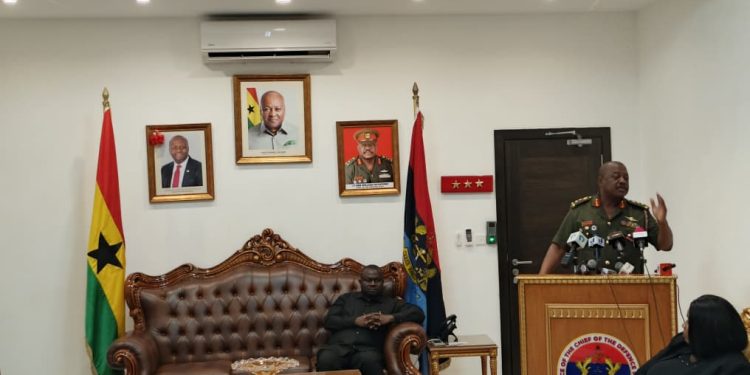
    On the matter, the Ghana Armed Forces (GAF) has noted that it would not allow this situation to persist and will henceforth effect the arrests of culprits to face the full rigours of the law.

    The Electoral Commission (EC) is holding an election in 19 polling stations of the Ablekuma North to provide its constituents a representative after the 2024 parliamentary elections.

    After the 2024 polls, Ablekuma North remained the only constituency in Ghana without a sitting MP, due to unresolved disagreements over the outcome of the parliamentary vote.

    On December 10, 2024, three days after the national polls, the EC declared Ewurabena Aubynn of the NDC the winner of the Ablekuma North parliamentary seat, defeating the New Patriotic Party’s (NPP) Nana Akua Owusu Afriyieh.

    However, the EC later revoked the announcement, revealing that results from 62 of the 281 polling stations had not been included in the initial collation.

    Efforts to restart the collation in January 2025 were disrupted by multiple challenges.

    These included interruptions due to the submission of unverified pink sheets and a violent intrusion at the collation centre that heightened security concerns.

    The Electoral Commission (EC), after extensive deliberations, in July noted that it will hold the rerun election because the 19 scanned polling station results used for the collation, though approved by agents of both political parties, were not verified by the presiding officers responsible for those polling stations.

    The EC arrived at this decision after it met with the representatives of the National Democratic Congress (NDC) and New Patriotic Party (NPP) on Tuesday, July 1.

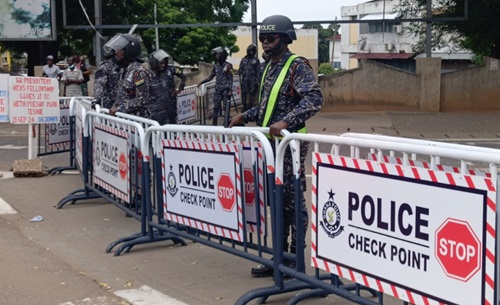
    Ahead of today’s election, the EC called on the Ghana Police Service to provide the needed security to ensure a safe environment for the conduct of the election.

    Deputy Chairman of the Electoral Commission (EC) in Charge of Corporate Services, Dr Bossman Asare, has affirmed that the Ghana Police Service and the National Election Security Taskforce have pledged to ensure security before, during, and after the upcoming Ablekuma North parliamentary rerun.

  • Perpetrators of Ablekuma North violence in 2024 still at large – EC

    Perpetrators of Ablekuma North violence in 2024 still at large – EC

    The Deputy Commissioner of the Electoral Commission (EC), Dr Bossman Asare, has revealed that justice is yet to be served to individuals who disrupted the 2024 Parliamentary elections at the Ablekuma North constituency.

    “None have been arrested to date, although some of the perpetrators were captured in videos in circulation on social media.

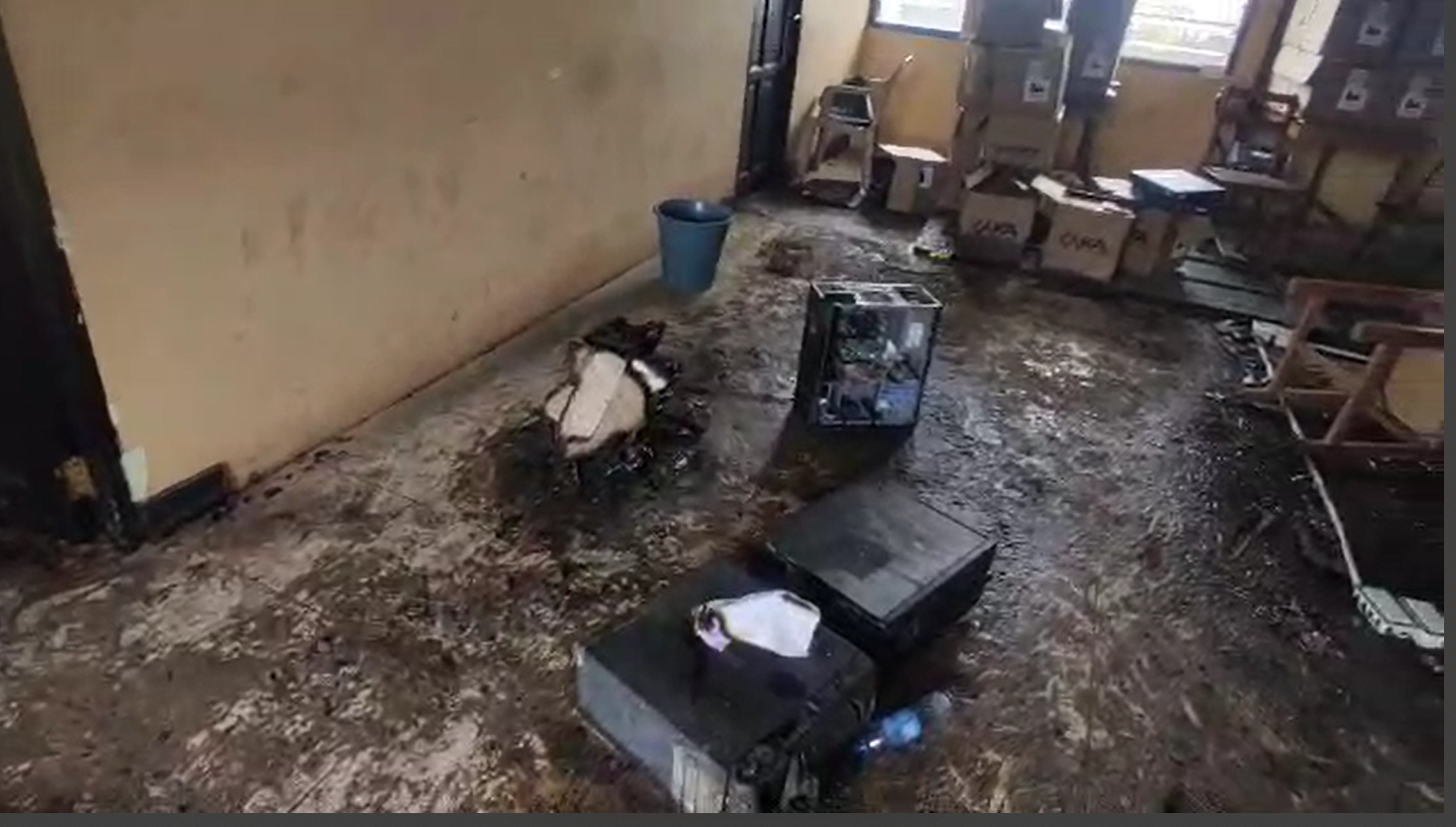
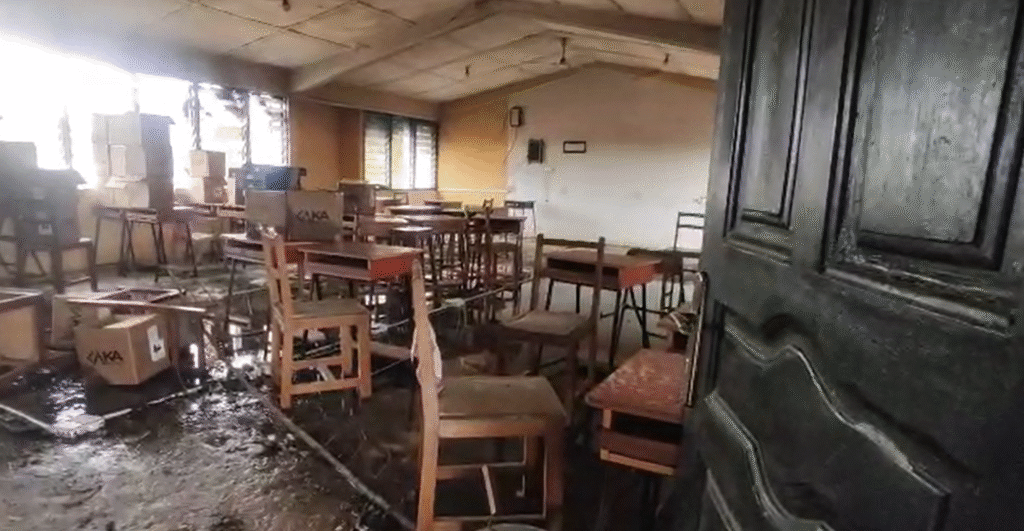
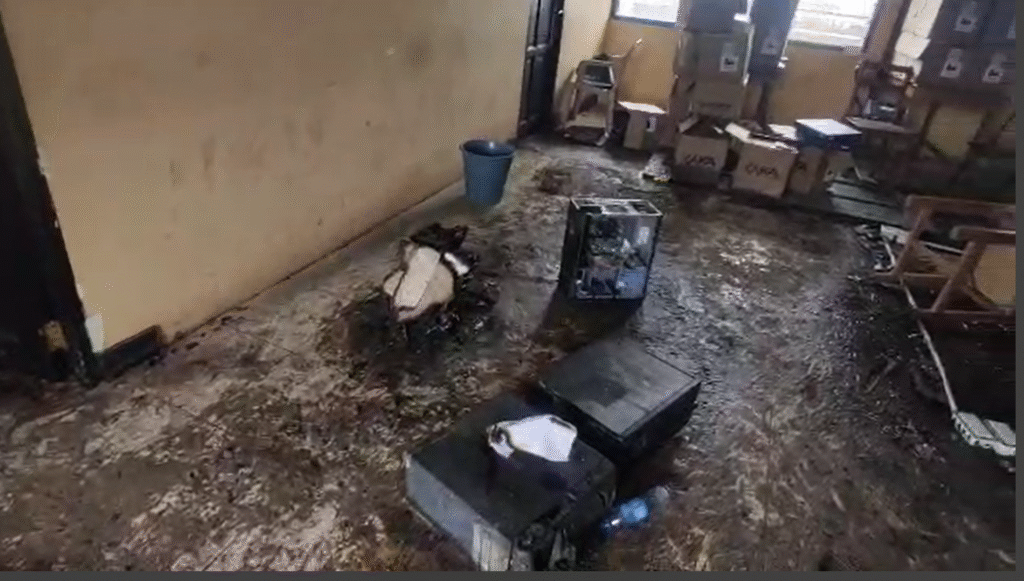
    “As a result of inadequate security presence at the collation centre, party supporters invaded the offices and destroyed properties of the commission, including furniture, doors, and louvre blades,” he added.

    In 2024, some individuals affiliated with the New Patriotic Party (NPP) or the National Democratic Congress (NDC) engaged in a violent confrontation, halting voting processes.

    The chaos led to the destruction of electoral materials and properties of the EC, leading to the suspension of results in the constituency.

    However, attempts to collate results gathered around that time has been futile.

    To resolve this, the EC will today hold a rerun election in 19 polling stations of the Ablekuma North to provide its constituents a representative after the 2024 parliamentary elections.

    After the 2024 polls, Ablekuma North remained the only constituency in Ghana without a sitting MP, due to unresolved disagreements over the outcome of the parliamentary vote.

    On December 10, 2024, three days after the national polls, the EC declared Ewurabena Aubynn of the NDC the winner of the Ablekuma North parliamentary seat, defeating the New Patriotic Party’s (NPP) Nana Akua Owusu Afriyieh.

    However, the EC later revoked the announcement, revealing that results from 62 of the 281 polling stations had not been included in the initial collation.

    Efforts to restart the collation in January 2025 were disrupted by multiple challenges.

    These included interruptions due to the submission of unverified pink sheets and a violent intrusion at the collation centre that heightened security concerns.

    The Electoral Commission (EC), after extensive deliberations, in July noted that it will hold the rerun election because the 19 scanned polling station results used for the collation, though approved by agents of both political parties, were not verified by the presiding officers responsible for those polling stations.

    The EC arrived at this decision after it met with the representatives of the National Democratic Congress (NDC) and New Patriotic Party (NPP) on Tuesday, July 1.

    The EC’s decision to hold a rerun met opposition from the NPP, leading the party to head to court for an interlocutory injunction application. The High Court dismissed the application.

    The NPP noted that it won the 2024 Ablekuma North parliamentary election and, as such, will not participate in the rerun. According to the Deputy General Secretary, Haruna Mohammed, this is so because contesting in the election will set a dangerous precedent and compromise future elections.

    However, the party’s parliamentary candidate, Nana Akua Owusu Afriyie, has indicated that she will fully participate in the Parliamentary election

    “I appeal to all the constituents to come out and vote massively for me so the glory of God will manifest. I have put my trust in God, and I know He will not disappoint me. I won the election by 440 votes, and I believe God will let the truth prevail tomorrow,” she stated.

    Meanwhile, the National Democratic Congress (NDC) has expressed its decision to participate in the rerun election. The NDC will be represented by Ewurabena Aubyn.

    Greater Accra Regional Director of Elections for the National Democratic Congress (NDC), Joshua Alabi, is optimistic that no challenges will be experienced during the election.

    “There were security lapses in the last elections. The EC itself also failed to live up to its bidding in the last elections, but I believe they have done its homework. The security has also done their homework very well, so this time around, the tags we are going to use will have our names on them, which is one of the means too.”

    “I am very much convinced that with the few I have seen on the ground, I don’t think we are going to have the lapses we experienced the last time. If we are able to be on the ground ourselves, we are part of the security, nothing untoward is going to happen, and it is only 19 polling stations. I don’t foresee any challenge. If there is one, the security will take care of them,” he said.

    Ahead of today’s election, the EC called on the Ghana Police Service to provide the needed security to ensure a safe environment for the conduct of the election.

    Deputy Chairman of the Electoral Commission (EC) in Charge of Corporate Services, Dr Bossman Asare, has affirmed that the Ghana Police Service and the National Election Security Taskforce have pledged to ensure security before, during, and after the upcoming Ablekuma North parliamentary rerun.

  • No soldier will be at Ablekuma North polls – Defence Minister

    No soldier will be at Ablekuma North polls – Defence Minister

    No military will be deployed to oversee the Parliamentary rerun elections in the Ablekuma North Constituency scheduled for today, Friday, July 11, the Minister for Defence, Dr Edward Omane Boamah, has assured.

    In a Facebook post, he noted that, instead, the Ghana Police Service will be responsible for maintaining law and order during the process.
    “The Ghana Police Service is trained to handle electoral security, and we trust them to do their job.

    “To ensure a peaceful and democratic process, the Ghana Police Service will be fully in charge of security for today’s elections in Ablekuma North Constituency,” the Defence Minister stated.

    The Electoral Commission (EC) will today hold a rerun election in 19 polling stations of the Ablekuma North to provide its constituents a representative after the 2024 parliamentary elections.

    After the 2024 polls, Ablekuma North remained the only constituency in Ghana without a sitting MP, due to unresolved disagreements over the outcome of the parliamentary vote.

    On December 10, 2024, three days after the national polls, the EC declared Ewurabena Aubynn of the NDC the winner of the Ablekuma North parliamentary seat, defeating the New Patriotic Party’s (NPP) Nana Akua Owusu Afriyieh.

    However, the EC later revoked the announcement, revealing that results from 62 of the 281 polling stations had not been included in the initial collation.

    Efforts to restart the collation in January 2025 were disrupted by multiple challenges.

    These included interruptions due to the submission of unverified pink sheets and a violent intrusion at the collation centre that heightened security concerns.

    The Electoral Commission (EC), after extensive deliberations, in July noted that it will hold the rerun election because the 19 scanned polling station results used for the collation, though approved by agents of both political parties, were not verified by the presiding officers responsible for those polling stations.

    The EC arrived at this decision after it met with the representatives of the National Democratic Congress (NDC) and New Patriotic Party (NPP) on Tuesday, July 1.

    The EC’s decision to hold a rerun met opposition from the NPP, leading the party to head to court for an interlocutory injunction application. The High Court dismissed the application.

    The NPP noted that it won the 2024 Ablekuma North parliamentary election and, as such, will not participate in the rerun. According to the Deputy General Secretary, Haruna Mohammed, this is so because contesting in the election will set a dangerous precedent and compromise future elections.

    However, the party’s parliamentary candidate, Nana Akua Owusu Afriyie, has indicated that she will fully participate in the Parliamentary election

    “I appeal to all the constituents to come out and vote massively for me so the glory of God will manifest. I have put my trust in God, and I know He will not disappoint me. I won the election by 440 votes, and I believe God will let the truth prevail tomorrow,” she stated.

    Meanwhile, the National Democratic Congress (NDC) has expressed its decision to participate in the rerun election. The NDC will be represented by Ewurabena Aubyn.

    Greater Accra Regional Director of Elections for the National Democratic Congress (NDC), Joshua Alabi, is optimistic that no challenges will be experienced during the election.

    “There were security lapses in the last elections. The EC itself also failed to live up to its bidding in the last elections, but I believe they have done its homework. The security has also done their homework very well, so this time around, the tags we are going to use will have our names on them, which is one of the means too.”

    “I am very much convinced that with the few I have seen on the ground, I don’t think we are going to have the lapses we experienced the last time. If we are able to be on the ground ourselves, we are part of the security, nothing untoward is going to happen, and it is only 19 polling stations. I don’t foresee any challenge. If there is one, the security will take care of them,” he said.

    Ahead of today’s election, the EC called on the Ghana Police Service to provide the needed security to ensure a safe environment for the conduct of the election.

    Deputy Chairman of the Electoral Commission (EC) in Charge of Corporate Services, Dr Bossman Asare, has affirmed that the Ghana Police Service and the National Election Security Taskforce have pledged to ensure security before, during, and after the upcoming Ablekuma North parliamentary rerun.

  • A/R: Fire leaves over 400 slum dwellers homeless in Ahodwo

    A/R: Fire leaves over 400 slum dwellers homeless in Ahodwo

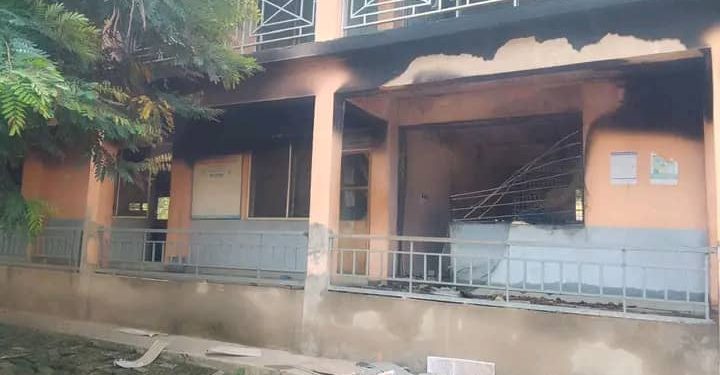
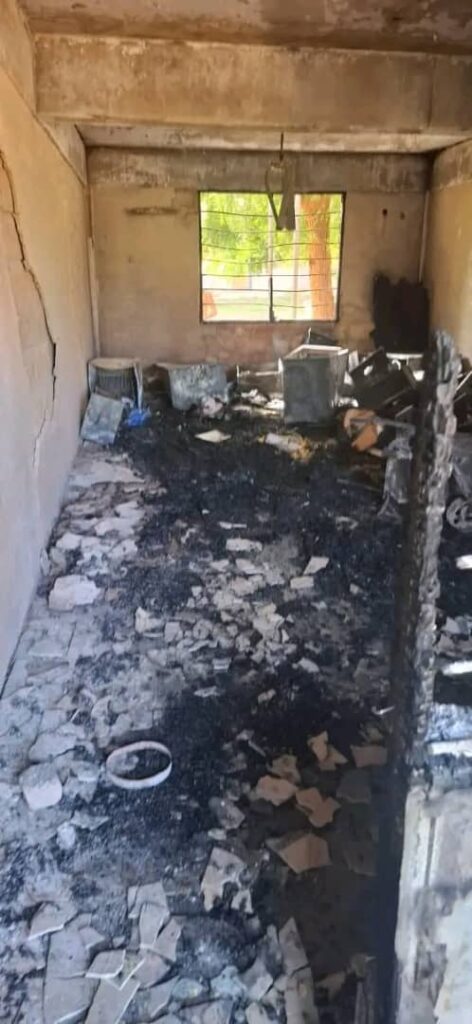
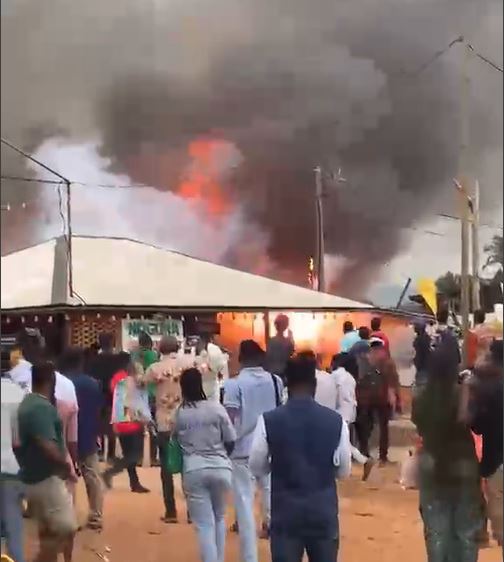
    A devastating fire has swept through a well-known slum in Ahodwo, Baba Ayoyo, within the Kumasi Metropolitan Assembly, displacing more than 400 dwellers.

    The fire incident, which destroyed over 100 makeshift structures, occurred on Wednesday, July 9, around 8:30 p.m. The victims have been left with nothing to recover; they have therefore appealed to the government to come to their aid.

    “I stay here with my grandmother, and she is old. We plead with you to help us. We slept in someone’s veranda last night. All our things are burnt; we couldn’t take anything,” a distressed woman shared.

    Speaking to the media on Thursday, July 10, Assembly Member for the Ridge Nhyiaeso electoral area, Abraham Boadi, indicated that the National Disaster Management Organisation (NADMO) will have an engagement with victims on Friday, July 11.

    “We have planned that tomorrow, around 4 o’clock, NADMO and national security will be here to assess the place and evaluate the property lost. The challenge now is that the number of displaced persons is too large, so we can’t find shelter for them all. We’ve encouraged them to speak to friends and family while we wait on NADMO,” he said.

    The Ghana National Fire Service (GNFS) has provided statistics on fire outbreaks so far this year. There has been a slight increase in fire cases nationwide in the first half of 2025.

    A comparison of data from January to June last year and that of this year’s first six months indicates that Ghana recorded 3,595 fire cases.

    According to the Ghana National Fire Service, that is about 19 more cases than the 3,576 cases recorded during the same time in 2024, a sharp increase in cases representing a 0.53% rise.

    The monthly breakdown of fire cases reported this year is as follows: January (964), February (678), March (619), April (483), May (457), and June (394).

    The Greater Accra Region recorded the highest number of fire incidents, with 628 cases, followed by the Ashanti Region with 581 cases and the Central Region with 408. The North East Region reported the lowest number of incidents—just 10

    During an interview on Tuesday, July 8, the Head of Public Relations at the Ghana National Fire Service (GNFS), Desmond Ackah, revealed that due to their improved and swift response to fire cases, they have been able to save over GHC203 million worth of property in the last two quarters of 2025.

    Below are the top causes of fire incidents, according to the Ghana National Fire Service.

    Electrical faults from illegal connections, poor wiring, and overloading of circuits. Improper use of electrical appliances, such as overused extension cords and unattended devices.

    Unattended cooking, especially with gas, electric, or coal-based stoves. Careless use of naked flames like candles, mosquito coils, lighters, and matches.

    Gas leakages and poor handling of LPG cylinders. Bush and vegetation burning, particularly during the dry season. Vehicle fires are due to poor maintenance and road accidents. Unsafe welding and other hot-work practices. Deliberate acts of arson.

    Meanwhile, GNFS has reported a significant improvement in the fight against prank calls. The Service recorded a dramatic 34.77% reduction in prank calls, having recorded about 364,020 prank calls in the first half of 2024, as against 237,470 in 2025.

    The Service attributed the reduction in prank calls to consistent public education campaigns and increased awareness of the legal consequences of misusing emergency lines.

  • Was there no consultation before deciding to discontinue National Cathedral project? – Koku Anyidoho quizzes

    Was there no consultation before deciding to discontinue National Cathedral project? – Koku Anyidoho quizzes

    Former Deputy General Secretary of the National Democratic Congress (NDC), Samuel Koku Anyidoho, has suggested there was lack of consultation in the decision to convert the National Cathedral project to the National Cultural Convention Center.

    Taking to the X platform on Wednesday, July 8, he reacted to the board of directors of the National Cathedral’s justification for the completion of the project.

    “National Cathedral Board resists any attempt to convert project into National Cultural Convention Center. So no consultation was done before decision taken by Government? Hmmm!!!,” he wrote.

    The Board had proposed that the government complete the project to host Ghanaians, so it can be used to host Ghanaians during the National Day of Prayer.

    The recommendation comes from the government’s intention to turn the NCCC into a central hub for Ghana’s creative economy and cultural diplomacy.

    However, the Board has further noted that the integration of additional elements including a Bible Museum that tells the history and contributions of the church in Ghana and Africa, including the Ghanaian and African Diaspora, ensures the Cathedral is also developed as a heritage and cultural site that promotes religious pilgrimage and international tourism.

    The Board noted that the designs for the Cathedral, the Bible Museum, Biblical Garden, Economic Engine-comprising 10 revenue streams including a 350-seater restaurant, banquet hall, conference hall, library, have all been completed based on the layout and specifications of the site.

    “Preparatory works on the land have all been completed, and with the architectural and design work for the Cathedral and Bible Museum also completed, actual construction of the National Cathedral began in 2021, with eight percent (8%) of construction done,” the Board further added.

    It noted that the project has not been abandoned despite its suspension due to lack of funds caused by politicisation and vilification of the project.

    Under the new “SH0W24” plan, part of the 24-hour economy for the creative sector, the NCCC will be developed with support from the African Continental Free Trade Area (AfCFTA) Secretariat and host exhibitions, film festivals, trade expos, and major summits.

    The project, the government notes, offers a smart solution to infrastructure challenges without clashing with religious or national values.

    “At the national level, a bold flagship intervention is proposed: converting the National Cathedral site into the National Cultural Convention Centre (NCCC), in partnership with the AfCFTA Secretariat. This venue will serve as Africa’s premier cultural diplomacy and creative economy forum, hosting international exhibitions, film festivals, trade shows, and summits-filling a critical infrastructure gap without conflicting with national values or faith institutions,” the document stated.

    The National Cultural Convention Centre (NCCC) is a key component of a wider strategy to revitalise Ghana’s creative arts, culture, and tourism sectors as major drivers of economic transformation.

    Its development marks a major policy shift regarding the use of the contested National Cathedral site, which has faced public criticism due to delays, rising costs, and questions about its necessity.

    Under the SH0W24 initiative, the NCCC is expected to become the flagship infrastructure project for the creative economy, with the capacity to host global exhibitions, festivals, and large-scale cultural events.

    The first phase of SH0W24 (2025–2026) will focus on feasibility studies, while the centre is expected to be fully operational in Phase 3 (2028–2030). Phase 2 will see the rollout of the Ghana Cultural Passport, regional programmes, and creative districts aimed at energising local economies. Phase 3 will take things further, focusing on exports and cross-border cultural partnerships.

    In addition, the SH0W24 strategy includes the creation of a National Creators Academy, which will train young people in fields such as music, film, fashion, digital media, and cultural performance, using modern tools like AI and virtual reality, along with business and cultural education.

    The government plans to build or upgrade more than 250 community centres across the country as part of the 24H+ Community Centre Network. These centres will stay open all day and night, offering space for training, creative work, exhibitions, and performances to support local arts and boost nighttime business.

    To help local artists reach more people, a new digital platform called the Ghana Cultural Passport will be introduced. It will showcase cultural experiences to tourists, especially those from the diaspora. Ghana’s embassies will help promote creative exports, and artists will get licensing and export support to reach international markets.

    To keep creative businesses running, the plan includes financial support through two funds: the 24H+ Value Chain Financing Facility and a Technical Assistance Grant Facility.

    The National Cathedral, originally proposed under the administration of former President Nana Addo Dankwa Akufo-Addo, was envisioned as a monumental Christian worship centre in Ghana.

    But the project progressed at a snail’s pace, spiralling costs and the use of public funds in a secular state. According to reports, a total amount of $58 million was spent on the project deemed to be Ghana’s most expensive bit.

    Over a year ago, Member of Parliament for North Tongu, Samuel Okudzeto Ablakwa, raised concerns with the Commission on Human Rights and Administrative Justice (CHRAJ), alleging irregularities in the project’s construction and the operations of the National Cathedral Secretariat.

    After investigating the case for several months, the Commission recommended that the Office of the Auditor-General intervene and conduct a forensic audit to ascertain whether funds allocated for the project were used for their intended purposes.

    The Commission highlighted that GHS225.9 million in “seed money” had been spent on activities including site preparation, contractor mobilization, and consultancy services as of May 31, 2022.

    CHRAJ’s detailed report recommended the potential prosecution of the board of trustees overseeing the National Cathedral project, citing their role in awarding the contract to Ribade Company Limited.

    The report highlighted multiple violations of procurement regulations and warned that the failure of those involved to address the issues could tarnish Ghana’s reputation both locally and internationally.

    The government in April this year dissolved the National Cathedral Secretariat after noting that it would no longer provide funding for the abandoned project.

  • Immigration officer murdered in Accra; police nab suspect

    Immigration officer murdered in Accra; police nab suspect

    The lifeless body of an immigration officer identified as Stephen King Amoah, also known as Nana Kofi, was discovered in a drainage system near GBC Satellite, opposite Comet Estate, Accra, on Wednesday, July 9.


    The deceased is said to have gone missing five days (since July 3) before his tragic death. This was contained in a press statement by the Ghana Police Service on Thursday, July 10.


    Providing more details about the tragic incident, the police noted that the murderer(s) of the 38-year-old also set his body on fire.

    The deceased’s remains have been conveyed to the Police Hospital morgue after the relatives positively identified the body as Stephen.


    The police have disclosed that their preliminary investigations indicate the deceased had gone to meet his debtor, one Bright Aweh, who had promised to pay the outstanding debt owed on Thursday, July 3, in the evening.


    The victim never returned home that night, and his phone remained switched off throughout, raising concerns among family and friends who later reported him missing.


    “Investigations revealed that on 3rd July 2025, at about 8:00 p.m., the deceased left his residence at Ashongman Estate after receiving WhatsApp images of cash bundles from one Bright Aweh, who requested to meet him at a spot at Ashongman Estate to settle an outstanding amount.


    “According to the complainant, the deceased never returned home that night, and his phone remained switched off thereafter,” the police said.


    After the deceased’s family filed a complaint at the police station, Bright Aweh was arrested to assist with the investigation.


    He admitted that he met with the deceased and alleged that he gave a cash of GHS500,000 to the deceased, instructing him “to use part of the money to pay off some debts and hold the remaining amount for later collection.”


    But the police in their statement noted that “the suspect could not clearly explain the source of the funds and gave conflicting statements.”


    Meanwhile, the police have pledged to get to the bottom of the case and ensure justice is served to the perpetrators.


    “The Regional Police Command strongly condemns such violent and criminal acts and assures the public that it is working diligently to uncover the full circumstances surrounding this incident and bring all responsible persons to justice,” it added.


    The police have also called on anyone with information relevant to the case to contact the nearest police station or call the police emergency numbers 18555 or 192.

  • I will contest in Ablekuma North rerun, party’s boycott won’t stop me – Akua Afriyie

    I will contest in Ablekuma North rerun, party’s boycott won’t stop me – Akua Afriyie

    The Ablekuma North New Patriotic Party (NPP) parliamentary candidate, Nana Akua Owusu Afriyie, has indicated that she will fully participate in the Parliamentary election in Ablekuma North Constituency scheduled for Friday, July 11.

    Her declaration comes shortly after the party announced it would boycott the election.

    “I appeal to all the constituents to come out and vote massively for me so the glory of God will manifest. I have put my trust in God, and I know He will not disappoint me. I won the election by 440 votes, and I believe God will let the truth prevail tomorrow,” she stated.

    Speaking to the media on Thursday, July 10, the parliamentary candidate called on her constituents to rally behind her to claim victory in the election.

    Meanwhile, the NPP has explained that its decision not to participate in the rerun is not because the party fears defeat.

    However, taking part will set a dangerous precedent and compromise future elections.

    Speaking to the media on Wednesday, Deputy General Secretary of the party, Haruna Mohammed, noted “Elections are elections; you can predict to win; you will never predict to lose. Opinions are opinions; everybody is entitled to his or her opinion. I cannot attack their opinion, but I can only prove my point to disagree with their opinion, and I disagree that we would lose – that is why we are not going.

    “It will serve as a bad precedent and open a Pandora’s box. People who believe in hooliganism, who believe in taking the law into their own hands, will perpetuate injustice in the future, anticipating that the Electoral Commission will kowtow to their will.”

    The Electoral Commission (EC), after extensive deliberations, noted that it will hold the rerun election because the 19 scanned polling station results used for the collation, though approved by agents of both political parties, were not verified by the presiding officers responsible for those polling stations.

    The EC arrived at this decision after it met with the representatives of the National Democratic Congress (NDC) and New Patriotic Party (NPP) on Tuesday, July 1.

    The meeting, which was a follow-up to an earlier meeting held on Thursday, 12th June, provided both parties the opportunity to brief the commission on any new developments regarding the said constituency.

    The parties informed the Commission that their positions put forward at the last meeting remained unchanged.

    The NDC held the view that the election should be rerun in thirty-seven (37) polling stations because scanned pink sheets from 37 polling stations, which were used to collate the results, were provided by the NPP.

    The NPP was of the view that the results from three (3) outstanding polling stations be collated and a winner declared, since the NDC agents had verified and confirmed the scanned polling station results they presented.

    In response, the NPP filed an interlocutory injunction application on July 6to restrain the Electoral Commission (EC) from proceeding with the rerun election.

    General Secretary of the New Patriotic Party (NPP), Justin Frimpong Kodua, has noted that the party won the 2024 Ablekuma North parliamentary election and, as such, will not participate in the rerun election slated for Friday, July 11.

    At a press briefing today, July 8, Frimpong Kodua noted the Electoral Commission to complete collation of results and declare the party’s candidate, Akua Afriyie, as winner.

    “We have our undeniable evidence to clearly show that we won the Ablekuma North parliamentary election. And yesterday, when the National Executive Committee met, we said that under no circumstances will we be intimidated. Under no circumstance will we be coerced to go for a rerun.”

    “We will not go for any rerun. We have won the elections. What we are asking the Electoral Commission is to follow the court directive, finish the collation, and declare our candidate, Akua Afriyie, as the MP-elect for Ablekuma North,” he said.

    But the NPP’s application has been dismissed by the High Court.

    Ablekuma North remains the only constituency in Ghana without a sitting MP, months after the 2024 general elections, due to unresolved disagreements over the outcome of the parliamentary vote.

    On December 10, 2024, three days after the national polls, the EC declared Ewurabena Aubynn of the NDC the winner of the Ablekuma North parliamentary seat, defeating the New Patriotic Party’s (NPP) Nana Akua Owusu Afriyieh.

    However, the EC later revoked the announcement, revealing that results from 62 of the 281 polling stations had not been included in the initial collation.

    Efforts to restart the collation in January 2025 were disrupted by multiple challenges.

    These included interruptions due to the submission of unverified pink sheets and a violent intrusion at the collation centre that heightened security concerns.

    By January 6, only seven polling station results remained uncollated. Yet the process came to a standstill as the EC began engaging both major political parties in an attempt to break the deadlock.

    Both the NPP and the NDC have declared victory in the December parliamentary elections.

    The NPP maintains that its candidate, Nana Akua Afriyie, emerged the winner based on Electoral Commission figures, while the NDC insists that Ewurabena Aubyn was rightfully elected by the people.

    Appearing before Parliament on Thursday, June 19, the Deputy Chairperson of the EC in charge of Corporate Affairs, Dr. Bossman noted the Commission will only resort to a re-run after all measures have been exhausted.

    “So, for Ablekuma North, we have not reached the point where we will say we don’t have the results. When we try and we cannot get the results, that is when we will resort to the rerun. The rerun will be a last option,” he said.

    The Inspector-General of Police (IGP), COP Christian Tetteh Yohuno, warned that the continued delay poses a serious threat to Ghana’s democratic reputation and the integrity of its electoral system.

    He cautioned that how the dispute is handled will shape public trust in Ghana’s electoral processes well beyond the current cycle.

    “This is a pivotal moment. The way we handle the collation in Ablekuma North will resonate across the country. It will set the tone, not only for this election, but also for public confidence in the years to come,” Dr. Yohuno stated.

  • President Mahama appoints additional 4 deputy ministers 

    President Mahama appoints additional 4 deputy ministers 

    President John Dramani Mahama has appointed four new deputy ministers, subject to parliamentary approval.

    This information was contained in a press statement dated Wednesday, July 9, by the office of the president.

    Their appointment is in accordance with Articles 78(1) and 79(1) of the 1992 Constitution, which empower him to appoint ministers and deputy ministers with the prior approval of Parliament.

    The Member of Parliament (MP) for Jomoro Constituency, Dorcas Toffey, will serve at the Ministry of Transport; the Member of Parliament (MP) for Assin North, James G. Quayson, will work at the Ministry of Foreign Affairs; the Member of Parliament (MP) for Sissala West will work at the Ministry of Communication, Digital Technology, and Innovations; and the Member of Parliament (MP) for the Essikado-Ketan constituency, Grace Ayensu-Danquah, will serve at the Ministry of Health. 

    These nominees have been submitted to Parliament through the Speaker for vetting by the Appointments Committee. Parliament is expected to announce a schedule for the vetting in the coming days.

    If appointed, the 4 individuals will bring the total number of ministers and deputies in his administration to 60.

    This follows the earlier approval and swearing-in of over 50 ministers and deputies in March 2025, who underwent vetting by the same committee.

    President Mahama made the commitment to appoint not more than 60 ministers during his campaign in 2024, a promise aimed at demonstrating fiscal discipline and improving governance efficiency.

    “I am committed to operating an effective government with not more than sixty (60) ministers. These Ministers together with other appointees of the government will not be entitled to ex-gratia payments after their tenure, as they will commit to that undertaking even before the necessary constitutional amendments, including a review of the controversial Article 71,” President Mahama stated.

    As a result, President Mahama scrapped and merged certain ministries; the Ministry of Information has been merged under the Ministry of Communication.

    The Ministry of Water and Sanitation has been merged with the Ministry of Works and Housing.

    The Ministry of Railways and the Ministry of National Security have both been scrapped. The Ministry of Sports and Youth now operates as the Ministry of Youth Development and Empowerment and the Ministry of Sports and Recreation.

    Additionally, the responsibilities of the Ministry of Chieftaincy have been added to the Ministry of Local Government.

    The minority in Parliament argued that President Mahama’s decision to reduce his ministers will undermine the government’s ability to manage the country effectively.

    “When we make mistakes, let’s admit them and apologise. 60 ministers will not help your political cause. I am not the president, but if I were to advise Mr President, I would say, Mr President, you can apologise to Ghanaians and say, look, you underestimated the thing. I think I need to engage more ministers,” Minority Leader Alexander Afenyo-Markin added.

    The substantive ministers are Dr. Cassiel Ato Forson (MP), who heads the Ministry of Finance, while John Abdulai Jinapor (MP) oversees Energy and Green Transition.

    The Attorney-General and Minister of Justice is Dominic Akuritinga Ayine (MP), with Kwame Governs Agbodza (MP) in charge of Roads and Highways. Eric Opoku (MP) leads the Ministry of Food and Agriculture; Agnes Naa Momo Lartey (MP) serves as Minister for Gender, Children, and Social Protection; and Abla Dzifa Gomashie (MP) is responsible for Tourism, Culture, and Creative Arts.

    Emelia Arthur (MP) has been appointed Minister for Fisheries and Aquaculture, and George Opare-Addo takes charge of Youth and Empowerment. Haruna Iddrisu (MP) oversees Education, Ahmed Ibrahim (MP) handles Local Government, Chieftaincy, and Religious Affairs, and Elizabeth Ofosu Adjare (MP) manages Trade, Agribusiness, and Industry.

    Dr. Edward Omane Boamah serves as Minister for Defence, with Samuel Nartey George (MP) at the helm of Communication, Digital Technology, and Innovations.

    Other key ministers include Emmanuel Armah-Kofi Buah (MP) for Lands and Natural Resources, Kofi Iddie Adams (MP) for Sports and Recreation, and Abdul-Rashid H. Pelpuo (MP) for Labour, Jobs, and Employment.

    Kwabena Mintah Akandoh (MP) handles the Health Ministry, while Ibrahim Murtala Muhammed (MP) is responsible for Environment, Science, and Technology. Joseph Bukari Nikpe (MP) serves as Transport Minister, and Muntaka Mohammed-Mubarak (MP) oversees Interior and National Security.

    Samuel Okudzeto Ablakwa (MP) leads the Ministry of Foreign Affairs, and Gilbert Kenneth Adjei takes charge of Works, Housing, and Water Resources.

    Additional ministerial appointments include Emmanuel Kwadwo Agyekum (MP) as Minister of State for Special Initiatives, Felix Kwakye Ofosu (MP) as Minister for Government Communications, Issifu Seidu (MP) as Minister of State for Climate Change and Sustainability, and Lydia Lamisi Akanvariba as Minister of State for Public Sector Reforms.

    Regional Ministers—Puozuing Charles Lwanga has been appointed as the Upper West Regional Minister, with Joseph Addae Akwaboa for the Bono Region and Francis Owusu Antwi for the Bono East Region. Wilbert Petty Brentum leads the Western North Region, Ekow Panyin Okyere Eduamoah oversees the Central Region, and Joseph Nelson manages the Western Region.

    Ali Adolf John has been named Northern Regional Minister, John Kwadwo Gyapong serves as the Oti Regional Minister, and James Gunu leads the Volta Region. Mrs. Rita Akosua Adjei Awatey has been appointed to the Eastern Region, while Ibrahim Tia takes charge of the North East Region.

    Dr. Frank Amoakohene serves as the Ashanti Regional Minister, and Donatus Akamugri Atanga is in charge of the Upper East Region.

    Charity Gardiner serves as the Ahafo Regional Minister, Salisu Bi-Awuribe is responsible for the Savannah Region, and Linda Obenewaa Akweley Ocloo (MP) leads the Greater Accra Region.

    Supporting the work of the substantive ministers are 14 deputy ministers. Dr. Clement Apaak serves as Deputy Minister of Education, Richard Gyan Mensah as Deputy Minister of Energy, and John Dumelo as Deputy Minister of Food and Agriculture. Alhassan Suhuyini takes up the role of Deputy Minister of Roads and Highways, while Justice Sai serves as Deputy Attorney-General and Minister of Justice.

    Yusif Sulemana supports the Ministry of Lands and Natural Resources, and Yusif Isaka Jajah handles Tourism, Culture, and Creative Arts as deputy. Rita Naa Odorley Sowah serves in the Local Government, Chieftaincy, and Religious Affairs portfolio, while Gizella Tetteh is Deputy Minister of Works, Housing, and Water Resources.

    Other appointees include Ernest Brogya Genfi as Deputy Minister of Defence, Ebenezer Okletey Terlabi as Deputy Minister of Interior, and Thomas Ampem Nyarko as Deputy Minister of Finance.

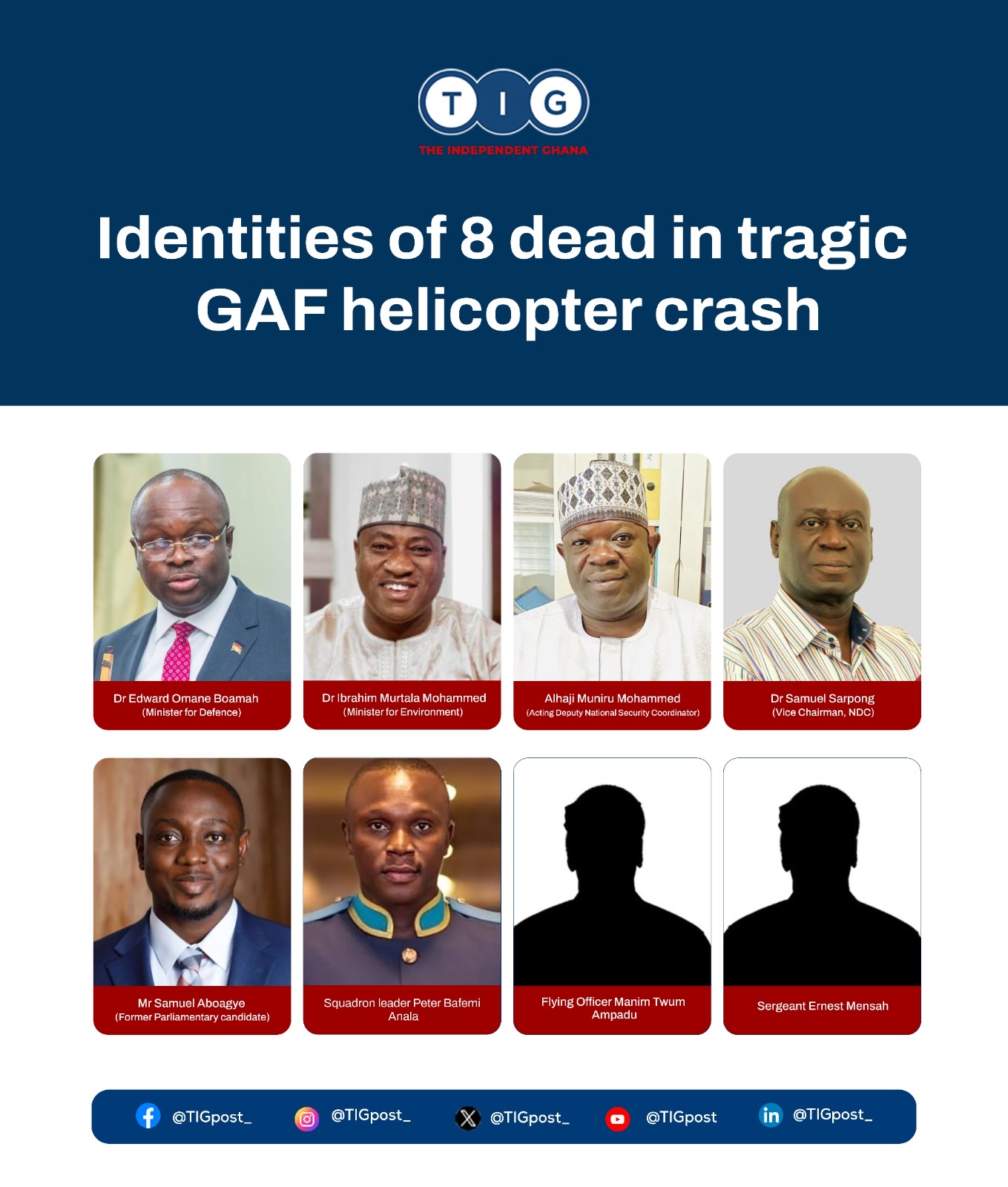
    https://twitter.com/tigpost_/status/1943253142491013358/photo/2

  • Ablekuma North: We’re not boycotting rerun because of defeat – NPP

    Ablekuma North: We’re not boycotting rerun because of defeat – NPP

    The New Patriotic Party (NPP) says its decision not to participate in the Ablekuma North parliamentary rerun scheduled for Friday, July 11, is not because the party fears defeat.

    Speaking to the media on Wednesday, Deputy General Secretary of the party, Haruna Mohammed, explained that contesting in the election will set a dangerous precedent and compromise future elections.

    “Elections are elections; you can predict to win; you will never predict to lose. Opinions are opinions; everybody is entitled to his or her opinion. I cannot attack their opinion, but I can only prove my point to disagree with their opinion, and I disagree that we would lose – that is why we are not going.

    “It will serve as a bad precedent and open a Pandora’s box. People who believe in hooliganism, who believe in taking the law into their own hands, will perpetuate injustice in the future, anticipating that the Electoral Commission will kowtow to their will,” he added.

    The Electoral Commission (EC), after extensive deliberations, noted that it will hold the rerun election because the 19 scanned polling station results used for the collation, though approved by agents of both political parties, were not verified by the presiding officers responsible for those polling stations.

    The EC arrived at this decision after it met with the representatives of the National Democratic Congress (NDC) and New Patriotic Party (NPP) on Tuesday, July 1.

    The meeting, which was a follow-up to an earlier meeting held on Thursday, 12th June, provided both parties the opportunity to brief the commission on any new developments regarding the said constituency.

    The parties informed the Commission that their positions put forward at the last meeting remained unchanged.

    The NDC held the view that the election should be rerun in thirty-seven (37) polling stations because scanned pink sheets from 37 polling stations, which were used to collate the results, were provided by the NPP.

    The NPP was of the view that the results from three (3) outstanding polling stations be collated and a winner declared, since the NDC agents had verified and confirmed the scanned polling station results they presented.

    In response, the NPP filed an interlocutory injunction application on July 6to restrain the Electoral Commission (EC) from proceeding with the rerun election.

    General Secretary of the New Patriotic Party (NPP), Justin Frimpong Kodua, has noted that the party won the 2024 Ablekuma North parliamentary election and, as such, will not participate in the rerun election slated for Friday, July 11.

    At a press briefing today, July 8, Frimpong Kodua noted the Electoral Commission to complete collation of results and declare the party’s candidate, Akua Afriyie, as winner.

    “We have our undeniable evidence to clearly show that we won the Ablekuma North parliamentary election. And yesterday, when the National Executive Committee met, we said that under no circumstances will we be intimidated. Under no circumstance will we be coerced to go for a rerun.”

    “We will not go for any rerun. We have won the elections. What we are asking the Electoral Commission is to follow the court directive, finish the collation, and declare our candidate, Akua Afriyie, as the MP-elect for Ablekuma North,” he said.

    But the NPP’s application has been dismissed by the High Court.

    Ablekuma North remains the only constituency in Ghana without a sitting MP, months after the 2024 general elections, due to unresolved disagreements over the outcome of the parliamentary vote.

    On December 10, 2024, three days after the national polls, the EC declared Ewurabena Aubynn of the NDC the winner of the Ablekuma North parliamentary seat, defeating the New Patriotic Party’s (NPP) Nana Akua Owusu Afriyieh.

    However, the EC later revoked the announcement, revealing that results from 62 of the 281 polling stations had not been included in the initial collation.

    Efforts to restart the collation in January 2025 were disrupted by multiple challenges.

    These included interruptions due to the submission of unverified pink sheets and a violent intrusion at the collation centre that heightened security concerns.

    By January 6, only seven polling station results remained uncollated. Yet the process came to a standstill as the EC began engaging both major political parties in an attempt to break the deadlock.

    Both the NPP and the NDC have declared victory in the December parliamentary elections.

    The NPP maintains that its candidate, Nana Akua Afriyie, emerged the winner based on Electoral Commission figures, while the NDC insists that Ewurabena Aubyn was rightfully elected by the people.

    Appearing before Parliament on Thursday, June 19, the Deputy Chairperson of the EC in charge of Corporate Affairs, Dr. Bossman noted the Commission will only resort to a re-run after all measures have been exhausted.

    “So, for Ablekuma North, we have not reached the point where we will say we don’t have the results. When we try and we cannot get the results, that is when we will resort to the rerun. The rerun will be a last option,” he said.

    The Inspector-General of Police (IGP), COP Christian Tetteh Yohuno, warned that the continued delay poses a serious threat to Ghana’s democratic reputation and the integrity of its electoral system.

    He cautioned that how the dispute is handled will shape public trust in Ghana’s electoral processes well beyond the current cycle.

    “This is a pivotal moment. The way we handle the collation in Ablekuma North will resonate across the country. It will set the tone, not only for this election, but also for public confidence in the years to come,” Dr. Yohuno stated.

  • Ablekuma North rerun won’t be chaotic – NDC

    Ablekuma North rerun won’t be chaotic – NDC

    The Greater Accra Regional Director of Elections for the National Democratic Congress (NDC), Joshua Alabi, has assured of a peaceful parliamentary rerun in Ablekuma North.

    Joshua Alabi gave the assurance on Wednesday, July 9, during a media interview.

    According to him, all election materials, as well as the Electoral Commission (EC) and security agencies, are being adequately prepared to ensure a smooth and peaceful rerun in Ablekuma North on Friday, July 11.

    “There were security lapses in the last elections. The EC itself also failed to live up to its bidding in the last elections, but I believe they have done its homework. The security has also done their homework very well, so this time around, the tags we are going to use will have our names on them, which is one of the means too.

    I am very much convinced that with the few I have seen on the ground, I don’t think we are going to have the lapses we experienced the last time. If we are able to be on the ground ourselves, we are part of the security, nothing untoward is going to happen, and it is only 19 polling stations. I don’t foresee any challenge. If there is one, the security will take care of them.”

    The Electoral Commission (EC), after extensive deliberations, noted that it will hold the rerun election because the 19 scanned polling station results used for the collation, though approved by agents of both political parties, were not verified by the presiding officers responsible for those polling stations.

    “It is instructive to note that, the Commission was able to secure the Presiding Officers’ verification and confirmation for 18 scanned polling station results—agents of both parties also approved same. A rerun will therefore not be held in those polling stations,” the Commission noted in a statement.

    The EC arrived at this decision after it met with the representatives of the National Democratic Congress (NDC) and New Patriotic Party (NPP) on Tuesday, July 1.

    The meeting, which was a follow-up to an earlier meeting held on Thursday, 12th June, provided both parties the opportunity to brief the commission on any new developments regarding the said constituency.

    The parties informed the Commission that their positions put forward at the last meeting remained unchanged.

    The NDC held the view that the election should be rerun in thirty-seven (37) polling stations because scanned pink sheets from 37 polling stations, which were used to collate the results, were provided by the NPP.

    The NPP was of the view that the results from three (3) outstanding polling stations be collated and a winner declared, since the NDC agents had verified and confirmed the scanned polling station results they presented.

    Ablekuma North remains the only constituency in Ghana without a sitting MP, months after the 2024 general elections, due to unresolved disagreements over the outcome of the parliamentary vote.

    On December 10, 2024, three days after the national polls, the EC declared Ewurabena Aubynn of the NDC the winner of the Ablekuma North parliamentary seat, defeating the New Patriotic Party’s (NPP) Nana Akua Owusu Afriyieh.

    However, the EC later revoked the announcement, revealing that results from 62 of the 281 polling stations had not been included in the initial collation.

    Efforts to restart the collation in January 2025 were disrupted by multiple challenges.

    These included interruptions due to the submission of unverified pink sheets and a violent intrusion at the collation centre that heightened security concerns.

    By January 6, only seven polling station results remained uncollated. Yet the process came to a standstill as the EC began engaging both major political parties in an attempt to break the deadlock.

    Both the NPP and the NDC have declared victory in the December parliamentary elections.

    The NPP maintains that its candidate, Nana Akua Afriyie, emerged the winner based on Electoral Commission figures, while the NDC insists that Ewurabena Aubyn was rightfully elected by the people.

    Appearing before Parliament on Thursday, June 19, the Deputy Chairperson of the EC in charge of Corporate Affairs, Dr. Bossman noted the Commission will only resort to a re-run after all measures have been exhausted.

    “So, for Ablekuma North, we have not reached the point where we will say we don’t have the results. When we try and we cannot get the results, that is when we will resort to the rerun. The rerun will be a last option,” he said.

    Meanwhile, the EC has called on the Ghana Police Service to provide the needed security to ensure a safe environment for the conduct of the election.

  • Buildings without toilet facilities must not be given permits – President Mahama directs Assemblies

    Buildings without toilet facilities must not be given permits – President Mahama directs Assemblies

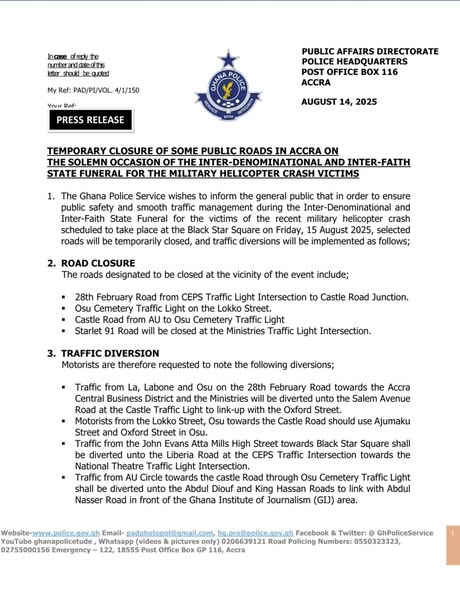
    President John Dramani Mahama has called on district assemblies to assist the government in combating open defecation.

    Speaking at the launch of the Sustainable Development Goal (SDG) Voluntary National Report, President Mahama cautioned district assemblies against approving building permits for construction plans that omit sanitation facilities.

    According to him, all new residential, commercial, and public structures must follow a thorough sanitation and compliance process.
    “It is unacceptable that in 2025, open defecation persists in parts of Ghana. This is not just a public health issue; it is a matter of dignity and equity. Our sanitation crisis is not caused by a lack of knowledge, but by gaps in investment, enforcement, and community engagement. We must act decisively to end this practice.

    “All district assemblies have in their by-laws that you can’t obtain a building permit without providing sanitation facilities. So, how is it that people are still defecating in the open—what many jokingly refer to as ‘free range’? The most disturbing part is that some say they prefer it because they get ‘air conditioning at their rear end,” he added.

    Access to sanitation remains limited in Ghana; more than 57% of the population relies on communal or public toilets, and 18% continue to practice open defecation.

    Out of all regions, the Greater Accra Region records 40% access to sanitation facilities, with the Savannah Region still struggling with very low access.

    25% of households, or one in every four in Ghana, still practice open defecation, according to the Ghana Statistical Service (GSS).

    Under the Sustainable Development Goal (SDG), the international community is working toward ending open defecation by 2030.

    Rural areas report more cases of open defecation, with 39% of households practicing it compared to 12% in urban areas.

    Nearly 1.8 billion people globally engage in open defecation as per the World Health Organisation (WHO) and UNICEF’s findings.

    The UN, in 2023, described the country’s sanitation situation as dire, calling for a lasting solution.

  • First malaria drug designed for babies set for rollout

    First malaria drug designed for babies set for rollout

    Pharmaceutical company Novartis has approved a malaria treatment for infants.

    Some African countries are expected to receive the rollout of treatments later this year.

    This information was included in a press release by Novartis on Tuesday, July 8.

    According to the release, eight African countries, including Burkina Faso, Ivory Coast, Kenya, Malawi, Mozambique, Nigeria, Tanzania, and Uganda collaborated on the clinical trials for the newly approved medicine.

    “Together with our partners, we are proud to have gone further to develop the first clinically proven malaria treatment for newborns and young babies, ensuring even the smallest and most vulnerable can finally receive the care they deserve,” parts of the release read.

    Per reports, infants weighing less than 4.5 kilograms have long had no approved malaria treatment.

    Previously, infants received malaria treatments formulated for older children, which increased the risk of adverse effects.

    The new medication is specially dosed to meet the needs of the smallest patients.

    The World Health Organization (WHO) reported that in 2023, 83 countries recorded 597,000 malaria-related deaths.

    Africa is home to 94% of global malaria cases, killing children under 5 years old.

    Meanwhile, the United Nations children’s organization, UNICEF, has rolled out the R21/Matrix-M vaccine in Mali to commerorate World Malaria Day.

    This makes Mali the 20th country to roll out the vaccine since its launch.

  • 70% of CEOs forecast economic rebound in 2025 – PwC reports

    70% of CEOs forecast economic rebound in 2025 – PwC reports

    70 percent of Chief Executive Officers (CEOs) in Ghana are confident of economic growth in 2025, the 28th Annual CEO Survey published by auditing and accounting firm, PwC, has revealed.

    Per the survey, 48 percent of Ghanaian CEOs have projected their businesses to generate more revenue this year.

    35 percent also believe their businesses will not be economically viable beyond 2035.

    77 percent of the CEOs are optimistic about national economic growth in 2025.

    “More instructive is the finding that Ghana’s CEOs are less pessimistic about their businesses’ short-term prospects than when we posed that question to them just 12 months earlier—65% of Ghana’s CEOs, at that time, were very confident or extremely confident about their company’s 2024 revenue prospects”, it pointed out.

    https://www.pwc.com/gh/en/assets/pdf/ceo-survey-ghana-2025.pdf

    The survey was conducted from October 1 through November 8, 2024 targeting 4,701 CEOs in 109 countries and territories.

    The report indicated that the global and regional figures were adjusted based on each country’s nominal GDP, giving more weight to larger economies, to ensure broad regional representation.

    “However in this case, Ghana’s data is based on unweighted data from the sample”, the report said.

    The report further added that “CEOs are becoming less predominantly focused on economic threats. On balance, threats associated with geopolitics are gaining more attention. For instance, the proportions of CEOs globally concerned about inflation and economic volatility as short-term business threats
    have fallen from the 30%-40% band (see the 26th CEOs survey conducted in 2022) into the 20%-30% band.

    In response to the potential of Generative AI to boost profits in 2025, 59% of Ghanaian companies expressed optimism about its impact.

    However, 52% and 49% of CEOs in Africa and globally expect the same.

    “Aligned to these three data points representing CEOs’ trust in GenAI’s potential and their elation over early payoffs is CEOs’ confirmation of their readiness to continue to invest in the technology—66% of Ghana’s CEOs confirmed that they would continue to adopt/ embed GenAI across their companies over the next 12 months, i.e., in 2025,” the report added.

    PwC has been tracking CEOs’ interest in GenAI since the technology appeared on the radar of most executives a couple of years ago.

    Across Ghana, Africa and globally, the report noted that the CEOs’ interest in and appetite for adopting this new and rapidly evolvingTechnology seems to have soared over a short period.

    “In 2023, when we asked CEOs about the extent to which they had adopted GenAI in their businesses, less than a quarter of CEOs(23%) in Ghana affirmed having done so.”

    “The proportion was slightly higher for Africa CEOs (26%) and discernibly high at the global level—a third of CEOs (32%).”

    The report revealed that CEOs’ responses to a question aboutwhat their plans are for the technology in 2025 might, however, suggest a slight softening in their implementationstances for the year.

    In PwC’s view, “softening” is not to suggest that executive interest in or appetite for the technology is waning. However, an expression—understandably—of CEOs’ caution following their stocktake of the technology’s performance against their expectations for the prior year.

    This signalled the need for business leaders to be strategic in their investment appraisals of the technology.

    In responding to the survey, PwC noted that CEOs reportedthat GenAI made appreciable contributions to their companies’ revenue growth and profitability, as well as to operationaland employees’ efficiencies.

    “However, this performance slightly lagged CEO expectations for revenue growth and profitability, in particular,” the report added.

    An average of 63% of CEOs in Ghana noted they expected the new technology to enhance the time efficiencies of their workforce (including their own efficiency) at work.

    This matched the average percentage of Africa and global CEOs(61%) who expressed a similar expectation.

    “Perhaps, it was this positive sentiment about time efficiencies that led fewer CEOs (10% – 13%) to project workforce increasesdue to GenAI,” the report added.

    The report found that CEOs in Ghana appear more trustful ofGenAI than CEOs in Africa and globally.

    “45% of them shared that they have a high degree of trust in having AI/ GenAI embedded into key processes in their company. In comparison, 33% and 35% of CEOs globally and in Africa, respectively, expressed similar sentiments of high trust,” the report noted.

    Govt’s take on AI

    Ghana in May launched the National AI Strategy Stakeholder Consultation Forum to highlight the critical importance of the initiative in positioning Ghana within the rapidly evolving global digital landscape.

    The Communications Minister, Sam Nartey George, outlined the enormous potential of AI to transform various sectors, including agriculture, healthcare, logistics, smart cities and financial inclusion.

    He, however, stressed the accompanying responsibilities concerning ethics, data privacy, governance, and inclusion, affirming the government’s determination to ensure that no one is left behind. “

    Artificial Intelligence is no longer a future concept. It is here and it is already reshaping our world”, the Minister stated emphatically.

    Under the leadership of H.E. President John Dramani Mahama, the government has set a clear ambition to make Ghana the AI Hub of Africa.

    This vision is being supported by concrete steps, including the renaming of the Ministry to explicitly include Digital Technologies and Innovation.

    IMF’s view

    In 2024, the International Monetary Fund (IMF) indicated that the introduction of Artificial Intelligence (AI) will impact 40 percent of the global workforce.

    “A recent IMF study shows that artificial intelligence could affect up to 40 percent of jobs across the world and 60 percent in advanced economies.

    “It could enhance workers’ productivity but also threatens some jobs. Investing in digital infrastructure and skills, as well as in strong social safety nets will determine the pace of AI adoption and its impact on productivity.”

  • Opposition leader in Tunisia,  Rached Ghannouchi, sentenced to 14 years

    Opposition leader in Tunisia, Rached Ghannouchi, sentenced to 14 years

    One of Tunisia’s most prominent opposition leaders, Rached Ghannouchi, has been sentenced to 14 years in prison.

    The 86-year-old’s sentencing follows an alleged involvement in conspiring against state security.

    He has been charged in several other cases, including money laundering for more than 20 years.

    In a statement, Ghannouchi’s defence team debunked the claims, describing the court’s judgement as false and unfair.

    “All accusations were based on a false and contradictory testimony by a secret, anonymous witness who failed to present any evidence for his baseless and contradictory allegations, and who ultimately retracted most of them,” attorneys said in a statement.

    Rached Ghannouchi, who doubles as the leader of Tunisia’s Ennahda movement, has faced prosecution since President Kais Saied took power six years ago.

    Tunisia’s Arab Spring revolution, which unseated a decades-long regime, ushered in his party’s rise to prominence.

    Twelve-year sentences have also been issued to other detained members of Ghannouchi’s party.

    The victims include Ghannouchi’s son and a former foreign minister.

    They have been charged for participating in terrorist acts, inciting violence, attempting to overthrow the government.

    The defendants have also been accused of recruiting and training individuals within Tunisia and abroad for terrorist purposes.

  • Let’s protect our democracy by collaborating with EC – Omane Boamah to NPP

    Let’s protect our democracy by collaborating with EC – Omane Boamah to NPP

    Defence Minister and outgoing NDC Director of Elections and IT, Dr Edward Omane Boamah, has called on the New Patriotic Party (NPP) to save Ghana’s democracy by collaborating with the Electoral Commission (EC).

    “Let’s work together to fix the broken Electoral Commission and save Ghana’s democracy!” he appealed.

    His appeal follows the EC’s recent announcement, noting that it will hold a rerun of the Parliamentary election for the Ablekuma North constituency.

    Explaining its decision, the EC stated that 19 scanned polling station results used for collation, though approved by agents of both political parties, were not verified by the presiding officers responsible for those polling stations.

    “It is instructive to note that, the Commission was able to secure the Presiding Officers’ verification and confirmation for 18 scanned polling station results—agents of both parties also approved same. A rerun will therefore not be held in those polling stations,” the Commission noted in a statement.

    The EC arrived at this decision after it met with the representatives of the National Democratic Congress (NDC) and New Patriotic Party (NPP) on Tuesday, July 1.

    The meeting, which was a follow-up to an earlier meeting held on Thursday, 12th June, provided both parties the opportunity to brief the commission on any new developments regarding the said constituency.

    The parties informed the Commission that their positions put forward at the last meeting remained unchanged.

    The NDC held the view that the election should be rerun in thirty-seven (37) polling stations because scanned pink sheets from 37 polling stations, which were used to collate the results, were provided by the NPP.

    The NPP was of the view that the results from three (3) outstanding polling stations be collated and a winner declared, since the NDC agents had verified and confirmed the scanned polling station results they presented.

    In response, the NPP filed an interlocutory injunction application on July 6to restrain the Electoral Commission (EC) from proceeding with the rerun election.

    General Secretary of the New Patriotic Party (NPP), Justin Frimpong Kodua, has noted that the party won the 2024 Ablekuma North parliamentary election and, as such, will not participate in the rerun election slated for Friday, July 11.

    At a press briefing today, July 8, Frimpong Kodua noted the Electoral Commission to complete collation of results and declare the party’s candidate, Akua Afriyie, as winner.

    “We have our undeniable evidence to clearly show that we won the Ablekuma North parliamentary election. And yesterday, when the National Executive Committee met, we said that under no circumstances will we be intimidated. Under no circumstance will we be coerced to go for a rerun.”

    “We will not go for any rerun. We have won the elections. What we are asking the Electoral Commission is to follow the court directive, finish the collation, and declare our candidate, Akua Afriyie, as the MP-elect for Ablekuma North,” he said.

    But the NPP’s application has been dismissed by the High Court.

    Ablekuma North remains the only constituency in Ghana without a sitting MP, months after the 2024 general elections, due to unresolved disagreements over the outcome of the parliamentary vote.

    On December 10, 2024, three days after the national polls, the EC declared Ewurabena Aubynn of the NDC the winner of the Ablekuma North parliamentary seat, defeating the New Patriotic Party’s (NPP) Nana Akua Owusu Afriyieh.

    However, the EC later revoked the announcement, revealing that results from 62 of the 281 polling stations had not been included in the initial collation.

    Efforts to restart the collation in January 2025 were disrupted by multiple challenges.

    These included interruptions due to the submission of unverified pink sheets and a violent intrusion at the collation centre that heightened security concerns.

    By January 6, only seven polling station results remained uncollated. Yet the process came to a standstill as the EC began engaging both major political parties in an attempt to break the deadlock.

    Both the NPP and the NDC have declared victory in the December parliamentary elections.

    The NPP maintains that its candidate, Nana Akua Afriyie, emerged the winner based on Electoral Commission figures, while the NDC insists that Ewurabena Aubyn was rightfully elected by the people.

    Appearing before Parliament on Thursday, June 19, the Deputy Chairperson of the EC in charge of Corporate Affairs, Dr. Bossman noted the Commission will only resort to a re-run after all measures have been exhausted.

    “So, for Ablekuma North, we have not reached the point where we will say we don’t have the results. When we try and we cannot get the results, that is when we will resort to the rerun. The rerun will be a last option,” he said.

    The Inspector-General of Police (IGP), COP Christian Tetteh Yohuno, warned that the continued delay poses a serious threat to Ghana’s democratic reputation and the integrity of its electoral system.

    He cautioned that how the dispute is handled will shape public trust in Ghana’s electoral processes well beyond the current cycle.

    “This is a pivotal moment. The way we handle the collation in Ablekuma North will resonate across the country. It will set the tone, not only for this election, but also for public confidence in the years to come,” Dr. Yohuno stated.

  • ENI ups output by 30 MMscfd in natural gas – Energy Ministry

    ENI ups output by 30 MMscfd in natural gas – Energy Ministry

    The Minister of Energy and Green Transition, John Abdullai Jinapor, has indicated that the country’s collaboration with the gas supplier, ENI, has yielded significant results.

    According to the minister, an agreement has been reached with ENI to increase Ghana’s natural gas output by 30 million standard cubic feet per day (MMscfd).

    As such, Ghanaians will experience a temporary power disruption on Sunday, July 13, to allow the gas supplier, ENI, to undergo a rehabilitation session.

    “This temporary measure is essential for optimising the supply chain and ensuring the successful implementation of the supply increase,” the statement said.

    The exercise is expected to increase gas production to 270 mm per day, which is of importance to the energy sector and the country as a whole.

    “This Sunday, ENI will turn off their valves temporarily to increase gas production to about 270 MM Scarf. It means that we are stabilizing the energy sector. Because the plant will be turned off for a short period within the day for maintenance works, we are likely to experience some interruption of power. It is for a good purpose,” Mr Jinapor said.

    The power outage is expected to last for about six hours. According to the sector minister, advice from experts has prevented the running of the plants to be worked on on liquid fuel to ensure the provision of power supply for a brief period.

    “It involves changing nozzles, it involves a lot of work and so if we are going off for about for to six hours you don’t risk it transitioning to liquid fuel only to come back to gas,” he added.

    Members of the general public and businesses are expected to prepare ahead to avert a significant disruption in their day-to-day activities.

    The 161kV Anwomaso to Kumasi transmission line co-funded by the European Union and the government of France to assist in stabilizing the low voltage in Kumasi and Dukwaw mining areas will be constructed by the Ghana Grid Company (GRIDCO).

    The €8.7 million project is expected to be completed within 12 months. This will facilitate Ghana’s export of power to Burkina Faso.

    The reconstruction of the transmission line will enable the provision of double-circuit, twin-bundled transmission line of rated capacity to improve power transfer between the Ahodwo (K1BSP) and the Anwomaso (K2BSP) substations.

    On his part, EU Ambassador to Ghana, Mr Irchard Razaly, noted that the project serves as its commitment to providing greener and more efficient energy for Ghanaians.

    Energy Minister Abdulai Jinapor is optimistic about Kumasi boasting of more than 1,000 megawatts of electricity generation capacity due to the presence of Ameri, Cenit Energy Limited, AKSA Energy and Pipeline.

    Meanwhile, Finance Minister, Dr. Cassiel Ato Forson, has cautioned that without immediate reforms, the energy sector risks collapsing under the weight of growing debt.

    According to Dr. Forson, ECG successfully collects only 62% of the electricity it supplies, leaving nearly 40% unaccounted for—either lost due to technical faults or unpaid.

    This shortfall has forced the government to provide continuous financial support, with budgetary transfers reaching $2.1 billion over the past two years.

    Dr. Forson emphasized that these inefficiencies are severely impacting the economy, as government support for the energy sector has reached unsustainable levels while ECG continues to struggle with operational and revenue challenges.

    ECG managed to raise GH¢1.6 billion in revenue in the first half of 2025, against a projected target of GH¢2.5 billion.

  • Ghanaians to experience power outage on Sunday, July 13 – Energy Minister

    Ghanaians to experience power outage on Sunday, July 13 – Energy Minister

    Ghanaians will experience a temporary power disruption on Sunday, July 13, to allow the gas supplier, ENI, to undergo a rehabilitation session.

    Minister for Energy and Green Transition, John Abdullai Jinapor, made the announcement while speaking at a groundbreaking ceremony for the reconstruction of the 161kV Anwomaso to Kumasi transmission line on Tuesday, July 8.

    The exercise is expected to increase gas production to 270 mm per day, which is of importance to the energy sector and the country as a whole.

    “This Sunday, ENI will turn off their valves temporarily to increase gas production to about 270 MM Scarf. It means that we are stabilizing the energy sector. Because the plant will be turned off for a short period within the day for maintenance works, we are likely to experience some interruption of power. It is for a good purpose,” Mr Jinapor said.

    The power outage is expected to last for about six hours. According to the sector minister, advice from experts has prevented the running of the plants to be worked on on liquid fuel to ensure the provision of power supply for a brief period.

    “It involves changing nozzles, it involves a lot of work and so if we are going off for about for to six hours you don’t risk it transitioning to liquid fuel only to come back to gas,” he added.

    Members of the general public and businesses are expected to prepare ahead to avert a significant disruption in their day-to-day activities.

    The 161kV Anwomaso to Kumasi transmission line co-funded by the European Union and the government of France to assist in stabilizing the low voltage in Kumasi and Dukwaw mining areas will be constructed by the Ghana Grid Company (GRIDCO).

    The €8.7 million project is expected to be completed within 12 months. This will facilitate Ghana’s export of power to Burkina Faso.

    The reconstruction of the transmission line will enable the provision of double-circuit, twin-bundled transmission line of rated capacity to improve power transfer between the Ahodwo (K1BSP) and the Anwomaso (K2BSP) substations.

    On his part, EU Ambassador to Ghana, Mr Irchard Razaly, noted that the project serves as its commitment to providing greener and more efficient energy for Ghanaians.

    Energy Minister Abdulai Jinapor is optimistic about Kumasi boasting of more than 1,000 megawatts of electricity generation capacity due to the presence of Ameri, Cenit Energy Limited, AKSA Energy and Pipeline.

    Meanwhile, Finance Minister, Dr. Cassiel Ato Forson, has cautioned that without immediate reforms, the energy sector risks collapsing under the weight of growing debt.

    According to Dr. Forson, ECG successfully collects only 62% of the electricity it supplies, leaving nearly 40% unaccounted for—either lost due to technical faults or unpaid.

    This shortfall has forced the government to provide continuous financial support, with budgetary transfers reaching $2.1 billion over the past two years.

    Dr. Forson emphasized that these inefficiencies are severely impacting the economy, as government support for the energy sector has reached unsustainable levels while ECG continues to struggle with operational and revenue challenges.

    ECG managed to raise GH¢1.6 billion in revenue in the first half of 2025, against a projected target of GH¢2.5 billion.

  • Health facilities receive additional GHc267m as claims from NHIA

    Health facilities receive additional GHc267m as claims from NHIA

    The National Health Insurance Authority (NHIA) has disbursed an amount of GH¢267.67 million as claims to health facilities across the country.

    The disbursement has become possible following approval by Chief Executive Dr. Victor Asare-Bampoe. The total payments made by the NHIA in the past seven months stand at over GH¢1.5 billion.

    Out of the total amount, public health facilities received GH¢120,700,932.62, which constitutes 45 percent of the total.

    Private health facilities have been paid GH¢100,210,906.44, representing 37 percent of the total amount, while mission health facilities have been allotted GH¢446,761,808.96, which makes up 17 percent of the total funds.

    For the authority, its significant disbursement demonstrates its unwavering commitment to sustaining the National Health Insurance Scheme (NHIS) and ensuring that healthcare providers are resourced and motivated to deliver quality services to our cherished members.

    “The NHIA remains focused on improving efficiency, enhancing provider relations, and delivering on its mandate to ensure financial access to quality healthcare for all residents of Ghana. We thank our stakeholders for their continued support and assure the public of our dedication to transparency, accountability, and timely payments,” the NHIA said in a statement.

    The Authority has stated that it is firstly committed to strengthening internal controls and operational efficiencies to ensure the long-term sustainability of the National Health Insurance Scheme (NHIS).

    Two months ago, the Private Health Facilities Association of Ghana (PHFAoG) suspended health insurance services for National Health Insurance Scheme (NHIS) cardholders at all its member facilities, citing the National Health Insurance Authority’s (NHIA) failure to settle outstanding claims.

    In a statement signed by its President, Dr. Kwame Buabeng-Frimpong, on Friday, April 4, the association disclosed that the NHIA owed service providers for claims dating as far back as September and October 2024, despite multiple assurances.

    The PHFAoG highlighted the severe financial strain the delays have placed on member facilities, making it increasingly difficult for them to deliver quality healthcare to NHIS beneficiaries.

    The group also expressed disappointment that the NHIA had failed to honour its recent commitment to settle claims by the end of March, as outlined in a March 25, 2025, press release from the Authority.

    The association has called for urgent intervention to resolve the impasse to ensure the continuity of health services for Ghanaians enrolled in the scheme.

    Following the suspension, NHIA paid GH¢834 million to various healthcare providers across the country.

    Presently, it is the aim of the Authority to restore public trust and confidence by reducing out-of-pocket payments through frequent tariff reviews, enhanced monitoring and public education, effective provider engagement, and stricter enforcement of NHIS policies.

  • Authorities laud H.E. Daniel Krull as he ends tenure as German Ambassador to Ghana

    Authorities laud H.E. Daniel Krull as he ends tenure as German Ambassador to Ghana

    His Excellency (H.E.) Daniel Krull has officially taken a bow as the Ambassador of the Federal Republic of Germany to Ghana.

    This was revealed by the Minister for Foreign Affairs, Hon. Samuel Okudzeto Ablakwa, in a Facebook post on Tuesday, July 8.

    According to Ablakwa, H.E. Daniel Krull paid a visit to him to officially bid farewell on Thursday, July 3. During their engagement, Mr Ablakwa commended him for his efforts in further strengthening the longstanding bilateral relations between Ghana and Germany.

    Speaking in Accra on Monday, July 7, President John Dramani Mahama described Ambassador Krull’s four-year term as impactful. President Mahama also extended his best wishes to Daniel Krull as he begins his next chapter.

    He further expressed appreciation to Germany for its unwavering support in strengthening Ghana’s security, especially its ongoing assistance to the Kofi Annan Peacekeeping Training Centre and the training of security forces.

    “We appreciate you. You’re a friend of Ghana. You’re always welcome to visit. I wish you all the best in your future endeavours,” he said.

    Reflecting on his tenure, Ambassador Krull thanked his Ghanaian counterparts for their cooperation and pledged Germany’s ongoing support for closer diplomatic and developmental ties.

    Throughout his service, he liaised between Germany and Ghana to enhance key sectors, including democratic governance, security, economic development, and health.

    He also advocated for Ghanaian bilateral creditors to finalise arrangements to help Ghana return to economic growth. Daniel Krull is set to assume the role of Consul General of Germany in Lagos, Nigeria, one of the country’s largest consulates in Africa.

    His departure comes after Virginia Evelyn Palmer ended her tenure as the United States (U.S.) Ambassador to Ghana. Her three-year assignment in the country ended on Wednesday, May 28. She took over the position in 2022 from Stephanie Sanders Sullivan.

    She liaised between the U.S. and Ghana to enhance key sectors, including democratic governance, security, economic development, and health.

    In a Facebook post on Thursday, May 29, the U.S. Embassy in Ghana praised the ex-ambassador for her outstanding service to the country and her 39-year career in the U.S. Foreign Service.

    The Deputy Chief of Mission, Rolf Olson, has stepped in as the Chargé d’Affaires until a new ambassador is appointed.

  • Don’t entertain corruption – Sammy Gyamfi to newly inaugurated GoldBod task force

    Don’t entertain corruption – Sammy Gyamfi to newly inaugurated GoldBod task force

    Acting Chief Executive Officer (CEO) of the Ghana Gold Board, Sammy Gyamfi, has warned the newly inaugurated task force against unprofessionalism in the execution of their duties.

    Speaking at the inauguration ceremony on Tuesday, July 8, Mr Gyamfi pledged to sanction individuals who may abuse their authority, stressing that the task force must operate within the highest standards of professionalism and ethical conduct.

    According to him, the office has been equipped with the necessary resources to ensure a smooth and effective execution of the task force’s mandate.

    “Let me say that I have firm instructions to hold you to the highest standards of ethical conduct and accountability. We will protect those of you committed to doing your job, but we will deal ruthlessly with any member who brings the name of the government or the nation into disrepute.

    “With the support of the president, we’ve provided the necessary orientation, training, logistics, and resources for the task force to operate effectively and fearlessly. We expect nothing but professionalism and patriotism from them,” he added.

    Smuggling of gold has an adverse impact on the country’s economy. Finance Minister Dr Cassiel Ato Forson has noted that Ghana lost an estimated $1.2 billion in gold revenue in 2022 due to illegal smuggling.

    In March this year, the sector minister, while addressing stakeholders after a meeting with officials from the UK-Ghana Gold Programme, outlined the government’s renewed efforts to curb gold smuggling and ensure Ghana benefits fully from its mineral wealth.

    Goldbod will oversee the gold sector, tackle illegal trade, and promote responsible sourcing in line with global standards such as the London Bullion Market Association (LBMA) certification.

    In April, the GoldBod security task force arrested three Indian nationals suspected of engaging in illicit gold trade in a targeted operation in Kumasi.

    The suspects, Goutam Katriya (35), Miraj Sarvaych (22), and Manash Damani (42), were nabbed at a private residence around Atinga Junction that had been converted into an unauthorised gold trading hub.

    An amount of 1.9 million cedis, 4,500 rupees, 4.363 kilograms of gold, two counting machines, a CCTV recorder, and an Indian passport were found in the possession of the suspects.

    The suspects had no valid licenses to grade gold within the country and could not produce any residence or work permits, nor any tax documentation related to their operations, according to preliminary findings.

    These suspects are set to be repatriated, according to GoldBod.

  • Power tariffs must drop for 24-hour economy to work – GNCCI

    Power tariffs must drop for 24-hour economy to work – GNCCI

    Chief Executive Officer (CEO) of the Ghana National Chamber of Commerce and Industry (GNCCI), Mark Badu-Aboagye, has indicated that the government’s 24-hour economy policy can be fully operational if electricity is affordable to business owners.

    According to him, the high cost of energy and limited access to affordable credit remain major hurdles.

    Mr. Badu-Aboagye maintained that while the macroeconomic outlook has improved, it does not yet guarantee meaningful transformation.

    “Launching a 24-hour economy will not change the harsh business environment that we are facing now. It is a good start, but it’s not enough. Having inflation down to 13.7% is a necessary condition, but not sufficient to change the structure of the economy,” he said.

    Meanwhile, the Association of Ghana Industries (AGI) has shared the same sentiments, pointing to the recent 2.45% increase in electricity tariffs.

    Speaking to Citi News, Greater Accra Regional Chairman of AGI, Tsonam Akpeloo, said businesses that will participate in the programme will run at a loss as they will consume much electricity.

    According to him, “If you’re talking about a 24-hour economy, you’re asking industry to work beyond the usual eight hours and continue through the night. That means higher electricity consumption. The cost of power will increase—possibly doubling what we’ve previously paid.”

    “A 2.5% increase under normal production is one thing, but with extended hours, the actual cost impact will be far greater,” he added.

    The Public Utilities Regulatory Commission (PURC) announced an increase in electricity tariffs of 2.45% across the board, effective Monday, July 1.

    It noted that there will be no increase in water tariffs. According to the Commission, the factors it took into consideration before concluding the hike in tariffs include the exchange rate, inflation rate, price of natural gas, electricity generation mix, outstanding debt of GHC488 million carried over from the previous three quarters.

    Today, the government launched the 24-hour economy policy.

    The policy’s objective is to enhance economic productivity by encouraging businesses to operate continuously, creating more job opportunities, boosting revenue generation, and improving service delivery.

    Sectors such as manufacturing, transportation, retail, healthcare, hospitality, and financial services stand to benefit significantly from this model.

    His Excellency, President John Dramani Mahama, has indicated that the government does not plan to heavily interfere in its flagship programme, the 24-Hour Economy policy.

    “The private sector will lead the 24-Hour Plus programme. Government will facilitate and not dominate,” the President stated.

    According to him, “Any government funding in 24-hour plus will be catalytic, serving as seed funding for the 24-hour plus authority and support bulk infrastructure”.

    Mr Goosie Tanoh, the Presidential Advisor on the 24-hour economy policy, said the programme is expanded into three anchors: “production transformation, supply chain and market efficiency, and human capital development.”

    The three anchors, according to him, are supported by eight sub-programmes.

    “Roll 24 – which is the agricultural component, Make 24 – which is the manufacturing component, Connect 24 – the supply chain component, Aspire 24 – which is the mindset change, the resetting of the Ghanaian and Ghanaian bureaucracy with a strong and powerful attitude to work and productivity,” he explained.

    According to him, the government is set to include strong digital technology training in the TVET curriculum to train and equip an employable workforce with the requisite skills for employment opportunities.

    Another component, dubbed ‘Show Ghana,’ is also set to focus on an intentional effort and approach by the government to give visibility to Ghana’s rich cultural heritage to the rest of the world to attract more tourists and increase revenue generation through tourism.

  • Video: Ernest Yaw Kumi’s death plunges Akwatia into grief

    Video: Ernest Yaw Kumi’s death plunges Akwatia into grief

    Residents of Akwatia in the Eastern Region are grieving the passing of the Member of Parliament (MP), Ernest Yaw Kumi.

    Some constituents are seen in a state of shock and grief in a widely circulated video.

    The Akwatia MP was reported dead on Monday, July 7. The Minority in Parliament are devastated by his demise.

    Last month, the apex court overturned a ruling by the Koforidua High Court that convicted Mr Kumi of contempt of court.

    The court, on Wednesday, June 11, by a 4–1 majority, granted the legislator’s application to overturn the High Court’s ruling.

    On January 3, 2025, the Koforidua High Court issued an interim injunction restraining Ernest Yaw Kumi from being sworn in as the Member of Parliament for Akwatia.

    The injunction stemmed from a legal challenge by Henry Boakye-Yiadom, the National Democratic Congress (NDC) parliamentary candidate and former MP, who contested the election results.

    Boakye-Yiadom had filed a lawsuit against the Electoral Commission (EC), Kumi, and the Clerk to Parliament, disputing the outcome of the polls. Official results had declared Kumi victorious with 19,269 votes, while Boakye-Yiadom secured 17,206 votes.

    Despite the court’s order, Kumi went ahead with his swearing-in on January 7, 2025. His legal team, led by Lawyer Gary Nimako, later sought to overturn the injunction, but the court dismissed their application.

    On February 19, 2025, the Koforidua High Court issued a bench warrant for Kumi’s arrest, citing his absence from contempt proceedings and his failure to comply with the earlier injunction.

    Reacting to the development, the Minority in Parliament has condemned the court’s decision, arguing that it was excessive. Speaking to the media, Second Deputy Minority Whip Jerry Ahmed Shaib expressed strong disagreement with the ruling.

    In Parliament, Mr Kumi who was a first-time member in the 9th Parliament, served on both the Lands and Natural Resources Committee and the House Committee.

    A by-election as a result of the death of a member of Parliament shall be taken not less than ten days and not more than thirty days from the date of nomination.

  • Police investigate SHS student’s death during fire festival in Bimbilla

    Police investigate SHS student’s death during fire festival in Bimbilla

    Investigations into the tragic killing of Fatima Abukari, an 18-year-old student of Bimbilla Senior High School (SHS), have been launched by the Police.

    The deceased, a second-year student of the Bimbilla SHS, Fatima, was struck by a stray bullet during a Fire Festival, leading to her untimely demise on Saturday, July 5.

    This unfortunate incident occurred when the procession was moving from the regent’s palace to the Wampu Dam, where the fire was to be thrown.

    “I was at the palace when we heard the incident, so we rushed to the hospital, and the dead body was brought to the hospital. I even helped in removing the dead body,” a reporter with Beat FM, Mohammed Abdul-Rashid Natogmah said.

    According to reports, Fatima and a friend were at the festival without the knowledge of her parents, who had instructed them not to be present.

    “When we asked, the lady told us the girl was from one area called Bayawaya in Bimbilla, and the name is Fatima. She said before they came out, the parents didn’t want them to come out, so they hid and sneaked to the scene,” Mohammed Abdul-Rashid Natogmah said.

    The source of the gunshot remains unknown. Also, the Police are yet to commence an investigation into the matter.

    Prior to the incident, the Ghana National Commission on Small Arms and Light Weapons cautioned against the display and misuse of firearms.

    “The Fire Festival is a cherished cultural event meant to foster unity, joy, and tradition—not violence or fear. The reckless use of firearms during celebrations poses grave risks, including accidental shootings, injuries, and fatalities,” a statement from the Commission read.

    The Fire Festival is one of Ghana’s most vibrant traditional events, featuring energetic processions with fire torches, rhythmic drumming, spirited dancing, and communal feasting.

    Last month, the Accra Regional Police Command warned the general public against the use of live ammunition during the lifting of the customary ban on drumming and noise-making in the Greater Accra Region.

    Police Command observed that some participants, especially sections of the youth, have resorted to firing live ammunition instead of using gunpowder or blank rounds.

  • NPP mourns passing of Akwatia MP Ernest Kumi

    NPP mourns passing of Akwatia MP Ernest Kumi

    The Eastern Regional Executive Committee of the New Patriotic Party (NPP) is mourning the passing of Member of Parliament for Akwatia, Ernest Yaw Kumi.

    In a statement on Monday, July 7, the regional leadership described the incident as heartbreaking and sudden.

    “This heartbreaking news has come as a great shock to the Party, the people of Akwatia, and the nation at large,” parts of the statement said.

    The party further conveyed its condolences to his family, the traditional leaders and people of Akwatia, and the wider NPP fraternity across the nation.

    “May the soul of our beloved brother and compatriot rest in perfect peace,” the statement concluded.

    The legislator passed away on July 7, and the Minority in Parliament is devastated by his sudden demise.

    Last month, the apex court overturned a ruling by the Koforidua High Court that convicted Mr Kumi of contempt of court.

    The court, on Wednesday, June 11, by a 4–1 majority, granted the legislator’s application to overturn the High Court’s ruling.

    On January 3, 2025, the Koforidua High Court issued an interim injunction restraining Ernest Yaw Kumi from being sworn in as the Member of Parliament for Akwatia.

    The injunction stemmed from a legal challenge by Henry Boakye-Yiadom, the National Democratic Congress (NDC) parliamentary candidate and former MP, who contested the election results.

    Boakye-Yiadom had filed a lawsuit against the Electoral Commission (EC), Kumi, and the Clerk to Parliament, disputing the outcome of the polls. Official results had declared Kumi victorious with 19,269 votes, while Boakye-Yiadom secured 17,206 votes.

    Despite the court’s order, Kumi went ahead with his swearing-in on January 7, 2025. His legal team, led by Lawyer Gary Nimako, later sought to overturn the injunction, but the court dismissed their application.

    On February 19, 2025, the Koforidua High Court issued a bench warrant for Kumi’s arrest, citing his absence from contempt proceedings and his failure to comply with the earlier injunction.

    Reacting to the development, the Minority in Parliament has condemned the court’s decision, arguing that it was excessive. Speaking to the media, Second Deputy Minority Whip Jerry Ahmed Shaib expressed strong disagreement with the ruling.

    In Parliament, Mr Kumi who was a first-time member in the 9th Parliament, served on both the Lands and Natural Resources Committee and the House Committee.

    A by-election as a result of the death of a member of Parliament shall be taken not less than ten days and not more than thirty days from the date of nomination.

  • BECE, WASSCE result charges must be scrapped – CUTS tells Education Ministry

    BECE, WASSCE result charges must be scrapped – CUTS tells Education Ministry

    A leading public policy and consumer advocacy think tank, CUTS International, Accra, has opposed the system where Basic Education Certificate Examination (BECE) and West African Senior School Certificate Examination (WASSCE) candidates pay to access their results.

    Per a statement released in Accra on Monday, July 7, the West Africa Regional Director of CUTS, Mr. Appiah Kusi Adomako, described the practice as unfair and costly.

    He has therefore called on the Education Ministry to shoulder the cost of providing candidates with access to their results.

    “In many parts of the world, exam bodies do not charge students to access their results. In our local universities, student can access their results free of charge, as is the case in every jurisdiction. This is a basic right that should not come at a cost to students or their families,” Mr. Adomako said.

    Initially, the West African Examinations Council (WAEC) printed and distributed physical results slips to schools; however, it adapted to the digital platform to make the process seamless.

    Candidates now pay between GHS 15 and GHS 25 to view their results.

    But according to the West Africa Regional Director of CUTS, the Ministry must learn from other African countries that do not charge for results.

    “Going digital was supposed to make things easier and more affordable. But instead, candidates are now forced to pay out of pocket for a service that should be free. In countries like South Africa, Egypt, Tunisia, Morocco, Kenya, and Zambia, students access their results online without paying any fee. Why should Ghana be different?.

    “WAEC is not the only body that runs examinations. Students who sit for ACCA, SAT, TOEFL, GRE, IELTS, and even our own national service postings access their results or placements online for free. The same should apply here,” Mr. Adomako stressed.

    Mr. Appiah Kusi Adomako also criticised the requirement for students to pay to access their Senior High School placement results through the Computerised School Selection and Placement System (CSSPS), describing it as an added financial burden.

    According to him, “Accessing exam results or computerised placement into SHS should not be a luxury or a source of revenue. It should be a basic service as it pertains in other jurisdictions.

    Meanwhile, the 2025 WASSCE is scheduled to take place from August 4 to September 19.

  • Agradaa’s lawyers challenge court over 15-year sentence

    Agradaa’s lawyers challenge court over 15-year sentence

    Lawyers for former chief priestess turned evangelist, Patricia Asiedua Asiamah (Nana Agradaa), have filed an appeal challenging the 15-year jail sentence handed down by the Circuit Court.

    This information was revealed by the lead counsel, Richard Asare Baffour, on Monday, July 7.

    He added, “We filed the petition of appeal this morning because the judgment delivered by the court is so unreasonable, and the evidence on record does not support it.

    “We have also stated that the trial as a whole is wrong in law, and we are saying that the judge demonstrated manifest bias by harassing and intimidating the accused.

    Nana Agradaa, is going to spend 15 years in prison for charlatanic advertisement and defrauding by false pretence.

    The Circuit Court in Accra delivered its sentence after it confirmed that she is not pregnant.

    In 2022, she was accused of luring her victims through claims that she possessed spiritual powers to double their money.

    Initially admitting guilt to charges including fraudulent advertising and obtaining money under false pretenses, she spent two weeks in remand before being granted bail of GH₵150,000 with three sureties, one requiring justification.

    She tricked members of the Godsway International Heaven Church into handing over their cash during a night vigil service at her church in Weija, Accra.

    Meanwhile, Ghanaian gospel musician Gifty Oppong Adorye, known in showbiz as Empress Gifty, has dragged Evangelist Mama Pat, popularly known as Agradaa, to court for defaming her.

    In a video targeting Empress Gifty’s husband, Hopeson Adorye, Agradaa extended her attacks to the singer, accusing her of engaging in bestiality and unfaithful activities.

    According to Gifty, other bloggers have leveraged Agradaa’s statement to spread false narratives about her.

    This has affected the “Watch Me” singer and her family, as their children are being ridiculed by friends in school.

    In addition to the negative impact of Agradaa’s conduct, lawyers of Empress Gifty say her trip abroad slated for August has been jeopardized.

    The words used by Agradaa are interpreted to mean the following:

    a) The plaintiff is promiscuous and a prostitute.

    b) The plaintiff is a zoophile who flirts with dogs to earn her money to cater for her husband.

    c) The plaintiff is an adulterous or an unchaste wife who has extramarital affairs with other men, and most of her paramours are pastors.

    d) Pastors who invite the Plaintiff to their programs have sexual intercourse with her in their offices before the Plaintiff mounts the pulpit to sing.

    e) The plaintiff is an imbecile.

    Consequently, Empress Gifty is claiming the sum of twenty million Ghana Cedis for damages for slander.

    She is also seeking a perpetual injunction to prevent the defendant, along with associates, agents, and anyone acting on her behalf, from making further publications of the same or similar defamatory statements.

  • Ablekuma North rerun: We’re confident Ewurabena Aubynn will win – NDC

    Ablekuma North rerun: We’re confident Ewurabena Aubynn will win – NDC

    The National Democratic Congress (NDC) Member of Parliament for Ketu North, Edem Agbana, is confident the party’s parliamentary candidate, Ewurabena Aubynn, will win the upcoming rerun election in Ablekuma North.

    Speaking to the media on Saturday, July 5, the MP noted that the NDC will go to all lengths to secure victory for its candidate.

    “We will go into the election without fear or favour. We have resumed the campaign, and we will go to every length to ensure that Ewurabena Aubynn, our candidate, is declared the winner, and she certainly will win the elections,” he said.

    Nineteen out of the 37 polling stations in the Ablekuma North Constituency will undergo a rerun of the 2024 parliamentary elections.

    This is because the 19 scanned polling station results used for the collation, though approved by agents of both political parties, were not verified by the presiding officers responsible for those polling stations.

    The election will be held on Friday, July 11. The new development was announced by the Electoral Commission (EC) on Wednesday, July 2.

    According to EC, the decision comes after extensive deliberations with the National Democratic Congress (NDC) and New Patriotic Party (NPP) on Tuesday, July 1.

    “It is instructive to note that, the Commission was able to secure the Presiding Officers’ verification and confirmation for 18 scanned polling station results—agents of both parties also approved same. A rerun will therefore not be held in those polling stations,” the Commission noted in a statement.

    Below is the list of polling stations:

    Article image 1

    Article image 2

    Article image 3

    The meeting, which was a follow-up to an earlier meeting held on Thursday, 12th June, provided both parties the opportunity to brief the commission on any new developments regarding the said constituency.

    The parties informed the Commission that their positions put forward at the last meeting remained unchanged.

    The NDC held the view that the election should be rerun in thirty-seven (37) polling stations because scanned pink sheets from 37 polling stations, which were used to collate the results, were provided by the NPP.

    The NPP was of the view that the results from three (3) outstanding polling stations be collated and a winner declared, since the NDC agents had verified and confirmed the scanned polling station results they presented.

    Ablekuma North remains the only constituency in Ghana without a sitting MP, months after the 2024 general elections, due to unresolved disagreements over the outcome of the parliamentary vote.

    On December 10, 2024, three days after the national polls, the EC declared Ewurabena Aubynn of the NDC the winner of the Ablekuma North parliamentary seat, defeating the New Patriotic Party’s (NPP) Nana Akua Owusu Afriyieh.

    However, the EC later revoked the announcement, revealing that results from 62 of the 281 polling stations had not been included in the initial collation.

    Efforts to restart the collation in January 2025 were disrupted by multiple challenges.

    These included interruptions due to the submission of unverified pink sheets and a violent intrusion at the collation centre that heightened security concerns.

    By January 6, only seven polling station results remained uncollated. Yet the process came to a standstill as the EC began engaging both major political parties in an attempt to break the deadlock.

    Both the NPP and the NDC have declared victory in the December parliamentary elections.

    The NPP maintains that its candidate, Nana Akua Afriyie, emerged the winner based on Electoral Commission figures, while the NDC insists that Ewurabena Aubyn was rightfully elected by the people.

    Appearing before Parliament on Thursday, June 19, the Deputy Chairperson of the EC in charge of Corporate Affairs, Dr. Bossman noted the Commission will only resort to a re-run after all measures have been exhausted.

    “So, for Ablekuma North, we have not reached the point where we will say we don’t have the results. When we try and we cannot get the results, that is when we will resort to the rerun. The rerun will be a last option,” he said.

    The Inspector-General of Police (IGP), COP Christian Tetteh Yohuno, warned that the continued delay poses a serious threat to Ghana’s democratic reputation and the integrity of its electoral system.

    He cautioned that how the dispute is handled will shape public trust in Ghana’s electoral processes well beyond the current cycle.

    “This is a pivotal moment. The way we handle the collation in Ablekuma North will resonate across the country. It will set the tone, not only for this election, but also for public confidence in the years to come,” Dr. Yohuno stated.

    Meanwhile, the EC has called on the Ghana Police Service to provide the needed security to ensure a safe environment for the conduct of the election.

  • COPEC, GPRTU insist on timetable for new GHS1 fuel levy

    COPEC, GPRTU insist on timetable for new GHS1 fuel levy

    The Ghana Private Road Transport Union (GPRTU) has demanded clarity on the government’s yet-to-be-implemented GH¢1 fuel levy.

    Speaking to the media, the Industrial Relations Officer of GPRTU, Abass Imoro, indicated that the government must present a clear roadmap indicating whether the GH¢1 fuel levy is a temporary measure or a permanent policy.

    He noted that the levy must be fully accounted for, with transparent reporting on how the funds will be used, to ensure public trust and prevent misuse.

    “We will still say it is a little better than where we were so let’s move forward and see. We are working and we will want to make sure we are making profit out of what we are doing. So when we get to a stage where we see no profit why not, we will start to make sure we also gain something out of what we are doing.

    “We also plead with those in authority to also make sure they come out with a timeline that we are taking this [fuel levy] for 6 months or for 1 year or whichever date they think it will sustain as up to,” Abass Imoro said.

    The Chamber of Oil Marketing Companies has also shared the same sentiments.

    The Chamber’s CEO, Dr. Riverson Oppong, believes that the impact of the levy on fuel prices is premature, as both global and local market conditions remain unstable.

    “It will be too early to say whether fuel prices will go up or down. The same position we took from the day this new levy came into being,” he mentioned.

    Meanwhile, the implementation of the new GHS1 Energy Sector Shortfall and Debt Repayment Levy on petroleum products is scheduled to commence on Wednesday, July 16, according to the Ghana Revenue Authority (GRA).

    All petroleum sector stakeholders have been directed by the GRA to comply strictly with the new rates.

    This move comes under the Energy Sector Levies (Amendment) Act, 2025 (Act 1141), which was assented to by President John Dramani Mahama on June 5 to settle energy sector shortfalls, reduce legacy debts, and stabilize power supply across the country, following parliamentary approval.

    GRA had announced earlier implementation of the levy; however, it was postponed after strong opposition from oil marketing companies.

    Initially set to take effect on Monday, June 9, it was rescheduled to start on Monday, June 16. It was then rescheduled again due to the tensions between Iran and Israel.

    According to Tariff Interpretation Order (TIO) No. 2025/003, issued by the GRA, the new levy affects several key fuel products.

    The levy on petrol (motor spirit, super) and diesel (gas oil) will rise from GHS0.95 and GHS0.93 respectively, to GHS1.95 and GHS1.93 per litre.

    Marine gas oil (local) will increase from 0.3 to 0.23, Marine gas oil(foreign) from 0.93 to 1.93, and heavy fuel oil 0.04.

    Petroleum products lifted before June 9, 2025, will be charged the old levy rates.

    However, all cash-and-carry transactions where products are lifted on or after the effective date will attract the revised levies.

    The government insists the levy is crucial for the financial recovery of Ghana’s energy sector. President John Mahama, while speaking at the presentation of the final report of the National Economic Dialogue 2025 on June 4, announced the government’s decision to clear the accumulated legacy debts in the power sector with part of the revenue generated by the yet-to-be-implemented levy.

    He stated that “initially much of this revenue will go to the purchasing of fuel to ensure stable power of electricity.”

    The government will also reduce the use of liquid fuel in the energy mix as it expects more gas from the ENI, Sankofa, Jubilee and TEN fields, as well as the West African Gas Pipeline.

    “At that stage, the resources generated by this increased levy will be channeled to pay accumulated legacy debts in the power sector,” he added.

    He assured Ghanaians that funds generated from the newly approved GHC1 fuel levy will undergo regular audits. He explained the move is to ensure accountability and transparency.

    “Funds from this levy will not be subject to the hazards of the Consolidated Fund. The fund will be regularly audited and audit reports made public to ensure its transparent use.”

    Energy and Green Transition Minister, John Abdulai Jinapor, has defended government’s move despite opposition from some stakeholders in the energy sector.

    He noted that the timing of the introduction of the levy is apt as the cedi continues to appreciate against major trading currencies.

    The minister projects to generate revenue ranging between GH¢5 billion and GH¢6 billion to support the procurement of liquid fuel.

    “Fuel was around GH¢16.00, and a sensitive government will not slap a tax when fuel is GH¢16.00. You couldn’t have imposed that tax around that time when fuel was still very high, and so you needed to work to bring fuel down to this level and share the gain with Ghanaians. At that time, if we had increased it, you can imagine the impact on Ghanaians, but today, the net effect is that you are still having a reduction of GH¢3.00 on a litre of fuel,” he explained.

    “It is better to do it today than to (have done) it yesterday, when it would have eroded your income; today, your purchasing power has increased because of the reduction of the value of the dollar,” he said while speaking on JoyFM.

    Some stakeholders in the energy sector have expressed their displeasure over the approval of the Energy Sector Levy (Amendment) Bill, 2025, by Parliament and its pending implementation.

    On the matter, Chief Executive Officer of the Association of Oil Marketing Companies (AOMCs), Dr Riverson Oppong Peprah, warned that the implementation of the levy could drive fuel prices higher, adding further strain on consumers and the downstream sector.

    “When fuel prices began to fall, it wasn’t because the cedi gained stability; rather, it was due to a drop in plant prices caused by the decline in West Texas Intermediate (WTI) crude oil prices. Only after that did the cedi stabilise and support the downward trend.”

    “As we speak today, plant prices are already rising again. So, I urge the government to reconsider this levy since there are other options,” he counselled.

    Also, Executive Director of the Centre for Environment and Sustainable Energy Benjamin Nsiah has raised similar concerns, calling the introduction of the levy “unfair.”

    “This approach is not only tired but unfair,” Nsiah said. “We’ve seen this playbook before. The Energy Sector Levies Act (ESLA), and the Energy Sector Recovery Levy have provided a lasting solution to the underlying issues. It’s not about collecting more. It’s about managing what’s already collected.”

  • Ablekuma North: 19 polling stations listed for rerun

    Ablekuma North: 19 polling stations listed for rerun

    Nineteen out of the 37 polling stations in the Ablekuma North Constituency will undergo a rerun of the 2024 parliamentary elections.

    This is because the 19 scanned polling station results used for the collation, though approved by agents of both political parties, were not verified by the presiding officers responsible for those polling stations.

    The election will be held on Friday, July 11. The new development was announced by the Electoral Commission (EC) on Wednesday, July 2.

    According to EC, the decision comes after extensive deliberations with the National Democratic Congress (NDC) and New Patriotic Party (NPP) on Tuesday, July 1.

    “It is instructive to note that, the Commission was able to secure the Presiding Officers’ verification and confirmation for 18 scanned polling station results—agents of both parties also approved same. A rerun will therefore not be held in those polling stations,” the Commission noted in a statement.

    Below is the list of polling stations:

    The meeting, which was a follow-up to an earlier meeting held on Thursday, 12th June, provided both parties the opportunity to brief the commission on any new developments regarding the said constituency.

    The parties informed the Commission that their positions put forward at the last meeting remained unchanged.

    The NDC held the view that the election should be rerun in thirty-seven (37) polling stations because scanned pink sheets from 37 polling stations, which were used to collate the results, were provided by the NPP.

    The NPP was of the view that the results from three (3) outstanding polling stations be collated and a winner declared, since the NDC agents had verified and confirmed the scanned polling station results they presented.

    Ablekuma North remains the only constituency in Ghana without a sitting MP, months after the 2024 general elections, due to unresolved disagreements over the outcome of the parliamentary vote.

    On December 10, 2024, three days after the national polls, the EC declared Ewurabena Aubynn of the NDC the winner of the Ablekuma North parliamentary seat, defeating the New Patriotic Party’s (NPP) Nana Akua Owusu Afriyieh.

    However, the EC later revoked the announcement, revealing that results from 62 of the 281 polling stations had not been included in the initial collation.

    Efforts to restart the collation in January 2025 were disrupted by multiple challenges.

    These included interruptions due to the submission of unverified pink sheets and a violent intrusion at the collation centre that heightened security concerns.

    By January 6, only seven polling station results remained uncollated. Yet the process came to a standstill as the EC began engaging both major political parties in an attempt to break the deadlock.

    Both the NPP and the NDC have declared victory in the December parliamentary elections.

    The NPP maintains that its candidate, Nana Akua Afriyie, emerged the winner based on Electoral Commission figures, while the NDC insists that Ewurabena Aubyn was rightfully elected by the people.

    Appearing before Parliament on Thursday, June 19, the Deputy Chairperson of the EC in charge of Corporate Affairs, Dr. Bossman noted the Commission will only resort to a re-run after all measures have been exhausted.

    “So, for Ablekuma North, we have not reached the point where we will say we don’t have the results. When we try and we cannot get the results, that is when we will resort to the rerun. The rerun will be a last option,” he said.

    The Inspector-General of Police (IGP), COP Christian Tetteh Yohuno, warned that the continued delay poses a serious threat to Ghana’s democratic reputation and the integrity of its electoral system.

    He cautioned that how the dispute is handled will shape public trust in Ghana’s electoral processes well beyond the current cycle.

    “This is a pivotal moment. The way we handle the collation in Ablekuma North will resonate across the country. It will set the tone, not only for this election, but also for public confidence in the years to come,” Dr. Yohuno stated.

    Meanwhile, the EC has called on the Ghana Police Service to provide the needed security to ensure a safe environment for the conduct of the election.

  • Rising tariffs may scare businesses from partaking in 24-hour economy – AGI

    Rising tariffs may scare businesses from partaking in 24-hour economy – AGI

    The Association of Ghana Industries (AGI) is pessimistic about the success of the government’s 24-hour economy policy, pointing to the recent 2.45% increase in electricity tariffs.

    Speaking to Citi News, Greater Accra Regional Chairman of AGI, Tsonam Akpeloo, said businesses that will participate in the programme will run at a loss as they will consume much electricity.

    According to him, “If you’re talking about a 24-hour economy, you’re asking industry to work beyond the usual eight hours and continue through the night. That means higher electricity consumption. The cost of power will increase—possibly doubling what we’ve previously paid.”

    “A 2.5% increase under normal production is one thing, but with extended hours, the actual cost impact will be far greater,” he added.

    The Public Utilities Regulatory Commission (PURC) announced an increase in electricity tariffs of 2.45% across the board, effective Monday, July 1.

    It noted that there will be no increase in water tariffs. According to the Commission, the factors it took into consideration before concluding the hike in tariffs include the exchange rate, inflation rate, price of natural gas, electricity generation mix, outstanding debt of GHC488 million carried over from the previous three quarters.

    Today, the government launched the 24-hour economy policy.

    The policy’s objective is to enhance economic productivity by encouraging businesses to operate continuously, creating more job opportunities, boosting revenue generation, and improving service delivery.

    Sectors such as manufacturing, transportation, retail, healthcare, hospitality, and financial services stand to benefit significantly from this model.

    His Excellency, President John Dramani Mahama, has indicated that the government does not plan to heavily interfere in its flagship programme, the 24-Hour Economy policy.

    “The private sector will lead the 24-Hour Plus programme. Government will facilitate and not dominate,” the President stated.

    According to him, “Any government funding in 24-hour plus will be catalytic, serving as seed funding for the 24-hour plus authority and support bulk infrastructure”.

    Mr Goosie Tanoh, the Presidential Advisor on the 24-hour economy policy, said the programme is expanded into three anchors: “production transformation, supply chain and market efficiency, and human capital development.”

    The three anchors, according to him, are supported by eight sub-programmes.

    “Roll 24 – which is the agricultural component, Make 24 – which is the manufacturing component, Connect 24 – the supply chain component, Aspire 24 – which is the mindset change, the resetting of the Ghanaian and Ghanaian bureaucracy with a strong and powerful attitude to work and productivity,” he explained.

    According to him, the government is set to include strong digital technology training in the TVET curriculum to train and equip an employable workforce with the requisite skills for employment opportunities.

    Another component, dubbed ‘Show Ghana,’ is also set to focus on an intentional effort and approach by the government to give visibility to Ghana’s rich cultural heritage to the rest of the world to attract more tourists and increase revenue generation through tourism.


  • Private sector will lead 24-hour programme, govt to facilitate – President Mahama

    Private sector will lead 24-hour programme, govt to facilitate – President Mahama

    His Excellency, President John Dramani Mahama, has indicated that the government does not plan to heavily interfere in its flagship programme, the 24-Hour Economy policy.

    Speaking at the official launch of the programme in Accra on Wednesday, July 2, President Mahama noted that the actual driving force will be private sector actors.

    “The private sector will lead the 24-Hour Plus programme. Government will facilitate and not dominate,” the President stated.

    According to him, “Any government funding in 24-hour plus will be catalytic, serving as seed funding for the 24-hour plus authority and support bulk infrastructure”.

    The policy is one of the key promises made by the ruling party, the National Democratic Congress (NDC), while in opposition in 2024.

    The policy’s objective is to enhance economic productivity by encouraging businesses to operate continuously, creating more job opportunities, boosting revenue generation, and improving service delivery.

    Sectors such as manufacturing, transportation, retail, healthcare, hospitality, and financial services stand to benefit significantly from this model.

    Mr Goosie Tanoh, the presidential advisor on the 24-hour economy policy, has revealed that the programme is expanded into three anchors: “production transformation, supply chain and market efficiency, and human capital development.”

    The three anchors, according to him, are supported by eight sub-programmes.

    “Roll 24 – which is the agricultural component, Make 24 – which is the manufacturing component, Connect 24 – the supply chain component, Aspire 24 – which is the mindset change, the resetting of the Ghanaian and Ghanaian bureaucracy with a strong and powerful attitude to work and productivity,” he explained.

    According to him, the government is set to include strong digital technology training in the TVET curriculum to train and equip an employable workforce with the requisite skills for employment opportunities.

    Another component, dubbed ‘Show Ghana,’ is also set to focus on an intentional effort and approach by the government to give visibility to Ghana’s rich cultural heritage to the rest of the world to attract more tourists and increase revenue generation through tourism.


  • National Day of Prayer: Gratitude without patriotism is hollow – Dr Asah-Asante

    National Day of Prayer: Gratitude without patriotism is hollow – Dr Asah-Asante

    Political Scientist and Senior Lecturer at the University of Ghana, Dr. Kwame Asah-Asante, has indicated that a national prayer without actions is meaningless in transforming the country.

    Speaking to the media, Dr. Asah-Asante noted that although uniting in prayers and worship is necessary, it is not enough to resolve national challenges.

    “There is nothing wrong with the national prayer. At some point, we must remember our Maker and give thanks; that is undeniable. But hear this: Gratitude without patriotism is hollow or empty.”

    “Thanks without dedication to work, without hard work, without discipline, without people who are truly results-driven, that kind of thanks is meaningless,” he said.

    He argued that prayers must be matched with responsible leadership and citizen action to make a lasting impact.

    “And most importantly, thanks without holding our leaders accountable, without standing firm against corruption—I’m afraid that is a waste of everyone’s time.”

    “If we have leaders like this, and men of God cannot look our Heads of State in the eye and tell them, ‘You are going wrong’ when the need arises, then we have a serious problem. Too often, they merely watch and seek to glorify those in power. No more! The time for change is now. Men of God must stand firm and speak truth boldly, that is what sets them apart from you and me,” he stated.

    National Day of Prayer is a new initiative under the Mahama-led administration that will bring Ghanaians together to pray, worship, unite, and reflect for the nation’s prosperity.

    The service was grouped into two sessions; the Christian service will take place at the forecourt of the State House at 8:00 am.

    It was led by His Eminence Peter Cardinal Kodwo Appiah Turkson, the Chancellor of the Pontifical Academy of Sciences and Social Sciences.

    While the Muslim service was held at the National Mosque in Kanda at 12:30 pm and led by Chief Imam, His Eminence Dr. Sheikh Osman Nuhu Sharubutu.

    Tuesday, 1st July, Republic Day has been reinstated as a statutory public holiday after Parliament on Wednesday, June 25, passed the Public Holidays and Commemorative Days (Amendment) Bill, 2025, which amends Act 601.

    However, the government has noted that statutory holidays that fall on Tuesday, Wednesday, or Thursday will be commemorated on Monday or Friday. As such, the government’s decision to declare July 4 a holiday.

  • Vaccination remains our best defence against COVID-19 – Virologist to Ghanaians

    Vaccination remains our best defence against COVID-19 – Virologist to Ghanaians

    Head of Virology at the Noguchi Memorial Institute for Medical Research, Professor Kofi Bonney, has called for collaborative efforts to curb the resurgence of COVID-19.

    As such, he has admonished Ghanaians to willingly take the COVID-19 vaccine shots should the government start administering them.

    “The vaccines boost immunity, but the efficacy reduces at a point. So people who have already taken the vaccines must do well to get the boosters to build the immune system.”

    “Ghana Health Service is working to secure the vaccines, and we must all try and take it when it comes,” he said.

    Meanwhile, the Minister for Health, Kwabena Mintah Akandoh, has allayed the fears of the general public over the resurgence of the COVID-19 virus, indicating that no cases have been recorded outside the country’s capital.

    The sector minister made this known when he appeared before Parliament to provide an update on the resurgence of COVID-19 in the country on Tuesday, July 1.

    In his delivery, the sector minister noted that as of July 1, 107 out of 316 suspected cases within the University of Ghana community have been confirmed as COVID-19.

    Currently, no deaths have been reported, and no individual is currently on admissions.

    Honourable Akandoh noted that the outbreak is limited to the University of Ghana community, adding that “it has not spread widely to other parts of Accra or the rest of the country.”

    He noted that these cases have been traced to a familiar variant—the Omicron sub-variant.The cases were detected through Ghana’s influenza surveillance system and confirmed by the Noguchi Memorial Institute for Medical Research.

    This national network of sentinel sites operates across all 16 regions.

    He therefore assured Ghanaians that, should there be any cases outside the university campus, “our surveillance system remains active and ready to detect and respond effectively.”

    The Ghana Health Service (GHS) has revealed that the current COVID-19 cases recorded in the University of Ghana are of mild magnitude.

    The Health Services Directorate of the University of Ghana has reactivated its COVID-19 Response Protocols, including screening and triage measures at health facilities.

    The preventive measures include wearing face masks properly, especially in enclosed or crowded spaces, and washing hands frequently with soap under running water or using alcohol-based hand sanitizers.

    Subsequently, all staff, students, and visitors are strongly advised to remain vigilant and strictly adhere to recommended preventive measures to reduce the risk of infection and community spread.

    In light of this, management of the University of Ghana, Legon, has suspended all social gatherings on campus, excluding official university activities and lectures, to quell the spread of COVID-19 cases

    Professor Kofi Bonnie, has warned that the rainy season could trigger the resurgence of COVID-19. Speaking to Joy News, the virologist explained that influenza-like illnesses surge during rainy days.

    COVID-19 is the disease caused by the SARS-CoV-2 coronavirus. It usually spreads between people in close contact.

    COVID-19 vaccines provide strong protection against severe illness and death. Although a person can still get COVID-19 after vaccination, they are more likely to have mild or no symptoms.

    According to the World Health Organisation (WHO), COVID-19 symptoms typically appear 5 to 6 days after exposure and can last between 1 and 14 days, ranging from common symptoms like fever, chills, and sore throat to less common ones such as muscle aches, severe fatigue, nasal congestion, headache, sore eyes, dizziness, a persistent cough, chest pain, shortness of breath, hoarseness, numbness, appetite loss, nausea, vomiting, abdominal pain, diarrhoea, altered taste or smell, and difficulty sleeping.

    In 2020, COVID-19 was declared a public health emergency of international concern. In March of the period in question, Ghana recorded its first case.

    In May 2023, the UN World Health Organization declared an end to COVID-19 as a public health emergency, stressing that it does not mean the disease is no longer a global threat.According to the Ghana Health Service (GHS), significant portions of the population remain either partially vaccinated or unvaccinated, posing ongoing vulnerability to the disease.

    In July 2024, the GHS initiated a nationwide COVID-19 vaccination campaign where it administered 500,000 doses of COVID-19 vaccines to all individuals aged 18 years and above, intensifying efforts to bolster vaccination rates.

    Vaccination teams operate at hospitals, clinics, and health centers, ensuring accessibility to COVID-19 vaccines.

    Additionally, teams conduct outreach activities at residences, markets, places of worship, workplaces, and other venues to facilitate widespread access.

    According to GHS, COVID-19 vaccination is now a routine for adults, available at all vaccination sites nationwide.

    As of 2023, the cumulative cases worldwide stood at 765,222,932, with nearly seven million deaths. As of 30 April, a total of more than 13.3 billion vaccine doses have been administered worldwide.

    According to data provided by the UN WHO, Europe recorded the highest number of confirmed cases, approaching 300 million, whereas Africa recorded the least. The highest number of deaths, exceeding 2.5 million, was recorded in Europe. Africa recorded the least number of death cases.

  • Our speech must reflect the Ghana we want – President Mahama to public

    Our speech must reflect the Ghana we want – President Mahama to public

    His Excellency President John Dramani Mahama has urged Ghanaians to lead truthful and impactful lives as they contribute to nation-building.

    During the National Day of Prayer and Thanksgiving, the President appealed to the public to choose words that mend and uplift, not words that divide.

    “Let us remember this: true thanksgiving is not spoken only with the lips – it must be lived in our very lives. As James says in Chapter 2 verse 17, ‘Faith by itself, if not accompanied by action, is dead.’

    “On this sacred day, therefore, as we pray and give thanks, it is also a time to renew our commitment to living out our faith through truth, love, and service to our nation. Let us speak words that heal, not words that harm,” he urged.

    Cardinal Peter Appiah Turkson has also charged Ghanaians to participate in the transformation of Ghana by taking personal responsibility and supporting national initiatives.

    He noted that the onus of making Ghana a better place does not solely depend on President John Dramani Mahama but on every citizen.

    He urged Ghanaians to rally behind President Mahama as he works to achieve his goals and plans for the development and improvement of the country.

    “The transformation of this land will not be a task for just the president. With all the good intentions that he may have, the transformation of this land depends on us. We must not only be religious but also spiritual. So for all of us gathered here, I just like to tell you that biblical religious says one thing about all of us. It means that our belief in God entails our vision of the world and our place in that vision,” he said.

    “So, anyone who believes in God must also formulate for himself his vision of the world, and must go on to formulate his place in this vision. Whatever vision of Ghana we have gathered here to express, we need to recognise that it will suffice to formulate and express a vision; we need to go ahead and formulate our own place also within the vision. That just means that we are looking for virtues in Ghanaians who develop virtue and live by virtue.”

    “Otherwise, greed will dominate this land, and when that happens, there will be negative externalities to be borne by all of us,” he added.

    National Day of Prayer is a new initiative under the Mahama-led administration that will bring Ghanaians together to pray, worship, unite, and reflect for the nation’s prosperity.

    The service was grouped into two sessions; the Christian service will take place at the forecourt of the State House at 8:00 am.

    It was led by His Eminence Peter Cardinal Kodwo Appiah Turkson, the Chancellor of the Pontifical Academy of Sciences and Social Sciences.

    While the Muslim service was held at the National Mosque in Kanda at 12:30 pm and led by Chief Imam, His Eminence Dr. Sheikh Osman Nuhu Sharubutu.

    Tuesday, 1st July, Republic Day has been reinstated as a statutory public holiday after Parliament on Wednesday, June 25, passed the Public Holidays and Commemorative Days (Amendment) Bill, 2025, which amends Act 601.

    However, the government has noted that statutory holidays that fall on Tuesday, Wednesday, or Thursday will be commemorated on Monday or Friday. As such, the government’s decision to declare July 4 a holiday.

  • GRA sets July 16 for GHC1 fuel levy implementation

    GRA sets July 16 for GHC1 fuel levy implementation

    The implementation of the new GHS1 Energy Sector Shortfall and Debt Repayment Levy on petroleum products commences on Wednesday, July 16, according to the Ghana Revenue Authority (GRA).

    All petroleum sector stakeholders have been directed by the GRA to comply strictly with the new rates.

    This move comes under the Energy Sector Levies (Amendment) Act, 2025 (Act 1141), which was assented to by President John Dramani Mahama on June 5 to settle energy sector shortfalls, reduce legacy debts, and stabilize power supply across the country, following parliamentary approval.

    GRA had announced earlier implementation of the levy; however, it was postponed after strong opposition from oil marketing companies.

    Initially set to take effect on Monday, June 9, it was rescheduled to start on Monday, June 16. It was then rescheduled again due to the tensions between Iran and Israel.

    According to Tariff Interpretation Order (TIO) No. 2025/003, issued by the GRA, the new levy affects several key fuel products.

    The levy on petrol (motor spirit, super) and diesel (gas oil) will rise from GHS0.95 and GHS0.93 respectively, to GHS1.95 and GHS1.93 per litre.

    Marine gas oil (local) will increase from 0.3 to 0.23, Marine gas oil(foreign) from 0.93 to 1.93, and heavy fuel oil 0.04.

    Petroleum products lifted before June 9, 2025, will be charged the old levy rates.

    However, all cash-and-carry transactions where products are lifted on or after the effective date will attract the revised levies.

    The government insists the levy is crucial for the financial recovery of Ghana’s energy sector. President John Mahama, while speaking at the presentation of the final report of the National Economic Dialogue 2025 on June 4, announced the government’s decision to clear the accumulated legacy debts in the power sector with part of the revenue generated by the yet-to-be-implemented levy.

    He stated that “initially much of this revenue will go to the purchasing of fuel to ensure stable power of electricity.”

    The government will also reduce the use of liquid fuel in the energy mix as it expects more gas from the ENI, Sankofa, Jubilee and TEN fields, as well as the West African Gas Pipeline.

    “At that stage, the resources generated by this increased levy will be channeled to pay accumulated legacy debts in the power sector,” he added.

    He assured Ghanaians that funds generated from the newly approved GHC1 fuel levy will undergo regular audits. He explained the move is to ensure accountability and transparency.

    “Funds from this levy will not be subject to the hazards of the Consolidated Fund. The fund will be regularly audited and audit reports made public to ensure its transparent use.”

    Energy and Green Transition Minister, John Abdulai Jinapor, has defended government’s move despite opposition from some stakeholders in the energy sector.

    He noted that the timing of the introduction of the levy is apt as the cedi continues to appreciate against major trading currencies.

    The minister projects to generate revenue ranging between GH¢5 billion and GH¢6 billion to support the procurement of liquid fuel.

    “Fuel was around GH¢16.00, and a sensitive government will not slap a tax when fuel is GH¢16.00. You couldn’t have imposed that tax around that time when fuel was still very high, and so you needed to work to bring fuel down to this level and share the gain with Ghanaians. At that time, if we had increased it, you can imagine the impact on Ghanaians, but today, the net effect is that you are still having a reduction of GH¢3.00 on a litre of fuel,” he explained.

    “It is better to do it today than to (have done) it yesterday, when it would have eroded your income; today, your purchasing power has increased because of the reduction of the value of the dollar,” he said while speaking on JoyFM.

    Some stakeholders in the energy sector have expressed their displeasure over the approval of the Energy Sector Levy (Amendment) Bill, 2025, by Parliament and its pending implementation.

    On the matter, Chief Executive Officer of the Association of Oil Marketing Companies (AOMCs), Dr Riverson Oppong Peprah, warned that the implementation of the levy could drive fuel prices higher, adding further strain on consumers and the downstream sector.

    “When fuel prices began to fall, it wasn’t because the cedi gained stability; rather, it was due to a drop in plant prices caused by the decline in West Texas Intermediate (WTI) crude oil prices. Only after that did the cedi stabilise and support the downward trend.”

    “As we speak today, plant prices are already rising again. So, I urge the government to reconsider this levy since there are other options,” he counselled.

    Also, Executive Director of the Centre for Environment and Sustainable Energy Benjamin Nsiah has raised similar concerns, calling the introduction of the levy “unfair.”

    “This approach is not only tired but unfair,” Nsiah said. “We’ve seen this playbook before. The Energy Sector Levies Act (ESLA), and the Energy Sector Recovery Levy have provided a lasting solution to the underlying issues. It’s not about collecting more. It’s about managing what’s already collected.”

  • Govt launches 24-Hour Economy policy today

    Govt launches 24-Hour Economy policy today

    The government’s 24-hour economy policy, a key promise during President John Mahama’s campaign in 2024, will be officially launched today, Wednesday, July 2.

    The policy’s objective is to enhance economic productivity by encouraging businesses to operate continuously, creating more job opportunities, boosting revenue generation, and improving service delivery.

    Sectors such as manufacturing, transportation, retail, healthcare, hospitality, and financial services stand to benefit significantly from this model.

    Presenting the policy to the Speaker of Parliament, Kingsford Sumana Alban Bagbin, last week, Mr Goosie Tanoh, the Presidential Advisor on the 24-hour economy policy, mentioned the move is to officially inform ‘the people’s representatives’ about the government’s readiness to roll out the programme.

    On some details on the policy, Mr Goosie Tanoh said the programme is expanded into three anchors: “production transformation, supply chain and market efficiency, and human capital development.” The three anchors, according to him, are supported by eight sub-programmes.

    “Roll 24 – which is the agricultural component, Make 24 – which is the manufacturing component, Connect 24 – the supply chain component, Aspire 24 – which is the mindset change, the resetting of the Ghanaian and Ghanaian bureaucracy with a strong and powerful attitude to work and productivity,” he explained.

    According to him, the government is set to include strong digital technology training in the TVET curriculum to train and equip an employable workforce with the requisite skills for employment opportunities.

    Another component, dubbed ‘Show Ghana,’ is also set to focus on an intentional effort and approach by the government to give visibility to Ghana’s rich cultural heritage to the rest of the world to attract more tourists and increase revenue generation through tourism.

    Speaker Alban Bagbin, in response, mentioned that the team’s arrival had been anticipated and his outfit would call on them for any clarity when the need be, urging the legislation to back the programme.

    Earlier, President John Dramani Mahama stated that the 24-Hour Economy Policy is a long-term goal that will keep the country productive on a 24/7 basis, alongside stabilising the economy through the creation of more jobs.

    According to him, the final draft of the policy has undergone review by him, and he is confident it will realise its objectives.

    Meanwhile, Speaker of Parliament, Alban Bagbin, has noted that the Parliamentary Service will begin operating under the 24-hour economy policy.

    This initiative, according to the Speaker, will enhance national productivity and address unemployment. He made this known during the presentation of the 24-hour economy policy document.

    He bemoaned the lack of time to tackle the numerous tasks in Parliament and expressed optimism in addressing this issue with the 24-hour economy policy.

    “This means they are going to work more hours; they will be reporting at 8:00 a.m. and may be going home at 10:00 p.m. or sometimes 11:00 p.m.—particularly those in the official division of the House.

    This will allow more people to work here and will help reduce unemployment. I can assure you that the load of work here is unimaginable,” Bagbin stated.

  • 2.2m households facing poor sanitation, overcrowding and unsafe housing – GSS

    2.2m households facing poor sanitation, overcrowding and unsafe housing – GSS

    A recent report by the Ghana Statistical Service (GSS) has revealed a worrying statistic: two million and two hundred thousand households in the country face poor sanitation, overcrowding, and unsafe housing.

    Speaking at the launch of the report ‘The New Slums and Informal Settlements Thematic Report’ on Monday, June 30, the Government Statistician, Dr. Alhassan Iddrisu, noted that these individuals have established their homes in slums and informal areas.

    According to him, nearly one in three city dwellers in Ghana, representing 4.8 million, live in slums, emphasizing that other countries experience even higher rates of slum habitation, particularly within the sub-Saharan African region.

    “Roughly 30.8% of the urban population or 4.8 million people are living in slums, a ratio that exceeds the global average of 24.7% but lower than the Sub-Saharan Africa average of 53.9%.”

    “46.1% of urban households, or over 2.2 million households, are living in slum conditions. That means nearly 1 in every 2 urban households is facing one or more of the four deprivations,” he added.

    He indicated that many households in urban areas are in environments that do not support housing and proper urban development. The data revealed that the Greater Accra and Ashanti regions are heavily challenged with slum conditions.

    With the Greater Accra Region recording 52.5 percent and the Ashanti Region 51.8 percent, the report noted that all of these dwellers live in rented accommodation. The other regions reported significantly lower proportions, highlighting a stark regional disparity.

    “The Northern Region (4.2%), followed by Savannah (3.6%) and Oti (1.1%), recorded the highest extreme slum intensities. By extreme slum intensity, we mean the proportion of neighbourhoods that exhibit all four slum characteristics in the region.

    “But even in more developed regions like Greater Accra and Ashanti, over half of slum households live in rented accommodations,” parts of the report read.

    The Service has described the findings in the report as alarming and called for a collaborative national effort to address growing housing and sanitation challenges.

    To check the rise in slum communities, the GSS has called on the local government to implement strategies in districts and municipalities.

    In February this year, Member of Parliament for Ahanta West, Mavis Kuukua Bissue, noted that sanitation issues, homelessness, and the proliferation of slums remain critical challenges undermining the health, dignity, and economic potential of our citizens, particularly the youth.

    She cited inadequate housing across the country, economic hardship, unemployment, poverty, rapid rural-urban migration, et cetera, as contributory factors to the expansion of slums, homelessness, and streetism, which have also given rise to improper and indiscriminate waste disposal practices and the poor sanitation situation we have on our hands. 

    “We cannot continue to downplay the severity of this challenge, seeing the very danger it poses to our survival as people,” she noted.

    Honourable Bissue proposed that there be a national dialogue on rural-urban migration and economic empowerment, deliberation on housing and urbanisation strategy for rural communities, a national drive on proper waste segregation and disposal, public-private partnerships, provision of labelled litter bins at designated areas and public spaces, and enforcement of sanitation laws, among others.

    https://twitter.com/StatsGhana/status/1939658946198872424/photo/4

  • President Mahama can’t transform Ghana alone; get involved – Cardinal Turkson to Ghanaians

    President Mahama can’t transform Ghana alone; get involved – Cardinal Turkson to Ghanaians

    Cardinal Peter Appiah Turkson has charged Ghanaians to participate in the transformation of Ghana by taking personal responsibility and supporting national initiatives.

    Speaking at the National Prayer and Thanksgiving Service held at the forecourt of the State House, he noted that the onus of making Ghana a better place does not solely depend on President John Dramani Mahama, but on every citizen.

    He urged Ghanaians to rally behind President Mahama as he works to achieve his goals and plans for the development and improvement of the country.

    “The transformation of this land will not be a task for just the president. With all the good intentions that he may have, the transformation of this land depends on us. We must not only be religious but also spiritual. So for all of us gathered here, I just like to tell you that biblical religious says one thing about all of us. It means that our belief in God entails our vision of the world and our place in that vision,” he said.

    “So, anyone who believes in God must also formulate for himself his vision of the world, and must go on to formulate his place in this vision. Whatever vision of Ghana we have gathered here to express, we need to recognise that it will suffice to formulate and express a vision; we need to go ahead and formulate our own place also within the vision. That just means that we are looking for virtues in Ghanaians who develop virtue and live by virtue.”

    “Otherwise, greed will dominate this land, and when that happens, there will be negative externalities to be borne by all of us,” he added.

    President Mahama, on the other hand, has stressed the need for citizens to embrace unity and respect in efforts to reset Ghana.

    “Let us remain vigilant against the voices of tribalism, the voices of religious extremism and against the poison of political division. These are the seeds of division that we must never let take root in our precious nation, Ghana,” he declared.

    National Day of Prayer is a new initiative under the Mahama-led administration that will bring Ghanaians together to pray, worship, unite, and reflect for the nation’s prosperity.

    The service was grouped into two sessions; the Christian service will take place at the forecourt of the State House at 8:00 am.

    It was led by His Eminence Peter Cardinal Kodwo Appiah Turkson, the Chancellor of the Pontifical Academy of Sciences and Social Sciences.

    While the Muslim service was held at the National Mosque in Kanda at 12:30 pm and led by Chief Imam, His Eminence Dr. Sheikh Osman Nuhu Sharubutu.

    Tuesday, 1st July, Republic Day has been reinstated as a statutory public holiday after Parliament on Wednesday, June 25, passed the Public Holidays and Commemorative Days (Amendment) Bill, 2025, which amends Act 601.

    However, the government has noted that statutory holidays that fall on Tuesday, Wednesday, or Thursday will be commemorated on Monday or Friday. As such, the government’s decision to declare July 4 a holiday.

  • SHS students in Nkwanta will be relocated to write 2025 WASSCE if conflict escalates – GES

    SHS students in Nkwanta will be relocated to write 2025 WASSCE if conflict escalates – GES

    The Ghana Education Service (GES) has insisted that final-year Senior High School (SHS) students in the Nkwanta South Municipality of the Oti Region will participate in the 2025 West African Senior School Certificate Examination (WASSCE) despite chaos in the area.

    Speaking to the media on Monday, June 30, the Head of Public Relations at GES, Daniel Fenyi, indicated that the Service is in discussions with stakeholders to ensure candidates are not affected regardless of the risk.

    “Three Senior High Schools (SHS) will be writing the WASSCE, but definitely, if the conflict persists, that means they wouldn’t be able to write in Nkwanta township. So meetings are ongoing, and we hope to finalize our discussions as soon as possible to come out with the modalities on when, how, and where our children can write the WASSCE.”

    According to him, one of the measures is to ensure students write the exams in the safest environment possible.

    “But the assurance they can get from us is that they won’t miss the WASSCE. We are putting in place every measure to ensure they write the WASSCE with their colleagues.”

    “The assurance they can get from us as the Ghana Education Service is that they won’t miss the WASSCE. We are putting in place every measure to ensure that they write the WASSCE with their colleagues all across the country, and we are making sure that the conflict goes beyond them so they can’t be punished for what they didn’t cause. So I can assure them that they will not miss this examination,” he said.

    The 2025 WASSCE is scheduled to take place from August 4 to September 19.

    Nkwanta and its surrounding towns have experienced protracted conflict involving the Akyode, Adele and Chala.

    The conflict has escalated in recent years, resulting in the loss of lives and the destruction of property. A curfew was placed on the area by the government.

    The violent incidents that were recorded on June 26 and 27 affected three students.

    Two female students of Nkwanta Senior High School (SHS) were recently hit by gunshots while en route to school.

    A male student was also killed by a stray bullet while seated in his classroom during mock examinations.

    SHS schools in Nkwanta South have been shut down until further notice.

    In response, the police service has captured some eight individuals for their roles in recent clashes in Nkwanta that have taken the lives of students.

    Currently, there is a total ban on all persons in the Nkwanta Township and its environs in the Nkwanta South Municipality of the Oti Region from carrying arms, ammunition, or any offensive weapons.

    Any person found with any arms or ammunition will be arrested and prosecuted.

    The government continues to urge chiefs, opinion leaders, youth, and people of the area to exercise restraint in the face of the challenges confronting them and to use non-violent means to channel their energies into ensuring peace in the area.

  • Health Minister to appear before Parliament over COVID-19 resurgence

    Health Minister to appear before Parliament over COVID-19 resurgence

    Minister for Health, Kwabena Mintah Akandoh, will appear before Parliament today, Tuesday, July 1, to provide an update on the resurgence of COVID-19 in the country.

    Parliament’s invitation is a response to the recent discovery of the coronavirus disease by the Health Services Directorate of the University of Ghana (UG).

    In light of this, the Health Services Directorate has reactivated its COVID-19 Response Protocols, including screening and triage measures at health facilities.

    Subsequently, all staff, students, and visitors are strongly advised to remain vigilant and strictly adhere to recommended preventive measures to reduce the risk of infection and community spread.

    The preventive measures include wearing face masks properly, especially in enclosed or crowded spaces, and washing hands frequently with soap under running water or using alcohol-based hand sanitizers.

    But the Head of Biology at the Noguchi Memorial Institute for Medical Research (NMIMR), Professor Kofi Bonnie, has indicated that the virus is not only on the UG campus but across several regions of the country.

    “It is not a localised resurgence. In fact, we have other regions reporting. So, if the university has come out with a circular cautioning the community in the university and its environs, it’s not just for us. I think the nation should take it up—everybody—especially during this time of the year,” he added.

    He has called on the government to take proactive measures to prevent a potential surge in infections.

    “It is not a localised resurgence. In fact, we have other regions reporting,” he said.

    “So, if the university has come out with a circular cautioning the community in the university and its environs, it’s not just for us. I think the nation should take it up—everybody—especially during this time of the year,” he added.

    COVID-19 is the disease caused by the SARS-CoV-2 coronavirus. It usually spreads between people in close contact.

    COVID-19 vaccines provide strong protection against severe illness and death. Although a person can still get COVID-19 after vaccination, they are more likely to have mild or no symptoms.

    According to the World Health Organisation (WHO), COVID-19 symptoms typically appear 5 to 6 days after exposure and can last between 1 and 14 days, ranging from common symptoms like fever, chills, and sore throat to less common ones such as muscle aches, severe fatigue, nasal congestion, headache, sore eyes, dizziness, a persistent cough, chest pain, shortness of breath, hoarseness, numbness, appetite loss, nausea, vomiting, abdominal pain, diarrhoea, altered taste or smell, and difficulty sleeping.

    In 2020, COVID-19 was declared a public health emergency of international concern. In March of the period in question, Ghana recorded its first case.

    In May 2023, the UN World Health Organization declared an end to COVID-19 as a public health emergency, stressing that it does not mean the disease is no longer a global threat.

    According to the Ghana Health Service (GHS), significant portions of the population remain either partially vaccinated or unvaccinated, posing ongoing vulnerability to the disease.

    In July 2024, the GHS initiated a nationwide COVID-19 vaccination campaign where it administered 500,000 doses of COVID-19 vaccines to all individuals aged 18 years and above, intensifying efforts to bolster vaccination rates.

    According to data provided by the UN WHO, Europe recorded the highest number of confirmed cases, approaching 300 million, whereas Africa recorded the least. The highest number of deaths, exceeding 2.5 million, was recorded in Europe. Africa recorded the least number of death cases.

    Meanwhile, Professor Kofi Bonnie has warned that the rainy season could trigger the resurgence of COVID-19. Speaking to Joy News, the virologist explained that influenza-like illnesses surge during rainy days.

  • AT, Telecel increase data offers by over 10%; MTN by 15%

    AT, Telecel increase data offers by over 10%; MTN by 15%

    Telecommunication companies in Ghana have increased their data packages by 10 to 15 percent effective today, Tuesday, July 1.

    The new development follows a directive by the Minister of Communications and Digitalisation, Sam Nartey George.

    Airtel Tigo (AT) and Telecel have increased their data offers by over 10%, whereas MTN has reviewed its data offers by 15%.

    AT’s GHC400 data package, providing 195 GB, is now 236 GB. Telecel’s GHC400 data package is worth 250 GB and not 190 GB.

    MTN has reintroduced its GHC399 data package with a 214GB offer.

    The Ministry of Communication and Digital Innovations earlier assured Ghanaians of reducing the cost of data by the end of 2025.

    A committee that was set up in February had developed a roadmap meant to drive plans for data reduction.

    A section of Ghanaians had been chiding the sector minister for failing to reduce data costs immediately after he assumed office some months ago.

    Mr George, during his vetting as a minister-designate, pledged to ensure the cost of data packages is revised to ensure subscribers are provided value for money and quality services.

    “Look, we are dealing with 8 years of the distortion of the market. I wish I could fix it arbitrarily. But it takes a very calculated attempt not to create further distortions by acting irrationally,” Mr George said in reaction to calls for immediate reduction in data prices.

    Meanwhile, the minister has arranged for cheaper data bundles on five national holidays in the year.

    These selected holidays are Independence Day, May Day, Republic Day, Founders’ Day, and Farmers’ Day.

    According to him, the initial plan was to offer discounted packages on all 18 public holidays in the year, but this proved unfeasible as telecommunications companies pushed back against the proposal.

    Nonetheless, Ghanaians enjoyed discounted data bundles for the first time on a public holiday, starting with March 6th (Independence Day).

    A similar offer was made on May 1 (May Day), and the public is assured of enjoying the same benefit for the three remaining selected holidays ahead in the year.

    Meanwhile, Samuel Nartey George has vowed to impose financial penalties on Mobile Network Operators (MNOs) that fail to meet service quality standards before the end of the year.

    According to Mr George, 40 percent of the fines imposed on telecom companies that fail to provide quality services will be used to provide data or call-time bonuses to affected customers.

    A nationwide service quality test, covering all district capitals, is expected to be conducted by the NCA in the third quarter of 2025. Based on its findings, the government will take “decisive action” if no significant improvements are seen.

    With regard to the spectrum rollout, the minister noted that “the Ghanaian people must feel the impact by the end of this year.”

    “We know you can’t complete upgrades in three months, but we must see that the process has begun,” he added, providing a short-term deadline of June 30.

    On their part, the executives of the telcos provided their strategies and investments made so far to provide quality services.

    MTN Ghana CEO Stephen Blewett revealed that the company had invested $230 million in 2024 to strengthen its network and IT systems.

    Plans include launching 300 new franchise outlets, hiring 400 new staff, and rolling out secure self-service tools for SIM swaps and PIN resets.

    Telecel Ghana COO Mohamad Ghaddar revealed that the company has over 400 retail shops, and there are ongoing plans to add 100 more. He also noted the company’s commitment to supporting customers with special needs and welcomed regulatory engagement.

    AT CEO Leo Skarlatos said significant network upgrades are underway, and by the first quarter of 2026, customers will begin to observe the impact.

  • Govt to pay NIA staff outstanding salaries in July

    Govt to pay NIA staff outstanding salaries in July

    Arrears owed to the National Identification Authority (NIA) staff will be paid in July, the authority has assured.

    Speaking to Citi News, Head of Media Relations at the NIA, Dorah Badu Acheampong, indicated that the arrears from January to June will be settled in July but will reflect in their accounts by August.

    “The arrears from January to June will be paid in July. So that is the timeline that we have, but as was in the statement, between July and August the staff should receive the arrears being paid,” she said.

    The assurance comes after a recent strike by staff members demanding their 20% operational support allowance.

    According to the union, the Ministry of Finance has failed to provide a definitive commitment or timeline regarding the payment of the operational support allowance, the only allowance NIA staff get to supplement their meagre basic pay.

    This allowance was the outcome of extensive negotiations concluded in July 2024 between the government’s team comprising the Fair Wages and Salaries Commission and the Ministry of Finance, and representatives of the Union.

    “In line with the agreement reached, payment of the allowance commenced in August 2024 and continued through to December 2024. Unfortunately, these payments have stalled since January 2025,” the union revealed in a statement dated June 23.

    The union had a final round of engagement with the Ministry of Finance on June 23 after receiving assurances from NIA Management, who communicated that tireless efforts were being made to resolve the matter and resume payments.

    According to the union, “despite this and many assurances, as of today, especially after a crunch meeting at the Finance Ministry, no concrete steps or timelines have been provided to address the matter.”

    “Repeated follow-ups, constructive engagement, and our demonstrated willingness to cooperate in good faith have regrettably not been met with the urgency and seriousness this issue demands,” it added.

    Despite acknowledging the efforts of stakeholders, the union stated that “the absence of concrete action from the Ministry of Finance has left our members spread across the Head Office, Regional Offices, Premium Centres, and District Offices-under severe financial and emotional strain.”

    “Consequently, all PSWU members at the NIA are directed to withdraw their services indefinitely, starting Tuesday, June 24, 2025, until our legitimate concerns are addressed and outstanding payments resumed,” the statement consequently added.

    The union urged its members to remain united, peaceful, and law-abiding throughout this period.

    The Union, nonetheless, noted that it was open to constructive dialogue, provided such discussions lead to prompt and full payment of the Operational Support Allowance as negotiated, agreed and signed.

    The governing board and management of the National Identification Authority (NIA) reacted to the decision by the NIA Division of the Public Services Workers’ Union (PSWU) of TUC (Ghana) to embark on an indefinite strike action.

    However, on June 30, the union resumed work after calling off its strike over the weekend after the National Labour Commission’s (NLC) directive, describing the strike as unlawful.

  • National Day of Prayer to be led by President Mahama today

    National Day of Prayer to be led by President Mahama today

    The inaugural edition of the National Day of Prayer, slated for today, Tuesday, July 1, will be led by President John Dramani Mahama.

    National Day of Prayer is a new initiative under the Mahama-led administration that will bring Ghanaians together to pray, worship, unite, and reflect for the nation’s prosperity.

    The service has been grouped into two sessions; the Christian service will take place at the forecourt of the State House at 8:00am.

    This will be led by His Eminence Peter Cardinal Kodwo Appiah Turkson, the Chancellor of the Pontifical Academy of Sciences and Social Sciences.

    While the Muslim service will be held at the National Mosque in Kanda at 12:30pm and will be led by Chief Imam, His Eminence Dr. Sheikh Osman Nuhu Sharubutu.

    Tuesday, 1st July, Republic Day has been reinstated as a statutory public holiday after Parliament on Wednesday, June 25, passed the Public Holidays and Commemorative Days (Amendment) Bill, 2025, which amends Act 601.

    However, the government has noted that statutory holidays that fall on Tuesday, Wednesday, or Thursday will be commemorated on Monday or Friday. As such, the government’s decision to declare July 4 a holiday.

    During his Thank You tour in the Western Region on February 5, President Mahama revealed not only does he plan to declare July 1 a statutory holiday but also a day Ghanaians will gather and pray.

    This proposed day would provide an opportunity for Ghanaians to reflect on and appreciate the country’s achievements and progress.

    “We will have the opportunity as a nation soon to pray and give thanks to the Almighty God, as enjoined by the Holy Book that says, ‘In all things, give thanks,’” he stated.

    Former President Nana Akufo-Addo has called on Ghanaians to support President John Dramani Mahama’s declaration of July 1 as a National Day of Prayer and Thanksgiving.

    “All of us have to support this initiative. It is a worthwhile initiative that we have this one day where all of us come together to give thanks to the Almighty for the many, many blessings He has bestowed upon us,” former President Akufo-Addo said.

    To facilitate a seamless observance, President Mahama has established a committee of religious leaders responsible for coordinating the event’s preparations.

  • Govt to tackle impersonation issues impacting work of anti-galamsey task force

    Govt to tackle impersonation issues impacting work of anti-galamsey task force

    The Ministry of Lands and Natural Resources has revealed plans to introduce an identification system to address concerns of impersonation affecting the work of the task force combatting illegal mining activities (galamsey) in the country.

    Engaging the media, Director of Communications at the Ministry of Lands and Natural Resources, Mawusi Mawuenyaefia, stated that this will aid in distinguishing between legitimate individuals and those impersonating them.

    “As part of our efforts to clamp down on illegal mining, we are working closely with local communities and have engaged regional ministers. We will soon introduce an identification system to clearly distinguish legitimate taskforce members,” she said.

    The recent decision comes after the Ghana National Association of Small Scale Miners (GNASSM) reported persistent intimidation and extortion by alleged task force.

    Speaking to the media on Monday, June 30, the Ashanti Regional Secretary of the Association, Michael Adu-Gyamfi, said these individuals act in the guise of working with the National Anti-Illegal Mining Operation Secretariat.

    “I have five zones under my jurisdiction. Each zone is a full district, and on some days, you can have three or four different teams showing up at a site, all claiming to be there for inspections”.

    “Some say they’re from the national level, others from the region or district. This unregulated situation has led to intimidation and extortion of our members,” he added.

    The government set up the National Anti-Galamsey Taskforce to tackle the menace of illegal mining.

    Efforts by the task force are aimed at regulating the mining industry to ensure operations are both responsible and environmentally sustainable.

    The Ministry of Lands and Natural Resources, Emmanuel Armah-Kofi Buah, has revealed that over 500 arrests have been made from January to May this year in response to efforts to combat illegal mining, locally known as galamsey.

    He attributed the achievement to the government’s renewed efforts.

    According to him, the previous government faced challenges due to its inability to convict the suspects.

    “From 2022 to 2024, out of 845 arrests we made, we couldn’t even prosecute. Only 35 were prosecuted, and that is 4%, and that is really the challenge we had to face,” he noted.

    The government recently announced that it has reclaimed eight out of nine forest reserves that are known as no-go zones and controlled by illegal miners (galamseyers).

    Speaking at the Global Mining Summit on Monday, June 2, President Mahama noted that the recent development marks a significant milestone in Ghana’s ongoing efforts to rehabilitate mined lands and foster sustainable mining practices.

    “Let me be clear at this juncture: artisanal miners are not enemies of the state. If properly trained and supported, they can be allies in our development. Working together with the small-scale mining sector, we will reclaim our forest reserves and restore the purity of our water bodies,” the President said.

    According to President John Dramani Mahama, the government plans to reclaim 10,000 hectares of mined-out lands from illegal mining activities.

    The Ghana Police Service, in recent times, has embarked on several operations to crack down on illegal mining activities.

    Its special Anti-Galamsey Taskforce seized more than 100 excavators, along with weapons, chanfang machines, bulldozers, and other illegal mining equipment.

    The police’s efforts have also resulted in the arrest of numerous individuals who are undergoing legal proceedings.

    Meanwhile, President John Dramani Mahama has announced that the government, in the coming days, will approve the importation of excavators except through a valid permit.

    “We will track excavators to know whether they are being used for illegal mining. Ghana currently has more excavators than the rest of Africa combined. The new permitting regime will not allow you to import any excavator unless you have a valid permit to do so,” President Mahama stated.

    A few months ago, the Lands and Natural Resources Minister, Emmanuel Armah-Kofi Buah, announced the rollout of a system to monitor excavator imports and usage, involving port tagging and digital tracking in partnership with several state agencies.

    The third most valuable item imported into this country is excavators, and it is worth GHC6.2 billion, according to the sector minister.

    The joint Military-Forestry Commission task force that conducted targeted operations in high-risk districts across the Ashanti, Western, and Western North Regions led to the seizure of 100 excavators, three bulldozers, and four vehicles.

    Excavator owners and operators who have failed to register their machines with the Driver and Vehicle Licensing Authority (DVLA) risk losing them to the state, as the government intensifies efforts to clamp down on illegal mining activities.

    The Chief Executive Officer (CEO) of the DVLA, Julius Neequaye Kotey, issued the directive in Accra, warning that effective June 1, any excavator not registered with the DVLA will be confiscated.

    Speaking at a press briefing, Mr. Kotey announced that the Ghana Police Service and the DVLA’s operational team will begin nationwide enforcement after the deadline, arresting and impounding excavators being used at mining sites or for commercial purposes without proper documentation.

    “This exercise will help identify every excavator that enters the country and trace how it is being used. The goal is to ensure we can monitor and hold people accountable,” Mr. Kotey said.

    The directive falls in line with Section 38 of the Road Traffic Act, 2004 (Act 683), which mandates the registration of all motor vehicles and trailers, including farm and heavy-duty equipment. Despite the law, the DVLA has found many unregistered excavators operating in mining areas, some of which have been used in illegal activities.

    Mr. Kotey emphasized that the DVLA, with its 34 offices nationwide, has the capacity to register all excavators and farm machinery within the two-week period and is ready to strictly enforce the directive.

    He stressed the environmental toll caused by unregulated excavator use in illegal mining, saying, “Excavators in the hands of illegal miners have worsened the destruction of our environment. This is why we must act.”

    To further control the situation, the DVLA, in collaboration with key agencies like the Minerals Commission, National Security, the Ghana Ports and Harbours Authority (GPHA), and the Customs Division of the Ghana Revenue Authority (GRA), has started tagging all newly imported excavators.

    In addition to tagging new imports, the Minerals Commission has been tasked to lead a team that will tag all excavators already in the country. Legal small-scale mining sites have also been geo-fenced, with their site coordinates integrated into the Ghana Mine Repository and Tracking software for better oversight.

  • Rainy season could trigger COVID-19 comeback – Virologist cautions

    Rainy season could trigger COVID-19 comeback – Virologist cautions

    Head of Biology at the Noguchi Memorial Institute for Medical Research (NMIMR), Professor Kofi Bonnie, has warned that the rainy season could trigger the resurgence of COVID-19.

    Speaking to Joy News, the virologist explained that influenza-like illnesses surge during rainy days.

    His warning comes after a recent discovery of the Coronavirus disease by the Health Services Directorate of the University of Ghana (UG).

    In a statement dated June 23, the Directorate noted that there are a few suspected and confirmed cases reported in the immediate vicinity.

    In light of this, the Health Services Directorate has reactivated its COVID-19 Response Protocols, including screening and triage measures at health facilities.

    Subsequently, all staff, students, and visitors are strongly advised to remain vigilant and strictly adhere to recommended preventive measures to reduce the risk of infection and community spread.

    The preventive measures include wearing face masks properly, especially in enclosed or crowded spaces, and washing hands frequently with soap under running water or using alcohol-based hand sanitizers.

    But the Virologist has indicated that the virus is not only on the UG campus but across several regions of the country.

    “It is not a localised resurgence. In fact, we have other regions reporting. So, if the university has come out with a circular cautioning the community in the university and its environs, it’s not just for us. I think the nation should take it up—everybody—especially during this time of the year,” he added.

    He has called on the government to take proactive measures to prevent a potential surge in infections.

    “It is not a localised resurgence. In fact, we have other regions reporting,” he said.

    “So, if the university has come out with a circular cautioning the community in the university and its environs, it’s not just for us. I think the nation should take it up—everybody—especially during this time of the year,” he added.

    COVID-19 is the disease caused by the SARS-CoV-2 coronavirus. It usually spreads between people in close contact.

    COVID-19 vaccines provide strong protection against severe illness and death. Although a person can still get COVID-19 after vaccination, they are more likely to have mild or no symptoms.

    According to the World Health Organisation (WHO), COVID-19 symptoms typically appear 5 to 6 days after exposure and can last between 1 and 14 days, ranging from common symptoms like fever, chills, and sore throat to less common ones such as muscle aches, severe fatigue, nasal congestion, headache, sore eyes, dizziness, a persistent cough, chest pain, shortness of breath, hoarseness, numbness, appetite loss, nausea, vomiting, abdominal pain, diarrhoea, altered taste or smell, and difficulty sleeping.

    In 2020, COVID-19 was declared a public health emergency of international concern. In March of the period in question, Ghana recorded its first case.

    In May 2023, the UN World Health Organization declared an end to COVID-19 as a public health emergency, stressing that it does not mean the disease is no longer a global threat.According to the Ghana Health Service (GHS), significant portions of the population remain either partially vaccinated or unvaccinated, posing ongoing vulnerability to the disease.

    In July 2024, the GHS initiated a nationwide COVID-19 vaccination campaign where it administered 500,000 doses of COVID-19 vaccines to all individuals aged 18 years and above, intensifying efforts to bolster vaccination rates.

    According to data provided by the UN WHO, Europe recorded the highest number of confirmed cases, approaching 300 million, whereas Africa recorded the least. The highest number of deaths, exceeding 2.5 million, was recorded in Europe. Africa recorded the least number of death cases.

  • Price of petrol to surge by 2%, diesel by 5% from July 1 – COMAC

    Price of petrol to surge by 2%, diesel by 5% from July 1 – COMAC

    Effective tomorrow, Tuesday, July 1, fuel prices are projected to increase at retail stations.

    This was projected by the Chief Executive of the Chamber of Oil Marketing Companies (COMAC), Dr. Riverson Oppong.

    Engaging the media in Accra, Dr. Riverson Oppong noted that petrol prices may rise by 2% and diesel by 5%.

    “Even before the implementation of the amended Energy Sector Levy which has been suspended, our projections indicate that pump prices may be going up.

    “I can say petrol is likely to go up by 2 percent, LPG may witness a little above 1 percent, and diesel will likely increase by 5 percent. This is after taking all factors into consideration, including NPA price build-ups,” he said.

    Meanwhile, the Chamber of Petroleum Consumers (COPEC) has also projected an increase in fuel prices in the coming days.

    Speaking to Citi, the Executive Secretary of COPEC, Duncan Amoah, indicated that the ongoing conflict between Iran and Israel could disrupt the global supply of oil.

    According to him, the impact on global oil supply will create supply issues in Ghana, as the country imports its fuel.

    “This week is likely to see a lot of activity on the international front as far as fuel pricing or petroleum pricing is concerned and Ghana clearly cannot be excused that possibility of paying more for fuel.

    “What I see happening locally is that the BDCs may take a cue, knowing well that it is riskier landing cargo than it was a week before due to the tensions on the strait, and so I will not be surprised that in the course of the week some BDCs will adjust their prices upwards, and once that happens some of the OMCs will have to follow because they buy directly from the BDCs,” he said.

    Iran and Israel exchanged missiles on Saturday night, June 14, and early on Sunday, marking the third consecutive day of attacks between the two countries after Israel initially attacked Iran on Friday morning.

    The escalating missile exchanges between Israel and Iran are contributing to rising global crude oil prices, posing a potential threat to Ghana’s fuel costs and overall economic stability.

    Meanwhile, President John Dramani Mahama has directed the Ministers for Finance and Energy, Dr Cassiel Ato Forson and John Abdulai Jinapor, respectively, to closely monitor the unfolding conflict between Israel and Iran and provide proactive measures to safeguard the country’s recent economic gains from external shocks.

    “I have instructed the Ministers of Finance and Energy to keep a close eye on the developments and model the possible impact on our petroleum prices. They must prepare appropriate measures to safeguard the gains we’ve made,” the president said during his Thank-You Tour of the Savannah Region on Saturday, June 14.

    Amid the conflict, the government has declared the immediate closure of the embassy in Tehran.

  • Confirmed Mpox cases in Ghana rise to 133

    Confirmed Mpox cases in Ghana rise to 133

    Monkeypox (Mpox) cases in Ghana have risen to 133, the Ghana Health Service (GHS) has noted after recording 14 new cases.

    Over the period, the GHS has observed an increasing rate in contraction of the disease.

    Two new cases were confirmed as of June 22, bringing the total number of confirmed cases to 119.

    As of June 12, the number of confirmed cases rose to 91 from 79 reported as of June 6, with no reports of fatalities.

    The Western Region is experiencing a sharp rise in infections, according to the Regional Health Director.

    Addressing attendees at a Regional Development Retreat at Western Region, Essipong on Saturday, June 21, Kwadwo Okyere Apenteng said: “the Western Region is number one; we have taken over. 71% of the cases in the country are coming from the Western Region.”

    “As it stands, we have 187 suspected cases and 43 confirmed cases,” Mr Apenteng stated.

    As of June 20, confirmed cases stood at 117, according to the Ghana Health Service (GHS).

    The government is engaging international organizations for assistance in procuring vaccines to be able to curb the surging number of cases being reported.

    The World Health Organization (WHO) Ghana has provided laboratory PCR reagents to enhance the country’s diagnostic capacity.

    The donation was officially handed over to the Ghana Health Service (GHS) at the National Public Health Reference Laboratory.

    Receiving the supplies on behalf of the GHS, Acting Deputy Director General, Dr. Caroline Reindorf Amissah expressed gratitude for WHO’s ongoing logistical and technical support.

    “We promise from our end to do our bit, collaborate, go out there, and look for the cases to make sure that this is really brought under control,” she stated.

    WHO Country Representative Dr. Fiona Braka emphasized that the organization hopes the reagents will enable rapid diagnosis and prompt public health responses.

    The supplies are capable of testing 3,400 suspected mpox samples, and additional kits provided will allow clade determination for 625 confirmed positive cases.

    Ghana recorded the first Mpox case in June 2022, with five cases, and by November 2023, health authorities had confirmed a total of 34 cases. Despite the increase in cases, Ghana has not recorded any Mpox-related deaths.

    Mpox is a viral illness similar to smallpox. It typically causes fever, swollen lymph nodes, and a rash. The virus spreads through direct contact with an infected person’s skin or bodily fluids, including through sexual contact.

    To reduce your risk, avoid close contact with symptomatic individuals, maintain proper hand hygiene, and refrain from sharing personal items.

    Symptoms may include fever, rash or lesions, tiredness, headaches, muscle and back pain, and swollen glands.

    The Government of Ghana has assured its commitment to safeguarding public health by implementing appropriate measures to protect the health and well-being of all residents.

  • House of Bonakye Chief burnt amid Nkwanta clashes

    House of Bonakye Chief burnt amid Nkwanta clashes

    The house of the chief of Akyode in Bonakye, Oti Region, has allegedly been razed down by fire by a group of unidentified angry youth.

    The incident is believed to be linked to the ongoing renewed clashes in the Nkwanta South Municipality.

    Nkwanta and its surrounding towns have experienced protracted conflict involving the Akyode, Adele and Chala.

    The conflict has escalated in recent years, resulting in the loss of lives and the destruction of property. A curfew was placed on the area by the government.

    The violent incidents that were recorded on June 26 and 27 affected three students.

    Two female students of Nkwanta Senior High School (SHS) were recently hit by gunshots while en route to school.

    A male student was also killed by a stray bullet while seated in his classroom during mock examinations.

    In response, the police service has captured some eight individuals for their roles in recent clashes in Nkwanta that have taken the lives of students .

    Meanwhile, there is a total ban on all persons in the Nkwanta Township and its environs in the Nkwanta South Municipality of the Oti Region from carrying arms, ammunition, or any offensive weapons.

    Any person found with any arms or ammunition will be arrested and prosecuted.

    The government continues to urge chiefs, opinion leaders, youth, and people of the area to exercise restraint in the face of the challenges confronting them and to use non-violent means to channel their energies into ensuring peace in the area.

  • Bawku conflict: Otumfuo to meet Kusaug Traditional Council today

    Bawku conflict: Otumfuo to meet Kusaug Traditional Council today

    The Asantehene, Otumfuo Osei Tutu II, is expected to meet with the Kusaug Traditional Council today, Monday, June 30 as part of ongoing efforts to restore peace in Bawku.

    This information was contained in a press release issued by the Manhyia Palace on Sunday, June 29.

    “His Majesty Otumfuo Osei Tutu II, Asantehene, will meet with the Kusaug Traditional Council on Monday, 30th June, 2025,” the release said.

    Bawku, which had remained relatively peaceful for a period, saw conflict erupt once more in late 2024. The resurgence of violence was largely sparked by the return of Alhaji Seidu Abagre, a Mamprusi chief who had been enskinned in 2022, only to be exiled later when his enskinment was ruled illegal. 

    His return to Bawku followed the withdrawal of an arrest warrant against him by a Kumasi High Court in October 2024, reigniting tensions between the Kusasi and Mamprusi communities.

    The renewed violence has resulted in deadly confrontations, including attacks on both civilians and security forces.

    On April 15, Otumfuo formally announced that the critical mediation sessions would take place from April 28 to May 1 at the Manhyia Palace in Kumasi.

    However, it was postponed due to the complexity of the dispute in the locality.

    Otumfuo Osei Tutu II’s involvement in the peace process has been met with widespread approval, with many hopeful that his leadership will play a critical role in restoring peace and stability to the troubled Bawku region.

    Colonel Festus Aboagye (Retired), a distinguished security expert, has called for greater support for Otumfuo’s initiative, stressing the importance of embracing multi-track diplomacy to strengthen the peace process.
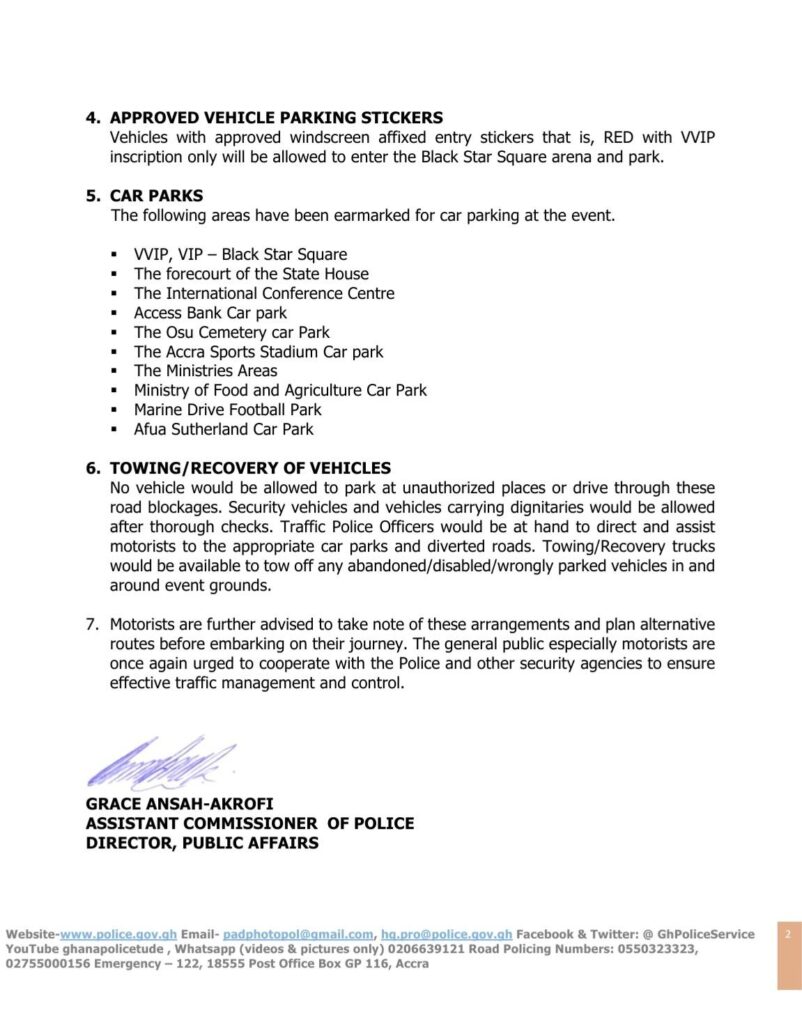
    Colonel Aboagye urged a more inclusive approach to the mediation, calling for the involvement of various national stakeholders such as diaspora leaders, youth advocates, and women’s peacebuilding networks.

    He believes that a broader, multi-dimensional strategy will result in a more sustainable and inclusive solution to the conflict.

    “Support Otumfuo Osei Tutu II’s mediation through multi-track diplomacy, incorporating diaspora leaders, youth influencers, and women’s peacebuilding networks,” he proposed.

    He also cautioned that traditional diplomatic efforts alone might not be enough to resolve the deep divisions that have fueled the protracted conflict.

  • Govt to bridge healthcare gaps with 600 CHPS compounds by 2025 – Felix Kwakye

    Govt to bridge healthcare gaps with 600 CHPS compounds by 2025 – Felix Kwakye

    New Community-based Health Planning and Services (CHPS) compounds are expected to be constructed by the government in the coming days.

    Approximately 600 CHPS, projected to span across the country, will be built by the end of this year.

    Addressing the media, Minister of State in Charge of Government Communications, Felix Kwakye Ofosu, revealed that each district will receive two new CHPS.

    According to him, the government plans to build more than 2,000 CHPS before the end of President John Dramani Mahama’s tenure.

    “Each district is required to construct two new CHPS compounds this year. Altogether, that amounts to about 600 CHPS compounds in 2025 alone. If we sustain this momentum, we could exceed 2,000 CHPS compounds over the next four years,” he stated.

    He explained that the government’s decision forms part of efforts to strengthen primary healthcare, improve disease surveillance.

    In early June, a collaboration with the Ghanaian U.S. Embassy and technical support from a nonprofit organization for international health, Jhpiego, resulted in the commissioning of a 10,000-litre capacity oxygen plant at LEKMA Hospital in the Greater Accra Region.

    The newly launched plant adds to the ten oxygen plants to be installed in strategic health facilities across the country.

    Director of the Health Administration and Support Services Division, Dr. Ebo Hammond, at GHS, who was speaking at the commissioning event, lauded the government for its timely and impactful intervention.

    The US Embassy’s Chargé d’affaires, Rolf Olson, also commended the United States Government’s long-standing commitment to enhancing health systems in Ghana, particularly in maternal and neonatal care.

    He also revealed the US government’s plans to supply the plant with liquid oxygen for a year to ensure its continued operation.

    Also, the Country Director at Jhpiego, Dr. Pearl Nanka Bruce, noted that biomedical engineers and fire service personnel have undergone specialized training to ensure the plant’s proper maintenance.

    Recently, the LEKMA Hospital received medical equipment, consumables, and pharmaceuticals from the 14th Chinese Medical Team to Ghana.

    The items were donated to support two critical initiatives: the minimally invasive surgery project (laparoscopic surgeries) and the Beautiful World Charity project.

    Health Minister Mintah Akandoh urged the leadership of LEKMA Hospital, under the capable direction of Dr. Akua Gyimah Asante, to ensure that this equipment is used effectively, maintained diligently, and serves its intended purpose, providing better health outcomes for the people of Ghana.

    This donation represents another tangible demonstration of support from the Chinese government to both the government of Ghana and the Ghanaian people.

    The U.S. Embassy has expressed commitment to strengthening health services through collaboration, innovation, and sustained investment in primary healthcare.

    As such, the embassy, under its Ghana Integrated Health Program (IHP) donated some 104 motorbikes to the Ghana Health Service (GHS) and the Christian Health Association of Ghana (CHAG).

    The donation is meant to strengthen primary healthcare, improve disease surveillance, and enhance maternal and child health outreach by equipping frontline workers with reliable means of transport.

    Of the total, 90 bikes were allocated to GHS and 14 to CHAG. Receiving the motorbikes on behalf of the Director-General of the Service, Director for Health Administration and Support Services at GHS, Dr. Ebo Hammond, expressed profound appreciation for the support and described the motorbikes as vital mobility tools that will boost frontline health workers’ ability to reach hard-to-access areas.

    Dr. Hammond highlighted that motorbikes form 90% of GHS’s transport fleet, making them especially effective when visiting hard-to-reach areas, and assured the U.S. Embassy of the effective use and maintenance of the donated items.

    He commended the US embassy for past interventions, especially during the COVID-19 pandemic. Delivering remarks on behalf of the U.S. Embassy, Ms. Kimberley Rosen emphasized the strong partnership between Ghana and the U.S. in healthcare delivery.

    She noted that the handover reflects America’s continued investment in Ghana’s health system, praising healthcare workers for their dedication.