Author: Phoebe Martekie Doku

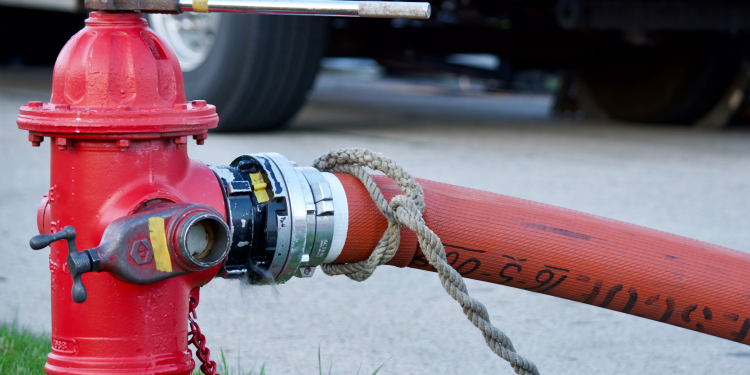
  • GWL to ban water sales from hydrants in 30 days

    GWL to ban water sales from hydrants in 30 days

    A series of stringent measures has been outlined by the Ghana Water Limited (GWL) in response to the growing menace of illegal water connections and unauthorised commercial water sales.

    Speaking to the media on Wednesday, August 7, the Managing Director of Ghana Water Limited, Adam Mutawakilu, disclosed that the company has banned the unauthorized sale of water, especially that sold from hydrants managed by the Ghana National Fire Service (GNFS).


    According to him, persons who engage in the act of have until this month to desist in this practice or face the sanctions of the Ghana Water Limited. He stated that the company has already begun a crackdown on illegal activities being carried out by its consumers.


    “We have banned the use of fire hydrants, and the team is assessing those who sell water to tankers commercially. Looking at the trend it is going, if we realise that out of 10 people, seven have illegally connected [to the hydrant] we will be forced to suspend. The team started yesterday, and we are analysing the data, and by the end of the month, management will be able to put an end to this,” Mr. Mutawakilu stated.

    Additionally, he noted that residents in Greater Accra use approximately seventy-three (73) million gallons each day, which are not accounted for by GWL.

    Speaking to the media on Wednesday, August 6, 2025, the Managing Director of Ghana Water Limited, Adam Mutawakilu, attributed the situation largely to water theft, illegal connections, and damaged infrastructure in the region.

    He explained that the utility company is able to take records for only sixty-seven gallons of water out of the one hundred and forty million gallons distributed daily to the area. According to him, this is impeding the service delivery of the company.

    “In Greater Accra, we produce about 140 million gallons a day, but we can only account for 67 million gallons; that means we cannot account for 73 million gallons every single day. Even with the 67 million gallons that are accounted for, we are still unable to collect all the revenue,” he added.

    Touching on the situation in other regions, the Managing Director of Ghana Water Limited revealed that only 48% of the water produced nationwide is properly accounted for by the company.

    The disclosure comes at a time when there are widespread complaints of water shortages across parts of the capital.

    In March this year, doctors at the Komfo Anokye Teaching Hospital (KATH) in Kumasi have halted all surgical procedures indefinitely due to a severe water shortage affecting the facility for over a week.

    In a memo dated March 25, 2025, the Komfo Anokye Doctors Association (KADA) informed hospital management of their decision, stressing that it was taken in the interest of patient safety.

    “This memo is to formally inform management of the decision taken by the Orthopaedic and Emergency Directorate to temporarily halt the admission of new patients until the availability of water is restored,” the statement said.

    In the same month, residents of Kanvili Kpawmo in the Sagnarigu Municipality bemoaned prolonged water shortage, as the Ghana Water Company Limited (GWCL) failed to restore supply for over three months.

    Despite the absence of running water, households continued to receive monthly bills, a situation that fueled widespread frustration within the community.

    In June, the Electricity Company of Ghana (ECG) disconnected the power supply to the Ghana Water Company Limited (GWL) over a debt of about GH¢ 1 billion owed to the company.

    This follows its 12-day nationwide revenue mobilisation operation, which began on Monday, June 16, and ended on June 27.

    Its target audience includes residential, commercial, industrial, and government institutions with outstanding electricity bills.

    Consequently, the power-producing company on Tuesday, June 17, disconnected the country’s water supply company over its debt of GH¢999.6 million following a visit by ECG’s task force.

    The disconnection was confirmed in a video shared on X (formerly Twitter) which captured an ECG official disconnecting the national water supply company.An official of GWCL was seen questioning the taskforce about the disconnection and on what authority they are doing such.

    The ECG has issued a 48-hour ultimatum to GWL to settle its outstanding debt or risk an extended disconnection of power supply to its main pumping stations, which are crucial for nationwide water distribution.

    Other state entities, such as the Ghana Broadcasting Corporation (GBC), which was next to have been disconnected after GWL, owe a debt of GH₵3,153,484.98.

    Ghana National Gas Authority also owes ECG GH₵ 299,458.59, BUI owes EGC GHS 2,399,711.69, followed by the Ghana VAT service, which owes the company GH₵ 3,153,484.98, NPA owes GH₵252,731.98 among other government institutions.Private entities such as Nyanho Clinic owe a debt of GH₵ 448,942.64

    Officials of the Electricity Company of Ghana (ECG) say the disconnection exercise targeting indebted state institutions is part of a broader initiative to tackle persistent non-payment and improve the financial stability of the power sector.

    Customers have also been urged to use their regular channels, including the ECG Mobile App, to pay their bills. Download the app from the Google Play Store, or call the ECG contact center at 0302611611 or social media handles for assistance.

    Per reports, the ECG is drowning in debt over GHC67 billion. The ECG has on numerous occasions embarked on revenue mobilization exercises but is yet to retrieve all the money owed the company.

    Executive Secretary of the Public Utilities Regulatory Commission (PURC), Dr Shafic Suleman, has lauded the Electricity Company of Ghana for improved revenue collection in the first quarter of 2025.

    According to him, ECG has collected almost GHC1.4 billion every month since the beginning of the year.

    ECG over the years has repeatedly pointed to massive debts owed by both private and public institutions as a major factor in the sector’s financial struggles.

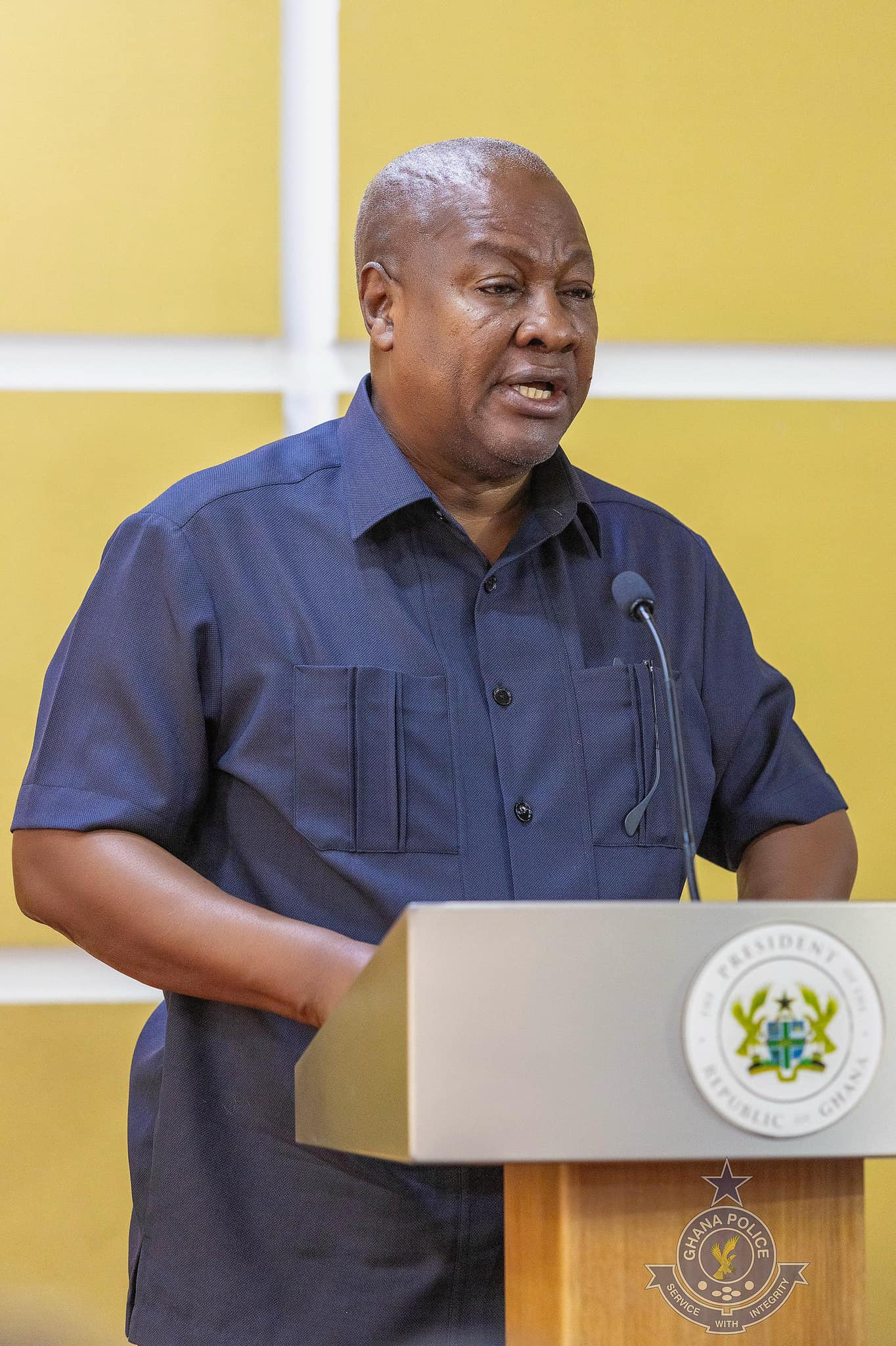
    Ghana’s energy sector is wallowing in a ballooning debt of about GH¢80 billion, according to President John Mahama, who outlined plans to clear it by 2026 through restructuring and private sector involvement.

    The current government inherited GH¢70 billion in energy sector debt from the previous administration. Despite efforts to clear some of this debt, financial challenges persist.

    Among the initiatives taken by the current government to deal with this debt was the introduction of the ‘controversial’ GHC1 fuel levy, which charges a cedi on every litre of petroleum products in Ghana, aimed at tackling the country’s energy sector debt, which currently stands at $3.7 billion.

    A successful rollout could have generated revenue ranging from about GH¢5 billion to GH¢6 billion to support the procurement of liquid fuel.

    However, the announcement was met with harsh criticisms from both industry players and commercial transport drivers, who even threatened a sit-down strike if implemented.The International Monetary Fund (IMF), on the other hand, welcomed the implementation of the Energy Sector Shortfall and Debt Repayment Levy that introduces a GHC1 fuel levy.

    At a press briefing, Julie Kozack noted that the country stands a better chance of addressing its energy sector crisis with the implementation of the levy.

  • 73 million gallons lost daily in Accra due to water theft, leaks – GWL

    73 million gallons lost daily in Accra due to water theft, leaks – GWL

    Residents in Greater Accra use approximately seventy-three (73) million gallons each day, which are not accounted for by the Ghana Water Limited (GWL).

    Speaking to the media on Wednesday, August 6, 2025, the Managing Director of Ghana Water Limited, Adam Mutawakilu, attributed the situation largely to water theft, illegal connections, and damaged infrastructure in the region.

    He explained that the utility company is able to take records for only sixty-seven gallons of water out of the one hundred and forty million gallons distributed daily to the area. According to him, this is impeding the service delivery of the company.

    “In Greater Accra, we produce about 140 million gallons a day, but we can only account for 67 million gallons; that means we cannot account for 73 million gallons every single day. Even with the 67 million gallons that are accounted for, we are still unable to collect all the revenue,” he added.

    Touching on the situation in other regions, the Managing Director of Ghana Water Limited revealed that only 48% of the water produced nationwide is properly accounted for by the company.

    The disclosure comes at a time when there are widespread complaints of water shortages across parts of the capital.

    In March this year, doctors at the Komfo Anokye Teaching Hospital (KATH) in Kumasi have halted all surgical procedures indefinitely due to a severe water shortage affecting the facility for over a week.

    In a memo dated March 25, 2025, the Komfo Anokye Doctors Association (KADA) informed hospital management of their decision, stressing that it was taken in the interest of patient safety.

    “This memo is to formally inform management of the decision taken by the Orthopaedic and Emergency Directorate to temporarily halt the admission of new patients until the availability of water is restored,” the statement said.

    In the same month, residents of Kanvili Kpawmo in the Sagnarigu Municipality bemoaned prolonged water shortage, as the Ghana Water Company Limited (GWCL) failed to restore supply for over three months.

    Despite the absence of running water, households continued to receive monthly bills, a situation that fueled widespread frustration within the community.

    In June, the Electricity Company of Ghana (ECG) disconnected the power supply to the Ghana Water Company Limited (GWL) over a debt of about GH¢ 1 billion owed to the company.

    This follows its 12-day nationwide revenue mobilisation operation, which began on Monday, June 16, and ended on June 27.

    Its target audience includes residential, commercial, industrial, and government institutions with outstanding electricity bills.

    Consequently, the power-producing company on Tuesday, June 17, disconnected the country’s water supply company over its debt of GH¢999.6 million following a visit by ECG’s task force.

    The disconnection was confirmed in a video shared on X (formerly Twitter) which captured an ECG official disconnecting the national water supply company.An official of GWCL was seen questioning the taskforce about the disconnection and on what authority they are doing such.

    The ECG has issued a 48-hour ultimatum to GWL to settle its outstanding debt or risk an extended disconnection of power supply to its main pumping stations, which are crucial for nationwide water distribution.

    Other state entities, such as the Ghana Broadcasting Corporation (GBC), which was next to have been disconnected after GWL, owe a debt of GH₵3,153,484.98.

    Ghana National Gas Authority also owes ECG GH₵ 299,458.59, BUI owes EGC GHS 2,399,711.69, followed by the Ghana VAT service, which owes the company GH₵ 3,153,484.98, NPA owes GH₵252,731.98 among other government institutions.Private entities such as Nyanho Clinic owe a debt of GH₵ 448,942.64

    Officials of the Electricity Company of Ghana (ECG) say the disconnection exercise targeting indebted state institutions is part of a broader initiative to tackle persistent non-payment and improve the financial stability of the power sector.

    Customers have also been urged to use their regular channels, including the ECG Mobile App, to pay their bills. Download the app from the Google Play Store, or call the ECG contact center at 0302611611 or social media handles for assistance.

    Per reports, the ECG is drowning in debt over GHC67 billion. The ECG has on numerous occasions embarked on revenue mobilization exercises but is yet to retrieve all the money owed the company.

    Executive Secretary of the Public Utilities Regulatory Commission (PURC), Dr Shafic Suleman, has lauded the Electricity Company of Ghana for improved revenue collection in the first quarter of 2025.

    According to him, ECG has collected almost GHC1.4 billion every month since the beginning of the year.

    ECG over the years has repeatedly pointed to massive debts owed by both private and public institutions as a major factor in the sector’s financial struggles.

    Ghana’s energy sector is wallowing in a ballooning debt of about GH¢80 billion, according to President John Mahama, who outlined plans to clear it by 2026 through restructuring and private sector involvement.

    The current government inherited GH¢70 billion in energy sector debt from the previous administration. Despite efforts to clear some of this debt, financial challenges persist.

    Among the initiatives taken by the current government to deal with this debt was the introduction of the ‘controversial’ GHC1 fuel levy, which charges a cedi on every litre of petroleum products in Ghana, aimed at tackling the country’s energy sector debt, which currently stands at $3.7 billion.

    A successful rollout could have generated revenue ranging from about GH¢5 billion to GH¢6 billion to support the procurement of liquid fuel.

    However, the announcement was met with harsh criticisms from both industry players and commercial transport drivers, who even threatened a sit-down strike if implemented.The International Monetary Fund (IMF), on the other hand, welcomed the implementation of the Energy Sector Shortfall and Debt Repayment Levy that introduces a GHC1 fuel levy.

    At a press briefing, Julie Kozack noted that the country stands a better chance of addressing its energy sector crisis with the implementation of the levy.

  • WASSCE 2025 sculpture, leatherwork practicals begin

    WASSCE 2025 sculpture, leatherwork practicals begin

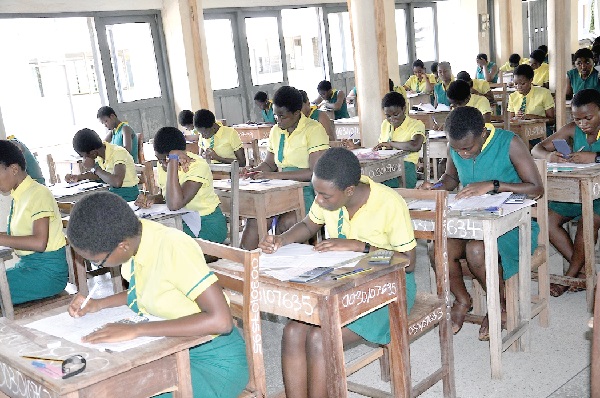
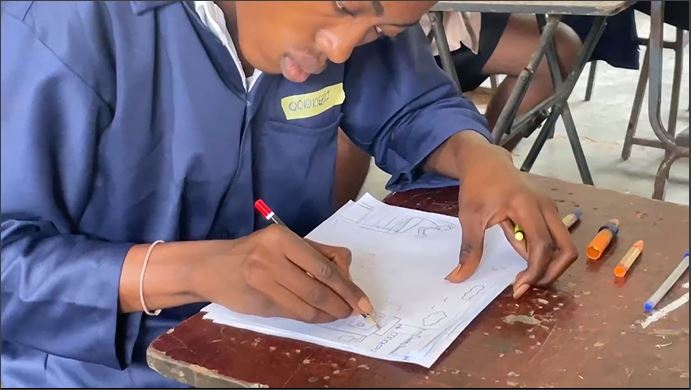
    More than 92 Visual Arts students have begun sitting for the 2025 West African Senior School Certificate Examination (WASSCE) Sculpture and Leather Works practical paper at Accra High Senior High School.

    The written core subject examinations will begin in September. Speaking to Channel One TV on Tuesday, August 5, the Assistant Head of Academics, Fred Ampofo, assured of a smooth examination process.

    “You hardly find exam malpractices in Accra High School. They have gone through a briefing, and we have spelt out all the consequences that go with exam malpractices, and so no student will dare to do it,” he said.

    Ahead of the exams, the Ghana Education Service (GES) released funds to cater for the 2025 WASSCE practical examinations for all Senior High Schools (SHSs) and Senior High Technical Schools (SHTSs) across the country.

    An amount of GH¢15,849,920 has been released, according to reports.
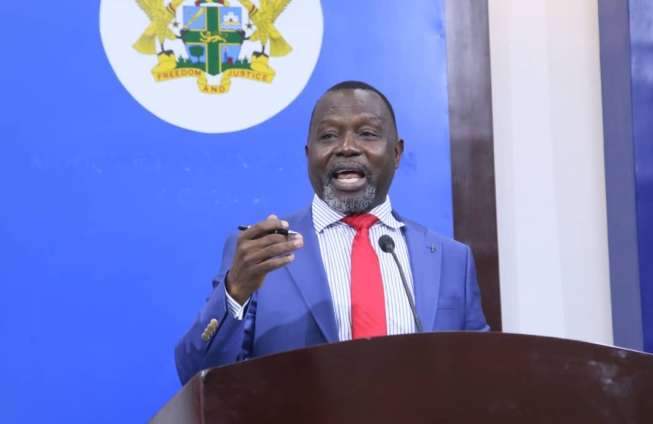
    According to GES, in a statement issued on Saturday, July 27, and signed by the Head of Public Relations, Daniel Fenyi, the funds are expected to provide all necessary materials and supplies for their practical exams.

    “ The Managaement of the Ghana Education Service (GES) announces that funds have been released to all Senior High Schools (SHS) and Senior High Technical Schools (SHTS) across the country to cover the fees for the 2025 WASSCE practicals.

    “This payment ensures that all practical examinations scheduled for the 2025 WASSCE are fully supported, including the provision of the required materials and other essential resources,” the Service noted.

    Additionally, the Service explained that the move is intended to shield guardians as well as parents from extra cost and also create a conducive environment in ensuring that students excel in the upcoming exams.

    “With the release of the funds, GES seeks to facilitate a smooth and well-cordinated examination process that enables students to focus on their academic work, while relieving parents and guardians of any such financial burden,” it stated.

    The GES cautioned school authorities against diverting the funds from its intended purpose, warning that any misappropriation will attract strict sanctions in accordance with existing financial regulations and disciplinary procedures.

    “Regional, district and school authorities are, therefore, strongly urged to ensure the due application of the funds for their intended purpose to guarantee efficiency and accountability. Management will continue to monitor the utilisation processes to ensure compliance and to maintain high standards in the administration of the examination.

    “The Ghana Education Service appreciates the cooperation of all stakeholders in advancing quality education and remains dedicated to creating an enabling environment for the success of all students,” part of the release read.

    Meanwhile, a leading public policy and consumer advocacy think tank, CUTS International, Accra, has opposed the system where Basic Education Certificate Examination (BECE) and West African Senior School Certificate Examination (WASSCE) candidates pay to access their results.

    Per a statement released in Accra on Monday, July 7, the West Africa Regional Director of CUTS, Mr. Appiah Kusi Adomako, described the practice as unfair and costly.

    He has therefore called on the Education Ministry to shoulder the cost of providing candidates with access to their results.

    “In many parts of the world, exam bodies do not charge students to access their results. In our local universities, student can access their results free of charge, as is the case in every jurisdiction. This is a basic right that should not come at a cost to students or their families,” Mr. Adomako said.

    Initially, the West African Examinations Council (WAEC) printed and distributed physical results slips to schools; however, it adapted to the digital platform to make the process seamless.

    Candidates now pay between GHS 15 and GHS 25 to view their results.

    But according to the West Africa Regional Director of CUTS, the Ministry must learn from other African countries that do not charge for results.

    “Going digital was supposed to make things easier and more affordable. But instead, candidates are now forced to pay out of pocket for a service that should be free. In countries like South Africa, Egypt, Tunisia, Morocco, Kenya, and Zambia, students access their results online without paying any fee. Why should Ghana be different?.

    “WAEC is not the only body that runs examinations. Students who sit for ACCA, SAT, TOEFL, GRE, IELTS, and even our own national service postings access their results or placements online for free. The same should apply here,” Mr. Adomako stressed.

    Mr. Appiah Kusi Adomako also criticised the requirement for students to pay to access their Senior High School placement results through the Computerised School Selection and Placement System (CSSPS), describing it as an added financial burden.

    According to him, “Accessing exam results or computerised placement into SHS should not be a luxury or a source of revenue. It should be a basic service as it pertains in other jurisdictions.While the GES continues its efforts to alleviate financial pressures on students and parents nationwide, other challenges, particularly in conflict-prone areas, pose serious threats to access to education and student safety.

    Currently, Nkwanta and its surrounding towns are experiencing a protracted conflict involving the Akyode, Adele, and Chala communities.

    The conflict has escalated in recent years, resulting in the loss of lives and the destruction of property. A curfew was placed on the area by the government.

    The violent incidents that were recorded on June 26 and 27 affected three students.

    Two female students of Nkwanta Senior High School (SHS) were recently hit by gunshots while en route to school.

    A male student was also killed by a stray bullet while seated in his classroom during mock examinations.

    SHS schools in Nkwanta South have been shut down until further notice.

    In response, the police service has captured some eight individuals for their roles in recent clashes in Nkwanta that have taken the lives of students.

    Currently, there is a total ban on all persons in the Nkwanta Township and its environs in the Nkwanta South Municipality of the Oti Region from carrying arms, ammunition, or any offensive weapons.

    Any person found with any arms or ammunition will be arrested and prosecuted.

    The government continues to urge chiefs, opinion leaders, youth, and people of the area to exercise restraint in the face of the challenges confronting them and to use non-violent means to channel their energies into ensuring peace in the area.

    But the GES has insisted that final-year Senior High School (SHS) students in the Nkwanta South Municipality of the Oti Region will participate in the 2025 West African Senior School Certificate Examination (WASSCE) despite chaos in the area.

    Speaking to the media on Monday, June 30, the Head of Public Relations at GES, Daniel Fenyi, indicated that the Service is in discussions with stakeholders to ensure candidates are not affected regardless of the risk.

    “Three Senior High Schools (SHS) will be writing the WASSCE, but definitely, if the conflict persists, that means they wouldn’t be able to write in Nkwanta township. So meetings are ongoing, and we hope to finalize our discussions as soon as possible to come out with the modalities on when, how, and where our children can write the WASSCE.”

    According to him, one of the measures is to ensure students write the exams in the safest environment possible.

    “But the assurance they can get from us is that they won’t miss the WASSCE. We are putting in place every measure to ensure they write the WASSCE with their colleagues.”

    “The assurance they can get from us as the Ghana Education Service is that they won’t miss the WASSCE. We are putting in place every measure to ensure that they write the WASSCE with their colleagues all across the country, and we are making sure that the conflict goes beyond them so they can’t be punished for what they didn’t cause. So I can assure them that they will not miss this examination,” he said.

  • Revoking DStv license is  beyond Sam George’s jurisdiction – Lawyer

    Revoking DStv license is beyond Sam George’s jurisdiction – Lawyer

    Private legal practitioner, Musah Ahmed, has weighed in on the conversation regarding the high cost of MultiChoice Ghana, which operates as DSTV subscription packages in Ghana.

    Speaking to the media on Tuesday, he noted that the onus to revoke the license of MultiChoice Ghana lies in the hands of the National Communications Authority (NCA) and not the Minister of Digital Technology and Innovation, Communications, Sam Nartey George.

    He explained that ” The regulator, therefore, is the National Communication Authority. The law empowers them to revoke the license under specified requirements outlined in Section 13. For me, I think both the minister and the regulator must comply with the law”.

    He added, “Importantly, the law takes into account the interests of the consumer, and the minister is speaking from the angle of the consumer. In my opinion, the minister per se does not have the power to revoke the license. However, I have read his language carefully, especially his choice of words.”

    “He says that the National Communication Authority will be instructed, I believe that is what he said, to take appropriate steps, including revoking the license if the company fails to comply.

    “Section 13 also states the requirements to be met for revoking a license. The law focuses on competitiveness and aligns with international best practices. It also considers the principles of a free enterprise economy and the rule of law,” he said.

    Background

    Earlier, Minister for Communications, Digital Technology and Innovation, announced that should Multichoice fail to reduce the prices of its subscription services, the DStv broadcast license will be suspended nationwide effective August 7, 2025.

    Engaging the public today as part of the Government Accountability Series, the minister noted that he received a 9-page document from Multichoice on July 21 over its inability to reduce its subscription fees. The company cited depreciation of the cedi in past years, despite the recent cedi appreciation, as the reason for its inability to reduce prices.

    Sam George noted that it is unacceptable for Nigerians to be paying less for the same packages offered Ghanaians at higher costs when the naira has depreciated at an accelerating rate against the cedi.

    As such, he has directed the National Communications Authority (NCA) to suspend the broadcast of DStv in about a week from now should Multichoice fail to reduce prices of its packages.

    “Their reasons included that the cedi had depreciated in the preceding eight years by 240%, and they claimed that my request for a reduction on the basis of the appreciation of the cedi was unfounded because, in their words, the appreciation of the Ghana cedi over the last 6 months has been a fluke which could not be sustainable.

    As Minister, my fidelity is to the Ghanaian people. I have to act in the interest of the Ghanaian people, and I believe the Ghanaian people have been fleeced and exploited for too long. I wrote back to the NCA on Monday and directed the NCA in that letter to suspend the broadcasting license of dstv effective 7th of August 2025 if they fail to effect a reduction in their bundle prices.

    I can’t as minister serving the Ghanaian people, continue to watch what can be best described as plain stealing happening to the Ghanaian people. In my letter to them, I gave them scenarios from seven markets that dstv is operating in. The same content in the premium bouquet that is offered to Ghanaians for the $83 equivalent is offered to Nigerians for the $29 equivalent.

    How can anyone explain this price disparity to me? Enough of the mistreatment of the Ghanaian consumer. In Nigeria, in the same timeframe, they say the Ghanaian cedi has depreciated by 240%, the Nigerian naira has depreciated by 409%. If Nigerians are paying the equivalent of $29, dstv must charge the same here in Ghana,” he said.

    The minister has sought a 30 percent reduction in the price of packages provided by Multichoice.

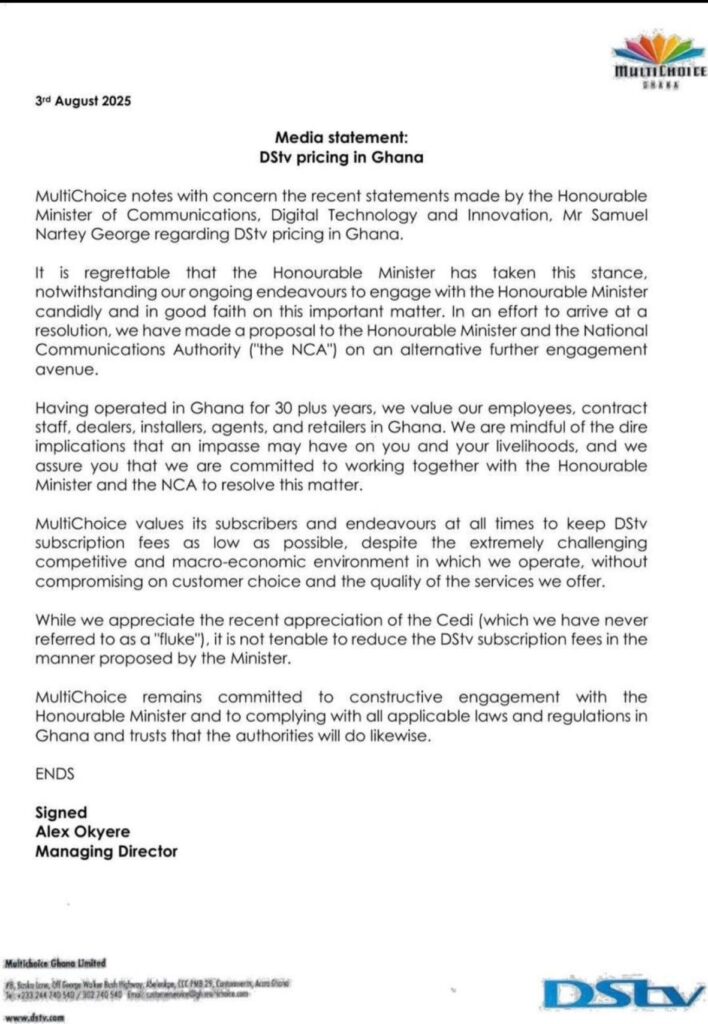
    In reaction, MultiChoice Ghana responded to the directive demanding an adjustment of its subscription services. As per a statement signed by its Managing Director, Mr. Alex Okyere, on August 3, the company emphasized that the Minister’s proposal to drastically review its prices is not workable.

    According to the company, it acknowledges the positive impact of the local currency, the cedi, against foreign currencies, specifically the U.S. dollar. However, a significant decrease in prices cannot be attained by the company.

    “While we appreciate the recent appreciation of the cedi— which we have never referred to as a ‘fluke’— it is not tenable to reduce the DStv subscription fees in the manner proposed by the Minister,” the statement read.

    Should both parties fail to reach common ground, the suspension of the DStv broadcast license is imminent.

    On July 4, Minister of Communication, Digital Technology and Innovation, Samuel Nartey George, engaged the leadership of MultiChoice Ghana to discuss a possible reduction in fees for DSTV subscriptions. This comes after issues of affordability became topical in recent months after an increase in subscription fees in April.

    The sector minister made this known when he engaged the media on July 3 on key initiatives and developments within the sector under the second quarter.

    “Last week, I invited the senior leadership of MultiChoice Ghana to a formal dialogue on DSTV’s subscription pricing in Ghana. The meeting addressed public concerns about affordability, value for money, and fairness in service delivery. I made it clear the ministry’s expectation that pricing structures must be responsive to Ghana’s economic context,” he said.

    “I have a meeting scheduled for tomorrow, Friday, even though it’s a public holiday, with the Ghana team and their South African counterparts, the management from South Africa, they arrived tonight to agree on a way forward on the issues raised,” the minister indicated.

    He further said; “The outcomes will be shared with the public in due course. This engagement reflects our commitment to regulatory accountability and our resolve to ensure that digital services in Ghana remain fair, accessible, and responsive to the needs of citizens. I’ll make you one promise, I won’t leave tomorrow’s meeting without securing a drop in the pricing of DSTV. That is a solemn promise I make to you.”

    Subscribers of DStv across Africa, effective April 1, 2025, experienced a price increase of over 15% on their monthly subscription fees, a decision that left many Ghanaian customers aggrieved.

    The pay-TV provider cited rising consumer inflation and economic challenges as key factors influencing the decision.

    According to the new pricing structure, in Ghana, the cost of the premium package rose from GHC750 to GHC865, representing a 15.33% increase. The Compact Plus package moved from GHC495 to GHC570, marking a 15.15% jump, while the Compact package increased from GHC330 to GHC380, also reflecting a 15.15% rise.

    The Family package now costs GHC190, up from GHC165, indicating a 15.15% increase, whereas the Access package went up by 16.47%, from GHC85 to GHC99.

    Subscribers to the DStv Lite package experienced the highest percentage surge of 18.00%, moving from GHC50 to GHC59. The DStv-Asia Standalone package climbed by 14.75%, from GHC305 to GHC350. The Great Wall Add-on increased from GHC70 to GHC80, marking a 14.29% rise.

    For those subscribed to the French content add-ons, the French Add-on now costs GHC250, up from GHC215 (16.28% increase), while the French Plus Add-on rose from GHC435 to GHC500, reflecting a 14.94% increase. The French Touch Add-on costs GHC150, up from GHC130, marking a 15.38% increase.

    The cost of premium packages with add-ons has also been adjusted. Premium with Asia Add-on increased from GHC1,055 to GHC1,215 (15.17% increase), while Premium with French Add-on now costs GHC1,365, up from GHC1,185 (15.19% increase). The HD-PVR service rose by 15.00%, from GHC100 to GHC115.

    Following this, consumer rights organization CUTS International pushed for government intervention in MultiChoice Ghana Limited’s decision to raise subscription fees, arguing that customers were given inadequate notice ahead of the increase.

    About a month ago, MultiChoice Ghana announced an upgrade in all of its DStv and GOtv packages as well as a reduction in the price of its decoders, from GH¢169 to GH¢89, due to the rebound of the economy.

    The Minority caucus in Parliament has requested the appearance of the Minister for Communications and Digitalisation, along with representatives of MultiChoice Ghana, to address concerns over the recent reduction in package prices.

    A statement signed by the Member of Parliament for Kpandai, Matthew Nyindam, on behalf of the Minority, on Sunday, August 3, indicated that the invitation has become crucial in order to strike a better deal between the two parties.

    Meanwhile, the Minority has also emphasized that “We agree that subscription fees must be set fairly and reflect the realities of Ghana’s economy”.

    “We fully support the advocacy initiated by patriotic citizens, which has now attracted the attention of the Ministry of Communications and Digitalisation. We agree that subscription fees must be set fairly and reflect the realities of Ghana’s economy,” the statement read.

  • Ken Agyapong picks nomination form for NPP flagbearer race

    Ken Agyapong picks nomination form for NPP flagbearer race


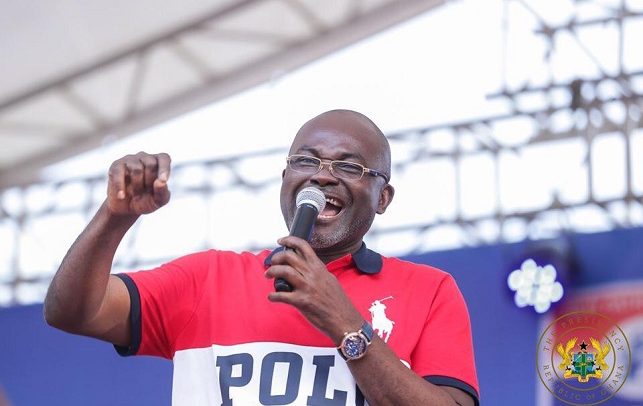
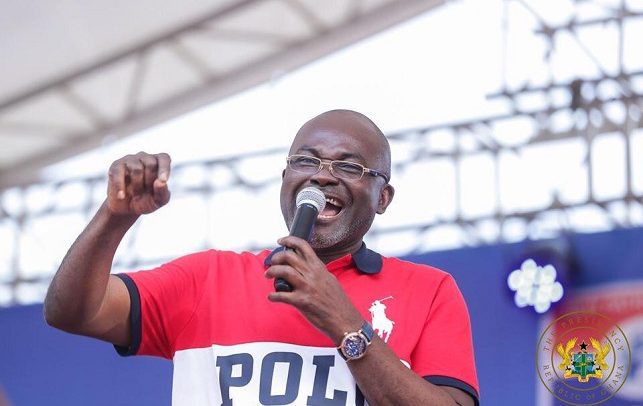
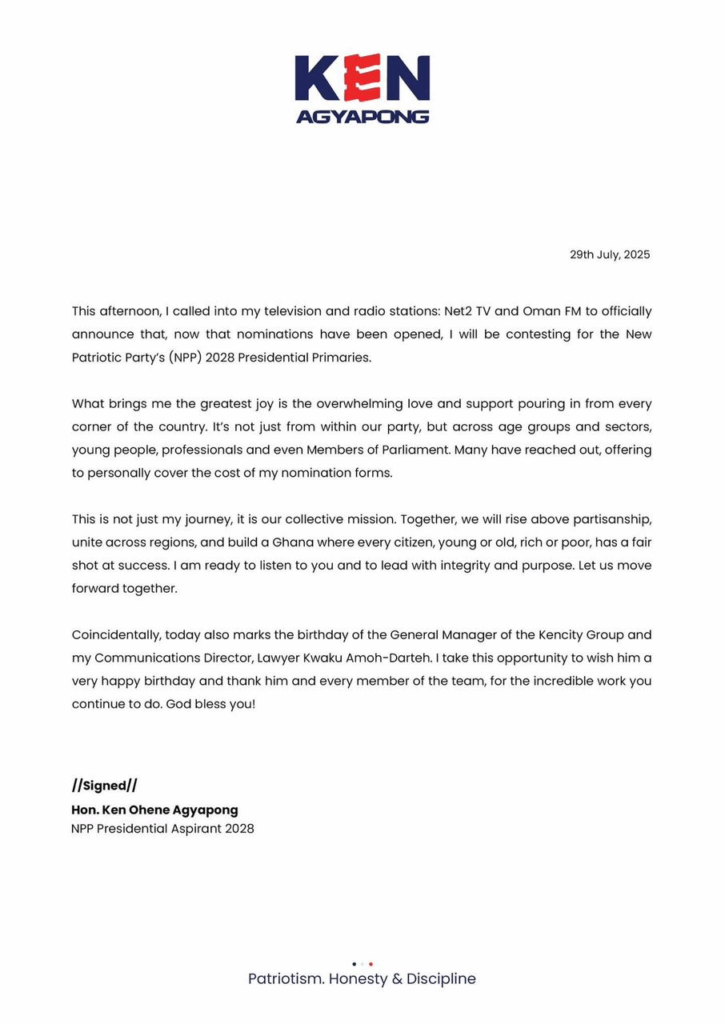
    Former Member of Parliament (MP) for Assin Central, Kennedy Ohene Agyapong, has begun the process to contest in the 2026 New Patriotic Party (NPP) Flagbearership race. On Tuesday, August 5, Kennedy Ohene Agyapong officially picked up nomination forms to contest the party’s primary elections.

    This information was made known by a spokesperson for his campaign team, Kwasi Kwarteng, in a Facebook post. “Hon. Ken Ohene Agyapong has officially picked nomination forms to contest in the 2026 NPP Flagbearership race,” he wrote.

    In June, the former Member of Parliament for Assin Central declared his intention to compete in the New Patriotic Party’s (NPP) presidential primaries ahead of the 2028 general election.

    He made this known in a press release on Monday, July 29, where he emphasized, “Now that nominations have been opened, I will be contesting for the New Patriotic Party’s 2028 Presidential Primaries.”

    He extended appreciation for the love and endorsement over the years, particularly to those who have offered to assist him in succeeding in his political ambition.

    “This afternoon, I called into my television and radio stations: Net2 TV and Oman FM to officially announce that, now that nominations have been opened, I will be contesting for the New Patriotic Party’s (NPP) Presidential Primaries.

    “What brings me the greatest joy is the overwhelming love and support pouring in from every corner of the country. It’s not just from within our party, but across age groups and sectors, young people, professionals and even Members of Parliament. Many have reached out, offering to personally cover the cost of my nomination forms.

    “This is not just my journey; it is our collective mission. Together, we will rise above partisanship, unite across regions, and build a Ghana where every citizen, young or old, rich or poor, has a fair shot success. I am ready to listen to you and lead with integrity and purpose. Let us move forward together,” parts of the release read.

    The NPP on Tuesday, July 29, opened nominations for its 2028 flagbearer position. Aspirants will pay a whopping amount of GHC100,000 for nomination forms and GHC500,000 as filing fee.

    “Any member of the party wishing to apply for nomination as the party’s presidential candidate will obtain the nomination forms after paying a non-refundable Nomination Fee of One Hundred Thousand Cedis (GHc100,000) in Banker’s Draft in favour of the NEW PATRIOTIC PARTY HEADQUARTERS, ACCRA.

    “The filing fee for the presidential nomination is five hundred thousand Ghana Cedis (GHc500,000) to be paid in banker’s draft in favour of the NEW PATRIOTIC PARTY NATIONAL HEADQUARTERS, ACCRA,” a part of the party’s statement signed by General Secretary Justin Frimpong Kodua, read.

    Nomination forms may be obtained from the Office of the General Secretary at the Party Headquarters, Asylum Down, from now to August 28. An aspiring presidential candidate shall be required to pay a development fee as determined by the National Council.

    This comes after the opposition party officially released its presidential primaries timetable on Friday, July 25, following a National Executive Committee (NEC) meeting held at the Alisa Hotel in Accra.

    The statement informed interested candidates to pick up their forms by Tuesday. It also noted that by August 28, all forms should have been submitted, as the party is expected to move into the vetting mode by September, approximately a month after they close the flagbearer nomination.

    “Nominations will be opened on July 29, 2025, for all persons interested in contesting for the flagbearer to pick their forms. Vetting will be conducted from September 15 to 22, and the election to choose our flagbearer will be held on January 31, 2026.”

    The National Executive Committee has urged both candidates and supporters to uphold the tenets of the party to uphold peace and harmony. “All aspirants and their supporters are reminded to uphold the values of the party and refrain from divisive conduct during the campaign period.”

    Meanwhile, several prominent party figures have already publicly signaled their intent to contest, including Dr. Yaw Osei Adutwum (former Education Minister and Member of Parliament for Bosomtwe), Bryan Acheampong (Member of Parliament for Abetifi), Kennedy Agyapong (former Member of Parliament for Assin Central), and former party General Secretary Kwabena Agyepong.

    Dr. Mahamudu Bawumia, former vice president and the NPP’s flagbearer in the 2024 election, is widely considered the frontrunner, followed by the former Assin North Member of Parliament and Kennedy Agyapong, a former contender for the flagbearer primaries.

    The former vice president has already declared his intention to run again. His popularity among the party’s grassroots is strong, and recent endorsements have added momentum to his campaign.

    The earlier-than-usual opening of nominations for the flagbearer position, according to the party, forms part of their restructuring and strategic measures taken to ensure transparency and discipline in the selection process, as well as give ample time to the flagbearer to engage members, stakeholders, and other members of the international community to set the required tone for the 2028 elections.

    The nominations’ opening comes about six months ahead of the party’s presidential primaries, scheduled for January 31, 2026. Ahead of the 2016 general elections, the NPP opened nominations in March 2014 and held flagbearer elections on October 18, 2014, marking 25 months ahead of the elections.

    However, in 2025, they declared nomination openings in July and a primary set for January 2026, which is about 35 months ahead of the presidential elections. According to the party’s constitution, it is required that at least six months’ notice be given ahead of the primaries.

    The NPP’s presidential race is expected to be an intense one this time around. Kennedy Agyapong’s position as the strongest contender for Dr. Bawumia has been complemented by a recent survey conducted by Sanity Africa, a Pan-African civil society organisation, between April and June 2025, which showed Kennedy Agyapong leading with 51.4% delegate support, ahead of Dr. Mahamudu Bawumia, who had 42.2%.

    Ahead of the flagbearership race, Ken Agyapong has received prophecies about his victory. Ahead of the last two years’ presidential primaries, the four candidates—Dr. Bawumia, Kennedy Agyapong, former Food and Agriculture Minister Dr. Owusu Akoto Afriyie, and former Member of Parliament for Mampong Francis Addai-Nimoh, who vied for the flagbearer position—signed an agreement stating that following the primaries, “candidates will accept election primary results, promote peace and cohesion.”

    In the NPP’s previous presidential primaries in November 2023, Dr. Bawumia secured 61.47% of the total votes from nearly 200,000 NPP delegates, emerging as the victor, while Ken Agyapong secured about 37.41%. Dr. Bawumia held a meeting with his closest contender at his residence in Accra.

    After being announced as the NPP’s 2024 presidential candidate, Kennedy Agyapong threw his support for Dr. Bawumia. “So, party members we should put everything behind us, and let’s unite this party…, I believe we can break the eight, and that’s what I’ve been preaching,” Kennedy Agyapong said.

    Dr. Bawumia lost the 2024 presidential election. John Dramani Mahama, who ran on the ticket of the National Democratic Congress (NDC), bagged 6,328,397 valid votes, representing 56.55%, and Dr. Mahamudu Bawumia secured 4,657,304 votes, representing 41.61%.

    Meanwhile, ahead of the pending flagbearership race, Dr. Mahamudu Bawumia has received backing from 268 former Metropolitan, Municipal, and District Chief Executives (MMDCEs), who visited him in June to pledge their support.

    “Following extensive consultations with all aspirants, and after a thorough assessment of their vision, competence, and commitment to the NPP’s progress, we are convinced beyond any doubt that Dr. Bawumia is the best candidate to lead the NPP to victory in 2028,” the MMDCEs said in their statement after the engagement.

    “Our endorsement is not merely symbolic; it is a strategic and operational commitment. With 95% of us having previously served as constituency and regional executives—some for over 16 years—we possess an intimate understanding of the NPP’s structures, dynamics, and electoral needs. We will deploy this experience to ensure Dr. Bawumia’s message resonates in every corner of Ghana,” they added.

    Also, Dr. Mahamudu Bawumia on June 19 received 60 Members of Parliament from the New Patriotic Party (NPP), who announced their endorsement of his bid for the party’s flagbearership position. The delegation ended up having an in-camera meeting with the 2024 flagbearer.

    The delegation included former Finance Minister Mohammed Amin Adam; Member of Parliament for Ofoase Ayirebi Kojo Oppong-Nkrumah; Member of Parliament for Akuapem North Sammi Awuku; Techiman South legislator Martin Adjei-Mensah Korsah; Habib Iddrisu, the Member of Parliament for Tolon; Member of Parliament for Assin South, Reverend John Ntim Fordjour, and Nana Adjei Baffour Awuah, the Member of Parliament for Manhyia South.

  • Over 30,000 teacher trainees receive allowances as SLTF disburses GHS67m

    Over 30,000 teacher trainees receive allowances as SLTF disburses GHS67m

    The Ghana Tertiary Education Commission (GTEC) has allocated GH₵67,671,080 to settle five months’ arrears of the non-feeding component of teacher trainee allowances for 30,157 students in 47 public Colleges of Education.


    The Chief Executive Officer (CEO) of the Students Loan Trust Fund (SLTF), Dr. Saadija Shiraaz, in a Facebook post on Monday, August 5, disclosed this information.


    According to the Students Loan Trust Fund it began the disbursement on the 1st of August to these individuals who had completed the verification of their personal and bank details.


    “The Students Loan Trust Fund has received GH₵67,671,080 from the Ghana Tertiary Education Commission to be disbursed as the non-feeding component of teacher trainee allowances for five months to students enrolled in 47 Public Colleges of Education. The last of this money was received on the 29th of July 2025.

    “On the 1st of August 2025, we proceeded to pay teacher trainee allowances of five months to 30,157 students in 37 Public Colleges of Education based on the data available to us at the time,” she wrote.


    The Chief Executive Officer of the Students Loan Trust Fund stated that the Fund has initiated the necessary processes to make a second disbursement to students who have not yet received their allowances. “The Students Loan Trust Fund is committed to transparency in our operations. Please indulge us as we go through the necessary operational motions to ensure you receive the support due you from government,” she added.
    Additionally, the CEO mentioned that the SLTF is actively working on No-Fees-Stress reimbursements, and the extended deadline is to ensure all students eligible for reimbursements are duly registered.
    In June, the Ghana Education Service asked newly posted teachers to remain calm, as budgetary allocations have been made to settle their unpaid salaries. In a press release issued by the GES’ Public Relations Officer, Daniel Fenyi, on Tuesday, June 24, it was noted that all legitimately hired teachers who have yet to receive payment will soon be sorted out after the necessary validations and administrative processes are completed.
    “It is important to note that significant progress has already been made. The Service assures all affected staff that every effort is being made to rectify the situation and ensure that all genuinely recruited teachers receive their due remuneration,” parts of the statement read.
    On Monday, June 23, over 100 aggrieved newly trained teachers picketed at GES’ headquarters in Accra, demanding the payment of months of unpaid salaries. The intended peaceful protest turned chaotic, prompting police intervention. However, the teachers refused to comply. Defiant, the protesting teachers have vowed to intensify their actions.


    “We’ll be here overnight so that by morning, we can go to the Finance Ministry and then proceed to Parliament. When MPs arrive, we’ll let them know what the government is putting us through. All we ask is for our staff IDs and the money owed to us,” one protest leader said.


    According to the Service, it formally requested an extension of the expired financial clearance salaries from the Ministry of Finance to enable the payment of outstanding salaries and issuance of staff IDs.

    Out of the 12,807 graduates recruited from the Colleges of Education last year, about 2,113 of them are yet to receive their salaries due to the expiration of financial clearance.

    The Service attributed this to inconsistencies in the affected teachers’ Ghana Card details, SSNIT numbers, and instances of self-reposting. In response, the GES noted that it has established a technical committee to rectify the anomalies.


    “Letters have been sent through the Minister for Education to the Ministry of Finance requesting an extension of the expired financial clearance to allow for payment processing. Fortunately, a budgetary allocation was made in the 2025 budget statement.


    “The present GES Management, upon assuming office, immediately undertook a nationwide staff validation exercise from 7th-14th March 2025 to confirm the genuinely recruited teachers and clean up recruitment anomalies,” it added.


    Meanwhile, the Service has called for calm while assuring the Service’s commitment to resolving the matter.


    “It is important to note that significant progress has already been made. The Service assures all affected staff that every effort is being made to rectify the situation and ensure that all genuinely recruited teachers receive their due remuneration,” parts of the statement read.


    Out of the 12,807 graduates recruited from the Colleges of Education last year, about 2,113 of them are yet to receive their salaries due to the expiration of financial clearance.

    The Ghana Education Service has attributed this to inconsistencies in the affected teachers’ Ghana Card details, SSNIT numbers, and instances of self-reposting.


    The Service has attributed this to inconsistencies in the affected teachers’ Ghana Card details, SSNIT numbers, and instances of self-reposting.

    Additionally, the GES has noted that it has established a technical committee to rectify the anomalies.


    “The present GES Management, upon assuming office, immediately undertook a nationwide staff validation exercise from 7th to 14th March 2025 to confirm the genuinely recruited teachers and clean up recruitment anomalies,” it added.

  • Evatex Logistics threatens to sue GACL over terminated contract

    Evatex Logistics threatens to sue GACL over terminated contract

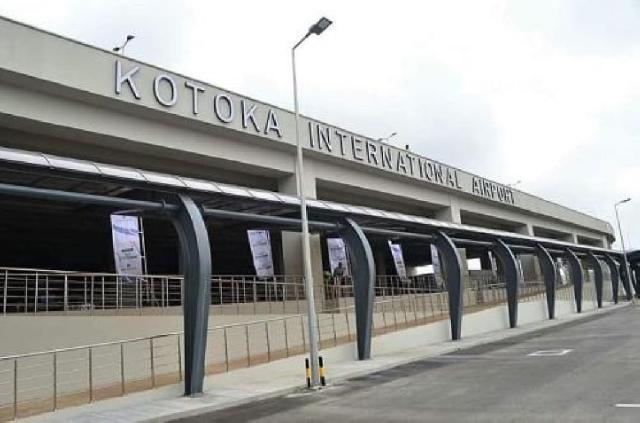
    Ghana Airports Company Limited (GACL) faces a looming lawsuit by Evatex Logistics Limited over its decision to terminate a revenue assurance contract between both parties.

    Evatex Logistics Limited, through its legal and management consultants, K-Archy, has given Ghana Airports Company Limited a seven-day ultimatum to revoke its decision, labeling it as unacceptable.

    According to Evatex Logistics, should Ghana Airports Company Limited fail to honour its demand, it will proceed to take legal action and ensure it recovers the money it has already invested in the project as well as seek additional compensation.

    On July 28, the Managing Director of GACL, Yvonne Nana Afriyie Opare, issued a notice distancing any working connection with Ghana Airports Company Limited, citing a revenue concealment discovery by Evatex Logistics Limited.

    It emphasized that the company has not made any airport cargo and freight services and airport revenue management payments to the logistic firm. As such, GACL instructed Evatex to demobilize and vacate the premises by August 27, 2025.

    “A party may terminate this agreement before the expiry, without cause, by giving the other party one month’s prior written notice of its decision to terminate this agreement.

    “Hence, effective 27th of August 2025, the agreement executed on the 4th of December 2024, shall cease to have effect and shall be considered as terminated by GACL. You are therefore required to use this notice period to demobilise and leave the premises of Kotoka International Airport on or before the 27th of August 2025,” the letter said.

    Evatex Logistics is a Limited Liability Company in Ghana registered in 2003. The Ghana Airports Company Limited’s breakaway from the company comes at a time when the Office of the Special Prosecutor (OSP) is investigating a contract that was awarded to Evatex, which is affiliated with Strategic Mobilisation Ghana Ltd (SML).

    The former Ghana Airports Company Limited (GACL) Board Chairman, who doubles as Metro TV’s host for Good Evening Ghana, Paul Adom-Otchere, is being probed for his alleged involvement in the ongoing brouhaha.

    The two other persons are Otchere Kwame Baffour Awuah, Group Executive, Commercial Services, GACL, the Chief Executive Officer (CEO) of Devnest Systems, Albert Adjetey Adjei-Laryea.

    The OSP is examining possible procurement breaches, including a sole-sourced contract awarded to a company other than the one approved by the GACL Board.

    Per reports, in an official letter dated July 25, 2025, the Office of the Special Prosecutor has named Paul Adom-Otchere as a suspect. Reacting to the invitation, Paul Adom-Otchere noted that this is a “witch-hunt” as the relevant management officials are available and were directly involved in the operational decision.

    Meanwhile, Paul Adom-Otchere, who was earlier detained, has been released from the custody of the Office of the Special Prosecutor (OSP) following a review of bail conditions. Mr Adom-Otchere was released by the Office of the Special Prosecutor from custody on Friday, August 1.

    Initially, the Office demanded that Adom-Otchere provide two landed properties as part of the bail condition. However, he informed the OSP that he does not own landed property in Ghana. 

    The revised condition now requires one of the landed properties to be owned by a different individual. In a statement shared on the X platform, the Office of the Special Prosecutor (OSP) noted that “the revised terms, which meet the objectives of the original bail conditions, have been secured by the Jospong Group of Companies, acting as surety.”

    Meanwhile, Ghanaian investigative journalist Manasseh Azure Awuni has revealed that something untoward has or had happened at the Kotoka International Airport.

    In his recent report, the investigative journalist stated that “Three days before the December 2024 election, the Ghana Airports Company Limited (GACL) awarded a revenue assurance and auditing contract to Evatex Logistics Limited, a mining and stevedoring company with no prior experience in performing this service.”

    “This shady revenue assurance and auditing contract appeared to be backdated (as would be proven shortly), for evidence points to the possibility that the contract was signed after the New Patriotic Party lost the election in 2024.

    “The immediate past board chairman of the GACL, Paul Adom-Otchere, did not deny the allegation by management of the GACL that he brought the shady company. He has also confirmed that the procurement process for this shady contract started at the board level,” he added.

    In June this year, the Office of the Special Prosecutor searched the Tema and Osu offices belonging to Strategic Mobilisation Ghana Limited (SML). The activities of SML came to light years ago after Manasseh Azure Awuni raised contractual breaches in a deal involving the Ghana Revenue Authority (GRA) and Strategic Mobilisation Limited (SML).

    The original purpose of the GRA-SML contract was to boost revenue assurance in vital sectors of Ghana’s economy, including the downstream petroleum sector, upstream petroleum production, and the minerals and metals value chain.

    The goal was to streamline revenue collection, ensuring greater transparency and efficiency in these high-revenue sectors.

    Following concerns, an in-depth audit was carried out by international firm KPMG, commissioned by former President Nana Addo Dankwa Akufo-Addo.

    The audit was launched to examine the contractual agreements between the Ghana Revenue Authority (GRA) and SML, with a particular focus on the procedures and approvals related to the contract.

    The KPMG audit uncovered significant procedural errors and regulatory violations in awarding the contract. Specifically, the GRA did not obtain the required approvals from the Public Procurement Authority (PPA) and failed to seek parliamentary oversight before finalizing the agreement with SML

    GRA entered into six (6) service agreements with SML, utilising the single-source method without obtaining approval from PPA; Transaction Audit Services—1 June 2018, Contract Extension—1 January 2019, External Price Verification Services—1 April 2019, Consolidation Services Agreement (Transaction Audit & External Verification Services)—3 October 2019, Measurement Audit of Downstream Petroleum Products—3 October 2019 and Addendum to Measurement Audit for Downstream Petroleum Products Agreement—29 July 2020.

    The audit report also revealed that SML owes the government over GHC31 million in taxes. During the period from 1 September 2020 to 30 April 2021, a bulk payment to SML covering invoices for an 8-month period did not have VAT and WHT deductions, amounting to GHC13.38 million.

    This contradicts GRA’s standard practice of deducting such taxes for payments to SML between 1 June 2020 and 31 August 2023. Additionally, SML failed to fulfil its statutory obligations by neither filing returns nor remitting these taxes to GRA.

    Pursuant to Section 71(1) of the RA Act, the accrued interest on the tax liability is estimated at GHC18.50 million owed by SML to GRA as of 31 January 2024. Consequently, the total liability incurred by SML amounts to GHC31.88 million.

    In May 2024, Member of Parliament for Ningo-Prampram, Sam Nartey George, noted that the then Finance Minister Ken Ofori-Atta had a role to play in the controversial deal.

    “The SML or SMEL deal is a clear example of what Justice Dotse described as a create, loot and share. One thing Ghanaians must bear in mind is that all of these happened with the tacit approval of the then Finance Minister, Ken Ofori-Atta.

    “As usual, he is trying to run under the radar and people are failing to realise, the key cardinal role he played in this entire arrangement,” he stated while speaking on JoyNews’ Newsfile programme on Saturday, May 25.

    In February this year, SML dragged Azure Awuni to court, claiming that Manasseh referred to its agreement with the government as “the biggest scam” and labeled the deal as “shady” while branding the entire situation “the SML scandal.”

    Last month, the Office of the Special Prosecutor (OSP) granted bail to Chief Executive Officer of Strategic Mobilisation Limited (SML), Evans Adusei and three others who were arrested for their involvement in contracts between the Ghana Revenue Authority (GRA) and SML for revenue assurance services.

    The rest of the suspects granted bail are Philip Mensah, former deputy commissioner of Legal GRA and now legal consultant to SML; Joseph Kuruk and Faustina Adjorkor, both staff of the Public Procurement Authority; and Kofi Nti, former Commissioner General of GRA.

    The Office of the Special Prosecutor (OSP) on June 25 arrested Rev. Dr. Ammishaddai Owusu-Amoah, former Commissioner-General of the GRA; Isaac Crentsil, ex-Commissioner of Customs and now General Manager at Strategic Mobilisation Limited (SML); and Christian Tetteh Sottie, former Technical Advisor and now MD/CEO of SML.

    These three individuals were detained after failing to meet bail conditions. The arrests are linked to ongoing investigations into suspected corruption and corruption-related offences in respect of contracts between the GRA and SML for revenue assurance services.

    The probe also seeks to verify SML’s claims that its services have been saving the nation significant revenues.

    In July, the OSP declared former Chef de Cabinet (Technical Advisor) at the Finance Ministry, Ernest D. Akore, wanted over his alleged involvement in corruption-related offences concerning the Revenue Assurance Contract between the Ghana Revenue Authority (GRA) and Strategic Mobilisation Limited (SML).

    In a public notice served by the Office of Special Prosecutor (OSP) on Wednesday, July 16, the Office noted that the 67-year-old likely possesses dual citizenship (Ghana and America) and is probably in hiding in the US, South Africa, the United Kingdom, Hong Kong, or South Africa.

    An arrest warrant for Mr. Akore has been issued by the High Court’s Criminal Division under the case title Republic v. Ernest D. Akore. To aid his arrest, the OSP has urged anyone with information on the whereabouts of Mr Akore to alert the Office by calling or sending a WhatsApp message to 0554494499/0554484488.

  • Minority requests summon of Sam George, DStv Ghana over price reduction of packages

    Minority requests summon of Sam George, DStv Ghana over price reduction of packages

    The Minority caucus in Parliament has requested the appearance of the Minister for Communications and Digitalisation, along with representatives of MultiChoice Ghana, to address concerns over the recent reduction in package prices.

    A statement signed by the Member of Parliament for Kpandai, Matthew Nyindam, on behalf of the Minority, on Sunday, August 3, indicated that the invitation has become crucial in order to strike a better deal between the two parties.

    The Minority has also emphasized that “We agree that subscription fees must be set fairly and reflect the realities of Ghana’s economy”.


    “We fully support the advocacy initiated by patriotic citizens, which has now attracted the attention of the Ministry of Communications and Digitalisation. We agree that subscription fees must be set fairly and reflect the realities of Ghana’s economy,” the statement read.

    Background

    Earlier, Minister for Communications, Digital Technology and Innovation, announced that should Multichoice fail to reduce the prices of its subscription services, the DStv broadcast license will be suspended nationwide effective August 7, 2025.

    Engaging the public today as part of the Government Accountability Series, the minister noted that he received a 9-page document from Multichoice on July 21 over its inability to reduce its subscription fees. The company cited depreciation of the cedi in past years, despite the recent cedi appreciation, as the reason for its inability to reduce prices.

    Sam George noted that it is unacceptable for Nigerians to be paying less for the same packages offered Ghanaians at higher costs when the naira has depreciated at an accelerating rate against the cedi.

    As such, he has directed the National Communications Authority (NCA) to suspend the broadcast of DStv in about a week from now should Multichoice fail to reduce prices of its packages.

    “Their reasons included that the cedi had depreciated in the preceding eight years by 240%, and they claimed that my request for a reduction on the basis of the appreciation of the cedi was unfounded because, in their words, the appreciation of the Ghana cedi over the last 6 months has been a fluke which could not be sustainable.

    As Minister, my fidelity is to the Ghanaian people. I have to act in the interest of the Ghanaian people, and I believe the Ghanaian people have been fleeced and exploited for too long. I wrote back to the NCA on Monday and directed the NCA in that letter to suspend the broadcasting license of dstv effective 7th of August 2025 if they fail to effect a reduction in their bundle prices.

    I can’t as minister serving the Ghanaian people, continue to watch what can be best described as plain stealing happening to the Ghanaian people. In my letter to them, I gave them scenarios from seven markets that dstv is operating in. The same content in the premium bouquet that is offered to Ghanaians for the $83 equivalent is offered to Nigerians for the $29 equivalent.

    How can anyone explain this price disparity to me? Enough of the mistreatment of the Ghanaian consumer. In Nigeria, in the same timeframe, they say the Ghanaian cedi has depreciated by 240%, the Nigerian naira has depreciated by 409%. If Nigerians are paying the equivalent of $29, dstv must charge the same here in Ghana,” he said.

    The minister has sought a 30 percent reduction in the price of packages provided by Multichoice.

    In reaction, MultiChoice Ghana responded to the directive demanding an adjustment of its subscription services. As per a statement signed by its Managing Director, Mr. Alex Okyere, on August 3, the company emphasized that the Minister’s proposal to drastically review its prices is not workable.

    According to the company, it acknowledges the positive impact of the local currency, the cedi, against foreign currencies, specifically the U.S. dollar. However, a significant decrease in prices cannot be attained by the company.

    “While we appreciate the recent appreciation of the cedi— which we have never referred to as a ‘fluke’— it is not tenable to reduce the DStv subscription fees in the manner proposed by the Minister,” the statement read.

    Should both parties fail to reach common ground, the suspension of the DStv broadcast license is imminent.

    On July 4, Minister of Communication, Digital Technology and Innovation, Samuel Nartey George, engaged the leadership of MultiChoice Ghana to discuss a possible reduction in fees for DSTV subscriptions. This comes after issues of affordability became topical in recent months after an increase in subscription fees in April.

    The sector minister made this known when he engaged the media on July 3 on key initiatives and developments within the sector under the second quarter.

    “Last week, I invited the senior leadership of MultiChoice Ghana to a formal dialogue on DSTV’s subscription pricing in Ghana. The meeting addressed public concerns about affordability, value for money, and fairness in service delivery. I made it clear the ministry’s expectation that pricing structures must be responsive to Ghana’s economic context,” he said.

    “I have a meeting scheduled for tomorrow, Friday, even though it’s a public holiday, with the Ghana team and their South African counterparts, the management from South Africa, they arrived tonight to agree on a way forward on the issues raised,” the minister indicated.

    He further said; “The outcomes will be shared with the public in due course. This engagement reflects our commitment to regulatory accountability and our resolve to ensure that digital services in Ghana remain fair, accessible, and responsive to the needs of citizens. I’ll make you one promise, I won’t leave tomorrow’s meeting without securing a drop in the pricing of DSTV. That is a solemn promise I make to you.”

    Subscribers of DStv across Africa, effective April 1, 2025, experienced a price increase of over 15% on their monthly subscription fees, a decision that left many Ghanaian customers aggrieved.

    The pay-TV provider cited rising consumer inflation and economic challenges as key factors influencing the decision.

    According to the new pricing structure, in Ghana, the cost of the premium package rose from GHC750 to GHC865, representing a 15.33% increase. The Compact Plus package moved from GHC495 to GHC570, marking a 15.15% jump, while the Compact package increased from GHC330 to GHC380, also reflecting a 15.15% rise.

    The Family package now costs GHC190, up from GHC165, indicating a 15.15% increase, whereas the Access package went up by 16.47%, from GHC85 to GHC99.

    Subscribers to the DStv Lite package experienced the highest percentage surge of 18.00%, moving from GHC50 to GHC59. The DStv-Asia Standalone package climbed by 14.75%, from GHC305 to GHC350. The Great Wall Add-on increased from GHC70 to GHC80, marking a 14.29% rise.

    For those subscribed to the French content add-ons, the French Add-on now costs GHC250, up from GHC215 (16.28% increase), while the French Plus Add-on rose from GHC435 to GHC500, reflecting a 14.94% increase. The French Touch Add-on costs GHC150, up from GHC130, marking a 15.38% increase.

    The cost of premium packages with add-ons has also been adjusted. Premium with Asia Add-on increased from GHC1,055 to GHC1,215 (15.17% increase), while Premium with French Add-on now costs GHC1,365, up from GHC1,185 (15.19% increase). The HD-PVR service rose by 15.00%, from GHC100 to GHC115.

    Following this, consumer rights organization CUTS International pushed for government intervention in MultiChoice Ghana Limited’s decision to raise subscription fees, arguing that customers were given inadequate notice ahead of the increase.

    About a month ago, MultiChoice Ghana announced an upgrade in all of its DStv and GOtv packages as well as a reduction in the price of its decoders, from GH¢169 to GH¢89, due to the rebound of the economy.

  • Bernard Baidoo elected as NDC’s Parliamentary candidate for Akwatia by-election

    Bernard Baidoo elected as NDC’s Parliamentary candidate for Akwatia by-election

    The National Democratic Congress (NDC) has elected legal practitioner Bernard Bediako Baidoo to contest the upcoming parliamentary primary elections in the Akwatia, Eastern Region, slated for Tuesday, September 2.

    This comes after the party conducted an election on Monday, August 4, to present a contestant for the by-election in Akwatia.

    The competition was between former Member of Parliament Henry Boakye, the current NDC Akwatia Constituency Secretary Bernard Bediako Baidoo, and Erasmus Koney Ali.

    Bernard Bediako Baidoo polled 380 votes, Erasmus Ali Korney secured 366 votes and Yiadom garnered 232 votes.

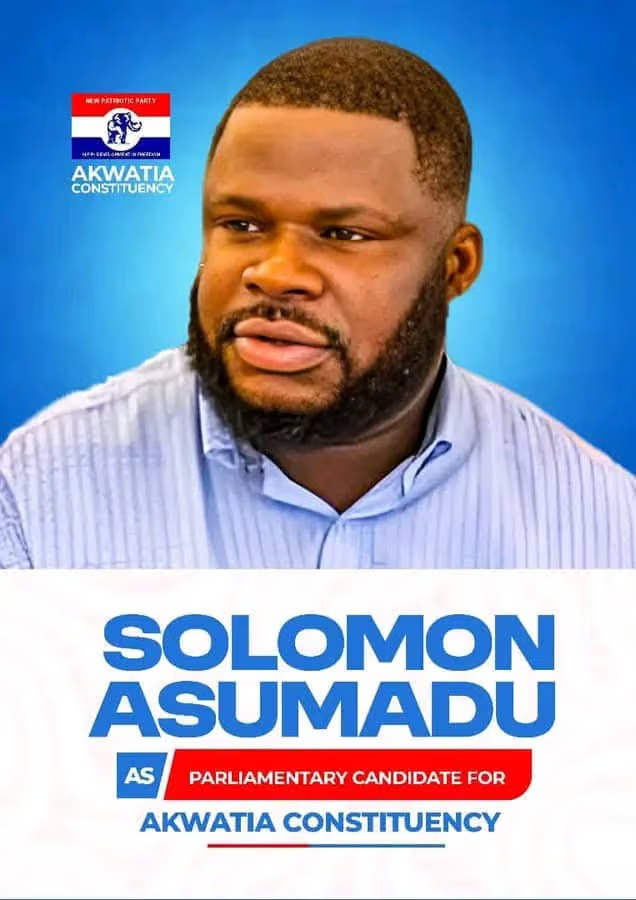
    On the other hand, the New Patriotic Party (NPP) has selected the Chief Executive of Owuo Mining Company, Solomon Kwame Asumadu, as its parliamentary candidate for the upcoming by-election.

    According to the Eastern Regional Chairman of the NPP, Jeff Konadu Addo, the party arrived at this decision following an extensive consultaions with key stakeholders.

    He stated that, “The National Council of the party set up a committee and we were tasked to find out who could be our candidate or whether we will do primaries or not.

    “So, the team went to Akwatia in the constituency, had a lot of engagement with the grassroots, electoral area coordinators, polling station officers, chiefs, opinion leaders, and the majority of the people said that for primaries, we should take it out. We shouldn’t conduct primaries in Akwatia. And that’s exactly what we followed”.

    The election has become necessary following the death of the constituency’s representative, Ernest Yaw Kumi. The Akwatia MP was reported dead on Monday, July 7.

    Earlier, there were reports suggesting the widow of the late MP, Mrs. Mavis Kumi, had shown interest in the race.

    However, the Eastern Regional NPP Chairman Jeff Konadu Addo, on Tuesday, July 15, emphasized that campaign flyers purporting such claims are false and must be ignored.

    “We wish to categorically state that this information is false, misleading, and should be treated with the utmost contempt it deserves,” parts of the statement said.It added that Mrs. Mavis Kumi is not interested in the said position but is focused on mourning the passing of her husband.

    “She has unequivocally communicated that she has no interest in contesting the seat or participating in active politics at this time. Her current focus… is to mourn her husband with dignity and in peace,” the release added.

    On Tuesday, July 8, a delegation from the leadership of Parliament visited the family of the late MP to express their condolences. The team was led by the Leader of the House, Majority Leader Mahama Ayariga. Other members of the delegation included Minority Leader Alexander Afenyo-Markin, Clerk to Parliament Ebenezer Ahumah Djietror, and Ofoase-Ayirebi MP Kojo Oppong-Nkrumah, among others.

    Chief of Takrowaso, Osabarima Owusu Nketia I, on Friday afternoon, July 25, led the family of the late Hon. Ernest Kumi, former Member of Parliament for Akwatia Constituency, to pay a courtesy call on the Rt. Hon. Speaker of Parliament, Alban Sumana Kingsford Bagbin.

    The visit was to enable the family to officially inform the Speaker and Parliament of Mr Kumi’s demise. On behalf of Parliament, Speaker Bagbin extended his deepest condolences to the family of the late legislator.

    Speaker Alban Bagbin described the passing of Mr. Ernest Kumi as a profound loss to Parliament and all who had the privilege of knowing him.

    He lauded Mr. Kumi’s commitment to Ghana’s democratic development, noting that his tireless advocacy for his constituents and his steadfast dedication to national progress will be forever remembered and cherished.

    The Speaker also stated that Parliament will work closely with the bereaved family to ensure Mr. Kumi is accorded a befitting burial.

    Last month, the apex court overturned a ruling by the Koforidua High Court that convicted Mr Kumi of contempt of court.

    The court, on Wednesday, June 11, by a 4–1 majority, granted the legislator’s application to overturn the High Court’s ruling.

    On January 3, the Koforidua High Court issued an interim injunction restraining Ernest Yaw Kumi from being sworn in as the Member of Parliament for Akwatia.

    The injunction stemmed from a legal challenge by Henry Boakye-Yiadom, the National Democratic Congress (NDC) parliamentary candidate and former MP, who contested the election results.

    Boakye-Yiadom had filed a lawsuit against the Electoral Commission (EC), Kumi, and the Clerk to Parliament, disputing the outcome of the polls.

    Official results had declared Kumi victorious with 19,269 votes, while Boakye-Yiadom secured 17,206 votes.

    Despite the court’s order, Kumi went ahead with his swearing-in on January 7, 2025. His legal team, led by Lawyer Gary Nimako, later sought to overturn the injunction, but the court dismissed their application.

    On February 19, 2025, the Koforidua High Court issued a bench warrant for Kumi’s arrest, citing his absence from contempt proceedings and his failure to comply with the earlier injunction.

    Reacting to the development, the Minority in Parliament has condemned the court’s decision, arguing that it was excessive.

    Speaking to the media, Second Deputy Minority Whip Jerry Ahmed Shaib expressed strong disagreement with the ruling.

    In Parliament, Mr Kumi who was a first-time member in the 9th Parliament, served on both the Lands and Natural Resources Committee and the House Committee.Meanwhile, the Minister for Interior, Mubarak Muntaka, has urged security personnel who will be deployed to oversee the upcoming by-election in Akwatia constituency, Eastern Region, to remain alert while executing their duties.

    He urged them to reflect on the recent violence that occurred during the parliamentary election rerun in the Ablekuma North constituency and work proactively to prevent a recurrence.

    According to him, the government will work to ensure that such dramatic events do not repeat themselves in future elections.

    The Minister made these remarks at the government accountability series in Accra on Monday, July 14.

    “This is also a wake-up call for our security agencies to know that probably what happened [in Ablekuma North]…gives our security agencies the opportunity to even plan better towards Akwatia.

    “All I can assure the people of Akwatia is that we will use Ablekuma North as a case study to review how we operate in Akwatia—to make sure that the citizens are free to cast their votes and express their will without fear or favour,” Muntaka added.

  • Cocoa Producer Price increased from $3,100 to $5,040 per tonne for 2025/2026 season

    Cocoa Producer Price increased from $3,100 to $5,040 per tonne for 2025/2026 season

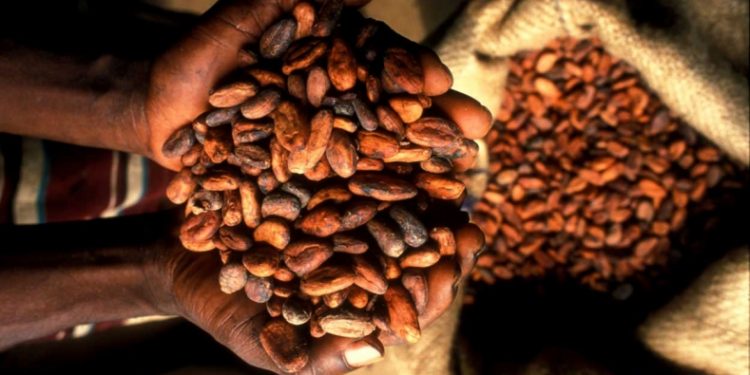
    The producer price of cocoa for the 2025/2026 season has been increased to $5,040 from $3,100, representing a 62.58% increase in dollar terms.

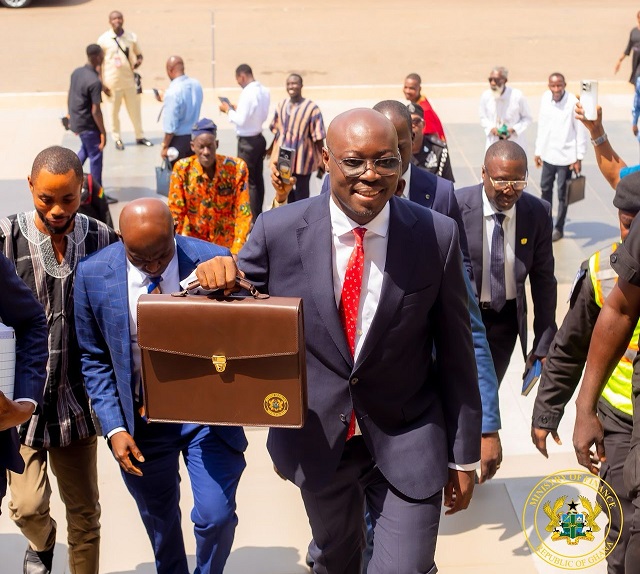
    This information was made available by the Finance Minister, Dr Cassiel Ato Forson on Monday, August 4. He explained that the decision was met following an engagement with the The Producer Price Review Committee (PPRC) on cocoa.

    According to the Minister, the adjustment is to fulfill the National Democratic Congress (NDC) government’s pledge of setting the fee on the board (FOB) of 70% of the price.


    “The Producer Price Review Committee, the PPRC on cocoa, under my chairmanship, met and agreed on the producer price for cocoa for the 2025/2026 season, which opens on Thursday, 7th August 2025. Subsequently, government is pleased to announce an increase in the producer price of cocoa from $3,100 per tonne to $5,040 per tonne.

    “Let me repeat, subsequent to this meeting, the Bank of Ghana is pleased to announce an increase in the producer price of cocoa from $3,100 per tonne to $5,040 per tonne. It is instructive to know that the government has, by this decision, increased the producer price significantly by 62.58% in U.S. dollar terms.

    “This increase in the producer price represents 70% of the gross Fee from the Board of $7,200 dollars per tonne and aligns with the NDC’s manifesto and President Mahama’s promise to pay the cocoa farmer 70% of the FOB price.It is significant to note that for the 2024/2025 crop season the previous administration set an FOB value of $4,850 per tonne of cocoa and the producer price at $3,100 per tonne, representing 63.9% of the FOP,” the minister added.

    The season, which officially begins on Thursday, August 7, is expected to boost the cocoa industry.

    In June, the Chief Executive Officer (CEO) of COCOBOD, Dr. Randy Abbey, hinted at ongoing engagement with authorities to ensure that farmers receive a fair producer price that reflects current global market trends.

    Although he bemoaned how the appreciation of the local currency could derail farmers’ earnings, he remained optimistic that their income and livelihoods would be protected following the conclusion of the ongoing discussions.

    “The truth is that we are convinced and it is going to happen. On the dollar side, we will see in its impact. Based on the strength of the cedi, in cedi terms, you may not see anything significant. What we are seeing now is a situation where global prices are high, and that would normally translate into higher incomes for our farmers. But with the cedi appreciating sharply, the gains could be reduced when translated into Ghana cedis.

    “We must strike a balance. Farmers deserve to benefit from the favorable market conditions, and we are working with stakeholders to ensure the final producer price reflects both global trends and domestic realities,” he added.

    From April 14 to June 2 this year, the interbank interest rate remained relatively stable, moving slightly from 27.01% to 27.02%.

    The Bank of Ghana (BoG) has stated that no bank currently offers loans to individuals at interest rates below 20%. According to BoG data, the cedi appreciated by 19% in April and May alone.

    In a statement at the Bank’s 124th Monetary Policy Committee meeting on May 21, BoG Governor Dr. Johnson Asiamah said the central bank is committed to maintaining fiscal and monetary policies that support the cedi’s stability.

    Dr. Asiamah noted that the Bank will continue implementing reforms to monitor the forex market and prevent illegal practices that threaten the currency’s strength.

    The cedi, he said, had gained “significant value — almost 19% — between April and May,” attributing the appreciation to “a combination of factors, including prudent monetary policy, improved market sentiment, and external sector gains.”

    Meanwhile, Forbes has reported an 8% depreciation of the US dollar in 2025, while gold prices have increased by 23%, as investors seek safe-haven assets — a trend that has also strengthened the Ghanaian cedi.

    The average interbank rates as of Wednesday, June 4, show the US dollar buying at GH₵10.22 and selling at GH₵10.23. The British pound is buying at GH₵13.86 and selling at GH₵13.88. The euro is currently being bought at GH₵11.68 and sold at GH₵11.69.

    “What we are seeing now is a situation where global prices are high, and that would normally translate into higher incomes for our farmers.

    “But with the cedi appreciating sharply, the gains could be reduced when translated into Ghana cedi,” Dr. Abbey explained.

    Ghana Cocoa Board (COCOBOD) has expressed its commitment to ensuring that cocoa farmers receive a meaningful and fair boost in their income, despite the hike in the dollar.

    A significant increase in Ghana’s cocoa producer price, valued in dollars, is anticipated ahead of the next crop season. The upward adjustment is believed to be an effort to match local prices with gains in the global cocoa market.

    The current cocoa producer price in Ghana is GH¢3,100 per 64kg bag, which translates to GH¢49,600 per tonne. This price was after it saw a rise on November 8 last year, when the Ghana Cocoa Board announced an increase from GH¢48,000 per tonne to GH¢49,600.

    However, cocoa farmers nationwide are hopeful of a significant hike in the price of their produce, following President John Dramani Mahama’s assurance of new prices in August.

    “And to cocoa farmers, the CEO of COCOBOD has informed me that by August, they will announce the new cocoa producer price. And I can assure you, the price is going to be very good.”

    With his confidence in the satisfaction the price review would give farmers, he entreated all individuals contemplating venturing into the cocoa farming business to do so. “To those of you who don’t have cocoa farms, go and start looking for land and start planting cocoa,” he said.

    The Board in April revealed that the absence of a functional Board of Directors and Producer Price Review Committee makes it impossible for a producer price to be adjusted.

  • Suspect involved in death of Immigration officer charged with murder; weapons found at residence

    Suspect involved in death of Immigration officer charged with murder; weapons found at residence

    The Ghana Police have rearrested the prime suspect in the gruesome murder of immigration officer Stephen King Amoah, also known as Nana Kofi.

    This follows the discovery of weapons believed to have been used in the murder of Immigration Officer Stephen Amoah.

    During a press briefing on Monday, August 4, the Director-General of the CID, COP Lydia Yaako Donkor, revealed that bloodstains were found in the living room, on a burnt, blood-soaked carpet, and on a fufu pestle suspected to have been used in the murder by the suspect.

    According to the Police, the forensic conducted on Thursday, July 24, also exposed freshly sprayed walls, hinting at an attempted cleanup by the suspect.

    “The Kwabenya Teshie Police visited the suspect’s residence, and the forensic inspection revealed the following bloodstains in the living room and evidence of attempted cleanup, freshly sprayed walls, and an empty can of spray paint. A search of a secondary crime scene near the GBC satellite area also uncovered a burnt woolen carpet and partially burnt camouflage fabric.”

    “These items were photographed, retrieved and photocopied for forensic analysis. On 24th July, the police received a warrant to search a particular room in the suspect’s house. A search in the room revealed more bloodstains, which were photographed and samples collected for forensic analysis. A further search in the bushes about 100 metres from the suspect’s house also led to the retrieval of the…” the Police said.

    The Service has noted that in the coming days, undertake a DNA exercise on the bloodstains with samples from the deceased mother and son, aiding with the process.

    “I wish to say that the initial blood sample collected was positive for human blood. To aid the investigations, the deceased mother and son has provided sample for DNA profiling. In the face of these pieces of evidence the suspect who was initially charged with kidnapping has since been rearrested and formally charged with murder. He is currently on remand following his appearance with the Adabraka District Court and is scheduled to reappear on 8th August 2025.

    “A special operation is currently underway to identify and arrest his accomplices and we are following other vital leads to gather all necessary evidence against the suspect and his accomplices. The Ghana Police Service wishes to assure the public that the investigations is ongoing and every effort is being made to ensure that all the perpetrators are prosecuted,” she added.

    The suspect is scheduled to appear in court on August 8th. The lifeless body of the immigration officer was discovered in a drainage system near GBC Satellite, opposite Comet Estate, Accra, on Wednesday, July 9.

    The deceased is said to have gone missing five days (since July 3) before his tragic death. This was contained in a press statement by the Ghana Police Service on Thursday, July 10.

    Providing more details about the tragic incident, the police noted that the murderer(s) of the 38-year-old also set his body on fire.

    The deceased’s remains have been conveyed to the Police Hospital morgue after the relatives positively identified the body as Stephen.

    The police have disclosed that their preliminary investigations indicate the deceased had gone to meet his debtor, one Bright Aweh, who had promised to pay the outstanding debt owed on Thursday, July 3, in the evening.

    The victim never returned home that night, and his phone remained switched off throughout, raising concerns among family and friends who later reported him missing.

    “Investigations revealed that on 3rd July 2025, at about 8:00 p.m., the deceased left his residence at Ashongman Estate after receiving WhatsApp images of cash bundles from one Bright Aweh, who requested to meet him at a spot at Ashongman Estate to settle an outstanding amount.

    “According to the complainant, the deceased never returned home that night, and his phone remained switched off thereafter,” the police said.

    After the deceased’s family filed a complaint at the police station, Bright Aweh was arrested to assist with the investigation.

    He admitted that he met with the deceased and alleged that he gave a cash of GHS500,000 to the deceased, instructing him “to use part of the money to pay off some debts and hold the remaining amount for later collection.”

    But the police in their statement noted that “the suspect could not clearly explain the source of the funds and gave conflicting statements.”

    Meanwhile, the police have pledged to get to the bottom of the case and ensure justice is served to the perpetrators.

    “The Regional Police Command strongly condemns such violent and criminal acts and assures the public that it is working diligently to uncover the full circumstances surrounding this incident and bring all responsible persons to justice,” it added.

    The police have also called on anyone with information relevant to the case to contact the nearest police station or call the police emergency numbers 18555 or 192.

  • New producer price for cocoa to be unveiled today

    New producer price for cocoa to be unveiled today

    The new producer price for the 2025/2026 crop season is expected to be unveiled today, Monday, August 4.

    This comes after the government’s successful deliberations with all relevant stakeholders.

    In June, the Chief Executive Officer (CEO) of COCOBOD, Dr. Randy Abbey, hinted at ongoing engagement with authorities to ensure that farmers receive a fair producer price that reflects current global market trends.

    Although he bemoaned how the appreciation of the local currency could derail farmers’ earnings, he remained optimistic that their income and livelihoods would be protected following the conclusion of the ongoing discussions.

    “The truth is that we are convinced and it is going to happen. On the dollar side, we will see in its impact. Based on the strength of the cedi, in cedi terms, you may not see anything significant. What we are seeing now is a situation where global prices are high, and that would normally translate into higher incomes for our farmers. But with the cedi appreciating sharply, the gains could be reduced when translated into Ghana cedis.

    “We must strike a balance. Farmers deserve to benefit from the favorable market conditions, and we are working with stakeholders to ensure the final producer price reflects both global trends and domestic realities,” he added.

    From April 14 to June 2 this year, the interbank interest rate remained relatively stable, moving slightly from 27.01% to 27.02%.

    The Bank of Ghana (BoG) has stated that no bank currently offers loans to individuals at interest rates below 20%. According to BoG data, the cedi appreciated by 19% in April and May alone.

    In a statement at the Bank’s 124th Monetary Policy Committee meeting on May 21, BoG Governor Dr. Johnson Asiamah said the central bank is committed to maintaining fiscal and monetary policies that support the cedi’s stability.

    Dr. Asiamah noted that the Bank will continue implementing reforms to monitor the forex market and prevent illegal practices that threaten the currency’s strength.

    The cedi, he said, had gained “significant value — almost 19% — between April and May,” attributing the appreciation to “a combination of factors, including prudent monetary policy, improved market sentiment, and external sector gains.”

    Meanwhile, Forbes has reported an 8% depreciation of the US dollar in 2025, while gold prices have increased by 23%, as investors seek safe-haven assets — a trend that has also strengthened the Ghanaian cedi.

    The average interbank rates as of Wednesday, June 4, show the US dollar buying at GH₵10.22 and selling at GH₵10.23. The British pound is buying at GH₵13.86 and selling at GH₵13.88. The euro is currently being bought at GH₵11.68 and sold at GH₵11.69.

    “What we are seeing now is a situation where global prices are high, and that would normally translate into higher incomes for our farmers.

    “But with the cedi appreciating sharply, the gains could be reduced when translated into Ghana cedi,” Dr. Abbey explained.

    Ghana Cocoa Board (COCOBOD) has expressed its commitment to ensuring that cocoa farmers receive a meaningful and fair boost in their income, despite the hike in the dollar.


    A significant increase in Ghana’s cocoa producer price, valued in dollars, is anticipated ahead of the next crop season. The upward adjustment is believed to be an effort to match local prices with gains in the global cocoa market.


    The current cocoa producer price in Ghana is GH¢3,100 per 64kg bag, which translates to GH¢49,600 per tonne. This price was after it saw a rise on November 8 last year, when the Ghana Cocoa Board announced an increase from GH¢48,000 per tonne to GH¢49,600.


    However, cocoa farmers nationwide are hopeful of a significant hike in the price of their produce, following President John Dramani Mahama’s assurance of new prices in August.

    “And to cocoa farmers, the CEO of COCOBOD has informed me that by August, they will announce the new cocoa producer price. And I can assure you, the price is going to be very good.”


    With his confidence in the satisfaction the price review would give farmers, he entreated all individuals contemplating venturing into the cocoa farming business to do so. “To those of you who don’t have cocoa farms, go and start looking for land and start planting cocoa,” he said.


    The Board in April revealed that the absence of a functional Board of Directors and Producer Price Review Committee makes it impossible for a producer price to be adjusted.

  • Gov’t to clear encroachers from Tema Ramsar site today

    Gov’t to clear encroachers from Tema Ramsar site today

    All unauthorized structures on the protected Tema Ramsar site will be razed down today, Monday, August 4, as announced by the Greater Accra Regional Security Council (REGSEC). 

    Areas to be affected by the demolition exercise include Communities 5, 6, 10, 11, and 12 in Tema, Greater Accra Region. This comes after an unannounced visit to the site earlier this week by Greater Accra Regional Minister, Linda Ocloo, who revealed ongoing encroachment on the protected wetland. 

    Speaking to the media, the Minister described the encroachment as “a serious threat to the ecological integrity of the Ramsar Site. This is a protected area, and we cannot allow private developers or individuals to compromise its long-term environmental value”.

    One of Ghana’s designated wetlands is the Tema Ramsar Site; the area holds international recognition under the Ramsar Convention. It also helps prevent flooding, keeps water clean, and supports wildlife. In May, REGSEC pulled down unauthorized structures along waterways at the Sakumo Ramsar site.

    The demolition exercise by the Greater Accra Regional Security Council is intended to manage flooding, enforce environmental regulations in the region, and also revive natural watercourses. The operation, which began on Tuesday, May 27, comes shortly after the devastating floods that hit parts of Accra on Sunday, May 18.

    In a meeting with Metropolitan, Municipal, and District Chief Executives (MMDCEs) on Tuesday, May 27, the Greater Accra Regional Minister Linda Ocloo revealed plans of stationing a task force within the country to avert a possible erection of the demolished structures.

    “We will continue with the demolition exercise at Sakumono and Tema. In some places where the demolition was done, they have raised the structure again. So we are going to cause an arrest. We are not going to leave a single structure; all of them will go down. After the demolition, we are going to put a task force in place who will be working 24 hours to protect the place,” she added.

    She bemoaned the compliance amongst some of the affected individuals, although they were noticed prior to the exercise. “They are aware. In fact, there has been an engagement; they are very much aware of this exercise. Some of the buildings have notices of ‘Stop Work,’” she stated.

    There is mounting pressure on the government to initiate long-lasting solutions following the flood incident on Sunday, May 18, which wrecked several homes, claimed lives, displaced residents, and disrupted economic activities.

    Weija, Kaneshie, Adabraka, Tema, and Adentan-Dodowa are a few of the areas that were affected by the rains. President John Dramani Mahama has reaffirmed his commitment to tackling Ghana’s persistent flooding challenges by ordering the demolition of illegally constructed buildings blocking waterways.

    Speaking at the 2025 National Eid-ul-Fitr celebration at Black Star Square, he blamed the increasing flood disasters on poor urban planning and unauthorized developments in wetlands, waterways, and Ramsar sites. The president made it clear that his administration would take drastic action against encroachers, stressing that all structures obstructing natural drainage systems would be removed to prevent further destruction.

    “I don’t think the exercise lacked [coordination]. For me, the beginning of work was very satisfactory,” he stated. The government in recent times has become stern on solving the country’s sanitation and decongestion challenges. The Kumasi Metropolitan Assembly (KMA) embarked on a decongestion exercise in the Central Business District (CBD) in April this year.

    The Chief Executive of the Kumasi Metropolitan Assembly, Richard Ofori Agyemang Boadi, issued a stern caution to traders operating on the pavements. “Kumasi should expect cooperation, discipline. There is a lot of indiscipline in our metropolis. In all humility, I am going to ensure strict compliance with the Assembly to the by-law that manages our city. If you are selling on the pavement, adjust yourself.”

    “If you are in the middle of any dual carriageway road, especially within the central business district, please get out of the place. Because from Wednesday, we will get on the street and make sure that we clear Kumasi from all the filth that we see. With the decongestion, we will not apply the forces of military men. Everybody wants to sell at Adum, so we will find some ingenious way to keep them in Adum and decongest Adum,” he added.

    Before the exercise, vehicular movement in the area was at a standstill, as some traders sold their items in the middle of the streets, preventing pedestrians and vehicles from barely moving freely.

    Also in Accra, the Accra Mayor, targeted street traders with a 3-day decongestion exercise targeting street traders. The first phase of the exercise launched on Tuesday, May 20, targeted areas around the AMA Head Office, including Kinbu Road to Railways, ECG Junction to the King Tackie Tawiah Statue, and Opera Square to Adabraka.

    Amid the concerns raised by affected traders, the Greater Accra Market Association (GAMA) has declared strong support for the Accra Metropolitan Assembly’s ongoing decongestion campaign in the Central Business District (CBD).

    The issues of congestion compelled the transport operators to threaten a strike action against the government and the Ghana Police Service. They gave authorities until Monday, May 19, to act or face a nationwide protest. However, the strike action was not executed.

    According to the operators, the growing encroachment of roads and pavements by traders poses serious safety risks and disrupts the free flow of traffic. They are demanding the immediate enforcement of the Road Traffic Regulations, 2012 (L.I. 2180), particularly those relating to trading on roads and pavements.

    Under Ghana’s Road Traffic Regulations, 2012 (L.I. 2180), specific provisions prohibit trading activities that obstruct pedestrian and vehicular movement. These regulations are designed to ensure the safety and free flow of traffic on public roads and pavements.

    Meanwhile, a 24-hour city-wide cleaning initiative is set to begin soon, as announced by the Mayor of Accra, Michael Allotey. Speaking to the media, he shared that the Accra Metropolitan Assembly (AMA) plans to utilize the Borla Macho III tricycle to drive the operation.

    He explained that the Borla Macho III tricycle donated by a Ghanaian electro-mechanical engineering firm, Anointed Engineering Services Ltd, has a hydraulic system that will enhance the efficiency of cleaning activities.

    “This morning we are here not to sell a generator but to donate our special product, the Borla Macho III, to the AMA… It’s a one-man-operated tricycle with a hydraulic system that lifts and empties bins, compresses waste internally, and tips at dumping sites without manual contact.

    “It’s the perfect tool for urban sanitation, and we believe, as the city improves with the vision of the AMA; this product can help bring sanity into our sanitation system,” he stated.”

  • Ghana’s Mpox cases hit 302

    Ghana’s Mpox cases hit 302

    Confirmed monkeypox (Mpox) cases in Ghana have risen to 302, following the detection of 20 new infections as of Wednesday, July 30, according to the Ghana Health Service (GHS).

    On Monday, July 27, the Ghana Health Service (GHS) reported the unfortunate demise of one out of the many individuals who have contracted the disease.

    Since Ghana recorded its first Mpox case in June 2022, with five cases, this is the first time any of the infected persons has succumbed to the disease.

    In its regular update, the Ghana Health Service noted that as of July 22, 23 new cases were recorded, pushing the total confirmed cases to 257.

    Ghana’s confirmed monkeypox cases rose to 234 cases following the detection of 16 new cases as of July 18.

    The number of cases stood at 218 following the detection of 21 new infections as of July 14. The Ghana Health Service reported 197 confirmed cases following the detection of 11 new infections as of July 11.

    The Service while revealing this information, described the trend as a gradual yet manageable increase and called for sustained public vigilance.

    The country has seen a slight uptick in infections. Health officials, however, maintain that the overall situation remains under control.

    Mpox spreads primarily through close physical contact. Common symptoms include fever, tiredness, swollen lymph nodes, and a noticeable rash. Although many cases are mild, early medical care is crucial to avoid complications.

    In light of the growing Mpox cases, the GHS is boosting nationwide information campaigns to ensure citizens remain aware and careful.

    Preventive actions such as avoiding direct contact with sick individuals, practicing proper hygiene, and promptly seeking care when symptoms show are being emphasized.

    Officials stress the importance of swift case detection and notification, with field teams and community health workers diligently monitoring developments.

    The public is being encouraged to stay watchful, adhere to health precautions, and contribute to collective efforts to stop the virus from spreading.

    The government is engaging international organizations for assistance in procuring vaccines to be able to curb the surging number of cases being reported.

    The World Health Organization (WHO) Ghana has provided laboratory PCR reagents to enhance the country’s diagnostic capacity. The donation was officially handed over to the Ghana Health Service (GHS) at the National Public Health Reference Laboratory.

    Receiving the supplies on behalf of the GHS, Acting Deputy Director General Dr. Caroline Reindorf Amissah expressed gratitude for WHO’s ongoing logistical and technical support.

    “We promise from our end to do our bit, collaborate, go out there, and look for the cases to make sure that this is really brought under control,” she stated.

    WHO Country Representative Dr. Fiona Braka emphasized that the organization hopes the reagents will enable rapid diagnosis and prompt public health responses.

    The supplies are capable of testing 3,400 suspected Mpox samples, and additional kits provided will allow clade determination for 625 confirmed positive cases.

    Article image 1

    Global data

    The monkeypox virus was first discovered in Denmark in 1958 in monkeys kept for research, according to the World Health Organisation (WHO).

    A nine-month-old boy from the Democratic Republic of Congo in 1970 was the first person to have contracted the virus.

    According to the World Health Organisation, following the eradication of smallpox in 1980 and the end of smallpox vaccination worldwide, mpox steadily emerged in central, east and west Africa.

    “Since then, mpox has been reported sporadically in central and east Africa (clade I) and west Africa (clade II). In 2003, an outbreak in the United States of America was linked to imported wild animals (clade II).

    Since 2005, thousands of cases have been reported in the Democratic Republic of the Congo every year. In 2017, mpox re-emerged in Nigeria and continues to spread between people across the country and in travellers to other destinations,” the WHO reports.

    In May 2022, an outbreak of mpox appeared suddenly and rapidly spread across Europe, the Americas, and then all six WHO regions.

    Since 2022, there has also been an upsurge in mpox cases and deaths in the Democratic Republic of the Congo. In some areas of the country, a new offshoot of clade I, called clade Ib, has been spreading person-to-person. As of mid-2024, the clade has also been reported in other countries.

    Over 120 countries have reported mpox between January 2022 and August 2024, with over 100 000 laboratory-confirmed cases reported and over 220 deaths among confirmed cases.

    Following the meeting of the International Health Regulations (2005) Emergency Committee regarding the upsurge of mpox 2024, held on June 5, 2025, the World Health Organisation stated that “Over the past 12 months, the majority of mpox cases have continued to be reported from the African continent, largely driven by outbreaks of MPXV clade Ib in East African countries, including the DRC, where clade Ia is co-circulating. Sierra Leone, however, is experiencing a rapidly evolving outbreak, which based on available genomic sequencing results, appears to be driven by MPXV clade IIb.”

    “Outside of the African region, there continues to be a steady report of monthly cases (between about 500 – 1000 monthly), from all regions, mostly reflecting ongoing circulation of MPXV clade IIb among men who have sex with men (MSM),” the WHO added.

    WHO Director-General Dr Tedros Adhanom Ghebreyesus has declared mpox a public health emergency of international concern (PHEIC) twice. The first was in May 2022, and the second time was in August 2024.

    The World Health Organisation works with member states and partners to prevent and respond to outbreaks of mpox. This includes coordinating research on vaccines and treatments, strengthening country health systems, and working to facilitate equitable access to vaccines, therapeutics, diagnostics and other tools.

  • It’s untenable to reduce subscription fees your way – DStv to Sam George

    It’s untenable to reduce subscription fees your way – DStv to Sam George

    MultiChoice Ghana has responded to a directive from Minister for Communications, Digital Technology and Innovation, Sam Nartey George, demanding an adjustment of its subscription services.

    As per a statement signed by its Managing Director, Mr. Alex Okyere, on August 3, the company emphasized that the Minister’s proposal to drastically review its prices is not workable.

    According to the company, it acknowledges the positive impact of the local currency, the cedi, against foreign currencies, specifically the U.S dollar. However, a significant decrease in prices cannot be attained by the company.

    “While we appreciate the recent appreciation of the cedi— which we have never referred to as a ‘fluke’— it is not tenable to reduce the DStv subscription fees in the manner proposed by the Minister,” the statement read.

    On Friday, August Sam Nartey George announced that should Multichoice fail to reduce the prices of its subscription services, the DSTV broadcast license will be suspended nationwide effective August 7, 2025.

    Engaging the public today as part of the Government Accountability Series, the minister noted that he received a 9-page document from Multichoice on July 21 over its inability to reduce its subscription fees. The company cited depreciation of the cedi in past years despite the recent cedi appreciation as the reason for its inability to reduce prices.

    Minister Sam George noted that it is unacceptable for Nigerians to be paying less for the same packages offered Ghanaians at higher costs when the naira has depreciated at an accelerating rate against the cedi.

    As such, he has directed the National Communications Authority (NCA) to suspend the broadcast of DSTV in about a week from now should Multichoice fail to reduce prices of its packages.

    “Their reasons included that the cedi had depreciated in the preceding eight years by 240% and they claimed that my request for a reduction on the basis of the appreciation of the cedi was unfounded because, in their words, the appreciation of the Ghana cedi over the last 6 months has been a fluke which could not be sustainable.

    As Minister, my fidelity is to the Ghanaian people. I have to act in the interest of the Ghanaian people, and I believe the Ghanaian people have been fleeced and exploited for too long. I wrote back to the NCA on Monday and directed the NCA in that letter to suspend the broadcasting license of dstv effective 7th of August 2025 if they fail to effect a reduction in their bundle prices.

    I can’t as minister serving the Ghanaian people, continue to watch what can be best described as plain stealing happening to the Ghanaian people. In my letter to them, I gave them scenarios from seven markets that dstv is operating in. The same content in the premium bouquet that is offered to Ghanaians for the $83 equivalent is offered to Nigerians for the $29 equivalent.

    How can anyone explain this price disparity to me? Enough of the mistreatment of the Ghanaian consumer. In Nigeria, in the same timeframe, they say the Ghanaian cedi has depreciated by 240%, the Nigerian naira has depreciated by 409%. If Nigerians are paying the equivalent of $29, dstv must charge the same here in Ghana,” he said.

    The minister has sought a 30 percent reduction in the price of packages provided by Multichoice.

    On July 4, Minister of Communication, Digital Technology and Innovation, Samuel Nartey George, engaged the leadership of MultiChoice Ghana to discuss a possible reduction in fees for DSTV subscriptions.

    This comes after issues of affordability became topical in recent months after an increase in subscription fees in April.

    The sector minister made this known when he engaged the media on July 3, on key initiatives and developments within the sector under the second quarter.

    “Last week, I invited the senior leadership of MultiChoice Ghana to a formal dialogue on DSTV’s subscription pricing in Ghana. The meeting addressed public concerns about affordability, value for money, and fairness in service delivery. I made it clear the ministry’s expectation that pricing structures must be responsive to Ghana’s economic context,” he said.

    “I have a meeting scheduled for tomorrow, Friday, even though it’s a public holiday, with the Ghana team and their South African counterparts, the management from South Africa, they arrived tonight to agree on a way forward on the issues raised,” the minister indicated.

    He further said; “The outcomes will be shared with the public in due course. This engagement reflects our commitment to regulatory accountability and our resolve to ensure that digital services in Ghana remain fair, accessible, and responsive to the needs of citizens. I’ll make you one promise, I won’t leave tomorrow’s meeting without securing a drop in the pricing of DSTV. That is a solemn promise I make to you.”

    Subscribers of DStv across Africa, effective April 1, 2025, experienced a price increase of over 15% on their monthly subscription fees.

    The pay-TV provider cited rising consumer inflation and economic challenges as key factors influencing the decision.

    According to the new pricing structure, in Ghana, the cost of the premium package rose from GHC750 to GHC865, representing a 15.33% increase. The Compact Plus package moved from GHC495 to GHC570, marking a 15.15% jump, while the Compact package increased from GHC330 to GHC380, also reflecting a 15.15% rise.

    The Family package now costs GHC190, up from GHC165, indicating a 15.15% increase, whereas the Access package went up by 16.47%, from GHC85 to GHC99.

    Subscribers to the DStv Lite package experienced the highest percentage surge of 18.00%, moving from GHC50 to GHC59. The DStv-Asia Standalone package climbed by 14.75%, from GHC305 to GHC350. The Great Wall Add-on increased from GHC70 to GHC80, marking a 14.29% rise.

    For those subscribed to the French content add-ons, the French Add-on now costs GHC250, up from GHC215 (16.28% increase), while the French Plus Add-on rose from GHC435 to GHC500, reflecting a 14.94% increase. The French Touch Add-on costs GHC150, up from GHC130, marking a 15.38% increase.

    DStv press release

    The cost of premium packages with add-ons has also been adjusted. Premium with Asia Add-on increased from GHC1,055 to GHC1,215 (15.17% increase), while Premium with French Add-on now costs GHC1,365, up from GHC1,185 (15.19% increase). The HD-PVR service rose by 15.00%, from GHC100 to GHC115.

    Following this, consumer rights organization CUTS International pushed for government intervention in MultiChoice Ghana Limited’s decision to raise subscription fees, arguing that customers were given inadequate notice ahead of the increase.

    About a month ago, MultiChoice Ghana announced an upgrade in all of its DStv and GOtv packages as well as a reduction in the price of its decoders, from GH¢169 to GH¢89, due to the rebound of the economy.

  • GTEC shuts down Nyarkotey University over accreditation non-compliance

    GTEC shuts down Nyarkotey University over accreditation non-compliance

    Operations at the Nyarkotey University College of Holistic Medicine and Technology have been brought to a halt following a recent directive by the Ghana Tertiary Education Commission (GTEC).

    The order comes after the Ghana Tertiary Education Commission’s investigations uncovered that Nyarkotey University College has been operating against the standards for tertiary education in the country. The university college is said to be offering an unapproved Bachelor of Technology (BTech) programme in Naturopathy and Holistic Medicine with various specializations.

    According to the Ghana Tertiary Education Commission, the university in question does not hold the required accreditation. The college has also been instructed to cease promoting the school through advertising until all regulatory requirements are fully met. The Authority has demanded that Nyarkotey University College fast-track the necessary processes to acquire the proper certification as a condition for resuming its academic services.

    Speaking to the media on Friday, August 1, GTEC’s Director of Corporate Affairs, Jerry Sarfo, indicated that the University has been given until August 8 to provide evidence of adhering to the order from the Authority.

    “We have asked the institution to shut down and provide evidence of the same latest by the 8th of August, so they are to cease operations, as it were, and not admit any more students until they have sought accreditation. We have also advised that should they wish to continue operations, then they are to initiate their accreditation processes immediately so that they can go through the processes for that to be done. For now, they are supposed to shut down the institution.

    “Again, what we have asked them to do is that they pull down all adverts. They had a lot of advertisements; some of them they had placed on their billboards, some were on their website, and all that. They are to pull down all of those adverts, especially those advertising those tertiary education programmes there. So once the institution is being shut down, it goes down with all those things as well,” the GTEC’s Director of Corporate Affairs added.

    Meanwhile, the institution’s founder, Raphael Nyarkotey Obu, along with its registrar and director, was arrested on Wednesday, July 30, by the GTEC and the Criminal Investigations Department (CID) of the Ghana Police Service. The institution’s founder has been stripped of the honorary title “Professor” and instructed to issue a public disclaimer disassociating himself from the title, as it lacks any legitimate basis.

    “We have informed Mr. Nyarkotey to desist from using the title ‘Professor,’ as there is no evidence he earned it. He is also to issue a public disclaimer to that effect,” Mr Sarfo added.

    GTEC has been working to ensure that all tertiary institutions in the country meet the required accreditation standards. In April, the Ghana Tertiary Education Commission raised alarm over the increasing trend of individuals adopting honorary titles such as “Doctor” and “Professor” after receiving such recognitions from institutions in Ghana and abroad.

    GTEC noted that these titles, often used by awardees, tend to confuse and mislead both the public and academic communities. The Commission said it is compelled to clarify its stance on the matter to safeguard academic integrity.

    “In light of this trend, the Commission has observed the use of the titles Doctor (Dr) and Professor (Prof) by recipients of such awards. These practices are deemed misleading and serve to misinform both the academic community and the general public. Consequently, the Commission seeks to clarify its position on this matter for the benefit of the public and those affected,” the Commission said in a statement.

    GTEC has explained that honorary degrees must only be awarded by accredited institutions and those recognized under Ghana’s higher education system. The Commission has also stressed that the title should be given to individuals who are deemed fit.

    The Commission warned that using honorary titles as part of one’s official name or professional identity is improper and violates sections of the Education Regulatory Bodies Act, 2020 (Act 1023), along with other relevant laws.

    “The Mandate of GTEC: Section 8 (3) d of the Education Regulatory Bodies Act mandates the Commission to regulate the use of higher education nomenclature and titles, including ‘university,’ ‘college,’ ‘Emeritus,’ ‘Professor,’ ‘Doctor,’ ‘Chartered,’ and related terms,” the statement pointed out.

    GTEC urged individuals to take personal responsibility by avoiding the misuse of honorary titles and cautioned stakeholders in the education sector to act with restraint when conferring such distinctions.  GTEC is mandated to impose sanctions on individuals or institutions involved in practices that could erode the value of academic credentials or mislead the general public. Its general function is to apply the highest quality standards and relevance of teaching, learning and research programmes and outcomes;

    The National Service Authority (NSA) in June raised concerns over some tertiary institutions’ reluctance to renew their licenses. As such, the National Service Authority gave a 30-day ultimatum to the affected institutions to enable their students to be eligible for placement.

    The Authority, in a press release dated Tuesday, June 17, cautioned that unaccredited tertiary institutions that miss the deadline to regularize their status will negatively impact their students’ chances of participating in the 2025/26 national service. According to the Authority, it received 135,990 submissions for this year from 122 tertiary institutions; however, 3,597 submissions are pending verification of accreditation.

    “This figure is part of a total of 135,990 final-year Ghanaian students submitted by 122 tertiary institutions across the country. However, 3,597 of these submissions, representing graduates from 22 institutions, have not been processed, as those institutions are currently not accredited and remain unknown to the Ghana Tertiary Education Commission (GTEC).

    “NSA also urges institutions with expired accreditation to engage with GTEC and regularise their status within the next 30 days,” it added. The NSA is yet to give details of the tertiary institutions that currently possess expired accreditation.

  • Video: Candlelight vigil for Daddy Lumba draws huge crowd in Accra

    Video: Candlelight vigil for Daddy Lumba draws huge crowd in Accra

    Thousands of individuals flooded the Independence Square for the candlelight vigil conducted in honour of Ghanaian Highlife musician, Daddy Lumba, on Saturday, August 2.

    The event, organised by the Creative Arts Agency, commenced at 6:00 p.m., featuring various dignitaries from the music fraternity.

    The legendary Ghanaian highlife musician passed away in the early hours of Saturday, July 26.

    A statement by the counsel for the Fosu family confirmed the news to the general public.

    He succumbed to the illness at the Bank Hospital in Accra, per reports.

    The statement read: “With profound sorrow and deep grief, the Fosu family announces the passing of Ghana’s beloved musical icon, Charles Kojo Fosu, popularly known as Daddy Lumba, who passed away earlier today, Saturday, July 26, 2025, after a short illness.”

    “Daddy Lumba was more than a musician; he was a cultural icon whose music touched countless lives. His soulful voice provided the soundtrack to our love stories, and his poignant lyrics captured the poetry of our struggles, dreams, and resilience.”

    The bereaved family respectfully requested privacy as they navigate this profound grief.

    Daddy Lumba’s ex-manager, Roman Fada, has dropped hint about the possibility of a state burial for the musician under President Mahama’s watch.

    At Daddy Lumba’s private residence in Accra on July 28, Roman Fada told the media that conversations have commenced to ensure the late singer is given a burial that reflects his legacy.

    “We have received positive feedback from the Presidency, and I believe that John Dramani Mahama will respond to the public’s call by granting him a befitting burial,” Roman Fada said.

    He explained that the former President’s close relationship with the late singer and his track record in supporting the arts make him confident that the burial will be taken care of by the state.

    “I know the kind of love the current President, John Dramani Mahama, has for the creative industry and the strong relationship he shared with Daddy Lumba,” he stated.

    The deceased family announced that a book of condolence was opened in honour of the late highlife legend begining Tuesday, 29th July, from 9:00 a.m. to 4:00 p.m.

    In an official statement issued on July 27 by his lawyers, Baba Jamal & Associates, on behalf of the bereaved family, the family invited all well-wishers, friends, fans, and family to sign the condolence book, which will be available at Daddy Lumba’s private residence in East Legon.

    “As part of the arrangements to honour his memory, the Fosu family wishes to announce the following events to be organised in his honour.

    “Book of Condolence in honour of Daddy Lumba: Private residence of the late Daddy Lumba at Kinshasha Crescent, house number 12 (GA-332-9264)” parts of the statement read.

    The New Patriotic Party (NPP) shared a compassionate and commiseratory message with the family and friends of the late highlife legend Charles Kwadwo Fosu, widely known as Daddy Lumba.

    In a statement dated July 26, the opposition party praised the legend for his stunning and unforgettable contributions to the highlife genre in Ghana and beyond.

    Acknowledging the impact of the highlife legend’s contribution to the party’s history, citing the iconic song “Nana Ye Winner,” a campaign song Lumba released for the NPP during their 2008 election campaign.They noted that the powerful lyrics and rhythm of the song were even regarded by their political opponents.

    “For us in the New Patriotic Party, his melodious contribution to our campaigns in 2008, 2012, and 2016, through the famous “Nana Ye Winner track in its original and remix versions, remains deeply etched in the political history of our tradition and the country. The power and inspiration behind those songs were acknowledged even by our political opponents,” parts of the statement read.

    In a heartfelt X post on July 27, President Mahama expressed sorrow and declared that Daddy Lumba’s “unmatched musical genius” would resonate for generations to come.

    “I have learnt with deep sorrow the passing of Ghanaian music legend, Charles Kwadwo Fosu, affectionately known as Daddy Lumba. Lumba’s unmatched musical genius provided the soundtrack to our lives, carrying us through various phases of life,” President Mahama wrote, capturing the collective grief of a nation.

    He continued, “The beats to his memorable songs may have died down, but his enduring legacy will echo through the ages. On behalf of the Government of Ghana, I extend heartfelt condolences to his family and loved ones for this irreplaceable loss.”

    This sentiment expressed by the president captures the deep emotions and connection many Ghanaians had with his music, which highlighted everyday life experiences with unparalleled artistry.

    Former President Akufo-Addo, who has the late legend to be grateful to for his vibrant, energetic, and soul-dancing campaign song, reacted to his death. Taking to his official Facebook page on July 26, he praised him as the greatest among the greats

    “With regret, I have received the sad news of the passing of my dear friend and renowned music icon, Charles Kwadwo Fosu.

    “Daddy Lumba, as we affectionately call him, was a pantheon among musical greats of all-time and had a special connection with his fans and the entire nation.

    “His hit-making songs will remain lasting contributions to my presidential journey and will forever be etched in the annals of political campaign of the New Patriotic Party. He will be sorely missed.

    “May he peacefully rest in the Bosom of the Almighty until the Last Day of the Resurrection, when we shall all meet again,” he expressed.

    Profile of the late veteran musician

    Daddy Lumba was renowned for his incredible talent as a singer, composer, songwriter, recording artist, and producer.

    With an illustrious career that has spanned over three decades, Daddy Lumba was widely regarded as the greatest and most influential musician in Ghanaian history.

    Many artists in Ghana, including Ofori Amponsah, Sarkodie, Kuami Eugene, Paa Solo of Sibo Brothers, Oheneba Kissi, KiDi, and others, consider him their major inspiration in the music industry.

    Daddy Lumba was born 60 years ago to Mr. Johnson Kwadwo Fosuh and Madam Comfort Gyamfi, also known as Ama Saah, in Nsuta, near Mampong in the Ashanti Region of Ghana. Both of his parents were teachers, and he was the second of three siblings.

    His educational journey began in Nsuta Kyebi, and he completed junior high school at Suame Methodist, Kumasi in 1979. Subsequently, he attended Adu Gyamfi Senior High School in Jamasi, but later transferred to Juaben Senior High School, where he completed his secondary education in 1984.

    Daddy Lumba’s music career took off in the early 80s when he formed the Nkwanta Wesley Singers, gaining fame at the Anokye Krom Cultural Center.

    During his time at Juaben Senior High School, he led the school choir and composed the song “Lumba Lumba,” dedicated to the freedom fighters in South Africa. This song’s popularity earned him the nickname “Daddy Lumba”, which later became his stage name. He also formed the Lumba Brothers band during his school days, which included his girlfriend at the time, Theresa.

    After completing school, Daddy Lumba, with the help of his high school sweetheart Theresa Abebrese, traveled to Germany. There, he met Ernest Nana Acheampong, and they formed another Lumba Brothers group, recording their debut album, “Yee Ye Aka Akwantuom,” in 1986. Financial constraints delayed the album’s release until 1989, and eventually, the duo split.

    Daddy Lumba then launched his solo career and released his debut solo album, “Obi Ate Meso Buo,” in 1990. The album received immense popularity and critical acclaim, featuring classics like the title track and “Theresa,” dedicated to his ex-lover. He has since released 33 albums, including notable ones like “Sika Asem,” “Aben Wo Ha,” “Wo Ho Kyere,” “Awosoo,” “Give Peace A Chance,” and “Ahenfo Kyiniye.” His latest project, “Ofon Na Edi Asem Fo,” was released in December 2022, reuniting him with longtime collaborator Kweku Mensah.

    In addition to his own success, Daddy Lumba is renowned for nurturing the careers of budding artists who went on to become legends in their own right.

    Some of these artists include Felix Owusu, for whom he produced the debut album “Vida” in 1992, Afia Ampofowaa, Kwabena Sunkwa, Ofori Amponsah with the “Woho Kyere” album in 1999, Selina Orleans, Akua Serwaa Bonsu, Borax, Ateaa Tina, and many others.

    His contributions to Ghanaian music and the support he provides to upcoming talents have solidified his status as an iconic figure in the country’s music industry.

    With his passion, talent, and dedication to the craft, Daddy Lumba continues to be a role model for aspiring musicians, leaving an indelible mark on the rich musical landscape of Ghana.

  • Parliament goes on recess, expected to resume in October

    Parliament goes on recess, expected to resume in October


    Members of Parliament (MPs) are expected to reconvene in October, following their recess for the Second Meeting of the First Session of the Ninth Parliament of the Fourth Republic.

    This information was made known by the First Deputy Speaker, Honourable Bernard Ahiafor, on Friday, July 31. The legislators on Tuesday, May 17, began their official work following a recess for Easter celebrations last year. 

    Parliament, from May to August this year, convened a total of 43 sittings; during this period, the legislative body passed several key bills, endorsed certain proposals, and debated several matters of national importance.

    Just a few days ago, Parliament wrapped up its debate on the Mid-Year Review Budget Statement and Economic Policy of the Government of Ghana for the 2025 financial year, which was presented by Finance Minister Dr Cassiel Ato Forson.

    In the course of the debate, the Deputy Majority Leader and Member of Parliament (MP) for Cape Coast South, George Kweku Ricketts-Hagan, acknowledged the government’s efforts while describing the budget’s content as commendable.

    According to him, Ghana now fully controls its gold resources. This, he described as a major and transformative achievement for the country.

    In his submission on the floor of the House, Minority Leader Alexander Afenyo-Markin contested the government’s celebratory claims regarding the performance of the local currency. He added that “2022 was a storm for the cedi, but I dare argue, despite all of this, the NPP government stabilized the cedi in 2023.” 

    Also from the Minority side, Hon. Michael Kwesi Aidoo, Member of Parliament for Oforikrom, criticised the incumbent government for failing to address the real concerns of Ghanaians despite its claims of restoring the value of the cedi.

    He stressed, “Whenever you say anything about the issues of the economy, our colleagues will refer you to the dollar, that the dollar has reduced. Mr. Speaker, as I speak to you today, it has not reflected in our pockets.” To him, the Mid-Year Budget Review had nothing new except repetition of words.

    Also from the Minority Caucus, Member of Parliament for Takoradi, Kwabena Okyere Darko-Mensah, pushed back against the government’s assertion that its homegrown policies are fueling economic growth.

    He argued that the previous New Patriotic Party (NPP) administration’s policies have driven growth in agriculture and fisheries, hence boosting Gross Domestic Product (GDP). 

    On Thursday, July 24, Finance Minister Dr. Cassiel Ato Forson delivered to Parliament the 2025 Mid-Year Budget Review. This was in accordance with Section 28 of the Public Financial Management Act, 2016 (Act 921), to inform the country on its economic performance and fiscal strategy halfway through the year.

    In his delivery, the sector minister noted that in less than 200 days the incumbent government has brought back clarity, certainty, stability, and purpose to the country’s economic policy direction. Dr. Cassiel Ato Forson revealed that in the first six months of the year, the government’s expenditure stood at GH¢109.7 billion, equivalent to 7.8% of the GDP.

    He noted that the current expenditure was 14.3% below the programmed amount of GH¢128.0 billion, equivalent to 9.1% of GDP. According to the sector minister, this reflects the government’s strong expenditure control.

    During the presentation of the 2025 budget statement, the minister noted that total expenditures (commitment) for 2025 have been programmed at GH¢270.9 billion, down from GH¢279.2 billion in 2024.

    Primary expenditure on a commitment basis (expenditures net of interest payments) is projected at GH¢206.8 billion in 2025 (14.8% of GDP), presenting a significant decline from 19.8% of GDP in 2024 and lower than the 2023 level of 15.6% of GDP.

    Providing a breakdown of the total expenditure in six months, the minister said that primary expenditure, or non-interest expenditures on a commitment basis, amounted to GH¢84.3 billion, or 6.0% of GDP. This is an improvement of about GH¢13.3 billion over the target of GH¢97.5 billion, which is 7.0% of GDP.

    The Finance Minister noted that although Ghana is relying on the domestic market for financing, “We have borrowed less than we planned, signifying strong expenditure control and fiscal discipline.”

    Presently, the government is revising both revenue and expenditure projections to reflect the impact of the additional revenue from the Energy Sector Levies (Amendment) Act, 2025 (Act 1141).

    Total expenditure on a commitment basis has been revised downward to GH¢269.5 billion from the original budget projection of GH¢270.9 billion. However, primary expenditure has been revised upwards to GH¢209.6 billion from the original budget projection of GH¢206.8 billion.

    Total revenue and grants have been revised upwards from the 2025 budget target of GH¢227.1 billion to GH¢229.9 billion, or from 16.2% of GDP to 16.4% of GDP, representing a nominal increase of 1.3%. “The additional revenue of GH¢2.9 billion will come from the increase in revenues from the amendment to the Energy Sector Levies Act,” the minister added.

    Interest payments have been revised downwards by GH¢4.3 billion, from the original budget projection of GH¢64.1 billion to GH¢59.9 billion. Domestic interest, on the other hand, has been revised downward by GH¢5.1 billion, mainly on account of gains from the reduction in the treasury bill rates as a result of the implementation of our prudent debt management policies.

    However, external interest payments have been revised upward by GH¢795 million to make additional provision for debt service due on post cut-off date disbursements made by our bilateral creditors since 2023. Energy sector payments have also been revised upwards by GH¢2.9 billion to provision for fuel purchases for power generation.

    In June, Parliament gave the nod to the reinstatement of July 1 as a statutory public holiday following the amendment of the Public Holidays and Commemorative Days (Amendment) Bill, 2025, which amends Act 601.

    The amended Act grants an additional holiday for the Muslim community, Shaqq Day, a statutory public holiday to be observed the day after Eid-ul-Fitr. In the same vein, August 4 has been removed from the list of public holidays as Founders’ Day, and instead, September 21 will now be observed as Founder’s Day.

    In the same period, Parliament vetted and approved seven (7) justices of the Supreme Court nominated by President John Dramani Mahama. 

    Parliament prior to its recent recess passed the following bills: the Fisheries and Aquaculture Bill 2025, the University for Development Studies Bill 2025, the Ghana Medical Trust Fund Bill 2025, also known as MahamaCares, and the Social Protection Bill 2025.

    The first two bills were approved by the House on July 19. Minister for Fisheries and Aquaculture Hon. Emelia Arthur was present in Parliament for the approval of the Fisheries and Aquaculture Bill 2025.

    The sector minister revealed to the House that the bill has been revised to reflect Ghana’s commitment to the Blue Economy agenda by harnessing marine and aquatic resources sustainably to support economic growth, social inclusion, food security, and environmental protection.

    Chairman of the Parliamentary Select Committee on Food, Agriculture, and Cocoa Affairs, Hon. Jasaw Seidu Godfred, while presenting the committee’s report, noted that the sustainable management, utilization, and exploitation of the fisheries and aquaculture resources require the existence of a robust legal framework that governs fishing activities, regulates resource extraction, and ensures compliance with international and national environmental standards.

    He indicated that the fisheries and aquaculture sectors contribute significantly to national development in areas such as job and wealth creation, poverty reduction, gross domestic product contribution, and foreign exchange.

    Minister of Education, Honourable Haruna Iddrisu, also appeared before Parliament for the approval of the University for Development Studies Bill 2025. Explaining the purpose of the bill to the House, Honourable Haruna Iddrisu noted that the bill seeks to establish the University for Development Studies (UDS) through the re-enactment of P.N.D.C.L. 279.

    This, he said, will help to restructure and empower the University for Development Studies to provide quality and higher education to meet the diverse and developmental needs of the country.

    On his part, Chairman of the Education Select Committee of Parliament, Honorable Peter Nortsu-Kotoe, acknowledged the significant structural changes that have taken place since the establishment of the UDS over the past 32 years of its existence.

    He highlighted the need to review P.N.D.C.L. 279 to bring the law into conformity with current policy and best practices adopted in public universities in Ghana to enhance the effectiveness of tertiary institutions in achieving their mandate.

    The Ghana Medical Trust Fund Bill, 2025, also known as MahamaCares, which was laid before Parliament on Monday, July 21 and subsequently approved, was opposed by the Minority. The caucus warned that it could put a strain on the National Health Insurance Scheme (NHIS) budget and its operations.

    The Mahama Cares fund is expected to play a pivotal role in enhancing healthcare access for many Ghanaians, particularly those battling chronic diseases and unable to afford the necessary medical treatment. The Bill seeks to end favoritism in awarding scholarships, ensuring allocations are based on merit and need.  

    The Social Protection Bill 2025 will provide a legal framework for social protection programmes that will enhance accessibility and equity in the delivery of social services to the impoverished communities.

    “This bill will give legal backing and strengthen regulations of many social intervention initiatives in the country,” the Minister for Gender, Children, and Social Protection, Agnes Naa Momo Lartey, said on the floor of Parliament on Thursday, July 31. 

    The Bill was passed after it faced strong opposition from the Minority in Parliament on Wednesday, July 30, who claimed that the proceedings lacked the required quorum. However, it has paved the way to set up the Social Protection Fund aimed at providing financial resources to tackle emergencies and the mobilisation of funds for social protection delivery.

    The programmes include the Livelihood Empowerment Against Poverty (LEAP), the Ghana School Feeding Programme, Basic Education Capitation Grants, and the National Health Insurance Exemption, among others.

    Parliament, however, halted the consideration of the Ghana Scholarships Authority Bill, 2025, to allow for further consultations with stakeholders.

    Meanwhile, Parliament is set to introduce the Ghana Investment Promotion Authority (GIPA) Bill, which aims to amend the Ghana Investment Promotion Centre (GIPC) Act. Among the key changes is the proposed renaming of the institution from “Centre” to “Authority,” along with revisions to other core provisions.

    The Ghana Deposit Protection (Amendment) Bill is next on Parliament’s agenda. The Bill proposes to change or improve certain parts of the order that protects people’s savings in case a bank fails.

    The Exemptions (Amendment) Bill is a proposed law that intends to enhance how tax and duty exemptions are given in Ghana, ensuring that benefits are given to individuals who deserve them.

    The other Bills yet to be deliberated by Parliament include the Customs (Amendment) Bill, the Income Tax (Amendment) Bill, the Revenue Administration (Amendment) Regulations, the Public-Private Partnership Regulations, Fees and Charges (Miscellaneous Provisions) Amendment Regulations, the Exemptions Regulations, and the Conduct of Public Officers Bill.

    Also, the Criminal and Other Offences Procedure (Amendment) Bill, Economic and Organised Crime Office Bill, Ghana Industrial Property Office Bill, Intestate Succession Bill, Legal Education Reform Bill, Legal Profession Bill, Notaries Public (Amendment) Bill, Presidential Transition (Amendment) Bill, State Property and Contract (Amendment) Bill, and Tribunals Bill are set to receive Parliament’s attention.

  • New U.S. trade rule places 15% levy on Ghanaian exports

    New U.S. trade rule places 15% levy on Ghanaian exports

    The United States (U.S.) President Donald J. Trump’s new executive order, issued on Friday, July 31, imposes a fifteen percent (15%) ad valorem tariff on Ghana’s exports. 

    This means that Ghanaian goods shipped to the U.S. will be charged a 15% tax based on their price. Thus, a product at $100, would be $115 as a result of the $15 tariff. The U.S. government explains that the new development forms part of the efforts to protect its economy, as the country buys more goods from other countries than it sells to them. 

    According to the Executive Order, “These modifications shall be effective with respect to goods entered for consumption, or withdrawn from warehouse for consumption, on or after 12:01 a.m.” The policy is expected to reflect on Ghanaian goods entering the U.S. in the coming days, which will affect many countries, including Nigeria, Zimbabwe, Zambia, Uganda, Mozambique, Mauritius, Malawi, Lesotho, and Madagascar.

    Also, countries such as South Africa and Libya face a 30 percent tariff, while Tunisia will face a 25 percent steeper duty. Meanwhile, the Ghana Export Promotion Authority (GEPA) and Ghana’s Trade Ministry are yet to react to the new tariff. The new tariff adjustment comes at a time when the Ghanaian government is implementing tax reforms to ensure the elimination of successive charges of taxation that increase the cost of goods and services.

    Although the measure is premised on the principle of reciprocity, President Trump insisted in the executive order that the United States had been unfairly disadvantaged by trade barriers erected by other countries. This policy affects numerous Ghanaian exports, notably those under the African Growth and Opportunity Act (AGOA), which previously allowed duty-free access to the U.S. market.


    Ghanaian officials have criticized the move, arguing that the U.S. cannot claim the tariffs are to protect domestic industries. Ghana is not facing the issue in isolation; as such, the African Union and the African Continental Free Trade Area (AfCFTA) are coordinating a collective response.

    Some African nations, such as Lesotho, could face import duties of up to 50 percent. The African Growth and Opportunity Act (AGOA), which was passed by the U.S. Congress in 2000 to provide duty-free access for African exports to the U.S. market, remains in effect but faces new scrutiny in light of the latest U.S. trade policy shift.

    In 2022, two-way trade between AGOA members and the US exceeded $46 billion, with $13.5 billion more in imports than exports. That year, AGOA recipients exported $30 billion worth of goods to the US, of which $10.2 billion were sold under the duty-free AGOA preference.

    However, with AGOA’s framework set to expire in September, there are growing concerns that the Trump administration’s stance may hinder any renewal. The U.S. government in May announced a new 10% tariff on exports, but the then U.S. Ambassador to Ghana, Virginia Palmer, insisted that the new global tariff adjustments could benefit Ghana, unlike other countries.

    In an interview with Citi News on Monday, May 26, she explained that the 10% tariff on exports to the U.S. is in favor of Ghana, as the nation’s key exports, oil and gas, are not affected, as it is imposed on rival countries. 

    “There were 10% applied globally, which the new US administration has taken, that may in the short term [be] to Ghana’s advantage, vis-à-vis its competitors. Oil and gas, which is being [a] major exporter to the US, is not subject to the tariff. If Ghana faces a 10% tariff, Bangladesh and Vietnam face 47% and 63%,” she said.

    According to her, Ghana is currently in a better position in the U.S. market as compared to 60 countries that are facing a much higher rate of the 10% imposed tax. “There were 60 countries where tariffs were much higher than 10%, which may be an advantage for Ghana in the near term. I hope that Ghana will be the one making that point to the American legislature when it expires at the end of September [2025],” she added.

    Virginia Palmer therefore urged the country’s leadership to seize the advantage to persuade the U.S. government to renew a trade benefit before its expiry in September this year. She emphasized that Ghana remains a valued partner. Trade analysts, on the other hand, suggest the U.S. is unintentionally nudging African countries toward deeper engagement with China.

     In July, The U.S. Department of State—Bureau of Consular Affairs limited the number of entries and duration given under non-immigrant visa classifications.

    Ghanaian visa applicants, including those applying for B-class visas—covering business and tourism travel—will be issued single-entry visas valid for just three months. They can no longer access the 5-year visa and multiple-entry. The updated guidelines, published under the U.S. Visa, reveal that Reciprocity and Civil Documents by Country for Ghana also affect student visa applicants.

    F-1 visa holders, who are typically enrolled in full-time academic programmes in the U.S., will now be issued visas that allow for only one entry and expire after three months. Diplomats and government officials will, however, continue to receive multiple-entry visas with validity ranging from 24 to 60 months.

    The K1 visa, issued to the foreign-citizen fiancé(e) of a US citizen intending to marry within 90 days of arrival in the United States, and the K2 visa, provided to the unmarried dependent child (under 21 years old) of a K1 visa holder, are single-entry visas that will be valid for 6 months.

    The K3 visa, for the foreign-citizen spouse of a US citizen, and the K4 visa, for their unmarried dependent child (under 21 years old), are multiple-entry visas that will be valid for 24 months. All other visa applicants, including those applying for B-class visas, which cover business and tourism travel, will now be issued single-entry visas valid for just three months.

    The Ministry of Foreign Affairs has debunked reports that it is responsible for the United States government’s revision of the reciprocity schedule for a considerable number of African countries, including Ghana.

    The ministry noted that, consistent with bilateral arrangements, US passport holders are entitled to a maximum visa validity of five years, and in most instances, five-year multiple-entry visas are issued upon request. “Some applicants, however, apply for single-entry visas owing largely to limited validity of their passports,” a statement released by the Ministry read.

    Besides the maximum five-year multiple visas, Ghana also issues multiple-entry 6-month, one-year, two-year, three-year, and four-year visas based on various considerations. From January 2025 to date, 40,648 visas have been issued by Ghana’s missions in Washington, D.C., and New York. Out of this, 28,626 are multiple-entry visas to Ghana.

    The statement further indicated that “The official statistics clearly demonstrate that, contrary to false narratives, Ghana has issued, on average, an impressive 70.42% of multiple long-term visas to US passport holders, consistent with our bilateral arrangements.”

  • OSP adjusts Paul Adom-Otchere’s bail conditions in GACL contract case

    OSP adjusts Paul Adom-Otchere’s bail conditions in GACL contract case

    Bail conditions for former Ghana Airports Company Limited (GACL) Board Chairman, Paul Adom-Otchere, have undergone a review by the Office of the Special Prosecutor (OSP).

    The former Board Chairman of the Ghana Airports Company Limited was released by the OSP from custody on Friday, August 1, after the OSP approved revisions to his bail conditions.

    Initially, the OSP demanded that Adom-Otchere prove he owned two pieces of land or buildings. However, he informed the OSP that he does not own landed property in Ghana.

    The revised condition now requires one of the landed properties to be owned by a different individual.

    A few hours after his release, Mr Adom-Otchere was seen in a video reuniting with his family at their residence.

    Mr Adom-Otchere is under investigation in connection with a revenue assurance contract between the Ghana Airports Company Limited (GACL) and a private firm owned by the proprietor of Strategic Mobilisation Ghana Ltd (SML).

    The two other persons are Otchere Kwame Baffour Awuah, Group Executive, Commercial Services, GACL.

    An Albert Adjetey Adjei-Laryea, the Chief Executive Officer (CEO) of Devnest Systems. The OSP is examining possible procurement breaches, including a sole-sourced contract awarded to a company other than the one approved by the GACL Board.

    Per reports, in an official letter dated July 25, 2025, the Office of the Special Prosecutor has named Paul Adom-Otchere as a suspect.

    Reacting to the invitation, Paul Adom-Otchere noted that this is a “witch-hunt” as the relevant management officials are available and were directly involved in the operational decision.

    Meanwhile, Ghanaian investigative journalist Manasseh Azure Awuni has, in a yet-to-be-aired report, revealed that something untoward has or had happened at the Kotoka International Airport.

    In a Facebook post titled “SML DISGUISED AT KOTOKA”, he stated that the “immediate past GACL Board Chairman, Paul Adom Otchere; the Managing Director of GACL, Yvonne Nana Afriyie Opare; and the PPA CEO, Frank Mantey, have questions to answer to Ghanaians.”

    In June this year, the Office of the Special Prosecutor searched the Tema and Osu offices belonging to Strategic Mobilisation Ghana Limited (SML). The activities of SML came to light years ago after Manasseh Azure Awuni raised contractual breaches in a deal involving Ghana Revenue Authority (GRA) and Strategic Mobilisation Limited (SML).

    The original purpose of the GRA-SML contract was to boost revenue assurance in vital sectors of Ghana’s economy, including the downstream petroleum sector, upstream petroleum production, and the minerals and metals value chain.

    The goal was to streamline revenue collection, ensuring greater transparency and efficiency in these high-revenue sectors.

    Following concerns, an in-depth audit was carried out by international firm KPMG, commissioned by former President Nana Addo Dankwa Akufo-Addo.

    The audit was launched to examine the contractual agreements between the Ghana Revenue Authority (GRA) and SML, with a particular focus on the procedures and approvals related to the contract.

    The KPMG audit uncovered significant procedural errors and regulatory violations in awarding the contract. Specifically, the GRA did not obtain the required approvals from the Public Procurement Authority (PPA) and failed to seek parliamentary oversight before finalizing the agreement with SML

    GRA entered into six (6) service agreements with SML, utilising the single-source method without obtaining approval from PPA, as outlined below:

    a) Transaction Audit Services—1 June 2018

    b) Contract Extension—1 January 2019

    c) External Price Verification Services—1 April 2019

    d) Consolidation Services Agreement (Transaction Audit & External Verification Services)—3 October 2019

    e) Measurement Audit of Downstream Petroleum Products—3 October 2019

    f) Addendum to Measurement Audit for Downstream Petroleum Products Agreement—29 July 2020.

    The audit report also revealed that SML owes the government over GHC31 million in taxes.

    During the period from 1 September 2020 to 30 April 2021, a bulk payment to SML covering invoices for an 8-month period did not have VAT and WHT deductions, amounting to GHE13.38 million.

    This contradicts GRA’s standard practice of deducting such taxes for payments to SML between 1 June 2020 and 31 August 2023.

    Additionally, SML failed to fulfil its statutory obligations by neither filing returns nor remitting these taxes to GRA.

    Pursuant to Section 71(1) of the RA Act, the accrued interest on the tax liability is estimated at GHC18.50 million owed by SML to GRA as of 31 January 2024. Consequently, the total liability incurred by SML amounts to GHC31.88 million.

    In May 2024, Member of Parliament for Ningo-Prampram, Sam Nartey George, noted that the then Finance Minister Ken Ofori-Atta had a role to play in the controversial deal.

    “The SML or SMEL deal is a clear example of what Justice Dotse described as a create, loot and share. One thing Ghanaians must bear in mind is that all of these happened with the tacit approval of the then Finance Minister, Ken Ofori-Atta.”

    “As usual, he is trying to run under the radar and people are failing to realise, the key cardinal role he played in this entire arrangement,” he stated while speaking on JoyNews’ Newsfile programme on Saturday, May 25.

    In February this year, SML dragged Azure Awuni to court, claiming that Manasseh referred to its agreement with the government as “the biggest scam” and labeled the deal as “shady” while branding the entire situation “the SML scandal.”

    Last month, the Office of the Special Prosecutor (OSP) granted bail to Chief Executive Officer of Strategic Mobilisation Limited (SML), Evans Adusei and three others who were arrested for their involvement in contracts between the Ghana Revenue Authority (GRA) and SML for revenue assurance services.

    The rest of the suspects granted bail are Philip Mensah, former deputy commissioner of Legal GRA and now legal consultant to SML; Joseph Kuruk and Faustina Adjorkor, both staff of the Public Procurement Authority; and Kofi Nti, former Commissioner General of GRA.

    The Office of the Special Prosecutor (OSP) on June 25 arrested Rev. Dr. Ammishaddai Owusu-Amoah, former Commissioner-General of the GRA; Isaac Crentsil, ex-Commissioner of Customs and now General Manager at Strategic Mobilisation Limited (SML); and Christian Tetteh Sottie, former Technical Advisor and now MD/CEO of SML.

    These three individuals were detained after failing to meet bail conditions. The arrests are linked to ongoing investigations into suspected corruption and corruption-related offences in respect of contracts between the GRA and SML for revenue assurance services.

    The probe also seeks to verify SML’s claims that its services have been saving the nation significant revenues.

    In July, the OSP declared former Chef de Cabinet (Technical Advisor) at the Finance Ministry, Ernest D. Akore, wanted over his alleged involvement in corruption-related offences concerning the Revenue Assurance Contract between the Ghana Revenue Authority (GRA) and Strategic Mobilisation Limited (SML).

    In a public notice served by the Office of Special Prosecutor (OSP) on Wednesday, July 16, the Office noted that the 67-year-old likely possesses dual citizenship (Ghana and America) and is probably in hiding in the US, South Africa, the United Kingdom, Hong Kong, or South Africa.

    An arrest warrant for Mr. Akore has been issued by the High Court’s Criminal Division under the case title Republic v. Ernest D. Akore.

    To aid his arrest, the OSP has urged anyone with information on the whereabouts of Mr Akore to alert the Office by calling or sending a WhatsApp message to 0554494499/0554484488.

  • OSP releases Adom-Otchere amid ongoing probe into GACL contract irregularities

    OSP releases Adom-Otchere amid ongoing probe into GACL contract irregularities

    Former Ghana Airports Company Limited (GACL) Board Chairman Paul Adom-Otchere has been released from the custody of the Office of the Special Prosecutor (OSP) following a review of bail conditions.


    Mr Adom-Otchere was released by the Office of the Special Prosecutor from custody on Friday, August 1. Initially, the Office demanded that Adom-Otchere provide two landed properties as part of the bail condition. However, he informed the OSP that he does not own landed property in Ghana.


    The revised condition now requires one of the landed properties to be owned by a different individual. In a statement shared on the X platform, the Office of the Special Prosecutor (OSP) noted that “the revised terms, which meet the objectives of the original bail conditions, have been secured by the Jospong Group of Companies, acting as surety.”


    Mr Adom-Otchere is under investigation in connection with a revenue assurance contract between the Ghana Airports Company Limited (GACL) and a private firm owned by the proprietor of Strategic Mobilisation Ghana Ltd (SML).

    The two other persons are Otchere Kwame Baffour Awuah, Group Executive, Commercial Services, GACL and the Chief Executive Officer (CEO) of Devnest Systems, Albert Adjetey Adjei-Laryea.
    The OSP is examining possible procurement breaches, including a sole-sourced contract awarded to a company other than the one approved by the GACL Board.

    Per reports, in an official letter dated July 25, the Office of the Special Prosecutor has named Paul Adom-Otchere as a suspect.
    Reacting to the invitation, Paul Adom-Otchere noted that this is a “witch-hunt” as the relevant management officials are available and were directly involved in the operational decision.

    Meanwhile, Ghanaian investigative journalist Manasseh Azure Awuni has revealed that something untoward has or had happened at the Kotoka International Airport.


    In his recent report, the investigative journalist stated that “Three days before the December 2024 election, the Ghana Airports Company Limited (GACL) awarded a revenue assurance and auditing contract to Evatex Logistics Limited, a mining and stevedoring company with no prior experience in performing this service.”


    “This shady revenue assurance and auditing contract appeared to be backdated (as would be proven shortly), for evidence points to the possibility that the contract was signed after the New Patriotic Party lost the election in 2024.

    The immediate past board chairman of the GACL, Paul Adom-Otchere, did not deny the allegation by management of the GACL that he brought the shady company. He has also confirmed that the procurement process for this shady contract started at the board level,” he added.


    In June this year, the Office of the Special Prosecutor searched the Tema and Osu offices belonging to Strategic Mobilisation Ghana Limited (SML). The activities of SML came to light years ago after Manasseh Azure Awuni raised contractual breaches in a deal involving the Ghana Revenue Authority (GRA) and Strategic Mobilisation Limited (SML).


    The original purpose of the GRA-SML contract was to boost revenue assurance in vital sectors of Ghana’s economy, including the downstream petroleum sector, upstream petroleum production, and the minerals and metals value chain.

    The goal was to streamline revenue collection, ensuring greater transparency and efficiency in these high-revenue sectors.
    Following concerns, an in-depth audit was carried out by international firm KPMG, commissioned by former President Nana Addo Dankwa Akufo-Addo.

    The audit was launched to examine the contractual agreements between the Ghana Revenue Authority (GRA) and SML, with a particular focus on the procedures and approvals related to the contract.


    The KPMG audit uncovered significant procedural errors and regulatory violations in awarding the contract. Specifically, the GRA did not obtain the required approvals from the Public Procurement Authority (PPA) and failed to seek parliamentary oversight before finalizing the agreement with SML
    GRA entered into six (6) service agreements with SML, utilising the single-source method without obtaining approval from PPA; Transaction Audit Services—1 June 2018, Contract Extension—1 January 2019, External Price Verification Services—1 April 2019, Consolidation Services Agreement (Transaction Audit & External Verification Services)—3 October 2019, Measurement Audit of Downstream Petroleum Products—3 October 2019 and Addendum to Measurement Audit for Downstream Petroleum Products Agreement—29 July 2020.


    The audit report also revealed that SML owes the government over GHC31 million in taxes. During the period from 1 September 2020 to 30 April 2021, a bulk payment to SML covering invoices for an 8-month period did not have VAT and WHT deductions, amounting to GHC13.38 million.


    This contradicts GRA’s standard practice of deducting such taxes for payments to SML between 1 June 2020 and 31 August 2023. Additionally, SML failed to fulfil its statutory obligations by neither filing returns nor remitting these taxes to GRA.


    Pursuant to Section 71(1) of the RA Act, the accrued interest on the tax liability is estimated at GHC18.50 million owed by SML to GRA as of 31 January 2024. Consequently, the total liability incurred by SML amounts to GHC31.88 million.


    In May 2024, Member of Parliament for Ningo-Prampram, Sam Nartey George, noted that the then Finance Minister Ken Ofori-Atta had a role to play in the controversial deal.


    “The SML or SMEL deal is a clear example of what Justice Dotse described as a create, loot and share. One thing Ghanaians must bear in mind is that all of these happened with the tacit approval of the then Finance Minister, Ken Ofori-Atta.

    As usual, he is trying to run under the radar and people are failing to realise, the key cardinal role he played in this entire arrangement,” he stated while speaking on JoyNews’ Newsfile programme on Saturday, May 25.


    In February this year, SML dragged Azure Awuni to court, claiming that Manasseh referred to its agreement with the government as “the biggest scam” and labeled the deal as “shady” while branding the entire situation “the SML scandal.”
    Last month, the Office of the Special Prosecutor (OSP) granted bail to Chief Executive Officer of Strategic Mobilisation Limited (SML), Evans Adusei and three others who were arrested for their involvement in contracts between the Ghana Revenue Authority (GRA) and SML for revenue assurance services.
    The rest of the suspects granted bail are Philip Mensah, former deputy commissioner of Legal GRA and now legal consultant to SML; Joseph Kuruk and Faustina Adjorkor, both staff of the Public Procurement Authority; and Kofi Nti, former Commissioner General of GRA.
    The Office of the Special Prosecutor (OSP) on June 25 arrested Rev. Dr. Ammishaddai Owusu-Amoah, former Commissioner-General of the GRA; Isaac Crentsil, ex-Commissioner of Customs and now General Manager at Strategic Mobilisation Limited (SML); and Christian Tetteh Sottie, former Technical Advisor and now MD/CEO of SML.
    These three individuals were detained after failing to meet bail conditions. The arrests are linked to ongoing investigations into suspected corruption and corruption-related offences in respect of contracts between the GRA and SML for revenue assurance services.
    The probe also seeks to verify SML’s claims that its services have been saving the nation significant revenues.
    In July, the OSP declared former Chef de Cabinet (Technical Advisor) at the Finance Ministry, Ernest D. Akore, wanted over his alleged involvement in corruption-related offences concerning the Revenue Assurance Contract between the Ghana Revenue Authority (GRA) and Strategic Mobilisation Limited (SML).
    In a public notice served by the Office of Special Prosecutor (OSP) on Wednesday, July 16, the Office noted that the 67-year-old likely possesses dual citizenship (Ghana and America) and is probably in hiding in the US, South Africa, the United Kingdom, Hong Kong, or South Africa.


    An arrest warrant for Mr. Akore has been issued by the High Court’s Criminal Division under the case title Republic v. Ernest D. Akore. To aid his arrest, the OSP has urged anyone with information on the whereabouts of Mr Akore to alert the Office by calling or sending a WhatsApp message to 0554494499/0554484488.The High Court’s Criminal Division has issued an arrest warrant for Mr. Akore

  • Completion of ‘Big Push’ roads set for 2027 – Roads Minister

    Completion of ‘Big Push’ roads set for 2027 – Roads Minister

    The Minister for Roads and Highways, Governs Kwame Agbodza, has projected a two-year timeline for the completion of all current and upcoming road projects under the government’s “Big Push” initiative.

    In an interview with the media on Friday, July 31, Mr Agbodza stated that when road projects were abandoned midway are over, as the government is committed to completing all ongoing and future works within the stipulated timeframe.

    According to him, all “Big Push” projects will begin by the end of the month August, excluding the Dambai Bridge, which will commnce once its structural has been finalized.

    “The average Ghanaian has come to accept something that is completely unacceptable, because they see road projects start around their backyard, and no one can tell them when it will be completed. We want to reset. ‘Reset’ means we need to change that narrative.

    “All the projects have been deliberately structured to span two years, 24 months, and we will not go beyond that,” he said. “Sometimes, a contractor is awarded 100 kilometers of road. People forget that constructing 100 kilometers is not a small undertaking. There may be people who are more interested in how much it costs — they focus on the money involved. So contractors take the job, and for seven or eight years, they do nothing. We want to avoid that,” he added.

    Parliament on July 30 unanimously endorsed the government’s proposal to divert all royalties that will be received from oil revenues and mineral royalties to support the implementation of the Big Push Programme.

    This comes after the government requested Parliament approve committing funds to assist in the construction of certain road projects. Mr Isaac Adongo, the Chairman of the Parliament’s Finance Committee, while presenting the report by the Budget and Finance joint committee to the plenary, said, “the Committee has carefully considered the Referral, and it is of the opinion that the request is in the right direction.”

    The Committee also noted that Parliament had already approved the policy and the allocation to the “Big Push” Programme in the 2025 Budget Statement. Granting the request would enable the Government to enter into multi-year contracts to execute the road infrastructure projects under the Programme.

    “The Committee accordingly recommends to the House to approve the Request for the multi-year commitments for the selected road projects under the “Big Push” Programme contained in the Mid-Year Fiscal Policy Review of the 2025 Budget Statement and Economic Policy of the Government of Ghana, in accordance with Section 33 of the Public Financial Management Act, 2016, (Act 921),” Mr Adongo said.

    The initiative aimed at improving road infrastructure across the country is estimated at GHC13.8 billion, and it is expected to be completed by 2028 with support from the country’s own financial resources. According to the 2025 budget, GH¢5.75 billion is owed by the Road Fund, with an allocation of GH¢2.81 billion programmed for road maintenance.

    This represents a 155.5% increase from the 2024 allocation of GH¢1.1 billion, underscoring the government’s emphasis on sustaining Ghana’s road network. The Minister for Roads and Highways, Kwame Governs Agbodza, on Wednesday, July 30, revealed that his ministry has undertaken studies and prepared comprehensive engineering interventions and cost estimates for road projects under the Big Push Programme.

    The Ministry of Finance has since issued commitment authorizations for some twenty-nine (29) road infrastructure projects under the Big Push Programme which include: Upgrading of Akosombo-Gyakiti-Kudikope Road, Road Dualization of Winneba-Mankessim Road, Rehabilitation of Mankessim-Ajumako-Breman Asikuma-Agona Swedru, Construction of nchi-Elubo Road, and Rehabilitation of Atimpoku-Asikuma Junction Road.

    The government has also selected a number of abandoned road projects, for which no dedicated funding was allocated by the previous administration. They include rehabilitation and upgrading of Kasoa-Winneba Road, construction of Suame Interchange and Local Roads, reconstruction of Navrongo-Chuchuliga-Sandema Road, and upgrading of Tumu-Chuchuliga-Navrongo, including construction of a 36m span reinforced concrete bridge over the Kanyibie River and a 24m span reinforced concrete bridge over the Bechelihu river.

    The government will, by the end of July, settle GHC4 billion out of the large debt owed to road contractors. Currently, the government owes road contractors GHC21 billion, according to the Roads Minister. President John Mahama emphasized his government’s commitment to infrastructure development under his administration’s 24-hour economy agenda. On his part, prioritising road construction and the swift resumption of stalled road projects holds the key to promoting economic growth and productivity by ensuring adequate regional connectivity.

    The announcement has been met with excitement and optimism by many stakeholders in the construction sector. The Ghana Institute of Engineers and the Association of Road Contractors have largely welcomed the president’s announcement, but they have called for transparency. They have called on the government to publish clear timelines and payment schedules to ensure that contractors can plan and mobilize resources effectively.

    In March this year, Deputy Minister for Roads and Highways Alhassan Suhuyini acknowledged the significant financial burden facing the government to clear outstanding debts owed to contractors and suppliers. His remarks followed the presentation of the 2025 budget by Finance Minister Dr. Cassiel Ato Forson, who disclosed that the government’s total commitments to contractors stand at a staggering GH¢67.5 billion.

    He emphasized the importance of prioritizing road maintenance, a sector that has suffered due to poor upkeep. “The minister has stressed that a significant portion of these funds will be directed toward road maintenance. This is a smart move because our poor maintenance culture has resulted in roads deteriorating within 8 to 10 years instead of lasting longer,” he explained.

    Mr Suhuyini noted that, in addition to paying off some existing road maintenance debts, the government is looking at a broader infrastructure push. “With GH¢10 to GH¢13 billion allocated under the ‘Big Push’ initiative, several new road projects will commence, while some outstanding debts will also be retired,” he added.

  • Deadline for ‘No Fees Stress’ applications extended to August 7

    Deadline for ‘No Fees Stress’ applications extended to August 7

    First-year tertiary students who are yet to apply under the ‘No Fees Stress’ policy for the 2024/2025 academic year for academic fees reimbursement have until Thursday, August 7, to do so.

    This was disclosed in a press release by the Students Loan Trust Fund (SLTF) on Thursday, July 31.

    The Fund indicated that the new date is to allow time for eligible students to complete their applications.

    “This extension provides applicants with additional time to complete their submissions,” the statement said.

    The policy that was implemented early this year has already benefited 15,000 first-year tertiary students.

    This move is aimed at easing the financial burden on students and their families, particularly those who are struggling financially.

    The policy forms part of President Mahama’s broader social protection and human capital development agenda, which was central to his 2024 election campaign.

    In addition to a refund of the fee, President Mahama also highlighted to his commitment to finishing projects that had been started by the erstwhile Akufo-Addo led administration.

    He added, “Let me be clear, we are not here to abandon projects. We are here to complete what was started and to expand upon it.

    “The Eastern Regional Hospital project, which was initiated by the previous administration, will not be left to rot. We will complete it to serve the people of this region.”

    He also added that as part of measures to deal with rising youth unemployment in the country, his outfit has launched a “National Apprenticeship Programme to equip young Ghanaians with employable skills. This is part of our broader plan to tackle youth unemployment head-on.”

    He also mentioned that nursing and teacher trainees have been paid six months of unpaid allowances.

    “We have also paid six months’ arrears of allowances for students at the nursing and teacher training colleges,” he stated, adding,”We promise that they will receive their allowances every month.”

    Meanwhile, President John Dramani Mahama is committed to fulfilling his promise of ensuring equal access to education. He announced a school fee refund for freshmen enrolling in September 2025 as part of his “No Fees Stress” policy.

    Speaking during a major rally at Jackson Park in Koforidua, Eastern Region on Sunday, July 20th, as part of his nationwide “Thank You Tour”, the president revealed that funds have already been earmarked for students enrolling in September to receive their fee refund.

    “In September, the new batch of first-year students who will be enrolled, money is ready to be reimbursed for their academic fees,” he declared, receiving loud cheers from the crowd.

    The Ministry of Education has made accessible a registration portal to help first-year students at public tertiary institutions in Ghana apply for financial assistance under the government’s new No-Fees-Stress Policy.

    Launching the portal on Monday, April 29, Education Minister Hon. Haruna Iddrisu described the policy as a bold and strategic move by the government to improve access to tertiary education and invest in the country’s future workforce.

    The SLTF explained that the new system will make it easier for eligible students to register, submit their details, and be assessed for financial support.

    For additional assistance, students are encouraged to call 0302751020 or visit any SLTF zonal office across the country.

    As of May, 35,608 beneficiaries across 130 public and private institutions nationwide have received financial support from the Students Loan Trust Fund (SLTF) for the 2024/2025 academic year.

    disbursement reflects the John Mahama-led administration’s pledge to ensure inclusive access to education, regardless of students’ backgrounds.

    The SLTF, conversely, has reiterated its resolve to release funds on time in order to allow students to gain admission into their preferred tertiary institutions without financial hindrance.

    Meanwhile, the government has clarified that first-year public university students who have already paid their academic fees for the current academic year will not receive cash refunds.

    Instead, the government will apply the equivalent amount as credit toward the students’ second-year fees.

    Earlier, the Trust Fund announced a refund for first-year students at public tertiary institutions who have paid their academic user fees for the 2024/2025 academic year.The refund is expected to take place in June this year, under the “No-Fee Stress” initiative. The Trust Fund has emphasized that applications submitted will undergo thorough checks.

    Dr. Shiraz added, “We urge all first-year students to apply promptly to secure their reimbursement.”

    Students have been admonished to channel inquiries via the SLTF’s official website.The “No-Fee Stress” initiative was a major campaign promise by then-presidential candidate John Dramani Mahama, who pledged to absorb academic fees for all Level 100 students within the first 120 days of his administration.

    In response, the government has allocated GH¢499.8 million under the 2025 national budget to support the policy.

    The SLTF, established in December 2005 under the Trustee Incorporation Act 1962 (Act 106), is dedicated to managing financial resources efficiently to support students while upholding national principles.

  • Diesel and LGP to fall, petrol to increase from August 1

    Diesel and LGP to fall, petrol to increase from August 1

    Prices of diesel and Liquefied Petroleum Gas (LPG) are expected to decline with petrol increasing at the pumps, effective August 1, as reported by the Chamber of Oil Marketing Companies (COMAC).

    According to a report by the Chamber of Oil Marketing Companies (COMAC), petrol at the pumps will increase by 0.47% to GH¢2.80 per liter.

    On the other hand, diesel and LPG prices have been projected to decline by up to 0.29% per litre. COMAC has attributed the adjustment to the performance of the local currency, the cedi, against major foreign currencies, especially the US dollar.

    This is also a result of the relatively stable crude oil prices on the international market. On the international market, a barrel of oil fell by about 0.28% from US$70.62.

    Diesel fell by 1.22%, LPG recorded 1.80% and prices of petroleum increased by 0.43%.

    Some Oil Marketing Companies (OMCs) in June, reduced prices of petroleum products at the pumps. Fuel prices have now dropped for the second time this week under the current pricing window for June.

    Leading the trend, Star Oil announced on June 19, 2025, that it had slashed its petrol price from GHS10.99 per litre to GHS10.80. Diesel prices at the same outlets have also been cut, moving from GHS12.77 to GHS12.13 per litre.

    Looking ahead, Allied Oil has indicated it will implement further reductions beginning June 20. Earlier this month, on June 16, Allied was selling petrol at GHS10.97 per litre, but the new price stands at GHS10.75.

    Joining the trend, Zen Petroleum has also reduced its petrol price to GHS10.75. Reports indicate that the reduction in petrol prices is being driven by heightened competition among major OMCs, sparking a price war in the sector.

    Introduced in 2015, the government’s Price Deregulation Policy aimed to encourage competition and help bring prices down, beyond global oil market dynamics.

    Meanwhile, some OMCs have hinted that pump prices could increase from July 1, 2025, if the conflict between Israel and Iran in the Middle East continues.

    Since tensions escalated in the region, crude oil prices have surged from $66 to about $76 per barrel.

    Despite this, some industry insiders argue that if the Ghanaian cedi strengthens further in the coming days, it could help absorb the projected 5 percent or more rise in crude prices.

    So far, petroleum prices have seen over six reductions this year, with industry data attributing much of the decline to the cedi’s appreciation.

    The escalating missile exchanges between Israel and Iran are contributing to rising global crude oil prices, posing a potential threat to Ghana’s fuel costs and overall economic stability.

    President John Dramani Mahama has directed the Ministers for Finance and Energy, Dr Cassiel Ato Forson and John Abdulai Jinapor, respectively, to closely monitor the unfolding conflict between Israel and Iran and provide proactive measures to safeguard the country’s recent economic gains from external shocks.

    However, the Chamber of Oil Marketing Companies (COMAC) has assured that the escalating geopolitical tensions between Iran and Israel will not affect the oil market.

    Speaking to the media, the Chief Executive Officer (CEO) of COMAC, Dr. Riverson Oppong, noted that when prices go up or down in the world market, it takes some time before those changes are seen in local prices.

    A week-old air war escalated with no sign yet of an exit strategy from either side as Israel bombed nuclear targets in Iran on Thursday and Iran fired missiles and drones at Israel after hitting an Israeli hospital overnight.

    The White House said President Trump would make a decision as to whether the United States will join the war or not in the next two weeks.

    “Based on the fact that there’s a substantial chance of negotiations that may or may not take place with Iran in the near future, I will make my decision whether or not to go within the next two weeks,” Press Secretary Karoline Leavitt told reporters on Thursday.

    Government has launched new GHS1 Energy Sector Shortfall and Debt Repayment Levy on petroleum products.

    This move is to settle energy sector shortfalls, reduce legacy debts, and stabilize power supply across the country, following parliamentary approval.

    President John Dramani Mahama assented to the levy on June 5, under the Energy Sector Levies (Amendment) Act, 2025 (Act 1141). GRA had announced earlier implementation of the levy; however, it was postponed after strong opposition from oil marketing companies and transport operators.

    Initially set to take effect on Monday, June 9, it was rescheduled to start on Monday, June 16. It was then rescheduled again due to the tensions between Iran and Israel.

    According to Tariff Interpretation Order (TIO) No. 2025/003, issued by the GRA, the new levy affects several key fuel products. The levy on petrol (motor spirit, super) and diesel (gas oil) will rise from GHS0.95 and GHS0.93, respectively, to GHS1.95 and GHS1.93 per litre.

    Marine gas oil (local) will increase from 0.3 to 0.23, marine gas oil (foreign) from 0.93 to 1.93, and heavy fuel oil by 0.04. However, all cash-and-carry transactions where products are lifted on or after the effective date will attract the revised levies.

  • Gov’t to clear encroachers from Tema Ramsar site on August 4

    Gov’t to clear encroachers from Tema Ramsar site on August 4

    All unauthorized structures on the protected Tema Ramsar site will be razed on Monday, August 4, as announced by the Greater Accra Regional Security Council (REGSEC).

    Areas to be affected by the demolition exercise include 5, 6, 10, 11, and 12 Communities in Tema, Greater Accra Region.

    The hint comes after an unannounced visit to the site earlier this week by Greater Accra Regional Minister, Linda Ocloo, revealed ongoing encroachment on the protected wetland.

    Speaking to the media, the Minister described the encroachment as “a serious threat to the ecological integrity of the Ramsar Site. This is a protected area, and we cannot allow private developers or individuals to compromise its long-term environmental value”.

    One of Ghana’s designated wetlands is the Tema Ramsar Site, the area holds international recognition under the Ramsar Convention. It also helps prevent flooding, keeps water clean, and supports wildlife.

    In May, REGSEC pulled down unauthorized structures along waterways at the Sakumo Ramsar site.

    The demolition exercise by the Greater Accra Regional Security Council (REGSEC) is intended to manage flooding, enforce environmental regulations in the region, and also revive natural watercourses.

    The operation, which began on Tuesday, May 27, comes shortly after the recent devastating floods that hit parts of Accra on Sunday, May 18.

    In a meeting with Metropolitan, Municipal, and District Chief Executives (MMDCEs), on Tuesday, May 27, the Greater Accra Regional Minister Linda Ocloo revealed plans of stationing a task force within the country to avert a possible erection of the demolished structures.

    “We will continue with the demolition exercise at Sakumono and Tema. In some places where the demolition was done, they have raised the structure again. So we are going to cause an arrest. We are not going to leave a single structure; all of them will go down,” the minister stated.

    “After the demolition, we are going to put a task force in place who will be working 24 hours to protect the place,” she added.

    She bemoaned the compliance amongst some of the affected individuals, although they were noticed prior to the exercise.

    “They are aware. In fact, there has been an engagement; they are very much aware of this exercise. Some of the buildings have notices of ‘Stop Work’,” she stated.

    There is mounting pressure on the government to initiate long-lasting solutions following the recent flood on Sunday, May 18, that wrecked several homes, claimed lives, displaced residents, and disrupted economic activities.

    Weija, Kaneshie, Adabraka, Tema, and Adentan-Dodowa are a few of the areas that have been affected by the rains.

    President John Dramani Mahama has reaffirmed his commitment to tackling Ghana’s persistent flooding challenges by ordering the demolition of illegally constructed buildings blocking waterways.

    Speaking at the 2025 National Eid-ul-Fitr celebration at Black Star Square, he blamed the increasing flood disasters on poor urban planning and unauthorized developments in wetlands, waterways, and Ramsar sites.

    The President made it clear that his administration would take drastic action against encroachers, stressing that all structures obstructing natural drainage systems would be removed to prevent further destruction.

    “I don’t think the exercise lacked [coordination]. For me, the beginning of work was very satisfactory,” he stated.

    The government in recent times has become stern on solving the country’s sanitation and decongestion challenges.

    The Kumasi Metropolitan Assembly (KMA) embarked on a decongestion exercise in the Central Business District (CBD) in April this year.

    The Chief Executive of the Kumasi Metropolitan Assembly, Richard Ofori Agyemang Boadi, issued a stern caution to traders operating on the pavements.

    “Kumasi should expect cooperation, discipline. There is a lot of indiscipline in our metropolis. In all humility, I am going to ensure strict compliance with the Assembly to the by-law that manages our city. If you are selling on the pavement, adjust yourself.”

    “If you are in the middle of any dual carriageway road, especially within the central business district, please get out of the place. Because from Wednesday, we will get on the street and make sure that we clear Kumasi from all the filth that we see.”

    “With the decongestion, we will not apply the forces of military men. Everybody wants to sell at Adum, so we will find some ingenious way to keep them in Adum and decongest Adum,” he said.Before the exercise, vehicular movement in the area was at a standstill, as some traders sold their items in the middle of the streets, preventing pedestrians and vehicles from barely moving freely.

    Also in Accra, the Accra Mayor, targeting street traders with a 3-day decongestion exercise targeting street traders.

    The first phase of the exercise launched on Tuesday, May 20, targeting areas around the AMA Head Office, including Kinbu Road to Railways, ECG Junction to the King Tackie Tawiah Statue, and Opera Square to Adabraka.

    Amid the concerns raised by affected traders, the Greater Accra Market Association (GAMA) has declared strong support for the Accra Metropolitan Assembly’s ongoing decongestion campaign in the Central Business District (CBD).

    The issues of congestion compelled the transport operators to threaten a strike action against the government and the Ghana Police Service

    They gave authorities until Monday, May 19, to act or face a nationwide protest. However, the strike action was not executed.

    According to the operators, the growing encroachment of roads and pavements by traders poses serious safety risks and disrupts the free flow of traffic.

    They are demanding the immediate enforcement of the Road Traffic Regulations, 2012 (L.I. 2180), particularly those relating to trading on roads and pavements.

    Under Ghana’s Road Traffic Regulations, 2012 (L.I. 2180), specific provisions prohibit trading activities that obstruct pedestrian and vehicular movement.

    These regulations are designed to ensure the safety and free flow of traffic on public roads and pavements.

    Meanwhile, a 24-hour city-wide cleaning initiative is set to begin soon, as announced by the Mayor of Accra, Michael Allotey.

    Speaking to the media, he shared that the Accra Metropolitan Assembly (AMA) plans to utilize the Borla Macho III tricycle to drive the operation.

    He explained that the Borla Macho III tricycle donated by a Ghanaian electro-mechanical engineering firm, Anointed Engineering Services Ltd, has a hydraulic system that will enhance the efficiency of cleaning activities.

    “This morning we are here not to sell a generator but to donate our special product, the Borla Macho III, to the AMA… It’s a one-man-operated tricycle with a hydraulic system that lifts and empties bins, compresses waste internally, and tips at dumping sites without manual contact.

    “It’s the perfect tool for urban sanitation, and we believe, as the city improves with the vision of the AMA; this product can help bring sanity into our sanitation system,” he stated.”

  • Paul Adom-Otchere, two others detained by OSP over suspected GACL contract irregularities

    Paul Adom-Otchere, two others detained by OSP over suspected GACL contract irregularities

    The Office of the Special Prosecutor (OSP) has charged and detained the host Former Board Chairman of the Ghana Airports Company Limited (GACL), Paul Adom-Otchere, and two others.

    Mr Adom-Otchere is under investigation in connection with a revenue assurance contract between the Ghana Airports Company Limited (GACL) and a private firm owned by the proprietor of Strategic Mobilisation Ghana Ltd (SML).

    Mr Adom-Otchere is required to present two landed properties (of no specific value) registered in his name. However, he has informed the OSP that he does not own landed property in Ghana.

    As a result, he remains in custody until the bail terms are satisfied. The two other persons are Otchere Kwame Baffour Awuah, Group Executive, Commercial Services, GACL.

    An Albert Adjetey Adjei-Laryea, the Chief Executive Officer (CEO) of Devnest Systems. The OSP is examining possible procurement breaches, including a sole-sourced contract awarded to a company other than the one approved by the GACL Board.

    Per reports, in an official letter dated July 25, 2025, the Office of the Special Prosecutor has named Paul Adom-Otchere as a suspect.

    Reacting to the invitation, Paul Adom-Otchere noted that this is a “witch-hunt” as the relevant management officials are available and were directly involved in the operational decision.

    Meanwhile, Ghanaian investigative journalist Manasseh Azure Awuni has, in a yet-to-be-aired report, revealed that something untoward has or had happened at the Kotoka International Airport.

    In a Facebook post titled “SML DISGUISED AT KOTOKA”, he stated that the “immediate past GACL Board Chairman, Paul Adom Otchere; the Managing Director of GACL, Yvonne Nana Afriyie Opare; and the PPA CEO, Frank Mantey, have questions to answer to Ghanaians.”

    In June this year, the Office of the Special Prosecutor searched the Tema and Osu offices belonging to Strategic Mobilisation Ghana Limited (SML). The activities of SML came to light years ago after Manasseh Azure Awuni raised contractual breaches in a deal involving Ghana Revenue Authority (GRA) and Strategic Mobilisation Limited (SML).

    The original purpose of the GRA-SML contract was to boost revenue assurance in vital sectors of Ghana’s economy, including the downstream petroleum sector, upstream petroleum production, and the minerals and metals value chain.

    The goal was to streamline revenue collection, ensuring greater transparency and efficiency in these high-revenue sectors.

    Following concerns, an in-depth audit was carried out by international firm KPMG, commissioned by former President Nana Addo Dankwa Akufo-Addo.

    The audit was launched to examine the contractual agreements between the Ghana Revenue Authority (GRA) and SML, with a particular focus on the procedures and approvals related to the contract.

    The KPMG audit uncovered significant procedural errors and regulatory violations in awarding the contract. Specifically, the GRA did not obtain the required approvals from the Public Procurement Authority (PPA) and failed to seek parliamentary oversight before finalizing the agreement with SML

    GRA entered into six (6) service agreements with SML, utilising the single-source method without obtaining approval from PPA, as outlined below:

    a) Transaction Audit Services—1 June 2018

    b) Contract Extension—1 January 2019

    c) External Price Verification Services—1 April 2019

    d) Consolidation Services Agreement (Transaction Audit & External Verification Services)—3 October 2019

    e) Measurement Audit of Downstream Petroleum Products—3 October 2019

    f) Addendum to Measurement Audit for Downstream Petroleum Products Agreement—29 July 2020.

    The audit report also revealed that SML owes the government over GHC31 million in taxes.

    During the period from 1 September 2020 to 30 April 2021, a bulk payment to SML covering invoices for an 8-month period did not have VAT and WHT deductions, amounting to GHE13.38 million.

    This contradicts GRA’s standard practice of deducting such taxes for payments to SML between 1 June 2020 and 31 August 2023.

    Additionally, SML failed to fulfil its statutory obligations by neither filing returns nor remitting these taxes to GRA.

    Pursuant to Section 71(1) of the RA Act, the accrued interest on the tax liability is estimated at GHC18.50 million owed by SML to GRA as of 31 January 2024. Consequently, the total liability incurred by SML amounts to GHC31.88 million.

    In May 2024, Member of Parliament for Ningo-Prampram, Sam Nartey George, noted that the then Finance Minister Ken Ofori-Atta had a role to play in the controversial deal.

    “The SML or SMEL deal is a clear example of what Justice Dotse described as a create, loot and share. One thing Ghanaians must bear in mind is that all of these happened with the tacit approval of the then Finance Minister, Ken Ofori-Atta.”

    “As usual, he is trying to run under the radar and people are failing to realise, the key cardinal role he played in this entire arrangement,” he stated while speaking on JoyNews’ Newsfile programme on Saturday, May 25.

    In February this year, SML dragged Azure Awuni to court, claiming that Manasseh referred to its agreement with the government as “the biggest scam” and labeled the deal as “shady” while branding the entire situation “the SML scandal.”

    Last month, the Office of the Special Prosecutor (OSP) granted bail to Chief Executive Officer of Strategic Mobilisation Limited (SML), Evans Adusei and three others who were arrested for their involvement in contracts between the Ghana Revenue Authority (GRA) and SML for revenue assurance services.

    The rest of the suspects granted bail are Philip Mensah, former deputy commissioner of Legal GRA and now legal consultant to SML; Joseph Kuruk and Faustina Adjorkor, both staff of the Public Procurement Authority; and Kofi Nti, former Commissioner General of GRA.

    The Office of the Special Prosecutor (OSP) on June 25 arrested Rev. Dr. Ammishaddai Owusu-Amoah, former Commissioner-General of the GRA; Isaac Crentsil, ex-Commissioner of Customs and now General Manager at Strategic Mobilisation Limited (SML); and Christian Tetteh Sottie, former Technical Advisor and now MD/CEO of SML.

    These three individuals were detained after failing to meet bail conditions. The arrests are linked to ongoing investigations into suspected corruption and corruption-related offences in respect of contracts between the GRA and SML for revenue assurance services.

    The probe also seeks to verify SML’s claims that its services have been saving the nation significant revenues.

    In July, the OSP declared former Chef de Cabinet (Technical Advisor) at the Finance Ministry, Ernest D. Akore, wanted over his alleged involvement in corruption-related offences concerning the Revenue Assurance Contract between the Ghana Revenue Authority (GRA) and Strategic Mobilisation Limited (SML).

    In a public notice served by the Office of Special Prosecutor (OSP) on Wednesday, July 16, the Office noted that the 67-year-old likely possesses dual citizenship (Ghana and America) and is probably in hiding in the US, South Africa, the United Kingdom, Hong Kong, or South Africa.

    An arrest warrant for Mr. Akore has been issued by the High Court’s Criminal Division under the case title Republic v. Ernest D. Akore.

    To aid his arrest, the OSP has urged anyone with information on the whereabouts of Mr Akore to alert the Office by calling or sending a WhatsApp message to 0554494499/0554484488.

    .

  • Gyakye Quayson, Affo-Toffey,  two others sworn in as deputy ministers

    Gyakye Quayson, Affo-Toffey, two others sworn in as deputy ministers

    Four Deputy Ministers, including the Member of Parliament (MP) for Assin North, who is now serving as Deputy Minister for Foreign Affairs, have been sworn in by President John Dramani Mahama.

    The others include Member of Parliament (MP) for Jomoro, Dorcas Affo-Toffey, who now doubles as Deputy Minister for Transport; Member of Parliament (MP) for Sissala West, Mohammed Adam Sukparu now Deputy Minister for Communication, Digital Technology, and Innovation and Member of Parliament (MP), for Essikado-Ketan, Dr. Grace Ayensu-Danquah now Deputy Minister for Health.

    They were sworn in on Thursday, July 31, to support President John Dramani Mahama in implementing government policies and managing different sectors.

    Meanwhile, President John Dramani Mahama has urged them to uphold integrity and dedication while executing their duties.

    He advised that advancing the administration’s development goals relies on them; as such, they must work collectively with sector ministers.

    The new deputies bring the total number of ministers and deputies in his administration to 60.

    This follows the earlier approval and swearing-in of over 50 ministers and deputies in March 2025, who underwent vetting by the same committee.

    President Mahama made the commitment to appoint not more than 60 ministers during his campaign in 2024, a promise aimed at demonstrating fiscal discipline and improving governance efficiency.

    “I am committed to operating an effective government with not more than sixty (60) ministers. These Ministers together with other appointees of the government will not be entitled to ex-gratia payments after their tenure, as they will commit to that undertaking even before the necessary constitutional amendments, including a review of the controversial Article 71,” President Mahama stated.

    As a result, President Mahama scrapped and merged certain ministries; the Ministry of Information has been merged under the Ministry of Communication.

    The Ministry of Water and Sanitation has been merged with the Ministry of Works and Housing.

    The Ministry of Railways and the Ministry of National Security have both been scrapped. The Ministry of Sports and Youth now operates as the Ministry of Youth Development and Empowerment and the Ministry of Sports and Recreation.

    Additionally, the responsibilities of the Ministry of Chieftaincy have been added to the Ministry of Local Government.

    The minority in Parliament argued that President Mahama’s decision to reduce his ministers will undermine the government’s ability to manage the country effectively.

    “When we make mistakes, let’s admit them and apologise. 60 ministers will not help your political cause. I am not the president, but if I were to advise Mr President, I would say, Mr President, you can apologise to Ghanaians and say, look, you underestimated the thing. I think I need to engage more ministers,” Minority Leader Alexander Afenyo-Markin added.

    The substantive ministers are Dr. Cassiel Ato Forson (MP), who heads the Ministry of Finance, while John Abdulai Jinapor (MP) oversees Energy and Green Transition.

    The Attorney-General and Minister of Justice is Dominic Akuritinga Ayine (MP), with Kwame Governs Agbodza (MP) in charge of Roads and Highways. Eric Opoku (MP) leads the Ministry of Food and Agriculture; Agnes Naa Momo Lartey (MP) serves as Minister for Gender, Children, and Social Protection; and Abla Dzifa Gomashie (MP) is responsible for Tourism, Culture, and Creative Arts.

    Emelia Arthur (MP) has been appointed Minister for Fisheries and Aquaculture, and George Opare-Addo takes charge of Youth and Empowerment. Haruna Iddrisu (MP) oversees Education, Ahmed Ibrahim (MP) handles Local Government, Chieftaincy, and Religious Affairs, and Elizabeth Ofosu Adjare (MP) manages Trade, Agribusiness, and Industry.

    Dr. Edward Omane Boamah serves as Minister for Defence, with Samuel Nartey George (MP) at the helm of Communication, Digital Technology, and Innovations.

    Other key ministers include Emmanuel Armah-Kofi Buah (MP) for Lands and Natural Resources, Kofi Iddie Adams (MP) for Sports and Recreation, and Abdul-Rashid H. Pelpuo (MP) for Labour, Jobs, and Employment.

    Kwabena Mintah Akandoh (MP) handles the Health Ministry, while Ibrahim Murtala Muhammed (MP) is responsible for Environment, Science, and Technology. Joseph Bukari Nikpe (MP) serves as Transport Minister, and Muntaka Mohammed-Mubarak (MP) oversees Interior and National Security.

    Samuel Okudzeto Ablakwa (MP) leads the Ministry of Foreign Affairs, and Gilbert Kenneth Adjei takes charge of Works, Housing, and Water Resources.

    Additional ministerial appointments include Emmanuel Kwadwo Agyekum (MP) as Minister of State for Special Initiatives, Felix Kwakye Ofosu (MP) as Minister for Government Communications, Issifu Seidu (MP) as Minister of State for Climate Change and Sustainability, and Lydia Lamisi Akanvariba as Minister of State for Public Sector Reforms.

    Regional Ministers—Puozuing Charles Lwanga has been appointed as the Upper West Regional Minister, with Joseph Addae Akwaboa for the Bono Region and Francis Owusu Antwi for the Bono East Region. Wilbert Petty Brentum leads the Western North Region, Ekow Panyin Okyere Eduamoah oversees the Central Region, and Joseph Nelson manages the Western Region.

    Ali Adolf John has been named Northern Regional Minister, John Kwadwo Gyapong serves as the Oti Regional Minister, and James Gunu leads the Volta Region. Mrs. Rita Akosua Adjei Awatey has been appointed to the Eastern Region, while Ibrahim Tia takes charge of the North East Region.

    Dr. Frank Amoakohene serves as the Ashanti Regional Minister, and Donatus Akamugri Atanga is in charge of the Upper East Region.

    Charity Gardiner serves as the Ahafo Regional Minister, Salisu Bi-Awuribe is responsible for the Savannah Region, and Linda Obenewaa Akweley Ocloo (MP) leads the Greater Accra Region.

    Supporting the work of the substantive ministers are 14 deputy ministers. Dr. Clement Apaak serves as Deputy Minister of Education, Richard Gyan Mensah as Deputy Minister of Energy, and John Dumelo as Deputy Minister of Food and Agriculture. Alhassan Suhuyini takes up the role of Deputy Minister of Roads and Highways, while Justice Sai serves as Deputy Attorney-General and Minister of Justice.

    Yusif Sulemana supports the Ministry of Lands and Natural Resources, and Yusif Isaka Jajah handles Tourism, Culture, and Creative Arts as deputy. Rita Naa Odorley Sowah serves in the Local Government, Chieftaincy, and Religious Affairs portfolio, while Gizella Tetteh is Deputy Minister of Works, Housing, and Water Resources.

    Other appointees include Ernest Brogya Genfi as Deputy Minister of Defence, Ebenezer Okletey Terlabi as Deputy Minister of Interior, and Thomas Ampem Nyarko as Deputy Minister of Finance.

  • Govt not targeting Nigerians for deportation –  Foreign Affairs Minister

    Govt not targeting Nigerians for deportation – Foreign Affairs Minister


    Minister for Foreign Affairs, Samuel Okudzeto Ablakwa has clarified that the government of Ghana has no intentions of deporting law-abiding Nigerians living in Ghana back to their home country.

    His clarification follows a tension and criticism sparked by a resurfaced video involving Eze Dr. Chukwudi Jude Ihenetu, a Nigerian said to be parading himself as King of the Igbos in Ghana, who expressed a desire to establish a 50-acre Igbo village.

    Speaking at a meeting with a Nigerian delegation led by Minister of State for Foreign Affairs of the Federal Republic of Nigeria, Ambassador Bianca Odumegwu-Okujwu, on July 30, Mr Okudzeto Ablakwa called for calm while emphasizing that Ghana and Nigeria have since maintained a long-lasting relationship built on mutual respect, cooperation, and shared interests.

    “As we have agreed, the video that went viral, which incensed Ghanaians legitimately—we were all outraged when we saw that video. That video has been condemned by our counterparts from Nigeria. They have reprimanded the gentleman. He has been asked not to engage in such statements and such commentary,” he said.

    Mr Ablakwa added that, “I had met him earlier, and he was very contrite in the meeting, he has apologized. He’s issued a public statement apologizing to President Mahama, to the government and people of Ghana. Fellow Ghanaians, let’s also remember that Nigeria is one of the places where we have a lot of Ghanaians living in that country. A lot of Ghanaians. Our consular department tells us that not less than 500,000 Ghanaians are living in Nigeria. So, there is always the potential of reprisal attacks.”

    The sector minister stated that the government of Ghana will continue to ensure that the country is peaceful and further urged all nationals and non-nationals to be law-abiding. He added that the establishment of the Africa Continental Free Trade Area (AfCFTA) should enable Africans to work together, create more employment, and transform the continent.

    In her remarks, the Minister of State for Foreign Affairs of Nigeria, Ambassador Bianca Odumegwu-Okujwu, commended Ghana for the role it continues to play in the sub-region and on the continent and further acknowledged the vital role Ghana and Nigeria continue to play in the Economic Community of West African States (ECOWAS).  

    Commenting on the viral video that caused tensions, Ambassador Bianca Odumegwu-Okujwu condemned the incendiary comments and urged nationals of her country to avoid comments that have the potential of causing tension. She commended the President of Ghana and the traditional authorities for their commitment to peace, continued coexistence between Nigerians and Ghanaians, and the strengthening of relations between the two countries.

    She also recalled the historical ties between the two countries and called for the reactivation of the Permanent Joint Commission for Cooperation (PJCC) to further deepen the relations between the two countries.

    Mid-July, Mr Okudzeto Ablakwa informed the public that there is no cause for alarm over the reported plan for the creation of a 50-acre Igbo village in Old Ningo after the video in question left the X platform in a frenzy, with some Ghanaians slamming past governments for allowing a Nigerian to earn such vast land in a foreign land and Nigerians cautioning against allowing ‘Igbos’ to establish such a community in Ghana.

    On the matter, Member of Parliament for Ningo-Prampram, Sam George, stated that “no ‘king’ has any kingdom or land in the Ningo-Prampram Constituency.” “Disregard any such claims. The ancient Great Ningo kingdom is welcoming to all who visit us, but none are welcome to lay claim to a kingdom here. Rest assured, we are a hospitable people, but our hospitality cannot be taken for granted. Let calm prevail,” he assured.

    The controversy prompted Mr Okudzeto Ablakwa to engage Dr. Chukwudi Jude Ihenetu at his office in Accra on Wednesday, July 16. Following the meeting, the sector minister clarified that the recently surfaced video is actually an old video dating as far back as 2013. 

    According to Mr Abkakwa, Dr. Chukwudi Jude Ihenetu has “long abandoned” the idea of creating an Igbo Village in the country, which he deeply regrets, “and has not purchased any piece of land for that purpose.” Dr. Chukwudi Jude Ihenetu apologised to President John Dramani Mahama, the government, chiefs, and people of Ghana for the “unfortunate agitations his rather ill-advised interview has created.”

    Consequently, Mr Okudzeto Ablakwa called for restraint while highlighting “the inseparable bond of friendship and brotherhood between Ghana and Nigeria.” The Foreign Minister has emphasised that despite Ghana’s friendly foreign policy, particularly a commitment to promote the Pan-African identity, it expects an adherence to the country’s cultural norms and laws.

    He cautioned all foreign nationals to desist “from conduct or pronouncements considered unlawful, divisive, and incendiary even as they enjoy our famed hospitality.” “Ghana is exceptionally proud of its celebrated friendly foreign policy, which is welcoming to all to our beautiful and peaceful country, particularly Africans and people of African descent. We are determined to keep championing that Pan-African identity, for which we have attained global renown,” the minister added.

    On the matter, the Ga Traditional Council dissociated itself from all activities related to Dr. Chukwudi Jude Ihenetu following a crunch meeting held by the council and headed by the president, King Tackie Teiko Tsuru II—Ga Mantse. The Council, in a five-item statement dated July 9, stated that it has not conferred any kingship title on any individual, mandating him as King of Igbos in the Ga State.

  • Gov’t to disburse $1m to settle University of Memphis scholarship arrears

    Gov’t to disburse $1m to settle University of Memphis scholarship arrears

    Ghanaian students studying at the University of Memphis in the United States (U.S.) can now breathe a sigh of relief as the government completes processes to release funds to ensure partial settlement of outstanding arrears owed to the school.

    However, the Ghana Scholarships Secretariat is currently processing an amount of $1 million to be paid to the University in the coming days. According to the Secretariat, the government has so far paid $400,000 out of a total debt of $3.6 million. 

    The Registrar of the Secretariat, Alex Kwaku Asafo-Agyei, made this revelation while speaking at a press conference in Accra on Wednesday, July 30. “We are on course with the issues regarding the Ghanaian students at the University of Memphis. Ghanaian students will not be deported, I give you that assurance. Because the audit is ongoing, we are not paying all. We owe them $3.6 million in total, and we have paid $400,000 so far. We are now processing a $1 million payment,” he stated.

    He explained that as of now, the Controller and Accountant General’s Department has possession of the $1 million, which will be transferred to the school through the Bank of Ghana (BoG). The Registrar of the Secretariat added if completed, the total debt paid will amount to $1.4 million, with about $2.2 million to be remitted.

    The disbursement of funds has become crucial after the University of Memphis declared its intention to revoke the scholarships of Ghanaian students should the government of Ghana miss an August 9 deadline.

    Due to unpaid tuition fees, Ghanaian awardees, most of whom are pursuing science, engineering, and business-related courses, would have been evicted from the University’s housing and possibly faced deportation. 

    The affected students have appealed for urgent support from the government to avoid returning home and abandoning their studies. The leader of the Ghanaian student cohort, Fredrick Badu-Asamoah, on the matter, has expressed deep frustration over the situation.

    “This situation is heartbreaking. We’re not here on personal funds—we’re here representing the Republic of Ghana. We’ve written to the Ministry of Foreign Affairs, the Ghana Embassy in Washington, and the Ghana Scholarships Secretariat, and efforts to reach the Presidency proved futile, and we’ve received no decisive intervention,” he said.

    In an interview, the President of the University of Memphis, Dr Bill Hardgrave, stated, “The students are sponsored by the government from Ghana, which has not paid the students’ tuition in some time.”

    Dr Hardgrave attributed Ghana’s delay in clearing outstanding debts to the change of government. According to him, “I think there was a regime change in Ghana, and that affected the budget, but we’re hopeful that gets corrected because we’d love to keep those students on campus.”

    The University of Memphis has called on donations through the Gary Shorb International Student Support Fund.

    In reaction to the scholarship crisis, the Minister of Youth Development and Empowerment, George Opare Addo, during an appearance on Joy News’ PM Express on Tuesday, July 23, revealed that the debt owed in terms of scholarship is owed to several schools across the world and not just one or two.

    He said that an audit is underway to investigate the circumstances surrounding the scholarship debt crisis; however, the acting Registrar of the Ghana Scholarship Secretariat, Alex Kwaku Asafo-Agyei, has been on trips in the past few months to countries where students face threats of eviction, among other repercussions of the government’s failure to settle their fees.

    This, he revealed, is to negotiate and to help mitigate the pressure coming from these authorities on the affected students.

    “There is a debt of fees that we have across the world. And so my registrar now has to go around the world and negotiate with schools, and that is what we’ve been undertaking in the last four, five months. I keep sending him—go here, go there—because you keep getting threats all over the world: ‘We are going to sack your students.’”

    The former government left a startling GH¢700 million in unpaid scholarship debt, according to the Minister. He described the current situation as a “bad, bad, bad mess” that threatens the future of Ghanaian students abroad and the country’s international reputation.

    “The current bill that I have is over GHC¢700 million in debt that we have to find money to pay,” he said. Given the current state of our economy and the ballooning debt crisis, the Minister was asked whether the government had enough to pay—or was even willing to pay—the GH¢700 million.

    In an empathetic response, he said, “It involves Ghanaian students; it involves lives. It involves our citizens. And so we must find the money to pay.” While admitting that Ghana currently doesn’t have this money in cash, he said negotiations are ongoing. He also commended the Chief of Staff for his input while they negotiated the terms of the debt.

    “The Chief of Staff has been very helpful. With the Finance Minister and the Chief of Staff, we are working closely to offset the debt… So yes, we will pay, but we have to negotiate.”

    Some schools, Mr. Opare said, have shown a positive response, understanding that the debt was inherited from the erstwhile government. “They know that we are a new government that has come in. We inherited these problems, and so we are aligning and fixing them gradually.”

    He also responded to reports of students receiving threats of eviction from their schools. “You can’t blame this government for the mess we inherited. And most of these things have been outstanding for a year or two,” he continued.

    Mr. Opare revealed that a meeting had been held with a group of students in London, and sadly, some of the affected students have decided to forfeit their stipends in exchange for a further stay abroad to continue their education or seek a job.

    They had the option of choosing between being paid their stipends and returning to Ghana or letting it go to stay. “If I pay your fees, you must come back and help. So, do you want to stay? If you are going to stay there, I’m not going to pay your stipend, because you have already finished school. And so, a lot of them said, ‘Okay, let the stipends go.’”

    “A lot of the students have opted out. We held a meeting with some of them in London and gave them some options.” Although he declined to disclose the options discussed, he revealed a major issue lies with stipends owed to students who have already graduated.

    “Somebody might have finished school for two years, and the government still owes him or her stipends, but per the law, once you finish, you must come back home. And a lot of them want to remain there.” He emphasised that a continued stay abroad after graduation without returning violates the terms of the scholarship.

    Ghanaian students studying abroad and on the government’s scholarship over the years have faced similar threats over unpaid debts. In late 2024, some Ghanaian students studying at the University of Birmingham, UK, were warned to face deportation following the revocation of their student visas.

    This was a result of their failure to settle their tuition fees. News of their impending deportation came in a statement from the UK Visas and Immigration. According to the letter, which was sent to the affected students, they were given the option to leave voluntarily or face legal consequences, including possible detention and prosecution.

    “You still have permission until 09 November 2024, and the current conditions of your stay will continue to apply until then. Please ensure that you comply with these conditions.

    You now have until 09 November 2024 to either leave the United Kingdom (UK) or make another application to stay here. You do not have a right of appeal or administrative review against the decision to cancel your permission.

    If you leave or are already outside the Common Travel Area (the UK, the Channel Islands, the Isle of Man, and the Republic of Ireland) before 9 November 2024, your permission will end immediately, and you will have to make a new application to re-enter the UK.”Even in schools in Russia and Algeria, Ghanaian students wallow in debt due to unpaid fees by the government of Ghana. They have lived in a foreign land for nearly a year without stipends, and book and health allowances have not been paid for two academic years.

  • Parliament endorses govt’s plan to use oil revenue for Big Push Agenda

    Parliament endorses govt’s plan to use oil revenue for Big Push Agenda

    Parliament on July 30 unanimously endorsed the government’s proposal to divert all royalties that will be received from oil revenues and mineral royalties to support the implementation of the Big Push Programme.

    This comes after the government requested Parliament approve committing funds to assist in the construction of certain road projects. Mr Isaac Adongo, the Chairman of the Parliament’s Finance Committee, while presenting the report by the Budget and Finance joint committee to the plenary, said, “the Committee has carefully considered the Referral, and it is of the opinion that the request is in the right direction.”

    The Committee also noted that Parliament had already approved the policy and the allocation to the “Big Push” Programme in the 2025 Budget Statement. Granting the request would enable the Government to enter into multi-year contracts to execute the road infrastructure projects under the Programme.

    “The Committee accordingly recommends to the House to approve the Request for the multi-year commitments for the selected road projects under the “Big Push” Programme contained in the Mid-Year Fiscal Policy Review of the 2025 Budget Statement and Economic Policy of the Government of Ghana, in accordance with Section 33 of the Public Financial Management Act, 2016, (Act 921),” Mr Adongo said.

    The initiative aimed at improving road infrastructure across the country is estimated at GHC13.8 billion, and it is expected to be completed by 2028 with support from the country’s own financial resources. According to the 2025 budget, GH¢5.75 billion is owed by the Road Fund, with an allocation of GH¢2.81 billion programmed for road maintenance.

    This represents a 155.5% increase from the 2024 allocation of GH¢1.1 billion, underscoring the government’s emphasis on sustaining Ghana’s road network. The Minister for Roads and Highways, Kwame Governs Agbodza, on Wednesday, July 30, revealed that his ministry has undertaken studies and prepared comprehensive engineering interventions and cost estimates for road projects under the Big Push Programme.

    The Ministry of Finance has since issued commitment authorizations for some twenty-nine (29) road infrastructure projects under the Big Push Programme which include: Upgrading of Akosombo-Gyakiti-Kudikope Road, Road Dualization of Winneba-Mankessim Road, Rehabilitation of Mankessim-Ajumako-Breman Asikuma-Agona Swedru, Construction of nchi-Elubo Road, and Rehabilitation of Atimpoku-Asikuma Junction Road.

    The government has also selected a number of abandoned road projects, for which no dedicated funding was allocated by the previous administration. They include rehabilitation and upgrading of Kasoa-Winneba Road, construction of Suame Interchange and Local Roads, reconstruction of Navrongo-Chuchuliga-Sandema Road, and upgrading of Tumu-Chuchuliga-Navrongo, including construction of a 36m span reinforced concrete bridge over the Kanyibie River and a 24m span reinforced concrete bridge over the Bechelihu river.

    The government will, by the end of July, settle GHC4 billion out of the large debt owed to road contractors. Currently, the government owes road contractors GHC21 billion, according to the Roads Minister. President John Mahama emphasized his government’s commitment to infrastructure development under his administration’s 24-hour economy agenda. On his part, prioritising road construction and the swift resumption of stalled road projects holds the key to promoting economic growth and productivity by ensuring adequate regional connectivity.

    The announcement has been met with excitement and optimism by many stakeholders in the construction sector. The Ghana Institute of Engineers and the Association of Road Contractors have largely welcomed the president’s announcement, but they have called for transparency. They have called on the government to publish clear timelines and payment schedules to ensure that contractors can plan and mobilize resources effectively.

    In March this year, Deputy Minister for Roads and Highways Alhassan Suhuyini acknowledged the significant financial burden facing the government to clear outstanding debts owed to contractors and suppliers. His remarks followed the presentation of the 2025 budget by Finance Minister Dr. Cassiel Ato Forson, who disclosed that the government’s total commitments to contractors stand at a staggering GH¢67.5 billion.

    He emphasized the importance of prioritizing road maintenance, a sector that has suffered due to poor upkeep. “The minister has stressed that a significant portion of these funds will be directed toward road maintenance. This is a smart move because our poor maintenance culture has resulted in roads deteriorating within 8 to 10 years instead of lasting longer,” he explained.

    Mr Suhuyini noted that, in addition to paying off some existing road maintenance debts, the government is looking at a broader infrastructure push. “With GH¢10 to GH¢13 billion allocated under the ‘Big Push’ initiative, several new road projects will commence, while some outstanding debts will also be retired,” he added.

  • Prison officer found dead at Obuasi

    Prison officer found dead at Obuasi

    A prison officer identified as Constable Clement Tei Gyabah, been found dead in River Pompo at Pomposo, a suburb in the Obuasi East District in the Ashanti Region.


    Although the circumstances surrounding his death is yet to be confirmed, however, the deceased together with his motorbike, were retrieved from the river on Wednesday, July 30.


    Some eyewitnesses allege that, the victim hit a motorcycle on a barricade that protects pedestrians by separating them from vehicles that are driving across or along the River Pompo.

    Additionally, some suggest that the deceased was struck by a speeding vehicle, as he sustained visible injuries on his body.

    Meanwhile, the body of his remains has been deposited it at the morgue pending investigations.

    Also this year, a police officer, Constable John Kwabena Dogbe, lost his life in the River Offin at Assin Asaman in the Central Region while pursuing illegal miners attempting to flee.


    Constable Dogbe lost his footing on the slippery riverside terrain and fell into the fast-moving water in the course of the pursuit.


    Constable Dogbe was part of a special task force from the Central North Regional Police Command conducting a swoop against illegal mining activities.

    Some of the miners tried to escape by wading across the river, prompting the officers to give chase.

    The operation, aimed at dismantling mining setups along the river, was disrupted when suspected miners scattered upon spotting law enforcement officers.


    His body was recovered by local police and emergency response teams four hours after the incident.

    According to a Kwame Nkrumah University of Science and Technology (KNUST) study about 1,360 people drown annually in Ghana between 2019 and 2021.

    Data from the World Health Organization (WHO) and the Ghana Navy suggest that Ghana recorded 52 drowning fatalities in 2022, with males making up 63% of these deaths.

    Females accounted for 37% of drowning incidents, depicting a clear gender disparity.

    The higher male fatalities have been attributed to increased involvement in water-related activities, such as fishing, boating, and swimming, by experts.

    They argue that these activities are usually undertaken without adequate safety measures, like lifeguards or life jackets.

    Young adults between 15 and 29 years recorded the highest proportion at 33% as per the WHO’s report.

    Individuals aged 30 to 49 years accounted for 25%, while children aged 5 to 14 years made up 17%. Notably, 12% of drowning victims were children under 4 years, reflecting their heightened vulnerability.

    Recently, the Black Volta Basin claimed the lives of seven students of Lawra Senior High School (SHS) on June 14.

    All members of the school’s cadet group, had decided to jog along the riverside at Dikpe on Saturday morning, June 14.


    There were a total of 16 of them, 11 girls and 5 boys. Ten of the 16 students, including 8 girls and 2 boys, chose to board a canoe managed by a young boy in an attempt to cross the Black Volta River at Dikpe.


    Their commander jumped into the river to save the lives of his comrades and was able to rescue three students.


    Tragically, seven of them perished in the water. The seven deceased students came from various parts of the Upper West Region: two from Lawra Constituency, two from Daffiama/Bussie/Issah, one from Nandom, one from Wa, and one from Nadowli/Kaleo.


    The bodies of the deceased have been released to their respective families for burial.


    Meanwhile, Member of Parliament for Lawra, Hon. Bide A. Ziedieng, has called for public education on security measures that must be ensured during transportation by water bodies.


    This is not the first time lives, especially those of students, have been lost to drowning on the Black Volta.


    In 2023, some eight students drowned in the Volta Lake in the Sene East District on their way to school.


    This prompted calls on the government to provide life jackets to pupils and staff in island communities who commute by water.


    Eduwatch Africa called on the Ghana Education Service and other relevant stakeholders to roll out measures to avert such disasters in the future.


    “In the immediate term, we urge the Ghana Education Service (GES) to facilitate the availability of life jackets to all school children and staff who sail to and from school, not only in the Sene East district, but all other ‘island and settler communities’ where children and staff commute by water transport to school.


    “The GES should, in collaboration with the relevant state agencies, facilitate health and safety orientation sessions for all its pupils and staff in island communities”, portions of the group’s statement read.


    The Ghana Education Service (GES) donated 100 life jackets and learning materials to the Atigagorme and Wayokope communities in the Sene East District.


    Then Director-General of GES, Dr Eric Nkansah, said the donation was an interim safety and security measure for school children.

    Meanwhile, the Minister responsible for Interior, Honourable Mohammed Mubarak Muntaka, has revealed several measures the government and its agencies will put in place to check the rate of drowning incidents involving students and others in rural areas.

    Appearing before Parliament on Wednesday, July 2, the sector minister noted that there will be regular sensitisation of canoe owners or operators and residents along the Black Volta Basin, and sensitization of students and identifiable bodies on maritime safety.

    Also, the Ghana Maritime Authority will provide life jackets to canoe operators along the river, conduct regular monitoring of canoe operators to ensure safety on the river, and ensure all canoes are regularly maintained.

  • NPP primaries will be a tough battle; I have grassroots support – Kwabena Agyepong

    NPP primaries will be a tough battle; I have grassroots support – Kwabena Agyepong

    Former General Secretary of the New Patriotic Party (NPP), Kwabena Agyei Agyepong, has admitted that contesting the opposition party’s presidential primaries will be a difficult race.


    While engaging the press on Tuesday, July 29, he justified his remarks by citing former Vice President Dr. Mahamudu Bawumia as an individual who has gained recognition for more than 16 years, with massive support from party members.


    “It’s going to be tough. I’m not making any bones about it. One of my competitors has been a vice president; he’s been at the top for 16 years, and he enjoys significant visibility and name recognition. I’ve been out of the picture for 10 years, but the kind of support I’m getting from the party’s grassroots is strong,” he stated.


    However, Kwabena Agyei Agyepong believes that grassroots support and his 10 years of experience will win the confidence of delegates, adding, “They remember I was one of the young men who helped build this party from scratch. Mind you, I’m the only one among the aspirants who has been elected as General Secretary.”

    Several prominent party figures have already publicly signaled their intent to contest, including former Education Minister and Member of Parliament for Bosomtwe, Dr. Yaw Osei Adutwum; Member of Parliament for Abetifi, Bryan Acheampong; and former Member of Parliament for Assin Central, Kennedy Agyapong.


    The NPP on Tuesday, July 29, opened nominations for its 2028 flagbearer position. Aspirants will pay a whopping amount of GHC100,000 for nomination forms and GHC500,000 as filing fee.


    “Any member of the party wishing to apply for nomination as the party’s presidential candidate will obtain the nomination forms after paying a non-refundable Nomination Fee of One Hundred Thousand Cedis (GHc100,000) in Banker’s Draft in favour of the NEW PATRIOTIC PARTY HEADQUARTERS, ACCRA.

    “The filing fee for the presidential nomination is five hundred thousand Ghana Cedis (GHc500,000) to be paid in banker’s draft in favour of the NEW PATRIOTIC PARTY NATIONAL HEADQUARTERS, ACCRA,” a part of the party’s statement signed by General Secretary Justin Frimpong Kodua, read.


    Nomination forms may be obtained from the Office of the General Secretary at the Party Headquarters, Asylum Down, from now to August 28. An aspiring presidential candidate shall be required to pay a development fee as determined by the National Council.


    This comes after the opposition party, National Democratic Congress (NDC), officially released its presidential primaries timetable on Friday, July 25, following a National Executive Committee (NEC) meeting held at the Alisa Hotel in Accra.

    The statement informed interested candidates to pick up their forms by Tuesday. It also noted that by August 28, all forms should have been submitted, as the party is expected to move into the vetting mode by September, approximately a month after they close the flagbearer nomination.


    “Nominations will be opened on July 29, 2025, for all persons interested in contesting for the flagbearer to pick their forms. Vetting will be conducted from September 15 to 22, and the election to choose our flagbearer will be held on January 31, 2026.”


    The National Executive Committee has urged both candidates and supporters to uphold the tenets of the party to uphold peace and harmony.

    “All aspirants and their supporters are reminded to uphold the values of the party and refrain from divisive conduct during the campaign period.”


    Dr. Mahamudu Bawumia, former vice president and the NPP’s flagbearer in the 2024 election, is widely considered the frontrunner, followed by the former Assin North Member of Parliament and Kennedy Agyapong, a former contender for the flagbearer primaries.


    The former vice president has already declared his intention to run again. His popularity among the party’s grassroots is strong, and recent endorsements have added momentum to his campaign.


    The earlier-than-usual opening of nominations for the flagbearer position, according to the party, forms part of their restructuring and strategic measures taken to ensure transparency and discipline in the selection process, as well as give ample time to the flagbearer to engage members, stakeholders, and other members of the international community to set the required tone for the 2028 elections.


    The nominations’ opening comes about six months ahead of the party’s presidential primaries, scheduled for January 31, 2026. Ahead of the 2016 general elections, the NPP opened nominations in March 2014 and held flagbearer elections on October 18, 2024, marking 25 months ahead of the elections.


    However, in 2025, they have declared nomination openings in July and a primary set for January 2026, which is about 35 months ahead of the presidential elections.

    According to the party’s constitution, it is required that at least six months’ notice be given ahead of the primaries.


    The NPP’s presidential race is expected to be an intense one this time around. Kennedy Agyapong’s position as the strongest contender for Dr. Bawumia has been complemented by a recent survey conducted by Sanity Africa, a Pan-African civil society organisation, between April and June 2025, which showed Kennedy Agyapong leading with 51.4% delegate support, ahead of Dr. Mahamudu Bawumia, who had 42.2%.


    Ahead of the flagbearership race, Ken Agyapong has received prophecies about his victory. Ahead of the last two years’ presidential primaries, the four candidates Dr. Bawumia, Kennedy Agyapong, former Food and Agriculture Minister Dr. Owusu Akoto Afriyie, and former Member of Parliament for Mampong Francis Addai-Nimoh, who vied for the flagbearer position, signed an agreement stating that following the primaries, “candidates will accept election primary results, promote peace and cohesion.”


    In the NPP’s previous presidential primaries in November 2023, Dr. Bawumia secured 61.47% of the total votes from nearly 200,000 NPP delegates, emerging as the victor, while Ken Agyapong secured about 37.41%. Dr Bawumia held a meeting with his closest contender at his residence in Accra.


    After being announced as the NPP’s 2024 presidential candidate, Kennedy Agyapong threw his support behind Dr Bawumia. “So, party members, we should put everything behind us, and let’s unite this party…, I believe we can break the eight, and that’s what I’ve been preaching,” Kennedy Agyapong said.


    Dr Bawumia lost the 2024 presidential election. John Dramani Mahama, who ran on the ticket of the National Democratic Congress (NDC), bagged 6,328,397 valid votes, representing 56.55%, and Dr. Mahamudu Bawumia secured 4,657,304 votes, representing 41.61%.


    Meanwhile, ahead of the pending flagbearership race, Dr Mahamudu Bawumia has received backing from 268 former Metropolitan, Municipal, and District Chief Executives (MMDCEs), who visited him in June to pledge their support.


    “Following extensive consultations with all aspirants, and after a thorough assessment of their vision, competence, and commitment to the NPP’s progress, we are convinced beyond any doubt that Dr. Bawumia is the best candidate to lead the NPP to victory in 2028.


    “Our endorsement is not merely symbolic; it is a strategic and operational commitment. With 95% of us having previously served as constituency and regional executives—some for over 16 years—we possess an intimate understanding of the NPP’s structures, dynamics, and electoral needs. We will deploy this experience to ensure Dr. Bawumia’s message resonates in every corner of Ghana,” the MMDCEs said in their statement after the engagement.


    Also, Dr Mahamudu Bawumia on June 19 received 60 Members of Parliament from the New Patriotic Party (NPP), who announced their endorsement of his bid for the party’s flagbearership position. The delegation ended up having an in-camera meeting with the 2024 flagbearer.
    The delegation included former Finance Minister Mohammed Amin Adam; Member of Parliament for Ofoase Ayirebi Kojo Oppong-Nkrumah; Member of Parliament for Akuapem North Sammi Awuku; Techiman South legislator Martin Adjei-Mensah Korsah; Habib Iddrisu, the Member of Parliament for Tolon; Member of Parliament for Assin South, Reverend John Ntim Fordjour, and Nana Adjei Baffour Awuah, the Member of Parliament for Manhyia South.

  • Kwabena Agyepong declares third bid in NPP flagbearer race

    Kwabena Agyepong declares third bid in NPP flagbearer race

    Former General Secretary of the New Patriotic Party (NPP), Kwabena Agyei Agyepong, is set to join other aspirants for the party’s Presidential primary race.


    This will mark his third shot at the NPP’s race. He made his intentions known while speaking at a press conference in Accra on Tuesday, July 29.


    “A pair of clean hands, a clear mind, and a compassionate heart, let us not weigh down this party any further with a choice that will require continuous reconciliation and healing. With me, Kwabena Agyei Agyepong, we chart a path to unity and genuine renewal,” he said.

    Several prominent party figures have already publicly signaled their intent to contest, including former Education Minister and Member of Parliament for Bosomtwe, Dr. Yaw Osei Adutwum, Member of Parliament for Abetifi, Bryan Acheampong and former Member of Parliament for Assin Central, Kennedy Agyapong.

    The NPP on Tuesday, July 29, opened nominations for its 2028 flagbearer position. Aspirants will pay a whopping amount of GHC100,000 for nomination forms and GHC500,000 as filing fee.

    “Any member of the party wishing to apply for nomination as the party’s presidential candidate will obtain the nomination forms after paying a non-refundable Nomination Fee of One Hundred Thousand Cedis (GHc100,000) in Banker’s Draft in favour of the NEW PATRIOTIC PARTY HEADQUARTERS, ACCRA. The filing fee for the presidential nomination is five hundred thousand Ghana Cedis (GHc500,000) to be paid in banker’s draft in favour of the NEW PATRIOTIC PARTY NATIONAL HEADQUARTERS, ACCRA,” a part of the party’s statement signed by General Secretary Justin Frimpong Kodua, read.

    Nomination forms may be obtained from the Office of the General Secretary at the Party Headquarters, Asylum Down, from now to August 28. An aspiring presidential candidate shall be required to pay a development fee as determined by the National Council.

    This comes after the opposition party officially released its presidential primaries timetable on Friday, July 25, following a National Executive Committee (NEC) meeting held at the Alisa Hotel in Accra. The statement informed interested candidates to pick up their forms by Tuesday. It also noted that by August 28, all forms should have been submitted, as the party is expected to move into the vetting mode by September, approximately a month after they close the flagbearer nomination.

    “Nominations will be opened on July 29, 2025, for all persons interested in contesting for the flagbearer to pick their forms. Vetting will be conducted from September 15 to 22, and the election to choose our flagbearer will be held on January 31, 2026.”

    The National Executive Committee has urged both candidates and supporters to uphold the tenets of the party to uphold peace and harmony. “All aspirants and their supporters are reminded to uphold the values of the party and refrain from divisive conduct during the campaign period.”

    Dr. Mahamudu Bawumia, former vice president and the NPP’s flagbearer in the 2024 election, is widely considered the frontrunner, followed by the former Assin North Member of Parliament and Kennedy Agyapong, a former contender for the flagbearer primaries.

    The former vice president has already declared his intention to run again. His popularity among the party’s grassroots is strong, and recent endorsements have added momentum to his campaign.

    The earlier-than-usual opening of nominations for the flagbearer position, according to the party, forms part of their restructuring and strategic measures taken to ensure transparency and discipline in the selection process, as well as give ample time to the flagbearer to engage members, stakeholders, and other members of the international community to set the required tone for the 2028 elections.

    The nominations’ opening comes about six months ahead of the party’s presidential primaries, scheduled for January 31, 2026. Ahead of the 2016 general elections, the NPP opened nominations in March 2014 and held flagbearer elections on October 18, 2024, marking 25 months ahead of the elections.

    However, in 2025, they have declared nomination openings in July and a primary set for January 2026, which is about 35 months ahead of the presidential elections. According to the party’s constitution, it is required that at least six months’ notice be given ahead of the primaries.

    The NPP’s presidential race is expected to be an intense one this time around. Kennedy Agyapong’s position as the strongest contender for Dr. Bawumia has been complemented by a recent survey conducted by Sanity Africa, a Pan-African civil society organisation, between April and June 2025, which showed Kennedy Agyapong leading with 51.4% delegate support, ahead of Dr. Mahamudu Bawumia, who had 42.2%.

    Ahead of the flagbearership race, Ken Agyapong has received prophecies about his victory. Ahead of last two years’ presidential primaries, the four candidates—Dr. Bawumia, Kennedy Agyapong, former Food and Agricutlure Minister Dr. Owusu Akoto Afriyie, and former Member of Parliament for Mampong Francis Addai-Nimoh, who vied for the flagbearer position, signed an agreement stating that following the primaries, “candidates will accept election primary results, promote peace and cohesion.”

    In the NPP’s previous presidential primaries in November 2023, Dr. Bawumia secured 61.47% of the total votes from nearly 200,000 NPP delegates, emerging as the victor, while Ken Agyapong secured about 37.41%. Dr Bawumia held a meeting with his closest contender at his residence in Accra.

    After being announced as the NPP’s 2024 presidential candidate, Kennedy Agyapong threw his support for Dr Bawumia. “So, party members we should put everything behind us, and let’s unite this party…, I believe we can break the eight, and that’s what I’ve been preaching,” Kennedy Agyapong said.

    Dr Bawumia lost the 2024 presidential election. John Dramani Mahama, who ran on the ticket of the National Democratic Congress (NDC), bagged 6,328,397 valid votes, representing 56.55%, and Dr. Mahamudu Bawumia secured 4,657,304 votes, representing 41.61%.

    Meanwhile, ahead of the pending flagbearership race, Dr Mahamudu Bawumia has received backing from 268 former Metropolitan, Municipal, and District Chief Executives (MMDCEs), who visited him in June to pledge their support.

    “Following extensive consultations with all aspirants, and after a thorough assessment of their vision, competence, and commitment to the NPP’s progress, we are convinced beyond any doubt that Dr. Bawumia is the best candidate to lead the NPP to victory in 2028,” the MMDCEs said in their statement after the engagement.

    “Our endorsement is not merely symbolic; it is a strategic and operational commitment. With 95% of us having previously served as constituency and regional executives—some for over 16 years—we possess an intimate understanding of the NPP’s structures, dynamics, and electoral needs. We will deploy this experience to ensure Dr. Bawumia’s message resonates in every corner of Ghana,” they added.

    Also, Dr Mahamudu Bawumia on June 19 received 60 Members of Parliament from the New Patriotic Party (NPP), who announced their endorsement of his bid for the party’s flagbearership position. The delegation ended up having an in-camera meeting with the 2024 flagbearer.

    The delegation included former Finance Minister Mohammed Amin Adam; Member of Parliament for Ofoase Ayirebi Kojo Oppong-Nkrumah; Member of Parliament for Akuapem North Sammi Awuku; Techiman South legislator Martin Adjei-Mensah Korsah; Habib Iddrisu, the Member of Parliament for Tolon; Member of Parliament for Assin South, Reverend John Ntim Fordjour, and Nana Adjei Baffour Awuah, the Member of Parliament for Manhyia South.

  • Kennedy Agyapong announces intention to contest NPP Presidential race

    Kennedy Agyapong announces intention to contest NPP Presidential race

    Former Member of Parliament for Assin Central, Kennedy Ohene Agyapong, has declared his intention to compete the New Patriotic Party (NPP’s) presidential primaries ahead of the 2028 general election.


    He made this known in a press release on Monday, July 29, where he emphasised, “Now that nominations have been opened, I will be contesting for the New Patriotic Party’s 2028 Presidential Primaries.”

    He extended appreciation for the love and endorsement over the years, particularly, those who have offered to assist him in succeeding in his political ambition.

    “This afternoon, I called into my television and radio stations: Net2 TV and Oman FM to officially announce that, now that nominations have been opened, I will be contesting for the New Patriotic Party’s (NPP) Presidential Primaries.


    “What brings me the greatest joy is the overwhelming love and support pouring in from every corner of the country. It’s not just from within our party, but across age groups and sectors, young people, professionals and even Members of Parliament. Many have reached out, offering to personally cover the cost of my nomination forms.


    “This is not just my journey; it is our collective mission. Together, we will rise above partisanship, unite across regions, and build a Ghana where every citizen, young or old, rich or poor, has a fair shot success. I am ready to listen to you and lead with integrity and purpose. Let us move forward together,” parts of the release read.

    The NPP on Tuesday, July 29, opened nominations for its 2028 flagbearer position. Aspirants will pay a whopping amount of GHC100,000 for nomination forms and GHC500,000 as filing fee.

    “Any member of the party wishing to apply for nomination as the party’s presidential candidate will obtain the nomination forms after paying a non-refundable Nomination Fee of One Hundred Thousand Cedis (GHc100,000) in Banker’s Draft in favour of the NEW PATRIOTIC PARTY HEADQUARTERS, ACCRA. The filing fee for the presidential nomination is five hundred thousand Ghana Cedis (GHc500,000) to be paid in banker’s draft in favour of the NEW PATRIOTIC PARTY NATIONAL HEADQUARTERS, ACCRA,” a part of the party’s statement signed by General Secretary Justin Frimpong Kodua, read.

    Nomination forms may be obtained from the Office of the General Secretary at the Party Headquarters, Asylum Down, from now to August 28. An aspiring presidential candidate shall be required to pay a development fee as determined by the National Council.

    This comes after the opposition party officially released its presidential primaries timetable on Friday, July 25, following a National Executive Committee (NEC) meeting held at the Alisa Hotel in Accra. The statement informed interested candidates to pick up their forms by Tuesday. It also noted that by August 28, all forms should have been submitted, as the party is expected to move into the vetting mode by September, approximately a month after they close the flagbearer nomination. 

    “Nominations will be opened on July 29, 2025, for all persons interested in contesting for the flagbearer to pick their forms. Vetting will be conducted from September 15 to 22, and the election to choose our flagbearer will be held on January 31, 2026.”

    The National Executive Committee has urged both candidates and supporters to uphold the tenets of the party to uphold peace and harmony. “All aspirants and their supporters are reminded to uphold the values of the party and refrain from divisive conduct during the campaign period.”

    Meanwhile, several prominent party figures have already publicly signalled their intent to contest, including Dr. Yaw Osei Adutwum (former Education Minister and Member of Parliament for Bosomtwe), Bryan Acheampong (Member of Parliament for Abetifi), Kennedy Agyapong (former Member of Parliament for Assin Central), and former party General Secretary Kwabena Agyepong.

    Dr. Mahamudu Bawumia, former vice president and the NPP’s flagbearer in the 2024 election, is widely considered the frontrunner, followed by the former Assin North Member of Parliament and Kennedy Agyapong, a former contender for the flagbearer primaries. 

    The former vice president has already declared his intention to run again. His popularity among the party’s grassroots is strong, and recent endorsements have added momentum to his campaign.

    The earlier-than-usual opening of nominations for the flagbearer position, according to the party, forms part of their restructuring and strategic measures taken to ensure transparency and discipline in the selection process, as well as give ample time to the flagbearer to engage members, stakeholders, and other members of the international community to set the required tone for the 2028 elections. 

    The nominations’ opening comes about six months ahead of the party’s presidential primaries, scheduled for January 31, 2026. Ahead of the 2016 general elections, the NPP opened nominations in March 2014 and held flagbearer elections on October 18, 2024, marking 25 months ahead of the elections.

    However, in 2025, they have declared nomination openings in July and a primary set for January 2026, which is about 35 months ahead of the presidential elections. According to the party’s constitution, it is required that at least six months’ notice be given ahead of the primaries.

    The NPP’s presidential race is expected to be an intense one this time around. Kennedy Agyapong’s position as the strongest contender for Dr. Bawumia has been complemented by a recent survey conducted by Sanity Africa, a Pan-African civil society organisation, between April and June 2025, which showed Kennedy Agyapong leading with 51.4% delegate support, ahead of Dr. Mahamudu Bawumia, who had 42.2%.

    Ahead of the flagbearership race, Ken Agyapong has received prophecies about his victory. Ahead of last two years’ presidential primaries, the four candidates—Dr. Bawumia, Kennedy Agyapong, former Food and Agricutlure Minister Dr. Owusu Akoto Afriyie, and former Member of Parliament for Mampong Francis Addai-Nimoh, who vied for the flagbearer position, signed an agreement stating that following the primaries, “candidates will accept election primary results, promote peace and cohesion.”

    In the NPP’s previous presidential primaries in November 2023, Dr. Bawumia secured 61.47% of the total votes from nearly 200,000 NPP delegates, emerging as the victor, while Ken Agyapong secured about 37.41%. Dr Bawumia held a meeting with his closest contender at his residence in Accra.

    After being announced as the NPP’s 2024 presidential candidate, Kennedy Agyapong threw his support for Dr Bawumia. “So, party members we should put everything behind us, and let’s unite this party…, I believe we can break the eight, and that’s what I’ve been preaching,” Kennedy Agyapong said.

    Dr Bawumia lost the 2024 presidential election. John Dramani Mahama, who ran on the ticket of the National Democratic Congress (NDC), bagged 6,328,397 valid votes, representing 56.55%, and Dr. Mahamudu Bawumia secured 4,657,304 votes, representing 41.61%. 

    Meanwhile, ahead of the pending flagbearership race, Dr Mahamudu Bawumia has received backing from 268 former Metropolitan, Municipal, and District Chief Executives (MMDCEs), who visited him in June to pledge their support.

    “Following extensive consultations with all aspirants, and after a thorough assessment of their vision, competence, and commitment to the NPP’s progress, we are convinced beyond any doubt that Dr. Bawumia is the best candidate to lead the NPP to victory in 2028,” the MMDCEs said in their statement after the engagement.

    “Our endorsement is not merely symbolic; it is a strategic and operational commitment. With 95% of us having previously served as constituency and regional executives—some for over 16 years—we possess an intimate understanding of the NPP’s structures, dynamics, and electoral needs. We will deploy this experience to ensure Dr. Bawumia’s message resonates in every corner of Ghana,” they added.

    Also, Dr Mahamudu Bawumia on June 19 received 60 Members of Parliament from the New Patriotic Party (NPP), who announced their endorsement of his bid for the party’s flagbearership position. The delegation ended up having an in-camera meeting with the 2024 flagbearer.

    The delegation included former Finance Minister Mohammed Amin Adam; Member of Parliament for Ofoase Ayirebi Kojo Oppong-Nkrumah; Member of Parliament for Akuapem North Sammi Awuku; Techiman South legislator Martin Adjei-Mensah Korsah; Habib Iddrisu, the Member of Parliament for Tolon; Member of Parliament for Assin South, Reverend John Ntim Fordjour, and Nana Adjei Baffour Awuah, the Member of Parliament for Manhyia South.

  • We will use all necessary force to enforce peace in Bawku – GAF declares

    We will use all necessary force to enforce peace in Bawku – GAF declares

    The Ghana Armed Forces (GAF) has emphasised that it will employ all the necessary force to ensure peace prevails in Bawku, Upper East Region.

    In a press release, the Acting Director General of Public Relations, VA Arhin, explained that the new development follows a recent directive by His Excellency President John Dramani Mahama.

    According to the military, its new strategies will focus on conflict zone areas, such as Bawku, Binduri, Nalerigu, and Zebilla, to restore calm and prevent further escalation.

    “The Ghana Armed Forces wishes to inform the general public that following the directive by the President of the Republic and Commander-In-Chief of the Ghana Armed Forces, His Excellency John Dramani Mahama, the Ghana Armed Forces has, with immediate effect, transitioned to peace enforcement has become necessary due to the activities of armed elements that have intermittently resulted in violence, reprisal attacks and innocent deaths highlighting a dangerous pattern that threatens not only Bawku but also the peace and security of our dear Nation.

    “Ghana Armed Forces operations during this period will be conducted in areas to include Bawku, Binduri, Nalerigu and Zebilla. This peace enforcement phase will see the Military undertake robust and purposeful operations that would enhance community protection, while ensuring sanity returns to affected areas,” parts of the release read.

    The resurgence of violence was largely sparked by the return of Alhaji Seidu Abagre, a Mamprusi chief who had been enskinned in 2022, only to be exiled later when his enskinment was ruled illegal.

    His return to Bawku followed the withdrawal of an arrest warrant against him by a Kumasi High Court in October 2024, reigniting tensions between the Kusasi and Mamprusi communities.

    The renewed violence has resulted in deadly confrontations, including attacks on both civilians and security forces. On Saturday evening, July 26, two male students of Nalerigu Senior High School (SHS) in the Northern Region, Lukman and Gideon, were shot dead by unknown assailants.

    The armed group reportedly invaded the school premises, making their way to the dormitory, and opened fire on the victims. The deceased students have been laid to rest. The Police have commenced an investigation into the murder of the students that has been linked to the renewed Bawku conflict.

    Also in Bawku, a third-year student of Bawku Senior High School, Hakim Kundima, was killed on the school campus on Saturday evening by some armed men. Similar to the Nalerigu Senior High School incident, the armed men found their way into the school’s premises, dragged the deceased from the dormitory, and shot him. The Bawku Senior High School has been temporarily closed by the Municipal Education Directorate following the fatal shooting.

    In reaction to the recent violent attack, the Minister for the Interior, Muntaka Mubarak, on the advice of the North East Regional Security Council and by Executive Instrument, has imposed curfew hours on Nalerigu Township and its environs in the North East Region from 2pm to 6am, effective Sunday, July 27, until further notice.

    The curfew has created an environment conducive to the evacuation of all students in various educational institutions in affected areas, some of whom have been unfortunately targeted in the conflict. The government has called on the chiefs, elders, opinion leaders, youth, and people of the area to exercise restraint in the face of the challenges confronting them as well as to use non-violent means to channel their energies into ensuring peace.

    Meanwhile, the government has reviewed the curfew hours for Bawku Municipality and its environs in the Upper East Region from 2pm to 6am, effective Sunday, July 27, until further notice. The government, in a statement issued on July 27, announced that it is stepping up its approach from peacekeeping to peace enforcement in Bawku and other affected areas due to the recent escalation of violence, which could derail the peacebuilding process.

    The Ghana Armed Forces have been deployed to maintain law and order and take all necessary measures to protect lives and property. Residents have been advised to fully cooperate with the Ghana Armed Forces to ensure peace.

    Earlier, the Minister of Defence, Dr. Edward Omane Boamah, indicated that the Ghana Armed Forces (GAF) is fully prepared to contain any form of escalation in Bawku and its surrounding areas.

    Providing an update on the state of his sector on Monday, July 21, he acknowledged the tense situation in Bawku but assured that the military has implemented strong and effective security measures to respond to any threats and maintain stability.

    “We acknowledge that the situation in Bawku and Alavanyo and their immediate surroundings remains volatile. The Ghana Armed Forces is actively monitoring and has put in place robust mechanisms to ensure any potential escalation is swiftly contained in the interest of the people and long-lasting resolution of the conflict through dialogue,” he said.

    He warned that any individuals or groups who take advantage of the conflict to commit crimes will face strict action from the authorities.

    “In doing so, we shall always separate crimes from traditional matters, enabling us to deal appropriately and legally with criminals who foment trouble in the name of chieftaincy conflict,” he said.

    A few weeks ago, there was a confrontation between some members of the Ghana Armed Forces (GAF) and locals, which resulted in the death of five civilians and the destruction of a statue of the Bawku Naba, Naba Asigri Abugrago Azoka II.

    Recently, the government banned the possession of arms, ammunition, or any offensive weapons in the area. It emphasised that anyone found in violation will be arrested and prosecuted.

    On April 15, Otumfuo formally announced that the critical mediation sessions would take place from April 28 to May 1 at the Manhyia Palace in Kumasi. However, it was postponed due to the complexity of the dispute in the locality.

    Otumfuo Osei Tutu II’s involvement in the peace process has been met with widespread approval, with many hopeful that his leadership will play a critical role in restoring peace and stability to the troubled Bawku region.

    The government has commended His Majesty Otumfuo Osei Tutu II for mediating the conflict and appreciates all stakeholders who are supporting the peace process. The Otumfuo mediation, with the genuine help of Nayiri and Zugraana, had almost brought finality to the conflict until the very recent killings, which have necessitated drastic actions to protect all in the interests of the greater good. The government is urging all parties to refrain from violence and support the peace process. 

  • Tensions in Bawku prompt police deployment to SHSs ahead of WASSCE

    Tensions in Bawku prompt police deployment to SHSs ahead of WASSCE

    Enhanced security will be observed on Senior High Schools (SHSs) campuses within the Bawku Municipality to safeguard students preparing for the West African Senior School Certificate Examination (WASSCE) scheduled to take place from August 4 to September 19. 

    Speaking to the media on Tuesday, July 29, Municipal Chief Executive (MCE) for Bawku, Isaac Azunaba, disclosed that police personnel will be deployed to safeguard the safety of students.

    “We are putting in place comprehensive security measures, including the deployment of police officers to every SHS campus in Bawku. This is to create a calm atmosphere for the students to write their exams without fear or disruption,” he stated.

    He noted that the move is a part of the government’s strategies to restore peace and stability in Bawku, as the area has been experiencing repeated violence in recent times. 

    The Executive Director of the Africa Education Watch, Kofi Asare, continues to call for the establishment of police posts in every public secondary school across the country to safeguard the students’ safety amid heightened tension.

    “I will continue to advocate for a police post in every secondary school. With about 1,000 schools nationwide, if we recruit 4,000 policemen, every school can have two officers on 24-hour guard duties in shifts,” he said while speaking on 3FM Sunrise on July 28.

    His comments follow the evacuation of all students in educational institutions in Nalerigu Township and its environs in the North East Region. The renewed violence has resulted in deadly confrontations, including attacks on both civilians and security forces.

    On Saturday evening, July 26, two male students of Nalerigu Senior High School (SHS) in the Northern Region, Lukman and Gideon, were shot dead by unknown assailants.

    The armed group reportedly invaded the school premises, making their way to the dormitory, and opened fire on the victims. The deceased students have been laid to rest.

    The Police have commenced an investigation into the murder of the students that has been linked to the renewed Bawku conflict.

    Also in Bawku, a third-year student of Bawku Senior High School, Hakim Kundima, was killed on the school campus on Saturday evening by some armed men.

    Similar to the Nalerigu Senior High School incident, the armed men found their way into the school’s premises, dragged the deceased from the dormitory, and shot him. The Bawku Senior High School has been temporarily closed by the Municipal Education Directorate following the fatal shooting.

    In reaction to the recent violent attack, the Minister for the Interior, Muntaka Mubarak, on the advice of the North East Regional Security Council and by Executive Instrument, has imposed curfew hours on Nalerigu Township and its environs in the North East Region from 2pm to 6am, effective Sunday, July 27, until further notice.

    The curfew has created an environment conducive to the evacuation of all students in various educational institutions in affected areas, some of whom have been unfortunately targeted in the conflict.

    The government has called on the chiefs, elders, opinion leaders, youth, and people of the area to exercise restraint in the face of the challenges confronting them as well as to use non-violent means to channel their energies into ensuring peace.

    Meanwhile, the government has reviewed the curfew hours for Bawku Municipality and its environs in the Upper East Region from 2pm to 6am, effective Sunday, July 27, until further notice.

    The government, in a statement issued on July 27, announced that it is stepping up its approach from peacekeeping to peace enforcement in Bawku and other affected areas due to the recent escalation of violence, which could derail the peacebuilding process.

    The Ghana Armed Forces have been deployed to maintain law and order and take all necessary measures to protect lives and property. Residents have been advised to fully cooperate with the Ghana Armed Forces to ensure peace.

    The government has commended His Majesty Otumfuo Osei Tutu II for mediating the conflict and appreciates all stakeholders who are supporting the peace process.

    The Otumfuo mediation, with the genuine help of Nayiri and Zugraana, had almost brought finality to the conflict until the very recent killings, which have necessitated drastic actions to protect all in the interests of the greater good. The government is urging all parties to refrain from violence and support the peace process. 

  • Solomon Asumadu to contest Akwatia seat on NPP’s ticket

    Solomon Asumadu to contest Akwatia seat on NPP’s ticket

    The New Patriotic Party (NPP) has selected the Chief Executive of Owuo Mining Company, Solomon Kwame Asumadu, as its parliamentary candidate for the upcoming by-election in Akwatia, Eastern Region, slated for Tuesday, September 2.

    According to the Eastern Regional Chairman of the NPP, Jeff Konadu Addo, the party arrived at this decision following an extensive consultaions with key stakeholders.

    He stated that, “The National Council of the party set up a committee and we were tasked to find out who could be our candidate or whether we will do primaries or not.

    “So, the team went to Akwatia in the constituency, had a lot of engagement with the grassroots, electoral area coordinators, polling station officers, chiefs, opinion leaders, and the majority of the people said that for primaries, we should take it out. We shouldn’t conduct primaries in Akwatia. And that’s exactly what we followed”.

    The election has become necessary following the death of the constituency’s representative, Ernest Yaw Kumi. The Akwatia MP was reported dead on Monday, July 7.

    Earlier, there were reports suggesting the widow of the late MP, Mrs. Mavis Kumi, had shown interest in the race.

    However, the Eastern Regional NPP Chairman Jeff Konadu Addo, on Tuesday, July 15, emphasized that campaign flyers purporting such claims are false and must be ignored.

    “We wish to categorically state that this information is false, misleading, and should be treated with the utmost contempt it deserves,” parts of the statement said.It added that Mrs. Mavis Kumi is not interested in the said position but is focused on mourning the passing of her husband.

    “She has unequivocally communicated that she has no interest in contesting the seat or participating in active politics at this time. Her current focus… is to mourn her husband with dignity and in peace,” the release added.

    Three individuals under the National Democratic Congress (NDC) have shown interest in the upcoming by-election.

    They include former Member of Parliament Henry Boakye, the current NDC Akwatia Constituency Secretary Bernard Bediako Baidoo, and Erasmus Koney Ali.

    The hopefuls have until Wednesday, 30 July, to submit nominations, as per the party’s official timetable for the primaries.

    According to the party, a vetting session will be conducted for the candidates on Thursday, 31 July.On Monday, 4 August, balloting will be held by the EC to ensure fairness in how candidates are listed on the ballot paper.

    On Tuesday, July 8, a delegation from the leadership of Parliament visited the family of the late MP to express their condolences. The team was led by the Leader of the House, Majority Leader Mahama Ayariga. Other members of the delegation included Minority Leader Alexander Afenyo-Markin, Clerk to Parliament Ebenezer Ahumah Djietror, and Ofoase-Ayirebi MP Kojo Oppong-Nkrumah, among others.

    Chief of Takrowaso, Osabarima Owusu Nketia I, on Friday afternoon, July 25, led the family of the late Hon. Ernest Kumi, former Member of Parliament for Akwatia Constituency, to pay a courtesy call on the Rt. Hon. Speaker of Parliament, Alban Sumana Kingsford Bagbin.

    The visit was to enable the family to officially inform the Speaker and Parliament of Mr Kumi’s demise. On behalf of Parliament, Speaker Bagbin extended his deepest condolences to the family of the late legislator.

    Speaker Alban Bagbin described the passing of Mr. Ernest Kumi as a profound loss to Parliament and all who had the privilege of knowing him.

    He lauded Mr. Kumi’s commitment to Ghana’s democratic development, noting that his tireless advocacy for his constituents and his steadfast dedication to national progress will be forever remembered and cherished.

    The Speaker also stated that Parliament will work closely with the bereaved family to ensure Mr. Kumi is accorded a befitting burial.

    Last month, the apex court overturned a ruling by the Koforidua High Court that convicted Mr Kumi of contempt of court.

    The court, on Wednesday, June 11, by a 4–1 majority, granted the legislator’s application to overturn the High Court’s ruling.

    On January 3, the Koforidua High Court issued an interim injunction restraining Ernest Yaw Kumi from being sworn in as the Member of Parliament for Akwatia.

    The injunction stemmed from a legal challenge by Henry Boakye-Yiadom, the National Democratic Congress (NDC) parliamentary candidate and former MP, who contested the election results.

    Boakye-Yiadom had filed a lawsuit against the Electoral Commission (EC), Kumi, and the Clerk to Parliament, disputing the outcome of the polls.

    Official results had declared Kumi victorious with 19,269 votes, while Boakye-Yiadom secured 17,206 votes.

    Despite the court’s order, Kumi went ahead with his swearing-in on January 7, 2025. His legal team, led by Lawyer Gary Nimako, later sought to overturn the injunction, but the court dismissed their application.

    On February 19, 2025, the Koforidua High Court issued a bench warrant for Kumi’s arrest, citing his absence from contempt proceedings and his failure to comply with the earlier injunction.

    Reacting to the development, the Minority in Parliament has condemned the court’s decision, arguing that it was excessive.

    Speaking to the media, Second Deputy Minority Whip Jerry Ahmed Shaib expressed strong disagreement with the ruling.

    In Parliament, Mr Kumi who was a first-time member in the 9th Parliament, served on both the Lands and Natural Resources Committee and the House Committee.Meanwhile, the Minister for Interior, Mubarak Muntaka, has urged security personnel who will be deployed to oversee the upcoming by-election in Akwatia constituency, Eastern Region, to remain alert while executing their duties.

    He urged them to reflect on the recent violence that occurred during the parliamentary election rerun in the Ablekuma North constituency and work proactively to prevent a recurrence.

    According to him, the government will work to ensure that such dramatic events do not repeat themselves in future elections.

    The Minister made these remarks at the government accountability series in Accra on Monday, July 14.

    “This is also a wake-up call for our security agencies to know that probably what happened [in Ablekuma North]…gives our security agencies the opportunity to even plan better towards Akwatia.

    “All I can assure the people of Akwatia is that we will use Ablekuma North as a case study to review how we operate in Akwatia—to make sure that the citizens are free to cast their votes and express their will without fear or favour,” Muntaka added.

  • Reimburse every cedi collected from students, parents for 2025 WASSCE practical fee – GES orders school heads

    Reimburse every cedi collected from students, parents for 2025 WASSCE practical fee – GES orders school heads

    The Ghana Education Service (GES) has directed school authorities to ensure that practical fees for the 2025 West African Senior School Certificate Examination (WASSCE ) received from students are refunded effective Monday, July 28.

    In a press statement dated, Monday, July 28, indicated that teachers and school heads who fail to adhere to the directive shall face severe sanctions.

    “The Government of Ghana has released full funding to cover the costs of the 2025 WASSCE practical examinations, including required materials and resources.

    Management policies with concern that some Heads have engaged in the collection of monies from Candidates/Parents/Guardians for these same practicals. The Heads involved are therefore directed to; refund any monies collected from students in respect of WASSCE practicals,” parts of the statement read.

    It instructed that school authorities ensure that the refund process is properly documented and official receipts are issued to acknowledge repayment.


    GES added that regional Directors should be notified once the monies are refunded, emphazing, “Compliance with this directive will reduce the financial burden on students and parents and ensure that no learner is excluded from participation over lack of money”.

    “Failure to comply will be considered a serious breach of official instructions and may attract administrative sanctions. Regional Directors are by this letter requested to share this information with all Heads of schools through their respective Municipal/Metro/District Directors of Education,” it stated.

    On Saturday, July 27, the Ghana Education Service announced the release of funds to cater for the 2025 WASSCE practical examinations for all Senior High Schools (SHSs) and Senior High Technical Schools (SHTSs) across the country.


    An amount of GH¢15,849,920 has been released, according to reports. In its statement issued and signed by the Head of Public Relations, Daniel Fenyi, the funds are expected to provide all necessary materials and supplies for their practical exams.


    “ The Management of the Ghana Education Service (GES) announces that funds have been released to all Senior High Schools (SHS) and Senior High Technical Schools (SHTS) across the country to cover the fees for the 2025 WASSCE practicals.


    “This payment ensures that all practical examinations scheduled for the 2025 WASSCE are fully supported, including the provision of the required materials and other essential resources,” the Service noted.


    Additionally, the Service explained that the move is intended to shield guardians as well as parents from extra cost and also create a conducive environment in ensuring that students excel in the upcoming exams.


    “With the release of the funds, GES seeks to facilitate a smooth and well-cordinated examination process that enables students to focus on their academic work, while relieving parents and guardians of any such financial burden,” it stated.


    The GES cautioned school authorities against diverting the funds from its intended purpose, warning that any misappropriation will attract strict sanctions in accordance with existing financial regulations and disciplinary procedures.


    “Regional, district and school authorities are, therefore, strongly urged to ensure the due application of the funds for their intended purpose to guarantee efficiency and accountability. Management will continue to monitor the utilisation processes to ensure compliance and to maintain high standards in the administration of the examination.


    “The Ghana Education Service appreciates the cooperation of all stakeholders in advancing quality education and remains dedicated to creating an enabling environment for the success of all students,” part of the release read.


    The 2025 WASSCE is scheduled to take place from August 4 to September 19.


    Meanwhile, a leading public policy and consumer advocacy think tank, CUTS International, Accra, has opposed the system where Basic Education Certificate Examination (BECE) and WASSCE candidates pay to access their results.


    Per a statement released in Accra on Monday, July 7, the West Africa Regional Director of CUTS, Mr. Appiah Kusi Adomako, described the practice as unfair and costly.


    He has therefore called on the Education Ministry to shoulder the cost of providing candidates with access to their results.


    “In many parts of the world, exam bodies do not charge students to access their results. In our local universities, student can access their results free of charge, as is the case in every jurisdiction. This is a basic right that should not come at a cost to students or their families,” Mr. Adomako said.


    Initially, the West African Examinations Council (WAEC) printed and distributed physical results slips to schools; however, it adapted to the digital platform to make the process seamless.


    Candidates now pay between GHS 15 and GHS 25 to view their results.
    But according to the West Africa Regional Director of CUTS, the Ministry must learn from other African countries that do not charge for results.


    “Going digital was supposed to make things easier and more affordable. But instead, candidates are now forced to pay out of pocket for a service that should be free. In countries like South Africa, Egypt, Tunisia, Morocco, Kenya, and Zambia, students access their results online without paying any fee. Why should Ghana be different?.


    “WAEC is not the only body that runs examinations. Students who sit for ACCA, SAT, TOEFL, GRE, IELTS, and even our own national service postings access their results or placements online for free. The same should apply here,” Mr. Adomako stressed.
    Mr. Appiah Kusi Adomako also criticised the requirement for students to pay to access their Senior High School placement results through the Computerised School Selection and Placement System (CSSPS), describing it as an added financial burden.
    According to him, “Accessing exam results or computerised placement into SHS should not be a luxury or a source of revenue. It should be a basic service as it pertains in other jurisdictions.While the GES continues its efforts to alleviate financial pressures on students and parents nationwide, other challenges, particularly in conflict-prone areas, pose serious threats to access to education and student safety.
    Currently, Nkwanta and its surrounding towns are experiencing a protracted conflict involving the Akyode, Adele, and Chala communities.
    The conflict has escalated in recent years, resulting in the loss of lives and the destruction of property. A curfew was placed on the area by the government.
    The violent incidents that were recorded on June 26 and 27 affected three students.
    Two female students of Nkwanta Senior High School (SHS) were recently hit by gunshots while en route to school.
    A male student was also killed by a stray bullet while seated in his classroom during mock examinations.
    SHS schools in Nkwanta South have been shut down until further notice.
    In response, the police service has captured some eight individuals for their roles in recent clashes in Nkwanta that have taken the lives of students.
    Currently, there is a total ban on all persons in the Nkwanta Township and its environs in the Nkwanta South Municipality of the Oti Region from carrying arms, ammunition, or any offensive weapons.
    Any person found with any arms or ammunition will be arrested and prosecuted.
    The government continues to urge chiefs, opinion leaders, youth, and people of the area to exercise restraint in the face of the challenges confronting them and to use non-violent means to channel their energies into ensuring peace in the area.
    But the GES has insisted that final-year Senior High School (SHS) students in the Nkwanta South Municipality of the Oti Region will participate in the 2025 West African Senior School Certificate Examination (WASSCE) despite chaos in the area.
    Speaking to the media on Monday, June 30, the Head of Public Relations at GES, Daniel Fenyi, indicated that the Service is in discussions with stakeholders to ensure candidates are not affected regardless of the risk.
    “Three Senior High Schools (SHS) will be writing the WASSCE, but definitely, if the conflict persists, that means they wouldn’t be able to write in Nkwanta township. So meetings are ongoing, and we hope to finalize our discussions as soon as possible to come out with the modalities on when, how, and where our children can write the WASSCE.”
    According to him, one of the measures is to ensure students write the exams in the safest environment possible.
    “But the assurance they can get from us is that they won’t miss the WASSCE. We are putting in place every measure to ensure they write the WASSCE with their colleagues.”
    “The assurance they can get from us as the Ghana Education Service is that they won’t miss the WASSCE. We are putting in place every measure to ensure that they write the WASSCE with their colleagues all across the country, and we are making sure that the conflict goes beyond them so they can’t be punished for what they didn’t cause. So I can assure them that they will not miss this examination,” he said.

  • Akwatia by-election slated for Tuesday, September 2

    Akwatia by-election slated for Tuesday, September 2

    The Electoral Commission (EC) is expected to hold a by-election in the Akwatia Constituency, Eastern Region, to select a Member of Parliament (MP) for the area on Tuesday, September 2.

    The election has become necessary following the death of the constituency’s representative, Ernest Yaw Kumi. The Akwatia Member of Parliament was reported dead on Monday, July 7. On Monday, 4 August, balloting will be held by the Electoral Commission to ensure fairness in how candidates are listed on the ballot paper.

    The two major political parties are gearing themselves up for a by-election. The National Democratic Congress (NDC) will see three individuals contest in the party’s election for the role of Akwatia Constituency parliamentary candidate on Monday, August 4.

    Former Member of Parliament for Akwatia, Henry Boakye, the National Democratic Congress’ Akwatia Constituency Secretary, Bernard Bediako Baidoo, and Erasmus Koney Ali have vied for the position. The submission of nominations will end on Wednesday, July 30. Subsequently, the party will hold its vetting process on Thursday, July 31. To obtain their positions, the parliamentary aspirants will participate in the balloting process on Monday, August 4.

    The opposition New Patriotic Party (NPP), according to reports, has decided to allow Chief Executive Officer of Owuo Mining Company, Solomon Kwame Asumadu, to be its parliamentary candidate. It is reported that the selection of Solomon Kwame Asumadu followed extensive stakeholder consultations that birthed a consensus and prevented the party from having to hold an internal parliamentary election.

    Earlier, there were reports suggesting the widow of the late Member of Parliament, Mrs. Mavis Kumi, had shown interest in the race. However, the Eastern Regional NPP Chairman Jeff Konadu Addo on Tuesday, July 15, emphasized that campaign flyers purporting such claims are false and must be ignored.

    “We wish to categorically state that this information is false, misleading, and should be treated with the utmost contempt it deserves,” Jeff Konadu Addo said.

    Jeff Konadu Addo added that Mrs. Mavis Kumi is not interested in the said position but is focused on mourning the passing of her husband.

    “She has unequivocally communicated that she has no interest in contesting the seat or participating in active politics at this time. Her current focus is to mourn her husband with dignity and in peace,” he further stated.

    On Tuesday, July 8, a delegation from the leadership of Parliament visited the family of the late MP to express their condolences. The team was led by the Leader of the House, Majority Leader Mahama Ayariga.

    Other members of the delegation included Minority Leader Alexander Afenyo-Markin, Clerk to Parliament Ebenezer Ahumah Djietror, and Ofoase-Ayirebi MP Kojo Oppong-Nkrumah, among others.

    Chief of Takrowaso, Osabarima Owusu Nketia I, on Friday afternoon, July 25, led the family of the late Hon. Ernest Kumi, former Member of Parliament for Akwatia Constituency, to pay a courtesy call on the Rt. Hon. Speaker of Parliament, Alban Sumana Kingsford Bagbin.

    The visit was to enable the family to officially inform the Speaker and Parliament of Mr Kumi’s demise. On behalf of Parliament, Speaker Bagbin extended his deepest condolences to the family of the late legislator.

    Speaker Alban Bagbin described the passing of Mr. Ernest Kumi as a profound loss to Parliament and all who had the privilege of knowing him.

    He lauded Mr. Kumi’s commitment to Ghana’s democratic development, noting that his tireless advocacy for his constituents and his steadfast dedication to national progress will be forever remembered and cherished.

    The Speaker also stated that Parliament will work closely with the bereaved family to ensure Mr. Kumi is accorded a befitting burial.

    Prior to his demise, Mr Ernest Kumi was engaged in a legal tussle. Henry Boakye-Yiadom, the National Democratic Congress (NDC) parliamentary candidate and former Member of Parliament for the constituency, who contested the election results, filed a lawsuit against the Electoral Commission (EC), Kumi, and the Clerk to Parliament, disputing the outcome of the polls. Official results had declared Kumi victorious with 19,269 votes, while Boakye-Yiadom secured 17,206 votes.

    On January 3, the Koforidua High Court issued an interim injunction restraining Ernest Yaw Kumi from being sworn in as the Member of Parliament for Akwatia. Despite the court’s order, Kumi went ahead with his swearing-in on January 7, 2025.

    His legal team, led by Lawyer Gary Nimako, later sought to overturn the injunction, but the court dismissed their application.

    On February 19, the Koforidua High Court issued a bench warrant for Kumi’s arrest, citing his absence from contempt proceedings and his failure to comply with the earlier injunction.

    Reacting to the development, the Minority in Parliament has condemned the court’s decision, arguing that it was excessive. Speaking to the media, Second Deputy Minority Whip Jerry Ahmed Shaib expressed strong disagreement with the ruling.

    Last month, the Supreme Court overturned the ruling by the Koforidua High Court that convicted Mr Kumi of contempt of court. The court, on Wednesday, June 11, by a 4–1 majority, granted the legislator’s application to overturn the High Court’s ruling.

    In Parliament, Mr Ernest Kumi, who was a first-time member in the 9th Parliament, served on both the Lands and Natural Resources Committee and the House Committee.

    Meanwhile, the Minister for Interior, Mubarak Muntaka, has urged security personnel who will be deployed to oversee the upcoming by-election in Akwatia constituency, Eastern Region, to remain alert while executing their duties.

    He urged them to reflect on the recent violence that occurred during the parliamentary election rerun in the Ablekuma North constituency and work proactively to prevent a recurrence.

    According to him, the government will work to ensure that such dramatic events do not repeat themselves in future elections. The minister made these remarks at the government accountability series in Accra on Monday, July 14.

    “This is also a wake-up call for our security agencies to know that probably what happened [in Ablekuma North]…gives our security agencies the opportunity to even plan better towards Akwatia.

    “All I can assure the people of Akwatia is that we will use Ablekuma North as a case study to review how we operate in Akwatia—to make sure that the citizens are free to cast their votes and express their will without fear or favour,” Muntaka added.

  • NSS scandal: Eight suspects ready to plead guilty – A-G

    NSS scandal: Eight suspects ready to plead guilty – A-G

    Attorney-General (A-G) and Minister for Justice, Dr. Dominic Ayine, has revealed that eight individuals, including three former officers of the National Service Authority (NSA), have admitted to their involvement in the misappropriation of funds at the National Service Scheme (NSS).

    Providing an update on the case as part of the Government Accountability Series on Monday, July 28, Dr. Ayine disclosed that eight individuals want to plead guilty in exchange for lighter punishment in this regard.

    He explained that the office intended to file formal charges last week; however, it has been postponed following new revelations regarding the ongoing case.

    The new evidence, he noted, is tied to a Bank of Ghana account linked to former NSA Director-General, Mr. Osei Assibey, suggesting potential embezzlement involving public funds.

    According to him, a total of GH¢189 million was deposited into the account of Mr. Osei Assibey; however, GH¢80 million can not be accounted for.

    Furthermore, nearly GH¢2 million was allegedly withdrawn using two cheques that carried Mr. Assibey’s name and account information.

    The A-G has stated that the office has reached out to the Bank of Ghana, the Ministry of Finance, and the Controller and Accountant-General’s Department for further information and documentation.

    “The National Service Authority scandal case was due to be filed last week. However, we stumbled upon evidence of malfeasance involving an account at the Bank of Ghana.

    “Out of the GH¢189 million transferred, GH¢80 million cannot be traced. Two cheques linked to the former Director-General were used to withdraw just under GH¢2 million,” Dr. Ayine stated.

    He added that some of the accused have shown readiness to provide testimony against their fellow accused, with several vendors and service providers also reportedly willing to support the prosecution as witnesses.

    Earlier this year, a non-profit investigative body, The Fourth Estate, released a report into the payroll records from 2017 to 2023 and the 2024 National Service Year.

    The finding revealed serious irregularities within the NSA, uncovering how a 72-year-old Kenyan, Kwame Donkor, was wrongly listed as a beneficiary. Mr Donkor was enlisted on the payroll with a photo and not an official ID card, which is unusual.

    However, the photo belonged to Emmanuel Mutio, a Human Resource Manager at a private IT company in Kenya. The 72-year-old Kenyan had his name appear on the payroll 226 times as a registered beneficiary.

    The Fourth Estate initially uncovered the issue in November 2024, but the NSA obtained a court order preventing them from publishing the findings.

    After the court lifted the injunction, the report was finally released. In response, President John Dramani Mahama ordered a probe into the matter.

    The NIB, upon the President’s directive, interrogated the former Deputy Director of the National Service Authority (NSA), Gifty Oware-Mensah, and Kwaku Ohene Djan, who is also a former Deputy Executive Director of the National Service Authority.

    The payroll fraud reportedly cost Ghana GHȼ50 million monthly. In May, the Authority interdicted two of its officials in the Brim North District, Eastern Region.

    During a press briefing on Monday, March 24, the AG provided an update on the progress of the investigations, revealing significant findings, particularly regarding financial irregularities within the National Service Scheme.

    He disclosed that investigators had gathered substantial evidence pointing to corruption and financial mismanagement within the scheme.

    “I can confirm that investigation will conclude in the National Service and Sky Train scandals by the middle of April for prosecutions to proceed,” he said during a briefing.

    Dr. Ayine further indicated that authorities had traced suspicious financial transactions involving senior officials.

    “In the National Service scandal, eight suspects have been interrogated, and a good number of them have started ‘singing’ literally. We will give you details of their songs at the appropriate time,” he stated.

    Also in June, the office of the A-G revealed that a whopping GHC548,333,542.65 was lost to the criminal enterprise perpetrated by executives, directors, and staff at NSA.

    Providing a breakdown during a press briefing today, June 13, the A-G stated that “In the 2022/2023 service year, 350,926,977.12 was lost to the state. For the 2023/2024 service year, 32,881,157.07 was lost to the republic.”

    He further added, “The criminal enterprise that resulted in the loss of this colossal loss of sum of money involved the creation of ghost names in the NSA payroll system by some directors and staff, which was subsequently exploited to misappropriate state funds for their gain.”

    Former Deputy Executive Director of the National Service Authority (NSA), Gifty Oware-Mensah, has been named as one of the suspects who will be charged and prosecuted.

    In May, two NSA officials in the Brim North District, Eastern Region, were interdicted by the Authority.

    An official release by the NSA on Wednesday, May 14, found the culprits guilty of their involvement in a “well-orchestrated act of systemic fraud” within the area.

    The NSA explained that the culprits falsified records to approve and process monthly allowances for 78 personnel: at least 29 in the 2024/2025 service year and 49 in the 2023/2024 service year.

    The Authority has noted that the suspension of the district manager and the MIS manager remains in effect pending the outcome of investigations.

    “The Management of the National Service Authority (NSA), through a collaboration with a whistleblower, has uncovered a well-orchestrated act of systemic fraud involving the District Manager and the MIS Manager in the Birim North District of the Eastern Region.

    “During a meeting convened this morning, both individuals were presented with substantial evidence of their misconduct. In further discussions the two officers admitted to their direct involvement in the fraudulent activity. As a result, the Management of the Authority has interdicted the two officers, pending further investigations,” parts of the release read.

    The Attorney-General has pledged to uphold justice by ensuring that all individuals involved are held accountable and made to answer before the law.

    “No individual found culpable will be shielded from accountability,” he assured.

  • Vehicle burns beyond recognition at University of Ghana campus

    Vehicle burns beyond recognition at University of Ghana campus

    A fire incident at the University of Ghana, Legon campus, has engulfed and burnt a vehicle beyond recognition.

    According to a statement by the Ghana National Fire Service (GNFS), the incident occurred on Friday, July 25.

    It explained that the vehicle was already in flames, with the engine compartment and interior severely damaged, before the firefighters arrived at the scene.

    “At exactly 22:17 hours, the Legon Fire Station received a distress call reporting a vehicular fire on campus, near the Sports Stadium, on 25th July 2025. An appliance was dispatched within a minute,” the statement read in part.

    GNFS added that swift actions by firefighters prevented the fire from spreading further.


    Meanwhile, the cause of the fire outbreak has yet to be ascertained, and no casualties have been reported.

    Ghana has experienced multiple fire outbreaks within the first few months of the year, raising concerns among citizens as homes, businesses, and markets suffer extensive damage.

    Earlier this month, a devastating fire swept through a well-known slum in Ahodwo, Baba Ayoyo, within the Kumasi Metropolitan Assembly, displacing more than 400 dwellers.

    The fire incident, which destroyed over 100 makeshift structures, occurred on Wednesday, July 9, around 8:30 p.m. The victims have been left with nothing to recover; they have therefore appealed to the government to come to their aid.

    “I stay here with my grandmother, and she is old. We plead with you to help us. We slept in someone’s veranda last night. All our things are burnt; we couldn’t take anything,” a distressed woman shared.

    Speaking to the media on Thursday, July 10, Assembly Member for the Ridge Nhyiaeso electoral area, Abraham Boadi, indicated that the National Disaster Management Organisation (NADMO) will have an engagement with victims on Friday, July 11.

    “We have planned that tomorrow, around 4 o’clock, NADMO and national security will be here to assess the place and evaluate the property lost. The challenge now is that the number of displaced persons is too large, so we can’t find shelter for them all. We’ve encouraged them to speak to friends and family while we wait on NADMO,” he said.

    Also at Madina Ritz Junction in the Greater Region, Accra, multiple wooden structures were destroyed as a result of a fire incident.

    The victims have been left with nothing to recover; they have therefore appealed to the government to come to their aid.

    t was earlier reported that a 2-month-old baby died as a result of the fire incident. However, GNFS, in a Facebook post on July 17, said that after engaging with some victims, particularly women, they confirmed that no lives were lost.

    “A verification team was dispatched to the scene this morning, and after engaging affected residents, particularly the women, and a Unit Committee Member of the area, the Service can confirm that no lives were lost.”

    Many have demanded an investigation, suspecting that some of these incidents may be deliberate acts by unidentified individuals.

    While the GNFS probes these occurrences, it has emphasized the need for heightened fire safety awareness, routine inspections, and strict enforcement of safety regulations to prevent further disasters.

    Meanwhile, the service has on several occasions contributed to response delays due to outdated equipment.

    The GNFS has called for an increase in fire stations nationwide as well as a supply of modern equipment.

    The Ghana National Fire Service (GNFS) has provided statistics on fire outbreaks so far this year.

    There has been a slight increase in fire cases nationwide in the first half of 2025.


    A comparison of data from January to June last year and that of this year’s first six months indicates that Ghana recorded 3,595 fire cases.


    According to the Ghana National Fire Service, that is about 19 more cases than the 3,576 cases recorded during the same time in 2024, a sharp increase in cases representing a 0.53% rise.


    The monthly breakdown of fire cases reported this year is as follows: January (964), February (678), March (619), April (483), May (457), and June (394).


    The Greater Accra Region recorded the highest number of fire incidents, with 628 cases, followed by the Ashanti Region with 581 cases and the Central Region with 408.

    The North East Region reported the lowest number of incidents—just 10. During an interview on Tuesday, July 8, the Head of Public Relations at the Ghana National Fire Service (GNFS), Desmond Ackah, revealed that due to their improved and swift response to fire cases, they have been able to save over GHC203 million worth of property in the last two quarters of 2025.


    Below are the top causes of fire incidents, according to the Ghana National Fire Service.


    Electrical faults from illegal connections, poor wiring, and overloading of circuits. Improper use of electrical appliances, such as overused extension cords and unattended devices.


    Unattended cooking, especially with gas, electric, or coal-based stoves. Careless use of naked flames like candles, mosquito coils, lighters, and matches.


    Gas leakages and poor handling of LPG cylinders. Bush and vegetation burning, particularly during the dry season. Vehicle fires are due to poor maintenance and road accidents.

    Unsafe welding and other hot-work practices. Deliberate acts of arson. Meanwhile, GNFS has reported a significant improvement in the fight against prank calls.

    The Service recorded a dramatic 34.77% reduction in prank calls, having recorded about 364,020 prank calls in the first half of 2024, as against 237,470 in 2025.


    The Service attributed the reduction in prank calls to consistent public education campaigns and increased awareness of the legal consequences of misusing emergency lines.

  • Gov’t bans possession of arms and ammunition in Nalerigu, Bawku

    Gov’t bans possession of arms and ammunition in Nalerigu, Bawku

    Carrying arms, ammunition, or any offensive weapons in the Nalerigu and Bawku Townships and their environs has been banned by the government.

    The government has warned that anyone who flouts the directive will face immediate arrest and prosecution without exception.

    On Sunday, July 27, curfew hours was imposed on Nalerigu Township and its environs in the North East Region from 2:00 pm to 6:00 am by the Minister for the Interior, on the advice of the North East Regional Security Council and by Executive Instrument.

    “Government calls on the Chiefs, Elders, Opinion Leaders, Youth and people of the area to exercise restraint in the face of the challenges confronting them as well as to use non-violent means to channel their energies into ensuring peace,” a statement said.


    However, on Sunday, July 27 the curfew hours have been reviewed for Bawku Municipality and its environs in the Upper East Region from 2:00 pm to 6:00 am.


    “Meanwhile, there is a total ban on all persons in the Bawku Municipality and its environs from carrying arms, ammunition or any offensive weapons and any persons found with any arms or ammunition will be arrested and prosecuted,” another statement said.

    The restrictions in these areas is stemmed from a recent shooting incident that occurred at the Nalerigu Senior High School on Saturday evening, July 26.


    On Saturday evening, July 26, two male students of Nalerigu Senior High School (SHS) in the Northern Region; Lukman and Gideon were shot dead by unknown assailants.


    The armed group reportedly invaded the school premises, making their to the dormitory, and opened fire on the victims.


    The shooting incident was disclosed by the Assembly Member for the Denugu Electoral Area, Dasmani Fuseini who is said to be an uncle to one of the deceased students while speaking to the media.


    The remains of the deceased students are in the custody of the police at the time of reporting. The families are working to retrieve the bodies for burial.


    The Police have commenced an investigation into the murder of the students that has been linked to the renewed Bawku conflict.


    Management of Nalerigu Senior High School is yet to officially comment on the matter as school students mourn the loss of their colleagues. Also, communities close to the second cycle institutions are in a state of shock.
    Meanwhile, Minister of Defence, Dr. Edward Omane Boamah, has indicated that the Ghana Armed Forces (GAF) is fully prepared to contain any form of escalation in Bawku and its surrounding areas.


    Providing an update on the state of his sector on Monday, July 21, he acknowledged the tense situation in Bawku but assured that the military has implemented strong and effective security measures to respond to any threats and maintain stability.


    “We acknowledge that the situation in Bawku and Alavanyo and their immediate surroundings remains volatile. The Ghana Armed Forces is actively monitoring and has put in place robust mechanisms to ensure any potential escalation is swiftly contained in the interest of the people and long-lasting resolution of the conflict through dialogue,” he said.


    He warned that any individuals or groups who take advantage of the conflict to commit crimes will face strict action from the authorities.“In doing so, we shall always separate crimes from traditional matters, enabling us to deal appropriately and legally with criminals who foment trouble in the name of chieftaincy conflict,” he said.


    The Minister’s remarks come a few weeks after a recent altercation in Bawku, where a confrontation between some members of the Ghana Armed Forces (GAF) and locals resulted in the death of five civilians and the destruction of a statue of the Bawku Naba, Naba Asigri Abugrago Azoka II.


    The reconstruction of the statue is expected to begin in the coming days, following a directive from His Excellency, President John Dramani Mahama. The statue, which was erected in 2024, in honour of the Zugraan (Overlord) of the Kusaug Traditional Area, Asigri Abugrago Azoka II, a culturally revered figure in Bawku.

    It served as a strong emblem of tradition and communal pride.
    The reconstruction of the statue is expected to begin in the coming days, following a directive from His Excellency, President John Dramani Mahama.

    Minister of Defence, Dr. Edward Omane Boamah, in collaboration with other security agencies, has been tasked with overseeing the process as well as restoring calm in the area.


    “To assure that His Excellency President John Dramani Mahama the Commander in Chief of the Ghana Armed Forces (GAF), remains committed to bringing an end to decades-old conflict.


    “To address, the recent happenings the National Security Coordinator, myself, the Minister for the Interior, the Chief of the Defence Staff and the IGP have all been tasked to play coordinated but differentiated roles to ensure that peace and calm is restored immediately and this includes restoration of the statue of the Zugran of the Kusasis traditional area,” he added.


    According to him, the government is working with security to contain the situation and protect lives and property. “I have directed thorough investigations into the recent matter and promised to take swift action based on recommendations,” he said.


    On Tuesday, July 15, some Members of Parliament in the Upper East area called for the prosecution of the soldiers involved and compensation for the victims.


    Bawku, which had remained relatively peaceful for a period, saw conflict erupt once more in late 2024.
    The resurgence of violence was largely sparked by the return of Alhaji Seidu Abagre, a Mamprusi chief who had been enskinned in 2022, only to be exiled later when his enskinment was ruled illegal. His return to Bawku followed the withdrawal of an arrest warrant against him by a Kumasi High Court in October 2024, reigniting tensions between the Kusasi and Mamprusi communities.The renewed violence has resulted in deadly confrontations, including attacks on both civilians and security forces. In May, the government renewed the curfew in Bawku Municipality and it’s surrounding areas in the Upper East Region through an Executive Instrument.


    The Minister, in a statement, urged chiefs, elders, opinion leaders, youth, and residents to remain calm and use peaceful, non-violent means to address the challenges facing the area and work towards lasting peace.


    The government also reminded the public that there is a total ban on the possession of arms, ammunition, or any offensive weapons in the area. Anyone found in violation will be arrested and prosecuted.


    On April 15, Otumfuo formally announced that the critical mediation sessions would take place from April 28 to May 1 at the Manhyia Palace in Kumasi. However, it was postponed due to the complexity of the dispute in the locality.


    Otumfuo Osei Tutu II’s involvement in the peace process has been met with widespread approval, with many hopeful that his leadership will play a critical role in restoring peace and stability to the troubled Bawku region.


    Colonel Festus Aboagye (Retired), a distinguished security expert, has called for greater support for Otumfuo’s initiative, stressing the importance of embracing multi-track diplomacy to strengthen the peace process.
    Colonel Aboagye urged a more inclusive approach to the mediation, calling for the involvement of various national stakeholders such as diaspora leaders, youth advocates, and women’s peacebuilding networks.


    He believes that a broader, multi-dimensional strategy will result in a more sustainable and inclusive solution to the conflict.

    “Support Otumfuo Osei Tutu II’s mediation through multi-track diplomacy, incorporating diaspora leaders, youth influencers, and women’s peacebuilding networks,” he proposed.


    He also cautioned that traditional diplomatic efforts alone might not be enough to resolve the deep divisions that have fueled the protracted conflict. Meanwhile, GAF has called on residents and the wider public to cooperate with ongoing security operations, as efforts to restore normalcy in the region.

  • Nalerigu MP condemns attack, calls for probe into murder of Nalerigu SHS students

    Nalerigu MP condemns attack, calls for probe into murder of Nalerigu SHS students

    The Member of Parliament (MP) for Nalerigu/Gambaga, Nurideen Muhammed Mumuni, has called on the government to expedite investigations into the shooting incident that occurred at the Nalerigu Senior High School on Saturday evening, July 26.

    Speaking to the media, on Sunday, 27 July, the MP noted the swift probe is necessary to apprehend the perpetrators behind the incident.

    “This incident at Nalerigu Senior High School demands a thorough investigation, and the security agencies must rise to the occasion and ensure those responsible are brought to justice,”

    On Saturday evening, July 26, two male students of Nalerigu Senior High School (SHS) in the Northern Region; Lukman and Gideon were shot dead by unknown assailants.

    The armed group reportedly invaded the school premises, making their to the dormitory, and opened fire on the victims.

    The shooting incident was disclosed by the Assembly Member for the Denugu Electoral Area, Dasmani Fuseini who is said to be an uncle to one of the deceased students while speaking to the media.


    The remains of the deceased students are in the custody of the police at the time of reporting. The families are working to retrieve the bodies for burial.

    The Police have commenced an investigation into the murder of the students that has been linked to the renewed Bawku conflict.

    Management of Nalerigu Senior High School is yet to officially comment on the matter as school students mourn the loss of their colleagues. Also, communities close to the second cycle institutions are in a state of shock.


    Meanwhile, Minister of Defence, Dr. Edward Omane Boamah, has indicated that the Ghana Armed Forces (GAF) is fully prepared to contain any form of escalation in Bawku and its surrounding areas.


    Providing an update on the state of his sector on Monday, July 21, he acknowledged the tense situation in Bawku but assured that the military has implemented strong and effective security measures to respond to any threats and maintain stability.


    “We acknowledge that the situation in Bawku and Alavanyo and their immediate surroundings remains volatile. The Ghana Armed Forces is actively monitoring and has put in place robust mechanisms to ensure any potential escalation is swiftly contained in the interest of the people and long-lasting resolution of the conflict through dialogue,” he said.


    He warned that any individuals or groups who take advantage of the conflict to commit crimes will face strict action from the authorities.
    “In doing so, we shall always separate crimes from traditional matters, enabling us to deal appropriately and legally with criminals who foment trouble in the name of chieftaincy conflict,” he said.


    The Minister’s remarks come a few weeks after a recent altercation in Bawku, where a confrontation between some members of the Ghana Armed Forces (GAF) and locals resulted in the death of five civilians and the destruction of a statue of the Bawku Naba, Naba Asigri Abugrago Azoka II.


    The reconstruction of the statue is expected to begin in the coming days, following a directive from His Excellency, President John Dramani Mahama. The statue, which was erected in 2024, in honour of the Zugraan (Overlord) of the Kusaug Traditional Area, Asigri Abugrago Azoka II, a culturally revered figure in Bawku. It served as a strong emblem of tradition and communal pride.


    The reconstruction of the statue is expected to begin in the coming days, following a directive from His Excellency, President John Dramani Mahama. Minister of Defence, Dr. Edward Omane Boamah, in collaboration with other security agencies, has been tasked with overseeing the process as well as restoring calm in the area.


    “To assure that His Excellency President John Dramani Mahama the Commander in Chief of the Ghana Armed Forces (GAF), remains committed to bringing an end to decades-old conflict.


    “To address, the recent happenings the National Security Coordinator, myself, the Minister for the Interior, the Chief of the Defence Staff and the IGP have all been tasked to play coordinated but differentiated roles to ensure that peace and calm is restored immediately and this includes restoration of the statue of the Zugran of the Kusasis traditional area,” he added.


    According to him, the government is working with security to contain the situation and protect lives and property. “I have directed thorough investigations into the recent matter and promised to take swift action based on recommendations,” he said.


    On Tuesday, July 15, some Members of Parliament in the Upper East area called for the prosecution of the soldiers involved and compensation for the victims.

    Bawku, which had remained relatively peaceful for a period, saw conflict erupt once more in late 2024.


    The resurgence of violence was largely sparked by the return of Alhaji Seidu Abagre, a Mamprusi chief who had been enskinned in 2022, only to be exiled later when his enskinment was ruled illegal. His return to Bawku followed the withdrawal of an arrest warrant against him by a Kumasi High Court in October 2024, reigniting tensions between the Kusasi and Mamprusi communities.
    The renewed violence has resulted in deadly confrontations, including attacks on both civilians and security forces. In May, the government renewed the curfew in Bawku Municipality and it’s surrounding areas in the Upper East Region through an Executive Instrument.


    The Minister, in a statement, urged chiefs, elders, opinion leaders, youth, and residents to remain calm and use peaceful, non-violent means to address the challenges facing the area and work towards lasting peace.


    The government also reminded the public that there is a total ban on the possession of arms, ammunition, or any offensive weapons in the area. Anyone found in violation will be arrested and prosecuted.


    On April 15, Otumfuo formally announced that the critical mediation sessions would take place from April 28 to May 1 at the Manhyia Palace in Kumasi. However, it was postponed due to the complexity of the dispute in the locality.


    Otumfuo Osei Tutu II’s involvement in the peace process has been met with widespread approval, with many hopeful that his leadership will play a critical role in restoring peace and stability to the troubled Bawku region.


    Colonel Festus Aboagye (Retired), a distinguished security expert, has called for greater support for Otumfuo’s initiative, stressing the importance of embracing multi-track diplomacy to strengthen the peace process.


    Colonel Aboagye urged a more inclusive approach to the mediation, calling for the involvement of various national stakeholders such as diaspora leaders, youth advocates, and women’s peacebuilding networks.


    He believes that a broader, multi-dimensional strategy will result in a more sustainable and inclusive solution to the conflict. “Support Otumfuo Osei Tutu II’s mediation through multi-track diplomacy, incorporating diaspora leaders, youth influencers, and women’s peacebuilding networks,” he proposed.


    He also cautioned that traditional diplomatic efforts alone might not be enough to resolve the deep divisions that have fueled the protracted conflict. Meanwhile, GAF has called on residents and the wider public to cooperate with ongoing security operations, as efforts to restore normalcy in the region.

  • GES releases funds to cover materials for 2025 WASSCE practical exams

    GES releases funds to cover materials for 2025 WASSCE practical exams

    The Ghana Education Service (GES) has released funds to cater for the 2025 WASSCE practical examinations for all Senior High Schools (SHSs) and Senior High Technical Schools (SHTSs) across the country.

    An amount of GH¢15,849,920 has been released, according to reports.

    According to GES, in a statement issued on Saturday, July 27, and signed by the Head of Public Relations, Daniel Fenyi, the funds are expected to provide all necessary materials and supplies for their practical exams.

    “ The Managaement of the Ghana Education Service (GES) announces that funds have been released to all Senior High Schools (SHS) and Senior High Technical Schools (SHTS) across the country to cover the fees for the 2025 WASSCE practicals.

    “This payment ensures that all practical examinations scheduled for the 2025 WASSCE are fully supported, including the provision of the required materials and other essential resources,” the Service noted.

    Additionally, the Service explained that the move is intended to shield guardians as well as parents from extra cost and also create a conducive environment in ensuring that students excel in the upcoming exams.


    “With the release of the funds, GES seeks to facilitate a smooth and well-cordinated examination process that enables students to focus on their academic work, while relieving parents and guardians of any such financial burden,” it stated.

    The GES cautioned school authorities against diverting the funds from its intended purpose, warning that any misappropriation will attract strict sanctions in accordance with existing financial regulations and disciplinary procedures.


    “Regional, district and school authorities are, therefore, strongly urged to ensure the due application of the funds for their intended purpose to guarantee efficiency and accountability. Management will continue to monitor the utilisation processes to ensure compliance and to maintain high standards in the administration of the examination.

    “The Ghana Education Service appreciates the cooperation of all stakeholders in advancing quality education and remains dedicated to creating an enabling environment for the success of all students,” part of the release read.

    The 2025 WASSCE is scheduled to take place from August 4 to September 19.

    Meanwhile, a leading public policy and consumer advocacy think tank, CUTS International, Accra, has opposed the system where Basic Education Certificate Examination (BECE) and West African Senior School Certificate Examination (WASSCE) candidates pay to access their results.

    Per a statement released in Accra on Monday, July 7, the West Africa Regional Director of CUTS, Mr. Appiah Kusi Adomako, described the practice as unfair and costly.

    He has therefore called on the Education Ministry to shoulder the cost of providing candidates with access to their results.

    “In many parts of the world, exam bodies do not charge students to access their results. In our local universities, student can access their results free of charge, as is the case in every jurisdiction. This is a basic right that should not come at a cost to students or their families,” Mr. Adomako said.

    Initially, the West African Examinations Council (WAEC) printed and distributed physical results slips to schools; however, it adapted to the digital platform to make the process seamless.

    Candidates now pay between GHS 15 and GHS 25 to view their results.

    But according to the West Africa Regional Director of CUTS, the Ministry must learn from other African countries that do not charge for results.

    “Going digital was supposed to make things easier and more affordable. But instead, candidates are now forced to pay out of pocket for a service that should be free. In countries like South Africa, Egypt, Tunisia, Morocco, Kenya, and Zambia, students access their results online without paying any fee. Why should Ghana be different?.

    “WAEC is not the only body that runs examinations. Students who sit for ACCA, SAT, TOEFL, GRE, IELTS, and even our own national service postings access their results or placements online for free. The same should apply here,” Mr. Adomako stressed.

    Mr. Appiah Kusi Adomako also criticised the requirement for students to pay to access their Senior High School placement results through the Computerised School Selection and Placement System (CSSPS), describing it as an added financial burden.

    According to him, “Accessing exam results or computerised placement into SHS should not be a luxury or a source of revenue. It should be a basic service as it pertains in other jurisdictions.

    While the GES continues its efforts to alleviate financial pressures on students and parents nationwide, other challenges, particularly in conflict-prone areas, pose serious threats to access to education and student safety.

    Currently, Nkwanta and its surrounding towns are experiencing a protracted conflict involving the Akyode, Adele, and Chala communities.

    The conflict has escalated in recent years, resulting in the loss of lives and the destruction of property. A curfew was placed on the area by the government.

    The violent incidents that were recorded on June 26 and 27 affected three students.

    Two female students of Nkwanta Senior High School (SHS) were recently hit by gunshots while en route to school.

    A male student was also killed by a stray bullet while seated in his classroom during mock examinations.

    SHS schools in Nkwanta South have been shut down until further notice.

    In response, the police service has captured some eight individuals for their roles in recent clashes in Nkwanta that have taken the lives of students.

    Currently, there is a total ban on all persons in the Nkwanta Township and its environs in the Nkwanta South Municipality of the Oti Region from carrying arms, ammunition, or any offensive weapons.

    Any person found with any arms or ammunition will be arrested and prosecuted.

    The government continues to urge chiefs, opinion leaders, youth, and people of the area to exercise restraint in the face of the challenges confronting them and to use non-violent means to channel their energies into ensuring peace in the area.

    But the GES has insisted that final-year Senior High School (SHS) students in the Nkwanta South Municipality of the Oti Region will participate in the 2025 West African Senior School Certificate Examination (WASSCE) despite chaos in the area.

    Speaking to the media on Monday, June 30, the Head of Public Relations at GES, Daniel Fenyi, indicated that the Service is in discussions with stakeholders to ensure candidates are not affected regardless of the risk.

    “Three Senior High Schools (SHS) will be writing the WASSCE, but definitely, if the conflict persists, that means they wouldn’t be able to write in Nkwanta township. So meetings are ongoing, and we hope to finalize our discussions as soon as possible to come out with the modalities on when, how, and where our children can write the WASSCE.”

    According to him, one of the measures is to ensure students write the exams in the safest environment possible.

    “But the assurance they can get from us is that they won’t miss the WASSCE. We are putting in place every measure to ensure they write the WASSCE with their colleagues.”

    “The assurance they can get from us as the Ghana Education Service is that they won’t miss the WASSCE. We are putting in place every measure to ensure that they write the WASSCE with their colleagues all across the country, and we are making sure that the conflict goes beyond them so they can’t be punished for what they didn’t cause. So I can assure them that they will not miss this examination,” he said.

  • Galamsey: Police raid at Ankaase Gyadam leads to 27 arrests

    Galamsey: Police raid at Ankaase Gyadam leads to 27 arrests

    Twenty-seven (27) male suspects have been arrested at Ankaase Gyadam, near Asamang Tamfoe in the Eastern Region following a major anti-illegal mining (galamsey) operation.

    According to a police statement, the exercise was conducted on Friday, July 25, targeting illegal mining activities, was led by the Ghana Police Service.

    The operation also led to the seizure of 11 excavators, 1 bulldozer, 1 pump-action shotgun, 3 saloon vehicles, 1 Mitsubishi pickup truck, a pick loader, several water pumping machines, and other mining tools.

    Over 500 arrests have been made from January to May this year in response to efforts to combat galamsey.

    The Ministry of Lands and Natural Resources, Emmanuel Armah-Kofi Buah, attributed the achievement to the government’s renewed efforts.

    According to him, the previous government faced challenges due to its inability to convict the suspects.

    “From 2022 to 2024, out of 845 arrests we made, we couldn’t even prosecute. Only 35 were prosecuted, and that is 4%, and that is really the challenge we had to face,” he noted.

    The government recently announced that it has reclaimed eight out of nine forest reserves that are known as no-go zones and controlled by illegal miners (galamseyers).

    Speaking at the Global Mining Summit on Monday, June 2, President Mahama noted that the recent development marks a significant milestone in Ghana’s ongoing efforts to rehabilitate mined lands and foster sustainable mining practices.

    “Let me be clear at this juncture: artisanal miners are not enemies of the state. If properly trained and supported, they can be allies in our development. Working together with the small-scale mining sector, we will reclaim our forest reserves and restore the purity of our water bodies,” the President said.

    According to President John Dramani Mahama, the government plans to reclaim 10,000 hectares of mined-out lands from illegal mining activities.

    The Ghana Police Service, in recent times, has embarked on several operations to crack down on illegal mining activities.

    Its special Anti-Galamsey Taskforce seized more than 100 excavators, along with weapons, chanfang machines, bulldozers, and other illegal mining equipment.

    The police’s efforts have also resulted in the arrest of numerous individuals who are undergoing legal proceedings.

    Meanwhile, President John Dramani Mahama has announced that the government, in the coming days, will approve the importation of excavators except through a valid permit.

    “We will track excavators to know whether they are being used for illegal mining. Ghana currently has more excavators than the rest of Africa combined. The new permitting regime will not allow you to import any excavator unless you have a valid permit to do so,” President Mahama stated.

    A few months ago, the Lands and Natural Resources Minister, Emmanuel Armah-Kofi Buah, announced the rollout of a system to monitor excavator imports and usage, involving port tagging and digital tracking in partnership with several state agencies.

    The third most valuable item imported into this country is excavators, and it is worth GHC6.2 billion, according to the sector minister.

    The joint Military-Forestry Commission task force that conducted targeted operations in high-risk districts across the Ashanti, Western, and Western North Regions led to the seizure of 100 excavators, three bulldozers, and four vehicles.

    Excavator owners and operators who have failed to register their machines with the Driver and Vehicle Licensing Authority (DVLA) risk losing them to the state, as the government intensifies efforts to clamp down on illegal mining activities.

    The Chief Executive Officer (CEO) of the DVLA, Julius Neequaye Kotey, issued the directive in Accra, warning that effective June 1, any excavator not registered with the DVLA will be confiscated.

    Speaking at a press briefing, Mr. Kotey announced that the Ghana Police Service and the DVLA’s operational team will begin nationwide enforcement after the deadline, arresting and impounding excavators being used at mining sites or for commercial purposes without proper documentation.

    “This exercise will help identify every excavator that enters the country and trace how it is being used. The goal is to ensure we can monitor and hold people accountable,” Mr. Kotey said.

    The directive falls in line with Section 38 of the Road Traffic Act, 2004 (Act 683), which mandates the registration of all motor vehicles and trailers, including farm and heavy-duty equipment. Despite the law, the DVLA has found many unregistered excavators operating in mining areas, some of which have been used in illegal activities.

    Mr. Kotey emphasized that the DVLA, with its 34 offices nationwide, has the capacity to register all excavators and farm machinery within the two-week period and is ready to strictly enforce the directive.

    He stressed the environmental toll caused by unregulated excavator use in illegal mining, saying, “Excavators in the hands of illegal miners have worsened the destruction of our environment. This is why we must act.”

    To further control the situation, the DVLA, in collaboration with key agencies like the Minerals Commission, National Security, the Ghana Ports and Harbours Authority (GPHA), and the Customs Division of the Ghana Revenue Authority (GRA), has started tagging all newly imported excavators.

    In addition to tagging new imports, the Minerals Commission has been tasked to lead a team that will tag all excavators already in the country. Legal small-scale mining sites have also been geo-fenced, with their site coordinates integrated into the Ghana Mine Repository and Tracking software for better oversight.

  • Over 53,000 retired, resigned or deceased workers on govt payroll – Ato Forson

    Over 53,000 retired, resigned or deceased workers on govt payroll – Ato Forson

    Finance Minister Dr. Cassiel Ato Forson has disclosed that a recent audit by the Ghana Audit Service has exposed over fifty-three thousand separated staff on the government’s payroll.

    While delivering the 2025 Mid-Year Budget Statement to Parliament on Thursday, July 24, he explained that these names could belong to individuals who are no longer in active service.

    “53,311 separated staff—these are staff who are either retired, resigned, terminated, on leave without pay, or deceased, and yet remain on government payroll.

    “So far, we’ve found about 14,000 people that we can’t validate. We can’t find them. They may be ghosts. They are across sectors,” he said.

    The government engaged the Ghana Audit Service to undertake a nationwide payroll audit across all 16 regions of the country. The Finance Minister revealed that the Ghana Audit Service has completed 91% of the payroll audit.

    According to the sector minister, the Audit Services expects to recover GH¢150.4 million of unearned salaries from the separated staff over the 2023 and 2024 period.

    “Mr. Speaker, going forward, we will enforce the monthly payroll validation process and strictly apply sanctions to all who validate “ghosts” for payment of salaries. Rt. Hon. Speaker, let me use this opportunity to strongly caution those who validate “ghosts” across the public service that they will be personally liable for the loss of public funds,” Dr Cassiel Ato Forson said.

    He assured that the Ministry of Finance will continue to monitor the payroll and put in place measures to prevent “ghost names” on the payroll.

    By the end of August, the Ghana Audit Service, in partnership with EY and PWC, will complete the audit of arrears and payables as of the end of 2024.

    The Audit Service was tasked to audit and validate GH¢68.7 billion of arrears. The sector minister noted that about 87 percent of the audit has been completed.

    The preliminary results show that a total of GH¢28.3 billion has been validated for payment. Also, an amount of GH¢3.6 billion has been rejected because of errors, duplications, and non-compliance with PFM and procurement rules. An amount of GH¢562.6 million is without adequate supporting documents, and GH¢27.3 billion is pending validation.

    Dr Cassiel Ato Forson stated that “once finalized, we will update the House on the findings and outcomes.”

    In his delivery, Dr Cassiel Ato Forson noted that has come to the attention of the Ministry of Finance that a number of contractors implementing some of these 55 stalled projects have drawn down on the loans with no work done to match the amounts drawn down.

    Again, some contractors have submitted additional costs in excess of what Parliament approved. In light of this, the Ministry of Finance has commissioned a forensic audit into these projects.

    “Mr. Speaker, we will apprise the House when this audit is completed,” the sector minister assured.

    The Finance Minister also revealed that the government has experienced some significant pressures on the compensation budget for the first half of 2025, mainly emanating from wages and salaries.

    Wages and salaries exceeded the budget by GH¢1.3 billion for the first six months of the year. The wage pressures, the minister said, were largely driven by last-minute recruitments undertaken by the previous government in the last quarter of 2024, especially in the education, health, and security sectors.

    “In addition, ad-hoc reviews of conditions of service undertaken in previous years have distorted the Single Spine Pay Policy and further burdened the public wage bill,” the sector minister added.

    In February this year, Chief of Staff Julius Debrah issued a directive annulling all public service appointments and recruitments made after December 7, 2024.

    A letter was circulated to heads of government institutions, instructing them to comply with the directive and submit a report by February 17, 2025, detailing the actions taken in response.

    “Consistent with Government pronouncement in relation to near end of tenure appointments and recruitments, I wish to bring to your attention that all appointments and recruitments made in the Public Services of Ghana after 7th December, 2024 are not in compliance with established good governance practices and principles.”

    “Accordingly, all Heads of Government Institutions are hereby requested to take the necessary steps to annul any such appointments or recruitments and submit a comprehensive report on the actions taken to this Office by 17th February 2025.”

    Prior to the swearing-in of President-elect John Mahama, concerns were raised over last-minute appointments and financial transactions by the outgoing administration.

    The previous government defended these actions, stating, “these recruitment processes and payments have received the relevant statutory approvals and have not been proven to be illegal. It was decided that any specific allegation of illegality about any particular payment or recruitment should be brought to the attention of the Transition Team for a decision to be made.”

    Minority Leader Alexander Afenyo-Markin urged President Mahama to reconsider and overturn the cancellation of these appointments. In response, Minister of State responsible for Government Communications and a spokesperson for President John Dramani Mahama, Felix Kwakye Ofosu, defended the administration’s move to invalidate appointments made after December 7, citing procedural flaws in the recruitment process.

    Speaking to the media in Accra on Wednesday, February 19, Kwakye Ofosu said, “Let me also put it on record that this action has been taken not because of a perception or a belief that they were NPP. It is because we know that the recruitment processes were attended by irregularities.”

    He pointed out cases where some individuals were issued retroactive appointment letters to falsely suggest they had been hired well before the elections, while others secured positions without going through interviews or even formally applying.

    Kwakye Ofosu stressed that such irregularities could not be overlooked and reaffirmed the government’s commitment to launching a fresh recruitment exercise that would be open to all qualified Ghanaians, regardless of their political backgrounds.

    “In due course, government will do recruitment and it will be open to all Ghanaians irrespective of political colouration. Indeed, your party identity will not be required. You will not be asked to show whether you’re NPP or NDC when that comes, but we will do it in a regular manner,” he explained.

    He also guaranteed that individuals whose appointments had been nullified would still have the chance to apply again and participate in a fair recruitment process. “So even those who have had their employment revoked will still have the opportunity to reapply and go through due process,” Kwakye Ofosu added.

  • President Mahama appoints 8 new ambassadors

    President Mahama appoints 8 new ambassadors

    Eight individuals have been appointed by President John Dramani Mahama as Ghana’s new Ambassadors and High Commissioners to various countries.

    This was contained in by a formal communication issued by the Secretary to the President, Dr. Callistus Mahama, on Monday, July 21.

    Their appointment is expected to boost Ghana’s influence and partnerships around the world.

    The nominees are as follows; Alhaji Abdul-Rahman Harruna Attah will serve as Ambassador-designate to the Republic of Namibia.

    Kojo Choi has been named Ambassador to the Republic of South Korea. He is a Ghanaian by naturalization. Kojo Choi has been committed to the country for 33 years.

    Dr. Kwame Ampofo will represent Ghana in Hungary, he was a member of the Seventh Parliament of the Fourth Republic under the National Democratic Congress (NDC). He represented the Sene West Constituency in the Brong-Ahafo Region. He graduated from Montclair University and Essex University.

    Mona Helen Kabuki Quartey will serve as Ambassador to the Italian Republic, bringing nearly 25 years of experience in banking and mining.

    Magnus Kofi Amoatey has been appointed as Ambassador-designate to the Democratic Republic of the Congo. He holds a B.A., B.L., and a Diploma from the University of Ghana, as well as a Certificate A from Methodist Training College.

    Kenneth Akibate is Ambassador-designate to Burkina Faso, Acting Deputy Clerk in charge of Finance, Administration at the Human Resources Pan-African Parliament (PAP).

    Said Sinare is a member of the National Democratic Congress (NDC). He is the former National Vice Chairman of the party. This is his second appointment as Ambassador to Saudi Arabia.

     Paul Evans Aidoo will head Ghana’s mission in the Republic of Kenya. He is the Member of Parliament for Sefwi-Wiawso and is the Minister for the Western Region of Ghana.

    The newly appointed adds to the earlier fifteen (15) appointed by the President, bringing the total to twenty-three (23).

    Among the nominees are Benjamin A. Quashie for the Republic of South Africa, Kojo Bonsu for the People’s Republic of China, Kalsoume Sinare Baffoe for the Kingdom of Spain, Hammed Rashid Tunde Ali for the United Arab Emirates, Hon. Captain George Kofi Nfojoh for the Togolese Republic, and Grace El Mahmoud Marabe for the United Arab Emirates–Dubai.

    The others are Prof. Ohene Adjei for the Federal Republic of Germany, Abdul Nasiru-Deen for the Republic of Turkey, Theresah Adjei-Mensah for the Czech Republic, Prof. Kwasi Obiri-Danso for India, Dora Francisca Edu-Buandoh, Ph.D., for Canada, Dr. Margaret Miewien Chebere for Denmark, Labik Joseph Yaani for Equatorial Guinea, Nii Amasah Namoale for the Federative Republic of Brazil, and Dr. Felix Kumah Godwin Anebo for the Republic of Senegal.

    The letter instructed the Ministry of Foreign Affairs to initiate all required procedures to ensure the nominees’ appointments are successfully processed.

    Profile of the 15 nominees

    Benjamin Kofi Quashie is a prominent entrepreneur and philanthropist, founding the BKQ Foundation to support education, healthcare, and disability initiatives in the country. He chairs the NDC Council of Elders in South Africa and leads Allied Consortiums, demonstrating strong leadership in both political and business spheres. He is academically grounded with studies at the University of Ghana, LSE, and Robert Kennedy College; he brings a wealth of global insight to the diplomatic service.Kojo Bonsu is a seasoned public servant and businessman, having served as Kumasi’s Metropolitan Chief Executive (2013–2016) and as managing director of GOIL, where he led the company’s rebranding. He holds a diploma in Sports Business and Marketing through Adidas in Germany and speaks fluent French, giving him cross-cultural expertise. A former presidential aspirant for the NDC, Bonsu’s broad experience in governance, sports administration, and entrepreneurship positions him well for advancing Ghana-China relations

    Kalsoume Sinare Baffoe is a former model and a veteran actress who has appeared in over 50 films, notably Babina, Trinity, and Sala. She has won awards, including Golden Actress at the Golden Movie Awards. She holds a Master’s degree in International Relations and Diplomacy from GIMPA (2023), following a first degree in Public Service and Governance (2021), demonstrating her academic commitment subsequent to a successful screen career. Known for her advocacy in women’s empowerment, education, and youth development, she brings a blend of cultural diplomacy and public engagement to her ambassadorial role.

    Hammed Rashid Tunde Ali is a distinguished figure in public service or business. Hammed Rashid Tunde Ali brings extensive experience in international relations and management. His career is expected to include leadership within commercial or diplomatic sectors relevant to Ghana–UAE ties. He is appointed to promote bilateral collaboration in trade, tourism, and investment between Ghana and the UAE.

    Capt. George Kofi Nfojoh is a respected Ghanaian politician who served as the member of parliament for the 4th parliament of the 4th republic of Ghana. He represented the National Democratic Congress of the Ho Central Constituency. He was a captain and worked with the Public Relations Department of the Ghana Armed Forces. His career spans maritime or military roles, giving him insight into regional cooperation. He’ll be responsible for strengthening Ghana-Togo relations in areas of trade and regional diplomacy.

    Grace El Mahmoud Marabe brings a wealth of leadership experience both at home and abroad. She was voted Entrepreneur of the Year at the 2021 BlackExcellence Awards and named among the Top 10 Business Coaches by Herald Magazine in 2020. Her global engagement includes serving as a speaker at the 13th World Cancer Conference in Paris in 2019. From 2013 to 2016, she contributed to national policy as a Board Member of the Ghana Revenue Authority. Earlier, in 2008, she made history as an elected Virginia State Delegate for President Barack Obama..

    Professor Ohene Adjei is an esteemed academic who holds a senior faculty position in Ghana, with specialization likely in economics, science, or engineering. His scholarly work and leadership in higher education make him adept at promoting scientific, educational, and technological cooperation with Germany. His appointment reflects Ghana’s ambition to deepen ties in research and innovation.

    Abdul Nasiru‑Deen brings a professional background in diplomacy or international business. His skills and experience position him to foster stronger economic, cultural, and educational ties between Ghana and Turkey. His appointment is aligned with Ghana’s goals to diversify partnership in Eurasia.

    Theresah Adjei-Mensah is a seasoned diplomat and or an international relations expert. Her role will involve advancing Ghana–Czech interests in trade, tourism, and academic exchange. Her appointment signals Ghana’s growing outreach in Central Europe.

    Professor Obiri‑Danso is the former Vice‑Chancellor of KNUST, known for his expertise in biotechnology and higher education leadership. During his tenure, he enhanced KNUST’s research output and global linkages. His diplomatic role will emphasize educational partnerships, tech collaboration, and innovation between Ghana and India

    Dora Francisca Edu-Buandoh is a seasoned development practitioner with advanced academic credentials and extensive public service experience. She has held leadership roles in academia or international NGOs, earning respect for her analytical and policy-making skills. Her appointment aims to deepen Ghana–Canada ties in education, migration, and diaspora engagement.

    Dr. Margaret Miewien Chebere is a public health specialist or international development expert with a Ph.D. and a strong record in project implementation. She has worked with development partners to enhance health systems and community resilience in Ghana. Her diplomat role will emphasize cooperation on health, climate change, and renewable energy.

    Labik Joseph Yaani is a senior Foreign Service officer with extensive experience in regional diplomacy. His expertise in West/Central African affairs positions him to manage relations with Equatorial Guinea. He is poised to advance Ghana’s interests in energy, regional security, and policy coordination.

    Nii Amasah Namoale has served as Ghana’s Minister for Food and Agriculture and as an MP, bringing extensive experience in agriculture, trade, and policy development. He is credited with advancing agricultural modernization and rural development. His role in Brazil will focus on strengthening cooperation in agribusiness, biofuels, and technical exchange.

    Dr. Felix Kumah Godwin Anebo is a medical doctor and former health official or public health specialist with advanced qualifications. His work has involved strengthening Ghana’s health systems, health security, or disease control initiatives. His diplomatic appointment to Senegal reflects Ghana’s commitment to regional collaboration in health and development.


  • Affo-Toffey, Gyakye Quayson among Dep. Ministers-designate to be vetted by Appointments Committee today

    Affo-Toffey, Gyakye Quayson among Dep. Ministers-designate to be vetted by Appointments Committee today

    The final batch of President John Dramani Mahama’s deputy ministerial nominees will be vetted by the Parliament’s Appointments Committee today, Friday, July 25.

    The nominees include Dorcas Affo-Toffey as Deputy Minister for Transport, James Gyakye Quayson for the Ministry of Foreign Affairs, Mohammed Adam Sukparu for Communication, Digital Technology, and Innovation, and Grace Ayensu-Danquah as Deputy Minister of Health.

    Dorcas Toffey has been nominated to serve at the Ministry of Transport; James G. Quayson will work at the Ministry of Foreign Affairs; Mohammed Adams Sukparu will work at the Ministry of Communication, Digital Technology, and Innovations; and Grace Ayensu-Danquah will serve at the Ministry of Health.

    Their appointment is in accordance with Articles 78(1) and 79(1) of the 1992 Constitution, which empower him to appoint ministers and deputy ministers with the prior approval of Parliament. Their appointment was made known in a statement issued by the Presidency dated Wednesday, July 9.

    “The nominees have distinguished themselves in public service and possess the requisite publications, experience, and integrity to support the respective sector ministers in effectively discharging their duties. Their curriculum vitae and supporting documents are attached to facilitate the vetting process. I trust that Parliament will consider and approve the nominations expeditiously,” Speaker Bagbin stated in Parliament on Thursday, July 17.

    If appointed, the 4 individuals will bring the total number of ministers and deputies in his administration to 60. This follows the earlier approval and swearing-in of over 50 ministers and deputies in March 2025, who underwent vetting by the same committee. President Mahama committed to appointing no more than 60 ministers during his 2024 campaign, a promise aimed at demonstrating fiscal discipline and improving governance efficiency.

    “I am committed to operating an effective government with not more than sixty (60) ministers. These Ministers, together with other appointees of the government, will not be entitled to ex gratia payments after their tenure, as they will commit to that undertaking even before the necessary constitutional amendments, including a review of the controversial Article 71,” President Mahama stated.

    As a result, President Mahama scrapped and merged certain ministries; the Ministry of Information has been merged under the Ministry of Communication. The Ministry of Water and Sanitation has been merged with the Ministry of Works and Housing. The Ministry of Railways and the Ministry of National Security have both been scrapped. The Ministry of Sports and Youth now operates as the Ministry of Youth Development and Empowerment and the Ministry of Sports and Recreation.

    Additionally, the responsibilities of the Ministry of Chieftaincy have been added to the Ministry of Local Government. The Minority in Parliament argued that President Mahama’s decision to reduce his ministers will undermine the government’s ability to manage the country effectively.

    The substantive ministers are Dr. Cassiel Ato Forson (MP), who heads the Ministry of Finance, while John Abdulai Jinapor (MP) oversees Energy and Green Transition. The Attorney-General and Minister of Justice is Dominic Akuritinga Ayine (MP), with Kwame Governs Agbodza (MP) in charge of Roads and Highways. Eric Opoku (MP) leads the Ministry of Food and Agriculture; Agnes Naa Momo Lartey (MP) serves as Minister for Gender, Children, and Social Protection; and Abla Dzifa Gomashie (MP) is responsible for Tourism, Culture, and Creative Arts.

    Emelia Arthur (MP) has been appointed Minister for Fisheries and Aquaculture, and George Opare-Addo takes charge of Youth and Empowerment. Haruna Iddrisu (MP) oversees Education, Ahmed Ibrahim (MP) handles Local Government, Chieftaincy, and Religious Affairs, and Elizabeth Ofosu Adjare (MP) manages Trade, Agribusiness, and Industry.

    Dr. Edward Omane Boamah serves as Minister for Defence, with Samuel Nartey George (MP) at the helm of Communication, Digital Technology, and Innovations. Other key ministers include Emmanuel Armah-Kofi Buah (MP) for Lands and Natural Resources, Kofi Iddie Adams (MP) for Sports and Recreation, and Abdul-Rashid H. Pelpuo (MP) for Labour, Jobs, and Employment. Kwabena Mintah Akandoh (MP) handles the Health Ministry, while Ibrahim Murtala Muhammed (MP) is responsible for Environment, Science, and Technology.

    Joseph Bukari Nikpe (MP) serves as Transport Minister, and Muntaka Mohammed-Mubarak (MP) oversees Interior and National Security. Samuel Okudzeto Ablakwa (MP) leads the Ministry of Foreign Affairs, and Gilbert Kenneth Adjei takes charge of Works, Housing, and Water Resources.

    Additional ministerial appointments include Emmanuel Kwadwo Agyekum (MP) as Minister of State for Special Initiatives, Felix Kwakye Ofosu (MP) as Minister for Government Communications, Issifu Seidu (MP) as Minister of State for Climate Change and Sustainability, and Lydia Lamisi Akanvariba as Minister of State for Public Sector Reforms. Regional Ministers—Puozuing Charles Lwanga has been appointed as the Upper West Regional Minister, with Joseph Addae Akwaboa for the Bono Region and Francis Owusu Antwi for the Bono East Region.

    Wilbert Petty Brentum leads the Western North Region, Ekow Panyin Okyere Eduamoah oversees the Central Region, and Joseph Nelson manages the Western Region. Ali Adolf John has been named Northern Regional Minister, John Kwadwo Gyapong serves as the Oti Regional Minister, and James Gunu leads the Volta Region. Mrs. Rita Akosua Adjei Awatey has been appointed to the Eastern Region, while Ibrahim Tia takes charge of the North East Region. 

    Dr. Frank Amoakohene serves as the Ashanti Regional Minister, and Donatus Akamugri Atanga is in charge of the Upper East Region. Charity Gardiner serves as the Ahafo Regional Minister, Salisu Bi-Awuribe is responsible for the Savannah Region, and Linda Obenewaa Akweley Ocloo (MP) leads the Greater Accra Region. Supporting the work of the substantive ministers are 14 deputy ministers. Dr. Clement Apaak serves as Deputy Minister of Education, Richard Gyan Mensah as Deputy Minister of Energy, and John Dumelo as Deputy Minister of Food and Agriculture. Alhassan Suhuyini takes up the role of Deputy Minister of Roads and Highways, while Justice Sai serves as Deputy Attorney-General and Minister of Justice. Yusif Sulemana supports the Ministry of Lands and Natural Resources, and Yusif Isaka Jajah handles Tourism, Culture, and Creative Arts as deputy. 

    Rita Naa Odorley Sowah serves in the Local Government, Chieftaincy, and Religious Affairs portfolio, while Gizella Tetteh is Deputy Minister of Works, Housing, and Water Resources. Other appointees include Ernest Brogya Genfi as Deputy Minister of Defence, Ebenezer Okletey Terlabi as Deputy Minister of Interior, and Thomas Ampem Nyarko as Deputy Minister of Finance.

  • Govt to abolish NHIS Levy, COVID-19 Levy in 2026

    Govt to abolish NHIS Levy, COVID-19 Levy in 2026

    The Value Added Tax (VAT) Act is undergoing a series of tax reforms to ensure the elimination of successive charges of taxation that increase the cost of goods and services.


    As such, the COVID-19 Levy, Ghana Education Trust Fund (GETFund) and National Health Insurance Scheme (NHIS) levies assented to by former President Akufo-Addo during the New Patriotic Party-led government are expected to be scrapped next year.


    Finance Minister, Dr Cassiel Ato Forson, while delivering the 2025 Mid-Year Budget Statement to Parliament on Thursday, July 24, said his outfit will conclude the reviewing process by the close of September, adding that the new bill will then be submitted to Parliament in October to be included in the 2026 Budget Statement.


    He mentioned that the new development is aimed at reducing financial burdens on Ghanaians, thus improving economic conditions. The current VAT flat rate scheme, the minister asserts, should be a unified VAT rate for all businesses.

    Additionally, the VAT registration threshold will also be raised, a measure expected to exempt small and micro enterprises from registering for and paying VAT as well as encourage growth in the informal sector.

    To ensure compliance and transparency, the government has plans to roll out fiscal electronic devices such as e-invoicing systems and electronic cash registers. Furthermore, public education campaigns and awareness programs will be implemented for the public.

    “Rt. Hon. Speaker, the Ministry of Finance hopes to complete this process by September 2025, prepare a new VAT bill by October 2025 and submit the same to Parliament as part of the 2026 Budget Statement.

    “Mr. Speaker, I would like to reassure Ghanaians that under the reforms, at the minimum, the COVID-19 levy will be abolished, the effective VAT rate will be reduced, and the punitive cascading effect of the GETFund and NHIS levies will be removed.”

    “VAT flat rates will be removed, and a unified VAT rate will be implemented; the VAT registration threshold will be increased to exempt small and micro businesses; and compliance will be improved through public education, awareness creation and the introduction of fiscal electronic devices,” he said.


    Earlier this year, President John Dramani Mahama’s administration repealed the betting tax, emissions tax, and other levies. The Electronic Transaction Levy (E-Levy), introduced in 2022, imposed a 1.5% tax on electronic transactions.

    Although it was later reduced to 1%, the levy remained unpopular, drawing criticism from businesses, consumers, and political stakeholders who argued that it stifled digital transactions and disproportionately affected low-income earners. Many argued that it stifled digital transactions and placed an unnecessary burden on citizens.


    The removal of this tax was a core pledge in the National Democratic Congress (NDC)’s manifesto, aimed at reducing the cost of living and encouraging business expansion. With the repeal bill now signed into law, many Ghanaians breathe a sigh of relief.


    Supporters of the repeal argue that eliminating these levies will promote digital transactions, stimulate economic activity, and improve disposable income for households and businesses.

    The Finance Minister’s tweet suggests that the government is committed to fulfilling its campaign promises and easing the financial burden on citizens.


    Meanwhile, the Finance Minister has hinted at sanitization of the public sector payroll to remove the names of individuals who are not a part of government institutions but still receive salaries.

    In view of this, the Audit Service will conduct a payroll audit across all 16 regions of the country aimed at retrieving GH¢150.4 million of unearned salaries.

    “Mr. Speaker, as part of the fiscal consolidation strategy, we have taken measures to sanitize public sector payroll and rid it of ghost names. Subsequently, we engaged the Ghana Audit Service to undertake a nationwide payroll audit across all 16 regions of the country.

    “Mr. Speaker, the Ghana Audit Service has completed 91% of the payroll audit. So far, the Audit Service has not been able to identify and verify over 14,000 workers again; they have identified 53,311 separated staff.

    “Separated staff are staff who are either on retirement, resigned, terminated, on leave without pay, or deceased, and yet remain on government payroll; and the Audit Services expects to recover GH¢150.4 million of unearned salaries from the separated staff over the 2023 and 2024 period,” he added.

    Touching on Ghana’s programme with the International Monetary Fund (IMF), the Finance Minister noted that Ghana remains on track with the implementation of the Programme.

    He revealed that the government’s commitment to fiscal discipline, prudent debt management and exchange rate have paved way for a 5th review review scheduled for September.


    “The 5th Review, which is scheduled for September 2025, will be based on end-June 2025 data. Preliminary data shows that Ghana is on course to achieving most of the targets for the 5th Review. Mr. Speaker, our commitment to fiscal discipline, prudent debt management, and exchange rate appreciation has resulted in significant improvement in Ghana’s debt profile,” he added.

    On commercial debt restructuring, the Finance Minister stated that the Ministry has made two debt service payments of about US$700 million to Euro bondholders.

    Dr Forson disclosed that beginning August, the Ministry of Finance will commence the building of cash buffers to support the repayment of Ghana’s domestic debt service obligations relating to the Domestic Debt Exchange Programme bonds which will fall due in 2027 and 2028.

  • Court to resume hearing on Immigration Officer’s murder on August 8

    Court to resume hearing on Immigration Officer’s murder on August 8

    Hearing on the murder case of 38-year-old Immigration Officer, Stephen King Amoah, also known as Nana Kofi, has been postponed to August 8.

    The adjournment was announced by the High Court during proceedings on Thursday, July 24. Stephen King Amoah was discovered dead in a drainage system near GBC Satellite, opposite Comet Estate, Accra, on Wednesday, July 9.


    The deceased is said to have gone missing five days (since July 3) before his tragic death. This was contained in a press statement by the Ghana Police Service on Thursday, July 10.


    Providing more details about the tragic incident, the police noted that the murderer(s) of the 38-year-old also set his body on fire.


    The deceased’s remains have been conveyed to the Police Hospital morgue after the relatives positively identified the body as Stephen.


    The police have disclosed that their preliminary investigations indicate the deceased had gone to meet his debtor, one Bright Aweh, who had promised to pay the outstanding debt owed on Thursday, July 3, in the evening.


    The victim never returned home that night, and his phone remained switched off throughout, raising concerns among family and friends who later reported him missing.


    “Investigations revealed that on 3rd July 2025, at about 8:00 p.m., the deceased left his residence at Ashongman Estate after receiving WhatsApp images of cash bundles from one Bright Aweh, who requested to meet him at a spot at Ashongman Estate to settle an outstanding amount.


    “According to the complainant, the deceased never returned home that night, and his phone remained switched off thereafter,” the police said.


    After the deceased’s family filed a complaint at the police station, Bright Aweh was arrested to assist with the investigation.


    He admitted that he met with the deceased and alleged that he gave a cash of GHS500,000 to the deceased, instructing him “to use part of the money to pay off some debts and hold the remaining amount for later collection.”


    But the police in their statement noted that “the suspect could not clearly explain the source of the funds and gave conflicting statements.”


    Meanwhile, the police have pledged to get to the bottom of the case and ensure justice is served to the perpetrators.


    “The Regional Police Command strongly condemns such violent and criminal acts and assures the public that it is working diligently to uncover the full circumstances surrounding this incident and bring all responsible persons to justice,” it added.


    The police have also called on anyone with information relevant to the case to contact the nearest police station or call the police emergency numbers 18555 or 192.

    In a related development, six individuals, including five males and a female, are in police custody for their involvement in the murder of a 25-year-old mason, Nelson Anyena, at Mafi Adidome.

    He was murdered after he came to stay with his wife after he left his hometown, Wusuta, in the South Dayi District on December 4, 2024.

    The suspects Augustina Fiawoyife (21), 31-year-old herbalist Wisdom Hedidor, Courage Bedzo (31), 42-year-old fetish priest Gblor Noah, Yohannes Gblor (27), and John Gblor (40) were apprehended last month.

    They have been remanded into prison and police custody, respectively, and are scheduled to reappear on August 8 as investigation continues.

    They were arrested at Blorkorfe and Awakpedome, suburbs of Adidome in the Central Tongu District, by the Volta Regional Police Command.

    Per preliminary police investigations, Augustina Fiawoyife, the girlfriend of Wisdom Hedidor, was tasked by her boyfriend to lure Nelson Anyena to a location.

    At about 8:00 pm on December 4, Augustina lured the deceased to a secluded location through a phone call under the pretense of having an amorous discussion with him.

    Nelson Anyena, upon arrival, was attacked and strangled to death by Wisdom Hedidor and Courage Bedzo.

    After the act, Wisdom Hedidor and Courage Bedzo are said to have called Gblor Noah, the fetish priest who earlier approached them to get him a dead body for a ransom, to tell him that they had succeeded in getting him his request.

    Noah Gblor and his two brothers, Yohannes Gblor and John Gblor, met Wisdom and Courage and made a payment of Gh¢7000 which they charged, and thereafter, took the body to the shrine at Blorkope.

    The police on July 3 obtained an exhumation order from the Ho Magistrate Court 1 to exhume the body of Nelson Anyena as part of investigations.

    On July 7, the police detectives, made up of crime scene experts led by the Volta Regional Crime Officer, Supt./Mr. Omari Mic Boakye, and the Environmental Health Officers from the Ho municipality executed the exhumation order and retrieved the body of Nelson Anyena which was buried under a shrine that belongs to Noah Gblor.

    The exercise led to the discovery of two more bodies buried at the same shrine after the alleged ritual business.

    The suspected body remains of Nelson and the extra two unknown bodies were conveyed to the Police Hospital Mortuary in Accra for preservation awaiting autopsy and DNA profiling.

    As the police continue their investigation, the Regional Police Command has entreated the family and close associates of the deceased to remain calm as they pursue justice.

    “The Regional Police Command duly appreciates the support of the public in uncovering the heinous crime,” the police added in a statement.

    In the meantime, another Immigration officer identified as AICO II Japhet Boateng Kyei has been killed by a speeding vehicle.

    The incident reportedly occurred on Saturday, July 19, 2025, near the Accra Arts Centre when Officer Kyei attempted to extend a helping hand to a driver whose motor vehicle was unable to move.

    He was knocked down by a speeding Hyundai Veloster with registration number DV 9050Y-25 while attempting to cross the road. The officer was reportedly pronounced dead at the scene.