Author: Phoebe Martekie Doku

  • More than 500 arrested for galamsey activities from January to May – Lands Ministry

    More than 500 arrested for galamsey activities from January to May – Lands Ministry

    Over 500 arrests have been made from January to May this year in response to efforts to combat illegal mining, locally known as galamsey.

    The Ministry of Lands and Natural Resources revealed this information. The sector minister, Emmanuel Armah-Kofi Buah, attributed the achievement to the government’s renewed efforts.

    According to him, the previous government faced challenges due to its inability to convict the suspects.

    “From 2022 to 2024, out of 845 arrests we made, we couldn’t even prosecute. Only 35 were prosecuted, and that is 4%, and that is really the challenge we had to face,” he noted.

    The government recently announced that it has reclaimed eight out of nine forest reserves that are known as no-go zones and controlled by illegal miners (galamseyers).

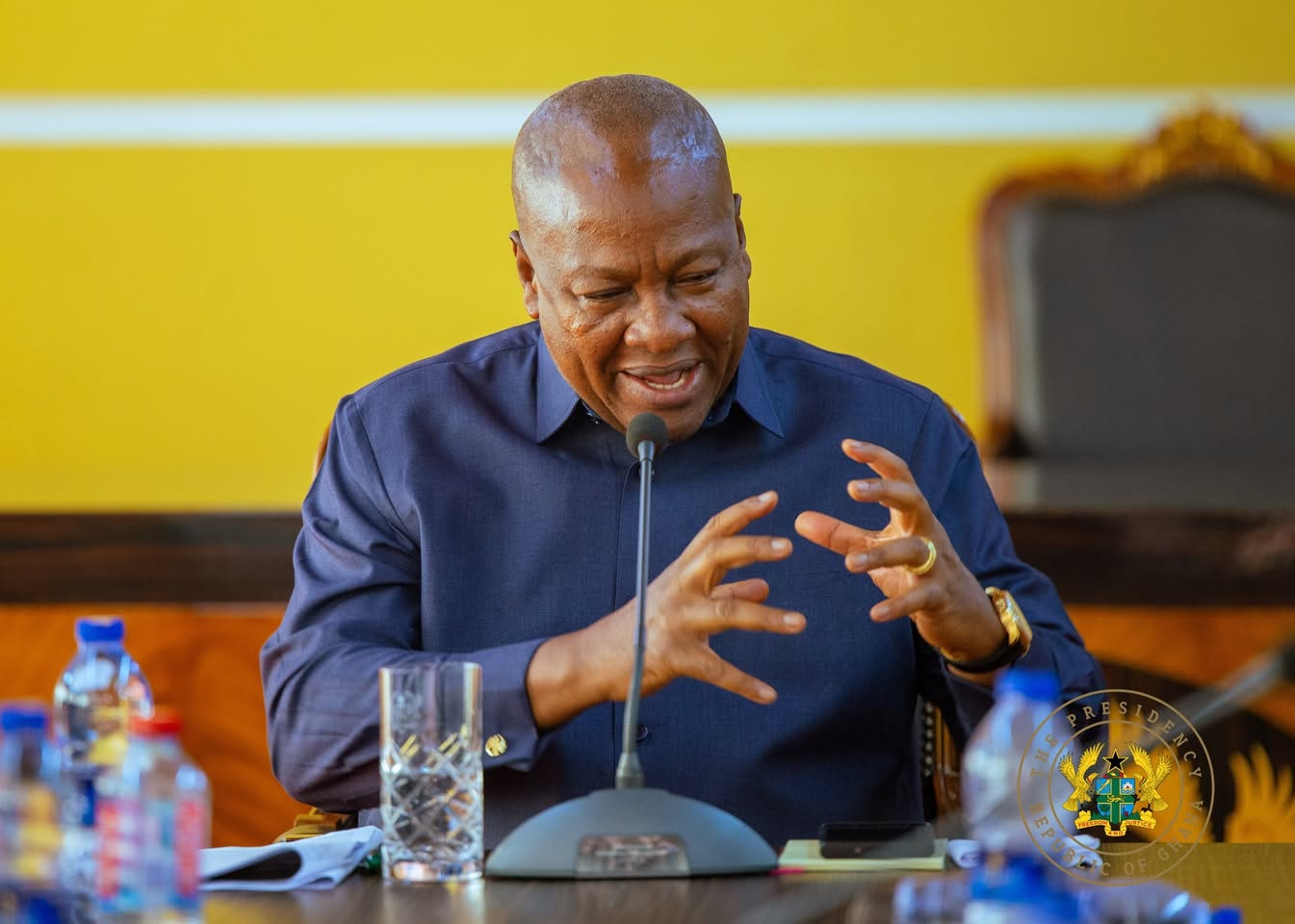
    Speaking at the Global Mining Summit on Monday, June 2, President Mahama noted that the recent development marks a significant milestone in Ghana’s ongoing efforts to rehabilitate mined lands and foster sustainable mining practices.

    “Let me be clear at this juncture: artisanal miners are not enemies of the state. If properly trained and supported, they can be allies in our development. Working together with the small-scale mining sector, we will reclaim our forest reserves and restore the purity of our water bodies,” the President said.

    According to President John Dramani Mahama, the government plans to reclaim 10,000 hectares of mined-out lands from illegal mining activities.

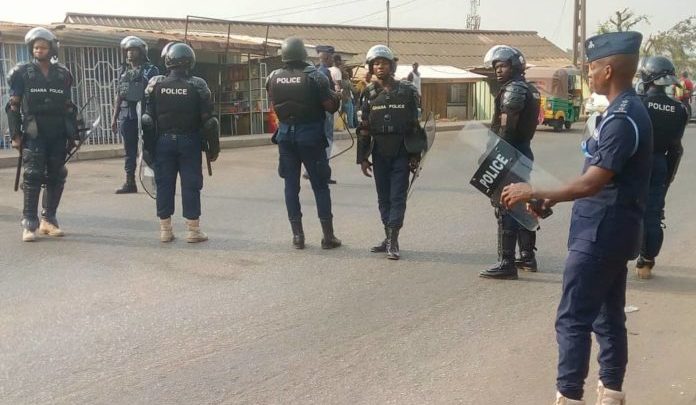
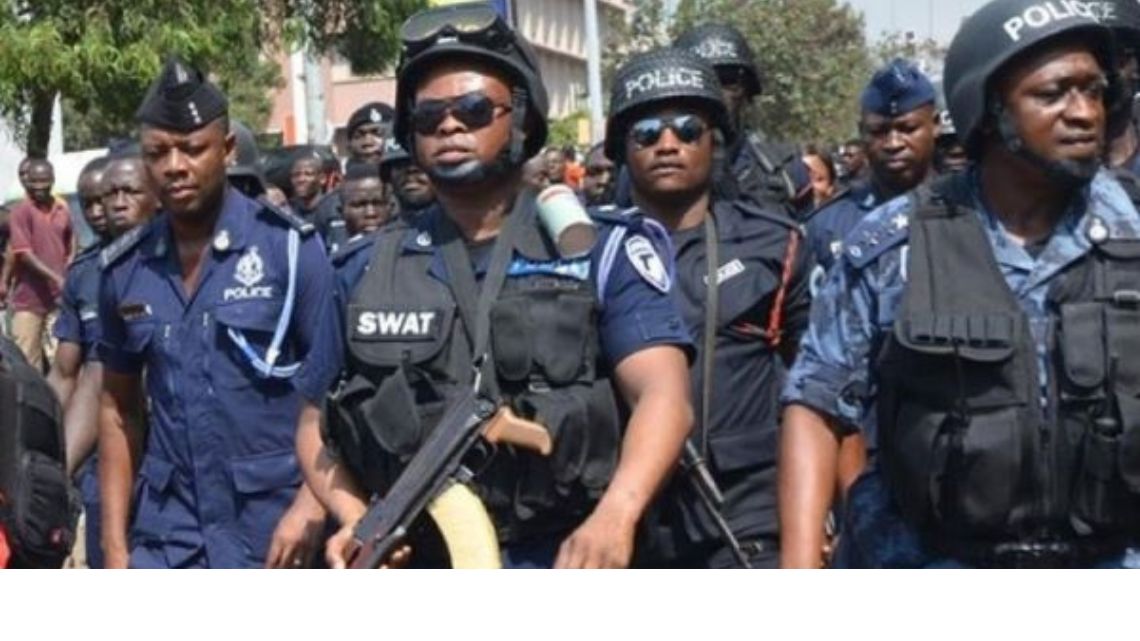
    The Ghana Police Service, in recent times, has embarked on several operations to crack down on illegal mining activities.

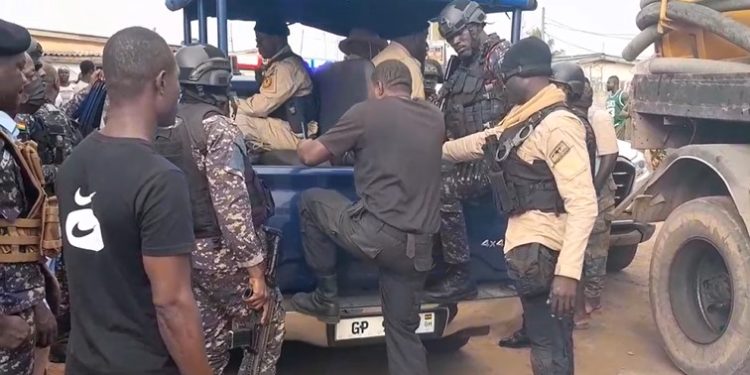
    Its special Anti-Galamsey Taskforce seized more than 100 excavators, along with weapons, chanfang machines, bulldozers, and other illegal mining equipment.

    The police’s efforts have also resulted in the arrest of numerous individuals who are undergoing legal proceedings.

    Meanwhile, President John Dramani Mahama has announced that the government, in the coming days, will approve the importation of excavators except through a valid permit.

    “We will track excavators to know whether they are being used for illegal mining. Ghana currently has more excavators than the rest of Africa combined. The new permitting regime will not allow you to import any excavator unless you have a valid permit to do so,” President Mahama stated.

    A few months ago, the Lands and Natural Resources Minister, Emmanuel Armah-Kofi Buah, announced the rollout of a system to monitor excavator imports and usage, involving port tagging and digital tracking in partnership with several state agencies.

    The third most valuable item imported into this country is excavators, and it is worth GHC6.2 billion, according to the sector minister.

    The joint Military-Forestry Commission task force that conducted targeted operations in high-risk districts across the Ashanti, Western, and Western North Regions led to the seizure of 100 excavators, three bulldozers, and four vehicles.

    Excavator owners and operators who have failed to register their machines with the Driver and Vehicle Licensing Authority (DVLA) risk losing them to the state, as the government intensifies efforts to clamp down on illegal mining activities.

    The Chief Executive Officer (CEO) of the DVLA, Julius Neequaye Kotey, issued the directive in Accra, warning that effective June 1, any excavator not registered with the DVLA will be confiscated.

    Speaking at a press briefing, Mr. Kotey announced that the Ghana Police Service and the DVLA’s operational team will begin nationwide enforcement after the deadline, arresting and impounding excavators being used at mining sites or for commercial purposes without proper documentation.

    “This exercise will help identify every excavator that enters the country and trace how it is being used. The goal is to ensure we can monitor and hold people accountable,” Mr. Kotey said.

    The directive falls in line with Section 38 of the Road Traffic Act, 2004 (Act 683), which mandates the registration of all motor vehicles and trailers, including farm and heavy-duty equipment. Despite the law, the DVLA has found many unregistered excavators operating in mining areas, some of which have been used in illegal activities.

    Mr. Kotey emphasized that the DVLA, with its 34 offices nationwide, has the capacity to register all excavators and farm machinery within the two-week period and is ready to strictly enforce the directive.

    He stressed the environmental toll caused by unregulated excavator use in illegal mining, saying, “Excavators in the hands of illegal miners have worsened the destruction of our environment. This is why we must act.”

    To further control the situation, the DVLA, in collaboration with key agencies like the Minerals Commission, National Security, the Ghana Ports and Harbours Authority (GPHA), and the Customs Division of the Ghana Revenue Authority (GRA), has started tagging all newly imported excavators.

    In addition to tagging new imports, the Minerals Commission has been tasked to lead a team that will tag all excavators already in the country. Legal small-scale mining sites have also been geo-fenced, with their site coordinates integrated into the Ghana Mine Repository and Tracking software for better oversight.

  • Ghana joins nations supporting Morocco’s autonomy to end Western Sahara conflict

    Ghana joins nations supporting Morocco’s autonomy to end Western Sahara conflict

    The government has endorsed Morocco’s autonomy plan for Western Sahara.

    Ghana joins Nigeria in partnering with Morocco on a pipeline that would aid inland African countries in accessing global trade routes through the Atlantic Ocean.

    The Moroccan government’s intention to grant autonomy to the region has gained strong support and momentum after the United States (U.S.) acknowledged Morocco’s control over the disputed Western Sahara territory in 2020, and France did the same in July last year.

    The unresolved conflict, which began years ago, is between Morocco and the Polisario Front, a group supported by Algeria.

    The Polisario Front seeks to establish an independent country in Western Sahara, and Morocco wants it as part of its national territory.

    While engaging the Moroccan Foreign Minister, Mr Ablakwa noted that Ghana considers the autonomy plan “as the only realistic and sustainable basis to a mutually agreed solution to the issue.”

    He added that, “The UN should remain the exclusive framework for finding a solution to the issue.”

    Also, Kenya and the UK in recent times have echoed the same sentiments as Ghana’s Foreign Minister, highlighting growing global support for Morocco’s autonomy plan.

    In a related development, Ghana and Morocco have also agreed to cooperate on food security, a move supported by the Minister of Foreign Affairs, Samuel Okudzeto Ablakwa, especially as Morocco is home to fertilisers and phosphate giant OCP.

    He emphasised that these fertilisers would enhance Ghana’s cocoa farming and curb “dependence on food imports, worth $3 billion annually”.

    The Ghanaian government has signed a bilateral agreement with Morocco to eliminate the need for traditional visas for Ghanaian citizens traveling to the country.

    The Foreign Minister noted that the deal was finalized on Thursday, June 5, during a two-day working visit to Morocco, following discussions with the country’s Foreign Minister, H.E. Nasser Bourita.

    He revealed that a streamlined online travel authorisation has replaced the previous application process for Ghanaian citizens.

    According to him, the latest move will grant the application within 24 hours without the need to visit the Moroccan embassy.

    “With immediate effect, Ghanaians will no longer require traditional visas to travel to Morocco. An online authorization which will be granted within 24-hours without embassy appointments is all that’s needed,” he wrote.

    The visa waiver to Morocco is expected to increase tourism, improve trade, and strengthen the relationship between Morocco and Ghana.

    “With existing direct flights which would be increased following this new agreement, we expect this bilateral visa waiver policy to greatly facilitate trade, tourism and deepen people-to-people engagements between both countries.”

    “The borders in Africa must not be allowed to divide us — they can be bridges of connectivity. Diplomacy must make meaningful impact in the lives of the people we serve,” the sector minister wrote.

  • Public asset declarations could jeopardize officials’ safety – Special Prosecutor

    Public asset declarations could jeopardize officials’ safety – Special Prosecutor

    Special Prosecutor, Kissi Agyebeng, has expressed his opposition to the declaration of assets by government officials as mandated by the Public Office Holders Act.

    Justifying his opposition, he indicated such an initiative puts public officers in a position where they expose themselves to unnecessary attention and potential threats against their lives and their loved ones.

    “I do not and I will not add my voice to calls for the publication of assets for public scrutiny. In our experience, it will be unhelpful and would merely subject public officers to inordinate public curiosity and a specter of the real likelihood of reprisals against the assets,” he said.

    The Special Prosecutor made these remarks at the High-Level Conference on Ghana’s Anti-Corruption Architecture, held under the theme “Revitalizing the Anti-Corruption Architecture in Africa: Ghana’s Accountability Journey,” in Accra on Friday, June 6.

    To him, fighting corruption effectively in the country requires striking a balance between transparency and the protection of individual rights.

    “In my estimation, publication of who has declared or has not declared his assets in the context of a workable asset verification and treason model would be sufficient to assure the integrity of the asset declaration system,” he added.

    The legal framework guiding asset declaration is the Public Office Holders (Declaration of Assets and Disqualification) Act, 1998 (Act 550). The Act mandates public officials to declare their assets before assuming office, every four years, and at the end of their term, submitting the forms no later than six months after any of these events.

    Importantly, Section 8 of the Act provides that allegations of non-compliance must be referred to the Commission on Human Rights and Administrative Justice (CHRAJ), which is empowered to investigate and take appropriate action.

    President John Dramani Mahama submitted his asset declaration forms to the Auditor General on February 18 and issued a firm order to his appointees to follow suit by March, warning of sanctions for defaulters.

    A report by The Fourth Estate revealed that several high-ranking officials have yet to fulfill their constitutional obligations. Out of 55 ministers and deputy ministers, nine have failed to declare their assets. 

    Additionally, eight out of 32 presidential staffers and 37 out of 84 heads of state institutions appointed between January 15 and March 18 had not complied with the president’s directive.

    On May 6, the president sanctioned his appointees who missed the March 31 deadline by directing them to forfeit their three months’ salary, which he noted will be channeled into the Ghana Medical Trust Fund, also known as The MahamaCares, a landmark initiative aimed at providing financial assistance to individuals living with chronic diseases across the country.

    He gave a May 7 ultimatum, emphasizing that any official who fails to meet the deadline will be sacked. As no government official has been relieved of his or her duties, it is believed that all government officials have declared their assets.In the meantime, civil society groups and anti-corruption advocates have supported the full publication of asset declarations as a means to promote integrity and accountability.

  • Stakeholder engagement ongoing to ensure cedi gains reflect in cocoa prices – COCOBOD

    Stakeholder engagement ongoing to ensure cedi gains reflect in cocoa prices – COCOBOD

    The Ghana Cocoa Board (COCOBOD) has expressed its commitment to ensuring that cocoa farmers receive a meaningful and fair boost in their income when the government announces the new cocoa producer price.

    A significant increase in Ghana’s cocoa producer price is anticipated ahead of the next crop season. The upward adjustment is believed to be an effort to match local prices with gains in the global cocoa market.

    The current cocoa producer price in Ghana is GH¢3,100 per 64kg bag, which translates to GH¢49,600 per tonne. This price was after it saw a rise on November 8 last year, when the Ghana Cocoa Board announced an increase from GH¢48,000 per tonne to GH¢49,600.

    Presently, cocoa farmers nationwide are hopeful of a significant hike in the price of their produce, following President John Dramani Mahama’s assurance of new prices in August.

    “And to cocoa farmers, the CEO of COCOBOD has informed me that by August, they will announce the new cocoa producer price. And I can assure you, the price is going to be very good.”

    With his confidence in the satisfaction the price review would give farmers, he entreated all individuals contemplating venturing into the cocoa farming business to do so.

    “To those of you who don’t have cocoa farms, go and start looking for land and start planting cocoa,” he said.

    COCOBOD in April debunked claims of a new cocoa producer price due to the absence of a functional Board of Directors and Producer Price Review Committee, which it impossible for a producer price to be adjusted.

    Speaking to Joy News on Friday, June 6, the Chief Executive Officer (CEO) of COCOBOD, Dr. Randy Abbey, disclosed that there is an ongoing engagement with authorities to guarantee that farmers are awarded a fair producer price that reflects current global market trends.

    Although he bemoaned how the appreciation of the local currency could derail farmers’ earnings, he remained optimistic that their income and livelihoods would be protected following the conclusion of the ongoing discussions.

    “The truth is that we are convinced it is going to happen. On the dollar side, we will see its impact. Based on the strength of the cedi, in cedi terms, you may not see anything significant. What we are seeing now is a situation where global prices are high, and that would normally translate into higher incomes for our farmers. But with the cedi appreciating sharply, the gains could be reduced when translated into Ghana cedis,” he explained.

    “We must strike a balance. Farmers deserve to benefit from the favorable market conditions, and we are working with stakeholders to ensure the final producer price reflects both global trends and domestic realities,” he added.

    In a statement at the bank’s 124th Monetary Policy Committee meeting on May 21, BoG Governor Dr. Johnson Asiamah said the central bank is committed to maintaining fiscal and monetary policies that support the cedi’s stability.

    Dr. Asiamah noted that the bank will continue implementing reforms to monitor the forex market and prevent illegal practices that threaten the currency’s strength.

    The cedi, he said, had gained “significant value — almost 19% — between April and May,” attributing the appreciation to “a combination of factors, including prudent monetary policy, improved market sentiment, and external sector gains.”

    The average interbank rates as of Wednesday, June 4, show the US dollar buying at GH₵10.22 and selling at GH₵10.23. The British pound is buying at GH₵13.86 and selling at GH₵13.88. The euro is currently being bought at GH₵11.68 and sold at GH₵11.69.

  • Ghana engaging WHO, others for Mpox vaccines amid surging cases – GHS

    Ghana engaging WHO, others for Mpox vaccines amid surging cases – GHS

    Ghana will soon experience relief in response to the surging cases of monkeypox (Mpox), as the government is engaging international organizations for assistance.

    Speaking to the media on Saturday, June 7, Director for Public Health at the Ghana Health Service (GHS), Dr. Franklyn Asiedu Bekoe, disclosed that the country is already in talks with the World Health Organization (WHO) and Africa Centres for Disease Control and Prevention (Africa CDC) to receive MPOX vaccines.

    According to him, the GHS has submitted the requirements for the vaccines. He noted that, unlike before, the country’s current trend of infection has given Ghana the room to receive vaccines.

    “We’re engaging WHO and the Africa CDC so that we get the vaccines. Somewhere last year, Ghana didn’t have any established human-to-human transmission, so we do not qualify. Now that we have human-to-human transmission. The idea is that we will be able to identify a clear group who will benefit from the vaccine,” he added.

    In its recent update, the GHS reported that as of 31st May, 26 new cases had been recorded, bringing the total confirmed cases to 45. It reported that two individuals who contracted the disease are in admission at a health facility.

    In a post on Facebook, the Service noted the recent increase in the number of confirmed Mpox cases “is largely due to enhanced surveillance efforts, particularly through active contact tracing, and a heightened level of awareness among the public.”

    “These efforts are crucial in our strategy to identify and isolate cases promptly within communities. We remain committed to maintaining this momentum to ensure that all cases are detected early, thereby helping to contain the outbreak effectively,” the Service added.

    As of May 29, 10 new cases had been recorded, leading to a total of 19 confirmed cases. Five individuals were admitted to health facilities at the time. Presently, no deaths have been reported.

    As of May 21, the GHS in a flier revealed that the country’s confirmed cases had hit nine. The Service earlier noted that as of May 18, the number of cases stood at four.

    The cases were identified in the Greater Accra and Western regions. This brings the total number of cases to four.

    Ghana recorded the first Mpox case in June 2022, with five cases, and by November 2023, health authorities had confirmed a total of 34 cases. Despite the increase in cases, Ghana has not recorded any Mpox-related deaths.

    The Ministry of Health and the GHS have called on all media houses to support public education efforts by using their platforms to raise awareness and provide accurate information on Mpox.

    “The Government of Ghana remains committed to safeguarding public health. Drawing on our experience in managing similar outbreaks, we will continue to implement appropriate measures to protect the health and well-being of all residents,” said in its statement dated May 18.

    Mpox is a viral illness similar to smallpox. It typically causes fever, swollen lymph nodes, and a rash. The virus spreads through direct contact with an infected person’s skin or bodily fluids, including through sexual contact.

    To reduce your risk, avoid close contact with symptomatic individuals, maintain proper hand hygiene, and refrain from sharing personal items.

    Symptoms may include fever, rash or lesions, tiredness, headaches, muscle and back pain, and swollen glands.

    Across Africa, the disease remains a major concern. As of March 2025, more than 24,200 cases and around 260 deaths have been recorded in 22 countries.

  • Without strikes, we’ll be ignored – GRNMA

    Without strikes, we’ll be ignored – GRNMA

    The Ghana Registered Nurses and Midwives Association (GRNMA) has defended its decision to continue its ongoing strike.

    In an interview on Channel One on Saturday, June 7, it noted that the move is the only way to compel the government to address the group’s concerns.

    He stated that GRNMA will not participate in any further negotiations until their entitlements under the signed agreement are fulfilled.

    “Looking at what we have, the only tool we have that we can take to let the employer listen is that we have taken and we passed through due process. So we feel that Ghanaians are affected in a way, but that is the weapon we have. If you don’t want to sign it, something that is binding on the employer, you don’t want to sign it, and you call me to come and sit down again, that is something we can’t pick,” he stated.

    Members of GNRMA have withdrawn from their posts over delays in their 2024 Collective Agreement.

    In response, a 10-day injunction has been placed on the nationwide strike after the Industrial and Labour Division of the High Court in Accra described the protest as illegal.

    The order comes after the National Labour Commission (NLC) filed an ex parte application on Thursday, June 5.

    Meanwhile, the GRNMA has disclosed that it is yet to formally receive a court order restraining its ongoing strike.

    Public Relations Officer of the GRNMA, Joseph Krampah, has insisted that the group will continue its strike until an official injunction notice is served.

    According to him, although the Association is a law-abiding group, it cannot obey unofficial reports.

    “They think that they should serve us a letter; we can’t prevent them, but what constitutes an illegal strike? When in Ghana has the Labour Commission said that this strike is legal? It is only illegal when they don’t inform your office about the intended strike, and we did—you had the letter,” Krampah said.

    Adding: “If you are declaring it as illegal or whatever and you are bringing injunction, that is your job to do, and we respect the court and the NLC very much. We are law-abiding people. But just that things that we have not seen, we cannot act on them. I am saying that we haven’t received any letter. None of the executives have been served any letter about that. So till we know that, aluta continua.”

    However, to ensure that the general public continues to access quality healthcare, the Health Ministry has instructed all hospital managers, particularly Directors of Nursing Services and their Deputies, to be present at work at all times during the period of the industrial action.

  • OSP is seeking justice, not retaliating – Edem Agbana on Ofori-Atta’s prosecution

    OSP is seeking justice, not retaliating – Edem Agbana on Ofori-Atta’s prosecution

    Member of Parliament (MP) for Ketu North, Edem Agbana, has indicated that the prosecution of former Finance Minister Ken Ofori-Atta is not politically motivated.

    Speaking on Channel One TV on Saturday, June 7, Mr Agbana insisted that the indictment is in the quest for accountability.

    “Ministers and Directors who served under John Dramani Mahama between 2013 and 2015 were investigated. The current FIC boss, Kojo Twum Boafo, was abused. He had visited the EOCO office not less than 33 times for investigation.”

    “His mother’s house, family house, and his own home were all ransacked. Did the NDC come out to say, we just want to embarrass him? It is never payback time, it is about accountability. All we are asking is that you present yourself to the process for due process to take place.”

    “Nobody is interested in either paying back or in embarrassing anyone,” he stated.

    The Office of the Special Prosecutor (OSP) refused the legal team of former Finance Minister Ken Ofori-Atta’s request for a virtual session for a probe into allegations of financial loss to the state.

    Ken Ofori-Atta was expected to appear before the Office of Special Prosecutor (OSP) on Monday, June 2; however, that was not possible as sources reported deterioration in his health.

    His legal team is said to have formally communicated the development to the OSP and the Human Rights Court, submitting medical reports that detail his current condition and outline scheduled surgical procedures.

    The OSP, in reaction to the request during an engagement with the press on Tuesday, June 3, declared Mr Ofori-Atta a wanted person again and issued an Interpol Red Notice for failing to appear before the OSP after assuring the office of his presence.

    According to the OSP, the lawyers of Mr Ofori-Atta say their client is expected to undergo a medical procedure for cancer later this month.

    It noted the failure of the former minister to inform the OSP of changes in medical procedure that were to have happened in March of this year.

    “He has failed to show any medical report that shows he is a medical risk.”

    “We want him physically, and we insist on it,” the OSP said, while noting that Mr Ofori-Atta cannot indicate the mode of investigation.

    “His conduct is totally unacceptable. We will no longer tolerate him.”

    In February, the OSP declared Ofori-Atta wanted for causing financial loss to the state in several dealings, which include the following:

    Contractual arrangement between Strategic Mobilisation Ghana Limited and the Ghana Revenue Authority for the stated objective of the enhancement of revenue assurance in the downstream petroleum sector, upstream petroleum production, and minerals and metals resource value chain.

    Termination of a distribution, loss reduction, and associated network improvement project contract between the Electricity Company of Ghana Limited and Beijing Xhao Chen Technology BXC.

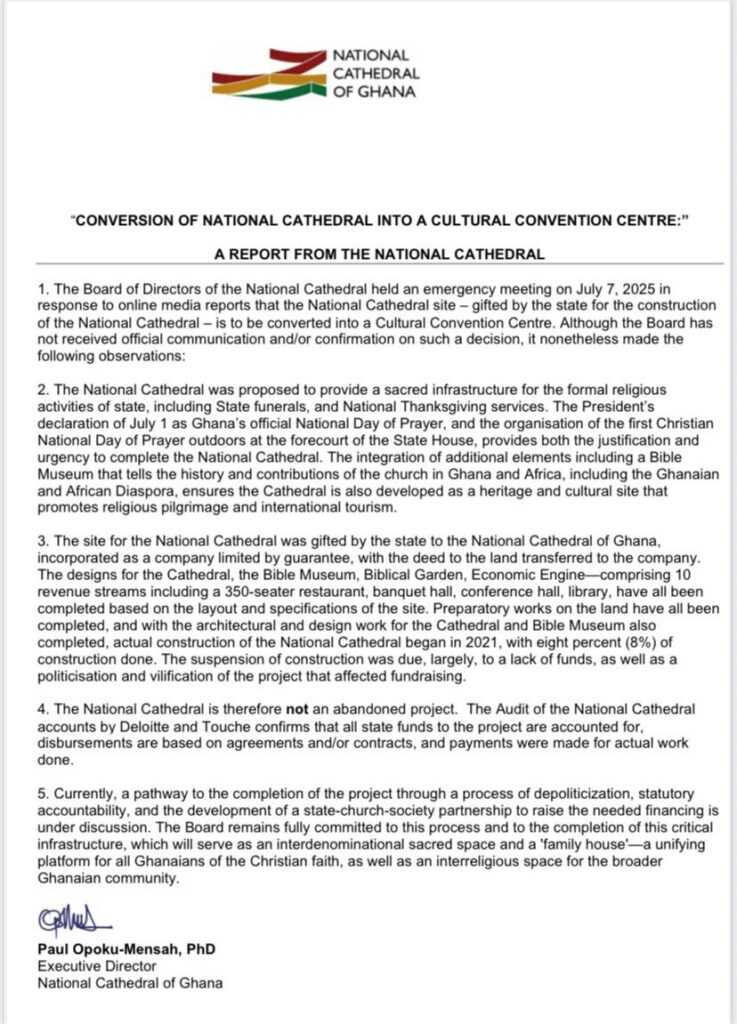
    Procurement of contractors and materials and activities and payments in respect of the National Cathedral project

    Activities and payments in respect of a contract awarded by the Ministry of Health initially commenced by the Ministry for Special Development Initiative to service Ghana Auto Group Limited for purchases and after-sales service and maintenance of 307 Mercedes-Benz Sprinter 304 5 CDI Ambulances for the National Ambulance Service.

    Payments out of and utilization of the tax refund account of the Ghana Revenue Authority.

    Later, the legal representatives of the former finance minister informed the OSP that their client is currently undergoing medical treatment in the United States and is unable to honor an invitation for questioning.

    Ofori-Atta then assured the OSP of its commitment to appearing for questioning on a fixed date, which influenced the OSP’s decision to temporarily take his name off the list in March.

    However, the office stressed that he is legally obligated to show up on June 2. Failure to do so, an Interpol Red Notice would be issued and extradition proceedings would be initiated in any country where he may be located.

    Ken Ofori-Atta then took legal steps to block the OSP from re-declaring him wanted. His lawsuit argues that the agency’s actions are baseless and unjustified.

    Ofori-Atta has dismissed allegations of financial misconduct and corruption, insisting that he has been cooperating with investigators through his legal representatives.

    In his court filing, he contends that the OSP’s actions have inflicted serious harm on his reputation and personal life. He is seeking a legal injunction to prevent further declarations against him until the case is fully resolved.

    The Human Rights Court has adjourned to June 18 for a ruling on the motion filed by the former Finance Minister, seeking to restrain the OSP from declaring him wanted, among other reliefs.

    INTERPOL Red Notice

    A Red Notice is a request to law enforcement worldwide to locate and provisionally arrest a person pending extradition, surrender, or similar legal action.

    It is based on an arrest warrant or court order issued by the judicial authorities in the requesting country. Member countries apply their own laws in deciding whether to arrest a person.

    INTERPOL cannot compel the law enforcement authorities in any country to arrest someone who is the subject of a Red Notice.

    Each member country decides what legal value it gives to a Red Notice and the authority of their law enforcement officers to make arrests.

  • Ghana Hajj Taskforce reports death of 7 pilgrims

    Ghana Hajj Taskforce reports death of 7 pilgrims

    The Ghanaian Hajj community has lost seven of its members who left the country to participate in this year’s Hajj pilgrimage, the Chairman of the Ghana Hajj Board, Alhaji Collins Dauda, has disclosed.

    Speaking to the media on Saturday, June 7, Alhaji Collins Dauda revealed that the deceased include five women and two men. All seven have since been buried in Saudi Arabia, as per Islamic customs.

    The identities of the deceased pilgrims have not been disclosed to the media by the chair of the Ghana Hajj Board. Alhaji Dauda, however, extended the board’s condolences to the bereaved families.

    “Unfortunately, for the 2025 pilgrimage, we have lost seven of our compatriots. Deaths are painful, but death will come when it has to come and therefore, regrettably, as the case is, we take the opportunity to express our deepest condolences to the families back in Ghana who have been affected in this case,” Alhaji Dauda stated.

    According to him, the rest of the pilgrims are expected to be flown from Saudi Arabia to Ghana on Friday, June 20.

    The Hajj pilgrimage began on the 8th day of Dhul Hijjah and lasted till the 13th of the month. The Ghanaian Hajj community encountered several setbacks, including the repatriation of some pilgrims from Mecca, Saudi Arabia.

    Due to visa-related issues, five pilgrims could not participate in the mandatory religious duty for all Muslims as they were repatriated back to their country.

    According to the Head of Corporate Affairs at the Hajj Taskforce, Alhaji A.B.A. Fuseini, “Some said they were deported, but we choose to use the word ‘repatriated.’ Deportation connotes some criminality, but these people who have returned have not committed any crime. It was an error in the issuance of their visa.

    “Some attempts to realign the visas resulted in some unfortunate mistakes where their visas were withdrawn.”

    Recent reports disclosed the scorching temperatures, frequently exceeding 48°C during the peak ritual days. The situation posed significant health risks to pilgrims, especially the elderly or those with pre-existing conditions.

    On Sunday, May 28, an incident was reported at the Rafahya Al-Seteen Hotel in Mecca, where hundreds of Ghanaian pilgrims had lodged, causing a temporary evacuation.

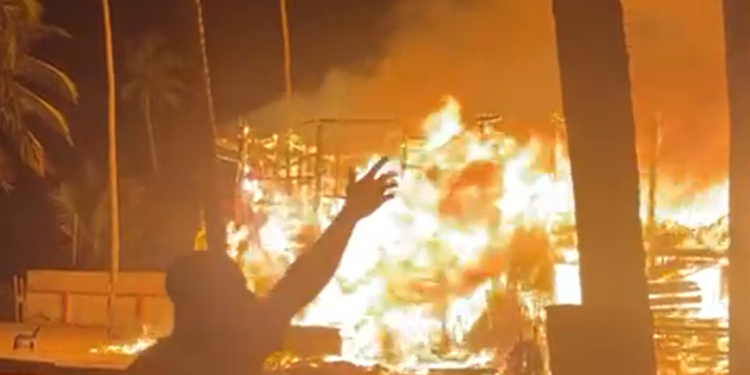
    Per reports, a structural concern and a fire incident on the 12th floor of the edifice are said to be responsible for the ruckus that occurred on Sunday afternoon, May 25. But the authorities are yet to ascertain the cause of the panic.

    Saudi fire and police officials arrived at the scene to ensure all was safe for the residents to return to their various rooms.

    This year’s pilgrimage recorded a massive turnout due to the Mahama-led government’s decision to reduce the Hajj pilgrimage fee to 62,000 to 75,000 Ghana cedis under the previous administration.

    Approximately 6,000 Ghanaian Muslims traveled to Saudi Arabia for Hajj 2025. These numbers show an increase of 2,000 Ghanaian participants as compared to 4,000 last year.

    In Ghana, Friday, June 6, was declared a statutory public holiday for the Eid al-Adha celebration, which marks the end of the annual pilgrimage to Mecca or Hajj.

    Meanwhile, the continuous appreciation of the local currency could reduce the fees Ghanaian Muslims pay to travel to Mecca to perform the Hajj pilgrimage. President John Dramani Mahama announced this during his Thank You Tour in Kintampo in the Bono East Region on Thursday, May 29.

    “At the time we started paying for the Hajj, the cedi was at GHC15.5 to the dollar. So, the fare we came up with for the $4,000 cost to do the Hajj came to GHC 62,000. Next year, if you do a calculation with where the Cedi is currently—GHC 10.5—it means the fare for Hajj may go below GHC 50,000,” he said.

  • Strike holds, we’re yet to receive injunction notice – GRNMA

    Strike holds, we’re yet to receive injunction notice – GRNMA

    The Ghana Registered Nurses and Midwives Association (GRNMA) has disclosed that it is yet to formally receive a court order restraining its ongoing strike.

    A 10-day injunction has been placed on the nationwide strike by the GRNMA after the Industrial and Labour Division of the High Court in Accra described the protest as illegal.

    The court presided over by Justice Priscilla Dikro Ofori has therefore ordered the GRNMA to halt its strike with immediate effect.

    The order comes after the National Labour Commission (NLC) filed an ex parte application on Thursday, June 5.

    However, speaking to Citi News on Friday, June 6, Joseph Krampah, Public Relations Officer of the GRNMA, insisted that the group will continue its strike until an official injunction notice is served.

    According to him, although the Association is a law-abiding group, it cannot obey unofficial reports.

    “They think that they should serve us a letter; we can’t prevent them, but what constitutes an illegal strike? When in Ghana has the Labour Commission said that this strike is legal? It is only illegal when they don’t inform your office about the intended strike, and we did—you had the letter,” Krampah said.

    Adding: “If you are declaring it as illegal or whatever and you are bringing injunction, that is your job to do, and we respect the court and the NLC very much. We are law-abiding people. But just that things that we have not seen, we cannot act on them. I am saying that we haven’t received any letter. None of the executives have been served any letter about that. So till we know that, aluta continua.”

    GNRMA members have withdrawn from their posts, but to ensure that the general public continues to access quality healthcare, the Health Ministry has instructed all hospital managers, particularly Directors of Nursing Services and their Deputies, to be present at work at all times during the period of the industrial action.

    The GRNMA, in a letter dated May 29, notified the NLC of its intent to embark on industrial action over delays in their 2024 Collective Agreement.

    In response, the Ministry of Health on May 30th, met all Associations in the nursing fraternity, including the Ghana Registered Nurses and Midwives Association (GRNMA), Union of Professional Nurses and Midwives (UPNMG), Ghana Registered Midwives Association (GRMA), National Association of Registered Midwives (NARM-G), Psychiatric Nurses Association, Ghana (PAPNG) and the Nurses and Midwives Educators Society.

    During the meeting, all parties except the GRNMA accepted the sector minister’s proposal for a three (3) member team with a representation each from the Nurses group, the Ministry of Finance, and the Ministry of Health to see to the finality of the matter.

    However, GRNMA embarked on a strike action on Monday, June 2, to demand payment of their outstanding allowances following unsuccessful discussions with the ministry.

    “We negotiated our conditions of service. It was signed, sealed, and delivered, but it is not seeing implementation…and all that we are asking the Ministry of Finance is to approve the signed commission of service for implementation,” President of the GRNMA, Dr David Tenkorang Twum, told the media.

    Also, the ambulance service is expected to remain on standby in every district to support emergency situations promptly. Additionally, all health facilities are to establish coordinating structures that can effectively manage emergencies and maintain continuous communication with ambulance services to ensure a swift response when needed.

    Furthermore, the Director-General of the Ghana Health Service, along with Chief Executive Officers and Medical Directors of Teaching Hospitals, is required to provide daily reports to the Acting Chief Director on the status of healthcare service delivery within their respective institutions.

    To manage the anticipated surge in patient numbers due to ongoing industrial action, the Ministry of Health has pledged to collaborate with quasi-government health facilities. This partnership aims to ease the pressure on public health institutions and ensure continuous care delivery.

    The Ministry has also advised rotational nurses and those currently undergoing mandatory clinical training to refrain from participating in any form of industrial action. Their cooperation is crucial in maintaining essential services during this period.

    Ongoing monitoring of the situation will be conducted by the Ministry to ensure that all necessary logistics and resources are made available to mitigate the impact of the strike.

    The Ministry of Health has expressed its appreciation to the nurses and midwives who have chosen not to engage in the industrial action while appealing to the leadership of the Ghana Registered Nurses and Midwives Association (GRNMA) to reconsider their stance in the interest of public health and service continuity.

    However, the GRNMA remains resolute in its decision to intensify the strike with plans to withdraw both outpatient and emergency services across the country.

  • We’re not threatened by wooden desks ban – Wood Producers Association

    We’re not threatened by wooden desks ban – Wood Producers Association

    The Furniture and Wood Products Association of Ghana (FAWAG) has noted that the government’s decision to ban the use of wooden desks in schools will not collapse the industry.

    While speaking to Channel One on Friday, May 6, the Association’s Administrative Assistant, Christopher Dadzawa, indicated that the group has since switched to the use of metal and other materials in producing school furniture.

    “Not at all—it won’t affect local furniture producers. Before this announcement, metal furniture was already in the system, and I can also say with all pride that 20 years or so in the past, my association introduced metal furniture to the government. We did a pilot programme about it some 20, 15 years ago,” Dadzawa stated.

    The government on Thursday, June 5, announced its commitment to transition from wooden desks to plastic or metal desks at various levels of education across the country.

    This is aimed at reducing deforestation nationwide and ensuring the preservation and protection of the country’s vegetation.

    In a speech in commemoration of World Environment Day 2025 celebrations under the theme “Ending Plastic Pollution,” held at Kwabenya, Accra, yesterday, June 5, President John Dramani Mahama revealed his plans to issue a directive barring the usage of wood in making school desks.

    The use of wood for school desks, which has been the norm in the Ghanaian education system for over a century, dating back to the colonial era when formal schooling was introduced, will now be replaced with plastic or metal.

    “…it is my intention to issue a directive to stop the use of wood for furniture. We are soon going to pass a directive so school furniture will no longer be made of wood so that we can stop the cutting down of our trees. We would either use recycled plastics or metals for our furniture,” the president said.

    He further added that “We can’t be planting trees and cutting them down at the same time, and so to reduce the cutting of trees while we deal with plastics and felling of trees, let us not forget to deal with illegal small-scale mining.”

    Not only will wooden desks be banned, but also the importation of Styrofoam plastic, a common plastic used for the production of takeaway food packages.

    The President highlighted the plastic’s harmful effects and the danger it poses to the environment.

    “One of the most pernicious polluters is Styrofoam plastic,” he said. “When you go to buy your food and they put it in that white plastic something… and then you finish eating, you just dump it. That is one of the biggest polluters. And so we’re going to ban the importation of Styrofoam plastics,” the president remarked.

    President Mahama recommended the use of paper packaging or aluminum foil for the packaging of food.

    He added that manufacturers and importers of Styrofoam products should begin preparing for the change. “With the Ministry of Environment, soon we’re going to ban the importation and production of Styrofoam in Ghana. Our food packaging will be made from paper and also from aluminium material,” he said.

    Ghana generates an estimated 840,000 tonnes of plastic waste each year, according to a report by the Auditor General on plastic waste management.

    According to AG, only about 9.5% of this waste undergoes recycling, highlighting an urgent need for enhanced waste management and recycling strategies. The remaining 90.5% is either littered, dumped in drains, or burned in open areas without consideration of the environmental consequences.

    Climate change is a global crisis driven by human activities, particularly the burning of fossil fuels, deforestation, and excessive plastic waste.

    In Ghana, environmental advocates have been vocal about the dangers of plastic pollution, emphasising its role in clogging waterways, harming marine life, and contributing to greenhouse gas emissions.

    Organisations like Plastic Punch and the Environmental Protection Agency (EPA) have been leading efforts to reduce single-use plastics, with campaigns encouraging recycling, consumer behaviour change, and policy reforms.

    The government introduced the National Plastics Management Policy in 2020 to manage plastic waste across its entire lifecycle and promote a circular economy for plastics.

  • OSP declaring Ofori-Atta wanted again has no legal basis – Kofi Bentil

    OSP declaring Ofori-Atta wanted again has no legal basis – Kofi Bentil

    Vice-President of IMANI Africa, Kofi Bentil, has stated that the Office of the Special Prosecutor (OSP)’s decision to re-declare former Finance Minister Ken Ofori-Atta wanted for not appearing before the office is unconstitutional.

    In an interview with JoyNews on Saturday, June 7, Mr Bentil noted that “It is not constitutional for any institution to declare a person wanted because they did not submit themselves to investigation.”

    His comments are a reaction to OSP’s move to place Ofori-Atta on the list of wanted persons despite allegedly submitting a medical excuse for his absence on Monday, June 2.

    The legal team of the former finance minister had requested a virtual session for a probe into allegations of financial loss to the state, citing deterioration in Ofori-Atta’s health.

    However, the OSP refused and issued an Interpol Red Notice.

    It noted the failure of the former minister to inform the OSP of changes in medical procedure that were to have happened in March of this year.

    In February, the OSP declared Ofori-Atta wanted for causing financial loss to the state in several dealings, which include the following:

    Contractual arrangement between Strategic Mobilisation Ghana Limited and the Ghana Revenue Authority for the stated objective of the enhancement of revenue assurance in the downstream petroleum sector, upstream petroleum production, and minerals and metals resource value chain.

    Termination of a distribution, loss reduction, and associated network improvement project contract between the Electricity Company of Ghana Limited and Beijing Xhao Chen Technology BXC.

    Procurement of contractors and materials and activities and payments in respect of the National Cathedral project

    Activities and payments in respect of a contract awarded by the Ministry of Health initially commenced by the Ministry for Special Development Initiative to service Ghana Auto Group Limited for purchases and after-sales service and maintenance of 307 Mercedes-Benz Sprinter 304 5 CDI Ambulances for the National Ambulance Service.

    Payments out of and utilization of the tax refund account of the Ghana Revenue Authority.

    Later, the legal representatives of the former finance minister informed the OSP that their client is currently undergoing medical treatment in the United States and is unable to honor an invitation for questioning.

    Ofori-Atta then assured the OSP of its commitment to appearing for questioning on a fixed date, which influenced the OSP’s decision to temporarily take his name off the list in March.

    However, the office stressed that he is legally obligated to show up on June 2. Failure to do so, an Interpol Red Notice would be issued and extradition proceedings would be initiated in any country where he may be located.

    Ken Ofori-Atta then took legal steps to block the OSP from re-declaring him wanted. His lawsuit argues that the agency’s actions are baseless and unjustified.

    Ofori-Atta has dismissed allegations of financial misconduct and corruption, insisting that he has been cooperating with investigators through his legal representatives.

    In his court filing, he contends that the OSP’s actions have inflicted serious harm on his reputation and personal life. He is seeking a legal injunction to prevent further declarations against him until the case is fully resolved.

    The Human Rights Court has adjourned to June 18 for a ruling on the motion filed by the former Finance Minister, seeking to restrain the OSP from declaring him wanted, among other reliefs.

    Meanwhile, Ofori-Atta has appeared on Interpol’s website for “using public office for profit.”

  • OSP received Ofori-Atta’s medical report but lied – Lawyer

    OSP received Ofori-Atta’s medical report but lied – Lawyer

    Legal counsel for former Finance Minister Ken Ofori-Atta, Mr Frank Davies, has insisted that the Office of the Special Prosecutor (OSP) officially received his client’s medical report.

    On Monday, June 3, the OSP denied receiving a letter from a hospital containing an alleged medical report on the former Finance Minister.

    The OSP’s announcement follows the publication of a medical report by the Mayo Clinic by some media outlets, claiming the OSP received this letter and still declared the former minister a fugitive.

    The OSP, in a statement, stated, “We wish to place on record that neither Mr. Ofori-Atta nor his lawyers have submitted any such letter to the OSP.”

    According to the OSP, the only correspondence received from his legal representatives is a letter notifying the OSP of a change in his medical condition, and on their say-so.

    “It is notable that this alleged hospital letter has been circulated through the media rather than submitted to the law enforcement agency actively investigating him and responsible for decisions regarding his return to Ghana.”

    “To date, no certified medical records or official document from any hospital authority has been submitted to the OSP indicating that Mr. Ofori-Atta is incapacitated or unable to travel to Ghana,” the OSP added.

    The letter from the Mayo Clinic revealed that Mr. Ofori-Atta has undergone an MR-guided biopsy and has been diagnosed with prostate cancer; thus, a surgical intervention has been deemed necessary after the testing and MRI and biopsy procedures in March 2025.

    “This surgical procedure has been scheduled for June 13, with Dr. Paras Shah of the Department of Urology. It is hoped that a closer date may open up. Following the procedure, Mr. Ofori-Atta will require a recovery period before he is able to travel to his home country,” the letter added.

    However, in an interview on Citi FM on Friday, 6 June, Mr Davies noted that the medical report was officially submitted as part of the legal document requirements.

    “I have said, time without number, that, for the OSP to say that he hasn’t sighted that medical report is a blatant falsehood, and it is unfortunate that he is holding such a public office.”

    “The processes that were filed in court on May 27, 2025, pursuant to the application that was heard by the court on May 28, the medical report was in the bond that was served on the special prosecutor. Unless he doesn’t read his court processes thoroughly,” he remarked.

    On Monday, June 2, the OSP refused the legal team of Ofori Atta’s request for a virtual session for a probe into allegations of financial loss to the state.

    Ken Ofori-Atta was expected to appear before the Office of Special Prosecutor (OSP) on Monday; however, that was not the case.

    The OSP, in reaction to the request during an engagement with the press on Tuesday, June 3, declared Mr Ofori-Atta a wanted person again and issued an Interpol Red Notice for failing to appear before the OSP after assuring the office of his presence.

    It noted the failure of the former minister to inform the OSP of changes in medical procedure that were to have happened in March of this year.

    “He has failed to show any medical report that shows he is a medical risk.”

    “We want him physically, and we insist on it,” the OSP said, while noting that Mr Ofori-Atta cannot indicate the mode of investigation.

    “His conduct is totally unacceptable. We will no longer tolerate him.”

    In February, the OSP declared Ofori-Atta wanted for causing financial loss to the state in several dealings, which include the following:

    Contractual arrangement between Strategic Mobilisation Ghana Limited and the Ghana Revenue Authority for the stated objective of the enhancement of revenue assurance in the downstream petroleum sector, upstream petroleum production, and minerals and metals resource value chain.

    Termination of a distribution, loss reduction, and associated network improvement project contract between the Electricity Company of Ghana Limited and Beijing Xhao Chen Technology BXC.

    Procurement of contractors and materials and activities and payments in respect of the National Cathedral project

    Activities and payments in respect of a contract awarded by the Ministry of Health initially commenced by the Ministry for Special Development Initiative to service Ghana Auto Group Limited for purchases and after-sales service and maintenance of 307 Mercedes-Benz Sprinter 304 5 CDI Ambulances for the National Ambulance Service.

    Payments out of and utilization of the tax refund account of the Ghana Revenue Authority.

    Later, the legal representatives of the former finance minister informed the OSP that their client is currently undergoing medical treatment in the United States and is unable to honor an invitation for questioning.

    Ofori-Atta then assured the OSP of its commitment to appearing for questioning on a fixed date, which influenced the OSP’s decision to temporarily take his name off the list in March.

    However, the office stressed that he is legally obligated to show up on June 2. Failure to do so, an Interpol Red Notice would be issued and extradition proceedings would be initiated in any country where he may be located.

    Ken Ofori-Atta then took legal steps to block the OSP from re-declaring him wanted. His lawsuit argues that the agency’s actions are baseless and unjustified.

    Ofori-Atta has dismissed allegations of financial misconduct and corruption, insisting that he has been cooperating with investigators through his legal representatives.

    In his court filing, he contends that the OSP’s actions have inflicted serious harm on his reputation and personal life. He is seeking a legal injunction to prevent further declarations against him until the case is fully resolved.

    The Human Rights Court has adjourned to June 18 for a ruling on the motion filed by the former Finance Minister, seeking to restrain the OSP from declaring him wanted, among other reliefs.

  • High Court grants injunction against GRNMA strike for 10 days

    High Court grants injunction against GRNMA strike for 10 days

    A 10-day injunction has been placed on the nationwide strike declared by the Ghana Registered and Midwives Association (GRNMA) after the National Labour Commission (NLC) filed an ex parte application on Thursday, June 5.

    The Industrial and Labour Division of the High Court in Accra has described the strike action as illegal.

    The court presided over by Justice Priscilla Dikro Ofori has therefore ordered the GRNMA to halt its ongoing strike with immediate effect.

    “It is hereby ordered that the application is granted and the respondent herein, its executives, officers, members, agents, servants, employees, and other persons linked to the respondent are hereby injuncted or restrained from carrying on their illegal strike with immediate effect,” Justice Ofori stated in her order.

    The GRNMA, in a letter dated May 29, notified the NLC of its intent to embark on industrial action over delays in their 2024 Collective Agreement.

    In response, the Ministry of Health on May 30 met all associations in the nursing fraternity, including the Ghana Registered Nurses and Midwives Association (GRNMA), Union of Professional Nurses and Midwives (UPNMG), Ghana Registered Midwives Association (GRMA), National Association of Registered Midwives (NARM-G), Psychiatric Nurses Association, Ghana (PAPNG) and the Nurses and Midwives Educators Society.

    During the meeting, all parties except the GRNMA accepted the sector minister’s proposal for a 3-member team with a representative each from the nurses group, the Ministry of Finance, and the Ministry of Health to see to the finality of the matter.

    However, GRNMA embarked on a strike action on Monday, June 2, to demand payment of their outstanding allowances following unsuccessful discussions with the ministry.

    “We negotiated our conditions of service. It was signed, sealed, and delivered, but it is not seeing implementation…and all that we are asking the Ministry of Finance is to approve the signed commission of service for implementation,” President of the GRNMA, Dr David Tenkorang Twum, told the media.

    Reacting to the injunction, the GRNMA has disclosed that it is yet to formally receive a court order restraining its ongoing strike.

    The Public Relations Officer (PRO) of the GRNMA, Joseph Krampah, has insisted that the group will continue its strike until an official injunction notice is served. According to him, although the association is a law-abiding group, it cannot obey unofficial reports.

    “They think that they should serve us a letter; we can’t prevent them, but what constitutes an illegal strike? When in Ghana has the Labour Commission said that this strike is legal? It is only illegal when they don’t inform your office about the intended strike, and we did—you had the letter,” Krampah said.

    He added, “If you are declaring it as illegal or whatever and you are bringing an injunction, that is your job to do, and we respect the court and the NLC very much. We are law-abiding people. But just that things that we have not seen, we cannot act on them. I am saying that we haven’t received any letter. None of the executives have been served any letter about that. So till we know that, aluta continua.”

    However, the GRNMA remains resolute in its decision to intensify the strike with plans to withdraw both outpatient and emergency services across the country.

    According to the association, protesting is the only way to compel the government to address the group’s concerns; as such, it will not participate in any further negotiations until its entitlements under the signed agreement are fulfilled.

    “Looking at what we have, the only tool we have that we can take to let the employer listen is that we have taken and we passed through due process. So we feel that Ghanaians are affected in a way, but that is the weapon we have. If you don’t want to sign it, something that is binding on the employer, you don’t want to sign it, and you call me to come and sit down again, that is something we can’t pick,” the Public Relations Officer of the GRNMA noted.

    To ensure that the general public continues to access quality healthcare, the Health Ministry has instructed all hospital managers, particularly Directors of Nursing Services and their Deputies, to be present at work at all times during the period of the industrial action.

    The ambulance service is expected to remain on standby in every district to support emergencies promptly. Additionally, all health facilities are to establish coordinating structures that can effectively manage emergencies and maintain continuous communication with ambulance services to ensure a swift response when needed.

    Furthermore, the Director-General of the Ghana Health Service, along with Chief Executive Officers and Medical Directors of Teaching Hospitals, is required to provide daily reports to the Acting Chief Director on the status of healthcare service delivery within their respective institutions.

    To manage the anticipated surge in patient numbers due to ongoing industrial action, the Ministry of Health has pledged to collaborate with quasi-government health facilities. This partnership aims to ease the pressure on public health institutions and ensure continuous care delivery.

    The ministry has also advised rotational nurses and those currently undergoing mandatory clinical training to refrain from participating in any form of industrial action. Their cooperation is crucial in maintaining essential services during this period.

    Ongoing monitoring of the situation will be conducted by the ministry to ensure that all necessary logistics and resources are made available to mitigate the impact of the strike.

  • Ghanaians can visit Morocco without traditional visas – Ablakwa

    Ghanaians can visit Morocco without traditional visas – Ablakwa

    Ghanaian citizens who wish to visit Morocco will not need traditional visas to do so, the Foreign Affairs Ministry has announced.

    In a Facebook post on Friday, June 6, the Minister of Foreign Affairs, Samuel Okudzeto Ablakwa, noted that the new development is due to a recent bilateral agreement signed between the two countries.

    The Foreign Minister noted that the deal was finalized on Thursday, June 5, during a two-day working visit to Morocco, following discussions with the country’s Foreign Minister, H.E. Nasser Bourita.

    He revealed that a streamlined online travel authorisation has replaced the previous application process for Ghanaian citizens.

    According to him, the latest move will grant the application within 24 hours without the need to visit the Moroccan embassy.

    “With immediate effect, Ghanaians will no longer require traditional visas to travel to Morocco. An online authorization which will be granted within 24-hours without embassy appointments is all that’s needed,” he wrote.

    The visa waiver to Morocco is expected to increase tourism, improve trade, and strengthen the relationship between Morocco and Ghana.

    “With existing direct flights which would be increased following this new agreement, we expect this bilateral visa waiver policy to greatly facilitate trade, tourism and deepen people to people engagements between both countries,” he added.

    Meanwhile, Ablakwa has announced that a total of 31,935 passports have been printed within the first month of its launch, following the rollout of the novel chip-embedded passports.

    The new chip-embedded passport, which was rolled out on April 28, represents a major shift from the outgoing biometric system and brings Ghana in line with international travel standards.

    The updated document contains 175 security features and is embedded with nanotechnology to safeguard against fraud and damage. It also includes a compressed polymer-based biographical data page, which users are advised to handle carefully.

    Ghanaians still holding valid biometric passports can continue using them until 2030 in line with regulations set by the International Civil Aviation Organization (ICAO), though they may opt to upgrade to the new version at any time.

    Biometric Travel Solutions spearheaded the development of the new passport platform, with Troskit and Ghana Post leading courier services under a 24-hour operational model.

    As of May, a total number of 8,463 Ghanaians had received their new chip-embedded passports across the country, according to Mr Ablakwa. Three weeks ago, Mr Ablakwa saw to the first round of delivery of Ghana’s new chip-embedded passport. The minister joined Ghana Post on 9th May to personally hand over passports to clients at the addresses they provided.

    Applicants facing address challenges will be able to retrieve their passports from designated Ghana Post offices at no extra cost. The Ministry of Foreign Affairs has assured that Ghana Post will continue to ensure timely delivery of passports across the country. Delivery packages have been designed with tamper-evident sealing to guarantee document integrity.

    Director of the Accra Passport Office, Felix Nyarku, has expressed concerns over the inconsistencies in applicants’ identification documents, highlighting mismatches between names on Ghana Cards and birth certificates.

    During a visit by the Parliamentary Select Committee on Foreign Affairs last week, Mr Nyarku noted that this often delays the processing of chip-embedded passports.

    What not to do

    The new passport contains a biographical data-page composed of layers of polymer compressed into a solid substrate that must not be bent or kept in the pocket, especially the back pockets.

    It must be protected from heat and all forms of liquid. Holders are advised not to store other cards with chips embedded in them inside the passport, as it may interfere with encoded information on the (RFID) inside the passport.

    Avoid attempting to split the biographical data page. This will permanently damage the passport.

  • Eid-ul-Adha: Your piety is the true offering to Allah – Chief Imam preaches

    Eid-ul-Adha: Your piety is the true offering to Allah – Chief Imam preaches

    National Chief Imam, Sheikh Osman Nuhu Sharubutu, has preached that Allah finds pleasure in commitment to piety rather than offering animal sacrifices.

    In a message to commemorate the celebration of Eid ul-Adha, the Chief Imam called on Ghanaian Muslims to embrace unity, harmony, and respect.

    According to him, the Eid-ul-Adha festival serves as a reminder to choose unity over division, forgiveness over vindictiveness, and peace over violence.

    “Eid-ul-Adha is a festivity of sacrifice and an opportunity to reaffirm our faith in Allah.

    “Allah is not interested in the flesh and blood of the animals sacrificed, but in our commitment to piety,” he said.

    He ended his speech with a call for an end to the violence in conflict zones, specifically in Gaza.

    “Genocidal impunity and moral bankruptcy. We cannot surrender our God-given humanity to modern-day barbarity in the name of supremacy,” he added.

    In the same vein, President John Dramani Mahama has admonished Ghanaians to unite and focus on building a better Ghana.

    According to him, Eid ul-Adha celebration embodies these values that Ghanaians must uphold.

    “Let’s use this celebration to strengthen our bonds of brotherhood and the commitment to work together to build the Ghana we want,” he stated.

    Today, Friday, June 6, has been declared a statutory public holiday for the Eid al-Adha celebration.

    Eid al-Adha celebration marks the end of the annual pilgrimage to Mecca or Hajj.

    The celebration brings together Muslims across the globe in spirit with a shared commitment to faith and also perform acts of charity on the day of the occasion.

    The Hajj pilgrimage begins on the 8th day of Dhul Hijjah and lasts till the 13th of the month.

    This year’s pilgrimage recorded a massive turnout due to the Mahama-led government’s decision to reduce the Hajj pilgrimage fee to 62,000 to 75,000 Ghana cedis under the previous administration.

    Approximately 6,000 Ghanaian Muslims traveled to Saudi Arabia for Hajj 2025.

    These numbers show an increase of 2,000 Ghanaian participants as compared to 4,000 last year.

    The continuous appreciation of the local currency could reduce the fees Ghanaian Muslims pay to travel to Mecca to perform Hajj pilgrimage.

    President John Dramani Mahama announced this during his Thank You Tour in Kintampo in the Bono East Region on Thursday, May 29.

    According to him, pilgrims are likely to pay as low as GHC 50,000 next year, down from GHS 62,000.

    “At the time we started paying for the Hajj, the Cedi was at GHC15.5 to the dollar. So, the fare we came up with for the $4,000 cost to do the Hajj came to GHC 62,000,” he explained.

    “Next year, if you do a calculation with where the Cedi is currently—GHC 10.5—it means the fare for Hajj may go below GHC 50,000.”

  • Let Eid be a time for unity and progress – President Mahama urges Ghanaians

    Let Eid be a time for unity and progress – President Mahama urges Ghanaians

    Ghanaians have been admonished to unite and focus on building a better Ghana.

    In a message to commemorate the celebration of Eid ul-Adha celebration, President John Dramani Mahama emphasized the importance of unity, kindness, and teamwork.

    According to him, Eid ul-Adha celebration embodies these values that Ghanaians must uphold.

    “Let’s use this celebration to strengthen our bonds of brotherhood and the commitment to work together to build the Ghana we want,” he stated.

    The government has declared Friday, June 6, a statutory public holiday for the Eid al-Adha celebration.

    The Hajj pilgrimage begins on the 8th day of Dhul Hijjah and lasts till the 13th of the month.

    This year’s pilgrimage recorded a massive turnout due to the Mahama-led government’s decision to reduce the Hajj pilgrimage fee to 62,000 to 75,000 Ghana cedis under the previous administration.

    Approximately 6,000 Ghanaian Muslims traveled to Saudi Arabia for Hajj 2025. These numbers show an increase of 2,000 Ghanaian participants as compared to 4,000 last year.

    The continuous appreciation of the local currency could reduce the fees Ghanaian Muslims pay to travel to Mecca to perform Hajj pilgrimage.

    President John Dramani Mahama announced this during his Thank You Tour in Kintampo in the Bono East Region on Thursday, May 29.

    According to him, pilgrims are likely to pay as low as GHC 50,000 next year, down from GHS 62,000.

    “At the time we started paying for the Hajj, the Cedi was at GHC15.5 to the dollar. So, the fare we came up with for the $4,000 cost to do the Hajj came to GHC 62,000,” he explained.

    “Next year, if you do a calculation with where the Cedi is currently—GHC 10.5—it means the fare for Hajj may go below GHC 50,000.”

  • District Education heads must lead school operations – President Mahama

    District Education heads must lead school operations – President Mahama

    President John Dramani Mahama has suggested that district education directors be granted the mandate to control the affairs of schools in their jurisdictions.

    Speaking at the Presidency during the presentation of the National Education Forum Report on Thursday, June 5, he noted that this will ensure accountability in schools.

    “Local governments, district education offices, school boards and community leaders must be given greater authority, flexibility and accountability in managing our schools,” he emphasised.

    He added that issues such as teacher absenteeism and payment of salaries to teachers who have abandoned their posts can effectively be managed by district education directors.

    President Mahama also proposed that the teachers’ recruitment be done across the country.

    He argued that job vacancies for teachers should be announced by district offices rather than just at the national level.

    President Mahama argued that district education directors possess data on the number of schools and the corresponding staffing requirements within the area.

    Also, in an unrelated development, President Mahama has announced the government’s commitment to transition from wooden desks to plastic or metal desks at various levels of education across the country.

    This is aimed at reducing deforestation nationwide and ensuring the preservation and protection of the country’s vegetation.

    The use of wood for school desks, which has been the norm in the Ghanaian education system for over a century, dates back to the colonial era when formal schooling was introduced.

    “…it is my intention to issue a directive to stop the use of wood for furniture. We are soon going to pass a directive so school furniture will no longer be made of wood so that we can stop the cutting down of our trees. We would either use recycled plastics or metals for our furniture,” the president said.

    He further added that “We can’t be planting trees and cutting them down at the same time, and so to reduce the cutting of trees while we deal with plastics and felling of trees, let us not forget to deal with illegal small-scale mining.”

    Not only will wooden desks be banned, but also the importation of Styrofoam plastic, a common plastic used for the production of takeaway food packages, highlighting the plastic’s harmful effects and the danger it poses to the environment.

    “One of the most pernicious polluters is Styrofoam plastic,” he said. “When you go to buy your food and they put it in that white plastic something… and then you finish eating, you just dump it. That is one of the biggest polluters. And so we’re going to ban the importation of Styrofoam plastics,” the president remarked.

    President Mahama recommended the use of paper packaging or aluminum foil for the packaging of food.

    He added that manufacturers and importers of Styrofoam products should begin preparing for the change. “With the Ministry of Environment, soon we’re going to ban the importation and production of Styrofoam in Ghana. Our food packaging will be made from paper and also from aluminium material,” he said.

    Ghana generates an estimated 840,000 tonnes of plastic waste each year, according to a report by the Auditor General on plastic waste management.

    According to the Auditor General, only about 9.5% of this waste undergoes recycling, highlighting an urgent need for enhanced waste management and recycling strategies. The remaining 90.5% is either littered, dumped in drains, or burned in open areas without consideration of the environmental consequences.

    Climate change is a global crisis driven by human activities, particularly the burning of fossil fuels, deforestation, and excessive plastic waste. 

    In Ghana, environmental advocates have been vocal about the dangers of plastic pollution, emphasising its role in clogging waterways, harming marine life, and contributing to greenhouse gas emissions. 

    Organisations like Plastic Punch and the Environmental Protection Agency (EPA) have been leading efforts to reduce single-use plastics, with campaigns encouraging recycling, consumer behaviour change, and policy reforms.

    The government introduced the National Plastics Management Policy in 2020 to manage plastic waste across its entire lifecycle and promote a circular economy for plastics.

  • June 3 Disaster: Victims need  GHS42m compensation for medical support – Samson Anyenini

    June 3 Disaster: Victims need GHS42m compensation for medical support – Samson Anyenini

    Lawyer for June 3 disaster victims, Samson Lardy Anyenini has justified the GHS42m compensation demand by the affected individuals.

    Speaking on Channel One TV on Wednesday, June 5, he noted that some of the survivors of the incident “have been left with permanent disfigurement to their faces, arms, legs, and stomachs, Some of them have become invalid, they cannot do anything”.

    According to him, the majority have used their life savings, while others are depending on support from families and friends to seek medical care abroad.

    “We’re in the court because the victims, the 2015 committee report identified 154 dead and 154 victims who have suffered injuries in various degrees. When we began a process to get some help for them, we hit a snag. Because the state was not forthcoming. After it had paid their medical bills, and also paid for the funeral arrangements of the 154.

    He added, “The fact is that there were more than 154 who died, and there were in excess of 200 who died. After the state paid for their treatment, seven of them have come to testify, as we speak, some of them still attend hospitals and pay medical bills. They have literally used their life savings and are depending on support from families and friends, because they lost their businesses as well,” he added.

    In 2018, a class-action suit was filed by Samson Lardy Anyenini, on behalf of the victims to seek compensation for the affected families.

    It has been seven years, and the court is yet to rule on the case, however, Mr Anyenini remains optimistic about a favourable court ruling.

    Over 150 individuals were caught in the fire during a downpour that had caused flooding, claiming the lives of many and leaving scores severely injured during the torrential rains in Accra in 2015.

    The floods were attributed to blockages in Accra’s main storm drains, resulting from the non-desilting of the drains, including buildings and structures by squatters that had blocked waterways.

    Some of the victims had sought shelter at the GOIL filling station near Kwame Nkrumah Circle, but got trapped in an inferno after leaking fuel sparked a devastating explosion after getting into contact with an inflammable substance.

    In response to the unfortunate incident, then-president John Mahama authorized a GH₵ 60 million ($14.5 million) recovery fund to aid the victims and declared a 3-day mourning for the deceased.

    Also, One Ghana Movement, led by Senyo Hosi, has filed legal action against GOIL, the National Petroleum Authority (NPA), and the Accra Metropolitan Assembly (AMA), holding them accountable for their alleged roles in the unfortunate incident.

    Meanwhile, the victims continue to relive the horrors of that fateful night that changed their lives forever. They have urged the government to come to their aid.

  • Fuel levy after fare cut is a double blow – GPRTU

    Fuel levy after fare cut is a double blow – GPRTU

    The Ghana Private Road Transport Union (GPRTU) has expressed disappointment in the government over its GHS1 levy on fuel, following the assent to the Energy Sector Levy (Amendment) Bill, 2025.

    Speaking to the media on Thursday, June 5, the Industrial Relations Officer of GPRTU, Abass Imoro, indicated that drivers are at a disadvantage as the GH₵1 increase per litre of fuel effectively offsets the 15% reduction in transport fares.

    “Looking at the 15% reduction — looking at the GH₵1 on a litre, it can never marry each other,” he stated.

    He indicated that the group should have been consulted, just as the government engaged them on transport fare reductions.

    According to him, the union would have carefully considered its 15% cut in fares during the negotiations, adding that the group wouldn’t have agreed to such a steep percentage.

    “They knew very well that they had this under their sleeves and we sat with them, we engaged them on our 15% reduction and we finally came to a conclusion…It is very painful that they knew very well they had this under their sleeves that they should have informed us that this is what government intends doing so that we would have known how to go about our reduction. It wouldn’t have been as deep as this 15% that we went to,” he said.

    “Lo and behold, they came out without any consultation. We are a major player in the fuel industry — the consumption of fuel, we play a lot of role in that. So we think if they had such a thing, they should have engaged us and see if we also have any contributions,” he noted.

    Meanwhile, the union has threatened a nationwide strike on Tuesday, June 10, if the policy is not revised.

    The group has argued that the policy’s rollout will have significant implications for operators, as it will drive up operational costs.

    But President John Dramani Mahama has assured Ghanaians that funds generated from the newly approved GHC1 fuel levy will undergo regular audits.

    He explained the move is to ensure accountability and transparency.

    “Funds from this levy will not be subject to the hazards of the Consolidated Fund. The fund will be regularly audited and audit reports made public to ensure its transparent use.”

    He has reiterated the government’s decision to clear the accumulated legacy debts in the power sector with part of the revenue generated from the levy.

    He stated that “initially much of this revenue will go to the purchasing of fuel to ensure stable power of electricity.”

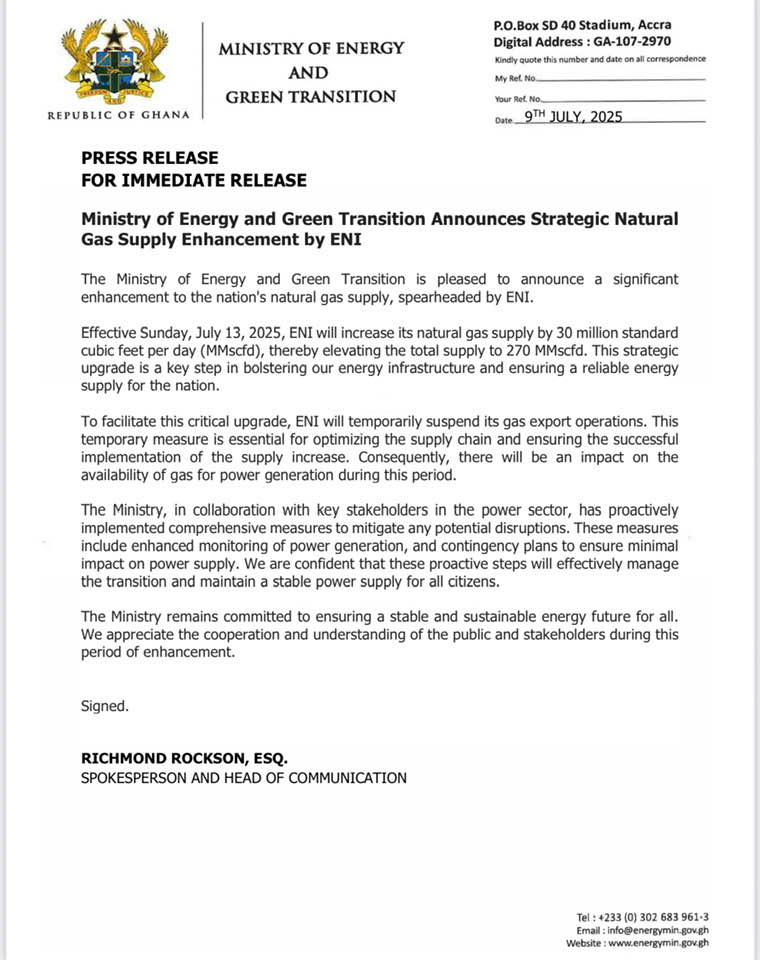
    Government will also reduce the use of liquid fuel in the energy mix as it expects more gas from the ENI, Sankofa, Jubilee and TEN fields, as well as West African Gas Pipeline.

    “At that stage, the resources generated by this increased levy will be channeled to pay accumulated legacy debts in the power sector,” he added.

    The president signed the bill, which seeks to introduce a GH¢1.00 petroleum levy, on Thursday, June 5, following approval by Parliament on Tuesday, June 3.

    The Majority side of the House approved the bill after the Minority side staged a walkout.

    Energy and Green Transition Minister, John Abdulai Jinapor, has defended government’s move despite opposition from some stakeholders in the energy sector.

    He noted that the timing of the introduction of the levy is apt as the cedi continues to appreciate against major trading currencies.

    The minister projects to generate revenue ranging between GH¢5 billion and GH¢6 billion to support the procurement of liquid fuel.

    “Fuel was around GH¢16.00, and a sensitive government will not slap a tax when fuel is GH¢16.00. You couldn’t have imposed that tax around that time when fuel was still very high, and so you needed to work to bring fuel down to this level and share the gain with Ghanaians. At that time, if we had increased it, you can imagine the impact on Ghanaians, but today, the net effect is that you are still having a reduction of GH¢3.00 on a litre of fuel,” he explained.

    “It is better to do it today than to (have done) it yesterday, when it would have eroded your income; today, your purchasing power has increased because of the reduction of the value of the dollar,” he said while speaking on JoyFM.

    Some stakeholders in the energy sector have expressed their displeasure over the approval of the Energy Sector Levy (Amendment) Bill, 2025.

    On the matter, Chief Executive Officer of the Association of Oil Marketing Companies (AOMCs), Dr Riverson Oppong Peprah,warned that the implementation of the levy could drive fuel prices higher, adding further strain on consumers and the downstream sector.

    “When fuel prices began to fall, it wasn’t because the cedi gained stability; rather, it was due to a drop in plant prices caused by the decline in West Texas Intermediate (WTI) crude oil prices. Only after that did the cedi stabilise and support the downward trend.”

  • ‘Takeaway pack’ ban needs proper consultation – Plastic Manufacturers to President Mahama

    ‘Takeaway pack’ ban needs proper consultation – Plastic Manufacturers to President Mahama

    President of the Plastic Manufacturers Association of Ghana, Ebbo Botwe, has called on President John Dramani Mahama to have a broader conversation with the industry before enacting a ban on Styrofoam in Ghana.

    On Thursday, June 6, President John Dramani Mahama revealed the government’s plans to halt the importation and production of Styrofoam, locally known as ‘takeaway packs.’

    The initiative, he said, is to reduce the impact of climate change, protect the country’s forest cover, and reduce plastic waste in the country.

    President Mahama stressed the urgent need to ditch Styrofoam for other materials, describing it as one of the most harmful pollutants.

    “One of the most polluters is Styrofoam plastics, where you go and buy your food, and they put it in that whitish something, and you finish eating, you just dump it. That is one of the biggest polluters. And so, we’re going to ban the importation of Styrofoam plastics.

    “We have to use paper packaging or aluminium foil for our food. I’m informing the manufacturers and importers of Styrofoam that the Ministry of Environment, soon we are going to ban the importation of Styrofoam and production of Styrofoam in Ghana,” he said.

    But the Plastic Manufacturers Association of Ghana has acknowledged its impact on the environment but maintains that there are a lot of misconceptions surrounding Styrofoam.

    He noted that the policy must go through a thorough process to ensure it doesn’t have significant consequences for manufacturers, workers, and consumers.

    “Let me try to clear up some misconceptions. The styrofoam that you see contains between 4% to 5% maximum plastic. The rest is air. It is basically air. It becomes more of an eyesore in terms of impacting the environment. We have a meeting with the Minister for Environment between June 16 and 20. We really want to give the minister a proper overview of the plastic industry so when the government want to initiate any programmes or any decision, he will be well informed,” he said.

    The Ghanaian government has introduced various initiatives aimed at tackling plastic waste.

    Although the government has made several attempts to address the sanitation crisis in Greater Accra, many of these initiatives have failed to achieve a lasting impact.

    These efforts started in 2008 with a ban on plastic production and imports.

    In 2011, a Plastic Waste Recycling Fund was established, and a 10% Environmental Excise Tax was levied on imported plastics to support recycling and waste management programs.

    The government also introduced the National Plastics Management Policy in 2020, which seeks to manage plastic waste across its entire lifecycle and promote a circular economy for plastics.

    Despite these measures, the issue of proper plastic waste disposal remains a significant challenge, exacerbated by low awareness regarding safe and sustainable disposal practices such as segregation, recycling, and controlled incineration.

  • Interpol places Ofori-Atta on wanted list for corruption

    Interpol places Ofori-Atta on wanted list for corruption

    Former Finance Minister Ken Ofori-Atta has been declared “wanted” on Interpol’s official website.

    On its website, it noted that Ofori-Atta is wanted for “using public office for profit.”

    Ofori-Atta’s appearance on Interpol’s website comes at a time when the Office of the Special Prosecutor (OSP) has re-declared him wanted.

    The OSP’s re-declaration is due to Ofori-Atta’s failure to honor the office’s invitation for an interrogation on Monday, June 2.

    The legal team of the former finance minister had requested a virtual session for a probe into allegations of financial loss to the state, citing deterioration in Ofori-Atta’s health.

    However, the OSP refused and issued an Interpol Red Notice.

    It noted the failure of the former minister to inform the OSP of changes in medical procedure that were to have happened in March of this year.

    In February, the OSP declared Ofori-Atta wanted for causing financial loss to the state in several dealings, which include the following:

    Contractual arrangement between Strategic Mobilisation Ghana Limited and the Ghana Revenue Authority for the stated objective of the enhancement of revenue assurance in the downstream petroleum sector, upstream petroleum production, and minerals and metals resource value chain.

    Termination of a distribution, loss reduction, and associated network improvement project contract between the Electricity Company of Ghana Limited and Beijing Xhao Chen Technology BXC.

    Procurement of contractors and materials and activities and payments in respect of the National Cathedral project

    Activities and payments in respect of a contract awarded by the Ministry of Health initially commenced by the Ministry for Special Development Initiative to service Ghana Auto Group Limited for purchases and after-sales service and maintenance of 307 Mercedes-Benz Sprinter 304 5 CDI Ambulances for the National Ambulance Service.

    Payments out of and utilization of the tax refund account of the Ghana Revenue Authority.

    Later, the legal representatives of the former finance minister informed the OSP that their client is currently undergoing medical treatment in the United States and is unable to honor an invitation for questioning.

    Ofori-Atta then assured the OSP of its commitment to appearing for questioning on a fixed date, which influenced the OSP’s decision to temporarily take his name off the list in March.

    However, the office stressed that he is legally obligated to show up on June 2. Failure to do so, an Interpol Red Notice would be issued and extradition proceedings would be initiated in any country where he may be located.

    Ken Ofori-Atta then took legal steps to block the OSP from re-declaring him wanted. His lawsuit argues that the agency’s actions are baseless and unjustified.

    Ofori-Atta has dismissed allegations of financial misconduct and corruption, insisting that he has been cooperating with investigators through his legal representatives.

    In his court filing, he contends that the OSP’s actions have inflicted serious harm on his reputation and personal life. He is seeking a legal injunction to prevent further declarations against him until the case is fully resolved.

    The Human Rights Court has adjourned to June 18 for a ruling on the motion filed by the former Finance Minister, seeking to restrain the OSP from declaring him wanted, among other reliefs.

    INTERPOL Red Notice

    A Red Notice is a request to law enforcement worldwide to locate and provisionally arrest a person pending extradition, surrender, or similar legal action.

    It is based on an arrest warrant or court order issued by the judicial authorities in the requesting country. Member countries apply their own laws in deciding whether to arrest a person.

    INTERPOL cannot compel the law enforcement authorities in any country to arrest someone who is the subject of a Red Notice.

    Each member country decides what legal value it gives to a Red Notice and the authority of their law enforcement officers to make arrests.

    https://www.interpol.int/en/How-we-work/Notices/Red-Notices/View-Red-Notices#2025-43010

  • Ghana to stop using ‘takeaway packs’ – President Mahama

    Ghana to stop using ‘takeaway packs’ – President Mahama

    Ghana will soon stop importing and producing Styrofoam, locally known as ‘takeaway packs’.

    President John Dramani Mahama disclosed this information at the launch of the 2025 national tree planting exercise on Thursday, June 5.

    President Mahama stressed the urgent need to ditch Styrofoam for other materials, describing it as one of the most harmful pollutants.

    According to President Mahama, the initiative is to reduce the impact of climate change, protect the country’s forest cover, and reduce plastic waste.

    “One of the most polluters is Styrofoam plastics, where you go and buy your food, and they put it in that whitish something, and you finish eating, you just dump it. That is one of the biggest polluters. And so, we’re going to ban the importation of Styrofoam plastics.

    “We have to use paper packaging or aluminium foil for our food. I’m informing the manufacturers and importers of Styrofoam that the Ministry of Environment, soon we are going to ban the importation of Styrofoam and production of Styrofoam in Ghana,” he said.

    The Ghanaian government has introduced various initiatives aimed at tackling plastic waste.

    Although the government has made several attempts to address the sanitation crisis in Greater Accra, many of these initiatives have failed to achieve a lasting impact.

    These efforts started in 2008 with a ban on plastic production and imports.

    In 2011, a Plastic Waste Recycling Fund was established, and a 10% Environmental Excise Tax was levied on imported plastics to support recycling and waste management programs.

    The government also introduced the National Plastics Management Policy in 2020, which seeks to manage plastic waste across its entire lifecycle and promote a circular economy for plastics.

    Despite these measures, the issue of proper plastic waste disposal remains a significant challenge, exacerbated by low awareness regarding safe and sustainable disposal practices such as segregation, recycling, and controlled incineration.

  • Govt’s GHS1 fuel levy laudable – IPGG

    Govt’s GHS1 fuel levy laudable – IPGG

    The Independent Power Generators, Ghana (IPGG), has lauded the government’s GHS1 levy on fuel, which has been introduced following the assent to the Energy Sector Levy (Amendment) Bill, 2025.

    In a statement released on Thursday, June 5, the Chief Executive Officer (CEO) of IPGG, Dr. Elikplim Kwabla Apetorgbor, stated that the policy intervention is “both necessary and time-sensitive, given the precarious financial state of the sector”.

    He attributed the sector’s challenges to the “direct consequence of the mismanagement and misapplication of previously established Energy Sector Levy and bond proceeds and loans.”

    The government is set to implement the Energy Sector Levy (Amendment) Bill, 2025, after its assent by President John Mahama which introduces a GH¢1.00 petroleum levy, following approval by Parliament on Tuesday, June 3.

    The president signed the bill after defending the necessity of the bill despite opposition from the Minority in Parliament and some stakeholders in the energy sector.

    President Mahama on Wednesday announced the government’s decision to clear the accumulated legacy debts in the power sector with part of the revenue generated by the yet-to-be-implemented levy.

    He stated that “initially much of this revenue will go to the purchasing of fuel to ensure stable power of electricity.”

    The government will also reduce the use of liquid fuel in the energy mix as it expects more gas from the ENI, Sankofa, Jubilee and TEN fields, as well as the West African Gas Pipeline.

    “At that stage, the resources generated by this increased levy will be channeled to pay accumulated legacy debts in the power sector,” he added.

    He assured Ghanaians that funds generated from the newly approved GHC1 fuel levy will undergo regular audits.

    He explained the move is to ensure accountability and transparency. “Funds from this levy will not be subject to the hazards of the Consolidated Fund. The fund will be regularly audited and audit reports made public to ensure its transparent use.”

    Meanwhile, Energy and Green Transition Minister, John Abdulai Jinapor, has defended government’s move despite opposition from some stakeholders in the energy sector.

    He noted that the timing of the introduction of the levy is apt as the cedi continues to appreciate against major trading currencies.

    The minister projects to generate revenue ranging between GH¢5 billion and GH¢6 billion to support the procurement of liquid fuel.

    “Fuel was around GH¢16.00, and a sensitive government will not slap a tax when fuel is GH¢16.00. You couldn’t have imposed that tax around that time when fuel was still very high, and so you needed to work to bring fuel down to this level and share the gain with Ghanaians. At that time, if we had increased it, you can imagine the impact on Ghanaians, but today, the net effect is that you are still having a reduction of GH¢3.00 on a litre of fuel,” he explained.

    “It is better to do it today than to (have done) it yesterday, when it would have eroded your income; today, your purchasing power has increased because of the reduction of the value of the dollar,” he said while speaking on JoyFM.

    Some stakeholders in the energy sector have expressed their displeasure over the approval of the Energy Sector Levy (Amendment) Bill, 2025, by Parliament and its pending implementation.

    On the matter, Chief Executive Officer of the Association of Oil Marketing Companies (AOMCs), Dr Riverson Oppong Peprah,warned that the implementation of the levy could drive fuel prices higher, adding further strain on consumers and the downstream sector.

    “When fuel prices began to fall, it wasn’t because the cedi gained stability; rather, it was due to a drop in plant prices caused by the decline in West Texas Intermediate (WTI) crude oil prices. Only after that did the cedi stabilise and support the downward trend.”

    “As we speak today, plant prices are already rising again. So, I urge the government to reconsider this levy since there are other options,” he counselled.

    Also, Executive Director of the Centre for Environment and Sustainable Energy, Benjamin Nsiah has raised similar concerns, calling the introduction of the levy “unfair.”

    “This approach is not only tired but unfair,” Nsiah said. “We’ve seen this playbook before. The Energy Sector Levies Act (ESLA), and the Energy Sector Recovery Levy have provided a lasting solution to the underlying issues. It’s not about collecting more. It’s about managing what’s already collected.”

  • GHC1 fuel levy: GPRTU to embark on nationwide strike on Tuesday

    GHC1 fuel levy: GPRTU to embark on nationwide strike on Tuesday

    The newly introduced GHC1.00 levy on petroleum products, popularly referred to as the “Dumsor Levy,” has received opposition from the Ghana Private Road Transport Union (GPRTU).

    The union has threatened a nationwide strike on Tuesday, June 10, if the policy is not revised.

    In a press briefing on Thursday, June 5, the Industrial Public Relations Officer of the Ghana Private Road Transport Union (GPRTU), Abass Ibrahim Imoro, indicated that the government has yet to consult relevant stakeholders over the policy’s implementation.

    “We are therefore calling on the government to reverse the levy immediately and engage us and stakeholders on the way forward. In the event that our call is not heeded, we will be compelled to take industrial action and park our vehicles on June 10, 2025.

    The policy’s rollout will have significant implications for operators, as it will drive up operational costs.

    “We urge the government to consider the impact of the levy on the transport sector and the consequences of our action on the economy, and engage us in meaningful deliberations to help address challenges in the energy sector,” he said.

    Meanwhile, President John Dramani Mahama has assured Ghanaians that funds generated from the newly approved GHC1 fuel levy will undergo regular audits.

    He explained the move is to ensure accountability and transparency.

    “Funds from this levy will not be subject to the hazards of the Consolidated Fund. The fund will be regularly audited and audit reports made public to ensure its transparent use.”

    He has reiterated the government’s decision to clear the accumulated legacy debts in the power sector with part of the revenue generated, yet to be implemented, levy.

    He stated that “initially much of this revenue will go to the purchasing of fuel to ensure stable power of electricity.”

    Government will also reduce the use of liquid fuel in the energy mix as it expects more gas from the ENI, Sankofa, Jubilee and TEN fields, as well as West African Gas Pipeline.

    “At that stage, the resources generated by this increased levy will be channeled to pay accumulated legacy debts in the power sector,” he added.

    Government is set to implement the Energy Sector Levy (Amendment) Bill, 2025, which introduces a GH¢1.00 petroleum levy, following approval by Parliament on Tuesday, June 3.

    The Majority side of the House approved the bill after the Minority side staged a walkout.

    Energy and Green Transition Minister, John Abdulai Jinapor, has defended government’s move despite opposition from some stakeholders in the energy sector.

    He noted that the timing of the introduction of the levy is apt as the cedi continues to appreciate against major trading currencies.

    The minister projects to generate revenue ranging between GH¢5 billion and GH¢6 billion to support the procurement of liquid fuel.

    “Fuel was around GH¢16.00, and a sensitive government will not slap a tax when fuel is GH¢16.00. You couldn’t have imposed that tax around that time when fuel was still very high, and so you needed to work to bring fuel down to this level and share the gain with Ghanaians. At that time, if we had increased it, you can imagine the impact on Ghanaians, but today, the net effect is that you are still having a reduction of GH¢3.00 on a litre of fuel,” he explained.

    “It is better to do it today than to (have done) it yesterday, when it would have eroded your income; today, your purchasing power has increased because of the reduction of the value of the dollar,” he said while speaking on JoyFM.

    Some stakeholders in the energy sector have expressed their displeasure over the approval of the Energy Sector Levy (Amendment) Bill, 2025, by Parliament and its pending implementation.

    On the matter, Chief Executive Officer of the Association of Oil Marketing Companies (AOMCs), Dr Riverson Oppong Peprah,warned that the implementation of the levy could drive fuel prices higher, adding further strain on consumers and the downstream sector.

    “When fuel prices began to fall, it wasn’t because the cedi gained stability; rather, it was due to a drop in plant prices caused by the decline in West Texas Intermediate (WTI) crude oil prices. Only after that did the cedi stabilise and support the downward trend.”

    “As we speak today, plant prices are already rising again. So, I urge the government to reconsider this levy since there are other options,” he counselled.

    Also, Executive Director of the Centre for Environment and Sustainable Energy, Benjamin Nsiah has raised similar concerns, calling the introduction of the levy “unfair.”

    “This approach is not only tired but unfair,” Nsiah said. “We’ve seen this playbook before. The Energy Sector Levies Act (ESLA), and the Energy Sector Recovery Levy have provided a lasting solution to the underlying issues. It’s not about collecting more. It’s about managing what’s already collected.”

  • $350m worth of cocaine seized to be destroyed by NIB on June 20

    $350m worth of cocaine seized to be destroyed by NIB on June 20

    More than $350 million worth of cocaine seized earlier this year has been earmarked for destruction on Friday, June 20, by the National Intelligence Bureau (NIB).

    The Criminal Division of the High Court on Thursday, June 5, ordered the destruction following confirmation testing by the Ghana Standards Authority (GSA).

    Three out of the total 2,970 slabs of the substance were taken randomly in the presence of the trial judge, Justice Ruby Aryeetey, the state and the defence attorneys, the National Intelligence Bureau (NIB) and the Narcotic Control Commission (NCC) officials.

    The destruction of the exhibits will take place at Bundase in the Greater Accra Region. A total of 3,319.66 kilogrammes (3.3 tonnes) of substance had been the centre of a trial at the High Court in recent times.

    The testing exercise by the GSA was conducted at the NIB headquarters in Ridge, Accra, on Wednesday, June 4.

    Background

    A staggering 3.3 tonnes of suspected cocaine worth approximately $350 million were intercepted by the NIB in March.

    In an attempt to evade inspection, the smugglers wrapped the cocaine in sacks and bags, hidden in heaps of sand in a tipper truck at Pedu Junction in Cape Coast in the Central Region en route to Accra.

    Despite their cunning efforts, the vigilant NIB operatives uncovered the illicit cargo.

    The interception marked the largest cocaine seizure in the country’s history.

    The driver of the truck, 39-year-old Isaac Quaicoo, and his mate, Kenneth Cobbinah, a 25-year-old tertiary-level student, have been accused of importing drugs without lawful authority and are currently standing trial. The case has been adjourned to June 24.

    Meanwhile, Kelian Julien Mensah, Jefflean Kwadjo Ntow, and Charles Hagan, who have been declared as prime suspects, remain at large.

    Gov’t fight against narcotics

    The Narcotics Control Commission Act, 2020 (Act 1019) was passed to restructure NACOC, giving it more autonomy and investigative powers to handle drug crimes. NACOC now uses intelligence gathering and data analysis to proactively target drug trafficking networks.

    Ports and airports have been equipped with scanners and surveillance cameras to detect concealed drugs more efficiently. Ongoing training programs are being organized for NACOC officials and other law enforcement personnel to enhance detection and investigation skills.

    Ghana collaborates with global institutions like the UNODC, INTERPOL, and regional counterparts for cross-border intelligence sharing and joint operations.

    In March, an intelligence-led operation by the narcotics officials resulted in the arrest of a 56-year-old Nigerian, Uchechukwu Chima at Oyarifa, a suburb of Accra. The suspect’s hideout hoarded substances suspected to be narcotic drugs as field tests conducted on the suspected substance proved positive for cocaine and heroin, both narcotic drugs.

    NACOC seized and arrested the suspect, saving millions of lives of people who would have otherwise perished from abusing these hard drugs.

    In April this year, narcotics officials seized 73 packages of a substance suspected to be cocaine, weighing nearly 89.74 kilograms, destined for the Netherlands. Four Ghanaian nationals were arrested in connection with the incident.

    Section 1 of the Narcotics Control Commission Act, 2020 (Act 1019)  stipulates that “a person who imports or exports a narcotic drug without a license issued by the Minister responsible for Health for that purpose commits an offence and on conviction is liable to a term of imprisonment of not less than ten years.”

     “The Minister may grant a licence for importation of narcotic drugs if on an application made by a prescribed person the Minister is satisfied that the licence can be properly granted.”

    Section 3 of the Act, however, states that “a person shall not, without lawful authority,  manufacture, produce or distribute narcotic drugs.”

  • Govt bans fishing in Ellembelle  over fish disease

    Govt bans fishing in Ellembelle over fish disease

    Residents around the Ebi, Amanzule, and Fia rivers in the Ellembelle District, Western Region, have been temporarily banned from fishing.

    The ban imposed by the Ministry of Fisheries and Aquaculture Development is a response to a deadly fish disease outbreak, the disease, Epizootic Ulcerative Syndrome (EUS), in the area.

    Residents reported an unusual fish mortality event within the vicinity in January this year.

    Further investigations by the ministry revealed the outbreak of EUS, one that the World Organisation for Animal Health (WOAH) has labelled as a severe transboundary disease.

    EUS caused by the pathogen Aphanomyces invadans sp. impacted several wild freshwater species, including catfish and snakehead.

    As a result, a team of experts from multiple institutions was deployed to ascertain the cause and implement measures to contain the situation.

    “Upon receiving the report, a multidisciplinary team, including experts from the Fish Health Unit of the Fisheries Commission, Water Research Institute (WRI), Accra Veterinary Laboratory, Emed Diagnostic Services, the Food and Drugs Authority (FDA).”

    “The West African Centre for Cell Biology of Infectious Pathogens (WACCBIP), conducted further tests. Histopathological and PCR testing methods confirmed the presence of the disease, with 80% of tested samples returning positive results,” parts of the statement read.

    According to the ministry, in a statement issued on Wednesday, 4 June, the ban is to prevent the movement of live fish from affected areas.

    Meanwhile, the ministry has indicated that it is working closely with district authorities and relevant agencies to enforce strict regulations on the movement of live fish from affected areas. It has called on the public to assist in reporting any unusual appearance of fish.

    “The Ministry further urges the public to remain vigilant and support these measures. The Ministry of Fisheries and Aquaculture remains fully committed to the protection of aquatic life, the sustainability of the fisheries sector and the food security of all Ghanaians,” the statement said.

    The Ministry of Fisheries and Aquaculture Development continues to take pragmatic measures to protect and safeguard the health of the general public.

    The Fisheries Ministry in April this year imposed a 12-month suspension on the fishing licences of four industrial trawl vessels for violating Ghana’s fisheries laws.

    The affected vessels—Meng Xin 10 (owned by Nassa Co. Ltd.), Florence 2 (owned by Akrafi Fisheries), and Long Xiang 607 and Long Xiang 608 (owned by Wannimas Complex Co. Ltd.)—were found guilty of repeated infractions that threaten the sustainability of Ghana’s marine resources.

    The vessels engaged in various illegal activities, including unauthorized transshipment, dumping of fish, operating in restricted areas, and harvesting juvenile fish.

    These actions not only breach Ghana’s Fisheries Act, 2002 (Act 625) and Fisheries Regulations, 2010 (L.I. 1968) but also endanger the livelihoods of coastal fishing communities and undermine marine conservation efforts.

  • June 21 deadline for reapplication for gold trade won’t be extended – GoldBod

    June 21 deadline for reapplication for gold trade won’t be extended – GoldBod

    The Ghana Gold Board (GoldBod) has noted that it will not grant a grace period to reapply for a valid GoldBod license after its June 21 deadline.

    Speaking at a meeting with the Chamber of Licensed Gold Buyers, GoldBod’s Acting Chief Executive Officer (CEO), Sammy Gyamfi, stated that anyone who flouts the directive will be sanctioned.

    “We should be able to sustain this for the betterment of our people. We are not going to relent on that, and anybody who becomes a standing block will be dealt with in accordance with the laws of Ghana. So, kindly encourage your members to play by the rules; apply for a licence, then you can trade in gold,” he said.

    Goldbod had earlier directed gold traders with outdated licences to renew before May 21.

    In a statement announcing the revised date, GoldBod noted that “even though a person may apply for a GoldBod license beyond the new non-extendable deadline of 21st June, 2025, only holders of a GoldBod license will be allowed to purchase, sell or deal in gold after this date.”

    The use of a license issued by the defunct PMMC and/or the Ministry of Lands and Natural Resources to deal in gold is hereby prohibited beyond the new non-extendable deadline of June 21.

    A breach of this directive shall constitute a punishable offense under the Ghana Gold Board Act, 2025 (ACT 1140).

    At a press briefing held on Wednesday, April 30, acting Chief Executive Officer of Goldbod, Sammy Gyamfi, stated that the May 21 deadline will not be extended; however, this decision has been rescinded.

    “This new deadline of 21st May 2025 is not subject to further extension. It will not be extended… By the 21st of this month, only persons who have been granted licenses by the Gold Board will be tolerated in the gold trading sector,” he said.

    He revealed that many license holders under the defunct Precious Minerals Marketing Company (PMMC) and the Ministry of Lands and Natural Resources had not completed the reapplication process.

    “But we know that most of you have not been able to apply at all. We can also see from the back end of our website and the license application portal that some of you have started the process of applying but have not yet completed the application process,” he said.

    Under the new Ghana Gold Board Act, all previously issued licences for gold trading have been rendered void. Traders who wish to stay in business must submit fresh applications via the Goldbod website.

    Applicants have been advised to pay attention to detail when filling out the forms, as inaccuracies could lead to disqualification.

    “If you make serious omissions or errors in the application, it will go against you in terms of the decision that the Gold Board will take on that application,” Mr. Gyamfi warned.

    Goldbod will oversee the gold sector, tackle illegal trade, and promote responsible sourcing in line with global standards such as the London Bullion Market Association (LBMA) certification.

    The Minister for Finance, Dr Cassiel Ato Forson, has established the newly constituted Board of Directors of the Ghana Gold Board (GoldBod).

    Dr Forson extended President John Dramani Mahama’s congratulations to the 13-member board led by Mr Kojo Fynn.

    The sector minister also called on the board to deliver their mandate and enhance the country’s gold trade, ensure transparency in dealing, and aid the government’s economic recovery efforts.

    https://www.facebook.com/Ghanagoldbodofficial/videos/1077515680917902

  • We will resist a rerun of Ablekuma North elections – Minority

    We will resist a rerun of Ablekuma North elections – Minority

    The Minority in Parliament has protested against a possible rerun of the parliamentary elections in the Ablekuma North Constituency.

    On Wednesday, June 4, Members of Parliament (MPs) from the New Patriotic Party (NPP) marched from Parliament House to the Ghana Police Service Headquarters in Accra, demanding an immediate declaration of results from the 2024 parliamentary elections held in the Ablekuma North Constituency.

    The MPs have called on the Inspector-General of Police (IGP) to work with the Electoral Commission (EC) by providing security for the resumption of the collation process.

    The National Democratic Congress (NDC), on the other hand, has called for a re-run of parliamentary elections in 62 polling stations within the area.

    Ablekuma North remains the only constituency in Ghana without a sitting MP, months after the 2024 general elections, due to unresolved disagreements over the outcome of the parliamentary vote.

    The IGP has warned that the continued delay poses a serious threat to Ghana’s democratic reputation and the integrity of its electoral system.

    He cautioned that how the dispute is handled will shape public trust in Ghana’s electoral processes well beyond the current cycle.

    “This is a pivotal moment. The way we handle the collation in Ablekuma North will resonate across the country. It will set the tone, not only for this election, but also for public confidence in the years to come,” Dr. Yohuno stated.

    On December 10, 2024, three days after the national polls, the EC declared Ewurabena Aubynn of NDC the winner of the Ablekuma North parliamentary seat, defeating the New Patriotic Party’s (NPP) Nana Akua Owusu Afriyieh.

    However, the EC later revoked the announcement, revealing that results from 62 of the 281 polling stations had not been included in the initial collation.

    Efforts to restart the collation in January 2025 were disrupted by multiple challenges.

    These included interruptions due to the submission of unverified pink sheets and a violent intrusion at the collation centre that heightened security concerns.

    By January 6, only seven polling station results remained uncollated. Yet the process came to a standstill as the EC began engaging both major political parties in an attempt to break the deadlock.

    Both the NPP and the NDC have declared victory in the December parliamentary elections.

    The NPP maintains that its candidate, Nana Akua Afriyie, emerged the winner based on Electoral Commission figures, while the NDC insists that Ewurabena Aubyn was rightfully elected by the people.

  • Galamsey: Police storm Ahafo Region, seize firearms, excavators, others

    Galamsey: Police storm Ahafo Region, seize firearms, excavators, others

    Several firearms, rounds of ammunition, and five excavators have been retrieved following a joint anti-galamsey operation in the Ahafo Region.

    The exercise conducted on Monday, June 2, targeting illegal mining activities was led by the Mankranso District Police Command and the Ahafo Ano South West District Assembly.

    The authorities also seized one CAL 9mm pistol loaded with three rounds of live ammunition, four pump-action guns, twelve live BB cartridges, five live AA cartridges, and five excavators.

    Several culprits fled the scene upon seeing the security team, leaving behind various items and heavy equipment used in the activity.

    The police in a statement noted that the weapons and the merchandise are being kept at the Mankranso District Police Command for further investigation.

    Meanwhile, the police have called on the public to assist with the government’s fight against galamsey.

    The Ghana Police Service, in recent times, has embarked on several operations to crack down on illegal mining activities.

    Its special Anti-Galamsey Taskforce seized more than 100 excavators, along with weapons, chanfang machines, bulldozers, and other illegal mining equipment.

    The police’s efforts have also resulted in the arrest of numerous individuals who are undergoing legal proceedings.

    Meanwhile, President John Dramani Mahama has announced that the government, in the coming days, will approve the importation of excavators except through a valid permit.

    “We will track excavators to know whether they are being used for illegal mining. Ghana currently has more excavators than the rest of Africa combined. The new permitting regime will not allow you to import any excavator unless you have a valid permit to do so,” Mahama stated.

    A few months ago, the Lands and Natural Resources Minister Emmanuel Armah-Kofi Buah, announced the rollout of a system to monitor excavator imports and usage, involving port tagging and digital tracking in partnership with several state agencies.

    The third most valuable item imported into this country is excavators, and it is worth GHC6.2 billion, according to the sector minister.

    The joint Military-Forestry Commission task force that conducted targeted operations in high-risk districts across the Ashanti, Western, and Western North Regions led to the seizure of 100 excavators, three bulldozers, and four vehicles.

    Excavator owners and operators who have failed to register their machines with the Driver and Vehicle Licensing Authority (DVLA) risk losing them to the state, as the government intensifies efforts to clamp down on illegal mining activities.

    The Chief Executive Officer (CEO) of the DVLA, Julius Neequaye Kotey, issued the directive in Accra, warning that effective June 1, any excavator not registered with the DVLA will be confiscated.

    Speaking at a press briefing, Mr. Kotey announced that the Ghana Police Service and the DVLA’s operational team will begin nationwide enforcement after the deadline, arresting and impounding excavators being used at mining sites or for commercial purposes without proper documentation.

    “This exercise will help identify every excavator that enters the country and trace how it is being used. The goal is to ensure we can monitor and hold people accountable,” Mr. Kotey said.

    The directive falls in line with Section 38 of the Road Traffic Act, 2004 (Act 683), which mandates the registration of all motor vehicles and trailers, including farm and heavy-duty equipment. Despite the law, the DVLA has found many unregistered excavators operating in mining areas, some of which have been used in illegal activities.

    Mr. Kotey emphasized that the DVLA, with its 34 offices nationwide, has the capacity to register all excavators and farm machinery within the two-week period and is ready to strictly enforce the directive.

    He stressed the environmental toll caused by unregulated excavator use in illegal mining, saying, “Excavators in the hands of illegal miners have worsened the destruction of our environment. This is why we must act.”

    To further control the situation, the DVLA, in collaboration with key agencies like the Minerals Commission, National Security, the Ghana Ports and Harbours Authority (GPHA), and the Customs Division of the Ghana Revenue Authority (GRA), has started tagging all newly imported excavators.

    In addition to tagging new imports, the Minerals Commission has been tasked to lead a team that will tag all excavators already in the country. Legal small-scale mining sites have also been geo-fenced, with their site coordinates integrated into the Ghana Mine Repository and Tracking software for better oversight.

  • Fuel levy proceeds in Consolidated Fund will be audited regularly – President Mahama

    Fuel levy proceeds in Consolidated Fund will be audited regularly – President Mahama

    President John Dramani Mahama has assured Ghanaians that funds generated from the newly approved GHC1 fuel levy will undergo regular audits.

    He explained the move is to ensure accountability and transparency.

    “Funds from this levy will not be subject to the hazards of the Consolidated Fund. The fund will be regularly audited and audit reports made public to ensure its transparent use.”

    President Mahama made this known while speaking at the presentation of the final report of the National Economic Dialogue 2025 on Wednesday, June 4.

    He reiterated the government’s decision to clear the accumulated legacy debts in the power sector with part of the revenue generated, yet to be implemented, levy.

    He stated that “initially much of this revenue will go to the purchasing of fuel to ensure stable power of electricity.”

    Government will also reduce the use of liquid fuel in the energy mix as it expects more gas from the ENI, Sankofa, Jubilee and TEN fields, as well as West African Gas Pipeline.

    “At that stage, the resources generated by this increased levy will be channeled to pay accumulated legacy debts in the power sector,” he added.

    Government is set to implement the Energy Sector Levy (Amendment) Bill, 2025, which introduces a GH¢1.00 petroleum levy, following approval by Parliament on Tuesday, June 3.

    The Majority side of the House approved the bill after the Minority side staged a walkout.

    Energy and Green Transition Minister, John Abdulai Jinapor, has defended government’s move despite opposition from some stakeholders in the energy sector.

    He noted that the timing of the introduction of the levy is apt as the cedi continues to appreciate against major trading currencies.

    The minister projects to generate revenue ranging between GH¢5 billion and GH¢6 billion to support the procurement of liquid fuel.

    “Fuel was around GH¢16.00, and a sensitive government will not slap a tax when fuel is GH¢16.00. You couldn’t have imposed that tax around that time when fuel was still very high, and so you needed to work to bring fuel down to this level and share the gain with Ghanaians. At that time, if we had increased it, you can imagine the impact on Ghanaians, but today, the net effect is that you are still having a reduction of GH¢3.00 on a litre of fuel,” he explained.

    “It is better to do it today than to (have done) it yesterday, when it would have eroded your income; today, your purchasing power has increased because of the reduction of the value of the dollar,” he said while speaking on JoyFM.

    Some stakeholders in the energy sector have expressed their displeasure over the approval of the Energy Sector Levy (Amendment) Bill, 2025, by Parliament and its pending implementation.

    On the matter, Chief Executive Officer of the Association of Oil Marketing Companies (AOMCs), Dr Riverson Oppong Peprah,warned that the implementation of the levy could drive fuel prices higher, adding further strain on consumers and the downstream sector.

    “When fuel prices began to fall, it wasn’t because the cedi gained stability; rather, it was due to a drop in plant prices caused by the decline in West Texas Intermediate (WTI) crude oil prices. Only after that did the cedi stabilise and support the downward trend.”

    “As we speak today, plant prices are already rising again. So, I urge the government to reconsider this levy since there are other options,” he counselled.

    Also, Executive Director of the Centre for Environment and Sustainable Energy, Benjamin Nsiah has raised similar concerns, calling the introduction of the levy “unfair.”

    “This approach is not only tired but unfair,” Nsiah said. “We’ve seen this playbook before. The Energy Sector Levies Act (ESLA), and the Energy Sector Recovery Levy have provided a lasting solution to the underlying issues. It’s not about collecting more. It’s about managing what’s already collected.”

  • Ato Forson vows to keep cedi valuable against major currencies

    Ato Forson vows to keep cedi valuable against major currencies

    Finance Minister, Dr. Cassiel Ato Forson, has assured Ghanaians that the government will work to ensure the local tender doesn’t lose value against other currencies.

    Speaking during the debate on the Energy Sector Levy Amendment Bill, 2025, in Parliament on Wednesday, June 4, Ato Forson mentioned that the Mahama-led administration has outlined strategies to support the cedi from depreciating.

    “I want to assure the people of Ghana that the currency will remain stable. The Ghana cedi will remain strong. The Ghana cedi is doing well, and this trajectory will continue. Mr Speaker, I want to assure members of this House that the NDC will find ways to stabilise the cedi.

    “For the first month of operation of the Ghana Gold Board, for the month of May, they were able to buy 11.4 tonnes of gold, which brought $1.2 billion that has gone to the central bank. And the central bank will use this to build enough reserves to intervene for the strong currency.

    “We mean well; prices have fallen, inflation is coming down, we can see prices of goods coming down daily, this will continue, and so, you should be happy. I stand by my promise to deliver low prices, stable cedi, and good jobs for the people of Ghana,” he added.

    Ghana ended 2024 with an inflation rate of 23.8%. The rate slightly declined to 23.5% in January 2025 and has continued on a downward trend since.

    In February, inflation dropped to 23.1%; in March, it decreased further to 22.4%, and in April it declined again to 21.2%.

    This improvement is partly attributed to the cedi’s appreciation — approximately 16% against the US dollar — which helped push inflation down to 21.2% by May 2025.

    This marks a significant recovery, considering that Ghana’s inflation rate had peaked at 31.26% in 2022 due to economic disruptions and cedi depreciation.

    From April 14 to June 2 this year, the interbank interest rate remained relatively stable, moving slightly from 27.01% to 27.02%.

    The Bank of Ghana (BoG) has stated that no bank currently offers loans to individuals at interest rates below 20%. According to BoG data, the cedi appreciated by 19% in April and May alone.

    In a statement at the Bank’s 124th Monetary Policy Committee meeting on May 21, BoG Governor Dr. Johnson Asiamah said the central bank is committed to maintaining fiscal and monetary policies that support the cedi’s stability.

    Dr. Asiamah noted that the Bank will continue implementing reforms to monitor the forex market and prevent illegal practices that threaten the currency’s strength.

    The cedi, he said, had gained “significant value — almost 19% — between April and May,” attributing the appreciation to “a combination of factors, including prudent monetary policy, improved market sentiment, and external sector gains.”

    Meanwhile, Forbes has reported an 8% depreciation of the US dollar in 2025, while gold prices have increased by 23%, as investors seek safe-haven assets — a trend that has also strengthened the Ghanaian cedi.

    The average interbank rates as of June 2 show the US dollar buying at GH₵10.24 and selling at GH₵10.25. The British pound is buying at GH₵13.88 and selling at GH₵13.89. The euro is currently being bought at GH₵11.71 and sold at GH₵11.72.

  • Wontumi expected at EOCO today

    Wontumi expected at EOCO today

    Embattled Ashanti Regional Chairman of the New Patriotic Party (NPP), Bernard Antwi Boasiako (Chairman Wontumi), is expected to appear before the Economic and Organised Crime Office (EOCO), today, Wednesday, June 4, for interrogation.

    The summons forms part of his bail conditions, which mandate him to regularly report to EOCO while investigations continue.

    Wontumi is under investigation for alleged serious criminal offences, including fraud, causing financial loss to the state, and money laundering.

    He was released on Monday evening, June 2. Initially, Wontumi’s legal team struggled to meet the hefty bail terms, leading to days in detention.

    His lead counsel, Andy Appiah-Kubi, confirmed on Friday, May 30, that the necessary documentation for both sureties had been completed, significantly aided by former Minister for Food and Agriculture Bryan Acheampong, whose documents reportedly “go over and above the value of money that is required”.

    However, he remained in custody even after meeting the bail condition over what was described as an unexpected “legal challenge” – an application filed to seek a review of the bail conditions.

    The application to review the bail conditions was scheduled to be heard June 3, 2025, but the applicant made a U-turn Monday, withdrawing the application from the court entirely.

    Some members of the Minority Caucus in Parliament and members of the opposition New Patriotic Party (NPP) massed up at the National Intelligence Bureau headquarters to demand the immediate release and waiver of bail conditions for Chairman Wontumi last week.

    Amongst them were former Vice President Dr Mahamudu Bawumia, Minority Leader Alexander Afenyo-Markin and other bigwigs in the opposition party.

    In a related development, it is reported that the Financial Intelligence Centre (FIC) is also preparing its own docket as part of the ongoing investigations into Chairman Wuntomi’s activities, independent from ongoing EOCO and Criminal Investigations Department (CID) probes.

  • Fuel prices could rise due to GHS1 fuel levy – AOMCs

    Fuel prices could rise due to GHS1 fuel levy – AOMCs

    The Chief Executive Officer of the Association of Oil Marketing Companies (AOMCs), Dr Riverson Oppong Peprah, has predicted that fuel prices could see an increment in the coming days due to the government’s newly approved GH¢1 fuel levy.

    Speaking to the media, he bemoaned the government’s failure to consult industry players before imposing the levy.

    He noted that the new development will have significant implications for consumers and the downstream sector.

    “My members at the oil marketing companies are seeing their margins steadily shrink, just to keep their operations viable, yet no one is addressing this issue. There are numerous challenges in the downstream sector that I expected the government and other stakeholders to be discussing.

    “Instead, what we are hearing is about a one cedi levy being imposed without proper engagement with stakeholders,” he said

    Government is set to implement the Energy Sector Levy (Amendment) Bill, 2025, which introduces a GH¢1.00 petroleum levy, following approval by Parliament on Tuesday, June 3.

    The Majority side of the House approved the bill after the Minority side staged a walkout.

    Energy and Green Transition Minister, John Abdulai Jinapor, has defended government’s move despite opposition from some stakeholders in the energy sector.

    He noted that the timing of the introduction of the levy is apt as the cedi continues to appreciate against major trading currencies.

    The minister projects to generate revenue ranging between GH¢5 billion and GH¢6 billion to support the procurement of liquid fuel.

    “Fuel was around GH¢16.00, and a sensitive government will not slap a tax when fuel is GH¢16.00. You couldn’t have imposed that tax around that time when fuel was still very high, and so you needed to work to bring fuel down to this level and share the gain with Ghanaians. At that time, if we had increased it, you can imagine the impact on Ghanaians, but today, the net effect is that you are still having a reduction of GH¢3.00 on a litre of fuel,” he explained.

    “It is better to do it today than to (have done) it yesterday, when it would have eroded your income; today, your purchasing power has increased because of the reduction of the value of the dollar,” he said while speaking on JoyFM.

    Despite the projected revenue government seeks to rake, the Energy Minister noted that the government will still need to push in more finances to address the country’s energy sector crisis.

    “This amount, if you look at the object clearly, we talked about the debt that we have and how unsustainable the debt is.”

    “So, even with this GH¢1, the Finance Minister will still have to assist us in getting some additional money to buy liquid fuel,” Mr Jinapor said in an interview on Citinews.

  • I won’t shield anyone from corruption probe – President Mahama

    I won’t shield anyone from corruption probe – President Mahama

    President John Dramani Mahama has indicated that he will not meddle in the duties of the Attorney General (A-G), Dr Dominic Ayine.

    While addressing the African Union Advisory Board Against Corruption at the Jubilee House on Tuesday, 3 June, President Mahama noted that he will not influence any corruption-related cases to be dropped.

    “I have told the public and assured my Attorney-General and Minister of Justice that I am not going to interfere in their work.”

    “If the anti-corruption agencies go after anybody, I am not going to try and influence them to drop any investigation against anybody, including those who served in the previous regime, many cases of whom we are currently investigating,” he stated.

    His comments followed his disclosure that noted that the Attorney General (A-G), Dr Dominic Ayine, is preparing the cases for judicial proceedings against 33 former government appointees implicated in corruption-related cases identified by the Operation Recover All Loot (ORAL) team.

    According to him, the 33 individuals will soon face prosecution.

    Operation Recover All Loot (ORAL), an initiative set up by the president to gather information on corruption to the appropriate government institutions for further investigation.

    The committee is chaired by Okudzeto Ablakwa, who also serves as the Member of Parliament (MP) for North Tongu.

    The other members include former Auditor-General Daniel Domelevo, retired Police Commissioner Nathaniel Kofi Boakye, legal practitioner Martin Kpebu, and investigative journalist Raymond Archer — all renowned for their integrity and strong stance against corruption.

    Currently, the hundreds of issues presented by the ORAL team to President John Mahama are being investigated by the Attorney-General and Minister for Justice, Dr. Dominic Ayine.

    Additionally, its work has increased public awareness about the importance of protecting state resources.

    The committee’s report has revealed that approximately $21.19 billion in potential recoveries are from misappropriated state assets and undervalued land transactions.

    ORAL Chairman Samuel Okudzeto Ablakwa has indicated that “If we are successful in recoveries, we can retrieve as much as 20.49 billion United States dollars.”

    Among the key cases cited were the National Cathedral project, the Power Distribution Services (PDS) deal, and the Saltpond decommissioning project.

    Meanwhile, President Mahama has dismissed allegations that ORAL is being used for political vendettas, reassuring that the initiative is purely intended to strengthen Ghana’s anti-corruption efforts.

  • Private schools cannot be included in Free SHS Programme – GNAT to govt

    Private schools cannot be included in Free SHS Programme – GNAT to govt

    The Ghana National Association of Teachers (GNAT) has opposed the government’s intentions to include private schools in the Free Senior High School (SHS) policy.

    Speaking to the media on Tuesday, June 3, GNAT’s General Secretary, Thomas Musah, stressed that the proposed plans would place additional strain on public schools.

    He noted that the government must tread cautiously to prevent citing a lack of resources as a reason for discontinuing the programme.

    “We don’t want the situation where tomorrow the government will come and tell us that there are no resources to teach in the public schools, and so we are adding on to those that parents have to pay. Already we have been calling for parents who can pay fees to pay, or should be made to make some contributions.

    “We have not yet been able to get all these things done. So, to be adding on to the already existing burden will be serious, and I have some difficulty with it,” he stated.

    In May, Deputy Minister of Education Dr. Clement Apaak announced that the inclusion forms part of a broader plan to scale up capacity and gradually end the double-track system.

    “As part of our campaign promise, we have been working diligently to bring on board private senior high schools in the delivery of the Free SHS programme. Meetings have been held, engagements have been done, and we are very certain that with the diligence we expect from our side…” he noted.

    The double-track system was introduced in 2018 by the erstwhile government to accommodate the surge in student enrollment due to the Free SHS policy, addressing overcrowding in public schools.

    Under this system, students were divided into two groups—Green Track and Gold Track—attending school in shifts, with one track in session while the other was on break.

    The anticipated extension of the Free SHS policy, according to the Education Minister, Haruna Iddrisu, is a fulfillment of the government’s manifesto promise, adding that it is a step to ensure eligible students gain admission without delays.

    “We believe strongly that in fulfilling this manifesto campaign promise, this is going to serve as an artery in helping us bring an end to the double-track system,” the deputy minister said.

    According to him, the Education Ministry has received encouraging feedback from private schools, many of which have expressed readiness to meet the standards and requirements of the Free SHS framework.

    “… and the eagerness of the private schools to participate, the private schools will deliver in their participation,” he assured.

    He added that this collaboration would not only help expand capacity but also ensure a more equitable distribution of educational opportunities across the country.

    About the Free SHS policy

    The Free Senior High School (Free SHS) policy was introduced in 2017 by the Akufo-Addo-led government to make secondary education accessible to all eligible students without financial barriers.

    The policy was aimed at helping students who struggled to pay tuition, boarding, and other school-related expenses. However, the policy came with its challenges, such as overcrowding and congestion in schools, pressure on infrastructure and facilities, and increased pressure on teachers.

    This increased the number of enrollments in the senior high schools that were listed under the Free SHS policy. About 3.5 million students have benefited from the Free Senior High School (Free SHS) program since its launch.

    The immediate-past government revealed that it had spent over GH¢12 billion on the implementation of the Free SHS policy since its inception.

  • ORAL Report: 33 ex-govt officials to face prosecution – President Mahama

    ORAL Report: 33 ex-govt officials to face prosecution – President Mahama

    President John Dramani Mahama has stated that in due course, 33 former government appointees implicated in corruption-related cases in the Operation Recover All Loot (ORAL) Team report will face prosecution.

    President Mahama, while addressing the African Union Advisory Board Against Corruption at the Jubilee House on Tuesday, 3 June, noted that the Attorney General (A-G), Dr Dominic Ayine, is preparing the cases for judicial proceedings.

    “We set up the ORAL Committee, and they have identified 33 cases, which were handed over to the Attorney General. We have created special investigative teams to investigate each of them,” he said.

    “Some of them have found a lot of evidence of the procurement of properties with illicit wealth. With many of them, they are just at the point of beginning prosecution. Some have also started the prosecution, and others are being lined up.”

    Operation Recover All Loot (ORAL)is an initiative set up by the president to gather information on corruption to the appropriate government institutions for further investigation.

    The committee is chaired by Samuel Okudzeto Ablakwa, who also serves as the Member of Parliament (MP) for North Tongu.

    The other members include former Auditor-General Daniel Domelevo, retired Police Commissioner Nathaniel Kofi Boakye, legal practitioner Martin Kpebu, and investigative journalist Raymond Archer — all renowned for their integrity and strong stance against corruption.

    Currently, the hundreds of issues presented by the ORAL team to President John Mahama are being investigated by the Attorney-General and Minister for Justice, Dr. Dominic Ayine.

    Additionally, its work has increased public awareness about the importance of protecting state resources.

    The committee’s report has revealed that approximately $21.19 billion in potential recoveries are from misappropriated state assets and undervalued land transactions.

    ORAL Chairman Samuel Okudzeto Ablakwa has indicated that “If we are successful in recoveries, we can retrieve as much as 20.49 billion United States dollars.”

    Among the key cases cited were the National Cathedral project, the Power Distribution Services (PDS) deal, and the Saltpond decommissioning project.

    Meanwhile, President Mahama has dismissed allegations that ORAL is being used for political vendettas, reassuring that the initiative is purely intended to strengthen Ghana’s anti-corruption efforts.

  • GoldBod initiative yielded $1.17 billion in May – Dr Ato Forson

    GoldBod initiative yielded $1.17 billion in May – Dr Ato Forson

    Ghana generated over $1.1 billion in foreign exchange in May this year through the government’s flagship Goldbod gold purchase programme, Finance Minister Dr. Cassiel Ato Forson has disclosed.

    Dr. Forson made this known at the inauguration of the new Board of Directors of the Minerals Income Investment Fund (MIIF) in Accra on Tuesday, June 3.

    According to him, the $1.1 billion profit was earned through the acquisition and export of over 11 tonnes of gold. This, he noted, represents a significant achievement in Ghana’s bid to boost local involvement in the gold industry and strengthen the cedi.

    “This is a clear demonstration of the value that can be realised when our mineral wealth is properly structured and managed. MIIF must align with this new vision,” the minister said.

    Chief Executive Officer (CEO) of the GoldBod, Sammy Gyamfi, has revealed that from February 2025 to May this year, GoldBod purchased and exported for the Bank of Ghana (BoG) gold from the artisanal small-scale mining sector to the tune of GHC40 billion, with an export value of approximately $4 billion.

    Sammy Gyamfi added that the total gross weight of artisanal small-scale mining gold exported either by or through GoldBod from January to May stands at a whopping 41.5 tonnes.

    GoldBod is open to symbiotic partnerships to actualize the vision of President Mahama to establish a “Gold Village” in Ghana to serve as a hub of gold jewelry and ornaments in Africa. GoldBod has revealed plans to roll out a digital traceability technology for its entire supply chain.

    On Friday, March 28, 2025, Parliament passed the GoldBod Bill into an Act. The passage of the GoldBod Act crowns years of extensive consultations, meticulous planning, and unwavering commitment by President John Dramani Mahama to address the complex challenges that have plagued Ghana’s gold sector.

    Goldbod’s mandate is to oversee the gold sector, tackle illegal trade, and promote responsible sourcing in line with global standards such as the London Bullion Market Association (LBMA) certification.

    Under the new Ghana Gold Board Act, all previously issued licenses for gold trading have been rendered void. Traders who wish to stay in business must submit fresh applications via the Goldbod website.

    Applicants have been advised to pay attention to detail when filling out the forms, as inaccuracies could lead to disqualification.

    A Board of Directors of the GoldBod has been constituted to oversee the operations of the initiative. They are expected to enhance the country’s gold trade, ensure transparency in dealings, and aid the government’s economic recovery efforts.

    The 13-member Board include: Mr. Kojo Fynn – Chairperson, Mr. Samuel Gyamfi – Ag. CEO of the Gold Board / Member, Hon. Emmanuel Armah Kofi Buah – MP, Minister for Lands and Natural Resources / Member, Hon. Thomas Nyarko Ampem – MP, Deputy Minister for Finance / Member, Dr. Johnson Asiama – Governor, Bank of Ghana / Member.

    The others are: Mr. Nelson Ahedor – Representative, Minerals Commission / Member, Mr. Christopher Opoku Nyarko – Representative, Ghana Chamber of Mines / Member, Mr. Godwin Nichelson Armah – Representative, Ghana Small Scale Miners Association / Member, Mr. Kwaku Effah Asuahene – Representative, Chamber of Bullion Traders / MemberHon. Shaibu Mahama – MP for Daboya/Mankarigu, President’s Nominee / Member, Dr. Abdul Baasit Aziz-Bamba – Senior Lecturer, UG School of Law, President’s Nominee / Member, Ms. Marrietta Brew Appiah-Oppong – Legal Counsel to the President, President’s Nominee / Member, Nana Ama Amissah III – Paramount Queen Mother and Mankessim Traditional Area, President’s Nominee / Member.

  • Be careful this rainy season to avert June 3 disaster – NPA to residents around petroleum service stations

    Be careful this rainy season to avert June 3 disaster – NPA to residents around petroleum service stations

    The National Petroleum Authority (NPA) has sent a word of caution to individuals residing around fueling stations close to drainages and waterways to take safety precautions as the rainy season approaches.

    In a press statement released on Tuesday, June 3, to commemorate the anniversary of the June 3 disaster, the Authority noted that the call is to assist in averting the tragedy that occurred 10 years ago.

    “The June 3, 2015, disaster that claimed the lives of many compatriots at the Kwame Nkrumah Circle is still fresh on our minds. As Ghana marks 10 years since this tragic incident, the National Petroleum Authority (NPA) is saddened by the unprecedented loss of properties and commiserates with the families of the departed owing to this disaster.”

    “The rainy season is here again. During this period, the NPA urges residents situated around drainage and waterways surrounding petroleum service stations to take safety precautions,” parts of the statement read.

    The Authority reaffirmed its commitment to ensure safe “regulatory compliance and practices to prevent fuel-related accidents.” It noted that it laid down measures to ensure the safety operational standards of petroleum service providers.

    Over 150 individuals were caught in the fire during a downpour that had caused flooding, claiming the lives of many and leaving scores severely injured during the torrential rains in Accra. The floods were attributed to blockages in Accra’s main storm drains, resulting from the non-desilting of the drains, including buildings and structures by squatters that had blocked waterways.

    Some of the victims had sought shelter at the GOIL filling station near Kwame Nkrumah Circle, but got trapped in an inferno after leaking fuel sparked a devastating explosion after getting into contact with an inflammable substance.

    In response to the unfortunate incident, then-president, John Mahama, authorised a GH₵ 60 million ($14.5 million) recovery fund to aid the victims and declared a 3-day mourning for the deceased.

    In 2018, a class-action suit was filed by private legal practitioner Samson Lardy Anyenini on behalf of the victims to seek compensation for the affected families. It has been seven years, and the court is yet to rule on the case. Engaging the media today, Mr Anyenini remained optimistic about a favourable court ruling.

    “They are in court, 69 of them seeking help for themselves and over 100 others. They are seeking about GH¢42 million. With inflation, the value isn’t the same today. Even if they are granted the amount, the government can still intervene meaningfully to provide solace,” he stated.

    Also, One Ghana Movement, led by Senyo Hosi, has filed legal action against GOIL, the National Petroleum Authority (NPA), and the Accra Metropolitan Assembly (AMA), holding them accountable for their alleged roles in the unfortunate incident.

    Meanwhile, the victims continue to relive the horrors of that fateful night that changed their lives forever. They have urged the government to come to their aid.

  • GUTA reveals 20.6% average drop in staple food prices

    GUTA reveals 20.6% average drop in staple food prices

    The Ghana Union of Traders Association (GUTA) has revealed that staple food prices have dropped by an average of 20.6%, attributing the trend to the continuous appreciation of the Ghana cedi against major trading currencies.

    Speaking to the media on Monday, June 2, the Head of the Economic and Business Bureau at GUTA, Charles Kusi Appiah Kubi, said the price reductions are the result of a careful assessment by the Association.

    He noted that the price of a 50kg bag of rice has dropped from GH¢950 to GH¢750, representing a 21.05% decrease. Cooking oil, which previously sold at GH¢780, now goes for GH¢650 — a 20.51% reduction.

    Additionally, a 4kg bag of rice has been reduced from GH¢400 to GH¢330, a 17.5% drop, while spaghetti prices have fallen from GH¢150 to GH¢115, marking a 23.33% decrease. According to Mr. Appiah Kubi, some of these gains are already benefiting consumers.

    He emphasized that several economic factors play into pricing, including borrowing costs, fuel prices, consumer taxes, procurement, and replacement costs.

    “The point is this: we understand the dynamics within the market, and as an integral part of economic revival, we have a responsibility. One of them is to ensure that we safeguard our gains — that we don’t just jump on the bandwagon and lose out. That is why we said give us some months so that we can better predict what is going to happen tomorrow.”

    “So, even within the food commodities sector, we see a drop in prices. We said that for a drastic reduction in prices, we need two months to achieve that — but even within that time, prices are dropping. A 50kg bag of rice, previously selling at about GH¢950, is now selling at GH¢750. That’s GH¢200 down. You take general oil — GH¢780 — some are now selling it at GH¢650,” he added.

    Ghana ended 2024 with an inflation rate of 23.8%. The rate slightly declined to 23.5% in January 2025 and has continued on a downward trend since.

    In February, inflation dropped to 23.1%; in March, it decreased further to 22.4%, and in April it declined again to 21.2%.

    This improvement is partly attributed to the cedi’s appreciation — approximately 16% against the US dollar — which helped push inflation down to 21.2% by May 2025.

    This marks a significant recovery, considering that Ghana’s inflation rate had peaked at 31.26% in 2022 due to economic disruptions and cedi depreciation.

    From April 14 to June 2 this year, the interbank interest rate remained relatively stable, moving slightly from 27.01% to 27.02%.

    The Bank of Ghana (BoG) has stated that no bank currently offers loans to individuals at interest rates below 20%. According to BoG data, the cedi appreciated by 19% in April and May alone.

    In a statement at the Bank’s 124th Monetary Policy Committee meeting on May 21, BoG Governor Dr. Johnson Asiamah said the central bank is committed to maintaining fiscal and monetary policies that support the cedi’s stability.

    Dr. Asiamah noted that the Bank will continue implementing reforms to monitor the forex market and prevent illegal practices that threaten the currency’s strength.

    The cedi, he said, had gained “significant value — almost 19% — between April and May,” attributing the appreciation to “a combination of factors, including prudent monetary policy, improved market sentiment, and external sector gains.”

    Meanwhile, Forbes has reported an 8% depreciation of the US dollar in 2025, while gold prices have increased by 23%, as investors seek safe-haven assets — a trend that has also strengthened the Ghanaian cedi.

    The average interbank rates as of June 2 show the US dollar buying at GH₵10.24 and selling at GH₵10.25. The British pound is buying at GH₵13.88 and selling at GH₵13.89. The euro is currently being bought at GH₵11.71 and sold at GH₵11.72.

  • Africa will receive majority of my wealth over the next 20 years – Bill Gates

    Africa will receive majority of my wealth over the next 20 years – Bill Gates

    Microsoft founder Bill Gates has revealed plans to make a positive impact on health and education services in Africa.

    Speaking in Ethiopia’s capital, Addis Ababa, the 69-year-old expressed his willingness to donate majority of his fortune to improve services in these sectors over the next 20 years.

    “I recently made a commitment that my wealth will be given away over the next 20 years. The majority of that funding will be spent on helping you address challenges here in Africa,” he said in an address at the African Union (AU) headquarters.

    “By unleashing human potential through health and education, every country in Africa should be on a path to prosperity,” he added.

    Last month, Bill Gates announced that he would use almost all his money for charitable causes before the foundation closes.

    He noted that his foundation, The Gates Foundation, would focus on improving primary healthcare.

    “What we’ve learned is that helping the mother be healthy and have great nutrition before she gets pregnant, while she is pregnant, delivers the strongest results.”

    “Ensuring the child receives good nutrition in their first four years as well makes all the difference,” he said.

    Three priorities of the Gates Foundation include reducing maternal and child mortality rates, ending deadly infectious diseases, and raising young billionaires.

    On the other hand, Bill Gates has encouraged African countries to embrace and integrate Artificial Intelligence (AI), emphasizing the continent’s unique opportunity to leapfrog outdated models.

    “Africa largely skipped traditional banking and now you have a chance, as you build your next generation healthcare systems, to think about how AI is built into that,” he said.

    He cited how Rwanda has advanced with the assistance of AI-enabled ultrasound technology.

    Bill Gates added that this is improving services by detecting high-risk pregnancies.

  • Your efforts are making a difference in ‘galamsey’ fight – Lands Minister to IGP

    Your efforts are making a difference in ‘galamsey’ fight – Lands Minister to IGP

    Minister for Lands and Natural Resources, Armah Kofi Buah, has lauded the Inspector-General of Police (IGP), Christian Tetteh Yohuno, for his leadership in spearheading the Ghana Police Service’s efforts to combat illegal mining, also known as galamsey.

    Speaking at the Global Mining Summit on Monday, June 2, he also applauded other security agencies for their crucial support.

    “The IGP’s personal effort and role have been great so far, and the Police Service must be commended along with the other security agencies helping us to root out this canker,” the minister said.

    The Ghana Police Service, in recent times, has embarked on several operations to crack down on illegal mining activities.

    Its special Anti-Galamsey Taskforce seized more than 100 excavators, along with weapons, chanfang machines, bulldozers, and other illegal mining equipment.

    The police’s efforts have also resulted in the arrest of numerous individuals who are undergoing legal proceedings.

    Meanwhile, President John Dramani Mahama has announced that the government, in the coming days, will approve the importation of excavators except through a valid permit.

    “We will track excavators to know whether they are being used for illegal mining. Ghana currently has more excavators than the rest of Africa combined. The new permitting regime will not allow you to import any excavator unless you have a valid permit to do so,” Mahama stated.

    A few months ago, the Lands and Natural Resources Minister Emmanuel Armah-Kofi Buah, announced the rollout of a system to monitor excavator imports and usage, involving port tagging and digital tracking in partnership with several state agencies.

    The third most valuable item imported into this country is excavators, and it is worth GHC6.2 billion, according to the sector minister.

    The joint Military-Forestry Commission task force that conducted targeted operations in high-risk districts across the Ashanti, Western, and Western North Regions led to the seizure of 100 excavators, three bulldozers, and four vehicles.

    Excavator owners and operators who have failed to register their machines with the Driver and Vehicle Licensing Authority (DVLA) risk losing them to the state, as the government intensifies efforts to clamp down on illegal mining activities.

    The Chief Executive Officer (CEO) of the DVLA, Julius Neequaye Kotey, issued the directive in Accra, warning that effective June 1, any excavator not registered with the DVLA will be confiscated.

    Speaking at a press briefing, Mr. Kotey announced that the Ghana Police Service and the DVLA’s operational team will begin nationwide enforcement after the deadline, arresting and impounding excavators being used at mining sites or for commercial purposes without proper documentation.

    “This exercise will help identify every excavator that enters the country and trace how it is being used. The goal is to ensure we can monitor and hold people accountable,” Mr. Kotey said.

    The directive falls in line with Section 38 of the Road Traffic Act, 2004 (Act 683), which mandates the registration of all motor vehicles and trailers, including farm and heavy-duty equipment. Despite the law, the DVLA has found many unregistered excavators operating in mining areas, some of which have been used in illegal activities.

    Mr. Kotey emphasized that the DVLA, with its 34 offices nationwide, has the capacity to register all excavators and farm machinery within the two-week period and is ready to strictly enforce the directive.

    He stressed the environmental toll caused by unregulated excavator use in illegal mining, saying, “Excavators in the hands of illegal miners have worsened the destruction of our environment. This is why we must act.”

    To further control the situation, the DVLA, in collaboration with key agencies like the Minerals Commission, National Security, the Ghana Ports and Harbours Authority (GPHA), and the Customs Division of the Ghana Revenue Authority (GRA), has started tagging all newly imported excavators.

    In addition to tagging new imports, the Minerals Commission has been tasked to lead a team that will tag all excavators already in the country. Legal small-scale mining sites have also been geo-fenced, with their site coordinates integrated into the Ghana Mine Repository and Tracking software for better oversight.

  • Illegal miners no longer in possession of ‘no-go zone’ forest reserves – President Mahama

    Illegal miners no longer in possession of ‘no-go zone’ forest reserves – President Mahama

    Eight out of nine forest reserves that are known as no-go zones and controlled by illegal miners (galamseyers) have been repossessed by the government, President John Dramani Mahama has revealed.

    Speaking at the Global Mining Summit on Monday, June 2, President Mahama noted that the recent development marks a significant milestone in Ghana’s ongoing efforts to rehabilitate mined lands and foster sustainable mining practices.

    “Let me be clear at this juncture, artisanal miners are not enemies of the state. If properly trained and supported, they can be allies in our development.

    “Working together with the small-scale mining sector, we will reclaim our forest reserves and restore the purity of our water bodies,” the President said.

    He disclosed that as part of the government’s strategies to eradicate the canker, it will, in the coming days, approve the importation of excavators except through a valid permit.

    “We will track excavators to know whether they are being used for illegal mining. Ghana currently has more excavators than the rest of Africa combined. The new permitting regime will not allow you to import any excavator unless you have a valid permit to do so,” Mahama stated.

    A few months ago, the Lands and Natural Resources Minister Emmanuel Armah-Kofi Buah announced the rollout of a system to monitor excavator imports and usage, involving port tagging and digital tracking in partnership with several state agencies.

    The third most valuable item imported into this country is excavators, and it is worth GHC6.2 billion, according to the sector minister.

    The joint Military-Forestry Commission task force that conducted targeted operations in high-risk districts across the Ashanti, Western, and Western North Regions led to the seizure of 100 excavators, three bulldozers, and four vehicles.

    Meanwhile, excavator owners and operators who have failed to register their machines with the Driver and Vehicle Licensing Authority (DVLA) risk losing them to the state, as the government intensifies efforts to clamp down on illegal mining activities.

    The Chief Executive Officer (CEO) of the DVLA, Julius Neequaye Kotey, issued the directive in Accra, warning that effective June 1, any excavator not registered with the DVLA will be confiscated.

    Speaking at a press briefing, Mr. Kotey announced that the Ghana Police Service and the DVLA’s operational team will begin nationwide enforcement after the deadline, arresting and impounding excavators being used at mining sites or for commercial purposes without proper documentation.

    “This exercise will help identify every excavator that enters the country and trace how it is being used. The goal is to ensure we can monitor and hold people accountable,” Mr. Kotey said.

    The directive falls in line with Section 38 of the Road Traffic Act, 2004 (Act 683), which mandates the registration of all motor vehicles and trailers, including farm and heavy-duty equipment. Despite the law, the DVLA has found many unregistered excavators operating in mining areas, some of which have been used in illegal activities.

    Mr. Kotey emphasized that the DVLA, with its 34 offices nationwide, has the capacity to register all excavators and farm machinery within the two-week period and is ready to strictly enforce the directive.

    He stressed the environmental toll caused by unregulated excavator use in illegal mining, saying, “Excavators in the hands of illegal miners have worsened the destruction of our environment. This is why we must act.”

    To further control the situation, the DVLA, in collaboration with key agencies like the Minerals Commission, National Security, the Ghana Ports and Harbours Authority (GPHA), and the Customs Division of the Ghana Revenue Authority (GRA), has started tagging all newly imported excavators.

    In addition to tagging new imports, the Minerals Commission has been tasked to lead a team that will tag all excavators already in the country. Legal small-scale mining sites have also been geo-fenced, with their site coordinates integrated into the Ghana Mine Repository and Tracking software for better oversight.

  • Works on KATH maternity block will be completed by my government – President Mahama

    Works on KATH maternity block will be completed by my government – President Mahama

    President John Dramani Mahama has, for the umpteenth time, pledged to complete the maternity block at the Komfo Anokye Teaching Hospital (KATH) in Kumasi.

    According to President Mahama, the abandoned maternity block is a part of the health infrastructure projects in the Ashanti Region that will be finalized before the end of his tenure.

    “In the health sector, we will continue and complete the Sewua and Afari Military Hospitals. We will also continue and complete the KATH maternity and children blocks,” he stated.

    He gave the assurance at the Jubilee House while engaging with the Asantehene, Otumfuo Osei Tutu II, and other chiefs on Monday, June 2.

    The maternity block project began in 1976 as part of the Komfo Anokye Teaching Hospital Expansion Project; however, it was halted in 1979.

    First President of the 4th Republic, His Excellency Jerry John Rawlings, reactivated the project in 1999, but it was brought to a standstill thereafter.

    The administration of the second President of the 4th Republic, His Excellency John Agyekum Kufuor, also took over in 2004 and later discontinued in 2009.

    In 2020, former President Akufo-Addo cut the sod for the reactivation of work on the Maternity and Children’s Block.

    The project was funded by the German Bank, Deutsche Bank, and was estimated to cost €155 million. It was projected to be completed within 36 months under the Akufo-Addo-led adminstration.

    Presently, the project has seen no progress, now serving as a shelter for birds and other rodents.

    About 500 workers who were working on the project have reportedly been laid off due to insufficient funds.

    With the recent assurance by President Mahama, hopes are high that the long-stalled project will be realized.

    Once completed, the building will be a state-of-the-art, modern health edifice, with paediatrics, gynaecology, and obstetrics units.

  • Ghana made $2.7bn from gold export from Jan. to April – President Mahama reveals

    Ghana made $2.7bn from gold export from Jan. to April – President Mahama reveals

    Ghana’s gold sector generated the country $2.7 billion in revenue between January and April this year.

    This figure is expected to increase exponentially throughout the year. President John Dramani Mahama revealed this while speaking at the Global Mining Summit on Monday, June 2.

    He attributed the gains to the introduction of the Goldbod initiative.

    “The Goldbod, a key plank in my administration strategy to reform the gold mining sector and ensure maximum benefit for Ghanaians for our gold resources, has taken off. In its short existence, it has sanitised the gold sector, ensuring maximum returns from our gold export.”

    “Ghana’s gold export earns the country 2.7 billion. Ghana’s gold export through the PMMC and Goldbod earns the country 2.7 billion dollars between January and April, and this figure is expected to increase exponentially throughout the year,” President Mahama stated.

    Goldbod will oversee the gold sector, tackle illegal trade, and promote responsible sourcing in line with global standards such as the London Bullion Market Association (LBMA) certification.

    Under the new Ghana Gold Board Act, all previously issued licences for gold trading have been rendered void. Traders who wish to stay in business must submit fresh applications via the Goldbod website.

    Applicants have been advised to pay attention to detail when filling out the forms, as inaccuracies could lead to disqualification.

    The Minister for Finance, Dr Cassiel Ato Forson, has established the newly constituted Board of Directors of the GoldBod.

    They are expected to enhance the country’s gold trade, ensure transparency in dealings, and aid the government’s economic recovery efforts.

    The 13-member Board includes: Mr. Kojo Fynn – Chairperson, Mr. Samuel Gyamfi – Ag. CEO of the Gold Board / Member, Hon. Emmanuel Armah Kofi Buah – MP, Minister for Lands and Natural Resources / Member, Hon. Thomas Nyarko Ampem – MP, Deputy Minister for Finance / Member, Dr. Johnson Asiama – Governor, Bank of Ghana / Member.

    The others are: Mr. Nelson Ahedor – Representative, Minerals Commission / Member, Mr. Christopher Opoku Nyarko – Representative, Ghana Chamber of Mines / Member, Mr. Godwin Nichelson Armah – Representative, Ghana Small Scale Miners Association / Member, Mr. Kwaku Effah Asuahene – Representative, Chamber of Bullion Traders / MemberHon. Shaibu Mahama – MP for Daboya/Mankarigu, President’s Nominee / Member, Dr. Abdul Baasit Aziz-Bamba – Senior Lecturer, UG School of Law, President’s Nominee / Member, Ms. Marrietta Brew Appiah-Oppong – Legal Counsel to the President, President’s Nominee / Member, Nana Ama Amissah III – Paramount Queen Mother and Mankessim Traditional Area, President’s Nominee / Member.

  • NPP broke EOCO’s agreement on Wontumi detention visit – Adawudu

    NPP broke EOCO’s agreement on Wontumi detention visit – Adawudu

    Members of the New Patriotic Party (NPP) were not permitted to enter the premises of the Economic and Organised Crime Office (EOCO), to see the Ashanti Regional Chairman of the New Patriotic Party (NPP), Bernard Antwi Boasiako (Chairman Wontumi), due to an alleged breach of agreement.

    A member of the National Democratic Congress’ (NDC) Legal and Communications Team, Victor Kwadjoga Adawudu revealed this piece of information during a media engagement.

    Speaking to the media on Monday, June 2, he explained that EOCO was willing to allow former Vice President, Dr Mahamudu Bawumia and his entourage to have a moment with Chairman Wontumi.

    However, EOCO made a U-turn after several NPP members thronged the office.

    “The arrangement and the conditions that they agreed to, they breached. It was agreed to give him the honour that he has served as a former Vice President, so come with your entourage, quietly, and we will allow you to see him. That was why Wontumi was moved from EOCO to NIB, a bigger space.

    “But they breached it and bussed their people to the place. So all these… Wontumi is still languishing there because they have not been strategic in their approach,” he explained.

    Wontumi has been in the custody of the NIB and EOCO since last week Wednesday after he appeared before the Criminal Investigations Department of the Ghana Police Service for questioning on Monday and Tuesday. Following interrogations, the CID granted him bail with two sureties, though the exact amount has not yet been disclosed.

    He was cautioned on the following allegations: undertaking mining operations without a license, entering a forest reserve without authorisation and pollution of water bodies. Chairman Wontumi denied these claims during his interrogation, presenting documents to authenticate his claims.

    Wontumi is also under investigation for alleged serious criminal offences, including fraud, causing financial loss to the state, and money laundering, according to Deputy Attorney General Justice Srem-Sai.

    Last Thursday and Friday, some members of the Minority Caucus in Parliament and members of the opposition New Patriotic Party (NPP) massed up at the NIB headquarters and EOCO premises to demand the immediate release and waiver of bail conditions for Chairman Wontumi on Friday.

    Among them were former Vice President Dr Mahamudu Bawumia, Minority Leader Alexander Afenyo-Markin, and other bigwigs in the opposition party.

    His arrest and detention follow a failed attempt by a joint team of national security operatives and police officers to arrest him at his residence on May 23. After the failed search attempt, Mr Boasiako expressed his displeasure over a search that was orchestrated by national security operatives at his residence.

    Akonta Mining Limited vs government

    Minister for Lands and Natural Resources, Emmanuel Armah Buah, ordered the immediate revocation of Akonta Mining’s licenses, citing allegations of illegal mining and other violations.

    During engagement with the media, he accused the company of being involved in galamsey operations and breaching mining regulations.

    Mr Buah also claimed that Akonta Mining was illegally selling mining concessions within the Aboi Forest to unauthorized miners, charging up to GH₵300,000 per concession, with some payments reportedly made in gold royalties.

    Akonta Mining Company Limited, owned by Chairman Wontumi, has taken legal action against the Minerals Commission and the Minister of Lands, Emmanuel Armah Kofi Buah, claiming GH₵20 million in damages.

    The company alleges that during a press conference on April 22, Minister Buah made defamatory remarks, accusing Akonta Mining of illegal mining activities within the Tano Nimiri Forest Reserve.

    The company has strongly denied these accusations, asserting that its mining leases, which were granted in 2021, cover areas outside of the protected reserve.

    The lawsuit, filed at the Accra High Court on April 24, argues that the minister’s statements were false and damaging to its reputation.

  • Rejecting Ofori-Atta’s health concerns unfair – Lawyer to OSP

    Rejecting Ofori-Atta’s health concerns unfair – Lawyer to OSP

    Frank Davies, a member of the legal team representing former Finance Minister Ken Ofori-Atta, has criticised the Office of the Special Prosecutor (OSP) for what he describes as unfair treatment being meted out to his client.

    Speaking to Citi News, Frank Davies bemoaned the Office of the Special Prosecutor (OSP)’s refusal to grant Ofori-Atta’s request to engage the office virtually due to medical complications.

    “Ken Ofori-Atta has been unwell for some time now — this is public knowledge. His medical condition did not begin after the government left office. He has been receiving treatment and has been outside the country for several months. Based on medical advice, the circumstances have changed, and that is why the June 2 appointment must be reconsidered.

    “Is physical presence the only legal form of engagement in this country? Has the Electronic Transactions Act ceased to apply? We hold video interviews with our loved ones and colleagues across the world every day — why should this be different?” he questioned.

    Ofori-Atta is expected to appear before the OSP today, Monday, June 2, for questioning over several dealings he oversaw while in office that have caused financial loss to the state.

    Mr Ofori Atta risks being declared a wanted person again and issued an Interpol Red Notice should he fail to appear before the OSP after assuring the office of his presence today, Monday, June 2.

    Meanwhile, his legal team has reportedly formally communicated the development to the OSP and the Human Rights Court, submitting medical reports that detail his current condition and outline scheduled surgical procedures.

    In February, the OSP declared Ofori-Atta wanted for causing financial loss to the state in several dealings, which include the following:

    Contractual arrangement between Strategic Mobilisation Ghana Limited and the Ghana Revenue Authority for the stated objective of the enhancement of revenue assurance in the downstream petroleum sector, upstream petroleum production, and minerals and metals resource value chain.

    Termination of a distribution, loss reduction, and associated network improvement project contract between the Electricity Company of Ghana Limited and Beijing Xhao Chen Technology BXC.

    Procurement of contractors and materials and activities and payments in respect of the National Cathedral project

    Activities and payments in respect of a contract awarded by the Ministry of Health initially commenced by the Ministry for Special Development Initiative to service Ghana Auto Group Limited for purchases and after-sales service and maintenance of 307 Mercedes-Benz Sprinter 304 5 CDI Ambulances for the National Ambulance Service.

    Payments out of and utilization of the tax refund account of the Ghana Revenue Authority.

    Later, the legal representatives of the former finance minister informed the OSP that their client is currently undergoing medical treatment in the United States and is unable to honor an invitation for questioning.

    Ofori-Atta then assured the OSP of its commitment to appearing for questioning on a fixed date, which influenced the OSP’s decision to temporarily take his name off the list in March.

    However, the office stressed that he is legally obligated to show up on June 2. Failure to do so, an Interpol Red Notice would be issued and extradition proceedings would be initiated in any country where he may be located.

    Ken Ofori-Atta then took legal steps to block the OSP from re-declaring him wanted. His lawsuit argues that the agency’s actions are baseless and unjustified.

    Ofori-Atta has dismissed allegations of financial misconduct and corruption, insisting that he has been cooperating with investigators through his legal representatives.

    In his court filing, he contends that the OSP’s actions have inflicted serious harm on his reputation and personal life. He is seeking a legal injunction to prevent further declarations against him until the case is fully resolved.

    The Human Rights Court has adjourned to June 18 for a ruling on the motion filed by the former Finance Minister, seeking to restrain the OSP from declaring him wanted, among other reliefs.

  • Maaban-Goaso Highway must be completed immediately – President Mahama orders

    Maaban-Goaso Highway must be completed immediately – President Mahama orders

    The Ministry for Roads and Highways has been directed by President John Dramani Mahama to fast-track the completion of the Maaban-Goaso Highway project.

    The president issued the directive during his “Thank You Tour” in Goaso on Saturday, May 31.

    He noted, “I have directed the Ministry of Roads and Highways to prioritise the completion of the Maaban-Goaso Highway. This is a crucial link for mobility and trade across the region.”

    The president revealed plans for rehabilitating urban roads in Goaso, Kenyase, and Acherensua to support urban growth and improve transport safety.

    When completed, the Maaban-Goaso Highway will improve transportation and boost economic activity in the Ahafo Region.

    He indicated that his administration has documented a list of uncompleted projects by the erstwhile government.

    According to him, work on these projects will resume in the coming days.

    “We will not abandon projects that were begun by the past government. We’re here to finish what we started and to build what is needed. We will soon have contractors back at work.

    “We have taken inventory of all abandoned and uncompleted projects by all previous governments,” he said.

    According to the 2025 budget, GH¢5.75 billion is owed by the Road Fund, with an allocation of GH¢2.81 billion programmed for road maintenance. This represents a 155.5% increase from the 2024 allocation of GH¢1.1 billion, underscoring the government’s emphasis on sustaining Ghana’s road network.

    With Ghana’s economy valued at GH¢1.2 trillion, stakeholders are closely monitoring how the government will balance infrastructure expansion with financial obligations.

  • Motion to review Wontumi’s GHC50m bail condition withdrawn

    Motion to review Wontumi’s GHC50m bail condition withdrawn

    The motion to review the Ashanti Regional Chairman of the New Patriotic Party (NPP), Bernard Antwi Boasiako (Chairman Wontumi), GH¢50m bail conditions has been withdrawn.

    The motion, which was scheduled to be heard on Tuesday, June 3, was rescinded today, Monday, June 2.

    The application was dropped to allow Wontumi to be released from the custody of the Economic and Organised Crime Office (EOCO) after he met bail of a tune of GHS 50 million with two justified sureties on Friday, May 30.

    It has been revealed that the application filed at the court of law, which prevented the release of Chairman Wontumi, was instructed by his wife. Member of Parliament for Gushegu, Hassan Tampuli, revealed this information when he appeared on JoyNews’ Newsfile show over the weekend.

    Wontumi has been in the custody of the NIB and EOCO since last week Wednesday after he appeared before the Criminal Investigations Department of the Ghana Police Service for questioning on Monday and Tuesday. Following interrogations, the CID granted him bail with two sureties, though the exact amount has not yet been disclosed.

    He was cautioned on the following allegations: undertaking mining operations without a license, entering a forest reserve without authorisation and pollution of water bodies. Chairman Wontumi denied these claims during his interrogation, presenting documents to authenticate his claims.

    Wontumi is also under investigation for alleged serious criminal offences, including fraud, causing financial loss to the state, and money laundering, according to Deputy Attorney General Justice Srem-Sai.

    Last Thursday and Friday, some members of the Minority Caucus in Parliament and members of the opposition New Patriotic Party (NPP) massed up at the NIB headquarters and EOCO premises to demand the immediate release and waiver of bail conditions for Chairman Wontumi on Friday.

    Among them were former Vice President Dr Mahamudu Bawumia, Minority Leader Alexander Afenyo-Markin, and other bigwigs in the opposition party.

    His arrest and detention follow a failed attempt by a joint team of national security operatives and police officers to arrest him at his residence on May 23. After the failed search attempt, Mr Boasiako expressed his displeasure over a search that was orchestrated by national security operatives at his residence.

    Akonta Mining Limited vs government

    Minister for Lands and Natural Resources, Emmanuel Armah Buah, ordered the immediate revocation of Akonta Mining’s licenses, citing allegations of illegal mining and other violations.

    During engagement with the media, he accused the company of being involved in galamsey operations and breaching mining regulations.

    Mr Buah also claimed that Akonta Mining was illegally selling mining concessions within the Aboi Forest to unauthorized miners, charging up to GH₵300,000 per concession, with some payments reportedly made in gold royalties.

    Akonta Mining Company Limited, owned by Chairman Wontumi, has taken legal action against the Minerals Commission and the Minister of Lands, Emmanuel Armah Kofi Buah, claiming GH₵20 million in damages.

    The company alleges that during a press conference on April 22, Minister Buah made defamatory remarks, accusing Akonta Mining of illegal mining activities within the Tano Nimiri Forest Reserve.

    The company has strongly denied these accusations, asserting that its mining leases, which were granted in 2021, cover areas outside of the protected reserve.

    The lawsuit, filed at the Accra High Court on April 24, argues that the minister’s statements were false and damaging to its reputation.

  • Medical implications preventing Ofori-Atta from returning to Ghana – Ibrahim Adjei

    Medical implications preventing Ofori-Atta from returning to Ghana – Ibrahim Adjei

    Former Assistant Secretary to the Office of former President Akufo-Addo, Ibrahim Adjei, has indicated that medical complications are hindering former Finance Minister Ken Ofori-Atta from honoring the Office of the Special Prosecutor (OSP)’s June 2 deadline.

    Speaking to Citi News on Monday, June 2, Mr Adjei noted that Ofori-Atta has not expressed unwillingness to return to Ghana; however, the current circumstances prevent him.

    “He has to understand that it is not the unwillingness to travel, but the medical implications of travelling that are preventing Honourable Ken Ofori-Atta from coming. At no point has he said he won’t come. He has communicated where he is and the treatment he is undergoing while the OSP is away,” Adjei explained.

    Mr Ofori Atta risks being declared a wanted person again and issued an Interpol Red Notice should he fail to appear before the OSP after assuring the office of his presence today, Monday, June 2.

    Meanwhile, his legal team has reportedly formally communicated the development to the OSP and the Human Rights Court, submitting medical reports that detail his current condition and outline scheduled surgical procedures.

    In February, the OSP declared Ofori-Atta wanted for causing financial loss to the state in several dealings, which include the following:

    Contractual arrangement between Strategic Mobilisation Ghana Limited and the Ghana Revenue Authority for the stated objective of the enhancement of revenue assurance in the downstream petroleum sector, upstream petroleum production, and minerals and metals resource value chain.

    Termination of a distribution, loss reduction, and associated network improvement project contract between the Electricity Company of Ghana Limited and Beijing Xhao Chen Technology BXC.

    Procurement of contractors and materials and activities and payments in respect of the National Cathedral project

    Activities and payments in respect of a contract awarded by the Ministry of Health initially commenced by the Ministry for Special Development Initiative to service Ghana Auto Group Limited for purchases and after-sales service and maintenance of 307 Mercedes-Benz Sprinter 304 5 CDI Ambulances for the National Ambulance Service.

    Payments out of and utilization of the tax refund account of the Ghana Revenue Authority.

    Later, the legal representatives of the former finance minister informed the OSP that their client is currently undergoing medical treatment in the United States and is unable to honor an invitation for questioning.

    Ofori-Atta then assured the OSP of its commitment to appearing for questioning on a fixed date, which influenced the OSP’s decision to temporarily take his name off the list in March.

    However, the office stressed that he is legally obligated to show up on June 2. Failure to do so, an Interpol Red Notice would be issued and extradition proceedings would be initiated in any country where he may be located.

    Ken Ofori-Atta then took legal steps to block the OSP from re-declaring him wanted. His lawsuit argues that the agency’s actions are baseless and unjustified.

    Ofori-Atta has dismissed allegations of financial misconduct and corruption, insisting that he has been cooperating with investigators through his legal representatives.

    In his court filing, he contends that the OSP’s actions have inflicted serious harm on his reputation and personal life. He is seeking a legal injunction to prevent further declarations against him until the case is fully resolved.

    The Human Rights Court has adjourned to June 18 for a ruling on the motion filed by the former Finance Minister, seeking to restrain the OSP from declaring him wanted, among other reliefs.

  • Video: EOCO flooded with security officers over Wontumi’s detention

    Video: EOCO flooded with security officers over Wontumi’s detention

    There’s a heavy security presence at the Economic and Organised Crime Office (EOCO)in Accra today, Friday, May 30.

    The deployment of police is in response to the large numbers of the New Patriotic Party (NPP) supporters who have thronged EOCO’s headquarters protesting the continued detention of Ashanti Regional Chairman, Bernard Antwi Boasiako, popularly known as Wontumi.

    Former Vice President Dr. Mahamudu Bawumia, is expected to join the protestors.

    Chairman Wontumi spent Wednesday night in the custody of EOCO’s headquarters.

    EOCO arrested Chairman Wontumi on Tuesday after he appeared before the Criminal Investigations Department (CID) of the Ghana Police Service at 3pm.

    He was sent to the hospital over illness and was sent to EOCO’s custody after getting better.

    He failed to make a ¢50 million bail with two sureties, both of which must be justified. According to the Minority, the bail is exorbitant and must be varied.

    On Tuesday, supporters of the opposition party massed up at the EOCO office, demanding the release of Wontumi.

    The Ashanti Regional Chairman voluntarily made an appearance at the CID headquarters on Monday alongside his legal team, including former Attorney General Godfred Dame, after an invitation from the Criminal Investigations Department (CID) of the Ghana Police Service.

    He was cautioned on the following allegations: undertaking mining operations without a license, entering a forest reserve without authorisation and pollution of water bodies.

    However, according to sources, Chairman Wontumi denied these claims during his interrogation, presenting documents to authenticate his claims.

    He insists he was not involved in any illegal mining activities or operating in any forest reserve.

    Following the interrogations, the CID granted him bail with two sureties, though the exact amount has not yet been disclosed.

    This follows a failed attempt by a joint team of national security operatives and police officers to arrest him at his residence on May 23.

    After the failed search attempt, Mr Boasiako expressed his displeasure over a search that was orchestrated by national security operatives at his residence.

    The search comes after Minister for Lands and Natural Resources, Emmanuel Armah Buah, ordered the immediate revocation of Akonta Mining’s licenses, citing allegations of illegal mining and other violations.

    During the press briefing, he accused the company of being involved in galamsey operations and breaching mining regulations.

    Buah also claimed that Akonta Mining was illegally selling mining concessions within the Aboi Forest to unauthorized miners, charging up to GH₵300,000 per concession, with some payments reportedly made in gold royalties.

    Akonta Mining Company Limited, owned by Chairman Wontumi, has taken legal action against the Minerals Commission and the Minister of Lands, Emmanuel Armah Kofi Buah, claiming GH₵20 million in damages.

    The company alleges that during a press conference on April 22, Minister Buah made defamatory remarks, accusing Akonta Mining of illegal mining activities within the Tano Nimiri Forest Reserve.

    The company has strongly denied these accusations, asserting that its mining leases, which were granted in 2021, cover areas outside of the protected reserve.

    The lawsuit, filed at the Accra High Court on April 24, argues that the minister’s statements were false and damaging to its reputation.

    Meanwhile, the Minority in Parliament has pledged to pursue every possible avenue until Wontumi is released from custody.