Author: Phoebe Martekie Doku

  • I was judged by my clothes, not my talent – Tiwa Savage on her journey to stardom

    I was judged by my clothes, not my talent – Tiwa Savage on her journey to stardom

    Nigerian singer Tiwa Savage has opened up about her challenges before rising to fame in the music industry.

    Speaking on a recent episode of the Afrobeats Intelligence podcast, Tiwa revealed that her sense of fashion received massive criticism, preventing her from performing at shows.

    “I was really hurt. I would go to shows and wait backstage, and they wouldn’t call me because maybe the governor’s wife had said I couldn’t come up. Or they’d say.

    “Make sure you don’t wear any of those skimpy dresses.’ I’m not making this up.”My fashion sense attracted criticism. Then, I ran back to L.A.,” Tiwa said.

    The backlash, she said, forced her to relocate to United States of America, Los Angeles.

    According to her, it took the intervention of her longtime manager, Bizzle, to get her back to Nigeria.

    Despite her return, Tiwa said she faced rejection from all the top record labels back then.

    “I’ve told the story where I went to all the labels and they all said no—Storm Records, Mo’Hits, Banky W’s EME, everyone,” she noted.

    Tiwa added that Bizzle motivated, encouraged, or supported her at a crucial time.

    “I remember Bizzle called me and told me that ladies were loving me, so I came back to Nigeria,” she stated.

    Initially drawn to acting as her first love, Tiwa disclosed that it was a man in the music industry who caught her attention and influenced her career choice.

    She shared that her crush’s close association with musicians led her to abandon acting and pursue a career in music instead.

    “I’ve always wanted to do acting. Acting was one of my first loves before music. I got into music because I had a crush on a guy, and he was always around musicians, so I said, ‘yeah, forget acting and just go into music,’” Tiwa revealed.

  • Dada KD to be laid to rest on August 16

    Dada KD to be laid to rest on August 16

    The final funeral rites of renowned Ghanaian Highlife star, Nana Kwakye Duah, also known as Dada KD, are slated for Saturday, August 16, Kwadaso, Ashanti Region.

    On Saturday, June 21, a remembrance service was held for Dada KD at the East Legon Executive Fitness Club in Accra.

    Scores of musicians, politicians, and sympathisers were spotted during the one-week observance ceremony.

    Dada KD passed away on May 16, at the age of 56, after seeming to have a short illness (seeming mild malaria symptoms), things took a turn so quickly that he couldn’t survive upon arrival at the hospital.

    What exactly caused his demise is yet to be confirmed by his family, but his manager, Clarence Kenneth Ekow Peterson, known in showbiz circles as King Pee, suggests that Dada KD could have survived if he hadn’t been turned away by three health facilities due to absent doctors.

    Dada KD’s untimely death comes just days before his scheduled trip to the UK to perform at the ‘Celebrating Hiplife & Highlife Legends’ event on May 25, at the Dominion Centre in London.

    While alive, Dada KD composed songs that expressed love, resonating with his audience.

    Dada KD’s most memorable songs include Fatia Fata Nkrumah, Tekyere Ma, Ene Menye, Wosuro a Wondi, and Honey Love. His legacy as a Highlife icon continues to inspire generations.

    In 2004, he was honoured as the Best Male Vocal Artist at the 2004 Ghana Music Awards, UK.

    Meanwhile, MUSIGA President Bessa Simons has reflected on his personal relationship with Dada K.D, which began in the early 2000s after they met in Germany. “Dada K.D was a fine gentleman—affable, humble, and immensely talented.

    He will be sorely missed,” he said. President Simons reassured the family of MUSIGA’s full support in honoring the late artist’s legacy. Dada K.D’s repertoire included hits like Fathia Fata Nkrumah, My Heart Goes Boom and Odo Mu Anigye.

    His death has come as a huge blow to Ghanaians and many others beyond the region.

  • Gov’t allocates GHS40m to UNER, UHAS, others for operational support

    Gov’t allocates GHS40m to UNER, UHAS, others for operational support

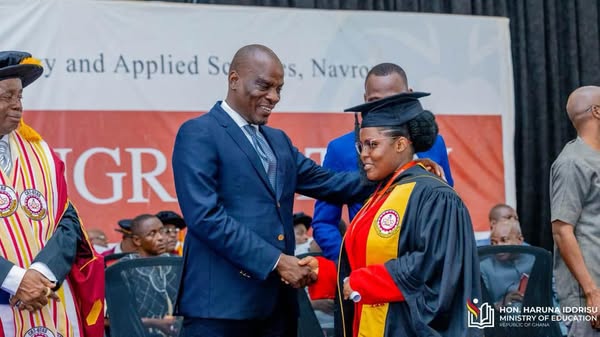
    Four newly established public universities will receive a GH¢40 million seed funding package from the government to ensure their successful operations.

    The beneficiary universities include the C.K. Tedam University of Technology and Applied Sciences, University of Energy and Natural Resources (UNER), University of Health and Allied Sciences (UHAS), and the S.D. Dombo University of Business and Integrated Development Studies (SD-UBIDS).

    Through the Fund, these institutions will also be able to expand infrastructure, enhance research capabilities, and create conducive learning environments.

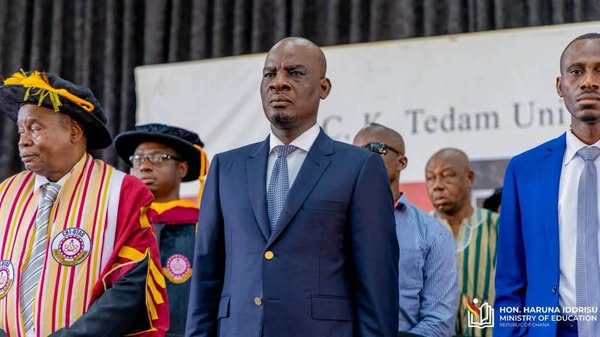
    This information was made known by the Minister for Education, Haruna Iddrisu, at the 5th Congregation Ceremony of the C.K. Tedem University of Technology and Applied Sciences (CKT-UTAS) in the Upper East Region on Saturday, June 21.

    The Fund, according to the minister, will be distributed through the Ghana Education Trust Fund (GETFund) as part of the 2025 budgetary provisions.

    Addressing the attendees, the Education Minister pledged the government’s commitment to making education accessible to all Ghanaians regardless of their background.

    “This government is fully committed to nurturing our young public universities, ensuring they have the necessary resources to develop and provide quality education that meets the demands of our evolving economy. This seed funding through GETFund is a testament to that commitment,” the Minister stated.

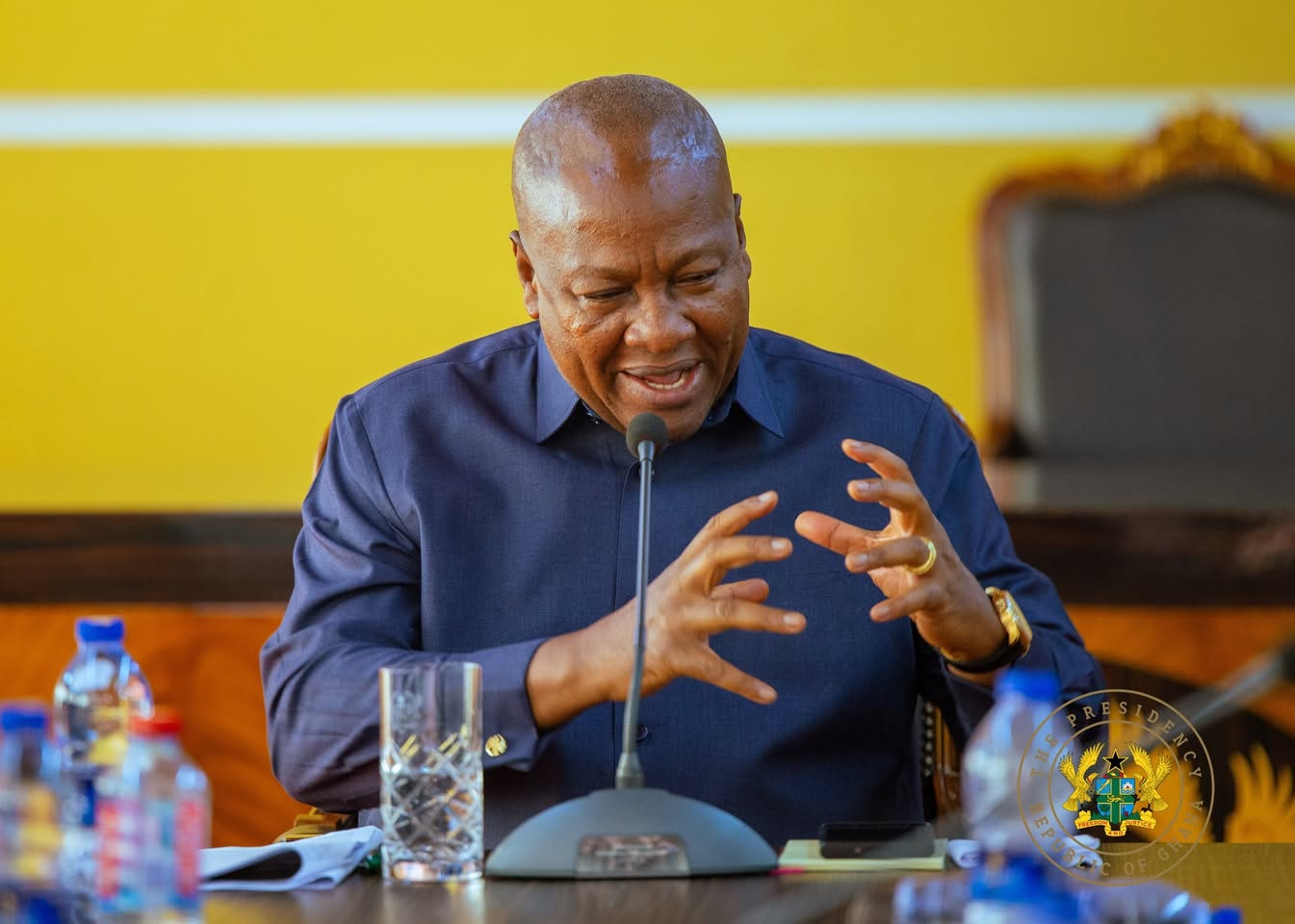
    In a move to boost education funding, the John Dramani Mahama-led government removed expenditure restrictions on the GETFund in April.

    The government aims to assess the state of Ghana’s education system and introduce evidence-based reforms, prompting a call for a National Education Conference.

    The government in April announced a refund in June for first-year students at public tertiary institutions who have paid their academic user fees for the 2024/2025 academic year.

    However, first-year public university students who have already paid their academic fees for the current academic year will not receive cash refunds.

    Instead, the government will apply the equivalent amount as credit toward the students’ second-year fees.

    The “No-Fee Stress” initiative is being implemented by the incumbent government and absorbs academic fees for all Level 100 students. The government has allocated GH¢499.8 million under the 2025 national budget to support the policy.

    https://web.facebook.com/moe.gov.gh/posts/pfbid02zy52cBa3VFBHYkg7T6AwHwroDFPLjX7yv9tQtFQD7tp5Di3mWCqwX28WQz9oUBEWl

  • Our seedlings can boost Ghana’s economy – Oil Palm Research Institute to govt

    Our seedlings can boost Ghana’s economy – Oil Palm Research Institute to govt

    The Oil Palm Research Institute under the Council for Scientific and Industrial Research (CSIR) has called on the government to allocate funding to the Institute, as it can boost the country’s economy.

    During an engagement with the Minister for Food and Agriculture, Eric Opoku, on Saturday, June 21, officials from the industry touted the economic potential of Ghana’s oil palm sector emphasizing the urgent need for government support to scale up production and research efforts.

    “We need the government to come to our aid. We need funds for our research activities. We have the planting materials, but the government is not buying,” one representative stated. “We have a lot of oil palm seedlings in our nursery, but the government is not coming on board. We are pleading with the government to please come to our aid.”

    Ghana’s annual palm oil consumption stands at approximately 450,000 metric tons, largely driven by demand for vegetable oil.

    However, domestic production accounts for only 300,000 metric tons, creating a substantial deficit of 150,000 metric tons, which is met through imports.

    Ghana’s oil palm exports have declined by more than 50% in 2024, according to the Oil Palm Development Association of Ghana (OPDAG).

    The association’s president, Samuel Avaala, attributes this sharp downturn to insufficient government backing and the influx of cheaper foreign alternatives, which have put immense pressure on local producers.

    Speaking with Joy Business, Mr Avaala made a strong appeal for protective measures to safeguard the domestic oil palm industry.

    He urged the government to take decisive action against the uncontrolled importation of foreign palm oil, which continues to undercut local businesses.

    “We want to develop it ourselves, and it is in a state where we are not going to be competitive compared to our neighbors. Let’s play it safe. It’s around 50%. But in recent times, what has happened is that it is probably crossing the 50% mark, leaving the local side to take less than 50%,” he said.

    The association stressed the urgency of investing in local production capacity to close the widening gap in palm oil supply. Avaala underscored the importance of sound policy measures, exchange rate stability, and efficient liquidity management, stating that a more favorable economic environment would bolster growth in the sector.

    Meanwhile, the government is set to launch a comprehensive agribusiness export policy to promote Ghanaian farmers and agribusinesses to export their products more easily and successfully.

    This was revealed by the Deputy Minister of Trade, Agribusiness and Industry, Sampson Ahi, on Saturday, June 21.Addressing the media, he noted that the new policy, which will be unveiled in July, is a part of President John Dramani Mahama’s strategy for driving sustainable export growth.

    “The president is talking about sustainable exports and he is chairing a committee to make sure that we export what we produce.

    “If we want to do exports then we have to add value to whatever we produce and I have seen that a lot of farmers are adding value to their produce, they are packaging very neatly so most farmers are now ready for the international market,” he stated.

    He added that the President will be chairing the national committee that will oversee the implementation of the agribusiness export policy.

    “We in the Ministry of Trade, Agribusiness we have a programme in place to launch the policy with regards to the agribusiness where we will spell out benefits, advantages that exporters can take.

    “I am sure we will launch it somewhere next month. When we do that we will engage the exporters so that they can take advantage of what the government has for them,” Ahi stated.

    In April this year, Finance Minister, Dr. Cassiel Ato Forson, met with representatives from British International Investment (BII) to explore strategic opportunities, particularly in agribusiness and the financial sector in a significant move to deepen foreign investment in Ghana.

  • Western Region accounts for 71% of confirmed Mpox cases – Report

    Western Region accounts for 71% of confirmed Mpox cases – Report

    The Western Region is experiencing a sharp rise in Monkeypox (Mpox) infections, according to the Regional Health Director.

    Addressing attendees at a Regional Development Retreat at Western Region, Essipong on Saturday, June 21, Kwadwo Okyere Apenteng revealed that the area makes up for 71% of all confirmed Monkeypox infections nationwide.

    “Monkeypox is also in the country, and currently, the Western Region is number one; we have taken over. 71% of the cases in the country are coming from the Western Region. As it stands, we have 187 suspected cases and 43 confirmed cases,” Mr Apenteng stated, highlighting the dramatic shift in the geographical distribution of the disease within Ghana.

    Ghana recorded the first Mpox case in June 2022, with five cases, and by November 2023, health authorities had confirmed a total of 34 cases. Despite the increase in cases, Ghana has not recorded any Mpox-related deaths.

    Mpox is a viral illness similar to smallpox. It typically causes fever, swollen lymph nodes, and a rash. The virus spreads through direct contact with an infected person’s skin or bodily fluids, including through sexual contact.

    To reduce your risk, avoid close contact with symptomatic individuals, maintain proper hand hygiene, and refrain from sharing personal items.

    Symptoms may include fever, rash or lesions, tiredness, headaches, muscle and back pain, and swollen glands.

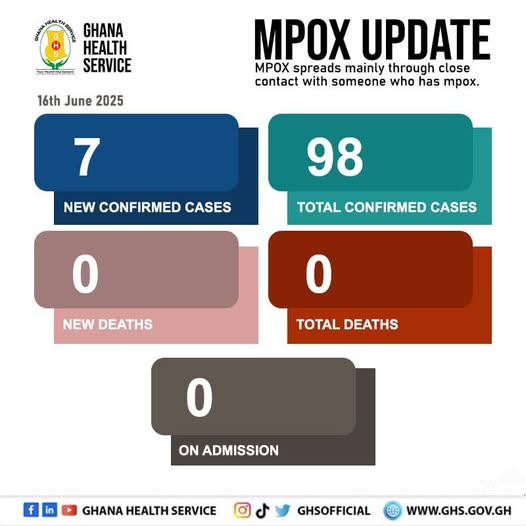
    The Ghana Health Service (GHS) has reported seven new cases of monkeypox (Mpox), bringing the total number of confirmed cases to 98 as of June 16.

    In a circular on Wednesday, June 18, the Service indicated that all patients had been discharged, with no individuals remaining hospitalized.

    As of June 12, the number of confirmed cases rose to 91 from 79 reported as of June 6, with no reports of fatalities.

    Meanwhile, the Ghana Health Service has assured that the country will soon experience relief in response to the surging cases.

    The government is engaging international organizations for assistance in procuring vaccines to be able to curb the surging number of cases being reported.

    Speaking to the media on Saturday, June 7, Director for Public Health at the Ghana Health Service (GHS), Dr. Franklyn Asiedu Bekoe, stated, “We’re engaging WHO and the Africa CDC so that we get the vaccines. Somewhere last year, Ghana didn’t have any established human-to-human transmission, so we do not qualify. Now that we have human-to-human transmission. The idea is that we will be able to identify a clear group who will benefit from the vaccine.”

    The Government of Ghana has assured its commitment to safeguarding public health by implementing appropriate measures to protect the health and well-being of all residents.”

  • Agribusiness export policy to be launched in July– Trade Ministry

    Agribusiness export policy to be launched in July– Trade Ministry

    The government is set to launch a comprehensive agribusiness export policy to promote Ghanaian farmers and agribusinesses to export their products more easily and successfully.

    This was revealed by the Deputy Minister of Trade, Agribusiness and Industry, Sampson Ahi, on Saturday, June 21.

    Addressing the media, he noted that the new policy, which will be unveiled in July, is a part of President John Dramani Mahama’s strategy for driving sustainable export growth.

    “The president is talking about sustainable exports and he is chairing a committee to make sure that we export what we produce.

    “If we want to do exports then we have to add value to whatever we produce and I have seen that a lot of farmers are adding value to their produce, they are packaging very neatly so most farmers are now ready for the international market,” he stated.

    He added that the President will be chairing the national committee that will oversee the implementation of the agribusiness export policy.

    “We in the Ministry of Trade, Agribusiness we have a programme in place to launch the policy with regards to the agribusiness where we will spell out benefits, advantages that exporters can take.

    “I am sure we will launch it somewhere next month. When we do that we will engage the exporters so that they can take advantage of what the government has for them,” Ahi stated.

    In April this year, Finance Minister, Dr. Cassiel Ato Forson, met with representatives from British International Investment (BII) to explore strategic opportunities, particularly in agribusiness and the financial sector in a significant move to deepen foreign investment in Ghana.

    The meeting highlighted Ghana’s evolving investment landscape, with a focus on leveraging private capital for economic growth.

    “Ghana is open for business, and we welcome partners ready to grow with us,” Dr. Forson emphasized.

    A major highlight of the discussion was Ghana’s upcoming Palm Industry Policy, aimed at diversifying the nation’s agricultural base beyond cocoa.

    The government plans to develop 50,000 hectares of oil palm, beginning with a $100 million investment for the first 20,000 hectares.

    “Our goal is to attract private sector investment into large-scale agribusiness that creates jobs and boosts export earnings,” said Dr. Forson.

    The Finance Minister also extended an invitation to BII to support the repositioning and growth of Consolidated Bank Ghana (CBG), signaling a broader push to strengthen the banking sector.

    BII, which currently holds over $200 million in investments in Ghana—particularly in the energy sector—responded positively, reaffirming their long-term commitment to the country.

    “We see Ghana as a priority market in the region,” BII representatives noted.

    In a promising development, BII is considering bringing its full Board to Ghana for the first time in nearly a decade, signaling renewed interest at the highest level.

    The institution also expressed readiness to support small and medium-sized enterprises (SMEs), forestry, and other key sectors.

    Dr. Forson concluded, “We are creating the right environment for investors who are committed to sustainable growth and shared prosperity.”


  • 1st of 7 batches of Hajj returnees arrive in Ghana

    1st of 7 batches of Hajj returnees arrive in Ghana

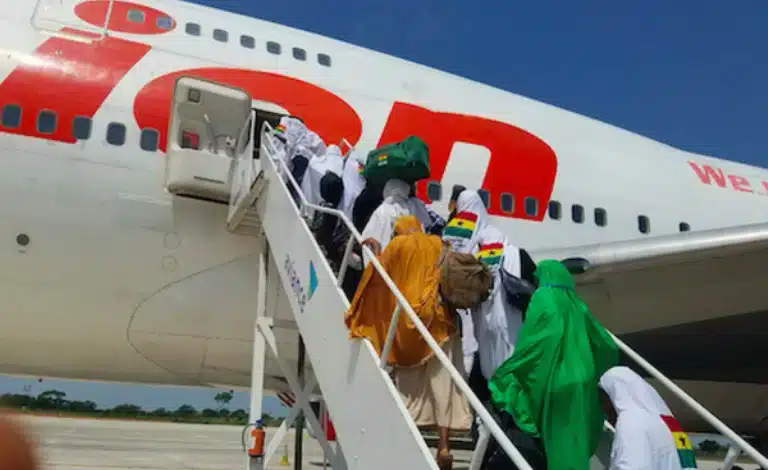
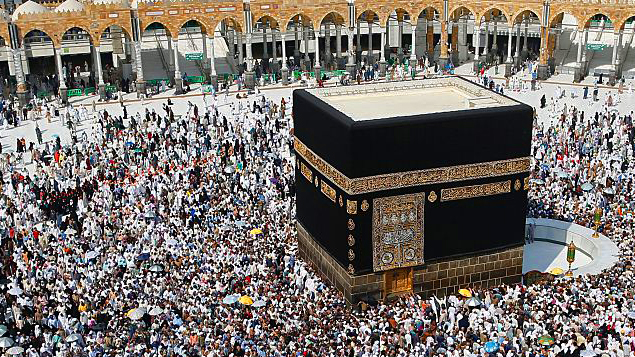
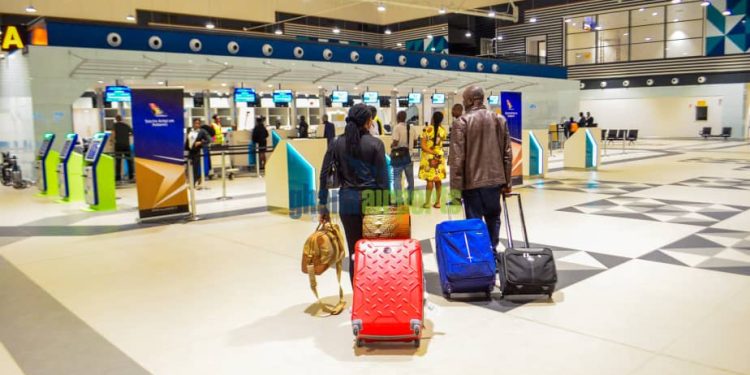
    Ghanaian pilgrims who participated in this year’s Hajj pilgrimage in Mecca, Saudi Arabia, have begun arriving in the country.

    The first out of seven batches, consisting of over 400 pilgrims, was flown on Friday, June 20, with the last expected back home on Friday, June 27.

    Welcoming the Hajj participants at the Yakubu Tali International Airport in Tamale, Chairman of the Hajj Task Force, Alhaji Collins Dauda, lauded the government for conducting one of the most successful and impactful pilgrimages in Ghana’s history.

    The 2025 Hajj pilgrimage encountered several setbacks, including the death of members of the Hajj community and the repatriation of some pilgrims from Mecca, Saudi Arabia.

    The Ghanaian Hajj community lost seven of its members who left for the programme.

    Speaking to the media on Saturday, June 7, Alhaji Collins Dauda revealed that the deceased include five women and two men. All seven have since been buried in Saudi Arabia, as per Islamic customs.

    He explained that six of the seven individuals who died were elderly and had pre-existing health conditions before traveling to Mecca.

    “From our contingent, I can confirm six deaths. We have received information about a seventh person who also passed away, but he did not travel with the official group. He went on a tourist visa. Nevertheless, he is Ghanaian. Those who died were elderly and had underlying health conditions. It was not our wish for this to happen, but it was the will of Allah,” he said.

    Due to visa-related issues, five pilgrims could not participate in the mandatory religious duty for all Muslims as they were repatriated back to the country.

    “Some said they were deported, but we choose to use the word ‘repatriated.’ Deportation connotes some criminality, but these people who have returned have not committed any crime. It was an error in the issuance of their visa.

    “Some attempts to realign the visas resulted in some unfortunate mistakes where their visas were withdrawn. I can assure you that we are making every effort to get them to go back,” he explained.

    Approximately 6,000 Ghanaian Muslims traveled to Saudi Arabia for Hajj 2025. These numbers show an increase of 2,000 Ghanaian participants as compared to 4,000 last year.

    On Sunday, an incident was reported at the Rafahya Al-Seteen Hotel in Mecca, where hundreds of Ghanaian pilgrims had lodged, causing a temporary evacuation.

    Per reports, a structural concern and a fire incident on the 12th floor of the edifice are said to be responsible for the ruckus that occurred on Sunday afternoon, May 25. But the authorities are yet to ascertain the cause of the panic.

    Saudi fire and police officials arrived at the scene to ensure all was safe for the residence to return to their various rooms.

    This year’s pilgrimage recorded a massive turnout due to the Mahama-led government’s decision to reduce the Hajj pilgrimage fee to 62,000 to 75,000 Ghana cedis under the previous administration.

    The Hajj pilgrimage begins on the 8th day of Dhul Hijjah and lasts till the 13th of the month.

    In Ghana, Friday, June 6, was declared a statutory public holiday for the Eid al-Adha celebration, which marks the end of the annual pilgrimage to Mecca or Hajj.

    Meanwhile, the continuous appreciation of the local currency could reduce the fees Ghanaian Muslims pay to travel to Mecca to perform the Hajj pilgrimage. President John Dramani Mahama announced this during his Thank You Tour in Kintampo in the Bono East Region on Thursday, May 29.

    “At the time we started paying for the Hajj, the cedi was at GHC15.5 to the dollar. So, the fare we came up with for the $4,000 cost to do the Hajj came to GHC 62,000. Next year, if you do a calculation with where the Cedi is currently—GHC 10.5—it means the fare for Hajj may go below GHC 50,000,” he said.

  • Otumfuo Osei Tutu II honoured with six new Adinkra symbols

    Otumfuo Osei Tutu II honoured with six new Adinkra symbols

    Asantehene Otumfuo Osei Tutu II has been honoured with six newly created Adinkra symbols in recognition of his distinguished leadership.

    The symbols, which were unveiled during the fifth Awukudae festival on Wednesday, June 18, were crafted by an indigenous financial advisory firm, Aliska Business Advisory and Research.

    During the presentation of the symbols, officials from the institution indicated that the symbols were designed after extensive three-and-a-half-year research.

    “Through our research, it came up that it’s advisable we get new authentic words to represent these new designs to set a tone that in the event when there are new words in academia, medicine, and arts, the council can come up with new words to match it,” the officials noted.

    They noted that their extensive research placed particular emphasis on the Asantehene’s contributions, especially his efforts in preserving and promoting Asante arts, culture, traditions, and heritage.

    Receiving the items, Otumfuo expressed gratitude, adding, “Twenty-six years ago, when I was going to Pampaso, I symbolically put my hands together, but many chiefs didn’t understand. I was in Apakankro. My grandchildren understand it, but many of the chiefs couldn’t understand it at the time.”

    ‘Otumfuo Nsa’, which implies ‘The Hand of Otumfuo,’ is the most prominent amongst them all. Manhyia Palace is expected to name the other 5 symbols at a later date following further consultation.

    The second, which has two parallel hands, one pointing upwards and downwards, depicts the Asantehene’s free spirit to embrace different cultures.

    The next figure, shaped like a bulging eye, describes Otumfuo’s intelligence, one that is admired by leaders across the world.

    The Asantehene’s ability as a key advisor in the management of Ghana’s natural resources is illustrated through the fourth symbol. 

    The fifth symbol signifies his influence on sustainable development and bears the crest of Manhyia alongside the Golden Stool. 

    The final symbol draws attention to his enduring commitment to advancing education and research in the country. Adinkra symbols are visual representations of concepts and proverbs.

    Traditionally, they have been widely featured in textiles, pottery, and logos and are often integrated into walls and architectural elements. Some can even be found on traditional Akan goldweights.

    These symbols are also carved into stools used both domestically and for rituals. In recent years, tourism has influenced their application, leading to their appearance on modern items like T-shirts and jewellery.

    The Asantehene is recognised locally and internationally for his leadership in promoting peace, democracy, and cultural preservation. Currently, he is leading a delegation to end the Bawku chieftaincy conflict that has taken the lives of many and displaced several others.

  • You could have resolved your grievances without a strike – Titus Beyuo to GRNMA

    You could have resolved your grievances without a strike – Titus Beyuo to GRNMA

    The Member of Parliament for Lambussie, Prof. Titus Beyuo, has stated that the Ghana Registered Nurses and Midwives Association (GRNMA) rushed its strike.

    He explained that the Association could have resolved its concerns with the government without putting down its tools.

    “Strikes are one of the means by which labour can make a demand or protest for improved conditions of service. But when used whimsically, it is not good.

    “In this particular instance, the nurses had a very genuine case to demand what they were demanding, but I felt the strike was a bit premature considering that the government was talking.”


    Members of GRNMA on June 2 withdrew from their posts over delays in their 2024 Collective Agreement. In response, the National Labour Commission (NLC) filed an ex parte application on Thursday, June 5.

    Health Minister Mintah Akandoh, on the matter, revealed that the government will not be able to meet the conditions of service for the Ghana Registered Nurses and Midwives Association (GRNMA), currently on strike, this year.

    Engaging the press, the sector minister announced that the conditions of service being requested to be implemented were not captured in the 2025 budget statement; hence, it will “completely throw the economy off gear if implemented in the manner it currently exists.”

    “We are mindful of the serious economic consequences of unbudgeted expenditure and want to avoid the economic slippages that have led to the hardship in the recent past,” the Health Minister revealed.

    However, on Friday, June 13, the President of the Ghana Registered Nurses and Midwives Association (GRNMA), Mrs. Perpetual Ofori-Ampofo, announced the suspension of the association’s strike action that left many patients stranded as nurses and midwives left their posts.

    Parliament’s Health Committee on Thursday, June 12, engaged the leadership of the Ghana Registered Nurses and Midwives Association (GRNMA) as part of efforts by the government to resolve the strike action.

    In an online news conference, Mrs. Perpetual Ofori-Ampofo noted that the meeting was fruitful and there are plans for a follow-up meeting on June 26.

    “The engagement held with the Parliamentary Select Committee on Health and other interested parties on Thursday, 12 June, was very fruitful, and has paved the way for an amicable resolution of the impasse with our employer concerning the implementation of our collective bargaining agreement.”

    “In view of point one above, the GRNMA’s industrial action initiated on 2nd June 2025, is hereby suspended pending the outcome of a follow-up meeting scheduled for 26th June 2025.”

    The nationwide strike by the Ghana Registered Nurses and Midwives Association (GRNMA) took a heavy toll on the delivery of healthcare services, with many lives being lost due to patients being stranded.

    The Mortuary Workers Association of Ghana (MOWAG) bemoaned the evident rise in mortality cases amid the ongoing strike by nurses and midwives in the country.

    General Secretary of MOWAG, Richard Kofi Jordan, noted that the death rate has increased by approximately 100% to 150% due to nurses not being at post.

    “Looking at the [number] of deaths compared to the past and now, the death toll has increased significantly, and it is not surprising because of the impact of the nurse’s absence. On average, where we are to record about 10 a day, we are recording about 20 to 25. This tells you that the absence of our nurses is becoming so severe,” he said.

    Making reference to Korle-Bu Teaching Hospital, he mentioned that “we know averagely in Korle Bu, you can have about 50 this time. It has risen above that. Other facilities (like) KATH and all that, we are hearing it.”

    According to him, the nurses who are no longer at their posts were mitigating the daily death rate across medical facilities in Accra.

  • Prices of goods and services to  drop further from July 1 – GNCCI CEO

    Prices of goods and services to drop further from July 1 – GNCCI CEO

    The Chief Executive Officer of the Ghana National Chamber of Commerce and Industry (GNCCI), Mark Badu Aboagye, has assured that Ghanaians will experience relief beginning July 1, as businesses are set to further reduce prices of their goods and services.

    In an interview with Joy News on June 19, Mr. Badu Aboagye noted that although some vendors had initially adjusted prices, they are now better positioned to offer deeper cuts in the coming weeks as a result of the local currency’s appreciation.

    “We should manage expectations on these reductions. We should remember that some of these industries have already started reducing prices earlier this year, therefore what will happen from July 1, 2025 will be an addition to what has happened so far”, he explained.

    Earlier this month, the Ghana Union of Traders Association (GUTA) reported an average of 20.6% decline in staple food, attributing the trend to the continuous appreciation of the Ghana cedi against major trading currencies.

    Speaking to the media on Monday, June 2, the Head of the Economic and Business Bureau at GUTA, Charles Kusi Appiah Kubi, said the price reductions are the result of a careful assessment by the Association.

    He noted that the price of a 50kg bag of rice has dropped from GH¢950 to GH¢750, representing a 21.05% decrease. Cooking oil, which previously sold at GH¢780, now goes for GH¢650 — a 20.51% reduction.

    Additionally, a 4kg bag of rice has been reduced from GH¢400 to GH¢330, a 17.5% drop, while spaghetti prices have fallen from GH¢150 to GH¢115, marking a 23.33% decrease. According to Mr. Appiah Kubi, some of these gains are already benefiting consumers.

    He emphasized that several economic factors play into pricing, including borrowing costs, fuel prices, consumer taxes, procurement, and replacement costs.

    “The point is this: we understand the dynamics within the market, and as an integral part of economic revival, we have a responsibility. One of them is to ensure that we safeguard our gains — that we don’t just jump on the bandwagon and lose out. That is why we said give us some months so that we can better predict what is going to happen tomorrow.”

    “So, even within the food commodities sector, we see a drop in prices. We said that for a drastic reduction in prices, we need two months to achieve that — but even within that time, prices are dropping. A 50kg bag of rice, previously selling at about GH¢950, is now selling at GH¢750. That’s GH¢200 down. You take general oil — GH¢780 — some are now selling it at GH¢650,” he added.

    Ghana ended 2024 with an inflation rate of 23.8%. The rate slightly declined to 23.5% in January 2025 and has continued on a downward trend since.

    In February, inflation dropped to 23.1%; in March, it decreased further to 22.4%, and in April it declined again to 21.2%.

    This improvement is partly attributed to the cedi’s appreciation — approximately 16% against the US dollar — which helped push inflation down to 21.2% by May 2025.

    This marks a significant recovery, considering that Ghana’s inflation rate had peaked at 31.26% in 2022 due to economic disruptions and cedi depreciation.

    From April 14 to June 2 this year, the interbank interest rate remained relatively stable, moving slightly from 27.01% to 27.02%.

    The Bank of Ghana (BoG) has stated that no bank currently offers loans to individuals at interest rates below 20%. According to BoG data, the cedi appreciated by 19% in April and May alone.

    In a statement at the Bank’s 124th Monetary Policy Committee meeting on May 21, BoG Governor Dr. Johnson Asiamah said the central bank is committed to maintaining fiscal and monetary policies that support the cedi’s stability.

    Dr. Asiamah noted that the Bank will continue implementing reforms to monitor the forex market and prevent illegal practices that threaten the currency’s strength.

    The cedi, he said, had gained “significant value — almost 19% — between April and May,” attributing the appreciation to “a combination of factors, including prudent monetary policy, improved market sentiment, and external sector gains.”

    Meanwhile, Forbes has reported an 8% depreciation of the US dollar in 2025, while gold prices have increased by 23%, as investors seek safe-haven assets — a trend that has also strengthened the Ghanaian cedi.

    The average interbank rates as of Thursday, June 19 show the US dollar buying at GH₵10.29 and selling at GH₵10.30. The British pound is buying at GH₵13.82 and selling at GH₵13.83. The euro is currently being bought at GH₵11.80 and sold at GH₵11.81.

  • Govt allocates GHS1bn to retool Police, GNFS and others

    Govt allocates GHS1bn to retool Police, GNFS and others

    The government has allocated GH¢1 billion to strengthen the operational capacities and effectiveness of the country’s security agencies. 

    President John Dramani Mahama revealed this at a recent meeting with security agencies on Friday, June 20, after receiving a donation of GH¢1 million to support the Ghana Medical Trust Fund (Mahama Cares) from 11 agencies.

    Dignitaries present at the ceremony were the Minister for the Interior, Muntaka Mohammed Mubarak; the Minister of Health, Kwabena Mintah Akandoh; and the Inspector-General of Police (IGP), Christian Tetteh Yohuno.

    Others include the Ghana Immigration Service (GIS), the Ghana National Fire Service (GNFS), the Ghana Prisons Service, the Narcotics Control Commission (NACOC), the National Disaster Management Organisation (NADMO), and the National Identification Authority (NIA). 

    According to him, the Minister of Finance, Dr. Cassiel Ato Forson, has already approved the allocation despite the odds to strengthen the security agencies.

    He expressed concern over the operational challenges confronting the security services, particularly the Ghana National Fire Service (GNFS), emphasizing that the service’s tools and machinery were procured over a decade ago and have not been replaced or upgraded.

    President Mahama added that these challenges are hampering their efforts to effectively carry out their security and emergency response duties.

    According to him, the new funding would go a long way in addressing these critical shortfalls and restoring public confidence in the operations of the security agencies.

    “I have managed to squeeze the hand of the Minister of Finance to his back, and we will get a budget of a billion cedis for the retooling of your various services. The Fire Service needs equipment urgently. I empathise with them when they get insulted by people when they do not get to fire incidents early. The issue is that they do not have the equipment. Some of the equipment was bought 10 years ago. There has not been a retooling,” the president explained.

    “The police have to confront armed robbers every day, and you do not expect them to do it in light-skinned vehicles,” he said.

    The Fire Service has, on several occasions, attributed delays in emergency response to outdated equipment, contributing to the escalating loss of lives and properties.

    Many of the existing fire tenders are outdated and no longer meet the demands of modern firefighting, compromising the speed and efficiency of operations.

    In response, the GNFS has repeatedly appealed for more fire tenders, advanced firefighting equipment, and an expanded workforce.

    Despite their plea, support has been limited, leaving personnel to rely on aging tools and vehicles that often slow down response efforts.

    Addressing concerns about the police service, President Mahama highlighted the risks officers encounter in dealing with armed criminals and stressed the immediate need for adequate equipment to protect their lives.

    “The armed robbers are well armed with AK-47s. They’re back at them and so getting them armor-plated vehicles for their patrol, highway patrols, and things is also something that we’ll look at,” he stated.

    Additionally, he lamented mobility challenges facing the Ghana Immigration Service and the Ghana Prisons Service. He noted that the fund is expected to procure modern vehicles to improve their operational efficiency and ensure a timely response to security duties.

    “And so we’ll help you; we’ll retool you. You have a mandate to look after us, but we must help you to look after us, and so I can assure you that getting equipment and logistics for you to do your work will be one of our priorities,” he said.

    Should government disburse the allocated amount, this will go a long way to aid the delivery of security services by the security agencies.

    On the other hand, the Cabinet had approved a bill for the Mahama Cares Fund. According to President Mahama, the fund will be managed by independent trustees, reputable individuals appointed once Parliament gives a nod.

  • Our citizens cannot be blamed for illegal mining activities in Ghana – Chinese Ambassador Tong Defa

    Our citizens cannot be blamed for illegal mining activities in Ghana – Chinese Ambassador Tong Defa

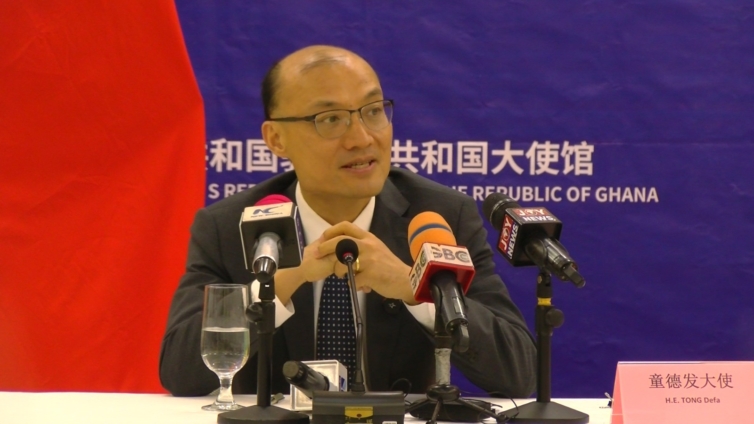
    Chinese Ambassador to Ghana, His Excellency Tong Defa, has absolved Chinese citizens residing in Ghana from blame over the degradation of the environment by activities of illegal miners (galamseyers) in the country.

    Speaking to the media on Thursday, June 19, he held Ghanaians, particularly rural dwellers, responsible for the destruction of properties and loss of lives due to the menace.

    He indicated that a significant number of Chinese nationals arrested for illegal mining were migrant workers invited by Ghanaians seeking to profit quickly from the mining industry.

    “Some of those who were caught red-handed are just migrant workers… I have social media, and when I post on X, people tag me with galamsey as if galamsey is caused by China. It is unfair to me. It is really unfair to me and to the majority of Chinese. Actually, it is not Chinese. It didn’t originate from China. Chinese nationals cannot obtain licences or get permits. It is the Ghanaian people who throw the Chinese people over here.

    “To my understanding, in this country, you can never eliminate those small mines. Those mines will have illegalities involved in them. We need to find ways to solve this problem… The government needs to work on a policy to eliminate the pollution of waters and forests,” he noted.

    He further called on the government to initiate stricter measures and policies to curb illegal mining activities and hold perpetrators accountable.

    Several Chinese individuals have been involved in galamsey activities, leading to their arrest; however, prosecution has not been successful due to poor coordination between law enforcement and prosecutors, and language barriers during legal proceedings.

    Recently, the government attributed the lack of justice delivery to Chinese foreign nationals to a language barrier. Supreme Court Judge nominee Justice Philip Bright Mensah, corroborated this information, stating that the lack of proper interpretation in court by interpreters adds to the challenges of judges to prosecute culprits.

    “The interpreters themselves, sometimes they are also a problem. So if the judge himself understands the language, it will be better served for him to understand what he is doing for us to be able to curb the menace of galamsey,” he said, noting the need for judges to learn the Chinese language.

    Over 500 arrests have been made from January to May this year in response to efforts to combat illegal mining, locally known as galamsey.

    In May, the Ghana Police Service confirmed the arrest of 17 individuals, including seven Chinese nationals and ten Ghanaians, in connection with illegal mining activities in Samreboi, located in the Western Region.

    The Central North Police Regional Command’s Special Anti-Galamsey Taskforce on April 7 apprehended five suspects — two Ghanaians and three Chinese nationals — for engaging in illegal mining activities on River Fum at Assin Ayitey, a farming community near Assin Akonfudi in the Assin North Constituency, within the Central North Police Region.

    The arrested individuals were identified as Duut Kwabena Sakakba, aged 29; Bismark Asare, aged 36; and three Chinese nationals — Lin Wei, aged 45; Zhao Min, aged 38; and Lu Chen, aged 41.

    The effects of illegal mining continue to affect the country adversely. Billions of cedis are lost due to the smuggling of gold by illegal miners. Also, the water bodies and forest reserves are due to the use of mercury, other harmful chemicals, and heavy equipment.

    The government has initiated a number of measures to quell the activities of illegal miners in the country.

    Excavator owners and operators who have failed to register their machines with the Driver and Vehicle Licensing Authority (DVLA) risk losing them to the state, as the government intensifies efforts to clamp down on illegal mining activities.

    To further control the situation, the DVLA, in collaboration with key agencies like the Minerals Commission, National Security, the Ghana Ports and Harbours Authority (GPHA), and the Customs Division of the Ghana Revenue Authority (GRA), has started tagging all newly imported excavators.

    Legal small-scale mining sites have also been geo-fenced, with their site coordinates integrated into the Ghana Mine Repository and Tracking software for better oversight.

    According to President John Dramani Mahama, the government plans to reclaim 10,000 hectares of mined-out lands from illegal mining activities.

  • I am against child marriage – Justice Ackaah-Boafo

    I am against child marriage – Justice Ackaah-Boafo

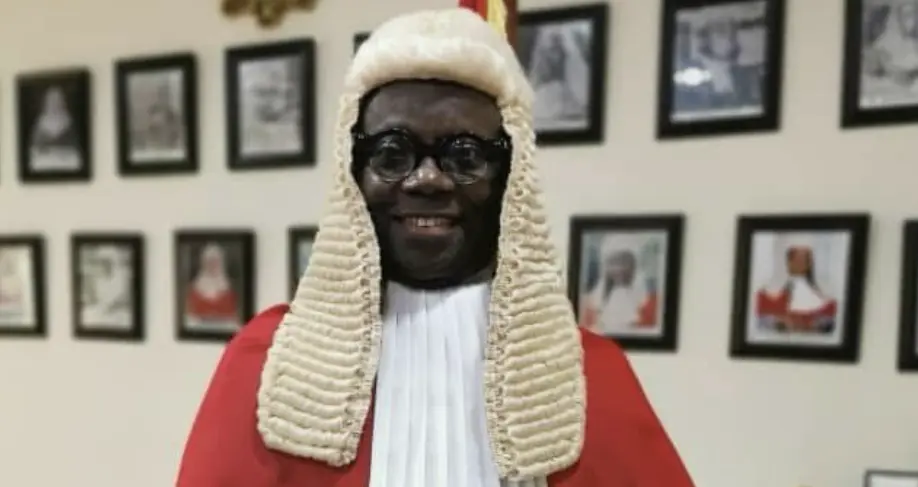
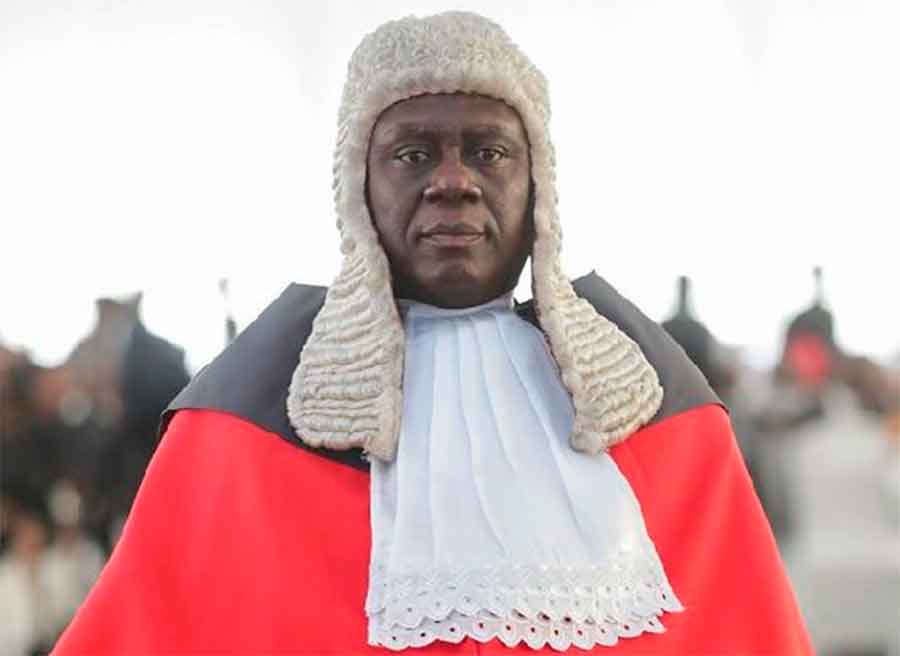
    Supreme Court Judge nominee, Justice Kweku T. Ackaah-Boafo, has opposed the practice of some parents giving their underage daughters in marriage.

    Appearing before the Parliament’s Appointments Committee on Friday, June 20, he indicated that every Ghanaian girl child deserves the opportunity to access education.

    He advocated for changes in the law to better safeguard the rights of vulnerable girls.

    “The girl child should have the opportunity to be educated and develop her talent, so that when you place a child into a marriage against their wishes, it is certainly a no-no.

    “So I do not believe that children should be put in marriage at a tender age. Every child should have the opportunity to develop their talents, and if there is a need for us to regulate that through law, I am all for it. But I think many of these things come with education rather than just law,” he concluded.

    The Appointments Committee of Parliament on Friday, dismissed a petition filed that sought to prevent the vetting of one of President John Dramani Mahama’s Supreme Court judge nominees, Justice Kweku T. Ackaah-Boafo.

    The petition was brought before the Parliament’s Appointments Committee on Thursday, June 19, by an acclaimed international human rights activist, Anthony Kwabenya Rau, who levels serious allegations of judicial bias against the nominee.

    The dramatic development prevented Justice Ackaah-Boafo from being vetted on Thursday and sought to ruin his promotion to Ghana’s highest court.

    But his vetting resumed today, making him the last person to appear before Parliament’s Committee for interrogation.

    Addressing the media, Chairman of the Appointments Committee, Bernard Ahiafor, described the petition as “frivolous, vexatious, and a complete abuse of process,” thereby dismissing it.

    He based the decision on Article 127(3) of the 1992 Constitution, which protects judges from legal action regarding their judicial conduct.

    Minority Leader Alexander Afenyo-Markin, also condemned the increasing trend of using baseless allegations to publicly tarnish the reputations of accomplished individuals.

    “I am in agreement with the views you’ve expressed for and on behalf of this committee,” he said. “Indeed, as a country, we need to veer off from trivialities and situations where we subject people’s reputation to undue public ridicule.”

    “I am happy that this committee has boldly stood up for democracy and the rule of law in helping deal with matters as frivolous as what came before us,” he added.

    The petition alleges Justice Ackaah-Boafo used unprintable words during past court proceedings, emphasizing extreme bias.

    Mr Rau questioned Justice Ackaah-Boafo’s legitimacy to serve at the Supreme Court, labeling him a “so-called Messiah international Human Rights Activist”.

    “For me, he will be a disaster at the Supreme Court if approved (sic) for the international and national interest of the republic. These are my reasons to petition the vetting committee not to approve this particular judge,” parts of the petition read.

    According to the petitioner, Justice Ackaah-Boafo “insulted and attacked” him during a court hearing, which he claims is undeniable evidence of bias and corruption.

    He called Justice Ackaah-Boafo “arrogant, biased, power-drunk, an abuser of human rights (sic) and supportive of corruption.”

    The Appointments Committee referred the complaint to Speaker Bagbin for further review. As per Parliament’s Standing Order 99, petitions received must undergo a 30-day inquiry to ensure they are not “frivolous or vexatious.”

    So far, all President Mahama’s nominees, Justice Sir Dennis Dominic Adjei, Justice Gbiel Simon Suurbaareh, Justice Senyo Dzamefe, Justice Philip Bright Mensah, Justice Janpere Bartels-Kodwo, Justice Hafisata Ameleboba and Justice Kweku T. Ackaah-Boafo have been vetted.

    Their vetting comes after the Speaker of Parliament Alban Kingsford Sumana Bagbin on May 27 referred the nominees to the Appointments Committee for vetting and subsequent approval.

    This is in accordance with Article 144(2) of Ghana’s 1992 Constitution, which mandates that Supreme Court nominees undergo parliamentary scrutiny before their appointments are confirmed.

    The Appointments Committee, is chaired by Bernard Ahiafor, and assisted by Emmanuel Armah-Kofi Buah.Other members of the committee also include, Alexander Afenyo-Markin (Ranking Member), Patricia Appiagyei (Deputy Ranking Member), Mahama Ayariga (Majority Leader), Agnes Naa Momo Lartey, Frank Annoh-Dompreh, Patrick Yaw Boamah, Shaibu Mahama, Alhassan Umar, Kwame Governs Agbodza.

    About the nominees

    Justice Sir Dennis Dominic Adjei – A Court of Appeal judge since 2010, he was elected to the African Court on Human and Peoples’ Rights in 2022 for a six-year term. He has served as Director of the Judicial Training Institute and Dean of the Faculty of Law at GIMPA. He is an Adjunct Professor of Law at multiple universities.

    Justice Gbiel Simon Suurbaareh – Appointed to the Court of Appeal in 2010, he previously served as the Supervising High Court Judge in the Eastern Region and is known for his expertise in constitutional and administrative law and represents Court of Appeal judges on Ghana’s Judicial Council.

    Justice Senyo Dzamefe – A Court of Appeal judge since 2010, he chaired the Dzamefe Commission, which investigated Ghana’s performance at the 2014 FIFA World Cup. He was elected President of the Association of Magistrates and Judges of Ghana (AMJG) in 2018.

    Justice Kweku Tawiah Ackah-Boafo – A Court of Appeal judge, has emphasised the need for legal education reforms and has advocated for the integration of artificial intelligence into Ghana’s legal system to enhance efficiency and transparency.

    Justice Philip Bright Mensah – Known for his contributions to appellate jurisprudence, he recently presided over a Court of Appeal panel that directed the Accra High Court to adopt proceedings from a previous trial in the Republic vs. Stephen Kwabena Opuni case.

    Justice Janpere Bartels-Kodwo – A Court of Appeal judge, he has been nominated to strengthen the Supreme Court’s capacity amid increasing demands on Ghana’s judiciary.

    Justice Hafisata Ameleboba – A Court of Appeal judge, she has been involved in key judicial decisions and reforms. Her nomination is expected to bring diversity and expertise to the Supreme Court.


  • Mob justice is illegal, let the law speak – Justice Ackaah-Boafo to Ghanaians

    Mob justice is illegal, let the law speak – Justice Ackaah-Boafo to Ghanaians

    Supreme Court nominee, Justice Kweku T. Ackaah-Boafo, has admonished Ghanaians to desist from taking the laws into their hands, instead turn to legal authorities for assistance.

    Appearing before Parliament’s Appointments Committee on Friday, June 21, he indicated that lynching and other vigilante acts undermine the rule of law and must not be used as a means of seeking justice.

    Justice Ackaah-Boafo insisted that all these acts are illegal and individuals caught in the practice must face the law.

    “If somebody has done something wrong, the judicial process should be allowed to take its place. Using mob justice clearly is illegal, and people who engage in it must be dealt with by the law.

    “I believe that nobody can use mob justice or demonstrations to resolve a legal matter,” he stated.

    Moving away, Justice Kweku T. Ackaah-Boafo also opposed the practice of some parents giving their underage daughters in marriage.

    He indicated that every Ghanaian girl child deserves the opportunity to access education.

    He advocated for changes in the law to better safeguard the rights of vulnerable girls.

    “The girl child should have the opportunity to be educated and develop her talent, so that when you place a child into a marriage against their wishes, it is certainly a no-no.

    “So I do not believe that children should be put in marriage at a tender age. Every child should have the opportunity to develop their talents, and if there is a need for us to regulate that through law, I am all for it. But I think many of these things come with education rather than just law,” he concluded.

    Justice Kweku T. Ackaah-Boafo was the final nominee of President John Dramani Mahama’s Supreme Court judge nominees, who had undergone vetting.

    So far, Justice Sir Dennis Dominic Adjei, Justice Gbiel Simon Suurbaareh, Justice Senyo Dzamefe, Justice Philip Bright Mensah, Justice Janpere Bartels-Kodwo and Justice Hafisata Ameleboba have been vetted.

    Their vetting comes after the Speaker of Parliament Alban Kingsford Sumana Bagbin on May 27 referred the nominees to the Appointments Committee for vetting and subsequent approval.

    This is in accordance with Article 144(2) of Ghana’s 1992 Constitution, which mandates that Supreme Court nominees undergo parliamentary scrutiny before their appointments are confirmed.

    The Appointments Committee, is chaired by Bernard Ahiafor, and assisted by Emmanuel Armah-Kofi Buah.Other members of the committee also include, Alexander Afenyo-Markin (Ranking Member), Patricia Appiagyei (Deputy Ranking Member), Mahama Ayariga (Majority Leader), Agnes Naa Momo Lartey, Frank Annoh-Dompreh, Patrick Yaw Boamah, Shaibu Mahama, Alhassan Umar, Kwame Governs Agbodza.

    About the nominees

    Justice Sir Dennis Dominic Adjei – A Court of Appeal judge since 2010, he was elected to the African Court on Human and Peoples’ Rights in 2022 for a six-year term. He has served as Director of the Judicial Training Institute and Dean of the Faculty of Law at GIMPA. He is an Adjunct Professor of Law at multiple universities.

    Justice Gbiel Simon Suurbaareh – Appointed to the Court of Appeal in 2010, he previously served as the Supervising High Court Judge in the Eastern Region and is known for his expertise in constitutional and administrative law and represents Court of Appeal judges on Ghana’s Judicial Council.

    Justice Senyo Dzamefe – A Court of Appeal judge since 2010, he chaired the Dzamefe Commission, which investigated Ghana’s performance at the 2014 FIFA World Cup. He was elected President of the Association of Magistrates and Judges of Ghana (AMJG) in 2018.

    Justice Kweku Tawiah Ackah-Boafo – A Court of Appeal judge, has emphasised the need for legal education reforms and has advocated for the integration of artificial intelligence into Ghana’s legal system to enhance efficiency and transparency.

    Justice Philip Bright Mensah – Known for his contributions to appellate jurisprudence, he recently presided over a Court of Appeal panel that directed the Accra High Court to adopt proceedings from a previous trial in the Republic vs. Stephen Kwabena Opuni case.

    Justice Janpere Bartels-Kodwo – A Court of Appeal judge, he has been nominated to strengthen the Supreme Court’s capacity amid increasing demands on Ghana’s judiciary.

    Justice Hafisata Ameleboba – A Court of Appeal judge, she has been involved in key judicial decisions and reforms. Her nomination is expected to bring diversity and expertise to the Supreme Court.
  • Okyeame Kwame, KK Kabobo,  featured in 2025 BECE

    Okyeame Kwame, KK Kabobo, featured in 2025 BECE

    Reports indicating the inclusion of other Ghanaian musicians who featured in the 2025 BECE aside from King Paluta has surfaced.

    The other musicians include James Armaah, the late KK Kabobo, born Kwabena Kwakye Kabobo, a veteran Highlife musician; Dela Botri is celebrated as Ghana’s “flute magician”.

    Others are: Rev. Newlove Kojo Annan, a prolific Ghanaian choral director, Okyeame Kwame, born Kwame Nsiah-Apau and popularly known as the “Rap Doctor.

    The candidates were made to answer the question, “King Paluta, whose real name is Thomas Adjei Wireko, is a Ghanaian musician known for combining traditional rhythms, storytelling and modern hip-hop beats in his music. One of his most popular songs, Aseda, carries deep messages that address important issues in the Ghanaian society. Identify two of these issues?” the question read.

    This led a section of Ghanaians to raise concerns that some students may struggle to answer the question if they are unable to understand the message in the song.

    On the other hand, the West African Examination Council (WAEC) has stated that language was never a barrier for students who wrote their BECE exams, answering questions on King Paluta’s Aseda song, composed in the Twi dialect.

    WAEC’s Head of Public Affairs, John Kapi, explained that the students were prepared to expect to answer the question.

    “Language wouldn’t have been a barrier because teachers would have guided the students through it. In fact, the materials are provided to them ahead of time, giving them the opportunity to interpret and understand the content properly before the exam,” Kapi said.

    He added that the inclusion of songs in exams is part of the Creative Arts and Music syllabus.

    “The issue about this, especially this aspect of the syllabus, is to have the candidates studied more like you study poetry or comprehension. The music is supposed to send a message or to bring something to the society. And so it is something that the candidates are supposed to have studied and then they should be able to, you know, put it in their own words and maybe tell the world what they have learned from this kind of music,” he stated.

    A total of 603,328 candidates participated in this year’s Basic Education Certificate Examination (BECE) today, Wednesday, 11 June.

    Ahead of the exams, Minister for Education, Haruna Iddrisu, entreated the candidates to remain focused and stay away from exam malpractices.

    Barely 72 hours after the commencement of the exams, the West African Examination Council announced that 10 individuals had been caught engaging in exam malpractice.

    “These 10 culprits have been handed over to law enforcement agencies. Their actions are criminal under WAEC law, and the police will now work to prosecute them in court.”

    “There was one supervisor who had a mobile phone. He had taken smart shots of the questions and posted them on social media. In addition, six other invigilators were found with mobile phones containing pictures of the examination questions,” Head of Public Affairs, John Kapi, told JoyNews.

    During the period, several candidates sustained injuries due to accidents, and a life was lost. Eight BECE candidates from Nangbagu Yapala M/A JHS in the Northern Region were involved in a road accident on their way to write Tuesday’s paper (June 12) at the Tamale Secondary School (Tamasco) examination centre in the Sagnarigu Municipality.

    A supervisor accompanying the candidates, Mr Abdulai Mohammed, recounted that the accident happened after the tricycle’s steering reportedly locked, causing the rider to lose control and crash into the motorbike.

    “We got another means to carry them to the Tamale West Hospital, but because of the ongoing strike, it took a while before they managed to get two nurses and one doctor to attend to them.”

    “When we got to the centre, they had finished the first paper, and the students were coming out. We isolated our students so they could write, but unfortunately, they were denied,” Mr Mohammed explained.

    The candidates, comprising 297,250 males and 306,078 females, were from 20,395 schools.

    This year examination exercise was brought to completion on June 18.

    Ahead of the exams, Minister for Education, Haruna Iddrisu, entreated the candidates to remain focused and stay away from exam malpractices.

    Barely 72 hours after the commencement of the exams, the West African Examination Council announced that 10 individuals had been caught engaging in exam malpractice.

    “These 10 culprits have been handed over to law enforcement agencies. Their actions are criminal under WAEC law, and the police will now work to prosecute them in court.”

    “There was one supervisor who had a mobile phone. He had taken smart shots of the questions and posted them on social media. In addition, six other invigilators were found with mobile phones containing pictures of the examination questions,” Head of Public Affairs, John Kapi, told JoyNews.

    During the period, several candidates sustained injuries due to accidents, and a life was lost. Eight BECE candidates from Nangbagu Yapala M/A JHS in the Northern Region were involved in a road accident on their way to write Tuesday’s paper (June 12) at the Tamale Secondary School (Tamasco) examination centre in the Sagnarigu Municipality.

    A supervisor accompanying the candidates, Mr Abdulai Mohammed, recounted that the accident happened after the tricycle’s steering reportedly locked, causing the rider to lose control and crash into the motorbike.

    “We got another means to carry them to the Tamale West Hospital, but because of the ongoing strike, it took a while before they managed to get two nurses and one doctor to attend to them.”

    “When we got to the centre, they had finished the first paper, and the students were coming out. We isolated our students so they could write, but unfortunately, they were denied,” Mr Mohammed explained.

  • Yaa Jackson sings better than Gyakie – Keche Joshua claims

    Yaa Jackson sings better than Gyakie – Keche Joshua claims

    Keche Joshua has stated that Ghanaian female artist Yaa Jackson has vocal abilities over fellow songstress, Gyakie.

    In an interview with ZionFelix, Keche Joshua commended Yaa Jackson’s for her efforts she puts into singing.

    He noted that he was speaking the truth and not flattering Yaa Jackson.

    “I love your song,” he noted, before declaring that his opinion was not just flattery but a fact. “What I said is the truth,” he insisted.

    He made this remark after Yaa Jackson’s latest single, Moses, release.

    His comments have stirred controversy online, with many debating who is the better vocalist between the two.

    Yaa Jackson rose to fame as an actress and is now balancing her career between acting and music.

    Moses is a sensual Afrobeat track that blends love, rhythm, and raw emotion.

    Meanwhile, the musician has slammed critics who condemn her style of dressing.

    In an interview with Graphic Showbiz, Yaa Jackson noted that she is not perturbed by the opinions of people, adding that she doesn’t dress to express anyone.

    “Oh, the comments! I’m not worried about what people say about my style. Fashion is subjective, and I’m all about being true to myself. If people love it, great! If not, that’s okay too.

    “I won’t change for someone else’s idea of style. Besides, on an ordinary day, you will not see Yaa Jackson dressed like that,” she stated.

  • I dress for me – Yaa Jackson fires back at critics

    I dress for me – Yaa Jackson fires back at critics

    Ghanaian musician and actress Yaa Jackson has slammed critics who condemn her style of dressing.

    In an interview with Graphic Showbiz, Yaa Jackson noted that she is not perturbed by the opinions of people, adding that she doesn’t dress to express anyone.

    “Oh, the comments! I’m not worried about what people say about my style. Fashion is subjective, and I’m all about being true to myself. If people love it, great! If not, that’s okay too.

    “I won’t change for someone else’s idea of style. Besides, on an ordinary day, you will not see Yaa Jackson dressed like that,” she stated.

    Yaa Jackson rose to fame as an actress and is now balancing her career between acting and music.

    According to her, music allows her to express her emotions and ideas than acting does.

    “Honestly, I love both music and acting. I think they’re both forms of storytelling, just in different ways. Right now, I’m leaning more towards music because it allows me to express myself in a personal and raw way. However, I will continue to explore both passions,” she added.

    Meanwhile, her father, Jackson K. Bentum, has responded to ongoing public scrutiny over the social life of his daughter.

    A section of Ghanaians has asserted that her social lifestyle does not align with the cultural expectations of a young Ghanaian woman.

    According to him, “She’s over 18 now. There’s little I can do to control her choices.”

    Yaa Jackson’s father believes that all her daughter is putting up in the public eye is meant to contribute to building a solid brand for herself.

    “It’s part of the branding. It’s the business of entertainment,” he emphasised.

    Contrary to Yaa Jackson’s social reputation, Mr Bentum revealed that his daughter has become a different person behind the scenes ever since she assumed the role of a mother.

    “Even when we’re on set, she no longer agrees to wear those revealing outfits. Motherhood has changed her a lot,” Mr. Bentum shared.

    Meanwhile, Yaa Jackson Konadu had disclosed in 2023 that she was five months into her pregnancy before she knew she was carrying a child.

    On the account of Yaa, “it was too late” when news of her pregnancy was announced to her.

    Speaking in an interview with Zionfelix, she noted that she could have taken good care of herself if only she had discovered her pregnancy in the first trimester.

    “It got to a time where I lost my appetite and became weak. I went to check at the hospital but then, it was too late. It was after five months that I found out I was pregnant…had I known earlier, I could have taken much care of myself.

    “I never abort my pregnancy. I won’t harm that innocent baby…I was ready for anything. I have been with my man for almost two years but we’ve been friends since 2016,” she said.

    The mother of several years added that she performed shows without raising eyebrows, adding that she kept posting on social media until 7 months into her pregnancy.

    “I was playing shows until my 7th month. My belly wasn’t protruding; I kept on posting on social media.”


  • Praye was doing well until Kiki joined – Choirmaster

    Praye was doing well until Kiki joined – Choirmaster

    Kiki Banson, ex-manager for the defunct music group, Praye, has been held responsible for the team’s collapse.

    In an interview on Okay FM on June 19, Chiormaster, also known as Praye Ho Ne Ho also indicated that, Kiki Banson didn’t give the group the necessary support it needed.

    “Kiki was the reason behind the downfall of the group, Praye. He did not contribute any tangible work to support the group. Praye was already loud before he joined; we had Angelina banging on the street and other projects,” Choirmaster stated.

    He explained that the group was already in the limelight before Kiki Banson joined the group.

    According to him, the group had foreseen their then-manager as someone who was coming in to add to their success.

    But their expectations had a twist due to Kiki’s decisions, which eventually led to their split.

    “Before he joined us, we were already making progress, but after bringing him on board, we began to decline. He was expected to put in effort, especially since many people, including us, believed in him. However, he failed to elevate the group as we had hoped.

    “When we met Kiki, we had high hopes, believing he would work hard to advance the group. However, we were disappointed, as he turned out to be the opposite of what we expected,” he said.

    The Praye music group was made up of Eugene Baah (Praye Ho Ne Ho), Steven Fiawoo(Praye Tiatia), and Nana Kwame (Praye Tenten).

    The trio gained attention in 2004 after winning the maiden Nescafe’s African Revelation competition.

    They released their debut album, Mfitiasee, in 2005, which featured The single, My Shoddy, which went viral across Ghana.

    Praye won them a Kora Music Award for Best Group in West Africa as well as two Ghana Music Awards in 2006 namely: New Artiste of the Year and Hiplife Song of the year.

    However, Praye Tenten left the group in 2011 while their career was at a peak.

  • I’m back like I never left – Deborah Seyram speaks after 45-day jail release

    I’m back like I never left – Deborah Seyram speaks after 45-day jail release

    Deborah Seyram Adablah has broken her silence after serving a 45-day sentence at Nsawam Female Prison for contempt of court.

    In a TikTok video, Seyram announced her presence and pledged her readiness to move forward confidently and remain undeterred by past controversies.

    “I’m back with a bang. To all my haters, your battery will get low, and I will still be standing strong,” she proclaimed confidently.

    She also expressed gratitude to the friends and family who supported her through her difficult moments.

    “Thank you, OIC, chiefs, my Ewurabas, and the special inmates of Nsawam Female Prison for preservation, correction, and security. I love you all,” she captioned the video.

    Seyram’s 45-day jail term began on May 6, after she attacked the judges handling her case with unparliamentary words on social media.

    https://www.instagram.com/reel/DLFefT8MT3U/?utm_source=ig_web_copy_link

    Seyram first gained attention in 2023 after filing a case against a former Chief Finance Officer of a bank, Ernest Kwasi Nimako, for alleged sexual harassment.

    She claimed Nimako, whom she referred to as her “sugar daddy,” failed to fulfill some promises he made to her after she agreed to be in a relationship with him.

    The pledges she listed are buying her a car, covering accommodation for three years, providing a monthly stipend of GH¢3,000, marrying her after divorcing his wife, and offering a lump sum to start a business.

    The plaintiff claimed that despite the car being initially registered in Nimako’s name, he later took it back after just a year. Additionally, she asserted that Nimako paid for only one year of accommodation, despite promising three years.

    Adablah sought court orders for the transfer of the car’s title into her name, the return of the car, payment of the lump sum for starting a business, payment of the outstanding two years’ accommodation, and covering medical expenses due to the side effects of a family planning treatment recommended by Nimako.

    However, the case thrown out by the High Court in Accra has ruled out, stating that although the relationship between the two was deemed immoral and against societal norms, there was no reasonable cause of action based on the filed writ.

    As a result, the plaintiff, Deborah Seyram Adablah, has been ordered to pay a cost of GH¢10,000.

    This decision follows an application by the former Chief Finance Officer urging the court to strike Adablah’s case.

  • Justice Ackaah-Boafo’s vetting resumes today

    Justice Ackaah-Boafo’s vetting resumes today

    The vetting session for one of President John Dramani Mahama’s Supreme Court judge nominees, Justice Kweku T. Ackaah-Boafo, which was suspended over a petition, resumes today, Friday, June 20.

    The petition was brought before the Parliament’s Appointments Committee on Thursday, June 19, by an acclaimed international human rights activist, Anthony Kwabenya Rau, who levels serious allegations of judicial bias against the nominee.

    The dramatic development left Justice Ackaah-Boafo’s promotion to Ghana’s highest court hanging in limbo.

    But his vetting resumes today, making him the last person to appear before Parliament’s Committee for interrogation.

    The petition alleges Justice Ackaah-Boafo used unprintable words during past court proceedings, emphasizing extreme bias.

    Mr Rau questioned Justice Ackaah-Boafo’s legitimacy to serve at the Supreme Court, labeling him a “so-called Messiah international Human Rights Activist”.

    “For me, he will be a disaster at the Supreme Court if approved (sic) for the international and national interest of the republic. These are my reasons to petition the vetting committee not to approve this particular judge,” parts of the petition read.

    According to the petitioner, Justice Ackaah-Boafo “insulted and attacked” him during a court hearing, which he claims is undeniable evidence of bias and corruption.

    He called Justice Ackaah-Boafo “arrogant, biased, power-drunk, an abuser of human rights (sic) and supportive of corruption.”

    The Appointments Committee referred the complaint to Speaker Bagbin for further review. As per Parliament’s Standing Order 99, petitions received must undergo a 30-day inquiry to ensure they are not “frivolous or vexatious.”

    So far, Justice Sir Dennis Dominic Adjei, Justice Gbiel Simon Suurbaareh, Justice Senyo Dzamefe, Justice Philip Bright Mensah, Justice Janpere Bartels-Kodwo and Justice Hafisata Ameleboba have been vetted.

    Their vetting comes after the Speaker of Parliament Alban Kingsford Sumana Bagbin on May 27 referred the nominees to the Appointments Committee for vetting and subsequent approval.

    This is in accordance with Article 144(2) of Ghana’s 1992 Constitution, which mandates that Supreme Court nominees undergo parliamentary scrutiny before their appointments are confirmed.

    The Appointments Committee, is chaired by Bernard Ahiafor, and assisted by Emmanuel Armah-Kofi Buah.Other members of the committee also include, Alexander Afenyo-Markin (Ranking Member), Patricia Appiagyei (Deputy Ranking Member), Mahama Ayariga (Majority Leader), Agnes Naa Momo Lartey, Frank Annoh-Dompreh, Patrick Yaw Boamah, Shaibu Mahama, Alhassan Umar, Kwame Governs Agbodza.

    About the nominees

    Justice Sir Dennis Dominic Adjei – A Court of Appeal judge since 2010, he was elected to the African Court on Human and Peoples’ Rights in 2022 for a six-year term. He has served as Director of the Judicial Training Institute and Dean of the Faculty of Law at GIMPA. He is an Adjunct Professor of Law at multiple universities.

    Justice Gbiel Simon Suurbaareh – Appointed to the Court of Appeal in 2010, he previously served as the Supervising High Court Judge in the Eastern Region and is known for his expertise in constitutional and administrative law and represents Court of Appeal judges on Ghana’s Judicial Council.

    Justice Senyo Dzamefe – A Court of Appeal judge since 2010, he chaired the Dzamefe Commission, which investigated Ghana’s performance at the 2014 FIFA World Cup. He was elected President of the Association of Magistrates and Judges of Ghana (AMJG) in 2018.

    Justice Kweku Tawiah Ackah-Boafo – A Court of Appeal judge, has emphasised the need for legal education reforms and has advocated for the integration of artificial intelligence into Ghana’s legal system to enhance efficiency and transparency.

    Justice Philip Bright Mensah – Known for his contributions to appellate jurisprudence, he recently presided over a Court of Appeal panel that directed the Accra High Court to adopt proceedings from a previous trial in the Republic vs. Stephen Kwabena Opuni case.

    Justice Janpere Bartels-Kodwo – A Court of Appeal judge, he has been nominated to strengthen the Supreme Court’s capacity amid increasing demands on Ghana’s judiciary.

    Justice Hafisata Ameleboba – A Court of Appeal judge, she has been involved in key judicial decisions and reforms. Her nomination is expected to bring diversity and expertise to the Supreme Court.
  • Fire destroys over 100 wooden structures at Tema

    Fire destroys over 100 wooden structures at Tema

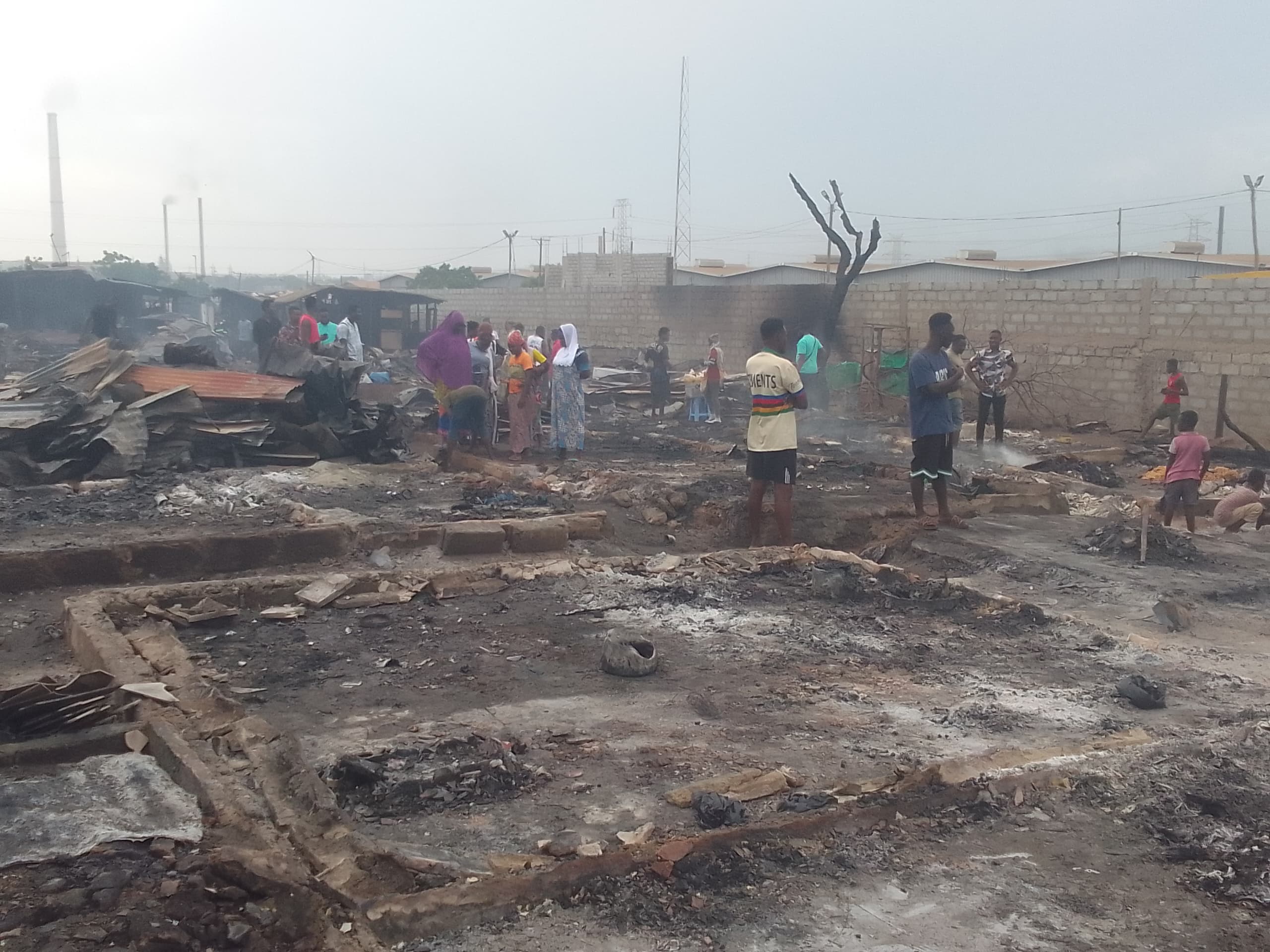
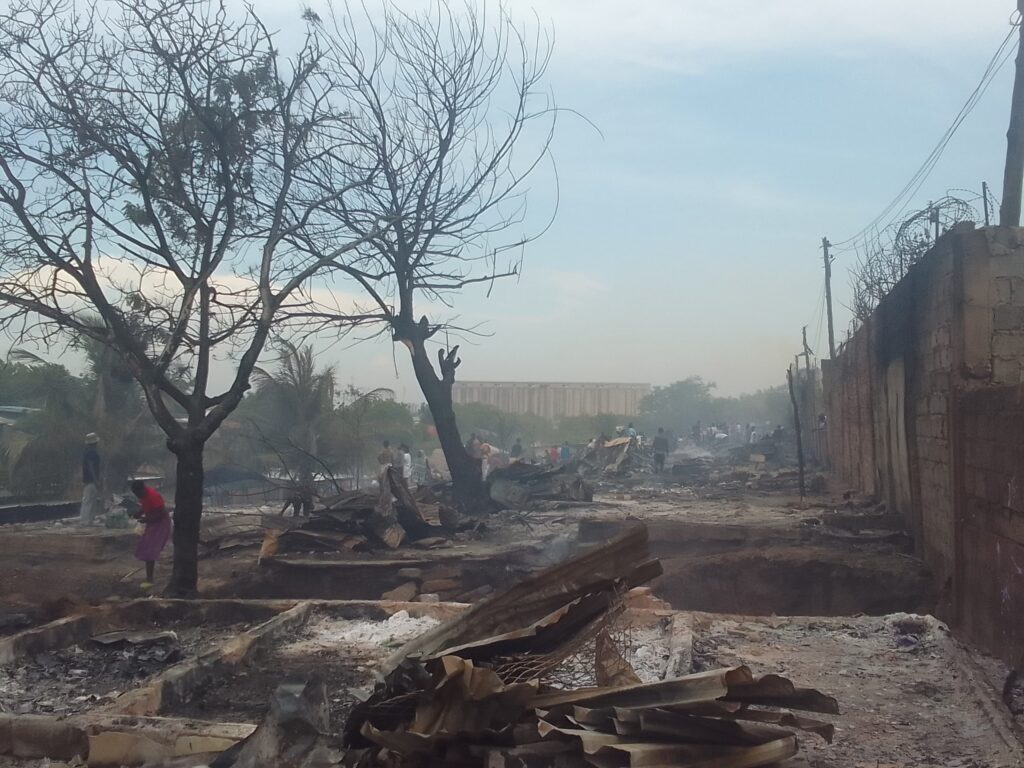
    Over 100 wooden structures at the Tema Heavy Industrial Area were destroyed by fire on Wednesday, June 18.

    Reports suggest the fire originated from a kiosk where cooking activities were being conducted around 11:00 p.m., quickly spreading to surrounding wooden structures.

    The victims have been left with nothing to recover; they have therefore appealed to the government to come to their aid.

    Speaking to the media, the victims accused the Ghana National Fire Service (GNFS) for the scale of the destruction, citing their delayed response to the scene.

    “I was asleep with my daughter that night while my elder brother was at church. Later, he called me to come outside because there was a fire. When I heard the sound of the flames, I rushed out almost naked.

    “As we speak, I’ve lost everything. We hear the person who caused the fire has fled. He should keep running and make sure we never set eyes on him again. In the meantime, we are appealing to the government to come to our aid,” one resident said.

    Meanwhile, the GNFS has yet to report the exact cause of the fire.

    Ghana has experienced multiple fire outbreaks within the first few months of the year, raising concerns among citizens as homes, businesses, and markets suffer extensive damage.

    Many have demanded an investigation, suspecting that some of these incidents may be deliberate acts by unidentified individuals.

    While the GNFS probes these occurrences, it has emphasized the need for heightened fire safety awareness, routine inspections, and strict enforcement of safety regulations to prevent further disasters.

    Meanwhile, the service has on several occasions contributed to response delays due to outdated equipment.

    The GNFS has called for an increase in fire stations nationwide as well as a supply of modern equipment.

  • EC not considering re-run for Ablekuma North parliamentary polls

    EC not considering re-run for Ablekuma North parliamentary polls

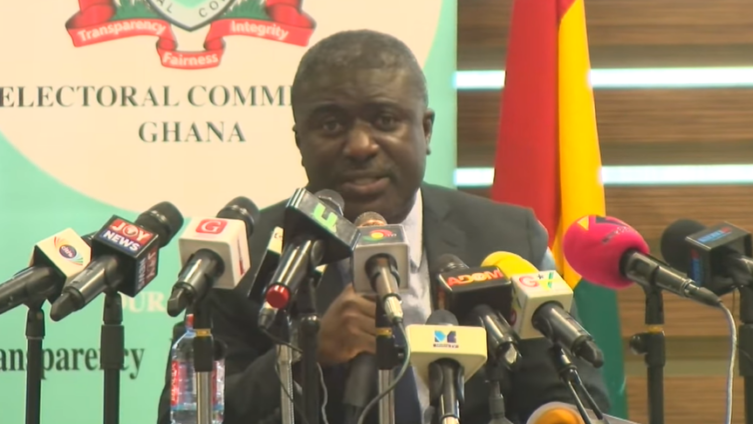
    The Electoral Commission (EC) has opposed calls for a re-run of the 2024 parliamentary election in the Ablekuma North constituency.

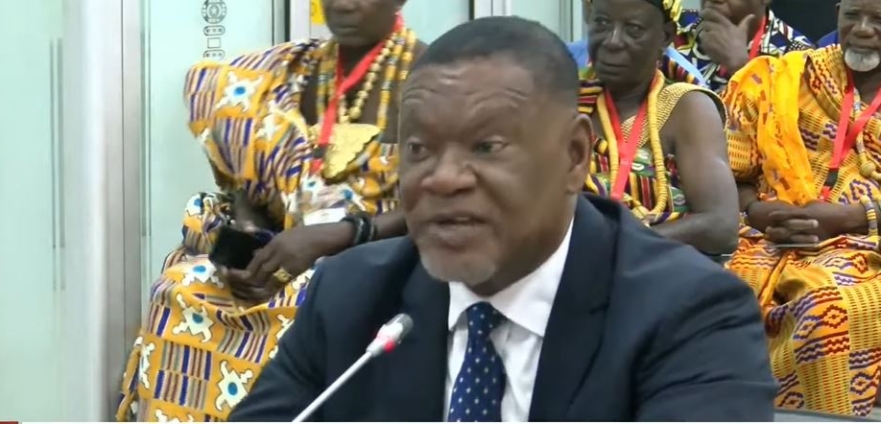
    Appearing before Parliament on Thursday, June 19, the Deputy Chairperson of the EC in charge of Corporate Affairs, Dr. Bossman Asare, justified that the winner of the elections can be declared based on results from three outstanding polling stations.

    He noted the Commission will only resort to a re-run after all measures have been exhausted.

    “So, for Ablekuma North, we have not reached the point where we will say we don’t have the results. When we try and we cannot get the results, that is when we will resort to the rerun. The rerun will be a last option,” he said.

    Ablekuma North remains the only constituency in Ghana without a sitting MP, months after the 2024 general elections, due to unresolved disagreements over the outcome of the parliamentary vote.

    The Inspector-General of Police (IGP), COP Christian Tetteh Yohuno, has warned that the continued delay poses a serious threat to Ghana’s democratic reputation and the integrity of its electoral system.

    He cautioned that how the dispute is handled will shape public trust in Ghana’s electoral processes well beyond the current cycle.

    “This is a pivotal moment. The way we handle the collation in Ablekuma North will resonate across the country. It will set the tone, not only for this election, but also for public confidence in the years to come,” Dr. Yohuno stated.

    On December 10, 2024, three days after the national polls, the EC declared Ewurabena Aubynn of NDC the winner of the Ablekuma North parliamentary seat, defeating the New Patriotic Party’s (NPP) Nana Akua Owusu Afriyieh.

    However, the EC later revoked the announcement, revealing that results from 62 of the 281 polling stations had not been included in the initial collation.

    Efforts to restart the collation in January 2025 were disrupted by multiple challenges.

    These included interruptions due to the submission of unverified pink sheets and a violent intrusion at the collation centre that heightened security concerns.

    By January 6, only seven polling station results remained uncollated. Yet the process came to a standstill as the EC began engaging both major political parties in an attempt to break the deadlock.

    Both the NPP and the NDC have declared victory in the December parliamentary elections.

    The NPP maintains that its candidate, Nana Akua Afriyie, emerged the winner based on Electoral Commission figures, while the NDC insists that Ewurabena Aubyn was rightfully elected by the people.

  • Justice Ackaah-Boafo’s vetting halted over petition citing bias

    Justice Ackaah-Boafo’s vetting halted over petition citing bias

    The vetting session for one of President John Dramani Mahama’s Supreme Court judge nominees, Justice Kweku T. Ackaah-Boafo, has been indefinitely suspended following a last-minute petition filed to Parliament on Thursday, June 19.

    The formal complaint was brought before the Parliament’s Appointments Committee by an acclaimed international human rights activist, Anthony Kwabenya Rau, who levels serious allegations of judicial bias against the nominee.

    The dramatic development leaves Justice Ackaah-Boafo’s promotion to Ghana’s highest court hanging in limbo. The petition alleges Justice Ackaah-Boafo used unprintable words during past court proceedings, emphasizing extreme bias.

    Mr Rau questioned Justice Ackaah-Boafo’s legitimacy to serve at the Supreme Court, labeling him a “so-called Messiah international Human Rights Activist”.

    “For me, he will be a disaster at the Supreme Court if approved (sic) for the international and national interest of the republic. These are my reasons to petition the vetting committee not to approve this particular judge,” parts of the petition read.

    According to the petitioner, Justice Ackaah-Boafo “insulted and attacked” him during a court hearing, which he claims is undeniable evidence of bias and corruption.

    He called Justice Ackaah-Boafo “arrogant, biased, power-drunk, an abuser of human rights (sic) and supportive of corruption.”

    Meanwhile, the Appointments Committee has referred the complaint to Speaker Bagbin for further review. As per Parliament’s Standing Order 99, petitions received must undergo a 30-day inquiry to ensure they are not “frivolous or vexatious.”

    Justice Kweku Tawiah Ackaah-Boafo would have been the last person to have appeared before the Parliament’s Committee for interrogation.

    So far, Justice Sir Dennis Dominic Adjei, Justice Gbiel Simon Suurbaareh, Justice Senyo Dzamefe, Justice Philip Bright Mensah, Justice Janpere Bartels-Kodwo and Justice Hafisata Ameleboba have been vetted.

    Their vetting comes after the Speaker of Parliament Alban Kingsford Sumana Bagbin on May 27 referred the nominees to the Appointments Committee for vetting and subsequent approval.

    This is in accordance with Article 144(2) of Ghana’s 1992 Constitution, which mandates that Supreme Court nominees undergo parliamentary scrutiny before their appointments are confirmed.

    The Appointments Committee, is chaired by Bernard Ahiafor, and assisted by Emmanuel Armah-Kofi Buah.Other members of the committee also include, Alexander Afenyo-Markin (Ranking Member), Patricia Appiagyei (Deputy Ranking Member), Mahama Ayariga (Majority Leader), Agnes Naa Momo Lartey, Frank Annoh-Dompreh, Patrick Yaw Boamah, Shaibu Mahama, Alhassan Umar, Kwame Governs Agbodza.

    About the nominees

    Justice Sir Dennis Dominic Adjei – A Court of Appeal judge since 2010, he was elected to the African Court on Human and Peoples’ Rights in 2022 for a six-year term. He has served as Director of the Judicial Training Institute and Dean of the Faculty of Law at GIMPA. He is an Adjunct Professor of Law at multiple universities.

    Justice Gbiel Simon Suurbaareh – Appointed to the Court of Appeal in 2010, he previously served as the Supervising High Court Judge in the Eastern Region and is known for his expertise in constitutional and administrative law and represents Court of Appeal judges on Ghana’s Judicial Council.

    Justice Senyo Dzamefe – A Court of Appeal judge since 2010, he chaired the Dzamefe Commission, which investigated Ghana’s performance at the 2014 FIFA World Cup. He was elected President of the Association of Magistrates and Judges of Ghana (AMJG) in 2018.

    Justice Kweku Tawiah Ackah-Boafo – A Court of Appeal judge, has emphasised the need for legal education reforms and has advocated for the integration of artificial intelligence into Ghana’s legal system to enhance efficiency and transparency.

    Justice Philip Bright Mensah – Known for his contributions to appellate jurisprudence, he recently presided over a Court of Appeal panel that directed the Accra High Court to adopt proceedings from a previous trial in the Republic vs. Stephen Kwabena Opuni case.

    Justice Janpere Bartels-Kodwo – A Court of Appeal judge, he has been nominated to strengthen the Supreme Court’s capacity amid increasing demands on Ghana’s judiciary.

    Justice Hafisata Ameleboba – A Court of Appeal judge, she has been involved in key judicial decisions and reforms. Her nomination is expected to bring diversity and expertise to the Supreme Court.
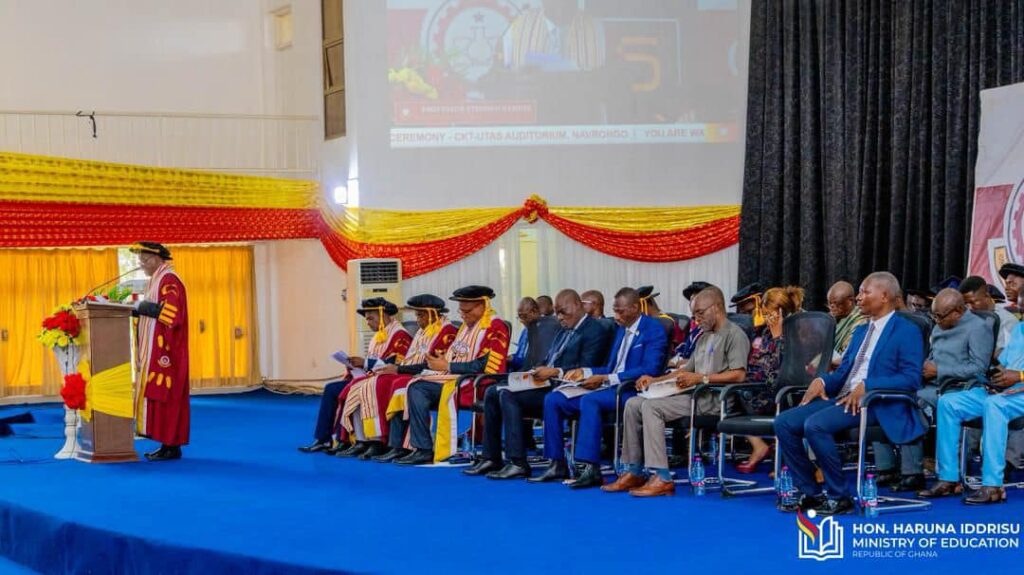
  • LEKMA Hospital receives 10,000-litre capacity oxygen plant

    LEKMA Hospital receives 10,000-litre capacity oxygen plant

    Access to medical-grade oxygen for critical and emergency care at the LEKMA Hospital in the Greater Accra Region will now see a massive improvement following the commissioning of a 10,000-litre capacity oxygen plant.

    The plant was commissioned on Wednesday, June 18, by the Ghana Health Service (GHS) following a collaboration with the Ghanaian U.S. Embassy and technical support from a nonprofit organization for international health, Jhpiego.

    The newly launched plant adds to the ten oxygen plants to be installed in strategic health facilities across the country.

    Director of the Health Administration and Support Services Division, Dr. Ebo Hammond, at GHS, who was speaking at the commissioning event, lauded the government for its timely and impactful intervention.

    The US Embassy’s Chargé d’affaires, Rolf Olson, also commended the United States Government’s long-standing commitment to enhancing health systems in Ghana, particularly in maternal and neonatal care.

    He also revealed the US government’s plans to supply the plant with liquid oxygen for a year to ensure its continued operation.

    Also, the Country Director at Jhpiego, Dr. Pearl Nanka Bruce, noted that biomedical engineers and fire service personnel have undergone specialized training to ensure the plant’s proper maintenance.

    Recently, The LEKMA Hospital received medical equipment, consumables and pharmaceuticals from the 14th Chinese Medical Team to Ghana.

    The items were donated to support two critical initiatives: the minimally invasive surgery project (laparoscopic surgeries) and the Beautiful World Charity project.

    Health Minister Mintah Akandoh urged the leadership of LEKMA Hospital, under the capable direction of Dr. Akua Gyimah Asante, to ensure that this equipment is used effectively, maintained diligently, and serves its intended purpose, providing better health outcomes for the people of Ghana.

    This donation represents another tangible demonstration of support from the Chinese government to both the government of Ghana and the Ghanaian people.

    The U.S. Embassy has expressed commitment to strengthening health services through collaboration, innovation, and sustained investment in primary healthcare.

    As such, the Embassy under its Ghana Integrated Health Program (IHP) donated some 104 motorbikes to the Ghana Health Service (GHS) and the Christian Health Association of Ghana (CHAG).

    The donation is meant to strengthen primary healthcare, improve disease surveillance, and enhance maternal and child health outreach by equipping frontline workers with reliable means of transport.

    Of the total, 90 bikes were allocated to GHS and 14 to CHAG. Receiving the motorbikes on behalf of the Director-General of the Service, Director for Health Administration and Support Services at GHS, Dr. Ebo Hammond, expressed profound appreciation for the support and described the motorbikes as vital mobility tools that will boost frontline health workers’ ability to reach hard-to-access areas.

    Dr. Hammond highlighted that motorbikes form 90% of GHS’s transport fleet, making them especially effective when visiting hard-to-reach areas, and assured the U.S. Embassy of the effective use and maintenance of the donated items.

    He commended the US embassy for past interventions, especially during the COVID-19 pandemic. Delivering remarks on behalf of the U.S. Embassy, Ms. Kimberley Rosen emphasized the strong partnership between Ghana and the U.S. in healthcare delivery.

    She noted that the handover reflects America’s continued investment in Ghana’s health system, praising healthcare workers for their dedication.

  • Over 441,000 HPV vaccine doses arrive in Ghana to fight cervical cancer

    Over 441,000 HPV vaccine doses arrive in Ghana to fight cervical cancer

    Ghana has received its first shipment of the human papillomavirus (HPV) vaccine to protect the health of girls and women against cervical cancer.

    This information was made known by the lead agency responsible for procuring and shipping the vaccines, the United Nations Children’s Fund (UNICEF) Ghana, on Tuesday, June 18.

    According to UNICEF, over 2.5 million additional doses of the HPV vaccine will arrive in the coming weeks, following the initial batch of 441,860 doses.

    The incoming vaccines will be utilized in a nationwide immunisation campaign led by the Ghana Health Service (GHS).

    The campaign exercise is scheduled for September this year and will span five days. The vaccine will be offered for free to girls turning 9 to 14 years old in the country.

    It added, “By including the HPV vaccine in the national Expanded Programme on Immunization (EPI) routine vaccines, Ghana is taking a significant step to protect future generations from cervical cancer.”

    Cervical cancer is the most common cancer among young girls and women, and it is caused by a viral infection of the female reproductive tract, particularly the cervix, the lower, narrow part of the uterus.

    Although cervical cancer is among the most preventable types of cancer affecting women, efforts to prevent it have been hindered by limited awareness of the disease and its risk factors, inadequate access to preventive services such as vaccination, and the high cost of these services.

    Prophylactic vaccination against HPV can prevent these cancers. In addition, HPV screening and treatment of precancerous lesions are effective ways to prevent cervical cancer, according to the World Health Organisation (WHO). 

    More than 140 countries have already begun administering the vaccine, contributing to a global effort to reduce cervical cancer rates and protect future generations of women and girls.

    At least 14 of them are more than 100 types of HPV and are known to trigger cancer. Due to limited access to screening and treatment, low- and middle-income countries account for 85 percent of all new cases and deaths from cervical cancer.

    “Cervical cancer was the fourth leading cause of cancer and cancer deaths in women in 2022, with some 660,000 new cases and around 350,000 deaths worldwide,” the WHO reports.

    Per reports, cervical cancer kills over 2,000 women every year in Ghana. Last year, cervical cancer cases stood at 522, marking an increase of 224 cases from the 298 recorded in 2023 in the country.

    Meanwhile, the GHS has bemoaned the low uptake of Ghanaian women taking screen­ing for cervical cancer, as its cases continue to soar in the country.

    The goal of screening for cervical cancer is to find precancerous cell changes before they become cancer, and when treatment can prevent cancer from developing. Screening for cervical cancer is an important part of routine health care for people who have a cervix.

  • 2025 BECE: Three invigilators nabbed for exams malpractices in Ashanti Region granted bail

    2025 BECE: Three invigilators nabbed for exams malpractices in Ashanti Region granted bail

    Three individuals who were arrested for alleged examination malpractices during the 2025 Basic Education Certificate Examination (BECE) in the Ashanti Region have been granted bail.

    The suspects were arrested at different examination centres, including Twedie and Mampong, while supervising the exams.

    The accused reportedly shared photocopied answers and images of examination questions on their mobile phones at the exam centre.

    A total of 603,328 candidates participated in this year’s exams, which began on Wednesday, June 11, and concluded on Tuesday, June 17.

    The candidates, comprising 297,250 males and 306,078 females, are from 20,395 schools.

    Ahead of the exams, Minister for Education, Haruna Iddrisu, entreated the candidates to remain focused and stay away from exam malpractices.

    Barely 72 hours after the commencement of the exams, the West African Examination Council announced that 10 individuals had been caught engaging in exam malpractice.

    “These 10 culprits have been handed over to law enforcement agencies. Their actions are criminal under WAEC law, and the police will now work to prosecute them in court.”

    “There was one supervisor who had a mobile phone. He had taken smart shots of the questions and posted them on social media. In addition, six other invigilators were found with mobile phones containing pictures of the examination questions,” Head of Public Affairs, John Kapi, told JoyNews.

    During the period, several candidates sustained injuries due to accidents, and a life was lost. Eight BECE candidates from Nangbagu Yapala M/A JHS in the Northern Region were involved in a road accident on their way to write Tuesday’s paper (June 12) at the Tamale Secondary School (Tamasco) examination centre in the Sagnarigu Municipality.

    A supervisor accompanying the candidates, Mr Abdulai Mohammed, recounted that the accident happened after the tricycle’s steering reportedly locked, causing the rider to lose control and crash into the motorbike.

    “We got another means to carry them to the Tamale West Hospital, but because of the ongoing strike, it took a while before they managed to get two nurses and one doctor to attend to them.”

    “When we got to the centre, they had finished the first paper, and the students were coming out. We isolated our students so they could write, but unfortunately, they were denied,” Mr Mohammed explained.

    Assin South District Education Director, Isaac Opoku, confirmed the demise of a 14-year-old Basic Education Certificate Examination (BECE) candidate, Awudu Gariba, who was pronounced dead upon arrival at the Assin Fosu Polyclinic on Friday, June 13.

    The Nnuanua Number 1 Basic School student, according to reports, showed unrest last Thursday at the exam hall and was rushed to the Adiembra CHPS compound but was denied medical care as the Ghana Registered Nurses and Midwives Association (GRNMA) was still in motion.

    Two Basic Education Certificate Examination (BECE) candidates of Big Six International School, located at Meduma in the Ashanti Region were also denied the chance to write their Mathematics paper after being locked in a room by their headmaster over unpaid school fees.

    According to reports, the headmaster issued a directive barring the students from participating in the exams unless their outstanding fees were settled.

    After the students defied the order and attempted to proceed to the exam centre, they were locked in a room on the school premises, causing them to miss the Mathematics paper.

    Meanwhile, the Member of Parliament for Kwabre East, Onyina-Akyeampong Akwasi Gyamfi, has taken a strong stance against the detention of two Basic Education Certificate Examination (BECE) candidates by the headmaster of their school.

    He has formally reported this incident to the police and “expects the individual responsible to face the consequences of his actions.” “It’s alarming to learn that a similar situation arose at this school last year, and I’m committed to pursuing this case vigorously,” Mr Gyamfi assured.

    The number of candidates that registered for this year’s BECE (SC) is 5.99% higher than the 2024 entry figure.

    Overall, 569,236 candidates participated in the 2024 BECE, comprising 282,703 boys and 286,533 girls from 19,505 schools.

    Special accommodations were provided for 59 visually impaired candidates, 263 with hearing impairments, and 161 others requiring specific assistance.


    The exam took place at 2,123 centres nationwide, though 3,845 candidates were marked as absent. The BECE for Private Candidates had 1,390 participants, 750 males and 640 females, taking the exam at 15 centres across the country’s regional capitals.

    Among them, 57 candidates did not show up for the exam. Some 33 school candidates and 3 private candidates had their results withheld due to investigations into possible irregularities. WAEC also flagged subject results from 149 schools, pending further investigations into reported malpractices.

  • Confirmed Mpox cases hit 98 – GHS

    Confirmed Mpox cases hit 98 – GHS

    The Ghana Health Service (GHS) has reported seven new cases of monkeypox (Mpox), bringing the total number of confirmed cases to 98 as of June 16.


    In a circular on Wednesday, June 18, the Service indicated that all patients had been discharged, with no individuals remaining hospitalized.


    As of June 12, the number of confirmed cases rose to 91 from 79 reported as of June 6, with no reports of fatalities.


    The GHS earlier noted that the recent rise in cases is due to stronger surveillance, such as contact tracing and increased public awareness, helping the Service detect and isolate cases faster.


    Ghana recorded the first Mpox case in June 2022, with five cases, and by November 2023, health authorities had confirmed a total of 34 cases. Despite the increase in cases, Ghana has not recorded any Mpox-related deaths.


    Mpox is a viral illness similar to smallpox. It typically causes fever, swollen lymph nodes, and a rash. The virus spreads through direct contact with an infected person’s skin or bodily fluids, including through sexual contact.


    To reduce your risk, avoid close contact with symptomatic individuals, maintain proper hand hygiene, and refrain from sharing personal items.


    Symptoms may include fever, rash or lesions, tiredness, headaches, muscle and back pain, and swollen glands.


    The Ministry of Health and the GHS have called on all media houses to support public education efforts by using their platforms to raise awareness and provide accurate information on Mpox.


    Meanwhile, the Ghana Health Service has assured that the country will soon experience relief in response to the surging cases of monkeypox (Mpox).

    The government is engaging international organizations for assistance in procuring vaccines to be able to curb the surging number of cases being reported.

    Speaking to the media on Saturday, June 7, Director for Public Health at the Ghana Health Service (GHS), Dr. Franklyn Asiedu Bekoe, stated, “We’re engaging WHO and the Africa CDC so that we get the vaccines. Somewhere last year, Ghana didn’t have any established human-to-human transmission, so we do not qualify. Now that we have human-to-human transmission. The idea is that we will be able to identify a clear group who will benefit from the vaccine.”

    The Government of Ghana has assured its commitment to safeguarding public health by implementing appropriate measures to protect the health and well-being of all residents.”

  • Assemblies to receive not less than GHS25m each – President Mahama

    Assemblies to receive not less than GHS25m each – President Mahama

    The government has pledged a minimum of ₵25 million each to all Metropolitan, Municipal, and District Assembly (MMDAs) across the country this year.

    The Fund is to support district assemblies in executing their duties in the regions.

    The president made this known at an orientation and training programme held in Accra on Wednesday, June 18.

    “This year, every assembly—from the largest to the smallest—will receive not less than GH₵25 million. The NDC manifesto outlines a bold and people-centred agenda that puts local government at the heart of national development. You are the first line of the economy,” he stated.

    The government earlier announced the distribution of 80% of the District Assembly Common Fund (DACF) to MMDCEs.

    The remaining 20% of the fund, he noted, will be designated for projects managed by agencies such as the National Disaster Management Organization (NADMO), ensuring continued support for critical national initiatives.

    President Mahama has cautioned that the government will assess the performance of each MMDCE to ensure accountability.

    He warned that MMDCEs who do not live up to expectations shall be sacked.

    “The Minister of Finance is about to release the first quarter of the District Assemblies Common Fund. As I said, 80% of the money is going directly to the regions for you to decide how to use it. So, MMDCEs, you have no excuse.

    “We will send you the guidelines, approved at the last Cabinet meeting, to show how the funds should be disbursed. This will serve as your Key Performance Indicators. Every year, we will assess your performance, and based on that, we will decide whether you stay or go,” he said.

  • Next MMDCEs to be elected by citizens – President Mahama

    Next MMDCEs to be elected by citizens – President Mahama

    President John Dramani Mahama has shared that his government, in the coming years, will allow citizens to elect the next Municipal and District Chief Executives (MMDCEs).

    He explained that this is to allow citizens to have a direct say in choosing their local leaders.

    Addressing the MMDCEs during an orientation and training programme on Wednesday, July 18, in Accra, he noted that the upcoming system will be dependent on the recommendations by the National Review committee established by the government.

    “MMDCEs, you may be the last batch of MMDCEs appointed. The National Review committee is going round and will present its recommendation in August this year, and one of the major items that has come up is the election of the MMDCEs. There is no doubt that Ghanaians want the MMDCEs elected. Those who succeed you might have to go through elections,” he stated.

    President Mahama further called on all MMDCEs to declare their assets by July 15.

    “I wish to remind you that you are among the office holders required to declare your assets, and so I expect that by July 15, all of you will have declared your assets,” he said.

    The legal framework guiding asset declaration is the Public Office Holders (Declaration of Assets and Disqualification) Act, 1998 (Act 550). The Act mandates public officials to declare their assets before assuming office, every four years, and at the end of their term, submitting the forms no later than six months after any of these events.

    Importantly, Section 8 of the Act provides that allegations of non-compliance must be referred to the Commission on Human Rights and Administrative Justice (CHRAJ), which is empowered to investigate and take appropriate action.

    President John Dramani Mahama submitted his asset declaration forms to the Auditor General on February 18 and issued a firm order to his appointees to follow suit by March, warning of sanctions for defaulters.

    A report by The Fourth Estate revealed that several high-ranking officials have yet to fulfill their constitutional obligations. Out of 55 ministers and deputy ministers, nine have failed to declare their assets.

    Additionally, eight out of 32 presidential staffers and 37 out of 84 heads of state institutions appointed between January 15 and March 18 had not complied with the president’s directive.

    On May 6, the president sanctioned his appointees who missed the March 31 deadline by directing them to forfeit their three months’ salary, which he noted will be channeled into the Ghana Medical Trust Fund, also known as The MahamaCares, a landmark initiative aimed at providing financial assistance to individuals living with chronic diseases across the country.

    He gave a May 7 ultimatum, emphasizing that any official who fails to meet the deadline will be sacked. As no government official has been relieved of his or her duties, it is believed that all government officials have declared their assets.In the meantime, civil society groups and anti-corruption advocates have supported the full publication of asset declarations as a means to promote integrity and accountability.

    Meanwhile, Special Prosecutor, Kissi Agyebeng, has expressed his opposition to the declaration of assets by government officials as mandated by the Public Office Holders Act.

    Justifying his opposition, he indicated such an initiative puts public officers in a position where they expose themselves to unnecessary attention and potential threats against their lives and their loved ones.

    “I do not and I will not add my voice to calls for the publication of assets for public scrutiny. In our experience, it will be unhelpful and would merely subject public officers to inordinate public curiosity and a specter of the real likelihood of reprisals against the assets,” he said.

    To him, fighting corruption effectively in the country requires striking a balance between transparency and the protection of individual rights.

    “In my estimation, publication of who has declared or has not declared his assets in the context of a workable asset verification and treason model would be sufficient to assure the integrity of the asset declaration system,” he added.

  • MMDCEs have until July 15 to declare their assets – President Mahama

    MMDCEs have until July 15 to declare their assets – President Mahama

    All Metropolitan, Municipal, and District Chief Executives (MMDCEs) have until July 15 to declare their assets.

    President John Dramani Mahama gave the order on Wednesday, July 18, during an orientation and training programme for MMDCEs in Accra.

    “I wish to remind you that you are among the office holders required to declare your assets, and so I expect that by July 15, all of you will have declared your assets,” he said.

    The legal framework guiding asset declaration is the Public Office Holders (Declaration of Assets and Disqualification) Act, 1998 (Act 550).

    The Act mandates public officials to declare their assets before assuming office, every four years, and at the end of their term, submitting the forms no later than six months after any of these events.

    Importantly, Section 8 of the Act provides that allegations of non-compliance must be referred to the Commission on Human Rights and Administrative Justice (CHRAJ), which is empowered to investigate and take appropriate action.

    President John Dramani Mahama submitted his asset declaration forms to the Auditor General on February 18 and issued a firm order to his appointees to follow suit by March, warning of sanctions for defaulters.

    A report by The Fourth Estate revealed that several high-ranking officials have yet to fulfill their constitutional obligations. Out of 55 ministers and deputy ministers, nine have failed to declare their assets.

    Additionally, eight out of 32 presidential staffers and 37 out of 84 heads of state institutions appointed between January 15 and March 18 had not complied with the president’s directive.

    On May 6, the president sanctioned his appointees who missed the March 31 deadline by directing them to forfeit their three months’ salary, which he noted will be channeled into the Ghana Medical Trust Fund, also known as The MahamaCares, a landmark initiative aimed at providing financial assistance to individuals living with chronic diseases across the country.

    He gave a May 7 ultimatum, emphasizing that any official who fails to meet the deadline will be sacked. As no government official has been relieved of his or her duties, it is believed that all government officials have declared their assets.

    In the meantime, civil society groups and anti-corruption advocates have supported the full publication of asset declarations as a means to promote integrity and accountability.

    Meanwhile, Special Prosecutor, Kissi Agyebeng, has expressed his opposition to the declaration of assets by government officials as mandated by the Public Office Holders Act.

    Justifying his opposition, he indicated such an initiative puts public officers in a position where they expose themselves to unnecessary attention and potential threats against their lives and their loved ones.

    “I do not and I will not add my voice to calls for the publication of assets for public scrutiny. In our experience, it will be unhelpful and would merely subject public officers to inordinate public curiosity and a specter of the real likelihood of reprisals against the assets,” he said.

    To him, fighting corruption effectively in the country requires striking a balance between transparency and the protection of individual rights.

    “In my estimation, publication of who has declared or has not declared his assets in the context of a workable asset verification and treason model would be sufficient to assure the integrity of the asset declaration system,” he added.

  • Over 3,500 graduates may not participate in 2025/2026 national service

    Over 3,500 graduates may not participate in 2025/2026 national service

    The National Service Authority (NSA) has revealed that 3,500 graduates risk not participating in the 2025/2026 national service programme over invalid accreditation by 22 tertiary institutions.

    According to the Authority in a press release dated Tuesday, June 17, it received 135,990 submissions for this year from 122 tertiary institutions; however, “3,597 of these submissions, representing graduates from 22 institutions, have not been processed, as those institutions are currently not accredited and remain unknown to the Ghana Tertiary Education Commission (GTEC).”

    The Authority has therefore issued a 30-day ultimatum to the tertiary institutions that are yet to renew their licenses.

    NSA cautioned that unaccredited tertiary institutions that miss the deadline to regularize their status will negatively impact their students’ chances of participating in the 2025/26 national service.

    “This is part of broad efforts to clean up the national service system and safeguard public resources,” the NSA said in a statement.

    The NSA is yet to give details of the tertiary institutions that currently possess expired accreditation.

    The Ghana Tertiary Education Commission has been working to ensure that all tertiary institutions in the country meet the required accreditation standards.

    In 2024, it announced a temporary halt to the processing of new accreditation applications for academic programs in all public universities, including technical universities.

    Meanwhile, PIN codes for 132,393 prospective national service personnel ahead of the 2025/2026 service year have been released.

    The NSA indicated that this year’s intake dropped by an average of 26% compared to the past three years, with a 36% decline in 2022/2023.

    908 PIN codes for private applicants are currently awaiting final verification from the related institutions to be released.

    In a related event, Deputy Director of the National Service Scheme (NSS), Fuseini Donkor, has explained that personnel under the scheme will undergo a military orientation programme, not full military training.

    This is due to a newly introduced module by the incumbent government aimed at building discipline and preparedness among Ghanaian youth.

  • Underlying illnesses caused death of 6 out 7 Hajj pilgrims this year – Collins Dauda

    Underlying illnesses caused death of 6 out 7 Hajj pilgrims this year – Collins Dauda

    Chairman of the National Hajj Task Force, Alhaji Collins Dauda, has updated the public on the cause of death of some six pilgrims who participated in the just-ended Hajj pilgrimage.

    Speaking to journalists, Alhaji Dauda revealed that six of the seven individuals who died were elderly and had pre-existing health conditions before traveling to Mecca.

    “From our contingent, I can confirm six deaths. We have received information about a seventh person who also passed away, but he did not travel with the official group. He went on a tourist visa. Nevertheless, he is Ghanaian. Those who died were elderly and had underlying health conditions. It was not our wish for this to happen, but it was the will of Allah,” he said.

    On Saturday, June 7, Alhaji Collins Dauda reported the death of seven pilgrims. All seven, including five women and two men, have since been buried in Saudi Arabia, as per Islamic customs.

    The seventh deceased was not a part of the official team that travelled.

    “We have received information about a seventh person who also passed away, but he did not travel with the official group. He went on a tourist visa. Nevertheless, he is Ghanaian,” Alhaji Collins Daud explained.

    The Hajj pilgrimage began on the 8th day of Dhul Hijjah and lasted till the 13th of the month. The Ghanaian Hajj community encountered several setbacks, including the repatriation of some pilgrims from Mecca, Saudi Arabia.

    Due to visa-related issues, five pilgrims could not participate in the mandatory religious duty for all Muslims as they were repatriated back to their country.

    According to the Head of Corporate Affairs at the Hajj Taskforce, Alhaji A.B.A. Fuseini, “Some said they were deported, but we choose to use the word ‘repatriated.’ Deportation connotes some criminality, but these people who have returned have not committed any crime. It was an error in the issuance of their visa.

    “Some attempts to realign the visas resulted in some unfortunate mistakes where their visas were withdrawn.”

    Recent reports disclosed the scorching temperatures, frequently exceeding 48°C during the peak ritual days. The situation posed significant health risks to pilgrims, especially the elderly or those with pre-existing conditions.

    On Sunday, May 28, an incident was reported at the Rafahya Al-Seteen Hotel in Mecca, where hundreds of Ghanaian pilgrims had lodged, causing a temporary evacuation.

    Per reports, a structural concern and a fire incident on the 12th floor of the edifice are said to be responsible for the ruckus that occurred on Sunday afternoon, May 25. But the authorities are yet to ascertain the cause of the panic.

    Saudi fire and police officials arrived at the scene to ensure all was safe for the residents to return to their various rooms.

    This year’s pilgrimage recorded a massive turnout due to the Mahama-led government’s decision to reduce the Hajj pilgrimage fee to 62,000 to 75,000 Ghana cedis under the previous administration.

    Approximately 6,000 Ghanaian Muslims traveled to Saudi Arabia for Hajj 2025. These numbers show an increase of 2,000 Ghanaian participants as compared to 4,000 last year.

    In Ghana, Friday, June 6, was declared a statutory public holiday for the Eid al-Adha celebration, which marks the end of the annual pilgrimage to Mecca or Hajj.

    Meanwhile, the continuous appreciation of the local currency could reduce the fees Ghanaian Muslims pay to travel to Mecca to perform the Hajj pilgrimage. President John Dramani Mahama announced this during his Thank You Tour in Kintampo in the Bono East Region on Thursday, May 29.

    “At the time we started paying for the Hajj, the cedi was at GHC15.5 to the dollar. So, the fare we came up with for the $4,000 cost to do the Hajj came to GHC 62,000. Next year, if you do a calculation with where the Cedi is currently—GHC 10.5—it means the fare for Hajj may go below GHC 50,000,” he said.

  • Chinese fluency by judges a necessary tool in fight against galamsey – Justice Mensah

    Chinese fluency by judges a necessary tool in fight against galamsey – Justice Mensah

    Supreme Court Judge nominee, Justice Philip Bright Mensah, has emphasized the necessity for judges to learn Chinese language skills.

    Appearing before Parliament’s Appointments Committee on Tuesday, June 17, Justice Mensah noted that the inability of judges, particularly those in illegal mining zones, to comprehend Chinese language is undermining prosecutions involving foreign nationals.

    “The Judges must either be taken to China for further studies in Chinese language, or the JTI must be resourced to bring experts to come and train our Judges,” he said. “Because if the person has committed an offence and you can’t prosecute him, then it is as well saying that ‘oh let me leave him to go away.

    “When they are arrested, especially these Chinese people and sent to the court, the difficulty is that they don’t speak English. Even if they understand English, they refuse to speak English.

    “And because the police and enforcement agencies also are unable to speak their language, it becomes more difficult to get them prosecuted,” he noted.

    A number of Chinese individuals have been involved in galamsey activities leading to their arrest.

    However, prosecution has not been successful due to a language barrier.

    Recently, the government attributed the lack of justice delivery to Chinese foreign nationals to a language barrier.

    But according to Justice Mensah, the lack of proper interpretation in court by interpreters adds to the challenges of judges.

    “The interpreters themselves, sometimes they are also a problem. So if the Judge himself understands the language, it will be better served for him to understand what he is doing for us to be able to curb the menace of galamsey,” he added.

    The process, which commenced on Monday, June 16, will be brought to a close on Wednesday, June 18.

    The committee will be spearheaded by the First Deputy Speaker in Parliament,Bernard Ahiafor.

    The vetting process commences at 10am in Committee Rooms 1, 2 & 3 New Administration Block of Parliament.The other listed nominees include Justice Kweku Tawiah Ackaah-Boafo, Justice Philip Bright Mensah, Justice Janapare Bartels-Kodwo, Justice Hafisata Amaleboba.

    Their vetting comes after the Speaker of Parliament Alban Kingsford Sumana Bagbin on May 27 referred the nominees to the Appointments Committee for vetting and subsequent approval.

    This is in accordance with Article 144(2) of Ghana’s 1992 Constitution, which mandates that Supreme Court nominees undergo parliamentary scrutiny before their appointments are confirmed.

    The Appointments Committee, will be chaired by Bernard Ahiafor, and assisted by Emmanuel Armah-Kofi Buah.Other members of the committee also include, Alexander Afenyo-Markin (Ranking Member), Patricia Appiagyei (Deputy Ranking Member), Mahama Ayariga (Majority Leader), Agnes Naa Momo Lartey, Frank Annoh-Dompreh, Patrick Yaw Boamah, Shaibu Mahama, Alhassan Umar, Kwame Governs Agbodza.

    About the nominees

    Justice Sir Dennis Dominic Adjei – A Court of Appeal judge since 2010, he was elected to the African Court on Human and Peoples’ Rights in 2022 for a six-year term. He has served as Director of the Judicial Training Institute and Dean of the Faculty of Law at GIMPA. He is an Adjunct Professor of Law at multiple universities.

    Justice Gbiel Simon Suurbaareh – Appointed to the Court of Appeal in 2010, he previously served as the Supervising High Court Judge in the Eastern Region and is known for his expertise in constitutional and administrative law and represents Court of Appeal judges on Ghana’s Judicial Council.

    Justice Senyo Dzamefe – A Court of Appeal judge since 2010, he chaired the Dzamefe Commission, which investigated Ghana’s performance at the 2014 FIFA World Cup. He was elected President of the Association of Magistrates and Judges of Ghana (AMJG) in 2018.

    Justice Kweku Tawiah Ackah-Boafo – A Court of Appeal judge, has emphasised the need for legal education reforms and has advocated for the integration of artificial intelligence into Ghana’s legal system to enhance efficiency and transparency.

    Justice Philip Bright Mensah – Known for his contributions to appellate jurisprudence, he recently presided over a Court of Appeal panel that directed the Accra High Court to adopt proceedings from a previous trial in the Republic vs. Stephen Kwabena Opuni case.

    Justice Janpere Bartels-Kodwo – A Court of Appeal judge, he has been nominated to strengthen the Supreme Court’s capacity amid increasing demands on Ghana’s judiciary.

    Justice Hafisata Ameleboba – A Court of Appeal judge, she has been involved in key judicial decisions and reforms. Her nomination is expected to bring diversity and expertise to the Supreme Court.
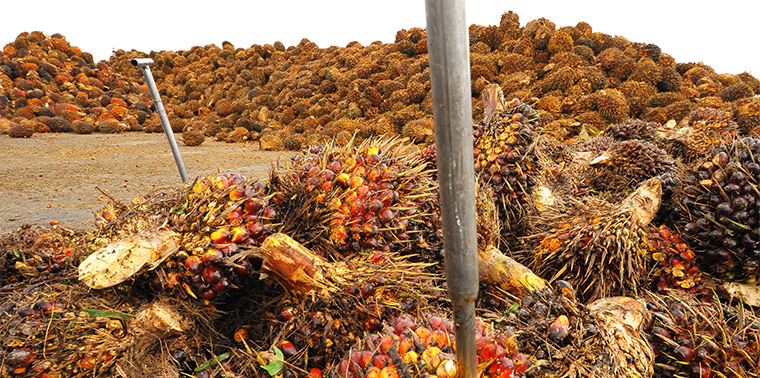
  • We welcome visitors wishing to study, invest – US Embassy to Ghanaians amid possible travel ban

    We welcome visitors wishing to study, invest – US Embassy to Ghanaians amid possible travel ban

    The United States Embassy in Accra has assured Ghanaians that their doors remain open to them despite reports of a possible travel restriction on Ghanaians by the Trump administration.

    In a statement shared on their official X (Twitter) page yesterday, June 17, the embassy stated that “We remain committed to welcoming visitors from Ghana who wish to study, invest, or engage in business activities in the United States.”

    The statement comes in response to a Reuters report revealing that President Donald Trump’s administration is reviewing an internal State Department cable recommending expanded travel bans.

    While the U.S. government has not officially confirmed the countries under consideration, the leak has sparked concern and speculation in affected regions, with many Ghanaians expressing concerns over the impact of the ban.

    But the U.S. Embassy’s message was clear, indicating that legitimate travellers from Ghana have nothing to fear. The statement clarified that Washington is tightening enforcement rather than closing its doors entirely.

    “It is essential for all applicants to comply with U.S. laws. Any attempts to enter the United States illegally, falsify information for a visa, work without proper authorisation, or overstay a visa will incur significant penalties,” the Embassy clarified.

    The Embassy concluded with a stern warning to the public about fraudsters posing as middlemen and falsely promising to secure visas. They encouraged all applicants to visit their official website to make applications at no cost.

    “We wish to emphasise that you do not need the services of a fixer or visa consultant to apply for a    U.S. visa! This can be done directly through our official website at no extra cost. It is important to note that no fixer or consultant can guarantee a visa. Any such promises are deceptive and intended to defraud you!”

    This is due to the long-standing and rising number of fraudulent middlemen who falsely claim they can secure U.S. visas for applicants for a fee.

    News of the travel ban on the African-dominated countries list emerged after a leaked memo from The Washington Post. The countries set to be affected include Ghana, Angola; Antigua and Barbuda; Benin; Bhutan; Burkina Faso; Cabo Verde; Cambodia; Cameroon; Democratic Republic of Congo; Djibouti; Dominica; Ethiopia; Egypt; Gabon; Gambia.

    The others are Ivory Coast; Kyrgyzstan; Liberia; Malawi; Mauritania; Niger; Nigeria; Saint Kitts and Nevis; Saint Lucia; Sao Tome and Principe; Senegal; South Sudan; Syria; Tanzania; Tonga; Tuvalu; Uganda; Vanuatu; Zambia; and Zimbabwe.

    The report revealed that the US State Department has new benchmarks and requirements that it would want the governments of these countries to meet within 60 days.

    The memo is said to have indicated that some of these countries have “no competent or cooperative central government authority to produce reliable identity documents or other civil documents,” as well as were engaged in “widespread government fraud.”

    The memo also bemoaned the number of foreign citizens who had overstayed their visas.

    The 36 other countries that risk a travel ban by the USA government wouldn’t be the first to suffer such a fate, as some countries, including Haiti, Libya, Somalia, and six other Islamic-dominated countries, have already been banned from entry into the US. The ban was effected on Monday, June 9.

    The entry of people from seven other countries – Burundi, Cuba, Laos, Sierra Leone, Togo, Turkmenistan, and Venezuela – have been partially restricted.This follows a directive issued on Wednesday, June 5, by U.S. President Donald Trump banning citizens of 12 countries from entering the United States, citing it as a move to protect his country from “foreign terrorists.”

    The proclamation includes exceptions for lawful permanent residents, existing visa holders, certain visa categories, and individuals whose entry serves US national interests.

  • Renew expired accreditation within 30 days for 2025/26 NSS posting – NSA to tertiary institutions

    Renew expired accreditation within 30 days for 2025/26 NSS posting – NSA to tertiary institutions

    The National Service Authority (NSA) has given a 30-day ultimatum to tertiary institutions who are yet to renew their licenses.

    The Authority, in a press release dated Tuesday, June 17, cautioned that unaccredited tertiary institutions that miss the deadline to regularize their status will negatively impact their students’ chances of participating in the 2025/26 national service.

    According to the Authority, it received 135,990 submissions for this year from 122 tertiary institutions; however, 3,597 submissions are pending verification of accreditation.

    “This figure is part of a total of 135,990 final-year Ghanaian students submitted by 122 tertiary institutions across the country.

    “However, 3,597 of these submissions, representing graduates from 22 institutions, have not been processed, as those institutions are currently not accredited and remain unknown to the Ghana Tertiary Education Commission (GTEC),” it added.

    “NSA also urges institutions with expired accreditation to engage with GTEC and regularized their status within the next 30 days,” it added.

    The NSA is yet to give details of the tertiary institutions that currently possess expired accreditation.

    NSA has been working to ensure that all tertiary institutions in the country meet the required accreditation standards.

    In 2024, it announced a temporary halt to the processing of new accreditation applications for academic programs in all public universities, including technical universities.

    Meanwhile, PIN codes for 132,393 prospective national service personnel ahead of the 2025/2026 service year have been released.

    The NSA indicated that this year’s intake dropped by an average of 26% compared to the past three years, with a 36% decline in 2022/2023.

    908 PIN codes for private applicants are currently awaiting final verification from the related institutions to be released.

  • 2025/2026 batch: NSA releases pin codes for 132,393 prospective NSS personnel

    2025/2026 batch: NSA releases pin codes for 132,393 prospective NSS personnel

    The National Service Authority (NSA) has released PIN codes for 132,393 prospective national service personnel ahead of the 2025/2026 service year.

    This information was made known in a press release issued by the Authority on Tuesday, June 17.

    The NSA indicated that this year’s intake dropped by an average of 26% compared to the past three years, with a 36% decline in 2022/2023.

    The Authority also revealed that it received 135,990 submissions for this year from 122 tertiary institutions. It noted that 3,597 submissions are pending verification of accreditation.

    “This figure is part of a total of 135,990 final-year Ghanaian students submitted by 122 tertiary institutions across the country.

    “However, 3,597 of these submissions, representing graduates from 22 institutions, have not been processed, as those institutions are currently not accredited and remain unknown to the Ghana Tertiary Education Commission (GTEC),” it added.

    Tertiary institutions have been granted a 30-day window to address their accreditation irregularities with GTEC.

    Meanwhile, 908 PIN codes for private applicants are currently awaiting final verification from the related institutions to be released. 

    PIN Code Activation and Registration


    Prospective service personnel are required to activate their PIN codes by paying a fee of GHS 40 at any ADB Bank Ltd branch. Alternatively, payments can be made via MTN Mobile Money at a fee of GHS 41.


    To begin the registration process, applicants should visit the NSA portal at https://smarthub.nss.gov.gh and follow the instructions to retrieve their PIN codes and complete the required steps.


    New Enrolment Features for Enhanced Integrity

    To strengthen the transparency and security of the registration process, the NSA has introduced several improvements to its online enrolment platform:

    • Facial Biometric Verification: All prospective service personnel must complete
      facial verification against their Ghana Card data held with National Identification
      Authority (NIA) prior to accessing the registration form.
    • Verified Address Input: Applicants must provide a valid Ghana Post GPS
      address, which will be used for distance mapping and regional posting decisions,
      to guide proximity to the workplace. Accuracy of this information is essential for
      effective placement.
      Detailed guidance is available at https://smarthub.nss.gov.gh/faq/registration-guide,
      and registrants may also contact support@nss.gov.gh for additional assistance or chat
      to us live on the portal.
  • Passion Air reduces domestic airfares by 10%

    Passion Air reduces domestic airfares by 10%

    Ghanaian passengers who patronize the services of Passion Air will experience a 10% reduction in airfares across all its domestic routes.

    In a Facebook post on Monday, the airline noted that the adjustment will take effect today, Tuesday, June 17.

    The reduction comes after the Minister for Transport, Joseph Bukari Nikpe, called on domestic airlines to adjust prices as the cedi appreciates.

    https://web.facebook.com/flypassionair/posts/pfbid0e4j7WwgNDMYVoZy2usXosGM5sipAeogQvHueeoQaFVszJZrzppFmRbn5jkQAjraxl

    “This fare adjustment comes in response to the recent strengthening of the Cedi (GHs) against major foreign currencies. At PassionAir, we are committed to ensuring our valued customers benefit directly from positive market developments.

    “As the domestic aviation landscape evolves, we remain focused on offering competitive fares’ that reflect these changes. While maintaining our commitment to the safety and comfort of our passengers, we continue to prioritize making domestic air travel more accessible and affordable for all Ghanaians,” Passion Air stated in a post on its Facebook page.

    Ghana’s legal tender, the cedi, continues to observe unprecedented appreciation in its value against major trading currencies in a span of about two months.

    As of Monday, June 16, the average interbank rates used by commercial banks for transactions at the close of business showed the US dollar buying at GH₵10.29 and selling at GH₵10.30.

    The British pound is buying at GH₵13.98 and selling at GH₵14.00. The euro is currently being bought at GH₵11.92 and sold at GH₵11.93.

    The last time a dollar was worth about GHC10 was three years ago under the Akufo-Addo-led government.

    So far in 2025, the cedi has gained significant value, almost 19%, between April and May. The Bank of Ghana (BoG) has assured it will keep to the monetary and fiscal reforms that are responsible for the stability of the cedi to end its volatility.

    According to the Governor of the BoG, Dr. Johnson Asiamah, the central bank plans to implement a series of reforms aimed at monitoring the forex market. This, he explained, will aid in preventing illegal activities that could weaken the cedi as well as destabilize the market.

    The Bank of Ghana (BoG) has indicated that it is focused on stabilizing the Ghanaian economy rather than aiming for a specific exchange rate for the cedi’s appreciation.

    “As much as we don’t want to see the Ghana cedi depreciate excessively, we don’t keep a target rate that we want to defend,” the BoG governor added.

    Meanwhile, the Monetary Policy Committee has kept the policy rate unchanged at 28 percent. Dr Asiama explained that the committee took the decision in anticipation of the inflation rate declining at a faster rate.

    “Despite these positive developments, the committee observed that the current level of inflation remains high relative to the medium-term target and will require maintaining the policy rate at 28.0%,” he said.

    Ghana’s inflation stands at 21.2 percent as of April 2025. President John Mahama has projected that single-digit inflation will be reported by the country at the end of the first half of the year.

    In an address at the Ghana-EU Business Forum held at the Kempinski Hotel in Accra yesterday, President Mahama stated that his government will achieve this feat by effecting a tighter monetary policy rate, cutting expenditure, and reducing debt accumulation.

    President Mahama noted there are positive signs that the country is recovering in a disciplined and inclusive way, pointing to the fact that Ghana’s international reserves have increased from $8.9 billion in December 2024 to $10.6 billion by April 2025. This is equivalent to almost five months of import cover.

    During the 2025 budget presentation on March 11, Finance Minister Dr. Cassiel Ato Forson announced the government’s objective to reduce inflation to 11.9% by the end of the year.

  • Ofori-Atta will be in Ghana once he recovers – Wife

    Ofori-Atta will be in Ghana once he recovers – Wife

    Prof. Mrs. Angela Ofori-Atta, wife of the former Finance Minister, Ken Ofori-Atta, has indicated that her husband will return to Ghana after his doctor’s approval.

    Speaking to Joy News, she noted that Ofori-Atta’s absence is not an attempt to escape scrutiny, but a result of his current health condition.

    “He has never not been accountable. This is not Ken Ofori-Atta, who runs away from accountability”.

    “I don’t think there is any other home but Ghana, no, Ghana is home,” she stated. “So why are we holding back on the investigation? Why would he [the OSP] not give the video?” she added.

    Ofori-Atta continues to be a central figure in a legal battle, despite his current health condition.

    Ofori-Atta has appeared on Interpol’s website for “using public office for profit” after being declared wanted by the OSP.

    This was after he failed to appear before the Office of Special Prosecutor (OSP) on Monday, June 2.

    His lawyers are said to have formally communicated the development to the OSP and the Human Rights Court, submitting medical reports that detail his current condition and outline scheduled surgical procedures.

    The OSP during an engagement with the press on Tuesday, June 3, noted the failure of the former minister to inform the OSP of changes in medical procedure that were to have happened in March of this year.

    “He has failed to show any medical report that shows he is a medical risk.”

    “We want him physically, and we insist on it,” the OSP said, while noting that Mr Ofori-Atta cannot indicate the mode of investigation.

    “His conduct is totally unacceptable. We will no longer tolerate him.”

    In February, the OSP declared Ofori-Atta wanted for causing financial loss to the state in several dealings, which include the following:

    Contractual arrangement between Strategic Mobilisation Ghana Limited and the Ghana Revenue Authority for the stated objective of the enhancement of revenue assurance in the downstream petroleum sector, upstream petroleum production, and minerals and metals resource value chain.

    Termination of a distribution, loss reduction, and associated network improvement project contract between the Electricity Company of Ghana Limited and Beijing Xhao Chen Technology BXC.

    Procurement of contractors and materials and activities and payments in respect of the National Cathedral project

    Activities and payments in respect of a contract awarded by the Ministry of Health initially commenced by the Ministry for Special Development Initiative to service Ghana Auto Group Limited for purchases and after-sales service and maintenance of 307 Mercedes-Benz Sprinter 304 5 CDI Ambulances for the National Ambulance Service.

    Payments out of and utilization of the tax refund account of the Ghana Revenue Authority.

    Later, the legal representatives of the former finance minister informed the OSP that their client is currently undergoing medical treatment in the United States and is unable to honor an invitation for questioning.

    Ofori-Atta then assured the OSP of its commitment to appearing for questioning on a fixed date, which influenced the OSP’s decision to temporarily take his name off the list in March.

    However, the office stressed that he is legally obligated to show up on June 2. Failure to do so, an Interpol Red Notice would be issued and extradition proceedings would be initiated in any country where he may be located.

    Ken Ofori-Atta then took legal steps to block the OSP from re-declaring him wanted. His lawsuit argues that the agency’s actions are baseless and unjustified.

    Ofori-Atta has dismissed allegations of financial misconduct and corruption, insisting that he has been cooperating with investigators through his legal representatives.

    In his court filing, he contends that the OSP’s actions have inflicted serious harm on his reputation and personal life. He is seeking a legal injunction to prevent further declarations against him until the case is fully resolved.

    The Human Rights Court has adjourned to June 18 for a ruling on the motion filed by the former Finance Minister, seeking to restrain the OSP from declaring him wanted, among other reliefs.

    INTERPOL Red Notice

    A Red Notice is a request to law enforcement worldwide to locate and provisionally arrest a person pending extradition, surrender, or similar legal action.

    It is based on an arrest warrant or court order issued by the judicial authorities in the requesting country. Member countries apply their own laws in deciding whether to arrest a person.

    INTERPOL cannot compel the law enforcement authorities in any country to arrest someone who is the subject of a Red Notice.

    Each member country decides what legal value it gives to a Red Notice and the authority of their law enforcement officers to make arrests.

  • Ofori-Atta’s prostate cancer surgery was a success – Wife

    Ofori-Atta’s prostate cancer surgery was a success – Wife

    The robotic-assisted radical prostatectomy performed on former Finance Minister Ken Ofori-Atta has been successful.

    This information was made known by his wife, Professor Mrs. Angela Ofori-Atta, on Monday, June 16.

    In a statement, she disclosed that the surgery was conducted on Friday, June 13, at the Mayo Clinic in Rochester, Minnesota.

    “The doctors are pleased with how the procedure went and will now place him on a postoperative regime,” the statement read.

    Ofori-Atta continues to be a central figure in a legal battle, despite his current health condition.

    Ofori-Atta has appeared on Interpol’s website for “using public office for profit” after being declared wanted by the OSP.

    This was after he failed to appear before the Office of Special Prosecutor (OSP) on Monday, June 2.

    His lawyers are said to have formally communicated the development to the OSP and the Human Rights Court, submitting medical reports that detail his current condition and outline scheduled surgical procedures.

    The OSP during an engagement with the press on Tuesday, June 3, noted the failure of the former minister to inform the OSP of changes in medical procedure that were to have happened in March of this year.

    “He has failed to show any medical report that shows he is a medical risk.”

    “We want him physically, and we insist on it,” the OSP said, while noting that Mr Ofori-Atta cannot indicate the mode of investigation.

    “His conduct is totally unacceptable. We will no longer tolerate him.”

    In February, the OSP declared Ofori-Atta wanted for causing financial loss to the state in several dealings, which include the following:

    Contractual arrangement between Strategic Mobilisation Ghana Limited and the Ghana Revenue Authority for the stated objective of the enhancement of revenue assurance in the downstream petroleum sector, upstream petroleum production, and minerals and metals resource value chain.

    Termination of a distribution, loss reduction, and associated network improvement project contract between the Electricity Company of Ghana Limited and Beijing Xhao Chen Technology BXC.

    Procurement of contractors and materials and activities and payments in respect of the National Cathedral project

    Activities and payments in respect of a contract awarded by the Ministry of Health initially commenced by the Ministry for Special Development Initiative to service Ghana Auto Group Limited for purchases and after-sales service and maintenance of 307 Mercedes-Benz Sprinter 304 5 CDI Ambulances for the National Ambulance Service.

    Payments out of and utilization of the tax refund account of the Ghana Revenue Authority.

    Later, the legal representatives of the former finance minister informed the OSP that their client is currently undergoing medical treatment in the United States and is unable to honor an invitation for questioning.

    Ofori-Atta then assured the OSP of its commitment to appearing for questioning on a fixed date, which influenced the OSP’s decision to temporarily take his name off the list in March.

    However, the office stressed that he is legally obligated to show up on June 2. Failure to do so, an Interpol Red Notice would be issued and extradition proceedings would be initiated in any country where he may be located.

    Ken Ofori-Atta then took legal steps to block the OSP from re-declaring him wanted. His lawsuit argues that the agency’s actions are baseless and unjustified.

    Ofori-Atta has dismissed allegations of financial misconduct and corruption, insisting that he has been cooperating with investigators through his legal representatives.

    In his court filing, he contends that the OSP’s actions have inflicted serious harm on his reputation and personal life. He is seeking a legal injunction to prevent further declarations against him until the case is fully resolved.

    The Human Rights Court has adjourned to June 18 for a ruling on the motion filed by the former Finance Minister, seeking to restrain the OSP from declaring him wanted, among other reliefs.

    INTERPOL Red Notice

    A Red Notice is a request to law enforcement worldwide to locate and provisionally arrest a person pending extradition, surrender, or similar legal action.

    It is based on an arrest warrant or court order issued by the judicial authorities in the requesting country. Member countries apply their own laws in deciding whether to arrest a person.

    INTERPOL cannot compel the law enforcement authorities in any country to arrest someone who is the subject of a Red Notice.

    Each member country decides what legal value it gives to a Red Notice and the authority of their law enforcement officers to make arrests.

  • Judges shouldn’t be exempted from declaring assets – Justice Dzamefe

    Judges shouldn’t be exempted from declaring assets – Justice Dzamefe

    Supreme Court nominee, Justice Senyo Dzamefe, has made a case why judges should not be exempted from declaring their assets.

    According to him, judges are like any other public officials, who the Constitution mandates to make known their assets.

    “If the law says all government appointees should declare their assets, and judges are government appointees, why not? They have to declare their assets,” he stated.

    During his vetting by the Appointments Committee of Parliament on Monday, June 16, Justice Dzamefe revealed that he has complied with this requirement.

    Meanwhile, Special Prosecutor, Kissi Agyebeng, has expressed his opposition to the declaration of assets by government officials as mandated by the Public Office Holders Act.

    Justifying his opposition, he indicated such an initiative puts public officers in a position where they expose themselves to unnecessary attention and potential threats against their lives and their loved ones.

    “I do not and I will not add my voice to calls for the publication of assets for public scrutiny. In our experience, it will be unhelpful and would merely subject public officers to inordinate public curiosity and a specter of the real likelihood of reprisals against the assets,” he said.

    The Special Prosecutor made these remarks at the High-Level Conference on Ghana’s Anti-Corruption Architecture, held under the theme “Revitalizing the Anti-Corruption Architecture in Africa: Ghana’s Accountability Journey,” in Accra on Friday, June 6.

    To him, fighting corruption effectively in the country requires striking a balance between transparency and the protection of individual rights.

    “In my estimation, publication of who has declared or has not declared his assets in the context of a workable asset verification and treason model would be sufficient to assure the integrity of the asset declaration system,” he added.

    The legal framework guiding asset declaration is the Public Office Holders (Declaration of Assets and Disqualification) Act, 1998 (Act 550). The Act mandates public officials to declare their assets before assuming office, every four years, and at the end of their term, submitting the forms no later than six months after any of these events.

    Importantly, Section 8 of the Act provides that allegations of non-compliance must be referred to the Commission on Human Rights and Administrative Justice (CHRAJ), which is empowered to investigate and take appropriate action.

    President John Dramani Mahama submitted his asset declaration forms to the Auditor General on February 18 and issued a firm order to his appointees to follow suit by March, warning of sanctions for defaulters.

    A report by The Fourth Estate revealed that several high-ranking officials have yet to fulfill their constitutional obligations. Out of 55 ministers and deputy ministers, nine have failed to declare their assets.

    Additionally, eight out of 32 presidential staffers and 37 out of 84 heads of state institutions appointed between January 15 and March 18 had not complied with the president’s directive.

    On May 6, the president sanctioned his appointees who missed the March 31 deadline by directing them to forfeit their three months’ salary, which he noted will be channeled into the Ghana Medical Trust Fund, also known as The MahamaCares, a landmark initiative aimed at providing financial assistance to individuals living with chronic diseases across the country.

    He gave a May 7 ultimatum, emphasizing that any official who fails to meet the deadline will be sacked. As no government official has been relieved of his or her duties, it is believed that all government officials have declared their assets.In the meantime, civil society groups and anti-corruption advocates have supported the full publication of asset declarations as a means to promote integrity and accountability.

  • Judiciary cannot be truly independent without financial autonomy – Justice Dzamefe

    Judiciary cannot be truly independent without financial autonomy – Justice Dzamefe

    Supreme Court nominee Justice Senyo Dzamefe has bemoaned the judiciary’s over-reliance on the executive arm of government for financial assistance.

    Appearing before Parliament’s Appointments Committee on Monday, June 16, Justice Dzamefe noted that the practice overrides the autonomy of the judiciary.

    “When it comes to the judiciary, yes, we are independent, administratively, yes, we are independent, but financially we are not because you [Parliament] give us money—when the budget comes to you, you give what you think we need,” he told the committee.

    He added that, “A lot has to be done to ensure the judiciary does its work without any hindrances.”


    In 2021, President Akufo-Addo rescinded a decision to limit budget allocations for Parliament and the Judiciary following opposition from Speaker Alban Bagbin.

    Speaker Bagbin, who described Akufo-Addo’s proposal as “worthy of commendation”.

    Meanwhile, President John Mahama’s seven Supreme Court judge nominees have begun undergoing vetting.

    The process, which commenced today, Monday, June 16, will be brought to a close on Wednesday, June 18.

    The committee will be spearheaded by the First Deputy Speaker in Parliament,Bernard Ahiafor.

    The vetting process commences at 10am in Committee Rooms 1, 2 & 3 New Administration Block of Parliament.The other listed nominees include Justice Kweku Tawiah Ackaah-Boafo, Justice Philip Bright Mensah, Justice Janapare Bartels-Kodwo, Justice Hafisata Amaleboba.

    Their vetting comes after the Speaker of Parliament Alban Kingsford Sumana Bagbin on May 27 referred the nominees to the Appointments Committee for vetting and subsequent approval.

    This is in accordance with Article 144(2) of Ghana’s 1992 Constitution, which mandates that Supreme Court nominees undergo parliamentary scrutiny before their appointments are confirmed.

    The Appointments Committee, will be chaired by Bernard Ahiafor, and assisted by Emmanuel Armah-Kofi Buah.Other members of the committee also include, Alexander Afenyo-Markin (Ranking Member), Patricia Appiagyei (Deputy Ranking Member), Mahama Ayariga (Majority Leader), Agnes Naa Momo Lartey, Frank Annoh-Dompreh, Patrick Yaw Boamah, Shaibu Mahama, Alhassan Umar, Kwame Governs Agbodza.

    About the nominees

    Justice Sir Dennis Dominic Adjei – A Court of Appeal judge since 2010, he was elected to the African Court on Human and Peoples’ Rights in 2022 for a six-year term. He has served as Director of the Judicial Training Institute and Dean of the Faculty of Law at GIMPA. He is an Adjunct Professor of Law at multiple universities.

    Justice Gbiel Simon Suurbaareh – Appointed to the Court of Appeal in 2010, he previously served as the Supervising High Court Judge in the Eastern Region and is known for his expertise in constitutional and administrative law and represents Court of Appeal judges on Ghana’s Judicial Council.

    Justice Senyo Dzamefe – A Court of Appeal judge since 2010, he chaired the Dzamefe Commission, which investigated Ghana’s performance at the 2014 FIFA World Cup. He was elected President of the Association of Magistrates and Judges of Ghana (AMJG) in 2018.

    Justice Kweku Tawiah Ackah-Boafo – A Court of Appeal judge, has emphasised the need for legal education reforms and has advocated for the integration of artificial intelligence into Ghana’s legal system to enhance efficiency and transparency.

    Justice Philip Bright Mensah – Known for his contributions to appellate jurisprudence, he recently presided over a Court of Appeal panel that directed the Accra High Court to adopt proceedings from a previous trial in the Republic vs. Stephen Kwabena Opuni case.

    Justice Janpere Bartels-Kodwo – A Court of Appeal judge, he has been nominated to strengthen the Supreme Court’s capacity amid increasing demands on Ghana’s judiciary.

    Justice Hafisata Ameleboba – A Court of Appeal judge, she has been involved in key judicial decisions and reforms. Her nomination is expected to bring diversity and expertise to the Supreme Court.
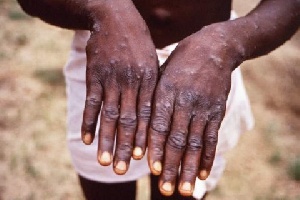
  • AI, virtual courtrooms must replace Ghana’s outdated judicial system – Justice Dzamefe

    AI, virtual courtrooms must replace Ghana’s outdated judicial system – Justice Dzamefe

    Supreme Court nominee, Justice Senyo Dzamefe, has championed a tech-driven overhaul of Ghana’s judiciary.

    According to him, the existing system must be replaced with artificial intelligence, digital transcription tools, and virtual courtrooms.

    During an interaction with the Parliament’s Appointments Committee on Monday, June 16, he noted that the judiciary can efficiently and effectively provide justice when it eschew handwritten records and analog processes.

    “We must go with technology. The time of long handwriting is long gone past,” he declared.

    The Appointments Committee of Parliament is vetting President John Mahama’s seven Supreme Court judge nominees today, Monday, June 16.

    According to Parliament in its circular shared on its Facebook platform, the vetting process to be spearheaded by the committee’s chairman, Bernard Ahiafor, who also doubles as the First Deputy Speaker in Parliament, will end on Wednesday, June 18.

    The vetting process commences at 10am in Committee Rooms 1, 2 & 3 New Administration Block of Parliament.The other listed nominees include Justice Kweku Tawiah Ackaah-Boafo, Justice Philip Bright Mensah, Justice Janapare Bartels-Kodwo, Justice Hafisata Amaleboba.

    Their vetting comes after the Speaker of Parliament Alban Kingsford Sumana Bagbin on May 27 referred the nominees to the Appointments Committee for vetting and subsequent approval.

    This is in accordance with Article 144(2) of Ghana’s 1992 Constitution, which mandates that Supreme Court nominees undergo parliamentary scrutiny before their appointments are confirmed.

    The Appointments Committee, will be chaired by Bernard Ahiafor, and assisted by Emmanuel Armah-Kofi Buah.Other members of the committee also include, Alexander Afenyo-Markin (Ranking Member), Patricia Appiagyei (Deputy Ranking Member), Mahama Ayariga (Majority Leader), Agnes Naa Momo Lartey, Frank Annoh-Dompreh, Patrick Yaw Boamah, Shaibu Mahama, Alhassan Umar, Kwame Governs Agbodza.

    About the nominees

    Justice Sir Dennis Dominic Adjei – A Court of Appeal judge since 2010, he was elected to the African Court on Human and Peoples’ Rights in 2022 for a six-year term. He has served as Director of the Judicial Training Institute and Dean of the Faculty of Law at GIMPA. He is an Adjunct Professor of Law at multiple universities.

    Justice Gbiel Simon Suurbaareh – Appointed to the Court of Appeal in 2010, he previously served as the Supervising High Court Judge in the Eastern Region and is known for his expertise in constitutional and administrative law and represents Court of Appeal judges on Ghana’s Judicial Council.

    Justice Senyo Dzamefe – A Court of Appeal judge since 2010, he chaired the Dzamefe Commission, which investigated Ghana’s performance at the 2014 FIFA World Cup. He was elected President of the Association of Magistrates and Judges of Ghana (AMJG) in 2018.

    Justice Kweku Tawiah Ackah-Boafo – A Court of Appeal judge, has emphasised the need for legal education reforms and has advocated for the integration of artificial intelligence into Ghana’s legal system to enhance efficiency and transparency.

    Justice Philip Bright Mensah – Known for his contributions to appellate jurisprudence, he recently presided over a Court of Appeal panel that directed the Accra High Court to adopt proceedings from a previous trial in the Republic vs. Stephen Kwabena Opuni case.

    Justice Janpere Bartels-Kodwo – A Court of Appeal judge, he has been nominated to strengthen the Supreme Court’s capacity amid increasing demands on Ghana’s judiciary.

    Justice Hafisata Ameleboba – A Court of Appeal judge, she has been involved in key judicial decisions and reforms. Her nomination is expected to bring diversity and expertise to the Supreme Court.
  • 24-hour city-wide cleaning exercise to soon be rolled out by AMA – Mayor

    24-hour city-wide cleaning exercise to soon be rolled out by AMA – Mayor

    A 24-hour city-wide cleaning initiative is set to begin soon, as announced by the Mayor of Accra, Michael Allotey.

    Speaking to the media, he shared that the Accra Metropolitan Assembly (AMA) plans to utilize the Borla Macho III tricycle to drive the operation.

    He explained that the Borla Macho III tricycle donated by a Ghanaian electro-mechanical engineering firm, Anointed Engineering Services Ltd, has a hydraulic system that will enhance the efficiency of cleaning activities.

    “This morning we are here not to sell a generator but to donate our special product, the Borla Macho III, to the AMA… It’s a one-man-operated tricycle with a hydraulic system that lifts and empties bins, compresses waste internally, and tips at dumping sites without manual contact.

    “It’s the perfect tool for urban sanitation, and we believe, as the city improves with the vision of the AMA; this product can help bring sanity into our sanitation system,” he stated.”

    The government in recent times has become stern on solving the country’s sanitation and decongestion challenges.

    The Kumasi Metropolitan Assembly (KMA) embarked on a decongestion exercise in the Central Business District (CBD) in April this year.

    The Chief Executive of the Kumasi Metropolitan Assembly, Richard Ofori Agyemang Boadi, issued a stern caution to traders operating on the pavements.

    “Kumasi should expect cooperation, discipline. There is a lot of indiscipline in our metropolis. In all humility, I am going to ensure strict compliance with the Assembly to the by-law that manages our city. If you are selling on the pavement, adjust yourself.”

    “If you are in the middle of any dual carriageway road, especially within the central business district, please get out of the place. Because from Wednesday, we will get on the street and make sure that we clear Kumasi from all the filth that we see.”

    “With the decongestion, we will not apply the forces of military men. Everybody wants to sell at Adum, so we will find some ingenious way to keep them in Adum and decongest Adum,” he said.Before the exercise, vehicular movement in the area was at a standstill, as some traders sold their items in the middle of the streets, preventing pedestrians and vehicles from barely moving freely.

    Also in Accra, the Accra Mayor, targeting street traders with a 3-day decongestion exercise targeting street traders.

    The first phase of the exercise launched on Tuesday, May 20, targeting areas around the AMA Head Office, including Kinbu Road to Railways, ECG Junction to the King Tackie Tawiah Statue, and Opera Square to Adabraka.

    Amid the concerns raised by affected traders, the Greater Accra Market Association (GAMA) has declared strong support for the Accra Metropolitan Assembly’s ongoing decongestion campaign in the Central Business District (CBD).

    The issues of congestion compelled the transport operators to threaten a strike action against the government and the Ghana Police Service

    They gave authorities until Monday, May 19, to act or face a nationwide protest. However, the strike action was not executed.

    According to the operators, the growing encroachment of roads and pavements by traders poses serious safety risks and disrupts the free flow of traffic.

    They are demanding the immediate enforcement of the Road Traffic Regulations, 2012 (L.I. 2180), particularly those relating to trading on roads and pavements.

    Under Ghana’s Road Traffic Regulations, 2012 (L.I. 2180), specific provisions prohibit trading activities that obstruct pedestrian and vehicular movement.

    These regulations are designed to ensure the safety and free flow of traffic on public roads and pavements.

  • BECE candidate misses paper after bee attack at Wa School for Deaf

    BECE candidate misses paper after bee attack at Wa School for Deaf

    Two Basic Education Certificate Examination (BECE) candidates sustained injuries following an attack by a swarm of wild bees.

    The incident reportedly occurred when the male and female candidates were sitting for the English-language paper at the Deaf Centre in Wa on Thursday, June 12.

    According to reports, the bees thronged the class after a staff member of the Northern Electricity Distribution Company (NEDCo) pruned a tree close to the area.

    The male candidate was treated and discharged in time to write the second paper, Career Technology, but not the first, after they were rushed to the Wa Municipal Hospital for treatment.

    Meanwhile, the female candidate is yet to be discharged from the hospital.

    The Upper West Regional Controller of the West African Examinations Council (WAEC), Mr. Donald Tuor, has revealed that efforts are ongoing to seek clemency for the injured female candidate.

    “We are considering pursuing a clemency case for her because it was not her fault. Though the subject is compulsory, it is not a core subject, so she can still be graded,” Mr. Tuor explained.

    A total of 603,328 candidates are participating in this year’s Basic Education Certificate Examination (BECE).

    The candidates, comprising 297,250 males and 306,078 females, are from 20,395 schools.

    In a statement issued by the West African Examination Council on Monday, June 9, the Council noted that the number of candidates that registered for this year’s BECE (SC) is 5.99% higher than the 2024 entry figure.

    The exam for both school and private candidates that was initially scheduled to take place from June 9 to June 16 is now slated to end on Wednesday, June 18.

    The exam will take place across various centres nationwide under strict supervision by the West African Examinations Council (WAEC).

    According to the Council, measures have been laid out to ensure that candidates with special educational needs are supported throughout the examination process.

    “Heads of school, parents and guardians should rest assured that adequate provision has been made to ensure that no child is left behind as far as the examination is concerned,” WAEC said.

    As done in time past, WAEC cautioned students and all stakeholders against engaging in examination malpractices to avert the cancellation of results.

    These include having inscriptions on any part of the body or clothing, posting live questions on the internet, refusal to grant timely access into the school premises, misconduct of examination officials, and multiple registration of candidates in both public and private schools.

    The Council added that the revised rules are available on its website, and as such, “Heads of school, supervisors and invigilators should ensure that candidates adhere to these new rules.”refusing timely access toOverall, 569,236 candidates participated in the 2024 BECE, comprising 282,703 boys and 286,533 girls from 19,505 schools.

    Special accommodations were provided for 59 visually impaired candidates, 263 with hearing impairments, and 161 others requiring specific assistance.

    The exam took place at 2,123 centres nationwide, though 3,845 candidates were marked as absent. The BECE for Private Candidates had 1,390 participants, 750 males and 640 females, taking the exam at 15 centres across the country’s regional capitals. Among them, 57 candidates did not show up for the exam.

    Some 33 school candidates and 3 private candidates had their results withheld due to investigations into possible irregularities. WAEC also flagged subject results from 149 schools, pending further investigations into reported malpractices.

    Following thorough investigations, the Final Awards and Examiners’ Appointment Committee, at its 35th meeting on October 16, 2024, decided to nullify the subject results for 377 school candidates and 3 private candidates.

    Also, two teachers were arrested in Jachie Pramso, Ashanti Region, over alleged examination malpractice, following the earlier arrest of three teachers and two residents in Bekwai.

    To avert the cancellation of results and legal issues, WAEC has urged this year’s candidates and teachers to avoid engaging in exam malpractices.

    “A heartfelt encouragement to all of them and a reminder that they should remain calm, focused, and determined, and avoid all forms of examination malpractice. They have to believe in their own ability to succeed and to do that through the utmost effort and engagement,” he said.

  • Israel-Iran war won’t affect fuel prices – COMAC

    Israel-Iran war won’t affect fuel prices – COMAC

    The Chamber of Oil Marketing Companies (COMAC) has assured that the escalating geopolitical tensions between Iran and Israel will not affect the oil market.

    Speaking to the media, the Chief Executive Officer (CEO) of COMAC, Dr. Riverson Oppong, noted that when prices go up or down in the world market, it takes some time before those changes are seen in local prices.

    “Despite fuel prices going up over the weekend because of the Iranian-Israeli war, you realize that our forecast does not in any to see those changes way capture those movements. This is the reason why I say that when fuel prices are going up, we do not see the effect immediately on pump prices in this country,” Dr. Oppong explained.

    He added, “For this week, we are going to have cool prices at the pump level because we are going to sell old stocks or people who have locked in products and paid for it already or may have signed some commercial agreement”.

    Iran and Israel exchanged missiles on Saturday night, June 14, and early on Sunday, marking the third consecutive day of attacks between the two countries after Israel initially attacked Iran on Friday morning.

    The escalating missile exchanges between Israel and Iran are contributing to rising global crude oil prices, posing a potential threat to Ghana’s fuel costs and overall economic stability.

    Meanwhile, President John Dramani Mahama has directed the Ministers for Finance and Energy, Dr Cassiel Ato Forson and John Abdulai Jinapor, respectively, to closely monitor the unfolding conflict between Israel and Iran and provide proactive measures to safeguard the country’s recent economic gains from external shocks.

    “I have instructed the Ministers of Finance and Energy to keep a close eye on the developments and model the possible impact on our petroleum prices. They must prepare appropriate measures to safeguard the gains we’ve made,” the president said during his Thank-You Tour of the Savannah Region on Saturday, June 14.

    Amid the conflict, the government has declared the immediate closure of the embassy in Tehran.

    The Minister for Foreign Affairs, Samuel Okudzeto Ablakwa, announced the immediate evacuation of Ghanaians living in Iran on Monday, June 16.

    According to Mr Ablakwa, the evacuation through land borders covers all Ghanaian diplomats, students, professionals, and other compatriots.

    In a post on Facebook, the sector minister noted that the decision has been taken to “guarantee the safety of our embassy staff.”

    The government has again instructed that embassy operations in Tel Aviv be reduced to the barest minimum.

    The government noted that it is keenly following developments in Israel and will advise shortly.

    In the meantime, Ghanaians in Israel have been advised to maintain close communication with the country’s consular department.

    “Government assures that no effort would be spared in protecting Ghanaian lives and keeping all Ghanaians out of harm’s way,” the sector minister assured.

    The Government of Ghana has reiterated its demand on both parties to pursue diplomatic options and end hostilities.

    In a related development, Israel is urging Ghana to reconsider its neutral position after the country abstained from voting in support of or against charges brought against Iran for violating its nuclear non-proliferation obligations.

    The voting took place on Thursday, June 12, during a closed-door meeting of the 35-member Board of Governors of the International Atomic Energy Agency (IAEA) which is currently being chaired by Ghana. The session was held at the IAEA headquarters in Vienna, Austria.

    The vote, which was the first of its kind in nearly 20 years, saw the 35-member IAEA Board formally declare that Iran is in breach of its nuclear non-proliferation obligations. The resolution was supported by 19 countries and opposed by three—Russia, China, and Burkina Faso—while 11 nations, including Ghana, abstained.

    The resolution, submitted by the United States, Britain, France, and Germany, concluded that Iran had failed to provide the IAEA with full and timely cooperation since 2019 concerning undeclared nuclear material and activities. It marks a significant escalation in the agency’s standoff with Tehran.

    In what Israel describes as a friendly and respectful request, the Israeli Ambassador to Ghana, Roey Gilad, during a media engagement in Accra, though acknowledging the legitimacy of Ghana’s abstinence due to its chairmanship position, called on the government to re-evaluate its longstanding non-aligned foreign policy position in critical global matters, particularly where international peace and security are concerned.

    “The formal reason is that Ghana is the chair of the board of the IAEA, but we felt this is something that is so crucial to Israel, which has to do with the future of Israel—that the state that is a member of the United Nations, Iran, is completely for the destruction of the Jewish sovereign state in Israel

    As much as we have full respect for the sovereign decision-making process in Ghana, including the Foreign Affairs [Ministry], we believe in the traditional policy of non-alignment that has existed here since 1957 under Nkrumah…I personally believe that maybe the policy of non-alignment should be re-evaluated,” the Israeli Ambassador said.

  • Confirmed Mpox cases rise to 85 – GHS confirms

    Confirmed Mpox cases rise to 85 – GHS confirms

    The Ghana Health Service (GHS) has announced a spike in the contraction of Mpox (formerly known as monkeypox) in its recent update.

    The Service has recorded six new cases, bringing the total number of cases to 85 as of June 9.

    As of June 6, the number of confirmed cases rose to 79 from 45 (reported as of May 31), with no fatalities recorded. A total of 34 new cases were reported as against 26 new cases recorded on 31st May.

    Previously, four individuals who contracted the illness were currently on admission, but presently, that figure has declined to one.

    According to the GHS, the recent rise in cases is “due to stronger surveillance such as contact tracing and increased public awareness.”

    As of May 29, 10 new cases had been recorded, leading to a total of 19 confirmed cases. Five individuals were admitted to health facilities at the time. Presently, no deaths have been reported.

    As of May 21, the GHS in a flier revealed that the country’s confirmed cases had hit nine. The Service earlier noted that as of May 18, the number of cases stood at four.

    Ghana recorded the first Mpox case in June 2022, with five cases, and by November 2023, health authorities had confirmed a total of 34 cases. Despite the increase in cases, Ghana has not recorded any Mpox-related deaths.

    The Ministry of Health and the GHS have called on all media houses to support public education efforts by using their platforms to raise awareness and provide accurate information on Mpox.

    “The Government of Ghana remains committed to safeguarding public health. Drawing on our experience in managing similar outbreaks, we will continue to implement appropriate measures to protect the health and well-being of all residents,” said in its statement dated May 18.

    Mpox is a viral illness similar to smallpox. It typically causes fever, swollen lymph nodes, and a rash. The virus spreads through direct contact with an infected person’s skin or bodily fluids, including through sexual contact.

    To reduce your risk, avoid close contact with symptomatic individuals, maintain proper hand hygiene, and refrain from sharing personal items.

    Symptoms may include fever, rash or lesions, tiredness, headaches, muscle and back pain, and swollen glands.

    Ghana will soon experience relief in response to the surging cases of monkeypox (Mpox), as the government is engaging international organizations for assistance.

    Speaking to the media on Saturday, June 7, Director for Public Health at the Ghana Health Service (GHS), Dr. Franklyn Asiedu Bekoe, disclosed that the country is already in talks with the World Health Organization (WHO) and Africa Centres for Disease Control and Prevention (Africa CDC) to receive MPOX vaccines.

    According to him, the GHS has submitted the requirements for the vaccines. He noted that, unlike before, the country’s current trend of infection has given Ghana the room to receive vaccines.

    “We’re engaging WHO and the Africa CDC so that we get the vaccines. Somewhere last year, Ghana didn’t have any established human-to-human transmission, so we do not qualify. Now that we have human-to-human transmission. The idea is that we will be able to identify a clear group who will benefit from the vaccine,” he added.

  • 2025 BECE: Believe in your ability to succeed – Education Minister tells candidates

    2025 BECE: Believe in your ability to succeed – Education Minister tells candidates

    Education Minister Haruna Iddrisu has extended his best wishes to candidates sitting for this year’s Basic Education Certificate Examination (BECE).

    Speaking to the media on Wednesday, June 11, the Education Minister advised the candidates to trust in their abilities while giving their utmost efforts to succeed in the exams.

    He also encouraged the participants to eschew engaging in malpractices.

    “Today is a significant milestone in the academic journey of these youngsters. Learners numbering 603,328 students across the country will be sitting for the BECE from today. On behalf of the president, and on my own behalf as well as the people of Ghana, I want to wish them good luck and best wishes.

    “A heartfelt encouragement to all of them and a reminder that they should remain calm, focused, and determined, and avoid all forms of examination malpractice. They have to believe in their own ability to succeed and to do that through the utmost effort and engagement,” he said.

    A total of 603,328 candidates are participating in this year’s Basic Education Certificate Examination (BECE).

    The candidates, comprising 297,250 males and 306,078 females, are from 20,395 schools.

    In a statement issued by the West African Examination Council on Monday, June 9, the Council noted that the number of candidates that registered for this year’s BECE (SC) is 5.99% higher than the 2024 entry figure.

    The exam for both school and private candidates that was initially scheduled to take place from June 9 to June 16 is now slated to end on Wednesday, June 18.

    The exam will take place across various centres nationwide under strict supervision by the West African Examinations Council (WAEC).

    According to the Council, measures have been laid out to ensure that candidates with special educational needs are supported throughout the examination process.

    “Heads of school, parents and guardians should rest assured that adequate provision has been made to ensure that no child is left behind as far as the examination is concerned,” WAEC said.

    As done in time past, WAEC cautioned students and all stakeholders against engaging in examination malpractices to avert the cancellation of results.

    These include having inscriptions on any part of the body or clothing, posting live questions on the internet, refusal to grant timely access into the school premises, misconduct of examination officials, and multiple registration of candidates in both public and private schools.

    The Council added that the revised rules are available on its website, and as such, “Heads of school, supervisors and invigilators should ensure that candidates adhere to these new rules.”refusing timely access toOverall, 569,236 candidates participated in the 2024 BECE, comprising 282,703 boys and 286,533 girls from 19,505 schools.

    Special accommodations were provided for 59 visually impaired candidates, 263 with hearing impairments, and 161 others requiring specific assistance.

    The exam took place at 2,123 centres nationwide, though 3,845 candidates were marked as absent. The BECE for Private Candidates had 1,390 participants, 750 males and 640 females, taking the exam at 15 centres across the country’s regional capitals. Among them, 57 candidates did not show up for the exam.

    Some 33 school candidates and 3 private candidates had their results withheld due to investigations into possible irregularities. WAEC also flagged subject results from 149 schools, pending further investigations into reported malpractices.

    Following thorough investigations, the Final Awards and Examiners’ Appointment Committee, at its 35th meeting on October 16, 2024, decided to nullify the subject results for 377 school candidates and 3 private candidates.

    Also, two teachers were arrested in Jachie Pramso, Ashanti Region, over alleged examination malpractice, following the earlier arrest of three teachers and two residents in Bekwai.

    To avert the cancellation of results and legal issues, WAEC has urged this year’s candidates and teachers to avoid engaging in exam malpractices.

    “A heartfelt encouragement to all of them and a reminder that they should remain calm, focused, and determined, and avoid all forms of examination malpractice. They have to believe in their own ability to succeed and to do that through the utmost effort and engagement,” he said.

  • Five inmates from Kumasi Central Prisons sit for 2025 BECE

    Five inmates from Kumasi Central Prisons sit for 2025 BECE

    Five male inmates from the Kumasi Central Prisons have joined the many candidates participating in the 2025 Basic Education Certificate Examination (BECE).

    The detainees, between the ages of 20 and 25 are sitting their exams at the Bantama examination centre.

    A total of 603,328 candidates are participating in this year’s Basic Education Certificate Examination (BECE).

    The candidates, comprising 297,250 males and 306,078 females, are from 20,395 schools.

    In a statement issued by the West African Examination Council on Monday, June 9, the Council noted that the number of candidates that registered for this year’s BECE (SC) is 5.99% higher than the 2024 entry figure.

    The exam for both school and private candidates that was initially scheduled to take place from June 9 to June 16 is now slated to end on Wednesday, June 18.

    The exam will take place across various centres nationwide under strict supervision by the West African Examinations Council (WAEC).

    According to the Council, measures have been laid out to ensure that candidates with special educational needs are supported throughout the examination process.

    “Heads of school, parents and guardians should rest assured that adequate provision has been made to ensure that no child is left behind as far as the examination is concerned,” WAEC said.

    As done in time past, WAEC cautioned students and all stakeholders against engaging in examination malpractices to avert the cancellation of results.

    These include having inscriptions on any part of the body or clothing, posting live questions on the internet, refusal to grant timely access into the school premises, misconduct of examination officials, and multiple registration of candidates in both public and private schools.

    The Council added that the revised rules are available on its website, and as such, “Heads of school, supervisors and invigilators should ensure that candidates adhere to these new rules.”refusing timely access toOverall, 569,236 candidates participated in the 2024 BECE, comprising 282,703 boys and 286,533 girls from 19,505 schools.

    Special accommodations were provided for 59 visually impaired candidates, 263 with hearing impairments, and 161 others requiring specific assistance.

    The exam took place at 2,123 centres nationwide, though 3,845 candidates were marked as absent. The BECE for Private Candidates had 1,390 participants, 750 males and 640 females, taking the exam at 15 centres across the country’s regional capitals. Among them, 57 candidates did not show up for the exam.

    Some 33 school candidates and 3 private candidates had their results withheld due to investigations into possible irregularities. WAEC also flagged subject results from 149 schools, pending further investigations into reported malpractices.

    Following thorough investigations, the Final Awards and Examiners’ Appointment Committee, at its 35th meeting on October 16, 2024, decided to nullify the subject results for 377 school candidates and 3 private candidates.

    Also, two teachers were arrested in Jachie Pramso, Ashanti Region, over alleged examination malpractice, following the earlier arrest of three teachers and two residents in Bekwai.

    To avert the cancellation of results and legal issues, WAEC has urged this year’s candidates and teachers to avoid engaging in exam malpractices.

  • You can’t force govt to meet your demands when it can’t – Austin Gamey to GRNMA

    You can’t force govt to meet your demands when it can’t – Austin Gamey to GRNMA

    Labour expert Austin Gamey has weighed in on the ongoing strike by has weighed in the stalemate between the government and the Ghana Registered Nurses and Midwives Association (GRNMA).

    In an interview with Joy FM on Wednesday, June 11, Austin Gamey noted that the government cannot be pressured to meet the Association’s demands when it cannot.

    “I will plead with both parties, the union within the nursing fraternity, they know that they have to go back to work. Let them go to the table and have a conversation about any plan that is worth implementing. You can’t force the employer to pay you when they cannot afford to pay. You cannot do that, you cannot force a horse to the riverside to drink water.

    He called for a constructive dialogue between the two parties, adding, “Patience is required, and I think that this is a matter that can be resolved easily, but the way they are going about it is what is creating the problem”.

    Members of GRNMA on June 2 withdrew from their posts over delays in their 2024 Collective Agreement. In response, the National Labour Commission (NLC) filed an ex parte application on Thursday, June 5.

    However, Health Minister Mintah Akandoh on Tuesday, June 10, revealed that the government will not be able to meet the conditions of service for the Ghana Registered Nurses and Midwives Association (GRNMA), currently on strike, this year.

    Engaging the press the sector minister announced that the conditions of service being requested to be implemented were not captured in the 2025 budget statement; hence, it will “completely throw the economy off gear if implemented in the manner it currently exists.”

    “We are mindful of the serious economic consequences of unbudgeted expenditure and want to avoid the economic slippages that have led to the hardship in the recent past,” the Health Minister revealed.

    On the matter, the Deputy Minister of Finance, Thomas Nyarko Ampem, revealed that fully meeting the nurses’ current demands would add “in excess of GH¢2 billion” to the national compensation budget.

    “We have all committed that in our resolve to reset the economy of this country, we must maintain a 1.5% primary balance surplus every year in order to bring our debt levels to sustainable levels,” he added.

    Mintah Akandoh, however, assured of the government’s readiness to further engage with the GRNMA to implement the conditions of service in a manner that does not dislocate the national budget.

    “Government commits to continue to engage with the nurses to achieve a mutually acceptable outcome in the interest of the public,” he said.

    This news was broken to the GRNMA at a closed-door meeting on Monday, June 9, and the association’s vice president, Samuel Alagkora Akologo, expressed his displeasure. He noted that such a proposal is unfair, as it will rob the striking nurses of what was due them.

    “And what they wanted us to agree on was to push the implementation to 2026. What it means is that they wanted to set the conditions of the service calendar so that it will be like we have just renegotiated, and then we are moving on, so that the idea of arrears will not come in. This is not fair,” he said.

    A 10-day injunction has been placed on the nationwide strike after the Industrial and Labour Division of the High Court in Accra described the protest as illegal.

    Meanwhile, the GRNMA has disclosed that it is yet to formally receive a court order restraining its ongoing strike. Public Relations Officer of the GRNMA, Joseph Krampah, has insisted that the group will continue its strike until an official injunction notice is served.

    According to him, although the association is a law-abiding group, it cannot obey unofficial reports.

    “They think that they should serve us a letter; we can’t prevent them, but what constitutes an illegal strike? When in Ghana has the Labour Commission said that this strike is legal? It is only illegal when they don’t inform your office about the intended strike, and we did—you had the letter,” Krampah said.

    He added: “If you are declaring it as illegal or whatever and you are bringing an injunction, that is your job to do, and we respect the court and the NLC very much. We are law-abiding people. But just that things that we have not seen, we cannot act on them. I am saying that we haven’t received any letter. None of the executives have been served any letter about that. So till we know that, aluta continua.”

  • GRNMA strike: You can’t count on retirees – Policy analyst to govt

    GRNMA strike: You can’t count on retirees – Policy analyst to govt

    Engineer and policy analyst Michael Kosi Dedey has called the government’s appeal to retired health professionals baseless.

    Speaking to the media on Channel One TV on Wednesday, June 11, he noted that the government’s clarion call indicates a sign of poor leadership.

    “He waited for the people to go on strike and later came and told them retirees should volunteer. How is that possible? You think the retirees will come? Let us get real, it is not going to happen. Nobody will come anywhere.”

    “When he came into office, this was an issue already on the table. He was going round fighting chief executives in this country of hospitals instead of sitting down and saying that these are issues that we need to look at, how do we go about it?” he added.

    The Ghana Registered Nurses and Midwives Association (GRNMA) General Secretary, David Tenkorang, has also shared similar sentiments.

    He noted that the presence of the retirees won’t resolve the impasse.

    On Tuesday, June 10, the Minister of Health, Kwabena Mintah Akandoh, made a clarion call to nurses and midwives on retirement to volunteer their services to mitigate the effects of the ongoing strike.

    “Given the urgency of the situation and the suffering of patients, the government is appealing to public-spirited retired nurses and midwives to volunteer their service for a brief period pending the resolution of the impasse,” the minister stated.

    Members of GRNMA on June 2 withdrew from their posts over delays in their 2024 Collective Agreement.

    To ensure that the general public continues to access quality healthcare, the Health Ministry instructed all hospital managers, particularly Directors of Nursing Services and their Deputies, to be present at work at all times during the period of the industrial action.

    The ambulance service is expected to remain on standby in every district to support emergencies promptly. Additionally, all health facilities are to establish coordinating structures that can effectively manage emergencies and maintain continuous communication with ambulance services to ensure a swift response when needed.

    Furthermore, the Director-General of the Ghana Health Service, along with Chief Executive Officers and Medical Directors of Teaching Hospitals, is required to provide daily reports to the Acting Chief Director on the status of healthcare service delivery within their respective institutions.

    To manage the anticipated surge in patient numbers due to ongoing industrial action, the Ministry of Health has pledged to collaborate with quasi-government health facilities. This partnership aims to ease the pressure on public health institutions and ensure continuous care delivery.

    The ministry has also advised rotational nurses and those currently undergoing mandatory clinical training to refrain from participating in any form of industrial action. Their cooperation is crucial in maintaining essential services during this period.

    Ongoing monitoring of the situation will be conducted by the ministry to ensure that all necessary logistics and resources are made available to mitigate the impact of the strike.

    Despite these interventions, the GRNMA strike bites hard. In public health facilities, nurses have withdrawn their services, leaving many patients stranded.

    In response to the strike action, the National Labour Commission (NLC) filed an ex parte application on Thursday, June 5.

    A 10-day injunction has been placed on the nationwide strike after the Industrial and Labour Division of the High Court in Accra described the protest as illegal.

    But the GRNMA has disclosed that it is yet to formally receive a court order restraining its ongoing strike.

    Public Relations Officer of the GRNMA, Joseph Krampah, has insisted that the group will continue its strike until an official injunction notice is served.

    According to him, although the association is a law-abiding group, it cannot obey unofficial reports.

    “They think that they should serve us a letter; we can’t prevent them, but what constitutes an illegal strike? When in Ghana has the Labour Commission said that this strike is legal? It is only illegal when they don’t inform your office about the intended strike, and we did—you had the letter,” Krampah said.

    He added: “If you are declaring it as illegal or whatever and you are bringing injunction, that is your job to do, and we respect the court and the NLC very much. We are law-abiding people. But just that things that we have not seen, we cannot act on them. I am saying that we haven’t received any letter. None of the executives have been served any letter about that. So till we know that, aluta continua.”

    Presently, the Health Minister Mintah Akandoh has revealed that government will not be able to meet the conditions of service for the Ghana Registered Nurses and Midwives Association (GRNMA), currently on strike, this year.

    The sector minister announced that the conditions of service being requested to be implemented were not captured in the 2025 budget statement; hence, it will “completely throw the economy off gear if implemented in the manner it currently exists.”