Author: Phoebe Martekie Doku

  • Supreme Court to decide on vacant Parliamentary seats tomorrow

    Supreme Court to decide on vacant Parliamentary seats tomorrow

    The Supreme Court is set to deliver a ruling tomorrow, Tuesday, November 12, on a high-stakes case regarding the controversial decision to declare four parliamentary seats vacant.

    This case has ignited political debate and raised questions about the constitutional authority of Parliament’s Speaker, Alban Bagbin.

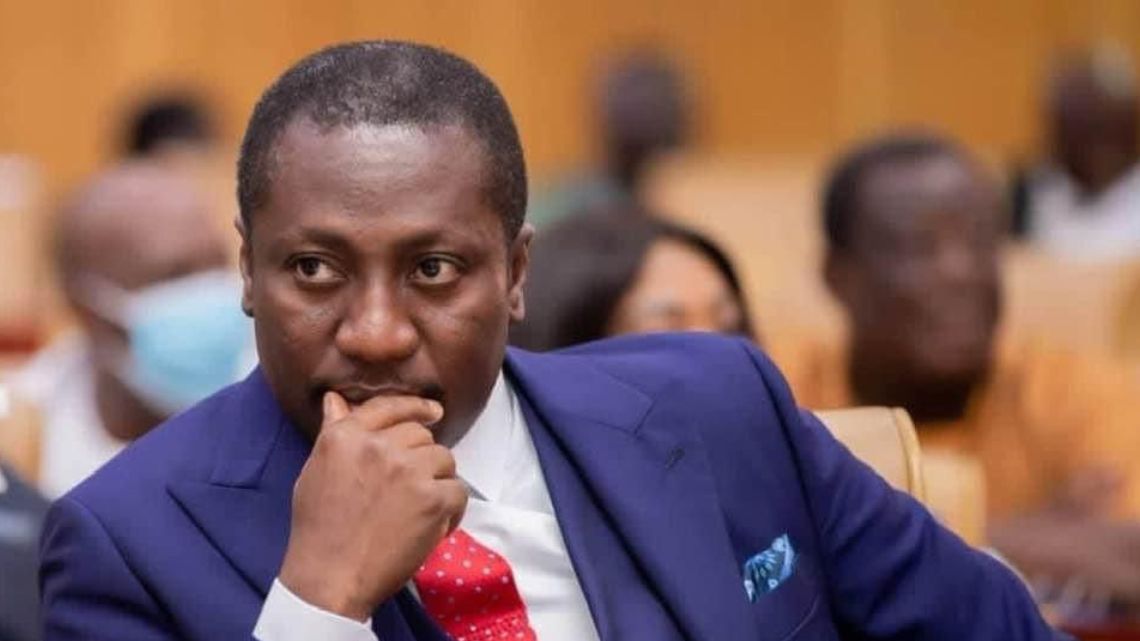
    The case was filed by the leader of the New Patriotic Party (NPP) parliamentary caucus, Alexander Afenyo-Markin, who contests Speaker Alban Bagbin’s unilateral declaration of the seats as vacant.

    Afenyo-Markin argues that Bagbin acted without judicial oversight and bypassed the process of calling by-elections.

    Central to the case is Bagbin’s interpretation of the 1992 Constitution’s stipulations on parliamentary vacancies. Bagbin justified his September 17, 2024, decision, asserting that the MPs in question had breached constitutional requirements, thereby forfeiting their seats.

    Afenyo-Markin contends that the Speaker exceeded his authority, asserting that only the judiciary has the power to interpret constitutional matters of this nature. He claims that Bagbin’s decision effectively deprives constituents in these districts of their right to representation.

    In response to Afenyo-Markin’s suit, the Supreme Court issued an injunction preventing further actions on the vacated seats until it reached a final judgment. Speaker Bagbin filed a motion to challenge this interim ruling, arguing that the injunction obstructed his official duties and asserting that his actions were within his authority to uphold the integrity of Parliament.

    The court upheld the injunction, dismissing Bagbin’s appeal to reverse it, which has now set the stage for today’s pivotal judgment on this constitutional dispute.

    However in court today, the Speaker of Parliament’s legal team failed to submit the required statement of case and was notably absent from the court proceedings.

    This absence has raised concerns, as the Speaker’s representation was expected to be crucial in addressing the legal issues at hand regarding the vacant seats.

    Meanwhile, the Attorney-General has expressed strong disapproval of the Speaker’s legal team, particularly criticizing Thaddeus Sory, the Speaker’s lawyer, for his failure to appear in court or submit the necessary documents.

    The Attorney-General pointed out that this lack of participation undermines the judicial process.

    In response, the Attorney-General urged the court to take a firm stance on the matter, warning that such conduct diminishes the authority of the court and could compromise the fairness of the legal proceedings.

    With the ruling expected tomorrow, the outcome is highly anticipated, as it will likely have significant implications for parliamentary representation and the interpretation of constitutional responsibilities for public officials.

  • Spiritually it is not good to sit on Ato Forson’s seat, I’ll never do that – Afenyo-Markin

    Spiritually it is not good to sit on Ato Forson’s seat, I’ll never do that – Afenyo-Markin

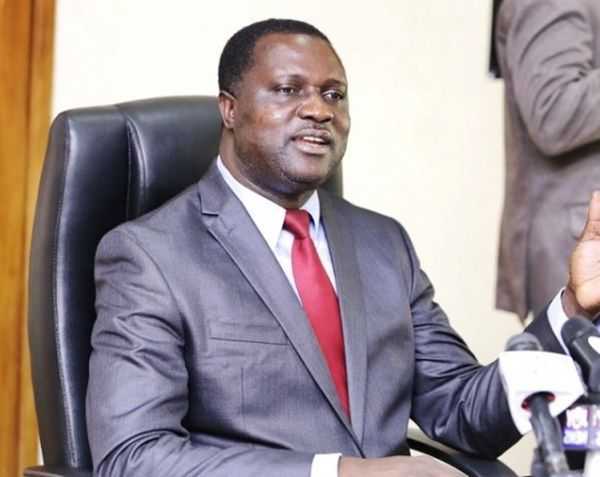
    The Majority Leader, Alexander Kwamena Afenyo-Markin, has further elaborated on why the New Patriotic Party (NPP) is unwilling to switch seating positions with the National Democratic Congress (NDC) caucus in Parliament.

    Addressing the press today, he noted that occupying the seat of the Minority Leader, Cassiel Ato Forson, with just three weeks left until the election would present a bad omen for the NPP.

    He explained that both spiritually and practically, the Minority leader’s seat has not been registered under his name therefore attempting to occupy it will tantamount his party into opposition.

    Afenyo-Markin has vowed not to take up the seats of the NDC caucus adding that, “spiritually it is not even good, we have three weeks to election. I should go and sit on Minority, is that my seat? I won’t dare, I will never do it. That is not my rightful place. I should go to Minority and spiritually make myself a Minority person and bind my colleagues, no we won’t do that. No NPP person will do that”.

    The Majority Leader’s remarks come at a time of increasing tension and heightened political sensitivity in Parliament, with the general election fast approaching.

    The gridlock in Parliament began after Speaker Alban Bagbin declared four parliamentary seats vacant in accordance with Article 97(g) and (h) of the 1992 Constitution.

     This provision stipulates that any Member of Parliament (MP) who intends to run as an independent candidate or contest for a different party in the upcoming 2024 elections must vacate their seat.

    The affected MPs were Cynthia Morrison, Kwadjo Asante, Andrew Amoako Asiamah, and Peter Kwakye Ackah. In response to the Speaker’s ruling, Afenyo-Markin filed a case contesting Speaker Alban Bagbin’s unilateral declaration of the seats as vacant.

    He argues that Bagbin acted without judicial oversight and bypassed the process of calling by-elections.Central to the case is Bagbin’s interpretation of the 1992 Constitution’s stipulations on parliamentary vacancies.

    Bagbin further justified his September 17, 2024, decision, asserting that the MPs in question had breached constitutional requirements, thereby forfeiting their seats.

    In response to Afenyo-Markin’s suit, the Supreme Court issued an injunction preventing further actions on the vacated seats until it reached a final judgment.

    Speaker Bagbin later filed a motion to challenge this interim ruling, arguing that the injunction obstructed his official duties and asserting that his actions were within his authority to uphold the integrity of Parliament.

    The court upheld the injunction, dismissing Bagbin’s appeal to reverse it, which has now set the stage for today’s pivotal judgment on this constitutional dispute.

    However in court today, Monday November 11, the Bagbin’s legal team failed to submit the required statement of case and was notably absent from the court proceedings.

    This absence has raised concerns, as the Speaker’s representation was expected to be crucial in addressing the legal issues at hand regarding the vacant seats.

    Meanwhile, the Attorney-General has expressed strong disapproval of the Speaker’s legal team, particularly criticizing Thaddeus Sory, the Speaker’s lawyer, for his failure to appear in court or submit the necessary documents.

    The Attorney-General pointed out that this lack of participation undermines the judicial process.In response, the Attorney-General urged the court to take a firm stance on the matter, warning that such conduct diminishes the authority of the court and could compromise the fairness of the legal proceedings.

    With the ruling expected tomorrow, the outcome is highly anticipated, as it will likely have significant implications for parliamentary representation and the interpretation of constitutional responsibilities for public officials.

  • Gov’t moves scholarship schemes to tertiary level – Education Minister

    Gov’t moves scholarship schemes to tertiary level – Education Minister

    The Education Minister, Dr. Yaw Adutwum, has announced that scholarships, including the Cocobod and government scholarships, will now be redirected from senior high school (SHS) students to those in tertiary education.

    This shift is a result of the Free SHS policy, which has already eliminated the need for financial support at the high school level.

    As a result, the government is focusing on helping deserving students access tertiary education by providing these scholarships to ease the financial burden at the university level.

    In addition to the scholarships, Dr. Adutwum highlighted the availability of student loans for those who may face financial challenges. Students can apply for these loans using their ID card or Ghana Card.

    Addressing parents about the New Patriotic Party’s education policies, Dr. Adutwum stressed that the government’s priority is to ensure students transition smoothly from SHS to tertiary institutions and receive support throughout their studies.

    “We are moving all scholarships to the tertiary levels. The government scholarship and the cocobod scholarship. We are moving all to the Tertiary because free SHS is not covering for high school education. The student loan scheme is also available and with your ID card and Ghana Card you can access the loan to support your education. Ghanaian cuisine recipes

    Our policy is looking at ensuring that students who transition from High school to Tertiary are able to complete their education. We don’t intend to pay first year and leave students hanging like the others want to,” he said.

  • New directive prevents court processes from disrupting parliamentary proceedings – CJ

    New directive prevents court processes from disrupting parliamentary proceedings – CJ

    Chief Justice Gertrude Sackey Torkornoo has issued updated guidelines to Registrars and Court Bailiffs, outlining the proper procedures for serving court processes to key parliamentary officials, including the Speaker of Parliament, the Clerk, and Members of Parliament (MPs).

    Under the new directives, court processes intended for the Speaker of Parliament must be served at the Legal Department of the Parliamentary Service, specifically on Mondays during working hours.

    For the Clerk of Parliament, processes should be delivered directly to the Clerk between 7 am and 8 am on Mondays, or any weekday from Tuesday to Friday.

    This rule applies even during Parliamentary recesses, with the Clerk responsible for notifying the Judiciary of Parliament’s recess schedule.

    Regarding Members of Parliament, the circular specifies that court documents should be served directly to MPs either on Mondays or between 7 am and 8 am on weekdays from Tuesday to Friday, including during Parliamentary recesses.

    Article 117 of the Constitution states that: “Civil or criminal process coming from any court or place out of Parliament shall not be served on, or executed in relation to, the Speaker or a member or the Clerk of Parliament whiles he is on his way to, attending at or returning from any proceedings of Parliament.”

    Article 118 (1) of the Constitution also provides that “Neither the Speaker, nor a member of, nor the Clerk to Parliament shall be compelled while attending Parliament to appear as a witness in any court or place out of Parliament.”

    Article 118 (2) also provides that: “The certificate of the Speaker that a member or the Clerk is attending the proceedings of Parliament is conclusive evidence of attendance at Parliament.”

    These instructions come after Speaker Alban Bagbin raised concerns to the Chief Justice about potential violations of Articles 117 and 118 of the 1992 Constitution.

    Speaker Bagbin pointed out that court processes were being served on MPs, the Speaker, and the Clerk while they were performing official Parliamentary duties, disrupting their work.

    Article 117 of the Constitution prohibits the serving of civil or criminal processes on the Speaker, MPs, or the Clerk while they are traveling to, attending, or returning from Parliamentary proceedings.

    Similarly, Article 118(1) prevents these officials from being forced to appear as witnesses in court while attending Parliament.

    Article 118(2) clarifies that the Speaker’s certification of an official’s attendance at Parliament is conclusive proof.

    The new circular reinforces these constitutional protections, ensuring that MPs, the Speaker, and the Clerk cannot be served with court processes or compelled to appear as witnesses during Parliamentary sessions. Exceptions apply only when Parliament is not in session, or if the Speaker certifies that an official was not attending or en route to Parliamentary proceedings.

  • Phase two of GNFS’ 2024 recruitment starts today

    Phase two of GNFS’ 2024 recruitment starts today

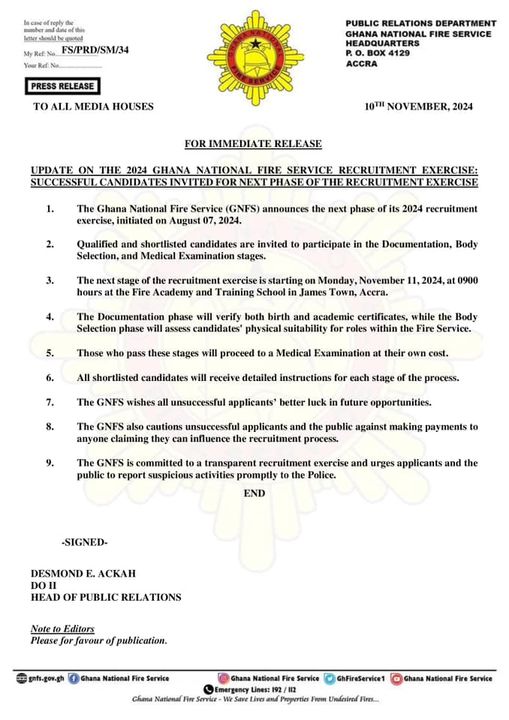
    The Ghana National Fire Service (GNFS) has began the next phase of its 2024 recruitment exercise.

    The exercise is taking place today, Monday November 11, 2024 at the Fire Academy and Training School in Jamestown, Accra.

    In an official notice, the GNFS outlined the stages of the recruitment process, which include body selection, document verification, and medical examinations. During body selection, applicants will be evaluated for their physical fitness for fire service duties. Document verification will involve confirming candidates’ birth and academic certificates. Those who pass these stages will proceed to medical exams, the cost of which will be borne by the applicants themselves.

    The GNFS has also issued a strong warning against fraudulent claims, urging the public not to pay anyone who promises guaranteed recruitment, as no payments are required for a chance to join the service.

    The recruitment, which began with a public announcement in August, aims to fill various positions within the GNFS.

  • LIVESTREAMING: Supreme Court to deliver verdict on vacant Parliamentary seats controversy

    LIVESTREAMING: Supreme Court to deliver verdict on vacant Parliamentary seats controversy

    Today, the Supreme Court is expected to rule on a high-profile case involving the controversial decision to declare four parliamentary seats vacant a matter that has sparked political debate and put the constitutional authority of Parliament’s Speaker, Alban Bagbin under scrutiny.

    The case was filed by the leader of the New Patriotic Party (NPP) parliamentary caucus, Alexander Afenyo-Markin, who contests Speaker Alban Bagbin’s unilateral declaration of the seats as vacant.

    Afenyo-Markin argues that Bagbin acted without judicial oversight and bypassed the process of calling by-elections.

    Central to the case is Bagbin’s interpretation of the 1992 Constitution’s stipulations on parliamentary vacancies. Bagbin justified his September 17, 2024, decision, asserting that the MPs in question had breached constitutional requirements, thereby forfeiting their seats.

    Afenyo-Markin contends that the Speaker exceeded his authority, asserting that only the judiciary has the power to interpret constitutional matters of this nature. He claims that Bagbin’s decision effectively deprives constituents in these districts of their right to representation.

    In response to Afenyo-Markin’s suit, the Supreme Court issued an injunction preventing further actions on the vacated seats until it reached a final judgment. Speaker Bagbin filed a motion to challenge this interim ruling, arguing that the injunction obstructed his official duties and asserting that his actions were within his authority to uphold the integrity of Parliament.

    The court upheld the injunction, dismissing Bagbin’s appeal to reverse it, which has now set the stage for today’s pivotal judgment on this constitutional dispute.

  • Bagbin has rejected multiple efforts to end Parliamentary gridlock – Afenyo-Markin

    Bagbin has rejected multiple efforts to end Parliamentary gridlock – Afenyo-Markin

    The Member of Parliament for Efutu and Majority Leader, Alexander Afenyo-Markin, has voiced his frustration over the ongoing impasse in Parliament and his failed attempts to engage with Speaker Alban Bagbin to resolve the matter.

    Afenyo-Markin disclosed that despite numerous efforts, both by him personally and through various respected groups and chiefs, Speaker Bagbin has continuously ignored attempts to open dialogue.

    Appearing on Newsfile on Joy FM, Afenyo-Markin explained that ever since the Supreme Court issued a stay on Bagbin’s decision to declare four parliamentary seats vacant, he tried contacting the Speaker several times without success.

    He stated that he even visited Bagbin’s home, only to be told the Speaker was asleep despite being at home.

    “I went there again, he was not ready to receive me. Apart from that, Council of State and Peace Council members tried to engage him, including prominent chiefs….”, he told his host, Samson Lardy Anyenini.

    With Parliament’s term coming to a close in just two months, the house remains in turmoil due to the dispute between the NPP and NDC caucuses over the conflicting rulings by Bagbin and the Supreme Court.

    As a result, Parliament has been adjourned indefinitely on two separate occasions.

    Calls for leadership and cooperation have grown louder, urging Parliament’s leadership to resolve the issue promptly.

    However, as of Saturday, November 9, 2024, the divisions remain entrenched, with no clear sign of when Parliament will reconvene.

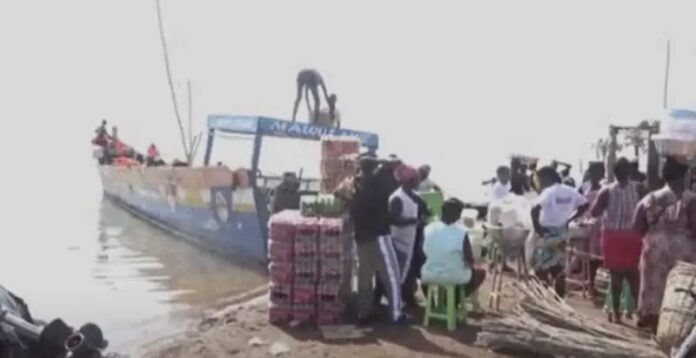
  • Breakdown of Kpando Torkor’s ferry leaves commuters on overcrowded canoes

    Breakdown of Kpando Torkor’s ferry leaves commuters on overcrowded canoes

    Concerns are growing among residents and travelers in the Kpando Torkor area due to the prolonged inoperability of the ferry, a crucial transportation link for the region.

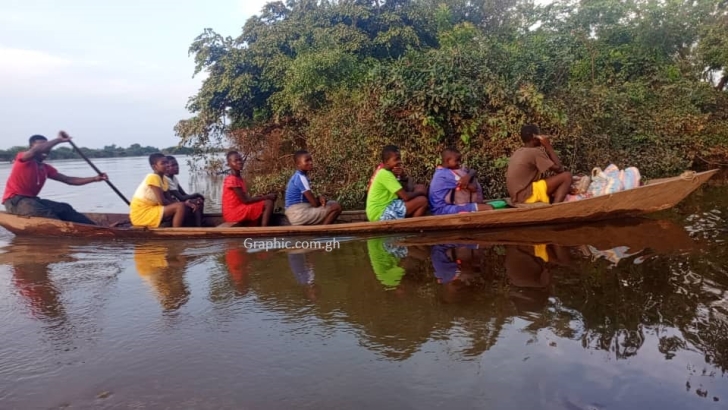
    The ferry, which has been out of service for several weeks, has left passengers with no choice but to resort to overcrowded canoes, creating significant disruptions to travel and local commerce.

    The alternative crossings are not only causing long delays but also posing serious safety risks, as the makeshift canoes navigate the lake under unsafe conditions.

    Stephen Dzaka, a concerned traveler, shared his frustration, stating, “We used to cross safely with the ferry, but now that it’s broken down, we are forced to use the canoe. It is overcrowded, and the risk of an accident is high.”

    With the situation becoming increasingly dire, locals and travelers are calling on the authorities to take immediate action and repair the ferry to ensure safer and more reliable transport options for the community.

    “We urge the government to repair the ferry as soon as possible to prevent a potential disaster.”

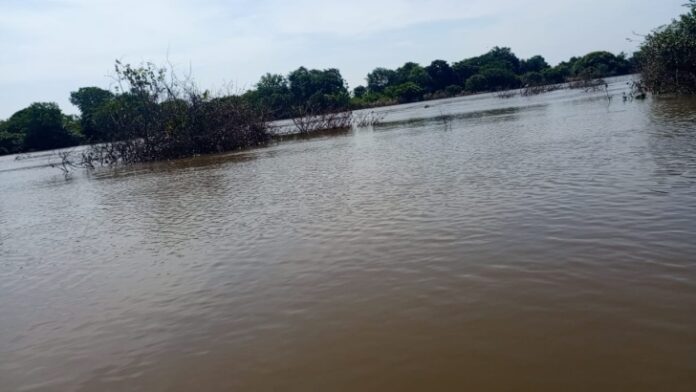
  • Schools in Kucha area closed as Oti River overflows

    Schools in Kucha area closed as Oti River overflows

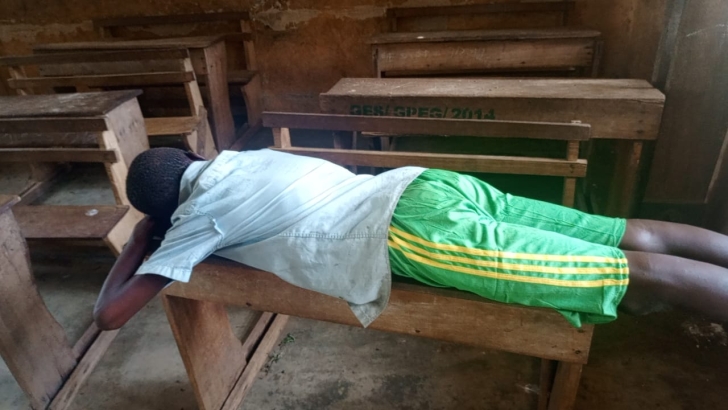
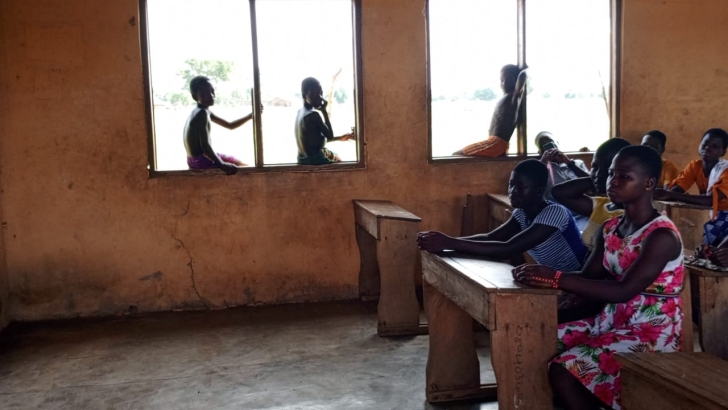
    Education in the Kucha Electoral Area of the Saboba District, Northern Region, has come to a halt due to the overflow of the River Oti.

    In response, fisherfolk have repurposed an abandoned school building as a workshop for mending nets.

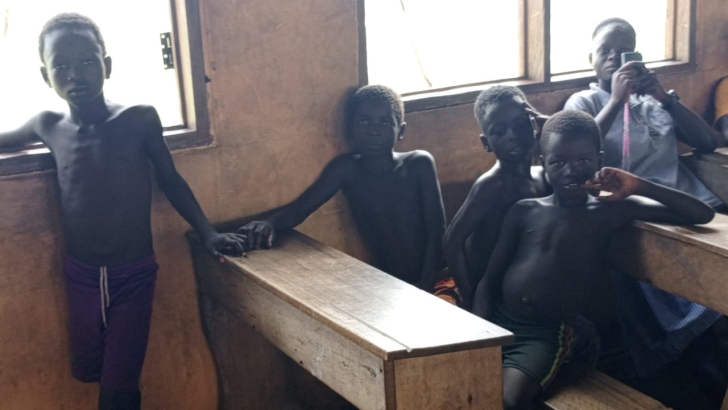
    For the past three months, students from eight communities—Kucha, Butuin Upper, Butuin Lower, Moagbar, Kunjib, Kacheen, Kibonboni, and Lomok—have been unable to attend school.

    Without teachers, many children have either accompanied their parents to the farms or spent their days aimlessly wandering the community.

    The situation has worsened due to the lack of outboard motors, which could help teachers cross the river from Saboba, the district capital, safely.

    The community remains haunted by a tragic incident three years ago when a canoe capsized, claiming the lives of nine students.

    “As we speak, it’s been three months without teachers, and we’re supposed to write our end-of-term exams—and even the B.E.C.E.—but we’re falling behind. When we fail the exams, who will take responsibility—our teachers or the government?

    “We are appealing to the government, the Saboba District Assembly, our parliamentary candidates, and other Ghanaians to support our area with an outboard motor to make transportation safer and reduce the dangers of crossing the river in small dugout canoes,” he urged.

    This tragedy has led to increased demands for life jackets and safer means of transportation.

    A Form Two student,Batuu Barnabas, explained to Graphic Online how the absence of teachers has left students in limbo.

    Many of his peers have resorted to farming or other unproductive activities, believing that there’s no point in attending school without any teachers.

    Fisherman Njorfuni Silas shared that he and his brothers have temporarily turned the school building into a workshop to mend their fishing nets.

    “Since the flooding started, there have been no school activities here. Today is Friday, and our brothers and sisters should be in class.

    “But no teachers have come since August, so we decided to use the school grounds to mend our nets and prepare to go fishing,” he said.

    Adam Gmalaye Njabidam, the Assemblyman for the Kucha Electoral Area, voiced his frustration over the ongoing disruption of education in the region, a problem he believes has been ignored by district authorities.

    Despite numerous appeals, no permanent solution has been implemented. He suggested that if engine boats were available and stationed at strategic points, they could provide safe access across the river at all times.

    Njabidam also proposed building teachers’ quarters in communities with schools to reduce the daily risks teachers face while crossing the river without life jackets.

    In response, Saboba’s District Chief Executive, George Bingrini Kitinkawan, acknowledged the hardships faced by Kucha residents, citing recent natural disasters and infrastructure deficits.

    However, he noted that the issue of educational disruption had not been brought to his attention.

    Kitinkawan expressed concerns about the lack of safe transportation, especially during the rainy season, and promised to procure an outboard motor and life jackets to improve safety and access to vital services.

    “Educational disruptions hadn’t yet reached my attention. However, severe flooding has made travel hazardous, with many teachers hesitant to cross the river daily. I’ll consult the Education Director to verify if school activities have indeed been halted,” he said.

    The DCE also highlighted plans to build teacher housing within Kucha communities, aiming to eliminate the need for teachers to cross the river daily.

    “We aim to include funding for teachers’ housing in our 2025 annual budget, enabling teachers to live near schools and improve educational access,” he added.

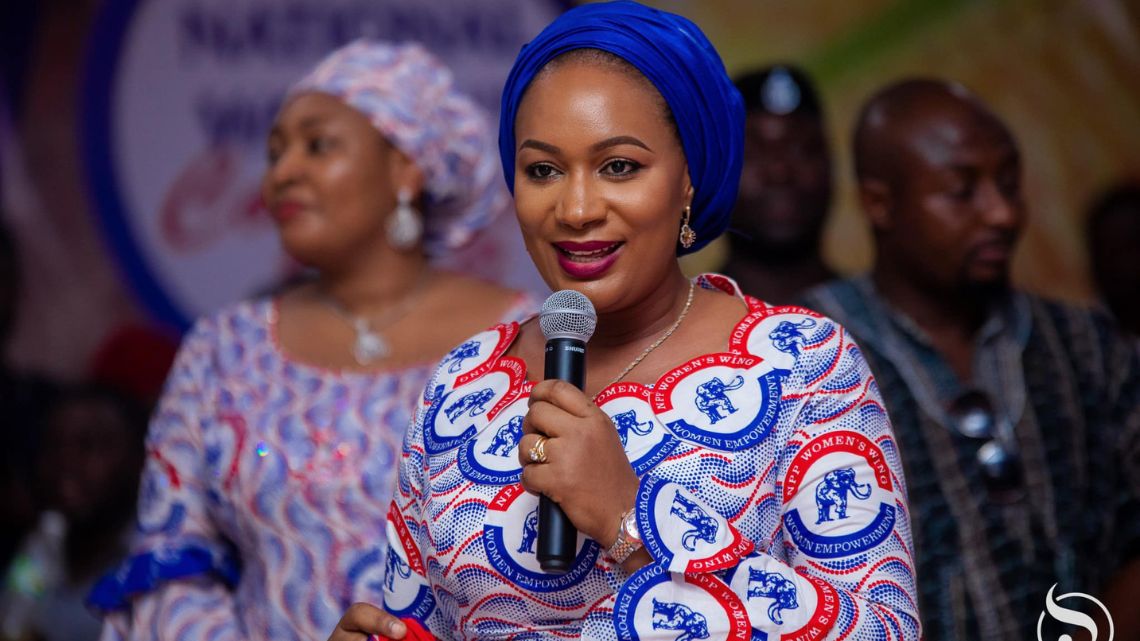
  • Every Ghanaian will have equal opportunities under my husband’s leadership – Samira Bawumia

    Every Ghanaian will have equal opportunities under my husband’s leadership – Samira Bawumia

    Wife of Vice President Mahamudu Bawumia, Samira Bawumia, has pledged that under her husband’s leadership, marginalized communities will receive equal treatment, highlighting the New Patriotic Party’s (NPP) commitment to an inclusive Ghana ahead of the 2024 elections.

    During the 12th Annual Conference of the Ghana Chapter of Tabital Pulaaku International in Ho, she reassured the Fulani community that they would be prioritized under Dr. Bawumia’s leadership. She affirmed that the government, led by President Nana Addo Dankwa Akufo-Addo, has always prioritized inclusivity.

    The three-day event, centered on the theme “Promoting Peaceful Coexistence and Fulbe Cultural Heritage,” brought together many members of the Fulani tribe, a group Mrs. Bawumia described as integral to Ghana’s social, cultural, and economic landscape. As a member of the Fulani community, she emphasized the significant role they play, particularly in agriculture, trade, and cultural diversity.

    “the Fulani community has a unique place in Ghana, and our contributions to agriculture, trade, and cultural diversity are invaluable.

    She further assured that under the leadership of President Akufo-Addo and Dr. Bawumia, policies would continue to address the specific challenges faced by minority groups like the Fulani. Dr. Bawumia, in particular, she noted, has been a key advocate for social equity, especially in ensuring quality education for all.

    “It is essential that we recognise and celebrate this heritage as part of our national identity. Under the leadership of H.E Nana Addo Dankwa Akufo-Addo, the New Patriotic Party has continually prioritised inclusivity, ensuring that every Ghanaian, regardless of their background, feels valued and represented. A nation is developed when all its voices are heard, and all its people are allowed to thrive.

    She said: “Under the leadership of President Nana Addo Dankwa Akufo-Addo, we have implemented policies that promote the rights and recognition of minority groups, including the Fulani community.

    “Our government recognises the unique challenges faced by minority tribes and is committed to addressing these issues through carefully thought-through policies. We continue to engage with various stakeholders to ensure that the concerns of the Fulanis and other minority groups are integrated into national development plans.

    “One of our most ardent advocates for inclusivity is my Dear husband, Vice President and Flagbearer of the NPP, Dr. Mahamudu Bawumia. Dr. Bawumia has been at the forefront of implementing policies that not only focus on economic growth but also prioritise social equity.

    “Dr Bawumia strongly believes that knowledge is the only way to empower people. We want our children, including Fulani children, to have access to quality education that will equip them for the future,” she stated.

    Mrs. Bawumia also highlighted the government’s ongoing support for women, particularly through initiatives to provide capital for women entrepreneurs.

    Looking ahead, she expressed the NPP’s vision of a future where every ethnic group, including the Fulani, is acknowledged and celebrated for its contributions to national development.

    She said: “As we look ahead, our vision is clear. We aim to foster a Ghana where every ethnic group, including the Fulani community, has a seat at the table—a Ghana where diversity is celebrated and not used as a tool for division.

    The conference, which attracted thousands of participants, also featured cultural performances.

    Key political leaders and community stakeholders attended, and Fulani leaders made requests for more inclusive policies, particularly in education and skills training.

  • Farmers were left to fend for themselves in 2023 despite govt’s GHS2bn budget allocation – Peasant Farmers

    Farmers were left to fend for themselves in 2023 despite govt’s GHS2bn budget allocation – Peasant Farmers

    The Executive Director of the Peasant Farmers Association, Bismark Nortey, has revealed that Ghanaian farmers received no government support in 2023, despite a budget allocation of over GH₵ 2 billion for the Ministry of Food and Agriculture.

    Speaking on JoyNews’ The Probe on November 10, Nortey explained that the initial Planting for Food and Jobs (PFJ) program ended in 2022 when the previous sector minister left office.

    The newly appointed minister introduced PFJ 2.0, but its rollout took an entire year to organize, leaving farmers without access to vital subsidies or input supplies throughout 2023.

    “What that meant is that in 2023 farmers across the country did not receive any form of support from government. Be it subsidy or supply of any input. However, that same year, the government, the Ministry of Food and Agriculture, had an allocation of more than 2 billion Ghana cedis,” he said.

    Mr Nortey further questioned how the allocated funds were utilized, given that farmers received no direct assistance.

    He also highlighted various challenges farmers faced, including the effects of climate change, threats from illegal mining on arable land, difficulties accessing farm inputs, and slow progress in mechanization.

    He noted that ineffective government policies only added to the struggle, stressing the urgent need for the government to provide meaningful support to sustain and grow Ghana’s agricultural sector.

    “If such a significant budget was allocated to the Ministry, yet farmers received no direct benefit, one must question how those funds were utilized,” he remarked.

  • Ken Kuranchie calls for dismissal of Kissi Agyebeng over allege misconduct

    Ken Kuranchie calls for dismissal of Kissi Agyebeng over allege misconduct

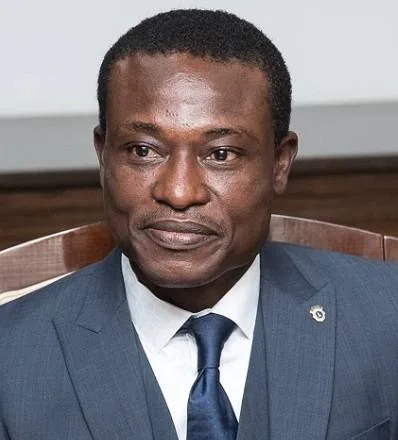
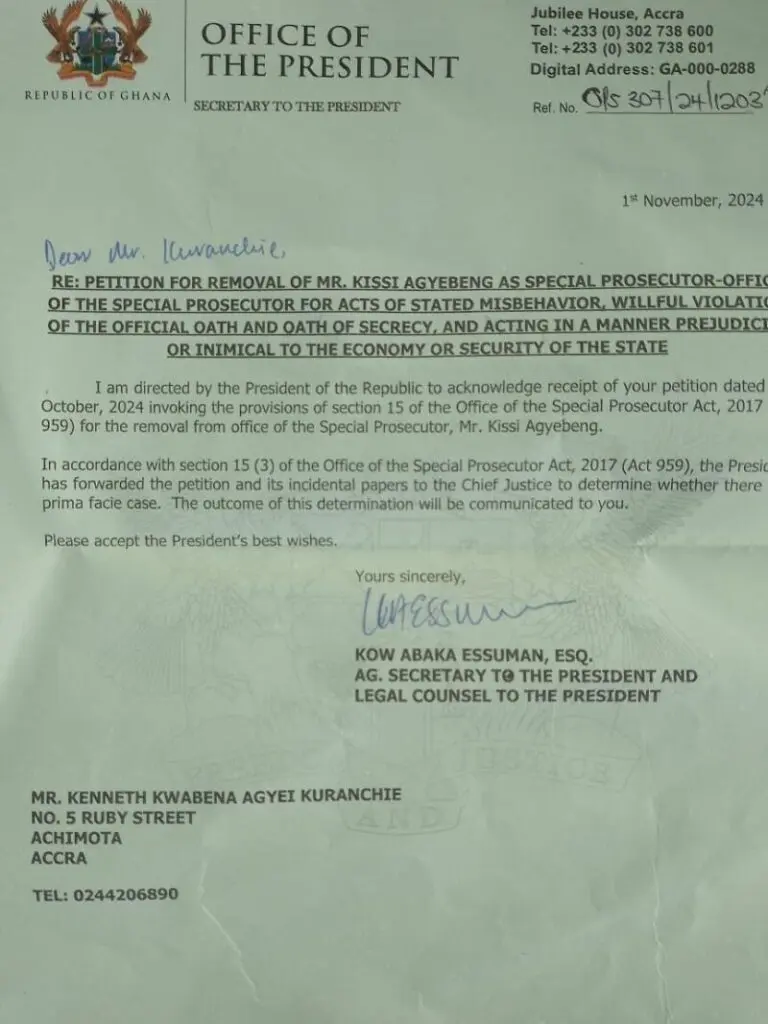
    Editor-in-Chief of The Daily Searchlight, Kenneth Kwabena Agyei Kuranchie, has formally petitioned President Akufo-Addo to remove Special Prosecutor Kissi Agyebeng from office, alleging severe misconduct and violations of both his official oaths and confidentiality obligations.

    In a letter dated October 18, 2024, Mr Kuranchie argued that Agyebeng’s actions meet the criteria for dismissal under Section 15.(1) of the Special Prosecutor Act (Act 959), which outlines the conditions under which the Special Prosecutor may be removed.

    “Petitioner presents this petition for the removal of the Special Prosecutor, Mr Kissi Agyebeng, on the authority of Section 15. (1) of the Special Prosecutor Act, (Act 959) of 2017,” noting that grounds for removal include “stated misbehaviour, incompetence, incapacity…willful violation of the Official Oath and Oath of Secrecy.”

    Among his claims, Kuranchie asserts that Agyebeng ordered polygraph tests for about 80% of the Office’s personnel, conducted not by Ghana’s National Intelligence Bureau (NIB) but by the U.S. Federal Bureau of Investigation (FBI).

    “Petitioner states, first, that this work was not done by the N.I.B, and second, this work was conducted by the Federal Bureau of Investigations (FBI), an agency of the government of the United States of America, a foreign nation,” Mr Kuranchie asserted.

    Mr Kuranchie contends that such actions also represent a “willful violation of the Official Oath and Oath of Secrecy” and pose potential threats to national security and economic interests.

    Mr Kuranchie insists that these alleged infractions render Agyebeng unfit for his role, urging the President to act in accordance with Section 15.(1)(a) of Act 959.

    In response, President Akufo-Addo has forwarded the petition to the Chief Justice for preliminary examination.

    This appeal follows a Supreme Court decision in July 2024 dismissing a separate lawsuit filed by Mr Kuranchie, which aimed to challenge the constitutionality of the Office of the Special Prosecutor (OSP).

    That lawsuit contended that the Special Prosecutor Act, 2017 (Act 957) conflicted with various provisions of the 1992 Constitution. Kuranchie had previously withdrawn a similar suit last year but has recently renewed his efforts, seeking a constitutional review of the OSP’s mandate.

  • OA bus catches fire on Accra-Kumasi Highway; no casualties recorded

    OA bus catches fire on Accra-Kumasi Highway; no casualties recorded

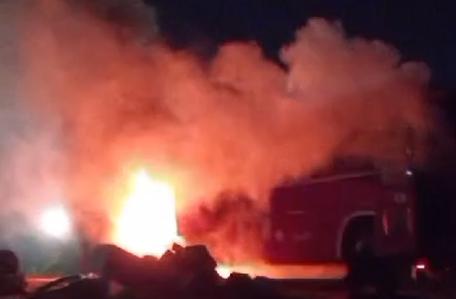
    Late Sunday evening, a dramatic incident occurred on the Accra-Kumasi highway when an OA Transport Services passenger bus, en route from Accra to Techiman, suddenly caught fire near the town of Nsawam.

    The fire, which erupted on an overnight journey that began around 9 p.m., left passengers visibly shaken and concerned over potential losses of personal belongings. Despite the unexpected blaze, all passengers safely evacuated the vehicle, and no injuries were reported.

    In response to the incident, OA Transport Services arranged for an alternative vehicle to transport the stranded passengers to Techiman, their intended destination in the Bono East region.

    However, many passengers voiced frustrations over what they perceived as the company’s lack of adequate support and communication in addressing the aftermath, especially concerning personal items potentially lost in the fire.

    The incident has since raised questions about the transport company’s emergency preparedness and response to passenger concerns.

  • Supreme Court to deliver ruling on vacant parliamentary seats today

    Supreme Court to deliver ruling on vacant parliamentary seats today

    Today, the Supreme Court will rule on a high-profile case involving the controversial decision to declare four parliamentary seats vacant—a matter that has sparked political debate and put the constitutional authority of Parliament’s Speaker, Alban Bagbin under scrutiny.

    The case was filed by the leader of the New Patriotic Party (NPP) parliamentary caucus, Alexander Afenyo-Markin, who contests Speaker Alban Bagbin’s unilateral declaration of the seats as vacant.

    Afenyo-Markin argues that Bagbin acted without judicial oversight and bypassed the process of calling by-elections.

    Central to the case is Bagbin’s interpretation of the 1992 Constitution’s stipulations on parliamentary vacancies. Bagbin justified his September 17, 2024, decision, asserting that the MPs in question had breached constitutional requirements, thereby forfeiting their seats.

    Afenyo-Markin contends that the Speaker exceeded his authority, asserting that only the judiciary has the power to interpret constitutional matters of this nature. He claims that Bagbin’s decision effectively deprives constituents in these districts of their right to representation.

    In response to Afenyo-Markin’s suit, the Supreme Court issued an injunction preventing further actions on the vacated seats until it reached a final judgment. Speaker Bagbin filed a motion to challenge this interim ruling, arguing that the injunction obstructed his official duties and asserting that his actions were within his authority to uphold the integrity of Parliament.

    The court upheld the injunction, dismissing Bagbin’s appeal to reverse it, which has now set the stage for today’s pivotal judgment on this constitutional dispute.

  • All kidney patients under NHIS to receive free dialysis from Dec 1 – Bawumia

    All kidney patients under NHIS to receive free dialysis from Dec 1 – Bawumia

    The New Patriotic Party (NPP) flagbearer, Dr. Mahamudu Bawumia, has revealed that all kidney dialysis treatments under the National Health Insurance Scheme (NHIS) will receive free sessions effective December 1, 2024.

    The initiative aims to alleviate the financial burden associated with dialysis treatment, which is essential yet often costly for many Ghanaians affected by kidney disease.

    Dr. Bawumia made the announcement while addressing supporters in the Old Tafo constituency, where he explained that this decision follows a successful six-month pilot program that provided free dialysis treatment for individuals aged 60 and above as well as for those under 18.

    “Many people suffer from kidney diseases, requiring dialysis, which can be costly and unaffordable for many. Six months ago, we initiated a pilot programme to include dialysis under the National Health Insurance Scheme (NHIS). For the past six months, individuals over 60 and those under 18 have been receiving free dialysis.

    The successful pilot, according to Dr. Bawumia, demonstrated the program’s feasibility and underscored the need to extend coverage to all dialysis patients, regardless of age.

    “However, we are now concluding this pilot programme. Starting December 1 of this year, all kidney dialysis patients will be covered for free under the NHIS,” he stated.

    With this announcement, the NPP hopes to address a long-standing gap in Ghana’s healthcare system, where the cost of chronic treatments like dialysis has often been prohibitively expensive.

    The new initiative is expected to benefit thousands of Ghanaians who rely on regular dialysis for survival and will mark a significant expansion in NHIS coverage.

  • You’ve ignored us for long enough – Akosombo spillage victims to Oppong-Nkrumah

    You’ve ignored us for long enough – Akosombo spillage victims to Oppong-Nkrumah

    The Dufia of Bakpa Awadiwoekome, Togbe Komla Sakpiti V, has expressed deep frustration with the Minister of Works and Housing, Kojo Oppong Nkrumah, over ongoing delays and unfulfilled promises regarding the reconstruction efforts for victims of the Akosombo Dam spillage.

    During an interview on Channel One TV’s Sunday Breakfast on November 10, Togbe Sakpiti V shared the growing sense of disappointment felt by both himself and his community.

    He emphasized that despite repeated assurances from government officials, particularly Oppong Nkrumah, no tangible progress has been made.

    The Chief disclosed that consultants had visited the affected sites the previous week and reiterated their commitment to immediately begin reconstruction.

    However, despite these reassurances, the lack of visible action has left the community feeling neglected and disheartened.

    “One year on, we are just listening to people saying on their lips they are coming to do this, they are doing this and all that all over the media most especially the Minister of Works and Housing, my very good friend, Kojo Oppong Nkrumah who I may say I am a bit disappointed in him.

    “I can confidently tell you that last week, the consultants were at the site. They promised me that they would come to clear the site and all that. But still, nothing has been going on there and it is rather unfortunate.”

    Togbe Sakpiti V highlighted that the ongoing delay and failure to take action are worsening the hardships faced by the people of Bakpa Awadiwoekome and other communities along the Lower Volta Basin.

    The controlled spillage of the Akosombo Dam, which began on September 15, 2023, led to widespread flooding, displacing families, destroying homes, and severely disrupting the lives of those in the Lower Volta Basin.

    According to the chief, the persistent lack of progress in addressing the crisis is only intensifying the suffering caused by this environmental disaster.

  • NPP’s victory is certain on December 7 – Wontumi

    NPP’s victory is certain on December 7 – Wontumi

    The Ashanti Regional Chairman of the New Patriotic Party (NPP), Chairman Wontumi, has expressed confidence that the party will emerge victorious in the upcoming December elections.

    At a campaign rally for NPP presidential candidate Dr. Mahamudu Bawumia in Bosome Freho on Saturday, Wontumi boldly stated, “We will win the December polls. We are winning on the first try, with no rerun. On December 7th, victory is on our side. We are winning!”

    His comments come as the NPP ramps up its campaign efforts, rallying support for Dr. Bawumia, who is poised to take the presidency.

    Wontumi firmly believes that Bawumia will lead the country after the elections.

    Dr. Bawumia, addressing supporters in Asante Akim Central, emphasized the importance of the Free SHS policy, which he said was designed to level the educational playing field for disadvantaged students.

    He reassured the public that the policy would continue to support those who need it most.

    While in Bosome Freho, Dr. Bawumia also acknowledged the region’s poor road infrastructure, pledging, “I know your biggest challenge is road infrastructure. I promise to fix all deplorable roads when I am elected. So, I urge you to give me the mandate.”

  • Bagbin is operating within his role, stop criticizing him – MP to Afenyo-Markin

    Bagbin is operating within his role, stop criticizing him – MP to Afenyo-Markin

    Member of Parliament (MP) for Wa Central, Dr. Rashid Pelpuo, has defended Speaker of Parliament Alban Bagbin against allegations made by Effutu MP Alexander Afenyo-Markin, who claimed Bagbin’s actions were disrupting order in Parliament.

    The controversy began when Speaker Bagbin adjourned a parliamentary session, citing the absence of New Patriotic Party (NPP) members, which left the session without quorum. Afenyo-Markin responded, stating that the NPP’s absence was due to procedural disputes rather than a lack of responsibility.

    Speaking on The Big Issue on Channel One TV, Dr. Pelpuo urged Afenyo-Markin to reconsider his comments, arguing that Bagbin has been responsibly fulfilling his role as Speaker.

    Mr Pelpuo emphasized the importance of creating a dedicated forum within Parliament for addressing procedural and legal concerns, especially in light of recent Supreme Court rulings that influence legislative proceedings.

    “You (Afenyo-Markin) are accusing the speaker of being chaotic or for presiding over chaos. He should withdraw that…Before the speaker can say anything we have to set a certain forum for him to be able to do that.

    “What is wrong if you even come and sit in the minority place and then bring up the issue of the Supreme Court ruling and ask the speaker to do the ruling so that they can change and the speaker refuses?

    “You cite him for contempt, you cite him for presiding over chaos. You have done nothing like that you go out you are standing behind the scenes and then you are accusing somebody who has done nothing wrong. So far the speaker has done nothing wrong. He is just doing his job as the speaker,” he stated.

  • Doing business in Ghana requires bravery – McDan

    Doing business in Ghana requires bravery – McDan

    Chairman of the McDan Group, Dr. Daniel McKorley, has voiced significant concerns about the obstacles confronting Ghana’s private sector, emphasizing a lack of supportive government policies over the years.

    Addressing attendees at the Ghana CEO Presidential Gala Dinner on November 7, 2024, Dr. McKorley openly criticized current policies, asserting that they hinder local businesses and create an unfavorable business climate.

    Dr. McKorley highlighted his frustration with the lack of sustainable government support aimed at encouraging growth and innovation within the private sector. He expressed, “I will be very blunt, government policies have really not helped the private sector. That is where we are sitting right now, and we have to be frank about it”.

    Dr. McKorley also noted that the government’s hesitance to leverage the private sector’s potential is a missed opportunity for national progress.

    “If you want to do business in Ghana, you have to be prepared. Being a Ghanaian doing business in Ghana, you have to be brave,” he stressed.

    In his appeal, Dr. McKorley urged the government to enact sustainable policies that strengthen the private sector, foster job creation, and drive economic growth.

    “Many times, it looks like we don’t support our own. I have tasted it, I have slept with it, and I’m living with it and it’s quite dangerous and difficult,” he pointed out.

  • 3,200 local workers to be hired by Electrochem Ghana as salt harvesting begins in Ada

    3,200 local workers to be hired by Electrochem Ghana as salt harvesting begins in Ada

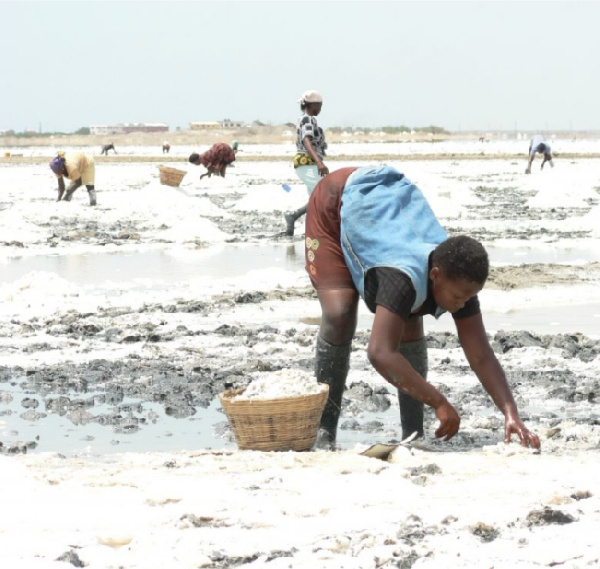
    Electrochem Ghana Limited, a salt mining company operating in the Ada Songhor Lagoon, is set to recruit 3,200 workers for the upcoming salt harvest.

    These new hires will handle the manual salt harvesting on a 6,000-acre portion of Electrochem’s total 41,000-acre concession.

    Currently, the company is cultivating 6,000 acres, while an additional 1,000 acres have been set aside for local communities through an outgrower initiative.

    In an interview, CEO Mr. Razak Adam emphasized that this recruitment aligns with Electrochem’s mission to stimulate local economic growth, create sustainable employment, and tackle Ghana’s unemployment challenges.

    “At Electrochem Ghana, we believe in working hand-in-hand with the communities where we operate.

    “This salt harvest is not just an economic activity; it’s an opportunity to provide jobs, improve livelihoods, and support the people who have been custodians of this resource,” he stated.

    Mr. Razak Adam, CEO of Electrochem Ghana Limited, a subsidiary of the McDan Group, emphasized the company’s commitment to sustainable practices and prioritizing the welfare of communities in Ada and across Ghana, with a strong focus on job creation.

    While Electrochem has the technology for mechanized harvesting, Mr. Adam explained that the choice to employ manual labor was intentional.

    This decision, he shared, respects the community’s tradition of manual salt harvesting—a practice rooted in local culture.

    By engaging local residents in this work, Electrochem aims not only to honor these traditions but also to support economic independence for the local population, helping them benefit directly from the industry that has sustained their livelihoods for generations.

    “Ada has always been at the heart of salt production in Ghana. By preserving a manual approach for this harvest season, we are not only choosing traditional practices but also ensuring that the economic benefits remain in the community.

    “The people of Ghana (Ada) are our partners, and together, we aim to build a legacy that serves generations to come,” he said.

  • BoG suspends Taptap Send’s services with banks over regulatory breaches

    BoG suspends Taptap Send’s services with banks over regulatory breaches

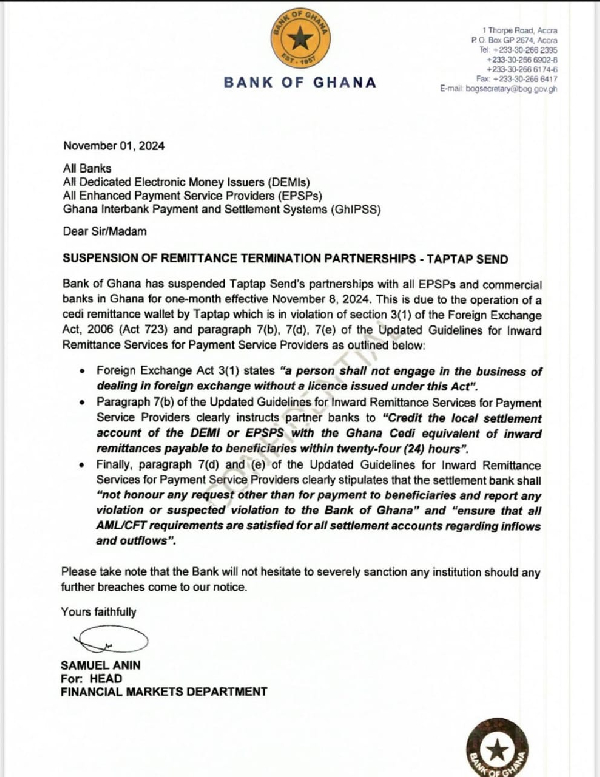
    The Bank of Ghana has imposed a one-month suspension, effective November 8, 2024, on Taptap Send’s partnerships with payment service providers and commercial banks.

    This action stems from Taptap Send’s operation of a cedi remittance wallet, which the BoG states breaches the Foreign Exchange Act of 2006 and regulations governing money transfer services.

    The Bank’s statement pointed out that Taptap Send violated Section 3(1) of the Act, which prohibits unlicensed engagement in foreign exchange operations.

    Quoting the law, the BoG emphasized, “A person shall not engage in the business of dealing in foreign exchange without a licence issued under this Act.”

    In addition to this violation, Taptap Send failed to meet requirements set forth in the Updated Guidelines for Inward Remittance Services, which include timely crediting of local accounts and full compliance with anti-money laundering (AML) and counter-terrorism financing (CFT) standards.

    According to the Bank, “Paragraph 7(d) and (e) of the Updated Guidelines for Inward Remittance Services for Payment Service Providers” obligates settlement banks to enforce AML/CFT compliance and report any suspicious activity.

    “Paragraph 7(d) and (e) of the Updated Guidelines for Inward Remittance Services for Payment Service Providers clearly stipulates that the settlement bank shall “not honour any request other than for payment to beneficiaries and report any violation or suspected violation to the Bank of Ghana” and “ensure that all AML/CFT requirements are satisfied for all settlement accounts regarding inflows and outflows,” the statement added.

    The BoG underscored the importance of these regulations in maintaining the integrity of Ghana’s financial system, warning that further violations would result in more severe penalties.

  • Violence against December polls shall be met with violence – Akufo-Addo warns

    Violence against December polls shall be met with violence – Akufo-Addo warns

    President Nana Addo Dankwa Akufo-Addo has reinforced the government’s firm stance against any attempts to destabilize Ghana’s democracy as the December 7 general elections draw near.

    In his final National Best Farmer Awards address, the president stressed his commitment to maintaining peace and security during this crucial election period.

    Speaking on Ghana’s democratic values, he underlined that upholding a fair electoral process is essential to the nation’s stability.

    Reflecting on the sacrifices and dedication that have built Ghana’s democratic foundation, President Akufo-Addo noted how it serves as an example across Africa.

    He acknowledged the work of past leaders, civil society, and citizens in establishing a peaceful political environment and emphasized that all Ghanaians now share the responsibility to protect this achievement.

    The president urged citizens, political figures, and supporters to prioritize unity and peace, reminding them that Ghana’s democratic principles must remain secure against any potential threats.

    “As we approach the 2024 general elections, let me make one thing absolutely clear again. I am unwavering in my commitment to free, fair and transparent elections. Ghana’s democracy is a treasure we have all fought to build and a legacy that must be protected.

    “The sovereign will of the Ghanaian people will be upheld, and any attempts to disrupt the peace or undermine the democratic process will be met with the full weight of the law. Let there be no doubt, that our democracy will remain strong and the people’s choice will prevail.”

  • A/R: Equipment in Sewua, Afari hospitals risk expiry – Minister fumes over delayed completion

    A/R: Equipment in Sewua, Afari hospitals risk expiry – Minister fumes over delayed completion

    Ashanti Regional Minister, Simon Osei-Mensah, has raised serious concerns regarding the prolonged delays in the opening of the Sewua and Afari Military hospitals.

    He warned that if the hospitals remain closed, the state could face expensive maintenance costs due to the potential expiration of warranties on the equipment already installed.

    The Sewua Hospital, with 250 beds, and the Afari Military Hospital, which boasts 500 beds, have both seen multiple missed deadlines for becoming operational.

    Mr Osei-Mensah pointed out that continued delays could add significant financial burdens, as the equipment may require costly repairs or replacements.

    Speaking at a government forum in Kumasi on November 8, the minister emphasized the urgency of opening these facilities.

    He highlighted the critical role they would play in alleviating pressure on other healthcare institutions, particularly the Komfo Anokye Teaching Hospital, and improving medical services in the region.

    “I talked about two hospital facilities which I consider should be operationalised within the shortest possible time. We need to commission them for them to start receiving patients. These two are the Sewua Regional Hospital and the Afari Military Hospital. The Sewua Regional Hospital has a 250-bed capacity and the Afari Hospital has a 500-bed capacity.

    “The reason why I’m saying we should commission them is that both of them are complete. Sewua is complete. What we’re waiting for is the access road, but the contractor is in the advanced stage, which we know he will complete in the next few weeks. Afari Hospital, we were having some challenges with the sewerage system.

    “Now they have completed that so we can also commission them. My main concern is that if we don’t commission these facilities, within the shortest possible time, the warranty period for some of these equipment might elapse. It will mean we will have to find money and go and buy new ones. That is what we need to avoid.”

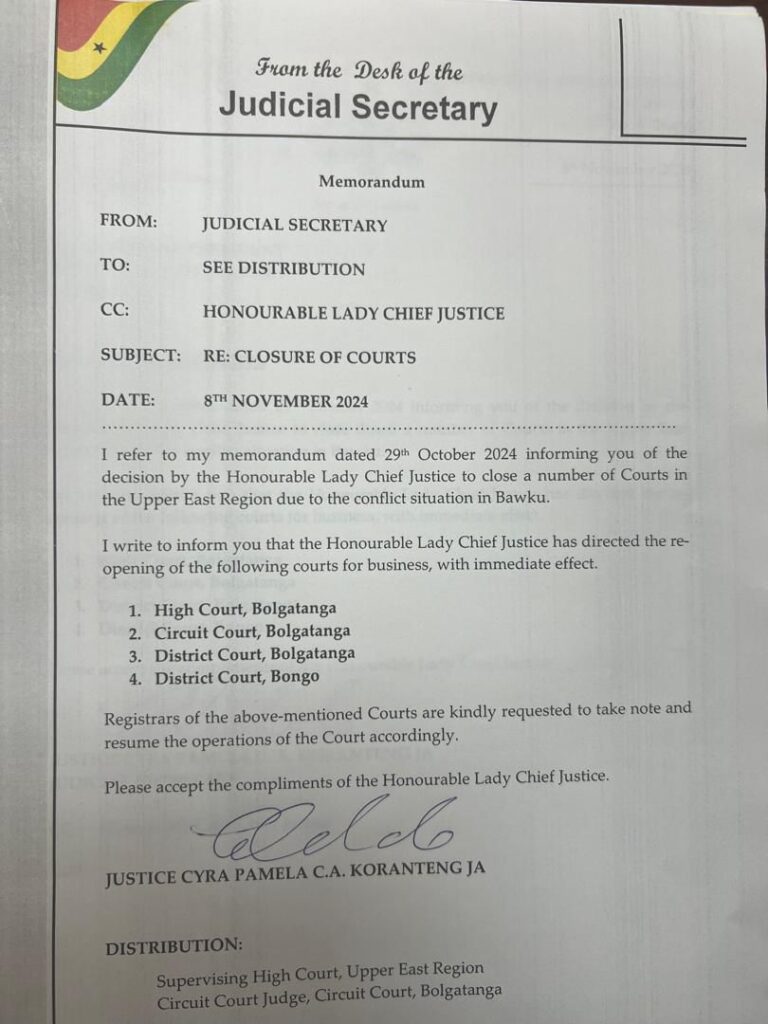
  • Four courts in Upper East to reopen after closure due to Bawku crisis

    Four courts in Upper East to reopen after closure due to Bawku crisis

    Chief Justice Gertrude Torkornoo has instructed the reopening of courts in the Upper East Region following the ongoing Bawku conflict.

    The courts had been temporarily closed on October 29 due to security concerns raised by court staff and judges in response to the escalating violence in Bawku.

    However, areas such as Bolgatanga, Zuarungu, and Bongo, which were not directly affected by the conflict, voiced dissatisfaction with the closure and petitioned the Chief Justice for the courts to reopen, as they were located several kilometers away from the conflict zone.

    On November 8, a circular signed by the Judicial Service Secretary, Justice Cyra Pamela Koranteng, announced the reopening of four key courts in the region:

    1. High Court, Bolgatanga

    2. Circuit Court, Bolgatanga

    3. District Court, Bolgatanga

    4. District Court, Bongo

    The circular requested that the registrars of these courts take the necessary steps to resume operations immediately.

  • 4 farmers arrested for allegedly burning excavator used by illegal miners

    4 farmers arrested for allegedly burning excavator used by illegal miners

    A leading environmental advocacy group, Eco-Conscious Citizens, has expressed deep concern over the recent arrest of four farmers in Atronsu on Ghana’s Farmers’ Day.

    The farmers, also recognized as community activists, were detained after allegedly burning an excavator used by illegal miners, a move that has ignited outrage among both the local community and environmental advocates.

    In a letter addressed to the Inspector General of Police (IGP), the group pointed out a stark contrast, while the farmers face legal charges, the illegal miners responsible for polluting the Atronsu Stream, the only source of drinking water for the community, remain unpunished.

    Founder and coordinator of Eco-Conscious Citizens, Awula Serwah, highlighted that the farmers had been raising alarms about the pollution of the Atronsu Stream for several months, but their concerns appeared to be ignored.

    “It is of concern that the illegal miners who have been actively poisoning the only source of drinking water in Atronsu are walking free,” the letter stated.

    Despite submitting formal complaints to both the police and the Environmental Protection Agency (EPA), the illegal mining activities persisted unchecked. While some miners were arrested, they were swiftly released on bail and resumed their operations.

    In the open letter to the Inspector General of Police, the group criticised the police’s response to the issue, accusing them of “selective justice,” which, they argue, erodes public trust in law enforcement.

    “The optics do not look good,” Serwah noted, pointing out the disparity in treatment between the illegal miners and the activists. While the miners were granted bail, anti-galamsey demonstrators have reportedly been denied similar leniency.

    Eco-Conscious Citizens have urged the Inspector General of Police (IGP) to step in and ensure that justice is applied impartially. The group argues that permitting illegal mining to persist without consequence, while penalizing those who oppose it, represents a serious injustice.

    “To appear to condone the criminal activities of the illegal miners, whilst wielding the law heavily on the victims of the crime committed by the miners, would be an extremely unfortunate injustice,” the letter concludes.

    READ THE LETTER BELOW

    FOR IMMEDIATE RELEASE: Open Letter to the Inspector General of Police (IGP) Re: Arrest Of 4 Farmers On Farmers’ Day

    Nov. 8 2024

    Dear IGP,

    Selective Justice? Pollution of Atronsu Stream, the Only Source of Drinking Water in Atronsu

    It has come to the attention of Eco-Conscious Citizens that today 8th November, when Ghana is marking Farmers’ Day and acknowledging their importance to our National Wellbeing, four farmers have been arrested in Atronsu.

    The farmers who are also Community Activists heeding the President’s call to be Active Citizens and not Spectators, were arrested for allegedly burning an excavator used by illegal miners.

    Their arrest is in sharp contrast to the reluctance of the Police to arrest the illegal miners who have been recklessly polluting the Atronsu Stream that provides life and sustenance to the Atronsu community.

    It is of concern that the Illegal miners who have been actively poisoning the only source of drinking water in Atronsu are walking free.

    The Activists have for months been complaining about the pollution of the once pristine Atronsu Stream, by illegal miners.

    Despite their formal complaints, the illegal miners continued their criminal activities with impunity. Eco-Conscious Citizens Coordinator Awula Serwah also informally complained to the Police and the EPA.

    The illegal miners were eventually arrested, but promptly given police bail. They were quick to return to their illegal mining activities and pollution of the Atronsu Stream.

    The optics do not look good.

    The granting of bail to the illegal miners is in sharp contrast to the treatment of the anti-galamsey demonstrators who were repeatedly denied police bail.

    Eco-Conscious Citizens therefore respectfully urge you to counter the growing impression that the Police are facilitating the activities of illegal miners by intervening to ensure that the activists are granted police bail.

    The growing perception of selective justice does not inspire confidence in Ghana Police, whose mandate is to serve and protect.

    We note that even in war, poisoning of water bodies is a war crime. To appear to condone the criminal activities of the illegal miners, whilst wielding the law heavily on the victims of the crime committed by the miners would be an extremely unfortunate injustice.

    We respectfully appeal to you to urgently intervene in this matter.

    Awula Serwah
    Eco-Conscious Citizens founder/coordinator

  • Cocoa producer price increases from GHS3k to GHS3.1k for 2024/2025 season

    Cocoa producer price increases from GHS3k to GHS3.1k for 2024/2025 season

    In a move to support cocoa farmers, President Nana Addo Dankwa Akufo-Addo announced a marginal increase in the producer price of cocoa, raising it from GH₵3,000 to GH₵3,100 per 64kg bag for the 2024/2025 crop season.

    This 3.33% rise follows a review of market conditions and was recommended by the producer price review committee.

    At the National Farmers’ Day awards held in Accra on Friday, November 8, the president explained,“On the advice of the producer price review committee, I am pleased to announce an increase in the producer price of cocoa from GH₵48,000 to GH₵49,600 per tonne, raising the price from GH₵3,000 to GH₵3,100 per bag.”

    He further emphasized that the government remains committed to supporting farmers by ensuring periodic price reviews, helping improve their incomes despite ongoing challenges.

    The National Farmers’ Day also saw the recognition of Nana Owusu Achiaw Brempong from the Sekyere Central district of the Ashanti Region, who was named the National Best Farmer.

    With 50 years of experience in farming, Nana Owusu operates North American farms, which employ 168 workers in the cultivation of crops such as cocoa and cashew. As part of his recognition, he was awarded one million Ghana cedis.

    During his acceptance speech, Nana Owusu called for greater efforts to improve food security, a theme echoed throughout the event.

    The National Farmers’ Day celebrations, held across the country, highlighted the contributions of farmers to Ghana’s economy, with President Akufo-Addo and other dignitaries present to honor their hard work and dedication.

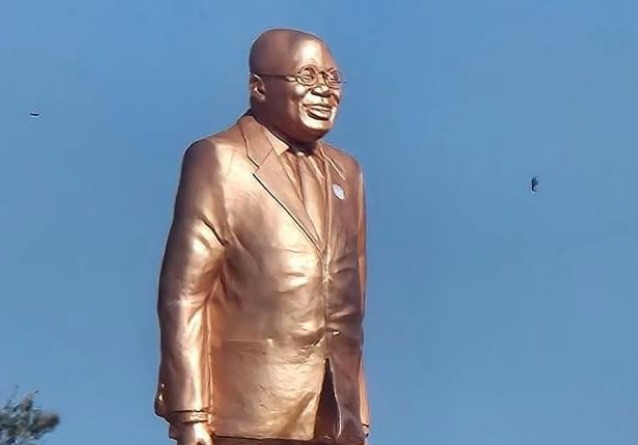
  • Akufo-Addo’s statue was funded by Upper Dixcove chiefs; it cost about GHS30k – Council reveals

    Akufo-Addo’s statue was funded by Upper Dixcove chiefs; it cost about GHS30k – Council reveals

    A member of the Upper Dixcove Traditional Council has revealed that the funding for President Akufo-Addo’s statue at the Effia-Nkwanta Regional Hospital roundabout in Takoradi was generated by voluntary contributions made by the region’s chiefs.

    In an interview with TV3 on Ghana Tonight, Obrempong Nana Hima Dekyi XIV, indicated that the statue serves as an appreciation for the many developmental projects by President Akufo-Addo in the region, adding that the cost to erect the statue amounted to about GH₵30,000.

    “It’s very unfortunate that sometimes the ay and manner a communique is carried out. Prior to Wednesday’s engagement, the president’s Thank You Tour, we had received a letter of his invitation extended to the nananom that he will be in the region to thank us that at least when he came to us the people of the Western Region to ask for our votes granted him the mandate and that is tenure will be ending soon.

    So when the release came to us quickly nananom actually talked to us about what to do because the chiefs of the Western Region e have always been loving the president for some developmental project in our region and when those request were made to him he took it upon himself to initiate and execute some of these projects.

    “We decided to appreciate him for what he has done for the region in terms of this project. e met and we made contribution to erect the statue in his honor. We have honored other people aside the president. The chiefs of Upper Dixcove met and made contributions to put the statue up and it was around GH₵30,000,” he added.

    However, the unveiling of the statue has stirred significant criticism, particularly on social media, where many Ghanaians have condemned it as an act of self-promotion rather than an expression of public service.

    Among the critics is John Mahama, the flagbearer of the opposition National Democratic Congress (NDC), who has expressed disapproval, suggesting that the president should have allowed others to acknowledge his efforts rather than promoting himself in such a way.

    “He has gone to Takoradi to put his statue and unveiled it. A president must be humble; you must let others praise you instead of praising yourself,” he said.

    In an interview with TV3, Obrempong Nana Hima Dekyi XIV, a member of the Upper Dixcove Traditional Council, stated that he has not heard any public objections regarding the statue. He defended the installation, asserting that there has been no widespread opposition to the tribute to President Akufo-Addo.

    “I have not heard anybody complaining that they are not happy about it. I am unable to speak to that.

    Indeed, as we have listed in the communiqué, we agree that some of the projects have not been completed. But once it has been started, we hope and anticipate that definitely they will come to completion.

    “Despite the controversy, some Ghanaians on social media have come to the defense of the monument, praising President Akufo-Addo for his contributions, particularly his flagship policy of free secondary education, which he has described as his “most significant legacy.” Supporters have hailed him as the architect of Ghana’s free education system, with one fan posting “He is deserving of this monument—the greatest president I’ve ever had.”

  • Akufo-Addo’s statue costs GHS30k?

    Akufo-Addo’s statue costs GHS30k?

    The Upper Dixcove Traditional Council has revealed that the cost of erecting the controversial statue of President Nana Akufo-Addo at the Effia-Nkwanta Regional Hospital roundabout in Takoradi, Western Region, amounted to GH₵30,000.

    Obrempong Nana Hima Dekyi XIV, a member of the Council, explained that the amount was raised through voluntary contributions from his colleagues, who funded the statue as a gesture of appreciation for the many developmental projects President Akufo-Addo has initiated in the Western Region since taking office.

    “The chiefs of Upper Dixcove met and made contributions to put the statue up and it was around GH₵30,000,” he added.

    However, the unveiling of the statue has stirred significant criticism, particularly on social media, where many Ghanaians have condemned it as an act of self-promotion rather than an expression of public service.

    Among the critics is John Mahama, the flagbearer of the opposition National Democratic Congress (NDC), who has expressed disapproval, suggesting that the president should have allowed others to acknowledge his efforts rather than promoting himself in such a way.

    “He has gone to Takoradi to put his statue and unveiled it. A president must be humble; you must let others praise you instead of praising yourself,” he said.

    In an interview with TV3, Obrempong Nana Hima Dekyi XIV, a member of the Upper Dixcove Traditional Council, stated that he has not heard any public objections regarding the statue.

    He defended the installation, asserting that there has been no widespread opposition to the tribute to President Akufo-Addo.

    “I have not heard anybody complaining that they are not happy about it. I am unable to speak to that. Indeed, as we have listed in the communiqué, we agree that some of the projects have not been completed. But once it has been started, we hope and anticipate that definitely they will come to completion.”

    Despite the controversy, some Ghanaians on social media have come to the defense of the monument, praising President Akufo-Addo for his contributions, particularly his flagship policy of free secondary education, which he has described as his “most significant legacy.”

    Supporters have hailed him as the architect of Ghana’s free education system, with one fan posting “He is deserving of this monument—the greatest president I’ve ever had.”

  • What’s happening in parliament is embarrassing, show leadership – Kufuor to Bagbin

    What’s happening in parliament is embarrassing, show leadership – Kufuor to Bagbin

    Former President John Agyekum Kufuor has urged Speaker of Parliament, Alban Sumana Bagbin, to take decisive action in resolving the ongoing deadlock over the seating arrangements in Parliament.

    Kufuor, expressing his frustration, referred to the standoff as “embarrassing” and warned that it could tarnish Bagbin’s well-established political career if not addressed swiftly.

    The controversy stems from the Supreme Court’s decision to stay Bagbin’s earlier ruling that declared four parliamentary seats vacant.

    While members of the New Patriotic Party (NPP) disagree with Bagbin’s ruling, the National Democratic Congress (NDC) continues to support it, claiming a majority in the House.

    Despite the Supreme Court’s intervention, the NDC MPs still occupy seats traditionally reserved for the NPP majority, asserting their position as the new ruling party in Parliament.

    In response, NPP MPs, led by Alexander Afenyo-Markin, have decided to stay out of the chamber to avoid potential confrontations, which has brought parliamentary proceedings to a standstill and escalated tensions between the two parties.

    Speaking to Asempa FM, Kufuor highlighted the critical role Bagbin plays in restoring order and called for leadership that prioritizes the smooth functioning of Parliament.

    He cautioned that failing to resolve the issue could damage Bagbin’s legacy and his contributions to Ghana’s political development.

    “I will plead with the Speaker of Parliament to step up and show leadership. What’s happening in parliament is embarrassing. It can destroy his illustrious record,” he said.

  • DDEP is a failed strategy hurting the heart of our economy – Mahama

    DDEP is a failed strategy hurting the heart of our economy – Mahama

    Flagbearer for the National Democratic Congress (NDC), John Dramani Mahama, has sharply criticized the Akufo-Addo administration’s Debt Exchange Programme (DDEP), asserting that it has contributed to the collapse of major Ghanaian businesses.

    Citing the recent death of Dr. Michael Agyekum Addo, CEO of the Kama Group of Companies, Mahama pointed to the businessman’s outspoken criticism of government policies, which he claimed severely impacted his business.

    Mahama attributed the failure of the Debt Exchange Programme to what he called the mismanagement of the economy by the ruling New Patriotic Party (NPP).

    Speaking to his supporters in Kasoa, Awutu Senya East Municipality, during his Central Region tour, Mahama blamed the NPP government’s excessive borrowing—over $11.5 billion between 2018 and 2021—for the economic troubles that led to the programme’s failure.

    He called on voters in the Central Region to reject the NPP in the upcoming election, arguing that the government’s policies have had a destructive impact on businesses and livelihoods nationwide.

    “The DDEP by the Akufo-Addo government has led to the collapse of many indigenous Ghanaian businesses. The founder of the Kama group of companies, Dr.Michael Agyekum Addo lost his entire fortune to the Debt Exchange Programme. Because the government mismanaged the economy and later went borrowing to sustain the economy. This affected pensioners and other government workers who had invested in the economy,” John Mahama said.

    “Dr. Michael Addo is just one of many Ghanaians who lost their fortune to the programme. Bonds are the safest in the world except under the NPP government. The NPP has borrowed in excess of 11.5 billion dollars to invest in the programme but all to no avail.

    “As we speak now, the founder of the Kama group of companies has passed on after several criticisms of the government when he lost his investment.”

    “This government has failed us, and it is about time we gave the NDC the opportunity. We must choose the NDC as the party of choice since they have developed Kasoa,” John Mahama said.

  • Manganese can play a critical role in Ghana’s economic growth – GMC

    Manganese can play a critical role in Ghana’s economic growth – GMC

    Manganese ore is poised to play a pivotal role in strengthening multiple sectors of Ghana’s economy, including the global metal, automotive, and agricultural industries, according to Manager of Social Responsibility at Ghana Manganese Company (GMC), Wisdom Adjei Mensah.

    He emphasized that manganese’s commercial applications are vast, particularly in steel production, where it serves as a critical component for strengthening the metal.

    “Without manganese, you can’t have steel, because it’s a compo­nent that helps in strengthening steel.”Mr. Mensah explained.

    His remarks were made during a mine tour organized by the Ghana Chamber of Mines (GCM) for the Journalists for Business Advocacy (JBA) at the Nsuta mine in the Western Region.

    Mr. Mensah also highlighted manganese’s crucial role in battery manufacturing and its use as a key pigment in fertilizers, stressing its importance for agriculture.

    He further pointed out the remarkable fertility of the soil in Nsuta, noting that the leaves remain green even during the dry season, a clear indication of the area’s agricultural potential. “We are truly fortunate,” he remarked, noting how manganese is indispensable in producing alloys and its role in creating potassium manganese, a valuable chemical compound.

    On the global stage, Mr. Mensah revealed that the vast majority of manganese produced, around 75%, is consumed by the steel industry, followed by 20% for battery production, and the remaining 5% used in fertilizers.

    Looking at GMC’s current outlook, he mentioned that the company has made substantial investments in advanced equipment such as heavy-duty trucks, excavators, and dump trucks, all supported by cutting-edge technology.

    Despite these investments, transporting materials to Takoradi remains a key challenge, with the company currently relying on road transport rather than the more cost-effective rail option.

    GMC, which holds exclusive rights as the commercial user and service provider for the Ghana Railway Company (GRC), has faced challenges in utilizing the rail line, primarily due to years of underinvestment.

    “We are indeed fortunate. Regarding alloys, which are com­binations of metals, manganese is indispensable for their production. Additionally, there exists a specific chemical known as potassium manganese,” Mr Mensah ex­plained.

    Despite these transportation hurdles, GMC has developed strategies to continue expanding its operations and ensure the success of its value-added projects. One such initiative is the upcoming GMC refinery project, set to begin on November 25.

    According to GMC’s General Manager, Joseph Ampong, the project aims to upgrade low-grade carbonate manganese into a higher-value product, thereby enhancing its market appeal.

    The refinery’s first phase, which includes building a 45MW natural gas power plant and a mechanical power transmission refinery, is set for completion within 24 months. With an estimated initial cost of $240 million, the project’s total investment is expected to reach $450 million once phases two and three are finished.

    Mr. Ampong also noted that GMC’s manganese reserves have grown significantly, now totaling over 50 million tons, a substantial increase from the earlier estimate of 20 to 30 million tons.

    The refinery project also includes plans for developing infrastructure to support the company’s expansion, including a dedicated mineral railway line and expanded use of the Port of Takoradi, which will help facilitate GMC’s growing manganese ore exports.

  • Global oil prices drop as Fed cuts interest rates

    Global oil prices drop as Fed cuts interest rates

    Oil prices fell in early Friday trading, influenced by a recent interest rate cut from the U.S. Federal Reserve and potential supply risks from Hurricane Rafael.

    Chinese crude oil imports remained low despite Beijing’s economic stimulus efforts, and OPEC+ opted to maintain current output levels.

    Brent crude dropped to $74.76 per barrel, while the U.S. benchmark, West Texas Intermediate (WTI), decreased to $71.27.

    In Cuba, Hurricane Rafael, the fifth major Atlantic storm of the year, made landfall with heavy rains and strong winds, severely impacting the electricity grid and leading to widespread power outages.

    Now downgraded to a Category 2, the storm is expected to move westward across the Gulf of Mexico over the weekend, posing a reduced threat to U.S. coastal oil facilities. Initial concerns about disruptions to U.S. production facilities have eased as the storm’s projected path shifted away from the coast.

    Meanwhile, political uncertainty in the U.S. ended with Republican candidate Donald Trump’s victory. Following the election, investors turned their focus to the Fed’s decision to lower interest rates by 25 basis points, bringing the range to 4.5%-4.75%.

    Fed Chair Jerome Powell assured that the election outcome would not impact the Fed’s immediate policy decisions.

  • Ghana’s mining sector gets a boost as Akufo-Addo commissions largest gold mine

    Ghana’s mining sector gets a boost as Akufo-Addo commissions largest gold mine

    Ghana has reinforced its status as Africa’s top gold producer by inaugurating Cardinal Namdini Mining Limited, now the country’s third-largest mine.

    The mine’s first gold pour marked its official opening on November 8, 2024, led by President Nana Addo Dankwa Akufo-Addo in the Talensi district of the Upper East Region.

    This mine, the largest single-stream operation in West Africa, is projected to boost Ghana’s global position in gold production, with an estimated annual output of 300,000 ounces over its initial three years.

    In his remarks at the opening, President Akufo-Addo described the mine’s establishment as a milestone in positioning Ghana as Africa’s premier mining destination. He noted that since taking office in 2017, his administration has focused on broadening the nation’s resource base, investing in the Ghana Geological Survey Authority to bring this vision to life.

    The President also highlighted that Cardinal Namdini’s development underscores the mineral wealth of Ghana’s northern region, pledging that these resources will foster both local and national growth. He emphasized that the mine’s establishment reflects the government’s promise to create jobs and economically empower citizens across the country.

    “Today marks yet another significant milestone towards the realization of the vision to make Ghana the mining hub of Africa, where all mining and mining-related activities, from exploration to downstream production, and from research to innovation, would be centered”, he said.

    “This Mine we commission today is evidence of the power of exploration as the lifeblood of the mining industry. For years, this area, and several other areas within this northern belt of our country, have only been known for small-scale mining.

    Large-scale mining firms have concentrated on the south, largely influenced by the literature that links gold only to the south of our nation”, he added.

    “It is investment in exploration that led to the construction of this mine, which we are told today will become the third largest mine in the country and one of the largest single-stream gold mines in West Africa. And I am thrilled to learn that apart from this remarkable mine, another large-scale mine is under construction in the Upper West Region.”

    Highlighting his administration’s achievements in the mining sector, President Akufo-Addo emphasized its dedication to fostering a supportive environment and robust legal framework for mining companies to prosper in Ghana.

    He pointed to the increased financial backing for the Ghana Geological Survey Authority and the establishment of Minerals Commission offices in Tamale, Wa, Bolgatanga, and Bole as significant steps taken to position Northern Ghana as a prominent hub for mining activities in the country.

    “Since 2017, we have increased budgetary allocation to the Ghana Geological Survey Authority to undertake more exploration to identify mineable lands, both for small and large-scale mining. Additionally, we have refurbished the office of the Authority, which was commissioned by the Minister for Lands and Natural Resources last week, to provide a conducive environment for staff of the Authority to carry out their operations.

    “To ensure the provision of adequate resources for geological investigations, we are amending the Minerals Development Fund Act, 2016 (Act 912) to increase the allocation to the Authority from mineral royalties from eight percent (8%) to thirteen percent (13%). And from next year, God willing, the Government of Dr. Mahamudu Bawumia will allocate Ten Million United States Dollars (US$10,000,000.00) annually to the Authority to support their geological investigations.

    The establishment of new Regional and District Offices for the Minerals Commission in Tamale, Wa, Bolgatanga, and Bole comes at a critical juncture.

    With the launch of this mine and the construction of another in the Upper West Region, northern Ghana is poised to emerge as the new frontier of mining in the country. Regulatory agencies must now be prepared to rise to the demands and challenges that lie ahead in supporting this transformation.

    “As we commission this mine and pour its first gold, we are fulfilling our commitment to creating a brighter future for the people of Ghana, including Talensi and its environs. It will create jobs, foster local development, and contribute significantly to both the local and national economy.

    It will bring about a transformative change in this area, providing opportunities for growth and development that will benefit generations to come,” he said.

  • 90% of Ghana’s plastic waste improperly disposed – AG report reveals

    90% of Ghana’s plastic waste improperly disposed – AG report reveals

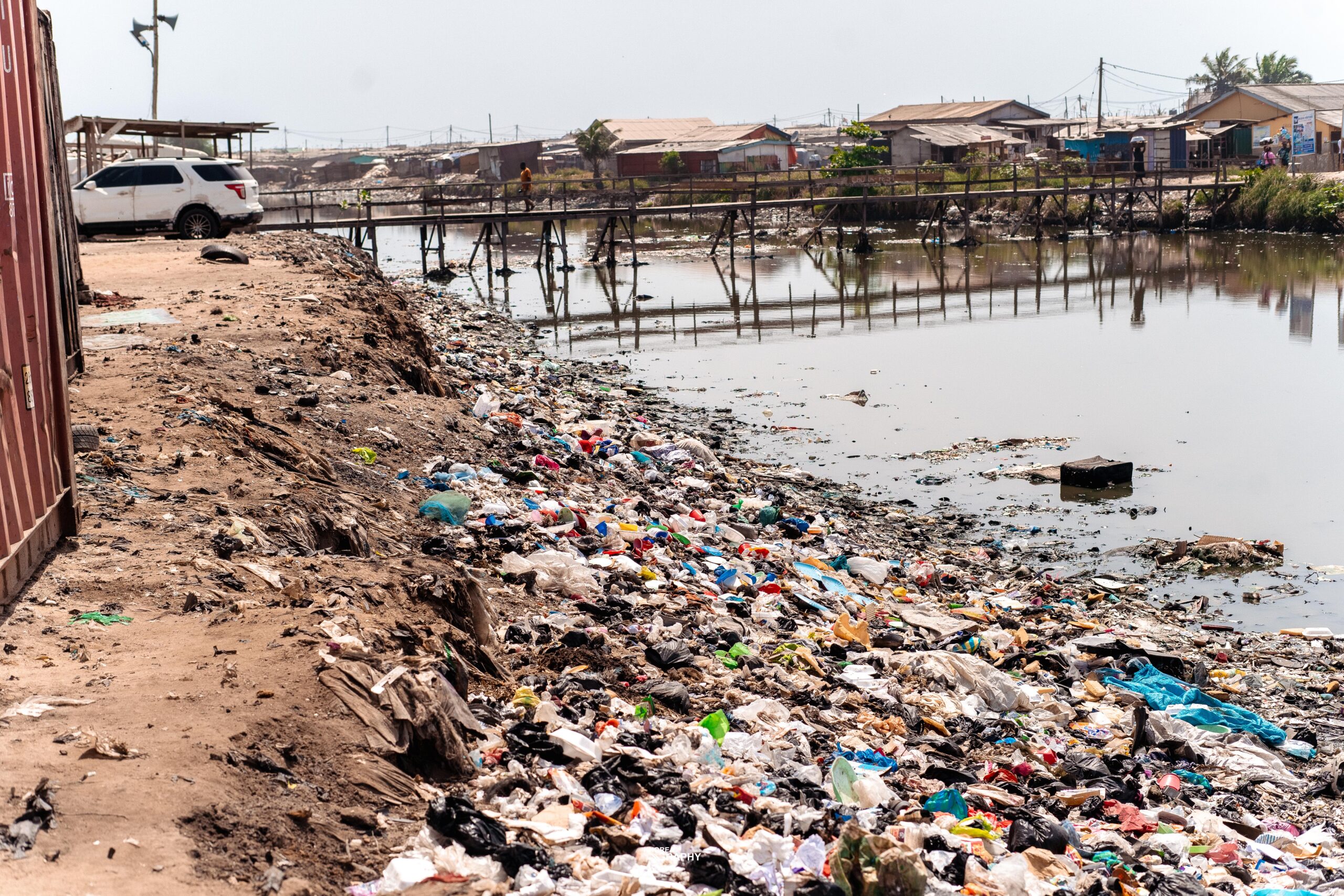
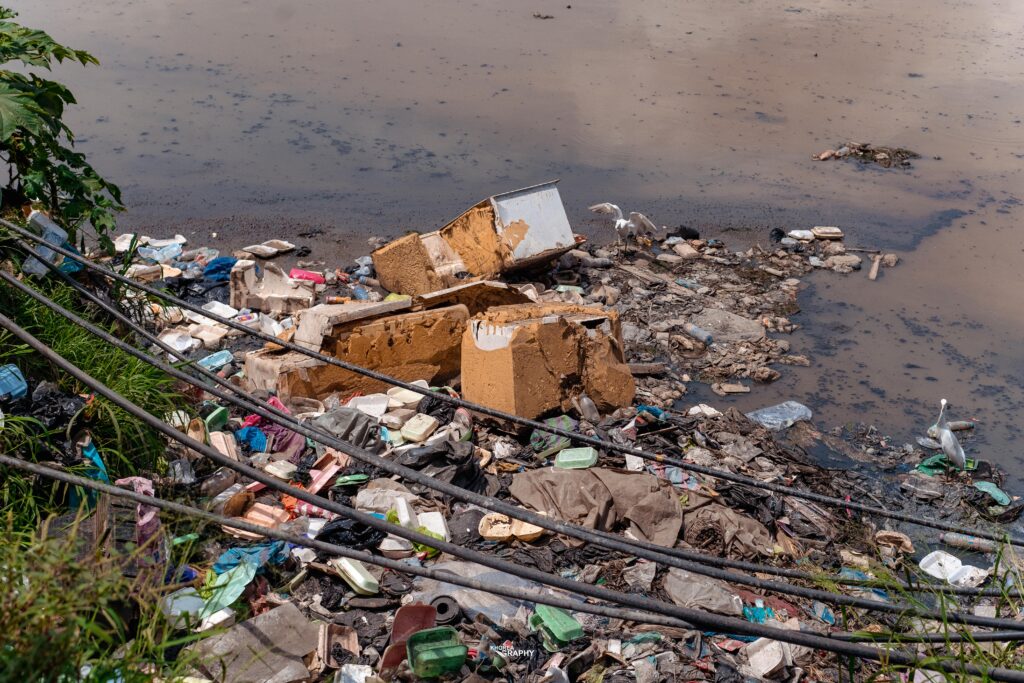
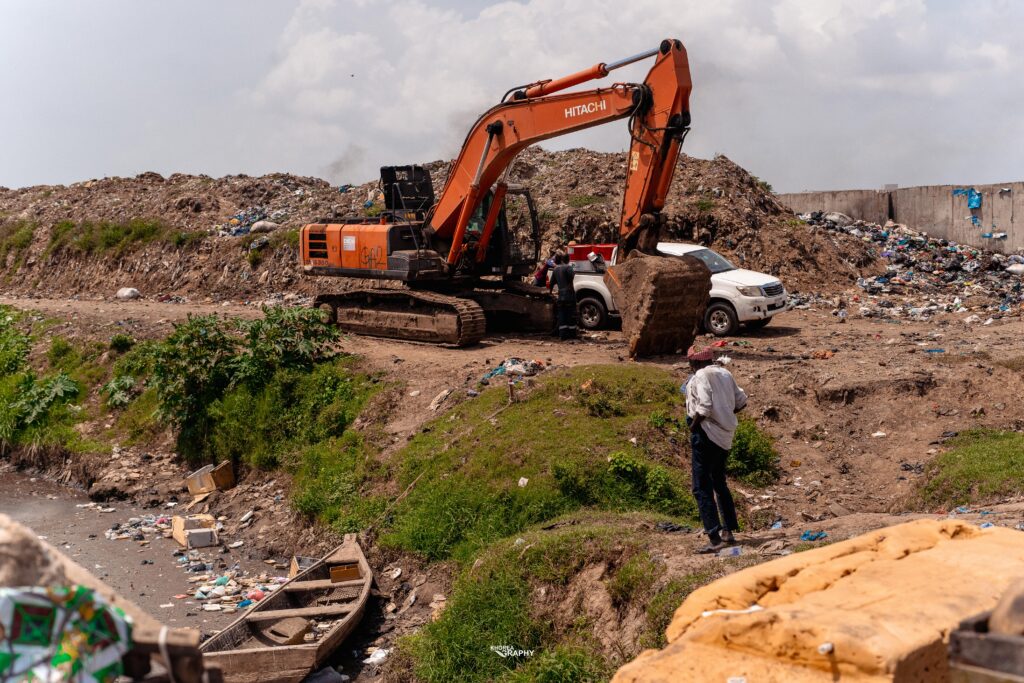
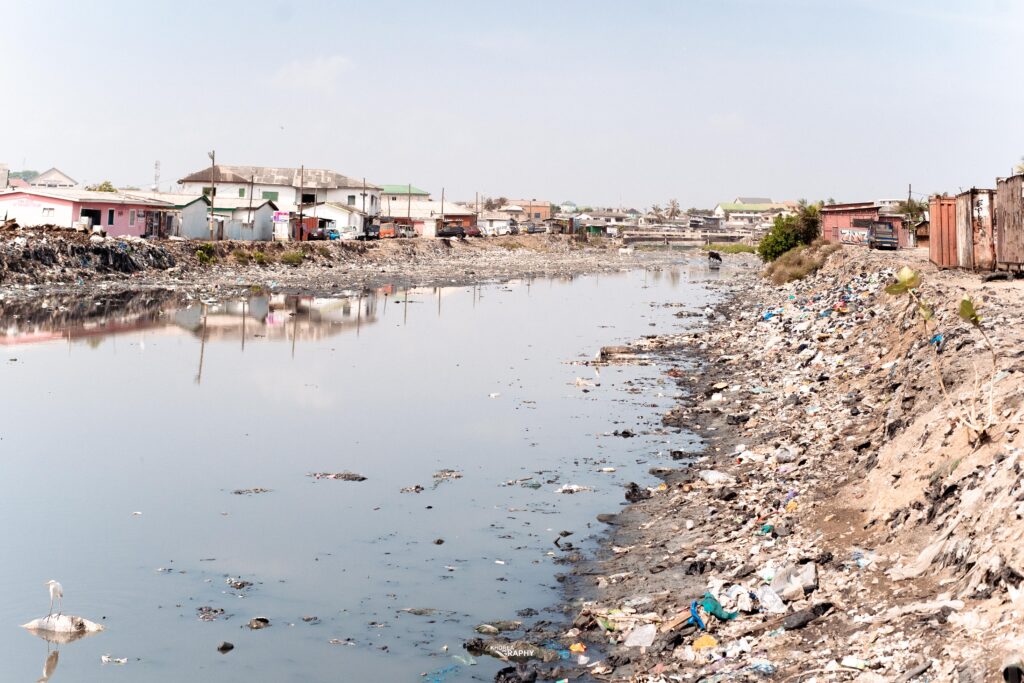
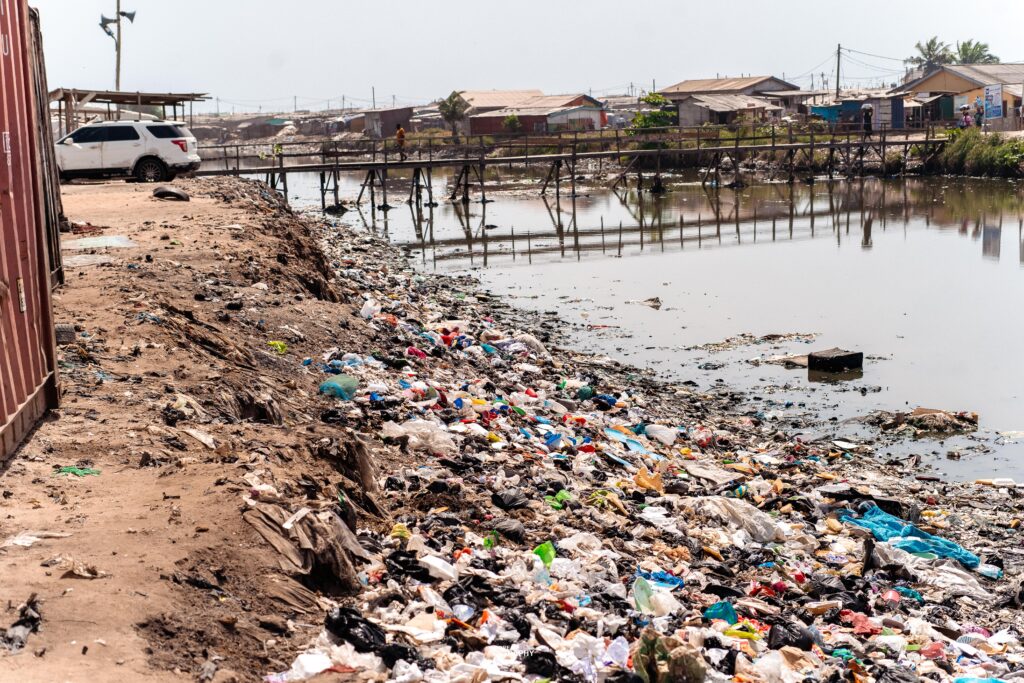
    Plastic waste presents a critical environmental and social challenge in Ghana, with a substantial portion of this waste being non-biodegradable and contributing to rapid waste accumulation.

    A recent report from the Auditor General (AG) on plastic waste management has underscored the severity of the issue, noting that Ghana generates an estimated 840,000 tonnes of plastic waste each year.

    According to AG, only about 9.5% of this waste undergoes recycling, highlighting an urgent need for enhanced waste management and recycling strategies.

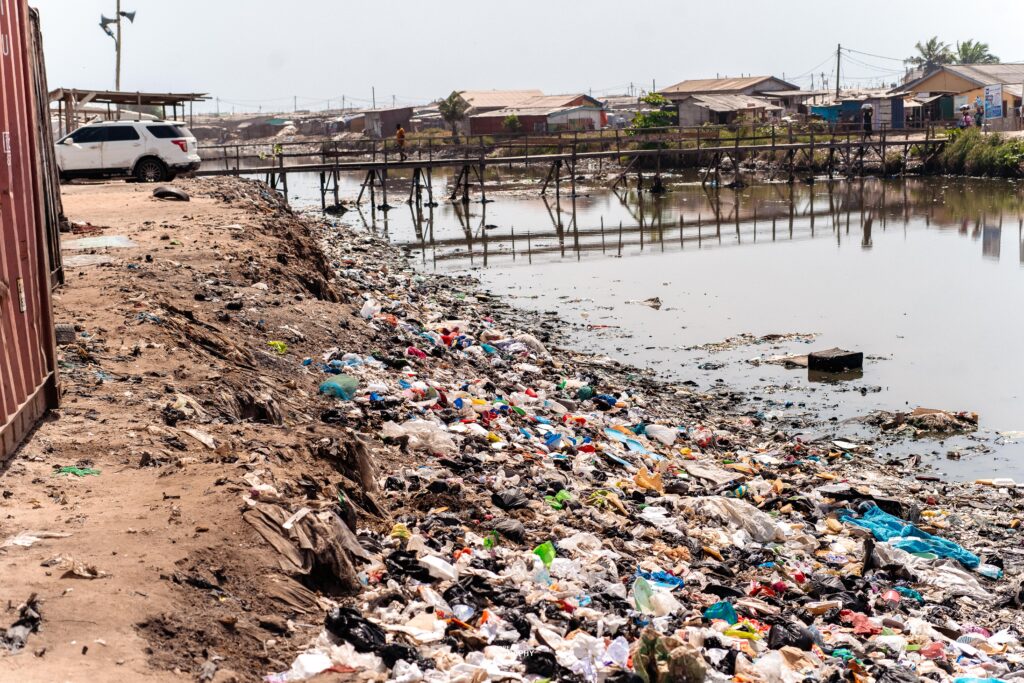
    The remaining 90.5% is either littered, dumped in drains, or burned in open areas without consideration of the environmental consequences.

    The report reads, “Ghana generates approximately 840,000 tonnes of plastic waste per year and approximately 9.5% of what is collected is recycled and the rest are indiscriminately disposed of without regard to its environmental impact”.

    A visit by the Independent Ghana team to two rivers in Accra, such as the Odaw River near the Agbogbloshie market, painted a bleak picture.

    Similarly, the Chemu Lagoon in the Ablekuma South Municipality serves as another striking example of the issue.

    The absence of waste bins and the weak enforcement of disposal laws have turned the lagoon into a dumping ground.

    Residents cited insufficient infrastructure and security as reasons for dumping waste directly into the waterway, with many claiming they had no alternative due to the lack of designated disposal sites.


    In response to the growing crisis, the Ghanaian government has introduced various initiatives aimed at tackling plastic waste.

    These efforts started in 2008 with a ban on plastic production and imports. In 2011, a Plastic Waste Recycling Fund was established, and a 10% Environmental Excise Tax was levied on imported plastics to support recycling and waste management programs.

    The government also introduced the National Plastics Management Policy in 2020, which seeks to manage plastic waste across its entire lifecycle and promote a circular economy for plastics.


    Despite these measures, the issue of proper plastic waste disposal remains a significant challenge, exacerbated by low awareness regarding safe and sustainable disposal practices such as segregation, recycling, and controlled incineration.

    This issue undermines the promises made by President Akufo-Addo to make Accra the cleanest city in Africa.


    The continued improper disposal of plastic waste is not only polluting Ghana’s rivers and seas but also putting local communities and wildlife at risk.

    Although the government has made several attempts to address the sanitation crisis in Greater Accra, many of these initiatives have failed to achieve lasting impact.


    In November 2017, President Akufo-Addo launched the National Sanitation Campaign, which was aligned with his pledge to make Accra the cleanest city in Africa by 2020.

    “By the end of the four years of my term in office as president,  Accra will be the cleanest city in Africa.”  President Akufo Addo delivered this speech with a burning zeal in 2017. 

    However, progress in plastic waste management has been hindered by ineffective collaboration between the Ministry of Environment, Science, Technology, and Innovation (MESTI) and other stakeholders.

    This lack of coordination has resulted in isolated efforts, overlooking opportunities for collaboration that could have enhanced the overall effectiveness of tackling plastic waste.


    The AG’s report highlights that MESTI’s efforts to educate the public on proper plastic waste disposal have been fragmented, with inconsistent and poorly coordinated campaigns.

    This disjointed approach according to the AG, has contributed to the ongoing improper disposal of plastic waste in open drains, littering, and open burning.


    As a result, the AG has recommended that MESTI develop and disseminate a cohesive communication strategy, target specific audiences, and collaborate with the private sector and local authorities to incorporate awareness into their annual action plans.

    Additionally, the Ministry it said should implement a robust monitoring and evaluation system to assess the impact of awareness campaigns and inform future initiatives.

    “We assessed whether measures put in place by MESTI, to sensitise the public and to promote used plastic segregation, collection and recycling or responsible disposal are ensuring that the environment is not littered with used plastics. We sought to find out whether MESTI”


    “MESTI has not developed a cohesive and streamlined communication strategy. The Ministry’s efforts to educate the public on plastic waste disposal were disjointed, lacking coordination and consistency. Consequently, the public continues to improperly dispose of plastic waste by dumping them in open drains, littering, and open burning.

    “The Director of PPBME develops and disseminates a communication strategy targeting specific audiences, outlining campaign frequency and channels.Collaborate with the private sector and MMDAs to integrate awareness creation into their annual action plans and Implement a robust monitoring and evaluation mechanism to assess the impact of awareness campaigns and guide future initiatives,”it added.

  • E.S.L.A. PLC to redeem outstanding bonds worth GHS3.47bn

    E.S.L.A. PLC to redeem outstanding bonds worth GHS3.47bn

    As part of its ongoing efforts to restructure Ghana’s energy sector debt, E.S.L.A. PLC has announced plans to redeem approximately GH¢3.47 billion in outstanding bonds.

    This decision is in line with the country’s broader debt restructuring initiatives.

    In a statement released on Tuesday, November 5, E.S.L.A. PLC confirmed that it would engage its bondholders for the redemption of these bonds at par value on December 2, 2024.

    This move is part of a larger strategy to address Ghana’s energy sector debt challenges.

    The redemption follows a significant milestone earlier in October when E.S.L.A. PLC completed a 90% buyback of GH¢1.04 billion worth of bonds, effectively reducing the company’s liabilities.

    The bonds that are set for redemption include Tranches E2, E3, E4, and E5, with maturity dates spanning from 2027 to 2033.

    The company hopes this initiative will alleviate the debt burden in the energy sector and provide relief to bondholders.

    “This meeting aims to authorise modification of the final maturity or redemption date and interest payment dates of all the company’s outstanding bonds to Monday, 2nd December 2024,” the company stated in a formal notice to investors.

    E.S.L.A. PLC was founded in 2017 as a special purpose vehicle designed to tackle Ghana’s energy sector debt.

    By issuing debt securities backed by an energy debt recovery levy under the Energy Sector Levy Act of 2015, the company has raised over GH¢10.5 billion.

    As of December 2022, approximately GH¢8.4 billion of this remains outstanding.

    On November 26, 2024, a virtual meeting for bondholders will take place. During this meeting, stakeholders will discuss proposed changes to the bond maturity dates and interest payment schedules to align with the planned redemption.

    Bondholders will also have the opportunity to vote on the proposal to advance the redemption date.

    According to the company’s formal notice, the purpose of the meeting is to secure approval for modifying the final maturity and redemption dates of all outstanding bonds, setting them to December 2, 2024.

    The company’s improved financial position supports its buyback efforts. Unaudited financial statements for September 2024 show assets of GH¢5.32 billion, with GH¢3.79 billion in cash.

    E.S.L.A. PLC also reported a decline in liabilities from GH¢5.03 billion in September 2023 to GH¢4.81 billion in September 2024. Additionally, the company saw significant profit growth, reaching GH¢165.75 million in the third quarter of 2024, compared to GH¢51.90 million during the same period in 2023.

    This improved financial standing is in alignment with Ghana’s broader debt sustainability goals, particularly through the government’s Domestic Debt Exchange Programme (DDEP). Under this initiative, bondholders were offered new government bonds in exchange for E.S.L.A. PLC bonds, helping to reduce overall debt and allowing bondholders to settle earlier than originally scheduled.

    Bondholders are encouraged to attend the upcoming virtual meeting, either in person or via proxies, as it aims to finalize the company’s debt restructuring plan. This effort will ensure greater financial stability for E.S.L.A. PLC while contributing to resolving Ghana’s long-standing energy sector debt issues.

  • Martha Ankomah ‘forgives’ Lilwin

    Martha Ankomah ‘forgives’ Lilwin

    Margaret Mary Twum, legal counsel for actor Kwadwo Nkansah, popularly known as LilWin, has revealed that Ghanaian actress, Martha Ankomah has forgiven the actor following derogatory comments made in a viral video.

    In a statement, the lawyer emphasized that Ankomah’s decision to forgive LilWin reflects her strong personal values and commitment to reconciliation.

    She indicated that despite the harm caused by the controversial remarks, Martha Ankomah’s response demonstrates a deep understanding of the significance of forgiveness in both personal and professional settings.

    “We are grateful to God for enabling Martha to extend forgiveness to Lilwin. She is a kind and God-fearing woman who believes in the power of mercy. As she puts it, she cannot refuse to forgive when her neighbor wrongs her, for the God she serves is merciful, and she strives to mirror that compassion in her own life,” She added.

    Earlier this year, a video showed LilWin criticizing Martha Ankomah, accusing her of allegedly telling Kumawood director Frank Fiifi Gharbin that she would no longer collaborate with Kumawood stars due to their “nonsensical” movie productions.

    In the video, LilWin also downplayed Martha Ankomah’s contributions to the Kumawood film industry, sparking controversy among fans and stakeholders.

    Earlier this year, Martha Ankomah filed a defamatory suit at the Accra High Court, demanding GH¢5 million in damages, along with an apology and a public retraction of the statements made by LilWin.

    The case, which was filed on February 14, also requested that the retraction be made with equal prominence as the original defamatory remarks.

  • Gold Fields and AngloGold Ashanti’s joint venture delay due to permit issues

    Gold Fields and AngloGold Ashanti’s joint venture delay due to permit issues

    Gold Fields and AngloGold Ashanti’s plan to merge their Tarkwa and Iduapriem gold mines in Ghana has stalled due to delays in securing the necessary government permits.

    Both companies have confirmed that the required approvals remain outstanding, which is hindering the progress of the joint venture.

    The collaboration, initially announced in March 2023, was designed to create Africa’s largest gold mine, with Gold Fields taking a 60% stake, AngloGold Ashanti 30%, and the Ghanaian government 10%.

    However, in a joint statement released on Thursday, the companies expressed their disappointment over the inability to secure the necessary permits before Ghana’s national elections in December.

    The statement emphasized that both companies still believe the merger is a valuable opportunity, highlighting its potential to extend the life of the mines, boost production, and reduce costs, which would ultimately benefit all involved parties.

    Due to the lack of clarity on the approval process, the two companies will continue to independently improve their respective assets while keeping discussions open for a future merger.

    They had hoped to secure the required approvals by October 2024, prior to the parliamentary recess, but without clear timelines, they will now focus on individual improvements.

    “We continue to believe that a combination of the two neighbouring mines into a single managed entity is compelling, given that it is anticipated to extend life of mine, increase production, and lower costs, creating value for all stakeholders,” they stated.

    The merger, which was expected to produce an average of 900,000 ounces of gold annually over the first five years and 600,000 ounces over its 18-year life, now faces uncertainty.

    “Notwithstanding constructive engagement with the Government of Ghana since the announcement of the Proposed Joint Venture on 16 March 2023, the requisite approvals by the Government of Ghana for the Proposed Joint Venture have not yet been obtained,” the statement said.

    “Gold Fields and AngloGold Ashanti have sought to secure the requisite approvals, which include approval of the Proposed Joint Venture by the Parliament of Ghana, ahead of the October 2024 Parliamentary recess before the Ghana national elections to be held in December 2024.

    “The Parties continue to believe that a combination of the two neighbouring mines into a single managed entity is compelling, given that it is anticipated to extend life of mine, increase production and lower costs, creating value for all stakeholders.

    “In the absence of the requisite approvals from the Government of Ghana and clear timelines for execution of an agreement, Gold Fields and AngloGold Ashanti will maintain engagement in relation to a potential asset combination while separately continuing to pursue improvements to their respective assets”.

    Both Gold Fields and AngloGold Ashanti have increasingly shifted their focus from their traditional South African base to international markets, including Ghana, Australia, and the Americas.

    This strategic shift is driven by the growing challenges of gold extraction in South Africa, where deep and complex geology makes mining more expensive and difficult.

  • NDC’s Kofi Asamoah faces off with Salt FM after defamation accusations

    NDC’s Kofi Asamoah faces off with Salt FM after defamation accusations

    On Thursday, November 7, the NDC Parliamentary Candidate for Asante Akim North, Kofi Asamoah, confronted Salt FM in Agogo following what he called defamatory remarks by the host of the morning show.

    The incident was triggered by comments made by Samuel Acheampong, host of Anopa Busuo, who alleged on air that Mr Asamoah had received financial assistance from the New Patriotic Party (NPP) Member of Parliament to fund his election campaign.

    The remarks quickly spread among Asamoah’s supporters, who informed him of the accusations.

    Frustrated by his inability to address the issue through the program’s call-in segment, Asamoah, accompanied by several supporters, went to Salt FM to confront the matter in person.

    However, upon his arrival, staff members blocked him from entering during the live broadcast, sparking a tense standoff.

    Salt FM’s News Department Head, Stephen Appiani, confirmed the altercation, stating that while there were no injuries, the station had lodged an official police complaint.

    Asamoah vehemently denied the accusations that he arrived with thugs or weapons and stated he would pursue legal action against the station.

    Additionally, he accused the station’s owner, an independent parliamentary candidate in the constituency, of using the platform to damage his reputation.

  • Innovation is key to unlocking Africa’s potential in global tech ecosystem – Ken Ashigbey

    Innovation is key to unlocking Africa’s potential in global tech ecosystem – Ken Ashigbey

    African nations need to progress beyond being technology consumers, embracing deeper cross-border partnerships to fuel innovation.

    This call to action comes from CEO of the Ghana Chamber of Telecommunications, Dr. Kenneth Ashigbey, who emphasizes that Africa’s tech challenges present unique chances for collaboration and homegrown solutions.

    Speaking at the Government Parastatals panel during the recently concluded Texcellence Conference 2024, organized by CWG Plc, Dr. Ashigbey stressed, “Africa must redefine its role in the global tech landscape by becoming creators and innovators, not just consumers.

    “Our technology challenges are gateways for cross-border collaboration that can spark solutions tailored to Africa’s unique needs and drive long-term progress across the continent,” he added.

    Dr. Ashigbey noted that Africa’s projected 5G market—anticipated to reach 70 million users by 2026, according to a 2021 Ericsson report—presents vast potential. However, achieving this requires a shift in mindset within the tech industry.

    Touching on Artificial Intelligence (AI), Dr. Ashigbey pointed to foundational gaps in Africa’s tech infrastructure, stressing the importance of training in the mathematics underpinning AI algorithms. He warned that without local expertise and AI models tailored to African data, the continent risks lagging behind.

    The Government Parastatals panel, themed ‘Collaborative Innovation: Shaping Africa’s Tomorrow Economy,’ united key figures from Nigeria’s National Information Technology Development Agency (NITDA), Ghana’s telecom sector, and other prominent tech stakeholders to discuss collaborative innovation’s role in Africa’s economic growth.

    Dr. Ashigbey emphasized the pressing need for policy reforms across Africa, particularly in streamlining cross-border regulations.

    “We need to start thinking about how we can work together and view each other more as collaborators than competitors. The organisations that will succeed are those that can recognise their rivals and still find ways to collaborate with them,” Dr. Ashigbey emphasised.

    Discussions also highlighted advancements in infrastructure, with Nigeria making strides in data center capabilities.

    Galaxy Backbone, a Nigerian government infrastructure provider, reported the development of TR4-certified data centers in Kano and Abuja, supported by approximately 5,000 kilometers of fiber backbone spanning 33 states.

    Representing NITDA, Dr. Aristotle Onumo, Director of Stakeholder Management, underscored trust and transparency as critical to building lasting collaborations.

    The session also explored intellectual property protection, with Dr. Barr Obiageli Amadiobi, Director General of Nigeria’s National Office for Technology Acquisition and Promotion (NOTAP), discussing efforts to safeguard and commercialize academic research.

    In strengthening Africa’s technological ecosystem, Dr. Ashigbey highlighted the importance of making tech accessible to all citizens, including non-English speakers.

  • PIAC appoints Constantine Kudzedzi to lead accountability efforts in Ghana’s oil sector

    PIAC appoints Constantine Kudzedzi to lead accountability efforts in Ghana’s oil sector

    The Public Interest and Accountability Committee (PIAC) has announced the appointment of Constantine K.M. Kudzedzi, a respected lawyer and advocate, as its Chairperson for a one-year term.

    This leadership change is timely for PIAC, as the organization works to strengthen its role in ensuring transparency and accountability in the management of Ghana’s petroleum revenues.

    Mr. Kudzedzi, who succeeds Emerita Professor Elizabeth Ardayfio-Schandorf, is known for his extensive experience in public advocacy and legal expertise. His appointment is widely anticipated to enhance PIAC’s mission of promoting responsible management of oil and gas revenues, with a focus on aligning these resources with public welfare.

    Alongside Mr. Kudzedzi’s appointment, Odeefuo Amoakwa Boadu VIII has been re-elected to serve a second consecutive term as Vice Chair, highlighting his valued contributions to PIAC’s objectives and continuity.

    A highly respected traditional leader, Odeefuo Amoakwa Boadu VIII has been pivotal in driving PIAC’s initiatives and has earned broad support from both stakeholders and the general public.

    PIAC’s new leadership reaffirms its commitment to advocating for the responsible stewardship of Ghana’s petroleum resources. The aim is to ensure that the economic benefits of these resources reach all citizens fairly.

    As they take on their roles, both Mr. Kudzedzi and Odeefuo Amoakwa Boadu VIII have received positive endorsement from the public and industry leaders.

    This new chapter for PIAC reflects a steadfast dedication to establishing stronger oversight mechanisms that safeguard Ghana’s oil and gas assets for the current population and generations to come.

  • Zimbabwe’s Gold-Backed currency set to trade freely – Central Bank

    Zimbabwe’s Gold-Backed currency set to trade freely – Central Bank

    Zimbabwe plans to allow its gold-backed currency, the ZiG, to float freely on the foreign exchange market, according to the deputy governor of the central bank, Innocent Matshe.

    While he refrained from providing a specific timeline, Matshe emphasized that the goal is to create a market-driven exchange rate free from administrative control.

    “The idea is to have price discovery that is not interfered with by administrative measures,” Innocent Matshe said Wednesday in an interview in Bulawayo, the nation’s second-biggest city. “The endgame is a floating exchange-rate which is free from interference.”

    The ZiG, short for Zimbabwe Gold, was introduced in April as the nation’s sixth attempt in 15 years to establish a functional local currency.

    The move aimed to replace the US dollar as the primary unit of exchange. However, the currency has depreciated significantly on the unofficial market, leading the central bank to devalue it by 43% on September 27.

    Despite the adjustment, the market rate remains significantly higher, with the ZiG trading at 35-40 per US dollar compared to the central bank’s official rate of 26.69.

    Matshe indicated that the transition to a floating exchange rate will depend on market conditions and did not specify when it would occur.

    He acknowledged the criticisms of the central bank’s control over the official exchange rate, which businesses argue has led to an overvalued currency and price distortions in the economy.

    However, Matshe also emphasized that the central bank would not fully relinquish its role in ensuring the efficient functioning of the market.

    “All central banks do intervene in the market when the price discovery mechanism fails for one reason or the other,” he said.

  • CalBank ramps up loan recovery, targets GHS900m with GHS712.5m collected

    CalBank ramps up loan recovery, targets GHS900m with GHS712.5m collected

    CalBank Plc has launched a determined initiative to reclaim GH¢900 million in impaired loans by the end of 2024, an effort aimed at bolstering its financial position and maximizing shareholder value.

    The bank has so far recovered GH¢712.5 million, with significant collections from the hospitality, construction, and services sectors.

    This effort aligns with CalBank’s strategic goals of fortifying its balance sheet and preserving capital, especially critical after recent sector-wide financial challenges.

    To achieve these recoveries, CalBank has employed a multi-pronged approach, including legal action and the sale of collateral assets.

    In Q3 2024, the bank posted a net impairment gain of GH¢232.7 million on its financial instruments, a substantial increase from GH¢63 million in the same quarter of 2023. These gains reflect CalBank’s successful focus on extracting value from impaired loans.

    Management explained that the gains resulted from recovering GH¢207 million from previously provisioned accounts, along with a GH¢25.7 million reversal in bond impairments following CalBank’s participation in the government’s Domestic Debt Exchange Programme (DDEP) rounds 1 and 2.

    According to CalBank Managing Director Carl Asem, the recovery drive stems from a strategic need to offset previous impairments by aggressively reclaiming non-performing loans.

    “When you experience losses and take those impairments, the next logical step is to be very aggressive in recovering the non-performing loans. These are shareholder funds which  must be collected,” Mr. Asem shared in an exclusive interview with the Business and  Financial Times (B&FT).

    By adopting a strict approach on overdue accounts, CalBank is safeguarding its capital base and minimizing potential shareholder dilution—a point of priority in a challenging economic environment.

    This effort has gained momentum in 2024, with cumulative recoveries reaching GH¢712.5 million by the end of Q3, up from GH¢505 million by mid-year.

    This recovery focus has also driven a shift within CalBank, fostering stricter adherence to credit risk management policies.

    “When customers take loans, they are expected to repay. These collections are the funds that are re-loaned to other productive sectors of the economy.” Mr. Asem added

    Alongside recovery efforts, CalBank has adapted its lending strategy to reduce risk exposure by shifting its focus from corporate loans to a diversified portfolio that includes more loans to small and medium-sized enterprises (SMEs) and individuals.

    This approach not only supports broader economic development but also mitigates the risk of relying heavily on large corporate loans, which can be vulnerable to economic fluctuations.

    This lending shift also addresses CalBank’s non-performing loan (NPL) challenges, with the current NPL rate at 41 percent, partly due to a single major borrower accounting for over 20 percent of this total.

    The bank expects its NPL ratio to drop below 20 percent as recovery efforts continue and stricter lending policies take effect.

    Funds from recoveries are being redirected toward SME and individual lending, marking a shift in CalBank’s approach to lending.

    This strategy allows the bank to serve a broader range of borrowers and contribute to economic growth by supporting small businesses and individual clients who may have limited access to credit.

    CalBank’s strategic recovery and lending adjustments have positively impacted its financial performance. Loans and advances declined by 25.3 percent to GH¢2.5 billion at the close of Q3 2024, from GH¢3.4 billion a year earlier, largely due to recoveries and performing loan repayments.

    Despite a smaller loan book, CalBank’s profit before tax surged by 26 percent, reaching GH¢343.5 million by Q3 2024.

    Overall, CalBank’s focused efforts on recoveries, lending diversification, and credit management highlight its commitment to financial stability, protecting shareholder value, and supporting sustainable growth.

  • Govt spending GHS1m on Parliamentary recall justifiable – Ayariga

    Govt spending GHS1m on Parliamentary recall justifiable – Ayariga

    MP for Bawku Central, Mahama Ayariga, has justified the expenses linked to recalling Parliament, emphasizing the significance of such sessions for Ghana’s democratic process.

    In an interview on the Citi Breakfast Show with Caleb Kudah on Friday, November 8, Mr Ayariga addressed public concerns regarding the reported GH¢1 million cost per recall.

    He argued that this expenditure is a necessary investment to preserve Ghana’s constitutional democracy, contrasting it with the costs of living under a military regime or dictatorship, which he believes would bring greater harm to the country’s stability and development.

    The topic drew attention after Tamale Central MP, Ibrahim Murtala Mohammed, disclosed that each parliamentary recall costs around GH¢1 million, igniting a national discussion on the financial implications, particularly amid Ghana’s current economic difficulties.

    The conversation intensified after Speaker Alban Bagbin’s decision to adjourn Parliament indefinitely on Thursday, November 7. Some members of the National Democratic Congress (NDC) questioned whether the expense is warranted, given the strain on state resources.

    In response, Ayariga upheld that these costs are essential for maintaining democratic values. He asserted that convening Parliament, even at a considerable expense, is necessary for promoting critical debate, safeguarding citizens’ rights, and supporting Ghana’s commitment to a stable constitutional government.

    “You cannot place value on when the constitution is protected, when the constitution is defended and when people stand up to make sure that we imbibe the appropriate constitutional culture that should inform the governance of this country.

    “You cannot place monetary value and calculate and say this is how much it costs and so when a practice takes place, it might appear to have cost money but we know what it costs us to live under military regimes.

    “We now have a constitution and it says Parliament can be convened and Parliament can adjourn and people have the right to demand that it should be convened and this is how we go about it and all that will cost money, but it is far better than military rule and dictatorship, and so you cannot place real monetary value on it.”

  • Two Ghana Law School SRC executives to resign for failing exams – Report

    Two Ghana Law School SRC executives to resign for failing exams – Report

    Two executives from the Ghana Law School Student’s Representative Council (SRC) are set to step down due to their failure to meet the academic requirements for advancing to Part 2 of the Professional Law Course.

    The Vice President of the GIMPA campus, Maxwell Adu Takyi, and the Vice President of the Kumasi campus, Collins Osei Agyemang, were unable to pass at least four of the six required courses in Part 1, as per the school’s regulations.

    The law school mandates that students must pass a minimum of four courses in Part 1 to progress.

    Those who fail can retake the exams, but if they fail more than two papers, they must repeat the entire Part 1.

    Both Takyi and Agyemang, however, remain in Part 1 and have not advanced to Part 2. This mirrors the situation of Philemon Laar, the former SRC President in 2021, who was also asked to resign for failing to move forward in his studies.

    With this precedent in place, it is widely anticipated that the school will now ask Takyi and Agyemang to resign from their SRC roles.

    Concerns have arisen among students regarding the delay in addressing the issue, with some calling for swift action and fresh elections to fill the vacant positions.

    One student pointed out the importance of seniority in the legal field, likening it to the structure of the military or police, and emphasized the need for the school to act as swiftly as they did with Laar’s case.

    “A precedent has been established, and it must be upheld,” a lady student said.

    Reports suggest that many law students from both the GIMPA and Kumasi campuses are refusing to recognize the two executives as their leaders, further dividing the SRC and undermining the authority of its current leadership.

  • Court adjourns Joana Cudjoe’s disqualification case to Nov 11

    Court adjourns Joana Cudjoe’s disqualification case to Nov 11

    The Sekondi High Court, led by His Lordship George K. Gyan-Kontoh, has deferred the National Democratic Congress (NDC)’s request to lift the injunction on Amenfi Central Parliamentary candidate Joana Gyan Cudjoe and to overturn her disqualification.

    The hearing is now set for Monday, November 11, 2024.

    This decision follows an appeal from Edudzie Tamakloe, lead counsel for Joana Gyan Cudjoe, who urged the court to expedite the main disqualification case.

    Edudzie Tamakloe argued that further delays could bar Cudjoe from running in the December 7 parliamentary election.

    In response, His Lordship George K. Gyan-Kontoh agreed to address the substantive case but encouraged both parties to attempt an out-of-court resolution before the next session.

    Supporters of Joana Gyan Cudjoe, who were present in the courtroom, also pressed for a quick resolution to allow her participation in the upcoming election.

    “I needed the court to leave the injunction so that the EC would allow us to contest. That is what we want now. We want to be in the game and not just sit back and observe. We are very worried and everything should be quick because we have just one month before the election.”

  • Francis Sosu and four MPs propose bill to repeal betting tax

    Francis Sosu and four MPs propose bill to repeal betting tax

    Madina Members of Parliament (MP) Francis-Xavier Sosu, along with four other MPs has presented a private member’s bill to Parliament aimed at repealing the 10% withholding tax on betting and gaming winnings.

    In a letter addressed to the Clerk of Parliament on November 7, the MPs argued that the current economic hardships necessitate policies that reduce financial strain on citizens.

    They emphasized that taxing gaming winnings adds to the economic burden of Ghanaians, particularly in the wake of the Domestic Debt Exchange Programme (DDEP).

    The MPs expressed concerns that this tax exacerbates issues of unemployment and financial hardship and highlighted the lack of safety nets for vulnerable populations.

    They stressed the importance of implementing tax policies that ease the cost of living, encourage savings, promote investment, and drive sustainable economic growth.

    “Considering the impact of the Domestic Debt Exchange Programme (DDEP), and the related exacerbation of the twin challenges of unemployment and economic hardships, as well as the seeming lack of adequate safety measures to cushion vulnerable Ghanaians against daily pressing needs.

    “There is, therefore, an urgent need to introduce programmes, including tax policies and measures that seek to rescue Ghanaians in light of the harsh economic realities, reduce the cost of living, promote savings and investments, and achieve economic stability and sustainable growth, hence this Bill.”

    The Ghana Revenue Authority (GRA) introduced the 10% withholding tax on all gross gaming winnings on August 15, 2023, replacing the previous 15% VAT on each stake, under the amended Income Tax Act of 2023 (Act 1094).

  • Attempts to oust Abetifihene turn violent, leaving six hospitalized

    Attempts to oust Abetifihene turn violent, leaving six hospitalized

    Six individuals are currently hospitalized after a violent confrontation erupted in Kwahu Abetifi.

    The clash involved residents and a group of armed men who attempted to destool Kwahu Adontenhene Akyemfour Asiedu Agyemang III, the acting President of the Kwahu Traditional Area.

    According to Citi News sources, tensions rose sharply when Obaapanyin Yaa Asantewaa, claiming to be the Abrewatia (chief’s wife) of the Kwahu area, arrived in Abetifi with an armed escort.

    Initially mistaken for National Security personnel, the armed men accompanied her to the Abetifi Palace, where they detained Akyemfour Asiedu Agyemang III.

    After detaining him, Yaa Asantewaa’s group forcibly moved him to an older palace nearby, where she reportedly performed traditional rites intended to destool him, including the ritual slaughter of a sheep.

    News of the attempted destoolment quickly spread, sparking outrage among local youth who gathered with machetes in protest.

    The escalating confrontation was diffused when police and military forces intervened, successfully preventing further violence. In response, Abetifi’s traditional leaders conducted their own ceremonies to reaffirm Akyemfour Asiedu Agyemang III as the rightful chief, restoring him to the main Abetifi Palace.

    Following the incident, the police launched an investigation, leading to the arrest of Yaa Asantewaa and the armed men. Authorities then escorted the group to the police station under strict protection to shield them from the enraged crowd.

  • Each Parliamentary recall costs govt at least GHS1m – MP alleges

    Each Parliamentary recall costs govt at least GHS1m – MP alleges

    Tamale Central MP Ibrahim Murtala Mohammed has voiced serious concerns about the financial toll emergency parliamentary sessions place on the state, noting that each session costs Ghana at least GH¢1 million.

    This expense, he argues, is substantial for a single day’s gathering.

    Murtala’s comments followed Speaker Alban Bagbin’s decision to indefinitely adjourn Parliament on November 7.

    The session had been scheduled at the request of the New Patriotic Party (NPP) caucus, who had petitioned for Parliament’s recall.

    Despite the urgency they stressed, no members from the NPP attended, leaving only the National Democratic Congress (NDC) MPs in attendance.

    Murtala criticized the NPP’s absence as a “blatant disregard for the importance of convening Parliament” and pointed out the waste of both time and taxpayer money involved. He emphasized the strain such sessions place on state resources and the disruption caused to MPs’ schedules.

    In his remarks to the media, Murtala urged all political parties to consider the high financial implications of these sessions and to prioritize responsible governance.

    “Why did they waste all of our time? It comes with a huge financial burden to the state. Because if I tell you, one day sitting, particularly in circumstances like this, Parliament would spend close to a million or more than one million Cedis. For all members of parliament, our TNT would have to be provided. Imagine the number.

    “I was in my constituency as a matter of fact and I went to my farm and started harvesting my rice. I had just two days to go to the farm and come and continue with my campaign but had to cut short my activities and there were several MPs who were engaged in equally very important assignments. All those Members of Parliament abandoned the scene and came to the Chamber.”

  • UK issued 67,000 visas to Ghanaians in 2023 – British High Commissioner

    UK issued 67,000 visas to Ghanaians in 2023 – British High Commissioner

    The British High Commissioner to Ghana, Harriet Thompson, has disclosed that 67,000 visas were granted to Ghanaians in 2023, facilitating entry into the United Kingdom.


    Speaking on Joy News Special AM Show, Harriet Thompson explained that the British High Commission receives a high volume of visa applications annually, and it works diligently to approve those who meet the necessary guidelines.

    She mentioned that 85% of applicants expressed satisfaction with the visa service they received.
    “I think we granted 67,000 visas 2023, “We granted seven out of ten applications, and there is an 85% satisfaction rate with the service the people have received.”


    The British High Commissioner highlighted that many of those granted visas are young people, with a significant portion traveling for educational opportunities.


    She also highlighted a major concern noting that a significant number of applications are rejected because applicants fail to follow the visa application rules.


    “Things tend to go wrong when people don’t follow the instructions on the website. For example, the money is meant to be in your bank account 28 days before your application, but if it’s only in there 10 days before, just follow the process properly.”


    “You know what the rules are that apply to your visa, so make sure you stick to those rules,” she added.


    Harriet Thompson advised Ghanaians to carefully read and follow the visa guidelines to avoid disqualification.


    She emphasized that even in cases where applicants may be delayed by external factors, such as scholarship students facing issues with sponsors, the immigration rules must still be followed.


    “In situations like that, it’s not the student’s fault, but the immigration rules still apply, and the students need to follow them,” she emphasised.


    The British High Commissioner stressed the importance of compliance with the visa process to ensure smooth approval and to maintain the integrity of the application system.