President Nana Addo Dankwa Akufo-Addo has appealed to religious leaders to curb members who are making public prophecies about the outcome of Ghana’s December 7, 2024, general elections.
The president’s message, delivered by the Minister of Chieftaincy and Religious Affairs, Stephen Asamoah Boateng, at the “Agent of Peace” campaign organized by the Ghana Pentecostal and Charismatic Council (GPCC) on Sunday, November 3, 2024, urged the clergy to encourage peace and uphold respect throughout this significant electoral season.
“Indeed, democracy requires more than elections, but the country cannot be democratic without holding genuine elections to elect its leaders. Elections are the basis for democratic legitimacy and they are a mechanism to peacefully resolve the transfer of political power.
“We in Ghana have grown and must learn the lessons of having peaceful elections. We must avoid the use of provocative and abusive language in our campaigning. Let us respect the electorate and not assume that one political party has already won the election when a single ballot is yet to be cast.
“I call on all our revered members of the clergy also to put a check on those of their members who are going round and prophesying winners of an election which is yet to be held,” citinewsroom.com quoted Stephen Asamoah Boateng to have said on behalf of the president.
The president highlighted the importance of maintaining decorum within both political and religious circles, advising against language that could sow division or foster premature claims of victory.
He underscored that respectful dialogue is vital for preserving Ghana’s reputation as a regional leader in democratic progress as the nation prepares for the 2024 elections.
Former Attorney General Martin Amidu has strongly criticized the Ghana Bar Association (GBA) for its unreserved endorsement of the Chief Justice’s, Getrude Torkonoo’s, decision to close courts in Bolgatanga.
In a recent article, Mr Amidu described the GBA’s support as “dangerous for our Constitution, democracy, and the rule of law,” cautioning that unwavering loyalty to administrative decisions could erode judicial independence.
Mr Amidu questioned the Chief Justice’s motivations, suggesting that such decisions should be grounded in independent judgment rather than influenced by the National Security Council.
He highlighted the need for transparency, especially as elections approach, urging that administrative actions affecting court access should be scrutinized.
Mr Amidu also raised concerns over the unprecedented nature of the closures in Bolgatanga and surrounding areas, criticizing it as detrimental to citizens’ rights.
He argued that the Chief Justice’s rationale for the closures citing regional security concerns—was misguided, noting that Bolgatanga has not been directly impacted by the Bawku conflict.
Martin Amidu
He further emphasized the potential legal risks posed by the court suspensions, especially with elections imminent, arguing it limits citizens’ access to justice and could delay the judicial review of election-related cases. Amidu called for parliamentary oversight on the closures, underscoring that such decisions should involve input from local legal stakeholders to protect public access to the justice system.
“We the People demand Parliamentary oversight of the administrative decision…to close the High Court in Bolgatanga and its environs,” he stated.
The New Patriotic Party’s (NPP) presidential candidate, Dr. Mahamudu Bawumia, has spotlighted the Akufo-Addo administration’s success in job creation, asserting it has surpassed previous governments.
Referencing Social Security and National Insurance Trust (SSNIT) data and additional sources, Dr. Bawumia reported that around 2.6 million jobs have been generated, with 1.4 million positions in the private sector and 1.2 million in the public sector.
He underscored that these figures represent the government’s dedication to bolstering Ghana’s economy and providing more opportunities for citizens.
Dr. Bawumia also acknowledged the current economic challenges, but he reassured Ghanaians of his commitment to continued job creation efforts if elected in December.
“We have done a remarkable job in creating jobs in the last seven years, indeed so far, as of yesterday or a day before…I checked the data from SSNIT and other sources and so far, between 2017 and 2024, the latest data is that we have created 2.6 million jobs.
“1.4 in the private sector and 1.2 in the public sector. This is the highest of any government in the 4th Republic and the highest job creation. We have more to do because we still have high unemployment. Our youth still need jobs,” Bawumia said during his Engagement with the Youth in Accra on Sunday, November 3.
The flagbearer for the National Democratic Congress (NDC), John Dramani Mahama, has reacted to President Nana Addo Dankwa Akufo-Addo’s characterization of him as a “one-term president.”
The president’s comments were made during a period of increasing political tension, particularly as Mahama opted out of a debate with the New Patriotic Party’s (NPP) candidate, Dr. Mahamudu Bawumia.
Speaking at a governance forum in Accra, Mahama defended his record, asserting that his influence on Ghana’s progress extends far beyond the duration of his presidency.
He rejected the idea that a single term diminishes his significance, stating, “This is not a quest for witch hunting, but it is a genuine desire by Ghanaians to see public officers held to account for the public trust that was placed in them. Fighting corruption requires courage and principle. I will ensure meritorious appointments and allow the systems of transparency and accountability and fated space to work.
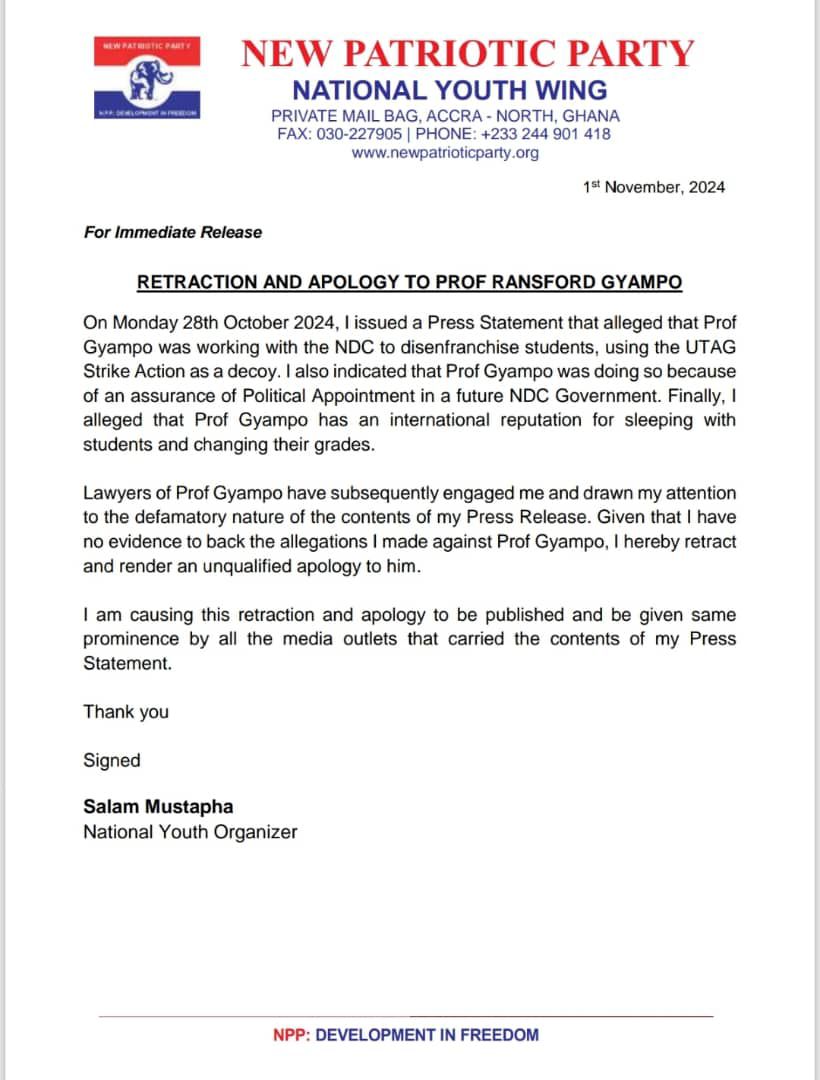
The National Youth Organiser of the New Patriotic Party (NPP), Salam Mustapha, has issued a formal apology to a Political Science lecturer at the University of Ghana, Professor Ransford Gyampo.
This apology comes in response to allegations made by Mr. Mustapha, accusing Prof. Gyampo of collaborating with the National Democratic Congress (NDC) to disenfranchise students.
These accusations were made on October 28, amidst the University Teachers Association of Ghana’s (UTAG) strike against illegal mining, or galamsey.
Mr. Mustapha alleged that Prof. Gyampo, who serves as the President of UG-UTAG, was using the strike as a cover for an appointment he hopes to receive in a future NDC administration.
In his statement, Mr. Mustapha emphasized that his apology and retraction align with the requests of Prof. Gyampo’s legal representatives.
He acknowledged that he lacks evidence to substantiate his earlier claims, prompting the need to comply with the demand to avoid potential legal repercussions.
The Member of Parliament for the Jomoro constituency in the Western Region, Dorcas Affo-Toffey, is confident about her re-election prospects in the upcoming December 7, 2024, elections.
As a first-time MP, she believes she is the most suitable candidate to retain the seat for the National Democratic Congress (NDC).
In August, Affo-Toffey and her team were involved in a serious accident at Komenda Junction on the Takoradi-Cape Coast-Accra Highway while returning to Accra after launching her campaign at Half Assini.
Following the incident, she was flown to the U.S. for further medical treatment and returned to Ghana on October 24.
Despite concerns regarding her absence during the campaign season, the MP asserts that her constituents have already decided to support her, indicating that a traditional campaign is unnecessary for her victory.
In an interview on Adom FM’s Dwaso Nsem, she expressed, “I was poised to win the election. By the grace of God, we have voted spiritually, and I have already won. My people have even told me not to come to Jomoro.”
“By this time, every MP is busily campaigning but because of the foundation I have laid, my executives go out there and they can amass people at a rally even in my absence,” she stated.
The Ghana Freedom Party (GFP) has selected a new presidential candidate for the December 7 elections, following the recent death of its founder and previous candidate, Akua Donkor, on October 29.
Party officials have indicated that details about the new candidate will be revealed to the public shortly.
They reiterated the GFP’s dedication to participating in the upcoming elections and continuing its vision for Ghana despite the loss of their founding leader.
During a news conference held on Friday, November 1, in the Ashanti Region, GFP leaders communicated with party members and supporters, emphasizing their unity and determination to uphold Akua Donkor’s legacy.
Patrick Tetteh, the parliamentary candidate for Nsawam-Adoagyiri, confirmed that the executive council of the party has reached an agreement on both the presidential candidate and a running mate.
This selection aims to uphold the values of the GFP and its commitment to the Ghanaian populace.
Tetteh highlighted the significance of this decision, stating that it reflects the leadership’s collective resolve to honor Akua Donkor’s contributions while continuing the party’s mission in her memory.
“The executives and leadership of the Ghana Freedom Party have decided and agreed on the next presidential candidate and running mate which will be announced and presented to the EC and the general public within the given period of the Electoral Commission to enable the Commission to proceed with its legal mandate and the democratic process of our country.”
The New Patriotic Party’s flagbearer, Dr. Mahamudu Bawumia, has assured the chiefs and residents of Kenyasi Number One in the Ahafo Region’s Asutifi North Constituency that the ongoing road construction would be completed ahead of the December 2024 elections.
During a courtesy visit to the Chief of Kenyasi Number One, Dr. Bawumia confirmed that work would soon resume, with asphalt layering expected to start in just a few days.
“Nananom, I understand the importance of the Kenyasi road to this community,” he said. “I have spoken to the contractor to ensure the project is completed before the December polls.
“Within less than a week, the first layer will be laid, and the road will be in better condition. The contractor’s equipment has arrived, so trust me, we will have it tarred before December 7.”
Dr. Bawumia also reaffirmed his dedication to enhancing education in the constituency, promising improvements in both access and quality for all community members.
Currently, he is on day two of his tour in the Ahafo Region, where he plans to visit the remaining three constituencies: Asutifi North, Tano North, and Tano South.
The NPP flagbearer intends to engage with local chiefs, pastors, imams, and party supporters, sharing his vision and explaining why he believes Ghanaians should place their trust in him at the polls.
In a move aimed at fostering transparency and enhancing public confidence, the Electoral Commission (EC) has extended an invitation to journalists to observe the ballot printing process.
This initiative will take place at three of the six designated printing facilities responsible for producing both presidential and parliamentary ballots for the upcoming December 7 elections.
The printing facilities selected for this observation are Inolink Printing Limited, Buck Press, and Acts Commercial.
Dr. Benjamin Bannor-Bio, the EC’s Director of Electoral Services, noted that the printing of parliamentary ballots is currently underway, while the printing of presidential ballots has been temporarily halted for ten days.
This pause is in response to the recent passing of Akua Donkor, the flagbearer of the Ghana Freedom Party.
He underscored that the printing process is designed to be transparent and collaborative, with representatives from political parties present throughout to ensure the accuracy of details, including serial numbers and quantities specific to each constituency.
“When we say transparency and accountability are in motion, we don’t just say it but we mean it. The Electoral Commission of Ghana is one of the few election management institutions in the sub-region that prints ballot papers in the country, and Buck Press is one of our major stakeholders when it comes to printing the ballot. For the 2024 general election, Buck Press is printing four regions; Ashanti Oti, Savanna and Central regions.
“We are here to let you know that printing ballots is not done in secrecy. We open up to the public for you to know that we are doing it together with the political party agents. At every level, these agents are there and they are observing to ensure that the right thing is done.
“They take notice of the serial numbers, they take notice of the quantities being printed for each constituency and we give them all these details,” he stated.
He continued: “Apart from the electoral commission seal, they add their seal and take records of the same. So, in printing ballot papers, there is no secrecy, it’s so transparent.”
A 45-year-old Acting Gyaasehene of the Nkusukum Traditional Area in the Mfantseman Municipality, Eric Ato Appiah Mends, has been remanded in police custody by Cape Coast District Court One following the tragic death of a 52-year-old man.
Known by his stool name Nana Beeyin II, Mends allegedly shot and killed 52-year-old Kwesi Melchoir after an altercation during the Odambia Festival on Friday, October 25. According to Citi News, tensions from a chieftaincy dispute may have sparked the confrontation between the two.
In court, presiding judge Her Worship Anita Sheila Crabb formally charged Mends with murder and ordered his remand until his next appearance on November 11, 2024.
Abusuapanyin Solomon Ato Budu-Hagan, family head of the Nkusukum Amansea Twidan royal house, expressed disbelief at the incident, recounting the events that led to the fatal dispute.
“What happened in Mankessim took us by surprise. The Nkusukum Traditional Council is engaged in litigation over chieftaincy issues. On day one of the festival, one faction wanted to slaughter a cow and the other faction didn’t want that to happen.
“We cautioned them severally but they never listened, leading to the incident. We want to tell the court to speed up the process for justice to prevail.”
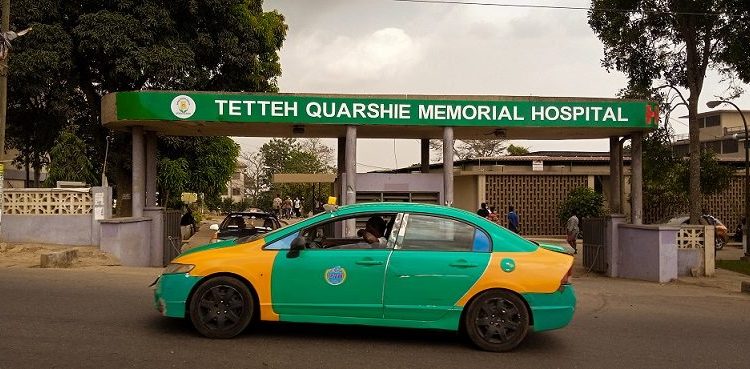
Staff members at the Tetteh Quarshie Memorial Hospital in the Akuapem North Municipality are planning a peaceful protest today, November 1, to address ongoing safety concerns.
Their demonstration is focused on the alarming number of high-speed vehicle collisions involving both hospital staff and patients along the road adjacent to the facility.
The purpose of their protest is to highlight the dangerous conditions on this heavily trafficked road. Since May 2024, there have been more than six fatalities, predominantly among patients seeking medical care and, in some instances, hospital personnel.
The urgency of this protest has intensified following the tragic death of a registered nurse who was struck by a speeding vehicle after finishing her shift on Wednesday.
This heartbreaking incident has sparked grief and outrage among her colleagues, who view it as a stark reminder of the preventable dangers that have long been ignored.
Hospital staff members argue that this latest accident underscores the pressing need for speed regulations in the area.
The protest’s organizer and spokesperson for the hospital staff, Bengalaxy Elorm Attipoe, has expressed the group’s frustrations and the rationale behind their action.
He stated that the protest is expected to last about two hours and aims to send a strong message to the local community and regional authorities regarding the necessity of implementing road safety measures.
“We are staging a protest this morning from 9:00 AM. The entire hospital staff will be on the road. I am giving this signal that we will be on the road for almost 2 hours to drive home our demand. There should be a modernised speed ramp around this stretch. I can’t understand. It is so tragic to see our colleague who hustles for bread losing a lot of blood to an accident.”
The Minority caucus in Parliament has formally requested an investigation by the Office of the Special Prosecutor (OSP) into allegations of resource misappropriation within the District Road Improvement Programme (DRIP) in Wa West.
They allege that Vida Dioretey, the District Chief Executive (DCE) of Wa West, improperly redirected project assets, including equipment and a significant maintenance fund, to the parliamentary candidate of the New Patriotic Party (NPP) in the region.
The Minority argues that these actions represent a grave misuse of public funds for political purposes, highlighting concerns about accountability and governance in the district.
Their complaint centers on the claim that Dioretey transferred DRIP machinery and a maintenance fund of GH¢400,000 to the NPP candidate, who lacks any official position within the district assembly or the right to access these resources.
Edwin Nii Lante Vanderpuye, the Ranking Member of the Local Government and Rural Development Committee, has strongly condemned these alleged actions and urged the OSP to take prompt action.
He stressed the necessity of imposing penalties on the DCE to maintain public confidence in local governance.
“Why has the NPP candidate been given access to public resources? Is she a member of Parliament or the District Chief Executive? We have petitioned the OSP for a thorough investigation and immediate action against the DCE,” he stated.
“Almost GH¢400,000 intended for each district assembly’s DRIP management has reportedly been handed over, along with machinery, to a candidate with no legitimate ties to these assets while there is an incumbent MP who approved this funding in Parliament,” he added.
The District Road Improvement Programme (DRIP) initiative aims to enhance district road infrastructure, support rural transportation routes, and promote greater accessibility.
The Minority caucus argues that these resources should not be redirected to individuals pursuing political office, especially when such individuals do not hold any formal administrative or elected roles within local government. They emphasize that the integrity of the program must be preserved to ensure that public funds serve their intended purpose of improving community infrastructure and mobility.
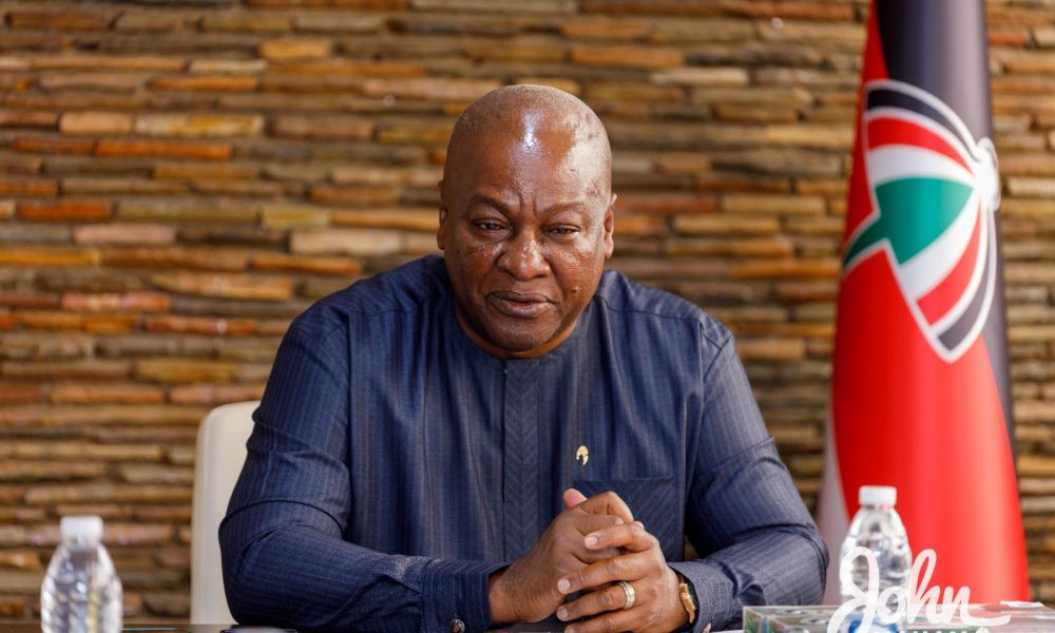
Former President John Dramani Mahama has declined to participate in the upcoming IEA Presidential Debate, opting instead for a solo interview with the Institute of Economic Affairs (IEA).
The IEA, recognized for organizing presidential debates, had announced plans several months ago to host a debate featuring the leading candidates from Ghana’s two major political parties: Mahama from the National Democratic Congress (NDC) and Dr. Mahamudu Bawumia of the ruling New Patriotic Party (NPP).
While Dr. Bawumia expressed his willingness to participate in the debate, the NDC firmly rejected the invitation. Mahama has publicly stated his refusal to engage in the debate, despite pressure to do so.
According to reliable sources, Mahama has reached an agreement with the IEA for a Question and Answer (Q&A) session, which will take place without Dr. Bawumia.
A flyer circulating on social media appears to confirm that this session is scheduled for the evening of Wednesday, November 6.
In the meantime, Vice President Bawumia has reiterated his challenge to Mahama for a one-on-one debate in advance of the December 7 elections.
The Supreme Court has unequivocally stated that its orders, judgments, and timelines are mandatory and must be adhered to, including by the President and Vice President.
According to the court, failure to comply with its directives constitutes a serious offense.
On October 30, 2024, the court dismissed an application from Speaker of Parliament Alban Bagbin, who sought to overturn its previous stay of execution regarding the declaration of four parliamentary seats as vacant.
This action followed a lawsuit filed by Effutu MP Alexander Afenyo-Markin, challenging the Speaker’s declaration.
The legal representatives for the Speaker argued that the Supreme Court lacked jurisdiction over the matter, among other points raised during the proceedings.
Nevertheless, the court refuted this claim, standing by its earlier ruling and labeling the Speaker’s appeal as lacking merit.
After hearing arguments from all relevant parties, including the Attorney-General and Minister for Justice, Chief Justice Gertrude Torkornoo, who chaired the panel, reiterated that disobeying the court’s orders is tantamount to a high crime.
The panel emphasized that the Speaker’s application reflected a “misinformation and misapprehension of the law.”
The court also clarified that the Speaker’s assertion about the court’s lack of jurisdiction was misguided, stating that the issue necessitated constitutional interpretation.
“This exceptional circumstance arising from the outcome of the ruling weighed on the mind of the Supreme Court to grant an order directing a stay of execution of the ruling of the Speaker on 17th October 2024.”
“It is therefore disingenuous and wrong, including being an act of disinformation, for the argument to be presented that the jurisdiction of the Supreme Court could never be evoked to determine a constitutional interpretation because of the High Court’s jurisdiction to hear and determine disputes on elections and vacation of seats of Members of Parliament under Article 99.
“Our clear view is that Article 99 gives the jurisdiction to hear cases involving questions on the validity of election or vacation of seats of a Member of Parliament and the Speaker. It does not in any way take away the jurisdiction of the Supreme Court to interpret and enforce any provision of the Constitution, including Article 99 itself,” the Chief Justice said.
“We are satisfied that administrative procedures cannot override the potency of legality, and every procedure used by the Supreme Court to serve the processes of the Speaker of Parliament was actually in conformity with law and the circulars issued by the Chief Justices in 2021 and 2024.”
Furthermore, the Supreme Court confirmed its decision to grant a stay of execution on the Speaker’s declaration of four vacant seats, explaining that no by-elections could lawfully take place to fill these seats between October 17, 2024, and January 7, 2025.
Chief Justice Gertrude Torkornoo indicated that this critical timeframe played a significant role in the court’s ruling on the stay of execution.
“The four constituencies in the Western Region, Ashanti Region, Central Region, and Eastern Region of Parliament are made up of hundreds of thousands of Ghanaians who had been cued to elect these members of parliament to represent their interests in Parliament as their voices.
“By declaring that their duly elected representatives in Parliament had vacated their seats for acts that were interpreted within the light of Article 97 (1)(g) by the Speaker, the Speaker was actually enforcing this interpretation of Article 97 (1)(g) against those hundreds of thousands of Ghanaians and not just the four people that sit in Parliament.
“He was also doing so at a time that, from the official records of Parliament presented to the Supreme Court, the Speaker knew that a contrary interpretation was being placed on the same constitutional provision and that the Supreme Court jurisdiction had been invoked to provide the correct interpretation,” she said.
The Upper East Regional Peace Council is urging residents and parties involved in the Bawku chieftaincy conflict to abandon violence and pursue peaceful methods to resolve their disputes.
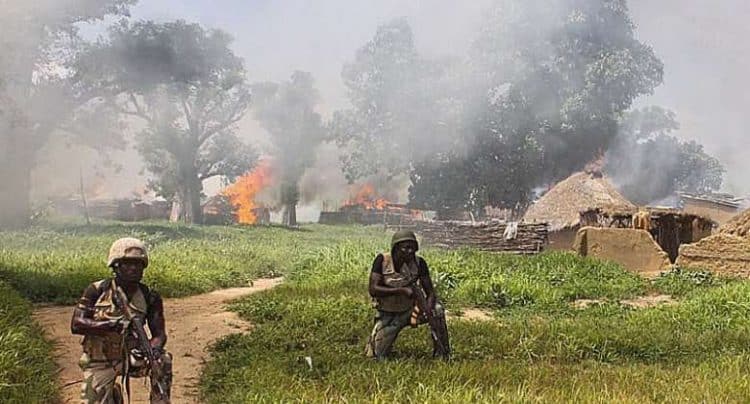
This call comes in response to recent escalations in violent clashes within Bawku and its surrounding areas, which have claimed over 20 lives and left many injured since last Thursday amid ongoing chieftaincy tensions.
In a statement, Chairman Alhaji Sumaila Issaka emphasized that resorting to violence will only exacerbate the situation in the region.
“The Upper Regional Peace Council has noted with profound sadness the recent happenings in Bawku,” the statement lamented.
“This is so much so after many fruitful engagements by all stakeholders and a period of calm for the most part of the year, leading to the easing of the curfew and peaceful celebration of the Damba festival. However, since October 24, 2024, the situation in Bawku has deteriorated resulting in the loss of lives and creation of fear and insecurity in the area, even extending to the Bolgatanga-Tamale Highway.
“While appreciating the efforts of all stakeholders, especially the security services and the people of Bawku, the Council wishes to call on parties in the conflict to heed the call of non-violence and protect the peace so that Bawku can return to stability.”
The statement emphasized the need for security agencies to maintain a high standard of professionalism while actively ensuring the safety of all individuals in Bawku, along with travelers on the Bolgatanga-Tamale highway.
It also appealed to the residents of Bawku to work in partnership with law enforcement to foster actions that would alleviate tension, enabling the community to engage in their daily lives with greater stability and predictability.
According to reliable sources, the recent clashes in Bawku stem from the reported return of a newly enskinned chief, appointed by one of the factions involved in the ongoing chieftaincy conflict.
A High Court had previously issued an arrest warrant for this new chief, deeming the enskinment illegal. However, the court recently withdrew the warrant, allowing the chief to return to the area, which ignited tensions and ultimately led to gunfire, resulting in multiple fatalities and injuries.
The violence escalated following the alleged killing of an 11-year-old girl by one of the factions. Last Thursday alone, over 20 individuals were reported dead in Bawku, while an additional eight people were killed on the Bolgatanga-Tamale highway near Walewale in a related attack.
In that incident, unidentified armed men blocked vehicles on the highway, opened fire on travelers, and caused numerous injuries alongside the fatalities.
The Executive Chairman of KGL Group, Alex Apau Dadey, has insisted that governments need to stop merely paying lip service to the idea of the private sector as the engine of economic growth.
In an interview, he highlighted that successful nations are built on the foundations laid by entrepreneurs and business leaders rather than politicians.
Mr Dadey stressed the importance of government action, urging officials to create the necessary structures and systems that would effectively support and empower the private sector.
“My philosophy is that great countries are built not by politicians but by great entrepreneurs. Once we shift our mindset to that, we will encourage others.
“I hear governments all over the place talk about raising millionaires, raising billionaires but sometimes we misunderstand this concept of raising these millionaires and billionaires.
“We raise them for society, we raise them to create employment. Yes, they might take a chunk of it but would you rather have government take a chunk of your money and provide you with nothing or the private sector takes the lead?
“A recent example is Dangote in Nigeria. Yes, sometimes you get a little political backing but it does not matter because that is what the government is supposed to do.
“Government is supposed to back the private sector, be it in our country NPP or NDC… It does not matter. That is the role of government.”
The 2023 EMY Man of the Year, Alex Apau Dadey, has dismissed the notion that Ghanaian businessmen and entrepreneurs should be categorized as supporters of either the ruling New Patriotic Party (NPP) or the opposition National Democratic Congress (NDC).
He believes that all businesspeople are willing to collaborate with any government in power to foster economic growth.
Mr Dadey emphasized that the hard work and dedication of entrepreneurs to build their businesses should not be overshadowed by political affiliations.
“We get it all wrong when we create our own narrative of an NPP businessman or an NDC businessman, there is no NPP or NDC businessman. There are businessmen. They work.
“But because of the way we have structured our systems, they have to work with every government in power.
“Sometimes you hear people saying this businessman was with this party and later moved to that party but businessmen don’t think like that. They do what is necessary.
“So, we have to encourage the private sector not as a lip service and say that the private sector is the engine of growth when we don’t actually mean that,” he added.
The NDC’s Presidential Candidate, John Dramani Mahama, has emphasized his dedication to transparency and good governance by announcing that all appointees in his administration will be required to declare their assets within 30 days of taking office.
During the NDC’s Governance Forum in Accra on October 31, Mahama articulated that this initiative is a crucial step toward restoring public trust in government.
Mahama stated, emphasizing that this measure would be a key step in restoring public trust.
He stated, “I will require all members of my administration to declare their assets within 30 days of assuming office”.
Recognizing the decline in confidence among Ghanaians towards public institutions, as revealed by the recent Afrobarometer survey, Mahama pledged to implement reforms aimed at revitalizing trust in these entities.
To combat this growing skepticism, he outlined plans to revise the codes of conduct for public officials, emphasizing ethical leadership, professionalism, and responsiveness.
“The recent report by Afrobarometer in Ghana revealed depressing insights about our institutions. The Ghanaian public has lost trust in many of these institutions. Collectively, we must do more to rebuild that trust,” Mahama remarked.
He further stressed the importance of making the public sector serve the people effectively and urged public officials to demonstrate humility, modesty, and sacrifice while in office.
Through these proposed measures, Mahama aims to cultivate a more accountable government, prioritizing ethical governance and transparency if the NDC is elected.
An Accra Circuit Court has rescheduled the case of Bishop Elijah Salifu Amoako and his wife, who are facing charges for permitting their unlicensed minor son to drive, to November 13.
The adjournment follows a request from State Attorney Yaw Acquah for additional time to complete investigations and submit all necessary disclosures.
During the hearing, the defence counsel raised concerns regarding the unauthorized circulation of images of their son, Elrad Amoako.
Akosua Adjei Twumwaa, one of the defence lawyers, highlighted that media outlets have disseminated photos of Elrad undergoing surgery and related images.
The defence argued that displaying images of a minor without consent violates the law and requested the court to issue an order for their removal.
They also sought guidance for the Ghana Police Service and the Police Hospital to comply with this request.
Judge Samuel Bright Acquah informed the defence that Elrad, the juvenile in question, does not currently have an active case before the court.
Consequently, the court found it unable to issue an order regarding the image removal due to jurisdictional constraints.
The judge advised the defence counsel to lodge formal complaints with the police upon their appearance before a Juvenile Court.
The case stems from an incident on October 12, 2024, in East Legon, where the 16-year-old Elrad allegedly drove a white Jaguar F-Space Sports without a valid license, resulting in a collision with an Acura utility vehicle that caught fire and tragically killed two girls.
Bishop Elijah Salifu Amoako, his wife Mouha, and a sales assistant, Linda Bonsu Bempah, have all pleaded not guilty to the charges and are currently out on bail set at GHC 50,000.
The government is taking decisive steps to increase private sector participation in the Electricity Company of Ghana (ECG) as part of a comprehensive reform aimed at stabilizing the sector’s finances and ensuring its sustainability over the long term.
At the recent IMF/World Bank meetings, Finance Minister Dr. Mohammed Amin Adam emphasized the urgency of these reforms, declaring that the energy sector’s annual deficit of $1.2 billion is “not acceptable.”
“Funds that should be allocated to essential services like healthcare and education are being diverted to cover losses in a sector that should ideally attract market-based solutions.”
Dr Adam stated that restoring investor trust is crucial, noting, “People have lost confidence in our ability to manage the energy sector due to financial issues.”
To enhance the financial stability of the government is introducing the “cash waterfall” mechanism, which aims to ensure equitable revenue distribution across the energy value chain.
Finance Minister Dr. Mohammed Amin Adam emphasized the importance of restoring investor confidence, stating,
Recent negotiations with IPPs, including Sunon Asogli—whose 560MW plant was temporarily shut down due to a $259 million payment dispute—indicate progress, though challenges persist.
Dr. Adam reassured the public that power supply has not been affected, saying, “If one plant shuts down and the others continue to operate, it simply means that we have enough to supply our people.”
Furthermore, new agreements have already been signed with Cenit and AKSA, two of the six IPPs involved in the restructuring discussions. These agreements do not require parliamentary approval, facilitating a smoother path for operational continuity.
Negotiations with Sunon Asogli have encountered challenges, particularly regarding the company’s request for an extra $30 million in payment, which the government has declined.
This setback underscores the complexities of the discussions as the government seeks to stabilize the energy sector while managing its financial commitments to IPPs.
“While we initially agreed to a $30 million one-off payment, Sunon Asogli later demanded another $30 million. This was not part of our settlement terms,” Dr Adam stated.
He firmly stated that no funds would be disbursed until the agreement is finalized. Discussions are also ongoing with other Independent Power Producers (IPPs) such as Karpowership.
However, their recent request for an extra $70 million was also rejected by Dr. Adam, who emphasized the government’s dedication to prudent financial management.
“We have to negotiate and sign before I make any payment. Ghana is not just a street-country,” he declared.
Pending agreements with Cenpower and Amandi Energy are awaiting ratification by Parliament. Dr. Adam has urged Parliament to reconvene and approve these essential reforms.
“This is one of the effects the suspension has on government business because we were expecting parliament to approve these renegotiated agreements.”
Through these reforms, the government aims to restore trust, stabilize the energy sector, and secure Ghana’s energy infrastructure for its long-term objectives.
Former President John Dramani Mahama has raised alarm about what he perceives as the deliberate undermining of independent institutions in Ghana by the Akufo-Addo administration.
He specifically pointed to the Electoral Commission (EC) and the Judiciary during his address at the Good Governance Forum on October 31.
Mahama expressed grave concern about the erosion of institutional integrity and its implications for the country’s democracy. He warned that the ongoing weakening of these vital institutions presents a significant threat to good governance and accountability.
Highlighting the importance of an independent judiciary and a credible electoral body, Mahama argued that these components are essential for guaranteeing fair elections and justice for all citizens.
If elected in the upcoming elections, Mahama pledged to prioritize the restoration of good governance, emphasizing his commitment to working alongside civil society and the media to strengthen transparency and accountability within government institutions.
In his concluding remarks, he called upon Ghanaians to unite in the pursuit of a stronger democratic framework, insisting that the country deserves leadership that upholds the principles of good governance.
“For almost eight years, the government has deliberately and systematically worked to weaken and undermine the independence of the Judiciary, the electoral commission, and the Audit Service for their own parochial purposes.”
“Our human rights record including press freedom has suffered just as the fight against corruption has. Journalists have been hounded and cowered into silence and self-censorship.”
“But I can assure you that there’s hope. The NDC, under my leadership, is ready and willing to work with Ghanaians, our key stakeholders, civil society, our traditional leaders, and our development partners to restore good governance to our beloved country,” he stated.
The Deputy Transport Minister, Hassan Tampuli, has advised the public to dismiss the Concerned Drivers Association’s proposal for a 15 percent fare increase scheduled for November 2.
He emphasized that fare changes are determined by several factors, including the stability of fuel prices, inflation, and other economic indicators, which he asserts are presently stable.
Speaking to JoyNews, Mr Tampuli stated, “We’ve heard some noises coming from the Drivers’ Union about the threat of an increase in lorry fares. I want to say here, unequivocally, that there’s no basis for any such increase in lorry fares between now and the next six months.
“The leadership are here, and they know what we do, the triggers that would arise in increasing the lorry fares. Nothing of that sort has happened. And indeed, as of this morning, Ghana is one of nine countries that have prices of petrol below one dollar… the prices that we have in Ghana are some of the lowest anywhere in the world,” he said.
In response, David Agboado, the Public Relations Officer of the Concerned Drivers Association, rejected Mr. Tampuli’s statements, asserting that the Transport Ministry lacks the authority to determine when transport operators should adjust fares.
He argued that rising costs of vehicles, spare parts, and fuel make the proposed fare increase essential for maintaining the viability of their businesses.
“My first question to you to ask Hassan Tampuli for me is, does he exist on this planet Earth called Ghana? The price of a vehicle has increased more than 100%. The price of a lubricant has increased more than 57%. You should go and check the market.
“The price of fuel has increased, so what is he saying? … We are doing business as transporters. We are not doing business as charity-running organisations… We are also charging the 15% starting on the second,” Agboado insisted.
Meanwhile, the Ghana Private Road Transport Union (GPRTU) has urged the public to ignore the fare increase notice.
The GPRTU Industrial Relations Officer, Imoro Abass, emphasized that any adjustments to fares should involve consultations with all relevant stakeholders.
“Did they pass through the process, the procedure we use in coming up with upward adjustments in lorry fares? The answer will definitely be no… We go around, looking for prices of items we use—lubricants, spare parts, vehicle values, etc. And fuel, of course, is inclusive.
“Then after doing all these things, we come to a conclusion of what percentage we have to adjust on the lorry fares. But we don’t just come out and say we are going to increase lorry fares without going through the processes that I’ve just mentioned. So we are urging the general public to disregard their claims,” Mr Abass explained.
Chief Justice Gertrude Torkornoo has officially launched the 5th edition of the Manual on Election Adjudication at the Law Court Complex Auditorium in Accra.
This new edition is designed to facilitate the prompt handling of election-related cases in the lead-up to, during, and after the 2024 general elections.
During her speech, the Chief Justice underscored the importance of thoroughly reading the Manual, urging Ghanaians to engage deeply with its content. She highlighted its significance for journalists, who are crucial in accurately reporting on electoral matters.
“Nothing can be taken for granted in court work…The failure to provide the legal threshold of evidence can be costly. Starting an action in the wrong court can lead to the loss of an otherwise perfect case.
“This is why I crave and ask that strong attention be paid to the teachings and the learnings in the materials that have been freely given in this manual.
“It should be extremely helpful to especially the media who need to correctly inform the public on ongoing disputes. This year’s edition which is divided into three volumes has the most significant change for easy reference and it is a credit to its drafters. In these three volumes, they have done a thorough job of reflecting the changing course of election law, while remaining true to the overarching principles that have guided previous editions.”
Justice Torkornoo emphasized that the insights offered in the Manual are essential for the media, which must inform the public accurately about ongoing electoral disputes.
This edition is presented in three volumes, marking a significant update that reflects the evolving nature of election law while remaining true to the foundational principles of earlier versions.
She reiterated that this publication demonstrates the judiciary’s dedication to Ghana’s democratic development by making legal information accessible to all citizens.
Moreover, she noted that the widespread distribution of the Manual will help prevent misunderstandings and bolster the nation’s democracy.
The Manual has been distributed to various stakeholders, including the Christian Council, the Ghana Journalists Association (GJA), the Ghana Police Service, and several media organizations such as Citi FM/Channel One TV.
The 5th edition differs from previous versions by being divided into three volumes, a necessary adaptation that acknowledges the growth of the law and the diverse needs of various stakeholders.
Volume 1 serves as a comprehensive guide, providing general guidelines and crucial information on election law.
The Bank of Ghana (BoG) is reinforcing its foreign exchange reserves to help stabilize the cedi as demand for foreign currency is expected to increase with the festive season approaching.
This move aims to address the depreciation of the cedi against major currencies, currently trading at about GHS 17 per dollar, reflecting a 24.3% decline so far this year.
Dr. Ernest Addison, Governor of the Bank of Ghana, highlighted that bolstering reserves is a crucial step toward reducing exchange rate volatility and enhancing economic stability.
“Some are praying that the cedi will recover to GHS 10.00 to a dollar. These are the problems in our economy, the issues about the exchange rate and financial sector issues. But I think the good news is that we are making progress because the developments we are seeing are not different from other jurisdictions.
“So, we need to stay focused and implement the appropriate policies and build buffers to be able to support the progress we have made.”
He emphasized that the Bank’s strategy is not only aimed at reinforcing the local currency but also at building investor confidence and ensuring overall economic stability.
“We have $7 billion dollars in foreign exchange reserves. If I want to drive the dollar-cedi rate at GHS 10, I can do that tomorrow. But what about the day after tomorrow? So, we are balancing various factors, trying to build reserves and managing the exchange rate. So, all is not lost yet, there is some silver lining in the cloud, hopefully we will see the appreciation of the currency”, Governor Addison added.
Dr. Addison shared these insights at the launch of The Concise Law of Banking, authored by legal practitioner Afua Appiah-Adu and commissioned by the Institute for Law & Development (ILAD).
This comprehensive guide to banking law covers core topics relevant to students, banking professionals, and legal practitioners, including: Bank Regulation, Supervision, and Licensing; Banker-Customer Relations; Electronic Payment Systems; Money Laundering; Credit Reporting; and Borrowing and Lending in Banking.
Running mate to the New Patriotic Party (NPP) flagbearer, Dr. Matthew Opoku Prempeh (NAP0), has asserted that any resident of the Aowin constituency who votes for the National Democratic Congress (NDC) is undermining the nation’s progress.
Addressing NPP supporters at a rally in Yakaase within the Aowin Constituency, Western North Region, he criticized the NDC’s lack of development efforts for the area despite consistent support from voters.
Opoku Prempeh recounted Aowin’s voting history, highlighting the constituency’s loyalty to the NDC since 1992 without any tangible results in return.
“Aowin has been voting for the NDC since 1992: NDC in 1992, 1996, 2000, 2004, and 2008.” he said, pointing out that this pattern has not yielded any significant benefits for the community.
In contrast, he underscored the NPP’s commitment to development in Aowin, citing a $250 million World Bank loan secured by President Akufo-Addo and Dr. Bawumia to fund road construction, electricity expansion, teacher support, and police recruitment in the constituency.
Opoku Prempeh described the NPP as an inclusive party focused on national progress and assured residents that a vote for Dr. Bawumia would bring transformative leadership and policies aimed at advancing Ghana’s development.
““From 1992, Aowin has never remembered Busia that he gave them hospital and they started voting for the NDC. The chiefs have been calm and Aowin has been voting for the NDC since 1992: NDC in 1992, 1996, 2000, 2004, and 2008. I am talking about a presidential candidate. 2012 NDC, 2016 NDC, and 2024 NDC.
“NDC did nothing for Aowin… but Nana Addo and Dr. Bawumia have gone for a $250 million World Bank loan to construct roads, provide electricity, pay teachers, and recruit residents into the police. If you don’t know and you live in Aowin and vote for the NDC, you are a nation wrecker.”
A former flagbearer aspirant of the ruling New Patriotic Party (NPP), Kennedy Ohene Agyapong, has cautioned the party against complacency as it heads into the 2024 general elections.
Reflecting on the campaign activities, Agyapong noted similarities to the 2008 elections, recalling how the NPP’s focus on large rallies and entertainment allowed the then-opposition National Democratic Congress (NDC) to gain an edge with their strategic, grassroots approach.
“Everything that we are doing here today, I’ve seen before. In 2008, while the NDC was conducting house-to-house campaigning, we were standing on platforms with musicians playing music and dancing, thinking we had already won. But we all saw what happened to us. So I am happy today, but I am not moved by what I am seeing until we have finished the election,” he stated.
Speaking in the Esikado-Ketan Constituency of the Western Region during a campaign tour with the NPP’s flagbearer, Dr. Mahamudu Bawumia, Agyapong urged the party to ensure its campaign strategy reaches every voter as they approach the December 7 elections.
The NPP’s 2024 campaign has featured popular artists like King Paluta, Eno Barony, Praye, and Wendy Shay, who have performed at rallies.
Alongside these events, Dr. Bawumia has emphasized direct engagement with voters, including a recent visit to his campaign call center, where he connected with Ghanaians on a personal level.
The Chairman of Parliament’s Public Accounts Committee, James Klutse Avedzi, is pushing for the Chief Executive Officer of the Public Procurement Authority (PPA) to undergo parliamentary vetting.
He believes this step is crucial for combating perceived corruption and enhancing accountability within the PPA.
This advocacy comes after the committee identified procurement as a primary channel for corruption in the public sector.
In a recent interview with JoyNews, Mr. Avedzi suggested that amending the appointment process for the PPA head could help tackle the misuse of the sole-source procurement model.
He also highlighted the impact of low salaries for PPA leaders, which he feels increases the potential for corruption.
“The appointment to that position as a Chief Executive or Director General of Public Procurement Authority, we should look at it again. If I am appointed by a political head, and that political head, there is a request through a sole sourcing that doesn’t satisfy the condition and that political head puts a call through saying work on that, what will you do?
“Those sensitive positions must be appointed through a competitive bidding process. Advertise, let people apply – parliament can vet the person.”
He has advocated for filling such sensitive positions through a competitive bidding process, suggesting that advertisements should be posted and applicants vetted by Parliament.
Additionally, Mr. Avedzi emphasized the importance of establishing a fixed tenure for the CEO, arguing that defined term limits would empower the appointee to act with integrity and make independent decisions, ultimately promoting accountability in the role.
The founder of the Movement for Change and presidential candidate for the Afrafranto Alliance, Alan Kyerematen, has emphasized that his pursuit of the presidency is fueled by a profound love for Ghana rather than mere political ambition.
“I am not in this to simply win power,” Mr. Kyerematen stated. “My commitment to Ghana and the well-being of every Ghanaian is what drives me forward.
“We need to put Ghana first and rise above political lines for the sake of our future.”
His appeal comes at a time when supporters are excited about his platform, which they see as a distinctive and transformative vision for the country.
During the second day of his caravan campaign tour, Alan Kyerematen’s message of a government of national unity struck a chord as he visited the communities of Weija and Bortiano.
Interacting directly with residents, he underscored that his main objective is to create a prosperous Ghana where no citizen is left behind.
“This campaign is not just about votes; it’s about listening to Ghanaians, hearing their challenges, and ensuring we act on them. Weija, Bortiano, and every other community deserve to be heard,” Alan affirmed, reinforcing his commitment to a people-centered approach.
In his outreach efforts, Alan Kyerematen extended an invitation to Ghanaians from all political backgrounds to unite under his movement, encouraging those who align with his vision for a better Ghana to join him.
“My doors are open to anyone who wants to see real progress,” he declared. “Let’s build a coalition that goes beyond party colors because Ghana’s future is more important than any political affiliation. Whether you are NPP, NDC, or independent, we can stand together as one for Ghana.”
Mr. Kyerematen, along with his Movement for Change team, led the caravan campaign tour to connect with citizens nationwide, actively listening to their concerns while presenting a vision for a brighter future.
During his stops in Weija and Bortiano, he detailed practical measures to address key challenges such as youth unemployment, education, and healthcare, all integral to his Great Transformational Plan (GTP).
“I’m not here to make promises for the sake of it,” Alan said. “We have a clear plan to build an economy that supports all Ghanaians and to create opportunities for everyone.”
The communities responded with overwhelming positivity, welcoming him with cheers and actively engaging in conversation.
Many residents conveyed their longing for a leader who genuinely cares about grassroots issues and shares their aspirations.
“This is what we’ve been waiting for—a leader who will actually listen to us and not just tell us what we want to hear,” said a resident of Weija.
Mr Kyerematen’s dedication to fostering connections within communities is highlighted by his engagements with local leaders and residents. Through his Movement for Change, he aims to strengthen his presence across all regions by promoting collaboration with traditional and community leaders.
“Local leaders play a critical role in the development of their communities, and their support is vital to our vision. We’re not just here to visit; we’re here to partner with these communities for the long haul,” he emphasized.
The founder and leader of the Movement for Change, Alan Kyerematen, has denounced the current stand-off between the Supreme Court and the Speaker of Parliament, Alban Bagbin, describing it as detrimental to the health of the nation’s democracy.
During a press engagement on Thursday, October 31, the former trade minister, who is now an independent presidential candidate for the 2024 election, expressed his belief that both Parliament and the Supreme Court have poorly managed the situation regarding the vacant seats.
“The current impasse between the Supreme Court and Parliament is unwarranted, unjustifiable, unproductive, and unhealthy for our fledgling democracy. Both the Supreme Court and Parliament must respect the Constitution and the laws of Ghana. This impasse amounts to grandstanding by both institutions.”
He characterized the Supreme Court’s decision to grant Alexander Afenyo-Markin’s application as unconstitutional, asserting, “the Supreme Court, in its ruling on the application of the Leader of the NPP Caucus in Parliament, Hon. Alexander Afenyo-Markin, to reverse the ruling of the Speaker of Parliament regarding the status of the four Members of Parliament, was and is, in my considered and respectful opinion, unconstitutional, and could be described as an abuse of the power of the Supreme Court under Article 130 (1) to interpret provisions of the Constitution.”
Mr. Kyerematen argued that rejecting the Supreme Court’s ruling would constitute a violation of the law by Parliament, as Article 133 (1) of the Ghanaian Constitution mandates that all individuals and state institutions are bound by the Supreme Court’s decisions.
He added that the Speaker had made the correct decision by filing a motion with the Supreme Court to overturn its initial ruling on the vacant seats.
“Parliament will be in breach of the law if it refuses to accept the ruling of the Supreme Court. Even if Parliament believes that the Supreme Court’s decision is wrong, it must comply with the orders of the Court and adopt a judicial path to resolve the matter.”
Referring to legal principles, he noted that Speaker Alban Bagbin acted appropriately in declaring the seats vacant.
“Parliament took the right step, albeit belatedly, in filing an application for the review of the Supreme Court’s decision. However, it is my considered and respectful opinion that the course of action and the associated remedies endorsed in the writ of application from Parliament are meritorious and lack judicial grounding. By arguing that the decision of the Supreme Court cannot affect a non-judicial order of Parliament, it is a subversion of the rule of law and an abuse of the judicial process.”
Mr Kyerematen then called on all stakeholders involved to address the issue before the general election on December 7.
“With barely four weeks to the general elections, it is absolutely critical that all parties—namely the Judiciary, the legislature, the executive, and the citizenry of Ghana—work towards a resolution of this delicate matter to ensure a peaceful path towards the 2024 general elections in December.”
The Supreme Court has since postponed the hearing to November 11, 2024.
Below is Mr Alan Kyerematen’s full press statement:
STATEMENT TO THE MEDIA BY ALAN KYEREMATEN, FOUNDER AND LEADER, MOVEMENT FOR CHANGE (M4C) AND PRESIDENTIAL CANDIDATE, ALLIANCE FOR REVOLUTIONARY CHANGE (ARC) ON THURSDAY 31ST OCTOBER, 2024
THE SUPREME COURT AND PARLIAMENT OF GHANA MUST BOTH RESPECT THE LAW AND WORK WITHIN ITS CONFINES
Members of the Media,
Good Morning,
I speak to you this morning not only in my capacity as a lawyer but also as a leading political figure in Ghana and a Presidential Candidate for the General Elections in December 2024.
The current impasse between the Supreme Court and Parliament is unwarranted, unjustifiable, unproductive, and unhealthy for our fledgling democracy. Both the Supreme Court and Parliament must respect the Constitution and the Laws of Ghana. The current impasse amounts to grandstanding by both institutions.
The concept of separation of powers and checks and balances between the various arms of Government are two sides of the same coin and logically reinforce each other. This must provide the context for resolving the dispute between the Supreme Court and Parliament.
The Case in Respect of the Supreme Court
i. The Supreme Court, in its ruling on the application of the Leader of the NPP Caucus in Parliament Hon. Alexander Afenyo-Markin, to reverse the ruling of the Speaker of Parliament, on the status of the four members of Parliament, was and is in my considered and respectful opinion unconstitutional, and could be described as an abuse of the power of the Supreme Court under Article 130 (1) to interpret provisions of the Constitution.
The Constitution of Ghana rightly so entrusts to the Supreme Court the responsibility for interpreting provisions of the Constitution. In this regard, the Supreme Court has both original and final jurisdiction for the interpretation of the Constitution.
Any application brought before the Court seeking interpretation of any provision of the Constitution to the extent, that the application is filed in line with the processes and procedures of the Supreme Court would be deemed to have been brought properly before the Supreme Court.
ii. Against this background, I hold a contrary view to the position adopted by the respected retired Justice of the Supreme Court, Justice Atuguba, that the Supreme Court should have declined jurisdiction in the matter under reference. The Supreme Court was right in hearing the application to the extent that it was a request for interpretation of the Constitution.
iii. Article 97 (1) (g) and (h) of the Constitution, cannot be said to lack clarity and therefore does not lend itself to an enquiry of interpretation by the Supreme Court. The said provisions are very clear in both spirit and letter, and unconditionally impose a duty on the Speaker of Parliament to declare vacant, the seat of any sitting Member of Parliament, who decides to change their status in Parliament, either by declaring themselves as Independents, or by account of losing their membership of the Parties that originally sponsored their entry into Parliament.
For the avoidance of doubt, Article 97 (1) (g) and (h), reads as follows:
Article “97. (1) “A member of Parliament shall vacate his seat in Parliament –
(g) if he leaves the party of which he was a member at the time of his election to Parliament to join another party or seeks to remain in Parliament as an independent member….
(h) if he was elected a member of Parliament as an independent candidate and joined a political party.”
iv. It is obvious from the mandatory language of the provision referred to above, and also by the Rules of Interpretation under Common Law, that no issue arises of interpretation, requiring the Supreme Court to exercise its discretion. The Supreme Court’s mandate to interpret provisions of the Constitution, is not to be exercised capriciously, particularly in very sensitive contexts, with implications for subverting the rule of law and obstructing the principle of Separation of Powers.
Ladies and Gentlemen,
Indeed if there is no issue of interpretation, then the posture of the Supreme Court, in the matter under reference, raises serious questions about whether or not the Court is interfering in the work of Parliament.
The Case in Respect of Parliament
i. By the dictates of the Rule of Law and Article 133 (1) of the Constitution of Ghana, any decision by the Supreme Court can only be reviewed and varied by the Supreme Court itself. In this regard, individuals, Judicial and non-Judicial bodies, including Independent Constitutional Bodies (ICBs), and the various arms of Government, are all bound unconditionally, by the decisions of the Supreme Court.
ii. In cases where any party in the categories referred to above, is aggrieved by the decisions of the Supreme Court, the only recourse available to such a party, is to apply to the Supreme Court for a revision of its decision.
iii. In light of the above, Parliament will be in breach of the Law, if it refuses to accept the ruling of the Supreme Court.
Even if Parliament is of the view that the decision of the Supreme Court is wrong, it must comply with the orders of the Court, and adopt a judicial path to the resolution of the matter.
iv. Against this background, Parliament took the right step, albeit belatedly, in filing an application for the review of the Supreme Court decision. However, it is my considered and respectful opinion that the course of action and the associated remedies endorsed on the writ of application of Parliament, are unmeritorious and lack judicial grounding. By arguing that the decision of the Supreme Court cannot affect a non-judicial order of Parliament, is a subversion of the Rule of Law and an abuse of the judicial process.
v. For the avoidance of doubt, all individuals, legal personalities, judicial and non-judicial bodies, Independent Constitutional Bodies, and the various arms of Government are bound Stricto Senso, by the decisions of the Supreme Court. As indicated earlier, any aggrieved individuals or bodies as referred to above, can only apply to the same Supreme Court for a review of its decisions. The claim by Parliament that it is a “Master of Its own Rules,” has no merit in law and seeks to undermine the very spirit underpinning the concept of checks and balances, between the various arms of Government.
In light of all of the above, the Speaker of Parliament is right to declare the four seats vacant and issue a consequential order for the Minority Caucus in Parliament to be considered as the Majority Caucus in Parliament.
This order, however, can only be made by the Speaker of Parliament, if and only if, the Supreme Court makes a ruling in favour of Parliament in the determination of the substantive case currently before it.
Ladies and Gentlemen, With barely four weeks to the General Elections, it is absolutely critical that all parties, i.e.: the Judiciary, the Legislature, the Executive and the citizenry of Ghana, work towards a resolution of this delicate matter, to ensure a peaceful path towards the 2024 General Elections in December.
I thank you for your kind attention.
God Bless our Homeland Ghana and make our Nation great and strong!
The Executive Director of the Jatikay Centre for Human Security and Peace Building, Adib Saani Jatikay, has indicated that politicians are conscious of the realities surrounding the current conflicts in Bawku but are reluctant to take action due to fears of electoral consequences.
He stressed that for politicians to effectively tackle the Bawku issue, they must be willing to face the repercussions, including possibly losing voter backing.
“Which politician is willing to lose votes? Before a politician does anything, the first consideration is political expedience, asking questions like ‘what is going to happen to my vote”, he argued.
Mr Jatikay pointed out that this concern for their political survival has caused numerous politicians to steer clear of addressing the Bawku conflict, as they worry that taking a position could alienate their electorate.
He noted that politicians tend to be more prudent regarding their voter support, which is why many have chosen not to discuss the ongoing conflict in Bawku.
He emphasized that their reluctance to comment stems from a fear of jeopardizing their electoral prospects.
“.……But they know the truth, they cannot act because they are scared.”
Adib Saani, however, asserted that if the military is granted complete authority in Bawku, peace could be reinstated within 48 hours.
On Sunday, armed individuals established roadblocks in both Gbimsi and Walewale Town, halting vehicles to identify potential targets.
Passengers caught in the blockade faced interrogation regarding their identities. Tragically, around eight people lost their lives in this deadly incident, and two vehicles were set ablaze, raising significant security concerns.
This attack is believed to be connected to the ongoing Bawku Conflict, which has reignited after a period of relative calm.
In response to the violence, the Ministry of the Interior has enforced a dusk-to-dawn curfew in Bawku, following the renewed clashes in the town.
This information was shared in a press release dated October 28 by Deputy Minister Naana Ayiah.
President Nana Addo Dankwa Akufo-Addo has officially enacted the Ghana Shippers’ Authority Act, 2024, representing a significant advancement for the nation’s shipping and logistics industry.
The Act, which was approved by Parliament in July and received the President’s assent on October 18, 2024, empowers the Ghana Shippers’ Authority (GSA) with enhanced regulatory authority across sea, air, and land transportation.
This initiative aims to foster a competitive and balanced environment for commercial shipping in Ghana.
In a statement released on October 31, 2024, the GSA expressed its readiness to promote transparency in pricing, uphold service quality, and position Ghana as a leading hub for international trade.
This legislative progress coincides with the GSA’s 50th anniversary, highlighting the organization’s long-standing dedication to promoting equitable trade practices.
Originally established as the Ghana Shippers’ Council in 1974, the organization was renamed Ghana Shippers’ Authority in 1998 to better represent its broadened mission of advocating for a thriving trade environment.
“The Ghana Shippers’ Authority expresses deep gratitude to all stakeholders for their invaluable contributions toward this legislative milestone,” the GSA noted, emphasizing the role of collaboration in shaping the new Act.
To facilitate effective implementation, the Ghana Shippers’ Authority (GSA) has initiated a nationwide sensitization campaign aimed at educating stakeholders about their rights and responsibilities under the newly enacted Act.
Additionally, the Authority is in the process of collecting feedback to develop a Legislative Instrument (L.I.) that will support the operational framework of the law.
Stakeholders are encouraged to engage actively in this initiative, contributing to the creation of a sustainable and resilient shipping ecosystem in Ghana.
Ghana is approaching a critical election year, with citizens expressing strong opinions about government initiatives.
According to a recent report from Afrobarometer, a significant majority of Ghanaians advocate for the continuation of several key programs.
Specifically, 85% support the Free Senior High School initiative, 81% favor the Planting for Food and Jobs program, 71% back One District One Factory, and 60% endorse One Village One Dam.
Conversely, 79% of respondents oppose the electronic transactions levy (E-levy) and call for its elimination. Economic Priorities
When asked about the most urgent issues for the government, unemployment topped the list, with 41% citing it as the primary concern. Close behind were infrastructure and road development at 38%, followed by healthcare at 33%.
These findings underscore a public demand for tangible improvements in job creation, connectivity, and essential services. Increasing Economic Hardships
The report also highlights the growing economic challenges faced by Ghanaians. Over the past year, 82% reported experiencing some level of poverty, with 45% facing moderate to high levels.
This marks a sharp rise from 19% in 2017. Additionally, 70% of respondents went without cash income at least once, and many reported shortages of essential services: 54% struggled to access medical care, 44% encountered water shortages, 44% faced food scarcity, and 42% had difficulty securing cooking fuel.
Dissatisfaction with the government’s direction is prevalent, with fewer than 45% of Ghanaians expecting economic conditions to improve in the coming year. Public evaluations of the government’s economic performance have sharply declined, reflecting frustration over rising living costs and inadequate access to essential services.
As the nation heads into an election season, these survey results indicate that Ghanaians are seeking continuity in successful social programs while demanding a reevaluation of economic policies to better address unemployment, infrastructure deficiencies, and healthcare accessibility.
The increasing demand for sustainable policies, coupled with mounting economic concerns, is likely to shape political debates and influence voter choices in the 2024 elections.
National Democratic Congress (NDC) flagbearer John Dramani Mahama has pledged to construct an ultramodern market facility in Savelugu, Northern Region, should he secure victory in the 2024 presidential election.
Mahama outlined that this market would invigorate local commerce by offering traders an organized and spacious setting, aiming to establish Savelugu as a prominent trading center in the area.
Addressing residents during a durbar in Savelugu on Thursday, October 31, he called on them to back the NDC in the upcoming election, reaffirming the party’s commitment to advancing development in both rural and urban communities across Ghana.
“There are many things that the NDC has in its manifesto for the people of Ghana. My sister who just spoke, talked about the Women’s Development Bank. We are going to create branches of the Women’s Development Bank everywhere. And one of the places we will create it is in the Savelugu market.
“We are going to modernise the Savelugu market, build a modern market for Savelugu. We have a programme called the Market Enhancement Programme.
“Anytime I pass here on the Savelugu Market Day if you see the number of people at the market, and so it is one of the markets we are going to prioritise, we are going to build a modern market so that people will be attracted to come to Savelugu to come and trade.”
Former Central Regional Minister Kwamena Duncan has raised concerns about the potential implications of keeping the late Akua Donkor’s image on the ballot for the upcoming December 7 elections, warning that it could set a troubling precedent for future polls in Ghana.
Speaking on Peace FM’s Kokrokoo on October 30, 2024, Duncan commented on the Electoral Commission’s (EC) decision to pause ballot printing.
This delay allows the Ghana Freedom Party (GFP) ten days to present a new candidate following Donkor’s passing.
According to Duncan, leaving her name and image on the ballot could confuse voters and result in votes for a deceased candidate, leading to an “absurd” situation.
“The EC’s release gave a 10-day deadline to the Ghana Freedom Party (GFP) to present a new candidate following the death of Akua Donkor. What has become contentious on social media is the wastage of money for the already printed ballots since they have suspended ballot printing.
Mr Duncan suggested that the EC either replace Donkor with another GFP candidate or leave her position blank, emphasizing that re-balloting would be impractical due to the costs and disruption it would impose on parties who have already promoted specific ballot positions.
“It wouldn’t have been a problem for us to say that Akua Donkor’s face must be maintained on the ballot paper, however, it would be absurd because it would become a precedent, and even if Akua Donkor were to be alive, she wouldn’t have won the elections,” he said.
He added, “Imagine if this same situation happens to either of the two dominant parties, NPP and NDC, and we decide to allow for the ballot papers to remain unchanged, making reference to Akua Donkor’s incident and vote for the dead person, it will be a certain absurdity. So, the EC must be careful not to set such a precedent because some voters will definitely vote for Akua Donkor if her face remains on the ballot paper even though she is dead.”
Kwamena Duncan proposed that the Electoral Commission (EC) substitute the late Akua Donkor with another Ghana Freedom Party (GFP) candidate on the ballot, urging against a full re-balloting.
He noted that re-balloting would impose additional costs on those contracted to print the ballots and place political parties at a disadvantage, especially those that have campaigned based on their designated ballot positions.
“It is critical for the EC to replace her with someone from her party and reprint the ballot papers. We can’t afford to conduct another balloting because it will be a cost disadvantage to individuals who have been contracted to print the dummy ballot papers.
“Also, the political parties have already advertised themselves to Ghanaian voters with their positions on the ballot so if they decide to conduct another ballot, it will become an issue. The best we can do is either the GFP presents another candidate or maintain the ballot positions with her position being blank on the ballot paper,” he advised.
Former Special Prosecutor Martin Amidu, has called on the Speaker of Parliament, Alban Bagbin, to fully adhere to the Supreme Court’s recent ruling, which overturned his declaration of four parliamentary seats as vacant.
In a statement issued on October 31, Mr Amidu emphasized the Speaker’s constitutional duty to respect the Supreme Court as the ultimate authority in disputes between the state and its citizens.
Mr Amidu expressed concern over the Speaker’s actions, questioning why he would undermine the competence and integrity of Supreme Court justices, whom he himself approved for appointment, based on their past political affiliations.
“I found it interesting that in Ghana, the Speaker of Parliament with a well-known political affiliation who presided over the approval of members of the Supreme Court and recommended them for appointment will turn round to question the competence or integrity of any of the justices merely on the grounds of former political party affiliation without further proof of real likelihood of bias after the assumption of office of the justice.
“It is one thing criticizing the nomination of a person to the Supreme Court so that Parliament may consider the criticism in the approval process and another thing after Parliament has in a bipartisan manner approved and recommended the person for appointment and the appointment has been consummated to allege bias in a pending case without any shred of evidence,” he stated.
He further emphasized that once judicial appointments are made, the principle of impartiality must be upheld until proven otherwise.
“The Speaker has no authority to hold the nation to ransom by obstructing the functioning of the constitutional system or any of the arms of government during the pendency of a constitutional matter before the Supreme Court. The Speaker and Parliament have to learn to accept the decisions and orders of the Supreme Court they co-created with the Executive branch for Ghanaians in this epoch of the nation’s history.
“The wheels of government must move smoothly while the judiciary exercises the judicial power apportioned to it under the Constitution to resolve the pending constitutional impasse,” he stated.
Criticizing the Speaker’s choice to address the Supreme Court through a letter rather than formal legal channels, Amidu referred to this as a “Kabuki dance.”
He asserted that the Speaker does not possess the authority to disrupt government operations during an active Supreme Court case, as doing so would violate the principles of separation of powers and the rule of law.
“Between now and 7 December 2024, it is imperative that everything is done by the legislature and the executive branch particularly to lower political tensions and to ensure free, fair, and transparent elections instead of resorting to political party gamesmanship and point scoring which can be disastrous for the general wellbeing of the citizen and the survival of the 1992 Constitution from which all the arms of government derive their powers. The Speaker needs to show cognitive maturity now! Parliaments and Governments may come and go, but the Republic of Ghana shall always endure,” he stated.
Mr Amidu also called for both Parliament and the executive to focus on reducing political tensions, prioritizing national stability over partisan interests.
On the same day, the Supreme Court dismissed an application by Speaker Bagbin to reverse its previous decision that suspended his declaration of four parliamentary seats as vacant.
This ruling followed a lawsuit filed by Effutu MP Alexander Kwamina Afenyo-Markin, which challenged the Speaker’s declaration.
The Speaker’s legal team argued that the Supreme Court lacked jurisdiction, but after reviewing the arguments, the Court upheld its earlier ruling, with the Chief Justice remarking that “the grounds supporting the application have no merit.”
The Vice President of Ghana, Dr. Mahamudu Bawumia, has unveiled GoRide, the country’s first ride-hailing mobile application developed locally.
This initiative, a collaboration with the Ghana Private Road Transport Union (GPRTU), seeks to empower local taxi drivers who have been increasingly challenged by foreign-owned digital transportation platforms.
The official launch occurred in Accra on October 30 and emphasized GoRide’s mission to provide local drivers with fairer conditions and a viable alternative to international ride-hailing services.
He noted that GoRide is a crucial part of the government’s broader strategy to bolster local businesses. “This is about restoring dignity to our drivers and ensuring their success. Our government is dedicated to supporting local entrepreneurship and promoting growth by keeping profits generated by GoRide within the country,” he added.
“With a competitive commission of just 10%, our drivers are being empowered to retain their hard-earned money, allowing them to improve their financial stability and support their families.
“This is about restoring dignity to our divers and ensuring that they thrive. This initiative reflects our government’s unwavering dedication to supporting local businesses and driving growth by keeping the profit generated by GoRide.
Dr. Bawumia also highlighted the economic benefits of utilizing a homegrown platform. “Within our borders, we are conserving foreign exchange, fostering local wealth, and creating and enhancing our national economy. Every ride taken on GoRide contributes directly to Ghana’s economy, helping to build a sustainable forth for all of us,” he stated.
Each ride taken on GoRide contributes directly to Ghana’s economy, paving the way for a sustainable future for all,” he stated.
The GoRide app is now accessible on both Android and iOS devices, promising to redefine convenience and accessibility in Ghana’s transportation sector while fostering greater economic self-reliance and wealth retention within the nation.
Ghana Water Limited (GWL) management has announced a significant revenue mobilization initiative targeting outstanding arrears and illegal connections within the Northern and Savannah Regions.
This exercise is set to take place from November 1 to December 31, 2024, with the primary objectives of detecting self-reconnections and eradicating the unauthorized use of in-line booster pumps.
In an official statement, GWL expressed its commitment to informing the public and valued customers about this initiative.
“The management of Ghana Water Limited (GWL) Northern/Savannah Regions, wishes to inform the public and its valued customers that it will embark on a revenue mobilization exercise in the Northern and Savannah Regions from 1st November to 31st December 2024.
“This exercise aims to retrieve all outstanding arrears owed by customers, identify and address illegal connections, detect self-reconnections, and eliminate the unauthorized use of in-line booster pumps,” GWL said in a statement.
To ensure a smooth process, GWL has urged all customers to take immediate action by settling their arrears.
Payments can be made through the official online channels or at designated pay points scattered across the two regions.
This proactive step is essential to avoid any potential service disruptions that may arise from unresolved accounts.
GWL reiterated the importance of compliance and customer cooperation in maintaining a sustainable water supply.
By actively addressing these issues, GWL aims to enhance service delivery and ensure that all customers benefit from the utilities they use.
Read below the statement by GWL
The management of Ghana Water Limited (GWL) Northern/Savannah Regions, wishes to inform the public and its valued customers that it will embark on a revenue mobilization exercise in the Northern and Savannah Regions from 1st November to 31st December 2024.
This exercise aims to retrieve all outstanding arrears owed by customers, identify and address illegal connections, detect self-reconnections, and eliminate the unauthorized use of in-line booster pumps.
Customers are encouraged to settle their arrears promptly through GWL’s official online channels or at any designated pay points across the Northern and Savannah Regions.
The Supreme Court of Ghana has provided the Attorney General’s Department with an extension, granting them an additional seven days to file their statement of case in the ongoing legal dispute involving journalist and private legal practitioner Richard Dela Sky and the Speaker of Parliament.
This case addresses the controversial Ghanaian Family Values Bill, which has raised significant constitutional questions.
During the court proceedings, the State Attorney requested the court to compel the Speaker’s legal team to submit a Financial Impact Analysis report concerning the Family Values Bill.
The State Attorney argued that this analysis is vital, as it could significantly influence the case’s outcome by highlighting the financial implications of the proposed legislation.
Richard Dela Sky, the plaintiff, is challenging the bill on constitutional grounds, asserting that it violates fundamental human rights protected by the Ghanaian Constitution, including equality and freedom from discrimination.
He argued that the Family Values Bill could lead to increased discrimination against marginalized groups, particularly the LGBTQ+ community, and undermine the dignity of individuals.
Moreover, Dela Sky is seeking an order from the Supreme Court to restrain the President from assenting to the bill, contending that doing so would violate constitutional safeguards for the rights and liberties of Ghanaians.
The State Attorney highlighted the importance of the Financial Impact Analysis, stating that it would provide insight into the potential economic consequences of the bill’s implementation and its alignment with the national budget and social services.
Dear Mr. Speaker, a while ago, I published an open letter to the Chief Justice of our Republic, Her Ladyship Justice Gertrude Araba Esaaba Sackey Torkornoo.
The sentiments contained in that letter came from puritanical intentions and aligned, I believe, with pervasive public perceptions of our apex court.
I argued that the waning trust in the judiciary is a major risk to our democracy. We may I have enjoyed over 30 years of our 4th Republic, but we should not get too comfortable.
Reports of democratic recession globally and a disenchanted African youth must guide our governments and leaders.
The disillusionment of many in the failure of our democracy to deliver the promises of our 1992 Constitution paints more a fragile democracy.
Please let’s not take our progress for granted. Mr. Speaker, following the dismissal of your motion to have the Supreme Court vacate its orders in the Afenyo Markin vs.
The Speaker case, there are many expecting that you will ignore the apex court and proceed in an assertive fashion.
Well, you may do that, perhaps with limited consequences for your person as the rest of us would have faced if we disobeyed the Supreme Court.
But that may be High Crime. One that must be punished irrespective of whose ox is gored. While the hawks would applaud the no-nonsense ‘kinkong’ Bagbin persona on the sidelines, it would ring uncertainty, or even doom, for our democratic governance.
Our Constitution has granted hegemony of adjudicative powers in our courts, and installed the Supreme Court as the final arbiter in that enterprise.
Your disrespect of the court’s decision will set a dangerous precedent and disturb the harmony in our governance institutions.
Can you imagine the anarchy of having the various arms of government opt to disregard the orders of the Supreme Court? Maybe the citizenry and security agencies will follow suit and there goes our statehood.
The constitution envisages the occurrence of conflicts in the everyday dealings of the citizenry as well as the dealings of our governance structures.
For the sustenance of governance and the progress of the State, conflicts cannot be allowed to continue in perpetuity and for which reason, the Supreme Court in Article 129 is charged with bringing finality to conflicts, including conflicts with itself.
We-the-people’ through the constitution, empowered it with counter majoritarian powers. We did this in full knowledge that it may hurt intertemporally but sure provides structural stability for the advancement of the State.
Respectfully, Mr. Speaker. Like all of us, you are entitled to disagree with rulings and judgments of the court when they are perverse, or even threaten the ideals of our Constitution.
The mere existence of a flaw in the court’s decision does not necessarily mean it should be disobeyed, any more than the mere existence of a bad character trait in a child means he should be abandoned.
It is true that the indeterminacy and manipulability of law means a court’s decision can sometimes be atrocious, offensive and a desecration of justice.
But disobedience resets our governance systems to a primordial anarchic state. Judges themselves accept that they can be wrong.
It was a former Nigerian Chief Justice, Chukwudifu Oputa, who said that the law is what the Supreme Court says it is even when it is wrong.
In other words, a court’s decision may be subject to decisive objections, like this current one, but until reversed, or steps are taken to change it, must be obeyed, nonetheless.
Mr. Speaker, while the hawkish voices may be loud, cacophonous and tempting, I strongly urge you not to fall into the trap of counter-productive inter-organ collision which now threatens the efficiency of our state.
I urge you to put country first and save our democracy from the excessive partisan polarization we face today. If you can do this, your place in our history as an extraordinary statesman is assured.
From the caves of Klefe-Demete, my humble village, I remain.
Senyo K. Hosi
PS: Dear Speaker Alban, it’s not time to be Man, it’s time to be Statesman, posterity will be kind to your time.
DISCLAIMER: TIGPost.co will not be liable for any inaccuracies contained in this article. The views expressed in the article are solely those of the author’s, and do not reflect those of The Independent Ghana.
A man believed to be in his early 60s sadly lost his life after reportedly leaping from the Lower Volta bridge on the ECOWAS highway near Sokpoe in the South Tongu District.
The incident happened at approximately 2:00 p.m. on Monday, October 28, 2024. His identity has yet to be confirmed, and his body was transferred to the Sogakope District Hospital Mortuary after residents informed the Sogakope District police.
Eyewitnesses shared with the Ghana News Agency (GNA) that this marked the third such incident they have observed in the last three years. They recounted seeing the man get off a commercial motorcycle at Sokpoe, proceed to the bridge, and then jump into the river.
“We thought he had forgotten something and wanted to go back for it, but he jumped into the river before we could intervene,” an eyewitness who gave his name as Godwin revealed.
Witnesses added that nearby fishermen, who saw the incident, responded quickly in an attempt to save the man, but he was found dead.
Edmund Fingeroo Dickah, Assembly Member for the Sokpoe Electoral Area, confirmed the incident to the Ghana News Agency (GNA), stating that the deceased was unfamiliar to locals in the area. No reports have been received of a missing person matching his description.
Mr Dickah mentioned that a small amount of money and a handkerchief were found in the man’s pockets. Eyewitnesses also reported that he had a male handbag before jumping into the river, but it was missing when his body was retrieved.
“The deceased wore a blue-black kaftan and a necklace, appearing well-dressed and responsible,” he said.
Mr Dickah appealed to the public to come forward with any information that might help identify the deceased or locate his family.
Mouha Amoako, wife of the founder and General Overseer of Alive Chapel International, Bishop Elisha Salifu Amoako, has made a formal appeal to an Accra Circuit Court.
She is asking for an order to the Ghana Police Service and media outlets to halt the circulation of images of their minor son, Elrad Amoako.
This request was communicated through the X page of GHOne TV on October 30, 2024, where it was stated “Order the police and all media houses to stop circulating images of our juvenile son.”
Bishop Salifu Amoako and his wife, Mouha Amoako, were detained by police after an incident on October 12, 2024, in which their son allegedly caused a car accident in East Legon that tragically resulted in the deaths of two young girls.
Following their arrest, both parents were released on bail, each set at GH¢50,000 and required to provide two sureties.
Additionally, Linda Bonsu Prempeh, a sales assistant accused of supplying the vehicle key to their son, was also granted bail under the same conditions.
They are facing charges of “permitting an unlicensed person to drive.”
The Supreme Court has adjourned its ruling on the case concerning four vacated parliamentary seats until November 11, 2024. This case was brought by Majority Leader Alexander Afenyo-Markin against Speaker of Parliament Alban Bagbin.
During the proceedings, the Attorney General (AG) objected to the Speaker’s use of private lawyer Thaddeus Sory for legal representation, arguing that this was unlawful due to the absence of prior approval from the Public Procurement Authority (PPA).
The AG referred to a December 2022 letter from the PPA that denied the Speaker’s office the request to hire external legal counsel instead of relying on the AG’s department.
According to the AG, the Speaker’s office should depend on the Attorney General’s office for legal representation in this matter. The lack of PPA approval, the AG contended, renders the Speaker’s choice of private counsel invalid.
This hearing follows the Supreme Court’s earlier dismissal of Speaker Bagbin’s motion to overturn a ruling that temporarily set aside his declaration of the four seats as vacant.
Background
The case centers on Speaker Alban Bagbin’s declaration that four parliamentary seats were vacant, based on his interpretation of Article 97(1)(g) of the Constitution.
This decision has generated significant legal and political controversy, prompting Majority Leader Afenyo-Markin to challenge it in the Supreme Court.
Afenyo-Markin asserted that Bagbin exceeded his constitutional authority by declaring the seats vacant without judicial oversight or permitting by-elections. In response, the Supreme Court issued an interim injunction, halting the Speaker’s ruling until a final decision is made.
To reverse this interim ruling, Speaker Bagbin filed an application with the Supreme Court to reinstate his declaration of the seats as vacant. His attorney, Thaddeus Sory, argued that the Supreme Court lacks the jurisdiction to intervene in parliamentary decisions, emphasizing that the Speaker’s rulings are non-judicial and should fall outside the court’s authority for issuing stays of execution. Bagbin’s motion also claimed that judicial involvement in parliamentary decisions disrupts the separation of powers established by Ghana’s Constitution.
However, Chief Justice Gertrude Torkornoo dismissed Bagbin’s application, affirming the Court’s jurisdiction to intervene in parliamentary decisions when they are alleged to breach constitutional provisions. She noted the potential consequences for constituents who might lose their parliamentary representation without the option of by-elections, particularly as the general elections on December 7 approach. The Chief Justice instructed both parties to submit their statements of claims within seven days to facilitate an expedited hearing of the substantive issues.
As the Court prepares for its judgment on November 11, the Attorney General has reiterated objections to the Speaker’s choice of private counsel, Thaddeus Sory, citing the lack of PPA approval. The AG emphasized that parliamentary matters should be under the jurisdiction of the Attorney General’s office for legal representation, especially following the PPA’s 2022 rejection of the Speaker’s request for external legal services.
This case highlights complex issues regarding the separation of powers, the limits of parliamentary authority, and the judiciary’s role in overseeing constitutional interpretations made within Parliament.
President Akufo-Addo recently took aim at former President John Dramani Mahama, emphasizing that Mahama is Ghana’s only one-term president.
During a tour of the Ahafo Region on Tuesday, October 29, Akufo-Addo questioned Mahama’s credibility and political influence, suggesting that his inability to secure a second term undermines any claims he might have to superiority over others.
This criticism follows Mahama’s recent refusal to participate in a debate with the New Patriotic Party (NPP) flagbearer, Vice President Dr. Mahamudu Bawumia.
While speaking to supporters in the Ningo Prampram Constituency in Greater Accra, Mahama dismissed the idea of a debate, arguing that it would only serve to elevate Bawumia to his level.
He insisted that he is not required to engage a Vice President on policy matters.
In reaction to Mahama’s stance, President Akufo-Addo asserted that Mahama has no grounds for claiming superiority over Bawumia, noting that his one-term presidency does not place him above the Vice President.
He remarked that Mahama has “no level” over Bawumia and criticized his avoidance of discussions with him based on seniority.
Akufo-Addo urged his supporters in Ahafo to support Bawumia in the upcoming elections, highlighting the Vice President‘s leadership and contributions as indicators of his capacity to effectively lead Ghana.
“Mahama says he won’t debate Bawumia because Bawumia is not on his level. Really? He is not his class, but for me, I don’t know what class Mahama has for which reason, he says he won’t debate Bawumia.”
“For me, the only class I know is that since the Fourth Republic, five persons have had the opportunity to be presidents of this country but unfortunately one person couldn’t complete his term and God called him to glory, but the four left, only one person that Ghanaians gave him one term based on his poor performance and that his Mr Mahama. So if he says he has class, it is that class, and he is the only person with that class,” the President said.
Flagbearer for the National Democratic Congress (NDC), John Dramani Mahama has reacted to Dr. Mahamudu Bawumia’s 50 questions.
Mahama stressed that the primary focus of the 2024 elections must be the condition of the Ghanaian economy, rather than the questions posed by Bawumia.
While addressing supporters at a rally in the Savelugu constituency during his campaign tour on Wednesday, Mahama urged the Vice President to address his five questions directly instead of dodging them.
“In 1992, there was an election in America, it was between Bill Clinton and George Bush Senior, at that time, the American economy was in recession, like the way the Ghanaian economy is in crisis today and people were talking about immigration, talking about all kinds of useless things.
“Do you know what the Clinton people said? ‘It is about the economy, stupid.’ Today, I’m repeating those words, this election is about the economy, stupid. It is not about all those other useless things about who built how many compost plants. Answer the five simple questions,” he challenged the NPP Flagbearer.
Mahama said Dr Bawumia’s questions looked like “he has just learnt those things in the 50 questions the way we used to learn ‘blah blah black sheep’, ‘Humpty Dumpty sat on the wall’”.
He pointed out that he had posed specific questions to the Vice President regarding the economy, but instead received irrelevant inquiries in response.
“I asked you five simple questions on the economy, that’s all. You go and respond with how many compost plants did you build, how many this did you build, that is not what the issue is in Ghana today” he noted.
Mahama stated that the Vice President could simply answer those five questions without requiring a debate.
“And you can’t hide behind the debate, you don’t need a debate to answer the five questions. When you asked Amissah Arthur 170 questions, you did not agree to go and debate for him to answer them” he added.
While addressing a gathering in Tatale, former President Mahama posed five specific questions to Vice President Bawumia concerning the Ghanaian economy. These inquiries focused on critical issues such as the depreciation of the cedi against the dollar, the country’s debt stock, soaring inflation rates, the debts of the Central Bank, and Bawumia’s earlier lectures on economic matters.
In reply, Dr. Bawumia countered with a set of 50 questions, highlighting various events that occurred during Mahama’s administration.
Below are the 50 questions:
1. Can you name any broad-based social intervention policy that you implemented in Ghana as President?
2. Why did you run advertisements against free SHS?
3. If you think your economic management was so good how
come we experienced more than four years of Dumsor under
your government?
4. Why did the banking system almost collapse under your government?
5. Why did you cancel teacher training allowances?
6. Why did you cancel nursing training allowances
7. Why did the National Ambulance Service virtually collapse under your government?
8. Why was your government unable to create even a quarter of the jobs that our government has created?
9. How many nurses, teachers, police officers, immigration officers and service personnel did you recruit as President?
10. Why did you implement the three-month pay policy for teachers under the government?
11. Why did you cancel the car import duty waiver for teachers and nurses?
12. Why was average agricultural growth under your government (2.9%) less than half what it is under our government
13. Why was industry growth under your government lower than what it is under our government?
14. Why was overall GDP growth under your government lower than under our government?
15. Why did your government have no industrial policy for Ghana?
16. Why do you think our government has constructed four times more roads than your government did?
17. Why do you think our government has constructed and is constructing more hospitals than your government did?
18. Why do you think our government has constructed and is constructing more schools than your government did?
19. Why do you think our government has constructed and is constructing more fish landing sites than your government did?
20. Why do you think our government has constructed and is constructing more courts than your government did?
21. Why do you think our government has constructed and is constructing more public libraries than your government did?
22. Why do you think our government has constructed and is constructing more sports facilities than your government did?
23. Why do you think our government has constructed and is constructing more airports than your government did?
24. Why do you think our government has constructed and is constructing and equipping more TVET institutions than your government did?
25. Why do you think our government has constructed and is constructing more interchanges than your government did?
26. Why do you think our government has overseen the provision of more NCA-licensed fibre optic cable than your government did?
27. Why do you think our government has constructed and is constructing more sanitation facilities than our government did?
28. Why do you think our government has constructed and is constructing more waste recycling plants than your government did?
29. Why do you think our government has provided 70% more scholarships to students than your government?
30. Why do you think our government has constructed and is constructing more infrastructure in the Zongo communities than your government did?
31. Why do you think our government has provided more vehicles
and equipment to the security services than your
government did?
32. Why do you think our government has constructed and is
constructing more hospitals than your government did?
33. How come your government was unable to issue any
significant amount of the National Identity Card (Ghanacard)?
34. Why was your government unable to deal with the problem of
Ghost workers on government payroll?
35. During your period as president only 4% of Ghanaian adults
had Tax Identification Numbers. Our government has
increased it to 85%. Why were you unable to do similar?
36. Why was your government unable to digitalize the operations
at the port to reduce corruption?
37. Why was your government unable to solve the problem of the
lack of a functioning Ghana-wide property address system?
38. Why was your government not able to solve the problem of
access to financial inclusion like we have?
39. What help did your government provide children suffering
from cancer, sickle cell patients and people needing kidney
dialysis?
40. Why did you fulfill only 28% of your promises in your 2012
Manifesto?
41. What measures did your government implement to address
the problem that people have in paying rent advance?
42. What did you do to help people who had difficulty in enrolling
for or renewing their National health insurance
memberships?
43. What did your government do specifically to promote the
creative arts and tourism?
44. How did your government address the problem of getting
emergency drug, blood and vaccine delivery to remote parts
of Ghana in times of emergency?
45. How did your government address the problem of tertiary
students who could not access student loans because they
could not find guarantors?
46. As Vice-President, I have initiated or championed policies
such as One Constituency One Ambulance, Agenda 111,
Medical Drones, Zongo Development Fund, E-Pharmacy,
Ghanacard, Digital Property Address System, Mobile Money
Interoperability, Paperless Ports, No Guarantor Student
Loans, Ghana.Gov, Citizens App, Go-Ride, Gold for Oil, Bank
of Ghana Gold Purchase Program, District Road Improvement
Program (DRIP) etc. ? Can you tell Ghanaians what policies
you championed or initiated as Vice-President?
47. Why were you unable to implement Free Technical and Vocational Education as we have done?
48. Why was your government unable to absorb examination registration fees for BECE and WACSSE students
49. Can you provide one coherent explanation of your 24-hour economy proposal?
50. What specific measures did you implement to combat corruption during your tenure as president?
The 2022 Pharm D House Officers have released a statement responding to recent assertions by Dr. Armoskoh, a member of Vice President Dr. Mahamudu Bawumia’s campaign team, who claimed that the officers’ allowances had been disbursed.
In their statement, the officers clarified that none of their outstanding allowances or compensation for completing their housemanship has been received.
The statement, posted by GhOne TV on social media, emphasized that the unpaid funds are not optional allowances but legally mandated compensation, comparable to a salary, owed for their full-time professional responsibilities.
“We clarify that, contrary to these statements, we have not received our unpaid allowances or any other form of compensation for our completed housemanship.
“The funds due are essential, legally earned through non-discretionary allowances but mandated compensation akin to a salary,” the statement read.
The group highlighted that the delayed payments have led to significant financial strain and emotional stress, noting that they fulfill the same obligations and responsibilities as other healthcare professionals in similar training roles.
“Our work, directly supporting patient outcomes and public health, has been conducted under the same commitments and responsibilities held by medical doctors, nurses, and other healthcare professionals in similar training roles.
“The non-payment of these due amounts has placed undue financial strain on us, leading to economic hardship and emotional distress,” the statement added.
The Pharm D House Officers urged the Ministry of Health and relevant authorities to expedite the release of their outstanding allowances. They also called on government representatives to refrain from misrepresenting the matter and to recognize the urgency for a prompt resolution.
“We call upon the Ministry of Health and all relevant bodies to prioritize the immediate release of these funds. We also urge government representatives to refrain from misrepresenting this issue and instead acknowledge the need for a swift resolution.
“We stand ready to engage in constructive dialogue to ensure a transparent payment system for all future cohorts,” the statement read.
Background
In June 2024, 322 Doctor of Pharmacy (Pharm D) House Officers threatened legal action against the Ministry of Health over unpaid allowances for their year-long mandatory housemanship.
In an official letter, the officers highlighted ongoing concerns, referencing prior letters and meetings with the Pharmacy Council. They cautioned that they would pursue court intervention if the matter remained unresolved.
The Member of Parliament for Zebilla, Cletus Avoka, has pointed to a mix of historical and socio-political factors from pre-colonial and colonial times as the basis for the enduring Bawku conflict.
In a discussion on Good Morning Ghana on Metro TV on Wednesday, October 29, 2024, he expressed concern that many commentators lack a deep understanding of the issues at play.
Avoka explained that the conflict traces back to the arrival of the Mamprusi people in Bawku during the Trans-Saharan trade era.
Trade routes that facilitated the exchange of goods like gunpowder and kola nuts between Salaga, Nalerigu, and Bawku prompted the Nayiri, the chief of the Mamprusi, to establish a security presence in Bawku to safeguard traders against various threats, including attacks from the Kusasi inhabitants.
To counter these threats, the Nayiri opted to settle Mamprusi individuals in Bawku, which marked the beginning of a complicated relationship between the Kusasi and Mamprusi communities.
“The history is documented and it is that the Kusasis in Bawku used to waylay the traders coming from the north or south and seize their wares. The story is that because they used to come from Naveligu first, the Nayiri decided that he will put up a police post in Bawku to protect the traders when they were coming back from the north or south or going from the south to the north. So, he sent some few Mamprusis to Bawku to settle there and maintain the trade route.
“So, the story is that the Kusasis were there and harassing the traders. That is why the Nayiri decided to do that. So, they came there, and they only co-existed. They were not part of the traders . And this is what happens when the Kusasis come to a place: we have the Kusasi Community Chief, we have the Frafra Community Chief, and the rest of them, and none of them can aspire to become the Ga-Mantse,” he explained.
He continued that “No matter how strong they are, they can never become Ga-Mantse because they have come to settle here and do business. The Ashantis and the Akans are many in Accra, but none of them can become Ga-Mantse. That is the story of Bawku. And, when the Europeans came in 1900, they were going to rule the area through chiefs because they didn’t have administrative personnel. So, they settled first in Nalerigu-Gambaga with the Nayiri. That is where the White man settled first. From there, the Nayiri princes, interpreters, and facilitators escorted them south to Bawku. Naturally, when they got to Bawku, they weren’t excited with the persons who were there protecting the trade route.”
He noted that during the colonial era, British authorities implemented a system of indirect rule, relying on established chiefs for governance.
This approach created complications in Bawku, where the Kusasi operated under a decentralized clan system instead of a singular chiefdom.
Cletus Avoka further elaborated that the British eventually acknowledged the Mamprusi as the Bawku Naaba, effectively appointing a Mamprusi chief as the administrative leader of the region.
However, this arrangement led to heightened tensions, particularly following the death of the Mamprusi Bawku Naaba in 1956, which intensified Kusasi resistance.
“The White man wanted to see one chief control the whole area. We don’t have one chief controlling the whole area. There are Tidanas and clan heads and the rest of them and so the White man decided if the Mamprusis know chieftaincy, they will make the Mamprusi settlers in Bawku the Bawku Naaba. That is all, So, since then, the Kusasis have been struggling and struggling and they caught up with the independence struggle, etc.
“In 1956, the Mamprusi Bawku Naaba died and in 1957, the Mamprusis left Bawku to go to Nalerigu to go to the Nayiri for enskinment; they normally go to the Nayiri for enskinment to come back and rule the Kusasis in Bawku,” he stated.
He explained that in 1957, during the independence movement’s push for self-governance, the Kusasi appointed their own Tidana, or clan chief, rejecting the authority of the Mamprusi.
In response to this situation, the colonial government set up a Commission of Inquiry to investigate the claims surrounding the leadership dispute.
“So, he set up a Commission of Enquiry to ascertain the claims between the Kusasis and the Mamprusis as to who are the land owners and who is supposed to be the traditional rulers of Bawku. The committee was chaired by a lawyer from the Volta Region. The two other members were Nana Agyeman Badu I and the late Dormaa Hene.
“They went to Bawku, settled there, and investigated the case and presented the report to the colonial governor that in fact the Mamprusis came there as settlers and the Kusasis are doing everything and what not and what not, and that is why it is only a Mamprusi family and the Kusasi is a whole tribe and the rest of them, and therefore it is administratively, politically, and developmentally wrong for the Nayiri, who has a family in Bawku, to impose a Mamprusi chief on the Kusasis, which is untraditional and uncultural,” he said.
He added that “The colonial government accepted and approved and issued a white paper recognising a Kusasi man as Bawku Naaba and the head chief of the Kusasi area.”
He stressed that understanding this historical context is vital for addressing the ongoing conflict and upholding the rule of law, as it obstructs meaningful dialogue and sustainable solutions.
“I am very saddened that many of the commentators on this issue do not actually know the facts or the background, and they proffer to give expert advice; others know, and they don’t want to say the truth. Some people don’t want to accept the truth. Some people don’t want to accept that we have the rule of law or due process,” he added.
The recent resurgence of conflict in Bawku was triggered by the return of a rival chief, following the revocation of his arrest warrant by an appellate court.
As reported by Stephen Asamoah Boateng, the Minister of Chieftaincy and Religious Affairs, the violence has claimed the lives of 16 individuals as of Tuesday, October 29, 2024.
For many years, this commercial hub in the Upper East Region has experienced ethnic tensions rooted in longstanding chieftaincy disputes.
A police bus driver was arrested for allegedly causing the death of a motorcyclist at Abeka in Accra during the early hours of Wednesday, October 30, 2024.
Reports indicate that the driver attempted to evade traffic by using the opposite lane, leading to a fatal collision with the motorcyclist.
The accident exacerbated an existing traffic jam that extended from Tesano through the Achimota overhead toward Nsawam.
A fuel attendant at a nearby Shell station, Felix Aryeetey, shared his account of the incident with Citi News, stating that the motorcyclist died at the scene.
“They are having a passing out ceremony at the police depot and so there has been traffic and the police have taken the other lane of the road and when they are coming, they come on top speed and I heard a crash. A police bus driver knocked down a motorbike rider and the rider died on the spot.”
The Supreme Court has denied an application from Speaker of Parliament Alban Bagbin, which sought to overturn the Court’s earlier ruling suspending his declaration of four parliamentary seats as vacant.
This legal battle began when Effutu MP Alexander Afenyo-Markin filed a suit challenging the Speaker’s declaration.
In response, Bagbin’s legal team argued that the Supreme Court did not have jurisdiction over the matter, among other grounds presented in court.
However, after carefully considering the arguments from all parties, including those from the Attorney-General and Minister for Justice, the Supreme Court affirmed its previous ruling, stating that the Speaker’s appeal lacked merit.
Chief Justice comments reflected this conclusion, emphasizing, “We have considered the application, and we have come to the conclusion that the grounds supporting the application have no merit”.
In a related development, the Court also dismissed an objection from Thaddeus Sory, Bagbin’s counsel, regarding Justice Ernest Gaewu’s participation.
Mr Sory argued that Gaewu’s history as a parliamentary candidate for the New Patriotic Party (NPP) might present a conflict of interest. However, the Supreme Court rejected this claim.
This decision follows an October 18 directive from the Court instructing Parliament to allow the four MPs to continue their duties until the case is resolved, effectively putting the Speaker’s declaration made on October 17 on hold.
The ruling is significant, as both factions in Parliament currently assert their claim to a majority.
The Supreme Court has ruled that Speaker of Parliament Alban Bagbin’s application to overturn its previous decision regarding the declaration of four parliamentary seats as vacant lacks merit.
This ruling follows a challenge brought forth by Effutu MP Alexander Afenyo-Markin, prompting the Court to affirm its earlier stance that allows the four MPs to retain their positions until the case is fully resolved.
In response, Bagbin’s legal team argued that the Supreme Court did not have jurisdiction over the matter, among other grounds presented in court.
However, after carefully considering the arguments from all parties, including those from the Attorney-General and Minister for Justice, the Supreme Court affirmed its previous ruling, stating that the Speaker’s appeal lacked merit.
Chief Justice comments reflected this conclusion, emphasizing, “We have considered the application, and we have come to the conclusion that the grounds supporting the application have no merit”.
In a related development, the Court also dismissed an objection from Thaddeus Sory, Bagbin’s counsel, regarding Justice Ernest Gaewu’s participation.
Mr Sory argued that Gaewu’s history as a parliamentary candidate for the New Patriotic Party (NPP) might present a conflict of interest. However, the Supreme Court rejected this claim.
This decision follows an October 18 directive from the Court instructing Parliament to allow the four MPs to continue their duties until the case is resolved, effectively putting the Speaker’s declaration made on October 17 on hold.
The ruling is significant, as both factions in Parliament currently assert their claim to a majority.
In the wake of Akua Donkor’s passing, the flagbearer of the Ghana Freedom Party (GFP), speculation has surged online regarding the potential impact of her death on the ballot placements of presidential candidates in Ghana.
Many Ghanaians, particularly those active on social media, are expressing concerns about whether her departure could lead to last-minute changes in candidate positions.
This heightened interest stems from the fact that political campaign content has frequently utilized these positions for branding and meme strategies.
However, the Electoral Commission (EC) has made it clear that Akua Donkor’s death will not affect the ballot arrangements, as they have already commenced printing the ballot papers.
Just days ago, the EC reiterated that printing is underway, and all candidates will retain their assigned slots. Any alterations at this stage would pose significant logistical challenges and incur high costs.
The idea of changing ballot positions has gained traction following comments from the New Patriotic Party’s Ashanti Regional Chairman, Bernard Antwi Boasiako, known as Chairman Wontumi. Weeks earlier, Wontumi had threatened to move John Mahama from position No. 8 to either No. 6 or 7 to assert his influence.