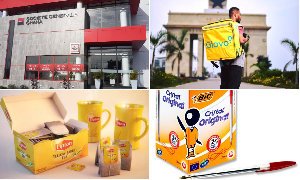
Challenges within Ghana’s economic landscape have led to the notable departure of multinational companies from the country.
Despite Ghana’s potential attractiveness for foreign direct investment, both local and international businesses have encountered obstacles.
Since 2022, unstable economic conditions have driven many international corporations to relocate their operations elsewhere.
Factors such as the fluctuating value of the Ghanaian cedi, high inflation rates, and steep import costs have contributed significantly to this trend.
Moreover, ongoing energy challenges, including frequent power outages (referred to as “dumsor”) and escalating utility expenses, have further complicated the business environment.
Consequently, numerous well-known multinational companies have ceased their operations in Ghana, citing strategic adjustments and unfavourable operating conditions.
These departures have not only impacted job opportunities and Ghana’s Gross Domestic Product (GDP) but have also had broader repercussions on economic growth and tax revenue.
Let’s take a look at some of these multinational companies that have left or are planning to leave Ghana.
1. Glovo:
The delivery service provider announced its exit from the Ghanaian market, effective May 10, 2024, due to profitability challenges and a difficult business climate.
The company stated, “Whilst we recognise the potential of the Ghana market, building a stronger position and achieving profitability would require substantial investment over an extended period. This is why we have decided to redirect our resources towards the other 23 countries where Glovo operates to better serve the millions of customers who use the Glovo app every day.”
2. Nivea:
The skincare brand ceased its operations in Ghana in December 2023, attributing high operating expenses and taxation as primary factors for its exit. The company’s decision stemmed from a strategic imperative to streamline operations and concentrate on markets offering sustainable growth and profitability.
3. Jumia Foods:
Popular e-commerce platform Jumia shut down its food delivery division in December 2023 due to unsustainable market conditions and economic factors. This closure also reflects Jumia’s financial difficulties, including a significant 41% loss amounting to $49.8 million in the last quarter of 2022.
4. Lipton Tea (Unilever):
In March 2024, Unilever Ghana relocated its tea production operations from Ghana to Nigeria, citing ongoing economic challenges in Ghana.
5. Dark and Lovely:
The haircare brand exited the Ghanaian market, citing the challenging economic environment and rapid changes in the beauty industry as reasons for its departure.
6. BET 365:
The online betting company withdrew its operations from the Ghanaian market, citing an unsustainable tax burden and regulatory hurdles as reasons for its departure.
7. Game:
The popular South African retailer closed its branches in the Accra and West Hills malls in 2022 due to financial challenges. This closure was part of a strategic decision by its parent company, Massmart, to shut down eight underperforming stores across Africa.
8. BIC:
The popular pen production company moved its operations from Ghana to Ivory Coast in March 2024, citing economic challenges as the reason for the relocation.
9. Societe Generale:
The French bank has announced its plans to exit the Ghanaian market after two decades of presence.
This decision is part of a broader withdrawal from several African countries, including Cameroon and Tunisia. Societe Generale’s move follows recent divestments from other African markets and a strategy to focus on markets where it can be a leading bank.
The departure of European banks like Societe Generale from Africa is linked to factors such as stiff competition, high operational costs, lower investment returns, and stringent regulatory demands.
Leave a Reply