Tag: Ghana

  • PLAYBACK: Ghana turns 69 today

    PLAYBACK: Ghana turns 69 today

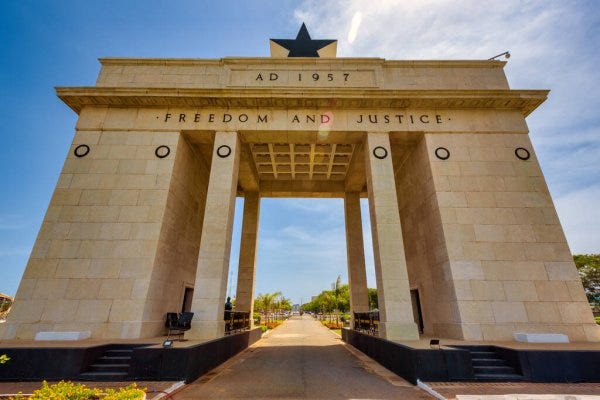
    On Friday, March 6, Ghana turned sixty-nine (69) years since it gained independence from British colonial rule in 1957.

    To commemorate the day, the government declared it a statutory holiday. As part of the celebration, scores of Ghanaians gathered at the forecourt of Jubilee House, the seat of government in Accra.

    Ghana’s Independence Day celebrations features national parades, ceremonial events and reflections on the country’s democratic journey and socio-economic progress. This year’s theme is Building Prosperity, Restoring Hope.

    Watch playback:

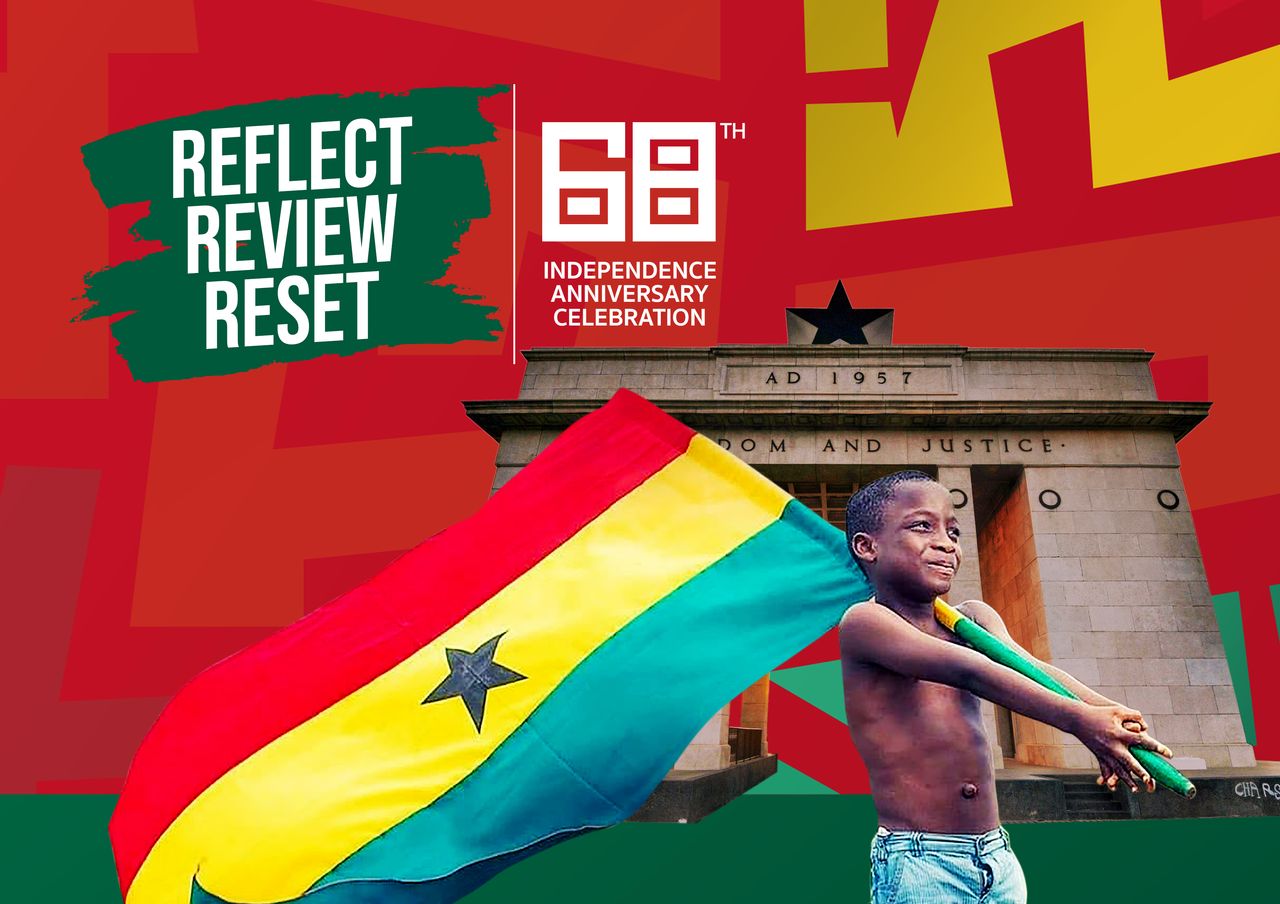
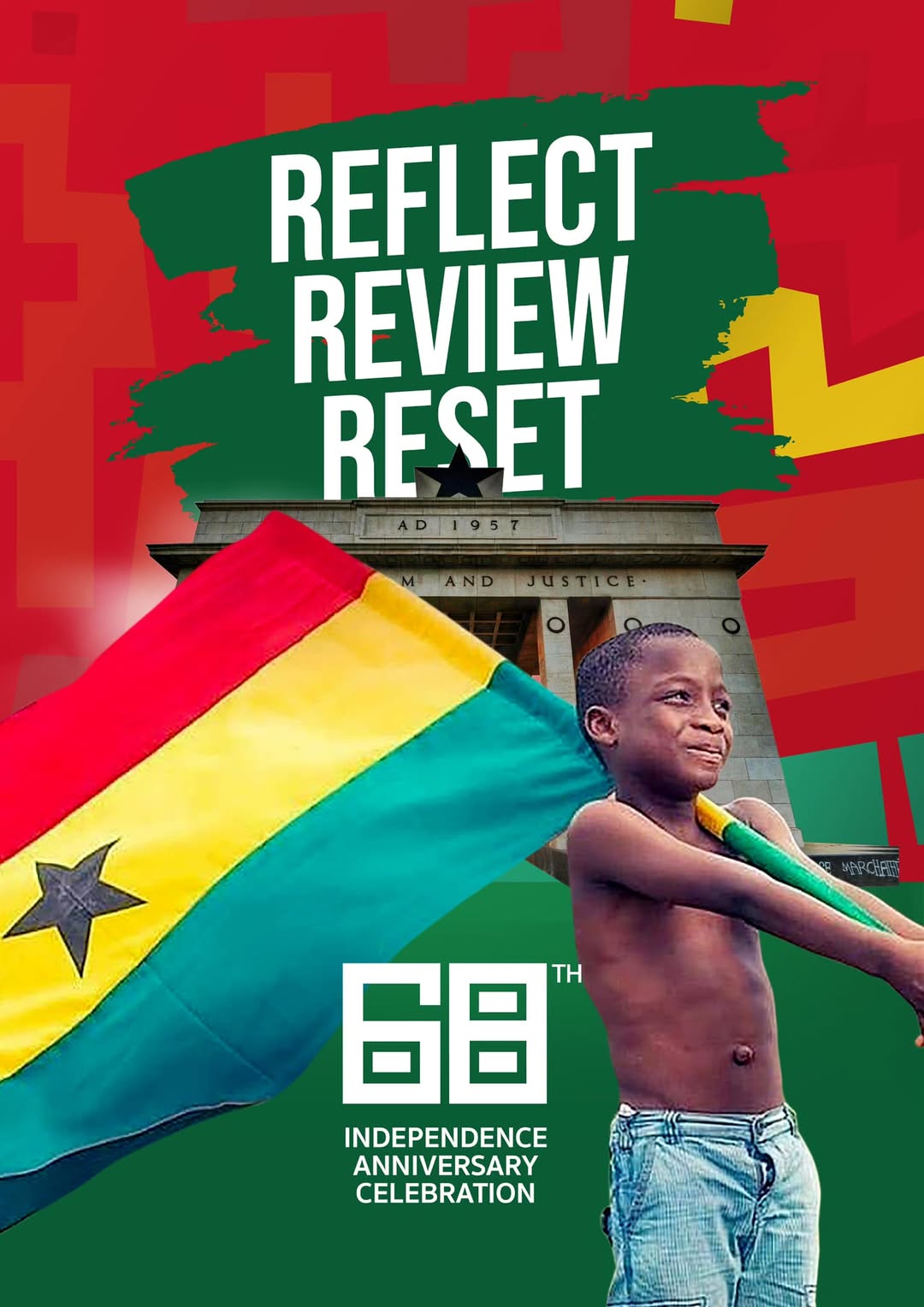
    Ghana marked its 68th Independence Day on March 6, 2025, with a scaled-down national celebration in Accra, at the forecourt of the Presidency, instead of the usual Independence Square.

    This decision was part of the government’s efforts to reduce costs while still honouring the country’s historic milestone.

    The 2025 theme, “Reflect, Review, Reset,” underscored the need for national introspection as Ghana navigates its current socio-economic landscape. The Presidency also unveiled an official logo for the occasion, symbolising the country’s resilience and aspirations for the future.

    Unlike previous years, the government suspended the rotational hosting of the national event. This decision was announced by Presidential Spokesman and Minister of State in charge of Government Communications, Felix Kwakye Ofosu.

    Despite the scaled-down nature of the event, key elements of the Independence Day tradition were maintained. The President inspected a Military Guard of Honour, followed by cultural performances by two groups of basic school pupils and a poetry recital from a senior high school student.

    Ten schools; six basic schools and four senior high schools, including Accra Wesley Girls and St. Mary’s SHS Cadet, participated in the march past.

    Dignitaries at the ceremony included traditional rulers, religious leaders, students, political party representatives, and members of the business community.

    President John Dramani Mahama delivered a ceremonial speech highlighting the significance of the nation’s independence and its path forward.

    Similar celebrations took place across the country at the metropolitan, municipal, and district levels, following directives from the Presidency.

    The 68th Independence Day celebration, though more modest in scale, remained a moment for Ghanaians to reflect on their history, assess their progress, and renew their commitment to national development.

    As part of the celebration, the President honoured 52 awardees, including 32 students from public schools, 16 from private schools, and four students with hearing and visual impairments for their outstanding performance in the 2024 Basic Education Certificate Examination (BECE).

  • Ghana’s power consumption rate exceeds 8% target amid economic growth — PURC

    Ghana’s power consumption rate exceeds 8% target amid economic growth — PURC


    Electricity consumers in the country are using more power than the expected 8 percent yearly growth rate.

    This is an indication that the economy is improving and power supply has become more stable, according to the Executive Secretary of the Public Utilities Regulatory Commission, Dr. Shaffic Suleman.

    Speaking on PM Express on Joy News, Dr. Suleman indicated that demand for power is expanding at a pace faster than energy planners anticipated.

    “We are now consuming more power beyond what has been projected,” he said. “We are looking at an annual projection of 8% per annum, but I can assure you that we are moving. We are moving far faster than that.”

    He attributed the development to a combination of improved electricity reliability and growing economic confidence, which has encouraged households and businesses to increase usage. According to him, previously suppressed demand is now being released as consumers respond to a more stable power supply environment.

    “And it’s because of the stability and availability of power, and then the suppressed demand is now being curtailed, so more consumers are coming on board generally, thanks to the stability of the economy,” he explained.

    The surge in consumption comes at a critical time, as government advances plans for a 24-hour economy a policy expected to significantly increase industrial and commercial activity.

    Dr. Suleman suggested that the rising demand reinforces the need for urgent expansion of generation capacity to avoid future supply gaps.

    “So we have to be fast with additional capacity,” he stated.

    He disclosed that discussions at the highest level of government are already underway to strengthen the country’s generation base. “President Mahama and the Minister of Energy, John Jinapor, are working towards adding additional capacity and ensuring that we have enough,” he said.

    Dr. Suleman further noted that peak load levels are reaching unfamiliar thresholds, a sign that economic activity is intensifying and placing new demands on the grid.

    “Peak load is also experiencing targets or points that we are not familiar with, and obviously, the economy is growing, so we need power,” he added.

    While assuring that current supply remains stable, he stressed the importance of forward planning to sustain growth and meet anticipated demand between 2027 and 2029.

    “Power is available, so all we need to do now is to think of how best or how fast we can get additional capacity to come in and supplement, especially going towards 2027 to 29.”

    The latest figures position the energy sector as both a beneficiary of economic recovery and a critical enabler of Ghana’s next phase of growth, underscoring the urgency of timely infrastructure expansion.

    The Communications Director of the Electricity Company of Ghana (ECG), William Boateng, has asserted that heat conditions, wiring and earthing are most likely contributing factors to excessive electricity consumption affecting its customers.

    This was in response to concerns from sections of the public who have made claims of being overcharged and that their prepaid credit no longer lasts as long as before.

    In an interview on Adom FM’s morning show Dwaso Nsem, Mr. Boateng advised customers to frequently check for possible electrical faults in their homes.

    “When the heat increases, someone can even double the use of cooling appliances. That alone can affect your consumption. Sometimes the issue may be with wiring or earthing. That is why we have certified electrical contractors who can check whether there is leakage or any fault affecting consumption,” he said.”

    Mr. Boateng urged customers who notice irregularities in their billing to report them directly to ECG for investigation, so that engineers can inspect the meter, review consumption patterns, and identify the cause of the problem.

    “We work with machines; it is not about defending anything. There could be a margin of error. If your bill exceeds what you expected or your credit finishes unusually fast, report it to ECG,” he urged, adding that, “When customers report, we can properly investigate, analyse the situation, and resolve it if there is a genuine problem,” he assured.

    Last year, the Director-General of the Ghana Standards Authority (GSA), Professor Alex Dodoo, warned of the dangers associated with uncalibrated electricity meters which were in use nationwide.

    These uncalibrated metres being utilised by the Electricity Company of Ghana (ECG), he said, did not guarantee the protection of consumers and also are not able to hold industry accountable for fair charges.

    Calibration of meters ensures that energy usage is measured accurately, preventing overbilling or underbilling for consumers.

    His comments came amid growing public concerns of overbilling, inconsistent power supply, and inefficiencies in the power-producing company’s services.

    Speaking at a stakeholder conference organized by the International Electrotechnical Commission yesterday, May 20, 2025 in Accra, Prof. Dodoo revealed that many ECG meters in circulation had not been calibrated or verified by the Ghana Standards Authority, as has been mandated by the National Instrumentation Regulation NI2413.

    “Very few of our meters have been calibrated and verified by the GSA. If the meter you are using has not been calibrated or verified by the Ghana Standards Authority, as required by NI2413, its accuracy is questionable. We simply cannot vouch for it,” he said.

    Prof. Dodoo said meters not being calibrated put consumers at risk of under- and overbilling.

    The NI2413 law mandates that all electricity meters in circulation must be calibrated and verified by the GSA to ensure accuracy, fair billing, and energy efficiency.

    Additionally, the Weights and Measures Decree, NRCD 326 of 1975, empowers the GSA to oversee legal metrology, ensuring that measuring instruments used in trade and industry meet standardized accuracy requirements.

    However, to resolve this, he mentioned that his outfit is currently working with the ECG and Public Utility and Regulatory Commission (PURC) to configure the millions of meters currently in circulation in the country.

    “The law states it must be verified and calibrated. Thankfully, we are working with ECG and PURC to ensure that all the millions of meters in Ghana are properly calibrated and verified by the GSA,” he noted.

    He also linked the issue to national development, emphasizing its importance in the government’s ambition to implement a 24-hour economy.

    “And I know it’s a very troubling issue. But as we support the President in rolling out a 24-hour economy, it’s important that we provide the quality infrastructure that will make the 24-hour economy succeed,” he concluded.

    In the same year, the government, through the Ministry of Energy and Green Transition, approved the procurement of 200 new transformers for the Electricity Company of Ghana (ECG) to strengthen power transmission and distribution to major cities across the country.

    The sector minister, John Abdulai Jinapor, made information public on May 28, 2025 during the opening session of the 18th West Africa Mining and Power Exhibition (WAMPEX) at the Grand Arena and Accra International Convention Centre (AICC) in Accra.

    The Electricity Company of Ghana (ECG) made a formal request for 200 new transformers in April 2025, and after barely a month, the government gave the green light for the deployment of the transformers.

    “Despite the challenges we inherited, recent reports show that power generation has been very stable” What we need to do is improve the transmission and distribution network. In this regard, I have granted approval to ECG as a matter of urgency to inject about 200 transformers in our major capital cities in order to ensure that we not only generate power but we can distribute power to (sic) consumers effectively and efficiently,” Mr Jinapor said.

    Minister Jinapor noted that initial challenges with power generation have been stabilized, and Ghana is now exporting electricity to neighboring countries. The current focus is on improving power transmission and distribution systems.

    WAMPEX, the largest forum for mining and power industries in West Africa, attracted over 240 exhibitors from 30 countries and more than 5,000 visitors this year.

    The event, however provided a platform for industry professionals, policymakers, and stakeholders to discuss challenges, innovations, and future opportunities.

  • U.S. visa suspension does not include short-term Ghanaian travelers – Ambassador Smith

    U.S. visa suspension does not include short-term Ghanaian travelers – Ambassador Smith

    Ghanaians holding United States (U.S.) B1-B2 visas are not affected by the U.S. government’s recent pause on immigrant visa processing, Ghana’s Ambassador to the U.S., Emmanuel Victor Smith, has disclosed.

    The Ambassador’s clarification comes in response to concerns among Ghanaians planning short-term travel to the United States for business or tourism. B1-B2 visas are issued to individuals traveling to the U.S. for business, tourism, study, or other temporary purposes.

    Taking to the Facebook platform on Thursday, January 15, 2026, the Ambassador wrote, “The US State Department confirms that B1-B2 visas will continue. Only immigrant visas are being paused”. On Wednesday Ghana was listed among seventy-four other countries whose immigrant visa processing has been suspended by the United States (U.S) government, effective Wednesday 21 January.

    Some of the countries affected are Nigeria, Somalia, Afghanistan, Albania, Algeria, Armenia, Bangladesh, Brazil, Cameroon, Egypt, Ethiopia, Gambia, Guinea, Haiti, Iran, Iraq, Jamaica, Kenya, Liberia, Libya, Morocco, Pakistan, Russia, Rwanda, Senegal, Sierra Leone, South Sudan, Sudan, Syria, Tanzania, Togo, Tunisia, Uganda, Uzbekistan, Yemen, and others.


    The new development, according to the Donald Trump administration, is to prevent what it claims is the misuse of welfare and public benefit programs by some immigrants.
    This information was disclosed by an Associated Press report released by the State Department.


    “The State Department will use its long-standing authority to deem ineligible potential immigrants who would become a public charge on the United States and exploit the generosity of the American people, …to prevent the entry of foreign nationals who would take welfare and public benefits”, parts of the statement read.

    Countries such as Russia, Iran, Afghanistan and several countries in Africa have had stricter migration and visa rules imposed on them.


    In July 2025, the U.S. Department of State—Bureau of Consular Affairs limited the number of entries and duration given under non-immigrant visa classifications.

    The affected countries were slapped with a maximum three-month single-entry visa and other limitations. In the specific case of Ghana, the Trump Administration said they were reacting to many years of visa overstays, mainly by students.


    It announced that Ghanaian visa applicants, including those applying for B-class visas covering business and tourism travel, will be issued single-entry visas valid for just three months. It emphasized that they can no longer access the 5-year visa and multiple-entry.


    The guidelines were published under the U.S. Visa, which revealed that Reciprocity and Civil Documents by Country for Ghana also affect student visa applicants.


    It noted that the F-1 visa holders, who are typically enrolled in full-time academic programmes in the U.S., will now be issued visas that allow for only one entry and expire after three months.
    Additionally, diplomats and government officials will, however, continue to receive multiple-entry visas with validity ranging from 24 to 60 months.


    The K1 visa, issued to the foreign-citizen fiancé(e) of a US citizen intending to marry within 90 days of arrival in the United States, and the K2 visa, provided to the unmarried dependent child (under 21 years old) of a K1 visa holder, are single-entry visas that will be valid for 6 months.


    The K3 visa, for the foreign-citizen spouse of a US citizen, and the K4 visa, for their unmarried dependent child (under 21 years old), are multiple-entry visas that will be valid for 24 months.


    All other visa applicants, including those applying for B-class visas, which cover business and tourism travel, will now be issued single-entry visas valid for just three months.


    In reaction to the US’ new policy that affects Ghana and Nigeria, the Vice President of IMANI-Africa, Bright Simons, quizzed whether or not Ghana and Nigeria can retaliate.


    “Given the scale and scope of the restrictions this time around now, citizen interest is likely to be much higher putting pressure on the government to openly discuss the measures it intends to take in response,” he noted while revealing how diplomatic channels resolved similar actions by the US in the past.


    He called on the government to provide statistics on whether US citizens coming to Ghana are granted long-term, multiple-entry visas as often as Ghanaian citizens visiting the US are.


    “Thus, they are trying to frame the issue as one of “reciprocity”. Something that, per policy, they ought to review regularly. Our governments should publish stats on this. Is it true or not?


    “The visa regimes of some other places Ghanaians like to visit, like Europe, China, and the Middle-East, are not any more liberal. Getting long-term, multiple-entry visas for these places has been quite hard. It may be hard to justify retaliation against the US when visa rules for other places seem just as tight or even tighter. Except, of course, that there is no rule that says that retaliation must be symmetrical,” he added.


    However in September 2025, the United States government lifted the visa restrictions imposed on Ghanaian nationals. According to the U.S. Embassy in Ghana, B1/B2 visas, which cover business and tourism travel, are now valid for up to five years with multiple entries, while F1 student visas are valid for up to four years with multiple entries.

    For F1 student visas, the Consular stated that the maximum validity has changed from a single entry with three months expiration to four years with multiple entries.


    “The U.S. Embassy is pleased to announce that the maximum validity periods for all categories of nonimmigrant visas for Ghanaians have been restored to their previous lengths. The maximum validity allowed for the B1/B2 visitor visa is again five years, multiple entry. The maximum validity for the F1 student visa is again four years, multiple entry,” it indicated on X.,

  • Analysis: See what Ghana has done with its oil money since 2011

    Analysis: See what Ghana has done with its oil money since 2011

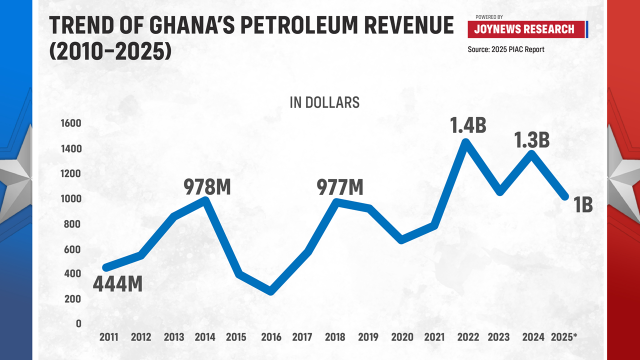
    Fourteen years after oil first trickled out of the Jubilee field, Ghana has little to show for the windfall.

    Since 2011, the state has earned about $11.58 billion from crude production, yet the transformation once promised has proved elusive.

    The state’s share comes from royalties of 5% to 12.5%, surface rentals of $30 to $100 per square kilometre, a 15% minimum carried interest, a 35% corporate income tax and a mix of negotiated bonuses and other entitlements with each operator.

    These inflows peaked in 2022, when the government collected $1.43 billion, but production has faltered since.

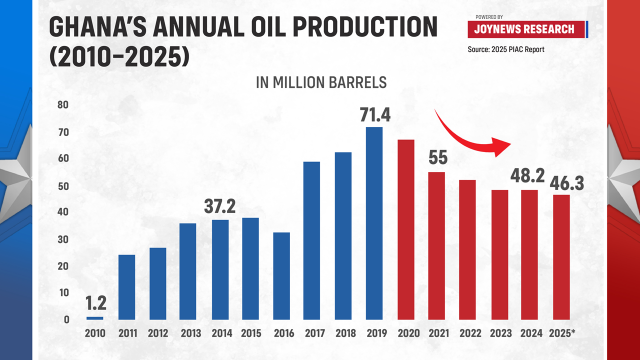
    Output has fallen steadily since 2019, weakening state revenues year after year.

    In the first half of 2025, receipts dropped to $370 million. That’s less than half of the $840 million earned a year earlier. A sharply appreciating cedi eroded the dollar value of these inflows even further.

    In all, Ghana has pumped around 675 million barrels of crude since 2010.

    The question today is not whether the country has benefited from petroleum, but how far the money has carried it.

    Through the Africa Extractives Media Fellowship (AEMF), led by Newswire Africa and the Australian High Commission, Isaac Dwamena, coordinator of the Public Interest and Accountability Committee (PIAC), the independent body that monitors the use of Ghana’s petroleum revenues, outlined how the state has handled the cash so far.

    Under the Petroleum Revenue Management Act, all petroleum income flows first into a central account, the Petroleum Holding Fund (PHF), before being shared among key recipients.

    The Ghana National Petroleum Corporation has received about $3.15 billion to finance operations and exploration.

    Another $2.6 billion has been paid into the Ghana Stabilisation Fund to cushion fiscal shocks, while the Ghana Heritage Fund, reserved for future generations, has received $1.1 billion and now holds roughly $1.3 billion.

    The largest visible impact has come through the Annual Budget Funding Amount (ABFA), which has absorbed about $4.5 billion since 2011 and supports the government’s yearly budget, making it the channel through which most citizens feel the benefits of oil revenue.

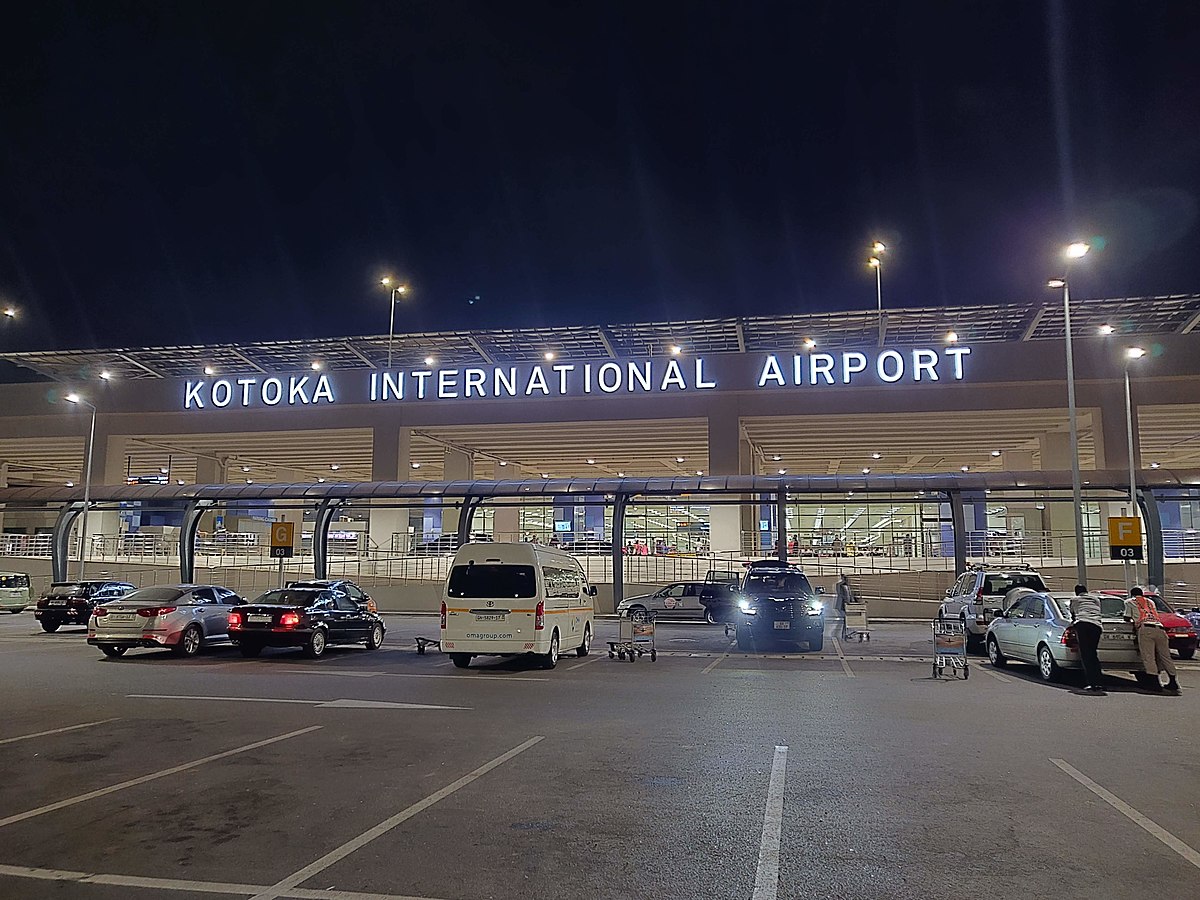
    These ABFA resources have financed headline projects including Kotoka Airport’s Terminal 3, the Kojokrom–Tarkwa railway, the Axim coastal protection works, the Tamne irrigation scheme, Free Senior High School and the Atuabo gas processing plant.

    The investments are visible enough, yet many Ghanaians still wonder whether the wider promise of oil wealth has translated into everyday improvements.

    Mr Dwamena argues that spending has lacked a clear guiding framework.

    Ghana still has no long-term national development plan approved by Parliament to steer the use of petroleum revenues.

    The absence of such a plan, he says, has produced a patchwork of projects launched at once, stretching resources thin and creating bottlenecks, delays and cost overruns.

    A new shift is also taking shape in how petroleum funds are allocated.

    Under the 2025 budget, the government has directed 95% of the ABFA into its Big Push programme to accelerate major road construction nationwide. The remaining 5% goes to the District Assemblies Common Fund.

    It is a sharp pivot from previous years, concentrating almost the entire ABFA on a single priority rather than spreading it across several sectors.

    Fourteen years after first oil, the gains remain uneven.

    Ghana’s experience contrasts with that of Norway, which channels oil income into a large sovereign wealth fund, invests almost entirely abroad and limits withdrawals to preserve capital for the long term.

    Ghana’s own rules for managing petroleum wealth were drafted more than a decade ago. They now require fresh scrutiny.

    Public consultations, expert input and legislative review could help adapt the framework to today’s economic pressures and the coming energy transition.

    Citizens have seen how the laws they helped craft have worked in practice; they must now consider whether the current system delivers what they intended.

    For now, Ghana’s oil money has built airports, schools and pipelines. What it has not yet delivered is the economic transformation its discovery once promised.

    Source:Myjoyonline.com

    DISCLAIMER: Independentghana.com will not be liable for any inaccuracies contained in this article. The views expressed in the article are solely those of the author’s, and do not reflect those of The Independent Ghana 

  • U.S. is aware Ghana cannot be an option for Salvadoran national Abrego Garcia’s deportation – Ablakwa

    U.S. is aware Ghana cannot be an option for Salvadoran national Abrego Garcia’s deportation – Ablakwa


    The United States (U.S.) government has made a U-turn over its intentions to deport one  Salvadoran national Abrego Garcia to Ghana. This was revealed by the Minister of Foreign Affairs, Samuel Okudzeto Ablakwa on his official X platform on Friday, October 10.

    According to the Minister of Foreign Affairs, Samuel Okudzeto Ablakwa, the U.S’ Department of Homeland Security has taken the appropriate steps to inform Garcia’s lawyers and amend court submissions to reflect the fact that Ghana cannot be an option for Garcia’s deportation.

    “We also note with satisfaction that DHS has today taken the appropriate steps to inform Garcia’s lawyers and amend court submissions to reflect the fact that Ghana cannot be an option for Garcia’s deportation,” Ablakwa stated.

    A recent report indicated that Salvadoran native Kilmar Abrego Garcia is expected to be deported from the United States (U.S) to Ghana in the coming days. However, his coming to Ghana will be finalized after a court hearing on Friday to hear the government officials’ final verdict regarding his deportation.

    Per reports, Kilmar Abrego Garcia was wrongly deported to El Salvador by the Department of Homeland Security. However, he was later sent back to the U.S., to Eswatini, and Uganda. Abrego Garcia was later imprisoned in El Salvador’s CECOT mega-prison in March. Before Abrego Garcia’s deportation, he lived in Maryland with his wife and children.

    In 2019 the Trump administration argued he was a member of a violent transnational criminal gang, the Mara Salvatrucha (MS-13) gang, when a court ruled that he shouldn’t be sent back to El Salvador because it could have a toll on him.

    But Trump’s administration claims were shot down by his family and lawyers. This development comes at a time when President John Dramani Mahama has assured that Ghana will not be turned into a dumping ground for deportees, especially those with criminal records from the United States.

    While speaking at the swearing-in ceremony of newly appointed Ambassadors and High Commissioners in Accra on Wednesday, October 1, President Mahama disclosed that the deal between the two countries will protect Ghana’s interests.

    “I wish to assure my countrymen and women that our understanding with the U.S. does not undermine our sovereignty, security, or stability. Ghana will not, and I repeat, will not become a dumping ground for deportees, nor will we accept individuals with criminal backgrounds,” he added.

    His assurance follows criticism after the government hosted about fourteen (14) individuals deported from the U.S. The deportation agreement between the Government of Ghana and the United States drew massive scrutiny from the Minority in Parliament.

    Addressing the media on Wednesday, September 24, the Ranking Member on the Foreign Affairs Committee, Samuel Abu Jinapor, described the deal as unconstitutional, calling for its immediate suspension.

    The Minority Caucus has demanded a thorough review of the deal in Parliament, while seeking clarity on the processes and safeguards that guided its approval.

    “We therefore reiterate our call on the Government to suspend, with immediate effect, the unconstitutional implementation of this agreement until Parliament has duly exercised its constitutional mandate to ratify same.

    “We urge Government to provide full clarity on the processes, safeguards, and other broader implications associated with receiving these deportees, including the measures, if any, that have been taken to protect Ghana’s security interests,” he added.

    The Minority cited Article 75 of Ghana’s Constitution, which dictates that an international agreement must be approved by Parliament.

    They pointed to previous Supreme Court rulings, such as the one involving the Gitmo 2 detainees, as precedent for why executive-only agreements are unconstitutional.

    “The deal should have been brought to Parliament. It’s the same President Mahama who entered into a deal for the relocation of the Gitmo 2 to Ghana. What’s in it for our beloved country, Ghana?” NPP MP for Abirem, Charles Owiredu, wrote.

    The opposition also accused Mahama of hiding behind the Economic Community of West African States (ECOWAS) protocol on free movement, describing it as misleading. They argued that those protocols apply to voluntary travel, not forced deportations orchestrated by non-member states like the U.S.

    “Accepting forced deportations orchestrated by non-ECOWAS states contradicts the spirit of regional integration protocols designed for voluntary movement,” stated the Minority Caucus on the Foreign Affairs Committee.

    However, the Foreign Affairs Minister, Samuel Okudzeto Ablakwa, has explained that the decision was driven primarily by humanitarian concerns after observing the harsh treatment of deportees abroad.

    “We didn’t agree to this because we agree with President Trump’s immigration policies. We’re not doing the U.S. a favour. We’re doing our fellow Africans a favour; we’re offering them refuge, hope, and we want them to come back home and be comfortable.

    “We solidarised with them when we saw those images, the arrests, the violation of their rights, and their being detained against their will. It was purely on a humanitarian basis; we did not take any financial benefits. We’re doing this because we want to continue to position Ghana as the Mecca for Africans,” Ablakwa stressed.

    On Wednesday, September 10, the first batch of West African nationals arrived in Ghana following their deportation from the U.S. During a media encounter at the Jubilee House, President John Dramani Mahama said that the batch consisted of 14 individuals, mostly Nigerians, along with one Gambian national.

    “We were approached by the U.S. to accept third-country nationals who were being removed, and we agreed that West African nationals could be accommodated, since all our fellow West Africans do not require a visa to enter Ghana. So, if they travel from the U.S. to Accra, entry is not an issue. Bringing our West African colleagues back is therefore acceptable,” President Mahama explained.

    President Mahama did not explicitly detail the deal of Ghana serving as a transit hub for West African nationals deported from the U.S. Meanwhile, the government of Ghana has sent back home the fourteen (14) West African migrants who arrived in the country after their deportation from the United States (U.S).

    This was made known today, Tuesday, September 23, after an Accra High Court struck out a human rights case filed by eleven (11) of the 14 West African nationals against the government.

    During court proceedings lawyer for the applicants, Oliver Barker-Vormawor, revealed that the individuals returned to their home countries over the weekend despite safety concerns.

    “We had before the court two applications-one for a writ of habeas corpus and the other for an interim injunction preventing repatriation. Unfortunately, the court adjourned the matter to this morning without granting interim relief. Over the weekend, the applicants were deported, and as such, our applications have become moot. This is precisely the injury we sought to prevent,” Barker-Vormawor told the court.

    The eleven individuals include Nigerians Daniel Osas Aigbosa, Ahmed Animashaun, Ifeanyi Okechukwu, and Taiwo K. Lawson; Liberian national Kalu John; Togolese nationals Zito Yao Bruno and Agouda Richarla Oukpedzo Sikiratou; Gambian national Sidiben Dawda; and Malians Toure Dianke and Boubou Gassama.

    According to the applicants, they were forcibly transported to Ghana without prior notice. They allege that they were secretly moved from the U.S detention centers between September 5 and 6 in shackles. They wanted the court to temporarily stop them from being deported back to their home countries until the court decides on their case.

    Their submission further revealed that Ghanaian authorities allegedly confined them in a military facility.They cited Article 14(1) of Ghana’s 1992 Constitution, which guarantees personal liberty, as well as Article 23, which protects the right to administrative justice.

    They are arguing that Ghana is violating international law by trying to send them back to countries where their lives or freedom could be at risk. As a result, they have demanded that the Attorney-General, the Chief of Defence Staff, and the Comptroller-General of the Ghana Immigration Service at the Human Rights Division of the High Court appear before the court with valid reasons.

    A federal judge, Judge Tanya Chutkan, has expressed concern that the arrangement suggested complicity on the part of the Ghanaian government in the deportation process.

    Judge Chutkan granted an emergency hearing after lawyers for the deportees argued that their clients expected to be returned to Nigeria and Gambia, and feared torture or persecution if sent home. She instructed the Trump administration to submit a report outlining measures to prevent Ghana from returning the deportees to their home countries.

    According to her, concerns about their safety were not speculative but “real enough that the United States government agrees they shouldn’t be sent back to their home country.”Judge Chutkan described the arrangement as appearing to have been designed by U.S. officials “to make an end run” around legal requirements barring the government from deporting migrants to situations of danger.

    The deportations, she noted, form part of President Donald Trump’s broader strategy of relocating migrants to “third countries” to expedite removals and pressure undocumented immigrants to leave the U.S.

    It later emerged, following a lawsuit filed on Friday, September 12, by the American Civil Liberties Union (ACLU) and Asian Americans Advancing Justice, that five of the nationals deported to Ghana had U.S. legal protections preventing deportation to their home countries. One of them, a bisexual man, was already sent to Gambia and is reportedly in hiding.

    The others were held in an open-air facility managed by the Ghanaian military, which was described as having squalid conditions.

    The complaint alleged that the migrants were taken from a Louisiana detention facility, shackled, and flown on a U.S. military aircraft without being told their destination. Some were reportedly restrained in straitjackets for 16 hours.

    The U.S. Department of Justice, responding to Judge Chutkan’s request, argued that it no longer had custody of the migrants and therefore the court lacked authority to interfere in matters of diplomacy. They cited a Supreme Court ruling allowing deportations to third countries.

    U.S. Department of Homeland Security spokesperson Tricia McLaughlin rejected the claim that straitjackets were used during the flight, but declined to comment on allegations of circumventing immigration law.

    In January 2016, President Mahama welcomed two Yemeni nationals, Mahmud Umar Muhammad Bin Atef and Khalid Muhammed Salih Al-Dhuby, who had been detained at Guantanamo Bay for about 15 years.

    They were linked to Al-Qaeda activities, and their transfer to Ghana formed part of a bilateral agreement with the U.S.

    The Mahama government explained that the move was a humanitarian gesture and that the two men would stay in Ghana for two years. However, the deal was never submitted to Parliament as required by the Constitution.

    In June 2017, the Supreme Court ruled that the Gitmo 2 agreement was unconstitutional, ordering the government to present it to Parliament within three months or return the detainees to the U.S.
    A recent report indicates that Salvadoran native Kilmar Abrego Garcia is expected to be deported from the United States (U.S) to Ghana in the coming days. However, his coming to Ghana will be finalized after a court hearing on Friday to hear the government officials’ final verdict regarding his deportation.

    Per reports, Kilmar Abrego Garcia was wrongly deported to El Salvador by the Department of Homeland Security. However, he was later sent back to the U.S., to Eswatini, and Uganda. Abrego Garcia was later imprisoned in El Salvador’s CECOT mega-prison in March. Before Abrego Garcia’s deportation, he lived in Maryland with his wife and children.

    In 2019 the Trump administration argued he was a member of a violent transnational criminal gang, the Mara Salvatrucha (MS-13) gang, when a court ruled that he shouldn’t be sent back to El Salvador because it could have a toll on him.

    But Trump’s administration claims were shot down by his family and lawyers. This development comes at a time when President John Dramani Mahama has assured that Ghana will not be turned into a dumping ground for deportees, especially those with criminal records from the United States.

    While speaking at the swearing-in ceremony of newly appointed Ambassadors and High Commissioners in Accra on Wednesday, October 1, President Mahama disclosed that the deal between the two countries will protect Ghana’s interests.

    “I wish to assure my countrymen and women that our understanding with the U.S. does not undermine our sovereignty, security, or stability. Ghana will not, and I repeat, will not become a dumping ground for deportees, nor will we accept individuals with criminal backgrounds,” he added.

    His assurance follows criticism after the government hosted about fourteen (14) individuals deported from the U.S. The deportation agreement between the Government of Ghana and the United States drew massive scrutiny from the Minority in Parliament.

    Addressing the media on Wednesday, September 24, the Ranking Member on the Foreign Affairs Committee, Samuel Abu Jinapor, described the deal as unconstitutional, calling for its immediate suspension.

    The Minority Caucus has demanded a thorough review of the deal in Parliament, while seeking clarity on the processes and safeguards that guided its approval.

    “We therefore reiterate our call on the Government to suspend, with immediate effect, the unconstitutional implementation of this agreement until Parliament has duly exercised its constitutional mandate to ratify same.

    “We urge Government to provide full clarity on the processes, safeguards, and other broader implications associated with receiving these deportees, including the measures, if any, that have been taken to protect Ghana’s security interests,” he added.

    The Minority cited Article 75 of Ghana’s Constitution, which dictates that an international agreement must be approved by Parliament.

    They pointed to previous Supreme Court rulings, such as the one involving the Gitmo 2 detainees, as precedent for why executive-only agreements are unconstitutional.

    “The deal should have been brought to Parliament. It’s the same President Mahama who entered into a deal for the relocation of the Gitmo 2 to Ghana. What’s in it for our beloved country, Ghana?” NPP MP for Abirem, Charles Owiredu, wrote.

    The opposition also accused Mahama of hiding behind the Economic Community of West African States (ECOWAS) protocol on free movement, describing it as misleading. They argued that those protocols apply to voluntary travel, not forced deportations orchestrated by non-member states like the U.S.

    “Accepting forced deportations orchestrated by non-ECOWAS states contradicts the spirit of regional integration protocols designed for voluntary movement,” stated the Minority Caucus on the Foreign Affairs Committee.

    However, the Foreign Affairs Minister, Samuel Okudzeto Ablakwa, has explained that the decision was driven primarily by humanitarian concerns after observing the harsh treatment of deportees abroad.

    “We didn’t agree to this because we agree with President Trump’s immigration policies. We’re not doing the U.S. a favour. We’re doing our fellow Africans a favour; we’re offering them refuge, hope, and we want them to come back home and be comfortable.

    “We solidarised with them when we saw those images, the arrests, the violation of their rights, and their being detained against their will. It was purely on a humanitarian basis; we did not take any financial benefits. We’re doing this because we want to continue to position Ghana as the Mecca for Africans,” Ablakwa stressed.

    On Wednesday, September 10, the first batch of West African nationals arrived in Ghana following their deportation from the U.S. During a media encounter at the Jubilee House, President John Dramani Mahama said that the batch consisted of 14 individuals, mostly Nigerians, along with one Gambian national.

    “We were approached by the U.S. to accept third-country nationals who were being removed, and we agreed that West African nationals could be accommodated, since all our fellow West Africans do not require a visa to enter Ghana. So, if they travel from the U.S. to Accra, entry is not an issue. Bringing our West African colleagues back is therefore acceptable,” President Mahama explained.

    President Mahama did not explicitly detail the deal of Ghana serving as a transit hub for West African nationals deported from the U.S. Meanwhile, the government of Ghana has sent back home the fourteen (14) West African migrants who arrived in the country after their deportation from the United States (U.S).

    This was made known today, Tuesday, September 23, after an Accra High Court struck out a human rights case filed by eleven (11) of the 14 West African nationals against the government.

    During court proceedings lawyer for the applicants, Oliver Barker-Vormawor, revealed that the individuals returned to their home countries over the weekend despite safety concerns.

    “We had before the court two applications-one for a writ of habeas corpus and the other for an interim injunction preventing repatriation. Unfortunately, the court adjourned the matter to this morning without granting interim relief. Over the weekend, the applicants were deported, and as such, our applications have become moot. This is precisely the injury we sought to prevent,” Barker-Vormawor told the court.

    The eleven individuals include Nigerians Daniel Osas Aigbosa, Ahmed Animashaun, Ifeanyi Okechukwu, and Taiwo K. Lawson; Liberian national Kalu John; Togolese nationals Zito Yao Bruno and Agouda Richarla Oukpedzo Sikiratou; Gambian national Sidiben Dawda; and Malians Toure Dianke and Boubou Gassama.

    According to the applicants, they were forcibly transported to Ghana without prior notice. They allege that they were secretly moved from the U.S detention centers between September 5 and 6 in shackles. They wanted the court to temporarily stop them from being deported back to their home countries until the court decides on their case.

    Their submission further revealed that Ghanaian authorities allegedly confined them in a military facility.They cited Article 14(1) of Ghana’s 1992 Constitution, which guarantees personal liberty, as well as Article 23, which protects the right to administrative justice.

    They are arguing that Ghana is violating international law by trying to send them back to countries where their lives or freedom could be at risk. As a result, they have demanded that the Attorney-General, the Chief of Defence Staff, and the Comptroller-General of the Ghana Immigration Service at the Human Rights Division of the High Court appear before the court with valid reasons.

    A federal judge, Judge Tanya Chutkan, has expressed concern that the arrangement suggested complicity on the part of the Ghanaian government in the deportation process.

    Judge Chutkan granted an emergency hearing after lawyers for the deportees argued that their clients expected to be returned to Nigeria and Gambia, and feared torture or persecution if sent home. She instructed the Trump administration to submit a report outlining measures to prevent Ghana from returning the deportees to their home countries.

    According to her, concerns about their safety were not speculative but “real enough that the United States government agrees they shouldn’t be sent back to their home country.”Judge Chutkan described the arrangement as appearing to have been designed by U.S. officials “to make an end run” around legal requirements barring the government from deporting migrants to situations of danger.

    The deportations, she noted, form part of President Donald Trump’s broader strategy of relocating migrants to “third countries” to expedite removals and pressure undocumented immigrants to leave the U.S.

    It later emerged, following a lawsuit filed on Friday, September 12, by the American Civil Liberties Union (ACLU) and Asian Americans Advancing Justice, that five of the nationals deported to Ghana had U.S. legal protections preventing deportation to their home countries. One of them, a bisexual man, was already sent to Gambia and is reportedly in hiding.

    The others were held in an open-air facility managed by the Ghanaian military, which was described as having squalid conditions.

    The complaint alleged that the migrants were taken from a Louisiana detention facility, shackled, and flown on a U.S. military aircraft without being told their destination. Some were reportedly restrained in straitjackets for 16 hours.

    The U.S. Department of Justice, responding to Judge Chutkan’s request, argued that it no longer had custody of the migrants and therefore the court lacked authority to interfere in matters of diplomacy. They cited a Supreme Court ruling allowing deportations to third countries.

    U.S. Department of Homeland Security spokesperson Tricia McLaughlin rejected the claim that straitjackets were used during the flight, but declined to comment on allegations of circumventing immigration law.

    In January 2016, President Mahama welcomed two Yemeni nationals, Mahmud Umar Muhammad Bin Atef and Khalid Muhammed Salih Al-Dhuby, who had been detained at Guantanamo Bay for about 15 years.

    They were linked to Al-Qaeda activities, and their transfer to Ghana formed part of a bilateral agreement with the U.S.

    The Mahama government explained that the move was a humanitarian gesture and that the two men would stay in Ghana for two years. However, the deal was never submitted to Parliament as required by the Constitution.

    In June 2017, the Supreme Court ruled that the Gitmo 2 agreement was unconstitutional, ordering the government to present it to Parliament within three months or return the detainees to the U.S.
  • Don’t risk your stay in U.S. – Ghana’s Mission to citizens

    Don’t risk your stay in U.S. – Ghana’s Mission to citizens

    Ghanaian citizens in the United States (U.S.) have been cautioned not to flout the recently updated visa restrictions imposed on Ghana by the U.S. government.

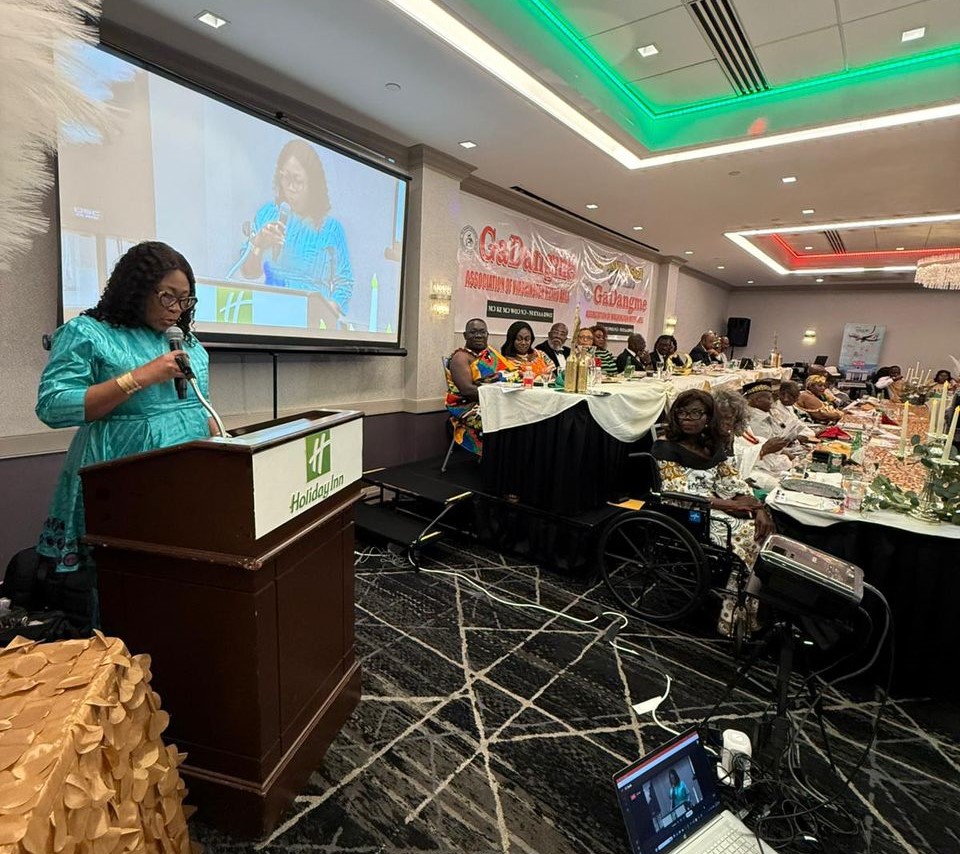
    Speaking at the 40th anniversary celebration of the Ga Dangme Association in Washington, Deputy Head of Mission at Ghana’s Embassy in the U.S., Jane Gasu Aheto, urged Ghanaians to avoid overstaying their visas, warning that doing so could have serious repercussions.


    “After many deliberations, the restrictions on visa for Ghana has been restored and once again Ghanaians can be eligible for up to five years multiple entry visas. While this is very welcome news, it is imperative that we as a people do not abuse the privileges granted to us.We must ensure that we abide by the rules governing visas, responsibly, so we do not suffer adverse consequences,” she said.


    She noted that the Mission is committed to support Ghanaians living in the U.S., emphasizing, “The Embassy stands in readiness to offer support and assistance to our fellow Ghanaian brothers and sisters who live and work here, in all their activities”.


    Minister for Foreign Affairs, Samuel Okudzeto Ablakwa, has allayed fears amongst Ghanaians after the United States (U.S) government made a U-turn on an earlier directive regarding visas.


    According to the Minister, the new development will not undermine Ghana’s security or stability, as many are speculating. He added that Ghana did not make any concessions or compromises to get the U.S. visa restrictions adjusted.


    In a post on the X platform, he wrote, “Since Ghana became the only country under US visa restrictions to secure a reversal from the Trump Administration, an avalanche of conspiracy theories has been making the rounds. May I respectfully ask that you ignore the conspiracy theorists and scaremongers”.


    On Saturday, September 27, the U.S. Embassy in Ghana announced that visa restrictions imposed on Ghanaian nationals by the United States (U.S.) have officially been lifted by the U.S. government.


    Prior to this announcement, Foreign Affairs Minister Samuel Okudzeto Ablakwa, had written on the X platform that “I am really pleased that months of high-level diplomatic negotiations has led to a successful outcome. I am really pleased that months of high-level diplomatic negotiations has led to a successful outcome”.


    According to the U.S. Embassy in Ghana, B1/B2 visas, which cover business and tourism travel, are now valid for up to five years with multiple entries, while F1 student visas are valid for up to four years with multiple entries. For F1 student visas, the Consular stated that the maximum validity has changed from a single entry with three months expiration to four years with multiple entries.


    “The U.S. Embassy is pleased to announce that the maximum validity periods for all categories of nonimmigrant visas for Ghanaians have been restored to their previous lengths. The maximum validity allowed for the B1/B2 visitor visa is again five years, multiple entry. The maximum validity for the F1 student visa is again four years, multiple entry,” it indicated on X.


    It will be recalled that the US imposed visa restrictions on Ghana and other countries in July this year. The affected countries were slapped with a maximum three-month single-entry visa and other limitations. In the specific case of Ghana, the Trump Administration said they were reacting to many years of visa overstays, mainly by students.


    In July, the U.S. Department of State—Bureau of Consular Affairs limited the number of entries and duration given under non-immigrant visa classifications.


    Ghanaian visa applicants, including those applying for B-class visas covering business and tourism travel, will be issued single-entry visas valid for just three months. It emphasized that they can no longer access the 5-year visa and multiple-entry.


    The guidelines were published under the U.S. Visa, which revealed that Reciprocity and Civil Documents by Country for Ghana also affect student visa applicants.


    It noted that the F-1 visa holders, who are typically enrolled in full-time academic programmes in the U.S., will now be issued visas that allow for only one entry and expire after three months.


    Additionally, diplomats and government officials will, however, continue to receive multiple-entry visas with validity ranging from 24 to 60 months.


    The K1 visa, issued to the foreign-citizen fiancé(e) of a US citizen intending to marry within 90 days of arrival in the United States, and the K2 visa, provided to the unmarried dependent child (under 21 years old) of a K1 visa holder, are single-entry visas that will be valid for 6 months.
    The K3 visa, for the foreign-citizen spouse of a US citizen, and the K4 visa, for their unmarried dependent child (under 21 years old), are multiple-entry visas that will be valid for 24 months.


    All other visa applicants, including those applying for B-class visas, which cover business and tourism travel, will now be issued single-entry visas valid for just three months.


    In reaction to the US’ new policy that affects Ghana and Nigeria, the Vice President of IMANI-Africa, Bright Simons, quizzed whether or not Ghana and Nigeria can retaliate.


    “Given the scale and scope of the restrictions this time around now, citizen interest is likely to be much higher putting pressure on the government to openly discuss the measures it intends to take in response,” he noted while revealing how diplomatic channels resolved similar actions by the US in the past.


    He called on the government to provide statistics on whether or not US citizens coming to Ghana do not get long-term, multiple-entry visas as often as Ghanaian citizens visiting the US do.


    “Thus, they are trying to frame the issue as one of “reciprocity”. Something that, per policy, they ought to review regularly. Our governments should publish stats on this. Is it true or not?.


    The visa regimes of some other places Ghanaians like to visit, like Europe, China, and the Middle-East, are not any more liberal. Getting long-term, multiple-entry visas for these places has been quite hard. It may be hard to justify retaliation against the US when visa rules for other places seem just as tight or even tighter. Except, of course, that there is no rule that says that retaliation must be symmetrical,” he added.


    The development comes at a time when U.S. President Donald J. Trump has imposed a fifteen percent (15%) ad valorem tariff on Ghana’s exports. This means that Ghanaian goods shipped to the U.S. will be charged a 15% tax based on their price.

    Thus, a product at $100, would be $115 as a result of the $15 tariff. The U.S. government explains that the new development forms part of the efforts to protect its economy, as the country buys more goods from other countries than it sells to them.


    According to the Executive Order, “These modifications shall be effective with respect to goods entered for consumption, or withdrawn from warehouse for consumption, on or after 12:01 a.m.”

    The policy is expected to reflect on Ghanaian goods entering the U.S. in the coming days, which will affect many countries, including Nigeria, Zimbabwe, Zambia, Uganda, Mozambique, Mauritius, Malawi, Lesotho, and Madagascar.


    Also, countries such as South Africa and Libya face a 30 percent tariff, while Tunisia will face a 25 percent steeper duty. Meanwhile, the Ghana Export Promotion Authority (GEPA) and Ghana’s Trade Ministry are yet to react to the new tariff.

    The new tariff adjustment comes at a time when the Ghanaian government is implementing tax reforms to ensure the elimination of successive charges of taxation that increase the cost of goods and services.


    Although the measure is premised on the principle of reciprocity, President Trump insisted in the executive order that the United States had been unfairly disadvantaged by trade barriers erected by other countries. This policy affects numerous Ghanaian exports, notably those under the African Growth and Opportunity Act (AGOA), which previously allowed duty-free access to the U.S. market.


    Ghanaian officials have criticized the move, arguing that the U.S. cannot claim the tariffs are to protect domestic industries. Ghana is not facing the issue in isolation; as such, the African Union and the African Continental Free Trade Area (AfCFTA) are coordinating a collective response.


    Some African nations, such as Lesotho, could face import duties of up to 50 percent. The African Growth and Opportunity Act (AGOA), which was passed by the U.S. Congress in 2000 to provide duty-free access for African exports to the U.S. market, remains in effect but faces new scrutiny in light of the latest U.S. trade policy shift.


    In 2022, two-way trade between AGOA members and the US exceeded $46 billion, with $13.5 billion more in imports than exports. That year, AGOA recipients exported $30 billion worth of goods to the US, of which $10.2 billion were sold under the duty-free AGOA preference.


    However, with AGOA’s framework set to expire in September, there are growing concerns that the Trump administration’s stance may hinder any renewal. The U.S. government in May announced a new 10% tariff on exports, but the then U.S. Ambassador to Ghana, Virginia Palmer, insisted that the new global tariff adjustments could benefit Ghana, unlike other countries.


    In an interview with Citi News on Monday, May 26, she explained that the 10% tariff on exports to the U.S. is in favor of Ghana, as the nation’s key exports, oil and gas, are not affected, as it is imposed on rival countries.
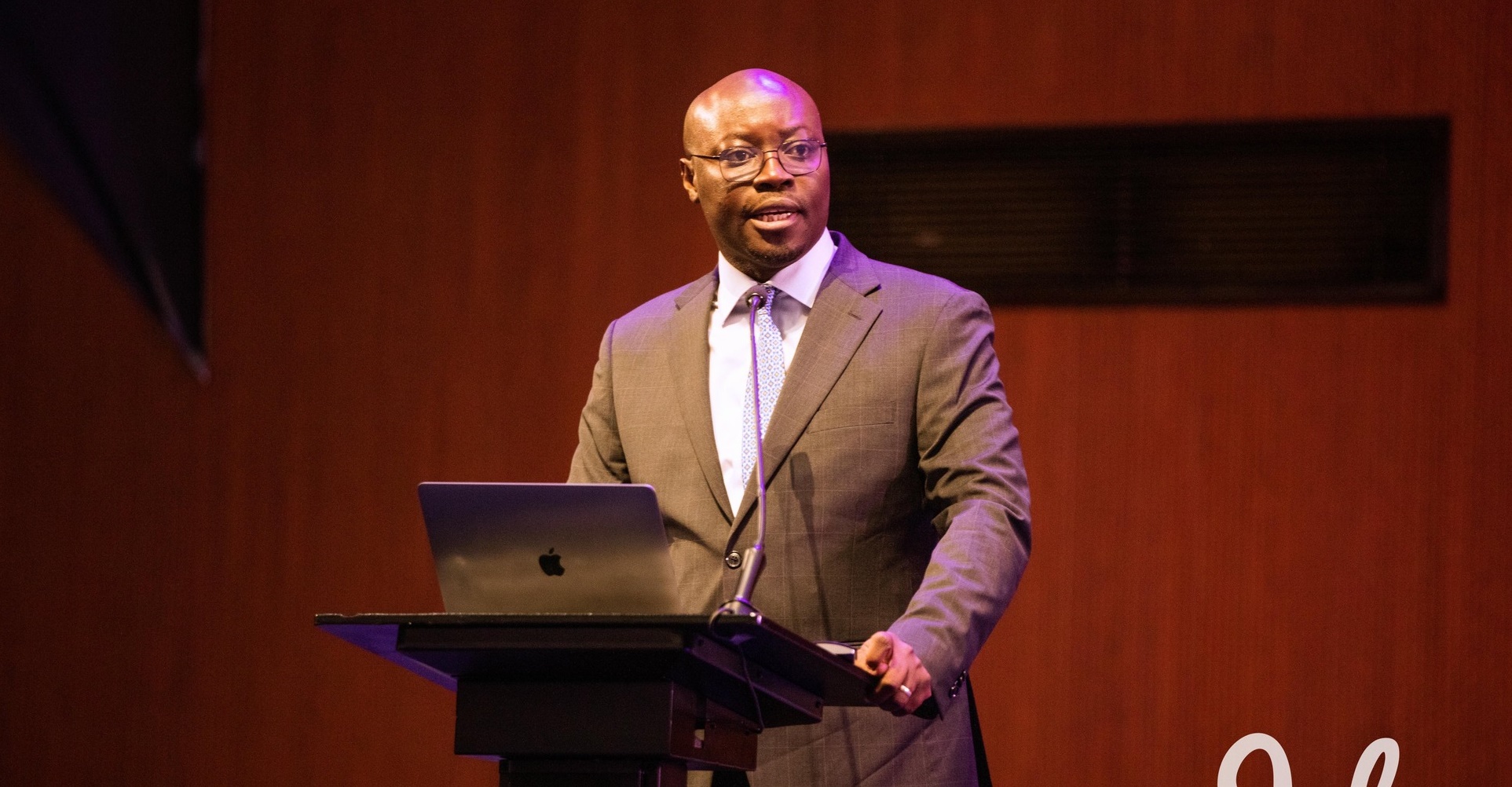

    “There were 10% applied globally, which the new US administration has taken, that may in the short term [be] to Ghana’s advantage, vis-à-vis its competitors. Oil and gas, which is being [a] major exporter to the US, is not subject to the tariff. If Ghana faces a 10% tariff, Bangladesh and Vietnam face 47% and 63%,” she said.


    According to her, Ghana is currently in a better position in the U.S. market as compared to 60 countries that are facing a much higher rate of the 10% imposed tax. “There were 60 countries where tariffs were much higher than 10%, which may be an advantage for Ghana in the near term. I hope that Ghana will be the one making that point to the American legislature when it expires at the end of September [2025],” she added.

    Virginia Palmer therefore urged the country’s leadership to seize the advantage to persuade the U.S. government to renew a trade benefit before its expiry in September this year. She emphasized that Ghana remains a valued partner. Trade analysts, on the other hand, suggest the U.S. is unintentionally nudging African countries toward deeper engagement with China.

    In July, the U.S. Department of State—Bureau of Consular Affairs limited the number of entries and duration given under non-immigrant visa classifications. Ghanaian visa applicants, including those applying for B-class visas—covering business and tourism travel—will be issued single-entry visas valid for just three months. They can no longer access the 5-year visa and multiple-entry.

    The updated guidelines, published under the U.S. Visa, reveal that Reciprocity and Civil Documents by Country for Ghana also affect student visa applicants.


    F-1 visa holders, who are typically enrolled in full-time academic programmes in the U.S., will now be issued visas that allow for only one entry and expire after three months. Diplomats and government officials will, however, continue to receive multiple-entry visas with validity ranging from 24 to 60 months.


    The K1 visa, issued to the foreign-citizen fiancé(e) of a US citizen intending to marry within 90 days of arrival in the United States, and the K2 visa, provided to the unmarried dependent child (under 21 years old) of a K1 visa holder, are single-entry visas that will be valid for 6 months.


    The K3 visa, for the foreign-citizen spouse of a US citizen, and the K4 visa, for their unmarried dependent child (under 21 years old), are multiple-entry visas that will be valid for 24 months. All other visa applicants, including those applying for B-class visas, which cover business and tourism travel, will now be issued single-entry visas valid for just three months.

    The Ministry of Foreign Affairs has debunked reports that it is responsible for the United States government’s revision of the reciprocity schedule for a considerable number of African countries, including Ghana.


    The ministry noted that, consistent with bilateral arrangements, US passport holders are entitled to a maximum visa validity of five years, and in most instances, five-year multiple-entry visas are issued upon request. “Some applicants, however, apply for single-entry visas owing largely to limited validity of their passports,” a statement released by the Ministry read.


    Besides the maximum five-year multiple visas, Ghana also issues multiple-entry 6-month, one-year, two-year, three-year, and four-year visas based on various considerations. From January 2025 to date, 40,648 visas have been issued by Ghana’s missions in Washington, D.C., and New York. Out of this, 28,626 are multiple-entry visas to Ghana.

    The statement further indicated that “The official statistics clearly demonstrate that, contrary to false narratives, Ghana has issued, on average, an impressive 70.42% of multiple long-term visas to US passport holders, consistent with our bilateral arrangements.”

  • World Bank injects $360m into Ghana’s economy

    World Bank injects $360m into Ghana’s economy

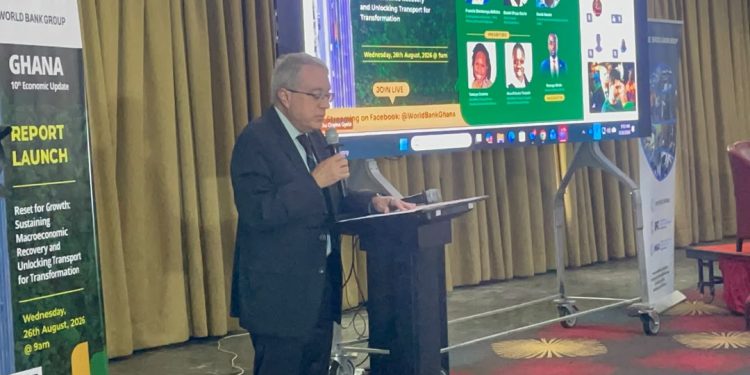
    The World Bank has disbursed $360 million from its International Development Association (IDA) to Ghana. This funding was made possible through the Second Resilient Recovery Development Policy Financing operation, to support Ghana’s efforts to restore macroeconomic stability.


    Parliament gave the nod in July after the World Bank Board approved the facility in June. The World Bank Group is a family of five international organizations that provide leveraged loans to developing countries. It is the largest and best-known development bank in the world, serving as an observer at the United Nations Development Group.

    The Bank is headquartered in Washington, D.C., United States. Its objectives are to restore fiscal sustainability, support financial sector stability and private sector development, improve energy sector financial discipline, and strengthen social and climate resilience.

    The recent disbursement comes at a time when Ghana’s local currency, the cedi, has been ranked as the worst-performing currency in a recent report published by the global financial news outlet Bloomberg.


    Ghana cedi’s strong performance was a central theme highlighted by President John Mahama during an interaction with potential investors in Singapore and Japan weeks ago. President Mahama emphasised the robust performance of the local currency to underscore Ghana’s macroeconomic stability and attractiveness as a destination for foreign capital.


    However, the cedi’s brief gains were short-lived after its rapid depreciation made it the worst-performing currency. According to Bloomberg’s recent report released on Thursday, September 4, the Ghana cedi is the worst-performing currency among all trading currencies, attributing the depreciation to a surge in demand for dollars by companies paying for imports.


    “A surge in demand for dollars by companies paying for imports has ended the Ghana cedi’s recent strong performance,” Bloomberg said.
    Bloomberg attributed the new development to the “strong gold prices,” while emphasizing that Ghana’s cedi has seen more than a ten percent (10%) depreciation in the current quarter.


    This, Bloomberg noted, has erased the fifty percent gain against the dollar in April and June. According to Bloomberg, the cedi traded 0.1 per cent weaker at GH¢11.9507 per dollar at 1:50 a.m. Despite the losses, it has gained 23 per cent so far this year.


    “Now, the currency, which had ranked first globally on the back of strong gold prices, has weakened by 13 per cent in the current quarter. Bloomberg data showed this was the steepest fall worldwide, erasing part of the 50 per cent gain recorded between April and June,” the report said.


    But Bloomberg has indicated that “Despite the losses, it has gained 23 per cent so far this year based on market data.” Reacting to Bloomberg’s report, the Bank of Ghana (BoG) noted, “The cedi should be stable within a reasonable range,” the central bank said in an emailed response.

    “Our role is to ensure fluctuations remain orderly, that they reflect fundamentals, and that they do not undermine confidence in the broader economy.”


    Bloomberg, in April this year, ranked the cedi as the best-performing currency with a sixteen percent (16%) gain against the dollar. What made the cedi earn the tag as the worst-performing currency is the steepest decline on the global level.

    The cedi’s appreciation in the last eight months helped ease inflationary pressures, pushing consumer inflation down to 21.2 per cent, the lowest in eight months at the time.


    Ghana’s import-dependent economy brings in a wide range of goods, from food to machinery, with demand typically rising toward the end of the year as businesses prepare for the Christmas season.

    The higher demand for dollars has piled pressure on the cedi, while the Bank of Ghana’s (BoG) limited supply of foreign exchange has added to the strain.


    Head of Market-Risk Management at UMB Bank, Mr. Hamza Adam, said banks that submitted dollar requests on behalf of clients to the Bank of Ghana last week received only half of what they asked for. “This week the central bank is trying to meet all demand,” he said by phone from Accra on September 3, 2025.


    Meanwhile, before Bloomberg reported on the cedi, BoG addressed the concerns of Ghanaians concerning the fast depreciation of the cedi, calling for calm. Bank of Ghana Governor, Dr. Johnson Asiama, during an interview with Joy Business, which was aired on Wednesday, August 27, mentioned that the current depreciation of the cedi was temporary, assuring a comeback soon.


    “The Bank of Ghana operates a managed floating system in terms of framework; therefore, these blips will happen. But the assurance is that this is a short-term issue, and the challenges are being addressed,” he assured.


    According to data from the Bank of Ghana, which was shared on 23rd August, the Ghana cedi had seen a five percent (5%) depreciation. Between August 23 and August 28, the Ghanaian cedi depreciated from GH¢10.43 to around GH¢11.00 per US dollar.


    The sharpest movement was between August 23 and 24, where the cedi depreciated from GH¢10.43 to GH¢10.90. The dollar was selling at GH¢10.43 on August 23, GH¢10.90 on August 24, and between August 25–27, it staggered between GH¢10.85–11.00.


    As of August 28, it had crossed GH¢11, sparking major concerns. On Dr. Johnson Asiama’s part, the current depreciation is a result of the temporary shortage of foreign exchange supply in the market, resulting from the effects of the currency appreciation coupled with other phenomena that, “…we are beginning to see those phenomena at play. Imports become a lot cheaper, so it’s just natural to begin to see pressure build up on the currency.”


    He said there is no need for panic as the economic indicators are obviously strong, giving signs of a cedi recovery soon enough. Dr. Asiama attributed the depreciating cedi to the decline in remittance inflows, sharp appreciation of the cedi, and limited interbank trading.


    “…what is happening is just because of the sharp appreciation, we are beginning to have some cash flow problems, specifically because we have seen some decline in terms of remittance inflows. Also, imports become a lot cheaper, so it’s just natural to begin to see pressure build up on the currency. Over the last two months, we have also seen very limited interbank trading,” he stated.


    The Ghana cedi saw a remarkable appreciation against major trading currencies worldwide over the past six months. During the presentation of the 2025 Mid-Year Fiscal Policy Review on July 24, the Minister for Finance, Dr. Cassiel Ato Forson, revealed that the cedi has recorded a remarkable turnaround in the first six months of 2025, appreciating by 42.6% against the US dollar.

    Dr. Forson described the cedi’s performance as “impressive” and the first of its kind in the history of Ghana’s economy. The cedi, which was initially always experiencing depreciation, is currently showing resilience against the dollar.


    He noted that the cedi, which was previously trading at about GH¢17.0 to the US dollar, had strengthened to GH¢10.4 as of July 23.


    “Mr. Speaker, the cedi’s performance in the first half of this year has been impressive! The Ghana cedi experienced significant appreciation against all major trading currencies in the first six months of 2025. I am happy to inform the House that our precious cedi, which once upon a time was trading at about GH¢17.0 to the US dollar, was trading at about GH¢10.4 as of yesterday, 23rd July, 2025,” he revealed.


    In high spirits, the minister adopted the catchphrase from Ghanaian highlife musician King Paluta’s energetic party anthem “For the Popping (Apicki),” released on December 27, 2024, and said, “This level of appreciation of the Ghana cedi has never happened in the history of our nation. Ghanafo, cedi no apicki! Apicki apicki apicki!”


    He continued that the strength of the cedi has not appreciated against just the US dollar but against the British pound as well. The cedi also gained 30.3% against the British pound and 25.6% against the euro during the same period.


    This marks a sharp contrast to the same period in 2024, when the cedi depreciated by 18.6% against the dollar, 17.9% against the pound, and 16.0% against the euro.


    “Similarly, the cedi, which was once trading at GH¢21.0 to the Great British Pound, was trading at about GH¢14.1 as of yesterday, 23rd July. Mr. Speaker, as of the end of June 2025, the cedi appreciated by 42.6% against the US dollar, 30.3% against the British pound, and 25.6% against the euro.

    With these gains over the past few months, Dr. Cassiel stated that all the losses in the previous years had been reversed. “Mr. Speaker, I repeat, so far, we have almost reversed all the cedi depreciation in 2022, 2023, and 2024,” he mentioned.

  • Ghana, France sign €87.7m debt relief agreement

    Ghana, France sign €87.7m debt relief agreement

    France, Ghana’s bilateral creditor, on Friday, July 25, signed an €87.7 million debt relief agreement with the West African country under the Official Creditor Committee (OCC).

    France becomes Ghana’s first bilateral creditor to do so after two years of negotiations. Finance Minister Dr Cassiel Ato Forson and Co-Chair of the OCC, Mr William Ross, signed on behalf of the governments of Ghana and France, respectively.

    This agreement ensures a hundred percent debt service, as well as a reduction in interest and an extension on maturity.

    The Finance Minister expressed immense gratitude to France for standing as a true friend. “It is often said that it is only in difficult times that you see your true friends, and we can say without mincing words that the French Republic came through for Ghana and Ghana is extremely grateful,” Dr Cassiel Ato Forson said.

    “Today is a milestone – in the sense that it has taken us some years to get here, but it’s the most significant one that will pave the way for others to this side. Inflation that was once at 54.1 per cent has now come down to 13.7 per cent. We are seeing growth bound to about a five-year high. We are seeing particularly reserves, the external position improving to about four months of import cover, and the primary surplus is at 1.1 per cent of Gross Domestic Product (GDP),” he added.

    The sector minister assured that the government of Ghana is “determined to hold the line and sustain the progress we have made year to date, and we believe that in the coming days, Ghana will be able to see investment after the stability.” 

    Deputy Minister for Finance, Thomas Nyarko Ampem, asserted that the recent agreement is “telling a good story that Ghana is on track.”

    On his part, Mr William Ross noted that the economic recovery being made by the government of Ghana is nothing short of impressive and compared the country’s economic performance to other countries such as Zambia.

    “We have decided to reduce by 100 per cent as debt service, reduce interest and increase the maturity to give you space for investment, to also negotiate with other creditors and create a real partnership for other stakeholders to contribute to.

    “If you look at what we have done for Ghana, it is shorter than what we did for Zambia, but we have continued to improve in the case of Ethiopia… you have been very impressive because you have many people and institutions to engage with,” Mr Ross said.

    French Ambassador to Ghana, Mr Jules Armand Aniambossou, highlighted the many initiatives the government has put in place to rectify the many economic challenges it was saddled with. He noted that France holds in high esteem its historical relationship with the West African country. He said Ghana will continue to receive support from France to aid its economic recovery.

    “When I came to this country more than two years ago, the country was facing some difficulties. But when your friend or your family is facing difficulties, you have to show that you will not just say, I am sorry, but to take some key actions.

    “That is why the French government at the very high level, decided to do. Because we are here today due to the political volunteers from both sides. France decided not to let down Ghana because of our historical relationship and the key role Ghana is playing in our region [Africa],” he stated.

    Last year, the government of Ghana reached an agreement on a Memorandum of Understanding (MoU) with its Official Creditor Committee in its debt restructuring efforts.

    The OCC, co-chaired by France and China, was instrumental in reaching a debt treatment plan in January 2024.

    This paved the way for the International Monetary Fund (IMF) Executive Board to approve the second review of the Fund-supported Post-COVID-19 programme for economic growth (PC-PEG).

    The agreement has prevented the government of Ghana from securing more than $250 million in external financing for 2025, and this includes commercial loans, as part of a borrowing ceiling agreed upon.

    This served as a structural benchmark to ensure compliance with fiscal discipline as part of the country’s IMF programme.

    While presenting the 2025 mid-year budget review on July 24, Finance Minister Dr Cassiel Ato Forson noted that the government’s commitment to fiscal discipline, prudent debt management, and exchange rate appreciation has resulted in significant improvement in Ghana’s debt profile.

    He revealed that the public debt reduced from GH¢726.7 billion as of the end of December 2024 to GH¢613 billion as of the end of June 2025. Ghana’s public debt reduced by GH¢113.7 billion in six months.

    The sector minister noted that “for the first time in Ghana’s history, there is a negative 15.6% rate of debt accumulation.”

    Ghana’s public debt-to-GDP ratio as of the end of June 2025 was 43.8%, down from 61.8% at the end of 2024. Ghana’s public debt as a percent of GDP reduced by 18% in six months. The country’s foreign debt, as a percentage of total public debt, declined from 57.4% as of the end of December 2024 to 49% by the end of June 2025.

    “This has significantly improved Ghana’s debt sustainability,” the Finance Minister said while speaking on the floor of the House.

    Touching on Ghana’s programme with the International Monetary Fund (IMF), the Finance Minister noted that Ghana remains on track with the implementation of the Programme. He revealed that the government’s commitment to fiscal discipline, prudent debt management and exchange rates has paved the way for a 5th review scheduled for September.

    “The 5th Review, which is scheduled for September 2025, will be based on end-June 2025 data. Preliminary data shows that Ghana is on course to achieving most of the targets for the 5th Review. Mr. Speaker, our commitment to fiscal discipline, prudent debt management, and exchange rate appreciation has resulted in significant improvement in Ghana’s debt profile,” he added.

    On commercial debt restructuring, the Finance Minister stated that the Ministry has made two debt service payments of about US$700 million to Euro bondholders. Dr Forson disclosed that beginning in August, the Ministry of Finance will commence the building of cash buffers to support the repayment of Ghana’s domestic debt service obligations relating to the Domestic Debt Exchange Programme bonds, which will fall due in 2027 and 2028.

  • Ghana, Serbia working on agreement to offer 100,000 international work permits in 2025

    Ghana, Serbia working on agreement to offer 100,000 international work permits in 2025

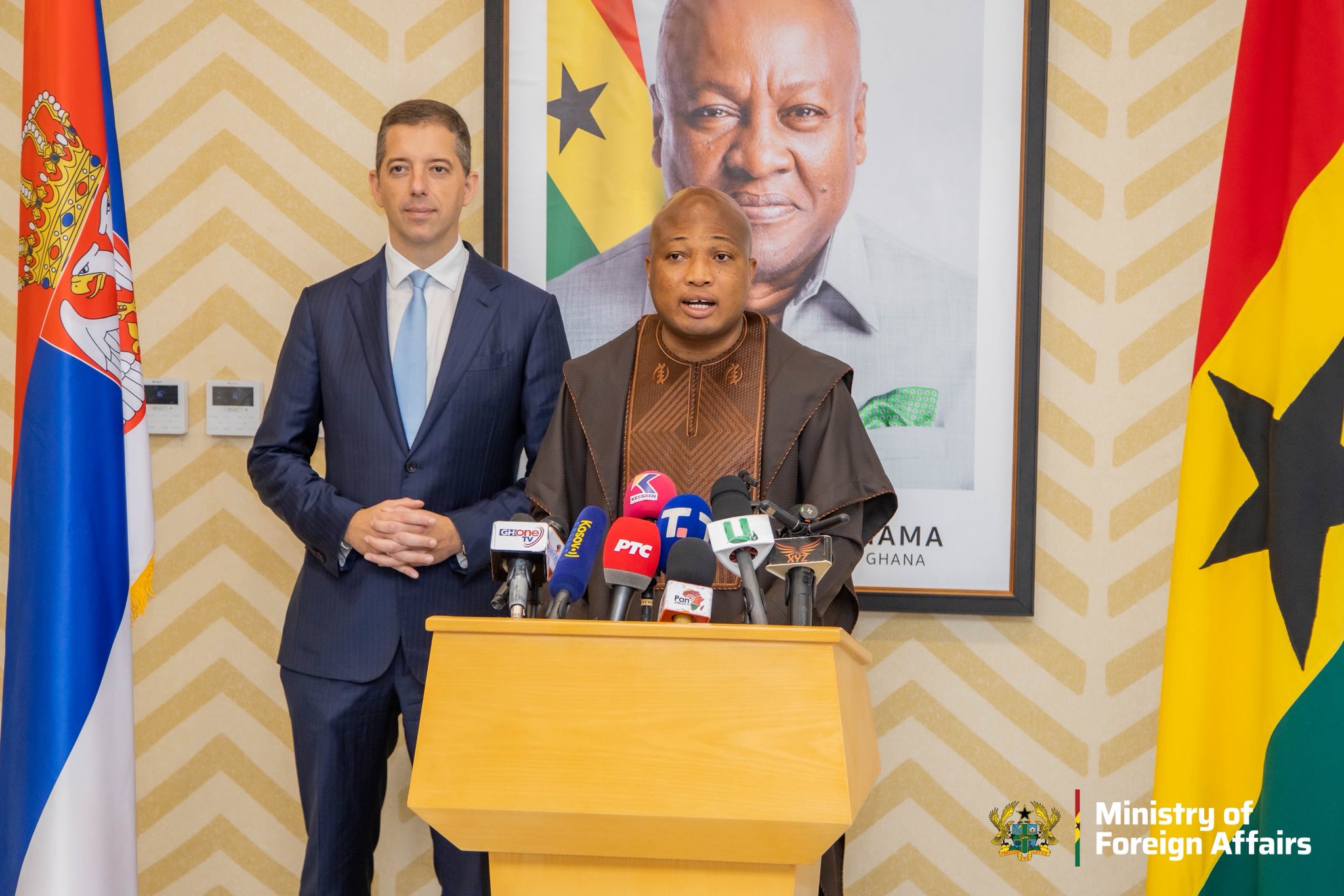
    Minister of Foreign Affairs Samuel Okudzeto Ablakwa has announced that Serbia is set to issue 100,000 work permits to Ghanaians this year to boost economic ties.

    Speaking to reporters in Accra following the signing of a deal with Serbia’s Foreign Affairs Minister, Marko Đurić, Mr. Ablakwa explained that the plan targets Serbia’s demographic challenges and Ghana’s growing youth population. 

    “Ghana is ready to take full advantage of Serbia’s plan to issue 100,000 work permits this year,” he stated, adding that discussions are ongoing to finalize a labour mobility agreement between the two nations.

    In addition to job creation, Ghana and Serbia are looking into collaborations in areas such as trade, agriculture, AI, sports, scholarships and defence.

    According to Mr Ablakwa, the development is a source of tremendous pride to see “our relations blossom since Ghana and Serbia established formal diplomatic ties in 1959.”

    He added that President Nkrumah and President Tito were the architects of the strong bilateral relations, as they both pioneered the formation of the Non-Aligned Movement (NAM) in 1961.

    The Accra International Conference Centre, which was built by Serbian engineers in preparation for the 10th Ministerial Conference of the NAM in 1991, is a significant symbol of Ghana’s collaboration with Serbia.

    He said discussions have reaffirmed the belief in the UN Charter, “our faith in international public law, our commitment to global peace as leading UN peacekeeping troop contributing nations and our resolve to seek friendship with all nations.”

    Presently, the government is working on signing a labour mobility agreement with the German government to allow thousands of youth to be employed abroad under a special bilateral agreement. Ghana seeks to join other countries, including Kenya, that have such deals with Germany.

    In a statement on Facebook, Mr Okudzeto Ablakwa in May noted that the agreement, which is currently under discussion, will guarantee “safe, rewarding and dignified employment.”

    “We expect actual implementation soon,” Mr Ablakwa added while remarking on the government’s belief in meaningful and impactful diplomacy.

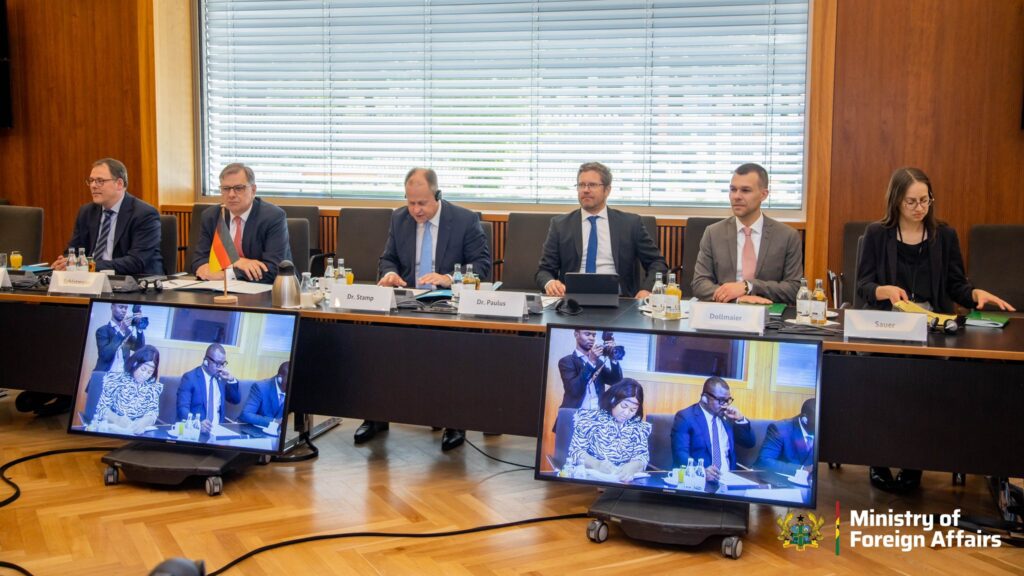
    The Foreign Minister engaged German Foreign Minister Johann Wadephul, Mr. Joachim Stamp, the Special Representative of the Federal Government for Migration Agreements, and top officials of the German Interior Ministry on the margins of the UN Peacekeeping Ministerial ongoing in Berlin.

    In April, Minister for Employment and Labor Relations Dr. Rashid Pelpuo made mention of work ongoing between his outfit and the Foreign Ministry to craft a strategy to export skilled Ghanaian labour to countries requiring workers to curb the rising unemployment.

    Fitch projects that the unemployment rate in Ghana in 2025 will remain at an average of 4.0% of the labour force.

  • Ghana, AfDB ink deal to reposition Lake Volta as a central logistics and industrial hub

    Ghana, AfDB ink deal to reposition Lake Volta as a central logistics and industrial hub

    The government of Ghana and the African Development Bank (AfDB) have agreed to work together on a big project called the Volta Economic Corridor. This project is part of Ghana’s 24-Hour Economy and Export Growth Plan, also known as the 24H+ Programme.

    The agreement, signed on Wednesday, July 3, in Accra, lays out a plan to turn Lake Volta into a key area for transportation, business, and industry.

    The main goals are to help Ghana increase its exports, build stronger trade links with nearby African countries like Burkina Faso, Mali, and Niger, and support the African Continental Free Trade Area (AfCFTA), which promotes trade across Africa.

    At the signing event, Augustus Goosie Tanoh, who advises the President and leads the 24H+ Programme, said the partnership was an important and exciting move forward for the country.

    “This partnership signals Ghana’s commitment to mobilise transformative capital, world-class expertise, and public-private partnerships to drive our 24-hour production ambition and unlock export competitiveness,” he stated.

    He added that the initiative is designed to be private-sector led, with government seed capital unlocking greater pools of private investment. 

    “AfDB’s collaboration with Ghana Infrastructure Investment Fund (GIIF) and the Secretariat gives us confidence that we can deliver projects that create jobs, raise incomes, and position Ghana as a leading trade and industrial hub under AfCFTA,” Mr Tanoh added.

    Director for Infrastructure and Urban Development at the AfDB, Mike Salawou, who signed on behalf of the bank, underscored the importance of the project for Africa’s infrastructure-led development agenda. 

    “The African Development Bank welcomes this opportunity to deepen our collaboration with Ghana by working closely with the 24H+ Secretariat and the GIIF to support the success of the Volta Economic Corridor project,” he said.

    Under the agreement, the GIIF will serve as the principal infrastructure anchor, overseeing the creation of three Special Purpose Vehicles (SPVs) that will focus on key components of the corridor: inland water transport and port infrastructure, agro-ecological parks and irrigation systems, and lakeside industrial parks with logistics zones.

    Chief Executive Officer (CEO) of the Ghana Infrastructure Investment Fund (GIIF) Nana Dwemoh Benneh, said the fund is playing an important role in connecting government plans with money from private businesses. He is confident that, with support from the government, GIIF can attract the funding needed to make the project a reality.

    The project will be carried out by the 24H+ Secretariat and GIIF, with support from the African Development Bank (AfDB). The bank has promised to help raise more money from other private investors and development partners to get the project going.

    This initiative is a key part of Ghana’s plan to bring its 24-hour economy policy to life. The goal is to increase production and create jobs by working closely with the private sector.

    In the end, the Volta Economic Corridor is expected to improve transport within the country, boost industrial activities, and strengthen farming and food processing.

    It is also expected to become a good example of how African countries can build shared infrastructure and grow trade across borders, which supports the African Union’s long-term development plan, known as Agenda 2063.

    The project fits perfectly with AfDB’s main goals of improving food security, growing industries, and connecting African countries. It is seen as a major project that shows how Ghana’s 24H+ Programme can turn national goals into practical, high-impact developments.

  • Ghana and Côte d’Ivoire working on 330kV transmission line 

    Ghana and Côte d’Ivoire working on 330kV transmission line 

    A 330-kilovolt (kV) double-circuit transmission line is expected to be constructed by Ghana and Côte d’Ivoire in the coming days.

    The 243-kilometre cross-border project is part of the West Africa Power Pool (WAPP) initiative to improve electricity flow between the two countries as well as across West Africa.

    Based on prior assessments, the project, at a cost of €154.4 million, has been deemed technically and financially viable within Ghana. The cost includes project management, social and environmental impact mitigation, and construction supervision.

    Speaking at a ministerial committee meeting on Wednesday, June 25, Chief Executive Officer of the Ghana Grid Company Limited (GRIDCo), Engineer Mark Baah, emphasized that the project is necessary at a time when the country is working to ensure a more reliable and efficient electricity system.
    “It will connect the existing Biahoué (Bijave) substation in Côte d’Ivoire to the upcoming Dunkwa 2 substation in Ghana. While there is currently a Dunkwa 1 substation, it operates at 161kV. This new facility in Dunkwa will operate at 330kV.”
    “Beyond enhancing bilateral energy trade, this project is expected to contribute to grid reliability across West Africa. It has been deemed both technically sound and environmentally manageable,” he added.
    Ghana’s energy sector has been confronted with a number of challenges that continue to outpace available generation capacity. This has prompted calls by members of the general public for immediate fixing by the government.
    Meanwhile, the Minister of Energy and Green Transition, John Jinapor, revealed that the energy sector loses GHS2 billion monthly due to ECG’s inability to retrieve money owed by its customers.
    “We will be looking at their work, plan, and vision for the sector. They are the distributors of power. Currently, we are meeting with the generators, and we met with the transmitters yesterday. Everybody knows it is the ECG that brings power into their homes. So, they should come and tell us, why we are not getting power in our homes.

    “The generators say they have enough generating capacity and that the problem will have to do with financing. ECG is the final distributor who receives finance from customers and pays it to the others so they should come and tell us what their problem is,” he stated.

    In a related development, John Abdulai Jinapor has admonished the newly appointed governing board of the Volta River Authority (VRA) to improve the Authority’s operations.

    At the inauguration of the new board on Tuesday, June 24, the Energy Minister indicated that VRA must position itself as the leader in Ghana’s power generation sector.

    “The fortunes of VRA have stagnated and dwindled over the years as a result of government policies. We will provide strategic guidance and direction to bring VRA back as the lead power generator in the sub-region and Africa.”

    “This board has been entrusted with the task of improving VRA’s operations, optimising hydro and thermal assets, and firmly anchoring renewable initiatives within the Authority’s core mandate. VRA must work to be the lead institution when it comes to power generation,” he said.

  • Ghana, Brazil strengthen Naval ties as Warship docks at Tema Port

    Ghana, Brazil strengthen Naval ties as Warship docks at Tema Port

    The Eastern Naval Command of the Ghana Navy has welcomed the Brazilian warship Guinex V Defender, which docked at the Tema Port as part of efforts to boost maritime cooperation between Ghana and Brazil.

    The June 2 visit marks the beginning of a series of joint training exercises aimed at improving security in the Gulf of Guinea and addressing shared challenges in maritime space.

    Brazilian Ambassador to Ghana, Her Excellency Mariana Madeira, said the exercise would build capacity, promote dialogue, and strengthen cooperation in maritime defence

    Commanding Officer, Guinex V Defender Commander Matos also mentioned that the training would enhance boarding procedures, inspections, communication, and navigation.

    Commodore Solomon Asiedu-Larbi stated that the visit demonstrates the shared commitment of Ghana and Brazil to enhancing naval cooperation, improving operational capabilities, supporting maritime initiatives and assured them of the Ghana Navy’s commitment to defence and security cooperation between both countries.

    Ghana continues to collaborate with international countries to enhance its naval expertise and infrastructure.

    In January this year, the Ghana Navy in collaboration with the Danish Government, inaugurated a cutting-edge Maritime Simulation Centre at the Naval Training Command (NAVTRAC) in Nutekpor.

    The ceremony  revealed the shared commitment to strengthening maritime security and operational capacity in the Gulf of Guinea.

    The facility funded by the Danish government, which is named the Lill-May Didriksen Simulation Centre in honor of the first female officer in the Royal Danish Navy, boasts advanced technological features, including a 270-degree Full Mission Bridge Simulator, three 120-degree Part-Task Simulators, two Instructor Stations, briefing and server rooms, as well as offices for instructors.

    Speaking at the event, Ms. Marietta Brew-Oppong, Legal Counsel to the President of Ghana and Guest of Honour, lauded Denmark’s long standing support for Ghana’s maritime sector. She acknowledged Denmark’s instrumental role in combating piracy and maritime crimes in the Gulf of Guinea, which she described as a vital global trade corridor.

    “Thanks to international efforts and partnerships like this, we have seen significant improvements in combating piracy and maritime crimes,” she remarked. Ms. Brew-Oppong expressed confidence that the facility would enhance maritime training and bolster the Ghana Navy’s capabilities.

    The Chief of the Naval Staff (CNS), Vice Admiral Issah Adam Yakubu, underscored the transformative potential of the centre, describing it as a “game-changer” for the Navy’s training programmes. He noted that the advanced simulation technology would allow personnel to master complex navigation and operational scenarios in a controlled environment, thereby improving readiness and safety.

    “This project represents a leap forward in Ghana’s maritime domain,” Vice Admiral Yakubu stated, while also acknowledging Denmark’s steadfast support over the years.

    He highlighted other Danish-backed initiatives, including the UNODC-supported “Ship-in-a-Box” facility for regional maritime training and the construction of a world-class swimming pool with diving capabilities for the Navy.

    Adding his voice, the Deputy Chief of Navy of the Royal Danish Navy, Commodore BO Overgaard, reaffirmed Denmark’s commitment to addressing security challenges in the Gulf of Guinea. He emphasized the importance of partnerships in tackling issues such as piracy, illegal fishing, and armed robbery, which threaten trade and regional stability.

    “The Bridge Simulator is an advanced piece of technology that reflects the trust and collaboration between our nations,” Commodore Overgaard stated, describing the project as a model for sustainable development that enhances safety and prosperity in Ghana and the region.

    The facility also allows for effective training without taking operational ships out of service, a feature Commodore Overgaard described as key to improving efficiency and readiness.

    Commodore Solomon Asiedu-Larbi, Flag Officer Commanding NAVTRAC, highlighted the Simulation Centre’s role in positioning NAVTRAC as a center of excellence for maritime training in Ghana and beyond. He credited years of meticulous planning and collaboration for bringing the project to fruition.

    “This venture solidifies NAVTRAC’s reputation as a leader in maritime training, and we are deeply grateful to Denmark for their invaluable contribution and to the CNS for his visionary leadership,” he added.

    The Maritime Simulation Centre is expected to significantly enhance Ghana’s maritime security efforts, ensuring operational readiness and contributing to the broader goal of securing the Gulf of Guinea’s critical trade routes.

  • Ghana, Germany working on labour mobility agreement to employ thousands of youth – Foreign Minister

    Ghana, Germany working on labour mobility agreement to employ thousands of youth – Foreign Minister

    Foreign Affairs Minister Samuel Okudzeto Ablakwa has announced the government of Germany’s willingness to sign a labour mobility agreement with Ghana to allow thousands of youth to be employed abroad under a special bilateral agreement.

    In a statement on Facebook, the minister noted that the agreement, which is currently under discussion, will guarantee “safe, rewarding and dignified employment.”

    “We expect actual implementation soon,” Mr Ablakwa added while remarking on the government’s belief in meaningful and impactful diplomacy.

    The Foreign Minister engaged German Foreign Minister Johann Wadephul, Mr. Joachim Stamp, the Special Representative of the Federal Government for Migration Agreements, and top officials of the German Interior Ministry on the margins of the UN Peacekeeping Ministerial ongoing in Berlin.

    In April, Minister for Employment and Labor Relations Dr. Rashid Pelpuo made mention of work ongoing between his outfit and the Foreign Ministry to craft a strategy to export skilled Ghanaian labour to countries requiring workers to curb the rising unemployment.

    “Beyond the domestic set, what we can do to tackle unemployment is to look at how we can export Ghanaian labour to places that require our labour force,” he said in an interview on Joy FM.

    He added: “What I am working on is to get the foreign minister to sign bilateral relations with all the countries needing Ghanaian labour, and I will sign agreements with companies that want to export the labour.”

    Fitch projects that the unemployment rate in Ghana in 2025 will remain at an average of 4.0% of the labour force.

    Ghana seeks to join other countries, including Kenya, that have such deals with Germany.

    Kenya-Germany’s agreement

    The two countries established a joint multi-agency techical committee to develop a roadmap for negotiating the labour mobility agreement.

    Kenya submitted a draft model bilateral labour agreement in July 2023 and in February 2024, Germany presented a comprehensive migration and mobility partnership proposal. In May, an agreement in principle on the final text, in accordance with international standards was culminated.

    Subsequently, the agreement compassing skills development, social protection and rights for Kenyan migrant workers was signed in September in Berlin.

    UAE jobs for Ghanaians

    The Foreign Minister has noted that massive job openings in the United Arab Emirates (UAE) will soon be announced for the Ghanaian youth when both countries finalize the Comprehensive Economic Partnership Agreement (CEPA) negotiations.

    There are discussions ongoing for labour export for Ghanaian youth to the UAE and technical support for a new national airline.

    On May 13, Mr Ablakwa revealed that UAE companies will be arriving in Ghana over the next few weeks to invest in sectors such as renewable energy, AI, education, health, aviation, and defense.

    He made this known after honouring a special invitation from the government of the United Arab Emirates to pay a two-day official visit to the country.

    United Arab Emirates companies will be arriving in Ghana over the next few weeks to invest in sectors such as renewable energy, AI, education, health, aviation, and defense.

  • Ghana must not become a permissive corridor for narcotic trafficking – CDM

    Ghana must not become a permissive corridor for narcotic trafficking – CDM

    The Centre for Democratic Movement (CDM) has warned that Ghana could risk being branded a “Cocaine Coast” if allegations surrounding suspicious international flights are not swiftly and thoroughly addressed.

    The CDM cautioned that any perceived lapse in oversight could expose the country to heightened scrutiny of its travellers and exports, potentially dampen investor confidence, and inflict lasting reputational damage on the international stage.

    “Ghana must not become a permissive corridor for narcotic trafficking,” the group asserted, urging the government to act decisively to protect the nation’s integrity.

    The group called for full disclosure from the Civil Aviation Authority and the National Security Secretariat regarding the reported flights. It further demanded that Parliament initiate a transparent, non-partisan inquiry, with support from international partners if necessary.

    The CDM also urged the Mahama-led administration to immediately publish all pertinent flight, cargo, and clearance documents linked to the controversy in order to assure the public of government transparency.

    Meanwhile, the Minister of State in charge of Government Communications, Felix Kwakye Ofosu, has strongly refuted allegations made by Assin South MP, Reverend John Ntim Fordjour, concerning suspected drug trafficking and money laundering involving two aircraft that reportedly passed through Ghana in March.

    In a detailed social media post, Kwakye Ofosu dismissed the MP’s claims as “wild” and “baseless,” accusing the New Patriotic Party (NPP) lawmaker of spreading deliberate disinformation in an attempt to tarnish the image of the Mahama administration.

    “In the last few days, the disinformation machine of the New Patriotic Party has been ramped up, and they’ve taken it a notch higher. Reverend Ntim Fordjour has made wild claims that two aircraft that passed through Ghana were carrying drugs and were involved in money laundering. He even called for investigations,” Kwakye Ofosu stated.

    He emphasized that President John Mahama welcomed the call for transparency and urged the MP to submit any available evidence to the relevant security agencies for investigation. However, Kwakye Ofosu noted that under closer scrutiny, the MP eventually retracted his claims.

  • Ghana, Japan govts to revive Volivo to Dorfor Adidome bridge project, boost rice production

    Ghana, Japan govts to revive Volivo to Dorfor Adidome bridge project, boost rice production

    Foreign Affairs Minister Samuel Okudzeto Ablakwa has indicated that Ghana and Japan have announced a commitment to advancing key infrastructural and agricultural initiatives, focusing on improving regional connectivity and agricultural output.

    The two nations have agreed to prioritize the revival of the Volivo to Dorfor Adidome bridge project. This bridge will serve as a critical link between the Greater Accra, Volta, and Eastern Regions, enhancing transportation and trade across these areas.

    Additionally, they plan to develop an interchange in the Ashanti Region to reduce congestion, improving traffic flow and accessibility for both residents and businesses.

    Another significant area of focus is providing technical support to boost rice production in Ghana. This initiative aims to increase local rice yields, thereby promoting food security and reducing dependence on imported rice.

    In addition to these projects, Ghana will be fully represented at the 9th Tokyo International Conference on African Development (TICAD 9), where discussions will focus on strengthening ties with Japan. A key area of focus will be scaling up chocolate exports to Japan, in response to the growing demand for high-quality Ghanaian chocolate in the Japanese market.

    President Mahama’s government reaffirmed its commitment to further strengthening Ghana-Japan relations, reflecting on the historical collaboration and honoring the legacy of figures like Dr. Noguchi.

  • Ghana, IMF begin 4th review mission amid economic reforms

    Ghana, IMF begin 4th review mission amid economic reforms

    The International Monetary Fund (IMF) has commenced its fourth review mission in Ghana as part of the country’s Extended Credit Facility (ECF) program for 2023–2026.

    According to the Finance Ministry, running from April 2 to April 15, the two-week mission will assess Ghana’s economic performance and progress on structural reforms under the IMF-backed program.

    The review began with key discussions at the Ministry of Finance and the Bank of Ghana, focusing on Ghana’s fiscal performance in 2024.

    Over the coming days, the IMF delegation will engage with senior government officials, Central Bank executives, and key stakeholders to assess critical economic indicators, including inflation control, monetary policy, and structural reforms.

    The review will also evaluate Ghana’s progress in meeting IMF targets related to fiscal discipline, economic stabilization, and debt restructuring.

    The outcome of this mission will determine whether Ghana qualifies for the next tranche of IMF financial support, essential for maintaining macroeconomic stability and investor confidence.

    Finance Minister, Dr. Cassiel Ato Forson, highlighted key measures, including the passage of transformative tax amendment bills, significant reforms in public procurement, and other policies outlined in the 2025 Budget as proof of the administration’s commitment to building a resilient and dynamic economy.

    Dr. Forson expressed confidence that, with macroeconomic indicators trending positively, Ghana’s economy could stabilize by May 2025. He also stressed the importance of concluding the review on schedule.

    A previous IMF mission, led by Stéphane Roudet, visited Ghana from February 10-14 to engage government officials and assess macroeconomic developments. Following the visit, Roudet noted that discussions had begun on key policies that would shape the 2025 budget while also reviewing the government’s adherence to the IMF-supported economic framework.

    “The mission team engaged the Ghanaian authorities on recent macroeconomic developments. It also started discussions on the policies that will underpin the 2025 budget. This dialogue is set to continue over the coming weeks.

    “We also took stock of the authorities’ progress in meeting key commitments under the Fund-supported program. These will be formally assessed in the context of the fourth review of the Extended Credit Facility arrangement, which is expected to be undertaken in April 2025,” Roudet stated.

    Additional meetings and technical discussions are planned over the next two weeks, culminating in a final statement from the IMF on April 15.

    The Extended Credit Facility agreement, approved by the IMF Executive Board for Ghana, spans 36 months with a total allocation of $3 billion. The initiative aligns with the government’s Post COVID-19 Program for Economic Growth (PC-PEG), which aims to stabilize the economy, manage debt, and implement structural reforms to foster long-term resilience.

    So far, Ghana has received approximately $1.9 billion from the IMF, with the most recent disbursement of about $360 million following the completion of the third review in December 2024. The outcome of the fourth review will determine the country’s eligibility for additional financial support under the program.

  • No project in Ghana has been suspended – World Bank, Sam George reveal

    No project in Ghana has been suspended – World Bank, Sam George reveal

    The World Bank has dismissed speculations regarding the suspension of its funded projects in Ghana, affirming that all initiatives under its portfolio remain active.

     “No projects in the World Bank-financed portfolio in Ghana are currently suspended,” the World Bank is quoted to have stated according to JoyNews.

    Also, Communications Minister Sam George has refuted such claims, describing it as “fake news.”

    “The @WorldBank has NOT withdrawn any funds for the GDAP program. In the coming days, some interesting revelations would be made on the previous activities under the program,” the Minister wrote in a post on X.

    This assurance comes in response to recent discussions suggesting that some World Bank-backed projects in the country had been put on hold due to financial or administrative challenges.

    The announcement provides clarity to government agencies, development partners, and beneficiaries, reinforcing confidence in ongoing projects across key sectors such as infrastructure, healthcare, education, energy, and agriculture. Any disruption to these initiatives could have had significant economic and social consequences, potentially affecting livelihoods and critical service delivery.

    The clarification arrives at a time when Ghana is striving to maintain financial stability and investor confidence amid broader economic recovery efforts. While the World Bank did not specify the reasons behind its statement, the move is likely intended to dispel uncertainties linked to Ghana’s financial engagements with global institutions.

    https://twitter.com/Gen_Buhari_/status/1907437063340744875

    Concerns over potential delays in project funding, regulatory compliance, or fiscal policy changes have fueled speculation about the status of international development assistance. However, the World Bank’s stance reinforces its commitment to supporting Ghana’s economic and social development goals without interruption.

    Ghana continues to navigate economic challenges, including debt restructuring efforts, inflation control measures, and currency stabilization. With reliance on institutions like the World Bank and the International Monetary Fund (IMF) for financial and technical assistance, ensuring the smooth implementation of development projects remains a priority.

    By reaffirming the continuity of its projects, the World Bank seeks to sustain momentum in Ghana’s development agenda and mitigate any concerns that could impact public confidence and foreign investment.

  • Ghana to finalize bilateral agreements on $5.1bn debt restructure in June – Finance Ministry

    Ghana to finalize bilateral agreements on $5.1bn debt restructure in June – Finance Ministry

    Ghana is set to conclude bilateral agreements for the restructuring of its $5.1 billion official bilateral debt by June, a goal that Finance Minister Dr. Cassiel Ato Forson has described as “ambitious.” 

    This follows the signing of a Memorandum of Understanding (MoU) with the Official Creditor Committee (OCC) on January 28.

    This information is outlined in the 2025 Budget Statement and Economic Policy, which highlights Ghana’s fiscal strategies, including debt restructuring efforts aimed at stabilizing the economy.

    Highlighting the importance of this process, the Finance Minister stated, “We look forward to the support of this august House in achieving this objective within the established timeframe.”

    The agreement formalizes the key terms of the restructuring, which were outlined in an Agreement in Principle (AIP) reached on January 12, 2024. It includes an extension of debt service repayments and provides approximately $2.8 billion in debt relief. Additionally, the MoU establishes a cut-off date of December 31, 2022, and imposes limits on disbursements during Ghana’s IMF-supported program from 2023 to 2026.

    The signing of the MoU paves the way for negotiations with individual OCC member countries. As part of the process, Ghana has commenced data reconciliation and validation exercises with several creditors in preparation for the bilateral agreements.

    In addition to official bilateral debt restructuring, the government is engaging commercial creditors, including Chinese commercial lenders, plurilateral institutions, and private banks, to restructure approximately $2.7 billion in commercial debt. Discussions on draft Non-Disclosure Agreements (NDAs) are already underway, with a financial proposal for restructuring expected to be presented soon.

    Furthermore, Ghana’s Domestic Debt Exchange Programme (DDEP), launched in December 2022, has significantly influenced the domestic debt market. The government has relied on short-term securities to finance the budget, raising GH¢45.4 billion in net proceeds from treasury bill issuances.

    The government remains committed to honoring its debt obligations, having successfully paid GH¢19.0 billion in DDEP bond coupons in 2024 and an additional GH¢9.5 billion in February 2025. The Finance Ministry believes these efforts, coupled with effective engagement with market participants, will enhance transparency, restore investor confidence, and stabilize the financial market.

    The 2025 Budget Statement also notes an improvement in investor sentiment, reflected in declining interest rates on treasury bills. By the end of December 2024, the 91-day, 182-day, and 364-day treasury bill rates stood at 28.04%, 28.68%, and 30.07%, respectively—lower than the corresponding rates in 2023.

    The government has also updated its 2024 Debt Sustainability Analysis (DSA) to align with the revised medium-term fiscal framework and the third IMF Review macro-framework. The DSA assessed Ghana’s public debt distress by evaluating macro-fiscal developments and agreements reached with the OCC and Eurobond holders. It examined Ghana’s solvency and liquidity status, considering current and future debt service obligations and their impact on the country’s debt dynamics in the medium- to long-term.

    According to the analysis, Ghana’s external and public debt risk rating remains at ‘high risk’ of debt distress. The Present Value (PV) of the total debt-to-GDP ratio and the external debt service-to-revenue ratio are still above DSA thresholds in the near term but are projected to return to sustainable levels by 2028.

    Beyond bilateral debt, Ghana is actively engaging commercial creditors, including Chinese commercial lenders, plurilateral institutions, and private banks, to restructure approximately $2.7 billion in commercial debt. Discussions on draft Non-Disclosure Agreements (NDAs) are underway, with a financial proposal for restructuring expected to be presented soon.

    Additionally, the Domestic Debt Exchange Programme (DDEP), launched in December 2022, continues to impact Ghana’s debt landscape. In 2024, the government honored DDEP bond coupon payments totaling GH¢19.0 billion, including GH¢12.1 billion in cash payments and GH¢6.9 billion in payment-in-kind (PIK) payments. In February 2025, the fourth coupon payment of GH¢9.5 billion (including GH¢3.5 billion in PIK payments) was successfully honored. To finance the budget, the government issued short-term securities, raising GH¢45.4 billion in net proceeds from treasury bill issuances.

    Ghana’s domestic debt market has shown signs of improvement, with a gradual decline in interest rates due to improved investor confidence. By the end of December 2024, the 91-day, 182-day, and 364-day treasury bill rates stood at 28.04%, 28.68%, and 30.07%, respectively—lower than the corresponding rates in 2023, which were 29.36%, 31.95%, and 32.49%.

    The government remains committed to ensuring effective communication with market participants, increasing transparency, and restoring investor confidence, which will be crucial in sustaining economic stability.

  • Ghana eyes over $1bn in carbon market investments by 2030

    Ghana eyes over $1bn in carbon market investments by 2030

    Ghana’s carbon market is projected to attract over $1 billion in investments by 2030, driving job creation and advancing clean energy solutions, according to a report by the Carbon Market Office (CMO).

    Minister for Environment, Science, Technology, and Innovation, Dr. Ibrahim Murtala Muhammed, highlighted key measures outlined in the report to achieve this target.

    “Unlocking about $1.1 billion in financial flows by 2030. Twelve projects being developed by Klik Foundation under the Ghana-Switzerland agreement have reached investment decision points. The projects are set to leverage up to approximately $1.1 billion from direct investment, carbon revenues, and fees by 2030.

    “These 12 projects are expected to create a minimum of 5,000 green jobs, save eight million tonnes of greenhouse gas emissions, and increase access to clean cooking, renewable energy, electric mobility, and green cooling,” he stated.

    Ghana is set to attract significant investments through its carbon trading initiatives, leveraging funds from greenhouse gas reduction projects and revenue from associated fees.

    Carbon trading enables countries and businesses to buy and sell carbon credits—permits representing the reduction or removal of greenhouse gases such as carbon dioxide. One carbon credit is equivalent to cutting, capturing, or preventing one tonne of carbon dioxide emissions.

    This system provides Ghana with an opportunity to secure funding for eco-friendly projects while working towards emission reduction goals.

    To maximize gains from carbon trading, Ghana has established policies and regulations. Out of the country’s total 64 million metric tonnes of carbon credits, 24 million metric tonnes have been made available for sale under Article 6.2 of the Paris Agreement.

    According to the Carbon Market Office, 70 projects had been submitted for approval as of December 2024. These initiatives aim to lower emissions while promoting sustainable development.

    Among the proposals, the clean cookstove project stands out, aiming to distribute 9.1 million stoves by 2030. This initiative dominates the pipeline, accounting for 26 of the submitted projects.

    Other proposals include three electric mobility projects targeting the rollout of 120,160 e-bikes and electric vehicles. Additionally, 15 projects focus on nature-based solutions, while others span biochar production, solar energy generation, wastewater treatment, and electronic vehicle development.

    Ghana has already signed agreements with Switzerland, Sweden, and Singapore to sell carbon credits, with the Swiss partnership currently being executed. Discussions are also ongoing with South Korea and Liechtenstein to expand participation in the market.

    The report highlights that the carbon market will attract more investors, generate employment, and support Ghana’s climate action efforts. It also aims to encourage businesses and individuals to embrace cleaner technologies such as improved cookstoves and electric mobility solutions.

    With strong policies and investor backing, Ghana is positioning itself as a leader in Africa’s carbon trading landscape.

    A recent status report on the implementation of Article 6 of the Paris Agreement recognized Ghana among the nations making significant progress in carbon trading.

    “Parties that have advanced the most include those that have launched projects and met existing reporting requirements, including Ghana, Guyana, Suriname, Switzerland, Thailand, and Vanuatu,” the report noted.

  • The correct way to say ‘One Logologo Line,’ ‘Chooboi,’ and other Ghanaian phrases

    The correct way to say ‘One Logologo Line,’ ‘Chooboi,’ and other Ghanaian phrases

    Many Ghanaians have used certain words and phrases for years without realizing they were actually mispronunciations or corrupted versions of the correct terms.

    For example, did you know that “traffigator” is actually supposed to be “traffic indicator,” or that “camboo” is short for “camp boot?”

    A video shared on Facebook by Afia Adutwumwaa, originally from a TikTok page (@afauslovelyschool), features young schoolchildren—guided by their teacher—correcting some of these commonly mispronounced words.

    In the video, the children clarify the proper way to say phrases like “cheer the boy” instead of “chooboi” and “one homologous line” instead of “one logologo line.”

    Another similar TikTok video also shows schoolchildren helping to educate Ghanaians on other frequently misused terms.

    Below are the few of them:

    One logologo line – One homologous line

    Kalabule – Clever bully

    Six meludo – Six may lead you

    Dansinkran – Dancing crown

    Chooboi – Cheer the boy

    Gangalia – Gang leader

    Camboo – Camp boot

    Tankass – Town Council

    Oseeyee! – All say yeah

    Sagrenti War – Sir Garnet Wolseley War

    Travigator – Traffic Indicator

    Galamsey – Gather them and sell

    Azos pipe – Exhaust pipe

    Aniomarks – On your marks

    Walentin boot – Wellington boot

    Bofrot – Buff loaf

    Did you learn something new?

    See the videos below:

  • Ghana’s Parliament enhances diplomatic ties with Israel

    Ghana’s Parliament enhances diplomatic ties with Israel

    Speaker of Parliament, Rt. Hon. Alban Sumana Kingsford Bagbin, has hosted Israel’s Ambassador to Ghana, His Excellency Roey Gilad, in a meeting aimed at strengthening diplomatic relations between the two nations.

    The discussions focused on deepening bilateral cooperation in areas of mutual interest, fostering economic partnerships, and exploring new opportunities for collaboration.

    Key parliamentary figures, including Majority Leader Hon. Mahama Ayariga, Chairman of the Foreign Affairs Committee Hon. Alfred Okoe Vanderpuye, Deputy Ranking Member Hon. Nana Asafo Adjei Ayeh, and Clerk to Parliament Ebenezer Ahumah Djietror, were present at the meeting.

    Speaker Bagbin reiterated Ghana’s commitment to engaging with international partners for sustainable development, emphasizing the role of diplomacy in fostering long-term cooperation.

  • Africa Energy Technology Conference 2025 to be hosted in Accra from May 27-29

    Africa Energy Technology Conference 2025 to be hosted in Accra from May 27-29

    Accra, Ghana, is set to welcome industry leaders, policymakers, and investors from across the continent as it hosts the Africa Energy Technology Conference (AETC) 2025 from May 27 to 29 at the Labadi Beach Hotel.

    The conference aims to serve as a premier platform for fostering technological advancements, strategic investments, and policy innovation in Africa’s energy sector. This year’s edition is expected to drive forward-looking discussions that will shape the future of sustainable energy solutions on the continent.

    Ghana’s Minister of Energy and Green Transition, Dr. John Abdulai Jinapor, has extended an invitation to all stakeholders in the Energy, Oil, and Gas industries to actively participate in the landmark event.

    “Technology continues to play a key role in the socio-economic development of all society, particularly in the energy sector. We believe that in this current dispensation, technology will be at the forefront and the key driver towards ensuring inclusive growth and also accelerated economic development.

    I therefore wish to state that we would associate ourselves fully and encourage everybody to participate in this year’s conference. I want to welcome everybody across the globe to this year’s Africa Energy Technology Conference (AETC) 2025,” Dr. Jinapor stated.

    The Ghanaian government’s strong commitment to fostering innovation, attracting essential investment, and implementing transformative policies will be a major highlight of the event.

    Distinguished Guests and Keynote Speakers

    The President of Ghana, H.E. John Dramani Mahama, and Vice President, H.E. Professor Jane Naana Opoku-Agyemang, will be special guests at AETC 2025. Their participation is expected to provide crucial insights into Ghana’s energy policies, investment priorities, and strategies for sustainable sector growth.

    Themed “INNOVATE, INVEST, IMPLEMENT: REVOLUTIONISED FINANCING FOR SUSTAINABLE ENERGY SECTOR GROWTH IN AFRICA,” this year’s conference will focus on key pillars needed to reshape the continent’s energy landscape. Discussions will center on cutting-edge technological innovations, financing mechanisms for energy projects, and the effective execution of sustainable initiatives.

    Confirmed speakers for AETC 2025 include:

    • Victoria Emeafa Hardcastle (CEO, Petroleum Commission, Ghana)
    • Edward Abambire Bawa (CEO, Ghana National Petroleum Company)
    • Justina Nelson (CEO, Minerals Income Investment Fund)
    • Edudzi Tamakloe (COO, National Petroleum Authority)
    • Dr. Cassiel Ato Baah Forson (Minister for Finance, Ghana)
    • Senator Heineken Lokpobiri (Minister of State, Petroleum Resources (Oil), Nigeria)
    • Hon. Eng. Karim Badawi (Minister of Petroleum and Mineral Resources, Egypt)
    • Hon. Ekperikpe Ekpo (Minister of State, Gas, Nigeria)
    • H.E. Diamantino Petro Azevedo (Minister of Mineral Resources, Oil and Gas, Angola)
    • Hon. Sangafowa-Coulibaly Mamadou (Minister for Mines, Petroleum and Energy, Ivory Coast)
    • Hon. Tom Alweendo (Minister for Mines and Energy, Namibia)
    • Hon. Abla Dzifa Gomashie (Minister for Tourism, Culture, and Creative Arts, Ghana)
    • Hon. Ibrahim Murtala Muhammed (Minister for Environment, Science, and Technology, Ghana)
    • Dr. Omar Farouk Ibrahim (Secretary General, African Petroleum Producers’ Organization (APPO))
    • NJ Ayuk (Executive Chairman, African Energy Chamber)
    • Dr. Thomas Manu (Energy Policy Advisor & Goil – Executive Board Member, Ghana Oil/Board Chair, AETC)
    • Emelia Akumah (Founder & President, Africa Energy Technology Centre)
    • Damilola Ogunbiyi (CEO, Sustainable Energy for All (SEforALL))
    • Francesco La Camera (Director General, International Renewable Energy Agency (IRENA))

    Africa’s Leading Energy Networking and Innovation Hub

    AETC 2025 is expected to attract top executives, industry innovators, investors, and policymakers, creating a unique networking environment for building partnerships, forging investment opportunities, and discussing the future of Africa’s energy sector.

    Following the success of the inaugural event, this second edition is set to cement its position as Africa’s premier energy technology-driven exhibition and policy forum.

    Secure your ticket at https://aetconference.com/tickets. For sponsorship, exhibition opportunities, partnerships, or speaking engagements, visit sales@aetconference.com. For more details, visit www.aetconference.com.

  • Morocco, Ghana to initiate visa waiver agreement for all category of travelers

    Morocco, Ghana to initiate visa waiver agreement for all category of travelers

    Ghana and Morocco have taken a significant step toward enhancing diplomatic and economic relations by agreeing to introduce a visa waiver for all categories of travelers.

    The agreement, which is set to be presented to both nations’ parliaments for ratification, aims to facilitate seamless travel and boost cooperation in various sectors.

    The decision emerged from discussions between Ghana’s Minister of Foreign Affairs, Samuel Okudzeto Ablakwa, and the Moroccan Ambassador to Ghana, Her Excellency Imane Ouaadil on March 23. During their meeting, Ambassador Ouaadil also addressed concerns over recent viral videos alleging violence against Africans in Morocco. She clarified that the footage in circulation was from a past border incident on June 24, 2022, which led to the deaths of 23 individuals but did not involve any Ghanaian casualties.

    Additionally, Morocco has announced a significant boost in educational support for Ghana, doubling scholarships for Ghanaian students from 90 to 180 this year.

    “We have both additionally pledged to deepen collaboration in Agribusiness, Tourism, and Security,” Ablakwa confirmed.

  • Morocco doubles scholarships for Ghanaian students

    Morocco doubles scholarships for Ghanaian students

    The government of Morocco has announced an increase in scholarships for Ghanaian students, raising the number from 90 to 180 starting this year.

    This development follows high-level discussions between Ghana’s Minister of Foreign Affairs, Samuel Okudzeto Ablakwa, and the Moroccan Ambassador to Ghana, Her Excellency Imane Ouaadil.

    During their engagement, Ambassador Ouaadil reassured that Ghanaians and other Africans residing in Morocco remain safe, dispelling social media claims that 700 Africans were being massacred.

    She clarified that the circulated footage was from a border incident on June 24, 2022, which resulted in the deaths of 23 individuals. The incident was investigated by Moroccan and Spanish authorities, with no Ghanaian casualties recorded.

    Beyond education, Morocco and Ghana have agreed to establish a visa waiver for all categories of travelers between the two nations. The agreement is expected to be presented to both parliaments for ratification soon.

    “We have both additionally pledged to deepen collaboration in Agribusiness, Tourism, and Security,” Ablakwa stated.

  • It takes 57 days to register a new company in Ghana but 3 days in Rwanda – World Bank’s Taliercio O’Brien bemoans

    It takes 57 days to register a new company in Ghana but 3 days in Rwanda – World Bank’s Taliercio O’Brien bemoans

    The World Bank’s latest Business Ready (B-Ready) 2024 report has highlighted the difficulties entrepreneurs face in setting up businesses in Ghana, revealing that it takes 57 days to register a company in the country, compared to just three days in Rwanda.

    Speaking at the report’s launch, Robert Taliercio O’Brien, the World Bank’s Division Director for Ghana, Liberia, and Sierra Leone, expressed concern over the lengthy business registration process in Ghana.

    “It takes 57 days to register a new domestic company in Ghana. In Rwanda, it only takes 3 days,” he stated, urging authorities to streamline processes to make business entry more efficient.

    The report, which assesses regulatory frameworks and the efficiency of public services for businesses, found that Ghana performed poorly in market competition, business entry, and dispute resolution. It pointed out several gaps, including delays in digitizing intellectual property services, the absence of comprehensive business statistics, and a lack of digital infrastructure within the judicial system.

    It also noted that Ghana does not have a fully electronic company registration system, making the process cumbersome. Additionally, the country lacks an electronic case management system that allows businesses to file initial complaints online.

    Beyond business registration, internet reliability was another area of concern. According to O’Brien, Ghanaian firms face frequent internet disruptions, with 48% of businesses reporting connectivity issues in a typical month, compared to just 2% in more efficient economies.

    Despite these challenges, the report highlighted some positive aspects of Ghana’s business environment. The country scored highly in labor practices, utility services, and business insolvency.

    Ghana was recognized for its effective labor dispute resolution mechanisms, transparent utility service information, and the presence of electronic case management systems for liquidation and reorganization proceedings.

    While the findings underscore Ghana’s regulatory inefficiencies, the report suggests that improving digitalization, reducing bureaucratic delays, and enhancing internet reliability could significantly improve the ease of doing business in the country.

  • Barbados High Commissioner advocates health training programmes for their nurses in Ghana

    Barbados High Commissioner advocates health training programmes for their nurses in Ghana

    The High Commissioner of Barbados to Ghana, Juliette Byone-Sutherland, has called for opportunities for Barbadian nurses to undergo health training in Ghana, emphasizing the benefits of hands-on experience in the country’s healthcare system.

    During a meeting with the Minister of Health, Mr Kwabena Mintah Akandoh, discussions centered on strengthening healthcare collaboration between the two nations.

    The Minister outlined key initiatives to enhance healthcare delivery in Ghana, including incentives for rural health workers such as salary bonuses, accelerated promotions, and scholarships for further education.

    Plans to improve regional and teaching hospitals and the need for additional healthcare facilities in Ghana’s newly created regions were also highlighted.

    Byone-Sutherland acknowledged Ghana’s ongoing efforts to strengthen its health sector and proposed that Barbadian nurses could gain valuable practical experience through training programmes in the country.

    This engagement underscores the significance of international partnerships in healthcare development. The Ministry of Health continues to explore initiatives to support healthcare workers and improve service delivery for Ghanaians.

    Ghana has already established ties with Barbados in the health sector. Since 2022, approximately 400 Ghanaian registered nurses have been deployed to Barbados as part of an exchange programme.

  • Pitch invader during Ghana-Chad game jailed 100 days

    Pitch invader during Ghana-Chad game jailed 100 days

    Mohammed Huzeinu, the 21-year-old who disrupted Ghana’s 2026 World Cup qualifier against Chad by storming onto the pitch, has been sentenced to 100 days in prison.

    His actions, deemed a security breach under CAF regulations, could result in financial sanctions against the Ghana Football Association (GFA).

    Authorities have described the sentence as a deterrent to prevent similar incidents in future matches.

    “The FA has consistently urged fans to refrain from such actions, emphasising the importance of discipline and adherence to match day protocols to avoid fines and maintain Ghana’s reputation in international football,” the GFA stated.

    Ghana has previously faced penalties for pitch invasions. In 2020, the country was fined $10,000 after a similar incident occurred during an AFCON 2021 qualifier against South Africa in Cape Coast in November 2019.

  • Ghana, UK collaborate to fight illegal gold trade after loss of $1.2bn in 2022

    Ghana, UK collaborate to fight illegal gold trade after loss of $1.2bn in 2022

    Ghana is intensifying its fight against gold smuggling, a practice that cost the country an estimated $1.2 billion in lost revenue in 2022.

    In a bid to tackle this challenge, the government is partnering with the UK-Ghana Gold Programme to strengthen regulatory frameworks and curb illicit trade.

    Finance Minister Dr. Cassiel Ato Forson revealed that about 60 tonnes of gold were illegally exported from Ghana at the height of the country’s economic crisis. “Imagine the impact if that wealth had stayed in our economy,” he stated, emphasizing the urgency of addressing illegal mining and smuggling.

    During a meeting with officials from the UK-Ghana Gold Programme, Dr. Forson discussed strategies to “ensure Ghana benefits fully from its gold resources while combating smuggling and illegal trade.” One of the key measures being introduced is the establishment of the Ghana Gold Board (GoldBod), a regulatory body aimed at overseeing the gold sector and promoting responsible trade.

    Dr. Forson explained that through the partnership, the Economic and Organised Crime Office (EOCO) would be actively working to prevent gold smuggling at key border points, including Bole. Additionally, GoldBod is collaborating with the Precious Minerals Marketing Company (PMMC) to improve pricing mechanisms, introduce pre-financing for gold dealers, and encourage whistleblower reports to expose smuggling operations.

    To enhance the sector’s financial stability, the government has committed to funding GoldBod to “purchase three tonnes of gold every week,” a move aimed at bolstering the country’s foreign exchange reserves. In a major policy shift, the finance minister also announced plans to remove the 1.5% withholding tax on unprocessed gold as part of the 2025 Budget, describing it as a step towards “encouraging more legal gold trade and driving economic growth.”

    These reforms, according to Dr. Forson, will help Ghana regain control of its gold industry, dismantle illegal networks, and ensure that the country’s natural resources contribute directly to national development. “This is just the beginning—together, we will build a stronger, more prosperous Ghana,” he affirmed.

    https://twitter.com/Cassielforson/status/1904429807443566928?ref_src=twsrc%5Etfw%7Ctwcamp%5Etweetembed%7Ctwterm%5E1904429807443566928%7Ctwgr%5Ed76f36401a250c08792b5fb861a8e2c47e264bd3%7Ctwcon%5Es1_&ref_url=https%3A%2F%2Fwww.myjoyonline.com%2F60-tonnes-of-gold-worth-1-2b-smuggled-out-of-ghana-in-2022-ato-forson%2F

  • Ghana thrash Chad, move to Group I summit

    Ghana thrash Chad, move to Group I summit

    Ghana’s Black Stars have climbed to the top of Group I in the 2026 FIFA World Cup qualifiers after a resounding 5-0 victory over Chad at the Accra Sports Stadium on Friday, March 21.

    The dominant win saw Ghana leap from second place to first, securing their fourth victory in five matches. Goals from Antoine Semenyo, Inaki Williams, Jordan Ayew, Mohammed Salisu, and Ernest Nuamah ensured a comfortable result for the Black Stars.

    With this triumph, Ghana now boasts 12 points and a goal difference of seven, edging past Madagascar, who sit second with 10 points and a goal difference of six. The two teams will face off in a crucial encounter on Monday, March 24, in Morocco at 19:00 GMT.

    Only the top team in the group will earn an automatic spot at the 2026 FIFA World Cup, set to take place in the United States, Mexico, and Canada.

    Ghana is determined to secure a fifth World Cup appearance but is also looking to bounce back from a disappointing 2025 AFCON qualification campaign, where they failed to qualify for the tournament for the first time in two decades.

  • BoG confirms MTN MoMo isn’t licensed to undertake cross-border transactions to Nigeria

    BoG confirms MTN MoMo isn’t licensed to undertake cross-border transactions to Nigeria

    The Bank of Ghana (BoG) has clarified that MTN Ghana’s MobileMoney Limited has not been authorised to facilitate cross-border transactions with MTN Nigeria.

    Contrary to reports suggesting otherwise, the Central Bank emphasized that no such license has been issued for international money transfers between the two subsidiaries.

    In a statement addressing developments in Ghana’s fintech sector, the BoG explained that while MTN MoMo lacks approval for cross-border transactions, another regulated initiative is being piloted under its supervision. The initiative, BrijX—a B2B Currency Swap Platform developed by Brij Fintech Ghana—has been approved for testing within the BoG’s regulatory sandbox framework.

    “Bank of Ghana has taken note of media publications suggesting that MTN Ghana has been licensed to conduct cross-border transactions with MTN in Nigeria. The Bank hereby states that MobileMoney Limited, providers of MoMo from MTN, has not been licensed or authorised to conduct cross-border transactions,” the statement read.

    https://twitter.com/thebankofghana/status/1902746436980146605/photo/1

    Unlike traditional remittance services, BrijX operates as a digital marketplace, allowing direct currency swaps between the Ghanaian Cedi and the Nigerian Naira without the need for forex transactions or the physical movement of funds. The platform integrates with banks, mobile money providers, and other licensed Payment Service Providers (PSPs) to enable seamless currency exchanges.

    The BoG noted that BrijX, which commenced live testing in February 2025, initially involves MTN MoMo users and will soon be extended to G-Money customers. The pilot is subject to stringent regulatory controls, including transaction limits, restricted participation, a defined testing period, and strict adherence to Anti-Money Laundering (AML) and Know Your Customer (KYC) protocols.

    Following the pilot phase, the BoG will evaluate BrijX’s performance to determine its compliance with Ghana’s financial regulations and its potential for wider adoption.

    Reaffirming its commitment to secure and efficient financial services, the BoG assured stakeholders that it remains dedicated to fostering innovation while maintaining strong consumer protection measures.

  • Ghana, Sierra Leone agree to revitalise joint cooperation agreement initially signed in 2018

    Ghana, Sierra Leone agree to revitalise joint cooperation agreement initially signed in 2018

    Ghana and Sierra Leone have reaffirmed their commitment to strengthening bilateral ties by reviving a joint cooperation agreement originally signed in 2018.

    This was the key outcome of a meeting between Ghana’s President, John Dramani Mahama, and Sierra Leone’s President, Dr. Julius Maada Bio, during Mahama’s one-day working visit to Freetown on Tuesday.

    Their discussions covered a range of strategic areas, including trade, education, investment, and institutional support. Emphasizing the need to deepen collaboration between the two nations, President Mahama noted that both leaders were aligned in their vision for progress.

    “We agreed to revitalise the joint cooperation agreement initially signed in 2018, with a proposal to hold the inaugural meeting here in Ghana soon! We shared our commitment to meeting the aspirations of our citizens and ensuring progress in key sectors,” Mahama stated.

    Beyond bilateral issues, the two leaders also tackled broader regional concerns, including terrorism, conflict, and drug trafficking. They reaffirmed their commitment to working together and with other West African nations to address these threats and mitigate their impact on the region.

    Additionally, Mahama and Bio discussed ways to enhance the West African Power Pool to improve power generation and distribution across the region.

    During his visit, President Mahama also engaged with members of the Ghanaian community in Sierra Leone, listening to their concerns, particularly regarding work permits and taxation. He assured them that these issues would be addressed to improve their living and working conditions.

    With plans in place to reignite the 2018 cooperation agreement, Ghana and Sierra Leone are set to build stronger ties and pursue mutual development in the years ahead.

    In 2017, Ghana and Sierra Leone agreed to ratify the agreement for cooperation between the two countries, so as to provide the legal framework for addressing their trade and investment concerns.

    Despite the good relations that existed between the two countries, there was no framework for cooperation to guide these relations. This development hampered the deepening of bilateral ties and cooperation amongst the two countries.

    To this end, then President Akufo-Addo assured that “I will pursue this matter with my Parliament to ensure the ratification of this Agreement”, an agreement that was signed between the two countries on 19th December, 2013, but which was yet to be ratified.

  • Ghanaian CONTICO pays 4-day working visit to UNMISS Ghana Battalion

    Ghanaian CONTICO pays 4-day working visit to UNMISS Ghana Battalion

    Brigadier General Dominic Gbedawo, Ghanaian Contingent Commander (CONTICO) and Sector West Commander of the United Nations Mission in South Sudan (UNMISS), has undertaken a four-day working visit to the UNMISS Ghana Battalion (GHANBATT) 12 at its headquarters in Bentiu.

    His visit aimed to assess ongoing operations, interact with troops, and reinforce the importance of discipline and professionalism in peacekeeping.

    Addressing the personnel, Brig Gen Gbedawo commended them for their dedication to the mission and urged them to strictly adhere to the Command Policy Guidelines to maintain operational effectiveness. He also emphasized the need for financial prudence, health consciousness, and security awareness while encouraging mutual support among troops.

    The Commanding Officer of UNMISS GHANBATT 12, Lieutenant Colonel Godfred Asampong, welcomed the visit, describing it as a morale booster for the battalion. He reiterated the unit’s unwavering commitment to upholding Ghana’s legacy of excellence in peacekeeping operations.

  • Ghana engages Inida in a partnership for agriculture and infrastructure development

    Ghana engages Inida in a partnership for agriculture and infrastructure development

    Ghana has initiated talks with India to strengthen cooperation in agricultural technology and infrastructure development, aiming to drive economic growth and sustainable progress.

    Minister for Foreign Affairs, Samuel Okudzeto Ablakwa, emphasized Ghana’s commitment to deepening bilateral relations with India during his visit to the country. Engaging with his Indian counterpart, His Excellency Subrahmanyam Jaishankar, on March 17, he highlighted the importance of leveraging India’s expertise to modernize Ghana’s key sectors.

    “Ghana is eager to collaborate with India in leveraging expertise in agricultural technology and infrastructure development. Our partnership will open new opportunities for knowledge exchange and investment,” he stated.

    He pointed out that Ghana is particularly keen on tapping into India’s advancements in irrigation systems, mechanization, and food processing to enhance agricultural productivity. Additionally, he stressed the need for infrastructure development in road construction, energy, and urban planning.

    “India’s experience in these sectors is invaluable, and we look forward to deepening our cooperation to enhance Ghana’s economic transformation,” he noted.

    Mr. Ablakwa’s visit follows an invitation from the Indian government, reflecting the growing interest in strengthening Ghana-India relations. He reaffirmed Ghana’s commitment to forging strategic partnerships that will contribute to the country’s long-term development goals.

    Beyond bilateral trade and investment, the minister commended India for advocating the African Union’s (AU) inclusion in the G20, describing it as a progressive move toward global inclusivity.

    “India’s commitment to promoting the African Union’s membership in the G20 is a testament to its dedication to a more inclusive and equitable global order,” he stated.

    He further emphasized that Africa’s increasing economic influence makes it essential for the continent to be actively involved in shaping global economic policies.

    “With Africa’s rising economic significance, it is only right that we have a seat at the table where critical global economic policies are shaped,” he remarked.

    The discussions between Ghana and India signal a renewed focus on strengthening cooperation in key areas, setting the stage for enhanced trade, investment, and technology transfer between the two nations.

  • Ghana, Japan sign $13.4m deal to enhance electricity supply to Tamale

    Ghana, Japan sign $13.4m deal to enhance electricity supply to Tamale

    Ghana has secured a $13.44 million grant from Japan to improve electricity supply in Tamale, the capital of the Northern Region.

    The funding, facilitated through the Japan International Cooperation Agency (JICA), aims to boost the region’s energy infrastructure, ensuring a more stable and reliable power supply for residents, businesses, and essential services.

    Finance Minister Dr. Cassiel Ato Forson, who announced the agreement on his official Facebook page on Friday, March 14, 2025, described the partnership as a significant investment in Tamale’s power network.

    Under the agreement, Ghana’s government and JICA will collaborate on the construction of a new power substation and the expansion of electricity distribution lines. The initiative is expected to strengthen the region’s energy framework, reducing disruptions and supporting economic growth.

    The signing ceremony saw Dr. Forson represent Ghana, while JICA’s Chief Representative, Her Excellency Suzuki Momoko, signed on behalf of Japan.

    Speaking on the significance of the project, Dr. Forson highlighted its potential to drive economic progress, create jobs, and enhance the overall quality of life in the Northern Region.

    “This project represents a major milestone in our commitment to economic development, job creation, and enhanced livelihoods in the Northern Region.

    “By ensuring uninterrupted electricity supply, we are providing businesses, households, and critical services with the energy security they need to thrive,” he stated.

    He further commended Japan for its ongoing support, emphasizing that strategic collaborations such as this play a vital role in addressing Ghana’s energy challenges and fostering industrialization.

    Upon completion, the project is expected to significantly transform Tamale’s power landscape, supporting local enterprises and improving the region’s overall development.

  • Mining technology firm, FLSmidth, sets eyes on Ghana in global service centre network expansion

    Mining technology firm, FLSmidth, sets eyes on Ghana in global service centre network expansion

    FLSmidth, a global leader in mining technology and services, is strengthening its presence in key mining regions with the establishment and expansion of multiple service centres worldwide.

    As part of its CORE’26 mining strategy, the company is set to enhance its service capabilities, with Ghana emerging as a strategic location for its latest investments. FLSmidth’s investment signals confidence in the country’s mining sector and its potential for sustained growth.

    In 2025, FLSmidth will launch new service centres in Accra, Ghana; Surabaya, Indonesia; and Dammam, Saudi Arabia, broadening its footprint to better support mining operations.

    Additionally, its Mackay, Australia facility will be relocated to a larger site, while existing centres in Parauapebas, Brazil; Karaganda, Kazakhstan; and Ulaanbaatar, Mongolia will undergo significant upgrades. Another expansion is already underway in Chloorkop, South Africa, with completion slated for 2026.

    The move is designed to bolster FLSmidth’s capacity to provide on-the-ground support for mining companies, improving efficiency and minimising equipment downtime. The service centres will serve as hubs for equipment maintenance, repairs, and spare parts distribution, ensuring faster turnaround times for customers operating in these regions.

    Christian Fabry, Head of Professional Services at FLSmidth, emphasised the company’s commitment to enhancing customer support.

    Christian Fabry, Head of Professional Services at FLSmidth

    “Our service centres serve primarily as workshops for improving or repairing customer equipment and can also have warehousing capabilities for distribution. With these new openings and expansions, we further strengthen our service capabilities and best-in-class service offerings to customers. We can do that by shortening the operational downtime for customers thanks to the service centres’ strategic proximity to mine sites and greater availability of spare and wear parts to local customers,” he said.

    On his part, Mr. Sulemanu Koney, Executive Director of the Chamber, welcomed the establishment of a service centre by FLSmidth, noting that such strategic investment that will enhance the efficiency of Ghana’s mining industry.

    Mr. Sulemanu Koney, Executive Director of the Chamber

    According to him, the sector remains the country’s largest source of export revenue, providing essential foreign exchange earnings to sustain the economy.

    Gold alone accounted for over 50 percent of total export revenue, reinforcing Ghana’s position as Africa’s leading gold producer in 2024. The Executive Director pointed out that the minerals sector contributed over 60 percent of total export earnings, exceeding revenues from crude oil, cocoa, and inward remittances.

    Mr. Sulemanu Koney, Executive Director of the Chamber

    “Therefore, the greatest impact of the mining sector on job creation is through its relationship with mining support service providers such as FLSmidth,” he said.

    Present at the event was Denmark’s Ambassador to Ghana, Mr. Tom Nørring, who acknowledged FLSmidth’s latest investment as a reflection of the company’s strong confidence in the West African country’s mining industry.

    Denmark’s Ambassador to Ghana, Mr. Tom Nørring

    FLSmidth is dedicated to delivering cutting-edge mining solutions that optimise productivity and operational efficiency. Its expanded service network will provide mining companies with critical support, including:

    • A robust inventory of OEM spare parts and consumables at regional service centres
    • A network of highly skilled field engineers offering both on-site and remote support
    • Advanced mineral laboratory services for precise testing and analysis
    • Upgrades, rebuilds, and exchange services to extend the lifespan and efficiency of mining equipment

  • We’re committed to enhancing bilateral relation – Turkish Ambassador to Energy Minister

    We’re committed to enhancing bilateral relation – Turkish Ambassador to Energy Minister

    Turkey’s Ambassador to Ghana, H.E. Huseyin Gungor, has reaffirmed his country’s commitment to strengthening diplomatic and economic ties with Ghana, particularly in the energy and sustainability sectors.

    During a courtesy call on the Minister for Energy and Green Transition, John Abdulai Jinapor, the Ambassador highlighted the longstanding cooperation between Turkey and Ghana, emphasizing the need for deeper collaboration in tackling global challenges like climate change and energy security.

    “Turkey, as a development partner, is committed to enhancing this relationship through the efforts of institutions such as TIKA, which continues to carry out impactful projects, as well as through the active presence of Turkish NGOs on the ground,” he remarked.

    Touching on trade and investment, the Ambassador revealed that bilateral trade between the two nations currently stands at approximately $700 million. He noted that Turkey was the second-largest investor in Ghana in 2023, with major companies such as Yilport, Cimpor, and Karpowership actively contributing to the local economy.

    To further boost economic cooperation, he advocated for the establishment of double taxation agreements, investment promotion frameworks, and the creation of a joint economic cooperation council to facilitate trade and SME collaboration.

    Minister John Abdulai Jinapor, in response, expressed appreciation for Turkey’s continued support in Ghana’s energy sector and underscored the importance of international partnerships in achieving a successful energy transition.

    “As we navigate the challenges of energy transition, collaboration on innovative technologies and policies is essential to reducing losses in the distribution sector. We will learn from Turkey and focus on renewable energy to address both energy needs and environmental concerns more effectively,” the Minister stated.

    Both parties reaffirmed their commitment to ongoing dialogue and cooperation, recognizing the opportunity to leverage each country’s expertise in addressing energy transition challenges.

    The meeting marks another step in strengthening Ghana-Turkey relations, reinforcing a shared vision for a more sustainable and energy-efficient future.

  • Japan aids Ghana with $13m for Tamale electricity stabilization

    Japan aids Ghana with $13m for Tamale electricity stabilization

    Ghana has secured a $13 million grant from the Japanese government to enhance and stabilize electricity supply in Tamale, a major urban hub in the Northern Region.

    The Minister for Foreign Affairs, Samuel Okudzeto Ablakwa, announced that he had signed an Exchange of Notes with Japan’s Ambassador to Ghana, His Excellency Yoshimoto Hiroshi, to formalize the grant agreement.

    The funding, amounting to 1.92 billion Japanese Yen, will be directed toward improving Tamale’s power infrastructure to ensure a more reliable electricity supply.

    Expressing his satisfaction with the development, Mr. Ablakwa highlighted the importance of the initiative in addressing the city’s growing energy demands.

    “This project and many others under discussion highlight the outstanding bond of friendship between Ghana and Japan,” he stated.

    Meanwhile, concerns over power theft in the Northern Region have been raised by the Acting Managing Director of the Northern Electricity Distribution Company (NEDCo), John Okine Yamoah. He disclosed that five out of every ten houses in the Northern Area are likely engaged in illegal power connections, with most cases recorded in the Tamale Metropolis and Yendi Municipality.

    https://twitter.com/S_OkudzetoAblak/status/1899050979766452564

    According to Mr. Yamoah, NEDCo suffers significant financial losses due to power theft, with 45% of distributed electricity lost each month in the region. He further revealed that illegal connections account for 70 to 80% of these losses, exacerbating challenges in the local electricity sector.

    The $13 million grant from Japan is expected to play a vital role in stabilizing Tamale’s power supply, but authorities acknowledge that addressing power theft remains a pressing issue in ensuring sustainable electricity distribution.

  • We’re not shedding load – Energy Minister

    We’re not shedding load – Energy Minister

    The Energy Minister, John Jinapor, has indicated that the recent power outages in the country are not part of a planned rationing scheme.

    According to him, Ghana has enough power supply, making calls for a load-shedding timetable unnecessary.

    Addressing the press on Friday, March 7, he noted that neighboring countries such as Burkina Faso and Benin are currently tapping about 300 MW of Ghana’s power.

    “Today let me put on record that we are not shedding load and so the demand of the Minority and some people that we publish a load shedding timetable is mute when you are not shedding load there is no need for a timetable. In fact as we speak, we are exporting 300mgt of power aside Ghana to Burkina, Benin and neighboring countries,” Mr Jinapor said.

    His comment falls on the back of the Minority in Parliament’s request for a load-shedding timetable to help businesses and individuals manage the ongoing power crisis. Former Finance Minister, Mohammed Amin Adam, made this demand during a press conference on Monday, March 3.

    But this call has been shot down by the sector minister.

    Meanwhile, Mr Jinapor has revealed that government has put out several measures that will help address the challenges in the energy sector. The government has plans to construct a second gas processing plant, the minister said.

    “Our gas today is inadequate to meet our fuel requirement; consequently, Cabinet has approved… measures aimed at tackling the situation. In the medium, long or even the short term, Cabinet has approved that in partnership with the Finance Ministry, it will take immediate steps to construct a second gas processing plant.”

    “This gas processing plant will augment the shortfall and increase supply security,” he added.

    Ghana’s energy sector is under pressure due to increasing debt and liquidity challenges, which have hindered power generation and distribution.

    The financial strain, now exceeding US$2 billion, has slowed investments in infrastructure and technological upgrades critical for ensuring a reliable and sustainable energy supply.

  • Canada, Ghana secure landmark air transport deal, allowing 14 weekly passenger flights

    Canada, Ghana secure landmark air transport deal, allowing 14 weekly passenger flights

    Canada and Ghana have signed their first-ever air transport agreement, a move expected to boost travel, tourism, and trade between the two countries.

    According to a news release by the Canadian government, the deal allows airlines from both nations to operate regular flights, increasing connectivity and economic opportunities.

    “The new agreement with Ghana includes:The right for Canada and Ghana to designate multiple airlines to operate scheduled air services between the two countries. The right for those airlines to serve any points in the two countries. A capacity of 14 weekly passenger flights and 10 weekly all-cargo flights for the airlines of each country. Airlines can offer services under this new agreement immediately,” the news release read.

    While announcing the development, Canada’s Minister of Transport and Internal Trade, Anita Anand, emphasized emphasized that Ghana is a growing market for Canada, thus, he is pleased to see this first agreement open the door to new opportunities for travellers and businesses in both countries.

    Adding that this agreement will connect more passengers and strengthen our cultural and commercial ties.

    Canada’s Minister of Export Promotion, International Trade and Economic Development, Mary Ng, also highlighted the economic impact of the deal.

    “This agreement will enhance connectivity, promote tourism, and drive economic growth. It provides critical support for our exporters, giving them access to the dynamic West African market,” she stated.

    The agreement comes at a time when trade between Canada and Ghana is on the rise. In 2023, Canada’s exports to Ghana reached $281 million, while imports from Ghana totaled $99.8 million. The new air transport deal is expected to further boost economic ties by making it easier for businesses to transport goods and services between the two nations.

    This agreement is part of Canada’s Blue Sky policy, which promotes competition in the aviation sector and helps develop international air services. Canada now has air transport agreements with more than 125 countries worldwide.

    With this deal now in effect, airlines can immediately begin operating flights under the new terms, offering more travel options for passengers and creating new opportunities for businesses in both Canada and Ghana.

  • Ghana celebrates 68th Independence Day today

    Ghana celebrates 68th Independence Day today

    Ghana marks its 68th Independence Day today March 6, with a scaled-down national celebration in Accra, specifically at the forecourt of the Presidency, instead of the usual Independence Square.

    This decision is part of the government’s efforts to reduce costs while still honouring the country’s historic milestone.

    This year’s theme, Reflect, Review, Reset,” underscores the need for national introspection as Ghana navigates its current socio-economic landscape. The Presidency has also unveiled an official logo for the occasion, symbolizing the country’s resilience and aspirations for the future.

    Unlike previous years, the government has suspended the rotational hosting of the national event. This decision was announced by Presidential Spokesman and Minister of State in charge of Government Communications, Felix Kwakye Ofosu.

    Despite the scaled-down nature of the event, key elements of the Independence Day tradition will be maintained. The President will inspect a Military Guard of Honour, followed by cultural performances by two groups of basic school pupils and a poetry recital from a senior high school student.

    Ten schools—six basic schools and four senior high schools, including Accra Wesley Girls and St. Mary’s SHS Cadet—will participate in the march past.

    Dignitaries expected at the ceremony include traditional rulers, religious leaders, students, political party representatives, and members of the business community. President John Dramani Mahama will deliver a ceremonial speech highlighting the significance of the nation’s independence and its path forward.

    Similar celebrations will take place across the country at the metropolitan, municipal, and district levels, following directives from the Presidency.

    The 68th Independence Day celebration may be more modest in scale, but it remains a moment for Ghanaians to reflect on their history, assess their progress, and renew their commitment to national development.

    Yesterday, the President’s Independence Day Awards honoured 52 awardees, including 32 students from public schools, 16 from private schools, and four students with hearing and visual impairments for their outstanding performance in the 2024 Basic Education Certificate Examination (BECE).

  • Teen loses suit against parents for moving him from London to Ghana for boarding school

    Teen loses suit against parents for moving him from London to Ghana for boarding school

    A 14-year-old boy has lost a legal battle against his parents, who relocated him from London to Ghana for boarding school, citing concerns over his safety in the UK.

    The teenager, described as shy and passionate about football and cooking, told the High Court in London that his parents had misled him about the trip, initially saying it was to visit a sick relative.

    “If I had known I was being sent to school in Ghana, there’s no way I would have agreed to it,” he said in his testimony.

    His parents, however, argued that they feared he was being drawn into gang activity and made the move to protect him.

    “I feel like I am living in hell,” the boy told the court. “I really do not think I deserve this, and I want to come home, back to England, as soon as possible.”

    Justice Hayden, who presided over the case, acknowledged the difficult situation, describing the case as both “sobering and rather depressing.” However, he ruled in favour of the parents, saying their decision was motivated by “deep, obvious, and unconditional love” for their son.

    The court accepted the parents’ concerns that their son was at risk of gang influence and developing an “unhealthy interest in knives.” His father, justifying their decision, told the court, “We didn’t want our son to become yet another black teenager stabbed to death in the streets of London.”

    The teenager, who was born and raised in the UK, said he struggled to adjust to life in Ghana. He claimed he was mocked by his peers, found it difficult to understand lessons, and was involved in fights.

    Feeling “scared and desperate,” he contacted the British High Commission in Accra and the charity Children and Family Across Borders, who helped him connect with lawyers from the International Family Law Group.

    “I am from London, England, and I want to go back home,” he wrote in a plea for help. He alleged mistreatment at his school and begged to return to his former school in the UK.

    His mother told the court their decision was not a punishment but a necessary step to protect him. She cited the fatal stabbing of 14-year-old Kelyan Bokassa in Woolwich earlier this year as an example of the dangers facing young people in London.

    The court also heard concerns from his UK school, which suspected the boy was involved in criminal activity, pointing to his possession of expensive clothes and multiple mobile phones.

    Rebecca Foulkes, representing the boy’s father, argued that he exhibited 11 out of 12 warning signs of gang involvement, as outlined by the NSPCC, including absenteeism, unexplained money, and carrying weapons.

    The teenager denied these claims, stating, “I do not know anyone involved in a gang,” and insisting he did not carry a knife. He admitted his behaviour “wasn’t the best” but believed that was the reason his parents sent him to Ghana.

    The case centred on parental responsibility and whether the parents had acted unlawfully by moving their son without his consent. The court ultimately ruled in their favour.

    Following the verdict, the parents released a statement saying, “This has been a really difficult time for us all. Our priority has always been protecting our son, and our focus now is on moving forward as a family.”

    James Netto, the boy’s lawyer, described the ruling as “a real shock” to the teenager.

    “He was incredibly disappointed, incredibly upset, and is considering his next steps carefully,” Netto said.

    The teenager also expressed concerns about his education, arguing that the Ghanaian curriculum was less challenging. He claimed he had been out of formal schooling since last summer, relying on online studies.

    “I want to have an education again and grow up like a normal person. I feel like my brain is hurt here. I feel like now I am dumber than people I used to be smarter than,” he wrote.

    His father, who recently visited him in Ghana, said they had explored another boarding school for him to transfer to, but no placement was available until September.

    Netto noted an increase in similar cases, where teenagers seek legal intervention to return to the UK after being relocated by their parents.

    “Teenagers are often placed in exceptionally challenging or vulnerable situations and are now beginning to turn to the court for protection,” he said.

    He added, “We have already received enquiries from young people in exactly the same situation as this young man.”

    This story was reported by the BBC.

  • IMF Executive Board expected to approve Ghana’s 4th review of facility in June

    IMF Executive Board expected to approve Ghana’s 4th review of facility in June

    Ghana’s economic program under the International Monetary Fund (IMF) is set for another critical evaluation, with the fourth review of the Extended Credit Facility (ECF) scheduled to take place from April 2 to April 15.

    President John Dramani Mahama, delivering the 2025 State of the Nation Address in Parliament, indicated that the IMF Executive Board is expected to approve the review in June.

    “The (fourth) review is scheduled from April 2 to April 15, and the IMF Executive Board is expected to approve it in June of this year,” Mahama stated.

    The upcoming assessment will be pivotal in determining Ghana’s progress under the $3 billion IMF-backed program and could influence further financial support.

    A previous IMF mission, led by Stéphane Roudet, visited Ghana from February 10-14 to engage government officials and assess macroeconomic developments. Following the visit, Roudet noted that discussions had begun on key policies that would shape the 2025 budget while also reviewing the government’s adherence to the IMF-supported economic framework.

    “The mission team engaged the Ghanaian authorities on recent macroeconomic developments. It also started discussions on the policies that will underpin the 2025 budget. This dialogue is set to continue over the coming weeks.

    “We also took stock of the authorities’ progress in meeting key commitments under the Fund-supported program. These will be formally assessed in the context of the fourth review of the Extended Credit Facility arrangement, which is expected to be undertaken in April 2025,” Roudet stated.

    The IMF acknowledged the cooperation of Ghanaian authorities and stakeholders, expressing appreciation for the engagement during their mission.

    “IMF staff held meetings with H.E. President Mahama, Finance Minister Forson, and Bank of Ghana Acting Governor Asiama, and their teams, as well as representatives from various government agencies, and other key stakeholders. Staff would like to express their gratitude to the Ghanaian authorities and other stakeholders for their constructive engagement and support during this mission.”

    The Extended Credit Facility agreement, approved by the IMF Executive Board for Ghana, spans 36 months with a total allocation of $3 billion. The initiative aligns with the government’s Post COVID-19 Program for Economic Growth (PC-PEG), which aims to stabilize the economy, manage debt, and implement structural reforms to foster long-term resilience.

    So far, Ghana has received approximately $1.9 billion from the IMF, with the most recent disbursement of about $360 million following the completion of the third review in December 2024. The outcome of the fourth review will determine the country’s eligibility for additional financial support under the program.

  • Logo, theme for Ghana’s 68th Independence Day commemoration unveiled

    Logo, theme for Ghana’s 68th Independence Day commemoration unveiled

    The Presidency has officially unveiled the logo for Ghana’s 68th Independence Day celebration, which will be marked under the theme “Reflect, Review, Reset.”

    This year’s national event, set for March 6, will see a significant departure from tradition, as festivities will be relocated from Independence Square to the forecourt of the Presidency in Accra.

    At a press briefing, Presidential Spokesman and Minister of State in charge of Government Communications, Mr. Felix Kwakye Ofosu, announced that President John Dramani Mahama has suspended the rotational hosting policy of the celebration. This move, he explained, forms part of broader efforts to cut costs.

    “Now, this has become necessary, once again, because of the need to scale back on the escalating cost,” Mr. Ofosu stated.

    In line with the cost-cutting measures, the event will feature a more modest program. Activities will include a Military Guard of Honour, reviewed by the President, and cultural performances by two groups of basic school pupils, alongside a poetry recital from a senior high school student.

    The scaled-down ceremony will be attended by chiefs, religious leaders, students from various educational levels, traders, political party representatives, and other sections of society. President Mahama will also deliver a ceremonial address to highlight the significance of Ghana’s independence journey.

    Mr. Ofosu further revealed that all Metropolitan, Municipal, and District Assemblies (MMDAs) across the country would host similarly subdued celebrations, following a directive from the Presidency.

    Despite the downsized nature of this year’s event, two significant activities remain on the national calendar: the commemoration of the historic 28th February Christianborg Crossroads Shooting Incident and the President’s Special Awards for Children.

    The national program will also feature a Guard of Honour by security agencies, complemented by cultural displays and artistic recitals to mark the occasion.

  • Ghana restricted to $250m external borrowing in 2025 under creditor deal

    Ghana restricted to $250m external borrowing in 2025 under creditor deal

    Ghana has been barred from securing more than $250 million in external financing for 2025, including commercial loans, as part of a borrowing ceiling agreed upon with its Official Creditor Committee (OCC).

    This restriction is a critical element of the country’s International Monetary Fund (IMF) program, serving as a structural benchmark to ensure compliance with fiscal discipline. The IMF will assess Ghana’s adherence to this financial constraint on an annual basis.

    The Memorandum of Understanding (MoU), endorsed by all creditor nations involved, establishes the framework for bilateral agreements that will enforce the set borrowing limit.

    As reported by myjoyonline.com, this cap forms an essential part of Ghana’s debt restructuring strategy, which began in 2022 following the suspension of external debt payments. It also aligns with ongoing negotiations to restructure $13.1 billion in Eurobond debt through a swap arrangement.

    In response to these financial limitations, the Finance Ministry is working closely with bilateral creditors to prioritize essential projects. Government agencies have been instructed to exclude externally funded capital projects from their 2025 budgets until the ministry finalizes a list of priority expenditures.

    This borrowing restriction poses a significant hurdle for the incoming National Democratic Congress (NDC) government, which campaigned on a platform of major infrastructure development while managing a restructured debt burden.

    During an interview with Bloomberg at the Munich Security Conference in February 2025, President John Mahama stated that his administration has no plans to extend Ghana’s IMF program beyond its scheduled conclusion in May 2026.

    Meanwhile, discussions with commercial creditors, including Eurobond investors, are ongoing as Ghana works toward finalizing debt restructuring agreements in accordance with the principle of fair treatment among creditors.

  • Sexy Dondon cries, says ‘court system in Ghana is not fair’ 

    Sexy Dondon cries, says ‘court system in Ghana is not fair’ 

    Daniel Asiedu, popularly known as Sexy Dondon, broke down in tears in court on Wednesday, expressing frustration over his prolonged trial.

    The accused, who is facing a retrial for the alleged murder of former Abuakwa North MP J.B. Danquah Adu, lamented that he was “tired of attending trial” and insisted on his innocence.

    “The court system in Ghana is not fair,” Asiedu cried out, prompting the court to intervene and calm him before proceedings could continue.

    The case was heard at the Criminal Court Five division of the High Court, presided over by Justice Kizita Naa Koowa Quarshie. The judge inquired about a pending bail application for Asiedu, noting that the court had not received any such request. Defence counsel Sophia Armstrong, who held brief for her senior, confirmed that they were yet to file the application.

    Representing the prosecution, Ms. Yvonne Yaache-Adomako, standing in for Principal State Attorney Sefakor Batse, indicated that they intended to begin trial once a jury was empaneled.

    The court adjourned the case to February 25, 2025.

    Asiedu’s retrial was ordered by the High Court on December 4, 2024, after a seven-member jury delivered a split 4-3 verdict on charges of robbery and murder. The case stems from the brutal killing of J.B. Danquah Adu at his Shiashie residence near East Legon, Accra, on February 9, 2016.

  • 6-member Ugandan delegation on 5-day study visit to Ghana’s Parliament

    6-member Ugandan delegation on 5-day study visit to Ghana’s Parliament

    A delegation of six senior officers of the Department of Research Services of the Parliament of Uganda is on a five-day study visit to the Parliament of Ghana to exchange knowledge and share best practices on researching for legislative bodies in Africa.

    At the beginning of their learning and knowledge-sharing, the delegation paid a courtesy call on the Deputy Clerk of Parliament in charge of the Information Management Services.

    The deliberations on Monday, among other critical issues, touched on key practices, experiences, and methods of evidence use in the legislative processes.

    The Coordinating Director of Media Relations, Public Engagement and Parliamentary Broadcasting, Ms Kate Addo assisted the Deputy Clerk to receive the delegation.

    Officials at Parliament of Ghana
  • Ghana hosts high-level regional consultation on enhancing National Public Health Agencies

    Ghana hosts high-level regional consultation on enhancing National Public Health Agencies

    Ghana has taken center stage in advancing Africa’s public health preparedness, as leading health officials, technical experts, and key stakeholders from across the continent gathered in Accra for a crucial regional consultation on strengthening National Public Health Agencies (NPHAs).

    The high-level meeting, organized by the World Health Organization (WHO) African Region on February 5, focused on reinforcing the role of NPHAs in ensuring the continent’s health security.

    With public health emergencies becoming more frequent and complex, NPHAs are instrumental in disease surveillance, outbreak response, laboratory diagnostics, and risk communication. However, their effectiveness depends on robust governance, sustainable funding, and strategic collaboration. The consultation provided an opportunity for African public health experts to refine governance models and explore innovative financing mechanisms to enhance the efficiency of NPHAs.

    Speaking at the opening session, Dr. Frank Lule, Officer in Charge at WHO Ghana, emphasized the broader impact of the meeting. “This meeting goes beyond defining technical capacities; it’s about rethinking governance models, strengthening partnerships within emergency management,” he stated, urging participants to contribute meaningfully to the discussions.

    A key focus of the gathering was the autonomy of NPHAs while ensuring close coordination with Ministries of Health and other relevant institutions. Through a series of in-depth discussions, attendees assessed strategies to improve technical capacity, optimize resource allocation, and fortify regional cooperation between NPHAs, WHO, the Africa Centres for Disease Control and Prevention (Africa CDC), and other global health organizations.

    Prof. Samuel Kaba Akoriyea, Director General of the Ghana Health Service, highlighted the importance of the initiative in addressing Ghana’s own public health challenges. “As Ghana faces pressing public health challenges, this programme comes at a crucial time. I look forward to the insights that will emerge from this meeting to strengthen our response,” he noted.

    The consultation concluded with a renewed commitment to empowering NPHAs and enhancing their role in Africa’s public health framework. Key outcomes included:

    • A comprehensive assessment of the current state of NPHAs in Africa and their contributions to health emergency preparedness.
    • Refinement of core operational frameworks, integrating African perspectives and experiences.
    • Strengthened partnerships between NPHAs, WHO, Africa CDC, and other key stakeholders to foster regional collaboration.
    • Development of actionable steps for WHO, governments, and partner organizations to enhance NPHAs’ effectiveness in health emergency preparedness and response.

    By fostering stronger governance structures and strategic alliances, the consultation has laid the groundwork for a more resilient health emergency preparedness system in Africa. As the recommendations from the meeting take shape, NPHAs are expected to play a more proactive role in safeguarding public health and responding to future crises with greater efficiency and coordination.

  • Ghana’s anti-corruption efforts decline in 5 years; ranked 80th out of 180 countries – Report

    Ghana’s anti-corruption efforts decline in 5 years; ranked 80th out of 180 countries – Report

    Ghana’s fight against corruption has suffered a setback over the past five years, with the country ranking 80th out of 180 nations in the latest Corruption Perceptions Index (CPI) released by Transparency International.

    The report, presented by the Ghana Integrity Initiative (GII), revealed that Ghana scored 42 out of a possible 100 in the 2024 index, marking a decline from 43 in the previous year and reinforcing concerns about the country’s ability to combat corruption effectively.

    “Ghana’s performance remains below the average threshold of 50, a score indicating serious corruption concerns,” the report stated. Since 2015, Ghana has lost five points on the CPI, reflecting persistent governance challenges despite policy interventions and institutional reforms. The findings suggest that existing legal, policy, and administrative frameworks require urgent review and strengthening.

    Among 49 Sub-Saharan African nations included in the index, Ghana placed 11th, tying with Albania. However, the country lagged behind regional leaders such as Seychelles, which scored 72, Cabo Verde with 62, Botswana and Rwanda with 57 each, and Mauritius with 51. It fared better than Burkina Faso, South Africa, and Tanzania, each of which recorded a score of 41.

    The report also noted that the Sub-Saharan African region continues to register the lowest average score globally, standing at just 33 out of 100, with 90 percent of countries in the region failing to reach the 50-point mark.

    Highlighting broader global trends, Transparency International observed that over two-thirds of countries worldwide scored below 50, underscoring deep-rooted corruption issues in the public sector. The global average remains at 43, showing little progress over the past decade. François Valérian, Chair of Transparency International, warned that corruption is not only an obstacle to development but also a major driver of democratic decline, instability, and human rights violations.

    “The international community and every nation must make tackling corruption a top and long-term priority,” he stated. “The dangerous trends revealed in this year’s Corruption Perception Index highlight the need to follow through with concrete action now to address global corruption.”

    This year’s CPI also draws attention to the link between corruption and the climate crisis. The report pointed out that corruption weakens climate policies by diverting crucial resources meant for environmental protection.

    It also noted that in many countries, high levels of corruption contribute to weaker enforcement of environmental laws, leaving land and environmental defenders vulnerable to attacks. Since 2019, Global Witness has documented over 1,000 murders of environmental defenders, with nearly all occurring in countries that scored below 50 on the CPI.

    In Ghana, corruption remains a major concern, particularly in the mining sector. The report referenced the recent attack on three journalists from the Multimedia Group, including Erastus Asare Donkor, by armed men allegedly linked to Edelmetallum Resources Limited, a mining firm in the Ashanti Region. The incident highlights the dangers faced by journalists and the broader implications of corruption in natural resource management.

    The GII has recommended a series of urgent reforms to reverse Ghana’s declining anti-corruption performance. It urged Parliament to strengthen its financial oversight responsibilities by enhancing the powers of the Public Accounts Committee and establishing a Budget and Fiscal Analysis Department.

    It called on the Judiciary to set up a specialized anti-corruption court to expedite corruption-related cases, similar to the model in Tanzania, which has seen significant progress in prosecuting corrupt officials.

    The report further recommended that the Executive depoliticize the civil and public services by instituting a merit-based appointment system overseen by an independent commission to minimize politically motivated appointments. It stressed the need for stronger legal protections for whistleblowers and journalists, ensuring a safer environment for those exposing corruption. Additionally, it called for the passage of the Conduct of Public Officers’ Bill and the Internal Audit Agency Bill to enhance asset declaration, curb conflict of interest, and empower authorities to conduct lifestyle audits.

    On the issue of climate finance, the report urged government agencies to develop standardized systems for tracking climate funds, expenditures, and outcomes. It also called for a review of political party financing laws to minimize undue influence on governance.

    Despite the grim assessment, the report highlighted examples of African nations making progress in the fight against corruption. Tanzania, for instance, has gained 10 points on the CPI since 2014, largely due to efforts to hold corrupt officials accountable. High-level public officials suspected of corruption are swiftly removed from office, and a specialized court has been set up to handle economic crimes.

    Ghana’s performance, however, suggests that more decisive action is needed to curb corruption and restore public confidence in governance. Transparency International and the Ghana Integrity Initiative stress that without urgent reforms, the country risks further decline on the global corruption index, with broader implications for democracy, development, and social stability.

  • Restore Ghana to its pride of place in Africa and World sports – Mahama charges Sports Minister

    Restore Ghana to its pride of place in Africa and World sports – Mahama charges Sports Minister

    President John Dramani Mahama has tasked newly appointed Minister for Sports and Recreation, Kofi Adams, with the responsibility of revamping Ghana’s sports sector and reclaiming the nation’s dominance on the continental and global stage.

    During the swearing-in ceremony for 17 newly appointed ministers at the Jubilee House on Friday, February 7, Mahama emphasized the urgent need for reform, urging Adams to introduce transparency, professionalism, and modern management practices into the sector.

    The President stressed the importance of developing all sporting disciplines while prioritizing the restructuring of the Ghana Football Association (GFA) to restore the Black Stars’ lost glory.

    “Hon. Kofi Adams, I don’t envy your job. You have the monumental task of restoring Ghana to its pride of place in Africa and World sports. The shambles that are Ghana’s sports today are completely unacceptable for a country with our pedigree. And I expect that you inject transparency, professionalism, and modernity into the management of the sector.

    “I expect that you concentrate on building up all the sports disciplines, and I know the Ghana Football Association would be a good place to start to work to make sure that we return the Black Stars to its glory days.”

  • U.S. Army Major jailed 70 months for smuggling firearms to Ghana
    U.S. Army Major jailed 70 months for smuggling firearms to Ghana
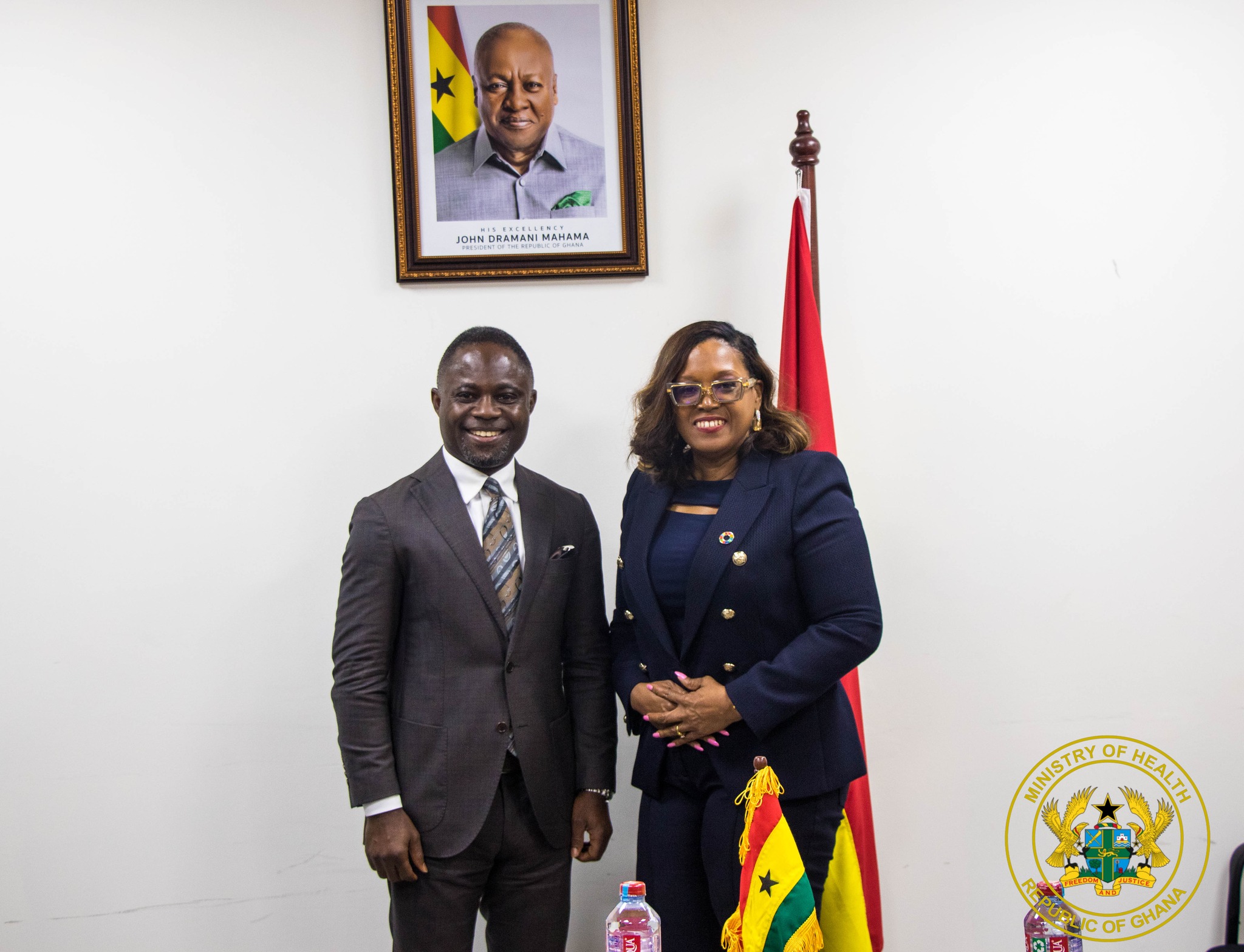
    U.S. Army Major Kojo Owusu Dartey has been sentenced to 70 months in prison and three years of supervised release for smuggling firearms to Ghana and making false statements to federal authorities.
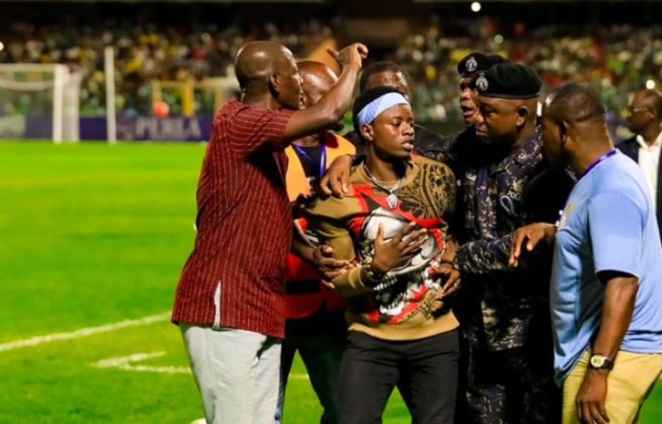
    The 42-year-old, based at Fort Liberty, was found guilty by a jury on April 23, 2024, on charges including conspiracy, illegal firearm dealing, false declarations in court, and exporting firearms without a license.

    According to court records and trial evidence, Dartey orchestrated a firearms smuggling operation by purchasing seven firearms in North Carolina and instructing a U.S. Army Staff Sergeant at Fort Campbell, Kentucky, to buy three more and send them to him.

    He then concealed the weapons inside blue barrels filled with rice and household goods before working with an Army Chief Warrant Officer to smuggle them through the Port of Baltimore, Maryland.

    The barrels were shipped to the Port of Tema, Ghana, where Ghanaian authorities later seized them and alerted the DEA attaché in Ghana and the ATF Baltimore Field Division.

    Dartey was also linked to a 16-defendant marriage fraud scheme involving soldiers at Fort Liberty and foreign nationals from Ghana. He provided information that led to its prosecution but later lied to federal law enforcement and under oath in court about his relationship with a defense witness during the U.S. v. Agyapong trial between June 28 and July 2, 2021.

    His sentencing was announced by Acting U.S. Attorney for the Eastern District of North Carolina, Daniel Bubar, following an investigation by the Bureau of Alcohol, Tobacco, Firearms and Explosives (ATF), the Army Criminal Investigation Division (CID), and the Department of Commerce’s Office of Export Enforcement. Assistant U.S. Attorney Gabriel J. Diaz prosecuted the case.