Tag: Ghana

  • I received ‘yam’ and ‘kontomire’ stew as payment after a performance – Musician discloses

    I received ‘yam’ and ‘kontomire’ stew as payment after a performance – Musician discloses

    Gospel musician Perpetual Didier recently opened up about the hurdles faced by gospel artists in Ghana, sharing a particularly memorable and humbling story from her early days in the industry.

    In an interview with Fiifi Praat on Kingdom FM, which was reported by MyNewsGh.com, Perpetual recounted an experience from about ten years ago when she performed at a church event and received food as payment instead of cash.

    She remembered being invited to perform at a church program where a Ghanaian producer, who was attending for an album launch, approached her with the opportunity.

    “I was pregnant at the time, but I recognized how vital this chance was for my career, so I decided to go for it,” she explained.

    Full of energy and excitement, Perpetual looked forward to giving her best performance. Afterward, rather than the anticipated monetary compensation, the producer handed her tubers of yam and kontomire stew that they had purchased on their way home.

    “On the day of the performance, I had a delightful meal and was excited to give my best on stage. After the event, the producer handed me tubers of yam that we had bought on the way home.

    “I was expecting to receive an envelope with the yam, but that didn’t happen.”

    While the experience served as a reality check, it also strengthened her resolve to navigate the complexities of the gospel music scene.

    When asked about performers’ reactions to money being tossed at them during shows, Perpetual candidly noted, “Everyone has their own way of dealing with it. Personally, I would keep the money for myself.”

    Her response was both lighthearted and practical, illustrating the expectation of compensation that artists have for their craft.

  • Ghana’s growth in digital bank account ranked 4th in Sub-Saharan Africa

    Ghana’s growth in digital bank account ranked 4th in Sub-Saharan Africa

    Ghana has been ranked 4th in Sub-Saharan Africa for the largest growth in digital bank account ownership, according to a report by Fitch Solutions.

    The report revealed that the country experienced over 40% growth in digital bank accounts (including mobile money) between 2011 and 2022, bringing the total to a little over 60%.

    Despite this progress, Fitch Solutions noted that the growth remains relatively low when compared to global peers. The top three countries in Sub-Saharan Africa are Mauritius with over 90% growth, followed by South Africa at 82%, and Kenya at 74%.

    Following Ghana, Senegal took the 5th spot with 54%, with Tanzania, Ivory Coast, Ethiopia, and Nigeria ranking 6th to 9th respectively.

    In its article titled Navigating The Digital Banking Landscape In Sub-Saharan Africa, the UK-based firm highlighted that while the Sub-Saharan Africa (SSA) region has lagged behind other areas in banking sector development, it has led the way in digital banking advancements.

    “We estimate that SSA banking assets will represent 53.0% of Gross Domestic Product in 2024, compared to the emerging markets average of 84.8%. Limited access to traditional banking has hindered broader economic participation and growth,” the report stated.

    The rise of digital banking, driven by factors such as the proliferation of mobile phones, improved internet connectivity, and increasing regulatory support, presents immense opportunities for financial inclusion, which is essential for economic development and technology adoption in the region.

    Fitch Solutions added, “We anticipate that SSA will continue to develop its digital banking capabilities, benefiting households, businesses, traditional and challenger banks, and the broader economy. This article investigates key themes and challenges associated with digital banking in SSA, a topic we previously highlighted as influential in the region’s banking development.”

    The report further highlighted that Nigeria and Kenya stand out as key hubs for digital banking in the SSA region, driven by a blend of traditional banks and innovative fintech companies. In Nigeria, institutions like Kuda Bank and GTBank are using mobile platforms to serve unbanked and underbanked populations.

    Additionally, South Africa is recognized for its advanced financial infrastructure, while Ghana continues to surge in mobile money usage, and Tanzania experiences rapid growth in mobile banking.

    These trends signify the potential for further digital banking development across Sub-Saharan Africa, with Ghana playing a crucial role in this transformation.

  • Ghana’s peace standing declines to 55th in global ranking; 4th in Africa

    Ghana’s peace standing declines to 55th in global ranking; 4th in Africa

    Ghana’s position on the Global Peace Index (GPI) has seen a notable decline, with the country ranking 55th in 2024 with a score of 1.938, a drop from its 51st place in 2023 and an even more significant fall from 40th in 2022.

    This dip also sees Ghana slipping from its previous position as the second most peaceful country in Sub-Saharan Africa, now ranking 4th in the region, behind Mauritius, Madagascar, and Botswana.

    The GPI, compiled annually by the Institute for Economics and Peace (IEP), evaluates 163 countries based on three key domains: societal safety and security, ongoing domestic and international conflict, and militarization.

    The report highlighted that in 2024, Sub-Saharan Africa experienced deteriorations in peacefulness across all three domains, with ongoing conflicts spilling across national borders. The index also revealed that 36 out of 44 countries in the region had been involved in at least one external conflict over the past five years.

    Mauritius remains the most peaceful country in Sub-Saharan Africa for the 17th consecutive year, with significant improvements in its Safety and Security domain. In contrast, South Sudan, despite some improvements, remains the least peaceful country in the region. Ethiopia recorded the largest improvement due to a ceasefire agreement in the Tigray region, while Gabon saw the most significant deterioration, primarily due to a military coup that ousted President Ali Bongo in August 2023.

    On a global scale, Iceland remains the most peaceful country with a score of 1.112, followed by Ireland at 1.303. Yemen, with a score of 3.397, continues to rank as the least peaceful nation worldwide.

    The report noted a worrying global trend of declining peace, with 97 countries experiencing deteriorations, compared to only 65 that saw improvements. Political instability, rising conflict-related deaths, and violent demonstrations contributed to this trend.

    In West Africa, Sierra Leone surpassed Ghana in 2023 as the most peaceful nation in the region. The National Peace Council expressed concern over these developments then, calling on Ghanaians to work together to restore peace in the country.

    Eastern Regional Chairman of the National Peace Council, Dr. Mark Boadu, emphasized the severity of Ghana’s fall, stating, “This is a cause for worry, and we must all work hard to bring back the glory.”

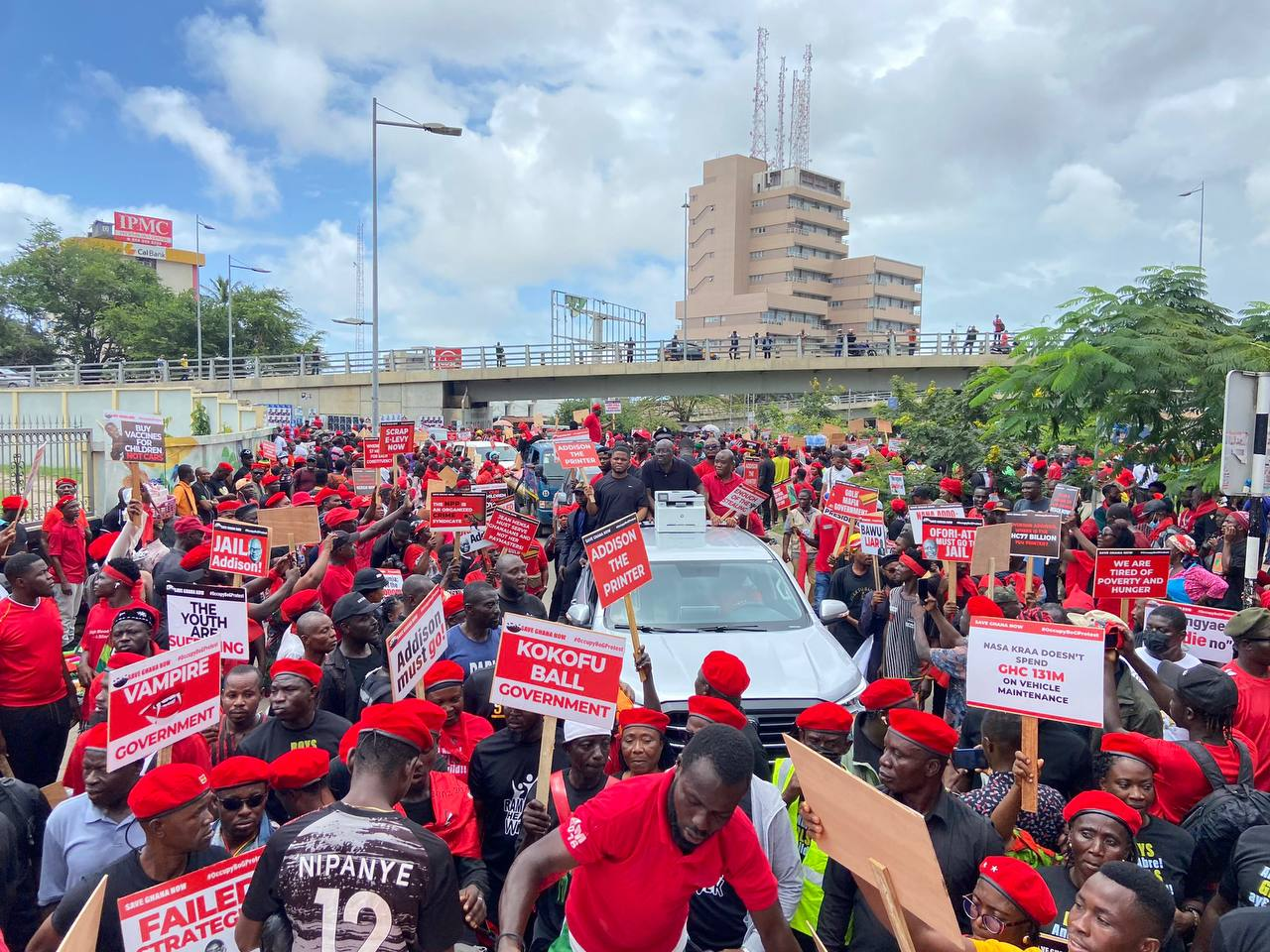
    In 2024, Ghana has recorded several violent protests, including the “Enough is Enough” demonstration led by the National Democratic Congress (NDC), which saw clashes between protestors and security services. The recent Democracy Hub protest against illegal mining activities also resulted in over 40 arrests.

    Globally, the GPI report shows that the world has become less peaceful for the 12th time in the past 16 years. The report noted, however, a stronger commitment to UN peacekeeping efforts, which recorded the most significant improvement among GPI indicators. Despite some positive developments, the Militarization domain saw the largest deterioration, driven by rising military expenditures. Ukraine, Myanmar, and North Macedonia recorded some of the biggest increases in military spending.

    The ongoing conflicts in Ukraine and Gaza, along with continued unrest in other regions, contributed to a decline in global peace, with 85 countries experiencing deterioration in the Ongoing Conflict domain. Meanwhile, the Safety and Security domain was the only one to record an improvement in the past year, with countries like Kazakhstan, Iran, and Uzbekistan seeing a decrease in violent demonstrations.

  • Carefully review contracts before signing – Sonnie Badu tells fellow musicians

    Carefully review contracts before signing – Sonnie Badu tells fellow musicians

    Gospel artist Sonnie Badu recently raised alarm about the royalty system in Ghana, urging fellow musicians to scrutinize their contracts before committing.

    During a September 18 interview on Rhythmz, he expressed skepticism about the current structure, suggesting it should be termed differently given its shortcomings.

    Badu highlighted the necessity for artists to fully understand contractual terms to avoid being taken advantage of, asking “What are the terms and conditions before you signed with them? Before you signed with them, what did they tell you was going to happen?” he asked, emphasizing the need for musicians to be fully informed before committing to agreements. He recalled turning down contracts from Ghana, anticipating potential negative outcomes.

    “I’ve had people pass contracts to me from Ghana that I refused to sign or let any family member sign because I read it and knew what the behind-the-scenes would be,” he explained.

    He also mentioned the plight of fellow gospel artist Joyce Blessing, who disclosed receiving a mere 1,200 Ghana cedis in royalties after ten years in the industry. In light of this, Badu voiced his frustration with the system, stating he is reluctant to sign any contracts, believing that artists aren’t fairly compensated and that their work is being exploited.

    When questioned about his own royalties from the Ghana Music Rights Organization (GAMRO), Badu indicated that his mother handles those matters for him, suggesting he has little involvement in the financial side. His comments reflect the ongoing challenges within the Ghanaian music scene, where many artists face significant barriers to receiving fair compensation for their work.

  • I have a beef with Ghana’s Finance Minister, who is he? Michael Blackson quizzes

    I have a beef with Ghana’s Finance Minister, who is he? Michael Blackson quizzes

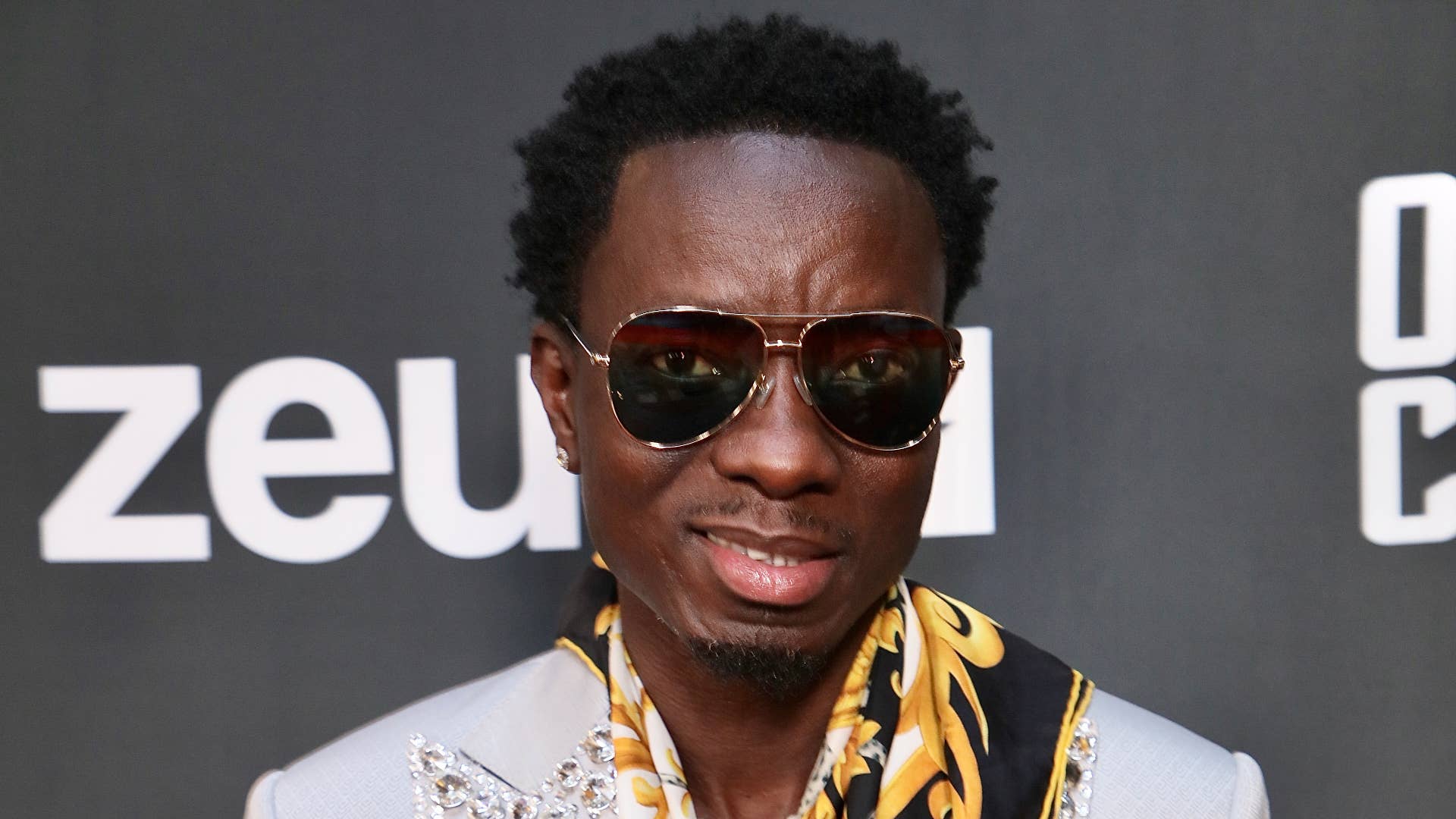
    American comedian and actor of Ghanaian descent, Michael Blackson, has publicly expressed his dissatisfaction with the Ghanaian government, specifically targeting the Finance Minister.

    In a series of posts on X (formerly Twitter), Blackson shared his frustration over difficulties in recovering funds he had invested in Eurobonds, which were intended to support the Michael Blackson Academy, a free school he established in Agona Nsaba.

    Blackson explained that he invested in Eurobonds with the aim of using the returns to fund the long-term operation of his school. However, he claims the government diverted the funds to settle debts. “Ghana decided to use our money to pay their debt to China or whoever and leave us hanging,” he wrote.

    Questioning the leadership responsible, Blackson called out the Finance Minister, saying, “Who’s the Minister of Finance in Ghana? I have beef with this guy. People of the diaspora decided to invest in our continent, and they used our money to pay their debt and gave us two options: Either take a 37% cut and receive 5% interest with 11 years maturity date, or no cut but 1.9% interest with a 15-year maturity date. I’m very disappointed in my people for this.”

    The Michael Blackson Academy, which was founded three years ago, provides free education to children from kindergarten to Basic 3, along with free uniforms. Despite the financial challenges, Blackson remains committed to his school and the children it serves.

    “If it wasn’t for the love and passion I have for the unprivileged youth of Ghana, I would just hand my school to the people and walk away,” he added.

    In June 2024, Ghana reached an agreement in principle with private creditors to restructure about $13 billion of debt, a key milestone in the West African country’s efforts to overhaul its loans. The nation’s bonds rallied.

    Under terms of an accord announced on Monday, investors accepted nominal losses of 37% on their holdings, according to a statement issued by the advisers to an international creditor committee and the government.. Bondholders will forego $4.7 billion of their claims, while providing cash flow relief of about $4.4 billion during an International Monetary Fund loan program, it said.

    https://twitter.com/MichaelBlackson/status/1836330373778935940
  • Top 5 destinations for Ghana’s timber exports as of June 2024

    Top 5 destinations for Ghana’s timber exports as of June 2024

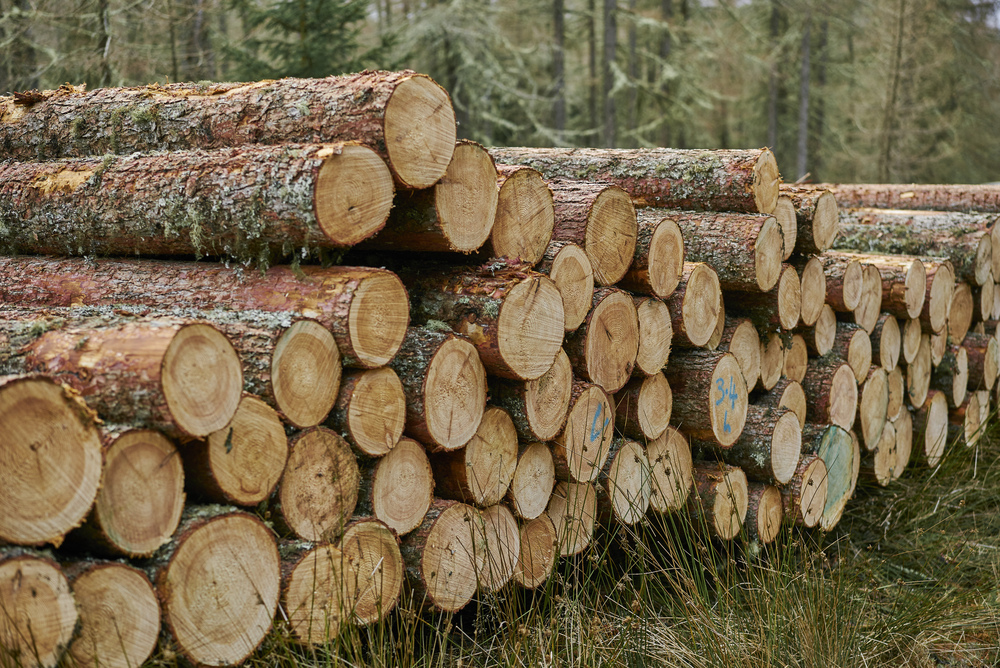
    Ghana’s timber and wood product exports to the Asia/Far East, Europe, Africa, America, and the Middle East markets recorded both gains and declines in June 2024.

    The performance was marked by notable decreases in both value and volume compared to June 2023. Here are the top 5 destinations for the country’s timber and wood products.

    1. India
      India remains Ghana’s largest market for timber exports, particularly for Teak logs and Boules. The country imported significant volumes of timber, driving demand for primary wood products.
    2. Vietnam
      Vietnam is another key destination, purchasing large quantities of processed timber products like Kiln Dried Lumber and Veneer, vital for the country’s burgeoning furniture industry.
    3. Niger
      As one of Ghana’s biggest African trade partners for timber, Niger imports vast amounts of wood products, including Plywood and Air Dried Lumber, which are essential for construction and infrastructure development.
    4. Belgium
      Belgium represents one of Europe’s primary importers of Ghana’s timber products, especially Kiln Dried Lumber and processed wood, used in the manufacturing of high-end furniture and construction.
    5. United States
      The U.S. market, showing steady growth, imports specialized wood products such as Mouldings and Kiln Dried Lumber, contributing to a significant portion of Ghana’s tertiary wood product exports.

    Here’s a breakdown of the export figures across the various regions.

    Asia/Far East: Leading Destination

    The Asia/Far East region remained the largest market for Ghana’s timber exports in June 2024, bringing in €33,126,566.11, accounting for 54.68% of total export revenue. A total of 85,070.301 cubic meters of timber (63.90% of the volume) was shipped to this region. Despite its lead position, the market experienced a 12.28% drop in value and a 12.79% decline in volume compared to June 2023, when the region contributed €37,766,006.11 from 97,543.488 cubic meters. The products exported included Lumber (Air Dried), Billet, Teak Logs, Lumber (Kiln Dried), Sliced Veneer, and Processed L/Mouldings, with key species like Teak, Papao, Denya, Wawa, and Cedrela.

    Europe: Second-Largest Market

    Exports to Europe generated €13,084,226.34 (21.60%) from 20,961.021 cubic meters (15.75%) of timber, making it the second-largest destination for Ghana’s wood products in June 2024. However, compared to June 2023, the European market witnessed a significant decline, with a 20.71% decrease in value and a 17.56% drop in volume. In June 2023, exports to Europe stood at €16,500,761.05 from 25,425.897 cubic meters. The European market primarily imported Boules (Air and Kiln Dried), Briquettes, Lumber (Air and Kiln Dried), Plywood, Veneers, and Processed L/Mouldings, with species like Wawa, Niangon, Ceiba, Odum, and Sapele.

    Africa: ECOWAS Sub-Region Leading

    The African market brought in €5,415,246.66 (8.94%) from 13,175.392 cubic meters (9.90%) of timber exports in June 2024. This represented a sharp decrease of 25.76% in value and 26.75% in volume compared to June 2023, when €7,294,120.74 was earned from 17,986.965 cubic meters. The ECOWAS sub-region dominated the African market, accounting for €3,849,751.90 (71.09%) of the total, from 10,277.141 cubic meters (78.00%). Key destinations within Africa included Egypt, Morocco, Benin, South Africa, and Mozambique. Popular products included Lumber (Air and Kiln Dried), Plywood (Overland), Rotary Veneer, and Sliced Veneer.

    America: Growth in Value and Volume

    The American market showed positive growth in June 2024, generating €5,589,609.13 (9.23%) from 7,168.660 cubic meters (5.38%) of wood exports. This marked a 9.72% increase in value and a 10.19% rise in volume compared to June 2023, when the market recorded €5,094,409.11 from 6,505.824 cubic meters. The U.S. and other American destinations primarily imported Lumber (Kiln Dried), Plywood, Processed L/Mouldings, Rotary Veneer, and Sliced Veneer, with species like Mahogany, Cedrela, Sapele, Eucalyptus, and Black Ofram being the most sought after.

    Middle East: Fifth-Largest Market

    Timber exports to the Middle East amounted to €3,342,407.14 (5.52%) from 6,712.262 cubic meters (5.04%) in June 2024. This marked a 12.79% decrease in value and a 15.22% decline in volume compared to June 2023, when €3,832,786.92 was earned from 7,917.551 cubic meters. The Middle East imported Lumber (Air and Kiln Dried), Plywood, Rotary Veneer, and Sliced Veneer, with key species including Denya, Eucalyptus, Wawa, Teak, and Odum.

  • Ghana records 160,000-tonne loss to cocoa smuggling in 2023/24 season – Report

    Ghana records 160,000-tonne loss to cocoa smuggling in 2023/24 season – Report

    Ghana COCOBOD has revealed that approximately 160,000 tonnes of cocoa were lost to smuggling during the 2023/2024 crop season, according to a report from Reuters.

    Charles Amenyaglo, the Director of Special Services at the cocoa authority, highlighted the severe impact of smuggling, stating that the country’s cocoa production loss was more than three times the total output for the 2023/2024 season.

    “Conservatively, I will say we lost 160,000 tonnes,” he informed Reuters, noting that a joint task force intercepted around 250 tonnes of smuggled cocoa beans, a significant increase from the 17 tonnes seized during the 2022/2023 season.

    Amenyaglo also mentioned that COCOBOD is collaborating with the Ghana Armed Forces to address the rising cases of cocoa smuggling to neighboring nations.

    Ivory Coast and Ghana produce about 60% of the world’s cocoa beans, but smuggling activities have affected output, pushing up market prices and contributing to the surge in chocolate costs this year.

    COCOBOD’s data indicated that Ghana harvested 429,323 metric tonnes of cocoa by the end of June, starting from the season’s onset in September, which accounted for less than 55% of the typical yield.

    Reuters also reported that the 2023/2024 season marked the steepest decline in cocoa production in the last two decades.

    In response, Ghana’s COCOBOD has set the farmgate price for cocoa farmers at GH¢48,000 per tonne, or GH¢3,000 per 64-kilogram bag, for the upcoming 2024/2025 crop season.

    This new rate reflects a 45% increase from April 2024 and a 129% rise compared to September 2023.

    The price hike follows COCOBOD’s discussions with the government aimed at boosting the producer price to discourage smuggling and enhance the livelihoods of cocoa farmers as the new season gets underway.

  • Sea turtle trader nabbed; charged with illegal possession, trade of protected species  – Report

    Sea turtle trader nabbed; charged with illegal possession, trade of protected species – Report

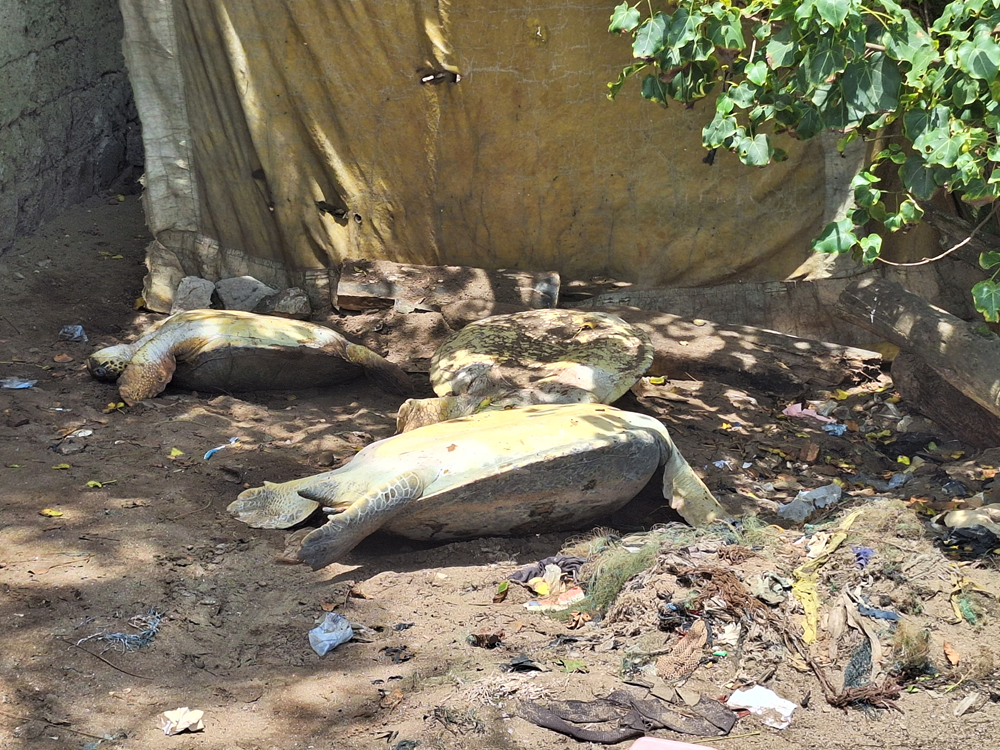
    Ghanaian authorities have reportedly arrested one Afua Poma, widely known as “Maame Turtle,” for her involvement in the illegal poaching and sale of endangered sea turtles, following a recent investigation exposing the illicit trade.

    The arrest, said to be executed by officers Godwin Amezah and Richard Yeboah from the Nyanyano Divisional Police, occurred just three days after investigative journalist Gideon Sarpong’s Pulitzer ORN-backed report was published by iWatch Africa.

    Afua Poma, identified in the investigation as a central figure in the illegal trade, was apprehended with three live sea turtles at the time of her arrest, highlighting the ongoing threat to Ghana’s marine wildlife. The captured turtles were promptly released back into the ocean after authorities collected evidence.

    In a plea for leniency, Poma expressed remorse, telling the arresting officers, “I am sorry about this action. Please forgive me. I will not practice this illegal trade again.”

    Poma’s arrest represents a significant victory in the battle against illegal sea turtle poaching in Ghana, though her partner, Kweku Essien, remains at large. Police continue to search for Essien, whom they believe to be a key player in the illicit trade.

    Authorities have charged Afua Poma with illegal possession and trade of protected species under Ghana’s Wildlife Resources Management Act 115, 2023.

    Head of Nyanyano’s crime unit, ASP Francis Kumi, confirmed that Poma will face arraignment in court, and reiterated the penalties associated with violating the Act.

    “The hunting, capture, and trade of sea turtles is strictly prohibited,” Kumi emphasized, warning that offenders could face up to two years in prison or steep fines.

    Gideon Sarpong, whose investigation led to the crackdown, commended the swift response by law enforcement.

    “As investigative journalists, our role goes beyond simply telling the story—we strive to spark change. The arrest of Afua Poma following our report is a powerful reminder that shedding light on injustice can lead to real-world action. It’s a victory not just for the sea turtles, but for the entire ocean ecosystem they sustain,” Sarpong stated.

  • Ghanaians prioritize formal education over industrial development – Apostle Kwadwo Safo

    Ghanaians prioritize formal education over industrial development – Apostle Kwadwo Safo

    Apostle Kwadwo Safo, a Ghanaian industrialist, inventor, and pastor, has expressed his dissatisfaction with the lack of recognition for his work in Ghana.

    He attributed this to the nation’s preference for formal education over industrial advancements.

    As the founder of Kristo Asafo Church, Safo feels his contributions to practical industry are overlooked in favor of traditional educational achievements.

    He noted that, despite his success in creating products comparable to those from abroad, Ghanaians often prefer imported goods over locally made ones.

    “Because they feel education is better and what I do has no value, I am not regarded in this country. They condemned my vision and projects because they said reading and writing are far better. When you want to impact your knowledge of industrialization, they will tell you no. They prefer to study and speak the big grammar,” he stated while speaking to Cheddar.

    Safo criticized the prevailing attitude that values formal education above practical industrial skills, arguing that this mindset diminishes the importance of innovation and industrial development.

    “Look are the debts we are burdened with? It’s sad. The foreigners are dictating to us because we depend on them,” he stated.

    He pointed out that the country’s economic difficulties are partly due to the neglect of industrial progress, which has led to a dependence on foreign products and expertise.

    “Help me to help you before I die.”

  • I’m not respected in this country – Apostle Kwadwo Safo

    I’m not respected in this country – Apostle Kwadwo Safo

    Apostle Kwadwo Safo, a notable Ghanaian industrialist, inventor, and pastor, has expressed discontent over the lack of recognition he receives within Ghana.

    He believes this is due to the country’s focus on formal education rather than practical industrial contributions.

    Safo, who leads the Kristo Asafo Church, feels his innovative work is not given the credit it deserves, with many preferring imported goods and traditional academic pursuits over homegrown industrial advancements.

    “Because they feel education is better and what I do has no value, I am not regarded in this country. They condemned my vision and projects because they said reading and writing are far better. When you want to impact your knowledge of industrialization, they will tell you no. They prefer to study and speak the big grammar,” he stated while speaking to Cheddar.

    He criticized the societal emphasis on theoretical knowledge and sophisticated language, which he argued detracts from the value of industrial progress.

    In a recent discussion with Cheddar, Safo pointed out that Ghana’s economic difficulties and substantial debt are partly due to the neglect of local industrial development.

    “Look are the debts we are burdened with? It’s sad. The foreigners are dictating to us because we depend on them,” he stated.

    Apostle Safo concluded with a plea: “Help me to help you before I die.”

    He urged for greater support for his initiatives, stressing that it is crucial for national progress.

  • I’ll charge GHC90,000 to perform for a political party – Kweku Darlington

    I’ll charge GHC90,000 to perform for a political party – Kweku Darlington

    Kweku Darlington has disclosed the fee he would charge to perform at a political event.

    In an interview with Nana Kwesi Bliss on Class 91.3 FM’s Class Xtra, the Sika Kankan artist mentioned that music is his profession and, as a businessman, he is open to performing at political events for any candidate as Ghana approaches the December 7 elections.

    However, Darlington emphasized that he is not ready to record or release a campaign song.

    He explained that such a move could have significant repercussions for his relatively young career, as it would be perceived as a clear political endorsement.

    “I might negotiate a performance fee of GH¢80,000 or GH¢90,000 for a political event,” Darlington said.

    “But I won’t agree to create a campaign song because it would restrict my career options and could pigeonhole me politically.”

    He clarified that while he is open to performing his own songs for a fee, he is not prepared to take on a campaign song at this stage of his career, stating that such a commitment could limit his future opportunities.

  • AFCON qualifier: Ghana under pressure to beat Sudan

    AFCON qualifier: Ghana under pressure to beat Sudan

    Ghana’s head coach, Otto Addo, has made it clear that the Black Stars must secure a win in their upcoming Africa Cup of Nations (AFCON) qualifier against Sudan.

    With a disappointing start to their campaign, including a defeat against Angola and a draw with Niger, Addo emphasized that victory is crucial to keeping their qualification hopes alive.

    “It will be difficult again. I knew from the start, it’s just some little margins, little details which can decide. This will be a crucial match for us. We have to win. There is no way around it, and we have to win,” Otto Addo said as he reflected on the team’s current position.

    Ghana currently finds itself under mounting pressure, with Otto Addo stressing that his players need to step up and deliver. The coach acknowledged the challenges but remains confident that the team can turn things around.

    “If we want to have the chance to play better after, we have to win. We are under pressure, this is for sure, and we have to do better,” he added.

    One of Otto Addo’s major concerns has been the Black Stars‘ defensive lapses, which have cost them crucial points. Reflecting on their recent performances, Addo expressed disappointment in his team’s inability to learn from previous mistakes.

    “We are allowing too cheap goals. Like I said, I am disappointed; we didn’t learn the lessons from the first game. Now it’s a set piece, we are all back, we need to defend this better,” he explained.

    The head coach also highlighted the need for his players to improve both defensively and offensively. Despite creating chances in their last two matches, the Black Stars failed to capitalize, which has left their path to AFCON qualification more challenging.

    “We have to improve to use our chances and also to defend better in detail and to learn our lessons. Like I said, the goals are too cheap, and we have to grow from this,” Addo added.

    The Black Stars are fully aware that anything less than a win against Sudan could jeopardize their chances of booking a spot in next year’s AFCON tournament in Morocco. As the pressure mounts, all eyes will be on the team as they seek to get their qualification campaign back on track.

  • Ghana plays Niger today; Joseph Paintsil out of squad

    Ghana plays Niger today; Joseph Paintsil out of squad

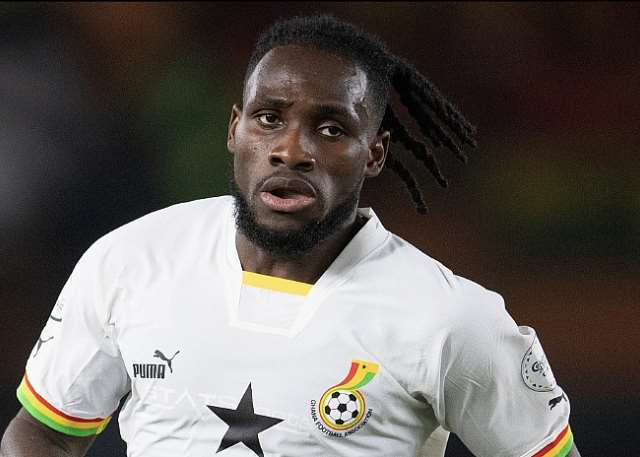
    The Black Stars of Ghana will face Niger today in their 2025 Africa Cup of Nations (AFCON) qualifier without forward Joseph Paintsil.

    The match will kick off at 15:00 GMT in Berkane, Morocco.

    According to head coach Otto Addo, Paintsil is unavailable due to issues with his US work permit and has been granted permission to visit the US Embassy to resolve the matter.

    Paintsil, who came off the bench during Ghana’s opening match of the qualifiers against Angola last weekend, was expected to feature in today’s clash against Niger. However, the LA Galaxy forward was not part of the squad that traveled to Morocco for the game, as the work permit issue required urgent attention.

    Head coach Otto Addo explained the situation, stating, “He [Jerome Opoku] will be out for this game. Also, Joseph Paintsil, there is some issue with his work permit for the US. For that, he has to go to the US Embassy. The procedure takes some days. We needed his passport when he wanted to come to Morocco. We couldn’t take him there. We were hoping he would finish everything fast at the US Embassy. But, like I said, I think it takes more than three, four, five days. He had to do it because otherwise, he couldn’t return to his club in the US. So, both of them will not be available.”

    Jerome Opoku, another key player, is also ruled out of the match due to separate concerns. Despite these absences, the Black Stars are determined to bounce back after a challenging start and secure a victory against Niger.

  • Enchi-Asankrangwa road destroyed due to activities of illegal mining – Report

    Enchi-Asankrangwa road destroyed due to activities of illegal mining – Report

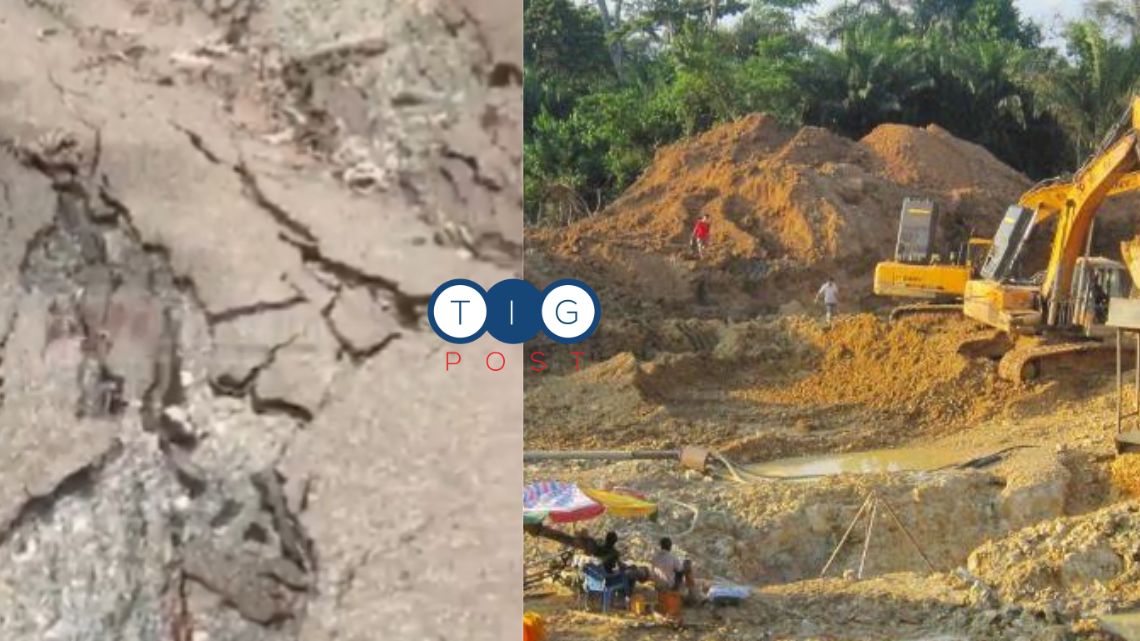
    The Enchi-Asankrangwa road in Ghana‘s Western Region has reportedly been severely damaged due to activities of illegal mining.

    According to a report by Channel One TV, illegal miners have used the road for their operations, causing the destruction of one-third of its length.

    The damage has rendered a significant portion of the road unusable, leaving only one stretch open for use.

    Concrete barriers designed to prevent vehicles from veering off the road have also been destroyed, contributing to the road’s deteriorated state.

    The situation has made commuting difficult, even for local chiefs who frequently use the route.

    The road, originally reconstructed in 2008 at a cost of GHC152 billion during the Kufuor administration, was designed to last for fifteen years.

    It was built by the Chinese company Top International Engineering Corporation Ghana Limited and features a two-lane single carriageway stretching 56 kilometers.

    The project included a double-sealed bituminous surface, improved road geometry, bus bays, taxi stopping lanes, drainage structures, crash barriers, and speed-calming measures.

    Illegal mining activities have compromised the road, underscoring the need for urgent action to stop further destruction.

    Watch video below:

  • An overview of NPP’s creative arts sector promises since 2016

    An overview of NPP’s creative arts sector promises since 2016

    Ghana‘s entertainment industry has undergone a remarkable transformation, evolving from a basic entertainment sector into a vibrant and multifaceted creative arts industry.

    Overseen by the Ministry of Tourism, Arts, and Culture, this sector has become a significant contributor to national development, adding approximately $1.9 billion to Ghana’s economy in 2019 , the highest recorded so far in the Akufo-Addo-led government administration.

    Key stakeholders, including political parties, private investors, NGOs, and individual organizations, play crucial roles in shaping this dynamic industry and as such, political parties have outlined their visions for the future of the creative arts sector as Ghana approaches the December 7 elections.

    The article will highlight the promises made by the NPP since 2016, a year before the party came into office, till the most recent ones in 2024.

    This will enable us track the progress made by the party or otherwise in 8 years.

    NPP’s 2016 Vision for the Creative Arts

    Prior to assuming power in 2017, the NPP in 2016 made several promises aimed at strengthening the creative arts sector. They include:

    1. Creative Arts Fund: Establishing a fund to provide financial support to artists.

    2. Infrastructure Development: Completing the theatre in Kumasi and constructing new theatres in Takoradi and Tamale.

    3. Recording Studios: Partnering with the private sector to create large recording studios in Accra, Kumasi, Tamale, and Takoradi, allowing artists to rent space for recording.

    4. Digital Platform: Building a digital platform to make Ghanaian creative products available globally.

    5. Convention Centre: Constructing one of the world’s largest convention and exhibition centres at the Ghana Trade Fair Company site in La.

    Sadly, none of the modern large seating theatres was constructed during the almost eight-year term of the NPP.

    The government, however, did renovate the Koforidua Center For National Culture.

    NPP 2020 Manifesto Promise:

    In the NPP 2020 manifesto, most 2016 manifesto promises were repeated

    1. Creative Arts Fund to support artists (promised in 2016)
    2. Construct theatres in Takoradi and Tamale Construct large recording studios in Accra, Tamale and Takoradi.
    3. Build a digital platform for artists to market their products
    4. Construct one of the world’s biggest convention and exhibition centres in Accra
    5. Construct new theatres in Takoradi and Tamale.

    After retaining power in 2020, the NPP emphasized their commitment to fulfilling the promises made in 2016, even though some projects remained incomplete.

    Mark Okraku Mantey, Chairman of the Creative Arts Council, explained that the 2020 manifesto was less ambitious than the 2016 manifesto because many of the earlier promises were still in progress.

    The 2020 manifesto aimed to build on these ongoing efforts.

    Two years later after winning the elections, (in October 2022), the former Minister of Tourism, Arts And Culture, Dr. Ibrahim Mohammed Awal announced the government’s plan to build 5 amphitheatres by the end of the year (2022).

    He also revealed that the same number will be replicated in other 5 regions, covering almost every region in the country by the end of 2024.

    However, none of the projects commenced until Wednesday, April 26, 2023, (six months after the announcement) when a sod-cutting ceremony was held in Kumasi to start the construction of the first amphitheatre.

    During the ceremony, the Deputy Minister of Tourism, Arts and Culture, Mark Okraku-Mantey revealed and assured all that the one-thousand-capacity state-of-the-art amphitheatre would be completed in July 2023 (3 months after the commencement of the project).

    However, much is left to be said of the project today as developers have left the site at the time of publication.

    He said the amphitheatre will serve as a venue for performances and other forms of entertainment and also aid Industry players in planning for events.

    By 2024, the NPP had yet to establish a recording studio, facing resistance from some creatives who argued that the funds could be better allocated to other projects.

    In a recent interview granted by Mark Okraku Mantey he asserts the NPP were unable to create the recording studio as some creatives opposed the idea.

    The party also failed to complete the world’s largest exhibition centre and other key projects.

    Despite these setbacks, the NPP has outlined significant new initiatives in their 2024 manifesto:

    NPP 2024 Manifesto promise:

    Special travel privileges for creatives through the establishment of a Travel Protocol Service (TPS), facilitating international performances and shows.

    1. Tax incentives, including a flat tax, to attract private sector investments in sports, tourism, and creative arts facilities.
    2. Implementation of an e-visa policy for swift and convenient visa acquisition for international visitors.
    3. Introduction of a visa-free policy for nationals of African and Caribbean countries visiting Ghana.
    4. Collaboration with the private sector to launch a streaming and digital management platform for Ghanaian creative content developers.

    Conclusion:

    While the NPP government has made bold promises to advance Ghana’s creative arts industry, the implementation of these initiatives has been slower than expected.

    Although the establishment of a Creative Arts Fund and the construction of theaters and studios were ambitious, delays and resistance have hindered progress.

    The 2024 manifesto, however, renews the party’s commitment to fostering growth in the sector, with an emphasis on international collaboration, private sector engagement, and streamlined travel protocols.

    As Ghana approaches the 2024 elections, the creative arts community will be keenly watching to see if these promises can finally be realized.
  • Top 10 most visited Tourist sites in Ghana 2023 – Report

    Top 10 most visited Tourist sites in Ghana 2023 – Report

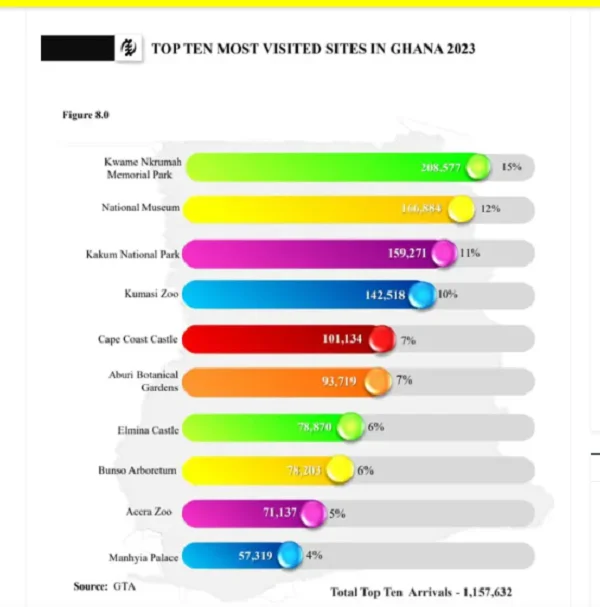
    In 2023, Ghana’s tourism sector saw a significant surge in visitor numbers, with the top ten most visited sites collectively welcoming 1,157,632 visitors.

    Here are the highlights of these popular destinations according to the 2023 Ghana Tourism Report:

    1. Kwame Nkrumah Memorial Park: Leading the list, this iconic park attracted 208,577 visitors. The park, dedicated to Ghana’s first president, offers a rich historical experience and beautiful surroundings.

    2. National Museum: Recently renovated, the National Museum drew 166,884 visitors. It showcases Ghana’s cultural heritage and history through various exhibits.

    3. Kakum National Park: Known for its canopy walkway, Kakum National Park welcomed 159,271 visitors. The park offers a unique rainforest experience and is a favorite among nature enthusiasts.

    4. Kumasi Zoo: With 142,518 visitors, the Kumasi Zoo provides an opportunity to see a variety of wildlife and learn about conservation efforts.

    5.Cape Coast Castle: This historical site, which played a significant role in the trans-Atlantic slave trade, attracted 101,134 visitors. It offers a poignant and educational experience.

    6. Aburi Botanical Gardens: Despite a drop in visitor numbers, the gardens still saw 93,719 visitors. The gardens are known for their lush greenery and serene environment.

    7. Elmina Castle: Another important historical site, Elmina Castle, recorded 78,870 visitors. It offers insights into Ghana’s colonial past and the slave trade.

    8. Bunso Arboretum: This eco-tourism site in the Eastern Region attracted 78,203 visitors. It is known for its diverse plant species and tranquil setting.

    9. Accra Zoo: The zoo, located in the capital city, welcomed 71,137 visitors. It is home to various animal species and provides educational programs for visitors.

    10. Manhyia Palace Museum: After undergoing renovations, the museum saw a resurgence in popularity with 57,319 visitors. It offers a glimpse into the history and culture of the Ashanti Kingdom.

    The Ghana Tourism Authority attributes the increased visitor interest to the renovations and enhancements of these attractions, which have played a crucial role in driving tourism success in 2023.

    See post below:

  • Ghana lose to Angola by a goal to nil in AFCON qualifier

    Ghana lose to Angola by a goal to nil in AFCON qualifier

    Ghana’s hopes of starting their 2025 Africa Cup of Nations (AFCON) qualifying campaign on a high were dashed after a late goal saw them lose 1-0 to Angola at the Baba Yara Sports Stadium on Thursday.

    The Black Stars conceded in stoppage time, ending their 24-year unbeaten home run at the stadium.

    Despite controlling much of the game and creating several chances, Ghana were undone in the third minute of added time when Angolan substitute Felício Mendes João Milson struck from close range. The Black Stars‘ defense failed to clear their lines, allowing Milson to slot home and secure the points for his side.

    Ghana went into the match looking to extend their winning streak. Jordan Ayew led the attack, with Antoine Semenyo and Abdul Fatawu Issahaku supporting from the wings. Mohammed Kudus, Thomas Partey, and Elisha Owusu formed the midfield trio, while Mohammed Salisu and Abdul Mumin paired in central defense.

    Tariq Lamptey and Alidu Seidu occupied the right and left-back positions, respectively.

    The Black Stars made a lively start, with Antoine Semenyo coming close to opening the scoring just five minutes in, but his effort drifted wide. Angola’s goalkeeper Neblu was called into action in the 36th minute when Mohammed Kudus unleashed a powerful shot on target, but the keeper made a crucial save to keep the score level.

    In the second half, Neblu was tested again, making a smart save to deny Semenyo’s effort in the 58th minute. As Ghana continued to press for the opening goal, they came agonizingly close on multiple occasions.

    In the 77th minute, Jordan Ayew saw his shot blocked after rounding the goalkeeper, and Kudus had a goal-bound effort deflected behind for a corner eight minutes later.

    Ghana’s pressure mounted, but they were unable to find a breakthrough. Then, in stoppage time, a defensive error from Abdul Mumin allowed Milson to strike, giving Angola the decisive goal.

    Head coach Otto Addo made late substitutions, introducing Joseph Paintsil, Majeed Ashimeru, and Inaki Williams in a bid to rescue the game, but the changes had little impact. Angola held on for their first win of the qualifiers, leaving Ghana with much work to do in the coming games.

    The defeat marks a significant setback for the Black Stars, who must now regroup ahead of their next fixture against Niger on Monday. With Angola set to host Sudan in the other Group F clash, Ghana will be hoping for a crucial victory to keep their AFCON qualification hopes alive.

  • Ghana struggles with rising human trafficking cases despite increased efforts – Report

    Ghana struggles with rising human trafficking cases despite increased efforts – Report

    Although the report shows the government enhanced its victim protection efforts, the number of identified victims rose compared to the 574 victims reported in 2022.

    Children made up a large portion of the victims, with 505 affected, and the majority of those trafficked, 616, were Ghanaian nationals.

    Among the 123 foreign nationals trafficked, most were Nigerian, with others from Liberia, Sierra Leone, and Vietnam.

    The United States Department of State, through the report, acknowledged that Ghana has yet to meet the minimum standards for eradicating trafficking but is making notable progress.

    The Department recommended that Ghana intensify investigations and prosecutions of suspected traffickers, including corrupt officials and fraudulent labor recruiters, and impose significant prison sentences on those convicted.
    Ghana remains on Tier 2 of the US Department of State’s ranking due to its improved efforts compared to previous years. These efforts include increasing investigations, prosecutions, and convictions related to trafficking, as well as referring more victims for assistance. The government also trained judicial and law enforcement personnel in trauma-informed practices and strengthened its collaboration with civil society to improve protection and prevention.

    Despite these advancements, the government still fell short in key areas. For example, the 2017 ban on labor migration to Gulf States remains in effect, increasing vulnerability to trafficking.

    The government did not hold any fraudulent labor recruiters accountable, despite reports of Ghanaian victims being exploited abroad.
    The report also criticized the government for not addressing complicity in trafficking cases adequately, nor amending anti-trafficking regulations to eliminate the option of fines instead of imprisonment for traffickers who are parents or guardians of child victims.

    Efforts to identify trafficking indicators among vulnerable populations—such as labor migrants, asylum seekers, and workers on Chinese-owned fishing vessels—remained insufficient.

    Over the past five years, human traffickers have exploited both local and foreign victims within Ghana, while Ghanaian victims have also been trafficked abroad. Children in Ghana have been forced into labor in fishing, domestic service, street hawking, begging, artisanal mining, herding, and agriculture.

    In a disturbing revelation from the 2023 Ghana Trafficking in Persons Report, the government identified and reported 944 victims of human trafficking last year. Of these, a staggering 821 individuals were subjected to labor trafficking, while the remaining were exploited for sexual purposes. The report sheds light on the persistent and growing challenge of human trafficking in Ghana, despite increased efforts to protect victims.

  • Cross-dressing trend among male content creators disturbing and totally unacceptable – NCC

    Cross-dressing trend among male content creators disturbing and totally unacceptable – NCC

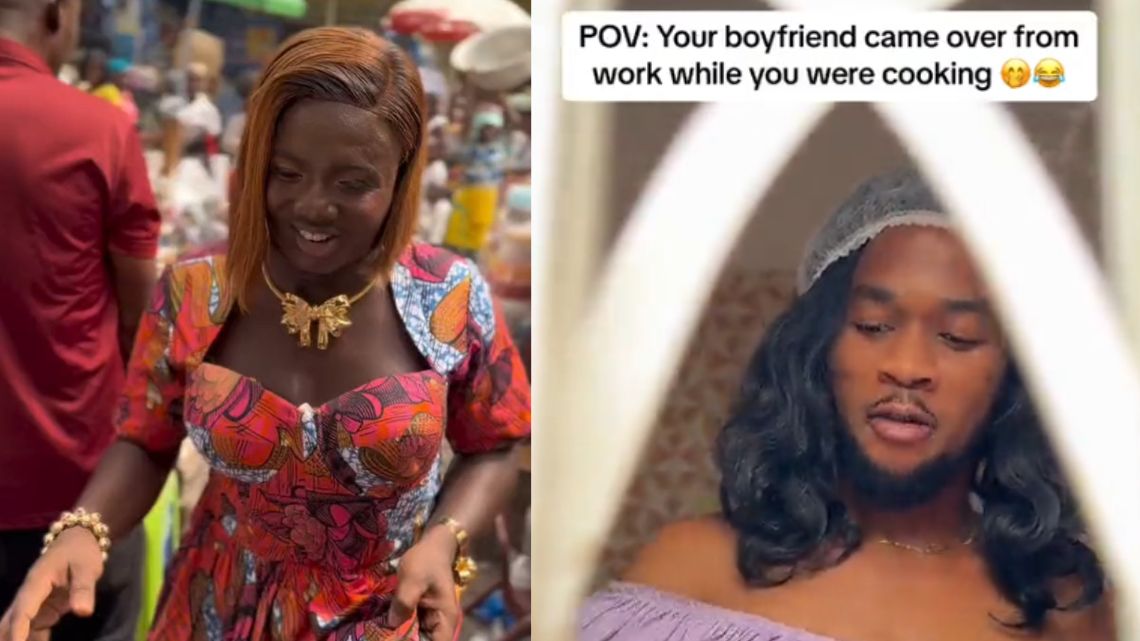
    The National Commission on Culture (NCC) has expressed serious concern over the increasing trend of male content creators in Ghana engaging in cross-dressing.

    This practice has been deemed inconsistent with the nation’s cultural and moral standards.

    The Commission’s apprehensions were heightened following a recent event at the Ridge Condos All Black Party in Kumasi, where a male influencer was seen donning women’s attire and accessories.

    Cross dresser Senior Man Headucator was spotted at the All Black party at Ridge Condos in Kumasi.

    Dr. Richardson Commey Fio, Deputy Executive Director of the NCC, labeled this trend as “disturbing” and “entirely unacceptable,” particularly in Kumasi a city renowned for its deep cultural roots.

    Dr. Fio criticized the notion that globalization and modernity should justify behaviors that compromise the moral fabric of Ghanaian society.

    He emphasized the need to preserve cultural values and expressed disappointment at the persistence of actions that undermine these traditions.

    “It is very disappointing that we continue to experience such behaviours that are an affront to our rich cultural values and norms.

    “And for such an event to happen in Kumasi, one of the leading cities in Ghana where culture and traditions are held in high esteem, this is totally unacceptable.

    “Certain bad elements in our society who want to denigrate our culture and tear down the good moral fibre of our communities for parochial gains always want to hide behind a misleading narrative of globalisation and modernism,” he said.

    He urged individuals to adhere to Ghana’s traditional values and resist promoting behaviors that conflict with these cultural standards.

  • 8-month pregnant Ghanaian student in Canada homeless, seeks assistance

    8-month pregnant Ghanaian student in Canada homeless, seeks assistance

    A Ghanaian woman who travelled to Canada for studies now finds herself eight months pregnant and homeless, seeking help from fellow Ghanaians in Toronto.

    The woman’s desperate situation was shared by Maame Pokuah, a Ghanaian resident in the city, who revealed that the woman had been staying with members of a local church until her pregnancy was discovered.

    According to the account, the woman concealed her pregnancy for several months while living with the church members. However, once the pregnancy came to light, she was evicted from their home, leaving her stranded and forced to live on the streets. With nowhere to turn, the woman has faced immense hardship, leading her to contemplate suicide as she struggles to survive the streets while expecting a child.

    In her current state, the woman is appealing to fellow Ghanaians, particularly those living in Canada, for temporary accommodation. She hopes to find shelter where she can safely deliver her baby before returning to Ghana.

  • We didn’t cause fire at Zongo lane – Chinese Traders

    We didn’t cause fire at Zongo lane – Chinese Traders

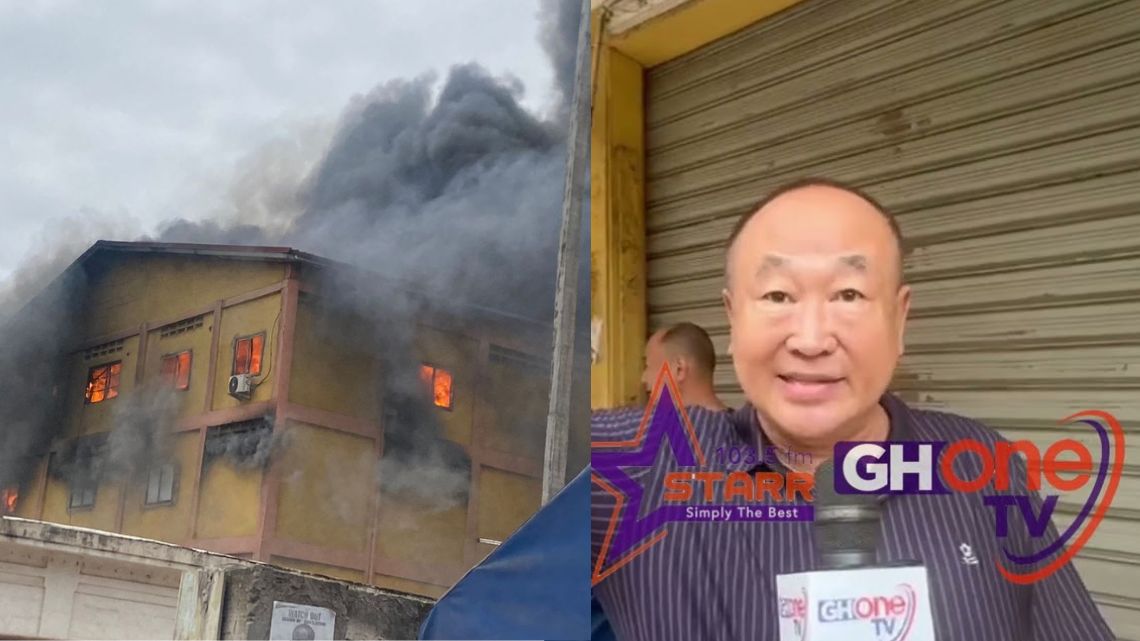
    Chinese Traders in Ghana have refuted claims that they are responsible for the recent fire outbreak on Zongo Lane.

    In response to comments by Accra Mayor Elizabeth K. T. Sackey, who asserted the Chinese traders were responsible because they are not the legitimate landowners, James Yin, Secretary General of the Chinese Traders in Ghana, rejected these allegations as baseless.

    In an interview with Accra-based GHOne TV, Yin asserted “we did not cause the fire at Zongo Lane. The fire actually started at an electrical warehouse near our shop. We were contacted by the owner of the affected shop to assist when the fire broke out, and we responded promptly. There are witnesses who can confirm this. We did not cause the fire,” Yin stated.

    “We are the rightful owners of the land at Zongo Lane and have the documents to prove it. The Mayor’s claims are incorrect. I am prepared to provide the original documents as evidence, and anyone is welcome to challenge this in court,” Yin added.

    Fire erupted at Zongo Lane near Rawlings Park in Makola, Accra, causing damage to several shops, leaving traders devastated on Sunday, September 1.

    According to the Public Relations Department of the Ghana National Fire Service, Alex Nartey, the fire began as a small blaze but quickly intensified due to the inaccessibility of the area and the presence of highly flammable materials stored in many shops.

    “The fire that started little has quickly spread as a result of inaccessibility and highly flammable materials found in the affected shops,” Nartey explained.

    Firefighters arrived on the scene promptly and undertook a rigorous effort to control the flames.

    Despite their intense work, the fire caused considerable destruction before it was brought under control.

    Hours later, the eastern part of the affected structure at the Accra Zongo Lane fire collapsed, causing a protracted fire.

    Efforts are under by the Ghana National Fire Service (GNFS) officers to douse the flame.

    According to the GNFS, no firefighter or civilian casualties have been recorded.

    The exact cause of the fire remains under investigation by the Ghana National Fire Service.

    Authorities are currently working to determine how the blaze started and to assess the full impact on the affected businesses.

    Watch below video:

  • Cedi depreciation expected to slow down this week as demand pressure subsides – Reports

    Cedi depreciation expected to slow down this week as demand pressure subsides – Reports

    This week, the depreciation of the Ghana cedi is anticipated to ease as the pressure from high demand diminishes.

    This follows a significant intervention by the Bank of Ghana in the foreign exchange market last week.

    On August 28, 2024, the Central Bank injected approximately $28 million into the market via a 7-day forward auction and an additional $20 million to Bulk Oil Distributing Companies, addressing the heightened demand for US dollars.

    These measures helped stabilize the cedi for the remainder of the week as demand pressures decreased.

    Despite this stabilization, the cedi depreciated by 1.84% against the US dollar, 1.43% against the British pound, and 0.42% against the euro on the retail market last week.

    Consequently, the dollar closed the week at GH¢16.28 on the retail market.

    Year-to-date, the cedi has depreciated by around 24% against the US dollar.

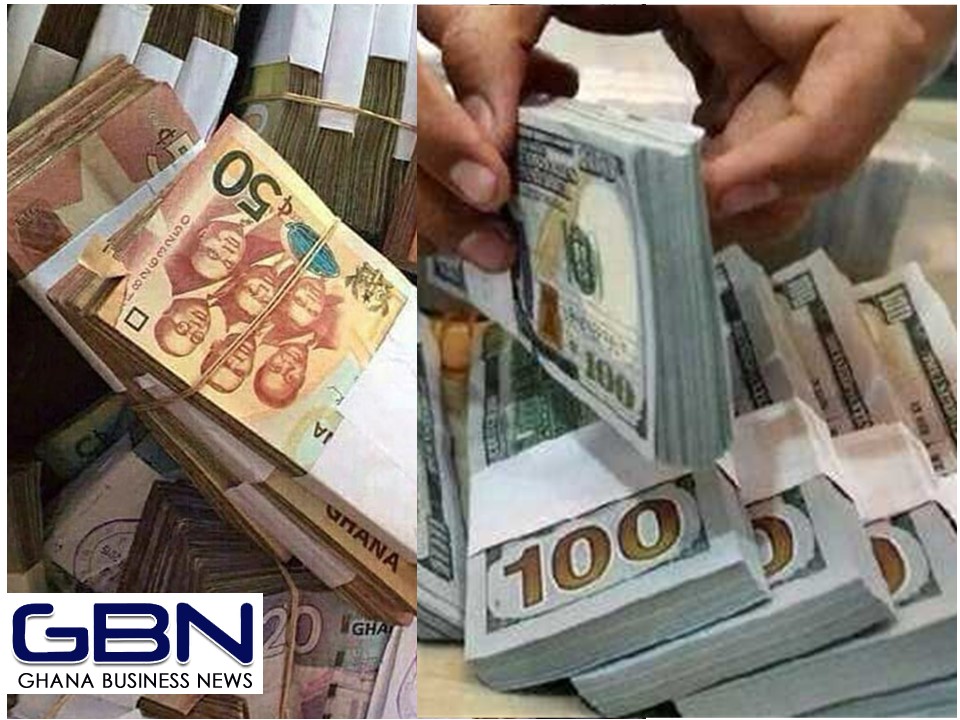
    However, Deloitte West Africa has suggested that the recent debt restructuring agreement with Ghana’s external creditors is expected to positively affect the local currency and mitigate imported inflation.

  • Lack of compliance, enforcement fostering galamsey activities – Eco-Conscious activist

    Lack of compliance, enforcement fostering galamsey activities – Eco-Conscious activist

    An environmental activist, Awula Serwah has expressed her concerns about the ongoing devastation caused by illegal mining activities to water bodies and the overall standard of living in Ghana.

    In a recent interview with Accra-based Joy News, the Eco-conscious coordinator argued that the issue cannot be solved merely by issuing licenses to miners.

    She emphasized that for the fight against illegal mining to be effective, authorities and all stakeholders must go beyond the mere issuance of licenses.

    Instead, they should focus on enforcing regulations and ensuring strict compliance.

    According to Awula Naa, the lack of enforcement and adherence to existing rules has allowed illegal mining to persist, wreaking havoc on the environment.

    “The problem is governance. Are we in the Wild West? It’s about compliance and enforcement. We should shift the argument now. It’s not just about illegal mining,it is illegal; they are committing a crime. When people commit a crime, what happens with law and order? It’s only in the Wild West that anyone can do what they like while the authorities stand idly by. When there is a government in place, you cannot do that, and if you don’t comply, then the law takes its course,” AwulaSerwah stated.

    The issue of illegal mining, known locally as “galamsey,” has gained renewed attention following a release by the Management of Ghana Water Company Limited (GWCL) in the Central Region.

    The company attributed the current water crisis in Cape Coast, Elmina, and surrounding communities to illegal mining activities.

    According to the GWCL, the recent demand-supply gap is a result of inadequate raw water being received at the Sekyere Hemang Water Treatment Plant (WTP) due to the effects of galamsey.

    The GWCL explained that the pollution of the Pra River, especially at its catchment area for water abstraction, has severely reduced water availability.

    “About sixty percent (60%) of the catchment capacity is silted as a result of illegal mining, compromising the quality of raw water. We are currently recording an average turbidity of 14,000 NTU instead of the 2,000 NTU designed for adequate treatment. Currently, the plant is able to produce only about 7,500 m³/day, a quarter of its installed capacity,” the company said in a release on August 31, 2024.

    The Environmental Protection (Mining in Forest Reserves) Regulations, 2022 (L.I. 2462), which was enacted on June 23, 2022, allows mining in forest reserves under certain conditions thus restrictions on biodiversity areas.

    This regulation derives its authority from Section 62(1) of the Environmental Protection Agency Act, 1994 (Act 490), empowering the Minister responsible for the Environment to make regulations to give effect to the Act.

    However, Awula Serwah has criticized the L.I. 2462.

    Awula Serwah argued that the current regulations are not effectively enforced due to lapses in L.I. 2462.

    She is therefore calling for mining in forest reserves be withdrawn.

    Eco-Conscious Ghana, led by Awula Serwah, is an environmental initiative focused on advocating for a clean, green, healthy and serene environment.

    The movement continues to push for stronger measures against illegal mining and better governance in environmental protection.

  • Virgin Atlantic to resume operations in Ghana after 12 years

    Virgin Atlantic to resume operations in Ghana after 12 years

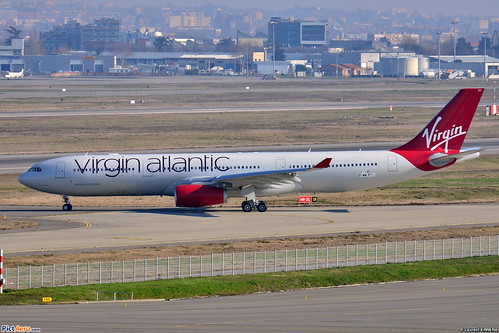
    Virgin Atlantic has announced new flights from London Heathrow, adding two new destinations Riyadh, Saudi Arabia and Accra, Ghana to its network for summer 2025. 

    Virgin Atlantic will return to Ghana for the first time since 2013, with daily flights to Kotoka International Airport in the nation’s capital, Accra, from May 2025. 

    Virgin Atlantic suspended its operations between London Heathrow and Accra, Ghana, from 22nd September 2013 due to exceptionally high fuel costs, a challenging wider economic environment and an inability to operate morning arrivals from Accra due to scarcity of slots at Heathrow. The last flight from Accra to London will depart on 23rd September.

    Next year, the airline will provide much-needed competition on the route, which currently lacks a choice of routes between the two countries.    

    The UK is home to the third largest Ghanaian diaspora in the world and the new service will respond to demand to visit friends and relatives. Around 10% of customers are also expected to connect through London onto Virgin Atlantic’s New York JFK service.  

    Launching on 1 May 2025, the daily service will operate on a Boeing 787 Dreamliner aircraft boasting the airline’s Upper Class, Premium and Economy Delight, Classic and Light cabins, as well as an onboard bar. Accra is expected to be a very strong cargo route and Virgin Atlantic will offer 30 tonnes of capacity on each flight carrying goods, such as fresh produce, between Ghana and key markets in the UK and US. 

    Juha Jarvinen, Chief Commercial Officer, Virgin Atlantic, said “Riyadh and Accra join Toronto as new routes for summer flying in 2025 and we see huge opportunities to connect friends, relatives and businesses with our new services. We’re also delighted to build on our codeshare with SkyTeam partner Saudia, further strengthening connectivity in the region, and beyond, and bringing new benefits to our loyal customers.”

    He added, “We look forward to launching these new routes in 2025, introducing the iconic, inclusive Virgin Atlantic brand, award-winning experience and our amazing people to new customers in the Kingdom of Saudi Arabia, Ghana and Toronto.” 

    Saudi Arabia

    For the first time, the airline will launch a daily service to King Khalid International Airport in Riyadh, Saudi Arabia. The service aims to participate in the growth expected from Saudi Vision 2030. In 2023, annual trade between the UK and Saudi Arabia was worth £17.1 billion with an ambition to reach £30 billion of trade by 2030. Accordingly, air travel between the United Kingdom and Saudi Arabia is forecast to grow 24% between 2019-2035.  

    Riyadh is in growth mode, with an expanded downtown business district, F1 circuit, theme park, shopping and entertainment complexes. The city is also the perfect base to explore cultural attractions across this vast country including the UNESCO World Heritage sites of historical Jeddah, the gateway to Mecca, Al Ula, Al Ahsa, and the stunning Rock Art in Hima.  

    Saudi Arabia is world’s 20th largest economy, the largest in the Middle East with a population of 37 million. The market is expected to have a predominantly Saudi Arabian point of sale, which will see customers visiting the UK, as well as seamlessly connecting to twelve destinations throughout North America, on Virgin Atlantic and Delta networks, including Atlanta, New York, Los Angeles, Miami, Seattle, Boston and Detroit.  

    Alongside business travellers, the route will serve the ‘visiting friends and relatives’ (VFR) market, which has seen a fivefold increase in Saudis living in the UK between 2000 and 2018. 

    Flights to Riyadh will operate daily on the airline’s state of the art A330neo, the newest aircraft in Virgin Atlantic’s fleet, with the first flight departing London Heathrow on 30 March 2025. Virgin Atlantic will offer 30 tonnes of cargo capacity on each flight for companies looking to export and import goods, such as fresh produce and specialised goods, including pharmaceuticals, between Riyadh and prime markets in the UK and US. 

    Riyadh is also home to the airline’s SkyTeam partner, Saudia. The partnership will offer onward connections to Islamabad, Lahore and Karachi, with further destinations within Saudi Arabia and to Bangladesh and China to follow as the airline continues to grow its strategic partnership with Saudia. Flying Club members will earn and redeem Virgin Points across Saudia’s flying programme, alongside SkyTeam partners. All Saudia operated flights from London Heathrow and Manchester to Riyadh and Jeddah are already marketed by Virgin Atlantic, and on sale across all sales channels, offering multi-daily departures between the United Kingdom and the Kingdom of Saudi Arabia. 

  • We must partner with men to lead, provide the solutions for Ghana – Nana Oye tells women

    We must partner with men to lead, provide the solutions for Ghana – Nana Oye tells women

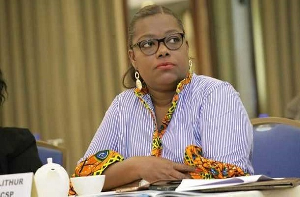
    Former Minister for Gender, Children, and Social Protection, Nana Oye Bampoe Addo, has called on women to persist in their efforts to overcome challenges, emphasizing the need for collaboration with men to ensure Ghana’s continued progress and development.

    During an appearance on the JoyNews AM show, Nana Oye acknowledged the difficulties women face in the political arena, where participants often encounter abuse and derogatory treatment.

    However, she stressed the importance of resilience and focus, urging women to stay determined despite these obstacles.

    “If it is really the middle-income status that we want, we do not have a choice—irrespective of the insults, irrespective of the denigration. We must move forward, focus, and partner with men to lead and provide the solutions that will help the people of Ghana live meaningful lives, get jobs, and put three meals on the table,” she stated.

    Nana Oye highlighted the need for a collaborative approach involving the government, civil society, and traditional leaders to address the barriers that prevent women from fully contributing their talents to Ghana’s development.

    She pointed out that education is crucial in empowering women, acknowledging the progress made while emphasizing that much work remains to be done.

    She also noted that cultural and social norms play a significant role in the challenges women face. Drawing attention to a traditional proverb, “it is the cock that crows to announce the dawn,” she explained that women’s public voices are often not accepted as normal, which contributes to the obstacles they encounter.

    “That is why we ask the political parties to support women to give of themselves, and I know they would do that. In the NDC, that is being done a lot. You see a lot of mentoring; our political leaders, even at the national level, at all levels, partner with women and encourage women to take up branch positions. You see young women taking up key positions, and that is very welcome. We just have to move,” she added.

    Nana Oye’s message was clear: women must continue to push forward, partnering with men to lead and offer solutions that will drive Ghana’s progress and ensure a better future for all.

  • Ghana’s FDI for 2023 drops at 10% – Report

    Ghana’s FDI for 2023 drops at 10% – Report

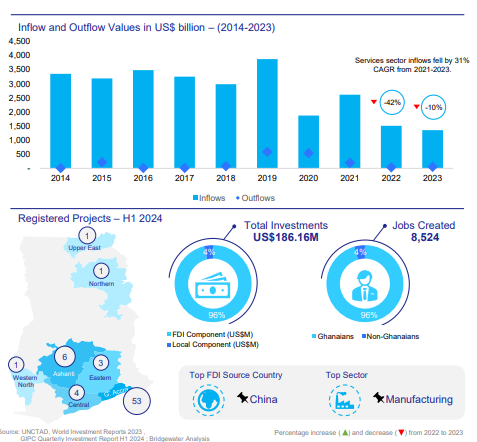
    Ghana experienced a 10.0% decline in Foreign Direct Investment (FDI) inflows in 2023 compared to 2022, marking the lowest level in the past decade and 28% below pre-pandemic figures.

    Bridgewater Advisors reported that FDI inflows to Ghana decreased by $1.4 billion in 2023, continuing a trend of poor performance from 2022.

    From 2014 to 2023, Ghana’s share of inflows into Africa and West Africa averaged 6.0% and 23.0%, respectively. However, outflows surged by 46% to $55.76 million in 2023.

    For the first half of 2024, Ghana’s estimated FDI components totaled $186.16 million, with 69 registered projects primarily in manufacturing, accounting for approximately 81.0% of the investment value.

    Greenfield projects

    Meanwhile, Ghana continued to rank second in West Africa for greenfield investment projects, trailing only Nigeria.

    The country has averaged 36 projects per decade, while Nigeria has averaged 56.

    In 2023, the value of announced greenfield projects in Ghana jumped by 92% to $1.3 billion, even though the number of projects fell from 39 to 29.

    Over the past decade (2014-2024), Ghana averaged 36 greenfield projects annually, with a peak of 47 projects in 2014, totaling over $4.9 billion.

    Project finance

    Additionally, the report noted that international project finance deals increased by $21 million in 2023, totaling $1.5 billion, with the number of projects doubling from two to four.

    This growth highlights the growing involvement of local banks in funding large-scale projects and the strengthened capacity of the Ghana Infrastructure Investment Fund to support medium- to long-term infrastructure financing, aided by recent contributions from development finance institutions such as the African Development Bank.

  • Ridge Condos All-Black Party: Straight from the pit of hell – Prophet Oduro reacts

    Ridge Condos All-Black Party: Straight from the pit of hell – Prophet Oduro reacts

    Prophet Kofi Oduro, General Overseer of Alabaster Ministry International, has strongly condemned the recent Ridge Condos All-Black Party, which has stirred controversy on social media due to its provocative nature.

    The event, marked by revealing outfits worn by female attendees and the presence of notable businessmen, has been met with significant criticism.

    Prophet Oduro, who has been closely following the developments, expressed deep disapproval, labeling the event as “straight from the pit of hell.”

    He likened Ghana to the biblical cities of Sodom and Gomorrah, warning that the country could face divine judgment if it continues on this path.

    “Recently in Kumasi, there was an All-Black nightclub party. Women were virtually naked! Ghana, you’re Sodom and Gomorrah, until you repent, judgment is on your head. From the top to the down,” he fumed while delivering a sermon.

    During a recent sermon, he also questioned the Ghana Police Service’s awareness of the event, noting that this was the second occurrence of such a party.

    “I want to ask the Ghana police service whether they saw the All-Black party because this is the second time,” he asked.

    Prophet Oduro further criticized the rise of strip clubs in Accra, expressing concern about the spread of promiscuity among both the young and old.

    He pointed to the disturbing trend of prominent figures, including MPs and chiefs, engaging in inappropriate relationships with much younger women, whom he referred to as “girls fit to be their grandchildren.”

    He described the situation as evidence of moral decay, comparing it to Babylon, and called for urgent repentance.

    “Now we have nightclubs that host naked people. There are full-striper nightclubs in the city. The police can’t go there. They strip a woman naked on a stripper table. Babylon!

    “If this nation is not Babylonia, you will not have prominent people like MPs, chiefs, and so on, chasing small girls. A girl that is fit to be a grandchild, and this girl is calling a grey-headed man baby. Babylon!,” he stated.

    Background

    The viral All-Black Party held on August 22-23, 2024, in Kumasi brought together social media influencers, actors, musicians, and affluent businessmen from the renowned East Legon Executive Club.

  • Carlos Ahenkorah chewing ballot papers eroded Ghana’s democratic value – Festus Aboagye

    Carlos Ahenkorah chewing ballot papers eroded Ghana’s democratic value – Festus Aboagye

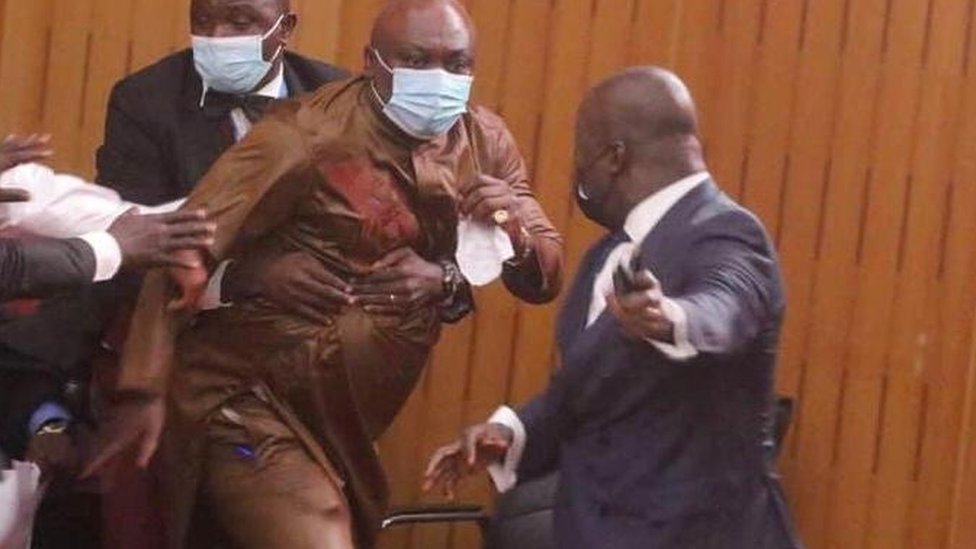
    Col Festus Aboagye (retired), a former security analyst, asserts that Ghana‘s democratic integrity was compromised on January 7, 2021, when a Member of Parliament, Carlos Ahenkorah, chewed ballot papers in Parliament.

    Ahenkorah, the MP for Tema West, became infamous for his actions during the parliamentary election of a new Speaker, where he forcibly took and destroyed some of the ballots.

    Despite the intervention of other MPs and marshals to prevent him from further disrupting the process, the incident was met with a lack of substantial consequences for Ahenkorah.

    In a recent discussion on the ‘Yen Man Ghana’ political show on Angel TV, Aboagye criticized the absence of punishment for Ahenkorah, suggesting it signaled a deeper problem within Ghana’s democratic system.

    He argued that allowing such behavior without repercussions undermines democratic practices and reflects poorly on the nation’s governance.

    Aboagye emphasized that true democratic principles would have demanded the immediate removal of Ahenkorah from Parliament following his actions.

    He believes that the failure to address the situation adequately highlights broader issues within Ghana’s democratic framework, beyond just the periodic elections.

    “Look, someone who called himself a honourable Member of Parliament bolted away and chewed ballot papers in parliament in an attempt to spoil a voting process; as that a democratic practice or undemocratic practice?

    “If it was indeed a democracy, that MP shouldn’t have continued staying at the Parliament,” he said on the August 16, 2024 edition of the‘Yen Man Ghana’ political show on Angel TV.

    He added: “So if you take a critical look at all these happenings literally beyond going to the polls every four years, then you will understand that our democracy is faulty,” the former military officer stated.

  • Ghana will be upgraded, there is no need for a reset – Bawumia

    Ghana will be upgraded, there is no need for a reset – Bawumia

    The presidential candidate of the New Patriotic Party (NPP), Dr. Mahamudu Bawumia, has responded to former President John Dramani Mahama’s recent call for a “reset” of Ghana, rejecting the idea and instead advocating for an “upgrade” to move the country forward.

    Speaking during a media interaction on Sunday, August 25, Dr. Bawumia challenged the narrative presented by his main political opponent, Mr. Mahama, the flagbearer of the National Democratic Congress (NDC).

    Mr. Mahama, during the NDC’s manifesto launch, had painted a grim picture of Ghana’s current situation, claiming that “Ghana is bleeding, and its soul is crying for change.” He called for a fresh start to address what he perceives as the nation’s pressing challenges.

    In contrast, Dr. Bawumia offered a different vision for Ghana’s future, stating, “I represent the future. Ghana needs an upgrade, not a reset.”

    He emphasized that while Mahama’s proposal seeks to overhaul the country’s governance, the real solution lies in advancing and improving upon existing systems.

    Dr. Bawumia outlined 14 key commitments he plans to pursue if elected in the 2024 elections, which include measures designed to modernize Ghana’s economy and governance.

    Among his priorities are creating more job opportunities, implementing comprehensive tax reforms, and transforming Ghana into a world-class digital economy.

    Additionally, Dr. Bawumia promised to address the high cost of living, expand public infrastructure, and enhance healthcare access.

    His vision also includes support for affirmative action initiatives aimed at empowering women and girls, alongside plans to improve educational opportunities for all Ghanaians.

    On the topic of national security, he vowed to ensure good governance, safeguard the country’s borders, and bolster safety within local neighborhoods.

    As the political landscape heats up ahead of the 2024 elections, Dr. Bawumia’s rejection of Mahama’s “reset” rhetoric highlights a clear ideological divide between the two leading candidates. Where Mahama sees the need for a complete overhaul, Bawumia is championing innovation, continuity, and transformation within the existing framework.

    Both candidates are presenting their strategies to voters, but Dr. Bawumia remains adamant: Ghana needs to move forward with an upgrade, not revert to a reset.

  • Cabinet approves policy to cater for children with exceptional abilities

    Cabinet approves policy to cater for children with exceptional abilities

    Ghana‘s Cabinet has approved the launch of a Gifted and Talented Education (GATE) programme, aimed at providing advanced and tailored education for children with exceptional abilities.

    The GATE initiative is designed to support learners who demonstrate extraordinary potential in areas such as high intelligence, creative thinking, the arts, leadership, athletics, and mechanical skills, requiring specialized educational provisions to nurture their talents.

    Despite the importance of GATE in global education systems, it has not yet been introduced in Ghana, either in public or private sectors.

    The country’s current Education Strategic Plan (2018-2030) also overlooks GATE as a critical strategy for fostering socio-economic transformation, potentially sidelining high-ability children who could become future innovators and leaders.

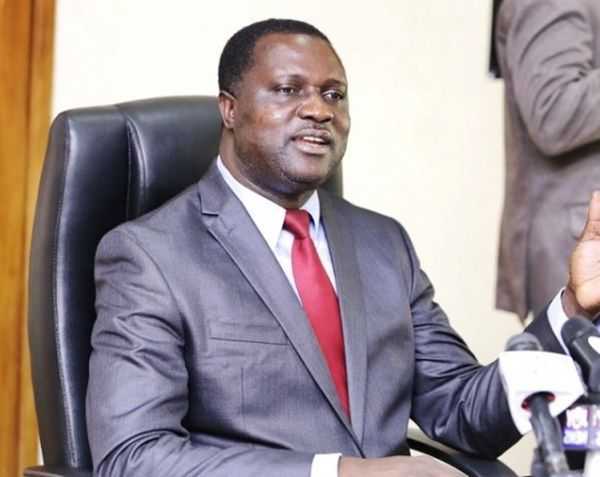
    Education Minister Dr. Yaw Osei Adutwum, who proposed the GATE programme, emphasized the necessity of challenging gifted children beyond the standard curriculum to fully develop their capabilities.

    He argued that by doing so, Ghana could accelerate its economic development and reduce inequality, following the successful examples of other countries that implemented similar programmes in the 1960s and 1970s.

    The GATE programme will begin with the introduction of career pathways and new course offerings in both Sciences and Arts, starting at the junior high school level and continuing through senior high school.

    The Ghana Education Service (GES) and the Technical and Vocational Education and Training (TVET) Service, with their special education expertise, will be responsible for the implementation of GATE.

    To ensure efficiency and avoid confusion, the proposal recommends supporting GES and TVET in administering the programme rather than creating a separate agency.

    This approach will also ensure effective use of public funds. GATE initiatives will be especially beneficial to disadvantaged communities, including those in rural and Zongo areas, by addressing opportunity gaps through targeted identification, assessment, and programming.

    Initially, the programme will establish new schools at the junior and senior high school levels exclusively for GATE students.
    Later, qualified students will be integrated into GATE programmes within their current schools, ensuring that all participants receive the same enriching experiences.

    The National Council for Curriculum and Assessment (NaCCA) will be responsible for developing the GATE curriculum, setting guidelines for student selection, and ensuring opportunities for underrepresented groups, as well as for the training and selection of GATE teachers.

  • World Bank to review Ghana’s debt distress status after deal with external commercial creditors

    World Bank to review Ghana’s debt distress status after deal with external commercial creditors

    World Bank Country Director Robert O’Brien has revealed that Ghana’s classification as high debt distress country will be reviewed as soon the country reaches a deal with the external commercial creditors.


    Mr. O’Brien noted that there are some technicalities surrounding the debt classification processes for countries.
    This, he explained is the reason the progress made in reaching an Agreement in Principle with the bilateral creditors did not reflect in the latest Debt Sustainability Analysis done on the country.

    He disclosed this on PM EXPRESS Business Edition with host George Wiafe.

    “The Bank is satisfied with the progress that Ghana is making when it comes to the negotiations that government is having with external creditors. As long as it is in line with the IMF programme, that should impact on the analysis”, he said.

    Background

    In the latest Debt Sustainability Analysis published in July 2024, the International Monetary Fund (IMF) and the World Bank have confirmed Ghana’s status as a country in debt distress.

    The joint report from the Bretton Woods Institutions indicated that Ghana remains classified as such because it has not yet finalized the restructuring of its external commercial debt as required by the IMF-supported program.

    They noted that significant financing gaps persist, which need to be addressed through a debt restructuring process with commercial creditors, in line with the Debt Sustainability Analysis and IMF guidelines.

    According to data released by the Ministry of Finance on the debt repayment freeze as of December 2022, Ghana’s total external debt amounts to $20 billion. This includes $5.4 billion in bilateral external debt, $13.1 billion owed to Eurobond holders, and $10.4 billion to multilateral creditors.

    Outlook for Ghana’s Economy

    Mr. O’Brien said the World Ban is currently satisfied with measures taken by government to help stabilize the economy.

    “When we look at some of the major indicators, there has been a much improvement from last year. One can talk about inflation rate”, he said.

    He however maintained that the major concern is hinged on election related spending.

    “I think that is the biggest threat to the current economic recovery. How is government going to manage the elections when it comes to expenditure”, he said.

    “Government has given the assurance that it is committed to fiscal prudence and we hope that they stick to that assurance that it has given to the donors, investors and Ghanaians”, he said.

    Asked whether the economy is on the right path, Mr. O’ Brien said “there are indeed clear signs of economic recovery and all the indicators are supporting that claim”.

  • My song ‘Ma Wonsan’ stopped a marriage from collapsing – Esther Smith

    My song ‘Ma Wonsan’ stopped a marriage from collapsing – Esther Smith

    United Kingdom-based Ghanaian gospel musician Esther Smith recently shared a powerful testimony of how her song “Ma Wonsan” helped save a marriage.

    Speaking with Joy FM’s Kwame Dadzie on the Showbiz A-Z program, Esther recounted an encounter with a man who credited her song for preventing his divorce.

    He told her, “Esther, your song ‘Ma Wonsan’ made me rethink divorcing my wife. It brought us back together.”

    Esther emphasized that her music is divinely inspired, and she undergoes fasting and prayer before recording to ensure her songs carry the power to transform lives.

    Currently in Ghana, Esther is preparing for two upcoming concerts.

    She will perform at the Bantama Pentecost Church in Kumasi on August 25, 2024, and then in Accra on August 30, 2024.

    The concerts will feature performances from fellow gospel artists including Joe Beecham, Lady Prempeh, Morris Babyface, Randy Agyemang, Adom Kiki, and Noble Nketsia, among others.

    Esther Smith has released eight albums, including “Gye No Di,” “Onyame Boafo,” and “Onyame Wo Ho.” She has also released singles such as “Golgotha” and her latest, “Onyame Banjo,” featuring Morris Babyface.

  • Adoption cases on the rise, 158 applications received in first half of 2024 – CAA

    Adoption cases on the rise, 158 applications received in first half of 2024 – CAA

    Ghana is experiencing a notable surge in adoption interest, with the Central Adoption Authority (CAA) reporting that 158 families have sought to adopt children in the first half of this year.

    The CAA, under the Ministry of Gender, Children, and Social Protection, also fielded 220 inquiries about adoption during this period.

    Mr. Stephen Tikai Dombo, Head of the Authority, shared these figures and expressed optimism about the increasing trend in adoption applications.

    While he couldn’t provide a year-on-year comparison, he confirmed a significant upward trajectory in the numbers.

    “This represents a steady growth in the number of applications over the months, reflecting a strong and growing interest in adoption,” he told the Ghanaian Times in an exclusive interview.

    The data shows a monthly fluctuation in applications: 24 in January, rising to 28 in March, peaking at 41 in April, and then declining to 17 by June.

    Inquiries followed a similar pattern, with a high of 70 in January and a low of 18 in June.

    Mr. Dombo noted that many families who have previously adopted are now looking to adopt additional children, viewing it as a profoundly rewarding act.

    He shared a story from the Ashanti Region where a couple, after adopting a child, were blessed with twins of their own within the same year, underscoring the perceived blessings of adoption.

    He encouraged more families to consider adoption and assured them of comprehensive support throughout the process.

    Mr. Dombo also urged the public to support couples facing fertility challenges who turn to adoption.

    He explained that adoption is a legal process that transfers parental rights and responsibilities to adoptive parents, with adoption orders typically being irreversible.

    However, he pointed out that some applicants’ specific preferences, such as desired physical traits or age, can prolong the process if such children are not readily available.

    “For instance, an applicant seeking a fair, hairy, and smart child might experience a longer wait time if such a child is not immediately available,” he explained.

    He advised applicants to remain flexible to speed up their adoption.

    The adoption process includes a mandatory six-month investigation to locate a child’s biological parents.

    “If the parents are not found within this period, the investigation can be extended. After a year, if no biological parents are located, the child can be placed for adoption,” he clarified.

    If the parents cannot be found within this timeframe, the search can be extended, and after a year, if no biological parents are identified, the child can be placed for adoption.

    Mr. Dombo reassured the public about the well-being of adopted children, noting that Ghana is a member of the Hague Convention, which governs international adoptions.

    “The CAA works closely with adoption authorities in other member countries to ensure that children adopted abroad are monitored and well-protected. Post-adoption monitoring is conducted quarterly, with reports including photos and videos sent to prove the children’s well-being,” he said.

    The CAA collaborates with international adoption authorities to ensure that adopted children abroad are well cared for, with quarterly post-adoption monitoring including reports, photos, and videos to confirm their welfare.

    Since January 2020, the CAA has visited 75 adoptive families across eight regions, offering psychosocial support, counseling, and necessary assistance to both the families and their adopted children.

    “These visits provide psychosocial support, counselling, and any necessary assistance to both the families and the adopted children,” Mr Dombo said.

  • Venue for Kirk Franklin & Maverick City’s performance changed due to alleged price hike by ICGC

    Venue for Kirk Franklin & Maverick City’s performance changed due to alleged price hike by ICGC

    The venue for the Kingdom World Tour 2024 event in Accra, Ghana, has been changed.

    Originally scheduled to be held at the International Central Gospel Church (ICGC) Christ Temple East on Teshie Rasta Road, the event will now take place at the First Love Centre, located at UPSA in Legon.

    Doors will open at 5 PM as planned.

    According to the organizers, Culture Management Group (CMG) Gospel and Faith Collective, the venue change was necessitated by an unforeseen situation.

    Just 24 hours before the event, the management of ICGC Christ Temple East unexpectedly increased the rental price by over 80%, a move that CMG Gospel described as both shocking and deeply disappointing.

    This sudden escalation in cost created significant complications, prompting the need for a last-minute venue change.

    “The disruption stems from a sudden and unexpected increase in the venue price,” they explained. “Unfortunately, only 24 hours before showtime, the venue’s management increased the rental price by more than 80%.”

    CMG Gospel noted they were “shocked and deeply disappointed by this change in plans by the management of ICGC Christ Temple East,” adding that “this sudden increase in cost has caused unnecessary complications for all involved.”

    CMG Gospel expressed their regret for any inconvenience this may cause and assured attendees that the event will proceed smoothly at the new location.

    The Kingdom World Tour 2024 will feature performances by renowned American gospel artist Kirk Franklin and the acclaimed contemporary worship group Maverick City Music.

    Franklin, known for his groundbreaking work in making gospel music accessible to younger audiences since the 1990s, continues to inspire with his dynamic sound.

    Maverick City Music, a group that has risen to international fame since its inception in 2018, is celebrated for hits like ‘Promises,’ ‘Man Of Your Word,’ and ‘Jireh.’

    Their distinctive approach to gospel music has resonated widely, particularly among younger generations.

  • There’s more to do – World Bank tells govt amid economic recovery signs

    There’s more to do – World Bank tells govt amid economic recovery signs

    The World Bank has entreated the Government of Ghana to be cautious despite the progress toward economic recovery, particularly in areas such as inflation control, debt restructuring, and fiscal consolidation.

    World Bank Country Director, Robert Taliercio O’Brien, praised the government’s efforts but stressed that further work is essential to fully stabilize the economy.

    In an interview on Joy News’ PM Express on Thursday, O’Brien commended the government’s policies that have led to a downward trend in inflation.

    “Inflation has been reduced, so it’s on a declining path, and it needs to keep declining. It’s still too high, but good progress is being made, thanks in part to the policy position of the government,” he explained.

    The World Bank official also highlighted Ghana’s progress on debt restructuring, a critical reform area.

    “Ghana implemented the domestic debt restructuring in 2023 and reached an agreement under the G20 Common Framework with its official creditors,” O’Brien noted.

    He emphasized that a Memorandum of Understanding for restructuring official bilateral debt has been established and is actively progressing.

    O’Brien further pointed out that as of June, the government had reached an agreement in principle with commercial bondholders, marking another significant step in the debt restructuring process.

    “So again, very good progress, but more to do,” he stated, underscoring the need for continued efforts in this area.

    In addition to debt restructuring, O’Brien commended the government’s fiscal consolidation efforts, which led to a notable reduction in public spending.

    “We saw very important measures taken by the government to reduce expenditures last year, which resulted in a 7.9 percentage point decrease in spending,” he said, describing this as a critical step toward restoring fiscal discipline.

    Despite these achievements, the World Bank official urged the government to remain focused on addressing the remaining challenges.

    “There’s more to do,” O’Brien reiterated, acknowledging the progress made while emphasizing that the road to full economic recovery requires sustained commitment.

  • Ghana’s food insecurity spikes by 5.77% due to economic difficulties – Report

    Ghana’s food insecurity spikes by 5.77% due to economic difficulties – Report

    July 2024 Food Security Monitor report reveals a troubling escalation in food insecurity across Ghana, with the rate of insufficient food consumption (IFC) surging by 5.77%.

    This increase is largely driven by the ongoing cost-of-living crisis, fueled by persistently high inflation, a weakening currency, and soaring fuel prices.

    These factors have notably inflated the cost of essential commodities, particularly staples such as maize and rice.

    This trend mirrors earlier projections from the World Food Programme (WFP) in their February 2024 report.

    According to the WFP’s February 2024 country brief and preliminary March 2024 analysis, an estimated 1.05 million Ghanaians were expected to experience food insecurity between June and August 2024.

    Contributing factors include climate change, low agricultural prices, inadequate infrastructure, and limited access to education, compounded by Ghana’s vulnerability to global market shifts, especially in the case of imported rice.

    The report also highlights that, while the rate of IFC remained stable in most countries between June and July, Ghana, Nigeria, and Uganda saw increases of 5.77%, 3.98%, and 7.5% respectively. Zimbabwe, on the other hand, reported a 5.45% decrease.

    On a year-over-year basis, the majority of countries have witnessed an increase in IFC, with exceptions being Mozambique, Rwanda, South Sudan, Uganda, and Zambia, where current levels are lower than those recorded a year ago.

    Furthermore, the report identifies several nations as food insecurity hotspots—where more than half of the population faces IFC—including Burkina Faso (56.6%), Mali (69.1%), Niger (82.6%), and Nigeria (51.5%).

  • I lost my father to an accident when I was 10 months old – Beeztrap KOTM

    I lost my father to an accident when I was 10 months old – Beeztrap KOTM

    Beeztrap KOTM, a rapidly rising Ghanaian artist, recently opened up about a significant loss in his life during an interview on the August 11, 2024, edition of the Delay Show.

    Born Edwin Eshun, Beeztrap shared that his father tragically passed away in a car accident when he was only 10 months old.

    Though he never had the chance to know his father, he noted their striking resemblance.

    His mother later remarried, but the new relationship eventually ended in separation.

    Despite these early challenges, Beeztrap, the youngest of three siblings, has become one of Ghana’s most promising music talents.

    Originating from Kumasi and playing a pivotal role in the Asakaa Movement, Beeztrap’s musical journey began in primary school, drawing inspiration from his church’s drumming sessions and his family’s musical influence.

    His career gained momentum in high school when he teamed up with his producer friend, Stichez, leading to the creation of his breakout hit “Abrabɔ Yɛ Hard.”

    Beeztrap’s work with the Asakaa collective, especially on tracks like “Cinderella,” has further established his presence in the Ghanaian music scene.

    His latest EP, “Different Type of Gangster,” delves into his life experiences and Christian upbringing, highlighting his resilience and passion for music.

    Beeztrap KOTM’s story continues to resonate with many, illustrating his unwavering commitment to his art.

  • Improve taxpayer education, clean-up tax register – Deloitte’s measures to expand Ghana’s tax base

    Improve taxpayer education, clean-up tax register – Deloitte’s measures to expand Ghana’s tax base

    Deloitte Ghana has proposed several strategies to the government aimed at broadening the country’s tax base.

    First, in its review of the 2024 Mid-Year Budget, it recommends that the government streamline business operations at the ports, enhance taxpayer education, and ensure the Ghana Revenue Authority (GRA) website is consistently updated to address taxpayer concerns.

    Second, the firm advocates for the ongoing refinement of the tax register and the implementation of electronic systems to expand the taxpayer base and improve their overall experience.

    Additional suggestions include establishing guidelines for the Emissions Levy and environmental excise duty on plastics, enhancing data sharing and information exchange with other jurisdictions to boost revenue collection, launching a simplified digital solution and electronic bookkeeping system for the informal sector’s modified taxation regime, and integrating 2,000 new taxpayers into the electronic Value Added Tax (VAT) invoicing system by the end of 2024.

    Regarding tax incentives, Deloitte recommends finalizing the regulations for the Exemptions Act, 2022 (Act 1083); amending the VAT regulations, 2017 (L.I. 2255) to extend exemptions for active pharmaceutical inputs, excipients, and other finished pharmaceutical products; revising existing tax laws to align with modern tax requirements; and completing draft regulations to operationalize the Independent Tax Appeals Board (ITAB).

    For revenue mobilization policies, Deloitte suggests developing a framework to reintroduce road and bridge tolls through an efficient, modern tolling system by the end of 2024, reinstating the integrated property tax system to ensure effective property tax assessment and collection, and creating legislation and a strategic framework for mobilizing and managing non-tax revenue.

  • My hit song ‘Adze Ko’ was written by my mother – Esther Smith reveals

    My hit song ‘Adze Ko’ was written by my mother – Esther Smith reveals

    Gospel musician Esther Smith recently revealed that her popular song “Adze Ko” was composed by her mother, who also has a talent for singing.

    Her mother, who was deeply involved with the Methodist Choir and had lived among the Fante people, recognized Esther’s musical gift and encouraged her to perform the song.

    Although Esther had her own songs ready, her mother suggested she try “Adze Ko,” which ultimately became a hit.

    Esther also shared that her other hit song, “Nipa,” was written by her late grandmother.

    Esther Smith is currently in Ghana for a twin concert in Kumasi and Accra.

    Watch video below:

  • ‘Foolishness has entered Ghana’ – Prophet Oduro fumes over trend of ‘disrespecting’ corpses at funerals

    ‘Foolishness has entered Ghana’ – Prophet Oduro fumes over trend of ‘disrespecting’ corpses at funerals

    Prophet Kofi Oduro, founder of Alabaster International Ministry, has expressed strong disapproval of the recent trend in Ghana where corpses are being treated in unconventional ways at funerals.

    He criticized the growing practice of placing bodies in unusual or themed positions, such as using coffins that reflect the deceased’s profession or parading the body through the streets.

    A recent viral video showed a group carrying a body on their shoulders during a public procession, a practice Prophet Oduro deems disrespectful and foolish.

    He voiced his concerns during a sermon, arguing that such behavior demonstrates a lack of respect for the dead and a decline in societal values.

    “Foolishness has entered Ghana. Now, when someone dies, we don’t even have respect for the dead. We can lay the body in the kitchen and give an excuse that she was a cook or chop bar operator. Nonsense! Are there no elders in the family? This shows that not every elder is wise.

    “In another instance, they take the dead body out of the coffin, carry it on their shoulders, and match with it on the street. They sometimes throw a casket containing a dead body into the grave, and the casket ends up breaking into pieces. Then what’s the essence of putting the person in a coffin in the first place?”

    Oduro questioned the wisdom of elders who permit these practices and expressed frustration at the disregard for proper funeral customs.

    He contrasted these practices with those in more developed countries, where the body is often not displayed, highlighting the difference in standards.

    According to Oduro, such practices undermine the dignity of the deceased and reflect poorly on the nation.

    “You go to an advanced country; a person dies sometimes, and they don’t even show the body. Some of these countries do not pray in tongues, but you people are praying in tongues with foolishness as a nation,” he stated.

  • Esther Smith returns to Ghana for live concert in Kumasi, Accra

    Esther Smith returns to Ghana for live concert in Kumasi, Accra

    Gospel artist Esther Smith has touched down in Ghana ahead of her eagerly awaited concert series in Accra and Kumasi.

    After a decade abroad, Smith received a warm and enthusiastic welcome from her fans upon arrival at the airport.

    In the lead-up to her performances, Smith will be making various media appearances.

    Her Kumasi concert is scheduled for August 25, 2024, at the Bantama Pentecost Church, followed by a performance in Accra on August 30 at the Perez Dome.

    These events will not only honor Smith’s impressive achievements in the gospel music scene but also mark her return after a long absence.

    Watch video below:

  • About 5.5m Ghanaians risk being homeless due to degradation in coastal areas – World Bank

    About 5.5m Ghanaians risk being homeless due to degradation in coastal areas – World Bank

    An estimated 5.5 million coastal residents in Ghana are grappling with significant challenges due to severe erosion and flooding, affecting 80% of the country’s coastline.

    The World Bank reports that some coastal areas are eroding at rates of 4 to 12 meters annually.

    The economic impact of this coastal degradation is substantial, costing approximately 4% of Ghana’s Gross Domestic Product (GDP) each year.

    This ongoing issue threatens local communities, ecosystems, and biodiversity, as highlighted by Naila Ahmed, Sustainable Development Programme Leader at the World Bank.

    “Coastal degradation costs government and the country about 4% of its GDP each year, threatening communities, ecosystems and biodiversity,” she noted in an address on behalf of the World Bank Country Director for Ghana, Liberia and Sierra Leone.

    Ahmed made these remarks during the launch of the West Africa Coastal Areas Resilience Investment Project II (WACA ResIP 2) in Accra.

    The project, supported by a $150 million World Bank loan and a $5 million grant, aims to enhance the resilience of targeted coastal communities and ecosystems, thereby safeguarding livelihoods and natural resources.

    Minister of Environment, Science, Technology and Innovation (MESTI) Ophelia Mensah-Hayford emphasized the urgent need to address coastal erosion exacerbated by climate change.

    She stressed the importance of managing Ghana’s coastal zones for sustainable development and climate resilience, acknowledging the significant role of the WACA ResIP in restoring these areas.

    “The core objective of WACA ResIP is to address coastal erosion, flooding, pollution and ecosystem vulnerability, both nationally and regionally. The programme integrates activities of countries and regional institutions to achieve transformational and sustainable change in coastal zone management.

    “It is a multifaceted approach that aims to strengthen the resilience of targetted communities and areas in coastal West Africa by engaging countries through technical assistance, finance and dialogue.

    “This project directly responds to Nationally Determined Contributions (NDCs) in coastal areas, which are among the most climate-vulnerable habitats,” the minister explained.

    The WACA ResIP initiative focuses on mitigating coastal erosion, flooding, pollution, and ecosystem vulnerability on both a national and regional scale.

    It aims to foster transformational and sustainable change in coastal management through technical assistance, financial support, and regional collaboration. The project aligns with Nationally Determined Contributions (NDCs) for climate adaptation in vulnerable coastal areas.

    In Ghana, the WACA ResIP will tackle erosion and flooding through specific interventions at Korle Lagoon, Densu Delta, and the Keta Lagoon Complex.

    At Korle Lagoon, the project will enhance ongoing efforts to construct a jetty, prevent sediment buildup, and stabilize embankments.

    In the Densu Delta, the focus will be on improving spatial planning and enforcement to protect the delta ecosystem and bolster buffer vegetation.

    The Keta Lagoon Complex will see initiatives aimed at reforestation, particularly in mangrove areas affected by saline intrusion and sea-level rise, alongside efforts to address erosion throughout the complex.

    The project is designed to go beyond environmental remediation by creating job opportunities and contributing to national socio-economic development. Collaboration among government partners, the private sector, development partners, and civil society is crucial for the project’s success.

    Prof. Patrick K. Agbesinyale, Chief Director of the Ministry of Lands and Natural Resources, and the Awomefia of Anlo State, Togbe Sri III, have both underscored the importance of this initiative for local communities and pledged their support for its effective implementation.

    Since the 1960s, Ghana has experienced a temperature rise of about 1°C, with projections indicating further increases between 1°C and 3°C by mid-century, and between 2.3°C and 5.3°C by the end of the century.

    This warming trend is expected to intensify heavy rainfall, leading to more frequent flooding, flash floods, and riverbank erosion. Coastal communities in Africa, including Ghana, face increasing threats from erosion, flooding, and pollution, which undermine both physical landscapes and socio-economic stability.

  • Why cross-dressers cannot yet be arrested in Ghana

    Why cross-dressers cannot yet be arrested in Ghana

    In recent times, Ghana has observed the increasing activities of cross-dressers, individuals who wear clothing traditionally associated with the opposite gender.

    Presently, most cross-dressers are well-known male skit makers who have been sharing their artistic content on social media platforms such as X, TikTok and others.

    Wesly Kesse, Akonoba, and Kcreietin are among the many male skit makers who employ cross-dressing in the making of their content.

    @kcreietin When they get upset in Korea 😅😅😅😅 #meme #comedy ♬ original sound – davido
    @original_akonoba POV:Tag that woman at funeral who only comes down when she sees alcohol😂#akonoba_ghana #eno_sampene #viral @Efya Papabi @Adiepena Ajoa Papabi@Afia Bama🇺🇸🇺🇸🇬🇭🇫🇷 @Josephine Maanye 🇪🇦🇬🇧🇬🇭 ♬ Laughing – Gianluca Marino

    African countries like Nigeria can speak of cross-dressers such as Bobrisky, and James Brown. These men have faced severe repercussions, including imprisonment and even violence. However, they also have a fan base.

    @legitngnews Popular Cross-dresser, James Brown, reacts to the news of cross-dressers arrested recently in Delta State. 🎥: wf_jamesbrown (Instagram) #legitng #legitposts #jamesbrown #nigeria #viral ♬ original sound – Legit.ng

    The resentment for male cross-dressers is also present in Ghana. On the X platform, some Ghanaians continue to pass derogatory remarks.

    Due to the female roles they play, they are labelled as gays by some Ghanaians. It is important to note that none of the Ghanaian cross-dressers cited for this article have come out of the closet or indicated that they are not straight.

    @original_akonoba Please let me be snatched😂 OUTFIT FROM👗 @Kifi HAIR STAYLED AND MAKEUP BY @SaybeautyOriginal VIDEO SHOT AND EDITED BY @Kcreietin Accessories from @bb_dazzle_me @Afia Bama🇺🇸🇺🇸🇬🇭🇫🇷 @Josephine Maanye 🇪🇦🇬🇧🇬🇭 @BlackBeauty #akonoba_ghana #eno_sampene #viral ♬ original sound – Bobrisky

    Some Ghanaians have called on the Ghana Police Service to arrest such individuals. Such a request has prompted the need to find out if presently, Ghana has provisions in its laws, that could see such cross-dressers behind bars.

    Presently, Ghana does not have any laws that make cross-dressing illegal. The closest thing to a law is the Human Sexual Rights and Family Values Bill of 2021, also known as the anti-LGBTQ bill.

    On February 28, 2024, Ghana’s Parliament unanimously passed the Human Sexual Rights and Family Values Bill, 2021.

    The bill which is yet to be assented to by President Akufo-Addo to become law criminalises the mere identification as an LGBTQ+ community member and “related activities,” including same-sex relationships, the use of sex toys, and cross-dressing. 

    Per reports from one of the proponents of the bill, Sam Nartey George, several amendments have been made to the bill, indicating that the initial document which circulated on social media three years ago has been altered.

    In a media engagement, he noted that some amendments include sanctions for males and females who cross-dress to make sexual advances to their same gender and not necessarily cross-dressing for entertainment purposes.

    Presently, the content of the bill has not been made public as the President has been advised against receiving the bill from the Clerk of Parliament due to the legal action against the bill currently at the Supreme Court.

    In the majority of Ghana’s cultural practices, it is prohibited for a man to dress as a female for his day-to-day activities. The only instances where men and women can be portrayed as the opposite gender is during festivals.

    Although cross-dressing is sometimes associated with the LGBT+ community, it’s important to note that not all cross-dressers identify as queer, and cross-dressing does not automatically imply an LGBT+ identity.

    Meanwhile, Ghanaian female dancehall artiste cum gospel preacher, Mercy Onuawonto Sam, popularly known as Iona Reine has issued a word of caution to cross-dressers in Ghana.

    According to her, the young men who dress up as women for comedy will end up in hell if they continue. Iona added that the Bible is against men and women who dress in the opposite sex for entertainment.

  • Ghana to depend on T-bills, international lenders for funding till 2027

    Ghana to depend on T-bills, international lenders for funding till 2027

    Government’s financing for the period of 2024-2026 is anticipated to depend primarily on multilateral and bilateral partners, as well as domestic treasury bills due to restricted access to international markets.

    The World Bank projects that Ghana will predominantly rely on treasury bills and funding from multilateral and bilateral lenders until 2027.

    Between 2023 and 2026, the World Bank is expected to provide approximately $3 billion in funding. This includes about $1.5 billion designated for project loans, $1.15 billion for budgetary support, and $400 million for various other initiatives.

    During the same timeframe, the African Development Bank plans to allocate $338 million, with $200 million set aside for project loans and grants and $103 million for budget support for 2023-2024.

    Domestically, the World Bank anticipates a revival of medium and long-term domestic debt issuance starting in 2025 as the local bond market recovers.

    For the third quarter of 2024, the government intends to raise GH¢78.441 billion from the money market. Of this amount, GH¢53.807 billion will be used to refinance short-term debt, while GH¢24.633 billion will be allocated for new financing needs.

    This borrowing will be facilitated through the weekly issuance of 91-day, 182-day, and 364-day treasury bills. Transactions will be settled on the date of the primary auction plus one business day.

  • Ghana loses $1.9bn annually to post-harvest losses – WFP

    Ghana loses $1.9bn annually to post-harvest losses – WFP

    Ghana’s agricultural sector is facing significant financial losses, with post-harvest challenges costing the nation approximately $1.9 billion annually, according to the World Food Programme (WFP).

    The losses, which primarily affect perishable goods, are largely attributed to inadequate post-harvest infrastructure, such as insufficient machinery, lack of market access, inadequate warehousing, bushfires, and poor road conditions.

    Miss Elorm Goh, Executive Director of Agrisolve, highlighted the severe impact of these losses on smallholder farmers, who are losing about 30 percent of their income due to post-harvest inefficiencies.

    Speaking at a technical stakeholders’ breakfast meeting in Accra, she emphasized the gravity of the situation, stating, “If you lose even one percent of your produce, it’s a big deal, but in this case, farmers are losing up to 50 percent due to post-harvest challenges.”

    The meeting, organized by the Graphic Communications Group in partnership with the WFP, focused on transforming agricultural productivity in Ghana by reducing post-harvest losses.

    Miss Goh called for increased government intervention, particularly in fostering private sector participation to improve infrastructure, including the provision of adequate warehouses and processing machinery.

    “If we provide the roads, the right machinery for harvesting of produce, and more cold rooms for storage, farmers won’t be losing between 40 to 50 percent of their toil, and that will definitely be income for them,” she added.

    In addition to infrastructure improvements, Miss Goh urged financial institutions to develop innovative, tailor-made solutions for those involved in the agricultural value chain, aiming to reduce post-harvest losses and boost farmers’ incomes.

    Mr. Steven Odartefio, Head of Food Systems at the WFP, underscored the need for local government structures to facilitate connections between agribusinesses and farmers.

    “Farmers are losing their output, which has an impact on their pocket. Although they harvest more, they supply less because by the time it gets to the end market, certain activities contribute to losses of the produce,” he noted. He advocated for government support in linking agribusinesses with farmers to help transform produce and benefit smallholder farmers.

    Madam Marbara Clemens, Country Director for the WFP in Ghana, discussed a partnership with the MasterCard Foundation, which aims to provide technical support and post-harvest equipment to 100,000 smallholder farmers.

    This initiative is designed to reduce post-harvest losses and improve agricultural productivity through innovative solutions delivered by a network of aggregators.

    Madam Clemens also called for a national effort to address challenges across the agricultural value chain, from seed production to processing, to make the sector more appealing to the youth.

    She emphasized that prioritizing the patronage of locally produced goods would significantly enhance food security and improve the livelihoods of smallholder farmers.

  • Kwame Nkrumah has cursed Ghana and NPP – Former CPP Secretary

    Kwame Nkrumah has cursed Ghana and NPP – Former CPP Secretary

    Former General Secretary of the Convention People’s Party (CPP), Nana Yaa Akyempim Jantuah, believes that the country together with the ruling New Patriotic Party (NPP) has been cursed by former President Kwame Nkrumah.

    In an interview on Oman FM’s Pae Mu Ka show, Nana Jantuah noted that the ruling government has been unable to develop the country due to Nkrumah’s alleged curse.

    According to her, a rite must be performed to revoke the alleged curse. She further lambasted President Akufo-Addo for failing to give the late Nkrumah the due respect and recognition he deserves.

    “I always say this. Kwame Nkrumah has cursed Ghana and the NPP more. That is why their government is so disgusting. So if we do not sit and reflect on the need to apologise and perform some ritual to pacify him.”

    “Instead of you doing this, you are saying you reject him. That is why your government is like that,” she said.

    President Akufo-Addo has adamantly dismissed the idea that a single person was responsible for founding Ghana, emphasizing that former President Kwame Nkrumah alone was not responsible for Ghana’s independence.

    He made this remark during his 2024 Founders’ Day address on Saturday, August 3.

    The president made mention of collective efforts that were involved in the independence struggle, stating that while Nkrumah‘s role was significant, he was not the sole figure behind Ghana’s liberation.

    “I speak to you this evening, rejecting completely, the notion that Ghana was founded by one man. While Kwame Nkrumah’s contributions to our independence are undeniable, it is important to acknowledge for ourselves that respect that the struggle for our nation’s freedom was a collective effort spanning several generations,” President Akufo-Addo remarked.

    In 2019, a law was passed by Parliament establishing August 4 as Founders’ Day to honor all individuals who contributed to Ghana’s path to independence.

    Former President John Dramani Mahama has criticized President Akufo-Addo for his recent comments regarding Ghana’s founders.

    In response, Mr. Mahama emphasized that Ghana’s history is well-established and should be respected. “We all know the history and will follow our history. When we are elected, as president I promise you, we will reset all,” he asserted.

    Mahama elaborated, explaining that the United Gold Coast Convention (UGCC), which included J.B. Danquah among its members, historically opposed Ghana’s independence.

    “Apart from destroying the economy, one of the things this government wants to do is to rewrite our history, and we shall not allow them to rewrite our history because the president said he does not accept that one person can be the founder of our nation.”

    Also, the son of Ghana’s first President, Dr Kwame Nkrumah, has challenged President Akufo-Addo’s assertion that Ghana was not founded by a single individual.

    In an interview on Joy News’ PM Express, Dr Sekou Nkrumah emphasized, “What the President completely misses is that Nkrumah was one man, but he represented millions of Ghanaians, and that was exactly the grassroots connection he had.”

  • Three unions to strike on August 9 over unpaid allowance

    Three unions to strike on August 9 over unpaid allowance

    Three unions in Ghana have announced plans to initiate industrial action on August 9, 2024, if the Ministry of Finance does not authorize the payment of agreed allowances by August 8, 2024.

    The unions involved are the Senior Staff Association-Universities of Ghana (SSA-UoG), the Federation of Senior Staff Associations of Ghana (FUSSAG), and the Teachers and Educational Workers Union of the Trade Union Congress (TEWU-TUC).

    The unions are concerned about the Ministry’s failure to issue a letter authorizing the payment of the Vehicle Maintenance Allowance (VMA) and other related allowances.

    They have given the Ministry a deadline of August 8 to release the necessary letter, warning that failure to do so will result in industrial action the following day.

    In a statement dated August 5, the unions emphasized their commitment to fighting for their members’ rights and expressed frustration over the Ministry’s refusal to engage with them despite multiple attempts.

    They noted that while universities receiving government subventions have been paid, including arrears, those on the Controller and Accountant General’s payroll have not received the new rates.

    The Ghana Tertiary Education Commission (GTEC) has reportedly halted the payment of the new rate by universities, pending authorization from the Ministry.

    This has led to concerns that even those currently receiving the new rate may be denied it, while others remain on the old rate.

    The unions accuse the government of using underhanded tactics to deny them the agreed allowances and are determined to take action if their demands are not met.

    “Now the Ghana Tertiary Education Commission is ordering the universities not to pay the new rate until a letter from the Ministry authorizing the payment is released. In that case, even those who are receiving the new rate are going to be denied the new rate while those who are on the Controller payroll still remain where they are.

    “The Unions believe that the government is using Machiavellian tactics to deny us of an agreement reached with them.”

  • Nkrumah’s recognition must be extraordinary – Former Snr Governance Advisor at UN

    Nkrumah’s recognition must be extraordinary – Former Snr Governance Advisor at UN

    Former Senior Governance Advisor at the United Nations, Professor Baffour Agyeman-Duah, has asserted that the significant contributions of Ghana’s first President, Dr. Kwame Nkrumah, should not be underestimated.

    Despite having personal disagreements with some of Nkrumah’s domestic policies, Professor Agyeman-Duah believes that Nkrumah’s impact on Ghana’s development warrants full acknowledgment.

    In a recent address on August 3, 2024, President Akufo-Addo rejected the notion that Ghana was founded by a single individual, emphasizing the collective efforts of various figures in the independence movement.

    While acknowledging Nkrumah’s vital role, the President asserted that Ghana’s independence was not the result of one person’s efforts alone.

    During a discussion on the JoyNews AM show, Professor Agyeman-Duah commented, “No matter what you say, Nkrumah stands tall in our politics, and nobody can belittle his accomplishment. Even though personally as I speak, there were certain domestic policies that I never liked and still don’t like, but still, even after discounting all those negativities, Nkrumah is a person that deserves the fullest recognition. After all, he (Nkrumah) was the man of the millennium, and that in itself says it all.”

    Professor Agyeman-Duah emphasized that while many contributed intellectually to Ghana’s founding, it was Kwame Nkrumah who played a crucial role in shaping the nation’s ideological and emotional direction.

    He stressed the importance of recognizing both Nkrumah’s ideological contributions and the significant role of the UGCC (United Gold Coast Convention) in achieving independence.

    He remarked, “After all, they [UGCC] brought Nkrumah; perhaps even if they had not brought him, he was going to come himself. Yet he was brought down to help them achieve independence. How can you take that away?”

  • This is how Nkrumah’s 80-year-old blind mother was forced to testify that he was not a Ghanaian

    This is how Nkrumah’s 80-year-old blind mother was forced to testify that he was not a Ghanaian

    The first president of Ghana, Osagyefo Dr. Kwame Nkrumah recounts the severe hardships his family faced following the coup by the National Liberation Council on February 24, 1966, in his book Dark Days in Ghana.

    Nkrumah, who spent his post-coup years in exile, described the intense persecution his family endured under the new military regime. He highlighted the plight of his 80-year-old, visually impaired mother, who was forcibly removed from the Flagstaff House under harsh conditions.

    The regime pressured Nkrumah’s mother to appear before a Commission of Inquiry to falsely declare that she was not his biological mother and that he was not Ghanaian. Despite the coercion, Nkrumah expressed his pride in his mother’s unwavering dignity and refusal to succumb to the regime’s attempts at historical distortion.

    “My mother, 80 years old and almost blind, who was staying at Flagstaff House, was forcibly ejected and told to go ‘where you belong.’ I understand some friends took her to Nkroful where I was born. Later, the actual house in which I was born was burnt down on ‘N.L.C.’ orders.

    “My mother was forced to appear before a ‘commission of enquiry’ with the idea of making her admit that I was not her son and indeed was not a Ghanaian at all. I am proud to know that she resolutely refused to say anything of the sort and conducted herself with the utmost dignity,” Nkrumah wrote on page 25 of his book.

    Nkrumah also recounted how his wife, Fathia Nkrumah, and their children were expelled from their home and sought refuge at the Egyptian Embassy. Soldiers ransacked their residence, seizing personal belongings, including rare books and manuscripts. Although his family was not physically harmed, they were forced to leave without taking any possessions.

    “In the six-roomed two-storey house where I lived with my family, troops were allowed to run riot, seizing clothes and other intimate personal possessions including rare old books and manuscripts.

    “My wife and children, although not physically harmed, were not permitted to take a single thing with them when they were turned out of the house and forced to take refuge in the Egyptian Embassy,” Nkrumah recalled.

    Nkrumah’s account vividly illustrates the personal and familial sacrifices he and his loved ones made during a tumultuous period in Ghana’s history.

  • There is still lingering concern about long-term stability of Ghana’s economy for businesses – Vish Ashiagbor 

    There is still lingering concern about long-term stability of Ghana’s economy for businesses – Vish Ashiagbor 

    The Country Senior Partner at PwC Ghana, Vish Ashiagbor has provided insights into Ghana’s current economic climate, highlighting a sense of cautious optimism among private sector businesses.

    “It is important to acknowledge that it is not all bad,” he remarked on Joy News’ PM Express Business Edition.

    “There is cautious optimism because the private sector will always acknowledge that there has been a certain amount of stability emerging, and the prospects look reasonable,” he said on Thursday.

    Nevertheless, he pointed out that despite the emerging stability, there is still lingering concern about its long-term sustainability.

    He explained that businesses are shifting their focus from short-term effects to long-term stability.

    “For example, if you take the exchange rate, you have to acknowledge there is relative stability in the last couple of months,” Mr Ashiagbor said.

    “If you are a business person and you are thinking a year ahead, 18 months, or 5 years ahead, what is your outlook? That is still uncertain.”

    Despite the uncertainty, the Country Senior Partner at PwC Ghana mentioned that he is not overly worried about the performance of the local currency.

    Instead, he highlighted other significant concerns for businesses, particularly in an import-dependent economy like Ghana’s.

    “The forex is a significant factor because of the nature of Ghana’s economy,” he said. “If you are a manufacturer and you have to import raw materials, the rate will be important to you; if you are in the service industry, some inputs like licensing fees for technology applications that you may deploy may be indexed to the dollar, because these are global products.”

    Mr Ashiagbor pointed out that businesses are also concerned about consumer demands, which are affected by the elasticity of products.

    He stated that business is a long-term venture and decisions should not be based solely on short-term indicators.

    “Business has its ups and downs so if the exchange rate goes off track, it does not mean you go laying off people. By the same token, if the rates strengthen, you take the benefit.

    “It is all in your bottom line and eventually into your cash flows, but when it becomes unsustainable, that is when you run into real difficulty,” he explained.

    He noted that the relative stability in the exchange rate allows businesses to consider long-term investment decisions more carefully.

    “The benefit of the relative stability is that businesses are thinking of how much they can rely on it and whether to link long-term investment decisions based on the stability or hold back a little bit and see what the outlook is. That is where most businesses are,” he stated.

    Mr. Ashiagbor also found some reassurance in Ghana’s clear indicators set by the IMF program, which he believes the country is on track to meet.