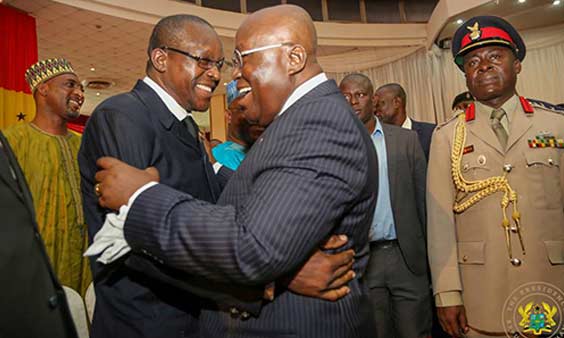
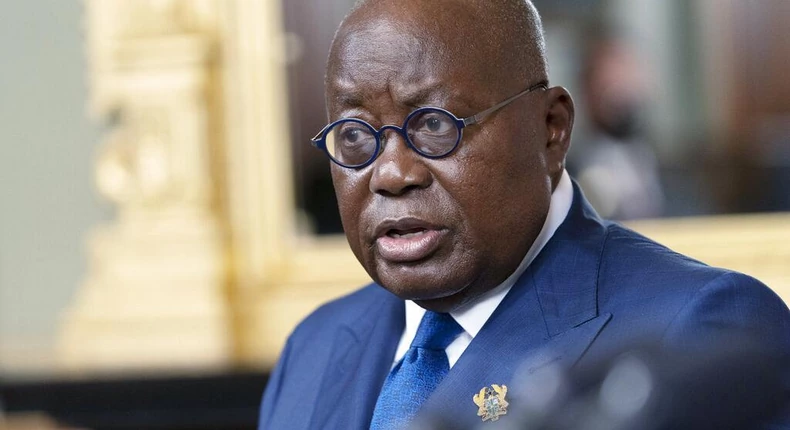
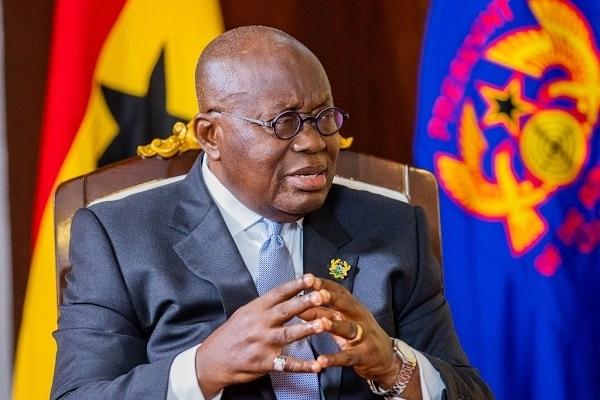
President Akufo-Addo has provided clarification on his decision not to assent to the Criminal Offences Amendment Bill 2023, the Criminal Offences Amendment Bill Number 2, 2023, and the Ghana Armed Forces Amendment Bill 2023.
In a letter to Parliament, the President explained that his decision is rooted in the potential financial impact on the state’s consolidated fund and a violation of Article 108 of the constitution.
He noted that, after consultations with the Attorney General, it was advised that the Ghana Armed Forces Amendment Bill 2023, a private member’s bill sponsored by Madina MP Francis-Xavier Sosu, has financial implications on the consolidated fund due to the associated cost of incarceration.
President Akufo-Addo suggested that the private member’s bill would need to be reintroduced to Parliament in due course on his behalf.
“Upon a thorough review of the relevant constitutional legislative frameworks specifically Article 108 of the constitution and section 100 of the Public Financial Management Act 2016, Act 921, it is evident that the bill is introduced as private member’s bills by the honourable member of Parliament for Madina Constituency, Francis-Xavier Sosu do not conform with the provisions of the constitution.
“These bills which avoid the death penalty and criminalise the activities of witch doctors retain substantial financial obligations on the consolidated fund and other public funds of Ghana due to the projected cost related to imprisonment, sustenance and healthcare for those who will be convicted under the days when they become law.”
“Therefore, in light of this significant fiscal impact, these bills should not have been introduced with the fiscal impact analysis. Access to such an analysis precludes these bills from being properly classified as private member’s bills. The legislative power entrusted to parliament comes with responsibilities to ensure that all enacted laws comply with the constitutional provisions safeguarding the nation’s fiscal integrity and avoiding the principles of governance.”
“Mr Speaker, it is for the above reasons that I in preserving the sanctity of the legislative process refuse to assent with yours. I take this opportunity to reiterate my support for the contents of the bills and my intention for them to be reintroduced in parliament on my behalf in due course. Yours sincerely, Nana Addo Dankwa Akufo-Addo,” he stated.”