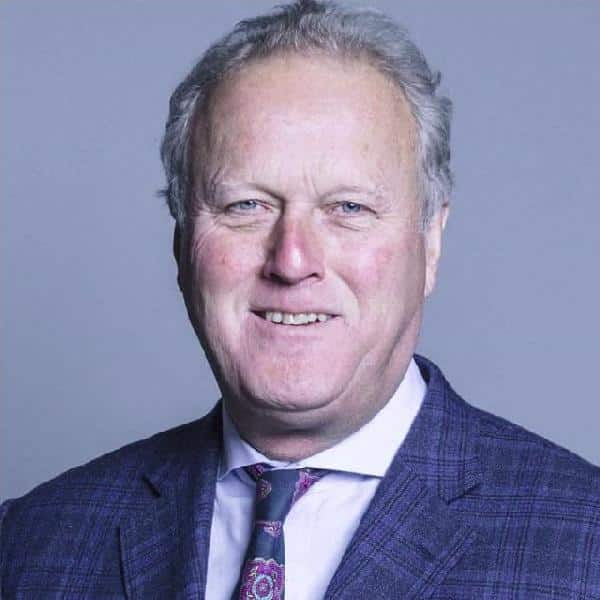
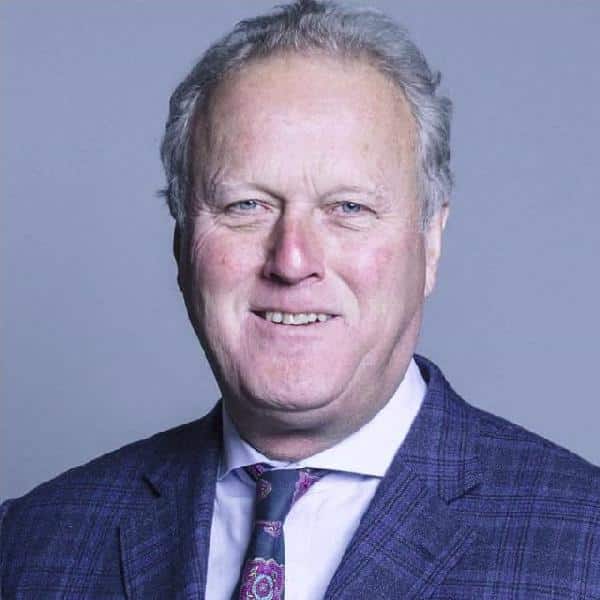
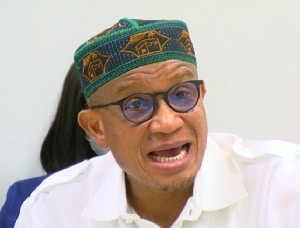
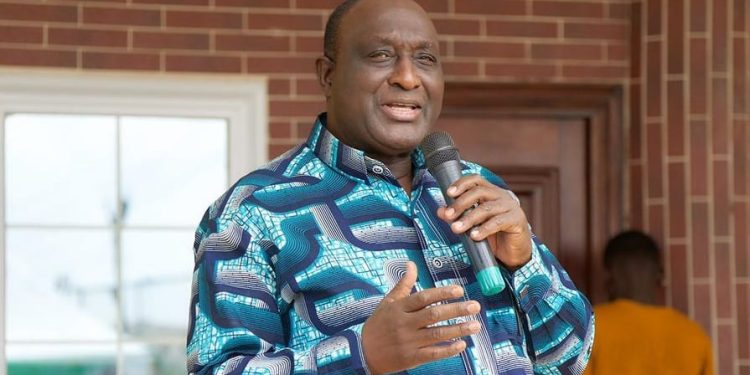
The Dean of the University of Cape Coast Business School,Professor John Gartchie Gatsi, has endorsed the idea of turning to alternative funding sources through ethical finance, particularly Islamic finance.
Prof. Gatsi believes that with a projected global asset value of $4.94 trillion by 2025, Islamic finance could offer a more cost-effective way of lending to businesses and households, as the banking industry’s growth is expected to slow down in the medium-term due to the Domestic Debt Exchange Programme.
Also known as Islamic banking, this type of finance operates on the principle of banks and clients sharing profits and losses. Prof. Gatsi argues that this system could drive infrastructure-focused public-private partnerships, as it prioritizes socially inclusive and development-promoting activities.
“Islamic finance provides almost all the products that traditional finance offers, but with a stronger emphasis on partnerships and joint ventures while promoting financial inclusion,” said Prof. Gatsi. He also called for reforms to the Banks and Specialised Deposit-taking Institutions Act, 2016, to include ethical banking and increase financial inclusion in the country.
Prof. Gatsi warned that without such reforms, the country would miss out on the benefits that ethical finance provides, including a wider choice of financial products. He added that the growth of Islamic finance in non-Muslim countries shows that the benefits of ethical finance transcend religion and should be viewed from a financial inclusion perspective.
“The focus is on development, not religion, and that’s how we should see it – as an opportunity for diversity in funding,” he said.
Developing segment
The Islamic Finance Development Report 2021 projects that the size of the Islamic finance industry will grow from $3.374 trillion across 135 countries in 2020 to $4.94 trillion by 2025, with an average growth rate of 8 percent.
The report also highlights the growth in spending on corporate social responsibility, which reached $1.28 billion. This is in line with the principles of Islamic finance, which prioritize socially responsible investments and ethical business practices.
In addition, the report notes the continued strong demand for low-risk sovereign Sukuk bonds, as evidenced by their oversubscription rates. To meet this demand, several large issuances were carried out in 2020 and the first half of 2021, with notable issuances taking place in countries such as Uganda, Nigeria, and Egypt.
Kofi Tonto, the government’s spokesperson, has urged the administration to understand the plight of Ghanaians and find a better approach to work with bondholders on itsdomestic debt exchange programme (DDEP).
On Friday, February 10, Sophia Akuffo, a former chief justice, joined a group of pensioners picketing outside the finance ministry to protest the use of pensioners’ bond yields by the government.
Since Monday, February 6, the pensioners have been picketing outside the Ministry in an effort to be excused from the Program.
Speaking to the media, she described as “wicked” and “disrespectful” government’s decision to include pensioners in the Domestic Debt Exchange Programme (DDEP).
She said; “We are over 70 years now, I am no longer government employed, my mouth has been unguarded and I am talking and I am saying that we have failed and it is important that the elderly should be respected. I find this wicked, I find it disrespectful, I find it unlawful, I find it totally wrong.”
“These are all people who have worked, they have worked very hard, they could have left the country when others were going but they stayed, they worked for the nation…Quite a number of people here today, when they retired last two years they have put everything into government bonds, it is a contract and now all of a sudden, you virtually want to force them to agree with you that the repayment of the yield of their investment should be as you dictate it. Why?”
“Why are we in the mess? Nobody has fully explained to us, yes we took debt, what was it used for? and where is the accountability? Exactly what was it used for? You are not telling us about how you are going to be able to make things better but just that ‘help me and I help you’, no, you help yourself first, let me see you doing something serious because we have seen these sort of things too many times”, she added.
Tackling the matter, Kofi Tonto appeared lost for words that it has come to a point where a former Chief Justice appointed by President Nana Addo would join the crusade for the government to reconsider its decision.
“This is a woman who just about three or four years ago was the fourth in command in this Republic. It may be that her money is not part but rather her relative’s or that she feels for the ordinary Ghanaian,” he said.
He appealed to the Finance Minister, Ken Ofori-Atta, to heed the calls by the bondholders stressing “we should apologize to the bondholders. As a government, we have to listen to them. We have to empathize with them. We must do everything necessarily possible to bring them on board”.
He said this during a panel discussion programme on Peace FM’s morning show “Kokrokoo”.
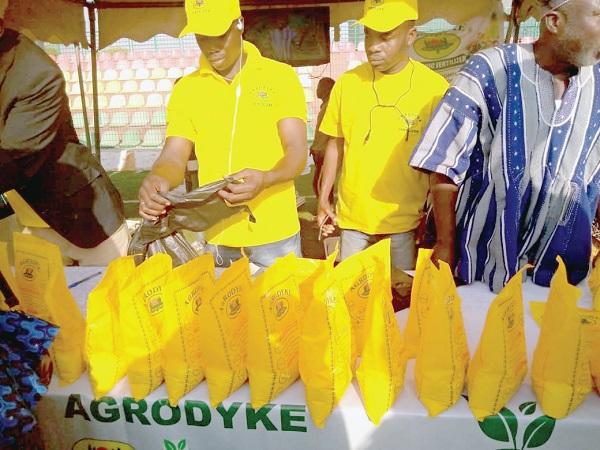
The two-day event, which began last Friday, was designed to promote rice products with added value and link regional businesses with global partners in the rice value chain.
About 100 exhibitors, both from Ghana and beyond, attended the fair to promote their products, engage in conversation, exchange ideas, and network.
Additionally, the exhibition brought together stakeholders, buyers, and investors to promote the production and consumption of regional rice.
The event was organised by the Tamanaa Company Limited, in collaboration with GIZ, Competitive African Rice Platform (CARP), Yara Ghana, IDH and MasterCard Foundation.
Sustainable partnerships
Speaking at the event in Walewale, a Deputy Minister of Food and Agriculture in charge of Livestock, Mohammed Hardi Tufeiru, said although the government was doing its best to promote the production and consumption of local rice, the private sector held the key to the development of the domestic rice sector.
“The Government of Ghana, through the Ministry of Food and Agriculture, is partnering rice sector stakeholders to promote domestic rice production and consumption.
“There is the need to build sustainable partnerships and ensure that all stakeholders work tirelessly to reduce rice imports significantly by increasing domestic rice production,” he stated.
He said the theme for the fair was in line with the government’s agenda to transform the rice sector for economic growth and high incomes for farmers and other value chain actors such as agro-processing and agribusinesses.
He noted that the need to add value to products was a priority to sustain productivity and growth in the sector.
Strategic document
Mr Tufeiru indicated that the ministry, together with its partners, was developing a National Rice Development Strategy II (NRDS II), a strategic document for the development of the domestic rice industry.
The main objective of the NRDS, he said, is to the attain rice self-sufficiency through seven thematic areas, including Seed System; Fertiliser Marketing, Distribution and Usage; Post-Harvest Handling and Marketing; as well as Irrigation and Water Control Investment.
Ban on rice imports
The Chief Executive Officer of Tamanaa Company Limited, Shaibu Briamah, called on the government to ban the importation of rice into the country and encourage the production and consumption of the foodstuff locally.
He suggested to the authorities to increase tariffs on imported rice, to create market for locally produced rice, to increase the income of farmers to support the economy.
He lamented the low patronage of the local rice, saying “Even state institutions don’t patronise local rice, the Buffer Stock Company that is supposed to be patronising local rice is still owing suppliers, which is affecting business.”
The North East Regional Minister, Yidana Zakaria, encouraged rice farmers in the region to increase their output, since the area was endowed with arable lands.
He also encouraged them to engage in dry season farming to increase production.
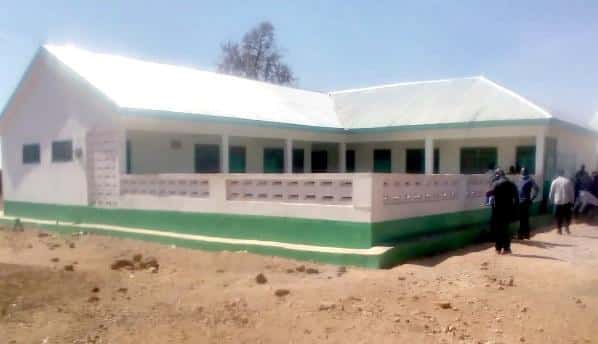
The projects are an early childhood development centre for Zuarungu-Moshie at a cost of GH 287,000 sponsored by the Northern Development Authority and a health centre with a mechanised borehole built at a cost of GH 418,024.00 supported by the District Assemblies Common Fund (DACF) (NDA).
The other project is a three-unit classroom block with auxiliary amenities and furniture for the Dubila community basic school that is also supported by the NDA at a cost of GH450,000.
Speaking to the Daily Graphic at the end of separate handover ceremonies, the District Chief Executive (DCE) for Bolgatanga East, David Akolgo Amoah, said he was highly elated that the projects which were dear to his heart had been completed and handed over for use.
He stated that the projects would go a long way to improve healthcare delivery and education in the beneficiary communities, adding, “I admit that the schoolchildren obviously needed and deserved a better place to study to realise their aspirations.”
He noted that it was unacceptable for schoolchildren to be allowed to study in unfriendly academic environments, noting, “the government at all times will ensure that the right academic environment is provided to enhance teaching and learning.
“These school buildings can be compared to others in big cities and towns in the country, as they would offer a conducive learning environment for the beneficiary school pupils to study to become useful to the society in future.”
Other projects
While commending the contractor and the NDA for a good work done, he appealed to the NDA to as a matter of urgency, take steps towards the completion of two other school projects it was funding so they served their intended purposes.
“I wish to appeal to the NDA to see to the completion of a kindergarten classroom block at Dulungu and a junior high school block at Kantia, which are currently at various stages of completion,” he said.
“As an assembly, we will ensure that all stalled classroom block projects are completed towards the provision of dignified education to the school pupils for the ultimate benefit of the country,” the DCE said.
He noted that the health facility would enable health workers to provide quality healthcare services to residents within the centre’s operational areas, stressing, “this centre will deal timeously with medical conditions of the people, in a bid to improve their health needs.”
Other speakers
The District Director of Health Services, Alhassan Lawal, said the old building was not conducive for the provision of health care to the residents and indicated that his outfit would explore the possibility of having a laboratory service and consulting room in the facility.
He said “with this new facility, staff will not have any excuse not to stay in the community to render services to the people,” stressing “I want to assure the management of the district assembly that the facility will be put to good use to provide quality services to the people in the community and its environs.”
A deputy director in charge of planning at the district directorate of the Ghana Education Service (GES), Thomas Adiyuure Azuliya, expressed gratitude to the NDA and the district for facilitating the construction of the classroom blocks.
He gave an assurance that the GES would ensure judicious use of the projects and appealed to the NDA to pursue the contractor executing the Kantia JHS classroom block to complete the facility, since the school pupils were currently studying under a tree.
A community elder in Zuarungu-Moshie, Adobire Azure, in a remark, lauded the government for the projects and pledged the community’s support towards the maintenance of the projects.
When a 24-year-old unemployed guy was sentenced to 25 years in prison for harming others and attempting to rob someone, he received the shock of his life.
Lamin Sissy had already been found guilty of the accusations by the court at this point.
He received sentences of five years for inflicting hurt and twenty-five years for attempting to conduct a crime, specifically robbery, from the court presided over by Mrs. Sedinam Awo Balokah.
However, sentences must run simultaneously.
Handing the sentence, the Court said an attempt to commit a crime carries the same punishment as committing the crime.
It noted that the accused person now a convict used an offensive weapon (scissors) to harm the complainant, Christabel Sitor.
Sissy is said to have attempted to snatch a handbag worth GHS100, an Infinix Hot 10 mobile phone valued at GHS1,000 and cash of GHS100.
Sissy earlier prayed to the Court for mercy.
“I pray the Court to forgive me. I don’t know what came over me. I have no relations in Ghana,” he added.
The prosecution led by Inspector Gloria Ayim prayed the Court to give an accused person a stiffer sentence to serve as a deterrent to like-minded persons.
The case of the Prosecution is that the complainant Christabel Sitor is a resident of Mile 13 Adenta.
On June 2, 2022, the Prosecution said at about 9:20 pm, the complainant went to town and when returning home on a straight route, Sissy who had no permanent place of abode and had laid ambushed, spotted the complainant with her lady’s bag across her chest.
It said the complainant’s bag contained an infinix Hot 10 phone and a sum of GHS100.
The prosecution told the court that, Sissy on seeing the complainant, started trialling her to a distance and attacked her with a pair of scissors.
It said Sissy ordered the complainant to hand over her handbag.
The Prosecution said the complainant resisted and a struggle ensued between her and the accused person.
In the process, Sissy slashed the complainant’s left hand with a pair of scissors.
The Prosecution said the complainant raised an alarm and Sissy took to his heels.
It said the complainant’s shouts attracted people to the scene. Sissy however escaped and hid in the bush.
Whiles lodging a complaint, a witness in the case who pursued Sissy managed to nab Sissy and escorted him to the Police Station.
The prosecution said the accused person admitted the offence and led the Police to the crime scene.
Lord Marland, the CWEIC’s chairman, has recommended the nation to step up efforts to add value to its produce.
He claimed that value addition and processing are key problems that the nation must address in order to harness commerce and hasten economic recovery in the face of the ongoing crisis. By doing this, the emphasis will shift from strong reliance on imports to self-sufficiency.
“The way out for Ghanais the way out for every country’s growth – investing in trade and I am very encouraged with what I have seen. Processing produce here and not just exporting and then bringing imports back as refined products but involving in the whole process to create employment and prosperity is key,” Mr. Marland, who is on a working visit, told the B&FT in Accra.
The CWEIC boss noted that as more countries across the world ease restrictions, paving the way for people to travel outside their countries again, there is the need to build and strengthen capacity to leverage trade to spur economic growth.
“My role is to engender trade and investment across the 56commonwealth countries and therefore, I believe our role is important as the world gets back into traveling, into globalization which has not happened in the last two years; people and countries have looked inward rather than outward and now recognise that we need to look outward to develop trade for growth and prosperity, to get the engine of each country going again,” he said.
“I have interacted with a lot of stakeholders and I have realised the desire to start looking outward. I see a lot of opportunities. We are determined to help Ghana in every possible way to regain that prosperity and growth it expected before these terrible global events,” he added.
Senyo Hosi, the convener of the Individual Bondholders Forum, has urged holders of pensioner bonds to forgo joining the domestic debt exchange scheme rather than put themselves through the anxiety of picketing the Finance Ministry.
He believed that since the Finance Minister had provided the option of self-exemption, it would be better if bondholders took it.
He said, “I sometimes get lost as to what the pensioners are looking for. We are looking for a total exemption, the Finance Minister, Ken Ofori-Atta, has categorically said we can self-exempt. So what exactly are we looking for again from the Finance Minister? You have the decision to choose, I think individuals and pensioners have the option to stay out or not. If the deal doesn’t work for you, exempt, if it does fine. I don’t think picketing, shouting, and screaming will solve that problem. I will encourage all pensioners to self-exempt, there’s no need to scream, self-exempt now.”
The Pensioner Bondholders forum has been picketing the Finance Ministry since Monday, February 6, 2023, to demand a total exemption from the domestic debt exchange programme.
According to the group, it is unfair to be included in the programme.
Also, the lead convener of the group, Adu Anane Antwi, stated that voluntary participation is not the same as a total exemption.
According to him, this may cause problems for them in the future.
“In the future, the government can say that you did not take the restructuring. I already told you that I may face some challenges meeting the obligation so let us restructure and you refused. So if you go there, you become a part of it. If you decide not to take part, you already know,” he said.
TheCommonwealth Enterprise and Investment Council’s (CWEIC) Chairman, Lord Marland, claims that the inability of Ghanaian companies to develop abroad is due to a lack of successful partner searches in other nations.
Speaking to Class News, Lord Marland said CWEIC was created to assist member companies in finding the best partners in other nations, and it was one of the reasons he travelled to Ghana.
“The reason why it’s difficult for businesses to export, or to trade beyond Ghana is that, if you’re a business, it’s uncertain about whether you are going to find the right partner in another country to work with. The right lawyer, the right accountant, for a start. So, if you’re a business that’s thinking about exporting, you are thinking, you know, I want to export to India, for example. Who am I going to work with in India? How am I going to set myself up? What are the tax implications? What are all the rules? And that’s where we help as an organisation.” Marland said.
He further explained “That’s why when people want to import to Ghana, we have people on the ground here who can help them reduce that risk and of course, Ghana is a great exporting country with lots of things. So it is done, however, people have to be supported in the process, which is what we do at the Commonwealth Enterprise and Investment Council.”
Business consultant Nana Akwesi Bonsu has urged entrepreneurs in the nation to refrain from doing projects that are outdated in the changing world of today.
Instead, according to Mr. Bonsu, the CEO of My Story Magazine, businesspeople need to be flexible and able to supply new goods and services or create fresh organisational frameworks to boost their operating capabilities.
Speaking to the media in Accra, the CEO stated that innovation and technology adoption are no longer an option but rather a must for entrepreneurs: “Create a niche for your business, adjust to current or future innovations, learn new inventions and build up new systems and structures for your businesses. Don’t underestimate the power of technology; and above all, have the mental capacity.”
No rosy journey
Mr. Bonsu said entrepreneurship is not a rosy journey, and that a tough-minded approach is needed to create an avenue that will help society.
“Nonetheless, mental fortitude, a wealth of knowledge, understanding your essence for the establishment, and having the wisdom to ride your idea are very essential in this instance.
“Amid the current economic crisis and global recession, there is also a place for individuals who have mastered their craft to also survive,” he said.
Tax exemptions
According to him, government should support entrepreneurs by creating opportunities such as tax exemptions on specific consumable goods and services.
He said there should be a system that financially supports business owners to help them expand their operations.
He said government must take deliberate steps to patronise small-scale businesses, especially for locally-produced goods and services.
Mentorship
He explained that mentorship for entrepreneurs is now very essential, and therefore startups and anyone interested in business should make an effort to have mentors.
“Individuals who are giants in our industries must also avail themselves to teach upcoming entrepreneurs. They shouldn’t see them as threats or competition, but rather as a medium to pour out their experience and help the upcoming ones become more productive and efficient.
“Partnership, on the other hand, is also key. Most people from our side of the world do not consider partnerships in business, which isn’t the best. People must come together to create businesses that will profit all parties,” he said.
My Story Magazine
Mr. Bonsu noted that the My Story Magazine’s focus is on telling their stories and putting a spotlight on entrepreneurs, startups and change-makers across Africa.
He said the publication ultimately gives people an opportunity to tap into the brains and experience of business leaders, start-ups, entrepreneurs and experts to learn their strategies, what motivates them and all the challenges they faced and continue facing in the path they chose.
“By telling the stories of individuals and organisations from different perspectives and from across all regions of the continent – west, east, south, central and north – we believe it is only by collective action and innovation-sharing across the regions that we can help Africa solve its deepest challenges,” he added.
Ahead of this year’s chocolate day (Valentine’s Day) celebration, some Ghanaians, especially consumers and traders, claim they are feeling the effects of the current economic crisis on their purchasing power.
In Ghana, February 14 is celebrated as Chocolate Day as part of efforts to raise awareness of and demand for cocoa goods. Valentine’s Day is a day set aside each year to celebrate love among people.
In less than a week, Ghana will join the rest of the world in celebrating the day, which is characterised by the exchange of presents, mainly flowers, teddy bears, and chocolate.
During this period, chocolate and bouquet of flowers often see high patronage, but traders and consumers alike, have started complaining about the prices of items to mark the day, with wholesale and retail prices, which saw a sharp rise.
Madam Vivian Anku, a trader, told the Ghana News Agency (GNA) that business had started slow ahead of this year’s Valentine’s season due to the high cost of the items.
Madam Anku said: “We are not seeing any positive signs this year because the gift items are expensive. Our customers keep complaining but it is not our fault, the depreciation of the cedi has affected everything including valentine’s gifts.”
Teddy bears that we used to sell for GHS10 are now GHS15 above. Even the GHS15 is the smallest one. Most of the items you are seeing here are old stocks, we’re yet to bring the new stocks, so by all means, the prices will increase again.”
Appiah Mavis, a shopper, who lamented about the price of valentine’s items said: “Just last year, I bought moonflower at the price of GHS70, but now, it’s about GHS150, which I am surprised about.”
Miss Abigail Mensah, who was in town to get some items for valentine said: “The prices of rose flowers have increased from GHS30 to GHS40 due to valentine’s season, but I can’t say I won’t buy it because I have to.”
I am tempted to say these traders went for a meeting before this month because so far, the shops I have been to have the same prices and right now I am tired and I do not think I can go further,” a bulk buyer, told GNA.
Ghana’s economy suffered hikes in prices of goods and services due to inflation, depreciation of the Cedi and fuel, with the ravages of the COVID-19 pandemic and the Russia-Ukraine war being high contributors to the situation.
Matters of the table have certainly taken precedence over fun and romance as Ghanaians wade through economic difficulties that may have numbed their taste buds for what is beautiful and the lovely but not tangible.
To promote transit trade between Ghana and Burkina Faso, the Burkina Faso Shippers Council erected an ultramodern office facility at the Tema Port enclave.
The office was constructed, according to Al Hassane Sienou, the board chairman of theBurkina Shippers Council, as part of a significant infrastructure project that the Council’s governing body undertook under its strategic growth plan.
The office building would improve the Shippers Council’s operations and assist it carry out its purpose, according to Mr. Roland Somda, the Burkinabe Minister of Transport.
The mandate includes ensuring regular supply of products and goods to Burkina Faso in the best conditions pertaining to cost, speed, and security.
The Council also assists shippers and protects their interests, which contributes to the competitiveness of Burkinabe export products on the international market, among others.
Mr Frederick Obeng Adom, Ghana’s Deputy Minister of Transport, called for a strengthened collaboration toward the shared objectives of both countries.
This is line with the African Continental Free Trade Area(AfCFTA) objectives, which aimed at, but not limited to, reducing poverty and shared prosperity among member countries.
Mrs Sandra Opoku, the Director of Tema Port, gave the assurance that the Ghana Ports and Harbours Authority (GPHA) would continuously improve on all measures to sustain the transit trade.
The GPHA began with the provision of lands to the transit representatives to build offices and warehouses to support their administrative and operational activities.
She said in a bid to reduce the cost of doing business in Ghana, especially for the transit customers, the GPHA granted rebates on its cargo volumes, and 21 days rent-free for all transit cargo, with automated ports processes to reduce delays.
Politicians are frequently buddies, despite their differences in ideologies or guiding principles, as has been said numerous times.
They still appear to find time to gather around the same tables and literally share bread after the outward displays of differences, apparent hatreds, and occasionally dangerously close calls.
When two prominent members of the rulingNew Patriotic Party (NPP) recently met on one of the main avenues in Koforidua, in the Eastern Region, it was such a circumstance.
The meeting between the immediate-past Minister of Trade and Industry, Alan Kyerematen, and a former Minister of Energy, and one-time campaign manager of the Nana Addo Dankwa Akufo-Addo, Boakye Agyarko, is one that has gotten many netizens talking.
In a video clip that has been shared on social media,Alan Kyerematen, who recently announced his intention to run as flagbearer of the NPP, is seen stepping out of his vehicle, mobbed by some few people, as he walks heartily to shake the hands of Agyarko.
In their interaction, Agyarko, who is also eyeing the same seat as NPP flagbearer, kind of called out Alan for visiting his township and refusing to ask of him.
But in his response, Alan indicated that he is headed for Krobo and that his colleague should wait for him there, amidst laughter.
The following is their interaction in Twi, and interpreted into English by GhanaWeb:
Agyarko: “Ah, you are in my township and…”
(The two laugh heartily)
Alan: “What I was saying was that I am heading to Krobo. Wait for me there.
Agyarko: “Where is your visa?”
(The two again laugh heartily and playfully)
According to details from dailyguidenetwork.com, the two were in Koforidua on Friday, February 10, 2023, as part of their campaign in the region, although Boakye Agyarko was the first to go to the region.
The NPP is yet to announce dates for its flagbearer race.
The Controller and Accountant General’s Department must receive the management accounts from all Specified Entities by February 28, 2023, per a directive from President Nana Addo Dankwa Akufo-Addo.
In the first quarter of 2022, just 54% of State-owned Enterprises (SOEs) had submitted their financial statements for consolidation into the national accounts, which alarmed him.
In his remarks to attendees at the State Interests and Governance Authority (SIGAannual )’s stakeholder meeting on Friday in Kwahu-Nkwatia, the Eastern Region, the President issued the order.
He noted that the late and non-submission of financial statements by SOEs undermined the work of the Controller and Accountant General in providing a total picture of Ghana’s public finances.
“I wish to reiterate strongly that by 28 February this year, all management accounts should be submitted to the Controller and Accountant General’s Department.
“The more we consolidate the national accounts with additional SOEs, the wider the national assets and fiscal space become” the President said.
President Akufo-Addo also directed all SOEs to submit to SIGA’s performance contract process to facilitate the inclusion of their financial statements in the preparation of the national accounts.
Currently, SIGA has 175 Specified Entities under its supervision.
These entities are mandated by law to submit management accounts by 28th February to allow the Auditor General to submit audited accounts to Parliament by April 30.
The number of financial statements submitted by SOEs in the consolidated national accounts rose from 19 in 2020 to 47 in 2021.
In 2020, the 19 SOEs included in the national accounts contributed 30 per cent to the national assets. It further increased to 49 per cent when 47 SOEs were included in the 2021 national accounts.
President Akufo-Addo charged Chairpersons of Boards and Chief Executive Officers of SOEs to collaborate with their respective internal auditors in the preparation of their management accounts to reduce incidents of infractions in the ongoing 2022 audit process.
He said it was unacceptable for SOEs to control about half of the country’s national assets and contribute less to the nation’s Gross Domestic Product (GDP).
SOEs, President Akufo-Addo insisted, must own up to their responsibilities and take a centre stage in the country’s development.
“Jumpstarting our economy begins with you. You should be the major drivers of Ghana’s economy rather than being a financial burden,” he said, adding: “excuses for non-performance should no longer be tolerated.
The 2023 Stakeholder Meeting of SIGA brought together Board Chairs, CEOs of Specified Entities, and other relevant stakeholders to discuss strategic initiatives aimed at transforming the Specified Entities into high-performing organisations and ensuring they meet the President’s vision of contributing 30 per cent to Ghana’s Gross Domestic Product.
The two-day Conference, which was in accordance with Section 30 of the SIGA Act 2019 (Act 990), was on the theme: “A Time to Reflect and Rebuild”
The representative for Nsawam-Adoagyiri, Frank Annoh-Dompreh, believes that Ken Ofori-Atta, the finance minister, can restore Ghana’s economy.
According to the MP calls by some of his colleagues in parliament for the president to dismiss the finance minister will rather stagnate the efforts of government to restore the economy.
Speaking in an interview on Badwam on Adom tv, Annoh-Dompreh noted that the finance minister should be allowed to work as he revives the Ghana economy.
“I think we are making progress. The times dictate that we should be at peace with each other. Before I say anything it means I have spoken to people. Now it appears things are getting better so we have to keep things running,” the Majority Chief Whip said.
His statement comes on the back of a call by the Member of Parliament for Asante Akim North, Andy Appiah-Kubi for president Nana Addo Dankwa Akufo-Addo to honour his promise to fire Ken Ofori-Atta.
Ofori-Atta was untouched in a recent ministerial shakeup that saw Akufo-Addo nominate seven persons for ministerial and deputy positions in his government.
Annoh-Dompreh also called on the NPP in parliament to unite in breaking the 8 in the 2024 election by allowing the finance minister to retain his office.
“We are ready to break the 8 but we need unity among ourselves, “he said.
The majority chief Whip who has openly declared his support for the Vice President believes the majority in parliament should look at the larger picture of the 2024 general election, though he respects the views of those calling for the removal of the finance minister.
The assertions of Annoh-Dompreh have been shared by some members of the majority who are confident the finance minister should be allowed the fix the economy rather than replace him.
Frank Annoh-Dompreh, a member of parliament for Nsawam-Adoagyiri, believes Ken Ofori-Atta, the finance minister, can jumpstart Ghana’s economy.
The MP claims that requests from some of his parliamentary colleagues that the president fire the finance minister will do more to stall the government’s efforts to revive the economy.
Annoh-Dompreh stated during an interview on Badwam on Adom TV that the finance minister should be permitted to continue working as he revitalizes the Ghanaian economy.
“I think we are making progress. The times dictate that we should be at peace with each other. Before I say anything it means I have spoken to people. Now it appears things are getting better so we have to keep things running,” the Majority Chief Whip said.
His statement comes on the back of a call by the Member of Parliament for Asante Akim North, Andy Appiah-Kubi for President Nana Addo Dankwa Akufo-Addo to honour his promise to fire Ken Ofori-Atta.
Ofori-Atta was untouched in a recent ministerial shakeup that saw Akufo-Addo nominate seven persons for ministerial and deputy positions in his government.
Annoh-Dompreh also called on the NPP in parliament to unite in breaking the 8 in the 2024 election by allowing the finance minister to retain his office.
“We are ready to break the 8 but we need unity among ourselves, “he said.
The majority chief Whip who has openly declared his support for the Vice President believes the majority in parliament should look at the larger picture of the 2024 general election, though he respects the views of those calling for the removal of the finance minister.
The assertions of Annoh-Dompreh have been shared by some members of the majority who are confident the finance minister should be allowed the fix the economy rather than replace him.
The general secretary of the Convention People’s Party (CPP), Nana Yaa Jantuah, was unable to contain her tears during a discussion concerning government‘s debt exchange scheme.
According to her, it was unfair to allow old men to picket at the Finance Ministry against the inclusion of pensioners in the debt exchange program while the Akufo-Addo-led government mismanaged the economy by enriching themselves.
Nana Yaa Jantuah who was speaking on TV3’s Big Issue show said the government does not care about the aged whom according to her, have been treated unfairly.
“So, does Ken Ofori-Atta not pity these old people? How can he do this? You (Ofori-Atta) don’t even care. You made these old people come to the ministry and picket. You don’t care, these are our elders. It was so sad and when I saw them (picketing), I said what is the meaning of this,” an emotional Yaa Jantuah said.
“You have mismanaged the economy, made yourself rich, made your people rich, made everybody rich within your space and you want to treat Ghanaians like this. And you sit down and you tell us that you want to break the eight as if we are fools. How can you treat us like this? How?”
Pensioner Bondholders Forum, a group for the protection of pensioners with investment in government bonds have been picketing at the premises of the Finance Ministry against the inclusion of its members from the Domestic Debt Exchange Programme (DDEP).
According to the group, attempts to have their investment exempted from the programme have proved futile reason for their decision to picket at the Finance Ministry until their demands are met.
“On 10 January 2023, we submitted a petition to the Minister of Finance to exempt all pensioners holding Government Bonds from the Domestic Debt Exchange Programme on the same basis used for the exemption of Pension Funds from the programme, as the impact of the programme on pensioners who are bondholders will be very severe.
“We have as of today not been granted the exemption we requested. To further press home our request, we have notified the Police that about 50 of our members intend to converge at the premises of the Ministry of Finance on every working day from 10 am-11 am, beginning from Monday 6th February 2023 till our request is granted by the Minister.”
The deadline for the government’s Domestic Debt Exchange Programme has been extended to Friday, February 10, 2023.
Finance Minister Ken Ofori-Atta has been called before parliament to answer questions surrounding the impact of the government’s Domestic Debt Exchange Programme (DDEP) on pensioners and to discuss possible solutions to ease their financial burden.
Speaker of the House, Alban Bagbin, on Tuesday, February 7, urged the Minister of Finance, Ken Ofori-Atta, to meet with lawmakers to address the policy statement that has yielded mixed results since its introduction and to take immediate action in light of the recent demonstrations by senior citizens at the Ministry of Finance.
“Honourable Members, my understanding is that both sides agree that the Minister be scheduled to come and brief the House on the policy statement and some details about the debt arrangement …Parliament has spoken that is the end of the case,” the Speaker said.
“Parliament is ever prepared to assist the government to get out of this quagmire. So, what I can say now is that parliament has spoken and that is the end of it. The Minister must be scheduled by the business committee as early as possible because this is an urgent matter because the pensioners are picketing at the Ministry.
“We need to do this as quickly as possible. Business Committee should schedule the Minister to appear before the house for a brief on the state of affairs,” he added.
He proposed 14th February, 2023 for the appearance of the Minister.
Background
The Pensioner Bondholders Forum has asked the government to exempt them entirely from the debt exchange programme.
The bondholders’ demand comes after the new terms the government has introduced after various consultations with stakeholders.
Wielding placards whiles picketing the Finance Ministry on February 6, 2023, the bondholders insisted that until a meeting is granted them and a resolution is given to their plea, they would picket the premises every day.
According to the group, attempts to have their investment exempted from the programme have proved futile reason for their decision to picket at the Finance Ministry until their demands are met.
The deadline for the government’s Domestic Debt Exchange Programme has been extended to Tuesday, February 10, 2023.
The new-elected Minority Leader, Dr. Cassiel Ato Forson, has indicated that the Minority group in parliament will no longer succumb to the Akufo-Addo-led government’s poor leadership.
In his maiden speech to Parliament as a Minority Leader, Dr. Ato Forson said the minority will offer fair and unbiased, balanced, consultative, and principled leadership to ensure the Akufo-Addo and Alhaji Bawumia’s government account in a manner that helps deliver public goods.
“To you my colleagues in the Minority Caucus, we pledge to offer fair and unbiased, balanced, consultative, and principled leadership in our journey to broaden the frontiers of Parliamentary oversight and hold the Akufo-Addo & Alhaji Bawumia government to account in a manner that helps deliver public goods,” he said.
He thanked the party and colleagues for allowing him to serve, and also commended Haruna Iddrisu for his distinguished public service since 2017.
“In January 7, 2009, I took the first step in this very chamber towards becoming a representative for the people of Ajumako Enyan Essiam and contributing my quota to Ghana’s Parliamentary Democracy. Fourteen years on, from a fresh legislator, I have the unique honour of being entrusted with the leadership of the Minority Caucus in the 8th Parliament of the 4th Republic.
“I wish to convey our profound gratitude to my party, the great National Democratic Congress, and our colleagues on the Minority side for this opportunity to serve at an even higher level and help shape the trajectory of this Parliament. I want to express on behalf of my colleagues, our profound appreciation and thanks to the immediate past Minority Leader and my senior brother, the Hon Haruna Iddrisu, for his many years of distinguished public service and his sterling leadership of the Caucus since 2017,” he said.
On February 7, 2023, Mr. Nkrumah gave the keynote address at the beginning of the National Chocolate Week Celebrations for this year in Accra. He stressed the importance of utilizing the occasion to intensify efforts to increase local processing of cocoa while continuing to increase domestic cocoa production.
“One of the ways to do this is to guarantee the light crop for the local producers so that they do not have to buy the main crop for domestic processing. As we know, the main crop is comparatively more expensive. If we are serious about boosting local production then we must move quickly to ensure that local processors are able to fully meet their bean needs from the light crop,” he said.
Mr. Nkrumah charged COCOBOD to use policy instruments to ensure that financing support is provided for domestic processors.
“The financial sector should be incentivized to provide financing for the domestic processors using the cocoa beans as security and escrowing into an account of the off-takers. The challenge of financing domestic processors will be lightened via this channel,” he added.
On the matter of stimulating domestic consumption of cocoa products, Mr. Nkrumah suggested the following:
“We need to promote more chocolatiers to join the value chain. The more domestic chocolatiers and nuanced products there are on the local market, the better our chances of deepening the local taste and demand. The red carpet of incentives as we would give a foreign direct investor should be rolled out for local chocolatiers as well.”
“Secondly, the thirty-five percent (35%) tax on butter and liquor (raw materials for chocolatiers) should be re-considered. This will make it less expensive to finance operations. It will also make the final products more affordable on the market.”
“And finally, we should support initiatives across Africa to stimulate consumption among school children. Sectors of our economy making super profits can be encouraged to finance such initiatives which will serve as an investment for the growth of a future market in Africa for our cocoa.”
The core purpose of the Chocolate Week Celebration is to promote local consumption of chocolate and other cocoa-based products among others.
The Information Minister who is also the MP for Ofoase Ayirebi praised stakeholders on the cocoa value chain for their respective roles in working to build a robust cocoa economy.
The National Chocolate Day Celebration was instituted in 2005 to coincide with Valentine’s Day which falls on 14th February every year to boost the domestic consumption of Ghana chocolate and other cocoa-based products among others. What used to be a day celebration, was transformed into a week-long celebration in 2022 due to the numerous benefits the country stands to gain if the cocoa industry is nationally promoted.
“I am not anticipating the minister-designate for agriculture to go and also transform the agricultural ministry into a farm gate; my expectations are that he will address the wrongs at the agricultural ministry.
“I am expecting him to come up with policies, I am expecting him to ensure that the smuggling of cocoa beans will be stopped and that using his security knowledge, he will be able to stop the flow of stolen fertilisers that we use taxpayers money to import.
“I am expecting him to ensure that those who are benefiting largely from the smuggling of fertilisers, he will stop it, get them arrested and prosecuted. And also ensure that he comes up with good policies that will help the ordinary farmer,” Dr Bonaa told GhanaWeb in an interview.
The outgoing minister during his tenure spearheaded some of the government’s flagship policies including the Planting for Food and Jobs policy.
On the back of the recent rise in food prices, the ministry under Dr Akoto’s leadership introduced an open market at the ministry dubbed the Planting for Food and Jobs Market.
Critics of the outgone minister say he failed in his duty although Mr Akoto vehemently argued otherwise.
Describing the current state of the agric ministry as petty, Dr Bonaa further challenged the incoming minister to redeem the image of the agric sector in Ghana by turning things around.
“At the moment it looks so petty, the agric ministry has suffered. You know how much food crops cost today in this country. I do believe that he should also take what we have done in the past. Some of the best persons who helped this country in terms of agric; animal husbandry and the rest actually had security background. Look at the famous operation feed yourself, was it not led by Acheampong?
“When you take Major Courage Quoshigah when he was the agric minister we all saw what happened to the agric ministry in this country. So I am expecting Bryan Acheampong to use the skills and expertise he has gained over the years at the back of security and as other security persons have done, to raise the bar a lot higher,” he stated.
He also urged the incoming minister to solve the ever-present conflict between farmers and nomadic herdsmen using his background in security.
Currently a member of parliament, Bryan Acheampong is a former Minister of State at the Ministry of the Interior and the former Minister of State at the Ministry of National Security.
With a history as a retired soldier of the US Air Force, Bryan Acheampong’s experience spans Security, Intelligence, Politics, and Business Leadership.
His expertise includes Anti-Terrorism, Force Protection, Laws of Armed Conflict, Conventional Defence Training, Weapons, Small Arms, and Fuels. His experience spans Security, Intelligence, Politics, and Business Leadership.
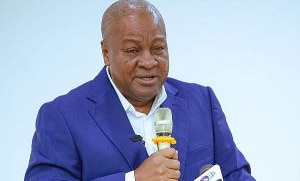
The Ministry of Energy has replied former President John Dramani Mahama following his criticism of the Nana Addo Dankwa Akufo-Addo administration over Ghana’s oil production.
The former president berated the Akufo-Addo-led government for their lack of efforts to increase the country’s oil production in the upstream sector over the last seven years.
According to him, greed and ineptitude against national interest have engulfed the current government which has resulted in the lack of development in the oil and gas sector.
In a tweet posted on February 6, 2023, John Mahama described the development as ‘wasted years’ despite his National Democratic Congress government handing over two new oil fields to the Akufo-Addo government in 2017.
“Wasted years! We bequeathed to the Akufo-Addo government two new oil fields, TEN and Sankofa. Greed and ineptitude as against national interest means a sad reality of no additional production activity in our upstream oil sector in the last 7 years,” John Mahama wrote.
It added that the Akufo-Addo government has discovered seven new oil fields from 2017 to date.
“It cannot be lost on John Mahama and his followers, that oil production is capital intensive, high risk and dependent on the availability of investor funds, market conditions as well as prevailing global trends among others at the time discoveries are made. Thus, for John Mahama to claim that President Akufo-Addo has wasted seven years without additional production activity exposes him as a man who has no compelling knowledge of the upstream oil and gas industry.
“For the record, under the Akufo-Addo presidency, Ghana has seen an unprecedented oil well drilling success rate from all exploration wells drilled from 2017 to date. Out of seven (7) exploration wells drilled during the period, six (6) of them were successful resulting in 7 discoveries.
“These discoveries are: Aker’s Pecan South East (2018), AGM’s Nyankom-1X (2019), Springfield’s Afina-1X (2019), Eni’s Akoma-1X (2019), Eni’s Eban-1X (2021) and Eni’s Aprokuma-1X (Albian and Cenomanian discoveries) (2022),” parts of the statement read.
Former Chief of Defence Staff of the Ghana Armed Forces, Joseph Nunoo-Mensah, Brigadier (retired) has reacted to government‘s decision to construct a war college for the country.
In his view, instead of a war college, the government must build an Agricultural college to promote agriculture to feed the nation because Ghanaians are hungry.
President Nana Addo Dankwa Akufo-Addo announced plans to establish a war college in the country at the Ghana Armed Forces’ 2022 end-of-year West African Soldiers Social Activities (WASSA) celebrations at Burma camp in Accra.
The war college, which is to be established with a seed capital from the Ghana Education Trust Fund (GETFund), is expected to be the capstone of Ghana’s military education system.
It is meant to provide and improve the professional education of the highest levels of military leadership when established.
The war college if established will educate and train senior military tacticians, strategists, and leaders advanced tactical and strategic thought, doctrines and policies.
But Mr Nunoo-Mensah says the college is not necessary.
Speaking on the Class Morning Show on Class91.3FM on Tuesday, 7 February 2023, he said “Akufo-Addo is my friend, I campaigned with him to be NPP flagbearer in 1998 but even if you are my friend I’ll tell you my piece of mind…what we need is not a war college but agricultural college to feed the people, the people are hungry.”
He said the Kofi Annan Peace Keeping Training Center has the capacity to train the military in whatever capacity, hence, there is no need for a war college when there are pressing issues like hunger.
“We need agricultural college and the reason is that Ghanaians are very hungry, I am hungry…involve everybody in farming because food is very expensive…” he added.
President Akufo-Addo has appointed Member of Parliament for Adansi-Asokwa, Kobina Tahiru Hammond as Minister of Trade and Industry.
Also, the Member of Parliament of Abetifi Constituency, Bryan Acheampong, is to head the Ministry of Food and Agriculture.
The President informed Speaker Alban Bagbin of the adjustment in his government in a letter dated February 7, 2023.
The Speaker read the said letter on the floor of Parliament when the house resumed from recess today.
Mr Alan Kyerematen, former Trade Minister, and Dr Akoto Afriyie, former Agric Minister, resigned from their post to pursue their presidential ambition.
Other appointments are Stephen Asamoah Boateng, for Ministry of Chieftaincy; Mohammed Amin Adam, Minister of State at the Ministry of Finance; Osei Bonsu Amoah as Minister of State for Local Government.
President Akufo-Addo in November last year terminated the appointment of Charles Adu Boahen, who was then the Minister of State at the Ministry of Finance, over an exposé dubbed “Galamsey economy” by investigative journalist, Anas Aremeyaw Anas.
Mr Ebenezer Kojo Kum, the former Chieftaincy Minister, is the third of President Akufo-Addo’s ministers to resign. The Member of Parliament for Ahanta West Constituency did not indicate the reason for his resignation but it is believed that he gave up his post to focus on his health.
Meanwhile, Stephen Amoah, the Member of Parliament for Nhyiaeso, is to serve as a Deputy Minister of Trade and Industry.
Hebert Krapah, who was Deputy Minister at the Trade Ministry has been moved to the Energy Ministry as Deputy Minister-designate. He replaces Mohammed Amin Adam.
The appointees will first be subjected to vetting by the Appointments Committee. After vetting, the Committee, headed by First Deputy Speaker, Joseph Osei-Owusu, will then recommend them to Parliament for approval should it find them competent.
They can only be sworn-in by President Akufo-Addo after Parliament, as a House, approves their nomination.
The nation joins the DCO, an international organization that was established to help nations create their digital economies as a crucial component of sustainable growth and development, becoming the twelfth nation to do so.
Well-established as a leader in utilising the power of communications and digital technologies to support economic growth, Ghana was the first country in sub-Saharan Africa to launch a cellular mobile network, in 1992, and one of the first countries in Africa to be connected to the Internet and also introduce ADSL broadband services.
The country is also a leader in digital payments and mobile money, with the second-highest data penetration rate and fastest-growing mobile money market in sub–Saharan Africa which has greatly enhanced financial inclusion; and as the newest member of the DCO, Ghana is expected to bring that experience and expertise to share with the other member-states.
The two West African countries’ accession therefore means the DCO now represents 13 nations and serves around 600 million people with a collective GDP of more than US$2trillion.
Commenting on the development at a press conference, Communications and Digitalisation Minister Ursula Owusu Ekuful said: “Ghana shares the DCO’s vision of using technology to create opportunities for economic diversity and growth, and to empower our people – especially the youth, through digital and financial inclusion. We look forward to working with our fellow DCO member-states and DCO Observers to share our experience and collaborate in the fields of e-government, infrastructure and entrepreneurship, and to foster investment in Ghana with member-states”.
On her part, Deemah AlYahya, Secretary-General, said the DCO was pleased to welcome Ghana to the organisation, saying: “Ghana is one of the leaders among African nations in adopting new technology and in the wise use of policies, such as its Digital Finance Policy that supports new areas of development and brings positive benefits to the community”.
She said the DCO was created to encourage knowledge-sharing and exchange for the good of all nations, and that she believes Ghana has many lessons to share with the DCO and our ecosystem of nations.
The DCO focuses on digital economy initiatives supporting youths, startup entrepreneurs and women.
With 70 percent of future economic growth set to be digital, DCO member-states provide a valuable market opportunity to investors and entrepreneurs alike; and it is focused on empowering youth, women and entrepreneurs; leveraging the digital economy’s accelerative power; and leapfrogging with innovation to drive economic growth and increase social prosperity.
Through cooperation, dialogue and the creation of mutually advantageous cross-border legislation, the organisation further seek to establish within its member-nations the optimal infrastructure and policies needed for the rapid creation of inclusive and equitable digital economies within which all people, businesses and societies can innovate and thrive.
He emphasized the urgency of moving quickly since further setbacks might severely strain and stress the economy, notwithstanding recent changes to the DDEP’s framework and agreements with important parties. The debt operation is still essential for the government to complete a deal with the International Monetary Fund (IMF).
In an economic update yesterday, the finance minister said significant amendments have enabled government reach an agreement with key domestic creditor categories including banks, insurance companies, capital market players and foreign holders of domestic debt in relation to their participation in the DDEP.
“Frankly, non-participation or a lower-than-expected turnout for the DDEP will prolong efforts to resolve the current economic crisis. In addition, the prospects of international financial support and other financial assurances would be jeopardized. This development could further put strain and stress on the government’s capacity to honour key commitments. This is not what we want for our economy,” the Minister said.
“Undoubtedly, the participation of the banks, insurance companies and the securities industry, under the enhanced DDEP is a significant milestone which represents a response to a call to national duty. It is a critical step to restore macro-economic stability; accelerate Ghana’s economic growth under an IMF Programme; and leverage other international financial support,” Mr. Ofori-Atta emphasised.
In December 2022, the government invited all holders of Ghana’s bonds to voluntarily exchange their holdings for new bonds whose terms were compatible with its desired downward debt trajectory, within the context that, for Ghana to reach the required debt sustainability threshold of debt-to-GDP of 55 percent, it was important to review the interest rates and maturities of the existing bonds.
However, there were emerging concerns by bondholders about the nature of the debt operation, forcing the government to recalibrate the framework of the DDEP.
On the back of these recent developments, the comprehensive agreement with the key stakeholders and the enhancement of the DDEP, the government expects the full participation of institutional stakeholders and the mobilisation of all qualified investors, to ensure the success of the debt exchange operation.
The Minster further encouraged eligible individual bondholders to voluntarily tender their holdings.
The updated memorandum for the debt exchange programme has reclassified eligible bondholders into three categories with different terms for each category. Category A bondholders include all investment schemes, such as mutual funds or unit trusts, and all individual bondholders below the age of 59. Investors in this category are eligible to hold two bonds which will mature in 2027 and 2028, with principals in a ratio of 50:50 ratio and 10 percent interest per year.
Category B bondholders include all individual bondholders aged 59 or older. Category B holders have similar terms as Category A; however, they will receive 15 percent interest per year.
The last group is the General Category bondholders. These are bondholders who are neither Category A or Category B bondholders. These bondholders will still tender their old bonds for 12 new bonds as per the previous terms, but with a slight change in the interest payment structure.
The objective of this is to ensure that individuals, especially retirees, who put their hard-earned savings in the domestic market, are not left in hardship as a result of the DDEP and yet contribute to the resolution of our current crisis.
“What we want is an economy that is back on track, stable, vibrant, productive, dynamic; meeting the needs of individuals, households, and enterprises; delivering shared and inclusive growth; and improving incomes and livelihoods,” the Minister said.
Former President John Dramani Mahama has entreated Ghanaians to continue praying for the safety of Christian Atsu and his club director, Tanarsh Sowth.
Former Black Stars player, Christian Atsu, was on Monday reported trapped under debris following the devastating earthquake that hit Turkey.
The former winger for Newcastle, and sporting director for Hatayspor, Tanarsh Sowth, are said to be missing after Monday’s 7.8 magnitude earthquake.
The earthquake hit hard in Kah-ra-man-marash, where Hatayspor are based.
Following the report, Ghanaians took to social media, praying for the safety of Christian Atsu.
President Mahama who is also concerned about the wellbeing of the striker in Twitter post wrote: “Let’s continue to pray for our brother, Christian Atsu, and his club director. The city of Hayat is in the region affected by the earthquake. Let’s continue to pray that God spares their lives.”
Let's continue to pray for our brother, Christian Atsu, and his club director. The city of Hayat is in the region affected by the earthquake. Let's continue to pray that God spares their lives. https://t.co/51RKJOc7AZ
He claims that the current administration has been consumed by greed and incompetence working against the interests of the country, which has prevented the growth of the oil and gas industry.
John Mahama condemned the development as “wasted years” in a tweet from February 6, 2023, despite the fact that his [NDC] administration had given the Akufo-Addo administration two new oil fields in 2017—TEN and Sankofa.
Meanwhile, the Public Interest Accountability Committee (PIAC) in a recent assessment report on Ghana’s petroleum revenue management spanning a 10-year period showed that an amount of US$31.22 billion in value was generated from three producing oil fields between 2011 and 2022.
PIAC’s report which was released on March 1, 2022, said the generation comprises both entitlements due to the contracting parties and the Ghana Group.
The Ghana Group, according to the report earned US$6.55 billion in total petroleum receipts between 2011 and 2020.
According to her, in order to avoid prosecution, businesses must register with the Commission in accordance with the Data Protection Act of 2012 (Act 843) and work on their compliance programs.
“If you are a firm that wants to succeed or if you work in the public sector, there is an expectation that you know what the law expects of you under data protection,” she said.
She spoke during the climax of the 2023 Data Protection and Privacy week celebrations in Accra and added that issues of data protection are fast becoming an important aspect of business operations across the world.
Globally, every January 28 is observed as Data Protection and Privacy Day.
For instance, Madam Adusei-Poku said that when she took office in 2017, about 10 countries in Africa had data protection laws however, as of 2023 this number had risen to 30.
, 2012 (Act 843) also specifies sanctions for companies that flout its provisions.
The DPC also disclosed that it would soon arraign about 300 institutions that had failed to safeguard the data of individuals as stipulated by law.
“We will be enforcing the law by publishing the names of non-compliant institutions and we have gone to the Chief Justice to get a Fastrack Court so that there will not be delays in pushing data breach cases through the court and the Chief Justice asked for justification which has been done and now the Attorney General has given us a dedicated prosecutor who is working with the Commission to compile the cases,” she said.
For her part, Ama Pomaa Boateng, Deputy Minister of Communications said the government since 2017, has been implementing its digital agenda to ensure that Ghana fully participates in the 4th industrial revolution and that its citizens benefit from the opportunities that it presents
She noted that Ghana’s digitalisation initiatives have so far generated huge data that need to be protected, hence the government’s decision to empower the Commission to be at the heart of its transformational agenda.
“We would like to maximise the use of data by unlocking its potential, promote data sharing, analytics, and reuse for the general public good,” Madam Boateng noted.
She commended the Commission for complimenting government’s efforts by systematically increasing national awareness on protecting personal data through the development of appropriate organisational structures and procedures for data controllers.
The climax event was attended by high-level executives of various institutions including the Cyber Security Authority, the National Information Technology Agency, the Association of Ghana Industries, the State Interests and Governance Authority, and the Ghana Statistical Services.
A cutting-edge facility will be built as a result of this strategic alliance between the two businesses, which will strengthen the local economy and give Ogun people job possibilities.
The new facility will greatly improve the nation’s production capacity and aid in meeting Nigeria’s expanding demand for building materials by having the ability to produce over 10 million metric tonnes of cement yearly.
The project is expected to drive economic growth and development, and support the government’s efforts to diversify the economy.
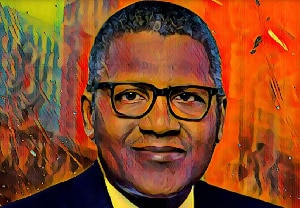
Born in Nigeria in 1957, Dangote is the founder and chairman of Dangote Group, a conglomerate of companies with interests in various sectors such as cement, sugar, flour, salt, and beverages.
Dangote began his business ventures at a young age, starting with trading in commodities such as rice, sugar, and cement. Over the years, he has expanded his business to become one of the largest industrial groups in Africa.
Dangote’s success can be attributed to his entrepreneurial spirit, risk-taking abilities, and deep understanding of the Nigerian market. He has a strong track record of identifying business opportunities and turning them into successful ventures.
Dangote Group operates in several African countries, including Nigeria, Ethiopia, Senegal, Cameroon, Ghana, and others, and has plans to expand to additional markets in the future.
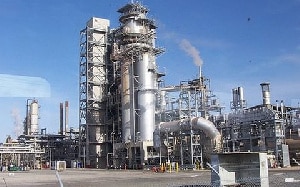
Dangote is also the driving force behind the Dangote Oil Refinery, a massive 650,000-barrel-per-day oil refinery soon to launch in Lagos, Nigeria.
The world-class facility will be one of the largest oil vertically integrated refineries in the world and is expected to significantly reduce Nigeria’s dependence on imported fuel.
The refinery is a part of the Dangote Oil Refining Company and will produce gasoline, diesel, jet fuel, and petrochemicals.
Nigerian President Muhammadu Buhari is set to commission the refinery, marking a significant milestone in Nigeria’s efforts to develop its domestic refining capacity and reduce its reliance on imported fuel.
In addition to his business interests, Dangote is also known for his philanthropic efforts. He has established the Dangote Foundation, which focuses on improving the quality of life for people in Africa by supporting education, health, and economic empowerment initiatives.
He said during the 4th Aviation Ghana stakeholder forum, held on Tuesday in Accra, “Ghana must avoid the temptation of increasing Airport charges against IATA’s norms and regulations.”
He claimed that violating IATA regulations by raising airport fees would harm the nation’s booming aviation sector.
As part of the programme, there was a panel discussion on the topic “Post COVID-19 Recovery Process and the Journey Ahead”, to consider measures to promote the aviation industry.
In his remarks, Mr Al-Awadhi said resilience had been the hallmark of the aviation industry globally since the outbreak of the COVID-19 pandemic.
He said the global aviation industry in 2020 lost $6.9 billion out of the predicted figure of $9.7 billion.
Mr Al-Awadhi disclosed that Africa’s aviation sector in the year 2020 lost $638 million and the loss was expected to be reduced to $213 million in 2023.
He called on governments in Africa to put measures in place to spur the growth and recovery of the sector.
“An enabling regulatory environment will help in job creation and recovery of Africa’s aviation sector,” Mr Al-Awadhi stated.
The Minister of Transport, Kwaku Ofori Asiamah, who was the special guest, said the global economy depended heavily on the aviation industry.
“Aviation connects people, cultures and businesses. Indeed, the importance of the industry cannot be overstated,” he said.
He assured that the government would continue to create an environment for the aviation sector to thrive.
He said the Airport Passenger Service Charge was GH¢ 1 in 2009, and increased to GH¢ 5 in 2010, and since 2010 the levy has not been increased.
Alhaji Tampuli said Guinea Bissau and Gambia charged between $6 and $13 as Airport Passenger Service Charge, and the average in West Africa was $4.63.
He said Ghana’s Airport Passenger Service Charge in dollar terms was $0.41.
Alhaji Tampuli said the Airport Passenger Service Charge was woefully inadequate.
The Ghana Mineworkers Union and certain civil society organizations have expressed worry about the viability of the country’s policy of exchanging its gold hoard for oil on the world market.
They contend that although while the concept is highly novel, it only seems to offer a temporary fix to the nation’s current economic problems.
More long-lasting measures need to be implemented, according to Abdul Moomin, general secretary of the Ghana Mineworkers Union.
“At the end of the day, the expectation is that, if it’s a credible avenue that we can use to leverage the rising cost of petroleum products across the globe and Ghana is not an exception, I think it’s an innovative idea that could be looked at. But it all boils down to how much gold we have in store and how much we are ready to trade,” he said.
“I see the Gold for Oil very sustainable. If you look at the data, the quantity of gold that is exported every year, particularly sector, if the government had a firmer control over it, things would have been better in this country. This policy has great benefits to the citizenry as fuel prices will stabilize which will also prevent the prices of products from skyrocketing. Again, for the past two weeks after the country took its first delivery of oil, the Cedi has stabilize against the dollar and that is good for the country.”
“Few days ago, GOIL reduced diesel price by 4% and they attributed this to the Gold for Oil Policy. If this project is continued it will have a rippling positive on citizenry and the plight of Ghanaians will be relieved from the economic hardship which they are currently facing.”
Government of Ghana a fortnight ago took delivery of 41,000 metric tonnes of the petroleum products delivered by SCF YENISEI to be sold by BOST to bulk distributing companies (BDCs) around Ghana.
Valued at $40 million, it was brokered by the Economic Management Team led by Vice President Dr Mahamudu Bawumia.
In November 2022, the government announced plans to buy oil products with gold rather than US dollars.
Vice President Dr Mahamudu Bawumia, said that the move was meant to tackle dwindling foreign currency reserves coupled with demand for dollars by oil importers, which was weakening the local cedi and increasing living costs.
“It will fundamentally change our balance of payments and significantly reduce the persistent depreciation of our currency,” Dr Bawumia said.
President Akufo-Addo claims that even though the government’s debt swap program had a number of difficulties after being announced, the general public has generally accepted it.
When German Federal Minister of Finance Christian Lindner paid him a visit at the Jubilee House on Friday, he let him know about it.
“We have already taken one important step forward in concluding a staff-level agreement with the IMF. One of the steps was the domestic debt exchange programme which encountered a lot of difficulties, but it has now been virtually concluded…We are now looking towards going the full hog and concluding the agreement. We’re hoping that will be done by the middle of March,” President Akufo-Addo said.
He also called on Germany to encourage China, an ad hoc member of the Paris Club to support Ghana’s debt restructuring efforts.
This, he said, will enable Ghana to restore economic growth.
It would be recalled that the International Monetary Fund (IMF) on Tuesday, December 13, 2022, reached a staff-level agreement with Ghana on economic policies and reforms to be supported by a new three-year arrangement under the Extended Credit Facility (ECF) of about US$3 billion.
According to the IMF, the authorities’ strong reform programme is aimed at restoring the macroeconomic stability of Ghana’s economy.
An IMF team led by its Mission Chief for Ghana, Stéphane Roudet, said Ghanaian authorities have launched a comprehensive debt operation by way of restoring the country’s public debt sustainability.
Ghana has over the past five months run to the International Monetary Fund (IMF) for a financial bailout after the local economy took a nosedive and has been in an unsteady position since.
The local currency – Cedi – on the other hand, depreciated against major trading currencies which led to the suffering of businesses or a large extent, the collapse of some as they struggled to remain in business.
Government implemented some measures to ensure that the Cedi was strengthened to compete against major trading currencies, especially the US dollar.
Martin Adu-Owusu, the corporation’s managing director, told the Public Accounts Committee of Parliament in Accra that initiating legal action against its creditors had become the only option if it were to recover its locked-up funds from clients and suppliers.
In its 2020 report on Public Boards and Corporations, the Auditor-General observed that creditors of the state-owned media organization have lost interest in paying off their obligation to the NTC.
“Customer balances recorded by head office showed GH¢196,603.73 and GH¢185,935.76 in respect of stopped subscription and vendors as against GH¢151,932.93 and GH¢124,807.19,” the report said.
“We have made several efforts including the Minister of Information writing to our debtors to do the needful.”
“What we have done, since last year, was to serve notices in our newspapers so that those who owe us would come and pay.”
“The deadline was February 1. I have started receiving letters from the debtors coming to arrange for payments. From this stage, we will move a step further by taking legal action against the debtors because we have done all that we could but the situation is not improving,” Mr Adu-Owusu told the Committee.”
Backing the NTC Managing Director, the Member of Parliament for Ningo-Prampram, Sam George, rallied individuals and organisations indebted to redeem their indebtedness to the company to enable it function effectively.
Mr George said the locked-up funds with the debtors go into the running of the publisher and that their failure could run the company aground.
“To all those owing the NTC, we are using this opportunity to urge you to pay your debts to enable the corporation function effectively,” Mr George advocated.
In the operational and profitability of the corporation, meanwhile, Mr Adu-Owusu said all efforts to access government support over the last three decades have yielded no result from successive governments.
“We have asked for support for over 30 years but we have never received the support. We have now taken our destinies into our own hands trying to do the best that we can to revive NTC,” he said.
Asked if government had any plans to support the company to turn around its fortunes, Information Minister, Kojo Oppong Nkrumah, said plans were far advanced to extend support to the NTC.
“Over a year ago, we asked the company to submit a plan to us so that we could support them. We have taken that plan upstairs and there are a number of options on how to get them the support to be a well-functioning and profitable entity for the Republic,” Mr Nkrumah said.
To ensure debt sustainability in the shortest amount of time, the government has been recommended to utilize a three-pronged strategy of fiscal, structural, and debt restructuring.
This was stated in an exclusive interview with the Ghana News Agency regarding the ongoing DDE program by Professor Godfred Bokpin, Professor Peter Quarter, and Dr. John Kwakye, all distinguished Ghanaian economists.
Additionally, efforts should be intensified to change the structure of the economy from being highly-import-driven by streamlining various sectorial agriculture, manufacturing and trade policies and implementing them effectively, they said.
However, the Economists stated that DDE programme alone, requiring bondholders to trade about 80 per cent of a total of GHS137 billion in bonds for new ones, could not secure debt sustainability.
They, therefore, asked the Government, to immediately reduce the number of ministers and merge some ministries to save money in addition to intensifying efforts to change the structure of the economy with prudent and sustainable initiatives to spur manufacturing and industrial growth.
Prof Bokpin of the University of Ghana Business School said efforts by the government such as the audit of Ghana’s COVID-19 expenditure and reaching some level of agreement with bondholders signalled a sign of progress on the DDE.
However, he said: “When your debt is judged to be unsustainable, measures for sustainability must be a triangle approach, which involves fiscal adjustment, structural adjustment and debt restructuring.”
He said: “If the president decides that he is going to have to reduce the size of the government by 50 per cent and also reduce the number of ministers, and merge some Ministries, Agencies, and Departments, we could have saved more than GHS10 bn.”
Prof Quartey, Director, Institute of Statistical, Social and Economic Research (ISSER) said the government, in addition to the proposed reduction in spending as put in 2023, should “go ahead and reduce the size of government.”
The ISSER Director said: “If we minimise waste, and corruption and ensure value for money in our expenditure, add value to our raw materials and support the agriculture value chain and manufacturing, we’ll be able to export more and get more foreign exchange and enhance our revenue mobilisation.”
“The Government should keep its focus, continue dialoguing and build consensus with the key stakeholders and ensure that we’re able to sign onto this IMF programme and get it running by the first quarter of this year.” He advised.
He added: “Hopefully when we sign onto the programme, we should make judicious use of the resources so, we’re able to grow the economy out of where we find ourselves. Once we do that, we can restore confidence and get our economy running.”
Dr Kwakye, Director of the Institute of Economic Affairs (IEA), noted that while the government urged bondholders to make some sacrifices, it was also prudent for it to do same.
“We believe the DDEP cost should be spread across the economy to the widest extent possible, in the spirit of burden-sharing,” he said and encouraged the Government to also make some sacrifices.
“All the borrowings that the government accumulated, the Finance Minister earned GHS160 million directly or indirectly, as part of burden sharing, why doesn’t he say, I’m also refunding 50 per cent?” He quizzed.
The DDE forms part of efforts by the government to assure the International Monetary Fund (IMF) of debt sustainability through creditors’ confidence by signing up for the programme, which has so far seen four postponements in the deadline as the government continues to engage stakeholders.
Individual bondholders and pension schemes have been exempted from the programme, though the Government has made new provisions for individual bondholders to be part of the DDE.
As stated by the government, the policy is to permit government to pay for imported oil products with gold in a direct barter using gold bought by the central bank.
The Vice President explained the move, which was made in the midst of the cedi’s depreciation against the US dollar and the rise in fuel prices, as an intervention to help stabilize fuel product prices as well as reduce pressure on Ghana’s foreign exchange because Ghana would be able to pay for imported oil through direct gold barter rather than using up its foreign exchange reserve.
The ‘Gold-for-Oil’ programme has since been implemented with the first oil consignment arriving last month.
Below is everything you need to know about the policy:
2. The prime objective of the programme is to use additional foreign exchange resources from the BoG’s DGP programme to provide foreign currency for the importation of petroleum products for the country which currently stands at about USD350 million per month.
3. The government has begun the implementation of the Gold-for-Oil Programme where gold purchases under the BoG’s DGP Programme mainly through the Precious Minerals and Marketing Company (PMMC) and where required from aggregators and mining firms is used to purchase petroleum products.
4. This is intended to free up foreign exchange resources to meet petroleum imports of the country thereby reducing pressures on the Bank of Ghana’s foreign reserves and the banking sector emanating from the Bulk Import, Distribution and Export Companies (BIDECs) request for foreign exchange.
5. The programme also aims to procure petroleum products at very competitive prices through Government-to-Government (G2G) arrangements. The programme will ensure that the cost of importing the products from international oil traders will always be comparatively lower.
6. The consequent reduction in foreign exchange pressures, the reduction in premiums charged by international oil traders as well as efficiency gains from the value chain will translate to lower ex-pump prices in the country. The G4O Programme Process Flow and Requirements:
7. Under the programme, all the dore gold produced and exported by companies with licensed small-scale concessions including community mines through the PMMC shall be purchased by the BoG. The Ministry of Lands and Natural Resources has issued directives towards the realisation of the programme.
8. The purchased dore gold is used for the payment of oil supply to Ghana. Payment for oil supply is to be done in two channels: by way of barter trade or via broker channel.
The Barter Channel:
• For suppliers willing to take gold in direct exchange for petroleum products, BoG will provide equivalent volume of gold. Both the Bank and the International Oil Trading Companies (IOTCs) are required to open Gold Metal Accounts in a mutually agreed gold refinery for the purpose of gold transfer.
• BoG accumulates refined gold in its metal account at a refinery nominated by a supplier to fund petroleum product shipments.
• BoG transfers equivalent amount of gold based on petroleum products supply invoice from its metal account to a supplier’s metal account on receipt of Quality Certificate (QC) of the product supplied and final invoice from Bulk Oil Storage and Transport Company (BOST). The Broker Channel:
• BoG executes a Gold Supply Agreement under which it sells gold to a gold broker, which provides forex cover to pay for petroleum products.
• Gold Broker buys dore gold from BoG and deposits the proceeds in BoG gold holding account.
• BoG transfers funds from gold holding account to an Escrow Account to pay for petroleum product shipment on receipt of QC and final invoice from BOST.
9. BOST, a state company, operates as an off taker for petroleum products, and therefore executes an agreement with IOTCs for the import of petroleum products to Ghana, for onward sale to licensed BIDECs.
10. BIDECs buy directly from BOST with cash and or a letter of credit (guarantee) from a reputable financial institution.
11. BOST and the National Petroleum Authority (NPA) ensure that the cedi proceeds from the sale of imported petroleum products will be collected and deposited with a collection bank in favour of BoG. The collection bank is required to transfer collected funds into BoG’s G4O proceeds account within 48-hours which is then used to fund the next cycle of gold purchases.
Pricing of Products:
12. To ensure that the price of petroleum products imported under the G4O programme reflects at the pumps to benefit the consumer, the NPA will regulate the prices of these products in the interim to correct market failure until the policy matures.
13. NPA will work with BOST to negotiate prices with the international oil traders to ensure that the landed cost of products procured under the programme are always competitive. NPA will approve the IOTC that will be selected to supply products to BOST under the programme based on the competitiveness of the offers made by them. BOST will sign supply contracts only after approval has been granted by the NPA.
14. The price at which BOST will sell the products to BIDECs will be approved by the NPA. The price at which the BIDECs will sell the products to Oil Marketing Companies (OMCs) will also be approved by the NPA.
15. The applicable exchange rate for pricing the products supplied under G4O will be based on the average rate at which the gold was purchased from the licensed gold exporters by BoG.
16. The NPA will put measures in place to ensure that OMCs that lift products supplied under the G4O programme pass the price on to consumers accordingly. In this respect, BIDECs and OMCs who lift and supply G4O products will sell at the ex-refinery and ex-pump prices that will be determined by the NPA. If there must be a comingling of products supplied under G4O and other sources, the ex-refinery and ex-pump prices will be computed using a weighted average.
17. All BIDECs and OMCs who wish to purchase products under the G4O programme will be required to sign off an undertaking confirming their willingness to comply with the terms and conditions for partaking in the purchase and sale of G4O products.
18. To ensure that the impact of the G4O programme on ex-pump price will be significant and effectively monitored, the number of BIDECs and OMCs who will be permitted to lift G4O products will be controlled. Payment Structure:
19. BOST will be required to pay for products supplied to it under G4O into an Escrow Account at BoG within 60 days of receipt of products from the international oil traders.
20. BIDECs will be required to pay for products procured from BOST within 15 days of loading. Payment for the products will either be on a cash basis or with a 15-day letter of credit (LC) from reputable commercial banks.
21. BOST will be required to provide BoG with copies of the LCs from BIDECs for verification and to give BoG the assurance that receipt of payments will be made on agreed dates.
Laycan allocation for product imports:
22. The NPA will ensure that adequate laycan slots are allocated to BOST to import products under the programme.
23. NPA will advise BOST on the projected demand on a monthly basis.
Because of this urgent necessity, landlords frequently use renters as leverage to demand astronomical rent payments.
While the average earnings of a Ghanaian youth allows for some variation in rent payments, depending on the locality, they are nevertheless need to come up with enormous rent advances covering an average of two years.
She also bemoaned the amount imposed by rental agents who provide and lead potential tenants to prospective places of rent – something that is described as ‘viewing fee’ and ‘agent fee’
In addition to this, the young lady lamented the associated bills needed to pay for survival in a rented place coupled with making a living.
“It’s rather serious that I have been in a rented place for about two years where I’m paying GH¢8,000 and now I’m supposed to be paying GH¢9,600…yet the landlord is demanding a two-year rent advance, not even for a year,” she lamented.
She continued, “I was under the impression that rent payment should cover between six months to a year and now it seems like we are just working to earn money, not for ourselves but just to pay landlords. The youth of this country are suffering and rent is killing us all.”
“For instance, in Dansoman, you won’t even get a single room to rent at the cost of GH¢600 but the landlord will instead demand a two-year rent advance. This is rather too much for the youth.”
The impacted residents of the mining community of Gbani, located in the Talensi District of the Upper East Region, accused Mr. Tampoare, a fictitious regional chairman of the Small-scale Miners Association of Ghana, of wasting $150,000 that was supposed to be split among eight members of the Unique Mining Group.
At the news conference, the acting Chairman for the Unique Mining Group and member of FOAEJU-GH, Abdulai Amaligo, last Friday, called on the Regional Minister, Stephen Yakubu, to ensure that Mr. Tampoare gives members their fair share of the compensation.
He said that the minister handed $150,000 to Mr. Tampoare at the office of the minister, at the Regional Coordinating Council (RCC), in Bolgatanga, in July 2021.
Acting Chairman for the Unique Mining Group, said the group did not sanction any negotiation between Mr. Tampoare and the Earl International Group Ghana Gold Limited on the ‘trespass’ monies paid by the company.
He said that Mr. Tampoare after defying advice to desist from his unilateral negotiations with the company, acted together with the Upper East Regional Minister, and the duo reached a $150,000 deal with the company.
“Our financier, Boyak Kolog Zongdan told us that the said amount ($150,000) was paid to the Upper East Regional Minister, Mr. Stephen Yakubu. Surprisingly, the Regional Minister chose to pay the monies to Robert Boazor Tampoare in person without our consent,” Mr. Amaligo alleged.
He said the group has given Mr. Yakubu a two-week ultimatum to impress upon Mr. Tampoare to pay the compensation or risk facing the wrath of members.
Mr. Amaligo said Tampoare, the man at the centre of the accusation, has been arrested by the Bolgatanga Divisional Police Command, and subsequently handed over to the Regional Police Command, to assist with investigations.
Meanwhile, the Development Research and Advocacy Centre, a Bolgatanga-based civil society organisation, has petitioned the Commission of Human Rights and Administrative Justice, to investigate the Regional Minister for allegedly abusing his office and engaging in false representation, and “using his office to get the lump sum compensation paid into the bank account of the RCC, with account number: 9011130014513, for onward disbursement to the concession owners.”
However, Mr. Yakubu in his response, denied all allegations levelled against him, describing them as vexatious, baseless and unfounded.
According to him, the people styled themselves as aggrieved small-scale miners, who had not received their share of the compensation, and were only sponsored by his detractors to drag his name into disrepute.
According to Mr. Yakubu, he had no authority to compel Mr. Tampoare to pay disgruntled members their monies and asked the accusers to have faith with the police who had already commenced probe into the matter.
According to the Authority, it would make sure that OMCs that lift goods supplied under the “gold for oil” scheme pass the price on to customers appropriately.
However, it was observed that the NPA’s control over petroleum product prices was only temporary.
The price at which the BIDECs will sell the products to oil marketing companies (OMCs), according to a statement from the NPA seen by GhanaWeb Business, “will also be approved by the NPA.”
“The applicable exchange rate for pricing the products supplied under G4O will be based on the average rate at which the gold was purchased from licensed gold exporters by the BoG…The BoG ordinarily purchases the gold aggregated by the Precious Minerals Marketing Company (PMMC).
The National Petroleum Authority, in the statement disclosed that Ghana paid US$40 million for about 40,000 metric tonnes of diesel in the first consignment of its gold-for-oil programme.
The gold-for-oil programme is to allow government pay for imported oil products with gold in a direct barter with gold purchased by the central bank.
The move, announced by Vice President, Dr Mahamudu Bawumia will serve as an intervention to help stabilise prices of fuel products, as well as, reduce pressure on Ghana’s foreign exchange.
The first oil consignment arrievd in January 2023.
Below is the full statement by the NPA:
FULL IMPLEMENTATION OF THE GOLD FOR OIL PROGRAMME
1. The implementation of the government’s Gold for Oil (G4O) programme commenced with the arrival of the first consignment of about 40,000 metric tonnes of diesel on January 15, 2023, valued at about US$40 million.
2. The prime objective of the programme is to use additional foreign exchange resources from the Bank of Ghana’s Domestic Gold Purchase(DGP) programme to provide foreign currency for the importation of petroleum products for the country which currently stands at about US$350 million per month.
3. Payment for oil supply is to be done in two channels: by way of barter trade where gold is exchanged for oil or via broker channel where the gold is converted into cash and paid to the supplier.
4. The first consignment of 40,000 metric tonnes of diesel constitutes about 10 percent of the country’s combined monthly demand for petrol and diesel.
5. The plan is to gradually increase imports under G4O to constitute about 50 percent of the country’s total demand for petrol and diesel by March 2023.
6. The implementation of the G4O will ease pressure on the dollar (the currency used for the importation of petroleum products) and avoid the occasional increases in petroleum prices resulting from the depreciation of the cedi against the dollar.
7. The programme will ensure that the cost of importing the products from international oil traders is comparatively cheaper.
8. The consequent reduction in foreign exchange pressures and premiums charged by international oil traders as well as efficiency gains from the value chain will lead to lower ex-pump prices in the country.
9. To ensure that the price of petroleum products imported under the G4O programme reflects at the pumps to benefit the consumer, the National Petroleum Authority (NPA) will regulate the prices of the products in the interim until the volumes increase significantly.
10. NPA will work with Bulk Oil Storage and Transportation Company Limited (BOST) to negotiate prices with international oil traders to ensure that the landed cost of products procured under the programme are always competitive.
11. The price at which BOST will sell the products to Bulk Import, Distribution, and Export Companies (BIDECs) will be approved by the NPA. The price at which the BIDECs will sell the products to Oil Marketing Companies (OMCs) will also be approved by the NPA.
12. The applicable exchange rate for pricing the products supplied under G4O will be based on the average rate at which the gold was purchased from the licensed gold exporters by BoG. The BoG ordinarily purchases the gold aggregated by the Precious Minerals Marketing Company (PMMC)
13. The NPA will put measures in place to ensure that OMCs that lift products supplied under the G4O programme pass the price on to consumers accordingly. In this respect, BIDECs and OMCs who lift and supply G4O products will sell at the ex-refinery and ex-pump prices that will be determined by the NPA. If there must be a comingling of products supplied under G4O and other sources, the ex-refinery and ex-pump prices will be computed using a weighted average.
14. All BIDECs and OMCs who wish to purchase products under the G4O programme will be required to sign off an undertaking confirming their willingness to comply with the terms and conditions for partaking in the purchase and sale of G4O products.
The lone oil refinery in the nation, TOR, is struggling with a lack of crude oil as well as other issues like piled-up debt and defective equipment.
The management of TOR requested permission from the Energy Ministry in April 2022 to work with participants in the commercial sector to modernize the oil refinery.
Because of this, Nana Amoasi VII, the executive director of the Institute for Energy Security (IES), has urged the government to urgently relocate the oil refinery out of the way of all political cycles.
He stressed that the activities of politicians at the Tema Oil Refinery need to end abruptly.
“You go to TOR and you can have seven people sitting on a desk doing nothing. That is why we need to move TOR away from the political cycle and the politicians. Let us introduce some private hands that have the capacity to introduce some funding for the revamp of TOR and its operations,” the Executive Director of the Institute for Energy Security said.
It would be recalled that the Institute for Energy Policies and Research (INSTEPR) late last year noted that about $500 million was needed to revamp the Tema Oil Refinery.
INSTEPR wondered why government, the majority shareholder of the oil refinery, has stayed mute on how to get the refinery working to produce oil to cushion Ghanaians amidst the hike in petroleum products – petrol – diesel – LPG at various pumps.
In a release sighted by GhanaWeb, the policy think tank asserted that the Finance Ministry, per report was cash-strapped hence, its inability to pump money into the almost dead refinery.
But the Deputy Energy Minister, Andrew Egyapa Mercer, said he was optimistic the oil refinery will soon commence operations.
The NPA claims that this will result in cheaper ex-pump prices across the nation.
The NPA said in a statement released yesterday in Accra that it would collaborate with the Bulk Oil Storage and Transportation Company Limited (BOST) to negotiate prices with the world’s oil traders in order to guarantee that the landed cost of goods purchased through the program always complies with competitive standards.
The statement said all Bulk Import, Distribution, and Export Companies (BIDECs) and Oil Marketing Companies who wish to purchase products under the G4O programme would be required to sign off an undertaking confirming their willingness to comply with the terms and conditions for partaking in the purchase and sale of G4O products.
The implementation of the government’s G4O programme which commenced with the arrival of the first consignment of about 40,000 metric tonnes of diesel on January 15, 2023, valued at about US$40 million.
The first consignment of 40,000 metric tonnes of diesel, the statement explained constituted about 10 per cent of the country’s combined monthly demand for petrol and diesel and is expected to gradually increase imports under G4O to constitute about 50 per cent of the country’s total demand of petrol and diesel by March 2023.
The statement stated that the implementation of the G4O would ease pressure on the dollar (the currency used for the importation of petroleum products) and avoid the occasional increases in petroleum prices resulting from the depreciation of the cedi against the dollar.
It said the programme would ensure that the cost of importing the products from international oil traders would be comparatively cheaper, adding “payment for oil supply is to be done in two channels by way of barter trade where gold is exchanged for oil or via broker channel where the gold is converted into cash and paid to the supplier.”
The statement said the consequent reduction in foreign exchange pressures and premiums charged by international oil traders as well as efficiency gains from the value chain would lead to lower ex-pump prices in the country.
The NPA explained that “all these would ensure that the price of petroleum products imported under the G4O programme reflects at the pumps to benefit the consumer, the National Petroleum Authority (NPA) will regulate the prices of the products in the interim until the volumes increase significantly.”
“The price at which BOST will sell the products to bulk import, distribution, and export companies (BIDECs) will be approved by the NPA and the price at which the BIDECs will sell the products to oil marketing companies (OMCs) will also be approved by the NPA,” it added.
He said this will also help reduce the Continent’s dependency on foreign aid.
He noted that Africa receives only 4% of global foreign direct investments and its share of manufacturing value-added is no better adding that the continent needs to do better to hasten the pace of economic development.
Mr Ofori-Atta said, “The private sector has to be an important financing partner if we are to meet our infrastructure requirements.”
He asserted that Africa is, “rich in natural resources and in agriculture potential with over half of the world’s uncultivated agriculture land. We are also rich in the most important resource of all; a vibrant and growing young population”.
The minister who was addressing other Finance Ministers from some African countries at the first Compact with Africa Ministerial meeting in Accra on Wednesday said the compact offers Africa the support to “redouble our efforts in pursuing our own agenda and importantly a framework that offers us the opportunity to work together”.
He contends that for Ghanaians to breathe a sigh of relief amid the economic crisis, the government must stop the inflation from skyrocketing.
According to a tweet seen by GhanaWeb, “Everyday medications, salt, gari, and cooking oil are only a few of the things whose costs are always rising. If you wait a few hours to purchase a product, you’ll probably discover that the price has dramatically increased.”
Read the full story originally published on November 6, 2022 by www.ghanaweb.com.
Former President John Dramani Mahama has expressed worry over the high inflation rate that has witnessed the price of basic food items increase each passing day.
Mr Mahama has once again called on the Akufo-Addo government to work around the clock and find a lasting solution to the economic crisis. In his public lecture ‘Building The Ghana We Want’ delivered on October 27, the 2020 flagbearer of the National Democratic Congress outlined some measures that can help save the situation.
In a tweet dated November 5, Mr Mahama lamented the current price of salt and gari which has now become expensive to the ordinary Ghanaian under the NPP administration.
“Prices of items including everyday medication, salt, gari and cooking oil, are constantly on the rise. If you do not buy an item at a particular point in time, you are likely to find that the price has significantly increased a few hours later,” read Mahama’s tweet sighted by GhanaWeb.
Meanwhile, President Nana Addo Dankwa Akufo-Addo has asked to have faith in his government to turn around the woes of the state.
On Sunday, October 30, the president referenced how the New Patriotic Party managed to properly handle the COVID-19 pandemic in Ghana at a time when developed nations were struggling to contain it and assured that they will restore the economy.
“When I said, at the height of the COVID pandemic, that we knew what to do to bring the economy back to life, but not how to bring people back to life, it was not said in jest.”
“We had done it before, and we were on course to doing it again. Ghana’s economy grew by a remarkable 5.4% in 2021, signifying a strong recovery from the 0.5% growth recorded the previous year due to the COVID-19 pandemic,” said Akufo-Addo.
This year, the government allotted GH1.8 billion to the MSWR; however, it will only pay for 8% of that total, with DPs and donors expected to cover the other 90%. This is despite predictions that the global economic crisis will reduce donor financing support for the nation.
Government of Ghana’s (GoG) contribution has therefore reduced from 8.48 percent in 2022 to 8 percent in 2023. The percentage of DP support to the country’s sanitation sector has been increasing in recent years, with 70.26 percent support in 2019, 82.39 percent in 2020, 75.43 percent in 2021 and 73.12 percent in 2022.
However, should donor commitment fail to materialise there fears that the country could face a huge sanitation funding deficit; especially as plastic and other forms of waste have become a major challenge in most urban settings.
“The allocations are made every year, but delays in the release of funds and reliance on donors have become a problem” Harriet Nuamah, Senior Programmes Officer of SEND Ghana, told the B&FT.
“Government must demonstrate its commitment to the MSWR by releasing all funds allocated to the sector to improve the budget execution rate,” she advised.
Indeed, a performance-report for the last three years, 2019 – 2021, shows that only 6.32 percent of the MSWR approved budget was released in 2019 and 18.9 percent in 2020, before increasing sharply to 86.00 percent in 2021; which according to SEND Ghana was still less than the approved budget.
To avoid serious sanitation challenges as the raining season approaches, SEND Ghana advised government to channel proceeds of the Pollution and Sanitation Levy (PSL) to finance sanitation and water resources initiatives.
The channeling of proceeds from the SPL to finance WASH infrastructure, according to stakeholders, will significantly reduce over-reliance on donors to finance WASH.
Though government projects generating some GH¢522million from PSL this year, the total anticipated GoG contribution to the sector, which is GH¢33million, constitutes just 6.4 percent of the levy.
The primary goal of the policy, according to a statement made on February 5 by the National Petroleum Authority (NPA), is to use additional foreign exchange resources from the Bank of Ghana’s Domestic Gold Purchase (DGP) program to provide foreign currency for the country’s importation of petroleum products, which is currently estimated to cost about US$350 million per month.
The statement also outlined the two main channels of supply as: “by way of barter trade where gold is exchanged for oil or via broker channel where the gold is converted into cash and paid to the supplier.”
2. The prime objective of the programme is to use additional foreign exchange resources from the Bank of Ghana’s Domestic Gold Purchase(DGP) programme to provide foreign currency for the importation of petroleum products for the country which currently stands at about US$350 million per month.
3. Payment for oil supply is to be done in two channels: by way of barter trade where gold is exchanged for oil or via broker channel where the gold is converted into cash and paid to the supplier.
4. The first consignment of 40,000 metric tonnes of diesel constitutes about 10 percent of the country’s combined monthly demand for petrol and diesel.
5. The plan is to gradually increase imports under G4O to constitute about 50 percent of the country’s total demand for petrol and diesel by March 2023.
6. The implementation of the G4O will ease pressure on the dollar (the currency used for the importation of petroleum products) and avoid the occasional increases in petroleum prices resulting from the depreciation of the cedi against the dollar.
7. The programme will ensure that the cost of importing the products from international oil traders is comparatively cheaper.
8. The consequent reduction in foreign exchange pressures and premiums charged by international oil traders as well as efficiency gains from the value chain will lead to lower ex-pump prices in the country.
9. To ensure that the price of petroleum products imported under the G4O programme reflects at the pumps to benefit the consumer, the National Petroleum Authority (NPA) will regulate the prices of the products in the interim until the volumes increase significantly.
10. NPA will work with Bulk Oil Storage and Transportation Company Limited (BOST) to negotiate prices with international oil traders to ensure that the landed cost of products procured under the programme are always competitive.
11. The price at which BOST will sell the products to Bulk Import, Distribution, and Export Companies (BIDECs) will be approved by the NPA. The price at which the BIDECs will sell the products to Oil Marketing Companies (OMCs) will also be approved by the NPA.
12. The applicable exchange rate for pricing the products supplied under G4O will be based on the average rate at which the gold was purchased from the licensed gold exporters by BoG. The BoG ordinarily purchases the gold aggregated by the Precious Minerals Marketing Company (PMMC)
13. The NPA will put measures in place to ensure that OMCs that lift products supplied under the G4O programme pass the price on to consumers accordingly. In this respect, BIDECs and OMCs who lift and supply G4O products will sell at the ex-refinery and ex-pump prices that will be determined by the NPA. If there must be a comingling of products supplied under G4O and other sources, the ex-refinery and ex-pump prices will be computed using a weighted average.
14. All BIDECs and OMCs who wish to purchase products under the G4O programme will be required to sign off an undertaking confirming their willingness to comply with the terms and conditions for partaking in the purchase and sale of G4O products.
In addition to other digital services, the index measures, ranks, and provides access to which West African states are putting effective policies into practice.
The expansion of its digital development sectors is also mapped for socioeconomic changes.
Using about 10 variables from mobile money & online transactions to digital infrastructure and policy implementation in this maiden observatory study, Ghana led the Anglophone West Africa while Cote D’Iovire the digital competitive Francophone West Africa with Cabo Verde leading Lusophone West Africa as the most digital competitive country.
Niger, Burkina Faso and Mauritania were the worst digitally competitive West African states.
After the release of the index, activities will be held to engage governments and other stakeholders per country to help in the direction and future of the digital sector.
The West Africa edition is part of a bigger Pan-African digital index, the foundation intends to work from 2023.
Ghana receives the same score of 43 out of 100 in the 2022 Corruption Perception Index (CPI) that Transparency International announced, maintaining its position of 72 out of 180 nations.
Ghana has not made progress in the fight against graft, according to the CPI score, which measures the perceived level of public sector corruption on a scale of 0-100, where 0 indicates severely corrupt and 100 means very clean.
The report highlighted the need to address the canker since corruption is a major contributor to the current economic woes of the nation.
He said contrary to the CPI report anti-graft institutions in the country have been better funded to work effectively.
“This is perception and it means that it’s the perception that people have. Now the government has sought to tackle corruption at the very base than any government in this country since Dr. Kwame Nkrumah.
“It took President Nana Addo Danquah to set up the office of the Special Prosecutor. Which is one of the major steps into tackling corruption,” the spokesperson stated.
Mr. Boakye-Danquah further explained that the government’s budget since 2017 focuses very largely on anti-corruption agencies such as the Special Prosecutor, EOCO, CHRAJ in tackling corruption.
He however added that there are some challenges with the office of the Special Prosecutor that the government is fixing.
On Friday, Ghana’s president, Nana Addo Dankwa Akufo-Addo, requested Germany to “encourage” China, an adhoc member of the Paris Club, to support Ghana’s debt-restructuring efforts.
He stressed the importance of the Paris Club quickly forming a creditors committee with the participation of other official creditors in order to support the initiatives that would allow Ghana to resume economic growth.
The President made the call after receiving a visit from the German Finance Minister, Christian Lindner, at Jubilee House in Accra.
“We now have our relations with the Paris club and the common framework, and we are looking for as quickly as possible a creditor committee to be established, so we will have the body with whom we can engage to bring those discussions as quickly as possible.
“We have good relations with China. We will like you to encourage China to participate in these programmes as quickly as possible…A very important consideration for us is the financial stability fund that has been promised us as one of the key outcomes of these negotiations and definitely once again, your voice in trying to bring that into being is something that we would appreciate very much,” President Akufo-Addo told Finance Minister Lindner.
Linden, who was at the head of a delegation from his country, held bilateral talks with the President aimed at boosting relations and economic ties between the two nations. President Akufo-Addo told the minister that the main concern for his government was to conclude negotiations with the International Monetary Fund (IMF), particularly at the Board Level and seal a deal with the Bretton Woods institution by mid-March this year.
“Our main concern right now is the arrangements that we are in the process of concluding with the IMF…and the specific assistance that will be useful to us and help us fast-track the process.
“Our target is that by the middle of March, we should be before the Board for the full agreement. We have already taken one important step forward in concluding a staff-level agreement with the IMF and we are now looking to go the full haul in concluding the agreement. We are hoping that it will be done by the middle of March.
“One of the steps towards that has been the domestic debt exchange programme that we are on, which fortunately, we have quite a lot of difficulties, has now been virtually concluded,” he stated.
However, President Akufo-Addo stressed, that there was a vital need for other creditors to support the efforts that his government was undertaking to restructure both the external and domestic debts of the country, to enable the IMF deal to fall through quickly.
The President thanked the German government for providing assistance to Ghana in order to help that country get through its current economic challenges. He claimed that the German administration had established itself as a dependable ally and that Ghana will continue to view Germany as “a privileged partner” while it applies for an IMF bailout.
In order to address Ghana’s debt hardship, the IMF and Ghana struck a staff-level agreement on a $3 billion, three-year Extended Credit Facility. However, ratification of the plan is contingent on Ghana restructuring its internal and external debts completely.
As a result of sharing his opinions on the Samuel Okudzeto Ablakwa and Reverend Victor Kusi Boateng controversy, president Akufo-Addo‘s counsel, Kow Essuman, has been criticized on social media.
Ablakwa, who is the Member of Parliament for North Tongu has defended his decision to publish publicly private details of Kusi Boateng, a member and secretary to the Board of Trustees of the National Cathedral project.
The Reverend has in turn sued for defamation and obtained a 10-day restraining order in the High Court against further publication of his personal private information.
In offering his opinion, Kow Essuman anchored his views on the issue of privacy and reputation and how a democratic society protects same.
“The case between Rev. Kusi Boateng and Hon. Okudzeto Ablakwa has gained significant public attention; but for me it raises important questions about the protection of an individual’s privacy and reputation in a democratic society.
“What safeguards do we have in our society to protect the privacy, personal data of individuals, especially persons who venture into public service?,” his second tweet read.
“Should it be so easy for a private citizen to access the personal data of another citizen held by state institutions, without the consent of the affected citizen, a court order or a RTI response from the state institution holding the personal data of the affected citizen?” he quizzed.
For most people interacting with his tweets, he was off the mark for different reasons, among them that the reverend had become a public figure and was subject to all necessary scrutiny.
“Did you loose your voice or your line of thought missed the bigger picture? Data privacy yes, but what of the issue of how the NPP government registered the same person as a trustee with a different name and a diplomatic passport another name? Your concern is secondary!” Tweep @Adwoabo submitted
@Ekowskareannan cued in: “If you want a private life, you have no business being in political service Once you benefit from the taxpayer, we deserve to know I’m surprised you’re arguing on this tangen.”
@deemperor tweeted: “You prefer his privacy to his double identity???? No be your fault.”
The Sunyani Traditional Council’s Chiefs and Queen Mothers have said that “God has decreed this as the moment for Alan Kyerematen to be president of Ghana.”
Nana Kwaku Sarbeng, Akwamuhene of the Sunyani Traditional Area, said he admires the patience and wisdom with which Alan had conducted himself since he conceded to let then-candidate Akufo-Addo go ahead of him for a shot at the presidency
Now, the traditional council believes it is the appropriate time for Mr Kyerematen to assume the country’s leadership and advised NPP delegates to choose their candidate for the 2014 general elections when they go to primaries later in the year.
Mr Kyerematen urged the Chiefs to advise the delegates to select a flagbearer who would be acceptable to the entire country.
“The country is expecting a turnaround based on a big vision to be delivered with competence,” he said.
Mr Kyerematen said the overreliance on the government to build industries to create jobs needed to change to a more efficient way of empowering the private sector to create jobs for the people.
Mr Kyerematen noted that as Minister for Trade and Industry under President JA Kufuor, he initiated the Presidential Special Initiatives (PSI) in four different sectors of the economy, which could have yielded over $60 billion a year to the country, had the NDC not terminated them after taking over in 2008.
He urged Ghanaians to ensure an NPP retains power in 2024 to consolidate the progress made under the current government, including the big industrial transformation project under the 1D1F, the Business Resource Centres, producing well-rounded entrepreneurs, the Technology Support Centres providing modern cutting-edge tools and Free SHS and TVET, among others.
All these initiatives have come to take advantage of AfCFTA, which is now making people describe Accra as the ‘commercial centre of Africa’, Mr Kyerematen said and urged Nananom to help the delegates take a good decision and select him as the candidate to continue the transformation on the foundation that the NPP government has built.
In conclusion, Nananom said they expected a natural progression from President Nana Addo to Alan, in the same way, they saw President Kufuor giving it to President Nana Akufo-Addo.
They further advised Alan to improve his slogan to “Alan Cash, Aduro wo so” since there was no doubt that God was on his side.