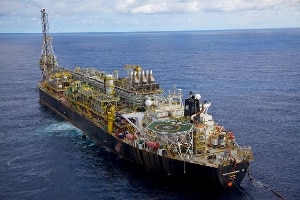
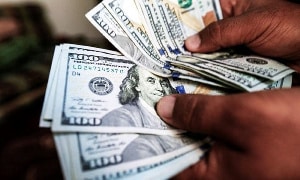
This is according to the Ghana Petroleum Funds (GPF) report which explained that about $492.186 million was secured from oil lifting between July 2022 and December 2022.
The report disclosed about five liftings in total occurred with the 66th Jubilee recording the highest amount of $119.83 million.
In addition to this, Ghana received about $202.55 million as corporate tax between July 2022 and December 2022.
These corporate taxes, the report detailed were paid by Tullow Oil, Kosmos, and PetroSA which operate in some of Ghana’s oil fields.
In terms of interest income generated from the Petroleum Holding Fund, the figure was estimated at $2.07 million.
Meanwhile, Ghana accrued $1.06 billion as petroleum investments as of December 31, 2022, comprising of the Ghana Heritage Fund and the Ghana Stabilisation Fund.
The report further said the estimated figure accrued from Ghana Stabilisation Fund was $143.6 million while, $363.76 million has been withdrawn since Ghana commenced commercial oil production in 2011.
The Ghana Heritage Fund on its part accrued $918.2 million as of December 2022.
The GSFS, which was announced by the Finance Ministry in collaboration with the Financial Stability Council, has a seed fund value of GH15 billion, but economists doubt that this sum will be adequate to cover any prospective program losses.
The policy think-tank however expressed concern that the fund’s value falls too short of estimated losses to the sector; the GH¢15billion is only 23 percent of what the banking industry alone might require.
“The question, however, is whether the seed money of GH¢15billion is adequate, especially when banks alone are reported to expect a financial impact of around GH¢65billion,” the IEA noted.
The Institute was also critical of the Bank of Ghana’s direct involvement in funding the GSFS, describing it as “concerning”. Its fear stems from the significant expenditure undertaken by the central bank in recent times – including GH¢10billion as its COVID-19 contributions in 2020 and budget support of GH¢42billion in 2022.
“Printing more money to support the GFSF will not only further heighten the public debt, but also inflation and currency depreciation as well,” it warned.
According to the IEA, it also remains unknown whether all expected contributions will be received – especially as the nature of contributions from development partners remain a mystery, and whether they will be in grants or loans is unknown.
“There is no free lunch,” IEA said, as it warns there will likely be trade-offs and that contributors will possibly have specific conditions to be met.
IEA’s sentiments were corroborated by the Dean of the University of Cape Coast (UCC) Business School, Professor John Gatsi, who told B&FT that the likelihood of interest payments for accessing the fund makes its counterproductive for financial institutions.
“We must look at this carefully. How can a government that owes these institutions and cannot pay say it is setting up a fund to support those it owes – and will likely charge them interest on the facilities? I find that puzzling,” he remarked.
In as much as development partners have been touted as major would-be contributors to the GFSF, Prof. Gatsi believes the identity of these partners – beyond the World Bank – and their level of commitment should have been communicated already.
The BoG has, so far, taken only the first step in providing regulatory forbearance on liquidity and solvency, and standardisation of the accounting treatment to be applied regarding the DDEP.
Furthermore, the apex bank will apply a reduction of cash reserve requirement ratio to 12 percent on local currency deposits; a reduction in the Capital Conservation Buffer to zero percent from 3 percent; and a slashing of Capital Adequacy Ratio to 10 percent from 13 percent, in addition to suspension of dividend payments and other payouts to shareholders.
Meanwhile, during the announcement of agreements reached between the Ministry of Finance and Ghana Association of Bankers (GAB) as well as the National Insurance Association (NIA) – regarding the terms of their participation in the DDEP – it was mentioned that clarity on the operational framework and terms of access to the fund had been spelled out.
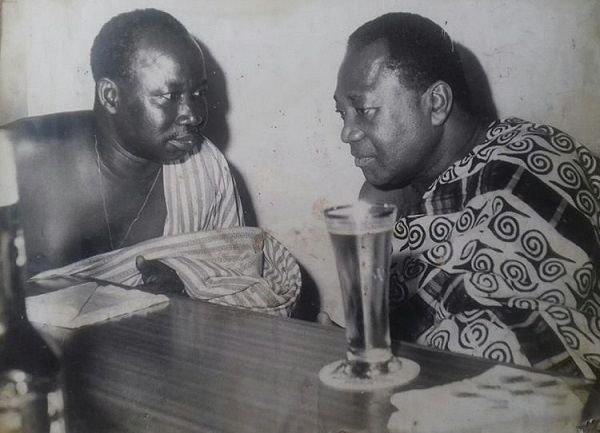
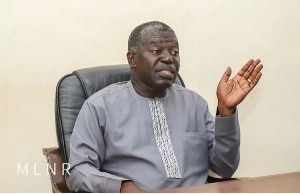
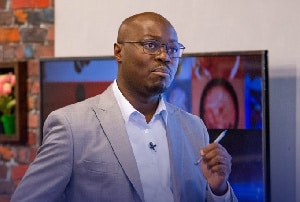
The pair were captured having a conversation, as the photo shows. Today, January 30, 2023, who would have been the 100th birthday of J.K Siaw, established the first wholly-owned Ghanaian brewery, Tata Brewery Limited.
J.K Siaw was instrumental to Ghana’s industrialization drive post-independence. The era saw many business ventures establish their footholds in the country to provide primary services that mainly served the indigenous people.
His rise and fall story is captured in excerpts from a book by B. Agyeman-Duah titled; ‘General Acheampong: The Life and Times of Ghana’s Head of State.’
The birth of Tata Brewery Limited began when J.K. Siaw decided to venture into business with a loan of 50 pounds sterling, which he used at the time to set up a cocoa brokerage firm.
In 1950, J.K. Siaw became a siding clerk who usually transported cocoa from Kwaku Praso in the Eastern Region to Accra. After learning and engaging in the trade for some time, he moved on to work with the Cocoa Purchasing Company and later became a cocoa and timber transporter.
According to the book, J.K. Siaw, in 1967, shifted his interest into the brewery sector which had huge prospects at the time. Prior to this, he applied for a business operating license under the NLC regime which deposed Kwame Nkrumah in February 1966.
The NLC regime had earlier requested that Siaw become a junior partner to some German investors who would run the company he decided to establish – a demand that did not sit well with him.
While still unhappy with the proposition, he persisted for a long period until his operational license was approved on July 26, 1969.
That year, he established the Tata Trading Company which first focused on trading key items. After operating for a while and making significant gains, Tata Brewery Limited was later inaugurated on January 30, 1973, to help provide more jobs and boost the local economy.
The inauguration ceremony was held on J.K. Siaw’s 50th birthday with then Head of State, Col. Ignatius Kutu Acheampong, present at the event. The former military leader, in his speech, gave his unconditional support to J.K. Siaw to run the wholly Ghanaian-owned company.
At the time when Ghana shuffled through various military regimes, the new leader, Jerry John Rawlings, upon taking office, confiscated all the assets of J.K. Siaw and his brewery establishment after it was alleged he was evading taxes.
The move impacted the brewery’s technical and financial operations, leading to J.K. Siaw escaping from Ghana to London to avoid being jailed and tortured under the military regime.
In what would be a self-imposed exile, J.K. Siaw who was now based in London sent numerous petitions to the PNDC regime of J.J. Rawlings for a return to Ghana without arrest.
His pleas, however, fell on deaf ears as Tata Brewery Limited was later sold to private foreign investors and was renamed the Achimota Brewery Company (ABC) which today stands as Guinness Ghana Breweries in Accra, a fully foreign-owned entity.
The PNDC regime labelled J.K. Siaw as a fugitive although there were no charges proffered against him, nor was he invited to stand trial for the alleged crime of tax evasion.
A few years later, Joshua Kwabena Siaw became indisposed due to ill health and later died while in exile in October 1986.
Although still a son of the land, the PNDC regime, following his demise, allowed for his remains to be brought home for burial despite still refusing to return J.K. Siaw’s assets to his family.
Brief profile of JK Siaw
He was born in 1923 at Obomeng in the Kwahu Mountains of the Eastern Region. He enrolled in school at the age of twelve after working on cocoa farms to support his education.
J.K. Siaw, as a young boy, learnt how to weave and sell baskets to make a living and support his education. At 19 years old, he became a teacher and later worked with the Bremang Gold Dredging Company near Bogoso in the Western Region.
His love for teaching and education saw him return to the New Juaben Grammar School which was later set up to be the Christ College in 1946 and then moved to the Ghana Secondary School in Effiduase by 1976.
Expressing concern about the rising debt stock under the Akufo-Addo government, Mahama accused government of showing little for the loans it has taken.
“The recommended debt to GDP profile for a middle-income country is that we should remain not more than 60 percent debt to GDP. If you pass 60 percent and you go to 70 percent and above, you are becoming highly debt distressed, which is the same as HIPC. If we take that debt and divide it amongst all Ghanaians, including children, everybody owes almost GH¢9000,” he said.
Read the full story originally published on October 30, 2020 by Dailymailgh.
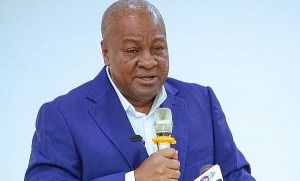
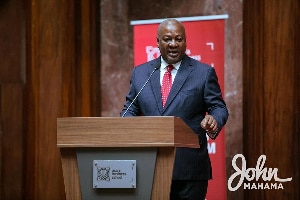
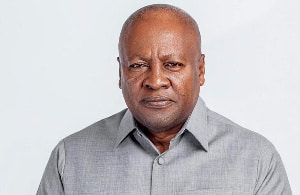
The presidential candidate of the National Democratic Congress (NDC), John Mahama, has expressed concern about the rising debt stock under the Akufo-Addo regime, especially as the government has very little to show for the loans it has taken.
Addressing residents of Kakasunaka in the Kpone Katamanso constituency on Wednesday as part of his campaign tour of the Greater Accra Region, Mr Mahama said the government has since the year 2017 borrowed GH¢157 billion, thereby increasing the debt to GDP ratio to an unprecedented 76.7 percent.
“The recommended debt to GDP profile for a middle-income country is that we should remain not more than 60 percent debt to GDP. If you pass 60 percent and you go to 70 percent and above, you are becoming highly debt distressed, which is the same as HIPC. If we take that debt and divide it amongst all Ghanaians, including children, everybody owes almost GH¢9000,” he said.
He said when the NPP was in opposition, it created the impression that Ghanaians were sitting on money but were hungry as a result of the policies of the Mahama administration.
“But today we are hungrier than we were in 2016. How many people can eat three square meals a day today? And the question you ask is, where is the money, GH¢ 157 billion, what have you done with it? Show us”, he said.
Mr Mahama said his government developed the country with the GH¢56 billion it took in loans, adding the evidence can be seen all over the country that his government invested in roads, school blocks, hospitals, water and power expansion projects, among others.
The NDC’s presidential candidiate said the time for accountability is however near and 7th December 2020 is the opportune time for Ghanaians to make the right decision by voting for the NDC to win the elections and create opportunities and prosperity for all.
Mr Mahama said, among others, the next NDC governement will focus on job creation, implementation of Free Primary Healthcare to ensure universal access to healthcare, rolling out Free Technical and Vocational Education and Training (T-VET) as well as state-sponsored National Apprenticeship Programme.
The Nigerian billionaire businessman, who ended the year 2022 with a total wealth loss of $1.1 billion as his net worth fell from $6.7 billion to $5.6 billion, is off to a strong start just 26 days into the new year, according to data tracked by Billionaires.Africa.
The multimillion-dollar boost in his net worth can be attributed to the market value of his privately held businesses, including his investments in the telecom company Globacom Limited and in the Nigerian oil industry through Conoil Producing and Conpetro Limited.
Adenuga owns 74.4 percent of Conoil Plc, a leading petroleum marketing company that manufactures and sells lubricants under the “Quarto” brand in addition to founding Globacom, one of Nigeria’s largest telecom service providers.
Conoil is a major supplier of fuels such as diesel, kerosene, low-pour fuel, aviation fuel, and gasoline. The petroleum marketing company’s retained earnings have increased to more than $45.7 million as a result of its strong performance in recent years.
In 2022, Adenuga received a substantial payout of $3.1 million in dividends from his significant stake in Conoil. With a net worth of $6.2 billion, Adenuga is ranked as one of the world’s most affluent billionaires, placing him at 409th on Forbes’ global wealth list.
In order to strengthen the continent’s ability to withstand future shocks, President Nana Addo Dankwa Akufo-Addo has urged African nations to take inter-trade seriously.
Closing the three-day Africa Prosperity Dialogues, President Akufo-Addo said the decision by some 44 countries to sign up for the African Continental Free Trade Area (AfCFTA) is a clear indication that the continent is ready to trade among itself.
Mr Akufo-Addo promised that he will engage the remaining 10 African States to ensure the full participation of all African States.
“It is encouraging to note that as of November 2022, 44 members states have ratified the African Continental Free Trade Area (AFCTA), this is strong evidence of the growing political will and commitment of the leadership of the continent to achieve market integration in Africa, and it’s our duty to engage to ensure the full participation of all members states.”
Meanwhile, Vice president Dr Mahamudu Bawumia has disclosed that Africa will need between US$130 billion and US$170 billion annually to propel a sustainable growth of 5 per cent in order to bridge the infrastructural shortfalls of the continent.
Addressing a high-level conference in Accra of African Ministers of State, diplomats, policymakers, and business executives, who are discussing ways of fast-tracking the implementation of the AfCFTA, Dr Bawumia said even though the AfCFTA has set the stage for the transformation of Africa, its full prospects can only be realised through decisive steps by key African stakeholders, and a focus on some key broad areas he proposed.
Mr. Bawumia intimated that the continent should make conscious efforts to address the infrastructural deficit needed to facilitate the implementation of the AfCFTA which will likely come at a cost not less than US$130 billion a year.
“Africa needs between US$130 billion and US$ 170 billion annually to bridge its infrastructure gap and generate sustainable growth at 5% per annum or more. This presents immense opportunities for the private sector investment,” he noted.
The figure, according to the Bank of Ghana’s January 2023 Summary of Economic and Financial Data, represents about 93.5% of Gross Domestic Product for the period.
The data from Central Bank showed that Ghana’s public debt stock rose by GH¢108.3 billion between September and November 2021, further depicting an unsustainable debt situation.
The BoG Summary of Economic and Financial Data however pointed out that the external component of the total public debt increased to $29.2 billion (GH¢382.7 billion) in November 2022 which is equivalent to 62.1 percent of GDP.
This was from $28.4 billion (GH¢271.7 billion) in September 2022 and $28.3 billion in December 2021.
The data also showed that the Ghana Cedi depreciated by about 37 percent against the US dollar in 2022 – resulting in a significant rise in the cedi component of the external debt.
Meanwhile, on the domestic debt front, the figure was pegged at GH¢194.7 billion at the end of December 2022 representing about 31.6 percent of GDP.
This figure is also against GH¢195.7 billion which was recorded in September 2022 and GH¢193.1 billion in November 2022.
As part of the government’s Domestic Debt Exchange Programme, about GH¢170 billion of debt is being restructured for a period of 12 years.
It is important to note the BoG report did not provide figures pertaining to the financial sector resolution debt and other liabilities including the energy sector debt.
The report futher noted that government’s fiscal deficit in terms of Gross Domestic Product was pegged at 9.8 percent in November 2022 which is more than the 7.4 percent earlier recorded in September 2022.
Speaking at the presentation of the 2021 Audit Infractions Joint Report, she urged that the public sector to orient strategies by re-evaluating policies and subsequently implementing them to meet best accounting practices.
According to her, when these policies are put in place, it will help the public sector back on its feet to build the economy.
“I am confident that with effective collaboration and the implementation of these recommendations, will see the public sector assume its envisaged role as the bedrock of Ghana’s economy even surpassing the envisaged target of contributing 30% of the GDP of this country which is commensurate with the vision of the president.”
“I want to at this stage again acknowledge the hard work and the diligent way you approached the charge by the president to look into these infractions and to ensure that we have recommendations that can be implemented and move these SOEs forward,” she said.
She pledged the government’s commitment to support SIGA to ensure that it is able to streamline the work of the SOEs to let them make strong contributions to the economy.
Public sector development key to propel Ghana’s economy – Chief of Staff
Given the rise in cybercrimes, organisations need a two-pronged strategy. First, however robust your security systems may be, it is imperative to keep updating them.
More essentially, the leadership should focus on strengthening their defenses by looking ahead, predicting the emergence of future cyber threats, and comprehending the wealth of new defensive capabilities that businesses can use both now and in the future. Here are five industry trends on data privacy this year:
Greater emphasis on privacy by design:
In the past, privacy was often an afterthought when it came to the development of new products and services. However, this is beginning to change.
More and more companies are realising that building privacy into their products and services from genesis is not just the right thing to do, but it can be immensely rewarding for business. As a result, in 2023 we’ll see a shift towards a “privacy by design” approach, where companies prioritise user privacy at every stage of the development process.
Rise of privacy-focused tech:
As consumers become more concerned about their online privacy, there will be a surge in demand for technologies that prioritise privacy.
This includes everything from secure messaging apps and browsers to virtual private networks (VPNs) and encrypted email services. It’s important to note that while these tools can certainly help to protect your data, they’re not a magic bullet. Organisations still need to be vigilant and take steps to secure their information.
Increase in regulations:
Governments around the world are taking notice of the growing concern over data privacy and are starting to act. In Ghana, the Data Protection Commission (DPC), an independent statutory body established under the Data Protection Act, 2012 (Act 843), is responsible for protecting the privacy of individual and personal data by regulating the processing of personal information.
The Commission provides for the process to obtain, hold, use or disclose personal information and for other related issues bordering on the protection of personal data. Thus, now companies must implement stricter data privacy policies and procedures to ensure compliance with these regulations and to protect the personal information of their customers.
Greater transparency: The trend towards greater transparency in data privacy is driven by the increasing awareness of the importance of protecting personal information and the need for organisations to be more accountable for their data collection and use practices.
In 2023, organisations will begin to be more transparent about their data practices by providing individuals with more control over their data. This includes giving individuals the ability to access, correct, or delete their personal information, and the ability to opt-out of certain types of data collection. This is a win-win for both consumers and businesses, as it helps to build trust and fosters a sense of transparency and accountability.
Goodbye Cookies:
As first-party data becomes more significant and consumers become more conscious of their data, third-party cookies will soon become obsolete. Many companies and organisations are now looking to move towards a cookie-less future by implementing new technologies and methods for tracking and targeting users.
For example, some companies are exploring the use of browser fingerprints, which are unique identifiers that can be used to track a user without the use of cookies. Other companies are experimenting with the use of privacy-enhancing technologies to provide a more secure and private way of tracking users.
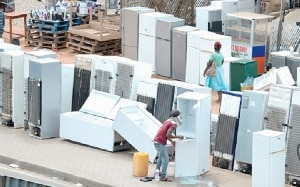
Reports suggest that Ghana is largely becoming a dumping ground for electronic waste with the Energy Commission taking serious steps to control that space with the importation of standard goods.
This follows calls by concerned secondhand dealers demanding reconsideration of the government’s plan in relation to the ban on imported secondhand electrical appliances.
Commenting on the concerns of dealers with Starr Business, the Energy Efficiency Compliance Officer at Energy Commission, Hubert Nsoh Zan indicated that the Commission has over the years been preaching on the ban on the importation of waste electronics into the country.
He said the ban includes the importation of used refrigerators/freezers, used air conditions, and incandescent lamps into Ghana.
“We found out that a lot of the new ones that are coming in are above standard because there is no regulation and there are no standards. In the same light, most of the used ones that are coming in are discarded and meant for recycling back in Europe.
“What it means is that they have exhausted their life span and are meant to be recycled. And we have our kinsmen who stay abroad importing these products. A lot of research has been done, studies have been done, the impact of used appliances on the environment and the impact of used appliances on consumption, in terms of high data of consumption and we need to look beyond this,” Mr. Nsah Zan stated.
He continued: “There are more implications, economic implications. What it means to even set up power plants and to be able to meet the high demand from this consumption of appliances.”
The Enforcement Officers also explained that the move is geared toward protecting consumers and the environment from future danger that these secondhand electronic appliances might have on the environment.
“Having said this, it is important for us to know, and Ghanaians who are all consumers, that we are only trying to set minimum energy performance of the type of appliances that are coming into the market. The position of the energy commission is very clear that we need to protect the consumers. We are just executing our mandate which is to make sure that the appliance market is transformed.
“So, to be very fair with you, the energy commission is only executing its mandate. We are trying to transform the appliance market and we are advising importers of appliances, make sure they meet the minimum requirement of what the regulations are saying as passed by parliament,” he stated.
This was stated in a plea document submitted by Mr. Essien’s attorneys in an effort to overturn the High Court ruling from December 13, 2022, which was presided over by Justice Eric Kyei Baffuor, according to a story from myjoyonline.com.
“We are learning that William Ato Essien has filed an appeal against the decision because he is not happy that will be put into jail or face custodial sentence if he’s not able to pay the sum in the manner that he is required to pay,” Host of Joy News’ Newsfile programme Samson Lardy Anyenini said during the show on January 28, 2023.
“…As you know he [Ato Essien] is required to pay GH¢90 million although he has paid GH¢30 million and he is required by the 28th of April 2022 to make another GH¢20 million paymentEssien cites the current economic challenges as his reasons should he not deliver on the payment in the time that is required,” the host added.
In December last year, William Ato Essien pleaded guilty to charges of misappropriation of depositors’ funds and other counts of stealing, abetment to stealing, conspiracy to steal and money laundering among others.
This was after the court accepted the terms of the agreement reached between the lawyers of Mr. Essien and the prosecution to pay a total of GH¢90 million as a refund to the state.
Per the judge’s order, he was required to pay an amount of GH¢90 million as restitution and reparation to the state within one year. This would see him pay an initial GH¢30 million (which has been paid) and refund the remaining 60 million in three instalments. The first is due latest by April 28, 2023 while the second is on August 31, 2023.
Justice Baffuor warned should he default in the payment or it even fell short of the required amount, Mr Essien was to be arrested and produced in court for a custodial sentence to be imposed.
But Mr. Essien in a “fresh court document however points out that current economic challenges make it imperative for him to be given the opportunity to explain a default before any such move is undertaken,” My joyonline.com stated.
Background
Capital Bank was one of the first banks that collapsed after a massive clean-up of financial institutions by the Bank of Ghana started in 2017.
On August 14, 2017, its licence and that of UT Bank were revoked by the BoG, after the BoG had declared them insolvent.
The BoG allowed the state-owned bank, the GCB Bank, to acquire the two banks in order to protect depositors’ funds and also enable them to stay afloat.
The hurricane that swept through the banking sector due to the collapse of the two banks further heightened in August 2018 when the central bank collapsed five other indigenous banks and merged them into one entity — Consolidated Bank, Ghana.
Ghana throughout last year experienced a raft of economic challenges which have rendered almost all economic indicators in distress.
Consumer inflation rate reached 54.1 percent at the end of December 2022, the local currency also tumbled by about 50 percent throughout 2022 while interest payments on government debt increased between 70 percent and 100 percent of Gross Domestic Product.
Additionally, Ghana’s account deficit deteriorated to $2.18 billion in December 2022 from $1.64 billion in September 2022. Within the same period in 2022, Ghana recorded a capital account surplus of more than $3.3 billion.
As part of efforts to secure an IMF bailout and address the country’s unsustainable debt situation, government launched the DDEP inviting bondholders to voluntarily exchange approximately GH¢137 billion domestic notes and bonds of the Republic including ESLA and Daakye for a package of new bonds.
In order to increase intra-African commerce, he urged African political and corporate leaders as well as other important stakeholders to take advantage of the African Continental Free Trade Area (AfCFTA) agreement’s chance.
Closing the three-day maiden Africa Prosperity Dialogue series at the Peduase Lodge in the Eastern region on Saturday, President Akufo-Addo said the collective desire to transform the African continent necessitated “quick wins as well as concentrated focus” on the steps towards the prosperity of Africa.
“We in Africa must with a sense of urgency work together to guarantee the economic security and secure the prosperity of our peoples.
Dubbed the Kwahu Summit, the first of the annual dialogues, brought together Africa’s political and business leaders to discuss intra-Africa trade, with a focus on the Africa Continental Free Trade Area (AfCFTA)
The series, an initiative of the Africa Prosperity Network (APN), was on the theme: “AfCFTA: From Ambition to Action, Delivering Prosperity through Continental Trade”.
The summit deliberated on building a strong and effective single market of Africa’s 1.3 billion people to help create more opportunities for its citizens and build a more prosperous Africa.
With the AfCFTA targeting the elimination of tariffs on 97 percent of goods traded within the African continent, President Akufo-Addo noted that the offering presented a significant opportunity for businesses to set up and expand in Africa.
“While we recognize the enormous challenges we may face, it is the smart actions that we take, the investments we make in our people, and the speed and effectiveness in implementing the common African market that will guarantee that the 1.3 billion people who call this continent home can enjoy a prosperous and fulfilling life,” he stressed.
The President noted however that there was a great deal to be done to realise the full benefits of intra-African trade.
Africa, he told the gathering needed to invest in productive capacity and physical infrastructure.
The continent ought to improve its business and investment climate and look to value addition and promotion of economics of scale. It should scale up efforts to mobilise domestic resources to support its development agenda, including the productive sectors.
President Akufo-Addo noted the need to pay serious attention to and arrest illicit financial outflows from the continent, which are estimated about some 88 billion dollars annually, depriving Africa of significant resources that could be used to support our development agenda.
“We must urgently and collectively institute comprehensive and unambiguous tax policies to combat tax-motivated illicit financial flows, strengthen legal and law enforcement systems and bring together national agencies to stem such flows.
“We need concrete measures to stop the systemic impoverishment of our continent and the theft of its resources,” he said.
The President harped on the need for Africa to invest in and harness technology and innovation to transform economic structures and educational systems.
He said it is imperative for Africa to build technology and trade policy convergencies and to adopt new approaches to sustain technological and market competitiveness.
President Akufo-Addo said Africa was an opportunity for the world, and the continent must rise and reclaim its place.
“We must now with great zeal and fortitude back this great ambition with our collective action to harness fully the benefits of a liberalized single market for goods and services, this must be our solemn and moral obligation to our continent, to our children and future generations.
“We cannot afford to fail, as African nations, we must join hands with each other and work diligently to pursue this noble cause,” he said.
According to him, the private sector has always served as the engine that drives the African Continental Free Trade Area (AfCFTA), and as such, the success of the continent’s single market depends in great part on enabling the private sector to expand.
“We have a unique opportunity through AfCFTA, to develop our continent, with 54 countries strategically combining our forces in trade and business, to create a single continental market, Africa is undoubtedly, ready to emerge as a leader in the global trade market,” Mr Jinapor stated.
Mr Jinapor made the call at the closing ceremony of a two-day Business and Policy Leaders’ Dialogue of the Africa Prosperity Dialogues held at the Safari Valley Resort, Adukrom, Eastern Region on Friday.
The dialogue was aimed at proffering actionable solutions to boost intra-African trade and ensuring Africa’s prosperity within the context of the Africa Union’s Agenda 2063 for economic transformation.
It was held on the theme, “AfCFTA-From Ambition to Action: Delivering Prosperity through Continental Trade”.
Some key stakeholders in attendance include government representatives across the continent, business leaders, policymakers, heads of Africa Investment Promotion Agencies, academia and the diplomatic community as well as key stakeholders in Africa and international partners.
The Caretaker Trade minister was of the view that through public-private and multi-sectorial engagements, Africa could unblock the bottlenecks that hamper the full realisation of its single market agenda.
“I, therefore, respectfully, call on all of us, gathered here, Ministers, policymakers, government representatives, and representatives of regional economic communities, to work with the private sector to institute the requisite institutional and logistical frameworks for the private sector to thrive,” he said.
“There is no gainsaying that the private sector, which has always been the backbone of the African economy, constitutes the primary driver of the AfCFTA, and the success of this single market depends, largely, on how this sector is empowered and resourced to engage in meaningful trade across the continental market,” Mr Jinapor stressed.
“While targeting the private sector, we must drill down further to address the needs of micro, small, and medium-sized enterprises in our respective countries, as they contribute more than half of the continent’s gross domestic product (GDP),”he said.
The International Finance Corporation (IFC) estimates that micro, small, and medium-sized enterprises (MSMEs) account for some 90 per cent of all businesses in Africa and provide some 80 percent of jobs across the continent.
The Caretaker Trade minister, thus, urged the private sector stakeholders to own the AfCFTA, and continue to work with African governments to ensure its full implementation.
“For not only will the private sector be the driving force of AfCFTA, but it will also be the primary beneficiary of the single market when we achieve the desired levels of trade between ourselves as a people,” Mr Jinapor stated.
Mr Jinapor noted that the advancement of intra-continental trade would allow private businesses to expand their markets, and venture into new territories which were previously inaccessible to them.
“Africa can and will unleash prosperity for its peoples. The Europeans did it, at least beginning from the Industrial Revolution of the eighteenth and nineteenth Centuries, with the mining of coal and the use of steam engines through the development of technology, and the creation of a single market for the movement of goods and people,” the Caretaker Minister pointed out.
“The Asians have done it, with the Asian Miracle of the Four Asian Tigers fuelled by exports and rapid industrialisation”.
“Africa can and must do it. The fundamental question is, what does it take to do this? We, therefore, must:
Firstly, promote a free society, anchored on democratic principles and the rule of law, including an independent judiciary, to adjudicate disputes between the state and private citizens as well as among citizens; for without an independent judiciary, investors will have no confidence to invest in our countries”.
“Secondly, as articulated earlier, we must promote the private sector as the engine of growth. The development of Japan and the Asian Tigers is enough testimony of the centrality of the private sector to unlock prosperity”.
“Thirdly, we need well-educated, competent and capable citizens. Europe and America’s technological revolution is attributed, largely, to skilled and educated workforce. We must, therefore, invest in the education of our citizens”.
Mr Jinapor underscored the need for the promotion of a high sense of consciousness amongst the African youth to be actively involved in every aspect of trading and business activities on the continent.
“Africans are one people. We share a common history and have common values. As early as the eighth century, and, even before then, we traded without borders on the Trans-Saharan corridors,” the Minister recalled.
“The youth of our continent are awake and palpably determined not to settle for less. Whether in Accra, Addis Ababa, Cairo, Bamako, Ouagadougou, Jubah, Soweto or Kinshasa, the consciousness of our young men and women is at an all-time high,” Mr Jinapor stated.
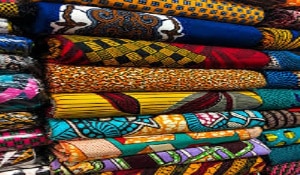
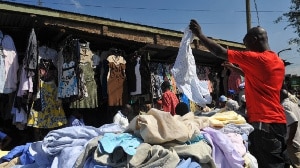
Are you a fabric lover looking for ways to save money on your purchases? Shopping for fabrics can be a daunting task but with the rise of online retailers, it’s now easier than ever to find the perfect fabric at the right price. Buying fabrics online can also be a great way to save money compared to shopping at the market. Here, we’ll tell you how you can save money by shopping for fabrics online.
One of the biggest benefits of shopping for fabrics online is the ability to easily compare prices from different retailers. This allows you to find the best deal without having to physically visit multiple stores.
Another factor to consider when shopping for fabrics online is shipping or delivery costs. While some retailers charge a premium for delivery or shipping, others may offer free or discounted shipping rates. Be sure to factor in the cost of delivery or shipping when comparing prices from different retailers.
Lastly, shopping for fabrics online eliminates the need for driving or taking public transportation to the store, saving you both time and money. This can be a huge benefit for those who live in areas that are not near the market or have limited transportation options.
In summary, the rise of online retailers has made it easier and more cost-effective to shop for fabrics. By taking advantage of these savings opportunities, you can save money on your fabric purchases when you shop online. Just be sure to read reviews and compare prices from different retailers to ensure you are getting the best deal.
“In a little under six weeks from today, Ghana will mark sixty-six (66) years of nationhood. Far from being an occasion to celebrate independence and the successes and achievements of nationhood, we will mark this day under the yoke of the worst economic situation in decades.
“We are currently bankrupt and burdened with national debt we are simply not able to pay. You may have learnt over the past few weeks that the Ghanaian government has defaulted on servicing of both external and domestic debt.
“There is currently a huge uproar over a controversial debt restructuring programme under which the middle class of Ghana could be wiped out if plans to have them forfeit proceeds of government bonds on which they rely for investment and sustenance are followed through.
“In absolute terms, up to about six (6) million people could be deprived of their life savings and investments. Ghana’s banking and financial sector could also be under threat of insolvency if no suitable adjustments are made to the debt restructuring plans.,” the former President said.
He also called for dialogue on the debt exchange programme stressing he was not against it.
“I am not opposed to debt restructuring. What has been the contention is the lack of dialogue and consultation with the debt holders on the domestic side. I know that negotiations are taking place with the bondholders on the external side but not the same treatment on the domestic side.
“I have been an advocate for dialogue. Before this whole crisis started, I advised the government and said they should hold a national dialogue on the economy, give us the state of the economy and let everybody understand and after that seek broad consensus behind the economic programme. But this was never done and what we expected will happen, happened.”
In order for the manufacturing sector to survive, he has thus urged the government and the Ghana Revenue Authority (GRA) to take into account revisiting the tax structure and abolishing some of the tariffs on the importation of raw materials.
Speaking at the Ghana News Agency Tema Industrial News Hub Boardroom Dialogue, Mr. Koomson said that the country’s industrial sector was being slowly crippled by the excessive taxes of raw material imports and that immediate action was needed.
Others are the Disinfection Fee, Ministry of Trade, and Industry (MOTI) E-One District One Factory Fee, Inspection Fee, African Union Levy, Special Import Levy, and EXIM Levy.
“How can you produce with such taxes around your neck and suffocating you, that is why all the companies are running down,” he lamented.
Mr Koomson reminded the Government that with such huge taxations, manufacturing industries could not produce at competitive prices and still breakeven leading to most of them shutting down their operations.
He indicated that the GFL was in talks with the Association of Ghana Industries (AGI) to jointly tackle the issue; adding that other stakeholders would also be contacted for their inputs on the overburdened taxes on raw materials.
He disclosed that the Ghana Federation of Labour had already written to the GRA for a meeting to discuss the issue among others adding that they were also considering petitioning Parliament on the taxes to ensure that the industries survived and provided the needed jobs for the large unemployed youth.
“If nothing is done about it, it will wreck the whole system down and unemployment will continue to increase,” he added.
The ratification of the protocol, together with the implementation of the policy on trade in goods and services, investment, intellectual property rights and competition, under the African Continental Free Trade Area (AfCFTA), they said would accelerate intra-trade and ensure the prosperity of the continent and its citizens.
Since the adoption of the protocol by 33 African countries in 2018, only four [Rwanda, Niger, Mali and Sao Tome and Principe] out of the 15 required to make the protocol come into force, have ratified.
The rest are Gabon, and Gambia, Guinea, Kenya, Lesotho, Liberia, Malawi, Mozambique, Senegal, Sierra Leone, Somalia, South Sudan, Sudan, Tanzania, Togo, Uganda and Zimbabwe.
The panelists said this ought to change to enable not only goods, but people move across borders to facilitate trade and the implementation of AfCFTA – the largest free-trade area by number of member states, after the World Trade Organisation.
Madam Joy Kategekwa, Senior Strategy Advisor, United Nations Development Programme (UNDP), said the movement of people across borders “is what would ultimately put money in the pocket of most Africans.”
She made a case for the acceleration of the ratification of the AU protocol on free movement of persons, noting that in 2017, about 19 million Africans left their respective countries to other African countries, but received about five million within the same period.
Mad Kategekwa said: “We’re talking about accelerating the implementation of AfCFTA and we can’t do that when people are not moving. So, free movement is definitely part of the architect of AfCFTA especially for those engaged in trade-in-services.
“So far, we have four ratifications and it has become important to increase the scale of ratifications, so, can we widen it to investors, traders and business persons in general,” The UNDP Senior Strategy Advisor said.
A Deputy Minister of Trade and Industry, Herbert Krapa, also underscored the essence of accelerating the ratification of the AU protocol on the free movement of persons for the success of AfCFTA and Africa’s prosperity.
He, therefore, urged the AfCFTA Secretariat to have an intentional agenda that allowed ministries of National Security and Ministries of Foreign Affairs, work together with various regional bodies to ramp up efforts to ratify the protocol.
Mr Krapa said: “Paying political attention to the ratification of the protocol is very important… and we need a leader who will champion the facilitation of this protocol,” to unleash the potential of the free trade agreement.
The President of the Ghana Union of Traders (GUTA), Dr Joseph Obeng, in an interview with the Ghana News Agency, called for the removal of all barriers to enable people to trade freely and easily across the continent.
Dr Obeng, however, urged that the removal of the barriers to trade under AfCFTA including the free movement of persons was done in accordance with the Rules of Origin – the criteria needed to determine the nationality of a product.
He said: “Free movement of persons is important, but let’s ensure that we don’t just open the borders for people to even trade in goods that are imported from elsewhere. It should be closely monitored and put under the context of AfCFTA.”
Mad Emily Mburu-Ndaria, the Director of Trade in Services, Investment, Intellectual Property, Rights and Digital Trade, AfCFTA Secretariat, said they were doing the necessary trade facilitation to the trade pact successful.
“To implement AfCFTA we’re looking at how to enhance even elite passport but our focus business people to be able to train and assist them move across the borders easily and without delays,” Madam Mburu-Ndaria.
The Comptroller General of the Ghana Immigration Service, Mr Kwame Asuah Takyi, noted that migration policies including the free movement of persons were to ensure development and the alleviation of poverty.
Nonetheless, he asked that while efforts were being made to ensure free movement of persons across the continent, security implications were made paramount due to some unrest in some countries.
This would enable them to participate in trade promotion events such as trade missions, trade shows, inward trade missions, and Business-to-Business (B2Bs) events.
He noted that regional trade flows needed to be improved, particularly through fostering greater participation of regional businesses across value chains.
Dr Yakusak who is also the Executive Director/Chief Executive Officer of the Nigerian National Export Promotion Council (NEPC) made the statement at a workshop organised in Abuja, Nigeria by the ECOWAS Commission, under the West Africa Competitiveness Programme (WACOMP).
The workshop, organised in collaboration with the International Trade Centre (ITC) and the European Union (EU) focused on business creation methodology and trade promotion from January 23 to 27, 2023 a statement available to the Ghana News Agency in Tema stated.
Mr Kolawole Sofola, the Acting Director of Trade ECOWAS Commission speaking on behalf of Mrs. Massandje Toure-Litse, the ECOWAS Commissioner responsible for Economic Affairs and Agriculture highlighted the importance of promoting trade using the right instruments.
Mr Sofola said: “By learning different ways of supporting export ready companies, Member States would be better positioned to serve the interest of the region and contribute to wealth creation,”
He expressed hope that the knowledge gained by the trade experts from the training will better equip them to organize trade fairs and events and promote made-in-West Africa branded products.
Mr Frank Okafor, a Representative of the EU reiterated the commitment of the Union to support TPO activities through WACOM, adding that the workshop provides an opportunity to find areas of collaboration and synergy among the Member States.
Mr Ben Mohamed Imamo, ITC’s Senior Programme Officer, welcomed the commitment and support of the ECOWAS Commission, the regional partner, and the EU which is the funding partner.
He stressed that the training would assist the participants to better understand innovative tools in the field of trade such as business matching tools.
John Mahama who is currently in London, was delivering a lecture on “Africa’s Strategic Priorities and Global Role” at Chatham House, London.
The former President, who traced historical antecedents, blamed challenges facing the continent on poor government, corruption, blatant abuse of power, impunity and lack of consultation.
Citing Ghana’s economic crisis, he said, a few years ago, the country, held high as the beacon of the sub-region, has been plunged into junk status with serious ramifications on education, health and employment.
John Mahama, who is tipped to lead the NDC for the 2024 elections noted with concern that, the special audit report on the COVID-19 expenses for example is a stinker.
He accused Nana Akufo Addo’s government of side-stepping monitoring mechanisms put in place to avoid scrutiny, and went on a borrowing spree in spite of warnings, resulting in today’s crisis.
The accord is a condition Ghana is required to meet in order to secure final approval for a $3 billion IMF bailout, one of the people said.
An IMF spokesperson didn’t immediately respond to an email seeking comment. Spokespeople for the Ghanaian finance ministry and the central bank didn’t immediately respond to requests for comment.
The decision would bring a halt to central bank loans to the government that amount to about 40 billion cedis ($3.2 billion), according to one of the people.
An agreement would also bar state-owned enterprises such as the Ghana Cocoa Board, which owes about 7 billion cedis, from using more central bank financing, according to the person.
The cocoa regulator — the sole buyer of cocoa from farmers in the world’s second-biggest producer of the chocolate ingredient — uses the funding to support growers.
Auction Undersubscribed
An auction of cocoa bills worth 940 million cedis was “severely” undersubscribed last week, the central bank said after it declined to buy the instruments issued by the board.
The central bank used to step in when there were under-subscriptions, Steve Opata, who heads financial markets at the central bank, told Accra-based broadcaster Joy FM earlier this week.
“The bank decided to do things differently, so this shortfall was not financed by the central bank,” he said without giving further detail.
Ghana is overhauling an estimated 467 billion cedis of its loans. It’s been locked out of international capital markets since borrowing costs surged last year on investor concern about the state of Ghana’s public finances.
The country secured a staff-level agreement for a $3 billion IMF bailout last year, but final approval by the IMF board requires the fulfillment of so-called “prior actions,” which haven’t been made public.
It is also negotiating a restructuring plan for its local and external debt in a bid to show that it can make its loans more sustainable, another requirement to tap IMF funding.
Ghana is targeting a reduction in its debt to 55% of gross domestic product by 2028, compared with an IMF estimate of 105% in 2022.
Market focus will be on the Federal Reserve’s preferred inflation measures, the overall and core PCE price indexes. A further slowdown in the year-over-year rates in these series would go a long way toward confirming widespread expectations for a smaller 25 basis point rate increase at next week’s Federal Open Market Committee meeting.
The final University of Michigan sentiment index for January will be released, as well as pending home sales data for December, followed by the Kansas City Fed’s monthly services survey for January.
EU money supply growth slowed in December, as did the pace of loan growth to businesses, data released earlier Friday showed. The European Central Bank’s monetary policy committee meets on Feb. 2, where it is expected to increase its key interest rate by another 50 basis points.
GBP-USD fell to 1.2366 from 1.2419 at the Thursday US close and 1.2394 at the same time Thursday morning. There are no UK data on Friday’s schedule. The Bank of England’s monetary policy committee meets on Feb. 2 as well and is also expected to increase its key interest rate by 50 basis points.
USD-JPY slipped to 129.9418 from 130.2256 at the Thursday US close but remained slightly ahead of the 129.8842 level at the same time Thursday morning.
The Tokyo consumer price index, a proxy for overall Japanese consumer price data, saw accelerated year-over-year growth in January, data released overnight showed. The next Bank of Japan meeting is scheduled for March 9-10.
USD-CAD fell to 1.3317 from 1.3322 at the Thursday US close and 1.3384 at the same time Thursday morning. Canadian budget balance data for November are scheduled to be released today. After Wednesday’s Bank of Canada decision to raise its key rate by 25 basis points and then pause, the next BoC meeting is scheduled for March 8.
She had just awoken from sleep when she became aware of an abnormally severe discomfort in her waist.
She didn’t know that the agony would eventually render her permanently immobile because she thought it was just something that will go away soon.
Although she frequently had an outgoing and upbeat attitude on life, Veronica’s infirmity altered the course of her life and forced her to keep to herself and stay inside.
Years on, Veronica has to come to terms with her new reality. Along the way, she returned to school at the St. Louis Senior High School at Kumasi in the Ashanti Region.
Her perseverance saw her become the protocol prefect of her school.
From secondary school, Veronica who is now 26-years-old went searching for a university that was disability-friendly. A friend then advised her to inquire about Ashesi University, one of Ghana’s prestigious private tertiary institutions.
Luck being on her side, she eventually gained admission into the university, where she now reads computer science, even as she aspires to become a cyber security analyst.
She expects this experience to lead her on a new learning curve.
As part of efforts to help Veronica navigate her way through campus, the university’s Financial Aid Office acquired a motorised wheelchair for her.
In her brief remarks about her journey, as captured on the school’s Facebook page, Veronica shared, “I am always looking to improve myself as a person. That way, people would be forced to look beyond my disability and see my capabilities.”
The girl, who recently graduated with high marks, was arrested for wearing a miniskirt that allegedly caused several male police officers to become distracted and nearly led to a traffic accident.
The aunt was arrested for not advising her niece to dress more modestly.
The case was set to go to trial on Wednesday, but a state prosecutor informed the court that the prosecution had received instructions from the Director of Public Prosecutions to discontinue the matter.
“There was no case to start with. Because there is no dress code in Zambia. We have freedom of expression, we are Constitutionally protected. Everybody can wear anything. Miniskirt is not indecent,” she said.
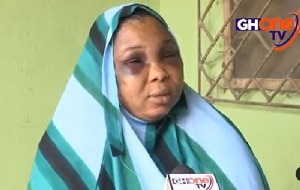
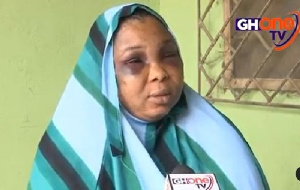
The woman, Habiba Halid, who is now seeking refuge in her family house at Ablekuma Oduman, explained in an interview with GhOne TV that her husband, Ibrahim Mohammed, alias Figo, beat her up because she was chatting with an online friend.
She explained that on the day she was assaulted (January 20, 2023), the man walked in on her having a chat on her phone with the said friend on Facebook.
Confronted, she told him that the person she was chatting with was only a friend she knows on the microblogging site and that he was not even in the country.
Habiba, a mother of 4, added that her husband then threatened her life.
“I’m feeling pains all over my body and my head. My teeth; I can’t chew food properly. I have never cheated on him since we got married; I have never. He was even asking, who is that friend and where did I meet him? I said I just met him on Facebook. And he asked me where is the friend living and I said the friend is not even in Ghana; he’s just a friend.
“And he confronted the guy and the guy told him that we are just friends. He used a knife to threaten me too, so, he said I should pack my things if I don’t want to be dead in his house,” she narrated.
According to Habiba, who currently has blood clots in both eyes and on her left shoulder following the severe punching her husband, Ibrahim Mohammed, gave her, the assault started long before their marriage 10 years ago.
She also accused him of insecurity and non-communication, adding that this compelled her to fall on friends on social media for companionship.
“Men used to approach me and so he got jealous and then he started doing those things. Even before this one happened, he used to beat me… when people wanted to help me, he scared them away,” she added.
On the part of her family, where she is currently seeking refuge at, they want the law to take its course.
They appealed that the police will come in and ensure that they get justice for their sister and relative.
“Right now, we are only pleading with the IGP; we want him to intervene for us because we don’t know what is going to happen,” one of her relatives told GhOne TV.
The matter has since been reported to the Amasaman branch of the Domestic Violence and Victim Support Unit (DOVVSU) of the Ghana Police Service for legal action.
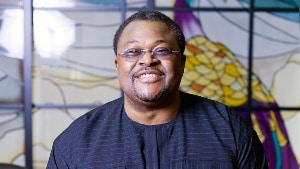
The Nigerian billionaire businessman, who ended the year 2022 with a total wealth loss of $1.1 billion as his net worth fell from $6.7 billion to $5.6 billion, is off to a strong start just 26 days into the new year, according to data tracked by Billionaires.Africa.
According to Forbes, Adenuga, Nigeria’s third-wealthiest man, has seen a significant $600 million increase in his net worth, rising from $5.6 billion at the start of the year to a present total of $6.2 billion. The significant growth has offset part of the $1.1 billion loss he experienced in 2022.
Adenuga owns 74.4 percent of Conoil Plc, a leading petroleum marketing company that manufactures and sells lubricants under the “Quarto” brand in addition to founding Globacom, one of Nigeria’s largest telecom service providers.
Conoil is a major supplier of fuels such as diesel, kerosene, low-pour fuel, aviation fuel, and gasoline. The petroleum marketing company’s retained earnings have increased to more than $45.7 million as a result of its strong performance in recent years.
In 2022, Adenuga received a substantial payout of $3.1 million in dividends from his significant stake in Conoil. With a net worth of $6.2 billion, Adenuga is ranked as one of the world’s most affluent billionaires, placing him at 409th on Forbes’ global wealth list.
Majority of drivers both commercial and private do not see any benefit from insurance companies in Ghana due to the perceived unwillingness and refusal of payments of claims.
The event, which brought together stakeholders from various sectors took place on Wednesday January 25, 2023 in Accra, to launch YAFO “Driver MO” report and to find ways of improving the insurance sector.
He said the drivers only showed interest in vehicle insurance because it was mandatory and enforced by the police.
He said drivers complained about delays in insurance claims and sometimes to the extent of not being paid by the insurance company.
He said 82 percent of Ghanaian drivers often did not have an interest in filing complaints due to bureaucratic delays in the process.
The research stated that insurance companies required some documents such as doctors’ report, car papers, police commentary reports, passports, ID card, and witnesses, among others, making drivers reluctant to collect insurance claims.
After critical evaluation of the research, it was noticed that insurance regulations are generally favourable to insurance companies, the National Insurance Commission and insurance companies needed to do more to provide better and innovative services in response to the needs of the average vehicle owner.
However, YOFA recommended that insurance companies should abolish the third party and categorize comprehensive insurance, digitise the issuance of insurance stickers and build trust between the insurers and vehicle insurance subscribers.
It noted that most vehicle insurance policyholders were not aware of the documents needed to access claims.
Insurance is unlikely to be a factor in good driving behaviour in a situation where insurance is purchased at a fixed rate for all drivers, as is the case in Ghana.
In contrast, in other countries, vehicle insurance is based on an individual profile rather than a fixed fee. A driver’s insurance premium is determined by the individual’s profile.
Moreover, concentrating more on individual drivers’ safety measures, and behavioural patterns as a consideration in determining insurance coverage might lead to drivers/vehicle owners placing a higher value on vehicle insurance.
However, Young Africans for Opportunities (YAFO) is an independent, non-profit, non-commercial organization with the core aim to educate, train, and inspire students, entrepreneurs and young professionals to create, innovate, and promote entrepreneurship through public policy advocacy for a free and prosperous Africa.
YAFO expressed hope that the transformative dialogue and recommendations will act as a catalyst for the much-needed reform in Ghana’s vehicle insurance market.
Mr Krapa made the call in Accra on Wednesday at the maiden annual assembly of the IPAs organised by the Ghana Investment Promotion Centre (GIPC) and the African Investment Promotion Agencies.
On the theme “The Role of the IPAS in facilitating intra-African Trade”, it was attended by investment promotion agencies from Angola, Ethiopia, Namibia, South Africa, Liberia, Zimbabwe, DR Congo and South Africa.
The rest are Nigeria, Gambia, United Arab Emirates, Gabon, Botswana, Somalia and Mauritius.
Other international organisations taking part in the programme are African Continental Free Trade Area Secretariat, African Development Bank, International Organisation for Migration and United Nations Industrial Development Organisation.
Opening the programme, Mr Krapa stressed the need for IPAs to work with government institutions in Africa to harmonise trade rules and regulations.
“We have to pay attention to how to standardise regulations and rules to attract trade and investments to the region,” he said.
The Chief Executive Officer of GIPC, Mr Yofi Grant, in his remarks, said the programme was to discuss measures to promote trade and investment in Africa. 1222 “Without investment, we cannot develop, build together, add value to numerous resources in Africa and trade among ourselves,” he said.
Mr Grant said though Africa was rich with resources and having about 50 per cent of the global gold reserves, it citizens were poor.
That, he said, was because Africa continued to export its natural resources in their raw form without turning them into finished products.
“African countries must position themselves to take advantage of AfCFTA with a market of 1.4 billion people and a combined Gross Domestic Product of $3.4 trillion,” Mr Grant said.
The Secretary-General of AfCFTA Secretariat, Wamkele Mene, in a speech read on his behalf, said the programme was in line with the agenda of AfCFTA Secretariat to promote trade and investment in Africa.
The Executive Director of the World Association of Investment Promotion Agencies, Mr Ismail Ersahin, stressed that foreign direct investment was a powerful tool to create jobs, transfer skills and to lead to prosperity.
When the Individual Bondholders Forum paid him a courtesy call on January 26, 2023, to mobilize opposition to the government including individual bondholders in the debt exchange program, Togbe Afede made the recommendation.
The Forum, led by Mr. Senyo Hosi, has tabled some proposals before the government through which the country could save GHS83.5 billion.
“What expenditures can we cut out? Maybe, new and not-very-essential capital projects. What can we suspend? Ongoing, maybe unnecessary capital projects”, the traditional leader noted, as well as turning attention to the “size of government, payments to individuals, ex gratia, all kinds of allowances, monies that we spend on travels, et cetera”.
“There is so much room, I believe, for cutting expenditure,” he stressed, adding: “And that is where, I think, we should be looking at first of all.”
“If one goes by the estimates that have been put out there with regard to how much the nation loses to corruption annually, it suggests that there is room for trimming down government expenditure,” Togbe Afede stressed.
Mr. Hosi, during the call, told the chief: “Togbe, the matter is an eye-red matter, and, for someone who has led the capital market and being one of the players who birthed the capital market—besides your royal place as the Agbogbomefia of the Asogli State—you are a pioneer in this industry.”
“I do not want to believe this is your voice and the destination you assured us when your voice was heard back then,” Mr. Hosi noted.
“So, we are here to petition your office, to petition you, as an individual, and the state of Asogli, not to sit by and watch the lives of 6.5 million people devastated and subjected to shackles of poverty.”
“So, our plea here is very simple: the steps being taken by the government are unsustainable and very unnecessary.”
The Forum’s proposed money-saving measures include enforcing property taxation and VAT invigilation; recovering funds lost to financial irregularities as identified by the Auditor-General, divesting loss-making, defunct, and troubled 17 state-owned enterprises, privatising selected SOEs to Tier-2 pension funds to drive efficiency and productivity, and reviewing the Free SHS Programme to make it more efficient through effective targeting and allowing parents who can pay to do so, among others.
“The measures proposed above, per the estimation of the IBF, yield net savings of GHC83.5bn”, the IBF said in its report, adding: “The above recommendations are competent enough to urgently address the fiscal challenges and enable us to reach the desired 55% debt-to-GDP target proposed to the IMF.”
The Energy Commission Chief said the programme was initiated in 2020 and is a long-term framework with an estimated 200 metric tonnes of carbon dioxide target throughout the 50-year period.
“Looking at the amount of money needed, the carbon market implementation will help to alleviate some of the financial burdens to accelerate getting to the goal. This is the same in most African countries,” he said.
He however explained that fossil fuels, especially natural gas, will continue to be part of Ghana’s energy mix in the short-term, adding: “Energy transition could come with challenges, including lower demand in the downstream petroleum sector.
“It is important for the African continent to focus on innovation and diversification to thrive and mitigate the impact of transition,” he added.
Dr. Muntaqa Umar-Sadiq, Head-Nigeria Energy Transition Office, explained that his country is pitching for an initial US$10billion from international funders to kick-start an energy transition plan.
According to him, Nigeria aims to put itself on a path to achieve net zero emissions by 2060 with an array of strategies including reliance on gas as transitional fuel.
Dr. Mutanga said a price-tag of US$410billion has been estimated for key strategies to enable Nigeria – a far bigger economy than Ghana – reach net zero by 2060.
Net zero refers to the balance between amount of greenhouse gas produced and that removed from the atmosphere. Net zero is reached when the amount of carbon added is no more than the amount taken away.
Background
At the 27th Conference of Parties (COP27), which was held in November 2022 in Egypt, several commitments were made to accelerate corporate and country actions for climate change. The PwC webinar, therefore, brought stakeholders from Nigeria and Ghana to engage around the key takeaways from COP27.
These included implications of COP27’s commitments and expectations from the public and private sectors in achieving the climate change agenda, especially over the next 12 months.
Other key speakers at the webinar included Dr. Daniel Tutu Benefoh, Ag. Director-Climate Change Unit, Environmental Protection Agency, Ghana; Dr. Ndidi Nnoli-Edozien, Member-International Sustainability Standards Board (ISSB); Dr. Salisu Mohammed Dahiru, Director-General/Chief Executive Officer, Nigeria’s National Council on Climate Change (NCCC); and Muhammad Wakil, CFA, Country Representative-Global Energy Alliance for People and Planet (GEAPP), Nigeria.
Finance Minister, Ken Ofori-Atta in 2020 said government would not hesitate to embark on another clean-up exercise if the banking sector faces any new challenges.
According to him, when a country’s financial sector is weak, it will have dire consequences on the economy and its people.
The Bank of Ghana swept through the financial sector of the economy between 2017 and 2019 after some banks and financial institutions could not meet their minimum capital requirement.
Read the full story originally published on October 27, 2020 by 3news
Finance Minister, Ken Ofori-Atta has said the government will not hesitate to step in to tackle any challenge that may rear its head in the banking sector that can lead to an economic downturn again.
He told TV3’s Etornam Sey in an exclusive interview on Monday, October 26, 2020, that the financial sector is the heartbeat of every economy globally.
A weak financial sector, he said, will have dire consequences for the economy and its people, a situation that demands that central authorities step in swiftly to address.
Therefore, he said, the Government of Ghana will act quickly to address any challenges that may emerge in the sector again after the recent clean-up exercise.
The Bank Ghana with support from the Finance Ministry swept through the financial sector of the economy between the period 2017 and 2019.
The central bank first started by revising the minimum paid-up capital for existing banks and new entrants from GH¢120 million to GH¢400 million.
According to the regulator, this was to test the viability of the banks.
The banks that were unable to meet this new requirement were either merged or collapsed.
Following this action, some nine local banks, 23 savings & loans companies, 347 microfinance institutions, 39 finance houses and 53 fund management companies closed down during the exercise.
In total, the government spent GH¢23billion to undertake this exercise
UniBank, The Sovereign Bank, The Beige Bank, Premium Bank, The Royal Bank, Heritage Bank, Construction Bank, UT Bank, Capital Bank all collapsed.
Mr Ofori-Atta said “Once you have the problem, you have to solve it because the financial architecture is the (basis) for any development.
“So whether we like or not we had to do that. Now that we have done that we move ahead.”
Asked whether if the situation presents itself the government will do it again in the same manner, he answered “You meet problems as a government that is what they elected you for and so you solve it.
“And then you begin by commissioning this to give people the sense of hope for the future to say this thing can be done, and they have faith in you so lets us go with them.
“If the engine is not functioning you can’t build on top of that so you had to solve the problem.
“Is there a way you improve on what you are doing? Of course yes there is always a way to do that but fundamentally was the approach necessary, no question about that.”
On September 26, 2019, Dr. Bawumia made these remarks while seeing the Nsawam Prisons facility where the Brompton Portfolio makes toilet paper.
Read the entire article as it appeared in its original form on September 27, 2019 on Laudbusiness.
According to Vice President Dr. Mahamudu Bawmuia, Ghana can today brag of having fourteen (14) indigenous toilet roll manufacturing businesses operating there.
He said these when he toured the Brompton Portfolio’s toilet paper manufacturing factory located at the Nsawam Prisons in the Eastern Region on Thursday, 26th September 2019.
Addressing the media, Vice President Bawumia indicated that the One District One Factory (1D1F) initiative was launched as one of the pillars for President Nana Akufo-Addo’s industrialisation agenda.
“We know that in this country we have a huge dependence on imports and so the import bill tends to be very high and we rather export a lot of our primary commodities. The vision of the President is for us to move away from the export of the primary commodities to the manufacturing of these commodities, and this is the background for the One District One Factory initiative. And once we do that we are able to save on scarce foreign exchange, we are able to grow local industries and we’re able to create jobs. These really are three critical advantages of one District one factory,” he said.
He added: “One of the achievements in this particular one District one factory initiative is in the area of the manufacture of toilet rolls in Ghana.
“When we came into office there were nine companies existing which dealt with toilet roll manufacturing. Since then in the last two-and-a-half years we’ve added five additional factories. So Ghana’s capacity to produce toilet rolls has increased generally by about 50% which is very significant.
“Given the success of One District One Factory, Government as we stated in our manifesto, is going to use the power of its procurement to support local industries, and it is for this reason you would have heard yesterday that I announced that Cocoa Board and for that matter the Ministry for Agriculture will have to now purchase locally manufactured fertilizer because we have the factories now under 1D1F to produce that fertilizer.
“We don’t have to import it anymore, so the Ministry of Agriculture and Cocoa Board will now have to use all the government procurement of fertilizer, source it locally.
“We are also saying if you look at the 14 manufacturers of toilet roll that we have in Ghana, 1D1F has brought five, we had an existing 9 already, and the capacity of that 14 is able to meet most of our demand for toilet rolls in Ghana, so why import?
“So we are saying from the next procurement cycle, all government institutions – whether it’s the military or the police or the hospitals or the schools, because the taxpayer funds all government institutions – if you’re going to buy toilet roll, all that toilet roll must be bought from local manufacturing companies. So we are using the taxpayer’s money to support our local industries. This will create jobs, will save foreign exchange, will grow the economy and this is the vision of One District One Factory.”
The Vice President continued, “This is the policy going forward. We are going to use our taxpayers’ money to support local manufacturing companies in the context of 1D1F. This is not a new policy, it is something that we had in our manifesto before we came into office but now we have built sufficient capacity in certain areas and therefore we can actualize that particular policy.
“The future is very bright by the grace of God. If we continue to pursue the policies and the vision of Nana Addo Dankwa Akufo-Addo, the One District One Factory will become a reality.”
According to forum, Ghana’s financial system and securities market will lose household confidence if it is included in the Domestic Debt Exchange Programme.
“So we are here to petition your office, to petition you as an individual and the state of Asogli not to sit by and watch the lives of 6.5 million people devastated and subjected to shackles of penury. So our plea here is very simple, the steps being taken by the government are unsustainable and very unnecessary.”
The tweet, which was made when he was still seeking to become president, was on the subject of corruption.
In addressing what is believed to have been the situation with respect to corruption at the time when the lateAkufo-Addo, was president, candidate Nana Akufo-Addo said that should he be president, he would institute stronger measures to curb the menace.
He also used an analogy where he said his measures would be more expensive for criminals than it would be for someone who steals, for instance, a goat.
“I will introduce stiffer punishments for corruption to make the theft of state funds more expensive for the criminal than stealing a goat,” his tweet from June 8, 2012, said.
Since his assumption of office as President of Ghana, Nana Addo Dankwa Akufo-Addo’s government has been labelled with a lot of major corruption claims and allegations, many of which have been unresolved.
In a number of such cases, the president has not, in the estimation of many Ghanaians, cracked the whip as is required.
One such instance is the recent allegations of corruption and conflict of interest leveled against Rev. Victor Kusi Boateng, Secretary of the Board of Trustees of the National Cathedral of Ghana.
The allegations, mostly being spearheaded by the Member of Parliament for North Tongu, Samuel Okudzeto Ablakwa, include such claims that he has multiple identities and that a company linked to him, JNS Talent, received an amount of $2.6 million from the government for no work done.
Rev. Kusi Boateng has since denied the claims.
President Akufo-Addo, on the other hand, has yet to issue any directives or statements on the raging issue.
See the 2012 below:
I will introduce stiffer punishments for corruption to make the theft of state funds more expensive for the criminal than stealing a goat.— Nana Akufo-Addo (@NAkufoAddo) June 8, 2012
He said University students should be able to lead development efforts of the country and the Continent and should consider that a means to justify the investments in higher education.
Togbe Afede was addressing the Seventh UHAS Congregation on Saturday as special guest of honour, where he called on graduands to resist the urge to abandon the motherland for perceived better opportunities abroad but take up the responsibility of nation building.
“There is the temptation to join the exodus to other countries for greener pastures. But you should consider that there are more opportunities in Ghana and Africa than elsewhere. Ghana presents a green field – an environment that gives us the opportunity to make an input and you can distinguish yourself.
“This you must not miss. You have a responsibility. The country has invested a lot in your group, and it is your responsibility to help develop your country.”
He said Africa’s graduates needed to therefore “think outside the box,” adding “the main essence of University education is to liberate the mind and create astute decision makers”.
Acknowledging the effects of the global situation on the Ghana and the Continent, the Agbogbomefia said “Change and uncertainty brings opportunity.
“With liberated minds we should be able to think creatively to change the situation. You should enter the world with courage. The nation is looking up to university students to come and contribute to solving challenges facing the country. With innovation you can work with minimal resources.
Togbe Afede spent close to an hour mentoring students, calling them to be ambitious, dream big, and aim high.
He called to eschew greed and corruption, and work hard with the aim of impacting the world positively.
The Agbogbomefia also advised the graduates to consider planning as an especially important component of human development and asked further to consider strong social values including empathy, respect for one another, and love.
The 1st session of the 7th Congregation of the University graduated 826, 799 of which were undergraduates.
The UHAS School of Pharmacy graduated its first batch of 30, and the School of Medical Imaging also passed out the first set of regular students.
Professor Lydia Aziato, Vice Chancellor (VC), said UHAS continued to show exceptional academic standing, and had registered 7903 students for 2022/23 academic year, and that 864 staff strength was inadequate.
She said infrastructural expansion within the University also remained minimal although a major need.
“The infrastructural needs of UHAS are crucial. Several of the schools are not available, and there are more than 3,000 qualified students for where we can only admit 150. Hostel accommodation only takes 2000, so we need support for hostels for our students. We have the land, but we do not have the money.”
Development of the over 700-acre land for the University’s main campus at Sokode Lokoe is within the second phase, completion of which is expected early next year to provide permanent structures for the School of Nursing and Midwifery and the central administration.
The University has no library and ICT complex, while a mega central laboratory complex is entering the tenth year of delayed construction amidst growing needs for advanced laboratory facilities for the prime health research institution.
The ceremony was attended by members of the university community and families of the graduates, and present were past leaders of the University, local and international partners, and members of the nation’s political leadership.
Togbe Afede said the Asogli State sought to “closely identify with programs of the University,” and there donated 50,000 to support the UHAS Endowment Fund.
That, he said, would be critical to transforming Africa from an import-driven continent to one with increased intra-trade for the prosperity of countries and citizens.
Vice President Bawumia said this at the opening of the maiden Africa Prosperity Summit (Kwahu summit) at Adukrom in the Eastern Region on Thursday.
The summit, which has attracted many high-profile business executives from across the continent, aims to achieve a deeper economic integration between African states to make the continent self-reliant.
These three priority areas include smart investment in critical infrastructure, unleashing the continent’s productive capacities to make Africa an industrial zone and the mobilization of finance and investment.
On investment, Dr Bawumia said there was a need for increased funds in the road, rail, energy, and digital infrastructure, as well as data centres to facilitate the digital transformation and financial infrastructure for the integration of markets.
“As a continent, we need to produce and trade our way out of poverty and underdevelopment, and we cannot do that without investing in smart infrastructure,” he said, noting that such a move would be critical to delivering the success of the African Continental Free Trade Area (AfCFTA).
The AfCFTA is expected to boost the continent’s income to some $450 billion by 2035 and lift about 30 million people from extreme poverty.
Dr Bawumia said the AfCFTA was a real game changer and “once fully realized, we can increase intra-Africa trade by some $35 billion and reduce external imports by some $10 billion annually.”
He urged governments and businesses on the continent to implement concrete strategic actions through the right mix of policies and greater sense of purpose for more robust intra-African trade to support economic diversification.
The Vice-President also called for the creation of platforms for knowledge brokerage and access to information on critical products and services.
This will allow some 445 million small businesses across the continent to plug into the value chains of mega industries to leapfrog Africa’s industrialisation and socio-economic development.
Dr Bawumia noted that Africa’s need for $270 billion annually to bridge its infrastructure gap to generate sustainable growth at five per cent per annum, presented opportunities for private sector investment.
“As key stakeholders, we must consolidate the successes so far with a sense of urgency, develop the signature solutions needed to deepen intra-Africa trade and spur impactful investments needed and we must do this with fearless determination,” he said.
Mr Wamkele Mane, the Secretary General of AfCFTA, said Africa must accelerate trade in agriculture by reducing and eliminating both tariff and non-tariff barriers that restrict the movement of agricultural products.
He said the Secretariat had established the necessary legal instruments required for traders, exporters, and economic operators to take advantage of the AfCFTA.
Dr Eugene Owusu, the Executive Director of the Africa Prosperity Network, organisers of the event, called for a collective framework to spur impact investment for Africa’s growth.
The Lands Ministry of the government has been defending the Adenta Amrahia Dairy Farmlands from encroachers.
The Ministry is making progress by working with different families to make sure that the lands are transferred to the pre-acquisition owners in a peaceful and legal manner.
Despite these efforts, some unscrupulous individuals have been erecting unauthorised structures on the land with impunity.
In view of that, Owusu-Bio tasked the Divisional Police Command to ensure that there was no further encroachment on the lands until it was handed over to the rightful owners.
“Get bulldozers and demolish all these walls as soon as possible,” the Deputy Lands Minister told the Divisional Police Commander.
Owusu-Bio gave the directives when he paid a working visit to the Amrahia Dairy Farmlands in the Adenta-Nkwantanang Municipality on Wednesday, to inspect the progress of work in demarcating the Lands and hand them over to the rightful owners.
He urged the Police to protect the surveyors who would demarcate portions of the lands and ensure that no intruder or land guards distract their work.
Owusu-Bio also instructed the surveyors to commence work as soon as practicable and mount up boundary pillars to properly demarcate the lands, urging them to involve the various families to ensure peaceful work and transparency.
“Make sure that all pillars mounted are coloured to bring clarity of ownership and boundaries, so that “Family A” does not end up working into “Family B” lands,” the Deputy Minister said.
The Adenta Divisional Police Commander, Mr Abraham Acquaye, on his part, assured the Deputy Minister that the Police would commence work, and re-assemble the Chiefs to inform them once again about the final leg of creating land boundaries.
Maxwell Adu-Nsarfoa, Technical Director at the Lands Ministry, took the Police Commander through the map, showing him the areas that would be demarcated and boundaries to serve as a guideline for their work.
“The surveyor will provide the route for the boundaries and provide bulldozers to open up the boundaries after which the pillars will be mounted to give way for smooth operations,” he stated.
The Technical Director stated that the government had not officially handed over any portion of the lands to any family and, therefore, after the demarcation exercise, anyone who tried to claim ownership of the lands would be treated as an intruder and dealt with accordingly.
As compared to yesterday’s trading of a buying price of 10.3998 and a selling price of 10.4102. At a forex bureau in Accra, the dollar is being bought at a rate of 12.30 and sold at a rate of 12.90.
Against the Pound Sterling, the Cedi is trading at a buying price of 12.8645 and a selling price of 12.8785 as compared to yesterday’s trading of a buying price of 12.8042 and a selling price of 12.8181.
The Euro is trading at a buying price of 11.3464 and a selling price of 11.3567 as compared to yesterday’s trading of a buying price of 11.3102 and a selling price of 11.3204.
At a forex bureau in Accra, Euro is being bought at a rate of 12.55 and sold at a rate of 13.55.
The South African Rand is trading at a buying price of 0.6062 and a selling price of 0.6068 as compared to yesterday’s trading of a buying price of 0.6037 and a selling price of 0.6041.
At a forex bureau in Accra, South African Rand is being bought at a rate of 0.50 and sold at a rate of 1.10.
The Nigerian Naira is trading at a buying price of 44.2595 and a selling price of 44.3354 as compared to yesterday’s trading at a buying price of 44.2979 and a selling price of 44.3479.
At a forex bureau in Accra, Nigerian Naira is being bought at a rate of 14.50 Naira for every 1 Cedi and sold at a rate of 19.50.
Our forex bureau rates are provided by Afriswap Bureau De Change in Osu, Accra.
All the over 7,000 lockable shops in the market are connected by one meter.
The traders since the commissioning of the market for business have demanded that separate meters be provided for each store.
Some of the traders have shut down their stores as more of them are contemplating closing down due to what they describe as exorbitant electricity bills.
He said he had met with the market queens and their followers, the various trader’s associations, and also the Kumasi Mayor and his team as well as the Board of the market on the meter issue.
The Minister said he will be meeting with the Electricity Company of Ghana (ECG), the Ministry of Energy as well as other stakeholders to deliberate on the procurement of the meters.
Mr Botwe expressed confidence that the concerns of the traders regarding the individual meters will be resolved very soon as he works with the ECG to procure the meters.
Instead, he said the bank has promised to pay the money in 106 weeks by crediting his account GH¢1,000 every week.
Leading a prayer for Ghana’s ailing economy on Wednesday, January 25, 2023 at the Perez Dome, Archbishop Agyinasare said: “In Genesis chapter 47: 15, it says: ‘And, when money failed in the land of Egypt and in the land of Canaan, all the Egyptians came to Joseph’”.
“We are in a time like that time when our money is failing, if it has not already failed, because our banks cannot even pay people’s bonds – bonds which were risk-free”, he lamented.
He continued: “I’m going to give you my personal testimony: I have an instrument with a certain financial institution, with a bank, and I’ve done it [for so long] and it’s about GH¢106,000; and I said: ‘I’m taking my money’. They said to me, they are going to pay GH¢1,000 every week. That means that the GH¢106,000 will take me 106 weeks [to get]”.
“And when I said they should do something about it, they said: ‘It is because it is even you, Archbishop because some people come to our bank and they weep’”, the clergyman narrated.
Archbishop Agyinasare noted that with the “[debt] restructuring we are doing; some people’s monies will take 30 years to be paid. And, so, I’m not talking politics, I’m talking reality”.
He stressed: “When money failed in Egypt, they came to Joseph. Joseph represents Jesus, so, you and I are going to the Lord in prayer because with what is happening, very soon people are going to lose their jobs because companies who have monies [with financial institutions] and they can’t take the monies and they can’t pay their staff will have to let them go, if the Lord doesn’t intervene and, so, don’t think politics this time, think Ghana and think what I’m talking about.”
The debt restructuring programme was launched by Finance Minister, Ken Ofori-Atta late last year.
Different groups within the financial sector have rejected the programme and called for various amendments and/or exemptions.
A few days ago, the government said it has, together with the Ghana Association of Banks (GAB), made “significant progress” on the terms of the participation of banks in the domestic debt exchange programme (DDEP).
This agreement, according to a statement issued on Monday, 23 January 2023 and jointly signed by the two parties, “encompasses final improvements to the terms of the DDEP”.
It includes “an agreement to pay a 5% coupon for 2023 and a single coupon rate for each of the 12 new bonds resulting in an effective coupon rate of 9%, clarity on the operational framework and terms of access to the Ghana Financial Stability Fund (GFSF) and the removal or amendment of all clauses in the Exchange Memorandum that empowers the Republic to, at its sole discretion, vary the terms of the Exchange”.
The Ghana Association of Banks “recognises the progress made and notes that participation of its member banks in the DDEP, per the new terms, is subject to each individual bank’s internal governance and approval processes but, in any case, not later than January 30, 2023”.
“This is a significant milestone toward addressing our economic challenges, and will thus help to restore macro-economic stability and accelerate Ghana’s economic growth,” the statement noted.
“With this achievement, the government of Ghana reiterates its commitment to concluding the DDEP in time with all other stakeholders”.
She said, “building for renting has become a booming business, especially in our major cities Accra and Kumasi.”
Read the full story originally published on November 26, 2021 by ClassFM.
The rent paid to landlords in Ghana must be taxed, civil society group Danquah Institute has proposed.
The Executive Director of DI, Dr Antoinette Tsiboe-Darko, told journalists at a press conference that the government must put in place to make sure landlords and landladies who rent out rooms and houses “pay tax on the rent received”.
She said “building for renting has become a booming business, especially in our major cities Accra and Kumasi” and “millions of Ghana cedis continue to exchange hands” in that sector.
“Unfortunately, owners of the houses go to tenants to collect rent directly without paying anything to the government”, she bemoaned.
“In other words, owners of rooms or houses will have to register with these agencies while those who need rooms will then go there to make payments for their choice. We are hopeful that through this initiative, rent payment could be taxed”, she added.
According to the association, the Energy Commission, at one time, admitted that some new items imported into the country are substandard and, thus, wants to regulate these items through the Ghana Standard Authority (GSA), which has also admitted that 80 to 90 per cent of second-hand items meet standards in a meeting with the Ghana Union of Traders Association (GUTA).
At the said meeting, GSA raised concerns about how to regulate the items that are imported into the country and not a total ban on such items, the association explained.
“So why is the commission not regulating second-hand items but bent on banning them from entering the country”? the association queried.
Mr Daniel Asare, Chairperson of CSHDA made this call at a press conference held in Accra to address some of the claims by the Energy Commission on the activities of second-hand dealers.
“We want the whole country to understand that items brought into this country for sale go through rigorous checks before being exported from Europe.”
He said the association is well informed that the sale of second-hand items cut across the world even in some of the advanced countries.
“So why are these countries also not banning the sale of such items,” he asked adding that “Europe is on record to have imported the largest number of second- hands items in the year 2022.”
He appealed to the government to come to the aid of dealers considering the huge number of people who are engaged in this as well as their direct beneficiaries
He claimed that this is a component of efforts to lower the nation’s greenhouse gas emissions.
When he stood before the Appointments Committee of Parliament on February 23, 2021, Kwaku Ofori Asiamah made this clear.
Read the entire article as it appeared in its original form on February 26, 2021 on dailymailgh.
The Minister-designate for the Ministry of Transport, Kwaku Ofori Asiamah, has revealed that Ghana is aiming at introducing electric buses into its public transport system as part of measures to reduce its greenhouse gas emissions.
Ghana, he said, is being futuristic in this endeavour and with the assistance of technology, will achieve its aim.
Appearing before the Appointments Committee of Parliament on Tuesday, February 23, 2021, for public hearing on issues relating to the portfolio he has been designated to by the President of the land, Asiamah said the initiative has long been on the drawing board of the country, revealing that it was started by the previous National Democratic Congress-led government.
Seeing how beneficial it would be for the West African nation, he said government has had some discussions with the Green Climate Fund (GCF) with the Ministry of Finance also having some discussions with the country’s development partners to solicit their support in the development and implementation of a legal framework for the electric buses.
“Mr. Chairman, it will interest you to know that Europe has come out with a directive on this issue that by 2030 they will get away with all these diesel and petrol cars off their streets. The Americans are also saying same by 2045. The British people are saying that they are gearing towards zero emissions. So, we don’t need to stay and fold our arms. We’ve gone far with it and we’ve gone to Green Climate Fund – we’ve had some discussions with them, the Ministry of Finance has also had some discussions with our development partners to implement the legal framework for these electric buses and also to go the way of electric buses”, he noted.
The Green Climate Fund (GCF) was adopted by 194 governments as a financial mechanism of the United Nations Framework Convention on Climate Change at the end of 2011. Its goal is to limit or reduce greenhouse gas emissions in developing countries and help adapt vulnerable societies to the already-felt impacts of climate change. It aims to make an ambitious contribution to attaining the mitigation and adaptation goals of the international community with the goal of keeping the temperature increase of the planet below 2 degrees Celsius.
The Fund gives recipient countries access to funding through accredited national and sub-national implementing entities, including NGOs, government ministries, national development banks, and other domestic or regional organizations that can meet the Fund’s standards.
According to Ghana’s Fourth National Greenhouse Gas Inventory Report, the country’s total greenhouse gas emissions, including Forestry and Other Land Use, was estimated to be 42.2 million tonnes (Mt) CO2-equivalent (CO2e). This was 7.1% more than the 2012 total emissions and notably 66.4% above 1990 levels.
Mobile combustion emissions summed up to 7.2 MtCO2e in 2016. It was singularly responsible for 48% of the total energy emissions and 17% of the overall national emissions. The 2016 transportation emissions increased by 7% relative to the levels reported in 2012.
According to the report, within the transportation category, road transport was the largest emission source due to growing vehicle ownership and the associated traffic congestion in the cities.
With the statistics showing a worrying trend in the transport sector, Hon. Asiamah said the best option to address the situation was to unleash electric buses into the country’s public transport system.
“Mr. Chairman, we’ve gone far with our development partners and I am hoping that once done with the legal framework, we will go to the implementation framework by bringing or unleashing the electric buses into our system. We need to make sure that we go with technology other than that we will be left behind and we will not have anybody to come to our aid”, he said.
He explained the move by Ghana forms part of measures as a signatory to the Paris Agreement, to ensure that better climates standards are met.
The comments of the Transport Minister-designate were in response to a question posed by the Member of Parliament (MP) for Bawku Central who sought to find out from him what he will be doing to assist the Ministry of Environment to check environmental pollution resulting from public transport.
The new Minority Leader in Parliament Dr. Cassiel Ato Forson has issued a stern warning to President Nana Addo Dankwa Akufo-Addo over his large government size.
Dr. Forson said the National Democratic Congress’ MPs won’t allow President Akufo-Addo to further increase his government size which they believe is already bloated.
He gave the warning in his first public address on Thursday after his appointment as Minority Leader.
“I wish to, first of all, send a message to the New Patriotic Party (NPP), that the people of Ghana are calling on them to downsize their government to reflect the mood of the country before you ask people to forego their coupons or interests, asking the ordinary Ghanaian to sacrifice his payout.
“If the President [Nana Ado Dankwa Akufo-Addo] intends to reshuffle his government, let it be known that we in the NDC will not accept an attempt to increase the size of government. And if the current size of his ministers is increased by one person, that person will not receive our cooperation”.
There have been several calls for the government to cut down on its appointees in the wake of the current economic crisis.
Dr. Forson further warned that any additions of appointees by the government will face stiff opposition from the National Democratic Congress.
He opined that any intended government reshuffle should reflect the economic situation of the country.
He advised the rank and file of the party to keep calm.
“We want the rank and file of the party to keep calm, Members of Parliament are in good terms,” he said.
The Ajumako-Enya-Essiam MP further assured to represent the collective interest of the party.
“As a leader, it will be my duty to represent our collective goals with unwavering dedication and high integrity,” he added.
The NDC earlier this week reshuffled its leadership in Parliament replacing Minority Leader Haruna Iddrisu with Dr. Cassiel Ato Forson.
Emmanuel Armah-Kofi Buah, MP for Ellembelle also replaced Ketu North MP, James Klutse Avedzi as the Deputy Minority Leader while Kwame Governs Agbodza replaced Asawase MP, Muntaka Mubarak as the Minority Chief Whip.
Several NDC MPs including MP for Bolgatanga East, Dominic Ayine and Tamale Central MP, Murtala Muhammed later described the leadership changes as undemocratic and deeply worrying, after they claimed they were not consulted prior to the change.
Some 44 MPs signed a petition to reject the decision of the party. The 44 members believe the decision by the party is unfair and unpopular.
However, some 77 MPs have also reportedly signed a different petition to endorse the decision of the party.
The new Minority Leader of Parliament, Dr. Cassiel Ato Forson, has outlined three specific areas that he hopes to focus on in the immediate terms.
Addressing a brief press conference in parliament on Thursday, January 26, 2023, the Member of Parliament for Ajumako Enyan Esiam stated that among the things he intends to do as leader, is to unite the caucus.
He then outlined his three roadmaps, starting with a stern warning to the New Patriotic Party (NPP), as well as the President of Ghana, Nana Addo Dankwa Akufo-Addo.
“I will focus the next month to tackle three things. First, I wish to, first of all, send a message to the NPP that the people of Ghana are calling on them to downsize their government to reflect the mood of the country. You are asking people to forgo their coupons or interests, you are asking the ordinary Ghanaian to sacrifice their payout, and so therefore if His Excellency the president intends to reshuffle his government, let it be known that we in the NDC will not accept an attempt to increase the size of government,” he said.
Cassiel Ato Forson also sent a caution to the president to ensure that he does not increase his government size, adding that should that happen, such new additions will be resisted by the Minority.
“And if the current size of his ministers increases by one, that one person may not receive our cooperation. And in the end, we also wish to assure the people of Ghana that, as part of our engagement with the Finance Committee and the Health Committee, we have agreed to do public hearing on the audit of the COVID-19 expenditure beginning on the 7th of February, 2023. At that point, we will pay due diligence to the duties given to us by the people,” he added.
The Minority Leader concluded by indicating that they will embark on a roadshow across the country to educate Ghanaians on the impact of the current economic challenges.
“And then finally, we will also embark on a roadshow where we will galvanize the people of Ghana and educate them on what this economic crisis is going to take us through,” he said.
Cassiel Ato Forson takes over from Haruna Iddrisu as the Minority Leader, while Kwame Governs Agbodza is the new Minority Chief Whip.
Emmanuel Armah Kofi Buah will be the new Deputy Minority Leader, while the two deputy Minority Chief Whips, Ahmed Ibrahim and Comfort Doyoe Cudjoe-Ghansah, have been retained.
He went on to say that the industry was vulnerable to numerous types of corruption, which might have a negative impact on trade and investment.
Dr Buwumia who made the call last Thursday in a speech read on his behalf at the opening of the Global Best in Vessel Clearance Workshop in Accra said the lack of transparency in Import and Export Licensing as well as with other regulatory requirements which make movement of goods time consuming, burdensome and expensive contributed to corruption in our Ports.
The Ghana Revenue Authority for instance estimates that Ghana loses more than $8.3 million monthly in revenue through corrupt practices at our Ports.
This figure amounts to almost $50 million every six months and a $100 million annually.
“These loses are due in part to the deception by some Importers who deliberately wrongly declare contents of imported containers with some Port Officials aiding in this deception,” he said.
That in turn, he said had negative effects on social, economic and sustainable development as well as a country’s risk and integrity rating, potentially impacting on foreign direct investment.
Hence, it was vital for all Stakeholders in the Ship/shore interface to embrace and implement anti-corruption practices and procedures.
Nature of shipping industry The Deputy Director-General of Finance & Administration at the Ghana Maritime Authority (GMA), Yaw Akosa Antwi, said corruption in the maritime industry will persist due to the nature of the shipping industry.
“This fragmented and impervious nature of the shipping industry makes fighting corruption difficult as it portends a multidimensional challenge that requires an all-inclusive solution.
It is therefore essential for the public and private sector as well as other actors to collaborate and align standards thereby mitigating the corruption risk,” he said.
For his part, the Associate Director for Global Operations & Industry Engagement at the Maritime Anti-Corruption Network, Vivek Menon, said despite last year’s drop in piracy incidents, approaching West-African ports were still considered a high-risk and a global concern for the shipping industry.He said the African Continental Free Trade Area (AfCFTA) agreement had opportunities for Africa to boost intra-African Trade and integrate into the global economy.
However, for AfCFTA to be successful, it was crucial that the continent had an efficient and reliable transport system in place.
“This is where the new port of Tema can be part of inspiration to extend the necessary infrastructure, services and capacities to support the “Let us work together to harness the potential of the blue economy for Africa, ensuring that any obstacles to realising its potential will be eliminated,” Mr Menon said.
Note: The numbers in the graphs may not add up to 100 per cent because figures have been rounded up/down. The survey also highlighted significant regional divergence in growth expectations within a general pattern of weakened expectations relative to the last survey.
The situation in Europe and the US is now stark, with 100 per cent of chief economists expecting weak or very weak growth this year in the former and 91 per cent expecting weak or very weak growth in the latter. This marks a significant deterioration in recent months: at the time of the last survey, the corresponding figures were 86 per cent for Europe and 64 per cent for the US.
In the US, the pace and extent of monetary tightening will exert a significant drag on economic activity this year.
The survey results for the 2023 outlook in China are polarized, with almost half of respondents now expecting weak or very weak growth in China, with the other half expecting moderate or even strong growth.
Recent moves to unwind the country’s highly restrictive zero-COVID policy are expected to deliver a boost to growth. However, it remains to be seen how disruptive the policy shift will be, particularly in terms of the health impacts of COVID-19’s expected rapid spread through the population. A number of additional factors are likely to weigh on China’s growth in 2023, such as weak consumer confidence, missing the 5 per cent growth target for 2022 and continued strain in financial markets and the real-estate sector.
In MENA, two-thirds of respondents(70 per cent) expect moderate or strong growth in 2023. While this overall proportion has slightly dipped since the September edition, expectations of strong growth have increased from 12 per cent to 15 per cent. Energy exporters in the region continue to benefit from tight commodity markets, but oil prices have fallen by almost 25 per cent since June 2022 and these countries will be vulnerable to the impacts of any slowdown in global growth in 2023.
In the East Asia and Pacific region, 37 per cent of chief economists expect weak growth in 2023, and 63 per cent expect moderate or strong growth, similar to September.
However, that broad pattern masks a shift in expectations from strong to moderate growth since the last survey.
During that period, the region has seen negative terms-of-trade developments, as well as policy tightening moves that placed increased pressure on households and businesses.
Challenging global financial conditions are also weighing on the economic outlook for Latin America and the Caribbean, and for Sub-Saharan Africa. For both regions, 68 per cent of respondents expect weak growth in 2023.
This is a slight improvement for Sub-Saharan African but points to a worsening of conditions for Latin America and the Caribbean.
Inflation moderates, but slowly Inflation over the last year was stubbornly high and broad-based, but a number of modestly encouraging data releases in the final quarter of 2022 provide some room for optimism over the medium-term inflation outlook in 2023.
A range of factors have contributed to a slight easing of the rate of inflation, including rapid and synchronized monetary tightening, stabilization of supply conditions and commodity prices, and an easing of demand pressures.
The latest IMF forecast is that global inflation will dip to 6.5 per cent this year from 8.8 per cent in 2022.
Outlook
For Europe, this is likely to reflect the deepening impact of the ongoing war in Ukraine as well as the effects of sharp Increases in interest rates. The combination of high energy prices, elevated borrowing costs and sluggish demand has even led to instances of industrial capacity being left idle. With about half of the EU steel plants at a standstill as of November 2022 and fertilizer production capacity reduced by70 per cent, the European industrial sector is facing a challenging year ahead.
Some economies in the region, including Bangladesh and India, may benefit from global trends such as a diversification of manufacturing supply chains away from
Although no regions are slated for very high inflation, expectations of high inflation range from 57 per centof respondents for Europe to just 5 per centof respondents for China.
The direction of changes in responses since the last edition differs from region to region. For example, the proportion of respondents expecting high inflation in Europe has increased from 47 per cent to 57 per cent since September, while for the US, it has declined sharply from 43 per cent to 24 per cent.
The expectation is for moderate inflation throughout 2023 in several regions: SubSaharan Africa (61 per cent), East Asia and Pacific (58 per cent), MENA region (53 per cent) and South Asia (47 per cent).
By contrast, in Latin America and the Caribbean and Central Asia, relatively high shares of respondents expect high inflation (45 per cent and 42 per cent, respectively).
This is likely to reflect a combination of supply chain disruptions from the war in Ukraine as well as the continuing impact of spikes in food and fuel prices during 2022.
China is an outlier in the other direction, with almost half of respondents (48 per cent) expecting low inflation (up from 28 per cent in September). As noted above, however, the short-term outlook for the Chinese economy is clouded by uncertainty surrounding the speed of the country’s removal of pandemic restrictions.
If a full re-opening leads to a sharp recovery in economic activity, it would be likely to push Chinese prices significantly higher than previously seemed likely, as well as adding new impetus to global inflationary pressures.
Policy-makers face trade-offs
The global backdrop of weak growth and persistently high (albeit moderating) inflation presents policy-makers with challenges of historic proportions at the start of 2023.
Chief among these will be the need to bring inflation much closer to the 2 per cent target without choking off growth, but the challenges run deeper.
Accumulated societal strains from the last years as well as climate mitigation and adaptation present pressing investment needs in numerous countries.
In the immediate term, central banks are the key economic decision-makers. Following a year of sharp and coordinated tightening, the chief economists surveyed expect the monetary policy stance to remain constant in most of the world this year.
In Europe and the US, a majority of respondents (59 per cent and 55 per cent, respectively) expect further tightening in 2023. The Federal Reserve and the European Central Bank have both indicated that such additional tightening is on the way, but it is notable that the two banks’ most recent rate increases in December were smaller, at 50 basis points, than previous 75 basis point hikes in the current tightening cycle.
Nonetheless, a quarter of respondents expect looser monetary policy in the US and Europe by the end of 2023.
The report showed that equipped Isolation Centres that are not in use are valued at GH¢29,173,260, projects that were to be completed in 6 months and had not been completed after 30 months were valued at GH¢158,072,331 whiles projects that have been abandoned cost GH¢15,000,000.
“During our verification and inspection of projects in November 2022, we noted that three treatment, isolation, and holding centers completed at a total cost of GH¢29,173,259.90 was yet to be put to use,” parts of the report read.
The delayed projects were attributed to funding constraints and general economic challenges which contractors complain of having a negative effect on their operations.
However, a delay in the completion of the project could increase the contract price due to fluctuations which would adversely impact the achievement of project objectives.
The report also noted that the COVID-19 management team put in place measures in strengthening containment, isolation, and treatment including leasing, renting and refurbishing designated facilities and centres to contain and treat infected cases on time.
However, it was observed that Makro Structures Limited was awarded a contract on 11 May 2020 for the design, construction, and equipment of Nalerigu treatment and holding centre in North East Region, at a cost of GH¢15,000,000 out of which an advance mobilisation of GH¢4,500,000 constituting 30 percent of the contract had been paid from GoG sources. The construction was to be completed in October 2022.
“We noted that the contractor, upon commencing construction in October 2021 undertook civil works up to 10 percent and abandoned the site in December 2021, three months after possessing the site,” the report noted.
Mr Bernard Oduro Takyi gave this advice in an interview on the mid-day news on Accra 100.5 FM on Tuesday, January 24, 2023.
According to him, this is the best deal ever offered by the government since the announcement of the implementation of the Domestic Debt Exchange (DDE) programme.
This agreement, according to a statement jointly signed by the two parties, “encompasses final improvements to the terms of the DDEP.”
It includes “an agreement to pay a 5% coupon for 2023 and a single coupon rate for each of the 12 new bonds resulting in an effective coupon rate of 9%, clarity on the operational framework and terms of access to the Ghana Financial Stability Fund (GFSF) and the removal or amendment of all clauses in the Exchange Memorandum that empowers the Republic to, at its sole discretion, vary the terms of the Exchange.”
According to him, this deal with the Association of Banks is the best deal possible under the current economic situation.
This is better than the earlier zero coupons announced by the government, he stressed
He argued that a five percent coupon is the best deal for the bondholders and further commended the government for reviewing its stance on the payment of zero coupons.
He quickly warned the individual bondholders to take their principal and coupon, and henceforth shy away from all government bonds.
“Make no mistake by further rolling over the principal in government bonds because investment in bonds is not lucrative like it used to be. Bonds under this government are nothing to write home about for bondholders to roll over,” Mr Oduro Takyi cautioned.
He said it is only a “madman” who will reinvest in government bonds after this melee.