Tag: Bawku

  • Bawku crisis can only be resolved through dialogue, not aggression – Peace Council

    Bawku crisis can only be resolved through dialogue, not aggression – Peace Council

    The Upper East Regional Peace Council is urging residents and parties involved in the Bawku chieftaincy conflict to abandon violence and pursue peaceful methods to resolve their disputes.

    This call comes in response to recent escalations in violent clashes within Bawku and its surrounding areas, which have claimed over 20 lives and left many injured since last Thursday amid ongoing chieftaincy tensions.

    In a statement, Chairman Alhaji Sumaila Issaka emphasized that resorting to violence will only exacerbate the situation in the region.

    “The Upper Regional Peace Council has noted with profound sadness the recent happenings in Bawku,” the statement lamented.

    “This is so much so after many fruitful engagements by all stakeholders and a period of calm for the most part of the year, leading to the easing of the curfew and peaceful celebration of the Damba festival. However, since October 24, 2024, the situation in Bawku has deteriorated resulting in the loss of lives and creation of fear and insecurity in the area, even extending to the Bolgatanga-Tamale Highway.

    “While appreciating the efforts of all stakeholders, especially the security services and the people of Bawku, the Council wishes to call on parties in the conflict to heed the call of non-violence and protect the peace so that Bawku can return to stability.”

    The statement emphasized the need for security agencies to maintain a high standard of professionalism while actively ensuring the safety of all individuals in Bawku, along with travelers on the Bolgatanga-Tamale highway.

    It also appealed to the residents of Bawku to work in partnership with law enforcement to foster actions that would alleviate tension, enabling the community to engage in their daily lives with greater stability and predictability.

    According to reliable sources, the recent clashes in Bawku stem from the reported return of a newly enskinned chief, appointed by one of the factions involved in the ongoing chieftaincy conflict.

    A High Court had previously issued an arrest warrant for this new chief, deeming the enskinment illegal. However, the court recently withdrew the warrant, allowing the chief to return to the area, which ignited tensions and ultimately led to gunfire, resulting in multiple fatalities and injuries.

    The violence escalated following the alleged killing of an 11-year-old girl by one of the factions. Last Thursday alone, over 20 individuals were reported dead in Bawku, while an additional eight people were killed on the Bolgatanga-Tamale highway near Walewale in a related attack.

    In that incident, unidentified armed men blocked vehicles on the highway, opened fire on travelers, and caused numerous injuries alongside the fatalities.

  • Two ambushed and killed in Bawku

    Two ambushed and killed in Bawku

    In a tragic turn of events in the ongoing Bawku conflict, two individuals lost their lives after being ambushed while traveling in a truck from Bawku.

    Unidentified attackers opened fire on the vehicle, leading to their deaths.

    Among the victims was a Mamprusi, while the other was a Togolese national who had been in Bawku to care for his sick father.

    Unfortunately, the father passed away during their visit, and the two were en route to Togo with his body when they were ambushed.

    The Bawku conflict, rooted in chieftaincy disputes and ethnic tensions, has caused significant unrest in the region over recent years.

    The situation escalated further with the return of a rival chief, which has heightened tensions among various ethnic groups.

    Clashes have increased in frequency and severity, resulting in fatalities and widespread fear among residents.

    Despite the deployment of security forces to restore order, violence persists in the area.

    This latest incident raises the death toll to 19, underscoring the ongoing crisis.

  • Politicians’ silence on Bawku crisis over fear of losing votes – Security Analyst

    Politicians’ silence on Bawku crisis over fear of losing votes – Security Analyst

    The Executive Director of the Jatikay Centre for Human Security and Peace Building, Adib Saani Jatikay, has indicated that politicians are conscious of the realities surrounding the current conflicts in Bawku but are reluctant to take action due to fears of electoral consequences.

    He stressed that for politicians to effectively tackle the Bawku issue, they must be willing to face the repercussions, including possibly losing voter backing.

    “Which politician is willing to lose votes? Before a politician does anything, the first consideration is political expedience, asking questions like ‘what is going to happen to my vote”, he argued.

    Mr Jatikay pointed out that this concern for their political survival has caused numerous politicians to steer clear of addressing the Bawku conflict, as they worry that taking a position could alienate their electorate.

    He noted that politicians tend to be more prudent regarding their voter support, which is why many have chosen not to discuss the ongoing conflict in Bawku.

    He emphasized that their reluctance to comment stems from a fear of jeopardizing their electoral prospects.

    “.……But they know the truth, they cannot act because they are scared.”

    Adib Saani, however, asserted that if the military is granted complete authority in Bawku, peace could be reinstated within 48 hours.

    On Sunday, armed individuals established roadblocks in both Gbimsi and Walewale Town, halting vehicles to identify potential targets.

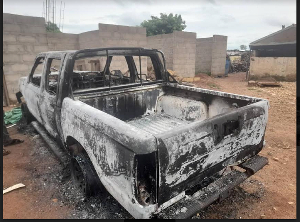
    Passengers caught in the blockade faced interrogation regarding their identities. Tragically, around eight people lost their lives in this deadly incident, and two vehicles were set ablaze, raising significant security concerns.

    This attack is believed to be connected to the ongoing Bawku Conflict, which has reignited after a period of relative calm.

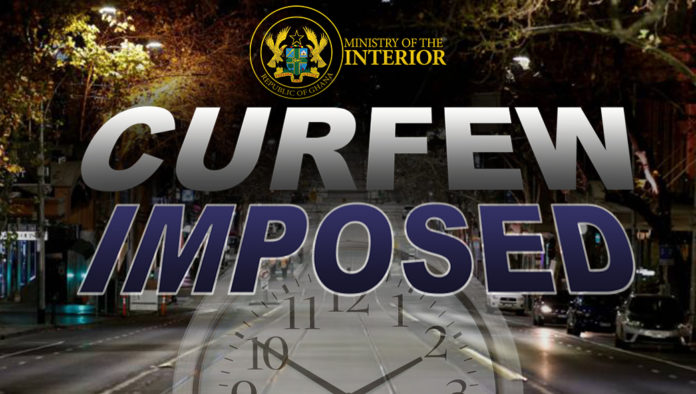
    In response to the violence, the Ministry of the Interior has enforced a dusk-to-dawn curfew in Bawku, following the renewed clashes in the town.

    This information was shared in a press release dated October 28 by Deputy Minister Naana Ayiah.

  • Colonial decisions, others to blame for  Bawku crisis – Cletus Avoka

    Colonial decisions, others to blame for Bawku crisis – Cletus Avoka

    The Member of Parliament for Zebilla, Cletus Avoka, has pointed to a mix of historical and socio-political factors from pre-colonial and colonial times as the basis for the enduring Bawku conflict.

    In a discussion on Good Morning Ghana on Metro TV on Wednesday, October 29, 2024, he expressed concern that many commentators lack a deep understanding of the issues at play.

    Avoka explained that the conflict traces back to the arrival of the Mamprusi people in Bawku during the Trans-Saharan trade era.

    Trade routes that facilitated the exchange of goods like gunpowder and kola nuts between Salaga, Nalerigu, and Bawku prompted the Nayiri, the chief of the Mamprusi, to establish a security presence in Bawku to safeguard traders against various threats, including attacks from the Kusasi inhabitants.

    To counter these threats, the Nayiri opted to settle Mamprusi individuals in Bawku, which marked the beginning of a complicated relationship between the Kusasi and Mamprusi communities.

    “The history is documented and it is that the Kusasis in Bawku used to waylay the traders coming from the north or south and seize their wares. The story is that because they used to come from Naveligu first, the Nayiri decided that he will put up a police post in Bawku to protect the traders when they were coming back from the north or south or going from the south to the north. So, he sent some few Mamprusis to Bawku to settle there and maintain the trade route.

    “So, the story is that the Kusasis were there and harassing the traders. That is why the Nayiri decided to do that. So, they came there, and they only co-existed. They were not part of the traders . And this is what happens when the Kusasis come to a place: we have the Kusasi Community Chief, we have the Frafra Community Chief, and the rest of them, and none of them can aspire to become the Ga-Mantse,” he explained.

    He continued that “No matter how strong they are, they can never become Ga-Mantse because they have come to settle here and do business. The Ashantis and the Akans are many in Accra, but none of them can become Ga-Mantse. That is the story of Bawku. And, when the Europeans came in 1900, they were going to rule the area through chiefs because they didn’t have administrative personnel. So, they settled first in Nalerigu-Gambaga with the Nayiri. That is where the White man settled first. From there, the Nayiri princes, interpreters, and facilitators escorted them south to Bawku. Naturally, when they got to Bawku, they weren’t excited with the persons who were there protecting the trade route.”

    He noted that during the colonial era, British authorities implemented a system of indirect rule, relying on established chiefs for governance.

    This approach created complications in Bawku, where the Kusasi operated under a decentralized clan system instead of a singular chiefdom.

    Cletus Avoka further elaborated that the British eventually acknowledged the Mamprusi as the Bawku Naaba, effectively appointing a Mamprusi chief as the administrative leader of the region.

    However, this arrangement led to heightened tensions, particularly following the death of the Mamprusi Bawku Naaba in 1956, which intensified Kusasi resistance.

    “The White man wanted to see one chief control the whole area. We don’t have one chief controlling the whole area. There are Tidanas and clan heads and the rest of them and so the White man decided if the Mamprusis know chieftaincy, they will make the Mamprusi settlers in Bawku the Bawku Naaba. That is all, So, since then, the Kusasis have been struggling and struggling and they caught up with the independence struggle, etc.

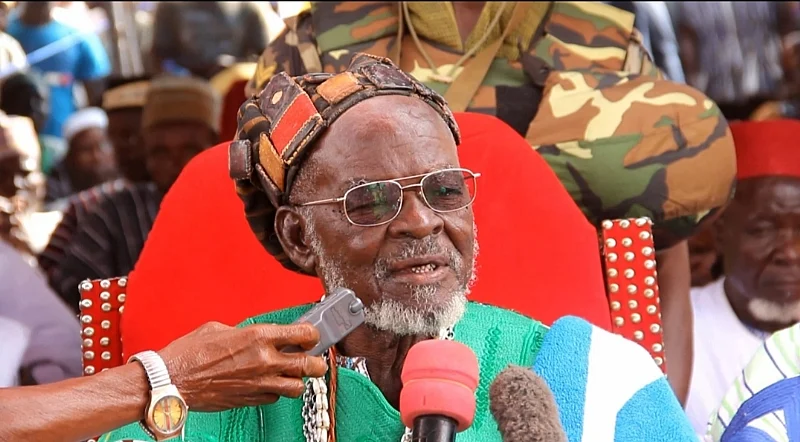
    “In 1956, the Mamprusi Bawku Naaba died and in 1957, the Mamprusis left Bawku to go to Nalerigu to go to the Nayiri for enskinment; they normally go to the Nayiri for enskinment to come back and rule the Kusasis in Bawku,” he stated.

    He explained that in 1957, during the independence movement’s push for self-governance, the Kusasi appointed their own Tidana, or clan chief, rejecting the authority of the Mamprusi.

    In response to this situation, the colonial government set up a Commission of Inquiry to investigate the claims surrounding the leadership dispute.

    “So, he set up a Commission of Enquiry to ascertain the claims between the Kusasis and the Mamprusis as to who are the land owners and who is supposed to be the traditional rulers of Bawku. The committee was chaired by a lawyer from the Volta Region. The two other members were Nana Agyeman Badu I and the late Dormaa Hene.

    “They went to Bawku, settled there, and investigated the case and presented the report to the colonial governor that in fact the Mamprusis came there as settlers and the Kusasis are doing everything and what not and what not, and that is why it is only a Mamprusi family and the Kusasi is a whole tribe and the rest of them, and therefore it is administratively, politically, and developmentally wrong for the Nayiri, who has a family in Bawku, to impose a Mamprusi chief on the Kusasis, which is untraditional and uncultural,” he said.

    He added that “The colonial government accepted and approved and issued a white paper recognising a Kusasi man as Bawku Naaba and the head chief of the Kusasi area.”

    He stressed that understanding this historical context is vital for addressing the ongoing conflict and upholding the rule of law, as it obstructs meaningful dialogue and sustainable solutions.

    “I am very saddened that many of the commentators on this issue do not actually know the facts or the background, and they proffer to give expert advice; others know, and they don’t want to say the truth. Some people don’t want to accept the truth. Some people don’t want to accept that we have the rule of law or due process,” he added.

    The recent resurgence of conflict in Bawku was triggered by the return of a rival chief, following the revocation of his arrest warrant by an appellate court.

    As reported by Stephen Asamoah Boateng, the Minister of Chieftaincy and Religious Affairs, the violence has claimed the lives of 16 individuals as of Tuesday, October 29, 2024.

    For many years, this commercial hub in the Upper East Region has experienced ethnic tensions rooted in longstanding chieftaincy disputes.
  • Our husbands, children and future are being killed every day – Women in Bawku cry out

    Our husbands, children and future are being killed every day – Women in Bawku cry out

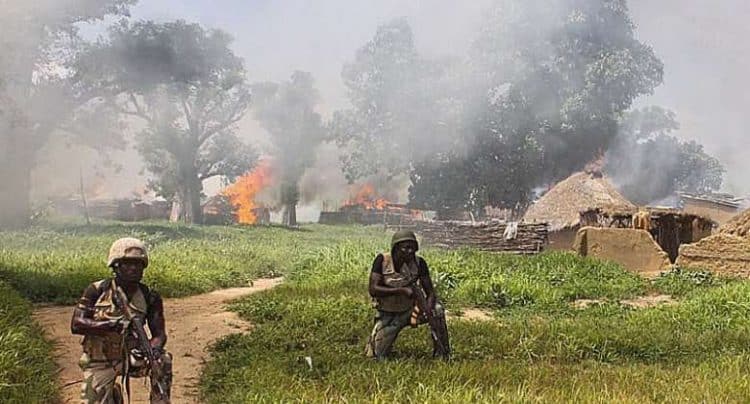
    Women in Bawku have voiced their anguish over the escalating violence and loss of lives in the Upper East Region’s protracted chieftaincy conflict, which has claimed over 20 lives in the past six days, according to residents.

    Aggrieved women took to the streets on Tuesday, burning tyres and demanding urgent intervention from stakeholders to end the bloodshed that has upended their lives.

    “We are suffering,” some women lamented. “Our husbands, children, and the future are being killed every day. We cannot go to our farms, our children cannot go to school, and pregnant women cannot access health facilities.”

    The violence, which reignited on Thursday night, October 24, reportedly began following the return of a newly enskinned chief, whose position remains contested by factions in the area.

    The recent surge in violence also involved the tragic killing of an 11-year-old girl and an ambush on the Bolgatanga-Tamale Highway by unidentified gunmen, who killed eight travellers and set vehicles ablaze.

    Following the unrest, the government has imposed a curfew and deployed additional security forces. Public facilities, including schools and healthcare centres, have shut down, halting essential services, while markets and shops remain deserted as residents flee the town.

    In a show of protest, youth in Bawku locked the Municipal Assembly offices on Monday, demanding government intervention within 24 hours.

    Despite intensified security efforts, officials, including Bawku’s Municipal Chief Executive Hamza Amadu, have yet to publicly address the situation. Reliable sources estimate that over 200 lives have been lost since the conflict resurfaced in 2021, with residents fearing that the violence will continue unless meaningful action is taken.

  • 7 courts shut down by Chief Justice due to Bawku murders

    7 courts shut down by Chief Justice due to Bawku murders

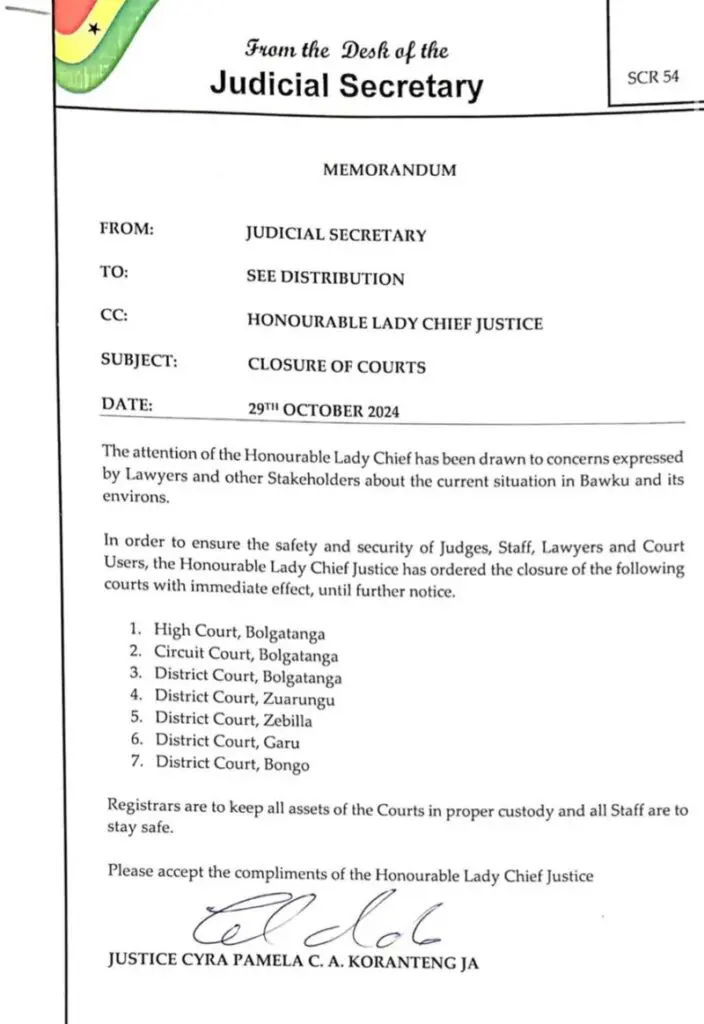
    Chief Justice Gertrude Sackey Torkornoo has directed the closure of seven courts in Bawku and its neighbouring areas amid recent unrest in the region.

    The directive affects the High Court and Circuit Court in Bolgatanga, as well as District Courts in Bolgatanga, Zuarungu, Zebilla, Garu, and Bongo.

    This measure comes as tensions rise due to the presence of Seidu Abagre, who was installed as Bawku Naba in February 2023, though his title lacks official legal recognition. His installation has sparked heightened hostilities among rival groups, leading to multiple clashes and resulting in the loss of 16 lives.

    A statement from the Judicial Secretary on October 29 emphasizes that the closures are intended to protect the well-being of judges, staff, lawyers, and court users. Court registrars have been instructed to secure court assets, while staff are urged to take necessary precautions for their safety until operations can resume.

    Bawku is currently under heavy security due to increased tensions as many residents do not feel safe and are staying indoors, according to reports by local media.

    This latest resurgence of conflict follows the return of Alhaji Seidu, an exiled rival chief, whose presence in Bawku has revived tensions. The violence has already claimed eight lives and has added to the hundreds of casualties and extensive property destruction witnessed over the years.

    In a bid to prevent further escalation, authorities have imposed a curfew on the area, underscoring the urgent need for a peaceful settlement. 

  • Bawku crisis must not be politicised – Chieftaincy Minister

    Bawku crisis must not be politicised – Chieftaincy Minister

    Minister for Chieftaincy and Religious Affairs, Stephen Asamoah Boateng, has urged calm and unity among residents of Bawku, calling on all parties to avoid politicising the escalating crisis in the area.

    Speaking to the media on Tuesday, October 29, Asamoah Boateng highlighted the government’s commitment to restoring peace in Bawku, which has been fraught with violence stemming from unresolved chieftaincy and ethnic tensions. His appeal comes amid growing security concerns following a tragic attack on Sunday, October 27, when gunmen targeted travellers along the Bolgatanga-Tamale highway near Gbimsi, a community close to Walewale.

    During the assault, eight travellers were killed, and two vehicles were set ablaze, heightening public fears and intensifying the need for peace and government intervention.

    Asamoah Boateng assured residents that his ministry, alongside other agencies, is working impartially to address security and chieftaincy matters. He stressed that political rhetoric and conspiracy theories only hinder efforts for lasting peace.

    “I implore all sides to avoid blame games and keep calm, allowing the government to handle the security and chieftaincy issues. No one should politicise this sensitive matter, and I will continue to engage my colleagues across the political arena to work together towards a resolution,” he said.

    The Minister also called on traditional leaders to act responsibly to prevent further escalation, urging them to focus on promoting peace.

  • Bawku crisis is a sensitive matter, let’s stop politicising  – Chieftaincy Minister

    Bawku crisis is a sensitive matter, let’s stop politicising – Chieftaincy Minister

    The Minister for Chieftaincy and Religious Affairs, Stephen Asamoah Boateng, has called on the residents of Bawku to focus on fostering calm and unity, urging them not to politicize the growing conflict in the region.

    His appeal came during a media briefing on October 29, where he highlighted the government’s dedication to restoring peace amid ongoing unrest stemming from unresolved chieftaincy and ethnic disputes.
    The minister’s call for unity follows a distressing incident on October 27, in which gunmen attacked travelers on the Bolgatanga-Tamale highway near Gbimsi, resulting in the tragic deaths of eight individuals.

    Eyewitnesses reported that the assailants questioned their victims before opening fire and also set two vehicles ablaze, heightening fears within the community and prompting urgent calls for government action.

    Asamoah Boateng reassured the public of the government’s commitment to working impartially with all involved parties.

    He stated,“I will implore all sides to stop the conspiracy theories going around and the blame games and keep calm and allow the government to deal with the security and chieftaincy issues therefore. No one should play politics with this sensitive matter and I will continue to engage my colleagues in the political arena from all sides to work with the government to resolve the current problems and work towards lasting peace in the area.”

    Additionally, he called upon traditional leaders to avoid any actions that could escalate tensions, emphasizing “I strongly call on the traditional leaders from both sides to refrain from any act that will escalate the situation.”

  • Govt imposes curfew in Bawku after renewed dispute

    Govt imposes curfew in Bawku after renewed dispute

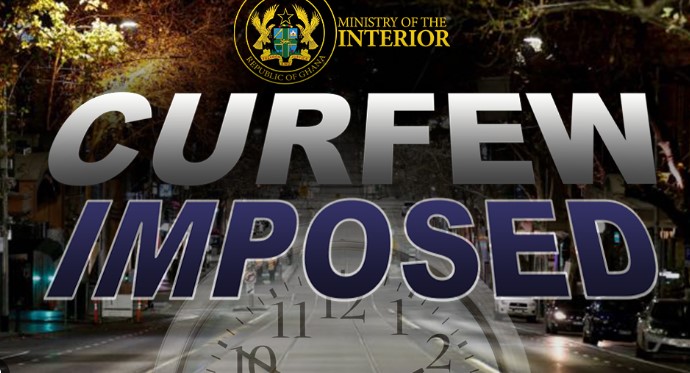
    The Ministry of the Interior has implemented a nightly curfew in Bawku, Upper East Region, effective from October 28, 2024, due to a surge in deadly violence.

    The curfew, lasting from 6:00 PM to 6:00 AM, follows an emergency session of the National Security Council chaired by President Nana Addo Dankwa Akufo-Addo to address the renewed tensions stemming from a long-standing chieftaincy dispute.

    This recent wave of unrest was sparked by the return of rival chief Alhaji Seidu Abagre from exile, whose presence has heightened the conflict, resulting in the tragic loss of at least eight lives and injuries in attacks, including an ambush on travelers.

    In a statement, the Ministry of the Interior noted that Abagre’s presence posed a critical risk to peace, leading to the decision for a strict curfew.

    Residents are urged to observe the curfew and cooperate with security personnel tasked with maintaining order.

    Law enforcement has been mobilized to ensure full compliance, and the ministry has issued a warning that violators of the curfew will face legal action. These security measures aim to bring calm to Bawku and avert any further escalation of violence.

  • Ghana Card has become a tool for tribal discrimination in Bawku – PC for Zebilla

    Ghana Card has become a tool for tribal discrimination in Bawku – PC for Zebilla

    The parliamentary candidate for Zebilla representing the New Patriotic Party (NPP), John Krugu, has expressed serious concerns regarding the alleged misuse of the Ghana Card to identify individuals’ tribal affiliations amid the escalating conflict in Bawku.

    In an appearance on the Citi Breakfast Show on October 28, Mr. Krugu stated that the Ghana Card is reportedly being misused to target individuals based on their tribal backgrounds, a situation he argues has resulted in tragic consequences.

    He highlighted the overwhelming number of casualties at the Presbyterian Hospital in Bawku due to the ongoing violence, noting that attempts to transfer critically injured patients to Bolgatanga have been thwarted by blocked roads caused by the unrest.

    Moreover, Mr. Krugu revealed that the conflict has also claimed the lives of individuals not directly involved in the main dispute, particularly from the Kusasi and Mamprusi groups, indicating that the violence has far-reaching effects beyond the primary factions.

    His comments underscore the growing complexity and expansion of the conflict, which has intensified recently, raising significant security concerns throughout the region.

    In response to the situation, there has been an increase in police and military presence in Bawku and its neighboring areas, aimed at preventing further escalation and restoring order.

    “I am aware that people have not slept in the last two nights. It has been a full-fledged war ongoing and now you have a situation where two factional chiefs are living next to each other. Bawku is not a big town and each side is aiming at getting to the other person so you have an illegitimate chief who is sitting there and then you have the existing chief who is celebrating 40 years on the throne and then you have young men who are losing their lives.

    “Last night, we got the message that there was no space to keep the injured at the Presbyterian Hospital, roads were blocked and you cannot carry the injured to Bolgatanga for treatment. The roads between Bolga and Tamale were blocked and people were being asked for their Ghana Cards to identify their tribal affiliation and to kill them.

    “I am aware that some people who do not belong to the two tribes were mistakenly killed and this is a sad situation that we are having.”

    Eight travelers tragically lost their lives when gunmen ambushed the Bolgatanga-Tamale highway near Gbimsi, a community close to Walewale, on Sunday, October 27.

    During the blockade, passengers were subjected to identity interrogations by the assailants. In this violent incident, around eight individuals were killed, and two vehicles were set on fire, raising serious security concerns in the region.

  • We have lost at least 15 people due to killings in Bawku –   Bawku Naaba’s lawyer

    We have lost at least 15 people due to killings in Bawku – Bawku Naaba’s lawyer

    Agbambilla Ziyerley Maxwell, the lawyer representing the Bawku Naaba, has revealed that recent violence in Bawku has resulted in the deaths of at least 15 people. This was highlighted during his interview with Benjamin Akakpo on Joy News’ AM Show on Monday, October 28, 2024.

    A fresh wave of attacks took place on Sunday, October 27, 2024, when assailants set up roadblocks in Gbimsi and Walewale Town, targeting individuals as they stopped vehicles. This led to the deaths of at least 8 people in the incident.

    “For my information, we have currently lost a minimum of 15 people in Bawku and some are being slaughtered in Walewale,” Agbambilla said, emphasizing the gravity of the situation.

    He criticized the Attorney-General‘s handling of the situation, particularly following the return of Alhaji Seidu Abagre to Bawku. Alhaji Seidu, who had been in exile since his controversial installation as a rival chief in February 2023, returned to Bawku after a Kumasi High Court nullified his arrest warrant on October 17, 2024.

    “We were told that the Attorney-General didn’t even put in a response so the Court had no choice but to revoke his (Alhaji Seidu Abagre’s) arrest warrant,” Agbambilla explained. He stressed that the Attorney-General should have acted quickly by issuing a new arrest warrant.

    “The Attorney-General simply could have issued another arrest warrant but they didn’t do that,” he said, attributing Alhaji Seidu’s return to what he sees as inaction on the part of the Attorney-General.

    Agbambilla also noted that the Bawku Naaba is dissatisfied with the return of Alhaji Seidu Abagre, expressing concerns over the ongoing tension in the area.

  • We are working to bring the security situation in Bawku under control – Police

    We are working to bring the security situation in Bawku under control – Police

    The Ghana Police Service and the Ghana Armed Forces (GAF) have assured the public that efforts are underway to stabilize the security situation in Bawku and its surrounding areas, as well as along the Bolgatanga – Walewale – Tamale highway.

    In addition to Police and Military deployments in Bawku, a joint force is actively patrolling the Bolgatanga-Walewale-Tamale highway to ensure security and manage traffic.

    This comes after eight travellers were killed by armed gunmen who attacked the Bolgatanga-Tamale highway near Gbimsi, a community close to Walewale. The attackers, who set up roadblocks in Gbimsi and Walewale, targeted vehicles, questioning passengers to identify specific individuals. Two vehicles were set ablaze during the incident.

    A survivor described the harrowing experience: “I was traveling from Sunyani to Paga. Upon reaching Walewale, people had mounted roadblocks and were searching for individuals to kill. The incident lasted for more than an hour, yet security did not respond.”

    The attack is believed to be connected to the ongoing conflict in Bawku, which has recently flared up after a period of calm, raising concerns about the region’s safety. The security agencies have reiterated their commitment to maintaining peace, security, law, and order in the affected areas.

  • “Let us make peace a priority” – Naana Jane tells Bawku residents

    “Let us make peace a priority” – Naana Jane tells Bawku residents

    Prof. Jane Naana Opoku-Agyemang, the Vice Presidential Candidate of the National Democratic Congress (NDC), has urged the people of Bawku to prioritize peace as a crucial pathway to sustainable development.

    This message was a focal point during her visit to the palace of the Bawku Naaba on Friday, as part of her two-day campaign tour in the Upper East Region.

    Speaking to the gathering, Prof. Opoku-Agyemang highlighted the significance of peaceful coexistence in establishing a strong foundation for development in Bawku and its neighboring areas. She encouraged the community to focus on unity and work together towards progress, emphasizing that lasting peace would enhance all aspects of local life and governance.

    “Let us make peace a priority,” she urged, calling on residents to commit to harmony for the region’s growth.

    Her message resonated with many, as she underscored the connection between peace and sustainable community development, hoping to inspire a collective vision for a more unified Bawku.

    In response, David Adoliba, Secretary to the Bawku Naaba, expressed gratitude for her visit and for the NDC’s commitment to promoting peace in the region. He praised Prof. Opoku-Agyemang’s emphasis on unity, acknowledging the positive impact of her appeal.

  • Interior Minister extends curfew in Bawku

    Interior Minister extends curfew in Bawku

    Minister for the Interior, Henry Quartey, has extended the curfew in Bawku Municipality and its surrounding areas in the Upper East Region through an Executive Instrument.

    Effective from Tuesday, October 22, 2024, the curfew will now run from 10:00 p.m. to 4:00 a.m.

    In an official statement, the Minister called on chiefs, elders, opinion leaders, youth, and residents to remain calm and resilient amid their current challenges.

    He urged them to adopt peaceful, non-violent means to maintain harmony.

    Additionally, the ban on the possession of firearms, ammunition, or any offensive weapons within these areas remains firmly in place.

    “Any person found with any arms or ammunition will be arrested and prosecuted,” the statement said.

  • Our officers didn’t facilitate smuggled consignments at Bawku – Police

    Our officers didn’t facilitate smuggled consignments at Bawku – Police

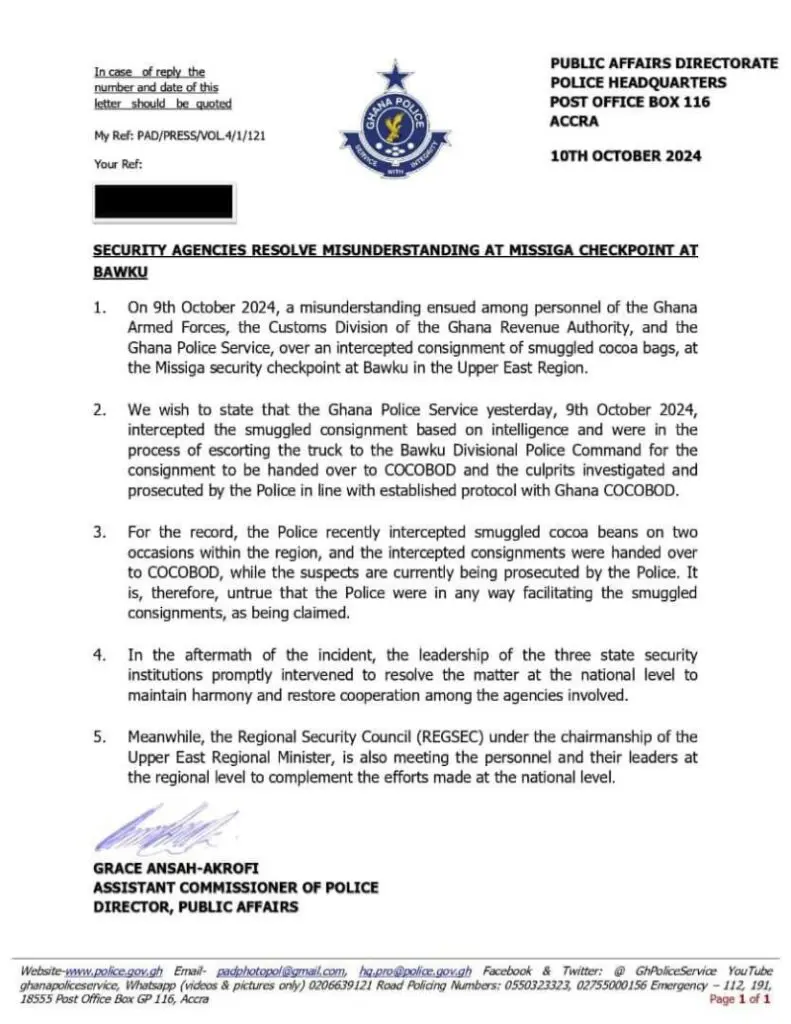
    The Ghana Police Service has firmly denied any allegations suggesting they were facilitating the smuggling of the consignment that led to a clash with the Customs Division of the Ghana Revenue Authority (GRA).

    A misunderstanding involving personnel from the Ghana Armed Forces, the Customs Division of the Ghana Revenue Authority, and the Ghana Police Service erupted on October 9, 2024, over an intercepted shipment of smuggled cocoa bags at the Missiga security checkpoint in Bawku, Upper East Region.

    The Ghana Police Service stated that they intercepted the smuggled cocoa consignment based on intelligence reports and were escorting the truck to the Bawku Divisional Police Command.

    Sources earlier indicated that tensions escalated when Customs insisted on investigating the truck, leading to a heated standoff with the Police. This confrontation quickly turned violent, resulting in an exchange of gunfire between the two security agencies. Military officers were then called in to help de-escalate the situation.

    But the Police have clarified that “it is untrue that the Police were in any way facilitating the smuggled consignments, as being claimed.”

    The Police emphasized that it had intercepted smuggled cocoa beans on two occasions within the region, and the intercepted consignments were handed over to COCOBOD, while the suspects are currently being prosecuted by its outfit.

    In response to the incident, the leadership of the three security agencies intervened promptly at the national level to resolve the conflict and restore cooperation among them.

    The Regional Security Council (REGSEC), chaired by the Upper East Regional Minister, is also holding meetings with personnel and their leaders to further support the efforts made at the national level.

  • Customs officials and police engage in shootout at Bawku over cocoa beans smuggling

    Customs officials and police engage in shootout at Bawku over cocoa beans smuggling

    Customs officials and police officers were involved in a shootout at the Missiga Immigration Service checkpoint in Bawku on Wednesday, October 9, 2024, following a confrontation over a suspected cocoa smuggling operation.

    The clash erupted when police officers refused to allow Customs officials to inspect a Togo-bound truck, believed to be carrying smuggled cocoa beans.

    Sources indicate that tensions escalated after Customs insisted on investigating the truck, leading to a heated standoff with the police.

    The confrontation quickly turned violent, resulting in an exchange of gunfire between the two security agencies. Military officers were called in to help de-escalate the situation.

    A video of the incident shows the tense verbal argument that preceded the gunfire, with shots ringing through the checkpoint, sending bystanders and officials scrambling for safety. For several minutes, the checkpoint descended into chaos as both sides exchanged fire in a shocking display of interagency conflict.

    The shootout has raised concerns about the coordination between government agencies responsible for securing Ghana’s borders, particularly given the long-standing issue of cocoa smuggling. Traffickers often attempt to avoid taxes and duties by illegally transporting cocoa beans across borders into neighboring countries like Togo and Ivory Coast.

  • There is no militia training happening at Bawku – Police

    There is no militia training happening at Bawku – Police

    The Ghana Police Service has entreated the public to disregard reports suggesting that some militiamen are being trained at Bawku in the Upper East Region.

    In a post on its Facebook platform, the Service noted that its outfit carried out an investigation after receiving reports of such alleged actions.

    Following its probe, the Police indicated that “our investigation has found no evidence of such training in the area or its environs.”

    The Police are presently on a manhunt for the individual(s) responsible for the misinformation that caused a section of the general public unrest.

    “The Police are working to bring the perpetrators to book and the public should be assured that we will get them,” its statement noted.

    According to the Service, this is the second of such false publications within a week by some unpatriotic individuals intended to create unnecessary alarm and panic among the public.

    Earlier this month, a joint inter-security agencies patrol initiative was launched in Bawku to help restore lasting peace and security in the area.

    This followed clashes involving personnel of the various security services in Bawku, Paga and Kulungugu and some residents.

  • Claims of militia training in Bawku false – Police

    Claims of militia training in Bawku false – Police

    The Ghana Police Service has stated that there is no evidence supporting recent claims of militia training in Bawku, Upper East Region.

    In a statement, the Police emphasized their commitment to maintaining peace and security in the region while denouncing the spread of false information.

    They also assured the public that they are actively working to identify and prosecute those responsible for these baseless allegations.

    “The Ghana Police Service has noted with concern a publication alleging the training of some militiamen at Bawku in the Upper East Region. We wish to state that our investigation has found no evidence of such training in the area or its environs.”

    “This is the second of such false publications within a week by some unpatriotic individuals intended to create unnecessary alarm and panic among the public. The Police are working to bring the perpetrators to book and the public should be assured that we will get them.”

  • Military, police unite to fight Bawku crimes

    Military, police unite to fight Bawku crimes

    A new joint Military and Police Patrol team has been initiated to address the increasing crime rates in Bawku and its surrounding areas.

    The official ceremony took place on August 1, 2024, at the forecourt of the Bawku Divisional Police Headquarters.

    Colonel Appah Yaw Owusu, the Joint Task Force Commander for Bawku, emphasized the need for unity among security forces to effectively tackle the emerging crimes in the region.

    He urged the military and police to work cohesively to restore and maintain peace.

    Assistant Commissioner of Police (ACP) Raymond Adofiem, representing the Upper East Regional Security Council (REGSEC), echoed this sentiment. He highlighted the importance of a united front among the security services to consolidate the progress made in improving security in Bawku and its environs.

    The ceremony concluded with a symbolic joint patrol through the main streets of Bawku, involving the military, police, and other security agencies. The event was attended by heads and representatives of all security services.

    The ongoing conflict in Bawku, driven by ethnic and chieftaincy disputes, has resulted in numerous casualties and significant instability.

    Various stakeholders, including government bodies, traditional leaders, and civil society organizations, have been engaged in efforts to resolve the crisis, though the situation remains fragile.

    In a related development, Mahama Ayariga, Member of Parliament for Bawku Central, has accused National Security Minister Albert Kan Dapaah of receiving GH¢18 million quarterly to manage the ongoing conflict in Bawku. The National Security Minister has yet to respond to these allegations.

  • Mahama supports Bawku Naba’s request for a new region from Upper East region

    Mahama supports Bawku Naba’s request for a new region from Upper East region

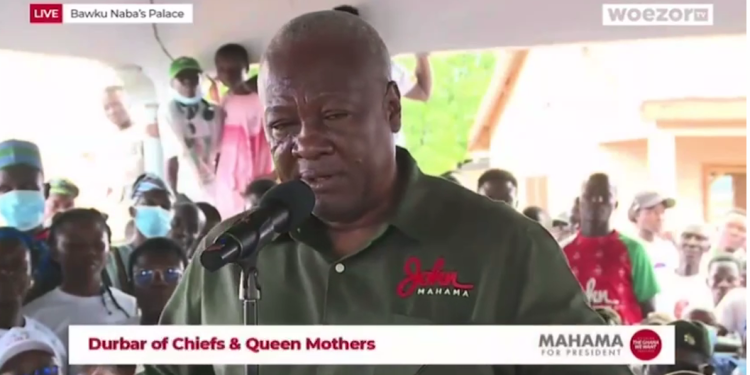
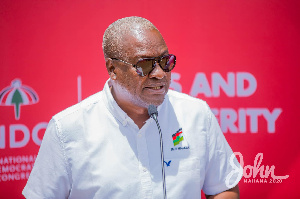
    John Dramani Mahama, the National Democratic Congress (NDC) flagbearer, has unveiled plans to establish a new region from the Upper East Region if he is elected.

    During his visit to the Bawku Naba’s palace, Mahama announced that a proposal has been submitted to the Speaker of Parliament through Bawku’s Member of Parliament, Mahama Ayariga.

    Mahama argued that forming a new region would address critical issues, including the ongoing security crisis in Bawku and the creation of more job opportunities.

    He pointed out that the Bawku area’s land size and population are comparable to or even exceed those of the North East Region, making a compelling case for a new region.

    He stressed that the aim of creating new regions and districts is to decentralize governance and enhance security.

    “I discussed something with him. Your Member of Parliament, I’m aware he has written a letter to the Speaker requesting that another region should be created out of the Upper East Region to cover the six constituencies in the Bawku area,” Mahama said.

    “Bawku Naba raised it with me, and I told him in principle I think it’s a good idea for two reasons. One, for the reason of bringing government closer to the people.”

    He continued, “That’s the principal reason for which we create new regions and new districts. And then the second reason is for security. Bawku is a special security zone because of the issues that have been happening here. And so it would be a good proposal to have a region so that it can be a focus to make sure that we deal with the security issues as well as we can.”

    Mahama further elaborated, “And so, I don’t think it’s out of place because the criteria are dependent on population, they are dependent on land size, and they are dependent on economic viability.”

  • Mahama couldn’t visit due to ongoing conflict – Ayariga tells Bawku youth

    Mahama couldn’t visit due to ongoing conflict – Ayariga tells Bawku youth

    Member of Parliament for Bawku Central, Mahama Ayariga, has revealed that the ongoing conflict in Bawku prevented his party’s presidential candidate from visiting the town during a regional tour.

    According to Mr. Ayariga, NDC’s John Mahama was advised by security experts to avoid the conflict zone to ensure the safety of his entourage and the local residents who intended to join his team.

    Speaking on Woezor TV on Saturday, August 3, Mr. Ayariga apologized to the angry youth who subsequently went on a rampage.

    “John Dramani Mahama couldn’t drive through the town yesterday. We had to bypass the town because many youths wanted to follow him, and driving through the town with them posed a risk. My uncle also had difficulties attending the rally, and the youth demanded that John Dramani Mahama come to them. However, the security situation was not promising, and we didn’t want to trigger any incidents. When we decided to avoid the town, the youth were very bitter, and they burned posters of me and John Mahama. It hurts, but we were advised by security experts not to take the risk,” he explained.

    His comments follow viral videos of NDC youth in Natinga burning party paraphernalia, including posters of the parliamentary and presidential candidates.

    Sources indicate that the youth were upset with the NDC flagbearer’s inability to visit the Chief of Bawku and other traditional leaders.

    Apologizing for the oversight, Mr. Ayariga further explained that the entourage faced time constraints.

    “We had already made four stops, exceeding the two allotted, and we had far surpassed the time allocated to Bawku,” he added.

    He assured that Mr. Mahama would visit the town as part of his campaign across the country.

    “We appreciate the love for the party and the desire to host the flagbearer. I assure them that this is just the beginning of the campaign. The flagbearer, H.E. John Dramani Mahama, will surely visit Natinga in due course.”

  • Video: Bawku man pulls a diesel truck using his jaw

    Video: Bawku man pulls a diesel truck using his jaw

    The remarkable event, reportedly occurring in the Bawku municipality, has swiftly captivated national attention.

    Onlookers were astounded as a man showcased his jaw strength by pulling a heavy truck, an achievement that would challenge even seasoned strongmen.

    A video of this astonishing feat has gone viral on social media, drawing widespread amazement at his remarkable jaw power.

    This display not only highlights his extraordinary skill but also elevates him as a symbol of exceptional human strength in Ghana.

    Details about the man’s identity, his training regimen, and the purpose of this impressive act remain undisclosed.

    Whether the truck-pulling was a playful stunt or part of a competitive event with a prize is still unknown.

    Despite his unassuming appearance, the man’s jaw strength has turned him into a local hero and a source of widespread admiration.

    The footage shows thrilled residents of the area enthusiastically cheering for him, adding to the buzz surrounding his incredible performance.

    Watch video below:

  • NDC responsible for attack on our vehicle – NPP

    NDC responsible for attack on our vehicle – NPP

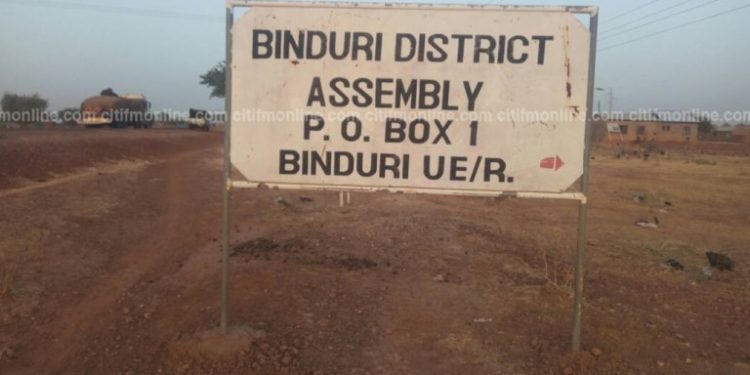
    The MP for Binduri, Abdulai Abanga, has alleged that the National Democratic Congress (NDC) is behind the attack on a New Patriotic Party (NPP) branded vehicle in his area.

    On Monday, three masked assailants are alleged to have poured petrol on the MP’s campaign vehicle, fired shots at it, and ignited a blaze.

    Speaking to Citi News, Abdulai Abanga condemned the incident as politically driven, citing it as a result of threats from their political rivals.

    “It’s politically motivated because I didn’t take anything valuable from the car. For some time now, we have been receiving threats from our political opponents. So, this is just the manifestation of the threats that they have been issuing. It’s obvious they don’t want the constituents to support the NPP, particularly our flagbearer.

    “They go to various radio stations and those threats are issued by the leadership of our political opponents. The NDC leadership in the constituency has severally issued threats.

    “During the limited voter registration at the EC office, they amassed their executives and all kinds of macho men were always there. And they were selecting persons who should register and not. The signals were there, the threats they said openly. We have intelligence on the ground, they know that they will not succeed if they don’t capitalise on the Bawku conflict and threaten people,” the Member of Parliament for Binduri said.

    However, Abdallah Salifu, the Upper East Regional Communications Director for the NDC, refuted the allegations in a statement to Citi News. He denied any involvement by the NDC in the incident and called for a thorough investigation.

    “We condemn whatever happened and we commiserate with the family of the NPP constituency chairman, and members of NPP. But we want to state categorically that we the NDC members in Binduri constituency, have no hand whatsoever in the burning of the vehicle.”

  • Bawku curfew renewed by Interior Minister

    Bawku curfew renewed by Interior Minister

    The Ministry of Interior has issued a renewed Executive Instrument imposing curfew hours on the Bawku Municipality and its surrounding areas in the Upper East Region, effective from Tuesday, July 2, 2024.

    According to the statement released by Minister of Interior Henry Quartey, the curfew will be enforced daily from 8:00 pm to 5:00 am.

    This measure comes amidst ongoing security challenges in the region, aimed at maintaining peace and security.

    Mr Henry Quartey emphasized the importance of community cooperation during this period, urging chiefs, elders, opinion leaders, youth, and residents to exercise restraint.

    He urged them to resolve conflicts peacefully and refrain from engaging in any form of violence.

    Additionally, the Ministry has implemented a total ban on the carrying of arms, ammunition, or any offensive weapons within the affected areas. Any individual found in possession of such items will face arrest and prosecution under the law.

  • Interior Ministry extends curfew hours in Bawku

    Interior Ministry extends curfew hours in Bawku

    The Interior Ministry, through an Executive Instrument, has extended the curfew hours for the Bawku Municipality and its surrounding areas in the Upper East Region.

    Effective from Tuesday, April 30, 2024, the curfew hours will span from 8:00 pm to 5:00 am.

    In a statement, the government urged Chiefs, Elders, Opinion Leaders, Youth, and residents of the affected areas to maintain composure amidst the challenges they face, advocating for non-violent approaches to preserving peace.

    Additionally, a complete prohibition is imposed on the possession of arms, ammunition, or any offensive weaponry.

    The Ministry sternly warned of arrests and prosecution for anyone found in possession of such items.

    The decision to renew the curfew stems from a recent clash that occurred on Wednesday, April 24, involving heavily armed soldiers and Prison Service personnel in a tense standoff.

    This altercation arose when military personnel demanded the release of two individuals who had sought sanctuary in the prison yard to evade arrest.

    These individuals reportedly caused a disturbance during the official launch of the 40th-anniversary celebration of Bawku Naba, Naba Asigri Abugrago Azoka, at his palace.

  • Bawku victims deserve compensation – Mahama Ayariga

    Bawku victims deserve compensation – Mahama Ayariga

    The Deputy Clerk of Corporate and Financial Management Services Division in Parliament, Ebenezer Ahumah Djietror, has refuted claims that Parliament is indebted to the tune of GH¢23 million to the Electricity Company of Ghana (ECG).

    On Thursday, February 29, 2024, there was a power outage in Parliament House and Job 600, the office complex for Members of Parliament, attributed to the purported GH¢23 million debt, as part of the ongoing “Operation Zero Balance” initiative by the ECG.

    In an interview with Citi News, Mr. Ahumah Djietror clarified that Parliament does not owe the stated amount, asserting that the house has been making payments. He acknowledged occasional discrepancies, citing failures in the ECG’s system to accurately record the payments.

    According to him, Parliament made a GH¢13 million payment on Tuesday, February 27, 2024, reducing the outstanding debt to approximately GH¢12 million. He emphasized that they possess records of all payments made as evidence.

    Mr. Ahumah Djietror expressed the situation in Parliament as unfortunate and assured that efforts are underway to reconcile the accounts and settle the outstanding balance.

    “I expect that with everything that has happened in Bawku, the people of Bawku have suffered military brutalities as a result of the activities of the military. As part of the measures the president is implementing to deal with the situation in Bawku, I expect that we will address the plight of those who have suffered military brutalities. People have been killed by soldiers, and I have petitioned institutions and made complaints and expect that these issues will also be addressed by the president.”
  • Study recommends measures to address postpartum depression among Ghanaian women

    Study recommends measures to address postpartum depression among Ghanaian women

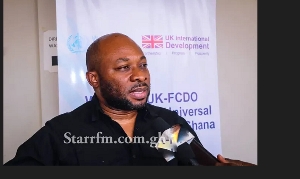
    A recent study on Postpartum Depression (PPD) among Ghanaian women has highlighted critical recommendations aimed at tackling alarming rates of maternal mental health issues in the country. The research emphasized the importance of allowing spouses to accompany women in labour wards and theatres, providing crucial support during childbirth to alleviate fear and anxiety.

    According to the study, allowing spouses in labour wards and theatres would help ease patients’ fear and anxiety while offering encouragement, thereby enhancing the birthing experience for women. Additionally, the research proposed the establishment of “daddy’s clinics” by the Ghana Health Service, aimed at promoting the active involvement of spouses in the pregnancy journey. These clinics would serve as platforms for partners to gain insight into the nuances of pregnancy and offer emotional and physical support to expectant mothers.
    Findings from the study, which included a Mental Health Situational Analysis in Ghana, revealed a prevalence of 27% of PPD among women who delivered at healthcare facilities, with Bawku recording a staggering 50.1%. The research also highlighted the economic and human costs associated with maternal mental health disorders, including increased risk of maternal morbidity and mortality, stunted growth in children, and social and cognitive impairment.
    Dr. Promise Sefogah, a leading consultant for the World Health Organization (WHO) on maternal mental health, attributed the triggers of PPD among Ghanaian women to various factors such as financial constraints, fear of medical procedures, and traumatic birth experiences.

    Despite the severity of the problem, Dr Sefogah emphasized the lack of knowledge and training among healthcare workers, coupled with inadequate screening and counselling services at health facilities, pushing affected women to seek solutions from spiritual and herbal centres.

    In response to these challenges, advocacy efforts have intensified for the development of a Maternal Mental Health Policy, aimed at integrating mental health services into existing healthcare frameworks. Dr. Winfred Ofosu, the Eastern Regional Director of Health, stressed the urgency for a National Policy Framework on Maternal Mental Health Care, highlighting the need for comprehensive strategies to combat maternal mental disorders.

    The initiative, sponsored by the World Health Organization Ghana and UK International Development, seeks to curb maternal mental disorders in Ghana. Dr. Joana Ansong, Technical Officer for non-communicable diseases and Mental Health at WHO Ghana country office, emphasized the importance of integrating policy interventions into routine perinatal services to address the burden of maternal mental health holistically.

  • Bawku has become attractive to extremists operating across from the border – Akufo-Addo

    Bawku has become attractive to extremists operating across from the border – Akufo-Addo

    President Nana Addo Danquah Akufo-Addo has stated that Bawku has become appealing to extremists who are operating just across the border from the town.

    Delivering his speech at the 2024 State of the Nation Address, the president drew attention to the ongoing conflict in Bawku, stressing that it is a matter of significant concern for the nation as a whole.

    “Mr Speaker, what should concern all of us and not just the people of Bawku is that, in its current state, Bawku is an alluring magnet to mischief makers and extremists operating a few kilometers across from the border,” he indicated.

    The President’s remarks come in response to escalating reports of violence and unrest in the region.

    Between November 2021 and August 2023, nearly 200 fatalities have been reported due to renewed conflicts.

    As of February 2024, an additional five deaths have occurred, prompting the closure of four local radio stations.

    During a radio interview, the Municipal Chief Executive (MCE) for the area, Amadu Hamza, highlighted that while official police records may suggest a lower death toll, the situation on the ground paints a much bleaker picture.

    “Many have died and their bodies were never given to the police,” he explained. 

    Meanwhile, government has, in the past year, undertaken a number of measures, including the establishment of a special Bawku Taskforce, and the intensification of engagements with the factions for the resolution of the chieftaincy dispute.

    On the recommendation of the Upper East Regional and National Security Councils, four (4) radio stations, that have been broadcasting incendiary language and propagating hate speech, have been shut down by the
    National Communications Authority.

    The Chief Justice has also recently established specialised Courts in Accra and in Kumasi to deal expeditiously
    with criminal matters emanating from the Bawku conflict.

  • We are spending money meant for development to stop you from killing each other – Akufo-Addo on Bawku crisis

    We are spending money meant for development to stop you from killing each other – Akufo-Addo on Bawku crisis

    President Akufo-Addo says the money meant for development in Bawku in the Upper East region, is the same money government is using to curb conflicts in the area.

    This, he disclosed during the 2024 State of The Nation address in parliament today, February 27, 2024.

    “Mr Speaker, I must make special mention of the troubles in Bawku. The tragedy is not only that a thriving and dynamic town is being reduced to a wasteland of destruction and distrust, we are spending money and energy that would have been better spent on development needs of Bawku, providing security to keep brothers and sisters from killing each other” the president expressed.

    The President’s remarks come in response to escalating reports of violence and unrest in the region.

    Between November 2021 and August 2023, nearly 200 fatalities have been reported due to renewed conflicts.

    As of February 2024, an additional five deaths have occurred, prompting the closure of four local radio stations.

    During a radio interview, the Municipal Chief Executive (MCE) for the area, Amadu Hamza, highlighted that while official police records may suggest a lower death toll, the situation on the ground paints a much bleaker picture.

    “Many have died and their bodies were never given to the police,” he explained. 

    Meanwhile, government has, in the past year, undertaken a number of measures, including the establishment of a special Bawku Taskforce, and the intensification of engagements with the factions for the resolution of the chieftaincy dispute.

    On the recommendation of the Upper East Regional and National Security Councils, four (4) radio stations, that have been broadcasting incendiary language and propagating hate speech, have been shut down by the
    National Communications Authority.

    The Chief Justice has also recently established specialised Courts in Accra and in Kumasi to deal expeditiously
    with criminal matters emanating from the Bawku conflict.

  • Bawku now a wasteland – Akufo-Addo

    Bawku now a wasteland – Akufo-Addo

    In the course State of the Nation Address (SONA) on Tuesday, February 27, President Akufo-Addo addressed Parliament, highlighting the dire situation in Bawku, located in the Upper East region.

    He emphasized that the ongoing conflict has transformed the area into a desolate landscape marred by destruction and a lack of trust among its residents.

    President Akufo-Addo further lamented that significant government funds and resources are being allocated towards bolstering security measures in Bawku, funds that could have otherwise been utilized for the region’s development and progress.

    He expressed concern over the escalating violence and the need to prevent further loss of life.

    Describing Bawku as an attractive hub for troublemakers and extremists, the President underscored the urgency of addressing the root causes of the conflict and implementing strategies to safeguard the community’s well-being and security.

    He explained that in a bid to find a lasting solution to the conflict in Bawku, government has undertaken a number of measures, including the establishment of a Special Bawku Taskforce, while intensifying engagements with the various fractions.

    “On the recommendation of the Upper East Regional and National Security Councils, four (4) radio stations, that have been broadcasting incendiary language and propagating hate speech, have been shut down by the National Communications Authority. 

    “The Chief Justice has also recently established specialised Courts in Accra and in Kumasi to deal expeditiously with criminal matters emanating from the Bawku conflict,” he said.

    The President’s remarks come in response to reports of violence and unrest in the region.

    Between November 2021 and August 2023, nearly 200 fatalities were reported due to ongoing conflicts.

    As of February 2024, an additional five deaths have occurred, leading to the closure of four local radio stations.

    During a radio interview, Amadu Hamza, the Municipal Chief Executive (MCE) for the area, expressed concern that while official police records may indicate a lower death toll, the situation on the ground paints a much graver picture.

    “Many have died and their bodies were never given to the police,” he explained. 

    The MCE addressed a recent shooting incident that resulted in one fatality and three injured individuals, highlighting the ongoing toll of the conflict. He noted that many clashes occur in remote areas, making it challenging for the police to intervene.

    Bawku has long grappled with chieftaincy conflicts, leading to widespread property damage over the years.

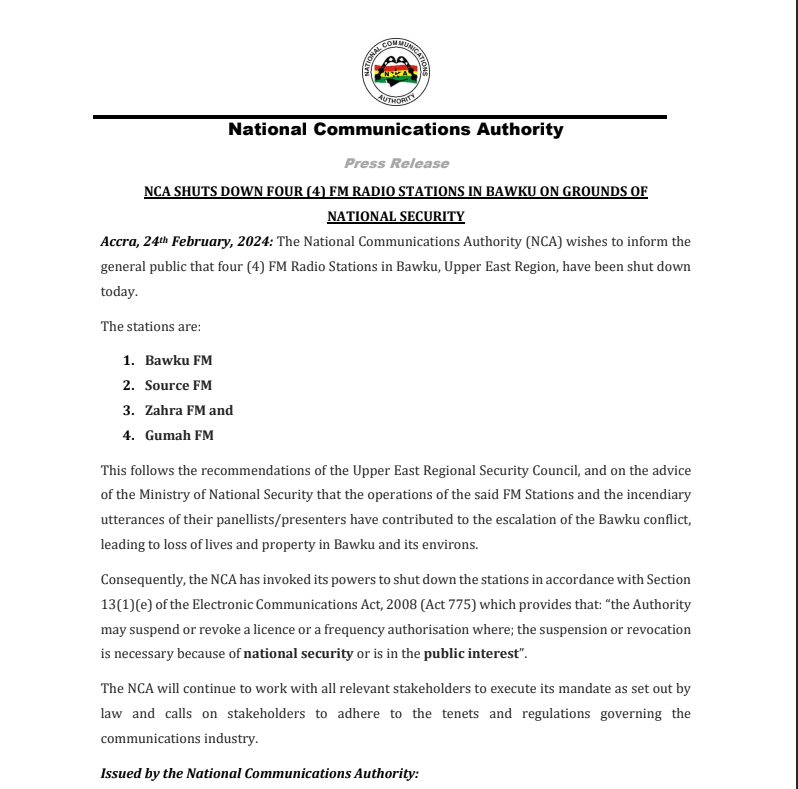
  • NCA takes decisive action, closes four Bawku radio stations over role in escalating conflict

    The National Communication Authority (NCA) has taken action to close down four radio stations in Bawku, located in the Upper East Region, Bawku FM, Source FM, Zahra FM, and Gumah FM are among the affected media outlets.

    The NCA, in a statement issued on Saturday, February 24, explained that the decision was made based on the recommendation and advice of both the Upper East Regional Security Council and the National Security Ministry.

    The statement highlighted the pivotal role played by the FM stations and their presenters in contributing to the escalation of the Bawku conflict, resulting in the loss of lives and property in the area.

    The NCA assured the public of its commitment to collaborate with relevant stakeholders in fulfilling its legal mandate.

    The statement emphasised the need for all stakeholders to adhere to the regulations governing the communications industry, as the NCA works towards maintaining order and security in the region.

    See statement below:

  • NCA closes four radio stations in Bawku, citing national security concerns

    NCA closes four radio stations in Bawku, citing national security concerns

    National Communications Authority (NCA) hereby notifies the public that four (4) FM radio stations located in Bawku, Upper East Region, have been closed down.

    The stations are:

    1. Bawku FM
    2. Source FM
    3. Zahra FM and
    4. Gumah FM

    This action aligns with the directives issued by the Upper East Regional Security Council, based on guidance from the Ministry of National Security.

    The decision to cease the operations of the mentioned FM stations stems from concerns regarding the inflammatory remarks made by their panellists and presenters.

    These utterances have been identified as exacerbating the conflict in Bawku, resulting in the loss of lives and property in the area and its surrounding areas.

    Consequently, the NCA has invoked its powers to shut down the stations in accordance with Section 13(1)(e) of the Electronic Communications Act, 2008 (Act 775) which provides that: “the Authority may suspend or revoke a licence or a frequency authorization where the suspension or revocation is necessary because of national security or is in the public interest.”.

    The NCA will continue to work with all relevant stakeholders to execute its mandate as set out by law and calls on stakeholders to adhere to the tenets and regulations governing the communications industry.

  • 4 radio stations shut down in Bawku over security concerns 

    In response to the escalating tensions and violence in Bawku, Upper East Region, the National Communications Authority (NCA) has announced the closure of four FM radio stations in the area. Bawku FM, Source FM, Zahra FM, and Gumah FM have been shut down effective Saturday, February 24, 2024.

    The decision to close the radio stations follows recommendations from the Upper East Regional Security Council, in conjunction with advice from the Ministry of National Security. The NCA stated that the operations of the aforementioned FM stations were deemed to have contributed to the escalation of the Bawku conflict, resulting in loss of lives and property in the region.

    In a press release dated February 24, 2024, the NCA cited the “incendiary utterances” made by panelists and presenters on these stations as a factor in exacerbating the conflict. Consequently, the NCA invoked its powers under Section 13(1)(e) of the Electronic Communications Act, 2008 (Act 775), which allows for the suspension or revocation of licenses or frequency authorizations in cases where national security or public interest is at stake.

    The closure of the FM stations is intended to mitigate further escalation of tensions and violence in Bawku and its environs. The NCA emphasized that the decision was taken in the interest of public safety and national security.

    The shutdown of the radio stations underscores the critical role of media responsibility in conflict-sensitive areas. While freedom of expression is fundamental, it must be exercised responsibly, especially in contexts where tensions are high. The NCA’s action serves as a reminder of the need for media outlets to adhere to ethical standards and refrain from disseminating content that incites violence or exacerbates existing conflicts.

    The closure of the FM stations is expected to have an impact on the flow of information in the Bawku area. However, the NCA’s priority is to restore peace and stability, and it is hoped that this measure will contribute to achieving that goal. The affected stations and their stakeholders are urged to cooperate with authorities and adhere to the directives issued by the NCA.

  • We have seen chaos for 2 years; help us end it – Bawku Naba urges Mahama

    We have seen chaos for 2 years; help us end it – Bawku Naba urges Mahama

    The Bawku Naba, Zugraana Naba Asigri Abugurago Azoka II, has expressed his concern over the absence of peace in Bawku.

    He lamented that the once peaceful and vibrant town has been devoid of peace for over two years, resulting in evident consequences.

    These remarks were made during an interaction with former President John Dramani Mahama, who visited him on Saturday, February 3.

    “Your Excellency, as we welcome you warmly to Kusaug, we have no doubt that you are aware of the unfortunate and needless conflict in Bawku that led to the loss of several of lives and property. For over two years now, peace has eluded our once peaceful and vibrant town with obvious consequences.

    “We continue to look up to God, our ancestors, the government, and other important stakeholders to play their roles to restore peace to Bawku. We know that the truth will prevail,” he said.

    Mr. Mahama assured the people that if he were to win the elections, peace would be restored in Bawku.

    During his interaction, he recalled that Bawku was peaceful when the National Democratic Congress (NDC) was in power, attributing this to the implementation of effective security measures during that period.

    The former president pledged a commitment to addressing the current challenges and restoring peace to the once tranquil town if given the opportunity to lead again.

    He said “It is unfortunate that this has reared its ugly head again.  The time we were in office we had virtually calmed things, Bawku was a thriving community again, and people were going about their business without fear of being harmed. Unfortunately, now you cannot roam freely in Bawku. Just recently I was reading that they had put a ban on motorcycles again in the evening and generally, it is a period of insecurity for the people living in that area. In the night buses are fired upon and people are killed.

    “These are things that we are going to make a priority when we come into office, we have done it before, we will do it again, and we will work hard to resolve the Bawku crisis and bring peace back to Bawku and surrounding areas.”

    He added “The second aspect of the insecurity is the armed robbery. Armed robbery has become a major problem here and it is affecting the economy of the Upper East region.  You go to market, and you are coming back and armed robbers set on you, they rob the people. We are going to mount a very strong fight against armed robbery, because you cannot have economic progress in an environment of insecurity and so it is imperative that we make sure our region is safe and secure so people will go about their business without fear of being harmed or killed.”

    Recently, unidentified gunmen opened fire on a group of people at the community center in Bawku on Wednesday, January 17, resulting in the tragic death of two individuals and injuring four others.

    Mahama Ayariga, the lawmaker for the area, condemned the incident, describing it as both dastardly and unacceptable. He urged law enforcement agencies to take immediate action in apprehending and dealing with the perpetrators.

    In response to the escalating situation, the Minister for the Interior, through Executive Instrument, extended the curfew hours imposed on Bawku Municipality and its environs in the Upper East Region from 8:00 pm to 5:00 am, effective Friday, January 12, 2024.

    The government called on Chiefs, Elders, Opinion Leaders, Youth, and residents of the area to exercise restraint and employ non-violent means to address the challenges and work towards ensuring peace. Additionally, there is a complete ban on carrying arms, ammunition, or any offensive weapon in the specified communities, with a warning that individuals found in possession will be arrested and prosecuted.

  • We will bring peace back to Bawku – Mahama pledges

    We will bring peace back to Bawku – Mahama pledges

    Flagbearer of the National Democratic Congress (NDC), John Dramani Mahama, has made a commitment to prioritize efforts aimed at resolving the longstanding Bawku conflict if he is granted another term in office.

    The Bawku conflict, marked by ethno-political tensions between the Kusasis and Mamprusis, has endured for decades, resulting in loss of lives and impeding socio-economic development in the region.

    During his address to members of the Upper East Regional House of Chiefs, former President John Mahama underscored the urgent need for proactive measures to facilitate dialogue, enhance mutual understanding, and establish sustainable peace initiatives in the region.

    “Just recently, I was reading they have put a ban on riding motorcycles again in the evening. Generally, it is a period of insecurity for people living in that area. In the night, buses are fired upon, and people are killed. These are things that we are going to make a priority when we come. We have done it before [and] we will do it again. We will work hard to resolve the Bawku crisis and bring peace back to Bawku and its surrounding areas.”

    Highlighting the period of relative peace experienced by the people of Bawku during his presidency, Mr. Mahama expressed confidence in his capacity to garner support from various stakeholders and lead efforts to achieve a lasting resolution to the Bawku conflict.

    The former President emphasized his commitment to leveraging his experience and engaging with diverse parties to foster understanding and cooperation, ultimately working towards sustainable peace in the region.

    “At the time we were in office, we had virtually calmed things. Bawku was a striving community, and people were going about their business without the fear of being harmed. Unfortunately, now, you cannot roam freely in Bawku.

    As part of his “Building Ghana” tour, the flagbearer for the National Democratic Congress (NDC) is currently in the Upper East Region for a two-day visit. Responding to concerns raised by members of the Upper East Regional House of Chiefs, particularly regarding security issues in the region, especially in Bawku, the NDC flagbearer expressed his apprehension about the escalating armed robberies affecting the economic progress of the area.

    The President of the Upper East Regional House of Chiefs and Paramount Chief of the Chiana Traditional Area, Pe Ditundini Adiali Ayagitam III, lamented the spread of the Bawku conflict across the country. He welcomed any suggestions and support from the NDC flagbearer and his team to contribute to bringing lasting peace to the troubled area.

    “Ghanaians need peace to go about their normal duties. The Kuasaug Traditional Council needs peace in Bawku to restore the area back to its former status, and it is important that a lot of work needs to be done while in opposition. The regional capital and its suburbs have recently witnessed target killings. We need peace and a permanent solution to prevent this mess from spreading to the entire region. We know the burden rests on the sincerity and honesty of the politicians on both sides of the divide. We, the Upper East region, are prepared to extend a warm hand of cooperation to whoever is interested in bringing peace in Bawku and the Kusaug Traditional Area as a whole.”

  • Thorough investigation needed to determine recent killings in Binduri – DCE

    Thorough investigation needed to determine recent killings in Binduri – DCE


    The District Chief Executive for the Binduri local assembly, Ayinga Abagre Yakubu, has emphasized the challenge of directly linking the recent killings in the district to the ongoing conflict in Bawku.

    During an interview with Umaru Sanda Amadu on Eyewitness News on Citi FM, Mr. Yakubu explained that the location of the attack, which occurred on the way from Bawku to a market in Binduri, makes it complex to immediately establish a connection to the prolonged Bawku conflict.

    He stressed the importance of a thorough investigation to ascertain the facts surrounding the incident.

    “It is difficult to connect it to the Bawku conflict, and we can’t also rule it out. That is why it is important for an investigation to be conducted for us to establish the facts about the killings,” Mr. Yakubu stated.

    He revealed that the traders’ vehicle was ambushed on the outskirts of the town, and due to the ensuing chaos, those who escaped the attack are currently in hiding.

    This has made it challenging to gather information about the specifics of the incident.

    “The people were not yet at the market, and the vehicle was ambushed on its way from Bawku to Binduri, resulting in the killing. Some of them escaped, some were injured and are responding to treatment, and some have also been referred to the Bolgatanga Regional Hospital,” he explained.

    Mr. Yakubu highlighted the rural nature of the market where traders buy goods to sell in Bawku, making it difficult to reach those who escaped.

    The police are actively investigating to locate and gather information from them.

  • Bawku conflict: Chief Imam calls for ceasefire

    Bawku conflict: Chief Imam calls for ceasefire

    Spokesperson of the National Chief Imam, Sheikh Aremeyaw Shaibu, has issued a plea for calm amidst tensions in Bawku in the Upper East region.

    Addressing the public in an interview, Sheikh Aremeyaw Shaibu, serving as the spokesperson for the Chief Imam, expressed deep concern about the ongoing conflict in Bawku. 

    He emphasized that the situation is particularly troubling for the National Chief Imam, as they have kinsmen residing in the affected area.

    Tensions are escalating once more in the Bawku area after the reported killing of three young men, allegedly by military officers.

    Eyewitnesses claim that the young men had not engaged in any actions justifying their arrest and subsequent killing by the soldiers. In contrast, the military refutes these allegations, asserting that the soldiers acted in self-defense.

    Residents are calling for justice for the killing of the young men.

    Reacting to the situation, Sheikh Shaibu stated that the predominantly Muslim population of Bawku should look to the Qur’an’s teachings of peace and let peace prevail.

    “I use the voice of the National Chief Imam to call on the people of Bawku because they’re largely Muslims, and I want to call them to look at the spirit of peace as established in our own language and the greetings that we greet – As-salamu alaykum – peace be upon you.

    “They should look at this and look at peace as one of the virtues and values of Islam and once silence the gun, break the cycle of vengeance, sound more conciliatory, let’s explore more opportunities for negotiated peace through dialogue and know that as we do so, we’ll be able to reach [peace],” he said.

  • Bawku conflict: Seeing women and children displaced disheartening – Lawyer

    Bawku conflict: Seeing women and children displaced disheartening – Lawyer

    The Director of Legal Affairs for the National Democratic Congress (NDC), Godwin Edudzi Tamaklo, has expressed deep concern over the displacement of women and children in Bawku following a deadly armed conflict.

    He emphasized that the conflict has hindered children from accessing education in those communities.

    Speaking on the Big Issue on TV3, Edudzi Tamaklo stated, “The situation there is extremely delicate, and for me, the greater pain I have is the displacement of women and children. It has been extremely difficult for children within those communities to even have proper education now by reason of this armed conflict.”

    Former Member of Parliament for Okaikwei North, Fuseini Issah, also addressed the issue, urging stakeholders to bring the feuding parties together for an amicable resolution. He emphasized the prolonged nature of the conflict, resulting in the loss of innocent lives.

    Former President John Dramani Mahama called for close collaboration between the military and the police to provide security in Bawku. Mahama expressed sadness and disturbance over recent shootings in the municipality and the killing of three men. He called for the military to work hand in hand with the police to ensure safety and security.

    The Ghana Armed Forces (GAF) explained the circumstances surrounding the neutralization of three persons who fired at its troops in Bawku. The GAF emphasized the need for peaceful resolution and cautioned against direct armed confrontation with the military.

    Bawku recently experienced an incident where unknown gunmen fired into a group of people, resulting in fatalities and injuries.

    The Member of Parliament for Bawku, Mahama Ayariga, condemned the incident, urging law enforcement to apprehend and deal with the perpetrators.

    The Minister for the Interior renewed the curfew hours in Bawku Municipality and its environs, emphasizing the importance of using non-violent means to address the challenges and calling for restraint from the community members.

    Additionally, a total ban on carrying arms, ammunition, or offensive weapons was announced, with violators subject to arrest and prosecution.

  • Ghana is unable to resolve conflict in Bawku due to political interference – Security consultant

    Ghana is unable to resolve conflict in Bawku due to political interference – Security consultant

    Security consultant, Prof. Kwesi Aning has advised stakeholders involved in the efforts to restore peace in Bawku to ensure that proposed solutions remain impartial and devoid of any political bias.

    He emphasized that political inclinations hinder the development of a comprehensive approach to addressing the ongoing violence.

    This advice comes in the wake of last week’s incident in which five individuals lost their lives in the recurring conflict.

    Concerns have been raised regarding the persistent nature of the problem and the inability of successive governments to eradicate its root causes.

    Speaking on JoyNews’ AM Show, Prof. Kwesi Aning pointed out that the lack of a dispassionate approach complicates the resolution of the conflict. He highlights the tendency for political parties in power to adopt different approaches, despite the commonality of the conflict’s origin.

    “I think the unfortunate part of this Bawku crisis has been extreme politicisation of the resolution interventions. If it is Party A that is in power, their approach to resolving the conflict is different from Part B. But the root of the conflict is the same,” he said on JoyNews.

    He contended that this political divergence contributes to the escalation of the crisis, creating an environment where the underlying issues are neglected and exploited for personal gain.

    “And therein lies my argument earlier, that when the root of a conflict becomes overlooked, it festers, becomes intractable then others begin to exploit it for their pecuniary ends. That is what we are seeing,” he explained on Monday, January 22, 2024.

    “So we need to take the politics out of understanding what the problem is, what the intervention options must be, and when there is consensus about the intervention, [there must be] consensus to pursue to its legitimate end.”

    Addressing the situation on January 22, 2024, Prof. Aning stresses the need to depoliticize the understanding of the problem and the formulation of intervention strategies. He advocates for consensus-building on intervention approaches, with a commitment to pursuing them to a legitimate conclusion.

    The consultant’s remarks come amid reports of three additional casualties on January 18, bringing the death toll to five within a span of 48 hours. The victims were reportedly shot by soldiers who alleged the discovery of firearms in their possession.

  • Bawku conflict must not be tackled with a political lens – Prof. Kwesi Aning

    Bawku conflict must not be tackled with a political lens – Prof. Kwesi Aning

    Security consultant, Professor Kwesi Aning, has emphasised the importance of ensuring that proposed solutions to restore peace in Bawku are free from political inclinations.

    He argues that political biases can hinder the development of a holistic approach to resolving the violence in the region.

    The call comes in the wake of recent violent incidents in Bawku, where five individuals were shot dead, highlighting the longstanding conflict in the area. Concerns have been raised about the challenges faced by successive governments in addressing the root causes of the problem comprehensively.

    Prof. Kwesi Aning, speaking on JoyNews’ AM Show, expresses the belief that adopting a dispassionate and non-political approach is crucial for effectively addressing the issues and achieving sustainable peace in Bawku.

    “I think the unfortunate part of this Bawku crisis has been extreme politicisation of the resolution interventions. If it is Party A that is in power, their approach to resolving the conflict is different from Part B. But the root of the conflict is the same,” he said on JoyNews.

    Prof. Aning explains that allowing political inclinations to influence the resolution process in Bawku can exacerbate the existing problems and contribute to the persistence of the crisis.

    “And therein lies my argument earlier, that when the root of a conflict becomes overlooked, it festers, becomes intractable then others begin to exploit it for their pecuniary ends. That is what we are seeing,” he explained on Monday, January 22, 2024.

    “So we need to take the politics out of understanding what the problem is, what the intervention options must be, and when there is consensus about the intervention, [there must be] consensus to pursue to its legitimate end.”

    As of January 18, three additional fatalities occurred in Bawku, bringing the total death toll to five within a span of 48 hours. The individuals were reportedly shot by soldiers who asserted that they discovered firearms in their possession.

  • Consider competence, choose Napo as your running mate – Zongo Chiefs advise Bawumia

    Consider competence, choose Napo as your running mate – Zongo Chiefs advise Bawumia

    The Council of Zongo Chiefs have appealed to the New Patriotic Party (NPP) flagbearer, Alhaji Dr. Mahamadu Bawumia, to choose the Energy Minister, Dr. Matthew Opoku Prempeh, as his running mate for the upcoming 2024 general elections.

    During a special Quran Recitation & Prayers dedicated to Allah for the New Patriotic Party’s success on January 19, 2024, at Kantudu behind the Kumasi Central Mosque, following Magrib prayers, the Zongo chiefs fervently prayed for Dr. Bawumia to select Dr. Prempeh as his running mate, citing him as the ideal partner to guide Ghana to its next level starting in 2025.

    Speaking on behalf of the prayer congregation after the Quran recitation, Chief of Frafra and President of the Council of Zongo Chiefs, Alhaji Musah, expressed their spiritual belief in Dr. Bawumia and Dr. Prempeh’s ability to lead Ghana forward.

    Alhaji Musah expressed their desire for Dr. Bawumia to be inaugurated as President on January 7, 2025, with Dr. NAPO as his Vice President, believing that their efforts in the recitation would not be in vain.

    Continuing, Alhaji Musah emphasized Dr. Matthew Opoku Prempeh as their brother, urging Dr. Bawumia, himself a Zongo boy, to select him, anticipating their joint efforts in propelling Ghana forward.

    Political analysts view this endorsement and prayer by the Council of Zongo Chiefs as a confirmation of the Energy Minister’s national appeal. Dr. Prempeh, historically named after Asante Islamic Cleric Nana Poku, is commonly referred to as NAPO.

    Dr. Prempeh’s advocacy for competence-based voting, fostering national cohesion and unity without unnecessary religious sentiments, is also acknowledged in the statement.

    “It is our wish that Dr. Bawumia will be sworn-in as President come 7th January, 2025 with Dr. NAPO as his Vice President. I know that our toil tonight in this recitation will not be in vain”.

    He continued “Dr. Matthew Opoku Prempeh is our brother and we ask Dr Bawumia who himself is a zongo boy to select him for them to take Ghana forward” he added

  • Let Bawku thrive in peace – Alan Kyerematen tells GAF

    Let Bawku thrive in peace – Alan Kyerematen tells GAF


    Independent presidential candidate Alan Kyerematen has urged military personnel deployed to Bawku to prioritize professionalism in maintaining security and fostering peace.

    Expressing concern over the recent killing of three individuals by Ghana Armed Forces (GAF) soldiers in Bawku, Kyerematen emphasized the importance of safeguarding innocent lives.

    He called upon the military to fulfill their duty to protect the people of Bawku while promoting a sense of harmony and security.

    Former President John Dramani Mahama also stressed the need for close collaboration between the military and police in ensuring Bawku’s security.

    Mahama expressed sadness over recent shootings and urged the military to work hand in hand with the police to uphold peace and safety in Bawku and across the nation.

    As a former Commander in Chief of the Armed Forces, Mahama called on the military to remember their duty to protect the people.

    The Ghana Armed Forces (GAF) clarified the circumstances surrounding the neutralization of three individuals who had fired at its troops in Bawku.

    The GAF highlighted that the troops, responding to an attack, neutralized the assailants and retrieved weaponry. The press release cautioned against direct armed confrontation with the military and urged all factions to support efforts to bring lasting peace to Bawku.

    Bawku has been in the spotlight due to recent incidents, including unknown gunmen firing into a crowd, resulting in casualties. Member of Parliament for Bawku, Mahama Ayariga, condemned the acts, calling for swift action by law enforcement to apprehend and prosecute the perpetrators.

    The government, through the Minister for the Interior, renewed curfew hours in Bawku Municipality and its environs and emphasized the need for peaceful means to address the challenges facing the community. Additionally, a total ban on carrying arms was imposed, with violators subject to arrest and prosecution.

  • Mahama urges joint military-police collaboration for enhanced safety in Bawku

    Mahama urges joint military-police collaboration for enhanced safety in Bawku


    The National Democratic Congress (NDC) flagbearer, John Mahama calls for a collaborative effort between the military and the Police service to enhance safety and security in the Bawku municipality.

    This plea follows a recent unfortunate incident that led to the loss of three lives amid escalating tensions in the area.

    In a Facebook post expressing his sorrow, Mahama acknowledged the challenges faced by the military in maintaining peace in Bawku. Despite these difficulties, he stressed the significance of a unified endeavor between the military and the police to ensure safety and security, not only in the Bawku municipality but throughout the entire nation.

    The fatalities resulted from a reported gunfight between armed individuals and Ghana Armed Forces personnel, leading to three deaths, while one person managed to escape.

    Mahama’s statement underscores the imperative for a coordinated approach to address security concerns in the region and emphasizes the broader importance of collaborative efforts on a national scale.

    Read John Mahama’s Facebook post below:

    “I am deeply saddened and disturbed by recent developments in the Bawku municipality and the killing of three men, as confirmed by soldiers from the Ghana Armed Forces.

    “While I recognise that our security services face the difficult task of securing peace in the Bawku area, the military must work hand in hand with the police to provide safety and security in the Bawku municipality and across the nation.

    “As a former Commander in Chief of the Armed Forces, I urge the military personnel to remember their duty to protect the people and uphold the peace.

    “My thoughts and prayers are with the families of the victims during this difficult time, even as I call upon the people of Bawku to endeavour to promote and consolidate peace to enable the positive development of the municipality of Bawku.

    “Let us all work together to ensure justice is served and peace is restored in Bawku.”

  • Bawku conflict: Your duty is to protect and uphold peace – Mahama tells GAF

    Bawku conflict: Your duty is to protect and uphold peace – Mahama tells GAF

    Former President John Mahama has waded into the conversation regarding the tension between the residents of Bawku and officers of the Ghana Armed Forces (GAF).

    The Ghana Armed Forces has been accused of shooting and killing three innocent men in Bawku without any justification.

    But the Ghana Armed Forces has rejected the claims made by the Member of Parliament for Bawku Central, Mahama Ayariga, asserting that the information was false.

    In a press release issued on January 20, the GAF provided an account of the incident, stating that at approximately 8:30 pm on Thursday, their officers, engaged in night foot patrols near Hasania School at Sabongari, were targeted by gunfire from four assailants.

    According to the GAF statement, the officers responded by returning fire, resulting in the death of three of the gunmen, while the fourth individual managed to escape the scene.

    “Troops retrieved one AK-47 rifle loaded with 16 rounds of 7.62 x 39 mm ammunition. Ghana Police team arrived at the location subsequently to convey the deceased assailants to the morgue.

    “The AK-47 rifle with serial number 81-1/13024074 inspected by Bawku Divisional Police personnel is currently in their own custody,” parts of the statement read.

    The GAF clarified that the incident occurred in the context of heightened tensions in Bawku, where four individuals had lost their lives the previous week.

    This situation led to an escalation in security measures, including increased patrols. According to the GAF’s statement, on the day of the incident, their officers conducting patrols were fired upon by unidentified gunmen.

    Following the clarification by the GAF, former President Mahama, nonetheless, in a Facebook post, urged “the military personnel to remember their duty to protect the people and uphold the peace.”

    He acknowledged that the security services face the difficult task of securing peace in the Bawku area, however, stressed that “the military must work hand in hand with the police to provide safety and security in the Bawku municipality and across the nation.”

    According to Mr Mahama, he is deeply saddened and disturbed by recent developments in the Bawku municipality and the killing of three men.

    He has therefore commiserated with the bereaved families and entreated all parties to play their part in ensuring that peace is restored in the locality.

    “My thoughts and prayers are with the families of the victims during this difficult time, even as I call upon the people of Bawku to endeavour to promote and consolidate peace to enable the positive development of the municipality of Bawku. Let us all work together to ensure justice is served and peace is restored in Bawku,” he added.

  • We are not responsible for recent deaths in Bawku – GAF

    We are not responsible for recent deaths in Bawku – GAF


    The Ghana Armed Forces (GAF) has dismissed allegations of being involved in the recent fatalities of three individuals in Sabongari, Bawku.

    This comes in response to the killing of Issah Halidu, a 40-year-old Mamprusi man, on January 12th, which triggered a surge in violence in the region.

    While recognizing the escalating tensions and tragic loss of life, the GAF unequivocally denies any connection to the subsequent deaths.

    In their statement, they underscore that the perpetrators responsible for the recent assault were never under their custody at any point.

    According to the GAF’s account, the violence commenced on January 12 with the murder of Issah Halidu. On January 17, unidentified gunmen launched an attack on civilians, resulting in two deaths and four injuries.

    Furthermore, on January 18, the GAF reported firing at a Ghanaian Army post and observing two locals attempting to ignite a Rocket Propelled Grenade (RPG) bomb at a Goil Filling Station in Bawku.

    While expressing regret over the fatalities, the GAF cautions against direct confrontation with military personnel.

    The statement emphasizes, “It is instructive to note that directly engaging the military is a development that could result in fatal consequences; as troops will spare no opportunity to defend themselves as well as protect residents of Bawku. Therefore, factions in the Bawku conflict are cautioned against drawing the military into direct armed confrontation while efforts are undertaken to resolve the current impasse.”

  • Don’t directly engage military, they will defend themselves – GAF warns Bawku residents 

    Don’t directly engage military, they will defend themselves – GAF warns Bawku residents 

    The Ghana Armed Forces (GAF) has warned residents of Bawku against directly engaging the military, highlighting the potential for severe consequences.

     “Troops will spare no opportunity to defend themselves as well as protect residents of Bawku,” the GAF wrote in a statement addressing the recent deaths in Bawku.

    The GAF denied allegations that some of its officers intentionally fired upon innocent civilians in Bawku, resulting in three fatalities.

    In a press release issued on January 20, the GAF provided an account of the incident, stating that at approximately 8:30 pm on Thursday, their officers, engaged in night foot patrols near Hasania School at Sabongari, were targeted by gunfire from four assailants.

    According to the GAF statement, the officers responded by returning fire, resulting in the death of three of the gunmen, while the fourth individual managed to escape the scene.

    “Troops retrieved one AK-47 rifle loaded with 16 rounds of 7.62 x 39 mm ammunition. Ghana Police team arrived at the location subsequently to convey the deceased assailants to the morgue.

    “The AK-47 rifle with serial number 81-1/13024074 inspected by Bawku Divisional Police personnel is currently in their own custody,” parts of the statement read.

    The GAF clarified that the incident occurred in the context of heightened tensions in Bawku, where four individuals had lost their lives the previous week.

    This situation led to an escalation in security measures, including increased patrols. According to the GAF’s statement, on the day of the incident, their officers conducting patrols were fired upon by unidentified gunmen.

    Additionally, the police reportedly thwarted an attempt by two local individuals to detonate an explosive at the Bawku Goil filling station on the same day.

    “In as much as GAF regrets the demise of the assailants, the escalating violence in the Bawku general area is unfortunate.

    “The presence and attempt to detonate high explosives such as RPG bombs in the operational environment signposts the changing dynamics of the threat profile,” they added.

    The GAF’s response follows accusations made by Mahama Ayariga, the Member of Parliament for Bawku Central, who claimed that the armed forces had shot and killed three innocent men without any justification.

    The Ghana Armed Forces (GAF) rejected the claims made by the Member of Parliament for Bawku Central, Mahama Ayariga, asserting that the information was false. The GAF emphasized that the assertion that a specific group was being targeted by the deployed troops in Bawku lacked substantiation.

    The Ghana Armed Forces issued a caution, advising the conflicting factions to refrain from involving the military in direct armed confrontation.

    They emphasized the importance of avoiding actions that could lead to a direct clash with the military while urging all parties to make efforts to resolve the current impasse through peaceful means.

    “GAF wishes to assure the general public of its fervent commitment to protecting the citizenry. It is therefore imploring the support of all peace-loving Ghanaians, especially the good people of Bawku to facilitate the process of bringing lasting peace to the area and also to aid GAF and sister security agencies in de-escalating tension in the interest of peace, security and socio-economic development of Bawku and the nation in general.”

  • Military is not targeting any group of people in Bawku – GAF

    The Ghana Armed Forces (GAF) has denied allegations that some of its officers intentionally fired upon innocent civilians in Bawku, resulting in three fatalities.

    In a press release issued on January 20, the GAF provided an account of the incident, stating that at approximately 8:30 pm on Thursday, their officers, engaged in night foot patrols near Hasania School at Sabongari, were targeted by gunfire from four assailants.

    According to the GAF statement, the officers responded by returning fire, resulting in the death of three of the gunmen, while the fourth individual managed to escape the scene.

    “Troops retrieved one AK-47 rifle loaded with 16 rounds of 7.62 x 39 mm ammunition. Ghana Police team arrived at the location subsequently to convey the deceased assailants to the morgue.

    “The AK-47 rifle with serial number 81-1/13024074 inspected by Bawku Divisional Police personnel is currently in their own custody,” parts of the statement read.

    The GAF clarified that the incident occurred in the context of heightened tensions in Bawku, where four individuals had lost their lives the previous week.

    This situation led to an escalation in security measures, including increased patrols. According to the GAF’s statement, on the day of the incident, their officers conducting patrols were fired upon by unidentified gunmen.

    Additionally, the police reportedly thwarted an attempt by two local individuals to detonate an explosive at the Bawku Goil filling station on the same day.

    “In as much as GAF regrets the demise of the assailants, the escalating violence in the Bawku general area is unfortunate.

    “The presence and attempt to detonate high explosives such as RPG bombs in the operational environment signposts the changing dynamics of the threat profile,” they added.

    The GAF’s response follows accusations made by Mahama Ayariga, the Member of Parliament for Bawku Central, who claimed that the armed forces had shot and killed three innocent men without any justification.

    The Ghana Armed Forces (GAF) rejected the claims made by the Member of Parliament for Bawku Central, Mahama Ayariga, asserting that the information was false. The GAF emphasized that the assertion that a specific group was being targeted by the deployed troops in Bawku lacked substantiation.

    Furthermore, the GAF cautioned against directly engaging the military, highlighting the potential for severe consequences.

     “Troops will spare no opportunity to defend themselves as well as protect residents of Bawku,” the GAF added.

    The Ghana Armed Forces issued a caution, advising the conflicting factions to refrain from involving the military in direct armed confrontation. They emphasized the importance of avoiding actions that could lead to a direct clash with the military while urging all parties to make efforts to resolve the current impasse through peaceful means.

    “GAF wishes to assure the general public of its fervent commitment to protecting the citizenry. It is therefore imploring the support of all peace-loving Ghanaians, especially the good people of Bawku to facilitate the process of bringing lasting peace to the area and also to aid GAF and sister security agencies in de-escalating tension in the interest of peace, security and socio-economic development of Bawku and the nation in general.”

  • Probability of perpetrators getting arrested for killing in Bawku is almost zero – Security Analyst

    Probability of perpetrators getting arrested for killing in Bawku is almost zero – Security Analyst

    In the wake of the recent gun violence in Bawku, security expert, Adib Sani has expressed serious concerns about the prevalent impunity in the area.

    Mr Sani contended that the probability of individuals facing consequences for acts of violence in Bawku is nearly nonexistent, attributing this to a lack of accountability and the perceived protection of perpetrators by law enforcement.

    The recent incident, where unknown gunmen targeted a group, resulting in two deaths and four injuries, serves as a grim reminder of the deep-rooted challenges.

    “The uncomfortable truth is that the level of impunity in Bawku is unfathomable, it defied all semblance of sanity. The probability of you getting held to account for killing in Bawku is almost zero. The Police themselves are protecting themselves and have constructed a huge wall.”

    The probability of you getting held to account for killing in Bawku is almost zero. The Police themselves are protecting themselves and have constructed a huge wall.”

    Speaking on 3FM’s Hot Edition, Mr Sani expressed deep concern about the alarming level of impunity in Bawku, where the likelihood of being held accountable for violent actions is almost nonexistent.

    Member of Parliament for Bawku, Mahama Ayariga, strongly condemned the recent shootings and called on law enforcement agencies to swiftly apprehend and prosecute the perpetrators.

    The government had previously extended curfew hours and imposed a comprehensive ban on carrying arms in the affected areas as part of efforts to restore peace.

  • Curfew hours for Chereponi and Saboba extended

    Curfew hours for Chereponi and Saboba extended

    The Interior Minister, Ambrose Dery, has extended the curfew hours for Chereponi Township and its surroundings in the North East Region from 10:00 pm to 4:00 am, starting Wednesday, January 17, 2024, through an Executive Instrument.

    In a statement released on the same day, he appealed to chiefs, elders, opinion leaders, youth, and residents to maintain composure in the face of challenges, emphasizing the use of non-violent methods to contribute to the peace of the area.

    Simultaneously, a comprehensive prohibition is in effect, forbidding individuals in both communities and their vicinity from possessing arms, ammunition, or any offensive weapons. Any violators discovered with such items will face arrest and prosecution.

    Last week, Mr. Dery similarly adjusted the curfew hours for Bawku Municipality and its environs in the Upper East Region, setting it from 8:00 pm to 5:00 am starting Friday, January 12, 2024.

    Again, the community’s leaders and residents were urged to exercise restraint and promote peace through non-violent means amid challenges.

  • Bawku conflict ongoing despite national security strategy document on how to deal with it – Dafeamekpor

    Bawku conflict ongoing despite national security strategy document on how to deal with it – Dafeamekpor

    Member of Parliament for South Dayi, Rockson-Nelson Dafeamekpor, has revealed that government has in its possession a national security strategy document on how to deal with the rising tension in Bawku.

    Mr Dafeamekpor is concerned that in spite of this document, the conflict in Bawku worsens with no end in sight.

    He is mostly worried about the extra-judicial killings happening in Bawku. He has called for severe consequences for military personnel involved in extra-judicial killings in Bawku.

    “We have a national security strategy document. If you read it, Bawku features in it prominently. They are the strategies drawn by the national security apparatus to deal with the problem.

    “So I am surprised that even with all the strategies outlined in the document dealing with the issues, we still have this problem.

    “Why? Because there are no consequences arising when people commit crimes or offences or commit acts that ought to be punished. These are extra judicial killings,” he said.

    This statement comes in the wake of the fatal shooting of three young men from Bawku by military personnel, leading to increased tension in the area.

    Eyewitnesses claim the young men were unarmed and did nothing to provoke the military’s attack. Mr. Dafeamekpor expressed concern about continued incidents of gun violence in Bawku despite heavy militarization, suggesting that some individuals are not fulfilling their duties appropriately.

    Mr. Dafeamekpor emphasized that without holding accountable military personnel engaged in extra-judicial killings and imposing severe consequences, the crisis in the area could escalate into a more serious conflict.

    “When things like this happen, there must be consequences. People must be punished. If we don’t punish, we’ll create an artificial war and commit murder and that for me is what I suspect is happening, create a conflict situation and kill your opponent in the name of conflict,” he said.