Tag: BoG

  • National Economic Dialogue ends; stakeholders urge BoG-private sector collaboration, economic diversification 

    National Economic Dialogue ends; stakeholders urge BoG-private sector collaboration, economic diversification 

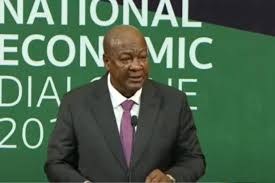
    The Mahama-led government’s National Economic Dialogue (NED), that brought together economic experts, policymakers, business leaders, and other stakeholders to discuss Ghana’s economic challenges and propose lasting solutions, was brought to a successful end on Tuesday, March 4.

    The two-day forum, themed “Resetting Ghana: Building the Economy We Want Together,” focused on fostering inclusive discussions and developing practical policy recommendations to address the country’s economic difficulties.

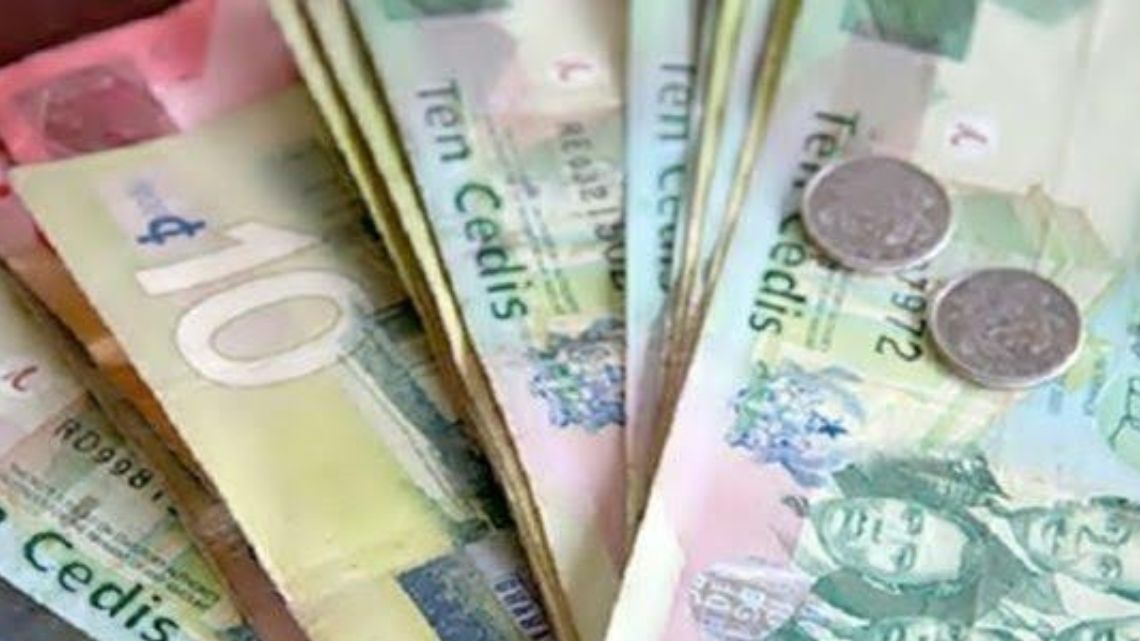
    Participants proposed strategies, programs, such as collaboration between the Central Bank and private sector while others also suggested extended investment incentives to local businesses by the government.

    Speaking at the event, Managing Director of the Ghana Stock Exchange, Abena Amoah, emphasized the need for greater collaboration between the Bank of Ghana (BoG) and industry players. She argued that direct engagement would better align monetary policies with business realities, ultimately fostering investment, job creation, and economic expansion.

    “We believe that the macroeconomy is often disconnected from the private sector. So, Governor, we want the private sector to meet with you and the Monetary Policy Committee (MPC) frequently—at least twice a year—so you can hear our concerns and see how the tools you have can support growth and employment for Ghana,” she stated.

    Similarly, Mavis Owusu-Gyamfi, President of the African Center for Economic Transformation (ACET), stressed the importance of strategic policies to strengthen Ghana’s economy. She called on the government to extend investment incentives to local businesses just as it does for foreign direct investors, highlighting their crucial role in national development.

    “Offer investment incentives to your large local businesses the same way you do for foreign direct investments,” she advised.

    “Remember, your large businesses have options on where to invest, so let’s prioritize supporting them,” she added.

    Meanwhile, the Chief Executive of the Millennium Development Authority (MiDA), Alexander Kofi-Mensah Mould has reassured that the outcomes of the National Economic Dialogue (NED), will not be shelved as speculated by a section of concerned Ghanaians.

    “MiDA is committed to ensuring that resolutions from the dialogue translate into tangible, game-changing projects including other transformational projects in the NDC‘s manifesto” Alex Mould emphasized.

    The dialogue featured a distinguished lineup of speakers, including Mr. Leslie Dwight Mensah, Prof. Ebo Turkson, Mrs. Abena Osei-Poku, Mr. David Ofosu-Dorte, Dr. Elikplim Kwabla Apetorgbor, and Mr. Franklin Cudjoe, who shared valuable insights and policy recommendations.

    Discussions were guided by expert moderators, including Dr. Paul Acquah (former BoG Governor under the Kufuor administration), Dr. Edward K. Brown, Mr. Joe Mensah, Mr. Felix Addo, Prof. K. K. Sarpong, and Dr. Emmanuel Akwetey of the Institute for Democratic Governance (IDEG).

    The opposition New Patriotic Party (NPP) did not attend the two-day dialogue, which drew criticism from a section from the general public. The party criticized the event, calling it a distraction and expressing skepticism about its effectiveness. 

  • Gold-for-Oil initiative suspended as BoG reviews policy

    Gold-for-Oil initiative suspended as BoG reviews policy

    The Bank of Ghana (BoG) has suspended the Gold-for-Oil programme due to policy and operational challenges that have resulted in financial losses.

    The initiative, introduced to reduce reliance on foreign exchange for fuel imports and stabilize fuel prices, is on hold as the Central Bank reviews its economic strategy.

    In an interview with Bloomberg, BoG Governor Dr. Johnson Asiama acknowledged the challenges, stating, “We have had to incur some losses on that, so we have put some suspension on the trade.”

    However, he did not specify the exact issues leading to the decision. Dr. Asiama remains optimistic about Ghana’s economic trajectory, highlighting improvements in the stability of the cedi following last year’s fluctuations.

    “We intend to maintain an appropriate monetary policy stance. Together with commitments to fiscal discipline under the administration of President John Mahama, this should help us maintain stability in the foreign exchange markets,” he assured.

  • Goldbod to takeover Ghana’s gold purchases’ role – BoG Governor

    Goldbod to takeover Ghana’s gold purchases’ role – BoG Governor

    The Bank of Ghana (BoG) is considering stepping back from its direct involvement in gold procurement, paving the way for a newly established Gold Board to take charge of bullion purchases.

    Governor of the Bank of Ghana, Dr. Johnson Asiama, disclosed in an interview with Bloomberg that this transition is aimed at enhancing efficiency in the sector and ensuring a more structured approach to managing Ghana’s gold resources.

    “The central bank may remove itself from the programme to purchase bullion and hand the role to a soon-to-be-established Gold Board,” he stated.

    The establishment of the Gold Board is expected to improve transparency in the gold trade, regulate transactions, and optimise purchases for national reserves.

    Industry experts believe that shifting the responsibility to a specialised entity will streamline operations, strengthen oversight, and allow the central bank to focus on its core monetary functions.

    The move aligns with broader efforts to fortify Ghana’s gold industry, maximise economic gains, and enhance the country’s position in global bullion markets.

  • Banks to cut interest rates if BoG revises cash reserve ratio

    Banks to cut interest rates if BoG revises cash reserve ratio

    Banks have indicated their readiness to swiftly cut interest rates if the Bank of Ghana (BoG) revises the Cash Reserve Ratio (CRR).

    They have also assured that steps will be taken to enhance financial support for businesses, highlighting how the existing policy has affected their cash flow and lending capacity.

    Victor Yaw Asante, the Managing Director and CEO of First Bank Ghana, shared this information on PM Express Business Edition with George Wiafe on February 27, 2025.

    In 2024, the BoG introduced a revised CRR framework, linking reserve requirements to the loan-to-deposit ratio (LDR) of banks.

    This initiative was designed to absorb excess liquidity in the banking sector. Under the updated framework, banks with loan-to-deposit ratios below 40 percent are required to maintain a 25 percent Cash Reserve Ratio (CRR), while those with ratios between 40 and 55 percent must hold 20 percent. Banks that exceed a 55 percent loan-to-deposit ratio are subject to a lower CRR of 15 percent.

    Speaking on the program, Mr. Asante emphasized that if the Bank of Ghana responds favorably to the request, it would greatly enhance banking operations.

    He stated that they had made a strong appeal to the central bank and were hopeful that the issue would be addressed soon.

    “We should also try and deal with expectations as well as manage things in a way that build trust”, Director noted

    In recent months, the Ghanaian cedi has shown relative stability against the US dollar. Mr. Asante stressed the importance of strengthening the country’s export earnings to build foreign reserves. He urged the Bank of Ghana to adopt strategic measures to manage foreign exchange challenges without direct intervention in the market.

  • BoG Governor updates Parliament on scope, cost of new headquarters on March 5

    BoG Governor updates Parliament on scope, cost of new headquarters on March 5

    Governor of the Bank of Ghana (BoG), Dr. Johnson Asiama, is set to appear before Parliament on Wednesday, March 5, to provide details on the construction of the central bank’s new headquarters, reportedly costing $250 million.

    His invitation follows demands from National Democratic Congress (NDC) Members of Parliament (MPs) for a breakdown of the project’s financing, cost variations, scope, and timeline.

    Addressing lawmakers, Majority Leader Mahama Ayariga emphasized the need for accountability and transparency in the project.

    “We have decided at the committee meeting that next week, Wednesday, we will invite the Governor of the Bank of Ghana, as an independent constitutional body, to come to this house to brief us on the pricing of the new Bank of Ghana head office building. We want to know how the price variation took place, how quantities were, and the justification for the need for a new Bank of Ghana Headquarters,” he stated.

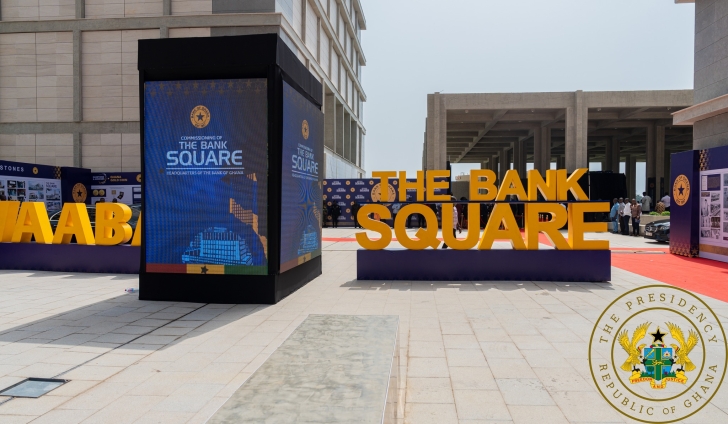
    The inquiry follows the official inauguration of the Bank Square by former President Nana Addo Dankwa Akufo-Addo on November 20, 2024. The facility was designed to integrate advanced technology with modern architecture to enhance the BoG’s capacity in regulating Ghana’s financial system.

    During the inauguration, former President Akufo-Addo highlighted the significance of the new headquarters in strengthening Ghana’s financial infrastructure and aligning it with global standards.

    Meanwhile, the Office of the Special Prosecutor (OSP) is investigating potential corruption in the procurement process of the BoG headquarters. This probe was initiated in response to a petition from Bawku Central MP Mahama Ayariga, who raised concerns over cost escalations without approval from the Public Procurement Authority (PPA).

    The investigation targets former BoG Governor Dr. Ernest Addison, former Deputy Governors Dr. Maxwell Opoku-Afari and Mrs. Elsie Addo Awadzi, as well as the project contractor, Goldkey Properties Ltd.

    Ayariga disclosed that in response to his inquiries, Dr. Addison cited “National Security” as the reason for withholding details on project cost variations in a letter dated August 22, 2023. The OSP has yet to release its findings to the public.

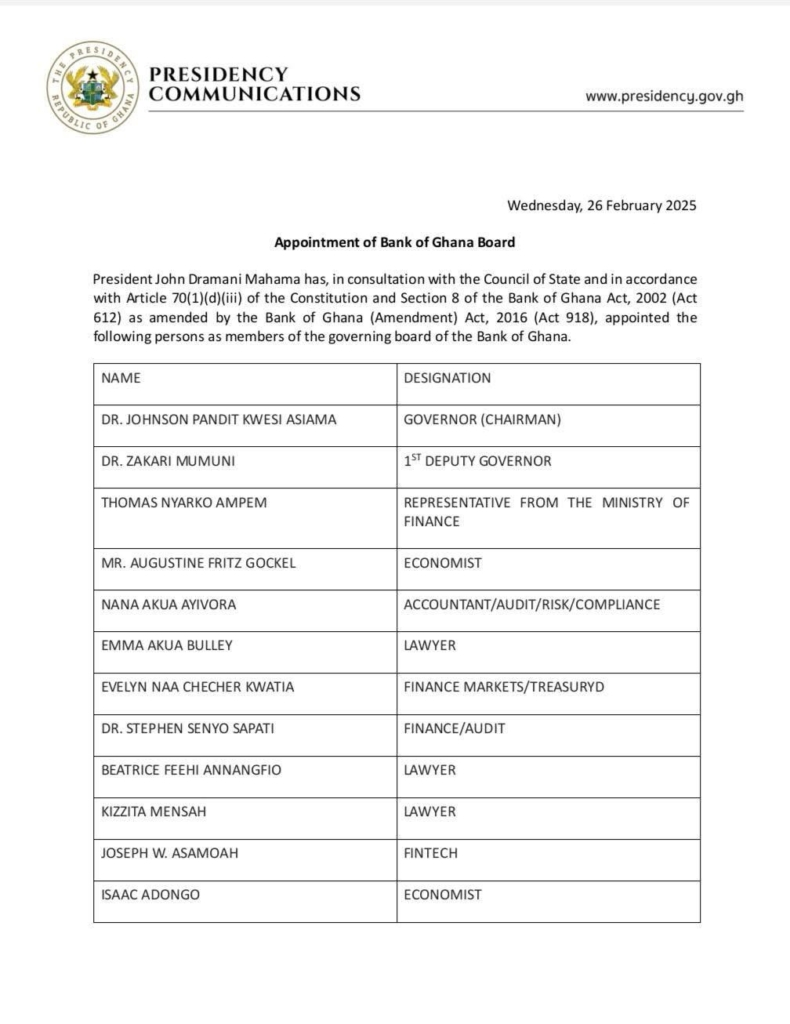
  • Isaac Adongo, Asiama and 10 others appointed Board members of BoG

    Isaac Adongo, Asiama and 10 others appointed Board members of BoG

    President John Mahama has appointed a new 12-member governing board for the Bank of Ghana, with Dr. Johnson Pandit Asiama as chairman and his deputy, Dr. Zakari Mumuni, serving as vice-chair.

    The appointment, made in consultation with the Council of State and in line with the Bank of Ghana Act, was announced in a communiqué released by Minister of State in charge of Government Communication, Felix Ofosu Kwakye, on Wednesday, February 26.

    The board includes Bolgatanga Central Member of Parliament, Isaac Adongo, and deputy finance minister nominee, Thomas Nyarko Ampem. Other appointees are Nana Akua Ayivora, Emma Akua Bulley, Dr. Stephen Senyo Sapati, and Joseph W. Asamoah. The remaining members are Kizzita Mensah, Beatrice Feehi Annangfio, Evelyn Naa Checher Kwatia, and Mr. Augustine Fritz Gockel.

    The appointments follow the swearing-in of BoG Governor Dr. Asiama and his deputy Dr. Mumuni by President Mahama on Tuesday, February 25, at the Jubilee House.

  • BoG will operate free from political interference – Mahama pledges

    BoG will operate free from political interference – Mahama pledges

    President John Mahama has reaffirmed his commitment to safeguarding the independence of the Bank of Ghana (BoG), assuring that his administration will not interfere with the central bank’s operations.

    Speaking at the swearing-in ceremony of Dr. Johnson Asiama as Governor of the BoG and Dr. Zakari Mumuni as First Deputy Governor at the Jubilee House, Mahama stressed the importance of maintaining fiscal discipline and protecting the financial sector from political influence.

    He assured Ghanaians that his government would steer clear of political interference in monetary policy.

    “As President, I am committed to ensuring that the Central Bank operates free from political interference, guided solely by its mandate. This is the path to building a resilient economy, one where policies are driven by discipline, foresight, and the best interest of the Ghanaian people,” Mahama said.

    He warned of the dangers of reckless monetary practices, highlighting how unregulated money printing could destabilize the economy.

    “The lessons of the past remind us of the dangers of fiscal recklessness and the lasting harm it can inflict on an economy,” Mahama stated.

    “When government resorts to unsustainable consumption, expenditure financed by excessive and unregulated printing of money, the consequences can be severe—from spiralling inflation and erosion of incomes to driving millions into poverty.”

    Mahama emphasized his administration’s dedication to upholding responsible fiscal management and ensuring that the BoG functions within its legal framework. “To safeguard our economy from these risks, we must uphold responsible fiscal management, strict adherence to legal and regulatory frameworks, and protect the independence of the Bank of Ghana,” he said.

    In what appeared to be a swipe at the previous administration led by former President Nana Akufo-Addo, Mahama remarked, “One thing for sure… I am not going to ask you to print more money.”

    This follows concerns raised over the BoG’s decision to print GH¢35 billion in 2021 and GH¢42 billion in 2022 to support government spending, as revealed in its 2022 annual report and financial statements. The then-Minority Caucus in Parliament criticized the move, arguing that it violated Section 30 of the BoG (Amendment) Act, 2016 (ACT 918).

    At the same event, newly appointed Governor Dr. Johnson Asiama pledged to rebuild trust in the financial system by fostering transparency, stability, and innovation.

    “We will create an economic and financial system that is transparent, predictable, and stable. Businesses will have the confidence to plan, and individuals will have access to a secure financial system that fosters growth and opportunity,” Dr. Asiama said.

    He further emphasized the Bank’s renewed commitment to restoring confidence in Ghana’s financial landscape. “This ‘reset path’ goes beyond words—it represents real actions aimed at strengthening public trust,” he added.

    Promising to serve with fairness and integrity, Dr. Asiama declared, “As I take this oath of office, I do so with a solemn promise to the people of Ghana—to serve with diligence, impartiality, and unwavering commitment to the mandate of the Bank of Ghana.”

    Dr. Asiama’s appointment follows the decision of outgoing Governor Dr. Ernest Addison to proceed on leave ahead of his retirement on March 31, 2025.

    With prior experience as the Second Deputy Governor of the Bank of Ghana from 2016 to 2017, Dr. Asiama brings a wealth of expertise to lead the institution into this new chapter.

  • I won’t ask you print more money – Mahama tells new BoG Governor

    I won’t ask you print more money – Mahama tells new BoG Governor

    President John Mahama has assured Ghanaians that his administration will uphold fiscal responsibility and avoid exerting political pressure on the Bank of Ghana (BoG) to print money for government spending.

    Speaking at the swearing-in ceremony for the newly appointed Governor of the Bank of Ghana, Dr. Johnson Asiama, and his First Deputy, Dr. Zakari Mumuni, at the Jubilee House on Tuesday, Mahama emphasized the dangers of reckless monetary policies, pledging not to repeat mistakes of the past.

    “The lessons of the past remind us of the dangers of fiscal recklessness and the lasting harm it can inflict on an economy,” Mahama stated. “When government resorts to unsustainable consumption, expenditure financed by excessive and unregulated printing of money, the consequences can be severe—from spiralling inflation and income erosion to driving millions into poverty.”

    He further underscored the importance of preserving the BoG’s independence, stating, “To safeguard our economy from these risks, we must uphold responsible fiscal management, strict adherence to legal and regulatory frameworks, and protect the independence of the Bank of Ghana. As President, I am committed to ensuring that the Central Bank operates free from political interference, guided solely by its mandate.”

    In a pointed remark that appeared to reference the previous administration under former President Nana Akufo-Addo, Mahama added, “One thing for sure… I am not going to ask you to print more money.”

    This comment echoes earlier controversies surrounding the BoG’s 2022 annual report, which revealed that the central bank had printed GH¢35 billion in 2021 and GH¢42 billion in 2022 to finance government expenditure. The Minority Caucus in Parliament criticized these actions of the BoG then led by Dr Ernest Addison, claiming they breached Section 30 of the BoG (Amendment) Act, 2016 (ACT 918).

    Meanwhile, newly sworn-in Governor Dr. Johnson Asiama reaffirmed his dedication to revitalizing public confidence in the financial sector through responsible governance, innovation, and transparency.

    Outlining his vision, Dr. Asiama said, “We will create an economic and financial system that is transparent, predictable, and stable. Businesses will have the confidence to plan, and individuals will have access to a secure financial system that fosters growth and opportunity.”

    He also stressed the importance of restoring trust in the sector, describing the Bank’s new direction as a tangible commitment to rebuilding confidence. “This ‘reset path’ goes beyond words—it represents real actions aimed at strengthening public trust,” he said.

    Pledging to serve with integrity and impartiality, Dr. Asiama affirmed, “As I take this oath of office, I do so with a solemn promise to the people of Ghana—to serve with diligence, impartiality, and unwavering commitment to the mandate of the Bank of Ghana.”

    His appointment follows the departure of outgoing Governor Dr. Ernest Addison, who is set to retire on March 31, 2025, after officially proceeding on leave.

    Dr. Asiama brings significant experience to the role, having previously served as the Second Deputy Governor of the Bank of Ghana from 2016 to 2017.

  • We will provide a secure financial system that will aid growth of businesses – BoG Governor

    We will provide a secure financial system that will aid growth of businesses – BoG Governor

    Newly sworn-in Governor of the Bank of Ghana, Dr. Johnson Asiama, has pledged to strengthen public confidence in Ghana’s financial sector by promoting stability, transparency, and innovation.

    Speaking at his swearing-in ceremony on Tuesday, February 25, Dr. Asiama outlined his commitment to steering the nation’s economy toward a future-ready and stable financial system through responsible governance, digital transformation, and sound economic policies.

    Emphasizing the importance of rebuilding trust, he stated, “We will create an economic and financial system that is transparent, predictable, and stable. Businesses will have the confidence to plan, and individuals will have access to a secure financial system that fosters growth and opportunity.”

    Highlighting the Bank’s renewed focus, he added that this “reset path” was more than just a pledge—it represented tangible actions aimed at restoring public trust in the financial sector.

    Dr. Asiama also assured Ghanaians of his dedication to serving with fairness and integrity. “As I take this oath of office, I do so with a solemn promise to the people of Ghana. That is to serve with diligence, impartiality, and unwavering commitment to the mandate of the Bank of Ghana,” he affirmed.

    He appealed for the cooperation and trust of all stakeholders, emphasizing that the success of this new chapter would depend on collective effort. “We seek the support, partnership, and trust of the people of Ghana as we embark on this journey to foster growth and opportunity for our country,” he said.

    Dr. Asiama’s appointment follows the early departure of outgoing Governor Dr. Ernest Addison, who is set to retire on March 31, 2025, after officially requesting to proceed on leave.

    Bringing extensive experience to the role, Dr. Asiama previously served as the Second Deputy Governor of the Bank of Ghana from 2016 to 2017. His return to the institution signals a renewed focus on financial stability and economic resilience.

  • Elsie Addo Awadzi retires at Second Dep. BoG Governor

    Elsie Addo Awadzi retires at Second Dep. BoG Governor

    Elsie Addo Awadzi, the Second Deputy Governor of the Bank of Ghana (BoG), has officially announced her retirement from the Central Bank, set to take effect on February 28.

    The Presidency confirmed her decision in a statement released on Friday, February 7, 2025, acknowledging her years of dedicated service to the institution and the country’s financial sector.

    President John Dramani Mahama accepted her early retirement and extended his appreciation for her contributions to economic governance and financial stability.

    “The President thanks Mrs. Elsie Addo Awadzi for her distinguished service to the Bank and the Republic and wishes her well in her future endeavors,” the statement read.

    During her tenure at the Bank of Ghana, Awadzi played a key role in strengthening monetary policy and ensuring stability in the financial sector. Her leadership was instrumental in shaping policies that promoted economic resilience.

    As she departs from her position, her impact on Ghana’s banking sector remains significant, with expectations that her expertise will continue to influence financial governance beyond the Central Bank.

  • Afenyo-Markin’s opposition to BoG Governor’s assumption of duty lacks basis, an error of law – Dafemekpor

    Afenyo-Markin’s opposition to BoG Governor’s assumption of duty lacks basis, an error of law – Dafemekpor

    Majority Chief Whip and Member of Parliament for South Dayi, Nelson-Rockson Dafemekpor, has criticized Minority Leader Alexander Afenyo-Markin’s objections regarding the assumption of duty by the newly appointed Bank of Ghana (BoG) Governor, Dr. Johnson Asiamah.

    Afenyo-Markin had previously written to President John Mahama, raising concerns that Dr. Asiamah had started his duties before receiving approval from the Council of State.

    This, he argued, could set a dangerous precedent. The Minority Leader cited a media report about Dr. Asiamah’s activities at the bank following a brief engagement with the BoG management on February 3.

    Afenyo-Markin compared the situation to a judicial nominee presiding over court cases before receiving the proper approvals, calling it “inappropriate.”

    In a response posted on the social media platform X, Mr. Dafemekpor refuted Afenyo-Markin’s criticism, pointing out that no law had been cited to support the Minority Leader’s claims.

    “Now, it’s curious that Hon. Afenyo-Markin is lamenting the official presence of the new Governor at BoG yet he was unable to point to any law that has been breached in that regard,” he said.

    Dafemekpor also referenced a previous court case, highlighting a ruling that clarified the President’s authority in such matters.

    “In the case of GBA & Ors vrs. AG & Ors [2016] GHA SC 43… Dotse JSC (as he then was) delivering a concurring opinion… had this to say to the Hon. Afenyo-Markin as Counsel for the Plaintiff in the 1st case: ‘In conclusion, I want to reiterate the point that, whilst the President is mandated to seek the advice of the Judicial Council, and consult with the Council of State in the appointment process of Supreme Court Judges with the approval of Parliament, those advisory opinions are not binding on the President.’”

    From this, Dafemekpor concluded that Dr. Asiamah’s assumption of duty was legally justified, irrespective of pending approval.

    “So it is clear from the above SC decision that, the appointment by Dr. Johnson Asiamah as the new BoG Governor (pending the advice from the CoS though) is a fait accompli, because the SC says any such advice is NOT BINDING ON THE PREZ.”

    Dafemekpor went on to address Afenyo-Markin’s letter, saying that his suggestions were legally flawed.

    “Interestingly, even though, the Hon. Afenyo-Markin says in para 7 of his odd letter to the Prez of the Republic that, the new Governor should refrain from any official engagements, yet the same man suggests that the Governor can receive briefings awaiting confirmation. Que? In what form and manner will any such briefings take? Wouldn’t it be in a meeting? And won’t such meetings be held in BoG premises?”

    Concluding his remarks, Dafemekpor stated that Afenyo-Markin’s letter lacked legal merit, calling it “hot air” and an “error of law.”

  • New BoG Governor assures of institution’s independence

    New BoG Governor assures of institution’s independence

    Dr. Johnson Asiama, the newly appointed Governor of the Bank of Ghana (BoG), has pledged to safeguard the independence of the institution and ensure a seamless transition into his new role.

    Speaking after assuming office, Dr. Asiama emphasized that his primary goal is to uphold the autonomy of the central bank while fostering a smooth handover of responsibilities. His comments were made during a meeting with the Bank’s Deputy Governors, Dr. Maxwell Opoku-Afari and Elsie Addo Awadzie.

    “The President believes that this approach reinforces our independence and facilitates a smooth transition,” Dr. Asiama said, assuring both stakeholders and the public that the transition would be without complications.

    He further added, “The public must see us working together because it’s just another transition.”

    Dr. Asiama also noted that key personnel at the Central Bank are already familiar to him, which should make the transition process even smoother. “We should not see the transition as a problem for us at all,” he remarked.

    As the new Governor, he reaffirmed his commitment to the mandate of the Bank, ensuring that the market would experience no disruptions during his tenure.

    Dr. Asiama officially took over as Governor of the Bank of Ghana after Dr. Ernest Addison began his terminal leave on February 3, 2025, ahead of his retirement. Dr. Addison’s tenure will officially conclude on March 28, 2025, as per the provisions of the Bank of Ghana Act, 2002 (Act 612), as amended.

  • Addison proceeds on leave, Dr. Johnson Asiamah appointed BoG Governor

    Addison proceeds on leave, Dr. Johnson Asiamah appointed BoG Governor

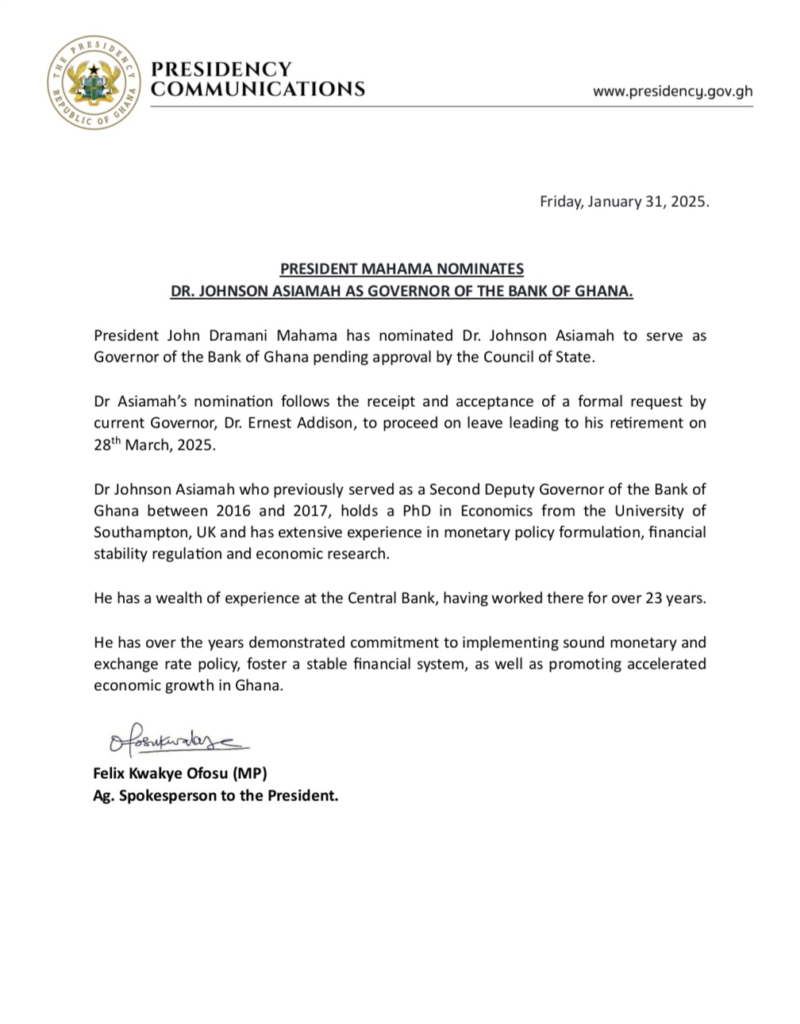
    President John Dramani Mahama has appointed Dr. Johnson Asiamah for the role of Governor of the Bank of Ghana, subject to the approval of the Council of State.

    This decision follows a formal request from the current Governor, Dr. Ernest Addison, to take a leave of absence ahead of his planned retirement on March 31, 2025.

    Dr. Asiamah, who previously held the position of Second Deputy Governor of the Bank of Ghana between 2016 and 2017, earned his PhD in Economics from the University of Southampton in the UK. His career spans extensive expertise in shaping monetary policies, regulating financial stability, and conducting economic research.

    With over 23 years of service at the Bank of Ghana, Dr. Asiamah has consistently shown his commitment to developing sound monetary policies, stabilizing the financial sector, and contributing to the nation’s economic growth.

  • BoG hammers on financial inclusion for persons with disabilities

    BoG hammers on financial inclusion for persons with disabilities

    The Bank of Ghana (BoG) has reinforced its commitment to ensuring financial inclusion for persons with disabilities (PWDs) by issuing a directive aimed at breaking down barriers in accessing financial services.

    This directive aligns with global financial inclusion standards, which emphasize secure, efficient, and accessible financial systems. It mandates financial service providers to improve service accessibility, expand service points, enhance interoperability, and implement targeted financial literacy programs for PWDs.

    Citing legal backing, the central bank referenced key legislations, including the Persons with Disability Act, 2006 (Act 715), the Borrowers and Lenders Act, 2020 (Act 1052), the Banks and Specialised Deposit Taking Institutions Act, 2016 (Act 930), and the Payment Systems and Services Act, 2019 (Act 987). These laws provide the framework for ensuring that PWDs have equitable access to financial products and services.

    The directive seeks to increase accessibility and usability of financial products for PWDs while compelling financial institutions to develop policies and infrastructure that promote inclusive banking. It is also guided by the principles of the UN Convention on the Rights of Persons with Disabilities, reinforcing the need for proactive measures to eliminate obstacles faced by PWDs in financial transactions.

    Penalties for Non-Compliance

    The BoG has made it clear that institutions failing to comply with the directive will face strict penalties.

    “A Financial Service Provider that fails to institute policies, procedures, and facilities as prescribed by this directive shall be liable to an administrative penalty of not less than two thousand penalty units,” the directive warns.

    This sanction is enforced under section 92 (8) of the Banks and Specialised Deposit Taking Institutions Act, 2016 (Act 930) and section 44 (3) of the Non-Bank Financial Institution Act, 2008 (Act 774).

  • External debt at $27.6bn; GHC761.0bn total debt as of Nov 2024 – BoG

    External debt at $27.6bn; GHC761.0bn total debt as of Nov 2024 – BoG

    Ghana’s total public debt stood at GHC761.0 billion by November 2024, reflecting a month-on-month decrease of GH¢24.1 billion, according to the Bank of Ghana’s January 2025 Summary of Financial and Economic Data.

    This decline in the overall debt was attributed to the successful restructuring of the country’s external debt, which significantly reduced its external debt component.

    In dollar terms, Ghana’s total debt was valued at US$47.9 billion as of November 2024, a decrease from US$51.6 billion recorded in the same month the previous year. This level of debt equates to 72.2% of the nation’s Gross Domestic Product (GDP).

    The external debt, which plays a significant role in the country’s financial structure, was reported at US$27.6 billion in November 2024. This figure is notably lower than the US$30 billion recorded in November 2023, and represents a decrease from US$32.0 billion in both September and October 2024.

    Conversely, domestic debt saw an upward trend, rising to GH¢311.7 billion as of November 2024, which accounts for about 30.5% of GDP. This increase is attributed to the government’s persistent borrowing from the treasury market, with domestic debt sitting at GH¢275.8 billion in February 2024.

    Although data from August 2024 to December 2024 on government fiscal operations was not available, the fiscal deficit to GDP stood at 3.9% as of July 2024, while the primary balance reflected a deficit of 1.8% of GDP during the same period.

    As of November 2024, Ghana’s economy was valued at GH¢1.020 trillion, with continued fiscal challenges and external debt restructuring efforts forming the core of the country’s ongoing economic management strategy.

  • BoG records 2.4% cedi depreciation to dollar in January

    BoG records 2.4% cedi depreciation to dollar in January

    The Ghana cedi depreciated by 2.4% against the US dollar in January 2025, marking a sharper decline compared to the 1.3% recorded during the same period last year, the Bank of Ghana has revealed.

    By the end of January, the local currency was trading at GH¢15.06 to the US dollar on the interbank market. Similarly, the cedi weakened by 3.0% against the euro, selling at GH¢15.69, and depreciated by 0.8% against the British pound, which traded at GH¢18.55.

    In the retail forex market, the cedi’s performance was even more concerning. As of January 17, 2025, the local currency had depreciated by 2.94% to the dollar, bringing its year-to-date loss to 3.87%.

    This decline was driven by heightened demand from the manufacturing and energy sectors, coupled with the Bank of Ghana’s auction of its first US$20 million to Bulk Oil Distribution Companies (BDCs).

    The cedi’s depreciation to the dollar in January was its steepest decline since the start of the year, with the currency trading at a mid-rate of GH¢16.15 per dollar during the third week of the month.

    Market analysts attribute the cedi’s challenges to sustained pressure from key sectors and the demand for foreign exchange. The Bank of Ghana’s interventions, such as the forex auction, aim to stabilize the currency, but rising demand for dollars continues to exert downward pressure.

  • BoG adjusts gold coin rates following global gold price rise

    BoG adjusts gold coin rates following global gold price rise

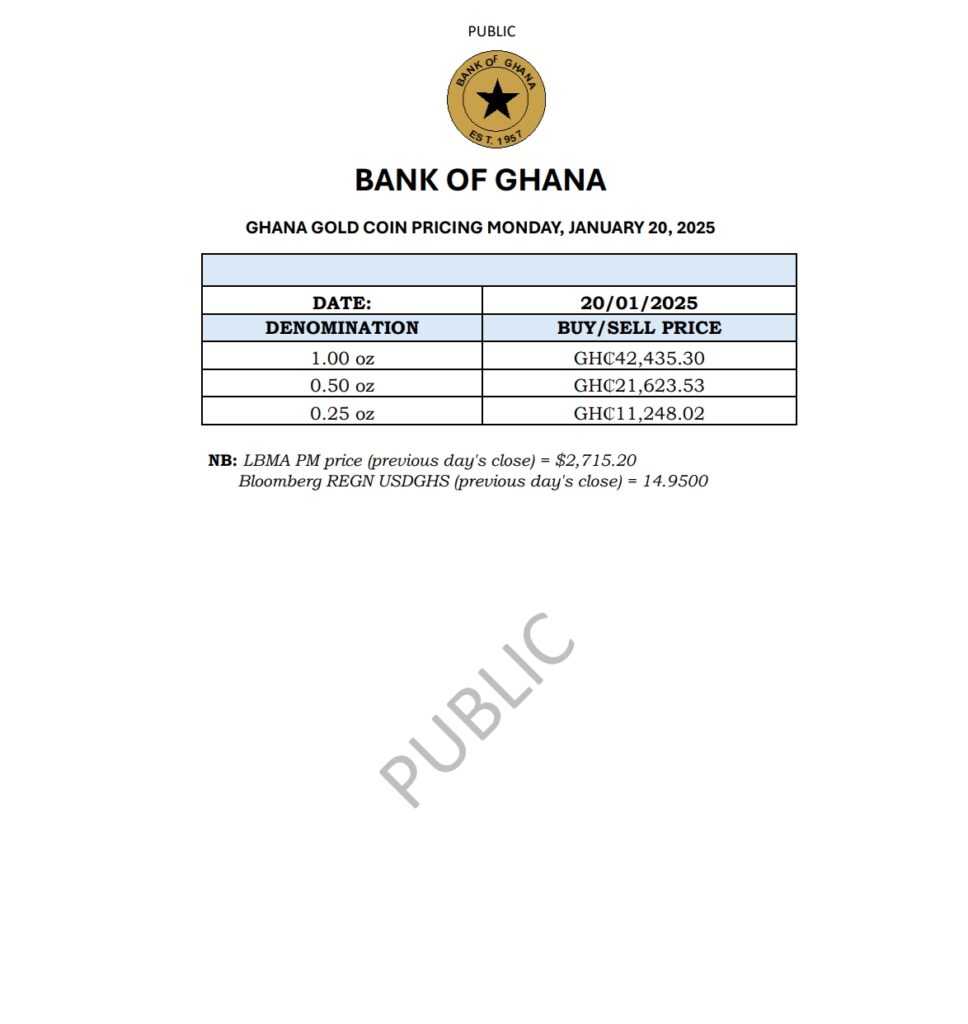
    The Bank of Ghana (BoG) has announced a modest price adjustment for its gold coins, in line with the recent surge in global gold market prices.

    The coins, available in 0.25oz, 0.50oz, and 1oz denominations, are now priced at GHS 11,248, GHS 21,623, and GHS 42,435, respectively.

    This price increase coincides with gold prices on the London Bullion Market Association (LBMA) reaching $2,715 per ounce on January 20, 2025, fueled by high demand amidst global economic uncertainties.

    The BoG’s Ghana Gold Coin (GGC) initiative, launched as part of its domestic gold strategy, provides Ghanaians with a viable alternative investment while addressing broader economic challenges.

    The program is designed to absorb excess liquidity in the market, reinforcing the Ghanaian Cedi and stabilizing the local currency.

    The central bank urges investors to closely monitor fluctuations in gold prices and exchange rates, as these elements directly affect the value of the gold coins.

    The GGC initiative presents an excellent opportunity for individuals to diversify their investment portfolios, participate in the global gold market, and contribute to both their financial well-being and the country’s economic resilience.

  • BoG can’t resolve inflation challenges, cross-sectoral approach needed – GSS

    BoG can’t resolve inflation challenges, cross-sectoral approach needed – GSS

    The Ghana Statistical Service (GSS) has emphasized the need for a collaborative, cross-sectoral approach to addressing inflation, stressing that the responsibility should not fall solely on the Bank of Ghana (BoG).

    The GSS has called for the inclusion of all government ministries in efforts to curb rising inflation and ensure economic stability.

    Historically, the BoG has relied on monetary policy tools such as interest rate adjustments to manage inflation. In 2022, the Bank implemented record-high interest rates as part of its inflation control strategy. By September 2024, the BoG reduced its monetary policy rate to 27%, the second rate cut since 2021, to ease borrowing costs and address inflationary pressures. Prior to this, the policy rate had been held at 29% for nine months following a reduction from 30% in January 2024.

    However, despite these measures, recent GSS data revealed that the government missed its end-of-year inflation target of 15%, as inflation surged for the fourth consecutive month, reaching 23.8% in December 2024, up from 23.0% in November. The increase was largely driven by rising food prices.

    In response, the Government Statistician, Professor Samuel Kobina Annim, reiterated the importance of a comprehensive strategy involving multiple ministries to tackle the root causes of inflation. Government Statistician, Professor Samuel Kobina Annim, stressed the necessity of moving the focus beyond the Central Bank’s actions alone.

    “We definitely need to move the conversation away from a Central Bank’s responsibility alone. We need to tackle inflation at least from two perspectives. Every sector ministry we talk about in our release should be responsible,” he said.

    “Our conversation focuses on the Ministry of Food and Agriculture. But, if you look at the items – transport, housing, water, electricity and gas are dominant divisions. These ministries should be part of the conversation in driving down the rate of inflation,” he added.

    Prof. Annim further highlighted the need for a multi-ministerial approach, emphasizing the importance of coordinated efforts.

    “It will be a challenge speaking directly to what different state institutions should be doing differently. Especially, when you don’t know the details of what they are doing, apart from what you are told or you read.

    “On the back of this, it will be important we step back and look at how Ghana Statistical Service is promoting the granular data from the headline figure. So we are calling for an inter-ministerial engagement if we want to bring down the rate of inflation,” he concluded.

  • BoG grants 15 brokers authorisation to operate in interbank FX market

    BoG grants 15 brokers authorisation to operate in interbank FX market

    The Bank of Ghana (BoG) has authorised 15 foreign exchange (FX) brokers to operate on the Ghana Interbank Foreign Exchange Market for the year 2025.

    This approval is in line with Section 3.13.1 of the Ghana Interbank Forex Market Conduct rules, which mandates both local and international FX brokers to obtain annual clearance to participate in the country’s forex market.

    Among the approved brokers for 2025 are IC Securities, SIC Brokerage, Black Star Brokerage, Serengeti Limited, Obsidian Acherner, Regulus, Sarpong Capital, Terika Financial Services Ltd, Laurus Africa, Shadeya International Investments Ltd, Savvy Securities, GFX Brokers, Crown Agents, CSL Capital, and StoneX Financial Limited.

    Crown Agents, CSL Capital, and StoneX Financial Limited are specifically designated as Cross-Border Payments and Financial Services Providers.

    The authorisations, effective from January 1 to December 31, 2025, are subject to strict post-approval conditions. According to a statement from the BoG:

    “The Bank of Ghana reserves the right to delist any authorised FX Broker for nonperformance or non-compliance with the Foreign Exchange Act 2006 (Act 723), the Interbank FX Market Conduct rules and the Post Authorisation Guidelines for Forex Brokers.”

    The BoG has underscored the need for all FX brokers to strictly adhere to the Ghana Interbank FX Market Conduct rules. Brokers are required to submit interim and end-of-day trading reports, maintain robust systems against cyber threats, and operate solely as intermediaries between banks without direct engagement with corporate entities.

    Failure to comply with these regulations may lead to sanctions, including the revocation of operating authorisation.

    For Cross-Border Payments and Financial Services Providers, the BoG has also imposed specific compliance requirements, such as maintaining accurate market-based pricing and meeting strict reporting obligations. Non-compliance with these conditions could result in similar penalties.

    This regulatory move by the Bank of Ghana highlights its commitment to ensuring a stable and transparent forex market while aligning with international best practices. The approved brokers and the regulatory conditions aim to foster confidence and discipline in Ghana’s interbank FX market.

  • BoG Governor projects inflation will fall to single digits by the first quarter of 2026

    BoG Governor projects inflation will fall to single digits by the first quarter of 2026

    Governor of the Bank of Ghana (BoG), Dr. Ernest Addison, has announced that the central bank expects inflation to drop to single digits by the first quarter of 2026.

    However, he mentioned that this projection depends on the economic policies and programs that the incoming John Mahama administration will implement in 2025.

    Dr. Addison shared this information during an appearance on Joy News’ PM Express Business Edition with host George Wiafe.

    In 2024, the BoG initially predicted inflation to end the year at 15%, but this forecast was later updated to 18%.

    By November 2024, inflation had slightly increased to 23% from 22.1% in October.

    Dr. Addison noted that inflation is expected to decrease due to the monetary policy actions taken by the BoG.

    “Based on the work that the Bank of Ghana has done in checking rising price levels through the inflation targeting policy, the inflation rate will slow down for this year (2025), he assured.

    “Inflation rate will hit 15 per cent by the end of 2025, from the current 23 per cent”, he assured.

    Dr. Addison explained that the increase in inflation was partly due to the election-related emotions and the uncertainty surrounding that period.

  • Salaries would’ve been withheld, no return on investment if not for DDEP – BoG Governor

    Salaries would’ve been withheld, no return on investment if not for DDEP – BoG Governor

    Governor of the Bank of Ghana (BoG), Dr. Ernest Addison, has revealed that salaries would have gone unpaid, and investment returns halted if not for the Domestic Debt Exchange Programme (DDEP).

    Speaking on Joy News’ PM Express Business Edition, Dr. Addison described the debt exchange as a critical intervention to avert national economic collapse during a severe crisis.

    “It was a life-and-death matter for all Ghanaians. At that point, nothing else mattered. Salaries were not going to be paid. There was going to be chaos because nobody was getting their investment returns,” he stated.

    He dismissed claims that the DDEP compromised the central bank’s independence, emphasizing it was a necessary response to the country’s financial challenges.

    “The debt exchange programme has nothing to do with the independence of the central bank,” he clarified.

    Dr. Addison detailed that the International Monetary Fund (IMF) had recommended a debt standstill, followed by the debt exchange initiative as part of efforts to restore stability.

    “The IMF’s approach to the crisis was clear. The Bank of Ghana had to continue financing the government to maintain stability while we worked on the programme.

    “At that point, those holding government instruments were the ones impacted. What happened in October during the debt standstill could have happened much earlier in the year, but it would have been disorderly without the appropriate policies in place. This was the solution given the situation the country found itself in.”

    Reaffirming the central bank’s autonomy, he stressed, “The recent economic challenges were about survival. Let’s not oversimplify the situation.”

    The DDEP, which concluded on February 10, 2023, recorded over 80% participation of eligible bonds.

  • BoG to activate MPCC if inflation surpasses 18% ±2% target – Report

    BoG to activate MPCC if inflation surpasses 18% ±2% target – Report

    The Bank of Ghana may activate the Monetary Policy Consultation Clause (MPCC) if the country fails to achieve the central inflation target of 18.0% +/- 2.

    Inflation spiked to 23% in November 2024, with a potential for a slight increase in December 2024.

    According to the terms outlined in the Monetary Policy Consultation Clause (MPCC) under Ghana’s ongoing International Monetary Fund (IMF) agreement, if the actual inflation rate falls outside the established outer bands on specific review dates, the MPCC will be triggered.

    This would initiate discussions with the IMF Board, with Ghanaian authorities presenting corrective measures to address the issue.

    “Given the revised central target of 18.0%, we estimate the upper outer band at 22.0%, above which the authorities would have to trigger the MPCC”, IC Research said in its macroeconomic update.

    “With the risk of overshooting the upper outer band, which would trigger the MPCC, we believe the Bank of Ghana opted for the aggressive FX [foreign exchange] sales to ensure a favourable pass-through of FX appreciation and contain inflation below 22.0% by end-2024”, it stated.

    Ghana’s Consumer Price Inflation continued its ascent in November 2024, as the persistent rise in food inflation overshadowed a modest decline in non-food inflation, intensifying price pressures across the economy.

    Headline inflation surged by 90 basis points to 23.0% year-on-year, defying analysts’ expectations of a slight dip in November 2024.

  • BoG rolls out stricter bancassurance regulations for financial sector shareholders

    BoG rolls out stricter bancassurance regulations for financial sector shareholders

    The Bank of Ghana (BoG) has released the bancassurance guidelines as an Exposure Draft, inviting feedback from the banking sector and the public, in accordance with the BoG’s Procedures for Issuance of Directives, 2020.

    BoG notes that bancassurance has experienced significant expansion worldwide, including across Africa, since the 1980s.

    This model allows banks and other financial institutions (BOFIs) to diversify their product offerings while earning supplementary revenue by using their existing distribution networks to collaborate with insurance firms.

    For insurance companies, this partnership provides an opportunity to expand their market reach and boost sales by utilizing the distribution channels of the BOFIs.

    “For customers, there is convenience, as BOFIs provide a one-stop-shop for all their financial needs including insurance products. In the case of Ghana, insurance companies have resorted to entering into partnership agreements with banks for the provision of Bancassurance products through the distribution channels of the latter”, the directive said.

    This model enables Regulated Financial Institutions (RFIs) to offer insurance products to their clients on behalf of an insurer, utilizing the RFI’s established distribution networks.

    Under this model, an RFI can partner with one life insurance company and one general insurance company. Customers, whether individual or retail, are given the freedom to choose their preferred product and insurer. Importantly, the model ensures that there is no sharing of risk between the RFI and the insurer.

    Additionally, the model aligns with the Bancassurance framework endorsed by the National Insurance Commission (NIC).

    “This Directive is therefore being issued to provide BOG’s regulatory expectations to the banking industry to ensure that inherent risks associated with the product is adequately managed by RFIs as well as to further smoothen and ensure a seamless implementation of the business of Bancassurance in Ghana between the banking and insurance sectors of the economy”, the BoG said.

    Regarding sanctions and corrective actions, the Bank of Ghana (BoG) stated that any Regulated Financial Institution (RFI) that fails to adhere to the stipulations of this Directive will be subject to an administrative penalty ranging from a minimum of two thousand penalty units to a maximum of ten thousand penalty units, as outlined in Section 92(8) of Act 930.

    Additionally, the BoG may impose other penalties or take any corrective measures deemed necessary, in accordance with the provisions of Act 930.

    “Without prejudice to the other penalties and remedial measures prescribed by Act 930, BOG may impose one or more of the following sanctions where any of the provisions herein are contravened:

    a. Suspend the RFI from engaging in Bancassurance business;

    b. Prohibit the RFI from further lending or taking further financial exposures, including investments, or capital expenditure;

    c. Restrict payment of bonuses or excessive compensation to the defaulting key management personnel or director; and d. Suspend defaulting person from office or declare that the relevant person is no longer a fit and proper person.

  • BoG to offer $120M in auction to BDCs in first quarter of 2025

    BoG to offer $120M in auction to BDCs in first quarter of 2025

    The Bank of Ghana (BoG) is set to conduct a foreign exchange auction of $120 million for Bulk Oil Distribution Companies (BDCs) in the first quarter of 2025, aimed at stabilizing the country’s fuel supply. 

    To facilitate this, the central bank has released a detailed auction schedule. The auction series will consist of six sessions, each offering $20 million, and will take place biweekly from January to March 2025. 

    The first auction is scheduled for January 14, with additional auctions on January 29, February 12, February 26, March 12, and March 26. 

    These auctions will be governed by the BoG’s established guidelines to ensure transparency and efficiency in the process.

    This initiative forms part of the BoG’s broader strategy to address foreign exchange demand pressures and stabilize the cedi, particularly within the downstream petroleum sector.

    In a press statement, the Bank of Ghana (BoG) emphasized that by providing Bulk Oil Distribution Companies (BDCs) with consistent access to foreign currency, the auctions are expected to facilitate the smooth importation of refined petroleum products, reduce supply disruptions, and promote price stability within the sector.

    “The Bank of Ghana announces for the information of all Authorised Foreign Exchange Dealing Banks, the Bulk Oil Distribution Companies (BDCs) FX forward Auction Calendar for the first quarter of 2025.

    “In accordance with the BDCs Forex Forward Auction guidelines, bids are invited as per the prescribed format to purchase United States Dollars against Ghana cedis, separately on each auction date and should be submitted via the dedicated email bogforwards@bog.gov.gh,” it added.

    Participants in the market, including authorized foreign exchange dealing banks and Bulk Oil Distribution Companies (BDCs), are required to submit their bids through the specified channels within the allotted timeframes. The outcomes of each auction will be disclosed on the same day, ensuring quick and clear communication with all relevant parties.

  • Total assets in banking sector surge by 3.4% to GHC367.2bn – BoG

    Total assets in banking sector surge by 3.4% to GHC367.2bn – BoG

    The Bank of Ghana (BoG) reports that total assets in the banking sector increased by 3.4% month-on-month to reach GHC367.2 billion in October 2024.

    This figure represents a significant 32.1% growth from January 2024, when total assets stood at GHC278.0 billion, underscoring the sector’s resilience and expansion over the year.

    The data, published in the BoG’s Summary of Economic and Financial Data – November 2024, highlights a steady month-on-month growth trajectory. Total assets rose from GHC316.0 billion in May to GHC328.1 billion in July and further to GHC355.0 billion in September before hitting the October peak.

    Similarly, total deposits, a critical component of the sector’s funding base, experienced consistent growth. Deposits increased by 3.4% month-on-month to GHC277.3 billion in October, up from GHC268.3 billion in September. From the year’s start in January, deposits surged by 27.3%, rising from GHC217.9 billion.

    Another key performance indicator, total advances, also exhibited significant growth. Advances grew by 3.2% month-on-month to GHC94.6 billion in October, up from GHC91.7 billion in September. Since January 2024, when total advances were GHC73.8 billion, the sector has recorded a substantial 28.2% increase.

    This steady rise reflects the banking sector’s growing role in financing economic activities, including businesses, households, and infrastructure projects, as well as growing public confidence in the financial system.

  • BoG reports $3.8bn trade surplus in October 2024

    BoG reports $3.8bn trade surplus in October 2024

    Ghana recorded a trade surplus of $3.8 billion by the end of October 2024, demonstrating sustained export growth despite global economic challenges.

    This milestone, highlighted in the Bank of Ghana’s November 2024 Summary of Economic and Financial Data, underscores the country’s resilience in maintaining a positive balance between exports and imports.

    The surplus was driven by strong performances in key export commodities, including gold, cocoa, and oil. Gold exports soared to $9.58 billion in October, up from $8.44 billion in September, marking a remarkable surge.

    Cocoa revenues also showed significant growth, increasing from $989 million in September to $1.15 billion in October, boosted by favorable global market conditions and improved supply chain efficiencies.

    Oil exports followed a similar trend, rising from $3.05 billion in September to $3.33 billion in October. Meanwhile, non-traditional exports contributed $2.45 billion, reflecting Ghana’s ongoing efforts to diversify its export portfolio.

    On the import side, total imports climbed to $3.68 billion in October, compared to $3.35 billion in September. Oil imports, a significant component, amounted to $8.99 billion by October, while non-oil imports reached $3.85 billion, indicating heightened domestic demand for goods and services.

    Despite the robust export performance, Ghana’s gross international reserves dipped slightly from $7.83 billion in September to $7.68 billion in October. However, the country maintained a stable import cover of 3.5 months, providing a crucial buffer against external economic shocks.

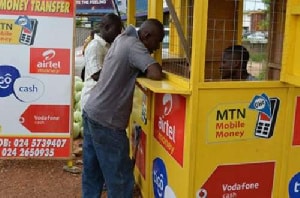
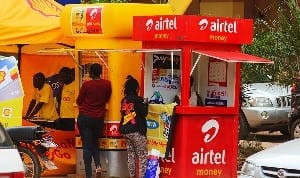
  • Value of MoMo transactions surge by GHC13.7 billion – BoG

    Value of MoMo transactions surge by GHC13.7 billion – BoG

    Data from the Bank of Ghana reports a significant increase in mobile money transactions, a proof of a significant hike in adoption of digital financial services nationwide.

    The total number of mobile money transactions increased from 705 million in September 2024 to 728 million in October 2024, indicating a substantial monthly increase.

    This growth was seen in the total value of transactions, which rose from GHS 284.9 billion to GHS 298.6 billion during the same period.

    However, the balance of float—the total funds held in mobile money accounts—experienced a decline, dropping from GHS 25.1 billion to GHS 24.2 billion.

    This surge in mobile money usage in October 2024 reflects favourable market dynamics, despite ongoing economic and regulatory hurdles, including calls for a reduction or elimination of the E-levy rate.

    Regarding mobile money interoperability, the total transaction value rose from GHS 2.5 billion to GHS 2.8 billion. The total number of interoperability transactions also increased, from 18.5 million to 19 million. Additionally, the transaction value of cheques cleared through mobile money grew from GHS 32.8 billion to GHS 38 billion, with the number of such transactions rising from 452,000 to 506,000.

    Meanwhile, the period also saw an increase in registered and active mobile money accounts. The number of registered accounts rose from 71.2 million to 71.9 million, while active accounts slightly increased from 23 million to 23.3 million. On the business side, while the number of registered Momo agents grew by 5,000 in one month—from 867,000 to 872,000—the number of active agents declined from 456,000 to 404,000.

    According to the report, the total transaction value under direct debit through the Automated Clearing House (ACH) increased from GHS 250.2 million to GHS 327.6 million, with the number of transactions rising from 53,000 to 84,000. Meanwhile, in terms of direct credit ACH transactions, the transaction value grew from GHS 10.3 billion to GHS 11.7 billion, and the total number of transactions increased from 785,000 to 874,000.

  • BoG’s inflation projections for 2025 shift amid mixed economic signals

    The Bank of Ghana’s latest assessment reveals a mixed outlook for Ghana’s economy, with inflation remaining a key concern. Inflation, initially expected to return to the 6–10% target band by the third quarter of 2025, is now forecast to stabilise within this range by the final quarter of the year. This adjustment reflects ongoing pressures from food and fuel price volatility, exchange rate fluctuations, and utility cost adjustments.

    Economic indicators suggest a recovery, with the Composite Index of Economic Activity recording a 2.2% annual growth in September 2024, reversing the contraction seen in 2023. Increased port activity, tourism, and private sector credit have contributed to this momentum. However, inflation remains a hurdle, with projections for 2024 averaging 20.1%, up from earlier estimates of 19%​​

    “Major drivers of the improvement in economic activity include increased port activity, households and firms consumption of goods and services , construction activities, credit to the private sector, and higher tourist arrivals. At the time of the last MPC meeting, average inflation forecast a year ahead which stood at 19.0 percent has increased slightly to 20.1 percent at this forecast round. The horizon for inflation to get back within the target band of 6 – 10 percent has slightly shifted forward to Q42025 from the original forecast period of Q32025,” the 121st MPC report stated.

    The International Monetary Fund (IMF) forecasts single-digit inflation by the end of 2025, marking a significant improvement from the current figures.

    The IMF also anticipates economic growth to accelerate from 2.8% in 2024 to 4.4% in 2025, buoyed by tighter monetary policy and structural reforms under the Extended Credit Facility programme. A Staff-Level Agreement expected to be approved this month is expected to pave the way for an additional $360 million disbursement before the end of the year, to hep bolster macroeconomic stability.

  • BoG maintains policy rate at 27% due to currency and inflationary pressures

    BoG maintains policy rate at 27% due to currency and inflationary pressures

    The Bank of Ghana’s (BoG) Monetary Policy Committee (MPC) has decided to keep the policy rate unchanged at 27%, they announced in a communiqué, an usual approach of often holding press briefings to announce such decisions.

    This follows a previous reduction from 29% in September 2024. The move is intended to stabilise inflation expectations and manage fluctuations in the exchange rate.

    The decision was made after the MPC assessed the latest economic conditions in the country.

    “Inflation projections show a slightly elevated profile driven by high and unstable food prices, pass-through of previous exchange rate pressures, fuel prices, and utility tariff adjustments. The price increases in food items have been steep in the course, and together with a fast-paced depreciating currency earlier on in the year, they have altered the inflation trajectory and stalled the disinflation process,” the MPC said in a press statement to announce the rate on Friday, November 29, 2024.

    According to the committee, it was observed that the upcoming elections and increased demand for foreign currency have temporarily caused the exchange rate to weaken, deviating from the country’s economic fundamentals.

    However, it expects the recent recovery of the cedi to continue as election-related uncertainties fade and the central bank boosts its foreign currency reserves.

    The committee also emphasised that current policies are aligned with the ongoing IMF program, highlighting the importance of addressing issues like the consistent depreciation of the cedi to prevent long-term inflation pressures.

    “At the time of the last MPC meeting, average inflation forecast a year ahead, which stood at 19.0 percent, has increased slightly to 20.1 percent at this forecast round. The horizon for inflation to get back within the target band of 6–10 percent has slightly shifted forward to Q42025 from the original forecast period of Q32025.

    In the near term, strengthening of the currency will augur well for future price developments. Under the circumstances, the Monetary Policy Committee decided to keep the policy rate unchanged at 27 percent,” the communiqué added.

    Inflation rose slightly in October 2024, reaching 22.1%, up from 21.5% in September. This increase was fuelled by higher prices for both food and non-food items.

    Although the government aims to reduce inflation to 15% by the end of the year, achieving this target seems challenging with just a month remaining and significant risks still in play.

  • BoG, forex bureau exchange rates for major currencies as at Nov 29

    BoG, forex bureau exchange rates for major currencies as at Nov 29

    Ghana’s local currency, the cedi, has strengthened against major currencies, especially the US dollar.

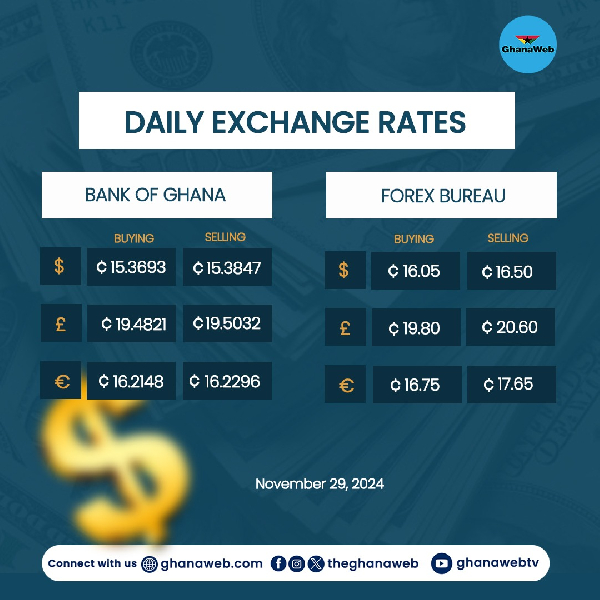
    As of November 29, 2024, the Bank of Ghana reported that the cedi is being bought at GH¢15.36 and sold at GH¢15.38 to the dollar.

    For the British Pound, the buying price is GH¢19.48 and the selling price is GH¢19.50. The Euro is being bought at GH¢16.21 and sold at GH¢16.22.

    According to checks by GhanaWeb Business at 10:00 AM on November 29, 2024, some forex bureaus are selling the US dollar for GH¢16.50, the British Pound for GH¢20.60, and the Euro for GH¢17.65.

    Despite this recent improvement, the cedi’s decline against major currencies in the past has added pressure to Ghana’s economy. To address this, the Bank of Ghana has sold more than 200 million dollars to stabilize the cedi. As a result, the exchange rate has improved from GH¢17.20 to GH¢15.90 to the dollar. This positive shift will likely help lower the cost of fuel and other goods in the country.

    See the Bank of Ghana and forex bureau rates below:

    Watch the latest edition of BizTech below:

  • Give incentivized loans for purchase of locally assembled cars – Volkswagen CEO tells BoG 

    Give incentivized loans for purchase of locally assembled cars – Volkswagen CEO tells BoG 

    The Chief Executive Officer of Volkswagen Ghana, Mr. Jeffery Oppong Peprah, has urged the Bank of Ghana to support key players in the automobile industry by introducing incentivised loan schemes for the purchase of locally assembled vehicles.

    Speaking at the launch of Volkswagen’s new product in Accra on November 28, 2024, Mr. Peprah emphasised that reducing interest rates on car loans could make locally assembled vehicles more accessible. 

    “Currently, when you go for a loan, you are paying about 30% interest rates, which is not affordable. We are appealing to the Bank of Ghana to implement a special incentive rate for locally assembled vehicles,” he stated.

    Car loan interest rates in Ghana are currently between 25% and 35%, significantly higher than in countries like South Africa, where rates typically range from 10% to 15%.

    Mr. Peprah believes that lower rates would encourage Ghanaians to purchase locally assembled vehicles, benefiting the economy.

    He also expressed support for Dr. Mahamudu Bawumia’s proposed credit scoring system, which he believes would allow locally assembling car companies to offer flexible payment plans. 

    This system, according to Mr. Peprah, would help assess buyers’ creditworthiness and facilitate salary deductions for loan repayments, enabling more individuals to afford new vehicles.

    In addition, Mr. Peprah highlighted the importance of integrating Ghana’s informal sector into the automobile industry to address the skills gap and improve industry standards.

    The event featured the launch of the Volkswagen Amarok, a vehicle designed for Ghana’s terrain, offering enhanced safety, power, and comfort tailored to local needs. 

    Key industry stakeholders attended the launch to review the new product’s features and discuss its potential impact on the market.

  • GHS11K to GHS45K gold coin launched by BoG

    GHS11K to GHS45K gold coin launched by BoG

    The Bank of Ghana (BoG) has officially launched the Ghana Gold Coin (GGC) as a new financial asset aimed at providing the public with more investment opportunities.

    As of November 26, 2024, the coins are available in three weights: 1.00 oz, 0.50 oz, and 0.25 oz, priced at GH₵45,020.48, GH₵22,409.74, and GH₵11,188.12, respectively.

    These prices are based on the previous day’s London Bullion Market Association (LBMA) PM gold price of $2,635.40 and the Bloomberg exchange rate of 15.7500 USD to GHS.

    Through this initiative, the BoG aims to offer the public an innovative investment option while enhancing the country’s portfolio of financial instruments.

    As part of the domestic gold program, the launch is designed to reduce excess liquidity in the market and strengthen the local currency against foreign currencies.

    This move is in line with the Bank of Ghana’s broader strategy to stabilize the economy and encourage investment in the nation’s gold reserves.

  • New BoG headquarters symbolizes the progress of our economy – Akufo-Addo

    New BoG headquarters symbolizes the progress of our economy – Akufo-Addo

    President Nana Akufo-Addo has described the newly commissioned Bank of Ghana (BoG) headquarters, “The Bank Square,” as a testament to Ghana’s economic progress and resilience.

    The 22-storey edifice, located at Ridge in Accra, comprises three main blocks: the Tower, Urban, and Amenities Blocks, including basements, podiums, and ancillary facilities.

    Speaking at the commissioning, President Akufo-Addo emphasized the building’s significance as a symbol of the country’s economic recovery and the effectiveness of monetary policies.

    “And as we stand here today, we are not only celebrating the physical structure of this imposing complex, we are also acknowledging the progress of our economy, which this edifice symbolizes,” he said.

    The President cited data from the BoG to highlight the strides Ghana has made in economic recovery.

    https://twitter.com/Channel1TVGHA/status/1859213195350581607/photo/1

    “Recent data from the Bank of Ghana paints a picture of resilience and promise. Ghana’s economy is on a recovery trajectory,” he stated. “The provisional GDP growth of 6.9% recorded in the second quarter of 2024 was driven by robust performances across all sectors. Non-Oil GDP growth of 7%, a testament to the dynamism of our economy.”

    He further noted the sharp drop in inflation from 54.1% in December 2022 to 22.1% in October 2024 as evidence of effective monetary policy interventions.

    “There is every indication that the downward trend of inflation will continue. Evidence in the reducing prices of foodstuff and petroleum prices brings a sense of optimism for the future,” he added.

    BoG Governor Dr. Ernest Addison, in his remarks, described “The Bank Square” as a key step in modernizing the central bank’s operations, enhancing employee wellness, and promoting sustainability.

    “The Bank Square was designed with the future in mind and stands as one of the most important modern civic landmarks in the city of Accra and the country,” he said.

    Dr. Addison also emphasized the edifice’s role in solidifying Ghana’s position as a financial leader in Africa.

    “By commissioning this product of the imagination of an internationally celebrated architect, Sir David Adjaye, a proud son of Ghana, we are boldly affirming our commitment to investing in the nation’s future. His architectural firm, Adjaye Associates, has created this enduring masterpiece—one designed to withstand the test of time and serve as a beacon of Ghana’s revitalization for generations to come.”

    Controversies and Public Scrutiny

    The $250 million project, which began in 2019 following a directive from the BoG Board during its 662nd Regular Meeting, has faced significant criticism. The Minority in Parliament, led by Bawku Central MP Mahama Ayariga, raised concerns over the project’s cost escalation, alleging a lack of approval from the Public Procurement Authority (PPA). Ayariga submitted a formal petition to the Office of the Special Prosecutor for investigation.

    Although the status of the investigation remains unclear, the facility’s commissioning marks a milestone for Ghana’s financial sector. According to President Akufo-Addo, the edifice reflects progress in economic indicators and a commitment to building a resilient and dynamic economy.

  • BoG’s $250m headquarters sees the light of day despite opposition

    BoG’s $250m headquarters sees the light of day despite opposition

    As announced last year by the Bank of Ghana (BoG), its new headquarters, a 21-story structure situated in Ridge, has been completed and was commissioned by President Akufo-Addo today.

    The project costing $250 million consists of three main blocks namely the Tower, Urban and Amenities Blocks including basements, podium and ancillary
    facilities.

    At Wednesday’s event, BoG Governor, Dr. Ernest Addison emphasised that the primary objective of the new headquarters is to streamline the bank’s activities by consolidating its multiple offices scattered across Accra under one roof.

    “As you may be aware, the Bank of Ghana has multiple offices in the city of Accra and with a strategic plan to harmonise all these operational units at the headquarters under one roof. This new head office provides us with the opportunity to better streamline our operations, improve communication, reduce cost and create the needed synergies for efficiency.

    “The Bank Square was designed with the future in mind and stands as one of the most important modern civic landmarks in the city of Accra and for that matter, our nation. This building will play a pivotal role in shaping Ghana’s identity as a leading force in Africa’s financial ecosystem,” he said.

    Plans to construct the eddifice met stern public criticism, especially from the Minority in Parliament. A formal petition from Bawku Central MP, Mahama Ayariga, who raised concerns about the substantial increase in project cost without approval from the Public Procurement Authority (PPA) was presented to the Office of the Special Prosecutor for probing.

    It is unknown the current state of the investigations; however, the facility was commissioned today.

    Work on the new head office commenced in 2019 after the Board of the Bank at its 662nd Regular Meeting directed the Corporate Management and Services Department (CMSD) of the Bank by a decision dated 18th December 2019 to initiate all proper processes for its development.

    Following the directive, the Bank noted that it went through the required processes to acquire a parcel of land at West Ridge, which was previously owned by State Insurance Company (SIC).

    The land was compulsorily acquired by the Government of Ghana by Executive Instrument, 2020 E.I 304 for the New Bank of Ghana Headquarters, a building of national interest. The compulsory acquisition process started in 2019 and the Executive Instrument was published and gazetted in 2020.

    Approval from Public Procurement Authority

    The Central Bank then wrote to the Public Procurement Authority (PPA) on January 14, 2020, for approval to use the Restricted Tender Method. This procurement method was on the basis of national security considerations.

    The following firms, known to be operating in Ghana, were shortlisted: MAN Enterprise, WBHO Ghana Ltd, De Simone Ltd, Goldkey Properties Ltd., and Ronesans Construction.

    Subsequently, tenders were opened on June 19, 2020, at 11am and were later evaluated between July 6 and 17, 2020.

    After evaluation of tenders were received, the Entity Tender Committee (ETC) of the Bank at its meeting held on August 6, 2020 considered Tender Evaluation Panel’s recommendation and approved the award of contract for the project to Messrs Goldkey Properties Limited at the cost of $121,078,517.94.

    The PPA later revised the initial approved estimated amount from USD81,882,640.00 to USD121,078,517.94.

    Following this, the Central Tender Review Committee (CTRC) on September 4, 2020, granted concurrent approval to the Bank to engage the recommended Tenderer, Messrs. Goldkey Properties Limited, at a contract price of USD121,078,517.94.

    Commencement of work

    The project site was formally handed over to the contractor in March 2021 for commencement of preliminary site works and designs.

    Later on, there was a review of the design, prompting the ETC of the Bank at its meeting held on 19th December 2022 to revise the project cost of USD2,068.00/m2.

    CTRC subsequently granted concurrent approval for the revised scope of works at cost of USD2,068.00/m2 on 17th January 2023.

  • We’re committed to swiftly resolve concerns raised by BoG – CBG

    We’re committed to swiftly resolve concerns raised by BoG – CBG

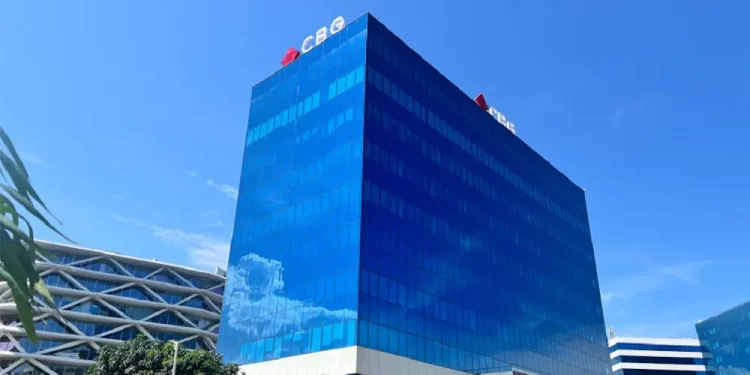
    Consolidated Bank Ghana (CBG) has reaffirmed its dedication to collaborating with the Bank of Ghana to reinstate its temporarily suspended foreign exchange trading license.

    “We believe the concerns raised in the notice can be swiftly resolved and are committed to working closely with the Bank of Ghana to ensure compliance,” the CBG said in a statement issued to the Ghana News Agency on Thursday.

    The CBG stated: “We want to reassure our valued customers that this suspension does not impact CBG’s normal banking operations. Except for foreign exchange products and services, all our branches and digital platforms will continue providing customers with our full range of services.

    “We fully expect to restore foreign exchange products after our engagement with the Bank of Ghana or on expiry of the suspension period.”

    “We apologise unreservedly for any inconvenience this situation may have caused and reaffirm our dedication to maintaining the highest standards of operational compliance across all aspects of our business.”

    The CBG added that it valued its stakeholders and remained committed to providing them with “a simple, secure and differentiated banking experience”.

    The Bank of Ghana is temporarily suspending the foreign exchange trading license of Consolidated Bank Ghana, effective from November 26, 2024, for a period of one month, due to violations of Section 11(2) of the Foreign Exchange Act, 2006 (Act 723).

  • BoG to impose GHS12,000 penalty on Banks, SDIs for breaching outsourcing regulations

    BoG to impose GHS12,000 penalty on Banks, SDIs for breaching outsourcing regulations

    In order to strengthen governance and risk management standards, the Bank of Ghana has introduced a comprehensive outsourcing directive that applies to banks, specialized deposit-taking institutions (SDIs), financial holding companies, and development finance institutions.

    In an effort to improve oversight in an industry increasingly reliant on outsourced functions, the directive mandates full compliance by July 1, 2025.

    Should institutions fail to comply, they will face an administrative penalty of 1,000 penalty units, or GH₵12,000.

    This directive emphasizes the Bank of Ghana’s dedication to preserving the financial system’s integrity by limiting the outsourcing of key functions.

    Restricted roles include high-level decision-making positions, such as those of board and senior management, along with credit decision-making, anti-money laundering, customer verification, as well as critical risk management and cybersecurity roles.

    Any function deemed essential to a regulated financial institution (RFI) must be maintained in-house to prevent conflicts of interest and mitigate risks linked to outsourcing sensitive activities.

    Recognizing the need for flexibility, the directive allows banks to outsource non-core functions without prior approval, provided they notify the Bank of Ghana 10 days before engaging the service provider.

    The directive also requires financial institutions to assess the materiality of functions they intend to outsource, distinguishing between core and non-core activities to maintain central oversight of critical operations.

    By June 2, 2025, institutions must submit these assessments to the Bank of Ghana and make necessary adjustments by the deadline or at contract renewal, whichever occurs first.

    The directive clarifies that specific partnerships—such as those with payment card networks (e.g., Visa, Mastercard) and clearing and settlement partners—are exempt from outsourcing classification.

    Nevertheless, for any outsourcing agreements involving core functions, written approval is compulsory in line with section 60 (12) of Ghana’s Act 930, which governs banks and SDIs.

    Additionally, the Bank of Ghana has underscored the importance of data protection, requiring that customer information not be shared with third-party providers without explicit customer consent.

    With a focus on strategic, reputational, and operational risks, the new regulations aim to ensure that outsourced arrangements do not jeopardize the stability of RFIs.

    4o

  • New BoG headquarters worth $250m to be opened by Akufo-Addo on Nov 20

    New BoG headquarters worth $250m to be opened by Akufo-Addo on Nov 20

    The Bank of Ghana (BoG) will officially open its new US$250 million headquarters, “The Bank Square,” in Accra on November 20, 2024.

    The construction of the new headquarters sparked debates last year, especially after the Central Bank reported losses amounting to GH¢60 billion in 2022.

    Reports revealed that the bank invested around US$250 million in the project.

    Many National Democratic Congress legislators and some Ghanaians questioned the necessity of the project, particularly given the bank’s financial losses.

    However, the Central Bank explained that the current building could not withstand natural disasters like earthquakes.

    The bank also emphasized that halting the project was not feasible due to the costs already incurred.

    In response, Stephen Opata, Special Advisor to the BoG Governor, stated, “The project was already far along. Halting it at that stage would not have been the most prudent choice.”

    President Nana Addo Dankwa Akufo-Addo will attend the ceremony as the special guest of honor, which will begin at 10 am. The event will be by invitation only.

  • CBG’s forex trading licence suspended by the Bank of Ghana

    CBG’s forex trading licence suspended by the Bank of Ghana

    Bank of Ghana has suspended the Foreign Exchange Trading Licence of Consolidated Bank Ghana (CBG) for one month, effective November 26, 2024.

    Citing Section 11(2) of the Foreign Exchange Act, 2006 (Act 723), the BoG explained in a November 12 statement that this decision was due to repeated violations of foreign exchange market regulations by CBG.

    GuidelinesThe other breaches include “Updated Guidelines for Inward Remittance Services for Payment Service Providers dated November 2023 and the Anti-Money Laundering/Combating the Financing of Terrorism & The Proliferation of Weapons of Mass Destruction (AML/CFT&P) Guideline, for Accountable Institutions in Ghana dated December 2022, which have come to the attention of the Bank of Ghana.”

    The Bank of Ghana (BoG) has stated that CBG’s licence will be reinstated after the one-month suspension period, contingent on CBG implementing effective measures to ensure full compliance with foreign exchange market regulations.

    The BoG also issued a reminder to all participants in the foreign exchange market to adhere strictly to the established forex regulations and guidelines.

  • BoG instructs financial institutions to quit partnership with Taptap Send on Remittance Termination

    BoG instructs financial institutions to quit partnership with Taptap Send on Remittance Termination

    The Bank of Ghana (BoG) has instructed all financial institutions, including commercial banks and Enhanced Payment Service Providers, to cease their Remittance Termination Partnership with the global remittance company, Taptap Send.

    This directive was communicated in a letter addressed to all banks, Dedicated Electronic Money Issuers, Enhanced Payment Service Providers, and the Ghana Interbank Payment and Settlement System (GhIPSS).

    According to the BoG, this action, effective from November 8, 2024, will be in place for one month.

    The BoG explained that the decision was made because Taptap Send was operating a Cedi Remittance Wallet, which is against the country’s Foreign Exchange Act.

    The central bank also noted that this operation violated the updated guidelines for inward remittance services. The BoG emphasized that the law requires foreign currencies to be deposited into the accounts of banks and institutions in Ghana, with the cedi equivalent then credited to the receiver in Ghana.

    “The Foreign Exchange Act 3 (1) states that a person, shall not engage in the business of dealing in Foreign Exchange without the a licensed issued under this Act,” it said.

    Bank of Ghana warning to other institutions

    The BoG has issued a strong warning, stating that it will impose severe sanctions on any institution that violates the laws.

    They expressed the hope that this action will serve as a significant deterrent to other institutions in the remittance space, ensuring compliance with the country’s Foreign Exchange Act.

    Taptap Send and Competition in the Remittance Space

    Taptap Send has recently become the preferred choice for many individuals sending money to Ghana.

    This preference is largely due to its mobile-based platform and competitive pricing compared to other remittance service providers.

    Taptap Send is an app that enables people to send money worldwide at a very low cost.

    It has been recognized by industry experts as one of the fastest-growing mobile remittance services globally.

    Taptap Send is a venture-backed start-up with investors such as Reid Hoffman, the Omidyar Network, and Helios.

    The company is known for hiring top talent from leading tech companies, professional services firms, and industry giants, including Twitter, Yahoo, Uber, Amazon, McKinsey, Bain & Co, Deloitte, KPMG, Cravath, and Vodafone.

  • BoG suspends Taptap Send’s services with banks over regulatory breaches

    BoG suspends Taptap Send’s services with banks over regulatory breaches

    The Bank of Ghana has imposed a one-month suspension, effective November 8, 2024, on Taptap Send’s partnerships with payment service providers and commercial banks.

    This action stems from Taptap Send’s operation of a cedi remittance wallet, which the BoG states breaches the Foreign Exchange Act of 2006 and regulations governing money transfer services.

    The Bank’s statement pointed out that Taptap Send violated Section 3(1) of the Act, which prohibits unlicensed engagement in foreign exchange operations.

    Quoting the law, the BoG emphasized, “A person shall not engage in the business of dealing in foreign exchange without a licence issued under this Act.”

    In addition to this violation, Taptap Send failed to meet requirements set forth in the Updated Guidelines for Inward Remittance Services, which include timely crediting of local accounts and full compliance with anti-money laundering (AML) and counter-terrorism financing (CFT) standards.

    According to the Bank, “Paragraph 7(d) and (e) of the Updated Guidelines for Inward Remittance Services for Payment Service Providers” obligates settlement banks to enforce AML/CFT compliance and report any suspicious activity.

    “Paragraph 7(d) and (e) of the Updated Guidelines for Inward Remittance Services for Payment Service Providers clearly stipulates that the settlement bank shall “not honour any request other than for payment to beneficiaries and report any violation or suspected violation to the Bank of Ghana” and “ensure that all AML/CFT requirements are satisfied for all settlement accounts regarding inflows and outflows,” the statement added.

    The BoG underscored the importance of these regulations in maintaining the integrity of Ghana’s financial system, warning that further violations would result in more severe penalties.

  • BoG suspends Taptap Send partnerships with EPSPs, banks over illegal cedi remittance operation

    BoG suspends Taptap Send partnerships with EPSPs, banks over illegal cedi remittance operation

    The Bank of Ghana (BoG) has issued a one-month suspension of all partnerships between Taptap Send and electronic payment service providers (EPSPs) and commercial banks in Ghana, effective November 8, 2024.

    The regulatory action comes in response to Taptap Send’s operation of a cedi-denominated remittance wallet, which BoG states is in violation of section 3(1) of the Foreign Exchange Act, 2006 (Act 723), as well as sections 7(b), 7(d), and 7(e) of the Updated Guidelines for Inward Remittance Services for Payment Service Providers.

    According to the Bank of Ghana, Taptap Send’s actions contravene local laws governing foreign exchange and inward remittance operations. Under section 3(1) of the Foreign Exchange Act, 2006 (Act 723), engaging in foreign exchange transactions without the necessary license is prohibited.

    In addition to breaching the Foreign Exchange Act, Taptap Send is also accused of disregarding key provisions of the Updated Guidelines for Inward Remittance Services, which are intended to ensure efficient and transparent remittance practices among EPSPs and their partner banks. Specifically, paragraph 7(b) of these guidelines requires partner banks to credit the local settlement accounts of designated electronic money issuers (DEMI) or EPSPs with the cedi equivalent of inward remittances within 24 hours to ensure timely distribution to beneficiaries.

    Further violations were noted in paragraphs 7(d) and 7(e) of the guidelines, which direct settlement banks to refrain from processing requests for any other purposes than payments to beneficiaries. Additionally, banks are mandated to notify BoG of any suspected breaches and to maintain stringent anti-money laundering and counter-financing of terrorism (AML/CFT) compliance protocols. According to BoG, Taptap Send’s practices raised concerns that necessitated immediate intervention.

    The suspension comes with a strong warning from BoG to other institutions, indicating that further violations of remittance and foreign exchange regulations will be met with severe sanctions. The central bank emphasized its commitment to safeguarding Ghana’s financial system by strictly enforcing regulatory compliance among financial service providers.

    Taptap Send, a prominent digital remittance platform with investors including Reid Hoffman, the Omidyar Network, and Helios is expected to cooperate with regulators to address these issues to restore its operational partnerships in Ghana.

  • BoG urged to improved management of dormant accounts, access to deceased’s funds

    BoG urged to improved management of dormant accounts, access to deceased’s funds

    The Bank of Ghana (BoG) is set to issue new directives to all commercial banks to enhance the process of identifying and accessing dormant accounts belonging to deceased individuals, including a major change to how Next of Kin (NOK) are involved in account opening procedures.

    This comes after the Institute for Liberty and Policy Innovation (ILAPI), uncovered the huge sums of money sitting in a large number of dormant accounts with the Bank of Ghana (BoG).

    Thus, the ILAPI has urge BoG to come up with a policy aimed at reducing delays and eliminate identity issues when tracing the rightful beneficiaries of unclaimed funds.

    “To avoid prolonged investigations and identity crises, we will now require that the Ghana Card of the Next of Kin be presented during account opening. This measure will help reduce the time taken to identify the rightful heirs of dormant accounts, ensuring smoother and more efficient processes when individuals pass away,” the ILAPI said.

    Under the current system, many families of the deceased face challenges in accessing funds from dormant accounts due to lengthy verification processes, which often lead to frustration and financial distress.

    The ILAPI emphasized the importance of transparency in managing dormant accounts, calling for more clearly defined policies and a public-facing report.

    “We also believe that there should be clearly defined policies around the management of dormant accounts, and we plan to release an annual report on the funds, making it part of BoG’s annual statements. This will ensure transparency, enhancing the public’s confidence and trust in how these funds are managed.”

    The new directives also recommend revising the current law that restricts BoG from tracing the families of deceased account holders. At present, BoG is not permitted to take proactive measures to contact families to release dormant account funds, but under the proposed policy change, this would be allowed.
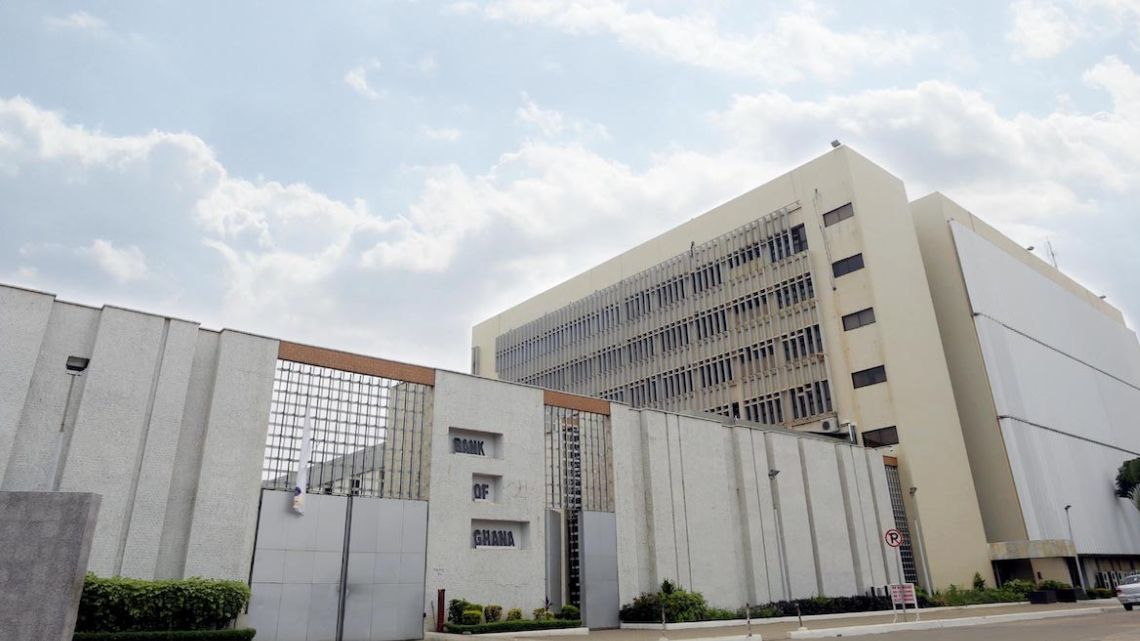
    “We are pushing for a review of the law that will allow the Bank of Ghana to trace the families or next of kin of dormant account holders. This will ensure that the funds are properly allocated to the rightful heirs, particularly in cases where they might not be aware of the funds left behind,” the report added.

    Another important recommendation from the BoG’s proposed policy is the integration of the national identification system. The BoG intends to collaborate with local government bodies to create a more efficient way of identifying beneficiaries.

    “By tapping into the national identification system, we can work with local government bodies to quickly identify the families of the deceased, ensuring they receive the funds owed to them,” Dr. Osei explained.

    ILAPI (Institute for Liberty and Policy Innovation), which has been pushing for reforms in the handling of dormant accounts, has supported these recommendations. According to a report from ILAPI, a significant amount of money is tied up in dormant accounts, some of which could potentially improve the lives of those who were financially dependent on the deceased. The organization has long argued for a more proactive and transparent approach in managing unclaimed funds.

    “In some cases, these funds could have taken families out of poverty, providing education and economic stability for children and spouses. It is frustrating to know that these funds remain inaccessible due to bureaucratic hurdles,” said the ILAPI.

    “The policies being proposed by the BoG are a welcome step toward ensuring that these funds are not locked away indefinitely.”

    One of the final suggestions is that BoG impose a time limit on how long unclaimed dormant funds can be held before they are transferred or released.

    “There should be a set number of years after which the BoG can retain the funds, after which they must take action, whether that means transferring the funds to the state or making them available for family claims. A clear policy and system for handling these funds should be implemented to avoid prolonged uncertainty.”

    As the Bank of Ghana moves forward with these proposals, there is hope that they will create a more efficient, transparent, and supportive system for families who stand to benefit from the funds left behind by their loved ones. The next steps for the BoG include consulting with various stakeholders and initiating the policy framework to be rolled out in the coming month

  • Dormant accounts worth over GH167. 8m, $14.6m, £ 2.4m with BoG – ILAPI report

    Dormant accounts worth over GH167. 8m, $14.6m, £ 2.4m with BoG – ILAPI report

    A large sum of money has been reported by the Institute for Liberty and Policy Innovation (ILAPI) to be sitting in dormant accounts at the Bank of Ghana (BoG) for the past 8years.

    The report indicates that the Bank of Ghana (BoG) holds over GH₵167.8 million in local currency and more than US$14.6 million in dormant accounts.

    Additionally, there are over £2.4 million and €2.3 million accumulated between 2016 and 2023. Furthermore, between 2021 and July 2024, the number of dormant accounts transferred to BoG has reached 1,448,660.

    This information was revealed in a document provided to the Institute for Liberty and Policy Innovation (ILAPI) by the BoG, following a petition requesting a detailed report on the sums collected from inactive accounts over the last eight years (2016–2024). ILAPI’s Next of Kin (NOK) project has been ongoing since 2023.

    The NOK initiative aims to establish a point of contact for beneficiaries to access funds left by deceased individuals at financial institutions, going beyond the legal framework.

    According to ILAPI’s report, they suspect that some of these funds could belong to individuals who died in road accidents, floods, or other incidents, with many families unaware of their existence.

    These funds, which could have helped children, spouses, and families escape poverty, remain with the regulated financial institutions and the BoG, due to the accounts being classified as dormant.

    The report also pointed out that the law does not allow BoG to trace family members to help them access the funds of the deceased.

    It’s crucial to note that some of these beneficiaries relied on their deceased relatives for education and financial support. The inability to access these funds forces them to drop out of school and struggle to survive, potentially pushing them into poverty and social issues.

    “It is also evidence that the Bank of Ghana has made strides in educating the public on the importance of appointing a next of kin and the relevance of next of kin on financial documents, which is commendable. Nevertheless, more proactive measures are needed to understand that countless families face financial constraints, and the failure to claim the funds of the dead only exacerbates the poverty levels among families in Ghana,” it said.

    The report further urged the central to go beyond its ongoing literacy campaigns and actively engage in identifying and contacting the beneficiaries and Next of Kin by amending its laws and policies.

    “BoG to issue directives to all banks that the Ghana Card of the Next of kin during account opening should be requested to eschew identity crises and reduce the long timelines during the investigations on the dead.  Clearly defined policies on the management of dormant accounts and transparency on how these funds are managed should be made available to the public to enhance confidence and trust. A review of the law to allow BoG trace families, next of kin of dormant account.”

    “An annual report on dormant accounts and funds received could be released or be a part of the BoG’s annual reports. BoG should also use the national identification systems, and collaborate with local government bodies to identify beneficiaries or the next-of-kin of dormant accountholders. Unclaimed funds of dormant accounts should have a specific number of years the BoG could keep. A policy should be considered to trace families to access funds through recognized administrative and legal processes with a harmonized system.”

  • We have enough reserves in place to stabilize cedi – BoG

    We have enough reserves in place to stabilize cedi – BoG

    The Bank of Ghana (BoG) is reinforcing its foreign exchange reserves to help stabilize the cedi as demand for foreign currency is expected to increase with the festive season approaching.

    This move aims to address the depreciation of the cedi against major currencies, currently trading at about GHS 17 per dollar, reflecting a 24.3% decline so far this year.

    Dr. Ernest Addison, Governor of the Bank of Ghana, highlighted that bolstering reserves is a crucial step toward reducing exchange rate volatility and enhancing economic stability.

    “Some are praying that the cedi will recover to GHS 10.00 to a dollar. These are the problems in our economy, the issues about the exchange rate and financial sector issues. But I think the good news is that we are making progress because the developments we are seeing are not different from other jurisdictions.

    “So, we need to stay focused and implement the appropriate policies and build buffers to be able to support the progress we have made.”

    He emphasized that the Bank’s strategy is not only aimed at reinforcing the local currency but also at building investor confidence and ensuring overall economic stability.

    “We have $7 billion dollars in foreign exchange reserves. If I want to drive the dollar-cedi rate at GHS 10, I can do that tomorrow. But what about the day after tomorrow? So, we are balancing various factors, trying to build reserves and managing the exchange rate. So, all is not lost yet, there is some silver lining in the cloud, hopefully we will see the appreciation of the currency”, Governor Addison added.

    Dr. Addison shared these insights at the launch of The Concise Law of Banking, authored by legal practitioner Afua Appiah-Adu and commissioned by the Institute for Law & Development (ILAD).

    This comprehensive guide to banking law covers core topics relevant to students, banking professionals, and legal practitioners, including: Bank Regulation, Supervision, and Licensing; Banker-Customer Relations; Electronic Payment Systems; Money Laundering; Credit Reporting; and Borrowing and Lending in Banking.

  • BoG has accumulated significant reserves to meet dollar  demand – Finance Minister

    BoG has accumulated significant reserves to meet dollar demand – Finance Minister

    The Finance Minister, Dr. Mohammed Amin Adam, has assured businesses and market stakeholders that the Bank of Ghana (BoG) has accumulated significant dollar reserves to meet market demand.

    Speaking at a press briefing in Washington, D.C. during the Annual IMF and World Bank meetings, Dr. Amin Adam emphasized that the current reserve levels should reassure those concerned about foreign exchange availability.

    “We should look at the current reserve position of the Bank of Ghana, and that should give everyone some comfort about its ability to meet market demand,” he stated. By the end of August 2024, Ghana’s international reserves reached $7.5 billion, according to BoG data.

    Dr. Amin Adam also highlighted expected inflows that could further stabilize the cedi. Ghana anticipates a $360 million disbursement from the IMF in December, pending the approval of the third program review. Additionally, a $300 million disbursement from the World Bank under its Development Policy Operations (DPO) Series is expected, further boosting foreign currency reserves.

    “These expected inflows, in addition to what the Bank of Ghana already has, should help in stabilising the cedi going forward,” the finance minister remarked, addressing recent concerns over forex fluctuations.

    The cedi has recently come under pressure, with some forex bureaus reportedly selling the dollar above GHS17, despite BoG’s data indicating rates below GHS16. Analysts attribute this volatility to increased dollar demand as businesses prepare to finance Christmas imports and restock for next year, fearing potential depreciation. Speculation surrounding the upcoming December elections has also driven up foreign currency demand.

    In response, the BoG has actively intervened to meet dollar demand through its dollar auction program, targeting Bulk Oil Distribution Firms and conducting weekly auctions for commercial banks to maintain a steady supply. These measures form part of a broader strategy by the BoG to stabilize the cedi and manage market uncertainty, aiming to minimize the currency’s depreciation amidst fluctuating market dynamics.

  • Phase 2 of DDEP had limited effect on 2023 Financial Performance – BoG

    Phase 2 of DDEP had limited effect on 2023 Financial Performance – BoG

    The Bank of Ghana has disclosed in its 2024 Financial Stability Review that Phase 2 of the Domestic Debt Exchange Programme (DDEP) had a relatively low impact on the audited financial performance of banks in 2023.

    This outcome is attributed to lower levels of holdings and improved restructuring terms. Additionally, some impairments had already been accounted for by banks in 2022, and they generally reported a strong rebound in financial performance in 2023.

    The report highlighted that the Government of Ghana negotiated and restructured bond holdings of pension funds amounting to GHS30.01 billion in August 2023. Looking ahead, the report indicated that external debt restructuring, particularly concerning Eurobonds, could lead to further impairments for banks and other participating financial institutions.

    To address potential impacts from the government’s debt operations, the report noted that regulatory relief measures implemented by financial sector regulators, the execution of recapitalisation plans, and the establishment of the Ghana Financial Stability Fund will help mitigate risks in the financial sector.

    Furthermore, the Financial Sector Strengthening Strategy (FSSS), developed in 2023, aims to coordinate regulatory interventions to swiftly identify and address risks to the financial system.

    On a positive note, the report emphasized that domestic debt restructuring has created some fiscal space for the government and contributed to a reduction in the debt-to-Gross Domestic Product ratio. The second phase of the DDEP was launched on July 14, 2023, involving the restructuring of Cocoa Bills (GH¢8.1 billion) and locally issued US dollar-denominated bonds ($808.99 million).

  • Bright Simons fights BoG’s plan to build a corporate office in Tamale

    Bright Simons fights BoG’s plan to build a corporate office in Tamale

    Honorary Vice-President of civic group IMANI Africa, Mr. Bright Simons, has expressed confusion over a new tender issued by the Bank of Ghana (BoG) for the construction of a corporate office in Tamale, following the Auditor General’s report last year that flagged a significant increase in BoG’s foreign exchange payments, partly attributed to the same project.

    An excerpt from the Auditor General’s report pointed out by Simons indicates that BoG had already spent a significant portion of foreign exchange payments—over $84 million—on this same project in 2022.

    The report attributes 30.7% of the total payments of $117 million to the construction of the Tamale office, alongside infrastructure for the African Games.

    The recent tender issued by BoG, with a deadline of September 5, 2024, calls for the construction of a corporate office in Tamale.

    Upon discovering this new tender, Simons raised questions as to why another tender is being issued for a project that was supposedly already accounted for in the previous payments.

    “If such substantial payments were already allocated to the project, why is a new tender being issued in 2024 for the same office? Was the previous funding used effectively, or is there a gap in the project’s completion and accountability?” were some of the questions he raised.

    To this end, Bright Simons has expressed his concerns, stating, “Last year, the Auditor General flagged a big increase in Bank of Ghana forex payments of more than $84m. One of the reasons given was that a new corporate office in Tamale was being built. Imagine then my confusion seeing a new BoG tender to build a corporate office in Tamale.”

  • Being named as a next of kin doesn’t mean you inherit the account – BoG clarifies misconceptions

    Being named as a next of kin doesn’t mean you inherit the account – BoG clarifies misconceptions

    Next of kin, is simply a nominee designated by the account holder, serving as the main contact if the bank cannot reach the account holder according to Bank of Ghana (BoG).

    This implies that the next-of-kin designation in banking is meant for locating the account holder, not for determining who inherits the account.

    “This person should be close and know a lot about the account holder, and that is why in practice, many people would use some of their close relatives, Mr. Augustine Amoako Donkor, Assistant Director, Financial Stability Department of BoG, has said.

    He was speaking on the topic, “The Next-of-Kin Concept,” as part of a two-day media capacity building workshop for selected journalists in the Ashanti Region.

    The workshop, which sought to deepen the understanding of participants in the operations of BoG and also build their capacity in financial reporting, was attended by 25 journalists.

    Resource persons from the Central Bank took them through microeconomic analysis and significance of microeconomic indicators, monetary policy practice in Ghana, inflation dynamics in Ghana, developments in foreign exchange market, as well as interpretation of the Monetary Policy Committee Pack.

    Mr. Donkor said a customer of a bank reserves the right to choose even a friend who knows much about him/her as the next of kin because the main purpose is to have someone who can provide information on why the account holder is not reachable.

    Processes to retrieve funds in the account of a deceased customer, according to him, is entirely a different issue when it is established that the owner of the account has indeed died.

    “To inherit or have access to the bank account of deceased person, one will have to be named in the deceased person’s will as a beneficiary of the account,” Mr. Donkor clarified.

    He explained that a named beneficiary would need to undergo a legal process in which a court of competent jurisdiction grants probate. This probate would give the beneficiary the legal authority to access the deceased person’s account.

    In cases where the account holder dies without a will, those with an interest in the estate must apply to be appointed as administrators. This requires the issuance of Letters of Administration by a court of competent jurisdiction, which would then allow them access to the deceased person’s account, the BoG official added.

    “In Ghana, this concept of next-of-kin is not defined in our laws, so our discussion is based on what traditionally has been the practice, and that is what is likely to continue until such time that as a country we include this in a particular law,” he said.

  • Transactions conducted through mobile money services surpasses GHS1.9tr – BoG

    Transactions conducted through mobile money services surpasses GHS1.9tr – BoG

    The Bank of Ghana’s (BoG) 2023 FinTech Sector Report indicates substantial advancements in the nation’s digital financial sector, with mobile money accounts exceeding 65 million and total transaction values surpassing GH¢1.9 trillion.

    This development represents a significant achievement in Ghana’s pursuit of a more inclusive and cashless economy.

    The surge in this sector is fueled by the growing acceptance of mobile financial services, which offer a dependable and efficient way for millions of Ghanaians, particularly in underserved and rural regions, to obtain financial services.

    According to the report, mobile money has established itself as a prominent player in Ghana’s financial framework, with transaction volumes growing exponentially each year.

    The Bank of Ghana emphasizes the vital contribution of Rural and Community Banks (RCBs) to the national financial inclusion strategy.

    The central bank has pointed out that RCBs, which act as crucial financial service providers for rural communities, have a unique chance to utilize technology and digitalization in their operations.

    By implementing digital solutions, RCBs could effectively narrow the financial access divide in rural areas, delivering more customized services tailored to the needs of local populations.

    At the 23rd Annual Chief Executive Officers’ Conference held in Ho, Mrs. Elsie Addo Awadzi, the BoG’s Second Deputy Governor, stressed the significance of digital transformation for the rural banking sector through remarks made by Mr. Yaw Sapong, Director of the Other Financial Institutions Supervision Department.

    She emphasized that RCBs should capitalize on technology to broaden their reach and enhance the quality of their service offerings.

    Mrs. Awadzi highlighted the BoG’s dedication to promoting financial inclusion through digital initiatives, referencing the success of the Ghanapay initiative, which serves as a national digital payments platform aimed at improving financial service access, particularly in rural regions.

    She encouraged RCBs to adopt this platform and build collaborations with FinTech companies via the ARB Apex Bank to foster innovation and tailor their offerings to customer needs.

    Furthermore, she emphasized the necessity for RCBs to move beyond standard financial products, asserting that to effectively assist rural communities, they must create specialized financial solutions that address the specific requirements of local populations.

    This entails comprehending the financial rhythms of farmers, small-scale traders—particularly women and individuals with disabilities—and local enterprises.

    By providing services such as savings and loan products that align with agricultural and business cycles, RCBs could ensure that their offerings remain relevant and accessible to their intended clients, she stated.

    She noted that this strategy would not only bolster the financial well-being of rural communities but also position RCBs as the primary source for financial services in those areas.

    To maintain this progress, Mrs. Awadzi urged RCBs to invest in capacity building and effective corporate governance practices, suggesting that enhancing staff skills would enable RCBs to adapt to changing financial needs, while robust governance structures would promote accountability and long-term stability.

    Mr. Alex Kwesi Awuah, Managing Director of ARB Apex Bank, also praised the successful rollout of the Financial Sector Development Project (FSDP).

    With support from the Government of Ghana and the World Bank, the FSDP has played a crucial role in implementing digital banking platforms for RCBs, facilitating seamless and secure digital financial services for their clients.

    Mr. Awuah pointed out that the digital transformation of RCBs has not only enhanced their operational effectiveness but also allowed them to broaden their customer base, integrating more Ghanaians into the formal financial system.

    The 23rd Annual CEOs Conference convened 147 CEOs from RCBs nationwide, offering a forum for rural banking leaders to explore challenges, opportunities, and the future of the sector.

    Held on the theme: “Positioning Rural Banking at the Centre of the National Financial Inclusion Agenda,” the event also featured representatives from the Bank of Ghana, executives from the Association of Rural Banks, and the Board Chairman of ARB Apex Bank, Dr Toni Aubyn.

    As the rural banking sector continues to play a pivotal role in Ghana’s financial landscape, the adoption of technology and a customer-centric approach will be essential in ensuring sustainable growth and widespread financial inclusion across the country.