Tag: Cedi

  • Cedi depreciates by 4% against major trading currencies

    Cedi depreciates by 4% against major trading currencies

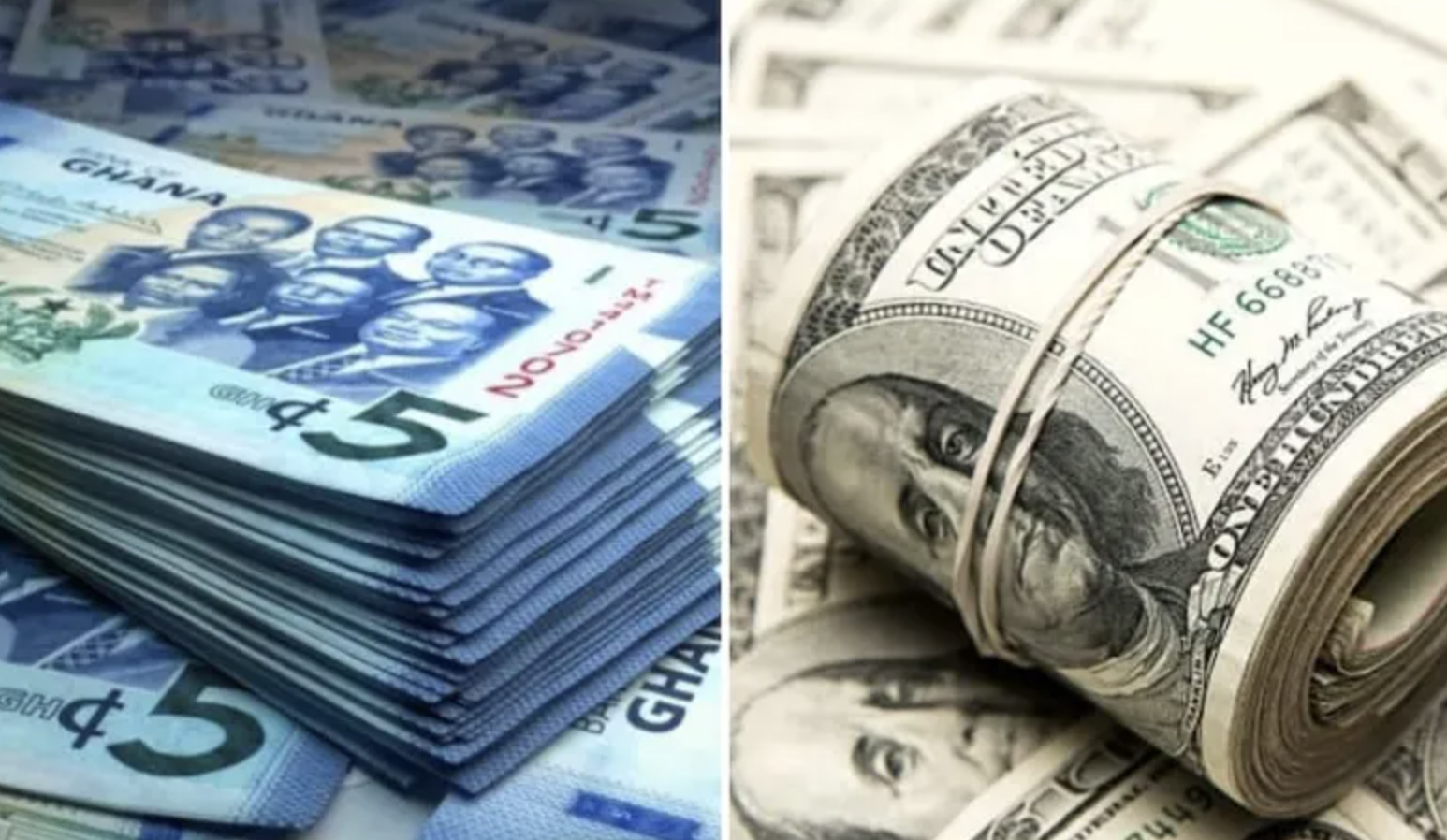
    Ghana’s cedi has recorded a 4% depreciation against major trading currencies, according to data from the Bank of Ghana’s January 2026 Summary of Economic and Financial Data.

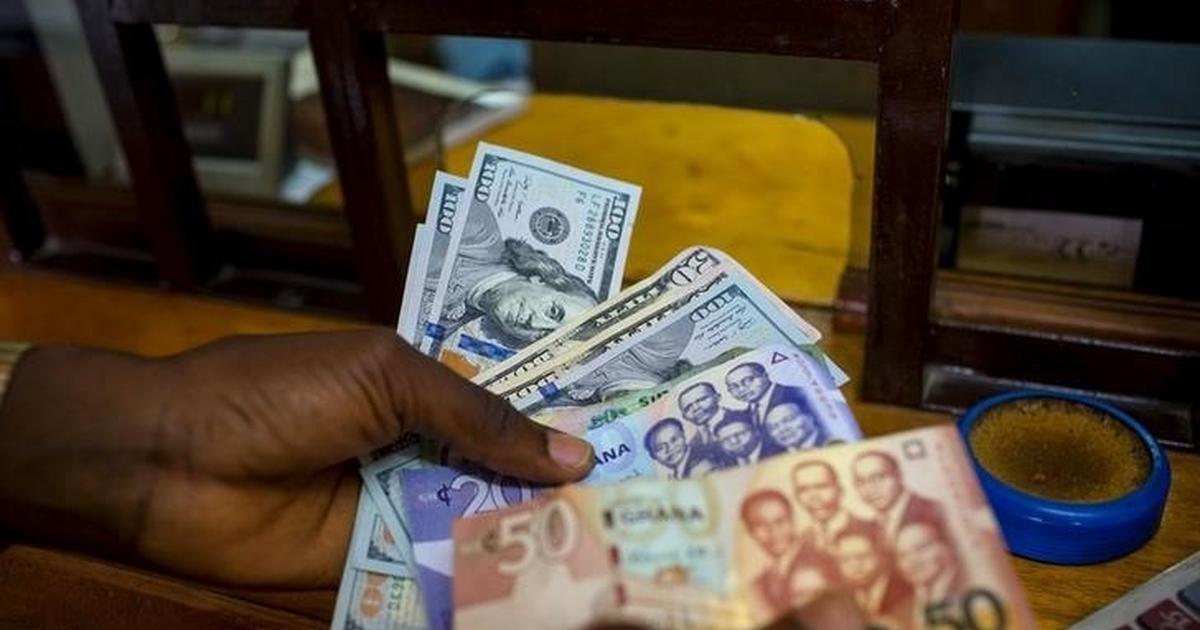
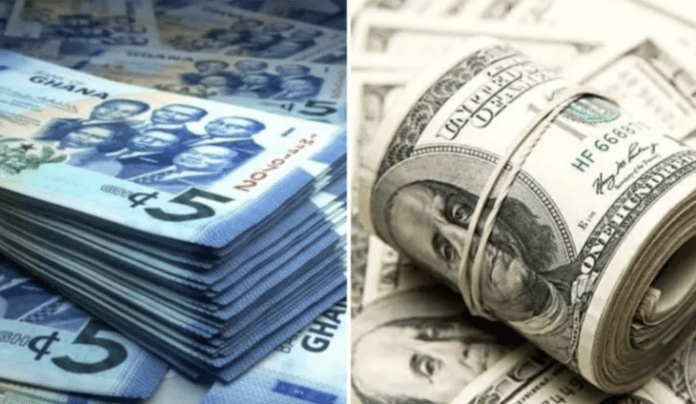
    The cedi is now trading at GH¢10.88 to the US dollar on the interbank market, compared with GH¢10.45 at the end of December 2025.

    The cedi is trading at GH¢14.77 to the pound and GH¢12.80 to the euro, representing losses of 4.9% and 4.1% respectively.


    Meanwhile, Data from the International Monetary Fund (IMF) analysed across more than 20 major economies on the continent has disclosed that Ghana’s cedi emerged as Africa’s best-performing currency in 2025.


    According to the report, the cedi strengthened by more than 40% against the US dollar in 2025, ranking it as the top-performing currency in Africa compared to over 20 other currencies.


    Ghana’s forex reserves have seen a significant increase under the Mahama-led administration, the Bank of Ghana has announced.


    Between December 2024 to October 2025, the country’s reserve has seen a 33.63% increase, marking $ 3.02 billion in value. As of October 2025, the country’s reserves have hit $12billion.


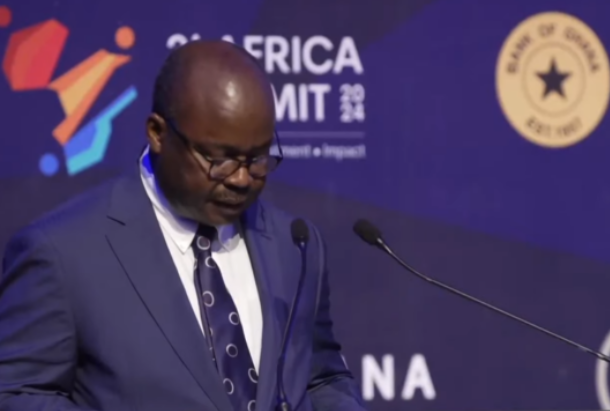
    Speaking at the launch of the 60th anniversary of the Ghana Cedi in Accra on Tuesday, October 28, which was held at the Accra International Conference Centre (AICC), Governor of the Bank of Ghana (BoG) Dr Asiama, lauded the government for its tough, difficult, but well-coordinated policy measures, which have produced the required fiscal results.


    He noted that Ghana has made a decisive economic turnaround, which has been reflected in our forex reserves, boosting investor confidence and cushioning the local currency against the shocks of the market.


    Speaking at the launch of the 60th anniversary of the Ghana Cedi in Accra on Tuesday, October 28, Dr Asiama highlighted that coordinated and difficult policy measures have yielded tangible results for the country.


    “Under the leadership of His Excellency John Dramani Mahama, and Her Excellency the Vice President, and through coordinated, difficult but necessary policy actions, I am happy to say that Ghana has turned a decisive corner, and indeed the evidence is compelling. Our gross international reserves are currently around $12 billion, which is providing a robust cushion against external volatility and restoring our investor confidence”, he stated.


    The BoG Governor also cited key indicators of the country’s improved economic position. He noted that headline inflation, which has been a major concern in recent years, stood at 9.4 percent as of September 2025, with expectations that it will fall even further by the end of the year.


    “Headline inflation now at 9.4% as of September 2025, and we expect it to end the year even further lower”, he continued, adding that the cedi, which was ranked as one of the worst-performing currencies in 2022 under the Akufo-Addo-led administration, has seen significant appreciation by 37% under the current government, serving as evidence of the positive impact of the fiscal policies implemented.


    The national currency, the cedi, Dr Asiama said, has also strengthened significantly, appreciating by 37 percent as of October 17.


    “The cedi has appreciated by 37% as of October 17, and according to the World Bank, it is the best-performing currency in sub-Saharan Africa for the first eight months of 2025. As of November 2022, the Cedi depreciated by over 50% becoming the World’s worst-performing currency in the world according to a Bloomberg report. Headline inflation spiralled to 54.1% and food inflation soared to an alarming 59.7% year-on-year in December 2022, distorting household budgets, shrinking incomes, and feeding public anxiety.


    “These were not just numbers; they were lived experiences. They meant rising transport fares, shrinking working capital, unaffordable school meals, and sleepless nights for small business owners and salary earners alike. But they were not the end of our story,” he added.


    Dr Asiamah also announced a year-long programme of nationwide activities designed to educate, engage, and celebrate the Cedi’s history, resilience, and role in Ghana’s economic journey.


    He said, “As we officially launch the Cedi@60 anniversary, allow me to share a preview of what lies ahead. This celebration will not be confined to this hall. Over the next 12 months, we will embark on a nationwide and inclusive programme of activities, including:

    “Currency exhibitions that tell the story of our monetary journey, from pounds to pesewas, from coins to QR codes, public lectures and school tours to engage students, professionals, and communities on the importance of monetary sovereignty.
    Diaspora engagements, highlighting the role of remittances and international trust in supporting the Cedi’s strength. And special publications and legacy projects to ensure this milestone leaves a lasting educational footprint”.


    Also, at the same event, Ghana’s Finance Minister and acting Defence Minister, Cassiel Ato Forson, urged business and consumers to end the widespread practice of quoting prices in dollars, highlighting that it undermines the cedi’s role as legal tender.


    Dr Forson declared, “The U.S. dollar isn’t our currency, let’s stop it now.” He charged all to help maintain the sanctity of the cedi, noting that it is a collective responsibility, urging citizens to “preserve it with dignity and protect it jealously.”


    Meanwhile, not only has the country’s forex reserves seen a significant increase, but also its revenue in gold trading (small scale).


    Ghana GoldBoard (GoldBod) in mid-October reported a significant revenue accrued from small-scale gold export between January and October 15.


    The sector earned US$8 billion in foreign exchange within ten months, according to data from the Ghana Gold Board (GoldBod) and the Precious Minerals Marketing Company (PMMC).


    The data also reported that small-scale miners exported 81,719.23 kilograms of gold during the period, valued at US$8.06 billion. This marks a sharp increase from US$4.61 billion recorded in 2024 and nearly quadruples the US$2.19 billion achieved in 2023.


    Also, the data shows that gold export increased by 29% between 2024 and 2025, thus from 63,647 kilograms to 81,719 kilograms. When compared to 2023, GoldBod’s earnings have grown more than threefold.


    The data highlights a consistent upward trend in both gold volume and export value over the three years, reflecting improved regulation, transparency, and compliance within Ghana’s small-scale mining sector.


    The data also showed a robust month-on-month growth in the second quarter of the year, with a revenue of US$1.17 billion recorded in May, US$957.9 million in June, and US$897.6 million in April.


    The country’s official gold buying and distribution authority has linked its significant gains to its partnership with PMMC and strengthened oversight of small-scale gold exports and other related gold-purchasing and regulations.


    The GoldBod-PMMC collaboration has proved efficient since mid-April 2025, when the former began operations, absorbing the functions of the latter.


    The collaboration has been instrumental in curbing illicit trade and ensuring that proceeds from gold sales are properly repatriated into the Ghanaian economy.


    Meanwhile, GoldBod has been quite instrumental in dealing with leakages in Ghana’s gold trading by regulating the affairs of licensed traders.

  • Ghana Cedi emerges Africa’s leading currency in 2025 – IMF

    Ghana Cedi emerges Africa’s leading currency in 2025 – IMF

    Data from the International Monetary Fund (IMF) analysed across more than 20 major economies on the continent has disclosed that Ghana’s cedi emerged as Africa’s best-performing currency in 2025.

    According to the report, the cedi strengthened by more than 40% against the US dollar in 2025, ranking it as the top-performing currency in Africa compared to over 20 other currencies.

    Ghana’s forex reserves have seen a significant increase under the Mahama-led administration, the Bank of Ghana has announced.

    Between December 2024 to October 2025, the country’s reserve has seen a 33.63% increase, marking $ 3.02 billion in value. As of October 2025, the country’s reserves have hit $12billion.

    Speaking at the launch of the 60th anniversary of the Ghana Cedi in Accra on Tuesday, October 28, which was held at the Accra International Conference Centre (AICC), Governor of the Bank of Ghana (BoG) Dr Asiama, lauded the government for its tough, difficult, but well-coordinated policy measures, which have produced the required fiscal results.

    He noted that Ghana has made a decisive economic turnaround, which has been reflected in our forex reserves, boosting investor confidence and cushioning the local currency against the shocks of the market.

    Speaking at the launch of the 60th anniversary of the Ghana Cedi in Accra on Tuesday, October 28, Dr Asiama highlighted that coordinated and difficult policy measures have yielded tangible results for the country

    “Under the leadership of His Excellency John Dramani Mahama, and Her Excellency the Vice President, and through coordinated, difficult but necessary policy actions, I am happy to say that Ghana has turned a decisive corner, and indeed the evidence is compelling. Our gross international reserves are currently around $12 billion, which is providing a robust cushion against external volatility and restoring our investor confidence”, he stated.

    The BoG Governor also cited key indicators of the country’s improved economic position. He noted that headline inflation, which has been a major concern in recent years, stood at 9.4 percent as of September 2025, with expectations that it will fall even further by the end of the year.

    “Headline inflation now at 9.4% as of September 2025, and we expect it to end the year even further lower”, he continued, adding that the cedi, which was ranked as one of the worst-performing currencies in 2022 under the Akufo-Addo-led administration, has seen significant appreciation by 37% under the current government, serving as evidence of the positive impact of the fiscal policies implemented.

    The national currency, the cedi, Dr Asiama said, has also strengthened significantly, appreciating by 37 percent as of October 17.

    “The cedi has appreciated by 37% as of October 17, and according to the World Bank, it is the best-performing currency in sub-Saharan Africa for the first eight months of 2025. As of November 2022, the Cedi depreciated by over 50% becoming the World’s worst-performing currency in the world according to a Bloomberg report. Headline inflation spiralled to 54.1% and food inflation soared to an alarming 59.7% year-on-year in December 2022, distorting household budgets, shrinking incomes, and feeding public anxiety.

    “These were not just numbers; they were lived experiences. They meant rising transport fares, shrinking working capital, unaffordable school meals, and sleepless nights for small business owners and salary earners alike. But they were not the end of our story,” he added.

    Dr Asiamah also announced a year-long programme of nationwide activities designed to educate, engage, and celebrate the Cedi’s history, resilience, and role in Ghana’s economic journey.

    He said, “As we officially launch the Cedi@60 anniversary, allow me to share a preview of what lies ahead. This celebration will not be confined to this hall. Over the next 12 months, we will embark on a nationwide and inclusive programme of activities, including:

    “Currency exhibitions that tell the story of our monetary journey, from pounds to pesewas, from coins to QR codes, public lectures and school tours to engage students, professionals, and communities on the importance of monetary sovereignty.

    Diaspora engagements, highlighting the role of remittances and international trust in supporting the Cedi’s strength. And special publications and legacy projects to ensure this milestone leaves a lasting educational footprint,” he continued.

    Also, at the same event, Ghana’s Finance Minister and acting Defence Minister, Cassiel Ato Forson, urged business and consumers to end the widespread practice of quoting prices in dollars, highlighting that it undermines the cedi’s role as legal tender.

    Dr Forson declared, “The U.S. dollar isn’t our currency, let’s stop it now.” He charged all to help maintain the sanctity of the cedi, noting that it is a collective responsibility, urging citizens to “preserve it with dignity and protect it jealously.”

    Meanwhile, not only has the country’s forex reserves seen a significant increase, but also its revenue in gold trading (small scale).

    Ghana GoldBoard (GoldBod) in mid-October reported a significant revenue accrued from small-scale gold export between January and October 15.

    The sector earned US$8 billion in foreign exchange within ten months, according to data from the Ghana Gold Board (GoldBod) and the Precious Minerals Marketing Company (PMMC).

    The data also reported that small-scale miners exported 81,719.23 kilograms of gold during the period, valued at US$8.06 billion. This marks a sharp increase from US$4.61 billion recorded in 2024 and nearly quadruples the US$2.19 billion achieved in 2023.

    Also, the data shows that gold export increased by 29% between 2024 and 2025, thus from 63,647 kilograms to 81,719 kilograms. When compared to 2023, GoldBod’s earnings have grown more than threefold.

    The data highlights a consistent upward trend in both gold volume and export value over the three years, reflecting improved regulation, transparency, and compliance within Ghana’s small-scale mining sector.

    The data also showed a robust month-on-month growth in the second quarter of the year, with a revenue of US$1.17 billion recorded in May, US$957.9 million in June, and US$897.6 million in April.

    The country’s official gold buying and distribution authority has linked its significant gains to its partnership with PMMC and strengthened oversight of small-scale gold exports and other related gold-purchasing and regulations.

    The GoldBod-PMMC collaboration has proved efficient since mid-April 2025, when the former began operations, absorbing the functions of the latter.

    The collaboration has been instrumental in curbing illicit trade and ensuring that proceeds from gold sales are properly repatriated into the Ghanaian economy.

    Meanwhile, GoldBod has been quite instrumental in dealing with leakages in Ghana’s gold trading by regulating the affairs of licensed traders.

  • Ghana cedi printed abroad due to lack of infrastructure – BoG

    Ghana cedi printed abroad due to lack of infrastructure – BoG

    Head of Currency at the Bank of Ghana (BoG), Dominic Owusu has explained why the Ghana cedi is currently printed abroad and not in the country.

    According to him, the country lacks the infrastructure needed to print banknotes that matches up with international standards.

    In an exclusive interview with GhanaWeb Business during the launch of Cedi@60 celebration in Accra on October 28, 2025, Mr Owusu revealed that there are just a few companies in the whole wide world with technologies to print legal tenders.

    “Currency printing is not only Ghana who prints its currency outside. I think in the world, I can count not more than 20 printers, so it means that every country, some countries, print,” he said.

    The Head of Currency at BoG also disclosed that the government is working around the clock to engage international partners for the establishment of such equipment here in the country.

    “Even if you have a printing facility, you would still be importing all the raw materials. I can tell you for sure that Nigeria has a printing facility but they import a lot of their money. So, looking at where we are and the rate of technological advancement, you want to relax and then do very good contract obligations with the best printers in the world and print the best currency, which the Ghana cedi is also part of,” he stated.


    The Ghanaian cedi marked its 60th anniversary on Tuesday, October 28, symbolizing the nation’s economic independence. To commemorate the milestone, the Bank of Ghana (BoG) held an official launch at the Accra International Conference Center under the theme, “60 Years of the Cedi: A Symbol of Sovereignty, Stability, and Economic Resilience.”

    The celebration represented Ghana’s economic journey and resilience over the past six decades. Vice President Jane Naana Opoku-Agyemang graced the occasion alongside other government officials.

    Since its introduction on July 19, 1965, the cedi has undergone several reforms and redesigns to reflect the nation’s evolving economic landscape.

    Speaking at the event, the BoG Governor, Johnson Pandit Asiama, noted that the celebration aims to rekindle public confidence in the national currency.

    Meanwhile, the Bank of Ghana will begin selling portions of its gold reserves in exchange for foreign currency to banks and other market participants under its Domestic Gold Purchase Programme.

    According to the BoG, only approved banks will be permitted to participate in the auctions, which are scheduled to take place every week. Speaking at a meeting with heads of commercial banks in Accra, the Governor of the Bank of Ghana, Dr. Johnson Asiama, said the exercise will be fair and transparent to ensure equal access for all market participants.

    “Beginning October 2025, the Bank of Ghana will commence foreign exchange (FX) intermediation under the Domestic Gold Purchase Programme, with plans to sell up to US$1.15 billion for the month. These sales will be conducted on a spot basis through twice-weekly, price-competitive auctions open to all licensed banks,” he said.

    The Ghana cedi’s strong performance was a central theme highlighted by President John Mahama in an interaction with potential investors in Singapore and Japan, barely a week ago. President Mahama emphasised the robust performance of the local currency to underscore Ghana’s macroeconomic stability and attractiveness as a destination for foreign capital.

    However, the cedi’s brief gains have proven short-lived, after its rapid depreciation made it the worst-performing currency in a latest report by a global financial news outlet, Bloomberg. According to Bloomberg’s recent report released on Thursday, September 4, the Ghana cedi is the worst-performing currency among all trading currencies, attributing the depreciation to a surge in demand for dollars by companies paying for imports. “A surge in demand for dollars by companies paying for imports has ended the Ghana cedi’s recent strong performance,” Bloomberg said.

    Bloomberg explained that the new development is attributed to the“strong gold prices”, while emphasizing that Ghana’s cedi has seen more than a ten percent (10%) depreciation in the current quarter. This, Bloomberg noted has erased the fifty percent gain against the dollar in April and June, Bloomberg detailed. According to the Bloomberg the cedi traded 0.1 per cent weaker at GH¢11.9507 per dollar at 1:50 a.m. Despite the losses, it has gained 23 per cent so far this year.

    “Now, the currency, which had ranked first globally on the back of strong gold prices, has weakened by 13 per cent in the current quarter. Bloomberg data showed this was the steepest fall worldwide, erasing part of the 50 per cent gain recorded between April and June”, the report said.

    But Bloomberg has indicated that “Despite the losses, it has gained 23 per cent so far this year based on market data. Reacting to Bloomberg’s report, the Bank of Ghana (BoG), noted “The cedi should be stable within a reasonable range,” the central bank said in an emailed response. Our role is to ensure fluctuations remain orderly, that they reflect fundamentals, and that they do not undermine confidence in the broader economy”.

    Bloomberg in April this year, ranked the cedi as the best-performing currency with a sixteen per cent (16%) gain against the dollar. What made the cedi earn the tag as the worst-performing currency is as a result of it seeing the steepest decline on the global level. The cedi’s appreciation in the last eight months helped ease inflationary pressures, pushing consumer inflation down to 21.2 per cent, the lowest in eight months at the time.

    Ghana’s import-dependent economy brings in a wide range of goods, from food to machinery, with demand typically rising toward the end of the year as businesses prepare for the Christmas season. The higher demand for dollars has piled pressure on the cedi, while the Bank of Ghana’s (BoG) limited supply of foreign exchange has added to the strain.

    Head of Market-Risk Management at UMB Bank, Mr Hamza Adam, said banks that submitted dollar requests on behalf of clients to the Bank of Ghana last week received only half of what they asked for.

    “This week the central bank is trying to meet all demand,” he said by phone from Accra on September 3, 2025.

    Before Bloomberg reported on the cedi, BoG addressed the concerns of Ghanaians concerning the fast depreciation of the cedi, calling for calm. Bank of Ghana Governor, Dr. Johnson Asiama, during an interview with Joy Business, which was aired on Wednesday, August 27, mentioned that the current depreciation of the cedi was temporary, assuring a comeback soon.

    “The Bank of Ghana operates a managed floating system in terms of framework; therefore, these blips will happen. But the assurance is that this is a short-term issue, and the challenges are being addressed,” he assured.

  • BoG has spent more than $7.4bn in ‘saving’ the cedi since 2022 – Report

    BoG has spent more than $7.4bn in ‘saving’ the cedi since 2022 – Report

    Ghana’s total foreign exchange interventions since the height of its economic crisis in 2022 have exceeded $7.4 billion, according to International Monetary Fund (IMF) data analysed by JoyNews Research.

    The data reveal that the Bank of Ghana (BoG) injected about $1.9 billion into the forex market in 2022, the year of the crisis. Interventions fell to $1.1 billion in 2023 but surged again to $3 billion in 2024.

    In just the first quarter of 2025, the Central Bank added another $1.4 billion, signalling continued efforts to stabilise the local currency.

    Earlier this month, the BoG announced plans to inject $1.15 billion through its Domestic Gold Purchase Programme (DGPP). The move, aimed at easing pressure on the cedi, will bring this year’s total forex support to over $2 billion. The Bank said the funds would be disbursed through twice-weekly, price-competitive spot auctions accessible to all licensed banks.

    Following the announcement, the cedi appreciated by 2.5%, reflecting renewed investor confidence in the Central Bank’s strategy. Analysts expect the local currency to maintain its strength against the US dollar through the final quarter of 2025, as offshore FX inflows and a liquid interbank market offset high dollar demand from the energy, services, and manufacturing sectors.

    Dollar interventions have surged sharply in the past two fiscal years, accounting for more than 60% of total injections over the last four years. These interventions have supported one of the strongest performances of the Ghana cedi in recent memory.

    According to the World Bank’s 2025 Africa Pulse Report, the cedi was the best-performing African currency against the US dollar during the first eight months of 2025, appreciating by more than 20% year-to-date.

    This strong showing is attributed to the BoG’s aggressive forex interventions, coupled with rising export earnings from gold and cocoa and steady remittance inflows.

    JoyNews Research data indicate that with the latest round of support, total interventions since 2022 could reach about $8.6 billion. The BoG attributes this year’s efforts to robust inflows from gold and cocoa exports and sustained remittance receipts.

    Gold has remained a critical lifeline for Ghana’s external sector, with prices hitting an all-time high of $4,000 per ounce this week. This surge has strengthened the Central Bank’s ability to generate foreign exchange without heavily depleting its reserves.

    Ghana is expected to retain its position as Africa’s top gold exporter, with projected export revenues surpassing $15 billion by the end of 2025, representing about 65% of total export inflows.

    This windfall has provided the BoG with the “forex muscle” needed to sustain interventions while keeping a strong reserve position. The IMF’s latest Staff-Level Approval report confirms that “in collaboration with the Fund, the BoG has developed a structured foreign exchange operations framework to intermediate FX flows and smooth excessive market volatility, while accumulating international reserves.”

    Ghana’s international reserves have now exceeded $10.7 billion, providing roughly 4.5 months of import cover. The IMF further noted that “international reserves accumulation continues to exceed the ECF-supported program targets, while the cedi appreciated markedly in the first half of the year.”

    Historical data show that most of the Central Bank’s forex interventions typically occur in the latter part of the year. In 2024, for example, about 67% of the $3 billion injected was recorded in the final four months, coinciding with the election period.

    While these consistent interventions have stabilised the cedi in the short term, they raise concerns about long-term sustainability. Analysts caution that Ghana’s reliance on gold-backed interventions exposes the economy to fluctuations in global commodity prices, underscoring the need for a more diversified foreign exchange framework.

    As it stands now, the Bank of Ghana’s decisive moves have given the cedi rare strength, but maintaining that momentum will depend on how effectively the country channels its export windfall, particularly from gold into lasting economic stability.

    Last month, Ghanaian economist, Professor Godfred Bokpin, projected the local currency to stabilise between the range of GH₵13.5 and GH₵14 per U.S. dollar by December this year.

    Speaking to the media on Tuesday, September 16, he explained that the recent fluctuations of the value of the cedi are a natural market phenomenon influenced by supply and demand dynamics.

    He noted that increased government spending will keep the currency under pressure, urging Ghanaians to remain positive and hold on to the country’s core economic strengths (like productivity, revenue generation, exports, etc., which determine long-term stability.

    He stated, “We have our peak period and then we have our low period as well. In the peak period, when we experience what we call cash flow mismatch in terms of inflows and then outflows…businesses would import in anticipation of Christmas and all of that. So the demand will pick up.”

    Ghana cedi’s strong performance was a central theme highlighted by President John Mahama during an interaction with potential investors in Singapore and Japan weeks ago.

    President Mahama emphasised the robust performance of the local currency to underscore Ghana’s macroeconomic stability and attractiveness as a destination for foreign capital.

    However, the cedi’s brief gains were short-lived after its rapid depreciation made it the worst-performing currency. According to Bloomberg’s recent report released on Thursday, September 4, the Ghana cedi is the worst-performing currency among all trading currencies, attributing the depreciation to a surge in demand for dollars by companies paying for imports.

    “A surge in demand for dollars by companies paying for imports has ended the Ghana cedi’s recent strong performance,” Bloomberg said.Bloomberg attributed the new development to the “strong gold prices,” while emphasizing that Ghana’s cedi has seen more than a ten percent (10%) depreciation in the current quarter.

    This, Bloomberg noted, has erased the fifty percent gain against the dollar in April and June. According to Bloomberg, the cedi traded 0.1 per cent weaker at GH¢11.9507 per dollar at 1:50 a.m. Despite the losses, it has gained 23 per cent so far this year.

    “Now, the currency, which had ranked first globally on the back of strong gold prices, has weakened by 13 per cent in the current quarter. Bloomberg data showed this was the steepest fall worldwide, erasing part of the 50 per cent gain recorded between April and June,” the report said.

    But Bloomberg has indicated that “Despite the losses, it has gained 23 per cent so far this year based on market data.” Reacting to Bloomberg’s report, the Bank of Ghana (BoG) noted, “The cedi should be stable within a reasonable range,” the central bank said in an emailed response.

    “Our role is to ensure fluctuations remain orderly, that they reflect fundamentals, and that they do not undermine confidence in the broader economy.”

    Bloomberg, in April this year, ranked the cedi as the best-performing currency with a sixteen percent (16%) gain against the dollar. What made the cedi earn the tag as the worst-performing currency is the steepest decline on the global level.

    The cedi’s appreciation in the last eight months helped ease inflationary pressures, pushing consumer inflation down to 21.2 per cent, the lowest in eight months at the time.

    Ghana’s import-dependent economy brings in a wide range of goods, from food to machinery, with demand typically rising toward the end of the year as businesses prepare for the Christmas season.

    The higher demand for dollars has piled pressure on the cedi, while the Bank of Ghana’s (BoG) limited supply of foreign exchange has added to the strain.

    Head of Market-Risk Management at UMB Bank, Mr. Hamza Adam, said banks that submitted dollar requests on behalf of clients to the Bank of Ghana last week received only half of what they asked for. “This week the central bank is trying to meet all demand,” he said by phone from Accra on September 3, 2025.

    Meanwhile, before Bloomberg reported on the cedi, BoG addressed the concerns of Ghanaians concerning the fast depreciation of the cedi, calling for calm. Bank of Ghana Governor, Dr. Johnson Asiama, during an interview with Joy Business, which was aired on Wednesday, August 27, mentioned that the current depreciation of the cedi was temporary, assuring a comeback soon.

    “The Bank of Ghana operates a managed floating system in terms of framework; therefore, these blips will happen. But the assurance is that this is a short-term issue, and the challenges are being addressed,” he assured.

    According to data from the Bank of Ghana, which was shared on 23rd August, the Ghana cedi had seen a five percent (5%) depreciation. Between August 23 and August 28, the Ghanaian cedi depreciated from GH¢10.43 to around GH¢11.00 per US dollar.

    The sharpest movement was between August 23 and 24, where the cedi depreciated from GH¢10.43 to GH¢10.90. The dollar was selling at GH¢10.43 on August 23, GH¢10.90 on August 24, and between August 25–27, it staggered between GH¢10.85–11.00.

    As of August 28, it had crossed GH¢11, sparking major concerns. On Dr. Johnson Asiama’s part, the current depreciation is a result of the temporary shortage of foreign exchange supply in the market, resulting from the effects of the currency appreciation coupled with other phenomena that, “…we are beginning to see those phenomena at play. Imports become a lot cheaper, so it’s just natural to begin to see pressure build up on the currency.”

    He said there is no need for panic as the economic indicators are obviously strong, giving signs of a cedi recovery soon enough. Dr. Asiama attributed the depreciating cedi to the decline in remittance inflows, sharp appreciation of the cedi, and limited interbank trading.

    “…what is happening is just because of the sharp appreciation, we are beginning to have some cash flow problems, specifically because we have seen some decline in terms of remittance inflows. Also, imports become a lot cheaper, so it’s just natural to begin to see pressure build up on the currency. Over the last two months, we have also seen very limited interbank trading,” he stated.

    The Ghana cedi saw a remarkable appreciation against major trading currencies worldwide over the past six months. During the presentation of the 2025 Mid-Year Fiscal Policy Review on July 24, the Minister for Finance, Dr. Cassiel Ato Forson, revealed that the cedi has recorded a remarkable turnaround in the first six months of 2025, appreciating by 42.6% against the US dollar.Dr. Forson described the cedi’s performance as “impressive” and the first of its kind in the history of Ghana’s economy. The cedi, which was initially always experiencing depreciation, is currently showing resilience against the dollar.

    He noted that the cedi, which was previously trading at about GH¢17.0 to the US dollar, had strengthened to GH¢10.4 as of July 23.

    “Mr. Speaker, the cedi’s performance in the first half of this year has been impressive! The Ghana cedi experienced significant appreciation against all major trading currencies in the first six months of 2025. I am happy to inform the House that our precious cedi, which once upon a time was trading at about GH¢17.0 to the US dollar, was trading at about GH¢10.4 as of yesterday, 23rd July, 2025,” he revealed.

    In high spirits, the minister adopted the catchphrase from Ghanaian highlife musician King Paluta’s energetic party anthem “For the Popping (Apicki),” released on December 27, 2024, and said, “This level of appreciation of the Ghana cedi has never happened in the history of our nation. Ghanafo, cedi no apicki! Apicki apicki apicki!”

    He continued that the strength of the cedi has not appreciated against just the US dollar but against the British pound as well. The cedi also gained 30.3% against the British pound and 25.6% against the euro during the same period.

    This marks a sharp contrast to the same period in 2024, when the cedi depreciated by 18.6% against the dollar, 17.9% against the pound, and 16.0% against the euro.

    “Similarly, the cedi, which was once trading at GH¢21.0 to the Great British Pound, was trading at about GH¢14.1 as of yesterday, 23rd July. Mr. Speaker, as of the end of June 2025, the cedi appreciated by 42.6% against the US dollar, 30.3% against the British pound, and 25.6% against the euro.

    With these gains over the past few months, Dr. Cassiel stated that all the losses in the previous years had been reversed. “Mr. Speaker, I repeat, so far, we have almost reversed all the cedi depreciation in 2022, 2023, and 2024,” he mentioned.

  • Inflation expected to hit 8% target by December – BoG

    Inflation expected to hit 8% target by December – BoG

    The Bank of Ghana has projected that headline inflation will fall within its medium-term target of 8 ± 2% by the end of 2025.

    The Central Bank attributed this expected decline to tighter monetary policy, the strengthening of the cedi, and continued fiscal consolidation efforts.

    It added that supply-side pressures have eased, resulting in lower food and overall inflation, with risks now tilted to the downside.

    Nonetheless, the Bank warned that some upward risks persist, including supply chain disruptions, global trade tensions, a 2.5% increase in utility tariffs, and a new 1.0% energy levy on ex-pump prices, which could push inflation up.

    Looking ahead, the Bank expects exchange rate stability to continue, supported by a stronger external sector and a buildup of international reserves that have exceeded program targets under the IMF’s Extended Credit Facility.

    It noted that a tight monetary policy stance, fiscal discipline, and stable crude oil prices are likely to cushion the economy against inflationary pressures.

    Meanwhile, Inflation dropped to 9.4% in September 2025, marking the ninth consecutive monthly decline, driven mainly by a fall in food prices.

    Ghana Statistical Service attributed the development to the slowdown in food price increases. As of June, the country recorded a 13.7 percent rate, a 4.7 percent decline from the 18.4 percent rate reported in May.

    Food inflation fell by 6.5 percentage points to 16.3 percent, down from 22.8 percent in May, whereas non-food inflation dropped by 3 percentage points to 11.4 percent.

    The Upper West Region recorded the highest regional inflation of 32.3%, largely due to food inflation and utilities. The Bono region recorded the lowest of 8.4%.

    On a regional level, the Upper West Region once again recorded the highest inflation at 24.8%, though this was down from 32.3% in June. This figure is more than twice the national average of 12.1%. In contrast, the Central Region posted the lowest rate at 7.7%.

    Before the release of GSS’s recent data, an economic research firm, IC Research, projected that Ghana’s inflation rate would experience a significant decline, dropping to 16% by the end of June.According to IC Research, the projected improvement is partly driven by the appreciation of the local currency and a reduction in fuel prices, both of which are easing inflationary pressures.

    “The June 2025 CP [Consumer Price Index]I data window recorded a 29.5% month-on-month and 35.3% year-on-year appreciation of the Ghanaian cedi against the US dollar. This exerted downward pressure on prices of imported items, with notable declines in petroleum prices and transport fares.The announced 15.0% reduction in commercial transport fares will continue to restrain transport inflation with downside spillovers for other items.

    “Additionally, we estimate that the lower transport cost likely eased the month-on-month pressure observed for vegetables & tubers last month, potentially sustaining food disinflation in June [2025]. Consequently, we forecast a 240 basis points decline in the June 2025 annual inflation to 16.0% with the month-on-month rate at 0.8%”, IC Research added.

    Ghana ended the year 2024 with 23.8% inflation. In January 2025, inflation slightly declined to 23.5%. And since then, it has continued to ease. In February, inflation declined to 23.1%; it saw another decrease in March to 22.4% and declined again in April to 21.2%.

    Due to the consistent decline in the inflation rate and recorded progress with other macroeconomic variables, the Bank of Ghana’s (BoG) Monetary Policy Committee has reduced the monetary policy rate from 28 percent to 25 percent.

    Governor of the Bank of Ghana, Dr Johnson Asiama, noted that the deceleration was underpinned by the tight monetary policy stance, fiscal consolidation, easing food supply constraints, as well as the strong recovery of the cedi.

    In line with the easing underlying inflation pressures, the Bank’s main core inflation measure, which excludes energy and utility items, has declined markedly.

    “Similarly, inflation expectations by banks, consumers, and businesses are broadly anchored,” he added.

    He further revealed that “growth in monetary aggregates remained subdued during the first half of the year, primarily due to the tight monetary policy stance, strong liquidity management, and reduced government borrowing.”

    “In line with the disinflation process and easing inflation expectations, interest rates at the short end of the money market have declined sharply, and in turn, reduced the cost of government borrowing”.

    According to Dr Asiama, data on budget execution indicated a strong commitment to fiscal consolidation as expenditures adjusted within set targets to accommodate the revenue shortfalls during the first half of 2025.

    As a result, the overall fiscal deficit on a commitment basis was 0.7 percent of GDP, outperforming the budget target of 1.8 percent of GDP.

    “The external sector has improved markedly, with a record current account surplus of US$3.4 billion in the first half of 2025, supported mainly by higher prices and increased production volumes of gold and cocoa.

    “The current account surplus, together with the outturns in the capital and financial accounts, culminated in an overall balance of payment surplus of US$2.2 billion, significantly higher than the US$588.5 million recorded in June 2024. On this score, Gross International Reserves stood at US$11.1 billion at end-June 2025, equivalent to 4.8 months of import of goods and services, compared to US$8.9 billion (4.0 months of import cover) as at end-December 2024,” he added.

    Overall, the Committee noted that macroeconomic conditions have significantly improved, “inflation expectations are broadly anchored, external buffers have strengthened, and confidence in the economy is returning.”

    The cedi has rebounded strongly against the major trading currencies. The cedi has recorded a remarkable turnaround in the first six months of 2025, appreciating by 42.6% against the US dollar.

    The cedi also appreciated by 30.3% against the British pound and 25.6% against the euro during the same period. Meanwhile, the Bank of Ghana has projected that inflation is likely to decline further and fall within the medium-term target range of 6 to 10 percent during the third quarter of 2025, ahead of earlier expectations.

    “The July forecast also shows that headline inflation is expected to decline further in the third quarter of 2025 and trend within the medium-term target of 8±2 percent by the end of 2025, earlier than initial projections,” the Governor noted.

  • Cedi to stabilise at GHS13.5 –14 by December – Prof Bokpin

    Cedi to stabilise at GHS13.5 –14 by December – Prof Bokpin

    Ghanaian economist, Professor Godfred Bokpin, has projected the local currency to stabilise between the range of GH₵13.5 and GH₵14 per U.S. dollar by December this year.

    Speaking to the media on Tuesday, September 16, he explained that the recent fluctuations of the value of the cedi are a natural market phenomenon influenced by supply and demand dynamics. 

    He noted that increased government spending will keep the currency under pressure, urging Ghanaians to remain positive and hold on to the country’s core economic strengths (like productivity, revenue generation, exports, etc., which determine long-term stability.

    He stated, “We have our peak period and then we have our low period as well. In the peak period, when we experience what we call cash flow mismatch in terms of inflows and then outflows…businesses would import in anticipation of Christmas and all of that. So the demand will pick up.”   

    Ghana cedi’s strong performance was a central theme highlighted by President John Mahama during an interaction with potential investors in Singapore and Japan weeks ago.

    President Mahama emphasised the robust performance of the local currency to underscore Ghana’s macroeconomic stability and attractiveness as a destination for foreign capital.

    However, the cedi’s brief gains were short-lived after its rapid depreciation made it the worst-performing currency. According to Bloomberg’s recent report released on Thursday, September 4, the Ghana cedi is the worst-performing currency among all trading currencies, attributing the depreciation to a surge in demand for dollars by companies paying for imports.

    “A surge in demand for dollars by companies paying for imports has ended the Ghana cedi’s recent strong performance,” Bloomberg said.Bloomberg attributed the new development to the “strong gold prices,” while emphasizing that Ghana’s cedi has seen more than a ten percent (10%) depreciation in the current quarter.

    This, Bloomberg noted, has erased the fifty percent gain against the dollar in April and June. According to Bloomberg, the cedi traded 0.1 per cent weaker at GH¢11.9507 per dollar at 1:50 a.m. Despite the losses, it has gained 23 per cent so far this year.

    “Now, the currency, which had ranked first globally on the back of strong gold prices, has weakened by 13 per cent in the current quarter. Bloomberg data showed this was the steepest fall worldwide, erasing part of the 50 per cent gain recorded between April and June,” the report said.

    But Bloomberg has indicated that “Despite the losses, it has gained 23 per cent so far this year based on market data.” Reacting to Bloomberg’s report, the Bank of Ghana (BoG) noted, “The cedi should be stable within a reasonable range,” the central bank said in an emailed response.

    “Our role is to ensure fluctuations remain orderly, that they reflect fundamentals, and that they do not undermine confidence in the broader economy.”

    Bloomberg, in April this year, ranked the cedi as the best-performing currency with a sixteen percent (16%) gain against the dollar. What made the cedi earn the tag as the worst-performing currency is the steepest decline on the global level.

    The cedi’s appreciation in the last eight months helped ease inflationary pressures, pushing consumer inflation down to 21.2 per cent, the lowest in eight months at the time.

    Ghana’s import-dependent economy brings in a wide range of goods, from food to machinery, with demand typically rising toward the end of the year as businesses prepare for the Christmas season.

    The higher demand for dollars has piled pressure on the cedi, while the Bank of Ghana’s (BoG) limited supply of foreign exchange has added to the strain.

    Head of Market-Risk Management at UMB Bank, Mr. Hamza Adam, said banks that submitted dollar requests on behalf of clients to the Bank of Ghana last week received only half of what they asked for. “This week the central bank is trying to meet all demand,” he said by phone from Accra on September 3, 2025.

    Meanwhile, before Bloomberg reported on the cedi, BoG addressed the concerns of Ghanaians concerning the fast depreciation of the cedi, calling for calm. Bank of Ghana Governor, Dr. Johnson Asiama, during an interview with Joy Business, which was aired on Wednesday, August 27, mentioned that the current depreciation of the cedi was temporary, assuring a comeback soon.

    “The Bank of Ghana operates a managed floating system in terms of framework; therefore, these blips will happen. But the assurance is that this is a short-term issue, and the challenges are being addressed,” he assured.

    According to data from the Bank of Ghana, which was shared on 23rd August, the Ghana cedi had seen a five percent (5%) depreciation. Between August 23 and August 28, the Ghanaian cedi depreciated from GH¢10.43 to around GH¢11.00 per US dollar.

    The sharpest movement was between August 23 and 24, where the cedi depreciated from GH¢10.43 to GH¢10.90. The dollar was selling at GH¢10.43 on August 23, GH¢10.90 on August 24, and between August 25–27, it staggered between GH¢10.85–11.00.

    As of August 28, it had crossed GH¢11, sparking major concerns. On Dr. Johnson Asiama’s part, the current depreciation is a result of the temporary shortage of foreign exchange supply in the market, resulting from the effects of the currency appreciation coupled with other phenomena that, “…we are beginning to see those phenomena at play. Imports become a lot cheaper, so it’s just natural to begin to see pressure build up on the currency.”

    He said there is no need for panic as the economic indicators are obviously strong, giving signs of a cedi recovery soon enough. Dr. Asiama attributed the depreciating cedi to the decline in remittance inflows, sharp appreciation of the cedi, and limited interbank trading.

    “…what is happening is just because of the sharp appreciation, we are beginning to have some cash flow problems, specifically because we have seen some decline in terms of remittance inflows. Also, imports become a lot cheaper, so it’s just natural to begin to see pressure build up on the currency. Over the last two months, we have also seen very limited interbank trading,” he stated.

    The Ghana cedi saw a remarkable appreciation against major trading currencies worldwide over the past six months. During the presentation of the 2025 Mid-Year Fiscal Policy Review on July 24, the Minister for Finance, Dr. Cassiel Ato Forson, revealed that the cedi has recorded a remarkable turnaround in the first six months of 2025, appreciating by 42.6% against the US dollar.Dr. Forson described the cedi’s performance as “impressive” and the first of its kind in the history of Ghana’s economy. The cedi, which was initially always experiencing depreciation, is currently showing resilience against the dollar.

    He noted that the cedi, which was previously trading at about GH¢17.0 to the US dollar, had strengthened to GH¢10.4 as of July 23.

    “Mr. Speaker, the cedi’s performance in the first half of this year has been impressive! The Ghana cedi experienced significant appreciation against all major trading currencies in the first six months of 2025. I am happy to inform the House that our precious cedi, which once upon a time was trading at about GH¢17.0 to the US dollar, was trading at about GH¢10.4 as of yesterday, 23rd July, 2025,” he revealed.

    In high spirits, the minister adopted the catchphrase from Ghanaian highlife musician King Paluta’s energetic party anthem “For the Popping (Apicki),” released on December 27, 2024, and said, “This level of appreciation of the Ghana cedi has never happened in the history of our nation. Ghanafo, cedi no apicki! Apicki apicki apicki!”

    He continued that the strength of the cedi has not appreciated against just the US dollar but against the British pound as well. The cedi also gained 30.3% against the British pound and 25.6% against the euro during the same period.

    This marks a sharp contrast to the same period in 2024, when the cedi depreciated by 18.6% against the dollar, 17.9% against the pound, and 16.0% against the euro.

    “Similarly, the cedi, which was once trading at GH¢21.0 to the Great British Pound, was trading at about GH¢14.1 as of yesterday, 23rd July. Mr. Speaker, as of the end of June 2025, the cedi appreciated by 42.6% against the US dollar, 30.3% against the British pound, and 25.6% against the euro.

    With these gains over the past few months, Dr. Cassiel stated that all the losses in the previous years had been reversed. “Mr. Speaker, I repeat, so far, we have almost reversed all the cedi depreciation in 2022, 2023, and 2024,” he mentioned.
  • Reduce price decrease expectation amid cedi appreciation – Dalex Finance CEO to public

    Reduce price decrease expectation amid cedi appreciation – Dalex Finance CEO to public

    Financial analyst Joe Jackson has cautioned Ghanaians against expecting an immediate drop in prices despite the recent strong performance of the Ghanaian cedi against the US dollar.

    Speaking on Marketplace on JoyNews, the Chief Executive Officer of Dalex Finance acknowledged the significance of the cedi’s appreciation but urged Ghanaians to exercise patience as the economy gradually recovers from its recent challenges.

    “Too early to demand prices go down. It will take some time. We are coming out of a national crisis,” he stated, underscoring that while the exchange rate gains are notable, their trickle-down effects on the cost of living will not be instant.

    Ghana’s cedi has been recognised by Bloomberg as the world’s best-performing currency, having appreciated nearly 16% against the US dollar since April 2025. It is currently trading at GH₵13.70 to the dollar—a sharp improvement that many hope signals a broader economic recovery.

    Jackson described the development as a “welcome break” from the financial strain Ghanaians have endured. “Appreciation of the cedi and the stability alone has me excited,” he said. “We are clawing back the devastating effect on our purchasing. That can’t be a bad thing. Let’s pray it continues.”

    He credited both global and local factors for the cedi’s performance. While external influences such as falling petroleum prices, a weaker dollar, and rising global interest in gold played a part, he stressed that Ghana’s internal policies have been equally critical.

    “It is not external factors alone,” he noted. “The internal commitment by the government to be fiscally disciplined is also a factor.”

    According to Jackson, the government and the Bank of Ghana deserve credit for policies that have helped restore confidence in the local currency, including expenditure controls and stable monetary measures.

    Still, he warned of potential risks. “Definitely there are risks to the cedi’s sharp appreciation, but at this moment the stars have aligned and put us in a good place,” he said.

    Meanwhile, an economics lecturer at the University of Ghana, Professor William Baah Boateng, has called on importers and traders to reflect the recent appreciation of the Ghanaian cedi in the pricing of goods and services.

    While improved exchange rates are expected to eventually boost banking liquidity and support the private sector, Jackson called for Ghanaians to manage their expectations.

    Governor of the Bank of Ghana, Dr Johnson Asiama, has assured that the days of sharp and unpredictable swings in the value of the Ghanaian cedi are gradually fading, crediting this to improved inflows and ongoing reforms in the foreign exchange market.

    Reflecting on the broader picture, he stated confidently, “All I can tell you at this point is the days of excessive volatility of the cedi are certainly coming to an end.”

    As the country navigates a post-crisis economic path, experts like Jackson are encouraging both hope and caution—acknowledging progress while reinforcing the need for patience and sustained reforms.

  • Don’t hoard dollars; cedi is gaining strength – GUTA

    Don’t hoard dollars; cedi is gaining strength – GUTA

    Individuals and businesses have been cautioned against holding on to foreign exchange without immediate need, as the Ghanaian cedi continues to show signs of recovery.

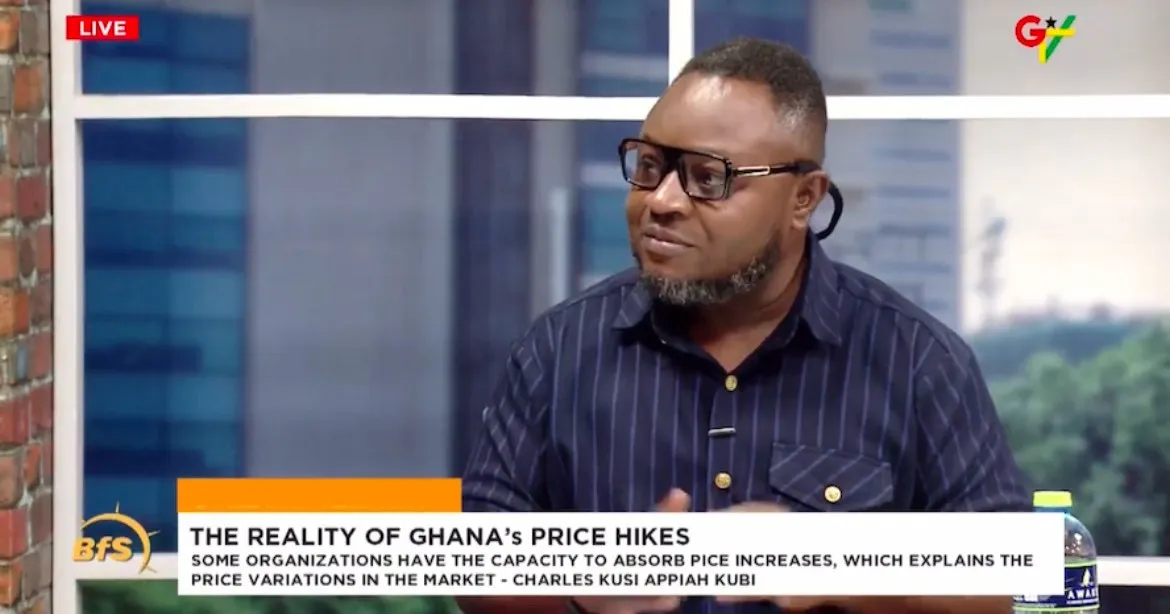
    Charles Kusi Appiah, Head of the Business and Economic Bureau at the Ghana Union of Traders’ Associations (GUTA), advised that unnecessary forex holdings should be liquidated.

    Speaking on Joy News’ PM Express Business Edition on Thursday, May 8, Mr. Kusi Appiah highlighted the current market trajectory that indicates sustained appreciation of the cedi against major international currencies.

    “If you don’t have anything to do with that forex, liquidate it,” he warned, emphasizing that retaining foreign currency in the current climate could result in significant losses.

    He recounted an encounter with a concerned individual seeking guidance. “Someone called me today asking, ‘What am I supposed to do? I’m holding forex. Are we going to see a downtrend of forex?’ Of course, yes,” he responded.

    He argued that continuing to hold on to dollars or other foreign currencies when there is no pressing need for them defies economic logic. “The trajectory shows that the cedi is day in and day out, gaining strength. So it doesn’t make economic sense for you to hold on to something you are losing every day.”

    Mr. Kusi Appiah acknowledged that in the past, many traders relied on foreign exchange as a safety net amid volatility in the local currency. “People put their trust in forex when the cedi, the local currency, is not doing well and the forex becomes the store of value,” he said.

    “Everybody wants to reference their investments. And when you are in an environment where predictability becomes a challenge, you always want to see what you can do to protect your gains.”

    However, with reduced demand for foreign currency in international trade and a stable local currency environment, he believes those old assumptions no longer apply. “Now, forex demand has reduced when it comes to international trade, and the cedi is appreciating. Why do you then hold on to forex when you are losing value?”

    Mr. Kusi Appiah credited government initiatives such as the Gold for Oil programme—referred to as GoldBod—for easing pressure on forex demand. “With the introduction of the GoldBod, where most international transactions use gold, the demand for forex has reduced. Therefore, there’s no need for one to hold forex for any transaction.”

    He noted that many GUTA members have already started adjusting their financial strategies in line with these shifts. “Yes, the opposite has occurred. Now, the confidence is that the local currency is strong enough to be the store of value, so I don’t need to hold forex. That is what accounts for the things that we see now.”

    He attributed the recent stability of the cedi partly to this decline in speculative demand. “When the dynamics have changed and you can see that there’s no need to hold on to it, the forex demand reduces. And that is accounting for the downward trend of forex in our market.”

    To further protect their earnings, Mr. Kusi Appiah encouraged traders to consider alternative forms of investment. “There are other investment options—probably the gold coin—that you can invest in so that you don’t lose totally.”

    Concluding his remarks, he issued a reminder about the risks of speculation. “When forex outperforms cedis, our working capital gets depleted. But if the cedi is now stable and strong, then it’s time to rethink. Liquidate what you don’t need.”

  • Cedi gains should lead to price reduction – UG Lecturer

    Cedi gains should lead to price reduction – UG Lecturer

    An economics lecturer at the University of Ghana, Professor William Baah Boateng, has called on importers and traders to reflect the recent appreciation of the Ghanaian cedi in the pricing of goods and services.

    Speaking on Joy News’ PM Express Business Edition on Thursday, May 8, Prof. Baah Boateng questioned why business operators who are quick to increase prices when the cedi depreciates do not take similar action to reduce prices when the local currency strengthens.

    “I will be very happy if he says when it goes down, then he will also reduce his prices to reflect the same level,” he said, reacting to comments from a representative of the Ghana Union of Traders Association (GUTA), who had welcomed the cedi’s gains.

    He cautioned that failing to align domestic prices with the cedi’s upward performance could erode public trust. “But if it’s not going to reflect on the domestic market at the speed the cedi is appreciating, then we have to be very careful,” he warned.

    Highlighting a persistent market trend, the economist noted that many importers often anticipate further cedi depreciation and price their goods accordingly — but do not apply the same logic when the currency appreciates.

    “When the cedi is appreciating, importers will by all means increase the price in anticipation of further depreciation,” he said. “And I expect that if it is appreciating, then they should reduce the price in anticipation of further appreciation.”

    His remarks come at a time when many consumers have expressed concern that the strengthening cedi is not being reflected in market prices. Prof. Baah Boateng argued that market integrity demands consistency.

    “If you’re going to adjust prices upwards when the currency is falling, then do the same when it’s rising. Don’t use one standard for losses and another for gains.”

    He also spoke positively about the Bank of Ghana’s handling of the current economic situation, particularly its cautious approach to policy amid shifting conditions.

    “What I see the central bank doing is watching and not just doing anything,” he noted. “They’re seeing how things unfold, and that’s wise.”

    Prof. Baah Boateng added that market forces alone do not drive outcomes in any economy, stressing the role of regulation. “There’s no economy where demand and supply alone determine everything,” he said. “There is always some level of regulation in every market.”

    Although he acknowledged some progress in the government’s effort to manage its finances, the lecturer emphasized that the overall structure of the economy remains largely unchanged.

    “When you look at the structure of the economy, we still have the same structure as it used to be last year,” he observed.

    Still, he commended the government’s recent focus on expenditure management. “Government has tried as much as possible to manage expenditure,” he said. “This is not cutting expenditure, but making sure the spending is tied to economic activity.”

    He believes that such fiscal prudence reduces pressure on the central bank. “If the fiscal is putting its acts together, the central bank won’t need to come in to clear the mess. It gives them peace of mind to focus on monetary policy and exchange rate stability.”

  • Cedi strength useless without reduced cost of living – Economist warns

    Cedi strength useless without reduced cost of living – Economist warns

    Professor William Baah Boateng of the University of Ghana is calling on Ghanaian importers and traders to reflect the recent appreciation of the cedi in their pricing strategies, warning that failing to do so exposes a clear inconsistency.

    Speaking on PM Express Business Edition on Joy News, the economics lecturer questioned why traders are quick to increase prices when the cedi falls but hesitate to reduce them when it gains value.

    “I will be very happy if he says when it goes down, then he will also reduce his prices to reflect the same level,” Prof. Baah Boateng said, reacting to comments made by a member of the Ghana Union of Traders Association (GUTA), who expressed optimism about the cedi’s performance.

    He stressed that the pace of the cedi’s appreciation must be matched by equivalent reductions in prices on the market. “But if it’s not going to reflect on the domestic market at the speed the cedi is appreciating, then we have to be very careful,” he cautioned.

    The economist explained that traders often increase prices based on expectations of a declining cedi and should do the opposite when the currency is strengthening. “When the cedi is appreciating, importers will by all means increase the price in anticipation of further depreciation,” he said. “And I expect that if it is appreciating, then they should reduce the price in anticipation of further appreciation.”

    He criticised the double standard where prices rise during economic downturns but do not come down when conditions improve. “If you’re going to adjust prices upwards when the currency is falling, then do the same when it’s rising. Don’t use one standard for losses and another for gains.”

    Prof. Baah Boateng also praised the Bank of Ghana for its cautious handling of the situation. “What I see the central bank doing is watching and not just doing anything,” he observed. “They’re seeing how things unfold, and that’s wise.”

    Turning to government performance, he pointed out that although the overall structure of Ghana’s economy remains largely the same, efforts have been made to manage public spending more effectively. “When you look at the structure of the economy, we still have the same structure as it used to be last year,” he noted. “Government has tried as much as possible to manage expenditure.”

    He clarified that the goal isn’t to slash spending, but to ensure that it supports real economic activity. “This is not cutting expenditure, but making sure the spending is tied to economic activity.”

    He added that such fiscal discipline allows the Bank of Ghana to concentrate on monetary and exchange rate policy without having to address fiscal shortfalls. “If the fiscal is putting its acts together, the central bank won’t need to come in to clear the mess. It gives them peace of mind to focus on monetary policy and exchange rate stability.”

    Prof. Baah Boateng’s message was clear: the benefits of a stronger cedi should not be kept in boardrooms — they should be felt by consumers through fairer pricing.

  • Cedi depreciated by 5.3% against the dollar as of March 14 – Finance Minister

    Cedi depreciated by 5.3% against the dollar as of March 14 – Finance Minister

    Finance Minister Dr. Cassiel Ato Forson has disclosed that the Ghanaian cedi has depreciated by 5.3% against the US dollar as of March 14, 2025.

    He made this known while addressing Parliament on Tuesday, assuring lawmakers that the government is taking decisive steps to stabilize the local currency.

    Dr. Ato Forson acknowledged the persistent depreciation of the cedi but pointed out that its performance had slightly improved compared to the same period in 2024, when it had depreciated by 5.7%.

    “Mr. Speaker, as of 14th March 2025, the cedi had depreciated by 5.3% against the US dollar, compared to 5.7% over the same period in 2024,. This shows a reduction in the depreciation by 0.4%” he stated.

    The minister attributed the depreciation to tight foreign exchange liquidity, high demand for forex from the energy sector, and increased commercial transactions. Despite these pressures, he noted that the cedi had shown signs of stability since February 19, 2025, largely due to interventions by the Bank of Ghana (BoG).

    “Mr. Speaker, the cedi has, however, witnessed stability since 19th February, on the back of central bank forex interventions,” he emphasized.

    To further strengthen the currency and curb depreciation, Dr. Ato Forson outlined government strategies, including increasing foreign exchange reserves, enhancing domestic production through import substitution, and effectively managing external debt obligations.

    He assured Parliament that these initiatives would complement the Bank of Ghana’s monetary policies, helping to stabilize the economy, reduce exchange rate volatility, and boost investor confidence.

    Meanwhile, the Bank of Ghana’s latest data shows that in January 2025, the cedi depreciated by 2.4% against the US dollar, a sharper decline compared to the 1.3% recorded in January 2024. By the end of January, the local currency was trading at GH¢15.06 per US dollar on the interbank market.

    The cedi also weakened by 3.0% against the euro, trading at GH¢15.69, and depreciated 0.8% against the British pound, reaching GH¢18.55.

    The Finance Minister has set a target to reduce the cedi’s annual depreciation rate to 8%, as part of broader efforts to restore economic stability.

  • Cedi sells at GHS16.20 to a dollar at forex

    Cedi sells at GHS16.20 to a dollar at forex

    The value of Ghana’s cedi has slightly improved against major currencies, particularly the US dollar, at some forex exchange points.

    According to the Central Bank’s daily update, the cedi is being bought at GH¢15.01 and sold at GH¢15.02.

    The British Pound is being exchanged for GH¢18.42 to buy and GH¢18.44 to sell.

    The Euro is priced at GH¢15.59 for buying and GH¢15.60 for selling.

    However, a check by GhanaWeb Business on January 22, 2025, at 8:20 AM showed that the cedi was being traded at GH¢16.20 to the dollar, while the pound was going for GH¢19.60 at some major forex bureaus in the country.

    The Euro was trading at GH¢16.60 on the retail market.

    To help stabilize the cedi, the Bank of Ghana sold over $200 million in the last quarter of 2024.

  • Cedi sells at GHS16.25 to a dollar

    Cedi sells at GHS16.25 to a dollar

    Ghana’s cedi has seen slight improvements against major foreign currencies, including the US dollar, at several forex bureaus.

    According to the Central Bank’s latest update, the cedi is currently valued at GH¢14.94 for buying and GH¢14.95 for selling.

    At the same time, the British Pound is being exchanged at GH¢18.22 for buying and GH¢18.24 for selling, while the Euro is trading at GH¢15.39 for buying and GH¢15.40 for selling.

    A recent check by GhanaWeb Business at 8:00 AM on January 20, 2025, revealed that at some leading forex bureaus, the cedi is being traded at GH¢16.25 to the dollar, GH¢19.70 to the pound, and GH¢16.80 to the Euro.

    In a bid to stabilize the cedi’s value, the Bank of Ghana sold over 200 million dollars in the last quarter of 2024.

  • Ato Forson aims to achieve 8% cedi depreciation

    Ato Forson aims to achieve 8% cedi depreciation

    Dr. Cassiel Ato Forson, the Finance Minister-designate, has set a target to reduce the Ghana cedi’s depreciation rate to 8% in the shortest possible time.

    He revealed this goal during his vetting before the Appointments Committee of Parliament on January 13.

    “We intend to reduce depreciation to 8% in the shortest time,” Dr. Forson announced.

    To achieve this, Dr. Forson outlined a comprehensive strategy to stabilise the economy and restore confidence in the local currency. Key measures include enhancing foreign exchange reserves, boosting export revenues, and curbing unnecessary imports.

    According to him, these interventions would not only stem the cedi’s depreciation but also improve the overall economic outlook for the country.

    The Finance Minister-designate reaffirmed his commitment to addressing the root causes of currency instability and assured the Committee of his readiness to collaborate with stakeholders to create a sustainable economic environment that fosters growth and benefits all Ghanaians.

    The Ghana cedi continued to face significant pressure, losing 3.95% against the US dollar in October 2024, bringing its year-to-date depreciation to nearly 29%. In 2024, the cedi had already depreciated by about 15.57%.

    https://twitter.com/thebankofghana/status/1878704546857591037

  • Cedi strengthens to GHS15.12 against dollar at forex

    Cedi strengthens to GHS15.12 against dollar at forex

    Ghana’s currency, the cedi, has made slight improvements against major foreign currencies, including the dollar, at some forex bureaus.

    Currently, $1 is being exchanged for an average of GH¢15.12, compared to GH¢16.16 last month. For the Euro, it’s selling at GH¢18.99, while the pound is going for GH¢15.78 on average.

    The Bank of Ghana shared that as of December 24, 2024, the cedi’s official rate is GH¢14.64 to buy $1 and GH¢14.65 to sell it.

    The pound is being bought at GH¢18.35 and sold at GH¢18.37, while the Euro is going for GH¢15.21 to buy and GH¢15.23 to sell.

    On December 27, 2024, checks showed that at 8:00 AM, the cedi was trading at GH¢15.85 to the dollar, GH¢19.70 to the pound, and GH¢16.70 to the Euro at some key forex bureaus.

    Despite these slight improvements, the cedi’s overall decline against major currencies continues to add pressure to Ghana’s struggling economy.

    To address this, the Bank of Ghana has injected over $200 million into the economy to stabilize the cedi.

  • Cedi trading at GHS16.10 to a dollar at major forex bureaus

    Cedi trading at GHS16.10 to a dollar at major forex bureaus

    Ghana’s local currency, the cedi, has experienced marginal gains against major trading currencies, especially the dollar at some forex bureaus.

    On average the cedi is selling at GH¢15.12 to $1 compared to GH¢16.16 last month.

    The Euro is selling at an average of GH¢18.99 whiles the pound is averaging GH¢15.78.

    In its daily update, the Central Bank noted that as of December 20, 2024, the cedi is trading at a buying price of GH¢14.69 and selling at GH¢14.70.

    The British Pound is being bought at GH¢18.42 and sold at GH¢18.44.

    The Euro trades at a buying price of GH¢15.27 and a selling price of GH¢15.29.

    Checks by GhanaWeb Business on December 23, 2024, at 8:30 AM show that the cedi is trading at GH¢16.10 to the dollar, while the pound is trading at GH¢20.25 at some major forex bureaus across the country.

    Additionally, the Euro is trading at GH¢17.00 on the retail market.

    Despite the current gains, the decline of the cedi against major trading currencies will further worsen the woes of the Ghanaian economy.

    The Bank of Ghana in its efforts to curb the depreciation of the cedi sold some dollars, worth over 200 million.

  • Cedi gains strength as it trades at GHS15.70 to the dollar

    Cedi gains strength as it trades at GHS15.70 to the dollar

    Ghana’s currency, the cedi, is gaining strength against major foreign currencies like the dollar at some forex bureaus.

    At the end of November, the cedi was selling at GH¢16.40 at certain forex bureaus, compared to highs of GH¢17.00 in previous months.

    The Bank of Ghana credits this improvement to growth in the country’s external sector.

    In its latest update on December 16, 2024, the Central Bank stated that the cedi is being bought at GH¢14.73 and sold at GH¢14.74.

    For the British Pound, the buying rate is GH¢18.60, while the selling rate is GH¢18.62. The Euro is being bought at GH¢15.46 and sold at GH¢15.48.

    Meanwhile, checks by GhanaWeb Business on the same date at 8:30 AM revealed that at some major forex bureaus, the dollar is trading at GH¢15.70, the pound at GH¢19.80, and the Euro at GH¢17.00 in the retail market.

    Although the cedi has made some gains, its ongoing depreciation against major currencies continues to hurt Ghana’s economy.

    To stabilize the cedi, the Bank of Ghana sold over $200 million in recent interventions.

  • Cedi projected to strengthen over peaceful 2024 elections and Mahama’s win

    Cedi projected to strengthen over peaceful 2024 elections and Mahama’s win

    The peaceful conduct of Ghana’s 2024 general elections is projected to benefit the cedi, with many observers expressing optimism about its stability in the coming days.

    Former President John Mahama has been declared the winner of the 2024 general elections, securing 6,328,397 votes, representing 56.55%.

    Dr. Mahamudu Bawumia, the Vice President and NPP presidential candidate, garnered 4,657,304 votes, amounting to 41.61%, in the 2024 general elections.

    Ahead of the December 7 elections, the Bank of Ghana assured the public of sufficient dollar buffers to maintain cedi stability despite potential uncertainties.

    Market analysts suggest that the peaceful nature of the December 7 elections has mitigated concerns about cedi depreciation, fostering expectations of gains in the near term.

    Ghana’s peaceful election process is viewed as a testament to its matured democracy, bolstering investor confidence and signaling stability to donor partners.

    Dr. Bawumia’s decision to concede defeat has been commended by offshore investors, who see it as a step toward maintaining economic and political stability.

    As of December 10, 2024, forex rates show the dollar trading at GH₵16.20 in some bureaus, while commercial banks are selling it at GH₵14.80.

    The cedi is anticipated to gain strength in the aftermath of the peaceful 2024 elections, with observers highlighting the positive market sentiment.

    Following the elections, forex bureaus recorded the dollar at GH₵16.20, while the British Pound and Euro traded at GH₵20.20 and GH₵17.00, respectively.

  • Cedi declines due to weak economy, not global crises – Study reveals

    Cedi declines due to weak economy, not global crises – Study reveals

    A recent study shows that the cedi’s fall in value is mainly due to weak economic conditions in Ghana, not because of external events like the COVID-19 pandemic or the Russia-Ukraine war.

    The research, led by Professor Alex Annan Abakah of Bentley University, challenges the government’s claim that global events are to blame for the country’s economic struggles.

    At a policy discussion organized by the PFM Tax Africa Network, titled ‘Is the COVID-19 and Russia-Ukraine War to Blame for Ghana’s Current Economic Challenges?’, Professor Abakah shared findings that suggest the cedi’s decline is mainly caused by problems within Ghana’s economy itself.

    The value of the Ghanaian cedi dropped by 28% in the first nine months of 2024, compared to the same period last year, when it had fallen by 9.78%.

    This ongoing decline is mainly because businesses are demanding more dollars and because of changes in how investors feel about the market, following decisions made by the U.S. Federal Reserve.

    The Federal Reserve only lowered interest rates by one point instead of the two that were expected, which kept the dollar strong and made investments in U.S. dollars more attractive.

    The study found that only 11% of the cedi’s decline was caused by the COVID-19 pandemic, and the Russia-Ukraine war had no major effect on the currency.

    The research also shows that the currencies of Russia and Ukraine actually became stronger compared to the cedi during this time. In comparison, weak economic conditions in Ghana had a much bigger impact on the cedi, nearly four times greater than the pandemic’s effect.

    Professor Abakah also pointed out that while Kenya’s currency, the shilling, dropped by 21.17% after COVID, the Ghanaian cedi lost a staggering 104.69%.

    “External shocks like COVID-19 undoubtedly affect all economies,” he explained. “However, the extent and duration of such impacts depend on the strength of a country’s economic fundamentals. Countries with weak fundamentals experience larger impacts over a longer period before recovery.”

    Insights on Ghana’s economic weaknesses

    The study pointed to Ghana’s high interest-to-revenue ratio as a key indicator of its economic challenges. In 2022, this ratio stood at 47.27 percent, surpassing pre-HIPC (Heavily Indebted Poor Countries) levels. This meant nearly half of every cedi generated in revenue was spent servicing debt interest – leaving little room for investment in infrastructure, human capital or other productive areas.

    The findings also revealed that during the Russia-Ukraine war period, the Ghanaian cedi depreciated by 128.26 percent, compared to the Kenyan shilling’s 25.66 percent decline.

    “The data show that Ghana’s economic struggles cannot be squarely blamed on the war or pandemic. Instead, it underscores the urgent need to address internal weaknesses,” Prof. Abakah said.

    The research highlighted a need for government to legislate fiscal discipline by implementing a debt ceiling and aligning expenditure with revenue to prevent fiscal overruns.

    It also emphasised prioritising investment in infrastructure and human capital development over consumption to drive future revenue and job creation. Additionally, the study called for leveraging natural resources to support industrialisation, modernising agriculture to ensure food security & long-term growth and adding value to local produce to reduce reliance on imports.

    To improve currency stability, the study advocated strict enforcement of foreign exchange regulations, discouraging dollarisation and controlling repatriation of foreign company profits.

    Prof. Abakah stressed the importance of good governance, including anti-corruption measures and effective budget monitoring systems as well as fostering a stable and transparent economic environment to build resilience against external shocks.

    “These measures can reduce the economy’s reliance on external borrowing, enhance local production and create a more resilient economic framework,” Prof. Abakah noted.

    Prof. Abakah emphasised that while external factors like a stronger dollar exert pressure, the impact on Ghana is exacerbated by domestic economic weaknesses.

    “When fundamentals are weak, the effects of global shocks are amplified. Strengthening these fundamentals is the only sustainable path to currency stability and economic resilience,” he said.

  • Cedi depreciation, shortage of dollars worsening our debt – ECG reveals

    Cedi depreciation, shortage of dollars worsening our debt – ECG reveals

    The Electricity Company of Ghana (ECG) has attributed its worsening debt situation to the instability of the forex market and the depreciation of the cedi.

    This revelation comes amid a deepening energy crisis, with nine Independent Power Producers (IPPs) owed $1.7 billion for the power they generate and supply to the national grid.

    Speaking on Joy News’ Newsfile on Saturday, November 23, the acting Managing Director (MD) of ECG, Ing. Asamoah David, explained that forex challenges significantly contribute to the company’s debt accumulation.

    “The truth is that the majority of these debts are a result of a forex shortfall,” he stated. “Each month, just from forex, we lose about 37 million. So, if you get the money and pay, getting the dollars becomes a problem. Sometimes, you will even make a payment, and it will take days or weeks before the IPPs receive it because of the dollar.”

    Ing. Asamoah further clarified the role of currency conversion in the delays, saying, “If it were in cedis, I would pay. But now, when I pay the money, the banks have to get the dollars and convert them before they pay the IPPs, and by the time they pay, if the dollar increases, it means we still have a shortfall.”

    As of November 22, the Bank of Ghana reported that the dollar was selling at a little less than GHC16 and the pound selling a little less than GHC20.

    Despite these challenges, the MD assured the public that ECG is making efforts to address the payments issue. “So, for the payments, we are doing our best to pay. We have an agreement with them now on how it’s going to be paid. ECG will pay part, and the Ministry will come in. Just yesterday [Friday], they sent me a message saying they have agreed.”

    The energy sector’s troubles escalated when Sunon Asogli, Ghana’s largest IPP, completely shut down operations on October 8 due to a $259 million debt. Dr. Elikplim Kwabla Apetorgbor, CEO of the Chamber of Independent Power Producers, Distributors, and Bulk Consumers (CIPDiB), warned of further shutdowns if no intervention occurs.

    “I can confirm that all is not well. If there is no intervention before Friday [November 22], I can tell you that by Monday, three key power plants will be off the grid. It is a serious matter, not fun,” he cautioned.
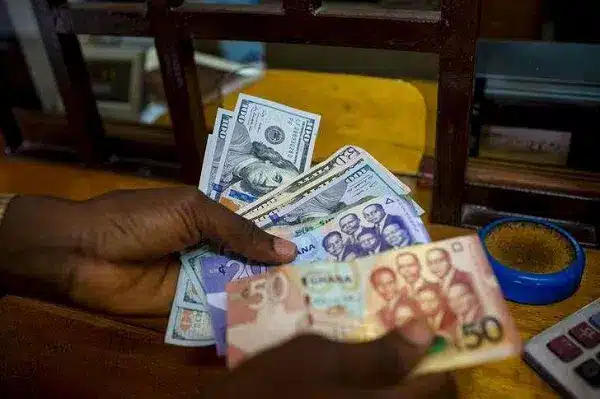
    The financial strain has also affected the operations of other IPPs, which supplement power generated by the state-owned Akosombo plant. However, with a new payment agreement in place, Ing. Asamoah revealed that the IPPs have agreed to resume smooth operations, and Sunon Asogli is expected to resume production in the coming weeks.

    Other IPPs that had scaled down their power output will also increase their supply. The unresolved debt crisis continues to threaten the stability of Ghana’s national grid, with urgent measures needed to avert widespread power outages.

  • Financial analyst quizzes John Kwakye on proposed solutions for cedi stability

    Financial analyst quizzes John Kwakye on proposed solutions for cedi stability

    Financial analyst Dr. Michael Kwaku Dawson has urged Dr. John Kwakye, the Director of Research at the Institute of Economic Affairs (IEA), to reveal the long-term solutions he proposed for ensuring cedi stability during his tenure on the Monetary Policy Committee (MPC) for almost ten years.

    This follows Dr. Kwakye’s criticism of the Central Bank for failing to effectively stabilize the local currency.

    “I know that Dr. Kwakye served on the MPC for a significant period. What solutions did he suggest for cedi stability? I hear him commenting daily on the BoG Inflation Targeting framework and monetary policy issues. What alternative options or frameworks has he proposed? I believe he should contribute solutions rather than just criticism. Actions speak louder than words,” Dr. Dawson stated.

    He also cautioned economists and financial analysts to be careful with their statements, as they can negatively impact the economy.

    “We share one economy. Any negative impacts are felt by all, not just financial entities,” Dr. Dawson emphasised.

    The financial analyst commended the central bank for launching the Ghana Gold Coin initiative, recognizing it as a valuable investment opportunity for the public.

    He expressed optimism that the initiative would help ease pressure on the local currency, offering an alternative for individuals who typically bought dollars for investment, encouraging them to consider purchasing gold coins instead.

    “This is an innovative concept, and I believe the BoG is providing the public with an alternative investment option to purchasing and hoarding dollars,” Dr. Dawson remarked.

    In his final comments, Dr. Dawson recognized the Bank’s efforts to stabilize the cedi against other currencies but encouraged the public to back the Bank in achieving its goals.

  • Ghana cedi keeps losing value against US dollar

    Ghana cedi keeps losing value against US dollar

    Persistent depreciation of Ghana’s local currency against major trading currencies, including the US dollar, continues to pose challenges for the economy.

    After facing significant pressure throughout the year, the cedi showed some relative stability in July, even as inflationary pressures began to ease.

    However, recent data from GhanaWeb Business, as of November 4, 2024, at 10:00 AM, reveals that the cedi is now trading at GH¢17.15 against the dollar, while the pound is valued at GH¢21.66 at various major forex bureaus nationwide.

    The Euro is also trading at GH¢18.21 in the retail market.

    The ongoing decline of the cedi against these major currencies is expected to exacerbate economic difficulties for businesses, particularly in terms of pricing strategies.

    Bloomberg reports that the cedi has depreciated nearly 1% against the dollar over the past month and has lost approximately 24% of its value this year.

  • We have enough reserves in place to stabilize cedi – BoG

    We have enough reserves in place to stabilize cedi – BoG

    The Bank of Ghana (BoG) is reinforcing its foreign exchange reserves to help stabilize the cedi as demand for foreign currency is expected to increase with the festive season approaching.

    This move aims to address the depreciation of the cedi against major currencies, currently trading at about GHS 17 per dollar, reflecting a 24.3% decline so far this year.

    Dr. Ernest Addison, Governor of the Bank of Ghana, highlighted that bolstering reserves is a crucial step toward reducing exchange rate volatility and enhancing economic stability.

    “Some are praying that the cedi will recover to GHS 10.00 to a dollar. These are the problems in our economy, the issues about the exchange rate and financial sector issues. But I think the good news is that we are making progress because the developments we are seeing are not different from other jurisdictions.

    “So, we need to stay focused and implement the appropriate policies and build buffers to be able to support the progress we have made.”

    He emphasized that the Bank’s strategy is not only aimed at reinforcing the local currency but also at building investor confidence and ensuring overall economic stability.

    “We have $7 billion dollars in foreign exchange reserves. If I want to drive the dollar-cedi rate at GHS 10, I can do that tomorrow. But what about the day after tomorrow? So, we are balancing various factors, trying to build reserves and managing the exchange rate. So, all is not lost yet, there is some silver lining in the cloud, hopefully we will see the appreciation of the currency”, Governor Addison added.

    Dr. Addison shared these insights at the launch of The Concise Law of Banking, authored by legal practitioner Afua Appiah-Adu and commissioned by the Institute for Law & Development (ILAD).

    This comprehensive guide to banking law covers core topics relevant to students, banking professionals, and legal practitioners, including: Bank Regulation, Supervision, and Licensing; Banker-Customer Relations; Electronic Payment Systems; Money Laundering; Credit Reporting; and Borrowing and Lending in Banking.

  • Dollar selling at GHS17; when are you resigning? – Mahama quizzes Akufo-Addo

    Dollar selling at GHS17; when are you resigning? – Mahama quizzes Akufo-Addo

    Former President John Mahama has challenged President Akufo-Addo to consider resigning over the Ghana cedi’s sharp depreciation.

    Speaking at a rally in Lugni, Wulensi constituency, in the Northern region, Mahama reminded the public that Akufo-Addo, as a candidate, once suggested that the late President John Evans Atta Mills should resign when the cedi was trading at GH2 to the dollar.

    Now, with the cedi nearing GH¢17 to the dollar, Mahama questioned whether Akufo-Addo would follow his own advice and step down under the current economic circumstances.

    “He’s on video, and he said that Kufour’s time, Gh¢1 [equals] one dollar, Mahama and Mills time, two cedis, one dollar, and that if he were Mills and Mahama, he would resign. I’m asking him, today one dollar, 17 cedis, would he resign?” he quizzed.

    The NDC flagbearer asked the president to “tell the people of Ghana when he’s going to resign.”.

    Mr Mahama appealed to the Independent Parliamentary Candidate for the area, Stanley, who broke away from the party, to put his ambitions aside and rejoin the NDC.

    He said that breaking away was only going to affect his political career because the NDC was going to win massively in the Parliamentary and presidential elections.

    Speaking at Bimbilla in the Nanumba North Municipality, former President Mahama opined that members of the international community have been asking questions about Ghana’s ‘deteriorating’ democracy.

    “Anywhere I go, the question people outside in the world ask me is, ‘Ghana, what happened to you?’” he claimed.

    Mr Mahama said Ghana was not only a model of democracy but also a model of economic management but was quick to note that the country’s democracy and economy were in shambles.

    He said, “Everybody looked up to Ghana as the model of democracy; today, we’re a quack model of democracy. Our judiciary is not independent; all our state institutions have been destroyed. People looked up to Ghana as a country that was a model of economic management; today our economy is in shambles.”

    Mr Mahama was later at Ngani in the Yendi constituency on Tuesday evening,, where he addressed a mammoth rally.

  • Cedi likely to stay under pressure this week, with the dollar trading at GHS 16.55

    Cedi likely to stay under pressure this week, with the dollar trading at GHS 16.55

    Ghana cedi is anticipated to face sustained pressure this week due to high foreign exchange demand, despite the country’s progress with the IMF’s Economic Credit Facility program.

    Last week, the cedi continued its decline against key currencies, driven by increased foreign and domestic demand. To help balance demand, the Bank of Ghana accepted US$89.3 million in bids during its 7-day foreign exchange auction.

    However, this measure proved insufficient, with the cedi depreciating by 1.06% over the week, closing at GH¢16.55 per US dollar.

    The currency also fell 0.23% against the pound and 0.28% against the euro within the same period.

    As of Monday, the cedi had slid to GH¢16.65 against the dollar, marking a slight week-on-week decline. Since the start of the year, the cedi has depreciated by over 26% against the dollar, ranking it among the three weakest-performing currencies in Sub-Saharan Africa.

    To further support demand, the Bank of Ghana plans to auction an additional US$20 million for Bulk Oil Distribution Companies (BDCs) this week.

    Although this intervention may ease some demand pressures, analysts anticipate the cedi will continue to experience strain as foreign exchange demand remains elevated.

  • No importation of goods for one year if I’m elected – Hassan Ayariga

    No importation of goods for one year if I’m elected – Hassan Ayariga

    Presidential Candidate of the All People’s Congress (APC), Hassan Ayariga, has expressed concerns about Ghana’s reliance on imported goods and unveiled his ambitious plans to address this issue if he wins the 2024 election.

    In an interview on Channel One TV’s Face to Face with Umaru Sanda Amadu, Ayariga suggested bold steps, such as potentially halting the importation of food products and other goods, as a way to drive local production and consumption.

    Ayariga’s strategy involves initiating an economic “lockdown” within his first 100 days in office, aimed at stimulating domestic manufacturing and reducing import dependence.

    He believes this move would promote economic self-reliance, stabilize the cedi, boost productivity, and create jobs for Ghanaians.

    To bring this plan to life, Ayariga intends to establish round-the-clock manufacturing hubs, ensuring that Ghana produces its own goods, becomes self-sufficient, and reduces reliance on foreign markets.

    “Ghana will stop the import… When you turn that country into a production-manufacturing nation, what it means is that we’re going to have an economic lockdown. I’m going to lock down this economy for one year. Nobody is importing anything anymore.

    “So, from the first day I become President, the next year, Ghana is going to experience what is called economic lockdown. What is an economic lockdown? We import to consume, we import to wear, and we import to survive. We’re going to lock down this economy and not importation. Right now we have to change our consumption pattern to produce what we eat and eat what we produce.

    “We have to change our standard of living, we have to begin to manufacture our clothing, and we have to live in a country where no other country exists.

    “The purpose of the economic lockdown is to make our economy independent, stabilise our cedi, increase our productivity, increase job creation.”

  • Cedi is currently trading at GHS16.55 per dollar at several forex bureaus

    Cedi is currently trading at GHS16.55 per dollar at several forex bureaus

    Ghana’s cedi continues its steady decline against key international currencies, including the US dollar, pound sterling, and Euro.

    Despite showing some stability in July amid decreasing inflationary pressures, the cedi has struggled throughout the year. Latest data from cedirates.com, as checked by GhanaWeb Business on October 21, 2024, at 8:50 AM, indicate the cedi is selling at GH¢16.55 per dollar at various forex bureaus.

    This translates to GH¢1655 for $100 and GH¢1700 for online transactions.

    The pound sterling is trading at GH¢21.70 at several major forex bureaus, while the Euro is going for GH¢18.10 in the retail market.

    Moreover, Bloomberg reported a 0.1% drop in the cedi’s value, with the currency now trading at GH¢15.67 to the dollar, exacerbating economic difficulties as businesses adjust prices in response.

    Over the past month, the cedi has weakened by nearly 1% against the dollar, bringing its total decline this year to nearly 24%, according to Bloomberg.

    Additionally, Ghana’s dollar bonds set to mature in 2032 rose by 0.2 cents to 52.36 cents on the dollar at 11:38 a.m. in London on September 11, 2024.

  • Ghana’s cedi trades at GHS16.50 to dollar

    Ghana’s cedi trades at GHS16.50 to dollar

    Ghana’s currency continues to face challenges, with the cedi persistently losing value against key foreign currencies like the US dollar.

    After experiencing some stability in July, coupled with easing inflationary pressures, the cedi has resumed its downward trend.

    As of October 14, 2024, at 10:00 AM, checks by GhanaWeb Business indicate that the cedi is trading at GH¢16.50 to the dollar, while the pound is priced at GH¢21.38 in various forex bureaus across the country.

    The Euro, meanwhile, is trading at GH¢17.93 on the retail market.

    Recent reports by Bloomberg reveal that the cedi has weakened by 0.1% to trade at GH¢15.67 per dollar, a development expected to exacerbate the economic struggles faced by Ghanaians, particularly in light of businesses’ pricing practices.

    Over the past month, the cedi has depreciated by nearly 1% against the dollar and has lost nearly 24% of its value in 2024 alone, according to Bloomberg.

    Additionally, Ghana’s dollar bonds set to mature in 2032 rose slightly by 0.2 cent to 52.36 cents on the dollar in London trading on September 11, 2024.

  • Cedi depreciation worsens amid ongoing economic challenges

    Cedi depreciation worsens amid ongoing economic challenges

    Ghana’s local currency continues to face consistent depreciation against major trading currencies like the US dollar.

    Despite showing some stability in July, the cedi has remained under pressure throughout the year, even as inflation eased.

    As of 10:00 AM on September 16, 2024, checks by GhanaWeb Business revealed the cedi trading at GH¢16.40 to the dollar and GH¢21.60 to the pound at key forex bureaus nationwide. The Euro was trading at GH¢18.00 in the retail market.

    Meanwhile, Bloomberg recently reported that the cedi had weakened by 0.1%, now trading at GH¢15.67 per dollar, further exacerbating the economic challenges facing Ghana due to the pricing behaviors of businesses.

    Over the past month, the cedi has fallen nearly 1% against the dollar, with a total depreciation of almost 24% this year, according to Bloomberg.

    Additionally, Ghana’s dollar bonds maturing in 2032 increased by 0.2 cents, reaching 52.36 cents per dollar as of 11:38 AM on September 11, 2024, in London.

  • Cedi depreciates by 24.3% against dollar in nine months – BoG

    Cedi depreciates by 24.3% against dollar in nine months – BoG

    The Ghana cedi has depreciated by 24.3% against the US dollar on the interbank forex market as of September 2024, according to the Bank of Ghana’s latest Summary of Economic and Financial Data. This marks a slower depreciation compared to the 22.9% decline recorded during the same period last year.

    The data indicates that the cedi lost 7.7% of its value to the dollar in March 2024, increasing to 18.6% depreciation by June 2024. On the retail market, the cedi is currently trading at an average of GH¢16.45 per dollar, while the Bank of Ghana quotes one dollar at GH¢15.70.

    Against other major currencies, the cedi has also experienced significant losses. It has depreciated by 27.7% against the British pound, now trading at GH¢20.93. The cedi has also lost 25.0% of its value against the euro, with the current rate at GH¢17.49.

    Slower Depreciation of the Cedi

    Despite these figures, the cedi’s depreciation has slowed in recent weeks. Demand pressures for foreign currencies appear to be easing, leading to a less rapid decline in the value of the cedi.

    Last week, the local currency depreciated by 1.21% against the dollar, a slower rate compared to the previous week’s 1.84%. Similarly, it weakened by 0.71% against the pound, down from 1.43% the previous week. However, the cedi recovered its 0.42% weekly loss against the euro on the retail market.

    Since the beginning of the year, the cedi has lost about 25.61% of its value against the US dollar, reflecting the persistent challenges facing the local currency.

  • Ghana’s cedi falls to GHS16.18 per US dollar amid depreciation

    Ghana’s cedi falls to GHS16.18 per US dollar amid depreciation

    Ghana’s cedi continues to face persistent depreciation against major global currencies, including the US dollar.

    After months of pressure, the cedi experienced brief stability in July, amid declining inflationary trends.

    However, as of September 16, 2024, at 10:00 AM, checks by GhanaWeb Business revealed that the cedi is trading at GH¢16.18 to the dollar, while the British pound is valued at GH¢21.62 in several major forex bureaus.

    In addition, the Euro is trading at GH¢18.08 in the retail forex market.

    Bloomberg also reported that the cedi weakened by 0.1%, trading at GH¢15.67 per dollar, a development likely to exacerbate Ghana’s economic challenges, especially with ongoing price adjustments by businesses.

    According to Bloomberg, the cedi has depreciated nearly 1% against the dollar in the past month and has lost about 24% of its value this year.

    In another report, Ghana’s dollar bonds set to mature in 2032 gained 0.2 cents, trading at 52.36 cents on the dollar at 11:38 a.m. on September 11, 2024, in London.

  • Foreign exchange from mining saving Ghana’s Cedi – Sulemanu Koney

    Foreign exchange from mining saving Ghana’s Cedi – Sulemanu Koney

    CEO of the Ghana Chamber of Mines, Sulemanu Koney, has shared vital insights on the mining sector’s crucial role in stabilizing the local currency during an interview with Joy News’ PM Express Business Edition on Thursday, September 19.

    He emphasized that without the mining industry’s contributions, the Ghanaian cedi could be in dire straits, potentially falling to ¢25 against the dollar.

    Addressing claims that the sector hasn’t significantly impacted the local currency, Koney asserted, “Trust me, if you didn’t have the mining industry, we would probably be heading to around ¢25 to $1.”

    Koney acknowledged existing misconceptions regarding the industry’s economic contribution but reinforced that the evidence speaks for itself.

    A substantial share of the country’s foreign exchange earnings is derived from mining, and he noted that collaborative efforts between the Bank of Ghana and mining companies such as selling portions of their gold reserves have been pivotal in supporting the currency.

    “Over the last few years, we’ve had a collaboration with the Bank of Ghana where part of our gold is sold to them as part of their reserves. This has been voluntary, not compulsory, but we still do it,” Mr Koney explained.

    In response to suggestions that Ghana’s mining sector should enhance its gold reserves like some non-mining countries, Koney highlighted the fundamental differences between them “Countries that don’t mine gold often have huge reserves, but that’s because they play in a different space.

    “Mining companies are not in that business. We bring the foreign exchange into the country to run our operations.”

    He further elaborated on the sector’s economic contributions, noting that mining companies purchase a range of local inputs such as labor and energy paid for in cedis.

  • Cedi poised for recovery as high interest rates, gold exports provide support

    Cedi poised for recovery as high interest rates, gold exports provide support

    Ghana’s cedi appears poised for a recovery after reaching a new low against the dollar, driven by elevated interest rates, an improved government financial outlook, and increased gold revenues.

    “We believe the upside to the dollar/cedi is limited now, as risks concerning Ghana’s outlook should already be in the price, while real rates are likely to remain wide and positive,” SG strategist Gergely Urmossy wrote in a note to clients.

    The cedi slipped by 0.1%, hitting a new low of 15.69 per dollar at 1:27 p.m. in Accra. This brings its year-to-date decline to 24%, fueled by concerns that the government may overspend ahead of the December presidential elections, a pattern seen in the past.

    However, in July, the government projected a 2024 budget deficit of 4.2% of GDP, improving from a previous forecast of 4.8%.

    This aligns with the growth projections of the International Monetary Fund, which provided Ghana with a $3 billion bailout to assist during a prolonged debt restructuring after its 2022 default.

    Real interest rates, adjusted for inflation, have remained strong due to easing price pressures. The central bank has maintained its benchmark rate at 29% since January, while inflation has fallen to 20.4% from 23.5%.

    Additionally, the cedi is benefiting from robust gold exports, helping to counter the disappointing cocoa revenue caused by unfavorable weather conditions.

    “We are seeing a growing offset from Ghana’s robust gold exports,” Nikolaus Geromont, a strategist at Absa Group Ltd., said in a note to clients. “Given that we expect the current account surplus to rise, the pace of the cedi’s weakness could ease from here.”

  • Cedi marginally loses value by 1.21% despite reduced demand pressure

    Cedi marginally loses value by 1.21% despite reduced demand pressure

    The pressure on the Ghana cedi lessened last week, yet the currency still experienced slight depreciation.

    It fell by 1.21% against the dollar on the retail market, a smaller drop compared to the 1.84% loss from the previous week.

    The cedi also slipped by 0.71% against the pound but regained 0.42% of its value week-on-week versus the Euro.

    Currently, it is trading at GH₵16.35 per dollar on the retail market. So far in 2024, the cedi has declined by 26.10%, ranking it among the worst-performing currencies in Africa this year.

    Outlook of cedi

    Ghana’s Parliament has sanctioned a $250 million loan from the World Bank as part of the Energy Sector Recovery Programme, aimed at addressing ongoing challenges in the country’s energy sector.

    The funds will also be used to ease the energy sector’s debt burden and ensure a stable power supply, which is expected to drive economic growth.

    Experts anticipate a boost in market confidence in the weeks ahead once the Bank of Ghana disburses the funds, potentially benefiting the local currency’s short-term performance.

  • Cedi depreciation expected to slow down this week as demand pressure subsides – Reports

    Cedi depreciation expected to slow down this week as demand pressure subsides – Reports

    This week, the depreciation of the Ghana cedi is anticipated to ease as the pressure from high demand diminishes.

    This follows a significant intervention by the Bank of Ghana in the foreign exchange market last week.

    On August 28, 2024, the Central Bank injected approximately $28 million into the market via a 7-day forward auction and an additional $20 million to Bulk Oil Distributing Companies, addressing the heightened demand for US dollars.

    These measures helped stabilize the cedi for the remainder of the week as demand pressures decreased.
    Despite this stabilization, the cedi depreciated by 1.84% against the US dollar, 1.43% against the British pound, and 0.42% against the euro on the retail market last week.

    Consequently, the dollar closed the week at GH¢16.28 on the retail market.

    Year-to-date, the cedi has depreciated by around 24% against the US dollar.

    However, Deloitte West Africa has suggested that the recent debt restructuring agreement with Ghana’s external creditors is expected to positively affect the local currency and mitigate imported inflation.

  • Ghana’s debt reaches GHS761bn due to cedi depreciation – Finance Minister

    Ghana’s debt reaches GHS761bn due to cedi depreciation – Finance Minister

    Ghana’s provisional nominal central government debt reached GH¢761.1 billion (US$51.1 billion) by July 31, 2024, according to Finance Minister Dr. Mohammed Amin Adam.

    This represents a nominal increase from the previous debt of GH¢587.7 billion, which was equivalent to US$53.5 billion.

    Dr. Adam shared these figures during the monthly Economic Update at the Finance Ministry in Accra on Thursday.

    He explained that the rise in the debt figure in cedi terms and the decline in US dollar terms are largely due to the depreciation of the cedi.

    “As of July 31, 2024, Ghana’s provisional nominal central government debt stood at GH¢761.1 billion, equivalent to US$51.1 billion. This represents a nominal increase from the previous amount of GH¢587.7 billion, equivalent to US$53.5 billion.”

    “The increase in cedi terms and decrease in US dollar terms is attributed to a combination of factors, including cedi depreciation, disbursements from multilateral institutions, and domestic financing of the budget,” he stated.

  • Cedi depreciated by 21.5% against the dollar as of August 25 – Amin Adam

    Cedi depreciated by 21.5% against the dollar as of August 25 – Amin Adam

    The Ghanaian cedi has depreciated by 21.5% against the US dollar as of August 25, 2024, according to the Minister for Finance, Dr. Mohammed Amin Adam. This development comes despite efforts to stabilize the currency through various economic measures.

    During a press engagement on Thursday, August 29, 2024, Dr. Amin Adam provided an update on the cedi’s performance and other key economic indicators. He highlighted that although the cedi has experienced depreciation, there have been improvements compared to previous years.

    For instance, the depreciation rate moderated to 27.8% in December 2023, down from 54% in November 2022. Additionally, the cedi’s depreciation rate in the first quarter of 2024 was 7.7%, significantly lower than the 22.1% recorded in the same period of 2023.

    “The cedi cumulatively depreciated by 18.6% against the US dollar at the end of June 2024, compared to 22% in the same period in 2023,” Dr. Amin Adam explained.

    He further noted that the month-on-month depreciation rate showed signs of improvement, decreasing from 6.1% in May 2024 to 3.1% in June 2024, and further to 2.1% in July 2024.

    “If this trend continues, I can assure you that our cedi will continue to hold against the major currencies,” he added.

    The Finance Minister attributed the cedi’s relative stability to several factors, including the Bank of Ghana’s monetary policies, strong fiscal consolidation, the Gold for Oil programme, and the Bank of Ghana’s gold for reserves initiative.

    Other contributing measures include the centralised platform for foreign exchange bureaus, implementation of the dynamic cash reserve ratio to absorb excess liquidity, revised regulations on advanced payments of imports, and positive market sentiments following the disbursement of the third tranche of the IMF extended credit facility.

    In addition to the cedi’s performance, Dr. Amin Adam also discussed the country’s inflation trends, particularly in relation to imported goods. Imported inflation, which refers to the increase in prices of goods and services brought into the country due to factors such as exchange rates and global market conditions, declined by 1.9 percentage points to 15.6% in July 2024, down from 17.5% in June 2024.

    This reduction in imported inflation contributed to the overall decline in Ghana’s inflation rate, which dropped to 20.9% in July from 22.8% in June 2024.

    The Finance Minister noted that the decline in food and non-food prices played a significant role in the overall inflation decrease. Food inflation fell by 2.5 percentage points to 21.5% in July, while non-food inflation declined by 1.1 percentage points to 20.5% during the same period.

  • Cedi depreciation continues; a dollar goes for GHC16

    Cedi depreciation continues; a dollar goes for GHC16

    The Ghana Cedi has continued its downward trajectory, with the value of the Cedi now exceeding GH¢16 against the US Dollar in the retail currency market.

    In banks and currency bureaus across Accra, the dollar is currently being sold for between GH¢15.95 and GH¢16.20.

    This depreciation follows recent adjustments in the foreign exchange market, as the Bank of Ghana’s dollar auction limits were relaxed by the International Monetary Fund (IMF).

    The IMF’s decision came as part of a broader US$3 billion economic recovery program aimed at bolstering Ghana’s reserves and stabilizing the economy.

    According to the Bank of Ghana’s July 2024 Summary of Financial and Economic Data, the Cedi’s value against the US dollar on the interbank foreign exchange market fell by approximately 19.6% as of July 2024. While this rate of depreciation shows some improvement from earlier periods, it still highlights ongoing volatility in Ghana’s currency market.

    The relaxation of the Bank of Ghana’s auction limits is intended to provide more flexibility in managing the country’s foreign exchange reserves. However, the impact on the Cedi’s stability remains a significant concern for both individuals and businesses engaged in international trade or holding foreign assets.

  • Ghana’s cedi continues to decline against major currencies

    Ghana’s cedi continues to decline against major currencies

    Ghana’s cedi has been steadily declining against major trading currencies, particularly the US dollar, in recent times.

    As of Tuesday, August 27, 2024, at 10:00 AM, checks by the media revealed that the cedi is trading at GH¢16.01 to $1 at several major forex bureaus in Accra.

    This decline is also noticeable against other major currencies like the British Pound and the Euro. The cedi is currently trading at GH¢21.12 to £1 and GH¢17.86 to €1 at forex bureaus across the country.

    Internationally, Bloomberg has recently ranked the Ghanaian cedi as the fourth-worst performing currency out of 150 currencies tracked globally. According to a Bloomberg survey, while the cedi lost nearly 23% of its value against the US dollar, it showed relative stability in July of this year.

    The cedi’s decline has been largely attributed to increased demand for the US dollar to finance imports of petroleum products, pharmaceuticals, and other goods.

  • A dollar goes for GHS15.97, £1 at GHS20.77

    A dollar goes for GHS15.97, £1 at GHS20.77

    Ghana’s local currency, the cedi, has recently experienced a sharper decline against major trading currencies, particularly the US dollar.

    As of Wednesday, August 21, 2024, at 10:05 AM, checks by GhanaWeb Business revealed that the cedi is trading at GH¢15.97 to $1 at several key forex bureaus in Accra.

    This drop in the cedi’s value is also noticeable when compared to other currencies like the British Pound and Euro.

    For example, the cedi is being exchanged for GH¢20.77 per £1 and GH¢17.71 per €1 at major forex bureaus throughout the country.

    Bloomberg, an international news outlet, recently ranked the Ghanaian cedi as the fourth-worst performing currency among 150 major currencies monitored globally.

    Although the cedi has depreciated by nearly 23% against the US dollar, it has shown some relative stability this month [July], according to a Bloomberg report.

    The cedi’s weakening has been linked to a growing demand for US dollars to purchase petroleum products, pharmaceuticals, and other imports.

  • Cedi falls to GHS15.97 per dollar amidst continued depreciation

    Cedi falls to GHS15.97 per dollar amidst continued depreciation

    Ghana’s local currency, the cedi, has recently seen a sharper depreciation against major trading currencies, particularly the US dollar.

    As of Tuesday, August 20, 2024, at 11:00 AM, checks by GhanaWeb Business revealed that the cedi is trading at GH¢15.97 to $1 at several key forex bureaus in Accra.

    This decline is also noticeable against other currencies like the British Pound and the Euro. The cedi is currently valued at GH¢20.74 to £1 and GH¢17.68 to €1 at major forex bureaus nationwide.

    Bloomberg recently ranked the Ghanaian cedi as the fourth-worst performing currency out of 150 top currencies monitored globally.

    Although the cedi has lost nearly 23% of its value against the US dollar, it has shown some relative stability this month [August], according to a Bloomberg survey.

    The cedi’s performance has been largely linked to the increased demand for US dollars to import petroleum products, pharmaceuticals, and other goods.

  • Cedi weakens due to corporate demand, relatively stable with $10m support from BoG

    Cedi weakens due to corporate demand, relatively stable with $10m support from BoG

    The Ghana cedi experienced relative stability for most of last week, supported by a $10 million intervention from the Bank of Ghana in the spot market.

    Despite this, ongoing pressures from corporate demand caused the cedi to weaken towards the end of the week’s trading.

    As a result, the cedi declined slightly by 0.47% week-on-week against the US dollar, finishing at GH¢15.95/$ on the retail market.

    The cedi also depreciated by 0.25% against the pound and by 1.31% against the euro on a week-on-week basis in the retail market.

    Currently, the cedi is trading at GH¢15.87 per US dollar on the retail market and has depreciated by 23.11% against the dollar since January 1, 2024.

    Looking ahead, the Central Bank plans to auction $20 million to Bulk Oil Distributing Companies this week.

    Analysts anticipate that this auction will help alleviate some of the corporate demand pressures and slow the cedi’s depreciation.

  • Fuel prices expected to drop between 2% and 4% in August – IES

    Fuel prices expected to drop between 2% and 4% in August – IES

    The Institute of Energy Security (IES) has forecast a decline in fuel prices for the first half of August, attributing this anticipated decrease to favorable international market conditions.

    According to Adam Yakubu, a Research Analyst at IES, the projected reduction in gasoline, gas oil, and liquefied petroleum gas (LPG) prices ranges between 2% and 4%.

    This forecast is based on positive developments in the global fuel market and a slowdown in the depreciation of the Ghanaian Cedi.

    “Following the positive realised on the foreign fuel market coupled with the slowed depreciation of Ghana Cedi recorded on the domestic forex market, the Institute for Energy Security (IES) projects a fall in fuel prices in the coming days.

    “This anticipated fall in the first half of August 2024 is attributable to the favourable international market dynamics. Fuel Prices are expected to fall between 2% and 4% for the three petroleum products under review.”

    In a statement released on July 30, Yakubu noted that the improvement in the foreign fuel market, coupled with a decelerated depreciation of the Cedi, has led the IES to predict lower fuel prices in the coming days. The anticipated decline is a result of these positive market dynamics.

    For the latter half of July 2024, fuel prices showed favorable trends: gasoline decreased by 2.99%, gas oil by 4.59%, and LPG by 1.10%. Additionally, the Ghanaian Cedi’s depreciation slowed to 0.52%, the smallest drop since February 2024.

    The IES’s analysis for July’s first pricing window revealed national average prices of GH₡14.23 per liter for gasoline, GH₡14.70 per liter for gas oil, and GH₡15.22 per kilogram for LPG.

    However, the IES market scan indicates that Oil Marketing Companies (OMCs) like Star Oil, Zen Petroleum, and Benab Oil have recently charged higher prices, reflecting the peak prices during this period.

  • Ghanaian cedi faces losses amid renewed corporate demand pressures

    Ghanaian cedi faces losses amid renewed corporate demand pressures

    In the aftermath of a steady performance the week before, the Ghanaian cedi experienced declines last week due to renewed corporate demand pressures.

    The local currency fell by 1.48% week-on-week against the US dollar, ending at a bid to offer rate of GH¢15.75/16.00 on the retail market.

    The cedi also weakened by 2.80% against the British pound and 2.18% against the euro.

    Increased demand from oil importers led to a rise in refined oil imports, reaching US$428.3 million in June 2024, up from US$422.6 million in May 2024.

    The Bank of Ghana sold US$40 million to oil importers through the Bulk Oil Distributors Foreign Exchange (FX) auction to address this demand. However, ongoing demand from oil importers resulted in a 4.46% month-on-month depreciation of the cedi against the US dollar in June 2024.

    Analysts view the higher oil import bill and increased FX demand as threats to net foreign reserves, with short-term pressure likely on the cedi.

    They anticipate the currency will continue to weaken this week due to rising corporate demand pressures. Currently, the cedi is trading at GH¢15.88 to the US dollar on the retail market.

    The Bank of Ghana reports that the cedi has depreciated by approximately 19.6% against the US dollar on the interbank forex market as of July 2024, compared to about a 21% decline on the retail market.

    The Central Bank’s July 2024 Summary of Financial and Economic Data indicates that the cedi lost 7.7% of its value against the dollar in March 2024, 10.5% in April 2024, 15.9% in June 2024, and 18.6% in July 2024.

  • Ghana Cedi continues depreciation spree as $1 hits GHC16

    Ghana Cedi continues depreciation spree as $1 hits GHC16

    The Ghana cedi experienced significant depreciation last week due to increased corporate demand pressures, after maintaining stability the previous week,

    The local currency fell by 1.48% week-on-week against the US dollar, trading at a bid-offer rate of GH¢15.75/16.00 on the retail market. The cedi also depreciated by 2.80% and 2.18% against the British pound and the euro, respectively.

    In June 2024, Ghana’s refined oil imports surged to US$428.3 million from US$422.6 million in May, driven by heightened demand from oil importers.

    The Central Bank intervened by selling US$40 million to oil importers through the Bulk Oil Distributors Foreign Exchange (FX) auction. Despite this, the persistent demand from oil importers contributed to a 4.46% month-on-month depreciation of the cedi against the US dollar in June 2024.

    Analysts view the higher oil import bill and the resulting increase in FX demand as a downside risk to net foreign reserves, anticipating further pressure on the cedi in the near term. Consequently, they expect the local currency to continue weakening this week as corporate demand pressures escalate.

    Currently, the cedi is trading at GH¢15.88 to the US dollar on the retail market.

    According to the Bank of Ghana, the cedi has depreciated by approximately 19.6% against the US dollar on the interbank forex market as of July 2024, compared to a 21% loss on the retail market.

    The Central Bank’s July 2024 Summary of Financial and Economic Data indicates that the cedi lost 7.7% against the dollar in March 2024, 10.5% in April 2024, 15.9% in June 2024, and 18.6% in July 2024.

  • BoG data shows cedi lost 19.5% value against dollar as of July

    BoG data shows cedi lost 19.5% value against dollar as of July

    As of July 2024, the Ghana cedi has experienced a 19.6% depreciation against the US dollar on the interbank forex market, according to the latest report from the Bank of Ghana (BoG).

    This decline is slightly less severe compared to the approximately 21% drop observed on the retail market.

    The Central Bank’s July 2024 Summary of Financial and Economic Data reveals a pattern of depreciation throughout the year. The cedi weakened by 7.7% in March 2024, followed by a 10.5% drop in April. The losses continued with a 15.9% depreciation in June and an 18.6% decline in July.

    On the retail market, the cedi is currently trading at an average of GH¢15.60 per US dollar, while the Bank of Ghana’s rate is GH¢14.78 per dollar.

    In addition to its decline against the dollar, the cedi has depreciated by 20.8% against the British pound, with the current rate at GH¢19.10. It has also lost 18.4% in value against the euro, trading at GH¢16.09.

    Despite these challenges, the cedi showed signs of stability against the dollar last week, buoyed by increased corporate demand and market speculation about a potential rate cut by the US Federal Reserve.

    This led to a 0.29% weekly gain, with the cedi closing at a mid-rate of GH¢15.64 per dollar on the retail market. This marks the second consecutive week of gains for the cedi against the US dollar.

  • GUTA president calls for a stable cedi

    GUTA president calls for a stable cedi

    The President of the Ghana Union of Traders’ Associations (GUTA), Dr. Joseph Obeng, stated that the association’s main focus is on maintaining the stability of the local currency.

    He called on the government to continue supporting economic progress, which is essential for the business sector.

    Dr. Obeng highlighted that GUTA has played a role in the growth of small and medium-sized enterprises (SMEs) by providing funding as a mitigating measure.

    He noted that directing these funds to specific areas has a beneficial effect on the economy.

    In his mid-year budget review presented to Parliament on July 23, the Finance Minister reported that the economy is experiencing strong recovery, with a 4.7% growth in the first quarter of 2024.

    Dr. Adam credited this positive outcome to effective policy measures, strong economic management, and the steadfast resilience of the Ghanaian people.

    Speaking to the media, the GUTA President said, “We think that overall, if we look at most of the figures, even with the debt restructuring and all that, we have come this far, and it can be said that it is inspiring some hope and confidence into the system.”.

    The GUTA president emphasized the need for the government to make every effort to maintain this growth, bolster the local currency, and further reduce inflation to help businesses prosper once more.

  • Intensified expenditure cuts will check cedi depreciation – Economist

    Intensified expenditure cuts will check cedi depreciation – Economist

    Economist Dr. Ishmael Yamson has urged the Ghanaian government to consider expenditure cuts as an immediate measure to address the depreciation of the cedi.

    He believes that while debt restructuring agreements with external creditors are important, they are not the primary solution to the currency’s poor performance in recent years.

    “There is always a signalling effect that could convince investors about government commitment to stabilize the economy and help deal with our debt situation,” Dr. Yamson explained during an appearance on PM EXPRESS BUSINESS Edition with host George Wiafe on July 18, 2024.

    He emphasized the need for the government to adopt practical and verifiable expenditure reduction measures. This approach, according to Dr. Yamson, could help manage the amount of fresh borrowing required.

    The discussion focused on Ghana’s economic recovery and whether the country is on the right track. Dr. Yamson expressed concern over the government’s reliance on short-term borrowing through the Treasury bill market, warning that it could negatively impact the cedi and the country’s debt situation.

    Cedi’s Performance

    Despite government efforts in restructuring Ghana’s external debts, the cedi continues to struggle against major currencies. As of July 19, 2024, the cedi was trading at ₵15.56 to the US dollar, ₵20.23 to the British pound, and ₵17.02 to the euro, based on average transactional quotes from major commercial banks.

    The telecommunications and manufacturing sectors remain the leading sectors demanding foreign currency, with trades on the interbank market ranging around ₵15.38.

    Ghana’s Exports and Cedi Performance

    Dr. Yamson highlighted the importance of monitoring developments in the cocoa sector, as its performance can significantly impact the cedi’s stability. He noted concerns over the recent decline in cocoa production and its potential effect on Ghana’s export earnings. With Ghana currently unable to access the Eurobond market, export proceeds are crucial for bolstering international reserves.

    Election Spending

    Dr. Yamson also expressed concerns about the government’s ability to maintain fiscal prudence in an election year, despite commitments under the International Monetary Fund program. He recalled that previous administrations have struggled to adhere to fiscal discipline during election periods.

    “We can talk about Yaw Osafo Marfo who tried to ensure that we did not witness any serious election overrun,” Dr. Yamson said, referencing past efforts to maintain fiscal discipline during elections.

    As the December 2024 elections approach, Dr. Yamson’s advice underscores the need for the government to implement effective economic measures to stabilize the cedi and ensure long-term economic recovery.

  • Ghana’s cedi continues to decline against major currencies, trading at GHS15.67 to $1

    Ghana’s cedi continues to decline against major currencies, trading at GHS15.67 to $1

    Ghana’s currency, the cedi, continues to lose value relative to major foreign currencies, especially the US dollar.

    Reports received has it that the cedi is trading at GH¢15.67 per US dollar at some foreign exchange bureaus.

    This depreciation of the cedi is also observable with other major currencies, such as the British Pound and Euro.

    For example, the cedi is priced at GH¢20.34 per British Pound and GH¢17.10 per Euro at leading forex bureaus nationwide.

    Bloomberg has recently ranked the Ghana cedi as the fourth-worst performing currency out of 150 global currencies.

    This assessment follows similar declines experienced by the Egyptian Pound, Nigerian Naira, and Lebanese Pound.

    Since the start of the year, the cedi has dropped in value by 21% against the US Dollar.

    The cedi’s poor performance is largely attributed to the increased demand for US dollars for purchasing petroleum products, pharmaceuticals, and other imports.

  • A dollar sells at GHC15.95 as cedi continues to stabilise

    A dollar sells at GHC15.95 as cedi continues to stabilise

    The Ghana cedi is anticipated to maintain stability against the US dollar this week, bolstered by enhanced foreign exchange (FX) liquidity and a slowdown in demand.

    This development follows the recent inflow of $360 million from the International Monetary Fund (IMF), which has significantly improved FX liquidity and tempered corporate demand.

    Last week, the cedi demonstrated resilience against the US dollar, supported by favorable market sentiments as foreign exchange demand eased.

    This was largely attributed to the IMF board’s approval and subsequent release of the third tranche of $360 million following the second review of Ghana’s 36-month Extended Credit Facility.

    Additionally, the Bank of Ghana has actively participated in the market, selling approximately $19 million on the spot market to further bolster foreign exchange liquidity. These measures have contributed to the stabilization of the local currency.

    Over the past week, the cedi recorded a modest decline of 0.30% against the pound and 0.25% against the euro, following the successful UK election results, which had an impact on global currency movements.

    The cedi has faced significant challenges in recent months, grappling with persistent corporate demand, leading to its depreciation. As a result, the local currency concluded the first half of 2024 with a 22.45% loss against the dollar on the retail market.

    Currently, the exchange rate stands at GH¢15.95 to one US dollar at forex bureaus. Since the beginning of the year, the cedi has depreciated by 22.58% against the dollar.