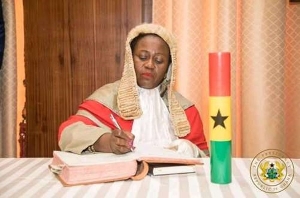
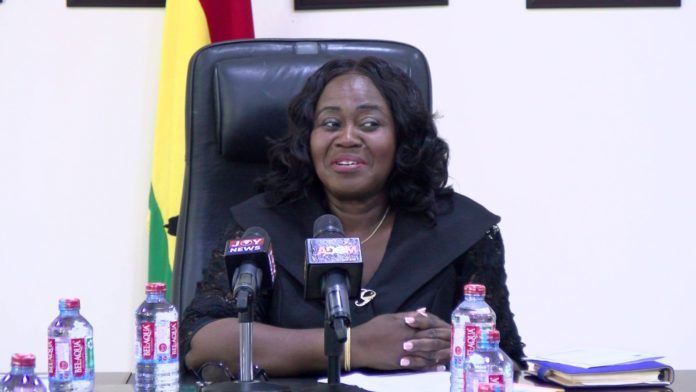
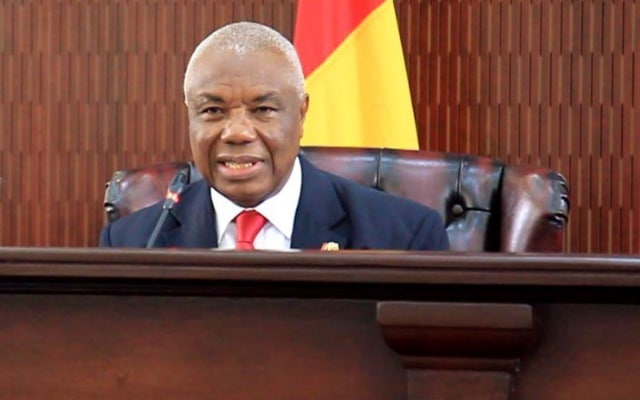
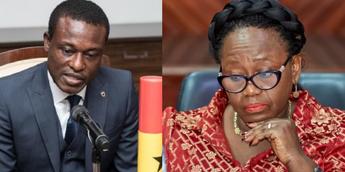
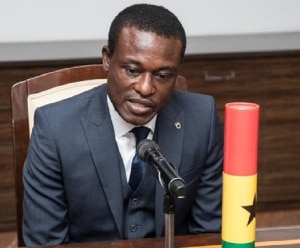
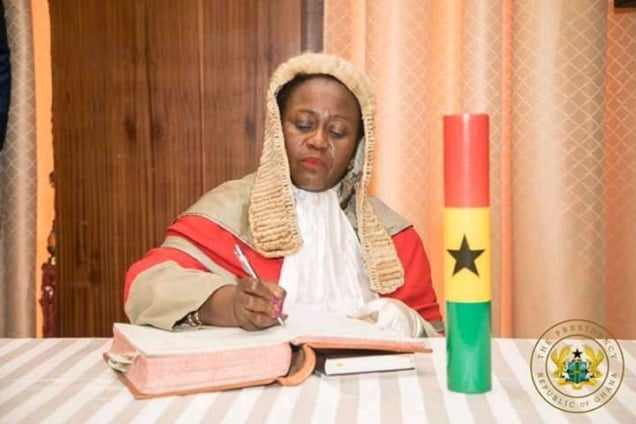
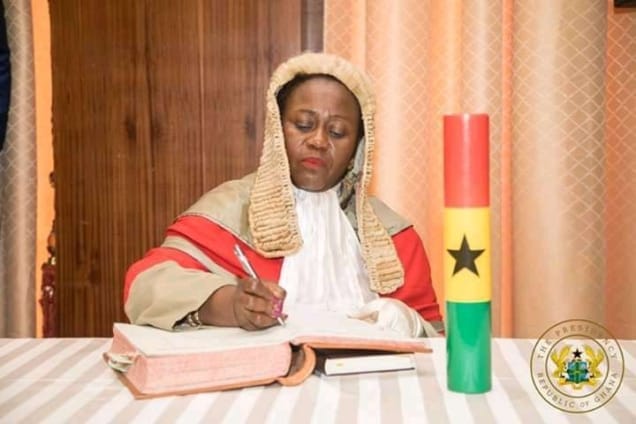
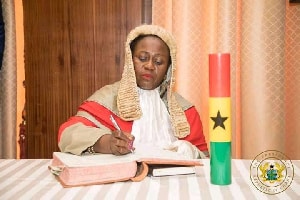
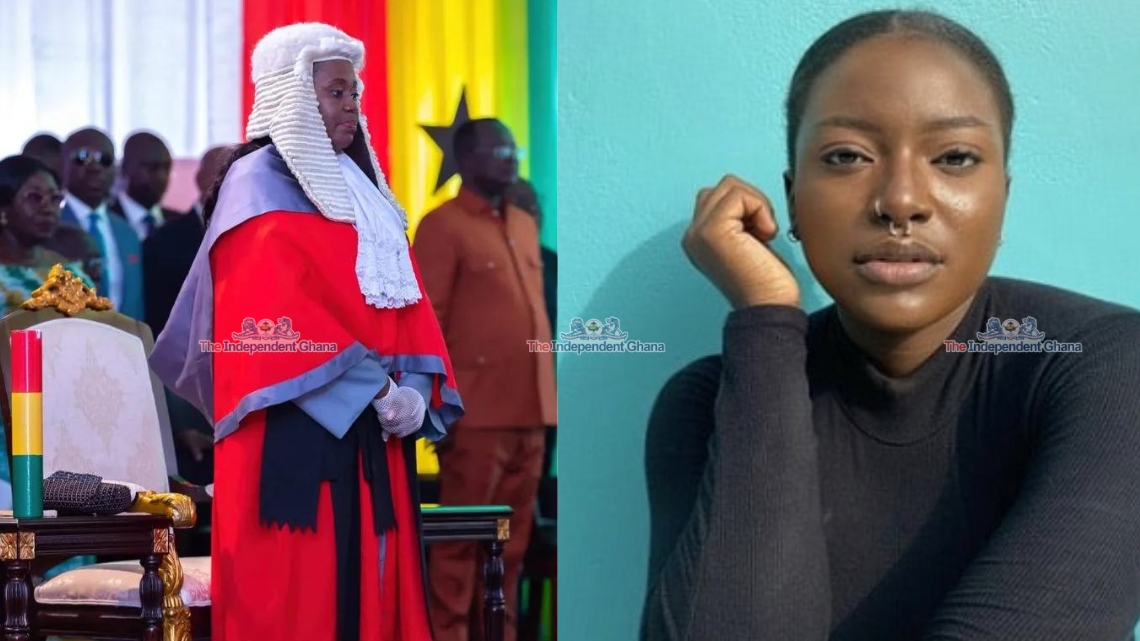
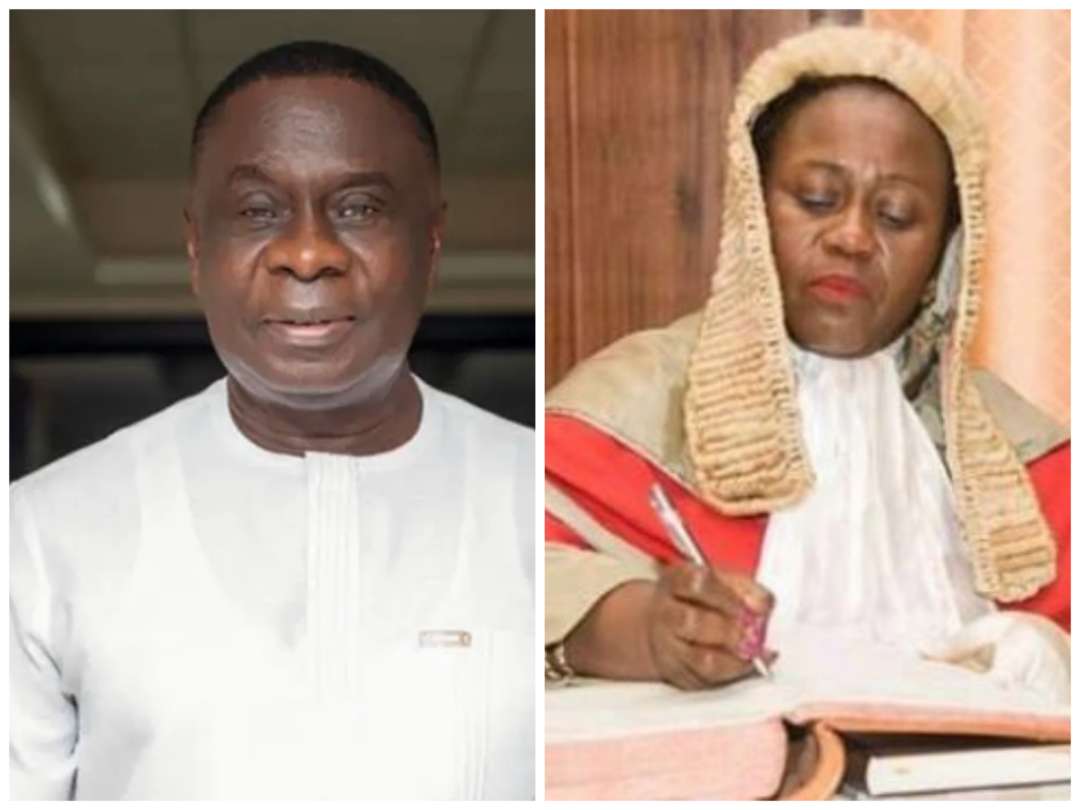
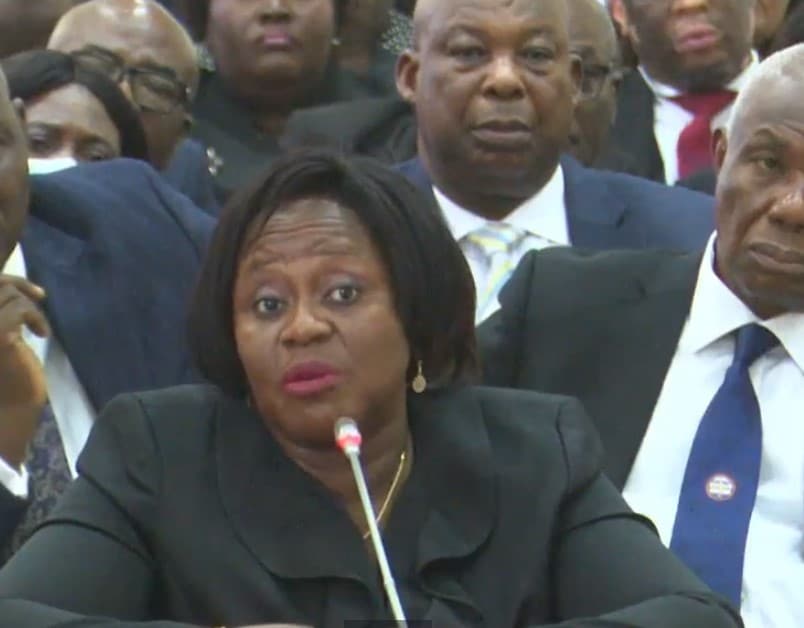
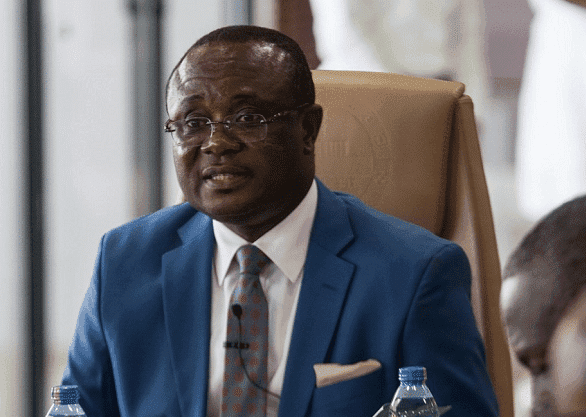
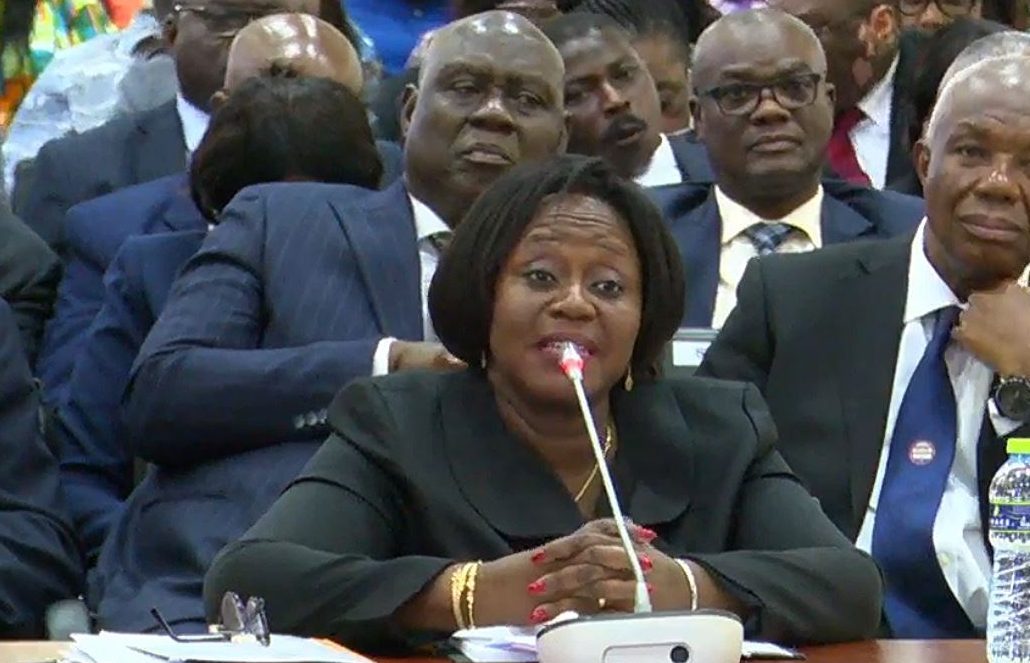
The Chief Justice, Gertrude Sackey Torkornoo, has rejected a petition calling for the removal of Special Prosecutor Kissi Agyebeng from office.
Former Attorney-General Martin Amidu urged President Akufo-Addo to dismiss Mr. Agyebeng in a letter dated April 30, 2024.
The petition was subsequently forwarded to Justice Torkornoo on May 6, 2024.
However, the Chief Justice found the petition lacking in merit and dismissed it.
Amidu, the former Special Prosecutor, alleged serious misconduct in his petition, including procurement irregularities in the purchase of vehicles for the Office of the Special Prosecutor (OSP) and abuses of power involving judges and the administration of justice, which he argued justified Agyebeng’s removal.
But the Chief Justice determined that Amidu’s petition failed to provide sufficient evidence and legal grounds to substantiate the allegations, thus not meeting the threshold for establishing a prima facie case for Agyebeng’s removal as Special Prosecutor.
The Chief Justice concluded that the petition lacked the factual and legal basis necessary to warrant further investigation or action.
Martin Amidu confirming the decision of the Chief Justice stated, “I have today received a one-page letter from the Presidency with reference number OSP 307/24/659 dated 2 July 2024 notifying me that: “…. the Honourable Chief Justice, Mrs. Justice Gertrude Sackey Torkornoo, has submitted her review of the existence or absence of a prima facie case with respect to your petition.
“I was then informed that: “In accordance with section 15 (3) of the Office of the Special Prosecutor Act, 2017, the Chief Justice determined that the factual and legal foundation of the petition fall short of the standard required to establish a prima facie case for the removal of the Special Prosecutor,” a piece allegedly written by Mr Amidu said.
Chief Justice Gertrude Torkornoo has rejected a petition filed by businessman Richard Jakpa, claiming unfair treatment and rights violations during his trial in the controversial ambulance procurement case.
Mr. Jakpa, the third accused in the ongoing trial, had sought the transfer of trial judge Afia Serwaa Botwe, citing perceived bias and mistreatment.
In his petition, Mr. Jakpa alleged that he had been denied basic rights and fair treatment throughout the trial proceedings. He accused the judge of bias, denying him legal representation, and even restricting his access to necessary facilities like restroom breaks.
However, Chief Justice Torkornoo, responding to Mr. Jakpa’s concerns, stated that he had failed to provide substantial evidence to support his claims of unfair treatment.
The Chief Justice pointed out that Mr. Jakpa’s allegations lacked sufficient backing from court records or other substantiating evidence.
In an interview with JoyNews following the Chief Justice’s decision, Mr. Jakpa expressed shock at the dismissal of his petition.
He criticized the Chief Justice for not independently verifying his claims by reviewing court recordings and other trial proceedings.
“I got a response from the Chief Justice, a surprise response that I didn’t provide evidence so she cannot transfer the judge. She didn’t say what I am saying is not true,” Mr. Jakpa stated, highlighting his disappointment with the outcome.
Mr. Jakpa’s allegations have stirred controversy surrounding the fairness and conduct of the trial, which involves allegations of corruption and mismanagement in the procurement of ambulances.
Despite his claims, the trial continues with Mr. Jakpa and other defendants facing serious charges related to the misuse of public funds.
The Chief Justice’s decision underscores the importance of substantiating allegations with concrete evidence in legal petitions, especially when challenging the conduct of judicial proceedings.
The National Democratic Congress (NDC) has formally called upon Chief Justice Gertrude Torkonoo to retract her recommendation to President Akufo-Addo regarding the appointment of new Supreme Court judges, citing concerns over constitutionality.
In a press statement released today, the opposition party expressed strong reservations about the Chief Justice’s recent letter advising President Akufo-Addo to nominate five judges to the Supreme Court. According to the NDC, such a recommendation represents a breach of constitutional norms and threatens the independence of the judiciary.
“The NDC urges Chief Justice Torkonoo to retract her recommendation to President Akufo-Addo for the appointment of new Supreme Court judges,” stated Fiifi Kwetey, the General Secretary of the NDC, during a media briefing.
“This action undermines the principles of judicial independence and could set a dangerous precedent for the politicization of Ghana’s judiciary.”
Kwetey emphasized the importance of upholding constitutional safeguards that ensure the judiciary operates free from political interference. He stressed that the appointment of judges to the highest court in the land should adhere strictly to meritocratic principles and due process, rather than being influenced by political agendas.
The controversy arose following Chief Justice Torkonoo’s letter dated May 30, 2024, recommending five individuals for appointment to the Supreme Court, including Justice Afia Serwaa Asare Botwe, who currently presides over significant legal proceedings.
In light of these developments, the NDC has called for a retraction of the recommendation and urged Chief Justice Torkonoo to uphold the judiciary’s role as an independent arbiter in Ghanaian democracy. The party underscored its commitment to safeguarding democratic institutions and ensuring they remain resilient against political interference.
As the debate unfolds, stakeholders continue to monitor the situation closely, recognizing the critical importance of maintaining judicial integrity and independence in Ghana. The NDC remains steadfast in its advocacy for transparent and constitutional processes in the appointment of judges, aiming to preserve the judiciary’s credibility and effectiveness in upholding justice.
The National Democratic Congress (NDC) has vehemently criticized President Nana Akufo-Addo and Chief Justice Gertrude Torkonoo, accusing them of undermining judicial independence through what they deem an “unconstitutional” recommendation to appoint new Supreme Court judges.
In a strongly-worded statement released today, the NDC condemned the recent move by Chief Justice Torkonoo to advise President Akufo-Addo to nominate five new judges to the Supreme Court.
According to the opposition party, this action represents a blatant attempt by the Executive to exert undue influence over the judiciary, compromising its impartiality and integrity.
“The blatant unconstitutional actions of President Akufo-Addo and Chief Justice Torkonoo are not just political manoeuvres. They are a direct assault on our judicial independence and the very soul of our democracy,” declared Fiifi Kwetey, the General Secretary of the NDC, during a press conference.
Kwetey further highlighted the potential dangers of such actions, suggesting that they could transform Ghana’s judiciary into a mere extension of the Executive branch, used for political purposes rather than upholding justice.
“Imagine a Ghana where the Judiciary becomes a tool for political retribution rather than justice. This is not the Ghana we pledged to fight for,” he added, underscoring the NDC’s commitment to preserving democratic principles and judicial autonomy.
The NDC’s criticism stems from Chief Justice Torkonoo’s letter to President Akufo-Addo dated May 30, 2024, wherein she recommended the appointment of five new judges to the Supreme Court.
Among the nominees is Justice Afia Serwaa Asare Botwe, who currently presides over the contentious ambulance procurement trial involving Ato Forson and others.
As the debate intensifies, the NDC has called upon Chief Justice Torkonoo to retract her recommendation, urging her to uphold the principles of judicial independence enshrined in Ghana’s constitution. The opposition party remains vigilant in its stance against any actions that could undermine the judiciary’s role as a pillar of democracy in Ghana.
Chief Justice Gertrude Torkonoo has justified the appointment of five new judges to the Supreme Court of Ghana, citing the pressing need to address the backlog of cases currently burdening the judiciary.
In a letter dated May 30, 2024, addressed to President Nana Akufo-Addo, Chief Justice Torkonoo officially recommended the nomination of five judges to bolster the Supreme Court’s capacity.
Among the nominees is Justice Afia Serwaa Asare Botwe, who is currently presiding over the contentious ambulance procurement trial involving Ato Forson, among others.
The other nominees include Justice Cyra Pamela Koranteng, Justice Edward Amoako Asante, Justice Eric Kyei Baffuour, and Justice Angelina Mensah Homiah.
Speaking on the matter, Chief Justice Torkonoo highlighted the overwhelming workload faced by the Supreme Court, emphasizing that the addition of more judges is crucial to expedite pending cases and ensure timely justice delivery.
“There are several cases pending, and that is why we need more Supreme Court judges,” she stressed.
The call for additional judges comes amidst criticism from the National Democratic Congress (NDC), who have labeled the Chief Justice’s recommendation as unconstitutional.
Fiifi Kwetey, the General Secretary of the NDC, expressed concerns over what he described as an attempt by the Executive to undermine judicial independence.
“The blatant unconstitutional actions of President Akufo-Addo and Chief Justice Torkonoo are a direct assault on our judicial independence and the soul of our democracy,” Kwetey remarked during a press conference.
Kwetey further urged Chief Justice Torkonoo to retract her recommendation to President Akufo-Addo, cautioning against the judiciary becoming a political tool rather than a pillar of justice in Ghana.
“Imagine a Ghana where the Judiciary becomes a mere extension of a failed Executive – a tool for political retribution rather than justice. This is not the Ghana we pledged to fight for,” he added.
Richard Jakpa, the third accused in the ongoing ambulance trial, has petitioned the Chief Justice, alleging unfair treatment throughout the legal proceedings.
Jakpa claims that his basic human rights and privileges have been repeatedly denied during the trial.
In an interview with JoyNews, Jakpa expressed his grievances, stating, “Right from the beginning of this trial till today, I have not been treated fairly at all by the judge. I am saying that because I have written a petition to the Chief Justice on this. So, I am not speaking out of a vacuum, and it is recorded. It is documented.”
Jakpa detailed various instances of perceived bias and rights violations in his petition. He accused the judge of denying him legal representation, basic needs such as restroom access, and engaging him inappropriately in court.
He believes these actions indicate that the judge has already presumed his guilt, and he is merely fulfilling procedural requirements.
Additionally, Jakpa accused Attorney General Godfred Yeboah Dame of prosecuting the case against Minority Leader Dr. Cassiel Ato Forson for political reasons.
Jakpa suggested that Forson posed a threat to government interests, particularly regarding the contentious E-levy, and that the prosecution was a tactic to silence him.
“Attorney General came to court purely on political convenience and mischief to imprison Hon. Ato Forson, and this stems from the E-levy. Because Honorable Ato Forson was the ranking member for the NDC in Parliament and he was giving them a headache, he was frustrating and being meticulous on the figures that Ken Ofori-Atta was bringing to Parliament,” Jakpa asserted.
He further alleged that the accusations against him were part of a strategy to mask the political motivations behind the Attorney General’s actions. Jakpa claimed that former Finance Minister Ken Ofori-Atta had influenced Dame to prosecute Forson to intimidate him and reduce his critical oversight in Parliament.
Deputy Attorney General Alfred Tuah Yeboah refuted Jakpa’s allegations, defending Dame’s integrity and professionalism. Yeboah emphasized Dame’s competence and success in both local and international legal arenas.
“If you look at the AGs that we have in Ghana, if he [Godfred Dame] is not the best, he will be one of the best when it comes to his courtroom appearance. Look at international arbitrations. An Attorney General who leads his team to go on international arbitration and win cases internationally, not locally. So if you say local champion, what does it mean?” Yeboah questioned.
Chief Justice Gertrude Torkornoo has voiced concern over the growing prevalence of wealth accumulation in Ghanaian society, particularly within the business community.
She highlighted that the relentless pursuit of wealth and possessions has fostered a culture of greed among the populace.
“I don’t understand the level of cravings and the level of monies that people need. The figures are too high and too weird.
“Those close to me, are they buying islands or something. What are they doing? What do they need all of this for?” she asked.
These remarks were delivered by Chief Justice Gertrude Torkornoo at the Full Gospel Business Men Fellowship conference themed ‘Integrity of a Business Person.’
During her speech, the Chief Justice acknowledged the challenges of maintaining integrity but emphasized that it is achievable through a commitment to Christian values.
Additionally, Emmanuel Mahama, President of the Full Gospel Business Men Fellowship, lamented the detrimental effects of corruption on economies. He urged stakeholders to join forces in combating this scourge.
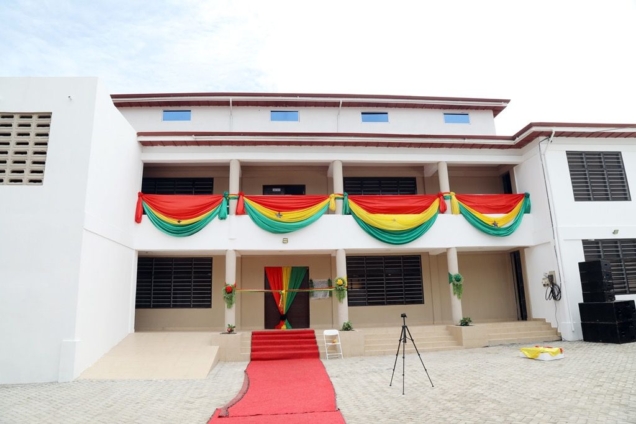
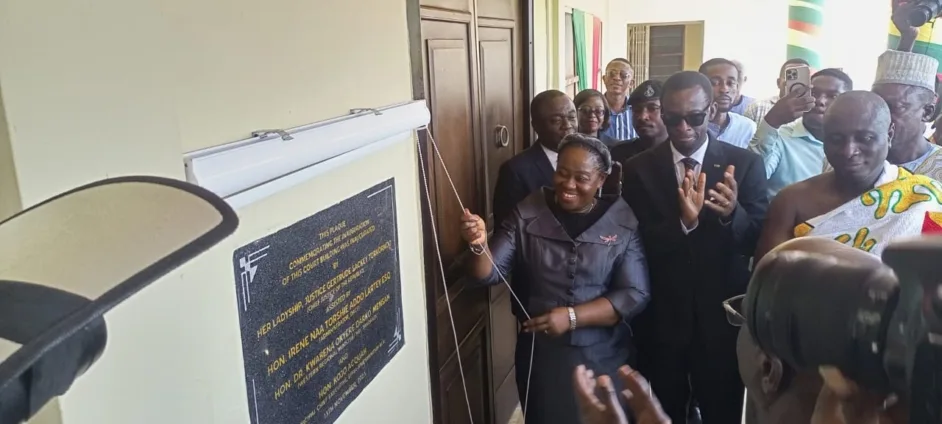
The one-storey building, equipped with two courtrooms, will serve Juaben, Effiduase Asokore, Nsuta, Ejura Sekyedumase, and Agona.
The facility includes two Judges’ Chambers, offices for Cashiers and Bailiffs, a docket room, an ADR room, and washrooms for staff and court users. It also features a five KVA Solar Power system and a 40 KVA generator as backup, along with a borehole to ensure a reliable water supply.
In a statement issued by the Director of Communications of the Judicial Service, J.R. Ampong-Fosu, Chief Justice Torkornoo emphasized that access to justice is a critical value for the nation, highlighting the importance of ensuring that all citizens, particularly the vulnerable, can access justice.
“Without justice, there can be no order, without order there can be no peace, without peace, there can be no prosperity. And so, for every nation that seeks to go forward, it is critical that access to justice is given to all and sundry, especially, the vulnerable.”
Chief Justice Torkornoo said, “The edifice which has a long history is structured in such a way that the physically impaired can have access to it…. It contains facilities necessary for administration of justice in modern times.”
She urged the staff of the Judicial Service who will be working at the new court to avoid any form of malpractice and to conduct their duties with integrity.
”The Judicial Service that functions with integrity, is the kind of service that the people of Ghana deserve. This is a Service in which Bailiffs do not exploit citizens. It is a Service that Registrars do not exploit citizens. It is a service in which justice delivery is done in an environment of transparency, propriety, independence, competence, diligence and appropriateness,” she said.
Chief Justice Torkornoo paid tribute to her predecessors, Chief Justices Sophia Akuffo and Anin Yeboah, for their roles in making the opening of the new High Court building in Mampong a reality.
She also commended the Paramount Chief of Mampong, Daasebre Osei Bonsu II, and the District Assembly Common Fund Administrator, Madam Irene Naa Torshie Addo, for their invaluable support.
Daasebre Osei Bonsu II, who is also the President of the Mampong Traditional Council, appealed to the Chief Justice to assign more staff to the new court and requested additional courts with the necessary logistics, particularly a Circuit Court.
“I would like to appeal to your good office to provide Mampong with a Circuit Court in addition. The Mampong Courts serve a very wide geographical area, as far as Ejura, Attebubu and Kajeji areas. With the provision of a Circuit Court, therefore, other lower cases could be handled to ease the pressure on the Magistrate Court as it is now.”
On his part, the Mampong Municipal Chief Executive (MCE), Thomas Appiah Kubi, praised the Mamponghene “for his generosity in releasing this land for the construction of this edifice” and hoped it would be well maintained.
Kwaku Ampratwum-Sarpong, the Member of Parliament for Mampong, expressed gratitude to all stakeholders for their significant contributions to the construction of the new courthouse.
The Chief Justice was accompanied by Justice Cyra Pamela C. A. Koranteng, the Judicial Secretary, and other members of the Bench.
The event was attended by the Queen Mother of Mampong, Nana Agyakoma Difie II, heads of institutions and agencies, the clergy, and members of the Mampong Municipal Assembly.
Chief Justice Gertrude Torkornoo has said that she has had to be strict in her roles to effectively manage her office.
She says it comes with the challenging nature of the job, for being a judge requires firmness in decision-making.
In an exclusive interview with JoyNews, Chief Justice Torkornoo explains; “I am strict. I think that you can hardly be a judge without being strict because on a daily basis, a judge is handling something like 20 cases minimum.”
She noted that judges must contend with assertive lawyers on both sides—some prepared, some unprepared, some with questionable motives, and others who are rarely present to do their work. Judges must navigate all these different personalities and attitudes.
“If you don’t come to the bench with rules, you can hardly get your work done. Being a judge on the bench is about being strict. Strict with managing time, process, the different submissions, and managing the courtroom,” she said.
Commenting on her practice directions and administrative guidelines aimed at expediting the wheels of justice during her short tenure as head of the judiciary, Chief Justice Torkornoo emphasized that her entire career has been dedicated to the practice of law.
She noted that she has served as an external lawyer for various institutions and has been actively engaged in legal practice. This extensive experience, she stressed, has provided her with firsthand knowledge of the frustrations that come from attending court without achieving results.
“I have known the pain of inefficient court staff, I have known the pain of processes that leave either a lawyer or party confused.
“……Therefore, in becoming Chief Justice, all that was left was for me to implement those things that were already in the pipeline,” she added.
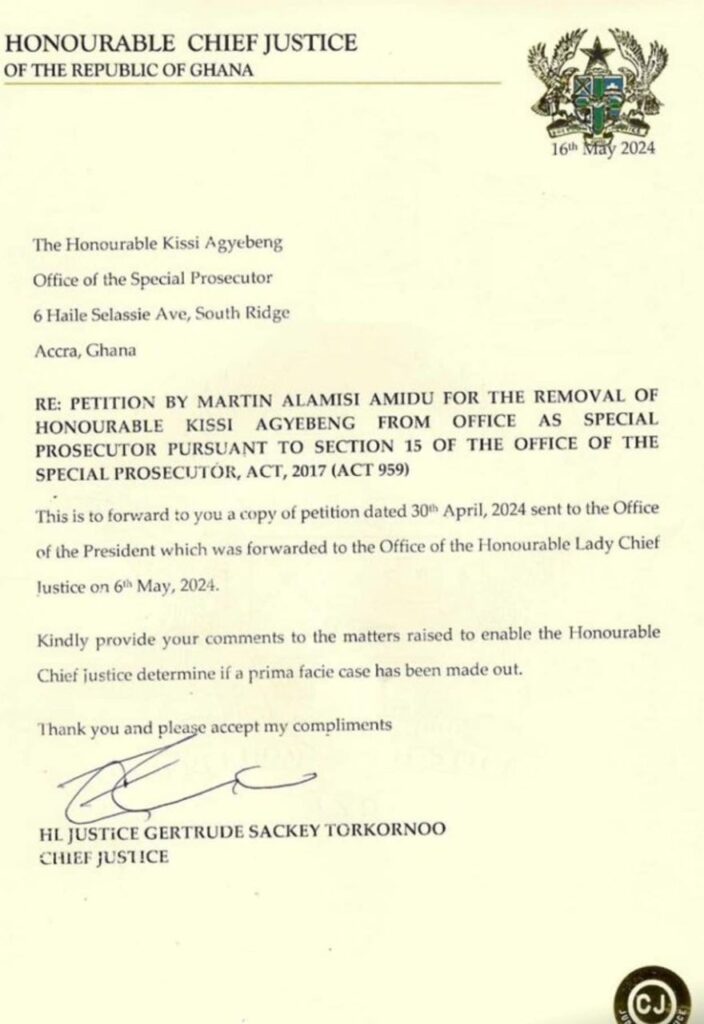
The Chief Justice, Her Ladyship Justice Gertrude Torkornoo, has forwarded a petition to remove Special Prosecutor Kissi Agyebeng to him for his response.
This follows President Akufo-Addo’s submission of a petition to the Chief Justice seeking Agyebeng’s removal.
The petition, lodged by former Special Prosecutor Martin Amidu, urges the President to dismiss Agyebeng and is dated April 30, 2024.
It cites procurement irregularities in the acquisition of vehicles for the Office of the Special Prosecutor (OSP) and accuses Agyebeng of misconduct involving judges and the administration of justice.
In a letter dated Thursday, May 16, the Chief Justice requested Agyebeng’s comments to determine if a prima facie case has been established.
“This is to forward to you a copy of the petition dated 30th April 2024 sent to the Office of the President which was forwarded to the Office of the Honourable Lady Chief Justice on 6th May 2024. Kindly provide your comments on the matters raised to enable the Honourable Chief Justice to determine if a prima facie case has been made out.”
In a majority ruling, the Supreme Court has deemed certain sections of the Citizenship Act unconstitutional.
These sections previously barred individuals with dual citizenship from holding positions such as Chief Justice, Commissioner of the Value Added Tax Service, Director-General of Prisons Service, Chief Fire Officer, Chief Director of a Ministry, or a Colonel rank in the army or other security services.
The court’s decision, delivered in the case of Francis Osei-Bonsu v The Attorney General, invalidated these sections of the Citizenship Act.
The Plaintiff, represented by Bright Okyere-Adjekum Esq., saw all their claims upheld by the Supreme Court.
Citing inconsistency with Article 289(2) of the 1992 Constitution, the Supreme Court nullified the aforementioned sections.
Consequently, individuals with dual citizenship, contrary to the stipulations of section 16 of the Citizenship Act, are now eligible for appointment to various positions, including those previously restricted.
According to the relief sought by the Plaintiff, the nullified sections effectively amended the 1992 Constitution of Ghana, thereby violating Article 289(2) of the Constitution.
A private practice lawyer and director of legal affairs for the New Patriotic Party (NPP), Gary Nimako Marfo, has defended Chief Justice Gertrude Araba Sackey Torkornoo’s decision to form a five-member panel to address an injunction application filed by Rockson-Nelson Dafeamekpor on Wednesday, 27 March 2024.
During an interview on the Big Bulletin, Asaase Radio’s evening news analysis program with Kayleb Ahinakwah, on the same date, Nimako Marfo explained that the application by the NDC Member of Parliament for South Dayi was ready for hearing as the Attorney General had submitted its opposing affidavit and statement of case.
He clarified that once all relevant parties had filed their documents, it was inconsequential if their lawyers were absent during the hearing, as the court had jurisdiction to proceed.
“When you issue a writ, within 14 days, you need to file your statement of case, or you can do it together with the filing of the writ. When you do it, you have to serve the AG or all other parties that are of interest in the matter. Having done so, the AG and the other parties will have to respond whether immediately or within 14 days.
“On the back of the injunction application, I do not understand why someone will say fixing the matter to be heard by a panel demonstrates that the Chief Justice is biased in the matter. I don’t get it. Clearly, whoever is saying this doesn’t understand how the judicial system works in this country, ” Gary Nimako further explained.
Nimako Marfo emphasized the procedural timeline for filing documents and service, expressing confusion over criticism suggesting bias by the Chief Justice in constituting the panel. He argued that those making such claims lacked understanding of the judicial system.
Regarding the urgency of the application, Nimako Marfo noted its significance and expressed surprise at attempts by the applicant and their lawyers to avoid service when the court was prepared to address the matter promptly.
He highlighted the impact of the case on parliamentary duties, noting the reluctance of Parliament to approve ministerial nominees due to the pending injunction application. Nimako Marfo asserted that expeditious handling of such cases was necessary.
The application in question, filed by Rockson-Nelson Dafeamekpor on Monday, 18 March 2024, sought a declaration of the unconstitutionality of not vetting ministers whose appointments were revoked and reassigned.
President Akufo-Addo’s reshuffle on Wednesday, 14 February 2024, prompted the legal challenge, as Dafeamekpor argued that reassignments constituted new appointments requiring parliamentary approval.
During the hearing, Dafeamekpor’s lawyers were absent, but the court proceeded after confirming service to all parties. The Attorney General and lawyers for the Speaker of Parliament opposed the injunction, leading to its dismissal by the Supreme Court on the grounds of being frivolous and an abuse of the court process.
Member of Parliament for Ningo-Prampram, Sam George, has criticized Chief Justice Justice Gertrude Araba Esaaba Sackey Torkornoo, accusing her of engaging in what he described as “judicial thuggery.”
He believes this behaviour threatens the fair and equitable dispensation of justice.
Sam George also suggested that the Chief Justice is influenced by political considerations, which he feels should not be tolerated in the Judiciary.
Making his point clear in a post shared via X, he said “There is absolutely no doubt in my mind that the current Chief Justice is engaged in judicial thuggery and poses an existential threat to the dispensation of justice in an equitable, fair, and just manner.”
He added “Such partisan behaviour at the apex of our judiciary must not be entertained and must be condemned with all the force reasonable people can muster. Judicial gangsterism is a precursor for the breakdown in the dispensation of justice and the doctrine of the rule of law. Common sense ought to be an ingredient in the dispensation of justice.”
This criticism follows the Supreme Court’s decision to prioritize the hearing of Rockson-Nelson Dafeamekpor’s case challenging the constitutionality of the president’s ministerial nominations over the hearing of Richard Dela Sky’s suit seeking an injunction on the anti-gay bill.
There is absolutely no doubt in my mind that the current Chief Justice is engaged in judicial thuggery and poses an existential threat to the dispensation of justice in an equitable, fair, and just manner.
Such partisan behaviour at the apex of our judiciary must not be…
Despite Dafeamekpor’s suit being filed two weeks after Sky’s suit, the hearing for Dafeamekpor’s case was slated for March 27, 2024.
Meanwhile, the Supreme Court has rejected an application for an injunction against the approval of President Akufo-Addo’s new ministerial appointees, filed by South Dayi legislator Rockson-Nelson Dafeamekpor.
The court deemed the application frivolous and an abuse of court processes.
The National Democratic Congress (NDC) has raised concerns about the scheduling of political cases in the Supreme Court, accusing the Chief Justice of bias against them.
The party’s alarm stems from the prioritization of the case filed by South Dayi MP, Rockson-Nelson Dafeamekpor, for hearing, over the case of Richard Dela Sky v. the Parliament of Ghana and the Attorney-General.
According to a statement issued by the NDC on Wednesday, March 27, 2024, it is intriguing that “Richard Dela Sky filed his writ of summons in the Supreme Court challenging the constitutionality of the Sexual Rights and Family Values Bill, 2024, on the 5th of March 2024. This was almost two (2) clear weeks before Hon. Rockson Dafeamekpor filed his writ of summons on 18th March, 2024 challenging the constitutionality of the latest ministerial nominations by the President.”
However, the Chief Justice has scheduled Dafeamekpor’s case for today, Wednesday, March 27, ahead of the Dela Sky matter, which was filed earlier.
Fifi Fiavi Kwetey, NDC’s General Secretary, noted in a statement that “given the recent political deadlock that these two legal suits have created between the Executive arm and the Legislative arm of government, one would have expected that the date of filing of the cases would have informed the timing of their hearing by the apex Court.”
The statement also alleges that the scheduling of the cases is a tactic by the Head of the Judiciary to support the President’s intention to shelve the anti-LGBTQ bill, which has become a matter of concern in the country.
“It’s quite apparent, that this is a ploy by the Chief Justice to fast-track the determination of the suit filed by Hon. Rockson Dafeamekpor, while the determination of the Richard Dela Sky suit is deliberately and unduly delayed, to enable the President shelve the crucial Sexual Rights and Family Values Bill that has been passed by Parliament,” it added.
Chief Justice, Gertrude Sackey Torkornoo has initiated a court shift system in specific courts aimed at improving efficiency and accessibility in dispensing justice nationwide.
This new system, slated to commence on March 25, 2024, will be implemented initially as a pilot program.
Under this arrangement, courts will hold two sessions each day: a morning session from 8:30 am to 1:30 pm and an afternoon session from 2:00 pm to 6:30 pm.
This scheduling aims to accommodate more cases and provide greater flexibility for both court officials and litigants.
According to a directive issued by Justice Cyra Pamela C.A. Koranteng, the Judicial Secretary, the pilot program will initially involve several courts, including Adentan High Court 1 and 2, Amasaman High Court 2, Weija Circuit Court, La and Teshie District Courts, and Madina District Court A and B, in addition to the High Court in Nsawam.
“It is envisaged that the court shift system when implemented will reduce the backlog cases in the specified courts, improve accessibility to justice for citizens by offering flexible court hours that accommodate diverse schedules and enhance the overall effectiveness of the judicial system.”
The choice to introduce the shift system is motivated by the necessity to confront significant case backlogs identified during a nationwide review of court dockets.
Certain courts were discovered to be grappling with an excessive number of pending cases, with figures surpassing 600 in some instances.
The implementation of this shift system seeks to streamline court proceedings and relieve the strain on judicial resources.
The ultimate goal is to enhance the efficiency and accessibility of justice delivery.
Police prosecutors can no longer handle cases that exceed GHC500,000 following a directive by Chief Justice, Gertrude Torkornoo, to all judges.
The Chief Justice, Gertrude Torkornoo issued the directive in response to a letter from the Attorney-General, Godfred Yeboah Dame, indicating that police prosecutors are now restricted from prosecuting cases worth any amount exceeding the aforementioned.
“I write with reference to the attached letter from the Office of the Attorney-General and Ministry of Justice dated 7th February 2024 on the above-mentioned subject.”
“The Attorney-General is by the said letter notifying the Service that, Police Prosecutors have been directed to prosecute cases with monetary value not exceeding the amount of GH4500,000.00.
Any case with a monetary value above this limit will now be referred to the Office of the Attorney-General for study and advice.
Concerned about instances where lower court judges were unaware of these limits, the Director of Public Prosecutions informed the Attorney-General, prompting the issuance of this directive to ensure compliance among judges.
Following this directive, the Chief Justice duly informed judges to take note and strictly adhere to it.
Chief Justice, Gertrude Torkornoo, has endorsed the inclusion of legal ethics studies in law school curricula, emphasizing its role in fostering appropriate discipline within the legal profession.
Speaking at a public lecture and the launch of the Gertrude Torkornoo Moot Court Competition at the Ghana Institute of Management and Public Administration (GIMPA) Law School, she suggested that along with legal ethics, guidance on dress codes and behavioral norms for legal practitioners should be incorporated.
“I am aware that there is brisk consideration for the incorporation of the study of legal ethics within the curriculum of law faculties.
“Allow me to suggest that to increase the ethical requirement for propriety, this curriculum be accompanied with directions on dress code and other codes on behaviour that necessarily follow the life of a legal practitioner.”
The public lecture, themed “Ethics, Compliance, and Accountability: A Holistic Approach to Adjudication,” marked the commencement of the Gertrude S. Torkornoo Moot Court Competition—a national contest bringing together law students from various faculties across Ghana. The competition aims to enhance students’ advocacy and litigation skills, preparing them for future legal careers.
Chief Justice Torkornoo discussed the significance of ethics in adjudication, successful lawyering, and the holistic approach to ethics by adjudicators.
Emphasizing the role of discipline as an ethical value, she stated that disciplined behavior, when ingrained as a cultural norm, leads to excellence in professional practice.
The Chief Justice underscored the importance of compliance with ethical values in successful lawyering, citing the constitution, statutes, and professional codes of conduct as the foundations of the justice sector.
She highlighted independent thinking, competence, diligence, and integrity as essential skills for legal professionals in dissecting facts and applying legal principles.
”Compliance with ethical values is, therefore, not an inconvenient call that disturbs the smooth catwalk to pomp of lawyering, but a gentle set of directional sign posts that lead the legal professional to the standards of intellectual delivery required for justice to be adequately served to citizens to whom belong the right of justice.”
Addressing the relationship between ethics and successful lawyering, Chief Justice Torkornoo emphasized that proficiency in law arises not only from legal knowledge but also from the exercise of adept skills and character. She further commended GIMPA School of Law for introducing the Moot Court Competition as an enriching extracurricular activity, providing a unique platform for students to learn and apply legal skills and values.
In response to recent online reports detailing his arrest at the Supreme Court in November 2023, Assistant Commissioner of Police and lawyer Akolgo Yakubu Ayamga has issued a comprehensive rejoinder.
The arrest, occurring on November 14, 2023, was allegedly triggered by Mr Ayamga’s impassioned outburst, including vocal exchanges with Chief Justice, Gertrude Torkornoo and other Supreme Court justices.
Mr Ayamga’s detailed account challenges the accuracy of media reports, emphasizing nuances allegedly missed.
He described the incident during his case presentation, where he claims to have respectfully presented arguments.
Disagreements ensued after Chief Justice Torkornoo interrupted, stating, “you are shouting,” leading to an order for Mr Ayamga to resume his seat.
The situation escalated with the Chief Justice allegedly making offensive remarks about Mr Ayamga’s competence, prompting him to calmly disagree and resulting in his arrest by a subordinate police officer.
Mr Ayamga contended that the arrest had nothing to do with his disagreement with the Court’s judgment, as initially reported, emphasizing that a mere disagreement should not warrant arrest.
According to the lawyer, the arrest was influenced by the Chief Justice’s rush of anger, prejudice, and malice, constituting an abuse of judicial power.
In his rejoinder, Ayamga asserts that a respectful disagreement should not lead to arrest, describing it as unconscionable, irrational, unfair, and lacking due process.
To address the alleged abuse of power, Ayamga has lodged a complaint with the Commissioner of the Commission on Human Rights and Administrative Justice (CHRAJ) to investigate the incident and the alleged subsequent cover-up by public officers.
In response to recent online publications about his arrest during Supreme Court proceedings in November 2023, Assistant Commissioner of Police and lawyer Akolgo Yakubu Ayamga issued a detailed rejoinder.
Ayamga’s account challenges the accuracy of media reports surrounding his arrest and provides nuanced details.
The incident occurred on November 14, 2023, following Ayamga’s impassioned presentation before the Supreme Court.
According to Ayamga, Chief Justice Gertrude Torkornoo interrupted him, stating he was shouting, leading to an order to resume his seat. Disagreement escalated after offensive remarks from the Chief Justice, resulting in Ayamga’s arrest.
In his rejoinder, Ayamga emphasizes that the arrest was not related to his disagreement with the Court’s judgment, as initially reported. He argues that a respectful disagreement with a judge’s off-judgment remark should not lead to arrest.
Ayamga claims his arrest was influenced by the Chief Justice‘s rush of anger, prejudice, and malice, constituting an abuse of judicial power.
“Presumptions aside, a respectful and fearless disagreement with off judgment remark of a judge is not a criminal offence to trigger arrest and detention. The arrest was unconscionable, irrational, unfair and without due process from the perspective of a reasonable, fair-minded and informed independent person.
“The arrest was merely influenced by a rush of anger, prejudice and malice aforethought which constitute impropriety or abuse of prestige judicial power by the Chief Justice,” the prosecutor stated in his rejoinder.
In response to the alleged abuse of power, Ayamga has filed a complaint with the Commissioner of the Commission on Human Rights and Administrative Justice (CHRAJ) to investigate the incident and the purported cover-up by public officers.
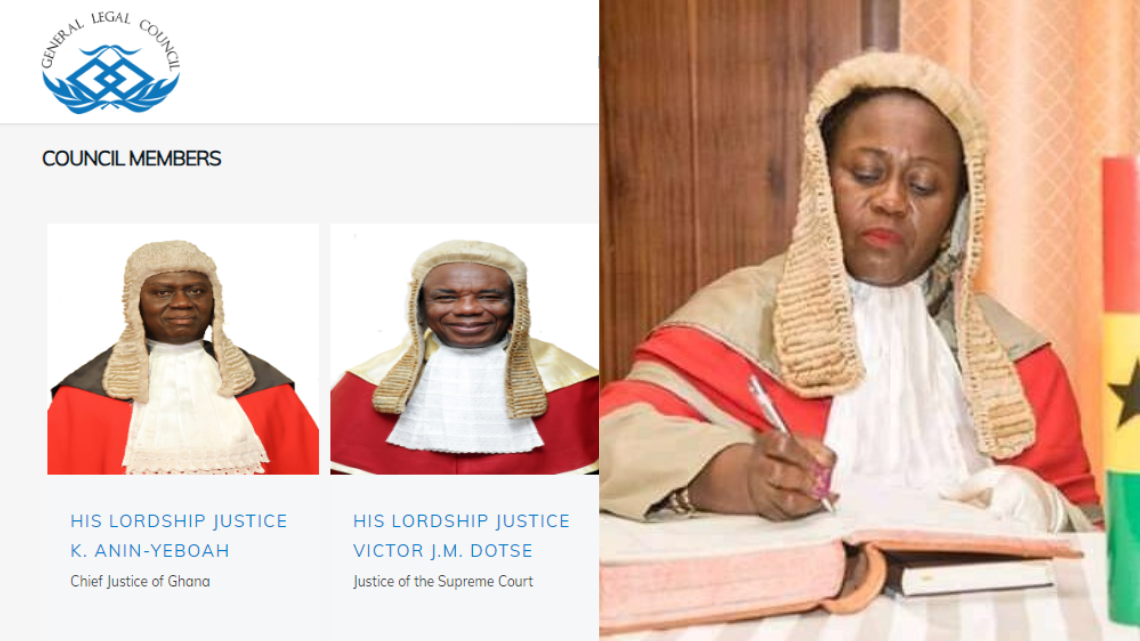
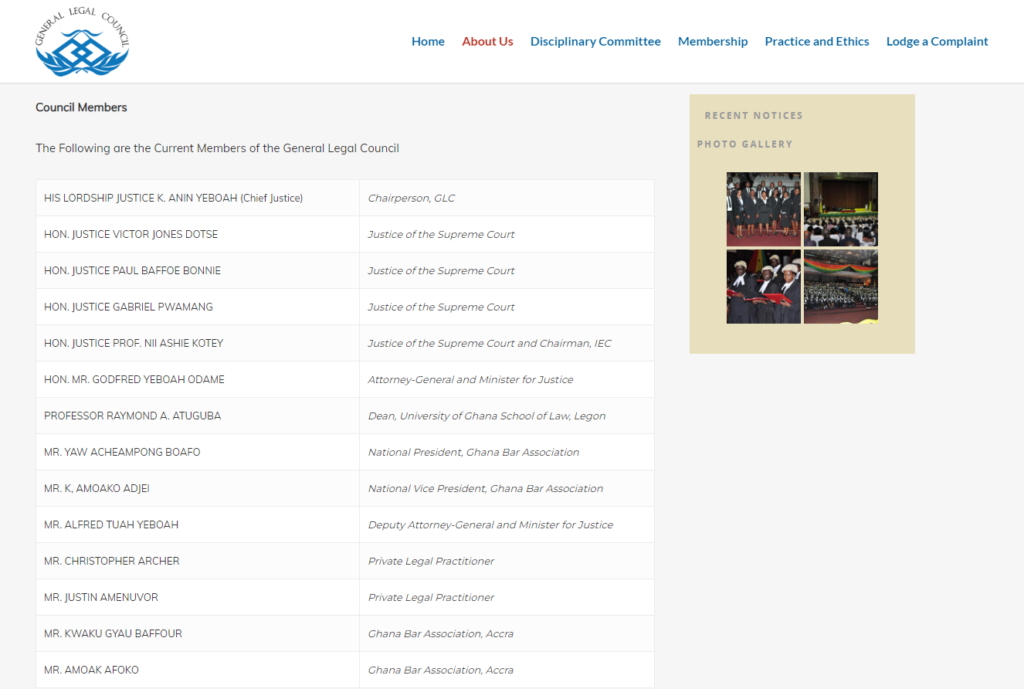
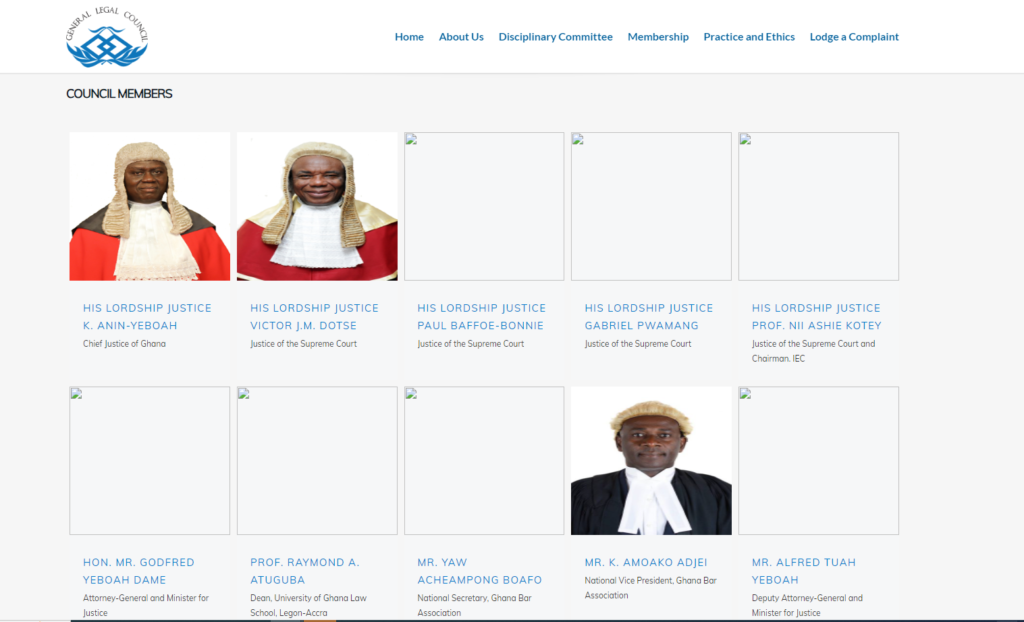
Ghana inaugurated its 15th Chief Justice more than six months ago. However, the Ghana Legal Council (GLC), the primary regulatory body overseeing the conduct and administration of legal education and the legal profession in the country, has not yet refreshed one of its key communication platforms with updated information on its members.
An overview of the GLC on its website reveals that “the serving Chief Justice is the Chairperson of the Council, and the Judicial Secretary is its Secretary together with other appointed members including the three senior most Supreme Court Justices, the Attorney-General and her nominee, the President, Vice and Secretary of the Ghana Bar Association and the Ashanti Regional Bar President.”
Checks by the Independent Ghana show that as of January 17, 2024, the Ghana Legal Council identified retired Justice Kwasi Anin Yeboah as the incumbent Chief Justice and the Chairperson of the Council.
On its website, the General Legal Council indicates that “the serving Chief Justice is the Chairperson of the Council.”
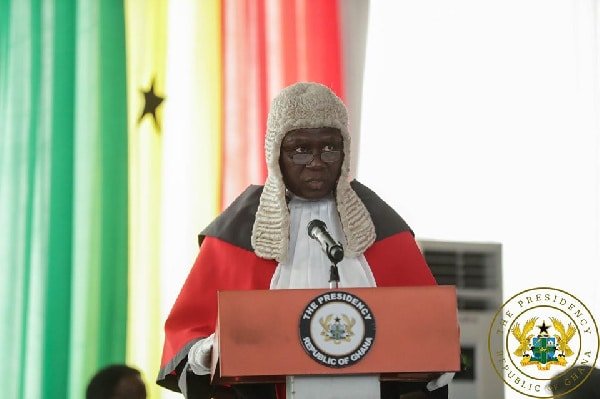
The Chief Justice, Justice Kwasi Anin-Yeboah, on Wednesday, May 24, 2023, officially retired from active service. Justice Anin-Yeboah served for 21 years as a judge, serving three years as the Head of the Judiciary. Following his retirement, Justice Jones Dotse, the then most senior Justice on the Supreme Court bench, assumed the position of Acting Chief Justice.
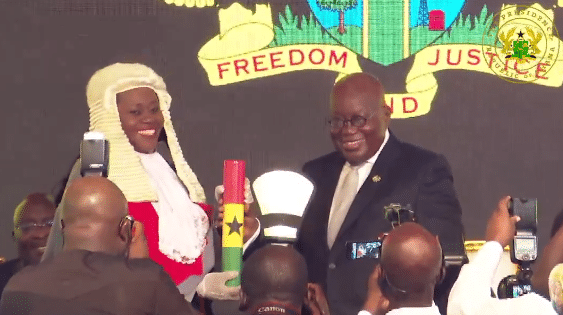
On June 12, 2023, Justice Gertrude Araba Essaba Torkornoo was sworn into office as the new Chief Justice of Ghana, taking over from Justice Kwasi Anin Yeboah.
This makes her the third female Chief Justice in the history of Ghana after Justice Georgina Theodore Wood and Sophia Akuffo.
Gertrude Araba Esaaba Sackey Torkornoo is Ghana’s Chief Justice
Another anomaly
Also, the GLC has in its records Justice Victor Jones Dotse as an active Justice of the Supreme Court and still a member of the Council.
But Justice Victor Jones Dotse is now a retired Supreme Court Judge and cannot be a member based on being one of the three senior-most Supreme Court Justices as mandated.
A valedictory ceremony was held for Justice Dotse on Tuesday, June 6, 2023, at the Supreme Court to honour him as he resigned.
former Supreme Court judge, Justice Jones Dotse
Justice Dotse was elevated to the Supreme Court in 2008 after former President John Agyekum Kufuor appointed him to the High Court in 2002 and subsequently promoted him to the Court of Appeal in 2003.
On what he intends to do on retirement, Justice Dotse said he would continue to be active and contribute to the promotion of justice by working with non-governmental organisations (NGOs) in the justice space.
Justice Edward Amoako Asante, the President of the ECOWAS Court of Justice, paid a courtesy call on the Chief Justice of Ghana, Her Ladyship Justice Gertrude Araba Esaaba Sackey Torkornoo.
During the visit, Justice Asante congratulated Ghana’s Chief Justice on her recent appointment and discussed matters of mutual interest between the ECOWAS Court and Ghana’s judiciary.
The two judicial leaders expressed their commitment to collaborative efforts to strengthen the rule of law and protect human rights in the subregion.
Discussions also touched on the domestication of regional human rights instruments and the need for legal integration in the subregion.
The meeting ended with an exchange of paraphernalia between the ECOWAS Court and the Ghana Judicial Service. Senior judges from Ghana’s judiciary were also present at the meeting.
Chief Justice Gertrude Sackey Torkornoo has called on the public to assist in identifying and reporting court officials who demand unauthorized payments for services.
She emphasized that court officials are salaried by the government for their services, discouraging patrons from making unapproved payments.
During the inauguration of the Kotobabi District Court in the Ayawaso Central Municipal Assembly, part of the 100 Courthouses program initiated by the government in 2020 to enhance judicial infrastructure, Chief Justice Torkornoo conveyed her message.
“If a court bailiff asks you to pay for transport in order to carry out service on a client, do not pay for his transport. If a Court registrar assists you to fill a court document, do not pay for that,” she stated.
The court, supported by resources from the Ministry of Local Government and Rural Development and District Assemblies Common Fund, boasts modern facilities such as offices, washrooms, cells, solar power, a standby generator, and a borehole.
Chief Justice Torkornoo utilized the occasion to launch a community sensitization program titled “Improving Justice Delivery Through Community Engagement.” She stressed the importance of professionalism among court administrative staff, encouraging a friendly and efficient court environment.
Acknowledging the acute challenges in infrastructure at the district level, she underscored the need to address these issues to maintain confidence in the justice system, emphasizing that access to justice is crucial for peace, security, and investor confidence.
“To this end, I will urge staff who would be working in this court to exhibit a high level of professionalism in the discharge of their duties.
The Chief Justice emphasized the collective responsibility for the administration of justice, urging the public to actively engage in legal matters.
She highlighted the law as a potent tool for conflict resolution and the cornerstone of modern societies, underscoring its role in maintaining Ghana’s proud peace.
Achibald Mac Amuasi Cobbina, Ayawaso Central Municipal Chief Executive Officer, expressed elation over the establishment of the court, emphasizing its significance in decentralizing justice and preventing vigilantism in the community.
Mr Cobbina pledged ongoing support to ensure the court’s maintenance.
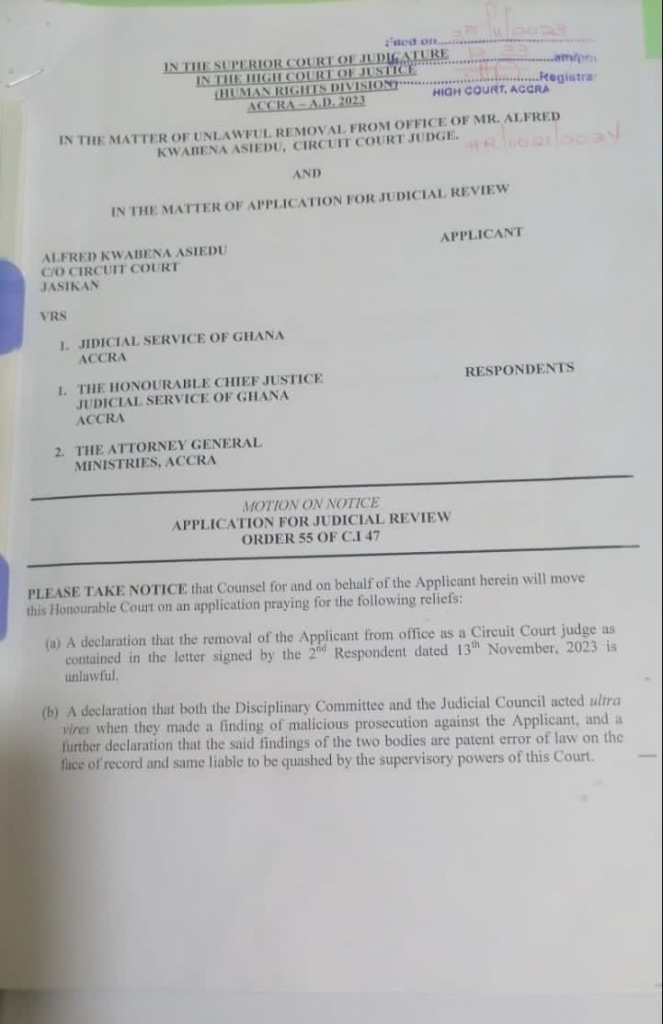
Former Jasikan Circuit Court Judge, Alfred Kwabena Asiedu, who was dismissed over misconduct, has taken legal action against the Judicial Service, Chief Justice Her Ladyship Justice Gertrude Torkornoo, and the Attorney General.
His dismissal was a result of accusations of abusing his power and engaging in sexual exploitation of a client seeking legal redress in his court.
Initially denying the allegations as products of the petitioner’s imagination, Mr. Asiedu has now filed a petition with the court, seeking a declaration that his removal from office was ‘unlawful.’
Among the reliefs he is seeking, Mr. Asiedu is requesting a declaration that his removal from office, as stated in the letter dated November 13, 2023, signed by the 2nd Respondent (Chief Justice), is unlawful.
Furthermore, he is seeking declarations asserting that both the Disciplinary Committee and the Judicial Council exceeded their authority in finding him guilty of malicious prosecution.
Mr. Asiedu argues that these findings constitute a patent error of law on the record and should be quashed through the supervisory powers of the court.
Background
The controversy surrounding Judge Alfred Kwabena Asiedu initiated when Singari Diana Sadia filed a petition with the Chief Justice on January 16. The petition accused Judge Asiedu of various offenses, including abuse of power, sexual exploitation, malicious prosecution, and impropriety in a divorce case.
Following the submission of the petition, it was transferred to the disciplinary committee of the Judiciary Service. The committee conducted an investigation and subsequently recommended the dismissal of Judge Asiedu.
In response to the disciplinary findings, a letter from Chief Justice Torkornoo was issued, instructing Judge Asiedu to surrender all official properties. This included his official vehicle, dockets, and record books, to the Judicial Secretary.
Chief Justice Gertrude Sackey Torkornoo, in a letter dated November 13, 2023, announced the dismissal of His Honour Alfred Kwabena Asiedu as a Circuit Court judge for Jasikan.
The Chief Justice stated that the dismissal was a result of a Judicial Council decision following the completion of a petition against the judge.
The letter explained that a disciplinary committee report had substantiated allegations of abuse of power, malicious prosecution, and impropriety against Judge Alfred Kwabena Asiedu. The decision to dismiss him was made based on the findings from the disciplinary proceedings that investigated the allegations.
“I write with reference to the petition of abuse of power, sexual exploitation, malicious prosecution and impropriety against you, received from one Singari Diana Sadia, dated 16th January 2023.
“In line with the Disciplinary Procedures of the Service, you were invited to appear before the Disciplinary Committee of the Judicial Council, which had been mandated to investigate the allegations against you,” the letter read in part.
The dismissal letter reportedly contained various allegations against Judge Alfred Kwabena Asiedu, including an accusation of engaging in a sexual relationship with the petitioner. It also mentioned that the judge had allegedly contracted the petitioner to purchase cattle on his behalf.
The letter suggested that their relationship soured at some point, and during the process of retrieving his cattle, the judge was accused of causing the petitioner’s arrest along with another individual.
Chief Justice Gertrude Sackey Torkonoo has unveiled the new court built for the Effia Kwesimintsim Municipal Assembly at Apremdo, as part of activities marking the new legal year.
She called on staff of the Judicial Service to make the courthouse welcoming and reassuring to bruised individuals.
She said, “The courthouse is comparable to hospitals, people come here because they are in dire need of care, be it emotional, psychological and social…ours it to soothe their pain and not to bruise their wounds with unwanted behaviours.”
The Apremdo Court is among the 100 new courthouses pledged by President Akufo-Addo, aiming to enhance accessibility to justice for Ghanaians.
The Chief Justice emphasized that the court, along with laws, serves as tools and assets crucial for maintaining order, providing direction, and ensuring justice satisfaction to foster prosperity and development.
She also urged the Service to adhere to all ethical codes of conduct in their work.
Chief Justice Torkonoo said, “As public officers, we are paid for the work we do, and it is high time we advance honest, fair and transparent justice system devoid of extortion of monies from clients to retain confidence in the justice system of the country.”
She commended the President for his commitment to the Sustainable Development Goals 10 and 16, emphasizing equality, peace, and justice. Encouraging citizens to actively follow up on their cases and engage with judges for better understanding, she highlighted the significance of the court in promoting democracy, law, and order.
Western Regional Minister, Kwabena Okyere Darko-Mensah, underscored the courthouse as the last resort for individuals seeking justice and emphasized its critical role in entrenching democracy, law, order, and development. The minister reiterated the government’s dedication to the rule of law through improved access to justice, urging users to contribute to maintaining the facility.
Nana Egya Kwamena XI, the Divisional Chief of Apremdo, acknowledged that the establishment of the EKMA courts has decentralized and improved the administration of justice in the municipality.
Ghana’s Chief Justice Gertrude Sackey Torkornoo, has initiated the construction of a state-of-the-art multipurpose facility for the University of Ghana School of Law (UGSoL), with an estimated cost of $14 million.
The groundbreaking ceremony was held on the 30th of October 2023. During the event, Chief Justice Torkornoo praised the project as forward-thinking and visionary in nature.
She emphasized that upon its completion, the facility will position UGSoL to be a strong contender among esteemed law schools across the globe.
“This project will showcase a world-class facility surpassing those available to many schools of Law around the globe. It reflects the spirit of leadership and excellence that the University of Ghana and its School of Law had always been,” declared.
She believes that the new project signifies the evolution and expansion of both the University of Ghana (UG) and the University of Ghana School of Law (UGSoL) throughout the years, solidifying their positions as the nation’s top university and law school.
“For 45 years, the University of Ghana Faculty of Law stood as the only Faculty of Law in the country. During this period, it incubated and housed almost all the legal knowledge and infrastructure for the training and practice of law,” Justice Torkornoo said.
She added, “I am hopeful that the envisaged state-of-the-art facility will not only contribute significantly to legal education but will also act as the leadership beacon to all involved in the learning, administration, and implementation of law and justice”.
The Deputy Attorney-General Tuah-Yeboah, who highlighted the University of Ghana School of Law’s introduction of Graduate Law programs for law graduates and other disciplines, thereby expanding their knowledge of the law, praised the school for its significant contribution to legal education in Ghana.
“The University of Ghana School of Law is the mother faculty and sets the standard for all other faculties of Law in the country. The school, therefore, deserves such a befitting edifice to carry on its good work,” he added.
When finished, the four-story, GHC14 million building project will feature a 1,500-seat auditorium, roughly 50 lecture rooms with capacities ranging from 1,000 to 16 seats, two 750-seat moot courts, 100 offices, a 500-seat library, a gymnasium, clinic, cafeteria, baby bay, bookstore, and a rooftop bar, among other amenities.
Ghana’s Chief Justice, Gertrude Torkornoo, has issued a challenge to engineers to prioritize ethical principles in their work to prevent the nation from losing money on infrastructure development.
Although engineers had played a significant role in fostering excellence and moral behavior, she pointed out that concerns had been raised regarding the enormous amounts of money the nation loses when large government projects are built.
“It has been acknowledged that discussions on values and ethics are relevant within the context of how Ghana leaks so much money from the way infrastructural development is done.
“Issues such as corruption, safety concerns, and adherence to code of conduct have always docked the pristine nobility of your profession,” the Chief Justice noted.
She made this statement at the Ghana Institution of Engineers’ (GhIE) 9th Annual Ethics and Leadership Lecture, which was held in Accra.
The lecture was on the theme: “Improving national values, professional practice, and engineering ethics”.
Engineers design budgets for projects, plan improvements to already-existing infrastructure or build new ones, and analyze and solve problems like transportation, water leaks, and power outages.
Speaking on their importance in national development, Justice Torkornoo said: “Engineers shape our infrastructure, propel technological advancement, and drive innovation, which is pivotal to the progress and prosperity of the nation.”
She noted that executing such a role required adherence to high ethical values, saying, “Without an ethical anchor, the economy flails or breaks in the hands of its infrastructure developers.”
Engineers design budgets for projects, plan improvements to already-existing infrastructure or build new ones, and analyze and solve problems like transportation, water leaks, and power outages.
“The danger to national survival cannot be overestimated in this cacophony. There’s a pressing imperative to my mind to restore, at least, an overview of national values and to recognise that national good is greater than individual grasp, and to make ethics, our lone star,” the Chief Justice said.
Because of this, she urged GhIE to start a national dialogue on ethics, which she claimed was essential for people’s wellbeing.
The president of the Ghana Institution of Engineering, Mr. Kwabena Bempong, emphasized the importance of moral behavior as well as the advancement of the country’s infrastructure and economy.
“Any lack of ethical behaviour on our part, will have disastrous trust, safety, financial and economic implications on our beloved country, and our professional reputation will thus be irredeemably damaged,” he said.
“It is, therefore, important that as professionals, we constantly remind ourselves of our moral duty and calling to strive for excellence in every aspect of our work and be aware of the need to be ethical,” he encouraged.
To ensure the ethical conduct of engineers, Mr. Bempong has emphasized that the Institution has published a code of ethics, which includes the Engineer’s Oath, as a guiding framework for their professional practice. Additionally, an annual ethics and leadership lecture is held to reinforce these principles.
A study conducted in Ghana from 2014 to 2017 highlighted a significant issue: the country incurs annual losses of up to $25 million due to unfinished projects. This sum is equivalent to the construction of approximately 667 three-unit classroom blocks each year, capable of accommodating around 70,000 students.
Conducted by Dr. Martin Williams, an Associate Professor in Public Administration at the Blavatnik School of Government, University of Oxford, in collaboration with the National Development Planning Commission (NDPC) and the Local Government Service Secretariat (LGSS), the study examined approximately 14,000 projects funded by various sources, including the District Assemblies Common Fund (DACF), Ghana Education Trust Fund (GETFund), Internally Generated Funds, and central government funding.
The Office of the Special Prosecutor (OSP) has requested that Justice Edward Twum be removed from the Cecilia Dapaah case; however, Chief Justice of Ghana, Justice Gertrude Torkornoo, has rejected this request.
The OSP had petitioned to have Justice Twum removed from all cases involving Cecilia Dapaah because they claimed he had shown bias against them. The Chief Justice, however, rejected the petition.
The OSP revealed that in a post on X, the former Twitter, “by a letter dated 25 October 2023, the Judicial Secretary informed The Special Prosecutor that, the Chief Justice is unable to accede to the Office of the Special Prosecutor’s (OSP) request for his lordship Justice Edward Twum to be recused and removed from all cases involving the OSP pending before him.”
The OSP made the request because they thought Justice Edward Twum seemed to have strong biases against both the OSP and the Special Prosecutor.
Attorneys for Ms. Dapaah pushed for a hearing on the OSP’s motion to confirm the freezing and seizure order at the most recent postponed date.
They hinted that OSP had withdrawn its request to the Chief Justice to have the judge saved and removed, based on what they had heard in the media.
Justice Twum informed the court that he had received instructions to proceed with the cases as the OSP had withdrawn its previous request. However, the Prosecutors from the OSP contested this claim, asserting that their request had not been officially withdrawn.
Additionally, the Prosecutors revealed to the court that they had filed a certiorari application and a stay of proceedings in response to the judge’s decision not to consider a supplementary affidavit from the OSP, which presented new facts and evidence.
Consequently, the court decided to adjourn all cases involving Ms. Dapaah under the jurisdiction of the OSP indefinitely, awaiting further instructions from the Chief Justice.
The Office of the Special Prosecutor (OSP) has noted that its request to Chief Justice Gertrude Torkornoo to have Justice Edward Twum recused and removed from all cases involving the OSP pending before him has been denied.
The OSP made the announcement in a public notice shared on X on October 25, 2023.
According to the OSP, the Chief Justice’s decision was communicated via a letter by the Judicial Secretary.
“By a letter dated 25 October 2023, the Judicial Secretary informed The Special Prosecutor that, the Chief Justice is unable to accede to the Office of the Special Prosecutor’s (OSP) request for his lordship Justice Edward Twum to be recused and removed from all cases involving the OSP pending before him,” the notice read.
Public Notice ———- By a letter dated 25 October 2023, the Judicial Secretary informed The Special Prosecutor that, the Chief Justice is unable to accede to the Office of the Special Prosecutor’s (OSP) request for his lordship Justice Edward Twum to be recused and removed from…
— Office of the Special Prosecutor-Ghana (@ospghana) October 25, 2023
On October 12, the OSP requested the Chief Justice, Gertrude Torkonoo to recuse and remove His Lordship Justice Edward Twum from all cases involving the Office pending before him due to the well-founded belief that Justice Edward Twum appears to be highly prejudiced against the OSP and the person of the Special Prosecutor.”
His Lordship Justice Edward Twum
“Consequently, as it stands, the OSP would not and cannot be reasonably expected to be parties to proceedings before the said judge,” a post from the OSP read.
A court granted a request from Cecilia Dapaah’s legal team to reschedule the confirmation hearing for an earlier date, rather than the initially set date of October 18, however, the OSP asserted that they could not have Justice Edward Twum preside over the request since they believed he displayed significant bias against the OSP and the Special Prosecutor personally.
In light of these concerns, the OSP decided that they cannot and should not be reasonably expected to participate in proceedings overseen by the aforementioned judge.
But on Wednesday, October 18, it was reported that the High Court has been informed by the OSP that the petition asking for a new judge for the Cecilia Dpaah case is still pending barely minutes after the judge stated that he had been notified that it had been withdrawn.
This claim has been rejected by the Office.
In a public notice, the OSP noted: “The Office of the Special Prosecutor (OSP), has not withdrawn its request to the Chief Justice for the recusal and removal of his Lordship Justice Edward Twum from all cases pending before him involving the OSP.”
“The public is urged to disregard all reports to the contrary,” the notice added.
The Office of the Special Prosecutor (OSP) commenced investigation in July 2023 in respect of suspected corruption and corruption-related offences regarding large amounts of money and other valuable items involving Ms. Cecilia Abena Dapaah, a former Minister for Sanitation and Water Resources.
The Special Prosecutor took measures, including issuing a freezing order in respect of the bank accounts and other financial assets of Ms. Dapaah to facilitate the investigation.
Subsequently, the investigation has eliminated five (5) of the bank accounts of Ms. Dapaah from suspicion of being tainted property.
On October 16, 2023, the Special Prosecutor revoked the freezing order in respect of the eliminated five (5) bank accounts of Ms Dapaah.
In a heartwarming moment at the 60th Call to the Bar Ceremony, Chief Justice Gertrude Torkornoo had the privilege of presenting her biological daughter a law certificate.
A video capturing the event quickly went viral, showcasing the Chief Justice’s radiant joy as she handed her daughter the certificate.
This 60th enrollment onto the Roll of Lawyers, organized by the General Legal Council, marked the induction of over 1,000 newly trained lawyers into the Ghana Bar.
Each year, the GLC holds a formal gathering to enroll and admit candidates who have successfully passed their professional law examination conducted by the Ghana School of Law, following the certification of their results.
These freshly certified lawyers are granted the authority by the GLC to commence their legal careers within the country.
Distinguished members of the ruling New Patriotic Party (NPP) were also in attendance at the 60th enrollment and induction into the Ghana Bar, held at the Accra International Conference Centre on Friday, October 20, 2023.
Chief Justice, Her Ladyship Gertrude Torkornoo, beams with smiles as she awards a Law Practicing certificate to her own daughter at the 60th Call to the Bar Ceremony. pic.twitter.com/EDxAHt4Nhw
The Office of the Special Prosecutor (OSP) has requested the Chief Justice, Gertrude Torkonoo to recuse and remove His Lordship Justice Edward Twum from all cases involving the Office pending before him.
“The request is grounded on the OSP’s well-founded belief that Justice Edward Twum appears to be highly prejudiced against the OSP and the person of the Special Prosecutor.”
“Consequently, as it stands, the OSP would not and cannot be reasonably expected to be parties to proceedings before the said judge,” a post from the OSP on Thursday read.
His Lordship Justice Edward Twum
The OSP has requested the Chief Justice to recuse and remove His Lordship Justice Edward Twum from all cases involving the OSP pending before him.
The request is grounded on the OSP’s well-founded belief that Justice Edward Twum appears to be highly prejudiced against the OSP… pic.twitter.com/XV4pxoaUkq
— Office of the Special Prosecutor-Ghana (@ospghana) October 12, 2023
On Wednesday, a court granted a request from Cecilia Dapaah’s legal team to reschedule the confirmation hearing for an earlier date, rather than the initially set date of October 18.
However, the Office of the Special Prosecutor (OSP) asserted that they could not have Justice Edward Twum preside over the request since they believed he displayed significant bias against the OSP and the Special Prosecutor personally.
In light of these concerns, the OSP has decided that they cannot and should not be reasonably expected to participate in proceedings overseen by the aforementioned judge.
The Office of the Special Prosecutor (OSP) has requested the Chief Justice, Gertrude Torkonoo to recuse and remove His Lordship Justice Edward Twum from all cases involving the Office pending before him.
The request is grounded on the OSP’s well-founded belief that Justice Edward Twum appears to be highly prejudiced against the OSP and the person of the Special Prosecutor.
Justice Edward Twum
“Consequently, as it stands, the OSP would not and cannot be reasonably expected to be parties to proceedings before the said judge,” a post from the OSP on Thursday read.
The OSP has requested the Chief Justice to recuse and remove His Lordship Justice Edward Twum from all cases involving the OSP pending before him.
The request is grounded on the OSP’s well-founded belief that Justice Edward Twum appears to be highly prejudiced against the OSP… pic.twitter.com/XV4pxoaUkq
— Office of the Special Prosecutor-Ghana (@ospghana) October 12, 2023
On Wednesday, a court granted a request from Cecilia Dapaah’s legal team to reschedule the confirmation hearing for an earlier date, rather than the initially set date of October 18.
However, the Office of the Special Prosecutor (OSP) asserted that they could not have Justice Edward Twum preside over the request since they believed he displayed significant bias against the OSP and the Special Prosecutor personally.
In light of these concerns, the OSP has decided that they cannot and should not be reasonably expected to participate in proceedings overseen by the aforementioned judge.
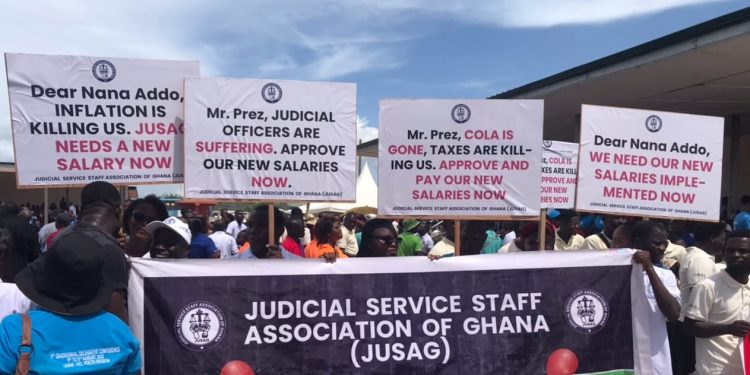
Chief Justice Gertrude Araba Esaaba Sackey Torkornoo urges JUSAG to embrace digital transformation for efficient service.
She emphasized that the Rule of Law is fundamental to any nation, and the advancement of digital technologies impacts all sectors, including the judiciary.
Addressing a JUSAG gathering in Cape Coast, she highlighted how technology enhances transparency, efficiency, and access to timely justice.
The theme of the forum was “Building the foundations of justice in the Ghanaian justice system,” marking the Chief Justice’s first public engagement with JUSAG and the broader judiciary. The event coincided with her 61st birthday celebration and the recognition of 25 retirees from the Central Region’s Service, who received certificates and refrigerators in honor of their distinguished service.
The Chief Justice also mentioned that the judicial system is transitioning from automation to an e-justice system, connecting all relevant stakeholders in the justice field, enabling virtual operations.
“An effective e-justice system makes clever use of digital technologies, information, communication, and knowledge management techniques to improve citizens’ access to justice whilst enabling efficiency, effectiveness, and time delivery of justice.
“In effect, it reduces financial and time-saving cost which means reduction of the cost of justice, and enhanced data security and high-quality legal datasets,” she indicated.
That, she said, will minimize the chances of corruption, speed up proceedings and facilitate the capacity to handle more cases with fewer staff.
The Chief Justice emphasized the judiciary’s continuous efforts to enhance the legal framework, ensuring the highest standards in justice delivery.
Regarding infrastructure, she acknowledged the challenges posed by the poor condition of some court premises and the absence of housing for judges, hindering effective justice delivery. She pledged her commitment to revitalizing the judicial infrastructure to improve accessibility to justice.
Specifically, she hinted at plans to relocate the Cape Coast Complex and commended her predecessors for their substantial contributions in this endeavor.
“Let me assure you that I have made my inquiries, and I am going to make it my singular priority to ensure the Cape Coast Complex moves to a new court facility very soon.
“I am hopeful that infrastructure development will motivate the judiciary to work harder and promote the rule of law in the country,” the Chief Justice assured.
The Chief Justice also advised staff not to engage in practices that undermine the smooth delivery of justice.
She emphasized that even though their working conditions might not be ideal, it should not serve as an excuse for corruption but rather encourage them to maintain their integrity.
Samuel Afotey Otu, President of JUSAG, expressed admiration for the Chief Justice’s innovative and outstanding leadership in enhancing the judicial system. He pledged to collaborate with her and the management to rebrand the Judicial Service and build on the achievements accomplished over the years.
Chief Justice Gertrude Sackey Torkornoo has highlighted the judiciary’s unyielding commitment to enhancing the caliber of justice provided, even though there remains significant room for further progress.
She emphasized that in addition to establishing physical courtrooms and refining procedural protocols, the Judicial Service is equally dedicated to cultivating higher ethical standards among its personnel.
Chief Justice Torkornoo made these remarks during the inauguration ceremony of the Ayensuano District Court situated in Kraboa Coaltar, Eastern Region.
The inaugurated courthouse is a part of the government’s nationwide initiative launched in 2020 to construct 100 courthouses, aimed at elevating the state of judicial infrastructure.
This facility boasts ample office space to accommodate diverse court functions, restrooms for both staff and court users, segregated male and female detention cells.
Moreover, it is equipped with solar power systems for essential functions, a backup generator, and a borehole to ensure sustainable water supply. Additionally, a dedicated area has been designated for Court Connected Alternative Dispute Resolution (ADR), furnished with a Direct Transcription System to expedite the adjudication process.
She said through training and Codes of Conduct, “we are demanding accountable service, independence from conflict of interest and integrity from all our officers around the country.”
She said justice was the quality of satisfaction that people must have, when they were given what they deserved in accordance with what the law relating their action or transaction had directed.
“As Ghana has grown as a society, regulations have been increasingly crafted to assist the less privileged in society to access justice through less complex rules of Court, automation of court services and provision of ADR facilities,” she said.
The Chief Justice said they were facilitating greater access to justice for the most vulnerable, including the physically challenged and those already incarcerated.
She said through the Court, “we will be able to ensure that fewer people contemplate the use of extra-judicial avenues of seeking redress and resolving disputes.”
Justice Torkornoo remarked that by utilizing the Court, a greater number of individuals could witness the administration of justice up close. This, in turn, would help foster confidence in commercial activities and property investment.
“Because when the rule of law is established in any society, it delivers another promise, apart from order and justice already discussed and that promise is a promise of prosperity and development,” she added.
She said the people were assured of the safety of their people and assets, they were assured of the stability of the environment in which they lived.
Madam Josepine Awuku Ansaa Inkoom, the District Chief Executive of Ayensuano District Assembly, said, “Our collective efforts have culminated in the establishment of this modern facility which is designed to promote effective justice delivery for our constituents.”
She said access to justice was a fundamental human right that every citizen deserves and “today we take a significant step in demonstrating our dedication to ensuring a fair and equitable justice system for all.”
She emphasized that their dedication was firmly grounded in their resolve to uphold the rule of law and safeguard the rights of every individual. A robust and accessible justice system, she noted, stood as a fundamental pillar of a prosperous community, fostering confidence, tranquility, stability, and societal cohesion.
The District Chief Executive highlighted that it was evident to all that without a functioning judiciary, the socio-economic progress of any society would be impeded.
“Whilst the constitution enjoins the District Assembly to ensure ready access to courts for the promotion of justice, we are also expected to cooperate with the appropriate local security Agencies for the maintenance of security and public safety so that citizens can go out and conduct their daily activities without fear and panic,” she added.
She urged members of the community, government agencies, and civil society organizations in the district to collaborate with you in our quest to achieve justice for all.
Chief Justice of Ghana, Justice Gertrude Torkornoo, is actively addressing judicial frustrations and corruption within the court system. Her commitment to receiving and acting on public petitions, as well as her determination to apply the full rigors of the law to those involved in wrongdoing, demonstrates a dedication to maintaining a fair and just judicial process.
The establishment of a revamped Public Complaints Directorate and public complaints units at all courts is a positive step towards addressing concerns and grievances from the public. This initiative provides a platform for individuals who have experienced issues with court officials to report their concerns directly to the higher authorities, ensuring that transparency and accountability are upheld within the judicial system.
Justice Torkornoo acknowledges receiving and acting on at least 10 petitions daily, reassuring that she takes the concerns of the public seriously and is committed to addressing them promptly.
“Bring those people to our attention, and I will not hesitate to sack them, while they also face the full rigours of the law,” she said.
“There is a revamped Public Complaints Directorate with public complaints units at all courts…. My office accepts and acts on petitions daily. Every day, not less than 10 petitions arrive on my desk, and we act on all of them.” She explained.
Justice Torkornoo’s stance on dealing with court staff, including registrars, clerks, judges, and other officials, who engage in misconduct or demand bribes, showcases her dedication to maintaining the integrity of the judicial system in Ghana. By promising to take strong action, including possible dismissal and legal consequences, she sends a clear message that such behavior will not be tolerated.
It’s also notable that Justice Torkornoo is the third female Chief Justice of Ghana, which reflects the progress being made in promoting gender diversity and inclusion within leadership roles in the country.
Overall, Justice Torkornoo’s approach and commitment to upholding the rule of law, transparency, and accountability within the Ghanaian judiciary are positive developments that can contribute to a more trustworthy and fair judicial system.
In a two-month legal vacation, starting from August 1, 2023, until September 30, 2023, the Chief Justice (CJ), Her Ladyship Justice Gertrude Araba Esaaba Sackey Torkornoo, has designated specific courts to remain operational within the Law Court Complex in Accra.
While the superior courts, including the Supreme Court, the Court of Appeal, and most High Courts, will be on recess, the Chief Justice has taken measures to avoid creating a judicial vacuum.
As a result, 12 out of the 42 High Courts within the complex will continue to function during the legal vacation, in addition to some of the lower courts.
The 12 High Courts designated to sit over the course of the legal vacation are Commercial Court 2, Commercial Court 10, Criminal Court 1, Criminal Court 3, General Jurisdiction Court 12, General Jurisdiction Court 9, General Jurisdiction Court 6, General Jurisdiction Court 3, Financial Court 2, Land Court 10, Land Court 3, and Probate Court 3.
Below are the presiding judges of those courts sitting during the vacation
1. His Lordship Justice Francis Obiri (Commercial Court)
2. Her Ladyship Justice Adelaide Abui Keddey (Commercial Court 10),
3. Her Ladyship Justice Ruby Aryeetey (Criminal Court 1),
4. Her Ladyship Justice Mary Maame Ekue Yanzuh (Criminal Court)
5. His Lordship Justice Charles Gyamfi Danquah (General Jurisdiction 12)
6. Her Ladyship Justice Audrey Kocuvie-Tay (General Jurisdiction 9)
7. Her Ladyship Justice Abena Amponsah Buansi (General Jurisdiction 6)
8. Her Ladyship Justice Marian Affoh (General Jurisdiction 3)
9. His Lordship Justice Edward Twum (Financial Court 2)
10. His Lordship Justice Kwame Gyamfi Osei (Land Court 10)
11. Her Ladyship Justice Jennifer Anne Myers Ahmed, (Land Court 3)
12. Her Ladyship Justice Sarah Aryee (Probate Court 3)
Ghanaian YouTuber, Ama Governor, and aspiring lawyer, has taken to Twitter to express her strong objection to remarks made by the Chief Justice, Her Ladyship Gertrude Torkornoo.
In a series of tweets, Ama Governor voiced her frustration over the suspension of her “Call to the Bar” ceremony and the subsequent implications on her reputation.
The Chief Justice’s comments, made during a recent public appearance, touched on the issue of proper conduct in the legal sector and the admission to the Bar.
She stated that individuals seeking to join the legal profession must exhibit behaviour that is not obscene or offensive. Her Ladyship expressed surprise at the controversy surrounding the admission of certain individuals, emphasizing the importance of upholding standards within the legal community.
Ama Governor, who felt directly targeted by the Chief Justice’s remarks, went on a Twitter rant to set the record straight. She vehemently denied engaging in any improper conduct and questioned the fairness of the process that led to the suspension of her “Call to the Bar.”
Respectfully, I am still waiting to be told what my improper conduct was from 6th Nov, 2022 till date. I cannot handle this tarnishing of image and spread of false information about the true facts of the events that took place for much longer. This is cruel. https://t.co/vzV7mWHyhW
According to her tweets, she successfully defended herself against a petition that challenged her eligibility for admission to the Bar. The petition was based on three grounds, two of which she claimed were fabrications.
The first alleged ground involved a video in which Ama Governor and her classmates were seen discussing life as law students, including humorous anecdotes about occasionally dozing off in class. The petitioner misconstrued this discussion as tarnishing the school’s reputation, which Ama Governor vehemently refuted.
The second ground falsely accused her of consistently wearing nose rings to school, despite adhering to the school’s guidelines on student appearance. Ama Governor clarified that she had followed the rules and even made videos demonstrating her compliance.
The Chief Justice gives the reason why Ama Governor, a social media influencer wasn’t called to the bar and may still not be called to the bar. pic.twitter.com/YoiIoqdKTn
The third ground, which she acknowledged as true, referred to her sexual orientation as queer. However, she asserted that her sexual orientation should not be a basis for deeming her unfit to become a lawyer.
Ama Governor expressed deep disappointment with the process, citing that the petition was thrown out in the very first hearing, yet her name continues to be dragged through the mud. She further raised concerns about the potential violation of Article 19(11) of the Ghanaian Constitution, which states that no person shall be convicted of a criminal offense unless defined and prescribed by written law.
The young YouTuber’s tweets have ignited discussions on social media, with many expressing support for her stance and questioning the fairness of the entire process.
As the controversy unfolds, attention is drawn to the intersection of social media influence, individual rights, and the legal profession’s stringent standards.
Ama Governor’s online presence has been a platform for her to advocate for body positivity, feminism, and women’s sexual reproductive health. She now awaits a response from the relevant authorities on the matter and hopes for a resolution that upholds her right to practice law without undue prejudice.
Chief Justice Gertrude Torkonoo has voiced her apprehensions regarding the behavior of Assin North MP James Gyakye Quayson when submitting documents to the Supreme Court.
She noted that he frequently fails to appear in person and instead instructs one of his lawyers to file and swear to statements on his behalf.
The Chief Justice expressed her concern, emphasizing that such conduct is irregular and should not be promoted or encouraged.
“He doesn’t treat this court properly. He engages this court, and he refuses to appear. When you ask the court to exercise discretion, you must treat the court properly” she stated.
Chief Justice Gertrude Torkonoo made the comment while presiding over a five-member panel during a case filed by the Assin North legislator.
Mr. Quayson was seeking to halt his trial, arguing that the High Court made an error in refusing a request to compel prosecutors to provide certain documents they had failed to disclose.
Attorney General Godfred Yeboah had informed the High Court that his office had already supplied all documents to the legislator. He referred to correspondence between his office and Mr. Quayson’s legal team, which indicated that the documents in question had been examined by the latter.
However, Mr. Quayson’s lawyers disagreed with this assertion, stating that the AG cannot rely on those correspondences as they had not filed an appropriate response.
As a result of the disagreement, the High Court ruled against Mr. Quayson’s view, prompting his legal team to approach the Supreme Court.
During the Supreme Court proceedings, Mr. Quayson’s lawyer, Justin Teriwajah, urged the apex court to overturn the High Court’s decision. He argued that by relying on the correspondence, the High Court had used evidence that was not properly presented to it.
“Our submission is that, in the main trial, evidence is taken on oath, in a determination of a motion, it must be based on evidence given on oath. Our position is that if facts are deposed, the opposing side has the option to respond. That wasn’t the case,” he said.
The Attorney General held a different viewpoint, highlighting several issues with the processes filed by Mr. Teriwajah at the Supreme Court. Firstly, he pointed out that the processes were irregular as Mr. Teriwajah had sworn an oath and signed the documents without demonstrating that he had the authority of the MP to do so.
Furthermore, the Attorney General emphasized that Mr. Quayson’s legal team had been given ample opportunity to extensively argue the matter and had addressed the court on the correspondence between the parties.
According to the Attorney General, there was no evident error of law on the face of the record, as alleged by the MP’s legal team, to justify the Supreme Court overturning the decision of the lower court.
“Substantively, we submit that there is no error of law patent on the face of the record. An application invoking your jurisdiction must indicate matters which are patent.
“Where the court has to go beyond the depositions and fundamental attachments, clearly, that application does not properly invoke the supervision jurisdiction.
“It was an application for further disclosure. The application is improper and should be dismissed,” he stated.
The court ruled that the High Court committed no error of law.
“We have examined the processes and find no merit in the application. We find that the applicant was heard by the court and the court had jurisdiction to rule on the matter,” the Chief Justice ruled.
Some panel members had earlier commented on the absence of the Legislator and on his lawyers swearing documents on his behalf.
“Supposing we want to have him cross-examined, you will disqualify yourself from counsel. You depose to affidavit and you appear before us as counsel.
“That practice was because your client has money, he sends you to the court. One day, when your wig is taken off, you will see,“ Justice Issifu Amadu Tanko said.
The Chief Justice additionally added that such conduct does not help the profession.
“This practice demeans the profession,” she stated.
The case was heard by Chief Justice Gertrude Torkonoo and Justices Issiufu Amadu Tanko, Emmanuel Kulendi, Samuel Asiedu and Ernest Gaewu.
The Chief Justice, Getrude Esaaba Sackey Torkornoo, has adviced to Ghanaians, not to pay for mediation charges during Alternative Dispute Resolution (ADR) proceedings in the country.
She shared this guidance at a public forum held after the inauguration of her first court complex as Chief Justice in Baatsonaa, Tema West Municipality, Greater Accra Region.
The forum’s theme was “Improving Justice Delivery through Community Engagement” and aimed to educate citizens about how the justice system operates.
Lady Justice Torkornoo clarified that the government pays the Mediators at various ADR outlets, making it unnecessary for disputing parties to pay for their services after mediation.
ADR was established to expedite cases that can be resolved through consensus, avoiding the lengthier court process. Lady Justice Torkornoo emphasized that ADR cases remain confidential and do not go for appeal.
Once a consensus is reached, the parties involved sign an undertaking to fulfill their commitments.
She highlighted ADR as the best and fastest approach to resolve many civil disputes among aggrieved parties without initiating lengthy court proceedings.
Participants had the opportunity to ask questions and offer suggestions directly to the Chief Justice during the forum.
Chief Justice, Gertrude Torkunu has stressed the need for Ghana to establish a comprehensive legal, regulatory, and institutional framework that promotes responsible utilization of the Blue Economy.
Recognizing the importance of adapting to global economic changes, she highlighted the significance of implementing measures to harness the potential of the marine environment for sustainable development.
These remarks were delivered during her speech at the 14th Maritime Law Seminar for Superior Court Judges of Ghana, organized by the Ghana Shippers Authority.
Benonita Bismark, the Chief Executive Officer of the Ghana Shippers Authority, emphasized the dynamic nature of the shipping and logistics sector, underscoring the importance of regular training for judges to ensure efficient adjudication.
A former Chief Justice, Georgina Theodora Wood, made some observations about the 2024 federal elections.
She is worried that the process will be dominated by misinformation or that politicians would put policies and development concerns first.
When she spoke during the inauguration of a new District Governor for Rotary Club’s District 9104, she advised participants to prioritize development issues as a means of advancing.
“Only a year more, we will be preparing to go to the polls, once again to elect national leaders for this beautiful country. Do we wish to create hope for the future by channelling our energies and other resources to developmental issues?
“Or is it going to be another unending trend of pure propaganda as usual? It bears emphasis that deliberate falsehoods, misinformation and dishonesty have destroyed the reputation and homes of many,” she stressed.
Distinguished leaders and prominent dignitaries, including former President John Agyekum-Kufuor and Rotary International Director Patrick Chisanga, attended the investiture ceremony.
Chief Justice, Justice Gertrude Torkornoo, has appealed to the government to increase its budget allocation to the judicial service to ensure its sustained growth.
In her acceptance speech after being sworn-in as Chief Justice today, June 12, Justice Torkornoo noted that government has made a significant investment towards the growth of the judicial service.
She highlighted the digitalization of court processes as one of the benefits derived from the government’s numerous developmental projects.
However, Justice Torkornoo, stated that despite the achievements chalked, much remains to be done, hence the need for increased investment through a rise in budgetary allocation for the Judiciary.
Parts of her speech read: “As much as the Judiciary appreciates the level of investment being made in yhr physical structures of new courts, we have also taken steps to review all rules of court to enhance their operation and application in digital arenas.
“Your Excellency, it is clear to me as an active player in all the different facets of the reform initiatives we have referred to above, since I joined the Judiciary in 2004, that to speed up the efficiency and effectiveness of our systems, so much more is need for and from the Judiciary than determination and our vowed purpose.
“There is a need to expedite the National digitalization agenda to allow for easier networking of all stakeholders.
“There is a need to increase the budget of the Judiciary to allow us room to expand our infrastructure in the automation and digitalization agenda because undoubtedly, the efficiency of court processes and administration is assured with more deliberate use of technology.”
According to the Chief Justice, only 26 per cent of courts are networked and only 12 per cent of courts have been brought into the bracket of full automation in the operation through digitalization of their processes.
Justice Gertrude Torkornoo lamented the laborious processes some courts in the country continue to practice despite the advancement of technology.
Bemoaning the relatively low acceptance of the digitalization drive in the judicial system, Justice Torkornoo revealed that just 62% of courts in the country use computers while tackling the issue of automation.
This implies that 48% of courts continue to use the” laborious inefficient models of taking evidence in manuscript, and managing administration.”
Meanwhile, President Akufo-Addo has expressed his determination to continue being a dependable and trustworthy partner to the Judiciary.
“I want to assure Chief Justice Gertrude Torkonoo that just as I did with her predecessor, I will be a dependable and trustworthy partner of the judiciary,” he said.
The President noted that this would ensure that “the Executive and the Judiciary work together in the spirit of mutual respect to consolidate the tenets of good governance for the benefit of the Ghanaian people.”
Newly sworn-in Chief Justice, Justice Gertrude Torkornoo, has lamented the laborious processes some courts in the country continue to practice despite the advancement of technology.
On Monday, June 12, at the Jubilee House, the Chief Justice noted that the overarching objective, to introduce efficiency and effectiveness into case management with strategic options that allowed courts to be assiduous with adjudication has been compromised.
Bemoaning the relatively low acceptance of the digitalization drive in the judicial system, Justice Torkornoo revealed that just 62% of courts in the country use computers while tackling the issue of automation.
This implies that 48% of courts continue to use the” laborious inefficient models of taking evidence in manuscript, and managing administration.”
“After two decades of tackling the issue of automation, only 62 per cent of courts use computers as part of their work. And computerization is only the first level of automation of court processes.
“After acquiring electronic devices to capture records of court, the registry and offices of stakeholders must be networked in order to allow for the next level of automation.
“This is the national burden and we are slowed down by any sluggishness in the nation’s digitalization drive,” she said in her acceptance speech as Chief Justice.
For Justice Torkornoo, this is far from worrying as the automation of courts has morphed into the digitalization of court processes that allow for electronic filing, electronic case distribution, creation of electronic dockets and the conduct of virtual trials for over two decades ago.
Meanwhile, only 26 per cent of courts are networked and only 12 per cent of courts have been brought into the bracket of full automation in the operation through digitalization of their processes, according to the Chief Justice.
President Akufo-Addo is administering the oath of office to Justice Gertrude Araba Essaba Torkornoo as the new Chief Justice of Ghana.
Justice Torkornoo assumes the position following the retirement of Justice Kwesi Anin Yeboah in May. She received parliamentary approval on Wednesday, June 7, 2023.
Notably, this appointment marks President Akufo-Addo’s third selection for the Office of Chief Justice since assuming office in January 2017.
President Akufo-Addo is set to administer the oath of office to Justice Gertrude Araba Essaba Torkornoo as the new Chief Justice of Ghana.
Justice Torkornoo assumes the position following the retirement of Justice Kwesi Anin Yeboah in May.
She is expected to be sworn in at the Jubilee House.
After receiving parliamentary approval on Wednesday, June 7, following concerns by the NDC MPs on the Appointments Committee, Justice Torkornoo is now set to take on the role.
Notably, this appointment marks President Akufo-Addo’s third selection for the Office of Chief Justice since assuming office in January 2017.
Profile of Justice Torkornoo
Full name: JUSTICE GERTRUDE ARABA ESAABA SACKEY TORKORNOO
Supreme Court, Judicial Service of Ghana
Date of Birth – 11th September 1962.
Justice Gertrude Araba Esaaba Sackey Torkornoo (Mrs) joined the Judicial Service in 2004 as one of the first Justices of the Commercial Division of the High Court. She has been active in the core reform agenda and activities of the Judiciary and the Judicial Service of Ghana (JSG) since 2005.
The organs through which these reforms have been implemented have included the specialized divisions of the High Court, the Judicial Training Institute, administrative committees set up to ensure the implementation of the automation and digitalization of court work and administration of JSG, the streamlining of alternative dispute settlement mechanisms in justice delivery, and communication channels between the Judiciary and its stakeholders.
Leadership Profile
The leadership roles Justice Sackey Torkornoo has played in ensuring the achievement of judicial reforms include being vice chair of the E-Justice Oversight and Implementation Committee (E-Justice OC) from its inception in 2019 and chair of the E-Justice OC since August 2021.
She has served as a member of the faculty and Governing Board of the Judicial Training Institute, vice chair of the Internship and Clerkship Committee of the Judiciary since 2012, Supervising Judge of the Commercial Division of the High Court since 2013, member and chair of the E-Judgment Committee since 2010, member and chair of the Publications and Editorial Committee of the Association of Magistrates and Judges of Ghana since 2006, and member and chair of various ad-hoc committees needed for the smooth administration of the work of JSG.
Justice Sackey Torkornoo has served as a judicial leader in the development and oversight of several reform projects of the Judiciary involving the European Union, USAID, DFID, and collaborations with other African countries. She has also been a member of the Law Reform Commission since 2016.
E-JUSTICE Oversight and Implementation Committee
The leadership requirements of this Committee include liaising with all external stakeholders in the provision and sustainability of the infrastructure of the E-Justice, setting up and overseeing the activities of all staff, Judges and committees involved in managing the infrastructure, ensuring cultural change from the use of manual systems to operating in the virtual realm and planning for the progressive achievement of electronic justice delivery nationwide.
Currently, her work as chair of E-Justice includes ensuring the streamlining into efficiency, the use of the Ghana Case Tracking system commenced as part of the Security Governance Initiative implemented by the Judicial Service of Ghana, Ghana Police Service, Economic and Organised Crimes Office, Ghana Prisons Service, National Signals Bureau, and Ministry of Justice and Office of the Attorney General. This work is being supervised by the Ministry of Communications and Digitalization.
The E-Justice Oversight Committee has also conducted a close examination of the High Court Civil Procedure Rules CI 47, the District Court Civil Procedure Rules CI 59, and the Criminal and Other Offences Act Act 29 to ensure that all rules that govern judicial proceedings allow for easy implementation of E-Justice. The outcomes of that work will be presented to both the Rules of Court Committee for statutory reforms, and to the Ministry of Communications and Digitalization for incorporation into the scope of works for the next phase of E-Justice deployment.
Supervision of the Commercial Division of High Court
As Supervising Judge of commercial courts since 2013, Justice Sackey Torkornoo has set the agenda for and chaired the meetings and programs of the Users Committee of the Commercial Courts. She has quietly ensured the sustenance of a keen culture of efficiency in the commercial division of the High Court nationwide through leadership initiatives such as ‘brown bag learning sessions’ for Judges of the court, consistent meetings with staff and leadership of the court, engagements with external service operators such as process servers, valuers, auctioneers and the Users Committee of the court and presentation of policy briefs to Chief Justices on needed reforms in commercial justice delivery as well as the administrative needs of the court.
Justice Sackey Torkornoo presided over the implementation of the Business Environment Engineering Project (BEEP) funded by the Department for International Development (DFID) of the United Kingdom.
Her leadership directions in that project ignited and provided the Ministry of Trade and Industry with guidance on the introduction of Users Committees into other institutions that participated in the BEEP project. The BEEP project further influenced the active development of the Business Environment Reforms being streamlined into national institutions by the MOTI.
She serves as chair of the Technical Working Group on ‘Enforcing Contracts’ set up to steer change in the business law environment. Outcomes of the work of the BEEP project within the Judiciary included the design of necessary reforms in the monitoring and evaluation of data collection currently being implemented by the Judiciary, the design of necessary reforms in the post-judgment and execution part of justice delivery, and reforms in streamlining of ADR in commercial justice delivery in Circuit and High Courts that led to the passage of High Court (Civil Procedure) Amendment Rules 2020, CI 133.
Judicial Training
As part of the faculty of the Judicial Training Institute since 2005 and a board member of the JTI since 2018, Justice Sackey Torkornoo has actively participated in initiatives to enhance the learning of Judges through awareness of distinctions between judicial skills, the social context of judicial work and core black letter law. This work has included being a trainer of trainers, the development of a curriculum for teaching Judicial Ethics, a manual for training in Judicial Ethics, and the lacing of applications of ethical principles into the daily routines of Judges. Through being a constant trainer in Judicial Ethics, she has worked to motivate Judges to aspire to excellence through the development of research and writing skills, case and courtroom management, as well as the application of judicial ethics in their work and private lives.
Learning Resources
After assuming the chair of the Editorial Committee for the Association of Magistrates and Judges of Ghana in 2009, Justice Sackey Torkornoo led the publication of an annual magazine for Judges, ensuring that issues pertinent to the development of competence in the judicial career and the discharge of the Judiciary’s constitutional mandate were brought to the fore in this magazine. She has also chaired the E-Judgment Committee responsible for developing electronic research resources for Judges since 2012 and has achieved the current creation of an e-judgment research resource with key-word search-ability properties for Judges.
In her work as vice chair of the Internship and Clerkship Program, Justice Sackey Torkornoo has actively participated in the smooth administration of the internship and clerkship program run jointly with law faculties, law firms, the Judiciary, the Ghana Bar Association and the Ghana School of Law since 2012.
Awards
In 2010, Justice Sackey Torkornoo became the first awardee of a scholarship by the International Association of Women Judges, after a global selection process. She undertook and excelled in an LLM in Intellectual Property, International Law and Internet Law at the Golden Gate University, San Francisco where her thesis on reforming Ghana’s Copyright Law relating to Folklore and Art was published as the lead article in the University’s Annual Survey on Comparative and International Law.
In 2015, she was awarded the Women of Excellence Award in Judicial Integrity under the auspices of the Ministry for Gender, Children and Social Protection.
While not compromising on the quality of her courtroom work and judgment writing, Justice Sackey Torkornoo has become noted for excellence in administrative leadership, continuing study, teaching, writing, and the judicial ethics of competence, diligence and integrity. She has served under and worked closely with four Chief Justices namely Chief Justice George Kingsley Acquah (decd), Chief Justice Georgina Theodora Wood (Rtd), Chief Justice Sophia Akuffo (Rtd) and Chief Justice Anin Yeboah.
She was promoted to the Court of Appeal in October 2012 and to the Supreme Court in December 2019.
CURRICULUM VITAE
JUDICIAL WORK
Dec 2019 – date: Justice of the Supreme Court of Ghana, with responsibility for constitutional cases, final appeals over chieftaincy cases, supervisory jurisdiction over superior courts, final appellate jurisdiction in the judicial hierarchy, and presidential election petitions. Panel member in the 2021 presidential election petition.
OCT 2012 – APRIL 2019: Justice of Court of Appeal, Ghana with responsibility for hearing and determining appeals from High Courts. Sat on the court of appeal panels in Kumasi (Oct 2015- July 2017), and Tamale (Oct 2017 to December 2019).
Averaging two judgments a month, she assisted with and wrote more than 180 well-researched appellate judgments on substantive law, legal philosophies, rules of procedure & equity, delivered with a focus on doing substantial justice and avoiding miscarriage of justice.
MAY 2004 – OCT 2012: Justice of High Court, Ghana and Judge / Neutral with responsibility for court-assisted mediation & negotiation in pre-trial settlement conferences.
During the period, she wrote more than 150 well-researched judgments delivered after the adjudication of commercial disputes; and more than 350 disputes were resolved and un-appealable decisions were recorded after mediated settlements.
ADMINISTRATIVE AND SUPPORT WORK IN THE JUDICIARY
Chair, E-Justice Committee – Leading the planning of automation of all levels of courts, procurement and incorporation of the use of electronic resources and software in the work of Judicial Service
Supervising Judge – With oversight responsibility for the smooth running of Commercial Divisions of High Courts since 2013.
Chair, ‘Enforcing Contracts’ Subgroup of the Business Regulatory Reform Program – A program for designing and implementing interventions to ensure efficient enforcement of contracts with funds from the World Bank and executed under the auspices of the Ministry for Trade and Industry.
Chair, The Business Environment Enablement Program – Multimillion pound sterling project for reforming commercial justice delivery implemented by the Judiciary with funds from DFID, United Kingdom between 2015 and 2020.
Chair, E-Judgment Committee – Planning and implementation of electronic library resources for the Judiciary and Judicial Officers since 2015.
Vice-Chair – Internship and Clerkship Program for the Judiciary.
Faculty Member – Judicial Training Institute – facilitating learning in Judicial Ethics, Judgment Writing, Case Management, Courtroom Communication, and Commercial Law.
Member – Governing Board of Judicial Training Institute – Responsible for planning and monitoring training programs and learning resources for the Judiciary and Judicial Service staff.
Member, Editorial Committee of Association of Magistrates & Judges of Ghana – Responsible for leading the publication of Journals, Newsletters & Magazines for the Judicial Service and the Judiciary.
Member – Committee responsible for the development of the Judicial Charter and other written resources for the Judiciary.
Chaired interview panels for the engagement of senior officers of the Judicial Service.
Chaired various committees for procurement of equipment and construction services for the Judicial Service.
PRE-JUDICIARY WORK EXPERIENCE
1997-2004 Managing Partner, Sozo Law Consult – Law Firm providing consultancy services for business ventures, project planning and supervision, advocacy in litigation, arbitration and negotiations;
Chief Executive of SLC Law Forum – A Publishing, Training & Research Support Service for Business Law (subsidiary of Sozo Law Consult). Organized several training programs in Commercial Law topics and legal skills such as negotiation of project contracts for the business community. Undertook consultancy services for the Business Law Division of the Ministry of Justice. Led the publication of A Handbook on Business Law, and the annual publication of Legislative Watch;
1994-1996 – Director, Fugar & Co, Accra Responsible for assisting with the management of the law firm and its project initiatives while continuing to work as solicitor and barrister
1987-1994 – Associate, Fugar & Co, Accra
Working as Solicitor engaged in the negotiation & drafting of commercial agreements, project documentation; company secretarial services; Barrister assisting with or leading litigation in all levels of courts.
During this period, she also worked as:
External Solicitor for City of Tema – Giving legal advice on Administrative Law issues for the Tema Municipal Assembly; commencing and defending legal actions against TMA; leading the negotiation of development projects for the municipality.
Facilitator in Construction Law and Project Management Training Programs for the Ministry of Roads & Highways, Ghana Institute of Engineers, Ghana Institution of Architects, Ghana Institute of Construction.
Awards:
1989 – Received award from the International Bar Association for the top essay in a global essay competition on international law considerations in project contracts organized to assist with increasing knowledge of lawyers in construction and project contracts. The prize included cash and working in the Construction Law Department of Nabarro Nathanson, a top 20 law firm in London, UK
Academic Research, Articles, Publications
‘The Doctrine of Sovereignty in International relations v. The doctrine of Sanctity of Contracts – The case of renegotiating the Ghana Valco Agreement’.
International Business Lawyer Dec 1989
‘Human Rights, Indigenous Rights, Minority Rights, Looking at the UN Declaration on the Rights of Indigenous Peoples through the lens of tribal groups in Ghana’.
Research Paper on International Human Rights submitted as part of an LLM Requirement; Golden Gate University 2011.
‘Nuremberg, Congo, and Libya, Has Might Remained Right Or Right has become Might; A Look at the International Commitment to peaceful resolution of Conflicts.
Research Paper on Peaceful Settlement of Disputes Between Nations submitted as part of an LLM Requirement; Golden Gate University 2011.
‘Fitting Square Pegs in Round Holes – The Vexed Question Of Harmonizing International Legal Regulation Of Traditional Cultural Expressions in Intellectual Property Law’
Research Paper presented at Fulbright Symposium on International Law Developments, Golden Gate University, San Francisco, 2011
Creating Capital from Culture, Rethinking the Provisions on Expressions of Folklore in Ghana’s Copyright Law
Volume XV111, Spring 2012; Annual Survey of International & Comparative Law, Golden Gate University School of Law
Considerations (Non-Considerations) of International Law in Domestic Decisions of the Superior Courts In Ghana
Judicial Journal, 2014
‘The Case for Prioritization of Commercial Justice Reforms in Africa: Lessons from Ghana’ –
Paper delivered at Conference on Administration of Commercial Justice in Africa – Arusha, TANZANIA, September 2007
‘A review of Remedies in Intellectual Property Cases under Civil Procedure Rules 2004 CI 47’ –
Presented at Conference on ‘Reviewing the Scope of Intellectual Property laws in Ghana’ – WIPO/Judicial Service of Ghana, June 2008
Judicial Ethics Training Manual (Chief Editor), 2009
‘Can we thrive in a virtual world’
Presented at ‘2022 Bench/Bar/Faculty Lectures in Ghana April 2022
Several articles on the tension between interest rates and debt sustainability, other commercial law subjects, judicial ethics and leadership published in the Judicial Journal (now The Bench) between 2009 and 2022
EDUCATION
2010-11 – LLM, Intellectual Property Law – Golden Gate University San Francisco, USA
2001 – P.G.Dip, International Law & Organizations for Development, Institute of Social Studies (now part of Erasmus University), The Hague, Netherlands
1986 – Professional Certificate in Law, Ghana School of Law
1984 – BA- Law & Sociology, University of Ghana
1980 – GCE A Level, Achimota School, Accra
1978 – GCE O Level, Wesley Girls’ High School, Cape Coast
Other Trainings and Presentations
2022 Technology and the Courts – Singapore
2022 Navigating Presidential Petitions, the Law and Remedies. (Seminar organized in preparation for the 2022 Kenyan elections) Mombasa, Kenya
2018 Ghana’s Strategic Plan In Combatting Pharmaceutical Crimes – West Africa Regional Training Center of US Embassy, Accra
2017 Trends in Intellectual Property Litigation – WIPO, Geneva
Commercial Justice and Legal Ethics – Law Society of Zimbabwe
2016 Managing Electoral Petitions -Judicial Training Institute, Ghana
2010 Auditing Systems of Justice Delivery – Malawi
2008 a. Diplomatic Immunity
Judicial Case Management – Judicial Training Institute, Ghana
2007 a. Judicial Ethics
Labor Law Access to Justice – Judicial Training Institute, Ghana
2007 Facilitating Judicial Education–National Judicial Inst, Canada in collaboration with Commonwealth Judicial Education Institute, Ottawa, Canada
Enforcement of Intellectual Property Rights -Global Intellectual Property Academy, Virginia, USA
2006 a. Mining Law – Environmental Protection Agency
Electoral Laws – Judicial Training Institute
2005 a. Finance and Accounting for Judges – Judicial Training Institute
2005 b. Fighting Counterfeit Medicines in Sub-Saharan Africa South Africa, Johannesburg, South Africa
Mediation and Arbitration, International Law Institute Washington
2004 a. Legal Integration in West & Central Africa – The OHADA module, Dakar, Senegal
Development of Commercial Courts- RIPA International, UK
2003 Program for Advanced Leadership, Haggai Institute, Hawaii
2000 Legal Issues in Structuring Public Private Partnership Projects – Institute of Public Private Partnerships, Washington, DC
1998 Alternative Dispute Resolution’; University of Ghana, LECIA
1997 ADR & Conflict Management; University of Ghana, LECIA
1995 International Construction Contracts; The Study Group, Oxford, UK
OTHER INTERESTS
Writing Poetry, Plays and Fiction, Evangelism
Books and Plays
Gertrude Torkornoo (Ed.) ‘Business in Ghana – A handbook on laws and regulations’ 1st Edition – 2000; 2nd Edition – 2003 (Published by SLC Law Forum)
Gertrude Torkornoo (Ed) ‘Legislative Watch’ (A research tool on the laws amended, reviewed and newly passed in Ghana) – From 1997 (Updated annually until 2002; now being developed as an electronic resource) (Published by SLC Law Forum)
Gertrude Torkornoo 2010, ‘The Child and the Rainbow’ – Anthology of Poetry printed by Combert Impressions
Gertrude Torkornoo 2010, ‘The Wise Still Hear the Birds’ – Anthology of Poetry printed by Combert Impressions
Plays – Blood & Roses (2016); The Richest King (2017); A Day For Rain (2018) (Written for Radio)
Memberships
2018 – present: Member, Governing Council, Central University 2016 – present: Member, Law Reform Commission of Ghana 2016 – present: Fellow, Ghana Institute of Construction 2010 – present: Member, International Association of Women Judges 2007 – present: Fellow, Commonwealth Judicial Educators Institute, Canada 2005 – present: Faculty member, Haggai Institute for Advanced Leadership, Singapore/Thailand and Hawaii, USA 2004 – present: Member, Association of Magistrates and Judges of Ghana 1992 – present: Executive Board Member, Aglow Fellowship International, Tema 1991 – Council Member, Theovision International
Justice Gertrude Sackey Torkornoo is married to Mr. Francis Torkornoo, a Pharmacist, and has four daughters and three grandchildren.
The future of Justice Gertrude Araba Esaaba Torkornoo as the Chief Justice of Ghana will hang in the balance as Parliament reconvenes tomorrow to deliberate on her appointment.
President Akufo-Addo nominated Justice Torkornoo, who underwent vetting on May 26, shortly after the retirement of Justice Kwasi Anin Yeboah, the former Chief Justice who reached the mandatory retirement age of 70.
During the vetting process, the National Democratic Congress (NDC) Parliamentary Minority on the Appointments Committee of Parliament refrained from voting on the president’s nominee.
The decision was attributed to the absence of the reasoned judgment of the Supreme Court regarding the James Gyakye Quayson case.
In a statement by Kwame Governs Agbodza, the Minority Chief Whip, it was clarified that although Justice Torkornoo had been previously vetted and approved as a justice of the Supreme Court in 2019, the Minority Members required a comprehensive assessment of her decisions in all other cases, including the James Gyakye Quayson case.
The House will convene on June 6 to make a crucial decision on the Chief Justice nominee. This highly anticipated session will shape the future of the judicial landscape in Ghana, as all eyes are on Parliament during this significant deliberation.
The approval of the proposed remuneration structure and a payment schedule, according to the Judicial Service Staff Association of Ghana (JUSAG), would be sufficient to end the ongoing statewide strike.
This comes after the Judicial Service urged JUSAG to end the strike.
Management of the Judicial Service invited executives of the striking group to a meeting on May 31 to address their concerns in a release dated May 25, 2023.
In a statement to the media, General Secretary of JUSAG Abdulai Yakubu recognized the Judicial Service’s appeal but added that they would not change their judgment unless they were given a payment schedule.
“We respect the call by the Judicial Secretary to meet, and we are highly appreciative of the intervention that is coming from the management. However, the meeting that has been called is a work in progress and not an end to meeting our demand. So we will wait to get to the meeting before we make a decision,” he said.
Justice Gertrude Torkornoo, the nominee for the position of Chief Justice, stated during her vetting on Friday, May 26, that procedures are in place to address the issues raised by JUSAG.
Justice delivery is stalled as a result of JUSAG’s industrial action demanding a pay raise and the payment of arrears dating back to January 2023.
Justice Gertrude Torkornoo, the nominee for chief justice, will not go through a second vetting, according to chairman of theAppointments Committee of Parliament, Joseph Osei-Owusu.
This decision comes after a rigorous vetting session in Parliament on Friday, May 26, where Minority MPs demanded another chance to scrutinize the Supreme Court judgment that resulted in the expulsion of James Gyakye Quayson from Parliament.
The Minority MPs argued that without access to the written reasons behind the court’s decision, they were unable to question the Chief Justice nominee adequately.
Unfortunately, the Committee’s meeting held today, Friday, May 26, ended inconclusively, with no consensus reached on recommending thenominee for approval by the House.
The Committee’s chairman, Mr. Osei-Owusu however indicated that the nominee will be approved by a majority decision because there is no need to defer the decision.
“It is our practice that, any time that we are done with a public hearing, the Committee sits and considers whether to recommend the person or not and so the conclusion we came to was that there is no consensus. You will recall that [Mahama] Ayariga made a statement that unless they get a copy of the case involving the Assin North MP, they will not support the nominee. They [Minority Caucus] came to the vetting with a position; do it for me, or I don’t. We went through the vetting, and we are satisfied that there is no basis for deferring the decision because you want to read the judgment. They also argued that because they have not read the judgment, they won’t support her, but it is a one-off event. We recommend her for approval by a majority decision,” the Chairman of the committee added.
On Friday, May 26, Chief Justice nominee Justice Gertrude Torkornoo reaffirmed the stance of the Supreme Court regarding birth certificates and citizenship.
She emphasized that a birth certificate is not considered proof of citizenship but rather a documentation of one’s place of birth while engaging Parliament’s Appointments Committee.
Justice Torkornoo clarified that the information provided on a birth certificate is not verifiable.
She further explained that factors such as lineage, the identity of one’s parents, and their relationship play a crucial role in determining citizenship.
While acknowledging that a birth certificate is a requirement to indicate place of birth, Justice Torkornoo emphasized that it does not establish nationality.
The distinction between birth certificates and citizenship underscores the importance of considering multiple factors in determining one’s legal status.
“Citizenship is a matter of law, nationality is a matter of law. In certain jurisdictions, being born in that place makes you a citizen of that country, [but] in our country, being born in Ghana doesn’t make you a citizen of Ghana.
“It is your relationship with your mother, it is your mother’s identity, your father’s identity, it is your lineage that determines your citizenship. So that form [birth certificate] is just an international requirement, we must know where everyone is born. But beyond that, your nationality is derived from that form, the evidence on that form.”
The Supreme Court first ruled that birth certificates cannot be proof of citizenship.
“A birth certificate is not a form of identification. It does not establish the identity of the bearer. Nor does it link the holder with the information on the certificate. Quite obviously, it provides no evidence of citizenship,” the Supreme Court verdict said in part.
The ruling was in the matter of the NDC and another vs the Attorney General.
The plaintiffs were seeking to expand the required documents Ghanaians can use to obtain a voter’s ID, one of them asking for birth certificates to be included.
But the Supreme Court said a birth certificate does not satisfy the requirements of Article 42 of the Constitution.
“In fact, as a form of Identification, it is worse than the NHIA card which was held to be unconstitutional as evidence of identification of a person who applies for registration as a voter,” the court said.
Deputy Majority Leader, Alexander Afenyo-Markin has told Chief Justice Nominee Gertrude Torkornoo that her outstanding legal career throughout the years is an encouragement to women.
During the vetting by the Appointments Committee of Parliament on Friday, May 26, Mr Afenyo-Markin who is also a lawmaker for Effutu said “You are an inspiration to women.”
When asked what she had to say to women or young girls who are in self-doubt about their prospects in life? she answered: “I will ask them to be confident in themselves, to work on the areas that derate the self-doubts, to choose not to look down on themselves, every girl is entitled to sit with her brother.”
President Akufo-Addo nominated her in April.
According to the President, her nomination was to avoid any vacuum that would occur following the retirement of the Chief Justice, Kwasi Anin-Yeboah, who retired on Wednesday, May 24.
Justice Gertrude Torkornoo, who hails from Winneba in the Central Region, if approved, will become the third female Chief Justice in the history of Ghana, after Justices Georgina Theodora Wood and Sophia Akuffo.
President Akufo-Addo had earlier urged the Speaker of Parliament, Alban Bagbin, to quickly facilitate the approval of Justice Gertrude Torkornoo for the position of Chief Justice.