The Bolgatanga Municipal Health Directorate of the Ghana Health Service has exceeded its COVID-19 vaccination target for the Christmas and New Year festivities.
With a target of 6,599 people to vaccinate, the Municipal Health Directorate vaccinated 10,482 people to exceed its target.
The Ghana Health Service, in collaboration with partners and with funding from the World Health Organisation (WHO), declared a nationwide COVID-19 vaccination campaign during the yuletide.
The move was to combat the spread of the virus and the emergence of new strains from other countries, particularly China.
Mr Stephen Bordotsiah, the Bolgatanga Municipal Health Director, told the Ghana News Agency in an interview that cumulatively, 78.1 per cent of the area’s population had been fully vaccinated while 97.3 per cent had received at least a single dose.
He reiterated staff commitment to ensuring that the Municipality attained the target of 80 per cent fully vaccinated population and head immunity to help fight any spread of the virus.
“We are not doing badly at all as a municipality, we hope to achieve head immunity by the end of January 2023, hoping that at least we will cross the 80 per cent full vaccination rate,” he said.
Mr Bordotsiah noted that vaccination, coupled with laid down precautionary measures, are key in combating the spread of the virus and encouraged stakeholders to support demystifying the vaccination process.
That, he said, would enable more people to avail themselves to be vaccinated against the disease.
COVID-19 is an infectious disease caused by the SARS-CoV-2 virus. It can spread from an infected person’s mouth or nose in small liquid particles when the person coughs, sneezes, speaks, sings or breathes. These particles range from larger respiratory droplets to smaller aerosols.
One can be infected by breathing in the virus if near someone who has the disease.
Beijing halts the issuance of visas to citizens ofSouth Korea and Japan in what appears to be retaliation for the COVID-19 restrictions placed on Chinese travelers.
China has reportedly stopped issuing short-term visas to citizens of South Korea and Japan, according to its embassies in Seoul and Tokyo, in what appears to be retaliation for COVID-19 travel restrictions put in place for Chinese citizens following a rise in coronavirus cases in the nation.
After Beijing changed its strict “Zero COVID” policy last month in response to widespread protests, Seoul and Tokyo joined more than a dozen other nations in imposing new travel restrictions on travellers arriving from China due to worries about rising infection rates.
Beijing claims that the limitations imposed on its citizens are unjust and not supported by science.
“Chinese embassies and consulates in Korea will suspend the issuance of short-term visas for Korean citizens,” Beijing’s embassy in Seoul said, adding that the measures would be “adjusted again in line with South Korea’s removal of the discriminatory entry restrictions on China”.
Beijing’s embassy in Tokyo announced in a brief statement late on Tuesday that the issuing of visas for Japanese citizens would also be halted, giving no specific reason or indication of how long the measure would last.
The move came soon after Japan toughened COVID-19 rules for travellers coming directly from China, requiring a negative result for a PCR test taken less than 72 hours before departure, as well as a negative test on arrival in Japan.
Seoul introduced a host of measures for visitors from China last month, including visa restrictions and testing requirements.
Hospitals in China have been overwhelmed by cases since Beijing began opening up after nationwide protests fuelled by growing frustration at three years of harsh controls that failed to eliminate the virus.
But the virus is spreading among its 1.4 billion people, and worries over the scale and impact of its outbreak have prompted Japan, South Korea, France, the United States and other countries to require negative COVID-19 tests from travellers from China.
“China seems to be using South Korea and Japan to send a message to other countries, which have imposed restrictions on Chinese travellers in hopes that they will roll [them] back and it also wants these nations that are considering restrictions to think twice about it,” said Al Jazeera’s Katrina Yu, reporting from Beijing.
China currently issues no tourist visas and requires a negative COVID-19 test for all arrivals.
South Korea is also capping flights from China, and travellers from the mainland, Hong Kong and Macau have to test negative before departure – measures Seoul’s foreign minister has defended as being “in accordance with scientific evidence”.
Mainland visitors are also being tested on arrival and are required to quarantine for a week if they test positive, authorities have said.
China has stopped publishing daily infection tallies despite the facing worst outbreak in three years. It has been reporting five or fewer deaths a day since the policy U-turn, figures that have been disputed by the World Health Organization and are inconsistent with funeral providers reporting surging demand.
The WHO has called the precautionary measures “understandable” in light of the lack of information and urged Beijing to share more data on genetic sequencing, as well as figures on hospitalisations, deaths and vaccinations.
Some governments have raised concerns about Beijing’s data transparency as international experts predict at least one million deaths in China this year. Washington has also raised concerns about future potential mutations of the virus.
China dismisses criticism over its data as politically-motivated attempts to smear its “success” in handling the pandemic and said any future mutations are likely to be more infectious but less harmful.
“Since the outbreak, China has had an open and transparent attitude,” said Foreign Ministry Spokesperson Wang Wenbin.
But as infections surge across China’s vast rural hinterland, many, including elderly victims, are not getting tested.
Al Jazeera’s Yu said the move is going to impact all parties involved, given that China is South Korea and Japan’s biggest trading partner.
“There are plenty of Japanese and South Korean businesses with operations here and they will no longer be able to send their business people here to tend to those in person,” she said. “This will also impact China’s foreign economic bottom line. But Beijing says it has the right to impose countermeasures on these countries.”
Due to a limited market supply, Brent crude increased by 2.5% to $79.75 a barrel and West Texas Intermediate by 2.6% to $74.70 early on Thursday.
US pipeline operator Colonial Pipeline said Wednesday it has halted operations at its Line 3, with a restart scheduled for Jan. 7, Reuters reported. Prior to the pipeline shutdown, oil prices had been hit by uncertainty in the near-term economic prospects for China as COVID-19 cases rise.
Significant disruption is expected in the coming months, followed by a recovery from around the middle of the year, which should boost demand, OANDA analyst Craig Erlam said in a Wednesday note.
The falling value of the US dollar supported higher oil prices by encouraging traders using other currencies. A weaker dollar further fuels strong demand in the market. Meanwhile, global recession fears lead to lower demand expectations.
Weaker demand worries heightened especially after the IMF’s Managing Director Kristalina Georgieva said one-third of the world’s economies are expected to go into recession in 2023.
Low demand fears are also supported by rising COVID cases in China which cap further price increases. Adding more on demand worries, the world’s second-largest economy, China, significantly increased its first batch of 2023 export quotas for refined oil products.
This shows the country is expecting less consumption.
Local health officials say, nearly 90% of people in Henan, China’s third most populous province, are now infected with Covid.
Kan Quancheng, a provincial official, revealed the figure, which amounts to approximately 88.5 million people, at a press conference.
After abandoning zero-Covid policies in December, China is dealing with an unprecedented surge in cases.
The move came in response to rare protests against lockdowns, quarantines, and mass testing.
Mr Kan did not provide a timeline for when all of the infections occurred, but given that China’s previous zero-Covid policy kept cases to a minimum, the vast majority of Henan’s infections are likely to have occurred in the last few weeks.
He said visits to fever clinics in Henan province peaked on 19 December “after which it showed a continuous downward trend”.
The Henan provincial figures are in stark contrast to Covid figures from the central government
According to official data, just 120,000 people in the country of 1.4 billion have been infected and 30 died since the shift in Covid policy.
Meanwhile on Sunday, authorities reported three Covid deaths in mainland China, one more than the day before.
However, with the definition of Covid deaths narrowed and mass testing no longer compulsory, government data is no longer reflective of the true scale of the outbreak.
Other local and provincial officials have also been providing very different data to that from the central government. On Christmas Eve, a senior health official in the port city of Qingdao reported that half a million people were being infected each day. Those case figures were swiftly removed from news reports.
Meanwhile Chinese health officials said they would not include Pfizer’s antiviral Covid medicine Paxlovid in its basic medical insurance schemes as a result of the high price quoted by the US firm.
The drug, temporarily covered byChina’s broad healthcare insurance scheme until 31 March, has seen a sharp increase in demand since China’s Covid cases surged last month.
Pfizer would continue to collaborate with the Chinese government and all relevant stakeholders to “secure and adequate supply” of the medicine in China, the company said in a statement.
On Sunday, Beijing also lifted mandatory quarantine for all international arrivals and opened its border with Hong Kong.
In the first wave of pre-holiday travel, official data showed that 34.7 million people travelled domestically on Saturday. This represented an increase of more than a third compared to last year, according to state media.
Infections are expected to soar as the country celebrates Lunar New Year later this month, with millions expected to travel from big cities to visit older relatives in the countryside.
Overall, more than two billion individual journeys are expected to take place, officials have said.
Media personality and host of Adom TV’s Odo Ahomaso Show, Akumaa Mama Zimbi, is not happy about how the country is being run.
She is blaming the government for the hardship Ghanaians have been forced to endure in recent times.
According to Mama Zimbi, it is high time the country’s leaders put a stop to attributing the challenges bedevilling the economy to the COVID-19 pandemic.
“This is all they’ve been telling us, and they are not serious. They keep giving COVID as an excuse. What war? What hasn’t happened, COVID affected us but not just Africa, especially Ghana. The whole world was affected. They came out. Things are happening. What are we doing? What are they using the money for?” she said.
Mama Zimbi made these comments when she appeared as a guest hostess on Joy Prime‘s 6th Sense Season 2.
The government has on several occasions blamed the prevailing economic challenges on a multiplicity of factors, including the COVID-19 pandemic and the Russia-Ukraine war.
In March 2022, President Akufo-Addo in his State of the Nation Address said, “Bombs might be dropping on cities half a world away, but they are hitting our pockets here in Ghana.”
But the women’s rights activist is of the view that the government is giving too many excuses for the mismanagement of the country’s resources.
Co-hostess, Roselyn, Araba, Mama Zimbi and Naadu (from left to right)
“Our leaders are self-centered people. They only think of themselves, maybe the wives and kids, and that’s the end of the story. If not today, we wouldn’t go to Korle-Bu, the 37 Military Hospital, Komfo Anokye, Koforidua, Ho, and all the government hospitals to see pregnant women lying on the floor,” the marriage counsellor indicated.
She therefore urged the government to invest wisely in projects that will benefit citizens rather than those that will become an albatross around the nation’s neck.
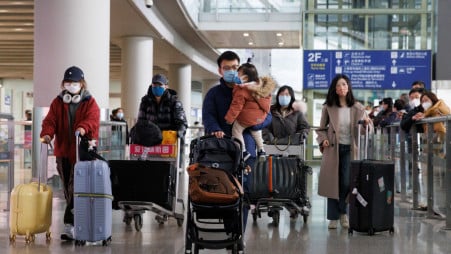
For the first time since placing limits on overseas travel in March 2020, China has reopened its borders to travelers from outside.
As the nation fights a surge in cases, there will be no longer be a requirement for incoming travelers to quarantine, marking a dramatic shift in the Covid policy.
They will still demand documentation of a PCR test that was negative and performed within 48 hours of the trip.
Many people who are ready to reunite with family have welcomed the move.
In the upcoming weeks, 400,000 individuals from Hong Kong are anticipated to fly into locations like Beijing and Xiamen, where there would be lengthy lines for flights.
On Sunday, double decker coaches packed with travellers arrived at the Hong Kong-Zhuhai-Macau Bridge to catch buses to the Guangdong province – among them were college students returning home.
One man told the BBC he hadn’t seen his extended family in five years and couldn’t hold back his excitement having just bought a ticket back to China.
A woman told news agency Reuters she had not seen her parents in years – despite one of them suffering from colon cancer – and said she was “so, so happy”.
The country’s reopening comes at the start of “chun yun”, the first period of Lunar New Year travel. Before the pandemic it was the largest annual worldwide migration of people returning home to spend time with family.
Two billion trips are expected to be made this Lunar New Year, double the number that travelled last year.
Li Hua, who travelled from the UK to China – where her family lives – for the festival said it had been “too long” since she had returned, “I’m so happy to be back, and breathe Chinese air. So happy, so happy”.
However, other people worry that expanding the borders will increase the spread of Covid-19.
At the Hong Kong-Zhuhai-Macau Bridge, some local bus drivers told the BBC that they are concerned they might contract the virus from arriving travelers and that their employers should give them better protection.
China had one of the strongest Covid health rules over the past three years, which resulted in repeated lockdowns, frequent testing procedures, and a substantial impact on the country’s economy.
Following widespread demonstrations around the nation in response to a fire in a high-rise building in the Xinjiang province that left 10 people dead, the government recently reversed course on that policy. Although authorities disputed this, many Chinese believed that the long-standing Covid restrictions were a factor in the deaths.
Hospitals and crematoriums have reportedly been overcrowded since China abandoned the main tenets of its Covid zero policy, but the nation has stopped disclosing its case numbers and only announced two deaths on Saturday.
The Chinese government deleted more than 1,000 social media accounts on the same day for criticizing how it handled the outbreak.
The anticipated surge in cases and travel out of China has prompted many countries – including the UK – to impose requirements for a negative COVID-19 test on people arriving from China, drawing the ire of the Chinese government.
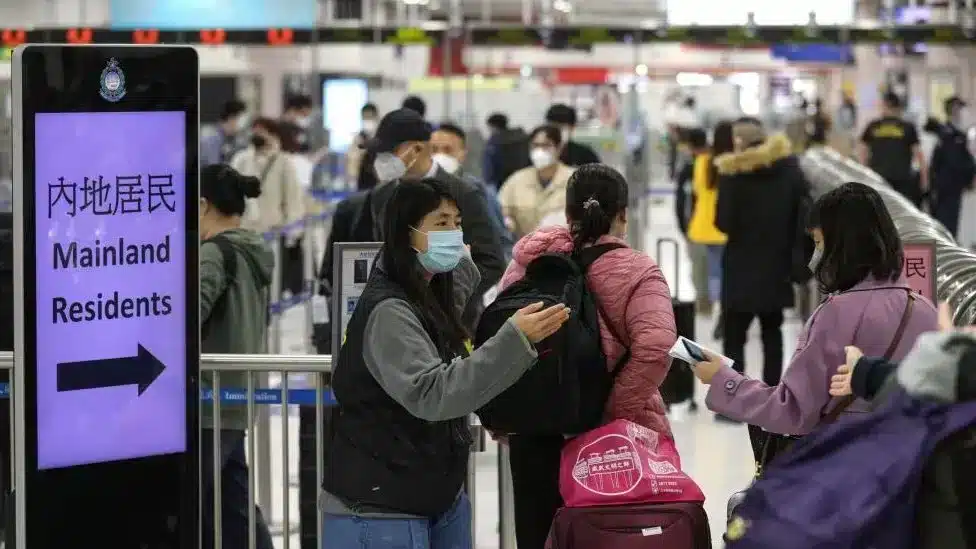
Up to 60,000 Hong Kong residents will be able to cross the border into the mainland as a gradual reopening of border control points begins, Hong Kong leader John Lee told media on Thursday following an announcement from Beijing.
The shift will eliminate what had been a mandatory quarantine for travelers from Hong Kong to the mainland. All travelers will be required to test negative for Covid via a PCR test within 48 hours prior to crossing, and passenger quotas apply to travel in both directions.
The changes come amid Beijing’s sudden dismantling of its stifling Covid controls, following nationwide protests. The apparent reopening of the mainland comes after three years of self-imposed global isolation, during which efforts to resume regular transit with Hong Kong were repeatedly delayed.
Most of previously bustling border crossings between Hong Kong and mainland China had been shut since early 2020, placing a heavy burden on families and businesses with ties on both sides.
The quota includes 50,000 people to travel via three land checkpoints, while the remaining 10,000 are for people traveling via the Hong Kong International Airport, two ferry piers and the Hong Kong-Zhuhai-Macau Bridge.
The cap does not apply to Hong Kong residents traveling back to Hong Kong from the mainland, nor mainland Chinese traveling back to the mainland from Hong Kong, Lee said.
In addition to testing, advance bookings will also be required for some travel.
According to a statement from China’s State Council, flights from Hong Kong and neighboring Macau to mainland China will resume and caps on passenger capacities will be lifted; the number of flights will increase in a “phased and orderly” fashion, the statement said.
Land and maritime border control points between mainland China and Hong Kong and Macao will also resume in a “phased and orderly” manner.
China will also resume issuing tourist and business visas for mainland Chinese residents traveling to Hong Kong, the statement added.
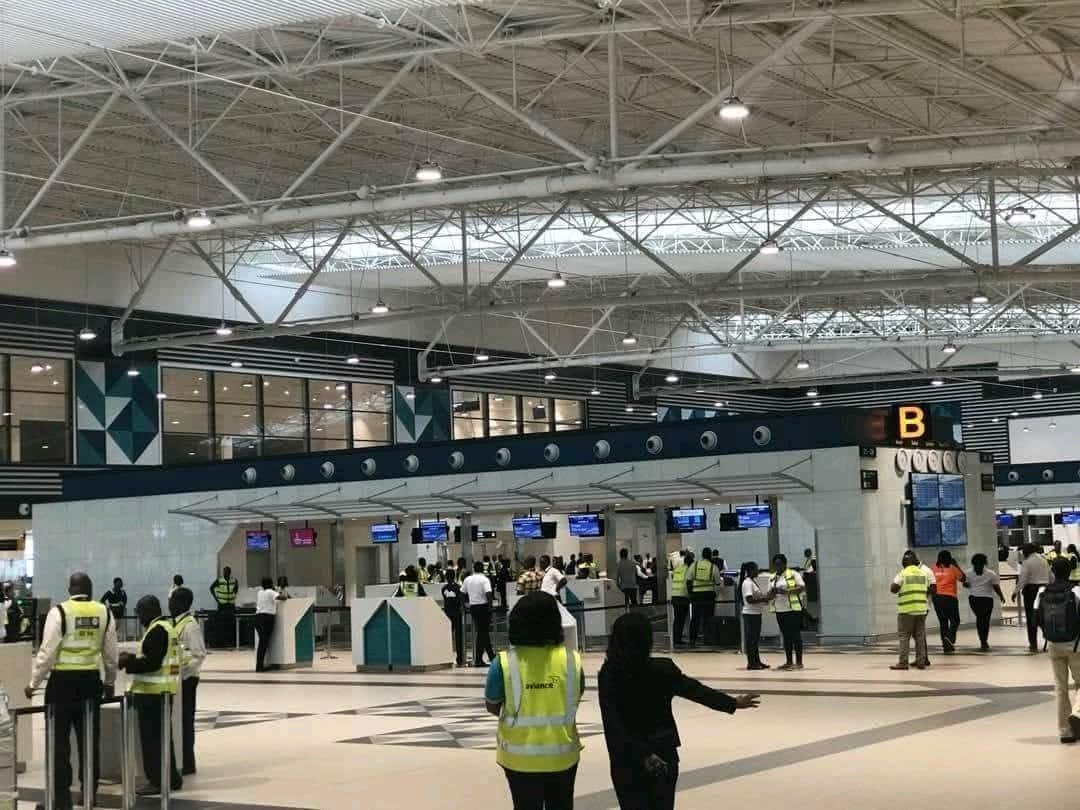
The new guidelines from the Ghana Airport Company Limited (GACL) for travelers coming from China and other nations takes effect as of today, Friday, January 6.
48 hours prior to departure from the nation of origin, passengers must show a valid negative COVID-19 PCR test result.
Once more, they will be subject to free COVID-19 testing upon arrival at Kotoka International Airport (KIA).
A valid negative COVID-19 PCR test result must be presented 48 hours prior to departure from the place of origin for all other passengers traveling from destinations other than China, whether they are vaccinated or not.
Non-Ghanaians arriving at KIA with counterfeit or phony vaccination certificates will be quarantined and sent to the point of embarkation at their own expense. Passengers may also be randomly chosen and administered tests upon arrival.
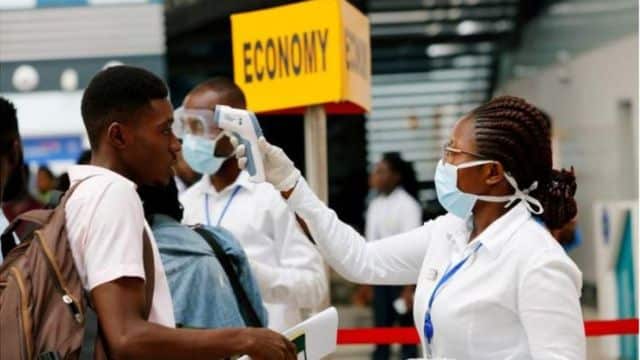
It said similarly, all arriving passengers would undergo temperature screening, Yellow Fever Card verification and COVID-19 vaccination certificate verification.
The GACL also said children less than 18-year-old are exempted from the mandatory vaccination.
It said all persons arriving in Ghana fully vaccinated would be exempted from any form of testing done either prior to boarding from originating country or on arrival in Ghana except passengers originating their journey from China.
Meanwhile, the KIA has warned that Airlines that bring in passengers who are not fully vaccinated to KIA or passengers originating their journey from China without a valid negative COVID-19 PCR test result 48 hours prior to departure would be surcharged $3500.
However, passengers transiting and transferring through KIA would be required to fully adhere to COVID-19 testing requirements at the destination countries.
These directives are part of measures undertaken to ensure the country does not witness a spike in cases.
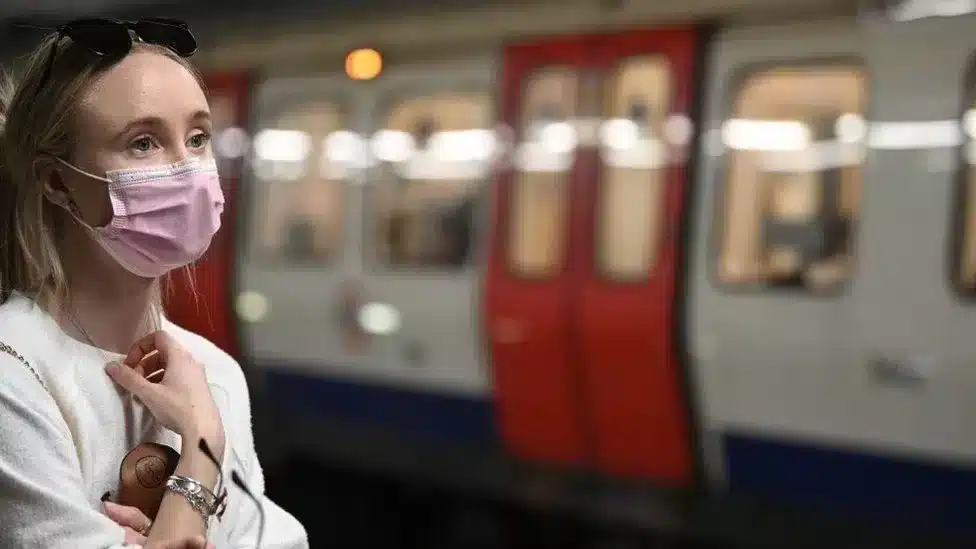
Ministers argue that it makes sense to ask adults to wear masks when they have a respiratory infection and must venture outside.
Mark Harper, the Transport Secretary, stated that he fully supported the UK Health Security Agency’s (UKHSA) recommendations.
The UKHSA reiterated the guidance, which has been in effect in England for months, as businesses and educational institutions reopened after the Christmas holiday.
It happens as pressure on the NHS is increasing, which is in part due to high rates of the flu and cholera.
Mr Harper said he recognised staff were under “tremendous pressure” and the government had offered more resources to the NHS and social care to help services cope.
This includes a £500m winter fund targeted at helping hospitals discharge patients who are medically fit to leave but cannot because of a lack of support available in the community.
“I hope these resources are going to help in the coming months to relieve some of the pressure on our hard-worked health and care staff,” Mr Harper said
It was “sensible” to ask ill adults to wear masks if needed to go out, he said, but best to stay home if possible.
The UKHSA has also asked parents to keep children off school if they have a fever.
There have been sharp rises in the numbers of people in hospital with Covid and flu in recent weeks – about one in eight beds inEngland is now occupied by patients with these infections.
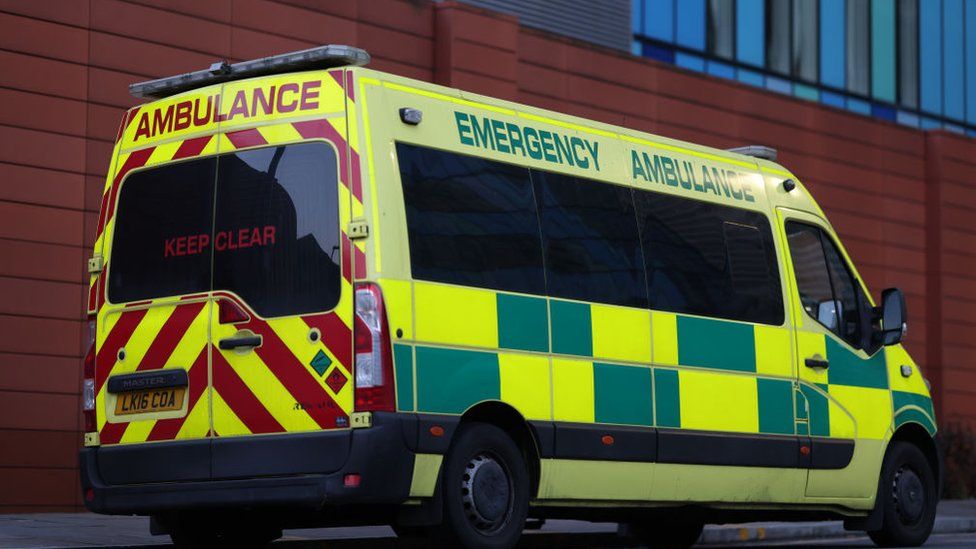
Senior doctors have described the NHS as on a knife edge, with some accident and emergency units in a “complete state of crisis”.
In recent days, a number of hospitals have declared critical incidents, suggesting they cannot function as usual because of extraordinary pressure.
‘I had to sleep in my car while waiting for an emergency op’
Having gone to A&E with stomach pain, Michael Woodcock, from Harrogate, was told he needed an emergency operation because his appendix was at risk of bursting.
It was late at night and he was booked in for surgery the following day – but with no beds available, asked nurses whether he could sleep in his car rather than a waiting-room chair.
“I ended up getting some blankets from the nurses and sleeping in the car for a few hours and then heading back into the hospital in the morning for the operation,” Mr Woodcock said.
Labour criticised the government’s management of the health service, while the Liberal Democrats called for Parliament to be recalled early.
MPs are due back at Westminster next Monday, following their Christmas break.
Prof Phil Banfield, who chairs theBritish Medical Association, which represents doctors, called on the government to “step up and take immediate action”.
The situation was “intolerable and unsustainable”, he said, with the NHS’s survival on a knife edge and patients needlessly dying because of a political choice.
Richard Webber, of the College of Paramedics, said the current situation was the worst in his 30-year career.
Delays were causing patients “significant harm”, he said, with ambulance services now struggling to find available crews for cardiac arrests – the highest category of emergency call.
“I’ve never known anything like it,” Mr Webber said.
Tesla, an electric car manufacturer, claims it delivered a record 1.3 million vehicles in 2018, a 40% increase from 2021.
It follows the company’s more than 405,000 vehicle deliveries in the final three months of 2022.
That number, however, fell short of Wall Street predictions of 430,000 deliveries for the time period.
The demand for automobiles is anticipated to slow this year as potential customers fret over the recession and rising interest rates.
In a statement to investors, Tesla said it had to deal with “significant COVID and supply chain related challenges throughout the year”.
Meanwhile, on Tuesday, authorities in South Korea said they would fine Tesla $2.2 million (£1.8 million) for failing to tell its customers about the shorter driving range of its electric vehicles in low temperatures.
The Korea Fair Trade Commission said the company had exaggerated the “driving ranges of its cars on a single charge, their fuel cost-effectiveness compared to gasoline vehicles, as well as the performance of its superchargers.”
Tesla did not immediately respond to the BBC’s request for comment.
Highlighting the logistics issues faced by the world’s most valuable car maker, deliveries in the fourth quarter of the year were about 34,000 fewer than what Tesla produced.
The shortfall is unusual for Tesla, as it had previously managed to deliver about as many vehicles as it produced.
In October, Tesla chief executive Elon Musk said he was working to resolve the issue.
Like other car makers, Tesla faces the potential challenge of slowing demand for vehicles as customers deal with rising borrowing costs and concerns about an economic slowdown.
Tesla also faces competition from traditional motor manufacturing giants such as Ford and General Motors, as well as newer entrants to the market like Rivian and Lucid in the US and China’s BYD and Nio.
The company is scheduled to announce financial results for the fourth quarter of 2022 and the year as a whole on 25 January.
Tesla said in a separate statement that it plans to host its Investor Day on 1 March and livestream the event from its Gigafactory in Texas.
“Our investors will be able to see our most advanced production line as well as discuss long-term expansion plans, the Generation 3 platform, capital allocation, and other subjects with our leadership team,” the company said.
Tesla’s shares fell by 65% in 2022 – its worst year since going public in 2010 – as investors worried about disruptions to production, concerns over a slowdown in demand and Mr Musk’s focus on Twitter.
The multi-billionaire bought thesocial media platform at the end of October for $44 billion (£36.4 billion) and has spent much of his time since then trying to turn the business around.
According to the Ghana Health Service (GHS), it has observed the increase in new cases of COVID-19 in China and other countries.
The GHS describes this scenario as risky given the drop and persistent low levels of COVID-19 cases in Ghana during the previous three (3) months.
According to a news release from the Ghana Health Service dated January 1, 2023, Ghana’s comparatively low vaccination rate poses a serious threat to importation and a fresh wave of COVID-19 infection in the nation.
Therefore, the Service is making the necessary preparations to prevent a deterioration of the situation.
“This situation calls for tightening and reviewing of existing measures to avert further outbreaks. Ghana Health Service and the Ministry of Health are critically monitoring the situation in consultation with key stakeholders. We will shortly come out with our country specific measures to address the current threat of COVID-19, especially with respect to importation,” the Director-General of GHS, Dr. Patrick Kumah-Aboagye assured in the release.
The Service encouraged all Ghanaians who have not availed themselves for the COVID-l9 vaccination to do so.
“Those who have taken their first dose are to go for the second dose and those who have taken their second dose are also entreated to go for the booster. Vaccination remains the best protection against COVID-19 infection” the GHS urged.
On the east coast of the United States, as well as in Brazil, Argentina, and the Caribbean, ken place.
Cities throughout Europe, Africa, and Asia have also celebrated the start of 2023 with firework displays.
Cities across Europe, Africa and Asia have also held firework-filled festivities marking the start of 2023.
In China, huge crowds gathered to take advantage of recently-lifted restrictions.
Until recently, the country had been following a zero-Covidapproach, continuing to enforce strict lockdowns even as other nations around the world appeared to return to normal.
However, the disease is surging across the country, and many places are placing travel restrictions on travellers from China – Australia has become the latest to do so.
The president of Taiwan, Tsai Ing-wen, used her New Year address to offer help to China to combat the recent surge in Covid cases.
In London, there was a drone display as part of a tribute to the late Queen Elizabeth, while in Edinburgh, thousands enjoyed the first full Hogmanay celebrations in three years.
There was also a tribute to Ukraine – with the London Eye lit up in blue and yellow, the colours of the Ukrainian flag.
In Ukraine, the conflict with Russia continued as air raid alerts sounded shortly after midnight and there were further strikes on Kyiv, officials said. There were no reports of injuries.
It came shortly after new year addresses from both President Vladimir Putin and President Volodymyr Zelenksy.
Mr Putin delivered a New Year address flanked by soldiers clad in full uniform, saying the country’s future was at stake.
Directly addressing soldiers in Ukraine, the 70-year-old leader praised their efforts since the invasion was launched in February, and told them that “historical rightness” was on their side.
Meanwhile, Mr Zelensky addressed Russians in their own language, telling them their president was “hiding behind you, and he’s burning your country and your future”.
And he pledged to Ukrainians that his troops would fight until “victory”.
“We fight as one team – the whole country, all our regions. I admire you all. I want to thank every invincible region of Ukraine,” he said.
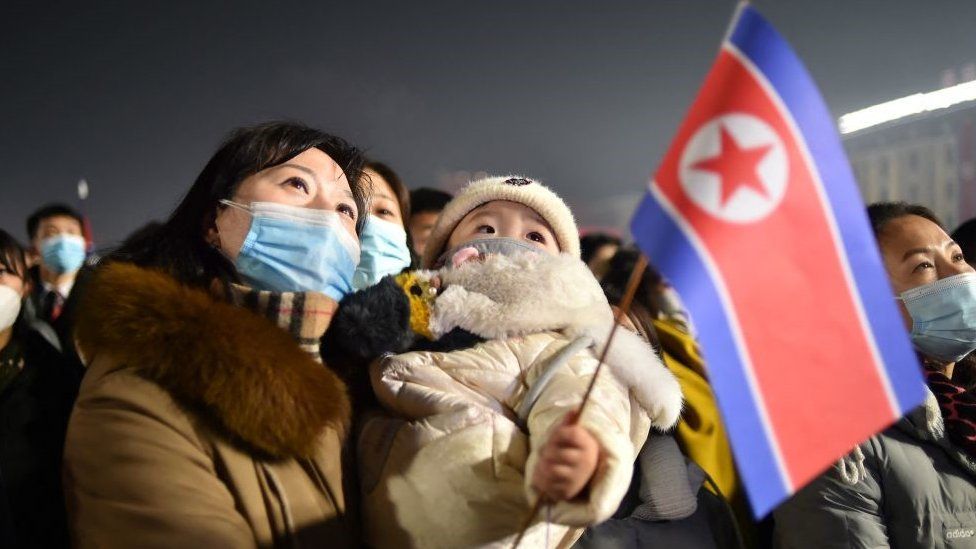
Image caption, A flag-raising ceremony in Pyongyang, North Korea
Meanwhile, the North Korean leader, Kim Jong-Un, pledged to significantly increase the production of nuclear weapons. He also tested his first ballistic missile of the year early on New Year’s Day.
Croatia started 2023 with a new currency, joining the eurozone.
It follows an announcement on Monday that ended almost three years of strict quarantine rules for arrivals.
Travel sites have since reported a spike in traffic.
But Chinese tourists will not have unfettered access to all countries.
Officials in the US are considering new restrictions on travellers from China due to concerns about a surge in cases and a lack of transparency from the Chinese government.
“Without this data, it is becoming increasingly difficult for public health officials to ensure that they will be able to identify any potential new variants and take prompt measures to reduce the spread.”
Japan – one of the most popular destinations for Chinese travellers – has announced that all travellers from China must show a negative Covid test on arrival, or quarantine for seven days, because of the surge in cases there.
India has also said travellers from China (as well as some other countries) must show a negative Covid test when they arrive – though this was announced before Beijing’s easing of restrictions.
Resentment against the government’s policy – which sparked rare public protests against President Xi Jinping in November – led to a relaxation of Covid restrictions across the country.
But an increase in Covid cases followed, with reports of hospitals overwhelmed and a shortage of drugs.
The announcement on outbound travel on Tuesday came after Monday’s news, which axed quarantine rules for travellers arriving in China. It also scrapped a cap on the daily number of flights.
On the same day, the National Health Commission announced that Covid would be formally downgraded to a Class B infectious disease on 8 January.
Before the relaxation of travel rules, people were strongly discouraged from travelling abroad. The sale of outbound group and package travel was banned, according to marketing solutions company Dragon Trail International.
Within half an hour of Monday’s notice that China’s borders would reopen, data from travel site Trip.com – cited in Chinese media – showed searches for popular destinations had increased ten-fold year-on-year.
Macau, Hong Kong, Japan, Thailand and South Korea were the most popular destinations.
In addition, Chinese travel agency Qunar saw flight enquiries on its website increase seven-fold within the first 15 minutes after the announcement, the China Daily reports.
Before the pandemic, the number of outbound tourists from China stood at 155 million in 2019, according to Statista. This number dropped to 20 million in 2020.
This year, some people in China will hope to visit family and loved ones during Chinese New Year, which begins on 22 January.
But inside China, there has been a mixed reaction.
“I’m happy about it but also speechless. If we’re doing this [reopening] anyway – why did I have to suffer all the daily Covid tests and lockdowns this year?” said Rachel Liu, who lives in Shanghai.
She said she had endured three months of lockdown in April – but nearly everyone in her family had become infected in recent weeks.
She said her parents, grandparents and partner – living across three different cities in Xi’an, Shanghai and Hangzhou – had all come down with fever last week.
Many have also expressed concern online about borders reopening as Covid cases peak.
“Why can’t we wait until this wave passes to open up? The medical workers are already worn out, and old people won’t survive two infections in one month,” read one top-liked comment on Weibo.
People in cities like Beijing and Shanghai, which experience chilly temperatures in the winter, say they’re running out of flu and cold medicine.
It’s feared that hundreds of deaths may be going unreported as crematoriums are overwhelmed.
In the capital, Beijing, authorities say they are planning to distribute the Pfizer tablets, Paxlovid, in order to try to reduce the severity of infections. But health centres contacted by The Global Times on Monday said the drug had yet to be delivered.
On Monday, President Xi issued his first remarks on the changes, calling on officials to do what was “feasible” to save lives.
China’s about-turn has put Mr Xi in a tough spot. He was the driving force behind zero-Covid, which many blamed for restricting people’s lives excessively and crippling the economy.
But having abandoned it, analysts say he now has to take responsibility for the huge wave of infections and hospital admissions. Many have questioned why the country was not better prepared.
The US is considering imposing new Covid restrictions on Chinese arrivals, after Beijing announced it would reopen its borders next month.
American officials say this is due to a lack of transparency surrounding the virus in China, as cases surge.
Japan, Malaysia and Taiwan – worried at importing Covid cases – have already outlined tighter measures for Chinese travellers, including negative tests.
Beijing has said Covid rules should be brought in on a “scientific” basis.
India is also stepping up measures for Chinese arrivals, but this was announced before Beijing said it would relax its strict border policy.
Passport applications for Chinese citizens wishing to travel internationally will resume from 8 January, the country’s immigration authorities have said.
Travel sites have reported a spike in traffic, leaving some countries fearful over the potential spread of Covid.
“There are mounting concerns in the international community on the ongoing Covid-19 surges in China and the lack of transparent data, including viral genomic sequence data,” US officials said in a statement quoted by news agencies.
Wang Wenbin, China’s foreign minister spokesperson, subsequently accused Western countries and media of “hyping up” and “distorting China’s Covid policy adjustments”.
He said China believed all countries’ Covid responses should be “science-based and proportionate”, and should “not affect normal people-to-people exchange”.
Mr Wang called for “joint efforts to ensure safe cross-border travel, maintain stability of global industrial supply chains and promote economic recovery and growth”.
The true toll of daily cases and deaths in China is unknown because officials have stopped releasing this data. Reports say hospitals are overwhelmed and elderly people are dying.
Last week, Beijing reported about 4,000 new Covid infections each day and few deaths.
Before the relaxation of travel rules, people were strongly discouraged from travelling abroad. The sale of outbound group and package travel was banned, according to marketing solutions company Dragon Trail International.
Within half an hour of Monday’s notice that China’s borders would reopen, data from travel site Trip.com – cited in Chinese media – showed searches for popular destinations had increased ten-fold on last year.
Macau, Hong Kong, Japan, Thailand and South Korea were the most popular destinations.
Separately on Wednesday, Hong Kong’s leader John Lee announced that his city was scrapping the last of its Covid rules almost immediately – apart from the wearing of face masks, which will remain compulsory.
“The city has reached a relatively high vaccination rate which builds an anti-epidemic barrier,” Mr Lee told a media briefing.
The US still requires international travellers to show proof of being fully vaccinated against Covid on entering the country.
The website for the Centres for Disease Control and Prevention (CDC) also recommends that anyone travelling to the US gets a Covid test beforehand and has their result to hand – but this is not a legal obligation.
In their statement, the unnamed US officials added they were “following the science and advice of public health experts” and “consulting with partners”.
China’s loosening of travel measures – the last part of the country’s controversial zero-Covid policy – follows weeks of unrest which saw people take to the streets in rare protests against President Xi Jinping and his government.
In order to prepare for potential public health hazards, SENDGhana, a non-governmental organization (NGO), has encouraged the government to establish the Public Health Emergency Fund (PHEF) as promised in the 2022–2025 national medium term development plan.
SEND Ghana claims that the action will also contribute to raising Ghana’s readiness rating, which is now 45.
“In addition, the CNTF can continue to leverage additional sources of funds such as donations from intuitions, corporate bodies, philanthropists, and patriotic Ghanaians. This call has become necessary in the wake of the multiple outbreaks of diseases, including the novel coronavirus, Marburg, Monkeypox and other recurring diseases such as meningitis and influenza. Failing to plan for disease outbreaks costs more than having a preparedness plan in place. Hence, Ghana must prepare for and respond quickly to potential epidemics rather than waiting to act when outbreaks happen. Not preparing adequately could be dangerous for Ghana and strain an already stressed health system and economy,” the statement added.
The statement further indicated that the time is now to act against any future outbreaks to spearhead rapid advancement of Ghana’s health care system.
“The establishment of the PHEF would contribute to building a resilient healthcare system to cater to and support investment in health infrastructure, logistics, human resources, risk communication during outbreaks, local manufacturing of vaccines and medicine, and health research.”
“We hope the government will take the necessary steps to establish the PHEF before the end of 2023, especially when some Ghanaian citizens are beginning to question the relevance of the COVID-19 levy. Funding is needed to protect Ghanaians against future epidemics. We desire to see the government take advantage of this opportunity to convert the COVID-19 Trust Fund while channelling the levy into the PHEF to cater to all disease threats, not just COVID-19,” the statement concluded.
In the first of a series of joint quarterly district dialogue held in Asankragua, in the Wassa Amenfi West district, the district assembly, representatives from other government agencies, cocoa companies, gold mining association and community representatives came together to discuss various commitments made that would support the elimination of forced and child labour in the local communities.
While progress has been made in recent years towards eradication of child labour, especially the impact of Covid-19 which saw schools shut down around the globe has exacerbated the situation putting an additional 9 million children at risk of child labour globally.
Ghana and Côte d’Ivoire account for over 60% of global cocoa production. While this significantly boosts the country’s economy, it has also brought serious challenges, including a rise in forced labour and child labour due to several factors including the above.
The government of Ghana and cocoa companies have made a lot of effort in interventions towards eradicating child and forced labour.
Nonetheless, the menace still persists and is a cause of concern to both producing and consuming countries.
It is because of this concern that the Norwegian government with funding through NORAD is working with Rainforest Alliance together with communities through its local partners, the Center for Social Impact Studies and New Generation Concern, to curb the menace.
In a plenary after group discussions, community representatives presented their concerns about interventions being implemented at the community level by government and cocoa companies/gold associations to eradicate child labour in the last four months. They also advocated for inclusion in discussions that leads to choice of interventions by companies and government that will best meet their needs and make an impact.
The Wassa Amenfi Municipal Assembly, as part of its commitment to eliminating child labour and the worst form of child labour, indicated that they will support community self-help initiatives in mining and cocoa communities to eradicate child labour.
To this end, the Municipality is urging local communities to submit to the District Assembly such initiatives for validation and support.
A Development Planning Officer of the Assembly, Cyril Ankomah, made this known at a dialogue on child and forced labour by the RainForest Alliance and their local partners in Asankragua.
According to the Assembly, reporting child labour cases is free, and called on people to support the Municipality in dealing with the menace.
Representative from CHRAJ, Social Welfare and NCCE present also mentioned what they have been doing so far and pledged their continuous support to collaborate with other stakeholders in raising awareness.
The Sustainability Officer of Touton Ghana Cocoa Buying Company, Manasseh Ameworlor, who spoke on behalf of cocoa companies at the meeting, reiterated their total commitment towards eliminating child labour in their operational areas.
He said the companies would continue to support schools with furniture, reading materials, and playgrounds and form climate-smart groups.
He urged RainForest Alliance and their local partners to organize regular dialogues since it keeps everyone in check regarding child and forced labour.
A consultant on the project, Elizabeth Adubofour, encouraged the stakeholders to work assiduously towards preventing, identifying and addressing forced and child labour whiles she encouraged the community members to be diligent in their work and contribute their quota towards this shared responsibility as they have roles to play in its eradication.
The Senior Project Manager (Forced and Child Labour), RainForest Alliance, Joyce Poku-Marboah, drew attention to the fact that there is difference between child work and child labour and not every work a child gets involved in is child labour.
She also called on government, cocoa and gold-mining companies to fulfill their commitments and be more proactive by committing to their own plans, strategies and activities designed to eliminate child and forced labour.
She said the district dialogue was premised on the grounds that child labour was a shared responsibility that required the involvement of all stakeholders to work to eliminate the practice from the sector.
“We Need to Collaborate. Together We Can!”
Present at the district dialogue were representatives from the district assembly (representing government), cocoa companies and goldmining associations, religious leaders, social welfare and community development, NCCE, CHRAJ and community volunteers and opinion leaders.
Beijing faces a surge in severe COVID-19cases over the next two weeks, a respiratory expert in China has said, amid global concerns over possible mutations and knock-on effects for the world economy after the recent surprise lifting of China’s strict zero-COVID policies.
The easing of restrictions across China has coincided with a jump in infections experts say will likely gather pace through the winter, with some projections even suggesting China could face more than a million deaths next year, the Reuters news agency has reported.
“We must act quickly and prepare fever clinics, emergency and severe treatment resources,” Wang Guangfa, a respiratory expert from Peking University First Hospital, told the country’s state-run Global Times on Tuesday.
Wang said hospitals should expand ICU beds as a priority and that the COVID-19 peak will likely last until the end of China’s Spring Festival, which will fall on January 22.
COVID-19 cases will then fall off and life should gradually return to normal around the end of February and the beginning of March, Wang said.
After the peak, people must not let their guard down, Wang added, describing the “dire consequences” if the virus were again to transfer between humans and animals.
“The current COVID-19 strain may be less virulent, but it may not go the same way on animals. Maybe it seems less severe for animals but at some point, the virus can still jump to humans, with dire consequences,” Wang said.
Following widespread protests in China earlier this month, the country of 1.4bn people started dismantling its “zero-COVID” lockdowns and testing, which had largely kept the virus away for three years at great economic and psychological costs.
Narrow definition of COVID-19 deaths
China, which uses a narrow definition of what can be classified as COVID fatalities, reported no new COVID deaths for December 20, compared with five the previous day.
The nation’s overall fatalities since the pandemic began were revised to 5,241 after removing one death in Beijing.
Amid doubts over China’s very low COVID death toll by global standards, China’s National Health Commission (NHC) on Tuesday clarified that only deaths caused by pneumonia and respiratory failure after contracting the virus are classified as COVID deaths.
A heart attack or cardiovascular disease causing death in an infected person will not get that classification.
Benjamin Mazer, an assistant professor of pathology at Johns Hopkins University, said China’s classification system would miss “a lot of cases”, especially as people who are vaccinated, including with the Chinese shots, are less likely to die of pneumonia.
Blood clots and sepsis – an extreme response to infection – have caused countless deaths among COVID patients around the world.
“It doesn’t make sense to apply this sort of March 2020 mindset where it’s only COVID pneumonia that can kill you, when we know that in the post-vaccine era, there’s all sorts of medical complications,” Mazer said.
The NHC also played down concerns raised by the United States and some epidemiologists over the potential for the virus to mutate in China, saying the possibility of new strains that are more pathogenic is low.
Several leading scientists and World Health Organization advisors said it may be too early to declare the end of the global COVID pandemic emergency phase because of a potentially devastating wave to come in China.
The US said on Tuesday that it stands ready to assist China with its outbreak, warning an uncontrolled spread in the world’s second-largest economy may have implications for global growth.
The full effects of ditching “zero-COVID” remain highly uncertain given China’s patchy vaccine coverage, fragile health system and lack of clarity about the real extent of infections as cases start to surge.
Some hospitals in China have already become inundated with patients and some cities are dealing with medicine and blood shortages as pharmacy shelves are stripped bare and crematoriums are overwhelmed in the wake of the lift of years of lockdowns, quarantines and mass testing.
From the country’s northeast to its southwest, crematorium workers have told Agence France-Presse that they are struggling to keep up with a surge in deaths.
Beijing last week admitted the scale of the outbreak has become “impossible” to track following the end of mandatory mass testing.
The Bank of England has unveiled the new design for banknotes that feature the image of King Charles.
The only change to the current designs of the £5, £10, £20, and £50 notes will be the portrait, which will go into circulation in the middle of 2024.
The King’s portrait will appear on new notes on the front and in the transparent security window.
After the new notes start to circulate, old notes will still be accepted in stores.
Beginning in 1960, Queen Elizabeth was the first and only monarch to be depicted on circulating Bank of England banknotes. The monarch is not shown on the notes that Scottish and Northern Irish banks have issued.
There are about 4.5 billion individual Bank of England notes worth about £80bn in circulation at present.
The King’s cypher will also appear on the notes
The Bank of England said that, following guidance from the Royal household, the new notes would only be printed to replace worn notes or to meet increased demand, in order to minimise the environmental and financial impact of the change.
Bank of England governor, Andrew Bailey, said he was “proud” of a “significant moment” with the new design.
Fifty pence coins bearing the image of King Charles III have already entered circulation via post offices across the country.
An estimated 4.9 million of the new coins are being distributed to post offices – about half of the total number earmarked for circulation – to be given in change to customers.
The new King Charles 50p coins have already entered circulation
Coins carrying the image of the late Queen will still be accepted in shops, in the same way as banknotes.
For anyone taking part in a family Christmas quiz this year, it is worth remembering that, in ascending order, the reverse side of current polymer Bank of England banknotes feature Sir Winston Churchill, Jane Austen, JMW Turner and Alan Turing.
Cash use has become far less frequent when compared to debit cards, owing primarily to the use of contactless payments and then accelerated by the Covid pandemic. The buying power of specific coins and banknotes have also been diluted by rising prices.
However, there is still keen interest from consumers and collectors about the images used on cash.
Collectors will be particularly excited to get their hands on the lowest serial numbers of the new King Charles banknotes when they appear.
Speaking at the grant contract signing ceremony of the sectoral expansion of the Covid-19 Response Grant Programme on Thursday, she told Business24 in an interview that “I think today’s event is very significant in terms of the numbers, this is the largest number of the three and in terms of the, amount of money we giving, and also in terms of the women -men ratio, so as much as possible we trying to improve the diversity of the funding we giving and also to support more diverse businesses, we are seeing a different uptake and a different types of businesses that are coming up based on the gender segregation and so today is very meaningful especially at a time now everyone is going through economic challenges, Ghana has not been spared, it is important for the SMEs to know they have hope in an institution such as GEA.
It is our goal and our focus to ensure that we building giants and we are strengthening businesses, and that is the focus and direction of the work that we do.”
Phase one success
Mrs. Kosi Yankey-Ayeh, had said the new round of the stimulus package was based on the success of the phase one and two which reached 288 SMEs with GH¢28million
She explained that the grant was part of the government’s initiative to promote private investments, sustain and create jobs, ensure business innovation, competitiveness and growth to support the economy.
The project was to support the government agenda not only to promote private investments but also to encourage growth in non-resource-based sectors.
On its impact, the CEO stated that the fund was expected to culminate into job creation and sustainability, business innovation, competitiveness and growth.
She said it will help SMEs transition into the next stage of growth, thereby improving their ability to increase sales and incomes, and exports.
A Deputy Trade and Industry Minister, Nana Ama Dokua Asiamah Adjei indicated that it was government’s hope that majority of the beneficiaries would disburse the funds as they promised in their application.
“This is to ensure that their business will grow, cushion them a little bit, looking at how COVID-19 hit, smes were hardest hit from extra cost in production because of covid protocols and we want them to come out of the situation they went in, it is good government is supporting them.
Grant details
The grant is being implemented under the World Bank-funded Ghana Economic Transformation Project (GETP).
It is targeting small businesses with employees between six and 100 and those with annual turnover between GH¢180,000 and GH¢21.6 million.
To be able to access the fund, SMEs also need to have business operating certificates and submit financial statements or income statements between 2019 and 2021.
The fund must be used to purchase machinery and equipment, or technology, equipment installation and repair costs, working capital expenses including purchase of raw materials and marketing costs and payment of rent.
Special attention will also be given to women-owned enterprises and enterprises using green technologies.
The Ghana Health Service (GHS) has said that if proper precautions are not taken during and after the Christmas season , the country could record a new COVID-19 strain.
The Service indicates that, the country is likely to experience a surge in COVID-19 cases given that some countries around the world have seen hikes in cases due to a change in weather conditions.
At a media briefing in Accra, the Director General of the GHS, Dr. Patrick Kuma-Aboagye expressed the Service’s preparedness to contain any upsurge.
“There is also a potential for a new variant just like we had during the last Christmas -the Omicron variant. So, we also have to look at that as a risk factor, and so we need to be alert and make sure that we sustain the gains made so far, so we don’t go back to where we were many months ago.”
He also mentioned that, the mass vaccination campaign re-launched last week ahead of the yuletide has recorded a little over one million people receiving the jab.
Dr. Patrick Kuma-Aboagye urged opinion leaders to continue to entreat their opinion leaders to take the vaccines.
The Ghana Health Service from Wednesday, December 14, commenced the vaccination of citizens who are yet to be vaccinated against Covid-19.
The latest vaccination drive which ends today, Monday, December 19, 2022 was expected to last for five days to prevent a possible surge in cases of Covid-19 before, during and after the Christmas festivities.
Under the theme, Protect Yourself, Protect Your Family, Get Vaccinated Against Covid-19, this edition was expected to vaccinate over 1.4 million people between 14th and 18th December 2023.
The GHS has currently administered a total of 21,179,341 vaccine doses as of November 30.
Existing Covid-19 prevention measures at the airport for visitors have been strengthened to reduce the number of cases which may enter the country.
An international consortium of researchers are collaborating to conduct a research on why COVID-19 was milder in some parts of the world.
Supported by £3.1 million from the Wellcome Trust, the newly-created WWW Consortium links three leading studies in West Africa, the West Indies, and West London, each tracking how both the virus and our immunity have evolved against COVID-19.
In order to better understand the factors impacting COVID-19 outcomes in these regions, researchers will compare prospective samples and data from vaccinated individuals.
They will assess a variety of immune conditions and medical histories, including prior exposure to SARS-CoV-2, other human and animal coronaviruses, as well as other infectious diseases like malaria.
The consortium will provide evidence to help unpick patterns seen so far in different areas of the world. For example, West Africa experienced large undetected SARS-CoV-2 transmission, but with negligible impacts on mortality.
On the other hand, the trends observed in the West Indies were similar to the UK, despite countries like Jamaica having a much lower vaccination rate.
They hope their work will be useful in informing future pandemic response in regions currently underserved by both research and surveillance capacity.
David LV Bauer, who heads the RNA Virus Replication Laboratory at the Crick, will lead the consortium. He said: “While the initial pandemic response to SARS-CoV-2 is scaling down, ongoing research and monitoring will be essential to understand this virus, which will continue to evolve.
“We wanted to build a global consortium so that research and surveillance capacity continues to grow internationally.”
The consortium will strengthen research connections made during the pandemic, as virologists and public experts collaborated to piece together a picture of viral evolution globally.
The project also builds on the success of the Crick African Network (CAN), which established strong ties between African institutions and the Francis Crick Institute.
Emma Wall, UCLH Infectious Diseases consultant and Senior Clinical Research Fellow for the Legacy study at the Crick, said: “Connecting our London-based study with research projects in Africa and the West Indies will help us not only understand differences across countries, but also how to best protect people based on shared characteristics.
“And as SARS-CoV-2 continues to evolve, we will ensure we are prepared with excellent channels of communication and information sharing globally.”
Gordon Awandare, Director of the West African Centre for Cell Biology of Infectious Pathogens (WACCBIP) at the University of Ghana, said: “Pre-exposure to other infectious diseases like malaria is much more common in West Africa, and we think that this can increase the tolerance of the immune system.
“In some cases, this might be helpful, prepping the immune system for future infections and decreasing the chance of severe illness. But it might also mean that vaccines are less effective and we should consider designing vaccines for specific populations.”
Joshua Anzinger, Senior Lecturer of Virology at The University of the West Indies, said: “Vaccination rates are very low in Jamaica. The Windfall cohort includes individuals amongst the first to be vaccinated. Going forward we will be enrolling both unvaccinated and vaccinated individuals, and monitoring their immune responses to different variants.
“With increased sequencing capacity at our university’s Trinidad campus and more recently in Jamaica, we can now contribute a unique picture of immunity across the West Indies. Crucially we can now untangle the increasing complexity of individual responses to infection, and how these might influence population level immunity against future variants.”
Efforts to clamp down on the COVID-19 pandemic are on course in the Ashanti Region.
As part of these efforts the Ashanti Regional Health Directorate has stepped up stakeholder engagements to encourage the public to accept and participate in the ongoing COVID-19 vaccination exercise as the festive season approaches.
The Directorate has been engaging traditional and religious leadersas a strategy to reach out to the larger population due to their leadership and influential roles in society.
It has consequently met the Ashanti Regional House of Chiefs to solicit the support of the House in the ongoing National COVID-19 Vaccination exercise which is set to end on December 18,2022.
Religious leaders drawn from both the Christian and Muslim communities have also been engaged on the importance of the vaccination exercise in fighting the disease.
The stakeholder engagements, supported by the United Nations Children’s Fund (UNICEF) and other partners form part of the social mobilisation drive to address vaccine hesitancy.
The goal is to achieve herd immunity and also protect as many people as possible ahead of the yuletide to prevent another wave after the festivities.
Dr. Emmanuel Tinkorang, the Regional Director of Health Services, at a meeting with religious leaders in Kumasi, reminded the participants that the fight is not over, and the engagement is necessary because the transmission of the disease is mainly through human-to-human activities which are most likely to increase during the yuletide.
The trend of the disease, he indicated, showed that the country recorded a new wave every six months and called for a concerted effort to eliminate the disease completely.
The Regional Director said the target of the Directorate is to achieve herd immunity by vaccinating at least 70 per cent of the population in the Region, disclosing that only 48 per cent had been fully vaccinated.
He added that 68 per cent had taken the first dose and urged such people to voluntarily go for the second dose to ensure the target is achieved in the interest of public health.
Dr. Tinkorang also advised organisers of public events during the festive season to insist on safety protocols as a civic responsibility towards the protection of lives.
Madam Charity Nikoi, Social Behaviour Change Communication Specialist, UNICEF, underlined the need for the participants to lead the campaign as leaders for the collective good of society.
She said vaccination is the surest way to protect oneself against COVID-19 and urged religious leaders to be ambassadors against vaccine hesitancy.
The Deputy Minister for Gender and Social Protection nominee, FranciscaOteng-Mensah has refuted claims that she engaged in conflict of interest in the procurement of sanitisers during the peak of Covid-19 pandemic.
The Kwabre East MP was accused of using her influence as the Board Chairperson of the National Youth Authority (NYA) in 2020 to lead the board in approving the procurement of sanitisers from a company in which she is a director and shareholder.
Ms Oteng-Mensah was alleged to have supervised the board to pay GH¢700,000 to Adonko Company – a subsidiary of the Angel Group of Companies which manufactured hand sanitisers at the onset of Covid-19.
The Commission on Human Rights and Administrative Justice (CHRAJ) is currently investigating allegations of conflict of interest against the Deputy Gender Minister-designate.
However, appearing before the Appointment Committee of Parliament on Thursday, Ms. Oteng-Mensah said she is not guilty of the allegations of conflict of interest made against her.
According to her, she did not have any idea that the NYA Board was working towards purchasing sanitisers from Adonko Company.
Therefore, she hoped CHRAJ which is a competent body will clear her of any wrongdoing.
“As the Chairperson, I was not a member of the Entity Tender Committee and so I wasn’t on the committee at that time. Also, I had no idea they were purchasing from Adonko Company Limited at that time.
“It got to a time when we were at the peak of Covid-19 season. In fact, if we all recall, getting access to sanitisers was a huge challenge and so everybody including members of Parliament were struggling to go anywhere that they could get sanitisers to give to their people,” she told the Committee.
The Kwabre MP further explained that the Committee did not only procure sanitisers from Adonko Company Limited but from other companies as well.
“At that point, in that state of emergency, nothing of that sort came to me and so I find it difficult to accept that there is any conflict of interest. It was afterwards that I got to know that they even purchased some number of sanitisers from Adonko Company Limited. And they didn’t just purchase from Adonko Company Limited, per my checks, they also purchased from other companies,” she said.
Meanwhile, she admitted that her father is the owner of Adonko Company Limited and she is a shareholder.
“…it has to do with the fact that my father owns Adonko Company Limited and I’m also a shareholder of the company,” she told the Committee.
What led to the allegation
A resident of Nima in Accra, Ismail Mohammed, on January 21, 2021, therefore, petitioned the anti-graft institution to look into the conduct of the MP, insisting the NYA’s ¢3 million expenses on a Covid-19 campaign in 2020 had elements of impropriety.
The NYA board’s approval of the expenditure on March 31, 2020, came at a time the country had recorded more than 150 cases of COVID-19 and was girding its loins to confront the pandemic.
Fourteen out of the 15 board members of the institution were in the Zoom meeting to approve the amount. That meeting had the board chairperson, Francisca Oteng Mensah; the CEO, Sylvester Tetteh; and a Deputy Executive Director of the National Service Secretariat, Henry Nana Boakye, in attendance.
Minutes of the board’s virtual meeting on that day show the CEO presented management’s proposal for GH₵3 million for a campaign to support the government’s fight against COVID-19.
Three board members, Joshua Makubu, now the Oti Regional Minister; Henry Nana Boakye, now the New Patriotic Party’s National Organiser; and Theodora Williams Anti, now the Acting Executive Director Foundation for Security and Development in Africa (FOSDA), supported the management’s proposal.
This paved the way for the Board Chairperson to call for a voice vote on the matter.
“Majority of the members voted for the approval of ¢3 million for management to undertake various activities towards the fight against Covid-19, with no indication of dissension,” the minutes said.
However, a member of the board, Emmanuel Yao Dormenya, suggested that “management should submit a budget to the finance committee for scrutiny.”
Ms Oteng-Mensah shot the idea down.
“The Chairman in view of the exigency of the request directed the CEO to present regular updates on the activities on the board’s page and a comprehensive report to the board on the outcomes of the lined-up activities under the programme during the subsequent meeting,” the board minutes indicated.
The petitioner alleged that by superintending the meeting to approve the Covid-19 campaign, Ms Oteng-Mensah had violated Article 284 of the 1992 Constitution and Section 7 of the NYA Act.
The conviction of an activist who attempted to organise a vigil in Tiananmen Square last year has been overturned by Hong Kong‘s highest court because police misconduct was discovered.
Attorney Chow Hang-tung, who was imprisoned in January, will continue to be held in custody as she is charged with two additional offences under the city’s national security law.
But on Wednesday, she was successful in appealing her “unauthorised assembly” conviction.
The police’s decision to forbid the vigil was ruled invalid by a judge.
Since 2020, Tiananmen vigils have been prohibited by Hong Kong authorities, who have cited COVID restrictions as the cause.
The city used to be one of the only sites on Chinese territory where authorities allowed tributes.
Ms Chow was arrested in June 2021 for “inciting” the public to take part in that year’s vigil. She had led the Hong Kong Alliance, a group which had organised the annual demonstrations and that year she posted articles on social media and on news sites urging Hong Kongers to turn out or light a candle in tribute.
At her trial in January this year, she was jailed for encouraging the assembly in breach of Covid laws.
Magistrate Amy Chan said she had been “self righteous” in “completely disregarding the law to think that the freedom of assembly was more important than public health”.
However a High Court judge on Wednesday found police had not properly explored the options for how the demonstration could have gone ahead in a Covid-safe manner.
Judge Judianna Barnes said police “did not seriously consider” other health measures, thus ignoring a requirement in the law that public meetings should not be banned if they can be safely facilitated.
The ruling could have legal implications for other Hong Kongers jailed for taking part in Tiananmen vigils. They include the pro-democracy tycoon Jimmy Lai, who was sentenced to 13 months for the alleged offence a year ago. Mr Lai was jailed for nearly six years on fraud charges earlier this month and faces the prospect of life behind bars due to a separate trial on national security charges, which is due to begin next September.
Ms Chow and other human rights advocates have long argued that Covid restrictions were just an excuse for Hong Kong authorities to ban commemorations of the Tiananmen protests – a heavily censored and highly sensitive topic in mainland China.
In previous years thousands of people gathered to remember the victims of the crackdown on 4 June 1989, when the Chinese military attacked pro-democracy protesters camped in Beijing’s Tiananmen Square, killing an unknown number of civilians.
However China has asserted its rule over Hong Kong since major protests in 2019 protesting against Beijing’s influence and the rolling back of civil rights in the city.
Since then public commemoration of the Tiananmen protestshas been targeted by the authorities. Last year monuments marking the event were removed from university campuses and a museum was also shut down.
An unprecedented wave of Covid cases in China has sparked panic buying of fever medicines, pain killers, and even home remedies such as canned peaches, leading to shortages online and in stores.
Authorities said Wednesday they had detected 2,249 symptomatic Covid-19 cases nationally through nucleic acid testing, 20% of which were detected in the capital Beijing. CNN reporting from the city indicates the case count in the Chinese capital could be much higher than recorded.
Demand for fever and cold medicines, such as Tylenol and Advil, is surging nationally as people rush to stockpile drugs amid fears they may contract the virus.
Canned yellow peaches, considered a particularly nutritious delicacy in many parts of China, have been snapped up by people looking for ways to fight Covid. The product is currently sold out on many online shops.
Its sudden surge in popularity prompted Dalian Leasun Food, one of the country’s largest canned food manufacturers, to clarify in a Weibo post that canned yellow peaches don’t have any medicinal effect.
“Canned yellow peaches ≠ medicines!” the company said in the post published Friday. “There is enough supply, so there is no need to panic. There is no rush to buy.”
The People’s Daily, the mouthpiece of the Communist Party, also tried to set the record straight. It published a long Weibo post on Sunday urging the public not to stockpile the peaches, calling them “useless in alleviating symptoms of illness.”
Authorities also pleaded with the public not to stockpile medical supplies. On Monday, the Beijing city government warned residents that it was facing “great pressure” to meet demand for drug and medical services because of panic buying and an influx of patients at clinics.
It urged the public not to hoard drugs or call emergency services if they have no symptoms.
Stock frenzy
The rising demand and shortage of supply of Covid remedies have fueled bets on drugmakers.
Shares of Hong Kong-listed Xinhua Pharmaceutical, China’s largest manufacturer of ibuprofen, have gained 60% in the past five days. The stock has so far jumped by 147% in the first two weeks of this month.
“Our company’s production lines are operating at full capacity, and we are working overtime to produce urgently needed medicines, such as ibuprofen tablets,” Xinhua Pharmaceutical said Monday.
Ibuprofen is an anti-inflammatory drug used to treat pain and fever. It is also known as Advil, Brufen, or Fenbid.
The drug shortage has spread from mainland China to Hong Kong, a special administrative region which has a separate system of local government. On Sunday, the city’s health chief urged the public to refrain from panic buying cold medicines they do not need and urged residents “not to overact.”
In some Hong Kong drugstores, fever drugs such as Panadol, the local brand name for Tylenol, have sold out. Most of the buyers were sending the medicines to their families and friends in the mainland, sales representatives told CNN.
Shares of Shenzhen-listed Guizhou Bailing Group Pharmaceuticals, known for making cough syrup, have gained 21% this week and risen 51% so far this month. Yiling Pharmaceutical, the sole producer of Lianhua Qingwen, a traditional Chinese medicine recommended by the government for treating Covid, has also jumped more than 30% in the past month.
Even providers of funeral services and burial plots have gotten a huge boost. Shares in Hong Kong-traded Fu Shou Yuan International, China’s largest burial service company, have soared more than 50% since last month.
There is “strong pent-up demand for burial plots” in 2023, analysts from Citi Group said in a recent research report, adding that they’ve noticed increasing investor interest in the sector.
They cited the existence of hundreds of thousands of cremated remains, which are being temporarily stored in government facilities awaiting burial. Lockdowns across much of the country have halted funeral services, they said.
In Nigeria, officials have announced that regardless of vaccination status, all travelers will no longer be required to present documentation of a negative Covid-19 test upon arrival or departure.
In its latest guideline, theNigerian Civil Aviation Authority(NCAA) said the decision comes after the government said the virus “has been persistently rare in Nigeria and most of the rest of the world”.
“Pre-departure and post-arrival Covid-19 PCR tests are no longer required for all passengers irrespective of vaccination status,” it said.
Health declaration forms and permission to travel would no longer be required, the agency added.
The Ghana Health Service (GHS) has fought off claims that it is administering expired Covid-19 vaccines.
The Service says such claims are completely unfounded and the citizenry should ignore same.
Director General of the Ghana Health Service, Dr Patrick Kumah Aboagye made the denial at a press conference and explained that the Pfizer vaccine currently being administered has not expired.
The GHS boss stated the vaccine has a span of 15 months and not 12 as is being speculated.
“The current expiry for Pfizer is 15 months and not the12 months. This issue that we are administering the expired vaccine is not true,” he said.
Meanwhile, he also disclosed that his outfit will from Wednesday, December 14, re-embark on a massive vaccination ahead of the Yuletide.
According to him, this is aimed preventing outbreak of the virus after the season.
According to new capacity figures from the United States, hospitals in the United States are about as overcrowded as they were during the omicron surge. Department of Health and Human Services
A triple virus threat, or “tripledemic,” is a significant contributor.
According to Johns Hopkins University, flu cases are higher than usual, RSV is on the rise, and more coronavirus variants are emerging.
According to some paediatricians, the so-called “tripledemic” is particularly hard on children.
“We think it’s just a bad cold, and it isn’t. It can be so much worse,” said Dr. Edith Bracho-Sanchez, pediatrician at Columbia University Irving Medical Center.
She’s talking about the flu and its potential complications in children.
“The pneumonia that can come after, the ear infections that can come after, the dehydration that lands kids in the hospital, the sinusitis that can happen in older kids, even febrile seizures,” Bracho-Sanchez added.
Medical experts strongly recommend getting a flu shot.
Also, children as young as 6 months may be able to get an updated shot for COVID-19 soon.
For treatment, Walgreens is starting free home delivery of prescription Paxlovid.
The Centers for Disease Control and Prevention said vaccines and anti-viral therapies are still in the works for RSV, but pandemic mitigation strategies help stop all three viruses.
“It’s our individual choices that are going to help protect ourselves, our loved ones and our other community members,” said Dr. Keri Althoff, associate professor at Johns Hopkins Bloomberg School of Public Health.
Ambulance workers are set to strike, raising concerns among the public about their ability to respond in an emergency, but their union has stated that the government has the authority to halt their strike.
As the government holds emergency COBRA meetings to limit disruption while ten different industries go on strike this week, troops are being trained to drive ambulances.
Over the weekend, government sources stated that no decision had been made to submit a formal request to the Ministry of Defence, but that one was “not far away.”
But the Cabinet Office confirmed on Sunday night military personnelare being deployed to NHS hospital trusts across the UK to “familiarise themselves with vehicles” ahead of ambulance strikes planned for 21 and 28 December.
There will be 750 military personnel deployed, with 600 driving ambulances and 150 in support roles to cover 10,000 ambulance workers going on strike.
Two emergency COBRA meetings will also be held this week as ministers step up plans to limit disruption caused by industrial action, which is set to take place every day until the end of the year.
Cabinet Office minister Oliver Dowden will lead a meeting with his department on Monday to help “protect the public” against a lack of service caused by the strikes.
Starting from Monday, 10 sectors are set to strike this week: rail, the NHS, the Eurostar, buses, National Highways, baggage handlers, Royal Mail, nurses, driving examiners and civil servants.
The Cabinet Office said the government’s priority is to protect “those who may need access to emergency services support and limit disruption as much as possible, particularly at a time when increased numbers of people will be travelling for the festive period and NHS services are under huge pressure due to the impact of COVID”.
They will be attended by ministers from the Department for Transport, Department of Health and Social Care, the Home Office and the Ministry of Defence.
Image:Oliver Dowden will chair two emergency COBRA meetings on strikes this week
The Cabinet Office said the government has been planning to limit disruption since unions first proposed the December strikes last month.
Mr Dowden said: “We regret the stance unions have taken as it will only serve to disrupt the lives of millions of people up and down the country at what is an important time for them and their families.
“We urge union bosses to call off these damaging strikes and to keep talking.
“But it is right that each department across government plans for disruption and put in place the appropriate contingency measures to limit it as much as possible over the coming weeks.”
On Friday, Sky News reported military personnel had started training at Heathrow and Gatwick airports to check passports as Border Control staff are set to go on strike over Christmas.
A total of 600 military personnel are being deployed to help and around 1,400 civil servants are volunteering.
NHS workers who are Unison members in Northern Ireland will kick off this week’s strikes.
Nurses in England, Wales and Northern Ireland, who are members of the Royal College of Nursing, will go on strike for the first time ever on Thursday and again on 20 December.
Union bosses have said the strikes could still be called off if the government sits down and tries to resolve all the different disagreements over pay and conditions.
Foreign Secretary James Cleverly told Sky News on Sunday unions should negotiate with the independent pay review bodies, not with ministers.
RMT rail union leader Mick Lynch requested an urgent meeting with Rishi Sunak.
The prime minister’s spokesman said: “The government has played its part by facilitating a fair and decent offer and the RMT and its members should vote this deal through and end this harmful disruption.”
Unison said the government has the power to halt the strikes by making an effort to “put a proper pay plan on the table”.
“Instead of putting plans in place for the strike days, ministers should be concentrating all their efforts on ending the disputes,” Sara Gorton, head of health at Unison, said.
“Speaking to unions about improving wages can work wonders as the Scottish government has found. It’s time ministers in Westminster did the same. They should stop talking tough, put a proper pay plan on the table and get the unions in to discuss it.”
She asserts that while the government is mostly in charge of creating policies to guide the nation out of its current predicament, it is also our responsibility as citizens to support these efforts by making our fair share of contributions to reviving the economy.
“Today, due to our interconnectedness to the global marketplace, and as the impact of external forces on our everyday lives will continue, we are faced with unforeseen challenges of the future and these are not challenges we have asked for as a people. We actually do not relish the situation we find ourselves in, but we are here and together as one, we must strive to build our nation,” she said.
Dr Tsiboe-Darko made the remarks at an economic forum organized by the Danquah Institute (DI) in Accra on Friday, December 9, 2022.
The Forum, under the theme: “Restoring Macroeconomic Stability and Sustainable Economic Growth; Our Collective Responsibility” brought together hosts of resource persons, Civil Society Organizations (CSOs), students, and members of the public to deliberate on how to support government navigate this hard times.
In her remarks, Dr. Tsiboe-Darko recounted how government had managed to keep the country afloat even in the face of the dreaded coronavirus pandemic. She said government had managed the resource envelop of the country so well prior to the influx of the virus recording year-on-year single digit inflation continuously for 4 years, stabilized the cedi against its major trading partners and kept the country on a high growth trajectory.
She said though Ghana is not the only country feeling the brunt of the twin crises of COVID-19 and the Russia-Ukraine war, her situation is peculiar given that this is not the first time she finds herself in such a precarious economic condition hence, something must be done to prevent the reoccurrence of such situation in future.
Present at the deliberations was the Chairperson of the Forum, Professor. Eric Assibey, Dr. Owusu Adu Sarkodie, an Economist at the University of Ghana, Dr. Kwadwo Opoku, also an Economist at the University of Ghana, Development Economist, Dr. Agyapomaa Gyeke-Darko, Dr. George Domfe, and Dr. Ama Boafo-Arthur, a lecturer at the Department of Distance Education, University of Ghana.
Proffering solutions on the current economic hardship, Dr. Adu-Sarkodie encouraged the government to improve its revenue mobilization effort. He said one way to do this is to use digital platforms to effectively monitor our tax collection and clamp down on persons who evade taxes. He said the government must also trim the list of companies that are exempt from paying taxes as these exemptions come at a cost to the state.
On his part, Dr. Opoku encouraged the government to improve its exchange rate management. He said in doing this, the government must establish an Exchange Rate Stabilization Fund on purchases on forex to help stabilize the cedi in periods of volatility. He added that this will help the government properly manage the country’s exchange rate regime.
Dr. Ayapomaa reiterated the need for us to be intentional about our development as a country. She said the government must move to make State Owned Enterprises (SOES) stand-alone enterprises that can carter for themselves stressing that this is one of the sustainable ways government can free itself from the liabilities of these companies that do not contribute significantly to its revenue.
As the impact of the Queen’s funeral continues to play out in UK growth figures, there is no reason to rejoice.
According to preliminary official figures, the economy returned to growth in October, which experts believe could be the last for some time.
The Office for National Statistics (ONS) reported 0.5% growth in October, following a 0.6% contraction in September, which was largely attributed to disruption to normal activity due to the Queen’s funeral bank holiday.
The partial recovery in October, which was slightly stronger than expected, was largely explained by the return of normal working days rather than any real surge in output.
The ONS charted the main boost coming from wholesale and retail activity – both significantly affected by closures as a mark of respect to the late Queen.
As such, economists still expect a recession to be confirmed at the end of the year.
That is because output is tipped to be negative during the current fourth quarter as a whole, following the 0.2% dip recorded for the third quarter to September.
The Bank of England and Office for Budget Responsibility – which have both already declared their belief that the UK is in recession – expect the downturn to last throughout 2023 but remain shallow.
Economic activity has slowed as a result of high inflation, mostly caused by Russia’s war in Ukraine, curbing appetite for spending.
Interest rate rises from the Bank, aimed at curbing inflation, have raised borrowing costs to further dampen demand.
Fixed rate mortgages, also, are yet to ease back to levels seen before the September mini-budget which saw financial markets baulk at the spending plans of the-then Liz Truss-led government.
New chancellor Jeremy Hunt, who has since rowed back on the growth measures, said of the latest growth figures: “High inflation, exacerbated by Putin’s illegal war, is slowing growth across the world, with the IMF predicting a third of the world economy will be in recession this year or next.
“While today’s figures show some growth, I want to be honest that there is a tough road ahead.
“Like the rest of Europe, we are not immune from the aftershocks of Covid-19, Putin’s war and high global gas prices.
“Our plan has restored economic stability and will help drive down inflation next year, but also lay the foundations for long-term growth through continued record investment in new infrastructure, science and innovation.”
The Bank, which raised its rate by 0.75 percentage points last month, is widely expected to impose a further hike of 0.5 percentage points this week.
It is anticipating an easing in energy-driven inflation ahead but forecast to maintain the pressure given that the rate of inflation is at a 41-year high of 11.1%.
Figures for November, due on Wednesday, are expected to show an annual rate of 10.9% according to economists polled by the Reuters news agency.
The effect of the Covid-19 pandemic has worsened inequitable access to health care systems in Africa and the world, Health Minister, Kwaku Agyeman-Manu, has said.
He said the vulnerable populations continued to face higher burden of morbidity and mortality.
The Minister was speaking at the opening of the 3rd African Medicine Regulatory Harmonization (AMRH) Week in Accra, on the theme: “The African Medicine Regulatory Harmonization – A foundation for the African Medicines Agency”.
According to him, this situation was due to limited access to affordable, effective and good quality essential health care products and services in the African continent.
This he said could only be addressed through efficient and well coordinated efforts to harmonize regulatory processes and initiatives that would enhance collaboration among regional communities.
He said: “Many African governments have realised and agree that there is an urgent need to strengthen manufacturing capacities on the continent for vaccines and other medical products as part of building strengthened health systems after the Covid-19 pandemic and in preparation for future pandemics should they occur”.
Dr. David Mukanga, Deputy Director, Africa Regulatory Systems, expressed commitment to support the vision of the AMRH in addressing the challenges to achieve its objectives, adding that there was the need to move quickly due to Africa’s many challenges.
“We need to move beyond plans and ideas to executing, and we are here to work with the African continent to make sure that people of the continent, mothers, children and the men on the street have access to quality medicines,” he said.
Mrs Delese Mimi Darko, Chief Executive Officer, Food and Drugs Authority (FDA), said Ghana, Egypt, Tanzania, South Africa and Nigeria were the African countries with strong regulatory systems.
She disclosed that the Authority had trained more than 52 African regulators in clinical trial oversight, pharmacovigilance, and marketing authorisation.
She said: “Since 2020, we have been designated as a Maturity Level 3 agency based on the World Health Organization’s Global Benchmarking Tool and we are working assiduously to achieve ML4”.
Mrs Darko noted that the momentum for joint learning and mentorship was rife and keen to grow along with many National Regulatory Authorities ( NRAs) to achieve the vision of a robust medicine regulatory regime in Africa.
The AMRH week is an event convened every two years by the AMRH joint secretariat which comprises the African Union Development Agency-NEPAD (AUDA-NEPAD) and the World Health Organisation (WHO) with support from the African Union Commission (AUC).
The ‘week’ brings together high-level African leaders and policy makers , members of the AMRH steering committee, Regional Economic Communities (REC) and other partners and stakeholders to showcase and celebrate the successes of AMRH as well as to reflect on progress, challenges and identify opportunities for continued improvement.
The NRAs across the globe, especially in Africa and other low and middle-income countries faced many challenges in ensuring access to quality medical devices , in-vitro diagnosis, personal protective equipment and other health products to control the COVID-19 pandemic.
In response to these challenges, AMRH steering committee is expected to provide accelerated technical support and assistance to address some of the challenges highlighted.
The 3rd AMRH week celebration which was hosted for the first time in Ghana would present an opportunity to share experiences, good practices and innovative responses to the pandemic by the NRAs.
The vision of the AMRH would ensure that countries work together under the AMRH, pull talents from across the continent, ensure best practices in regulatory processes while ensuring that medical products that are either produced locally or imported would be safe and of good quality for the citizenry.
Bam Margera is in a San Diego hospitalwith a “serious case” of pneumonia, per a new report.
TMZ reported early Friday that Margera had been hospitalized this week with pneumonia, only to later test positive for COVID-19, a diagnosis the publication’s sources notes has “complicated” the situation. While Margera is reported to be in stable condition, sources said he was in the hospital’s ICU, where he’s been placed on a ventilator.
Additional information was not included in the report, available here. At the time of this writing, the reported hospitalization had not been addressed on Bam’s official Instagram account, which has remained active throughout coverage of his recent health-related issues.
In a post shared to the account in August, as well as to the official account of Bam’s mother April, fans were urged fans to be more considerate, particularly when it came to what they say is misinformation surrounding the Jackass and Viva La Bam star’s recovery journey in connection with addiction and mental health struggles.
“Despite rumors, Bam has never been in a conservatorship but rather a temporary healthcare guardianship for reasons not shared with the public,” the message read. “If Bam chooses to speak to this, he will when he is ready. The ‘Free Bam’ theorists have encouraged his exit from treatment, despite lacking knowledge of the details, his health, and well-being.”
In October, fellow Jackass star Steve-O addressed Bam’s situation, saying in an interview on SiriusXM’s Faction Talk that he would “never give up” on his friend and collaborator.
That same month, Johnny Knoxville also spoke out, telling Variety he loves Bam and wants him “to get well and stay well.”
Elon Musk has responded to rumors that Twitter had converted workplace space into sleeping quarters, criticizing claims that San Francisco police may be looking into such developments.
According to a Forbes report on Monday, employees were met this week with what the publication’s sources billed as “modest bedrooms featuring unmade mattresses, drab curtains and giant conference-room telepresence monitors.” The report noted this setup marked a noticeable improvement in comparison to the sleeping bag-esque environment previously documented on social media, perhaps most prominently in the widely shared tweet below from last month.
More recently, regional Bay Area outlet KQED reported that city building inspector officials were launching an investigation, as did the Washington Post. The latter cited a Department of Building Inspection spokesperson as stating the intention of such an inquiry is to ensure a space is being “used as intended,” adding that “no one is above the law.”
In a response shared to Twitter, which has made headlines in recent months for no longer enforcing a COVID-19 misinformation policy and for firing a slew of workers, Musk framed the situation as “providing beds for tired employees” before very Republicanishly trying to steer the conversation toward fentanyl. He also tagged San Francisco Mayor London Breed in the post.
Image via Twitter
Complex has reached out to reps for San Francisco’s Department of Building Inspection for additional comment. This story may be updated. As for reaching out to Twitter, there’s seemingly no point in doing that anymore.
Meanwhile, Musk’s brain-computer interface company Neuralink has been reported to be facing a federal investigation over alleged Animal Welfare Act violations.
The Academic City University College on Monday held a medical technology fair to provide updates to stakeholders on the progress of a local ventilator developed by the school.
The development of the ventilator is being funded by the German Federal Ministry of Economic Cooperation and Development.
The fair, which was attended by medical device manufacturers, researchers, academia, students, health practitioners, policymakers, health service providers, regulators, and vendors, was supported by iSTEAM Academy Limited and the Deutsche Gesellschaft für Internationale Zusammenarbeit (GIZ).
It was on the theme “Building Local Capacity in Medical Technology,” and provided a platform for the exhibition of products and services offered by the healthcare industry while highlighting Ghana’s innovation in medical technology.
Prof. Fred McBagonluri, Founding President of Academic City University College and Co-Founder of iSTEAM, said ventilators became an essential commodity when the COVID-19pandemic ravaged the world.
“Ventilators became an essential commodity that saved many lives. Unfortunately, Ghana did not have enough of these lifesavers because, while some were available, they were prohibitively expensive,” he said.
Prof McBagonluri said the situation necessitated him to collaborate with GIZ and to secure funding to develop a low-cost ventilator in Ghana.
“The plan was for Ghana and Africa to develop their own version of low-cost ventilators tailored to its terrain, using off-the-shelf and locally available material under a project dubbed Locovent4Africa,” he said.
The project, he said, aims to develop, manufacture, and distribute low-cost ventilators using locally available and off-the-shelf materials in developing countries to assist healthcare professionals in treating patients suffering from acute respiratory diseases because of COVID-19, as well as other respiratory infections.
Prof McBagonluri said iSTEAM, an innovative STEAM-based education enterprise undertook the task to establish local production capabilities for the low-cost, locally adaptive, and non-invasive medical ventilator to serve, treat and save patients’ lives.
Stakeholders who attended the fair stressed the need to scale up local inventions to meet the healthcare needs of the public.
The African region, according to IATA, is particularly exposed to macro-economic headwinds which have increased the vulnerability of several economies and rendered connectivity more complex.
Passenger demand is expected to grow at 27.4%, outpacing capacity growth of 21.9%.
Over the 2023 year, the region is expected to serve 86.3% of pre-crisis demand levels with 83.9% of pre-crisis capacity.
On the global level, the International Air Transport Association (IATA) expects a return to profitability for the global airline industry in 2023, as airlines continue to cut losses stemming from the effects of the COVID-19 pandemic to their business in 2022.
Willie Walsh, IATA’s Director General, noted that: “Resilience has been the hallmark for airlines in the COVID-19 crisis. As we look to 2023, the financial recovery will take shape with a first industry profit since 2019. That is a great achievement considering the scale of the financial and economic damage caused by government imposed pandemic restrictions. But a $4.7 billion profit on industry revenues of $779 billion also illustrates that there is much more ground to cover to put the global industry on a solid financial footing.
Many airlines are sufficiently profitable to attract the capital needed to drive the industry forward as it decarbonizes. But many others are struggling for a variety of reasons. These include onerous regulation, high costs, inconsistent government policies, inefficient infrastructure and a value chain where the rewards of connecting the world are not equitably distributed.”
Globally, in 2023, airlines are expected to post a small net profit of $4.7 billion—a 0.6% net profit margin. It is the first profit since 2019 when industry net profits were $26.4 billion (3.1% net profit margin).
In 2022, airline net losses are expected to be $6.9 billion (an improvement on the $9.7 billion loss for 2022 in IATA’s June outlook). This is significantly better than the losses of $42.0 billion and $137.7 billion that were realized in 2021 and 2020 respectively.
A New Zealand court has directed that a child at the centre of a case involving blood transfusions from Covid-19-vaccinated donors be placed in temporary custody by health officials.
The four-month-old boy is being treated in an Auckland hospital for an urgent heart condition.
His parents had stopped the operation and asked a judge to order that he receive blood from unvaccinated donors.
The High Court, however, ruled that the operation was in the child’s “best interests.”
Justice Ian Gault ordered that the boy – identified as Baby W in court documents – be placed under the guardianship of the court “from the date of the order until completion of his surgery and post-operative recovery”.
He dismissed the parents’ request for unvaccinated blood, calling it unnecessary and impractical, and agreed with health authorities that the boy’s “survival [was] actually dependent on the application being granted”.
But he emphasised that the parents remained the boy’s primary guardians and said doctors must keep them informed at all times about his treatment and condition.
Justice Gault also rejected a request from the parents’ lawyer, Sue Grey, that a tailored donor service with blood from exclusively unvaccinated donors be established.
Ms Grey said the long-term effects of the vaccine were “untested” and accused doctors of refusing to provide an alternate donor service for ideological reasons.
Citing evidence from New Zealand’s chief medical officer, Justice Gault ruled that there was “no scientific evidence there is any Covid-19 vaccine-related risk from blood donated” by vaccinated donors.
The case has become a vector for anti-vaccine activists in New Zealand with demonstrators – many of whom carried placards – gathering outside the court before the ruling was delivered on Wednesday.
It also emerged during the case that during a meeting with doctors at the Starship hospital in Auckland, the parents had been accompanied by a “support person” who hijacked the conference.
They said the person presented a host of unfounded conspiracy theories, and went on to claim that children were dying from transfusions at the hospital.
Addressing the demonstrators outside the court house following the ruling, former TV host and leading anti-vaccine campaigner Liz Gunn said the decision was “wrong on every level”.
Te Whatu Ora (Health NZ) acknowledged that the case was a “difficult situation for all involved” but emphasised that its priority was the “the health and wellbeing” of all children in its care.
He claims that the aforementioned external causes have had an effect on the country’s debt situation and have forced the government to implement a debt restructuring scheme.
The deputy finance minister claimed in an interview with Citi TV in Accra that the outbreak of the Coronavirus pandemic and the Russia-Ukraine war in the previous two years were to blame for the worsening of Ghana’s financial condition.
“We got here through very difficult global circumstances. The economy was doing well before COVID-19 struck and when Covid came, it did not only hit Ghana, it hit the entire world and there were disruptions in supply chains, the introduction of lockdowns, and things generally became expensive, and even now that we are out of the pandemic, one of the symptoms of COVID-19 in every country is high inflation rates. In Ghana, for example, we have seen how inflation levels have shot up from 12 percent to 40.4 percent in October,” he is quoted by Citinewsroom.com
“Unfortunately, we were further hit in 2022 by the needless war in Russia and Ukraine which affected energy and that has led to increases in the prices of fuel at the pumps. The ‘trotro’ driver has to pay more and translated that into increases in fares for passengers and for everyone,” the deputy finance minister added.
Touching on the proposed debt exchange programme, Dr. John Kumah said the decision was arrived at as part of requirements with the International Monetary Fund to access an economic support programme.
“Any objective observer will tell you that, globally, we are heading toward a recession and that means further difficult situations for everyone, so we have to do something and that is why Ghana is making processes to get a program with the International Monetary Fund (IMF) and one of the conditions to meet the Fund’s program is debt sustainability.”
Under its Ghana Domestic Debt Exchange Programme, the government has asked domestic debt holders to voluntarily swap about GH137 billion of domestic notes and bonds of the Republic for new instruments with a different term arrangement.
When this is finished, the government will have some breathing room in its budget as it expects to lower domestic interest payments, which are anticipated to be GH31.29 billion in 2023 out of a total of GH52.55 billion.
At a post-2023 budget meeting, Professor Quartey said: “With this, our debts are going to come down once they make those savings. Therefore, the interest payments can be channelled into some of the programmes that have been outlined in the budget.
“For instance, you’ve seen some funds earmarked toward agriculture; but when you look at the 2023 budget, we’re going to spend so much at about GH¢18billion on the education sector – less than agriculture and industry. So going by what I see, quite a good proportion will go into education; but also some will go into other critical sectors.”
“Growth is not going to be as high as we’ve been witnessing, because it takes investment to grow. In the past we have relied on external sources and foreign capital to invest in infrastructure for capital expenditure. Unfortunately, that avenue is virtually closed to us for a while; and therefore we are only going to spend 1.8 percent of our GDP on investments. So, growth is going to stifle,” he said.
“But having said that, if we are able to sign onto an IMF programme and we get on track, I believe there’ll be other donors who come on board as well as some bilateral partners and we can revise some of these figures in investment and manufacturing,” he stated.
Focus on agriculture
The Director called for a special focus on agriculture as the sector remained resilient during major shocks like COVID-19.
“Although these numbers are not very impressive when compared with the other sectors, we note here that the sector was very resilient during major shocks like COVID-19. Moving forward, attention should be paid to processing and food storage infrastructure to ensure food security,” he said.
Primarily, the Planting for Food and Jobs (PFJ) initiative – which started in 2017 to provide subsidised inputs to farmers – continues to be a conduit for growing the agricultural sector. In 2023, the agricultural sector is projected to grow by 2.6 percent as against 0.7 percent in 2022.
Thousandsgathered to protest the economy and rising inflation in the midst of a corruption scandal.
Thousands of people braved subzero temperatures in Mongolia’s capital to protest alleged corruption in the country’s coal industry and skyrocketing inflation, with some later attempting to storm the government house.
Protesters, many of them young people, gathered in Ulaanbaatar’s central Sukhbaatar Square on Monday in -21C (-6F) temperatures, demanding “justice” against corrupt officials and the dissolution of the country’s parliament.
“Help us our country is collapsing,” read one placard. Some herders also travelled to the city to take part in the rallies.
Protesters are frustrated with the country’s ailing economy, with inflation soaring to 15.2 percent in the wake of Russia’s invasion of Ukraine and closed borders affecting trade with neighbouring China.
People are “suffering incredibly economically,” Jana Zilkova, country director for the aid group Caritas Czech Republic in Ulaanbaatar, told Al Jazeera.
Whistleblower claims that a group of legislators with ties to the coal industry had stolen billions of dollars have added to the discontent.
“People are upset and angry over this case because they were promised the wealth of the country would be shared with them,” Zilkova added.
The police tried to break up the demonstration at 9pm local time (13:00 GMT) but some protesters tried to force their way intothe government building, knocking down barriers and breaking windows, according to local media reports. Police intervened and most protesters had left the square a couple of hours later.
Last month, Mongolia’s anti-corruption authority announced that more than 30 officials — including the chief executive of the state-owned coal mining company Erdenes Tavan Tolgoi — were under investigation for embezzlement.
The firm controls the Erdenes Tavan Tolgoi deposits, which contain 7.5 billion tonnes of coking coal — an essential ingredient in the steelmaking process and a key component of Mongolia’s state budget revenue. It is yet to comment on the allegations.
Protesters in #Mongolia are trying to storm the Government House. The road to the prime minister’s residence has already been blocked by police.
According to media reports, protests in the country erupted after reports that officials had stolen large quantities of coal. pic.twitter.com/SlzsVMh3wS
The implicated legislators are alleged to have leveraged their ownership of coal mines and companies that transport coal across the border into China to make illegal profits.
Mongolia sends 86 percent of its exports to China, with coal accounting for more than half the total. A quarter of the country’s gross domestic product (GDP) comes from mining.
Monday’s rally came a day after several hundred protesters gathered in the capital, according to the US embassy in Ulaanbaatar.
Protesters attempted to march on Ikh Tenger, the official residence of the President and Prime Minister, “where they were stopped by a police barricade,” the embassy said.
Former General Secretary for the Christian council, Rev Opuni Frimpong, has urged Christian bodies to support the needy in society amidst the current economic crisis.
The man of God admonished that, the welfare body of the various churches should support life-saving individuals who are at the verge of losing their lives due to certain circumstances.
Citing the COVID-19 period as an example, Rev Opuni said that during those difficult times, Christians were supporting the needy people in society, with relief items. He believes this needs to be replicated in a difficult period like this.
“The churches are the ones that receive offerings and tithe payments from people during prosperous times. And we also plan our welfare, the churches should go back to the drawing board to consider how to support others in need.
“Since we already have welfare, we should apply the COVID approach to help people in need, because during times like this, people are unable to even buy their medications. This is more than COVID, when the church shared relief items to individuals,” Rev. Opuni said during an interview on Okay FM’s Adea Kye Bia morning show.
The Minister of Finance, Ken Ofori Atta, has admitted that the launched Debt Exchange Programme is part of a key requirement for the government to get an economic deal from the International Monetary Fund.
According to him, the government has no choice but to undertake the debt restructuring programme to put the debt level on a sustainable path.
An IMF mission team is presently in the country to continue discussions with the authorities on the country’s post-COVIDprogramme for economic growth and associated policies and reforms that could be supported by a new IMF lending arrangement.
The Finance Minister however reiterated that no individual bondholder will lose their funds in the proposed programme.
Addressing Journalists to launch the domestic debt operations, he, assured the financial sector players of government’s support to minimise the impact of the programme on their activities.
The Minister hinted that the Governor of the Bank of Ghana, Dr. Ernest Addison, and other heads of regulators will be tasked to engage stakeholders on the debt management programme.
Ghana is seeking an economic programme from the IMF to address its balance of payment and other financing challenges.
As part of the deal, the government has embarked on a debt sustainability analysis which indicates that the country’s debt level which exceeded 100% of Gross Domestic Product is unsustainable, hence the need for such an action.
There are already calls on the government to provide a road map to avoid the negative impact on the financial sector and other sectors of the economy.
The Financial Minister pointed out that the World Bank and other development partners are on board to support the government in this regard.
Oil prices have risen after major producers agreed to maintain output cuts and the G7 and its partners agreed to cap Russian oil prices.
On Monday morning, Brent crude rose from 0.6% to above $86 per barrel.
The G7 agreed on Friday to cap the price of Russian oil at $60 per barrel in order to put pressure on Russia over its invasion of Ukraine.
Meanwhile, the oil producers’ group Opec+ stated over the weekend that it would maintain its output-cutting policy.
Opec+ is a group of 23 oil-producing nations, including Russia, that meet on a regular basis to decide how much crude oil to sell on the global market.
“This decision by Opec+ to keep the quota where it is… is by itself an implicit sort of support to the oil market,” Kang Wu of S&P Global Commodity Insights told the BBC.
Analysts said oil prices had also been boosted by the easing of Covid restrictions in some Chinese cities, which could lead to an increase in demand for oil.
More cities in China, including Urumqi in the north west, have said they will loosen curbs after mass protests against the country’s zero-Covid policy.
Price cap
In a joint statement last week, the G7 and Australia said the $60 cap on Russian oil would come into force on Monday or “very soon thereafter”.
They said the measure was meant to “prevent Russia from profiting from its war of aggression against Ukraine”.
The price cap means only Russian oil bought for less than $60 a barrel will be allowed to be shipped using G7 and EU tankers, insurance companies and credit institutions.
This could make it difficult for Moscow to sell its oil at a higher price, because many major shipping and insurance companies are based within the G7.
Russia has said it will not accept the price cap, and has threatened to stop exporting oil to countries adopting the measures.
IMAGE SOURCE,GETTY IMAGES
Jorge Leon, senior vice-president at Norwegian energy consultancy Rystad Energy, told the BBC’s Today programme that oil prices could increase as a result.
“Russia has been very clear that they will not sell crude (oil) to anybody signing up to the price cap,” he said.
“So probably what’s going to happen is that we will see some disruptions in the coming months and therefore probably oil prices are going to start increasing again in the coming weeks.”
The G7 is an organisation of the world’s seven largest so-called “advanced” economies, which dominate global trade and the international financial system. They are Canada, France, Germany, Italy, Japan, the UK and the United States.
Supply fears
Prices of oil and gas have soared on concerns that Russia’s invasion of Ukraine could hit supply.
Russia is the world’s second top producer of crude oil after Saudi Arabia, and supplies around a third of Europe’s needs.
US Treasury Secretary Janet Yellen said the price cap would further constrain Russian President Vladimir Putin’s finances and “limit the revenues he’s using to fund his brutal invasion” while avoiding disrupting global supplies.
However, Ukraine President Volodymyr Zelensky called the cap “a weak position” that was not “serious” enough to damage to the Russian economy.
An EU-wide ban on Russian crude oil imported by sea will also take effect on Monday.
Although the measures will most certainly be felt by Russia,the blow will be partially softened by its move to sell its oil to other markets such as India and China, who are currently the largest single buyers of Russian crude oil.
Minister of Environment, Science and Technology, Kwaku Afriyie, has described Ghana’s fight against COVID-19 as spectacular.
As a medical practitioner who trained in the United States of America and compared the two countries, he said Ghana managed the outbreak far better than America with the resources and logistics.
The minister explained that the World Health Organization initially told the world that vaccination was unnecessary, but later reversed its position.
“Nana Addo has performed admirably. He handled the case in a spectacular manner. America, with its sophisticated logistics and resources, could not handle the situation as well as Ghana. Check the figures for Brazil and Ecuador to understand my point,” he said.
Dr. Afriyie said Ghana had done well, and per what we have gone through, more persons should have died, but our response to the Covid-19 outbreak was far better than in several countries.
“We had very good leadership. President Akufo-Addo did well and must be commended,” he stressed.
He further asserted that the current crisis is not caused by mismanagement as alleged by the opposition.
He said the outbreak of the virus contributed largely to the current economic crisis.
He assured Ghanaians that the President is competent and has what it takes to turn things around.
American actor, Danny Masterson’s rape trial mistrial.
This happened on Wednesday when a judge declared a mistrial in his case after the jury could not reach a verdict following nearly a week of deliberations, according to the Hollywood Reporter.
“I find the jury is hopelessly deadlocked,” Los Angeles Superior Court Judge Charlaine Olmedo said. “Therefore, I do declare a mistrial.”
Olmedo also read a letter from the jury, which stated, “After thorough and considerable discussion, it is clear that we as jurors are adamant about maintaining our individual positions on each of the three counts.”
The jury voted three times on Tuesday, and another four times the next day.
TMZ reports the jury started deliberating two weeks ago prior to the Thanksgiving break. When they resumed, two jurors needed to be replaced after testing positive for COVID.
“This was a jury that went through each bit of testimony and had some heartfelt and significant discussions about credibility,” Masterson’s attorney Philip K. Cohen said in response to the mistrial. “It speaks volumes.”
Cohen added, “Given the facts in this case, the testimony in this case and the evolution of the statements in this case, it’d be very difficult to find 12 people who truly considered this case to convict.” A status conference has been scheduled for Jan. 12 to determine what will happen next. A tentative new trial date has been set for March 27.
In 2020, Masterson was accused of forcibly raping three different women between 2001 and 2003 in his Hollywood Hills home. He was charged with three counts of sexual assault.
As a result of a sharp reduction in donor support, financial constraints have been identified as the key issue limiting the activities of civil society organizations in the nation.
The survey also discovered that pandemic-related constraints hindered the work of CSOs.
“Staffing remained a significant problem in 2021 as core funding shrank and project-based funding dwindled. The funding crunch has dramatically undercut the attractiveness of CSOs as a career path for well-qualified employees.
“Staff retention is a significant problem for all CSOs. Some organisations sought to resolve the lack of staff by relying on interns and volunteers in 2021,” the report further established.
Assistance Centre of Excellence on Democracy, Human Rights and Governance.
Overview
Giving an overview of the report, a development consultant, Douglas Quartey, said the disruptions caused by COVID-19 and the changing funding landscape in 2021 prompted most CSOs to review their strategic plans and activities.
He said the CSOs were being supported mostly by bilateral and multilateral donors, but that due to the country’s middle-income level status, coupled with a shift in focus from aid to trade in recent years, donor funding of CSOs had declined.
“In 2021, donors diverted funding from CSOs’ normal activities to the pandemic response,” Mr Quartey said, adding that “many organisations were unable to obtain new funding for their activities in 2022”.
The consultant further said that CSOs were finding it difficult to generate local funding because of the widespread perception that the sector receives generous funding from international donors.
“Although local giving increased significantly at the start of the pandemic in 2020, it reduced drastically in 2021,” he said.
Effect
A Senior Research Fellow at IDEG, Kwesi Jonah, also said “the limited funding opportunities have affected the ability of CSOs to help poor communities”, and has also “led to laying off of workers or freezing employment”.
He, however, said the development had compelled CSOs to become more innovative since “necessity is the mother of invention”.
The Head of Non Profit Organisations Secretariat, Dela Ashiagbor, said in the light of the limited funding, the secretariat was putting in place measures to curb incidents of illicit persons using CSOs for money laundering and terrorism financing.
He said the secretariat was also encouraging the practice of volunteerism in the country for which he said a platform would be established by his outfit so that persons who wanted to volunteer could register their expertise and get picked by organisations who needed them.
To encourage accountability, Mr Ashiagbor also said that a draft non profit organisations (NPO) Bill had been designed and was currently with the Attorney-General’s Department following nationwide engagements.
“Very soon the bill will go to Cabinet and then to Parliament,” he said.
Although there are many everyday cases, China has indicated a change in its COVID position as it moves to relax some viral prohibitions.
On Thursday, lockdown restrictions were lifted in dozens of neighborhoods in Shanghai and Guangzhou, areas that had experienced an increase in instances.
The vice-premier of the nation also declared that the nation was in a “new position.”
It happens as China experiences widespread demonstrations against its zero-COVID policy.
Ten people were murdered in a high-rise building fire in western Xinjiang last week, which is what started the disturbance. Although the officials dispute this, many Chinese think that the city’s long-standing COVID prohibitions played a role in the fatalities.
It sparked days of sizable protests in numerous cities, which have subsequently subsided amidst a strong police presence.
On Wednesday, restrictions in big cities like Guangzhou were quickly relaxed after the city experienced violent rallies that led to fights between protestors and police.
A community in the capital Beijing also allowed COVID cases with mild symptoms to isolate at home, according to a Reuters report – a far cry from protocols earlier this year which saw entire buildings and communities locked down, sometimes as a result of just one positive case.
Other major cities like Shanghai and Chongqing also saw some rules relaxed.
It comes as one of China’s most senior pandemic officials, vice-premier Sun Chunlan, said the virus’ ability to cause disease was weakening.
“The country is facing a new situation and new tasks in epidemic prevention and control as the pathogenicity of the Omicron virus weakens, more people are vaccinated and experience in containing the virus is accumulated,” she said, according to a Reuters report.
This comes in stark contrast to an earlier message from authorities that the country needed to maintain a strict zero-Covid policy.
Former state media editor Hu Xijin, who now offers pro-Communist Party commentary on Twitter, insisted the moves showed China was now “speeding up to cast aside large-scale lockdowns”.
Following the lifting of lockdown measures in many parts of Guangzhou, Lijin Hong, an associate professor at Sun Yat-sen University, said it would “take a while for the city to recover. Yet is is awesome to see Guangzhou city again.”
China has in recent days recorded its highest number of daily Covid cases since the pandemic began – with more than 36,000 cases recorded on Wednesday.
However, the numbers are still tiny for a country of 1.4 billion people and officially just over 5,200 have died since the pandemic began.
That equates to three Covid deaths in every million in China, compared with 3,000 per million in the US and 2,400 per million in the UK, although direct comparisons between countries are difficult.
He claims that the policy’s goal of stockpiling domestically mined gold in return for finished petroleum products will lessen the need for foreign currency to pay for the annual imports of petroleum products worth around US$3 billion.
“As a result, we will avoid spending $3 billion on foreign exchange since the Bank of Ghana won’t need it.
The pressure on the cedi is instantly relieved as a result, and the currency will depreciate much, much less as a result, he said.
This comes on the back of the Russia-Ukraine war, which continues to impact the global oil market.
Subsequently, the price of Russian crude fell following sanctions imposed by the EU and U.S.; although it is now selling more oil to countries like China and India, which have not imposed sanctions on Moscow.
On the demand side, the easing of COVID-19 restrictions globally has led to increasing demand for crude oil – thereby pushing prices on the world market to go up amid the shortfall of supply with Russia being ‘cut-out’.
More recently, prices are beginning to fall on the world market due to a contraction in global output.
According to the minister, the January to September 2022 receipts exclude US$14.61million petroleum receipts from Corporate Income Tax and PHF Income that spilled over from 2021 to 2022.
This brings the total petroleum receipt available for distribution to US$1.18billion. The Carried and Participating Interest (CAPI) contributed the highest, at 50.8 percent, to total petroleum receipts for the period; followed by Royalties, 23.9 percent; and Corporate Income Tax, 25.1 percent.
The rest include Surface Rental of 0.17 percent to petroleum receipts for the period.
However, the minister said there were no receipts from gas for the period under review. This is despite recording a total of 189,469.44 million standard cubic feet (Mscf) of gas produced in the first to third quarters of the year from the three producing fields.
Total crude oil production for January to September 2022 was 39.15 million barrels. This comprises Greater Jubilee’s output of 23.09 million barrels, Tweneboa Enyenra-Ntomme (TEN) of 6.43 million barrels and Sankofa-Gye Nyame (SGN), 9.64 million barrels, representing 58.97, 16.41 and 24.62 percent respectively of the total output.
But the first to third-quarter of 2022 crude oil production of 39.15 million, according to the minister, is 5.73 percent lower than the production of 41.53 million barrels for the same period in 2021.
“The reduction in crude oil production is generally due to natural field decline from the TEN and SGN fields,” he added.
Meanwhile, of the total crude oil production for January to September 2022 of 39.15 million barrels, Ghana National Petroleum Corporation (GNPC) on behalf of the state lifted 7.55 million barrels – comprising 4.71 million barrels from the Jubilee field, 0.99 million barrels from TEN field and 1.85 million barrels from Sankofa Gye Nyame (SGN) field.
Petroleum Receipts for January to September 2022
Total receipts from crude oil liftings only by GNPC for January-September was US$873.25million (GH₵8.34billion), comprising the 63rd – 67th Jubilee liftings; 20th and 21st TEN liftings; and the 9th and 10th liftings from the Sankofa Gye-Nyame field.
The phrase “football is nothing without fans” has become so accepted as to be cliché among some commentators. But Chinese state TV has been testing that assumption to its limit throughout the World Cup.
On Monday, as Ghana beat South Korea in a classic World Cup clash, subtle changes to China’s coverage of the match ensured viewers were not exposed to images of maskless supporters – and to a world moving on from Covid restrictions.
Those watching on the BBC – and in most places around the world – will have seen their screens filled with the image of a beaming, maskless, Ghana fan celebrating excitedly as the camera zooms in.
After Mohammed Kudus fired home the winner in the 68th minute, images of dancing and cheering fans – as well as shots of anxious South Korea fans – were beamed around the world.
But not in China, where those watching on the state broadcaster’s sports channel, CCTV 5, will have experienced these moments differently.
Instead of being shown the raucous fans, Chinese viewers saw the reactions of South Korea’s coach Paulo Bento and Ghana manager Otto Addo.
And as the game reached its conclusion, shots of tearful South Korea supporters with their heads in their hands were conspicuously absent on the Chinese output.
The change is subtle but very deliberate.
As anti-lockdown protests rock China, state TV executives have been careful to avoid beaming images of a world largely moving on from Covid-19 restrictions into citizens’ homes.
It is not unusual for broadcasters at major tournaments to be given the option of choosing their own camera angles, and some often set a slight delay to allow the editing and selection of pictures before the public sees them.
The BBC observed that there was roughly a 52-second delay between its own coverage of the match and CCTV 5’s.
Colourful images of crestfallen South Korea supporters were also missing from the coverage
But in this case, the changes appear to have come after images of maskless fans celebrating in packed stadiums stoked anger in China, where snap lockdowns and restrictions remain commonplace and controversial.
Social media users in China were quick to notice the change, with many expressing frustration at how differently the rest of the world now seems to be treating Covid.
An open letter questioning China’s ongoing zero-Covid policies and asking if it was “on the same planet” as Qatar quickly spread on messaging app WeChat last week, before being censored.
“On one side of the world, there is the carnival that is the World Cup, on the other are rules not to visit public places for five days,” one user of the Weibo social media platform wrote.
Even the state-backed Global Times newspaper has conceded that some fans are “choosing to watch the games at home with their families” as many Chinese cities remain under restrictions.
And while wide angle shots showing some maskless fans are impossible to avoid completely, close up images of supporters enjoying the action free from restrictions are unlikely to return for Chinese fans.
Dr. Anthony Fauci, the president’s chief medical adviser, will step down in December, just weeks before his 82nd birthday and after a five-decade career in public service.
Last Tuesday, Fauci gave his final news conference from the White House, in front of reporters and members of the public who had grown to know him while delivering updates during the COVID-19 pandemic.
“What I would like people to remember about what I’ve done is that every day for all of those years, I’ve given it everything that I have and I’ve never left anything on the field,” Fauci said during his last public appearance, as he also urged Americans to get COVID-19 booster shots.
“So, if they want to remember me, whether they judge rightly or wrongly what I’ve done, I gave it all I got for many decades.”
Fauci officially leaves office in December, after a five-decade career in public health, where he served as director of the National Institute of Allergy and Infectious Diseases. He led the agency’s response to AIDS, Ebola, swine flu, Zika and West Nile viruses and anthrax attacks over the years.
Fauci was born Dec. 24, 1940, in Brooklyn, N.Y. The youngest of two siblings, Fauci graduated first in his class from Cornell Medical School in 1966. He then began his career in public service as a physician, joining the National Institutes of Health in 1968.
He has published over 1,100 papers over his career, his first on Celiac Disease came in 1965.
He acted as an adviser to a total of seven presidents, beginning with former President Ronald Reagan.
During the Reagan administration, then Vice President George H. W. Bush publicly called a mostly-unknown Fauci a “hero.”
Former President George W. Bush awarded Fauci the Presidential Medal of Freedom in 2008 for his work in fighting AIDS.
In August, President Joe Biden hailed Fauci as a national hero.
“I came to know him as a dedicated public servant, and a steady hand with wisdom and insight,” Biden said.
Just a few months before that, in June, the College of the Holy Cross in Worcester, Mass., named its science complex after Fauci, an alumnus of its class of 1962.
Before he shot to fame, with his photo and video clips splashed across nightly newscasts, Fauci inspired the main character in author Sally Quinn’s 1991 bestselling romance novel Happy Endings.
“We just sort of immediately got into a very intense conversation, and I just found him riveting, and unbelievably attractive, and charismatic. I thought he was brilliant. I thought he was really sexy.”
But things didn’t always go as smoothly when the public spotlight quickly shifted to Fauci as the COVID-19 pandemic set in across the United States.
As an adviser to former President Donald Trump, Fauci faced great criticism and even threats from Trump and some of his supporters, like former White House adviser Steve Bannon.
The criticism extended beyond the realm of politics. Fauci, his wife of nearly 40 years Christine Grady and their three daughters faced death threats at timesy7h8ujn Grady works as the head of the Department of Bioethics at the National Institutes of Health and met Fauci while the two worked together treating a patient.
Thomas Connally, 56, was handed 37 months in prison after saying in one email that Fauci and his family would be “dragged into the street, beaten to death, and set on fire.”
Fauci, who often clashed with Trump, said last year that it felt “liberating” having Biden in the White House.
“It has been the honor of a lifetime to have led the NIAID…for so many years and through so many scientific and public health challenges,” Fauci said this past August, when he first announced he would step down.
Looking back at his time under Trump, Fauci said he “developed an interesting relationship” with the former president.
“Two guys from New York, different in their opinions and their ideology, but still, two guys who grew up in the same environments of this city. I think that we are related to each other in that regard,” Fauci said in July.
Despite the difficulty, often magnified by the public spotlight and even calls to resign, Fauci persevered.
“It was clear that if we walked away from telling the truth in an environment of untruths, then there would be nobody there telling the truth,” he said earlier this month.
“When you’re dealing with an outbreak involving the country and the world, you generally think of the country as your patient. And when things get tough, you don’t walk away from it.”
It’s the same mentality he had in the 1980s, battling the newly-emerged HIV despite it being ignored politically.
“Indeed, politics did step in the way of science back in the 1980s, but it was a different kind of politics,” Fauci said during a 2020 interview.
Looking back, he said he’s most proud of how health officials were able to respond to COVID-19.
“We made major investments in science for decades prior to COVID, and within 11 months [to] have a vaccine that went through massive clinical trials, that is beyond unprecedented,” he said earlier this month.
“We will never be able to prevent the emergence of a new infection. What you can do isprevent that emergence from becoming a pandemic.”