Tag: COVID-19

  • What demands are circulating on social media?

    Alongside the people gathering in the streets, a major element of protest in China inevitably takes place on social media – which is heavily censored.

    But the “Great Firewall” – as the vast regime of automated and human censors is called by some – is by no means flawless, and protest posts do make it through and circulate before being restricted.

    BBC News has seen examples of some images with lists of demands being sent around social media. Some of the demands include calls to:

    • Abolish pandemic monitoring measures such as mandatory mass testing and digital health codes for work and travel
    • Reverse the policy of closing schools, restaurants, shops or other businesses in the name of preventing Covid spreading
    • Correctly publicize the danger of the virus “without exaggeration or alarmist talk”
    • Apologise for “unreasonable” and “unscientific” epidemic prevention strategies
    • Investigate and prosecute local government officials, testing companies and others involved in Covid restrictions over allegations of corruption, negligence and abuse of power


    Source: BBC.com 

  • A year of zero-Covid tragedies

    The deadly fire in Urumqi – a city on the western Xinjiang region that has been under Covid restrictions since August – was the trigger for the weekend’s protests. Although state media has insisted people in the block of flats where the fire broke out were able to leave their apartments, many people believe Covid measures may have contributed to the deaths.

    But anger at the consequences of zero-Covid had already been building for many months, following other deaths and incidences of suffering that people say could have been avoided:

    • Earlier this month, a family in Zhengzhou said their baby died because her ambulance was delayed by Covid restrictions
    • In September, Chengdu residents were barred from fleeing their homes during a 6.6 magnitude earthquake which killed 65 people
    • Also that month in Guizhou, a bus ferrying residents to a mandatory quarantine centre crashed, killing 27 passengers
    • In October, a 14-year-old girl in Henan forced into quarantine died after she developed a fever and couldn’t get treatment in the centre, her father said
    • During Shanghai’s lockdown in April, people complained about the lack of food and difficult conditions faced by elderly people who were forcibly taken to quarantine centres

    Chinese leader Xi Jinping has insisted zero-Covid is about saving lives and China has officially recorded just over 5,200 deaths from the virus – far fewer than in other countries.

    Source: BBC.com 

  • I’ve never seen protests of this scale in Shanghai – resident

    More from Shanghai now, where thousands protested against strict Covid measures over the weekend – with some even calling on President Xi Jinping to step down.

    One observer of the protest there is Frank Tsai, who organises public lectures in China. He told the BBC he was surprised at how large the protest had become.

    “I haven’t seen any protests of this scale in Shanghai in the entire 15 years that I have lived here,” he said.

    Over the past two or three decades, he said, there have been tens of thousands of small-scale protests about things including labour rights and land grabs.

    But, he says, “very, very few” have targeted the central government, and “basically nothing” has targeted the regime itself before.

    Source: BBC

  • Why is China still trying to achieve zero Covid?

    Unlike other countries, which have accepted they will have to live with the disease to a certain extent, China is following a policy it calls “dynamic zero” – taking dynamic action wherever Covid-19 flares up in order to eradicate it.

    China’s government argues that this policy saves lives, because uncontrolled outbreaks would put many vulnerable people at risk, such as the elderly.

    Strict lockdowns mean China’s death toll has stayed low ever since the start of the pandemic – the official figure is now just over 5,200.

    This reported figure equates to three Covid deaths in every million in China, compared with 3,000 per million in the US and 2,400 per million in the UK.

    Source: BBC

  • China rocked by Covid lockdown protests after deadly fire

    Videos shared on social media in China have appeared to show fresh protests against Covid restrictions, after an apartment block fire killed 10 people.

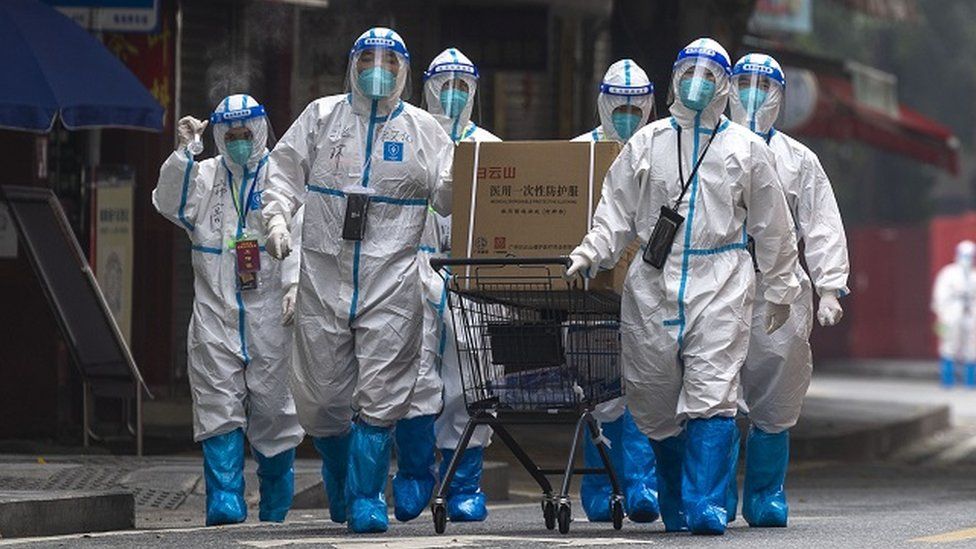
    People in Urumqi are seen confronting officials, breaking down a barrier and shouting “end the Covid lockdown”.

    Infections have hit new highs in China in spite of a tough zero-Covid policy.

    Authorities in Urumqi have now promised to phase out restrictions – though deny that these stopped people escaping Thursday’s fire.

    Restrictions have been in place in the city – capital of the western Xinjiang region – since early August.

    The BBC was told by one resident in the aftermath of the incident that people living in the fire-hit compound had been largely prevented from leaving their homes.

    That has been disputed by Chinese state media. However, Urumqi authorities did issue an unusual apology late on Friday – vowing to punish anyone who had deserted their duty.

    Footage shared on Friday night showed residents, many of them in face masks, gathering after dark on the city streets.

    They were seen chanting, pumping their firsts and arguing with officials. The location was verified by the Reuters news agency.

    One demonstrator shouts through a megaphone, and in another clip, a crowd breaks through a barrier policed by city workers wearing protective gear.

    Live streams monitored by the BBC on Friday night also appeared to show protesters gathered on the steps of a city government building.

    China rocked by Covid lockdown protests after deadly fire
    Footage showed demonstrators marching through the streets, pumping their fists and chanting for an end to lockdowns

    The internet is heavily censored in China, and references to the Urumqi protests had largely been taken down by Saturday morning.

    Local media said Thursday’s deadly blaze at the Urumqi apartment block – which also injured nine people – appeared to have been caused by a fault with an electrical extension.

    Online posts have suggested that firefighting efforts were hindered by Covid restrictions.

    This has been denied by city officials, who sought to blame parked vehicles for stopping firefighters’ access to the burning building.

    In a press conference on Saturday morning, they announced a phased easing of lockdown conditions in parts of Urumqi deemed low-risk.

    They did not refer to the demonstrations, but said that Covid cases in the community had been largely cleared and that “order” would be restored to the lives of the city’s residents.

    Large-scale, disruptive protests are rare in China, although there has been mounting public dissent aimed at Beijing’s zero-Covid strategy.

    This is the last policy of its kind among the world’s major economies, and is partly due to the country’s relatively low vaccination levels and an effort to protect elderly people.

    Snap lockdowns have caused anger across the country – and Covid restrictions more broadly have trigged recent violent protests from Zhengzhou to Guangzhou.

    In spite of the stringent measures, China’s case numbers this week hit all-time records since the pandemic began.

    The Xinjiang region is home to many Uyghurs, against whom the Chinese government has been accused of committing numerous human rights abuses – something it denies.

    Source: BCC

  • Micro-credit sector ready to drive MSMEs growth amid economic challenges

    Micro, small, and medium-sized companies (MSMEs) have made a commitment to supporting their growth as they attempt to lead the nation’s post-COVID-19 economic recovery efforts.

    MSMEs are the backbone, basis, and real engine of growth for the economy, accounting for over 90% of all enterprises in the nation and collectively producing roughly 70% of GDP.

    Given the above, stakeholders and players in the micro-credit sector have resolved to open their doors for MSMEs to access financial support in the form of loans to aid in their upscaling and growth – in order to take full advantage of the prospects and opportunities offered by the African Continental Free Trade Agreement (ACFTA), which will play a key role in economic recovery efforts.

    The micro-credit sector’s gross loans and advances amounted to GH¢312million as at December 2021. This amount represented a growth of 15.13 percent compared to the 8.3 percent recorded in 2020. The higher growth in gross and net loans and advances reflects the higher credit demand by micro, small and medium enterprises.

    “We appreciate the fact that globally, and in our country, we are all facing serious economic challenges which have also impacted the micro-credit sector. It is not in doubt that small loans play a critical role in supporting MSMEs. We therefore call for greater support and engagement to drive the sector,” Chairman of the Micro-Credit Association Ghana (MCAG), Wilberforce Ofori, stated during the Association’s 13th Annual General Meeting.

    Acknowledging the negative impact of recent downgrades by rating agencies like Fitch and Moody’s on the ability of MSMEs to attract foreign investments, Mr. Ofori said the micro-credit sector is poised to lead the acceleration of inclusive and sustainable economic transformation with the MSMEs through accessible and cheaper loans.

    “Access to credit enables businesses to expand, create jobs and reduce inequality. Financial inclusion is the bridge between economic opportunity and social outcome,” he stated in his speech at the AGM, themed ‘Building Partnerships and Synergies to Strengthen the Micro-Credit Sector’.

    Meanwhile, the micro-credit sector posted massive gains in 2021 – with total assets increasing by 146.79 percent year-on-year to GH¢410million as at end of December 2021 compared to 36.3 percent growth in 2020.

    The increase in asset growth was attributed to the gradual rebound in economic activities after COVID-19, and the increase in number of members reporting.

    Again, shareholders’ funds continue to drive the funding of total assets with robust growth of 74.33 percent to GH¢304.8million as at December 2021, relative to the 74.14 percent growth recorded in 2020; with total borrowings reduced by 16 percent in December 2021 compared to 24 percent growth in the previous year, according to the report by MCAG.

    Giving highlights of the sector’s performance as captured by the report during the AGM, Mr. Ofori said the Association’s accumulated funds stand at GH¢1.9million with actual revenues being GH¢1.2million, compared to a total budget revenue of GH¢1.4million at the end of 2021. The key revenue items were subscriptions, licence & licence processing fees, membership registration fees and training fees.

    He said total expenditure amounted to GH¢780,340 as compared to a budgeted expenditure of GH¢1.24million, with the key expenditure items being on-site inspection and supervision expenses, personnel emoluments, governing council expenses, and general administrative expenses.

    Attributing the sector’s performance in the year under review to good corporate governance, Mr. Ofori said the Association’s corporate governance structure has seen a healthy improvement with its balance of skill and experience – which has been extremely beneficial to the sector, particularly at a time when the country is reeling from acute economic challenges.

    “This is buttressed by a comprehensive framework based on integrity, transparency and consensus building,” he stated, adding: “It is a reflection of the Association’s diverse competencies and expertise.”

  • Economic crunch: Russia-Ukraine blame ‘hogwash’ – Afriyie Ankrah

    Elvis Afriyie Ankrah, General Secretary aspirant of the opposition NDC, has described the constant blame of Ghana’s collapsing economy on the war between Russia and Ukraine as “hogwash”.

    According to him, Ghana’s economy started collapsing before the war in Russia-Ukraine started so it is not right for anybody to use that as an excuse to tell Ghanaians that things were going on well but the war brought about hardships.

    He said, Ghana’s economy should have turned around when it received money from World Bank and IMF during the pandemic but those handling the affairs decided to share the money among themselves.

    Afriyie Ankrah speaking on GhanaWeb’s Election Desk programme noted that, the over 23 billion that came into the country was used to buy the 2020 general elections to make sure that the NPP remains in power.

    “When we had the energy crisis, was it not due to exogenous factors? Is John Mahama the one to rain into the Akosombo dam?… Was there Russia-Ukraine when this government realised that the cedi was collapsing, set up an economic advisory something with 30 people including Franklin Cudjoe and co…?” he questioned.

    “So, the cedi started performing badly long before Russia-Ukraine. Now, look at the Auditor-General’s report, look at the infractions; at the time we were leaving office in 2016, the cumulative infractions for that year was about 957 million cedis – which for us was horrible – from that time [till now] what are the infractions according to Auditor-General’s report; was it Russia-Ukraine?

    “Was it Russia-Ukraine that caused us to have these infractions? Was it Russia-Ukraine that came and made Ken Ofori-Atta that any time we go for Eurobond he…benefits from those transactions such that he goes to the Euro market with that thinking because his company benefits?

    “This is complete hogwash. These Russia-Ukraine here and there is complete hogwash. Before Russia-Ukraine came, all the fundamentals started going down.” Elvis Afriyie Ankrah told Edward Smith Anamale.

    He continued: “Indeed, the World Bank and IMF warned us that the way we were going about collecting loans was unsustainable and we will get here. Was it Russia-Ukraine that caused us to go and borrow 13 billion cedis… in any case, Ghana benefited from COVID-19…cumulatively over 23 billion came into this economy that should have been a turnaround for this economy.

    “You know what they did, they chopped the money; they shared the money…the real root of the problem is that in 2020 these people poured the money and bought the election.”

    Elvis Afriyie Ankrah alleged that the Akufo-Addo-led government wanted to win the election at all cost, therefore, they had to be paying people so that they win the elections.

    “They paid people, they spent the money; that is the issue that we must face and confront and stop talking about Russia-Ukraine,” he said.


  • Collective bargaining agreements must respond to workers’ needs – ILO

    The ILO Country Office in Abuja’s Senior Technical Specialist for Employees Activity, Inviolata Chinyangarara, has urged Ghanaian trade unions to ensure that Collective Bargaining Agreements (CBAs) reflect and address the requirements of workers.

    She urged trade unions to take into account including gender equality, occupational safety and health provisions, and coverage for workers who engage in non-traditional forms of employment in CBAs. These provisions would help both younger and older workers in times of crisis.

    She claimed in a lecture on the subject of “Changes in Employment and their Implications for Collective Agreements” that the COVID-19 pandemic had a minimal effect on employment and incomes thanks in large part to collective agreements.

    She underscored the importance of CBAs and stated that the ratification of ILO Conventions 87 and 98 was to ensure that the instruments were domesticated into the national law.

    Ms Chinyangarara encouraged the trade unions to reinforce CBAs to leverage the membership of non-standard workers, which had been on the rise in recent years, with dire consequences on workers’ rights, security, and livelihoods.

    On issues of the climate crisis, she admonished the trade unions to consider the establishment of representative bodies with ecological competences in the CBAs to address the issues.

    She urged the trade unions to leverage and embrace technology through teleworking and integrated skills development in the CBAs, to respond to changes in the world of work.

    The Country Officer urged the leadership of the unions to review the CBAs on issues of gender to ensure that they were fit for purpose and addressed the needs of the workers since most of the agreements were obstinate.

    She said the ILO Occupational Safety and Health clauses in collective agreements touched on participation in COVID-19 workplace safety, organization, and administrative measures, protecting frontline workers and personal protective equipment.

    She said the ILO had made strides on its OSH measures during COVID-19, including the tailoring of public health measures at work places, paid sick leave, and healthcare benefits provided for in key services that enabled businesses to continue operating during the pandemic.

    Ms Chinyangarara commended Ghana for putting CBAs in place and said, “We want to see trade unions and employers upscale on social protection issues and as well attract new members.”

    Dr Prince Asafu-Adjaye, a researcher, TUC Ghana, analysed nine collective agreements by five affiliates of the Congress from the Maritime and Dockworkers Union, the Timber and Woodworkers’ Union, the General Agricultural Workers’ Union the Union of Industry, Commerce and Finance Workers, and the Public Services Workers’ Union.

    The findings of the analyses, he said, revealed that collective agreements were important in promoting decent work but limited in guaranteeing rights at work and extending social protection to workers in new forms of employment.

    Dr Asafu-Adjaye recommended that the trade unions incorporated provisions that regulated working time for remote work into collective time and have a clause that addressed OSH issues related to working from home.

  • Foxconn: iPhone maker apologises following massive protests at China plant

    A day after its iPhone factory in China was rocked by angry protests, Apple supplier Foxconn apologised for a “technical error” in its payment systems.

    Hundreds of workers were seen marching at the world’s largest iPhone factory in Zhengzhou, with complaints about Covid restrictions and claims of unpaid wages.

    Workers were beaten by police, according to those who were livestreaming the protests.

    According to one Foxconn employee, the situation has since been resolved.

    The factory was locked down last month due to rising Covid cases, prompting some workers to break out and go home. The company then hired new employees with the promise of large bonuses.

    But one worker said these contracts were changed so they “could not get the subsidy promised“, adding that they were quarantined without food.

    On Thursday, Foxconn released a statement saying a “technical error occurred during the onboarding process”, adding that the pay of new recruits was “the same as agreed [in the] official recruitment posters”.

    The firm said it was in constant communication with the affected employees about the the pay and bonuses and was doing its best “to actively solve the concerns and reasonable demands of employees”.

    A worker also told the BBC on Thursday that he had since received 8,000 yuan ($1,120; £926) and was set to receive another 2,000 yuan. He added that there were no more protesters and that he and his colleagues would return to the Foxconn factory.

    The Zhengzhou plant employs more than 200,000 people, making Apple devices including the iPhone 14 Pro and Pro Max.

    Separately on Thursday, authorities ordered the city to go into lockdown, saying people would not be able to leave the area unless they had a negative Covid test – affecting more than six million people in the city.

    It came as China recorded its highest number of daily Covid cases since the pandemic began, with the country seeing a wave of outbreaks with several major cities like Beijing and Guangzhou affected.

    The International Monetary Fund (IMF) has called on China to recalibrate its zero-Covid strategy as its economic growth shrinks.

    The world’s second largest economy has seen its gross domestic product (GDP) fall by 2.6% in the three months to the end of June from the previous quarter.

    “Although the zero-Covid strategy has become nimbler over time, the combination of more contagious Covid variants and persistent gaps in vaccinations have led to the need for more frequent lockdowns, weighing on consumption and private investment, including in housing,” the IMF said.

    The global financial organisation also called on Beijing to vaccinate more people and offer further relief to its crisis-hit property sector.

    However, some analysts believe the IMF’s guidance will not convince China to change its policies.

    “Given that China is unlikely to be going to the IMF for help, it doesn’t really matter whether they pay attention to this statement or not,” Simon Baptist, global chief economist of The Economist Intelligence Unit, told the BBC.

  • China Covid: Record number of cases as virus surges nationwide

    China has recorded its highest number of daily Covid cases since the pandemic began, despite stringent measures designed to eliminate the virus.

    There are outbreaks with several major cities including the capital Beijing and southern trade hub Guangzhou.

    On Wednesday, the country recorded 31,527 cases – higher than the about 28,000 peak recorded in April, when its largest city Shanghai was locked down.

    It comes as strict lockdowns continue to spark episodes of unrest.

    China’s zero-Covid policy has saved lives in the country of 1.4 billion people but also dealt a punishing blow to the economy and ordinary people’s lives.

    However the rising wave of cases also comes weeks after the country slightly relaxed some of its Covid restrictions.

    It cut quarantine for close contacts from seven days in a state facility to five days and three days at home, and stopped recording secondary contacts which allowed many more people to avoid having to quarantine.

    Officials have also sought to avoid enforcing blanket lockdowns of the kind endured by Shanghai earlier this year.

    But faced with a renewed surge in cases in Beijing, as well as the first deaths from the virus in months, officials have already implemented some restrictions in several districts, with shops, schools and restaurants closed.

    The central city of Zhengzhou is also to enforce an effective lockdown for 6 million residents from Friday, officials announced.

    It follows violent protests at a vast industrial complex belonging to iPhone manufacturer Foxconn. The firm has apologised for a “technical error” in its payment systems.

    Media caption, WATCH: Chinese protesters clash with riot police at giant iPhone factory

    Other stories of suffering and desperation have also been shared online where they’ve fuelled public resentment.

    China is the last major economy still pursuing a Covid eradication process with mass testing and lockdown rules.

    However virus cases are now being recorded in 31 provinces.

    President Xi Jinping has said strict curbs are needed to protect the country’s large elderly population. However vaccination levels are lower than other developed nations, and only half of people aged over 80 have their primary vaccinations.

    While China is seeing an increase in infections now, the rate is still far lower than many other advanced economies at their pandemic peak.

    China’s official death toll has remained low at just over 5,200 deaths since the pandemic began.

    That equates to three Covid deaths in every million in China, compared with 3,000 per million in the US and 2,400 per million in the UK.


    Source: BBC

  • SEND Ghana: Setting the standard for Ghana’s COVID-19 social accountability

    COVID-19 has left a generation scarred in its wake. From the lingering economic effects, such as the disruptions to supply chains across the world to the apprehension whenever an unmasked person sneezes, especially, in an enclosed space, the impact is undeniable.

    Ghana’s response to COVID-19 was heralded globally for being swift and comprehensive, and in many ways, it was.

    Restrictions on movement in the earliest days, which were characterized by gross uncertainty, the mandatory wearing of masks in public spaces and support for business were all enforced fairly well.

    These measures, in part, kept the total number of positive cases to approximately 171,000 – 0.54 percent of the population, using the 2021 Housing and Population Census – and a mortality rate of 0.85 percent (1,460). This compares favourably, for instance, with the 4.03 million cases recorded among South Africa’s 60 million, where, unfortunately, 102,000 persons died from the illness as of August 2022.

    Vaccines injection

    The most important component of the fight against the virus is undoubtedly the vaccines, which one study found that between December 2020, and December 2021, saved an additional 14.4 to 19.8 million deaths in 185 countries.

    Acutely aware that successful deployment could, among other things, improve the mental and emotional well-being of the citizenry, decrease morbidity and mortality, and minimize disruptions to social and economic functions, managers of the pandemic response developed a National Deployment and Vaccination Plan (NDVP).

    This was executed by applying the World Health Organization’s (WHO) Strategic Advisory Group of Experts on Immunization (SAGE’s) framework for the allocation and prioritization of vaccination.

    Under this framework, the government had to ensure the provision of cold chain equipment (CCEs) across health centres in the country. In addition, vaccination safety protocols, such as infection prevention and waste disposal were adhered to, even as vaccines were administered in phases; targeting the most vulnerable and the most exposed.

    On this front, Ghana was again at the fore of its peers, when in February 2021, it made history by becoming the recipient of the first batch of AstraZeneca/Oxford vaccines under the COVID-19 Vaccines Global Access (COVAX) facility.

    The initiative bore fruit as the nation has recorded a modest vaccination rate despite instances of hesitancy, mostly spurred by conspiracy theories. Official data indicates that some 14.9 million doses of the vaccines have been administered, meaning, 65 percent of eligible persons have had at least one shot, with 27.6 percent, being fully vaccinated.

    SEND Ghana leading social accountability

    Considering the far-reaching impact of COVID-19, and how indispensable vaccines are to curbing its spread, there is a need for objective, data-driven monitoring and accountability to ensure satisfactory delivery.  SEND Ghana has applied a social accountability framework to ensure this.

    With funding support from the Partnership for Transparency Fund (PTF), SEND Ghana through a survey “monitored the compliance for Ghana’s NDVP and citizens’ COVID-19 vaccination experience, with the view to promote equity, transparency and accountability of the COVID-19 NDVP and to inform future vaccination service delivery.” The study surveyed more than 1,000 citizens, health workers and teachers in 25 vaccination centres across eight districts in urban and peri-urban areas equally chosen from Accra and Kumasi, which were characterized by high incidents of COVID-19.

    This was done to ascertain the level of uptake, thoughts and experiences around vaccination on the part of the target group and assess the distribution of cold chain equipment (CCEs) and vaccine logistics, among similar themes. An apparent theme of the exercise was the desire of the majority of respondents (52 percent) to get vaccinated with the goal of protecting not only themselves but persons with whom they come on in regular, close contact.

    Logistics are required for the successful implementation of any mass inoculation drive and the survey discovered that the distribution of CCEs was “somewhat fair.” The available refrigerator models were considered “quite adequate” and their distribution across health centres in the districts “equitable.”

    Gaps with other models, cold boxes and vaccine carriers drew calls for “the Ministry of Health and the Ghana Health Service to adopt steps to increase the availability of vaccine logistics across districts within the country.” This comes to suggest that government needs to adopt necessary measures to ensure the supply of required capacity and the number of CCE and related accessories in districts with gaps.

    The health facilities, it noted, observed strict adherence to safety and hygiene protocols, a phenomenon largely attributed to the operators’ deeper understanding of the risks, coupled with, in some instances, first-hand experience of the horrors of being infected. Most vaccination facilities offered discrete waiting spaces for vaccine recipients to rest and be monitored for any immediate negative effects. Hand hygiene amenities like alcohol-based sanitizers were also readily available.

    Teachers and health professionals were given priority by the NDVP for the immunization exercise because of their susceptibility to contracting the virus. Despite this high vaccination rate, 1 in 10 medical professionals and 13.5 percent of teachers who had not received the immunizations stated concerns about side effects, a lack of knowledge about the safety and adverse effects of the vaccines, and doubts about their efficacy as justifications.

    On account of the above, SEND recommended that the Ghana Health Service organize NDVP refresher training for its employees. Inasmuch as monitoring results indicate compliance was generally good, such a move would improve the NDVP guideline compliance rate. Health Directorates are encouraged to sustain the vaccine promotion efforts/campaigns to contribute to the attainment of the country’s herd immunity target with an emphasis on assuaging concerns over possible side effects and safety, which featured prominently.

    Furthermore, building on the concern of respondents for the well-being of their close associates, it was recommended that the COVID-19 vaccination communication messages “should focus on the protection of family members and friends from the disease and possible deaths and less on mandates restricting access to services and employment reasons.” Ultimately, the GHS was urged to commend its staff for exhibiting top-rate professionalism during the vaccination exercise.

    Going forward

    Whilst it might seem that there is no imminent danger of a full-blown resurgence of the pandemic, there remains the possibility of mutation. Already, two subvariants of the omicron’s BA.5 strand – BQ.1 and BQ.1.1 – which emerged recently have both been described as  “dangerous” and  “qualities or characteristics that could evade some of the existing interventions,” according to a top US health official, as reported by its media.

    Furthermore, the adoption of these recommendations would prove useful in the event of the outbreak of other illnesses. The threat of Ebola, Lassa fever, Marburg, and other severe respiratory diseases hangs over local healthcare systems almost in perpetuity. With the possible socioeconomic disruptions that a resurgence of COVID-19 or a similar pandemic would pose, the guidance provided in SEND GHANA and PTF’s survey must be implemented as a matter of urgency.

  • FLASHBACK: Ghana spending 103% of tax revenue to pay for interest service – Adongo

    The member of parliament for Bolgatanga Central raised concern over the growing percentage of Ghana’s revenue that interest payments are consuming.

    “We have issues with the wage bill, which has moved up to the second-largest expense category.
    In reality, under this government interest payment, it has lost its top spot and has moved up to the top spot.

    And currently, we are using 103% of our tax revenue to cover interest payments alone.
    That simply implies that once you pay your interest expense, no matter how hard the people of Ghana work to provide you money, it still won’t be enough, therefore you’ll need to borrow, he said.

    Member of Parliament for Bolgatanga Central and the Deputy Ranking Member on Parliament’s Finance Committee, Isaac Adongo is worried that interest payments are now the most significant item on the country’s wage bill.

    He diagnoses the situation as part of the broader economic mismanagement by the Nana Addo Dankwa Akufo-Addo-led government

    According to him, interest payments leapfrogged wage bill expenditure because of the lack of fiscal and financial space as contained in the 2022 budget statement presented by Ken Ofori-Atta on November 17.

    “We have problems with the wage bill, which has now become the number two most significant item of expenditure. In fact, it has lost its place as the number one, under this government interest payment has become the number one.

    “And now we are spending 103% of our tax revenue just to pay for interest service. What that simply means is that once you pay for your interest cost, no matter how the people of Ghana break their backs to give you money, it just isn’t enough, you must go to borrow.

    “You notice that we run a primary balance deficit of about 8.3 billion Ghana cedis. It means that we still have to borrow for part of the interest cost. So that means that you don’t have fiscal space in the budget,” he submitted on Citi TV’s Point Blank show that aired on Monday, November 22, 2021.

    He stressed that the current economic mess is the reason why in the event of a headwind like COVID-19, the economy nearly crashed.

    “So when disaster struck, you economy is already gone and in that case, you cannot accommodate any additional expenditures and you can’t accommodate additional pressures,” he added.

    He added that the key to better managing the economy was to create fiscal buffers to deal with headwinds. In his view, when COVID came, the government ended up squandering all fiscal buffers.

    He noted further that the situation is no different in the area of financial buffers because the government has blown over a billion dollars in monies handed over to them by the erstwhile John Dramani Mahama administration.

    The last budget, the Finance Minister under the heading: “Resource Allocation for 2022” stated thus:

    Mr. Speaker, Total Expenditure (including clearance of Arrears) is projected at GH¢137,529 million (27.4% of GDP). The estimate for 2022 represents a growth of 23.2 percent above the projected outturn of GH¢111,645 million (25.3% of GDP) for 2021. The key drivers of expenditure growth include Capital Expenditure, funding of key Government flagship programmes including the GhanaCares “Obaatanpa” Programme, wage bill, and interest payment.

    “Mr. Speaker, Compensation of Employees is projected at GH¢35,841 million (7.1% of GDP) and constitute 26.1 percent of the Total Expenditure (including Arrears clearance).

    “Mr. Speaker, Use of Goods and Services is also projected at GH¢9,149 million (1.8% of GDP). This represents 6.7 percent of the projected Total Expenditure (including Arrears clearance).

    “Mr. Speaker, Interest Payment are projected at GH¢37,447 million (7.5% of GDP). Of this amount, Domestic Interest due will constitute about 77.3 percent and amount to GH¢28,943 million. To reduce the cost of borrowing, Government will continue to explore options of reprofiling domestic debt in 2022.”

  • China Covid: Protests erupt at Zhengzhou’s massive giant iPhone factory

    A footage widely circulating online, protests have erupted at the world’s largest iPhone factory in the Chinese city of Zhengzhou.

    Hundreds of workers are seen marching in videos, with some being confronted by people wearing hazmat suits and riot police.

    Workers were beaten by police, according to those who were livestreaming the protests. Clashes were also captured on video.

    Last month, Foxconn locked down the Covid cases, prompting some workers to flee and return home.

    The company then recruited new workers with the promise of generous bonuses. Foxconn has not yet commented on the latest disturbances.

    Footage shared on a livestreaming site showed workers shouting: “Defend our rights! Defend our rights!” Other workers were seen smashing surveillance cameras and windows with sticks.

    Several clips also showed workers complaining about food they had been given and saying they had not received bonuses as promised.

    “They changed the contract so that we could not get the subsidy as they had promised. They quarantine us but don’t provide food,” said one Foxconn worker during his live stream.

    “If they do not address our needs, we will keep fighting.”

    He also claimed to have seen a man “severely injured and [who] might die” after a beating from police.

    One employee who recently started working at the Zhengzhou plant also told the BBC workers were protesting because Foxconn had “changed the contract they promised”.

    He said some newly recruited workers also feared getting Covid from staff who had been there during the earlier outbreak.

    “Those workers who are protesting are wanting to get a subsidy and return home,” the staff member said.

    There was a heavy police deployment to the plant on Wednesday morning, he said.

    Other livestreamed videos also showed crowds of armed police at the site.

    Another newly recruited employee told the BBC he visited the protest scene on Wednesday where he saw “one man with blood over his head lying on the ground”.

    “I didn’t know the exact reason why people are protesting but they are mixing us new workers with old workers who were [Covid] positive,” he told the BBC.

    Foxconn, a Taiwanese firm, is Apple’s main subcontractor and its Zhengzhou plant assembles more iPhones than anywhere else in the world.

    In late October many workers fled the plant amid rising Covid cases and allegations of poor treatment of staff, their escape captured on social media as they rode lorries back to their hometowns elsewhere in the central Chinese province.

    Foxconn then attempted to convince workers to stay and to recruit new staff by offering higher salaries and bonuses.

    The firm has since enacted so-called closed loop operations at the plant – keeping it isolated from the wider city of Zhengzhou because of a Covid outbreak there.

    Earlier this month Apple said it expected lower shipments of iPhone 14 models because of the disruption to production in Zhengzhou.

  • I pay $500 million per-year to clear Mahama’s IPP debts – Ken Ofori-Atta

    Ken Ofori-Atta, the finance minister, has stated that he finds it “curious” that the minority caucus cited energy costs burdening Ghana’s coffers to support their claim that he has been careless in managing the economy. He claims that a significant portion of the debt burden is a result of unnecessary contracts signed by the Mahama administration with some independent power producers during the dumsor season.

    In his appearance before the ad hoc committee of parliament, Mr. Ofori-Atta asserted, “We laid out the 2022 budget to achieve fiscal consolidation anchored on debt sustainability.” The minority caucus had used seven allegations as the basis for seeking his removal from office through a censure motion.

    He added that, “It is important at this point, to also highlight that a key component of the national debt stock related to three exceptional expenditure items that are neither external nor a creation of this government”.

    He said: “Energy Sector Excess Capacity payments (GHC17 billion), which relate to a legacy of take or pay contracts that saddled the country’s economy with annual excess capacity charges of close to US$1 billion; direct COVID-19 expenditure amounted to GHC 12.0 billion, and the banking sector clean-up (GHC 25 billion)”.

    These three items alone, Mr Ofori-Atta noted contribute to about 23% of the country’s annual debt servicing cost.

    “These three items were not created through the recklessness of the New Patriotic Party”, he noted.

    According to him, the “long dumsor that Ghanaians endured under the NDC administration between 2012 and 2016 was more to do with the NDC government’s inability to pay for power”.

    “So, Co-Chairs, I find it curious that Hon. Ato Forson will choose to cite energy bills as an example of the recklessness that the Minority charges me with and seek my removal by censure, especially when we have had to pay around $500 million dollars a year in excess capacity charges, for power the previous administration negotiated that we do not need and we do not use”, he explained.

    “In actual fact, we have been able to renegotiate some of these power purchase agreements and the new agreements with the Priority IPPs, once finalised and executed will offer estimated nominal savings of more than USD 4 billion over the next 5 years”.


  • ‘Ebola is real’: Uganda to test vaccines and close schools early to contain the outbreak

    Ebola has taken almost everything and everyone dear to Joseph Singiringabo. The 78-year-old lost his wife, son, and newborn granddaughter to the disease in a matter of weeks.

    He is left to care for three grandchildren under the age of 13 after their mother fled the village to avoid the threat of Ebola. His livestock was stolen while he was incarcerated for the required 21 days, leaving him destitute and desperate.

    “I’m not sure where they got the virus from because I went and got checked and I left the hospital with no problems with these children of mine,” he said, sitting on a log outside his modest house in Madudu, Uganda’s central Mubende district.

    “The problem I am facing now is getting food. Secondly, I never went to school, but I want these grandchildren to continue and get educated.”

    A deadly outbreak

    Uganda is grappling with its deadliest Ebola outbreak in more than a decade, first detected in the Mubende district in late September.

    The deadly disease has ravaged families, leaving authorities scrambling to control its spread.

    The 2012 Ebola outbreak in the Kibaale district in the country’s western region, led to 17 deaths out of 24 confirmed cases but was declared over in less than 3 months.

    Officials have launched aggressive contact tracing to track down relatives and friends who handled the bodies of first victims or attended funerals.

    Some escaped from quarantine facilities, others traveled as far as the capital Kampala, and a few visited traditional healers and witchdoctors for treatment instead.

    “Some of the patients are still hiding and they don’t know that they have Ebola so they’re out there in the community,” public health physician Dr. Jackson Amone told CNN.

    An Ebola treatment unit in Mubende, Uganda.
    An Ebola treatment unit in Mubende, Uganda. Larry Madowo/CNN

    He has been involved in every Ebola outbreak in Uganda as well as in Sierra Leone in 2017. “We need to do case investigation, a lot of contact tracing, and community engagement so that those who present with Ebola symptoms are brought for testing before we release them.”

    Dr. Amone is leading the teams operating the Ebola Treatment Units in Mubende. The first was set up in a hurry on the edge of the Mubende Regional Referral Hospital.

    A larger center operated by the medical non-profit Médecins Sans Frontières (MSF) is expanding with new ICU beds on the other side of town.

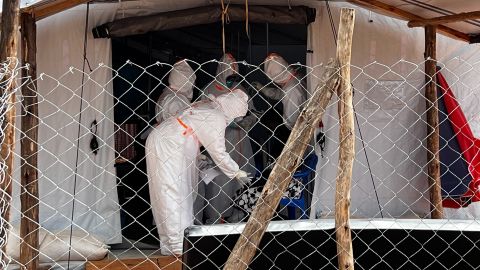
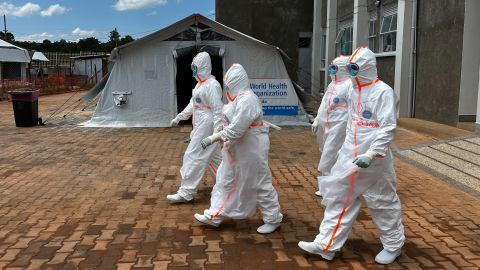
    Health workers don extensive Personal Protective Equipment (PPE) to enter the red zones where patients are receiving treatment.

    In one zone, a health worker cradles a three-month-old baby suspected of having been infected. Her mother and another sibling are undergoing treatment for Ebola and the disease has already claimed the life of her father.

    It’s a cruel welcome to the world for the infant who is wrapped in a blanket as steady rain falls on the makeshift treatment center.

    It’s a familiar story across this region as Ebola spreads despite the Ugandan government’s best efforts.

    “This Ebola is much easier to deal with than either corona(virus) or AIDS. The main problem here is behavior change,” President Yoweri Museveni told the nation in a Tuesday night address, stressing the need to follow the government’s procedures for those who come into contact with the disease.

    Vaccine trials offer hope

    Ebola can spread from person to person through direct contact with blood or other bodily fluids such as saliva, sweat, semen, or feces, or through contaminated objects like bedding or needles.

    “It doesn’t spread through the air like COVID-19 and does not hide for some months before it shows itself like AIDS,” Museveni said in his televised address.

    The country had so far recorded 55 deaths from Ebola, 141 confirmed cases and 73 people had recovered, he said.

    Health minister Dr. Jane Ruth Aceng Ocero told CNN she expects Uganda to have the outbreak under control by April if communities cooperate with the government.

    Health workers don extensive Personal Protective Equipment (PPE) to enter the red zones where patients are receiving treatment
    Health workers don extensive Personal Protective Equipment (PPE) to enter the red zones where patients are receiving treatment Larry Madowo/CNN

    There are currently two licensed Ebola vaccines, according to the World Health Organization, but they were developed to be safe and protective against the Zaire strain of the Ebola virus.

    Unlike the previous Zaire ebolavirus, the Sudan strain currently circulating in Uganda has no known effective treatment or approved vaccine. However, the country is about to roll out three trial vaccines that have been certified as safe by the World Health Organization (WHO) working group.

    The WHO said the first doses would be shipped to Uganda next week and the country expects to expand the vaccine trials after reviewing results from the initial phase.

    They are manufactured by the International Aids Vaccine Iniative (IAVI), the Sabin Vaccine Institute USA and a third developed by the University of Oxford and the Jenner Institute UK.

    “Our further testing is about efficacy, and how long it protects. We are looking at 3,000 contacts of confirmed cases so we’ll be doing ring vaccination,” Aceng Ocero said, referring to a vaccine process that administers vaccines only to people in close contact with infected patients.

    “If we have a confirmed case, then the contacts are the ones who are given the vaccine and they are followed up for 29 days because we want to see if they can quickly generate antibodies and can protect themselves from getting into full-blown disease,” Aceng Ocero added.

    Obstacles of tradition and religion

    Public health officials believe that cases are stabilizing due to increased vigilance, but tradition and religion are holding back progress. One community in Kassanda district, central Uganda, exhumed a body that had been buried safely by health workers to perform religious rites.

    It led to “an explosion of over 41 cases within 5 days and 10 deaths,” President Museveni said in his address. He has now barred traditional healers and witchdoctors from taking clients during the Ebola outbreak.

    Infections are also rising as it is hard to keep people apart in close-knit communal settings. Robert Twinamasiko, a 30-year-old driver is undergoing treatment after he helped an infected friend to an ambulance. The friend and one other person involved both died.

    A 30-year-old driver, Robert Twinamasiko receives treatment for Ebola after helping an infected friend to an ambulance.
    A 30-year-old driver, Robert Twinamasiko receives treatment for Ebola after helping an infected friend to an ambulance. Larry Madowo/CNN

    Twinamasiko has spent 17 days in hospital but says he has no regrets. Although he looked frail, he was making a recovery and told CNN he was looking forward to going home.

    “I’m just waiting for my blood work to be discharged but the world out there should know that Ebola is real,” he said from inside a red zone.

    Uganda is also trying to contain the spread of the disease by closing the school term early to avoid an outbreak of Ebola in schools which could be hard to manage. “If you have one learner in a class testing positive, the entire class has to undergo quarantine. But also, you will not be 100% sure that that learner did not have contact with other learners outside that class,” Minister Aceng Ocero explained.

    She said she was frustrated that Uganda wasn’t getting enough credit internationally for managing the Ebola crisis. “We have experience. This is our eighth Ebola outbreak. Every time we get an outbreak, our experience increases,” she said.

  • What you should know about RSV in babies

    RSV is a respiratory infection that is common and sometimes serious in babies. Some symptoms include difficulty breathing, lethargy, cough, and more. Recognizing the symptoms and when to get help can keep your baby safe.

    Respiratory syncytial virus (RSV) is a serious respiratory infection that can affect people of all ages.

    But RSV is most serious when it occurs in babies. That’s because babies’ airways aren’t as well-developed, so they cannot cough up mucus like older children or adults. Also, their airways are smaller, so they can experience airway blockage easily, causing trouble breathing.

    In many people, RSV causes cold symptoms, often with a cough. In babies, RSV can cause a more serious illness called bronchiolitis. Babies with bronchiolitis have wheezing along with their cough.

    RSV can lead to other severe infections, including pneumonia. In some cases, babies may need to receive treatment at a hospital.

    RSV is a virus, so there are currently no medications that can cure it to shorten the course of the illness. Instead, doctors will often recommend treatments or remedies to help manage symptoms until the infection passes.

    People can often transmit RSV from November to April, when cooler temperatures bring people indoors and when they’re more likely to interact with others. People can also transmit RSV earlier in the year. For example, in 2022, the RSV season started earlier, with a high number of cases in October.

    Keep reading to learn more about this virus, including symptoms to watch out for and when to get medical help.

    In older children, RSV can cause symptoms similar to that of a cold. But in babies, the virus causes more severe symptoms.

    RSV tends to follow a timeline of symptoms. Symptoms often appear 4 to 6 daysTrusted Source after exposure to the virus. However, a baby may start experiencing symptoms earlier or later.

    Symptoms a baby may have with RSV include:

    • faster than usual breathing
    • difficulty breathing and feeding
    • cough
    • fever
    • irritability
    • lethargy or behaving sluggishly
    • runny nose
    • sneezes
    • labored breathing using chest muscles
    • wheezing

    Some babies are more likely to experience RSV symptoms, includingTrusted Source those born prematurely or babies with heart problems or a history of wheezing or breathing issues.

    RSV vs. COVID-19

    RSV and COVID-19 are both respiratory infections and share many similar symptoms. Both conditions can cause fever, cough, runny nose, and sneezing. Upset stomach, vomiting, or diarrhea may also occur in babies with COVID-19.

    If your child has any of the above symptoms, their pediatrician may recommend testing them for both RSV and COVID-19, depending on cases in your area and their exposure risk to either of these viruses.

    RSV cases can range from mild cold symptoms to those of severe bronchiolitis. Even if symptoms are mild, it’s important to call your pediatrician if you suspect your baby has RSV. Always get emergency medical care if your baby appears to have trouble breathing.

    Emergency symptoms to watch out for include:

    • dehydration, including a sunken fontanel (soft spot), dry diaper, or no tear production when they cry
    • difficulty breathing, which can include rib lines showing through the skin (retraction) as they breathe
    • blue fingernails or mouth, which is cyanosis, an indication that they are not getting enough oxygen and are in severe distress
    • fever greater than 100°F (38°C), rectally obtained, in babies younger than 3 months
    • fever greater than 104°F (39°C) in children of any age
    • thick nasal discharge that makes it hard for the child to breathe

    In the most severe cases, RSV may require the help of a breathing machine known as a mechanical ventilator. This machine can help to inflate your baby’s lungs until the virus goes away.

    Doctors used to routinely treat many cases of RSV with bronchodilators. Some doctors still use bronchodilators for RSV treatment, but experts no longer recommend this for the most part.

    Doctors prescribe bronchodilators for people with asthma or COPD to help open up the airways and treat wheezing, but they don’t help the wheezing that comes with RSV bronchiolitis.

    If your baby has dehydration, their doctor may also provide intravenous fluid.

    Antibiotics won’t help your baby’s RSV because antibiotics treat bacterial infections. RSV is a viral infection.

    If your doctor gives you the OK to treat RSV at home, you’ll likely need a few tools. These will keep your baby’s secretions (mucus) as thin as possible so they don’t affect their breathing.

    A bulb syringe

    You can use a bulb syringe to clear thick secretions from your baby’s nose.

    To use the bulb syringe:

    1. Compress the bulb until the air is out.
    2. Place the tip of the bulb in your baby’s nose and release the bulb. This will pull mucus into the bulb.
    3. When you remove the bulb, squeeze it onto a cloth or paper towel to clear the bulb.
    4. After clearing your baby’s nose, wash the bulb with warm soapy water, rinse it, and allow it to dry well between uses to prevent mold.

    It is especially important to use the bulb syringe before your baby’s feeding. A clear nose makes it easier for your baby to eat. Combine the tool use with over-the-counter saline drops, which you can place into each nostril and suction out afterward.

    Cool mist humidifier

    A humidifier can introduce moisture into the air, helping thin your baby’s secretions. Make sure to clean and care for the humidifier properly.

    Hot water or steam humidifiers could be harmful to your baby because they can cause scalding.

    You can talk with your child’s doctor about treating any fevers with acetaminophen. Your doctor will suggest a dose based on your baby’s weight. Do not give your baby aspirin, as this can harm their health.

    Providing fluids, such as breast milk or formula, can prevent dehydration in your baby. You can also ask your doctor about potentially giving your baby an electrolyte-replacing solution, like Pedialyte.

    Keep your baby in an upright position, which makes it easier for them to breathe. You can keep your baby more upright in a stable and secure car seat or baby seat while they are awake during the day.

    Except while in a car, never put a baby to sleep in a car seat due to the risk of suffocation. If using a car seat to prop your baby up while they are awake, place the car seat on a stable, secure, low surface with direct supervision at all times.

    Limiting your baby’s exposure to cigarette smoke is also vital to keeping them healthy. Cigarette smoke can make your baby’s symptoms worse.

    When an otherwise healthy baby has RSV, they can pass on the infection to someone for 3 to 8 daysTrusted Source. Try to keep the child with the infection separate from other siblings or children to prevent transmission.

    RSV is transmissible through direct and indirect contact with a person who has an active infection. Transmission can involve touching a person’s hand after they sneeze or cough, and then rubbing your eyes or nose.

    Frequent handwashing with warm, soapy water for at least 20 seconds per time is the best way to reduce the risk of RSV. It’s also important to help your baby cover sneezes and coughs.

    The virus can also live on hard surfaces, such as a crib or toys, for several hours. If your baby has RSV, regularly clean toys and surfaces where they play and eat to help reduce the spread of germs.

    Babies can make a full recovery from RSV in 1 to 2 weeksTrusted Source. Most babies can recover from RSV without receiving treatment in a hospital setting. However, if you think your baby has dehydration or is in moderate to severe distress, get emergency medical care.


    Source: Healthline

  • GBA pushes for virtual court system

    The President of the Ghana Bar Association (GBA) says the country can adopt the use of electronic systems in court proceedings to help ensure speedy justice delivery.

    Lawyer Yaw Acheampong Boafo, however, says this good option can be realized if the country’s judiciary invests in resources and laws to aid in its implementation.

    The GBA President was speaking at 2022 Annual Chief Justice’s Forum currently ongoing in Kumasi.

    The Judicial Service of Ghana instituted the Annual Chief Justice’s Forum as part of measures to enhance its public image, trust and confidence through engagement with stakeholders on issues of access to justice, transparency and accountability.

    The annual event also brings together key stakeholders to deliberate on pertinent issues that affect the administration of justice.

    It also serves as a platform to receive feedback on justice delivery.

    The GBA President pointed out that the traditional modes of justice administration and judicial processes – with their well-known challenges – sometimes breed frustration, result in delays and blockage of cases.

    “Thus, the time is now for a transition face-to-face court proceedings to digital modes of delivering justice by the courts embracing newer and modern technologies that support the various court processes and proceedings. The virtual court hearings during the legal vacation was a welcome innovation.

    “The exigencies and challenges of the time brought about by the pandemic should serve as a catalyst for reform and innovation,” he stated.

    “It is my conviction that it is possible to implement technological or digitization tools that host and drive almost the entire legal processes from the time of filing to serve through discovery, case management, trial and even to delivery of judgments in ways that ensure accessible justice,” he said.

    Lawyer Acheampong Boafo also proposed the publication of key court judgements of the superior court on social media handles to inform the public of its decisions.

    The Chief Justice, Kwasi Anin-Yeboah, assured the public that the judiciary will continue to adopt technology in order to expand access to justice delivery.

    He pointed out that the Covid-19 pandemic showed the importance of technology, with the judiciary adopting many digital tools in order to serve public.

    “Technology has afforded us an opportunity to cut cost, be more efficient, and avoid unnecessary delays in administering justice. For the first time in the history of the judiciary, this year, vacation courts in Accra, held virtual sittings. This meant that lawyers who were even abroad on vacation could participate remotely, of course, they had to be properly attired with good internet connectivity,” he added.

    The Mamponghene, Dasebre Osei Bonsu, who represented Asantehene, pointed out that Covid-19 disrupted nearly every aspect of our individual and collective lives.

    “Improving access to justice in a pandemic through technology challenges all of us to reflect on how we can use technology to ensure that justice delivery continues unabated, despite what we have been asked to think of as the new normal.”

  • COVID-19 Vaccination: The SEND Ghana report that diagnoses need to protect friends and families

    The onset of the novel Coronavirus, also known as COVID-19, was perhaps, the one time in the world’s recent history where everything came to a standstill over something that not even the best of the earth’s scientists could immediately fully diagnose.

    Economies were shattered and the wheels on which this world run grinded to halts in ways that were unprecedented and totally unplanned for.

    But this was a challenge the world immediately got to work on, and when the dusts settled, and some headway had been made, the right processes begun into the production of vaccines that would reduce the threats of the virus, which until then, had caused many deaths across many nations of the world.

    Soon, many countries had acquired the vaccines and with time, the majority of the world’s population had taken their shots; whether fully or partially. And then again, the wheels of the world’s economies begun to run once more, albeit a little slower than before the pandemic hit.

    Vaccinating the billions of the world’s populations had to be done systematically, requiring the use of the right professionals for the job: a simple but technical job it was, but how well or not was it executed by the people who became known as the frontliners?

    The case of Ghana and how its frontliners, including nurses and teachers, have and continue to play their roles in the execution of this global task is one that SEND GHANA, with funding from the Partnership for Transparency Fund (PTF), embarked on a comprehensive monitoring exercise to determine how well or not compliance to Ghana’s National Deployment and Vaccination Plan (NDVP) was like.

    The monitoring exercise also focused on the experiences of citizens who participated in the vaccination for the COVID-19.

    SEND GHANA, a reputable and credible national Non-Governmental Organisation specialised in policy research and advocacy on pro-poor policy and development program monitoring in Ghana, gathered some very interesting findings, a number of which have received the blessings of the likes of the World Health Organisation (WHO) and local health authorities.

    So, what is the SEND GHANA monitoring report on compliance and citizens’ experiences all about? What are the revealing findings too?

    With an overall aim of assessing compliance of Ghana’s National Deployment and Vaccination Plan (NDVP) and the equitable uptake of the COVID-19 vaccines, the monitoring exercise combined district monitoring and data collection approach as methodologies.

    The survey was also carried out in two regions of the country: the Greater Accra and Ashanti Regions, across 37 vaccine centres of 8 districts (4 for each region).

    In the Greater Accra Region, the districts surveyed were: Accra Metropolitan Assembly (Mamprobi Polyclinic, Kaneshie, and Obeweku Health Centre), Ashaiman (Community 22 Polyclinic, Lebanon Zone 3 Polyclinic, and Ashaiman Polyclinic), Tema (TMA Community One Polyclinic, Manhean Polyclinic, Tema General Hospital, and Tema Health Directorate), and La-Nkwantanang, Madina (Pentecost Hospital, Madina Polyclinic – Kekele, and Danfa Health Center).

    In total, there were 720 citizens, with 677 of them representing 94% of the overall numbers were interviewed. By sex, the proportion of males interviewed was slightly higher (51%) than females (49%) in both regions. In the Ashanti region, interviewees encompassed 53% males and 47% females, while the Greater Accra region had less males (49%) compared with females (51%). It is interesting to note that the proportion of male and females interviewed in the Greater Accra region, mirrored the 2021 population and housing census.

    A total of 653 responses were received from both teachers and health staff. Out of the 653 respondents, 443 (67.8%) were teachers while 210 (32.2%) comprised health care workers.

    Regionally, 361 responses (55%) were from the Ashanti region with the remaining 292 (45%) from the Greater Accra region.

    Highlights

    According to the report, some of the highlights of it put together were:

    – Vaccination posts at the health facilities monitored in the Greater Accra and Ashanti regions recorded an average vaccination of 10 persons daily.

    – Vaccination coverage among marginalized or vulnerable groups looks encouraging.

    – Friends and Family were the main transmitters of information about the vaccination exercise.

    – Clients were satisfied with time spent at vaccination centers and the attitude of health staff.

    – Majority of surveyed health workers (90%) and teachers (86%) have received at least a dose of the COVID-19 vaccines.

    – The fear of exposing family and friends to the COVID 19 disease enhanced the uptake of vaccines among teachers, healthcare workers and the general populace.

    – Aside protection for family and friends, uptake of the vaccines among health staff and teachers were influenced by four other factors as follows; prioritization; adequate information about safety of the vaccines; ease of access to vaccination centres and perceived effectiveness of the vaccines against COVID-19.

    Citizens’ experiences, opinions, and motivations for vaccination

    But the survey focused on the responses of some people and what they thought of the exercise.

    What and how they thought about the monitoring exercise were summarized as follows:

    “The overwhelming majority of the citizens interviewed indicated they had taken their vaccine at the center. Only 10 people (representing 1.5%) of the 676 interviewees who interacted with the vaccination process within the three days of monitoring at each center did not receive the jab. The two regions (Greater Accra and Ashanti) contributed an equal proportion to this finding.

    “The dominant reason given by the respondents in this group (those who did not receive the jab on the day of the monitoring) relates to claims that the number of clients/persons required to use the requested vaccine vial was not adequate, the unavailability of cards at the time of vaccination and inability to provide their cards for entries to be made at the point where the vaccines were administered.”

    Recommendations

    The Ghana Health Service should convene refresher sessions for its staff on the NDVP.

    Although the monitoring findings show compliance was generally good, this is necessary to enhance high levels of compliance with guidelines of the NDVP.

    Health Directorates are encouraged to sustain the vaccine promotion efforts/campaigns to contribute to the attainment of the country’s herd immunity target. This is also necessary if set targets for the various districts are to be met. As of July 2022, for instance, the Accra metropolis had fully vaccinated 46.2% of its target population. Thus, vaccination promotion and/or information and education campaigns will contribute in no small way to encourage more people to vaccinate.

    Health promotion efforts for the COVID-19 vaccination exercise and subsequent vaccination exercises should adequately address possible side effects and safety as these are key for uptake.

    COVID-19 vaccination communication messages should focus on the protection of family members and friends from the disease and possible deaths and less on mandates restricting access to services and employment reasons.

    The Ghana Health Service should commend its staff for exhibiting good attitude and professionalism during the vaccination exercise.

    The Ministry of Health and the Ghana Health Service should adopt steps to increase the availability of vaccine logistics across districts within the country.

    Source: Ghanaweb.com 

  • China zero Covid: Violent protests in Guangzhou put curbs under strain

    Crowds of residents in Guangzhou, southern China’s industrial metropolis, escaped a mandatory lockdown and clashed with police, as rage over strict coronavirus controls erupted.

    Some are seen overturning a police vehicle and tearing down Covid control barriers in dramatic footage. Riot squads have been dispatched to the area.

    It comes on the heels of Guangzhou’s worst Covid outbreak since the pandemic began.

    In the face of dismal economic data, China’s zero-covid policy is under severe strain.

    Tensions had been building in the city’s Haizhu District, which is under stay-at-home orders.

    The area is home to many poorer itinerant labourers. They have complained of not being paid if they are unable to turn up for work, and of food shortages and skyrocketing prices while living under Covid control measures.

    For several nights, they’d been tussling with the white-clad Covid prevention enforcement officials, and then overnight on Monday the anger suddenly exploded onto the streets of Guangzhou with a mass act of defiance.

    Again, unsubstantiated rumours have played a role. Stories have spread that the testing companies are faking PCR results to artificially boost the number of infections in order to make more money.

    In the north of the country, the coronavirus rumour mill is also building pressure.

    Officials in Hebei Province announced that the city of Shijiazhuang would halt mass testing. But this led to speculation that the population was going to be used, guinea-pig-style, to monitor what would happen if the virus was allowed to spread unchecked.

    Discussion of this has appeared on social media platforms under the hashtag #ShijiazhuangCovidprevention.

    Workers in PPE walk by a residential block under COVID-19 lockdown in Guangzhou in south China's Guangdong province on Thursday, November 10, 2022.
    IMAGE SOURCE,GETTY IMAGES Image caption, Guangzhou has been under lockdown after a recent spurt in Covid cases

    Many panicking locals have stockpiled Chinese medicines which are said to help with Covid infection. Supplies in the city are said to have virtually run out for the moment.

    A similar viral rumour led to the mass breakout of workers at the Foxconn complex in the central city of Zhengzhou two weeks ago, which has hit the global supply of Apple iPhones.

    Local governments across China are struggling to maintain a zero-Covid approach without trashing their economies. The latest official factory output and retails sales figures show the crushing impact of the pandemic and the government’s policy response to it.

    There are no provinces at all which have reported zero cases in recent days.

    Around 20 million people in the heart of western China’s mega city of Chongqing have been placed under a type of lockdown being referred to ironically by people as “voluntary static management”. This is because, though there has been no official announcement, they’ve been told to remain indoors by community officials.

    Online there have been jokes that the Chongqing government didn’t want to announce a mass lockdown on the same day that measures easing zero-Covid rules across China were revealed.

    Because Covid amelioration still dominates life here, even a small shift in the way it is being administered can cause consternation and panic.

    At the beginning of this week, officials in Beijing’s Chaoyang district decided to close many of the street-side testing booths and move them into housing compounds. There was a sudden cut in the number of PCR stations. The problem is that many office buildings require a daily result, or you can’t enter.

    So at the booths that were open, the queues were enormous.

    From the workers stuck in Tibet who protested to leave Lhasa, to the lockdown of the entire region of Xinjiang, zero-Covid is not going smoothly.

    A series of changes announced last week slightly toning down the rules were seen as a sign that more easing was possible down the road. But even if the government is considering this, it may not be soon enough.

  • TDC to pay GHC2.4 million dividend to government

    The TDC Development Company is to pay a total of GHC2.4 million as dividends for 2021 to the government, its shareholder.

    The TDC has already paid an interim dividend of GHC1.2 million.

    Mr Kofi Brako, Board Chairman of the company, announced the dividend at the second Annual General Meeting (AGM) of the TDC, held in Tema.

    “Matching the company’s desire to complete its projects on time with the shareholder’s expectations, the Board has resolved to pay an additional GHC1.2 million in dividends to bring the total dividend payment for the year to GHsC.4 million,” Mr Brako said.

    Touching on TDC’s financial performance for 2021, the TDC Board Chairman said the company generated an income of GHs116.59 million in 2021, representing a growth of 20 per cent over GHs97.1 million in 2020.

    He said despite the COVID-19 pandemic, which disrupted its operations, the Company was able to grow its profit before tax by 10.9 per cent from GHs37.58 million in 2020 to GHs41.68 million in 2021.

    The Board Chairman said TDC assets grew by 22.3 per cent from GHs 380.72 million in 2020 to GHs465.50 million in 2021, adding that shareholder’s fund also increased by 19.84 per cent from GHs270.96 million in 2020 to GHs325.11 million in 2021.

    Mr Brako said TDC currently had several ongoing projects being funded from its internally generated funds, adding that in that regard it was important to plough back most of its profit to fund and complete them.

    He said the projects were expected to build strong capital adequacy for the company and increase the shareholder’s worth.

    Mr Joseph Cudjoe, Minister of Public Enterprises, commended the TDC for its outstanding performance during the year under review and for winning the overall best-performing state-owned enterprise, as well as the overall best-performing specified entity for the year 2020 in the public enterprises league table.

    Mr Cudjoe said TDC was working in line with the government’s vision of seeing State Owned Enterprises operating profitably and professionally to support the economy while obeying all laws regarding their operations.

    Mr Abdulai Abanga, the Deputy Minister of Works and Housing, on his part, charged the TDC to consider expanding its operations outside the Tema acquisition areas to other parts of the country which need affordable houses.

    Ms Alice Abena Ofori-Atta, the TDC Managing Director, in a report said long-term construction finance in Ghana remained one of the major constraints to real estate development for property developers and prospective homeowners.

    Ms. Ofori-Atta added, however, that funding from private entities, Real Estate Investment Trusts, banks, and other financial institutions, among others, continued to lessen the funding gap though in a modest way.

    She expressed optimism that as the real estate sector was expected to bounce back after the COVID-19 pandemic, TDC would continue to explore and take advantage of any opportunity that would emerge.

    She said to enhance their performance and effectiveness amidst the new dynamics of competition within the sector, TDC was using some strategic initiatives and policy interventions such as the electronic rent collection system, the GCB Bank collection project, enterprise risk management, balanced scorecard, and staff training and development.

    Some of the resolutions taken at the AGM were the receiving and adopting of the report of the Directors, Auditors, and Financial Statements for the year ending December 31, 2021.

    Declaration of dividends for the year under review, as well as authorising the Directors to determine the remuneration of the Auditors, and to transfer GHC100 million from Retained Earnings Account to Stated Capital.

  • Employ innovative strategies to control economic hardships – AGI urges businesses

    The Association of Ghana Industries (AGI) has advised industry participants to embrace creative solutions to overcome the difficulties facing their respective sectors.

    According to citibbusinessnews.com, their call comes as businesses are currently battling the nation’s economic problems.

    Greater Accra Regional Chairman of AGI, Dr. Tsonam Cleanse Akpeloo, stated during the Accra Regional Annual General Meeting of the Association that the Association can survive the current crisis provided members adhere to strategic concepts.

    “Since the beginning of the year, industries have gone through a lot of challenges as a result of the global crisis specif­ically the ravaging effect of the COVID-19 pandemic and the Russian-Ukraine war. This situa­tion has cascaded into economic and financial limitations with its attendant impact on businesses and trade,” he recounted.

    He also called on government to speed up interventions to sup­port industry players who have been badly hit by the crisis.

    “We are looking forward to government to take immediate steps to support industries to overcome some of these chal­lenges. We have consistently chosen the themes that reflect finances sources available for in­dustries post COVID-19 and we have not deviated this time.”

    “We will continue to push for alternative funding sources for industries especially for our SMEs. That notwithstanding we think if there is any dispen­sation that we need funding, it is now.”

    “This is the opportune time to help members find the ap­propriate funding for their busi­nesses. We are all concerned that our industries navigate through the economic crisis especially in the midst of the high cost of the dollar against the cedi and the multiplicity of taxes. We therefore are calling on all stakeholders present to come out with innovative ways to receive collateral free funds,” he added.

  • Getting COVID-19 multiple times is risky for your health

    At this point in the pandemic, it’s easy to think of COVID-19 as something closer to the flu than a dangerous disease. But even though the latest Omicron variants do cause less severe symptoms than the original strain of SARS-CoV-2, COVID-19 is still far from a typical disease—especially if you get it more than once.

    In a study published in Nature Medicine, researchers report that COVID-19 reinfections could be taking a toll on some important organ systems. That risk applies to both short-term and long-term health effects, says Dr. Ziyad Al-Aly, clinical epidemiologist at Washington University School of Medicine in St. Louis, and the study’s senior author.

    He and his team analyzed 5.3 million health records from the U.S. Department of Veterans Affairs involving people who did not test positive for SARS-CoV-2 from March 2020 to April 2022, and compared their health status to 443,000 people who tested positive once during that period—then to another 41,000 who tested positive two or more times. (Most in the latter group had two or three infections, although a small proportion had four.) They studied adverse outcomes, like hospitalizations and deaths, in the health records for these groups for six months.

    People who had more than one COVID-19 infection were three times more likely to be hospitalized and twice as likely to die than those who only had one infection. Those with multiple infections were also more vulnerable to other dangerous conditions; they were 3.5 times more likely to develop lung problems, 3 times more likely to have heart conditions, and 1.6 times more likely to have brain changes requiring care than people who had only had COVID-19 once.

    The findings support other studies that are also documenting the effects that COVID-19 may have on the body. Most recently, in several presentations at the Society for Neuroscience’s annual meeting in November, scientists reported that the inflammation caused by COVID-19 can have lasting effects on the brain, including in children; 14 kids ages 10-13 who had recovered from COVID-19 infections showed changes in the sensorimotor regions of the brain on MRI up to 15 months after their infection, compared to 35 children who hadn’t been infected. In another study presented at the same conference, adults who had even mild COVID-19 symptoms also demonstrated brain changes four months after infection.


    Studies are showing that getting infected more than once—an increasingly common scenario as the pandemic drags on and variants become more transmissible—may have compounding effects. “We wanted to know, if you get multiple infections, do they matter? Are these infections consequential, or has the immune system adapted because it has seen the infection before and developed a way of dealing with it?” says Al-Aly. “We found that if people are infected a second or third time, those infections certainly contribute to additional health risk, even if they are vaccinated.”

    With each infection, the body’s resilience drains a bit more, until, with enough assaults, it reaches the danger zone. “Cumulatively, each infection could get you closer and closer to the edge,” says Al-Aly. “That’s why avoiding a second or third infection is important to try to continue preserving health.”

    Repeat infections may also raise the risk of Long COVID. It’s not clear yet what puts people at risk of developing symptoms that can persist long after the active infection is gone, and any encounter with SARS-CoV-2 could trigger whatever process is driving Long COVID. Repeated infections only increase the odds. “People will say, ‘I got infected with COVID last Christmas, and I didn’t get Long COVID.’ That’s wonderful, and that person is very fortunate,” says Al-Aly. “But just because you dodged the Long COVID bullet one time doesn’t mean you will dodge the bullet every time. Every time you get infected, you are trying your luck again.”

    A deluge of COVID-19 reinfections could pose a problem for health care providers this winter, when rates of other respiratory disease, such as influenza and RSV, could also climb. Health systems across the country are already reporting high numbers of urgent care and emergency department visits due to respiratory illnesses, and Al-Aly’s findings suggest that people experiencing multiple COVID-19 infections may add to that burden.

    The best way to avoid reinfection is to take familiar precautions: get vaccinated and boosted, wear masks when in public indoor settings, and avoid gatherings if you are feeling sick. “We’re not calling for lockdowns or draconian measures,” says Al-Aly. “We want people to be informed of the risk and take precautions to reduce their individual risk of infection. The health consequences of second and third infections are not zero, as some people think it is.”


    Source: Yahoo

  • AGI urges businesses to employ innovative strategies to control economic hardships

    The Association of Ghana Industries (AGI) is asking industry participants to embrace creative solutions to overcome the difficulties facing their sectors.

    According to citibbusinessnews.com, their call comes as businesses are currently battling the nation’s economic problems.

    Greater Accra Regional Chairman of AGI, Dr. Tsonam Cleanse Akpeloo, stated during the Accra Regional Annual General Meeting of the Association that the Association can survive the current crisis provided members adhere to strategic concepts.

    “Since the beginning of the year, industries have gone through a lot of challenges as a result of the global crisis specif­ically the ravaging effect of the COVID-19 pandemic and the Russian-Ukraine war. This situa­tion has cascaded into economic and financial limitations with its attendant impact on businesses and trade,” he recounted.

    He also called on government to speed up interventions to sup­port industry players who have been badly hit by the crisis.

    “We are looking forward to government to take immediate steps to support industries to overcome some of these chal­lenges. We have consistently chosen the themes that reflect finances sources available for in­dustries post COVID-19 and we have not deviated this time.”

    “We will continue to push for alternative funding sources for industries especially for our SMEs. That notwithstanding we think if there is any dispen­sation that we need funding, it is now.”

    “This is the opportune time to help members find the ap­propriate funding for their busi­nesses. We are all concerned that our industries navigate through the economic crisis especially in the midst of the high cost of the dollar against the cedi and the multiplicity of taxes. We therefore are calling on all stakeholders present to come out with innovative ways to receive collateral free funds,” he added.

  • TDC to pay GHC2.4 million dividend to government

    The TDC Development Company is to pay a total of GHC2.4 million as dividends for 2021 to the government, its shareholder.

    The TDC has already paid an interim dividend of GHC1.2 million.

    Mr Kofi Brako, Board Chairman of the company, announced the dividend at the second Annual General Meeting (AGM) of the TDC, held in Tema.

    “Matching the company’s desire to complete its projects on time with the shareholder’s expectations, the Board has resolved to pay an additional GHC1.2 million in dividends to bring the total dividend payment for the year to GHsC.4 million,” Mr Brako said.

    Touching on TDC’s financial performance for 2021, the TDC Board Chairman said the company generated an income of GHs116.59 million in 2021, representing a growth of 20 per cent over GHs97.1 million in 2020.

    He said despite the COVID-19 pandemic, which disrupted its operations, the Company was able to grow its profit before tax by 10.9 per cent from GHs37.58 million in 2020 to GHs41.68 million in 2021.

    The Board Chairman said TDC assets grew by 22.3 per cent from GHs 380.72 million in 2020 to GHs465.50 million in 2021, adding that shareholder’s fund also increased by 19.84 per cent from GHs270.96 million in 2020 to GHs325.11 million in 2021.

    Mr Brako said TDC currently had several ongoing projects being funded from its internally generated funds, adding that in that regard it was important to plough back most of its profit to fund and complete them.

    He said the projects were expected to build strong capital adequacy for the company and increase the shareholder’s worth.

    Mr Joseph Cudjoe, Minister of Public Enterprises, commended the TDC for its outstanding performance during the year under review and for winning the overall best-performing state-owned enterprise, as well as the overall best-performing specified entity for the year 2020 in the public enterprises league table.

    Mr Cudjoe said TDC was working in line with the government’s vision of seeing State Owned Enterprises operating profitably and professionally to support the economy while obeying all laws regarding their operations.

    Mr Abdulai Abanga, the Deputy Minister of Works and Housing, on his part, charged the TDC to consider expanding its operations outside the Tema acquisition areas to other parts of the country which need affordable houses.

    Ms Alice Abena Ofori-Atta, the TDC Managing Director, in a report said long-term construction finance in Ghana remained one of the major constraints to real estate development for property developers and prospective homeowners.

    Ms. Ofori-Atta added, however, that funding from private entities, Real Estate Investment Trusts, banks, and other financial institutions, among others, continued to lessen the funding gap though in a modest way.

    She expressed optimism that as the real estate sector was expected to bounce back after the COVID-19 pandemic, TDC would continue to explore and take advantage of any opportunity that would emerge.

    She said to enhance their performance and effectiveness amidst the new dynamics of competition within the sector, TDC was using some strategic initiatives and policy interventions such as the electronic rent collection system, the GCB Bank collection project, enterprise risk management, balanced scorecard, and staff training and development.

    Some of the resolutions taken at the AGM were the receiving and adopting of the report of the Directors, Auditors, and Financial Statements for the year ending December 31, 2021.

    Declaration of dividends for the year under review, as well as authorising the Directors to determine the remuneration of the Auditors, and to transfer GHC100 million from Retained Earnings Account to Stated Capital.

    Source: GNA 

  • Sydney: Cruise ship carrying 800 Covid cases lands

    A holiday cruise ship carrying approximately 800 people with Covid-19 stopped in Sydney, Australia.

    After sailing from New Zealand, the Majestic Princess cruise liner arrived at Circular Quay.

    When the ship docked, there were approximately 4,600 passengers and crew on board, which meant that approximately one in every five had Covid.

    The outbreak is similar to the early 2020 Ruby Princess cruise liner Covid incident, in which at least 900 individuals tested positive and 28 perished.

    Marguerite Fitzgerald, the president of the cruise operator Carnival Australia, said a large number of cases started to be detected about halfway through the 12-day voyage.

    All cases were either asymptomatic or mildly symptomatic, she said.

    Staff would be assisting all guests who have tested positive “with accessing private transport and accommodation to complete their isolation period”, she said. The ship will soon depart for Melbourne.

    Asked about comparisons between the Majestic Princess and the Ruby Princess – which also belongs to the same operator – Ms Fitzgerald said: “Since then, we as a community have learnt a lot, a lot more about Covid.”

    The outbreak comes as Covid cases rise across Australia.

    In New South Wales, 19,800 new cases were detected in the seven days to Friday.

  • Ghanaian artist predicts the future with his artwork

    Prior to thoutbreak of the COVID-19 pandemic, there had been some predictions of how the world would battle such a  pandemic in various  movies.  “Contagion” – a 2011 movie about a pandemic with similarities like the COVID-19 pandemic, and a 2007, mini series directed by Kinji Fukasakuare, are clear examples of such movies.

    Also, there have been theories predicting that the world in the distant future would be an AI community. Movies like “Passengers,” a sci-fi romance film released in 2016; I, Robot, an American sci-fi action film directed by Alex Proyas and released in 2004; WALL-E, a 2008 American computer-animated science fiction film, produced by Pixar Animation Studios for Walt Disney Pictures and co-written and directed by Andrew Stanton, are all predictions of the future ahead.

    Well, a Ghanaian artist through his artwork is also presenting his own version of how the future of the world would be like.

    Will his drawing be accurate or not? Let’s explore his artwork.

    Born Wilson Brefo, the conceptual artist uses pencil, charcoal, graphite and paint to design his art pieces.

    This particular art piece predicting the future is titled “The Time Traveler.” It was inspired by a dream, he said.

    “It came to me as a vision. I was motivated to work on it because it was a dream. So the time traveler is a piece of art that tells how the future will be.”

    The time traveler is a figure with an engine brain. It has two eyes; however, one is the eye of a cat, among other features.

    Explaining the part of the artwork with the engine brain, Wilson noted that “this means that human race will be manipulated by some top or highly ranked families or governments or agencies and every body – the intelligent, the dump, the lazy , the hardworking, everybody will be manipulated because no one can escape this top ranked families, agencies, etc.

    “Secondly, you can see the eye of a cat, meaning human beings will adapt to modern modifications in the near future. We can also see something like an oxygen holder which I can boast about and say that I’m the one who invented such a thing, because I haven’t seen anything mobile with an oxygen holder like this before. And this oxygen holder was placed here to tell how the deforestation would result in great damages in the future,” he said.

    Wilson further explained that when deforestation, etc. ravages the earth, “the oxygen holder will feed or give oxygen to humans wherever we go.”

    The Time Traveler

    The picture also has a “puzzled-like background”  which according to Wilson, tells how the world has already been solved. How? Wilson explains that “everything that’s happening now or will happen in the future has been written already. “Biblically, we know the end is already written so everything in this world has been solved already. So that’s the rationale for one side of the background,” he noted.

    The other part of the background is a painting of a depleted environment – a sea with logs floating on it, etc. Explaining the rational for this, he noted that the human race is likely to live in a degraded environment in the near future due to the constant pollution.

    “On the other side of the background, I can say due to how humans have destroyed the environment, global warming, deforestation, illegal mining and stuff, humans will meet something like this – green vegetation and stuff will no longer be there and the next human race will not meet something like; we will not have these things to show our children or our grandchildren,” Wilson added.

    Will this forecast turn out to be true in a few years? Well, time would definitely tell.

    Source: The Independent Ghana| Jessie Ola-Morris

  • Cost of living: Shares up as US inflation cools

    Share prices have risen as investors greet official data showing that the cost of living in the United States increased at a slower-than-expected rate last month.

    Shares soared in the United States and Asia as traders reacted to the data, and stock markets in the United Kingdom and Europe rose on Friday morning.

    According to the Labor Department, the US consumer price index increased 7.7% year on year in October.

    Since the beginning of the year, this is the smallest annual increase.

    The figure, which is down from 8.2% the previous month, means the US central bank may ease its aggressive approach to raising interest rates to tackle inflation.

    On Friday Hong Kong’s Hang Seng index jumped by 7.7%, while the Nikkei in Japan ended the day 3% higher and South Korea’s Kospi gained 3.4%.

    The Hang Seng was also boosted after Chinese state media reported that Covid-19 travel measures will be eased.

    That came after the benchmark S&P 500 index in New York rose by more than 5.5%, while the Dow Jones Industrial Average gained 3.7%. At the same time the technology-heavy Nasdaq soared by 7.35%.

    Shares in US technology companies saw some of the strongest gains with Amazon up by over 12%, while Apple and Microsoft rose more than 8%.

    European share prices edged higher on Friday too, although they didn’t match the large gains seen in the US and Asia.

    In London, the FTSE 100 index was up by 0.4% in early trading after official figures showed the UK appears to be heading into recession.

    The economy contracted by 0.2% between July and September, according to the Office for National Statistics.

    Meanwhile the US dollar, which has jumped in value this year, weakened against major currencies including the pound and the yen.

    Earlier this month the US Federal Reserve raised its key interest rate to a fresh 14-year high.

    The move took the central bank’s benchmark lending rate to 3.75%-4%, the highest since January 2008.

    Also this month, the Bank of England lifted interest rates to 3% from 2.25%, the biggest jump since 1989, and warned that the UK is facing its longest recession since records began.

    A recession is defined as when a country’s economy shrinks for two three-month periods – or quarters – in a row.

    Higher interest rates make it less likely that people will spend on big ticket items, such as homes, cars or expanding their businesses. That fall in demand is, in turn, expected to curb price increases.

    Food and energy prices have jumped, in part because of the Ukraine war, which has left many households around the world facing hardship and started to drag on the global economy.

    But some economists are concerned that higher rates could also trigger slowdown in the global economy.

  • ‘Did you borrow to support Ukraine?’ – Haruna Iddrisu asks Ofori-Atta

    The leader of the Minority Caucus of Parliament, Haruna Iddrisu, has refuted assertions that the Russia-Ukraine war and the COVID-19 pandemic are the cause of the hardships in the country.

    According to Haruna Iddrisu, the only cause of Ghana’s economic challenges is Finance Minister Ken Ofori-Atta whose unbridled borrowing has led the country to this economic crisis.

    “We are told that he did well and that we are told that we should blame COVID and Ukraine. Did we borrow to support Ukraine? You didn’t borrow to support Ukraine.

    “And you want us to accept your reckless and irresponsible borrowing which has led us to where we are,” he said on the floor of Parliament while moving a vote of censure motion for the removal of Ofori-Atta.

    Haruna Iddrisu, who is the Member of Parliament for Tamale South, said that the finance minister has borrowed so much that the country must restructure its debts in order to survive.

    He intimated that Ghanaians should ignore the assurance given to them by President Nana Addo Dankwa Akufo-Addo that they will not lose parts of their investment in government bonds and other investment portfolios because of the ongoing economic crisis.

    “You are in a ditch. Mr. Speaker the Ghanaian economy is a ditch. Accept it or not, we may have to restructure our debt in order to sustain this economy in the next two, three years.

    “I heard the president, Mr. Speaker, in the address to the nation say that there will be no haircut. There will be and there will be a barber of a sort, that barber may be ‘sika mpɛ dede’,” he said.

    Meanwhile, the Speaker of Parliament, Alban Bagbin, has referred a vote of censure motion filed by the Minority for the removal of Finance Minister, Ken Ofori-Atta, to an 8-member ad hoc committee

    The committee is expected to make a determination on the removal of Ofori-Atta within 7 days.

    The speaker announced that the committee will be chaired by Member of Parliament (MP) for Adansi Asokwa, Kobina Tahir (K.T.) Hammond and the MP for Bolgatanga Dominic Akuritinga Ayine.

    Alban Bagbin added that the determination of Ofori-Atta’s removal will be made in consultation with the leadership of the House.

    The other Members of the committee from the minority caucus include the MP for North Tongu; Samuel Okudzeto Ablakwa; MP for Korle Klottey, Zanetor Agyeman-Rawlings; and MP for Akatsi South, Bernard Ahiafor.

    The committee members from the majority caucus are MP for Okaikwei Central, Patrick Yaw Boamah; MP for Asante-Akim Central, Michael Kwame Anyimadu-Antwi; and MP for Sekondi, Andrew Kofi Agyapa Mercer.

  • See economic crisis as opportunity to grow – businesses told

    Speakers at the 2022 edition of the Stanford Seed Transformation Network Ghana Chapter’s annual flagship Business and Leadership conference have called for businesses to be resilient in the face of economic crisis, and see it as an opportunity to grow.

    Mr. David Ofosu-Dorte, Executive Chairman at AB & David Law who gave the keynote address at the conference, urged businesses to stay true to their vision and mandate during times of crisis, saying: “It is easy for business leaders and entrepreneurs to abandon the core vision and mandate of their business in their bid to survive crisis situations. The courage to stay true to your vision during crisis defines your business”.

    Dr. Alhasan Andani, former CEO of Stanbic Bank said: “Businesses and entrepreneurs should use a crisis as an opportunity to grow and learn from their mistakes”.

    He encouraged participants to pay attention to crisis situations, be receptive and adaptive, and work to evolve their business while taking into account the legal and regulatory framework. “Businesses need to refine their strategies in light of changes in their markets,” he said.

    The multi-stakeholder conference was the fifth in a series of conferences, and held under the theme ‘Growth Opportunities Within the Crisis’. It brought together high-level executives and thought-leaders from across industries to discuss building resilient businesses by identifying opportunities during periods of economic crisis.

    Globally, economies are slowing down this year and expected to slow further in the years ahead. This is due to several factors including high inflation, Russia’s invasion of Ukraine and the COVID-19 pandemic. As a result, the global economy’s growth is expected to slow from 6 percent in 2021 to 3.2 percent in 2022 and 2.7 percent in 2023.

    Ghana’s runaway inflation, coupled with weak government finances and the weakened cedi, is harming the country’s economy. Businesses and entrepreneurs are struggling to stay afloat in this crisis, which is causing some to fold-up because they cannot meet their operating costs.

    Since the COVID-19 pandemic, the Network has used its conference to share knowledge and expertise on how members and the general business community can leverage on the challenges presented by crisis to identify opportunities for growing their business.

    The conference is part of the Network’s strategy to connect members with industry experts and their peers, in order to help them gain knowledge that will help them stay ahead in today’s business environment.

    In her remarks, Mrs. Linda Yaa Ampah (president of the Stanford Seed Transformation Network, Ghana and Founder of Cadling Fashions and KAD Manufacturing Ltd.) commended members of the Network for their resilience and ability to create and innovate in order to keep their businesses afloat during this time of economic uncertainty.

    She bemoaned the current economic crisis and how it’s affecting businesses in Ghana. “The Ghanaian business environment has become very challenging,” she said. “There is generally high cost of doing business due to continuous depreciation of the cedi, rising cost of food and imports, a high debt burden, high inflation, high-interest rates and the rising cost of energy. These factors are expected to reduce growth in the short-term due to the current global recession.”

    The private sector can help Ghana’s economy grow if government offers it the right conditions. “Regulators and managers of the business environment need to follow discussions at the conference and provide the conditions which enable businesses to thrive and contribute even better to Ghana’s GDP by creating dignifying and fulfilling jobs for the youth,” she added.

    Participants at the conference had the opportunity to network with like-minded individuals, gained new perspectives and practical strategies to upscale and transform businesses.


  • 10 ways to manage amid the current economic hardships in Ghana

    The prevailing economic hardship is global, albeit lesser felt in some economies than others. Developed economies are struggling, with the majority of its citizens experiencing ‘unimaginably’ high interest and inflation rates for the first time in their lives.

    In most developing and poor countries, the effects are enormous and is resulting in political unrests and instability. In Ghana, the effect has been seen in energy, food, transport and other economic sectors. The honest truth is that similar to the early days of COVID-19, nobody can predict when these troubled times will end. It is an economic mystery.

    The International Monetary Fund(IMF) and World Bank have predicted that the world may be edging toward a global recession in 2023 with a string of financial crises still lurking. What it basically means to the ordinary Ghanaian is that things are not going to get any better in the next coming year. What you must therefore do as a person to survive the current and future economic crises is to adopt methods to manage your finances, both personal and economic.

    At this stage understand that some things are within your control, and many others are not. So it’ll be for your own sanity that you focus on the things you can control, such as your perspective, beliefs, value, actions, etc. and let go the things outside you control, such as the economy, politics, time, the weather, etc. Epictetus said: “Make the best use of what is in your power, and take the rest as it happens”. Viktor Frankl also said: “When we are no longer able to change a situation, we are challenged to change ourselves”.

    Prepare and maintain a budget

    A budget is a guide to your income and expenditure. A budget enables you to track your expenses and follow a plan. A budget makes it easier to make your payments as and when they fall due. Overall, a budget puts you on stronger financial footing for both the day-to-day and the long term. You can’t live a meaningful life without maintaining an effective budget. Take records of all your income and subtract your monthly expenses from it. Follow this path courageously and you can save money for some of the things that need attention.

    Live below your means. If that is too difficult, then live within your means. That is possible. Go through your expenses and identify which ones can be eliminated or reduced to a reasonable amount.

    Buy only the things you need

    The temptation to buy things increase when you have money. If you carefully think about this, you realise that you end up not even using most of them after making the unguarded decision to buy them. Sometimes some of them can be very expensive, but end up in our cabinets or storage rooms until they eventually go waste.

    This could have been avoided if we were more critical about our spending habit. This is the time to be measured in your purchases. You should only buy things that are relevant to your current situation. Do not buy anything that does not affect your personal survival at this period.

    Cook at home

    Dining out all the time is bad, aside from it being for your finances, it is also bad for your health. You should be able to eat at least some meals at home, and treat yourself with a few of those you can’t prepare by yourself, sometimes. Fortunately for you, as a Ghanaian, most of our meals are not so difficult to prepare and they can be cooked within minutes. One way to save money on food is to try and eat foodstuffs that are in season, and there is no better time to adopt this strategy than this period.

    Consume more of yam, plantain or any other staple that’s in its season. You should also do same for fruits and vegetables so that you can save money for other contingencies. The left-overs can be saved in your fridge for the next day. You can also cook and package some of the food to the office for lunch. Eating outside all the time can be very costly, and you must take steps to avoid it to save your budget and your health.

    Save power

    These are difficult times, you can’t afford to be wasteful with your utilities. Barely three months ago, the PURC increased utility tariffs by some astonishing amount, which was met with an outcry from all sectors of the economy. Turn off your TV, sound system, laptop, desktop computer, refrigerator, lights, air-condition, etc. when they are not in use.

    It may sound trivial but the little savings you make on your utilities today could buy your next meal. Sometimes we combine these gadgets and all we do is waste money on power without even realising it. Make sure that you choose to do one or two at a time, and put off the others if they are not in use.

    Sell or park your car

    As we are learning to minimise our expenditure so that we can survive this turbulent storm, one of the smartest decisions you can make as a person is to park your vehicle or sell it, at least until you afford this life again. There is no obligation to drive your car even if you can’t afford to.

    This is the time to make a bold decision to make for your own sanity. Resist the temptation to worry about what people may say or think about you. This is the time to choose your personal sanity. If your vehicle is not used for making any direct income, then park or sell it, at least until things become stable when you can afford driving it again.

    Invest your surplus funds

    If you are one of the few fortunate people who still make surplus funds periodically after taking care of your expenses for the month, then you should think of investing that money. Just as interest rates are high for borrowers, it is also quite high for investors.

    The current Treasury bill rate, the safest form of monetary investment, is over 30 percent. Keeping your surplus funds in a savings account won’t be a smart decision, since your bank will loan it to people at almost 40 percent interest rate. Investing in Treasury Bills, Fixed Deposit or Mutual Funds won’t be a bad idea. You stand a good chance of making some respectable income from the investment.

    Exercise regularly

    If you’re not ready, don’t go and waste your money at the gym. Your friend just went to register so you think you should do same; if she quits, it is likely you also will. I’ve seen people enter once and never step a foot there again. On average the minimum subscription for a proper gym is GH¢100 per month, some charge as high as GH¢300. If you register, you’re likely to pay not less than GH¢200. If you don’t have time, it’s not worth wasting your money. If you are already a registered member who is almost absent all the time then cancel your subscription and plan your personal training sections at home. Maintain a simple work-out calendar, say three times a week jogging schedule.

    Stop trying to keep up with ‘celebrities’

    A few months ago, you could compete with your idol celebrities on latest phones, clothes, shoes and others. Well, this is the time to slow down and manage yourself. The celebrities may not be personally buying the things they use. Even in these challenging times, they could still be benefitting from their celebrity status. Make good use of the money you have now to sustain your life.

    Give up on some pleasures

    The days of living life to the fullest are not over yet, but this is a period in every individual’s life where lifestyle adjustment is critical to saving your next meal. We often perceive that happiness is consequential to seeking pleasure. But that is inaccurate, you can be happy without necessarily floating in pleasure.

    At this point in the current economic crisis, you have to reduce your engagements with pleasure. Regular outings, too many friends, and certain avoidable travels can all be minimised; and where it is not critical, stopped. You can align your happy moments to less costly pleasures such as listening to music, spending more time with your family at home, playing video games, etc. to avoid buying fuel to drive around aimlessly.

    Give

    It is a spiritual and physical fact that people who give always have enough to give. No matter how bad you think your situation is at this time, someone else is in a more dire state. This person can be your friend, neighbour, extended family, or a colleague at work. It is, therefore, important to make a necessary adjustment to help others who would do with your widow’s mite. ‘There is blessing in giving’, ‘Givers never lack’, ‘Give and it shall comeback to you’ are all principles or axioms that work.

    Bonus point: Invent laughter

    They say laughter is medicine; and psychologically, that is true. Laughter is a therapy, you need it at this crucial time for your own sanity. How do you laugh when there is no moment for it? Invent it. Create your own moments. If you have young children, spend time and observe the interesting, childish things they do and help yourself with some laughter. Spend time reminiscing on some beautiful, memorable past moments of your life.

    You can also make time to regularly watch movies at home, especially comic movies. You should make sure that while you create these moments, you abstain from distraction, such as constantly checking on your phone, reading the news, etc.

    The world is currently going through a transition. How you survive the storm will entirely depend on you. Try to adjust and make some lifestyle changes, and you’ll be able to live to see the great stability that will follow.

    Source: Ghanaweb

  • China has 6-month high in infections, despite COVID strategy

    Despite growing public dissatisfaction with the policy and its economic costs, the world’s most populous country has pledged to stick to its hardline zero-COVID policy.

    Despite growing public dissatisfaction with the policy and its economic costs, the world’s most populous country has pledged to stick to its hardline zero-COVID policy.

    China has reported the most new COVID-19 infections in six months, a day after health officials said they would maintain strict coronavirus controls.

    The National Health Commission reported 4,420 new locally transmitted COVID-19 infections in China on Saturday, the most since May 6 and an increase from 3,659 new local cases the day before.

    Despite having extremely low case numbers by global standards nearly three years into the pandemic, China has maintained a zero-COVID strategy that includes lockdowns, quarantines, frequent testing, and a drastic reduction in inbound travel.

    Despite having extremely low case numbers by global standards nearly three years into the pandemic, China has maintained a zero-COVID strategy that includes lockdowns, quarantines, frequent testing, and a drastic reduction in inbound travel.

    At a news conference on Saturday, health officials reiterated their commitment to the “dynamic clearing” approach to COVID cases as soon as they emerge.

    People wear masks at a coffeehouse as the outbreak of coronavirus disease (COVID-19) continues in Beijing, China November 5, 2022
    Analysts say they do not expect a significant easing of restrictions to begin until after China’s annual parliamentary session in March [File: Thomas Peter/Reuteurs

    China’s anti-COVID measures are “completely correct, as well as the most economical and effective”, said disease control official Hu Xiang. “We should adhere to the principle of putting people and lives first, and the broader strategy of preventing imports from outside and internal rebounds.”

    The world’s most populous country has pledged to stick to its hardline zero-COVID policy despite growing public frustration with it and its toll on the economy.

    President Xi Jinping has said little other than to reiterate the validity of his policy that has made China a global outlier as much of the world tries to coexist with the virus.

    Chinese stocks soared last week on rumours of a possible easing of the COVID curbs and media reports that some tweaks to policy could be coming soon.

    However, many analysts say they do not expect significant easing to begin until after China’s annual parliamentary session in March.

    Goldman Sachs analysts said Saturday’s announcement showed “the government still needs to keep its zero-COVID policy until all preparations are done”.

    This may take a few months, in our view,” they wrote, saying their “baseline” expectation was for a reopening in the April-June quarter.

    Participants wait before the Beijing Marathon
    Participants wait before the Beijing Marathon, the first in two years [Tingshu Wang/Reuters]

    The southern city of Guangzhou continued to report rising infections, with 66 new locally transmitted symptomatic and 1,259 asymptomatic cases, compared with 111 symptomatic and 635 asymptomatic cases a day before, authorities in the city of nearly 19 million people said.

    China’s capital Beijing reported 43 symptomatic and six asymptomatic cases, compared with 37 symptomatic and five asymptomatic cases the previous day.

    Nevertheless, about 30,000 runners, some wearing face masks, took part on a chilly and smoggy Sunday in the first Beijing Marathon since 2019.

    Runners went past Tiananmen Square as they completed the race through the streets and highways of the Chinese capital.

    The mood appeared festive, with some participants wearing colourful wigs, carrying flags, or high-fiving youngsters on the sidelines.

    It was the first major sporting event in the Chinese capital since the Winter Olympics in February.


  • Apple: iPhone shipments delayed due to China Covid lockdown

    Do you want to buy the new iPhone 14 Pro or iPhone Pro Max? Apple says you can expect longer wait times for new products.

    The tech behemoth announced that its Chinese assembly plant is now operating at a significantly reduced capacity.

    On November 2, officials shut down a district that houses Foxconn’s iPhone factory, the world’s largest, for seven days.

    Apple’s announcement comes as China reaffirms its commitment to zero Covid.

    “As we have done throughout the COVID-19 pandemic, we are prioritising the health and safety of the workers in our supply chain,” said a statement from Apple, which launched its new iPhone line in September.

    “We continue to see strong demand for iPhone 14 Pro and iPhone 14 Pro Max models. However, we now expect lower iPhone 14 Pro and iPhone 14 Pro Max shipments than we previously anticipated and customers will experience longer wait times to receive their new products.”


    The announcement will likely disappoint investors who were hoping China would lift its Covid restrictions in the near future. Chinese stock markets rose sharply on Friday on the back of rumours of an end to Covid lockdowns.

    Beijing’s unyielding approach to arresting the spread of the virus has come at a huge economic cost. But the country’s leader Xi Jinping, who has personally endorsed the policy, has given no indication that it will ease soon.

    The latest figures show the world’s second-largest economy struggling to cope with prolonged challenges posed by persistent Covid restrictions, a property slump and the risk of a global recession.

    China trade figures released on Monday showed its imports and exports contracted unexpectedly in October. It is the first slump since May 2020. Outbound shipments for the month dropped 0.3% from a year earlier which is in stark contrast to a 5.7% gain in September. It was the worst performance since May 2020.

    The country reported 5,643 new Covid infections on Sunday, its highest daily tally in six months. Zhengzhou, where the Foxconn factory is located, is the capital of Henan province in central China and is home to about 10 million people. It recorded 3,683 cases and 22 deaths on Monday.

    Cases were also detected inside the factory, prompting a sudden shutdown that led to workers fleeing the premises. On Monday, the company started a recruitment drive at its Zhengzhou plant. It is offering workers who left the plant between 10 October and 5 November a one-time bonus of 500 yuan (US$69; GBP£60.88) if they return to work.

    It is also offering a pay increase of 30 yuan an hour, according to a statement posted on its recruitment WeChat account.

    Foxconn, the world’s largest contract electronic maker, has revised down its fourth quarter outlook due to China’s Covid control measures. The fourth quarter is usually a busy time for the tech company as demand for electronics rises ahead of the year-end holiday season in the West.

    The Taiwan-based company said they are working with the Henan provincial government “to stamp out the pandemic and resume production to its full capacity as quickly as possible”.

    Foxconn, formally known as Hon Hai Precision Industry, accounts for 70% of iPhone shipments globally.

  • Scholz in China on awkward trip for Germany and EU

    German Chancellor Olaf Scholz has met Chinese President Xi Jinping, the first G7 leader to visit Beijing since the Covid-19 pandemic.

    But his trip has sparked controversy in Germany and concern elsewhere in Europe.

    It follows an extraordinary and bitter row within the Berlin government.

    It had emerged that a Chinese company was poised to buy a significant stake in a part of the port of Hamburg.

    No fewer than six government ministers reacted furiously.

    The deal, they argued, would give China significant influence over critical German infrastructure. Germany’s security services also urged caution.

    But the German chancellor appeared insistent the deal should go ahead. He reportedly pushed through an agreement, albeit one that limited the size and influence of the stake, reducing it to 24.9%.

    No-one is quite sure why he seemed so determined. A former mayor of Hamburg, Mr Scholz remains close to the city authorities who argued that the deal represented vital investment.

    But plenty of other commentators suspect an ulterior motive; that Olaf Scholz did not want to turn up in Beijing without a “gift” for Xi Jinping.

    That has raised both eyebrows and concerns.

    Olaf Scholz

    Reuters

    We will seek co-operation where it lies in our mutual interest, but we will not ignore controversies… When I travel to Beijing as German chancellor, I do so also as a European

    1px transparent line

    As has the chancellor’s decision to take with him a delegation of German business executives. That was standard practice for his predecessor, Angela Merkel, who pursued a policy of “Change through Trade”, believing that economic ties could influence political relations with countries like China and Russia.

    The chancellor’s visit comes hard on the heels of the National Congress of the Chinese Communist Party, at which President Xi tightened his grip on power and raised concerns in the West about his intentions towards Taiwan.

    “The signal that’s being sent is that we want to extend and intensify our economic co-operation – that must be questioned,” says Felix Banazsak, a politician from the Green Party, a partner in Mr Scholz’s coalition government.

    The Greens have long sought a tougher line on China. Just a few days ago the party’s foreign minister, Annalena Baerbock, sternly and publicly reminded him that his government came to power promising to readjust its China strategy.

    Mr Banazsak says his country must learn from its previous dependence on Russian energy: “We must make ourselves as independent as possible from individual states, particularly if these are states which do not share our values.”

    But Olaf Scholz will be painfully aware of the complexity and depth of his country’s ties with China, which remains Germany’s largest trading partner, although Germany imports more than it exports.

    More than a million German jobs depend on that relationship. Take as an example car giant Daimler, which sells more than a third of its vehicles in China.

    A quality inspector makes the final inspection of a Daimler axle housing before packing it for export at the Daimler axle housing production plant in Qingdao, Shandong Province, China, January 20, 2022Image source, Getty Images
    Image caption, German company Daimler is expanding its resources in China

    In the first half of this year, German businesses invested more in China than ever before. Chemical company BASF has just opened a new plant in south China and expects to invest €10bn (£8.6bn; $9.9bn) in the site by the end of this decade.

    On the eve of the visit, the head of the German Automotive Industry Association pointed to Germany’s reliance on China for raw materials and warned that “de-coupling” would be an economic and geo-strategic mistake.

    Her counterpart at the Association of Small and Medium Businesses also advised against a sudden change in course, saying “the advice can only be not to smash any Chinese porcelain now”.

    Chancellor Scholz will spend less than 12 hours in Beijing. His aim, he said ahead of his journey, was to find out how much co-operation was still possible – because “the world needs China” in the fight against the global pandemic and climate change.

    “If China is changing, then our approach to China must change,” he said.

    Many in Berlin and beyond will be looking for evidence of that Mr Scholz’s response to a shifting China may yet come to be the defining test of his chancellorship.

    Source: BBC

  • Economic crisis: Not all factors are external – Dr. Okoe Boye admits

    The Chief Executive Officer of the National Health Insurance Authority (NHIA), Dr. Bernard Okoe Boye, has stated that not all the factors affecting the country’s economy are external.

    It will be recalled that on several occasions, government officials, including President Nana Addo Dankwa Akufo-Addo, have blamed the economic crises being experienced in the country on the effects of COVID-19 and the recent Russia-Ukraine War.

    But speaking on Thursday, November 3, 2022, edition of Good Morning Ghana and monitored by GhanaWeb, the former Member of Parliament for Ledzokuku explained that admittedly, some of the factors affecting the country are internal.

    He cited debt levels as part of the reasons the country is battling with the economy.

    “Not all the factors responsible for our situation are external; our debt levels are also not so good. Debt servicing swallows most of the funds we get,” he said.

    Not all the factors responsible for our situation are external; our debt levels are also not so good. Debt servicing swallows most of the funds we get – @OkoeBoye #GoodMorningGhana

    — Metropolitan Television (@metrotvgh) November 3, 2022

    Source: Ghanaweb

  • Economic crisis: Akufo-Addo’s address below expectation – Economist

    The address by President Nana Akufo-Addo on Sunday, October 30, 2022, was seen to fall short of many Ghanaians’ expectations by economist Sa-ad Iddrisu.

    He said that many Ghanaians, who are currently struggling because of rising prices and their meager earnings, were disappointed by the president’s speech.

    “While many citizens were expecting expectantly for the president to tell us the measures that the administration is putting in place immediately to curb the hardships, he rather disappointed us and again pressed the blame on Covid-19 and the Russia-Ukraine war,” claims Dr. Iddrisu.

    He added: “It’s unfortunate the president hasn’t yet recognised that his government’s mismanagement, reckless borrowing and corruption may be contributing factors to the current hardships Ghanaians are facing.

    ‘’Available data and analysis done by both local and foreign economists, including the IMF, point to the fact that the country’s rising prices of goods and services can’t be blamed on Covid-19 and Russia-Ukraine war”. “Rather, domestic factors are the major drivers of the current rising inflation in Ghana.”

    Dr Iddrisu also believes the president did not offer immediate solutions in his Sunday speech.

    He made these comments on his Facebook page after the president delivered his address on the economy.

    “The president, instead of offering solutions to our current hardships, is, unfortunately, proposing new taxes on the Ghanaian people.

    “The president mentioned in his speech that, ‘We have decided to review the reforms in the energy sector, capping of statutory funds, implementation of the exemptions Act and a new property rate regime’”.

    He further questioned, “how do you introduce new property tax rates on the already suffering Ghanaians in these hard times?

    “Why not cuts on your luxury presidential travels and jet rentals, the 50 V8-presidential convoy, the ballooning presidential staffers at the Jubilee House, and the excess ministries and agencies?”

    “Again, many Ghanaians were expecting to hear an immediate solution from the president that tonight would lead to a 10 – 20 per cent reduction in the cooking oil price from the current GHS1,000 by tomorrow, or at least something drastic that would drive down prices of goods and services in the coming days.

    “Unfortunately, there was no solution of such offered by the President,” Dr Iddrisu bemoaned.

    He also gave examples of how some countries have offered immediate solutions to mitigate hardships on their citizens.

    “Other leaders around the world have shown concern [about] rising prices in their countries and have implemented immediate solutions to address them.

    “For example, in January 2022, Malaysia announced it will set aside 680 million Malaysian ringgit ($162 million) to ensure the price stabilisation for essential goods.

    “Hungary also placed a price stabilisation on food items such as milk, sugar, flour, sunflower oil, and chicken in February 2022.

    “Panama established food price stabilisation in August 2022.

    “In October 2022, the Bahamas outlined the details of temporary price stabilisation measures on 38 key staples, such as eggs, bread and sanitary towels, with the aim of helping families survive rising prices.

    “All of these are immediate solutions such countries are putting in place to reduce hardships faced by their citizens, whilst embarking on the needed fiscal and monetary policies to address the problems in the long run,” the economist cited.

    To this end, he is “calling on the president to offer the Ghanaian people immediate solutions to address the current rising prices, review his new property tax statement in his speech and also abolish existing nuisance taxes, so as to cushion Ghanaians in these hard times. Any introduction of new taxes on the Ghanaian people at this very excruciating moment may ‘kill’ many in hunger and destitution.”

    Dr Sa-ad Iddrisu is a Ghanaian-born economist based in the United States of America.

    He has over the years been extremely vocal on the state of the Ghanaian economy and has made several policy recommendations in the past.

  • A 3rd external force might hit Ghana soon – Oppong-Nkrumah warns of potential China-Taiwan war

    Information Minister Kojo Oppong-Nkrumah has warned Ghanaians of a possible war between China and Taiwan which he said has the possibility of having disastrous consequences on Ghana’s economy.

    According to him, Ghanaians are not talking about the implication of this ensuing conflict but will say it is not affecting Ghana’s economy once it happens like some are doing for the COVID-19 pandemic and the Russia-Ukraine war.

    “There is a 3rd problem coming, and if we fail to pay attention to it, it hits us, and people will deny it is one of the reasons for the challenges in the country.

    “Do you know that China has extended the tenure of office for Xi Jinping by an extra five years? Read Xi Jipin’s inaugural speech. Somethings we fail to pay attention to these things. Xi Jinping said that he would not rule out taking over Taiwan.

    “The issues between China and Taiwan are no different from the issues of Russia and Ukraine – where one country thinks the other country is part of his territory and attempt to use false to annex it. If China attacks Taiwan can you imagine the consequences, especially at this time that crude oil costs $94 per barrel and is set to rise again due to OPEC cutting supply,” he said in Twi.

    Oppong Nkrumah, who made these remarks in an Asempa interview monitored by GhanaWeb, said that the media in other countries are seriously discussing the implication of the potential war, but the media in Ghana are silent about it.

    “If indeed China attacks Taiwan, what will be the implications? So, if we are not seeing the implication of the Russia-Ukraine war on our economy, what are we saying about the implication of a potential war between China and Ukraine?

    “If you turn in to other (foreign) media houses, they are discussing the implications of this issue, but we are not, and if it hits us, we will be saying it is not affecting our economy,” he reiterated.

    The information minister made these remarks while answering a question on calls by some Ghanaians for President Nana Addo Dankwa Akufo-Addo to apologise to Ghanaians about the current hardships in the country.

    He indicated that the president admitted that the country is facing an economic crisis, and calls for him to apologise for it are immaterial.

    Source: Ghanaweb


  • ‘Rough’ tax rises on the way

    The autumn statement this month will likely encompass “rough” tax rises, Sky News has been told.

    The warning from a source in the Treasury comes after Chancellor Jeremy Hunt and Prime Minister Rishi Sunak met yesterday morning.

    They discussed what is being characterized as an eye-watering black hole, and agreed that tough decisions will be needed on tax rises as well as spending.

    It comes ahead of the 17 November autumn statement.

    It is reported that the pair are eyeing fixing income tax bands, so they can increase receipts as wages grow.

    But they agreed those with the “broadest shoulders” should bear the greatest burden.

    The source said: “It is going to be rough.

    “The truth is that everybody will need to contribute more in tax if we are to maintain public services.

    “After borrowing hundreds of billions of pounds through COVID-19 and implementing massive energy bill support, we won’t be able to fill the fiscal black hole through spending cuts alone.”

    The Resolution Foundation thinktank – who we will hear more from shortly – warned that tax cuts were “likely” as the government faces an “unpalatable menu” of ways to fill a black hole in the finances they estimate at £40bn.

    Source: Skynews.com


  • For how long will you continue to Blame Russia-Ukraine? – Lawyer Tamekloe quizzes Akufo Addo

    A member of the National Democratic Congress (NDC) communications team, Edudzi Tameklo, has said the president missed an opportunity to address the plight of Ghanaians during his update on Ghana’s economy on October 30.

    According to him, Akufo-Addo has failed as a leader as he has continuously blamed COVID-19 and Russia-Ukraine as the cause of Ghana’s economic woes.

    Speaking in an interview on Okay FM’s Ade Akye Abi show, Edudzi Tameklo said, “Akufo-Addo missed an opportunity. Akufo-Addo had a glorious opportunity to bring Ghanaians together to solve the current economic crisis, unfortunately, he missed that opportunity so we are back to square one. Leadership is not an easy task so I won’t downplay it, but as a leader, the last person it rests with is Akufo-Addo. But how long can our president continue with blame game, how long will our president continue to blame COVID-19, Ukraine-Russia?. President Nana Addo Dankwa Akufo-Addo on October 30, addressed the nation on some measures taken to curb the current economic crisis and cedi depreciation.

    During his address, he said the country was making headway after COVID-19 until the Russia-Ukraine war emerged to disrupt the progress achieved.

    He said, “we had done it before, and we were on course to do it again. Ghana’s economy grew by a remarkable 5.4% in 2021, signifying a strong recovery from the 0.5% growth recorded the previous year due to the COVID-19 pandemic. In fact, in the last quarter of 2021, our economy grew at seven percent (7%), only for the Russian invasion of Ukraine in the first quarter of this year to aggravate the effects of COVID-19, and plunge the global economy into even greater turmoil from which it has not yet recovered.”

    It was based on this Edudzi Tameklo quizzed why the president keeps referring to the things he has already mentioned and attributing them as reason the country is plunged into economic crisis instead of taking pragmatic steps to solve the issues.


  • The presidency video rallying Ghanaians to unite to fight economic challenges

    With video snippets teased from as far back as when Ghana’s first president, Osagyefo Dr. Kwame Nkrumah, stood at the Polo Grounds in Accra to declare the country’s independence in 1957, to many others by past presidents, the sitting government has produced what many people believe is a shot in the foot.

    Posted on Twitter by the official account of President Akufo-Addo, the 2 minutes 19 seconds video explores portions of speeches made by past Heads of State, as well as a voice narrative message calling on Ghanaians to rally around the president to solve the current economic hardships.

    This is coming only hours after the president addressed the country through a recorded televised video on the current economic challenges.

    In his address of October 30, 2022, President Akufo-Addo admitted the fact that the country is facing difficult times, while outlining some 12 measures the government intends to explore in dealing with the situation.

    The measures are restoring macroeconomic stability through ab IMF-supported program, tackling cost of living by working to stabilize prices of petroleum products through new supply arrangements, encourage traders to tone down profiteering which is contributing to inflationary pressures, restore debt sustainability by reducing debt to GDP ration to 55% by 2028, and improve national resources and liquidity by raising revenues from 13% to 18%-20% of GDP.

    The rest are to pursue inclusive growth while protecting the poor, energy sector reforms to reduce the risk of the sector to the budget, reduce budget rigidities by capping statutory funds, continue with efforts to reduce central government expenditure through budget cuts of 30%, start the process of discouraging importation of rice, poultry, vegetable oil, fruit juices, etc; tackle currency speculation to limit volatilities to the cedi, ensure no haircuts to treasury bill holders in the debt restructuring strategy.

    In what appears to have been a re-affirmation or a continuation of the president’s address, the new video reminded Ghanaians that the country has been at its worst before.

    “We have travelled down this path before, where we joined forces. When we came together as one people with a common destiny, we rose. In the early 1980s, there was famine, our people were sent back from Nigeria. Food was scarce and there were queues and we survived because we stuck together.

    “In the 200s, we went HIPC and struggled but again, we stuck together and rose together,” the video said.

    It went on to restate the global economic challenges that have contributed to the current economic challenges being faced in Ghana, calling on Ghanaians to once again come together.

    “Due to a combination of global economic challenges: COVID-19, the Russian evasion of Ukraine, and supply chain challenges, we are in a difficult situation. Once again, the forces are pulling us together. Let’s unite around our common challenges and rise together,” it added.

    President Nana Addo Dankwa Akufo-Addo has assured Ghanaians that he would, as he has done before, turn things around for the country.

    Watch the president’s video below:

  • After a fatal crowd crush, South Korea guarantees a ‘thorough’ investigation

    Mourners pay their respects as 154 people are confirmed dead in the Seoul disaster, which occurred during Halloween celebrations.

    South Korean Prime Minister Han Duck-soo has promised a thorough investigation into the weekend Halloween crush in Seoul, which killed more than 150 people and plunged the country into mourning.

    Officials announced on Monday that the death toll had risen to 154, with 149 people injured, 33 of whom were in critical condition.

    Tens of thousands of people crowded into the narrow streets and alleyways of Seoul’s popular Itaewon district on Saturday for the first major Halloween festivities since the COVID-19 pandemic struck three years ago.

    Many of the revellers were in their teens and dressed in Halloween costumes.

    But chaos erupted when people poured into one particularly narrow and sloping alley, even after it was already packed, witnesses said.

    On Monday morning, people laid white chrysanthemums, drinks, and candles outside an exit of the Itaewon metro station, a few steps away from the site of the crush.

    “It doesn’t matter how they died, or why they died. Those poor people, all at similar ages to my grandchildren, they died anyway,” said Jung Si-hoon, a retiree and a church elder, who placed an old wooden cross at the makeshift altar.

    “What more should we say? We should pray for them and wish them to rest in peace.”

    Shops and cafés nearby were closed, and police cordoned off the site of the tragedy as they continued their investigations.

    Schools, kindergartens, and companies around the country scrapped planned Halloween events. K-pop concerts and government briefings were also cancelled.

    “The government will undertake a thorough investigation into what caused this accident and do its best to make necessary institutional changes so that such an accident is not repeated,” Prime Minister Han said as government officials met on the disaster.

    “Identification has been completed for all of the 154 deceased except one, and I believe it is time for follow-up measures such as funeral procedures to be carried out in earnest,” Han said. “We will do our best to provide necessary support by reflecting the opinions of the bereaved families as much as possible.”

    In black suits with white gloves, South Korean President Yoon Suk-yeol and his wife Kim Keon-hee hold white flowers as they visit a memorial altar for victims of the Itaewon crush in Seoul, South Korea.
    South Korean President Yoon Suk-yeol and his wife, Kim Keon-hee, were among those paying their respects at a memorial altar set up outside Seoul city hall [Yonhap via Reuters]

    President Yoon Suk-yeol, who has declared a period of national mourning and designated Itaewon a disaster zone, visited a memorial altar outside the Seoul city hall with his wife on Monday to pay his respects to those who died. Former United Nations Secretary-General Ban Ki-moon was also among those expressing their condolences.

    The crush of partygoers came as Itaewon, a symbol of freewheeling nightlife in the South Korean capital for decades, was beginning to recover from prolonged pandemic restrictions with new restaurants and shops opening.

    The disaster is the worst in South Korea since the Sewol ferry sank in 2014, killing 304 people, most of them high school students.

    The sinking of the Sewol and criticism of the official response sent shockwaves across South Korea, prompting widespread soul-searching over safety measures that are likely to be renewed in the wake of Saturday’s crush.


  • Figures on Ghana’s COVID-19 vaccine administration so far

    A total number of 20,359,448 Ghanaians have been vaccinated as at October 20, 2022, on the COVID-19 Situation data dashboard.

    10,449,734 individuals have received the AstraZeneca vaccine, 18,368 individuals have received the Sputnik-V vaccine, 1,065,357 persons have also received the Moderna vaccine, with 5,534,776 individuals receiving the Pfizer-BioNtECH vaccine; and 3,291,213 persons vaccinated with the COVID-19 vaccine by Janssen.

    According to the Covid-19 Situation Data dashboard, people who have received at least 1 dose of the vaccine are about 11,837,495, which is 37.3% of the total population.

    People who have been fully vaccinated are 8,758,799, which is 27% of the total population. Individuals who received the first booster dose are 2,329,799.

    COVID-19 vaccinations reveal that vaccinators spent not more than ten (10) minutes at vaccinations centres all over Ghana after accessing citizens’ experience.

    Similarly, an investigation of Ghana’s compliance with the National Vaccination Deployment Plan (NVDP) reveals that access to COVID-19 vaccines among vulnerable groups and eligible individuals is promising but can be improved.

    The monitoring, which was carried out by SEND Ghana with funding from the Partnership for Transparency Fund, also revealed that the uptake of COVID-19 vaccines among healthcare workers, teachers, and people with comorbidities was impressive.

    According to Madam Anita Awuku, Programme Coordinator, SEND Ghana, who disseminated findings of the assessment in Accra on Thursday, October 27th, said the monitoring showed that generally, satisfaction with the vaccination process was very high.

    However, there were some significant gaps in educating clients about the COVID-19 vaccine, potential side effects and how to deal with them, and screening for contraindications to the vaccine.

    According to the assessment, the majority of vaccination centres provided hand hygiene facilities, such as alcohol-based sanitizers, and separate waiting areas for vaccine recipients to rest and be temporarily monitored for any immediate adverse effects.

    It was discovered that vaccination centres strictly adhered to infection prevention and control measures during vaccination sessions and that all the centres were clean.

    Vaccine carriers had enough conditioned ice packs, and most healthcare workers practised hand hygiene.

    The assessment suggested that the Ghana Health Service (GHS) hold NDVP refresher sessions for its staff.

    It stated that health directors should be encouraged to maintain vaccine uptake promotion efforts in order to contribute to herd immunity.

    “Health promotion efforts for the COVID-19 vaccination exercise and subsequent vaccination exercises should adequately address possible side effects and safety, as these are key for vaccine uptake,” the monitoring report said.

    The assessment requested that the Ministry of Health and the GHS increase Cold Chain Equipment (CCE) and vaccine logistics across districts.

    Source: The Independent Ghana

  • ‘I was distraught, in despair but had to hold my nerves, show leadership’ – Akufo-Addo admits COVID fears

    President Nana Akufo-Addo has confessed publicly that he was distraught and, sometimes, in despair during the COVID-19 outbreak but had to show leadership.

    “It was a time of great fear of the unknown, and the entire world felt at risk”, he told Ghanaians in a national address on the crisis-riddled economy on Sunday, 30 October 2022.

    “Now that we have seen the worst of the COVID-19, I can tell you that there were moments during those times when I was distraught, there were moments when I was in despair about the apparent inadequacy of our health facilities, and there were moments when I wondered if the dire predictions made about dead bodies on our streets would truly happen”, he confessed.

    “But I knew that I owed it to all of us that, as your president, I had to hold my nerve, show leadership and take us out of the crisis. With your help and support, and the great mercies of the Almighty, we can say that we emerged from the ravages of the pandemic with one of the lowest mortality rates globally. In fact, Ghana’s handling of the pandemic won universal acclaim”, the president added.

    He said: “We could all see in real-time the devastation that was being wreaked on economies during the pandemic, but I doubt that anyone imagined the extent of the damage. Our economy, here in Ghana, like many, many others around the globe, was thrown into turmoil”.

    Read the president’s full speech below:

    ADDRESS TO THE NATION BY THE PRESIDENT OF THE REPUBLIC, NANA ADDO DANKWA AKUFO-ADDO, ON THE ECONOMY, ON SUNDAY, 30TH OCTOBER 2022.

    Fellow Ghanaians, good evening.

    Back in 2020, at the outbreak of the Coronavirus pandemic, I started a regular conversation with you that came to be popularly known as Fellow Ghanaians.

    It was a time of great fear of the unknown, and the entire world felt at risk. I came into your homes regularly to tell you what the experts were discovering about the virus, and what we should do.

    Now that we have seen the worst of the COVID-19, I can tell you that there were moments during those times when I was distraught, there were moments when I was in despair about the apparent inadequacy of our health facilities, and there were moments when I wondered if the dire predictions made about dead bodies on our streets would truly happen.

    But I knew that I owed it to all of us that, as your president, I had to hold my nerve, show leadership and take us out of the crisis. With your help and support, and the great mercies of the Almighty, we can say that we emerged from the ravages of the pandemic with one of the lowest mortality rates globally. In fact, Ghana’s handling of the pandemic won universal acclaim.

    We could all see in real time the devastation that was being wreaked on economies during the pandemic, but I doubt that anyone imagined the extent of the damage. Our economy, here in Ghana, like many, many others around the globe, was thrown into turmoil.

    When I said, at the height of the COVID pandemic, that we knew what to do to bring the economy back to life, but not how to bring people back to life, it was not said in jest. We had done it before, and we were on course to doing it again. Ghana’s economy grew by a remarkable 5.4% in 2021, signifying a strong recovery from the 0.5% growth recorded the previous year due to the COVID-19 pandemic. In fact, in the last quarter of 2021, our economy grew at seven percent (7%), only for the Russian invasion of Ukraine in the first quarter of this year to aggravate the effects of COVID-19, and plunge the global economy into even greater turmoil from which it has not yet recovered.

    The whole world has been taken aback by the speed with which inflation has eaten away people’s incomes. Economies, big and small, have experienced, over this year alone, the highest rise in cost of living over a generation; the highest rise in government borrowing in over fifty (50) years; the highest rise in inflation for forty (40) years; the steepest depreciation in their currencies to the US dollar over the last thirty (30) years; the fastest peak in interest rates for over twenty (20) years; and the greatest threat of unemployment in peace time; with over a hundred million people being pushed into extreme poverty.

    Between the end of 2019 and now, inflation in Ghana has increased by five-fold, in Togo by sixteen-fold, by eleven-fold in Senegal, and by seven-fold in Cote d’Ivoire. In truth, however, the fact that there are petrol queues in France does not make it more tolerable that the trotro price from Kasoa to Circle has doubled in the past one year, nor does it make it any more tolerable that the price of cooking oil goes up every other week.

    It is important to state that mentioning the increases in prices worldwide is not meant to belittle the scope of suffering here, but simply to help us put things into some perspective, and, hopefully, learn some useful lessons about how other people are coping.

    Fellow Ghanaians, this is why I am back in your homes this evening to ask for your support, as we work together to get our economy back into good shape.

    In April, after the Cabinet retreat of the first quarter, and recognising the deteriorating macroeconomy, my government announced a thirty percent (30%) cut in budgetted discretionary expenditures, and a thirty percent (30%) cut in salaries of the President, Vice President, Ministers, Deputy Ministers, MMDCEs and political office holders, amongst other measures.

    And, since July, when the Government took the difficult decision to go to the IMF to seek support, I have been speaking publicly at different fora on the subject of the economic difficulties we face, especially during my recent tours, so far, of nine (9) regions, and interacting directly with you, the Ghanaian people. It is also true that many of you have felt the need for me to come back to the Fellow Ghanaians format, that brings us all together.

    For us, in Ghana, our reality is that our economy is in great difficulty. The budget drawn for the 2022 fiscal year has been thrown out of gear, disrupting our balance of payments and debt sustainability, and further exposing the structural weaknesses of our economy.

    We are in a crisis, I do not exaggerate when I say so. I cannot find an example in history when so many malevolent forces have come together at the same time. But, as we have shown in other circumstances, we shall turn this crisis into an opportunity to resolve not just the short-term, urgent problems, but the long-term structural problems that have bedeviled our economy.

    I urge us all to see the decision to go to the International Monetary Fund in this light. We have gone to the Fund to repair, in the short term, our public finances, and restore our balance of payments, whilst we continue to work on the medium to long-term structural changes that are at the heart of our goal of constructing a resilient, robust Ghanaian economy, and building a Ghana Beyond Aid.

    I am able to report to you, my fellow Ghanaians, that the negotiations to secure a strong IMF Programme, which will support the implementation of our Post COVID-19 Programme for Economic Growth and additional funding to support the 2023 Budget and development programme, are at advanced stages, and are going well.

    We are determined to secure these arrangements quickly to bring back confidence and relief to Ghanaians. We are working towards reaching a deal with the IMF by the end of the year. This will give further credence to the measures the Government is taking to stabilize and grow the economy, as well as shore up our currency.

    I know that the increasing cost of living is the number one concern for all of us. It is driven by fast escalating fuel prices at the pumps, which is caused by high crude oil prices on the world market and our depreciated currency. I know that this is putting intolerable pressure on families and businesses. I know that people are being driven to make choices they should not have to make, and I know that it has led to the devaluation of capital of traders and painfully accumulated savings. Furthermore, Government is working to secure reliable and regular sources of affordable petroleum products for the Ghanaian market. It is expected that this arrangement, when successful, coupled with a stable currency will halt the escalation of fuel prices and bring relief to us all.

    I hear from the market queens also that another factor fueling the high prices is the high margins that some traders are slapping on goods, for fear of future higher costs. I say to our traders, we are all in this together. Please let us be measured in the margins we seek. I have great respect and admiration for the ingenuity and hard work of our traders, especially those that take on the distribution of foodstuffs around the country, and I would hesitate to join in calling them names. I do make a heartfelt appeal that we all keep an eye out for the greater good, and not try to make the utmost profits out of the current difficulties.

    In language that every market woman and, indeed, every trader in our country understands, let me say that the basic problem we face is that we are not making as much money as we need to spend, and what little money we do make is going to pay for the debts we have contracted to fund the development projects we must have. Not enough of us are paying our taxes, not enough of us are producing to generate the revenues that we need.

    Nevertheless, my ambitions for Ghana remain high. All our children should be educated and trained with skills that will enable us be competitive in the world. We need to close rapidly the infrastructure gap, we need to build a world-class healthcare system, and we need to build confidence in ourselves to make ours the happy and prosperous place it deserves to be.

    I believe we can and we will find the means to achieve these goals, even if the immediate measures we have to take are painful.

    At the just ended Cabinet Retreat at Peduase Lodge, my government agreed on the framework for the Post COVID-19 Programme for Economic Growth and the IMF support for its implementation, as well as the work being done by the Ministry of Finance in preparation for the 2023 budget. At the Cabinet Retreat, we took some firm decisions that should put us on the path that will take our nation out of the current economic difficulties. Let me try and give you an outline of the main decisions without getting into the technical language that baffles many of us.

    To restore and sustain debt sustainability, we plan to reduce our total public debt to GDP ratio to some fifty-five percent (55%) in present value terms by 2028, with the servicing of our external debt pegged at not more than eighteen percent (18%) of our annual revenue also by 2028.

    We are committed to improving the revenue collection effort, from the current tax-revenue to GDP ratio of thirteen (13%) to between eighteen and twenty percent (18-20%), to be competitive with our peers in the West Africa Region. The GRA is rolling out an extensive set of measures to support this enhanced revenue mobilisation. All of us must do our patriotic duty, and support the GRA in this exercise.

    We are aiming to restore and sustain macroeconomic stability within the next three (3) to six (6) years, with a focus on ensuring debt sustainability to promote durable and inclusive growth while protecting the poor.

    We have decided to review the reforms in the energy sector, capping of statutory funds, implementation of the exemptions Act and a new property rate regime. We have decided also to continue with the policy of thirty percent (30%) cut in the salaries of political office holders including the President, Vice President, Ministers, Deputy Ministers, MMDCEs, and SOE appointees in 2023, just as we will continue with the thirty percent (30%) cut in discretionary expenditures of Ministries, Departments and Agencies.

    My fellow Ghanaians, the success of our efforts at diversifying the structure of the Ghanaian economy from an import-based one to a value-added exporting one is what will, in the long term, help strengthen our economy. We are making some progress with the 1D1F but our current situation requires that we take some more stringent measures to discourage the importation of goods that we can and do produce here.

    To this end, we will review the standards required for imports into the country, prioritise the imports, as well as review the management of our foreign exchange reserves, in relation to imports of products such as rice, poultry, vegetable oil, tooth picks, pasta, fruit juice, bottled water and ceramic tiles, and others which, with intensified government support and that of the banking sector, can be manufactured and produced in sufficient quantities in Ghana. Government will, in May 2023, that is six (6) months from now, review the situation. We must, as a matter of urgent national security, reduce our dependence on imported goods, and enhance our self-reliance, as demanded by our overarching goal of creating a Ghana Beyond Aid.

    Much as we believe in free trade, we must work to ensure that the majority of goods in our shops and market places are those we produce and grow here in Ghana. That is why we have to support our farmers and domestic industries, including those created under the 1-District-1-Factory initiative, to help reduce our dependence on imports, and allow us the opportunity to export more and more of our products, and guarantee a stable currency that will present a high level of predictability for citizens and the business community. Exports, not imports, must be our mantra! Accra, after all, hosts the headquarters of the Secretariat of the African Continental Free Trade Area.

    Fellow Ghanaians, as the French would say, l’argent n’aime pas le bruit, to wit, money does not like noise, sika mpɛ dede. Where there is chaos, where there is noise, where there is unrest, you will not find money. If you talk down your money, it will go down. If you allow some unidentifiable person to talk down your money, it will go down.

    The recent turbulence on the financial markets was caused by low inflows of foreign exchange, and was made worse in the last two to three weeks, in particular, by the activities of speculators and the Black Market. An anonymous two-minute audio message on a WhatsApp platform predicting a so-called haircut on Government bonds sent all of us into banks and forex bureaus to dump our cedis, and, before we knew it, the cedi had depreciated further. All of us can play a part in helping to strengthen the cedi by having confidence in the currency, and avoiding speculation. Let us keep our cedi as the good store of value it is. To those who make it a habit of publishing falsehoods, which result in panic in the system, I say to them that the relevant state agencies will act against such persons.

    Indeed, some steps have been taken to restore order in the forex markets and we are already beginning to see some calm returning. We will not relent until order is completely restored. The following actions have been taken thus far:

    Enhanced supervisory action by the Bank of Ghana in the forex bureau markets and the black market to flush out illegal operators, as well as ensuring that those permitted to operate legally abide by the market rules. Already some forex bureaus have had their licenses revoked, and this exercise will continue until complete order is restored in the sector;

    Fresh inflows of dollars are providing liquidity to the foreign exchange market, and addressing the pipeline demand;

    the Bank of Ghana has given its full commitment to the commercial banks to provide liquidity to ensure the wheels of the economy continue to run in a stabilized manner, till the IMF Programme kicks in and the financing assurances expected from other partners also come in;

    Government is working with the Bank of Ghana and the oil producing and mining companies to introduce a new legal and regulatory framework to ensure that all foreign exchange earned from operations in Ghana are, initially, paid to banks domiciled in Ghana to help boost the domestic foreign exchange market; and the Bank of Ghana will enhance its gold purchase programme.

    I am confident that these immediate measures designed to change the structure of our balance of payment flows, sanitise the foreign exchange market to ensure that the banks and forex bureaus operate along international best practices, together with strengthened supervision, will go a long way to sanitize our foreign exchange market, and make it more resilient against external vulnerabilities going forward.

    Over the course of this week, I have held several fruitful engagements with the Trades Union Congress and Organised Labour, the Ghana Employers’ Association, the Association of Ghana Industries, the Ghana Association of Banks, the Private Enterprise Federation, the Association of Forex Bureau Operators, the Association of Market Queens and Women, all of whom represent important stakeholders of the Ghanaian economy. They expressed their concerns and proposed solutions on how best to solve our problems. I have been encouraged by the enthusiasm of these interest groups to help Government address these challenges, and I intend to continue these engagements with other groups.

    I also want to assure all Ghanaians that no individual or institutional investor, including pension funds, in Government treasury bills or instruments will lose their money, as a result of our ongoing IMF negotiations. There will be no “haircuts”, so I urge all of you to ignore the false rumours, just as, in the banking sector clean-up, Government ensured that the 4.6 million depositors affected by the exercise did not lose their deposits.

    Anuanom, menim sɛɛ asetenamu ayɛ din. Nanso, ma obiaa empa aba, monkͻso enya gyidie ɛwͻ mabam mu. Nhyehyɛ yɛ aa ɛtumi maa Free SHS ɛni 1-District-1-Factory ɛbaa mu nu; nhyehyɛ yɛ aa ɛboaa ma yetumi pam corona yariɛ no efri oman ni mu; saa ɛnso na maban ɛ toto niemayie saa mereyi ama ahotͻ aba oman nimu, efri sɛɛ mewͻ gydie sɛɛ ɛko no yɛ Awurade Nyankopͻn ni ko.

    Anyɛmimɛi, mile akɛ nibii ewa, shi nyɛ ka shia gbeye. Nyɛ yaanͻ ni nyɛ naa hemͻ kɛ yeli akɛ gbɛjianͻto ni hani free SHS ba min, gbɛjia nͻto ni hani 1-District-1-Factory ba min, gbɛjianͻto ni hani wͻ nyɛ wͻ shwe Corona hela kɛshi wͻ man nɛ min; nakai nͻͻ ni mi amlalo ba to gbɛjianͻ koni hejͻlɛ aba maa min, ejaakɛ, miyɛ hemͻ kɛ yeli ak3, ta, Nyͻnmͻ ta lɛ ni.

    My government has always been cognisant of the importance of implementing policies and social interventions to relieve Ghanaians of hardships. It is for this reason that over the first five (5) years in office government reduced electricity tariffs cumulatively by 10.9%, we provided free water and electricity as well as reduced tariffs for the entire population during a whole year of the COVID-19 pandemic; we increased the share of the District Assemblies Common Fund to persons with disabilities by 50%; we exempted Kayayei from market tolls; we expanded the LEAP by one hundred and fifty thousand (150,000) beneficiaries; we expanded School Feeding from 1.6 million children to 2.1 million children; we restored teacher and nursing training allowances; we absorbed the cost of BECE and WASSCE exam registrations for parents; no guarantor is now required to obtain student loans. The Ghanacard is sufficient; and we have implemented free TVET as well as free senior high school education.

    It is obvious, fellow Ghanaians, that you have a government that cares. We are determined to restore stability to the economy, and provide relief. We are all in this together, and I am asking for your support to rescue Ghana from the throes of this economic crisis.

    I have total confidence in our ability to work our way out of our current difficulties. We are not afraid of hard work. We will triumph, as we have triumphed many times before. Let us unite, and rally around our Republic, its institutions and its democratic values, and insist that, under God, we will emerge victorious from our current difficulties. For this too shall pass, as the Battle is the Lord’s.

    I will be coming regularly to keep you updated about the measures your government is making to move our country forward, and tackle our economic challenges.

    God bless us all and our homeland Ghana, and make her great and strong.

    I thank you for your attention, and have a good evening.

    classfmonline.com

  • Child marriage in Ghana worrying; empower girls to realise their potentials – UNFPA

    The United Nations Population Fund (UNFPA) has expressed worry about the increasing cases of child marriage and teenage pregnancy in Ghana since 2014.

    The UNFPA has therefore called for more measures to enable girls to reach their full potential.

    Quoting figures from the Ghana Statistical Service, the Head of Gender Unit at the UNFPA, Dr. Doris Mawuse Aglobitse, says child marriage has increased from 14.1 percent in 2014 to 14.4 percent in 2017.

    “Today, almost 80,000 girls in Ghana aged between 12 and 17 are already married or living with a man,” she said.

    Dr. Aglobitse was addressing residents of Ayeduase in the Oforikrom Municipality of the Ashanti Region as they celebrated this year’s International Day of the Girl Child.

    She said Ghanaians need to work together towards changing the narrative.

    She cited COVID-19 pandemic, conflict and climate change as aggravating threats against girls over the years and therefore renewed commitments must be taken to end child marriage.

    “We know that the Covid-19 Pandemic, conflict and Climate change are increasing the threats girls face,” she noted.

    Before the pandemic, according to her, 100 million girls were projected to be at risk of child marriage over the next 10 years. But pandemic-related poverty and education disrupt have added 10 million more girls.

    She believed child marriage will reduce by 66% if all girls completed their education.

    Dr. Aglobitse also advocated for girls to be given quality education devoid of harmful gender norms and stereotypes.

    Regional Director of the Ministry of Gender Children and Social Protection, Farida Ahmed indicated girls’ empowerment as crucial element to the development of every nation.

    She revealed that the Gender Ministry is working assiduously in partnership with other stakeholders to develop policies towards empowering girls to realize their full potential.

    Madam Ahmed calls for a collective effort from various sectors to accelerate progress on gender equality in the country by ensuring that women participate in effective decision-making.

    Queen mother of Ayeduase, Nana Yaa Saah also believes girls must be enlightened to prevent themselves from unwanted pregnancies and STIs in order to achieve their dreams.

    She said if a girl child is educated, almost half of the population is literate and that will undoubtedly inure to the success of the country.

    Nana Saah also notes that failure to address the needs and aspirations of girls will lead to unsustainable development and retardation.

    The event which was on the theme “Our Time is Now- Our rights, Our Future” was held in collaboration with the Obaapa Development Foundation.

    Source: MyJoyOnline

  • Ghana’s COVID-19 vaccination administration impressive – Study

    An assessment of citizens’ experience on COVID-19 vaccinations shows that vaccinators spent a minimal of about ten minutes at vaccination centres.

    Similarly, a look at Ghana’s compliance with the National Vaccination Deployment Plan (NVDP) also shows that access to COVID-19 vaccines among vulnerable groups and eligible persons as captured in the plan looks promising but can be improved.

    The monitoring, done by SEND Ghana, with funding support from the Partnership for Transparency Fund also shows that the uptake of COVID-19 vaccines among healthcare workers, teachers and persons with co-morbidities was impressive.

    Madam Anita Awuku, Program Coordinator, SEND Ghana, who disseminated findings of the assessment in Accra on Thursday, said the monitoring showed that generally, satisfaction with the vaccination process was very high.

    However, there were some appreciable gaps relating to educating clients on the COVID-19 vaccines, possible side effects and how to deal with it as well as screening for contraindication conditions to the vaccine.

    The assessment indicated that majority of the vaccination centres made available hand hygiene facilities, including alcohol-based sanitizers and separated waiting areas for vaccine recipients to rest and be monitored temporarily for any immediate adverse effects.

    It showed that vaccination centres observed strict observance to infection prevention and control measures during vaccinations sessions and all the centres were cleaned.

    Vaccine carriers had enough conditioned ice packs and healthcare workers in most of the centres practiced hand hygiene.

    The assessment recommended that the Ghana Health Service (GHS) convened refresher sessions for its staff on the NDVP.

    It said the health directorates must be encouraged to sustain the vaccine uptake promotion efforts to contribute to the attainment of herd immunity.

    “Health promotion efforts for the COVID-19 vaccination exercise and subsequent vaccination exercise should adequately address possible side effects and safety as these are key for vaccine uptake,” the monitoring report said.

    The assessment asked the Ministry of Health and the GHS to take steps to increase Cold Chain Equipment (CCE) and vaccine logistics across districts.

    Source: GNA

  • How Speaker linked cedi appreciation to calls for Ofori-Atta’s sack

    Speaker of Parliament Alban Bagbin has said the cedi appreciation is due to the calls for the removal of the Finance Minister, Ken Ofori-Atta.

    According to him, since the minority filed a motion to have Ken Ofori-Atta removed, Ghanaians have regained confidence that action has been taken to curb the economic crisis.

    “Because of this motion, you know what has happened to the state of our Cedi. Just because people are given confidence that action is being taken, the Cedi gained some value, and parliament should be commended. It climbed from about 16 to a dollar to around 13, which is a serious gain for this country, and it’s because there is some confidence being given to the people that action is being taken to rectify the wrongs. Please let’s play our role properly and effectively, and at the end of the day, we’ll all benefit,” he told MPs on Thursday.

    On October 27, the speaker of parliament Rt. Hon. Alban Bagbin admitted the minority’s Censure Motion filed against Finance Minister Ken Ofori-Atta.

    This comes after Members of Parliament on the Minority side signed their signatories to a motion for a vote of censure on Ken Ofori-Atta, the Finance Minister, filed on Monday.

    The Minority cites the overall mismanagement of the economy and ethical concerns, among others.

    The motion was filed a day before Parliament resumed recess.

    The admission of the motion is contained in the Order Paper of Parliament, issued on Thursday, October 27, 2022.

    The House is expected to organize “a secret vote” to censure the Minister. This is scheduled for November 10, 2022.

  • How to tell difference between Covid-19 and Flu

    Wake up with the sniffles and a scratchy throat, and the first thing you probably think is: Do I have Covid, or maybe it’s the flu?

    With so many overlapping symptoms and multiple viruses floating around, it can be tough to tell what’s making you ill: the flu vs. Covid. Health experts predict that winter 2022/2023 could see a Covid-19 surge, as new variants circulate and cases are rising in Europe and Asia. Along with that, the Centers for Disease Control and Prevention (CDC) reports early increases in flu activity.

    So, what should you do if you start feeling lousy and aren’t sure what’s causing it?

    “The first thing you should do when you get sick with any type of illness is to stay away from other people,” Brian Labus, Ph.D., MPH, REHS, assistant professor of epidemiology and biostatistics at the University of Nevada, Las Vegas, tells Men’s Health.

    “We got good at this during Covid, and we should continue this behavior as other types of respiratory diseases spread,” he says. “If you have to go out, wear a mask to help protect others.”

    It’s understandable that every cough, sneeze, or fever makes you wonder if you have Covid, the flu, or even a cold, says Evelyn Darius, M.D., a physician with PlushCare. She recommends getting tested for Covid-19 first, since the virus remains prevalent.

    Also pay close attention to your symptoms, she urges. If you have shortness of breath, difficulty breathing, chest pain or pressure, upper abdominal pain, sudden dizziness or confusion, inability to awaken or stay awake, fainting, weakness, or pale gray or blue-colored skin, lips, or nail beds, go to the hospital.

    “These are emergency symptoms and could be life-threatening,” Darius says.

    Since Covid and the flu will continue to circulate, here’s a refresher on the symptoms of each illness, when you should get tested, and how to protect yourself during Covid, cold, and flu season.

    Covid vs. Flu Symptoms

    Flu and Covid symptoms overlap so much that it’s often difficult to figure out what you have based solely on how you feel, Labus says. One distinguishing sign is that colds tend to be milder than the flu and Covid, and are less likely to cause fever and body aches.

    Symptoms of a viral respiratory illness—whether it’s the flu or Covid-19—can include the following, Darius says:

    • Fever or feeling feverish/chills
    • Cough
    • Shortness of breath or difficulty breathing
    • Fatigue
    • Sore throat
    • Runny or stuffy nose
    • Muscle pain or body aches
    • Headache
    • Gastrointestinal symptoms, like vomiting and diarrhea

    Some Covid variants (but not all) have caused loss of taste or smell, which is rarely seen with the flu, Labus says.

    Flu symptoms also typically appear more suddenly, while Covid symptoms come on more slowly, Darius says. Most people recover from the flu and Covid within a few days or a week or two.

    Both flu and Covid can cause serious complications, especially for people over age 65, or who are immunosuppressed or have chronic conditions, Darius says. These include pneumonia, sepsis, and inflammation of the brain, heart, or muscle tissues.

    She says Covid can lead to “unique complications” that scientists are still understanding, like skin rashes, respiratory failure, heart conditions like arrhythmias, blood clots, and excessive immune response.

    When to Get Tested for Covid or the Flu

    So, how can you really know if you have Covid vs. the flu? Get tested, health experts say.

    “As the rates of different diseases change in the community, so does the usefulness of our tests,” Labus says. Covid tests are easily accessible at pharmacies and retailers nationwide, and are especially useful if you start feeling sick after a known Covid exposure, he adds.

    “I recommend that everyone with cold symptoms be tested for Covid-19 and/or the flu,” Darius says. “Your test results will help determine the next steps of any treatment or care plan.”

    At-home flu tests are also available, and there are some tests that check for both Covid and the flu. You can also ask your doctor about getting a flu test.

    How to Protect Yourself in Flu and Covid Season

    Whenever you’re feeling under the weather, it’s best to avoid contact with others, Labus says. The CDC recommends isolating yourself and staying home for five days if you test positive for Covid.

    Here are some other ways to protect yourself from Covid and the flu:

    Get vaccinated

    It’s the best protection against both viruses, Labus says. “You can get both your flu shot and Covid booster at the same time, and getting vaccinated early in the fall will protect you before the flu really takes off.” Updated Covid boosters targeting the omicron variant are available now to anyone age 5 and up.

    Check your community spread

    Pay close attention to the Covid and flu cases in your area by checking with your local health department. Labus says this data might help you identify which illness you’re more likely to have and which test is most necessary. “If flu is circulating at a high level and COVID isn’t, an at-home COVID test isn’t as meaningful,” he adds.

    Avoid close contact with others

    Social distancing and avoiding large gatherings can keep illnesses from spreading. “The more time we spend in close contact with others, the greater our risk of getting sick,” Labus says. Spread out when you’re in rooms with others and try to stay in well-ventilated areas. Also, wear masks when you’re in close quarters—and any time you’re not feeling well.

    Practice good hygiene

    By now, you’ve heard how crucial it is to wash your hands and cover your mouth when you sneeze and cough. Well, it’s worth emphasizing again! Darius says regularly washing your hands with soap and water for 20 seconds, covering your mouth, using alcohol-based hand sanitizer, and not touching your face, eyes, and mouth will reduce the spread of Covid and the flu.

    Monitor your symptoms

    Seek medical care if you have trouble breathing, chest pain, or any other problems that concern you—or if your symptoms don’t seem to be going away.

    People with underlying health conditions, who may be at greater risk for severe disease, should contact their doctor if they get sick to see if they need a prescription to reduce their risk for hospitalization, Labus says. “As these drugs are most useful soon after you begin to get sick, you should talk to your doctor before you get sick and have a plan for what to do at the first signs of illness.


  • COVID-19 Vaccination: Use a messaging strategy that will protect families – SEND GHANA report

    A comprehensive report that looked at equity and governance as far as the distribution of Coronavirus vaccines are concerned in Ghana has been launched.

    Titled “Monitoring Compliance of Ghana’s National Deployment and Vaccination Plan (NDVP) and Citizens’ COVID-19 Vaccination Experience,” the SEND GHANA report assessed compliance of Ghana’s National Deployment and Vaccination Plan (NDVP) and the equitable uptake of the COVID-19 vaccines.

    With a focus on how health workers and teachers in particular adhered to the protocols set out for the vaccination of Ghanaians, the report found that many people were satisfied with the processes and had little complains.

    Speaking to the media right after the report was launched in Accra, the Deputy Country Director of SEND GHANA, Dr. Emmanuel Ayifah, explained that the challenges from the global impacts of the novel Coronavirus influenced this report.

    “All of us know that 2020 was a bad year globally because of COVID, and Ghana as a country put in place certain measures to contain the spread of the virus. One key thing that was done, of course, was vaccination.

    “So, what SEND GHANA, in partnership with PTF did, was to monitor the COVID vaccinations. We have what is called the National Deployment and Vaccination Plan (NDVP), which is protocol that has to be followed, and so we sought to monitor to see to what extent health personnel at vaccination centers were actually following NDVP.

    “Another was also to assess citizens who have gone to vaccinate, their experiences as to how the vaccination went; whether they were satisfied or otherwise, and once we did that, we also had to focus on certain specific groups: health workers and teachers,” he said.

    He also explained that it had been established, from the report, that many beneficiaries of the vaccination in the Greater Accra and Ashanti Regions (where the findings were done), were averagely satisfied with the professionalism of health workers.

    “You remember that during the COVID, health workers and teachers were prioritized in terms of vaccination. So, we wanted to also find out to what extent the vaccination did well. What we established, in terms of the findings and some key recommendations, was that generally, citizens we interviewed during the exit interview session, were very satisfied as far as COVID vaccination was concerned,” he added.

    Dr. Emmanuel Ayifah further said that from the findings in this report, SEND GHANA has recommended to the Ghana Health Service to employ the use of a messaging strategy that aims at protecting people’s families and friends.

    He said that with such a strategy, more people, like they did during the vaccination for the COVID-19, would be willing to participate.

    The SEND GHANA report was done with funding support from the Partnership for Transparency Fund (TFP).

    The report also looked at an assessment of citizens experiences, opinions and motivations for vaccinations; vaccination uptake among prioritized groups using data from COVID-19 vaccination database; the adherence to vaccination safety protocols; the distribution of cold chain and logistics; as well as the uptake of COVID-19 vaccines among health workers and teachers.

    The report also focused on eight districts in the Ashanti and Greater Accra Regions (four for each) and involved exit interviews from a total of 677 people between the ages of 20 and 60 plus years.


  • Zambia receives $270 million from the World Bank for Covid debt recovery

    The World Bank has approved a $270 million (£232 million) loan to Zambia to assist it in recovering from the effects of the coronavirus pandemic, the economic impact of the Ukrainian war, and managing its debt crisis.

    In late 2020 Zambia became the first African country since the onset of the pandemic to default on its debt.

    In August, the International Monetary Fund approved a $1.3bn loan to help Zambia – a major copper producer – restructure its debts.

    The president of the World Bank has urged other creditors to help reduce Zambia’s debt.


  • Why sack Ofori-Atta if Russia-Ukraine war is the cause of hardship in Ghana? – Kwesi Pratt to NPP MPs

    The Managing Editor of the Insight Newspaper, Kwesi Pratt Jnr, has taken a swipe at members of the majority caucus of Parliament after more than two-thirds of them reportedly demanded that President Akufo-Addo sacks his finance minister over the hardship in the country.

    According to him, the New Patriotic Party (NPP) Members of Parliament (MPs) have time and again argued that the current hardship Ghanaians are facing is a result of external factors, including the Russia-Ukraine war and the COVID-19 pandemic and not poor economic management.

    He, therefore, questioned why the NPP MPs are now calling for the sack of the Finance Minister, Ken Ofori-Atta, whom they have continuously exonerated from being the cause of the hardship in the country.

    “We have a situation where now; the so-called majority caucus has come to the realisation that… the economy is not doing well. That the economy is not doing well, at least partly as a result of the incompetence of the managers of the economy.

     “Now pitch that against the singsong all this time that the real cause of the problem is the Russia-Ukraine war. I sitting here, and I am wondering how Ken Ofori-Atta and Charles Adu-Boahen are responsible for the Russia-Ukraine war.

    “If the Russia-Ukraine war is the main reason that we are here, why call for the removal of Ken Ofori-Atta and Charles Adu-Boahen, who have nothing to do with the Russia-Ukraine war,” he said.

    According to the MP for Team West, Carlos Ahenkrorah, the NPP MPs came to the decision to demand Ofori-Atta’s sack after feedback from their constituents during their recess disclosed that most Ghanaians were unhappy with the government because the finance minister was still at post.

    He said that most of the majority caucus MPs spoke about how their constituents were suffering due to the economic challenges in the country.

    Speaking in a Neat FM interview monitored by GhanaWeb, Ahenkrorah intimated that they had to inform the President Nana Addo Dankwa Akufo-Addo of the difficulties of their constituents so that it does not affect the NPP’s fortunes in the future.

    “There is a lot of pressure on us. If you go to your constituency office and you listen to the concerns of your constituents, it is very disheartening. Just yesterday, three women visited my office, and they were crying while narrating how they had lost their businesses because the price of a gallon of oil they used to purchase for GH¢60[600] is now selling for GH¢1000,” he said in Twi.


  • Today in History: ‘Where to Invest in Africa 2021’: Ghana ranked sixth best destination

    A “Where To Invest in Africa 2021” report stated Ghana was ranked in the sixth position as an investment destination in Africa.

    The rankings also showed Ghana placed first in West Africa with regard to investment attractiveness.

    The nation outperformed Cote d’Ivoire, Senegal, and Nigeria on that front.

    • Ghana’s economy has seen major shifts over the past few years

    • It registered a growth rate of 0.4 percent following the onset of the COVID-19 pandemic

    • Oil production output is expected to rise in the near term


    Ghana has been ranked in sixth position as an investment destination in Africa, according to a ‘Where to Invest in Africa 2021’ report conducted by the Rand Merchant Bank (RMB).

    The rankings also showed Ghana placed first in West Africa with regard to investment attractiveness. The nation outperformed Cote d’Ivoire, Senegal and Nigeria on that front.

    A statement issued by the corporate and investment banking arm of First Rand Bank Limited said Ghana had entered the COVID-19 crisis on a relatively stronger footing than its African peers.

    It added that Ghana’s economy despite the adverse impact of the pandemic managed to avoid a recession following the onset of the pandemic while registering a growth rate of 0.4 percent, outperforming other Sub-Saharan Africa economies which faced contraction.

    “Structurally, Ghana’s economy has seen major shifts over the past few years, positioning it for significant growth going forward.

    “This is supported not only by primary sector industries like oil and gold but accelerated development in the tertiary sector. We see the construction, agriculture and services sectors as the main catalysts for strong 4.2 percent average growth between 2022 and 2023.” it stated.

    It further added that in 2021, Ghana’s economy had shown a steady recovery with the Gross Domestic Product at 3.9 percent.

    This according to the investment firm is supported by steady performance in key sectors of industry.

    “Over the next few years, oil production output will rise in the near term supported by higher oil prices that should encourage further oil exploration in Ghana. There are similar expectations for gold production, which have further supported the government’s efforts to curb illegal mining activity, thereby promoting the formal sector,” it stated.