Tag: ECG

  • New standard electricity meters to be rolled out in April – Energy Ministry

    New standard electricity meters to be rolled out in April – Energy Ministry

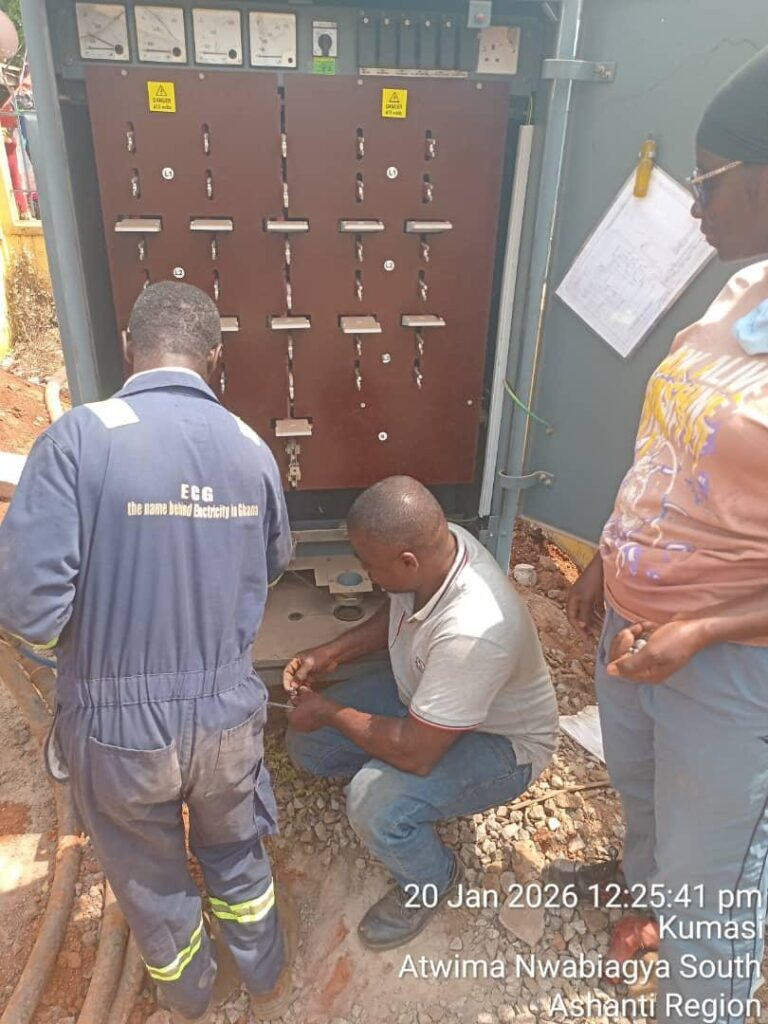
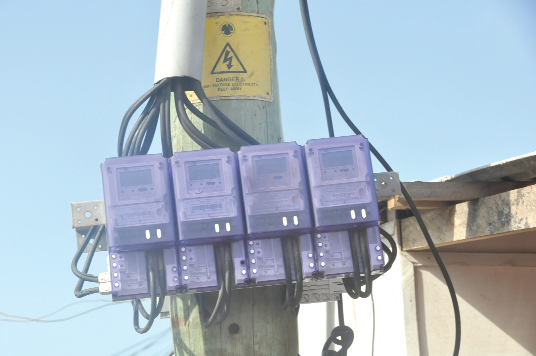
    As part of efforts to enhance revenue mobilisation in the energy sector, as well as stabilizing power, the Ministry of Energy and Green Transition has announced the introduction of standardised and accurate electricity meters from next month.

    The Minister disclosed this while answering questions on the floor of Parliament on Monday, March 16. According to him, all households will benefit from upgraded electricity infrastructure.

    “Next month, we will start the large-scale rollout of transformers. Within that same month, we should see a much more massive injection of new, standardised and accurate meters. That is how we can make sure that there is guaranteed revenue for investment.All meters procured are tested. I can assure you that these meters are of high quality; they meet the standards, and they do the job they are supposed to do,” he said.

    His comments come amid growing concerns from sections of the public, who claim they are being overcharged and that their prepaid credit no longer lasts as long as before.

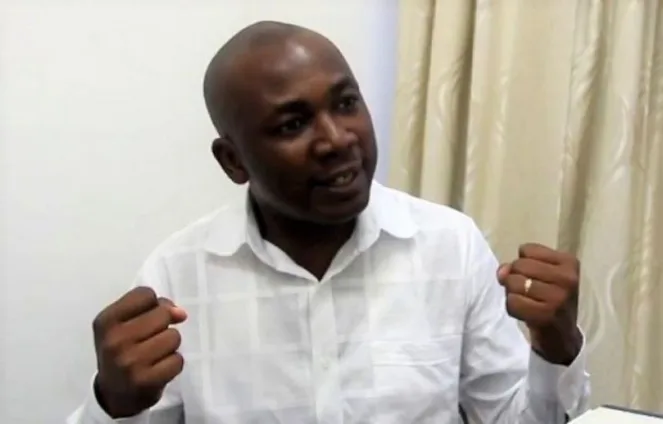
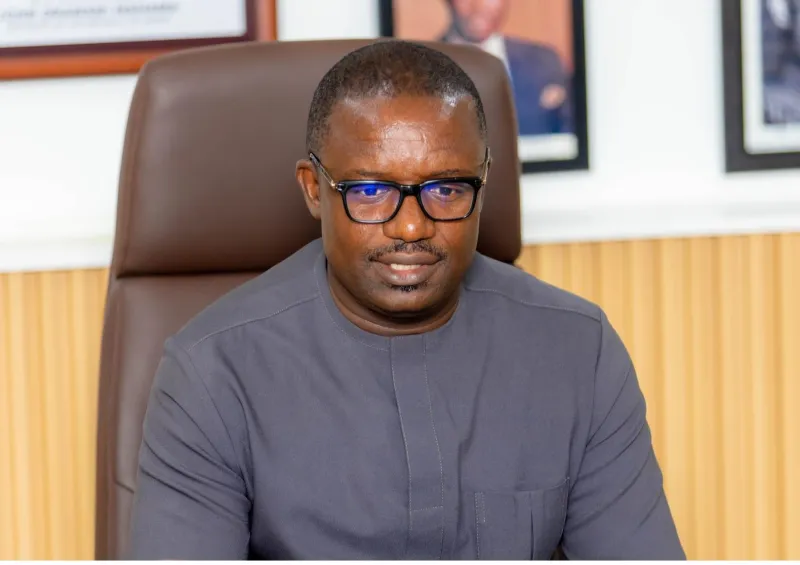
    Meanwhile, the Communications Director of the Electricity Company of Ghana (ECG), William Boateng, has asserted that heat conditions, wiring and earthing are most likely contributing factors to excessive electricity consumption affecting its customers.

    This was in response to concerns from sections of the public who have made claims of being overcharged and that their prepaid credit no longer lasts as long as before.

    In an interview on Adom FM’s morning show Dwaso Nsem, Mr. Boateng advised customers to frequently check for possible electrical faults in their homes.

    “When the heat increases, someone can even double the use of cooling appliances. That alone can affect your consumption. Sometimes the issue may be with wiring or earthing. That is why we have certified electrical contractors who can check whether there is leakage or any fault affecting consumption,” he said.”

    Mr. Boateng urged customers who notice irregularities in their billing to report them directly to ECG for investigation, so that engineers can inspect the meter, review consumption patterns, and identify the cause of the problem.

    “We work with machines; it is not about defending anything. There could be a margin of error. If your bill exceeds what you expected or your credit finishes unusually fast, report it to ECG,” he urged, adding that, “When customers report, we can properly investigate, analyse the situation, and resolve it if there is a genuine problem,” he assured.

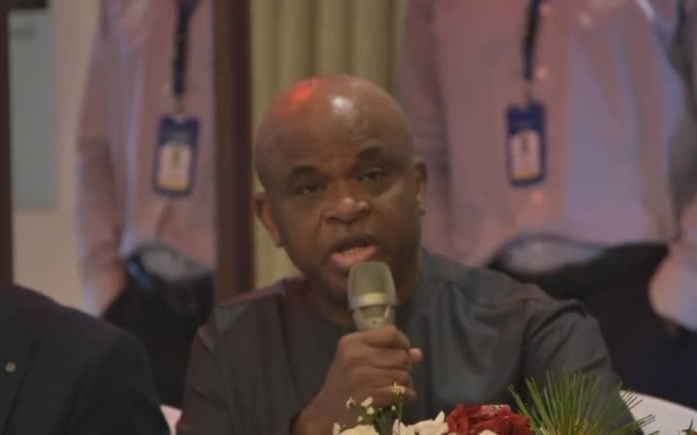
    Last year, the Director-General of the Ghana Standards Authority (GSA), Professor Alex Dodoo, warned of the dangers associated with uncalibrated electricity meters which were in use nationwide.

    These uncalibrated metres being utilised by the Electricity Company of Ghana (ECG), he said, did not guarantee the protection of consumers and also are not able to hold industry accountable for fair charges.

    Calibration of meters ensures that energy usage is measured accurately, preventing overbilling or underbilling for consumers.

    His comments came amid growing public concerns of overbilling, inconsistent power supply, and inefficiencies in the power-producing company’s services.

    Speaking at a stakeholder conference organized by the International Electrotechnical Commission yesterday, May 20, 2025 in Accra, Prof. Dodoo revealed that many ECG meters in circulation had not been calibrated or verified by the Ghana Standards Authority, as has been mandated by the National Instrumentation Regulation NI2413.

    “Very few of our meters have been calibrated and verified by the GSA. If the meter you are using has not been calibrated or verified by the Ghana Standards Authority, as required by NI2413, its accuracy is questionable. We simply cannot vouch for it,” he said.

    Prof. Dodoo said meters not being calibrated put consumers at risk of under- and overbilling.

    The NI2413 law mandates that all electricity meters in circulation must be calibrated and verified by the GSA to ensure accuracy, fair billing, and energy efficiency.

    Additionally, the Weights and Measures Decree, NRCD 326 of 1975, empowers the GSA to oversee legal metrology, ensuring that measuring instruments used in trade and industry meet standardized accuracy requirements.

    However, to resolve this, he mentioned that his outfit is currently working with the ECG and Public Utility and Regulatory Commission (PURC) to configure the millions of meters currently in circulation in the country.

    “The law states it must be verified and calibrated. Thankfully, we are working with ECG and PURC to ensure that all the millions of meters in Ghana are properly calibrated and verified by the GSA,” he noted.

    He also linked the issue to national development, emphasizing its importance in the government’s ambition to implement a 24-hour economy.

    “And I know it’s a very troubling issue. But as we support the President in rolling out a 24-hour economy, it’s important that we provide the quality infrastructure that will make the 24-hour economy succeed,” he concluded.

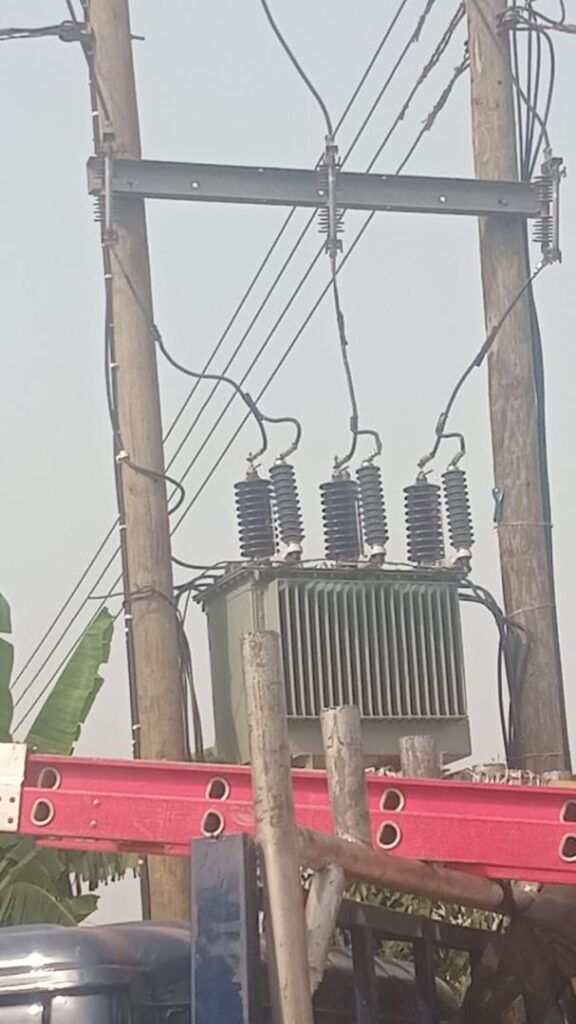
    In the same year, the government, through the Ministry of Energy and Green Transition, approved the procurement of 200 new transformers for the Electricity Company of Ghana (ECG) to strengthen power transmission and distribution to major cities across the country.

    The sector minister, John Abdulai Jinapor, made information public on May 28, 2025 during the opening session of the 18th West Africa Mining and Power Exhibition (WAMPEX) at the Grand Arena and Accra International Convention Centre (AICC) in Accra.

    The Electricity Company of Ghana (ECG) made a formal request for 200 new transformers in April 2025, and after barely a month, the government gave the green light for the deployment of the transformers.

    “Despite the challenges we inherited, recent reports show that power generation has been very stable” What we need to do is improve the transmission and distribution network. In this regard, I have granted approval to ECG as a matter of urgency to inject about 200 transformers in our major capital cities in order to ensure that we not only generate power but we can distribute power to (sic) consumers effectively and efficiently,” Mr Jinapor said.

    Minister Jinapor noted that initial challenges with power generation have been stabilized, and Ghana is now exporting electricity to neighboring countries. The current focus is on improving power transmission and distribution systems.

    WAMPEX, the largest forum for mining and power industries in West Africa, attracted over 240 exhibitors from 30 countries and more than 5,000 visitors this year.

    The event, however provided a platform for industry professionals, policymakers, and stakeholders to discuss challenges, innovations, and future opportunities.

  • ECG begins investigations into all swift power consumption complaints

    ECG begins investigations into all swift power consumption complaints

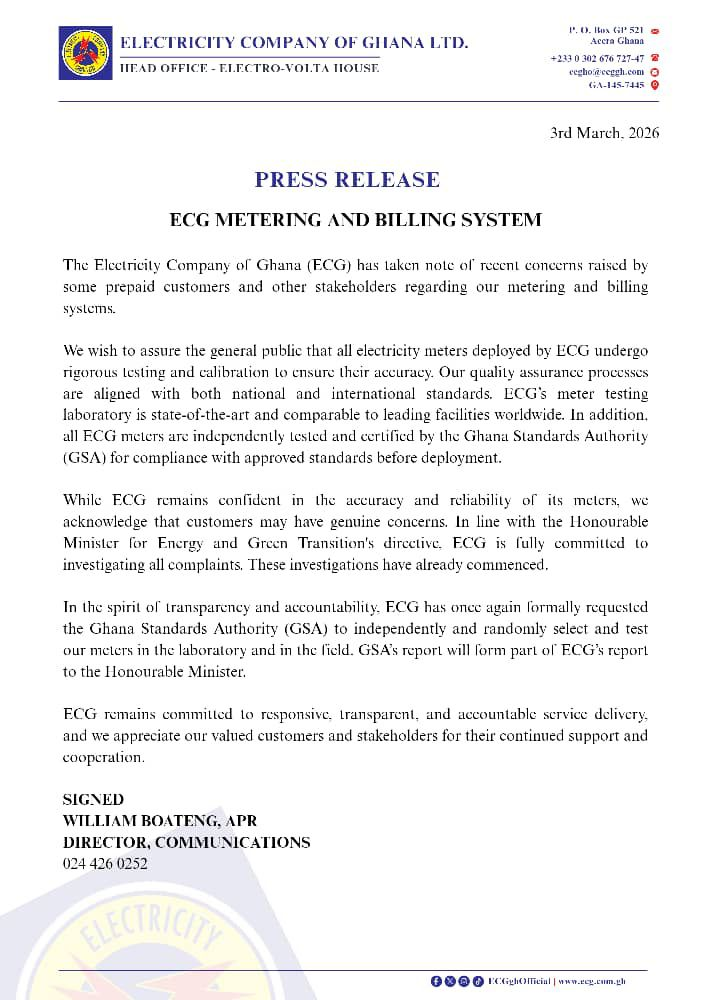
    The Electricity Company of Ghana (ECG) has launched investigations into complaints from customers regarding unusually high power consumption, particularly from prepaid meters.

    In a statement signed by Director of Communications, William Boateng, ECG emphasized that all electricity meters are carefully tested and calibrated to meet both national and international standards.

    “Our meter testing laboratory is state-of-the-art and comparable to leading facilities worldwide. In addition, every meter is independently tested and certified by the Ghana Standards Authority before deployment,” the company said.

    Despite this, ECG acknowledged that some customers may have legitimate concerns about their bills. Acting on directives from the Honourable Minister for Energy and Green Transition, the company has begun reviewing all complaints.

    To strengthen transparency, ECG has requested the Ghana Standards Authority (GSA) to conduct independent, random testing of meters both in the laboratory and in the field. The results will be incorporated into a comprehensive report submitted to the Minister.

    William Boateng, Director of Communications at ECG, said, “We remain committed to responsive, transparent, and accountable service delivery and appreciate the continued support and cooperation of our customers and stakeholders.”

    The Communications Director of the Electricity Company of Ghana (ECG), William Boateng, has asserted that heat conditions, wiring and earthing are most likely contributing factors to excessive electricity consumption affecting its customers.

    This was in response to concerns from sections of the public who have made claims of being overcharged and that their prepaid credit no longer lasts as long as before.

    In an interview on Adom FM’s morning show Dwaso Nsem, Mr. Boateng advised customers to frequently check for possible electrical faults in their homes.

    “When the heat increases, someone can even double the use of cooling appliances. That alone can affect your consumption. Sometimes the issue may be with wiring or earthing. That is why we have certified electrical contractors who can check whether there is leakage or any fault affecting consumption,” he said.”

    Mr. Boateng urged customers who notice irregularities in their billing to report them directly to ECG for investigation, so that engineers can inspect the meter, review consumption patterns, and identify the cause of the problem.

    “We work with machines; it is not about defending anything. There could be a margin of error. If your bill exceeds what you expected or your credit finishes unusually fast, report it to ECG,” he urged, adding that, “When customers report, we can properly investigate, analyse the situation, and resolve it if there is a genuine problem,” he assured.

    Last year, the Director-General of the Ghana Standards Authority (GSA), Professor Alex Dodoo, warned of the dangers associated with uncalibrated electricity meters which were in use nationwide.

    These uncalibrated metres being utilised by the Electricity Company of Ghana (ECG), he said, did not guarantee the protection of consumers and also are not able to hold industry accountable for fair charges.

    Calibration of meters ensures that energy usage is measured accurately, preventing overbilling or underbilling for consumers.

    His comments came amid growing public concerns of overbilling, inconsistent power supply, and inefficiencies in the power-producing company’s services.

    Speaking at a stakeholder conference organized by the International Electrotechnical Commission yesterday, May 20, 2025 in Accra, Prof. Dodoo revealed that many ECG meters in circulation had not been calibrated or verified by the Ghana Standards Authority, as has been mandated by the National Instrumentation Regulation NI2413.

    “Very few of our meters have been calibrated and verified by the GSA. If the meter you are using has not been calibrated or verified by the Ghana Standards Authority, as required by NI2413, its accuracy is questionable. We simply cannot vouch for it,” he said.

    Prof. Dodoo said meters not being calibrated put consumers at risk of under- and overbilling.

    The NI2413 law mandates that all electricity meters in circulation must be calibrated and verified by the GSA to ensure accuracy, fair billing, and energy efficiency.

    Additionally, the Weights and Measures Decree, NRCD 326 of 1975, empowers the GSA to oversee legal metrology, ensuring that measuring instruments used in trade and industry meet standardized accuracy requirements.

    However, to resolve this, he mentioned that his outfit is currently working with the ECG and Public Utility and Regulatory Commission (PURC) to configure the millions of meters currently in circulation in the country.

    “The law states it must be verified and calibrated. Thankfully, we are working with ECG and PURC to ensure that all the millions of meters in Ghana are properly calibrated and verified by the GSA,” he noted.

    He also linked the issue to national development, emphasizing its importance in the government’s ambition to implement a 24-hour economy.

    “And I know it’s a very troubling issue. But as we support the President in rolling out a 24-hour economy, it’s important that we provide the quality infrastructure that will make the 24-hour economy succeed,” he concluded.

    In the same year, the government, through the Ministry of Energy and Green Transition, approved the procurement of 200 new transformers for the Electricity Company of Ghana (ECG) to strengthen power transmission and distribution to major cities across the country.

    The sector minister, John Abdulai Jinapor, made information public on May 28, 2025 during the opening session of the 18th West Africa Mining and Power Exhibition (WAMPEX) at the Grand Arena and Accra International Convention Centre (AICC) in Accra.

    The Electricity Company of Ghana (ECG) made a formal request for 200 new transformers in April 2025, and after barely a month, the government gave the green light for the deployment of the transformers.

    “Despite the challenges we inherited, recent reports show that power generation has been very stable” What we need to do is improve the transmission and distribution network. In this regard, I have granted approval to ECG as a matter of urgency to inject about 200 transformers in our major capital cities in order to ensure that we not only generate power but we can distribute power to (sic) consumers effectively and efficiently,” Mr Jinapor said.

    Minister Jinapor noted that initial challenges with power generation have been stabilized, and Ghana is now exporting electricity to neighboring countries. The current focus is on improving power transmission and distribution systems.

    WAMPEX, the largest forum for mining and power industries in West Africa, attracted over 240 exhibitors from 30 countries and more than 5,000 visitors this year.

    The event, however provided a platform for industry professionals, policymakers, and stakeholders to discuss challenges, innovations, and future opportunities.

  • You have 7 days to provide report on rapid prepaid credit depletion – Energy Minister to ECG

    You have 7 days to provide report on rapid prepaid credit depletion – Energy Minister to ECG

    The Ministry of Energy and Green Transition has ordered the Electricity Company of Ghana (ECG) to probe widespread complaints that prepaid electricity credits are vanishing unusually fast.

    Consumers across the country have reported that their power units are running out much sooner than before, even when electricity usage patterns remain unchanged.

    Richmond Rockson, the Ministry’s spokesperson, confirmed on X on February 24, 2026, that Dr John Abdulai Jinapor, the Energy Minister, is treating the situation as urgent.

    The minister has given ECG a strict seven-day timeline to identify the reasons behind the billing irregularities.

    “The Minister… has taken notice of these complaints and has directed ECG to investigate and provide a report to him within seven days for further action,” Rockson said.

    The probe is intended to restore public confidence and ensure transparency in the nation’s electricity billing system.

    Rapid credit depletion has sparked concerns about possible technical glitches, incorrect tariff calculations, or hidden charges on ECG’s digital platforms.

    The Ministry emphasized that the findings of the seven-day investigation will guide subsequent government actions, including corrective measures or policy adjustments to protect consumers.


    The Communications Director of the Electricity Company of Ghana (ECG), William Boateng, has asserted that heat conditions, wiring and earthing are most likely contributing factors to excessive electricity consumption affecting its customers.

    This was in response to concerns from sections of the public who have made claims of being overcharged and that their prepaid credit no longer lasts as long as before.

    In an interview on Adom FM’s morning show Dwaso Nsem, Mr. Boateng advised customers to frequently check for possible electrical faults in their homes.

    “When the heat increases, someone can even double the use of cooling appliances. That alone can affect your consumption. Sometimes the issue may be with wiring or earthing. That is why we have certified electrical contractors who can check whether there is leakage or any fault affecting consumption,” he said.”

    Mr. Boateng urged customers who notice irregularities in their billing to report them directly to ECG for investigation, so that engineers can inspect the meter, review consumption patterns, and identify the cause of the problem.

    “We work with machines; it is not about defending anything. There could be a margin of error. If your bill exceeds what you expected or your credit finishes unusually fast, report it to ECG,” he urged, adding that, “When customers report, we can properly investigate, analyse the situation, and resolve it if there is a genuine problem,” he assured.

    Last year, the Director-General of the Ghana Standards Authority (GSA), Professor Alex Dodoo, warned of the dangers associated with uncalibrated electricity meters which were in use nationwide.

    These uncalibrated metres being utilised by the Electricity Company of Ghana (ECG), he said, did not guarantee the protection of consumers and also are not able to hold industry accountable for fair charges.

    Calibration of meters ensures that energy usage is measured accurately, preventing overbilling or underbilling for consumers.

    His comments came amid growing public concerns of overbilling, inconsistent power supply, and inefficiencies in the power-producing company’s services.

    Speaking at a stakeholder conference organized by the International Electrotechnical Commission yesterday, May 20, 2025 in Accra, Prof. Dodoo revealed that many ECG meters in circulation had not been calibrated or verified by the Ghana Standards Authority, as has been mandated by the National Instrumentation Regulation NI2413.

    “Very few of our meters have been calibrated and verified by the GSA. If the meter you are using has not been calibrated or verified by the Ghana Standards Authority, as required by NI2413, its accuracy is questionable. We simply cannot vouch for it,” he said.

    Prof. Dodoo said meters not being calibrated put consumers at risk of under- and overbilling.

    The NI2413 law mandates that all electricity meters in circulation must be calibrated and verified by the GSA to ensure accuracy, fair billing, and energy efficiency.

    Additionally, the Weights and Measures Decree, NRCD 326 of 1975, empowers the GSA to oversee legal metrology, ensuring that measuring instruments used in trade and industry meet standardized accuracy requirements.

    However, to resolve this, he mentioned that his outfit is currently working with the ECG and Public Utility and Regulatory Commission (PURC) to configure the millions of meters currently in circulation in the country.

    “The law states it must be verified and calibrated. Thankfully, we are working with ECG and PURC to ensure that all the millions of meters in Ghana are properly calibrated and verified by the GSA,” he noted.

    He also linked the issue to national development, emphasizing its importance in the government’s ambition to implement a 24-hour economy.

    “And I know it’s a very troubling issue. But as we support the President in rolling out a 24-hour economy, it’s important that we provide the quality infrastructure that will make the 24-hour economy succeed,” he concluded.

    In the same year, the government, through the Ministry of Energy and Green Transition, approved the procurement of 200 new transformers for the Electricity Company of Ghana (ECG) to strengthen power transmission and distribution to major cities across the country.

    The sector minister, John Abdulai Jinapor, made information public on May 28, 2025 during the opening session of the 18th West Africa Mining and Power Exhibition (WAMPEX) at the Grand Arena and Accra International Convention Centre (AICC) in Accra.

    The Electricity Company of Ghana (ECG) made a formal request for 200 new transformers in April 2025, and after barely a month, the government gave the green light for the deployment of the transformers.

    “Despite the challenges we inherited, recent reports show that power generation has been very stable” What we need to do is improve the transmission and distribution network. In this regard, I have granted approval to ECG as a matter of urgency to inject about 200 transformers in our major capital cities in order to ensure that we not only generate power but we can distribute power to (sic) consumers effectively and efficiently,” Mr Jinapor said.

    Minister Jinapor noted that initial challenges with power generation have been stabilized, and Ghana is now exporting electricity to neighboring countries. The current focus is on improving power transmission and distribution systems.

    WAMPEX, the largest forum for mining and power industries in West Africa, attracted over 240 exhibitors from 30 countries and more than 5,000 visitors this year.

    The event, however provided a platform for industry professionals, policymakers, and stakeholders to discuss challenges, innovations, and future opportunities.

  • Heat conditions, wiring, earthing contribute to excessive electricity consumption – ECG tells customers 

    Heat conditions, wiring, earthing contribute to excessive electricity consumption – ECG tells customers 

    The Communications Director of the Electricity Company of Ghana (ECG), William Boateng, has asserted that heat conditions, wiring and earthing are most likely contributing factors to excessive electricity consumption affecting its customers.

    This was in response to concerns from sections of the public who have made claims of being overcharged and that their prepaid credit no longer lasts as long as before.

    In an interview on Adom FM’s morning show Dwaso Nsem, Mr. Boateng advised customers to frequently check for possible electrical faults in their homes.

    “When the heat increases, someone can even double the use of cooling appliances. That alone can affect your consumption. Sometimes the issue may be with wiring or earthing. That is why we have certified electrical contractors who can check whether there is leakage or any fault affecting consumption,” he said.”

    Mr. Boateng urged customers who notice irregularities in their billing to report them directly to ECG for investigation, so that engineers can inspect the meter, review consumption patterns, and identify the cause of the problem.

    “We work with machines; it is not about defending anything. There could be a margin of error. If your bill exceeds what you expected or your credit finishes unusually fast, report it to ECG,” he urged, adding that, “When customers report, we can properly investigate, analyse the situation, and resolve it if there is a genuine problem,” he assured.

    Last year, the Director-General of the Ghana Standards Authority (GSA), Professor Alex Dodoo, warned of the dangers associated with uncalibrated electricity meters which were in use nationwide.

    These uncalibrated metres being utilised by the Electricity Company of Ghana (ECG), he said, did not guarantee the protection of consumers and also are not able to hold industry accountable for fair charges.

    Calibration of meters ensures that energy usage is measured accurately, preventing overbilling or underbilling for consumers.

    His comments came amid growing public concerns of overbilling, inconsistent power supply, and inefficiencies in the power-producing company’s services.

    Speaking at a stakeholder conference organized by the International Electrotechnical Commission yesterday, May 20, 2025 in Accra, Prof. Dodoo revealed that many ECG meters in circulation had not been calibrated or verified by the Ghana Standards Authority, as has been mandated by the National Instrumentation Regulation NI2413.

    “Very few of our meters have been calibrated and verified by the GSA. If the meter you are using has not been calibrated or verified by the Ghana Standards Authority, as required by NI2413, its accuracy is questionable. We simply cannot vouch for it,” he said.

    Prof. Dodoo said meters not being calibrated put consumers at risk of under- and overbilling.

    The NI2413 law mandates that all electricity meters in circulation must be calibrated and verified by the GSA to ensure accuracy, fair billing, and energy efficiency.

    Additionally, the Weights and Measures Decree, NRCD 326 of 1975, empowers the GSA to oversee legal metrology, ensuring that measuring instruments used in trade and industry meet standardized accuracy requirements.

    However, to resolve this, he mentioned that his outfit is currently working with the ECG and Public Utility and Regulatory Commission (PURC) to configure the millions of meters currently in circulation in the country.

    “The law states it must be verified and calibrated. Thankfully, we are working with ECG and PURC to ensure that all the millions of meters in Ghana are properly calibrated and verified by the GSA,” he noted.

    He also linked the issue to national development, emphasizing its importance in the government’s ambition to implement a 24-hour economy.

    “And I know it’s a very troubling issue. But as we support the President in rolling out a 24-hour economy, it’s important that we provide the quality infrastructure that will make the 24-hour economy succeed,” he concluded.

    In the same year, the government, through the Ministry of Energy and Green Transition, approved the procurement of 200 new transformers for the Electricity Company of Ghana (ECG) to strengthen power transmission and distribution to major cities across the country.

    The sector minister, John Abdulai Jinapor, made information public on May 28, 2025 during the opening session of the 18th West Africa Mining and Power Exhibition (WAMPEX) at the Grand Arena and Accra International Convention Centre (AICC) in Accra.

    The Electricity Company of Ghana (ECG) made a formal request for 200 new transformers in April 2025, and after barely a month, the government gave the green light for the deployment of the transformers.

    “Despite the challenges we inherited, recent reports show that power generation has been very stable” What we need to do is improve the transmission and distribution network. In this regard, I have granted approval to ECG as a matter of urgency to inject about 200 transformers in our major capital cities in order to ensure that we not only generate power but we can distribute power to (sic) consumers effectively and efficiently,” Mr Jinapor said.

    Minister Jinapor noted that initial challenges with power generation have been stabilized, and Ghana is now exporting electricity to neighboring countries. The current focus is on improving power transmission and distribution systems.

    WAMPEX, the largest forum for mining and power industries in West Africa, attracted over 240 exhibitors from 30 countries and more than 5,000 visitors this year.

    The event, however provided a platform for industry professionals, policymakers, and stakeholders to discuss challenges, innovations, and future opportunities.

  • Sunyani residents to face rotational power outages for 3 days

    Sunyani residents to face rotational power outages for 3 days

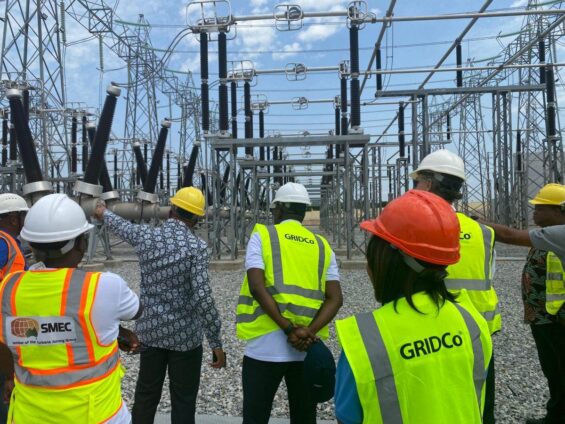
    Residents of Sunyani will face a three-day power fluctuation following the breakdown of the Ghana Grid Company Limited (GRIDCo) transformer.

    According to a joint statement issued by the Volta River Authority (VRA) and the Northern Electricity Distribution Company (NEDCo) on Wednesday, January 21, the inconvenience is necessary to restore the faulty transformer to normal operation.

    As part of the maintenance work, the power distribution companies have released a schedule for the affected areas.
    The affected areas have been grouped into three.

    Group One includes Nana Bosoma Market, Newtown, Estate, Baakoniaba, Asufufu, Wawasua, Nanketwa, Municipal, Town Centre, Zinco, Airport, parts of UENR, St. Mary’s, and surrounding communities.


    Group Two covers Abesim Estate, Tanoso, Yamfo, Susuanso, GWCL, Abesim, Mayfair, Nkwabeng North, Odumase, Pastoral Penkwase, Syn. NMTC, and surrounding communities.


    Group Three comprises Nimpong, STU, GETFund, Magazine, SUSEC, Dr. Berko, St. James, Glamossay, Nkrankrom, Fiapre, Dumasua, Mantukwa, Ayakomaso, Nsoatre, and surrounding communities.


    On Wednesday, January 21, Group Two will experience a power interruption from 6:00 a.m. to 2:00 p.m., followed by Group One from 2:00 p.m. to 10:00 p.m., while Group Three will be affected from 10:00 p.m. to 6:00 a.m. the following day.


    On Thursday, January 22, Group One will be without power from 6:00 a.m. to 2:00 p.m., Group Three from 2:00 p.m. to 10:00 p.m., and Group Two from 10:00 p.m. to 6:00 a.m.


    On Friday, January 23, Group Three will be affected from 6:00 a.m. to 2:00 p.m., Group Two from 2:00 p.m. to 10:00 p.m., and Group One from 10:00 p.m. to 6:00 a.m.


    The power distribution companies have apologised for the inconvenience this temporary power interruption will cause, while assure the public of it continued commitment to deliver reliable and improved electricity transmission services.


    In July last year, businesses and households in Greater Accra, Tema, and their surrounding areas were cautioned to brace themselves for a blackout lasting approximately 9 to 12 hours, the Electricity Company of Ghana (ECG) has announced.


    In three separate public notices issued on Wednesday, July 2, the power supply company alerted consumers of an impending power interruption during the day on Thursday, July 3.


    The blackout, according to ECG, was due to planned maintenance works to enhance service delivery and ensure a more stable power distribution system.


    Communities affected by the maintenance in Accra were as follows: Glefe, Wiaboman, Odorkor, Awoshie, Mandela, SCC, Sunny Coast, Korkordjor, Gbawe, Alogboshie, Achimota Neoplan, Benjilo, Asofa, Amen Amen, Omandjor, Tesano, Alajo, Adenta Estate, Adenta Container, Ashaley Botwe Town, Ashongman Pure Water, Ashongman Estates, Osu, and surrounding areas.


    The outage in these areas lasted from 9:00 a.m. to 5:00 p.m.
    And in the Tema Region, ECG said power was interrupted between 9:00 a.m. and 4:00 p.m.


    The affected areas included Kpong, Nuaso, Kpongunor, Agormanya, Odumase, Kojonya, Atua, Sawer, Okornya, Somanya, Jericho, Roman Down, Under Bridge Market, State School for the Deaf, Kanawu, Adjei Kojo, Community 25, Bulasu, Ghana Flag, Afienya Zongo, and surrounding areas.


    The notice prepared consumers accordingly to minimise the impact of the temporary outage. Nonetheless, ECG restored the power immediately after the completion of the maintenance works.


    It also apologised for the inconvenience the outage is likely to cause. “ECG regrets the inconvenience that will arise out of this exercise,” parts of the statement read.


    Residents in Pokuase Pharmacy, Ayawaso, Nii Ayi, Odumase, Amanfrom, Nsakina, Agbogba, and Pantang Royal also experienced a temporary power outage on Wednesday, March 12, 2025 as the Electricity Company of Ghana (ECG) wraps up its scheduled two-day maintenance exercise.


    The outage lasted from 9:00 AM to 5:00 PM. The maintenance work, aimed at improving electricity distribution also affected parts of the Tema Region, where areas such as High Tension, Golf City, Community 17, Fafali, Cambodia, and HFC Estates were without power from 9:00 AM to 4:00 PM.


    Earlier on Tuesday, March 11, the same year, similar maintenance activities were carried out in parts of the Volta and Ashanti Regions. Residents of Tsito and its surrounding areas in the Volta Region faced outages between 9:00 AM and 2:00 PM.


    In the Ashanti Region, a two-phase exercise was conducted. The first phase impacted Darko, Bebu, Ampabame No.2, Trede, Sabin Akroform, and parts of Pakyi No.2, while the second phase, lasting from 9:00 AM to 6:00 PM, affected Atwima Agogo, Abuakwa, Mankranso, Kunsu, Sepaase, Nkawie, Afari, Abakomade, Kasapreko, and several nearby communities.


    The ECG assured customers that this maintenance was crucial for enhancing power reliability and reducing unexpected disruptions.


    Residents and businesses in the affected areas were advised to make necessary arrangements, while the company apologized for any inconvenience caused.


    This came at a time when several parts of the country was experiencing power outages due to challenges in the energy sector. However, the Energy Minister at the time, John Jinapor, had rejected demands from the Minority and some Ghanaians for a load-shedding timetable, despite recent power outages in parts of the country.


    Their demand stemed from concerns that the current power situation mirrors past periods of prolonged power crises (dumsor), despite government assurances that there is no full-scale rationing of electricity.


    However, at a press conference at the Jubilee House last Friday, 7 March 2025, Mr. Jinapor explained that there was no need for such a timetable because the country was not experiencing full-scale power cuts.

  • ECG’s 200% tariff proposal is a trap to kill our jobs – GUTA

    ECG’s 200% tariff proposal is a trap to kill our jobs – GUTA

    The Ghana Water Limited (GWL) has come under sharp criticism from several business associations following its proposal for a 200% tariff increase under the 2025–2030 Multi-Year Tariff Order.

    Among these groups are the Food and Beverages Association of Ghana (FABAG), the Ghana Union of Traders Association (GUTA), and the Ghana Plastic Manufacturers Association.

    In a joint statement, the group indicated that the proposal is a bid to collapse their businesses which they had built with hard work and dedication. The group indicated that they are yet to recover from persistent hikes in power tariffs which has forced the majority of them to downsize or shut down operations.

    “Ghanaian enterprises and citizens are being strangled by tariffs that defy economic logic, crush competitiveness, and create fertile ground for illegal connections and power theft,” the statement said.

    They stressed that, “When electricity becomes unaffordable, it becomes a target for illegal access,” FABAG warned. “We are fast creating a society where honest business owners are punished while defaulters thrive.”

    “No amount of higher tariffs can sustainably compensate for inefficiency, poor revenue collection, and corruption. The government and PURC must face the truth that this is not a pricing system, it’s a trap that kills jobs, discourages investment, and fuels criminality.”

    Additionally, the group noted that the current pricing system is a clear betrayal of the government’s own promise to make Ghana an industrial hub.

    In September, the Public Utilities Regulatory Commission (PURC) received proposals from eight utility companies calling for a significant adjustment in utility tariffs to ensure they can fully operate at their capacities.


    Proposals from the electricity distributors and the water provider for the 2025–2029 tariff period cite rising operational costs and the need to maintain efficient service delivery.


    The eight companies include the Electricity Company of Ghana (ECG), Volta River Authority (VRA), Northern Electricity Distribution Company (NEDCo), Ghana Water Limited (GWL), and the Ghana Grid Company (GRIDCo), Ghana National Gas Limited, among others.


    ECG is pushing for a massive 225% hike in its distribution service charge. For instance, a household consuming 150 kWh monthly would pay an additional GHS64, while a residence using 100 kWh per month would pay about GHS43 more in distribution charges.
    As part of ECG’s request, the current Distribution Service Charge (DSC) of 19 pesewas per kilowatt-hour should be raised to nearly 62 pesewas per kilowatt-hour.


    “The PURC will undertake the major adjustment in the 4th quarter of 2025 to reflect capacity charges, additional liquid fuel usage, and additional capex. The current charge is below industry benchmarks, and cedi depreciation has reduced its value. US$408m spent on network upgrades and smart meters,” parts of ECG’s petition read.


    ECG has emphasised that the adjustment has long been overdue, noting that in 2022 it proposed 39.95 pesewas, but only 19.04 pesewas was approved.


    According to ECG, it has invested $48 million in network upgrades and smart metering systems to enhance power reliability, reduce outages, and align tariffs with international industry standards, yet these efforts have not yielded the expected cost recovery.


    Furthermore, ECG has projected an annual revenue of GHS9.5 billion between 2025 and 2029 if the new charges are approved. The proceeds, according to the utility company, would be allocated to cover operational costs, depreciation of assets, staff salaries, and the recovery of recent capital expenditures.


    VRA is seeking a 59% increase to cover the rising costs of producing electricity. If approved, the current tariff of 45.0892 Ghana pesewas per kilowatt-hour will be increased to 71.8862 pesewas per kilowatt-hour for the Bulk Generation Charge.


    Speaking during a public hearing on Tuesday, September 9, Senior Economic Analyst at VRA, Evans Somuah Mensah, said, “Over the years, VRA has not been compensated for doing this work to assist the national connectivity system. We are saying that on an annual basis, VRA should be given compensation of $30.49 million for Akosombo power generation, and Kpone Thermal plant, a little bit of $30,000.


    “Justification for tariff increase, we are saying that we want to recover the cost of our power supply to the distribution companies, and recover the cost of transmission and also be compensated for the provisions of ancillary services. We are requesting the PURC to increase the existing tariff of BGC from 45.0892 Ghana pesewas per kilowatt-hour to 71.8862 Ghana pesewas per kilowatt-hour.”

    VRA has justified the increase as necessary to fully recover the cost of power generation supplied to distribution companies (DISCOs). It has noted that sustaining reliable electricity generation and meeting its operational and financial obligations will become increasingly difficult if its proposal is rejected.

    Ghana Water Limited has proposed a jump from GH¢5.28 per cubic metre to GH¢20.09 per cubic metre, seeking regulatory approval for a 281% increase in its water tariff.

    NEDCo has also called for its tariff to be increased to 153.03 pesewas per kilowatt-hour from the current 56.474 pesewas, representing a 171% rise. GRIDCo, meanwhile, is demanding that the current 5.6422 pesewas per kilowatt-hour on its transmission service tariff be raised to 12.9768 pesewas per kilowatt-hour.

    Ghana National Gas Limited is proposing to increase its tariff from US$1.10 to US$2.10 per million metric British thermal units (MMBtu).

    However, the onus lies on PURC to carefully review the requests, assess whether the increases are justified, and determine how the costs will be distributed. In July this year, electricity tariffs increased by 2.45% across the board, with no increase in water tariffs.

    The adjustments, according to PURC, were carried out in line with the Commission’s Quarterly Tariff Review Mechanism, which tracks and incorporates movements in key factors beyond the control of the Utility Service Providers (USPs).

    These factors include the exchange rate between the US dollar and the Ghana Cedi, the domestic inflation rate, the electricity generation mix, and the cost of fuel, mainly natural gas.

    According to the Commission, additional factors considered before concluding the hike in tariffs include outstanding debt of GHS488 million carried over from the previous three quarters, reserve capacity for grid stability and reliability, and the inclusion of 27% of the cost of alternative fuels such as Distillate Fuel Oil (DFO), Heavy Fuel Oil (HFO), and Light Crude Oil (LCO).

    The Commission expressed gratitude to stakeholders for their support as it continues to implement the Quarterly Tariff Reviews in accordance with its Rate Setting Guidelines to address changes in operational conditions of the service providers.

    Majority Leader Mahama Ayariga justified PURC’s decision to increase electricity tariffs. Speaking on the floor of Parliament on Friday, June 27, he noted that there is a need for ECG to be able to settle its growing debt.
    “You all know that the whole of last year and before that, there was an effort to prevent the PURC from adjusting the tariffs. So that whole period, there was no adjustment, and you know very well that bills were accruing; payments have to be made. ECG is accumulating huge [debt] and it has to be paid, so who is supposed to pay? Is it not the consumer?” he questioned.

    According to him, failure to address ECG’s indebtedness would render the company powerless in supplying power to its consumers.

    “And if you are not adjusting the tariffs to enable ECG to pay, ECG is going to collapse. They are no longer able to buy the input needed to keep the generators on, and we are going to have a power outage; the bills have to be paid.”

    “The bill has to be paid. So if PURC is doing its work, I do not think there is a basis for saying that because we have improved the economy, it doesn’t mean that the debt at ECG will just be whisked away. The bill has to be paid partly by consumers,” he asserted.

    Meanwhile, the Ghana Water Limited (GWL) and the ECG have blamed illegal mining activities (galamsey) for the 200% tariff increment proposal under the 2025–2030 Multi-Year Tariff Order. This was made public byt the Director of Communications for ECG, William Boateng on Tuesday, October 14.

    “They are digging and moving towards the roads and trenches, which is very dangerous. Anytime we have the slightest rainfall, the poles come down because the base has been weakened. That affects the stability of power supply.

    “It costs us more money to fix the fallen poles and restore the line. Beyond that, we are also losing unserved energy power that we’ve already purchased but cannot deliver to customers,” Mr. Boateng noted.In September, the Public Utilities Regulatory Commission (PURC) has received proposals from eight utility companies calling for a significant adjustment in utility tariffs to ensure they can fully operate at their capacities.

  • Galamsey inflating our operational costs – ECG, GWL defend 200% tariff proposal

    Galamsey inflating our operational costs – ECG, GWL defend 200% tariff proposal

    The Ghana Water Limited (GWL) and the Electricity Company of Ghana (ECG) have blamed illegal mining activities (galamsey) for the 200% tariff increment proposal under the 2025–2030 Multi-Year Tariff Order. This was made public by the Director of Communications for ECG, William Boateng on Tuesday, October 14.


    “They are digging and moving towards the roads and trenches, which is very dangerous. Anytime we have the slightest rainfall, the poles come down because the base has been weakened. That affects the stability of power supply.

    “It costs us more money to fix the fallen poles and restore the line. Beyond that, we are also losing unserved energy power that we’ve already purchased but cannot deliver to customers,” Mr. Boateng noted.

    In September, the Public Utilities Regulatory Commission (PURC) received proposals from eight utility companies calling for a significant adjustment in utility tariffs to ensure they can fully operate at their capacities.


    Proposals from the electricity distributors and the water provider for the 2025–2029 tariff period cite rising operational costs and the need to maintain efficient service delivery.


    The eight companies include the Electricity Company of Ghana (ECG), Volta River Authority (VRA), Northern Electricity Distribution Company (NEDCo), Ghana Water Limited (GWL), and the Ghana Grid Company (GRIDCo), Ghana National Gas Limited, among others.


    ECG is pushing for a massive 225% hike in its distribution service charge. For instance, a household consuming 150 kWh monthly would pay an additional GHS64, while a residence using 100 kWh per month would pay about GHS43 more in distribution charges.
    As part of ECG’s request, the current Distribution Service Charge (DSC) of 19 pesewas per kilowatt-hour should be raised to nearly 62 pesewas per kilowatt-hour.


    “The PURC will undertake the major adjustment in the 4th quarter of 2025 to reflect capacity charges, additional liquid fuel usage, and additional capex. The current charge is below industry benchmarks, and cedi depreciation has reduced its value. US$408m spent on network upgrades and smart meters,” parts of ECG’s petition read.


    ECG has emphasised that the adjustment has long been overdue, noting that in 2022 it proposed 39.95 pesewas, but only 19.04 pesewas was approved.


    According to ECG, it has invested $48 million in network upgrades and smart metering systems to enhance power reliability, reduce outages, and align tariffs with international industry standards, yet these efforts have not yielded the expected cost recovery.


    Furthermore, ECG has projected an annual revenue of GHS9.5 billion between 2025 and 2029 if the new charges are approved. The proceeds, according to the utility company, would be allocated to cover operational costs, depreciation of assets, staff salaries, and the recovery of recent capital expenditures.


    VRA is seeking a 59% increase to cover the rising costs of producing electricity. If approved, the current tariff of 45.0892 Ghana pesewas per kilowatt-hour will be increased to 71.8862 pesewas per kilowatt-hour for the Bulk Generation Charge.


    Speaking during a public hearing on Tuesday, September 9, Senior Economic Analyst at VRA, Evans Somuah Mensah, said, “Over the years, VRA has not been compensated for doing this work to assist the national connectivity system. We are saying that on an annual basis, VRA should be given compensation $30.49 million for Akosombo power generation, and Kpone Thermal plant, a little bit of $30,000.


    “Justification for tariff increase, we are saying that we want to recover the cost of our power supply to the distribution companies, and recover the cost of transmission and also be compensated for the provisions of ancillary services. We are requesting the PURC to increase the existing tariff of BGC from 45.0892 Ghana pesewas per kilowatt-hour to 71.8862 Ghana pesewas per kilowatt-hour.”


    VRA has justified the increase as necessary to fully recover the cost of power generation supplied to distribution companies (DISCOs). It has noted that sustaining reliable electricity generation and meeting its operational and financial obligations will become increasingly difficult if its proposal is rejected.


    Ghana Water Limited has proposed a jump from GH¢5.28 per cubic metre to GH¢20.09 per cubic metre, seeking regulatory approval for a 281% increase in its water tariff.


    NEDCo has also called for its tariff to be increased to 153.03 pesewas per kilowatt-hour from the current 56.474 pesewas, representing a 171% rise. GRIDCo, meanwhile, is demanding that the current 5.6422 pesewas per kilowatt-hour on its transmission service tariff be raised to 12.9768 pesewas per kilowatt-hour.


    Ghana National Gas Limited is proposing to increase its tariff from US$1.10 to US$2.10 per million metric British thermal units (MMBtu)
    However, the onus lies on PURC to carefully review the requests, assess whether the increases are justified, and determine how the costs will be distributed. In July this year, electricity tariffs increased by 2.45% across the board, with no increase in water tariffs.


    The adjustments, according to PURC, were carried out in line with the Commission’s Quarterly Tariff Review Mechanism, which tracks and incorporates movements in key factors beyond the control of the Utility Service Providers (USPs).


    These factors include the exchange rate between the US dollar and the Ghana Cedi, the domestic inflation rate, the electricity generation mix, and the cost of fuel, mainly natural gas.


    According to the Commission, additional factors considered before concluding the hike in tariffs include outstanding debt of GHS488 million carried over from the previous three quarters, reserve capacity for grid stability and reliability, and the inclusion of 27% of the cost of alternative fuels such as Distillate Fuel Oil (DFO), Heavy Fuel Oil (HFO), and Light Crude Oil (LCO).


    The Commission expressed gratitude to stakeholders for their support as it continues to implement the Quarterly Tariff Reviews in accordance with its Rate Setting Guidelines to address changes in operational conditions of the service providers.


    Majority Leader Mahama Ayariga justified PURC’s decision to increase electricity tariffs. Speaking on the floor of Parliament on Friday, June 27, he noted that there is a need for ECG to be able to settle its growing debt.

    “You all know that the whole of last year and before that, there was an effort to prevent the PURC from adjusting the tariffs. So that whole period, there was no adjustment, and you know very well that bills were accruing; payments have to be made. ECG is accumulating huge [debt] and it has to be paid, so who is supposed to pay? Is it not the consumer?” he questioned.


    According to him, failure to address ECG’s indebtedness would render the company powerless in supplying power to its consumers.


    “And if you are not adjusting the tariffs to enable ECG to pay, ECG is going to collapse. They are no longer able to buy the input needed to keep the generators on, and we are going to have a power outage; the bills have to be paid.”


    “The bill has to be paid. So if PURC is doing its work, I do not think there is a basis for saying that because we have improved the economy, it doesn’t mean that the debt at ECG will just be whisked away. The bill has to be paid partly by consumers,” he asserted.

  • List of areas to be affected by ECG’s planned maintenance today

    List of areas to be affected by ECG’s planned maintenance today

    Several areas are expected to experience a blackout today, Thursday, October 9, due to the Electricity Company of Ghana’s (ECG) planned maintenance works across five regions. The exercise forms part of the Electricity Company of Ghana’s efforts to make electricity more stable and dependable across the country.


    The selected regions Greater Accra, Ashanti, Central, Volta, and Tema will have no lights between 9:00 a.m. and 5:00 p.m. today.


    For the Greater Accra Region, Otinibi, Danfa, Kerman, Oyibi, Amrahia, New Bortianor, Adanseman, Cassava Farm, Mr. Obeng Block Factory, Oshiyie, Dome Mega Church, Paa Dan, Israel, Alhaji, and surrounding areas will be affected by the maintenance exercise.


    Areas such as King Solomon, Santor, Aunty Araba, Agbeshie Laryea, Nelplast, Kubekro, Klagon, Mobole, Otsebreku, Okushibri, Apollonia, Jerusalem, Katamanso, Promised Land, Elegant Homes, Data Centre, and nearby localities will also be impacted.


    In the Ashanti Region, the maintenance will impact Atwima Agogo, Mfanse, Mankranso, Kunsu, Sepaase, Nkawie, Mpasaetia, Abuakwa Maakro, Abakomade, part of Tanoso, Pokukrom, Abuakwa, Kasapreko, Formulation, Asonomaso, Atwima Manhyia, Atwima Koforidua, Tabre, Ntensere, Asakraka, Asempaneye, Afari Military Hospital, Seidi, Hiawu-Besease, Kontomire, Nnerebehi, Mankranso, Boatenkrom, and Bonkwaso.


    Affected areas in the Central Region include Ankamu Junction, the Apam District Assembly area, Apam, Manford, and Gomoa Dago.

    The energy-distributing company has extended apologies to residents in the affected areas, emphasizing that the temporary power cut will aid in improving the quality of electricity supply in the country.

    ECG launched  the “Operation All Must Pay” initiative to facilitate the retrieval of outstanding debts owed by customers across the nation, as well as prosecute offenders involved in illegal connection.

    The exercise was brought to a close on September 30 after it began on September 9, targeting residential, commercial, industrial, and government institutions such as Ministries, Departments, and Agencies (MDAs)

    A statement released by the Electricity Company of Ghana states, “The exercise will include Bill distribution, Streetlight & SHEP meter capturing & reporting. This exercise will be monitored by special teams who will apprehend and prosecute customers who have connected electricity illegally, or attempt to interfere with the exercise, or undertake illegal self-reconnection after disconnection.”

    Meanwhile, Ghanaians risk paying significantly more for power consumed if the Public Utilities Regulatory Commission (PURC) approves a recent proposal submitted by the Electricity Company of Ghana (ECG).

    According to the power distribution company’s proposal for the 2025–2029 tariff period, the company is pushing for a massive 225% hike in its distribution service charge, citing currency depreciation and rising operational costs.

    As part of the ECG’s request, the current charge Distribution Service Charge (DSC) of 19 pesewas should be raised to nearly 62 pesewas per kilowatt-hour. The adjustment, if approved, will be implemented in October this year.

    “The PURC will undertake the major adjustment in the 4th quarter of 2025 to reflect capacity charges, additional liquid fuel usage and additional capex. The current charge is below industry benchmarks, cedi depreciation has reduced its value. US$408m spent on network upgrades and smart meters,” parts of ECG’s petition read.

    As a result, the more electricity consumers use, the greater the additional cost they will bear under the proposed increase. For instance, a household consuming 150 kWh monthly would pay an additional charge of GHS64, while a residence using 100 kWh per month would pay about GHS43 more in distribution charges.

    ECG has emphasised that the adjustment has long been overdue, noting that in 2022 it proposed 39.95 pesewas, but only 19.04 pesewas was approved.

    According to ECG, it has invested $48 million in network upgrades and smart metering systems to enhance power reliability, reduce outages, and align tariffs with international industry standards, yet these efforts have not yielded the expected cost recovery.Furthermore, ECG has projected an annual revenue of GHS9.5 billion between 2025 and 2029 if the new charges are approved. The proceeds, according to the utility company, would be allocated to cover operational costs, depreciation of assets, staff salaries, and the recovery of recent capital expenditures.

    In the meantime, the onus lies on the PURC to carefully review the request, assess whether the increase is justified, and determine how the cost will be distributed. In July this year, electricity tariffs increased by 2.45% across board with no increase on water tariffs.

    The adjustments according to PURC, was carried out in line with the Commission’s Quarterly Tariff Review Mechanism, tracks and incorporates movements in key factors which are beyond the control of the Utility ServiceProviders (USPs), namely the exchange rate between the US$ and the Ghana Cedi, domestic inflation rate, the electricity generation mix, and the cost of fuel, mainly natural gas.

    According to the Commission, the factors it took into consideration before concluding the hike in tariffs include the exchange rate, inflation rate, price of natural gas, electricity generation mix, outstanding debt of GHC488 million carried over from the previous three quarters.

    The others are reserve capacity for grid stability and reliability, as well as inclusion of 27% of the cost of alternative fuels such as Distillate Fuel Oil (DFO), Heavy Fuel Oil (HFO) and Light Crude Oil (LCO).

    The Commission expressed gratitude to stakeholders for their support as it continues to implement the Quarterly Tariff Reviews per its Rate Setting Guidelines to address changes in operational conditions of the service providers.

    Majority Leader Mahama Ayariga justified the Public Utilities Regulatory Commission’s (PURC) decision to increase electricity tariffs. Speaking on the floor of Parliament on Friday, June 27, the Majority Leader noted that there is a need for the Electricity Company of Ghana (ECG) to be able to settle its growing debt.

    “You all know that the whole of last year and before that, there was an effort to prevent the PURC from adjusting the tariffs. So that whole period, there was no adjustment, and you know very well that bills were accruing; payments have to be made.ECG is accumulating huge [debt] and it has to be paid, so who is supposed to pay? Is it not the consumer?” he questioned.

    According to him, failure to address ECG’s indebtedness would render the company powerless in supplying power to its consumers.

    “And if you are not adjusting the tariffs to enable ECG to pay, ECG is going to collapse. They are no longer able to buy the input needed to keep the generators on, and we are going to have a power outage; the bills have to be paid.”

    “The bill has to be paid. So if PURC is doing its work, I do not think there is a basis for saying that because we have improved the economy, it doesn’t mean that the debt at ECG will just be whisked away. The bill has to be paid partly by consumers,” he asserted.

  • 8 utility companies including ECG, GWL, push for tariff increment

    8 utility companies including ECG, GWL, push for tariff increment

    The Public Utilities Regulatory Commission (PURC) has received proposals from eight utility companies calling for a significant adjustment in utility tariffs to ensure they can fully operate at their capacities.


    Proposals from the electricity distributors and the water provider for the 2025–2029 tariff period cite rising operational costs and the need to maintain efficient service delivery.

    The eight companies include the Electricity Company of Ghana (ECG), Volta River Authority (VRA), Northern Electricity Distribution Company (NEDCo), Ghana Water Limited (GWL), and the Ghana Grid Company (GRIDCo), Ghana National Gas Limited, among others.


    ECG is pushing for a massive 225% hike in its distribution service charge. For instance, a household consuming 150 kWh monthly would pay an additional GHS64, while a residence using 100 kWh per month would pay about GHS43 more in distribution charges.

    As part of ECG’s request, the current Distribution Service Charge (DSC) of 19 pesewas per kilowatt-hour should be raised to nearly 62 pesewas per kilowatt-hour.


    “The PURC will undertake the major adjustment in the 4th quarter of 2025 to reflect capacity charges, additional liquid fuel usage, and additional capex. The current charge is below industry benchmarks, and cedi depreciation has reduced its value. US$408m spent on network upgrades and smart meters,” parts of ECG’s petition read.


    ECG has emphasised that the adjustment has long been overdue, noting that in 2022 it proposed 39.95 pesewas, but only 19.04 pesewas was approved.

    According to ECG, it has invested $48 million in network upgrades and smart metering systems to enhance power reliability, reduce outages, and align tariffs with international industry standards, yet these efforts have not yielded the expected cost recovery.


    Furthermore, ECG has projected an annual revenue of GHS9.5 billion between 2025 and 2029 if the new charges are approved. The proceeds, according to the utility company, would be allocated to cover operational costs, depreciation of assets, staff salaries, and the recovery of recent capital expenditures.


    VRA is seeking a 59% increase to cover rising costs of producing electricity. If approved, the current tariff of 45.0892 Ghana pesewas per kilowatt-hour will be increased to 71.8862 pesewas per kilowatt-hour for the Bulk Generation Charge.


    Speaking during a public hearing on Tuesday, September 9, Senior Economic Analyst at VRA, Evans Somuah Mensah, said, “Over the years, VRA has not been compensated for doing this work to assist the national connectivity system. We are saying that on an annual basis, VRA should be given compensation $30.49 million for Akosombo power generation, and Kpone Thermal plant, a little bit of $30,000.


    “Justification for tariff increase, we are saying that we want to recover the cost of our power supply to the distribution companies, and recover the cost of transmission and also be compensated for the provisions of ancillary services. We are requesting the PURC to increase the existing tariff of BGC from 45.0892 Ghana pesewas per kilowatt-hour to 71.8862 Ghana pesewas per kilowatt-hour.”


    VRA has justified the increase as necessary to fully recover the cost of power generation supplied to distribution companies (DISCOs). It has noted that sustaining reliable electricity generation and meeting its operational and financial obligations will become increasingly difficult if its proposal is rejected.


    Ghana Water Limited has proposed a jump from GH¢5.28 per cubic metre to GH¢20.09 per cubic metre, seeking regulatory approval for a 281% increase in its water tariff.

    NEDCo has also called for its tariff to be increased to 153.03 pesewas per kilowatt-hour from the current 56.474 pesewas, representing a 171% rise. GRIDCo, meanwhile, is demanding that the current 5.6422 pesewas per kilowatt-hour on its transmission service tariff be raised to 12.9768 pesewas per kilowatt-hour.

    Ghana National Gas Limited is proposing to increase its tariff from US$1.10 to US$2.10 per million metric British thermal units (MMBtu)


    However, the onus lies on PURC to carefully review the requests, assess whether the increases are justified, and determine how the costs will be distributed. In July this year, electricity tariffs increased by 2.45% across the board, with no increase in water tariffs.


    The adjustments, according to PURC, were carried out in line with the Commission’s Quarterly Tariff Review Mechanism, which tracks and incorporates movements in key factors beyond the control of the Utility Service Providers (USPs).

    These factors include the exchange rate between the US dollar and the Ghana Cedi, the domestic inflation rate, the electricity generation mix, and the cost of fuel, mainly natural gas.


    According to the Commission, additional factors considered before concluding the hike in tariffs include outstanding debt of GHS488 million carried over from the previous three quarters, reserve capacity for grid stability and reliability, and the inclusion of 27% of the cost of alternative fuels such as Distillate Fuel Oil (DFO), Heavy Fuel Oil (HFO), and Light Crude Oil (LCO).


    The Commission expressed gratitude to stakeholders for their support as it continues to implement the Quarterly Tariff Reviews in accordance with its Rate Setting Guidelines to address changes in operational conditions of the service providers.


    Majority Leader Mahama Ayariga justified PURC’s decision to increase electricity tariffs. Speaking on the floor of Parliament on Friday, June 27, he noted that there is a need for ECG to be able to settle its growing debt.

    “You all know that the whole of last year and before that, there was an effort to prevent the PURC from adjusting the tariffs. So that whole period, there was no adjustment, and you know very well that bills were accruing; payments have to be made. ECG is accumulating huge [debt] and it has to be paid, so who is supposed to pay? Is it not the consumer?” he questioned.


    According to him, failure to address ECG’s indebtedness would render the company powerless in supplying power to its consumers.


    “And if you are not adjusting the tariffs to enable ECG to pay, ECG is going to collapse. They are no longer able to buy the input needed to keep the generators on, and we are going to have a power outage; the bills have to be paid.”


    “The bill has to be paid. So if PURC is doing its work, I do not think there is a basis for saying that because we have improved the economy, it doesn’t mean that the debt at ECG will just be whisked away. The bill has to be paid partly by consumers,” he asserted.

  • ECG proposes 225% increase in power distribution charges

    ECG proposes 225% increase in power distribution charges

    Ghanaians risk paying significantly more for power consumed if the Public Utilities Regulatory Commission (PURC) approves a recent proposal submitted by the Electricity Company of Ghana (ECG).


    According to the power distribution company’s proposal for the 2025–2029 tariff period, the company is pushing for a massive 225% hike in its distribution service charge, citing currency depreciation and rising operational costs.


    As part of the ECG’s request, the current charge Distribution Service Charge (DSC) of 19 pesewas should be raised to nearly 62 pesewas per kilowatt-hour. The adjustment, if approved, will be implemented in October this year.


    “The PURC will undertake the major adjustment in the 4th quarter of 2025 to reflect capacity charges, additional liquid fuel usage and additional capex. The current charge is below industry benchmarks, cedi depreciation has reduced its value. US$408m spent on network upgrades and smart meters,” parts of ECG’s petition read.


    As a result, the more electricity consumers use, the greater the additional cost they will bear under the proposed increase. For instance, a household consuming 150 kWh monthly would pay an additional charge of GHS64, while a residence using 100 kWh per month would pay about GHS43 more in distribution charges.


    ECG has emphasised that the adjustment has long been overdue, noting that in 2022 it proposed 39.95 pesewas, but only 19.04 pesewas was approved.

    According to ECG, it has invested $48 million in network upgrades and smart metering systems to enhance power reliability, reduce outages, and align tariffs with international industry standards, yet these efforts have not yielded the expected cost recovery.

    Furthermore, ECG has projected an annual revenue of GHS9.5 billion between 2025 and 2029 if the new charges are approved. The proceeds, according to the utility company, would be allocated to cover operational costs, depreciation of assets, staff salaries, and the recovery of recent capital expenditures.

    In the meantime, the onus lies on the PURC to carefully review the request, assess whether the increase is justified, and determine how the cost will be distributed. In July this year, electricity tariffs increased by 2.45% across board with no increase on water tariffs. 

    The adjustments according to PURC, was carried out in line with the Commission’s Quarterly Tariff Review Mechanism, tracks and incorporates movements in key factors which are beyond the control of the Utility ServiceProviders (USPs), namely the exchange rate between the US$ and the Ghana Cedi, domestic inflation rate, the electricity generation mix, and the cost of fuel, mainly natural gas.

    According to the Commission, the factors it took into consideration before concluding the hike in tariffs include the exchange rate, inflation rate, price of natural gas, electricity generation mix, outstanding debt of GHC488 million carried over from the previous three quarters.

    The others are reserve capacity for grid stability and reliability, as well as inclusion of 27% of the cost of alternative fuels such as Distillate Fuel Oil (DFO), Heavy Fuel Oil (HFO) and Light Crude Oil (LCO).

    The Commission expressed gratitude to stakeholders for their support as it continues to implement the Quarterly Tariff Reviews per its Rate Setting Guidelines to address changes in operational conditions of the service providers.

    Majority Leader Mahama Ayariga justified the Public Utilities Regulatory Commission’s (PURC) decision to increase electricity tariffs. Speaking on the floor of Parliament on Friday, June 27, the Majority Leader noted that there is a need for the Electricity Company of Ghana (ECG) to be able to settle its growing debt.

    “You all know that the whole of last year and before that, there was an effort to prevent the PURC from adjusting the tariffs. So that whole period, there was no adjustment, and you know very well that bills were accruing; payments have to be made.ECG is accumulating huge [debt] and it has to be paid, so who is supposed to pay? Is it not the consumer?” he questioned.

    According to him, failure to address ECG’s indebtedness would render the company powerless in supplying power to its consumers.

    “And if you are not adjusting the tariffs to enable ECG to pay, ECG is going to collapse. They are no longer able to buy the input needed to keep the generators on, and we are going to have a power outage; the bills have to be paid.”

    “The bill has to be paid. So if PURC is doing its work, I do not think there is a basis for saying that because we have improved the economy, it doesn’t mean that the debt at ECG will just be whisked away. The bill has to be paid partly by consumers,” he asserted.

  • Gov’t scraps underperforming power contracts worth over $227m

    Gov’t scraps underperforming power contracts worth over $227m

    Over two hundred (202) supply contracts worth more than $227 million have been nullified by the government.

    The value of the cancelled deals stands at $227.6 million, £1.17 million, and €4.08 million.

    This was disclosed by the Minister for Energy and Green Transition, John Jinapor, while speaking at the Government Accountability Series in Accra on Wednesday, July 16.

    He explained that the termination forms part of the government’s efforts to improve efficiency while avoiding losses within the energy sector.

    “To reduce ECG’s contingent liabilities and streamline inventory control and cost savings, the government initiated a comprehensive review of all ECG contracts.

    “The review identified 347 supply contracts in which the suppliers had failed to deliver the contracted goods within the specified delivery periods,” he added.

    According to him, the contracts include new supplies that have yet to be shipped and don’t cover those stuck at the Tema port.

    He noted that aside from the 202 contracts, an additional 145 are pending risk to be terminated pending further assessment.

    “This action is in line with our commitment to clean up the energy sector, improve value for money, and ensure that procurement processes are strictly adhered to,” Mr. Jinapor said.

    Meanwhile, Finance Minister, Dr. Cassiel Ato Forson, has cautioned that without immediate reforms, the energy sector risks collapsing under the weight of growing debt.

    According to Dr. Forson, ECG successfully collects only 62% of the electricity it supplies, leaving nearly 40% unaccounted for—either lost due to technical faults or unpaid.

    This shortfall has forced the government to provide continuous financial support, with budgetary transfers reaching $2.1 billion over the past two years.

    Dr. Forson emphasized that these inefficiencies are severely impacting the economy, as government support for the energy sector has reached unsustainable levels while ECG continues to struggle with operational and revenue challenges.

    ECG managed to raise GH¢1.6 billion in revenue in the first half of 2025, against a projected target of GH¢2.5 billion.

    Three months ago, a committee commissioned on January 30 to examine procurement irregularities and the prolonged detention of ECG’s equipment at the Tema Port revealed detailed severe procurement violations and found that approximately 1,328 containers remain unaccounted for.

    In March, the Energy Minister disclosed that 40 of the 1,328 missing containers belonging to the Electricity Company of Ghana (ECG) have been located in a warehouse at Kpone, near Tema. The facility is reportedly owned by an Indian national.

    The minister further revealed that the warehouse owner claimed to have legally purchased the containers last year. However, he emphasized that the matter remains under active investigation, with authorities determined to hold those responsible accountable.

    Mr. Jinapor commended the collaborative efforts of national security and law enforcement agencies in recovering the containers.

    Former Managing Director of the Electricity Company of Ghana (ECG), Samuel Dubik Mahama, earlier pledged his full cooperation with any investigative body seeking to uncover the circumstances surrounding the disappearance of the ECG containers at the Tema Port.

    Addressing the matter on the Citi Breakfast Show on Thursday, April 3, Dubik Mahama expressed shock and disappointment over the controversy but affirmed his readiness to engage with any official probe into the missing shipments.

    “The containers were never in the custody of the ECG. If they were in ECG’s custody, then you can hold ECG responsible but this is the case that they were still under the port authorities and so I am all for whatever investigations there will be and I am ready to sit with whoever to give my side of the story,” he stated.

    Key findings from the investigative report by the committee include:

    Prior to 2022, ECG maintained a dedicated fund that received weekly allocations to facilitate the clearance of shipments. However, this funding mechanism was discontinued due to financial constraints cited by the ECG board.

    Despite limited resources, ECG awarded contracts to two firms to clear the shipments, one of which was pre-financed by ECG.

    One of these companies reportedly lacked the necessary licensing to handle the contract, raising concerns over procurement violations.

    ECG’s procurement directorate was merged with its Housing and Estate unit, further complicating oversight mechanisms.

    The Director of Procurement had no prior experience in procurement and was not a registered member of any professional procurement body.

  • Govt agencies to operate on prepaid meters to reduce commercial losses – Energy Minister announces

    Govt agencies to operate on prepaid meters to reduce commercial losses – Energy Minister announces

    Minister for Energy and Green Transition, John Abdulai Jinapor, has disclosed that all government agencies will soon operate on prepaid meters as part of measures to reduce technical and commercial losses in the system.

    He noted that the ECG is actively deploying several interventions as part of its Loss Reduction Programme (LRP) projects, aimed at mitigating illegal electricity connections and addressing metering challenges.

    He added that these efforts are designed to significantly reduce both technical and commercial losses within the company’s operational areas.

    One key initiative, according to the minister, is boundary metering, a project focused on installing MMS-compliant meters at all regional and district boundary points.

    “This is intended to enhance comprehensive upstream and downstream energy audits, allowing ECG to identify areas with high system losses,” he noted.

    The sector minister outlined the specific measures being implemented by the Electricity Company of Ghana (ECG) to reduce technical and commercial losses under the Loss Reduction Programme in response to the concerns raised in Parliament by Minority Leader Alexander Afenyo-Markin.

    According to the minister, installation of boundary meters has been completed in five out of the ten ECG operational regions, specifically Western, Central, Eastern, Volta, and Tema, with work ongoing in the remaining regions.

    He hinted that another significant project is Distribution Transformer (DT) Metering, which is aimed at installing MMS-compliant meters on all distribution transformers across ECG’s operational areas.

    He told the House that this initiative will facilitate downstream energy audits to identify commercial losses and improve transformer load management.

    “So far, 3,349 DT meters have been installed out of a total of 30,000. The ministry is currently working to accelerate the release of meters that are held up at the port, with expectations that the contractor will accelerate the installation rate once the necessary materials are cleared,” he stated.

    Additionally, ECG has adopted flat-rate billing for customers who have not had meters installed after making payments or who have faulty meters awaiting replacement.

    He emphasised that this temporary measure is helping to account for sales that previously could not be obtained. He indicated that this interim solution is designed to prevent customers from making direct connections, thereby minimizing commercial losses.

    ECG managed to raise GH¢1.6 billion in the first half of 2025, against a projected target of GH¢2.5 billion, according to the Energy Minister.

    “At the end of the month [June 2025], ECG was able to raise about GHC1.6 billion. Which is a remarkable improvement, even though the target ought to be GHC 2.5 billion. If you do a year-on-year comparison, this month [June] of 2025 as compared to the same month in 2024, there’s a remarkable improvement in terms of the revenue collection,” he made this known on the floor of Parliament on Wednesday, July 2.

    Honourable John Jinapor also revealed plans to introduce a legislative instrument in Parliament to enforce tougher penalties on those who unlawfully connect electricity for users.

  • Govt agencies to operate on prepaid meters – Energy Minister announces

    Govt agencies to operate on prepaid meters – Energy Minister announces

    The Minister for Energy and Green Transition, John Abdulai Jinapor has disclosed that all government agencies will soon operate on Prepaid Meters as part of measures to reduce technical and commercial losses in the system.

    In response to the concerns raised in parliament by Minority leader Alexander Kwamena Afenyo-Markin, the sector minister outlined the specific measures being implemented by the Electricity Company of Ghana (ECG) to reduce technical and commercial losses under the Loss Reduction Programme.

    He noted that the ECG is actively deploying several interventions as part of its Loss Reduction Programme (LRP) projects, aimed at mitigating illegal electricity connections and addressing metering challenges.

    He added that these efforts are designed to significantly reduce both technical and commercial losses within the company’s operational areas.

    One key initiative according to the Minister is Boundary Metering, a project focused on installing MMS-compliant meters at all regional and district boundary points.

    “This is intended to enhance comprehensive upstream and downstream energy audits, allowing ECG to identify areas with high system losses” he noted.

    According to the Minister, installation of boundary meters has been completed in five out of the ten ECG operational regions, specifically Western, Central, Eastern, Volta, and Tema, with work ongoing in the remaining regions.

    He hinted that another significant project is Distribution Transformer (DT) Metering, which is aimed at installing MMS compliant meters on all Distribution Transformers across ECG’s operational areas.

    He told the House that this initiative will facilitate downstream energy audits to identify commercial losses and improve transformer load management.

    “So far, 3,349 DT meters have been installed out of a total of 30,000. The Ministry is currently working to accelerate the release of meters that are held up at the port, with expectations that the contractor will accelerate the installation rate once the necessary materials are cleared” he stated.

    Additionally, ECG has adopted Flat Rate Billing for customers who have not had meters installed after making payments or who have faulty meters awaiting replacement.

    He emphasised that this temporary measure is helping to account for sales that previously could not be obtained.

    He indicated that this interim solution is designed to prevent customers from making direct connections, thereby minimizing commercial losses.

  • ECG raises GHS1.6bn revenue within 6 months in 2025 – Jinapor

    ECG raises GHS1.6bn revenue within 6 months in 2025 – Jinapor

    Minister for Energy and Green Transition John Abdulai Jinapor has announced what he describes as a remarkable improvement in the Electricity Company of Ghana (ECG)’s revenue collection this year.

    According to the sector minister, the company managed to raise GH¢1.6 billion in the first half of 2025, against a projected target of GH¢2.5 billion.

    “At the end of the month [June 2025], ECG was able to raise about GHC1.6 billion. Which is a remarkable improvement, even though the target ought to be GHC 2.5 billion. If you do a year-on-year comparison, this month [June] of 2025 as compared to the same month in 2024, there’s a remarkable improvement in terms of the revenue collection,” he made this known on the floor of Parliament on Wednesday, July 2.

    Mr John Jinapor also revealed plans to introduce a legislative instrument in Parliament to enforce tougher penalties on those who unlawfully connect electricity for users.

    He noted that while some culprits have been arrested and prosecuted, the current punishments have not been effective enough in discouraging the act. He emphasized the importance of introducing harsher consequences to stop the practice.

    Last month, the Electricity Company of Ghana (ECG) Limited commenced its nationwide revenue mobilization exercise to ensure arrears owed the company by consumers are settled.

    The 12-day exercise commenced on Monday, June 16, and ended on Friday, June 27.

    The revenue mobilization exercise focused on all categories of customers with arrears—residential, commercial, industrial and Ministries, Departments and Agencies.

    The exercise was monitored by special teams who apprehended customers who attempted to interfere with the exercise and/or undertook illegal self-reconnection after disconnection.

    In October last year, the Africa Centre for Energy Policy (ACEP) raised concerns over the Electricity Company of Ghana’s (ECG) monthly revenue losses, revealing that the company is losing approximately $67 million every month due to unpaid bills.

    ACEP attributed these losses to the ECG’s low revenue recovery rate. Kodzo Yaotse, Policy Lead for Petroleum and Conventional Energy at ACEP, emphasized that improving the ECG’s revenue collection must be prioritized by both the government and the company itself.

    He warned that the continued failure to collect these revenues would only worsen Ghana’s growing energy sector debt and strain the Independent Power Producers (IPPs), who are already owed significant sums as part of the country’s legacy energy debt.

    Per reports, the ECG is drowning in debt over GHC67 billion. The ECG has on numerous occasions embarked on revenue mobilization exercises but is yet to retrieve all the money owed the company.

    Executive Secretary of the Public Utilities Regulatory Commission (PURC), Dr Shafic Suleman, has lauded the Electricity Company of Ghana for improved revenue collection in the first quarter of 2025.

    According to him, ECG has collected almost GHC1.4 billion every month since the beginning of the year. For him, “that is a step in the right direction to keep the lights on.”

    As Chairman of the Cash Waterfall Mechanism, he vowed to ensure continuous cash flow to sustain the operations of ECG following recent engagements with the Energy Minister to upgrade the status of ECG on the Cash Waterfall Mechanism.

    Meanwhile, customers have also been urged to use their regular channels, including the ECG Mobile App, to pay their bills. Download the app from the Google Play Store, or call the ECG contact center at 0302611611 or social media handles for assistance.

  • Use of uncalibrated ECG metres responsible for overbilling, underbilling of consumers – GSA

    Use of uncalibrated ECG metres responsible for overbilling, underbilling of consumers – GSA

    The Director-General of the Ghana Standards Authority (GSA), Professor Alex Dodoo, has warned of the dangers associated with uncalibrated electricity meters currently in use nationwide.

    These uncalibrated metres being utilised by the Electricity Company of Ghana (ECG), he said, do not guarantee the protection of consumers and also are not able to hold industry accountable for fair charges. Calibration of meters ensures that energy usage is measured accurately, preventing overbilling or underbilling for consumers.

    His comments come amid growing public concerns of overbilling, inconsistent power supply, and inefficiencies in the power-producing company’s services.

    Speaking at a stakeholder conference organized by the International Electrotechnical Commission yesterday, May 20, in Accra, Prof. Dodoo revealed that many ECG meters in circulation have not been calibrated or verified by the Ghana Standards Authority, as has been mandated by the National Instrumentation Regulation NI2413.

    “Very few of our meters have been calibrated and verified by the GSA. If the meter you are using has not been calibrated or verified by the Ghana Standards Authority, as required by NI2413, its accuracy is questionable. We simply cannot vouch for it,” he said.

    Prof. Dodoo said meters not being calibrated put consumers at risk of under- and overbilling.

    The NI2413 law mandates that all electricity meters in circulation must be calibrated and verified by the GSA to ensure accuracy, fair billing, and energy efficiency.

    Additionally, the Weights and Measures Decree, NRCD 326 of 1975, empowers the GSA to oversee legal metrology, ensuring that measuring instruments used in trade and industry meet standardized accuracy requirements.

    However, to resolve this, he mentioned that his outfit is currently working with the ECG and Public Utility and Regulatory Commission (PURC) to configure the millions of meters currently in circulation in the country.

    “The law states it must be verified and calibrated. Thankfully, we are working with ECG and PURC to ensure that all the millions of meters in Ghana are properly calibrated and verified by the GSA,” he noted.

    He also linked the issue to national development, emphasizing its importance in the government’s ambition to implement a 24-hour economy.

    “And I know it’s a very troubling issue. But as we support the President in rolling out a 24-hour economy, it’s important that we provide the quality infrastructure that will make the 24-hour economy succeed,” he concluded.

  • List of areas to be affected by ECG’s planned maintenance on Sunday, May 18

    List of areas to be affected by ECG’s planned maintenance on Sunday, May 18

    Some parts of the Greater Accra Region will experience a blackout from 9:00 am to 4:00 pm on Sunday, May 18, according to the Electricity Company of Ghana (ECG).

    In a press statement dated Wednesday, May 14, the ECG explained that the electricity disruption has become necessary as the Ghana Grid Company Limited (GRIDCo) will undergo planned maintenance work at the Mallam Bulk Supply Point.

    Areas to be affected during the planned maintenance are Odorkor, Awoshie, Sakaman, Mallam, Darkuman,Santamaria, Kwashieman, Sowutuom, Ablekuma, Abora, Joma, Manhian, Gbawe, Weija.

    The rest are West Hills Mall, Obligo, Anyaa, Bortianor, McCarthy Hills, Mandela, Sunda Industries, Tuba Dunkonaa and Dandoman.


    The energy-distributing company has extended apologies to residents in the affected areas, emphasizing that the temporary power cut will aid in improving the quality of electricity supply in the country.

    In recent times, major parts of the country have been experiencing intermittent power outages. This has prompted calls by members of the general public for immediate fixing by the government.

  • Parliament’s Energy Committee to meet ECG today over dumsor

    Parliament’s Energy Committee to meet ECG today over dumsor

    The Energy Committee of Parliament today, May 16, is expected to have an interaction with the Electricity Company of Ghana (ECG) over the recent fluctuation of power and the company’s financial challenges.

    This was revealed by the Chairman of the Energy Committee of Parliament, Emmanuel Bedzrah, during an interview on Citi News on Friday.

    According to him, the meeting will serve as an avenue for both parties to collaborate, strategize, and set a clear vision for the energy sector.

    Meanwhile, the Minister of Energy and Green Transition, John Jinapor, revealed that the energy sector loses GHS2 billion monthly due to ECG’s inability to retrieve money owed by its customers.

    “We will be looking at their work, plan, and vision for the sector. They are the distributors of power. Currently, we are meeting with the generators, and we met with the transmitters yesterday. Everybody knows it is ECG that brings power into their homes. So, they should come and tell us, why we are not getting power in our homes.

    “The generators say they have enough generating capacity and that the problem will have to do with financing, ECG is the final distributor who receives finance from customers and pays it to the others so they should come and tell us what their problem is,” he stated.

    The ECG is expected to provide explanations for the missing containers scandal.

    In recent times, major parts of the country have been experiencing intermittent power outages. This has prompted calls by members of the general public for immediate fixing by the government.


  • I left ECG in a good and healthy position – Dubik Mahama

    I left ECG in a good and healthy position – Dubik Mahama

    Former Managing Director of the Electricity Company of Ghana (ECG), Samuel Dubik Mahama, has asserted that the company was in a robust and healthy state at the time of his departure from office.

    Reflecting on his leadership during an interview, Mr. Mahama pointed to significant achievements, particularly in the areas of digital transformation and operational reforms, which he said had positioned the company on a path of sustained growth.

    “One of the key milestones we achieved was the full digitalisation of our operations, which greatly improved service delivery and revenue mobilization,” he stated. “When I left, ECG was stronger and more efficient, with systems in place to drive continued success.”

    Mr. Mahama emphasized that during his tenure, efforts were made to streamline internal processes, enhance customer experience, and tackle long-standing operational inefficiencies.

    He expressed confidence that if the reforms and digital infrastructure laid during his administration are maintained, ECG will continue to thrive and better serve the needs of Ghanaians.

    His comments come amid ongoing discussions about the state of the power sector and calls for further improvements in the country’s energy distribution systems.

  • NPP made no investment in ECG during their first term  – Dubik Mahama

    NPP made no investment in ECG during their first term – Dubik Mahama

    Former ECG boss, Samuel Dubik Mahama, has revealed that the Electricity Company of Ghana (ECG) saw little to no investment during President Nana Akufo-Addo’s first term in office.

    Speaking at the JoyNews National Dialogue on Thursday, Mr. Mahama said the government’s attention was focused on privatising ECG rather than improving its infrastructure and operations.

    “If you cast your mind back, during the President’s first tenure, all efforts were geared towards sending ECG into privatisation. So, there was zero investment in the company,” he said.

    He recalled how the management of ECG was handed over to Power Distribution Services (PDS) as part of the privatisation effort, but that arrangement lasted only eight months before it collapsed.

    ECG was then returned to full government control just before the 2020 general elections.

    Mr. Mahama, who became ECG’s Managing Director in 2022, said one of his first tasks was to assess the company’s condition.

    “What I found was that although there had been massive growth in the number of ECG customers, this was not properly reflected in the company’s data,” he noted.

    He explained that the billing system ECG used, which was developed through a World Bank project, could not keep up with the growing customer base.

    “The billing system had its own deficiencies. When it hit the 4.5 million customer mark, new customers being added were not being captured in the billing system. They were hanging,” he added.

  • Security consultant asserts ‘missing’ ECG containers at Tema Port were moved legitimately

    Security consultant asserts ‘missing’ ECG containers at Tema Port were moved legitimately

    Security consultant Richard Kumadoe has suggested that the about 1,300 missing containers belonging to the Electricity Company of Ghana (ECG) were moved through authorised procedures at the Tema Port.

    Speaking on The Big Issue on Channel One TV on Saturday, April 5, Kumadoe explained that the port’s operational systems make it practically impossible for individuals to simply remove containers without proper clearance.

    “If you are aware of the way the port operates, there is no way anybody could walk there and go with a container,” he stated.

    He elaborated that although the disappearance of the containers may appear suspicious, those who moved them had access based on legitimate authorisations — whether acting as individuals or on behalf of companies.

    “From an investigation point of view, these were individuals or groups of companies who acted legitimately, even though what they were involved in might be criminal,” Kumadoe said.

    He further clarified that the movement of the containers was based on instructions believed to have come from ECG officials, which in turn allowed port authorities to approve the release.

    “But they acted legitimately on behalf of ECG or whoever was given instructions, and it was based on that the port authorities granted them access to the containers,” he added.

    Kumadoe strongly refuted suggestions that the containers could have been removed without proper authorisation.

    “If anybody tells you [that] you can walk in there and move ECG containers, then the port security…” he insisted before trailing off, stressing the high level of oversight at the port.

  • Dubik Mahama vows to aid investigations into missing ECG containers

    Dubik Mahama vows to aid investigations into missing ECG containers

    Former Managing Director of the Electricity Company of Ghana (ECG), Samuel Dubik Mahama, has pledged his full cooperation with any investigative body seeking to uncover the circumstances surrounding the disappearance of over 1,300 ECG containers at the Tema Port.

    Addressing the matter on the Citi Breakfast Show on Thursday, April 3, Dubik Mahama expressed shock and disappointment over the controversy but affirmed his readiness to engage with any official probe into the missing shipments.

    “The containers were never in the custody of the ECG. If they were in ECG’s custody, then you can hold ECG responsible but this is the case that they were still under the port authorities and so I am all for whatever investigations there will be and I am ready to sit with whoever to give my side of the story,” he stated.

    His remarks come amid growing public concern over the missing containers, which were intended to support ECG’s operations. The situation has triggered calls for accountability, with stakeholders demanding a thorough probe into the circumstances that led to the disappearance of the shipments.

    An investigative committee tasked with examining the issue has revealed troubling findings, raising concerns about administrative and financial lapses in ECG’s operations. According to the committee’s report, out of 2,491 containers designated for ECG, 1,357 remain unaccounted for.

    Key findings from the investigative report include:

    • Prior to 2022, ECG maintained a dedicated fund that received weekly allocations to facilitate the clearance of shipments. However, this funding mechanism was discontinued due to financial constraints cited by the ECG board.
    • Despite limited resources, ECG awarded contracts to two firms to clear the shipments, one of which was pre-financed by ECG.
    • One of these companies reportedly lacked the necessary licensing to handle the contract, raising concerns over procurement violations.
    • ECG’s procurement directorate was merged with its Housing and Estate unit, further complicating oversight mechanisms.
    • The Director of Procurement had no prior experience in procurement and was not a registered member of any professional procurement body.
  • Committee never engaged me during probe before releasing report – Former ECG Boss

    Committee never engaged me during probe before releasing report – Former ECG Boss

    Former Managing Director of the Electricity Company of Ghana (ECG), Samuel Dubik Mahama, has denied being consulted by the committee investigating the disappearance of over 1,300 ECG containers at Tema Port before it released its findings.

    Speaking on Asempa FM on Wednesday, April 2, 2025, Mahama expressed frustration over the committee’s approach, emphasizing that he was never given the chance to present his side of the story. He also dismissed allegations that he had left the country to evade scrutiny.

    “Since this container issue came up, I have received several calls from some staff members of ECG, inquiring why I have not come to defend myself. Today, I want to clarify, since I resigned as the MD of ECG, I have not gone anywhere.

    “There were reports that I had absconded from the country and gone into hiding. I can say for a fact that I have been in this country. The pain I feel now is what the committee has done to me.

    “I was never contacted as part of the investigation of the committee. I didn’t receive any letter from any committee.

    “If the committee had contacted me or spoken to me, I would have given out all the information I have because I only came in to serve Ghana. I worked for two years and four months. My records are there. The company hasn’t seen this kind of growth within this period,” he stated.

    His comments come in the wake of the arrest of 12 Chinese nationals and a Ghanaian by National Security operatives in connection with the missing containers.

    Meanwhile, the Minister for Energy and Green Transition, John Jinapor, has been directed to compile a comprehensive report on the matter.

    The committee’s investigation involved interviewing ECG directors and managers, uncovering possible theft and the alleged auctioning of ECG containers.

  • Truck found with stolen ECG cables in Gomoa Awombrew – A-Plus

    Truck found with stolen ECG cables in Gomoa Awombrew – A-Plus

    Kwame Asare-Obeng, the Member of Parliament for Gomoa Central, also known as A Plus, has called for a thorough investigation following the discovery of cables believed to be part of the stolen stock from the Electricity Company of Ghana (ECG) in his constituency.

    In a post on Facebook on April 2, A Plus shared that a truck carrying the cables broke down in Gomoa Awombrew, a town within his constituency.

    Local residents, suspecting the cargo could be connected to the missing ECG goods, quickly informed the Swedru Divisional Police Command.

    Upon investigation by the police, alongside officials from ECG, the truck driver failed to provide clear information regarding the origin and destination of the goods. The accompanying waybill was found to be suspicious, and further checks by ECG officials confirmed the cables matched their missing stock.

    As a result, the driver, his assistant, and others connected to the incident have been taken into custody for questioning. The police have requested support from National Security to assist with the investigation.

    A Plus expressed his confidence in the authorities, saying, “The authorities are doing their job, and I am hopeful that this will lead to a full investigation.”

  • Missing ECG containers: I am yet to be contacted – Dubik Mahama

    Missing ECG containers: I am yet to be contacted – Dubik Mahama

    The former Managing Director of the Electricity Company of Ghana (ECG), Samuel Dubik Mahama, has voiced his dissatisfaction with the ongoing investigation into the missing containers, which contains crucial electrical equipment for the country’s power supply.

    Despite his name being mentioned in the investigative report, Mahama has revealed that he was never contacted by the committee for any input or questioning.

    Speaking during an interview on Asempa FM’s Ekosii Sen show, Mahama expressed frustration over the lack of communication, noting that he had not been contacted even though his name had come up in the report.

    “The investigative team never contacted me, but my name was mentioned in the report. Meanwhile, I have not gone anywhere and won’t go anywhere, so what was the rationale behind that?” he quizzed.

    “If they wanted to do a thorough investigation, they should have called me. I am around, and I would have worked with the committee if they had reached out to me,” he stated.

    The former ECG MD also shared his concerns over the ease with which missing containers could be tracked. According to him, locating the containers should have been straightforward using their respective container numbers.

    “If you input the container number, you can easily locate where the container is. Let’s make sure we address the container issue properly,” he said, underscoring the importance of properly investigating the logistics involved.

    Mahama further expressed his disappointment that the investigation lacked direct engagement with him and other key players who could have contributed to the inquiry. He insisted that a more comprehensive investigation would have involved speaking to all relevant individuals, including him.

    “We are all humans serving the country. If they wanted a holistic job, they should have spoken to me directly. Why would I not subject myself to interrogation if indeed I was contacted? But they didn’t call me. I would have gladly cooperated,” he bemoaned.

    The investigation centers around containers containing essential equipment for ECG operations that have gone missing. Allegations of procurement issues and potential misconduct within the company have surfaced, with reports suggesting that some officials within ECG and the government were aware of the situation but failed to act.

    As the investigation continues, Mahama’s statements have raised further questions about the transparency and thoroughness of the inquiry into the missing goods.

  • Are the 706 containers evacuated by National Security part of missing ECG containers? – Ntim Fordjour quizzes

    Are the 706 containers evacuated by National Security part of missing ECG containers? – Ntim Fordjour quizzes

    Ranking Member of Parliament’s Defence and Interior Committee, Rev. John Ntim Fordjour, has raised pressing questions regarding the whereabouts of the missing Electricity Company of Ghana (ECG) containers, valued at over $700 million.

    In a post on X on Wednesday, April 2, Rev. Ntim Fordjour questioned whether the 706 containers recently evacuated by National Security are linked to the 1,340 containers reported missing.

    “Where are the missing ECG containers worth over $700 million? Could these 706 containers evacuated by National Security be part of the missing 1,340 containers?” he inquired.

    Expressing frustration over the lack of transparency, he criticized the Ministry of Energy for failing to disclose the evacuation during previous briefings.

    “How come we never heard about this so-called evacuation by National Security in any of the briefing provided by the Energy Minister thus far?” he questioned.

    Rev. Ntim Fordjour insisted that the government provide a full account of all missing containers, stressing that the public deserves clear and credible answers.

    “We need coherent answers. We need all the containers accounted for!” he demanded, calling for urgent action to address the controversy surrounding the ECG container scandal.

  • Ex-ECG MD Dubik Mahama attempted to stop the auctioning of ECG containers in 2023 – Letter reveals

    Ex-ECG MD Dubik Mahama attempted to stop the auctioning of ECG containers in 2023 – Letter reveals

    Former Managing Director of the Electricity Company of Ghana (ECG), Samuel Dubik Mahama, released a letter dated March 2, 2023 revealing his appeal to the Ghana Revenue Authority (GRA) to suspend the auctioning of ECG and PDS consigned containers at the Tema Port.

    Addressed to the Commissioner-General of the GRA, the letter requested an extension to facilitate the clearance of the consignments, citing ongoing legal disputes and negotiations with Power Distribution Services (PDS).

    Mahama highlighted the termination of agreements between ECG and PDS in October 2019, stressing that unresolved obligations and disputes had contributed to the delays.

    Mahama acknowledged that several containers had remained uncleared at the port, with uncertainty surrounding whether PDS had requested an extension for their clearance.

    While the letter recognized the Ghana Revenue Authority’s (GRA) authority to classify the containers as overstayed cargo and auction them, he cautioned that such action could undermine ECG and the government’s legal standing in ongoing disputes with PDS.

    He therefore urged the GRA to halt the auctioning process until ECG could resolve its issues with PDS and formally address the status of the uncleared consignments.

    The resurfacing of this letter comes at a time when Dubik Mahama faces allegations of awarding contracts without competitive bidding, resulting in excessive procurement costs that pushed ECG’s 2023 budget overrun to GHS 7.3 billion.

    Investigators also uncovered that 1,346 ECG containers, valued at $489 million, had either gone missing or been fraudulently cleared. The reemergence of Mahama’s correspondence further deepens concerns over ECG’s financial mismanagement and the unresolved fate of these consignments.

  • Energy Minister slashes ECG’s budget by 50%

    Energy Minister slashes ECG’s budget by 50%

    The Minister of Energy and Green Transition, John Jinapor, has announced a reduction in the Electricity Company of Ghana’s (ECG) budget allocation from GH₵500 million to GH₵250 million amid controversy over missing containers at the Tema Port.

    According to Mr. Jinapor, the decision is intended to help offset debts owed to power producers.

    Addressing Parliament, he revealed that ECG had received GH₵935 million in 2023 for planned procurement.

    “We have reduced their budget from GH₵500 million to GH₵250 million because we must pay the power producers. Today, the bill is over GH₵80 billion in the energy sector. If we don’t do something, this sector will collapse. As a minister, I am determined to do my bit no matter how difficult it is,” he stated.

    However, he revealed that ECG had overspent its allocation by GH₵7.3 billion, largely due to excessive cable procurement, which led to revenue shortfalls.

    These financial difficulties also played a role in the issue of missing containers at the Tema Port, as some remained uncleared due to outstanding fees.

    Mr. Jinapor assured Parliament that strict measures were being put in place to curb financial mismanagement and safeguard the sustainability of ECG.

  • Some custom officials connive to sell containers, cables ECG needs – Minority Leader

    Some custom officials connive to sell containers, cables ECG needs – Minority Leader

    Minority Leader Alexander Afenyo-Markin has alleged that certain customs officials are engaged in a corrupt scheme involving the sale of essential containers and high-tension cables meant for the Electricity Company of Ghana (ECG).

    Speaking in Parliament on Friday, Afenyo-Markin claimed that these officials collude with private individuals to dispose of the assets, even after suppliers have been fully paid.

    “Mr Speaker, it is true that when these containers come, there is some connivance with some customs officials and they sell these containers, cables that ECG needs after the supplier has been paid. They sell the container and these people sell back to the ECG,” he stated.

    His remarks come amid revelations of a large-scale illegal operation uncovered by National Security officials, involving the melting of ECG’s high-tension cables for the production of aluminum poles meant for export.

    Investigations have so far led to the arrest of eight Chinese nationals and two Ghanaians in connection with the illicit trade. Two companies have also been identified as major players in the scheme, which has contributed to the disappearance of over 1,300 ECG containers from the port.

    On Friday, March 28, Energy Minister John Jinapor, alongside National Security personnel and journalists, visited manufacturing sites in Kpong, where the cables were reportedly being processed. Findings from the visit indicated that the stolen cables were being sold at extremely low prices, melted down, and repurposed for aluminum production.

    Chief Superintendent Alhassan Osman, Director of Investigations at the National Security Council, confirmed that intelligence reports had linked the operation to an ongoing illicit trade spanning several years.

    “From the intel we have here, this has been ongoing for so many years. They were producing this from ECG cables and so it is not a new thing, and you can imagine the money they make. The cables are sold to them cheap,” he disclosed.

    Energy Minister John Jinapor, after inspecting the site, vowed to recover the missing ECG assets and hold those responsible accountable.

    “Since 2019, this crime is being perpetuated on the state. The then government slept on it. This government will not allow this to continue, and as Minister, I will ensure that we curtail this. We will follow and retrieve these containers. I want my containers, simple as that,” he asserted.

    Authorities have intensified efforts to dismantle the illegal network and retrieve the stolen ECG property, as investigations continue into the scandal.

  • ECG’s high-tension cables being melted to make aluminum poles and exported outside Ghana

    ECG’s high-tension cables being melted to make aluminum poles and exported outside Ghana

    A major illegal operation involving the melting of high-tension cables belonging to the Electricity Company of Ghana (ECG) for the production of aluminum poles for export has been uncovered by National Security officials.

    Two companies have been identified as key players in the illicit trade, with eight Chinese nationals and two Ghanaians arrested on Thursday, March 27, 2025, in connection with the case. The arrests are part of a broader probe into the disappearance of over 1,300 ECG containers from the port, an issue that has raised concerns over the security of state assets.

    On Friday, March 28, National Security officials, accompanied by Energy Minister John Jinapor and a group of journalists, visited the manufacturing facilities in Kpong, where the illegal activities had reportedly been ongoing since 2019. The investigation revealed that ECG cables were being acquired at significantly low prices, melted down, and repurposed into aluminum poles for export.

    Chief Superintendent Alhassan Osman, Director of Investigations at the National Security Council, confirmed that intelligence had linked the operations to a long-standing illicit trade.

    “From the intel we have here, this has been ongoing for so many years. They were producing this from ECG cables and so it is not a new thing, and you can imagine the money they make. The cables are sold to them cheap,” he stated.

    Following the tour of the manufacturing sites, Energy Minister John Jinapor assured the public that those responsible would be held accountable and that efforts would be made to recover the missing containers.

    “Since 2019, this crime is being perpetuated on the state. The then government slept on it. This government will not allow this to continue, and as Minister, I will ensure that we curtail this. We will follow and retrieve these containers. I want my containers, simple as that,” Jinapor declared.

    Authorities have intensified investigations into the matter, with further actions expected to dismantle the illegal network and prevent future losses to the state.

  • 40 out of 1,328 missing ECG containers found, traced to a warehouse owned by an Indian – Energy Minister

    40 out of 1,328 missing ECG containers found, traced to a warehouse owned by an Indian – Energy Minister

    Energy and Green Transition Minister, John Abdulai Jinapor, has disclosed that 40 of the 1,328 missing containers belonging to the Electricity Company of Ghana (ECG) have been located in a warehouse at Kpone, near Tema. The facility is reportedly owned by an Indian national.

    Speaking in an interview with TV3 on Wednesday, March 26, Mr. Jinapor commended the collaborative efforts of national security and law enforcement agencies in recovering the containers.

    “The important issue is the whereabouts of these containers. The briefing I received this morning indicates that about 40 of them have already been traced to a warehouse in Kpone, which belongs to an Indian national. All 40 containers have been confiscated and moved to a secure location,” he stated.

    The Minister further revealed that the warehouse owner claimed to have legally purchased the containers last year. However, he emphasized that the matter remains under active investigation, with authorities determined to hold those responsible accountable.

    “This is now a subject of investigation, and the law enforcement agencies will make sure the law takes its course,” he added.

    Ongoing intelligence efforts suggest that additional missing containers may be scattered across various locations. Mr. Jinapor assured the public that security agencies are intensifying their search to locate and recover all missing equipment.

    “They have identified other locations and are following up to recover all the containers and ensure the perpetrators are prosecuted before competent courts,” he affirmed.

    The discovery comes in the wake of a 103-page investigative report commissioned on January 30, 2025, to examine procurement irregularities and the prolonged detention of ECG’s equipment at the Tema Port. The report detailed severe procurement violations and found that approximately 1,328 containers remain unaccounted for.

    The Attorney General’s Department and the Ghana Police Service have been tasked with leading efforts to trace and prosecute those involved in the disappearance of the missing ECG containers.

  • ECG Committee report submitted to Energy Minister

    ECG Committee report submitted to Energy Minister

    Minister for Energy and Green Transition, John Abdulai Jinapor, on Tuesday, March 26, received a 103-page report from the committee established on January 30, to investigate about 2,500 containers belonging to the Electricity Company of Ghana (ECG) that had been stuck at the Tema Port, as well as other procurement related issues.

    After receiving the report, John Jinapor revealed that the committee’s findings are very disturbing. In addition to serious procurement breaches in the past few years, over 1350 containers could not be accounted for during the investigations.

    The Minister assured all that a thorough investigation would be conducted with the assistance of the Attorney General and the Police.

    “The over 1,300 containers cannot vanish into thin air. We will work with the AG’s Department and the Police to ensure that those responsible for the missing containers are brought to book to retrieve the containers or the monetary value of the same,” he stated.

    On the procurement issue, the Minister also announced that the procurement unit at ECG would be decoupled within a week and pledged to introduce swift and far-reaching measures to reform procurement processes at the company.

    “It cannot be business as usual. We are not targeting anybody, but we will make sure whoever is responsible will be held liable,” he added.

    The Minister commended Prof. Innocent Senyo Acquah led committee for the thorough investigation done to unravel the issues at ECG.

  • Over 1,350 ECG containers missing at Tema Harbour – Energy Minister

    Over 1,350 ECG containers missing at Tema Harbour – Energy Minister

    Energy and Green Transition Minister, John Abdulai Jinapor, has voiced serious concerns over the disappearance of more than 1,350 Electricity Company of Ghana (ECG) containers from the Tema Harbour.

    An investigative committee set up to probe the issue has uncovered widespread procurement breaches spanning several years.

    Sharing an update on the matter via Facebook on Tuesday, March 25, Mr. Jinapor revealed that he had received a comprehensive 103-page report detailing the irregularities.

    “The findings from the committee report are very disturbing, with over 1,350 of the containers missing from the Tema port aside from serious procurement breaches in the past few years,” he stated.

    He further assured the public that authorities would take decisive action to hold those responsible accountable.

    “The law enforcement agencies will surely be tasked to hold culprits liable,” he emphasized.

    The revelations have sparked concerns about financial mismanagement and oversight in the energy sector. With the government promising to take action, many will be watching closely to see how the situation unfolds.

  • Audit exposes over 1,300 missing ECG containers at Tema Port

    Audit exposes over 1,300 missing ECG containers at Tema Port

    A report has revealed that more than 1,300 containers belonging to the Electricity Company of Ghana (ECG) are missing at the Tema Port.

    According to Prof. Innocent Senyo Acquah, who leads the investigative committee, ECG initially reported having 2,491 uncleared containers filled with cables and other essential materials. However, an independent audit at the port found only 1,134 containers, leaving 1,357 unaccounted for.

    Energy and Green Transition Minister John Abdulai Jinapor has expressed concern over the issue and assured that a thorough investigation will be conducted to uncover what happened to the missing containers.

    “The over 1,300 containers cannot vanish into thin air. We will ensure those responsible are held accountable,” he stated.

    The minister also promised to restructure ECG’s procurement unit within a week and introduce urgent reforms to prevent similar issues in the future.

    Additionally, the investigation uncovered the following key findings:

    – Before 2022, ECG had a dedicated fund that received weekly allocations for clearing shipments. However, this practice was discontinued due to a lack of funds, as cited by the ECG board.

    – Despite financial constraints, ECG awarded contracts to two firms to clear the containers—one of which was pre-financed by ECG.

    – One of these companies did not have the necessary license to handle the contract, raising concerns over procurement violations.

    ECG’s procurement directorate had been merged with its Housing and Estate unit.

    – The Director of Procurement had no prior experience in procurement and was not a member of any professional procurement body.

    The investigation, launched after the minister’s visit to the port in January 2025, estimates liabilities linked to the missing containers at GH₵1.5 billion.

  • Dumsor didn’t cause fire at Adum Market – ECG

    Dumsor didn’t cause fire at Adum Market – ECG

    The Electricity Company of Ghana (ECG) has dismissed claims that the recent fire outbreak at Adum Market in Kumasi was caused by power outages.

    According to Ing. George Amoah, Ashanti West Regional General Manager of ECG, the market operates on a dedicated power distribution line, the Town Hall Feeder, with an alternative supply from Power House 2. He assured that both sources were fully operational before the fire incident.
    He stressed that ECG prioritizes uninterrupted power supply to the area, which is a critical revenue hub. However, he acknowledged that past power disruptions were primarily due to vandalism and theft of transformers and cables, not systematic outages.

    Ing. Amoah further explained that ECG only cut off power supply after the fire broke out to support firefighting efforts. He pointed to other potential risks, including outdated electrical wiring, illegal connections, and substandard installations, which could contribute to fire hazards.

    “The distribution feeder that serves the enclave is one of the healthiest feeders in the Ashanti West Region and for the past three weeks we’ve not experienced any outage in that enclave,” Ing. Amoah stated.

    He urged traders to engage certified electricians in line with LI 2008 regulations to enhance safety. Additionally, he clarified that a recent power outage in parts of Kumasi had no impact on the market and was unrelated to the fire.

    The blaze, which erupted in the early hours of Friday, March 21, destroyed several shops and left traders counting their losses.

  • Appointment of Acting ECG’s MD John Ayiku withdrawn

    Appointment of Acting ECG’s MD John Ayiku withdrawn

    The Energy Ministry has rescinded its earlier announcement regarding the appointment of John Ayiku Ocansey as the Acting Deputy Managing Director of the Electricity Company of Ghana (ECG).

    In a statement issued on Saturday, March 18, the Ministry clarified that its previous communication, dated March 17, 2025, which introduced Mr. Ocansey to the role, was sent in error and has now been revoked.

    *”We refer to our letter with Ref. No. Z.A.6/247/01ª dated 17th March 2025 introducing Mr. John Ayiku Ocansey as the new Acting Deputy Managing Director of Electricity Company of Ghana (ECG).

    “We wish to inform you that our earlier letter was inadvertently written and hereby wish to withdraw same,”* the statement read.

    This development comes amid growing calls for a substantive leadership at ECG, following the recent inauguration of a seven-member committee tasked with exploring private sector participation in the company. The initiative aligns with President Mahama’s directive to address the persistent management challenges plaguing the state-owned power distributor.

    ECG has long struggled with inefficiencies, financial instability, and procurement irregularities, leading to a substantial deficit. The company remains heavily reliant on government support, with over $2 billion allocated from the national budget to sustain its operations. This financial burden has raised concerns about ECG’s sustainability and its broader impact on the economy.

    The newly formed committee’s mandate to assess private sector involvement is seen as a crucial step toward addressing these operational and financial challenges, ensuring ECG’s long-term stability and efficiency.

  • Minority warns Ghanaians about a possible rise in electricity bills every three months

    Minority warns Ghanaians about a possible rise in electricity bills every three months

    The Minority in Parliament has raised concerns about a possible increase in electricity bills every three months under the current government.

    Speaking at a press briefing on March 13, 2025, to respond to the 2025 budget, they criticized the government for not addressing the issue of rising electricity costs in its budget presentation.

    According to the Minority, electricity tariffs will be reviewed every three months, and the government has not introduced any measures to ease the financial burden on citizens.

    “Unfortunately, these issues were not addressed in the economic policy. Those who were hoping for efforts to halt further increases in electricity bills were disappointed to learn that electricity prices would instead be adjusted every quarter. This quarterly adjustment, with no policy intervention from the NDC government, will result in an increase in electricity tariffs every quarter,” they stated.

    The Minority NPP MPs further disclosed that the government had removed subsidies on gas prices, which they argued would contribute to a rise in the base rate and an overall increase in energy prices.

    They criticized the government for failing to provide alternatives to mitigate the impact of rising electricity tariffs.

    “Worse still, the government has secretly removed subsidies on gas prices, thereby increasing the weighted average cost of gas from $7.8 to $8.4 per MMBtu. This means that not only will energy prices rise, but they will do so at a higher base rate from now on. There is no hope of resetting energy pricing,” they added.

    The Minister of Finance, Dr. Cassiel Ato Forson, presented the 2025 budget in Parliament on March 11, 2025.

  • ECG has 3,000 containers held at Port for over 5 years – Energy Minister

    ECG has 3,000 containers held at Port for over 5 years – Energy Minister

    Energy Minister John Jinapor has disclosed that the Electricity Company of Ghana (ECG) has several containers filled with essential materials, including transformers, stuck at the port. This situation is costing the company billions of cedis.

    Speaking about the ongoing power outages, he explained that some of these transformers are needed to replace overloaded ones across the country.

    However, they have been held at the port for so long that nearly half of their 10-year lifespan has already been wasted.

    “When we took over, I visited the Tema Harbour and found about 3,000 containers stuck there, most of which contain transformers. As of today, ECG has a total liability of 13 billion cedis from supplies, with demurrage alone projected to reach GH₵1.5 billion by the end of 2024,” he stated.

    The minister also revealed that in 2024, the Ministry of Energy awarded contracts worth GH₵6 billion without securing commencement certificates, even though its total budget for the year was less than GH₵2 billion. Meanwhile, ECG’s financial commitments for electricity supply in that same year reached GH₵9.7 billion.

    “These are the facts,” he emphasised.
    Mr Jinapor assured that the government would take decisive action to resolve these issues and ensure the efficient use of resources in the energy sector, adding that the Energy Ministry has set up a committee to investigate procurement anomalies and breaches.

  • Parts of Accra to experience power outage as ECG concludes 2-day maintenance works

    Parts of Accra to experience power outage as ECG concludes 2-day maintenance works

    Residents in Pokuase Pharmacy, Ayawaso, Nii Ayi, Odumase, Amanfrom, Nsakina, Agbogba, and Pantang Royal will experience a temporary power outage today, Wednesday, March 12, as the Electricity Company of Ghana (ECG) wraps up its scheduled two-day maintenance exercise. 

    The outage will last from 9:00 AM to 5:00 PM. The maintenance work, aimed at improving electricity distribution, has also affected parts of the Tema Region, where areas such as High Tension, Golf City, Community 17, Fafali, Cambodia, and HFC Estates will be without power from 9:00 AM to 4:00 PM.

    Earlier on Tuesday, March 11, similar maintenance activities were carried out in parts of the Volta and Ashanti Regions. Residents of Tsito and its surrounding areas in the Volta Region faced outages between 9:00 AM and 2:00 PM. 

    In the Ashanti Region, a two-phase exercise was conducted. The first phase impacted Darko, Bebu, Ampabame No.2, Trede, Sabin Akroform, and parts of Pakyi No.2, while the second phase, lasting from 9:00 AM to 6:00 PM, affected Atwima Agogo, Abuakwa, Mankranso, Kunsu, Sepaase, Nkawie, Afari, Abakomade, Kasapreko, and several nearby communities.

    The ECG has assured customers that this maintenance is crucial for enhancing power reliability and reducing unexpected disruptions. 

    Residents and businesses in the affected areas are advised to make necessary arrangements, while the company has apologized for any inconvenience caused.

    This comes at a time when several parts of the country are experiencing power outages due to challenges in the energy sector. However, Energy Minister John Jinapor has rejected demands from the Minority and some Ghanaians for a load-shedding timetable despite recent power outages in parts of the country.

    Their demand stems from concerns that the current power situation mirrors past periods of prolonged power crises (dumsor), despite government assurances that there is no full-scale rationing of electricity.

    At a press conference at the Jubilee House last Friday, Mr. Jinapor explained that there is no need for such a timetable because the country is not experiencing full-scale power cuts.

  • Some areas to experience power outage as ECG undertakes 2-day maintenance works

    Some areas to experience power outage as ECG undertakes 2-day maintenance works

    The Electricity Company of Ghana (ECG) has commenced a two-day maintenance works to ehnance the delivery of service.

    On March 11 and 12, several areas will experience intermittent power outages.

    On Tuesday, the township of Tsito and its surrounding areas in the Volta Region will experience power outages between 9am and 2pm.

    Two maintenance exercises are expected in the Ashanti Region. The first phase of maintenance works will affected areas including Darko, Bebu, Ampabame No.2, Trede, Sabin Akroform, and parts of Pakyi No.2  from 9am.

    Atwima Agogo, Abuakwa, Mankranso, Kunsu, Sepaase, Nkawie, Afari, Abakomade, Kasapreko, Nerebehi, parts of Tanoso, Pokukrom, Seidi, Hiaw Besease, Atwima Koforidua, Ntensere, Tabre, Mpasaetia, Asempanaye, and surrounding areas will be impacted during the second phase. Power will be out from 9am and 6pm.

    The Greater Accra Region will be impacted on day 2 of the maintenance works. Pokuase Pharmacy, Ayawaso, Nii Ayi, Odumase, Amanfrom, Nsakina, Agbogba, Pantang Royal, and nearby areas will be without power from  9:00 am and 5:00 pm.

    In the Tema Region, maintenance work will take place from 9:00 am to 4:00 pm, affecting High Tension, Golf City, Community 17, Fafali, Cambodia, HFC Estates, and surrounding areas.

     Residents and businesses in the affected areas are advised to plan accordingly as the ECG apologises  for the inconvenience caused. 

  • There would be no sale of ECG, NEDCo – Energy Minister

    There would be no sale of ECG, NEDCo – Energy Minister

    Minister for Energy and Green Transition, John Abdulai Jinapor, has dismissed speculations that the government plans to sell the Electricity Company of Ghana (ECG) and the Northern Electricity Distribution Company (NEDCo).

    Speaking at a press briefing on Friday, March 7, at Jubilee House, the minister emphasized that there is no move to privatize these key state-owned power distributors. He clarified that the government is only considering strategic partnerships to enhance revenue collection in the sector.

    “Let me be clear: the government has not made any decision to sell ECG or NEDCo. What we are exploring is a partnership to enhance the efficiency of revenue collection, which remains a key challenge for the power distributors,” Mr. Jinapor stated.

    He reassured the public that ECG and NEDCo will remain under state ownership, and any initiative pursued will focus on strengthening their financial sustainability.

    “We acknowledge the concerns raised, but I assure Ghanaians that ECG and NEDCo remain public assets. Any intervention we undertake will be aimed at improving their efficiency, not privatising them,” he added.

    The minister further urged the public to disregard misinformation regarding the alleged sale of the power distributors, stating that the government’s priority is to ensure a more efficient and reliable energy supply for all Ghanaians.

  • ECG meters and cables destroyed in fire incident at Suhum

    ECG meters and cables destroyed in fire incident at Suhum

    A fire outbreak at Amanase Zongo in Suhum on Monday, March 3, resulted in the destruction of Electricity Company of Ghana (ECG) meters and cables, officials have confirmed.

    A five-member team from the Suhum Municipal Fire Station, led by STNO II Antwi Forson, swiftly responded to the emergency after receiving a distress call.

    Arriving at the scene at 4:42 a.m., the crew found a high-tension fuse engulfed in flames. Firefighters promptly alerted ECG officials to disconnect the power supply before commencing firefighting operations. The fire was successfully brought under control by 5:01 a.m.

    Investigations revealed that the blaze was triggered by overheating due to high-pressure electrical loads. Although the fire caused damage to the fuse, meters, and cables, the swift intervention of the fire service prevented the flames from spreading further.

    Authorities have urged residents to remain vigilant about electrical installations and report any anomalies to prevent similar incidents in the future.

  • Consumers can’t suffer because of your inefficiencies – Ato Forson to ECG

    Consumers can’t suffer because of your inefficiencies – Ato Forson to ECG

    The Electricity Company of Ghana (ECG) is facing a deepening financial crisis, with inefficiencies and revenue shortfalls straining the national budget.

    Finance Minister, Dr. Cassiel Ato Forson, speaking at the National Economic Dialogue, described ECG’s operations as unsustainable.

    He cautioned that without immediate reforms, the energy sector risks collapsing under the weight of growing debt.

    According to Dr. Forson, ECG successfully collects only 62% of the electricity it supplies, leaving nearly 40% unaccounted for—either lost due to technical faults or unpaid.

    “The inefficiencies at ECG are costing the nation heavily. Government transfers to support the energy sector have reached unsustainable levels, yet the company continues to struggle with revenue collection and operational inefficiencies,” he stated.

    This shortfall has forced the government to provide continuous financial support, with budgetary transfers reaching $2.1 billion over the past two years.

    Dr. Forson emphasized that these inefficiencies are severely impacting the economy, as government support for the energy sector has reached unsustainable levels while ECG continues to struggle with operational and revenue challenges.

    “The power sector should be a key driver of industrial growth, but instead, it has become a financial black hole, dragging the entire economy down,” Dr Forson stated.

    Despite ongoing interventions, the company’s financial troubles are deepening, with projections indicating that by 2026, the cumulative deficit in the energy sector could surpass $9 billion, posing a serious risk to Ghana’s economic stability.

    A major part of ECG’s struggle stems from widespread distribution losses, where a significant portion of power supplied is either lost due to system inefficiencies or stolen through illegal connections.

    Additionally, ECG faces persistent challenges in collecting payments from both government institutions and private consumers, leading to large outstanding debts.

    Poor financial management has further compounded the issue, as ECG often fails to meet its payment obligations to power producers, creating a chain reaction of debt across the energy sector.

  • Early Power threatens to cut supply over ECG’s $48.2M debt

    Early Power threatens to cut supply over ECG’s $48.2M debt

    Ghana’s electricity supply is under threat as independent power producer Early Power has warned of a potential shutdown due to the Electricity Company of Ghana’s (ECG) failure to clear an outstanding debt of $48,215,405.89.

    In a letter addressed to ECG’s Acting Managing Director on Friday, February 28, 2025, Early Power expressed deep concern over ECG’s failure to honor its financial obligations, noting that $47,249,898.93 of the total amount was already overdue.

    The letter, which was copied to the Minister for Finance, the Minister for Energy, the Executive Secretary of the Public Utilities Regulatory Commission (PURC), and the Board Chairman, stressed the severe financial strain ECG’s default has placed on the company.

    “As a result of ECG’s default in payment, the Seller finds itself in a precarious financial position and will not be able to meet its debt service obligations and operating costs,” Early Power stated.

    The company has set February 28, 2025, as the deadline for ECG to settle the overdue amount. Failure to meet this deadline, Early Power warned, would compel it to activate provisions under the Power Purchase Agreement (PPA) and the Power Compact Operations Agreement (PCOA), which could result in the suspension of electricity supply.
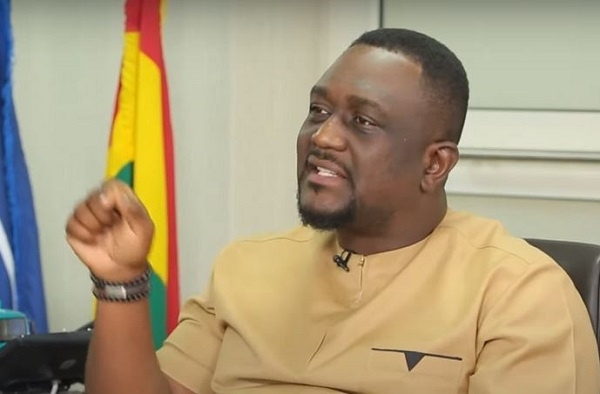
    Meanwhile, Ghana’s energy sector is facing another crisis as N-Gas Limited has formally notified the Volta River Authority (VRA) of its decision to halt gas supply to Ghana by March 6, 2025, due to unpaid arrears exceeding $75 million.

    In a letter to VRA’s Managing Director on Tuesday, February 18, N-Gas expressed frustration over the continuous delays in payment despite previous assurances. The company highlighted the ripple effect on its own operations, as it has been unable to pay its gas suppliers and transporters since November 2024 due to the mounting debt.

    “However, VRA’s action could soon result in gas supply and transportation reliability issues,” the letter stated.
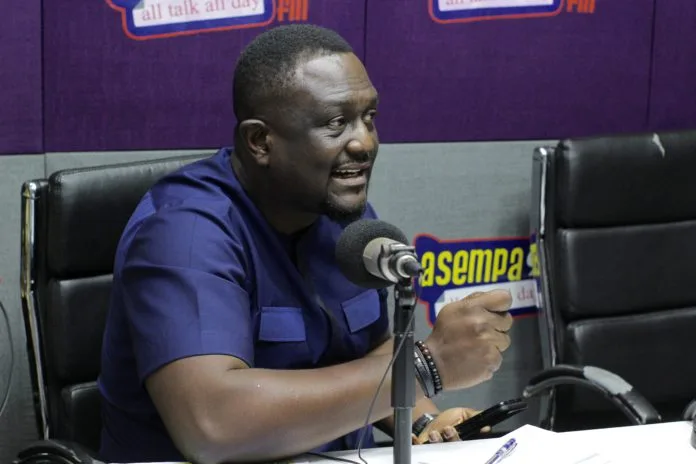
    N-Gas noted that VRA had failed to make a committed $25 million payment by February 21, 2025, nor had it met the stipulated conditions precedent, thereby violating the Takoradi Gas Sales Agreement (TGSA).

    Citing specific clauses in the contract, N-Gas outlined its intended course of action:

    “Remove the stay order on the SBLC call and proceed with calling on the Letter of Credit by Monday, 18 February 2025, and effective 6 March 2025, N-Gas shall cease further gas supply to VRA, in accordance with Clause 13.6(a) of the Takoradi Gas Sales Agreement, which provides for the cessation of gas supply in the event of non-fulfillment of payment obligations by Buyer.”

    To safeguard contractual agreements across the energy value chain, N-Gas has indicated it may require VRA to make one month of pre-payment before restoring supply.

    These developments raise serious concerns over Ghana’s energy security, as the potential suspension of gas supply could significantly affect power generation. With VRA depending on gas from N-Gas to fuel thermal power plants, the country may be forced to explore alternative energy sources to prevent widespread electricity disruptions.

  • Technology is the key to improving ECG’s efficiency – Dep. Minister-Designate for Energy

    Technology is the key to improving ECG’s efficiency – Dep. Minister-Designate for Energy

    Deputy Minister-Designate for Energy and Green Transition, Richard Gyan-Mensah, has underscored the role of technology in addressing inefficiencies at the Electricity Company of Ghana (ECG).

    During his vetting before Parliament’s Appointments Committee on Tuesday, February 25, 2025, he highlighted the need for advanced digital systems to improve ECG’s revenue collection, billing processes, and metering systems.

    According to Gyan-Mensah, excessive human involvement in ECG’s operations has contributed to recurring challenges. He advocated for increased automation to streamline processes and enhance efficiency.

    “I strongly support the view that technology should be employed to at least minimize human interferences in our processes.

    “I believe that once this is done, some of the challenges confronting ECG can be resolved,” he stated.

    His comments come amid growing concerns over ECG’s operational setbacks, particularly in revenue management and service delivery.

    By pushing for modernization, Gyan-Mensah aims to support broader efforts to create a more efficient and financially sustainable power distribution network in Ghana.

    If approved for the role, he is expected to prioritize technological advancements in the energy sector to ensure reliability and transparency.

  • ECG improves power challenges in Ashanti Region

    ECG improves power challenges in Ashanti Region

    The Electricity Company of Ghana (ECG) in the Ashanti Region has reported a significant improvement in power supply following the resolution of cable faults that had been causing outages.

    The Public Relations Officer for ECG Ashanti West, Benjamin Obeng Antwi, acknowledged persisting issues such as vandalism and illegal connections but assured residents that the company is committed to ensuring a stable electricity supply.

    He also called on the public to assist in protecting ECG’s infrastructure by reporting any acts of theft or interference.

    “One of the problems that we faced had to do with the transformer that was vandalised at the Adum central business district.

    “As we speak, we have rectified the problem and repaired the necessary equipment, and now our customers within that vicinity are enjoying a stable power supply.”

    “But we would like to admonish the public to help us fight against the damage of ECG power installations, which include cables, transformers, and other equipment.

    “This phenomenon is gaining daily momentum in the Ashanti region, and we want to call on all our stakeholders and the public to help curb this menace.”he urged.

  • Akufo-Addo-led govt increased electricity tariff in only 3 years of its tenure under IMF programme – Gideon Boako

    Akufo-Addo-led govt increased electricity tariff in only 3 years of its tenure under IMF programme – Gideon Boako

    Member of Parliament for Tano North, Dr. Gideon Boako, has chastised the government for citing the International Monetary Fund (IMF) programme as reason to increase electricity tariffs.

    Dr Boako in his remarks defended the Akufo-Addo administration’s handling of electricity tariffs, stating that the government only increased tariffs in three out of its eight years in office, despite managing an International Monetary Fund (IMF) programme inherited from the previous government.

    Speaking during an interview on Asempa FM, Dr. Boako compared the New Patriotic Party’s (NPP) record to that of the opposition National Democratic Congress (NDC), which, according to him, implemented consistent hikes during its tenure.

    “From 2009 to 2017, the 8 years NDC was in power, seven out of the eight years, they increased electricity tariff. The only year the NDC didn’t increase electricity tariff was 2009,” Dr. Boako emphasized.

    He argued that unlike the NDC, the Akufo-Addo administration managed the inherited IMF programme without frequent tariff hikes.

    “Under President Akufo-Addo, he came to inherit IMF programme under the NDC and that ended for him to also introduce another in the 8 years. But during the 8 years of President Akufo-Addo, out of the eight years, only three years did the NPP increase electricity tariff,” he stated.

    Dr. Boako outlined specific years under the current government where adjustments were made: “There was no increase in 2017, 2018…there was a reduction of 17.4%. In 2019, we increased by 17.5%. In 2020, we didn’t increase electricity tariff. 2021 and 2022, there was no increase. In 2023, he increased electricity tariff and in 2024, he didn’t by 6%.”

    He criticized claims suggesting the IMF had pressured the government into raising tariffs, saying, “So if you come and tell us that IMF says increase electricity tariff then you are not being truthful to Ghanaians.”

    However, data from Fact-Check Ghana presents a more comprehensive picture of Ghana’s tariff adjustments over the years. Since 2010, the Public Utilities Regulatory Commission (PURC) has conducted 29 tariff reviews—resulting in 11 increments and two decrements. The remaining reviews saw no changes in rates.

    Under the NDC administration, significant increases occurred, notably an 89% rise in electricity tariffs in June 2010, followed by another jump of 36% in water tariffs. While there was a reduction in early 2011, later that year witnessed further increases of 7% and 3%. In 2013, a proposed 78.9% hike led to national protests, eventually reducing the increment to 58.19%.

    The following years saw continued adjustments. In 2014 alone, electricity tariffs increased three times, while 2015 brought an overall surge of 90.93% across multiple reviews.

    During Akufo-Addo’s first term, electricity tariffs were reduced in March 2018 by 17.5% for households, with reductions applied at varying rates for other consumer categories. Although tariffs increased in 2019 by 11.7% in July and another 5.94% in October, the following year saw no increases, largely due to government subsidies during the COVID-19 pandemic.

    In 2021, there were no tariff hikes, aligning with Dr. Boako’s claims of limited increments during the NPP administration’s tenure.

  • We will have ‘dumsor’ the whole year unless ECG’s inefficiencies are fixed – IES

    We will have ‘dumsor’ the whole year unless ECG’s inefficiencies are fixed – IES

    Executive Director of the Institute for Energy Security (IES), Nana Amoasi VII, has cautioned that Ghana’s persistent power outages, widely referred to as dumsor, could continue through the end of 2025 if inefficiencies within the Electricity Company of Ghana (ECG) remain unaddressed.

    His remarks come in response to the resurgence of widespread intermittent power cuts, sparking fresh concerns about the reliability of the national electricity grid.

    Speaking on Eyewitness News on Friday, February 21, 2025, Nana Amoasi VII pointed to systemic challenges within the ECG, outdated infrastructure, and financial burdens affecting major players in the energy sector as key drivers of the crisis.

    He highlighted that Ghana’s electricity generation is currently under severe pressure, with demand often matching or surpassing available supply. He further explained that fuel shortages and forced maintenance shutdowns regularly render power plants inoperative, intensifying the strain on the already fragile distribution network.

    “Until the ECG fixes its inefficiency, collects enough of the revenue, and ensures that each participant within the energy sector gets a fair share of the revenue, we will continue to have this challenge,” he said. “This is because it will be difficult for the transmitter, GRIDCo, to invest in its ageing infrastructure, and even with ECG and its infrastructure, it is suffering.

    “It will be difficult for the power generator, be it public or private, to generate power because they also need to make some input into the power generation. There will be difficulty for WAPCo to continue supplying the natural gas. So, we are in a very uncomfortable state.

    “We know very well that we have these challenges, and until we address the inefficiencies in the ECG, I am sorry to say again that we will see dumsor till the end of the year,” Nana Amoasi VII added.

    The situation has worsened due to the government’s failure to settle a $75 million debt owed to N-Gas Limited, the company responsible for supplying gas to Ghana through the West Africa Gas Pipeline.

    During a visit to inspect scheduled maintenance works on the pipeline, Minister for Energy and Green Transition, John Jinapor, called for public patience as the government works toward stabilizing the power supply.

    He acknowledged that the lack of spare capacity within the country’s energy infrastructure remains a significant hurdle in resolving the ongoing outages.

  • Govt is not selling ECG – John Jinapor

    Govt is not selling ECG – John Jinapor

    The Minister for Energy, John Jinapor, has denied reports suggesting that the government intends to privatize the Electricity Company of Ghana (ECG).

    Speaking to the press during his visit to the West African Gas Pipeline Company in Tema, Jinapor clarified that the rumors are baseless.

    He emphasized that the ECG will not be sold but that the government aims to involve the private sector to boost operational effectiveness and ensure financial stability.

    “The news items, the publication and the commentary by some people who should know better that we are selling ECG. It’s not true; it will not be sold, but we want some private sector participation to bring about the high level of efficiency, reduce the losses, increase the revenue base so that we can pay for some of these bills we are talking about,” Mr. Jinapor stated.

    The Minister also highlighted the financial burden caused by inefficiencies within the energy sector. He expressed concern that funds intended for development are instead being used to clear debts owed to companies like the West African Gas Pipeline Company (WAPCo) and N-Gas.

    “The Minister of Finance under normal circumstances should not be taking the taxpayers’ money which could have been used for other development projects to pay WAPCo. But today we have to squeeze and take money from the budget to pay N-Gas for this $75 million. That could have been used for other developmental projects such as roads, hospitals and other infrastructure projects,” he noted.

    Mr. Jinapor reiterated that the government remains committed to boosting ECG’s operations, with a focus on involving the private sector to increase efficiency, reduce financial setbacks, and grow revenue.

    This discussion surrounding the future of ECG comes at a time when the energy sector is struggling with debt and financial concerns. The government stresses the need for reforms to maintain the sector’s long-term viability while safeguarding public interest.

  • Private participation would only aid revenue collection at ECG – Energy Minister

    Private participation would only aid revenue collection at ECG – Energy Minister

    Energy and Green Transition Minister, John Abdulai Jinapor, has dismissed rumours that the government intends to sell the Electricity Company of Ghana (ECG), clarifying that any private involvement would solely focus on enhancing revenue collection.

    Speaking on Asempa FM’s Ekosii Sen on Thursday, February 20, Mr. Jinapor stressed that the government’s aim is not privatisation but rather seeking partnerships to improve ECG’s operational efficiency, particularly in billing and collections.

    “We have not said we are selling ECG. Let no one misquote me. We are only seeking partnership in the distribution end vis-à-vis billing, collection activities of their work,” he stated.

    Highlighting the urgency of the move, the minister pointed out inefficiencies in ECG’s current system, sharing a personal experience to underscore the issue.

    “I’m telling you the truth that in my house, for three months they have not even collected the bills, and that is one of the issues we are trying to resolve,” he revealed.

    Mr. Jinapor assured the public that the government remains committed to strengthening ECG’s financial standing and operational capacity rather than pursuing privatisation.

    He called on Ghanaians to disregard false information and support efforts aimed at boosting revenue collection for improved nationwide service delivery.

  • Increasing cases of installation tampering causing power outages in Kumasi – ECG

    Increasing cases of installation tampering causing power outages in Kumasi – ECG

    The Electricity Company of Ghana (ECG) has attributed the recent power outages in the Ashanti Region, Kumasi to the increased cases of installation tampering within the area.


    Speaking to the media on Tuesday, Public Relations Officer for the ECG in the Ashanti West, Benjamin Obeng Antwi, noted that some unknown individuals deliberately destroying critical cables essential for maintaining a stable power in the region.


    He cited a recent incident that occurred on Monday at the Central Business District in Adum, where poles, transformers and cables were tampered with.


    According to him, this trend is severely affecting the operations of the power supply company, as well as causing significant disruptions for traders and business owners in the area.

    “There is a growing trend in the Ashanti Region which is affecting our operations and also our core mandate to deliver quality, reliable and safe electricity services to our cherished customers in the Ashanti Region. Largely the Greater Kumasi Metropolis. You will realize that some people have started vandalizing our installations like poles, transformers and cables, with the latest happening yesterday at Adum Central.

    “You know when you get to Adum, that is more or less a business hub in the Ashanti Region where we have lots of traders and individuals selling their wares over there.

    ” So yesterday our 500 kW transformer set in the central Business District in Adum was damaged by some individuals. We have reported the incident to the police. What happened was they took some fuses, they destroyed cables, plates and even some DPs were destroyed. So this affected our supply to customers within the Adum Business Centre,” he noted.

    He has urged Ghanaians to support efforts in apprehending the individuals responsible for these acts, emphasizing the importance of collective action in safeguarding the region’s power infrastructure.


    Certain areas of Kumasi have experienced extended power outages in recent weeks, with some communities left without electricity for over 24 hours.

    Many Ghanaians have linked the recent power fluctuations to ‘dumsor,’ a term commonly used in Ghana to describe power outages.

    Some have even suggested implementing a timetable to manage the supply more effectively.


    However, the Electricity Company of Ghana (ECG) has maintained that the current issues are not due to a power crisis, but rather the result of technical difficulties that are being addressed.