Tag: FDA

  • FDA urges public to inspect permit stickers at food joints

    The Food and Drug Authority (FDA) has advised the general public to check the street food vending permit stickers at different food establishments before purchasing prepared meals.

    The FDA claims that by doing this, even when food is produced or sold on the street, people will be eating nutritious food.

    Some of these food sellers, according to Rhoda Appiah, the Food and Drugs Authority’s public relations officer, do not operate under the sanitary standards mandated by the FDA, which is why the FDA issued the instruction.

    In its quest to ensure that food vendors are operating under the standards required by the FDA, the authority has directed all street food vendors and retailers of soft drinks and water to walk to the nearest municipal or district assembly for their street food vending permits.

    This will help the FDA regulate their way of operating, with a focus on how they cook, the environment in which they prepare the meals, the equipment they use, water, ingredients, and even the hygienic conditions of their workers.

    People will remember that the FDA recently shut down the Yellow Sisi Waakye restaurant in Oyibi after one person died and 40 other people were taken to the hospital with what might have been food poisoning.

    http://backend.theindependentghana.com/fda-warns-public-against-abuse-of-laughing-gas-at-nightclubs-parties/

    According to the FDA, an environmental assessment of the food preparation site located at Malejor and the three vending sites at Bush Canteen, Prison Joint, and Sharp Curve Joint revealed poor food handling practices that could have resulted in the contamination of the food, leading to the foodborne disease outbreak.

    Speaking on Atinka TV‘s morning show, Ghana Nie, Mrs. Rhoda Appiah said the FDA did not want what happened to repeat itself, hence the advice.

    She noted that it could be very dangerous to buy from food vendors without the FDA stickers.

    “We are not saying this to scare you, but when you go to a food vendor and she does not have the sticker, you need to be very careful because, for all you know, the vendor has decay in their fingernails and you will be eating their food.” But when you see the stickers on their table or on their carrier, then you are assured that the person has been verified and approved by the FDA before she prepared the meal for you. “We want people to understand that if the sticker is not there, then it is very dangerous,” she said.

    Source: Ghanaweb

  • It will be difficult to bounce back – Husband of Oyibi waakye seller laments

    It will be difficult to bounce back – Husband of Oyibi waakye seller laments

    Husband of a food vendor at Oyibi, Yellow Sisi Special Waakye, has lamented the impact a recent food poisoning incident will have on the operations of his wife’s business.

    The unnamed man speaking on condition of anonymity with Accra-based Citi News said the incident has left his wife traumatized and that he is unsure that the business will bounce back again despite being a major source of livelihood for his family.

    His wife, he said, haboured no ill intentions and would never had deliberately put people in harm’s way: “My wife can’t do anything bad to her family nor her customers because we eat the same food anytime it’s prepared.

    “My wife, one of her sales ladies and my daughter also reported to the hospital for treatment after eating the food. There is no way she will do anything to harm her customers,” he stated.

    The Food and Drugs Authority (FDA) confirmed in a statement that only one person died from the incident contrary to the earlier report that five people had died. They added that about 53 persons were hospitalized as a result.

    According to Citi News, the deceased man was the landlord of the parcel of land where the waakye joint is located at a place called Bush Canteen.

    The wife of the deceased told Citi FM: “my husband ate the food on Friday [January 20, 2023] and was subsequently rushed to the hospital a day after when he was pronounced dead after a short while.”

    The husband of the waakye seller also revealed that he had tried to get the landlord to seek medical attention to no avail.

    “All attempts by my wife to convince the landlord to seek medical attention immediately after the situation happened were not heeded.

    “It is very sad that the landlord passed. My wife did all she could to convince him to visit the hospital, but he declined. His death has left my wife and I disturbed but all we can say is sorry,” he added.

    Source: Ghanaweb

  • Only 1 person died from suspected food poisoning at Oyibi – FDA

    Only 1 person died from suspected food poisoning at Oyibi – FDA

    The Food and Drugs Authority has set the record straight over an alleged food poisoning incident which occurred at Oyibi. According to the FDA, only one person died contrary to reports that five people lost their lives from consuming the meal.

    This comes after the FDA embarked on an investigation after reports of suspected food poisoning at the popular ‘Yellow Sisi’ food joint at Oyibi.

    The Authority in a report released on Friday also revealed that a total of fifty-three people experienced symptoms of a foodborne disease after eating from the ‘Yellow Sisi’ eatery.

    “Investigations revealed that a total of fifty-three (53) people experienced symptoms of foodborne disease after consuming waakye or plain rice and tomato stew from a food vendor called Yellow Sisi located at Bush Canteen, a suburb of Oyibi. So far one (1) person has been reported dead, but the exact cause of death is yet to be confirmed,” the FDA said.

    The Authority has also suspended the operations of ‘Yellow Sisi’ until measures have been put in place to ensure that their activities are brought into compliance to prevent future occurrences.

    According to the FDA, its investigations revealed that poor food handling practices could have resulted in the contamination of the food.

    The victims including the waakye seller, popularly known as Yellow Sisi, and some of her family members were rushed to the Valley View Hospital, Oyibi Hospital, Dodowa Hospital and other facilities when they complained of severe stomach aches after they had eaten the food last week Friday.

    When the Daily Graphic team visited the area, it observed that the joint was quiet and the kiosk locked.

    Some shops close to the food joint were also closed as it is believed that the shop owners who also patronised the food that day and suffered the side effects, were also said to be receiving treatment in a hospital.

    Source: Myjoyonline

  • FDA warns public against abuse of laughing gas at nightclubs, parties

    The Food and Drugs Authority (FDA) has drawn the attention of the general public to the adverse effect the abuse of Nitrous Oxide gas, also known as laughing gas has on their health.

    Nitrous Oxide gas is used as a propellent and a preservative in the food industry and a medical anesthetic analgesic.

    The caution comes after the FDA observed the abuse of the gas at nightclubs and parties in the forms of balloons and canisters to induce euphoria and laughter.

    In a press statement dated January 24, the Authority noted that misuse of Nitrous Oxide gas is extremely hazardous to the health of individuals as it increases the likelihood of suffering from blood pressure, heart attack and anaemia.

    “Abusers of Nitrous Oxide gas are also prone to the risk of suffocating and loss of consciousness,” the statement added.

    Long-term recreational abuse of Nitrous Oxide gas could also compromise the immune system, mental and neurological disorders (hand and foot numbness and limb spasms), depression and incontinence.

    The FDA has therefore admonished nightclubs, pubs and party organizers to desist from the inappropriate use of Nitrous Oxide gas in their facilities.

    The public has also been urged to promptly report to the Authority on the abuse of Nitrous Oxide gas.

    Meanwhile, the FDA has said it is collaborating with other relevant stakeholder agencies to address the emerging safety concerns.

    “In the meantime, the” FDA assures the public of its commitment in ensuring public health and safety through continuous public education, engagement and sensitization of the public on the risks of substances of abuse,” the statement added.

  • We won’t backtrack ban on celebrities advertising alcohol – FDA

    The Food and Drug Administration (FDA) has provided justification for its order prohibiting celebrities from promoting alcoholic beverages within the nation.

    Some celebrities have filed a lawsuit against the FDA, saying that the agency’s order has prevented them from earning money from another source.

    However, in response, Dr. Olivia Boateng, Head of the FDA’s Tobacco and Substance Abuse Department, said that their guidance is a part of attempts to safeguard children from being lurred into alcoholism.

    She continued by saying that celebrities should consider the health effects on young people who look up to them rather than just their financial rewards.

    “Evidence has it that when celebrities advertised these brands, the young ones are lured or motivated into using these things. Celebrities are only thinking about the financial gains but on a larger scale, our public health issues should rise above that.”

    Many people involved in the creative sector, including Wendy Shay, Shatta Wale, Brother Sammy, Kuami Eugene, and Camidoh, had spoken out against the law before this lawsuit and urged decision-makers to abolish it.

    Mark Darlington Osae, the plaintiff and a music publisher at Perfect Note Publishing, submitted a writ of summons on November 11, 2022, alleging that the FDA’s 2015 regulations discriminate against the creative arts sector.

    The FDA regulation that said “no well-known personality or professional shall be employed in alcoholic beverage promotion” is in conflict with and in violation of sections 17(1) and 17(2) of the 1992 Constitution, according to Mark, who is the Chairman and Co-Founder of Ghana Music Alliance.

    The 1992 Constitution’s Articles 17(1) and 17(2) ensure equality before the law and forbid discrimination against people based on their social or economic position or occupation, among other things. These provisions are thus invalid and unenforceable.

  • Reggie ‘N’ Bollie’s manager sues FDA, AG over celebrity alcohol ad ban

    Mark Darlington Osae, the manager of Reggie ‘N’ Bollie and Skrewfaze has dragged the Food and Drugs Authority (FDA) and the Attorney General, Godfred Yeboah Dame to court over the ban on celebrities from advertising for alcoholic beverages.

    The FDA’s directives bar the use of celebrities in plugging alcoholic beverages.

    This according to the Authority is to protect minors from being influenced by celebrities into alcoholism.

    Prior to this suit, a lot of stakeholders in the creative industry including, Wendy Shay, Shatta Wale, Brother Sammy, Kuami Eugene, and Camidoh, had spoken against the law and had called on powers that be to repeal it.

    On November 11, 2022, the plaintiff, Mark Darlington Osae, also a music publisher at Perfect Note Publishing, issued a writ of summons, saying the FDA’s 2015 regulations are discriminatory against the creative arts industry.

    Mark, who is the Chairman and Co-Founder of Ghana Music Alliance, says the FDA directive which ordered that, “no well-known personality or professional shall be used in alcoholic beverage advertising,” is inconsistent with and in contravention of articles 17(1) and 17 (2) of the 1992 Constitution.

    Articles 17(1) and 17 (2) of the 1992 Constitution guarantee quality before the law and prohibit discrimination against persons on grounds of social or economic status, occupation, among others, and consequently null, void, and unenforceable.

    In February 2017, Mark Darlington led his artistes, Reggie ‘N’ Bollie, to sue Fan Milk Ghana Limited for using their song titled ‘New Girl’ for commercial purposes without their consent.

    See the writ of summons below:

  • FDA clears chicken, other meat imports ahead of Christmas

    Ahead of the Christmas festivities, the Food and Drug Authority (FDA), has cleared imported chicken and other meat products, as healthy for consumption. 

    In a four paged document debunking claims of imported chicken and other products are detrimental to the health of consumers, the FDA indicated that all products imported undergo rigorous testing to ensure their safety for consumption before they are released onto the market.

    This follows the publication of a news article purporting that “some of the chicken and other meat products imported into the country appear to have been slaughtered many years back, with most having been injected for preservation purposes, and with the likelihood of dire health implications high, including cancer.”

    The said publication is attributed to the Agribusiness Sector of the Association of Ghana Industries (AGI), specifically the Vice Chair of the AGI-Agriculture Sector, Fatima Alimohamed.

    The story further claimed that “the situation is dire, and Ghana must move quickly to curtail the growing import of likely cancer-infested chicken and meat onto the local market”.

    However, the FDA has refuted all these claims. 

    “The FDA assures the public that chicken and other meat products that are cleared from the ports by the FDA for ‘the Ghanaian market are taken through internationally accredited protocols and procedures that ensure the safety of ‘these products. 

    “These processes include evaluation of documents such as the Certificate of Analysis with detailed test results, Veterinary Certificate from the country of origin, and Veterinary Import Permit from the Veterinary Services Department of Ghana,” the FDA added. 

    Further, the FDA indicated that it has a mini laboratory at the Tema Port to perform testing of meat products before release.

    In addition, the FDA performs thorough inspections on each consignment that arrives at the ports to ascertain the product’s compliance with food safety standards. 

    “Specifically, each consignment is checked for discolouration and odour, packaging integrity. Where necessary, confirmatory microbiology tests for the absence of microorganisms such as salmonella and listeria are conducted before the products are released onto the market. Any consignment found to be unwholesome is subjected to the requisite regulatory procedures, including safe disposal and sanctioning of the importer,” FDA added. 

    With the aforementioned bureaucracy governing the process of importing frozen foods, the FDA could not fathom out the reason behind the said publication. 

    “Moreover, importers of regulated products are required to register those products in accordance with Section 99 of the Public Health Act. 851 …”

    “The Authority hereby reassures the public that the health and safety of the citizenry is a priority for the Authority and would continue to work assiduously throughout this Christmas season and beyond to ensure that only safe and nutritious foods are sold on our markets.

    “Consumers are also encouraged to immediately bring to the notice of the FDA any observation of an instance of contaminated or spoiled food or expired chicken or other meat products that comes to their notice,” the FDA added. 

    Source: The Independent Ghana

  • FDA warns public against unregistered weight loss regimen on market

    The Food and Drugs Authority (FDA) has issued an alert to Ghanaians about a weight loss product that has proven unsafe through testing.

    The FDA has determined that, Ascot Diet weight loss products produced by the Ascot Diet Clinic, do not meet FDA approval standards and may cause severe side effects on patrons who use them.

    “The FDA wishes to inform the public that Ascot Diet weight loss products, produced by the Ascot Diet Clinic have not been registered by the Authority and its use could cause severe allergic reactions..,” the FDA declared in a statement dated October 28, 2022.

    Ascot Diet involves the use of injections, appetite suppressants, and a meal plan for weight loss.

    According to the FDA, the use of such products could cause severe allergic reactions like “itching, hives, shortness of breath, wheezing, swelling of the tongue, throat, or mouth, stomach cramps, nausea.”

    Consumers may also suffer from “diarrhoea, dizziness, or faintness due to the sudden boost in minerals and nutrients.”

    The FDA has thus advised members of the public to desist from patronizing medicinal products that are not registered, as their safety, quality, and efficacy cannot be guaranteed.

    The FDA warned that those who put such products on the market would face harsh penalties if discovered because “Sections 99 and 118 of the Public Health Act, 2012, Act 851 prohibit the importation and sale of unregistered products.”

    Meanwhile, the FDA has encouraged everyone to work with the agency and report any unregistered regulated products on the market.

    The FDA, an agency under the Ministry of Health, is mandated under the Public Health Act, Act 851 to provide and enforce standards for the sale of food, herbal medicinal products, cosmetics, drugs, medical devices, and household chemical substances.

    In executing its responsibilities, the FDA has halted the provision of some products to the market.

    In mid-October this year, the Authority warned the public about some two tainted sausage brands; AIA Wudy and Pavo, which reportedly contained listeria bacteria, which causes fever and diarrhoea.

    The Authority also confiscated and destroyed some inferior and unapproved medications worth GH¢10 million on the market.

    2,600 bottles of bynillin nicotine, 100 cartons of Postinor-2, a female oral contraceptive, cosmetics, medical equipment, Chinese herbal remedies, and certain aphrodisiacs were listed among the seized items.

    Source: The Independent Ghana

  • FDA raises red flag over contaminated sausages

    The Food and Drugs Authority (FDA) is cautioning the general public against the consumption of AIA Wudy and Pavo sausages.

    This comes after the products, produced by Agricola Tre Vali, were recalled by Italian authorities due to the presence of Listeria bacteria in these sausages made from poultry meat.

    Two batches with codes 1785417 and 01810919 with an expiration date of November 30, 2022, are implicated.

    According to the FDA, following the recall activities ongoing in Europe and other countries, it has also conducted a market surveillance activity and Pavo Frankfurt sausages with an expiry date of November 2022 were found in Ho in the Volta Region.

    The products have since been detained for safe disposal. So far, no AIA Wudy sausages have been found on the Ghanaian market.

    The FDA has however directed that anyone in possession of the above-mentioned products should immediately take them to either their Head Office or Regional Offices across the country.

    “The FDA wishes to assure the public that its surveillance teams continue to monitor the markets for any of the above-mentioned products,” it concluded.

    Listeria infection is a foodborne bacterial illness that can be very dangerous for pregnant women, people older than 65 and people with weakened immune systems.

    It’s most commonly caused by eating improperly processed deli meats and unpasteurised milk products.

    Healthy people rarely become ill from listeria infection, but the disease can be fatal to unborn babies, newborns and people with weakened immune systems.

    Prompt antibiotic treatment can help curb the effects of listeria infection.

    Listeria bacteria can survive refrigeration and even freezing. So people who are at higher risk of serious infections should avoid eating the types of food most likely to contain listeria bacteria.


  • FDA seizes and destroys subpar pharmaceuticals worth GH¢ 10 million

    The Ghana Food and Drugs Authority (FDA) has reportedly confiscated and destroyed inferior and unapproved medications worth GH¢10 million on the market.

    2,600 bottles of bynillin nicotine, 100 cartons of Postinor-2, a female oral contraceptive, cosmetics, medical equipment, Chinese herbal remedies, and certain aphrodisiacs were listed among the seized items.

    According to FDA’s Head of Intelligence, Mr Vigil Edward Prah-Eshun, the drugs brought from China were seized because they had not been registered and approved by the Authority.

    “The seized postinor 2 came in separate consignments, the packaging material was separated from the packaging itself, an indication that the person was determined to manufacture the products here in Ghana,” he said.

    Mr. Prah-Eshun, further assured that the Authority will ensure that medicines on the market are safe for consumption.

    “By this seizure, we want to make it known to the public that we are interested in protecting public health and still working and not sleeping on the job. We thank the public who continues to alert us on some of these issues,” he assured.

    He, however, implored the public to verify the validity and expiration dates of products before making the decision to purchase them.

    Following the confiscation of medications, the FDA officer revealed that the prosecution of some 10 people had begun after some drugs were impounded at Okaishie in Accra.

    The FDA exists to ensure the safety, quality, and efficacy of human and veterinary drugs, food, biological products, cosmetics, medical devices, household chemical substances and clinical trials, and the control of tobacco products through the enforcement of relevant standards to protect public health.

    It has been awarded World Health Organization (WHO)-Prequalified Quality Control Laboratory (QCL) Status.

    With this achievement, the FDA is now the only drug regulatory agency within the ECOWAS sub-region to be recognized internationally as a competent institution that can test medicines and medical products under the auspices of the WHO, making Ghana’s FDA a centre of excellence in West Africa.

    Source: The Independent Ghana

  • Food-borne Diseases: 36 dead, over 1,900 affected between 2013 and 2021

    A total of 1,914 Ghanaians have suffered from various forms of food poisoning between the years 2013 and 2021, according to the Food and Drugs Authority (FDA).

    Out of this figure were 60 cases of food-borne disease outbreaks, with a total of 36 deaths.

    Food-borne diseases are caused by contamination of food and occur at any stage of the food production, delivery, and consumption chain.

    According to the Chief Executive Officer of FDA, Mrs Delese M. Darko, surveillance of food-borne diseases was becoming an increasingly high priority on the public health agenda in many countries.

    “And such surveillance helped estimate the burden of food-borne diseases, assess relative impacts on health and economics, and evaluate prevention and control programmes,” she stated.

    She made the observation at a two-day training workshop on the implementation of an integrated Food-borne Disease Surveillance System and Food Safety Emergency Response Plan (FoSERP).

    The template addresses the goal of enhancing the protection of the country’s agricultural industry and food security through increased prevention, detection, response, and recovery planning.

    Food safety continues to be a major concern worldwide. World Health Organization (WHO) estimates that 600 million people, almost 1 in 10 people fall ill after eating contaminated food each year, resulting in 420 000 deaths and the loss of 33 million healthy life years

    Ghanaians who suffered from food poisoning in a pilot project conducted in 2015 reported different illnesses such as viral hepatitis, cholera, dysentery, typhoid fever and other foodborne diseases.

    From 2016 to 2018, there have they retrieved the remains of the lady.

    Meanwhile, the deceased’s remains have since been exhumed and deposited at the Cape Coast been a total of 29 reported foodborne outbreaks in Ghana, with a total of 852 persons affected and 19 deaths. Out of the 29 outbreaks, 2018 had the highest number of 14 outbreaks and the highest number of deaths with 11 people recorded.

    To address the trend, the FDA has called for effective collaboration to ensure surveillance and prompt food-borne disease outbreak response across the country.

    The training was to discuss issues concerning food-borne diseases in Ghana and the need to keep appropriate data on food-borne diseases.

    Mrs Darko emphasised the importance of early outbreak detection and response as a key information source for risk assessment and, more broadly, for risk management and communication.

    The CEO said changes in food production and distribution methods were making food safety a critical and fundamental component of public health.

    “The Ghana Health Service (GHS) in 2019 reviewed the 2nd Edition of the Integrate Disease Surveillance and Response In Ghana (IDSR) to incorporate the surveillance of food-borne diseases.

    “The 3rd Edition of the IDSR provides for a harmonised, systematic data collection process for food-borne diseases and also makes it a core function for the Disease Surveillance Officer (DSO) of the GHS to collect data and report on foodborne diseases,” the CEO stated and commended the initiative.

    Mrs Darko said that, taking a cue from that, the FDA in 2021 spearheaded the development of a Food Safety Emergency Response Plan (FoSERP), which outlined how food safety emergencies, including food-borne disease outbreaks, were to be addressed in a coordinated manner.

    “The implementation of these two documents makes it imperative for this training today,” she added.

    Mrs Joycelyn Adelaide N.K Egyakwa-Amusah, Head, Food Safety Coordination and Consumer Education Department, FDA, said the need for collaboration was

    important as it would enable Ghana to meet the Joint External Evaluation (JEE) requirements for food safety whiles enabling compliance with the International Health Regulations (IHR).

    The training, which was held in collaboration with the Ghana Health Service (GHS) saw Public

    Health and Disease Surveillance Officers selected across the country participating.

    Participants were taken through an overview of Integrated Disease Surveillance and Response in Ghana, Food-borne disease surveillance, data collection and reporting, handling food safety

    emergencies, electronic data capturing and transmitting; and food-borne disease outbreak investigations-environmental assessment.

    Source: The Indenpendent Ghana

  • Disregard videos on alleged plastic rice, they are false FDA

    The Food and Drugs Authority (FDA) has asked the public to disregard videos circulating on social media, the content of which is purported to be plastic rice, on the Ghanaian market.

    The Authority in a statement noted that the content of videos circulated on social media are false.

    FDA explained that “in 2017, the FDA based on these videos, investigated the claims and issued a press statement denying the existence of plastic rice. As part of that investigation, and through our nationwide market surveillance activities, the Authority obtained random samples and subsequently requested members of the public to assist our investigations by either submitting samples of the alleged plastic rice or giving information about where they could be found.”

    Source: MyJoyOnline.com

  • East Legon Marwako closed down over food poisoning allegations

    The Food and Drugs Authority (FDA) has closed down Marwako Restaurant’s East Legon branch, after some customers reported food poisoning over the weekend.

    Multiple Twitter users, including one Edward Elohim, reported of the same symptoms after visiting the eatery over the weekend.

    Edward Elohim says that he is one of 70 patients being treated at Nyaho Clinic following a meal at Marwako.

    Following these, FDA together with “relevant agencies” have decided to examine the allegations.

    The Authority has therefore assured all affected persons and the general public, of their intent to extensively scrutinize the matter and take the needed actions to avoid future occurrence.

    Meanwhile, Marwako’s management has failed to respond to the situation, which has many Ghanaians concerned.

    Source: theindependentghana

  • Indomie Instant Chicken Noodles is not a registered project in Ghana – FDA

    The Food and Drugs Authority (FDA) has disclosed that Indomie Instant Noodles (Chicken Noodles) with the inscription “Ladha Ya Kuku”, is not a registered product in Ghana.

    They disclosed this in a press statement dated May 10th, where they cautioned the public on the potential dangers of patronizing the said product.

    The FDA issued this warning due to the product’s suspected presence of high levels of aflatoxins and pesticides.

    The Authority stated that the only Indomie Instant Chicken Noodles registered in the country are manufactured locally or imported from Nigeria on occasion.

    They then assured citizens that all registered Indomie Instant Chicken Noodles products go through a rigorous process that includes aflatoxins and pesticide residue testing before receiving market authorisation.

    Therefore, in compliance with their mandate to protect public health, the authority has taken samples of registered Indomie products from manufacturing facilities around the country for testing at the Centre for Laboratory Services and Research to further public safety.


    Read the full statement of the FDA below:

    Source: backend.theindependentghana.com 

  • Unwholesome chicken sale in Kumasi, Environmental Health Officers on high alert

    The Kumasi Metropolitan Assembly (KMA) has said its Environmental Health Department has doubled its effort to clamp down on the sale of any unwholesome food product on the market following the discovery of 15 cartons of rotten chicken meant for sale to the public.

    The Public Relations Officer of KMA, Henrietta Afia Konadu, said the Food Hygiene Unit, of the Environmental Health Department plans on conducting a thorough search on cold storage facilities in the metropolis, to see if there are any unwholesome food products being sold for public consumption.

    The development follows the arrest of two persons by KMA Metro guards when they attempted to cart 15 cartons of unwholesome chicken at Adakwame Lorry Station around Mbrom, in the Kumasi Metropolis.

    The rotten chickens were being transported by one Abiba and is believed was intended to be smoked or roasted for sale within Asuofua, Adakwame and Kejetia environs. One of the alleged suspects, Abiba has since led the Environmental Health Officers at KMA to arrest the operator of the cold store at the Asafo Market, where some more rotten chickens were discovered. The two have been sent to the Ridge Police Station for further investigations.

    Meanwhile, according to the Public Relations Officer of KMA, the Police officers handling the case have said the suspects are being processed for court, while investigations continue to find out if there are more rotten chickens from the source where the products were transported to the cold store.

    Speaking in an interview with the B&FT, the Deputy Director in charge of Public Health, in the Ashanti Region, Dr. Michael Rockson Adjei, noted that the consumption of wholesome products can lead to death among other health risks.

    The consumption of unwholesome food products, processed or raw, results in food poisoning due to bacteria infestation, of the contaminated food item. This makes the food products detrimental to human health when it is consumed.

    Dr. Michael Rockson Adjei also said: “the other side is that there is loss of nutritional value, as the food goes bad. Should one even escape the acute outcome like death or diarrhoea or the other effects, you may not benefit nutritionally.”

    He therefore cautioned that while there are agencies like the Food and Drugs Authority, as well as the local assemblies that have the mandate to ensure that only healthy food products are allowed on the markets, the public should also be mindful of what they buy. “Individuals have their own duty to protect themselves while the regulatory agencies and assemblies continue to do their job.”

    He entreated the public to pay attention to expiry dates on food items sold on the market as well as being mindful of the environment where they purchase or patronize cooked and uncooked foods.

    Source: thebftonline.com

  • Dont patronize unwholesome food – FDA urges public

    The Food and Drugs Authority (FDA), has urged the public to be mindful of the quality of food they patronize on the market to avoid consuming contaminated foods.

    They should also avoid food sold in unhygienic environment as well as those displayed on the bare grounds for their own safety and also discourage such vendors from exposing their customers to danger.

    Mrs. Nora Narkie Terlabie, the Ashanti Regional Director of the FDA who made the call, said vigilance on the part of consumers was critical to ensuring food safety.

    She was addressing the media in Kumasi as part of activities marking World Food Day, which was globally celebrated on June 7 to draw attention to the health consequences of contaminated food and water.

    The day is celebrated annually to spread awareness, detect and prevent foodborne risks, contributing to food security, human health, economic prosperity, agriculture, market access, tourism and sustainable development.

    According to the United Nations (UN), an estimated 600 million cases of foodborne illness is recorded annually, making unsafe food a threat to human health and economies, disproportionally affecting vulnerable and marginalized people especially women and children.

    “Safe Food Today for a Healthy Tomorrow” is the theme for the 2021 celebration and focused on production and consumption of safe food and its immediate and long-term benefits for people, the planet and the economy.

    It is in line with this that the FDA had been embarking on series of public engagements to create awareness on food safety to prevent needless foodborne diseases in the country.

    In the Ashanti Region, the FDA had been engaging market women, schools, the media and other identifiable groups on the need to handle food hygienically in the interest of public health and safety.

    Mrs Terlabie said every Ghanaian in the food value chain especially consumers had a role to play in proper handling and preservation of food and expressed concern about how some vendors and market women handled food meant for public consumption despite consistent education by the FDA and environmental health workers for them to do the right thing.

    She said it was important for all actors in the food value chain to prioritise the health of the final consumer and desist from practices that could compromise the health of the consumer.

    The Regional Director bemoaned the application of pesticides by some farmers few days before harvesting their crops, thereby ignoring the harmful effect it could have on consumers.

    Keeping food safe both at home and for public consumption, she noted, must not be compromised for any reason and urged Ghanaians to pay attention to the food they consume for a healthy living.

    Source: GNA

  • Were not recruiting – FDA

    The Food and Drugs Authority has said it has not put out an advertisement for recruitment or appointed any agency to conduct recruitment on its behalf.

    The authority in a statement noted that all vacancies will be published only on its website and the national dailies and application for employment can only be addressed to the FDA and no other agency.

    The FDA has, therefore, cautioned the public against such fake recruitment claims and advertisements and must not be lured into the payment of any form of facilitation fees for this purpose.

    Read the full statement below

    FOR IMMEDIATE RELEASE:

    17th May 2021

    DISCLAIMER FOOD AND DRUGS AUTHORITY RECRUITMENT

    The Food and Drugs Authority wishes to state for the records that it has not put out any advertisement for recruitment or appointed any agency to conduct recruitment on its behalf

    The public is to note that all announcements of vacancies will only be published on its official website and the national dailies and applications for employment can only be addressed to the FDA and no other agency. The public is therefore being cautioned against any such fake recruitment claims and advertisements and must not be lured into the payment of any form of facilitation fees for this purpose.

    Persons who choose to engage in such fraudulent activities do so at their own risk. The public is hereby warned.

    All concerns and questions arising out of this publication as well as any other FDA regulated product can be directed to the FDA on the following contacts.

    FDA, Your Well-being. Our Priority.

    DELESE A A DARKO (MRS)

    CHIEF EXECUTIVE OFFICER

    Source: classfmonline.com

  • FDA begins lab investigations into washed-ashore fish; cautions public against consumption

    The Food and Drugs Authority (FDA) has indicated that it has begun laboratory investigations to find out whether fish washed ashore at the Osu Castle beach are good for consumption or not.

    A statement issued by the Authority noted that “The FDA in collaboration with other state agencies have been engaged in investigating and addressing the matter of various species of fishes washed ashore on some beaches since Friday, 2nd April 2021.

    “While laboratory investigations are ongoing, the Authority warns the general public to desist from consuming the fish washed ashore in view of the potential risk to health and safety.”

    Some fish were found along the shores of the Osu Castle beach on Friday.

    Also, over 80 large fish were washed ashore at the Axim-Bewire beach in the Nzema East Municipality on Sunday, 4 April 2021.

    The FDA further stated that inspection teams have been dispatched to fish markets including the Osu Mandela market in the Korle-Klottey Municipal Assembly. to prevent the washed-ashore fish from entering into the food chain, FDA

    The Authority has also intensified its public education and sensitisation on quality parameters and signs of contamination of fish in the fishing communities and fish markets.

    FDA regional offices along the coastline in the Central and Volta regions have also been alerted and are replicating similar efforts in towns along the coast.

    The FDA further advised the general public “to be guided by the freshness of the eyes and redness of the gills of fish that they seek to purchase.

    “The washed-ashore fish typically show signs of popped out and unclear eyes, dull colouration of gills, bloating around the abdominal areas and/or possible oozing of foul scented fluids”.

    “The public is hereby advised to report all suspected cases of possession or selling of these washed-ashore fishes to the FDA or local authorities. The consuming public is also cautioned to be wary of both fresh and recently smoked fish which are being sold at unusually low prices”, the statement added.

    Source: Class FM

  • FDA issues alert on contaminated pet foods

    The Food and Drugs Authority (FDA) has informed the general public about the recall of various brands of Pet Foods manufactured by Midwestern Pet Foods, Indiana in the United States of America.

    The FDA in a statement noted that the products were recalled because they contain high aflatoxin contamination which caused the death of 70 dogs and illnesses in some 80 other dogs.

    The products are Pro Pac Originals, Sportmix, Splash Pet Food, Sportstrail Pet Food, and Nunn Better Dry Dog and Cat Foods.

    The FDA has therefore asked persons in possession of these products to return them to the importer, place of purchase, or any of the FDA offices nationwide.

    Read the full statement below


    Source: rainbowradioonline.com

  • Hydrogen peroxide in short supply due to panic buying FDA

    A joint monitoring by officers of the Pharmacy Council (PC) and the Food and Drugs Authority (FDA) has revealed a shortage of hydrogen peroxide in pharmaceutical facilities due to panic buying.

    The FDA and PC in a joint statement said this has given rise to the sale of fake and substandard hydrogen peroxide on the market.

    Pharmacies and Over the Counter Medicine Shops have been cautioned to always buy their stocks from licensed wholesalers and manufacturers.

    The public has also been reminded to purchase only Food and Drug Authority approved hydrogen peroxide and other medicinal products and be on the lookout for the mandatory FDA registration numbers on such products if they are manufactured in Ghana.

    Hydrogen peroxide is a mild antiseptic used on the skin to prevent infection of minor cuts, scrapes, and burns. It may also be used as a mouth rinse to help remove mucus or to relieve minor mouth irritation (e.g., due to canker/cold sores, gingivitis).

    Source: Class FM

  • FDA denies approving coronavirus vaccine

    The Food and Drugs Authority (FDA) has said it has not approved any vaccine for the coronavirus infection in the country.

    The FDA in a statement signed by the Chief Executive Officer, Delese A.A. Darko on Tuesday, January 12 said that some unscrupulous members of the business community are peddling information on the sale of COVID-19 vaccines to hospitals and other health facilities.

    “The information is ostensibly to inform the general public of the availability of these vaccines from well-known pharmaceutical brands indicating their price ranges.

    The general public is hereby cautioned against the patronage of such vaccines since the FDA has not yet approved any COVID-19 vaccine for use in Ghana.

    “In view of the above, the FDA wishes to inform all health facilities and the general public that, peddling of such information contravenes Section 118 of the Public Health Act 2012, Act 851 and constitutes a very serious offence.

    “The Authority wants to assure the general public that it remains committed to protecting the health and safety of consumers.

    “To this end, it monitors social media and online activities pertaining to the products it regulates; therefore, anyone caught dealing with unregistered COVID-19 vaccine will be sanctioned in accordance with the provisions of Section 129 of Act 851, which includes a fine of up to GHC 180,000 or to a term of imprisonment of up to 25 years or both.

    “Please note that when the COVID-19 vaccine is approved for use by the FDA in Ghana, the Ministry of Health will issue a national policy on the use of COVID-19 vaccines throughout the health sector.”

    Source: 3 News

  • FDA cautions radio stations against advertisement of sexual enhancement drugs

    Radio stations in the Ashanti Region have been warned against the advertisement of sexual enhancement medicines on their platforms.

    The warning by the regional branch of the Food and Drug Authority (FDA) follows the continuous flouting of the directive laid down by the regulatory body by some radio networks.

    According to the Head of the Ashanti Regional FDA, Nora Narkie Terlabie, radio stations who use their network for such advertisement risk facing the law.

    “The FDA has cautioned several media houses to stop this lawlessness but they seem not concerned… the law is clear, sexual enhancement drugs cannot be advertised on radio in the country, but sadly some radio stations continue to flout this simple rule,” said Madam Nora Terlabie.

    The directive does not only apply to radio stations in the Ashanti Region alone but all other radio stations in the country.

    Most radio stations in the country have been found guilty of using their channel for the advertisement of sexual enhancement drugs despite the FDA directive that frowns on it.

    Source: www.ghanaweb.com

  • Avoid buy one, get one free adverts this yuletide – FDA

    Mr Gordon Kwabena Akurugu, Volta Regional Director of Food and Drug Authority (FDA) has cautioned the consuming public against buy-one-get-one-free enticement adverts in the yuletide.

    He said the alarming adverts usually failed to satisfy standards and quality measurement and alteration of expiry dates to deceive unsuspecting consumers and urged them not to fall to the fraudulent schemes.

    Mr Akurugu, who made this known at the 2020 FDA Volta Regional Office Carol Service disclosed that consumers needed to consciously patronise products from accredited outlets for safe foods and drugs to avoid buying substandard goods with public health issues and complications.
    “Buy your goods including foods and drugs from approved joints and be careful about buy-one-get-one-free marketing syndrome.”

    He said FDA was pursuing a regulatory paradigm shift by taking the Authority closer to its clientele.

    The Regional Director said FDA also programmed what it calls “Progressive Licensing Scheme,” which aimed at targeting consumers to purchase goods and services registered “Made in Ghana” products found on all shopping shelves and retail shops.

    Mr Akurugu underscored the importance of the Authority in the run-up to the start of trading under the African Continental Free Trade Area (AfCFTA) agreement from January 1, next year, assuring that the country would not be a dumping ground for substandard, falsified and unwholesome products.

    “We will ensure their safety, quality and efficacy.”

    He said the Volta region remained a key strategic partner to the operations of the FDA due to the many approved routes that lead into the jurisdiction and continue the play its Constitutional mandate.

    He noted the strong collaboration among sister state agencies, Commands of Custom, Excise and Preventive Service, National Intelligence Bureau, Ghana Police Service, Ghana Standards Authority, Narcotics Control Board, the Pharmacy Council and the media, which made it possible for the Volta office to excel.

    He said despite the challenges brought by the COVID-19 pandemic the Authority performed creditably and optimistic 2021 would come with greater opportunities for FDA and thanked staff for their support.

    Source: GNA

  • FDA organises training for pre-packaged food, sachet water producer

    The Food and Drugs Authority (FDA) has organised a training programme for pre-packaged food and sachet water producers in the Upper West Region on regulations regarding food manufacturing such as record keeping and personal and environmental hygiene.

    The 85 participants from 58 pre-packaged food and sachet water campanies from the Wa, Jirapa, Nandom and Lawra Municipalities, Lambussie, Nadowli and Daffiama-Bussie-Issa Districts were encouraged to ensure proper documentation and records keeping at the companies.

    The FDA was to also organise a similar programme for producers in the Sissala enclave.

    Mr Albert Ankomah, the Upper West Regional Head of the FDA, addressing participants at the training in Wa, noted that the training was necessitated by the non-compliance among some producers in the Region, which the FDA observed during its monitoring activities.

    “During our monitoring, we realised that some of these companies were not documenting their activities among other non-compliance that we observed, like personnel not dressing properly when they are on the production floor.

    “So we decided to call for the training programme to educate them on some of these good manufacturing practices that they are supposed to adhere to,” he explained.

    Mr Ankomah indicated that the FDA found it difficult to recall produce from the market when the need be due to lack of proper documentation of information such as batch number.

    He explained that records keeping were very important because it helped in traceability, as well as helped the manufacturer in terms of legal and regulatory issues.

    Other areas the training centred on were causes and prevention of food contamination, standard operation procedure development, pest control, waste management, equipment management and cleaning among others.

    On his part, Mr Mahammed Abdul Moomin, the Upper West Regional Manager, National Board for Small Scale Industries (NBSSI), told participants that regulatory bodies such as the FDA had come to help them sustain their businesses and not to collapse them.

    He, therefore, urged business operators to cease the training opportunities organised by the FDA to enable them acquire necessary regulatory knowledge to operate effectively and efficiently.

    Mr Moomin also observed that records keeping in business could help the business operator to access credit and funding from institutions to support their businesses.

    Mr Kwadwo Blay, the acting Upper West Regional Director, Ministry of Trade and Industries, said the Ministry was working to create an enabling environment for Ghanaian producers to export their produce.

    He encouraged the producers to take advantage of the Africa Intercontinental Free Trade Area to boost their businesses.

    Source: GNA

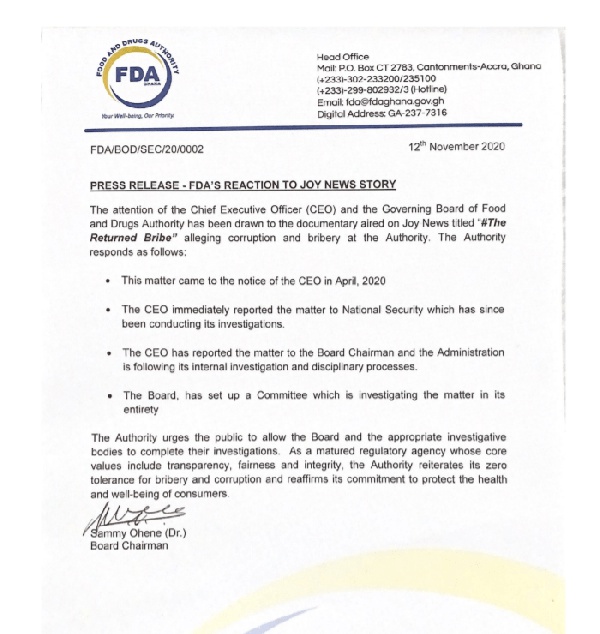
  • Were investigating CEO over bribery allegation – FDA

    The Food and Drugs Authority (FDA) has issued a statement saying it is investigating the bribery allegation against its Chief Executive Officer.

    According to the statement, “The CEO has reported the matter to the Board Chairman and the Administration is following its internal investigation and disciplinary processes.”

    The statement is coming in the wake of an investigative piece which was done by journalist Manasseh Awuni disclosed that the CEO of the FDA, Mrs Delese Mimi Darko, through the head of Legal Affairs at the FDA, Cynthia Dapaah Ntow, demanded $100,000 from COA FS before approving of his products.

    The investigative piece also discovered that an amount of GH?600,000 was allegedly given to the head of Legal Affairs at the FDA.

    Source: rainbowradioonline.com

  • Testing regime for passengers at KIA reliable – FDA

    The Food and Drugs Authority (FDA) on Wednesday debunked the assertion that the COVID-19 Testing regime used for passengers at the Kotoka International Airport (KIA) is unreliable.

    A statement issued and signed by Mrs Delasse A. Darko, the Chief Executive Officer of FDA, and copied to the Ghana News Agency in Accra on Wednesday, said the device at KIA “detects the ANTIGEN (SARS-CoV-2 Virus) by fluorescence technology,” adding that it was, therefore, not a Rapid Diagnostic Test Kit.

    The FDA statement seeks to clarify claims by Dr Kofi Bonney of the Noguchi Memorial Institute for Medical Research that the device being used for testing at the Airport was unreliable.

    The statement said the FDA gave market authorisation to the device after a specificity and sensitivity comparison with the PCR tests.

    It said the device met the requirements of not less than 99.0 per cent concordance.

    “The FDA wishes to assure the public that the device approved for use at the KIA is fit for purpose and the Authority shall continue to monitor its performance in accordance with regulatory requirements,” it said.

    Source: GNA

  • COVID-19 testing device for passengers at KIA reliable FDA insists

    The Food and Drugs Authority (FDA) has described as erroneous, claims that the COVID-19 testing of passengers at the Kotoka International Airport (KIA) is not reliable.

    It says the “detection of the SARS-CoV 2 virus at the airport is not a rapid diagnostic test (RDT) kit but rather a device which detects the virus in nasopharyngeal (nasal) swabs.”

    The clarification by the Authority follows what it says are “inaccurate and unscientific” claims by one Dr. Kofi Bonney of the Noguchi Memorial Institute for Medical Research about the device being used for the testing at the airport.

    In a statement, the FDA indicated that the device detects the ANTIGEN (SARS-CoV-2 Virus) by fluorescence technology.

    According to the FDA, it gave market authorization to the device after a specificity and sensitivity comparison with the PCR tests.

    It said the device met the requirements of not less than 99.0% concordance.

    “The Food and Drugs Authority wishes to assure the public that the device approved for use at the KIA is fit for purpose and the Authority shall continue to monitor its performance in accordance with regulatory requirements”, parts of the statement said.

    The Authority further outlined what it claimed were inaccurate statements made by Dr. Bonney and corrected them as follows:

    1. The sensitivity of the device, being not less than 99.0% makes it statistically improbable for the claim that more than half of the test results will come out as false negative (people who are carrying the virus and are falsely reported not to be).

    2. The specificity of the device, being also not less than 99.0% makes it highly improbable for test results to come out as false positive (people who are carrying other viruses to be classified as SARS-CoV-2) as being claimed. • The nasal specimens are not placed on paper but rather onto cartridges which are inserted into the device and the results displayed electronically on an LCD, which can be printed out from a computer.

    3. The allusion to “tests done over the years” and all statistics given with reference to performance of RDTs in response to the accuracy of the Antigen test cannot be true for SARS-CoV-2, as the disease has not been around for that long for such data to have been gathered on RDT antigen.

    4. Data available to the FDA on Antibody and Antigen RDTs from March 2020 to date shows that their sensitivity ranges from 4% 62% and not 34%-80%. This is the reason why the FDA has not authorised any Antibody or Antigen RDT kits to date.

    5.The misleading statement alleging that The WHO requires confirmation of a negative RDT test by a PCR test is inaccurate. This has also no relevance with respect to the specific antigen testing being done at the KIA as this uses a device which has been validated against PCR and found to be comparable and is not an RDT kit.

    Source: citinewsroom

  • No acid in Bernice alcohol-based hand sanitizer – FDA

    The Food and Drugs Authority (FDA) has disclosed that Bernice Alcohol-based hand sanitizer is safe for use and does not contain acid.

    A viral video of a hand sanitizer with the name Bernice Alcohol-Based Hand Sanitizer was said to be acidic by demonstrators in the video who poured the content of the product on a T-Shirt

    However, a statement by the FDA Chief Executive Officer, Mrs. Delese A. A. Darko confirmed that the hand sanitizer does not contain acidic content and is safe for use.

    The FDA confirmed that upon seeing the video, the authority “dispatched its market surveillance team to gather samples of the said brand from various locations”.

    According to the FDA, “samples of the Bernice Alcohol-Based Hand Sanitizer was tested and found to be compliant with the test parameters for sanitizers”.

    The FDA urged Ghanaians to check their websites for all registered hand sanitizers before use or purchase.

    Read the full statement below


    Source: www.ghanaweb.com

  • Coronavirus: Rapid Diagnostic Testing kits falls short of standards FDA

    The Foods and Drugs Authority (FDA) on Tuesday said 34 antibody Rapid Diagnostic Testing (RDT) kits submitted for validation for use in COVID-19 detection, have failed to meet best international standards.

    Madam Delese Mimi Darko, the FDA Chief Executive Officer, said the acceptance criterion for an RDT validation was sensitivity and a specificity of 99 per cent; stating that the Authority had communicated the results of the test to those who submitted the kits.

    “These RDTs have come in from Ghana, China, United States, Canada, Korea, Finland, Malaysia, Singapore and the United Kingdom,” Madam Darko stated in her presentation at the meet the press series organised by the Ministry of Information to give an update on the COVID-19 pandemic.

    She said antibody RDT Kits were supposed to be used for preliminary screening or emergency screening in a country when resources were limited; “they use blood samples and they give quick results”.

    In response to the growing COVID-19 pandemic and shortages of laboratory-based molecular testing capacity and reagents, multiple diagnostic test manufacturers have developed and began selling rapid and easy-to-use devices to facilitate testing outside of laboratory settings.

    These simple test kits are based either on detection of proteins from the COVID-19 virus in respiratory samples (e.g. sputum, throat swab) or detection, in blood or serum, of human antibodies generated in response to infection.

    Madam Darko said: “Taking all of them into consideration, we have a specificity of between 85 and 99 per cent and sensitivity between 4 and 54 per cent.

    “So if you say that a test is sensitive; it means that it is called a true positive; if you test somebody who is considered sensitive, they would have had the decease before or they are currently having the decease.”

    Madam Darko said the specificity of an RDT determines people who have not being exposed before; “so it is what we call the true negative”.

    “Why do we require an RDT to be highly sensitive? If an RDT is highly sensitive it means that all the true positives will be captured, if it is highly specific or specificity it means that all the true negatives will also be captured. So the fewer false results you have the better it is for the population.”

    She said antibodies tell who had had the virus and how far wide it has spread; stating that, “yet it is a quicker method to use than maybe the Polymerase Chain Reaction (PCR).

    She noted that it takes some of them 15 minutes to display their results.

    She said antibody test kits were supposed to be registered by the Food and Drugs Authority before they could be used in Ghana; adding that the RDT kit validation was being done by the FDA in collaboration with Noguchi Memorial Institute for Medical Research and the Public Health Reference Laboratory of the Korle Bu Teaching Hospital.

    “They are classified as what we call class four medical devices and the FDA has a guide line for the registration of these medical devices and you require an import permit to bring in even if they are for personnel use,” she said.

    Source: GNA

  • 38 FDA workers recover from coronavirus

    38 staff of the Food and Drugs Authority (FDA) have recovered from the novel coronavirus after 39 of them tested positive for the virus.

    Although it is unclear at what point in time the FDA staff tested positive for the virus, the authority said the last person is currently responding to treatment.

    This information was contained in a press statement issued by the FDA.

    The authority indicated that a total of 450 staff at its head office, Tema office, KIA office and its laboratory were tested for the virus as part of measures to check the spread of the pandemic.

    “As part of measures to combat the pandemic, the FDA organized mandatory testing for a total of 450 staff (Including the CEO and all top management) from its head office, Tema Office, KIA office and the Laboratory, out of which 39 tested positive.”

    The statement indicated that all 39 staff who tested positive were asked to go into self-quarantine while those who had been in close contact with them were also asked to do same.

    The FDA assured the general public of commitment to its mandate while ensuring the safety of its workers and customers.

    “The general public is assured that despite this unfortunate development, the FDA shall continue to effectively execute its mandate as a regulatory agency to register and enforce the importation, manufacture, distribution and sale of safe and quality products.”

    “The FDA still holds fast to our motto which says that “Your wellbeing, our priority” and as such has from the very inception of this pandemic created an in-house COVID-19 committee tasked with the responsibility of ensuring the welfare of FDA staff as well as its clients nationwide, with respect to measures put in place for the prevention and protection against COVID-19,” the statement added.

    Find the full details of the press release below:


    Source: citinewsroom 

  • FDA warns against use of unauthorized coronavirus test kits

    The Food and Drugs Authority (FDA) has in a statement warned the general public to desist from the importation and use of unauthorized Rapid Diagnostic Test (RDT) Kits to test for the Coronavirus disease (COVID-19).

    This may result in false results the FDA said.

    It added that the currently approved method for screening and clinical diagnosis of the Coronavirus in Ghana is the Polymerase Chain Reaction (PCR) Test.

    A statement issued on Wednesday, July 1 and signed by the Chief Executive Officer of the FDA, Mrs Delese Darko, said commercially marketed test kits must pass through an evaluation/validation process and would be granted Emergency Use Authorization (EUA).

    “The Food and Drugs Authority (FDA) wishes to caution the public who are using and any persons importing these test kits, that RDT Kits must be validated within the appropriate settings and target population, that is, Ghana, before they can be approved for use.

    This validation process is guided by independently evaluating the diagnostics for assurance of quality and performance through collaboration with Research laboratories and Public Health laboratories and the expert Technical Advisory Committee for Medical Devices,” the statement said.

    Source: laudbusiness.com

  • FDA seizes fake herbal cure for coronavirus after Anas’ expose

    The Food and Drugs Authority (FDA) has seized a total of 431 bottles of two unregistered herbal drugs purported to cure the novel coronavirus.

    This follows an exposé by Investigative Journalist, Anas Aremeyaw Anas and his Tigereye PI team.

    Anas released his latest investigative piece on Monday, June 29, 2020, dubbed “Corona Quack” which exposed persons swindling others in the name of having COVID-19 cure in Ghana.

    The Food and Drugs Authority (FDA) with the assistance of the Police Drug Enforcement Unit of the Ghana Police CID, has seized a total of 431 bottles of two unregistered herbal medicinal products namely, COVID-CURE (1) and COVID-CURE (2), purported to treat COVID-19, as it violates Section 118 (1) of the Public Health Act, 2012 (Act 851),” a statement from the FDA said.

    The statement, signed by the Chief Executive Director of the Authority, Delese Mimi Darko, noted that the herbal products were “falsely labelled to bear forced FDA registration number: FDB/TMP03709 on both products and also have March 2020 and March 2021 as their manufacturing and expiry dates respectively.”

    The FDA in the statement warned that “it has not registered any product for the treatment or cure for COVID-19” and have asked Ghanaians to desist from buying any product of a sort.

    The perpetrators of the crime, Dr. Abdellah and his research assistant, Dr. Abdul Samad Bin Musa have since been in police custody for violating Sections 118(1) and 113(1) of the Public Health Act 2012 (Act 851).

    Source: kingdomfmonline.com

  • FDA approves convalescence plasma treatment for COVID-19 patients

    The Food and Drugs Authority (FDA) has approved an investigational convalescent plasma collected from individuals who have recovered from COVID-19 for the treatment of critically ill COVID-19 patients in Ghana.

    The Presidential Advisor on Health, Dr Anthony Nsiah-Asare, who made this known on Tuesday, June 16, said the approval was given on Monday, June 15.

    According to him, government through the Ghana Health Service (GHS) was working with all the key stakeholders including the COVID-19 Treatment Team, to ensure the success of this intervention.

    What is convalescent plasma

    Convalescent plasma (CP) is the term used for plasma that is removed from the blood of a person who has recovered from a disease, then transfused into a patient still battling it.

    Researchers hope that CP can be given to people with severe COVID-19 to boost their ability to fight the virus. It also might help keep people who are moderately ill from becoming more ill and experiencing COVID-19 complications.

    National Blood Service

    The Chief Executive Officer of the National Blood Service, Dr Justina Ansah, had earlier at a programme to commemorate the 2020 World Blood Donor Day on Monday, June 15 explained that plasma intervention was based on research that patients who had recovered from disease outbreaks such as COVID-19, had a robust immune response to infections.

    She said the antibodies in the plasma of recovered patients could, therefore, be transfused to other COVID-19 patients to aid their recovery from the infection.

    She encouraged all recovered COVID-19 patients to step forward and donate their plasma to save the lives of other patients in critical conditions.

    Life saving drug

    Meanwhile, the BBC reports that a cheap and widely available drug called dexamethasone can help save the lives of patients who are seriously ill with COVID-19.

    According to the report, the low-dose steroid treatment is a major breakthrough in the fight against the deadly virus as it cuts the risk of death by a third for patients on ventilators, while it cuts deaths by a fifth for those on oxygen.

    It said the drug was part of the world’s biggest trial testing existing treatments to see if they also work for coronavirus.

    Source: graphic.com.gh

  • FDA accepts challenge to maintain standards

    The Food and Drugs Authority (FDA) says it has accepted the challenge to maintain standards and even improve upon its status as World Health Organisation (WHO) listed Level Three regulatory body.

    The listing of the Ghana FDA makes Ghana one of the 51 elite countries globally to have attained the WHO Level Three listing.

    Hardworking
    Responding to the challenge in an interview, the Chief Executive Officer (CEO) of the FDA Mrs Mimi Delese A.A. Darko gave the assurance that the staff, “will keep working hard to continually improve our systems, products and services, not just as a country but within the Africa medicines harmonisation initiative to improve public health through support access to good quality safe and efficacious medicines.”

    The FDA was last month rated a WHO Level Three listed institution after meeting 267 WHO benchmarks backed by documentation as having a stable, well-functioning and integrated regulatory system.

    Ghana thus becomes the second African country after Tanzania to achieve such a feat, making the Ghana FDA comparable to any regulatory body in the world.

    The Board Chairman of the FDA Dr Sammy Ohene challenged the staff to work towards attaining the WHO maturity Level Four.

    Attaining WHO Maturity Level Four means that the regulatory system is operating at advanced level of performance and continuous improvement.

    Highest quality standards
    But Mrs Darko stated that the Ghana FDA had over the years strived to attain highest quality standards by always making positive changes to improve its systems and services.

    “So, we benchmark against the best global practices to ensure that as an agency we are comparable to the most effective and best regulators in the world,” she said, adding that the target of the FDA was to reach the ultimate Level Four to rub shoulders with the renowned regulatory bodies such as the American FDA.

    Giving praise and thanks to God for the achievement, Mrs Darko said the authority was humbled by the recognition given it, “by no less a body than the WHO”, saying that for Ghana to have been named as WHO Level Three listed country and among the 51 countries globally, meant that the FDA was doing something right to merit that and it was an honour for its staff.

    “We are proud to achieve this status and we thank government for the support and enabling environment. We look forward to playing our role towards the attainment of a Ghana Beyond Aid that is built in strong industries supervised by strong and world class regulatory authorities.

    Gratitude
    “FDA management and staff you are priceless – especially the hard-working staff from licensing, safety monitoring, clinical trials, marketing authorisation, quality control Laboratory, market surveillance, regulatory system as a whole – Thank you for all your hard work.

    “You continue to dedicate yourself and your time to ensure that we have access to safe medical products and vaccines even under usually challenging circumstances and little remuneration,” she said.

    Processes
    Commenting on the achievement in a separate interview, the Ag Deputy Chief Executive (Drug Registration and Inspectorate Division) Mr Seth Seaneke took the Daily Graphic through the processes leading to the attainment of the level three status.

    He said in March 2019, Ghana’s FDA applied to be considered for listing as a WHO Level Three listed regulatory body, “and a year down the lane, here we are, joining the few elites in the world.”

    He said the assessors assessed the functional areas of the authority; namely the Medicine Registration, Marketing Surveillance, Good Manufacturing Practice Inspection, Laboratory Testing, Pharmacovigilance, Clinical Trials and the Regulatory System itself.

    Mr Seaneke was proud to add that by the time the assessors completed their assessment, it was realised that Safety Monitoring, one of the seven functional areas was already at Level 4 while two other areas, the laboratory and clinical trials were expected to complete few documentation requirements to attain the Level Four within the year.

    He explained that the WHO, played a pivotal role in supporting countries in strengthening their regulatory systems and promoting equitable access to quality, safe, efficacious, and affordable medical products and health products.


    Source: Graphic.com.gh 

  • FDA destroys seized COA-FS and other assorted items in Cape Coast

    The Central Regional Office of the Food and Drugs Authority (FDA) has destroyed quantities of seized COA-FS food supplement and other assorted items declared as unwholesome to safeguard public health and safety.

    The four tons of destroyed items valued at ¢54,300.00 included all five brands of product areas regulated by the Authority food products, drugs mainly herbal, orthodox, medical devices, and cosmetics.

    Mr. John Odai-Tettey, the Regional Director of the Authority disclosed in an interview with the Ghana News Agency.

    The products were seized from markets, warehouses, shops, voluntary submission of expired products, and manufacturing and retail shops through intensive market surveillance and swoop across the Region.

    He said the exercise was to serve as a wake-up call to all manufacturers, importers, individual shop owners, cold-store owners, and wholesalers to disengage in the sale of expired, fake and unregistered goods.

    He called on consumers to be bold to expose those dealing in unwholesome or expired items by reporting them to the Authority for immediate action.

    They must also critically check the expiry date, batch number, labels of food items, and legibility of the manufacturers before purchasing the products.

    He cautioned persons selling expired products to stop because when caught, sanctions or jail term awaits them depending on the quantity of the expired products on the market.

    He further urged operators of food and drug manufacturers to always exercise good manufacturing practices and avail themselves for training and industrial support programmes routinely organized by the Authority and also license their operations and products to avoid the consequences.


    Source: GNA 

  • Coronavirus: FDA to clamp down on illegal nose masks producers

    The Food and Drugs Authority (FDA) has warned that it will descend heavily on people and organisations producing nose masks for sale without duly registering with the Authority to do so.

    It said as part of the requirements, persons or groups of persons who desired to produce face masks and sell to the public must register with the FDA before they could produce to do so.

    Mr Albert Ankomah, the Upper West Regional Director for the FDA, said this in an interview with the Ghana News Agency in Wa on Tuesday.

    He said it was illegal to sell an unregistered product in Ghana; hence the FDA was educating the people on the need for them to register before producing and selling nose masks to avoid being in conflict with the law.

    He, therefore, called on tailors and dressmakers to observe the FDA requirements in producing nose masks for public use in the fight against the Coronavirus (COVID-19).

    The GNA had observed that following calls by health experts and the President to regularly wear nose masks, especially at public places such as the markets, several people, including tailors and dressmakers in the Upper West Region, had ventured into the production and sale of nose mask to the public.

    However, Mr Ankomah said currently, no individual or group of people in the Region had registered with the FDA to produce nose mask for sale.

    He said the practice was a source of worry as some of the nose masks being sold in the Region did not meet the FDA standard, which had posed a serious health risk to the users and could thwart the efforts in the fight against the COVID-19.

    The FDA Boss explained that producers who wanted to register were required to pay annual registration fees of GH?250.00 while those producing for organizational use (noncommercial) were also required to pay listing fees of GH¢150.00.

    Other requirements were: twelve samples of the nose mask, application letter and completed application form for Class One Medical Devices, the nose mask must be a three-layer Calico-Stiff (hard/medium)-Calico or Calico-Calico-Calico.

    “Face or nose mask should cover the nose, mouth and chin area with a three-layer thickness of not less than 0.759mm,” Mr Ankomah stated.

    He explained that producers who want to produce with colourful fabric must produce in the format; Caloco-Caloco-Cloth, to prevent the user from inhaling the dye used in designing the cloth.

    He also urged the public to buy registered and quality nose masks which is effective in fighting the deadly COVID-19.

    Mr Ankomah said buyers should look out for the FDA registration number on the labeling of the nose mask as well as the three-layer standard before buying.

    He said reducing the spread of the COVID-19 was paramount and that the FDA had intensified public sensitisation on the use of the nose masks.

    Source: GNA

  • Local masks manufacturers must meet safety standards – FDA

    The Foods and Drugs Authority (FDA) Ghana, has underlined the need for the homemade face mask manufacturers to adhere to safety standards to ensure that their products are safe for usage.

    They should see to it that production staff dressed appropriately, covered their nose, washed and regularly sanitized hands before sewing. The tools must also be disinfected.

    Mrs. Delesse A. A. Darko, speaking at a media briefing to provide an update on the situation of the novel coronavirus pandemic in the country, said the masks needed to be free from contamination.

    She reminded the manufacturers to make sure that stuck to the approved fabric. She announced that the FDA had so far approved 41 companies to manufacture face masks and shields, across the name to enable everybody to have access to recommended protective gear.

    They had met with the Garments Association to share the right information on the requirements for sewing a mask.

    She said the masks sewn should allow people to breathe comfortably through them, adding that, “when you wear a good mask, you can wear it for hours and can still breath”.

    The FDA recommends that the mask should be made out of plain fabric and the fabric used should be cotton or any cotton derivative like calico. Mrs. Darko said it was advisable to have the mask pleated to enable it to cover every part from the nose to the chin.

    The reason for the recommended three-layered, was to slow the rate at which particles could be transferred from one person to the other.

    Source: GNA

  • Rapid Diagnostic Test (ROT) kits not registered for diagnosing COVID-19 – FDA

    The Food and Drugs Authority (FDA) says it has not registered any Rapid Diagnostic Test (ROT) kits for screening and diagnosing COVID-19 in Ghana.

    A statement issued by the FDA on  May 4, 2020, said there are serology tests marketed globally that require a validation process due to the inaccurate results it may provide.

    “There are dozens of serology tests being marketed globally that are not providing accurate information and that are not comparable to each other. Ensuring that tests are comparable and accurate requires a validation process overseen by the Food and Drug Authority (FDA).”

    The statement added that “the use of such unregistered Rapid Diagnostic Test (RDT) Kits could lead to inaccurate results which may have adverse health repercussions; false positive or negative results can have devastating impacts on the current efforts to contain the COVID-19 outbreak and spread.”

    The statement said information will be announced when evaluation on these kits are ready for the hospital laboratory and not home use.

    The FDA urged the public to adhere to the recommended COVID-19 preventive measures announced by the Ministry of Health to help fight the coronavirus pandemic.

    These include;

    • Frequent washing of hands with soap under running water
    • The use of alcohol-based hand sanitizers
    • Wear face/nose masks at all public places
    • Maintaining social distancing
    • Avoid touching eyes, nose and mouth, and
    • Stay home and only go out if necessary.

    Source: Graphic.com.gh 

  • FDA cautions public over use of Naphthalene for Coronavirus treatment

    The Food and Drugs Authority (FDA) is raising an alert over the use of Naphthalene (commonly called Camphor of Mothbalts) for the prevention and treatment of Covid-19.

    The Authority in a statement signed by its Chief Executive Officer, Delese A.A. Darko, said a viral audio on social media was suggesting the inhalation of vapour from Naphthalene for the prevention and treatment of Coronavirus.

    In the said audio, the speaker claimed he was speaking from Amponsah Herbal Centre in Holland and advises the listeners to inhale the vapour produced by camphor dissolved in hot water for the prevention and treatment of Covid-19.

    “The FDA would like to inform Ghanaians that camphor is an insecticide and produces a toxic gas which repels and kills Insects.”

    The vapour produced by camphor in this way elicits a toxic gas which should not be inhaled under any circumstances, ” the statement said.

    Warning the public against its use, the FDA said when the vapour produced is inhaled, the body breaks it down into other chemicals that react with cells in the body and damage tissues.

    “This can cause skin and eye irritation, nausea, vomiting, abdominal cramps and diarrhoea.

    Other effects of inhalation of the vapour produced by camphor are confusion excitement, convulsions. severe anaemia and renal shutdown, “it warned.

    The FDA said there is no such proven treatment for Covid-19 and advised the public to stay calm and follow the measures announced by the Ministry of Health.

    The measures include frequent washing of hands with soap under running water, the use of alcohol-based hand sanitizers, wearing of face or nose masks regularly and maintain social distancing while avoiding touching the eyes, nose and mouth.

    “Stay home and only go out if absolutely necessary,” the statement advised.

    Source: Daily Guide Network

  • FDA seizes 1,285 unregistered products in Central Region

    The Central Regional Office of the Food and Drugs Authority (FDA) had seized more than 1,285 unregistered assorted products in some parts of Central Region.

    The unregistered products were seized from herbal facilities, lorry stations, information centres and markets in Abura Asebu Kwamankese, Assin South, Assin Central, Gomoa West, Gomoa Central and Agona West.

    The markets were Agona Swedru, Mankessim, Agona West and Assin Fosu Markets.

    Mr John Odai-Tettey, the Regional Head of the Authority, in an interview with the Ghana News Agency after the exercise, said the items were seized after dawn swoops between Monday, April 27 to Thursday, 29.

    He explained that the products were not registered by the FDA and were not supposed to be sold in the market.

    The products were largely herbal concoctions that had no labels on them to indicate the kind of ingredients used in their preparation and had no directions detailing the right usage.

    He said, the move formed part of a sustained effort by the FDA to clamp down on dealers of unwholesome products to safeguard the lives of consumers.

    The FDA will continue to protect public health by ensuring the safety, efficacy and security of human and veterinary drugs, food, biological products, cosmetics, medical devices, household chemical substances, tobacco and conduct clinical tests.

    “We will continue to regulate, check, monitor and seize all unregistered, fake and substandard medicines and medical devices supplied to hospitals, pharmacies and all unauthorised places throughout the country”, he said.

    “We will continually ensure that only wholesome products are registered, inspected and licensed while surveillance and clinical trial activities are carried out in conformity with the applicable national and international standards to meet customer satisfaction.”

    Mr Odai-Tettey said the FDA had routinely organised training programmes for drug sellers and manufacturers in the Region and appealed to stakeholders to help it flush out the illegal drug dealers in the system.

    He said the suspects would be dealt with according to the law to serve as a deterrent to others.

    Source: GNA

  • FDA to arrest vendors of unapproved nose masks

    The Food and Drugs Authority (FDA) has cautioned against the use of unapproved nose masks that had flooded markets across the country.

    Consequently, it has warned to arrest all persons caught selling such unapproved nose masks to serve as deterrent to others.

    Mr John Odai-Tettey, the Central Regional Director of the Authority, gave the advice in an interview with the Ghana News Agency on Friday.

    He indicated that using unapproved substances with the aim of fighting the Covid-19 pandemic could be detrimental to human health.

    Therefore, manufacturers of such products were to register their products as per Section 118 and 97 of the Public Health Act, 2012 (Act 851), he said.

    Explaining some recommendations for homemade nose masks, Mr Odai-Tettey said fabric used for masks should be free from all chemicals adding that: “In any event that printed fabric is used, the layer of the fabric in direct contact with the face should be plain fabric that is free from chemicals.”

    To be effective, he stated that nose masks generally must be able to filter out particles and still be easy to breathe through.

    Mr Odai-Tettey said Calico-Stiff (Hard/Medium) with three layer combination was ideal for reusable homemade COVID-19 nose mask.

    He advised that reusable masks must first be disinfected; then washed with soap or detergent until clean, rinsed under running water; dried in the open sun, and ironed before reuse.

    They should be routinely washed depending on the frequency of use or when saturated from condensation build-up from breathing, or after a contamination event.

    Mr Odai-Tettey advised buyers not to return used or fake masks to sellers to avoid the temptation of being resold to other users to contain the spread of the Coronavirus.

    The public should keep the protocols in place for the prevention of the pandemic, he added.

    Source: GNA

  • DKB launches new attack on FDA for destroying local companies

    Ghanaian comedian, Derrick Kobina Bonney, aka DKB, has attacked the Food and Drugs Authority (FDA) for sabotaging local companies.

    In a post sighted by Zionfelix.net, DKB said FDA has not done anything to support Ghanaian companies who are capable of producing medicines that can cure the deadly Coronavirus.

    “Meanwhile in Ghana, our FDA is busy destroying the image of the medicine we have that can cure it too. In Ghana envy and jealousy is so extreme, it can stop saving of lives,” he wrote on Twitter.

    His comment comes after a Twitter user shared how Madagascar is treating COVID-19 patients with herbal medicine.

    Same Elinam posted: “Covid19 cure might just be right here in Africa and Madagascar might be d most sought after country soon, their newly launched herbal remedy has cured a whooping 92 from their 124 cases so far. HUGE Nana Addo hope u are watching?

    DKB Blasts FDA For Destroying Local Companies

    The Food and Drugs Authority has not been in the good books of DKB after a ban was placed on celebrities to stop advertising alcoholic products.

    Source: Zionfelix

  • Coronavirus: FDA cautions against use of substandard face masks

    Mr Abu Sumaila, Western Regional Head of the Food and Drugs Authority (FDA) has cautioned the public against the use of substandard face masks as a means to stem the spread of the COVID-19 pandemic.

    He contended that though it was better to be in a mask than to have nothing on at all, people may contaminate themselves when they use substandard masks coupled with incorrect use of the face mask, which carried a high risk of infection.

    He further cautioned that homemade masks with strings to be tied behind the neck or head were not encouraged, while adult masks must not be worn by children (child-appropriate length masks must be worn by children).

    He noted that since the Minister of Health directed the use of mandatory masks or face coverings when going out, whether sick or not or attending to a sick person, and in all public places where it may be difficult to maintain social distancing, substandard masks had flooded the markets.

    Speaking in an interview with the Ghana News Agency in his office, Mr. Sumaila hinted that soon his outfit would clamp down on those producing the fake ones and urged those who sought to produce it to contact his office for registration and approval before production.

    He pointed out that all homemade masks must meet the minimum standards of safety as prescribed by the Ministry of Health and approved by the FDA and must be made with a wax print cloths or calico inlaid with fabric stiffens in between them.

    According to him, though the standard ones may be sold at a higher fee, it was better to spend more on what would secure their safety than to spend less and only to be at risk.

    He therefore urged the public to check if they have FDA registration numbers on them and whether they were triple-layered and inner covered with side loops to be worn as hooks to the ear before they buy.

    Mr. Sumaila mentioned that the FDA in the Region had started a sensitization exercise to educate the public on the proper use of the face masks and the right type to buy for use.

    Source: GNA

  • COA Herbal Centre must collaborate with FDA to deal with contamination – Pharmacists Forum

    The Pharmacists Forum has called on Prof Samuel Ato Duncan, the Chief Executive Officer of COA Herbal Centre to work with the Food and Drugs Authority to fix the problem of products contamination rather than fight the issue in the media.

    In a statement, the Pharmacists Forum said drug recalls all over the world are in the interest of public health and safety and urged those questioning the authority of the FDA to recall the batches of contaminated products to desist from the practice.

    It said in global standard practice, if even one capsule shows microbial contamination, the company might have to pull the batch off the shelves and if more than one batch is implicated, it would have to pull the entire product from the market.

    “The FDA may even ask for everything to be pulled off the shelves even if one batch was implicated and there is evidence to show failure in the quality assurance system. This is normal practice for all regulatory organizations around the World,” the statement said.

    The Forum said it was wrong for Prof Duncan to go testing samples in labs, which might not necessarily have the needed accreditation for such projects and using the resultant negative result to chastise the FDA.

    It said the ability of a lab to perform tests that produce the accurate, consistent and reliable report is important in such analysis and it is public knowledge that the FDA’s Microbiology lab which performed the test being contested by Prof Duncan is accredited to the ISO/IEC 17025-2017 standard by the ANSI-ASQ National Accreditation Board/ANAB of the United States of America.

    This means that results from the FDA’s lab can be relied on worldwide, it said.

    Microbial contamination can degrade products or, more concerning, can infect and injure patients.

    According to the US Pharmacopoeia (USP), dietary supplement ingredients should be entirely devoid of Escherichia coli, Salmonella, Staphylococcus aureus, or Clostridium species.

    Pharmaceutical product recalls occur on a regular basis all around the World and there are stringent conditions for manufacturers to satisfy before such products are allowed on the market again.

    “Also, those who argue that the product should not have been approved initially for sale need to be aware of the protocols/procedures of FDA. Now, when one submits an application to register a product as a food supplement, there is no need for clinical trials,” it said.

    This is a standard registration procedure. Once the active ingredients are known/listed, you get a market authorization after toxicity tests have been done to ascertain safety profiles, adding that the fact that a product has passed such tests did not mean the FDA was done.

    “They have a responsibility to monitor every product on the market. Post-marketing surveillance is the practice of monitoring the safety of a pharmaceutical drug or medical device after it has been released on the market and is an important part of the science of pharmacovigilance,” the statement added.

    It was during one of such monitoring episodes that the FDA detected microorganisms in more than one batch of COA FS and also at the manufacturing plant and immediately notified the company with directions/guidance.

    The FDA has a Safety Monitoring Department that derived their mandate to ensure the safety of regulated products from the Public Health Act, 2012, Act 851, Part 7, Section 125.

    The Department is mandated to continually monitor the safety of the products regulated under the Public Health Act 851 by analysis of the adverse effect or event reports and by any other means and take appropriate regulatory action when necessary.

    “Science may not have all the answers to our questions or problems, but we need to allow our institutions to work. The FDA is out to protect the public, and we should allow and support them to do their job,” the statement added.


    Source: GNA

  • FDA lists 10 approved face masks

    The Food and Drugs Authority (FDA) on Sunday listed 10 registered and approved face masks and shield for public use to help contain the Covid-19 pandemic.

    They are Heritage Face Mask, Joeritz Face shield, Lily of the Valley Face Mask, Notill Face Mask, Otech Biotech Face Mask, Pacific Face Mask, Sixteen 47 Face Shield, Sixteen 47 Face Mask, Studio AK Face Mask, and Swift Face Mask (Re-Usable).

    The FDA has urged the public to go by the recommended three-layered face masks to effectively help in curbing the spread of the global pandemic.

    In an interview with the Ghana News Agency, Mr Joseph Yaw-Bernie Bernnie, the FDA Head of Medical Devices, said most of the locally produced facemasks posed health risks to citizens rather than protecting them.

    He said most of the local ones were either single or double-layered cloth and sewn with treated materials, which in itself may pose danger to the user.

    The FDA, therefore, appealed to the public to desist from using un-recommended face masks, stressing that in an attempt to contain the spread of the disease, many were producing it locally, the efficacy of which could not be ascertained.

    Mr. Bernie said face masks generally must be able to filter out particles and still be easy to breathe through.

    He said in the absence of propylene, which is the common material used for medical-grade face masks, 100 per cent cotton or cotton blends possessed good material characteristics for homemade face masks.

    He said recent studies and evaluations undertaken by the FDA on viable materials for face masks production established that Calico-Stiff (Hard/Medium)-Calico (three layers) combination was ideal for a reusable homemade COVID-19 face mask.

    Mr Bernnie said there must be no chemicals in the materials used for producing masks as they may have health implications.

    He said the FDA was carrying out market surveillance to rescue the system, educating both producers and users to stop producing and using face masks there were not recommended.

    He said face masks were for protecting the wearer from others or vice versa but wearing those not recommended would rather expose the wearer to danger because of the false sense of security.


    Source: GNA 

  • Our products not contaminated; ignore claims by the FDA Manufacturer of COA FS

    The COA Herbal Centre, manufacturers of COA FS has rejected claims by the Food and Drugs Authority indicating some of its products are contaminated.

    According to the manufacturer, it finds claims by the FDA indicating it has detected a microbial contamination in COA FS as a surprise.

    On April 18, the Food and Drugs Authority (FDA)  directed the general public to return all COA FS products to the manufacturer.

    According to the FDA, samples of the food supplement picked from the market and the manufacturing facility of COA Herbal Centre in Workroom near Cape Coast showed excessive microbial, mould and yeast contamination.

    The FDA in a release said the samples were also found to contain Escherichia coli (E.Coli) which causes diarrhoea, gastroenteritis, abdominal pain, nausea and vomiting.

    The development led to the calling of the product from the market.

    But, the COA Herbal Centre in a statement sighted by ABC News says, contrary to the claims in the Press Statement by the FDA, the evidence rather indicates that people with weakened immune systems and or kidney malfunctions, rather got better after taking COA FS.

    ”We therefore find the Press Statement from the FDA that they detected a microbial contamination in COA FS as a surprise. The self-preserving nature of COA FS is the reason why we have never received any of the adverse drug reactions enumerated in the FDA Statement over the period.  Contrary to the claims in the Press Statement, the evidence rather indicates that people with weakened immune systems and or kidney malfunctions, rather got better after taking COA FS,” the statement said.

    ”We find it unfortunate that the FDA seeks to associate the alleged contamination in COA FS to kidney failure. A thorough search through scientific literature shows that it is a particular strain of E. Coli that causes kidney problem, but the FDA has not provided any data to prove that this particular strain has been found in COA FS,” it added.

    Read the statement below

    We write in relation to the Press Statement issued by the Food and Drug Authority “FDA”, Ghana dated on the 18th April 2020, which is circulating in the media under the above subject.

    We wish to state that COA FS is produced by a unique biotransformation and extraction technique at high temperature and pressure for which reason the product is as clear as water but highly aromatic.

    The active ingredients in COA FS as revealed by independent scientific investigations using GCMS and LCMS conducted in Kwazulu Natal University of South Africa, and recently by the Ghana Standards Authority indicates a wide range of bioactive compounds ranging from anti-cancer, anti-bacterial, anti -fungal and anti-viral properties.

    Other compounds with immune stimulating activities have been found in COA FS. These compounds are mainly triterpenes and other essential oils. It is for this reason that in the manufacture of COA FS, preservatives are not added. COA FS does not contain any artificial preservatives due to the broad range of anti-microbial activities mentioned above.

    Further, it has been subjected to annual review and certification by the FDA under prescribed regulatory standards, the last approval having been given by the FDA to cover the year 2020. We are proud to say that COA FS, since its registration by the FDA in 2016 has passed all microbial tests. This anti-microbial activity has been experimentally confirmed.

    We therefore find the Press Statement from the FDA that they detected a microbial contamination in COA FS as a surprise. The self-preserving nature of COA FS is the reason why we have never received any of the adverse drug reactions enumerated in the FDA Statement over the period.  Contrary to the claims in the Press Statement, the evidence rather indicates that people with weakened immune systems and or kidney malfunctions, rather got better after taking COA FS.

    We find it unfortunate that the FDA seeks to associate the alleged contamination in COA FS to kidney failure. A thorough search through scientific literature shows that it is a particular strain of E. Coli that causes kidney problem, but the FDA has not provided any data to prove that this particular strain has been found in COA FS.

    We wish to inform the public that the FDA on the 9th of April 2020 drew our attention to the supposed contamination and directed us to issue a withdrawal notice, which we did as law abiding citizens, in spite of our doubts of the claim Subsequently, we ran a microbial test for the identified samples with batch numbers CFS00003 and CFS00004 on our reference samples from the microbiology laboratory of the Cape Coast Teaching Hospital. The result of the microbial test does not disclose contamination by Yeast, Mould and E-Coli as indicated in the FDA press statement.

    We are currently conducting similar tests on the above batches in other independent laboratories. We expect the results soon. The outcome will also be communicated to the general public. It therefore cannot be the case that COA FS produced by the COA Herbal Center are contaminated.

    We therefore wish to assure our Distributors, Agents, Clients and the general public that we will not rest on our oars until all due processes are exhausted.

    We therefore assure the general public that in as much as we disagree with the FDA, we are committed to working with them as the regulator to address any concerns they may have.

    It is in the spirit of growing together in a turbulent industry as ours, that we will urge all our media partners not to hesitate in asking much needed questions to freely educate all and sundry to clear all doubts in the minds of right thinking people. Our doors shall remain open to see all test results and relevant correspondence to ensure transparency and investor confidence.

    ISSUED BY THE CENTER OF AWARENESS (COA) HERBAL CENTER, WUSORKROM, CAPE COAST

    Source: ABCNewsgh.com

  • Here is FDAs recommendations for homemade face masks

    Following the directive by President Nana Addo Dankwa Akufo-Addo urging Ghanaians to use face masks as a means of checking the spread of Coronavirus, many are resorting to making their own face masks.

    The potency of these homemade face masks, however, has been questioned by many. In view of this, the FDA has come out with some recommendations on homemade masks.

    Read the recommendations below;

    SPECIFICATIONS
    i. Dimensions
    • Length: Cheek-to-cheek: 10 inches
    • Width: 6 inches
    • Thickness: Three layers: Not Less Than (NLT) 0.759mm
    • Porosity: ≥10000 Pascal

    ii. Splash Test (Alcohol-based aerosol spray): No stain of alcohol-based aerosol should be seen at the reverse side of the face mask

    iii. Filtration of Bacteria: Reduction of NLT 3 log.

    SPECIFIC RECOMMENDATIONS FOR HOMEMADE FACE MASKS

    Fabric and Design
    •It is recommended that fabric used for face mask should be free from all chemicals.
    •In any event that printed fabric is used, the layer of the fabric in direct contact with the face should be plain fabric that is free from chemicals.

    Fabric/Material Combinations
    To be effective, face masks generally must be able to filter out particles and still be easy to breathe through. In the absence of propylene, which is the common material used for medical grade face masks, 100% cotton or cotton blends possess good material characteristics for homemade face masks. Recent studies/evaluations undertaken by the FDA on viable materials for the production of effective homemade face masks from local fabrics/materials established the following:

    1. Calico-Stiff (Hard/Medium)-Calico (three layers) combination is ideal for reusable homemade COVID-19 face mask.

    2. Calico-Calico-Calico (three layers) combination is ideal for reusable homemade COVID-19 face mask.

    Cleaning of Homemade Face Masks
    Reusable homemade face masks should be properly washed before reuse. Used homemade face masks must first be disinfected; then washed with soap or detergent until clean, rinsed under running water; dried in the open sun, and ironed before reuse.

    They should be routinely washed depending on the frequency of use or when saturated from condensation build-up from breathing, or after a contamination event.

    **Provide identification tags on the face masks, including the FDA Registration Number

    Source: ABCNewsgh.com

  • Falsified Chloroquine products circulating in Africa FDA

    The Food and Drugs Authority (FDA) has received a notification through the World Health Organisation (WHO) Global Surveillance and Monitoring System for substandard and falsified chloroquine in the WHO region of Africa.

    These chloroquine products with different presentations are confirmed as falsified on the basis that they deliberately or fraudulently misrepresent their composition or source.

    A statement issued in Accra by Delese A. Darko, the Chief Executive Officer, FDA said it was noted that either the products do not contain the correct amount of the active pharmaceutical ingredient, based on the result of preliminary or full compendial analysis.

    “And or the products were not by the manufacturer, whose name was stated on the product labels and varied data (batch number and dates) of the above products do not correspond to genuine manufacturing records,” it said.

    It said it was either the manufacturer name was not stated on the product label does not exist.

    The statement said Chloroquine phosphate or sulfate was referenced on the WHO Model List of Essential Medicines for the treatment of Plasmodium vivax infection (Malaria).

    It said large clinical trials were underway to generate the robust data needed to establish the efficacy and safety of Chloroquine in the treatment of Coronavirus.

    It said these medicines were currently for the treatment of rheumatoid arthritis and lupus diseases and it was important that they were dispensed on prescription only.

    The statement assured the public that their officers in the regions were working to ensure that these products do not enter the supply chains.


    Source: GNA

  • FDA presents list of approved hand sanitizers

    The Food and Drugs Authority (FDA), is urging the public to patronize only hand sanitizers approved by the Authority.

    In view of this, the FDA has presented a list of registered sanitizers to prevent the public from patronizing unregistered and substandard ones.

    The approved hand sanitizers include AFRICAHAND SANITIZER (Ethanol 70%), 2BD HAND SANITIZER (Ethanol 80%), 360 GERMI KLEAN HAND SANITIZER (70% Isopropyl Alcohol), 360 NATURALS HAND SANITIZER GEL (70% Isopropyl Alcohol) and AABL HAND SANITIZER GEL (Ethanol 70%).

    This was contained in a statement signed by the Chief Executive Officer of the FDA, Mrs Delese Darko.

    According to the statement, the move is to promote the use of effective hand sanitizers and help fight against the spread of the Coronavirus in Ghana.

    The FDA states that it is a criminal offence to offer for sale unregistered or substandard hand sanitizers to consumers.

    Attached below is the full list of the FDA approved hand sanitizers.

    Source: gbcghanaonline.com

  • FDA begins testing, certification of home-made PPEs

    The Food and Drugs Authority (FDA) has begun the process of testing locally produced nose masks to ensure they meet the required international standard.

    The Authority in collaboration with the textiles department of the Ghana Standards Authority (GSA) has already provided the requisite quality standard.

    This forms part of homegrown measures aimed at combating the spread of the novel Coronavirus Disease (Covid-19) that is currently sweeping the world and having severe impact on all business activities.

    According to the Chief Executive Officer (CEO) of the FDA, Delese Mimi Darko, her outfit is committed to ensure that only the nose masks of the required quality standards are used in Ghana..

    “The first few that were manufactured were tested to make sure they meet European and British standards that Ghana has adopted.

    “The FDA laboratory will continue to test all nose masks and PPEs. It is our mandate and goal to ensure that we have the right PPEs for the right risk levels”, she said.

    This comes as a great relief to the public in general and front line health workers in particular as some reports indicate that there are some substandard nose masks being sold locally. This mirrors the situation with regards to alcohol-based hand sanitizers which medical experts advise should be used regularly; lots of sub-standard products have been introduced into the market that are not endorsed by the FDA and indeed offer no real protection to users. Government has been at pains to ensure a similar situation does not evolve with regards to PPEs which are of even more importance and indeed are absolutely crucial for the safety of front line medical workers.

    Some frontline health workers in the country involved in the fight against the pandemic have recently been complaining about not having enough access of Personal Protective Equipment (PPE) such as nose masks.

    The move by the FDA implies that health workers and the public at large can be assured of the availability of nose masks that are of the required standard.

    Early this month, Director General of Ghana Health Service (GHS), Dr. Patrick Aboagye revealed that Ghana has started local production of nose masks as part of effective efforts to curtail the coronavirus.

    Local production of PPEs

    Local production of PPEs has already commenced in the country as four local companies have been selected to produce the kits for the frontline health workers leading the fight against the Coronavirus pandemic.

    They are to produce among other things, face masks, medical scrubs, hospital gowns and headgears using fabrics from Akosombo Textiles Limited (ATL), Volta Star Textiles and Ghana Textile Printing Company Ltd (GTP).

    Source: goldstreetbusiness.com