Tag: Finance Ministry

  • Total crude oil production in 2024 stood at 48.24 million barrels – Finance Ministry reports

    Total crude oil production in 2024 stood at 48.24 million barrels – Finance Ministry reports

    Ghana’s total crude oil production in 2024 stood at 48.24 million barrels, according to the Finance Ministry’s 2025 Budget Statement and Economic Policy. 

    The Greater Jubilee field accounted for the highest output, with 31.85 million barrels, representing 66.02% of the total production. The Tweneboa Enyenra-Ntomme (TEN) field produced 6.78 million barrels (14.06%), while the Sankofa-Gye Nyame (SGN) field contributed 9.61 million barrels (19.91%).

    The 2024 production figure reflects a marginal 0.02% decline from the 2023 level of 48.25 million barrels and falls 5.9% below the projected benchmark output of 51.25 million barrels. The decline has been attributed to an increasing gas-to-oil ratio, high water production in the Jubilee and TEN fields, and scale formation in several wells in the Sankofa field.

    The Ghana National Petroleum Corporation (GNPC), on behalf of the state, lifted 8.55 million barrels of crude oil in 2024. The breakdown includes 5.72 million barrels from the Jubilee field, 0.99 million barrels from TEN, and 1.83 million barrels from SGN.

    In terms of revenue, crude oil liftings from January to December 2024 generated $843.52 million (GH¢12.4 billion). Total petroleum receipts, which include crude oil sales and other petroleum revenues, amounted to $1.4 billion (GH¢20.0 billion), marking a 27.81% increase from the $1.1 billion received in 2023. 

    This increase was largely due to a higher number of liftings and an increase in Corporate Income Tax (CIT).

    An analysis of petroleum receipts shows that Carried and Participating Interest (CAPI) contributed the highest share (44.5%), followed by Corporate Income Tax (37%) and Royalties (17.7%).

    In compliance with the Petroleum Revenue Management Act, $493.25 million of petroleum revenues was allocated to the Annual Budget Funding Amount (ABFA) to support government expenditure. 

    The Ghana Petroleum Funds (GPFs) received $584.25 million, with the Ghana Stabilisation Fund (GSF) receiving $408.97 million and the Ghana Heritage Fund (GHF) receiving $175.27 million.

    Additionally, from the ABFA allocations, $24.66 million was transferred to the District Assemblies Common Fund (DACF), $69.06 million to the Ghana Infrastructure Investment Fund (GIIF) for Agenda 111 projects, and $98.50 million to the Accra-Tema Motorway project.

    The government has reiterated its commitment to prudent petroleum revenue management to ensure sustainable economic growth and infrastructure development.

  • Ghana to finalize bilateral agreements on $5.1bn debt restructure in June – Finance Ministry

    Ghana to finalize bilateral agreements on $5.1bn debt restructure in June – Finance Ministry

    Ghana is set to conclude bilateral agreements for the restructuring of its $5.1 billion official bilateral debt by June, a goal that Finance Minister Dr. Cassiel Ato Forson has described as “ambitious.” 

    This follows the signing of a Memorandum of Understanding (MoU) with the Official Creditor Committee (OCC) on January 28.

    This information is outlined in the 2025 Budget Statement and Economic Policy, which highlights Ghana’s fiscal strategies, including debt restructuring efforts aimed at stabilizing the economy.

    Highlighting the importance of this process, the Finance Minister stated, “We look forward to the support of this august House in achieving this objective within the established timeframe.”

    The agreement formalizes the key terms of the restructuring, which were outlined in an Agreement in Principle (AIP) reached on January 12, 2024. It includes an extension of debt service repayments and provides approximately $2.8 billion in debt relief. Additionally, the MoU establishes a cut-off date of December 31, 2022, and imposes limits on disbursements during Ghana’s IMF-supported program from 2023 to 2026.

    The signing of the MoU paves the way for negotiations with individual OCC member countries. As part of the process, Ghana has commenced data reconciliation and validation exercises with several creditors in preparation for the bilateral agreements.

    In addition to official bilateral debt restructuring, the government is engaging commercial creditors, including Chinese commercial lenders, plurilateral institutions, and private banks, to restructure approximately $2.7 billion in commercial debt. Discussions on draft Non-Disclosure Agreements (NDAs) are already underway, with a financial proposal for restructuring expected to be presented soon.

    Furthermore, Ghana’s Domestic Debt Exchange Programme (DDEP), launched in December 2022, has significantly influenced the domestic debt market. The government has relied on short-term securities to finance the budget, raising GH¢45.4 billion in net proceeds from treasury bill issuances.

    The government remains committed to honoring its debt obligations, having successfully paid GH¢19.0 billion in DDEP bond coupons in 2024 and an additional GH¢9.5 billion in February 2025. The Finance Ministry believes these efforts, coupled with effective engagement with market participants, will enhance transparency, restore investor confidence, and stabilize the financial market.

    The 2025 Budget Statement also notes an improvement in investor sentiment, reflected in declining interest rates on treasury bills. By the end of December 2024, the 91-day, 182-day, and 364-day treasury bill rates stood at 28.04%, 28.68%, and 30.07%, respectively—lower than the corresponding rates in 2023.

    The government has also updated its 2024 Debt Sustainability Analysis (DSA) to align with the revised medium-term fiscal framework and the third IMF Review macro-framework. The DSA assessed Ghana’s public debt distress by evaluating macro-fiscal developments and agreements reached with the OCC and Eurobond holders. It examined Ghana’s solvency and liquidity status, considering current and future debt service obligations and their impact on the country’s debt dynamics in the medium- to long-term.

    According to the analysis, Ghana’s external and public debt risk rating remains at ‘high risk’ of debt distress. The Present Value (PV) of the total debt-to-GDP ratio and the external debt service-to-revenue ratio are still above DSA thresholds in the near term but are projected to return to sustainable levels by 2028.

    Beyond bilateral debt, Ghana is actively engaging commercial creditors, including Chinese commercial lenders, plurilateral institutions, and private banks, to restructure approximately $2.7 billion in commercial debt. Discussions on draft Non-Disclosure Agreements (NDAs) are underway, with a financial proposal for restructuring expected to be presented soon.

    Additionally, the Domestic Debt Exchange Programme (DDEP), launched in December 2022, continues to impact Ghana’s debt landscape. In 2024, the government honored DDEP bond coupon payments totaling GH¢19.0 billion, including GH¢12.1 billion in cash payments and GH¢6.9 billion in payment-in-kind (PIK) payments. In February 2025, the fourth coupon payment of GH¢9.5 billion (including GH¢3.5 billion in PIK payments) was successfully honored. To finance the budget, the government issued short-term securities, raising GH¢45.4 billion in net proceeds from treasury bill issuances.

    Ghana’s domestic debt market has shown signs of improvement, with a gradual decline in interest rates due to improved investor confidence. By the end of December 2024, the 91-day, 182-day, and 364-day treasury bill rates stood at 28.04%, 28.68%, and 30.07%, respectively—lower than the corresponding rates in 2023, which were 29.36%, 31.95%, and 32.49%.

    The government remains committed to ensuring effective communication with market participants, increasing transparency, and restoring investor confidence, which will be crucial in sustaining economic stability.

  • A review of Ghana’s value-added tax (VAT) system

    A review of Ghana’s value-added tax (VAT) system

    Ghana’s Ministry of Finance has published a major new report—A review of Ghana’s value-added tax (VAT) system.

    This report, jointly produced with researchers from the Institute for Fiscal Studies (UK), analyzes the design and administration of Ghana’s VAT and associated levies, as well as short- and longer-run revenue trends.

    It draws on well-established VAT policy principles, practice in other countries, and both detailed tax data and qualitative intelligence on the operation of the VAT and levies in Ghana.

    Key findings in the report include:

    • That Ghana’s VAT system is progressive, with VAT making up a larger share of expenditure for richer households than poorer households, in large part reflecting exemptions for basic foodstuffs. But in cash terms, the biggest beneficiaries of many exemptions are richer households, which is why the Government of Ghana is carefully reviewing exemptions to ensure they are as effective as possible as part of the Medium-Term Revenue Strategy (MTRS).
       
    • Many businesses below the VAT registration threshold choose to register for VAT, but survey data suggest that there are many businesses above the threshold that should register but do not. A significant share of registered taxpayers also fail to file tax returns or file a ‘null’ return with zero sales and purchases. This is one reason why improvements in both voluntary compliance and enforcement are an important part of Ghana’s MTRS.
       
    • The restriction of the VAT Flat Rate Scheme (VFRS)—a turnover tax scheme previously available to all wholesalers and retailers – to small taxpayers in 2023 is likely to have both boosted tax revenues and focused the benefits of reduced administration and compliance costs on those who can benefit most from this.
       
    • The composition of economic growth in Ghana in the second half of the 2010s, led by investment and exports, was not conducive to growth in revenues from VAT, which is a consumption tax. This is likely to be a factor in why VAT revenues did not grow as fast as may have been expected given overall economic growth and increases in tax rates.

    The analysis and findings of the report have already fed into tax policymaking in Ghana, and has guided plans set out in the MTRS. Further options for policy and administration reforms flowing from the report will also be considered by the Government.

    Click to Access the document: https://mofep.gov.gh/sites/default/files/reports/revenue/Review-of-Ghanas-VAT-System.pdf

  • We must prioritise the needs of Ghanaians – Ato Forson tells Finance Ministry staff

    We must prioritise the needs of Ghanaians – Ato Forson tells Finance Ministry staff

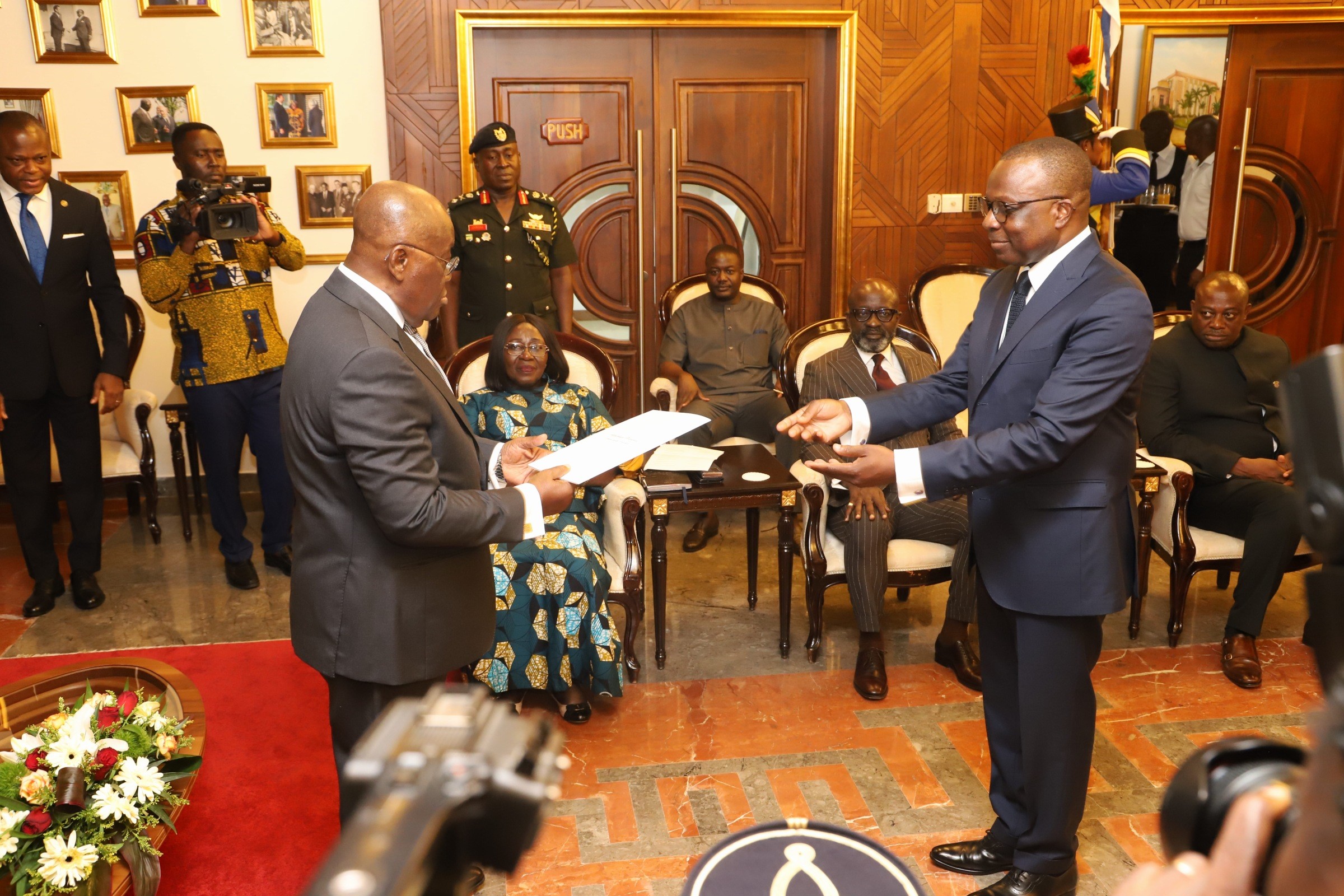
    Dr Cassiel Ato Forson, Ghana’s newly appointed Minister of Finance, has urged his team at the Ministry to place the needs of Ghanaians at the core of their efforts as the nation navigates economic recovery.

    Speaking during his first meeting with senior management at the Ministry of Finance on Thursday, January 23, 2024, Dr Forson underscored the significance of unity and collective action in addressing Ghana’s economic challenges.

    His address came shortly after being sworn into office by President John Dramani Mahama, following his approval by Parliament. The meeting served as both a symbolic and practical start to his leadership at the Ministry, which he described as a familiar territory. Accompanying him was Fifi Kwetey, a former Deputy Minister of Finance, signaling a blend of seasoned expertise and new direction.

    Dr Forson expressed gratitude for the opportunity to serve, highlighting his commitment to the well-being of Ghanaians. “We are here to work together to better the lot of the people of Ghana; indeed, we will constantly be mindful of the needs of Ghanaians,” he affirmed.

    The Minister outlined his vision for economic stability, identifying job creation, prudent fiscal management, exchange rate stability, and curbing inflation as immediate priorities. According to him, these goals represent a focused effort to alleviate the economic hardships confronting citizens.

    “These objectives,” he said, “reflect a determined approach to tackling the economic issues facing the country.”

  • Ghana on track to exceed IMF’s GDP growth projection of 4% for 2024 – Finance Ministry

    Ghana on track to exceed IMF’s GDP growth projection of 4% for 2024 – Finance Ministry

    The Ministry of Finance has stated that Ghana is on course to surpass the International Monetary Fund’s (IMF) 2024 GDP growth projection of 4%.

    The Ministry in a statement noted that the country continues to exceed expectations, defying challenges and solidifying its position as one of the most dynamic economies in the Africa region due to remarkable economic performance during the third quarter of 2024.

    For the first three quarters of 2024, Ghana recorded an impressive average real GDP growth rate of 6.3%, a significant leap from the 2.6% recorded during the same period in 2023, according to the Ghana Statistical Service (GSS).

    This growth was fueled by quarterly expansions of 4.8% in Q1, 7.0% in Q2, and an outstanding 7.2% in Q3—the highest quarterly GDP growth in the last five years. The non-oil sector has been equally robust, posting an average growth rate of 6.2% for the first three quarters of 2024, compared to 2.6% in the same period last year. Quarterly growth figures for the non-oil economy were 4.3% in Q1, 6.6% in Q2, and 7.7% in Q3.

    Given this stellar performance, Ghana is on track to exceed the recently revised GDP growth projection of 4% for 2024 under the 3rd Review of the IMF-supported Programme. Ghana’s post-debt restructuring growth defies global trends, where such economies typically grow at a modest 1-2%.

    The Industry sector led the way with an average growth of 8.9% for the first three quarters, driven by strong performances in key sub-sectors. Mining and Quarrying recorded 15.0% growth while Construction expanded by 9.0% . The Oil and Gas sector saw an average growth of 8.6%, and Manufacturing posted 3.1% growth.

    The Services sector expanded by 5.0%, buoyed by key areas such as Information and Communication, which grew by 15.9%. Financial and Insurance Activities recorded growth of 6.9%, while Accommodation and Food Services grew by 5.7%. Transport and Storage also contributed, recording growth of 3.8%.

    The Agriculture sector grew by 4.6%, with significant contributions from the Crops sub-sector, which expanded by 4.6%. The livestock sub-sector recorded a steady growth rate of 4.7%.

    The remarkable growth trajectory could be sustained through strategic government initiatives aimed at enhancing economic resilience and improving the living standards of all Ghanaians. Key programmes include the Planting for Food and Jobs Phase 2 Programme, SME Growth and Opportunity Programme, One District, One Factory Programme, Economic Enclave Programme, and the Ghana CARES Programme.

    The International Monetary Fund (IMF) has revised Ghana’s growth rate for 2024 to 4% from 3%. Director of the African Department, Abebe Aemro Selassie, noted that the 3% projection, as captured in the World Economic Outlook, was based on mid-April 2024 data and did not factor in recent developments in Ghana.

    Ghana’s economic resurgence underscores its unwavering commitment to fiscal consolidation, debt restructuring, and inclusive growth. This performance not only highlights the country’s resilience but also its ability to lead the charge in economic recovery across the region.

  • Finance ministry orders payment of a $30m debt to Sunon Asoglin

    Finance ministry orders payment of a $30m debt to Sunon Asoglin

    The Ministry of Finance has ordered the Controller and Accountant General’s Department to pay $30 million owed to Sunon Asogli, an Independent Power Producer (IPP).

    This directive is part of a new agreement intended to address debts that led Sunon Asogli to shut down its 560-megawatt power plant.

    The shutdown raises concerns of “dumsor” (power outages), which would affect both the economy and power consumers.

    Despite the directive, Sunon Asogli’s spokesperson, Dr. Elikplim Apertogbor, expressed frustration over the Finance Ministry’s reluctance to engage in further talks about the debt.

    He stated that, since the plant’s closure, the Finance Minister has avoided formal negotiations, signaling a communication breakdown between the IPP and the government.

    Executive Director of the African Center for Energy Policy (ACEP), Ben Boakye, added that structural inefficiencies in Ghana’s energy sector, compounded by poor leadership, particularly at the Electricity Company of Ghana (ECG), are contributing to frequent shutdowns and operational issues.

    He suggested that these issues stem not from a lack of funds but from ineffective management and a lack of genuine commitment to solving the sector’s problems.

    “These shutdowns will continue to occur because the situation is not good, it’s terrible.

    “We often discuss the need for investment, but even with investments, the situation deteriorates. This indicates that the problem lies more in leadership and the commitment to address the issue rather than just money,” Boakye noted.

  • Finance Ministry, 9 other institutions identified as fiscally irresponsible in Ghana – Report

    Finance Ministry, 9 other institutions identified as fiscally irresponsible in Ghana – Report

    A collaborative report from IMANI-Africa and Oxfam Ghana has indicated that Ghana incurred a loss of roughly GH¢4.9 billion due to financial misconduct between 2021 and 2023.

    The Fiscal Recklessness Index, compiled by these policy think tanks, identified the Ministry of Finance as the most fiscally irresponsible institution among various ministries, departments, and agencies in the country.

    Dennis Asare, a Senior Research Associate at IMANI-Africa, pointed out that the Ministry of Finance oversees other institutions and departments, such as the Ghana Revenue Authority, which significantly contributed to its high ranking on the fiscal recklessness index.

    “The aim of the report was to examine the financial irregularities of ministries, departments, and agencies between 2021 and 2023. This figure is around GH¢4.9 billion cedis, equivalent to 2.3% of our GDP in 2023, which is very significant,” he told journalists at the report’s launch on October 23, 2024.

    The report emphasized that approximately 90% of fiscal irregularities in Ghana are due to tax-related issues. It noted that this situation can be largely blamed on Oil Marketing Companies, which not only delay tax payments but also neglect to settle their dues even when granted extensions.

    List of top 10 institutions that are financially irresponsible in Ghana per the report:

    1. Ministry of Finance

    2. Ministry of Food and Agriculture

    3. Ministry of Communications

    4. Ministry of Roads and Highways

    5. Ministry of Health

    6. Justice and Attorney General

    7. Ministry of Education

    8. Ministry of Fisheries and Aquaculture

    9. Ministry of Lands and Natural Resources

    10. Ministry of Interior

  • Ministry Finance named again as the most fiscally irresponsible public institution in Ghana – Report

    Ministry Finance named again as the most fiscally irresponsible public institution in Ghana – Report

    Ministry of Finance has once again been identified as the most fiscally irresponsible public institution in Ghana, spanning the years 2021 to 2023. This comes after a similar ranking between 2015 and 2020.

    The latest revelation is part of a report published by IMANI Africa and Oxfam Ghana, which analysed financial mismanagement across Ministries, Departments, and Agencies (MDAs) through their third Fiscal Recklessness Index.

    The report ranks the Finance Ministry at the top, followed by the Ministries of Food and Agriculture, Communication and Digitalisation, Roads and Highways, and Health.

    During a media briefing, Dennis Asare, Senior Research Associate at IMANI Africa, disclosed that Ghana lost over GH₵ 4.9 billion in 2023 due to financial irregularities.

    Asare highlighted that these losses could have been better utilised in funding social intervention programmes such as the Livelihood Empowerment Against Poverty (LEAP) initiative and the Ghana School Feeding Programme.

    “The Ministry of Finance is considered the most fiscally reckless institution because nearly 90% of the identified irregularities can be traced back to it,” he stated.

    Asare explained that as a central management agency responsible for overseeing various institutions, the Ministry of Finance’s financial mismanagement highlights deeper systemic problems. He further noted that this fiscal recklessness extends beyond the Ministry’s headquarters to include the agencies under its jurisdiction.

    One of the major concerns identified in the report was the government’s inadequate tax collection, revealing significant weaknesses in revenue mobilisation efforts.

    The report also offered recommendations to tackle these issues, emphasising the need to establish a more empowered fiscal council to enhance oversight and accountability.

    “We need a stronger fiscal council, not just a committee. All political parties agree on the importance of such an institution. Now is the time to formalise it with legal backing and ensure it has the authority to perform its critical oversight functions effectively,” Mr Asare urged.

  • Gov’t records about 42% increase in revenue from Q1 to Q2 – Finance Ministry

    Gov’t records about 42% increase in revenue from Q1 to Q2 – Finance Ministry

    The government recorded about 42% increase in total revenue from the first quarter (Q1) to the second quarter (Q2), according to data from the Finance Ministry.

    The revenue figures reveal a notable surge, from GHS 7,836,251,007 in Q1 to GHS 11,125,051,450 in Q2, resulting in a quarterly difference of GHS 3,288,800,443.

    The key drivers of this growth were taxes on domestic goods and services, which jumped by GHS 1.5 billion, and income and property taxes, which increased by nearly GHS 1.8 billion.

    Furthermore, the first quarter demonstrated stable growth in revenue generation, with a gradual month-on-month improvement.

    Month-to-month analysis for Q1

    In January, government revenues were strongest in taxes on income and property (GHS 4,639,261,614), with significant contributions from PAYE, self-employed income taxes, and company taxes. Taxes on domestic goods & services raked in GHS 3,031,051,950 where whereas taxes on international trade generated GHS 1,503,257,362 for the government.

    February saw a slight increase in overall revenue, with steady growth in taxes on income and property as well as domestic goods and services. However, taxes on international trade decreased slightly compared to January. Taxes on Income & Property raked in GHS 4,672,893,801, taxes on domestic goods & services: GHS 3,060,740,761 and taxes on international trade: GHS 1,236,317,580

    March ended the first quarter with the highest revenue for Q1, driven by a boost in taxes on domestic goods and services. The consistent performance of income and property taxes and the recovery of international trade taxes also contributed to this outcome. Taxes on income & property generated GHS 4,625,177,585 for the government, taxes on domestic goods & services: GHS 3,311,670,761 and taxes on international trade: GHS 1,248,347,916.

    Month-to-month analysis for Q2

    April kicked off Q2 with a moderate increase in revenue compared to March, largely driven by growth in domestic goods and services taxes, as well as improvements in international trade duties. Taxes on income & property brought in GHS 4,518,853,471, taxes on domestic goods & services: GHS 3,611,670,761 and taxes on international trade: GHS 1,436,513,358.

    May recorded a substantial increase in total tax revenue. This rise was primarily driven by taxes on income and property, which jumped by GHS 1.5 billion, as well as taxes on domestic goods and services, which also surged. The government generated GHS 6,010,186,166 from taxes on income & property, taxes on domestic goods & services raked in GHS 4,519,182,419 and taxes on international trade: GHS 1,557,350,000.

    June saw a slight levelling off in total revenue compared to May, though income and property taxes (GHS 5,051,322,928), along with domestic goods and services (GHS 4,013,743,300), continued to drive the bulk of collections. International trade taxes (GHS 1,505,350,000) remained stable.

    The government has set an ambitious target to mobilise a total revenue of GHS 176.4 billion, which is about 22% higher than the 2023 target. From the 2024 budget, tax revenue will comprise 81.1% of the total government revenue.

    Ghana’s revenue-to-Gross Domestic Product ratio is expected to exceed 17% year-on-year for the next six years. According to the International Monetary Fund’s April 2024 Fiscal Monitor, the revenue-to-GDP ratio will increase steadily from 2024 to 2029.

    In 2024, it is projecting a government revenue-to-GDP ratio of 16.7%, a slight increase from the 15.7% recorded in 2023. Part of the conditions of the $3 billion Extended Credit Facility by the IMF is an increase in revenue generation by the government.

  • Michael Blackson drags Finance Ministry to court over his locked-up Eurobond investment

    Michael Blackson drags Finance Ministry to court over his locked-up Eurobond investment

    Well-known American comedian and actor of Ghanaian heritage, Michael Blackson, has announced his intention to pursue legal action against the Ministry of Finance due to the mismanagement of his Eurobond investment.

    He explained that he initially made the investment with the hopes of using the returns to support his school project.

    However, due to the current situation, he is now seeking alternative funding sources for the school.

    Since his investment has become inaccessible, Blackson has been vocal about his frustration on social media.

    On October 14, 2024, he took to his platforms once more to express his discontent and inform his followers about the impending legal steps he plans to take.

    He stated, “I’m seeking legal actions against the finance ministry of Ghana.

    I have a free school I’m financing on my own, and they took away the potential earnings I was going to use to fund the school. Now I have to figure something else out for those poor kids.”

    Previously, Blackson revealed that he acquired Eurobonds to fund his school, the Michael Blackson Academy, located in Agona Nsaba. However, he has encountered difficulties in recovering his investment.

    He explained that his decision to invest in Eurobonds stemmed from the belief that it would provide financial support for the sustainability of the free school he established.

    However, he said, “Ghana decided to use our money to pay their debt to China or whoever and leave us hanging.”

  • Import duties contribution to tax revenue drops by 5% in 22 years – Finance Ministry

    Import duties contribution to tax revenue drops by 5% in 22 years – Finance Ministry

    The Ministry of Finance has revealed a significant decline in the contribution of import duties to Ghana’s total tax revenue over the past two decades.

    According to the newly published Survey of the Ghanaian Tax System, the share of import duties in total tax revenue has decreased from 18% in 2000 to 13% in 2022. This 5% drop highlights a broader trend in the country’s tax landscape, raising concerns among policymakers and stakeholders about the sustainability of revenue generation from international trade.

    The Survey, produced jointly with researchers from the Institute for Fiscal Studies (UK), provides comprehensive insights into Ghana’s tax system as of January 2024. It serves as a critical repository of information for researchers, policymakers, and the public. The report highlights several key trends in policy, administration, and revenue collection since the previous edition published in 2021.

    Ghana’s tax-to-GDP ratio stood at 13.8% in 2022, falling short of the government’s target of 18-20% by 2027. Although this figure represents a nearly 6 percentage point increase since 2000, it has seen minimal gains since 2017 and remains volatile.

    The growth in tax revenues since 2000 has primarily been driven by increases in corporate and personal income tax, as well as VAT. However, revenue growth from Personal Income Tax (PIT) and VAT-type taxes has stagnated in recent years. Notably, these three tax types accounted for nearly 70% of total collections in 2022, a significant rise from 57% in 2000.

    The importance of tax collections from international trade has diminished. In 2022, taxes collected on imported goods made up only 33% of overall tax revenues, a substantial decrease from 54% in 2000.

    As of June 2023, government revenue from import taxes amounted to around 1.14 billion Ghanaian cedis (GHS), corresponding to approximately 94.97 million U.S. dollars. The decline signals a need for a reassessment of the country’s tax policy, particularly regarding international trade.

    Ghana’s 2002 tariff structure for imports establishes various duty rates and exemptions for different goods. The zero rate duty applies to agricultural and industrial machinery, solar generating sets, certain motor vehicles (ambulances), and educational materials. Imported mosquito nets are also exempt from duties.

    The five percent rate covers interchangeable tools and motor vehicles with a cylinder capacity of up to 1900cc. New duties apply to imported fish and commercial vehicles. Specific raw materials for manufacturing are included under this rate, while fish caught by Ghanaian vessels and from ECOWAS waters remain duty-free.

    A ten percent rate applies to raw materials and includes a concessionary duty for hotels and restaurants on certain items like refrigerators and air conditioners. The standard duty rate for most imports is set at twenty percent.

    Exemptions are provided for charitable gifts for health and education by NGOs, which are exempt from duties. However, other imports may incur duties unless specifically exempted by Parliament.

    A one percent processing fee applies to exempt goods and unaccompanied personal effects, while an examination fee of one percent is imposed on imported used vehicles, with some exemptions applicable.

    Additional levies include a 0.5 percent ECOWAS Levy on goods from non-ECOWAS countries and a 0.5 percent EDIF Levy on non-petroleum products. The import VAT rate is set at 12.5 percent for all finished pharmaceutical products.

    The import excise rate varies for commodities such as tobacco (140 percent) and beer (50 percent). Goods without a Tax Clearance Certificate incur a one percent charge. A ten percent concessionary duty rate is available for hotels and restaurants, but prior approval is required. This tariff structure aims to balance trade facilitation, revenue generation, and support for key sectors.

  • Petroleum sector generates $247.6m in revenue in Q2 2024 – Finance Ministry

    Petroleum sector generates $247.6m in revenue in Q2 2024 – Finance Ministry

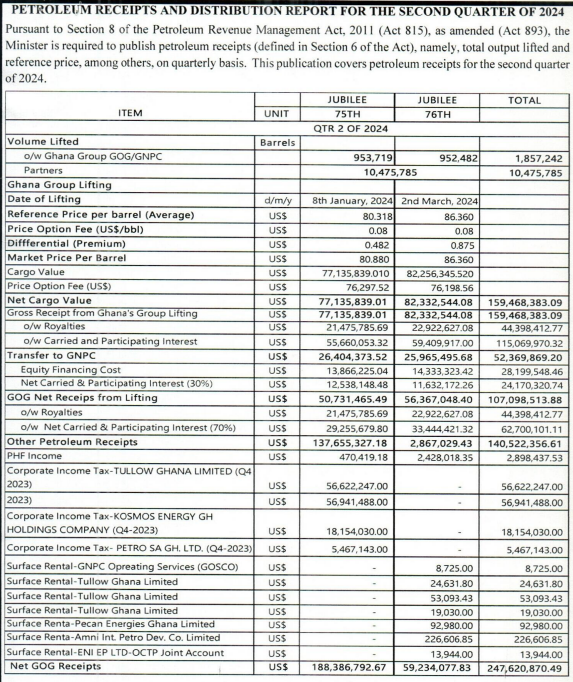
    Ghana recorded a total of $247,620,870.49 in petroleum receipts for the second quarter of 2024, according to the Petroleum Receipts and Distribution Report.

    The report, released by the Ministry of Finance, reflects oil revenues gathered from two separate liftings in the Jubilee oil field.

    Key highlights from the report show that 1,857,242 barrels of oil were lifted during the quarter, divided between the 75th and 76th liftings. The average reference price for a barrel of oil during this period stood at $80.318 for the 75th lifting and $86.360 for the 76th lifting. The market price per barrel ranged from $77,135,889.01 in the 75th lifting to $82,256,345.20 in the 76th lifting.

    Breakdown of Revenues

    The Gross Receipts from Ghana’s group lifting totalled $159,468,883.09, with $71,135,889.01 attributed to the 75th lifting and $82,332,544.08 to the 76th lifting. From this, Royalties accounted for $22,475,655.73, and the Carried and Participating Interest contributed $115,069,970.32.

    The Net Carried & Participating Interest (70%) provided a significant portion of these earnings, amounting to $47,655,527.18, in addition to other petroleum receipts totalling $140,522,365.31 for the quarter.

    The Corporate Income Tax contributions from major players in the sector were also substantial, with Tullow Ghana Limited paying $56,622,407.40 and KOSMOS Energy contributing $18,154,030.00.

    Government Receipts

    The Government of Ghana received $107,988,517.30 in net receipts from the petroleum liftings, with $52,367,048.40 coming from the 75th lifting and $56,621,468.90 from the 76th lifting.

    The report also detailed that surface rental payments made by companies, including Tullow Ghana Limited and PetroSea Operating Company, contributed a smaller portion of the total earnings, at $59,093.43 and $8,725.00 respectively.

    Strategic Reforms and Future Prospects

    As the Ministry of Finance continues to report on petroleum revenue transparently, the sector remains a key driver of Ghana’s economy. The financial performance during the second quarter demonstrates steady growth in the industry, while the upcoming quarters are expected to provide further insight into the strategic plans for Ghana’s oil sector, especially in light of regulatory reforms.

    This robust financial performance highlights the critical role of oil revenues in supporting the government’s fiscal policy and infrastructural development.

  • Finance Ministry to submit Q1 2025 Expenditure in Advance of Appropriation to Parliament on Nov 15

    Finance Ministry to submit Q1 2025 Expenditure in Advance of Appropriation to Parliament on Nov 15

    The Finance Ministry of Ghana has announced its intention to present the “Expenditure in Advance of Appropriation” for the first quarter of 2025 to Parliament by November 15, 2024.

    Expenditure in Advance of Appropriation is a financial practice where a government or public institution spends money before the formal approval of a budget by the legislative body. This is typically done in situations where the fiscal year has started, but the annual budget (appropriation bill) has not yet been passed.

    This submission is in accordance with Article 179(1) of the 1992 Constitution, Section 20(1) of the Public Financial Management Act, 2016 (Act 921), and Regulation 20(3) of the Public Financial Management Regulations, 2019 (L. I. 2378).

    As 2024 marks an election year, the Ministry is also preparing a draft Budget Statement and Economic Policy for 2025, alongside the three-month Expenditure in Advance of Appropriation, known as a “Vote on Account.” The full Budget Statement and Economic Policy Statement for the 2025 financial year will be presented to Parliament in the first quarter of 2025.

    The 2025-2028 Budget Preparation Guidelines are currently being circulated to Heads of Covered Entities and members of Budget Committees for compliance. These guidelines outline the processes and procedures necessary for the preparation of the 2025 budget, including policy priorities for the medium term, such as the IMF-Supported Post COVID-19 Programme for Economic Growth (PC-PEG), expenditure ceilings for 2025, and standardized templates for budget preparation.

    Covered Entities have been reminded to align their expenditure ceilings with the Medium-Term Development Policy Framework, the IMF-Supported PC-PEG, and other governmental priorities. Heads of Covered Entities are encouraged to prioritize ongoing programs and projects in their budget proposals while adhering strictly to the communicated provisional ceilings.

    In addition, the Ministry has indicated that budget hearings will be organized to support the development of the 2025-2028 budget, as detailed in the Appendix of the Guidelines. Ministries, Departments, and Agencies (MDAs) are urged to comply with the established timelines and ensure participation in these engagements alongside their respective Statutory Fund Managers, State-Owned Enterprises, and Agencies.

    Chief Directors are also encouraged to follow the directives set out in the guidelines and ensure timely submission of relevant budget documents to bdru@mofep.gov.gh, three working days prior to their scheduled hearings.

    The Finance Ministry is counting on the cooperation of all stakeholders in this crucial budgetary process as it prepares for the upcoming financial year.

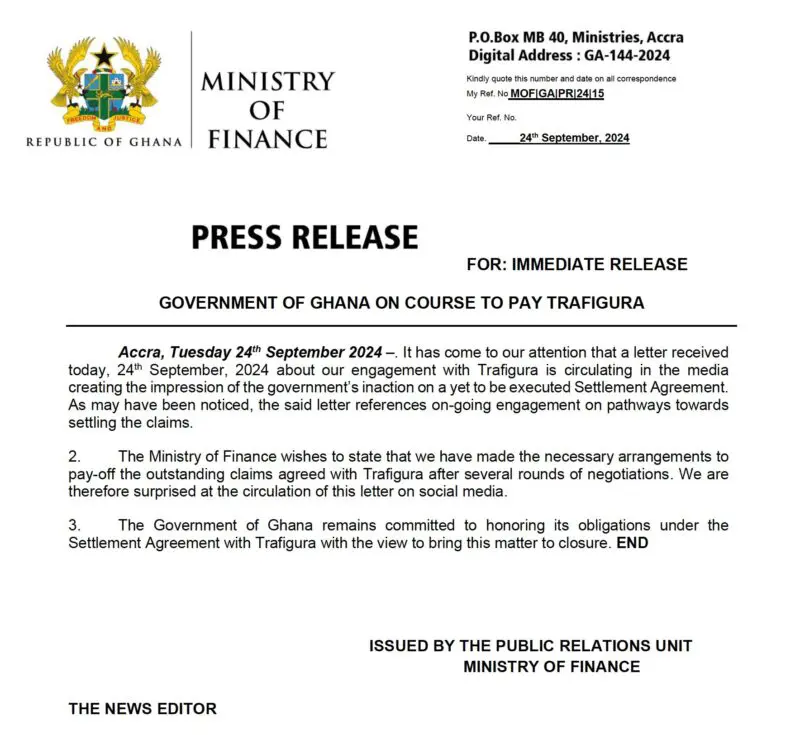
  • Finance Ministry reacts to Trafigura over $134m judgement debt

    Finance Ministry reacts to Trafigura over $134m judgement debt

    Ministry of Finance has confirmed that it is making progress towards settling the $134 million judgement debt owed to oil conglomerate Trafigura.

    In a statement, the Ministry assured that it has initiated the required actions to resolve the payment matter.

    “We have made the necessary arrangements to pay off the outstanding claims agreed with Trafigura after several rounds of negotiations,” the statement read, reassuring the public that the government remains committed to honouring its obligations.

    This follows a petition from Trafigura, raising concerns and threatening to seize Ghana’s assets in South Africa if the $111 million arrears are not paid.

    In a letter to Finance Minister Dr. Adam Amin, Trafigura urged the government to settle the debt by the end of the week to prevent further legal action, while expressing a preference for a peaceful resolution.

    The company has already seized one of Ghana’s significant commercial properties, Regina House in London, due to the government’s failure to pay a $134 million judgement debt.

    This debt originated from the termination of a power purchase agreement, which sparked a legal dispute between Trafigura and the Government of Ghana.

  • Gold production generates meager 13.4% in direct taxes in over 10 years – Finance Ministry

    Gold production generates meager 13.4% in direct taxes in over 10 years – Finance Ministry

    The Medium-Term Revenue Strategy 2024-2027 report by the Ministry of Finance has revealed a significant shortfall in Ghana’s tax collection from its gold mining industry.

    Over the past 10 years, only 13.4% of the total gold produced and exported by large-scale mining operators contributed to direct tax revenue for the government, highlighting inefficiencies in the country’s fiscal regime governing the extractive sector.

    Data from 2015 to 2020 by the Minerals Commission of Ghana show that government revenues from the mining sector—encompassing corporate taxes, mineral royalties, and other contributions—have increased over time.

    For example, corporate tax collections rose from GH₵ 320,948,380 in 2015 to GH₵ 1,462,137,984 by 2020. Similarly, mineral royalties surged from GH₵ 485,632,657 in 2015 to GH₵ 1,426,846,096 in 2020, signaling growth in mining activities and government collections.

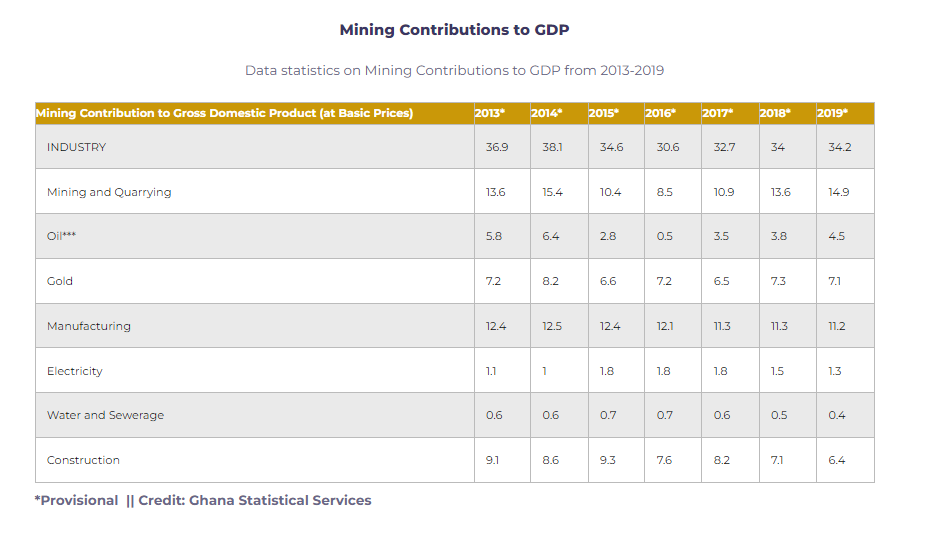
    Despite these gains, the total revenue accrued from mining still falls short of expectations. The mining sector’s contribution to Ghana’s economy—measured as a percentage of Gross Domestic Product (GDP)—hovered between 13.6% and 14.9% from 2013 to 2019.

    Gold, the leading commodity in this sector, contributed only 6.2% to 7.3% over the same period. Given the country’s abundant gold resources, the relatively small tax revenue suggests that significant potential remains untapped.

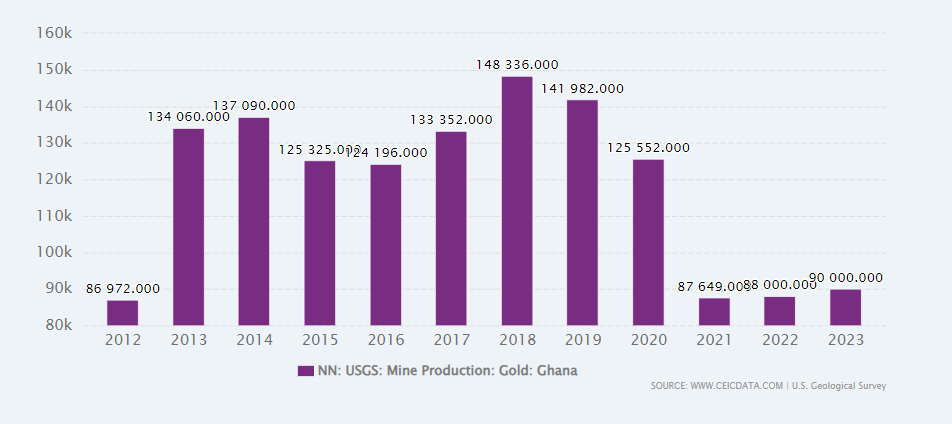
    The data highlights a growing gap between gold production and the government’s revenue share. In 2018, Ghana’s gold production peaked at 148,336 kilograms, making it one of the world’s top gold producers. The nominal value of mining and quarrying
    activities increased from GHȻ8.813 billion in 2017 to GHȻ13.095 billion in 2018, according to the Ghana Chamber of Mines.

    However, even with an increase in production, the direct tax revenues have not matched up. For instance, while gold production in 2020 was recorded at 125,552 kilograms, the government’s tax collections from the sector remained disproportionately low.

    This discrepancy, the Ministry of Finance, has attributed to loopholes in Ghana’s legal framework.

    “The relatively low tax revenue mobilisation from the extractive sector is driven in part by loopholes in current legislation. For example, Section 49 of the Minerals and Mining Act, 2006 (Act 703) provides for the granting of a Development Agreement based on an investment threshold resulting in the granting of excessive fiscal concessions as well as a fragmented fiscal regime,” a part of the report reads.

    On the way forward, the Ministry of Finance has recognized the need to reform the fiscal regime in the extractive sector to address these revenue shortfalls.

    The government plans to introduce the Extractive Industries Fiscal Regime Law (EIFRL), aimed at consolidating all fiscal statutes affecting the mining and petroleum industries. This new law will standardize key provisions such as corporate income tax rates, royalty rates, and the introduction of a windfall profit tax mechanism.

    By streamlining the fiscal framework, the government hopes to create a more transparent and balanced system that ensures a fair share of revenues while maintaining investor confidence. The push for reform comes at a crucial time, as gold exports have continued to play a vital role in Ghana’s economy.

    In the second quarter of 2023, gold exports were valued at approximately $1.71 billion, while full-year 2022 exports amounted to around $6.6 billion. Despite the strong performance in exports, the relatively low tax revenue collected from the mining sector highlights the urgency for legislative changes.

    Ghana’s gold export is expected to hit about US$10 billion by the end of the year, the Minerals Commission has said. According to the Chief Executive Officer of the Minerals Commission, Martin Ayisi, gold exports jumped to a record in the first half of 2024.

    Mr Ayisi said out of the total exports of US$9.2 billion for the first-half of 2024, gold alone accounted for 54% of the total exports which amounted to US$5 billion. This was because of the surge in gold prices especially in the second quarter of 2024 and increase in production from both small- and large-scale operations.

  • Govt yet to settle GHC75bn arrears for about 10,000 road projects – Finance Ministry

    Govt yet to settle GHC75bn arrears for about 10,000 road projects – Finance Ministry

    The government, through the Ministry of Finance, is still grappling with the settlement of GH₵75 billion in arrears for approximately 10,000 ongoing road projects across the country.

    These projects, collectively valued at GH₵135 billion, have faced significant financial challenges, despite efforts to manage public sector finances effectively.

    The Ministry of Finance has so far disbursed GH₵60 billion to address outstanding payments, with GH₵10 billion of this amount paid just this year. However, a substantial portion of the arrears remains unsettled.

    Chief Director at the Ministry of Finance, Madam Eva Mends, highlighted these challenges during a high-level expert panel discussion themed “Closing the Financing Gap in Road Infrastructure Development in Ghana.”

    The event, organized by the Ghana Highway Authority in collaboration with the Ministry of Finance and the Ministry of Roads and Highways, was part of the activities marking the Authority’s 50th anniversary.

    The event sought to tackle the ongoing difficulties in securing sustainable financing for road infrastructure development and maintenance.

    Madam Mends revealed that despite implementing measures like the certificate of commencement policy and the Government Integrated Financial Management System (GIFMIS) to enhance financial management, some road projects were initiated without the Ministry’s knowledge or proper budgetary allocations.

    “Ministry of Roads and Highways will go ahead and make a commitment, sign a contract. Most of the time, we are not even privy to the contract. And that’s something; a systemic issue we will need to address,” Madam Mends remarked.

    She further observed that many contracts lacked clear spending limits, enabling contractors to extend projects beyond the agreed budget, which has led to delayed payments and accrued interest, undermining value for money.

    “There’s no way we can pay for all those projects in three years, even if we don’t award any contract this year. If we don’t award any contract for the next three years, we still will not be able to pay on time all the contracts that we currently have on our books,” she added.

    Former Chief Executive Officer (CEO) of Stanbic Bank and the Paramount Chief of Pishigu, Naa Dr. Alhassan Andani, commended the government for acknowledging its limitations in financing all the road projects and called for policy sustainability and payment prioritization to encourage private sector involvement in road infrastructure.

    Dr. Andani also emphasized the importance of developing a master plan for classifying roads based on their viability to aid in prioritization and appropriate financing. These classifications, he suggested, should include social roads, which could be financed by citizens, financial roads that attract private sector interest, and economic roads with long-term benefits.

    Meanwhile, Member of Parliament for Obuasi West, Mr. Kwaku Kwarteng, urged politicians and the media to manage public expectations regarding road projects, especially during election periods.

  • GRA, Finance Ministry dragged to court over tax waivers for 42 companies

    GRA, Finance Ministry dragged to court over tax waivers for 42 companies

    Ghana Revenue Authority (GRA) and the Finance Ministry are facing legal action over their plan to grant tax waivers to 42 companies as part of the 1 District 1 Factory Initiative.

    This lawsuit has been filed by three Minority Members of Parliament, led by their Deputy Leader, Emmanuel Armah-Kofi Buah.

    The MPs are appealing to the Supreme Court to halt the tax waivers, contending that they do not serve the country’s best interests.

    The three MPs involved, Bernard Ahiafor (MP for Akatsi South), Kwame Agbodza (MP for Adaklu), and Emmanuel Armah-Kofi Buah (MP for Ellembelle), argue that the GRA’s decision to provide these tax exemptions is detrimental to Ghana.

    They claim that the tax waivers violate Article 174 of the 1992 Constitution and are therefore unconstitutional. The MPs seek a Supreme Court ruling to declare the waivers null, void, and without effect.

    Bernard Ahiafor, one of the plaintiffs, is calling on the Supreme Court to step in for the benefit of the nation.

    “It appears Article 174 of the Constitution is being violated, the Supreme Court is giving an exclusive jurisdiction to interpret, therefore, any citizen who is aggrieved that a particular portion of the Constitution is being contravened, the remedy available is to seek for interpretation and declaration at the Supreme Court which is the apex court.

    “That is exactly what we have done in the circumstance, we’re seeking relief against the ones that are being implemented and the ones that are yet to be implemented,” he said.

    About the tax waiver

    On May 20, the government released a list of companies requesting tax waivers under the 1D1F initiative.

    In 2021, the Ministry of Finance initiated processes to secure approximately $335,072,712.13 in tax exemptions for 42 companies participating in the government’s One District One Factory initiative.

    The Exemptions Act, 2022 (Act 1083), was presented in Parliament by the former Minister for Finance, Ken Ofori-Atta, in 2022.

    Among the companies, Sentuo Oil Refinery Limited, a newly established entity, has the highest requested exemption amounting to $164,633,012.00.

  • Approximately 19% of Ghanaian taxpayers honor their obligations – Finance Ministry

    Approximately 19% of Ghanaian taxpayers honor their obligations – Finance Ministry

    Out of approximately 7.9 million registered taxpayers in Ghana, only about 1.5 million are actively paying taxes, according to Deputy Minister of Finance, Dr. Alex Ampaabeng.

    This figure represents approximately 19% of the registered taxpayer base.

    Dr. Ampaabeng made this disclosure at the launch of the 8th Ghana Economic Update by the World Bank, highlighting significant challenges in the country’s tax collection system.

    He emphasized the government’s ongoing efforts to address these issues, including a comprehensive clean-up of the tax database in collaboration with the Ghana Revenue Authority (GRA).

    “We are committed to improving our fiscal environment and increasing tax revenue,” Dr. Ampaabeng stated.

    “Reducing the human interface in tax collection and enhancing digital methods are crucial steps in this process. The Ministry of Finance is working closely with the GRA to address tax infractions and ensure better compliance.”

    The current tax collection rate in Ghana has been notably low compared to its peers. Between 2017 and 2021, the country’s average tax collection was 13.2% of Gross Domestic Product (GDP), significantly below the Sub-Saharan Africa average and 8 percentage points short of the estimated tax capacity of 21.2% of GDP.

    The World Bank report, launched alongside Dr. Ampaabeng’s address, highlighted areas where Ghana’s tax policy and compliance mechanisms could be improved.

    The report suggested rationalizing large tax expenditures and addressing inefficiencies within the tax policy framework to enhance revenue collection. It emphasized the need for a balanced approach that mitigates revenue losses while considering the social impacts.

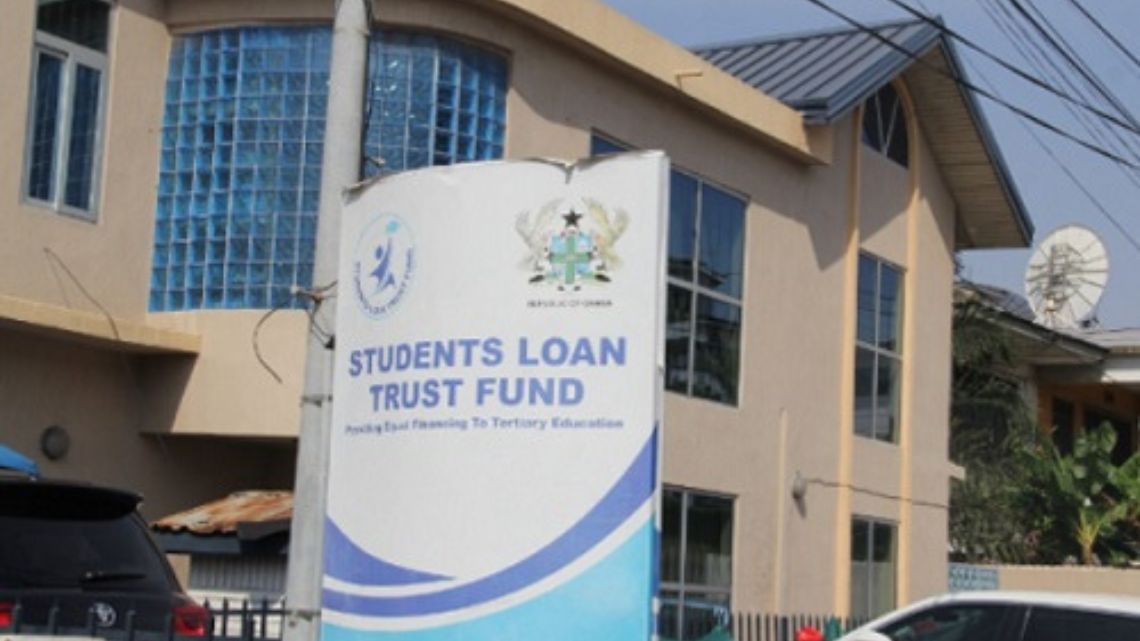
  • GHS20m released by gov’t to offset student loans

    GHS20m released by gov’t to offset student loans

    The Ministry of Finance has announced the release of GHS20 million to support students in both private and public tertiary institutions across the country.

    This fund, disbursed through the Student Loan Trust Fund (SLTF), aims to assist approximately 10,243 students who have applied for financial aid.

    Nuhu Bayorbo Mahama, the Chief Executive Officer of the SLTF, addressed the media on Friday to provide details on the allocation.

    He revealed that the trust fund has already disbursed around GHS58 million to 54,658 students for the 2023/24 academic year. This includes approximately GHS27 million allocated as allowances to 68,000 teacher trainees during the same period.

    Mahama emphasized the critical role of these funds in enabling students to register for their examinations, thereby ensuring they can continue their education without financial hindrances.

    “The release of this fund is crucial in helping our beneficiaries register for their examinations. We are committed to supporting students in achieving their educational goals,” Mahama stated.

    Since the implementation of the government’s ‘No Guarantor Policy’ two years ago, there has been a significant increase in the demand for student loans. This policy has simplified the loan application process, making it easier for students to access financial support.

    Each student beneficiary is expected to receive between GHS1,500 and GHS3,000, depending on their individual needs. The allocation aims to cover essential expenses and reduce the financial burden on students.

    “The ‘No Guarantor Policy’ has made a substantial impact, and we have seen a drastic rise in the number of students applying for loans. Our goal is to ensure that no student is left behind due to financial constraints,” Mahama added.

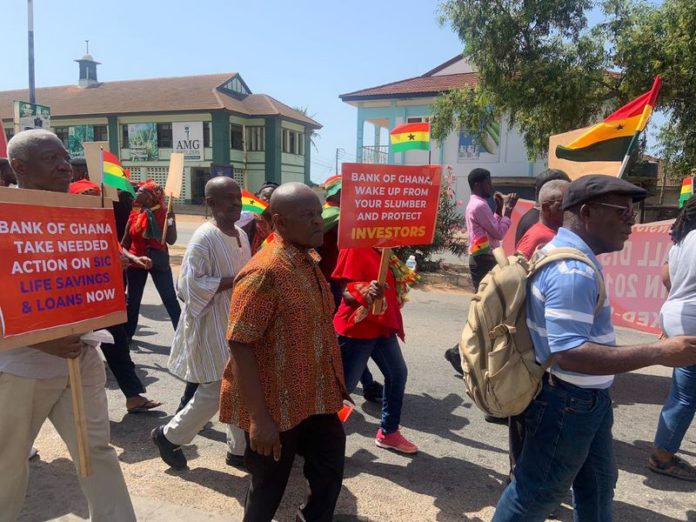
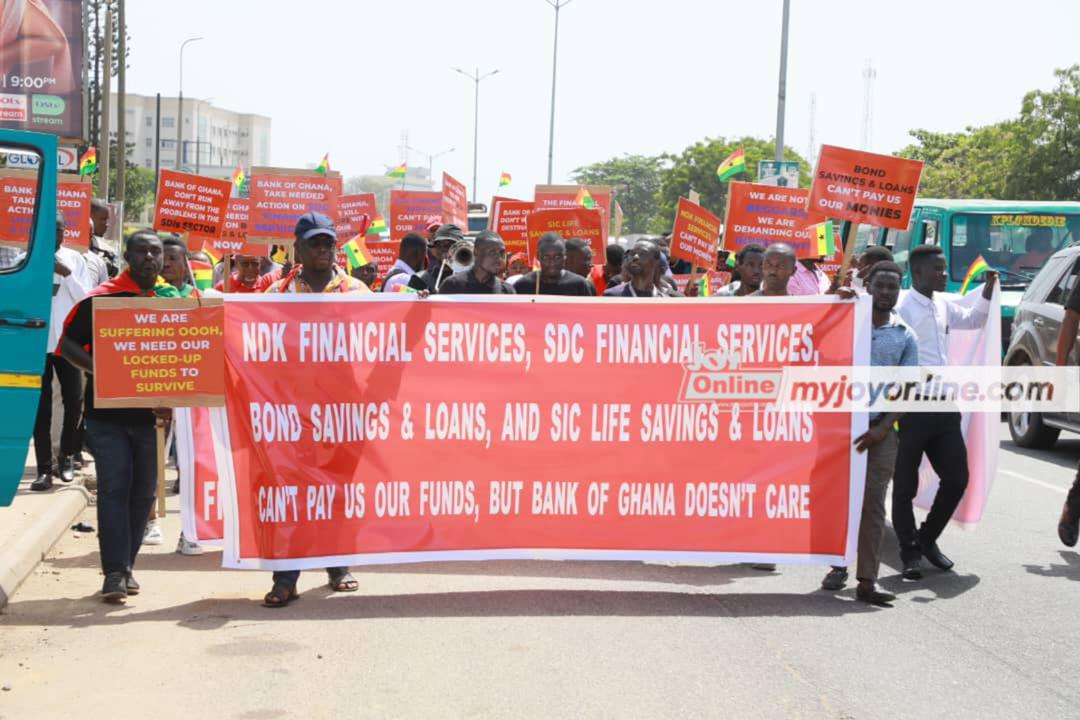
  • Locked-up investment holders picketing at Finance Ministry slated for today

    Locked-up investment holders picketing at Finance Ministry slated for today

    Locked-up Investment Holders’ Forum have declared that it will resume its picketing today, Wednesday, June 5, following the Finance Ministry’s failure to meet its demands.

    Members of the forum are dissatisfied because, despite assurances from Deputy Finance Minister Dr Stephen Amoah, the ministry has not responded to their concerns.

    After Dr. Amoah’s intervention, the organisation had earlier decided to suspend their protest; nevertheless, their decision has been reevaluated in light of the lack of participation.

    The members are insisting that guarantees be given by the Finance Ministry so that the Bank of Ghana can release money held in bankrupt financing companies.

    According to Dr Adu Anane Antwi, the Convenor of the Locked-up Investment Holders’ Forum, the group has been left with no choice but to resume picketing due to the ministry’s inaction.

    The forum is determined to continue its protest until its grievances are addressed and its members receive the funds they are owed.

    “We will be resuming our picketing this Wednesday, June 5, 2024, as the meeting that was promised by the Deputy Minister for Finance, Dr Stephen Amoah, with us after he returned from his trip on May 27, 2024, has still not come on.

    “I sent the Deputy Minister a text message and a WhatsApp message last Thursday reminding him that we are still waiting for him to call us for the meeting.

    We still have not received any response whatsoever from the Ministry of Finance, and therefore, this coming Wednesday, June 5, we are resuming the picketing,” he said.

  • NHIS’ stability hangs in the balance as Finance Ministry delays GHS2.4bn payment

    NHIS’ stability hangs in the balance as Finance Ministry delays GHS2.4bn payment

    Reports indicate that the Ministry of Finance currently owes the National Health Insurance Scheme (NHIS) eight months’ worth of revenue.

    This outstanding amount totals approximately GH₵2.4 billion, covering the period from July 2023 to February 2024. These funds represent contributions that the Finance Ministry has failed to transfer to the NHIS.

    This revelation emerged during a meeting convened by Parliament’s Committee on Health on Tuesday, June 4, 2024.

    Attended by representatives from the Finance Ministry, Health Ministry, NHIS, and the Controller and Accountant General’s Department, the meeting aimed to address the factors contributing to payment delays.

    Throughout the fiscal year, the scheme has encountered financial constraints, hindering its ability to meet its financial commitments to service providers.

    Following a closed-door session, the Health Committee of Parliament urged the government to collaborate with the National Health Insurance Authority (NHIA) in devising strategies to settle the scheme’s arrears.

    Dr. Afriyie Ayew, Chairman of the Health Committee, expressed confidence in the initiation of a roadmap to tackle the issue.

    Meanwhile, the Minority has expressed dissatisfaction with Vice President Dr. Mahamaudu Bawumia‘s apparent attempt to take credit for providing free dialysis care to patients under 18 and over 60 years.

    The Minority finds it baffling that Dr. Bawumia is promoting this initiative as if it were initiated by his government.

  • Locked-Up Investment Holders Forum restarts scheduled protests at Finance Ministry

    Locked-Up Investment Holders Forum restarts scheduled protests at Finance Ministry

    Supporters of the Locked-Up Investment Holders Forum will reconvene at the Finance Ministry on Wednesday, June 5, 2024, for a demonstration.

    This decision follows the Ministry’s failure to fulfill its commitment to engage with them.

    On May 21, the Forum declared a temporary halt to their planned protests on May 22 and 29, 2024, after the Deputy Finance Minister requested a meeting to address their grievances.

    The statement at the time indicated that after “a call today from the Deputy Minister for Finance, to have a meeting with us after returning from a trip on 27th May 2024, to discuss our petition, we are suspending the picketing for tomorrow, 22nd May 2024 and Wednesday, 29th May 2024.”

    However, recent developments have exacerbated the frustrations of the disgruntled customers.

    In an interview, the convenor, Dr Adu Antwi revealed that “the meeting that was promised by the Deputy Minister for Finance Dr Stephen Amoah to have with us after he has returned from his trip on 27th May 2024 has still not come on.”

    He further mentioned that subsequent follow-ups through text messages have also proven futile.

    In light of this, the Forum has reinstated its original plan to stage protests at the Ministry every Wednesday until the conclusion of November 2024, demanding financial allocations for the reimbursement of depositors’ funds.

    “…Next Wednesday, 5th June 2024, we are resuming the picketing. And when we resume, we will be picketing every Wednesday till we achieve results,” he said.

  • Finance Ministry working on direct lending to SMEs, providing guarantees to financial institutions

    Finance Ministry working on direct lending to SMEs, providing guarantees to financial institutions

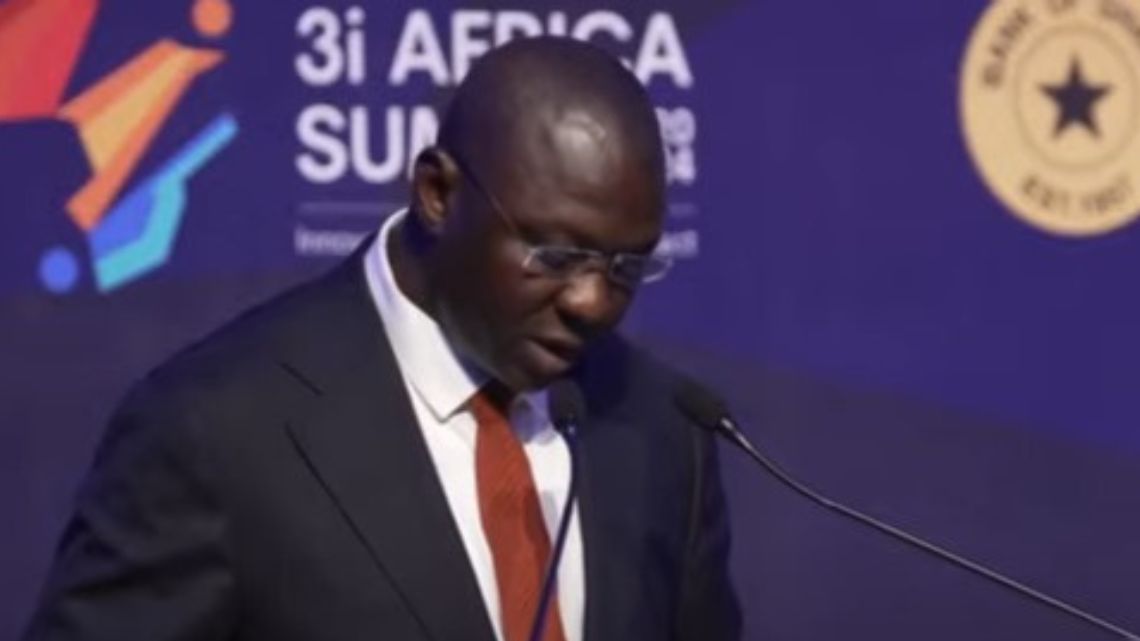
    Finance Minister-designate, Dr. Mohammed Amin Adam, has revealed that the Ministry is finalizing a financial strategy to assist Small and Medium-Scale Enterprises (SMEs) in accessing funding more easily.

    Dr. Adam highlighted that while SMEs play a crucial role in driving growth and job creation in the country, their operations are often hampered by a lack of capital.

    Speaking at the ongoing 3i Africa Summit on May 13, he emphasized that this limitation has impeded their capacity to generate more employment opportunities, thereby impacting Ghana’s economy.

    “SME’s contribute 92% of manufacturing, 70% of growth and provide 80% of jobs. It is therefore very basic why SMEs should be supported particularly in creating access to capital and providing skills for them to work with,” he said.

    As such, he Dr Adam said “The Ministry of Finance is finalising SME Financing strategy which has components such as direct lending to SMEs, providing guarantees to financial institutions, reducing the cost of borrowing and supporting skills innovation in the SME eco-space through Fintech.”

    The Finance Minister reaffirmed his dedication to leveraging the nation’s Fintech landscape to drive continuous economic growth and advancement.

  • Finance Ministry gave us permission to auction obsolete BVDs – EC

    Finance Ministry gave us permission to auction obsolete BVDs – EC

    Director of Electoral Services at the Electoral Commission (EC), Dr. Serebour Quaicoe, has defended the commission’s decision to auction obsolete Biometric Verification Devices (BVDs).

    The IMANI Center for Policy and Education has called for an investigation into the auctioning of the BVDs after 10 of them were found at a recycling facility in Madina.

    Despite the Electoral Commission’s explanation that the BVDs were outdated and lawfully auctioned, Franklin Cudjoe, President of IMANI Africa, argues that such actions amount to a misappropriation of state resources and require an investigation.

    In a Face to Face interview on Citi TV, Dr. Quaicoe stated that they obtained permission from the Finance Ministry to auction their obsolete equipment, including the BVDs, and that they acted within the law.

    He explained that the auction was properly advertised in the Daily Graphic and that the recycling company in Madina, one of six auctioneers, was selected after an interview process.

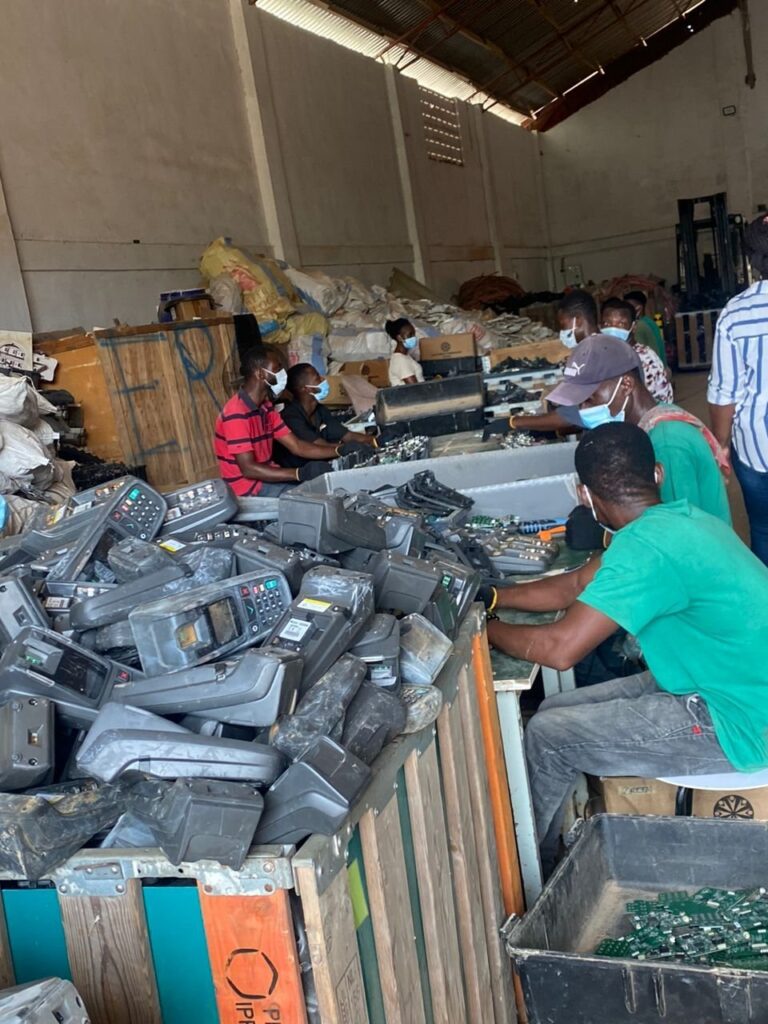
    “Obsolete” BVDs currently at Madina

    “I want to put on record that the BVDs and BVRs were those which were used before 2020, we acquired new ones. So, once we acquired new ones, these ones were obsolete, we’re not using them. They were still occupying space, so the Commission wrote to the district valuer, STC, they did the evaluation of all the materials, and we have documentation to that effect.

    “We sent permission to the Ministry of Finance seeking permission to dispose of. They also replied and gave us the permission to go ahead. The Commission interviewed six auctioneers and one of them was picked. And a little recycling company bought them located at Oyarifa, they have EPA approval to do all those things. The auctioneer advertised it, look for February 1, 2024, Daily Graphic.”

    When questioned if the EC violated any law in the process of disposing of the machines, he responded, “Not at all, State valuer assessed it, we wrote to the finance ministry, approval was given, and the items were valued.

    “They did interviews and the auctioneers auctioned the items. All the money generated was paid into the Consolidated Fund. We went through the legal means.”

    He added that the commission is not concerned about the controversy surrounding the auctioneering because they have not committed any offense.

    “We’re not worried because we have not committed any offence. The documents are there.”

  • Provide funding to fix challenges in Energy sector – IES to Finance Ministry

    Provide funding to fix challenges in Energy sector – IES to Finance Ministry

    The Institute for Energy Security (IES) has urged the Energy and Finance Ministries to promptly allocate funds to address the current energy sector difficulties.

    IES highlighted that the sector’s current issues stem mainly from inadequate liquidity for purchasing fuel to power certain plants at full capacity.

    They stressed the urgency for the two Ministries to resolve this issue.

    Additionally, IES reiterated the importance of equipping ECG with resources to reduce technical and commercial losses, deploy more smart meters to detect theft, and improve distribution efficiency to increase revenue.

    These measures, they emphasized, are crucial for ECG to fulfill its mission of providing quality, reliable, and safe electricity services to support Ghana’s economic growth and development.

    IES’s recommendation follows recent sanctions imposed by the Public Utilities Regulatory Commission (PURC) on the Electricity Company of Ghana (ECG) for regulatory violations. Nana Amoasi VII, Executive Director of IES, emphasized to the Ghana News Agency that liquidity challenges have hindered scheduled maintenance of some plants, resulting in outages.

    “We expect the Ministry of Energy to coordinate and work with the Ministry of Finance to find alternative funding sources to deal with the challenge, thus, to procure fuel to get some of the power plants online,” Nana Amoasi VII said.

    Regarding the regulatory sanctions, he explained that PURC’s action was essential to signal to other service providers the regulator’s preparedness to penalize any violators of sector regulations.

    “The current action is consistent with the oversight responsibility that PURC must have over the industry,” he said and encouraged ECG to oblige with the orders of the Regulator.

    Nana Amoasi also called on the Regulator to impose further sanctions on ECG if it fails to meet the April 22 payment deadline to PURC and the April 30 payment deadline to cash waterfall mechanism beneficiaries.

    The Public Utilities Regulatory Commission instructed ECG’s Management and Board to settle GHS446,283,706.29 by April 30, 2024, to ‘Category B’ beneficiaries of the cash waterfall mechanism. This directive follows ECG’s failure to pay shortfalls from August 2023 to February 2024 to beneficiaries by March 25, 2024.

    Additionally, PURC imposed an initial regulatory charge of 3,000 penalty units totaling GHS36,000 on ECG for not submitting details of all bank accounts to the Commission. This charge is due by April 22, 2024.

    According to Mr. Ishmael Edjekumhene, a PURC Commissioner, the commission has not received any updates on ECG’s actions regarding payment or negotiations on the sanctions.

    Last month, Mr. Sam Dubik Mahama, Managing Director of ECG, emphasized the importance of consumers promptly settling their bills to boost revenue and improve the company’s operational efficiency.

    Meanwhile, the Energy Commission’s 2024 Energy Outlook for Ghana emphasizes the necessity for significant investments in the energy and electricity sub-sector. Specifically, there is a need for improved reliability in gas supply due to the increasing reliance on natural gas for power generation.

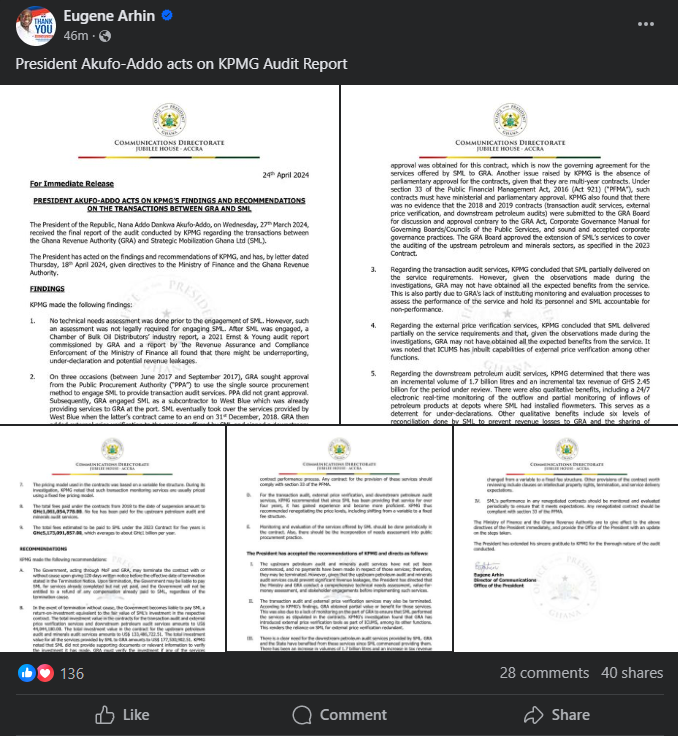
  • Akufo-Addo orders GRA, Finance Ministry to review fee structure in SML contract

    Akufo-Addo orders GRA, Finance Ministry to review fee structure in SML contract

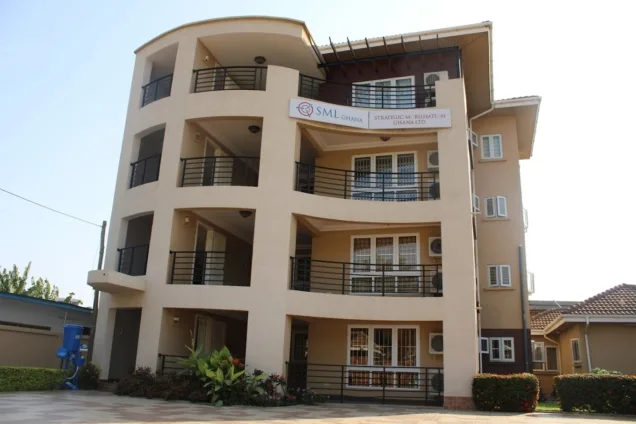
    President Akufo-Addo has instructed the Ghana Revenue Authority (GRA) and the Ministry of Finance to renegotiate the revenue assurance contract with Strategic Mobilisation Limited (SML).

    On January 2 of this year, President Nana Akufo-Addo commissioned KPMG to investigate the contract between SML and GRA, following an exposé by the Fourth Estate that suggested the state was losing a significant amount of money.

    The report was delivered to him on Wednesday, March 27, as announced in a Facebook post by Eugene Arhin, the Director of Communications at the Presidency, on Wednesday, April 3.

    President Akufo-Addo has since received the KPMG audit report regarding the revenue mobilisation contract between GRA and SML.

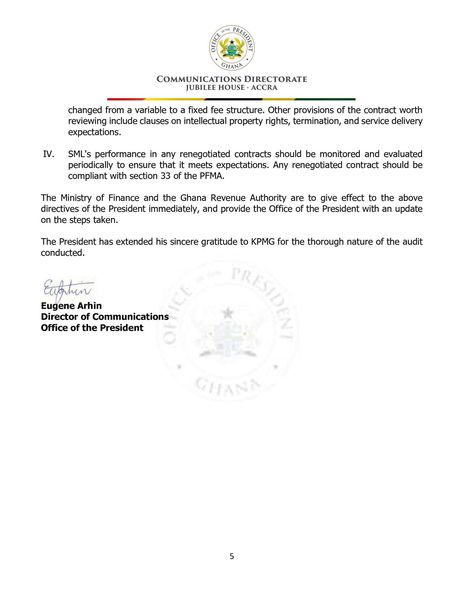
    The President emphasized that the renegotiation should be closely monitored and evaluated periodically to ensure it meets expectations.

    This directive was communicated through a press statement released by the Communications Director of the Presidency, Eugene Arhin.

    The decision to renegotiate the contract follows the President’s acceptance of the recommendation by KPMG after its audit into the deal.

    The audit findings prompted the need for a review of the revenue assurance contract, highlighting areas where improvements are necessary to enhance its effectiveness.

    “There is a clear need for the downstream petroleum audit services provided by SML. GRA and the State have benefited from these services since SML commenced providing them. There has been an increase in volumes of 1.7 billion litres and an increase in tax revenue to the State of GHS 2.45 billion. KPMG also observed that there were qualitative benefits, including a 24/7 electronic real-time monitoring of outflow and partial monitoring of inflows of petroleum products at depots where SML had installed flowmeters and six levels of reconciliation done by SML.”

    “This minimises the occurrence of under-declarations. However, it is important to review the contract for downstream petroleum audit services, particularly the fee structure. Given the experience and proficiency of SML over the last four years of providing this service, the President has directed that the fee structure be changed from a variable to a fixed fee structure. Other provisions of the contract worth reviewing include clauses on intellectual property rights, termination, and service delivery expectations.”

    Below is the full report by President Akufo-Addo

  • Finance Ministry owes power generators GHC1.28bn – PURC report

    Finance Ministry owes power generators GHC1.28bn – PURC report

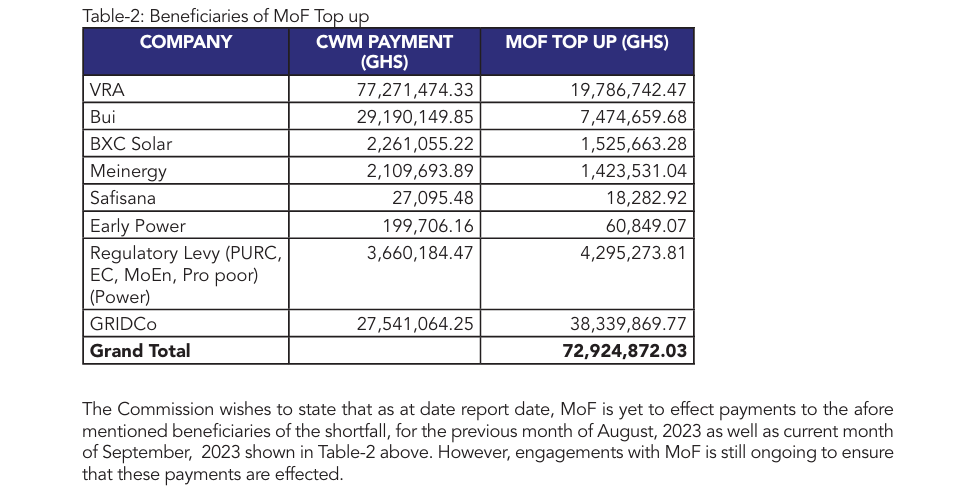
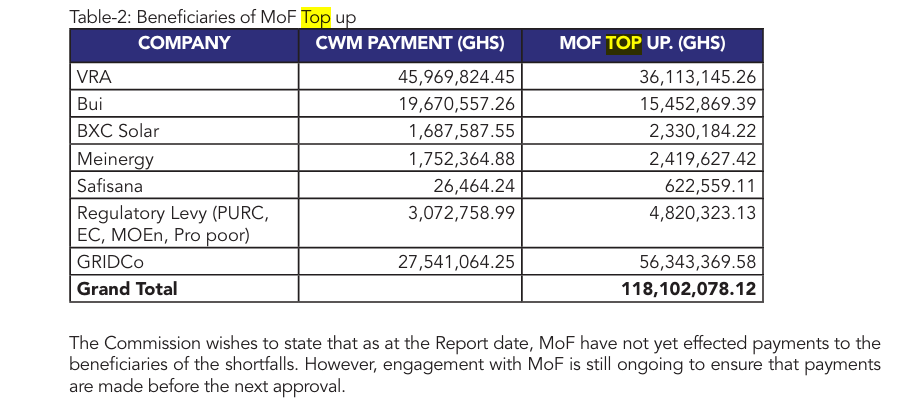
    The Public Utilities Regulatory Commission’s (PURC) validation reports on the Cash Waterfall Mechanism (CWM) have uncovered that the Ministry of Finance is indebted to certain power generators to the tune of about GH₵1.28 billion, amid ongoing challenges with erratic power supply in Ghana.

    The validation reports, covering the period from August 2023 to February 2024, indicate that the Finance Ministry has failed to fulfill its ‘top-up’ obligations under the revised CWM, resulting in total arrears of approximately GH₵1.28 billion.

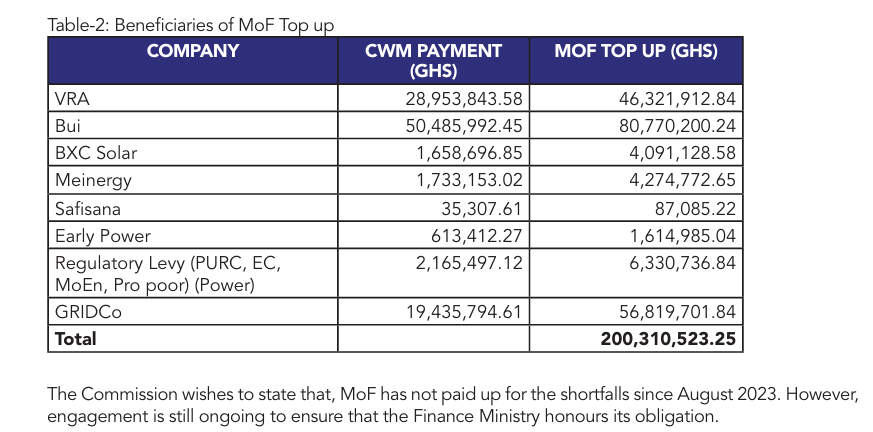
    The February 2024 validation report specifically notes that the Finance Ministry has not made up for shortfalls since August 2023. In February 2024, the Ministry was expected to release an amount of GH₵197,112,973.25, according to the CWM guidelines and the approved model.

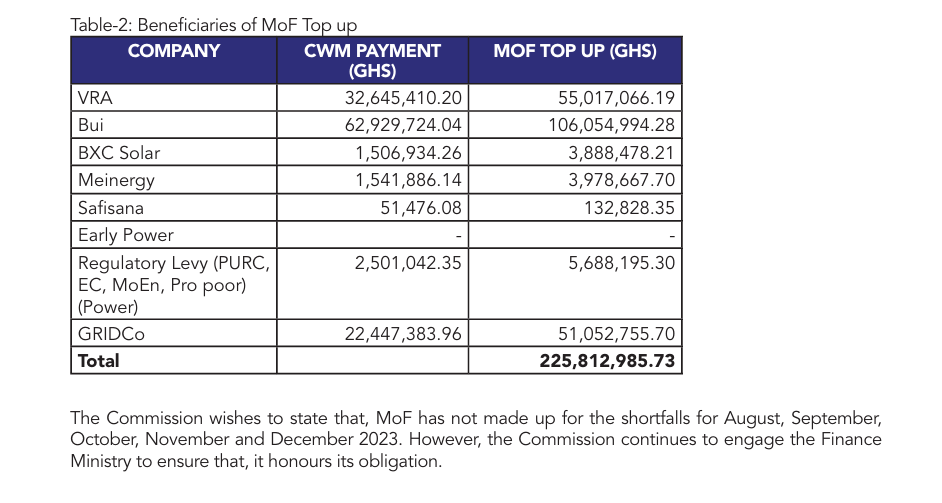
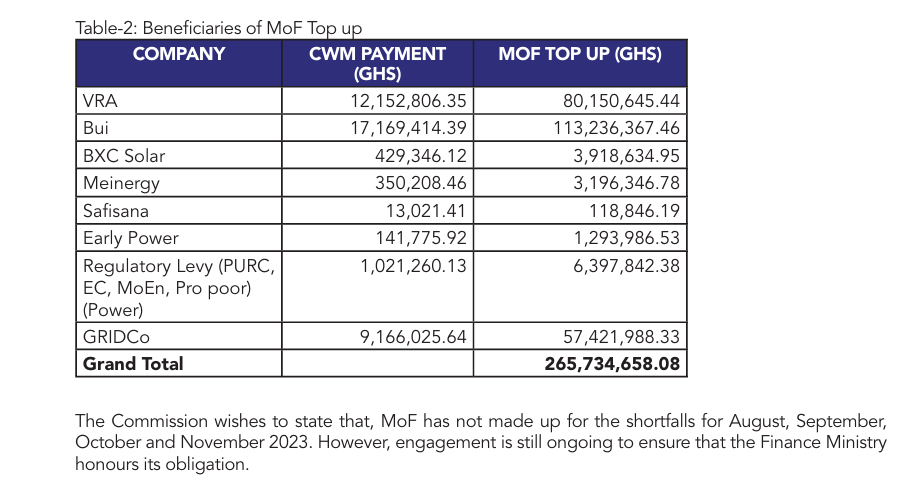
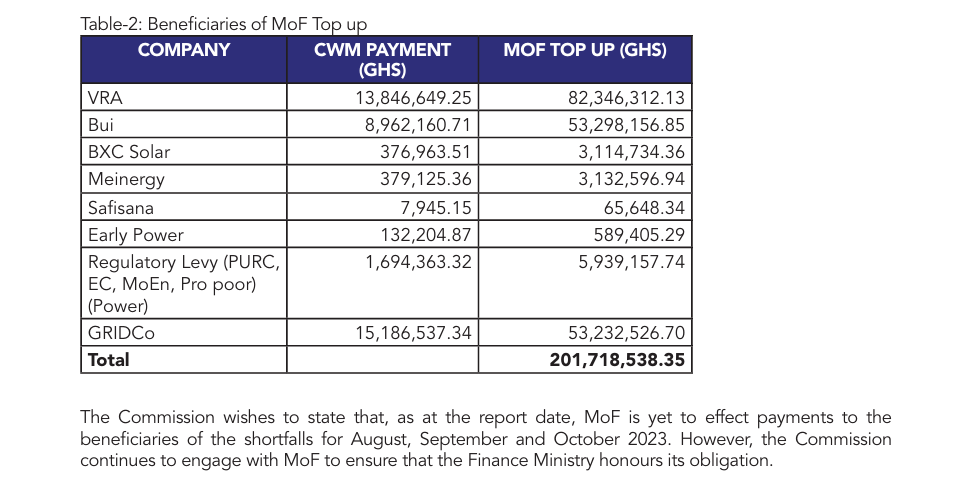
    Since October 2023, the top-up amount has consistently exceeded GH₵200 million before slightly dropping to GH₵197.11 million in February 2024. In February 2024, eight State Owned Enterprises, including GRIDCo, Bui, and VRA, were slated to receive over GH₵197 million from the Finance Ministry for power generation and transmission under the CWM.

    These payments are crucial for addressing shortfalls in the Level B category, preventing arrears from accumulating in the power sector, and facilitating the purchase of gas for electricity generation to ensure uninterrupted power supply.

    Despite the PURC issuing payment instructions on behalf of the CWM to the Ministry of Finance since August 2023, the Ministry is yet to comply with these directives.

    According to the revised Cash Waterfall Mechanism, “Level A payments shall be made to IPPs directly by ECG and Level B payments to SOEs and fuel suppliers”.

    February 2024: MoF top-up

    January 2024: MoF top-up

    December 2023: MoF top-up

    November 2023: MoF top-up

    October 2023: MoF top-up

    September 2023: MoF top-up

    August 2023: MoF top-up

  • Parliament threatens Finance Ministry over outstanding GHC6bn District Assembly Common Fund

    Parliament threatens Finance Ministry over outstanding GHC6bn District Assembly Common Fund

    First Deputy Speaker of Parliament, Joseph Osei-Owusu, has issued a warning, indicating that Parliament may take action against the Finance Ministry if it fails to provide clarity on its outstanding debt to the District Assembly Common Fund worth GHC6 billion.

    The concern arose following revelations made by Benjamin Kpodo, the Member of Parliament for Ho Central, regarding the Finance Ministry’s debt of over GH¢6 billion to the District Assembly Common Fund due to irregular fund disbursements.

    Despite assurances from Deputy Finance Minister Abena Osei-Asare regarding the government’s commitment to settling these arrears, Osei-Owusu insists on concrete evidence and a reconciliation of financial figures.

    Highlighting the urgency of the matter, Osei-Owusu has requested a comprehensive report by the end of June.

    He emphasized the importance of promptly resolving these outstanding arrears to ensure the efficient meeting of the financial needs of the assemblies.

    “I have heard from the Minister of Finance designate, but I require evidence and assurance that the figures provided by Kpodo and the Ministry of Finance have been reconciled.

    “Otherwise, we may need to take action against the Finance Ministry. When it comes to the Common Fund, we must assert our authority as a House.

    “Therefore, we anticipate receiving a report, and by the end of June, we expect all arrears to be accounted for and sufficient funds to be disbursed to the assemblies.”

  • ECG defied Finance Ministry’s directive on CWM payment worth GHC684M – Audit report

    ECG defied Finance Ministry’s directive on CWM payment worth GHC684M – Audit report

    An audit conducted by PricewaterhouseCoopers (PwC) on the Electricity Company of Ghana (ECG) has revealed significant discrepancies in its adherence to the Cash Waterfall Mechanism (CWM) established by the Public Utilities Regulatory Commission (PURC).

    The Cash Waterfall Mechanism Validation Report for November 2023 Payment echoed concerns about the handling of cash collection and distribution by ECG management.

    The audit, according to The Hearld, found that there were substantial disparities between the reported collections and the actual disbursements by ECG, amounting to approximately GHS3.5 billion over ECG’s CWM allocation from July 2022 to September 2023.

    These findings are contrary to the requirements of the Cash Waterfall Mechanism for month-on-month analysis, as reported by The Herald.

    The audit findings revealed that ECG disbursed funds to non-CWM beneficiaries in amounts that exceeded its allocated amounts as per the CWM guidelines. This deviation from the intended distribution mechanism outlined by PURC is significant.

    “Disbursement to CWM beneficiaries from other ECG operational accounts post-MoF directive of June 21, 2023, effective July 1, 2023. The Ministry of Finance (MoF) issued a directive on June 21, 2023, effective July 1, 2023, that ECG should operate a single account from which all collections and payments will be made. In this regard, ECG designated Fidelity Bank Account Number 1070006628289 as the single collections account.

    “From our validation procedures performed, we noted that some payments totaling GHS 684 million to CWM beneficiaries for the period from July 2023 to September 2023 were made from other ECG operational accounts, escrow accounts, and margin accounts. Payments through these other accounts were not in line with the MoF directive issued.

    “We have raised this with ECG and requested the bank statements for these operational accounts, escrow accounts, and margin accounts to validate these payments to the CWM beneficiaries. We have yet to receive them.”

    Additionally, the audit highlighted a net difference of GHS1.9 billion between the total collections declared on the CWM-approved schedules and the inflows consolidated from the bank account statements reviewed.

    The audit team noted consistent differences between the collections and corresponding allocations made by ECG, compared to what was actually paid out. According to the CWM reports, this discrepancy was primarily due to overpayments/underpayments to beneficiaries, particularly those classified under Tier 2 (Level B).

    “The total collections per the CWM were lower than the total collections per the two bank statements. We have raised this with ECG and requested explanations and supporting evidence for these disparities. As of the date of this report, ECG management has yet to revert with these explanations and supporting evidence.”

    “The list of documents reviewed as part of the validation exercise includes the following: CWM payments (from 2022 to 2023); ECG GCB Bank Statement for account number 1011130011277 for the period from July 2022 to September 2023; Fidelity Bank Statement for account number 1070006628289 for the period from January 2023 to September 2023;

    “Cheque registers for payments to CWM beneficiaries for the period from July 2022 to September 2023; bank transfer advice to various banks for payments to various CWM beneficiaries for the period from July 2022 to September 2023.

    “Based on the data made available to us, we adopted the following approach to the exercise: Cash collections: We obtained the bank statements of the GCB collections account (1011130011277) and the Fidelity single collections account (1070006628289) and analysed all collections received in the account (credit transactions in the bank statement) on a monthly basis for the period from July 2022 to September 2023.

    “We then compared the total monthly collections analysed from the bank statements to the amounts reported in the CWM, highlighting the differences noted for each month.

    “We obtained the bank statements of the GCB collections account (1011130011277) and Fidelity single collections account (1070006628289) and analysed all disbursements in the account (debit transactions in the bank statement) on a monthly basis for the period from July 2022 to September 2023. We then identified all disbursements on a month-by-month basis made to CWM beneficiaries by obtaining and analysing the cheque register and bank transfer advice from ECG. For those payments made through the Fidelity and GCB accounts, we agreed these amounts to the bank statements.

    “We then excluded the total CWM payments from the total disbursements to ascertain the non-CWM disbursements made by ECG and compared these amounts to ECG’s CWM allocation. Differences between Total Collections declared on CWM and the total collections consolidated from the bank statements of the GCB main account and the Fidelity Single Collections account. On a monthly basis, ECG is required to report their total collections for the month for input into the CWM, which would then be distributed amongst the CWM beneficiaries.

    “To assess the amounts reported by ECG, we obtained and analysed all collections received in the GCB collections account (account number 1011130011277) for the period from July 2022 to September 2023 and the Fidelity Bank Single Collections Account (account number 1070006628289) for the period from January 2023 to September 2023).

    “From our analysis performed on the bank statements received, we noted a net difference of GHS1.9 billion between the total collections declared on the CWM approved schedules and the inflows consolidated from the bank account statements shared.

    This comes as PURC continues to accuse ECG and its management of refusing to comply “with the guidelines of the new CWM as directed by the President, Nana Akufo-Addo, in August 2023.

    “This defeats the principle of fair and equitable allocation of revenue to sector players under Level B as approved by the CWM Standing Committee in line with the revised CWM guidelines. The Commission wishes to state that ECG should co-operate and allow the CWM to function as directed by the President. Additionally, MoF should also take the necessary steps to honour its obligation by paying for the shortfalls.”

    In the audit report, PricewaterhouseCoopers expressed frustrations, citing a lack of cooperation from ECG management during the audit process. The report noted that the state company often refused to provide requested information, particularly documents, and did not respond to queries regarding identified infractions.

    Conducted at the request of the Ministry of Finance, the audit recommends the strengthening of the current CWM and enhancing ECG’s compliance with its directives. Proposed measures include process improvements in billing and invoicing, as well as the implementation of technology-enabled platforms to enhance transparency and accountability.

    The audit report stated, “We have identified and described in detail our recommendations for strengthening the current CWM and the inputs from ECG going forward.” It added, “It is imperative that ECG and other stakeholders work collaboratively to implement these recommendations and uphold the integrity of the CWM.”

    This includes: Establishing billing and invoicing process improvements at ECG; Key considerations for the CWM disbursement process; Key considerations for the management of non-tariff revenue by ECG; Medium-term redevelopment of the CWM onto a technology-enabled platform to strengthen the fundamental objectives of the mechanism; Key considerations for cybersecurity and data protection measures at ECG (including implementation of a disaster recovery plan or framework, integration of cyber defence mechanisms and processes at ECG, and considerations for managing third-party solutions and collaborations).

    It suggested engaging with the Ministry of Energy, PURC, and other relevant stakeholders to establish the critical process of retrieving the required data/information to complete our tasks. This will also establish the foundation for the relevant processes and information requirements going forward for the quarterly reviews.

    “We also look forward to discussing our recommendations as PURC, ESRP, and the other stakeholders plan to work with ECG to implement them to help restore confidence and promote a transparent and strengthened CWM.”

    As part of achieving financial sustainability in Ghana’s energy utilities and value chain, the Government of Ghana (GoG) initiated the Energy Sector Recovery Program (ESRP) in May 2019. The ESRP is a comprehensive recovery program that sets out a roadmap of policies and actions required for financial recovery in the energy sector.

    In April 2020, the Electricity Sector Revenue Protection (ESRP) implemented the Cash Waterfall Mechanism (CWM) to ensure transparent, fair, and timely payment of all revenues billed and collected by the Electricity Company of Ghana (ECG) on behalf of the entire electricity generation value chain.

    The CWM, along with the Natural Gas Clearinghouse (NGC) mechanisms, was established to promote fairness and transparency in the disbursement of energy revenues and the equitable allocation of tariff revenue collected by ECG to all parties in the energy value chain.

    This validation exercise aims to verify electricity sales in terms of kilowatt-hours (kWh) and the amount billed and collected by ECG over a specified period. It seeks to confirm whether these sales, billings, and collections align with the requirements and outcomes of the Cash Waterfall Mechanism and its related payments. The assessment will also validate the cycle of power delivered, corresponding billing, and collection, as well as the full transfer of these collected funds from regional collection accounts into the Single Collections account.

    Issues related to ECG’s revenues/collections and the broader energy sector debt have contributed to Ghana’s economic challenges. Therefore, this engagement is crucial in identifying and addressing these challenges to strengthen the power sector value chain.

    Amongst other things, it demanded some detailed revenue assurance and validation, an understanding of the key sources of revenue for ECG, i.e., tariff and non-tariff, and their detailed composition /breakdown; a review of revenue/cash collections from the district level and how this flows to the Head Office from the customers’ billings.

    It also recommended stakeholder engagement and buy-in to align with key stakeholders (IPPs, ECG, PURC, MoEn, GoG) on the reconciliation/validation exercise’s outcome and key actions required.

    The CWM report does not state clearly why this happened, and the PURC notes that the CWM Standing Committee indicated how this defeats the purpose of the CWM.

    “We generally agree with this position, as the guidelines for the CWM are quite clear.

    It will be important to understand, from ECG’s perspective, why there is a continuous lack of cooperation in following the guidelines, which is raising many questions about its use of its collections.”

    It was also identified that ECG used an unprotected Microsoft Excel spreadsheet (Data Integrity and Model Security).

    “We observed that most of the submitted CWM models did not have protected cells to limit users’ ability to interfere with allocation formulas either intentionally or by error.”

    It was advised that PURC will need to reconsider using Microsoft Excel-based spreadsheets for the CWM going forward. The integrity of the data entered into the spreadsheet must be safeguarded to promote transparency and efficient management of the mechanism.

    Key cells must be locked with control access features and enhanced access log features programmed into the spreadsheet to track any attempted changes to the inputs in the model.

    “As suggested in our recommendation, PURC, together with ESRP, should consider a shared platform approach to enhance oversight and accountability from ECG, beneficiaries, and the key stakeholders of Ghana’s value chain to promote confidence in the CWM and its ability to meet its objectives.”

    “Currently, ECG is required to submit the CWM to PURC for review and validation. As mentioned earlier, the allocations and subsequent disbursements often do not completely follow the requirements of the guidelines. It will be useful for PURC to take advantage of technology-enabled solutions to facilitate a system that provides real-time data, independent validation, and a stronger reconciliation system to support a more efficient monitoring and evaluation process in the CWM declaration process.

    On validation of payments to CWM beneficiaries, the report said that “from our review of payments made to CWM beneficiaries, we noted that some payments were made through ECG’s operational accounts, margin accounts, and escrow accounts (ADB, Consolidated Bank, Fidelity Bank, GCB, Access Bank, Zenith Bank, Bank of Africa, First Atlantic Bank, GT Bank, Omni BSIC, Republic Bank, Ecobank, ABSA, Stanbic Bank, Societe Generale, CAL Bank, and Universal Merchant Bank). As of the date of this report, the bank statements for these accounts have not been made available to us to validate these payments. As such, the validation of these payments could not be performed.
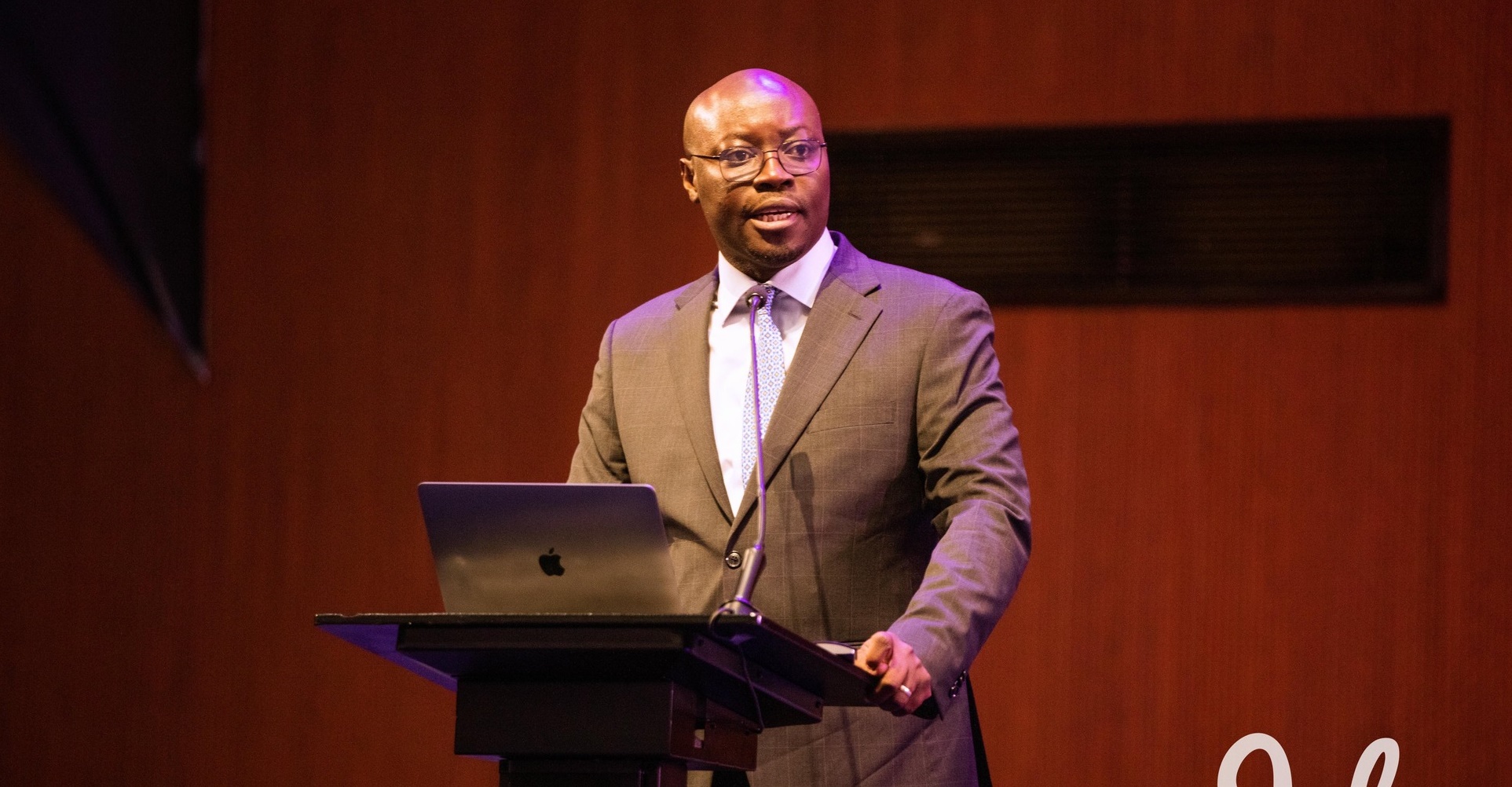
  • Making Bawumia president is my utmost priority – Abena Osei-Asare

    Making Bawumia president is my utmost priority – Abena Osei-Asare

    The Minister of State designate at the Finance Ministry, Abena Osei-Asare, has affirmed her unwavering commitment to ensuring the victory of Vice President and NPP Flagbearer, Dr. Mahamudu Bawumia, in the upcoming 2024 election.

    In response to a question during her ministerial vetting regarding a news article where she reportedly expressed her dedication to seeing Dr. Bawumia elected, the Atiwa East MP reiterated her stance.

    Pressed further on the extent of her allegiance to those remarks, the Deputy Finance Minister emphasized her allegiance to the New Patriotic Party (NPP), underscoring her responsibility to secure the victory of the party’s flagbearer.

    “Yes! That is my focus, and that is what I am working towards. And I’ll do everything in my power to make that happen,” she said.

    “I belong to the NPP party, and for the NPP party, our flagbearer is Dr. Mahamudu Bawumia, so I’ll make sure that I do everything possible in my capacity to make him win the elections in 2024″.

    “I have just been voted for as the parliamentary candidate for the Atiwa East constituency. So, whatever I have to do to make sure that I work hard with the good people of Atiwa East sitting right behind me to make sure Dr. Mahamudu Bawumia wins this election, that is my focus,” she emphasized.

  • Planting for Food and Jobs a key factor in reducing food inflation – Finance ministry

    Planting for Food and Jobs a key factor in reducing food inflation – Finance ministry

    Minister of State-designate at the Finance Ministry, Abena Osei-Asare, has asserted that the government’s flagship program, Planting for Food and Jobs, is addressing the issue of food inflation in the country.

    The Planting for Food and Jobs policy, introduced in 2017 by the current government, aims to reform the agricultural sector, reduce rice imports by 70%, and improve the welfare of farmers.

    It was implemented to counteract declining food production and unemployment rates. Despite its implementation, food inflation soared to over 50% in 2022.

    However, during her parliamentary ministerial vetting, the current deputy finance minister emphasized that the introduction of the Planting for Food and Jobs policy has significantly contributed to reducing food inflation.

    She noted that food inflation decreased from 54.1% in December 2022 to 28.7% in December 2023.

    “Quickly we realized that the food component played a huge role in inflation and the government quickly put some measures in place and revived the planting for food and jobs. And so, as we speak, the food components of inflation which was around 59.7% in December 2022 has declined to 28.7% in December 2023. So clearly, we have put measures in place.”, she told the committee.

    “We are doing everything possible Mr. Chairman. We are not there yet but we are doing everything possible to stabilize these important components of the macro economy and to make sure our people are best served in the way they need to be served”

    The Atiwa East MP further affirmed that the economy is on the right path due to the effective measures implemented by the NPP-led government.

    Meanwhile, the Ghana Statistical Service reported an increase in monthly food inflation in February 2024, despite an overall decline in inflation for the month.

    Over the past 12 months, both food and non-food inflation have marginally decreased to 27.0% and 20.0% respectively. However, month-on-month food inflation increased from 1.6% to 2.0% in February, driven by rising prices of vegetables, tubers, plantains, fish, and seafood.

  • IMF, Finance Ministry to host Artificial Intelligence conference in Accra

    IMF, Finance Ministry to host Artificial Intelligence conference in Accra

    The Ministry of Finance and the International Monetary Fund (IMF) are set to host an Artificial Intelligence (AI) summit in Accra on Monday, March 18, 2024.

    The summit aims to explore the challenges and opportunities that AI presents for developing countries like Ghana.

    Financial and information technology experts believe that AI has the potential to transform economies in Africa, including Ghana. However, they also acknowledge that AI could pose challenges for economic growth and development in countries south of the Sahara, given the continent’s unique characteristics, including its young population.

    While the risk of immediate AI-related disruptions may be lower in emerging markets and developing economies (EMDEs) than in advanced economies, where up to 60% of jobs could be affected, EMDEs are also less equipped to harness the benefits of AI effectively.

    The AI summit, themed “AI as a Catalyst to Transform Economies in Sub-Saharan Africa,” will take place at the Kempinski Hotel in Accra. Participants will include Dr. Mohammed Amin Adam, Minister for Finance, and Madam Kristalina Georgieva, Managing Director of the IMF.

    The summit will feature a panel discussion on the challenges and opportunities of AI for emerging economies, with a focus on Ghana’s digitalization and AI readiness. The discussion will also explore strategies for harnessing AI for positive outcomes and its role in the 4th industrial revolution alongside technologies like cloud computing and the internet.

    The panel will include Ursula Owusu-Ekuful, Minister for Communications & Digitalisation; Madam Kristalina Georgieva, Managing Director of the IMF; Dr. Patrick Awuah, President of Ashesi University; and Dr. Jason Hickey, Head of Google’s AI Research Centre.

  • Finance Ministry’s internal memo on anti-LGBTQ bill was leaked – Abena Osei-Asare

    Finance Ministry’s internal memo on anti-LGBTQ bill was leaked – Abena Osei-Asare

    Minister of State-designate for Finance, Abena Osei-Asare, has clarified that the widely circulated document on the cost of signing the anti-LGBTQI bill to the President was leaked.

    The document, originating from the Finance Ministry, warned that Ghana could lose an estimated $3.8 billion over the next five to six years should President Akufo-Addo sign the controversial anti-LGBTQ+ bill.

    Days after the bill was passed, the Ministry outlined the negative implications of the document on its expenditure, key government plans, and projects, urging President Akufo-Addo to hold off on signing the bill into law as it may cost the country greatly.

    However, appearing before the appointment committee, Osei-Asare stated that the document was an internal memo that got leaked to the public and was also not an advice to the President.

    “We heard certain sentiments from certain stakeholders so what we sought to do was to see how best we can address any revenue gap issue should they arise as a result of the passage of the bill. It was an internal memo. It wasn’t a memo that was to be sent outside because we were sitting to see how best we could close the gap,” she explained on Wednesday, March 13.

    The Finance Ministry faced criticism from Minority MPs over this memo to the President.

    Meanwhile, Abena Osei-Asare has stated that the government has no intention of reintroducing road tolls in 2024.

    “The document that spells out the vision for the government in 2024 is the budget. So we are working with the budget and in the budget for 2024, I don’t think we introduced any lime item for road tolls and so it remains as such.”

    On the country’s economic standings, the Minister-designate revealed that Ghana’s public debt is GHs621 billion as of December 2023.

  • Ghana saves US$34m monthly due to renegotiation of ‘expensive’ IPP deals – Finance Ministry

    Ghana saves US$34m monthly due to renegotiation of ‘expensive’ IPP deals – Finance Ministry

    Minister of State at the Finance Ministry, Abena Osei Asare, has highlighted that the government under President Akufo-Addo has achieved substantial savings through the renegotiation of agreements with Independent Power Producers (IPPs).

    She characterized the agreements from the previous Mahama administration as costly and in need of renegotiation.

    During the State of the Nation Address on February 27, President Akufo-Addo announced that the government’s negotiating team had successfully reached commercial agreements on headline terms for restructuring power purchase agreements and settling arrears with affected IPPs, including AKSA, Amandi, Cenpower, CENIT, and Early Power.

    President Akufo-Addo revealed that the negotiations uncovered that the reported debt of US$1.6 billion owed to the IPPs was actually US$1.2 billion, resulting in savings of US$400 million.

    Additionally, a fixed monthly energy purchase price was secured with all IPPs, leading to a monthly payment of US$43 million instead of US$77 million, resulting in monthly savings of US$34 million and a significant reduction in payments compared to the inherited ‘Take-or-Pay’ system.

    “In the meantime, ECG has been able to secure a fixed monthly energy purchase price with all the IPPs.

    “This has led to a monthly payment of US$43 million, instead of US$77m, that is monthly savings of US$34 m 44 reduction in monthly payments, a far better outcome than the ‘Take-or-Pay’ system we inherited,” the President said.

    “When the president came to parliament with the SONA, he mentioned that we have been able to renegotiate some of these expensive IPPs that the previous government entered into. we have done some renegotiations and that has resulted in 44 percent.

    “If you look at the quantum of the 44 percent I don’t think you will be asking whether it is satisfactory enough, we have saved enough money.”

    In an interview with TV3’s Beatrice Adu on March 11, Madam Osei Asare emphasized the success of the renegotiations, stating, “If you look at the quantum of the 44 percent, I don’t think you will be asking whether it is satisfactory enough; we have saved enough money.”

  • Anti-LGBTQ Bill has no role in contracts Ghana signed with World Bank, IMF – John Gatsi tells Finance Ministry

    Anti-LGBTQ Bill has no role in contracts Ghana signed with World Bank, IMF – John Gatsi tells Finance Ministry

    Dean of the School of Business at the University of Cape Coast (UCC), John Gatsi, has stated that Ghana’s relationship with most international organizations is contractual.

    He believes that this contractual nature allows the Finance Ministry to assert Ghana’s norms and laws when dealing with these organizations.

    This comes in response to concerns raised by the Ministry of Finance regarding the approval of the recently passed Anti-LGBTQ bill and its potential impact on the country’s financial support from international organizations like the World Bank and IMF.

    The Ministry of Finance released a statement on March 4 urging President Akufo-Addo not to sign the Anti-LGBTQ+ Bill into law. The statement expressed concerns that the expected US$300 million financing from the First Ghana Resilient Recovery Development Policy Operation (Budget Support), awaiting Parliamentary approval, might not be disbursed if the bill is signed into law.

    It also noted that ongoing negotiations on the Second Ghana Resilient Recovery Development Policy Operation (Budget Support), totaling US$300 million, could be suspended.

    However, Professor Gatsi, speaking on JoyNews’ AM Show, argued that the Finance Ministry should focus on the terms of the loan agreements with these international bodies, leveraging Ghana’s contractual relationship to address concerns over the bill.

    “Why are we dealing with the World Bank? We are dealing with the World Bank based on a contract. It is as simple as that. If their interest is to the effect that they do not like certain issues regarding LGBTQ, those things can be discussed.

    “I keep saying that the protection of the interests of this group of people is very important, but that does not mean that the structure that is put in place to keep the value system of Ghanaians should not be respected.”

    Professor John Gatsi, the Dean of the School of Business at the University of Cape Coast (UCC), has highlighted that international conventions prohibit the World Bank and International Monetary Fund (IMF) from using LGBTQ rights and advocacy as grounds to deny loans to countries in need.

    He emphasized that countries that meet the threshold requirements for receiving funding from the World Bank should be given the funding, irrespective of their stance on LGBTQ issues.

    According to Professor Gatsi, this underscores the importance of adhering to contractual agreements and international conventions in financial dealings with these organizations.

    “I think that there should be a forum to discuss these things in a humane manner, not forcefully or using them as weapons against nations. That is the point I am making”.

    On February 28, 2024, Parliament passed a bill criminalizing LGBTQ activity in Ghana and prohibiting its promotion, advocacy, and funding.

    According to the legislation, individuals convicted of such acts could face imprisonment ranging from 6 months to 3 years, while those promoting or sponsoring such activities could be sentenced to 3 to 5 years in prison.

    The bill’s approval has elicited criticism from several quarters, including Virginia Evelyn Palmer, the United States Ambassador to Ghana.

  • ‘Donkomi’: Ghana is now worth “cheap” $3bn because of anti-LGBTQ bill – NDC slams Finance Ministry

    ‘Donkomi’: Ghana is now worth “cheap” $3bn because of anti-LGBTQ bill – NDC slams Finance Ministry

    Deputy Communications Officer for the National Democratic Congress (NDC), Malik Basintale, has challenged the Finance Minister to identify the specific clause in Ghana’s agreement with the International Monetary Fund (IMF) that states passing the anti-gay law would result in a termination of the agreement.

    In response to a letter from Ghana’s Finance Ministry to the President, advising against signing the bill into law due to potential implications such as hindering aid access, Basintale stated on TV3 that he has thoroughly reviewed the agreement but found no provision that would lead to the termination of the agreement with the IMF.

    “I’ve read this document over twenty times and I haven’t seen a single legal basis as to why Alhaji Amin Antah, MP for Karaga, will think that it is wrong for the president to sign a bill that stops man and man from marrying. There is no condition, there is no termination clause stated in this agreement that has got anything to do with LGBTQI. The basis that will lead to the termination of this agreement has got absolutely nothing to do with the passage of a law criminalizing LGBTQI.”

    He believes that if the country’s cultural practices can be shelved because of some dollars to be donated to the country, Ghana should be sold to its highest bidder.

    “So I ask Alhaji Amin Antah, who has suddenly developed a love for LGBTQI and thinks that criminalizing them will lead us to not getting 3 billion loan. Paltry, last year 2022, the Auditor General’s report brought out infractions in public sector to a tune of 1.2 billion that is greater than 700 million per year Amin Antah thinks we should not set aside. If because of a paltry 3 billion loan this government thinks LGBTQI+ be practised in this country, it is time we sold this country to someone who will buy the country for cheap,” he said.

    Meanwhile, President Akufo-Addo has reaffirmed Ghana’s dedication to upholding human rights, despite the recent passage of the Proper Human Sexual Rights and Ghanaian Family Values Bill, also known as the Anti-LGBTQ+ Bill.

    Speaking at a diplomatic event, he stressed that Ghana maintains its reputation for respecting human rights and following the rule of law.

    The President clarified that the Bill is currently being challenged in the Supreme Court, and until a verdict is reached, his government will not enforce any provisions of the private Member’s bill.

    In a circular shared by Director of communications at the office of the President, Eugene Arhin, the President said, “l am aware that last week’s bi-partisan passage by Parliament of the Proper Human Sexual Rights and Ghanaian Family Values Bill, on a Private Member’s motion, has raised considerable anxieties in certain quarters of the diplomatic community and amongst some friends of Ghana that she may be turning her back on her, hitherto, enviable, longstanding record on human rights observance and attachment to the rule of law. I want to assure you that no such back-sliding will be contemplated or occasioned.”

    President Akufo-Addo clarified that the Anti-LGBTQ+ Bill has not yet been presented to him for formal action. He stated that any decision he takes regarding the Bill will depend on the outcome of the lawsuit challenging it in the Supreme Court.

    “I think it will serve little purpose to go, at this stage, into the details of the origin of this proposed law, which is yet to reach my desk. But, suffice it to say, that I have learnt that, today, a challenge has been mounted at the Supreme Court by a concerned citizen to the constitutionality of the proposed legislation,” the President added.

  • Western powers using Finance Ministry to blackmail Akufo-Addo – Economist

    Western powers using Finance Ministry to blackmail Akufo-Addo – Economist


    An economics professor and dean of the University of Cape Coast Business School, Professor John Gasti, has alleged a significant lobbying effort aimed at persuading President Akufo-Addo not to endorse the recently passed anti-gay bill.

    He suggested that the Ministry of Finance is being influenced in its plea to the President not to sign the Proper Human Sexual Rights and Ghanaian Family Values Bill, 2021.

    Prof. Gasti’s comments follow the Ministry of Finance’s financial report to President Akufo-Addo, outlining potential losses in international donor funds, particularly from the World Bank, should the controversial bill be enacted.

    According to the ministry’s report, Ghana stands to lose over US$3.8 billion from the World Bank if the anti-gay bill becomes law. However, the President, in a statement on March 4, mentioned that the bill has not reached his desk.

    Speaking on TV3’s Ghana Tonight on March 4, Prof. Gasti questioned the relevance of the anti-gay bill in relation to the conditions set for the IMF bailout.

    He asserted that the bill, whether passed or not, was not part of the conditions required for Ghana to receive approval for the US$3 billion rescue loan from the IMF.

    “It sounds like there is a heavy dose of lobbying activities going on [in] these last minutes of the process. We knew that the constituents of the world that are not happy with the stand of Ghana on LGBTQ were very clear. All attempts were made to stop the process in parliament that didn’t happen”, he said, adding that the international community, having seen the signs of a unanimous decision to pass the bill in parliament, has occasioned “the upscale of lobbying activities across the board”.

    “And now they are using our own finance ministry to blackmail Ghanaians to support the President not to sign the bill”, Prof. Gasti added.

    “When we went to the IMF, there was no condition regarding LGBTQ issues”, the economics professor said.

    “In fact, when the World Bank was giving us [Ghana] money, the only thing that they were waiting for was the signing of the IMF deal that opened the door for them to provide those credits that they’re providing to us”, he told Alfred Ocansey on Ghana Tonight.

    He expressed concern about the apparent surge in lobbying activities, especially in the final stages of the process. Prof. Gasti noted that the global entities opposing Ghana’s stance on LGBTQ issues intensified their lobbying efforts when attempts to halt the bill’s progress in parliament were unsuccessful.

    Addressing the role of Ghana’s Finance Ministry, Prof. Gasti accused international forces of using it to pressure Ghanaians to support the President in not signing the bill into law.

    He emphasized that the conditions set by the IMF did not include LGBTQ issues and highlighted that the World Bank’s financial support was contingent on Ghana signing the IMF deal, which had already been done.

    The Finance Ministry’s concerns about potential cuts in World Bank financing included the First Ghana Resilient Recovery Development Policy Operation (US$300 million), the ongoing negotiation for the Second Ghana Resilient Recovery Development Policy Operation (US$300 million), and the Ghana Financial Stability Fund (US$250 million). Additionally, fears were raised about the cessation of disbursements for ongoing projects worth US$2.1 billion and another US$900 million in projects if the anti-gay bill were to become law.

  • Don’t approve anti-LGBTQ bill; we need money from IMF, World Bank – Finance Ministry advises Akufo-Addo

    Don’t approve anti-LGBTQ bill; we need money from IMF, World Bank – Finance Ministry advises Akufo-Addo

    The Ministry of Finance has advised President Akufo-Addo against signing the recently passed anti-LGBTQ+ Bill into law, citing potential negative impacts on the country’s financial support from international organizations.

    In a press release issued on Monday, March 4, the Finance Ministry cautioned that signing the bill could jeopardize the disbursement of the expected US$300 million financing from the First Ghana Resilient Recovery Development Policy Operation (Budget Support), currently awaiting Parliamentary approval.

    It also warned that ongoing negotiations on the Second Ghana Resilient Recovery Development Policy Operation (Budget Support), totaling US$300 million, could be suspended.

    The Ministry highlighted the potential loss of financial resources and the resulting financing gap in the 2024 budget as major concerns.

    To address these challenges, the Ministry recommended that the President engage with religious bodies to discuss the implications of signing the bill. It also suggested establishing a robust coalition and framework to support key development initiatives.

    “The Presidency may have a structured engagement with local conservative forces such as religious bodies and faith-based organisations to communicate the economic implications of the passage of the ‘Anti-LGBTQ‘ Bill and to build a stronger coalition and a framework for supporting key development initiative that is likely to be affected.”

    Parliament passed the bill on February 28, 2024, criminalizing LGBTQ activities and prohibiting their promotion, advocacy, and funding. Those convicted of such acts could face 6 months to 3 years in prison, while promoters or sponsors could be sentenced to 3 to 5 years.

    The bill’s approval has been met with criticism, notably from Virginia Evelyn Palmer, the United States Ambassador to Ghana, and other stakeholders.

    The UN High Commissioner for Human Rights, Volker Türk, has described the passage of bill as “profoundly disturbing.”

    A portion of the UN Human Rights statement read “I call for the bill not to become law. I urge the Ghanaian Government to take steps to ensure everyone can live free from violence, stigma and discrimination, regardless of their sexual orientation or gender identity. Consensual same-sex conduct should never be criminalized.”

  • Ghana’s forex reserves, stability at risk if Akufo-Addo signs Anti-LGBTQ+ bill – Finance Ministry

    Ghana’s forex reserves, stability at risk if Akufo-Addo signs Anti-LGBTQ+ bill – Finance Ministry

    The Finance Ministry has raised apprehensions regarding the possible repercussions of President Akufo-Addo’s approval of the recently passed Anti-LGBTQ+ bill.

    Just days following the bill’s passage, the Ministry highlighted the adverse effects the legislation could have on government expenditure, key plans, and projects.

    The Ministry is urging President Akufo-Addo to refrain from enacting the bill into law, cautioning that it could lead to significant financial losses for the country.

    Among the risks cited is the potential loss of $850 million in budgetary support from the World Bank for the current year alone.

    In the 5-page document, the Ministry explained that “for 2024 Ghana will lose US$600 million Budget support and US$250 million for the Financial Stability Fund.”

    “This will negatively impact Ghana’s foreign exchange reserves and exchange rate stability as these inflows are expected to shore the country’s reserve position.

    Over the next six years, the Ministry explained that “Ghana is likely to lose US$3.8 billion in World Bank Financing.”

    Below is the full text of the World Bank implications projected by the Ministry;

    i. The expected US$300 million financing from the First Ghana Resilient Recovery Development Policy (Operation Budget Support) which is currently pending Parliamentary approval might not be disbursed by the Bank when it is approved by Parliament.;

    ii. On-going negotiations on the Second Ghana Resilient Recovery Development Policy Operation (Budget Support) amounting to US$300 million may be suspended:

    iii. On-going negotiations for US$250 million to support the Ghana Financial Stability Fund
    may be suspended;

    iv. Disbursement of undisbursed amounts totalling US$2.1 billion for ongoing projects will be suspended; and

    v. Preparation of pipeline projects and declaration of effectiveness for two projects totalling US$900 million may be suspended. Full details of the World Bank portfolio are attached as Appendix 1 & 2.

    vi. In total, Ghana is likely to lose US$3.8 billion in World Bank Financing over the next five to six years. For 2024 Ghana will lose US$600 million in Budget support and US$250 million for the Financial Stability Fund. This will negatively impact Ghana’s foreign exchange reserves and exchange rate stability as these inflows are expected to shore up the country’s reserve position.

    It comes in the wake of warnings by the United States of dire implications for the Ghanaian economy after Parliament enacted a Proper Human Sexual Rights and Ghanaian Family Values Bill.

    Already, some human rights groups in Ghana have threatened to head to the Supreme Court if President Akufo-Addo gives assent to the Proper Human Sexual Rights and Ghanaian Family Values bill passed on Wednesday.

    On the back of all these, the Finance Ministry is urging the President to engage stakeholders including faith-based organisations to communicate the bill’s implications.

    Aside from that, it called for effective engagement with conservative countries including Arab countries and China.

    “This could help trigger resources to fill in the potential financing gaps to be created.”

  • ECG grapples with mounting debts, looming disconnections, impacting finance ministry

    ECG grapples with mounting debts, looming disconnections, impacting finance ministry

    The Ministry of Finance has an outstanding electricity debt of GH¢1 million that has accrued over ten months, which could result in its disconnection from the national grid.

    The Electric Company of Ghana (ECG) is grappling with a mounting issue as it seeks to address a significant debt owed by the Ministry of Finance, totaling GH¢1,025,918.

    To resolve the matter and underscore the importance of timely bill payments, ECG plans to engage with Finance Minister Dr. Amin Adam.

    The ministry’s failure to settle electricity bills over the past ten months has exacerbated the situation, straining ECG’s operational capabilities and impacting its ability to meet the demands of power producers.

    In response to the mounting debt, ECG has intensified its debt collection efforts, leading to the disconnection of numerous private and public entities from the national grid. One notable case occurred on Monday, February 19, 2024, when Accra Academy Senior High School experienced a sudden power outage due to outstanding debts.

    The abrupt disconnection plunged the esteemed educational institution into chaos, disrupting both academic and residential activities. Teachers and students faced significant challenges amid the blackout, with no immediate resolution in sight.

    However, after settling approximately GH¢500,000 in post-paid bills dating back to July 2023, power has been restored to Accra Academy SHS, offering a temporary reprieve from the crisis.

  • Ministry of Finance owes ECG over GHC1m debt

    Ministry of Finance owes ECG over GHC1m debt

    The Ministry of Finance is facing disconnection from the national grid due to an outstanding electricity debt of GHc1 million.

    Despite consuming power for the past ten months, the ministry has not paid its monthly bills, resulting in an accumulated debt of GHc1,025,918.00.

    In addition to this, the ministry has also failed to release funds to various municipal and district assemblies to settle their electricity debts.

    Sources within the Electricity Company of Ghana (ECG) indicate that the issue needs to be addressed promptly, leading to the decision to disconnect the finance ministry to send a clear message to authorities.

    It has been reported that a team from the ECG will engage with the Minister for Finance, Dr. Amin Adam, to discuss the outstanding debt and reach a resolution.

    Furthermore, the ECG is pursuing Ghana’s Parliament over a debt of GHc23 million. The ECG national task force has warned that parliament will be disconnected from the power grid if the debt is not settled promptly.

  • Amin Adam holds first meeting with Finance Ministry staff after appointment

    Amin Adam holds first meeting with Finance Ministry staff after appointment

    The Minister for Finance-designate, Mohammed Amin Adam, on Monday, February 19, 2024, had an engagement with the staff of the ministry.

    Amin Adam, who was recently appointed by President Akufo-Addo, met with the leadership of the ministry to discuss various issues.

    Former Finance Minister Ken Ofori-Atta had earlier expressed confidence in his successor, Dr. Mohammed Amin Adam, urging the Ministry of Finance staff to support him in ensuring the successful execution of the IMF-ECF program for economic growth and transformation.

    In a heartfelt letter of gratitude to the staff of the Finance Ministry, Ofori-Atta thanked them for their tireless service, commitment to excellence, and the privilege of working together.

    Encouraging them to uphold professionalism, ethics, efficiency, and responsiveness, he envisioned a Ghana Beyond Aid.

    However, some stakeholders have expressed doubts about the inputs Amin Adam stands to bring to the ministry, putting the timing of his appointment into perspective.

  • GHS150m allocated by government to repair potholes nationwide – Finance Ministry

    GHS150m allocated by government to repair potholes nationwide – Finance Ministry

    The government has disbursed GH¢150 million to contractors for the repair of potholes nationwide, as part of the first-quarter releases from the Ministry of Finance.

    This was contained in a statement from the Ministry of Roads and Highways dated Thursday, February 15.

    The release aims to facilitate the Ghana Highways Authority and the Department of Urban Roads in utilizing the dry season to address routine pothole patching on major roads that suffered deterioration in 2023 due to heavy rains.

    The Ministry urged public cooperation as the government works towards enhancing the national road network.

    “The government has released an amount of GH¢150 million for the engagement and payment to road contractors undertaking pothole patching across the country. The amount is part of the first quarter releases from the Ministry of Finance to the Ministry of Roads and Highways,” the Ministry said.

    It called on the public to cooperate with the Ministry as the government strives to improve the national road network.

    “The intervention is to enable the Ghana Highways Authority a. the Department of Urban Roads to take advantage of the dry season to undertake routine pothole patching activities on some major roads which deteriorated last year due to heavy rains.”

    “The Ministry Is hopeful that this timely intervention will result in smoother road surfaces, help reduce the risk of accidents and prolong the lifespan of our road infrastructure.”

  • Finance Ministry to engage Organised Labour over 15% VAT on electricity in the coming weeks

    Finance Ministry to engage Organised Labour over 15% VAT on electricity in the coming weeks

    The Ministry of Finance has recognized the concerns expressed by Organised Labour regarding the proposed implementation of Value Added Tax (VAT) on residential customers’ electricity consumption.

    In a press statement issued on Tuesday, January 30, the Ministry revealed its intention to hold comprehensive meetings with Organised Labour and other crucial stakeholders in the upcoming weeks to incorporate their input into the decision-making process.

    The statement urged Organised Labour, ECG, NEDCO, and all stakeholders to exercise restraint, create a conducive environment for constructive dialogue, and work towards a prompt resolution of the current impasse.

    The Ministry’s response comes in the wake of Organised Labour’s threat of industrial action over the proposed implementation of Value Added Tax (VAT) on domestic electricity consumption.

    On Wednesday, January 24, Organised Labour expressed dissatisfaction with the imposition of VAT on a specific category of electricity consumers and called for the Finance Ministry to retract the directive. This stance was reinforced by the Trades Union Congress (TUC), which issued a seven-day ultimatum to the government, demanding the withdrawal of VAT on electricity consumption beyond the lifeline threshold.

    The Ministry’s statement also highlighted the country’s positive achievements under the Post Covid-19 Programme for Economic Growth (PC-PEG). These accomplishments include surpassing growth targets, reducing inflation, improving fiscal and external positions, achieving a more stable exchange rate, and lowering the Monetary Policy Rate.

    Moreover, the Finance Ministry reaffirmed the government’s commitment to collaborating with all stakeholders to maintain progress, foster macroeconomic stability, and promote inclusive growth.

  • I won’t sign cheque if expenditure doesn’t fall in line with budget – Ofori-Atta

    I won’t sign cheque if expenditure doesn’t fall in line with budget – Ofori-Atta

    The Finance Minister, Ken Ofori-Atta, has emphasized his dedication to fiscal discipline, pledging to avoid budget overruns in 2024 leading up to the December elections.

    Reflecting on the reduction of inflation from 54.1% in December 2022 to 23.2% in December 2023, he emphasized the need for fiscal prudence, stating that the Ministry of Finance prioritizes the nation’s welfare over popularity.

    The finance minister acknowledged the Bank of Ghana’s efforts in utilizing monetary policy tools to curb inflation, emphasizing his refusal to authorize expenditure misalignments with the budget.

     “We have moved inflation from over 54.1% in December 2022 to about 23.2% in December 2023 and you think that did not come with exercising some fiscal prudence? The Ministry of Finance is not here to be loved, but to make sure that the community crosses the Jordan”, he told George Wiafe on PM Express, Business Edition on January 18, 2023.

    “We want to ensure that the right things are done going forward as a country. If the expenditure does not fall in line with the budget, I will not sign the cheque”, he said.

    He affirmed the government’s dedication to strict adherence to fiscal policies, striving to achieve targets outlined in the 2024 budget.

    Reminding government officials of the importance of fiscal prudence, Ofori-Atta disclosed stringent measures taken to contain spending, contributing to the decline in inflation.

    Despite the challenges posed by an election year, he expressed confidence in maintaining fiscal discipline and achieving the 2024 year-end inflation target of 15%.

    Optimistic about Ghana’s IMF program, Ofori-Atta addressed the difficulty in introducing new tax measures to boost revenue, citing the necessity to address the country’s tax-to-GDP ratio. While recognizing the challenges, he expressed confidence in the government’s commitment to economic stability and fiscal responsibility.

  • Mineral Commission runs away from stinking SML contract

    Mineral Commission runs away from stinking SML contract

    The Minerals Commission has stated that it did not play any role in the award of the contract to Strategic Mobilisation Ghana Limited (SML) for revenue assurance services in the gold production sector.

    The CEO of the Minerals Commission, Martin Kwaku Ayisi, responded to a Right to Information (RTI) request, stating that the Commission had no involvement in awarding the contract to SML.

    Additionally, the response mentioned that the Minerals Commission has no reports of losses resulting from deliberate or accidental miscalculations in revenue within the mining sector.

    The SML contract, awarded by the Ministry of Finance and the Ghana Revenue Authority (GRA), has been suspended by President Nana Addo Dankwa Akufo-Addo.

    An international audit and accounting firm, KPMG, has been appointed to audit the contract, following revelations by investigative journalist Manasseh Azure Awuni about false claims made by SML regarding an earlier contract for revenue assurance in the downstream petroleum sector.

    The SML contract entitled the company to over $100 million annually for a five-year period, with the possibility of renewal for another five years.

    Despite admissions by GRA officials in the investigative documentary that they do not use SML’s figures to calculate taxes and revenue, GRA claimed that SML’s operation had resulted in a significant increase in volumes.

    However, the Africa Centre for Energy Policy and IMANI Africa countered the GRA’s claim, stating that the available data on the Ministry of Finance’s website for statutory reporting under the Energy Sector Recovery Act (ESLA) and on the National Petroleum Authority’s (NPA) website did not support the GRA’s assertion of significant revenue increment.

    “In the year SML commenced operations (2019/2020), GRA’s data indicates a 5% growth in refined petroleum product consumption relative to the previous year (19.38 million litres). In the same period, the NPA reports a 7% growth (24.71 million litres) in product consumption. In the subsequent year (2020/2021), both GRA and NPA data align, indicating an 11% and 10% growth in product consumption, respectively,” the statement by the CSOs indicated.

    They added: “The actual growth between 2018/2019 and 2020/2021 was about 62.95 million from NPA data and 60.15 million from the GRA Data. In the 2021/2022 year, the total consumption of refined products in the country declined by 5% and 7% according to NPA and GRA respectively.”

    SML had also stated on its website that its operations had stopped “under-reporting, diversion and dilution of fuel products and general non-compliance in the petroleum industry sector.”

    When The Fourth Estate team pointed out that services preventing anomalies were performed by other companies contracted by the NPA, SML management admitted the claim was false and promptly deleted it from the company’s website on the same day. Despite this, in June 2023, the Ministry of Finance instructed the GRA to expand the scope of SML Ghana’s work.

    Ministry of Finance letter said the “Honourable Minister [Ken Ofori-Atta] has determined that there is the need to monitor the production and shipment of oil and gold out of the country.

    “To this end, he will like to expand the Revenue Assurance work being performed by SML to include upstream oil drilling by the production companies and the gold mining companies,” the letter, dated June 22, 2023, said.

    The award of contracts to SML has faced scrutiny from members of parliament, civil society groups, and anti-corruption campaigners. Questions have been raised about the basis for awarding contracts to SML, particularly as the upstream and gold mining sectors already had existing systems in place to protect the government’s interests.

    The Minerals Commission, which was set up by an Act of Parliament as “the Government agency with the primary responsibility of developing and coordinating mineral sector policies and monitoring their implementation” says it was not involved in the contract with SML to monitor gold production in the country.

    The Minerals Commission said it was not involved in the award of the contract and does not have reports of revenue losses in the gold mining sector.

    “The Commission does undertake regular or special audits from time to time as per its mandate to deal with such issues and we do collaborate with other Government or public institutions to do that,” the CEO added in the RTI response.

    The response from the Minerals Commission follows a similar response from the Petroleum Commission, the regulator of the upstream petroleum sector in Ghana.

    The Petroleum Commission, in an earlier response to an RTI request, stated that it was unaware of the contract awarded to SML for monitoring oil production in the upstream petroleum sector. Similar to the Minerals Commission, the Petroleum Commission also indicated that it had no information or reports on losses in the sector, which was the purported reason for contracting SML.

    The Ministry of Finance, which declined to provide a copy of the contract, stated in response to the RTI request that it did not have reports on revenue losses from agencies in the sectors where SML was contracted to monitor.

    “We do not have direct information on purported reports from agencies in the petroleum and mining sectors about losses in the downstream, upstream and mining sectors,” the ministry said.

  • Parliament to probe activities of SML over controversial contract with Finance Ministry

    Parliament to probe activities of SML over controversial contract with Finance Ministry

    Parliament’s Finance Committee has announced its decision to investigate Strategic Mobilisation Ghana Ltd (SML) over allegations surrounding a purported 10-year contract with the Finance Ministry during Ken Ofori-Atta’s tenure.

    Ranking Member on the Finance Committee, Dr Cassiel Ato Forson, disclosed this information to the media on Friday, December 22.

    “It is also important to note that the same Finance Committee working with parliament has resolved to initiate a probe into the SML. I urge the Committee of Finance to conduct this probe diligently and in a manner that will show transparency,” Minority Leader, Dr Cassiel Ato Forson said.

    A Fourth Estate report has raised concerns about the legitimacy of a contract, indicating that Finance Minister Ken Ofori-Atta has expanded it, potentially costing the state $100 million over the next decade.

    The contract assigns Strategic Mobilisation Ghana Limited (SML) the responsibility of monitoring and reporting fuel product diversion, dilution, and general noncompliance in the petroleum industry, tasks previously handled by the National Petroleum Authority (NPA).

    Strategic Mobilisation Ghana Limited (SML) has issued a response to allegations surrounding a purported 10-year contract with the Finance Ministry during Ken Ofori-Atta’s tenure.

    The company contested the claims made in “The Fourth Estate” documentary, asserting that it contains misrepresentations and false information.

    In a press release from its Public Relations Unit on Tuesday, December 19, SML clarified that its contractual agreement with the Finance Ministry and the Ghana Revenue Authority (GRA) spans 5 years, contrary to the reported 10 years. Additionally, the company denied the assertion that it annually receives a substantial $100 million for its services.

    “The documentary represents a set of misrepresentations, false claims, and a general lack of understanding of the entire operations of the company. We challenge Fourth Estate to produce any contract anywhere that is for a 10-year period.”

    “The 5th PPA Board at its 46th Board meeting in a letter referenced PPA/CEO/09/2286/23 approved a contract duration of five (5) years.”

    Meanwhile, the Finance Committee of Parliament has proposed a suspension of all payments associated with the government’s contract with Strategic Mobilisation Ghana Ltd (SML) starting next year.

    This recommendation is based on the need for a parliamentary investigation into the said contract.

    According to the committee, after a thorough review of the contract, it was determined that Parliamentary approval is necessary in accordance with the Financial Management Act. Consequently, the committee deems it essential to notify the Ghana Revenue Authority (GRA) about this statutory requirement.

    This development came to light during a debate on the approval of the budget for other government obligations in the year 2024.

    Minority Leader, Dr Cassiel Ato Forson speaking to journalists on the deal said “As part of the report the parliament of the Republic of Ghana has resolved that the Ghana Revenue Authority (GRA) must immediately stop all payments to SML beginning January 1, 2024.

    “Again, parliament resolves that GRA must be aware that the contract that the Ministry of Finance has with SML constitutes a multi-year commitment and section 33 of the Public Financial Management Act is clear on the matter that all multi-year commitments must be presented to parliament for consideration and approval.”

    “So the contract in its current shape is not valid and must come to parliament for approval,” he said.

  • Suspend controversial 10-year contract between Finance Ministry and SML – Minority

    Suspend controversial 10-year contract between Finance Ministry and SML – Minority

    The Minority caucus in Parliament is urging the immediate suspension of a 10-year contract between the Finance Ministry and Strategic Mobilisation Ghana Limited (SML) for revenue assurance services.

    Ranking Member on the Mines and Energy Committee of Parliament, John Jinapor, characterized the contract as a “rip-off” and a “burden on taxpayers” designed to enrich “greedy politicians.”

    He has called for its suspension until a probe by the minority caucus can investigate potential mismanagement.

    “We do not believe that there is value for money, this contract is a rip-off, this contract only ends up filling the pockets of greedy politicians and individuals.

    “We cannot allow the taxpayer to be burdened with such unnecessary contracts that only go a long way to fill the pockets of individuals, so we would advise, that immediately that contract should be suspended pending a parliamentary investigation. When we go into it and find out that all those allegations are true, we will ensure that this contract is abrogated.”

    Mr. Jinapor also expressed concerns about a possible delay in negotiations with the International Monetary Fund (IMF) due to Ghana’s failure to service its external debts.

    There are reports indicating that the IMF board meeting to consider the second tranche of a crucial $3 billion credit facility has been postponed until January 11, 2024. Jinapor cautioned that this delay could seriously jeopardize the hard-won economic gains that the government has achieved.

  • FULL VIDEO: How Ghana is losing GHC3bn and more over ‘shady’ Finance Ministry-SML contract

    FULL VIDEO: How Ghana is losing GHC3bn and more over ‘shady’ Finance Ministry-SML contract

    The Fourth Estate, in its recent investigation, has uncovered rot in a contract between the Finance Ministry and Strategic Mobilisation Ghana Limited (SML), and how the company failed to save Ghana over GHc3 billion in revenue as it had earlier claimed.
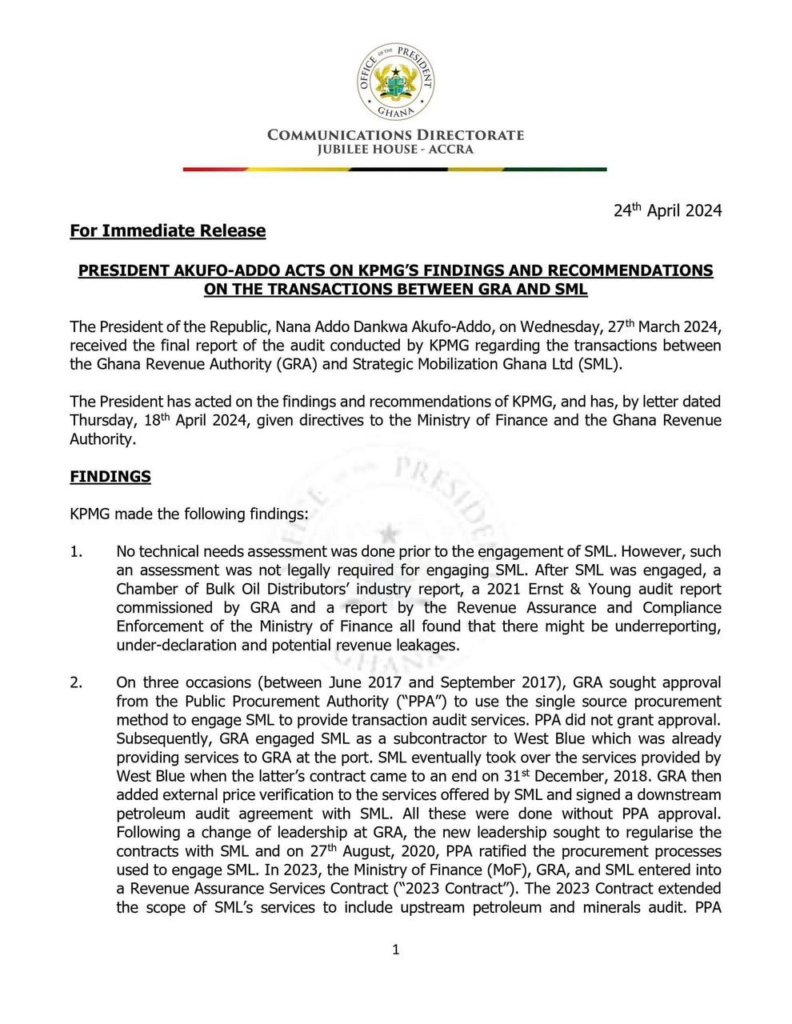
    Strategic Mobilisation Ghana Limited in 2020 started revenue assurance services to the government of Ghana.

    The GRA and the Ministry of Finance contracted SML to monitor the volumes of petroleum products lifted. However, the GRA told The Fourth Estate that the figures SML churned out as its monitoring of volumes were not the ones GRA uses to calculate petroleum taxes or revenue for the state. The GRA uses figures from the loading gantries, which the authority was using even before SML was contracted.
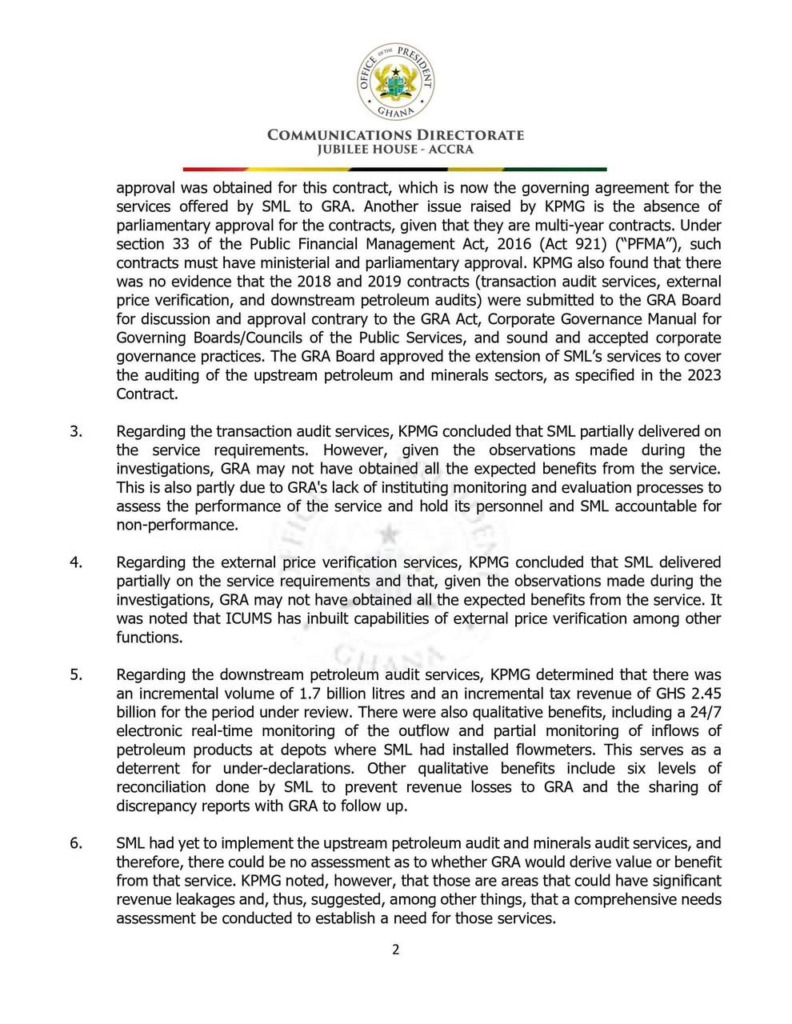
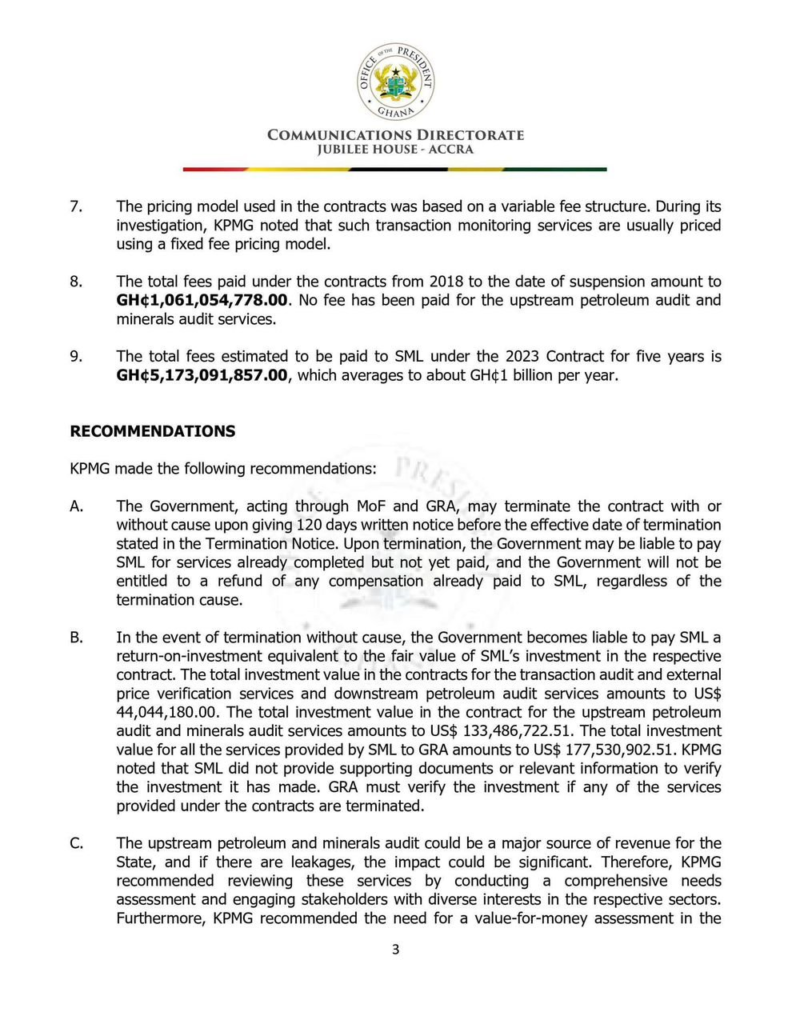
    Find the full report below.
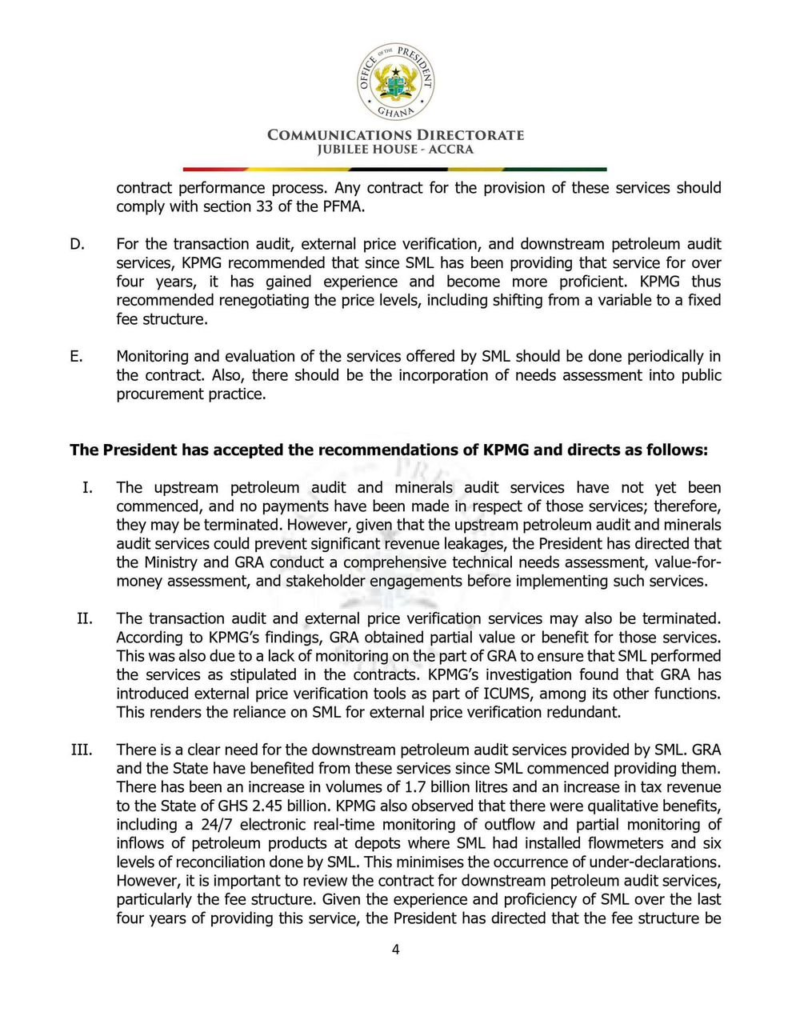
  • Defunct Gold Coast security customers sleep on plastic chairs, mattresses at Finance Ministry over unreleased funds

    Defunct Gold Coast security customers sleep on plastic chairs, mattresses at Finance Ministry over unreleased funds

    On Tuesday, November 28, a large number of customers from the defunct Gold Coast Securities gathered at the Ministry of Finance premises to demand the release of their frozen funds.

    Wearing red attire, approximately 100 aggrieved customers held placards with various messages, including “more than 800 pensioners are dead due to locked-up funds,” “release our money,” “pay us our money,” “our health is deteriorating,” and “act now, Finance Minister.”

    Expressing their frustration over the prolonged delay in fund disbursement, the customers stated that they would stage a 32-hour picket at the ministry to draw attention to their plight.

    On Wednesday, FixTheCountry convenor, Oliver Barker-Vormawor, shared photos of the customers passing the night sleeping on chairs and, later, mattresses which were provided by the group.

    “Yesterday, our fellow citizens who were picketing at the Ministry of Finance over their locked-up Gold Coast securities investments spent the night at the ministry.

    “We were so heartbroken by how they are being treated that FixTheCountry took it on to bring them mattresses; and some tea.”

    He noted that on Wednesday morning, the customers were provided breakfast.

    To have their concerns addressed, Mr Barker-Vormawor, has entreated all and sundry “to join them, tweet, and draw attention to what is happening to them. Their picket continues.”