Tag: Finance Ministry

  • DDEP: Individual bondholders to protest at Independence Square on Feb. 20

    DDEP: Individual bondholders to protest at Independence Square on Feb. 20

    Individual bondholders in Ghana are intensifying pressure on the government to exempt them from the Domestic Debt Exchange Programme (DDEP) with a planned protest from 20th to 24th February 2023, to be held at Independence Square. 

    According to the bondholders, the government has yet to pay them over GH¢4 billion in interest and principal on which the Finance Ministry defaulted. 

    In a letter to the ministry, they demanded payment of outstanding bonds that matured on February 6. 

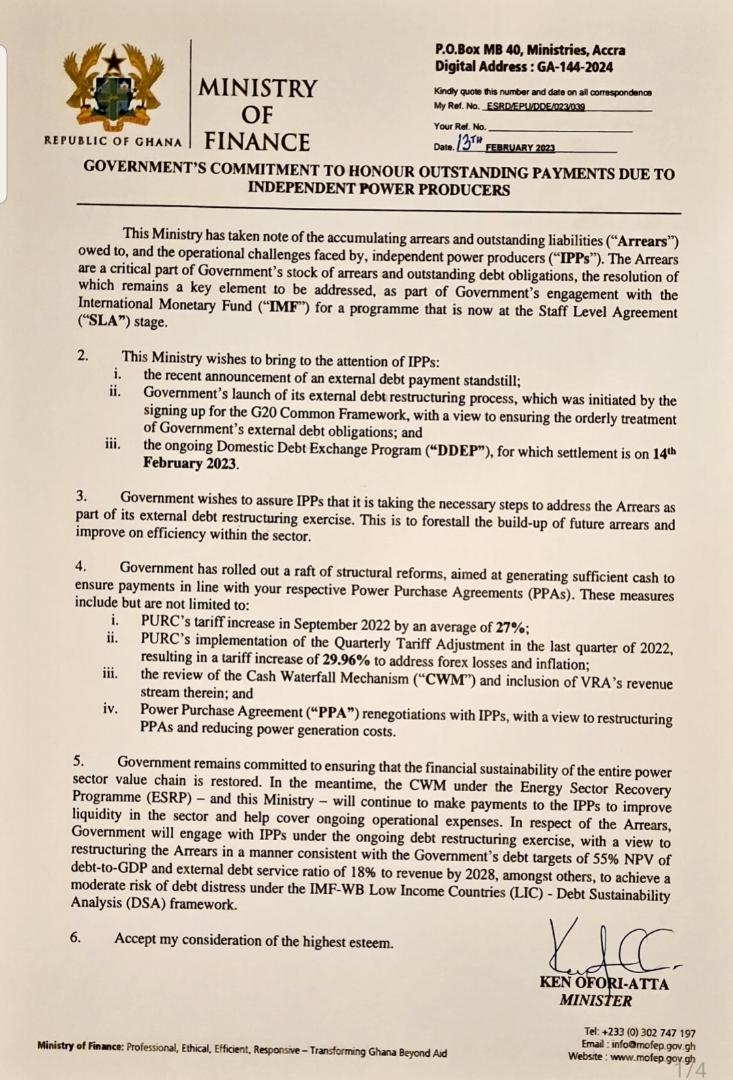
    The government has assured that all coupon payments and maturing principals will be honoured in line with government fiscal commitments, according to a statement issued by the Ministry of Finance on 14th February. 

    “The Government would like to reassure all individual bondholders who elected not to participate that your coupon payments and maturing principals, like all government bonds, will be honoured in line with government fiscal commitments,” part of the statement read.

    However, until this promise is fulfilled, the bondholders’ association has said it will continue with its protest plans.

    A convener of the Association, Dr. Joel Akwetey, said: “If they [government] do [pays], this picketing will actually not come on. So we’re doing this in phases we expect between this week and next week – the 20th February, I would hear something favourable from the ministry, then we all rest easy.”

    While some members picket at the Independence Square, a group of about 30 or 50 individual bondholders will be escorted to the Finance Ministry to present a petition.

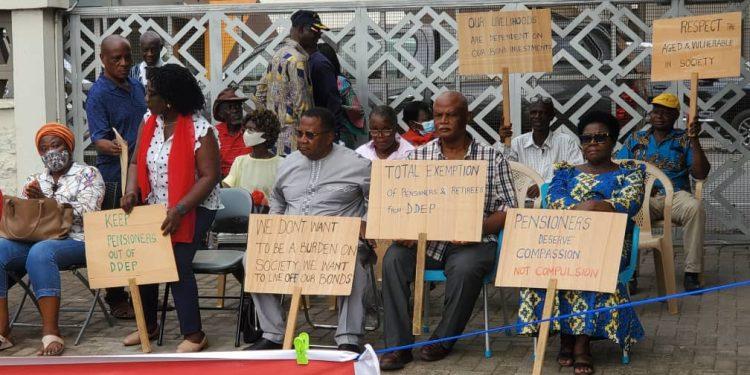
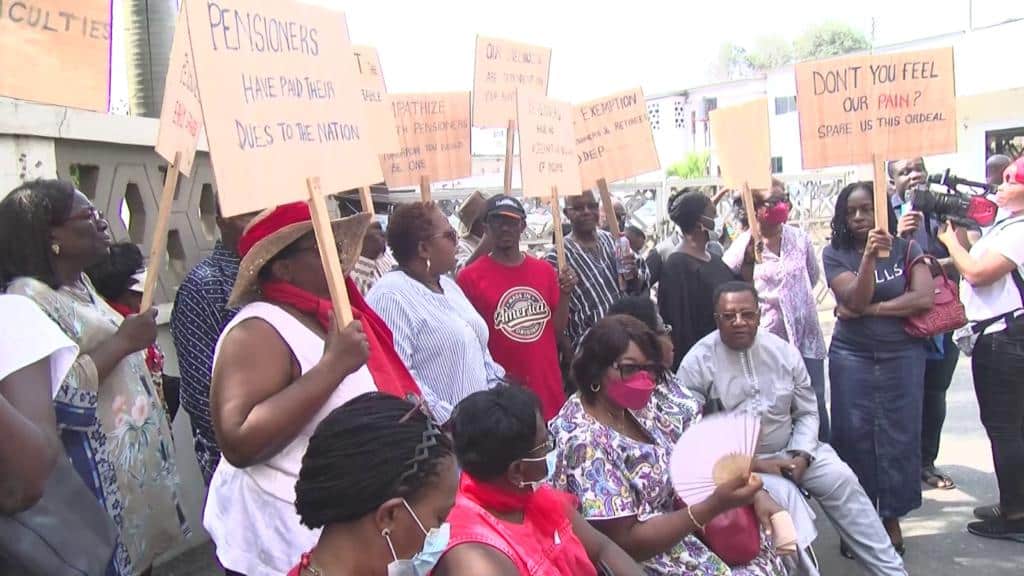
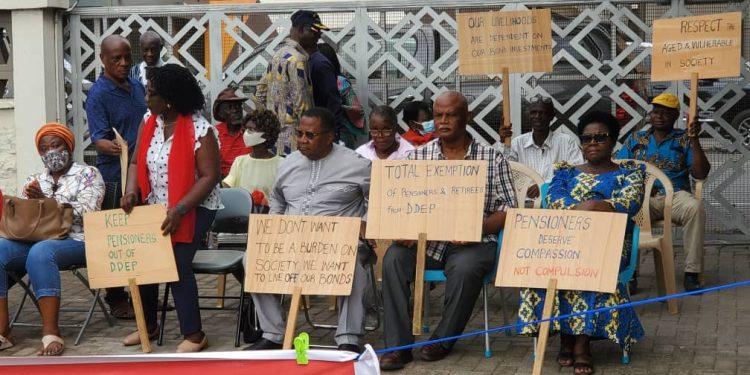
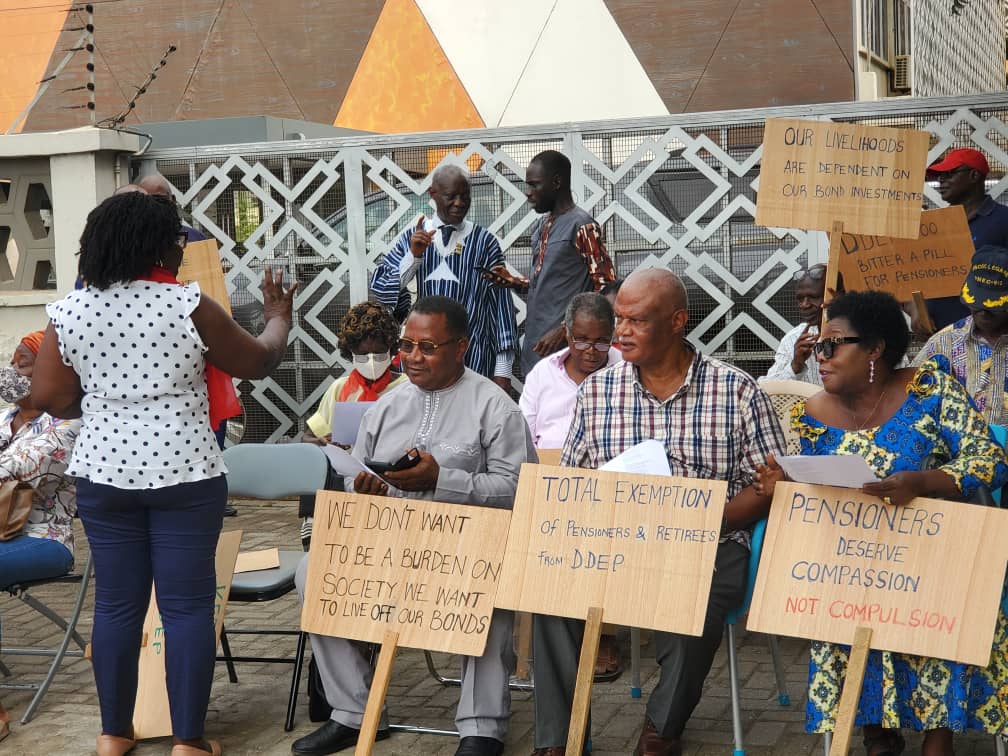
    Currently, the Pensioner Bondholders Forum is picketing at the Finance Ministry.

    The Forum has urged the government to release a notice that confirms that pensioners’ funds will be excluded from the government’s Domestic Debt Exchange Programme (DDEP).

    Also, Individual bondholders want to be exempted from the DDEP.

    The government’s invitation to its Domestic Debt Exchange Program (DDEP), which closed on Friday, 10th February 2023, has received over 80% participation of eligible bonds, the Finance Ministry said.

    Government insists on the implementation of the programme despite the concerns, and according to the ministry, this must be done “to help protect the economy and enhance our capacity to service our public debts effectively” in order to receive a credit facility worth $3 billion from the International Monetary Fund.

    “The alternative of not executing the DDEP would have brought grave disorder in the servicing of our national debt and exacerbated the current economic crisis. The Government is, therefore, grateful for the overwhelming participation of all bondholders,” the ministry noted.

  • Honor unpaid bond obligations – Bondholders to Ofori-Atta

    Honor unpaid bond obligations – Bondholders to Ofori-Atta

    The government has been urged by the Individual Bondholders’ Forum to honor all coupon and principal payments owing to bondholders of bonds not tendered into the Domestic Debt Exchange Program (DDEP).

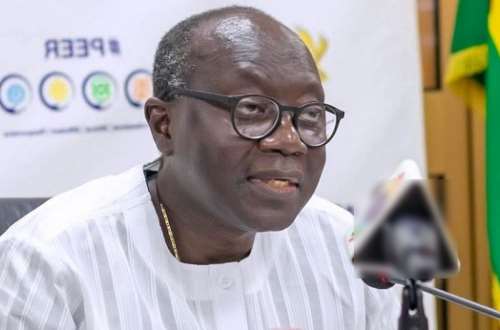
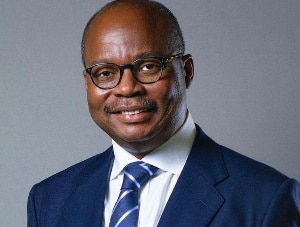
    In a statement, Convener Senyo Hosi reminded the Finance Minister, Ken Ofori-Atta, that payment of coupons and principal for bonds that matured since the 6th of February to date (herein referred to as ‘Due Bonds’) remain outstanding.

    Mr Ofori Atta had earlier promised individual bondholders who refused to tender their bonds into the domestic debt exchange programme will have their existing coupons honoured when the date is due for payment.

    Several pensioner Bondholders have also been picketing at the Finance Ministry for six days now to demand the government completely exclude their bonds from the domestic debt exchange programme.

    In the letter, the individual bondholders stated that honouring payments on due bonds will re-engineer public and investor confidence and trust in the activities of the Finance Ministry.

    Below is the full letter to the Finance Minister

    REQUEST FOR OUTSTANDING PAYMENTS ON DUE BONDS

    We refer to your affirmation of the Government’s commitment to honour all coupon and principal payments due to individuals with holdings of bonds not tendered into the Domestic Debt Exchange programme (DDE).

    We wish to remind you that payment of coupons and principal for bonds that matured since the 6th of February to date (herein referred to as ‘Due Bonds’) remain outstanding. With the DDE deadline of 10th of February over, we trust that Government will be in a clear position to ascertain the total bonds due for payment after the completion of the DDE settlement scheduled for 14th February 2023.

    We hereby request your advice of the date for coupon and principal payments due under the ‘Due Bonds’. It is our expectation that Government will seize this opportunity to re-engineer public and investor confidence and trust, by making the payments not later than Friday, 17th February 2023.

    We count on your cooperation.
    Sincerely,
    Senyo K. Hosi
    Convener

  • DDEP: Pensioners continue picketing at Finance Ministry

    DDEP: Pensioners continue picketing at Finance Ministry

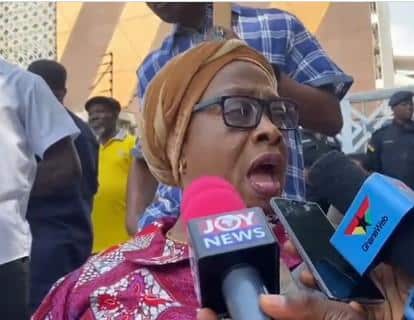
    On Monday, February 13, members of the Pensioner Bondholders Forum protested again at the Finance Ministry in order to demand a complete exclusion of their investments from the Domestic Debt Exchange programme (DDEP).

    The government has proposed a 15% coupon rate, but the retirees have stated that they will not accept any haircuts on their investments as their livelihoods depend on the proceeds from these investments.

    The bondholders were on Friday joined by the former Chief Justice, Sophia Akuffo who threatened to sue the government if their pension funds are included in the debt exchange programme.

    The government extended the window for bondholders to complete tender processes as part of the controversial domestic debt exchange programme.

    The deadline for signing up for the programme expired on Friday, February 10, 2023.

  • BoG data reveals declining confidence in the Ghanaian economy

    BoG data reveals declining confidence in the Ghanaian economy

    Since the end of 2020, according to data from the Bank of Ghana, consumer and corporate confidence in the overall economy has been declining.

    Since January 2021, the Consumer and Business Confidence Indices have both constantly remained below the 100 level.

    In this time, the consumer confidence index has averaged 86.13, while the corporate confidence index has averaged 88.19.

    In the meantime, in October 2022, the consumer and business confidence indexes hit record lows of 73.9 and 72.6, respectively. The indexes increased to 79.2 for consumer confidence and 75.7 for business confidence in December 2022.

    https://datawrapper.dwcdn.net/gGotm/1/

    According to the Bank of Ghana, consumer confidence improved on the back of the reductions in ex-pump petroleum prices and transportation fares in December 2022.

    Business confidence also turned positive due to achievement of short-term targets and confidence about company and industry prospects, following the appreciation of the local currency during the month.

    The confidence indices

    Consumer confidence index (CCI) measures how optimistic or pessimistic consumers are regarding their expected financial situation.

    The CCI is based on the premise that if consumers are optimistic, they will spend more and stimulate the economy but if they are pessimistic then their spending patterns could lead to an economic slowdown or recession.

    According to the Organisation for Economic Co-operation and Development (OECD), an indicator above 100 signals a boost in the consumers’ confidence towards the future economic situation, as a consequence of which they are less prone to save, and more inclined to spend on major purchases.

    Values below 100 indicate a pessimistic attitude towards future developments in the economy, possibly resulting in a tendency to save more and consume less.

    The business confidence index provides information on future developments, based upon opinion surveys on developments in production, orders and stocks of finished goods in the industry sector.

    It can be used to monitor output growth and to anticipate turning points in economic activity.

    Ghana’s Real Composite Index of Economic Activity (CIEA)

    This indicator has moved from 39.4% in April 2021 and slid continuously to 10.2% in November 2021 and by November 2022 moved to -6.2%.

    It is worth mentioning that the second half of the 2022 economic year was characterized by high fuel prices, high inflation and excessive depreciation of the Ghanaian cedi and this may explain why economic indicators showed negative growth especially during this period. 

    Ghana’s Real Composite Index of Economic Activity (CIEA)

    The annual growth of Bank of Ghana’s Real CIEA also shows a dip to an all-time low in November 2022 of -6.2%. This is indicative of a worsening outlook on domestic economic activity.

    This indicator has moved from 39.4% in April 2021 and slid continuously to 10.2% in November 2021 and by November 2022 moved to -6.2%.

    It is worth mentioning that the second half of the 2022 economic year was characterized by high fuel prices, high inflation and excessive depreciation of the Ghanaian cedi and this may explain why economic indicators showed negative growth especially during this period. 

    Source: MyJoyOnline

  • DDEP is wicked, disrespectful and unlawful – Sofia Akuffo

    DDEP is wicked, disrespectful and unlawful – Sofia Akuffo

    Former Chief Justice, Sofia Akuffo, has noted that it is sheer wickedness on the part of government to continue taunting the aged in the country over its Domestic Debt Exchange Programme (DDEP).

    Madam Sophia Akuffo joined the many pensioners picketing at the Finance Ministry over the government’s Domestic Debt Exchange Programme (DDEP).

    Engaging the media on Friday, she stated that “I find this wicked, disrespectful, unlawful and I find it totally wrong. You don’t solve your problems by sacrificing your aged. That is the last thing you should do, especially when you don’t have any services that are geared towards the comfort and relief of the aged.”

    She noted that government holds no power to dictate to investors when they would receive interest on their investment.

    “Quite a number of people here today, when they retired last two years [ago] they put everything into government bonds, it is a contract and now all of a sudden, you virtually want to force them to agree with you that the repayment of the yield of their investment should be as you dictate it. Why?”

    The former Chief Justice bemoaned the inability of government to account for the loans it went for which has plundered the economy in a devastating state.

    “Why are we in the mess? Nobody has fully explained to us, yes we took loans, what was it used for? And where is the accountability? Exactly what was it used for? You are not telling us about how you are going to be able to make things better but just that ‘help me and I help you’, no, you help yourself first, let me see if you are doing something serious because we have seen these sorts of things too many times.

    Since government launched the DDEP in December 2022, many stakeholders including pensioners and Individual bond holders have demanded that they be exempted.

    However, government is yet to give into their demands despite making some adjustment to the conditions in the programme.

    Finance Minister is optimistic that before March 2023, government would be able to implement the programme in order to receive a credit facility worth 3 million US dollars from the International Monetary Fund (IMF).

    He has however warned that the economy would crush should government fail to roll out the programme.

  • DDEP: Delays as investors await the revised and final exchange memorandum

    DDEP: Delays as investors await the revised and final exchange memorandum

    On February 2, 2023, as required by the Finance Ministry’s press release from January 31st, the government failed to present a revised prospectus for the domestic debt exchange.

    By Thursday, February 02, 2023, it was planned to publish a revised and final exchange memorandum.

    The new prospectus is still not available as investors wait for the updated document to be reviewed; nevertheless, the weekend will only be here in a few hours.

    The final postponement of the entry deadline expires on February 7th, 2023.

    Ghana’s Finance Ministry is making earnest moves to push towards the 80% creditor participation rate in the Domestic Debt Exchange Program to guarantee maximum debt relief.

  • Finance Ministry is marginalized as an EMT, and Jubilee House insists that individual bondholders be excused – Shiny Simons

    Finance Ministry is marginalized as an EMT, and Jubilee House insists that individual bondholders be excused – Shiny Simons

    How long will the Finance Ministry be able to put up with the Economic Management Team and Cabinet’s reluctance to including individual bondholders in the domestic debt exchange program? is the question asked by Bright Simons, vice president of IMANI Africa.

    Additionally, it is suspected, in his words, that the Jubilee House supports the exclusion of particular bondholders.

    The Finance Ministry appears to be adamant, nevertheless, about the program’s complete inclusion of individual bondholders as well as the 5% coupon in 2023.

    “How long can Finance Ministry hold out against sentiment in Ghana’s Economic Management Team that individuals must be formally exempted from the debt exchange program? And now reports of Jubilee House also moving in that direction. Ministry insists 5% in 2023 is last offer,” Bright Simons wrote on Twitter on January 26, 2023.

    He said “Meanwhile, the Finance Ministry is pretty isolated at Cabinet this afternoon. Will be interesting to see whether their nerves will hold as the rest of the government begins to buckle under pressure.”

    The Finance Ministry announced that an agreement has been reached with the Ghana Association of Bankers to pay a 5% coupon rate in 2023.

    In view of the agreement, the Individual Bondholders Forum reaffirmed its position that they should be exempted from the debt exchange program.

    According to them, this agreement will mean that the government may be able to achieve its 80% participation rate for the programme to be successful.

  • Finance Ministry causes Ghana to lose over ¢1.7m in tax – Auditor-General’s report

    Finance Ministry causes Ghana to lose over ¢1.7m in tax – Auditor-General’s report

    The Auditor-General’s report has revealed that a transaction by the Finance Ministry in 2020 has caused the government to lose an amount of GH¢1,754,156.25 in taxes.

    According to the report, on 6 May 2020, Ministry of Finance paid Smart Infraco Limited GH¢23,388,750 for the provision of Smart Workspace platforms for Ministries, Departments and Agencies (MDAs) to facilitate Virtual Workspace.

    However, the ministry failed to deduct withholding tax of GH¢1,754,156.25 on the payment made to Smart Infraco Limited.

    “The Ministry of Finance explained that the amount of GH¢23,388,750.00 was part payment to Smart Infraco Limited and therefore the total tax on the contract sum would be deducted from subsequent payments to the Smart Infraco Limited,” the report added.

    The Auditor-General has therefore directed the Ministry of Finance to recover the said amount from the company, as well as pay same to the Commissioner General of Ghana Revenue Authority (GRA).

    Section 116 of the Income Tax Act, 2015 (Act 896) states that, a resident person, other than an individual, shall withhold tax on the gross amount of the payment at the rate specified in the First Schedule when the person makes a payment to another resident person who does not fall within subsection (1) or Section 114 for (a) the supply or use of goods, (b) the supply of any works, or (c) the supply of services, in respect of a contract between the payee and the resident person.

    With regards to further transactions made by the ministry, the report also noted that a total amount of GH¢543,058,709.13 was recorded as expenditure on the Government Integrated Financial Management System (GIFMIS) and lodged in an account.

    Out of this account, 194 payment vouchers totalling GH¢543,058,709.13 were processed and paid, the report noted.

    The Auditor-General has advised that “payments to service providers and transfers to MDAs in respect of COVID-19 expenditures should be processed and paid through the GIFMIS.”

    In 2009, the Ministry of Finance launched the Ghana Integrated Financial Management Information System (GIFMIS) with the objective of improving budget comprehensiveness and transparency, consolidated cash management, monitoring and control of outstanding commitments, and payroll management.

    Source: The Independent Ghana

  • DDE programme : Pensioners suspend plans to mass up today at Finance Ministry

    DDE programme : Pensioners suspend plans to mass up today at Finance Ministry

    Pensioners Bondholders Forum has rescinded its decision to picket at the Finance Ministry today, Monday, January, 23.

    Earlier, the forum announced its intentions to mass up at the Ministries after the government’s decision to include pension bondholders in its Domestic Debt Exchange Programme.

    Speaking to the media on January 13, 2023, the Convener of the Forum, Dr Adu A. Antwi, revealed that it had previously petitioned the government concerning the
    said issue, yet that has still not yielded the desired results.

    “We have also petitioned key stakeholders in the country, including the Speaker of Parliament, the Council of State, the National House of Chiefs, the Christian Council of Ghana, the Office of the Chief Imam, the National Peace Council, and the Catholic Bishops Conference, about our displeasure on the issue,” he added.


    The forum informed the police about its plans to gather at the Ministry of Finance. However, the pensioners indicated in a press release issued prior to the protest that it had already started the process of engagement with former Presidents John Agyekum Kufuor and John Dramani Mahama.

    This, it explained is “to seek their sympathy, support, and intervention for our cause.”

    It added that “As a result of these engagements, we have cancelled our intended convergence at the premises of the Ministry of Finance on Monday 23rd of January 2023, and informed the Police accordingly”.


    However, the forum was quick to add that should the engagements birth to no results, it will have no other option than to “take action should the need arise.”

    As part of Ghana’s Domestic Debt Exchange Programme launched last year, bondholders were encouraged to willingly exchange about GH¢137 billion in domestic notes and bonds of the Republic for a package of new bonds.

    In light of this, a series of four new bonds with maturities in 2027, 2029, 2032, and 2037 were to replace the old domestic bonds as of December 1, 2022.

    In 2023, this new series of bonds will have 0% coupons, followed by 5% coupons in 2024 and 10% coupons beginning in 2025, whereby, coupon payments will
    be made every six months.

  • Bondholders to receive 2% cash fee in domestic debt exchange – Finance Ministry

    Bondholders to receive 2% cash fee in domestic debt exchange – Finance Ministry

    Participating holders of the 2023 bonds will receive a 2% cash fee, the Finance Ministry has said.

    This is to compensate for the maturity extension.

    It said the investors will only get new bonds maturing between 2027 and 2033.

    “Given that holders of Eligible 2023 Bonds are being asked to extend the maturities of what are now effectively short-term instruments, investors will receive a cash tender fee of 2% of the outstanding amount of such 2023 Bonds tendered and accepted, to compensate for the maturity extension”, it explained In the Amendments to the Invitation to Exchange.

    It emphasised that the government has decided to proceed with paying interest accrued up to January 24, 2023 to all Eligible Holders participating in the exchange, in a capitalised form. This means that the accrued interest will be added to the notional amount of the new bonds.

    The Invitation to Exchange also stressed that there are 12 new bonds in the Amended Exchange, instead of four, with a new coupon rate structure.

    “Investors indicated a preference for having more numerous bonds with standard bullet bonds, instead of fewer, larger and more liquid bonds (the previous structure), which has been reflected in the amended exchange. In the same spirit, the amended coupon structure for the new bonds has been designed to mimic a yield curve with a standard shape”.

    Meanwhile, treasury bills remain still excluded from the domestic debt operations.

    Source: myjoyonline

  • Parliament suspends approval of Finance Ministry’s ¢2bn budget

    The 2 billion budget allocation for the Ministry of Finance has been suspended by Parliament.

    Minority claims that the suspension is the result of the Ministry’s unwillingness to respond to questions on the allocation of $1 billion for resource mobilization.

    The Finance Ministry received a budget of 2.4 billion, of which 1 billion is designated for resource mobilization.

    James Klutse Avedzi, the deputy minority leader who raised the issues, stated that the House cannot accept the allocation unless sufficient explanations are given as to what precisely that sum would be utilized for.

    “I asked for details for this allocation, but up to now, I have not received the details so we cannot put the question. There is an allocation for ¢1 billion for resource mobilisation, we want details of that amount, we have not received it,” he said.

    Additionally, Minority Leader Haruna Iddrisu supported his deputy’s argument that the distribution is unfair.

    “Our attitude is for government to cut expenditure so we are not convinced. Why do you need GH₵1 billion to mobilise resources? As far as we know we know, resource mobilsation is the collection of taxes in a manner which is effective and efficient.

    Mr Haruna also mentioned that, “if the Ministry of Finance does not give a convincing explanation, we think that this is part of what they should be cutting from the budget to save the country this GH₵1 billion. What do you need 1 billion for in the name of resource mobilisation? Isn’t it GRA which should be mobilising resources by collecting taxes? Why are you giving this money to the Ministry of Finance? To do what?”

    However, Abena Osei Asare, the deputy minister of finance, said that the allocation is essential for the Ministry’s operation.

    According to her, the fund is needed to strengthen institutional capacity for economic management.

    “As part of the breakdown, we showed that GH₵5.2 million of this is going to be used for the strengthening institutional capacity for economic management. We also mentioned that, the Financial Sector Development project where we are going to maintain and operate the core banking system is also part of this allocation. That is GH₵ 79 million.

    “The Ghana Development Finance project which is under the development bank operationalisation will also take about GH₵110 million. The GIFMIS ICT infrastructure system will also be upgraded and it also take a take portion,” she said.

  • Constitutional and Legal Affairs Committee demands increase in funds allocated to Special Prosecutor

    Parliament’s Committee on Constitutional and Legal Affairs want the Finance Ministry to as a matter of urgency address all outstanding issues relating to the Office of the Special Prosecutor (OSP) and increase budget allocation for the OSP.

    The Committee deems the allocation of GH₵129.5 million to the OSP insufficient for recruitment and the effective running of the office.

    Out of the budgeted total amount of ₵129.5 million, ₵68.9million is to be used as compensation and about ₵34million is to be used for goods and services while ₵26 million is budgeted for stationery for the work of the OSP.

    According to JoyNews Parliamentary Affairs Correspondent, Kwaku Asante the Office of the Special Prosecutor in a meeting with the Committee complained that the funds allocated are insufficient as it intends to recruit more lawyers and other personnel.

    He added that officials of the Finance Ministry are expected to be in the House on Wednesday, to brief Parliament on why such an amount was allocated to the OSP.

    Parliament has so far not approved any estimate allocated for any Ministry, Department or Agency in the 2023 Budget.

    Meanwhile, the Minority Leader, Haruna Iddrisu, has warned that Ministers of State who absent themselves from Parliament will not have their budgets approved.

    The Minority insists the Ministers must be present during the debate.

    “I further warn that ministers who want their budgets’ approval must appear in person. If you delegate your deputy we will delegate your money for you some other day after appropriation. If they send emissaries to come for approval of budget estimates, we will send their approval to them the day they are available. So whip, make sure you have your estimates ready,” he said on the floor on Wednesday.

    Source: myjoyonline

  • PLAYBACK: Finance Ministry, IMF and BoG announce staff-level agreement

    The Ministry of Finance, together with the International Monetary Fund (IMF) and the Bank of Ghana held a joint press conference today.

    The three bodies informed Ghanaians of a staff-level agreement reached by the government and the Fund.

    Ghana and the IMF have reached a new three-year arrangement under the Extended Credit Facility (ECF) of about $3 billion.

    According to the Fund, the government’s strong reform programme aimed at restoring macroeconomic stability and debt sustainability while protecting the vulnerable, preserving financial stability, and laying the foundation for strong and inclusive recovery, was key in this decision.

  • School girl killed in knife attack in Germany

    A 14-year-old girl has died and another, aged 13, has been seriously injured after they were attacked by a man with a knife while walking to school in southern Germany.

    Police say the suspect came out of a refugee shelter in the village of Illerkirchberg on Monday morning and attacked the pupils.

    The older girl later died in hospital.

    German police have arrested a 27-year-old man, who they say is an asylum seeker from Eritrea.

    Officers searched a nearby building and found him with a knife they suspect was used in the attack. Two other men were also detained.

    The suspect is under police guard in hospital where he’s being treated for an unspecified injury.

    In a statement, police urged the public not to use the incident to stoke suspicion of foreigners or asylum seekers.

    “Everything connected to this is completely unclear so far,” police spokesman Wolfgang Juergens told reporters.

    The 13-year-old girl is recovering from her injuries, which are not life threatening, local media reported.

    Illerkirchberg is a small town with a population of less than 5,000 according to the 2015 census.

    Mayor Markus Haeussler said everyone in the town was in shock.

    Germany’s interior minister Nancy Faeser said the “terrible news” had shaken her.

    “I mourn the girl who was killed and sincerely hope that the injured girl will recover… The police are investigating all the backgrounds with intensity,” she wrote on Twitter (in German).

    Source: BBC

  • Government must adopt other options for debt-related operations – Banking Consultant

    Dr. Richmond Atuahene, an economist and banking consultant, has issued a warning that the government’s choice to forgo additional debt-related procedures will put the nation in an even more precarious fiscal position.

    This follows the government’s announcement on December 5 that it will launch a domestic debt exchange program, allowing investors to freely exchange existing bonds for new ones.

    Dr. Atuahene responded to the news in an interview with GhanaWeb Business by suggesting that the government implement both a debt rescheduling program and a debt re-profiling program in addition to the DDE to ensure that the nation’s soaring debt levels reach manageable levels.

    He however expressed concern that undertaking one debt operation could be counterproductive and could significantly impact the economy negatively.

    “There are currently quite a number of options for debt operations model which Ghana could undertake but it seems like government has decided to stick with one that could make things more difficult for us. I believe government could have looked into these options,” he noted.

    “For now, government does not want to adopt the word ‘haircut’ but per my calculations, if government undertakes even 5 percent of its Net Percent Value, I strongly think we could get somewhere with our debt programme,” Dr. Atuahene explained.

    He continued “…And then if adopt the debt rescheduling and debt re-profiling programmes, it places us in a much better position but if you take only one model and go straight to implement, it could hit the country real hard and that could be disastrous”

    Touching on the potential effects of the debt exchange programme on economic output, Dr Atuahene said the exercise could result in high unemployment rates and lower revenue generation streams.

    “Nobody thinks about the output, it’s going to have an effect on the output. And it will, in turn, affect revenue generation, because if people are being laid off, production is going to go down, how are you going to get taxes on the profitability and what have you? So, we’re in a very critical situation but I believe it is not too late,” the economist stressed.

    The Banking Consultant, thus, called on government to as a matter of urgency conduct extensive engagements with relevant stakeholders, investors and citizens to properly explain the modalities behind the programme.

    Meanwhile, a statement issued by the Finance Ministry on December 5 said Ghana is inviting eligible holders to exchange GH¢137.3 billion of the domestic notes and bonds, including Energy Sector Levy Act Plc and Daakye Trust Plc, for a package of New Bonds to be issued.

  • CoDA fails to meet half of water systems, toilet facilities to be constructed in 2022

    The Ministry of Finance has provided to Parliament the activities undertaken by the Coastal Development Authority (CoDA), Middle Belt Development Authority (MBDA) and Northern Development Authority (NDA) in 2022.

    In the 2023 budget statement, the Authority had targeted to construct 299 water systems and 72 toilet facilities.

    CoDA failed to meet at least half of its target after completing just 27 water systems and 8 toilet facilities. According to the Finance Ministry, the remaining 64 toilet facilities are at various stages of completion.

    Meanwhile, the Authority has CoDA completed 7 market projects, 4 lorry parks, and 6 health facilities which include 2 wards and 4 CHPS compounds with 62 at various stages of completion.

    Other completed projects include 43 drains, 12 roads, 6 bridges, 18No. classroom blocks, 3no. libraries, 3No. teachers’ quarters, 1No. dormitory block, 8No. Astro turfs, 11No. social infrastructure projects (consisting of Asomdwe Park, 4 durbar grounds, and 6 community centres).

    With regards to Middle Belt Development Authority (MBDA), the Finance Ministry indicated that the Authority completed 610 projects which include 44 drains, 37 culverts, 16 bridges, 58 football parks, 12 police posts, 154 schools, 8 clinics, 17 ICT centreS/libraries, 104 boreholes, 66 institutional toilets, and 58 markets.

    These projects are located in five regions, namely; Ahafo, Ashanti, Bono, Bono East, and Eastern Regions.

    Still on Infrastructure for Poverty Eradication Programme (IPEP), the Finance Ministry revealed that the Northern Development Authority (NDA) completed 225 projects across various sectors in the North East, Northern, Savannah, Upper East, and Upper West Regions.

    Meanwhile, the three Development Authorities are expected to continue to execute the existing programmes and projects in line with their mandate.

    Source: The Independent Ghana

  • 15.16m Ghanaians enrolled onto NHIS – Finance Ministry 

    A total of 15.16 million Ghanaians have been enrolled onto the National Health Insurance Scheme (NHIS).

    This figure is as of September 2022, according to the Ministry of Finance in the 2023 budget statement presented to Parliament.

    The target population was 18.21 million. In 2023, the government estimates that enrollment onto the scheme will increase to 20.30 million.

    As it stands now, Ghana has a population of over 31 million people.

    According to the ministry, the National Health Insurance Authority (NHIA) improved claims management processes following the introduction of the e-claims and paperless systems. 

    The Authority is considering a revision of tariffs to allow coverage of childhood cancers and long-term family planning services. 

    Meanwhile, Overlord of Dagbon Traditional Area, Yaa-Naa Abukari II has been designated as the National Health Insurance Scheme (NHIS) worthy Ambassador.

    This is in recognition of the Yaa-Naa’s active and personal interest in encouraging Ghanaians home and abroad to register for the NHIS.

    The title was conferred on the Yaa-Naa at a colorful ceremony at the Gbewaa Palace in Yendi when a high powered delegation from the National Health Insurance Authority (NHIA) led by the Chief Executive, Hon. Bernard Okoe-Boye paid a courtesy call on the Dagbon Overlord.

  • ¢339m disbursed so far for construction of National Cathedral – Finance Ministry

    The Finance Ministry has revealed that an amount of ¢339,003,064.86 has been released for the construction of the National Cathedral so far.

    The Ministry also added that a total amount of ¢113,040,654.86 has been paid to the consulting firm for the construction of the Cathedral, Messers Sir David Adjaye and Associates.

    This was contained in a document from the Ministry to the parliamentary Adhoc Committee based on a request for the total amount spent by the Government on the National Cathedral.

    ¢339m disbursed so far for construction of National Cathedral – Finance Ministry

    According to the Ministry, the latest amount spent was ¢25million in March 2022, which was the Government of Ghana’s contribution to the construction of the Cathedral.

    The Committee also demanded that Mr Ken Ofori-Atta provides the total amount paid to the consulting firm, Messers Sir David Adjaye and Associates, a clarification of the total energy sector payments to Independent Power Producers (IPPs) and the total debt accumulated prior to 2020.

    ¢339m disbursed so far for construction of National Cathedral – Finance Ministry

    In relation to amounts paid to IPPs, the Ministry said a total amount of ¢17.31 billion was paid.

    The IPPs which received these payments include; Karpower, Cenpower, Amandi Energy, Sunon Asogli, Ameri Energy and AKSA.

    Out of the amount, ¢10.01 billion was paid as a shortfall in capacity and ¢4.99 billion was used as excess capacity payments while the remaining ¢7.31 billion was used for payments to fuel suppliers for the period mentioned.

  • We’ll resist draconian policies in 2023 budget – Minority

    The Minority in Parliament has said it will resist any policy in the 2023 budget it feels are “draconian”.

    In a statement, it reiterated the need for “drastic cuts in non-essential Government expenditures and more prudent use of scarce national resources.”

    “We have also demanded greater transparency and accountability in public financial management,” the statement added.

    The Minority said it expects its proposals to “find expression in the budget and signal a change in course by the failed Akufo-Addo/Bawumia Government.”

    “We wish to assure the Ghanaian people that we stand with them in these difficult times, and we will not relent in our efforts to hold the managers of the economy to account,” the statement added.

    The Minority also allayed fears that it could boycott the budget because of protests against the Finance Minister, Ken Ofori-Atta.

    Both sides of the Parliament have called for the Finance Minister to be removed amid Ghana’s economic crisis.

    The budget comes as the government tries to secure a deal from the International Monetary Fund (IMF) for economic support.

    The Finance Ministry has said the 2023 Budget will focus on Government’s strategies to restore and stabilize the macroeconomy, build resilience, and promote inclusive growth and value creation.

    The ministry also said it will feature updates on Ghana’s engagement with the IMF for an IMF-supported Programme; year-to-date macro-fiscal performance of the economy; the YouStart initiative under the Ghana CARES Programme; climate action strategies; fiscal measures and debt management strategies to ensure fiscal and debt sustainability and promote growth.

  • Ofori-Atta’s response to our threat to boycott budget reading is unfortunate – Spokesperson for 98 NPP MPs

    The 98 MPs of the New Patriotic Party (NPP) have reacted to the Finance Minister’s decision to present the 2023 budget despite their demand that he should resign or be sacked.

    According to the lawmakers, they would stick to their decision to boycott the budget presentation and other Finance Ministry-related business if Ken Ofori-Atta is not sacked.

    Last Friday, Mr Ofori-Atta in an interview with JoyNews confirmed that he will present the 2023 budget on Thursday, despite the request by the NPP MPs.

    He further stated that he had not been officially informed about the threat of the 98 NPP MPs.

    Reacting to this, the MP for Asante Akim North, who is the spokesperson for the group, said the Minister’s response to their concerns is unfortunate.

    Mr. Andy Appiah-Kubi further noted that the Majority Group has lost confidence in the Minister.

    He added that Mr Ofori-Atta should have resigned long ago.

    “I give him the benefit of decision whether or not he has heard, but we are also resolute. So if he hasn’t heard, in the course of time, he will hear. So let’s wait for him to come to the point of hearing.

    “As I continue to say, we are not probing him on legalities, we are probing him on politics and currently, we’ve lost interest in him,” he explained on Joy FM’s Super Morning Show on Monday.

  • Number of anti-Ofori-Atta NPP MPs increase to 98, set to boycott budget presentation

    Ninety-eight New Patriotic Party (NPP) Members of Parliament have resolved to boycott the budget presentation and all Finance Ministry-related business should the President refuse to sack Finance Minister, Ken Ofori-Atta immediately.

    This new number is an increase from the previous 80 NPP MPs who had earlier demanded the removal of the Finance Minister and the Minister of State at the Finance Ministry, Charles Adu-Boahen.

    According to the Member of Parliament for Asante Akyem North, Andy Appiah-Kubi, who doubles as spokesperson for the group, Ofori-Atta’s position in government has become untenable, hence the fresh demand for his resignation.

    His comment comes after the group had earlier relaxed its demand following a meeting with the President, Nana Akufo-Addo.

    In a statement signed by Majority Leader, Osei Kyei-Mensah-Bonsu, President Akufo-Addo had appealed for the sector minister to be allowed to stay till after the budget presentation and appropriation of same, to which the MPs had agreed.

    However, with the Finance Minister now facing a vote of censure from the Minority side of Parliament, the NPP MPs are convinced it is time for him to leave.

    Speaking on JoyNews’ PM Express, Appiah-Kubi said, “We’ve gone back to (our demand for the President to) sack him now and therefore should the budget be presented under the stamp of the Finance Minister, we’ll not participate because as far as we’re concerned we’re never going to do business with him.

    “And if we’re not going to do business with him, he does not participate in any process from the Presidency to the House. We will not participate in deliberations too.”

    He noted that the only way the President will get them to participate in the budget presentation and appropriation is if someone else from government is appointed to present the budget.

    “We’re not saying we won’t do President’s business. We’re saying we won’t do President’s business through Ofori-Atta. So if anybody else comes with President’s business, we’ll participate,” he said.

    Mr. Andy Appiah-Kubi also told host, Evans Mensah that the new resolution is the outcome of a meeting held on Tuesday, November 15, which was attended by 98 NPP MPs to reconsider their collective position after they agreed to relax their initial stance.

    Source: MyJoyOnline


  • Bawumia isn’t like that – Adu-Boahen confesses to veep’s incorruptibility in Anas exposé

    Dr. Gideon Boako, an aide to Vice President Mahamudu Bawumia, has contradicted claims by the Minister of State at the Finance Ministry, Charles Adu Boahen, that the Vice President will need US$200,000 as an appearance fee from any investor.

    According to him, the Vice President is smart and discreet whenever he is dealing with individuals seeking to invest in the economy.

    Charles Adu Boahen had allegedly told investigative journalist, Anas Aremeyaw Anas, in an undercover recording that Bawumia required about USD200,000 as an appearance fee from an investor to get his backing and influence in establishing a business in Ghana.

    The celebrated investigative journalist in a November 14, 2022 post on his Facebook timeline stated that when his Tiger Eye PI team met with the Minister of State in charge of Finance in UAE, he spoke about Bawumia’s financial demands before agreeing to assist any investor.

    “You mean, like appearance fees and stuff? I mean he, himself (the Vice President), if you give him some (USD) 200,000 or something as a token, as thank you, appreciation, that’s fine. He’s not really, he’s not really (like) that. All he needs is to worry about his campaign money in 2020,” Charles Adu Boahen is quoted to have said

    But when the Tiger Eye team got in touch with Dr Gideon Boako, the Economic Advisor and Spokesperson at the Office of the Vice President, he denied that the Vice President has authorized or discussed with anybody to solicit funds for his political ambitions or to accept an appearance fee/token for an investor to meet with him.

    “So, on top of my head and having been with him closely, I will say no. I know how discreet he, the Vice President, is and he is smart and he wouldn’t even dare do such a thing,” Dr Boako remarked.

    Anas Aremeyaw Anas’ undercover documentary dubbed ‘Galamsey Economy’ shows at the Accra International Conference Centre at 4.00 PM.

  • OSP petitioned to probe alleged bribery attempts of MPs by businessman

    Pressure group, OccupyGhana has petitioned the Special Prosecutor to investigate a supposed wealthy businessman, who allegedly attempted to bribe a group of MPs calling for the head of the Finance Minister Ken Ofori-Atta, and Minister of State at the Finance Ministry, Charles Adu Boahen.

    In a letter addressed to the Special Prosecutor, OccupyGhana contended that the act is a potential corruption offense that ought to be probed by the Special Prosecutor for prosecution if established to be true.

    “We have followed media reports from interviews by Joy FM with Osei Kyei-Mensah Bonsu (MP, Suame, Majority Leader and Minister of Parliamentary Affairs) and Andy Appiah-Kubi (MP, Asante Akim North), which have been widely circulated by other media portals,” the OccupyGhana statement said.

    “In these interviews, the MPs alleged that an unnamed, wealthy businessman had attempted to bribe them. That would be an attempt to influence the conduct of MPs in the course of their official duties, a potential corruption offence that falls within the remit of your office,” the letter added.

    Below is the letter:

  • Ofori-Atta’s Databank should not play a role in Ghana’s bond issuance – Amoabeng

    Prince Kofi Amoabeng, the former CEO of the defunct UT Bank, has criticised the involvement of Databank, a bank co-founded by the Finance Minister, in the issuance of government bonds.

    According to him, it is ethically wrong for Databank to be in such a position due to the conflict of interest the entity finds itself.

    It has been widely reported that Databank and Black Star Brokerage have been acting as Bond Market Specialists for government bond issuance.

    These two institutions are linked to the Finance Minister, Ken Ofoi-Atta and the Minister of State at the Finance Ministry, Charles Adu Boahen respectively.

    Reacting to this in a TV3 interview on Monday, Amoabeng wondered if the directors of Databank can sleep soundly after benefiting from the government bonds issuance.

    He noted that: “I think it is ethically wrong, certain things you don’t do, just because there is a conflict of interest.

    “As it is been reported that Databank and Black Stars have brokerage firms that are benefitting, really? If they can sleep in the night then they are tough people.”

  • Judges call on Finance Ministry to fast-track payment of their outstanding allowances

    Judges and Magistrates have lamented the non-payment of their allowances on time, disclosing that their allowances are in arrears for several months.

    According to the President of the Association of Magistrates and Judges, Justice Henry Kwofie, these allowances form an important part of their conditions of services and called on the government to honour this obligation.

    Speaking at an annual conference of Judges and Magistrates, Justice Henry Kwofie explained that at the alarming rate of hike in food prices, it is necessary for their allowances to be paid on time so that it is not devalued.

    “As I speak I am told that the fuel allowances for the first quarter was released only last week to the judicial service…I think that this is very necessary and that the situation where we always have to fight. You will recall My Lords that even this year some previous allowances outstanding from last year were paid and that was because of the instrumentality of the Chief Justice.

    “I think that situation is not acceptable, allowances are part of our remuneration and we are entitled to it and we must be paid and paid promptly especially taking into consideration the recent increases in the price of fuel and petroleum products,” he lamented.

    Justice Henry Kwofie also raised concerns about some courts which are in a deplorable state across the country and called on government to fix them.

    Although he acknowledged government’s effort being made toward the accommodation of Judges, Justice Henry Kwofie said more needs to be done with respect to Judges’ accommodation.

    “We want to draw the attention of the authorities while carrying out this infrastructural development of the very deplorable situation of the Cape Coast court complex. The Association has decided that we will drum home this deplorable condition of the Cape Coast court complex.

    “The Cape Coast court is not fit for the purpose for which it was built and something urgently needs to be done about the Cape Coast court because it is not even safe for the Judges and the staff who work in that building and there is also the issue of an abandon High Court complex in Wa,” he added.

    Meanwhile, Chief Justice Kwasi Anin Yeboah has charged judges to play a role in safeguarding the cyber rights of citizens and treat all who come before them equally under the law.

    “Yours is to dispense justice and to uphold the rule of law irrespective of public clamour,” the Chief Justice urged.

  • We’re poised to minimise debt restructuring’s impact on financial systems – Finance Ministry

    The Finance Ministry says it is poised to lessen the impact of the intended financial restructuring on the stakeholders in the country.

    According to the Director of the Ministry’s Financial Sector Division, the plight of affected parties will be prioritised as government engages with the International Monetary Fund (IMF) on the approach to the debt readjustment.

    Samson Akligoh assured that “no decision will be taken without external conversations… It is important that nothing is done to compromise the banking system and destroy people’s confidence in the banking sector as a whole.”

    He, however, fell short of highlighting whether the government is likely to settle for a domestic or external debt restructuring modality.

    This comes on the back of concerns raised by experts on the propensity of a purely domestic restructuring modality to do very little in rescuing the economic downturn.

    We're poised to minimise debt restructuring's impact on financial systems - Finance Ministry

    Institutional investors, financial institutions, and pension funds rank amongst the hardest hit by the intended debt restructure.

    As Ghana wallows in an ailing economy, experts are banking their hopes on external economic restructuring measures to help salvage the situation.

    But speaking on Newsfile, Samson Akligoh explained that the Finance Ministry has all the financial sector players at the core of its IMF talks and will be industry-led.

    “I understand why the analysis will say this… But if you’re within the Ministry of Finance the job is that you have to do whatever you can to minimise the impact so that the economy is not disrupted.”

    He also admitted that “yes, we have a difficulty. But it is not something that we cannot sail through.”

    Source: Myjoyonline


  • Government must consider external debt restructuring, ignore resulting political effect – Bright Simons

    As Ghana wallows in an ailing economy, experts are banking their hopes on external economic restructuring measures to help salvage the situation.

    Sources say the Finance Ministry is looking at considering a domestic approach to restructuring the current debt servicing modalities.

    As deliberation continues between the government and the International Monetary Fund (IMF), stakeholders believe the domestic approach may not be the way to go.

    This concern was raised by a senior director for the credit rating agency, Fitch, ahead of the further downgrade of Ghana from CCC to CC.

    The Director, Mahin Dissanayake, told Reuters that any kind of domestic debt restructuring may not augur well for the country, especially the local banking sector adding that “the operating environment is looking very fragile.”

    Vice President of IMANI Africa, Bright Simons supports this assertion.

    Speaking on Newsfile on Saturday, Mr Simons suspected that the potential short-term benefits may compel leaders to consider the domestic approach in order to secure political capital.

    According to him, some of these processes may lead to the enactment of some laws which the opposition parties may ride on to claim that government is overlooking Ghanaians to satisfy international interests.

    Government must consider external debt restructuring, ignore resulting political effect - Bright Simons

    This, he senses, could inform the opposition party to “litigate against the matter again on the political realm by asking you why are you doing for only domestic, why should only Ghanaians suffer when the trie came and we were all enjoying, the foreign investors were also enjoying… and all the other impact.”

    This, coupled with other potential short-term impacts of the external debt restructuring mechanism, makes the format unattractive for government.

    “The opposition will also have to take into account in their minds, the political gains they stand to make of the usual things that happen with debt restructuring – which is that we see GDP fall, sometimes higher spreads – may mean therefore that they may stand a better chance in the elections and all of that,” he told Samson Lardy Anyenini.

    But the expert insists that government must man up and overlook these criticisms and undertake an external approach.

    “Even outside the short-term, some will say shortsighted political gains that the opposition will be looking at, is the fact that indeed, analysts will tell you that if you do both external and domestic debt, you tend to see a better recovery overall.

    Government must consider external debt restructuring, ignore resulting political effect - Bright Simons

    Ghana was downgraded by Fitch on a growing concern that government will seek a debt restructuring as the financial downturn worsens.