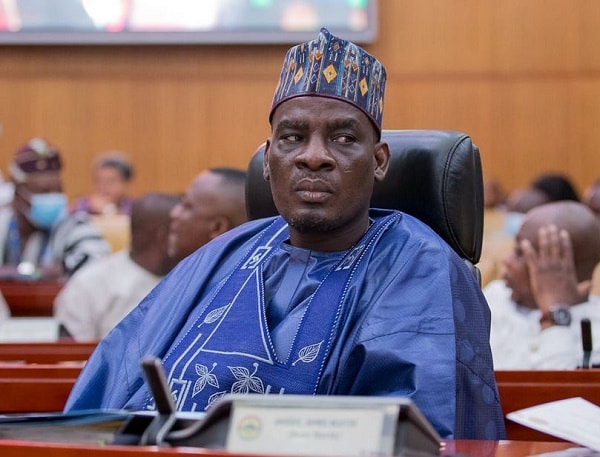
The Minority caucus in Parliament is urging the immediate suspension of a 10-year contract between the Finance Ministry and Strategic Mobilisation Ghana Limited (SML) for revenue assurance services.
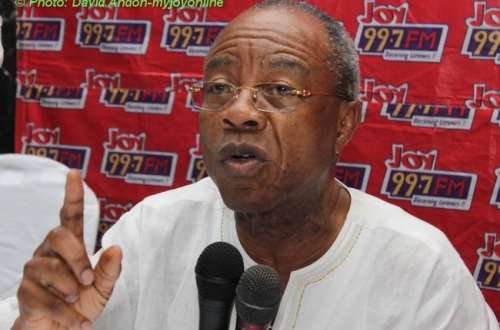
Ranking Member on the Mines and Energy Committee of Parliament, John Jinapor, characterized the contract as a “rip-off” and a “burden on taxpayers” designed to enrich “greedy politicians.”
He has called for its suspension until a probe by the minority caucus can investigate potential mismanagement.
“We do not believe that there is value for money, this contract is a rip-off, this contract only ends up filling the pockets of greedy politicians and individuals.
“We cannot allow the taxpayer to be burdened with such unnecessary contracts that only go a long way to fill the pockets of individuals, so we would advise, that immediately that contract should be suspended pending a parliamentary investigation. When we go into it and find out that all those allegations are true, we will ensure that this contract is abrogated.”
Mr. Jinapor also expressed concerns about a possible delay in negotiations with the International Monetary Fund (IMF) due to Ghana’s failure to service its external debts.
There are reports indicating that the IMF board meeting to consider the second tranche of a crucial $3 billion credit facility has been postponed until January 11, 2024. Jinapor cautioned that this delay could seriously jeopardize the hard-won economic gains that the government has achieved.
The Fourth Estate, in its recent investigation, has uncovered rot in a contract between the Finance Ministry and Strategic Mobilisation Ghana Limited (SML), and how the company failed to save Ghana over GHc3 billion in revenue as it had earlier claimed.
Strategic Mobilisation Ghana Limited in 2020 started revenue assurance services to the government of Ghana.
The GRA and the Ministry of Finance contracted SML to monitor the volumes of petroleum products lifted. However, the GRA told The Fourth Estate that the figures SML churned out as its monitoring of volumes were not the ones GRA uses to calculate petroleum taxes or revenue for the state. The GRA uses figures from the loading gantries, which the authority was using even before SML was contracted.
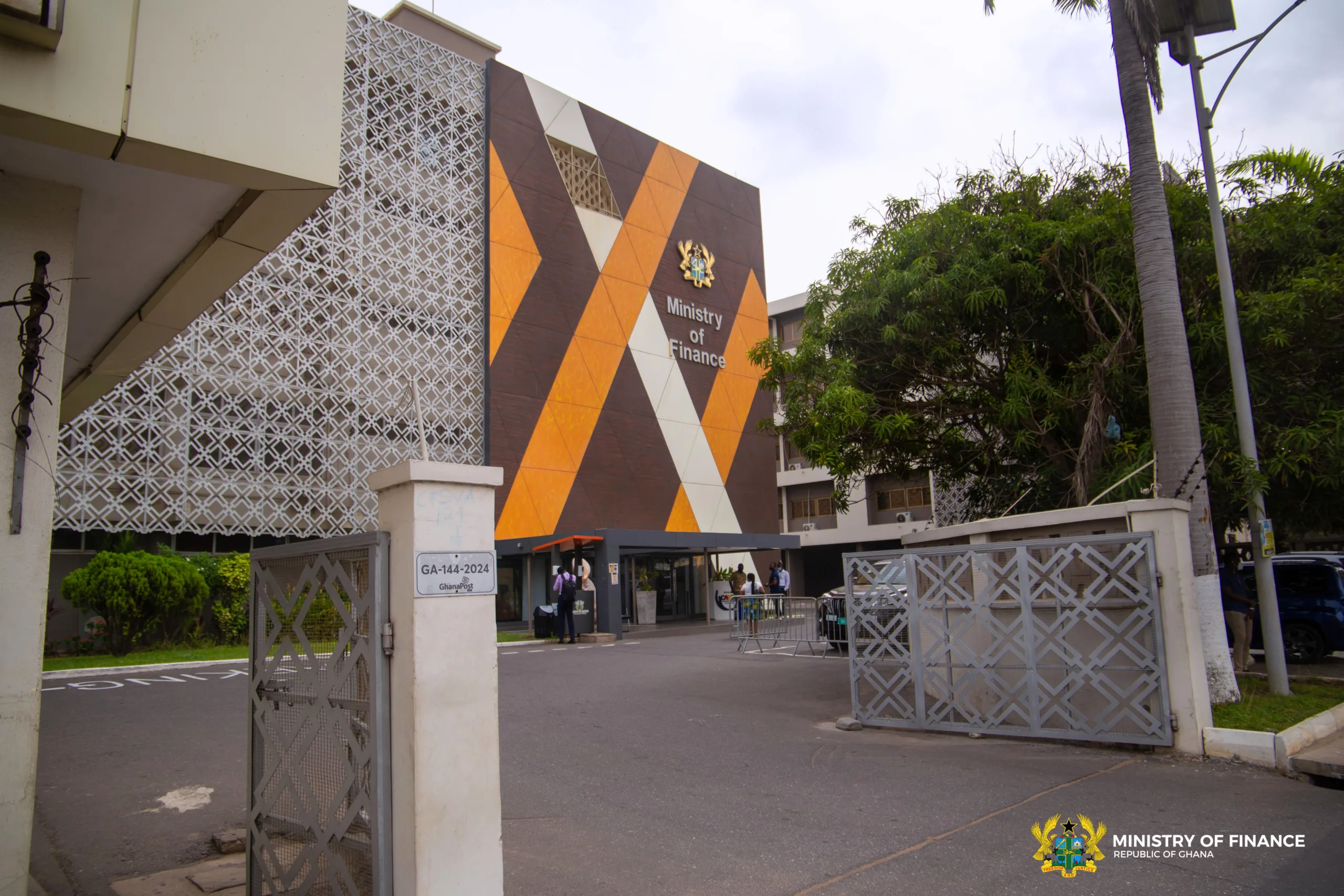
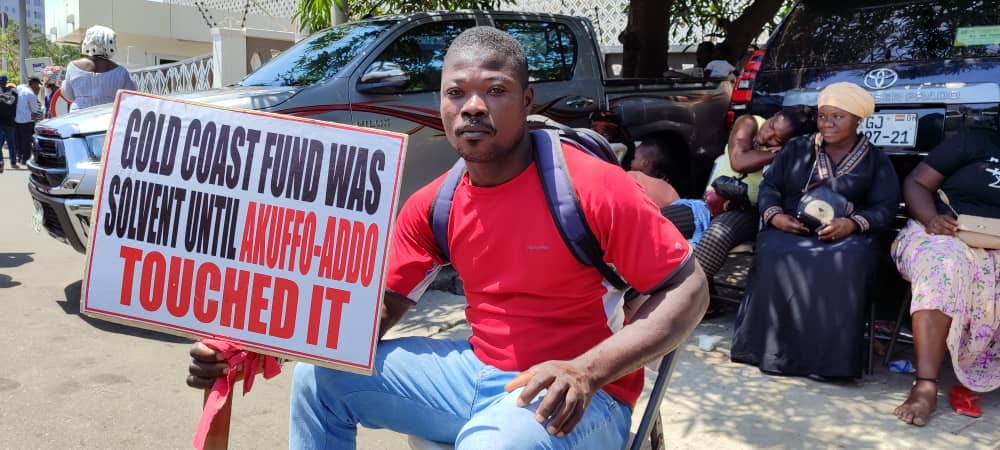
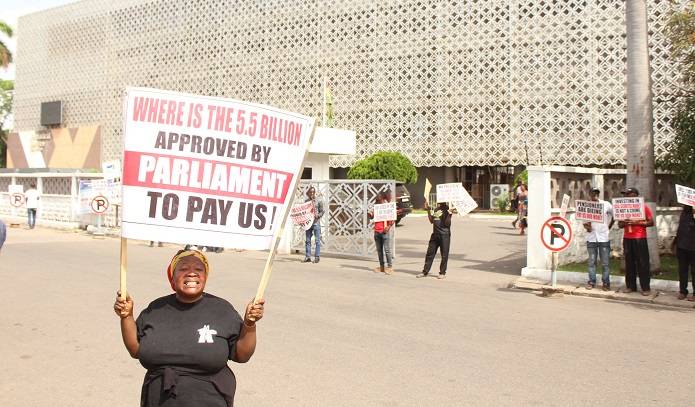
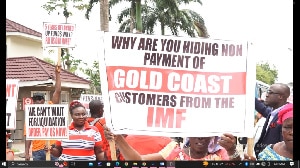
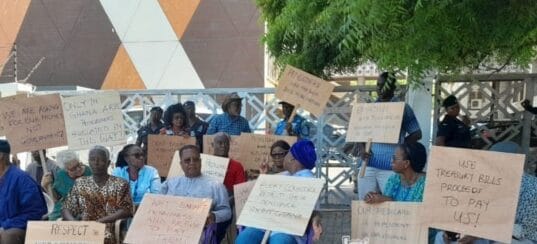
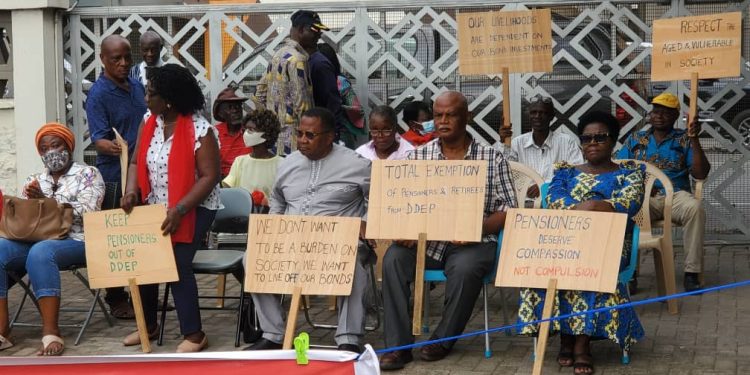
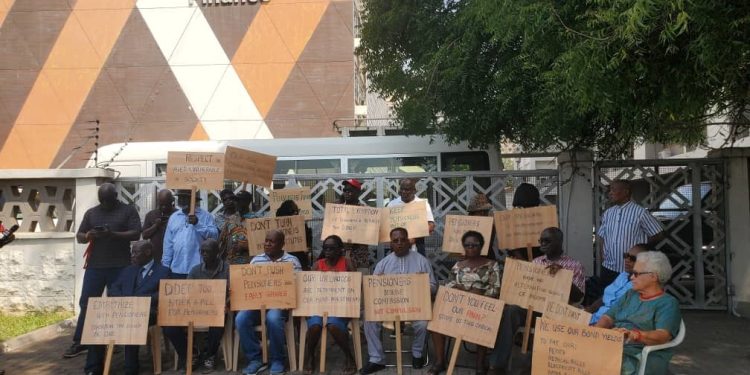
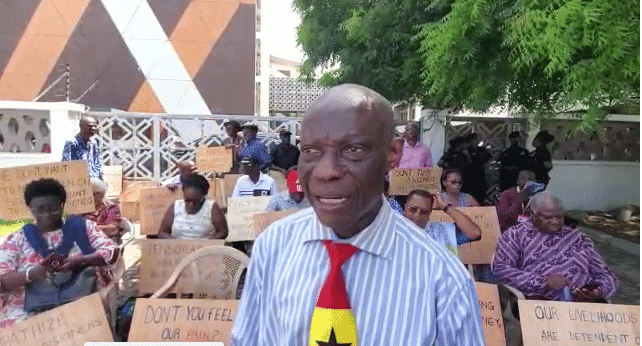
On Tuesday, November 28, a large number of customers from the defunct Gold Coast Securities gathered at the Ministry of Finance premises to demand the release of their frozen funds.
Wearing red attire, approximately 100 aggrieved customers held placards with various messages, including “more than 800 pensioners are dead due to locked-up funds,” “release our money,” “pay us our money,” “our health is deteriorating,” and “act now, Finance Minister.”
Expressing their frustration over the prolonged delay in fund disbursement, the customers stated that they would stage a 32-hour picket at the ministry to draw attention to their plight.
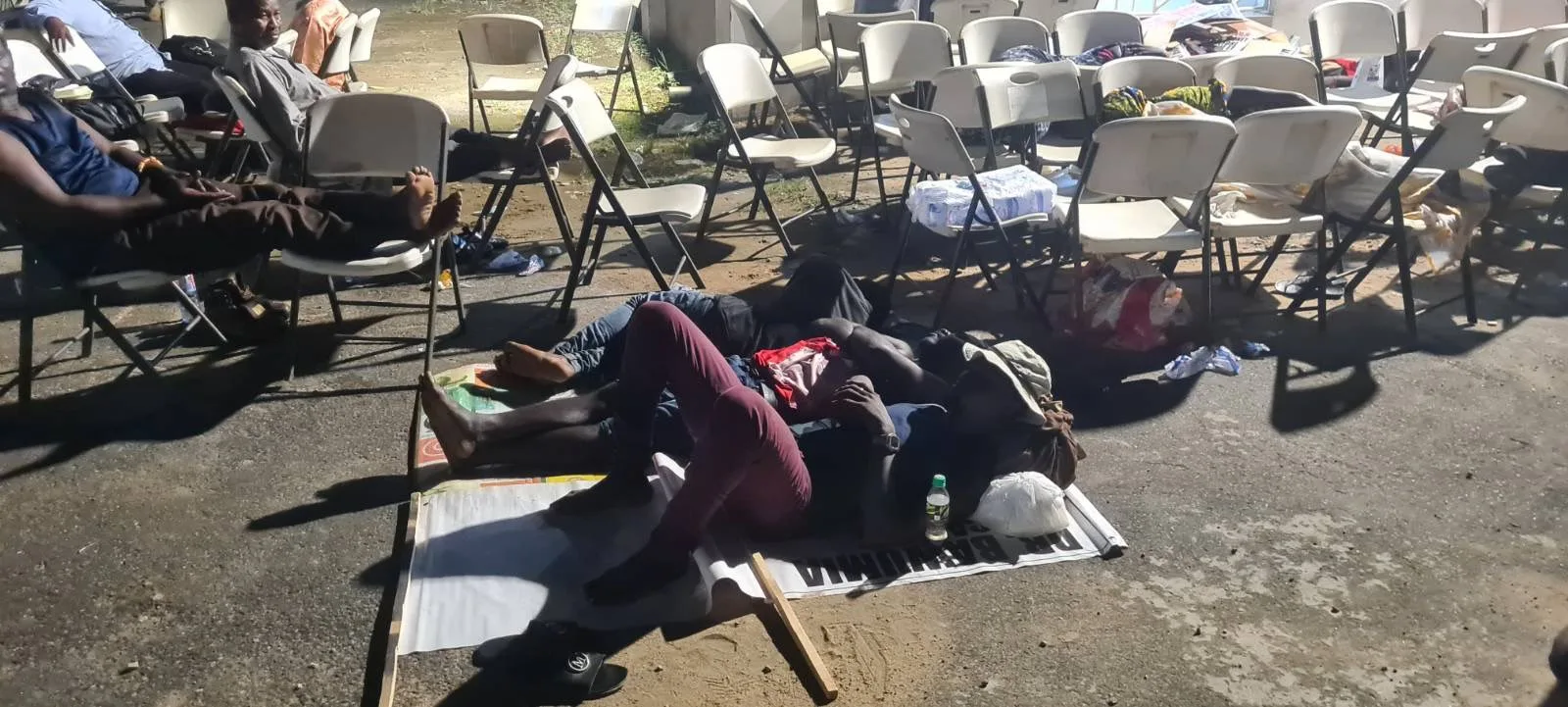
On Wednesday, FixTheCountry convenor, Oliver Barker-Vormawor, shared photos of the customers passing the night sleeping on chairs and, later, mattresses which were provided by the group.
“Yesterday, our fellow citizens who were picketing at the Ministry of Finance over their locked-up Gold Coast securities investments spent the night at the ministry.
“We were so heartbroken by how they are being treated that FixTheCountry took it on to bring them mattresses; and some tea.”
He noted that on Wednesday morning, the customers were provided breakfast.
To have their concerns addressed, Mr Barker-Vormawor, has entreated all and sundry “to join them, tweet, and draw attention to what is happening to them. Their picket continues.”
Yesterday, our fellow citizens who were picketing at the Ministry of Finance over their locked up Gold Coast securities investments spent the night at the ministry.
We were so heartbroken by how they are being treated that FixTheCountry took it on to bring them mattresses; and… pic.twitter.com/BAk6mWpYmc
Dr. Kwabena Donkor, the Ranking Member on the Employment Committee of Parliament, has criticized the staff of the Finance Ministry for applauding Finance Minister Ken Ofori-Atta after the 2024 budget reading.
The condemnation from the Pru East MP comes in response to a viral video showing Finance Ministry staff engaging in what appeared to be a praise and worship session to welcome the Finance Minister following the budget presentation in Parliament. The legislator expressed his dismay, deeming the civil servants’ actions as ‘unfortunate.’
During an interview on Joy FM’s Midday News on Thursday, November 16, Dr. Kwabena Donkor emphasized the need to call the staff to order.
“I call on the Head of the Civil Service to stamp out this behaviour. The Chief Director of the Ministry of Finance must issue a stern warning to such civil servants,” he requested.
After mismanaging Ghana’s economy and plunging the country into a self-inflicted debt crises, with hyperinflation, high unemployment, unbearable lending rates and excruciating hardships, the failed Finance Minister decided to compel civil servants to abandon their posts during… pic.twitter.com/GV0IYiMAvM
According to him, it is inappropriate for civil servants to “adopt partisan positions contrary to their oath of service.”
He added, “Indeed, every civil servant swears an oath and encompassed in the oath is political neutrality so when you have civil servants being reduced to cheerleaders, it is most unfortunate.”
He added that when civil servants tow this line, “they make it extremely impossible for any incoming government to work with them.”
He explained that this is why, since colonial days, the fundamental principle for civil servants has been neutrality.
“We must not countenance this. This partisanship displayed by paid civil servants goes against the state.”
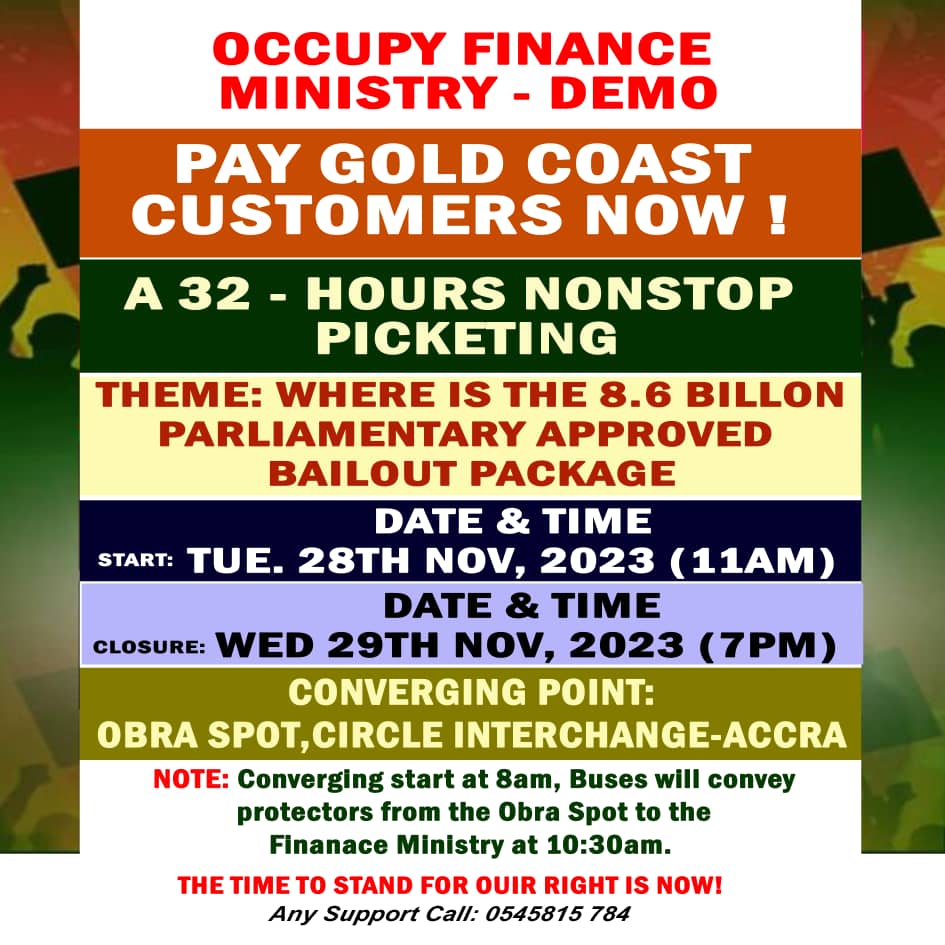
This is intended to urge Finance Minister Ken Ofori Atta to release an alleged GHS 8.6 billion bailout sanctioned by Parliament.
The planned demonstration is scheduled to begin on Tuesday, November 28, 2023, at 11 a.m. and continue until 7 p.m. on Wednesday, November 29, 2023.
The protesters plan to assemble at Obra Spot, Circle Interchange in Accra, at 8 a.m., with transportation arranged to take them to the Finance Ministry at 10:30 a.m.
They assert that the time has come to assert their rights as citizens.
Aggrieved Gold Coast Customer
Background
The Gold Coast Investment Fund Management Company is part of the fifty-three (53) Fund Management Companies (FMCs) whose licences were revoked by the Securities and Exchange Commission (SEC) on November 8, 2019.
This action was taken in accordance with Section 122 (2) (b) of the Securities Industry Act 2016 (Act 929) (SIA).
The revocation was prompted by numerous regulatory violations, including the failure to reimburse clients’ funds, estimated at eight billion cedis (GHS 8 billion), and substantial breaches of applicable rules posing risks to financial stability.
In 2021, Parliament approved GH¢5.5 billion for the settlement of owed customers of fund management companies, though the funds are yet to be distributed to the customers.
The Ministry of Finance has refuted reports that Ghana missed its November 1 deadline for the disbursement of the second tranche of International Monetary Fund (IMF) funds.
“The attention of the Ministry of Finance has been drawn to above- titled misleading publication on Myjoyonline, about Ghana missing a purported deadline of 1st November, 2023, for the disbursement of the second tranche of International Monetary (IMF) Funds,” a rejoinder by the ministry read.
According to the Finance Ministry, there is no 1st November, 2023 timeline for disbursement of the second tranche of the IMF funds as “no deadline has been set by the IMF for the second tranche disbursement,” which is due to take place after the IMF Executive Board approves the first review.
The Ministry made mention of Table 9 on page 72 of the Memorandum of Economic and Financial Policies (MEFP) published on 17th May, 2023 by the IMF referenced by MyJoyOnline.
“The November 1 stated in this table is an indicative timeline for completion of the first review, based on the observance of the end-June 2023 performance criteria,” the statement added.
The first review was successfully completed on 6th October, 2023, culminating in a Staff Level Agreement (SLA) on the same day.
“Whilst the SLA milestone is an important step towards unlocking the second tranche of $600 million under the programme, the timeline set by the Executive Board for the consideration and approval of the first review, is not 1st November, 2023 as published by Myjoyonline. The exact timeline for the Board date is determined by the IMF Executive Board,” the Ministry reiterated.
Following the clarification, the Ministry of Finance has encouraged the general public and media houses in particular, to seek the facts and truth about any information that comes to their attention, by reaching out to the Ministry for clarification whenever they are in doubt.
Meanwhile, the Ministry says Government of Ghana is making good progress in accordance with its strategic plan to engage the Official Creditor Committee (OCC) of the Paris Club; secure a Memorandum of Understanding on debt restructuring; and go before the IMF Executive Board for approval of the first review.
Ghana’s High Commissioner to the UK and Ireland, Papa Owusu-Ankoma, has provided an update on the Ministry of Finance’s efforts to resolve the $140 million judgment debt owed to Singaporean commodity trading firm, Trafigura.
He stated that there has been substantial progress made in reaching a settlement for the debt.
Notably, the property known as Regina House, which serves commercial purposes and had been seized by Trafigura, will not be sold to offset a portion of the debt.
“We will not get to that stage where these assets will be sold to defray the debts, because of progress made on reaching a settlement”, he stressed.
On November 2, 2023, he appeared on PM Express Business Edition in London with host George Wiafe.
Although Mr. Owusu-Akomah acknowledged that the circumstances leading to Trafigura’s action were regrettable, he insisted that every effort is being made to address the matter.
Background
In January 2021, Trafigura, a Singaporean commodities trading company and majority owner of GPGC, a power company, secured an award following a tribunal ruling in England.
The tribunal determined that Ghana had unlawfully terminated a contract for the installation and operation of two power plants.
Subsequently, on November 4, 2021, the Court granted Trafigura permission to enforce the award in a manner similar to a judgment of the High Court.
Following this development, on May 17, 2022, Trafigura initiated an application for charging orders pertaining to five properties in London in which Ghana held either freehold or leasehold interests.
However, Deputy Attorney General Alfred Tuah-Yeboah, in an interview with Joy News, revealed that the government had already directed the Finance Ministry to take measures to settle the debt.
According to him, the Finance Ministry had reached an agreement with the judgment creditors regarding the method of payment for the approximately $140 million debt.
While an initial partial payment was made, the Deputy Attorney General acknowledged that the state had failed to uphold its commitment to adhere to the installment agreement.
Has the action affected Ghana’s High Commission?
Mr. Owusu-Ankomah rejected claims that the development has brought work at Ghana’s High Commission to a “Stand Still”.
“Whatever that happened has not affected work or the services that we are offering here in London and UK”, he said.
He clarified that the Ghana International Bank which operates from the Regina House has not been affected.
Mr. Owusu-Ankomah however acknowledged that the news is unfortunate.
Ghana UK Trade Relations
Touching on trade issues, Mr. Owusu Akomah said there has been some progress in trade between Ghana and the UK.
He advised Ghanaian businesses seeking to partner with investors in the U.K to take advantage of the opportunities designed by government to foster bilateral relations.
He pointed out that Ghanaian business owners can take advantage of technical assistance provided by the U.K government.
IMF programme and UK relationship
Speaking about the IMF program, the High Commissioner stated that the United Kingdom had unfrozen a portion of its financial assistance to Ghana as a result of signing on to the program.
He gave his word that the High Commission will keep pushing British investors to collaborate with Ghanaian companies.
A $40 million deal involving cargo tracking at the ports has stakeholders in a seemingly uneasy state, according to Bright Simons, Vice President of Policy at IMANI-Africa.
He mentioned the following government organizations: the Ministry of Trade, Ports, Ghana Shippers Authority, and the Ghana Revenue Authority.
His admission follows the Finance Ministry’s declaration that branded a letter going around with the headline.
“Re-enhancing Shipping Data Collection and Management in Ghana through Smart Port and Electronic Cargo Tracking”, purportedly sent from the Finance Ministry.
Bright Simons said: “A deal estimated to be worth about $40m a year has all manner of govt bigshots throwing blows at each other. GRA, Ghana Shippers Authority, Ports, Trade Ministry, etc. Finally, the boss of bosses, Finance Ministry, has stepped in to declare one spunky contractor as fraudulent!”
Expounding on the nooks and crannies of the matter, Bright Simons said the company that claims to have been validated by the government is a “mysterious entity”.
“The company that claims to have been mandated by Ghana to validate all cargo imports & which the Finance Ministry accuse of fraud & fakery, is a mysterious entity called Antaser, with a string of aliases across Africa (TPMS, BBVA, etc). Its adventures deserve Holywood treatment,” he said.
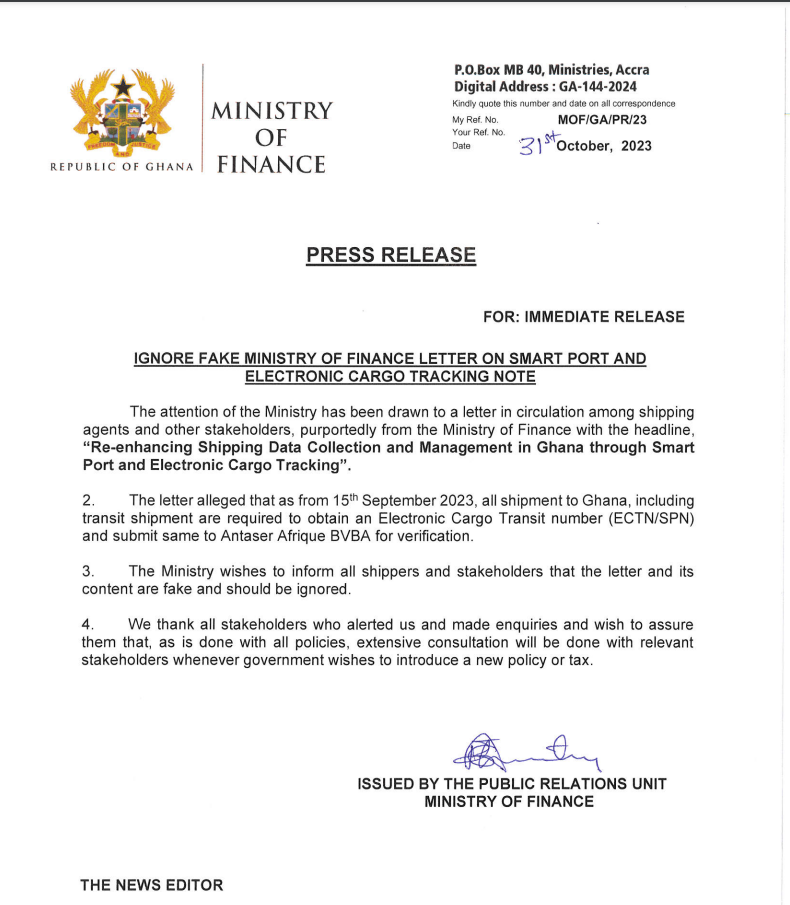
In the aforementioned letter, the Finance Ministry stated that all shipments to Ghana—including transit shipments—must obtain an Electronic Cargo Transit number (ECTN/SPN) and provide it to Antaser Afrique BVBA for validation as of September 15, 2023.
Shippers and stakeholders should be aware that the letter and its contents are fraudulent and ought to be disregarded, according to the Ministry.
The finance ministry thanked shipping agents and other interested parties for prompting them about the alleged letter in a statement released on October 31, 2023, and promised to notify the public of any new tax policies the government may be planning.
“We thank all stakeholders who alerted us and made enquiries and wish to assure them that, as is done with all policies, extensive consultation will be done with relevant stakeholders whenever government wishes to introduce a new policy or tax,” parts of the statement read.
“We thank all stakeholders who alerted us and made enquiries and wish to assure them that, as is done with all policies, extensive consultation will be done with relevant stakeholders whenever government wishes to introduce a new policy or tax,” parts of the statement read.
A deal estimated to be worth about $40m a year has all manner of govt bigshots throwing blows at each other. GRA, Ghana Shippers Authority, Ports, Trade Ministry, etc. Finally, the boss of bosses, Finance Ministry, has stepped in to declare one spunky contractor as fraudulent! 🤦🏽♂️ pic.twitter.com/HZ7Kkp5oHH
The Ministry of Finance has issued a statement urging shippers and importers to disregard a letter titled “Re-enhancing Shipping Data Collection and Management in Ghana through Smart Port and Electronic Cargo Tracking,” which is claimed to have been sent from the Ministry.
The letter, dated September 15, 2023, states that all shipments to Ghana, including transit shipments, must obtain an Electronic Cargo Transit Number (ECTN/SPN) and submit it to Antaser Afrique BVBA for verification.
The Ministry has clarified that the letter and its contents are fraudulent and should not be taken seriously.
Finance Ministry on Smart Port
The Finance Ministry expressed its gratitude to shipping agents and stakeholders who brought this matter to their attention and assured the public that any new government tax policies would be communicated through official channels.
“We thank all stakeholders who alerted us and made inquiries and wish to assure them that, as is done with all policies, extensive consultation will be done with relevant stakeholders wheneverthe government wishes to introduce a new policy or tax,” parts of the statement read.
The National Cathedral Secretariat has refuted claims suggesting that it is illegitimate for the government to spend taxpayers’ money on the national cathedral project.
Engaging the press today to update the public on the status of the project, Executive Director for the National Cathedral Secretariat, Dr. Paul Opoku Mensah, noted that the project is state-owned, hence any funds from the government to support its development are lawful.
According to him, Parliament had been briefed by the Minister of Finance on government’s financial commitment to the project as far back as 2018.
“One of the current complaints is that the state was not to put in any money for the national cathedral project. This is not true, as the national cathedral project was conceived as a partnership between the state and the Ghanaian Christian community. The expected role of the state was communicated to Parliament in November 2018,” he said.
Dr. Paul Opoku Mensah added, “As part of the budget statement read in Parliament on November 15, 2018, the Minister for Finance indicated that the state role in the national cathedral project will be ‘providing the land, Secretariat and seed money for the preparatory phase. Subsequent budgets have used to update Parliament on the development of the project.”
He stressed “the Attorney-General’s opinion of January 6 to confirm the National Cathedral as a state-owned rather than a personal project, and so legitimate to receive state funds.”
All these documents have been submitted to Parliament, he iterated, while announcing the Secretariat’s willingness to present them to the political parties outside Parliament, “who once again are critical mediating actors for us.”
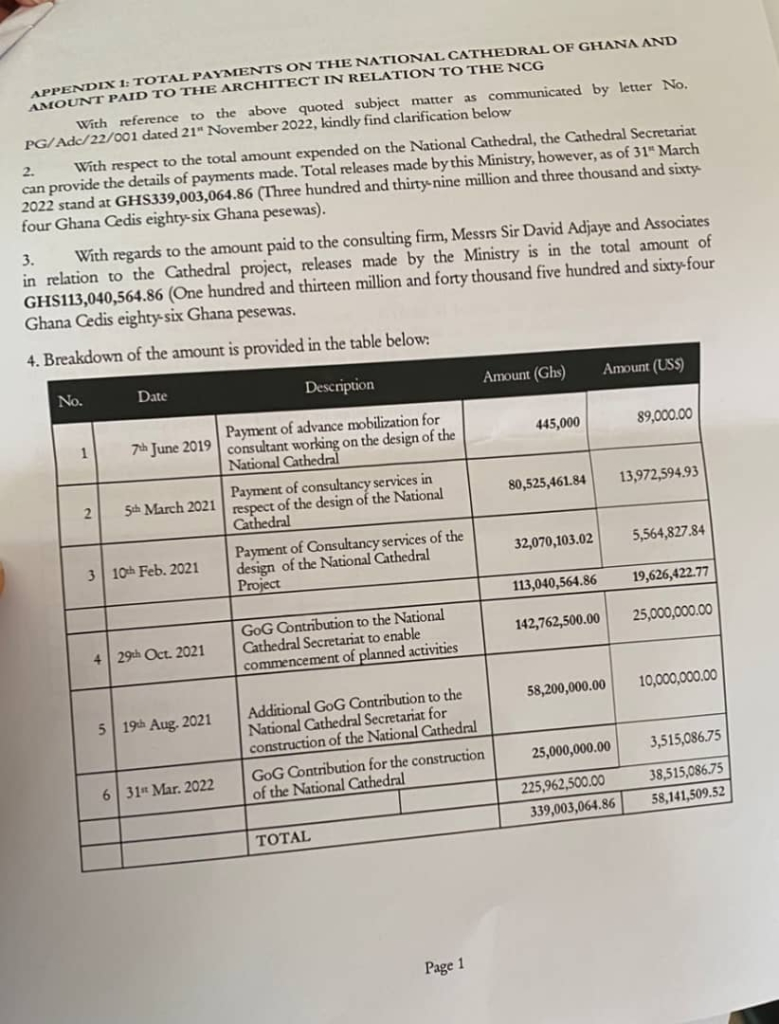
In November 2022, the Finance Ministry revealed that an amount of ¢339,003,064.86 has been released for the construction of the National Cathedral so far.
The Ministry also added that a total amount of ¢113,040,654.86 has been paid to the consulting firm for the construction of the Cathedral, Messers Sir David Adjaye and Associates.
This was contained in a document from the Ministry to the parliamentary Adhoc Committee based on a request for the total amount spent by the Government on the National Cathedral.
It is not unlawful for govt to spend on National Cathedral project – Secretariat
Via: Joy News #INDNews Kennedy Agyapong | Mohammed Kudus | Thomas Partey | Black Stars | Sarkodie | Hearts of Oak pic.twitter.com/QAJHOb26dp
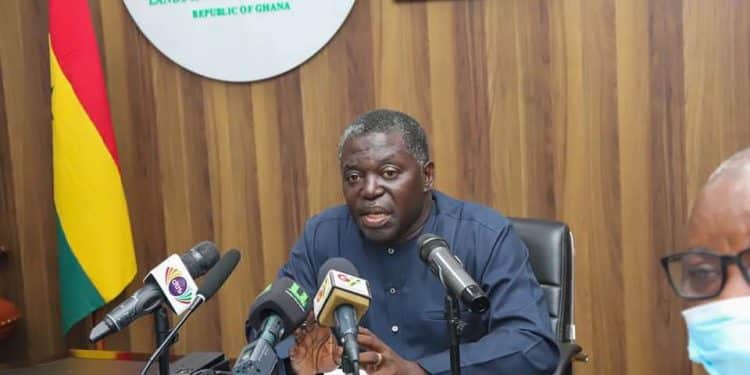
Minister of State at the Finance Ministry, Dr. Mohammed Amin Adam, has expressed confidence in the country’s ability to attain its growth objectives, including achieving single-digit inflation by 2028.
He pointed out that the economy is progressing at a rate exceeding the projections made by the International Monetary Fund.
Dr. Adam also highlighted the reduction in inflation from 54% to 40% in recent months as a positive indicator of the attainability of the growth targets.
“The IMF actually projected that we would grow at 1.5% this year, and if half into the year we are already growing at 3.2%, with some of the recovery policies yet to mature, it’s indicative of the fact that by the end of the year, we should be doing far more than what the IMF projected. And that is a great sign of recovery,” Dr. Amin Adam said on Accra-based Citi TV’s Point of View.
“Inflation which is a very important indicator for attracting investments and for improving domestic investment has also been decelerating from 54% in December 2022 to date. It is about 40% and it’s going to continue because 40% is still high and so we will expect that this disinflationary path we have been following will continue until we reach single-digit inflation by 2028 as per the IMF programme,” he added.
Apart from the growth metrics and inflation, the minister also noted that the exchange rate has exhibited a degree of stability this year. Consequently, he holds a positive outlook that Ghana’s rebound will surpass initial expectations.
The Securities and Exchange Commission (SEC) has clarified that the delay in disbursing bailout funds to customers affected by Gold Coast Fund Management Limited cannot be attributed to the Ministry of Finance.
The SEC has emphasized that the Ministry of Finance has not been unwilling to provide the necessary funds, dispelling any notion of blame directed at the Ministry for the delay in payments.
It rather said in a statement that “The delay is principally due to the legal action by Blackshield/Gold Coast contesting the liquidation petition brought by the Official Liquidator (Office of the Registrar of Companies) at the request of SEC following the revocation of licences. The SEC will continue to support the Official Liquidator in pursuing the liquidation petition in court.”
The Securities and Exchange Commission (SEC) statement is in response to protests by clients of Blackshield/Gold Coast outside the Ministry of Finance.
On November 8, 2019, the SEC revoked the licenses of fifty-three (53) Fund Management Companies (FMCs) due to various regulatory violations, including their inability to return an estimated ¢8 billion to clients.
The revocation of licenses was executed in accordance with the SEC’s mandate to safeguard investors, uphold the integrity of the capital market, and mitigate financial stability risks.
Following the license revocations, the SEC implemented several measures to protect investors. These actions include notifying the Registrar of Companies/Registrar General to initiate the official liquidation of the 53 FMCs under relevant legal provisions, securing a government bailout package for affected clients of the FMCs under the condition that court-ordered liquidation is granted, and appointing an agent to secure assets, validate claims, and receive records from the affected companies in accordance with the Securities Industry Act.
The SEC has confirmed that, up to this point, ¢4.6 billion has been disbursed to clients of fund management companies. This includes ¢3.1 billion for Amalgamated Fund Tier 1 payments and ¢1.45 billion allocated to Amalgamated Fund Tier 2 payments. The partial bailout program also encompasses proactive payments of up to ¢50,000 to clients of Blackshield/Gold Coast and other companies whose claims were validated and hadn’t received winding-up orders from the Court by October 2020. A total of 73,541 claims amounting to ¢1.34 billion have been disbursed to Blackshield/Gold Coast clients under this partial bailout program, with 61,734 claims fully settled.
The SEC underscores that the complete disbursement of bailout funds is contingent upon claim validation and court-issued winding-up orders to guarantee that all claims are verified, and the companies’ assets and liabilities are transferred to the Office of Registrar of Companies.
According to the Corporate Insolvency and Restructuring Act, 2020 (Act 1015), as amended by the Corporate Insolvency and Restructuring (Amendment) Act 2020 (Act 1031), only a Court can grant a winding-up order. Therefore, the ongoing court process between the Office of the Registrar of Companies and Blackshield/Gold Coast is necessary.
As of now, the Office of the Registrar of Companies has received 44 winding-up orders from the Court, with only two outstanding, namely Blackshield/Gold Coast and Kron Capital Ltd.
The SEC further highlights that the liquidation petition is still pending in court, causing a delay in the government’s complete bailout program for affected clients.
The government has revealed its commitment to inject a substantial $500 million as initial capital into the Ghana Financial Stability Fund (GFSF), set to commence operations by the conclusion of October 2023.
This announcement is detailed in the Operational Document of the Ghana Financial Stability Fund, which was released by the Finance Ministry on October 9, 2023.
The Finance Ministry further explains that the government will extend financial support to the Fund, aligning with the resources outlined in the Extended Credit Facility (ECF) macro-framework baseline.
These resources will be deployed in a phased approach to address the recapitalization needs of the financial sector.
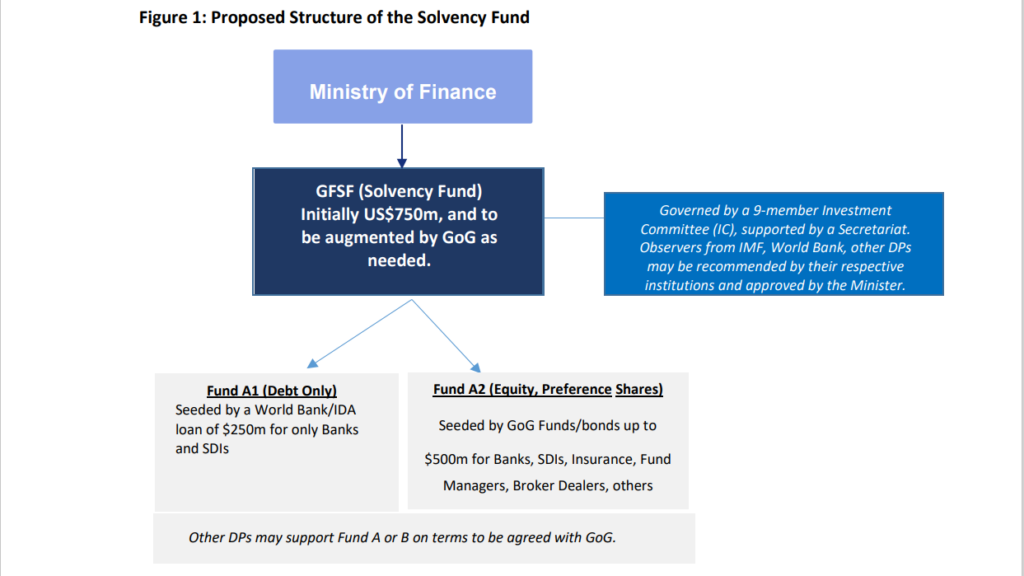
The initial phase of funding for the Ghana Financial Stability Fund (GFSF) will be sourced as follows: a $250 million concessional loan from the World Bank/IDA and an additional $500 million from the government.
The government’s contribution will be a combination of cash and marketable bonds, aimed at bolstering capital reserves within the financial sector. This initiative is in response to the effects of the government debt operation.
The Government of Ghana Bond will also participate in the issuance of one of the longest-dated new benchmark bond series introduced under the Domestic Debt Exchange Programme (DDEP).
Furthermore, the government is anticipated to offer essential fiscal support to ensure the stability of the financial system. In cases of cash flow shortfalls, the Ministry of Finance will collaborate closely with the IMF to address the issue, particularly given the challenging financing conditions within the domestic market.
To ensure effective governance of the Ghana Financial Stability Fund (GFSF), the following measures will be implemented:
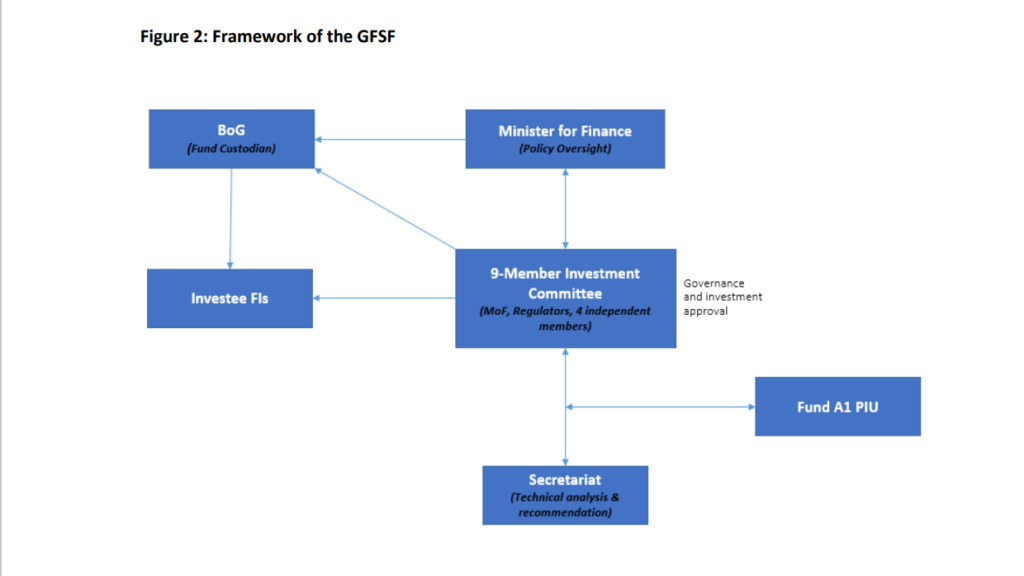
a. The Fund will be overseen by a nine-member Investment Committee (IC), consisting of four independent experts nominated by industry associations and subsequently approved by the Ministry of Finance.
b. Development Partners (DPs) may recommend observers to the committee, subject to the Minister for Finance’s approval. Other DPs may offer support to either Fund A or B under terms agreed upon with the Government of Ghana (GoG).
c. Fund A2 (Equity and Preference Shares) will be initially funded by GoG with funds or bonds up to $500 million, intended for Banks, Specialized Deposit-Taking Institutions (SDIs), Insurance companies, Fund Managers, Broker Dealers, and other relevant entities. Fund A1 (Debt Only) will be seeded by a $250 million World Bank/IDA loan, designated exclusively for Banks and SDIs. Details regarding this loan will be handled confidentially by the Ministry of Finance.
d. Recapitalization plans, instruments, and criteria for financial institutions will be subject to approval by the Bank of Ghana and other relevant regulatory bodies. Based on these approvals, the Investment Committee (IC) will make investment decisions concerning eligible financial institutions.
e. The Ghana Amalgamated Trust Fund (GAT) will function as the Secretariat for Solvency Fund A2, establishing a dedicated operational framework for managing the Fund.
f. Fund A1 will have a project unit operating within the Ministry of Finance, specifically pertaining to World Bank-funded projects.
As stated by the Finance Ministry, the government is fully committed to taking all necessary measures, within the available resource framework, to uphold the stability of the financial system. The Ministry of Finance (MoF) will collaborate closely with the IMF to tackle any potential cash flow deficits, particularly in light of the challenging financing conditions within the domestic market.
The Ghana Stabilization Fund will provide support to the following institutions:
A. Banks
B. Special Deposit-Taking Institutions (SDIs) and Rural and Community Banks (RCBs)
C. Insurance companies, fund managers, collective investment schemes, and broker-dealers
The Ghana Financial Sector Strengthening Strategy serves as the foundational plan for the establishment of the Ghana Financial Stability Fund (GFSF). The primary objective of this fund is to mitigate the potential adverse impact that the Domestic Debt Exchange Programme (DDEP) might have on financial institutions, including banks, special deposit-taking institutions (SDIs), insurance companies, and the capital market. In parallel, the government is also developing the Insurance Sector Strengthening Strategy (ISSS) with the assistance of AfDB, slated for implementation by 2024.
The allocation of budgetary resources for the establishment of the Ghana Financial Stability Fund (GFSF) is aimed at reducing the adjustment burden on the financial sector, particularly banks and insurance companies, over the medium term. The ultimate goal is to prevent any systemic financial crisis that may arise.
The Ghana Financial Stability Fund (GFSF), established by the Government of Ghana (GoG), serves as an additional safety net provider, specifically designed to help mitigate the potential repercussions of GoG debt operations on the financial sector.
The Operational Framework for the Stability Fund outlines key aspects of the GFSF:
Sources of Funding
Eligibility Criteria for Participating Financial Institutions (PFIs)
Terms and Conditions
Governance Arrangements
Regarding conditions for funding banks and other financial institutions:
Solvency support funding will be structured based on commercial terms, resembling what a private investor would receive. This approach is not intended to be a bailout. In certain cases, concessional commercial rates might be considered, contingent upon improved governance structures.
The GFSF will offer solvency support to eligible financial institutions (FIs), designed to avoid moral hazard and encourage orderly unwinding and market-based solutions in the long term.
Funding for solvency support will be structured commercially and not as bailouts. In some instances, concessional commercial rates may be applied, subject to improved governance structures.
Generally, the sources of recapitalization for banks and other FIs over the next three years will follow this prioritized order:
a. Recapitalization by existing shareholders in accordance with the capital regulations established by the respective regulators.
b. Infusion of new equity capital by new investors, accepted by existing shareholders, and certified as fit and proper by the respective regulators.
c. Support from the government for eligible FIs that meet specific criteria defined for accessing solvency support from the GFSF.
Banking Consultant Nana Otuo Acheampong has come forward to offer support to the Bank of Ghana and its governors.
In response to the Minority’s demand for the resignation of the Central Bank’s Governor and his deputies due to alleged mismanagement of the bank and unauthorized printing of money to support government spending, Nana Otuo Acheampong defended the Governor, Dr. Ernest Addison, stating that he had not erred in agreeing to write off 53.1 billion cedis of government debt stemming from the Domestic Debt Exchange Programme (DDEP).
During an appearance on PM Express, Nana Otuo Acheampong asserted that the Bank of Ghana is not obligated to seek parliamentary approval before making such decisions.
“There was zero financing in 2017, 2018, 2019 and 2021. It was only in 2020 that there was no zero financing and 2022 because of the International Monetary Fund, IMF.
“The 2020 one, Covid is accepted and the legislators are there, they know what should have happened. Is it the Bank of Ghana which has to make the application or the Ministry of Finance? Bank of Ghana doesn’t stand on its own, it stands under the Ministry of Finance. So if they have a beef, then I would have thought the gun should be directed at the Ministry of Finance but not at Bank of Ghana because they are under the Ministry.
“So if they have to go to Parliament to seek any breach of the law or an exception, then the Ministry will do that and not Bank of Ghana,” he argued.
The Member of Parliament for Bawku Central, Mahama Ayariga, holds a contrary viewpoint.
He maintains that the Bank of Ghana’s failure to notify Parliament amounts to a violation of the BoG Act, and as a result, the Governor should face the repercussions.
“The Bank of Ghana Act poses a responsibility on the Central Bank to be an adviser to the government on financial matters, fiscal matters, monetary policies. The Central Bank is supposed to be advising.
“First and foremost, his [Governor’s] failure in advising government not to create the financial mess that has ultimately affected the Central Bank itself is something that we should be holding him accountable for. And as far as we are concerned, the law says that he should come and inform Parliament. So, I don’t know where and in which law he [Nana Otuo Acheampong] has been told that the Central Bank is under the Ministry of Finance.“
In the meantime, the Minority in Parliament remains resolute in its call for the Governor’s resignation.
During an appearance on the Super Morning Show, Samuel Okudzeto Ablakwa, the MP for North Tongu, affirmed that the Minority, along with other demonstrators, holds the expectation that a new Governor will address the issues within the Central Bank.
“If a new governor takes office, we don’t expect that new governor to continue on this reckless path.
“A new governor will not continue with this Bank of Ghana project which is now around 300 million dollars in a time of crisis. No responsible leader will do that, so a new governor will address that matter.
“A new governor will now decide to follow the law and will not print money illegally to the tune of 77 billion. I mean, you print money illegally to the tune of 77 billion and still manage to make losses of 60.8 billion, so where did the money go?” he quizzed.
“All the illegal printing, where did that money go? What was it used for? So a new governor, new deputies will be law abiding. They will not embark on this total recklessness. So it is the first step” he argued.
In a bid to tackle the challenge of limited access to financing in the agribusiness sector, a new initiative called the ‘Affordable Agricultural Financing for Resilient Rural Development (AAFORD)’ project has been launched.
This substantial project, valued at US$69 million, has a primary objective: to enhance agricultural productivity, boost incomes, and strengthen the resilience of smallholder farmers, particularly vulnerable women and youth.
These objectives will be realized through the expansion of access to cost-effective financing, enabling better marketing connections, the adoption of sustainable and climate-smart practices, skill development, and the advancement of enterprises within agricultural value chains.
AAFORD will implement a targeted inclusive policy that aims to harness the untapped potential of women and youth to bolster family resilience. This initiative is led by the Ministry of Finance and is financially supported by the International Fund for Agricultural Development (IFAD).
The project will employ a value chain partnership approach, concentrating on fostering profitable connections between agricultural producers, buyers, and collaborating financial institutions. It will promote business models that facilitate linkages between households and buyers (nucleus farmers, processors, and aggregators), thereby increasing household incomes.
Partner financial institutions will benefit from agricultural credit guarantees, agricultural insurance initiatives, capacity-building in agricultural lending, and access to concessional credit funds and incentives from the AAFORD-supported Blended Finance Facility (BFF) to reduce the interest rates on agricultural loans.
The AAFORD project aims to directly serve approximately 75,000 impoverished rural households and indirectly benefit around 465,000 individuals within smallholder households. In total, over 540,000 rural individuals engaged in small-scale agriculture are expected to gain from this project. The project will focus on specific geographical regions, including the Northern, Savannah, North-East, Bono, Bono East, and Ahafo Regions.
The target crops encompass cassava, sorghum, maize, soybeans, millet, and groundnuts. Additionally, depending on opportunities, the project will also support vegetable value chains such as tomatoes, peppers, cabbage, carrots, and eggplants that are relevant to smallholders. High priority will also be given to import substitution crops like rice.
Dr. Amin Adams, the Deputy Minister of Finance, officially launched the project in Sunyani, the capital of the Bono Region. He praised AAFORD as a critical component of the government’s efforts to boost agricultural productivity and enhance the livelihoods of individuals involved in the value chain. Dr. Adams also highlighted the positive impact of previous government policies like ‘Planting for Food and Jobs,’ ‘Planting for Exports and Development (PERD),’ and ‘Ghana Incentive-based Risk Sharing System for Agricultural Lending (GIRSAL)’ in improving the agricultural sector and reducing poverty in rural areas. He extended his commendation to IFAD for its ongoing support of government programs aimed at agricultural sector development.
“Since 1980, IFAD’s interventions have supported a range of programmes in Ghana; focusing on areas such as agricultural productivity improvement, developing rural institutions, marketing through offtaker linkages, supporting access to finance, youth skills development and youth micro-enterprises. These interventions have led to the development of resilient livelihoods for the citizenry. We are grateful for your support and collaboration over the years in bringing a smile to the face of Ghanaian rural folk,” he said.
Minister of State in charge of the Finance Ministry, Dr. Mohammed Amin Adam, has thanked all participants in the government’s Domestic Debt Exchange Programme (DDEP), which was introduced in December 2022.
The first coupon payments are important to keeping the economy going, he said, because the government, especially the Ministry of Finance, has duly acknowledged the sacrifices made by all participants during a particularly trying time.
Dr. Amin Adam stated that “the first payment of matured coupons to bondholders is key for our economy and I want to thank all DDEP participants for their sacrifices” during an interview on JoyNews’ PM Business edition show.
“The IMF review is taking place next month [September] and it would have been very bad for us if government defaulted on making the coupon payments and it’s important to note that around the same time, we have three debt exchanges ongoing and if we default on making payments, the consequences would be dire on our economy,” he added.
On August 23, 2023, the government officially affirmed the complete settlement of the initial coupon, valued at GH¢2,369,667,190.18 (approximately 2.4 billion Ghana Cedis), from the DDEP.
Through a statement released by the Ministry of Finance, the government restated its unwavering dedication to fulfilling all forthcoming payment commitments, adhering to the stipulations outlined in the new agreements.
The statement further highlighted that the fresh government bonds now hold a central position within the domestic bond market, serving as the cornerstone for fostering economic recovery.
In December 2022, Ghana’s government launched the DDEP as a strategic move to restructure the nation’s unsustainable debt stance. This initiative extended an invitation to eligible bondholders to exchange their existing bonds for new ones featuring extended maturities and reduced interest rates.
Minister of State in charge of the Finance Ministry, Dr. Amin Adam, has stated that government has created an arrears clearance strategy to settle payments due to road contractors for completed work.
He claims that the proposal is a component of the requirements established by the IMF during Ghana’s initial review of the current bailout program.
“The plan is a commitment to clear the arrears over a number of years and contractors must be assured that government will remain committed over that period to clear arrears owed them”
“These arrears have been accumulated over several years and if even if a contractor has worked on a project 10 years ago, they are still entitled to be paid and so we should be fair to all that owe and for example if we are negotiating our debts, it is because we want to be able to honor these obligations and arrears side which is also important to find a way to pay them”.
On August 24, 2023, Dr. Amin Adam revealed this in an interview with Joy News’ PM Express Business segment.
The Akufo-Addo administration’s GH5.9 billion debt to its members has been requested immediately by the Association of Road Contractors Ghana.
They contend that paying arrears is necessary to keep their businesses operating and enable them to pay their creditors.
The Finance Ministry has issued a caution against unwarranted criticism directed at the Bank of Ghana (BoG).
John Kumah, Deputy Minister of Finance, has expressed that the dissemination of propaganda and unjustified attacks on the central bank can result in escalated market volatility, hastened asset sell-offs, and potentially trigger a series of events that may impact our overall economic stability.
These statements have arisen in response to the National Democratic Congress (NDC) Members of Parliament who have declared their intention to stage a protest at the BoG’s premises if Governor Dr. Ernest Addison does not step down.
The NDC MPs have set a 21-day ultimatum for Governor Addison, commencing from Tuesday, August 8, demanding his resignation due to the challenges currently faced by the central bank.
Addressing a press conference in Accra on Tuesday, August 8, the Minority Leader Dr Cassie Ato Fortson said “we call for the resignation of the Governor of the Central Bank and his deputies within 21 days from today. We are resolved to embark on popular action to occupy the Central Bank and drive out the team of inept, callous and criminal mismanagers of the finances of this country and Save the Bank of Ghana. The March to Ensure Accountability will begin in 21 days if the Governor of the Bank of Ghana does not do the needful and pack bag and baggage out of that sacred institution that he has so desecrated. Dr Ernest Addisson Must Go! There has to be an end to impunity and it is now!”
Dr Forson further stated that the more troubling fact is that, having brought the Bank of Ghana to this terrible financial state, “the Governor and his deputies, have found it prudent and expedient to invest $250 million (GHC2.8 billion) on another Head Office building somewhere at Ridge. In our circumstances, this is the height of insensitivity in the management of the finances of a troubled country.”
“The BOG’s illegal printing of money is responsible for the depletion of Ghana’s external reserves which resulted in the unprecedented depreciation of the Cedi, the main cause of hyperinflation in 2022. It is important to state that the Governor breached section 30 (7) of the Bank of Ghana Act, 2012 (Act 612 ) and Section 60 of the Bank of Ghana Amendment Act, 2016 (Act 918).
“An estimated 850,000 people were further reported to have been pushed down the poverty line as a result of the hyperinflation in 2022.”
But in a statement reacting to the Minority, John Kuamh who is also a lawmaker for Ejisu said in a statement that “Ignore this funny NDC Propaganda about the collapse of the Bank of Ghana (BoG). BoG is Solid ! The NDC is funny! It’s not true that a recapitalization levy is to be introduced for BoG , the Central Bank hasn’t collapsed.
“The main source of income to the Bank is from government transactions i.e. fees and charges on all government transfers, the bank’s investments in marketable instruments and also earnings from non-marketable holdings of the Bank. Given that government transactions have gone down, naturally, the income of the bank will go down. Also, because of the debt restructuring, earnings on their holdings on markable and non-marketable bonds will go down.
“Beyond this, the Bank is solid and is capable of performing its core function. Article 183 clause 2 (c) of the 1992 constitution enjoins the Bank of Ghana to promote and encourage economic development in the country , hence there is nothing untoward in the actions of the Central Bank to support the state in its economic recovery efforts. It is important to further highlight that a negative balance sheet by a Central Bank is not unusual, in fact, most Central Banks around the world run negative balances to achieve the overall economic anchor objectives of a Central Bank. ‘History clearly illustrates this. Several central banks had negative equity yet fully met their objectives – for example, the central banks of Chile, Czechia, Israel and Mexico experienced years of negative capital. But throughout, financial and price stability were maintained.’ – Bank For International Settlements Bulletin No.68.
“According to Nordstrom and Vredin (2022), a central bank’s credibility depends on its ability to achieve its mandates. Losses do not jeopardise that ability and are sometimes the price to pay for achieving its aims.
“Such propaganda and unnecessary attacks at the central bank only result in increased market volatility, panic selling of assets, and can trigger a chain of events that can affect our overall economic stability.”
A Banking and Finance Expert has told an Accra Economic and Financial Court that a letter signed by former Deputy Finance Minister, Dr Cassiel Ato Forson requesting for letters of credit to be established by the Bank of Ghana (BoG) in favour of Big Sea Trading LLC of Dubai, is not an application for an LC (Letter of Credit).
Alexander Kofi Mensah Mould who testified as an expert witness on Thursday, July 27, in a case of causing financial loss to the state brought against Minority leader Dr Forson, explained under cross examination by the Attorney General, Godfred Dame, that whereas the Ministry of Finance needed write to the BoG requesting for LCs to be established, that letter alone cannot trigger the establishment of an LC unless there is a proper application from the MDA ( Ministries, Departments and Agencies) on for whom the LC is to be established.
Former Chief Executive Officer of Ghana National Petroleum Corporation (GNPC), Alexander Kofi-Mensah Mould had told the Court during cross examination at the last sitting that letters signed on behalf of then Finance Minister by Dr Cassiel Ato Forson, requesting for the establishment of letters of credit in favour of Big Sea General Trading LLC of Dubai, was only a first step in the process of establishing of the LCs and cannot constitute payment.
Mr Mould added that there was no way the Bank of Ghana or any other bank would set up an LC on the basis of the letters written by Dr Forson.
He further explained that the only document required in the establishment of such an LC would be the application forms filled by the applicant for the LC which in this case was the Ministry of Health.
The witness who has extensive experience in Trade Finance and the establishment of LCs due to his many years of work at the Union Bank of Switzerland and Standard Chattered Bank in the United States of America, further stated that LCs in themselves were not payment and that they constituted a guarantee of payment upon the occurence of a very specific event.
Mr Mould stressed that his review of the documents presented in evidence by the prosecution showed that it was “fallacious” to allege that by merely signing a letter on behalf of the Minister of Finance requesting for the establishment of an LC in favour of Big Sea, Dr Forson had caused financial loss.
The witness also indicated,that based on his knowledge of Ghana’s financial management laws,only the Finance Minister could authorise a request for the establishment of the letters of credit in question.
He said it was not unusual for Deputy Ministers to sign letters on behalf of their Ministers.
Dr Cassiel Ato Forson has been accused of causing financial loss to the state for allegedly causing an LC to be established in favour of Big sea for the supply of 30 ambulances without authorisation.
The recently introducedDebt Exchange Program for bills relating to cocoa as well as the restructuring of the domestic bonds denominated in dollars are intended to secure debt levels, according to Deputy Minister of Finance Abena Osei-Asare.
She stated that despite being difficult, these actions are now necessary to protect the nation’s debt levels in order to comply with the requirements set forth in the Ghana program agreed with IMF help.
“We have taken this painful and difficult pathway because we know the alternative is simply unthinkable,” Osei-Asare said in her remarks at the 2023 Deloitte Economic Dialogue: Pre-Mid-Year Budget Discussion.
Through the Ministry of Finance, the government extended an invitation to qualifying domestic dollar bondholders totaling about US$809 million on July 14, 2023, to swap existing bonds and notes for new ones.
The invitation, which is a follow-up to the Domestic Debt Exchange Programme (DDEP) launched in December 2022, aims to help the government manage its public debt and reduce it to levels that are manageable.
The Ghana COCOBOD also invited owners of its short-term debt securities (cocoa bills) to trade about GH7.93 billion for longer-term debt securities on the same day.
On Monday, July 24, 2023, disgruntled clients of the now-defunct Gold Coast Fund Management plan to picket the Ministry of Finance.
On Friday, July 14, 2023, the group’s convener, Charles Nyame, revealed this in an interview with Class FM, a station based in Accra.
He claims that the picketing has resumed in order to demand the release of their funds that have been frozen as a result of the Bank of Ghana’s effort to clean up the financial system.
On the day of the demonstration, July 24, 2023, Mr. Nyame announced his group will spend 36 hours at the Ministry of Finance.
The Bank of Ghana declared inoperative Gold Coast Fund Management, which was established under Black Shield CapitalLimited, when the central bank terminated its operating license in 2018.
Over 55,000 individuals have been reported to have had their monies locked up following the exercise.
Charles Nyame, in the interview, expressed disappointment over the lack of a positive response from the Securities and Exchange Commission (SEC) regarding their locked-up funds.
It would be recalled that in May this year, they picketed the Ministry of Finance over the same reasons but are yet to get their due.
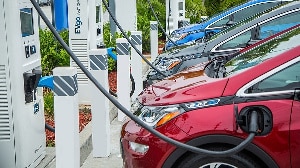
Minister of State at the Finance Ministry, has revealed government’s intention to construct approximately 1,000 electric charging stations throughout Ghana by 2028.
According to the minister, this initiative aims to accelerate Ghana’s position in the electric vehicle sector and aligns with the implementation of an energy transition framework.
Speaking at a conference on Climate Finance for Sustainable Transition in Africa, the minister emphasized the need for increased investments totaling around $600 million from now until 2070. These investments are crucial for Ghana to achieve sustainable energy sources as part of the transition framework.
He acknowledged that careful planning and execution are necessary for the energy transition plan. However, he also highlighted the evident and long-lasting presence of electric vehicles, indicating that they are here to stay.
“With more than 1,000 electric vehicles already in operation across Ghana, government aims to build an additional 1,000 electric charging stations within the next five years to provide the necessary infrastructure to promote EV adoption throughout the country,” Dr Amin Adam noted.
Regarding the regulation of electric vehicles, the Minister of State highlighted the implementation of comprehensive guidelines by the Energy Commission of Ghana to govern their manufacturing and usage.
Additionally, the minister emphasized the establishment of car manufacturing companies that are already operational within Ghana.
“By establishing the required electric charging stations, the government aims to encourage these companies to produce electric vehicles locally, further supporting the country’s sustainable transportation goals,” Dr Amin Adam said.
“The commitment to set up electric charging stations aligns with Ghana’s broader energy transition plan, which seeks to reduce greenhouse gas emissions, enhance energy efficiency, and promote the use of renewable energy sources,” he added.
Government has warned all financial institutions in the country to abstain from conducting cryptocurrency transactions.
Minister of State at the Finance Ministry, Dr. Mohammed Amin Adam, made the declaration while responding to inquiries on the floor of Parliament.
“The government will continue to allow associated technologies, such as blockchain and distributed innovations in a sun box, as we explore the development of a framework.
Until such a framework is in place, the government will like to reiterate its directive conveyed in several notices, including one issued on March 9, 2022, that all institutions licensed by the Bank of Ghana are prohibited from facilitating cryptocurrency transactions through their platforms or agents outlets,” the Minister of State at the Finance Ministry cautioned.
In April 2022, the Central Bank issued cautionary directives to banks and financial entities regarding cryptocurrency trading and unregulated investment schemes.
The objective was to ensure the regulation and purification of the digital space concerning cryptocurrencies.
The Ghana Armed Forces (GAF) has issued a warning to the public regarding fraudulent online recruitment and enlistment exercises.
In a press release, the GAF stated that they have observed a fake press release circulating on social media, instructing interested applicants to send their summary reports and contact details to a fraudulent email address: ghforces37@gmail.com.
Furthermore, the false document references a supposed press release from the Finance Ministry to the GAF, claiming that recruitment of new officers in all sectors has been postponed due to financial constraints faced by the government.
The GAF strongly advises individuals to be cautious and refrain from engaging with such fraudulent activities.
They emphasize that the official channels for GAF recruitment will be duly announced through the appropriate channels and not through unofficial means.
The GAF encourages the public to verify any information regarding recruitment exercises directly from their official sources to ensure accuracy and legitimacy.
By raising awareness of this issue, the GAF aims to protect aspiring applicants from falling victim to scams and maintain the integrity of their recruitment process.
“Additionally, the fake document makes reference to a purported press release by the Finance Ministry to GAF about holding on recruitment of new officers across all sectors due to financial constraints on the part of government,” the statement reads.
Ministry of Finance and the African Development Bank (AfDB) are set to provide Microfinance and Small Loans Centre (MASLOC) with a grant worth $31.34 million to cater for its operations across the country.
The ADB is donating a $28.5 million grant with the government coming in with $2.84 million. The funding aims to enhance women’s access to credit, financial literacy, and information sharing, particularly focusing on women-led Micro, Small, and Medium-Scale Enterprises (MSMEs) which will also strengthen MASLOC’s activities and help fulfill its mandate of providing micro loans to SMEs in the country.
The facility will provide affordable interest rates of 12% per annum under its project dubbed ‘post-Covid-19 Skills Development and Productivity Enhancement Project’ (PSDPEP). It will be implemented in seven regions of the country namely Greater Accra, Ashanti, Eastern, Bono, Northern, Central and Upper West.
With this funding, MASLOC is set to complete its loan management software (LMS), training and capacity building of over 550 staff members, and networking of all regional and district offices with the Head Office.
As part of government’s digitalization drive, a robust digital infrastructure that streamlines loan applications, processing, disbursements, and recoveries will be set up by MASLOC to create around 20,000 indirect jobs through skills training, self-employment opportunities, and improved access to credit facilities.
The project comprises three components: skills development in higher education for strengthening the health sector, rebuilding youth and women’s livelihoods through entrepreneurship and job creation, and project management.
The implementation of the project involves institutions such as the Social Investment Fund (SIF), Ghana News Agency (GNA), University of Ghana (UoG), and the Microfinance and Small Loans Centre.
Source: The Independent Ghana | Andy Ogbarmey-Tettey
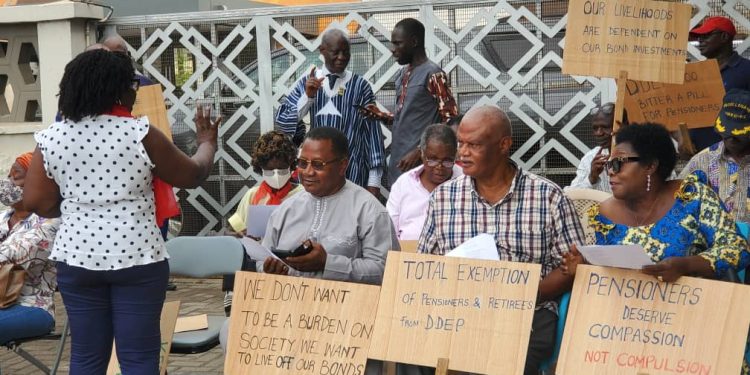
The Pensioner Bondholders Forum has decided to suspend its planned picketing at the Finance Ministry in light of the government’s resumption of coupon payments on June 27.
The forum had initiated the picketing on June 22 to demand the payment of seven outstanding coupons, which the government has now started to address.
The pensioner bondholders in a statement expressed their appreciation for the government’s commitment and therefore suspended their scheduled protest on June 29.
However, they cautioned that if the government fails to consistently pay the remaining coupons due in July 2023, they will resume their picketing at the Finance Ministry.
The Pensioner Bondholders Forum commenced their protests earlier this year after the government included them in the controversial Domestic Debt Exchange Programme (DDEP).
This programme was a prerequisite to secure a $3 billion bailout from the International Monetary Fund. Following pressure from various affected groups, including the pensioner bondholders forum, the government eventually exempted the pensioners from the program.
However, there have been multiple instances of the government defaulting on the payment of matured coupons, leading to the ongoing protests.
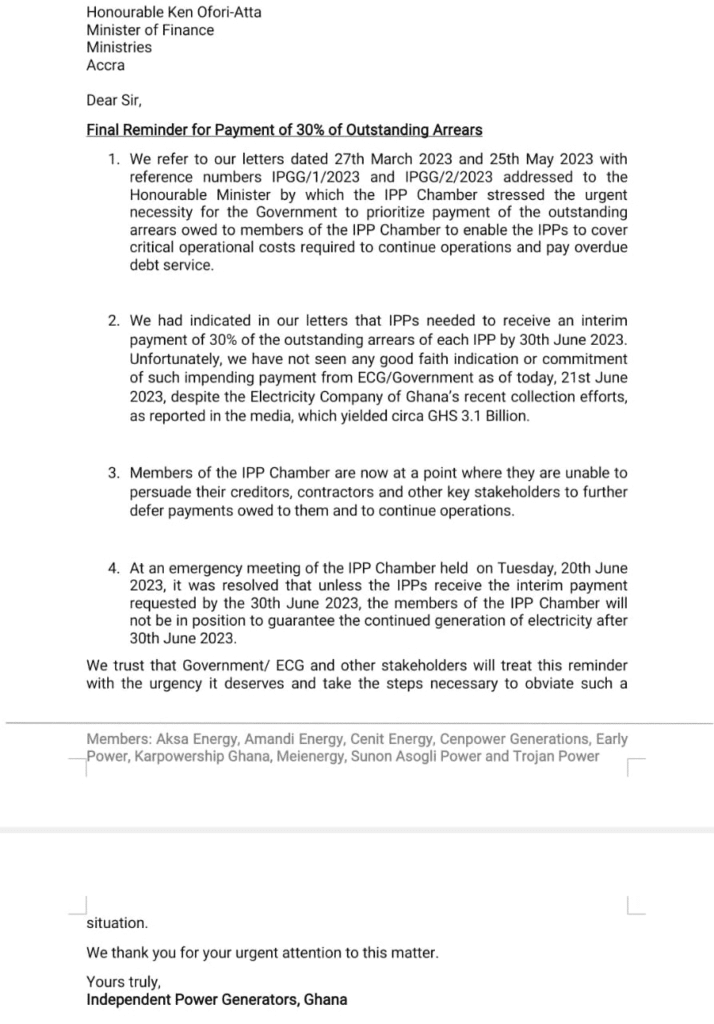
Ken Ofori-Atta, the finance minister, was reminded by the Independent Power Producers (IPPs) of their intention to stop supplying electricity to the national grid as of July 1, 2023.
This was after an emergency meeting held on Tuesday, June 20, 2023.
According to the Chamber of Independent Power Producers, calls on the government to pay the IPPs an interim payment of 30% of the outstanding arrears of each IPP by June 20, 2023, has fallen on deaf ears.
“We refer to our letters dated March 27, 2023 and May 25, 2023 with reference number IPGG/1/2023 and IPGG/2/2023 addressed to the Minister [Finance] by which the IPP Chamber stressed the urgent necessity for the government to prioritise payment of the outstanding arrears owed to members of the IPP Chamber to enable the IPPs to cover critical operational costs required to continue operations and pay overdue debt service”, it disclosed in a statement to the Finance Minister.
“We had indicated in our letters that IPPs needed to receive an interim payment of 30% of the outstanding arrears of each IPP by 20th June 2023. Unfortunately, we have not seen any good faith indication or commitment of such impending payment from ECG/Government as of today, June 21, 2023, despite the Electricity Company of Ghana’s recent collection efforts, as reported in the media, which yielded circa ¢3.1 billion, it added.
The statement added that members of the IPP Chamber are now at a point where they are unable to persuade their creditors, contractors, contractors, and other key stakeholders to further defer payments owed to them and to continue operations.
It urged the government and the Electricity Company of Ghana and other stakeholders to treat this reminder with the urgency it deserves and take the steps necessary to obviate such a situation.
The Independent Power Producers (IPPs) have reiterated to the Finance Ministry their plan to halt power supply to the national grid starting from July 1, 2023.
“We refer to our letters dated March 27, 2023 and May 25, 2023 with reference number IPGG/1/2023 and IPGG/2/2023 addressed to the Minister [Finance] by which the IPP Chamber stressed the urgent necessity for the government to prioritise payment of the outstanding arrears owed to members of the IPP Chamber to enable the IPPs to cover critical operational costs required to continue operations and pay overdue debt service”, it disclosed in a statement to the Finance Minister.
The decision to cut power was reached during an emergency meeting held on Tuesday, June 20, 2023.
The Chamber of Independent Power Producers has been urging the government to make an interim payment of 30% of the outstanding arrears owed to each IPP by June 20, 2023. However, their appeals have reportedly been disregarded by Finance Minister Ken Ofori-Atta.
According to the IPPs, members of the IPP Chamber are now at a point where they are unable to persuade their creditors, contractors, contractors, and other key stakeholders to further defer payments owed to them and to continue operations.
It therefore urged the government and the Electricity Company of Ghana (ECG) and other stakeholders to treat this reminder with the urgency it deserves and take the steps necessary to obviate such a situation.
Banks and other bondholders are worried about the Treasury’s ability to satisfy its August 2023 coupon commitments due to delays in servicing old notes that were not tendered under the domestic debt exchange programme (DDEP).
The Pensioner Bond Holder’s Forum (PBHF), in May, voiced its dissatisfaction with the outstanding principal and coupon payments on old bonds, prompting the Treasury to convene a meeting on June 2, 2023 to address the matter.
Following that meeting, the finance ministry issued a communique acknowledging the concerns and resolving to settle coupon arrears immediately. As promised, coupon payments from May 12 to May 29, 2023 have been honoured.
The Treasury committed to paying the outstanding principal from February 20 to May 29, 2023 by today June 16, 2023. However, on the eve of this deadline the full obligations have not been met, checks by the B&FT have shown.
“The settlement of coupon arrears and commitment to pay-off the outstanding principal is a positive step, but there is still a significant obligation and we are eagerly awaiting what government does – which will inform our next line of action,” said a representative of the PBHF.
GCL Research, in a note, estimates that based on outstanding balances of the old bonds – assuming debt service on all unexchanged eligible bonds – that the principal obligation is approximately GH¢6.06billion and coupon obligation is nearly GH¢290million for the specified period.
Additionally, another principal plus coupon obligation of around GH¢1.84billion is expected to mature over the next three months; preceding the August 2023 coupon payment date for new bonds.
“Our estimates based on the outstanding balances on the old bonds (assuming debt service on all unexchanged eligible bonds) show that the principal obligation for the stipulated period is about GH¢6.06billion and a coupon obligation of nearly GH¢290million. Another principal plus coupon obligation of about GH¢1.84billion will fall due over the next three months and ahead of the Aug-2023 coupon payment date for new bonds. At the 5 percent cash coupon rate for 2023, we estimate the coupon obligation on the new bonds in Aug-23 at about GH¢2billion,” read the note signed by its Research Lead, Courage Boti.
Already, the accounting treatment of the bonds resulted in commercial banks taking heavy impairments for 2023, which eroded capital. Thus, coupon payments in August without distress could lead to banks revaluing their holdings of domestic Treasury bonds.
One of the major concerns stemming from these delays is the impact on commercial banks. The bonds’ accounting treatment has led to significant impairments in 2023, resulting in capital erosion for banks. Consequently, if the coupon payments in August 2023 are made without causing distress, banks may need to revalue their holdings of government bonds, further exacerbating the strain on their financial positions.
As the situation unfolds, market participants, regulators and the Treasury will remain vigilant, working toward restoring confidence and ensuring the stability of Ghana’s bond market.
Market observers have cautioned that based on the estimates, the principal obligation for the stipulated period is substantial and the coupon payments add further financial strain. This could impact the banking sector and bond investors. The outcome of upcoming obligations and their potential impact will shape financing conditions on the market.
Members of the Pensioner Bondholders Forum say they will be dragging the Ministry of Finance to the Commission on Human Rights and Administrative Justice (CHRAJ).
This comes after the Ministry indicated its inability to pay the interest demanded by the Bondholders on all matured principals since February, 2023.
Speaking to the media after a meeting with the Finance Ministry, convener of the group, Dr. Adu Anane Antwi said an arbiter is needed for an amicable conclusion to the issue.
He stressed that CHRAJ must indicate whether an issuer can keep their money when it is due to be returned, and deprive them of their investment income.
“First the pensioners are asking for payment of interests on the delayed principals. The issue is that, that is the money we are using to invest to get interest and to buy medication and fend for ourselves. So if you have delayed it in some cases over 108 days, then we are saying you can’t keep the money for free, pay interest as you were paying when the principal was with you. So once you haven’t returned the principal, we are asking for payment of interest.
“I have suggested that we will submit the matter to CHRAJ for CHRAJ to go into it and tell us whether we have a right to demand the interest or not,” he explained.
Touching on the suspended picketing by the group, Dr. Adu Anane Antwi said they will resume the exercise following the refusal of the Ministry to pay them their matured coupons.
He said, although the Finance Ministry had assured the group of payment since last week, their accounts are yet to be credited.
“We were expecting the coupons that were due to be paid but we haven’t received any alert. The Deputy Minister says Bank of Ghana has told them that they have sent money to the banks for the banks to credit our accounts but we haven’t seen any crediting from the banks.
“So once no alert has been seen, we are going to continue with our picketing.
“If by the time we leave here we see an alert that the amount is being paid, we won’t come tomorrow but if we don’t see any alert system working today, we will come again Friday.
“Then Monday, Tuesday, Wednesday, we won’t come and if within those three days we see arrears being paid, we won’t come but if we don’t see that, we will come Thursday and Friday.”
Background
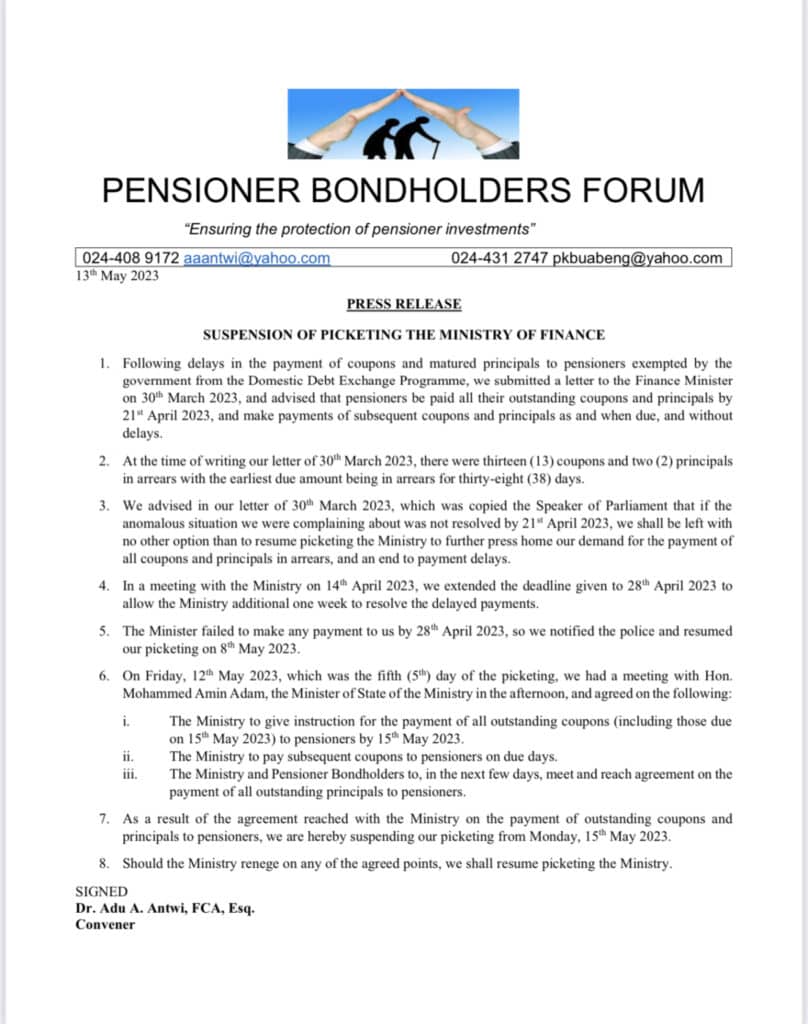
The picketing at the ministry by members of the Pensioner Bondholders Forum started in the wake of delays in the payment of coupons and matured principals to pensioners exempted by the government from the domestic debt exchange programme.
A statement said the forum wrote to the Ministry of Finance on March 30, 2023, advising “that pensioners be paid all their outstanding coupons and principals by April 21, 2023, and make payments of subsequent coupons and principals as and when due, and without delays”.
It said at the time of writing the letter of March 30, 2023, “there were 13 coupons and two principals in arrears, with the earliest due amount being in arrears for 38 days.
“We advised in our letter of March 30, 2023, which was copied the Speaker of Parliament, that if the anomalous situation we were complaining about was not resolved by April 21, 2023, we shall be left with no other option than to resume picketing the ministry to further press home our demand for the payment of all coupons and principals in arrears, and an end to payment delays,” it added.
But despite the numerous picketing by the members of the forum, their demands are yet to be met by government.
Caterers under the School Feeding Programme have put forth a proposal for an increment in the amount allocated per child. They are asking government to raise the current rate to GHS 3.50 per child, citing rising costs and the need for sustainable operations to provide nutritious meals to students.
This comes after the government announced an increment of cost per meal, per child from 98 pesewas to GHS 1.20.
The Minister for Gender and Social Protection, Lariba Zuweira Abudu, who announced this, said there are talks with the Ministry of Finance to see how best the amount can be reviewed.
But the caterers have vehemently rejected the proposed increment noting that it is woefully inadequate to feed the children.
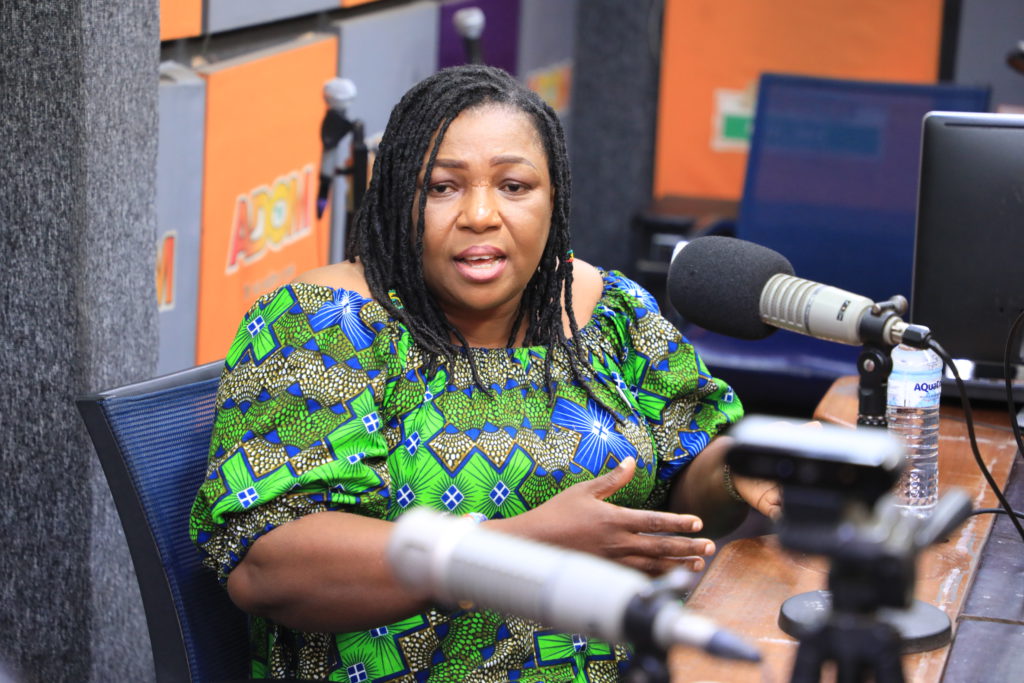
President, Charlotte Asante
Speaking on Adom FM’s morning show, Dwaso Nsem Tuesday, President of the School Feeding Caterers’ Association, Charlotte Asante, justified their position.
She explained that the caterers are suffering to feed the pupils with a balanced meal due to the hikes in the prices of food.
“We try to balance but things are not balancing because the money is too small; we are really suffering,” he bemoaned.
The distraught caterer said the pupils are expected to be fed a balanced meal, but the government is failing to pay to aid in the preparation of the meals.
She could not fathom why government cannot commit just GHS 3.50 per child to sustain such a laudable programme.
She said they have resolved not to cook until government reviews the paltry ¢1.20 per child.
The Ghana School Feeding Programme, an intervention by the Government of Ghana, started in 2005 to provide food to children in public basic schools from kindergarten to primary six.
The programme aims to increase school enrolment, attendance and retention, reduce short-term hunger and malnutrition and boost domestic food production.
According to sources, he passed on over the weekend.
Dr. Joe Abbey until his demise was the Executive Directive of the Center for Policy Analysis, a think tank that focuses on economic research and analysis.
Dr. Abbey contributed immensely to Ghana’s economic issues and debate.
He also once served as a Government Statistician and a Diplomat.
In addition, he did some consultancy work for the Ministry of Finance.
Dr. Abbey was 82 years and would have been 83 in August 2023.
This comes after they met with the Minister of Education over the demands, of which NAFCO has indicated that plans are underway to get the Finance Ministry to release funds to pay them.
Speaking to the media, the spokesperson for the National Food Suppliers Association, Kwaku Amedume said they will not be moved by empty promises.
Mr. Amedume indicated that the respective agencies responsible for paying their arrears have been giving members of theAssociationconsistent empty promises so much so that they can no longer put up with such promises.
“That has always been the story we have been hearing for the past two years; we are organising some money, we are going to release some funding, we should bring our names, we should meet at 10 o’clock. We have gone through all these processes and promises, and we are still where we are for the past two years. So I don’t think it is enough to just conclude that we are satisfied. Until we have our money in our hands, we don’t trust that this money will be paid to us”.
“Mind you, day-in-day-out, the value of the money with Buffer Stock keeps reducing, and so we are more than interested in getting our money than any promise, we want action, not promises.”
The Association on AU Day, May 25, issued a 14-day ultimatum to the National Food Buffer Stock Company to pay the eighteen months’ arrears owed members else they will picket at the Buffer Stock’s premises until they are paid.
The Bank of Ghana and the Ministry of Finance are set to sign a Memorandum of Understanding outlining the terms for repaying the International Monetary Fund’s $3 billion lending facility.
The $3 billion loan which will be disbursed within 36 months has a 0% interest rate with a grace period of 5.5 years and a final maturity of 10 years.
The programme under the Extended Credit Facility (ECF) is aimed at restoring macroeconomic stability and bringing fiscal operations and public debt to sustainable levels, supporting structural reforms, and promoting strong and inclusive growth while protecting the poor and vulnerable.
It has a front-loaded fiscal adjustment of 5.1 percentage points of Gross Domestic Product (GDP) over 3 years (2023-2025) with the following Primary Balance (on a commitment basis) and fiscal adjustment (fiscal effort).
Ghana undertook among other conditions the domestic debt restructuring and secured financing assurances from its external creditors to arrive at the approval by the board on May 17, 2023.
A Memorandum of Understanding (MoU) will be signed between the Bank of Ghana and the Ministry of Finance to outline the repayment terms for the $3 billion loan from the International Monetary Fund (IMF).
The loan agreement includes favorable terms such as a 0% interest rate, a grace period of 5.5 years, and a final maturity period of 10 years.
This loan falls under the Extended Credit Facility (ECF) arrangement, which spans over a period of three years between Ghana and the IMF.
As part of the program, Ghana aims to achieve a front-loaded fiscal adjustment equivalent to 5.1 percentage points of Gross Domestic Product (GDP) within the three-year period from 2023 to 2025. This adjustment will be achieved through the Primary Balance on a commitment basis and fiscal effort.
Finance Minister Ken Ofori-Atta emphasized that the management of debt, both domestic and external, is crucial in restoring public debt to sustainable levels by 2028 while adhering to the two binding constraints.
They are the Public Debt (in present value terms) to GDP ratio of 55% or less; and External Debt Service to Revenue ratio of 18% or less.
The programme will be monitored and reviewed semi-annually.
The Finance Minister emphasised that Ghana’s Post Covid-19 Programme for Economic Growth, which is the government’s blueprint for addressing the economic crisis and underpins the IMF Programme is aimed at restoring macroeconomic stability; bringing fiscal operations and public debt to sustainable levels, supporting structural reforms and promoting strong and inclusive growth while protecting the poor and vulnerable.
The Staff Level Agreement (SLA) was secured in record time in December 2022, six months after Ghana applied for a Fund-supported Programme.
The Ministry of Finance has revealed that Ghana has met the necessary requirements to obtain a bail out from the International Monetary Fund (IMF) Board.
The Paris Club and China last week announced that it would financing assurances to allow Ghana receive the facility.
“The Paris Club has today established the OCC (co-chaired by China & France). With the granting of Financing Assurances, Ghana is now ready to go to the IMF Board,” the Ministry wrote.
The Finance Ministry further expressed appreciation to its bilateral partners for helping Ghana reach this “significant milestone!”
Ghana struggled to get IMF Board approval despite getting a Staff-Level Agreement in place since late last December.
A domestic debt restructuring deal dragged on for months before the external restructuring also experienced challenges.
Ghana anticipates the International Monetary Fund (IMF) to approve a $600 million loan tranche by Wednesday, enabling disbursement within a week, according to Minister of State in the Finance Ministry Mohammed Amin Adam.
The West African country is seeking $3 billion from the IMF to strengthen its struggling economy.
IMF Managing Director Kristalina Georgieva stated on Friday that Ghana’s official creditors have provided the required financial assurances for the IMF Executive Board to consider approving the loan.
“We expect a deal on Wednesday. With the disbursement, there is going to be $600 million as a first tranche just immediately after the approval,” Adam said by phone, adding that Ghana hoped to receive the funds within a week of the board’s decision.
The Minister of State in Ghana’s Finance Ministry stated that a second loan tranche of $600 million is expected to be approved following a successful first program review, likely in November or December.
The remaining funds will be disbursed in equal tranches of $360 million after semi-annual reviews.
These funds will bolster Ghana’s reserves and support the goal of achieving foreign reserves equivalent to three months of imports by 2026.
Ghana, along with other smaller and riskier emerging markets such as Sri Lanka and Zambia, is confronting a debt restructuring process due to the economic challenges posed by COVID-19 and Russia’s invasion of Ukraine.
Some $5.4 billion of debt to official creditors has been earmarked for restructuring, according to government data, as well as $14.6 billion of debt to private overseas creditors.
Adam said he expected negotiations with both sets of creditors to go well once the IMF signs off on the loan.
“Confidence is going to be restored and we expect that stakeholders will cooperate and will be encouraged to negotiate favourable terms with us,” he said, adding that the date for talks had not yet been set for either group.
Ghana has also turned to the World Bank as it fights to restore macroeconomic stability and end its worst economic crisis in a generation that has fuelled protests over the soaring cost of living.
Adam said the government was far along in talks with the World Bank to provide additional support of $900 million to be disbursed in three equal instalments of $300 million over three years.
“We are far advanced, almost concluding negotiations,” he said.
The World Bank has also agreed to support a financial sector stability fund with $250 million to help Ghana address the insolvency and liquidity challenges following a domestic debt exchange programme, which has affected some domestic banks.
Adam said the government was also in talks with the African Development Bank for over $100 million for the stability fund.
With effect from Monday, May 15, 2023, members of the Pensioner Bondholders Forum will cease picketing at the Finance Ministry.
This follows an agreement made between the forum and the Finance Ministry over payment on outstanding principal and coupons to the former.
A statement issued by the convener of the forum, Dr. Adu Anane Antwi on Saturday said among other things, the parties agreed that the Ministry would give instruction for the payment of all outstanding coupons (including those due on 15th May 2023) to pensioners by 15th May 2023.
Other issues agreed on were that the Ministry would pay subsequent coupons to pensioners on due days. Also, the Ministry and Pensioner Bondholders will in the next few days, meet and reach agreement on the payment of all outstanding principals to pensioners.
Despite reaching a common ground, the pensioners have pledged to resume picketing once again should the ministry renege on its word as done previously.
Last week, dozens of aged citizens picketed at the Finance Ministry as part of efforts to get government pay what is due them. They chanted patriotic songs and held placards with inscriptions that communicated their displeasure with how they are being treated by the government.
Members of the Pensioner Bondholders Forum opted out of the government’s Domestic Debt Exchange Programme (DDEP) to aid its debt restructuring and were promised payments of their coupons and principals upon maturity, however due payments have on occasions delayed.
The Finance Ministry on March 13, 2023, began processes to payment on matured bonds on 6th February and 13 February 2023, however, these monies are yet to hit the accounts of pensioners.
For most pensioners, the delay in payment does not only affect them but their dependents as well. For many, they want back their hard earned money they are entitled to.
“All we want is our monies to be paid. The Finance Minister, Ken Ofori-Atta, promised to give us our money, but up till now we have not received anything.
“We are monitoring everything because we worked hard, there’s no way any of our monies will go unpaid that we will not track. We are not asking for any social services, we are asking for our money.
“Please convey to the Finance Minister that he must keep his word and pay us. We wouldn’t be here if he had kept his promise,” an aggrieved pensioner told the media.
A meeting that was scheduled between the Finance Ministry and the leadership of the group on Thursday, May 11, did not happen after several hours of waiting.
The pensioners have once again gathered at the Finance Ministry on day five of their protest demanding payment of outstanding bonds.
Speaking to the media, Dr Adu Anane Antwi, Convener for the Pensioner Bondholders Forum lamented that they feel disrespected by the attitude of the government.
“After we dispersed from the Ministry of Finance, we were scheduled for a meeting on May 11, for 4 pm, but later it was called for 4:30 pm. It was called upon by the Minister of State at the Ministry, Dr. Amin Adam. We were here, we waited for him to finish his meeting, and we exchanged greetings”.
“We waited till 5:45 pm, the officials we were supposed to meet didn’t show up, so we left. We had to leave for our various houses to eat and take our medications and rest. We are waiting to get a call from them. We are hoping to get a call and have a discussion.
“We are also hopeful that government will borrow the excesses from theTreasury billsto pay us all our outstanding matured coupons”.
Pensioner Bondholders have mounted fresh pressure on the government to release their coupons to them.
The aggrieved pensioners in making their demand said they will not resort to taking the government to court due to the cumbersome nature of the process.
They, therefore, want the government to release their coupons to them with immediate effect since they need them to take care of critical needs.
The disclosure was made on the second day of the Forum’s picketing at the Finance Ministry to put pressure on the government to pay their outstanding coupons and principal on bonds.
Convenor of the Forum, Dr Adu Anane Antwi said the group refuses to go to court because their situation is too dire to wait for the court processes to be exhausted.
“We will not go to court because you can’t wait for your coupons when you are in court, and you are dying. We must put pressure on the government to pay us.”
Members of the Forum picketed at the Finance Ministry for the second consecutive day demanding that the government pay all outstanding coupons and principal on their bonds.
This is the second time the group of pensioners is implementing the tactic after they successfully secured an issuer exemption from the Domestic Debt Exchange Programme (DDEP) in February.
The group members on Monday, May 8, converged at the Ministry of Finance to picket.
Although the government has recently made some payments, the pensioners tell Citi News the lack of clarity and communication from the Ministry makes planning difficult.
“It is just fair at a certain level you maintain your integrity and word, because you have told the whole world, including us and your creditors that you will pay, now what happens? Nothing happens, we are now in May. Early March bonds have not been paid, you are paying it in pieces, and there is outstanding, and we have to figure out what is happening.
“If you have a problem, in all fairness, tell us, tell us the specific payment dates, so that the person can also plan, people need money for their medications. So if the payment date is communicated to us, we will know how to plan. It’s all a matter of communication, if you communicate, we will understand.
“But we are sitting here and we don’t know whether it will be paid or not. You get an alert and the old one has been paid, leaving the new ones. We don’t know what is happening,” one of the aggrieved pensioners said.
The Pensioner Bondholders Forum has indicated that it will not relent until the outstanding matured coupons of its members are paid.
Speaking on Eyewitness News on Citi FM, Dr. Anane Antwi said all attempts to get the attention of the government to pay their bonds have gone unresponsive which has left them with no other option than to resume picketing at the Ministry of Finance.
“We have tried to get the government to pay the outstanding coupons, and we are not getting the needed payment that must be made, therefore we had to embark on the protest after we had served notice to the government that if we didn’t get paid by 21st [of April], we were going to resume our picketing to back our demand, and we didn’t get any feedback, so we have to resume picketing.”
Members of the Pensioners Bondholders Forum have thronged Finance Ministry’s premises to demand payment for their matured coupons and principal.
Pensioner bondholders who were spared from the Domestic Debt Exchange Programme (DDEP) have complained that the government has not upheld its responsibilities to them.
After protesting their involvement in the DDEP, the agitated bondholders are back with placards to picket the offices and cladded in red bands chanting war songs in hopes of getting the authorities’ attention.
‘Show us some care’, ‘Pensioners’ funds = Pension funds’ are some of the inscriptions on the signage they hoisted.
Pensioners Bondholders Forum say their bonds matured as far back as March and have not been paid, hence the action.
A retired police officer who has his funds locked up lamented the situation’s impact on his activities.
“He [Finance Minister Ken Ofori-Atta] should try and pay my money to me. Even if they will cease the issued and give us our capital or principal money we used in the bonds, they should give it to us,” he told JoyNews.
Any attempt by the Bank of Ghana to sign a Memorandum of Understanding (MoU) with the Finance Ministry for zero financing for the government will be opposed by the Minority in Parliament.
Former Minority leader, Haruna Iddrisu, who represents the people of Tamale South disclosed this information to the media.
According to him, the MoU between the Bank of Ghana and the Ministry of Finance is “laughable”.
“A serious country must be run seriously and run guided by a legal framework that protects the State and protects its institution. The Bank of Ghana is in breach for having to overdraft and lend government beyond the stipulated legislation within the amended Bank of Ghana Act.
“But MoU, what is the weight of MoU within the parameters of the Ghanaian constitution and Ghanaian law?” he questioned.
Former Minority leader and Member of Parliament for the Tamale South, Haruna Iddrisu
Speaking with Joy News, the legislator said the Finance Minister must be present before Parliament for legislation on zero per cent financing of government by the Bank of Ghana.
As a result, he noted that anything short of legislation passed by parliament will not be accepted.
The International Monetary Fund is, among other things, demanding that government enters into a binding agreement with the Bank of Ghana for zero financing of government programmes.
The bank is said to have provided over GH₵40 billion in support to government in 2021 and according to the central bank, the funding saved the economy from collapse.
Finance Minister, Ken Ofori-Atta on the sidelines of the IMF/World Bank meetings told JoyNews that government has signed a Memorandum of Understanding (MoU) in compliance with the IMF order.
Meanwhile, the Ghana Association of Banks says its members will henceforth grant loans to only productive projects as it defends its decision to participate in the domestic debt exchange programme.
This is despite the participation resulting in severe impairment of the assets of the institutions with some nearing insolvency.
The GH2.5 million allocated for this year’s activity, according to Benito Owusu-Bio, Chairman of the 2023 Green Ghana Project, is grossly insufficient.
In order to achieve its goal of planting 10 million trees, the government would need assistance from the private sector, according to Benito Owusu-Bio who spoke with CitiNews.
“As we speak, our approved budget by the Ministry of Finance for the Green Ghana this year is GH¢2.5 million. But we are not going to say we won’t do it, so we have started appealing for funds. Last year we got in excess of GH¢2 million so this year, we expect that with the pledges and commitments, we will get something to shore up.”
Launching this year’s Green Ghana Project, Lands and Natural Resources Minister, Samuel Abu Jinapor said several factors accounted for the government’s failure to meet last year’s target.
“On the maiden edition of the Green Ghana Day, we targeted 5 million trees and with your support, over 7 million trees were planted. Last year, we raised our ambition and targeted at least 20 million trees, and again, with your support, 24 million trees were planted, bringing the total number of trees planted to over 30 million trees.
“So far, the field assessment report shows that, on average, we had a 72 percent survival rate last year as compared to the 81 percent survival rate in 2021. While adequate measures were put in place to ensure the survival of all trees planted, a number of external factors accounted for the survival rates including rainfall patterns, wildfires, and soil fertility,” he added.
Celebrated on the theme, ‘Our Forests, Our Health,’ Mr Jinapor indicated the reduction in the number of trees to be planted in this year’s Green Ghana Day will help create ample time for the nurturing of the already planted trees to enhance the survival rate.
“The survival rate shows that we still have some 23 million trees to nurture. It is for this reason that this year, the government has decided to revise our target downwards to 10 million trees to give us some devoted resources and attention to the trees planted over the last two years while not wasting momentum on our quest to restore our degraded landscape.”
The Ministry of Finance in collaboration with the World Bank, Bank of Ghana, and other financial institutions, has launched the National Financial Education Campaign Programme.
The main aim of the program is to strengthen Ghanaians’ financial capabilities and promote responsible financial behaviours since the current development in the country’s economic and financial sector, underlines the need for a more timely and all-inclusive financial education program which lectures the noticeable problems in the financial sector.
The event saw the congregation of industry players in the financial sector which included representatives from the World Bank, Bank of Ghana, Securities and Exchange Commission, National Pensions Regulatory Authority, National Insurance Commission, and the Ghana Microfinance Institutions Network.
A Deputy Finance Minister, Madam Abena Osei-Asare, in her keynote address commended the World Bank for their continuous support to the development of the Ghanaian economy and, for sponsoring the design and roll-out of the National Financial Education Campaign.
She revealed that, many Ghanaians lacked the basic understanding of key financial issues such as the impact of inflation on the value of their money, computation of interest on loans and investments, awareness and use of financial products and services among other things. This, she noted had made it difficult for them to make any informed financial decision.
“Indeed, financial capability of consumers is a major component to building a strong and resilient economy. Without this, many people will resort to the old and unsecured ways of handling monies, such as keeping monies under pillows and mattresses,” she said.
The structure of the financial education campaign allows for radio and TV discussions, public fora, townhall engagements, and social media campaign. Different educational materials have been developed and translated from English into eleven (11) local languages, namely, Ga, Akwapim Twi, Asante Twi, Ewe, Sefwi, Nzema, Dagomba, Dagaare, Kusaal, Mamprugu and Gonja.
The Deputy Minister who is also the Member of Parliament for Atiwa East further stated that, despite the major impact of global pandemic shocks and the domestic debt exchange programme, the Ghanaian financial sector remained resilient, and that the Monetary Policy Committee, in its most recent release, alluded to the banking industry’s relative stability despite recording some losses from the Domestic Debt Exchange Program (DDEP).
She urged the media to take deliberate steps to evaluate products being advertised by financial institutions before advertising these products. She added that, people were highly influenced by financial products and services advertised on radio and television.
The Director of the Financial Sector Division of the Ministry, Mr. Sampson Akligoh, welcoming participants on behalf of the Chief Director of the Ministry of Finance, Dr. Patrick Nomo noted that, the campaign was designed through a collaborative effort by financial sector regulators and industry associations.
He stated that, some financial institutions were not licensed to provide financial services to the public and but were operating illegally in the country.
This, he regretted had resulted in loss of monies (deposits and investments) of many households and business as these institutions bolted with the monies of their depositors and investors.
“To prevent a full-blown financial crisis, the Government through the financial sector regulators between 2017 and 2019 embarked on a comprehensive reform agenda with the aim of ridding the financial sector off illegal, illiquid and insolvent financial institutions as well as to strengthen the regulatory and supervisory framework of the sector”, Dr Nomo said.
He concluded by urging the general public to ensure the financial institutions they wished to work with, were duly licenced and working under regulatory bodies.
Giving an overview of the financial literacy campaign, the chairperson of the Financial Education Multi-Stakeholder Committee (FEMCOM), Mrs. Patience Arko Boham, disclosed that, Asamoah and Williams Consulting and Trans Media Network, was procured to assist in the design and implementation of a five-year national financial literacy strategy (2021-2025) to serve as a blueprint for bolstering the financial capacity of Ghanaians.
“It is important to mention that throughout the process, the World Bank played a pivotal role by providing technical assistance to the team and providing insights from other country experiences to ensure the design of a campaign that will create lasting impact on Ghanaians” she added.
There were solidarity messages from stakeholders including the Bank of Ghana, Securities and Exchange Commission and National Insurance Commission.
The Campaign is scheduled to be conducted in all the sixteen (16) regions of Ghana and predominantly target the informal sector and youth groups.
The Finance Ministryhas announced that it will settle outstanding debts on coupons by April 28, 2023.
The decision was reached after an engagement with the leadership of the Coalition of Individual Bondholders Groups on the timelines of payment of outstanding domestic debt obligations.
The meeting was chaired by Hon. Deputy Minister Abena Osei-Asare, MP, and it was agreed that the Joint Technical Committee constituted on 18th January 2023, would reconvene and agree on a pathway towards the settlement of the outstanding debt obligations by 28th April 2023.
The announcement follows a petition to President Akufo-Addoby the Coalition of Individual Bondholders Groups on April 11, regarding the non-payment of old bonds that were not part of the recent domestic debt exchange program.
The groups made up of the Ghana Individual Bondholders Forum (IBF) and the Individual Bond Holders Association of Ghana (IBHAG), regretted that the Finance Ministry had consistently defaulted in paying the bonds after they matured.
In a statement signed by the Convener of IBF, Senyo Hosi, and Convener of IBHAG, Dr. Joel Djangma, the groups expressed their disappointment and noted that the continuous delay or disregard for the payments is creating undue distress for fellow Ghanaians.
They also acknowledged the fiscal challenges that the government faces and expressed their willingness to cooperate over a mutually viable payment schedule and structure.
The Ministry of Finance thanked the Coalition of Individual Bondholders Groups and the Pensioner Bondholders Forum for their forbearance during the Domestic Debt Exchange Program (DDEP) and subsequent administrative processes.
Government made an additional payment for outstanding coupons on Thursday, March 23, 2023.
According to a statement by the Finance Ministry on March 24, it explained that noted that “the payments of cover coupons on both the 2-year note that matured on February 20, 2023, and the 20-year note due on February 20, 2023.”
“Following the Press Release issued by the Ministry of Finance dated Tuesday, March 14, 2023, the government is pleased to announce that additional coupon payments have been made on Thursday, March 23, 2023,” parts of the release said.
It also noted that payments on the principal of the 2-year note maturing on February 23, 2023; as well as payments on subsequent maturities, will be communicated in due course.
The delay of the payments caused some uneasiness among bondholders but the ministry assured that the necessary steps towards the restoration of macro-economic stability.
“The Ministry of Finance once again takes this opportunity to thank all stakeholders for their patience and cooperation, as the government continues to work towards the restoration of macro-economic stability,” the statement added.
Government has initiated steps to settle payments on outstanding bonds.
This was contained in a statement issued by the Finance Ministry on Tuesday, March 14, 2023.
“Following the press release issued by the (Finance) Ministry dated 27th February, 2023, the government is pleased to announce that processes to settle outstanding bonds commenced yesterday, March 13, 2023,” the statement said.
According to the statement, the initial instruction covers coupon and principal payments on bonds that matured on 6th February, 2023, and 13th February, 2023.
“Holders of the afore-listed bonds should therefore expect to receive their payments within the next 48 hours,” the statement added.
The statement came into limelight hours after the Coalition of Individual Bondholder Groups and Pensioner Bondholders Forum issued a 48-hour deadline to the Finance Ministry to pay all matured principal and outstanding coupons due on the existing bonds issued by the Government of Ghana.
Government had indicated that it had taken administrative steps to ensure that payments of coupons and principal of the old bonds resumed by March 13, 2023.
However, according to the parties involved, as of the close of business on Monday, March 13, the Ministry of Finance had not honoured the promise to pay the coupons and principals to pensioners who have been exempted from the Domestic Debt Exchange Program (DDEP) and other individual bondholders who have opted out of the program.
The group had resolved to picketing in order to get the government to honour its promise but before this could happen, the Finance Ministry issued the statement indicating that it had commenced with payments of the bonds.
“Payment dates for subsequent maturities will be communicated in due course,” the statement added.
The Ministry further thanked all stakeholders “for their forbearance during the Domestic Debt Exchange Programme (DDEP) and subsequent administrative processes.”
The Coalition of Individual Bondholder Groups and Pensioner Bondholders Forum have provided the Finance Ministry a 48-hour deadline to pay all matured principal and outstanding coupons due on the existing bonds issued by the Government of Ghana.
The government noted that it had taken administrative steps to ensure that payments of coupons and principals of the old bonds resumed by March 13, 2023.
According to the parties involved, at the close of business on Monday, the Ministry of Finance had not honoured the promise made to pay the coupons and principals to pensioners who have been exempted from the Domestic Debt Exchange Programme and other individual bondholders who have opted out of the programme.
The coalition described as unfortunate, the disregard by the Finance Minister, Ken Ofori-Atta, of all the basic rules that have been established to protect the integrity of the local markets and maintain sovereign credibility for Ghana.
“At the close of business on March 13, 2023, the Ministry of Finance, led by Ken Ofori-Atta, has disregarded all the basic rules that have been established to protect the integrity of the local markets and maintain sovereign credibility for Ghana. It is most unfortunate that the Ministry continues to have absolute disregard for its creditors, in this case individual bondholders, despite prior meetings held in which we stated the need for communication.”
In a statement signed by Dr. Joel Djangma Akwetey and Senyo Hosi, the coalition called on the Securities and Exchange Commission and the Ghana Stock Exchange to enforce the rules of full disclosure required by all issuers including the Government of Ghana.
“We are giving a 48-hour ultimatum to the Ministry of Finance to honour its word to pay all matured principal and outstanding coupons due on the existing bonds issued by the Government of Ghana. We call on the Securities and Exchange Commission and the Ghana Stock Exchange to enforce the rules of full disclosure required by all issuers including the Government of Ghana”.
Both Coalition of Individual Bondholder Groups and Pensioner Bondholders Forum have pledged to fight to ensure the full payment of investors’ monies and the preservation of the securities markets for the future generation.
“We will advise ourselves if the Ministry fails to pay all matured principals and outstanding coupons due on the old bonds by the close of business on Thursday, March 16, 2023,” the Pensioner Bondholders Forum wrote in a statement.
Both private and commercial drivers, as well as motor riders would have to brace themselves to pay at various tollbooths as government through the Finance Ministry has made a proposal for new road and bridge tolls across the country.
This is ahead of the reintroduction of tolls in the country.
In a statement made available via UTV, the Ministry of Finance stated that this is based on Section 6 of Act 1080.
“It is provided under Section 6 of Act 1080 for the minister to amend the schedules of the Act to include or exclude MDAs and/or adjust the fees and charges collected by MDAs for their services through a Legislative Instrument, when necessary.
“We are by this letter conveying the proposed rates as per the attached Appendix I for input by the Ministry of Roads and Highways to enable this minister complete the schedule of fees under the impending Legislative Instrument,” the statement, signed by Ken Ofori-Atta, said.
Accordingly, the new tolls will include 50pesewas for motorbikes, GH¢1 for cars, and GH¢3.50 for heavy goods trucks (5 or more axles).
It will be recalled that during the reading of the 2021 Budget Statement and Economic Policy in 2020, the Minister of Finance, Ken Ofori-Atta, announced the cancellation of road tolls.
The announcement, affirmed by a directive by Kwesi Amoako-Atta, the Minister of Roads and Highways, saw an immediate closure and seizure of the collection of tolls across the country.
The Minority in Parliament, however, did not like the move made by the government.
Commissioner General of the Ghana Revenue Authority, Reverend Dr. Ammishaddai Owusu-Amoah, says the common platform for the collection of property tax rates in the country will be fully operational by March ending.
The common platform would centralise the collection of property tax rates with the GRA out of the hands of the Metropolitan, Municipal and District Authorities who had failed to effectively collect property tax rates to finance their activities.
According to Governance Watch, the new regime would ensure that only 30% of property rates collected by the service provider through the common platform will be remitted to the assemblies.
The remaining 70% will be shared among the Ghana Revenue Authority, the Finance Ministry and the service provider.
Speaking on the common platform on JoyNews’ Business Edition, Dr. Owusu-Amoah explained that the platform will be in full throttle by the end of the month, and would help introduce efficiency into property rate collection.