Tag: Ghana

  • ‘Pass Ageing Bill to address health care needs’ – Dr Kpesenu

    This year’s International Day of Older Persons was on Saturday held in Accra.

    The event organised by the Centre for Ageing Studies of the University of Ghana was on the theme “Resilience of Older Persons in a Changing World.”

    The over 1000 older persons from all walks of life were offered free medical screening, free food and sensitised on lifestyles that would keep them fit and strong.

    They were screened for Ear, Nose and Throat (ENT) infections, Memory stability, cataract, diets and nutrition as well as physical structure and stability.

    Dr Frank Dzifa Kpesenu of the Healthy Ageing Programme of the Ghana Health Service (GHS) told the Ghanaian Times that the time had come for the country to have an Ageing Bill to consolidate activities of the aged in the country.

    According to him, ageing was not the doing of the individual, but a passage of time that formed part of life, hence the need for a document to serve as a guide for their handling by the state, family, and society.

    “The rights of the aged must be consolidated, everything including their social welfare, health, rights and responsibilities, the role of government and the citizenry for the care of the aged must be documented to serve as a guide for future generations,” he added.

    The bill, Dr Kpesenu said had been hanging since 2018 and further delays could hamper planned activities of the GHS to address most health care needs of the aged to prolong their lives, through comprehensive health care policies.

    The bill, he stated would also serve as a guide for stakeholders and advocates of the aged in order to regulate and streamline their activities to avoid abuses and excesses that could affect the people they were helping, adding that“the bill would make the government take responsibility for certain aspects of care for the aged.”

    Rev Prof Akye Essuman of the University of Health and Allied Sciences, urged the aged not to travel long distances to seek medical care in Accra as almost all regional and district hospitals were offering the same services at places closer to them.

    He urged them to constantly renew their National Health Insurance Cards in order to benefit from the free medical care offered by the service.

    The Executive Director of Samuel AmoTobbin Foundation, Mrs. Harriet Nortinson Asante, said Tobinco Group partnered with the event by offering free medical care for the aged while referrals were also directed to special hospitals free of charge.

    She urged the aged to have quality time for themselves, live healthy lifestyles, undertake regular exercises and have enough rest as well as attend checkups every month.

    Mrs. Ansah charged the youth to push the country’s law makers to hasten the passage of the Ageing Bill because they would one day become the sole beneficiaries.

    Director, Centre of Ageing, Prof Mavis Dako-Gyeke, commended all whose efforts ensured a successful event and urged the aged to take good care of themselves as their health and wellbeing were paramount to the centre and the society.


  • ‘Galamsey’ fight: ‘Yes, you say that we have failed’ but there’s still hope – Agric minister

    The Minister for Food and Agriculture, Dr. Owusu Afriyie Akoto, has admitted that the government is currently failing in the fight against illegal small-scale mining, popularly known as ‘galamsey’.

    He, however, said that the government remains unwavering in its resolve to stop ‘galamsey’ and it is confident that it will end the menace soon.

    “… yes, you say that we have failed in galamsey but it is an ongoing battle. And we think that, as a government, we are going to win at the end of the day.

    “Because there is a lot of goodwill amongst the stakeholders. The traditional authorities and other stakeholders know the harmful effect of galamsey on all aspects of life. So, ultimately, we will get together to control it,” Dr. Afriyie Akoto told journalists at a press conference in Accra on Tuesday, October 10, 2022.

    The minister also refuted the assertions that ‘galamsey’ is crippling Ghana‘s food production and has particularly destroyed many cocoa farms, leaving just a little.

    “… if you are talking about little of cocoa, it is not a little. Galamsey is nibbling at the edges because COCOBOD has done a survey which shows that 2 percent of areas under cocoa are being affected by galamsey. 98 percent is not little left,” he noted.

    Meanwhile, President Nana Addo Dankwa Akufo-Addo has refuted suggestions that his government is not committed to the fight against illegal small-scale mining (‘galamsey’).

    According to Akufo-Addo, his government has been committed to the fight against the menace since his first day in office and its determination to curb it even cost his party, the New Patriotic Party (NPP), some votes in the 2020 General Elections.

    The president, who made these remarks at a meeting with the National House of Chiefs and some Municipal Metropolitan and District Chief Executives (MMDCEs) in Kumasi, intimated that the votes he and his party lost showed that he really put his presidency on the line to fight ‘galamsey’.

    “Since I took office on January 7th, 2017, nearly six years ago, I have made it a central feature of my presidency to lead in the fight to rid our country of this menace, which we all now call galamsey. Indeed, it was an important aspect of my inaugural address that day. It has not been easy; it has not been popular and we have not gotten the immediate results that I was looking for.

    “Indeed, in the last election of 2020, my stance on the issue cost my party and I significant losses in the mining communities. It turned out that my statement that I was putting my presidency on the line in the fight against galamsey was neither bumbazed nor reckless. It was the simple truth,” he said.

    Akufo-Addo also urged chiefs across the country to get themselves into the fight against illegal small-scale mining since they are the custodians of land in the country.

  • First AfCFTA trading – Ghana tiles, Rwanda goods take lead

    Ghana has issued its first certificate of full commercial trading to a ceramic tiles production company to export its products under the African Continental Free Trade Area (AfCFTA) Guided Trade initiative.

    In the same vein, the Customs Division of the Ghana Revenue Authority (GRA) has received the first consignment of goods under the initiative from Rwanda, with delivery already done.

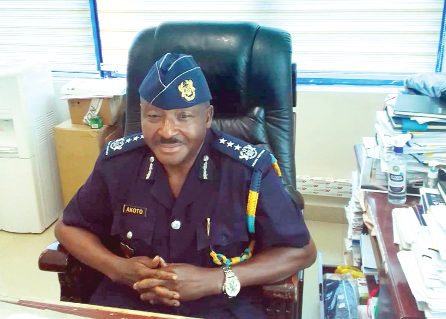
    The Assistant Commissioner of Customs in charge of the AfCFTA Secretariat, F.Y. Akoto, who made this known in an interview with the Daily Graphic in Accra yesterday, said on September 30, this year, the Customs Division issued the certificate of trading to a tiles manufacturing company, Keda Ghana Ceramics Company Limited, located at Shama in the Western Region, to export a consignment of its products to Cameroun.

    “It is expected that when the products reach Cameroun, their customs officials will give the necessary preferential treatment to Keda Ceramics for it to enjoy reduced tariffs and quota-free facility,” he said.

    On the imports from Rwanda, he said they were made up of coffee products which were received at the Kotoka International Airport (KIA).

    “Ghana Customs processed the Bill of Entry on the consignment, granting the importer the necessary tariff cuts after he had satisfied all the documentary requirements,” he said.

    Mr Akoto added that a second consignment of tea products from Rwanda arrived at the KIA yesterday and documents on the goods were being processed for possible delivery, possibly before the close of work yesterday.

    Second company

    He further indicated that a second Ghana-based company, the Benso Oil Palm Plantation (BOPP) at Adum Banso, also in the Western Region, was expected to export palm kernel oil to Kenya in due course.

    On the other hand, consignments of tea products were expected from Kenya, while meat products were also expected to arrive from Egypt, he said.

    “This means that the AfCFTA agreement has come into full force and our manufacturers can take advantage of it to export to other countries,” he added.

    F.Y. Akoto —  Assistant Commissioner of Customs in charge of the AfCFTA Secretariat

    Guided Trade

    The Guided Trade initiative, which will be officially launched in Accra today, symbolises the commencement of commercially meaningful trade, starting with seven countries — Ghana, Cameroon, Egypt, Kenya, Mauritius, Tanzania and Malawi.

    Mr Akoto explained that those countries volunteered to represent the eight economic groupings in Africa, namely: the Economic Community of West African States (ECOWAS), the Arab Maghreb Union (AMU), the Common Market for Eastern and Southern Africa (COMESA), the Community of Sahel-Saharan States (CEN-SAD), the East African Community (EAC), the Economic Community of Central African States (ECCAS), the Southern African Development Community (SADC) and the Intergovernmental Authority on Development (IGAD).

    Under the initiative, the AfCFTA Secretariat will assist the countries to test AfCFTA trading documents and procedures on pre-selected shipments of goods among the countries.

    It will guide shipments through customs clearance, including reduced tariff treatment under the AfCFTA in the receiving countries.

    Foreign-owned companies

    Explaining why Keda Ceramics, a Chinese-owned company, benefited from the agreement, the Customs officer said Keda, per its production process, qualified under the rules.

    “Under the rules, a foreign company operating in an African country that has signed on to the AfCFTA agreement qualifies to participate in the trading if the raw materials for its production are sourced locally.

    “In the case of Keda Ceramics, we visited the factory for inspection and realised that 99.97 per cent of its raw materials are internally acquired, so it qualifies to trade under the agreement,” he said.

    Mr Akoto pointed out that AfCFTA was not set up solely for Africans, saying: “Once you set up in Africa and qualify under the rules, you are free to trade.”

    He, therefore, encouraged foreign companies operating in the country to work towards benefitting from the agreement.

    Allowing foreign-operated companies to participate in the trading activities if they fulfilled the requirements set out under the AfCFTA agreement would also improve foreign direct investments (FDIs) into Africa, he said.

    FDIs into African countries hit a record $83 billion in 2021, according to the United Nations Conference on Trade and Development’s (UNCTAD’s) World Investment Report 2022.

    Ghana ready

    Emphasising Ghana’s readiness for the take-off of the AfCFTA, the Customs officer said: “We have the structures in place for an effective take-off.”

    “The Ministry of Trade and Industry, the Ghana Chamber of Commerce, the National AfCFTA Coordinating Office, the Customs Division of the GRA, together with the AfCFTA Secretariat, are helping the companies to meet the requirements.

    “The experiences gathered out of this will help streamline our processes for the smooth implementation of the policy,” he explained.

    Addressing challenges

    Mr Akoto said some challenges that had been identified were being addressed.

    “We have been helping local companies to go through the systems. Some of them have been saying although they hear about free trade in Africa, they don’t believe it, so we need to educate them on what it takes to benefit from the free trade agreement,” he said.

  • Porn and betting websites among top five most visited in Ghana, says CSA boss

    Ghana’s internet penetration has now increased from 2.3 million in 2010 to 17 million in 2022, the director-general of the Cyber Security Authority (CSA), Albert Antwi-Boasiako has said.

    Speaking on The Asaase Breakfast Show on Thursday (6 October), Antwi-Boasiako said pornography and betting are among the top five most visited websites in Ghana.

    “I think that even at the social level, statistics are showing back in 2012, I think Ghana’s internet population was 2.3 million, according to statistics, but somewhere this year we were around 17 million users,” he said.

    “Our citizens are quite active on social media, and statistics show that we are ranked the third country with active social media presence behind Nigeria and Philippines in the whole world.

    “You may be surprised, access to betting sites is one of them, also it is not very nice to say but even pornographic access is one of them,” Antwi-Boasiako said.


  • Today in History: 5 reasons you need to work with real estate professionals

    It is important to deal with real estate professionals when one wants to acquire or purchase a property.

    Here are 4 reasons why it is best to engage real estate professionals when you want to buy a property in Ghana.

    1. Navigate a Complicated Process

    2. Property marketing power

    3. Objective Voice

    4. Quality Homes


    Purchasing a property in Ghana can be a nightmare and sometimes cumbersome as there are several unqualified people and companies passing off as realtors or real estate agents. Regulations and standardization are also in their nascent state.

    It is, therefore, in a buyer’s best interest to work with professionals like Devtraco Plus, Imperial Homes, Rehoboth to mention but a few, who have the requisite expertise to advise and guide you through the homeownership process. If you need further convincing, here are 5 reasons why it is best to engage real estate professionals when you want to buy a property in Ghana.

    1. Navigate a Complicated Process

    Buying or selling a home usually requires disclosure forms, inspection reports, mortgage documents, insurance policies, deeds, and multipage settlement statements. When you work with professionals, the stress of having to deal with all this paperwork is lessened.

    All paperwork is handled by sales professionals who help you avoid delays or costly mistakes and make sure that all you have to do is sit back, sign on the dotted line, and have your keys presented to you. Life can be this easy.

    2. Property marketing power.

    Selling real estate takes a lot more than just advertising. In fact, most real estate sales are the result of a practitioner’s contacts; either through previous clients, referrals, friends, or family.

    A number of these real estate companies have been in existence for several years, therefore, they have acquired vast experience, built a network of trusted contacts, and acquired several industrial awards, making them a trusted brand to support you in buying or selling your property.

    So instead of looking for a real estate agent with no clout, why not let these professionals, with their long list of clientele and experience, put you in a position to get more value out of your property further?

    3. Objective Voice

    A home is more than just the four walls and roof, it often connotes family, rest, and a sense of security. Due to this, home buying and selling can be an emotional undertaking as well as financially demanding. Indeed for most people, a home is the biggest purchase they’ll ever make.

    Real estate professionals take into consideration the client’s needs, history, and family size, to make sure that in making one of the biggest decisions in your life, you are suited to the right choice.

    4. Quality Homes

    A number of these sales professionals lookout for the best for the clients in terms of the quality of the home. They ensure that the real estate companies they are in contact with only produce the finest of homes in Ghana. One such company is Devtraco Plus.

    They do not just sell houses but sell signature homes tailored for their clients. These companies are keen on the type of apartments and townhouses they construct. Taking into consideration, detail and ensuring that every home that is built is top-notch. All aspects of the home are thought through such as location and even the type of building materials to use, that will make your home comfortable for you to stay in.

    Sales professionals make it their priority to find solutions to meet the client’s requirements in the form of payment plans, which are made custom to each client and their cash in-flow.

  • Plans for Ghana to operate a sea bus system underway – CODA CEO

    Chief Executive Officer of the Coastal Development Authority (CODA), Jerry Ahmed Shaib, has disclosed that his outfit is working on operating a sea transport system in the country.

    He stated that the project, termed CODA sea bus, will operate from Axim to Denu and vice versa.

    Mr Shaib explained that the bus system when rolled out will help ease the traffic situation in the country as it will make most stops at the landing beaches.

    Speaking on Citi TV’s Face to Face programme and monitored by GhanaWeb, the CEO of Coastal Development Authority said, government is “working on a sea transport system referred to us the CODA sea bus.”

    “Fortunately, the President has asked the Ministry of Transport and GAPOHA to work on the landing beaches. The structure is that the ferry will be stopping at the landing beaches. We are in serious talks with a private institution and we are far advanced,” he added.


    Source: Ghanaweb

  • Usher rocks a ‘Gye Nyame’ T-shirt whiles roller skating

    American rapper, Usher Raymond, has been spotted roller skating wearing a yellow ‘Gye Nyame’ T-Shirt from Ghana.

    In a video post shared on dance page, Chopdaily, the artiste was clad in a black bucket hat, yellow t-shirt and black pants at a roller rink.

    The artiste did several dance steps while leading a group of young men who micmicked his dance moves in smooth sailing.

    This will be the first ever video shared of the artiste since he left Ghana after his massive performance at the Global Citizen Festival which took place at Independence Square on September 24, 2022.

    Usher travelled from America to Ghana with a female vocalist, SZA with whom he toured Chorkor and its environs.

    The artistes met and greeted people in their various households and spent time with some basic school pupils.

    Reports noted that the showbiz personalities were at Chorkor on the ticket of an NGO to support the goal of the Global Citizen Festivals, which was to help the poor and end poverty ‘NOW’.

    Source:ghanaweb.com


  • Ghana’s tallest man reveals plans to get married and have children

    Sulemana Abdul Samed, reportedly Ghana’s tallest man as he stands 9.6 feet tall, has disclosed plans to settle down and raise a family.

    Nicknamed “Awuche,” Sulemana hails from Gambaga in the North East Region.

    Speaking on BBC News Pidgin in October this year, he said: “I have plans of getting married, taking a wife and giving birth to see how my children will look like.”

    The supposed tallest man in Ghana intimated that he is okay with his physical outlook.

    “This is how Allah chooses it for me and then, I am okay. I don’t have a problem with the way God has created me.”

    Awuche has become a photo icon in his community, attracting several women who go crazy over his height.

    “When ladies want to take a photo with me, they normally want me to put myself on them…to hold them so that they can feel they are taking a picture with the tallest man. Every three to four months, I grow tall,” he told BBC.


  • Saying I will put my presidency on the line against galamsey was not out of recklessness – Akufo-Addo

    President Akufo-Addo has emphasised that he spoke the absolute truth when he announced his commitment to fighting illegal mining in Ghana.

    According to the president, the evidence of truth in his statement was apparent when his government’s fight against galamsey cost himself and the New Patriotic Party during his quest for re-election in 2020.

    “Since I took office on January 7th, 2017, nearly six years ago, I have made it a central feature of my presidency to lead in the fight to rid our country of this menace, which we all now call galamsey. Indeed, it was an important aspect of my inaugural address that day. It has not been easy; it has not been popular and we have not gotten the immediate results that I was looking for.

    “Indeed, in the last election of 2020, my stance on the issue cost my party and I significant losses in the mining communities. It turned out that my statement that I was putting my presidency on the line in the fight against galamsey was neither bumbazed nor reckless. It was the simple truth,” the president said when he met with members of the National House of Chiefs in Kumasi on Wednesday, October 5, 2022.

    The meeting with the traditional leaders was convened at the request of the president to discuss ways to fight illegal mining, which has escalated in magnitude over the past years.

    This is despite the promise made by the president at his inauguration in 2017 and the various campaigns launched by his government over the period.

    The growing impact of galamsey is proving a threat to several water and forest bodies across the country.

    This has led to calls on the government to adopt more radical efforts in the galamsey fight.

  • Vodafone Ghana Foundation sponsors STEM Teacher Awards

    Vodafone Ghana Foundation, as part of its, corporate social investment, is sponsoring this year’s Science, Technology, Engineering and Mathematics (STEM) awards.

    Dubbed ‘STEM Teacher of the Year Awards’, the programme slated for October 7, 2022 and to be held at Academic City in Accra, is meant to recognise and reward teachers from the sixteen regions who were using innovative approaches to teach science.

    To be held on the theme “Rewarding Impactful Service,” the programme formed part of the Instant Schools platform, a programme which provides opportunity for teachers and students to download Ghana Education Service curriculum and educational materials from the internet.

    Speaking at the launch of the award in Accra yesterday, the Deputy Director-General of Ghana Education Service, in charge of Quality and Access, Dr Kwabena Bempah Tandoh, lauded Vodafone Ghana Foundation for its efforts to promote STEM education in the country.

    He said STEM education was critical to the development of the country and urged STEM teachers to take keen interest in the award.

    Dr Tandoh emphasised that the government’s agenda to promote STEM education could not be achieved without innovative teachers to teach STEM subjects.

    He said teachers with disability teaching STEM subjects would be honoured.

    Dr Tandoh stated that the ultimate winner would receive a laptop, modem and one year free internet subscription from Vodafone Ghana, the second winner would receive tablet, modem and six months free internet subscription and the third winner would receive a tablet, modem and three months free internet from Vodafone Ghana.

    The Head of Vodafone Ghana Foundation, Reverend Amaris Nana Adjei Perbi, said he was very ecstatic about the launch of another impressive educational initiative for the Ghanaian populace.

    He said the STEM Teacher of the Year Awards was targeted at teachers in Ghana and would have ripple effect on the country’s education value chain.

    Rev. Amaris said the Vodafone Ghana Foundation remained committed to its mandate for the execution of a highly impactful range of educational initiatives in the country every year.

    “The STEM Teacher Awards acknowledges and recognises the hard work, diversity and creativity of teachers from the basic level to the senior high school level,” he said.

    The awards, he said, would offer the teachers an opportunity to showcase the various methods through which they incorporate the teaching and learning of STEM to their main curriculum.

    He said the top 16 most engaging entries would be shortlisted as finalists for the awards programme and automatically they would receive a backpack award with STEM sets.

    Rev. Amaris the winner would become an Instant Schools Ambassador who would join the winner from the Literacy Challenge to drive the Instant Schools Virtual Learning Platform across the communities we visit in Ghana.

    The Director of Science Education of Ghana Education Service, Mrs Olivia Serwaa Opare, said the programme had been timely, saying “We are happy to have this programme at this moment.”

    She encouraged teachers to take active interest in the programme to be rewarded.

  • John Mahama joins Rev. Stephen Wengam to celebrate Cedar Mountain Chapel’s 12th anniversary

    Former president of Ghana, John Dramani Mahama joined Rev. Stephen Wengam, the leader and founder of the Assemblies of God Cedar Mountain Chapel to celebrate their 12th anniversary at their church located as East Legon.

    The church also used the opportunity to break grounds for the construction of their 6,000 Cedar Mountain Cathedral, Children’s Chapel and an 8-storey administration complex.

    Speaking during the celebrations on Sunday, October 2nd, Rev. Stephen Wengam stated that the new facility would host two historic events in the history of Assemblies of God in Ghana if completed on time.

    The construction of this cathedral is historic and would serve Assemblies of God Ghana in future. This facility if completed on time would serve as a world-class facility to host the World Missions Conference in 2024 then in 2026, we will be hosting the World Fellowship Assemblies of God Conference. We can’t bring the whole world here because we are 70 million members, the largest Pentecostal church worldwide.

    Rev. Stephen Wengam also in his address urged the congregation not to relent in their prayers to see the 6,000 Cedar Mountain Cathedral constructed by 2024.

    He also expressed his gratitude to the former president, John Dramani Mahama for standing with the church for over a decade when they first moved to their old church at American House to this day.

    The former president who has been a devoted member of the Assembly of God’s Church expressed his appreciation to the church for his role in his life and family. According to him, the new facility would be one of the greatest edifices to the glory of God.

    “I’m grateful to someone who I consider as brother and friend for inviting me to the breaking grounds of what is probably be the greatest edifice to the glory of God.

    “I keep saying that the principal work of God’s shepherds looking after the flock is to teach the word, spread the gospel and plant churches that is what it’s all about, any other talent is a bonus,” H.E John Mahama stated.

    “But for these two people [Rev. Stephen Wengam and Rev. Ernest Adjei], they preach the word as if they open your head and put the word into it. I’m used to addressing huge crowds at rallies but when you come and stand at the altar of God to preach it is a different curtain of fate. So when they do it effortlessly it amazes me and I believe it is an unction from God,” he added.

    Cedar Mountain Chapel started at a rooftop at East Legon and moved to a Guest Hotel through to American House before arriving at the Cedar City they have built to God’s glory at East Legon.

  • Polio Vaccination: Round two slated for October 6 to 9

    The Ghana Health Service (GHS) and the Ghana Red Cross Society (GRCS) are set to vaccinate over six million children below the ages of five against Polio.

    This will be done in a four-day National Polio Vaccination Campaign slated for Thursday October 6, to Sunday October 9, 2022.

    Mr Kwame Gyimah-Akwafo, President of the Ghana Red Cross Society (GRCS) who launched the vaccination campaign in Accra on Tuesday said the exercise was expected to increase population immunity against the Type 2 Poliovirus and break transmission of the disease.

    Polio, according to the World Health Organization (WHO), is a highly infectious disease caused by a virus.

    It invades the nervous system and can cause total paralysis in a matter of hours.

    The virus is transmitted by person-to-person and spread mainly through the faecal-oral route or contaminated water or food and multiplies in the intestine.

    Initial symptoms are fever, fatigue, headache, vomiting, stiffness of the neck and pain in the limbs.

    One in 200 infections leads to irreversible paralysis, usually in the legs.

    Mr Gyimah-Akwafo said the campaign would target about 60,000 households through door to door interactions in all 16 regions and that the vaccination would be done in all public health facilities.

    Mobile teams would also vaccinate children in communities.

    He said in effort to improve upon achievements in the first round in September, the GRCS had deployed over 400 trained volunteers nationwide to mobilise communities and create awareness for the second-round polio vaccination,expecially in hard to reach areas.

    Mr Gyimah-Akwafo said the GRCS’s partnership with the GHS to vaccinate children was in line with the Red Cross (RC) and International Federation of Red Cross (IFRC) mission to maintain the focus of governments in ensuring that all other diseases were not left behind due to efforts to immunise populations against COVID-19.

    He urged Ghanaians to join in the fight against polio and other public health emergencies and called on parents to make thier children avaliable for vaccination.

    “We have fought polio for a very long time, it goes, hides and comes back and there is the need to make sure that we protect our under five children,” he said.

    The GRCS President said the World Health Organization (WHO) had supported the government with financial, logistical and technical support to reach out and vaccinate all eligible children across the country.

    Polio mainly affects children under five years of age. However, anyone of any age, who is unvaccinated can contract the disease.

    There is no cure for polio, it can only be prevented.

    Polio vaccine, given multiple times, can protect a child for life.

    There are two vaccines available – oral polio vaccine and inactivated polio vaccine – both are effective and safe.

    The two are used in different combinations worldwide depending on local epidemiological and programmatic circumstances.

    This is to ensure the best possible protection to populations.

  • Almost everything is amiss, we couldn’t even protect our gold and other resources – Kwesi Pratt

    Seasoned journalist, Kwesi Pratt Jnr, has expressed frustrations over the state of Ghana‘s economy and the attitude of the citizens.

    Discussing national issues bordering on illegal mining (galamsey) and terrorism among others, Mr. Pratt was extremely worried about the future of the country.

    He condemned practices where people build houses at unauthorized sites such as waterways and places earmarked for road networks and so forth.

    He made reference to current conflict on lands at Weija Gbawe where a dam has been constructed to control the flow of the river in the area but the place has been encroached by settlers who have erected buildings there and now risk their houses being demolished.

    He also raised concerns over other places which are designated to be flight zones, hence no building nor project should be constructed there but all warnings have been ignored and today these zones have turned into a real estate dwelling for the rich in society.

    Mr. Pratt also complained about the indiscriminate use of sirens by drivers which, he stressed, should be a grave matter of concern to the State authorities because it could create an opportunity for insurgents to enter the country.

    In Kwesi Pratt’s estimation of the country, almost everything is amiss in Ghana.

    “What one thing is going well in Ghana?”, he asked and challenged “somebody should just tell me one specific thing that’s going on well”.

    With all these and many issues broached by the Editor-in-Chief of the Insight newspaper during Peace FM’s “Kokrokoo” show Tuesday morning, Mr. Pratt concluded that if nothing is done to stop these practices, a time may come that every Ghanaian would opt to run from the country.

    “We couldn’t protect our gold. We didn’t get any benefits from it and it’s also destroyed our lands. We have also built houses in the waterways. We are also cutting down our cocoa trees. We are also being threatened by Boko Haram. What is left again? Somebody should tell me. What is left is for us to run from here?”, he questioned.

  • Report wrongful E-Levy charges to your charging entities – GRA

    The Ghana Revenue Authority (GRA) has directed Ghanaians who have been wrongfully charged the E-Levy on their first GH¢100 transaction to report to their charging entities for redress.

    Some Ghanaians have taken to social media to complain about unlawful charges on their transactions, even though they have successfully linked their Ghana Card details with their SIM cards.

    Speaking on the Citi Breakfast Show, Head of Project Management at GRA, Isaac Kwabena Amoako, explained that the various charging entities may have not updated the Ghana card details of their customers, thus the wrongful deductions.

    “We are aware of these wrongful charges. The good news is that there is an avenue for customers to make complaints when there are wrongful charges. What we have also noticed is that customers have gone to the charging entities, especially the banks, to update their information, but the charging entities have failed to update same with GRA.”

    “Anyone who has been wrongfully charged has an obligation to report to their charging entities. They are not supposed to reach out to GRA. Coming to us means that you are reporting the charging entities. You only report to us when you do not get the desired results after contacting your charging entities.”


  • IMF bail out needs multi-stakeholder approach — Dr Asante

    The country’s request for an International Monetary Fund (IMF) bail out needs a multi-stakeholder approach to deal with, the Director of Advocacy and Policy Engagement at the Centre for Democratic Development, Ghana (CDD-Ghana), Dr Kojo Pumpuni Asante, has said.

    “Regrettably, the pervasive and ingrained clientele politics of the country which materialises in a “winner-takes-all” style of governance has often distorted a much-needed national debate on what needs to be done and how it needs to be done’’, he said.

    Sharing his thoughts on the IMF-Ghana’s negotiations with the Daily Graphic, Dr Asante said, “Ghana’s approaches to the IMF, which have averaged every four years over the past 65 years, tell a story of recurrent failure on the part of successive governments to ensure fiscal discipline and to make the economy more resilient to both internal and external shocks.”

    Context

    He noted that the surge in food and fuel prices, high cost of living and disruptions in the supply-chain, as a result of exogenous shocks from COVID-19, and the war in Ukraine had exacerbated the already ailing economy, necessitating talks with the IMF on a 17th bailout.

    “Undoubtedly, Ghana is suffering from its highest inflation rate of 31.6 per cent in 20 years as shown in a recent report issued by the Ghana Statistical Service,” he stated.

    Citizen’s engagement
    The governance expert noted that as the country wrapped up for a suitable IMF programme, there was the need for the citizenry to be made aware of the difficulties ahead.

    “One thing must be clear; that much more difficult times exists ahead of us. In that regard, as much as the content of the agreement is important for charting a way out of our economic woes, preparing the citizens for this period of difficulty is even more imperative,” he said.

    Dr Asante stated that whatever agreement that was going to be tabled must be citizen-centered, specifically people must be directly consulted about their needs in designing a home-grown content – one that reflected the aspirations of the people.

    Issues of interest

    Dr Asante said, for instance, the country’s lack of fiscal discipline, and its recent over-reliance on foreign funding where 48 per cent of its total public debt, held by external investors, would be of interest to the IMF in a recovery programme in order to ensure fiscal stability.

    “However, the only way to pay our bills are through an enhanced revenue mobilisation through a tax compliance mechanism, spending efficiently and sealing all revenue leakages. We need a clear growth strategy to fix the structural problems such as our over-reliance on primary commodity exports such as gold, crude oil and cocoa.” “ We must create a workable support system and incentive to the youth who form the chunk of our population showing so much ingenuity and innovation, while ensuring that these programmes do not end up like the MASLOC, GYEDA, and the many failed programmes killed by partisan interference and unmeritorious leadership,” he stated.

    Dr Asante questioned that would this on-going negotiations be the last time the country was requesting an IMF bailout in 65 years or it would also end up just like the many others.

    “When we fail this time, we may not be so lucky the next time,” the governance expert retorted.

    Source:graphics.com

  • Don’t go into nursing just because you need a job, you must have the passion for it – Asantehene advises

    Asantehene has urged the youth in Ghana to choose the nursing profession because they have the heart for it and not because of its relative job assurance and other benefits that come with being in nursing training institutions.

    Otumfuo Osei Tutu II said that most people go into nursing and teaching not because of the love they have for these professions and they end up becoming frustrated.

    The Asantehene, who made these remarks when a team from the Nursing and Midwifery Council of Ghana paid him a courtesy call, reiterated that only people who have the calling can become good nurses.

    “If you don’t have the heart for the nursing profession don’t go into it because you will not be able to do the work effectively.

    “People who go into nursing because it is a reliable source of employment are mostly not happy. People who are called, who love taking care of people are those who become better nurses.

    “If you want to become a good nurse it must come from your heart. You must have patience. Dealing with sick people is very stressful but you are the person who will be taking care of them. You have to help bedridden people ease themselves, you must bathe them and so on. In all these, it is the empathy that you have that can make you an excellent nurse,” he said in Twi.


  • Man dies after stomach bursts over excessive drinking

    In a rather bizarre turn of events, a 37-year-old man, Kwaku Yayente, has met his untimely death after excessive drinking of alcohol at Kansakrom, a suburb of Atwima Mponua District in the Ashanti region of Ghana.

    The deceased reportedly had his stomach exploding after drinking excessively.

    Mr. Aguuri, an eyewitness who spoke to GhanaWeb’s correspondent in an interview revealed that, the late Yayente had been an alcohol addict for many years.

    According to him, the family of the deceased had tried all the necessary means to stop him from drunkenness but all efforts proved futile.

    A senior mortuary attendant, Mr. Kwame Nyamekye aka Last Doctor, also told GhanaWeb, that he was at the mortuary when a family member and three(3) policemen brought the body.

    According to him, the family revealed to him that their late relative’s stomach was bloated due to excessive drinking.

    “Unfortunately for them, they heard a blast inside his room, and upon checks on him, they found out that his stomach had exploded with the intestines gushing out.

    “He did not die on the spot, so they rushed him to the Bibiani hospital here, but unfortunately, he was pronounced dead upon arrival,” he said.

    According to him, the family further told him that their relative had been sick for some days due to drunkenness. “I’m reliably informed he drinks every day, and even before his demise this morning, he drunk,” he concluded.

  • There is no ban on Ghana’s cocoa – EU Ambassador to Ghana

    Irchad Razaarly, the ambassador of the European Union to Ghana, has refuted accusations that Ghana may soon be unable to export cocoa and coffee to some foreign markets because of new European legislation.

    She claims that the EU has not prohibited Ghana’s cocoa from reaching the European market.

    Irchad Razaarly said, “The EU’s legislation on afforestation and forest degradation must not be considered as a danger to Ghana’s cocoa business,” during the second Orange Cocoa Day 2022 in Accra.

    She said the EU was in support of Ghana and Côte d’Ivoire among all of the producers who meet the export requirements.

    “The call for more sustainable cocoa production is growing globally. And our citizens in Europe are increasingly demanding measures for ensuring that cocoa and other commodities are produced in a socially environmental sustainable way. This explains EU’s legislation on afforestation and forest degradation and must not be seen as a threat to Ghana’s cocoa,” Irchad Razaarly stated.

    “There is no ban on Ghana’s cocoa. On the contrary, we want more of Ghana’s cocoa, and we are in support of Ghana and Côte d’Ivoire amongst all of the producers who meet these requirements,” the European Union Ambassador to Ghana stated.

    Her comment comes on the back of a report by Information Minister, Kojo Oppong-Nkrumah warning that Ghana might soon be unable to export cocoa and coffee to some international markets.

    According to Oppong-Nkrumah, the ban might happen because of a new legislation in Europe.

    In a post shared on Facebook, the minister indicated that the government was warned of this move by the Ghana Embassy in Belgium, which has started working to ensure that the ban does not come into force.

  • Braimah ridicules Akufo-Addo’s galamsey fight with pictures of muddied water bodies

    The Executive Director of the Media Foundation for West Africa (MFWA), Sulemana Braimah, has taken a swipe at President Akufo-Addo for his government’s handling of illegal small-scale mining (‘galamsey’).

    In a tweet shared on Monday, Braimah, who was reacting to a picture of multicoloured water samples from rivers in Ghana, said that the state of the water bodies shows how successful the Akufo-Addo administration has been in the fight against ‘galamsey’.

    He intimated that in spite of all the investments the government has made in the fight against ‘galamsey’ and the many government agencies that are supposed to be fighting the menace, the situation seems to be getting worse, which shows the kind of leader Akufo-Addo is.

    “This is how successful President Akufo-Addo’s fight against galamsey has been. These are samples from Ghana’s rivers & streams.

    “Despite this, all ministers, DCEs, CEOs of all the relevant sectors, regions and districts are all at post. Akufo-Addo’s leadership is a strange one,” parts of the tweet read.

    The executive director was reacting to a news report by Joy News which showed discoloured and muddy samples of water from nine water bodies in the country.

    The water bodies included the River Ankobra, River Ofin, Afu Afu Stream, River Bonsa, Totoa Stream, NWUI, Tano River and River Bia.

    View the tweet below:

  • Ghana Re-elected to ITU Council

    Ghana has been re-elected to the Council of the International Telecommunication Union (ITU) for the 2023 to 2026 term. The elections for the Council membership were held Monday October 3, 2022 at the ongoing ITU Plenipotentiary Conference 2022 in Bucharest, Romania.

    The ITU Council acts as the Union’s governing body in the interval between Plenipotentiary Conferences, held every four years. Its role is to consider broad telecommunication policy issues to ensure that the Union’s activities, policies and strategies fully respond to today’s dynamic, rapidly changing telecommunications environment. The Council is also responsible for ensuring the smooth day-to-day running of the Union, coordinating work programmes, approving budgets, controlling finances and expenditure.

    Ghana has been serving as a member of the Executive Council since 2002 and has also played various leadership roles in Study Groups as well as actively taking part in other ITU activities.

    According to the Minister for Communications and Digitalisation, Hon. Ursula Owusu-Ekuful, who led Ghana’s electoral campaign, the Republic of Ghana will keep up with her sterling contribution to the ITU Council while ensuring that it carries its service to the telecommunication world in a resourceful, transparent and forward-looking manner.

    The Hon. Minister reiterated Government’s commitment to ensuring that its citizens across the country get connected. She explained that Government has already done a lot through initiatives such as the innovative Rural Telephony project and Sectoral Computer Emergency Response Teams (CERTS) to secure our cyber space amongst others.

    Ghana secured 145 votes and ranked 2nd among the 13 countries elected to the Council from Region D (Africa). This is the highest number of votes that Ghana has secured at an ITU Council election.

    Each of ITU’s five administrative regions is entitled to a specific number of Council seats. In total, forty-eight (48) ITU Member States were elected to the Council.

    ITU Radio Regulations Board (RRB)

    In a related development, Rev. Ing. Edmund Yirenkyi Fianko, the Acting Director of Engineering at the National Communications Authority (NCA) was elected to ITU’s Radio Regulations Board (RRB) for the 2023-2026 term. Rev. Ing. Fianko is one of the three RRB members representing Africa on the twelve member Board with the responsibility to approve the Rules of Procedure for the application of the Radio and Regulations and to adjudicate on matters brought before the Board.

    Rev. Ing. Fianko is an electronic communications engineer with in-depth experience in radio frequency spectrum management, telecom and broadcasting regulation as well as policy formulation at the national, regional and international levels.

    About RRB

    The twelve members of the Radio Regulations Board (RRB) are elected at the Plenipotentiary Conference. They perform their duties independently and on a part-time basis, normally meeting up to four times a year, in Geneva. The Board approves Rules of Procedure, used by the Radio communication Bureau in applying the provisions of the Radio Regulations and registering frequency assignments made by the Member States.

    About ITU

    The International Telecommunication Union (ITU) is the United Nations specialized agency for information and communication technologies – ICTs. Founded in 1865 to facilitate international connectivity in communications networks, the ITU allocates global radio spectrum and satellite orbits, develop the technical standards that ensure networks and technologies seamlessly interconnect, and strive to improve access to ICTs to underserved communities worldwide. Every time you make a phone call via the mobile, access the Internet or send an email, you are benefitting from the work of ITU. ITU is committed to connecting the entire world’s people – wherever they live and whatever their means.

    Subscribe to be notified whenever a new post is published. We promise to be discrete.

  • Psyche of Africans have been damaged – Lecturer explains disdain for tradition

    Lecturer at the Department of Dance Studies, School of Performing Arts, University of Ghana, Dr. Terry Kweku Ofosu, says colonization has led to Africans appreciating their culture less.

    “Unfortunately for us, I say very passionately we were damaged by the colonialists so they actually made us repudiate our traditional dance performances. So, in fact even within Christianity you were not allowed to wear cloth and Ephraim Amu was sacked from the church premises for wearing cloth. Imagine if the church was disgusted by the wearing of cloth then how much our traditional dance and all that.”

    Dr. Terry Kweku Ofosu made this revelation in an interview with e.tv Ghana’s Fati Shaibu Ali on a special Made In Ghana discussion on the topic; “Passing on the Ghanaian Heritage through Dance”.

    As a lecturer, Dr. Ofosu more often than not experiences first hand mockery of students of performing arts who are labeled ‘dondologists’. “These people although Ghanaians have been damaged and that has been transferred from one person to another and it is just sad. Most Ghanaians will prefer for their children to learn ballet dance as they assign prestige to it but these same people will frown on their children learning our traditional dance.”

    Citing China as a country which cherishes tradition and has imbued that in its citizens, he shared the country’s dragon dance has been instituted and treated with passion.

    “Our psyche is so damaged that we don’t want or like what belongs to us. But what does not belong to us we rush in for that sadly,” he reiterated.

    Subscribe to be notified whenever a new post is published. We promise to be discrete.

  • Axis Drone Surveys: The Ghanaian drone company transforming economic sectors with drone data

    Civilian drone technology was first made available in Ghana in 2015, largely for video and photo shoots. Since then, the sector has developed into a vehicle for the country’s economic change.

    With its strategic positioning as a market leader in the delivery of top-notch drone surveying and mapping services, Axis Drone Surveys has been in operation since 2019.
    The economic areas of agriculture, health, urban planning, infrastructure, mining, and energy are all affected by these services.

    The business sees the need for drone technology in various sectors and offers quick, precise, safe, and highly affordable solutions.
    Additionally, Axis has a flawless safety record and has received the proper certification from the Ghana Civil Aviation Authority (GCAA) as needed by law.

    Axis Drone Surveys’ service offerings are tailored to address the Sustainable Development Goals (SDGs). Its Recent projects have tackled the SDGs of Climate Action, No Poverty, Affordable and Clean Energy, Decent Work and Economic Growth, Industry, Innovation and Infrastructure, and Sustainable Cities and Communities.

    The company has made significant contributions to the energy sector by working with institutions that deploy electricity to rural communities both in Ghana and Liberia. In the agricultural sector, Axis Drone Surveys collaborates with developmental institutions to create project monitoring, audit and evaluation systems for farm project financing.

    Axis has grown organically over time through client referrals and recommendations.

    However, challenges are inevitable for a young start-up especially in its budding stage.

    The COVID-19 pandemic had a significant impact on its business growth and operations. Nevertheless, through innovation and improvisation the company was able to explore new avenues for revenue generation, such as the mining sector.

    According to Goldman Sachs Research, the global drone business market opportunity was worth $100 Billion between 2016 and 2020. This projection is steadily growing with key opportunities being created in drone manufacturing and sales, drone services and drone training.

    Ghana is a significant player in the African drone space because it currently has the largest drone delivery network in the world.

    This has created a conducive environment for young Ghanaians to excel in the industry.

    Axis Drone Surveys recognizes the importance of technology in economic transformation. With that focus, the company facilitates mentorship programs for the youth in partnership with academic institutions such as Open Labs.

    The business hopes to develop new collaborations and have a greater impact on Africa and the world. Ultimately, the company aims to RESHAPE AFRICA WITH DRONE DATA

  • Attitudes that build a nation


    Consider how different life would be in Ghana in 2030 compared to how it is now, with regard to the rate of destruction of water resources, deforestation, destruction of cocoa farms for illegal mining, the citizenry’s desire for self-aggrandizement and wealth accumulation by legal or illegal means, even to the point of (allegedly) using other people in money rituals and the quest for power to rule over others.

    Think about what Malaysians and Singaporeans envision their nations to look like in 2030.
    It is to be anticipated that the thoughts and actions in these two instances will differ significantly.
    Ghanaians, unlike Malaysians and Singaporeans, must reframe their unfavorable attitudes and behaviors to advance

    Following Ghana’s independence in 1957, what tangibles can the citizenry identify as achievements? Comparatively, Malaysia and Singapore, which gained independence later than Ghana, are better developed. These two countries have sustained their developments with higher per capita incomes.

    Reflecting on Anna Sewell’s assertion that, “it is good people who make good places,” can one conclude that the continuous development of Malaysia and Singapore be attributed to how good their citizens are? What specific attitudes does the Ghanaian citizenry lack that have retarded Ghana’s development? This article provides insight into the role that good attitudes in citizens play in achieving sustainable development for posterity.

    Attitude

    Jerald Greenberg defines attitude as a combination of relatively stable beliefs, feelings, and intentions that influence a person’s behaviour towards an object. The attitude object within the context of this article may be persons, families, establishments, societies and nations.

    Attitude formation passes through three main stages – one’s thoughts about the attitude object, one’s feelings because of the thoughts, and one’s attitude based on the outcome of one’s feelings and thoughts.

    Greenberg explained that the relatively stable nature of formed attitudes made them difficult to change. What are the thoughts of the Ghanaian citizenry? How do these thoughts affect the citizenry’s feelings to form and display undesirable attitudes that bedevil the nation and as a result, inhibit sustainable progress?

    Undesirable Attitude

    From observations, the thoughts of the Ghanaian citizenry may be attributed to the upbringing of most children, which are influenced by the colonial mentality and the local culture. Children are made to learn to be seen but not heard in their homes. This kind of upbringing falls short of developing traits such as self-efficacy, assertiveness, creativity, innovativeness, and external locus of control in children.

    Also, it lacks progressive voluntary acts and citizenship, boldness to take calculated risks that promote economic independence, hard work, and commitment to safeguarding national property.
    More so, formal education has not been able to train students to have an independent mindset. These shortfalls in formal and informal education among others have influenced the citizenry to develop negative attitudes that inhibit individual successes and overburden the few who strive to be successful through ethical means.

    Another negative attitude is the easy generalisation of issues without authentic facts leading to prejudice and stereotyping acts without basis. For instance, an individual’s inability to achieve great success means nobody in their social group can. As such, anyone who can do so is judged and condemned as using foul means. Indeed, bad people are doing bad things, and likewise are there very good people who stick to their good values and keep doing good things.

    These undesirable attitudes can be changed to create a better future for posterity as attested by Marie Osmond in her statement: “the greatest discovery of all times is that a person can change his future by merely changing his attitude”.

    In the case of Malaysia and Singapore, some of the identified positive attitudes that have contributed to their rapid development are their disciplined nature, independent mindsets for survival, diligence, time consciousness, adherence to existing laws, innovation and creativity, and environmental protection attitude, among others. They are also responsible citizens who have their nation’s progress at heart.

    Given the above and the realisation that each geopolitical arena is unique, it is recommended that Ghana embrace its unique local attitudes that can lead to its positive development as well as the best practices of Malaysia and Singapore. The nation needs to inculcate positive attitudes in children by adults setting good examples for emulation. Propagating positive attitudes through continuous adult education in the traditional media, as well as local communities in the nation can lead to a chain of positive outcomes as opined by Wade Boggs in his statement —
    “A positive attitude causes a chain reaction of positive thoughts, events, and outcomes. It is a catalyst, and it sparks extraordinary results.” The fact that attitudes are relatively difficult to change does not mean they cannot be changed; surely, they can be altered. Conscious efforts with constant reminders will yield needed results. Let us develop good attitudes towards building a good Ghana for future generations.


  • Healthcare delivery is not a one man show – Vice President PSGH

    Vice President of the Pharmaceutical Society of Ghana (PSGH), Kwabena Asante Offei, has emphatically stated that healthcare delivery is not something entrusted to the care of one man.

    According to him, the most effective healthcare requires teamwork which he applauds Ghanaian health practitioners for.

    Speaking to Sefah Danquah on e.tv Ghana’s ‘Men’s Lounge’ show, he said, “I think that to be honest, pharmacists in Ghana have really pushed wholistic pharmaceutical care in our country over the years.”

    Using industrialization in Ghana as an example, he mentioned the pharmaceutical manufacturing industry as one of the most well organized, and advanced in the country “and this is led by pharmacists.

    I was interning in one of the hospitals on a Tuesday for the first day with the senior pharmacist and 4 other young pharmacists. We were a team of about 12-15 people including doctors, nurses psychologists, nutritionists, and pharmacists moving from patient to patient. So, after everyone has given their report, the pharmacist prescribes the medication because he’s the expert in the field,” he revealed.

    Regional Chairman of the Pharmaceutical Society of Ghana(PSGH), Stephen Bonney who was also on the show, agreed to this statement adding that pharmacists contribute immensely to the healthcare delivery system of the country.

    “This is why when you go to any health facility and it comes to medicine, they all look up to the pharmacists,” he added.


  • We are engaging ECG to fix anomaly with electricity purchase – PURC

    The Public Utilities Regulatory Commission (PURC) has assured customers of Electricity Company of Ghana (ECG) of its commitment to ensuring that the Company resolves technical anomaly regarding the purchase of electricity.

    The Commission, in a statement, said it was closely monitoring the situation and was in full discussions with the service provider to address the issue.

    The ECG on Tuesday, September 27, 2022, informed its customers on the Ecash and PNS metering systems that due to a technical challenge, purchase of electricity credit had been interrupted, affecting customers in Volta, Takoradi, Tema, Cape Coast, Kasoa, Winneba, Swedru, Koforidua, Nkawkaw, and Tafo.

    The Company on Thursday, September 29, 2022, said that it was working to rectify the technical anomaly, which had affected the purchase of electricity.

    It, therefore, urged customers in the Greater Accra, Central, Eastern, Western and Volta regions to visit the Company’s district offices to purchase electricity.

    Meanwhile, some customers have described the incident as unfortunate and asked the PURC to direct ECG to compensate those affected.


  • Addi Self launches USA tour to promote Slum To Hills Mixtape

    Reggae Dancehall artiste, Addi Self, will tour the United States of America for the first time to promote Slum To Hills Mixtape which was released on his birthday on September 19, 2022.

    Powered by Blibo Entertainment Inc., a US-based events company that has hosted Davido, Kwesi Arthur, Medikal, Shatta Wale and Bisa Kdei among others, Addi Self will touch base with fans in multiple states in the last quarter of the year and early 2023.

    24 hours after the release of the 7-track Slum To Hills Mixtape, it moved from number 44 to 22 and then number 1 on the Ghana iTunes Top Albums Chart which features Sarkodie’s Highest album at number 2 and Adele’s 25 at number 3.

    The mixtape features the single “We Did It” featuring X-Zone, Don Cash, Gariba and Yaronzamani on track 7. The video for “We Did It” was released two months ago and has over 45,000 views on YouTube.

    The tracklist starts with Mama on track 1; Camela featuring Joint 77 and Natty Lee on track 2; Loyalty on track 3; Different Breed on track 4; Letter to Bigger Heads on track 5; Dash Way on track 6 and then We Did It on track 7.

    Tracks 1,2,4,5 and 7 were produced by Bisik Beat; track 3 was produced by Beat Boy and mastered by Bisik Beat and then track 6 was produced by Beat Boy.

    For bookings on the Slum To Hills USA Tour, call 419 944 9903.

  • Trade between Ghana and China hits US$9.57billion

    Built on mutual trust for development, bilateral trade volume between Ghana and China peaked at US$9.57billion in 2021 from US$6.67billion in 2017, the Chinese Ambassador to Ghana, Lu Kun has disclosed.

    Representing a 12 per cent year-on-year increase, China’s direct investment also increased by US$15 million, making Ghana, China’s largest trading partner in Africa.

    The Chinese Ambassador disclosed this at a durbar to commission a 22-km Cape Coast inner city road infrastructure funded by the Chinese government through the Sinohydro agreement.

    He attributed the steady rise in trade and investments to the strong demand for Chinese products by Ghanaians as well as measures put in place by both countries to leverage the long-standing relations.

    The Vice-President, Dr Mohamudu Bawumia, together with Mr Kwasi Amoako Atta, Roads and Highways Minister joined the chiefs of the Area to commission the road project aimed at expanding access to ease traffic and accelerate development.

    Elated by the increasing trade volumes between China and Ghana, the Ambassador said: “These are not just numbers, but a symbol of China-Ghana friendship we value and cherish.”

    “The China-Ghana ties have been kept on a sound momentum of high-level bilateral exchanges and ever-increasing trust built on mutual strong conviction for development.

    “The decades of solid relations remain a springboard for a win-win China-Ghana cooperation hinged on consolidating bilateral traditional friendship, deepening pragmatic cooperation, and broad consensus building on issues of mutual concern,” he stated.

    The Chinese Ambassador indicated that China and Ghana have always supported each other on issues concerning their core and major interests, keeping close cooperation in the international and regional arena and thus safeguarding the relationship.

    Through that, Mr Kun said the Chinese government had financed, partnered, and executed several critical national projects relating to the economic growth and the livelihood of people in Ghana.

    Key among them are the National Theatre, office complexes of the Foreign Ministry and Defence Ministry, the University of Health and Allied Sciences in Ho and the Cape Coast Sports Stadium.

    Others are the Atuabo Gas Processing Project, Bui Dam, and Kpong Water Supply Expansion Project, Asogli Power Plant, and Africa World Airline (AWA) which have played a key role in resolving the power shortage and promoting the interconnection of the sub-region.

    Lately, the Chinese equipment and technologies have accelerated the pace of integration with local enterprises and capital, bringing into being several local star enterprises and adding fuel to the enthusiasm for Ghana’s cooperation with China.

    On people-to-people exchanges, he said cultural exchanges were close and ever-increasing on mutual understanding, as wood sculpture, music, and dance, among other forms of tourists, enjoyed high popularity among Chinese tourists.

    Mrs Justina Marigold Assan said the completion of roads was key to the region’s investment drive to become the preferred investment destination in the country.

    She said the Region remained the most preferred destination in Ghana’s quest to continuously attract investment from the Diaspora.


  • Trade between Ghana and China hits US$9.57billion

    Built on mutual trust for development, bilateral trade volume between Ghana and China peaked at US$9.57billion in 2021 from US$6.67billion in 2017, the Chinese Ambassador to Ghana, Lu Kun has disclosed.

    Representing a 12 per cent year-on-year increase, China’s direct investment also increased by US$15 million, making Ghana, China’s largest trading partner in Africa.

    The Chinese Ambassador disclosed this at a durbar to commission a 22-km Cape Coast inner city road infrastructure funded by the Chinese government through the Sinohydro agreement.

    He attributed the steady rise in trade and investments to the strong demand for Chinese products by Ghanaians as well as measures put in place by both countries to leverage the long-standing relations.

    The Vice-President, Dr Mohamudu Bawumia, together with Mr Kwasi Amoako Atta, Roads and Highways Minister joined the chiefs of the Area to commission the road project aimed at expanding access to ease traffic and accelerate development.

    Elated by the increasing trade volumes between China and Ghana, the Ambassador said: “These are not just numbers, but a symbol of China-Ghana friendship we value and cherish.”

    “The China-Ghana ties have been kept on a sound momentum of high-level bilateral exchanges and ever-increasing trust built on mutual strong conviction for development.

    “The decades of solid relations remain a springboard for a win-win China-Ghana cooperation hinged on consolidating bilateral traditional friendship, deepening pragmatic cooperation, and broad consensus building on issues of mutual concern,” he stated.

    The Chinese Ambassador indicated that China and Ghana have always supported each other on issues concerning their core and major interests, keeping close cooperation in the international and regional arena and thus safeguarding the relationship.

    Through that, Mr Kun said the Chinese government had financed, partnered, and executed several critical national projects relating to the economic growth and the livelihood of people in Ghana.

    Key among them are the National Theatre, office complexes of the Foreign Ministry and Defence Ministry, the University of Health and Allied Sciences in Ho and the Cape Coast Sports Stadium.

    Others are the Atuabo Gas Processing Project, Bui Dam, and Kpong Water Supply Expansion Project, Asogli Power Plant, and Africa World Airline (AWA) which have played a key role in resolving the power shortage and promoting the interconnection of the sub-region.

    Lately, the Chinese equipment and technologies have accelerated the pace of integration with local enterprises and capital, bringing into being several local star enterprises and adding fuel to the enthusiasm for Ghana’s cooperation with China.

    On people-to-people exchanges, he said cultural exchanges were close and ever-increasing on mutual understanding, as wood sculpture, music, and dance, among other forms of tourists, enjoyed high popularity among Chinese tourists.

    Mrs Justina Marigold Assan said the completion of roads was key to the region’s investment drive to become the preferred investment destination in the country.

    She said the Region remained the most preferred destination in Ghana’s quest to continuously attract investment from the Diaspora.


  • The ‘spiritual’ things Kwame Nkrumah did at night along beaches

    A former bodyguard of Ghana’s first president, Osagyefo Dr. Kwame Nkrumah, has recalled the days when he would accompany his boss to the beach in the dead of the night.

    During those outings, Christian Blukoo said the former president would engage in some spiritual acts.

    Always preoccupied with how to keep the president safe, the former bodyguard explained that he and other reliable guards at the Christiansborg Castle (Osu Castle) – the seat of government at the time- would be dutied to follow him.

    “After I was successful, I was sent to Castle and then they confirmed me as a bodyguard to Nkrumah, and then they put me in protection because Nkrumah at times went out at night. When he was going, those who were smart at the Castle had to follow him because bodyguards will not be in the house at night,” he said.

    Christian Blukoo explained further in an interview with JoyNews that although he could never speak about these things in the past due to the oath of secrecy, he feels safer now to talk about them. He described how on some of those days, Dr. Kwame Nkrumah would spend time on the beach behind the Independence Square, praying and engaging in other spiritual activities.

    “They used it call it secrecy but now, I’m free to speak. At times, he used to go to the seaside at the Black Star Square to consult the spiritual (sic) and like we do here by praying, he also used to do that: he’ll go to the seaside and pray. There were certain other things that he would do,” he narrated.

    The former bodyguard of the president also shared some deep details of some of the security operations he and others undertook for Kwame Nkrumah.


  • Trade between Ghana and China hits US$9.57billion

    Built on mutual trust for development, bilateral trade volume between Ghana and China peaked at US$9.57billion in 2021 from US$6.67billion in 2017, the Chinese Ambassador to Ghana, Lu Kun has disclosed.

    Representing a 12 per cent year-on-year increase, China’s direct investment also increased by US$15 million, making Ghana, China’s largest trading partner in Africa.

    The Chinese Ambassador disclosed this at a durbar to commission a 22-km Cape Coast inner city road infrastructure funded by the Chinese government through the Sinohydro agreement.

    He attributed the steady rise in trade and investments to the strong demand for Chinese products by Ghanaians as well as measures put in place by both countries to leverage the long-standing relations.

    The Vice-President, Dr Mohamudu Bawumia, together with Mr Kwasi Amoako Atta, Roads and Highways Minister joined the chiefs of the Area to commission the road project aimed at expanding access to ease traffic and accelerate development.

    Elated by the increasing trade volumes between China and Ghana, the Ambassador said: “These are not just numbers, but a symbol of China-Ghana friendship we value and cherish.”

    “The China-Ghana ties have been kept on a sound momentum of high-level bilateral exchanges and ever-increasing trust built on mutual strong conviction for development.

    “The decades of solid relations remain a springboard for a win-win China-Ghana cooperation hinged on consolidating bilateral traditional friendship, deepening pragmatic cooperation, and broad consensus building on issues of mutual concern,” he stated.

    The Chinese Ambassador indicated that China and Ghana have always supported each other on issues concerning their core and major interests, keeping close cooperation in the international and regional arena and thus safeguarding the relationship.

    Through that, Mr Kun said the Chinese government had financed, partnered, and executed several critical national projects relating to the economic growth and the livelihood of people in Ghana.

    Key among them are the National Theatre, office complexes of the Foreign Ministry and Defence Ministry, the University of Health and Allied Sciences in Ho and the Cape Coast Sports Stadium.

    Others are the Atuabo Gas Processing Project, Bui Dam, and Kpong Water Supply Expansion Project, Asogli Power Plant, and Africa World Airline (AWA) which have played a key role in resolving the power shortage and promoting the interconnection of the sub-region.

    Lately, the Chinese equipment and technologies have accelerated the pace of integration with local enterprises and capital, bringing into being several local star enterprises and adding fuel to the enthusiasm for Ghana’s cooperation with China.

    On people-to-people exchanges, he said cultural exchanges were close and ever-increasing on mutual understanding, as wood sculpture, music, and dance, among other forms of tourists, enjoyed high popularity among Chinese tourists.

    Mrs Justina Marigold Assan said the completion of roads was key to the region’s investment drive to become the preferred investment destination in the country.

    She said the Region remained the most preferred destination in Ghana’s quest to continuously attract investment from the Diaspora.

    Source: GNA

  • Inclusive growth: Africa’s growth has not closed income gaps

    Before the pandemic, several sub-Saharan African economies saw record-breaking growth.
    For instance, over the past 20 years, Ethiopia and Rwanda have experienced among of the fastest growth rates in the world, with annual growth rates averaging over 7.5%.

    Due to a lack of income data at the sub-national level, it is less evident if the benefits of economic expansion have been distributed fairly throughout regions within nations.

    We used satellite-recorded images of the earth’s evening lights as a stand-in for economic activity to gauge the extent to which sub-Saharan Africa’s excellent growth performance expanded across sub-national regions.
    The information demonstrates that, at least up to 2010, African nations made great strides toward reducing regional income inequality (differences in output per capita across regions of a country).
    When compared to other regions of the world, where inequality either increased or convergence was slower, this stands out sharply.

    Taking a closer look at the factors that affect regional inequality, we found that progress was largely due to improvements in basic infrastructure, which helped lagging regions converge faster to national levels. Night lights per capita increased several-fold in the poorest regions, with the biggest gains in oil exporters and frontier markets such as Ghana and Kenya.

    However, not all lagging regions saw improvement. Fragile and conflict-affected states made little-to-no progress in reducing regional inequality. And even in countries that experienced decades of growth, progress stalled after 2010, with regional inequalities having likely widened post-pandemic.

    Access to clean water, electricity and cellphone services, for example, is two to four times lower in lagging regions compared to leading ones, in part because public expenditure per capita is so much lower. Similarly, the share of residents who have completed primary and secondary education is two to three times lower in lagging regions.

    In countries where access to public services is generally low and distribution very unequal, the gap is even larger. In Burkina Faso, for instance, access to electricity is nearly 20 times higher in leading regions.

    Key drivers

    What are the key drivers that helped reduce regional inequality in the past few decades? We find that there are four major factors that supported this improvement:

    • Macroeconomic stability: Inequality tends to increase in countries with high, persistent inflation by eroding the purchasing power of consumers, reducing government spending in real terms and disincentivising private investment.

    • Trade openness: Easier access to global markets supports convergence by increasing the value of a country’s resources such as raw materials, which are more abundantly available in lagging regions. It also brings more workers into urban centres, which could in turn lead to a decline in income per capita of more urbanised regions if infrastructure development and the overall increase in economic activity in city centres are unable to keep up.

    • Strong institutions and political stability: Weak institutions impede the capacity of governments to provide services and civil wars destroy public infrastructure, raising the likelihood that regions are left behind.

    • Well-targeted investments: We used mineral discoveries as a proxy for analysing the impact of investments on regional inequality and found that progress depended on the location. Investments that occur outside of the capital cities are the most likely to have impact by creating jobs and promoting economic activity in lagging regions.

    Way forward

    What can policy makers do to address these inequalities? Sub-Saharan Africa countries would need to pursue a broad-based policy framework anchored around three main pillars:

    • Well-designed redistributive fiscal policy with a clear investment strategy to assist underserved regions,

    • Macroeconomic stability to foster inclusive growth, and

    • Building institutions to ensure political stability and equitable public service delivery.

    Governments also need to invest in building local administrative capacity to collect and analyse data. Only 12 sub-Saharan African countries publish their public budget allocations at the sub-national level. Having this data more readily available would provide a more accurate picture of disparities across regions, helping policy makers better target policies.

  • Upper West Region: Wuru community residents refuse to trade in Ghana cedis prefer CFA

    Residents of Wuru, a community in the Sissala East Municipality of the Upper West Region, have reportedly avoided using the Ghana cedi as a legal tender for trading following its continuous depreciation.

    The Wuru residents have resorted to using the West African CFA franc, which is used by a number of West African countries such as Benin, Burkina Faso, Mali, Senegal, and Togo in their trade with people from neighbouring countries. Upper West Region: Wuru community residents refuse to trade in Ghana cedis prefer CFA

    “People come here to tell us that it is illegal for us to spend the CFA other than the cedis. We also tell them it is not our fault because the only way for us to survive is to accept the CFA since all the goods come from Burkina-Faso,”he said.

    The area’s head, Wurupio Mahama Bataachia Dawuri IV, who spoke to the media, argued that residents’ decision to not trade in the Ghana cedi is not far-fetched as they are yet to see a major development in the area by the government.

    According to him, members of the town no longer regard themselves
    as Ghanaians and, therefore, are on the lookout for themselves. ”We think of ourselves as being in a neutral zone. Nobody cares about us, so we don’t know if we
    belong to Ghana or Burkina Faso,”he said.

    The lack of good roads is one of the major challenges facing the community, with a population of over 3,000 that engage in animal
    and crop farming. Also, there is no network service available in the area, so residents have been unable to register for their Ghana cards.

    To ensure the use of the Ghana cedi during commerce, the people of Wuru have called on the government to see to it that the Sissala East Municipality sees an
    uplift.

  • HIV: Don’t be scared, get checked – GHANET assures

    Available research has proven that knowing your HIV status does not only decrease the risk of an infected person spreading the disease to others, but also offers the person the opportunity to seek early treatment.

    Consequently, the President of the Ghana HIV & AIDS Network
    (GHANET), Mr. Ernest Ortsin, is entreating the public to get tested for HIV in order to eradicate the disease from the country’s territory.

    The advice to the public follows recent data which indicates that there has been a surge in the number of people affected by HIV/ AIDS in the country. According to the National STIs and HIV/AIDS Control Programme, a total of 23,495 people tested positive for HIV in the first half of this year.

    He explained that this helps in achieving the UNAIDS’ 95-95-95 ambition, which seeks to diagnose 95% of all HIV-positive individuals, provide antiretroviral therapy (ART) for 95% of those diagnosed, and achieve viral suppression for 95% of those treated by 2030.

    USAIDS is the Joint-United Nations Programme on HIV/AIDS. It is an innovative joint venture of the United Nations family, which brings together the efforts and resources of 11 UN system organizations to unite the world against AIDS.

    Speaking at a workshop held at the Mensvic Hotel in Accra, Mr Ortsin further mentioned that one factor derailing the fight against HIV is fake antiretroviral drugs on the
    market.

    He, thus, advised Ghanaians to desist from the use of unapproved and fake medication, particularly herbal medicine labelled as a cure for HIV, since there is no proof that herbal medicine can cure the disease.
    “Even the anti-retroviral medication does not cure HIV/ AIDS, they only suppress the viral load, so there is no cure as of now for the disease. People should be bold to report when they get to know their HIV status for the right treatment to lead normal lives,” he added.

    About HIV

    HIV, an abbreviation of Human Immunodeficiency Virus (HIV), is a virus that attacks the body’s immune system. If not treated, HIV can lead to AIDS. It is a deadly disease that has resulted in the death of many.

    According to statistics from the World Health Organization (WHO), the rate of infection, heightened since the beginning of the COVID-19 pandemic, with
    84.2 million [64.0–113.0 million] people infected and about 40.1 million [33.6–48.6 million] people dead from the disease. Additionally, 38.4 million [33.9–43.8million] people were living with HIV at the end of 2021 globally.

    Also, data from UNAIDS indicates that 1.5 million [1.1 million–2.0 million] people will become newly infected with HIV in 2021. It adds that 650 000 [510 000–860 000] people died from AIDS-related illnesses in 2021. 28.7 million people were accessing antiretroviral therapy in 2021.

    In efforts to curtail the spread of the disease, there have been various initiatives and sensitization programmes introduced globally to help combat the disease.
    This includes the use of medicines to treat HIV, using medicines to prevent HIV, using condoms, having only low-risk sex, only having partners with the same HIV status, and not having sex can all effectively reduce risk. On how Ghana can significantly reduce the rate of spread, Mr Ortsin called for public education on a new therapy, Pre-Exposure Prophylaxis (PreP) and other treatment processes.

  • UN pledges $260m support for SDGs, Agenda 2063

    The United Nations (UN) Office in Ghana has pledged $260 million (GH¢2.6 billion) to support the country’s efforts to accelerate and achieve
    the Sustainable Development Goals (SDGs) and Agenda 2063.

    The UN in Ghana, represented by more than 30 of its agencies, funds, and programmes, will concentrate on empowering individuals and institutions via capacity development and other initiatives, ensuring that no one is left behind by reaching out to the most vulnerable.

    The UN Resident Coordinator for Ghana, Charles Abani, announced this at the Global Citizen Festival, co-hosted by Ghana and the UN in Accra over the past weekend. The commitment represents about 50 percent of the proposed funding by the UN to support the UN Cooperation Framework, which will soon be signed by the UN and the Government of Ghana. It will cover the period 2023 to 2025 to support inclusive economic growth, equitable access to services, and durable peace in Ghana and across the sub-region.

    The festival, which was broadcast live across the world, brought together renowned artistes, Ghanaian leaders and thousands of young people from all walks of life, determined to add their voices to accelerate the attainment of the SDGs and create a just, equitable and sustainable world.

    Flanked by the World Food Programme Director for Ghana, Barbara Clemens, and the Executive Secretary of the National Council of Persons with Disabilities, Esther Akua Gyamfi, Mr Abani said: “Today is the best time to rally the needed support for Ghana.”

    “The UN stands with Ghana on this forward-looking ambition to accelerate the achievement of the SDGs and Agenda 2063,” he added.

    The Global Citizen Festival is an annual music festival started in 2012 and organized by Global Poverty Project. It was founded Ashanti RCC to sponsor 2000 children under NHIS – Simon Osei-Mensah Aisha Huang and accomplices denied bail again Simon Osei-Mensah, Ashanti Regional Minister by Ryan Gall and Hugh Evans.

    Gall said he was inspired by visiting Austin City Limits and seeing the branding on the stage, but wanting to replace the corporate branding with branding from charities.

  • Tough days ahead but recovery on the horizon – Bawumia assures

    While visiting Kenya to attend President Ruto’s inauguration a few days ago, Vice President Dr. Mahamudu Bawumia spoke about current global economic challenges and how Ghana is coping.

    Speaking with Kenyan media, Dr. Bawumia also highlighted the benefits of the African Continental Free Trade Area (AfCFTA) of which Ghana is the secretariat and how it will play a large part in Africa’s continued economic growth.

    “It is important that Africa trades by itself… we are very passionate about it. There are a lot of opportunities and potential to realise’ he mentioned to The Standard.

    When asked about the current economic situation facing Ghana specifically with high levels of inflation, Bawumia emphasised it is a problem affecting all global economies following the global pandemic and Russia’s invasion of Ukraine.

    “We are trying to deal with the issue in this context of very squeezed and tight budgets. On the monetary side, the Central Bank is trying to contain inflation through a number of interest rate increases. Ultimately, you deal with this crisis by expanding your production. If it is a food crisis, then we need to increase food production” he told KTN News in an interview.

    To further lessen the burden on families in Ghana in terms of increasing living costs, Dr. Bawumia said government continues to offer free secondary school education to citizens and is exploring other ways in which it can help all Ghanaians cope with the global crisis.

    “For the government, central to Ghana’s recovery is a bottom-up economic model that includes all Ghanaians from all over the country, from all backgrounds. The NPP’s ongoing digitisation agenda is an example of this strategy that is helping all Ghanaians move forward and not be left behind,” Dr Bawumia said.

    The Vice President, during his time at the Bank of Ghana, helped to reduce inflation from 40 percent to just 10 percent and is now drawing on his decades of experience to help Ghana move forward and recover.

  • NPP is the only party to take Ghana to the promise land – Nana Obiri Boahen

    Former Deputy General Secretary of the governing New Patriotic Party (NPP), Nana Obiri Boahen, has said that the party remains popular despite the booing of President Akufo-Addo at the Global Citizen Festival at the Black Star Square on September 24.

    He said the founding traditions of the party come second to none in placing Ghana on the path of prosperity.

    According to him, only the NPP can steer Ghana to the ‘promised land.’

    On the booing of President Akufo-Addo, he said it only goes to show that everyone has their highs and lows in life, stressing that life is a mixture of good and bad times.

    “It demonstrates that for every human being, there must be ups and downs. In life you won’t always have it rosy at all times. These are issues you will encounter as a politician, as a human being.

    “Does this show NPP is not popular? No. NPP is popular today, tomorrow and beyond. NPP and the UP tradition, no tradition is capable of moving Ghanaians to the promised land apart from this tradition,” Obiri Boahen said.

    Economic conditions have been worsening under the NPP administration and government has partly blamed the situation on the adverse effect of the Covid-19 pandemic as well as the ongoing Russia-Ukraine war.

    While the economy has suffered downgrades from credit rating agencies such as S & P and Fitch, Ghana has initiated contacts with the International Monetary Funds hoping to secure a US$3 billion facility over a three-year period.

    The opposition National Democratic Congress (NDC) believes the prevalent economic situation is the reason President Akufo-Addo was booed as a sign of frustration at the government.

  • Kufuor’s First Cabinet: The people of Ghana were lucky with calibre of appointees – Addo-Kufuor

    A former Minister of Defence under the John Agyekum Kufuor government, Dr. Kwame Addo-Kufuor, has intimated that the first cabinet put together by the former president was one of Ghana’s best ever.

    According to him, the calibre of the people handpicked by the former president, many of whom cut across many spheres of life, made it a delight for him to work with them.

    Contained in his memoir titled, Gold Coast Boy, Dr. Kwame Addo-Kufuor, the former minister carefully outlined the qualifications of the people who made up that cabinet, stressing that they made meetings a delight to be in.

    “I have taken the trouble to highlight the professional and political backgrounds of the members of the first cabinet put together by President Kufuor for two main reasons. First is to exemplify Micheavelli’s wisdom in the quotation at the beginning of the chapter. The ‘men’ the president had ‘around him’ were ‘capable and faithful.’

    “The second reason is to stress the point that citizens who wish to serve their nation at the executive level must have acquired the requisite training and experience, in their respective fields, so that they are better able to serve. Ideally, politics should be regarded as an avenue of service to one’s compatriots, and not a platform for employment.

    “The quality of the president’s cabinet was such that it was almost always a pleasure to attend meetings and listen to discussions on proposals and position papers. It always appeared that members had researched and prepared for discussions; they showed so much familiarity with the documents and their content. And they spoke and argued cogently, logically and with some authority,” he wrote.

    Dr. Kwame Addo-Kufuor added that due to this, he was of the belief that Ghana had been blessed with some of the finest brains in any political dispensation in the country.

    “I always felt that the people of Ghana were lucky to have men and women of such calibre helping the president to manage the affairs of state at the time,” he added.

    In the photo snippets of the book below, you can read the full details of all that he said in this regard:

  • Adjoa Safo bags postgraduate diploma from University of Nottingham

    Member of Parliament (MP) for Dome-Kwabenya Sarah Adwoa Safo has bagged a Post Graduate Diploma in Public Procurement Law and Policy from the University of Nottingham.

    She took to her Facebook page to announce this achievement with the caption, “What God cannot do does not exist.”

    The lawyer who was the first Minister of State in Charge of Public Procurement in Ghana before her reappointment as Gender Minister has been away from the country for some months now.

    Due to her long absence, the president revoked her appointment as Minister for Gender and Children.


  • Stop violence in Bawku – Defence Minister appeals to residents

    The Minister of Defence, Dominic Nitiwul, has called for the youth of Bawku in the Upper East Region to smoke the peace pipe and stop the killing and destruction of properties.

    This follows an imposed curfew in Bawku in August 2022, after a series of clashes that led to the loss of human lives and the destruction of properties.

    Security measures to deal with the situation have been extended to neighbouring communities with an outright ban on the use of tricycles in Bawku and its environs.

    Heads of Basic schools in the area have therefore requested the Ghana Education Service to shut down schools for fear of their lives.

    The Defence Minister, Dominic Nitiwul, speaking at a gathering at Bawku, which was attended by the Interior Minister, IGP, Chief of Defence Staff, the General Officer Commander, Northern Command of the Ghana Armed Forces, said the youth should calm down for peace to prevail.

    “…The fighting in Bawku must stop from today…I come and plead with you that we are citizens, the firepower of Ghana, all the big guns, it is the security agencies that have it, and you can’t fight the security agencies. But we will not use the guns on you; we want to come and talk to you and appeal to you that put down whatever guns you have. So that if anybody has a case, I feel I’ve been wronged, I will go to court and make my case heard so that we don’t kill each other.”


  • Establish a debt limit in the constitution to control borrowing – Dr. Atuahene

    Banking and Corporate Governance Consultant, Dr. Richmond Akwasi Atuahene, has urged Parliament to place a cap on borrowing in the constitution.

    This he believes will prevent the borrowing spree that has led the country into the economic quagmire it finds itself in.

    According to him, the failure to quickly establish a debt limit would result in the current situation repeating itself over and over again in the future.

    Speaking on JoyNews’ PM Express, Dr. Atuahene said it is about time Ghana followed in the steps of Kenya and Germany by establishing a debt limit.

    “But let me finally say this. In the long term, we need to put a debt limit in the constitution. As you were saying, Kenya has now done it, 50%, you cannot go more than that because we keep on going and going and going and then we come back.

    “I believe the people who look at the constitution who said the constitution doesn’t need to be amended let me assure them German has it, even Americans who borrow and over borrow they have set a debt cap. Unfortunately for Ghana, this one will borrow and borrow and borrow,” he said.

    He further bemoaned the failure of successive governments to use borrowed money to expand and provide sustainable infrastructure to support the Ghanaian economy.

    He noted that most often borrowed monies are used to pay compensations instead of being invested into productive ventures that may earn the country foreign exchange.

    This he says must be avoided at all cost.

    “But if you borrow and you don’t even put in some strategic investment that will work to pay itself, I’m sorry we’ll have this argument, this discussion the next 20 years, the next 40 years because our infrastructure cannot even support the expansion of the economy, but we keep on saying that we’re building the economy,” he said.

    He added, “If you borrow to consume then you’re going to have this challenge that we have. Because it is a country that we don’t want to borrow to expand the infrastructure or the system that will bring the foreign exchange or bring the currency. But if you borrow to support some payment and what have you, refinancing, at the end of it all we’re going to have a problem.”

  • National Muslim Conference adopts 2 strategic documents

    The National Muslim Conference (NMC) of Ghana have developed and adopted two strategic documents to guide its efforts towards achieving its aspirations.

    According to the NMC, the documents were with the Ghana Muslim Education Strategy and the Ghana Muslim Economic Empowerment Strategy.

    These were contained in a statement signed by the Acting General Secretary of the conference Inusah Mohammed Baba and copied to the Ghanaian Times in Accra yesterday.

    The two documents were developed at the second annual NMC held from September 22 to 25 at the National Mosque in Kanda, Accra.

    The statement said delegates at the end of the conference had adopted a work plan for 2022 and 2023 to be implemented by the management board of NMC and report back at the next conference in September next year.

    It said the conference had identified enhanced economic empowerment of the Muslim woman, education, practical Technical and Vocational and Educational Training (TVET) for the youth, and the inculcation of Islamic moral values in the youth as the key areas that need urgent attention.

    The statement also said the NMC would work towards pooling resources in order to speedup development in Muslim communities in the key areas of education, health and finance.

    “That we recommit ourselves to the aspirations of the NationalMuslim Conference of Ghana as contained in the deeds of the conference, to intra-faith unity in diversity and also to galvanise the Muslim community in Ghana for sustainable communal and national development,” it said.

    The statement mentioned that the NMC was poised to confront and surmount the socio-economic challenges facing the Muslim community in Ghana.

  • Ghana faces Nicaragua today after Brazil defeat

    The Ghana Black Stars and Nicaragua will battle it out today as the former wraps up its September friendly as preparations for the FIFA World Cup Qatar 2022 continues.

    The match takes place at Estadio Francisco Artes Carrasco in Lorca at 18:00 GMT.

    The Black Stars will be looking to bounce back to winning ways against the North American country after being thrashed 3-0 by Brazil in Le Harve and with only two games to play before the finals.

    Nicaragua are ranked 139th in the World but have seen an improvement in their team performance in recent time following a seven match unbeaten run that ended on Thursday after losing 2-1 to Suriname.

    This is will be first ever meeting between both sides in history.

    Thomas Partey will miss the game due to a suspected knee injury, but it still appears that head coach Otto Addo still has a decent squad that can outwit their opponents following a gusty second half display against Brazil on Friday.

    The introduction of debutants Salisu Mohammed, Tariq Lamptey and Inaki Williams changed the dimension of the game as the Stars showed class and resilience against the five-time World Champions.

    Ghana are paired with Portugal, South Korea and Uruguay in Group H for the World Cup tournament.


  • News of my wealth has been grossly exaggerated – Sir Sam Jonah

    Renowned business executive and former Chief Executive Officer of Ashanti Goldfields, Sir Sam Jonah has set the record straight over reports of his net worth and wealth.

    Mr. Jonah’s net worth, according to numerous reports has been considered to be around $1.2 billion.

    While this figure is yet to be verified, Sam Jonah believes Ghanaians have often associated him with vast wealth which he finds grossly exaggerated.

    Speaking on the BBUM show on Ghana Television, Sir Sam Jonah indicated that although he has been a successful businessman, he is more concerned with assertions of his worth in monetary terms instead of being defined by his principles.

    “News of my wealth has been grossly exaggerated. Let me just say that my father will be turning in his grave if he thought that I will be defined by how much I am worth in monetary terms,” Sam Jonah said.

    “I will like to be defined by the values that I stand for. I think my worth would come from the values that I hold and the principles that I hold. I want myself to be defined by that than pounds, cedis and pesewas,” the executive chairman of Jonah Capital said.

    Touching further on his net worth claims, Sir Sam Jonah explained, “I think it’s a tragedy people want to be associated with their wealth…There are others who want that but unfortunately, I don’t. One because I don’t have that level of wealth and two, more importantly, I just feel it is crass and it’s not something you should be proud of that you’re defined by what people think you are worth”.

    Speaking on some of the principles which have shaped him over the years, Sam Jonah pointed out “honesty, telling truth to power.”

    “I stand for probity, to use the famous expression I stand for accountability and all the above,” He added.


  • IMF team arrives on Sept. 26 to continue discussions with government

    An International Monetary Fund (IMF) staff team, led by Stéphane Roudet, Mission Chief for Ghana, will arrive in Accra tomorrow September 26, 2022.

    The IMF is set to continue discussions with government on policies and reforms that could be supported by a Fund lending arrangement.

    The team will also further engage with other stakeholders including the Bank of Ghana, Parliament, business associations and Civil Society Group during the visit.

    In July, 2022, an IMF staff team led by Carlo Sdralevich visited Accra to assess the current economic situation and discuss the broad lines of the government’s Enhanced Domestic Programme that could be supported by a Fund lending arrangement.

    The IMF team met with Vice President Bawumia, Finance Minister Ofori-Atta, and the Governor of the Bank of Ghana, Dr. Ernest Addison. The team also met with the Parliament’s Finance Committee, civil society organizations, and development partners, including UNICEF and the World Bank to engage on social spending.

    At the end of the meeting, it reaffirms its commitment to support Ghana at this difficult time, consistent with its policies.

    “Ghana is facing a challenging economic and social situation amid an increasingly difficult global environment. The fiscal and debt situation has severely worsened following the Covid-19 pandemic. At the same time, investors’ concerns have triggered credit rating downgrades, capital outflows, loss of external market access, and rising domestic borrowing costs.

    “In addition, the global economic shock caused by the war in Ukraine is hitting Ghana at a time when the country is still recovering from the Covid-19 pandemic shock and with limited room for maneuver. These adverse developments have contributed to slowing economic growth, accumulation of unpaid bills, a large exchange rate depreciation, and a surge in inflation”, it said.

    It further said that it held initial discussions on a comprehensive reform package to restore macroeconomic stability and anchor debt sustainability, adding, the team made progress in assessing the economic situation and identifying policy priorities in the near term.

    The discussions focused on improving fiscal balances in a sustainable way while protecting the vulnerable and poor; ensuring credibility of the monetary policy and exchange rate regimes; preserving financial sector stability; and designing reforms to enhance growth, create jobs, and strengthen governance.

    It concluded that the IMF staff will continue to monitor the economic and social situation closely and engage in the coming weeks with the authorities on the formulation of their Enhanced Domestic Programme that could be supported by an IMF arrangement and with broad stakeholders’ consultation.

    The discussions with government and other stakeholders will end on October 7, 2022.

    This is coming following the downgrade of Ghana’s credit to further junk status by rating agency, Fitch.

    Fitch downgraded Ghana’s Long-Term Local- and Foreign-Currency Issuer Default Ratings (IDRs) to ‘CC’, from ‘CCC’.

    The downgrade, it said, reflects the increased likelihood that Ghana will pursue a debt restructuring given mounting financing stress, with surging interest costs on domestic debt and a prolonged lack of access to Eurobond markets.

  • Government must consider external debt restructuring, ignore resulting political effect – Bright Simons

    As Ghana wallows in an ailing economy, experts are banking their hopes on external economic restructuring measures to help salvage the situation.

    Sources say the Finance Ministry is looking at considering a domestic approach to restructuring the current debt servicing modalities.

    As deliberation continues between the government and the International Monetary Fund (IMF), stakeholders believe the domestic approach may not be the way to go.

    This concern was raised by a senior director for the credit rating agency, Fitch, ahead of the further downgrade of Ghana from CCC to CC.

    The Director, Mahin Dissanayake, told Reuters that any kind of domestic debt restructuring may not augur well for the country, especially the local banking sector adding that “the operating environment is looking very fragile.”

    Vice President of IMANI Africa, Bright Simons supports this assertion.

    Speaking on Newsfile on Saturday, Mr Simons suspected that the potential short-term benefits may compel leaders to consider the domestic approach in order to secure political capital.

    According to him, some of these processes may lead to the enactment of some laws which the opposition parties may ride on to claim that government is overlooking Ghanaians to satisfy international interests.

    Government must consider external debt restructuring, ignore resulting political effect - Bright Simons

    This, he senses, could inform the opposition party to “litigate against the matter again on the political realm by asking you why are you doing for only domestic, why should only Ghanaians suffer when the trie came and we were all enjoying, the foreign investors were also enjoying… and all the other impact.”

    This, coupled with other potential short-term impacts of the external debt restructuring mechanism, makes the format unattractive for government.

    “The opposition will also have to take into account in their minds, the political gains they stand to make of the usual things that happen with debt restructuring – which is that we see GDP fall, sometimes higher spreads – may mean therefore that they may stand a better chance in the elections and all of that,” he told Samson Lardy Anyenini.

    But the expert insists that government must man up and overlook these criticisms and undertake an external approach.

    “Even outside the short-term, some will say shortsighted political gains that the opposition will be looking at, is the fact that indeed, analysts will tell you that if you do both external and domestic debt, you tend to see a better recovery overall.

    Government must consider external debt restructuring, ignore resulting political effect - Bright Simons

    Ghana was downgraded by Fitch on a growing concern that government will seek a debt restructuring as the financial downturn worsens.

  • Tite pleased by ‘impressive’ Brazil against Ghana

    Brazil head coach Tite has praised the “impressive” performance of his side regaining possession against Ghana.

    The South American side blitzed to a 3-0 win against their African opponents in a friendly in France, Marquinhos opening the scoring inside nine minutes before Richarlison struck a brace before the break.

    Victory in Le Havre raises optimism for the five-time World Cup champions before the tournament later this year, with Tite’s side excelling in the final third and putting their opponents to the sword.

    However, Tite was impressed by the display of his side without possession against Ghana as they quickly responded to win the ball back.

    “In the first half, the team mobilised to, after losing possession, immediately regain control of the ball,” he said.

    “There are several different ways to call it: lose-and-press, five seconds of madness, everyone uses a different term. But our speed in regaining possession was impressive.

    “When the balls stopped, the team also went well, it was clean. Coming to France, without the athletes having to change time zone, helped.”

    In the second half, Brazil were unable to perform entirely up to the standard they displayed in the opening 45 minutes but Tite believes doing so would not have been possible.

    “In the first half, the team had pace and the performance, they dominated and controlled. In the second half, Ghana managed to control for 15 minutes, we could not finish them as they had a wall of five players,” he explained.

    “At the same time, we were solid. If we didn’t create, we didn’t let our opponent create either. With the entry of fresh players [off the bench], we regained dominance.

    “Then we had clear chances to extend our lead. Matheus Cunha had two clear chances, there were chances with Neymar, Rodrygo, Paqueta.

    “So, the team was able to do well in these different stages but being equal to what we did in the first half does not always work.”

    Brazil face Tunisia on Tuesday in their final game before the World Cup commences in Qatar in November.

    Source: Live score


  • Otto Addo admits Brazil selection gaffe, pledges to do better

    Otto Addo has admitted he made mistakes with his selection on Friday night as Black Stars suffered a 3-0 loss to the Selecao.

    In what looked more like a one-sided game, Brazil’s first-half brilliance did the damage as they put three goals past Ghana.

    Addo’s starting line-up for the game came under huge criticism and the gaffer was quick to admit he made mistakes in the clash against the five-time world champions in Le Havre.

    “I will start with myself because maybe the system was wrong. I have to look at it again and question myself first,” Addo said after the game.

    “The lineup was good, but we have to work harder, especially on the set pieces and we have to work harder to close the lines. There were too many gaps between the lines.

    “I think I made mistakes, I learnt a lot more about my players, and picking the next 11 will depend on the performance in the next game.”

    Addo however, commended the second half performance from his team.

    “In the second half, we showed we can also compete with them not only against the ball but also with the ball. Better positions, we had some half chances. I’m happy that in the second half we didn’t allow [a lot of chances].”

    The Black Stars will face Nicaragua in the next game on Tuesday in Spain.


  • He never had time for us – Kwame Nkrumah’s son opens up on childhood times

    A son of Ghana’s first president, Onsy Nkrumah has said that Dr. Kwame Nkrumah spent little time with his family as result of his goals of attaining independence for Ghana and African unification.

    According to him, he has  few or no memories of his father growing up, as Dr Nkrumah was frequently on the move.

    Ornsy, who described his father as someone who “lived like a soldier,” claimed that he was unaffected by his attitude because he also shared in the dream of uniting Africa.

    Instead of dwelling on what he did not get from his father, Ornsy Nkrumah has opted to focus on the virtues his father espoused that made him a successful leader.

    The CPP stalwart said that it is his fervent prayer to see Africa unite as his father dreamed, noting that a united Africa.

    “He never had time for the family. He was completely devoted and selfless. He lived like a soldier for Ghana and Africa. I think Ghana is in debt and Africa owes him a great debt forever and ever. Hopefully, we can live up to the 10% of his sacrifice and achieve some if not all of his objectives.”

    “My views are selfless as his. I would like to see Ghana and Africa at their best. My regular prayer is to see Africa united before I’m gone. If we do achieve that before I’m gone, I will put in my will that we should have a great party”, he said.

    Onsy Nkrumah also opened up his relationship with his siblings, Gamal, Samia, and Sekou Nkrumah.

    He disclosed that he had a great relationship with Gamal but was not so cool with Samia and Sekou Nkrumah.


  • ‘We didn’t give Aisha Huang visa’ – Ghana’s Ambassador to China

    The Ambassador of Ghana to China, Dr Winfred Nii Okai Hammond, on Thursday stated that the Embassy of Ghana in Beijing has nothing to do with En Huan, also known as Aisha Huan’s return to Ghana.

    He said the Chinese national who was deported from Ghana to China in December 2018 for allegedly engaging in illegal mining activities in the Ashanti Region “did not take any visa from us.”

    Dr Hammond made these remarks here when two Chinese investors paid him a visit in his office, to among others, discuss issues of common interest and mutual benefit, including investment in Ghana, job creation for Ghanaians and transfer of technology to spur economic growth.

    Dr Hammond told the Ghanaian Times that it was necessary to respond to some unfounded allegations made against the Ghana Embassy for facilitating the return of Miss Huan to Ghana by issuing her a visa.

    While saying that the law should be applied to the letter, he noted that En Huang’s case ought to be handled with utmost caution so as not to jeopardise the healthy relationship built by Ghana and China.

    Dr Hammond noted there were many genuine Chinese businesses in Ghana contributing to the growth of the Ghanaian economy but said that those who flouted Ghana’s laws must be dealt with in accordance with law.

    En Huang had already made two court appearances following her arrest, first at the Circuit Court on September 6, and at the Accra High Court on September 16 in respect of different offences.

    At the Accra Circuit Court, En Huang and three others, Jong Li Hua; Huang Jei and HuiadHiahu had been charged with engaging in illegal mining in Ghana as well as engaging in sale and purchase of minerals without licence.

    On September 16, the Accra High Court presided over by Justice Lydia OseiMarfo remanded the accused until October 11.

    The prosecutor, Mr Godfred Yeboah Dame, the Attorney-General and Minister of Justice charged En Huang with undertaking mining operation without licence, facilitating the participation of persons engaged in mining operation, illegal employment of foreign nationals contrary to section 24 of the Immigration Act, 2000 (Act 573) and entering Ghana while prohibited from re-entry contrary to section 20(4) of the Immigration Act, 2000, Act 573.

  • A Ghanaian view of the Queen’s funeral: ‘They march, we dance’

    In our series of letters from African journalists, Elizabeth Ohene compares the funeral of Queen Elizabeth II to those in her home country, Ghana.

    We do not have any personality that ranks on the scale of Queen Elizabeth II, so it is probably not fair to compare her funeral with how we do funerals here in Ghana.

    But since we pride ourselves on being world leaders in funerals, it is not surprising that we have been watching the spectacle of her funeral with keen interest.

    The first major departure from a grand funeral, as we know it, is to have buried the Queen within 10 days of her death.

    In Ghana, the greater the status of the dead person, the longer the wait for the funeral. We seem to think that to bury someone quickly after her death is to show disrespect.

    To illustrate with a personal experience, my siblings and I are still seen in a bad light in our home village because we buried our mother three weeks after her death. We are told with disgust that we buried our mother like she was a fowl!

    So, it will take some getting used to the fact that the Queen died on 8 September and was buried on 19 September.

    Coffin shaped like a chilli pepper
    IMAGE SOURCE,FELLIPE ABREU Image caption, Ghanaians are known for their elaborate coffins, which represent an aspect of the deceased’s life – like a love of chilli pepper

    Then there is the question of the long silences that characterised her funeral events.

    Over here, funerals are extremely noisy affairs – on the funeral grounds and even in the church.

    The noise level at our funerals is meant to be high. If we play music, we play it loudly. If we are drumming, it is very loud and any number of groups can do it at the same time.

    We cry. We wail to show our grief. We are expected to demonstrate the pain of our loss by crying out loud and often hysterically.

    Indeed, we hire professional wailers to provide an adequate backdrop to the funeral, so it might not be said that there was no crying at your mother’s funeral. It is the ultimate insult.

    At the Queen’s funeral, if tears welled up in someone’s eyes, it was something to comment on. If a daughter-in-law wiped a silent tear, it made headlines.

    People in the crowds kept apologising for being “emotional”, which is a code word for tears or for being on the verge of breaking down.

    A woman mourns after viewing the body of late President John Atta Mills at the parliament in Accra on August 8, 2012
    IMAGE SOURCE,GETTY IMAGES Image caption, Ghanaian funerals are characterised by loud crying and wailing

    Everybody around here has been impressed by how orderly everything was at the funeral.

    There were straight lines. Of course, we do not expect anything less from the military and since they took centre stage at the events, the regimented order was to be expected. Our funerals are more like organised chaos.

    We know from long association with the British that they are generally punctual and do things on time, rigidly on time.

    This is disconcerting for us here, where, in relation to funerals, time is at best an approximation.

    To lie in state, the Queen’s coffin left Buckingham Palace at exactly the announced time – 14:22.

    The state funeral service lasted for an hour. That certainly is disconcerting for a Ghanaian audience – it would have taken at least that long to introduce the VVIPs present. And with the whole world watching, the Archbishop of Canterbury gave a homily of less than six minutes!

    All these considerations have led me to conclude that the main difference between our funerals and that of the Queen can be summed up as: They march and we dance.

    A march is performed by a group and watched by multitudes. A march is rigid. It requires practice and rehearsals over and over again as you cannot put one foot wrong. You can’t join in. Emotions are out of place.

    A dance is an art form that can be performed by a group and watched by multitudes, but it is participatory and all can join in. We make it up as we go along. There is room for mistakes and organised chaos.

    I suspect we shall be taking some lessons from the marching to incorporate into our future funerals. I wonder if the British can take some lessons from our dancing?

    Source: BBC