A well-known evangelist, Rev. Dr. Lawrence Tetteh, has called Ghana’s battle against unlawful small-scale mining, better known as galamsey, a joke given how pretentiously everyone has been handling it.
He asserted that the persons involved in the trade are not hiding anything, and that the rules of the nation are freely flouted by them.
In a brief excerpt from the Ghana Broadcasting Corporation‘s Breakfast Show, Rev. Dr. Lawrence Tetteh spoke about how he had seen firsthand the extent of the environmental harm that galamsey has inflicted.
“I have had the chance to go to Tarkwa, with my team as a form of excursion and curiosity, got to see galamsey sites. We advanced to see some in Obuasi and I think it’s a joke if we make talks that we’re fighting galamsey,” he said.
The revered Man of God went on to say that although national authorities are aware of the origins of galamsey and the reasons it has grown to be such an empowered sector, they are choosing not to address it directly.
“Everybody knows where galamsey is. Everybody knows the perpetrators… how does the equipment get to Ghana? The equipment don’t fly straight from China. The equipment don’t fly straight from Japan. The equipment don’t come straight from other parts straight; it goes through our ports of entry. Who monitors them?
“I think that it’s about time as a nation, we walk the talk and stop limiting ourselves to very trivial things. Galamsey is destroying our water bodies, it has destroyed our nation,” he added.
The Akufo-Addo government has been on a relentless campaign to completely stop galamsey in the country but it has continuously been met with many challenges.
Brazil head coach, Adenor Leonardo Bacchi, commonly known as Tite could name a strong starting eleven against Ghana on Friday, September 23, 2022.
According to reports, Neymar has picked up a minor injury but the Paris Saint-German superstar could be ready for the match.
Tite could maintain his preferred 4-2-3-1 system with Alisson in goal, behind a back four of Elder Militao, Thiago Silva, Marquinhos and Alex Sandro.
In his double pivot, he could play his regular pair of Casemiro and Lucas Paqueta with Neymar sitting in from of them while Vinicius and Raphinha operate on the flanks.
Leading the line against Ghana could be Richarlison, who will play as a false 9 in the system.
The match is set for 18:30 kickoff time at the Stade Océane in France.
Full line up below
Alisson, Eder Militao, Thiago Silver, Marquinhos, Alex Sandro; Casemiro, Lucas Pagueta, Neymar, Vinicius, Raphinha; Richarlison
Ecuador have three kits for their fourth appearance at a World Cup — a plain yellow home strip, a blue away shirt with patterns and a white third choice.
Senegal
Senegal have unveiled both their kits for the World Cup
Senegal’s home kit is white with a yellow hoop across the chest, while their away one is green with the badge, maker’s name and number all in the middle.
Netherlands
The Netherlands have released their orange and blue kits for their first World Cup in eight years
The Netherlands return to the World Cup after missing the 2018 edition and have a bold home kit with different shades of orange, while they will wear a smart blue away strip.
Group B
England
England’s new away kit draws inspiration from classic designs
England’s home kit is white with blue splashes on the shoulders, while the away kit is red with a blue collar and sure to be popular with fans.
Iran
Iran are yet to confirm their kits for the 2022 World Cup.
USA
The United States’ two kits for the upcoming World Cup
The United States’ home kit is white with a block of blue under the collar, while their away option is blue.
Wales
Wales have unveiled their two kits for their first World Cup appearance since 1958
Adidas have pulled out two smart kits for Wales’ first World Cup in 64 years — a traditional red home effort with a white away design.
Group C
Argentina
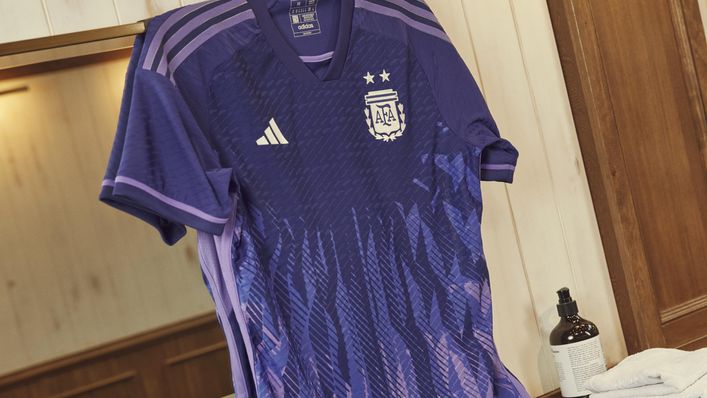
Argentina’s two-toned purple away kit will go alongside their traditional blue and white home kit
Argentina’s traditional blue and white home kit will be complemented by a two-tone purple away strip in Qatar.
Saudi Arabia
Saudi Arabia’s kits for the 2022 World Cup
Saudi Arabia will have two of the smartest kits in Qatar. Their dark green home jersey has light green marks on it, while the white away version also has a light pattern.
Mexico
Mexico’s away shirt complete with Aztec patterns is one of the best on show
Mexico’s home kit is two shades of their usual green, while their away strip has an Aztec pattern.
Poland
Poland’s plain home and away shirts have been unveiled
There are no frills with Poland’s two kits, an all-red home shirt backed up by a white away top.
Group D
France
France will look to defend the Jules Rimet trophy in Qatar
France stick with the dark shade of blue that they won the 2018 World Cup wearing, albeit with a buttoned collar, while a plain white away kit is the order of the day.
Australia
Australia will wear a yellow home kit and blue away kit in Qatar
Australia’s home shirt comes with different smudges of yellow across it, while their navy away kit has a turquoise trim at the top.
New Balance’s only World Cup kits are two very basic Costa Rica efforts, with blue sleeves on red and white shirts.
Germany
Germany’s two kits for the 2022 World Cup
Germany’s usual white home strip has a thick black stripe down the middle, while they have a more jazzy red away top.
Japan
Japan’s two adidas kits for Qatar
Japan’s home kit is one of the best at the tournament with different shaded triangles of white and blue, while their second strip is a basic white number.
Group F
Belgium
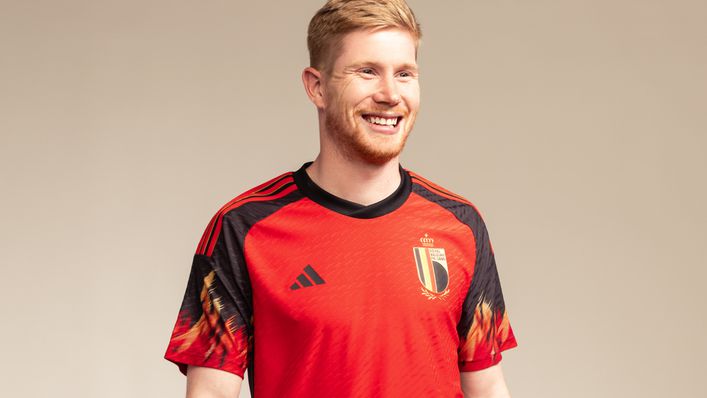
Kevin De Bruyne models Belgium’s new home kit
Belgium’s plain red shirt is dominated by the flames incorporated on to the otherwise all-black sleeves, while they will wear a plain white away strip.
Canada
Canada will not have a new kit for the World Cup after their surprise qualification
Canada are the only team at the World Cup who will not get a new kit. Les Rouges have earned qualification to the global showpiece for the first time since 1986.
Morocco
Morocco’s two kits for the World Cup
Morocco will wear a smart red home shirt and their all-white away number is a beauty.
Croatia
Croatia have two striking kits for the World Cup
Croatia’s traditional red and white squared home kit has a new twist with white patches all over it, while the away kit is mainly blue apart from similar patterns on the shoulders.
Group G
Brazil
Brazil will wear their traditional yellow and blue shirts in Qatar
There is no messing around from Brazil with their traditional yellow home shirt and a blue away one, with some interesting sleeves, to go alongside it.
Serbia
Serbia’s dark red home kit goes alongside a white away one
Serbia’s home kit is dark red and their away shirt, like the other PUMA designs, is an interesting twist on the norm.
Switzerland
Switzerland’s red and white home and away kits
Switzerland’s home shirt is red with thin white lines at the top, while the all white away kit has the number, badge and maker’s name all in the middle as per PUMA’s style this winter.
Cameroon
Cameroon are yet to announce their two kits.
Group H
Portugal
Portugal’s home and away kits for their World Cup campaign
Portugal’s red and green home kit has proven controversial, but their white away one with a hoop across the chest is smart.
Ghana
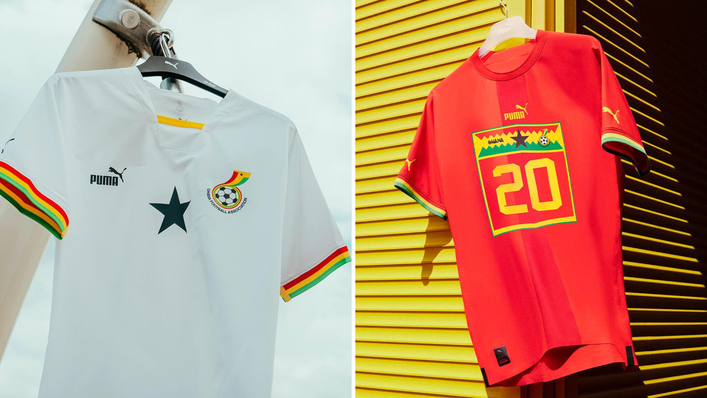
Ghana’s plain white home shirt is paired with a bright red away one
Ghana’s plain white home shirt offers very little, while their bright red away shirt is certainly striking.
Uruguay
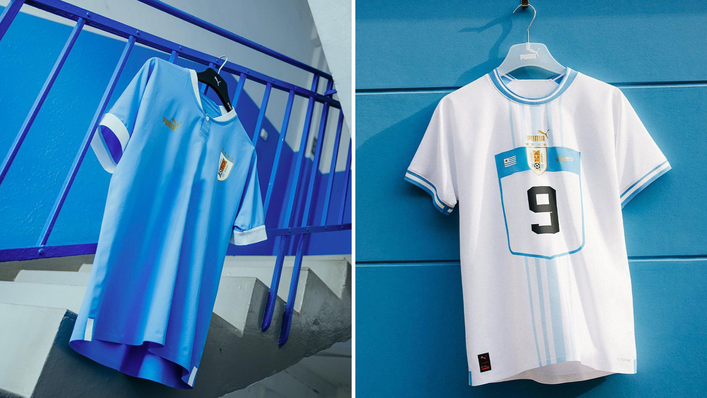
Uruguay’s smart home kit is matched with one of PUMA’s better away designs
Uruguay’s white away kit with a light blue trim is one of PUMA’s smarter efforts alongside their traditional home strip.
South Korea
South Korea have unveiled their kits — including a bold away one
South Korea’s simple salmon home kit is a stark contrast to their black away one, complete with splashes of yellow, red and blue.
The World Bank has confirmed that the Akufo-Addo-led government put to good use the money it received from the Bank to help combat the COVID-19 pandemic.
Speaking to the media, the Bank’s Country Director for Ghana, Liberia, and Sierra Leone, Mr. Pierre Frank Laporte, revealed that the World Bank held the country accountable by perusing all the necessary documentations and receipts on what the money was spent on.
“We know each and every dollar that is spent and accounted for. We have done the necessary audits”, he said.
Mr. Pierre Frank Laporte, however, noted that “There are always a few things here and there and some documentation that needs to be followed.”
Nonetheless, he added that “we are very satisfied that our resources were spent in line with the procurement requirements that existed.”
According to Mr. Pierre Frank Laporte, the government has not spent all the funds it received to combat the virus.
“All the funds for COVID were not spent. There were immediate things to be spent on, but there was also construction and procurement of equipment. We don’t feel that our resources have not been properly spent,” he explained.
In 2020, the World Bank is provided $100 million to Ghana to assist the country in tackling the COVID-19 pandemic.
This financing package included $35 million in emergency support to help the country provide improved response systems.
In addition to the emergency facility, a $65 million contingency emergency response component was triggered from the Greater Accra Resilient and Integrated Development Project (GARID) to support critical activities such as laboratory equipment and chemicals essential medical equipment and supplies including test kits and personal protection equipment.
Apart from the $430 million, the World Bank also advanced an additional $130 million to Ghana for the purchase of vaccines.
In June 2022, the Finance Minister, Ken Ofori-Atta, announced that a total of ¢12.04 billion has been expended so far on COVID-19.
According to figures put out by the Finance Minister in his address to Parliament on Wednesday, June 22, an amount of GH¢11.16 billion was allocated for expenditures related to Covid-19.
However, government ended up spending GH¢8.12 billion by the end of 2020.
In the arena of Covid-19 funding, according to data contained in the 2021 mid-year budget, government also received ¢19.3 billion in 2020 as budget support, following the impact of the pandemic.
Funding Sources for 2020 Budget
IMF – ¢5.85 bn
World Bank – ¢1.33 bn
EU – ¢504 m
AfDB – ¢405.7 m
Bank of Ghana – ¢10 bn
GOG Contingency Fund – ¢1.2 bn
Funding sources for 2021 Budget
According to the 2021 mid-year budget document, government also received ¢6.29 billion in the same year.
Ghana face Brazil in what promises to be an intriguing pre-World Cup friendly in France on Friday, September 23, 2022.
The games will be filled with superstars who need no introduction to football fans across the world. Also, young talents with so much potential and a high ceiling are expected to make their mark in the game.
Brazil will walk into the match with a galaxy of stars while Ghana will look to rely on a few big names in their team to make the difference.
Out of the two sets of the quality squad, GhanaWeb put together a combined eleven with Brazil dominating the lineup.
Alisson
The Liverpool goalkeeper is miles ahead of the goalkeeping options of both Brazil and Ghana. Therefore, he takes the number one spot.
Tariq Lamptey
Brazil have a strong squad, but they are missing a reliable right fullback. Hence, Ghana’s Denis Odoi and Tariq Lamptey appear as the right choice for the position.
Lamptey gets the nod over Odoi in that regard. The Brighton full-back on a good day is every coach’s choice for the position.
Thiago Silva
Thiago Silva is the first name on the list for the centre-back position, ahead of the others.
The Chelsea defender is highly rated and is regarded as one of the greatest centre-backs to have played the beautiful game.
Marquinhos
Thiago will be partnered with Marquinhos, who has consistently proven to be one of the best in the business.
Alex Sandro
Brazil’s Alex Sandro gets the nod in the left-back position due to his experience.
He is also the best amongst the left-back options in both squads.
Thomas Partey secures a place in the combine eleven without a spin of thoughts.
For both Arsenal and Ghana, he is the main man and whenever he is not around his team fumble.
Casemiro
Brazil midfielder, Casemiro may be out of form but there is no doubt that the Manchester United man deserves a place in the team.
He and Partey in a double pivot role will be one to watch.
Neymar
Neymar slots into the team as the skimmer. He is Brazil’s all-time top scorer and needs no introduction regarding the quality he brings to the fore.
He seems to be back in form and has already bagged a combined 19 goals and assists in all competitions(11 goals, 8 assists).
Inaki Williams
Black Stars striker, Inaki Williams will lead the line. He has pace to run in behind defenders and also has good hold-up play.
Although he has scored just two goals, he stands out and poses more threats than the typical strikers in both squads.
Vinicius
The Real Madrid youngster has established himself as one of the best U-23 players in the World.
Many rate him as one of the big names to lead the new generation of talented footballers.
He has been flying for Real Madrid this season, scoring five goals in all competitions.
He picks up the left flank in the team.
Mohammed Kudus has been the star man for Ajax this season. He has scored 6 goals in 7 appearances, showing much potential and therefore deserves a place in the team.
Due to Kudus’ versatility, he takes the right wing of the team.
Coca-Cola Beverages Africa (CCBA) is leading extensive beach and river clean-ups across the African continent this month as part of the International Coastal Clean-up initiative to remove plastic waste from the environment and raise awareness of the need to recycle.
Teams of volunteers supported by CCBA have rallied across Ghana, South Africa, Namibia, Mozambique, Zambia, Kenya, Uganda and Ethiopia to collect plastic waste.
Every year, on the third Saturday of September, volunteers around the world take part in the world’s biggest coastal clean-up, International Coastal Cleanup Day.
“Food and beverage packaging is an important part of our modern lives, yet the world has a packaging problem, which we as CCBA, together with the Coca-Cola Company, have a responsibility to help solve,” said Tshidi Ramogase, CCBA Chief Public Affairs, Communication and Sustainability Officer.
“To encourage more people to recycle more often, we’re investing to help people understand what to recycle, how to recycle, and where to recycle. As part of International Coastal Cleanup Day, we are working with local communities and NGOs across Africa to highlight this critical issue.
“These clean-ups help shift attitudes towards littering and recycling, encourage environmentally responsible waste-management habits and motivate communities across the continent to recycle,” Ramogase said.
In Namibia, Coastal Cleanup Day coincides with a national clean-up day so the whole country is involved, as well as the Ministry for the Environment. CCBA will be doing clean-ups over September in Windhoek, Otjiwarongo, Keetmanshoop, Walvis Bay and Oshakati.
In South Africa, there are clean-ups in Enseleni, Richards Bay, Durban, Gqeberha, East London and Port Shepstone.
In Ghana, CCBA subsidiary, Voltic partnered with the University of Ghana Plastic Recycling Project and Miniplast Limited to clean up Laboma Beach.
In Zambia, CCBA partnered with the Siavonga City Council to conduct a clean-up exercise at Lake Kariba.
In Ethiopia, CCBA joined forces with a youth-led organisation called Green Rotaract Concept and cleaned up the Little Akaki River in Addis Ababa.
The team in Mozambique not only held a volunteer clean-up but also had an educational workshop with well-known environmentalist, Carlos Serra, to help increase awareness of the need to develop good recycling habits.
Ramogase added: “While increasing recycling rates and using more recycled content in packaging is key, it is equally important to dramatically increase the collection of post-consumer waste and prevent it from ending up in rivers and oceans.
“This requires a mass awareness campaign to shift consumer behavior. We’re bringing people together through programmes like beach and river cleanups and other ongoing local activities.”
CCBA aims to help make the world’s packaging problem a thing of the past, working in partnership with Coca-Cola Company which launched a sustainable packaging initiative called World Without Waste in 2018.
CCBA aims to help collect a bottle or can for everyone it sells by 2030, to make all its packaging recyclable and have 50% recycled content in its packaging by 2030, and make 25% of its packaging reusable by 2030.
Ghana and Finland have signed a framework agreement for a trade and investment mission on Monday, September 19, in Helsinki, Finland.
The projects will be funded under Finland’s Public Sector Investment Facility (PIF) Scheme in conjunction with a trade and investment mission to Finland by a business delegation from Ghana.
Using Finnish technology and knowledge, Finland’s Public Sector Investment Facility (PIF) Scheme is a financing tool created to encourage public sector investments in developing countries that are in line with the UN Sustainable Development Goals.
The purpose of the PIF Scheme is to provide additional financing for projects acceptable to Finland in accordance with the OECD Arrangement on Guidelines for Officially Supported Export Credits.
As stated earlier, the ceremony took place on the margins of an ongoing trade and investment mission to Finland and to two other Scandinavian countries namely Denmark and Sweden by a business delegation.
The Mission was organised by the Ministry for Foreign Affairs and Regional Integration and Ghana Investment Promotion Centre in collaboration with the Embassies of Ghana in Oslo and Denmark, to showcase Ghana’s vast business potential and pursue bilateral trade and investment opportunities in the areas of ICT, education, energy and circular economy – waste management, bio-economy and clean technology.
Ghana is also seeking to explore potential investment opportunities and help create a network of buyers,
agents, suppliers and key government contacts.
The sixty-six-member business delegation comprising the public and private sectors is led by the Deputy Minister for Foreign Affairs and Regional Integration, Kwaku Ampratwum Sarpong.
Other high-level government officials include the Deputy Minister for Trade and Industry, Herbert Krapa; the Deputy Minister for Communications and Digitalisation, Ama Pomaa Boateng; the CEO of EXIM Bank of Ghana, Lawrence Agyinsam; the CEO of Ghana Export Promotion Authority, Dr Afua Asabea Asare; the CEO of Ghana Investment Fund for Electronic Communication, Prince Sefah; the Deputy CEO of Ghana Investment Promotion Centre, Yaw Amoateng Afriyie; the Ag. Director-General of Cyber
Security Authority, Dr Albert Antwi-Boasiako, and the Ambassador of Ghana to Finland, Jennifer Lartey.
While in Finland, the high-level government officials have held Government-to-Government bilateral meetings with Ministers, CEOs and Officials of selected Finnish institutions including the Ministry of Foreign Affairs of Finland, Business Finland, SITRA and FINNERVA, whose focus areas include investment, trade, digitalization, green energy transformation, smart inclusive cities, sustainable mining, and circular economy among others.
The meetings have afforded the officials the opportunity to learn from their Finnish counterparts including the possibility of attracting Finnish companies operating in these sectors to invest in Ghana. The
engagements have also served as a springboard to further deepen the already existing cordial bilateral relations between Ghana and Finland.
The Ghana-Finland Business Forum, which is taking place on Tuesday, September 20, 2022, will also provide the platform for Ghana to be showcased as the most attractive investment destination in West Africa and to also urge Finnish companies to partner with their Ghanaian counterparts.
The Forum will be followed by business-to-business and business-to-government meetings that will provide an opportunity for the various private sector institutions from Ghana and Finland to engage with each other for possible collaboration in their sectors of operations.
Jackline Mensah rose to fame on Tik Tok during the COVID pandemic. She has become a permanent figure on the app, entertaining her audience whilst earning a sustainable income.
She responded with a video saying, “It’s almost 3 am in the morning, and I haven’t slept. The main reason is that there’s fake news circulating that I said I wouldn’t date who uses public transport. Fine. Let’s even say I said that, what can you do about it? Nothing, because it’s my opinion.”
She pointed out that the reason for the malicious lies was to post engagement on blogs and Twitter handles.
“If you will quote me, quote me right. Why would you go around making fake headlines so people would come on your page and engage, throw shades and insult me? So picking on somebody who is relevant to society. Somebody who is trying to make it to the top, you just want to use a day to bring that person down. God is watching you all.
“Let me tell you something, you are not God. You didn’t make me. God knew the plans he had for me. That is why I’m where I’m today.”
Jackline Mensah also challenged those who want to belittle her profession to join if they think it’s easy to attain her professionalism.
“If it’s just Tik Tok star keke, do it and let’s see. You wish I was your sister. You even wish you were from my family. So do it, and let’s see. We are trying to put Ghana on the map. I don’t even know you all. You are so full of pain and hatred,” she concluded.
“There is a pressing need for Ghana to address these issues quickly.
According to reports from 3news, he added, “What is occurring in the last few months is that inflation has gone up partially because of what is happening upside but also partly because the currency has weakened.
A further decline in the economy’s capital adequacy will have serious consequences for the nation, he added, as banks depend on government bonds and securities.
“From my vantage point, domestic debt structuring is exceedingly tough, making it very difficult for Ghana to find another way out if nothing changes.
Why?
Because banks often invest in government securities and bonds, he explained that when you ask them to handle such matters, it impacts their capital adequacy and puts these banks at risk. International debt is simpler to reschedule or restructure.
An epileptologist at the University of Ghana, Legon, Prof. Patrick Adjei, approximately 300,000 people in Ghana are battling with epilepsy.
According to him, a large number of people do not realize they have epilepsy as a result of the country‘s flawed diagnostic system.
In addition, he said that there are non-convulsive forms of epilepsy, they include automatism, repetitive blinking, chewing, and swallowing.
He said that non-convulsive epilepsy “represented a considerable burden in prevalence which, if not treated, interfered significantly with a person’s functioning.”
He noted that there “were two principal deficits in the knowledge of the burden of the disease in the country — seizures, because they were easy to detect, and no data on the prevalence of the disease in the urban environment,” Graphic reported.
Pro. Adjei, who is also a team member of the country’s Epilepsy Pathway Innovation in Africa (EPInA), made this known at an intersectoral global action plan on epilepsy, neurological disorders and strengthening the public health approach to epilepsy in the country organised by WHO.
Meanwhile, WHO Representative in Ghana, Dr Francis Kasolo, has said that efforts are being put in place to reduce the gap in epilepsy treatment in the country.
According to him, over 2,700 people have been provided with care and treatment since the ‘Fight against epilepsy’ initiative was rolled out in the country between 2012 and 2016.
He added that the WHO had expanded its work on epilepsy treatment and care with the introduction of a flagship programme, the Health Gap Action Programme (mhGAP), aimed at training non-specialist health workers to diagnose and manage mental, neurological and substance use conditions.
Epilepsy
A disorder in which nerve cell activity in the brain is disturbed, causing seizures.
Epilepsy may occur as a result of a genetic disorder or an acquired brain injury, such as a trauma or stroke.
During a seizure, a person experiences abnormal behaviour, symptoms and sensations, sometimes including loss of consciousness. There are few symptoms between seizures.
Epilepsy is usually treated by medication and, in some cases, by surgery, devices or dietary changes.
Publisher at the Africa Briefing, Jonathan Offei-Ansah, has advisedGhana and other African countries to give up on seeking restitution from their former colonial masters.
He asserted that thecontinent doesn’t need leader who come to power for their personal gains, but those who will nurture the nation’s natural and people riches to create opportunity for all of its citizens.
“The issue of reparation began long ago; even in America, they are talking about reparation to African Americans. But one has to be realistic. This is arguable, but I believe that it is a mirage to talk about reparations. I believe it is never going to happen.
“What we need today as Africans is good leadership, good governance, leadership that will serve the people, that will have the welfare of the whole nation at heart. Not leadership that comes in to serve themselves,” he said in a TV3 interview on Monday,” he said in a TV3 interview on Monday, Septemeber 19.
He added that even if Africa gets reparations, it will be when it is united, and its demands come from a position of strength and not in its current state.
The publisher also said that African leaders must be wary of the presence of the Chinese on the continent. According to him, the Chinese are only in Africa to rob the continent of its natural resources.
Meanwhile, at the beginning of a four-day summit with diaspora participants in August 2022, President Akufo-Addoargued that Africa deserved compensation for the slave trade.
He said the effect of the slave trade was being felt today as a result of the drain it had on the population and development of the continent. He insisted that calls for reparation for the slave trade were long overdue.
“Reparations for Africa and the African Diaspora are long overdue. Predictably, the question of reparation becomes a debate only when it comes to Africa and Africans. We believe the calls for reparations for Africa are just,” President Akufo-Addo said.
The death of Queen Elizabeth II has reopened the reparation debate in many African countries. Some have said the Britain monarchy must return all the historic artefacts they took from African countries and also repay the African Continent for the resources, both human and material, it used to develop the United Kingdom during the eras of slavery and colonialism.
An Agro-tourism organization, the Ghanaian Farmer Tourism Club (GHAFTC) has joined forces with travel firm Adansi Travels and airline RwandAir to introduce the “Agric Exchange” program in Accra.
This is part of the GHAFTC’s attempts to give Ghanaian farmers travel opportunities to broaden their understanding of contemporary agricultural techniques and build contacts with foreign farmers for the benefit of their businesses.
The joint venture is also aimed to expand the local market and promote agro-tourism while encouraging foreign farmers to visitGhana and take advantage of the opportunities provided by the agricultural industry.
The package, which would be priced affordably, would include a flight, a hotel, transportation, meals, networking events, and sightseeing.
The group announced that the first trip was scheduled for Rwanda in November, this year.
Minister for Food and Agriculture, Dr Owusu Afriyie Akoto, in his keynote address in Accra on Friday lauded the initiative, saying that any project that targeted the well-being of Ghanaian farmers and offered such opportunities to “enable them compare notes with other counterparts was welcomed.”
He said advancements by government in its Planting for Food and Jobs programme was producing entrepreneurs and wealth in the sector and was encouraging people to pursue agro-tourism.
“A lot of people have ventured into farming because of the potential of Planting for Food and Jobs and this is creating more opportunities in the sector as well as changing its image,” he disclosed.
He urged Ghanaian farmers to partner and access opportunities that the African Continental Free Trade Area (AfCFTA) provided to grow their various products.
A farmer and founder of Count on Crops Hub, the agric advocacy firm behind GHAFTC, Enyonam Manye, said travelling would afford and expose Ghanaian farmers to the importance of value addition and the utilisation of post-harvest losses.
“A lot of Ghanaian farmers discard post-harvest losses because they have no knowledge or skill on its benefits. But just travel to Rwanda and you will see how they are utilising post-harvest losses from pear for oil and body lotion. Same in India where post-harvest losses from pawpaw are utilised in the same way.
“When us farmers we travel, it opens our eyes to such innovations and also introduces us to value addition companies and agro-processors to help us grow our business,” she said.
Chief Executive Officer (CEO) of Adansi Travels, Gideon Asare, said the constant introduction of new technologies and inventions into farming made it imperative for Ghanaian farmers to travel and witness what was being done elsewhere to improve their practice.
He called on all famers to also register their farms and to open business accounts that was separate from their personal bank accounts.
On his part, Country Manager for RwandAir, Robert Okumu, expressed delight at the partnership saying that as the project sought to improve farming in effect it improved Africa.
The International Monetary Fund(IMF) is set to deploy another mission to Ghana in the coming weeks, Gerry Rice, the Director of Communications for the IMF, said at a media engagement.
“We had an IMF staff team in Accra in July to begin initial discussions with the Ghanaian authorities. And we characterized that mission as constructive, kickstarted the process, and laid the groundwork for engagement, which now continues.
“Our Mission Chief for the IMF also recently visited Accra, again, to meet with key counterparts. And we’re hoping for another visit in the coming weeks; I don’t have a date for you, but in the coming weeks.”
Ghana’s economy races against time to tie down a bailout programme as the economy struggles against the backdrop of higher inflation, tighter financial conditions, and weaker growth.
The country’s inflation rate climbed to the highest level in 21 years in August, fueled by a slide in the cedi. Consumer prices surged 33.9% in August from 31.7% in July.
Ghana needs a $3 billion package from the fund to shore up its economy.
Ghana is ranked 4th in Sub-Saharan Africa (SSA) with the highest private savings, a report by the International Monetary Fund on “Private Savings and COVID-19 in Sub-Saharan Africa’ by the International Monetary Fund (IMF)” has disclosed.
Despite the challenges facing the economy, the report stated that private savings in Ghana grew from about 24 per cent in 2019 to about 30 per cent in 2022.
Again, oil exporting and middle-income countries such as Ghana, are the highest savers in the region.
The report further added that private disposable income in the country had gone up considerably.
“The private saving rate in SSA has increased during the last two decades to an average rate of 17.3 per cent in 2019 from 11.5 per cent in 1983.
However, there is significant heterogeneity across the SSA countries. Oil exporters and middle-income countries (MICs) are the highest savers in the region. Private saving rates, as expected, are particularly low in fragile states and low-income countries (LICs),” it pointed out.
The World Bank in its recent Global Findex Report said though the share of adults in Ghana having an account at a financial institution remained mostly stagnant since 2017, mobile money account ownership increased to 60 per cent from 39 per cent in 2017.
Again, the July 2022 Banking Sector Development Report by the Bank of Ghana also revealed that deposits recorded a robust growth of 19.1 per cent to ¢131.3 billion as of the end of June this year, albeit lower than the growth recorded a year earlier.
Meanwhile, Gabon is the number one country in Sub-Saharan Africa with the largest private savings of about 34 per cent.
Morocco and Kenya were in fourth and fifth place, with private wealth totaling $125 billion and $91 billion, respectively.
“In terms of the enquiries Henley & Partners received last year, South Africa, Nigeria, and Egypt were among the top 15 nationalities worldwide.
Dominic Volek, group head of private clients at Henley & Partners, stated in the report that South Africa was in fifth place globally with growth of 38% in 2021, Nigeria was in seventh place with growth of 15%, and Egypt was in fourteenth place with growth of 25%.
Ghana, on the other hand, ranked sixth with $59 billion in private wealth.
The report also revealed that the highest wealth in Africa, $2.4 trillion, was recorded in 2012, while 148,000 people became millionaires in 2017, the largest number ever.
On the other side, significant imports into Ghana from Canada climbed by 8.97% during the same time period, including heat, automobiles, used clothing, excavators, and poultry.
The GIPC boss was speaking at the opening of the Ghana Canada Investment Summit (GCIS) in Toronto Canada, on Thursday, September 15, 2022, according to norvanreports.com.
“It is our belief that by the close of this summit all of you will feel attracted to the idea of coming back home not necessarily to stay but to help make Ghana stronger and better through strategic partnerships and long-term investments,” he is quoted by norvanreports.com.
“Currently, the two-way merchandise statistics between Ghana and Canada has reached over US$475 million, representing a 71% increase over the figure recorded in 2020,” he said.
Trade between the two nations is undoubtedly expanding, he continued.
Regarding the reasons Ghana is a favorable place for business and investment, he pointed out that the nation is rich in resources like gold, manganese, bauxite, and even lithium, with agriculture serving as its backbone and fueling industrialization.
He continued, “That is why we say come grow in Ghana – grow with Ghana.
A physiotherapist from Ghana, Alberta Amissah Rockson, has been elected co-chair of theEmergency Committee of the World Rehabilitation Alliance’s (WRA) of World Health Organisation (WHO).
Following two stints as the National President, PT Rockson is now the National Chairperson of the Ghana Physiotherapy Association. Additionally, she currently serves on the board of the Cape Coast Teaching Hospital.
The World Rehabilitation Alliance (WRA) was launched in 2022 to conduct evidence-based advocacy activities that increase awareness and demand for rehabilitation, networking and knowledge-sharing and to create a shared understanding and narrative around rehabilitation.
He claims that the fourth industrial revolution, often known as the digital revolution and the future, has been somewhat felt in Ghana and many other nations.
“As an economic strategy in Ghana, digitization has received a lot of attention.
The fourth industrial revolution, sometimes known as the digital revolution, is currently taking place on a global scale.
It is a revolution built on systems and data.
If you don’t digitize as an economy in this day and age, you will fall behind. Africa has lagged behind for far too long, and I think that leapfrogging will require digitization.
“We digitalize not for its own sake but to solve problems, formalize and build a more inclusive economy, deal with corruption and to provide services to our people more efficiently from the government side,” Dr. Bawumia explained.
He further outlined some steps taken by the governing NPP administration to usher Ghana into the digital world as part of the 4th Industrial Revolution.
“A lot of people were excluded from the economy so we did digital IDs for our people, so we have unique identities for everybody. Once you have unique identities for everyone you will not have ghost workers on the payroll and also sort the voter registry.
“We had an issue with the address system in Ghana, and through digitization, we solved the problem. Every part of the country, land or water, mansion or shark you have a unique digital address that we have rolled out in the country. This has solved a big problem as now deliveries can easily be made through e-commerce, and in the instance, you are applying for a job you can easily state your address,” Dr. Bawumia said.
Touching on efforts made to enhance financial inclusion in Ghana, the Vice President said the implementation of the mobile money interoperability system has ensured that cash transactions are made in an easy and convenient manner.
“It is not just operability between the mobile companies, but interoperability between the mobile wallet and a bank account which means that every mobile money account practicably has a bank account. We [Ghana] were the first country in Africa to do so. Today it is very easy for someone to open a bank account in Ghana, you have your national ID card, you get onto your mobile phone and then dial a USSD Code and you chose one of the banks and there you go, you have a bank account.
“All of our databases have been merged, allowing us to maximize the benefits of our digitization process.
For other African nations, digitization is the way to go, and with it, we can catch up to more developed nations.
We are currently the world’s largest provider of medical drone delivery services in Ghana.
We currently have 100 flights a day providing medicine using drones across the nation, he said.
As a result, they are unable to grasp what they read and write.
According to the GSS, this number shows that 4.6 million women and 3.3 million men are illiterate, “indicating a female disadvantage that has been persistent over time.â€
Per the report the number of illiterate individuals (15 years and older) increased by 1.2 million during the 2010 and 2021 Population and Housing Censuses (PHC), from 4.3 million in 2010 to 5.5 million in 2021.
A statement released by the Statistical Service on September 8, 2022, stated that “Ghana has lower levels of adult literacy compared to its comparators (lower middle income and sub-Saharan African countries), after three years of the provisions on illiteracy captured in the Education Strategic Plan (ESP) 2018-2030.â€
“This has necessitated the production of the 2021 PHC Thematic Report Brief on Illiteracy in Ghana which will be released later this month. The report provides direction for stakeholders to target hotspots and drivers of illiteracy in Ghana as it focuses on three broad areas: trends, patterns, and correlates of illiteracy,†it added.
Social media is often the best avenue to test thepulse of a topical issue online, often times even offline.
So, it was for good reason that the global trends as at September 8, 2022; included among others, #QueenElizabeth, Rest In Peace, London Bridge etc. Queen Elizabeth II had died.
The world’s longestserving leader, was pronounced dead on Thursday, September 8, 2022, via a statement from the royal family.
But localized trends inGhana aside the global ones had ‘Maa Lizzy’ also as a top trend. It turns out that, this was how social media users were celebrating the life and mourning the passing of the Queen.
Most Ghanaians posted funny tweets about how they are marking the passing, whiles others also took to serving historical material of Queen Elizabeth’s direct interaction with Ghana – visits in 1961 and 1999; as well as times when Ghanaian leaders had met her at the Buckingham Palace.
Find below some of the tweets:
Born on April 21, 1926, the Queen, christened Elizabeth Alexandra Mary, immediately acceded the British throne on February 6, 1952, when her father, King George VI died.
She became queen at the age of 26 and remained on the throne for seven decades before her death.
Elizabeth II was Queen of the United Kingdom and Head of State for 14 other jurisdictions.
Queen Elizabeth’s eldest son Charles, 73, has been named succesor and by that becomes king of the United Kingdom and the head of state of 14 other realms including Australia, Canada and New Zealand. His wife Camilla becomes Queen Consort.
A Ghanian supporter cheers on January 20, 2013 before the start of a 2013 Africa Cup of Nations football match between Ghana and the Democratic Republic of Congo at the Nelson Mandela Bay Stadium in Port Elizabeth.
Qatar will permit ticketed fans to buy alcoholic beer at World Cup soccer matches starting three hours before kickoff and for one hour after the final whistle, but not during the match, a source with knowledge of plans for the tournament said.
Budweiser, a major World Cup sponsor with exclusive rights to sell beer at the tournament, will serve beer within the ticketed perimeter surrounding each stadium, but not in the stadium stands or concourse, the source said.
This year’s World Cup is the first to be held in a Muslim country with strict controls on alcohol, presenting unique challenges for organizers of an event sponsored by a major beer brand and often associated with beer-drinking fans.
“Beer will be available when gates open, which is three hours before kick-off. Whoever wants to have a beer will be able to. And then when they leave the stadium as well for one hour after the final whistle,” the source said.
Additionally, Budweiser will be permitted to serve beer in part of the main FIFA fan zone in central Doha from 6:30 pm to 1:00 am every day of the 29-day tournament, which kicks off on November 20, the source said.
At previous World Cup tournaments, beer was served in fan zones all day long.
The decision about where and when the beer will be sold to fans is now finalized, but the price fans will be charged for a beer is still under discussion, the source said.
“We are working closely with FIFA, which is managing the relationship with the Qatari authorities, to ensure our activations for the tournament are executed respectfully and in compliance with local rules and regulations,” a spokesperson for Budweiser brewer AB InBev said in an emailed statement.
Qatar’s World Cup organizers, the Supreme Committee for Delivery and Legacy, did not respond to requests for comment about the World Cup controls on alcohol. Qatar’s government media office directed requests to the Supreme Committee.
There are four matches scheduled on most days of the tournament’s group stage, with the earliest match kicking off at 1 p.m.
It was not immediately clear how Qatar will handle beer sales ahead of the 1 p.m. Wales and Iran game on Friday, November 25, when most Muslims in Qatar will be gathering at mosques for the weekly congregational prayer.
Qatar currently requires most shops and restaurants in the country to close during Friday prayers.
Questions have swirled around the role alcohol would play at this year’s World Cup since Qatarwon hosting rights in 2010. While not a “dry” state like neighboring Saudi Arabia, consuming alcohol in public places is illegal in Qatar.
Visitors cannot bring alcohol into Qatar, even from an airport duty-free, and they cannot buy alcohol at the country’s only liquor store, on the outskirts of Doha. Only foreign residents with permits can shop there for home consumption.
Visitors can drink at a few dozen licensed hotels and clubs, where a pint of beer can cost $18.
Budweiser will sell its non-alcoholic beer, Budweiser Zero, in stadium concourses and stands during games and at other fan sites, the source said.
“We always respect the local customs and culture in the markets in which we operate or host events,” a spokesperson for AB InBev told Reuters in an emailed statement.
“Our promotion and activation of Budweiser Zero during the FIFA World Cup in Qatar will target the international guests coming to enjoy and celebrate football at the fan sites.”
Despite the fact that some second-cycle institutions in Ghana are fully equipped with infrastructure projects, unfortunately students at Wulugu Senior High School (WULSEC), in the West Mamprusi Municipality of the North East Region, unlike students at other schools, cannot brag of any physical projects.
The students in the school are always seen taking their meals at the mercy of the weather due to the lack of a dining hall.
The students protested in March of this year, asserting that the food provided to them was of low quality. Despite their complaints to the school administration, nothing significant has been done to improve the situation.
GhanaWeb’s North East Regional Correspondent, Dokurugu Alhassan, visited the school campus at the time the dining room attendants were arranging the saucepans on tables in an open space in the scorching sun for the students to take their last meal for the day.
The students in an interview with GhanaWeb indicated that, the situation is affecting them negatively as such, called on government to come to aid.
“The last time we protested against the quality and quantity of the food, we also protested because of the water and electricity issues on campus, but after the protest, it is better now, but our major problem is now the dining hall. As you can see, we always take our meals in the scorching sun and sometimes in the rain, so these are the challenges we face,” a student told GhanaWeb.
Another student also bemoaned that the situation makes them always miss food anytime it rains.
“Our major problem is that we don’t have a dining hall which is affecting us a lot. If there is rain, the majority of the students will not collect the food. They can’t walk through the rain to collect the food and sometimes the scorching sun. We always suffer before taking the food in the scorching sun,” another student also lamented.
The students are appealing to the government, NGOs, philanthropists, and other well-meaning Ghanaians to support the school with a dining hall and toilet facilities.
“So we are appealing to the government to look into Wulugu Senior High School and help us with a dining hall and toilet facilities. I think everything will go well for us when we get these things in our school,” he appealed.
The school, which was established on the 28th of January 1991, is still facing sufficient infrastructure project challenges.
Hence, the students are imploring the duty bearers to see to the development of the school.
Also attempts by GhanaWeb to get headmaster of the school to comment on the issue proved futile.
The program held on Friday August 19, 2022 is to encourage readers to donate old books from a stationed booth and pick up new ones in order to encourage sharing and repurposing old books among the youth while maintaining an environmentally friendly way of reuse that eradicates the burning of books.
According to Knoema, in 2018, the adult literacy rate for Ghana was 79 %. The adult literacy rate of Ghana increased from 57.9 % in 2000 to 79 % in 2018 growing at an average annual rate of 17.02%. The book exchange booth is one of our ways of contributing our quota to increasing the literacy rate in Ghana.
The inspiration for this project sprouted from a work-related visit to the Czech Republic by one of the founders of OFWA in 2019 During his trip, he stumbled on a booth stocked with books and people exchanging books by dropping off old ones and picking new ones in return.
The fascinating concept triggered him to propose the idea to the team. Two years later we are elated to say that the idea came to fruition with the help of our wonderful partners and our vibrant community members.
We started off by making a call for donations of books to stock the booth. We received books from the EPP Books and A Rocha Ghana and some community members. After receiving these books, we were steadily communicating with most of the malls in Accra to mount our booths. Fortunately, the ARA Children shop at the Achimota mall shared our vision and has agreed to place one booth at the ARA children playground.
While we waited for confirmation from these malls, we thought it wise to put the books we received to use before the launch of the Book Exchange Booth. We came up with the idea of a mini-library project on the office premises.
The Goethe-Institut donated a bookshelf to aid us in starting off this project. We stocked the bookshelf with the books we received from our donations and made the office available to our community members and the public to visit the office and read the books.
The concept of the book exchange booth pivots on the tenets of sharing, trust, and sustainable reuse. These booths will be mounted at vantage points all over the country starting from the ARA Children Playground at the Achimota mall.
We are still accepting book donations and calling on organizations who see an avenue to strike a partnership, to reach out to us.
The writer is Eugene Makafui Masiku, a Communication Officer at Open Foundation for West Africa.
Ghana Premier League champions, Asante Kotoko have arrived in Ghana following their pre-season tour in Sudan.
Kotoko had planned a pre-season tour in Turkey, but due to visa issues, the club opted for a tour in Sudan instead.
The Porcupines had a disappointing tour, failing to win any of their four matches.
Kotoko lost twice to Al Hilal Omdurman, as well as to Simba, before drawing with Al Khatourn in their final game.
New manager, Seydou Zerbo who replaced Prosper Narteh is still in search of his first win after managing three games since his appointment.
Following their arrival, the club will now prepare for their CAF Champions League preliminary round first leg against Rail Club de Kadiogo of Burkina Faso on September 9.
Theengagement also involves collating views and ideas to be factored into a broad policy framework to enhance the industry.
The programme is themed: “Harnessing creativity and innovation to transformational change in road safety management,†will also serve as a hub of ideas to engineer cost-effective and practical solutions to the issues that confront various regions.
“This year, we have seen a reduction in crashes, injuries and deaths for the seven months of 2022 and that we must work together to keep the reduction on the ascendancy and reward hard work,†the Board Chairman of the NRSA, Jermaine Nkrumah said.
According to him, the government has started working with stakeholders on a program that would annually recognize and reward safer regions yearly.
The board chair reaffirmed the commitment of his organization to collaborating with management to strengthen the authority’s finance condition.
Deaths
The Minister of Transport, Kweku Ofori Asiamah, in a speech, said experts estimated that road traffic deaths and injuries in low-and-middle income countries would cause economic losses of up to five per cent of Gross Domestic Product (GDP) in those countries.
He said the provisional statistics from the NRSA from January to July, 2022 on road traffic crashes indicated that a total of 8,869 cases were reported involving 15,239 vehicles with 1,443 casualties.
Mr Asiamah said since the importance of road safety in the developmental agenda of a country could not be overemphasised, the ministry would double its effort in educating the populace to make the roads safe.
“We need strong institutions to exert control on the safety environment to build a firm safety culture for sustainable development,†he said.
Mr Asiamah gave the assurance that the authority would augment its capacity to increase its visibility beyond the regional capitals.
BRRI
The Director of CSIR-Building and Road Research Institute, Dr Daniel Asenso-Gyambibi, said there were about 2,000 mortalities every year in the country as a result of road crashes.
He said since engineering was key in road safety, roads should be designed in a way that would be comfortable and friendly for drivers.
Dr Asenso-Gyambibi recommended that the NRSA be empowered to take active role in policy formulation in road network.
The Minister, who is representing President Nana Addo Dankwa Akufo-Addo, is leading a Ghana team that includes Hon. Alan Kwadwo Kyeremanten, Minister for Trade and Industry, Hon. John Kumah, Deputy Minister for Finance and senior officials from the Ministries of Foreign Affairs and Regional Integration, Finance, Trade and Industry and Roads and Highways.
TICAD 8 will address Sustainable and inclusive growth, realizing sustainable and resilient society, and Building sustainable peace and stability.
A Business Forum involving business executives from Africa and Japan is expected to provide opportunities for investments and trade cooperation. Ghanaian executives are participating in the Forum.
As part of the visit, theGhana delegation will sign with Japanese officials two grant agreements for infrastructure projects to be funded by Japan. In addition, bilateral talks will be held with JETRO and JICA as well as with a number of leading Japanese firms.
The Foreign Minister will also hold bilateral talks with a number of Foreign Ministers and other officials.
In a statement, Hon. Ayorkor Botchwey noted the timeliness of the TICAD conference as African countries rededicate to efforts to build resilient economies beyond aid. She stressed the need to forge a new development cooperation consistent with the ambitions of the African people for peace and prosperity.
Ghana is expected to take the opportunity to advocate for the required higher-quality collaboration with Japan and other development partners.
“I will remember Ghana as a place that I spent the best four years of my life. A country with amazingly talented people and while I am leaving, I still have a property here.
“There is not a single way to achieve development, but the more Ghanaians understand that tourism is a business that they can benefit from… the better it will place them for national development,†she said.
The outgoing French ambassador wants Ghanaians to be proud of telling the Ghanaian story.
“When you are proud of your country and your heritage then you will broadcast it,†she said. “You will want to push it there and it is important that Ghanaians have pride in their heritage inculcated in them.â€
According to the Ministry, the number ofprosecutions grew from 13 in 2020 as compared to 22 last year, while the number of investigations increased from 87 in 2020 to 108 in 2021.
The sector Deputy Minister, Madam Lariba Zuleira Abudu, who was speaking at the commencement of a capacity-building training program at Fumesua, in the Ashanti Region’s Ejisu Municipality, said government’s aim is to end the problem.
Human trafficking, she said, was a global canker, therefore, stakeholders ought to work together to identify and deal with the issue head-on.
The three-day programme has been put together by the Ministry in collaboration with the European Union (EU) and Expertise France, an international agency, to deepen the knowledge of security agencies on human trafficking and irregular migration.
It would discuss topics on human rights issues, victim identification, rescue operations, victim protection and investigations, amongst others.
Madam Abudu, who is also the Minister-designate for Gender, Children and Social protection, said the training had been designed to equip the law enforcement agencies to effectively implement the Human Trafficking Act 2005 (Act 694).
She indicated that a National Plan of Action had been launched to deal decisively with human trafficking issues in all their forms.
The Plan, according to her, had been structured in a way to whip up public understanding of the complexity of human trafficking and irregular migration.
This is expected to improve the detections, investigations and prosecutions of suspected human traffickers and smugglers.
Mr. Serge Akpalou, an official of Expertise France, said the COVID-19 pandemic and global economic recession had further exacerbated human trafficking.
Therefore, the French International Agency would not relent working with stakeholders to address the issue.
Chief Superintendent Mike Baah, of the National Headquarters, Ghana Police Service, urged the participants to take the training programme seriously to reduce to the barest minimum the incidence of human trafficking.
In his quest to put people first in the health sector, Mahama’s Governmentpumped billions of Ghana cedis into the provision of modern hospitals and the upgrading of facilities for speedy and quality healthcare delivery. The Mahama-led Government undertook many major hospital projects which could deliver about 6,000 new hospital beds to facilitate access to improved quality healthcare, something unprecedented in the history of the Republic of Ghana.
In line with this, President Mahama addressed the healthcare needs of Ghanaians in an aggressive manner.
About US$ 2 billion was invested in the provision of modern hospitals and the upgrading of facilities to ensure quality healthcaredelivery.
This was premised on his belief that the health of our people is our wealth, therefore, infrastructure, equipment, and personnel needs representing access, quality, and affordability, all received urgent attention under his tenure as president of the Republic.
He built two brand new Teaching Hospitals: the 617-bed University of Ghana Teaching Hospital and the second phase of the Tamale Teaching Hospital Expansion Project of 400 beds to make it an 800-bed facility, following the provision of 400 beds under the first phase of the project.
Three institutional hospitals: 500-bed Military Hospital Project in Kumasi, 104-bed Police Hospital in Accra, and 130-bed Maritime Hospital in Tema were constructed.
Also, four Regional Hospitals, namely: the 420-bed Ridge Hospital Expansion Project in Accra, 250-bed Ashanti Regional Hospital at Sewua in Kumasi, 295-bed Bolgatanga Regional Hospital, and the 160-bed Upper West Regional Hospital were built.
Furthermore, seven District Hospitals each with a capacity of 120-beds at Dodowa, Fomena, Kumawu, and Abetifi, among others were completed. There are other six District Hospitals with 60-bed capacity at Tepa, Nkawkwa, Konongo, Salaga, Twifo Praso, 100-bed Madina Hospital, and 120-bed Bekwai Hospital.
Dozens of Polyclinics, scores of Health Centres, and thousands of CHPS Compounds were done. Some were at various stages of construction when he left office.
These include the completion of Polyclinics in the then Brong Ahafo Region at Nkrankwanta, Wamfie, Kwatire, Techimantia, and Bomaa.
Work started on 15 more Polyclinics. They comprise ten Polyclinics at Besease, Gomoa Dawurampong, Biriwa, Etsii Sunkwa, Esikuma, Gyemera, Agona Duakwa, Bimpong Akunfude, Ekumfi Naakwa, Twifo Atimokwa, and Gomoa Potsin, all in the Central Region.
Five 30-bed Polyclinics were also started at Adentan, Ashaiman, Bortianor, Oduman, and Sege, all in the Greater Accra Region.
There are more, 18 Health Centres were completed at Amasaman, Duffor, Pokukrom, New Jejeti, Paakro, Gwollu, Funsi, Sang, Northern Buipe, Manso Nkwanta, Abuakwa, Mase Sosekpe, Kedzi, Adamso, Kayoro, Timode, Bonsu Nkwanta, and Dadieso.
In the case of CHPS Compounds, out of 2,948 functional CHPS zones, 1,260 were completed and another 1,600 were at varying stages of completion.
Besides, the completion of the Eye Care Centre at Komfo Anokye Teaching Hospital by President John Dramani Mahama made it possible to offer enhanced specialist eye care to the people of Kumasi and the surrounding areas. There are more! Stay tuned!
Source: Ghanaweb
DISCLAIMER: Independentghana.com will not be liable for any inaccuracies contained in this article. The views expressed in the article are solely those of the author(s) and do not reflect those of The Independent Ghana
According to him, the embattled MP will be back whenParliament reconvenes to serve the people of Dome Kwabenya.
“As we speak, the Honourable Member of Parliament [for Dome Kwabenya] is not in the country, she has gone back to the States and will be back in the country when Parliament reconvenes,” Nana Dubin said in a Joy FM interview on Tuesday, August 16.
Sarah Adwoa Safo was reported to have returned to the country before Parliament went on recess on July 28, 2022.
A recent Facebook post by the dismissed Gender Minister left many wondering whether she is returning to the country or not.
Sharing photos of herself in what appeared to be a private jet while looking excited with a cheerful smile, the MP quoted Psalm 23:5 in her caption, “You prepare a table before me, in the presence of my enemies. You anoint my head with oil; my cup runs over.â€
Political witch hunt
The legislatorearlier opened up about the ordeal she is facing in the ruling New Patriotic Party (NPP).
According to her, she has become a victim of a sustained political witch hunt by certain elements in the NPP and in Parliament for their own parochial goals.
She expressed shock about how she is being treated differently by people, including members of her party for staying away from official duty in order to attend to personal issues involving her child.
She said she had sacrificed a lot including her family for NPP but she is now being described as a traitor, “and there are schemes to oust me from my position as MP and Minister.â€
Dismissal from Office as a minister of state
President Akufo-Addo relieved the MP of her ministerial position after staying outside the country for nearly a year amid calls from critics to get her axed.
A letter signed by Eugene Arhin, Director of Communications at the Presidency said, the decision by the President to act on these calls on July 28, was “in accordance with Article 81(a) of the Constitution, the President of the Republic, Akufo-Addo, has revoked the appointment of Hon Sarah Adwoa Safo, Member of Parliament for Dome Kwabenya, as Minister for Gender, Children and Social Protection, with immediate effect.”
Constitutional provision
Article 81 of the 1992 Constitution stipulates that the office of a Minister of State or a Deputy Minister shall become vacant if
(a) his appointment is revoked by the President; or
(b) he is elected as Speaker or Deputy Speaker; or
Madam Jane Mensah, the head of the Electoral Commission, is fully aware that the NPP, Ghana’s most dishonest and inept political party, will be replaced by a new government that will not only remove her from her position but also potentially subjects her to legal proceedings that could land her in jail. As a result, she may exert all of her efforts to prevent that from happening.
How is she going to stop that is the question? Election rigging, such as what she did in 2020, is the only way to do this. The most crucial question that many Ghanaians haven’t thought to ask, and that the NPP government hasn’t also given an answer is, “If the government didn’t actually win the 2020 elections, how likely is it that they will break the eighth cycle in 2024?
One of the reasons I have lived a good life with my family and never been accused of a crime or faced the law is because I am a man who has no interest in using violence. However, I must caution anyone who intends to use the law to take away any Ghanaian’s means of subsistence at this time. They may be treading dangerous territory because just because Ghanaians are silent doesn’t mean they are stupid.
Political avarice and tribalism prevent tribal bigots from seeing clearly and accepting that the majority of people are no longer interested in the NPP, as a result of our bad performance, so if we are beaten, we must peacefully transfer power. That is not at all how the con NPP government sees things; instead, they have already begun nefarious plans to win the 2024 elections.
Given how this specific government’s incompetence has destroyed every piece of infrastructure in Ghana and led to the greatest rates of unemployment and crime nationwide, that is actually highly dangerous. After President Nana Akufo Addo refused to remove his relative from office, the Finance Minister, Ken Ofori-Atta, even tell Ghanaians that the president is concealing something.
I am fully aware that some NPP politicians are unhappy with how Akufo Addo has decimated the party, while others don’t care what the president will do to keep the NPP in power.
They have information they don’t want the average Ghanaian to know, particularly about the extensive corruption these families of political crooks have fostered. Why, in face of widespread opposition from Ghanaians, is Akufo Addo employing all nefarious means to ensure that the NPP administration receives support from Jane Mensah, the corrupt head of the electoral commission, in order for it to win the 2024 elections?
The easy solution is that if Jane Mensah manipulates elections once more, she will be able to keep her job and avoid being held accountable for her earlier election offenses. More crucially, her aid would prevent Nana Akufo Addo, the president, and other corrupt NPP leaders from being adequately probed and prosecuted since the future leader following Akufo Addo will fire all the Supreme Court judges the president has lined up.
It is up to all of Ghana’s opposition parties to prevent this from happening and intensify the anguish that has already struck Ghanaians so hard without a cure. I believe that tribalism has taken over the brain of many Ghanaians and those in the Diaspora, and therefore; as long as the president is from their tribe, they don’t care if the regular Ghanaians stand in line to buy chicken heads as food.
Isn’t that foolish considering that it might take Ghana five to ten years before this disastrous economic situation gets out of hand? When Akufo Addo named his relative Ken Ofori-Atta as the finance minister, all of Ghana’s intellectuals, educators, and academicians did was stand by and observe. What do Ghanaians anticipate as a result?
I’ve already shown that Akufo Addo chose Ken Ofori-Atta in order to facilitate his involvement in corruption, which is one of the reasons the NPP government was unable to succeed and the nation was left with unmanageable debt. All of the NPP’s efforts to rig the upcoming elections are being made solely to conceal crimes they have done in order to escape going to jail.
Since she refused to enter the witness box to explain the fictitious results of the elections, she gave Ghanaians, Madam Jane Mensah has been terrified to death. As a result, she will do everything it takes to avoid being charged or having to go to court.
As a result, if the needle says it can sew, it should close the hole in its head. To put it another way, if Ghanaians consider themselves to be intelligent people, with professors and scholars, none of them should sit down and observe the NPP government, which has been rejected for its incompetence, as they implement their nefarious fraudulent schemes to maintain power. This is because you people can’t see far enough to realize that Ghanaians may soon have to chew corncobs to survive.
Source: Ghanaweb
DISCLAIMER: Independentghana.com will not be liable for any inaccuracies contained in this article. The views expressed in the article are solely those of the author(s) and do not reflect those of The Independent Ghana
The 23-year-old Ghanaian ran back to his box after initially failing to prevent the counterattack from happening and appeared to only need to flick the ball clear when Emerson Royal’s cross landed harmlessly in his direction.
Salisu, to the displeasure of his manager, used his left foot instead and proceeded to deflect the ball into his own net while off balance.
After the game, Southampton manager Ralph Hasenhuttl reacted to the own goal scored by Salisu.
“It’s easy [for Salisu] to clear with the right foot here. This is simply not good enough at this level,” he said.
On 12 August 2020, Salisu joined Premier League club Southampton for a fee worth £10.9 million. The English club had triggered a buyout clause in the defender’s contract with Salisu putting pen to paper on a four-year deal.
His Eminence Richard Kuuia Baawobr is now the highest-ranking member of the Roman Catholic Church in Africa.
The election took place in Accra, Ghana, during the 19th Plenary Assembly of SECAM, whereby 130 participants, including cardinals and bishops representing over 600 catholic bishops of Africa came from all corners of the continent.
Another Cardinal, His Eminence Fridolin Besungu Ambongo of the Archdiocese of Kinshasha, in the Democratic Republic of Congo, was elected First Vice-President, while Most Rev. Lucio Andrice Muandula of the Diocese of Xai Xai, in Mozambique, was elected Second Vice President.
The new President of SECAM, His Eminence Richard Kuuia Baawobr, was created a Cardinal on May 29, 2022 by Pope Francis and will be officially installed Cardinal on August 27, 2022.
This is the first time since the establishment of SECAM, 53 years ago that a Ghanaian has been elected the President of SECAM.
The SECAM, established in 1969 in Kampala, Uganda during the visit of St. Pope Paul VI, was born out of the desire of African Catholic Bishops present at the Second Vatican Council to speak with one voice on matters pertaining to the Church in Africa.
The Symposium, headquartered in Accra, consists of eight regional associations:
-Association of Episcopal Conferences of Central Africa (ACEAC).
Association of Episcopal Conferences of Central African Region (ACERAC).
Assembly of the Catholic Hierarchy of Egypt (AHCE).
Association of Member Episcopal Conferences of Eastern Africa (AMECEA).
Episcopal Conferences of the Indian Ocean (CEDOI).
Regional Episcopal Conference of North Africa (CERNA).
Inter-Regional Meeting of the Bishops of Southern Africa (IMBISA).
Reunion of Episcopal Conference of West Africa (RECOWA/CERAO).
Mohammed Haruna believes that an alternative livelihood opportunity to charcoal sellers will reduce the impact of climate change as well as sustain the green Ghana initiative in the northern regions.
He made the revelation after a sensitization program for over 300 hundred charcoal producers in the Yapai-Kusawgu constituency in the Central Gonja district.
Speaking at the programme, Mohammed Haruna, called on the producers to opt for a sustainable alternative livelihood support to limit charcoal production in the district.
Mohammed Haruna believes sustainable climate change intervention is needed to halt or minimise the activities of charcoal production in the Savannah region.
He added that the sensitization initiative will be rolled out in seven regions where the production is common in the Savannah ecological zone.
Speaking to Atinka News, Abiba Mahamadu, a charcoal producer who participated in the program revealed that she had to travel several kilometres to cut down ten trees daily for each bag of charcoal to be produced, a situation she described as difficult.
“I cut down ten trees on the average in a day. Sometimes getting buyers for the bags of charcoal I have produced becomes very difficult. Despite all the challenges associated with the business and the fact that I have to travel miles in search for trees for my business, I cannot quit as it is my only source of incomeâ€, Abiba Mahamadu told Atinka News.
Patriotism does not consist in waving the flag, but in striving for our country to be both righteous and strong. We swear on our honor to be loyal to Ghana, our motherland. What is going on around the country demonstrates that Ghanaians have lost sight of the importance of patriotism in our national life.
From the presidency to the legislature, the judiciary, public and civil servants, and the last man in the community. Everyone is simply irresponsible. Individual gain has taken precedence over the collective interest of all.
Every morning after salaat, I take some time to reflect on our country, Ghana.
The more I do the exercise, the more worried I become. I become perplexed because I don’t know where to begin in my quest to find solutions to the numerous challenges that face us as a nation.
According to the elderly, the most difficult challenge is excessive partisanship, which motivates the political class to take unnecessary intransigent positions on issues of national concern. The NDC sees nothing positive in NPP leadership, and vice versa.
Some of the problems we face, ideally, can be easily solved with a patriotic mindset. According to the World Bank, Ghana has 20.66 percent of arable land coverage, while China has 12.68 percent. Ironically, Ghana’s food imports from China in 2019 totaled US$37.72, according to the United Nations COMTRADE database on international trade.
So, I ask myself, what exactly is wrong with our country? Why should Ghana, which has more agricultural land, need to import food from China? I heard the argument that Ghanaians have an insatiable desire for foreign goods. Really? Where has the patriotism gone? I believe that Ghanaians should love to consume what we produce in order to save our economy from total collapse.
In my opinion, businessmen and women are deliberately driving the so-called appetite for foreign goods in order to stay in the import business and make abnormal profits. This viewpoint is supported by importers withdrawing their advertisement from Citi FM after the entity attempted to promote Ghana-made rice.
Many people point to the leadership’s lack of confidence in imposing a total ban on imports of goods that Ghana can produce locally. Nigeria banned maize imports in 2020 in order to boost domestic production and stimulate a rapid economic recovery. Many imported foodstuffs can be banned in Ghana.
A well-designed policy in this area alone will reduce unemployment and ensure the country’s food security.
To give true meaning to our patriotism, we as citizens must first believe in ourselves and what we produce. Let us all go back to our own backyard gardens. This should assure us of chemical-free foods and the passion that goes with farming.
There is still a chance for Ghana to develop and it has to be through patriotism.
Ghanaian Hiplife legend, Okyeame Kwame, has asserted that having a strong mentality as a musician, defines how successful you will be regardless of your talent.
According to Okyeame Kwame, who is one of the most decorated rappers in Ghana’s music industry, the downfall of many talented artistes was due to the lack of mental toughness to deal with social issues.
In an interview with GNA Entertainment, Okyeame Kwame explained that once you become famous and become a celebrity, your personal life is taken away from you and you would be scrutinized in every endeavor of yours.
“Once you attain fame as a musician, you cannot enjoy your privacy, so you would need to re-evaluate yourself by checking your temperament and how you react to societal issues.
“Social pressures are bound and celebrities are more prone to issues of depression in comparison with other careers, and the inception of social media, so if you don’t have the right temperament, it could lead to depression,” he said.
Okyeame Kwame, who has had an illustrious career in music spanning over two decades, further revealed that it was often very difficult to get a strong mentality at the start of every musician’s career, but psyching yourself was key in such moments.
“You have to develop a strong mental resilience to deal with certain issues so that you don’t cause your own downfall, regardless of how talented you may be. You must learn how you deal with certain issues, especially at the early stages of your music career, ” he said.
Ghana has been listed among a dozen developing nations facing a looming debt crisis amid the general economic downturn.
Other countries in the list of 12 nations at risk of debt default included: Ukraine, Nigeria, Kenya, Tunisia, Belarus, El Salvador, Egypt, Ethiopia, Argentina and Ecuador.
According to a Reuters report, factors that occasioned Ghana’s specific crisis rest on among others massive borrowing, rising inflation, a slumping currency and soaring debt to Gross Domestic Product, GDP, ratio.
“Furious borrowing has seen Ghana’s debt-to-GDP ratio soar to almost 85%.
“Its currency, the cedi, has lost nearly a quarter of its value this year and it was already spending over half of the tax revenues on debt interest payments. Inflation is also getting close to 30%,” the report noted.
The report cited Lebanon, Sri Lanka, Russia, Suriname and Zambia as nations already in default, Belarus, it added was “on the brink and at least another dozen are in the danger zone as rising borrowing costs, inflation and debt all stoke fears of economic collapse.”
It stated that countries that are looking to avert an economic collapse were among others looking to the International Monetary Fund, for rescue programmes.
Ghana is currently in talks with the IMF for one such programme after the government.
Ghana has been recognized as the second most peaceful country in the sub-Saharan Africa region just beyond the island nation of Mauritius.
This was revealed last week by the 2022 edition of the Global Peace Index, GPI, report.
The score also placed Ghana as the 40th most peaceful country on the global ranking of 163 countries, however the country’s overall score was 1.759 as compared to 1.715 in 2021
The global rank means Ghana dropped two steps from the 38th spot in 2021. Per the 2021 global scores, Ghana is sandwiched between Kuwait and Albania.
Completing the top five most peaceful African countries are The Gambia (45th globally), Botswana (48th) and Sierra Leone (50th) in that order.
Ghana is currently dogged by an economic downturn that has seen government turn to the International Monetary Fund for an economic rescue programme. Government partly blame the COVID-19 pandemic and the Russia Ukraine war.
Some of the security challenges that Ghana has faced in the past few months have been clashes between protesters and Police, with the most recent being the clash between Arise Ghana protesters and the Police in late June.
There is however a looming threat of terrorist violence being imported from across the Sahel, more so with neighbouring countries having recorded attacks in recent months.
As of last year, the report came out at amid rising insecurity with most citizens expressing grave concerns about rising insecurity following the murder of a bullion van police escort and a hawker in Jamestown plus a series of robbery incidents across the country.
Mr. Gabby Ammah, CEO of Urban Sports Champions and a director of Get Vim has sent messages of encouragement and best wishes to Team Ghana preparing for the 2022 Commonwealth Games in Birmingham.
He said everything is possible in sports, so the athletes should be focused and go all out to win laurels for themselves and the nation.
According to the keen sports enthusiast, Ghana is a sports nation, with talented and skilful people. “We are a blessed nation with many talents who are capable of doing many things. I am very optimistic that Team Ghana will perform well despite all the challenges. We hope and pray for all the sportsmen and women to be very fit and ready for their assignments†he expressed.
Urban Sports Champions and Get Vim donated cash to the Black Bombers before the 2020 Olympic Games in Tokyo, Japan where Ghana won a bronze medal.
He was sure that the Black Bombers will definitely bring home some medals.
Meanwhile, Makqash Abrantie of Get Vim fame who has been in the United States for a while has promised the Black Bombers something special if they win gold at the Commonwealth Games.
Ghana will be taking part in 13 sports disciplines at the Games in Birmingham.
Ghana defender Mohammed Salisu was absent from Southampton’s first day of pre-season training on Wednesday as they prepare ahead of the new season.
The 23-year-old was seen pictured during the training session which took place at the club’s training complex.
No reason has been given for his absence but Footballghana.com understands the Ghanaian has been some days off to recharge his batteries after an intense campaign last season.
Salisu, who was regarded as one of the best centre defenders in the Premier League last term featured 36 times in all competitions and scored once for the Saints.
According to reports, Barcelona are monitoring the top defender and could move to sign him in the summer transfer window.
Xavi’s side have also been linked with a move for other defenders including Pau Torres, Aymeric Laport, Jules Kounde, as well as Matthijs De Ligt.
Salisu is expected to join his Southampton teammates in the coming days for pre-season training.
Ghana’s economy grew by 3.3% in quarter one of 2022 compared to the same period in 2021, the Ghana Statistical Service said on Wednesday.
The Government Statistician, Prof. Samuel Kobina Annim announced the provisional real Gross Domestic Product (GDP) in volume terms said growth was driven by Information and Communication (1.0%), Crops and Cocoa (0.9%), Transport and Storage (0.4%), Manufacturing (0.3%) and Trade: Repair of Vehicles, Household goods (0.3%).
When seasonally adjusted, Ghana’s real GDP increased by 0.9% in quarter one (January to March) of 2022; 1.0 percentage points lower than what was recorded in quarter four (October to December) of 2021.
The Services sector remains the largest sector of the economy with a 45percent share of GDP. The GDP share of Industry and Agriculture were 32percent and 23percent respectively.
Main sub-sectors of expansion
Prof Annim said the main sectors with more than 10 percent expansion in quarter one of 2022 are Information and Communication (26.6%); Fishing (26.1%); Water Supply, Sewerage, Waste Management & Remediation Activities (25.4%) and Electricity (15.9%).
Contracted sub-sectors sectors
He also mentioned that seven sub-sectors led by Professional, Administrative & Support Service activities (-12.8%) and Public Administration, Defense and Social Security (-9.8%) contracted.
The remaining sectors that contracted during the period were Real Estate (-2.6%), Construction (-2.6%), Education (2.0%), Health and Social Work (-1.0) and Forestry & Logging (-0.1%).
Nominal quarterly GDP
Prof Annim said the GDP estimate at current prices in purchaser’s value for the first quarter of 2022 was GH¢139,390.0 million compared to GH¢115,691.6 million in the first quarter of 2021.
The non-oil GDP (GDP without Oil and Gas) estimate at current prices for the 1st quarter of 2022 was GH¢131,025.2 million compared to GH¢111,105.1 million in the first quarter of 2021.
The Greater Accra Region, the hotbed of cholera outbreaks in Ghana, has not recorded any case of the disease since the outset of the rains, the Regional Health Directorate has revealed.
The Regional Director of Health, Dr Charity Sarpong, said in an interview that it was due to a number of measures that had been put in place over the years.
The measures, she said, included education and awareness creation at the community and district levels on the need to wash hands regularly and also keep surroundings clean.
She said although the region was noted as a hotspot for cholera, especially during the rainy season, it was yet to record any cholera case even though the rains had set in.
Cholera, a bacterial disease causing severe diarrhoea and dehydration, has killed hundreds of people over the years in the Greater Accra Region.
It is usually spread in water and could be fatal, if not treated right away.
Key symptoms are diarrhoea leading to dehydration. Rarely, shock and seizures may occur in severe cases.
Statistics
Between 2014 and 2015, Ghana experienced one of its worse cholera outbreaks.
By the end of January 2015, when the outbreak was contained, over 28,000 cases with 243 deaths had been recorded in all the then 10 regions of the country.
The Greater Accra Region was the worst affected, recording almost 98 per cent of all the cases.
In other years, according to statistics from the Ghana Health Service (GHS), 9,542 cholera cases with 100 deaths were recorded in 2010 across the country; 10,628 cases with 105 deaths were recorded in 2011; 28,975 cases with 243 deaths in 2014; 618 cases with five deaths in 2015, and 150 cases in 2016.
Besides, between 1998 and 2017, epidemiological surveillance reported 82,754 cholera cases in the country, with 519 deaths.
Risk factors
Dr Sarpong stated that over the years, poor sanitation, open defecation, and the lack of safe drinking water were some of the risk factors that predisposed communities and people to the outbreaks.
She said community sensitisation to the risk factors had helped to contain the possible outbreak in the region, while the GHS had integrated disease surveillance response into its system to be able to pick diseases that could create epidemic for quick response.
Dr Sarpong called on the public to continue to practise good hygiene protocols such as hand washing, keeping houses and surroundings clean, eating hot foods, among others.
She also called on stakeholders, including the media, to help in educating the communities so that they would be aware of the need to keep cholera at bay.
She said through all these, the GHS was also strengthening early detection and rapid response systems in tackling cholera while hospitals had been adequately prepared to handle cholera cases to prevent an outbreak.
According to Global Petrol Prices. Com, the country is also ranked 27th in the world.
The rankings are coming at a time when the utility tariff providers in the country are making a case for increase in utility tariffs.
The world average price of electricity is pegged at $0.133 per kilowatt/hour (kWh) for household users and $0.124 per kWh for business users.
In Ghana, the cost of electricity per kilowatt/hour for household is $0.046 cents which is less than a dollar.
The situation is similar to that of business consumers, though countries in the region have cheaper cost for electricity bill.
This clearly shows that the cost of electricity in the country for household, compared to other countries on the continent is very low.
That goes to buttress the point by the utility tariff providers for an imminent increase in electricity and water bills. Whilst the Electricity Company of Ghana is requesting for 148% increase in electricity tariff, covering 2019 and 2022, Ghana Water Company Limited is demanding for an increase of 334% in water tariff.
Meanwhile, Sudan has the cheapest electricity tariff in Africa and the World for household.
It is followed by Libya and Zimbabwe in 2nd and 3rd positions respectively.
RANKING OF COUNTRIES WITH CHEAPEST COST OF ELECTRICITY IN AFRICAÂ FOR HOUSEHOLD CONSUMERS
Deputy Minister of Energy,William Owuraku Aidoo, has noted that government has settled its legacy debt owed Nigerian Gas Company Limited (N-Gas).
According to him, government, through his outfit, paid off the GH¢553,452,668 in three tranches.
WilliamOwuraku Aidoo indicated that this settlement comes after the Volta River Authority (VRA) improved its balance sheets.
The Nigerian Gas Company Limited has over the years supplied Ghana with natural gas to help sustain the energy sector.
This, the Deputy Energy Minister said has helped ameliorate the power crisis in the country.
While speaking on the floor of parliament on Friday, June 17, 2022, William Owuraku Aidoo said, “I would like to point out that, subsequently, VRA has been able to pay its obligations to N-Gas as and when it falls due…VRA is able to pay for its obligation to N-Gas for the supply of natural gas from Nigeria. I will say that it has gone a long way in ameliorating the power situation in Ghana thereby preventing dumsor.â€
“VRA under the able leadership of Antwi Darkwa has improved remarkably on their balance sheet and as a result they are able to pay for gas supply to Ghana as and when it falls due. VRA is doing a very good job in polishing its balance sheet thereby being able to pay for its bills,†he added.
Background
The accumulation of debt owed N-Gas started in 2014 due to the inability of VRA to pay the company.
According to Graphic.com.gh report, government in 2017 instituted strategic intervention programmes such as ESLA to pay in tranches this legacy debt.
Ghana at the Committee of Ministers meeting in Lome, Togo, in December 2020 made a commitment to settle the debt by end of this year.
Ghana remains top of Group E of the standings of the qualifiers for the 2023 TotalEnergies Africa Cup of Nations (AFCON) tournament despite drawing 1-1 against Central African Republic on Sunday.
The Black Stars played against the Wild Beast in Luanda, Angola this afternoon to clear the second game of Group E in the qualifiers.
Aftet dominating the early parts of the first half, Ghana deservedly took the lead through poster boy Mohammed Kudus in the 17th minute.
Mrs Afi Azaratu Yakubu, the Executive Secretary of the National Commission on Small Arms and Light Weapons has commended ECOWAS and its partners for producing a report, which provides an excellent basis for an in-depth discussion on arms brokering within West Africa.
The report and accompanying operational guidelines provide further basis for the Member States to elaborate laws and procedures to regulate brokering practices.
Mrs Yakubu said this during technical experts’ meeting in Abuja, Nigeria on the Validation of Study Report on Arms Brokering in West Africa, organised by the ECOWAS Small Arms and Light Weapons Division, through the Organised Crime: West African Response to Trafficking Project.
It was to review and validate a draft study report and operational guidelines for regulating arms brokering in the ECOWAS.
Mrs Yakubu, in an interview with the Ghana News Agency, explained that in many countries, because of the lack of regulation and controls, it was easy for small arms to fall into the hands of people, who used them use them to commit crimes in violation of international humanitarian or human rights laws or diverted them to the illicit market.
Recent global data indicates that the arms trade had seen a shift from direct contact between government officials or agents to the pervasive use of private intermediaries, who operated in a particularly globalised environment, often from multiple locations, she said.
The United Nations Office for Disarmament Affairs Information indicates that “contemporary traders, agents, brokers, shippers and financiers regularly combine their activities, making it difficult to clearly distinguish small arms trade from brokering and related activitiesâ€.
Mrs Yakubu said many countries had not enacted specific laws or regulations covering arms brokering within their systems of arms export, therefore, the ECOWAS Arms Brokering regulations would ensure that member states regulated the importation and exportation of arms and contributed to the reduction of illicit transfers and diversions into unauthorised hands.
Mr Piex Joseph Ahoba, the Head of ECOWAS Small Arms Division highlighted the importance of the regulation of arms brokering activities.
He said it was a key that national and regional efforts were geared towards preventing, combating, and eradicating illicit circulation, trafficking and proliferation of Small Arms and Light Weapons.
He expressed optimism that the meeting would elicit inputs that enriched the draft Operational Guidelines on Arms Brokering given the richness of the experts assembled.
The Organised Crime: West African Response to Trafficking (OCWAR-T) is an ECOWAS project, commissioned by the German Government and co-funded by the European Union.
GIZ jointly implements the OCWAR-T with the United Nations Development Programme, UN Office on Drugs and Crime, Mines Advisory Group, International Centre for Migration Policy Development, Institute for Security Studies, and the Global Initiative Against Organised Crime.
President Akufo-Addo has appealed to President Felipe Jacinto Nyusi of Mozambique to join forces with Ghana in the battle against terrorist acts in the West African sub-region.
In response to the rising tide of terrorism in West Africa, President Akufo-Addo remarked that both Ghana and Mozambique cannot turn a blind eye to the issue of terrorist acts in Africa, which is threatening the continent’s security.
According to him, a cooperative effort between Ghana and Mozambique will not only strengthen security preparations, but also discover ways to decrease reliance on European countries.
“Ghana will continue to collaborate with Mozambique to find solutions to challenges such as, the eradicate of widespread poverty, regulation of illegal migration, insecurity and human right violation, terrorist and violence extremism, human and drug trafficking as well as negative impact of climate changes on environment and livelihood.â€
President Akufo-Addo made these remarks when he welcomed President Felipe Jacinto Nyusi to the Jubilee House as part of his four-day visit to Ghana.
The two Presidents also signed two bilateral agreements to deepen cooperation between the Ghana and Mozambique.
The agreements are the Permanent Joint Partnership Commission for Cooperation and a Joint waiver on visa requirements and diplomatic service passports.
Meanwhile, according to Edward Kweku Asomani, the Deputy National Security Coordinator, within the first quarter of 2022, Africa has experienced about 346 terrorist attacks in various countries. 49 per cent out of these, he noted, occurred in West Africa.
These numbers emphasise the importance of such a collaboration in the battle against terrorism in West Africa.
Togo opened its side of the border with Ghana at midnight yesterday.
This comes more than 50 days after Ghana had reopened its land borders.
The Daily Graphic visited some of the border towns, including Aflao, Akanu and Kpoglu-Segbe Border, to ascertain how business was picking up in those places.
When the Daily Graphic arrived at the border post at Aflao about 8:30 a.m.yesterday, the metal gates which had been closed between the two countries for two years following the outbreak of the COVID-19 pandemic were open.
The Member of Parliament for Ketu South, Abla Dzifa Gomashie, was among those who turned up early at the border post to see things at first-hand.
The Kpoglu-Segbe border post was equally quiet when the Daily Graphic visited.
Desolation
Although the border had been opened, both sides of the frontier remained desolate, with little human movement and commercial activities across the border.
“Today is the first day and some people in Lome and Aflaohave not yet heard about the reopening,†a senior Togolese Immigration officer who requested anonymity said.
On the Ghana side, the Aflao Sector Commander of the Ghana Immigration Service (GIS), Assistant Commissioner of Immigration (ACI) Frederick Duodu, said the human and vehicular traffic across the border would definitely increase in subsequent days.
GIS ready for human traffic
He gave an assurance that personnel of the Aflao Sector GIS were ready for any upsurge in the number of travellers across the border.
So far, ACI Duodu said, although people had been eager for Togo to open its side of the border, no untoward incident had occurred along the border.
The Daily Graphic gathered that some heavy-duty vehicles were using the ECOWAS Border Post at Akanu, near Dzodze, some 50 kilometres from Aflao, and that had largely contributed to the low volume of traffic at the Aflao Border Post.
Later in the day, a few hawkers turned up at the border post, in the hope of doing brisk business.
As of 1:30 p.m., 65 Ghanaians and 16 nationals of other ECOWAS countries had entered Lome from Aflao, while about a 100 people had left Lome for Aflao.
At the Kpoglu-Segbe Border Post, nine Ghanaians had crossed into Togo, while four Togolese had crossed from Togo into Ghana as of 11:06 a.m.
Identities
Most of the Ghanaians crossing used their Ghana Cards or passports to cross the border smoothly.
Interacting with the Daily Graphic, Ms Gomashie expressed gratitude to the leaders of the two countries for listening to the cries of their people.
“In Ketu South, we hope this will restore our livelihood, which is cross-border commerce,†the National Democratic Congress (NDC) MP said.
Ms Gomashie entreated people crossing the border to hold valid identities and proof of vaccination against COVID-19 and also be law-abiding all the time.