Tag: Ghanaians

  • Gov’t targets local polymer production to reduce sachet water expenses

    Gov’t targets local polymer production to reduce sachet water expenses

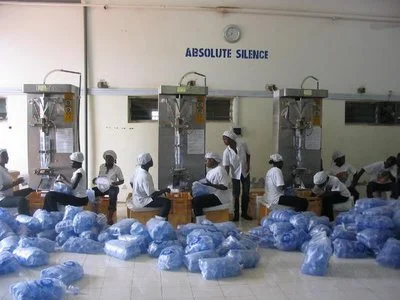
    Last week, the National Association of Sachet and Packaged Water Producers (NASPAWAP) announced a possible 50% increase in the price of 500ml sachet water effective Monday, April 6. The development got scores of Ghanaians calling for an intervention from the government.

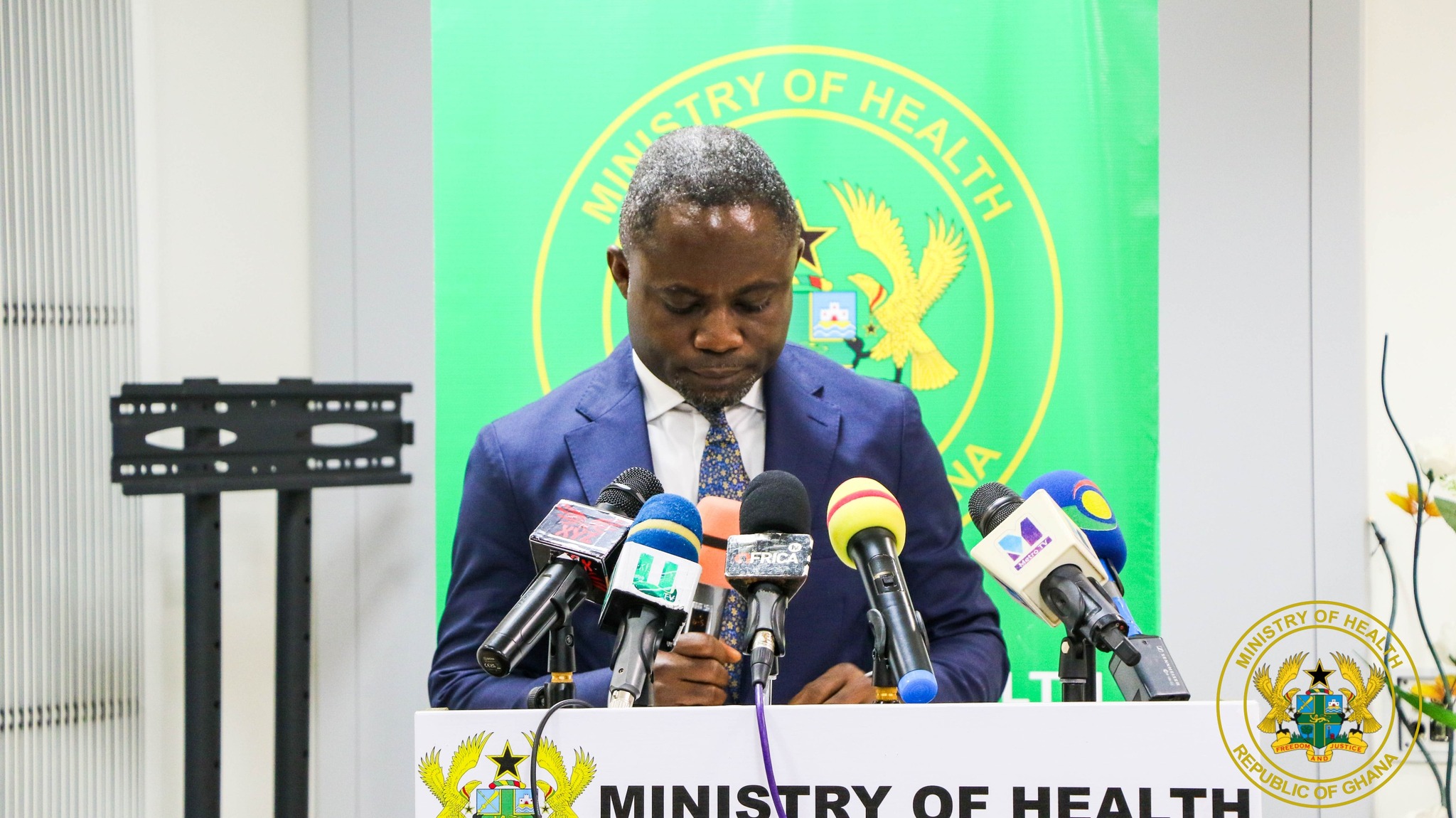
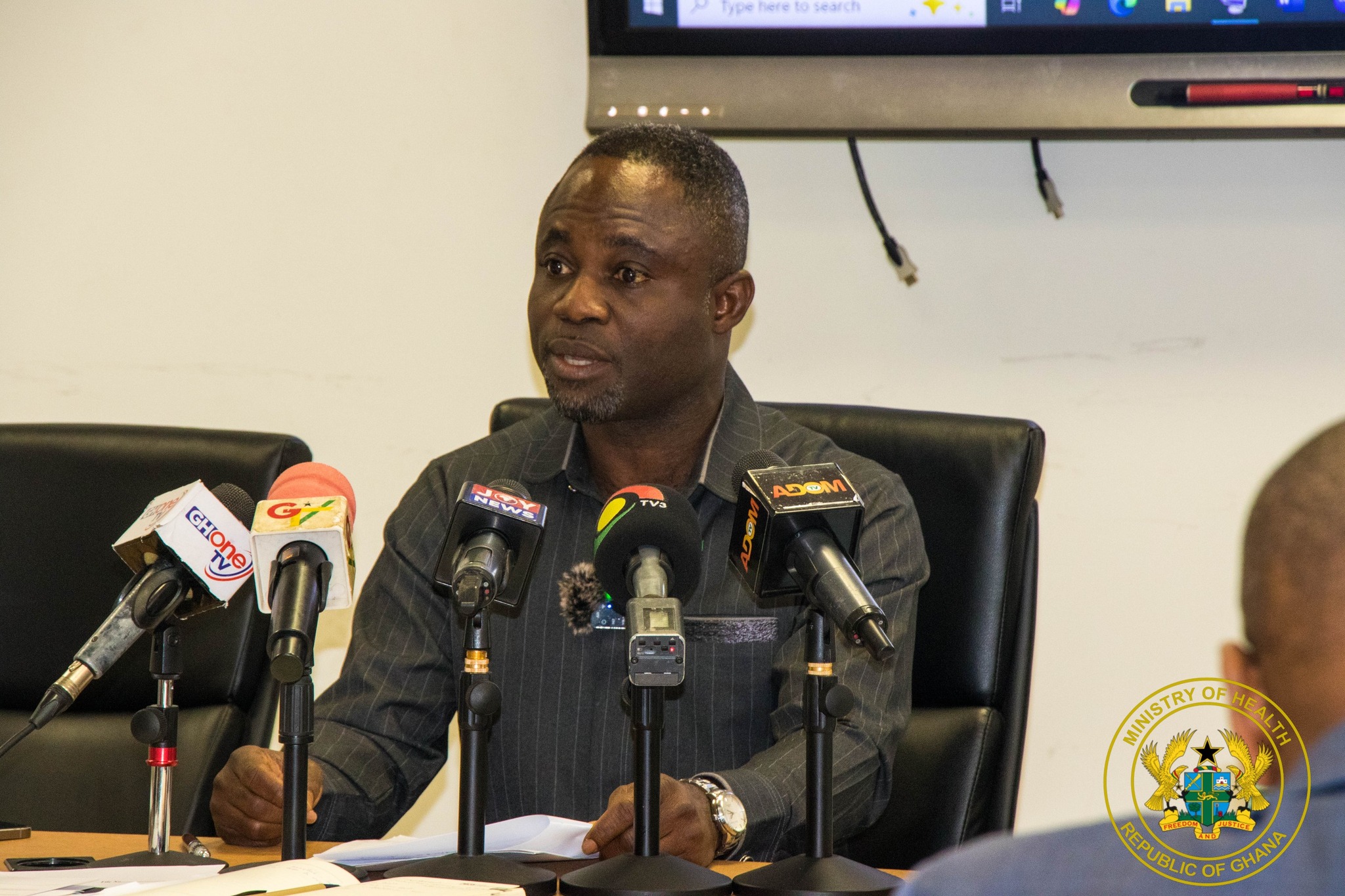
    Responding to the growing calls, the Chief Commercial Officer and Director of Industrial Development at the Ministry, Kofi Addo, revealed that the government will soon begin exploring local polymer production as a way to reduce the cost of sachet water.

    Polymers are the key raw material in sachet water production.
    He explained in an interaction with the media that authorities will, in the coming days, engage key stakeholders across the value chain to find a sustainable and lasting solution.


    He added, “Last week, we had the message that this increment was coming on board. And as a ministry, for the protection of our consumers and to ensure price stability in the environment, we quickly started the engagement with the manufacturers and producers.


    “So, all that we did was to make sure that we bring stability and to protect our consumers. We are having this meeting to understand the issues that led to the increment. Two, we also want to make sure that all the other players are brought on board, so that when we come out with the solution, everybody will be happy along the value chain.”

    According to the trade association, in a formal statement issued on Thursday, April 2 and signed by the Director of Corporate Affairs, NASPAWA, mentioned that the escalating Middle East tensions have influenced the hike.


    “The National Association of Sachet and Packaged Water Producers (NASPAWAP) regrets to announce an upward revision of the ex-factory and ex-truck prices of sachet water, effective Monday, April 6, 2026. These are recommended price reviews by the national body”, parts of the statement said.


    Adding that, “this decision follows the global shortage of polymers and the sharp increase in their prices, exacerbated by the ongoing conflict in Iran. The rising costs have significantly impacted production, making it challenging for manufacturers to maintain current prices”.


    The new prices are as follows: “Ex-factory price: GH¢8 per bag of 500ml x 30 sachets, Ex-truck price: GH¢10 per bag of 500ml x 30 sachets, Maximum retail price: GH¢15 per bag of 500ml x 30 sachets”


    “This adjustment is necessary to sustain production and ensure the continuous supply of safe drinking water,” the association added.


    Consequently, they urged “retailers and consumers to adhere to these prices to ensure fair trade practices. We appreciate your understanding and cooperation during this challenging time”.


    Last sachet water price increase


    The last price increase in sachet water occurred about 4 years ago, i.e., in September 2022. NASPAWAP announced a price adjustment, raising the retail price of a bag of sachet water to around GHC 7–8, citing rising fuel and raw material costs.


    However, before the September increase, the retail price of a bag of sachet water in Ghana was generally around GHC 5–6, indicating that the price had seen about 33% to 40% increase.
    Barely a year later, another increase was announced by the association in April 2023, attributing the hike to continued cedi depreciation and higher polymer costs.


    This shot the prices to GHC 10 per bag of 30 sachets of 500ml.
    What is polymer, why is it affecting influencing pricing of sachet water in Ghana?


    Polymer is a plastic used to package water into sachets because they are strong, lightweight, and water-resistant. It is an essential material in the production processes, as without it, there will be no packaging; hence, if the prices of the material go up, producers increase the commodity prices to make up for it as they experinece high production costs.


    These plastics are often made from petroleum-based chemicals and are essential for packaging because they are strong, lightweight.


    Meanwhile, not only has the Middle East crisis affected the price of sachet water, but Ghana also currently faces the risk of high economic pressures. Consequently, the Governor of the Bank of Ghana (BoG), Dr Johnson Asiama, has warned that despite recent improvements in the country’s macroeconomic indicators, Ghana could face economic pressures if tensions in the Middle East intensify.


    He gave the caution at the opening of the 129th meeting of the Monetary Policy Committee (MPC), Dr Asiama on Monday, March 16. Dr Johnson Asiama said the caution stems from tensions affecting key global energy and shipping routes, potentially causing volatility in global oil markets.


    He added “Geopolitical uncertainty tends to support gold prices. Given the importance of gold in our export earnings, this could improve our trade balance”.

    The ongoing tensions have been linked to the death of Iran’s Supreme Leader, Ayatollah Ali Khamenei. Ayatollah Ali Khamenei was reportedly killed in strikes by the Unites States (U.S.) and Israel. This development significantly impacting travelers from Ghana to Asia, Europe, and North America, as Dubai is a major transit hub connecting travelers through the United Arab Emirates.


    Ghana, being one of the dependents of the global oil supply, stakeholders began to express concerns about a possible shortage of fuel across the country.

    However, the Corporate Affairs Officer of the Tema Oil Refinery (TOR), Godwin Mahama Ayaba, during an appearance on March 11, indicated that Ghana is unlikely to experience fuel shortages despite rising tensions in the Middle East, citing the country’s diversified sources of petroleum imports and growing local refining capacity.


    According to him, the NPA recently issued a statement indicating that the situation in the Middle East will not lead to shortages of petroleum products in the country.


    “The National Petroleum Authority, which is the regulator, some three to four hours ago issued an official statement assuring all of us that as for shortage, there is no way the Iran–Israel conflict is going to affect us,” he said.


    Mr Ayaba explained that Ghana’s fuel import structure significantly reduces the risk of supply disruption because the country imports most of its finished petroleum products from Europe.


    “Ghana largely imports from two different areas: Europe and the Arabian region. Where we import most is Europe,” he noted.“We import about 80 per cent of our finished petroleum products from Europe and about 20 per cent from the Arabian region, where this conflict may have an impact.”


    While acknowledging that the Middle East tensions could affect that 20 per cent supply, he said Ghana’s domestic refining capacity is expected to fill the gap.


    “So we are likely to lose that 20 per cent, but with TOR coming on stream, we will be able to block that gap,” he said.


    Mr Ayaba revealed that the refinery is currently producing about 28,000 barrels and expects output to increase significantly after ongoing upgrades.


    “Currently, we are producing about 28,000 barrels. After the tie-in, we will move to about 45,000 and further move to 60,000,” he explained.


    He added that increased output from other refineries in the country will also contribute to stabilising supply.


    “Sentuo is doing around 36,000 to 40,000 barrels a day, Akwaaba is doing somewhere less than 10,000, and Platon is around a little below 3,000.Together, all these companies will be able to block that 20 per cent that would have come from the Arabian region.”

  • Middle East tensions: Ghanaians in Qatar directed to register over safety concerns

    Middle East tensions: Ghanaians in Qatar directed to register over safety concerns

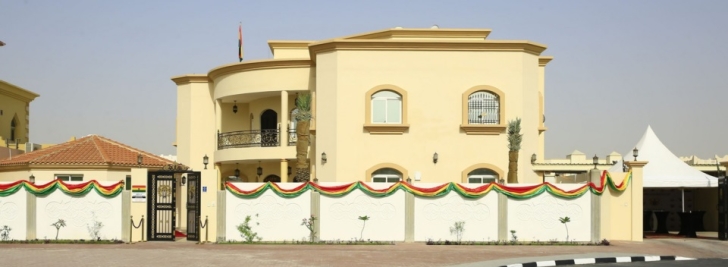
    All Ghanaian nationals residing in Qatar have been directed by Ghana’s Embassy in Doha to register with the mission as part of emergency preparedness measures amid escalating tensions in the Middle East.

    The Embassy explained that this forms part of ongoing efforts to ensure the safety of Ghanaian nationals. This was contained in a statement issued by the Embassy on Monday, March 2.


    “The Embassy of the Republic of Ghana in Doha hereby urges all Ghanaian nationals residing in the State of Qatar who have not registered to immediately do so, as part of ongoing emergency preparedness measures.

    “In view of the heightened tensions and unrest within the region, this registration will enable the Embassy to effectively communicate with, assist, and, if necessary, coordinate evacuation arrangements for Ghanaian citizens,” it noted.

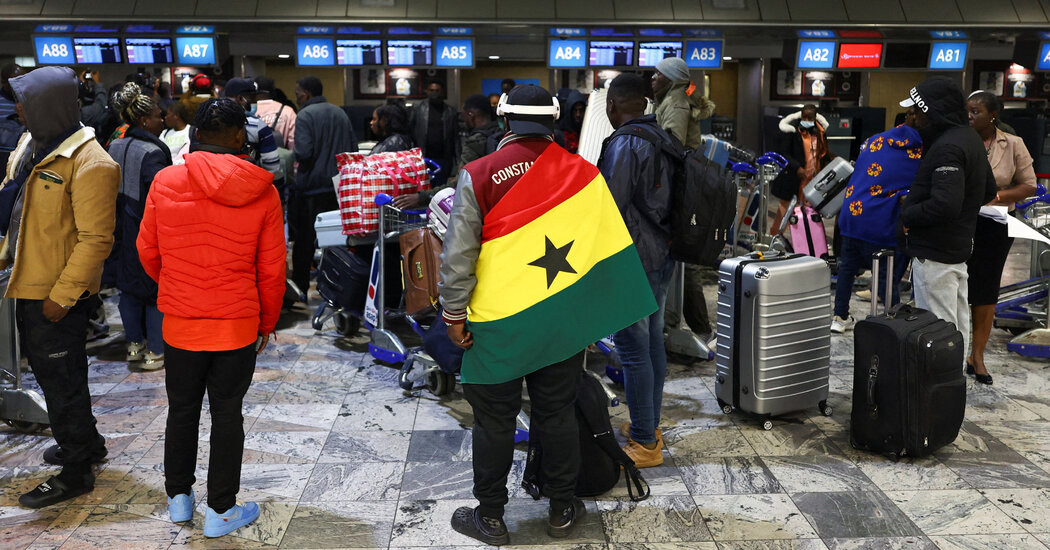
    On Saturday, 28 February, Emirates flight EK 788 from Kotoka International Airport (ACC) in Accra to Dubai International Airport (DXB) was cancelled, and passengers were advised to contact their airlines for rebooking or refund options due to the escalating tensions in the Middle East.

    The airline suspended its services following reported bombings in Iraq and retaliatory attacks across the region, prompting airlines to suspend services.


    The flight from Accra to Dubai International Airport, scheduled for 7:15 pm GMT on Saturday, 28 February 2026, was canceled at the last minute through a notice.


    In response to the ongoing tensions, the Embassy of Ghana, Doha, State of Qatar, on Sunday, March 1, advised Ghanaians living in the area to exercise caution and remain vigilant during this period.


    A press statement from the Embassy of Ghana Doha, State of Qatar read, “Due to missle attack and its impact in Doha, please take shelter until further notice, obtain information from official sources. We urge everyone to stay from military states, remain indoors, avoid crowded areas for any exposure to danger and keep essentials supplies like medication and food”.


    This development is expected to significantly impact travelers from Ghana to Asia, Europe, and North America, as Dubai is a major transit hub connecting travelers through the United Arab Emirates.


    The ongoing tensions have been linked to the death of Iran’s Supreme Leader, Ayatollah Ali Khamenei. Ayatollah Ali Khamenei was reportedly killed in strikes by the Unites States (U.S.) and Israel.


    Last year, the Minister for Foreign Affairs, Samuel Okudzeto Ablakwa, warned the Israeli Embassy against maltreating Ghanaian nationals. Speaking to the media on Thursday, December 11, Mr. Ablakwa noted that Ghana will respond with equal force if any of its citizens are deported.


    According to him, “If they deport ten Ghanaians, we will deport ten. If they deport twenty, we will deport twenty. If they deport fifty, we will deport fifty. We are not going to accept this.”


    His comments are in response to an incident in which several Ghanaian travellers, including four members of a parliamentary delegation en route to Tel Aviv for an international cybersecurity conference, were detained and deported by Israel Embassy officials.


    Mr. Ablakwa narrated, “We were told that the Ghanaian Embassy was uncooperative, but the facts simply do not support that. Out of the six people on the list that Israel provided, one is not even Ghanaian. He is Gabonese. Our embassy had every right to verify the identity of the individuals involved.


    “One of the people listed was seriously ill, and Israeli doctors themselves advised that she should not travel until she had recovered. How can you deport someone who is unwell and needs medical attention? Another individual had already been issued a travel certificate, so there was no reason to stop their entry into Israel.”


    But in their actions, Israeli officials indicated that six Ghanaians who were supposedly due for deportation failed to provide the necessary details needed by Ghana’s Embassy in Tel Aviv to issue travel certificates.

    The matter adds to broader concerns surrounding deportation practices. In September, eleven West African nationals filed two ex-parte applications at the Labour Division of the High Court in Accra, challenging their alleged detention in Ghana after being deported from the United States (U.S).


    The eleven individuals include Nigerians Daniel Osas Aigbosa, Ahmed Animashaun, Ifeanyi Okechukwu, and Taiwo K. Lawson; Liberian national Kalu John; Togolese nationals Zito Yao Bruno and Agouda Richarla Oukpedzo Sikiratou; Gambian national Sidiben Dawda; and Malians Toure Dianke and Boubou Gassama.


    According to the applicants, they were forcibly transported to Ghana without prior notice. They allege that they were secretly moved from the U.S. detention centers between September 5 and 6 in shackles.


    They want the court to temporarily stop them from being deported back to their home countries until the court decides on their case. Their submission further revealed that Ghanaian authorities allegedly confined them in a military facility.


    They cited Article 14(1) of Ghana’s 1992 Constitution, which guarantees personal liberty, as well as Article 23, which protects the right to administrative justice.

    They are arguing that Ghana is violating international law by trying to send them back to countries where their lives or freedom could be at risk.


    As a result, they have demanded that the Attorney-General, the Chief of Defence Staff, and the Comptroller-General of the Ghana Immigration Service appear before the Human Rights Division of the High Court with valid reasons. The court has fixed Tuesday, September 23, to hear the case.

  • Ghanaians held in Ukrainian prisons are safe and in stable condition – Ablakwa confirms

    Ghanaians held in Ukrainian prisons are safe and in stable condition – Ablakwa confirms

    Ghana’s Minister for Foreign Affairs, Samuel Okudzeto Ablakwa, has disclosed that the two Ghanaian nationals detained in Ukraine are alive and in good health, describing his recent engagement as a major diplomatic breakthrough toward securing their release.

    The Minister revealed that he was granted rare access to a tightly secured detention facility where the two men are being held after being captured in the ongoing war in Ukraine. He described the visit as an important step in efforts to bring them home.

    “I can confirm that our citizens are alive and well. Their rights under international law have been commendably respected by Ukrainian authorities,” Mr Ablakwa stated.

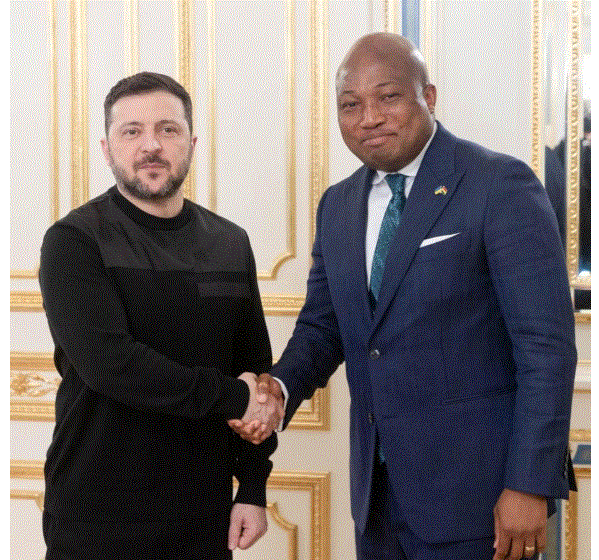
    He expressed appreciation to Ukrainian President Volodymyr Zelenskyy and the country’s Foreign Minister Andrii Sybiha for approving what he characterised as an extraordinary request. The Minister noted that the approval is believed to mark the first time an African foreign minister has been permitted such access.

    According to him, Ukraine’s decision reflects the cordial relations between Accra and Kyiv and strengthens optimism that ongoing negotiations will yield positive results.

    “This significant gesture gives me more confidence that our negotiations for their release will be successful,” he said.

    For security considerations, the identities of the detainees have not been disclosed. However, the Minister indicated that both men have expressed a strong desire to turn their experience into advocacy against human trafficking networks.

    “It is refreshing to hear our two compatriots say that they are determined to become advocates against the modus operandi of trafficking networks and willing to devote the rest of their lives educating vulnerable Africans how to avoid such predicaments,” he added.

    Mr Ablakwa’s visit to Kyiv formed part of wider diplomatic engagements between Ghana and Ukraine. During the trip, he also held discussions with President Zelenskyy, with talks reportedly centred on bilateral cooperation and humanitarian concerns relating to the detained Ghanaians.

    The development signals notable progress in Ghana’s efforts to secure the safe return of its citizens and underscores the government’s commitment to protecting nationals caught up in conflicts beyond its borders.

  • Govt to roll out free primary healthcare to cover all Ghanaians by April

    Govt to roll out free primary healthcare to cover all Ghanaians by April

    Effective April, Ghanaians across the country will have access to free essential healthcare services at hospitals.

    The Minister for Health, Kwabena Mintah Akandoh, disclosed this while speaking on the sidelines of the Accra Reset Addis Reckoning event in Addis Ababa on Saturday, February 14.

    “As part of our effort to achieve Universal Health Coverage, since everybody is contributing to the NHIS levy, Ghanaians deserve this basic benefit. Everyone should be able to enjoy at least free primary healthcare.

    “We have been directed to ensure that Free Primary Health Care is fully implemented across the country by that timeline,” he said.

    Meanwhile, the National Health Insurance Authority (NHIA) has disbursed over GH¢392 million in vetted claims to healthcare providers across Ghana between December 2025 and January 2026.

    The payments cover services provided under the National Health Insurance Scheme (NHIS).

    According to the Finance Directorate of the NHIA, the funds were released following an extensive vetting and approval process of claims submitted by health facilities. In December 2025, the Authority paid GH¢301,658,338.13, while in January 2026, healthcare providers received GH¢90,373,513.13.

    The NHIA in early July 205 disbursed an amount of GH¢267.67 million as claims to health facilities across the country. The disbursement became possible following approval by Chief Executive Dr. Victor Asare-Bampoe. The total payments made by the NHIA in the past seven months stand at over GH¢1.5 billion.

    Out of the total amount, public health facilities received GH¢120,700,932.62, which constitutes 45 percent of the total.

    Private health facilities have been paid GH¢100,210,906.44, representing 37 percent of the total amount, while mission health facilities have been allotted GH¢446,761,808.96, which makes up 17 percent of the total funds.

    One of the ways the National Health Insurance Authority (NHIA) seeks to ease the financial burden on citizens, ensure equal access to healthcare, and reduce illegal fees is by proposing a 120 per cent increase in service tariffs, pending approval from its Board and the Minister of Health.

    This was revealed by the Chief Executive Officer of the NHIA, Dr. Victor Asare Bampoe, during an appearance on Channel One TV’s The Point of View on Wednesday, November 26. According to Dr. Bampoe, the proposed tariff increase, if approved, would help reduce the extra charges patients pay at hospitals for medical care and services.

    He explained that the proposed increase was planned in consultation with a group of independent experts mandated to review tariffs under Sections 33 and 34 of the National Health Insurance Act, which require annual revisions of both medicines and service tariffs.“Regarding the 120% tariff increase: this is proposed after comprehensive work by a group of experts. The law requires an annual review of service and medicine tariffs (Sections 33 and 34). Although the review was delayed, the proposal is now ready and will go to our board and the Minister of Health for approval. Once approved, it will be implemented. This is partly to address the problem of illegal fees at hospitals, ensuring health providers are paid realistic tariffs so patients no longer have to pay out-of-pocket,” he said.

    As the “cash manager” of Ghana’s health insurance system, Dr. Bampoe explained that the NHIA is mandated to collect funds, set tariffs, and pay hospitals, clinics, and pharmacies for services provided to insured patients.

    However, he noted that the Authority plans to move beyond this traditional role and become more of a “strategic health purchasing provider.”“But the NHS is more like a spending entity; we do not generate money on our own. So, we are a spending entity. One of the things we’re trying to do is move away from being a claims payment mechanism to a strategic health purchasing provider, which means that we are able to dictate health outcomes because of the financial muscle that the government provides us with.We’re able to determine the prices of medicines, the prices of services, and even go on the global stage and provide a platform to discuss what kind of health outcomes we want, as you saw with the ACRA Health Sovereignty Summit that happened on August 5. So it’s an interesting time, and His Excellency the President, the Minister of Finance, and the Minister of Health have given us the tools to be able to deliver on this mandate,” he said, citing the government’s commitment to ensuring that his outfit can deliver on its mandate.As part of its vision to move from just paying claims to becoming a “strategic health purchasing provider,” Dr. Bampoe highlighted that the NHIA also seeks to provide Universal Health Coverage (UHC) under three distinct pillars. Lauding the NHIA for its success in granting health coverage, he revealed that out of over 35 million Ghanaians, the Authority has provided coverage for about 20 million.“So essentially, the health insurance scheme was set up in 2003 (Act 650) and amended in 2012 (Act 852), and its primary purpose was to pay claims. But now what we are looking at is getting universal health coverage for all Ghanaians. Universal health coverage has three pillars: population coverage, service coverage, and financial protection. I am proud to say that we are at 20 million in population coverage, which is unprecedented.”He noted that while the medicines tariff review has already been completed, the service tariff review, initiated in 2022, took longer due to its comprehensive nature. “There are two types of reviews that we need to do, but this was a really comprehensive one, so I think they could not finish on time, and so it is now that they have finished,” he explained.

    Dr. Bampoe stressed that implementation now depends solely on statutory approvals. “Now it has to go to the Board for them to look at it and give their view on it. It has to go to the Minister of Health to give his assent, and then we will implement it if they all think it is okay,” he stated.

    The NHIA CEO applauded the government for removing the cap on NHIA funds.“Regarding funding, we are dependent on the importance the government places on healthcare. I’m proud of His Excellency the President, the Finance Minister, and the Minister of Health because the capping act (Act 947 of 2019) has put a limit on funds coming to the NHIA. The President removed that cap, giving us an extra 3.4–3.5 billion cedis for healthcare.“We are trying to do three things; shift mindsets in government and across the country to see healthcare as important for development. Healthy people are more productive. Focus on areas where we get the best results, such as Mahama Cares and Free Primary Healthcare. If 40%+ of people are affected by non-communicable diseases, it makes sense to prevent them. Preventive actions include health promotion and screenings. For example, catching prostate cancer early with a PSA test is more cost-effective than treating stage 4 disease. Shift realities. At the Global Fund and UN, programs were comprehensive but expensive. We now aim for solutions that fit our reality, whether that’s a Rolls-Royce, a Toyota VIT, or even a motorbike; the key is to deliver,” he detailed.

  • 56% of Ghanaians report better living conditions under President Mahama – Global InfoAnalytics

    56% of Ghanaians report better living conditions under President Mahama – Global InfoAnalytics

    President John Dramani Mahama’s administration has been applauded by a majority of Ghanaians for its efforts in improving living standards and boosting the economy.

    A new national tracking poll by Global InfoAnalytics, released on Monday, December 29, shows that a decline in living standards was reported by just 12% of respondents, with 5% offering no opinion.


    Meanwhile, 56% of respondents reported an improvement in their standard of living over the past year, while 27% said it had not changed. Seven in ten voters believe their standard of living will improve in 2026, compared to 18% who expect no improvement.


    The Mahama-led administration is yet to roll out a number of policies for next year. These policies are expected to bring relief to Ghanaians by easing economic pressures and improving daily living conditions. As part of these efforts, President John Dramani Mahama on Wednesday, December 10, officially assented to the COVID-19 Health Recovery Levy Repeal Act, 2025.


    Last month, Parliament approved the government’s decision to scrap the COVID-19 Health Recovery Levy, which was introduced during the pandemic era. Introduced on March 31, 2021, under Act 1068 during the tenure of former President Nana Addo Dankwa Akufo-Addo, the levy imposed a 1% charge on the supply of goods and services in Ghana, excluding certain items, as well as on imports of goods and services.

    According to the New Patriotic Party (NPP), the levy was intended to help the government raise funds to fight the pandemic and support recovery efforts.


    However, presenting the 2026 Budget Statement and Economic Policy to Parliament on Thursday, November 11, Finance Minister Cassiel Ato Forson disclosed that the government had abolished the levy with immediate effect. According to him, the move will save individuals and businesses GH₵3.7 billion in taxes—money that can instead be invested back into their businesses or personal ventures.


    The Finance Minister further added that after months of detailed analysis and broad consultations with stakeholders, the Ministry has completed the design of a modernised Ghana Value Added Tax (VAT) system fit for the country’s economic transformation agenda.

    He mentioned that if approved by Parliament, the VAT reforms will make Ghana’s tax system more equitable, transparent, and business-friendly.


    “As the new VAT reforms will do the following, we will abolish the COVID-19 Health Recovery Levy, Mr Speaker; we will abolish the decoupling of GetFund and National Insurance Levies from the VAT tax base. The current VAT rate will be reduced from 21.9% to 20%.


    “In the 2025 budget, in the mid-year fiscal policy review, the government made a firm promise to reform Ghana’s Value Added Tax (VAT) system to make it fairer, simpler, and more efficient. We pledged to remove distortions, address the cascading effects inherited in the VAT system, strengthen compliance, and create a tax regime that supports both businesses and fiscal stability. These distortions have negatively impacted overall welfare, increasing the deadweight loss in the economy and reducing VAT compliance.


    “Today, Mr Speaker, I am proud to report to this House that we have finally delivered on that promise. After months of detailed analysis and broad consultations with stakeholders, we have completed the design of a modernised VAT system fit for Ghana’s economic transformation agenda. Government is therefore submitting to this House today, for approval, a bold package of VAT reforms that will make our tax system more equitable, transparent, and business-friendly.


    “The new VAT reforms will do the following: we will abolish the COVID-19 Health Recovery Levy. We will abolish the decoupling of GetFund and National Insurance Levies from the VAT tax base. We will abolish VAT on the recognition of minerals. We will reduce the effective VAT rate from 21.9% to 20%. We will raise the VAT registration threshold from GH₵200,000 to GH₵750,000.


    “We will extend VAT zero rating on the supply of local manufacturing textiles to 2028. Mr Speaker, for emphasis, we promised to abolish the COVID Levy, and with the support of this House, I am proud to say that today, the COVID Levy is accordingly abolished. By abolishing the COVID-19 Levy, the government is putting GH₵3.7 billion in the pockets of individuals and businesses in 2026 alone,” he added.


    While delivering the 2025 Mid-Year Budget Statement to Parliament on Thursday, July 24, the Finance Minister assured Ghanaians that the VAT Act was undergoing a series of reforms to eliminate successive charges that increased the cost of goods and services.

    As such, the COVID-19 Levy, Ghana Education Trust Fund (GETFund), and National Health Insurance Scheme (NHIS) levies assented to by former President Akufo-Addo during the NPP-led government will be scrapped next year.


    He noted that his ministry would conclude the review process by the end of September, adding that the new bill would then be submitted to Parliament in October to be included in the 2026 Budget Statement.

    The development is aimed at reducing financial burdens on Ghanaians, thus improving economic conditions. The current VAT flat-rate scheme, the minister asserted, should be replaced with a unified VAT rate for all businesses.


    Additionally, the VAT registration threshold will be raised, a measure expected to exempt small and micro enterprises from registering for and paying VAT, as well as encourage growth in the informal sector. To ensure compliance and transparency, the government plans to roll out fiscal electronic devices such as e-invoicing systems and electronic cash registers. Furthermore, public education campaigns and awareness programmes will be implemented.


    “Rt. Hon. Speaker, the Ministry of Finance hopes to complete this process by September 2025, prepare a new VAT bill by October 2025, and submit it to Parliament as part of the 2026 Budget Statement. Mr Speaker, I would like to reassure Ghanaians that under the reforms, at a minimum, the COVID-19 levy will be abolished, the effective VAT rate will be reduced, and the punitive cascading effect of the GETFund and NHIS levies will be removed.


    “VAT flat rates will be removed, and a unified VAT rate will be implemented; the VAT registration threshold will be increased to exempt small and micro businesses; and compliance will be improved through public education, awareness creation, and the introduction of fiscal electronic devices,” he said.


    Earlier this year, President John Dramani Mahama’s administration repealed the betting tax, emissions tax, and other levies. The Electronic Transaction Levy (E-Levy), introduced in 2022, imposed a 1.5% tax on electronic transactions.

    Although it was later reduced to 1%, the levy remained unpopular, drawing criticism from businesses, consumers, and political stakeholders who argued that it stifled digital transactions and disproportionately affected low-income earners.


    The removal of the tax was a core pledge in the NDC’s manifesto, aimed at reducing the cost of living and encouraging business expansion. With the repeal bill now signed into law, many Ghanaians can breathe a sigh of relief. Supporters of the repeal argue that eliminating these levies will promote digital transactions, stimulate economic activity, and improve disposable income for households and businesses.


    However, economist Dr. Adu Owusu Sarkodie has argued that the abolition of the COVID-19 Levy and removal of key taxes in the 2026 budget will create a significant revenue gap for the economy. He noted that the government is placing its hope on compliance at a time when it has already abolished the E-Levy, which previously fetched the government a little over GH¢2 billion.


    He added that the betting tax, which brought in “roughly about ¢300 billion,” has also been abolished. However, the most severe hit to government revenue comes from the removal of the COVID-19 levy, which was expected to bring in about ¢3 billion next year.


    “Covid-19 was giving us almost the same amount as the total royalties from oil and gas. This year, total royalties from oil and gas are estimated to be ¢2.9 billion. Covid-19 levy will be giving us ¢2.8 billion,” he stated.


    He warned that removing the COVID-19 levy, on top of the ¢2 billion E-Levy, could slash government revenue by about ¢5 billion. He noted, however, that the government believes it can still raise funds by widening the tax base.


    “When you increase the base, if more people are paying, it’s better than a few people paying higher rates,” Dr. Sarkodie explained.

  • I’m claiming the love of Ghanaians even if they don’t love me back – Moliy

    I’m claiming the love of Ghanaians even if they don’t love me back – Moliy

    Ghanaian singer and global sensation Moliy says she is choosing to embrace the love of Ghanaians, regardless of whether it is fully returned.

    Speaking about her relationship with her home country, the singer described it as complex but deeply rooted in affection and commitment, stressing that she remains firmly connected to Ghana no matter how it is perceived.

    She explained that her bond with Ghanaians goes beyond approval or validation, adding that she has made a personal decision to stand with them through every phase of her journey.

    “Me and Ghana, we have a very interesting relationship. I love them and hopefully they love me back. Whether or not they choose to love me, I am claiming their love, you know what I’m saying. It’s do or die, we’re in this together,” Moliy said.

    Burna Boy has also openly expressed his affection for Ghana, revealing that he owns a house in the country and visits as frequently as he can.

    Speaking in a recent interview on The Breakfast Club radio show in New York City, the Grammy-winning Nigerian artiste shared his admiration for Ghana while reacting to one of the hosts’ decision to acquire property there.

    During the conversation, Charlamagne tha God disclosed that he recently purchased a beachfront home in Ghana. When Burna Boy asked if the property was located at Labadi, Charlamagne clarified that it is situated in East Legon.

    Burna Boy praised the move, describing it as a wise decision and reiterating his personal connection to the country.

    “Bro that’s the best decision you have ever made,” the singer said.

    “Trust me, trust me, Ghana is a beautiful place. You’re in a beautiful place man… Cos for me personally that’s my go to place for refuge,” he added.

    Away from their love for Ghana, Moliy chided netizens for habitually body-shaming her

    In a post shared on July 18, she sarcastically quizzed such netizens if they had been able to pay their utility.

    “Hope all of you spending your day talking about my body again got rent and due bills ready. We’re in the middle of the month, just a reminder, much love.”

    She has expressed her contentment with remaining independent of any record label.

    Moliy cited record labels’ restraints on her creativity, issues of trust, as well as hearsay about artists and the challenges that come with being signed to a label.

    Her remarks were in response to a feature of discussion about her career as an independent artiste since her debut in 2020.

    For the sake of creative freedom Moliy says she doesn’t want to be a part of any record label.

    “Yeah. I’ve always been kind of hesitant to be a label artist because I’ve just heard so many stories.I don’t just wanna be a name on a list. Music is very personal to me.

    “So, I think if I did get locked in with a label, I hope it’s something that could be a real, long-lasting, organic relationship.

    “The most freeing part is just getting to do what I want creatively without someone telling me what to do. I don’t like being told what to do,” she shared during an interview on July 7 with Revolt TV.

    She said, “I always feel like the people I work with, I want to trust them. I want it to feel organic”.

    Though she has seen significant success with her songs hitting millions on boards in the UK and other streaming platforms, her independent journey hasn’t been without challenges.

    She struggled with getting her music distributed effectively without the backing of a record label; she had to navigate distribution hurdles on her own.

    “I realized at some point, I was actively seeking [distribution]. I hadn’t released music for a whole year in 2024, and me and my manager were trying to get a [distribution deal] so I could put out music.

    The conversations were sounding positive, but nothing was actually happening. I remember thinking, I still wanna move. I don’t wanna be stagnant,’” she said.

    It was at this point that she realised that “also, if you’re not pushing yourself, if you’re not putting your foot on the gas, no one is gonna do it for you. That’s what I love the most”

    Meanwhile, her journey as an independent artiste has proven quite successful with the awards she’s won and success of her releases over the years.

    In June 2022, she was named Spotify EQUAL Africa Ambassador. She also featured on MTV Base, 3Music TV, and Revolt TV and was later nominated for Ghana Music Awards and honored as BET Amplified Artist of the Month.

  • More than 334k Ghanaians living with HIV – AIDS Commission

    More than 334k Ghanaians living with HIV – AIDS Commission

    A recent statistic from the AIDS Commission has revealed that over three hundred and thirty-four thousand (334,000) Ghanaians are living with Human Immunodeficiency Virus (HIV).

    According to a statement issued on Monday, December 1, Ghana recorded 12,600 AIDS-related deaths in 2024 and over 15,200 new infections.

    Last month, the Commission disclosed alarming statistics regarding the number of individuals living with HIV in the Bono Region. Speaking during the inauguration of the Bono Regional Committee of the Ghana AIDS Commission (RECCOM) in Sunyani on Thursday, November 20, the Regional Technical Coordinator, Ahmed Ibrahim Bambila, revealed that 19,979 residents in the Bono Region are living with HIV and AIDS.


    According to him, 875 new HIV infections have been recorded, highlighting an urgent need for attention and immediate action.

    The newly inaugurated nine-member committee, chaired by Bono Regional Minister Joseph Addae Akwaboa, has been tasked with coordinating HIV-related programmes in the region to help curb the spread of the virus.


    Meanwhile, the Ghana AIDS Commission has revealed that an average of 42 new HIV (Human Immunodeficiency Virus) infections are recorded daily among adults and children across the country.


    According to the Commission’s 2024 National and Sub-National HIV Estimates and Projections, a total of 334,721 people are currently living with HIV in Ghana. Out of this figure, 105,460 are males, representing 31.5 percent, while 229,261 are females, accounting for 68.5 percent.


    The Bono, Bono East, and Ahafo Regional Technical Coordinator of the GAC, Mr. Ahmed Ibrahim Bimbilla, who disclosed this in an interview with the Ghana News Agency (GNA) in Sunyani, said the data provides crucial insight into the scale of the epidemic and guides effective planning.


    He revealed that 15,290 new HIV infections were recorded in the country, comprising 4,987 males, representing 32.6 percent, and 10,303 females, representing 67.4 percent.


    Mr. Bimbilla also noted that AIDS-related deaths currently stand at 12,614, consisting of 5,445 males and 7,159 females. He said approximately 229 deaths are prevented each week through the provision of Antiretroviral Therapy (ART) services.


    Providing a regional breakdown, he said the North East Region recorded the lowest HIV population with 1,717 cases, while Greater Accra, Ashanti, and Eastern recorded the highest figures of 77,821, 63,159, and 44,792 respectively.


    He added that seven regions known as Ahafo, Upper East, Northern, Upper West, Oti, Savannah, and North East each recorded HIV populations below 10,000.


    the According to him, HIV prevalence is highest in the Bono Region with 2.22 percent, followed by the Eastern Region with 2.08 percent and Ahafo with 1.88 percent, while the North East Region recorded the lowest prevalence at 0.43 percent.


    He further indicated that five regions, namely Oti, Upper East, Savannah, Northern, and North East, recorded prevalence rates below 1.0 percent.Mr. Bimbilla stated that the Greater Accra, Ashanti, and Eastern regions also recorded the highest number of new HIV infections, with 3,436, 2,997, and 2,019 cases, respectively, while the North East Region recorded the lowest with 97 cases.


    Eleven regions, including Bono, Volta, Bono East, Western North, Ahafo, Upper East, Northern, Upper West, Oti, Savannah, and North East, recorded fewer than 1,000 new infections.


    Commenting on the trend, Mr. Bimbilla described the decline in HIV prevalence, new infections, and AIDS-related deaths as a positive development, which he attributed to the growing uptake of ART services.


    He expressed optimism that the downward trend would help Ghana achieve epidemic control and urged continued efforts in public education, testing, and access to treatment to sustain progress toward eliminating HIV and AIDS.


    In 2024, the Director General of the Ghana AIDS Commission, Dr. Steve Kyeremeh Atuahene, partly attributed the rise in new HIV infections in Ghana at the time to individuals’ reluctance to disclose their HIV status to their spouses, fearing desertion.


    Dr. Atuahene emphasized that the refusal of some HIV-positive individuals to continue their medication was a significant factor in the spike. He explained, “The fear of the husband or wife deserting them leads some not to disclose their status. Some are afraid their spouse may discover they are taking daily medication, leading them to hide or discontinue their medicines.”


    According to the Ghana AIDS Commission, over 334,000 people live with HIV in Ghana. In 2023, the country reported 17,774 new cases, with 11,317 women and 6,457 men affected.


    This alarming trend has prompted the commission to address the underlying causes and increase awareness about the importance of medication adherence and status disclosure.


    Dr. Atuahene highlighted the increased vulnerability of females to HIV infections compared to males. He explained, “When a female has sex with a man, penile sex and the man ejaculates, the sperm which might contain HIV particles may remain in her for quite some time, whereas that of the male you hardly can see that. Secondly, the surface area of the vagina is much wider than that of the male, and thirdly, the mucus membrane of the vagina is much more fragile than that of the male.”


    Additionally, the Director General noted that universal male circumcision in Ghana serves as a protective factor against HIV transmission. “Women must be aware that they are more vulnerable and therefore they should protect themselves,” he emphasized.


    Dr. Atuahene also pointed out the significant difference in transmission rates between genders.


    “The transmission rate from woman to man is just about 2%, whereas it is more than 12% for a man. That is why women should not gamble with their health and their life by just accepting that ‘if he will give them more money to have sex without a condom, it’s okay for me.’ It shouldn’t be okay for you, especially when you might have untreated sexually transmitted diseases that can also heighten the chance of you getting HIV,” he warned.


    The Ghana AIDS Commission continues to advocate for increased awareness and preventive measures to combat the rise in HIV infections.By addressing issues such as status disclosure, medication adherence, and gender-specific vulnerabilities, the commission aims to reduce the incidence of HIV and improve the quality of life for those affected.

  • Gov’t to outlaw mining in water bodies and forest reserves

    Gov’t to outlaw mining in water bodies and forest reserves

    The government has beefed up its measures in response to illegal mining activities, locally known as galamsey, which are posing a serious threat to Ghanaian citizens.

    Addressing the Ghanaian community in Belgium, the Vice President, Prof. Naana Jane Opoku-Agyemang, indicated that the government will soon roll out a law that will prohibit all mining activities in Ghana’s water bodies and forest reserves.

    Ghana’s laws allow individuals to mine near water bodies; however, the Vice President emphasized that the proposed law will ensure that persons who flout it will be held accountable.

    “We’re working towards banning mining in water bodies. A bill is being prepared to reverse what you saw and to ensure that the people are moved out of these areas and properly placed.
    “What is even more disturbing is the fact that when some mine, they just leave the place bare,” she said.

    President John Dramani Mahama has asked Ghanaians to exercise patience regarding the longstanding battle against illegal mining (galamsey) activities. During a meeting with Civil Society Organisations (CSOs), President Mahama said declaring a state of emergency will not end the menace.

    According to him, government advisors believe the country can overcome galamsey by adopting best practices in small-scale mining, including technologies that help neutralise or remove harmful chemicals from water bodies.

    Additionally, the President pledged to honor the calls of many Ghanaians by declaring a state of emergency when his advisors give him the nod to do so.

    President Mahama believes that the country can eradicate the long-term canker if it deploys more troops as well as invests more resources in the fight. He concluded that the battle seems to be a long one, but his administration is committed to fighting it.

    “While we are fighting the menace, I am also saying we should uptake technology in order to protect the environment. So yes, let’s fight the illegal mining but at the same time, let’s bring the new technology that will help us protect our environment.
    “Now, with the elephant in the room, the state of emergency, yes, I have the power to do it, but the President acts on the advice of the National Security Authority, and as at now, this moment, the National Security Authority believes that we can win the fight against galamsey without declaring a state of emergency. I want to assure you that the day they advise me otherwise—that, boss, now we need a state of emergency—I won’t hesitate,” he added.

    Individuals present at the meeting included government officials and civil society leaders. The engagement comes at a time when there is mounting pressure on the Mahama-led administration to declare a state of emergency regarding the issue, due to its adverse effects on the environment.

    The menace continues to threaten not only Ghana’s water bodies, food crops, and forest reserves but also the country’s energy infrastructure. The Parliamentary Select Committee on Energy has given a stern warning about the potential future repercussions of galamsey if the country fails to find a lasting solution to the menace.

    During a visit to the Anwomaso Thermal Power Station in Kumasi on Wednesday, October 1, Deputy Ranking Member Collins Adomako-Mensah made a startling revelation about how Ghana’s power installations are being tampered with by illegal miners.

    According to him, the country’s electricity generation authorities, including the Ghana Grid Company (GRIDCo), the Bui Power Authority (BPA), WAPCO Gas Pipeline, and the Volta River Authority (VRA), risk shutting down over attacks on their infrastructure.

    “When we were engaging the other participants, two things came up—one has to do with galamsey, and it is having a heavy, heavy toll on the energy sector, not just about water. GRIDCo complained about galamsey. Their pylons—people are digging where they have a lot of their pylons. Yesterday we were at Bui, and the Bui water situation is deteriorating because of the galamsey situation surrounding their water bodies.”

    He added, “GRIDCo complained about galamsey. Their pylons—people are digging where they have a lot of their pylons. Yesterday we were at Bui, and the Bui water situation is deteriorating because of the galamsey situation surrounding their water bodies.”

    In September, GRIDCo expressed grave concern over the encroachment on its transmission tower sites by galamsey operators who are digging dangerously close to the foundations. Acting Deputy Chief Executive Officer of Engineering and Operations, Frank Otchere, made this known at the GRIDCo headquarters in Tema on Thursday, September 25.

    Mr. Otchere stated that maintenance teams now face attacks when they attempt to access certain areas.
    “Unfortunately, there are some areas that even when our maintenance teams go there, they get shot at. And some of them have had to run away,” he disclosed, adding that the situation has made it impossible for GRIDCo to operate in certain locations without security support.

    He added that the galamseyers are weakening the towers, which are carefully engineered to withstand immense weight and pressure. He appealed for urgent assistance from national security agencies to protect transmission corridors and avert the potential collapse of towers.

    “This engagement aims to provide a platform for frank and constructive dialogue between the Government and civil society on the menace of illegal mining, with a view to harnessing collective expertise, perspectives, and solutions to address this national challenge,” the letter stated.

    Ongoing research by a forensic histopathologist and former Head of Pathology at KNUST and Komfo Anokye Teaching Hospital (KATH), Prof. Dr. Paul Poku Sampene Ossei, has revealed alarming trends in the rising cases of spontaneous abortions among pregnant women in Ghana.

    Approximately five hundred cases of spontaneous abortions (miscarriages) have been recorded in research that links these cases to severe contamination of placentas and the presence of heavy metals such as lead and mercury, resulting from galamsey activities.

    A spontaneous abortion is the unintentional expulsion of an embryo or fetus from the uterus before it is viable. Speaking on JoyNews’ Newsfile on Saturday, September 27, Prof. Sampene warned that galamsey is poisoning unborn babies and endangering the lives of mothers.

    “I have about 500 cases where women go to the hospital and abort their babies because of the concentration of these heavy metals in their placenta,” he disclosed.

    According to him, his research involved over 4,000 placentas examined from different regions across Ghana. The results showed dangerous levels of heavy metal contamination on both the maternal and foetal sides. “The placentas are all contaminated, polluted with heavy metals,” he said.

    The dangers of these metals extend beyond pregnancy losses. Another effect of galamsey is the excessive use of alum to address the increasing turbidity of water.

    Ghana Water Company Limited, the nation’s largest water supplier, has resorted to using higher concentrations of alum. Prof. Sampene cautioned that high levels of aluminium hydroxide pose serious health risks.

    According to him, one of the consequences of excessive alum use is kidney disease, which is already on the rise. He warned that if left unchecked, “Ghana will be in big trouble.”

    “Of course, people are talking about turbidity, and then the Water Company is saying that they are using more alum. Alum is aluminium hydroxide, that is the full name, aluminium hydroxide, and this aluminium hydroxide, when taken for a long period—in fact, at higher concentration—has a lot of what you call health effects. One of them is kidney problems.
    “When you use alum, that’s aluminium hydroxide, which is used to purify the water, especially when they are using that concentration, which I believe is so high, it’s going to cause kidney problems, it’s going to irritate the respiratory tract, and it’s going to cause what we call neurological defects.
    “All these things have been proven, have been studied and proven to be important, and we have to be very careful about them now. This goes apart from the effects that we are seeing around,” he explained.

    Among the recent measures taken to protect water bodies from illegal miners is the deployment of the National Anti-Illegal Mining Operations Secretariat (NAIMOS). The Secretariat includes the Ghana Armed Forces, the Ghana Police Service, the Ghana Immigration Service, the National Intelligence Bureau (NIB), the Narcotics Control Commission, and the National Security Secretariat.

    Addressing the security forces, the Minister for Lands and Natural Resources, Emmanuel Amarh Kofi-Buah, directed the team to ruthlessly counter the activities of galamsey operators as they are the enemies of the state.

    “Any recalcitrant entering into these zones is not merely a trespasser. They are an enemy of the state. You are to be firm. You are to be resolute. You are to be ruthless.
    “And please, take it from me, you will take no obstructionist instruction from any big man. Remember, the biggest man in Ghana is the President of the Republic, and he’s the one who has sent you,” Mr. Kofi-Buah charged.

    Currently, more than 2,100 mining licences issued between 2017 and 2024 are under review by the Deputy Minister for Foreign Affairs, James Gyakye Quayson. However, the Deputy Minister has pledged to prosecute all persons found guilty of illegal mining.

  • 3m Ghanaians legally engaged in legal mining – Lands Minister

    3m Ghanaians legally engaged in legal mining – Lands Minister

    More than three million Ghanaians are legally employed in small-scale mining, the Minister of Lands and Natural Resources, Emmanuel Armah-Kofi Buah has revealed. According to the Minister, these individuals are located in the rural communities, where small-scale is a major source of livelihood.


    “Small-scale mining is the largest gold producer in Ghana. 52% of the gold in Ghana is produced by small-scale mining, and large-scale mining 48%. Mining is the lifeline for 3million+ Ghanaians, especially in rural communities. Small-scale mining used to be an informal economic sector that has persisted for centuries,” he added.


    He made the revelation during a dialogue between President John Dramani Mahama and Civil Society Organisations (CSOs), aimed at countering illegal mining activities, popularly known as galamsey.


    Individuals present at the meeting include government officials and civil society leaders. The engagement comes at a time when there is mounting pressure on the Mahama-led administration to declare a state of emergency regarding the issue, due to its adverse effects on the environment.

    The menace continue to threaten not only Ghana’s waterbodies, food crops and forest reserves but also the country’s energy infrastructure.


    The Parliamentary Select Committee on Energy has given a stern warning about the potential future repercussions of galamsey if the country fails to find a lasting solution to the menace.


    During a visit to the Anwomaso Thermal Power Station in Kumasi on Wednesday October 1, Deputy Ranking Member, Collins Adomako-Mensah, starling revelation about how Ghana’s power installations are being tempered with by illegal miners.


    According to him, the country’s electricity generation authorities including the Ghana Grid Company (GRIDCo), the Bui Power Authority (BPA), WAPCO Gas Pipeline and the Volta River Authority risk shutting down over attacks on their infrastructure.


    “When we were engaging the other participants, two things came up- one has to do with galamsey and it is having a heavy, heavy toll on the energy sector, not just about water. Gridco complained about galamsey. Their pylons, people are digging where they have a lot of their pylons. Yesterday we were at Bui and the Bui water situation is deteriorating because of the galamsey situation surrounding their water bodies.


    He added, “Gridco complained about galamsey. Their pylons, people are digging where they have a lot of their pylons. Yesterday we were at Bui and the Bui water situation is deteriorating because of the galamsey situation surrounding their water bodies.”


    In September, GRIDCo expressed grave concern over the encroachment on its transmission tower sites by galamsey operators, who are digging dangerously close to the foundations.

    Acting Deputy Chief Executive Officer of Engineering and Operations, Frank Otchere, made this known at GRIDCo headquarters in Tema on Thursday, September 25.


    Mr. Otchere stated that maintenance teams now face attacks when they attempt to access certain areas.


    “Unfortunately, there are some areas that even when our maintenance teams go there, they get shot at. And some of them have had to run away,” he disclosed, adding that the situation has made it impossible for GRIDCo to operate in certain locations without security support.


    He added that the galamseyers are weakening the towers, which are carefully engineered to withstand immense weight and pressure. He appealed for urgent assistance from national security agencies to protect transmission corridors and avert the potential collapse of towers.


    “This engagement aims to provide a platform for frank and constructive dialogue between the Government and civil society on the menace of illegal mining, with a view to harnessing collective expertise, perspectives, and solutions to address this national challenge,” the letter stated.


    Ongoing research by a forensic histopathologist and former Head of Pathology at KNUST and Komfo Anokye Teaching Hospital (KATH), Prof. Dr Paul Poku Sampene Ossei, has revealed alarming trends in the rising cases of spontaneous abortions among pregnant women in Ghana.


    Approximately five hundred cases of spontaneous abortions (miscarriages) have been recorded in research that links these cases to severe contamination of placentas and the presence of heavy metals, such as lead and mercury, resulting from galamsey activities.


    A spontaneous abortion is the unintentional expulsion of an embryo or fetus from the uterus before it is viable.
    Speaking on JoyNews’ Newsfile on Saturday, September 27, Prof. Sampene warned that galamsey is poisoning unborn babies and endangering the lives of mothers.


    “I have about 500 cases where women go to the hospital and abort their babies because of the concentration of these heavy metals in their placenta,” he disclosed.


    According to him, his research involved over 4,000 placentas examined from different regions across Ghana. The results showed dangerous levels of heavy metal contamination on both the maternal and foetal sides. “The placentas are all contaminated, polluted with heavy metals,” he said.


    The dangers of these metals extend beyond pregnancy losses. Another effect of galamsey is the excessive use of alum to address the increasing turbidity of water.

    Ghana Water Company Limited, the nation’s largest water supplier, has resorted to using higher concentrations of alum. Prof. Sampene cautioned that high levels of aluminium hydroxide pose serious health risks.


    According to him, one of the consequences of excessive alum use is kidney disease, which is already on the rise. He warned that if left unchecked, “Ghana will be in big trouble.”


    “Of course, people are talking about turbidity, and then the Water Company is saying that they are using more alum. Alum is aluminium hydroxide, that is the full name, aluminium hydroxide, and this aluminium hydroxide, when taken for a long period, in fact at higher concentration, has a lot of what you call health effects. One of them is kidney problems.


    “When you use alum, that’s aluminium hydroxide, which is used to purify the water, especially when they are using that concentration, which I believe is so high, it’s going to cause kidney problems, it’s going to irritate the respiratory tract, and it’s going to cause what we call neurological defects.

    “All these things have been proven, have been studied and proven to be important, and we have to be very careful about them now. This goes apart from the effects that we are seeing around,” he explained.


    Among the recent measures taken to protect water bodies from illegal miners is the deployment of the National Anti-Illegal Mining Operations Secretariat (NAIMOS).


    The Secretariat includes the Ghana Armed Forces, the Ghana Police Service, the Ghana Immigration Service, the National Intelligence Bureau (NIB), the Narcotics Control Commission, and the National Security Secretariat.


    Addressing the security forces, the Minister for Lands and Natural Resources, Emmanuel Amarh Kofi-Buah, directed the team to ruthlessly counter the activities of galamsey operators as they are the enemies of the state.


    “Any recalcitrant entering into these zones is not merely a trespasser. They are an enemy of the state. You are to be firm. You are to be resolute. You are to be ruthless.


    “And please, take it from me, you will take no obstructionist instruction from any big man. Remember, the biggest man in Ghana is the President of the Republic, and he’s the one who has sent you,” Mr Kofi-Buah charged.

  • President Mahama swears in 21 Appeal Court Judges

    President Mahama swears in 21 Appeal Court Judges

    President John Dramani Mahama, on Thursday, October 2, swore in twenty-one (21) High Court Judges as Justices of the Court of Appeal. The swearing-in ceremony took place at the Jubilee House in Accra.

    Speaking at the ceremony, President Mahama charged them to be transparent in the execution of their duties despite negative perceptions about the judiciary.

    “What we must guard against is cynicism, the corrosive belief that the courts no longer serve the people but only the powerful in society. In recent times, our courts have not escaped criticisms. Citizens have openly and sometimes harshly questioned judicial decisions.

    “But I want to say clearly criticism of judgments is not the end of hope; it is the evidence of hope. It shows that Ghanaians still believe in the courts, that justice still matters, and that verdicts have meaning in their lives,” he added.

    The appointees include Dormaahene Osagyefo Oseadeeyo Agyeman Badu II, Mr Justice Senyo Amedahe, a Koforidua High Court Judge, Justice Justin Dorgu, Justice George Boadi, Justice Ayitey Armah-Tetteh, Justice Olivia Boeng Owusu, Justice Douglas Seidu, Justice Ali Baba Bature, Justice Mariama Samo, Justice Abena Adzin Doku, Justice Mary Maame Akua Yanzu, and Justice Jennifer Anne Myers Ahmed.

    The rest are Justice John Bosco Nabarese, Justice Kwasi Anokye Gyimah, Justice Richmond Osei Hwere, Justice Apangano Achibonga, Justice Charity Akosua Asem, Justice Enyonam Adinyira, Justice Shiela Minta, Justice Bridget Kafui Antonio, and Justice Franklina Gesila Adanu. 

    In September, President John Dramani Mahama announced the removal of the Chief Justice from office on Monday, September 1, after receiving recommendations from the committee probing petitions seeking the removal of Chief Justice Gertrude Araba Esaaba Sackey Torkornoo.

    Having violated Article 146 (9), as mentioned in the Committee’s report and recommendations, President Mahama dismissed Madam Torkornoo not only from her position as Chief Justice but also as a Supreme Court Judge.

    In a statement dated September 1, the Presidency justified the dismissal of Gertrude Torkornoo as being in accordance with Article 146 (9) of the 1992 Constitution.

    “NOW THEREFORE, KNOW YE ALL MEN that I, JOHN DRAMANI MAHAMA, President of the Republic of Ghana, in pursuance of the said Article 146(9), do hereby REMOVE the said Chief Justice, Justice Gertrude Araba Esaaba Sackey Torkornoo, from the office of Chief Justice and Justice of the Supreme Court, with effect from the date hereof,” parts of the statement noted.

    According to Article 146 (9), “A Justice of a Superior Court or a Chairman of a Regional Tribunal shall not be removed from office except for stated misbehaviour or incompetence or on grounds of inability to perform the functions of his office arising from infirmity of body or mind.”

    In the case of Madam Torkornoo, the committee found her guilty of stated misbehaviour, including unlawful expenditure of public funds, abuse of discretionary power, and interference in judicial appointments. These findings were tied not just to her role as Chief Justice, but also to her conduct as a Justice of the Supreme Court. Therefore, the committee recommended her complete removal from both roles, and President Mahama was constitutionally obligated to act on that recommendation.

    Outlining the charges of unlawful expenditure of public funds, the Committee’s report suggested that, “In the opinion of the committee, the travel expenses which the Chief Justice heaped on the Judicial Service when she travelled on holidays in September 2023, first to Tanzania with her husband and second, to the United States of America with her daughter, together with the payment of per diem to the spouse and daughter of the Chief Justice, constituted unlawful expenditure of public funds.”

    “Those acts… constitute avoidable and reckless dissipation of public funds and, in the view of the committee, to have been occasioned by the overall head of the Judiciary and the Judicial Service, whose duty is to guard public resources allocated by the Government, is caught within the spectrum of stated misbehaviour.”

    According to the Committee, she also abused her powers as Chief Justice in the transfer of one Mr. Baiden, adding, “The committee also stated without fear or favour that the Chief Justice unjustifiably breached the provisions in Article 295 (a) and (b) of the Constitution, 1992, in the way and manner that she transferred Mr. Baiden. It said her conduct amounted to misbehaviour.”

    On interference in judicial appointments, the Committee highlighted the Chief Justice’s deliberate actions of bypassing the designated system of selecting Supreme Court Judges. Hence, the Committee labelled her conduct as unacceptable and counted it as misconduct.

    “Justice Torkornoo… cannot lay claim to ignorance of the nomination process and procedure, notwithstanding the fact that the process and procedure are not spelt out in the Constitution but case law.”

    “Therefore, to seek, wittingly, to outwit this known process and procedure for appointing Supreme Court Justices amounts to misbehaviour in the eyes of the Committee and the Committee finds it as such,” excerpts of the report read.

    The committee, chaired by Supreme Court Justice Gabriel Scott Pwamang, also included Justice Samuel Kwame Adibu Asiedu, former Auditor-General Daniel Yaw Domelevo, Major Flora Bazwaanura Dalugo of the Ghana Armed Forces, and Professor James Sefah Dzisah of the University of Ghana.

    In July, an application for review regarding an ‘abuse of court processes’ by the embattled Chief Justice, Justice Gertrude Torkornoo, was dismissed by the Human Rights Division of the Accra High Court.

    The court, presided over by Justice Amoako on Thursday, July 31, ruled that several claims, such as the illegal composition of the committee and wrongful conduct of adversarial proceedings, were already before the Supreme Court.

    Justice Amoako argued that relitigating these issues would result in duplication of litigation and abuse of court processes. As such, the claims were dismissed. The judge also dismissed reliefs such as an order of certiorari to quash the committee’s proceedings and nullify its sittings on the basis that the Chief Justice did not receive a fair hearing, citing jurisdictional grounds.

    The judicial review application filed on June 9 this year sought nine reliefs, including a series of declarations that the Article 146 committee set up to probe her removal from office had acted unlawfully. She wanted the court to prevent the committee from proceeding with its work without providing her with authenticated copies of the petitions seeking her removal and the subsequent responses.

    The Chief Justice argued that the President’s prima facie determination contained no reasons or justification and was devoid of the judicial or quasi-judicial reasoning expected under the Constitution.

    As the proceedings of the Article 146 committee are to be held in-camera in accordance with Article 146(8) of the Constitution, the court noted that it could not inquire into matters raised by the suspended Chief Justice.

    In response, Justice Gertrude Torkornoo proceeded to the ECOWAS Community Court in Abuja, Nigeria, seeking compensation worth $10 million over her suspension from office by President Mahama.

    This forms part of the 10 reliefs being requested. The Chief Justice’s recent suit follows several unsuccessful cases at the Supreme Court this year after her suspension.

    The suspended Chief Justice also wants the court to ensure she continues to enjoy the paraphernalia and entitlements of her office as Chief Justice of Ghana pending the hearing and determination of the case.

    The measures requested are: “That the Republic of Ghana suspend the disciplinary removal from office as Chief Justice process against the Applicant, pending the hearing and determination of the complaint on the merits.

    “That Ghana refrains from taking any other measures that may harm the rights claimed by the Applicant and/or aggravate or extend the dispute submitted to the Court, or compromise the implementation of any decision that the Court may render.

    “Given the urgency of the situation, the Applicant respectfully requests the Court to hold a hearing on this request as soon as possible, and that the President of the Court ask Ghana to act in order to allow any order that the Court may issue on the Request for Assignment of Precautionary Measures to have its appropriate effect.”

    The other reliefs are as follows: “A declaration that the panel instituted by the Respondent (Ghana) to investigate and determine the allegations of misconduct against the Applicant was not constituted to guarantee its independence and impartiality and as such has violated the Applicant’s human right to fair hearing guaranteed by Article 7 of the African Charter on Human and Peoples’ Rights.

    “A declaration that the purported suspension of the Applicant as the Chief Justice of the Republic of Ghana by the President of the Respondent State on 22 April 2025 constitutes a violation of her human right to fair, equitable and satisfactory conditions guaranteed by Article 15 of the African Charter on Human and Peoples’ Rights.

    “A declaration that the purported suspension of the Applicant as the Chief Justice of the Republic of Ghana by the President of the Respondent State on 22 April 2025 has exposed her to public ridicule and odium locally and internationally and the said act constitutes a violation of her human right to dignity guaranteed by Article 5 of the African Charter on Human and Peoples’ Rights.

    “A declaration that by subjecting the Applicant to an illegal and unfair investigation and trial since April 2025, the Respondent has inflicted injuries on her professional standing and image, thereby exposing her and her family to immeasurable public ridicule.

    “An order to the Respondent Republic to act immediately to prescribe the rule of procedure to govern the investigation of allegations of misconduct against the Chief Justice of the Republic of Ghana in conformity with the right to fair hearing guaranteed by the Constitution of Ghana and the African Charter on Human and Peoples’ Rights.

    “An order directing the Respondent to immediately lift the suspension and restore the Applicant to full office until the conclusion of fair constitutional proceedings.

    “An order restraining the Respondent from continuing with the purported inquiry for the removal of the Applicant as the Chief Justice of the Republic of Ghana in its current form, until it conforms to fair hearing guarantees.

    “An award of USD 10 million as compensation for moral and reputational damages suffered by the Applicant as a result of her illegal suspension and unfair investigation, and lastly, any other relief(s) as the Honourable Court deems just.”

    On Thursday, August 14, the Bar Council of England and Wales and the Commonwealth Lawyers Association called for the immediate reinstatement of Ghana’s Chief Justice by President John Dramani Mahama and the Executive arm of government.

    “Immediately and without delay, reinstate the Chief Justice of Ghana to her Office, consistent with both the hitherto strong attachment to the rule of law demonstrated by Ghana and also the constitutional duties incumbent upon it.

    “And afford the Chief Justice due and fair process in the investigation and determination of the disciplinary matters brought against her, including but not limited to full and transparent access to that process by her legal representatives,” the group demanded in a joint statement issued on August 14.

    Additionally, the group asked the government for a proper and impartial investigation of the disciplinary charges against her, with her lawyers given full and transparent access to the proceedings.

    Both groups further demanded the establishment of transparent procedural rules to guide the disciplinary process, including a definite timeframe within which the investigative committee must conclude its work and communicate its decision.
  • Ghanaians to enjoy 33%-50% more value from DStv packages

    Ghanaians to enjoy 33%-50% more value from DStv packages

    The standoff between MultiChoice Africa and the Ministry of Communications has ended following a groundbreaking development.

    Addressing the media on Monday, September 29, the sector Minister disclosed that MultiChoice Africa has declared its intention to introduce an “unprecedented increased value offer” for Ghanaian consumers.


    According to him, Ghanaians will now enjoy between 33% and 50% more value on the DStv packages they purchase. Thus, DStv is giving subscribers more channels and benefits without them paying extra.


    “MultiChoice Africa has committed to an unprecedented increase in value offered only in Ghana, which will result in Ghanaian DStv subscribers getting more services for less. “Depending on the DStv package or bouquet you use, subscribers will get between 33% to 50% more value,” the Minister stated.


    Customers on the Paddy bouquet will be upgraded to Access, those already on the Access package will enjoy the Family package, and those on the Family package will be upgraded to Compact. Compact subscribers will be promoted to Compact Plus, and those on Compact Plus will enjoy the Premium bouquet package.


    He announced after receiving a report from the committee tasked with reviewing subscription packages with MultiChoice.

    The committee included representatives from the Ministry of Communication, Digital Technology and Innovation, the National Communications Authority, MultiChoice Ghana, and MultiChoice Africa, which was chaired by the Communications Minister himself.

    The prolonged back-and-forth between the two parties revolves around Sam George’s calls for a reduction in DStv subscription packages for Ghanaian customers. Sam George had earlier instructed the National Communications Authority (NCA) to suspend the broadcast of DStv should Multichoice fail to reduce prices of its packages.


    Speaking at a press conference in Accra on Friday, September 5, Sam George noted that the government has established a joint committee with MultiChoice Ghana to reach a final agreement on how its prices will be adjusted to ensure Ghanaian customers pay less.


    “We have taken an immediate step to put together a committee comprising representatives from the ministry, the regulator, NCA, Multichoice Ghana, and Multichoice Africa. I will personally chair the committee. Let us be clear, they have finally accepted that there will be a reduction, and they want us to discuss the level of reduction. I believe that as a minister, we do not need 30 days,” he said.


    On Wednesday, September 24, the National Communications Authority (NCA) announced a 7-day extension window for the stakeholder committee set up to review DSTV’s pricing model in Ghana to present their report by September 29. The committee is expected to present its report on Monday, September 29, 2025.


    Originally scheduled to present its final report by September 22, the committee requested an extension, which was granted by the Minister of Communications and Digital Technology and Innovations, Sam George.


    In a statement released by the NCA, it announced that “Whilst the Committee has made significant progress, it has requested an extension of one week to complete its work, which extension has been granted by the Honourable Minister for Communication, Digital Technology and Innovations.

    Consequently, the outcome of the Committee’s work is expected to be presented by 29th September, 2025”.


    It continued that “the Stakeholder committee established to evaluate DStv pricing in Ghana commenced work on 8th September 2025, to address the following: a. Achieve a shared understanding of DStv pricing for Ghana and structured, mutually acceptable and commercially viable measures to address the Minister’s concerns around the pricing of the DStv service.

    Establish an acceptable roadmap to curb cross-border piracy of DStv decoders/service from Nigeria to Ghana”. On September 7, the NCA announced that it will have a meeting with MultiChoice Ghana (the company that runs DStv) over the satellite television provider’s pricing model in Ghana on Monday, September 8.


    The governing body of the electronic communications and broadcasting sectors in Ghana announced this in an official statement dated September 7 and titled “Update on DSTV Pricing in Ghana”.


    It revealed that MultiChoice has responded to its mandate to suspend its operations in Ghana and has expressed its readiness to review its pricing and collaborate with the Committee set by Sam Nartey George.


    “The National Communications Authority (NCA) has received from Multichoice Ghana its response to the notice of intention to suspend their authorisation and request for their pricing model…The first meeting of the Stakeholder Committee shall be held on Monday, 8th September 2025. The Authority shall provide further updates on this matter in due course,” NCA revealed in the statement.


    The paid-TV company denied some claims made by the Communications Minister about its readiness to cut prices for Ghanaian consumers.


    In a responsive statement titled “MultiChoice sets the record straight on DStv pricing” and shared on Friday, September 5, MultiChoice announced its readiness to cooperate with the Working Committee established by the Communications Ministry to find a solution to the discussion concerning the reduction of DSTV fees for the Ghanaian populace.


    However, it objected to claims by the Minister that their outfit is ready for a price reduction. “We have noted the statement made by the Minister for Communications Technology and Innovation, Hon. Samuel Nartey George. We continue to engage with the Minister in a bid to find an amicable solution that is beneficial for all parties involved, but does not jeopardise the viability of the DStv service.


    “We will fully participate in the established Working Committee. However, we wish to clarify that MultiChoice Group has not agreed to a price reduction”, the statement explained. The said Committee, according to Sam George, will be chaired by him to ensure transparency and fairness. Consequently, NCA engaged MultiChoice on the statement for clarity.

    “…While the Authority reviews their submission, there have been further engagements with Multichoice Ghana regarding its public statement dated 5th September 2025”, the statement continued adding that following the engagements,


    “…the following clarifications have been obtained: 1. Multichoice Ghana agrees with the directive from the Honourable Minister for Communication, Digital Technology and Innovations for the establishment of a Stakeholder Committee to evaluate DSTV pricing in Ghana, and that they intend to fully participate in this work. 2. The outcome of the Stakeholder Committee would be determined at the end of its work. 3. MultiChoice has confirmed that it will respect due process and the laws of Ghana and its people”.

    Taking to his official X (formerly Twitter) account, Sam George highlighted his commitment to protecting the interests of Ghanaians without compromise. He affirmed that he would not allow any form of disrespect to consumers from any company.


    “If MultiChoice has objected to price cuts as they earlier agreed to, then the proposed shutdown of their services in Ghana would hold as earlier communicated”.


    “Let me be clear, I have no intention to continue tolerating the disrespect to Ghanaians by DStv. If MultiChoice is not interested, as they claim in their last statement, in discussing a reduction in prices as they had indicated to me, we would proceed to effect the shutdown tomorrow as indicated.


    He reiterated that “DStv indicated their willingness to engage the Ministry on its concerns on pricing and prayed us to stay our enforcement action. If they have changed their position, then we simply would enforce the regulatory action”.


    The Ningo-Prampram Member of Parliament stressed that Ghana is ready to partner with international firms, but only in full respect of the country’s laws and consumer protection.


    “No company is above the law. When MultiChoice is ready to discuss a price reduction, they can come to the negotiation table. Until then, there is nothing for us to meet over. The NCA Ghana would carry out enforcement. Ghana is open for businesses that respect our laws and institutions,” he stressed.


    The statement follows Communications Minister Sam George’s claims in an earlier press briefing held yesterday, Friday, September 5, that the satellite television provider has agreed to a price reduction.
    During the briefing, he also revealed that, following their agreement to reduce prices, they have asked for thirty days to conclude discussions and arrive at a final decision.
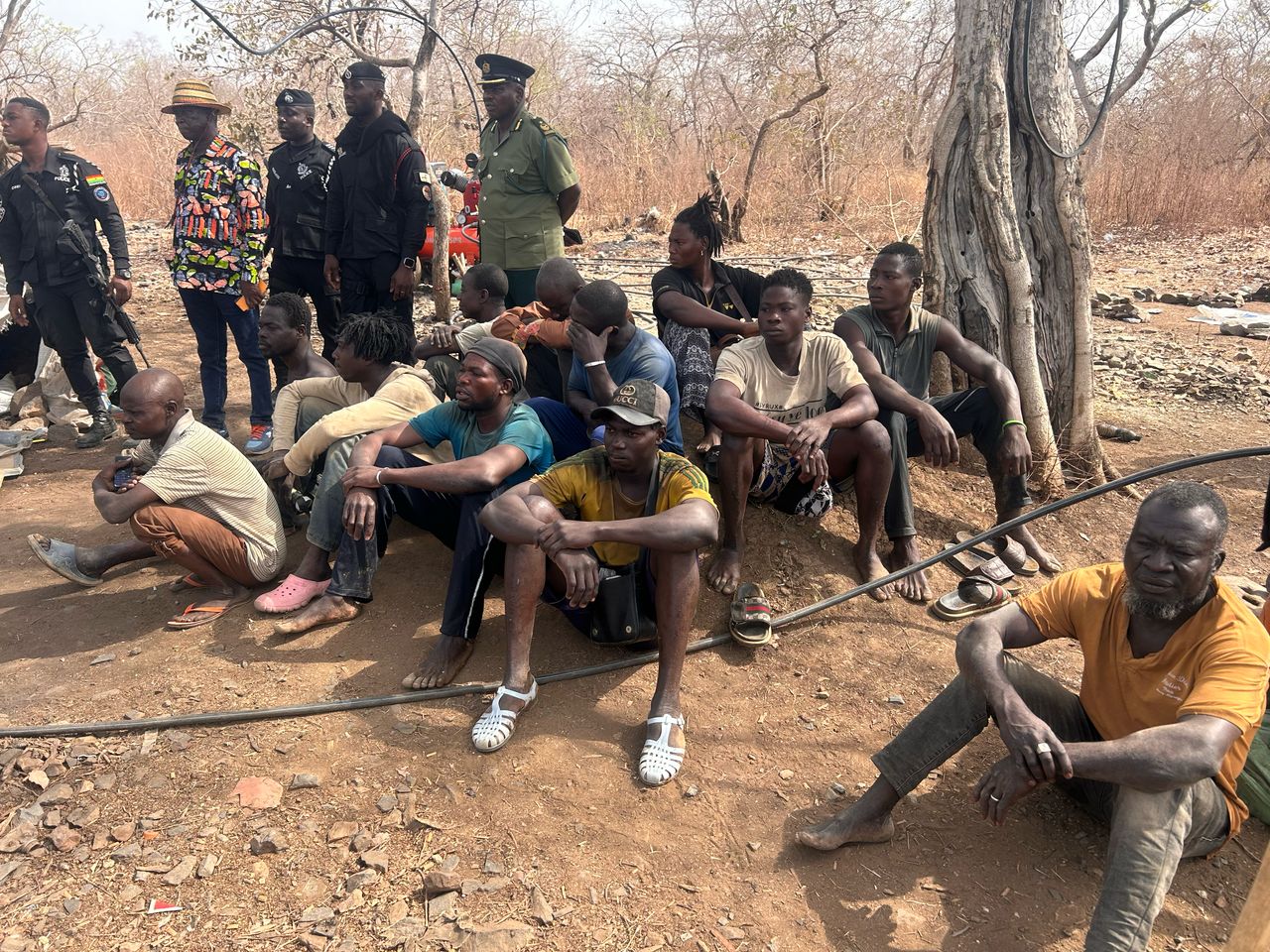

    But Sam George outrightly declared that the 30-day window is too much, hence they have just fourteen days to reach a decision. With the 14-day window, MultiChoice has until September 21 to arrive at a solution.


    “Let us be clear they have finally accepted that there will be a reduction, and they want us to discuss the level of reduction. I believe that as a minister, we do not need 30 days. 14 days is enough for us to reach this decision, inclusive of weekends,” the Minister said.
    Engaging the public on Friday, September 5, as part of the Government Accountability Series, the minister noted that he received a 9-page document from Multichoice on July 21 over its inability to reduce its subscription fees.


    Earlier, the Minister for Communications, Digital Technology and Innovation, announced that should Multichoice fail to reduce the prices of its subscription services, the DStv broadcast license will be suspended nationwide, effective August 7, 2025.


    Engaging the public yesterday as part of the Government Accountability Series, the minister noted that he received a 9-page document from Multichoice on July 21 over its inability to reduce its subscription fees.


    The company cited depreciation of the cedi in past years, despite the recent cedi appreciation, as the reason for its inability to reduce prices. Sam George noted that it is unacceptable for Nigerians to be paying less for the same packages offered to Ghanaians at higher costs when the naira has depreciated at an accelerating rate against the cedi.


    As such, he has directed the National Communications Authority (NCA) to suspend the broadcast of DStv should Multichoice fail to reduce prices of its packages.


    “Their reasons included that the cedi had depreciated in the preceding eight years by 240%, and they claimed that my request for a reduction based on the appreciation of the cedi was unfounded because, in their words, the appreciation of the Ghana cedi over the last 6 months has been a fluke which could not be sustainable.


    “As Minister, my fidelity is to the Ghanaian people. I have to act in the interest of the Ghanaian people, and I believe the Ghanaian people have been fleeced and exploited for too long. I wrote back to the NCA on Monday and directed the NCA in that letter to suspend the broadcasting license of DStv effective 7th of August 2025, if they fail to effect a reduction in their bundle prices.


    “I can’t as a minister serving the Ghanaian people, continue to watch what can be best described as plain stealing happening to the Ghanaian people. In my letter to them, I gave them scenarios from seven markets that DSTV is operating in. The same content in the premium bouquet that is offered to Ghanaians for the $83 equivalent is offered to Nigerians for the $29 equivalent.


    “How can anyone explain this price disparity to me? Enough of the mistreatment of the Ghanaian consumer. In Nigeria, in the same timeframe, they say the Ghanaian cedi has depreciated by 240%, and the Nigerian naira has depreciated by 409%. If Nigerians are paying the equivalent of $29, DSTV must charge the same here in Ghana,” he said.

  • Ghana’s additional $1m payment reduces University of Memphis scholarship arrears from $3.6m to $1.35m

    Ghana’s additional $1m payment reduces University of Memphis scholarship arrears from $3.6m to $1.35m

    The government of Ghana’s debt owed to the University of Memphis (UofM) in the United States (US) has been reduced from $3.6 million to $1.35 million following a recent $1 million payment.

    This development comes as a relief to Ghanaian students studying at the University of Memphis. However, the University has given the government until October 15 to settle the remaining debt, or else Ghanaian students risk being evicted. This disclosure was made by Memphis-based media outlet ABC24 Memphis on Wednesday, August 27.

    Ghanaian awardees in Memphis, most of whom are pursuing science, engineering, and business-related courses, face the threat of eviction from University housing and possibly deportation should the government miss the deadline.

    In July, the government made a payment of $1.4 million to the school. Speaking to the media, the Registrar of the Ghana Scholarships Secretariat, Alex Kwaku Asafo-Agyei, on Wednesday, July 30, reiterated the government’s commitment to settling the outstanding debt owed to the University of Memphis to safeguard the education of Ghanaian students.

    “We are on course with the issues regarding the Ghanaian students at the University of Memphis. Ghanaian students will not be deported; I give you that assurance. Because the audit is ongoing, we are not paying all,” he said.

    The funds were released swiftly after the University of Memphis declared its intention to revoke the scholarships of Ghanaian students should the government of Ghana miss an August 9 deadline. The affected students appealed for urgent support from the government to avoid returning home and abandoning their studies. The leader of the Ghanaian student cohort, Fredrick Badu-Asamoah, expressed deep frustration over the situation.

    “This situation is heartbreaking. We’re not here on personal funds—we’re here representing the Republic of Ghana. We’ve written to the Ministry of Foreign Affairs, the Ghana Embassy in Washington, and the Ghana Scholarships Secretariat, and efforts to reach the Presidency proved futile, and we’ve received no decisive intervention,” he said.

    President of the University of Memphis, Dr Bill Hardgrave, attributed Ghana’s delay in clearing outstanding debts to the change of government. The University also launched an appeal for donations through the Gary Shorb International Student Support Fund.

    In response to the scholarship crisis, the Minister of Youth Development and Empowerment, George Opare Addo, revealed that the debt owed in terms of scholarships affects several schools across the world.

    He said that an audit is underway to investigate the circumstances surrounding the scholarship debt crisis. “There is a debt of fees that we have across the world. And so my registrar now has to go around the world and negotiate with schools, and that is what we’ve been undertaking in the last four, five months. I keep sending him—go here, go there—because you keep getting threats all over the world: ‘We are going to sack your students,’” he said during an appearance on Joy News’ PM Express on Tuesday, July 23.

    The previous New Patriotic Party (NPP) government left a startling GH¢700 million in unpaid scholarship debt, according to the Minister. He described the current situation as a “bad, bad, bad mess” that threatens the future of Ghanaian students abroad and the country’s international reputation.

    “The current bill that I have is over GH¢700 million in debt that we have to find money to pay,” he said. Given the current state of the economy and the ballooning debt crisis, the Minister was asked whether the government had enough to pay—or was even willing to pay—the GH¢700 million.

    In an empathetic response, he said, “It involves Ghanaian students; it involves lives. It involves our citizens. And so we must find the money to pay.” While admitting that Ghana currently does not have this money in cash, he said negotiations are ongoing. He also commended the Chief of Staff for his input during negotiations on the terms of the debt.

    “The Chief of Staff has been very helpful. With the Finance Minister and the Chief of Staff, we are working closely to offset the debt… So yes, we will pay, but we have to negotiate.”

    Some schools, Mr Opare said, have shown a positive response, understanding that the debt was inherited from the previous government. “They know that we are a new government that has come in. We inherited these problems, and so we are aligning and fixing them gradually.”

    He also responded to reports of students receiving threats of eviction from their schools. “You can’t blame this government for the mess we inherited. And most of these things have been outstanding for a year or two,” he continued.

    Mr Opare revealed that a meeting had been held with a group of students in London, and sadly, some of the affected students have decided to forfeit their stipends in exchange for a further stay abroad to continue their education or seek a job.

    “They had the option of choosing between being paid their stipends and returning to Ghana or letting it go to stay. If I pay your fees, you must come back and help. So, do you want to stay? If you are going to stay there, I’m not going to pay your stipend, because you have already finished school. And so, a lot of them said, ‘Okay, let the stipends go.’”

    “A lot of the students have opted out. We held a meeting with some of them in London and gave them some options.” Although he declined to disclose the options discussed, he revealed that a major issue lies with stipends owed to students who have already graduated.

    “Somebody might have finished school for two years, and the government still owes him or her stipends, but per the law, once you finish, you must come back home. And a lot of them want to remain there,” he revealed.

    He emphasised that a continued stay abroad after graduation without returning violates the terms of the scholarship. Ghanaian students studying abroad on government scholarships have, over the years, faced similar threats over unpaid debts. In late 2024, some Ghanaian students at the University of Birmingham in the UK were warned of deportation following the revocation of their student visas.

    This was a result of their failure to settle tuition fees. News of their impending deportation was contained in a statement from UK Visas and Immigration. According to the letter, which was sent to the affected students, they were given the option to leave voluntarily or face legal consequences, including possible detention and prosecution.

    “You still have permission until 09 November 2024, and the current conditions of your stay will continue to apply until then. Please ensure that you comply with these conditions.

    “You now have until 09 November 2024 to either leave the United Kingdom (UK) or make another application to stay here. You do not have a right of appeal or administrative review against the decision to cancel your permission.

    “If you leave or are already outside the Common Travel Area (the UK, the Channel Islands, the Isle of Man, and the Republic of Ireland) before 9 November 2024, your permission will end immediately, and you will have to make a new application to re-enter the UK,” the letter added.

    Even in schools in Russia and Algeria, Ghanaian students continue to wallow in debt due to unpaid fees by the government of Ghana. They have lived in foreign lands for nearly a year without stipends, while book and health allowances have not been paid for two academic years.

  • Vaccination remains our best defence against COVID-19 – Virologist to Ghanaians

    Vaccination remains our best defence against COVID-19 – Virologist to Ghanaians

    Head of Virology at the Noguchi Memorial Institute for Medical Research, Professor Kofi Bonney, has called for collaborative efforts to curb the resurgence of COVID-19.

    As such, he has admonished Ghanaians to willingly take the COVID-19 vaccine shots should the government start administering them.

    “The vaccines boost immunity, but the efficacy reduces at a point. So people who have already taken the vaccines must do well to get the boosters to build the immune system.”

    “Ghana Health Service is working to secure the vaccines, and we must all try and take it when it comes,” he said.

    Meanwhile, the Minister for Health, Kwabena Mintah Akandoh, has allayed the fears of the general public over the resurgence of the COVID-19 virus, indicating that no cases have been recorded outside the country’s capital.

    The sector minister made this known when he appeared before Parliament to provide an update on the resurgence of COVID-19 in the country on Tuesday, July 1.

    In his delivery, the sector minister noted that as of July 1, 107 out of 316 suspected cases within the University of Ghana community have been confirmed as COVID-19.

    Currently, no deaths have been reported, and no individual is currently on admissions.

    Honourable Akandoh noted that the outbreak is limited to the University of Ghana community, adding that “it has not spread widely to other parts of Accra or the rest of the country.”

    He noted that these cases have been traced to a familiar variant—the Omicron sub-variant.The cases were detected through Ghana’s influenza surveillance system and confirmed by the Noguchi Memorial Institute for Medical Research.

    This national network of sentinel sites operates across all 16 regions.

    He therefore assured Ghanaians that, should there be any cases outside the university campus, “our surveillance system remains active and ready to detect and respond effectively.”

    The Ghana Health Service (GHS) has revealed that the current COVID-19 cases recorded in the University of Ghana are of mild magnitude.

    The Health Services Directorate of the University of Ghana has reactivated its COVID-19 Response Protocols, including screening and triage measures at health facilities.

    The preventive measures include wearing face masks properly, especially in enclosed or crowded spaces, and washing hands frequently with soap under running water or using alcohol-based hand sanitizers.

    Subsequently, all staff, students, and visitors are strongly advised to remain vigilant and strictly adhere to recommended preventive measures to reduce the risk of infection and community spread.

    In light of this, management of the University of Ghana, Legon, has suspended all social gatherings on campus, excluding official university activities and lectures, to quell the spread of COVID-19 cases

    Professor Kofi Bonnie, has warned that the rainy season could trigger the resurgence of COVID-19. Speaking to Joy News, the virologist explained that influenza-like illnesses surge during rainy days.

    COVID-19 is the disease caused by the SARS-CoV-2 coronavirus. It usually spreads between people in close contact.

    COVID-19 vaccines provide strong protection against severe illness and death. Although a person can still get COVID-19 after vaccination, they are more likely to have mild or no symptoms.

    According to the World Health Organisation (WHO), COVID-19 symptoms typically appear 5 to 6 days after exposure and can last between 1 and 14 days, ranging from common symptoms like fever, chills, and sore throat to less common ones such as muscle aches, severe fatigue, nasal congestion, headache, sore eyes, dizziness, a persistent cough, chest pain, shortness of breath, hoarseness, numbness, appetite loss, nausea, vomiting, abdominal pain, diarrhoea, altered taste or smell, and difficulty sleeping.

    In 2020, COVID-19 was declared a public health emergency of international concern. In March of the period in question, Ghana recorded its first case.

    In May 2023, the UN World Health Organization declared an end to COVID-19 as a public health emergency, stressing that it does not mean the disease is no longer a global threat.According to the Ghana Health Service (GHS), significant portions of the population remain either partially vaccinated or unvaccinated, posing ongoing vulnerability to the disease.

    In July 2024, the GHS initiated a nationwide COVID-19 vaccination campaign where it administered 500,000 doses of COVID-19 vaccines to all individuals aged 18 years and above, intensifying efforts to bolster vaccination rates.

    Vaccination teams operate at hospitals, clinics, and health centers, ensuring accessibility to COVID-19 vaccines.

    Additionally, teams conduct outreach activities at residences, markets, places of worship, workplaces, and other venues to facilitate widespread access.

    According to GHS, COVID-19 vaccination is now a routine for adults, available at all vaccination sites nationwide.

    As of 2023, the cumulative cases worldwide stood at 765,222,932, with nearly seven million deaths. As of 30 April, a total of more than 13.3 billion vaccine doses have been administered worldwide.

    According to data provided by the UN WHO, Europe recorded the highest number of confirmed cases, approaching 300 million, whereas Africa recorded the least. The highest number of deaths, exceeding 2.5 million, was recorded in Europe. Africa recorded the least number of death cases.

  • President Mahama can’t transform Ghana alone; get involved – Cardinal Turkson to Ghanaians

    President Mahama can’t transform Ghana alone; get involved – Cardinal Turkson to Ghanaians

    Cardinal Peter Appiah Turkson has charged Ghanaians to participate in the transformation of Ghana by taking personal responsibility and supporting national initiatives.

    Speaking at the National Prayer and Thanksgiving Service held at the forecourt of the State House, he noted that the onus of making Ghana a better place does not solely depend on President John Dramani Mahama, but on every citizen.

    He urged Ghanaians to rally behind President Mahama as he works to achieve his goals and plans for the development and improvement of the country.

    “The transformation of this land will not be a task for just the president. With all the good intentions that he may have, the transformation of this land depends on us. We must not only be religious but also spiritual. So for all of us gathered here, I just like to tell you that biblical religious says one thing about all of us. It means that our belief in God entails our vision of the world and our place in that vision,” he said.

    “So, anyone who believes in God must also formulate for himself his vision of the world, and must go on to formulate his place in this vision. Whatever vision of Ghana we have gathered here to express, we need to recognise that it will suffice to formulate and express a vision; we need to go ahead and formulate our own place also within the vision. That just means that we are looking for virtues in Ghanaians who develop virtue and live by virtue.”

    “Otherwise, greed will dominate this land, and when that happens, there will be negative externalities to be borne by all of us,” he added.

    President Mahama, on the other hand, has stressed the need for citizens to embrace unity and respect in efforts to reset Ghana.

    “Let us remain vigilant against the voices of tribalism, the voices of religious extremism and against the poison of political division. These are the seeds of division that we must never let take root in our precious nation, Ghana,” he declared.

    National Day of Prayer is a new initiative under the Mahama-led administration that will bring Ghanaians together to pray, worship, unite, and reflect for the nation’s prosperity.

    The service was grouped into two sessions; the Christian service will take place at the forecourt of the State House at 8:00 am.

    It was led by His Eminence Peter Cardinal Kodwo Appiah Turkson, the Chancellor of the Pontifical Academy of Sciences and Social Sciences.

    While the Muslim service was held at the National Mosque in Kanda at 12:30 pm and led by Chief Imam, His Eminence Dr. Sheikh Osman Nuhu Sharubutu.

    Tuesday, 1st July, Republic Day has been reinstated as a statutory public holiday after Parliament on Wednesday, June 25, passed the Public Holidays and Commemorative Days (Amendment) Bill, 2025, which amends Act 601.

    However, the government has noted that statutory holidays that fall on Tuesday, Wednesday, or Thursday will be commemorated on Monday or Friday. As such, the government’s decision to declare July 4 a holiday.

  • NYA registers over 150,000 youth under national apprenticeship programme

    NYA registers over 150,000 youth under national apprenticeship programme

    More than 150,000 Ghanaians have enrolled in the National Apprenticeship Programme, organised by the National Youth Authority (NYA).


    The National Youth Authority initially projected 10,000 participants for the first phase of the initiative.


    In an interview with Citi News on Tuesday, June 24, Deputy CEO for the NYA, Jacob Adongo, indicated that applicants have begun registration and assessment.

    According to him, the Authority in July will equip individuals with various apprenticeship skills and resources.


    “The young people of this country are very resilient; they are not lazy, and all they need is opportunity, and this type of opportunity has been made available. We want you to take advantage of this opportunity and learn. Strike very hard, let us reduce the alcohol intake, drugs and take advantage of the opportunity,” he advised.


    Launched on March 19, the National Apprenticeship Programme is managed by the National Youth Authority (NYA) and focuses on delivering hands-on vocational and technical training.


    It also supports individuals recovering from substance abuse and those affected by illegal mining activities, offering them a renewed path toward sustainable livelihoods.


    The initiative is a component of the flagship Adwumawura Programme, which was officially launched on Monday, April 28.


    The Adwumawura Programme is dedicated to supporting young entrepreneurs by offering business training, mentorship, funding, and technological resources.


    With a goal of incubating and accelerating 10,000 businesses each year, the initiative targets Ghanaian youth aged 18 to 35.


    Participants will gain a wide range of support, such as skills training, mentorship, start-up capital, and essential machinery and equipment to help them launch and grow their businesses.


    President Mahama, speaking at the event, highlighted youth unemployment as a major challenge for Ghana and emphasized the programme’s importance in addressing this issue.


    He reaffirmed the government’s commitment to generating sustainable, quality job opportunities for young people, aligning with the National Democratic Congress (NDC)’s broader focus on economic growth and innovation.


    “This programme is not like others that were announced in the recent past with a lot of fun fair but proved to be mirages without adequate funding to sustain them. Adwumawura is fully funded with adequate allocation proved by the Finance Ministry in the 2025 budget. It is designed to be inclusive, youth led and Ghanaian owned,” the president said.


    Funded through a GH₵100 million provision in the 2025 Budget Statement, the initiative received its financial backing from Finance Minister Cassiel Ato Forson.


    Meanwhile, the Youth Development and Empowerment Minister George Opare Addo urged the country’s young people to take full advantage of the programme, noting its potential to transform their lives and contribute to Ghana’s progress.

  • Direct flight service from Accra to Atlanta to begin this December

    Direct flight service from Accra to Atlanta to begin this December

    Starting December 1, Delta Air Lines will launch a new seasonal daily nonstop flight between Accra and Atlanta, United States, enhancing travel options for Ghanaians heading to the U.S.

    A press release issued by Kingdom Concepts Consult, on behalf of the airline, shared the announcement with the Ghana News Agency in Accra.

    The new route is expected to significantly improve travel convenience by reducing layovers, making travel between Accra and the U.S. more accessible. Delta will operate the service with the Airbus A330-900neo, featuring a range of seating options including Delta One Suites, Premium Select, Comfort+, and Main Cabin.

    This addition marks Delta’s second direct flight connection between Ghana and the U.S., reinforcing the airline’s ongoing investment in Ghana’s aviation sector. With Atlanta being the world’s busiest airport by passenger numbers and Delta’s largest hub, the route will provide passengers with seamless connections to over 215 destinations across the U.S. and internationally, including major cities such as Miami, Dallas, Washington D.C., Los Angeles, and Honolulu.

    Delta noted that the route will cater particularly well to Ghanaians traveling for business, family visits, or festive occasions like “Detty December.”

    Passengers on this new route will also benefit from complimentary high-speed Delta Sync Wi-Fi, allowing them to stream content, get real-time travel updates, and shop online while in the air. SkyMiles Members will enjoy these perks as part of Delta’s broader push to equip its fleet with advanced connectivity, including dual-network systems on both newly delivered and regional aircraft.

    With increasing demand for travel between Ghana and the U.S., Delta has reaffirmed its commitment to providing efficient, comfortable, and digitally connected travel experiences.

    Having served Ghana for over ten years, Delta views this new flight as a significant milestone in strengthening air travel ties between the two countries.

  • Don’t allow drivers cheat you – GPRTU to Ghanaians

    Don’t allow drivers cheat you – GPRTU to Ghanaians

    The Industrial Relations Officer of the Ghana Private Road Transport Union (GPRTU), Abass Imoro, has called on commuters to report any driver attempting to impose unauthorized fare hikes to the nearest police station.

    During an interview on Citi FM’s Eyewitness News on Tuesday, March 18, he emphasized that fare adjustments are solely determined by the GPRTU and the Ghana Road Transport Coordinating Council (GRTCC).

    “Do not pay any new fare to the drivers when they demand for it and report to the immediate police station. We have laws in the country. There is no law which says any transport operator can come up with it own transport fares. If we allow that, then it means we will be cheating the public.”

    His statement comes in response to the Alliance of Drivers Ghana’s recent announcement of a 20% fare increase, citing rising fuel prices, higher engine oil costs, and the increasing prices of vehicle spare parts.

    However, in a statement issued on March 18, the Road Transport Operators urged the public to disregard any fare adjustments not officially sanctioned by the GPRTU or GRTCC, reaffirming that these are the only bodies authorized to regulate and announce transport fares.

  • Less than 20% of Ghanaians dip into savings to make ends meet – Report

    Less than 20% of Ghanaians dip into savings to make ends meet – Report

    The 2024 Old Mutual Financial Services Monitor has highlighted a significant shift in the financial habits of Ghanaians, with fewer people dipping into their savings to cover daily expenses.

    This trend suggests a growing emphasis on financial discipline and long-term stability.


    The report reveals that only 18% of working Ghanaians relied on their savings to make ends meet in 2024, a substantial drop from the 61% recorded in 2023.


    “Furthermore, Ghanaians are significantly less inclined to dip into their savings to make ends meet, relative to 2023. 61% dipped into savings to make ends meet in 2023 and 18% in 2024,” parts of the report read.


    Despite this encouraging development, informal savings practices remain widespread. According to the report, 37% of working Ghanaians participate in Susu schemes, while 28% keep cash unbanked for easy access.


    The report added that mobile money remains a preferred savings option, with 46% of Ghanaians using mobile wallets.


    However, the report raises concerns about the low rate of retirement savings. While 25% of household income is set aside for savings, only 33% of Ghanaians actively save for retirement, with many prioritizing immediate financial commitments such as business investments, education, and emergencies.


    Financial analysts recommend structured investment options such as pension schemes and fixed deposits to ensure long-term financial security.


    Amid ongoing economic challenges, the increasing focus on preserving savings indicates that more Ghanaians are taking proactive steps toward securing their financial future.


    Old Mutual Financial Services Monitor, which provides life assurance, asset management, banking, and general insurance, serves over 16 million customers across Africa, the Americas, Asia, and Europe.


    The company entered the Ghanaian market in 2013 after acquiring a majority stake in Provident Life Assurance.


    A year later, in 2014, it rebranded and commenced operations under the name Old Mutual Life Assurance Company (Ghana) Limited.

  • Your needs remain our focus – Finance Minister assures Ghanaians

    Your needs remain our focus – Finance Minister assures Ghanaians

    Finance Minister Dr. Cassiel Ato Forson has reaffirmed the Mahama administration’s commitment to putting the needs of Ghanaians first.

    He highlighted the government’s determination to ensure that national budget decisions genuinely reflect the concerns of the people.

    Dr. Forson shared this message on his X page following a discussion with traders at Accra’s Central Business District.

    “We are deeply grateful to you all our compatriots at Makola who welcomed us with open hearts, sharing your thoughts, fears, challenges, and ideas. We assure you that we will always remain mindful of your needs as a government. we will do all we can to truly represent you. This is just the beginning of many meaningful engagements—we are here to serve you!” he wrote.

    Speaking during a follow-up session on X Spaces with social media influencer KalyJay on Sunday, March 9, Dr. Forson reaffirmed the government’s commitment to fostering continuous engagement and open dialogue with the public.

    “Thank you to the over 60,000 participants who joined our engagement on X! Your input is crucial, and this is just the start of more meaningful interactions. To ensure every voice is heard, we’ve shared a Google Form for those who couldn’t ask their questions directly. Your views matter! The government remains committed to open dialogue and continuous engagement with the people. Stay connected!” he wrote.

    Dr. Forson acknowledged that Ghana’s financial state remains fragile, despite recent interventions.

    He urged caution, warning against complacency, “What we can do is to put together a framework where there will be a stable exchange rate, stable inflation, and a stable economy”.

    He further emphasized the importance of reducing domestic borrowing to allow greater financial resources to reach the private sector.

    Additionally, he highlighted the need for prudent government spending as a means to stimulate business growth and economic expansion.

    “It is very critical for the government to cut expenditure and reduce its appetite for borrowing. In doing so, there will be a lot more resources for the private sector to benefit from,” he stressed.

  • 38 Ghanaians, foreign nationals arrested at Tilli forest reserve over galamsey

    38 Ghanaians, foreign nationals arrested at Tilli forest reserve over galamsey

    A joint military and police operation has led to the arrest of 66 illegal miners in the Tilli forest of the Upper East Region.

    Among those arrested are two Burkinabes, 26 Togolese, and 38 Ghanaians.

    The raid, conducted on Tuesday, March 4, 2024, aimed to halt illegal mining activities threatening the forest’s ecosystem.


    The Tilli forest, one of the largest reserves in the region, is home to diverse wildlife species, including elephants, whose survival depends on the forest’s ecosystem.


    However, illegal mining has significantly deteriorated the landscape, posing a severe threat to both the environment and biodiversity.

    Upper East Regional Minister, Akamugri Donatus Atanga, revealed that the operation was prompted by concerns raised by the paramount chief of Sakote, who urged authorities to take action against the growing menace.

  • Church plays a vital role in society – Mahama

    Church plays a vital role in society – Mahama

    President John Dramani Mahama has expressed concern over the growing rates of crime and moral decline in Ghana, even though the majority of the population over 90% professes religious faith.

    He emphasized that the presence of the church plays a vital role in preserving moral values and guiding society, arguing that without its influence, the situation could be significantly worse.

    “There’s an often-heard argument that while more than 90% of Ghanaians profess to be persons of faith, immorality and crime are on the rise. And my answer to such people who make that argument is that the situation would probably have been worse if there was no church.

    “Because consider that there was no church and people could do whatever they wanted. The situation would have been worse. And so the churches are doing their best,” President Mahama told the clergy in Kumasi on Sunday.

    He further emphasized the importance of unity among Christian denominations, cautioning that internal divisions diminish the church’s overall impact and influence.

    “It is essential to emphasise the importance of fostering unity among Christian denominations. A divided church weakens its impact.

    “But a united church can transform society. Let us work together to build a vibrant and influential Christian community that speaks with one voice on issues of national development,” he urged.

  • About 80% of Ghanaians between age 27-62 are hypertensive – Report

    About 80% of Ghanaians between age 27-62 are hypertensive – Report

    Approximately eighty percent (80%) of Ghanaians between the age group of twenty-seventy (27) and sixty-two (62) are battling with hypertension.

    This information was highlighted in a 2024 report by a network of tech-driven primary care clinics, Rivia.

    The report indicated that it arrived at this data after sampling over twenty-three thousand (23,000) Ghanaian patients.
    The findings further revealed that the condition was notably more prevalent among men, where 68% were affected.

    “Over 80% of individuals aged 27-62 in research covering over 23,000 patients are hypertensive, with a prevalence of 68% among men,” parts of the report read.

    The study also revealed that 50% of a broader sample of 80,000 individuals are living with undiagnosed or poorly managed diabetes, highlighting a significant gap in effective healthcare management.

    “50% of a sample population of 80,000 has undiagnosed or poorly managed diabetes. Lifestyle factors such as high-salt diets, excessive alcohol consumption, and stimulant misuse are driving rising cases of kidney diseases, particularly among younger populations,”it added.

    Hypertension, commonly known as high blood pressure, is a condition where the force of the blood against the walls of the arteries is consistently too high.


    This elevated pressure can damage the blood vessels over time and increase the risk of serious health problems such as heart disease, stroke, kidney disease, and eye problems.


    Furthermore, the report drew attention to the escalating prevalence of other “silent” killer diseases in Ghana, warning of a serious threat to both public health and the healthcare system.


    Among the four chronic conditions identified, diabetes, kidney disease, mental health disorders, and cancers the report emphasized that these diseases, which often progress unnoticed, are increasingly burdening the nation’s healthcare infrastructure.


    The research also pointed to lifestyle factors such as excessive salt consumption, alcohol misuse, and stimulant abuse, which are driving a concerning rise in kidney disease, particularly among younger generations.


    Alarmingly, 23% of the youth are now affected. To address these challenges, the report advocated for a comprehensive, multifaceted approach that includes strong government intervention, workplace health programs, and enhanced preventive healthcare strategies.

    It recommends tax incentives to encourage corporate wellness initiatives and proposes that companies, unions, and associations be mandated to provide subsidized annual health screenings for their employees.


    Additionally, the report calls for more rigorous food labeling regulations to reduce salt and sugar consumption in processed foods, empowering consumers to make healthier dietary choices.

    It also encouraged employers to integrate regular health checkups, mental health resources, stress management programs, and physical fitness activities into workplace wellness programs to foster overall well-being.

  • Bawumia meets with manifesto team, expresses gratitude for comprehensive contributions

    Bawumia meets with manifesto team, expresses gratitude for comprehensive contributions

    The Vice President and New Patriotic Party’s (NPP) Presidential Candidate for the 2024 elections, Dr. Mahamudu Bawumia, has thanked the members of the party’s manifesto sub-committee for their efforts.

    During a meeting at his Accra residence on Monday, which included chairpersons, vice-chairpersons, and members from various committees, Dr. Bawumia praised them for their dedication in compiling a thorough and well-structured policy document, which was subsequently shared with the Ghanaian public ahead of the elections.

    “I want to express my sincere gratitude and appreciation to all of you for your dedication and hard work towards putting together such a comprehensive document, which we presented to Ghanaians,” Dr Bawumia said.

    Despite the election results, Dr. Bawumia conveyed his pride in the committee’s hard work and the transformative policies featured in the manifesto, which were put forward to the Ghanaian people for their consideration.

    In his remarks on the surprising election outcome, Dr. Bawumia acknowledged that while many had worked tirelessly to present a detailed policy to Ghanaians, the party’s performance was significantly impacted by voter apathy, with over two million of its core supporters not participating in the election.

    “It was as if our people held a meeting across the country and decided they wouldn’t go out to vote,” Dr Bawumia said.

    The Vice President called for a thorough review to determine the reasons behind the high voter abstention among party members, promising that the party would conduct detailed research as part of its reorganization strategy to move forward.

    Regarding the 2024 NPP Manifesto, Dr. Bawumia reassured the manifesto committee members that their contributions were valuable and not wasted, urging them to take pride in their work despite the outcome.

    “God willing, we will all benefit from this document in the future,” he assured.

  • Your support can make voting easier for PWDs – Centre for Disability urges Ghanaians

    Your support can make voting easier for PWDs – Centre for Disability urges Ghanaians

    The Centre for Disability, Entrepreneurship, and Public Policy has called on Ghanaians to extend their support to persons with disabilities (PWDs) during the December 7 general elections.

    Marking the 2024 International Day of Persons with Disabilities (IDPD), the Centre emphasized the critical role of inclusivity, empathy, and equal participation in strengthening Ghana’s democracy.

    Andrew Nii Okaikoi, the Centre’s founder, underscored the importance of creating a barrier-free voting process. He urged stakeholders to implement measures that ensure all citizens, irrespective of their abilities, can exercise their constitutional right to vote seamlessly.

    He further highlighted that building a society that empowers PWDs to fully participate in democratic processes requires a collective commitment.

    The Centre’s message aligns with the IDPD’s goal of promoting equality and accessibility. It encourages Ghanaians to advocate for an inclusive electoral system that accommodates the diverse needs of PWDs while reinforcing the nation’s dedication to fostering an inclusive democracy.

    Below is the full statement.

    3rd December 2024 – International Day of Persons with Disabilities.

    A CALL TO DIGNITY: EMBRACING INCLUSION AT THE POLLS

    As Ghana approaches the December 7 polls, let us remember that democracy is not merely a process, it is a promise. A promise that every voice matters, every vote counts, and every individual deserves respect and dignity.

    On this International Day of Persons with Disabilities, we reaffirm our collective commitment to inclusion, empathy and patience. For many within the disability community, voting often presents unique challenges. However, together, we can make this election a reflection of good governance and equal participation.

    To our voters: Show care. Exercise patience. Lend a helping hand when needed. A society that uplifts its most vulnerable members is one founded on strength and justice. On December 7, let us ensure that no Ghanaian is left behind.

    By leading with compassion and understanding, we can demonstrate that Ghana’s democracy shines brightest when it honors the dignity and humanity of all its citizens.

  • E-passports will stop fraud and protect identities – Foreign Minister

    E-passports will stop fraud and protect identities – Foreign Minister

    The Minister for Foreign Affairs, Shirley Ayorkor Botchwey, has disclosed that the recently rolled-out chip-based passports will significantly enhance security for Ghanaians by safeguarding against identity fraud, document manipulation, and illegal access to personal biometric data.

    During a ceremony at the Accra International Conference Center to unveil the upgraded travel document on Monday, Shirley Ayorkor Botchwey explained that the chip-embedded passport replaces the previous biometric version.

    She further noted that the new e-passport will expedite passport issuance and offer improved security for travelers.

    “Transitioning from the use of the biometric passport to the historic chip-embedded passport is not merely an upgrade in technology. Rather, it is a manifestation of our sincere dedication to efficiency, security, and adherence to international standards.

    “While the current biometric passport has served us steadfastly for over a decade, the demands of a fast-paced technological evolution have necessitated this upgrade. As the gateway to Africa, Ghana must remain at the forefront of growth and development by implementing novel technological developments in security documents taking into account new international standards, threats, and growth prospects.

    “As you may know, the Government of Ghana has been working assiduously to make its digitization agenda, under the able leadership of the Vice President, a reality through various initiatives. The chip-embedded passport that we are launching today is a major milestone in this journey and boasts of several state-of-the-art features carefully designed to enhance its security and facilitate ease of travel for Ghanaian citizens,” the Foreign Affairs Minister explained.

    Shirley Ayorkor Botchwey referred to the introduction of the chip-embedded passport as a “significant milestone” in Ghana’s digital transformation.

    Ayorkor Botchwey explained that the e-passport contains a microprocessor that stores the holder’s biometric and photo details, along with distinct security features, including anti-fraud measures and both latent and patent indicators, all designed to provide robust security.


    “By the introduction of the chip-embedded passport, Ghana is poised to be at the forefront of modern technology within the African sub-region, shortening the turn-around time for passport issuance, while making travel safer, and more secure for all citizens,” the minister added.

    Launched in 2016, the chip-embedded passport initiative will be implemented through a Build, Operate, and Transfer model in collaboration with Biometric Travel Solutions Limited, a private Ghanaian company.

    The project aims to align Ghana’s passports fully with the International Civil Aviation Organization’s (ICAO) standards and the rapidly advancing global standards for biometric identification.

    As part of this initiative, the Ministry has revamped the passport application process to improve efficiency and effectiveness at Passport Application Centres (PACs) and Ghana’s missions abroad. The plan is to enhance the passport application experience for citizens by creating, developing, and launching an integrated online application and delivery system.

  • About 128,833 Ghanaians don’t know they have HIV – Report

    About 128,833 Ghanaians don’t know they have HIV – Report

    Approximately one hundred twenty-eight thousand, eight hundred thirty-three Ghanaians (128,833) are unaware that they are living with HIV, representing about 35% of total cases.

    This figure is based on data from the total cases recorded in 2023 and new infections reported in 2024.

    In 2023, the Ghana AIDS Commission recorded 334,095 HIV cases, and in the nine months of 2024, 34,000 new infections were documented, bringing the total to about 368095.

    According to the Commission, 55% of those who are aware of their HIV status are not enrolled in antiretroviral treatment, which is crucial for managing the virus and preventing further transmission.

    “Despite the progress we have made, the epidemic care continues to show a very low rate of decline…It is estimated that 35% of Ghanaians living with HIV, have not tested and don’t know their HIV status. While 55% of them are not on antiretroviral medicines,” Director-General of the Ghana AIDS Commission (GAC), Dr. Kyeremeh Atuahene, said.

    The Commission pointed out that non-adherence to antiretroviral treatment among individuals has hindered the achievement of treatment targets.

    In his address at the World AIDS Day National Durbar Celebration on December 2, Dr. Kyeremeh Atuahene, Director-General of the Commission, acknowledged these challenges but also highlighted the significant progress the Commission has made, despite the obstacles.

    The Minister for Health, Dr. Bernard Okoe Boye, encouraged advocates to focus on promoting prevention efforts as a key strategy to eradicate the disease.

    “As much as possible, we must invest our energies into prevention so that with time, elimination would be the standard, so that we can be like other countries, the first world countries.”

  • 9,394 Ghanaians enrolled in U.S. universities for 2024 academic year

    9,394 Ghanaians enrolled in U.S. universities for 2024 academic year

    A total of 9,394 Ghanaians are currently enrolled in U.S. universities for the 2023-2024 academic year, marking a new record.

    This statistic was revealed in the 2024 Open Doors Report, which was published by the U.S. Embassy in Accra. According to the embassy, Ghana ranks 18th among the top 25 countries contributing international students to the United States in 2024.

    The report highlights a significant 45.2% increase from the previous year, setting a new all-time high for the number of Ghanaians studying in the U.S. The total number of students has risen sharply, reflecting growing interest in education abroad.

    In particular, Ghana holds the 9th spot for sending graduate students to the U.S., with 6,337 individuals pursuing graduate degrees this year, which marks a 54% rise from the previous academic year.

    Additionally, Ghanaian students secured nearly $9.2 million in scholarships, funding their studies across more than 680 institutions nationwide.

    “Ghanaian students earned nearly $9.2 million in scholarships to more than 680 higher educational institutions in all 50 U.S. states,” the embassy wrote.

    The report further reveals a general rise in the number of graduate students, with a 13% increase from 50,199 in 2022-2023 to 56,199 in 2023-2024.

  • God is not making Ghana better because Ghanaians are bad – Kofi Amoabeng

    God is not making Ghana better because Ghanaians are bad – Kofi Amoabeng

    The founder and former CEO of the now-defunct UT Bank, Prince Kofi Amoabeng, has criticized the general behavior of Ghanaians, pointing out certain negative traits within the population.

    Speaking during an interview on the Compass Show, Amoabeng remarked, “Generally, Ghanaians are not good people, let’s accept it. Sometimes we are evil, we hate people for no reason, we are jealous of people, we are not honest when dealing with people, wherever. We like corruption, we have been corrupted, and we get into all sorts of things”.

    He then drew a parallel between his observation and a biblical narrative, suggesting that people with such negative qualities often receive bad leaders as a form of divine punishment.

    “When a people are that bad, God will not build them up. The only way for God to punish them is to give them a bad leader who will make sure that things don’t happen for them. Because you see, the Israelites were in bondage for over 435 years, I hear if you read the Bible. So God looked at them, so-called God’s people, 435 years yet, and he sat somewhere and said, ‘You guys, learn some lessons,’ before he bailed them out and took them to the Promised Land. That is in the Bible.

    Amoabeng further emphasized that when people fail to live in alignment with moral and divine expectations, they must face difficult lessons. In his view, a poor leader is often the means by which these lessons are delivered.

    “But I believe when the people are not doing what is right and what is pleasing to their creator, the creator will not just dote on them. He needs them to learn bitter lessons, and the way to learn bitter lessons is to give them a leader who will make sure things are bitter for them,” he stated.

    UT Bank, which Kofi Amoateng founded, had its banking license revoked by the Bank of Ghana in August 2017, as part of a broader regulatory cleanup of the financial sector, which saw several banks closed due to insolvency.

  • If you’re a disillusioned NPP supporter come and join the NDC – Mahama

    If you’re a disillusioned NPP supporter come and join the NDC – Mahama

    Presidential candidate for the National Democratic Congress (NDC), John Dramani Mahama, has called on disillusioned supporters of the New Patriotic Party (NPP) to unite with the NDC in the fight for victory in the upcoming elections.

    Speaking at a campaign rally, Mahama framed the election as a collective effort, urging NPP supporters to lend their support to the NDC.

    “We are engaging in communal labour. If you are a disappointed NPP supporter, join the NDC to secure victory in this year’s election “emphasizing the need for all hands on deck for the nation’s progress.

    Mahama further explained that when a political party goes into opposition, it must reform and strengthen itself under new leadership.

    He assured the crowd that the NDC’s policies would have such a transformative impact that Ghanaians would soon forget the NPP’s previous accomplishments.

    He added, “When your party goes into opposition, you reform and strengthen it under new leadership because the NDC’s impending policies will be so impactful that Ghanaians will soon forget the NPP’s accomplishments.”

    The former president also advised voters to approach the election with care and peace.

    Mahama advised, “I urge Ghanaian voters to cast their ballots wisely and peacefully in the upcoming election. Let’s avoid disputes, as they may lead to costly and time-consuming court battles.”

    Concluding his speech with optimism, Mahama predicted an NDC victory at all polling stations, reinforcing his message of unity and determination for the upcoming election.

    “I confidently predict that the NDC will emerge victorious at all polling stations,” he added.

  • Bawumia launches Telehealth to make healthcare accessible across Ghana

    Bawumia launches Telehealth to make healthcare accessible across Ghana

    The New Patriotic Party (NPP) flagbearer, Dr. Mahamudu Bawumia, has called on Ghanaians to adopt the new digital health initiatives launched in the country.

    At the commissioning of e-pharmacy and telehealth services in Ejisu, Ashanti Region, on Monday, November 11, he emphasized the transformative potential of these services in enhancing healthcare delivery.

    The Vice President explained that the Telehealth initiative would allow Ghanaians to access medical consultations, diagnoses, prescriptions, and specialist care virtually.

    He pointed out that the service brings healthcare directly to communities, especially those in remote areas, where access to quality medical care can be limited.

    Dr. Bawumia further stressed that the telehealth platform would not only reduce the time and cost of seeking healthcare but also offer access to international medical expertise, opening up new opportunities for Ghanaians to benefit from global health services.

    Encouraging the public to embrace these services, he expressed confidence that they would improve healthcare accessibility and the overall experience for all citizens across the nation.

    “The Telehealth initiative will enhance remote access to health services. With access to your vitals and records, diagnoses, prescriptions, and specialist care can be rendered.

    “The Telehealth initiative will save time, money, and resources. One can access international telehealth services as well; thus, it is not limited to Ghana only,” he stated.

  • Francis Sosu and four MPs propose bill to repeal betting tax

    Francis Sosu and four MPs propose bill to repeal betting tax

    Madina Members of Parliament (MP) Francis-Xavier Sosu, along with four other MPs has presented a private member’s bill to Parliament aimed at repealing the 10% withholding tax on betting and gaming winnings.

    In a letter addressed to the Clerk of Parliament on November 7, the MPs argued that the current economic hardships necessitate policies that reduce financial strain on citizens.

    They emphasized that taxing gaming winnings adds to the economic burden of Ghanaians, particularly in the wake of the Domestic Debt Exchange Programme (DDEP).

    The MPs expressed concerns that this tax exacerbates issues of unemployment and financial hardship and highlighted the lack of safety nets for vulnerable populations.

    They stressed the importance of implementing tax policies that ease the cost of living, encourage savings, promote investment, and drive sustainable economic growth.

    “Considering the impact of the Domestic Debt Exchange Programme (DDEP), and the related exacerbation of the twin challenges of unemployment and economic hardships, as well as the seeming lack of adequate safety measures to cushion vulnerable Ghanaians against daily pressing needs.

    “There is, therefore, an urgent need to introduce programmes, including tax policies and measures that seek to rescue Ghanaians in light of the harsh economic realities, reduce the cost of living, promote savings and investments, and achieve economic stability and sustainable growth, hence this Bill.”

    The Ghana Revenue Authority (GRA) introduced the 10% withholding tax on all gross gaming winnings on August 15, 2023, replacing the previous 15% VAT on each stake, under the amended Income Tax Act of 2023 (Act 1094).

  • Ghanaians lament unfair prepaid meter charges on social media

    Ghanaians lament unfair prepaid meter charges on social media

    The Electricity Company of Ghana (ECG) has recently replaced all post-paid, non-smart prepaid, and faulty meters with new MMS-compliant smart prepaid meters.

    This replacement initiative, part of the company’s Loss Reduction Programme (LRP), aims to install smart meters and enhance energy accounting practices.

    The updated meters are designed to reduce system losses, ensure more accurate readings, and eliminate the billing issues customers faced with older models.

    However, some customers have expressed frustration over the frequent visits to ECG offices and agents to purchase electricity, fearing power outages and struggling to keep their appliances running due to high consumption costs.

    Some individuals, sharing receipts of their electricity purchases, reported spending up to GH¢1,700 monthly, while others spent around GH¢500 on average.

    Others on social media argue that the installation of the new meters is a tactic for the government to extract more money from Ghanaians, claiming the meters are financially burdening the public as large sums are needed to maintain power.

    “They changed my meter just one month ago and this is what I have spent so far. No be say I get cold store for my house oh!! No be say I dey 3 bedroom apartment. Just me alone!!! If I do illegal connection may3 bone?” a tweep named Kobe Boujee said.

    Another stated, “Is ECG using the new meter to milk money from the citizens? Ei.”

    Some social media users are contemplating illegal connections as a way to escape the burden of paying high electricity bills.

    However, the new meters are reportedly equipped with anti-tampering features designed to combat illegal connections and minimize losses from electricity theft.

    Here are some of the tweets:

    https://twitter.com/kobe_boujee88/status/1852441557489828301

    https://twitter.com/withAlvin__/status/1854278665426653568

    https://twitter.com/kobe_boujee88/status/1852441557489828301

    https://twitter.com/cashmoneymaker1/status/1854422247202558434

  • Mahama’s presidency will reverse Ghana’s progress – Akufo-Addo warns Ghanaians

    Mahama’s presidency will reverse Ghana’s progress – Akufo-Addo warns Ghanaians

    President Nana Addo Dankwa Akufo-Addo has warned that electing John Mahama and the NDC in the upcoming December elections would be a setback for Ghana.

    He argued that Mahama and the NDC “have nothing new” to offer.

    During a meeting with chiefs and elders in the Western North Region on Wednesday, President Akufo-Addo underscored that NPP flagbearer Dr. Mahamudu Bawumia represents renewed hope and progress.

    He encouraged the group to support the NPP to continue advancing the nation.

    “John Dramani Mahama will come here again before we vote in December 2024. When he comes, ask him about the Kumasi Brewery. It produces beer, and Guinness, and used to work three shifts within 24 hours. It collapsed during his tenure.

    “You want a 24-hour economy but couldn’t oversee what was left in your care. Is it now that you are going to do something about it?

    “Let’s not make a mistake and retrogress. Let’s throw our weight behind Bawumia and move forward to take Ghana to the next step of development,” he stated.

  • Vote for me and I will build Astroturf nationwide – Bawumia to Ghanaians

    Vote for me and I will build Astroturf nationwide – Bawumia to Ghanaians

    The New Patriotic Party (NPP) flagbearer, Dr. Mahamudu Bawumia, has announced an ambitious plan to provide every district in Ghana with an Astroturf if he wins the presidency.

    Highlighting the NPP government’s achievements under President Nana Addo Dankwa Akufo-Addo, Dr. Bawumia noted that the administration has built approximately 150 Astroturfs across the country, a significant increase from the mere three that existed in 2017.

    During a recent campaign stop in Dambai, he promised to construct an Astroturf for the community and emphasized his commitment to expanding sporting facilities nationwide.

    “In the next few weeks, we will be building an Astroturf for you at Dambai. From the way things are going, every district must have an Astroturf. When we assumed office in 2017, there were just three Astroturfs nationwide, but after eight years, we have increased that number to 150.

    “When we come into power again, we will make sure the rest of the districts without one will get it,” he said in a video shared by GHOne TV on X.

    As the December 7, 2024, elections approach, Dr. Bawumia continues to engage with communities to outline his policies and vision for Ghana.

  • UK court sentences 4 Ghanaians for smuggling £4.5m cannabis; two on the run

    UK court sentences 4 Ghanaians for smuggling £4.5m cannabis; two on the run

    Four Ghanaian men have received prison sentences for their involvement in smuggling 1.5 tons of cannabis valued at £4.5 million in the UK, following an extensive investigation.

    Adjei, Yeboah, Bonsu, and Baidoo have been sentenced to four, five, seven, and ten years, respectively.

    While Adjei and Yeboah were present at Southwark Crown Court for their sentencing, Baidoo and Bonsu absconded and are currently fugitives.
    Case Overview

    The drug smuggling operation was uncovered thanks to intelligence shared between the Ghanaian Narcotics Control Commission and the UK’s National Crime Agency.

    When border officers inspected a container at Tilbury Docks, they found 2,335 packages of cannabis hidden inside sacks of gari, leading to an estimated street value of £4.3 million.

    In a strategic move, law enforcement replaced the actual drugs with a dummy package containing a tracking device. This allowed authorities to monitor the container’s movement to a North London industrial yard.

    Yeboah signed for the delivery using a fake name, and workers at the yard used an angle grinder to open the container.

    Meanwhile, Bonsu was spotted driving around the yard, taking pictures, while Adjei dropped Baidoo off at the location.

    Upon discovering that the drugs were no longer in the container, the group fled in various vehicles, leaving the scene.

    The police managed to track them down later that day, apprehending Yeboah and Adjei in Homerton, Baidoo in Stratford, and Bonsu in Edmonton.
    Investigation Findings

    Further investigations led to significant discoveries at Baidoo’s home, where a 10-tonne hydraulic press—commonly used for compressing drugs—was found alongside multiple electronic devices, including mobile phones and dash cameras.

    Dashcam footage from Adjei revealed that he contacted Baidoo and Yeboah right after the container’s arrival at the yard. During one conversation, he warned Yeboah, saying, “My brother, be a little watchful. It is all a little dodgy.” Yeboah, in turn, voiced concerns about the missing drugs, noting, “I don’t think the food [drugs] is in it,” and expressed frustration, stating, “they have removed most of the gari. The people are thieves.”

    Additionally, Baidoo’s text messages and emails laid out his plans to receive the drugs at the yard, which he had rented under a false identity. Bonsu’s bank statements further revealed multiple payments made to a shipping company for transporting the container from Tilbury Docks to the North London yard.

  • Unity among Ghanaians is crucial for a successful electoral process – Bagbin

    Unity among Ghanaians is crucial for a successful electoral process – Bagbin

    Speaker of Parliament Alban Bagbin has highlighted the historic importance of the forthcoming 2024 elections in Ghana, labeling them as unprecedented in the nation’s democratic journey.

    In a recent TV3 interview, he stated that this election serves as a critical test of Ghana’s commitment to multiparty democracy, setting it apart from previous elections since 1992.

    “The 2024 elections is unlike any other election in the history of Ghana. It is unlike the 1992, 1996, or 2000 elections. It is also unlike the 2004, 2008 and 2012 elections. Neither is it like the 2016 and 202O elections. This is a critical election that will determine whether we are truly committed to the course of multiparty constitutional democracy,” he stated.

    He called for all stakeholders to unite in promoting a peaceful electoral environment, referencing the turmoil of the 2020 elections where voter decisions were reportedly undermined by coercive measures.

    He expressed concern over the diminishing trust in the Electoral Commission and other entities involved in the electoral process.

    “In 2020, brute vote was used at some stations to take away the decisions of the people. It won’t happen again. There is a loss of trust in the Electoral Commission and in other stakeholders. We do not want to see the military moving around polling stations. The Police Service is the key institution to maintain law and order. Ghana is not immune to political violence. If there is any intention of using the military to intimidate voters, they better think twice,” he stated.

    With President Nana Addo Dankwa Akufo-Addo set to step down after two terms, the upcoming presidential election will be pivotal, representing the fifth peaceful transition of power in Ghana since 1992.

    The contest will primarily involve the National Democratic Congress (NDC) and the New Patriotic Party (NPP).

  • Voter register issues reflect NPP, NDC incompetence – Hassan Ayariga

    Voter register issues reflect NPP, NDC incompetence – Hassan Ayariga

    The Presidential Candidate of the All People’s Congress (APC), Hassan Ayariga, has voiced his concerns over Ghana’s excessive dependence on imported goods and laid out his plans to tackle this issue if he becomes president in 2024.

    During an interview on Channel One TV’s Face to Face with Umaru Sanda Amadu, Ayariga proposed taking decisive actions, including possibly halting the import of food and other goods, to stimulate local production and promote domestic consumption.

    His plan involves enforcing an economic “lockdown” within his first 100 days in office, aimed at boosting local manufacturing and cutting down the reliance on imports.

    According to Ayariga, such measures would lead to economic independence, help stabilize the cedi, enhance productivity, and create jobs for Ghanaians.

    To ensure the success of this strategy, he plans to establish 24/7 manufacturing hubs, positioning Ghana to produce its own goods, become self-reliant, and reduce its dependence on external markets.

    “When they started the compilation of the voter register, I witnessed these two major political parties bring in foreigners from Togo, Burkina Faso, Cote d’Ivoire and other neighbouring countries to come and register as Ghanaians and become Ghanaian voters.

    “I have witnessed NDC, and NPP go to the schools, bringing young boys who are less than 18, and guaranteeing for them to become 18 and register. So they are the ones spoiling the register.”

  • Digital skills will help Ghana’s youth work globally – Bawumia

    Digital skills will help Ghana’s youth work globally – Bawumia

    The New Patriotic Party (NPP) flagbearer, Dr. Mahamudu Bawumia, has once again emphasized his dedication to tackling the pressing issue of youth unemployment in Ghana, promising a bold initiative to create one million jobs if he wins the presidency.

    Addressing a crowd in Kpando, Volta Region, Bawumia laid out his vision, which centers on providing digital skills to young Ghanaians, regardless of their formal education level. His goal is to equip them with the tools necessary to thrive in the growing global digital economy.

    He underscored that youth unemployment is a national crisis that requires immediate and innovative solutions.

    The NPP flagbearer assured that his government would make the digital skills training accessible to all, even those without formal education, enabling them to work for international companies from their hometowns.

    Bawumia also pledged to create a conducive environment for tech-based businesses and start-ups, saying, “All the youth, we need jobs. I am going to give one million youths digital skills in Ghana. Everybody, even if you are a school dropout, we can give you digital skills.

    “You will stay in Kpando and work in America, in Germany, in Japan, in the UK, and in the US. Work right from here with your digital skills.”

  • We can offer the change Ghanaians seek – CPP

    We can offer the change Ghanaians seek – CPP

    The presidential candidate for the Convention People’s Party (CPP), Nana Akosua Frimponmaa Sarpong Kumankumah, has sharply criticized the Akufo-Addo administration for its management of Ghana’s economy.

    Speaking to the media, Nana Akosua emphasized the CPP’s distinct economic vision, advocating for urgent reforms to address the current challenges.

    She positioned the party as a credible alternative for voters seeking change in the upcoming 2024 elections.

    “All you have to do is look around you, look at your life and where you are. Everything, access to, I can’t even say it, it’s surprising. Have you been to the market of late? Have you tried buying even ordinary bananas on the streets? One finger of the local banana is GHC2. The point is that everything is wrong. The economy, economy that is all it is,” She said.

    When asked about her strategy to revive the struggling economy, she stressed the importance of focusing on the micro economy.

    Nana Akosua argued that while Ghana may appear to perform well on international metrics, these figures do not reflect the everyday challenges faced by its citizens.

    To bridge this gap, she pledged to introduce policies that would directly improve the lives of Ghanaians, such as providing affordable housing and ensuring access to clean water.

    “It’s simple, it’s not rocket science. It’s nothing that you really need. I will be talking about the micro because the macro is what they have been using to deceive us all this time. They come in there, take our GDP and manage it properly and they say oh it’s good governance. Then they tell you whatever is going up is good [inflation].

    “Meanwhile, the micro economy which is the problem is what I’m going to fix. Unlike other parts of the world that say that Ghana is doing well based on indicators, we don’t eat indicators. We’re talking about our living standards, what we do today, access to accommodation, how much am I paying for electricity. How much is your transport in comparison with your salary?”

    Kumankumah promised to stabilize the Ghanaian cedi if elected and urged citizens to reject the incumbent New Patriotic Party government, calling on them to vote for her in the upcoming December elections.

  • NDC will oppose discrimination attempts against Ghanaians in Togo – Asiedu Nketia

    NDC will oppose discrimination attempts against Ghanaians in Togo – Asiedu Nketia

    The National Democratic Congress (NDC) has firmly stated that it will not tolerate any attempts to stop Ghanaians residing in Togo from participating in the upcoming general elections.

    NDC National Chairman, Johnson Asiedu Nketia, emphasized that the party will confront any form of discrimination against individuals crossing the border by land to vote.

    Speaking at a rally in Ziope, located in the Agotime Ziope constituency along the Ghana-Togo border, he raised concerns about the ROPAL Law introduced by the ruling New Patriotic Party (NPP).

    “So the logic they want us to understand is that if you are a Ghanaian and you are living in America and you fly to Kotoka International Airport, they will allow you to go and vote but if you are Ghanaian living in Togo and you want to come and vote in your hometown that one you are a Togolese, you are a stranger so we must not allow you to vote. We shall not accept that discrimination”, he said.

    He urged the constituents in the traditionally NDC-strong area to remain vigilant, warning that the NPP may attempt to suppress their votes by preventing their relatives from crossing into Ghana to vote.

    “They [NPP] will find every reason to prevent you from voting and to prevent those who live in Togo from coming to their own country to vote”, he stressed.

    Mr. Nketia appealed to the residents to vote for the NDC to end their suffering under the NPP.

    “So, our compatriots in Agotime Ziope, we don’t need to come and convince you to vote for NDC because you suffer most when NPP is in power, and if you want to continue living under that suffering, it is up to you”, he stressed.

    The NDC Parliamentary candidate for Agotime Ziope, Charles Agbeve, urged the people to turn out in large numbers on December 7th, 2024, to help the constituency reach its target of 25,000 votes for the opposition party.

  • Politicians who pay you for your votes do not value your worth – Alan to Ghanaians

    Politicians who pay you for your votes do not value your worth – Alan to Ghanaians

    The Independent Presidential Candidate and leader of the Movement for Change, Mr. Alan John Kwadwo Kyerematen, has urged Ghanaians to turn down any political party that tries to bribe them with money for their votes in the upcoming elections on December 7.

    Speaking to passionate supporters in Obogu, located in the Asante Akim South Constituency, Mr. Kyerematen criticized politicians who seek to purchase votes after having ignored the needs of the people for many years.

    He highlighted that such behavior shows a lack of respect for voters.

    “They will come and share things for you to vote for them.

    They will come with money, but think about it twice,” Mr. Kyerematen cautioned.

    “If, after all these years, they didn’t come to you, and now they are offering money, it simply shows they don’t respect you.”

    In a stirring speech that resonated deeply with the residents of Obogu, Mr. Kyerematen emphasized the fundamental goal of politics: to enhance people’s lives.

    He encouraged voters to turn away from the ruling New Patriotic Party (NPP) if they feel there has been no advancement during their tenure in office.

    “Politics is about development. If the country has not moved forward under their leadership, then we need to change them,” he said.

    Mr. Kyerematen is presently engaged in a 19-day campaign tour across the Ashanti Region, aiming to make a substantial impact in the upcoming December 7 elections.

  • 2024 polls: There is a wind of change, embrace it –  Mahama charges Ghanaians

    2024 polls: There is a wind of change, embrace it – Mahama charges Ghanaians

    Flagbearer of the National Democratic Congress (NDC), John Mahama, has urged Ghanaians to cast their votes for him in the upcoming election on December 7.

    The former President emphasized that a significant change is on the horizon that will become evident on election day, encouraging Ghanaians to support this transformation.

    He called upon all eligible voters to welcome this change, which aims to push the New Patriotic Party (NPP) back into opposition.

    While addressing voters in the Bunkpurugu constituency of the North East region, Mr. Mahama remarked that the 2024 elections represent a struggle between a small faction of the NPP and the vast majority of citizens who are frustrated with mismanagement, corruption, the abuse of power, state capture, and a blatant disregard for the views of the Ghanaian people.

    “A wind of change is blowing in this country and on 7th December, 2024, the elephant that came to town and has destroyed this country, it is time to drive back the elephant into the bush.

    “It is my hope that more people from the NPP are going to come out on that day and will vote for the NDC because a lot of people in the NPP are disappointed because the promises they were made have not been fulfilled but I don’t blame you because it is the whole of Ghana that is disappointed,” he said.

    The NDC and its leader John Mahama had a promising reception in the North East region.

    A region which fell for the ruling regime in the 2020 elections is expected to go back to the umbrella party, the NDC.

    Mr Mahama noted that, the failed leadership witnessed by Ghanaians in the last eight years will inform their decisions come December 7.

    John Mahama maintains that this year’s election is a make or break for the country, urging Ghanaians to take keen interests in his rescue proposals.

    He added that the Akufo-Addo/Bawumia government has extremely retrogressed the country.

  • U.S-based Ghanaians protest at UN demanding release of arrested Democracy Hub protesters

    U.S-based Ghanaians protest at UN demanding release of arrested Democracy Hub protesters

    On Wednesday, September 25, 2024, a group of Ghanaians residing in the United States gathered outside the United Nations Headquarters to demand the release of individuals arrested during a recent anti-illegal mining protest in Ghana.

    Waving placards and chanting slogans, the demonstrators voiced their support for the detained activists and urged international organizations to step in.

    The group accused President Akufo-Addo of stifling dissent through intimidation and the misuse of security forces.

    Addressing the crowd, Emmanuel Kumah, a spokesperson for the group, expressed deep concern over the arrests and called for international bodies to pay attention to the situation.

    “We stand with our brothers and sisters who have been unjustly detained for speaking out against the pollution of our water bodies and the destruction of our environment, President Akufo-Addo is using the police to silence those who raise their voices against these injustices.

    “We demand that the United Nations and the international media hold him accountable.

    “As we speak, around 50 of our colleagues are being held without proper legal representation or access to medical treatment. This is a gross violation of their rights,” he added.

    In New York, protesters also stressed the urgent need to end illegal mining in Ghana, pointing to the environmental destruction it has caused. Holding banners with slogans like “Stop Illegal Mining” and “Save Ghana’s Water Bodies,” they called for decisive action to stop the illegal operations that have polluted rivers and destroyed farmlands.

    This demonstration followed the arrest of over 40 members of Democracy Hub during a protest in Accra on September 21, 2024.

    The Accra-based protesters were rallying against illegal mining, locally referred to as galamsey, and urged President Nana Addo Dankwa Akufo-Addo to intervene in protecting the nation’s water sources and forests from the harmful effects of these activities.

    Although the Accra protest was intended to be peaceful, violence erupted when demonstrators clashed with the police.

    The Ghana Police Service accused the protesters of obstructing roads, tearing down police barricades, and disrupting traffic at the 37 Roundabout.

    These events led to the arrest of several protesters, including key activists from the #FixTheCountry movement, known for its criticisms of the government on issues such as corruption, economic mismanagement, and environmental destruction.

    On September 24, 2024, 39 of the arrested individuals were remanded into police custody for two weeks, with 11 more being remanded the following day.

    The activists, including those from the #OccupyJulorbiHouse movement, have pleaded not guilty to conspiracy charges. However, a key figure, Oliver Barker-Vormawor, a leader in the #FixTheCountry campaign, was notably absent from the court proceedings as he was reportedly receiving medical treatment.

  • ‘Akufo-Addo’s gov’t is like spintex road, you can’t plan your life with it’ – Mr. Beautiful

    ‘Akufo-Addo’s gov’t is like spintex road, you can’t plan your life with it’ – Mr. Beautiful

    Ghanaian actor Clement Bonney, popularly known as ‘Mr. Beautiful,’ has drawn a vivid comparison between President Nana Akufo-Addo’s administration and the notorious Accra Spintex Road.

    In a recent interview with TV3’s Johnnie Hughes, Bonney expressed his frustrations about the government’s failure to address the numerous potholes plaguing roads throughout Ghana.

    He highlighted the challenges Ghanaians face in planning their lives due to the government’s unpredictability.

    “I do not have a good road; go to the Sakumono traffic light. Nana Akufo-Addo’s government is like Spintex Road. You can never plan your life with it. The day you try to use the main Spintex Road, it’s piled up with traffic,” he stated.

    “But when you assume there’s traffic and take a different route, that’s when the road will be clear. There is inconsistency. You can’t plan your life with Akufo-Addo’s government,” he added.

    Bonney also reminisced about a time when journalists actively reported on road conditions, particularly potholes, and held MPs accountable for necessary repairs.

    He questioned whether contemporary journalists still take such initiatives.

    “Go to Spintex Road, and you’ll see what potholes really are. Back in the day, renowned journalists would count the number of potholes on Spintex and address the situation in the media. Are they still doing that? These are the people who have led us to where we are now,” he remarked.

    As a supporter of the NDC, Bonney has previously voiced his belief that the party’s flagbearer could steer the country toward a brighter future.

    Watch video below:

  • You glorify political fraudsters over accountable politicians – Bagbin tells Ghanaians

    You glorify political fraudsters over accountable politicians – Bagbin tells Ghanaians

    Speaker of Parliament, Alban Bagbin, has raised concerns about the tendency of Ghanaians to elevate political figures who engage in deception, fraud, and dishonesty, rather than holding them accountable.

    Bagbin attributed this issue to the country’s failure to establish systems that promote ethical behavior and transparency.

    “The fact that we have not been able to educate ourselves. When I talk about education, I am not talking about formal education, read and write. Even informal education in the family. We have not been able to imbibe the values that build integrity, not just integrity in the person, honesty, but also in our systems. So, we glorify people who have developed systems to defraud, cheat, and deceive us,” he noted in a recent interview on TV3.

    He emphasized that the problem extends beyond formal education to include the values instilled within families and communities.

    According to him, the lack of such values leads to a situation where those who exploit and deceive are celebrated rather than scrutinized.

    In a recent interview on TV3, Bagbin also criticized President Nana Addo Dankwa Akufo-Addo, suggesting that his leadership has undermined public confidence in the democratic process.

    He expressed disappointment that the President, who was once seen as a beacon of change, has let down many of his supporters.


    “So many people believed in him, that he was going to make a difference, but unfortunately, he has disappointed all of them. His followers in his party do not have hope in him again. I described him as a lame duck, and he wasn’t happy with that description. But it was a statement of fact. None of his party members are looking up to him for leadership. Authority has moved from his hand, and they are looking for where to position it now,” he stated.

    Bagbin described Akufo-Addo as a “lame duck,” noting that even within his own party, there is a lack of faith in his leadership, with members now searching for new sources of authority.

  • Many surveys show Mahama is dominating, the wind is blowing in NDC’s favor – DKB

    Many surveys show Mahama is dominating, the wind is blowing in NDC’s favor – DKB

    Comedian Derrick Kobina Bonney, widely known as DKB, has underscored the growing call for political change among Ghanaians, as evidenced by recent surveys.

    He noted a prevailing sentiment that the current government should be replaced, with many people rallying behind John Dramani Mahama of the NDC as the candidate to bring about this shift.

    In an interview with Kofi TV, DKB remarked,“Change is always possible, especially when the wind is blowing in favour of the NDC. Currently, the majority of public opinion is in favour of the party.

    “A lot of surveys have been done and JM is dominating the presidency and it will trickle down to parliamentary. The people want a breeze of fresh air, they want change,” he stated in an interview with Kofi TV.

    DKB’s comments came as he accompanied his friend, Ernest Adomako, who is running for parliament in the Okaikwei South Constituency on the NDC ticket, to file his nomination papers.

    He expressed confidence that supporting Adomako, representing the party perceived as victorious, was the right decision.

    “It’s Tuesday, and people have left their jobs to support this cause. That demonstrates the strong desire for change among the people,” DKB concluded.

    DKB has consistently shown his support for the National Democratic Congress (NDC) and is among several celebrities who publicly back their chosen political parties.

    See post below:

  • Lame-duck Akufo-Addo must address nation on imminent crises due to galamsey – Minority

    Lame-duck Akufo-Addo must address nation on imminent crises due to galamsey – Minority

    The Minority in Parliament has urged President Nana Akufo-Addo to promptly address the nation regarding the current condition of Ghana’s environment.

    This call for action arises from increasing concerns over the swift deterioration of the country’s natural resources, such as forests, water bodies, and land, which the Minority feels demands immediate attention and intervention from the highest level of government.

    Addressing the media, on Tuesday, September 3, the Ranking Member on Parliament’s Lands and Natural Resources Committee, Alhassan Suhuyini, expressed alarm over the government’s perceived inaction in tackling environmental challenges such as illegal mining, deforestation, and pollution.

    “We wish to therefore to call on our lame duck president who checked out long ago and the clueless vice president, who is only focused on merely winning an election to show its possible without a clue as to what to with it, to at least dismiss the ministers responsible for Science and Environment and MLNR to signal their disappointment and the indignation of the people.”

    “Anything short of that will mean our suspicions that galamsay is a regime sponsored and supported rape of the state is true. We also demand a statement from the president on the state of our environment immediately. It’s critical to our survival as a nation,” he stated.

    He reprimanded the administration for its ineffective enforcement of environmental regulations, which has resulted in the ongoing destruction of essential ecosystems vital for the country’s sustainable development.

    The Tamale North MP stressed that the persistent environmental damage poses a serious risk to the health and well-being of Ghanaians.

    He called on the President to present specific plans to tackle these problems, including strategies for ecosystem restoration and stricter implementation of environmental laws.

    “We wish to therefore to call on our lame duck president who checked out long ago and the clueless vice president, who is only focused on merely winning an election to show its possible without a clue as to what to with it, to at least dismiss the ministers responsible for Science and Environment and MLNR to signal their disappointment and the indignation of the people.”

    “Anything short of that will mean our suspicions that galamsay is a regime sponsored and supported rape of the state is true. We also demand a statement from the president on the state of our environment immediately. It’s critical to our survival as a nation,” he stated.

  • EC owes Ghanaians an apology for voter register errors – NDC

    EC owes Ghanaians an apology for voter register errors – NDC

    The National Democratic Congress (NDC) has demanded that the Electoral Commission (EC) publicly apologize to Ghanaians, accusing it of issuing a “bloated” voter register.

    The NDC believes the inaccuracies could jeopardize the upcoming elections’ integrity and disenfranchise eligible voters.

    At a press conference in Accra on Monday, the EC admitted to the error, acknowledging the inflated register in the Ejumako-Enyan-Esiam constituency. The Commission attributed the issue to an unintentional inclusion of voter transfer lists from 2020 and 2023.

    Previously, the NDC had alleged that the EC, in collusion with the ruling NPP, inflated the register by over 3,000 voters.

    In response, Dr. Bossman Asare, Deputy Chairman of the EC, explained the error.

    Dr. Tanko Rashid-Computer, the NDC’s Deputy Director of Elections and IT, criticized the EC’s reliability and called for an external audit, while reiterating the demand for a public apology.

  • Focus on having a free and fair election which will guarantee peace – Togbe Afede

    Focus on having a free and fair election which will guarantee peace – Togbe Afede

    Togbe Afede XIV, the Agbogbomefia of the Asogli State, has urged Ghanaians to shift their focus from merely advocating for peace during elections to demanding free and fair electoral processes.

    In his view, the integrity of the electoral system is critical for ensuring long-term peace and stability in the country.

    During a recent public event, following a visit from members of the National Democratic Congress (NDC) legal team, Togbe Afede emphasized that while peace is essential, it is the fairness and transparency of elections that truly safeguard against violence and unrest.

    He called on citizens to remain vigilant and to hold electoral authorities accountable to ensure that upcoming elections are conducted with integrity.

    According to Togbe Afede, transparent and credible elections are key to reducing the likelihood of disputes and conflicts.

    He highlighted the importance of prioritizing the electoral process’s integrity, noting that a fair election is foundational to a peaceful society.

    As political tensions rise in the lead-up to the 2024 general elections, Togbe Afede’s call for a focus on fair elections rather than just peace underscores the need for a transparent electoral system to maintain stability in Ghana.

    His statement, “Why is everybody talking about peace during and after the elections, and nobody is talking about Free and fair elections, which will rather guarantee the peace we are all looking for,” reflects his concern for a more comprehensive approach to election-related issues.

  • Bawumia is clueless about Ghanaians’ struggles – Sammy Gyamfi

    Bawumia is clueless about Ghanaians’ struggles – Sammy Gyamfi

    The NDC’s National Communications Officer, Sammy Gyamfi, has taken aim at Dr. Mahamudu Bawumia, the NPP’s Flagbearer, for his alleged lack of relevance to Ghana’s governance challenges.

    During an interview on Onua TV on August 30, 2024, Mr Gyamfi accused Bawumia of being preoccupied with theoretical economic models.

    He suggested that this focus has been detrimental to addressing the country’s real issues.

    “Dr. Bawumia, all this while, has been focusing on textbook economic theories he learnt in school. He knows nothing about governance issues. He cannot relate to the suffering and hardship Ghanaians are going through. Any time he mounts the stage now, he cracks jokes that he alone finds funny,” he said.

    Sammy Gyamfi criticized Dr. Mahamudu Bawumia for promising to remove the E-Levy tax solely upon his election to the presidency, asking why the tax isn’t being abolished right now.

    Gyamfi argued that Bawumia appears more focused on preparing his 2024 election manifesto rather than addressing the immediate challenges Ghanaians are facing.

    “In 2016, Bawumia went to sit on air and said there are too many taxes hurting Ghanaians. Today posterity has exposed him. Today he says when he is elected as president he will abolish the e-levy tax. Why can’t he do it now?

    “Recently, he was asked by a journalist why the Akufo-Addo-led government can’t abolish e-levy now. Did you hear his answer? He said if it is abolished, he won’t have a manifesto. So, because he needs a manifesto for the pending elections, Ghanaians should suffer, so if he abolishes all the taxes the NPP introduced, what will the next NPP government do.

    “This is the mindset of the NPP. Who told him taxes are the only problems Ghanaians are facing? Akufo-Addo has been saying that he is intelligent, so if he is that intelligent as claimed by Akufo-Addo, why can’t he advise the government to cancel the E-Levy and all the other taxes they have burdened Ghanaian’s with?” he stated.

    The National Democratic Congress (NDC) has pledged to eliminate four taxes introduced by the New Patriotic Party (NPP) government if they win the upcoming election. These taxes include the E-Levy, COVID Levy, a 10 percent levy on betting winnings, and the Emissions Levy.