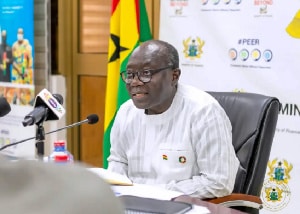
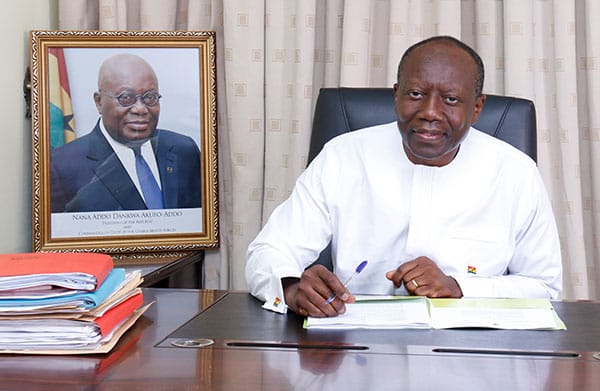
A statement issued by the Association described Ken Ofori-Atta as grossly incompetent amid seeking IMF bailout and the country defaulting on its external debt payments.
The Association further said, “his incompetence has been clearly written on the walls and Ghanaians feel the brunt of the outcome which is an unprecedented economic hardship.
“His gross incompetency has sunk Ghana’s economy into a ditch. We are battling with the situation of a frail currency, high inflation rates and unstable prices for petrol. All these are factors that have made it difficult for us to live and take proper care of our families,” the statement from the Association added.
“We expect that you ensure his removal before the end of this month [January 2023]. Any failure on your part to effect the finance Minister’s removal shall be deemed as a compromise,” the Association stressed.
Ken Ofori-Atta was last year hauled before parliament by the Minority caucus under seven grounds of a censure motion against him.
The motion subsequently failed after the Majority caucus staged a walkout before a vote was taken by the House to censure the Finance Minister.
Meanwhile, President Akufo-Addo on January 6, 2023, assigned Ken Ofori-Atta to take over as caretaker minister at the Ministry of Trade of Industry. This comes after Alan Kyerematen resigned from the position on January 5, 2023.
The appointment of Ofori-Atta is until a substantive minister is assigned for the position.
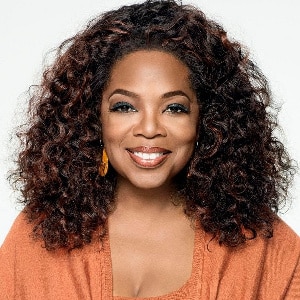
Winfrey is not only the wealthiest Black woman in America, but also ranks 1,169th on the list of the world’s richest people and 24th on Forbes’ list of the world’s 100 most powerful women as of 2022, with a net worth of $2.5 billion.
In addition to her successful media ventures, Winfrey has also demonstrated her expertise in investing in high-end real estate.
In September 2022, she sold her Montecito estate in California for a profit of $6.6 million. Winfrey purchased the 2.1-acre estate, which includes a Mediterranean-style main house and two small cottages, for $10.5 million in 2020 and made additional renovations.
Winfrey’s diverse investments and businesses in the media industry have contributed to her impressive net worth and position as a powerful woman and as a beacon of hope to many, especially people of ccolor
As the host of “The Oprah Winfrey Show” for 25 years, Winfrey used her platform to create unforgettable moments through conversations with her guests and audience.
Her $2.5-billion net worth and diverse investments and businesses make her not only one of the world’s richest Black people and the richest Black woman in America, but also a role model for aspiring entrepreneurs.
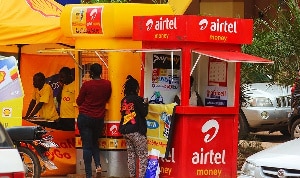
When he submitted the 2023 budget statement to parliament last year, Finance Minister Ken Ofori-Atta proposed a change of the rate for electronic transfers, dropping it from 1.5 percent to 1 percent.
The increased E-Levy rate was then discussed and approved by Parliament prior to the House’s adjournment in December 2022.
The Chamber further assured the public that its members are making frantic efforts with the Ghana Revenue Authority and other key institutions, to ensure a seamless implementation of the revised Electronic Transfer Levy.
He claims that the government’s present stance on the program is just causing more economic uncertainty and that it should therefore publicly acknowledge its responsibility for the poor judgments made in the face of the current economic difficulties.
“The government should come out after he [Finance Minister – Ken Ofori-Atta] is done with all needed research and say this is the way we’re going, but not to be changing its position. Because pensioners are talking or complaining, then you say this is not part of it…why?” he said this in interaction with Joy Business.
“Get a grasp of the full facts and come out one time and explain to the people that this is what we are doing. You cannot just throw information at the people. We know you can make mistakes but the information should be backed by some facts, and then you apologise to Ghanaians for any error made rather than just be telling us stories…really?” Prince Amoabeng is quoted by myjoyonline.com
Although individual investors were initially not part of the debt restructuring, the government decided to include individual bondholders in the debt exchange programme some days after the exemption of pension funds from the programme.
The Domestic Debt Exchange Programme is a key requirement ahead of Ghana securing a Board-Level Agreement with the International Monetary Fund under an Extended Credit Facility for an amount of $3 billion to restore macro-economic stability.
Despite the signing of several Memorandums of Understanding with Ethiopian Airlines and EgyptAir, efforts to re-establish a national carrier ran into difficulties. As a result, the former Aviation Ministry, which is now run by the Ministry of Transport, established a new committee to review all proposals.
The Ghanaian government has been working for years to launch a new domestic airline, and has finally decided on the name “Ghana Airlines” for the company.
Ahead of the selection, names such as Akwaaba Airlines, Black Star Airlines, and Kente Airlines were mooted as part of the efforts to get a suitable name that will reflect Ghana’s culture and boost the enterprise.
In the wake of this, government has since selected Ashanti Airlines as a strategic partner to operate a commercially viable home-based carrier which will run as Ghana Airlines Limited from the third quarter of 2023.
Zotus Group Inc in the United Kingdom has also been selected to become the financial and operational partners of Ashanti Airlines with the Government of Ghana.
GhanaWeb Business understands that Ghana Airlines is expected to initially offer domestic and sub-regional services in addition to international services later on to key destinations across the world.
The aircraft, Ghana Airlines will use, is the Dash 8-400 turboprops while the international service will use the Boeing 787-9 Dreamliner.
GhanaWeb Business takes a further look into the kind of aircrafts tipped to operate Ghana Airlines in the third quarter of 2023.
Dash 8-400 Turboprops
According to Aerotime Hub, Ghana Airlines Limited is expected to use about six Dash 8-400s Turboprops to commence its domestic and sub-regional operations.
The aircraft, depending on numerous factors would cost an average price of $3.25 million for a pre-owned model while a new aircraft would go for about $33.5 million on average.
The Dash 8-400 can seat up to 90 passengers and is said to have the highest capacity turboprop on the aviation market. The aircraft has the ability to also serve as a freighter, firefighting aircraft, missionized aircraft, among others.
It can operate in challenging weather conditions, especially on paved and unpaved runways. Since its launch, the Dash 8-400 aircraft operates in many countries across the world.
Boeing 787-9 Dreamliner
When Ghana Airlines decides to operate international services, Aerotime Hub reports that it would use a Boeing 787-9 Dreamliner.
It also reported that government in 2019 at the Dubai Air Show placed an order for three of the modern aircraft which can seat up between 250 to 290 passengers.
The Boeing 787-9 Dreamliner currently costs around $292.5 million.
The aircraft, which is developed and manufactured by US-based Boeing Commercial Airplanes, can travel up to a range of 8,300nm (15,372km).
It also offers consumers an array of features, technology and has the capacity to operate in challenging weather conditions and environments.
The widebody aircraft consumes about 20 percent less fuel than any other aircraft in its class and employs new technologies for achieving efficiency.
Some of its primary users are American Airlines, Japan Airlines, United Airlines among others.
He claimed that the government’s strategy for addressing the economic problem in the nation “appears like trying to fool or surprise the market.”
He stated, “We know that Ghana is in a profound crisis; in fact, in terms of economics, if there was any word beyond crisis, that is what we would be saying right now.” in an interview with peacefmonline.
Read the entire article as it appeared in its original form on Peacefmonline on December 10, 2022.
“The approach government is using in managing all of these appears like trying to trick or surprise the market . . . we know that Ghana is in a deep crisis, in fact in economics if there was any word beyond crisis that is what we will be using now . . . we all do acknowledge that we have to come out of this . . . ” he said.
Speaking in an interview on Peace FM’s morning show ‘Kokrokoo’, Prof Bokpin said to come out of this situation government needs to have “some moral authority” and call various stakeholders for a “broader consultation”.
” . . Broader consultations, the humility to acknowledge where we have gone wrong and where we can do better, that brings everybody to the table is very critical now . . . we need negotiations, to do so you have to come to the negotiation table with some moral authority . . . failure to do that, it’s going to be difficult for us to get out of this,” he averred.
“Consensus building is the way to go and to do this, it requires honesty and transparent,” he added.
The artist came to light in 2021 as the person who acquired several of Ghana’s vintage aircraft in order to establish a museum and community center in Jenakpeng in the Northern Region.
He purchased these planes with the revenues of $1 million in sales, and they are now used as a resource for students studying engineering, among other subjects, in addition to being a tourist attraction.
“Taking history up north to build new histories. From Gold Coast Railways to Ghana Railways and beyond. Trains crossing River Pra at Beposo Western Region of Ghana”.
He claimed that international lenders were aware of the problems that developing nations are currently confronting on a global scale.
Financial experts have cautioned that Ghana’s debt cancellation could send the wrong message to its creditors abroad by showing that the nation has never been able to pay its debts.
The alert comes in response to a report that Ghana was about to submit a request for debt relief through the G20 common framework program.
Speaking to Joy Business, Dr Sarkodie said debt forgiveness would demonstrate that creditors were ready to give the country a fresh start.
“Ghana owes about $13.1 billion on the Eurobond market alone. So if the debt release programme is successful, it means it will send a good signal to us,” he said.
“The reason why we are being downgraded is because we have unsustainable debt and can’t service those debts. Once they’re off, it gives us a fresh start. In any case, we have been downgraded because we owe, so if there is no debt, you will not suffer any downgrade,” he added.
Dr Sarkodie also stated that the introduction of the Debt Release Programme by the International Monetary Fund (IMF) could cause the debt to GDP ratio to fall and help Ghana attain sustainability.
“If the Debt Release Programme comes, the Debt to GDP Ratio will fall to a sustainable level that we are all looking for. That is, about 55 per cent, and it will also give the government of Ghana some sustainability when it comes to the Debt to GDP Ratio,” he said.
He described how the change will increase tax revenue for the nation.
According to the population and housing census, the nation has roughly 8.5 million homes, according to Osei Kyei-Mensah-Bonsu.
When you do valuation on buildings owned by individuals in most of our regional capitals, like as Kumasi and Accra, some of them are worth more than a million dollars and some of them are worth more than two million dollars.
“With regards to commercial houses like hotels and others, you can get some valued at more than 50million dollars some close to 100 million dollars. How much do they pay on property rate?” he argued.
Read the full story originally published on January 9, 2023 by Mynewsgh.
The government of Ghana will in the year 2023 intensify the collection of property rates as a way of expanding its tax revenue for development, Majority Leader in Parliament has hinted
According to Hon Osei Kyei-Mensah-Bonsu who is also the Minister for Parliamentary Affairs, the move by government is to increase revenue that will help mostly the local authorities as well.
In his view, there are a lot of individuals and institutions in the country that own big houses but tend to either pay less of what they are supposed to or pay nothing to government.
Speaking on Kumasi-based Akoma FM, Hon Osei Kyei-Mensah-Bonsu backed his argument with statistics from the National Statistical Service.
“According to the population and Housing census, there are about 8.5 million houses in the country”, he quoted.
“In most of our regional capitals like Kumasi and Accra, looking at buildings that belong to individuals, some are worth more than a million dollar some of them more than two million dollars when you do valuation.
“With regards to commercial houses like hotels and others, you can get some valued at more than 50million dollars some close to 100 million dollars. How much do they pay on property rate?” he argued.
According to him, the move by government will go a long way to help the country because that is one of the main revenue sources for most governments in developed countries.
“When you go to developed countries, the local councils develop their area with money generated from property rates,” he revealed.
Alan Kyerematen’s resignation was accepted by President Akufo-Addo on January 6, 2023, according to reports that he submitted it on January 5, 2023, after personally notifying the president of his intention to quit.
The outgoing trade minister thanked the president for the opportunity to serve and for gracefully accepting his acceptance of my resignation as Cabinet Minister responsible for Trade and Industry, effective January 16, 2023, in a tweet posted on January 7, 2023.
“I sincerely appreciate the support from my family, colleagues, my party the NPP, the international community, and the general public during my tenure as a Minister.”
He further added that he will be addressing Ghanaians in the coming days following his resignation as Trade Minister.
Although there are no clear reasons for Alan Kyerematen’s resignation, it is believed that he did so on the basis of contesting in the flagbearership race of the New Patriotic Party (NPP) ahead of the 2024 general elections.
Meanwhile, President Akufo-Addo has directed Finance Minister, Ken Ofori-Atta to serve as the caretaker Minister of Trade and Industry until a substantive minister is appointed for the ministry.
President Akufo-Addo thanked Alan Kyerematen for his services to government, and the country and wished him the very best in his future endeavors.
According to him, three groups representing individual bondholders are mobilizing to file a class action lawsuits against the government.
Individual bondholders were included in the DDE which was announced by Minister of Finance late last year after labour organizations forced government to remove pensions from the DDE programme.
“It was anticipated that adding individual/retail investors to Ghana’s debt default will increase the risk of litigation,” Simons noted in a January 7, 2023 tweet,
Adding: “At least 3 groups representing individual bondholders have commenced mobilisation to file class action lawsuits. One group is led by a former SEC Boss.”
Government is hoping to close a deal on debt restructuring at home in order to be able to access an International Monetary Fund (IMF) facility to support the failing economy.
Minister of Finance Ken Ofori-Atta on December 6 announced that government was restructuring bonds held by institutional investors, putting them into four groups stretching 15 years. With interest also spread in four tranches in four years.
The programme faced stiff opposition from major professional groups and workers union in the country because of its pension component.
Ken Ofori-Atta outlines Domestic Debt Exchange programme
The intended sale is according to the auction calendar of the Central Bank and will take place under the Forex Forward Auctions.
The amount of $220 million, is however lower than that which was sold in the last quarter of 2022 where the Central Bank sold a total of $420 million to BDCs through commercial banks within the period.
Although it remains unclear whether the intended $200 million sale would be sufficient to sustain the FX needs of BDCs in the country, the BoG plans to sell $80 million in January 2023.
This will be followed by an amount of $60 million each sold to BDCs also taking placing take in February 2023 and March 2023 respectively.
The BoG has also extended an invitation for bids due to the prescribed format to purchase the US dollars against the cedi notes separately on each auction date.
This auction of the American ‘greenback’ will also take place from January 12, 2023, to March 29, 2023.
“Receipts of bids will be made from 9:30 am to 10:30 am on each auction day with the announcement of the auction results made at 3pm on each auction date,” the BoG noted.
As compared to Friday’s trading of a buying price of 8.6067 and a selling price of 8.6153. At a forex bureau in Accra, the dollar is being bought at a rate of 11.30 and sold at a rate of 12.20.
Against the Pound Sterling, the Cedi is trading at a buying price of 10.8110 and a selling price of 10.8237 as compared to Friday’s trading of a buying price of 10.2334 and a selling price of 10.2445.
The Euro is trading at a buying price of 9.5361 and a selling price of 9.5455 as compared to Friday’s trading of a buying price of 9.0633 and a selling price of 9.0723.
At a forex bureau in Accra, Euro is being bought at a rate of 11.50 and sold at a rate of 12.40.
The South African Rand is trading at a buying price of 0.5221 and a selling price of 0.5226 as compared to Friday’s trading of a buying price of 0.4989 and a selling price of 0.4994.
At a forex bureau in Accra, South African Rand is being bought at a rate of 0.45 and sold at a rate of 0.90.
A Member of Parliament (MP) for the North Tongu Constituency has expressed concern about the appointment of the Finance Minister as caretaker.
Ken Ofori-Atta and his spouse are allegedly involved in some shady deals with the National Cathedral project, according to documents that the MP alleges to have in his possession.
“Fresh Cathedral documents in my possession reveal that Enterprise Insurance, a company Ken Ofori-Atta is intimately associated with & where his wife serves as a director was granted a sweetheart deal to insure the entire cathedral construction site,” he said.
This, the MP believes is a cause for worry.
Taking to his social media handle on Friday, Mr Ablakwa said with Ofori-Atta’s new appointment, only God can save the Trade Ministry.
“God save the Trade Ministry,” he said.
The North Tongu MP’s post comes hours after a statement from the office of the President announced that Mr Ofori-Atta will act as caretaker minister of the Ministry of Trade and Industry until a substantive replacement is made.
The Finance Minister’s caretaker appointment follows the resignation of the Trade Minister, Alan Kyerematen on Thursday.
The man popularly called ‘Alan Cash’ has long been rumoured to be nursing the ambition to contest the flagbearership slot of the New Patriotic Party (NPP) in the 2024 general election.
His resignation some have claimed, is to afford him time to pursue his presidential ambition.
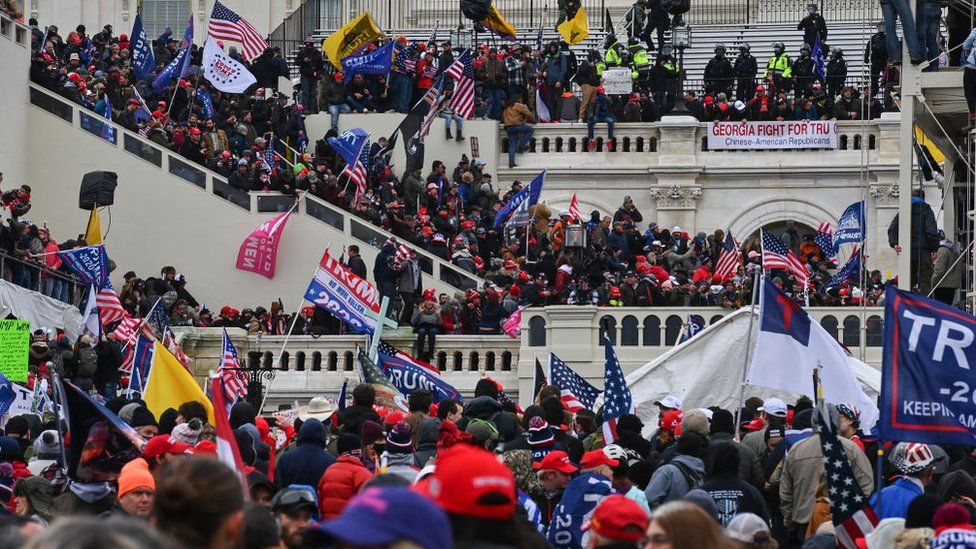
Image caption, Around 950 people have been arrested in relation to the 6 January 2021 riots, but the FBI is still looking for 300 more individuals believed to have committed violent acts that day
The partner of a US Capitol Police officer who died a day after the 6 January 2021 riot has sued Donald Trump for wrongful death.
On Wednesday, the FBI said it will offer $500,000 (£420,730) to anyone with information that can help them catch the suspect.
The US Capitol riot erupted two years ago as Congress certified President Joe Biden’s victory in the 2020 election.
The mob stormed the Capitol following a speech from Mr Trump, who was speaking at a rally one mile from the Capitol grounds. In his speech, Mr Trump claimed election fraud and called on then-Vice-President Mike Pence to overturn the results.
“We’re going to walk down to the Capitol,” Mr Trump said in the speech. “If you don’t fight like hell, you’re not going to have a country anymore.”
In the same speech he also told them to “peacefully and patriotically make their voices heard”.
During a commemoration event on Thursday at the White House, Mr Biden called the events of 6 January an “inflection point” of US history.
“It’s hard to believe that this could happen right here in America,” he said.
“January 6 is a reminder that there is nothing guaranteed about our democracy,” Mr Biden added.
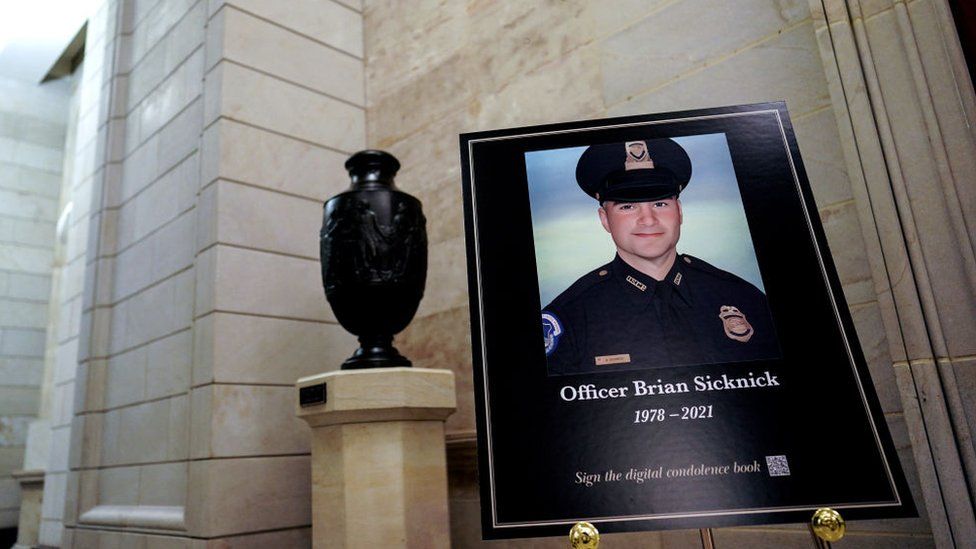
Image caption, US Capitol Police officer Brian Sicknick died one day after the 6 January 2021 riots
‘Wrongful death’
One woman was fatally shot during the riots by a police officer. Three others who were on Capitol grounds that day died from natural causes.
One of them was Capitol Police officer Brian Sicknick, who died a day after the riots from a series of strokes.
While Mr Sicknick did not suffer any injuries during the riot, a lawsuit filed by his family on Thursday alleges the violent mob played a role in his death.
His family sued Mr Trump on Thursday for wrongful death, claiming that the former president “intentionally riled up the crowd” and that Mr Sicknick died as a result of “the injuries that violence caused”.
“Many participants in the attack have since revealed that they were acting on what they believed to be Defendant Trump’s direct orders in service of their country,” the lawsuit states.
The lawsuit also accuses Mr Trump of violating Mr Sicknick’s civil rights, assault and negligence, and is seeking $10m in damages.
Mr Trump has not yet commented on the lawsuit.
On Thursday, Mr Biden awarded several presidential citizen’s medals to officers who responded to the 6 January riots, including a posthumous medal for Mr Sicknick, saying he “lost his life after protecting the citadel of democracy.”
Since the attacks, a Democrat-led congressional probe also examined Mr Trump’s role in inciting the riots.
In December, the US House committee probing the 6 January attack asked federal prosecutors to charge Mr Trump with obstruction and insurrection – marking the first time in US history that Congress referred a former president to be criminally prosecuted.
President Akufo-Addo has appointed Finance Minister, Ken Ofori-Atta, to act as caretaker Minister of the Trade and Industry Ministry.
The president made the appointment after he acknowledged the resignation of Trade and Industry Minister, Alan John Kyerematen.
“The President of the Republic, Nana Addo Dankwa Akufo-Addo, on Friday, 6 January 2023, accepted the resignation from office of Mr Alan Kyerematen as Minister for Trade and Industry,’ a statement signed by Director of Communications at the Office of the President, Eugene Arhin, read.
Mr Kyerematen resigned from his position on Friday, January 6, 2023.
The Office of the President indicated that Mr Kyerematen on Thursday, January 5, 2023, informed the president personally of his decision to resign and subsequently submitted his letter of resignation.
Mr Ofori-Atta will now have to juggle work at the Finance and Trade ministries until a substantive Trade Minister is appointed.
This request is to exchange certain domestic notes and bonds issued by the Republic of Ghana, E.S.L.A. Plc, and Daakye Trust Plc (collectively, the “Eligible Bonds”) for new Ghanaian bonds.
The exchange, according to the minister, will instead be for new government of Ghana bonds with a coupon that increases to rates as early as 2025 and a longer average duration, ranging from 9.15% to 10.65% (depending on the precise series of new bonds).
The minister said the domestic debt exchange is part of a more comprehensive programme to restore debt and financial sustainability.
In the Amended and Restated Exchange Memorandum to individual bondholders, he noted: “The successful completion of this domestic debt exchange is a critical component of both the debt reduction programme and the International Monetary Fund programme discussions; it will contribute to unlocking the support of the international community and will allow Ghana to reach debt targets agreed with the IMF”.
“We need the full participation of all bondholders in this transaction. Anything less will not make us eligible for assistance. There can be no exception,” he added.
Apart from that, he said contingency plans have been prepared with applicable regulators to assist certain sectors of the economy (including the financial sector) after its participation in the exchange, to minimise negative spill-overs and safeguard the domestic economy including the establishment of a financial stability fund to provide a backstop for liquidity.
“It would also mean depleted fiscal resources to support the neediest.”
“We are acutely aware of the upfront cost of this transaction, and other aspects of our adjustment programme, to participating holders. To that end we are carving out from this exchange treasury bills (up to one-year maturity) typically held by retail investors”, the minister explained.
“Further, there is also a positive trade-off for debtholders as a group: this transaction, though resulting in reduced coupon payments from 2023, will make a positive contribution to a safer and brighter future for all Ghanaians”, he argued.
The year 2022 can be characterized as one that many inhabitants have never experienced before. The economy has been severely affected by corporate failures, a falling currency, fuel price increases, tariff increases, and job losses, to name a few.
Ghana was hailed as a commercial and investment destination due to its stable political environment, among other factors, before it started to face these difficulties.
However, that was only temporary as alarming economic indications eventually forced the government to request a financial bailout from the International Monetary Fund.
Prior to that, the government had and continues to undertake a number of business deal which it believes would rake in revenue for development.
While these may seem to be working in the interest of the state, some business deals announced by the government have raised eyebrows in the eyes of many and caused some political fallouts.
GhanaWeb Business in this article takes a look at some of the controversial business deals which took place in 2022.
E-Levy
The Minister of Finance, Ken Ofori-Atta, in the November 2021 budget statement reading, announced plans to introduce the controversial Electronic Transfer Levy (E-Levy). The tax measure was intended to generate revenue for the government and widen the country’s tax net.
With an impasse in parliament over the tax measure resulting in political fallouts, the government in March this year imposed a 1.5% charge on all electronic transfers above the GH¢100 threshold.
The charging entities for the E-Levy are telecommunications companies, commercial banks, special deposit-taking institutions and Payment Service Providers (PSPs).
The government hoped to rake in about GH¢7 billion from the collection of the 1.5% levy on Mobile Money and other electronic transactions, but the figure was recently revised downwards to about GH¢4 billion.
The Ghana Revenue Authority (GRA) in October this year noted that a total of GH¢328 million has been raked in as E-Levy, which was far below its earlier target.
At the 2023 budget presentation, the government reviewed the rate of the levy from 1.5 percent to 1.0 percent. It also removed the GH¢100 daily threshold on transactions.
National Cathedral project
In May this year, the Minister of Finance, Ken Ofori-Atta, announced that an amount of US$25 million had been released to enable the project consultants to undertake certain aspects of the construction of the National Cathedral.
The project, since its announcement, has courted widespread controversies, condemnations and backlash from the Ghanaian public, CSOs and lawmakers.
But the finance minister said the amount which was tagged as “seed money” was paid in November 2020, to the project consultants.
Ken Ofori-Atta was subsequently hauled before parliament by the Minority caucus under seven grounds of a censure motion against him.
Under these grounds, the National Cathedral project was key in the motion filed.
Meanwhile, the recently published 2021 Auditor-General’s report discovered that a total of GH¢142,762,500 from the national coffers was spent on the Ghana National Cathedral project in 2021.
This particular expenditure was however captured under the government’s priority programmes and interventions for the year under review.
The move, according to him, seeks to address the persistent depreciation of the cedi and reduce dependence on the dollar for the purchase of oil on the international market.
Since its announcement, many citizens and CSOs raised concerns about the policy.
But the said engagement on gold-for-oil barter deal with Emirates National Oil Company was quickly shot down by the firm.
According to a Bloomberg report, the claim by a senior Ghanaian official is untrue.
Bloomberg said an ENOC person said that the assertion is “totally baseless and incorrect,” adding that “there have been no discussions regarding this subject.”
This comes after an economic adviser to Vice President Mahamudu Bawumia, Kabiru Mahama, had earlier said government reached a “tentative” agreement with the Dubai-based oil firm.
But the firm has now outrightly denied the said agreement.
Although it is in a good position to cultivate and manufacture rice for domestic use and export, Ghana imports more than US$2 billion worth of rice yearly, according to him.
While we have access to water, fertile land, and favorable weather for growing crops, it is actually very criminal for the nation to keep importing rice to prevent any potential food crises.
“Since 2017, we’ve spent over a million dollars importing rice. What’s more embarrassing is that a country like Ukraine exports about 74 million tons of grains despite current conflicts, and you wonder why Ghana and Africa have fallen asleep.”
Touching on the implementation of the Ghana Cares ‘Obatanpa’ initiative, the Finance Minister said the programme seeks to offer an alternative to addressing the current economic crisis.
Ken Ofori-Atta was however optimistic that Thailand’s partnership with Ghana’s private sector will lead to the commercialization of rice production geared toward reducing dependency on imports.
Meanwhile, Dr. Joseph Siaw-Agyepong on his part explained that the decision to venture into rice production will require technical knowledge and skills to increase yields.
The cedi took a climb to GH¢11 to $1 in October. This came as a shock to many as Ghanaians were expecting an appreciation from the local currency against the trading currencies.
As part of measures to avert the depreciation of the cedi, the government run to the International Monetary Fund (IMF) for financial bailout.
The IMF bailout would help rescue the cedi, as well as, stabilize the economy that has taken a nose dive.
While Ghana awaits the money from IMF, international credit rating agencies; Moody’s, Fitch, Standard and Poors’, remarked that Ghana’s economy looked gloomy.
This led to a hike in the monetary policy rate by the Bank of Ghana to 24. 5%. The hike in the policy rate was to stem the soaring inflation which has subsequently led to an increase in goods and services.
Cedi depreciates further, highest decline in 22 years – Report
Bloomberg has on Thursday, October 20, 2022, reported that Ghana’s local currency – the cedi – has diminished in value by 9.6%.
This, the news portal said, makes the total loss of the cedi in 2022 almost 52%, the highest recorded in 22 years.
The free fall of the cedi now places the currency at the 148 position of worst performing currencies in the world.
The currency had lost up to 54 per cent of its value at the end of November, making it one of the worst performing currencies in the world.
Meanwhile, Government of Ghana is targeting an amount of $3 billion over a three-year period from the International Monetary Fund (IMF) once an agreement on a programme is reached.
The new amount requested as a loan is double the government’s initial target of $1.5 billion.
The IMF programme is aimed at restoring macroeconomic stability and safeguarding debt sustainability among many others.
UK based Economist Intelligence Unit (EIU) has however predicted doom for the cedi.
It said the cedi will depreciate about 22% against the dollar in 2023.
This, EIU said will rank the local currency as the third weakest performing currency on the African continent.
This is done to aid in decongesting the central business district (CBD), which is clogged with trading activity and makes it difficult for people and vehicles to move around.
The Ashanti Regional Women’s Organiser of the New Patriotic Party (NPP), Nana Ama Ampomah who made the appeal said there is enough space at the Race Course to accommodate all displaced traders as a result of the construction works at the Kumasi Central Market.
Nana Ama Ampomah made the appeal on Wednesday, (December 27, 2022) when she had lunch with traders at the Race Course Market and also donated some food items to them as part of activities marking the yuletide.
All the streets within the CBD including walkways have been taken over by traders who have displayed their wares thus creating congestion within the CBD.
Both vehicular and human traffic have become an everyday occurrence over the past few weeks.
“I am shocked seeing all these sheds unoccupied and I would therefore appeal to all hawkers in and around Adum and Kejetia to come here and occupy sheds here so that we can continue our trading activities in decent atmospheres”, she appealed.
The Women’s Organiser also appealed to the Kumasi Metropolitan Assembly and all other stakeholders including the Ashanti Regional Coordinating Council (ARCC) to work out a plan to encourage the hawkers to take spaces at the race course.
The Race Course Market Queen, Nana Yaa Foriwaa, commended the Regional Women’s Organiser for visiting them as she has done over years to break bread with them.
She was also grateful for the promise to help the market women to access loans from MASLOC and also to get the authorities to attend to the bad bridge leading to the market.
One person has been arrested for deliberately destroying billboards advertising Safare Tissues in prime areas of Accra.
This arrest follows concerns that there have coordinated and consistent attempts by other rival companies to sabotage the visibility of the products of Tissue production company by the destruction of their billboards by unknown persons.
In less than a fortnight, a Safare billboard at the Tetteh Quarshie interchange had been pulled down at dawn by unknown individuals
This was followed a week later by a similar incident at the Accra mall section of the motorway.
It has emerged that other billboards on the same locations were not touched but Safare Tissues billboards became the targets, giving credence to suspicions that the acts were orchestrated.
In the ensuing melee, reports suggest luck run out on one of the persons who was arrested and upon interrogation mentioned that elements in another tissue company as being behind it.
Quite recently on a TV3 platform where Safare had acquired sponsorship over the Delay show, viewers may recall that on that particular slot for Safare, Flora Tissues adverts popped up suddenly when indeed they had no slot.
Technicians later apologised for it and claimed it was an error on their part to have played another company’s advert on Safare’s slot.
Safare Tissues has gained great penetration onto the market as a very reliable product and this appears to have ruffled the feathers of other industry players who are bent on sabotaging the company.
He responded to a Bloomberg article headlined “Why Ghana from Hero to Zero for Investors,” which was the source of his information.
According to Bloomberg, “Ghana, once an example of economic stability in Africa, has ceased to make interest payments on its foreign debt. How did things get so bad off course?
“Ghana is learning the hard way why oil can be a blessing and a curse. The onset of commercial crude production helped turn the West African nation into one of the continent’s top investment destinations but also prompted successive governments to borrow to the hilt. Skittish investors offloaded Ghana’s bonds and currency, the cedi, amid doubts over its ability to settle its debts.
“The concern proved to be well-founded: In December, the government caught bondholders by surprise by unilaterally suspending interest payments on its external debt ahead of restructuring talks aimed at pinning down a $3 billion loan from the International Monetary Fund,” it added.
Ghana has announced a debt exchange programme that is calling on domestic bondholders to exchange their bonds for fresh ones with new maturity dates.
The government also suspended debt payments for external debts. It is however seeking to get financial support from the International Monetary Fund. The government reached a staff-level agreement with the IMF awaiting approval from its board.
They claimed that would stop traders and other service providers from escalating prices of goods and services arbitrarily to thwart government efforts to stabilize the economy. They claimed that even a small increase in the value of the US Dollar relative to the Ghana Cedi would prevent them from doing so.
It would be recalled in the past few months, the country was hit with economic challenges, which resulted to the rise in inflation and the Ghanaian Cedi facing its worse performance on the forex market and other factors that contributed to the sharp rise in prices of goods and other services across the country.
The respondents believed the Cedi had started appreciating against the major foreign currencies, but “the prices of most goods and services are still at the hiked levels.”
Madam Elizabeth Yeboah, a public servant sharing her experience indicated, ”I am shocked prices of some commodities are still the same though the price of fuel has come down considerably and the Cedi is doing well against the foreign currencies in recent times.”
Mr George Ofori, also a public servant, appealed to the government to enact a law to compel wholesalers, retailers, and other services providers to regulate prices of goods and services as and when necessary.
He said that would be the determinant factor to control prices of commodities and services, saying, “we must have price floors and price ceilings” to control the system and not anybody randomly increasing prices of items because the foreign currencies had gone high.
Christian Ahianyo, a Senior High School student observed most people, especially traders and those who rendered services like drivers were becoming insensitive in the country because, “all they care about is increasing the prices of items and lorry fares without considering the plight of consumers.”
”I hope that they would heed the call of President Nana Addo Dankwa Akufo-Addo by reducing prices of goods and services to make socio-economic lives more bearable for Ghanaians,” he added.
But some of the respondents such as Madam Grace Afia Brago, a trader at the Sunyani central business district however, explained that a factor causing delay in reduction of commodities’ prices was that most of the commodities were purchased when the foreign currencies were high and therefore those stocks must finish before consumers could experience a better price drop.
Bright Simons, the vice president of IMANI Africa, has raised worry over the government’s decision to forego involving a formal advisory group that would have represented the majority of the outstanding debt during talks for the implementation of the IMANI Africa.
Even while he said the new plan put forth by the Finance Ministry in a press release dated December 24, 2022 was admirable, the modified terms still don’t reflect the necessary cooperation with creditors to direct the process.
“The new proposal, whilst showing capacity for flexibility, still falls short of the co-creation demands being made by creditors. It is not clear why the government prefers to engage with creditors without a coordinating mechanism such as a formal advisory committee representing the bulk of outstanding debt. Perhaps it fears that such a process might undermine its negotiation position by removing the “divide and conquer” option. The danger with the attempt to preserve the fragmentation of the creditor community is the likelihood of inertia being traded for lack of organised resistance,” Bright Simons noted in a write-up that identified 7 flaws in Ghana’s Debt Restructuring and how to fix them.
“The leaked attorney general report has revealed major chinks in the government’s legal armor: there is very limited prospect that holdouts will get a worse deal from the Ghanaian courts. And given the one-year moratorium on interest payments affecting all creditors, the time delay penalty – stemming from litigation – is less onerous for holdouts if government chooses to outrightly default on their bonds,” Bright Simons said.
The amended GH¢137.3 billion domestic bond exchange programme is expected to be published this week.
The amended terms would be set forth fully in an Amended and Restated Exchange Memorandum, a statement issued by the Finance Ministry dated 24th December, 2022 said.
As part of efforts by the government to restructure the debt programme, individual investors have been included.
Individual bondholders were originally exempted from the domestic debt exchange, however, after government excluded pension funds following pressure from organised labour, the programme is expanded to cover individual investments.
In addition to the modifications, there would be eight new instruments to the composition of the new bonds, for a total of 12 new bonds, one maturing each year starting January 2027 and ending January 2038.
The government is also setting a non-binding target minimum level of overall participation of 80 per cent of aggregate principal amount outstanding of eligible bonds among others.
The government stated that the debt exchange scheme will not have an impact on holders of Treasury bills or individual bonds when it announced the program on December 5, 2022.
It is against this backdrop that Prof. Bokpin is warning against the addition of Treasury bills.
“If you look at the financing landscape right now, that [T-bills] is the only means government has kept to sustaining itself. So, I am not expecting that government will make any announcement of roping in treasury bills.
“What it means is that the regime will collapse because that is the only source of funding apart from the Bank of Ghana sustaining government on its balance sheet,” he is quoted by myjoyonline.
He also added that Ghanaians have lost trust in the government and its promises due to the several U-turns they have made in recent times.
“But the way things are going, it is very difficult to trust the government and their statement, that’s unfortunate. But for now, the government will keep the window open as a way of interacting with the market.
“From the approach, the government has adopted and the terms, by the time we are done, if the government is unwilling to accommodate further revision to the terms of the domestic debt, we will systematically weaken the balance sheet of the participating financial institutions,” he said.
He further intimated that “Without even introducing the debt exchange, if you do mark-to-market, government financial instrument is manifesting explicitly in income losses. And some banks may be asked to bring in additional capital or they will have to be recapitalized. If you assess the banks’ balance sheet today under IFRS 9, a number of banks will go underwater [collapse].”
We at Multisoft Solutions Limited, a top supplier of business management software to Ghanaian companies, would like to talk about the top 10 reasons why companies fail in Ghana.
Well, before we look at the top 10 causes, let us look at what is meant by business failure.
According to thelawdistionary.org, a company has failed if it is unable to make a profit or to bring in enough revenue to cover its expenses.
Now, let us look at the top 10 factors that cause business failures in Ghana.
#1: Starting Business for the Wrong Reasons
The core mission for a business must be to solve a problem or meet a need for a target group of people! When your business meets your customer’s needs and meets them well, then your business will flourish and be successful!
Building a business is hard and you need a higher purpose and passion to drive you and keep you going when the going gets tough. Starting a business solely because you have excess cash or because others are doing the same is the wrong reason to start a business.
There is a higher chance of success when you develop your business around your interest or what comes naturally to you.
#2: Having No Driving Core Values or Concrete Mission Statement
The core values of a business are the guiding principles and fundamental beliefs that drive the operation of the business. The core values and the mission tell exactly why the business exists and what it exists to do. The core value of the business also spells out the business ethics that governs all business dealings.
It is amazing how some businesses in Ghana just do factors without any clear guiding principle and still expect to do well!
#3:Lack of Planning
Deriving from the quote “failure to plan is planning to fail”, the entrepreneur’s inability to develop both short-term and long-term plans for the business is one of the top 10 causes of business failures. There must be a clear strategic plan governing the operation of the business!
Failure to set SMART (specific, measurable, attainable, realistic and time bound) goals and objectives for all areas of the business and holding people including yourself accountable for these goals. Without this focus, factors will be done unsystematically with no specific way of measuring results leading to business failures.
#4: Leadership Failure
Businesses fail because of poor leadership. John C. Maxwell, the leadership expert said, “Everything rises and falls on leadership!” Business leadership is very important!
To thrive, the leadership or management of the business must constantly make the right operational, financial, and marketing decisions.
#5: No Differentiation or Competitive Advantage
It is not enough to have a great product; you must have a great competitive advantage!, These are the unique value propositions that set your business apart from the competition.
It is also important to understand the competition so you can know what to do to get the upper hand! Failure to understand the competition will lead to business failure.
#6: Neglecting Customer’s Needs
Every business owner will tell you that the customer is #1 but it is only a small percentage that acts that way. Businesses that fail are those that lose touch with their customers.
Get to your customers and find out if they love your products or services, get to know their likes and dislikes, and solicit their recommendations. All these will help you to deliver the best and give you a competitive advantage in your field!
#7: Inability to recover from our mistakes.
It is true that mistakes are usually painful and can lead to losses. Yet, you will scarcely do business without making mistakes. So the key is for you to learn from your mistakes and keep moving forward!
However, businesses that fail, do so because they fail to recover from their business mistakes. The cumulative mistake results in excessive burden ultimately leading to business failure.!
#8: Poor Record Management
Records management is the organization, storage and archiving of documents, both electronic and paper. Record management systems especially accounting records are not always the core functions of businesses and organizations, yet these systems are crucial to the proper running of a company. Poor records management has very negative effects, both legally and financially.
Management decisions are made with reference to company records. This means that without the proper records, an organization risks making unfounded decisions resulting in losses, corruption and mismanagement and ultimately business failure. Good records are directly linked to increased transparency and effective corporate governance.
Considering a good accounting software for your business? Try SageOne Accounting software.
#9: Poor Location
The location of a business is very important to the progress and growth of the business. In this era, a business is disadvantaged if it has only a physical location and even more disadvantaged if it’s physical location is far from its customers.
Take advantage of the internet system and locate your business on it. In this way you will be globally located and thus accessible by the whole world.
#10: No Profit & Personal Use of Business Funds
Profit allows growth! A business is doomed to failure if there is little to no profits and yet high expenses. Aside this, your business is not your personal bank account. Failure to separate your personal account from your business account and manage your business finances well through proper accounting practices will lead to the end of your business.
Here you are with the top 10 factors that cause business failures in Ghana. Kindly share your comments below!
It is the goal of Multisoft Solutions Limited to enhance and ensure the growth of small-to-medium enterprises in Ghana and abroad whilst partnering the larger corporates to achieve the desired business objectives. Thus we provide the best business management, accounting, payroll, taxation and various kinds of business software to ensure business success.
Experts claim that this increases citizen trust in the government.
Therefore, it is not helpful when the president, who is the head of the government, makes public statements that are in conflict with those of his appointees or that subsequently require explanation or clarification from his appointees.
According to many analysts, effective communication is an essential component of any country’s government system.
Experts claim that this increases citizen trust in the government.
Therefore, it is not helpful when the president, who is the head of the government, makes public statements that are in conflict with those of his appointees or that subsequently require explanation or clarification from his appointees.
The new rules, according to the central bank, will aid in the creation of licensed institutions and the implementation of each one’s AML/CFT&P compliance regime.
The anti-money laundering Act, 2020 (Act 1044) sections 52 and 61, as well as section 92(2)(a)(vii) of the banks and specialized deposit-taking institutions, Act 2016, were cited by the bank as justification for the new instruction (Act 930).
The BoG said the enactment of the now repealed Acts: Anti-Money Laundering Act, 2008 (Act 749) and AntiMoney Laundering (Amendment) Act, 2014 (Act 874), together with the Anti-Terrorism Act, 2008 (Act 762), among others has intensified Ghana’s efforts towards the fight against money laundering, terrorism and proliferation financing (ML/TF&PF).
According to the BoG, the purpose of Act 1044 will not be realised unless there is an effective implementation of the collaborative measures being adopted by the Bank of Ghana (BOG) and the Financial Intelligence Centre (FIC) as well as compliance by accountable institutions (AIs), adding, “It is against this background that the BoG and FIC have developed this Guideline for AIs”.
The guideline has incorporated essential elements of Act 1044, Act 762 as amended and regulations, relevant Financial Action Task Force (FATF) Recommendations, the sound practices of the Basel Committee on Banking Supervision and other international best practices on AntiMoney Laundering and the Combating of the Financing of Terrorism and the Proliferation of Weapons of Mass Destruction (AML/CFT&P).
The scope of unlawful activities includes counterfeiting currency, counterfeiting and piracy of products, environmental crime, participation in an organised criminal group, and racketeering and terrorism, including terrorist financing.
The functions of the Bank of Ghana include adopting a risk-based approach in supervising and monitoring AIs; monitor and periodically assess the level of ML/TF&PF risk of the AIs; carry out an examination of AIs based on the Bank of Ghana risk-assessment framework, request production of, access to, the records, documents, or any other information relevant to the supervision and monitoring of AIs and develop guidelines, directives or notices to ensure compliance.
Others are to provide feedback on compliance with obligations under the Act 1044 by AIs; approve the appointment of the AMLRO of AIs; and undertake any other activity necessary for assisting AIs to understand their obligations under Act 1044.
Aside from these, the BoG would also cooperate and share information with any other competent authorities in the performance of functions and the exercise of powers under Act 1044.
The bank shall initiate and act on a request from a foreign counterpart and notify FIC immediately; impose administrative penalties for non-compliance with Act 1044; issue Guidelines/Notices/Directives to ensure compliance with Act 1044; perform any other function as may be required to ensure compliance with Act 1044; among others.
The Association claims that the approved 2.5 percent increase in the value added tax is to blame for the anticipated price increases.
The Value Added Tax Amendment bill, which would have raised the rate by 2.5 percent, has been approved by a majority of lawmakers.
As a result, Ghana’s total amount of VAT might reach 21.5%.
In response, Samson Awingobit, the executive secretary of the association, said that the hike was a horrible choice and the exact reverse of what the current government did.
“However, they have done the opposite. They have failed all the promises they made to the business community. They have introduced more taxes since they took over.”
“We strongly believe that the government has been unjust to the business community,” he said. I can tell you with certainty that, since 2018, all of the promises they made to us have not been fulfilled. Their policies have derailed our businesses, eroded our interests, and impacted our capital.”
According to Finance Minister Ken Ofori-Atta, the government is coordinating with organized labor to close the gap left by the exclusion of pension funds from the debt swap program.
After the government and organized labor signed an agreement, Mr. Ofori Atta addressed the media and said: “Obviously, the choice to exempt pension funds is at a cost, and we have committed government and the organized labor to work together to guarantee that we find means of plugging that hole.”
The “government has decided to grant an exemption to all pension funds” in the debt exchange programme, an MoU signed by the Minister of Labour Relations, Mr Ignatius Baffour Awuah, dated Thursday, 22 December 2022, disclosed.
The exemption of pension funds under the programme follows a meeting between the government of Ghana (GoG) represented by the Ministry of Finance, the Ministry of National Security and the Ministry of Employment and Labour Relations on one hand, and Organised Labour/Associations, on the other hand, represented by the leaders of all labour unions/associations.
The government and Organised Labour shall, “however, work together to explore mutually beneficial options within the debt sustainability limits and to also promote macroeconomic stability and economic recovery in the spirit of social partnership,” the statement added.
Organised Labour had threatened a strike if the government failed to exempt the pension funds.
“We are asking the government to exempt us from the debt exchange programme. We have already told the world that if the government doesn’t do that, we will advise ourselves. Today, we are here to announce the advice. The advice is very simple: We have all agreed that because the government has refused to grant our request, we have decided firmly that all workers of Ghana are going to strike on December 27, 2022, and we will be on strike until our demands are met,” Dr Yaw Baah announced days before the exemption.
According to the Bank of Ghana’s interbank exchange rates, the Ghana Cedi is now trading against the dollar at a purchasing price of 8.2988 and a selling price of 8.3072 as of today, December 26, 2022.
Compared to the trade of 8.2959 as the purchasing price and 8.3042 as the selling price from yesterday. The exchange rate for buying and selling the dollar in Accra is 10.00 for buying and 11.50 for selling.
At a forex bureau in Accra, the pound sterling is being bought at a rate of 11.00 and sold at a rate of 14.50.
The Euro is trading at a buying price of 8.8173 and a selling price of 8.8276 as compared to yesterday’s trading of a buying price of 8.7899 and a selling price of 8.7986.
At a forex bureau in Accra, Euro is being bought at a rate of 10.50 and sold at a rate of 12.00.
The South African Rand is trading at a buying price of 0.4889 and a selling price of 0.4893 as compared to yesterday’s trading of a buying price of 0.4837 and a selling price of 0.4840.
At a forex bureau in Accra, South African Rand is being bought at a rate of 0.45 and sold at a rate of 0.90.
The Nigerian Naira is trading at a buying price of 54.6501 and a selling price of 54.7332 as compared to yesterday’s trading at a buying price of 56.5771 and a selling price of 56.5664.
At a forex bureau in Accra, Nigerian Naira is being bought at a rate of 10.00 Naira for every 1 Cedi and sold at a rate of 14.00.
Despite the fact that the global economy topped $100 trillion for the first time in 2022, policymakers are attempting to rein in rising costs before 2023.
According to the British consultancy’s annual World Economic League Table, the global economy passed the $100 trillion mark for the first time in 2022 but will stagnate in 2023 as policymakers continue their fight against rising prices.
“It’s likely that the world economy will face a recession next year as a result of the rises in interest rates in response to higher inflation,” said Kay Daniel Neufeld, director and head of Forecasting at CEBR.
The findings are more pessimistic than the latest forecast from the International Monetary Fund. That institution warned in October that more than a third of the world economy will contract and there is a 25% chance of global GDP growing by less than 2% in 2023, which it defines as a global recession.
Even so, by 2037, world gross domestic product will have doubled as developing economies catch up with the richer ones. The shifting balance of power will see the East Asia and Pacific region account for over a third of global output by 2037, while Europe’s share shrinks to less than a fifth.
The CEBR takes its base data from the IMF’s World Economic Outlook and uses an internal model to forecast growth, inflation and exchange rates.
China is now not set to overtake the US as the world’s largest economy until 2036 at the earliest — six years later than expected. That reflects China’s zero Covid policy and rising trade tensions with the west slow, which have slowed its expansion.
CEBR had originally expected the switch in 2028, which it pushed back to 2030 in last year’s league table. It now thinks the cross-over point will not happen until 2036 and may come even later if Beijing tries to take control of Taiwan and faces retaliatory trade sanctions.
“The consequences of economic warfare between China and the West would be several times more severe than what we have seen following Russia’s attack on Ukraine. There would almost certainly be quite a sharp world recession and a resurgence of inflation,” CEBR said.
“But the damage to China would be many times greater and this could well torpedo any attempt to lead the world economy.”
It also predicted that:
-India will become the third $10 trillion economy in 2035 and the world’s third-largest by 2032
-The UK will remain the world’s sixth largest economy, and France seventh, over the next 15 years but Britain is no longer set to grow faster than European peers due to “an absence of growth-oriented policies and the lack of a clear vision of its role outside of the European Union.”
-Emerging economies with natural resources will get a “substantial boost” as fossil fuels play an important part in the switch to renewable energy.
-The global economy is a long way from the $80 000 per capita GDP level at which carbon emissions decouple from growth, which means further policy interventions are needed to hit the target of limiting global warming to just 1.5 degrees above pre-industrial levels.
He remarked, “This administration is borrowing endlessly. It must be paid for by someone. My grandkids will cover the cost of any bonds you take out instead of me.
“You succeeded in dividing the nation more sharply than ever before. Who will listen to you if there are fights in the House of Commons?
We don’t need every member of parliament or party member to be macho in order to demonstrate how strong he is for the party. We want jawing,” he said.
The Akufo-Addo administration is currently borrowing as though there is no tomorrow, an Economist and New Patriotic Party (NPP) stalwart, Mr. Kwame Pianim, has said.
Speaking on the New Day show on TV3 with host Berla Mundi on Wednesday, December 221, he said “COVID-19 should have taught us that cut your coat according to your cloth. There is no father Christmas.
“This government is borrowing as if there is no end. Somebody has to pay for it. If you take a bond, I am not going to pay for it, my grandchildren are going to pay for it.”
Making a projection for the next year, he said “You managed to divide the country in a way it has never been so divided. Fisticuffs in Parliament, who is going to listen to you?
“Every parliamentarian, every foot soldier of the party wants to show how strong he is for the party by being macho, we don’t need that. We want jaw jawing.”
Asked about his view on whether or not Finance Minister Ken Ofori Atta has managed the economy better, he answered “No, he hasn’t done a good job, he is over-borrowing, we are not getting value for money.
Mr. Painim also rejected the E-levy proposal in the budget statement for the 2022 fiscal year.
“There is so much money you tap into, don’t go and touch technology,” he said.
Government has announced a further extension of its Domestic Debt Exchange expiration date to January 16, 2023.
According to a press release from the Finance Ministry on Saturday, December 24, it has amended the terms of the Debt Exchange.
“The Government today announces its decision to extend the Expiration Date of the Invitation from Friday, December 30, 2022, at 4 pm (GMT) to Monday, January 16, 2023, at 4 pm.
“The Settlement Date for the Invitation is now expected to occur on Tuesday, January 24, 2023, or as soon as practicable thereafter, but no later than the Longstop Date which is now scheduled for Tuesday, January 31, 2023, unless further extended by government pursuant to the Invitation.
“The Announcement Date is now expected to occur on or about January 17, 2023,” the Ministry said.
In addition to the foregoing extensions, government has announced modifications to the Invitation to Exchange. They are;
Offering accrued and unpaid interest on Eligible Bonds, and a cash tender fee payment to holders of Eligible Bonds maturing in 2023;
Increasing the New Bonds offered by adding eight new instruments to the composition of the New Bonds, for a total of 12 New Bonds, one maturing each year starting January 2027 and ending January 2038;
Modifying the Exchange Consideration Ratios for each New Bond. The Exchange Consideration Ratio applicable to Eligible Bonds maturing in 2023 will be different than for other Eligible Bonds;
Setting a non-binding target minimum level of overall participation of 80% of aggregate principal amount outstanding of Eligible Bonds; and
Expanding the type of investors that can participate in the Exchange to now include Individual Investors.
“These modifications will be set forth fully in an Amended and Restated Exchange Memorandum which is expected to be published during the week of 26th December 2022. Conforming changes (including adding and modifying defined terms) in respect of the above amendments and modifications to cure ambiguity, omission, defect, error or inconsistency may be included in the Amended and Restated Exchange Memorandum,” the Finance Ministry said.
As part of its efforts to address the country’s ongoing economic crisis, on December 5, 2022, government launched a Domestic Debt Exchange.
Pursuant to this, it invited certain holders of approximately ¢137.3 billion of the principal amount outstanding of certain of our domestic notes and bonds issued by the Government, E.S.L.A. Plc or Daakye Trust Plc to exchange their Eligible Bonds for a package of new bonds to be issued by the government.
Capitalised terms used but not defined herein have the meaning ascribed to such terms in the Exchange Memorandum.
Government subsequently announced an extension of the Expiration Date to Friday, December 30, 2022, and the Settlement Date to Friday, January 6, 2023.
As set forth in the Exchange Memorandum, the Government said it “reserves the right in its sole discretion to extend the timetable for the Invitation at any time and to make amendments to the Invitation at any time.
“Any Eligible Holders whose Eligible Bonds are held on its behalf by a broker, dealer, bank, custodian, trust company or other nominees must contact such entity if it wishes to participate in the Invitation, as such entities may establish an earlier deadline to receive instructions to tender Eligible Bonds,” the Finance Ministry said.
It further stated that “In making this decision to extend and the modifications described herein, the Government considered feedback from the financial sector in relation to the need to secure internal approvals.
“Further, this extension affords the Government of Ghana the opportunity to consider suggestions made by all stakeholders with the aim of adjusting certain measures acceptable within the constraints of the Government’s Debt Sustainability Analysis.”
The Regional Coordinating Council (RCC) has been engaging stakeholder discussions with the Abossey Okai Spare Parts Dealers Association regarding their relocation to Afienya in the upcoming years, according to Greater Accra Regional Minister Henry Quartey.
He said that in order to develop the Afienya automobile hub, the RCC will work with the Abossey Okai Spare Parts Dealers Association to invite strategic investors.
Speaking at a press conference held in Accra on Thursday, December 22, 2022, Henry Quartey said, “Spare parts dealers in Abossey Okai have been there for years, decades so this exercise initially was perhaps misconstrued by some persons. Nobody is going to move Abossey Okai overnight but it has to be a short, medium and long-term intervention to see that eventually, we are able to relocate them to make use of the automobile hub that we are talking about.”
“Abossey Okai is primarily known as a business hub that specializes in automobile spare parts dealership. The real potential of the hub is however constricted by space, access to technology and innovation and an integrated business environment,” the Greater Accra regional minister explained.
This is a move to transform Accra into a modernized and attractive destination in Africa.
The West Africa automobile village when completed is expected to host 22,000 spare parts dealers at Afienya in the Greater Accra region whiles creating mixed development where automotive technology interacts with innovation, business, education, and residence in the most coherent manner.
Also, about 40,000 artisans and businesses, among others will benefit from various job opportunities.
After the government and organized labor signed an agreement, Mr. Ofori Atta addressed the media and said: “Obviously, the choice to exempt pension funds is at a cost, and we have committed government and the organized labor to work together to guarantee that we find means of plugging that hole.”
Following considerable pressure and opposition from various labor groups, the administration excused the monies.
The “government has decided to grant an exemption to all pension funds” in the debt exchange programme, an MoU signed by the Minister of Labour Relations, Mr Ignatius Baffour Awuah, dated Thursday, 22 December 2022, disclosed.
The exemption of pension funds under the programme follows a meeting between the government of Ghana (GoG) represented by the Ministry of Finance, the Ministry of National Security and the Ministry of Employment and Labour Relations on one hand, and Organised Labour/Associations, on the other hand, represented by the leaders of all labour unions/associations.
The government and Organised Labour shall, “however, work together to explore mutually beneficial options within the debt sustainability limits and to also promote macroeconomic stability and economic recovery in the spirit of social partnership,” the statement added.
“We are asking the government to exempt us from the debt exchange programme. We have already told the world that if the government doesn’t do that, we will advise ourselves. Today, we are here to announce the advice. The advice is very simple: We have all agreed that because the government has refused to grant our request, we have decided firmly that all workers of Ghana are going to strike on December 27, 2022, and we will be on strike until our demands are met,” Dr Yaw Baah announced days before the exemption.
The Vice President said the digital drive has enormous benefits for all swathes of society, including the police service, who will now have access to cutting-edge policing tools used throughout the world to make their jobs easier. He was speaking at a donation of mobile devices and software packages to the police service.
“We are going to see more and more devices in the hands of police officers across the country so that policing will be very effective in Ghana and this is something that Ghana and the Ghana police service will be proud of because we’re moving into an area where in fact many advanced countries are still trying to get into that area,” Dr Bawumia said.
The Vice President was speaking on Friday, December 23rd 2022 as Margins Group, an indigenous Ghanaian Identity Systems Company, donated over $2 million worth of mobile identification devices and a Mobile Device Management System to the Police Service.
These mobile devices and systems will capture the unique biometric and biographic information of individuals, verify vehicle registration, drivers license, road worthiness certificate and insurance, and match the data against other databases including the National Identification Authority’s database.
The devices will give police officers real- time access to data on individuals, vehicles, criminal histories etc. and therefore help in the fight against crime.
‘’If you’re going to benefit from digitalisation, you cannot allow the system that you’re setting up to sit in silos. You have to integrate the systems so that you can benefit from knowing if you’re in a crime database and you integrate it with the national ID database, you can tell when you meet somebody who is on the crime database that this person is either a criminal or someone who is wanted,” Dr Bawumia said.
“So the issue of integration of the police database with the NIA database is very important. With these devices (mobile device software) it is very important that when the Police meet you on the street they can tell who you are with or without your Ghana card.
“They can tell if you’re wanted or not. They can tell whether the vehicle you’re driving is registered or not because you’re linking the databases. So it is a valuable weapon in the fight against crime and the protection of the public and the safety of the public.”
The Veep added that this is just the beginning of efforts to equip the Police Service with more gadgets, devices and software to exploit digitalisation to enhance crime fighting.
The Inspector General of Police, Dr George Akuffo Dampare, was visibly excited about the donation and expressed optimism that how it will help the men in uniform as part of the police transformation agenda.
“We can’t wait to use them because we know it will transform Policing in Ghana.” Dampare said.
The entire construction of the Tema Port took roughly ten years, and it was initially built modestly before eventually expanding. The Keta Port Project needs to go through the entire process; we don’t need to speed it, said Mr. Michael Luguje, GPHA Director-General (DG), at the GPHA’s 2022 Press Soiree in Tema.
He stressed that the Keta Port project, which would be the third seaport in Ghana after Tema and Takoradi Ports, had received a lot of public bashing after the appointment of a director even though the actual construction was yet to take off.
Addressing such concerns, the GPHA Director-General said the Keta Port is a strategic project of the state, therefore, the necessary procedures required for building such a facility must be followed to the latter.
Mr. Luguje stressed that, “Building a port is a meticulous process, it has a life cycle, which includes feasibility and other studies, analysis, before the actual construction, and also an Executive Instrument must be signed by the President.”
The DG indicated that a lot of progress have been made about the Keta Port project, explaining that a feasibility study, stakeholder engagements, and an environmental assessment were done.
He also said an advert for the expression of interest had also been published, and a few proposals had been received, which were been reviewed to select the best.
Mrs. Esther Gyebi-Donkor, General Manager, Marketing and Corporate Affairs, GPHA reiterated the determination of the Authority to build the Keta Port.
She stressed that the GPHA was focused and was not perturbed by public sentiments on the project as they would deliver.
Mrs. Gyebi-Donkor urged the media to contact the GPHA on issues that they needed clarification on instead of the penchant of some media outlets to publish one-sided stories, which ended up creating confusion in the public arena “let us work together to educate and inform the public truthfully”.
She said GPHA considered the media as a strategic partner and was ready to engage them, adding that in 2023, they would organize some training sessions for the media to keep them well informed on the operations of the Port.
All fees and charge increases for 2022–2023 would be 15% higher than current fees, according to the Ministry of Education, acting through the Ghana Tertiary Education Commission.
This means that tuition increases and other charges at universities and colleges are limited to a 15% rise above what they were in the academic year 2021–2022.
The ban follows fee increases of more than 40% at certain public universities that infuriated parents and students.
In a circular signed by Prof. Mahama Salifu, Director-General of the GTEC copied exclusively to MyNewsGh.com, GTEC stressed that all “fees and Charges must not exceed 15% of the fees charged for the 2021/2022 academic year.”
“The advice we have received is that, alongside the passage of the Fees and Charges (Miscellaneous Provisions) Act, 2022 (Act 1080), a 15% increase across board was approved by the . Please be advised therefore that Fees and Charges applicable in all Public Tertiary Education Institutions for the 2022/2023 Academic Year may be adjusted by up to a maximum of 15% of the last approved rates,” the notice said.
“Please refer to the Second Schedule of Act 1080 for the baseline figures for your guidance. For avoidance of doubt, any adjustments made to the Fees and Charges must not exceed 15% of the fees charged for the 2021/2022 academic year,” the notice added.
The Central regional capital, Cape Coast, has hosted a three-day market session titled the “Bronya Farmers Market.”
Minister Justine Marigold Assan of the Central Regional is the one who started it.
It was developed so that locals may buy for holiday food at a discount.
The trading day lasted from Wednesday, December 21, 2022, until Friday, December 23, 2022.
At Adisadel College in Cape Coast, farmers from all over the area congregated to sell a variety of delicacies, including plantains, yams, coconuts, and poultry, among other items.
Addressing the media, the minister stressed the important role farmers play in society and the country as a whole.
She said: “I don’t take farmers for granted. Most of the time, we hear various professionals embarking on strike action; however, farmers never go on strike. So, they are very dear to my heart.”
She, however, bemoaned the little earnings farmers make after harvesting and selling their farm produce.
“What’s painful about it is, when they put in so much to cultivate their crops and they harvest and want to sell to take care of their kids in school, and buy food, it becomes difficult. We go to buy from them and sometimes, they don’t make a lot of profit. They even struggle to sell them,” she observed.
The Central Regional Minister stressed that the initiative has not only afforded farmers the opportunity to sell but also residents of the region the chance to purchase foodstuffs at cheap prices.
“So, we’ve brought all of them together here at the Bronya Farmers Market. You can see all the things here are fresh. We’re doing this so that the farmers can reap the benefit of their rewards.”
“The upside about it, too, is what they are selling is like buying directly from the farm, so, it’s cheaper. We all know the times Ghana finds herself in,” the Regional Minister added.
In addition to being the richest Black person in the world, Dangote also has an 86 percent share in Dangote Cement, which is currently valued at $8.49 billion. His closely owned fertilizer plant, which has the ability to produce up to 2.8 million metric tonnes of urea annually, is responsible for an additional $5.15 billion of his wealth.
The recent decline in Dangote’s net worth can be attributed to the decline in the market value of his flagship company, Dangote Cement, Africa’s largest cement company.
The slump in the company’s shares comes after the cement manufacturer received shareholder approval to buy back up to 10 percent of its outstanding shares for N406 billion ($917 million).
The shareholders who participated in the voting at the company’s Extraordinary General Meeting in Lagos gave their unanimous approval, with many of them praising the process and describing it as beneficial to all parties involved.
Recently, Dangote has committed more than $700 million to expand the operation of his sugar company, Dangote Sugar Refinery, by increasing the refining capacity of one of its plants, DSR Numan, from 3,000 tonnes of cane per day (tcd) to 6,000 tcd, 9,800 tcd, and 15,000 tcd.
The leading billionaire announced that the investment will create at least 300,000 jobs in Nigeria as he continues to strategically invest in his sugar business in accordance with the Nigeria Sugar Master Plan requirements.
Despite the recent decline in his net worth, Dangote remains the richest man in Africa, a formidable force in the business world, and one of the wealthiest individuals in the world. His diversified portfolio and unwavering dedication to success will likely continue to propel him to new heights.
A New Patriotic Party (NPP) Member of Parliament, Eugene Boakye Antwi, has wondered why the country is continuously entertaining the Minister of Finance, Ken Ofori-Atta.
Describing it as “nonsense,” the Subin MP said that if this was happening in another jurisdiction, such things would never have been allowed to fester.
According to a myjoyonline.com report, the MP, who is part of some rebel parliamentarians who are seeking the sacking of their party member, the Minister of Finance, made this known while speaking in an interview on JoyNews.
He stated that they are determined to keep President Nana Addo Dankwa Akufo-Addo’s promise of removing the minister after he completes his tasks of presenting the 2023 budget to parliament and leading the conclusion of the IMF talks.
“…these are major policy failures that in any civilized democracy, Ken Ofori-Atta will not stand on his feet. Why are we entertaining such nonsense? Excuse my French.
“… what have we got against him as a person? You brought something to us; we are talking about those issues, and you forget about this and say that we want to unseat somebody in the constituency just because you have failed?
“You saw us in the Chamber fighting our NDC guys to pass the e-levy. So, what have we not done for Ken Ofori-Atta to succeed as a finance minister and I say posterity will judge us if this is personal,” he said.
Eugene Antwi further said that he was elected as an MP by his people and as such, all he is seeking is in their interest first, just as it is for the good of the country, far more than anything that will please the president.
“Nobody made me an MP, Akufo-Addo did not make me an MP. God made me an MP. I was elected just as Akufo-Addo was elected so nobody should dare threaten anybody. When you veer into that realm you even muddy the waters more… I contested the primaries like Akufo-Addo contested the primaries to become president.
“The fact that we have taken this position does not mean that it is directly directed at President Akufo-Addo, no. We are talking about the supreme interest of the party. No individual is bigger than this party including Nana Akufo-Addo.” he added.
Over 80 MPs from the majority party have openly declared their opposition to Ken Ofori-Atta, calling on the president to fire him.
The MPs have recently reactivated their demands after the minister fulfilled the requirement of President Nana Akufo-Addo to have him stay on a little longer to complete the IMF deal and present the 2023 budget to parliament.
Before the House adjourns for the holiday break, Parliament is anticipated to approve the E-Levy amendment bill later today.
Following warnings from the Minority, finance minister Ken Ofori-Atta decided to reinstate the 100 cedi daily barrier exemption.
When the Bill is passed, the levy’s rate will drop from 1.5 to 1 percent.
Starr News sources claim that following the government’s compromise, the minority has now opted to back the bill’s approval.
The 2.5 percent increase in the VAT rate is one additional revenue strategy that the NDC MPs have not yet mentioned.
Barring any changes, the VAT amendment bill is expected to be brought on the floor.
Already Ken Ofori-Atta has appealed to parliament not to frustrate any government revenue measure announced in the 2023 budget warning such a move will further exacerbate the economic crisis.
After a period of steady depreciation, the local currency stabilized around the GH15 mark. The rapid gains it has made recently, as well as clarity regarding debt restructuring, the IMF’s Staff-Level Agreement, regulatory interventions from the Bank of Ghana, as well as speculative selling and profit-taking, are also major contributors.
The reversal of fortune has seen the local unit move from the ‘worst-performing’ currency in the world in mid-October to become the ‘best performer’ for the corresponding period of December, with the average interbank rate at the close of business on Monday, December 19, 2022 showing that US$1 was being exchanged for GH¢8, according to the Bank of Ghana (BoG).
In an update on the economy, Finance Minister Ken Ofori-Atta highlighted that, ultimately, confidence and the active participation of all stakeholders are the essential elements for success of the proposed debt exchange programme.
“As such, government is committed to laying out a path toward attaining debt sustainability, informed by sound technical analysis and broad stakeholder engagement,” he said.
“So far, we have all witnessed the cedi’s gains over the past week, as well as the attainment of this Staff Level Agreement in near-record time. We must and we will collectively recover all,” Mr. Ofori-Atta added.
Last week, the cedi saw significant gains against the US$, GB£ and € on the interbank reference market, increasing by 56.95 percent, 58.18 percent, and 55.80 percent respectively. This continues the cedi’s strong correction over the past weeks, resulting in a decrease in its year-to-date (YTD) loss against the US$ to 24.94 percent – from 54.17 percent – on the interbank market.
The € and GB£ have also significantly strengthened over the past two weeks, with similar trends in the retail market; with the € YTD loss decreasing to 19.56 percent, from 51.07 percent, and the GB£’s YTD loss decreasing from 51.07 percent.
Also, the typical seasonal effects of increased imports around the holiday season have remained muted this year – as importers acted earlier in the year for fear of the higher cost for accessing forex during this period, contributing to the depreciation in October and November.
The central bank’s liquidity intervention, the surge in remittances and tourist spending over the holiday season, and improved FX offers from speculators as a result of the IMF agreement are other factors that contributed to the cedi’s appreciation.
GCB Capital, in its analysis of the currency market, anticipates that the cedi will continue to stabilise in the upcoming days, helped by increased liquidity as “the impending IMF programme will offer concessional lending to promote the accumulation of foreign exchange reserves, which will aid in maintaining cedi stability”.
Government’s engagement with the IMF is anchored on the Post-Covid Programme for Economic Growth (PC-PEG), which aims to restore macroeconomic stability and debt sustainability for a stronger and inclusive recovery. Following further stakeholder engagements, government last week agreed to extend the expiration date for the domestic debt exchange to December 30, 2022 to allow for key concerns raised by stakeholders to be accommodated in some form.
“Our ‘end-game’ as a government has always been to achieve a Ghana Beyond Aid – a Wealthy, Inclusive, Sustainable, Empowered and Resilient society (a WISER Ghana). The necessary precondition for this is a stable macroeconomic environment. Viewed from that lens, restructuring our debt is only a necessary part of our story,” the Finance Minister said, anticipating the IMF programme’s approval in the first quarter of 2023.
Impact on cedi-equivalent of External Debts
The cocktail of factors should see pressure on the Treasury ease up. For instance, the external debt stock grew by more than 40 percent by the end of September to GH¢271.71billion, or 44.15 percent of GDP, on account of the cedi’s 37.5 percent depreciation against the US dollar. As of the end of September, the cedi to dollar rate was approximately GH¢9.6 to US$1. Consequently, the debt stock could shrink by as much as GH¢45billion by the close of the year if the cedi maintains its momentum.
Furthermore, the crude oil import bill – which contributed significantly to the depletion of external reserves to 2.9 months of import cover at the end of October 2022 – is expected to reduce further due to the lower global crude prices; but more importantly, the strengthened cedi.
The nation’s external bondholders, following the suspension of coupon payments announcement, indicated through a communique that they had formed a representative committee to engage with government – while sounding upbeat about the International Monetary Fund’s (IMFs) participation in the wider process.
“The Committee is focused on the orderly and comprehensive resolution of Ghana’s debt challenges, recognising that such resolution will require fair burden-sharing and collaboration among the Ghanaian authorities, private creditors (both domestic and international) and official sector creditors. The Committee welcomes the authorities’ ongoing engagement with the International Monetary Fund (IMF) and recent announcement of the Staff Level Agreement,” the statement read.
“The Committee aims at securing an outcome that is both equitable to creditors and responsive to the economic and social challenges facing Ghana,” it added.
The Africa Education Watch (Eduwatch) has petitioned Parliament to question the Finance Minister, Ken Ofori Atta, on the Ghana Education Trust Fund (GETFund) capping method of affirmation or formula as it deviates from the GETFund Law 2020, (Act 581) and the Earmarked Funds Capping and Realignment Law 2017 (Act 947).
This petition is against the backdrop of a sharp decline in the budgetary allocation to the only statutory fund available for educational infrastructure provision in the country.
According to the civil society organisation (CSO), the 2023 Budget Statement indicates that despite an increase in the total accrual to the get GETFund levy to a record GH₵4.6billion, for the first time, only GH₵1.8billion, representing 39 percent of the GETFund Levy accrual was allocated to the fund to finance education projects and activities.
This, the CSO laments, is inconsistent with the law; hence, the need for the Parliament to question the Finance Minister’s modus ponens for allocating only 39 percent of total accruals as against 60 percent and 81 percent in the 2021 and 2022 budgets respectively.
“Under the Earmarked Funds Capping and Realignment Act, 2017 (Act 947), GETFund was capped at 25 percent; but historically, allocations have been in the region of 60 percent and above. Using the same parameters of this same minister, we estimate that at least GH₵2.7billion, representing 60 percent of the total 2022 GETFund Levy accruals of GH₵4.6billion should be allocated to the fund for 2023.
“The continuous decline in the allocation to the GETFund, amid consistent increment in the GETFund Levy, remains a serious worry for stakeholders concerned about the widening infrastructure gap in the education sector, especially at the basic education level,” Executive Director, Kofi Asare said.
Implications of capping infraction, among others
According to Eduwatch, the implications of the minister’s action are that the widening infrastructure gap in the education sector, especially at the basic level, will continue to increase; and it would take several decades to address.
Currently, there are over 5,000 schools existing under trees, sheds, and dilapidated structures, and another 4,000 Junior High Schools are needed for primary schools without such continuation infrastructure. Meanwhile, 1.2 million children are not in basic school due to the lack of public basic schools in underserved communities, among others.
“This action constricts the realisation of the objectives of the government’s free Compulsory Universal Basic Education under section 38(2) of the 1992 Constitution of Ghana,” he added.
The clarion calls
The Executive Director of Eduwatch stressed that as Parliament prepares to consider the appropriation estimates for the education sector, the CSOs are drawing the attention of the House to the requirements of 25 percent capping of realignment law, viz. the 61 percent of GETFund levy accruals being reallocated to other sectors, leaving only 39 percent for allocation to the fund.
“Eduwatch calls on Parliament to reject the allocation and cause the Minister of Finance to review the weights applied in allocating the GETFund, in line with the Earmarked Funds Capping and Realignment Act, 2017 (Act 947),” he concluded.
GETFund capping history
In the 2019 Budget Statement, out of a GETFund levy accrual of GH₵1.8bn, GH₵1.2bn – representing 66 percent – was allocated to the fund, in line with the Earmarked Funds Capping and Realignment Law.
Also, in 2020, out of the GH₵2bn accrual, GH₵1.2bn – representing 60 percent – was allocated to the fund.
Furthermore, in the 2021 Budget Statement, out of the GH₵2.3bn, GH₵1.4bn – representing 60 percent of accruals – was allocated, in line with the capping and alignment law.
Fast forward, to the 2022 Budget Statement, GH₵2.6bn of the GH₵3.2bn accruals were disbursed, representing 81 percent. However, in the 2023 Budget Statement, the ministry surprisingly decided to release only GH₵1.8bn of the GH₵4.6bn, representing a meager 39 percent – far from what the capping and realignment law stipulations.
The CPA wants retailers and transportation companies across the nation to reduce prices at the same rate at which they have been raising products and transportation costs.
In a statement issued on Tuesday, December 20, 2022, the CPA said it decided to “take a ‘wait and see’ attitude about measures put in place to mitigate the cost of fuel and the depreciation of the cedi to the dollar, unfortunately, after these measures were put in place, cost of consumer goods hasn’t been reduced as of today.”
The CPA noted that it “expects the transport unions and GUTA to use the same speed and alacrity to increase prices to reverse the prices downwards.”
It further noted the country operates a free market so it “understands and appreciates the importers & retailers and transport unions but that doesn’t give them the advantage to not adhere to the same principles when it favours them and when it favours the consumer there shouldn’t be a challenge.”
The CPA reminded businesses that consumers wield a weapon that can be used against them which is “their purchasing power” and urged them to put this into consideration in order to “encourage the free flow of commerce in the country because the worse situation is for consumers to either reduce their consumption or stop patronising their businesses.”
This, it stressed, “is not healthy for the economy.”
President Nana Akufo-Addo made a similar call to traders and transport operators a few days ago.
“I believe this is not only a fair request, but also a just one, and I urge all of you to join me in this clarion call so we can all have a more pleasant Christmas,” the president said on Sunday, 18 December 2022, when he delivered an address at the centenary celebration of the Ga Presbytery of the Presbyterian Church of Ghana, held at the Black Star Square, Accra.
Addressing the congregation, which included the Moderator of the Presbyterian Church of Ghana, Rev. Prof. Joseph Obiri Yeboah Mante, he stated that with appropriate policy, determination and hard work on the part of the government, things are beginning to turn around.
Transport fares are expected to go down by 15.3 per cent on Monday, 19 December 2022.
According to President Akufo-Addo, “the strengthening of the cedi has not happened by chance, but through the implementation of deliberate policies by government, in collaboration with the Bank of Ghana.”
These measures, he said, include “cedi liquidity tightening measures, resulting in the offloading of forex, as a store of value, by speculators; the improvement of forex flows from remittances and the mining sector; and the reaching of a staff-level agreement with the IMF for a US$3 billion package.”
The cedi keeps making significant gains in value against the dollar and other currencies of international trade right after the International Monetary Fund and the government of Ghana announced a staff-level agreement for a US$3-billion extended credit facility for the gold-producing West African country whose economy has been on a downward spin since the beginning of the year.
The cedi fell by more than 54% against the dollar this year.
Some few weeks ago, a dollar hovered around ¢15.
However, it started rallying in the lead-up to a joint announcement by the government of Ghana and the IMF on Tuesday, 13 December 2022 that a staff-level agreement had been reached for a three-year IMF-supported programme for Ghana.
According to the Bank of Ghana, the dollar is currently selling at ¢8.0055 from Thursday’s ¢9.3047 and Wednesday’s ¢10.4052 and being bought at ¢7.9975 from Thursday’s ¢9.2954 and Wednesday’s ¢10.3948.
Within a matter of two weeks, the cedi became the best-performing currency in the world after being the worst performer for a few months.
At the end of the mission, Mr Roudet issued the following statement: “I am pleased to announce that the IMF team reached a staff-level agreement with the Ghanaian authorities on a three-year programme supported by an arrangement under the Extended Credit Facility (ECF) in the amount of SDR 2.242 billion or about US$3 billion”.
“The economic programme aims to restore macroeconomic stability and debt sustainability while laying the foundation for stronger and more inclusive growth. The staff-level agreement is subject to IMF Management and Executive Board approval and receipt of the necessary financing assurances by Ghana’s partners and creditors”, Mr Roudet said.
“The Ghanaian authorities have committed to a wide-ranging economic reform programme, which builds on the government’s Post-COVID-19 Programme for Economic Growth (PC-PEG) and tackles the deep challenges facing the country”, he added.
He said: “Key reforms aim to ensure the sustainability of public finances while protecting the vulnerable. The fiscal strategy relies on frontloaded measures to increase domestic resource mobilisation and streamline expenditure. In addition, the authorities have committed to strengthening social safety nets, including reinforcing the existing targeted cash-transfer program for vulnerable households and improving the coverage and efficiency of social spending”.
Additionally, he noted: “Structural reforms will be introduced to underpin the fiscal strategy and ensure a durable consolidation”.
“These include developing a medium-term plan to generate additional revenue and advancing reforms to bolster tax compliance. This will help create space for growth-enhancing measures and social spending”.
Efforts, he mentioned, “will also be made to strengthen public expenditure commitment controls, improve fiscal transparency (including the reporting and monitoring of arrears), improve the management of public enterprises, and tackle structural challenges in the energy and cocoa sectors. The authorities are also committed to further bolstering governance and accountability”.
To support the objective of restoring public debt sustainability, Mr Roudet said “the authorities have announced a comprehensive debt restructuring. Sufficient assurances and progress on this front will be needed before the proposed Fund-supported programme can be presented to the IMF Executive Board for approval”.
He stressed: “Reducing inflation, enhancing resilience to external shocks, and improving market confidence are also important programme priorities”, noting: “Accordingly, the Bank of Ghana will continue to strengthen its monetary policy framework and promote exchange rate flexibility to rebuild external buffers”.
“As part of the authorities’ debt strategy, a domestic debt exchange has been launched. The authorities are committed to taking the necessary mitigation measures to ensure financial sector stability is preserved”, the Bretton Wood institute delegation head pointed out.
He said the IMF staff held meetings with Vice President Mahamudu Bawumia, Finance Minister Ken Ofori-Atta, and Bank of Ghana Governor Ernest Addison, and their teams, as well as representatives from various government agencies.
The IMF team has also continued to engage with other stakeholders.
The staff expressed their gratitude to the Ghanaian authorities, Parliament’s Finance Committee and all the private sector, trade union, and civil society representatives for their open and constructive engagement over the past few months.
For his part, Ken Ofori-Atta told journalists that the deal, once approved by the IMF Board, will help Ghana restore economic stability, tackle inflation and strengthen the Ghana cedi, Finance Minister Ken Ofori-Atta has said.
Addressing journalists at a press conference on Tuesday, iDecember 13, 2022, following the staff-level agreement, Mr Ofori-Atta said: “Truly, the eventual conclusion of the programme will assist us in our efforts to restore stability, tackle inflation, and strengthen our currency.”
“That is why the various ingredients of the programme should be supported by all Ghanaians and all stakeholders.”
The Finance Minister, Ken Ofori-Atta says government has extended the expiry date for enrollment onto the Domestic Debt Exchange Programme to December 30, 2022.
Giving an update on the state of the economy on Monday, Mr Ofori-Atta said that the extension is to “allow for key concerns raised by stakeholders to be accommodated in some form.
“Following the stakeholder engagement, government has agreed to extend the expiration date for the domestic debt exchange programme to 30th December, 2022,” he announced.
According to the Finance Minister, the launch of the debt exchange programme coupled with the signing of the staff-level agreement with the International Monetary Fund (IMF) has contributed significantly to the stabilisation of the cedi.
The programme’s initial deadline for participation by bondholders was December 19.
But the Ghana Chamber of Corporate Trustees requested a one-month extension of the December 19 deadline for the debt exchange programme.
According to them, the extension is necessary as engagements with stakeholders who will be impacted by the debt restructuring are still ongoing.
In a statement, they also suggested that “some key revisions of the debt-restructuring proposal will be needed in order to safeguard the interests of our contributors.”
It would be recalled that government on December 5, 2022, announced a debt restructuring measure.
According to Ken Ofori-Atta, the objective is “to invite holders of domestic debt to voluntarily exchange approximately GH¢137 billion of the domestic notes and bonds of the Republic, including E.S.L.A. and Daakye bonds, for a package of New Bonds to be issued by the Republic.”
Bondholders like pension funds, banks and insurance firms will have to exchange their bonds for one that will earn zero interest next year.
The new bonds will only begin to earn five per cent interest in 2024 and 10 per cent for the remainder of their tenure. The maturity dates have also been extended with the first bonds only maturing in 2027.
Bondholders are expected to exchange their old bonds for a set of four new bonds maturing in 2027, 2029, 2032 and 2037 – all in a bid of restoring the nation’s capacity to service its debt.
However, some of the institutions such as the Trade Union Congress, Ghana Medical Association, the Chamber of Corporate Trustees of Ghana among others have already rejected the programme.