Tag: Ken Ofori-Atta

  • Bawumia will ‘sweep’ Ofori-Atta, others should he become President – Political analyst

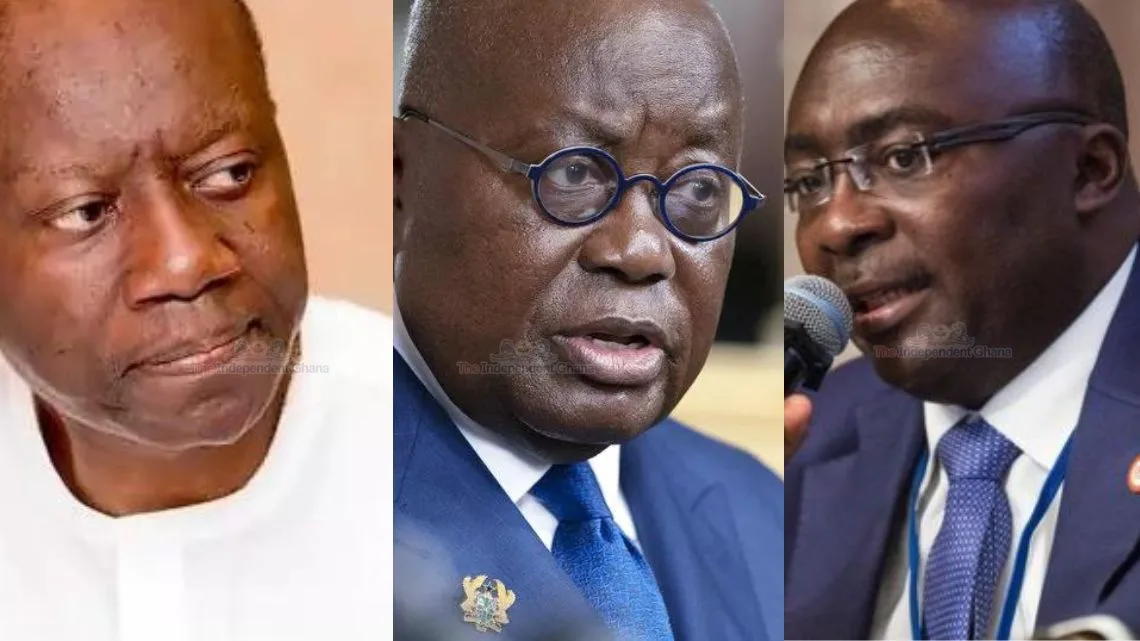
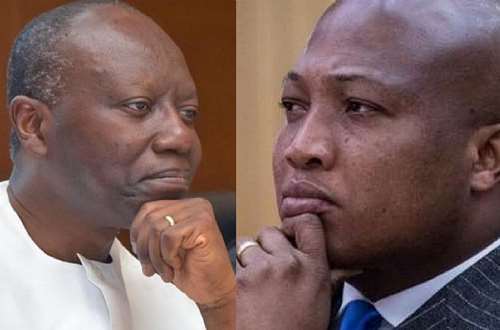
    Political analyst, Yaw Asani Tanoh, is of the assertion that there is some sort of friction between Vice President Dr Mahamudu Bawumia and Finance Minister, Ken Ofori-Atta.

    In an interview on Neat FM, Mr Tanoh claimed that the Finance Minister and other individuals had ganged up on the Vice President, immobilizing him from carrying out any meaningful initiative or making any important decision.

    He however noted that should the tables turn and Dr Bawumia be elected president, the Finance Minister and his colleagues would find themselves wanting.

    “The Vice President is only a helper. The most powerful person in the ruling government today is Ken Ofori-Atta. The second person is the one that doesn’t have a portfolio. President Akufo-Addo is like in 5th place.

    “The guys are there and they will not allow Dr Bawumia. We should be fair to ourselves. Kennedy Agyapong came out to say they bully Dr Bawumia. Things are happening.

    “I can bet you that if he gets a good standing, he will sweep them. The perception is that he will be manipulated but if Dr Bawumia becomes president with these Hausa people around, Ken Ofori-Atta will be in hot waters,” he said.

    In November last year, Member of Parliament for Assin Central, Kennedy Agyapong has expressed displeasure about the effectiveness of Dr. Mahamudu Bawumia in his capacity as the country’s Vice President.

    In a post on social media, Mr Agyapong questioned the Vice President with the claim that he has allowed the Minister of Finance, Mr. Ken Ofori-Atta, to bully him.

    “If you are a Vice President, how do you sit down for a Finance Minister to bully you? If I’m a Vice President how can I sit down for a Finance Minister to bully me? Now you come and tell us you have not been given an opportunity,” Ken Agyapong is heard saying in the post and asked, “What else do you want us to give you to prove that you are effective?”

    This comes months after Onua TV/Radio presenter, Blessed Godsbrain Smart, popularly known as Captain Smart, made a shocking revelation about the alleged maltreatment meted to Vice President Dr Mahamudu Bawumia by some big names in the New Patriotic Party (NPP) government.

    According to Captain Smart, the Vice President has been belittled by many individuals in the ruling party thanks to President Akufo-Addo, whom Captain Smart alleges has sidelined his vice in the running of the country despite his progressive policies.

    In an edition of Onua TV’s Maakye Show, Captain Smart named Gabby Otchere-Darko, Asante Bediatuo, Finance Minister Ken Ofori-Atta as some of the individuals who purportedly have no or less reverence for the Vice President.

    Also, The Herald reports that the two high-ranking officials are engaged in persistent disagreements over economic policies.

    Despite their close understanding, reports suggest that the Finance Minister does not consistently attend Economic Management Team meetings chaired by Dr. Bawumia. When present, he is said to arrive late or act contrary to the team’s decisions.

  • Government advocates increased Chinese Business presence

    Government advocates increased Chinese Business presence

    Finance Minister Ken Ofori-Atta has conveyed the government’s deliberate efforts to position the country as a favored hub for Chinese businesses across the African continent.

    In a pivotal engagement held in Accra, Finance Minister Ken Ofori-Atta disclosed the government’s commitment to fostering stronger ties with the Chinese Business Community in Ghana. The occasion was part of the Ghana Mutual Prosperity Partnership, signaling a strategic effort to enhance collaboration between the two entities.

    “We want to use this platform to tease out the problems you face, equip you for the challenges of the future and increase Ghana’s attractiveness as a base for Chinese businesses on the continent,” Mr Ofori-Atta stated.

    The Finance Minister underscored Ghana’s economic resurgence, steady exchange rates, and decreasing interest rates as advantageous elements for businesses eyeing exports to China. Additionally, he highlighted the encouraging trajectory of the Bank of Ghana’s Business Confidence Index, signifying a growing confidence in the overall economic conditions of the country.

    Ghana Investment Promotion Centre (GIPC) is developing an Investment Code to expand incentives for both domestic and foreign strategic investments, with the aim of promoting a predictable and favourable environment for investment.

    China holds a crucial position in Ghana’s trade and investment landscape, with an FDI stock of approximately US$1.1 billion. Ghana stands as the 4th largest buyer of Chinese goods on the African continent, consuming approximately US$7.9 billion of Chinese exports in 2022, underlining the strong trade ties between the two nations.

    Reflecting on this enduring relationship, Mr Ofori-Atta expressed gratitude for China’s support during challenging times, notably as the first responder for anti-pandemic supplies during the “once-in-a-generation” pandemic. China’s leadership in supporting Ghana’s bid to restructure bilateral debts also showcased commitment to Ghana’s economic recovery efforts, he said.

    Chinese businesses play a vital role in driving infrastructure development in Ghana, particularly in sustainable business growth, energy and aviation sectors. Contracts underscore the importance of responsible business practices.

    Ambassador Lu Kun of The People’s Republic of China in Ghana highlighted the significance of the two nations’ 60-year diplomatic relations and the role of Ghana in China’s Belt and Road Initiative. Bilateral trade volume reached US$9 billion in the first 10 months of 2023, marking a year-on-year increase of 7.8 percent . Ambassador Lu Kun reiterated China’s commitment to sincere cooperation and shared interests.

    Chairman Yang Qun of the China Enterprises Chamber of Commerce in Ghana recognized the pivotal role of Chinese business investments in Ghana’s progress. Addressing challenges and acknowledging existing investments, he emphasized the positive impact of Chinese enterprises on Ghana’s economic landscape, contributing to sustainable development and community engagement.

    As Ghana and China enter the Chinese New Year, both nations express optimism for a prosperous year ahead, building on their historical partnership and commitment to mutual growth.

  • I won’t sign cheque if expenditure doesn’t fall in line with budget – Ofori-Atta

    I won’t sign cheque if expenditure doesn’t fall in line with budget – Ofori-Atta

    The Finance Minister, Ken Ofori-Atta, has emphasized his dedication to fiscal discipline, pledging to avoid budget overruns in 2024 leading up to the December elections.

    Reflecting on the reduction of inflation from 54.1% in December 2022 to 23.2% in December 2023, he emphasized the need for fiscal prudence, stating that the Ministry of Finance prioritizes the nation’s welfare over popularity.

    The finance minister acknowledged the Bank of Ghana’s efforts in utilizing monetary policy tools to curb inflation, emphasizing his refusal to authorize expenditure misalignments with the budget.

     “We have moved inflation from over 54.1% in December 2022 to about 23.2% in December 2023 and you think that did not come with exercising some fiscal prudence? The Ministry of Finance is not here to be loved, but to make sure that the community crosses the Jordan”, he told George Wiafe on PM Express, Business Edition on January 18, 2023.

    “We want to ensure that the right things are done going forward as a country. If the expenditure does not fall in line with the budget, I will not sign the cheque”, he said.

    He affirmed the government’s dedication to strict adherence to fiscal policies, striving to achieve targets outlined in the 2024 budget.

    Reminding government officials of the importance of fiscal prudence, Ofori-Atta disclosed stringent measures taken to contain spending, contributing to the decline in inflation.

    Despite the challenges posed by an election year, he expressed confidence in maintaining fiscal discipline and achieving the 2024 year-end inflation target of 15%.

    Optimistic about Ghana’s IMF program, Ofori-Atta addressed the difficulty in introducing new tax measures to boost revenue, citing the necessity to address the country’s tax-to-GDP ratio. While recognizing the challenges, he expressed confidence in the government’s commitment to economic stability and fiscal responsibility.

  • Ofori-Atta vows full commitment to fiscal discipline in 2024 Election Year

    Ofori-Atta vows full commitment to fiscal discipline in 2024 Election Year

    Finance Minister, Ken Ofori-Atta, has affirmed his dedication to maintaining fiscal discipline, assuring the prevention of budget overruns in the year 2024 as the country approaches the December elections. This commitment comes as part of efforts to ensure sound economic management during the election period.

     “We have moved inflation from over 54.1% in December 2022 to about 23.2% in December 2023 and you think that did not come with exercising some fiscal prudence? The Ministry of Finance is not here to be loved, but to make sure that the community crosses the Jordan”, he told George Wiafe on PM Express, Business Edition on January 18, 2023.

    He further mentioned that the Bank of Ghana is actively fulfilling its role in ensuring that monetary policy tools are effectively utilized to sustain the ongoing efforts to reduce inflation.

    “We want to ensure that the right things are done going forward as a country. If the expenditure does not fall in line with the budget, I will not sign the cheque”, he said.

    He emphasized that the government is fully committed to adhering strictly to its fiscal policies to achieve the outlined targets in the 2024 budget.

    “I think the country is aware of the cost of inflation and cedi depreciation and we are going to do everything on our part to ensure that things don’t go bad”.

    Containing inflation rate for 2024

    Mr. Ofori-Atta emphasized that all government officials have been reminded to uphold fiscal prudence.

    He revealed that the government has implemented stringent measures to control spending, resulting in a decline in inflation.

    He believes that the right policies can be pursued to help the government achieve its end-of-year inflation target of 15% in 2024.

    “If we should look at 2022 and 2023, we cannot forget about what government has done when it comes to expenditure and we intend to continue. It is an election year, we will not let our eyes off the ball when it comes to fiscal discipline”, he reiterated.

  • Jinapor questions Minerals Commission’s role in controversial SML contract

    Jinapor questions Minerals Commission’s role in controversial SML contract

    Ranking Member of Parliament’s Mines and Energy Committee, John Abdulai Jinapor, has raised concerns about the exclusion of the Minerals Commission from the contract awarded to Strategic Mobilisation Ghana Limited (SML), a company that is supposed to monitor and audit the gold production sector for the government.

    Mr Jinapor, also the MP for Yapei Kusawgu, emphasized the significance of involving the Minerals Commission, the government agency responsible for regulating and licensing mineral exploration and extraction in Ghana, in the contract. He asserted that the commission, with its expertise and mandate, plays a vital role in ensuring quality assurance and revenue collection in the sector.

    “They are supposed to ensure that we also meet the revenue requirement, and so they have a role to play when it comes to quality assurance in respect to revenue,” he stated.

    Contrary to this, the Chief Executive Officer of the Minerals Commission, Martin Kwaku Ayisi, stated that the commission “did not play any role in the award of the contract” to SML, a subsidiary of a timber company. He added that the commission has no records of losses resulting from deliberate or accidental miscalculation of revenue in the mining sector.

    The contract, awarded by the Ministry of Finance and the Ghana Revenue Authority (GRA), grants SML over $100 million annually for a five-year duration, renewable for another five years. President Nana Addo Dankwa Akufo-Addo has suspended the contract and appointed international audit firm KPMG to conduct an audit within two weeks, following revelations by The Fourth Estate, an investigative news website.

    Mr Jinapor criticized the clandestine handling of the contract, stating, “A common contract is that you want to ensure that there is value for money, that there is quality assurance in terms of revenue.” He urged Parliament to verify if the proper procedures were followed in awarding the contract and if other companies were given the opportunity to tender.

    The MP underscored that the contract’s transparency and accountability raise questions about the government’s management of the country’s mineral resources.

  • Ofori-Atta hints at another engagement with bondholders

    Ofori-Atta hints at another engagement with bondholders

    Ghana’s Finance Minister, Ken Ofori-Atta, announced on Monday the country’s plans to resume discussions with its international bondholders starting next week.

    This move comes in the wake of a recent successful deal to restructure $5.4 billion of official creditor debt, as Ghana aims to further enhance its financial position.

    Ghana, with approximately $13 billion in outstanding Eurobonds, plans to pursue ongoing discussions with bondholders following a meeting held in Marrakech in October.

    Finance Minister Ken Ofori-Atta revealed this intention during an interview at the World Economic Forum (WEF) annual meeting.

    Additionally, officials are scheduled to visit China on January 23, according to Ofori-Atta. The co-chairing responsibilities of Ghana’s Official Creditor Committee by China and France played a pivotal role in the agreement, unlocking further funding from a $3 billion International Monetary Fund (IMF) rescue loan.

    Ghana defaulted on most of its overseas debt in December 2022 after debt servicing costs soared. It is looking to restructure $20 billion of external debt, which totaled about $30 billion at the end of 2022, and has already restructured most local debt.

    Restructuring negotiations last year were a “very difficult, painful process,” but Ghana has “built pretty good momentum”, Ofori-Atta said.

    The IMF board is due to meet on Friday to decide on a $600 million disbursement from Ghana’s bailout program. Getting approval is usually seen as a formality once a meeting has been scheduled and would unlock funding from other multilateral lenders.

    The World Bank was expected to decide on $550 million of “sorely needed” funding on Jan. 25, Ofori-Atta added.

    Ghana is reworking its debts under the Common Framework, a restructuring process set up by the G20 countries during the COVID-19 pandemic that has been criticized for slow results.

    Ofori-Atta said the 2022 macroeconomic situation had been “cage rattling”, but was improving, and he pointed to a rise in revenue and a decline in inflation.

    The latest data showed consumer inflation had slowed to 23.2% year-on-year in December compared to the more than 50% when the country tipped into default.

    Meanwhile growth was running at 3%, more than twice the IMF’s projected rate of 1.2%, Ofori-Atta said.

  • Resign and let Ghanaians have peace of mind – Atta Akyea tells Ken Ofori-Atta

    Resign and let Ghanaians have peace of mind – Atta Akyea tells Ken Ofori-Atta

    Member of Parliament for Akim Abuakwa South, Samuel Atta Akyea, has entreated Finance Minister Ken Ofori-Atta to step down from his position, expressing the belief his resignation would bring peace to the country.

    Mr Atta-Akyea underscored the need for self-reflection on Ofori-Atta’s part, urging him to consider stepping down for his personal well-being and the overall benefit of the ruling New Patriotic Party (NPP).

    During an interview with Citi TV on Tuesday, January 16, the lawmaker from Abuakwa South appealed to the Finance Minister to prioritize the nation’s interests and contemplate resigning from his position.
    “For me, what is very frightening is the fact that you have a whole army of people saying look you’ve had enough…I think that that could be a way for him to relax. Look at all the burdens on one man. So it is his individual decision to make as to whether he should go or he should continue.”

    “He should look at himself and look at the troubles that everybody believes, I mean when he is not there then the nation will have peace…He should save himself and save the government and have his peace because he needs it,” Mr Atta Akyea said.

    Member of Parliament for Abuakwa South, Samuel Atta Akyea (R)

    Calls for the resignation of Finance Minister Ken Ofori-Atta have been growing for several months, primarily from within the New Patriotic Party (NPP).

    The opposition National Democratic Congress (NDC) has been particularly vocal, consistently holding the Finance Minister responsible for the prevailing fiscal challenges.

    In response to these demands, Finance Minister Ken Ofori-Atta expressed deep emotional distress and disappointment. Calls for his dismissal or resignation were met with a strong commitment to remain in office during an exclusive interview with GTV on Sunday, August 6, 2023.

    Despite feeling battered and broken by the protests, Ofori-Atta underscored his dedication to a singular duty – to continue serving his beloved country in its efforts to recover from economic challenges.

    He emphasized that such challenging times demand bold and courageous individuals who are willing to stay on and fight for the nation’s well-being.

    “In the period of censure, in which Parliament then voted against it, but more importantly, you were in a situation where you were battered and broken.”

    “And do not leave a ship at that time, and given the urgency of ensuring the IMF programme will get through, for me it was a duty to serve, and there was no running away from it,” Mr Ofori-Atta said.

  • Ghana’s economy gradually recovering – IMF boss

    Ghana’s economy gradually recovering – IMF boss


    The Managing Director of the International Monetary Fund (IMF), Kristalina Georgieva, has lauded the positive outcomes emerging from Ghana’s economic policies under the IMF-supported program.

    In a recent post on X (formerly Twitter), she expressed not only her contentment but also emphasized the significance of the policy and reform commitments outlined in Ghana’s agreement with the IMF, asserting that they are crafted in the best interest of the Ghanaian populace.

    President Akufo-Addo and Ghana’s Finance Minister, Ken Ofori-Atta, were commended for their commitment during the World Economic Forum (#WEF24).

    “Wonderful to see President Nana Addo Dankwa Akufo-Addo and Ghana’s Finance Minister, Ken Ofori-Atta at #WEF24. The policy and reform commitments under Ghana’s economic program are starting to bear fruit,” She posted.


    Georgieva’s statement indicated that the economic program’s policy and reform commitments are beginning to bear fruit, signaling progress and positive shifts.

    Furthermore, she extended appreciation for the debt treatment agreement between Ghana and the Official Creditor Committee, describing it as consistent with the objectives of the IMF-supported program.

    The Managing Director reiterated that the program aims to achieve macroeconomic stability, ensure debt sustainability, build resilience, and lay the foundations for stronger and more inclusive growth.

    In a detailed statement, Georgieva specifically thanked the Official Creditor Committee, with special mention to the co-chairs, China and France, for their dedicated efforts in reaching the debt treatment agreement.

    She highlighted this agreement as a substantial milestone for the G20 Common Framework, wherein G20 creditors collaborated to provide debt relief for Ghana.

    The Managing Director’s comprehensive remarks underscored the intricate yet crucial steps being taken to support Ghana’s economic trajectory and promote resilience and growth.

  • Ken Ofori-Atta doesn’t appreciate the economy he is managing – Prof Gatsi

    Ken Ofori-Atta doesn’t appreciate the economy he is managing – Prof Gatsi

    Dean of the University of Cape Coast Business School (UCCBS), Professor John Gatsi, has cast doubt on Finance Minister Ken Ofori-Atta’s understanding of the economy he manages.

    This revelation follows the Finance Minister’s recent statement asserting that the decline in inflation figures indicates Ghana’s economic recovery.

    During an interview on the Morning Starr with Francis Abban, Professor Gatsi highlighted that the root causes of the economic challenges in the country remain unaddressed.

    He questioned the Finance Minister’s optimism, stating, “The Finance Minister, when he was presenting his economic indicators, will want to compare it to about 10 years ago, about 15 years ago. Why are we turning the corner just because we are comparing inflation figures, which are not responsive to policy rate and not responsive to the cost of doing business in the country?”

    Professor Gatsi emphasized that key issues such as corruption, unemployment, and a high cost of doing business persist, with no significant improvements.

    He expressed skepticism about attributing the supposed economic turnaround solely to declining inflation figures, which he argued do not reflect the challenges faced by businesses and the actual policy effectiveness.

    He concluded by remarking, “Our problem is corruption, unemployment, and people selling jobs at the government departments, which people are saying all around. So I wonder how somebody will just look at the inflation figures and then say that we have turned the corner. It means that person doesn’t appreciate the economy he is managing.”

  • Finance Minister Ken Ofori-Atta highlights crucial debt restructuring deal

    Finance Minister Ken Ofori-Atta highlights crucial debt restructuring deal

    Finance Minister Ken Ofori-Atta hailed the debt restructuring deal as a pivotal moment for Ghana’s economy.

    Speaking on PM EXPRESS BUSINESS EDITION with George Wiafe, he emphasized its significance in expediting the reduction of the country’s debt to sustainable levels.

    The interview will air on JOYNEWS this Thursday, January 18, 2024. Mr. Ofori-Atta acknowledged the challenging negotiations with official creditors but commended the Finance Ministry, government officials, and the cooperation of creditors for reaching this agreement.

    He asserted that this accomplishment demonstrates the commitment of all partners to assist Ghana in restoring debt sustainability in alignment with the IMF’s program targets.

    Background

    On January 12, 2024, the Finance Ministry declared reaching an accord with the Official Creditors Committee on debt treatment within the G20 common Framework.

    Following months of negotiations regarding the restructuring of Ghana’s debts, the OCC members, after a conclusive round of meetings last week, unanimously settled on December 2022 as the deadline.

    IMF Managing Director Kristalina Georgieva welcomed the debt treatment agreement in a statement.

    According to her, “This agreement clears the path for IMF Executive Board consideration of the first review of Ghana’s three-year Extended Credit Facility Arrangement in the next few days”.

    She added that “The Government of Ghana looks forward to further engaging with the Official Creditors to ensure prompt implementation of the agreed terms”.

    Proposed terms reached with creditors for restructuring Ghana’s debt

    The Finance Minister had kept details of the “term sheet” confidential. However, he didn’t dismiss the possibility of December 2022 as the deadline for restructuring Ghana’s debts.

    Mr. Ofori-Atta also acknowledged that Ghana would initiate debt servicing after the four-year moratorium, with payments starting after five years. Interest rates on these debts are anticipated to range between 2-3%.

    Additionally, Mr. Ofori-Atta mentioned ongoing discussions with official creditors to finalize the Memorandum of Understanding for the deal.

    He noted that “the terms of the agreed debt treatment are expected to be formalised in an MoU between Ghana and the official creditors in the coming days”.

    But will this affect the proposed date for the IMF Board meeting, the Finance Minister responded “No because the agreement reached with them is enough for the IMF Board to meet”.

    “We are prepared for this Board meeting and hopeful that Ghana will pass this first review”, the Finance Minister added.

    The minister further stated that bilateral agreements with each official creditor committee member will be used to execute the Memorandum of Understanding.

  • Ghanaians paying VAT on electricity since January 1 – Finance Ministry  

    Ghanaians paying VAT on electricity since January 1 – Finance Ministry  

    A letter from the Ministry of Finance indicates that the government has been modifying the Value Added Tax (VAT) for a segment of electricity consumers in the country.

    The letter, signed by the Minister for Finance, Ken Ofori-Atta, and directed to the Electricity Company of Ghana (ECG) and the Northern Electricity Distribution Company (NEDCO), specified that the VAT would be applicable to residential customers of electricity exceeding the maximum consumption level outlined for block charges for lifeline units.

    It added that VAT is a component of the country’s Covid-19 recovery program and should be levied effective from January 1, 2024.

    “As part of the implementation of the Government’s Medium-Term Revenue Strategy and the IMF-Supported Post Covid-19 Programme for Economic Growth (PC-PEG), the implementation of VAT for residential customers of electricity above the maximum consumption level specified for block charges for lifeline units in line with Section 35 and 37 and the First Schedule (9) of Value Added Tax (VAT) Act, 2013 (ACT 870) has been scheduled for implementation, effective 1st January 2024.

    It added, “For the avoidance of doubt, VAT is still exempt for “a supply to a dwelling of electricity up to a maximum consumption level specified for block charges for lifeline units” in line with Section 35 and 37 and the First Schedule (9) of Act 870,” part of the letter which is dated December 12, 2023, reads.

    The minister, in the letter, stated that the ECG and NEDCO to put measures in place and collaborate with the Ghana Revenue Authority (GRA) to ensure that the implementation of the VAT starts on January 1.

    “The Electricity Company of Ghana (ECG) and the Northern Electricity Distribution Company (NEDCO) are, hereby, requested to liaise with the Ghana Revenue Authority (GRA) to ensure that the implementation of VAT for residential customers of electricity above the maximum consumption level specified for block charges for lifeline units takes effect on 1st January 2024, in line with Sectio35 and 37 and the First Schedule (9) of Act 870.”

  • Govt set to borrow GHC 12.7bn in January via T-bills

    Govt set to borrow GHC 12.7bn in January via T-bills

    The government of Ghana has announced its plan to borrow a substantial GH¢12.7 billion through treasury bills in January 2024.

    This move, aimed at financing maturing bills, represents a 1.2% reduction compared to the borrowing figure for December 2023.

    Surprisingly, the government has already achieved an impressive feat in the new year by raising GH¢3.223 billion in the first auction of 2024.

    This amount surpasses the targeted figure by a significant margin, standing at 15.24% more than anticipated.

    Industry analysts, gauging the robust demand that averages GH¢4.0 billion per week, predict a smooth and successful refinancing of the upcoming maturities.

    Despite this optimistic outlook, expectations linger regarding heightened targets to address the 2024 budget deficit and create a buffer for the February 2024 coupon payments on the restructured bonds.

    The surge in demand for treasury bills observed in December 2023 underscored investors’ unwavering interest. With total bids reaching a staggering GH¢16.3 billion across the T-bills, the average weekly bid size hit GH¢4.0 billion, surpassing the total maturities of GH¢12.8 billion.

    The government, facing a pressing need for maturity refinancing, accepted all tendered bids, amplifying the financial manoeuvre’s impact.

    Examining the yield landscape in December 2023, a mixed outcome emerged. Downward pressure, stemming from sharp disinflation, contrasted with upward pressure induced by the increased Cash Reserve Ratio.

    Notably, the 91-day and 364-day yields experienced reductions of 14 and 74 basis points month-on-month, settling at 29.4% and 32.5%, respectively. In contrast, the 182-day yield gained 19 basis points, reaching 31.9%.

    These nuanced shifts in yields add further intrigue to the government’s financial strategies as it navigates the intricate landscape of economic variables and investor sentiments.

  • Ofori-Atta is more powerful than Akufo-Addo – Murtala Mohammed 

    Tamale Central MP, Ibrahim has lashed out at President Akufo-Addo for his failure to dismiss Finance Minister, Ken Ofori-Atta from office, despite mounting calls for his removal from office. 

    The outspoken MP, in an interview on Tuesday January 3, 2024, voiced his discontent over the President’s decision, highlighting concerns and grievances surrounding the Finance Minister’s tenure.

    He emphasized that, despite Mr Ofori-Atta having no success story since assuming the role of Finance Minister, he still remains in office. This, according to him, is an indication that the Finance Minister wields more power than the President. 

    He further asserted that considering the unfolding events amid calls for his dismissal and the fact that he continues to hold office, it merely suggests that the President is afraid of him. 

    “I told you that Ken Ofori-Atta was not moving an inch [from office]. He is more powerful than President Akufo Addo. He has no success story yet he remains in office. In fact, tell me one success story this man can tell as far as managing the Finances of the country is concerned; inflation disaster, debt to GDP disaster, prices of items, everything is in a mess!”

    He further alleged that Mr Ofori-Atta was only appointed into office to help the current administration loot the country’s resources. 

    “The man was appointed to aid the looting of this government Particularly the Ofori Attas.  And that’s why I say he’s only the Minister of Finance and remains that because he uses [the name] Ofori-Atta and nothing else. The only thing that will move him out is when this man decides he’s going away . Nothing else can push him away,” he added.

  • Speed ramps on highways must be abandoned for speed cameras – Scientist tells government

    Speed ramps on highways must be abandoned for speed cameras – Scientist tells government

    On November 17, 2021, Ghana’s Finance Minister, Ken Ofori-Atta, announced the removal of all tollbooths from public roads nationwide.

    This strategic decision received accolades from Ghanaian Scientist Dr. Charles Odame-Ankrah, based in Canada, who commended it as a smart and decisive initiative to address vehicular emissions and combat climate change.

    The immediate impact of the tollbooth removal was a noticeable reduction in vehicular traffic, with the promise of long-term benefits for human health across Ghana.

    Building on this momentum, Ghana’s Parliament took a historic stand on December 24, 2023, by passing the emissions levy.

    Dr. Odame-Ankrah celebrated the passage of the Emissions Levy Act as a pivotal stride in Ghana’s commitment to sustainable climate change efforts.

    This recognition followed his earlier proposal, gaining prominence after the United States Patent Office patented his innovative work.

    Renowned for his background in air quality sciences, Dr. Odame-Ankrah had advocated for the emissions levy as a groundbreaking alternative to tollbooths, providing a local solution to generate revenue for climate change initiatives.

    His visionary insight highlights the Act’s potential not only to reduce emissions but also to propel Ghana toward a more sustainable future, creating thousands of jobs through the establishment of an air quality monitoring network.

    Responding to this monumental step, Dr. Odame-Ankrah emphasized the need for immediate action, calling for the removal of all speed ramps nationwide.

    Instead, he proposed replacing them with speed cameras to enforce posted speed limits, identifying vehicle owners through their numbers and imposing hefty violation fines.

    Dr. Odame-Ankrah argued that this move would further enhance the reduction in emissions, as speed ramps, designed for safety, contribute to vehicle pollution, negatively impacting human health.

    He urged the government to allocate a portion of the revenue from the emissions levy to establish a comprehensive air quality monitoring network across Ghana.

    This strategic measure, he asserted, is crucial in the fight against climate change, providing policymakers with verified data for informed decision-making to protect the environment and human life.

    The passage of the Emissions Levy Act symbolizes Ghana’s Parliament’s profound commitment to proactively combat climate change.

    It signifies not only a transformative policy shift but also Ghana’s leadership in embracing innovative solutions endorsed by experts like Dr. Charles Odame-Ankrah.

    As Ghana strides boldly toward a greener, more sustainable future, the implementation of a robust air quality monitoring network stands poised to fortify the nation’s resolve in decisively combating climate change and creating well-paying jobs.

  • GHS259.05bn approved for 2024 budget by parliament

    GHS259.05bn approved for 2024 budget by parliament

    On Saturday, December 23, 2023, Parliament approved the Appropriation Bill, 2023, allowing the Government to access GH¢259.05 billion from the Consolidated Fund and other public funds for its expenditures in the 2024 financial year.

    The Bill’s primary purpose is to facilitate appropriation for the year 2024, as mandated by the constitutional requirement outlined in paragraph (a) of clause (2) of Article 179.

    This article stipulates that estimates of public office expenditures must be included in an Appropriation Bill introduced in Parliament, authorizing the release of funds from the Consolidated Fund and other public funds to cover Government expenses.

    In line with the constitutional provision, an amount not exceeding GH¢259.05 billion is mandated to be withdrawn from the Consolidated Fund and other public funds throughout the financial year commencing on January 1, 2024, and concluding on December 31, 2024.

    These funds will be allocated for the purposes specified in the First Schedule, corresponding to the Third and Fourth Schedules, representing Ministries, Departments, and Agencies, along with Other Government Obligations and their respective programs.

    Furthermore, the Bill grants specific Ministries, Departments, and Agencies (MDAs) the authority to retain and utilize GH¢12.33 billion during the financial year spanning from January 1, 2024, to December 31, 2024.

    Addressing the disbursement of funds on the Finance Minister’s authorization, the Bill specifies that the Controller and Accountant-General can disburse any sum not exceeding GH¢259.05 billion from the Consolidated Fund and other public funds during the financial year concluding on December 31, 2024, based on a warrant issued by the Minister responsible for Finance.

  • We advised but govt rejected our suggestions on saving the economy – World Bank Director

    We advised but govt rejected our suggestions on saving the economy – World Bank Director

    Outgoing World Bank Country Director, Pierre Frank Laporte, is disputing allegations of not taking adequate measures to avert Ghana’s recent economic crises.

    Speaking on PM Express Business Edition on December 21, 2023, he said “We can advise. It is government decision to take the advice or not. One thing I can assure you is that we did everything in our power to prevent Ghana from getting to that state, he disclosed.

    Mr. Laporte rejected the suggestion that the World Bank could have utilized project funds and other financial support as leverage to influence the Ghanaian government’s approach to managing the economy. He emphasized that decisions approved by the World Bank Board for projects are binding and cannot be altered in the host nation.

    “I cannot sit in Ghana here and say that funds should not be approved”, he stressed.

     “I am not the type of Country Director who will also go out in public and events criticise a government. I will rather do my criticisms in meetings and the boardrooms which will really get the results”.

    The country’s economic challenges led to its classification as debt-distressed by the World Bank and the International Monetary Fund after conducting a Debt Sustainability Analysis on Ghana.

    Key macroeconomic indicators, such as inflation exceeding 50%, and the government undertaking debt restructuring due to challenges in meeting debt obligations, have raised concerns about the country’s economic stability.

    Mr. Laporte advised government to be strict on fiscal discipline to ensure that recent gains are sustained.

    “It’s very important to focus critically on fiscal discipline, especially in an election year to ensure that the recovery that the economy is witnessing is not affected”.

    Despite the recovery, he warned that things could get out of hand, if the necessary measures are not instituted.

    “The World Bank also stands ready to support the country to ensure that the recent gains impact on the livelihood of Ghanaians”, he said.

  • Ghana’s GDP expanded by 2.0% in third quarter of 2023 – Ofori-Atta

    Ghana’s GDP expanded by 2.0% in third quarter of 2023 – Ofori-Atta

    Recent provisional figures from the Ghana Statistical Service (GSS) has revealed a 2.0% expansion in the economy during the third quarter of 2023.

    This growth rate is lower than the pre-pandemic 2022 average GDP growth rate of 5% and the 2.7% recorded.

    The Agricultural sector witnessed a 5.9% expansion, while Services grew by 2.0%.

    However, the Industry sector contracted by 4.3%.

    In Agriculture, all sub-sectors except Forestry and Logging experienced a 6.9% expansion, with Crops leading at 7.0% growth.

    The Services sector saw growth in all 10 sub-sectors, with Information and Communication at the forefront with a GDP growth rate of 17.3%, followed by Accommodation and Food Services Activities at 11.2%.

    Contrarily, the Industry sub-sectors recorded negative growth rates, with Construction at -8.3%, Mining and Stone Quarrying at -8.1%, Electricity at -1.8%, and Manufacturing at 2.1%.

    The Services sector remains the largest, constituting 42.1% of the economy, followed by Industry and Agriculture with shares of 33.0% and 24.9%, respectively. The nominal GDP estimate for the third quarter of 2023, at current prices, is GH¢212.36 billion.

  • I have not resigned – Ken Ofori-Atta

    I have not resigned – Ken Ofori-Atta


    Minister of Finance, Ken Ofori-Atta, has quashed rumors of his resignation from the position within the governing New Patriotic Party (NPP) administration.

    Speculations circulated on Monday, December 18, suggesting his departure from the role of Minister of Finance and Economic Planning.

    In a tweet shared via the X handle of the Office of the Finance Minister, Ofori-Atta, who participated in a thanksgiving event with ministry staff, hinted at his readiness to continue leading the Ministry of Finance into 2024.

    “I am assured that the Lord will continue to lead and guide us in 2024. Our testimony is indeed victory on every side! Humbled to be leading the brilliant and resilient TeamMoF,” read the post.

    Ken Ofori-Atta, who recently presented the last budget of the Akufo-Addo administration in November, received a guard of honor from Ministry of Finance staff.

    As the longest-serving finance minister in the 4th Republic of Ghana, he has faced criticism from members of the governing NPP and the public for the management of the Ghanaian economy, currently under an IMF program.


    “Today I joined the staff of @MoF_Ghana in thanksgiving for God’s mercy & preservation in 2023. I am assured that the Lord will continue to lead and guide us in 2024. Our testimony is indeed victory on every side! Humbled to be leading the brilliant and resilient #TeamMoF #Nissi.”

  • Ghana’s IMF board meeting for second tranche loan moved to January 2024 – Report

    Ghana’s IMF board meeting for second tranche loan moved to January 2024 – Report

    Ghana has adjusted its timeline for securing the second tranche of the IMF bailout to January 11, 2024, as reported by Joy Business.

    The shift comes as the nation engages in negotiations with the Official Creditor Committee (OCC) to finalize terms for a debt exchange program with its external creditors.

    Insiders familiar with the OCC negotiations reveal significant headway, especially in discussions with key player China regarding the debt swap.

    Originally, Ghana was slated to meet with the IMF Executive Board in November 2023 to finalize an agreement with external creditors, paving the way for the disbursement of the $600 million second tranche loan facility.

    Ghana had sought financial assistance from the IMF on July 1, 2022, in response to significant economic challenges in 2022. The primary goals were to restore macroeconomic stability and provide support for the balance of payments.

    The first tranche of the $3 billion IMF Extended Credit Facility, amounting to $600 million, was successfully secured on May 17, 2023, after meeting all stipulated conditions.

    Ghana is anticipated to remain under the IMF program for a three-year period as it addresses economic challenges and works toward sustained stability.

  • SML received GHC24m monthly payment from govt even after ‘lying’ about what they do – Report

    SML received GHC24m monthly payment from govt even after ‘lying’ about what they do – Report

    An explosive investigative report by investigative journalist Manasseh Azure Awuni‘s The Fourth Estate, titled “THE GH₵ 3 BILLION LIE,” exposes startling revelations about Strategic Mobilisation Ghana Limited (SML).

    Despite making wild claims of saving Ghanaian billions, SML continued to receive monthly payments of up to GH₵24 million from the government. The blockbuster report, released today on December 18, 2023, delves into a murky contract signed with the Ministry of Finance and the Ghana Revenue Authority (GRA).

    The investigation, conducted by Evans Aziamor-Mensah, Adwoa Adobea-Owusu, and Manasseh Azure Awuni of The Fourth Estate, uncovers a trail of deceit involving false and unsubstantiated claims made by SML. The company’s dubious operations became the basis for substantial payments it received from the government, with indications that officials from the Ministry of Finance and GRA were aware of the false claims.

    The Fourth Estate team confronted SML’s management with the findings, leading to the sudden disappearance of major services claimed by the company from its website. This action raised further questions about the legitimacy of SML’s dealings with the government.

    The investigation also sheds light on an outrageous deal initiated by Finance Minister Ken Ofori-Atta, entitling SML to over $100 million annually for the next decade. The report highlights a 2019 contract signed between the Government of Ghana and SML, questioning its necessity amid pre-existing measures introduced in 2018 to curb losses in the downstream petroleum sector.

    Key revelations include the questionable procurement process, where SML, led by Managing Director Christian Tetteh Sottie, was handpicked through a single-source method despite lacking prior experience in the services it claimed to provide. Procurement expert Kobina Ata-Bedu raises concerns about potential breaches of Ghana’s procurement laws.

    The report dismantles SML’s false claims of resolving issues such as underreporting, diversion, and dilution of fuel products in the petroleum industry. The company’s website displayed misleading information that was later removed after the Fourth Estate’s investigation.

    Christian Tetteh Sottie, the Managing Director of SML, admitted that the company did not engage in activities related to checking underreporting or anomalies in the downstream sector, contradicting its earlier claims. The GRA officials, present during the confrontation, expressed shock at the services SML claimed to provide.

    Despite the revelations, SML’s Managing Director denied knowledge of the GH₵3 billion savings claim, attributing it to a mistake made by an IT Systems Engineer during a presentation to the GRA. The Fourth Estate’s persistent questioning forced admissions of discrepancies, prompting SML to remove the false claims from its website.

    The Minister of Finance, Ken Ofori-Atta, who initially lauded SML for saving billions, now faces scrutiny as evidence suggests financial mismanagement. Despite unanswered Right to Information requests, sources close to the Ministry of Finance reveal monthly payments of up to GH₵24 million to SML.

    The shocking details unveiled in this report raise serious questions about the transparency and legitimacy of government contracts, urging further investigation into SML’s dealings and the accountability of public funds.

  • SML’s $1b rip-off: How Ken Ofori-Atta allegedly betrayed Ghana in ‘dirty’ oil deal

    SML’s $1b rip-off: How Ken Ofori-Atta allegedly betrayed Ghana in ‘dirty’ oil deal

    In a shocking revelation from an investigative report titled “THE GH₵ 3 BILLION LIE” by Investigative journalist Manasseh Azure Awuni’s Fourth Estate , released on December 18, 2023, Finance Minister Ken Ofori-Atta is under scrutiny for his alleged involvement in a scandalous oil deal with Strategic Mobilisation Ghana Limited (SML).

    The investigative series by The Fourth Estate exposes Strategic Mobilisation Ghana Limited (SML), which claimed to have saved Ghana over GH₵3 billion in revenue through its contract with the Ministry of Finance and the Ghana Revenue Authority (GRA). However, the investigation reveals that these claims were entirely false.

    SML’s Managing Director, Christian Tetteh Sottie, when confronted, disowned the GH₵3 billion figure, attributing it to a misinterpretation by the media. The company faced further scrutiny for false assertions that its services curbed malpractices in the petroleum industry, a claim debunked by evidence provided during the investigation.

    Notably, SML admitted that its ultrasound meters at the nation’s fuel depots were less accurate than the certified meters at the depots’ loading gantries. Despite these discrepancies and the admission that SML never detected any under-declaration, the Ministry of Finance expanded the scope of SML’s work in June 2023.

    A letter from the Ministry of Finance dated June 22, 2023, revealed that Finance Minister Ken Ofori-Atta instructed the GRA to include upstream oil drilling and gold mining in SML’s responsibilities. Representatives from GRA and SML subsequently met with the Ghana Chamber of Mines to discuss the contract’s execution.

    Under the new contract, SML stands to receive US$0.75 for every barrel of oil produced in Ghana, translating to a minimum daily earning of US$120,000. Additionally, the company will receive 0.75% of the total amount of gold produced in Ghana, potentially amounting to US$50 million based on 2022 production figures.

    The combined earnings from the downstream and upstream petroleum sectors, along with the gold sector, would exceed US$100 million annually. This controversial contract, not acknowledged by the Petroleum Commission, has raised concerns about unnecessary costs and potential revenue loss for Ghana.

    Benjamin Boakye, Executive Director of the Africa Centre for Energy Policy (ACEP), criticized SML’s role, deeming it needless and potentially detrimental to Ghana’s revenue. The Petroleum Commission, responsible for regulating the upstream sector, claims to have no knowledge of the contract and has no reported leakages in the sector.

    As the details of this scandal unfold, Finance Minister Ken Ofori-Atta faces mounting accusations of betraying Ghana’s financial interests in a deal that could cost the government more than the annual revenue from various taxes.

    The report is available on The Fourth Estate’s website https://thefourthestategh.com/ and social media platforms.

  • Ghana experiencing deflation due to govt’s efforts in restoring macroeconomic stability – Ofori-Atta

    Ghana experiencing deflation due to govt’s efforts in restoring macroeconomic stability – Ofori-Atta

    Finance Minister Ken Ofori-Atta has attributed the persistent decline in inflation to the government’s unwavering commitment to restoring macroeconomic stability.

    This marks the fourth consecutive decrease, with the November rate standing at 26.4 percent.

    During the dividend presentation of 30.89 million cedis by the Board of Twifo Oil Palm Plantation Limited to the government, Ofori-Atta underscored the tangible impact of these dedicated efforts on the economic landscape.

    He highlighted the impressive performance, noting that inflation has been halved from 54 points at the end of the previous year.

    “We saw yesterday inflation came down to 26.4% which is literally where we were at 54 points some time at the end of last year. So it is quite an impressive performance. And I know we have been through difficult times, but you look at inflation being halved. We see our growth which was expected to be 1.5% double to 3%. And we look at currency depreciation which since February has been about 7.2% declined a bit.”

    “The inflation also indicated that Greater Accra had the slowest growth inflation and that is good. Food inflation is still problematic but even that was down considerably from 44% to 32% this time. So the supply is not the problem but the logistical movement is what we need to get efficient about,” he said.

    Despite challenging times, the country has experienced notable achievements, with economic growth doubling from the expected 1.5% to 3%, and a slight decline in currency depreciation, which stood at about 7.2% since February.

    Mr Ofori-Atta further delved into the details, stating that Greater Accra exhibited the slowest growth in inflation, a positive development.

    While acknowledging the lingering issue of food inflation, he pointed out a considerable improvement from 44% to 32%. He identified the need to focus on logistical efficiency to address the challenges in the supply chain.

    Deputy Minister of Finance, Abena Osei-Asare, echoed the sentiment by encouraging State-Owned Enterprises to strive for profitability.

    She emphasized the government’s ongoing efforts to enhance the business environment for sustained growth.

    Madam Osei-Asare stressed the importance of collaboration between the government and these enterprises, noting that the government’s investment cannot continue indefinitely without returns, and mutual efforts are essential for maintaining the observed growth.

    “The government cannot continue to invest in these companies, and whatever is due to the government won’t be given to the government. So we appreciate what you have done, and we ask that we will continue to work with you in partnership to make sure you sustain this growth that we are seeing at your end,” she said.

  • Top secret: Why Bawumia ‘fought’ Akufo-Addo and Ken Ofori-Atta at Cabinet meeting

    Top secret: Why Bawumia ‘fought’ Akufo-Addo and Ken Ofori-Atta at Cabinet meeting

    Shocking revelation is beginning to emerge about happenings in cabinet meetings that was held before the approval  of the obnoxious E-levy tax.

    Information reaching us is that there was a hot exchange between Vice President Dr Mahamudu Bawumia and Finance Minister Ken Ofori-Atta

    While Dr Bawumia was vehemently opposed to passage of the e-levy, the finance Minster maintained the passage of the tax will solve the country’s problems.

    The National Women’s Organizer of the New Patriotic Party (NPP), Kate Gyamfua has give more credence to this report in a recent interview she granted on Accra-based Peace FM.

    Speaking in an interview on Peace FM’s Kokrokoo on November 23, 2024, Gyamfua claimed that Bawumia, along with the Minister of Communication, Ursula Owusu-Ekuful, opposed the implementation of the E-Levy during a party caucus meeting.

     “When the E-levy was being introduced, two members opposed it. Bawumia said that the E-levy was going to affect the poor, so why would they tax their money? He really fought against it; he never agreed to the E-levy.

    “I am the one telling you, and if any NPP member wants to challenge this, they should come forward. Bawumia and Ursula Owusu fought against the E-levy during a meeting, stating that it was not important, so they should look elsewhere. It is true that it has added no value to our economy,” she said.

    Gyamfua made these revelations in an interview on Peace FM’s Kokrokoo on November 23, 2024, where she also defended Bawumia’s victory in the NPP flagbearer elections.

    She disclosed that Vice President Bawumia once again stood in opposition during discussions about introducing an electronic transaction tax in Ghana.

    Gyamfua claimed that Dr Bawumia, along with the Minister of Communication, Ursula Owusu-Ekuful, vehemently opposed the implementation of the E-Levy during the meeting.

    “When the E-levy was being introduced, two members opposed it. Bawumia said that the E-levy was going to affect the poor, so why would they tax their money? He really fought against it; he never agreed to the E-levy. “I am the one telling you, and if any NPP member wants to challenge this, they should come forward. Bawumia and Ursula Owusu fought against the E-levy during a meeting, stating that it was not important, so they should look elsewhere. It is true that it has added no value to our economy,” she said.

    She made these points while stressing on Dr Bawumia good intensions and competencies and the need to vote him in as the next president.

    She touted that Bawumia did not win the NPP flagbearer race solely because of President Nana Addo Dankwa Akufo-Addo’s backing, contrary to what many believe. Instead, he did so because of his own merits and popularity.

    “People have the perception that Bawumia was voted for during the flagbearer elections because of President Akufo-Addo’s backing. I want to state that anyone asserting such is a liar because the only support I can confirm from the presidency for Bawumia’s victory is 15%,” she noted.

  • Govt takes steps towards affordability and local production of sanitary pads

    Govt takes steps towards affordability and local production of sanitary pads

    The taxation of sanitary pads emerged as a prominent topic of discussion ahead of the 2024 budget reading in Parliament by Finance Minister Ken Ofori-Atta.

    Public reactions to the government’s proposed solution, as presented by Minister Ofori-Atta, varied. While some Ghanaians expressed dissatisfaction, others saw it as a step toward providing relief for young girls and women during menstruation.

    During the 5th edition of the Deloitte Economic Dialogue in Accra on November 22, 2023, Deputy Minister of Finance Abena Osei-Asare revealed that Fay Enterprise and Sunda Ghana were identified as local companies poised to manufacture sanitary pads on a large scale for young girls and women.

    Sunda Ghana, with the potential support from the government, can produce 900 million sanitary pads, while Fay Enterprise has the capacity to produce 600 million sanitary pads annually. Currently, Sunda Ghana employs 900 people, while Fay Enterprise has approximately 40 employees.

    The Deputy Minister emphasized that removing import duties and implementing a Zero Value Added Tax (VAT) for these companies would enhance their production capacity and contribute to creating more job opportunities for the sizable population of unemployed youth in the country.

    Abena Osei-Asare said, “Government engaged the two companies that produce sanitary pads in this country; they were Fay Enterprise and Sunda Ghana and government sat with them and we looked at their numbers and clearly it confirmed that given that support, they can be able to produce the needed capacity for this country and so government decided that based on the numbers that have shown us, Sunda, given the support will be able to produce 900 million pieces a year.”

    “For Fay Enterprise, given the support will be able to produce about 60 million pieces a year. Sunda employs close to 900 people, Fay employs close to 40 people and so given that support, they can increase employment as well,” the Deputy Minister of Finance stated.

    The government waived import duties on raw materials used in the local production of sanitary pads and offered a zero-rate VAT on pads made locally.

    Currently, sanitary pads are subject to a 15% VAT and a 20% import tax.

    Sanitary pads range in price from GH¢20.00 to GH¢40.00 per pack.

  • Sammy Gyamfi dismisses govt’s GHS1trillion GDP projection, cites GHS100 trillion achievements in 2006

    Sammy Gyamfi dismisses govt’s GHS1trillion GDP projection, cites GHS100 trillion achievements in 2006

    The Communications Officer of the National Democratic Congress (NDC), Sammy Gyamfi, has challenged the government’s claim of achieving a GH¢1 trillion Gross Domestic Product by 2024, asserting that Ghana had already reached this milestone in 1999 and 2006.

    The Finance Minister, on the other hand, presented this as an unprecedented accomplishment in the country’s history.

    In a statement in reaction to the 2024 budget, he said: “The projected nominal GDP of GHS1 trillion therefore has no significant positive bearing on the ever-worsening livelihoods of Ghanaians. It means nothing for the ordinary Ghanaian whose economy is his pocket,” Sammy Gyamfi said in the statement.

    Below is Sammy Gyamfi’s full statement:

    The lowest point in the 2024 budget speech, was when the Finance Minister sought to celebrate Ghana’s nominal GDP reaching the trillion cedi mark.

    The truth of the matter is that, this increase in nominal GDP has come about as a result of the extremely high rate of inflation we have witnessed in recent time. It is not indicative of actual growth in production whatsoever.

    In a high inflation environment as we’ve seen in the last couple of years, it is not surprising that nominal values will record big jumps. Hence, nominal GDP may indicate an increase whereas it is all fluke.

    What is most important, is real GDP which takes into account inflation. Any economist worth his salt should know this. This is trite.

    The projected nominal GDP of GHS1 trillion therefore has no significant positive bearing on the ever-worsening livelihoods of Ghanaians. In fact, it means nothing for the ordinary Ghanaian whose economy is his pocket.

    If nominal GDP is anything to go by, then Ken Ofori Atta must be reminded, that what he is touting as a great achievement is no news at all. Ghana’s nominal GDP stood at over 19 trillion cedis in 1999 before redenomination. By 2006, Ghana’s nominal GDP had exceeded 100 trillion cedis. Again, the facts show, that the NDC government increased Ghana’s nominal GDP from 17.6 billion cedis in 2008 to 167 billion cedis in 2016 (pre-rebasing).

    The failed Akufo-Addo/Bawumia government must stop majoring in minors and focus on important economic factors that significantly impact the livelihoods of Ghanaians. Suffering Ghanaians deserve better!

    SAMMY GYAMFI ESQ.
    National Communications Officer, NDC

  • No personal donation received from Ofori-Atta for dam spillage – Ablakwa

    No personal donation received from Ofori-Atta for dam spillage – Ablakwa

    North Tongu’s Member of Parliament, Samule Okudzeto Ablakwa, has declared that during his visit to the region, he did not receive any personal donation from Finance Minister Ken Ofori-Atta.

    Speaking with Bola Ray on Starr Chat, the lawmaker denied any false impressions being created by the pictures he posted about receiving a donation on behalf of the flood victims.

    “It is important to clarify this point that I have not received any personal donation from the Finance Minister. I hope that those pictures and the focus to create the impression as if I have received something. Because if you look at the pictures carefully it was when I was taking him on a tour and showing him the level of devastation and he was really shocked.

    “He told me that the media had not captured it fully and he repeated it in the budget statement that he was totally shocked. He couldn’t believe the level of devastation,” Mr. Ablakwa stated.

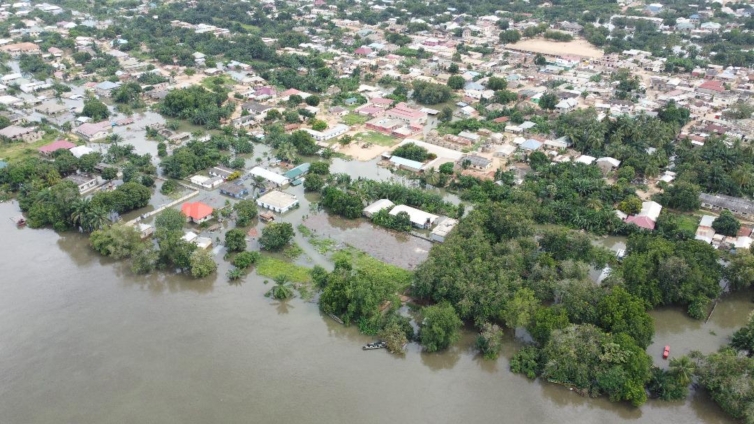
    Over 12,000 residents in the North Tongu area alone have been impacted by the Akosombo Dam Spillage, with over 1,500 houses affected, as reported by the National Disaster Management Organization (NADMO).

    The overall figure for all eight affected districts, including South and Central Tongu, Anlo, Asougyaman, Ada East, and others, exceeds 26,000.

    Despite weeks passing since the disaster, there seems to be no government plans for the resettlement of victims whose houses were demolished by the floods. The displaced victims remain in various camps, facing uncomfortable conditions.

  • Govt sets 5 key growth targets for 2024

    Govt sets 5 key growth targets for 2024

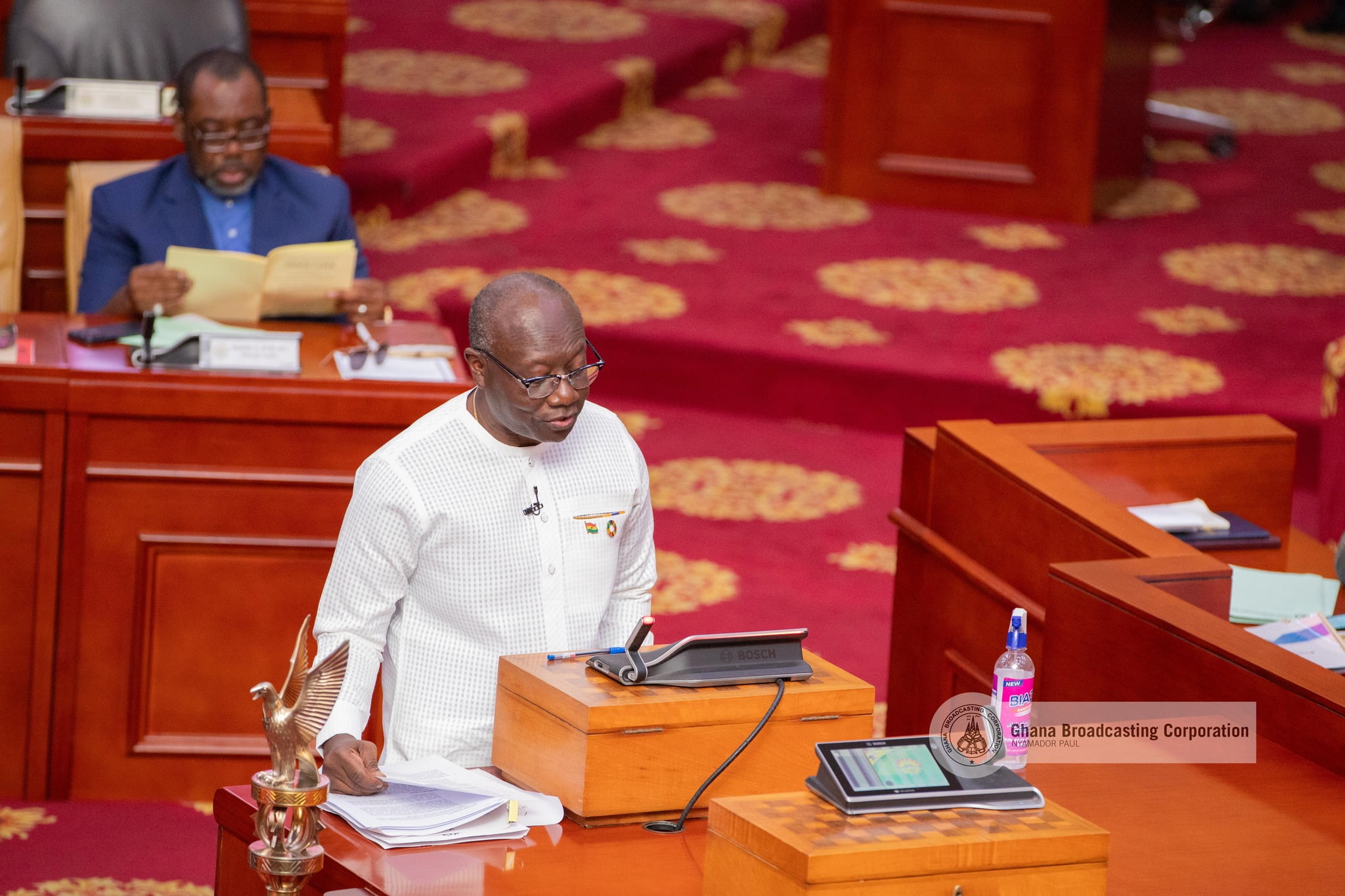
    Presenting the 2024 budget in parliament on November 15, 2024, Finance Minister Ken Ofori-Atta outlined the government’s macroeconomic targets for the fiscal year.

    These targets, aligned with overall macroeconomic objectives and medium-term goals, include Overall Real GDP growth of at least 2.8 percent, non-oil real GDP growth of at least 2.1 percent, end-period inflation rate of 15.0 percent, primary balance on Commitment basis of a surplus of 0.5 percent of GDP, and gross international reserves to cover not less than 3.0 months of imports.

    Notably, this budget marks the first since the commencement of the country’s $3 billion International Monetary Fund program, requiring the specified targets to align with the program’s requirements.

    The Minister said: “Inflation is expected to remain within the IMF programme’s Monetary Policy Consultation Clause (MPCC) of 29.4 percent, with a symmetric band of 4.0 percent at the end of 2023, an end-year target of 15% in 2024 and trend further down to the medium-term target band of 8±2 percent by end-December 2025.”

    “A tight monetary policy stance, favourable base drifts, relative stability on the foreign exchange market, and a favourable food harvest are expected to outweigh inflationary pressures over the near term,” he said.

  • 2024 budget: We will make history; Akufo-Addo’s govt “will cross the GH¢1 trillion GDP– Finance Minister

    2024 budget: We will make history; Akufo-Addo’s govt “will cross the GH¢1 trillion GDP– Finance Minister

    Finance Minister Ken Ofori-Atta has announced that in President Akufo-Addo’s final year in office, Ghana is projected to reach the GH¢1 trillion Gross Domestic Product (GDP) mark for the first time in its history.

    He expressed confidence in the prospects of the 2024 budget, outlining that the government plans to implement fiscal consolidation measures and growth strategies to attain this significant economic milestone.

    “Mr. Speaker, the 2024 budget is even more significant because we will cross the GH¢1 trillion Gross Domestic Product (GDP) mark for the first time in our economic history. Let me repeat, Mr. Speaker, Ghana’s economy under President Akufo-Addo’s final year in office is projected to be valued at over GH¢1 trillion in 2024 from GH¢219.5 billion in 2016,” he said while presenting the 2024 budget in parliament on November 15, 2023.

    He added: “It is important to recall that despite the ‘poly crises’ since March 2020, we have, together, taken a GDP of GH¢219.5 billion in 2016 and almost quadrupled it. We are crossing the GH¢1 trillion GDP mark this year.”


    The presentation of the 2024 budget is in accordance with Article 179 of the 1992 Constitution of the Republic of Ghana and Section 21(3) of the PFM Act 2016 (ACT 921), which mandates the minister to present the fiscal policy of the year in the Budget Statement and Economic Policy of the government.

    This budget holds particular significance as it comes after Ghana entered into a $3 billion loan facility for economic recovery to address high debt issues.

    Additionally, it marks the end of the current president’s term in power.

    The budget is anticipated to tackle challenges such as high inflation rates and unstable exchange rates, addressing various economic concerns.

  • This is difficult – Ken Ofori-Atta says as he announces no VAT for local sanitary pads

    This is difficult – Ken Ofori-Atta says as he announces no VAT for local sanitary pads

    Finance Minister, Ken Ofori-Atta, has noted that although government believes in lower taxes for the industry, it is currently unable to remove the majority of the taxes as demanded by the public.

    “It is difficult to implement all the structural reforms and tax reliefs needed to immediately lower and/or eliminate certain tax handles,” the Finance Minister said while presenting the 2024 budget statement.

    He noted that this is because, in the short term, fiscal sustainability requires that the country improve its tax ratios significantly; otherwise, its long-term competitiveness will be eroded despite believing in lower taxes for industry.

    In the interim, government says there are some reliefs that have been prioritised for implementation.

    Among these reliefs is a zero-rate VAT (value-added tax) on locally produced sanitary pads.

    Also, the government is looking at granting import duty waivers for raw materials for the local manufacture of sanitary pads.

    This implies that the cost of local sanitary products will decline when implemented. However, imported sanitary pads will continue to see the current taxation measure.

    Sanitary products are currently enlisted in Chapter 96 of the Harmonized System, and that attracts a 32.5% tax on imported sanitary pads, which comprises a 20% import duty and a 12.5% Value Added Tax.

    Prior to the 2024 budget presentation, many called on the government to remove the taxes on sanitary pads which has stalled the education of several girls in rural communities. Aggrieved individuals lamented the high cost of sanitary pads due to the high taxes.

    The other relief measures are as follows:

    • Extend zero rate of VAT on locally manufactured african prints for two (2) more years.
    • Waive import duties on import of electric vehicles for public transportation for a period of 8 years.
    • Waive import duties on semi-knocked down and completely knocked down Electric vehicles imported by registered EV assembly companies in Ghana for a period of 8 years;
    • Extend zero rate of VAT on locally assembled vehicles for 2 more years;
    • Grant exemptions on the importation of agricultural machinery equipment and inputs and medical consumables, raw materials for the pharmaceutical industry;
    • A VAT flat rate of 5 percent to replace the 15 percent standard VAT rate on all commercial properties will be introduced to simplify administration.
  • Full statement: Ken Ofori-Atta’s presentation of the 2024 budget and economic policy

    Full statement: Ken Ofori-Atta’s presentation of the 2024 budget and economic policy

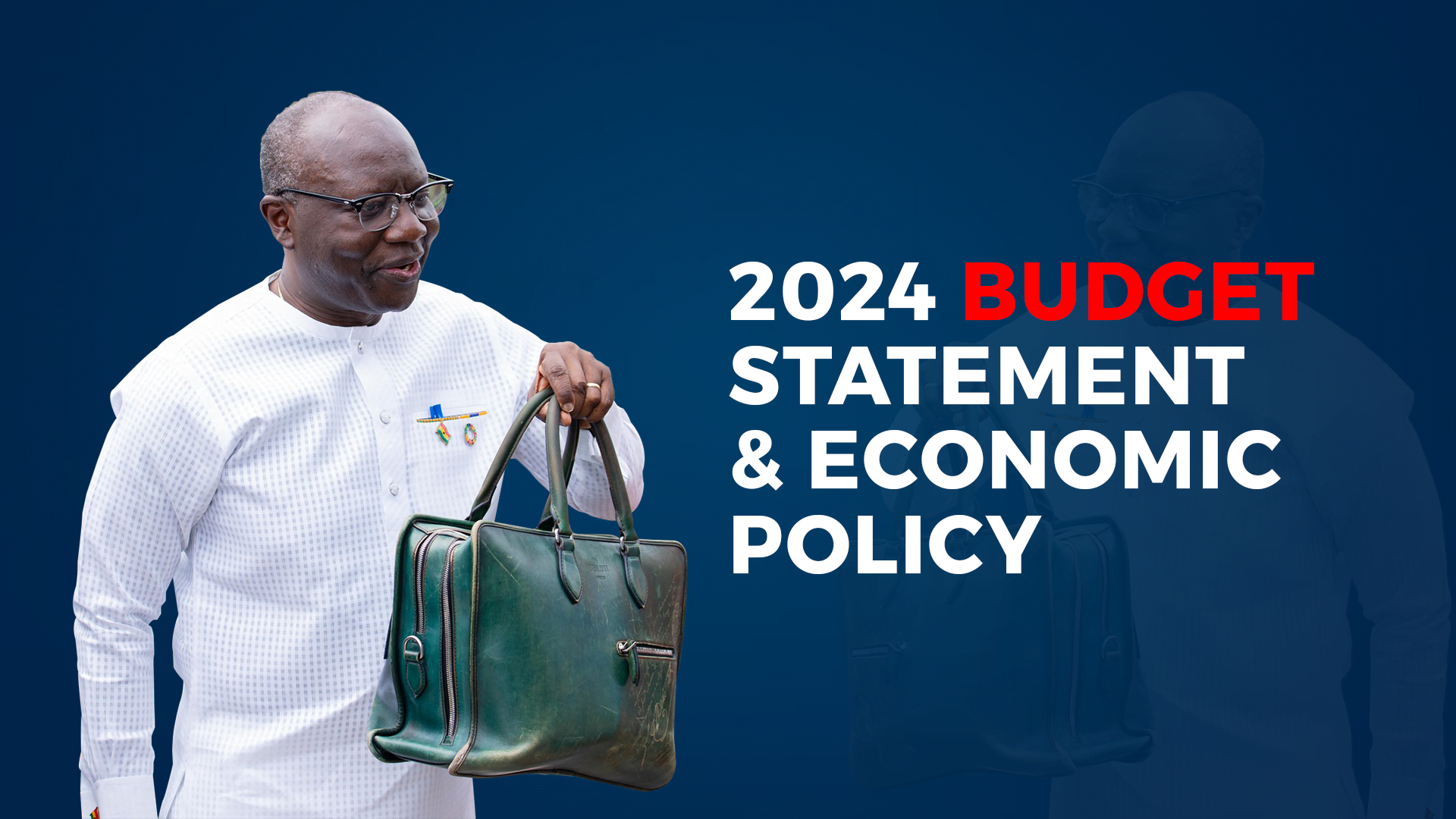
    Finance Minister Ken Ofori-Atta presented the much-anticipated 2024 Budget to Parliament on Wednesday, 15th November 2023, aligning with the constitutional mandates outlined in Article 179 of the 1992 Constitution and section 21 of the Public Financial Management Act, 2016 (Act 921).

    This comprehensive budget and economic policy address key strategies for navigating challenges and fostering growth in 2024.

    Explore the full statement below to gain insights into Ghana’s economic roadmap for the coming year.

    Final 2024 Budget Speech 11_30 #12updated by The Independent Ghana on Scribd

  • Public debt has declined to 66% of GDP – Ken Ofori-Atta

    Public debt has declined to 66% of GDP – Ken Ofori-Atta

    Ghana’s public debt stock is currently seeing a decline, according to the Minister for Finance, Ken Ofori-Atta.

    According to the Finance Minister, the total public debt has declined to 66.4 percent of the Gross Domestic Product (GDP) as of September 2023, from 73.1 percent of GDP at the end of 2022.

    Mr Ofori-Atta, who made this known while presenting the 2024 budget statement noted that this is possible due to the consolidation of government’s public finances, the domestic debt exchange programme, and the ongoing external debt restructuring.

    “The completion of external debt restructuring is expected to further improve Ghana’s debt situation,” he added.

    Over the weekend, the Ministry of Finance refuted reports that Ghana missed its November 1 deadline for the disbursement of the second tranche of International Monetary Fund (IMF) funds.

    “The attention of the Ministry of Finance has been drawn to above- titled misleading publication on Myjoyonline, about Ghana missing a purported deadline of 1st November, 2023, for the disbursement of the second tranche of International Monetary (IMF) Funds,” a rejoinder by the ministry read.

    According to the Finance Ministry, there is no 1st November, 2023 timeline for disbursement of the second tranche of the IMF funds as “no deadline has been set by the IMF for the second tranche disbursement,” which is due to take place after the IMF Executive Board approves the first review.

    The Ministry made mention of Table 9 on page 72 of the Memorandum of Economic and Financial Policies (MEFP) published on 17th May, 2023 by the IMF referenced by MyJoyOnline.

    “The November 1 stated in this table is an indicative timeline for completion of the first review, based on the observance of the end-June 2023 performance criteria,” the statement added.

    The first review was successfully completed on 6th October, 2023, culminating in a Staff Level Agreement (SLA) on the same day.

    “Whilst the SLA milestone is an important step towards unlocking the second tranche of $600 million under the programme, the timeline set by the Executive Board for the consideration and approval of the first review, is not 1st November, 2023 as published by Myjoyonline. The exact timeline for the Board date is determined by the IMF Executive Board,” the Ministry reiterated.

    Following the clarification, the Ministry of Finance has encouraged the general public and media houses in particular, to seek the facts and truth about any information that comes to their attention, by reaching out to the Ministry for clarification whenever they are in doubt.

    Meanwhile, the Ministry says Government of Ghana is making good progress in accordance with its strategic plan to engage the Official Creditor Committee (OCC) of the Paris Club; secure a Memorandum of Understanding on debt restructuring; and go before the IMF Executive Board for approval of the first review.

  • It is evident now that we have turned the corner – Ken Ofori-Atta says at 2024 budget presentation

    It is evident now that we have turned the corner – Ken Ofori-Atta says at 2024 budget presentation

    Finance Minister, Ken Ofori-Atta, remains confident that the government is making progress with regards to ensuring the country’s economic recovery.

    While presenting the 2024 budget statement in Parliament on Wednesday, the minister for the umpteenth time said “Ghana has paid its dues, has turned the corner and getting back on track.”

    He noted that over the past 7 years, every sector has been positively impacted, every household has been positively impacted by government’s social intervention programmes and every region has also been positively impacted.

    He cited the growth in macroeconomic variables as a reason for his assertion that the economy is making a recovery.

    Inflation started declining from 54.1 percent in December 2022 to 35.2 percent in October 2023. The Minister noted that despite a 1.5 percent projected growth, the economy galloped at a remarkable pace, and clocked an average of 3.2 percent growth in the first two quarters of the year.

    “We turned the corner when the currency, which had been under severe pressure over the past two years, depreciated by a modest 6.4 percent cumulatively from February to date, compared to 53.9 percent over the same period in 2022. The performance of the Cedi is also a reflection of the fact that confidence is back, revenues have improved, and that the recovery is indeed real and is here to stay.

    “We turned the corner when companies started going back to the job markets to hire workers; We turned the corner when the International credit rating agencies, which have not been favourable to Ghana in recent years, started being positive about our economy; and We turned the corner when the Banking industry started to record and report a profit-after-tax growth of 43.8 percent (GH¢6.2 billion); we turned the corner when in record time we completed the IMF 1st Staff Review of 6 Performance Criteria, 3 Indicative Targets and 3 Structural Benchmarks,” he added.

    Meanwhile, Mr Ofori-Atta says despite these successes, “we have to do more to reinforce our stability and guarantee decent jobs with good pay for the young people.”

    According to him, government’s focus will be to deliver “even more investment across the real sector to place our economy on a firm growth trajectory that will create more jobs, safeguards our climate prospects and deeply entrench Ghana as the seed country for Africa’s development renaissance.”

  • We created 2.3m jobs in both public and private sectors – Ken Ofori-Atta

    We created 2.3m jobs in both public and private sectors – Ken Ofori-Atta

    Finance Minister Ken Ofori-Atta, has stated that under the Akufo-Addo-led government, a total of 2.3 million jobs have been created.

    Providing a breakdown, the minister indicated that 1.4 million jobs were created in the public sector, whereas approximately 900,000 jobs were provided in the private sector.

    The Finance Minister made this known while presenting the 2024 budget statement in Parliament today, November 15.

    According to the minister, the government has made several investments across the various sectors of the economy including energy and education.

    He noted that an investment of GH¢32.7 billion has been made by the government to ensure the consistent supply of electricity.

    Mr Ofori-Atta also stated that the government has invested GH¢25.3 billion to facilitate the repositioning of the financial
    sector and enhance its ability to assist business operations.

    “To date, the Development Bank Ghana has facilitated GH¢1 billion in competitive financing for the private sector, and GIRSAL continues to mitigate risks in the agriculture sector,” he said.

    He added that government has among others; supported 100,000 young graduates to secure workplace experience and employment by investing GH¢2.4 billion in NABCO; invested GH¢7.1 billion to build road and transport infrastructure to improve connectivity and productivity; invested GH¢541.5 million in 169 1D1F enterprises to scale-up value- addition and provided 140,000 additional jobs; and created over 2.3 million jobs in the private and public sectors (approximately 900,000 in the private sector and 1.4 million in the public
    sector).

  • We have invested GHC32bn to keep the lights on- Ken Ofori-Atta

    We have invested GHC32bn to keep the lights on- Ken Ofori-Atta

    Minister for Finance, Ken Ofori-Atta, has disclosed that an investment of GH¢32.7 billion has been made by the government to ensure the consistent supply of electricity.

    Presenting the 2024 budget statement in Parliament today, the Finance Minister noted that this has gone a long way to “support the growth of businesses.”

    This comes after Minister for Energy, Dr. Mathew Opoku Prempeh, expressed concerns regarding a potential impact on electricity supply due to an impending shortage of gas for power generation. He attributed this issue to an over-reliance on gas plants, a departure from the historical reliance on liquid fuels for energy production.

    Dr. Prempeh elaborated that the nation is currently facing a dual challenge. The shift towards a predominantly gas-based energy system has rendered the power infrastructure susceptible, such that any disruption in gas supply could trigger the shutdown of all power generation systems, resulting in a nationwide blackout.

    “So that is why if people see lights out when they go out now, it is more extensive than previously because previously the liquid fuels were in the various thermal plants scattered around,” he noted.

    The Energy Minister stressed the significant challenge posed by the present scenario, wherein all power systems are interconnected through a sole gas pipeline. This is a departure from the past, where multiple dispersed thermal plants were fueled by various liquid fuels.

    Meanwhile, the Finance Minister notes that government has invested GH¢25.3 billion to facilitate the repositioning of the financial
    sector and enhance its ability to assist business operations.

    “To date, the Development Bank Ghana has facilitated GH¢1 billion in competitive financing for the private sector, and GIRSAL continues to mitigate risks in the agriculture sector,” he said.

    He added that government has among others; supported 100,000 young graduates to secure workplace experience and employment by investing GH¢2.4 billion in NABCO; invested GH¢7.1 billion to build road and transport infrastructure to improve connectivity and productivity; invested GH¢541.5 million in 169 1D1F enterprises to scale-up value- addition and provided 140,000 additional jobs; and created over 2.3 million jobs in the private and public sectors (approximately 900,000 in the private sector and 1.4 million in the public
    sector).

  • Govt to expend GHC220m on displaced victims of Akosombo Dam spillage – Ken Ofori-Atta at 2024 budget presentation

    Govt to expend GHC220m on displaced victims of Akosombo Dam spillage – Ken Ofori-Atta at 2024 budget presentation

    Finance Minister, Ken Ofori-Atta, has indicated that an amount of GHC220 million has been allocated by the government to support the many families and communities affected by the Akosombo dam spillage.

    He made this known when he presented the 2024 budget statement in Parliament.

    Earlier, Member of Parliament for North Tongu, Samuel Okudzeto Ablakwa noted that he would hope to hear of an adequate and fair allocation for resettlement and compensation for victims of the dam spillage.

    Finance Minister Ken Ofori-Atta earlier contributed GHS2 million to assist the victims of the flood triggered by the Akosombo Dam spillage.

    He presented the donation during a visit to the affected areas in the North Tongu District Assembly in Mepe, Volta Region, on Friday, October 27.

    The donation was received by the District Chief Executive, Divine Osborne Fenu.

    Mr. Ofori-Atta expressed his gratitude and encouraged unity, saying, “Let us be encouraged, Ministry of Finance, as a family concerned about what has happened to our brothers and sisters, working with the VRA, we have brought something substantial of GHS2 million to be able to support the relief efforts that are ongoing and to thank Ghanaians for their spontaneous response.”

    Meanwhile, reports have it that some victims have begun return to their homes as the flood waters continue to recede.

  • Govt to introduce new taxes to raise GH 11bn – Jinapor claims ahead of 2024 budget reading

    Govt to introduce new taxes to raise GH 11bn – Jinapor claims ahead of 2024 budget reading


    Member of Parliament for Yapei-Kusawgu,
    John Jinapor, claims the Finance Minister, Ken Ofori-Atta, will impose a new tax in the 2024 Budget to raise an additional GH 11 billion.


    “We just met the Minister of Finance at the Finance Committee and the minister indicated that he intends to raise an additional GH₵11 billion, which is about 1 percent of GDP but we have told him that we think that the people have been taxed so much that it will be inappropriate to come with new taxes; rather, the minister should look at cost cutting,” Jinapor said.


    He added, “I think that it is improper and unacceptable to further come out with new taxes and increase the tax burden on Ghanaians.”


    The Finance Minister, Ken Ofori-Atta, is set to present the government’s 2024 Annual Budget Statement and Economic Policy to Parliament on Wednesday, November 15, 2023.


    Leading up to the presentation, there are widespread calls for the government to significantly curtail its expenditures to alleviate the struggling economy.


    Last week, the Chief Executive Officer (CEO) of Dalex Finance and Leasing Company Limited, Kenneth Thompson, issued a warning about a potential economic downturn in 2024 if the government persists in its current trend of escalating and substantial expenditures.


    In related discussions, Member of Parliament for Dormaa East, Paul Twum Barimah, hinted at the government’s potential introduction of an emission tax to address the impacts of climate change.


    Also, Albert Sandaare, the Member of Parliament for Daffeama Bussie Issa, suggested that the government should consider either eliminating the COVID-19 levy or renaming it.


  • GFSF is Ofori-Atta’s scheme to deprive private indigenous bank owners of their assets – Mahama Ayariga

    GFSF is Ofori-Atta’s scheme to deprive private indigenous bank owners of their assets – Mahama Ayariga

    Member of Parliament for Bawku Central, Mahama Ayariga, has accused the Minister of Finance, Ken Ofori-Atta, of coming up with a scheme with the potential to deprive private indigenous bank owners the ownership of their assets.

    In a petition to the World Bank and the International Monetary Fund (IMF), Mr Ayariga noted that this scheme is the Ghana Financial Stability Fund (GFSF).

    In his petition letter, Mr Ayariga noted that the Minister of Finance and Economic Planning, Mr. Ken Ofori Atta, seeks to establish a Ghana Financial Stability Fund (GFSF) using mere guidelines and putting it under the administration of an illegal and unconstitutional body known as Ghana Amalgamated Trust Plc (GAT) based on opaque and legislatively unauthorized management and disbursement mechanisms.

    “It is a scheme with potential to deprive private indigenous bank owners the ownership of their assets in these banks after his mismanagement of the financial sector has rendered these banks vulnerable. And it has not been subjected to parliamentary oversight and scrutiny,” he added.

    The Bawku Central MP referred the intentional bodies to a publication by the Ministry of Finance and Economic Planning (MOFEP) dated 22nd August 2023 which is said to indicate that “Government of Ghana (GoG) has established a Ghana Financial Stability Fund (GFSF). The Fund is expected to be funded by Government of Ghana and the World Bank/IMF as its major donor.”

    In Mr Ayariga’s view, the said document by the Finance Ministry will seek to off load an amount of about $750 million to Ghana Amalgamated Trust (GAT) Ltd to be the main agency responsible for disbursing such funds.

    He also holds the position that the Ghana Financial Stability Fund (GFSF) lacks parliamentary approval and has a fraudulent structure.

    He stated that the Minister of Finance in 2019 had an arrangement with GAT, which was sponsored by the Government of Ghana as a limited liability company under the Companies Act, 2016 (Act 992), as sponsors and with NTHC as trustee shareholder in GAT which arrangement allowed NTHC as trustee to hold shares in GAT on behalf of Government.  

    “We have contended in court that this is an unconstitutional scheme to transfer public funds to private ownership without the requisite parliamentary approval,” he added.

    On 3rd March 2022, the Bawku Central MP noted that an action at the Supreme Court of Ghana to challenge the legality of GAT and the fraudulent activities of GAT and its operations in the case of Mahama Ayariga v. Attorney General & Others (Suit No. J1/20/2022) and the issue is currently pending.

    He therefore finds it strange that GAT and MoFEP, knowing well that the case is still pending in court will still want to “undertake an illegality this time on a very large scale.”

    Mr Ayariga indicated that the International Monetary Fund (IMF) and the World Bank will be acting in clear violation of the Constitution of Ghana of 1992 “if they lend their support to this arrangement or are in anyway party to it.”

    “Article 192 of the Constitution of the Republic of Ghana states categorically that a “public corporation shall not be established except by an Act of Parliament.” Article 179 recognizes the setting up of public corporations as commercial ventures.  The current arrangement by which the Government of Ghana seeks to use NTHC Ltd to hold shares in GAT for a commercial venture offends the Constitutional requirement, which vests Government with the authority to only engage in a commercial venture through the medium of a public corporation enacted by an Act of Parliament,” he added.

  • Ken Ofori-Atta, Charles Adu Boahen fingered in $5m bribe and shady $88m judgement debt

    Ken Ofori-Atta, Charles Adu Boahen fingered in $5m bribe and shady $88m judgement debt

    Former Minister for Environment, Science, Technology and Innovation, Prof. Kwabena Frimpong-Boateng has in his recent interview with American-based pan-African publication Africawatch, implicated Finance Minister Ken Ofori-Atta and former Deputy Finance Minister Charles Adu Boahen in a “shady” US$88,247,246.63 million judgement debt situation that transpired in 2020.

    According to Prof. Frimpong-Boateng, he received a letter from the Ministry of Finance in July 2020, requesting his approval for the payment of a judgement debt to Apex Pollution Control Company, which had signed an agreement with the Ministry of Environment in 2014 to carry out monitoring of vehicle emissions, but the project was not implemented at all.

    “Sometime in July 2020, when I was at the Ministry of Environment, Science, Technology, and Innovation, I received a letter from the Ministry of Finance, requesting my approval for the payment of a judgment debt to the tune of US$88,247,246.63, please let me repeat it, US$88,247,246.63, to Apex Pollution Control Company. I could not believe my eyes. It had a lot of red flags.

    The Ministry of Environment had signed an agreement with the company in 2014 to carry out monitoring of vehicle emissions, but the project was not implemented at all,” he told Africawatch editor Steve Mallory.

    “The company claimed it invested $6,613,520.63 in the project and sought a judgement debt,” Prof. Frimpong-Boateng explained. Yet, it wasn’t just the initial investment being claimed; an additional $20,006,226 was being sought for a return on investment, and a staggering $61,627,500 for lost income over 13 years. “This came up to a whopping $88,247,246.63,” he emphasised, expressing shock at the figures that confronted him.

    “The Apex Pollution Control Company was going to get about $82 million for doing no work. So shocking!,” he is quoted to have said.

    Suspecting foul play, Prof. Frimpong-Boateng took his concerns to the top. “I confronted Finance Minister Ken Ofori-Atta about it, and he told me Charles Adu Boahen, the then Deputy Minister for Finance, was probably behind it.” His alarm escalated when emissaries from Apex Pollution Control Company extended a US$5 million bribe to him, seeking to expedite the approval process. Standing firm in his integrity, he declined: “I rejected it and told them to disappear from my office.”

    Faced with these irregularities, the Professor claims he took a step further, writing to President Nana Addo Dankwa Akufo-Addo to communicate his inability to sanction such a questionable judgement debt.

    “I did not get any response,” he disclosed, referring to the silence that followed his message to the president.

    According to the cardoithorasic surgeon, he was subsequently removed from the President’s second-term administration. Still, he remains undeterred and at peace, knowing he acted within the nation’s best interests.

    “Whoever serves in the president’s adminis- tration is his prerogative, so one cannot talk about that. He can fire any minister any time and one must reckon with that. But I am at peace with myself, ” he added.

    Prof. Kwabena Frimpong-Boateng Speaks – AFRICAWATCH by The Independent Ghana on Scribd

  • Issues of high taxes, rising cost of doing business will be dealt with in 2024 – Finance Minister

    Issues of high taxes, rising cost of doing business will be dealt with in 2024 – Finance Minister

    The Finance Minister, Ken Ofori-Atta, has revealed that the 2024 budget will introduce programs and initiatives aimed at tackling the elevated cost of conducting business in the country.

    He also provided assurance that the budget would address concerns about excessive and numerous taxes that impact the private sector.

    Mr. Ofori-Atta shared this during an appearance on the PM Express Business Edition with host George Wiafe on October 19, 2023.

    “It’s very important that looking at where we are as country , everything must be done to support the private sector to help them play a critical role in the recovery of the economy”, he said.

    “We have met all the interest groups from the private sector and their concerns will definitely be taken on board when it comes to the 2024 budget,” he promised.

    Mr. Ofori-Atta further stated that the ministry has engaged in discussions with all relevant stakeholders and labor unions.

    “We have also met with Association of Ghana Industries, Ghana Chamber of Commerce and Industry, and the Ghana Union of Traders Association, and predominately issues about taxes have been their major priority and we have to deal with it”, he said.

    He mentioned that there will be a Mutual Prosperity Dialogue with the private sector before the budget presentation.

    Regarding the budget’s focus, the Finance Minister also revealed that the government is actively working to restore the stability of the private sector.

     “This is because government cannot do everything, so the private sector needs to be supported to help managers of the economy, when it comes to job creation”, he added.

    As per Ghana’s Financial Administration Act, Parliament is required to consider and approve the Annual Budget for the upcoming financial year by December 31 of each financial year. Following this directive, the 2024 Budget should be presented by the end of November 2023. This schedule will provide sufficient time for Parliament to thoroughly examine and discuss the budget before the start of the New Year.

    The Finance Minister also revealed that the 2024 Budget will be influenced by the Post-COVID Programme for Economic Growth, which is supported by the IMF. This program includes various initiatives aimed at aiding the economic recovery.

    “We are targeting to present the Budget to parliament by November 15 2023” the Finance Minister disclosed.

    The Finance Minister further revealed that the government is set to implement programs designed to expand the economy and maintain the recent recovery. Additionally, he mentioned that the government is aiming for growth to surpass 2.5 percent by December 2023.

    “The IMF expected Ghana to do averagely about 1.5 percent, but they have already indicated that they will be reviewing that projection going forward. We believe that we are going to do better when it comes to the expansion of the economy,” he said. 

    “We are committed to instituting programmes that will help sustain the numbers that we are witnessing when it comes to growth,” he added.

    Mr. Ofori-Atta emphasized that the government is committed to addressing youth unemployment and will be introducing new programs to tackle this issue effectively.

  • Budget expenditure will be restricted in 2024 – Ofori-Atta

    Budget expenditure will be restricted in 2024 – Ofori-Atta

    Government has provided a commitment to adhere to budgeted expenditures, even though 2024 is an election year.

    This assurance was given by the Minister of Finance, Ken Ofori-Atta, during a meeting held in London with holders of Ghana’s international bonds.

    He affirmed that despite the upcoming election year, the government would adhere to the budget outlined in the International Monetary Fund (IMF)-supported plan, which is set to be presented to Parliament next month.

    After implementing the Post-COVID-19 Programme for Economic Growth (PC-PEG)-supported IMF program for four months, Ghana’s economy is beginning to display signs of stability.

    In the first half of the year, the gross domestic product (GDP) growth has averaged 3.1 percent. Inflation, which had reached a 22-year high of 54.1 percent in December 2022, has declined to a 12-month low of 38.1 percent in September.

    On the fiscal front, the primary balance on a commitment basis for the first half of the year showed a surplus of approximately GH¢2 billion, surpassing the targeted deficit of GH¢4 billion.

    The Gross International Reserves (GIR) also reached $2.1 billion, which is equivalent to 1.0-month import cover. This is an improvement from the $1.5 billion (0.6 months of import cover) recorded at the end of December 2022, and it has contributed to the stabilization of the cedi.

    As Ghana approaches another election year, concerns have arisen within the investor community about maintaining this growth trajectory, given the historical overspending associated with election years, leading to substantial budget deficits.

    Many are apprehensive that the progress achieved under the three-year Extended Credit Facility with the IMF could be undermined during an election year. Nonetheless, Mr. Ofori-Atta has provided assurance that the government will remain committed to the program and the 2024 budget.

    “Ahead of the 2024 election year, let me assure you that we are committed to implementing the IMF supported PC-PEG as planned, and this is what our constituents expect from us,” he stated.

    “This will help us further support the strong economic recovery,” the Finance Minister added.

    Mr. Ofori-Atta emphasized that, in light of the significant impact of last year’s crisis, Ghanaians are now looking to the government for the delivery of macroeconomic stability, a rapid return to low inflation, and the sustained stabilization of the cedi’s value. They are not expecting an expansion of public spending.

    “This is completely in line with the successful implementation of our IMF programme,” Mr Ofori-Atta stated.

    The minister emphasized the government’s dedication to maintaining a comprehensive array of policy reforms, backed by the IMF. Their primary objective is to guarantee fiscal and debt sustainability, which will involve revising the Fiscal Responsibility Act, 2018 (Act 982), and expediting the implementation of the Integrated Tax Administration System.

    Mr. Ofori-Atta noted that the government is also directing its efforts towards financial sector reforms, with a focus on bolstering the capital reserves of commercial banks, enhancing the Bank of Ghana’s (BoG’s) inflation targeting framework, and rebuilding international reserves buffers.

    “We are also working on social protection and structural reforms, including expanding the coverage and enhancing the benefits in real terms under the Livelihood Empowerment Against Poverty Programme, the National Health Insurance Scheme and the School Feeding Programme,” he stated.

  • Govt begins discussions with Eurobond holders, private creditors on debt restructuring

    Govt begins discussions with Eurobond holders, private creditors on debt restructuring

    Government has initiated formal negotiations with private creditors and Eurobond holders to restructure their debt. These negotiations commenced on October 16, 2023, in London and are anticipated to conclude over the weekend.

    The collaborative efforts in these negotiations are spearheaded by Finance Minister Ken Ofori-Atta and the Governor of the Bank of Ghana, Dr. Ernest Addison. They are supported by the technical teams from the Ministry of Finance and the Bank of Ghana.

    Finance Minister Ken Ofori-Atta, according to reports from MyJoyOnline.com shared this development during a yet-to-be-aired episode of PM Express Business Edition, which was recorded in Marrakech, Morocco, with host George Wiafe.

    This strategic move aligns with the broader goal of “Closing the Page” by reaching a comprehensive agreement with all stakeholders to restructure Ghana’s external debt.

    The Finance Minister revealed that “we are optimistic that before the close of this year, we should have reached a deal with the private and commercial creditors as well as Eurobond holders”.

    The Finance Minister has conveyed that the government has put forth specific proposals to both private and commercial creditors. These proposals are intended to persuade them to consider and accept the current offer on the negotiating table.

    “We believe that government will be in a  better position to meet all the obligations due to the investors and commercial creditors, based on the reforms that Ghana has undertaken”.

    “And this should convince them to accept our offer,“ he added.

    Mr Ofori-Atta asserted that another factor that would sway these investors toward accepting the offer is the array of reforms that Ghana has implemented as part of the Fund Programme. Additionally, the country’s performance during the initial program review is seen as a compelling reason for them to embrace the proposal.

    “This should convince them that the outlook is good,“ he said.

    He also believes that government’s commitment to grow the economy and embark on programmes that will help improve productivity may play a very important role.

    “At the end of the day, what are the investors looking out, a country that is in a position to meet its financial obligations,” he added.

    “How do we restructure the economy in a way that government will be in a better position to honour the commitments of these investors going forward,” the minister maintained.

  • China, France have assured us of MOU for external debt restructuring – Finance Minister

    China, France have assured us of MOU for external debt restructuring – Finance Minister

    Finance Minister Ken Ofori-Atta has announced that Ghana has obtained the required commitments from both China and France regarding the establishment of a Memorandum of Understanding (MoU) for the restructuring of Ghana’s external bilateral debts.

    “We have met the Central Bank Governor of China and we don’t perceive any opposition or reluctance in participating positively when it comes to the Memorandum of Understanding on restructuring of our external bilateral debts” Mr Ofori-Atta said.

    He added: “The Chinese government within the past months is close to reaching a similar deal with Zambia, Sri Lanka and Suriname, so following that trend, we expect some similar cooperation from them when it comes to Ghana”.

    While speaking with journalists during the Annual International Monetary Fund/World Bank meetings in Marrakesh, Morocco, the Finance Minister highlighted that Ghana’s participation in the G20 Common Framework demonstrated its effectiveness in addressing the debt challenges faced by countries, emphasizing the availability of mechanisms for debt restructuring.

    “We have made tremendous progress under this framework compared to other countries on a similar path,” the Minister said.

    Last week, Ghana achieved a staff-level agreement for the initial program review with the International Monetary Fund (IMF). This agreement sets the stage for the IMF staff to send Ghana’s report, following the review, to the board for approval and disbursement of the second installment, which amounts to $600 million under the IMF program. However, prior to this disbursement, Ghana must secure a Memorandum of Understanding from its External Bilateral Creditors. This step is crucial for gaining approval from the IMF Board during its meeting in the third week of November 2023.

    During discussions with journalists at the Annual IMF/World Bank meetings in Marrakesh, Morocco, the Finance Minister expressed confidence in meeting this deadline. He emphasized that they have engaged in productive discussions with bilateral partners in recent weeks.

    The Finance Minister is optimistic that economic stability will be restored soon, thanks to the government’s ongoing programs and its commitment to prudent fiscal management, particularly in an election year.

    It has been reported that the World Bank is prepared to contribute around $300 million to support the Ghana Financial Stability Fund if Ghana successfully completes the first program within the fund. Additionally, the African Export-Import Bank (Afreximbank) and several of Ghana’s donor partners are also expected to provide financial support.

    Notably, China and France currently co-chair the Official Creditor Committee established on May 12, 2023, under the common framework for debt treatment. Ghana’s Bilateral Lenders formed an official creditor committee earlier this year, tasked with negotiating the possible restructuring of the country’s debts, which amount to approximately $13 billion. Among these creditors, China holds the largest share, with external debts totaling about $1.7 billion.

    The Finance Minister also disclosed that the government is aiming for economic growth to surpass 2.5 percent by December 2023.

    “The IMF expected Ghana to do averagely about 1.5 percent, but they have already indicated that they will be reviewing that projection going forward” and we believe that we are going to do better when it comes to the expansion of the economy”the Minister of Finance revealed.  

    He added “We are committed to instituting programmes that will help sustain the numbers that we are witnessing when it comes to growth.”

    The Minister further emphasized that, throughout these endeavors, the government remains committed to addressing the issue of youth unemployment. To this end, new programs will be introduced to tackle youth employment challenges.

    On the rising Treasury Bills Rate, the Finance Minister noted “It is a real concern, but everything is being done to lower the rates.”

    “Treasury Bills is always a battle between inflation and growth and I believe that the Bank of Ghana is taking measures to help deal with the challenge,” the Finance Minister added.

    “Government is also working to ensure that some incentives are put in place as well resources when it comes to lending for the private sector,” Mr Ofori-Atta disclosed.

    The commentary on Ghana is positive and Ghana is fully committed to the IMF programme and staying on course even though some tough measures needed to be taken,” said the Minister.

    In a recent report, the IMF raised apprehensions regarding the tax incentives granted by the Ghanaian government to businesses and investors, and the potential impact on the nation’s economy and revenue generation capacity.

    However, in response to these concerns, the Finance Minister clarified that the legislation to revise these tax exemptions is presently under parliamentary review. The government is resolutely dedicated to ensuring that these incentives are allocated to businesses with genuine need for them.

    “Measures are also been taken to ensure that in taking these measures it doesn’t impact negatively on the economy and Foreign Direct Investment,” the Minister of Finance added.

    Mr. Ofori-Atta made this statement during a press briefing on the sidelines of the ongoing IMF/World Bank Annual Meetings in Marrakesh.

    The Finance Minister also revealed substantial advancements regarding the debts in the energy sector and the essential reforms that Ghana must implement within the framework of the IMF program.

    The Minister noted that “We are happy that IMF has also accepted our energy recovery programme as well.”

  • Ofori-Atta, Amoako Atta should have been out of office by now – Dr Otchere

    Ofori-Atta, Amoako Atta should have been out of office by now – Dr Otchere

    A senior lecturer at Central University, Dr. Benjamin Otchere Ankrah, has expressed deep concern over the persistent incompetence displayed by some government appointees over the years.

    Dr. Ankrah was taken aback by the fact that President Akufo-Addo has still not taken action to address the subpar performances of these officials.

    During an interview with the media, the lecturer specializing in Corporate Governance specifically highlighted the Finance Minister, Ken Ofori-Atta and the Road Minister, Kwesi Amoako Atta as appointees whose reshuffles have been unduly delayed.

    “He [Ken Ofori-Atta] should have been replaced long ago by the President. The Roads Minister (Kwesi Amoako Atta) shouldn’t be at post by now,” Dr. Benjamin Otchere Ankrah lamented .

    He voiced his apprehension regarding the trajectory of Ghana’s development under the leadership of President Akufo-Addo.

    Scores of Ghanaians have urged the President to dismiss the Minister from his role, citing the challenging state of the Ghanaian economy.

    Meanwhile, President Akufo-Addo has emphasized that calls for the dismissal of the Finance Minister are unwarranted.

    “I came to office in 2017 under a stringent IMF programme. This same man was able to manage the affairs of our economy in such a way that in my first term, we were one of the fastest-growing economies in the world.

    “An average growth rate of 7% which allowed us to initiate programmes such as Planting for Food and Jobs. So somebody who has been able to do that. The current difficulties are not his fault. So how do I do it (sack him)? What will be the basis? What will be the rationale,” he added.

    Addressing the media, President Akufo-Addo, expressed unwavering confidence in the Minister, who also happens to be his cousin.

    He firmly asserted that Ofori-Atta should not be held accountable for the current economic challenges confronting the nation.

    “If we were to say he didn’t do well in the first term, then why did I renominate him for my second term? So for me, their performance in my first time was excellent. Let me use that word. Excellent,” he added.

  • LIVESTREAMING: Ghana delegation holds press briefing at IMF, World Bank Annual meetings

    LIVESTREAMING: Ghana delegation holds press briefing at IMF, World Bank Annual meetings

    Finance Minister, Ken Ofori-Atta, Leader of Ghana’s Delegation to the 2023 IMF/World Bank Annual meetings in Marrakech (Morocco), held a press conference today.

    Meanwhile, Ken Ofori-Atta, has characterized the IMF-World Bank Annual Meetings as an opportunity to initiate a fresh start for the global financial structure.

    Addressing a Roundtable Discussion on “IMF Policy Priorities,” Mr. Ofori-Atta urged the IMF to bolster the global financial safety net by implementing substantial reforms to the global financial framework, stressing that “we need to stretch the IMF to do more.”

  • Adongo makes mockery of plans to make Ofori-Atta, BoG Governor COCOBOD Board members

    Adongo makes mockery of plans to make Ofori-Atta, BoG Governor COCOBOD Board members

    Ranking Member of Parliament’s Finance Committee, Isaac Adongo, has responded to the announcement made by the Minister of Finance, Ken Ofori-Atta, regarding his inclusion, along with the Governor of the Bank of Ghana (BoG), Dr. Ernest Addison, on the board of the Ghana Cocoa Board (COCOBOD) as an effort to rescue the financially troubled institution.

    Ofori-Atta explained that a special team would also be established to oversee the future operations of the cocoa sector regulator, which has been burdened by substantial debts in recent times.

    Isaac Adongo, in his response, dismissed the move and expressed skepticism when speaking to journalists. He asserted that this action would likely exacerbate the challenges already faced by COCOBOD.

    “For instance, the BoG Governor instead of returning profit in 2022 only returned with a negative equity of GH¢55 billion and as if that is not enough, Governor Addison returned with a negative reserves of GH¢70 billion, wiping of the entire monetary base of our country,” he lamented.

    “He (Governor Addison) has succeeded in creating the Central Bank into a policy insolvent institution which is now bankrupt and needs recapitalization,” he added.

    Dr. Adongo went on to suggest that the combination of “Ken Ofori-Atta and Dr. Addison is like a poisoned chalice,” raising doubts about whether providing such a challenge to COCOBOD, which is already ailing, is a viable solution.

    On a related note, Dr. Ernest Addison, the Governor of the Bank of Ghana, has indicated that the size of this year’s Cocoa Syndicated Loan is expected to decrease to approximately $800 million, a reduction from the initial figure of $1.2 billion. He clarified that this reduction is part of the debt sustainability measures outlined in the IMF program aimed at improving the macroeconomic conditions throughout the cocoa value chain.

    Speaking during a joint press briefing by the IMF and the Ministry of Finance in Accra on October 6, 2023, Dr. Addison confirmed that the cocoa regulator, COCOBOD, will still receive the syndicated loan facility for the current year.

    “I think that they’re still getting the syndicated loan this year but it’s just that the size of the syndication is gone from I think $1.2 billion to $800 million,” he noted.

    Nonetheless, this development is anticipated to have an influence on Ghana’s cocoa production during the 2023/2024 crop season. It comes at a time when the government has reorganized cocoa-related financial obligations as part of the ongoing IMF program to attain a certain level of stability in managing the debt.

    The Cocoa Syndicated loan serves as a means to enhance operations within the cocoa sector, which is among the nation’s most significant export commodities.

  • Gov’t to introduce a ‘new E-levy’

    Gov’t to introduce a ‘new E-levy’

    Government has unveiled a comprehensive plan to revamp the Electronic Transfer Levy as a crucial component of its Medium Term Revenue Strategy.

    This initiative highlights a dedicated effort to modernise and enhance this taxation policy, bolstering its efficiency and effectiveness.

    In May 2022, the introduction of the e-levy – a tax on mobile money transactions that drew widespread criticism – imposed a 1.5% charge on all electronic and mobile money transactions exceeding GH¢100 per day. Its primary goal was to boost government revenue by securing larger tax contributions from Ghana’s informal sector.

    Then, in January 2023, the government lowered the tax rate from 1.5% to 1%. However, the notable feature of the levy – an exemption threshold for transactions below GH¢100 per day – still stands, even though its actual value has eroded due to inflation over the past year.

    The impact of this levy on Ghana’s public finances, its marginalized communities, and mobile money usage has sparked intense and divisive public debates, often devoid of empirical evidence.

    This comprehensive restructuring of the Electronic Transfer Levy might represent a progressive stance on digital-age taxation. 

    Crucially, it resonates with the government’s wider strategy to modernise its revenue collection techniques whilst ensuring a fair distribution of the tax load across varied economic sectors.

    Additionally, the medium-term revenue strategy details the subsequent reforms:

    Firstly, there are plans to broaden the withholding tax system, covering an array of tax categories. This measure seeks to improve taxpayer identification, make tax collection more efficient, and simplify the filing procedures, especially for incomes in the informal sector.

    Secondly, the strategy includes provisions to streamline tax returns and closely examine the updated taxation framework, all geared towards curbing tax evasion and fostering voluntary compliance.

    A key aspect of the strategy involves a thorough examination of archaic tax classifications, such as stamp duty, income tax stamp, and vehicle income tax. The aim is to align them with current market trends.

    Furthermore, the strategy aspires to amplify the taxation of rental income, ensuring a fairer contribution from this domain.

    Lastly, the strategy includes the adoption of taxation on Gross Gaming Revenue (GGR) for industry stakeholders and the introduction of withholding tax on winnings, signifying a considerable move towards a more inclusive and balanced tax system.

  • Cedi has remained stable despite 23.5% depreciation from Jan till date – Finance Minister

    Cedi has remained stable despite 23.5% depreciation from Jan till date – Finance Minister

    Finance Minister Ken Ofori-Atta has noted that the local currency has been relatively stable so far this year against foreign currencies.

    At a news conference hosted by the Ministry of Finance, the Bank of Ghana, and the International Monetary Fund (IMF) today on Ghana’s bailout, the Finance Minister indicated that from January till date, the cedi has depreciated by 23.5%.

    “The Ghana cedi has remained relatively stable from the beginning of the year till date, depreciating culminative by 23.5 percent over the period. But that really is essentially a huge jump in January, and basically since February to date, about 2.5 percent creating the kind of stability that is required for businesses and for confidence to be built up,” he said.

    He continued: “So the impression over this period, February to now is only 3.1 percent.

    On October 6, 2023, as per the Bank of Ghana’s Interbank forex rates, the cedi is trading against the US dollar with a buying price of GHS11.2193 and a selling price of GHS11.2305.

    At the forex bureau, the dollar is being purchased at a rate of GHS11.65 and sold at GHS11.95.

    With regards to the fiscal front, Mr Ken Ofori-Atta stated that the primary balance on a commitment basis for the half-year 2023 was a surplus of about 2 billion of the target of 4 billion.

    This, he said, was driven in part by strong non-oil domestic revenues and rationalized spending.

    Also, non-oil public revenue for the period was 50.1 billion, compared to the program target of 49.8 billion.

  • Social media users call out Sentuo oil for unfair payment of GHS1,500 as wage to engineers

    Social media users call out Sentuo oil for unfair payment of GHS1,500 as wage to engineers

    A contract offer from Sentuo Oil Refinery, circulating online, offering a monthly salary of GH¢1,500 for the position of engineer, has sparked outrage among a segment of the Ghanaian population.

    These individuals are demanding transparency and accountability from the government.

    It’s important to note that the GH¢1,500 salary includes deductions for SSNIT (Social Security and National Insurance Trust) and other income tax deductions.

    Previously, there were reports of the company paying some of its workers only GH¢800.

    The government had granted Sentuo Oil over GH¢200 million in tax exemptions to facilitate the construction of the refinery.

    Ghanaians argue that if the government provides tax exemptions to a foreign company, it should ensure that its citizens are fairly compensated when they work for these institutions.

    According to a document sighted by GhanaWeb, the Minister of Finance, Ken Ofori-Atta, submitted a request for parliament approval to consider and approve the waiver of “Import duties, Import NHIL, Import GETFUND, Import VAT, and EXIM levy, amounting to Ghana Cedi equivalent of Two Hundred and Six-One Million, Six Hundred and Forty-Eight Thousand, Three Hundred and Fifty-Three United States Dollars (US$261,648,353) in favour Sentuo Oil Refinery Limited.”

    According to the GIPC Act 2013, Act 865 on supplies and equipment, Sentuo Oil Refinery Ltd. allegedly submitted an application for a strategic investor under section 26(4) of the said Act.

    The document further noted that, in a letter dated February 6, 2023, the president gave final clearance for the tax waiver for the consideration and decision of Parliament.

    The Tema Oil Refinery is believed to have a larger capacity, although the refinery only employs 420 people, compared to TOR’s more than 650.

    “The refinery anticipates employing about 420 personnel. Staffing for the Refinery primarily consists of process units and auxiliary facilities personnel and is therefore driven by the characteristics of the Refinery’s facilities which range from complex processing units to somewhat simplified utility and offsite systems,” parts of the document read.

    “In addition, a second major driver is that the Refinery operates continuously with a minimum annual on-stream time of 8,400 hours. For continuously operated units, there will be three shifts rotating in the daily cycle with a fourth shift required as relief, while for non-continuously operated units, two shifts or one shift according to needs,” it added.

    Users of X (formerly Twitter) have voiced their concerns about how Ghanaians employed by international corporations are treated.

  • Creating a single currency by 2027 achievable – Finance Minister to West African leaders

    Creating a single currency by 2027 achievable – Finance Minister to West African leaders

    Minister for Finance, Ken Ofori-Atta has emphasized the importance of West African leaders to intensify their efforts to steer their economies toward a path of recovery. 

    During the 50th Meeting of the Convergence Council of Ministers and Governors of the Central Banks of the Member States of the West African Monetary Zone,he asserted, was a crucial step in the realization of the proposed single currency for the region.

    ‘’it has become imperative for Member States to continue to implement prudent fiscal, monetary and exchange rate policies and adopt policy measures aimed at enhancing domestic revenue mobilization and diversification of our economies’’ he said.

    The Economic Community of West African States (ECOWAS) adopted a roadmap for launching a common currency, Eco, in June 2021.

    In his view, a single currency programme, and more broadly, the economic integration agenda, had been a long journey, but he hoped the meeting would intensify achievable commitments towards this program.

    ‘’Given the challenging macroeconomic environment facing ECOWAS the dream to a single currency may seem distant, perhaps even utopian, to some…, but we cannot relent’’ Mr Ofori-Atta assured.

    The Minister highlighted a series of significant factors that have played a substantial role in contributing to the macroeconomic imbalances within the sub-region, including the disruptive impact of the Covid-19 pandemic, the Russia-Ukraine War, persistent terrorist threats, instances of military coups, regional fragility, and various other security challenges.

     These complexities, he argued, should not be viewed as insurmountable obstacles, especially as the set date for the introduction of the single currency in 2027 approaches.

    Mr. Ofori-Atta stressed the imperative of maintaining a steadfast commitment to regional integration while avoiding the adoption of excessively short-term policies in response to the current challenges. 

    In this regard, he called for the implementation of medium to long-term solutions that would effectively address the adverse economic conditions and lay the necessary foundations for sustainable and inclusive economic growth.

    Among the strategies discussed, the Minister highlighted the importance of capitalizing on the progress achieved in trade integration and financial integration, while also charting a clearer and more definitive path toward the realization of the ECO currency for the region. 

    This approach, he asserted, would be instrumental in overcoming the existing economic imbalances and fostering greater economic stability and prosperity within West Africa.

  • FULL TEXT: Minority opposes Ofori-Atta’s “Stand with Bank of Ghana Governor” agenda

    FULL TEXT: Minority opposes Ofori-Atta’s “Stand with Bank of Ghana Governor” agenda

    SHOULD CITIZENS STAND WITH THE BANK OF GHANA GOVERNOR WHO HAS AIDED THE GOVERNMENT’S ECONOMIC MANAGEMENT TEAM TO DESTROY LIVELIHOODS? THE POSITION OF THE MINORITY IN PARLIAMENT

    In a recent statement intended to justify the gross incompetence and misgovernance of the leadership of the Bank of Ghana, the Minister of Finance, Ken Ofori-Atta sought to “speak for” the Bank of Ghana but ended up worsening the case of the central bank and deepening its credibility crisis.

    Ordinarily, the beguiled statement by the Minister should be disregarded entirely and treated with the contempt it deserves. However, there is the need to correct some of the key misconceptions peddled and to fact-check the assertions made by the Minister in the statement.

    From the second paragraph, the Minister erroneously used nominal figures to argue that the Bank of Ghana had grown its assets phenomenally between 2016 and 2022. If the Minister describes a 2.4-fold increase from GHS53 billion in 2016 to GHS125.97 billion in 2022 as phenomenal, how would he describe the increase in Bank of Ghana’s assets by 8.2-fold during the period of the NDC government (2009-2016) when the same assets grew from GHS6.45 billion as at end-2008 to GHS53 billion as at end-2016?

    What is even worse is that the increase in assets between 2016 and 2022 were largely driven by the illegal monetary financing of government; in other words, illegal lending to government. This excessive printing and lending of money to government is the cause of the economic woes the country is currently facing (high inflation, volatility in the exchange rate, and high interest rates) as confirmed by the IMF and the World Bank.

    In the third paragraph, the Minister again used nominal GDP figures to argue that thesize of GDP had more than doubled in value from GHS219.6 billion in 2016 to GHS610.2 billion in 2022, without adjusting for the impact of inflation within the same period. The Minister must realize that nominal values will always rise, hence the right thing to do is to express these in real terms.

    On the watch of this Minister, real GDP growth slowed between 2018 and 2020 and only recovered slightly in 2021 due mainly to revenues from the three oil fields they inherited as well as the massive covid-19 revenue inflows, and not due to any special expertise of the Minister. Again, the Minister’s management of the economy worsened in 2022 and it is projected to further deteriorate at the end of 2023 with growth projection of 1.5%.

    In the same paragraph, the Minister also touted doubling revenues since 2016, with total revenues increasing from GHS32 billion in 2016 to GHS96.7 billion by 2022. Again, for the comparison to be meaningful, these nominal figures must be expressed in real terms. At best, these figures should be expressed as a ratio of GDP, or in other words movement of the revenue-to-GDP ratio. Indeed, data from the Ministry of Finance shows that revenue- to-GDP on the watch of this Minister has not performed well as he claims. Even in 2015, and with all the challenges faced by the economy then, revenue to GDP was 13.2%. Given all the resources that this government has received, including two additional oil wells, government’s revenue to GDP is just about 12.1%. The fiscal deficit on his watch actually increased in spite of the covid-19 revenue windfalls, hence his claim of increasing revenues over the period is inconsistent with what happened to government expenditures.

    In paragraph 6, the Minister spoke about resetting the financial architecture since 2017. The question is what the cost of doing so has been, and whether the exercise could not have been handled more prudently and at a much lesser cost and with minimal disruptions in the financial architecture.

    In paragraph 7, the Minister took another wrong dive stating, “However, as many central banks, including Bank of Ghana, moved away from pursuing quantitative targets of monetary policy towards price targets, dominance of the central bank’s balance sheet asthe key metric has waned in many economies and in academic literature as well”. This is entirely incorrect, both in practice and in theory. The central bank’s balance sheet remains critical in the implementation of monetary policy, hence liquidity management is at the core of this function.

    If the Minister had appreciated the workings of monetary policy, he would have known that despite the move from monetary targeting to inflation targeting, liquidity management or the ability to control the central bank’s balance sheet remains an integral part of monetary policy implementation.

    The Minister must also know that the use of price targets does not mean that monetary aggregates no longer matter. They still do matter in monetary policy implementation and therefore excessive central bank financing still matters for monetary policy.

    In paragraph 8, the Minister simply re-echoed the Bank of Ghana’s earlier argument that it was normal for a central bank to operate with negative equity, and that its losses recorded in 2022 would not affect its operational efficiency. These industrialised countries cited in the paragraph did not underwrite any insolvency of their governments which caused such losses. The pandemic and the Russia/Ukraine war rather provided windfall revenues to the government of Ghana, and hence cannot be a reason in the case of Ghana. If the losses and the consequent slide into negative equity (projected to be repeated in 2023) would not matter, why then is the IMF programme asking for a repair of the balance sheet of Bank of Ghana in the medium term?

    In paragraph 12, the Minister made another flawed statement that, “Accordingly, as the focus shifts from direct targets of money supply to interest rates as operational targets, the framework for analysing central bank balance sheets has shifted, enabling central banks to play more interventionist roles in the economy than before”. This is completely and utterly wrong. No framework for analysing central bank balance sheet has shifted; it remains same. The Minister is probably confusing the recent asset purchase practices in some central banks in the industrialised world, with fiscal dominance. These are not the same at all.

    The interventionist role played by those central banks was to lend to corporates in the private sector in those countries directly through asset purchases, which was later redeemed and hence the central bank’s balance sheet was restored to good health. This is totally different from what the Minister has done to Bank of Ghana’s balance sheet through illegal money printing and lending to government. Indeed, this practice is at the root of Ghana’s macroeconomic problems currently.

    In paragraph 14, the Minister sought to rub salt into the injury of ordinary Ghanaians and pensioners who out of patriotism invested into the future of our country in longer dated bonds. The book of Proverbs 22:22 states, “Don’t steal from the poor, because they are poor. Don’t oppress the needy in the gate.” And yet this Minister continues to tout a so- called success of government’s debt operations that commenced in 2022. With sleaze, this Minister continues to quote the bible and does not realise that he and his Databank owe a moral and spiritual duty to the people of Ghana to refund the commissions they earned on those very bonds that he has restructured.

    This is a minister who claims to be faithful to the bible and says that he is doing a voluntary job as Minister. Yet he would never respond to the call by Ghanaians to allow a more competent person to take over the economic and financial affairs of the country, in the face of his poor performance. On the new Bank of Ghana building, the Minister must appreciate the opinion of Ghanaians as represented by their parliamentarians, on the subject matter.

    The central bank has made losses in three of the past six years; and is projected to declare a loss again in 2023 and possibly in 2024. It is therefore legitimate for citizens to seek clarifications regarding value for money considerations in executing such a project and whether current circumstances justify a project of that nature. The Minister should rather welcome the call for an independent audit into the project and to ensure value for money at the end of the day.

    Towards the end of his statement, the Minister surprisingly veered off from the defense of Governor Addison and decided to call for governance reforms that he claims could strengthen the Bank of Ghana. He strangely suggests a plan to dislodge the time- honoured arrangement which makes the Governor of the Bank of Ghana the Chair of the Board, as is the case in over 99% of central banks. The Minister must realise that this is precisely why Parliament’s oversight function is key as provided in Banks and Specialised Deposit-Taking Act 2016 (Act 930). The Governor is mandated to report to Parliament frequently and to yield to the latter’s oversight function. Unfortunately, Governor Addison has not yielded as required, and the Minister perhaps does not require him to do so, because he himself is also often deficient in the requirement.

    The Minister must not seek to dismantle this carefully thought-through corporate governance architecture at the central bank. There is a reason why this is so in almost all countries in the world. Clearly, the current legal and corporate governance regime at the Bank of Ghana is not the problem; Ken Ofori-Atta is the problem.

    History will remember this Minister of Finance and the government’s Economic Mismanagement Team headed by Alhaji Mahamudu Bawumia for taking Ghana to the IMF in an ambulance.

    The economy that the NDC’s John Mahama government bequeathed to the Akufo-Addo/ Bawumia regime was far better than what Ghana has today. This is because the NPP inherited a public debt that was sustainable at 56% of GDP; the Akufo-Addo/Bawumia government has increased public debt to 103% of GDP with very little to show. In nominal terms, they inherited public debt of GHS 120 billion, which they have increased to approximately GHS600 billion with very little to show.

    Again, the NDC left behind a robust economy with very strong buffers. The Mahama government left behind the Sinking Fund, Stabilisation Fund, Ghana Infrastructure Investment Bank (GIIF), Ghana EXIM Bank as well as a robust tax revenue and oil revenue from three oil fields which the NPP used to kickstart their administration. Yet they have very little to show and have collapsed the economy on their watch.

    Furthermore, the NDC put in place a strong tax policy and a prudent and controlled expenditure regime, including the Government Integrated Financial Management Systems (GIFMIS). Yet the NPP came in and processed expenditure outside the GIFMIS architecture.

    It is also noteworthy that the NDC government did not short-change Ghanaians with a haircut economy. The NDC government had a credit rating of B+; the Akufo-Addo/ Bawumia government’s management of the economy, with Ken Ofori-Atta as the Minister of Finance, is rated D, a super junky economy. Surprisingly, this government that boasted of not signing up to an IMF programme shamelessly did a U-turn and ended up with the worst form of an IMF programme; a programme that they announced and signed up at a time that they had collapsed the economy and Ghana’s economy was at the intensive care unit.

    The Minister of Finance should not say anywhere again that the NDC administration left behind a derailed IMF programme. Clearly, at the time we were leaving office there was no monetary finance. For the first time in the history of Ghana, the government did not take money from the central bank even though the law allowed the then administration to take 5% of the previous year’s revenue from the central bank. But as a government that cared about the impact of inflation and how it could destroy the livelihoods of ordinary Ghanaians, we stayed away from borrowing from the central bank.

    The people of Ghana would recall that because the Mahama administration left behind a robust economy, the Akufo-Addo/Bawumia government within the first three months of its assumption of office was able to borrow US$2.25 billion from Franklin Templeton.

    Today, that same Franklin Templeton will not lend Ghana even one Dollar because the country is not credit worthy.

    The Minister of Finance should carry his mess and his shame. He should not bring the NDC into matters that border on his greed, state capture for his family and friends as well as his monumental failure in public office. We did better than they are doing and the NDC will always do better when the good people of Ghana give John Mahama and our party the opportunity to govern from January, 2025. Finally, the Minority in Parliament wishes to remind Governor Addison and Mr. Ken Ofori-Atta that the day of reckoning is very near and they will be held accountable for their collective mess.

    END

    HON. CASSIEL ATO FORSON (PhD), MP

    MINORITY LEADER

    MONDAY, 18TH SEPTEMBER, 2