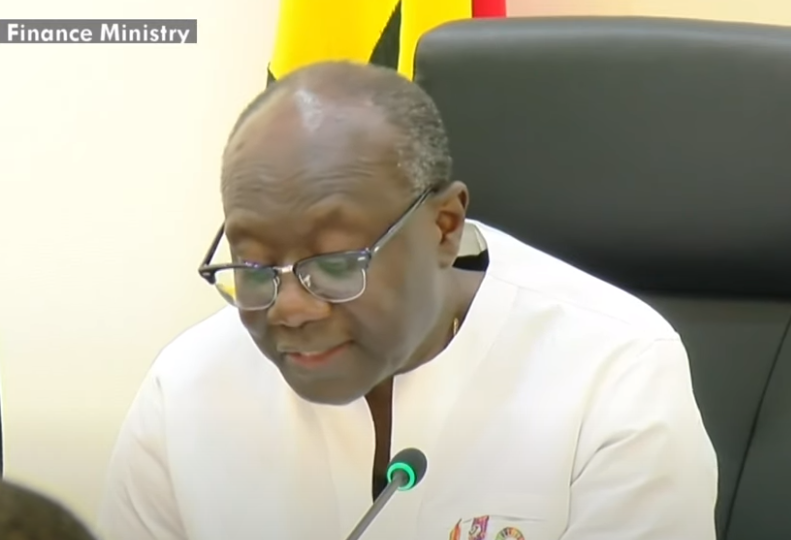
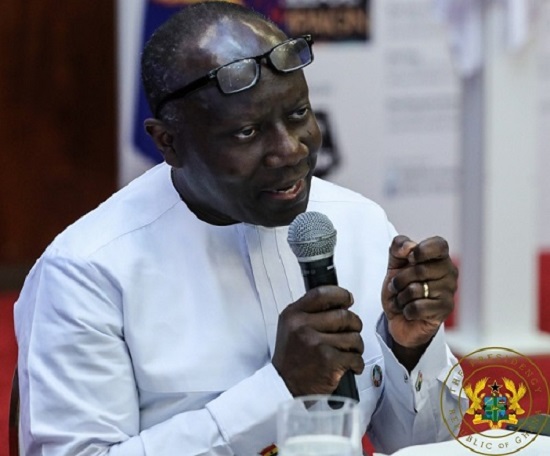
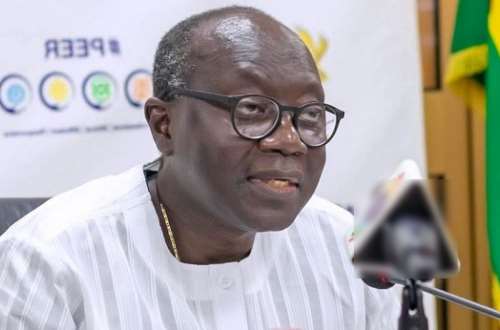
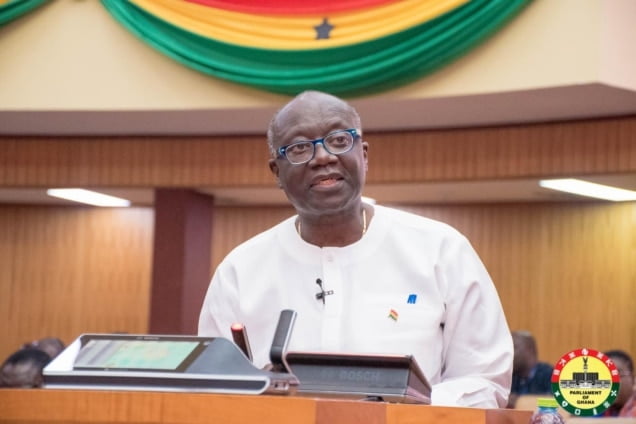
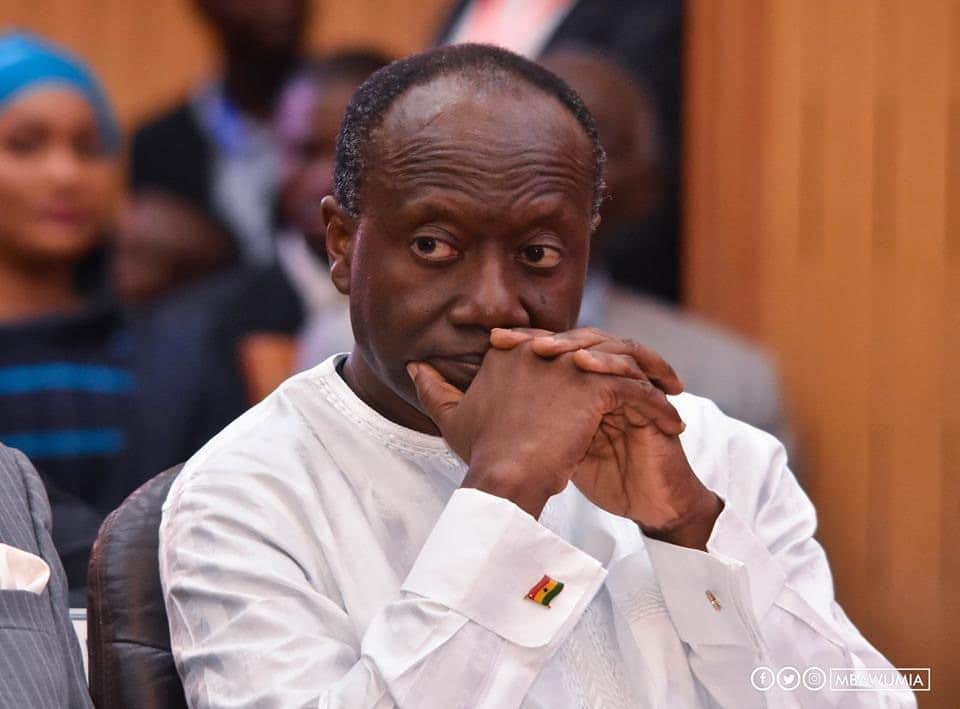
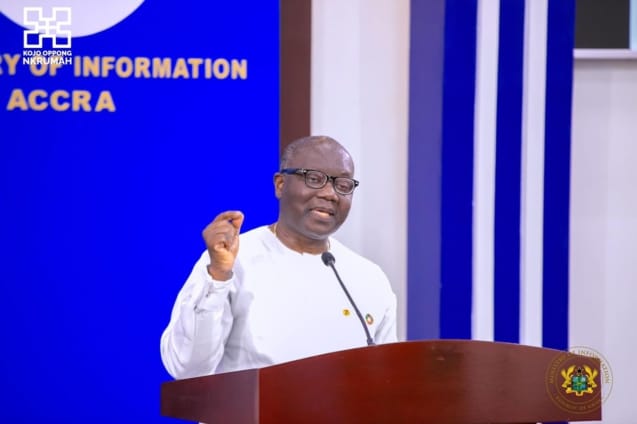
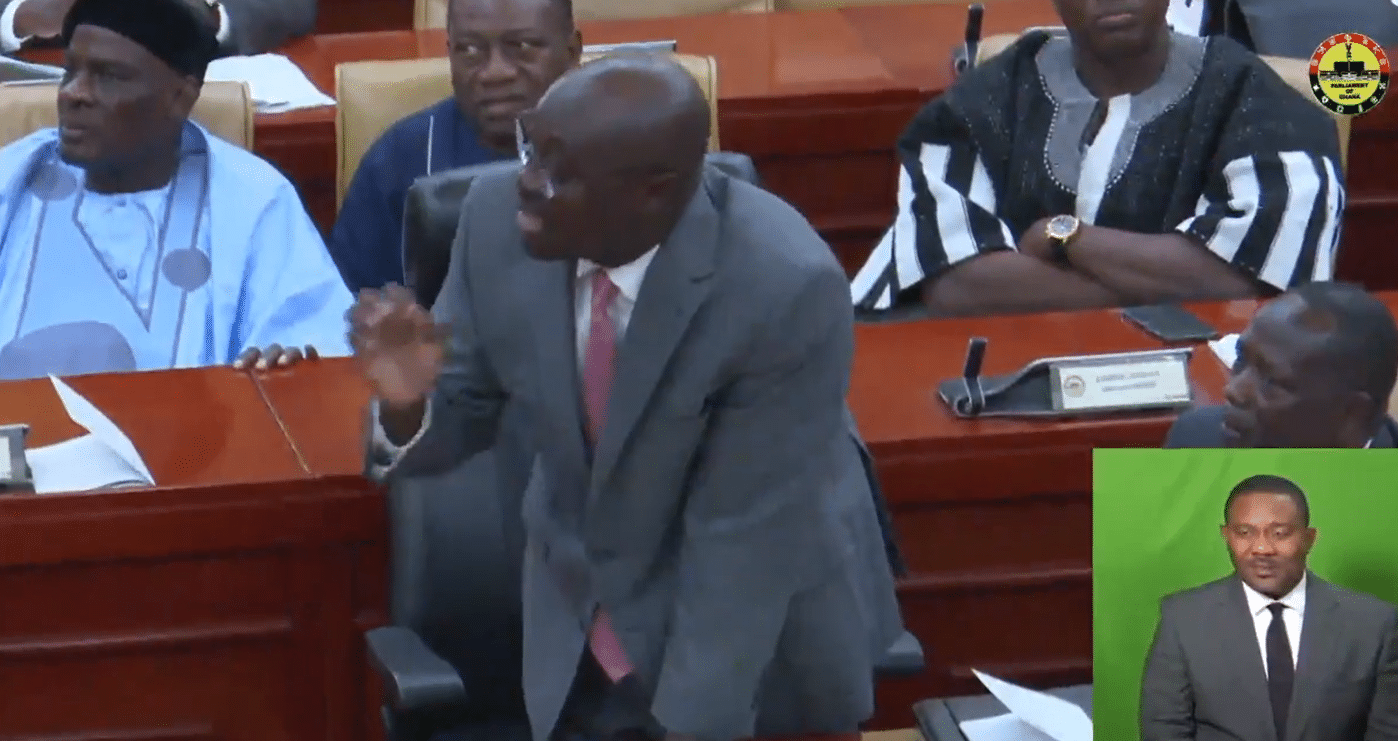
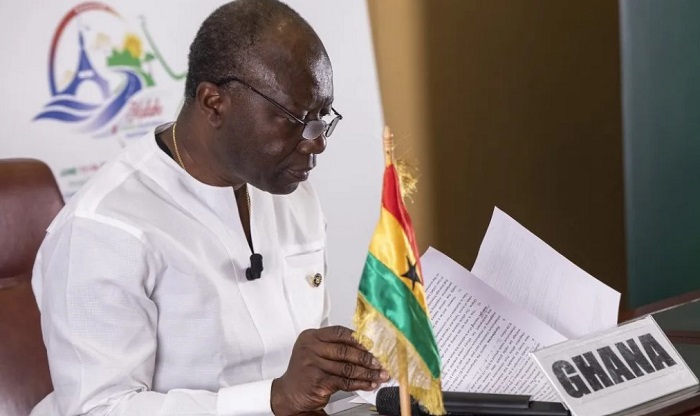
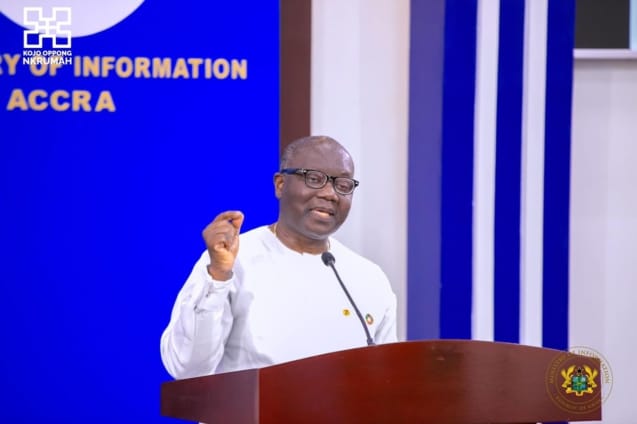
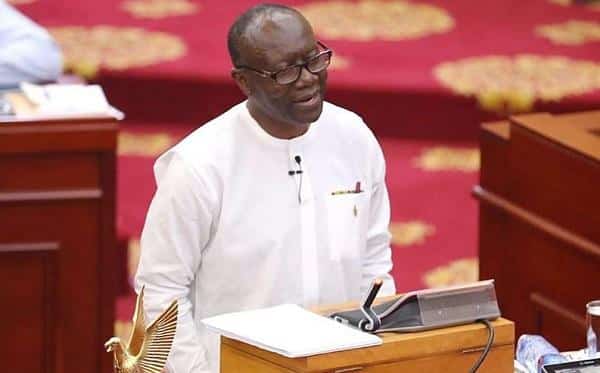
Finance Minister Ken Ofori-Atta has noted that the local currency has been relatively stable so far this year against foreign currencies.
At a news conference hosted by the Ministry of Finance, the Bank of Ghana, and the International Monetary Fund (IMF) today on Ghana’s bailout, the Finance Minister indicated that from January till date, the cedi has depreciated by 23.5%.
“The Ghana cedi has remained relatively stable from the beginning of the year till date, depreciating culminative by 23.5 percent over the period. But that really is essentially a huge jump in January, and basically since February to date, about 2.5 percent creating the kind of stability that is required for businesses and for confidence to be built up,” he said.
He continued: “So the impression over this period, February to now is only 3.1 percent.
On October 6, 2023, as per the Bank of Ghana’s Interbank forex rates, the cedi is trading against the US dollar with a buying price of GHS11.2193 and a selling price of GHS11.2305.
At the forex bureau, the dollar is being purchased at a rate of GHS11.65 and sold at GHS11.95.
With regards to the fiscal front, Mr Ken Ofori-Atta stated that the primary balance on a commitment basis for the half-year 2023 was a surplus of about 2 billion of the target of 4 billion.
This, he said, was driven in part by strong non-oil domestic revenues and rationalized spending.
Also, non-oil public revenue for the period was 50.1 billion, compared to the program target of 49.8 billion.
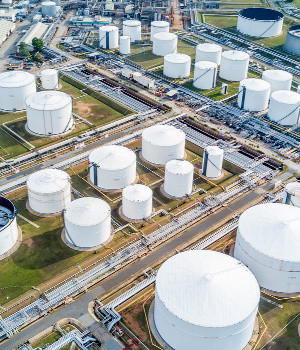
A contract offer from Sentuo Oil Refinery, circulating online, offering a monthly salary of GH¢1,500 for the position of engineer, has sparked outrage among a segment of the Ghanaian population.
These individuals are demanding transparency and accountability from the government.
It’s important to note that the GH¢1,500 salary includes deductions for SSNIT (Social Security and National Insurance Trust) and other income tax deductions.
Previously, there were reports of the company paying some of its workers only GH¢800.
The government had granted Sentuo Oil over GH¢200 million in tax exemptions to facilitate the construction of the refinery.
Ghanaians argue that if the government provides tax exemptions to a foreign company, it should ensure that its citizens are fairly compensated when they work for these institutions.
According to a document sighted by GhanaWeb, the Minister of Finance, Ken Ofori-Atta, submitted a request for parliament approval to consider and approve the waiver of “Import duties, Import NHIL, Import GETFUND, Import VAT, and EXIM levy, amounting to Ghana Cedi equivalent of Two Hundred and Six-One Million, Six Hundred and Forty-Eight Thousand, Three Hundred and Fifty-Three United States Dollars (US$261,648,353) in favour Sentuo Oil Refinery Limited.”
According to the GIPC Act 2013, Act 865 on supplies and equipment, Sentuo Oil Refinery Ltd. allegedly submitted an application for a strategic investor under section 26(4) of the said Act.
The document further noted that, in a letter dated February 6, 2023, the president gave final clearance for the tax waiver for the consideration and decision of Parliament.
The Tema Oil Refinery is believed to have a larger capacity, although the refinery only employs 420 people, compared to TOR’s more than 650.
“The refinery anticipates employing about 420 personnel. Staffing for the Refinery primarily consists of process units and auxiliary facilities personnel and is therefore driven by the characteristics of the Refinery’s facilities which range from complex processing units to somewhat simplified utility and offsite systems,” parts of the document read.
“In addition, a second major driver is that the Refinery operates continuously with a minimum annual on-stream time of 8,400 hours. For continuously operated units, there will be three shifts rotating in the daily cycle with a fourth shift required as relief, while for non-continuously operated units, two shifts or one shift according to needs,” it added.
Users of X (formerly Twitter) have voiced their concerns about how Ghanaians employed by international corporations are treated.
Sentuo Oil Refinery which the government has granted over $200m in tax exemption has offered its engineer monthly salary of paltry GHS1,500.00
The country has really cast and as a matter of urgency the government must call this company to order. pic.twitter.com/UMtduwzl5J
If any engineers goes to accept this Ghc1500, even though you have no respect fo urself the most disappointing aspect of all of this the complete embarrassment you going to bring to noble engineering profession
Minister for Finance, Ken Ofori-Atta has emphasized the importance of West African leaders to intensify their efforts to steer their economies toward a path of recovery.
During the 50th Meeting of the Convergence Council of Ministers and Governors of the Central Banks of the Member States of the West African Monetary Zone,he asserted, was a crucial step in the realization of the proposed single currency for the region.
‘’it has become imperative for Member States to continue to implement prudent fiscal, monetary and exchange rate policies and adopt policy measures aimed at enhancing domestic revenue mobilization and diversification of our economies’’ he said.
The Economic Community of West African States (ECOWAS) adopted a roadmap for launching a common currency, Eco, in June 2021.
In his view, a single currency programme, and more broadly, the economic integration agenda, had been a long journey, but he hoped the meeting would intensify achievable commitments towards this program.
‘’Given the challenging macroeconomic environment facing ECOWAS the dream to a single currency may seem distant, perhaps even utopian, to some…, but we cannot relent’’ Mr Ofori-Atta assured.
The Minister highlighted a series of significant factors that have played a substantial role in contributing to the macroeconomic imbalances within the sub-region, including the disruptive impact of the Covid-19 pandemic, the Russia-Ukraine War, persistent terrorist threats, instances of military coups, regional fragility, and various other security challenges.
These complexities, he argued, should not be viewed as insurmountable obstacles, especially as the set date for the introduction of the single currency in 2027 approaches.
Mr. Ofori-Atta stressed the imperative of maintaining a steadfast commitment to regional integration while avoiding the adoption of excessively short-term policies in response to the current challenges.
In this regard, he called for the implementation of medium to long-term solutions that would effectively address the adverse economic conditions and lay the necessary foundations for sustainable and inclusive economic growth.
Among the strategies discussed, the Minister highlighted the importance of capitalizing on the progress achieved in trade integration and financial integration, while also charting a clearer and more definitive path toward the realization of the ECO currency for the region.
This approach, he asserted, would be instrumental in overcoming the existing economic imbalances and fostering greater economic stability and prosperity within West Africa.
SHOULD CITIZENS STAND WITH THE BANK OF GHANA GOVERNOR WHO HAS AIDED THE GOVERNMENT’S ECONOMIC MANAGEMENT TEAM TO DESTROY LIVELIHOODS? THE POSITION OF THE MINORITY IN PARLIAMENT
In a recent statement intended to justify the gross incompetence and misgovernance of the leadership of the Bank of Ghana, the Minister of Finance, Ken Ofori-Atta sought to “speak for” the Bank of Ghana but ended up worsening the case of the central bank and deepening its credibility crisis.
Ordinarily, the beguiled statement by the Minister should be disregarded entirely and treated with the contempt it deserves. However, there is the need to correct some of the key misconceptions peddled and to fact-check the assertions made by the Minister in the statement.
From the second paragraph, the Minister erroneously used nominal figures to argue that the Bank of Ghana had grown its assets phenomenally between 2016 and 2022. If the Minister describes a 2.4-fold increase from GHS53 billion in 2016 to GHS125.97 billion in 2022 as phenomenal, how would he describe the increase in Bank of Ghana’s assets by 8.2-fold during the period of the NDC government (2009-2016) when the same assets grew from GHS6.45 billion as at end-2008 to GHS53 billion as at end-2016?
What is even worse is that the increase in assets between 2016 and 2022 were largely driven by the illegal monetary financing of government; in other words, illegal lending to government. This excessive printing and lending of money to government is the cause of the economic woes the country is currently facing (high inflation, volatility in the exchange rate, and high interest rates) as confirmed by the IMF and the World Bank.
In the third paragraph, the Minister again used nominal GDP figures to argue that thesize of GDP had more than doubled in value from GHS219.6 billion in 2016 to GHS610.2 billion in 2022, without adjusting for the impact of inflation within the same period. The Minister must realize that nominal values will always rise, hence the right thing to do is to express these in real terms.
On the watch of this Minister, real GDP growth slowed between 2018 and 2020 and only recovered slightly in 2021 due mainly to revenues from the three oil fields they inherited as well as the massive covid-19 revenue inflows, and not due to any special expertise of the Minister. Again, the Minister’s management of the economy worsened in 2022 and it is projected to further deteriorate at the end of 2023 with growth projection of 1.5%.
In the same paragraph, the Minister also touted doubling revenues since 2016, with total revenues increasing from GHS32 billion in 2016 to GHS96.7 billion by 2022. Again, for the comparison to be meaningful, these nominal figures must be expressed in real terms. At best, these figures should be expressed as a ratio of GDP, or in other words movement of the revenue-to-GDP ratio. Indeed, data from the Ministry of Finance shows that revenue- to-GDP on the watch of this Minister has not performed well as he claims. Even in 2015, and with all the challenges faced by the economy then, revenue to GDP was 13.2%. Given all the resources that this government has received, including two additional oil wells, government’s revenue to GDP is just about 12.1%. The fiscal deficit on his watch actually increased in spite of the covid-19 revenue windfalls, hence his claim of increasing revenues over the period is inconsistent with what happened to government expenditures.
In paragraph 6, the Minister spoke about resetting the financial architecture since 2017. The question is what the cost of doing so has been, and whether the exercise could not have been handled more prudently and at a much lesser cost and with minimal disruptions in the financial architecture.
In paragraph 7, the Minister took another wrong dive stating, “However, as many central banks, including Bank of Ghana, moved away from pursuing quantitative targets of monetary policy towards price targets, dominance of the central bank’s balance sheet asthe key metric has waned in many economies and in academic literature as well”. This is entirely incorrect, both in practice and in theory. The central bank’s balance sheet remains critical in the implementation of monetary policy, hence liquidity management is at the core of this function.
If the Minister had appreciated the workings of monetary policy, he would have known that despite the move from monetary targeting to inflation targeting, liquidity management or the ability to control the central bank’s balance sheet remains an integral part of monetary policy implementation.
The Minister must also know that the use of price targets does not mean that monetary aggregates no longer matter. They still do matter in monetary policy implementation and therefore excessive central bank financing still matters for monetary policy.
In paragraph 8, the Minister simply re-echoed the Bank of Ghana’s earlier argument that it was normal for a central bank to operate with negative equity, and that its losses recorded in 2022 would not affect its operational efficiency. These industrialised countries cited in the paragraph did not underwrite any insolvency of their governments which caused such losses. The pandemic and the Russia/Ukraine war rather provided windfall revenues to the government of Ghana, and hence cannot be a reason in the case of Ghana. If the losses and the consequent slide into negative equity (projected to be repeated in 2023) would not matter, why then is the IMF programme asking for a repair of the balance sheet of Bank of Ghana in the medium term?
In paragraph 12, the Minister made another flawed statement that, “Accordingly, as the focus shifts from direct targets of money supply to interest rates as operational targets, the framework for analysing central bank balance sheets has shifted, enabling central banks to play more interventionist roles in the economy than before”. This is completely and utterly wrong. No framework for analysing central bank balance sheet has shifted; it remains same. The Minister is probably confusing the recent asset purchase practices in some central banks in the industrialised world, with fiscal dominance. These are not the same at all.
The interventionist role played by those central banks was to lend to corporates in the private sector in those countries directly through asset purchases, which was later redeemed and hence the central bank’s balance sheet was restored to good health. This is totally different from what the Minister has done to Bank of Ghana’s balance sheet through illegal money printing and lending to government. Indeed, this practice is at the root of Ghana’s macroeconomic problems currently.
In paragraph 14, the Minister sought to rub salt into the injury of ordinary Ghanaians and pensioners who out of patriotism invested into the future of our country in longer dated bonds. The book of Proverbs 22:22 states, “Don’t steal from the poor, because they are poor. Don’t oppress the needy in the gate.” And yet this Minister continues to tout a so- called success of government’s debt operations that commenced in 2022. With sleaze, this Minister continues to quote the bible and does not realise that he and his Databank owe a moral and spiritual duty to the people of Ghana to refund the commissions they earned on those very bonds that he has restructured.
This is a minister who claims to be faithful to the bible and says that he is doing a voluntary job as Minister. Yet he would never respond to the call by Ghanaians to allow a more competent person to take over the economic and financial affairs of the country, in the face of his poor performance. On the new Bank of Ghana building, the Minister must appreciate the opinion of Ghanaians as represented by their parliamentarians, on the subject matter.
The central bank has made losses in three of the past six years; and is projected to declare a loss again in 2023 and possibly in 2024. It is therefore legitimate for citizens to seek clarifications regarding value for money considerations in executing such a project and whether current circumstances justify a project of that nature. The Minister should rather welcome the call for an independent audit into the project and to ensure value for money at the end of the day.
Towards the end of his statement, the Minister surprisingly veered off from the defense of Governor Addison and decided to call for governance reforms that he claims could strengthen the Bank of Ghana. He strangely suggests a plan to dislodge the time- honoured arrangement which makes the Governor of the Bank of Ghana the Chair of the Board, as is the case in over 99% of central banks. The Minister must realise that this is precisely why Parliament’s oversight function is key as provided in Banks and Specialised Deposit-Taking Act 2016 (Act 930). The Governor is mandated to report to Parliament frequently and to yield to the latter’s oversight function. Unfortunately, Governor Addison has not yielded as required, and the Minister perhaps does not require him to do so, because he himself is also often deficient in the requirement.
The Minister must not seek to dismantle this carefully thought-through corporate governance architecture at the central bank. There is a reason why this is so in almost all countries in the world. Clearly, the current legal and corporate governance regime at the Bank of Ghana is not the problem; Ken Ofori-Atta is the problem.
History will remember this Minister of Finance and the government’s Economic Mismanagement Team headed by Alhaji Mahamudu Bawumia for taking Ghana to the IMF in an ambulance.
The economy that the NDC’s John Mahama government bequeathed to the Akufo-Addo/ Bawumia regime was far better than what Ghana has today. This is because the NPP inherited a public debt that was sustainable at 56% of GDP; the Akufo-Addo/Bawumia government has increased public debt to 103% of GDP with very little to show. In nominal terms, they inherited public debt of GHS 120 billion, which they have increased to approximately GHS600 billion with very little to show.
Again, the NDC left behind a robust economy with very strong buffers. The Mahama government left behind the Sinking Fund, Stabilisation Fund, Ghana Infrastructure Investment Bank (GIIF), Ghana EXIM Bank as well as a robust tax revenue and oil revenue from three oil fields which the NPP used to kickstart their administration. Yet they have very little to show and have collapsed the economy on their watch.
Furthermore, the NDC put in place a strong tax policy and a prudent and controlled expenditure regime, including the Government Integrated Financial Management Systems (GIFMIS). Yet the NPP came in and processed expenditure outside the GIFMIS architecture.
It is also noteworthy that the NDC government did not short-change Ghanaians with a haircut economy. The NDC government had a credit rating of B+; the Akufo-Addo/ Bawumia government’s management of the economy, with Ken Ofori-Atta as the Minister of Finance, is rated D, a super junky economy. Surprisingly, this government that boasted of not signing up to an IMF programme shamelessly did a U-turn and ended up with the worst form of an IMF programme; a programme that they announced and signed up at a time that they had collapsed the economy and Ghana’s economy was at the intensive care unit.
The Minister of Finance should not say anywhere again that the NDC administration left behind a derailed IMF programme. Clearly, at the time we were leaving office there was no monetary finance. For the first time in the history of Ghana, the government did not take money from the central bank even though the law allowed the then administration to take 5% of the previous year’s revenue from the central bank. But as a government that cared about the impact of inflation and how it could destroy the livelihoods of ordinary Ghanaians, we stayed away from borrowing from the central bank.
The people of Ghana would recall that because the Mahama administration left behind a robust economy, the Akufo-Addo/Bawumia government within the first three months of its assumption of office was able to borrow US$2.25 billion from Franklin Templeton.
Today, that same Franklin Templeton will not lend Ghana even one Dollar because the country is not credit worthy.
The Minister of Finance should carry his mess and his shame. He should not bring the NDC into matters that border on his greed, state capture for his family and friends as well as his monumental failure in public office. We did better than they are doing and the NDC will always do better when the good people of Ghana give John Mahama and our party the opportunity to govern from January, 2025. Finally, the Minority in Parliament wishes to remind Governor Addison and Mr. Ken Ofori-Atta that the day of reckoning is very near and they will be held accountable for their collective mess.
The person in charge of finances in Ghana, Ken Ofori-Atta, believes that Ghana will receive $600m as part of a financial aid package from the International Monetary Fund (IMF) by the end of the year.
In May, Ghana agreed to receive a new financial assistance plan worth $3 billion for the next three years in order to alleviate its economic difficulties.
It got $600 million at first, but the government had to do some things to get more money later.
In November, there will be a review. Ofori-Atta said the country has made progress in improving its finances and balancing payments.
The government has made the tax net bigger by adding new rules. One of these rules is that people who win money from betting or the lottery have to pay 10% of their winnings as tax. They did this to get more money, which was a requirement from the International Monetary Fund (IMF).
The IMF has stated that the economy of Ghana is getting better, because there are now more foreign reserves, the exchange rate is not changing as much, and the inflation rate is going down.
The former Director-General of the Ghana Maritime Authority, Kwame Owusu, has accused the finance minister, Ken Ofori-Atta, of obstructing his approval as the board chair of the Ghana Revenue Authority (GRA).
According to him, despite being President Akufo-Addo’s primary choice for the role, the appointment was thwarted due to opposition from certain members of the New Patriotic Party (NPP), including the finance minister.
In an interview with the media on August 21, 2023, Owusu claimed that his failure to secure the GRA board chair position was due to internal party sabotage.
He mentioned that President Akufo-Addo selected him for the role due to his extensive 12-year experience in taxation, as the government was incurring losses.
Consequently, Owusu was requested to resign from his position at the Ghana Maritime Authority and join the GRA.
Owusu further explained that his appointment was delayed by some NPP members, including Ofori-Atta, who were concerned that he would impede their interests if appointed as the board chair of GRA.
Despite his approval by the necessary channels, the finance minister’s reluctance to affirm the appointment led to a prolonged delay, leaving the GRA without a board chair for several months.
Owusu’s assertion was that his perceived capacity to perform impartially and to prioritize the nation’s interests rather than party agendas led certain individuals to oppose his appointment.
He likened his situation to a broader trend within the party, where individuals who were expected to challenge the status quo were met with resistance from those who feared their intentions.
In sum, Kwame Owusu, a former high-ranking official, alleged that his prospective appointment as the board chair of the GRA was hindered by internal party politics and the perceived threat he posed to certain interests within the party.
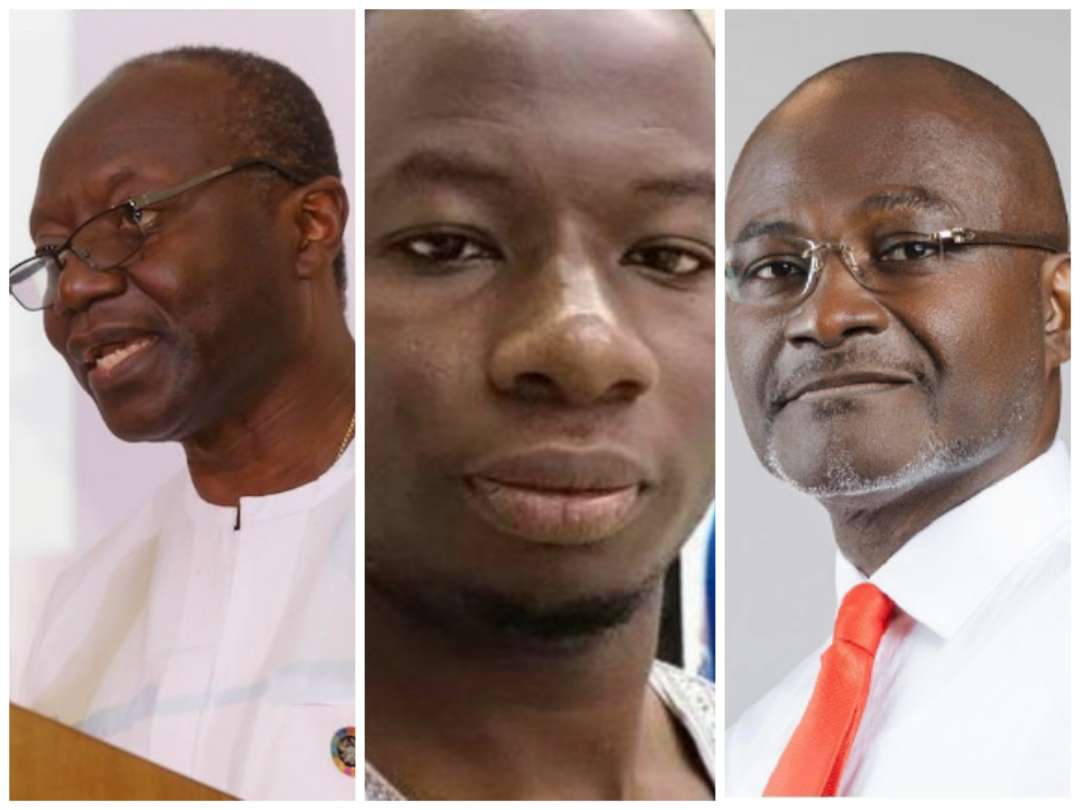
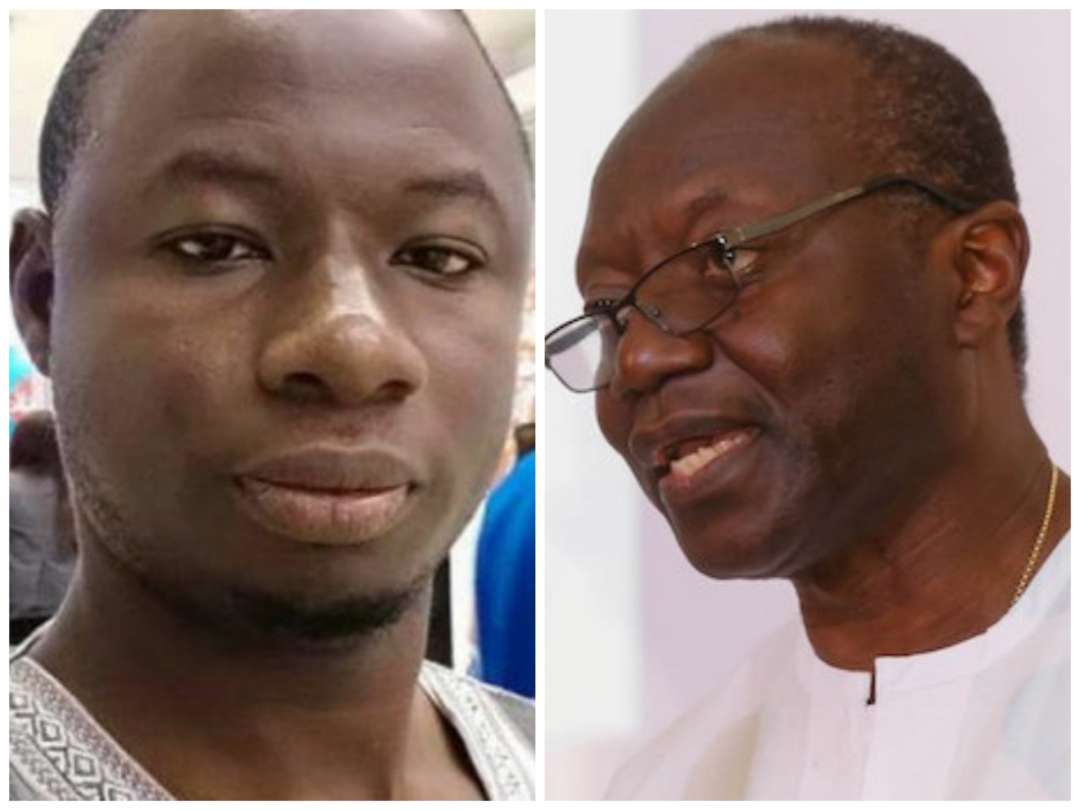
Assin Central Member of Parliament, Kennedy Agyapong, has accused the late investigative journalist with Tiger Eye, Ahmed Suale, of attempting to set up Finance Minister Ken Ofori-Atta.
According to Mr Agyapong, Ahmed Suale was a key investigator in Anas Aremeyaw Anas’ Tiger Eye team.
Mr Agyapong claims that Ahmed Suale, unlike Anas, never hid his identity or covered his face during investigations.
In an interview on Citi TV’s Face 2 Face show, the MP noted that but for his “exposé” to disclose the faces behind Tiger Eye’s operations on Net 2 TV, Mr Ken Ofori-Atta would have fallen prey to a set up in Dubai.
Kennedy Agyapong in 2018 revealed Ahmed Suale’s identity on national television in an exposé dubbed “Who watches the watchman”, an action many believe led to his assassination.
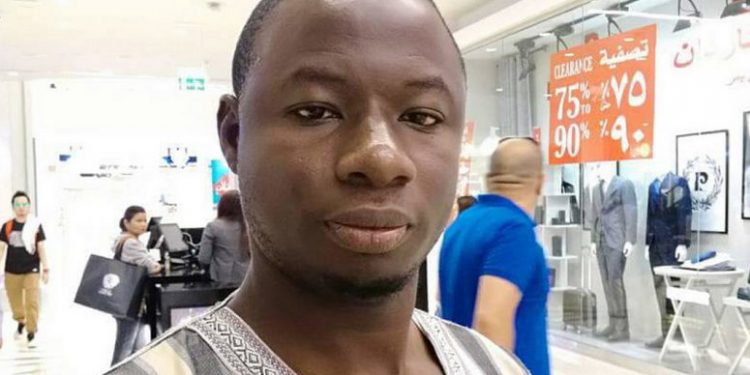
The late Ahmed Suale
However, Ken, who has constantly denied such claims, mentioned some of the “dubious” activities Ahmed Suale indulged in that made him a target.
Citing an example of such activity, Mr Agyapong mentioned that the then Minister of State at the Finance Ministry, Charles Adu Boahen, warned Mr Ofori-Atta after sighting the MP’s exposé.
Mr Ofori-Atta was allegedly on his way to meet a group of people who, unbeknownst to him, were Ahmed Suale himself and his associates.
Upon his arrival in Dubai, the Finance Minister, Mr Ofori-Atta having been forewarned snubbed Ahmed Suale and his team.
“He was the one who set the Finance Minister and those Finance people up with some renowned lawyer. They never saw Anas’ face. So if I say that this the guy, let me tell you the truth today.
When I showed the face of Ahmed Suale, the Finance Minister was on his way to Dubai to meet them. So the Minister of State, Adu Boahen called him and said I’ve seen this on Net2, this is entrapment.
He actually met them and snubbed them. They didn’t know it was Anas until I showed the face and connected Ahmed Suale to Anas,” he narrated.
According to Mr Agyapong, Ahmed Suale did not work with truth and integrity in his line of work.
NPP Presidential Aspirant, Kennedy Agyapong has clarified his 'beat him up' comment aimed at late Investigative Journalist Ahmed Suale.
On January 16, 2019, Ahmed Hussein-Suale was shot dead near his family home in Accra.
His family holds the assertion that Ahmed was assassinated because of his work. Mr Agyapong was deemed a suspect by the public after he disclosed the identity of the journalist.
It has been four years, and the Police are yet to find the culprits of the unlawful acts.
According to Kennedy Agyapong, Ahmed Suale was sloppy in his line of work while alive.
Mr Agyapong explained that unlike his senior colleague Anas Aremeyaw Anas, Ahmed Suale failed to protect his identity.
This, he said made him susceptible to any form of attack by the people he embarrassed.
The Assin Central MP said: “You know Ahmed Suale’s problem, may his soul rest in peace. He made a lot of mistakes.
All the investigations Anas did, Anas never showed up with his face. Ahmed Suale showed his face. So all the people Anas embarrassed in this country, it was Ahmed Suale who set them up.”
Assin Central Member of Parliament, Kennedy Agyapong, has accused the late investigative journalist with Tiger Eye, Ahmed Suale, of attempting to set up Finance Minister Ken Ofori-Atta.
According to Mr Agyapong, Ahmed Suale was a key investigator in Anas Aremeyaw Anas’ Tiger Eye team.
Mr Agyapong claims that Ahmed Suale, unlike Anas, never hid his identity or covered his face during investigations.
In an interview on Citi TV’s Face 2 Face show, the MP noted that but for his “exposé” to disclose the faces behind Tiger Eye’s operations on Net 2 TV, Mr Ken Ofori-Atta would have fallen prey to a set up in Dubai.
Kennedy Agyapong in 2018 revealed Ahmed Suale’s identity on national television in an exposé dubbed “Who watches the watchman”, an action many believe led to his assassination.
However, Ken, who has constantly denied such claims, mentioned some of the “dubious” activities Ahmed Suale indulged in that made him a target.
Citing an example of such activity, Mr Agyapong mentioned that the then Minister of State at the Finance Ministry, Charles Adu Boahen, warned Mr Ofori-Atta after sighting the MP’s exposé.
Mr Ofori-Atta was allegedly on his way to meet a group of people who, unbeknownst to him, were Ahmed Suale himself and his associates.
Upon his arrival in Dubai, the Finance Minister, Mr Ofori-Atta having been forewarned snubbed Ahmed Suale and his team.
“He was the one who set the Finance Minister and those Finance people up with some renowned lawyer. They never saw Anas’ face. So if I say that this the guy, let me tell you the truth today.
When I showed the face of Ahmed Suale, the Finance Minister was on his way to Dubai to meet them. So the Minister of State, Adu Boahen called him and said I’ve seen this on Net2, this is entrapment.
He actually met them and snubbed them. They didn’t know it was Anas until I showed the face and connected Ahmed Suale to Anas,” he narrated.
According to Mr Agyapong, Ahmed Suale did not work with truth and integrity in his line of work.
NPP Presidential Aspirant, Kennedy Agyapong has clarified his 'beat him up' comment aimed at late Investigative Journalist Ahmed Suale.
On January 16, 2019, Ahmed Hussein-Suale was shot dead near his family home in Accra.
His family holds the assertion that Ahmed was assassinated because of his work. Mr Agyapong was deemed a suspect by the public after he disclosed the identity of the journalist.
It has been four years, and the Police are yet to find the culprits of the unlawful acts.
According to Kennedy Agyapong, Ahmed Suale was sloppy in his line of work while alive.
Mr Agyapong explained that unlike his senior colleague Anas Aremeyaw Anas, Ahmed Suale failed to protect his identity.
This, he said made him susceptible to any form of attack by the people he embarrassed.
The Assin Central MP said: “You know Ahmed Suale’s problem, may his soul rest in peace. He made a lot of mistakes.
All the investigations Anas did, Anas never showed up with his face. Ahmed Suale showed his face. So all the people Anas embarrassed in this country, it was Ahmed Suale who set them up.”
Ghana’s finance minister, Ken Ofori-Atta, has maintained that the country’s economy has “turned the corner” despite the country’s current economic difficulties.
He claims that the government has made significant progress, proving that the economy has passed a critical threshold and is now showing signs of improvement.
“We have seen progress, and for me, it’s marvellous in my own eyes where we are now as a country,” he made the remarks during an interview on GTV’s Talking Point segment on Sunday, August 6, 2023.
The opposition in Parliament as well as prominent Ghanaian economists have harshly criticized the remarks, which were made for the first time by the finance minister in Parliament, but Ofori-Atta has stuck to his guns.
However, according to a recent report by the World Bank, Ghana’s economy will return to normal levels by 2025.
“Growth will further decelerate in the short term (2023-24) before returning to its potential after 2025,” the World Bank said in its 7th Ghana Economic Update titled ‘Price Surge: Un-ravelling Inflation’s Toll on Poverty and Food Security’.
The annual analytical report, written by three World Bank economists—Kwabena Gyan Kwakye, economist; Paul Andres Corral Rodas, Senior Economist; and David Elmaleh, Senior Economist—examined Ghana’s prospects for economic growth.
The World Bank research, which also concentrated on the effects of inflation on households, showed that Ghana’s economy recovered from the 0.5 percent post-COVID-19 growth rate to 5.3 percent in 2021.
Finance Minister, Ken Ofori-Atta has opened up on his decision to remain at post Finance Minister despite the clarion of call by majority go Ghanaians including lawmakers from both NPP and NDC for him to step down.
According the minister, the calls for his removal from office were valid within the context of the nation’s democratic structure.
In an interview with GTV over the weekend, Mr. Ofori-Atta emphasized that, as a public figure, people possess the right to voice their demand for his dismissal.
However, he noted that he was incapable of abandoning the country when it mattered most.
“In the period of censure, in which Parliament then voted against it, but more importantly, you were in a situation where you were battered and broken. [But] you do not leave a ship at that time. And given the urgency of ensuring the IMF programme goes through, for me, it was a duty to serve, and there was no running away from it,… and really we serve at the president’s pleasure” the Finance Minister said.
In 2022, the Finance Minister encountered criticism, with certain members of the New Patriotic Party (NPP) advocating for his removal, holding him accountable for the country’s economic difficulties.
Furthermore, the National Democratic Congress presented a censure motion aimed at his expulsion, citing reasons such as significant incompetence and potential conflicts of interest.
The MPs cited the following reasons as justification to revoke Ken Ofori-Atta’s appointment:
Despicable conflict of Interest ensuring that he directly benefits from Ghana’s economic woes as his companies receive commissions and other unethical contractual advantage. particularly from Ghana’s debt overhang.
Unconstitutional withdrawals from the Consolidated Fund in blatant contravention of Article 178 of the 1992 Constitution supposedly for the construction of the President’s Cathedral;
Illegal payment of oil revenues into offshore accounts in flagrant violation of Article 176 of the 1992 Constitution;
Deliberate and dishonest misreporting of economic data to Parliament
Fiscal recklessness leading to the crash of the Ghana Cedi which is currently the worst performing currency in the world;
Alarming incompetence and frightening ineptitude resulting in the collapse of the Ghanaian economy and on excruciating cost of living crisis;
Gross mismanagement of the economy which has occasioned untold and unprecedented hardship.
Amid the vote to remove the Finance Minister from his position, the Majority staged a walkout, preventing the Minority from forming the quorum needed for Mr Ofori-Atta to be removed from office.
The proponents of the motion needed the votes of 183 legislators to have the motion passed against Mr. Ofori-Atta.
Finance Minister, Ken Ofori-Atta, has acknowledged that the calls for his removal from office were valid within the context of the nation’s democratic structure.
In an interview with GTV over the weekend, Mr. Ofori-Atta emphasized that, as a public figure, people possess the right to voice their demand for his dismissal.
However, he noted that he was incapable of abandoning the country when it mattered most.
“In the period of censure, in which Parliament then voted against it, but more importantly, you were in a situation where you were battered and broken. [But] you do not leave a ship at that time. And given the urgency of ensuring the IMF programme goes through, for me, it was a duty to serve, and there was no running away from it,” the Finance Minister said.
In 2022, the Finance Minister encountered criticism, with certain members of the New Patriotic Party (NPP) advocating for his removal, holding him accountable for the country’s economic difficulties.
Furthermore, the National Democratic Congress presented a censure motion aimed at his expulsion, citing reasons such as significant incompetence and potential conflicts of interest.
The MPs cited the following reasons as justification to revoke Ken Ofori-Atta’s appointment:
Despicable conflict of Interest ensuring that he directly benefits from Ghana’s economic woes as his companies receive commissions and other unethical contractual advantage. particularly from Ghana’s debt overhang.
Unconstitutional withdrawals from the Consolidated Fund in blatant contravention of Article 178 of the 1992 Constitution supposedly for the construction of the President’s Cathedral;
Illegal payment of oil revenues into offshore accounts in flagrant violation of Article 176 of the 1992 Constitution;
Deliberate and dishonest misreporting of economic data to Parliament
Fiscal recklessness leading to the crash of the Ghana Cedi which is currently the worst performing currency in the world;
Alarming incompetence and frightening ineptitude resulting in the collapse of the Ghanaian economy and on excruciating cost of living crisis;
Gross mismanagement of the economy which has occasioned untold and unprecedented hardship.
Amid the vote to remove the Finance Minister from his position, the Majority staged a walkout, preventing the Minority from forming the quorum needed for Mr Ofori-Atta to be removed from office.
The proponents of the motion needed the votes of 183 legislators to have the motion passed against Mr. Ofori-Atta.
Finance Minister Ken Ofori-Atta has acknowledged that there were valid reasons for some people to demand his dismissal, especially in the context of Ghana’s democracy.
He said that members of his own party, the New Patriotic Party, and the general public had the right to express their dissatisfaction with his performance amid the economic difficulties that Ghana faced, especially in 2022.
However, speaking on GTV’s Talking Point show on 8 August 2023, Ken Ofori-Atta said that he did not resign because he felt it was his duty to serve the country and ensure the successful completion of the IMF programme. He also admitted that he was hurt and shaken by the censure motion that was filed against him by the Minority caucus in Parliament.
“In the period of censure, in which Parliament then voted against it, but more importantly, you were in a situation where you were battered and broken. [
But] you do not leave a ship at that time. And given the urgency of ensuring the IMF programme goes through, for me, it was a duty to serve, and there was no running away from it,” Ken Ofori-Atta said.
The censure motion, which was lodged in 2022 by the Minority caucus in Parliament, accused Ken Ofori-Atta of gross incompetence, mismanagement of the economy and conflict of interest. The motion was rejected by the Majority caucus, who walked out of the House before a vote could be taken.
Finance Minister, Ken Ofori-Atta, has responded to calls for his dismissal, characterizing them as a manifestation of democracy and freedom of speech.
Speaking with the media on August 6, 2023, Ofori-Atta addressed the criticism he has faced from both his party members and opposition lawmakers regarding the country’s economic challenges and his decision to seek assistance from the International Monetary Fund (IMF).
Despite facing pressure to resign, Ofori-Atta emphasized that during challenging times, his focus remained on alleviating the economic difficulties faced by Ghanaians.
He highlighted the recent parliamentary censure vote, which upheld his position, as a testament to the democratic process in the country.
Ofori-Atta expressed his commitment to his role and his determination to steer the country’s economy in a positive direction.
He acknowledged the urgency of the situation and the efforts his team made to meet the requirements set by the IMF.
Regarding his potential removal from office, Ofori-Atta noted that such decisions ultimately rest with the President and that he is dedicated to restoring confidence in the country’s economy.
Finance Minister Ken Ofori-Atta is mounting spirited defence to his statement that Ghana’s economy has “turned the corner” during the presentation of the 2023 mid-year budget review.
The ‘unpopular’ minister has emphasized the progress and improvements he sees in the country’s economic landscape.
“We have seen progress, and for me it’s marvelous in my own eyes where we are now as a country,” he said.
Mr. Ofori-Atta made the comments on GTV’s current affairs progamme, “Talking Point” on August 6, 2023.
Despite facing criticism from opposition parties and economists who hold the view that challenges persist, Ofori-Atta remains steadfast in his position.
To support his assertion, Ofori-Atta outlined several key points:
Economic Growth: He underscored the substantial growth witnessed in 2023, suggesting a tangible stride forward in the economy’s advancement.
Inflation Management: Ofori-Atta highlighted the government’s success in reducing inflation rates from the preceding year, even though there was a minor increase in May and June 2023.
Currency Stability: Pointing to the stability of the cedi, Ghana’s currency, he portrayed it as a testament to the economy’s robust foundation.
Debt Restructuring Program: The initiation of a Debt Restructuring Program aimed at reorganizing Pension Funds invested in Government Bonds and Securities was mentioned as a move towards bolstering the economy’s resilience.
Notwithstanding calls for his resignation stemming from concerns over his handling of the economy, Ofori-Atta’s response to these calls was measured. He expressed his interest in the diversity of viewpoints within a democratic system and acknowledged that the nation has encountered challenges. Despite potential dissatisfaction among certain quarters, he underscored his unwavering commitment to stabilizing the economy and addressing its issues.
This discourse over the state of Ghana’s economy, marked by controversy and differing opinions, is a familiar feature in political and economic dialogues. It reflects the intricate nature of economic indicators and the multiplicity of interpretations that they can engender.
Finance Minister Ken Ofori-Atta has confirmed reports that the Central Bank registered a loss of GH¢60.8 billion in its audited financial statement for the fiscal year 2022.
However, the Finance Minister noted that the loss recorded is technical, as “it is not monies that was given that will never be paid.”
Mr Ofori-Atta made this known during an appearance on GBC’s Talking Point programme over the weekend.
He further explained that these losses were accrued after the Central Bank failed to balance its assets, liabilities, and shareholders’ equity. According to the Finance Minister, some revenue as interest that should have been generated by the Central Bank could not come through.
“The issue of debt exchange, in which certain interest was expected to be paid had been cut, resulting in those type of losses. Then you’ll have to impair the balance sheet because of expected revenue that was coming will not come. So that is what is happening”, he further explained.
The BoG attributes this substantial loss primarily to the government’s actions in debt restructuring.
Meanwhile, the Finance Minister, has expressed confidence in BoG’s ability to reclaim all its losses.
“As I told you, the impairment on the banks was also quite dramatic. The first half year, we have seen a strong response from them. It’s the same way in which the balance sheet of restructuring is also occurring at the Central Bank and will build up towards reclaiming where we should be”, he concluded.
Government representative specializing in governance and security matters, Palgrave Boakye-Danquah, is against the assertion that Finance Minister Ken Ofori-Atta is incapable of handling the country’s economy.
The Finance Minister’s competence has been questioned by many as Ghana faces an economic crisis.
Critics of Ken Ofori-Atta argue that had he effectively managed the country’s finances, there would have been no need for the nation to seek assistance from the International Monetary Fund (IMF) for a bailout.
But according to Palgrave Boakye-Danquah, Mr Ofori-Atta has been more than helpful. He noted that the Finance Minister has been able to stabilise the economy despite the many challenges.
“How can you label someone who was able to produce single digit for 2017, 2018 and 2019 as the worst Finance Minister in history? I must state emphatically that the honourable Ken Ofori-Atta is the best Finance Minister this country has ever had under this 4th republic…,” he said.
He stated that under Ken Ofori-Atta’s leadership at the Finance Ministry, a process of scrutiny has been initiated, leading to the revelation of numerous instances of corruption previously perpetrated by former ministers in the same role.
“His censorship at the Ministry helped to unearth the massive corruption at the ministry an how they badly negotiated the IPP deals. We have also seen how this has helped to renegotiate this deals and helped the country to save up to about US $4 million…,” he said.
To him, critics of the Finance Minister are only just grateful and playing politics ‘because for me, he is one of the most wisest, smartest, most intelligent and more respectable finance minister under this fourth republic…,” he said.
The Ghanaian economy, according to financial analyst Joe Jackson, is in the Intensive Care Unit (ICU) and requires urgent attention.
His response follows Ken Ofori-Atta, the minister of finance, who declared that the economy was on the road to recovery.
He believes that Ken Ofori-Atta, the finance minister, is incorrect when he claims that the government has made progress.
Speaking on Citi TV’s The Big Issue programme, Joe Jackson said, “I will say that we have turned the corner when we have moved to the recovery ward but at this moment this economy is still in the ICU and I think it is a disservice to the people of this country to say that we have turned the corner.”
He urged the government to reduce its spending in order to tackle the fiscal deficit of the country.
The financial expert also advised the government to give precedence to crucial sectors to guarantee a sustainable approach to financial management.
Ken Ofori-Atta, the Finance Minister, while delivering the mid-year budget review statement in parliament for the year 2023, mentioned that Ghana is gradually making progress in revitalizing the economy following a period of economic decline.
He affirmed that the government’s strategies and initiatives are starting to show promising outcomes.
The Economist and Director of Operations at Dalex Finance, Joe Jackson, has rejected assertions made by the Finance Minister, Ken Ofori-Atta, regarding the country’s economic upturn and its trajectory toward recovery.
Jackson contends that the country’s economy remains critically unwell and likened it to being in the “Intensive Care Unit.”
He criticized Ofori-Atta for not being candid about the state of the economy during his presentation on the Mid-Year Budget review in Parliament.
Ofori-Atta had informed Parliament that Ghana was gradually achieving progress in reversing the economic challenges faced in 2022.
“Mr. Speaker, we have turned the corner and, more importantly, we are determined to continue down that path. Soon, we expect the measures taken to result in economic activity greater than anything experienced in the history of the Fourth Republic. Our plans and programmes should soon lead to a sustained increase in domestic production, including manufacturing and farming, replacing many of the products that we are used to importing,” the Finance Minister stated.
He highlighted the government’s efforts and their positive outcomes, urging the nation to acknowledge the strides made over the past three years.
However, Joe Jackson, speaking to the media, outlined several ongoing issues affecting Ghana’s economy. He pointed out persistent problems in revenue generation, a mounting public debt, and insufficient substantial economic growth necessary for meaningful development.
Jackson remarked, “I would say we’ve turned the corner when we’re out of the critical phase, but as of now, the economy is still in the ICU. It’s a disservice to the people to claim otherwise.”
The economist emphasized the urgency of curbing unnecessary government expenditures to address the fiscal deficit.
“I will say that we have turned the corner when we have moved to the recovery ward but at this moment this economy is still in the ICU and I think it is a disservice to the people of this country to say that we have turned the corner,” Mr Jackson said.
He called for a reduction in the size of the government, streamlining bureaucratic structures, and prioritizing essential sectors for sustainable financial management.
A chartered economist, has said that mid-year budget review presented to parliament provides an accurate depiction of the current state of the country.
As a lecturer at Kumasi Technical University, he emphasized that the presentation acknowledged the challenges faced by the country and outlined the government’s efforts to tackle them.
Dr. Anumah explained that the budget review addressed critical issues such as high food prices, inflation, and the depreciation of the cedi, while also highlighting the measures taken to stabilize the economy.
Speaking on Nyankonton Mu Nsem on Rainbow Radio 87.5Fm, he stated that, from an economist’s perspective, the economic challenges are being adequately addressed, and the economy is showing signs of stability.
Finance Minister Ken Ofori-Atta, in his speech to Parliament on July 31, 2023, reported modest progress in reviving the Ghanaian economy after the severe economic difficulties faced in 2022. He also highlighted the positive outcomes of the government’s plans and programs.
Despite this optimistic outlook, the Minority expressed a different view, describing the budget presentation as misleading and stating that it exacerbated the hardships faced by Ghanaians.
However, Dr. Anumah countered this argument, asserting that things are gradually returning to normal, and any opposing views might be driven by political motives.
“Because I understand the system and have followed the issues, I can say that the mid-year budget review accurately reflected our situation. We have turned the corner today, but now we must focus on maintaining our gains.”
“We, economists, are not like politicians who will make political liberal claims and speak obliquely after the Minister has submitted the budget. We follow the issues and therefore comment objectively.”
“Any reasonable person will admit that things have changed,” he said. Even without figures, any reasonable person can see that things have changed by comparing our challenges last year to what has happened this year”.
Speaker of Parliament Alban Bagbin has instructed Ken Ofori-Atta to provide comprehensive details to Parliament via its Finance Committee.
The committee will then review the program and decide whether to endorse or reject it.
During the motion’s presentation in the House, Minority Leader Dr. Cassiel Ato Forson contended that the Finance Minister should obtain Parliament’s consent before proceeding with debt restructuring.
However, the Minister failed to go by it, according to Dr Ato Forson. He added that the Minister “decided to organise a press conference at the Ministry of Information and informed the nation without coming to Parliament.”
He continued “If the Minister for any reason has decided to write off the debt that government owes to the central bank, it is only right for the Minister responsible for Finance to bring the document before us and to inform us that we are going to write off a certain debt.
“The Minister cannot unilaterally write off debt owed to the central bank. It is for that reason that I request the Minister of Finance to present to us the details of government’s debt restructuring programme.”
According to him, Parliament must be made to scrutinise and assess the impact of the programme.
“Mr Speaker, it is not right for the Minister to take this major single policy initiative without parliamentary approval. Mr Speaker, I urge you to write to the Minister responsible for finance to direct him to present the entire debt restructuring programme,” he said.
In reply, the Majority Chief Whip, Frank Annoh Dompreh, stated that the Majority faction does not object to the motion.
He acknowledged it as a reasonable request from the initiators of the private member’s motion to call for the Finance Minister’s presentation of the DDEP details.
Nevertheless, he highlighted that existing parliamentary procedures could address this matter. He suggested that the Finance Committee could deliberate on the issue and then present a suitable report to the plenary for discussion and approval.
“When the Minority Leader was moving the motion, I turned to look at order 155. Mr Speaker, we have a Finance Committee of Parliament clothed with legal powers so for me, this matter should not have taken members to move a private member motion,” he said.
The motion was then put to a vote by the Speaker of Parliament, Alban Bagbin and was approved.
“The motion is accordingly adopted, Honourable members, what we’ve just done is to call upon the Minister to present the government debt restructuring programme for consideration by the House,” the Speaker said.
He directed for the presentation to be done by the Finance Minister before Parliament’s Finance Committee, adding that the Committee will subsequently report a comprehensive detail to the House for consideration.
“Chairman, Ranking member of the Committee of Finance should take up this matter. Get the Minister to appear before the Committee to present the government’s debt restructuring programme. The Committee together with the Ministry will deliberate over it, then the Committee will then submit what they have in the form of a report to the House for consideration either for adoption or rejection; I so direct.”
TV personality Afia Pokua, commonly known as Vim Lady, has voiced her criticism towards the Minister of Finance, Ken Ofori-Atta, for his assertion that Ghana has fully overcome its economic challenges.
Addressing Parliament on the 2023 Mid Year Budget Review on Monday, July 31, Finance Minister Ken Ofori-Atta indicated that the “investments and sacrifices government made during this difficult period since March, 2020, are “turning the corner.”
He further gave an assertive statement that “we have turned the corner” from the dire period of economic uncertainties and despondency Ghana faced.
In response, Vim Lady expressed her dissenting viewpoint, contending that Ghana’s economy is, at most, in a state of stabilization, and the difficulties are far from resolved.
She believes that the observed stability is primarily attributed to the oversight of Ghana’s affairs by the International Monetary Fund (IMF), rather than the actions solely taken by Ken Ofori-Atta.
During her Egyaso Gyaso show on Okay FM, Vim Lady referenced a recent survey conducted by the Ghana Centre for Democratic Development (CDD-Ghana), which revealed that nearly 70% of Ghanaians hold the belief that the nation’s economy is moving in an unfavorable direction.
Vim Lady is not the only media personality criticising the Finance Minister.
General Manager of Citi FM & Citi TV, Bernard Koku Avle, disagrees with the Finance Minister’s assertion that government has been able to turn the corner with respect to the management of the economy.
The conclusion that government has turned the corner, according to Mr Avle is a hasty decision taken by the government.
He argued that the macro economic indicators remain troubling from their worsened state a year ago.
According to him, July 2022 was when Ghana’s economic mess came to light with the cedi depreciating further and inflation skyrocketing.
“In July, you had the dollar being bought for GH6, went to GH8 and by November it was around GH15.
“Inflation moved from the 20s to the 50s. Reserves eroded. The major economic indicators all went south.
“So if on 31st July 2023, the Minister of Finance comes and says we have turned the corner. Is he saying that from the context of the Economic managers or from economic agents,” he said.
He argued that the macro figures themselves “don’t point in my view to a serious corner being turned.”
“Inflation eased from January but it has started picking up slightly again. Currency depreciation has stabilized but some people say the reason for that is because we are not making payments. We have accumulated 20 percent in our debt from end of last year to now,” he added.
Criticism directed at the Finance Minister regarding his assertion that the government has turned the corner in managing the Ghanaian economy shows no sign of abating.
The latest individual to add to the Minister’s troubles is Sammy Gyamfi, the National Communications Officer of the opposition National Democratic Congress. Gyamfi contends that the Minister lacks a proper understanding of the English language, suggesting that had he possessed a better grasp, he would not have made such a statement.
Speaking on Metro TV on Thursday, August 3, Gyamfi further accused Ken Ofori-Atta of disregarding the sensibilities of Ghanaians, attributing this as the reason for the controversial statement he made.
“With these figures you the (Finance Minister) presented yourself and you’re saying you’ve turned a corner, you need free education on the phrase turned the corner or you don’t respect the sensibilities of Ghanaians or you want to insult the sensibilities of Ghanaians.”
“With his own figures, it means that this year 2023 we are not going to see any improvement in GDP growth rate, and that means employment will suffer, incomes will suffer and Ghanaians will suffer more,” he said.
Richard Ahiagbah, the director of communications for the New Patriotic Party, stated on the same program that the administration has actually turned the corner and is on the right track to restoring the economy.
He claims that the NDC is purposefully refusing to acknowledge truth in an effort to mislead Ghanaians.
“I want to say that indeed we have turned the corner and the reasons for which I say this is the history of this government since 2017 to date, our record has been very clear.”
“The economy that we inherited was in decline and was in free fall. But in the first year in office, we turned things around and started growing. We did so again in 2018, we did so again in 2019, and then something changed.
“What changed was the Covid-19 outbreak which was the departure the NDC does not want to accept and when they do, they say it did not happen to Ghana alone. And when we started to find our feet again, then the Russia Ukraine war began,” he also said.
What did the Finance Minister say?
While addressing Parliament during the Mid-Year Budget Review on Monday, July 31, 2023, Mr Ofori-Atta highlighted the significant progress his government has made in Ghana’s economy since the decision to go to the International Monetary Fund (IMF) for a bailout.
He told the House that “we have turned the corner and, more importantly, we are determined to continue down that path.”
What does the phrase turned the corner mean?
The phrase turned the means “pass the critical point and start to improve.”
Synonyms on are 1. Improve 2. Get better 3. Pick up.
General Manager of Citi FM & Citi TV, Bernard Koku Avle, disagrees with the Finance Minister’s assertion that government has been able to turn the corner with respect to the management of the economy.
Addressing Parliament on the 2023 Mid Year Budget Review on Monday, July 31, Finance Minister Ken Ofori-Atta indicated that the “investments and sacrifices government made during this difficult period since March, 2020, are “turning the corner.”
He further gave an assertive statement that “we have turned the corner” from the dire period of economic uncertainties and despondency Ghana faced.
The conclusion that government has turned the corner, according to Mr Avle is a hasty decision taken by the government.
He argued that the macro economic indicators remain troubling from their worsened state a year ago.
According to him, July 2022 was when Ghana’s economic mess came to light with the cedi depreciating further and inflation skyrocketing.
“In July, you had the dollar being bought for GH6, went to GH8 and by November it was around GH15.
“Inflation moved from the 20s to the 50s. Reserves eroded. The major economic indicators all went south.
“So if on 31st July 2023, the Minister of Finance comes and says we have turned the corner. Is he saying that from the context of the Economic managers or from economic agents,” he said.
He argued that the macro figures themselves “don’t point in my view to a serious corner being turned.”
“Inflation eased from January but it has started picking up slightly again. Currency depreciation has stabilized but some people say the reason for that is because we are not making payments. We have accumulated 20 percent in our debt from end of last year to now,” he added.
Inflation
The year-on-year inflation rate as measured by the CPI was 53.6 percent in January 2023. The inflation rate dropped to 52.8% in February; and further to 45.0% in March, 43.9 % in April; 42.2% in May.
Ghana’s annual inflation rate rose slightly to 42.5% in June.
Cedi depreciation stabilization
While presenting the Mid-Year budget review, Finance Minister Ken Ofori-Atta noted that from February to July this year, the local currency has depreciated by “an impressive 1.84%”.
Cumulatively, the Ghana cedi depreciated by 22.1 percent against the US Dollar in the year to July 17, 2023.
This is in comparison to 21.1 percent depreciation recorded in the same period in 2022.
Statements from the Finance Minister indicates that in January 2023 alone, the cedi depreciated by 20 per cent.
According to the Minority, the success chalked is due to an external debt default.
“The Ghana cedi has stabilized relatively because we have defaulted in the payment of our external debt.
If you are to look into the budget, we should have serviced our external debt, approximately 11 billion Ghana cedi,” Minority leader Dr Cassiel Ato Forson stated.
Former National Chairman of the People’s National Convention (PNC), Bernard Mornah, is of the strong opinion that Mr Ken Ofori-Atta is not best placed to head the Finance Ministry and take charge of the country’s economic activities.
In an interview on TV3 on Tuesday, Mr Mornah noted that until Mr Ofori-Atta is relieved of his position, calamity will continue to befall the country.
According to him, the Finance Minister, unlike his colleagues in the West African sub-region has failed to prove his worth – and the indicators such as the fallen Gross Domestic Product (GDP) and high inflation – are testament.
Mr Mornah also noted that Mr Ofori-Atta is unethically benefiting from loans gotten from the international market.
Data Bank, a company said to be owned by Mr Ofori-Atta, he says is the beneficiary.
In his words, Mr Mornah said: “Unless and until the Finance Ministry is liberated from Ken Ofori-Atta and the Data Bankers, we will continue to have this mess that we have.
That is why I am surprised that when President Akufo-Addo decided to move a Deputy Minister who is knowledgeable in finance from the Ministry of Energy to the Ministry of Finance, I was hoping that that would have been the basis for which Ken Ofori-Atta would have been shackled out.”
He continued: “… Ken is within the sub-Region. All his other colleagues are doing higher GDP. All his colleagues are doing inflation far lower than he is doing. None of his colleagues are benefiting indirectly from borrowing from the International institutions.”
In his view, “Ken is a disaster that this nation needs to vomit”, emphasising that “Ken is simply a calamity that has befallen this nation.”
During the presentation of the 2023 Mid Year Budget Review in Parliament on Monday, July 31, Mr Ofori-Atta noted that the total revenue generated and grants for the first half of 2023 was GH¢59.3 billion, representing 7.4% of GDP. This, he said, was 8.4 percent below the target of GH¢64.7 billion (8.1% of GDP).
Also, total expenditure of GH¢68.5 billion, which is 8.6% of GDP, was 26.3 percent below the programmed expenditure of GH¢92.9 billion (11.6% of GDP). This implies that government spent less.
“All other expenditure lines were contained within their respective targets for the period except for Compensation of Employees and Expenditure on Goods and Services,” the minister added.
In view of this, the Finance Minister noted that the overall Real GDP growth for 2023 has been revised to 1.5 percent from 2.8 percent.
Also, non-oil Real GDP growth has also been revised to 1.5 percent from 3.0 percent.
“The downward revision in projected growth for 2023 is an indication of a broad slowdown in the three sectors of the economy as a result of factors such as the fiscal consolidation plan and difficult global conditions,” the Minister explained.
This and many reasons some individuals are calling for the sector minister’s sacking.
#KenMustGo
The Finance Minister has been accused by the opposition National Democratic Congress (NDC) of unethically and unlawfully benefiting from his position to siphon Ghana’s money.
The opposition Members of Parliament on Tuesday, October 25, 2022 filed the motion to trigger a process to revoke the minister’s appointment citing severe economic challenges.
The MPs cited the following reasons as justification to revoke Ken Ofori-Atta’s appointment:
Despicable conflict of Interest ensuring that he directly benefits from Ghana’s economic woes as his companies receive commissions and other unethical contractual advantage. particularly from Ghana’s debt overhang.
Unconstitutional withdrawals from the Consolidated Fund in blatant contravention of Article 178 of the 1992 Constitution supposedly for the construction of the President’s Cathedral;
Illegal payment of oil revenues into offshore accounts in flagrant violation of Article 176 of the 1992 Constitution;
Deliberate and dishonest misreporting of economic data to Parliament
Fiscal recklessness leading to the crash of the Ghana Cedi which is currently the worst performing currency in the world;
Alarming incompetence and frightening ineptitude resulting in the collapse of the Ghanaian economy and on excruciating cost of living crisis;
Gross mismanagement of the economy which has occasioned untold and unprecedented hardship.
Ofori-Atta stays
The vote of censure motion filed by the Minority against the Finance Minister, Ken Ofori-Atta failed.
This is because only 136 legislators on the Minority side voted to demand the removal of Mr Ofori-Atta thus falling short of the two-thirds constitutional requirement for the motion to pass through.
The proponents of the motion needed the votes of 183 legislators to have the motion passed against Mr. Ofori-Atta.
Prior to the vote, the New Patriotic Party MPs staged a walkout.
The Ghana cedi fared well versus major trading currencies in the first half of the year, according to Finance Minister Ken Ofori-Atta.
He asserts that the Cedi has only fallen by 1.8% in the first half of 2023, despite having lost 20% of its value on average against major currencies during the previous two years.
He said that in order to keep the devaluation under control, the administration is focusing its efforts.
“Overall, first-quarter growth for 2023 was 4.2 percent, up from 3.0 percent recorded for the same period in 2022. This growth largely reflected an increase in the services sector which recorded a growth of 10.1 percent,” he said.
“Headline inflation eased in the first half of 2023. From the peak at 54.1 percent in December 2022, headline inflation gradually trended downwards from 53.6 percent in January 2023 to 42.5 percent in June 2023. The moderation in inflation was largely supported by monetary policy tightening, relative stability in the exchange rate and lower and stable ex-pump petroleum prices;”
“Cumulatively, the Ghana cedi depreciated by 22.1 percent against the US Dollar in the year to July 17, 2021, compared to 21.1 percent in the same period in 2022. The Cedi, excluding the January 2023 depreciation of 20%, has depreciated by an impressive 1.84% between February and July 17, 2023.”
Additionally, Mr. Ofori-Atta stated that “due to lower crude oil export receipts, total export receipts declined by 7.9 percent to US$8,178.56 million. Crude oil exports fell by 41.3% year over year as a result of volumes falling by 21.4% and prices falling by 25.3%;
“Current account recorded a provisional surplus of US$849.16 million (1.1% of GDP) compared with a deficit of US$1,111.87 million (1.5% of GDP) for the same period in 2022; and Gross International Reserves dropped from US$6.2 billion at the end of December 2023 to US$5.3 billion (2.5 months of import cover) in June 2023, reflecting BOG’s objectives of reducing their foreign liabilities in line with the IMF programme.”
“Net International Reserves received a boost from gold reserves and improved to US$2,353.95 million equivalent to 1.1 months of import cover, compared with US$1,440.00 million (0.6 months of import cover) recorded at the end of December 2022.”
The former Deputy Finance Minister, Mona Quartey, has criticized the government’s decision to revise the Appropriation Bill from GH¢227.7 billion to GH¢206 billion, stating that it should not be considered a significant economic achievement.
According to her, the government is already facing financial constraints and has no choice but to be cautious in its spending.
The government has defended the GH¢20 billion cut in expenditure, arguing that it is sufficient for the current state of the country and, therefore, a supplementary budget was not required during the budget review.
The government has seen improvements in tax revenue during the first six months of the year and is on track to meet its targets for the year.
However, oil revenues fell short of expectations due to changes in global prices, leading to the downward revision of expenditure to align with the underperformance of some revenue sources.
In response to the government’s claims, Mona Quartey pointed out ongoing challenges in the economy, such as the Domestic Debt Exchange Programme repayment and Ghana’s exclusion from the capital market.
She argued that the country is still struggling financially and emphasized that the downward revision in growth rate came after a period of sluggish growth, further indicating the economic difficulties faced by the nation.
Mona Quartey also praised the government for not introducing new taxes, which provided some relief to the public.
However, she expressed disappointment over the lack of significant progress in infrastructure development, especially in the area of transportation, given the country’s massive infrastructure deficit.
In summary, Mona Quartey’s remarks highlight her concerns about the government’s management of the economy, pointing out the existing financial challenges and calling for more substantial efforts in infrastructure development.
The Finance Minister, Ken Ofori-Atta, has provided an update on the progress of the Anomabo Fisheries College, indicating that significant strides have been made, and enrollment is about to commence.
Back in 2019, President Akufo-Addo laid the foundation for the phase I component of the project in Axim and Moree.
The government’s overarching vision was to develop a thriving fishing and aquaculture industry supported by essential infrastructure such as landing sites, hatcheries, fish health laboratories, and training centers.
Former Fisheries Minister, Elizabeth Afoley Quaye, expressed optimism in September 2020 that the project would be operational during the 2020/2021 academic year. However, that timeline was not met.
During his Mid-year budget review statement in Parliament on July 31, 2023, the Finance Minister confirmed that the civil works for Phase 1 of the project have been completed. As a result, student enrollment and training will begin by the end of the year.
The Anomabo Fisheries College is a collaborative effort involving the Ministry of Fisheries and Aquaculture Development, as well as implementing partners such as the University of Cape Coast and Mfantseman Municipal Assembly.
Once operational, the facilities are expected to play a crucial role in reducing fish post-harvest losses in the beneficiary communities.
The Minister of Finance, Ken Ofori-Atta, during the Mid-year budget review in Parliament, disclosed that the government is actively engaging with the Independent Power Producers (IPPs) to tackle the issue of debt relief in the energy sector.
He emphasized the significance of resolving the challenge posed by IPP power payments, which has been affecting the economy.
To address the impact of excess capacity on the economy, the government is working in collaboration with IPPs.
One of the measures taken is restructuring the accrued outstanding balances and clearing arrears in the sector.
Moreover, efforts have been made to reduce excess capacity commitments by renegotiating the Gas Sales Agreement between the Volta River Authority (VRA) and N-Gas.
In the realm of alternative energy, the government is making progress towards establishing Ghana’s first nuclear power plant.
Vendor companies and countries have been shortlisted for this development, and the goal is to identify an economically resilient nuclear power technology that will serve as a clean energy source for the nation.
To alleviate the financial burden on the energy sector and ensure sustainable revenue collection, Mr. Ofori-Atta called for a collective effort to assist the Electricity Company of Ghana in its revenue collection exercise.
The implementation of the Cash Waterfall Mechanism (CWM) and Natural Gas clearing has contributed to the equitable distribution of revenues in the sector.
Looking ahead, the Minister emphasized the ongoing reforms of the CWM to ensure mandatory compliance, which will facilitate consistent cash flow to the IPPs and promote the stability of the energy sector.
Cassiel Ato Forson, the Minority Leader in Parliament, has opined that the Finance Minister cannot take certain expenditure decisions unilaterally without Parliament’s approval.
Even though the minister noted in the 2023 budget that wages and salaries would not increase, he believes otherwise.
During the minister’s mid-year budget review statement, Ato Forson made the case in parliament.
He said: “I am of the view that if the minister of Finance is varying any expenditure line downwards there is the need for parliament to approve it. We know for a fact that the budget was prepared with the note that the government was not going to increase wages and salaries.
“Mr. Speaker, subsequently, government increased salaries and wages. It means that the mid-year review the minister is presenting today will include an increase in the compensation line. He can’t do it unilaterally; parliament will need to give him permission,” he noted.
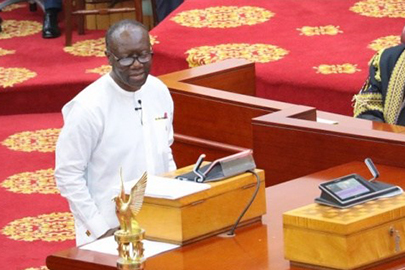
The Minister of Finance, Ken Ofori-Atta is currently presenting the 2023 mid-year budget review to Parliament on Monday, July 31, 2023.
The presentation of the mid-year budget review statement is conducted in full compliance with the provisions of the Public Financial Management Act 2016, which grants the Minister of Finance the responsibility to present this review of the budget statement on the Economic Policy of the Government of Ghana for the fiscal year.
This process serves as an important platform through which the government can communicate its economic advancements and developments to both the House and the general public. Furthermore, it offers an opportunity to outline any essential modifications to budgetary allocations and policies, allowing for transparency and accountability in the nation’s financial management and decision-making processes.
Finance Minister Ken Ofori-Atta has revealed that the government’s efforts to address the effects of COVID-19 and the prevailing economic difficulties have successfully stabilised exchange rates, moderated inflation, and reduced interest rates.
During his presentation, the Finance Minister attributed the accomplishments to the government’s ongoing fiscal adjustments.
He indicated that these fiscal adjustments have significantly improved the ailing economy.
“Mr. Speaker, the implementation of ongoing fiscal adjustments and sustained investments in our people have contributed immensely to the stabilisation we are seeing in the economy. Exchange rate has stabilised, inflation has softened, and interest rates have declined since December 2022, and private investments have been announced due to increased investor confidence in our economy.”
He intimated that he and the government remain committed to working to sustain the improvement in the economy to ensure that prices of goods and services are within the budget of citizens.
“Ordinarily, Mr. Speaker, these positive trends should ease the burden on our pockets. As a Finance Minister and a family man myself, I will continue to work hard to build and sustain a favourable macroeconomic environment, and remain confident that the prices of goods and services would reflect the trend for all of us – for our families and enterprises.”
Mr. Ofori-Atta further hailed the government’s domestic debt exchange programme which he said provided “the government with increased fiscal flexibility and addressed cash and other liquidity constraints. Once again, we are grateful to all investors who participated in this exchange.”
Minority Leader, Cassiel Ato Forson, has strongly denied the assertions made by Finance Minister Ken Ofori Atta during the 2023 Mid-Year Budget review, rejecting the notion that Ghana has “turned the corner” amidst the considerable challenges experienced by the nation over the past three years.
In a passionate retort, Forson accused the minister of exacerbating the country’s difficulties instead.
During his address in Parliament following the finance minister’s statement, the Minority leader expressed his dissatisfaction, stating, “Mr Speaker, the minister should refrain from claiming that he has turned the corner; instead, he has exacerbated our challenges.”
What Ken Ofori-Atta said:
During the presentation of the 2023 Mid-Year Budget Review in Parliament, Ofori-Atta had remarked, “We have avoided the unimaginable, but what could have been so easily possible under different leadership circumstances.”
Highlighting the multitude of adversities faced by the nation, the finance minister continued, “Mr. Speaker, it is no exaggeration to say we cannot find another period in our history where so many different headwinds hit our economy at the same time with unrelenting speed and scale. Thankfully, as the numbers are beginning to show and as many Hon. Members of the House have indicated to me in our engagements, we have, together as a nation, turned the corner…”
He further added, “… With a lot of effort, we have managed to avoid empty shop shelves for medicines and other essentials; we have seen no shortages of food; we have been spared the frustrating spectre of long queues for fuel at our filling stations; and, we have managed, in spite of all the challenges, to keep the lights on.”
Finance Minister Ken Ofori-Atta has announced that the government is in the final stages of implementing Phase II of the Planting for Food and Jobs (PfJ) initiative.
He made the remarks during the 2023 Mid-Year Budget Review.
“Mr Speaker, Planting for Food and Jobs has brought substantial improvements in Ghana’s agriculture sector. This has resulted in increased food security, employment along agricultural value chains, and accessibility of raw materials for developing industries. The programme has directly contributed to increased crop yields for major food staples such as maize, rice, and soya by 135 percent, 67 percent and 18 percent respectively within the period.
He further noted that the second phase comes with a focus on Storage and Distribution Infrastructure, Commodity Trading, etc.
“After a comprehensive review, the Government is finalising PfJ Phase II to ensure a more efficient and targeted support for the agricultural sector. The key elements of Phase II are Inputs Credit System, Storage and Distribution Infrastructure, Commodity Trading and Digitised Platform
“Planting for Food and Jobs” (PFJ) is an agricultural intervention program initiated by the Ghanaian government under the leadership of President Akufo-Addo. The program was launched in 2017 with the primary objective of increasing food production, ensuring food security, and creating employment opportunities in the agricultural sector.
The Planting for Food and Jobs program targets smallholder farmers and seeks to address challenges such as low crop productivity, post-harvest losses, and limited access to improved farming inputs and technologies.
Through the program, the government aims to improve the livelihoods of farmers, enhance agricultural productivity, and reduce the country’s dependence on food imports.
Earlier this month, President Akufo-Addo announced that the government is gearing up to advance its pioneering agriculture initiative, “Planting for Food and Jobs,” to the second phase.
He made this known during his address at the 4th European Corporate Council on Africa and the Middle East in Italy.
In the upcoming phase of the program, there will be greater involvement from the private sector, with a specific focus on attracting more youth participation in the agricultural sector.
Speaking at the 4th European Corporate Council on Africa and the Middle East in Italy, President Akufo-Addo emphasised Ghana’s successful attainment of food security through the program and stressed the importance of transitioning from import subsidies to an import credit scheme.
This transition is expected to drive greater investment and development in the agricultural value chain, ultimately boosting productivity and production in the sector.
Finance Minister Ken Ofori-Atta, has disclosed that the government’s One District, One Factory (1D1F) initiative has generated an impressive 160,000 direct and indirect jobs.
The Minister made this known while delivering the 2023 Mid-Year Budget Review, where he highlighted the success of the 1D1F initiative in promoting industrialisation and employment opportunities in the country.
“Mr. Speaker, in line with the Government’s unwavering commitment to industrialisation, the implementation of the flagship One District One Factory (1D1F) Initiative is on course. As of June, 2023, 126 factories were operational nationwide. Over 160,000 direct and indirect jobs have been created, especially for the youth who have been mobilised to establish agro-processing factories in 58 districts,” he said.
The “1D1F” initiative stands is an industrialisation program launched by the Ghanaian government with the goal of promoting economic growth and development at the district level.
The initiative aims to establish at least one factory or industrial enterprise in each of Ghana’s 260 districts to create jobs, drive local economic activities, and reduce the country’s dependence on imported goods.
The main objectives of the 1D1F initiative include: generating employment, economic diversification, value addition, etc.
Through the establishment of industries in various districts, the 1D1F initiative also aims to promote balanced regional development and reduce urban migration.
Government also seeks to collaborate with private sector investors to drive the establishment and sustainability of these factories, leveraging their expertise and resources.
Additionally, some of the factories established under the 1D1F initiative are focused on producing goods for export, thereby contributing to foreign exchange earnings and improving Ghana’s trade balance.
Finance Minister, Ken Ofori-Atta, on Monday, July 31, 2023, delivered the 2023 Mid-Year Budget Review in Parliament.
During the address the Minister outlined the nation’s economic performance and offering insights into the government’s fiscal policies for the remainder of the year.
Among other things, the Minister state that Ghana’s economy is showing signs of recovery, while acknowledging that 2022 was a very difficult year.
He further updated the public on various projects, programmes and initiatives embarked by the government.
Member of Parliament for Bolgatanga, Isaac Adongo, has expressed his disagreement with Ofori-Atta’s claims that the government has been able to turn the corner with regards to the economic challenges in the country.
The Finance Minister Ken Ofori-Atta made this statement said while delivering the 2023 Mid-Year Budget Review in parliament on Monday, July 31, 2023.
Contrary to the Minister’s statement, the Bolga MP, Isaac Adongo, has presented a list of reasons that challenge the accuracy of the claims made by the Minister of Finance.
One of such, he said, is the fact that inflation is currently at 42%.
“The finance minister says he has turned the corner, you have turned the corner when inflation is 42%? Is that the corner? You have turned the corner when you are reporting that even by the end of the year, your reserves will only be 0.8 months, i.e. less than one month of reserves at the Bank of Ghana. And you said that is turning the corner?
“You have turned the corner when Governor and the MPC just recently increased monetary policy rates to 30%. You have turned the corner when the Bank of Ghana has reported that the cedi has depreciated by 30%. So, quite clearly, he is not even near the corner, let alone to turn it,” he stated.
Finance Minister, Ken Ofori-Atta, has unveiled that the banking sector has defied expectations by achieving an outstanding performance during the first half of 2023.
He made the remarks while delivering the 2023 Mid-Year Budget Review in Parliament on July 31, 2023.
“Mr. Speaker, the banking sector posted unexpected, relatively strong performance during the first half of the year, despite the lingering effects of the DDEP,” he said.
He noted that the Banks have reported increased deposits and investments, higher profitability and a return on equity of over 35 percent.
“The impact of the DDEP, such as the increase in non-performing loans (NPLs), was partly moderated by the timely introduction of temporary regulatory reliefs. In the outlook, the operationalisation of the US$750 million Ghana Financial Stability Fund and the planned recapitalisation of banks would ensure stability as well as strengthen financial intermediation to support the private sector,” he added.
The Mid-Year Budget Review is in accordance with Section 28 of the Public Financial Management Act, 2016 (Act 921). It serves as a crucial stepping stone, enabling the government to embark on a transformative economic agenda for the latter half of the year.
Earlier, the Finance Ministry explained that this year’s Mid-Year Budget Review will lay out essential programmes and policies aimed at restoring macroeconomic stability, while propelling economic growth.
The Minority Leader, Cassiel Ato Forson, has labelled Finance Minister, Ken Ofori-Atta‘s comments about Ghana’s improving economy “false and misleading.”
During the 2023 Mid-Year Budget Review in Parliament on July 31, Mr. Ofori-Atta asserted that Ghana was making modest gains in turning the economy around after facing severe economic hardships in 2022.
He highlighted the positive results of the government’s plans and programs and called on the nation to recognize the achievements of the past three years.
In response, Dr. Ato Forson contested the Finance Minister’s statements and presented evidence to the contrary.
He expressed concerns about the current state of the economy, citing a downward revision of economic growth from 2.8% of GDP to 1.5% of GDP, indicating a slower recovery than expected.
Additionally, he criticized the government for borrowing significant amounts from the T-Bill market, despite earlier assurances of not borrowing in 2023. He also attributed the depreciation of the Cedi to defaults in the payment of external interest and principal.
Dr. Ato Forson argued that, contrary to the Finance Minister’s claims, the situation has worsened under the Akufo-Addo government.
“The performance so far shows that we have turned the corner. Unfortunately, the evidence and the numbers before us, show us that he has rather deepened our woes,” Cassiel Ato Forson said.
“I say this because he has said to us today that he’s revising economic growth from 2.8% of GDP to 1.5% of GDP. Again, he said to us here and now that he has borrowed 5.5 billion Ghana cedis from January to June, from the T-Bill market. Mr Speaker, not long ago, this same Minister informed us that he will not borrow at all in the year 2023. And that going into the remaining parts of the year, he is going to borrow another 41 billion Ghana cedis.”
“Aside from that, the Cedi depreciation we are seeing so far, it’s largely because we have defaulted in the payment of external interest and principal. That is why the cedi has depreciated.”
Government, through the Finance Minister Ken Ofori-Atta, has announced the establishment of the Ghana Financial Stability Fund which is aimed at fortifying the nation’s financial sector.
Delivering the 2023 Mid-Year Budget Review in Parliament on July 31, 2023, the Minister noted that the newly unveiled fund seeks to provide vital liquidity and solvency support to financial institutions across the country.
“Government is working with key partners to establish a Ghana Financial Stability Fund to provide liquidity and solvency support to the financial institutions. The eligibility criteria agreed with regulators and international partners will be published soon,” the Minister indicated.
Addressing the House, the Minister emphasised the government’s commitment to safeguarding the stability of the financial sector.
Among other things, the Minister touched on the impact of the Debt Restructuring Programme which was recently launched and implemented stressing that: “Mr. Speaker, the Financial Sector, comprising Commercial Banks, Specialised Deposit Taking Institutions, Insurance Sector, and Fund Managers, participated significantly in the DDEP.
“The effects of the debt operations on the financial sector is elevated liquidity and solvency risks from impairment losses. Regulators, including the Bank of Ghana, provided temporary regulatory forbearance to mitigate the liquidity impact of the DDEP.”
The Mid-Year Budget Review is in accordance with Section 28 of the Public Financial Management Act, 2016 (Act 921). It serves as a crucial stepping stone, enabling the government to embark on a transformative economic agenda for the latter half of the year.
Earlier, the Finance Ministry explained that this year’s Mid-Year Budget Review will lay out essential programmes and policies aimed at restoring macroeconomic stability, while propelling economic growth.
The Minister of Finance, Ken Ofori-Atta, has assured Ghanaians that the government is fully committed to implementing a strong growth strategy within the country’s limited fiscal space.
This strategy includes a fiscal consolidation program aimed at fostering economic prosperity.
Mr. Ofori-Atta emphasized that achieving this goal will involve attracting both domestic and foreign private sector investments and promoting the expansion of production.
“This will be done by attracting domestic and foreign private sector investments and expanding production, which will be encouraged and stimulated by government policies and agencies,” he added.
The government will actively encourage and stimulate such investments through favorable policies and the support of relevant agencies.
The Minister presented these assurances during the Mid-Year Fiscal Policy Review of the 2023 Budget Statement and Economic Policy of the Government of Ghana in Parliament, held in Accra on Monday.
He further highlighted the importance of the government’s Mutual Prosperity Dialogue with the private sector, which aims to improve the ease of doing business in the country. By creating a conducive environment, the government aims to attract more private domestic and foreign investments.
In addition to economic matters, Mr. Ofori-Atta acknowledged the growing number of West African nationals seeking refuge in Ghana due to various factors, including regional instability and terrorist attacks.
He reiterated the government’s commitment to prioritize national security and mentioned that a review of security expenditures within the limited fiscal space has become necessary to address these challenges.
In summary, the Minister’s address underscored the government’s determination to foster economic growth through strategic investments and policies while maintaining a focus on national security in the face of evolving regional challenges.
“Security continues to be a priority of Government. The United Nations recently reported that over 1,800 terrorist attacks, resulting in nearly 4,600 deaths, were recorded in our region – West Africa in the first six months of this year. Due to this instability among others, increasing numbers of West African nationals are seeking refuge in our country. This has required a review of our security expenditures within our limited fiscal space,” he stated.
Finance Minister, Ken Ofori-Atta has stated that Ghana’s economy is displaying encouraging signs of revival.
The Minister made these remarks while delivering the 2023 Mid-Year Budget Review in Parliament on Monday, July 31, 2023.
“As I have indicated, we have made significant progress on restoring macroeconomic stability and the narrative is changing. The economy is showing signs of recovery,” he said.
He noted that “the exchange rate has stabilised, inflation has softened, and interest rates have declined since December, 2022.”
He explained to the House that the positive outcomes are a direct consequence of the dedicated execution of all the measures outlined in the 2023 Budget and the favorable sentiments stemming from the advancements made in the IMF Programme.
“Mr. Speaker, these outturns are the result of focused implementation of all the measures we presented in the 2023 Budget and the positive sentiments arising from the progress with the IMF Programme, which I will now discuss,” he noted.
The Mid-Year Budget Review is in accordance with Section 28 of the Public Financial Management Act, 2016 (Act 921). It serves as a crucial stepping stone, enabling the government to embark on a transformative economic agenda for the latter half of the year.
Earlier, the Finance Ministry explained that this year’s Mid-Year Budget Review will lay out essential programmes and policies aimed at restoring macroeconomic stability, while propelling economic growth.
The Finance Minister, Ken Ofori-Atta, during the 2023 Mid-Year Budget review held on Monday, July 31, made some significant announcements regarding the Ghana School Feeding Programme (GSFP) and social protection programs.
Mr. Ofori-Atta stated that the government has successfully cleared all outstanding arrears owed to caterers under the GSFP.
This development brings financial relief and stability to the caterers involved in the program.
Furthermore, he emphasized the government’s commitment to sustaining social protection programs to provide support and assistance to the underprivileged and vulnerable segments of society.
Specifically, under the LEAP (Livelihood Empowerment Against Poverty) program, the government has disbursed a total of GH¢169.95 million as of June 2023 to 346,019 households, benefiting approximately 1,533,748 individuals.
Notably, the monthly grant for beneficiary households has been increased to GH¢64.00 for one-member households and GH¢76.00 for two-member households, up from the previous amounts of GH¢32.00 and GH¢38.00, respectively.
The program aims to reach around 2.5 million people, approximately 8 percent of the population.
The GSFP has also made significant strides in increasing its coverage.
From 1,671,777 beneficiaries in 2016, it has expanded to cater to 3,801,491 beneficiaries as of June 2023.
“Under the LEAP programme, Government disbursed a total of GH¢169.95 million as at June 2023 to 346,019 households comprising 1,533,748 individuals. This includes the increase of the monthly grant to beneficiary households from GH¢32.00 to GH¢64.00 for one-member household and GH¢38.00 to GH¢76.00 form two-member households. Our target under this programme period is to reach about 8 percent of the population, that is 2.5 million people.
“Under the Ghana School Feeding Programme, coverage increased considerably from 1,671,777 beneficiaries in 2016 to 3,801,491 beneficiaries by June 2023. The feeding grants cost per meal, per child, per day increased from GH¢1.00 to GH¢1.20 for the 2023 academic year. We have also settled all arrears owed to caterers under the programme for the second and third terms of the 2022 academic year; and the first term of 2023.
“The Capitation Grant contributed to increased enrolment in public basic schools from 6,048,897 pupils for the 2021/2022 academic year to 6,114,302 pupils for the 2022/2023 academic year,” he added.
Additionally, to ensure the program’s effectiveness, the feeding grants cost per meal, per child, per day has been adjusted from GH¢1.00 to GH¢1.20 for the 2023 academic year.
Furthermore, the government’s support extends to education, where the Capitation Grant has played a vital role in increasing enrolment in public basic schools.
The number of pupils enrolled has risen from 6,048,897 for the 2021/2022 academic year to 6,114,302 for the 2022/2023 academic year.
Overall, these initiatives demonstrate the government’s dedication to uplifting its citizens, ensuring the well-being of vulnerable groups, and improving access to education for the younger generation.
Finance Minister Ken Ofori-Atta is confident that one of government’s flagship programmes, One District One Factory is on course. He made these remarks during a presentation of the 2023 Mid-Year budget review on the floor of parliament.
He said “Mr. Speaker, in line with Government’s unwavering commitment to industrialization, the implementation of the flagship One District One Factory (1D1F) Initiative is on course.
The minister is confident of its effectiveness as it has created over 160,000 jobs. Reports from the ministers outfit reveal that “As of June, 2023, 126 factories were operational nationwide. Over 160,000 direct and indirect jobs have been created, especially for the youth who have been mobilised to establish agro-processing factories in 58 districts.”
One District One factory is one of the flagship initiatives of the NPP government. It aims to create more jobs and promote industrilzation in the country.
It’s a private sector-led project where the government ensures that all the necessary conditions are made ready for the private sector to set up factories to add value to raw materials in respective districts.
Finance Minister, Ken Ofori-Atta, has expressed optimism about the country’s economic recovery after facing recent challenges.
He reported that the Ghanaian economy has shown positive signs over the past six months, and the government will not be seeking a supplementary budget.
During the 2023 Mid-Year Budget Review presented in Parliament on July 31, Ken Ofori-Atta stated, “For the first six months of the year, we continue making progress to exceed our non-oil revenue targets for the year. We have seen improvements in non-oil tax revenue collection despite some noticeable shortfalls in VAT.”
However, the Minister also acknowledged that oil revenues have fallen below expectations due to changes in global prices. As a result, the Finance Ministry will conduct a downward review of these targets and corresponding expenditures, particularly affecting the Annual Budget Funding Amount (ABFA).
“However, oil revenues have fallen short of expectations due to changes in global prices.”
“We will, therefore, undertake a downward review of the oil-related revenue as well as the corresponding expenditures to align with the under-performance of some of our revenue handles. Specifically, this will impact the Annual Budget Funding Amount (ABFA),” he added.
Despite the challenges faced, Ken Ofori-Atta urged Ghanaians to support the government’s efforts to restore the country’s economy and improve the living conditions of citizens. The government remains determined to address the economic hardships promptly.
The Finance Minister described 2022 as his toughest year in office, during which he had to make difficult yet necessary decisions to facilitate Ghana’s economic recovery.
One significant decision was seeking a bailout from the International Monetary Fund (IMF) to implement the Post-COVID-19 Programme of Economic Growth (PC-PEG).
At that time, the country was going through a period of economic uncertainties and despondency.
Data from the Ministry of Finance indicates that the depreciation of the local currency against the dollar has worsened.
Presenting the 2023 Mid Year Budget Review Statement to Parliament on Monday, July 31, 2023, the sector Minister, Ken Ofori-Atta indicated that cumulatively, the Ghana cedi depreciated by 22.1 percent against the US Dollar in the year to July 17, 2023.
This is in comparison to 21.1 percent depreciation recorded in the same period in 2022. Statements from the Finance Minister indicates that in January 2023 alone, the cedi depreciated by 20 per cent.
However, from February to July this year, the local currency has depreciated by “an impressive 1.84%”.
Inflation According to the Finance Minister, headline inflation eased in the first half of 2023.
From the peak at 54.1 percent in December 2022, headline inflation gradually trended downwards from 53.6 percent in January 2023 to 42.5 percent in June 2023.
The moderation in inflation was largely supported by monetary policy tightening, relative stability in the exchange rate and lower and stable ex-pump petroleum prices.
The Ministry of Finance has clarified that the Mid-Year Budget Review does not not involve any new financial demands.
Instead, the focus is on reprioritizing various programs and optimizing efficiencies to achieve sustainable economic growth.
This review aligns with the Post COVID-19 Program for Economic Growth (PC-PEG), supported by a three-year Extended Credit Facility arrangement with the International Monetary Fund (IMF).
As part of the reallocation, additional resources will be allocated to social intervention programs such as Livelihood Empowerment Against Poverty (LEAP), Capitation Grant, and the Free Senior High School (Free SHS) initiative.
Half-year figures to be presented in the Mid-Year Budget indicate an increase in the number of beneficiaries in key programs like LEAP, school feeding, Free SHS, and the capitation grant for basic school enrollment.
To ensure that the commitments are fulfilled, a task force has been established to target and enhance the impact of social spending. The government aims to channel at least GH¢2.03 billion into the National Health Insurance Scheme (NHIS), LEAP, Capitation Grant, and School Feeding Program as half-year releases. Additionally, GH¢3.05 billion is planned to be allocated to these social protection programs by September 2023 and GH¢4.07 billion by December 2023.
To prevent inflation from eroding the value of LEAP benefits, an indexation mechanism will be implemented.
The Ministry of Finance also emphasized that the Mid-Year Budget Review will outline measures taken by the government to restore macroeconomic stability and stimulate economic growth. It will cover structural reforms in expenditure commitment control, arrears clearance, debt management, financial stability, and other pertinent issues.
The Mid-Year Budget Review is mandated by Section 28 of the Public Financial Management Act, 2016 (Act 921), requiring the Minister of Finance to submit a mid-year fiscal policy review to Parliament by July 31st each financial year.
The review will encompass an overview of recent macroeconomic developments, updated macroeconomic forecasts, and an analysis of total revenue, expenditure, and financing performance for the first six months of the financial year.
In other news, a report from the Auditor-General has highlighted lapses in management concerning financial controls, security of vital documents, compliance with procedures stipulated in the Public Financial Management Act, and poor accounting systems.
Recommendations have been made to strengthen supervisory controls, authentication of payment vouchers, prompt payment, and retirement of accountable imprest.
The report also addresses payroll irregularities, unearned salaries, and statutory deductions related to social security contributions in various institutions.
Pension Funds continue to remain in government’s plan for a second Domestic Debt Exhange Programme (DDEP), Finance Minister Ken Ofori-Atta has revealed.
While presenting the 2023 Mid Year Budget Review Statement, the sector Minister said “ although Pension Funds were exempted from the main DDEP, we continue to engage them.
To complete the domestic debt operation Government announced in April 2023 its intention to further pursue the discussions around the following domestic debt instruments which were excluded from the DDEP perimeter:
i. Energy sector Independent Power Producers (IPPs);
ii. Cocobills;
iii. Local US dollar denominated bond; and
iv. Bank of Ghana non-tradable debt.
Out of these remaining Debt instruments, Government launched debt operations for the Cocobills and local US dollar-denominated bonds on 14th July, 2023.
The settlement date is today 31st July, 2023.
In response to the inclusion of Pension Funds, Organised labour opposed new attempts to restructure pension funds worth about $2.7 billion.
On 5th December 2022, government launched the DDEP in a transparent manner while seeking to minimise its impact on bondholders.
After three (3) months of negotiations with the different bondholder groups and amendments to the original terms, Government successfully completed the DDEP on 14th February.
Total bonds outstanding at the settlement date amounted to GH¢126,978.5 million, of which GH¢29,286.2 million were held by Pension Funds, bringing the total eligible bonds to GH¢97,749.6 million.
The Finance Ministry received final participation of GH¢82,994.5 million, representing 84.9 percent of total eligible bonds.
According to Mr Ofori-Atta, the DDEP has provided the Government with increased fiscal flexibility and addressed cash and other liquidity constraints.
Finance Minister, Ken Ofori-Atta, in a candid introspection, has revealed that the year 2022 proved to be the most challenging period of his tenure as a Minister.
Reflecting on the year, while delivering the Mid-Year Budget Review, he said the year was characterised by economic uncertainties and despondency.
“2022 has been a year of brutal inflation. It has been the most difficult year for me as a Minister because the country was going through economic uncertainties and despondency,” he confessed.
The Mid-Year Budget Review to Parliament, delivered on July 31, 2024, is in accordance with Section 28 of the Public Financial Management Act, 2016 (Act 921).
The Mid-Year Budget Review serves as a crucial stepping stone, enabling the government to embark on a transformative economic agenda for the latter half of the year.
According to the Finance Ministry, the Mid-Year Budget Review will lay out essential programmes and policies aimed at restoring macroeconomic stability, while propelling economic growth.
Finance Minister Ken Ofori-Atta is before the 8th Parliament of the 4th republic to president the 2023 mid-year budget review.
Originally slated for July 27, 2023, the presentation was rescheduled to July 25, 2023, only to be cancelled.
“In accordance with Section 28 of the Public Financial Management Act, 2016 (Act 921), the Mid-Year Fiscal Policy Review of the Budget Statement and Economic Policy of the Government of Ghana for the 2023 Financial Year, is expected to be presented to Parliament on Monday, 31st July 2023,” the Finance Ministry announced in a statement.
The presentation will provide an update on the implementation of the 2023 Budget, with insights into the economic and fiscal performance for the first half of the year.
The 2023 mid-year budget review will be presented by the Minister of Finance, Ken Ofori-Atta, in Parliament on Monday, July 31, 2023.
Initially scheduled for July 27, 2023, the presentation encountered changes, first being rescheduled to July 25, 2023, and subsequently canceled.
The Finance Ministry, in accordance with Section 28 of the Public Financial Management Act, 2016 (Act 921), announced that the Mid-Year Fiscal Policy Review of the Budget Statement and Economic Policy for the 2023 Financial Year of the Government of Ghana will now take place on July 31, 2023.
This budget review will provide crucial updates on the implementation of the 2023 Budget, offering insights into the economic and fiscal performance during the first half of the year.
It will focus on policies aimed at stabilizing the economy, promoting growth, and providing social protection for vulnerable groups, following the guidelines of the IMF-supported Post COVID-19 Programme for Economic Growth (PC-PEG).
Key issues to be highlighted during the presentation, according to the Finance Ministry, include structural reforms in expenditure commitment control and arrears clearance, debt management, financial stability, and the pursuit of a growth agenda.
Following standard practice, the government will engage in Post-Budget Engagements to elucidate various policy choices to the public, as stated by the Ministry of Finance.
Several Members of Parliament (MPs), in an interview with the media, shared their expectations for the mid-year budget review.
They expressed hopes for the government to reduce taxes, consolidate various taxes, and allocate more funds to the educational sector and the school feeding program.
Additionally, MPs voiced concern over the high unemployment rate among young people and the shortage of fertilizers in the country. MP Richard Kwami Sefe from Anlo particularly emphasized that the fertilizer shortage is adversely affecting farming activities in his constituency, leading to increased fertilizer costs and hindering farmers’ profitability. He appealed for government intervention to address the situation.
MP Paul Twum Barimah of Dormaa East echoed the sentiment that the economy is already burdened and hoped that the mid-year budget review would not introduce new taxes. Instead, he urged the government to focus on reducing taxes to better manage the nation’s economic situation, considering the challenges faced by Ghanaians.
The Coalition of Small Business Owners (CSBO) is calling on Finance Minister Ken Ofori-Atta to halt the implementation of taxes on Lottery and Sports Betting firms, as well as their customers.
In response to the recent announcement of a 20% tax on the revenue of Lottery and Sports Betting Companies and a 10% tax on winnings, the Coalition of Small Business Owners (CSBO) is urging Finance Minister Ken Ofori-Atta to suspend these tax measures.
The CSBO are expressing concerns about the potential repercussions on both companies and customers, seeking a reconsideration of the tax implementation.
According to the convener of the group, Justice Ayeh Donkor, the lottery and sports betting taxes are undermining private sector growth and collapsing businesses.
Since assuming office in 2016, the Akufo-Addo-led government has introduced about 22 taxes, this, the group argues has created a hostile business environment which is affecting the private sector.
“Government is becoming highly insensitive to the plight of businessmen in the country. The 20% and 10% taxes on Lottery/Sports Betting would go a long way to collapse the business of the National Lottery Authority and Lotto Marketing Companies,” he stressed.
In 2015, a withholding tax of 5%, under Act 896, was imposed on the winnings of a lottery.
In 2016, the Income Tax Amendment Act 907 exempted the first ¢2,592 while any excess winning above ¢2,592 was taxable at 5%.
But Mr Ayeh Donkor says, “The NPP then in opposition promised Lotto Marketing Companies to remove those taxes and even restore the Retailer Commission to 25% for the LMCS but the NPP Government has failed to honour these promises.”
He explained that in 2017, the National Lottery Authority made a proposal to the Ministry of Finance for the scrapping of taxes as a way of attracting more mainstream operators. The taxes were subsequently removed.
However, in 2023, the Government reintroduced the taxes now at a new rate of 20% on the company’s revenue and 10% on winnings respectively.
In view of this, the group is “calling on Ken Ofori-Atta and government to immediately suspend the 20% and 10% taxes imposed on Lottery and Sports Betting companies and winnings respectively.
“We shall resist these taxes at all cost and also demonstrate against the Government and Ken Ofori-Atta should the Finance Minister fail to address the issue during the Mid-Year Budget review”.