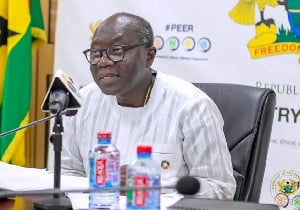
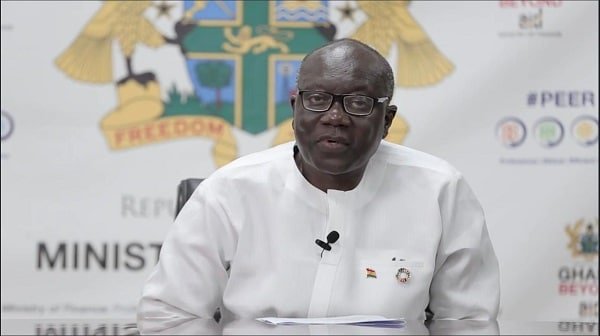
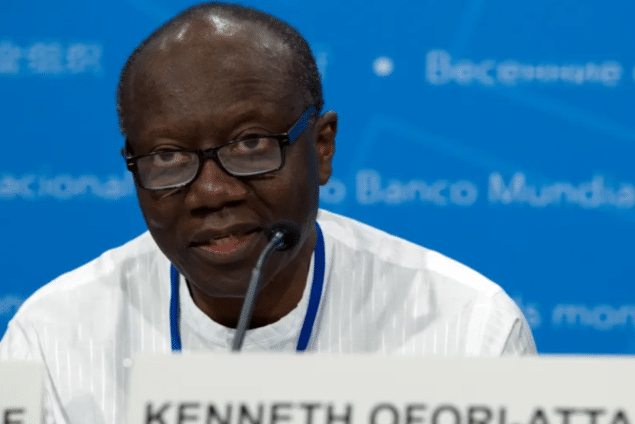
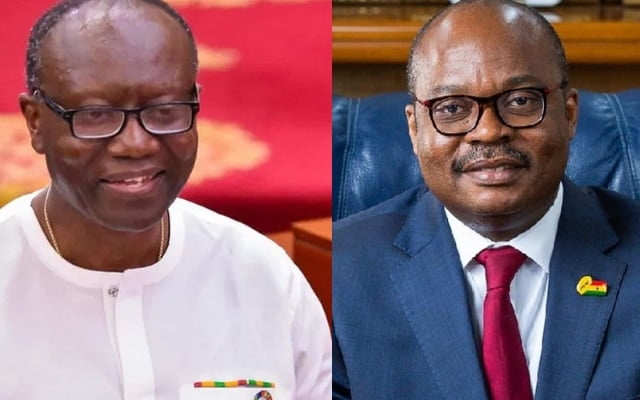
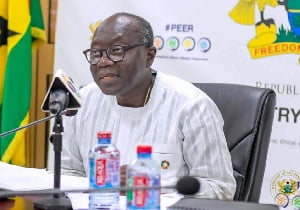
The International Monetary Fund (IMF) has stated that Ghana has completed all prior actions in order to be supported for its economic recovery program.
According to IMF Director for Africa, Abebe Selassie, the only outstanding issue was the confirmation of financing assurances from external creditors.
He, however, noted that expecting a resolution to the matter are expectant when the Paris Club meets again this week.
Speaking at a press briefing on the sidelines of the April IMF Spring Meeting, he said all the measures required to present Ghana’s programme to the IMF Executive Board were complete.
“On the status of the programme with Ghana, we had reached staff-level agreement, as you know, last December. And we are now comfortable that all of the measures required for us to present the programme to our Executive Board are complete, except for the required financing assurances from external creditors.
“We are very comfortable with all the steps that Ghana has done, and that is why we are also urging creditors to step forward and provide the financing assurances needed for us to present the programme to the Board as soon as possible.
“We are very optimistic and keeping fingers crossed this will happen in the next few weeks,” Mr Selassie stated.
The IMF, he noted, is encouraged by the steps that the Ghana government had taken over the last several months since the programme request.
“It’s been a very difficult time of course, very difficult, very significant, measures that have had to be taken, and the initial steps that the government has taken are very encouraging,” he added.
Meanwhile, the Managing Director of IMF, Kristalina Georgieva, has commended Ghana for taking the bold actions necessary to enable it get support from the world for its economic recovery programme.
She further commended the Minister of Finance, Ken Ofori-Atta as being proactive in engaging bilateral partners.
In an interview, Mr Ofori-Atta said “we have had a very positive and successful mission at the World Bank/IMF Spring Meetings, with a lot of goodwill and support for our economic programme.”
He said the government was expectant of good news about financing assurances very soon, to enable the country present its programme to the IMF Board for approval.
Ghana’s participation in the spring meetings also saw the formal unveiling of the roadmap of the Accra- Marrakech Agenda which would culminate at the World Bank/ IMF Annual Meetings in Marrakech, Morocco in October this year.
On the sides of the Spring Meetings, the Ghanaian government delegation also met with officials of the United States of America (US) treasury, private sector investors, the International Finance Corporation (IFC), the USDFA and the US EximBank, as part of efforts to strengthen the ties of friendship and economic cooperation between the two nations.
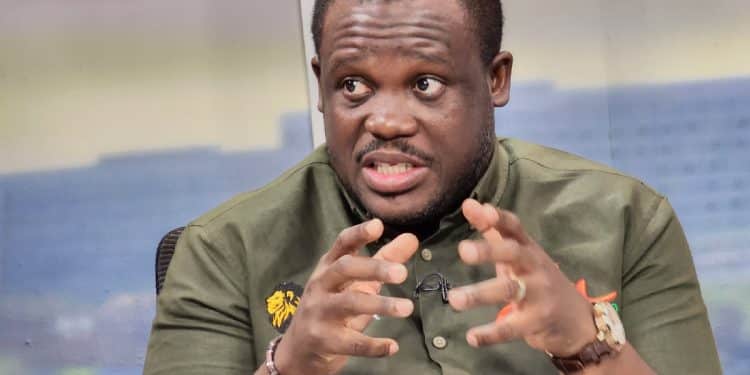
Member of Parliament for Ningo-Prampram, Sam Nartey George, has demanded that government excludes pension funds from its latest planned debt restructuring deal.
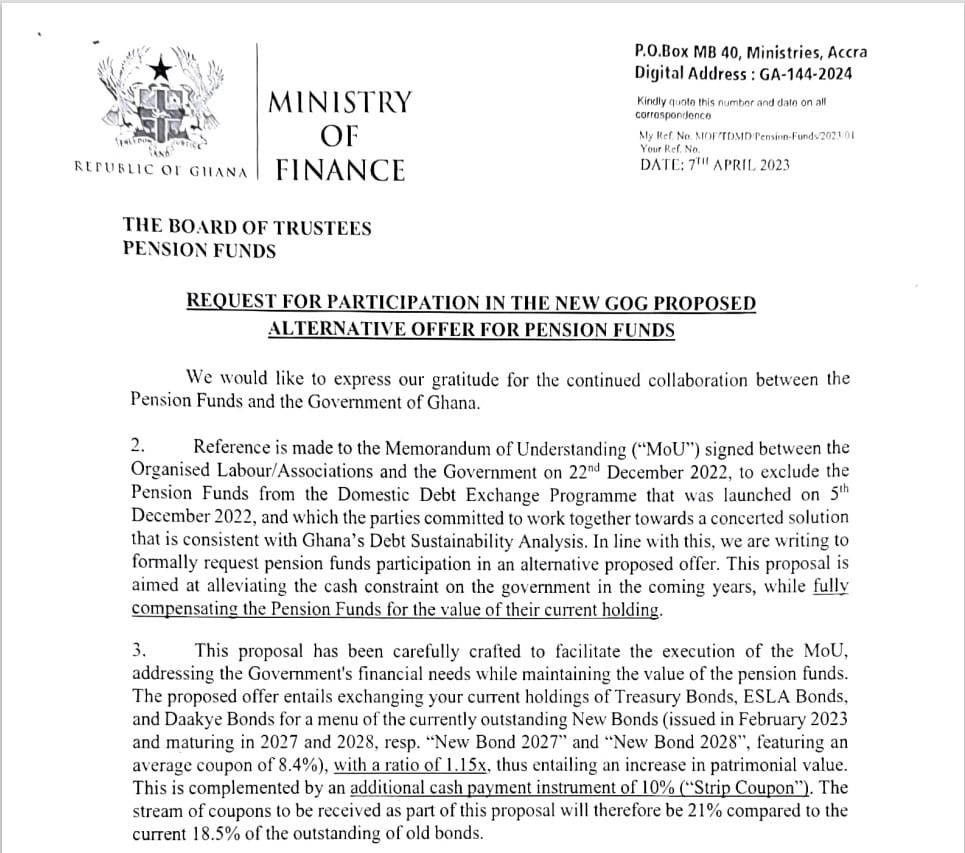
Finance Minister Ken Ofori-Atta has formally written to the Board of Trustees of Pension Funds.
He noted that the revised proposal is expected to adequately compensate pension funds for the value of their current holdings while easing the government’s cash flow concerns in the years to come.
Reacting to this, Mr Nartey George stated that it is unacceptable that government seeks to torment Ghanaians, particularly when it has already subjected them to torture while undertaking its Domestic Debt Exchange Programme (DDEP).
Speaking on TV3 on Monday, he also accused the “wicked” government of stealing from the public purse.
“They have raped the public purse. They have stolen the purse, people lost money in financial clean up, debt exchange and now you are going for pensions funds and you say we shouldn’t talk,” he said.
“This is a wicked, clueless and incompetent government,” the Ningo-Prampram MP added.
The proposed offer entails exchanging current Treasury Bond, ESLA Bond, and Daakye Bond holdings for a selection of the currently outstanding new bonds. These bonds, issued in February 2023, mature in 2027 and 2028, respectively, and feature an average coupon of 8.4% with a ratio of 1.15x, thus entailing an increase in patrimonial value.
The proposal also includes an additional cash payment of 10% (strip coupon). The stream of coupons to be received as part of this proposal will, therefore, be 21% compared to the current 18.5% of the outstanding old bonds.
The Akufo-Addo administration has been characterized as wicked and incompetent by Samuel Nartey George, member of parliament representing Ningo Prampram.
His comment follows the invitation to pensioners by the Finance Minister Ken Ofori-Atta to partake in a new debt restructuring he is proposing.
Speaking on the Big Issue on TV3 Monday April 17, he said “They have raped the public purse. They have stolen the purse, people lost money in financial clean up, debt exchange and now you are going for pensions funds and you say we shouldn’t talk.”
“This is a wicked, clueless and incompetent government,” he added.
But the Member of Parliament for Ngleshie-Amanfrom, Sylvester Tetteh said the Finance Minister is not forcing pensioners to take part in the proposal for new debt restructuring,
He says the Minister is only inviting the Pensioners.
(The Finance Minister) is only making a proposal and inviting people into it,” he said.
“He is not putting gun on the neck of the people,” he added.
Mr Ofori-Atta has proposed a new debt restructuring.
He is invitting Board of Trustees of pensions funds to permit pension funds to be added in the new proposal.
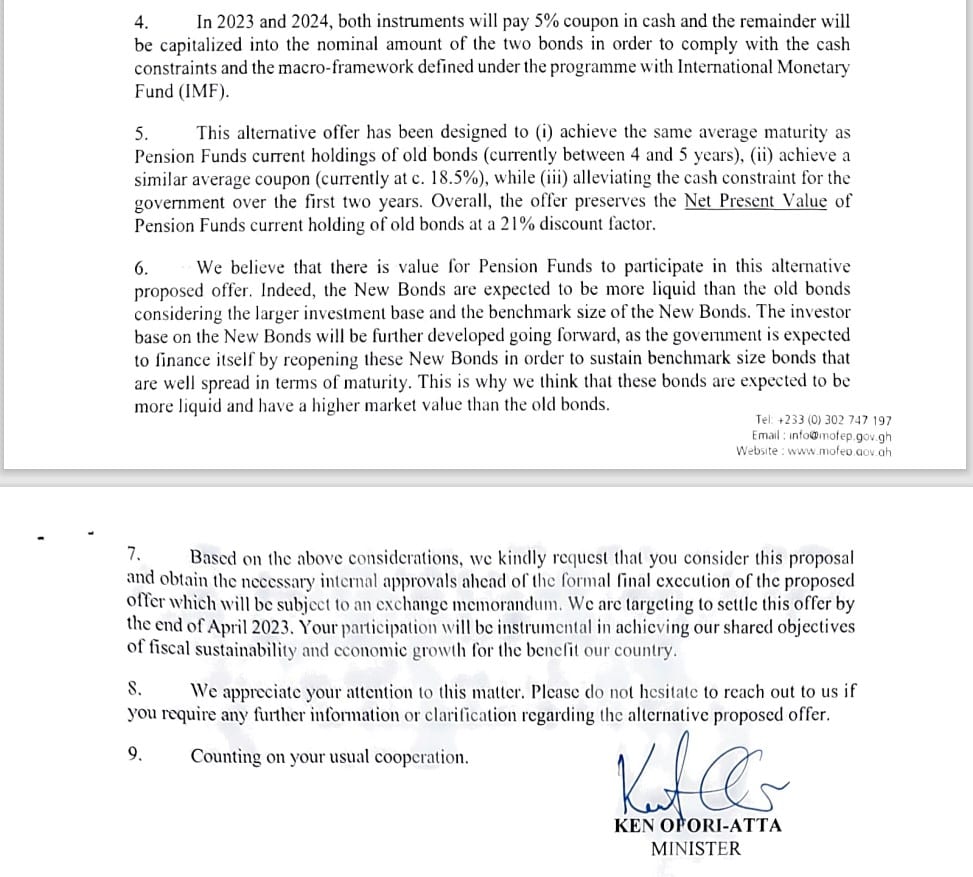
He explained that the proposal has been “crafted to facilitate the execution of the MoU, addressing the Government financial needs while maintaining the value of the pension funds.”
The proposed offer entails exchanging your current holdings of Treasury Bonds, ESLA bonds and Daakye Bonds for a menu of the currently outstanding New Bonds (issued in February 2023 and maturing in 2027 and 2028 respectively. New Bond 2027 and New Bond 2028 featuring an average coupon of 8.4 % with a ratio of 1.15x, thus entailing an increase in patrimonial value.
This complemented by an additional cash payment of 10% (strip coupon). The stream of coupons to be received as part of this proposal will therefore be 21% compared to the current 18.5% of the outstanding of old bonds.”
He further indicated that “in 2023 and 2024, both instruments will pay 5% coupon in cash and the remainder will be capitalized into the nominal amount of the two bonds in order to comply with the cash constraints and the macro-framework defined under the programme with International Monetary Fund (IMF).”
Thepensioners bondholders have vowed to picket again should government fail to pay outstanding coupons by April 28, 2023 as promised by goverment.
The forum in a statement signed by its Convener, Dr. Adu Anane Antwiexpressed disappointment over the government’s inconsistency regarding assurances to pay all pensioners their outstanding coupons and principals of bond investments.
The Convener of the Forum expressed the pain and financial hardships members have had to go through as a result of the delay and requested that the payments be made as demanded in the Forum’s letter of March 30, 2023, to the Finance Minister, Ken Ofori-Atta.
“We wish to state that we have granted the Ministry a one-week extension to the 21st of April 2023 deadline in our letter of 30th March 2023 for the payment of all outstanding coupons and principles, bringing the deadline now to 28th April 2023.”
“We wish to state finally that if the payments of all outstanding coupons and principals are not made by April 28, 2023, we shall be left with no other option than to resume our picketing at the premises of the Ministry to further press home our demand for the payment of all coupons and principals in arrears, and an end to payment delays.”
The Pensioners also commented on a press release from the Ministry of Finance dated April 14, 2023, that suggested that the leadership of Coalition of Individual Bondholders groups and the Pensioners Bondholders Forum agreed that the Joint Technical Committee constituted on January 18, 2023, reconvenes and agrees on a pathway, towards the settlement of the outstanding debt obligations by April 28, 2023.
The Pensioners said no such agreement was reached.
The Finance Minister, Ken Ofori-Atta, has identified five crucial steps that will guarantee Ghana’s success in obtaining financial assistance from the IMF.
At the ongoing IMF/World Bank Spring Meetings in Washington, D.C., USA, the minister provided an overview of these in the Investors’ Presentation.
Electricity tariff hikes
Ghanaians have experienced a continuous hike in electricity and water tariffs since August 2022. According to the government, the tariff increments were necessary to ensure that the Electricity Company of Ghana and Ghana Water Company operate efficiently.
The tariff hikes since then have accumulated to an increase of about 60%. Ofori-Atta noted that this was a necessary condition for Ghana to move ahead with its talks with the International Monetary Fund.
Revenue enhancing measures, including an increase in VAT, E-Levy review
The government, in the 2023 Budget, announced an increment in the VAT rate from 12.5 percent to 15.0 percent, which subsequently took effect on January 1, 2023. Also, the rate for the Electronic Transaction levy was reviewed from 1.5% to 1%. Also, the government is looking to implement some new taxes, including lottery and bet tax, amended excise duty, withholding taxes, etc.
An ambitious 2023 budget
This includes reaching a 1.5% of Gross Domestic Product primary surplus in the medium term, bringing inflation below 8% in the medium term, and restoring external buffers with gross international reserves reaching 3 months of import cover by 2026.
This also includes the government achieving a real Gross Domestic Product growth target of 5% over the medium-term and enhancing competitiveness with exports surpassing 37% of GDP in the medium run.
Another key measure is to ensure fiscal and debt sustainability.
Ofori-Atta said the government is committed to rebuilding reserve buffers, mobilizing external concessional financing from multilateral and bilateral partners, and suspending external debt service payments.
However, the minister assured that government will safeguard social protection programmes and ensure the burden of adjustment is fairly distributed.
“It will reinforce and improve the targeting of social spending to protect the most vulnerable from the impact of the economic crisis, as well as fast-track the implementation of growth-oriented socio-economic policies, such as Ghana CARES, to mitigate the impact of the pandemic and support economic recovery,” the minister said.
An economist, Prof. Lord Mensah has said that shifting timelines to secure IMF deal is terrible.
According to him, the market relies on management information, so when management information turns out to be uncertain, it does not help.
“It’s a terrible one,” he said in an interview on Joy FM’S Top Story on Friday.
He said that the Finance Minister and team do not appreciate the complexity of the situation [economic downturn or debt situation].
According to him, the analysis of the situation in an article in Financial Times over the debt situation points out that Ghana won’t get a debt restructuring soon.
He cited a case with Zambia.
“Zambia is an African country. Zambia was in debt restructuring limbo for over two and half years before they even switched to default.”
His comments come after President Akufo-Addo earlier disclosed that the IMF staff will present Ghana’s request for a loan programme to its executive board by the end of March.
Also, the Finance Minister, Ken Ofori-Atta reiterated that government was hoping to secure an International Monetary Fund (IMF) Board approval by March 2023.
“We are currently working to go to the IMF board in March 2023 and possibly secure the Board’s approval for Ghana’s Programme”, he disclosed on PM Express, Business Edition with host, George Wiafe.
However, the March date elapsed and the country has not been able to get a deal.
Meanwhile, addressing Eurobondholders at an Investors Presentation Forum on Thursday, Mr. Ofori-Atta said Ghana should expect an International Monetary Fund (IMF) Board approval for a programme by the close of May 2023.
According to him, Ghana has made significant progress, hence the need for it to get approval as soon as possible.
But reacting to this, Prof Mensah noted that although there may be verbal commitments from the creditors, it has not been documented for which it can be relied on to determine the timeline.
He added that thecountry would not be able to secure an IMF bailout now until the first quarter ends.
As part of the conditions to secure a US$3 billion extended credit facility from the International Monetary Fund, some taxes and tariffs must go up.
These include a power tariff hike, electricity tariff hike, and an upward adjustment of both the Value Added Tax and Electronic Transaction Levy (E-levy).
Among these conditions that were outlined by finance minister Ken Ofori-Atta are also the preparation of an ambitious 2023 budget, with a front-loading of the fiscal consolidation programme and a comprehensive set of structural reforms, notably a public expenditure review.
Also, the Bretton Wood institution expects to see continued monetary policy tightening by the Bank of Ghana to bring inflation under control.
Accra-based Joy FM reports that these were captured in the Investors Presentation by Ken Ofori-Atta and supported by the Governor of the Bank of Ghana, Dr Ernest Addison.
Ofori-Atta noted that the government adjusted revenue and expenditure measures to improve debt sustainability and restore macroeconomic aimed at addressing structural bottlenecks contingent liabilities of state-owned enterprises, commitment controls, and arrears accumulation, and domestic revenue mobilisation.
Mr Ofori-Atta also said the government is committed to rebuilding reserve buffers, mobilising external concessional financing from multilateral and bilateral partners, and suspending external debt service payments.
Also, he said the government will safeguard social protection programmes and ensure the burden of adjustment is fairly distributed.
Additionally, he noted that social spending will be targeted to protect the most vulnerable from the impact of the economic crisis and fast-track the implementation of growth-oriented socio-economic policies, such as Ghana CARES to mitigate the impact of the pandemic and support economic recovery.
As part of measures to secure the bailout, the government is aiming at reaching a 1.5% of Gross Domestic Product primary surplus in the medium term, bringing inflation below 8% in the medium-term and restoring external buffers with gross international reserves reaching 3 months of import cover by 2026.
Also, the government is targeting a real Gross Domestic Product growth of 5% over the medium-term and being competitive with exports surpassing 37% of GDP in the medium term.
Finance Minister, Ken Ofori-Atta, has explained that there will not be another round of domestic debt restructured.
An earlier report had indicated that whiles the minister was making an address at the ongoing IMF/World Bank Spring meetings, he hinted at a possible debt restructuring targeted at pension funds.
According to him, the statement he made was misconstrued to mean he said there would be a second round of DDEP.
“We are not planning a second round of the domestic debt exchange programme for pension funds. I think it was a misunderstanding,” he is quoted by myjoyonline.com
He maintained that the earlier agreements reached with organized labour to exempt pension funds from the DDEP still hold and have not changed.
“We reached an agreement with organised labour association that pension funds were exempted. That has not changed,” he added.
The finance minister and other members of the economic management team are currently in Washington D.C. for the annual IMF/World Bank spring meetings.
The team is expected to make the final push for Ghana’s pending request for a $3 billion request from the IMF.
The Finance Minister of Ghana, Ken Ofori-Atta, has dismissed reports that the government is planning a second round of the Domestic Debt Exchange Programme (DDEP) involving pension funds.
Mr Ofori-Atta refuted these claims while speaking to journalists at the IMF/World Bank Spring Meetings in Washington DC.
He clarified that the reports were based on a misunderstanding and that government pension funds were exempted from the DDEP in a memorandum of understanding signed with Organised Labour on December 22, 2022.
The minister, however, stated that the government is in talks with Organised Labour to find ways to maintain the country’s debt sustainability.
He reiterated that there is no plan to carry out a second round of DDEP involving pension funds, but discussions are ongoing to reduce debt servicing and ensure debt sustainability in accordance with the MoU.
“No, there’s nothing like that. I think maybe it was a misunderstanding but if you look at it in line with the 22 December 2022 memorandum of understanding (MoU) that we signed with Organised Labour, government pension funds were exempted and that has not changed. It’s, therefore, not correct to state that we are planning a second round of Domestic Debt Exchange Programme (DDEP) with pension funds,” he said.
“What we are doing is working with them on how they can further help the government to reduce the debt servicing and ensure that we maintain in a sort of debt sustainability which was in the MoU.”
“So those discussions are continuing… you know that we still have cocobills to work with, and the domestic dollar bonds that we are still working on but really debunk any sense that there is a second round of Domestic Debt Exchange Programme going to happen,” he added.
Finance Minister, Ken Ofori-Atta, has hinted at hikes in electricity tariffs and tax reforms.
These were made known by the Minister as he outlined five key measures necessary for the government to pursue in order to secure an International Monetary Fund (IMF) support programme.
They are electricity tariff hikes which have brought the cumulative increase to 60% since August 2022 and Comprehensive set of revenue-enhancing measures, including increase in the Value Added Tax rate and the review of the Electronic Transaction Levy (E-levy).
The rest are the enactment of an ambitious 2023 Budget, with a frontloading of the fiscal consolidation programme, continued monetary policy tightening to bring inflation under control and comprehensive set of structural reforms, notably public expenditure review.
These were captured in the Investors Presentation by the Finance Minister and supported by the Governor of the Bank of Ghana, Dr. Ernest Addison.
With regard to fiscal and debt sustainability, the Finance Minister said the government has undertaken fiscal adjustment with revenue and expenditure measures to improve debt sustainability and restore macroeconomic stability.
This is expected to address structural bottlenecks including contingent liabilities of State Owned Enterprises, commitment controls and arrears accumulation as well as domestic revenue mobilization.
On monetary and financial sector reforms, Mr Ofori-Atta said government is committed to rebuilding reserve buffers, mobilize external concessional financing from multilateral and bilateral partners, and suspend external debt service payments.
With regard to social protection and structural reforms, the Finance Minister said government will safeguard social protection programmes and ensure the burden of adjustment is fairly distributed.
Again, it will reinforce and improve the targeting of social spending to protect the most vulnerable from the impact of the economic crisis as well as fast-track the implementation of growth-oriented socio-economic policies, such as Ghana CARES to mitigate the impact of the pandemic and support economic recovery.
Government outlines 5 ambitious macroeconomic targets
Meanwhile, the government has outlined five ambitious macroeconomic objectives in the medium term as part of securing a programme from the International Monetary Fund.
They are reaching a 1.5% of Gross Domestic Product primary surplus in the medium term, bringing inflation below 8% in the medium-term and restoring external buffers with gross international reserves reaching 3 months of import cover by 2026.
The rest are reaching a real Gross Domestic Product growth target of 5% over the medium-term and enhancing competitiveness with exports surpassing 37% of GDP in the medium run.
Finance Minister, Ken Ofori-Atta, says Ghana should expect an International Monetary Fund (IMF) Board approval for a programme by the close of May 2023.
According to him, Ghana has made significant progress, hence the need for it to get approval as soon as possible.
Addressing Eurobondholders at an Investors Presentation Forum by the Republic of Ghana, Mr. Ofori-Atta called on external creditors to support Ghana’s quest in securing the programme.
“We do at this time expect an IMF board approval in May [2023] and contemplate a rapid negotiation of a Memorandum of Understanding (MoU) with our creditors. We have made significant efforts on all fronts. We hope we could reach an agreement in principle with you our Eurobond holders quickly”.
“We understand this is a challenging time for all of you to commit and offer a financial support to all of you. But please be assured we are fully committed with you and your advisors to ensure an equitable solution,” he said.
Mr. Ofori-Attasaid access to the international capital market is key on the agenda of government to restore macroeconomic stability.
He maintained that government is committed to fair debt treatment with its commercial creditors.
“Government intends to deepen the relationship with its external creditors. We reaffirm our commitment to work with our private and commercial creditors in all of our engagements,” he added
Mr Ofori-Atta and the Governor of the Bank of Ghana, Dr. Ernest Addison, are leading a high-level Ghana delegation to the World Bank and IMF Spring Meetings, ongoing in Washington D.C.
Only after employing ultraviolet photography inside Matthew’s Gospel were researchers able to find the ancient Syriac text.
When Jesus went through the grainfields on the Sabbath, his followers became hungry and started to gather the grain’s heads to eat, according to Matthew, a disciple of Jesus.
The newly found version, however, reads as follows: “At that time, Jesus proceeded through the grainfields on the Sabbath, and his disciples became hungry and began to ask him for food.
But the newly discovered translation reads: ‘At that time Jesus went through the grainfields on the Sabbath and his disciples became hungry and began to pick the heads of grain, rub them in their hands, and eat them.’
A scribe apparently erased the chapter whilst it was being written.
Only one segment of the recovered text has been released to the public so far.
Only one segment has been released to the public so far (Picture: Getty Images)
Grigory Kessel, who made the discovery, told DailyMail.com: ‘The Gospel text found in this reused manuscript contains the so-called Old Syriac translations of the Gospels.
‘This Old Syriac translation quite often attests the Gospel text that is different from the standard Gospel text as we know it today.’
The Gospel of Matthew forms the core of the 27 books of the New Testament.
Matthew’s section begins describing the birth of Jesus and also includes early correspondence between Church leaders and Christians.
The Finance Minister, Ken Ofori-Atta, the Governor of the Bank of Ghana, Dr. Ernest Addison, and other members of the economic management team are currently in Washington, D.C., to deliberate on Ghana’s pending request at theInternational Monetary Fund.
The meeting is crucial to determining Ghana’s next step with the Fund.
Ghana is currently seeking a $3 billion financial bailout from the International Monetary Fund to help the country solve its balance of payment issues and the current economic crisis.
The team is attending the IMF/World Bank Spring Meetings as an all-important opportunity for Ghana to make its case and secure a deal for the country.
In addition to meetings with the IMF and World Bank management, the Ghanaian delegation is also expected to hold talks with commercial, bilateral, and multilateral creditors at the IMF/World Bank Spring Meetings.
Ghana also needs to fast-track its moves to get IMF Board approval since it could not secure board approval by the March deadline.
The General Secretary of the Ghana Federation of Labour, Abraham Koomson, has bemoaned the “numerous” taxes Ghanaians have to pay.
He said that the finance minister, Ken Ofori-Atta and by extension, the government is confused about how to run the economy because there are already about 17 taxes.
His comment comes on the back of the passage of the three revenue bills; Excise Duty, Growth and Sustainability Levy, and Income Amendment Bills. Something he says will add to the excruciating burden the ordinary Ghanaian is already going through.
“This government, they are confused especially the finance minister who doesn’t know what he is doing. Already, about seventeen taxes are being paid, we have import duty which is 5%, import VAT of 15%, processing fee, ECOWAS Levy, Network Charge VAT, Network Charge Covid-19 levy, Health, Ghana’s Shippers Authority SNF fee, Import National Health Insurance, Network Charge National Health Insurance, IRS Tax deposit, Special Import Levy…
“Seventeen taxes are being paid before these three new ones so we don’t need taxes again,” he was quoted by 3news.com.
Reacting further, Mr Koomson said the Federation of Labour has tried unsuccessfully to have an audience with the finance minister after they got wind of the new taxes.
“Fortunately for us, we got wind of these new taxes that Ofori-Atta wanted to impose on us so we petitioned Parliament through the Speaker dated 3rd February 2023. GUTA also petitioned, AGI petitioned, to the extent that AGI even gave recommendations, they wanted engagements with Finance Committee of Parliament… the Food and Beverages Association of Ghana also petitioned, we even followed up, we went to parliament to meet the leadership there, for the speaker we couldn’t access him, we went there several times but he was involved in other things so we couldn’t access him. “Our problem now is that the taxes that we are paying, if they are not being applied well that is the situation that we will find ourselves in because we know that going to IMF comes with so many implications,” he told Moro Awudu.
He also added that these taxes must be put to good use, especially when the country is looking to secure some support from the International Money Fund.
“Our problem now is that the taxes that we are paying, if they are not being applied well that is the situation that we will find ourselves in because we know that going to IMF comes with so many implications,” he said.
Ghana hopes to take a big step towards restructuring its $58bn-worth of debt this week, with its bilateral creditors meeting on Tuesday to discuss whether to provide enough relief to unlock a $3bn IMF bailout.
Ghana owes $5.5bn to foreign governments and their state banks. Ken Ofori-Atta, finance minister, said he had “hope” those bilateral creditors would consent to enough debt relief to enable the country to tap an IMF loan package agreed upon last year.
“We hope on April 11 the Paris Club will meet with China present to provide financing assurances to the IMF,” he told the Financial Times. “This will be the defining input that [the IMF] will require to then go to their board.”
Commitments from bilateral creditors to provide debt relief are often the first step to unlocking an IMF-backed restructuring programme. The French Treasury, which hosts the Paris Club of bilateral creditors, said the group was “doing everything” to reach an agreement on the commitments required.
China, which is owed $1.9 billion, was expected by Ofori-Atta to agree to a deal, despite not being a member of the Paris Club.
Ghana stopped repaying most of its debts in December and reached a preliminary deal with the IMF on a rescue package in the same month.
But the IMF’s support is dependent on Ghana meeting a string of conditions, including measures to raise revenues through a rise in the rate of value-added tax, tariff increases on public utilities and an end to central bank finance for the government. The fund also asked Ghana to make progress on restructuring its domestic debts.
Ofori-Atta said the fund’s conditions had been met. “Those are literally all done, so we are pretty much there,” he said. “We have done what is required.”
Its restructuring talks are being closely watched by other low and middle-income countries who are in, or at risk of, default.
Zambia defaulted on its debts in 2020 and its debt restructuring — on which a $1.3 billion IMF programme depends — has stalled amid disagreement among its creditors. Sri Lanka defaulted last year and finally won the backing of the IMF for a $3bn bailout last month.
A breakthrough in Ghana’s debt talks could raise hopes of faster workouts in the restructuring of other countries’ debts in the future.
The IMF and World Bank have warned that a third of developing countries, including 60 per cent of low-income countries, have debts that are unsustainable or in danger of becoming so.
The pandemic, Russia’s war on Ukraine and last year’s surge in global inflation and in the value of the US dollar against other currencies have pushed many countries into economic crisis and to the brink of default.
Once bilateral lenders have promised enough relief to make a country’s debt sustainable, it is up to the borrower to seek similar terms from other lenders including bondholders and commercial banks.
Data from Ghana’s central bank show that the country had external public debts equal to 44 per cent of gross domestic product in September or about $34 billion, according to the IMF. Domestic public debts were equal to 32 per cent of GDP, or about $24 billion.
Ghana halted payments on most of its external debts in December and called on holders of about $11 billion of its domestic debt to take part in an exchange that would significantly reduce the cost of debt service. Holders of about 85 per cent of the eligible domestic debt had agreed to take part, Ofori-Atta said.
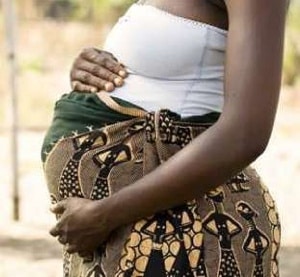
The Health Director at the Ahafo Ano South West District of the Ashanti Region, Dr. Rubben Bedzra, has attributed rise in teenage pregnancy in Ahafo Ano to high cost of sanitary pads.
According to him, some teenagers in the district got pregnant for chasing over a Gh¢20.00 money for sanitary pad.
According to him, most of the teenagers who reported to health facilities in the district after interrogations disclosed that, they succumbed to proposals from men in order to get money for sanitary pads during their Menstrual period.
Dr. Bedzra disclosed this on the Kumasi-based OTEC 102.9 FM’s morning show Nyansapo, on Tuesday, April 4, 2023 hosted by Captain Koda.
“While the causes of teenage pregnancies in the area are many, one of the problems which runs through almost all victims was poverty, most of the teenagers who confided in us said they were forced into bed after the men provided them with sanitary pads for a period of time,” he stated.
Teenage pregnancies
The Ghana Health Service disclosed that pregnancy among teenagers between 10 to 14 years was on the rise in the Ahafo Ano South West District of the Ashanti Region.
According to GHS, 18 percent of the total 460 teenage pregnancies recorded in the district for the year 2022 were between the 10 to 14-year age brackets.
The situation according to GES is destroying the future of many young girls in the area
Dr. Bedzra expressed concern over the alarming rate of teenage pregnancies in the district, calling on all stakeholders to join the fight against the menace.
He said, “I am encouraging all stakeholders in the district to see this development as a huge burden that needs urgent attention
“The lives of most of our young girls are being destroyed because of this very issue that is why I believe such workshops are very important “.
The Chamber of Independent Power Producers (IPPs) has said it will not agree to plans by the government to restructure a $1.3 billion debt owed its members.
In a letter to Finance Minister Ken Ofori-Atta, the Chamber said: “We emphasise that our members reject any notion of restructuring their arrears/claims, as part of the ongoing or any future debt restructuring programme”.
“Our members are prepared to engage with the government on payment schedules with regard to the arrears and other claims under the respective PAs, in order to promote predictability of payment flows while the energy sector reforms take hold to eliminate any accumulation of arrears going forward”, the letter noted.
“We would like to advise that you prioritise and make payments of the arrears in the next three weeks to enable our members to meet their debt obligations and sustain our production of electricity”, the IPPs proposed.
It further said outstanding and overdue receivables from the Electricity Company of Ghana (ECG) have reached a critical point and cannot guarantee continuous generation in the coming months”.
“As of January 31, 2023, our members’ total receivables accrued is over the cedi equivalent of $1.3 billion. Nonetheless, our members, in good faith, have continued to honour their contractual obligations to ECG, which is not sustainable”, the IPPs added.
The Chamber added: “We, herein, bring to your attention that some of our members are in default of their debt service obligations with some quarterly debt service obligations due from March 2023”.
“Kindly note that our members cannot continue defaulting on their respective debt service obligations and sustain operations”, the group indicated.
Additionally, it said: “We wish to highlight that our members have accrued huge arrears with their suppliers for which they are already in default and accruing associated penalties”.
The Chamber also said the Cash Waterfall Mechanism (CWM), which was meant to bring transparency and fairness in the disbursement of the power sector revenue, was a failure.
“The CWM committee is dominated by the representatives of the State-Owned Enterprises (SOEs), VRA, ECG, and GRIDCo, rejecting our proposal for IPs to be represented on the committee”.
“The only information members receive are the bank credit alerts even though they are key stakeholders controlling over 50% of the market share”.
“While we welcome the indication in your letter that review of the CWM will be part of the critical energy sector reforms, we emphasise that above-stated issues of transparency and governance of the CWM must be part of the agreed reforms and the Chamber duly represented on the CWM committee”.
The government, according toDr. Kwame Asah-Asante, is fast to propose new tax bills but are unable to give specific accounting of the money collected through these levies.
“The issue is that, are we going to be able to manage the resources so well that will be derived from this revenue? We have seen it time and again that our leaders are quick to come out with tax or taxes, but the money generated from it, we find it difficult to account for them,” he said on Monday.
On March 31, Parliament approved three new tax bills proposed by the Finance Minister, Ken Ofori-Atta.
According to Mr Ofori-Atta, the bills are crucial for the progress of government’s pursuit of an International Monetary Fund (IMF) deal.
The new tax bills include; the Income Tax Amendment Bill, The Excise Duty Amendment Bill and the Growth and Sustainability Amendment Bill and are expected to rake in close to GHs4 billion.
Speaking on the AM Show on JoyNews’, Dr Asah-Asante reiterated that the passing of the bills “is a good beginning for our journey to the IMF” but indicated that those in charge have not been accountable.
The political scientist lamented citizens’ inability to demand accountability and as a result, government always slaps taxes on the people without disclosing details of revenues gained.
Meanwhile, he added that the government’s energy that is being used to make sure that it gets the basics right in securing an IMF deal could be channelled into creating home–grown solutions where there would be no need to seek an IMF bailout.
“If you look at how government wants to meet all the specifics directed by the IMF, right? They want to get all those basics right to have the facility.
“Then I ask myself; that energy that you derive from the system to pursue this programme, couldn’t you have used it in your economy, build the necessary capacity that you don’t go to the IMF,” he said.
According to him,Ghana always finds itself “in tears” as a result of some unfavourable conditions attached to the IMF deal.
Dr. Yakubu Akparibo, an aviation specialist, has recommended that government entrust the national airlines in the care of a private sector.
Speaking on JoyNews’ AM Show, he said that the profit made from aviation in recent times is not so much compared to previous times and there is the fear that government might run at a loss should it take the risk.
“I think at this point government should not put any investment in this airline and to me, even in the future I don’t think government should invest in an airline, they should leave it to the private sector,” he said.
“Now the profit margins in aviation is very small, it’s not like in the 80s and 70s, you know those days we didn’t have GSA and so many safety leverages and stuff, now profit margins are very small, he said. Leave new national airline to private sector – Expert tells government
Dr. Akparibo added that, when these state airlines are established, it could pave the way for state officials to use them freely for their official duties which could subsequently lead to huge debts.
“You know if it’s government-owned sometimes they probably would want to use it for official trips and travels and they may not pay and stuff and normally that leads to the airlines getting more debts and eventually bankruptcy so I think the government should leave the airlines to the private sector,” the expert indicated.
Speaking on the same show, retired international airline pilot, Michael Foli also said that instead of establishing a national airline, government should rather invest in domestic airlines to make them more efficient and reliable.2
“Government should rather divert its attention to helping domestic airlines, there was a time when domestic airlines were not being charged tax on the purchase of fuel, that was a way the government was encouraging domestic airlines,”
“I am not sure, I think this was in Rawlings’ era or Atta Mills’ era but now I am told by one of those operators that they pay full tax and it’s over-burdening their operations,”
“If a private company wants to set up an airline, sure it’s an open market, let them do it, let the government sit back,” Mr. Foli said.
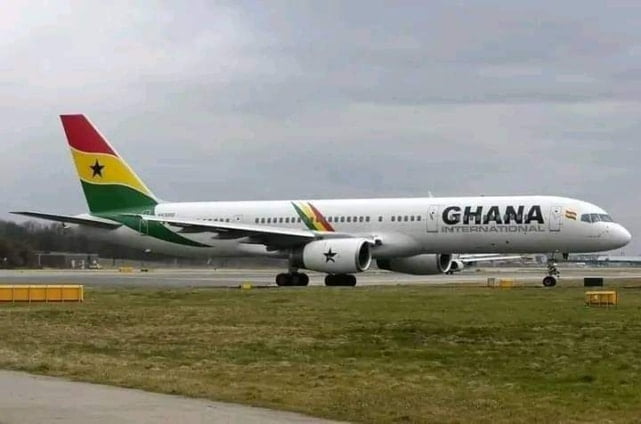
Ghana’s new national airline, Ghana Airlines will commence operations in the third quarter of this year, 13 years after the country’s second state-owned carrier stopped flights.
The new name was announced by Finance MinisterKen Ofori-Atta during the 2023 budget presentation to the Ghanaian Parliament. Mr Ofori-Atta also stated that Ghana expects the airline to be operational in 2023.
Ghana’s Aviation Minister, Joseph Kofi Adda revealed that the airline would be based in Accra, Ghana and would operate routes to West Africa and future routes to destinations in Europe, North America and Asia.
The establishment of Ghana Airlines will bring the 13-year absence of a national carrier in Ghana to an end. This follows the collapse of former national airlines Ghana Airways in 2004, and Ghana International Airlines, in 2010.
The Member of Parliament for Builsa South, Dr Clement Apaak, has asked the president to order the Finance Minister, Ken Ofori-Atta, to release capitation grants for public basic schools.
According to him, the failure to pay the capitation grant for the past 2 years is affecting the quality of education for pupils in the basic schools which could gradually collapse the public basic school system and those running their schools only on capitation grants are really suffering.
He added that the last time the grant was paid was in 2019/2020, meaning that for 2021, 2022, and 2023, they haven’t received anything.
“Akufo-Addo/Bawumia led government has failed to disburse capitation grants to ensure the smooth running if public basic school in the country. The situation is dire that the conference of heads of public basic schools has publicly lamented and as a member of parliament to the NDC side on Education Committee, my caucus decided that we use this medium to call on Mr. president to instruct the finance minister to release capitation grants,” he said in an interview.
The Conference of Heads of Basic Schools in Ghana is lamenting the non-payment of capitation grants meant for the operationalisation of basic schools for the past two years, which is crippling the progress of teaching and learning in schools. Despite the Ministry of Education’s recent indication that some GH¢11 million has been released to schools as of November 2022, the association says they are yet to receive any funds, and the situation is getting worse.
According to reports, the General Secretary of the Conference of Heads of Basic Schools, Justice Adu Darko, explained that the amount itself is inadequate considering the prices of commodities of late.
The Cedi gained against the dollar, climbing to 12.25 from 12.41 at last week’s close as FX demand eased amid a decline in oil prices.
Ghanaian Finance MinisterKen Ofori-Atta said that talks are continuing with China about restructuring its debt following a successful domestic debt exchange programme.
China is Ghana’s biggest bilateral lender, with about $1.7bn in loans outstanding. Ghana needs to reach a deal with all its creditors to unlock a $3bn bailout from the IMF. We expect the Cedi to continue trading around current levels in the short term, absent further progress in the restructuring talks.
The Naira depreciated against the dollar, sliding to 741 from 731 at last week’s close as FX demand increased and the central bank allowed old 500- and 1000-Naira notes to recirculate. Nigeria’s annual inflation edged higher in February, with prices rising 21.91% compared to 21.82% a month earlier. That prompted the central bank to raise interest rates by 50bps to 18%. The cash scarcity in recent weeks forced Nigerians to turn to e-payment channels, where transactions in February jumped 121.6% compared to a year earlier. We expect the Naira to continue weakening against the dollar in the near term as FX demand gathers steam.
Rand edges towards 17 handle amid Fed pause signal
The Rand strengthened against the dollar, trading at 18.15 from 18.40 at last week’s close, after the US Federal Reserve signaled a pause in interest rate hikes to allow the banking system to recover.
South Africa had its first full day in 141 days without a rotational power cut this week. An opposition-led march caused little disruption after the government deployed the army to avoid a repeat of the unrest that erupted in July 2021 protests. We expect the Rand to continue edging towards the 18 level, potentially trading with a 17 handle if recent positive international momentum is maintained.
Egypt Pound weakens as imports drive dollar shortage
The Pound declined against the dollar, trading at 30.89 from 30.48 at last week’s close. Egypt agreed to a new framework with the World Bank this week that will enable access to as much as $7bn in financing between now and 2027 to support economic reforms, including privatisation, job growth, and the development of sustainable projects.
The Suez Canal Authority reported a 40% increase in first-quarter revenue compared with the same period a year ago due to increased transit rates and shipping traffic, providing much-needed FX inflows. Overall, we expect the Pound to continue weakening in the short-to-medium term as the economy remains largely reliant on imports and faces a net dollar shortage.
Kenyan Shilling hits new low after 5% decline this year
The Shilling slumped to a fresh low against the dollar, trading at 130.80/131.00 from 127.10/127.30 at last week’s close due to sustained FX demand from energy importers and manufacturers. The Shilling has lost more than 5% of its value against the dollar since the start of this year.
Kenya held its first meeting with the UK as part of a bilateral Economic Partnership Agreement signed in 2021. The agreement saves Kenyan businesses KES1.5bn a year in duties on popular exports such as cut flowers and green beans. We expect the Shilling to continue weakening towards month-end as importers close transactions, with support from central bank FX reserves dwindling at $6.56bn, sufficient for only 3.66 months of import cover.
Ugandan Shilling under pressure from imports
The Shilling weakened against the dollar, trading at 3763 from 3733 at last week’s close, adding to losses of more than 4% over the past year. Imports have been rising, with Uganda fulfilling less than 30% of domestic demand for oilseeds for cooking, despite efforts to increase the production of palm oil, including the Kalangala project. Dollar demand for imports will continue to weigh on the Shilling in the near term.
Inflows steady Tanzania Shilling amid Marburg virus outbreak
The Shilling advanced from a four-year low against the dollar, strengthening to 2338 from a close last week at 2341, the weakest level since March 2019. Tanzania confirmed its first deaths from the deadly and highly virulent Marburg virus. Public health authorities are working with the World Health Organization to limit the spread of the virus, which has so far claimed five lives in the country.
Investment into Tanzania has grown to $8.64bn from $3.16bn over the past two years, according to the Tanzania Investment Centre. That investor confidence should help support the Shilling from any dramatic declines as markets react to the Marburg outbreak. While we expect the currency will slip back to the 2341 level, it is unlikely to weaken beyond 2343.
West African banks urged to ensure capital cushions
The West African central bank warned commercial banks in the region to be prudent about dividend distributions for the 2022 financial year, given the recent weakness in the global banking system. It encouraged banks to ensure mandatory regulatory capital levels that have been in place since the start of the year. The call to scale back dividends is likely to impact the share prices of listed banks.
Bank of Central African States FX reserves jump
The Bank of Central African States said the region’s FX reserves reached XAF7bn at the end of last year, up from XAF4.6bn at the end of 2021. The reserves, sufficient for 4½ months of import cover, increased due to regulations that force oil and mining companies to retrocede 35% of FX earned to the central bank.
With the rate expected to gradually increase to 75%, this should help to sustain higher reserve levels in coming years.
The Finance Minister, Ken Ofori-Atta, has noted that talks with Ghana’s bilateral creditors are progressing in the right direction.
Ofori-Atta in a tweet on March 24, 2023, stated that the government is hopeful of securing external assurances soon.
He wrote: “So far had very positive and encouraging meetings in China! Looking forward to securing external assurances very soon, even as we pass our outstanding domestic revenue bills back home. Great progress on all fronts…#ResolvingTogether #GhanaFirst.”
So far had very positive and encouraging meetings in China! Looking forward to securing external assurances very soon, even as we pass our outstanding domestic revenue bills back home. Great progress on all fronts…#ResolvingTogether#GhanaFirst
— Office of the Finance Minister-Ghana (@oofmghana) March 24, 2023
Finance Minister Ken Ofori-Atta left Accra for China on Sunday March 19, 2023.
Ofori-Atta’s trip to Beijing is hinged on efforts to secure a deal for restructuring of Ghana’s bilateral debts with the Asian economic powerhouse.
Even though Ghana is seeking a US$3 billion facility from the International Monetary Fund (IMF), the need to restructure both domestic and external debts has been given as a key conditionality.
China is a key player relative to Ghana’s external debtors, holding about $1.7 billion of Ghana’s $5.5 billion bilateral debt.
According to the Ghana Business News portal, the specialised nature of their lending windows means that Ghana cannot add them to the model used to negotiate with the G20 and the Paris Club members.
Talks with China were originally slated for mid-February but they were postponed to late March 2023.
Ofori-Atta, has however met with representatives of the Chinese government and its quasi-agencies in Accra since the postponement was announced.
Despite securing an IMF Staff-Level Agreement last year, government is undertaking an external restructuring of its debts in order to get a Board Level of approval later this month.
The first two months of 2023 saw a heated domestic debt restructuring programme adopted under the Domestic Debt Exchange Programme (DDEP).
Meanwhile, the Minority in Parliament insists that the government’s plans to get the IMF Board approval by end of March will likely not materialize.
The International Monetary Fund (IMF) has called on all bilateral creditors to support Ghana’s efforts to restore debt sustainability, as the country works towards presenting its economic programme for IMF Board approval.
Speaking at a news conference in Washington DC, the Director of Communications at the IMF, Julie Kozack, stressed the importance of Ghana securing financing assurances from partners and creditors, as a necessary step towards the presentation of its program request to the IMF’s Executive Board for approval.
“We’re calling on bilateral creditors to support Ghana’s effort to restore debt sustainability, form an official creditor committee, and deliver the necessary financing assurances as soon as possible,” Kozack said.
“While the IMF is engaging the Ghanaian authorities on the progress made on its request, the Fund is also seeking assurances from Ghana’s partners.”
A self-imposed deadline of March ending has enabled Ghana complete most of its prior actions in record time, including a Domestic Debt Exchange Programme. Whilst Board Approval before the end of March is unlikely, it is obvious that the government’s “self-imposed” deadline has enabled rapid progress on all fronts, making board approval highly likely within the next month or two.
Finance Minister,Ken Ofori-Atta, is currently leading a government delegation to China, hoping to secure financing assurances and reach a deal with the Asian economic giant to restructure Ghana’s debt of ¢1.7 billion.
A tweet by Mr Ofori-Atta this morning stated, “So far had very positive and encouraging meetings in China! Looking forward to securing external assurances very soon, even as we pass our outstanding domestic revenue bills back home. Great progress on all fronts… #ResolvingTogether #GhanaFirst”
On their part, China’s Foreign Ministry Spokesperson, Wang Wenbin stated at a Regular Press Conference on Wednesday 22nd March, 2023, that China attaches great importance to resolving Ghana’s debt issues and understands the difficulties facing the country at the moment.
Confirming the ongoing visit to China of a high-powered government delegation led by Ken Ofori-Atta, Mr Wenbin stated, “We would like to enhance communication with Ghana to work out a proper settlement through consultation.”
With the support of bilateral creditors and partners, Ghana is working towards restoring debt sustainability and securing the IMF’s support for its economic programme.
The IMF programme aims to support Ghana’s efforts to restore macroeconomic stability, debt sustainability, protect the vulnerable, preserve financial stability, and lay the foundation for strong and inclusive growth under the Ghanaian government’s Post Covid Programme for Economic Growth (PC-PEG).
China wants to improve communication with Ghana in order to find a proper solution to the country’s debt problem, according to the Foreign Ministry.
Spokesperson Wang Wenbin made the remark in response to a question on Ghana’s finance minister visiting Beijing for a proposed restructuring of Ghana’s debt.
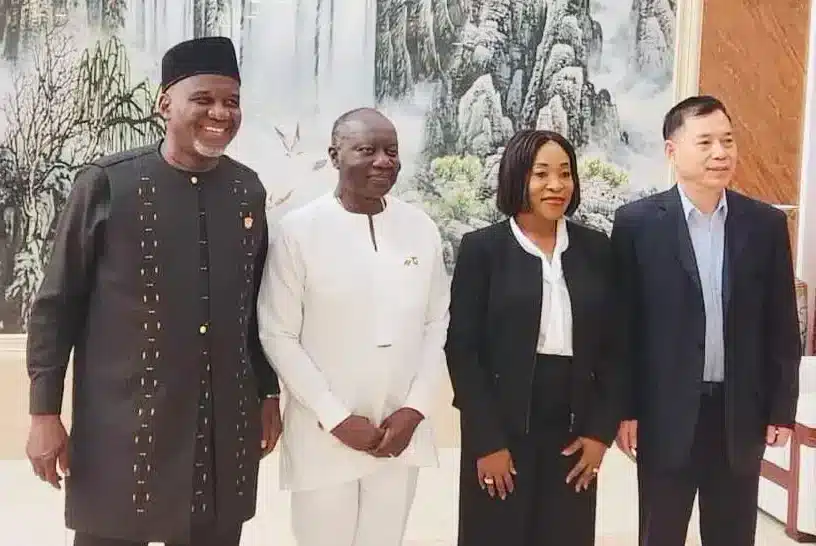
Ghana’s finance minister Ken Ofori-Atta has travelled to Beijing to meet Chinese officials to discuss a proposed restructuring of Ghana’s debt.
“The talks are expected to focus on ways to reduce Ghana’s debt burden and secure additional financing assurances for the country’s economic programme,” a source said, asking not to be named because the talks are private.
Finance Minister Ken Ofori Atta has left Accra for China to have negotiations on debt restructuring with officials of that country.
Sources say the Minister left over the weekend via Addis Ababa to attend the UNECA High-Level Ministers meeting on Global Financial Architecture.
After that meeting, Mr Ofori-Atta is expected to head to China, possibly on March 22, 2023.
The Minister leading the government delegation is expected to continue bilateral talks with China and seek financial assurances for Ghana’s programme with the International Monetary Fund.
The trip was postponed to the end of March because it coincided with the National People’s Congress of China meeting in early March 2023.
The Minister of Finance has already held meetings with officials of Exim Bank China in Ghana, all in the line of re-profiling the country’s debt to China.
Ken Ofori Atta on China visit
Finance Minister, Ken Ofori-Atta, in an earlier meeting with the German Finance Minister, said China has committed to bilateral negotiation.
In view of that, he is hopeful a deal can be reached to enable Ghana to present its case before the IMF Board.
“The big elephant in the room is China as in how they will comport themselves in the comparability of treatment because China wants to do bilateral. The discussion is on how they [China] can envelop as quickly as possible,” he said.
China visit and Ghana’s programme with IMF
Government sources maintain that the Finance Minister’s visit to China marks a step closer to IMF programme approval by the IMF Board.
In an interview, the Finance Minister told Joy Business the government is working to re-profile the country’s debt with its external creditors including China and subsequently find ways to secure their commitments to cancel Ghana’s debt.
Securing a deal from these creditors will go a long way to getting IMF Board approval for Ghana’s Economic Programme.
Negotiations with Paris Club members
Joy Business understands that there has been some significant progress on negotiations with the Paris Club, with requisite documentation submitted and the expectation of the formation of a creditor committee expeditiously.
Background
Ghana is hoping to restructure $5. 7 billion of its external debt, with China holding a third of it amounting to $1.7 billion.
The structure of Ghana’s external debt shows that the country owes China about $1.7 billion; Eurobonds, $13.1 billion and Multilateral, $ 8.1 dollars.
The rest are Paris Club countries, $1.9 billion and other creditors, $3.2 Billion.
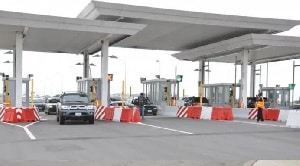
Dennis Aboagye, a member of the governmentcommunication team, has shockingly disclosed that road tolls were never stopped or canceled.
The government in the 2022 budget abolished road tolls after it announced the introduction of the electronic transaction levy (E-Levy). Finance Minister Ken Ofori-Atta cited congestion and traffic jams at the toll booths as justification for the decision.
A year after the tolls were abolished, the government commenced stakeholder engagements aimed at reintroducing tolls across the country.
In a memo dated 10th March 2023 to the Roads and Highways Ministry, the Finance Minister sought their input on the proposed rates.
But speaking on Citi TV/Citi FM news analysis programme, The Big Issue, Dennis Aboagye popularly known as Miracles said assertions that the tolls were cancelled by the government are wrong.
“Government never cancelled road tolls, the government never said it has suspended road tolls it only said that tolls had been zero-rated.”
He added that the decision to re-introduce the road tolls was a well-thought-out process following its cancellation last year.
He, however, admitted that the decision to abolish the tolls could have been done in a better manner.
The conversation about road tolls has been resurrected again following a document which emerged on Monday, February 14, 2023, with some proposed rates for the reintroduction of tolls of some of Ghana’s roads.
Per the document said to have been released by the Finance Ministry, pegged the rates at 50 pesewas for motorbikes, GH¢1 for cars, and GH¢3.50 for heavy goods trucks (5 or more axles), among other things.
This follows the cancellation of the road tolls by the government in 2021 during Finance Minister, Ken Ofori-Atta’s presentation of the 2022 budget in November.
A year after, the Finance Minister said during a budget reading in November 2022, for the 2023 economic year, that the tolls will return on selected roads after the revenue shortfalls from the e-levy.
The concern for many however is how much money will be reinvested in the re-construction of some of these toll booths that have been destroyed and are in bad shape following the scrapping of tolls.
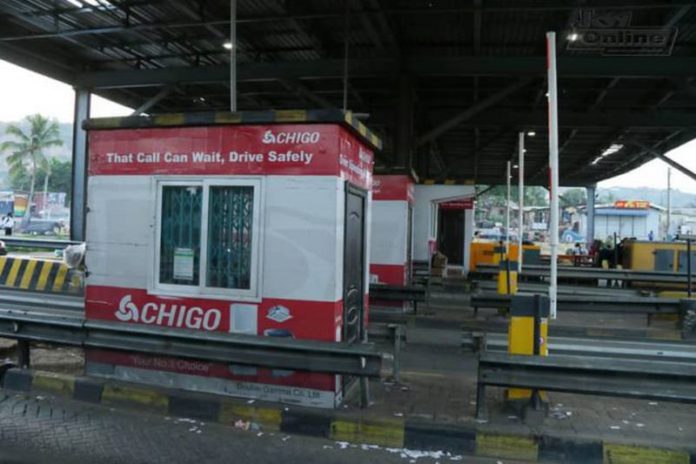
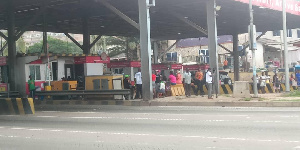
GhanaWeb’s George Ayisi visited some toll booths in the country in December, 2022 and captured the state of these booths ahead of the reintroduction of tolls.
The government’s decision to reinstate road tolls has drawn criticism from theAlliance of Drivers.
This comes after the announcement of the rates for the proposed road tolls that would be implemented once again this year.
Referring to a press conference they had in the past at Kasoa, in a statement issued on Tuesday, 14 March 2023, requesting that government scraps road tolls, the Alliance of Drivers, highlighted some of the key issues touched on, for suggesting scrapping of the road tolls, including the “dust and dirt on the roads, unnecessary congestion and traffic, high cost of fuel as a result of delay in traffic among others.”
According to the group, the belief has been that the issues raised during their press conference also “influenced” government’s decision to scrap road tolls and “it has been better since.”
The group is therefore questioning the “sudden reintroduction of road tolls and a marginal increase in the fares [tolls] as well.”
The group wants government to explain to its members “the reason for this sudden diversion as the recent economic hardship is not even favourable for paying road toll.”
It noted that if government fails to heed its call to scrap road tolls, it will urge its members to halt operations.
“If the above suggestions are not adhered to by the government, we will urge all drivers and transport operators to put on hold all transport business.
“We believe it can be done and be done well if proper consultation is done on these key, decisions as the negative impact it’s having on the ordinary Ghanaian is unbearable,” it projected.
It urged: “Let’s all have the country at heart and work together to raise the name of this country high.”
Finance Minister Ken Ofori-Atta in a letter to the Minister for Roads and Highways proposed charges for the road tolls for confirmation by the latter.
Road tolls were cancelled in 2022 following the introduction of the Electronic Transaction Levy (E-Levy).
The road tolls were, however, re-introduced during the 2023 budget presentation on Thursday, 24 November 2022.
The Finance Minister had said: “The fiscal policy measures to underpin the 2023 Budget for consideration and approval by Parliament include the reintroduction of tolls on selected public roads and highways with a renewed focus on leveraging technology in the collection to address the inefficiencies characterised by the previous toll collection regime.”
Government has initiated steps to settle payments on outstanding bonds.
This was contained in a statement issued by the Finance Ministry on Tuesday, March 14, 2023.
“Following the press release issued by the (Finance) Ministry dated 27th February, 2023, the government is pleased to announce that processes to settle outstanding bonds commenced yesterday, March 13, 2023,” the statement said.
According to the statement, the initial instruction covers coupon and principal payments on bonds that matured on 6th February, 2023, and 13th February, 2023.
“Holders of the afore-listed bonds should therefore expect to receive their payments within the next 48 hours,” the statement added.
The statement came into limelight hours after the Coalition of Individual Bondholder Groups and Pensioner Bondholders Forum issued a 48-hour deadline to the Finance Ministry to pay all matured principal and outstanding coupons due on the existing bonds issued by the Government of Ghana.
Government had indicated that it had taken administrative steps to ensure that payments of coupons and principal of the old bonds resumed by March 13, 2023.
However, according to the parties involved, as of the close of business on Monday, March 13, the Ministry of Finance had not honoured the promise to pay the coupons and principals to pensioners who have been exempted from the Domestic Debt Exchange Program (DDEP) and other individual bondholders who have opted out of the program.
The group had resolved to picketing in order to get the government to honour its promise but before this could happen, the Finance Ministry issued the statement indicating that it had commenced with payments of the bonds.
“Payment dates for subsequent maturities will be communicated in due course,” the statement added.
The Ministry further thanked all stakeholders “for their forbearance during the Domestic Debt Exchange Programme (DDEP) and subsequent administrative processes.”
Both private and commercial drivers, as well as motor riders would have to brace themselves to pay at various tollbooths as government through the Finance Ministry has made a proposal for new road and bridge tolls across the country.
This is ahead of the reintroduction of tolls in the country.
In a statement made available via UTV, the Ministry of Finance stated that this is based on Section 6 of Act 1080.
“It is provided under Section 6 of Act 1080 for the minister to amend the schedules of the Act to include or exclude MDAs and/or adjust the fees and charges collected by MDAs for their services through a Legislative Instrument, when necessary.
“We are by this letter conveying the proposed rates as per the attached Appendix I for input by the Ministry of Roads and Highways to enable this minister complete the schedule of fees under the impending Legislative Instrument,” the statement, signed by Ken Ofori-Atta, said.
Accordingly, the new tolls will include 50pesewas for motorbikes, GH¢1 for cars, and GH¢3.50 for heavy goods trucks (5 or more axles).
It will be recalled that during the reading of the 2021 Budget Statement and Economic Policy in 2020, the Minister of Finance, Ken Ofori-Atta, announced the cancellation of road tolls.
The announcement, affirmed by a directive by Kwesi Amoako-Atta, the Minister of Roads and Highways, saw an immediate closure and seizure of the collection of tolls across the country.
The Minority in Parliament, however, did not like the move made by the government.
Notwithstanding a recent decrease in the rate from 1.5% to 1%, the Tax Justice Coalition(TJC) has urged the government to quickly abolish Electronic Transfer Levy (E-Levy).
The coalition said the levy has now become a “nuisance” tax.
The reduction came into effect after the levy failed to meet the set revenue target in the heat of the economic crisis caused by the global pandemic and Putin’s war in Ukraine.
Players in the telco space have also been raising concerns over the low-running and ineffective mobile money service.
The Finance Minister Ken Ofori-Atta first announced the decision to reduce the levy from 1.5% to 1% on Thursday (24 November 2022) during the 2023 Budget Statement presentation in Parliament.
Addressing a news conference in Accra on Thursday (9 March) on the theme: “An analysis of the 2023 annual budget and economic policy” in Accra, the chairperson of TJC, Vitus Azeem, said E-Levy is now defeating the government’s cashless agenda.
“TJC Ghana particularly calls on the government not to implement the 15% VAT increase and totally scrap the E-Levy and focus more seriously on implementing the more progressive taxation of income, wealth and property,” he said.
“TJC Ghana also recommends that the social intervention continue as proposed,” Azeem added.
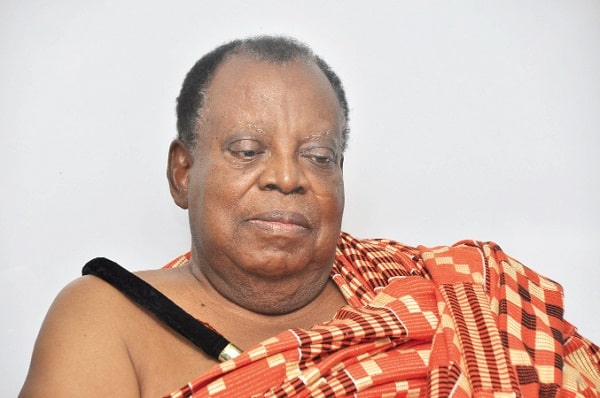
Professor Nana Susubribi Krobea Boaten(S. K. B.) Asante, a constitutional expert and statesman, has lauded the country’s cohesion after 66 years of independence.
Speaking in an exclusive interview with the Daily Graphic, he said the unity of the country was worth celebrating, especially as other countries had failed to achieve that after many years of existence.
Better known as Prof. S.K.B. Asante, he said before and at the time of independence, the country was not a nation, but a fusion of different ethnic groups assembled by the British to serve its colonial interest.
Therefore, it was an achievement to have remained united for so long without any civil war or split.
“We have survived as a national entity and that is an achievement, especially considering the challenges some countries had during independence.
We are not torn by civil strife or by extreme ethnic, tribal or religious strife.
We must celebrate that,” Prof. S.K.B. Asante said.
He added that there was a split among some countries after independence, mentioning India and Pakistan, Malaysia and Singapore, as well as the civil war in Nigeria for secession, commonly known as the ‘Biafra War’ that nearly tore that country apart, and Somalia which had become a failed state.
“We should be excited because we have done well as a nation and we are still together,” the eminent traditional ruler and legal luminary said ahead of the country’s independence anniversary parade today.
Background
The national parade is being hosted by the Volta regional capital, Ho, with the Volta Regional Youth Resource Centre, located at Adaklu-Tsrefe, near Ho, as the venue.
The celebration, which started about a week ago, is on the theme: “Our Unity, Our Strength, Our Purpose”.
Democracy
The interview centred on the evolution of the 1992 Constitution, his role, how the constitution has helped the development of the country, whether there was the need for a review of the constitution and our journey as a country since independence, among others.
Prof. S.K.B. Asante, who was the Chairman of the Committee of Experts that drafted constitutional proposals leading into the promulgation of the 1992 Constitution, said the independence of the country was also worth celebrating because of the country’s democratic credentials.
He said for more than 30 years, the country had organised many peaceful elections and changed the baton of government without destroying its fabric as a nation.
“In terms of democracy, we have had our ups and downs.
We had periods of instability but for the past 30 years, with all our faults, we are still seen as a pacesetter in Africa and as an oasis of constitutional democratic stability in a very turbulent region.
We must be proud as a nation,” he said.
Economic take-off
However, Prof. Nana S.K.B. Asante, who is also the Paramount Chief of Asante Asokore, said the country had failed to develop economically and that was a blot on its independence.
According to him, it was a puzzle that the country could not become an economic powerhouse when all the criteria for economic transformation were available.
The country, he said, had an enviable democracy, political stability, natural resources, highly capable human resource and the goodwill to become great economically, but unfortunately, that had not been the case.
He noted that after 66 years of independence, the country still had the same economy as it did during the colonial period, which relied on the export of raw materials to industrialised countries.
“Even now, how come we are not able to add value to most of our raw materials?
It is a puzzle because Ghanaians are capable of achieving that when they go to other areas,” Prof. S.K.B. Asante said.
“It is not because of any intellectual inferiority.
We also have natural resources, we have the human resources.
But somehow we have not been able to utilise all these advantages,” he said.
Meritocracy
Prof. S.K.B. Asante, who is a former Deputy Attorney-General and Solicitor-General in the Second Republic, attributed the country’s economic woes to many factors, including the lack of meritocracy in the country.
He explained that the system of patronage and winner-takes-all had made it impossible for the country to get the best out of people, especially those who had no means or have decided not to be part of a system not based on merit.
He said even during the colonial period, things were done by merit, and cited an example of his admission to Achimota School, saying that there was no way he would have made the cut to the school if not for merit.
According to him, the current system in the country allowed for concentration of power, wealth and decision-making in the hands of a few, a situation he described as not conducive for the development of the country.
“I think our problem is that we do not rely on meritocracy.
All the Asian countries became great due to meritocracy.
Merit is the basis of everything.
We have a situation where people get things not by merit but by connections,” he said.
The Asante Asokore Paramount Chief, therefore, advocated a system of power sharing government that allowed all views to be heard and people appointed to positions based on merit.
“Our elections have become a matter of life and death because everybody knows that once you are in, only your people are in.
Government is a major economic player in this country and therefore this tends to affect our economy,” Prof. S.K.B. Asante added.
“It does not matter in America because whether it is the Democrats or the Republicans, the economy will thrive and people will have opportunities,” he observed.
Other factors
Another factor inhibiting the growth of the economy, Prof. S.K.B. Asante said, was the educational system of the country, which he said had failed to build the foundation for industrialisation.
He stated that although the country had made efforts to promote science education, that had not materialised into helping economic transformation.
“Our system of education is also problematic.
How come that after so many years of science education, we have never been able to translate our science into technology?” he asked.
Ghana’s Minister of Finance, Ken Ofori-Atta, has implored a delegation from the China Exim Bank to assist Ghana in overcoming its current economic challenges.
China Exim Bank bears more than 40% of Ghana’s debt to China. The Chinese delegation was in Ghana before Ghanaian officials traveled there to negotiate debt reduction.
The Finance Minister made the plea at a farewell dinner for the Chinese delegation from the China Exim Bank, which was in Accra to work with the government on efforts to restructure an estimated $1.9 billion in debt owing to China.
Ghana’s current condition is “difficult,” according to Mr. Ofori-Atta.
“What Ghana needs as we go through our current challenging economic and financial circumstances is strong support from our lasting partners, including China, to restore lasting growth and support the vulnerable,” he said.
A report on the Ministry of Finance website stated that the delegation is in Accra on a three- day mission, ahead of Ghana’s upcoming mission to China, all in line with ongoing negotiations for a sovereign debt treatment.
Ken Ofori Atta will lead a high-powered government delegation to China to plead for the acceptance of the country’s proposal for debt cancellation.
Ghana is hoping to restructure $5. 7 billion with China holding a third of it amounting to $1.7 billion dollars.
Ghana is currently restructuring its debt both domestically and externally in order to access support from the IMF.
China is Ghana’s single biggest bilateral creditor with $1.7 billion of debt, while Ghana owes $1.9 billion to Paris Club members, according to data from the Institute of International Finance (IIF).
Ethiopia’s Tigray People’s Liberation Front (TPLF) rebels have denied establishing a transitional administration in the northern region in accordance with the peace agreement signed in November last year.
A local news website reported that the TPLF had finalised the process of forming a 28-member interim regional administration, which needed approval by the federal government.
However, TPLF spokesperson Getachew Reda said the Tigray interim administration would only be established after mutual consultations between the parties to the Pretoria agreement.
“Reports of the [transitional government] having been established in Tigray without Addis’ involvement flies in the face of reality. Tigray is only trying to do its part,” Mr Getachew tweeted on Sunday.
Major political parties in the region have been calling for an inclusive interim government to steer the region as it tries to recover from the devastating civil war.
Last month, the opposition parties in Tigray boycotted a conference on the formation of an interim government, accusing the TPLF of monopolising the process.
Finance Minister is expected to furnish Parliament with details of the ongoing debt restructuring.
This was after the Minority succeeded with a Private Members’ Motion for Ken Ofori-Atta to present the House with details.
The motion was moved by the Minority Leader, Cassiel Ato Forson, Minority Chief Whip, Governs Kwame Agboadza, Bawku Central MP, Mahama Ayariga, Bolgatanga Central MP, Isaac Adongo and MP for South Dayi, Rockson-Nelson Dafeamekpor.
“This Honourable House requests of the Hon Finance Minister to present to Parliament, Government’s Debt Restructuring Programme for consideration,” the order paper indicated.
The Order Paper, however, fell short of highlighting the day the Minister will be demanded to appear before the House.
Mr Ofori-Atta in February appeared before Parliament to brief the House on the exchange programme.
Already, President Akufo-Addo is making another clarion call on friends of Ghana to put in a word of support as talks between Ghana and the Paris Club – especially China – for debt cancellation enter a crucial stage.
The Paris Club is a group of officials from major creditor countries whose role is to find coordinated and sustainable solutions to the payment difficulties experienced by debtor countries.
Ghana hopes to appear before the International Monetary Fund (IMF) board to seek approval for a bailout.
But the government will first have to get confirmation that the over $4 billion debt owed to the Paris Club members will be forgiven or restructured.
This came on the back of the Finance Ministry’s assertion to have met its target of over 80% participation in programme, a crucial requirement in the steps to secure the needed bailout.
In a statement, it said the “Government’s Domestic Debt Exchange Program (DDEP) closed on Friday February 10, 2023 with over 80% participation of eligible bonds. The government wants to thank the people of Ghana for their forbearance and support throughout these very difficult times”.
The Minister is expected to expand on this situation and the subsequent modalities for restructuring the external wing of the bonds.
The German government says it is willing to assist Ghana push through its proposal with its external creditors, especially China, but first, some conditions must be met.
In February, President Akufo-Addo called on German Finance Minister, Christian Lindner, to “encourage” China to accept Ghana’s proposal for debt relief with its largest external creditor, China.
The Asian country claims about $1.7 billion of the entire external debt portfolio of $5.7 billion which Ghana is seeking to restructure.
German Ambassador to Ghana, Daniel Krull said that his country is willing to help only if certain conditions are met.
“First of all, we insist that those measures that can be taken here in this country have to be taken. The second condition is that, yes, we are willing to take our share of responsibility as one of the major bilateral donors to Ghana.
The Deputy Minority leader, Hon. Emmanuel Armah-Kofi Buah, in an interaction with his colleagues in parliament alleged that Ghana’s first president, Osagyefo Dr. Kwame Nkrumah, had warned the West African country against the “begging bowl”.
According to him, Dr Nkrumah predicted that if the nation turned a blind eye to his warning, it would one day collapse.
Alas, 57 years down the line after his overthrow, Dr. Nkrumah’s prediction has come to pass with Ghana now classified as a high-risk debt distress country which needed an external help to salvage it from crashing.
“The Great Osagyefo Dr. Kwame Nkrumah predicted that the begging bowl will only lead us into indebtedness-well we now know”, the deputy Minority Leader noted while eulogizing Dr. Kwame Nkrumah on the 57th anniversary of his overthrow on February 24, 1966.
A begging bowl is a term used in reference to an earnest appeal for financial help. The Collins Dictionary also explains that, “if a country or organization approaches other countries or organizations with a begging bowl, it asks them for money”.
To Hon. Buah, if Dr. Nkrumah’s predecessors had heeded to the advice of the former Ghanaian leader and also continued to build on his vision or policies and initiatives, Ghana and the rest of the African continent would have been a better place to live in.
As at September 2022, Ghana’s public debt was GHS67.4billion. Out of this amount, 42% was domestic debt while 58% was external debt, according to records by the Bank of Ghana.
This represents more than 100% of the country’s gross domestic product (GDP). The Finance Minister, Ken Ofori-Atta is hoping to bring the ratio down to 55% by 2028 should the country get the external support that it is seeking for.
Ghana is currently before the International Monetary Fund (IMF) seeking for a three-year bailout program worth US$3billion.
To Hon. Buah who is also the NDC MP for Ellembelle, the hard lesson Ghanaians must learn from the Osagyefo Dr. Nkrumah’s overthrow is “never to allow themselves to be deceived into discarding great leaders”, stressing that without the leadership of Dr. Nkrumah, Ghana lost its vision as a country and has since been roaming around for 57 years for the answers to her developmental agenda.
“We never appreciate the value of water, until the well runs dry”, he quoted the American writer, scientist and statesman, Benjamin Franklin, in support of his advice to Ghanaians.
He said it was through the leadership of Osagyefo Dr. Nkrumah that the Tema Harbour and Tema Motorway were constructed. That notwithstanding, it was through the policies and initiatives of the former Ghanaian leader that the Ghanaian currency, the Ghanaian Industrial Holdings Corporation (GIHOC), and the Volta River Project were all established.
Ghana’s cedi, the world’s second-worst performing currency this year, is heading for more pain after the West African nation missed a self-imposed deadline to restructure its bilateral debt and move closer to tapping foreign aid.
Finance Minister Ken Ofori-Atta wanted to reach a restructuring agreement with bilateral creditors by the end of February to help qualify for a $3 billion International Monetary Fund program.
So far, Ghana has only partially completed the domestic-debt part of the exchange program.
The cedi has slumped 21% against the dollar in 2023, the worst performer among more than 100 currencies tracked by Bloomberg after the Lebanese pound.
Still, the missed deadline doesn’t automatically derail the talks. Rather, it highlights the difficulties Ghana faces as it tries to reduce its debt load and contend with critics ranging from international bondholders to local trade unions.
“For the foreseeable future the cedi will continue to be volatile until we are able to make substantial progress on the external debt restructuring front,” Kweku Arkoh-Koomson, an economist at Databank Group, said by phone.
“The IMF deal is what will cause a clear stability in the cedi,” he added.
Ghana is trying to restructure most of its public debt, estimated at 576 billion cedis ($45 billion) at the end of November. Local bondholders have been asked to voluntarily exchange 130 billion cedis of debt for new bonds that will pay between 8.35% and 15% interest, compared with an average of 19% on old bonds.
Ghana stands to ask external creditors to write off as much as 50% of the debt it owes them — far higher than the 30% the government initially considered, S&P Global Ratings said in a report Tuesday.
“Uncertainty on when the rest of the restructuring will be completed” is influencing cedi volatility, said Courage Boti, an economist at Accra-based GCB Capital Ltd. “To the extent that those things are hanging in the balance now — in that timelines are not very certain — the volatility of the cedi will continue.”
To date, local investors have exchanged 87.8 billion cedis, or 67.5% of bonds under restructuring, for new securities, against an overall target of 80%. The country will have to reorganize obligations owed to local pension funds to complete the domestic exchange, a move that’s running into criticism from trade unions.
The government aims to start “substantive” discussions with international bondholders and their advisers in the coming weeks, Ofori-Atta said last month, offering Eurobond holders some losses while seeking to reschedule payments on bilateral obligations.
MP for Subin Constituency in the Ashanti Region, Eugene Boakye Antwi wants to know what is special about Finance minister, Ken Ofori-Atta, that, he is still occupying the office despite the numerous calls for his dismissal or resignation.
The Member of Parliament says there are equally people in the New Patriotic Party that have the capacity to run affairs at the ministry.
The former Works and Housing minister’s outburst come on the back of the suffering Ofori-Atta’s stewardship has subjected Ghanaians to, but still occupying the office as if there were no men in the party who can oversee the Ghanaian economy.
According to him, it still boggles the minds of many as to why the President’s cousin is still the one leading negotiations with the International Monetary Fund (IMF) for the $3 billion bailout whilst Ghanaians have expressed their discontentment with his leadership.
Mr. Boakye Antwi who joined a couple of MPs from the Majority caucus few months ago to demand the Finance Minister’s dismissal or resignation has averred the fact that Mr. Ofori-Atta has been able to manage a bank does not guarantee that he can manage an economy like Ghana since the two are different.
He opined there are men in the NPP with common sense who have become MPs and can equally be Finance ministers.
Eugene Boakye Antwi was speaking on Accra-based Citi TV with Umaru Sanda Amadu.
“What is so special about Ken Ofori-Atta that the ordinary NPP member doesn’t have?
“We cannot all run banks but some of us have common sense, that is why we are Members of Parliament.”
“When I go to Subin, I see poverty, I see hardship, and I see people suffering and all these are due to the economy and the person running the economy,” he said on Face to Face.
The management of Ghana Commercial Bank PLC has assured its customers on the Controller and Accountant General’s Department’s (CAGD) payroll that February 2023 salaries have been processed and credited to their accounts.
The management in a statement apologized to the affected customers.
In an earlier tweet, the bank had expressed concerns over difficulties in processing February salaries from the Controller and Accountant General’s Department.
However, the Minister of Finance, Ken Ofori-Atta has refuted claims that the government is struggling to pay the salaries of public servants.
According to him, the assertion is not accurate.
He said in parliament that: “The Minority Leader said, there have been some challenges with data challenges with salary processes and in his own way what we call terminological inexactitude, is interpreting that to mean, the Republic of Ghana not having money to pay salaries. That is wrong and disingenuous, and we should not allow that to be perpetuated.”
The Minority Leader in Parliament, Dr. Cassiel Ato Forson, had stated that the government was having difficulties in paying the February salaries of public sector workers.
“As we speak today, government is unable to pay salaries. If you check the Twitter account of GCB Bank, it says it is unable to pay salaries. So, if government is unable to pay salaries, how can it accept assurances that the government every Ghanaian will acquire the Ghana card,” he said.
Members of the Minority caucus in Parliament have disputed Finance Minister Ken Ofori-Atta’s assurance to release funds to the National Identification Authority (NIA) to register more Ghanaians for the Ghana Card.
The NIA is said to owe its suppliers GHȼ117 million, which has resulted in the curtailment of its work in registering and issuing the Ghana Card.
The Electoral Commission wants to recognise the Ghana Card as the only source of identification for registering prospective Ghanaian voters, and has consequently proposed a Constitutional Instrument before Parliament to make it the law, however the Minority have vehemently opposed the move on the grounds that it may disenfranchise many.
The Chairperson of the Electoral Commission was in Parliament on Tuesday to defend and justify the CI, and urged parliament to approve it as it would ensure the integrity of future elections in Ghana.
The NIA has been unable to print the cards for over three million registrants as a result of the lack of the cards, and has restricted its registration activities largely to rendering premium services at a fee, currently at GHȼ280.
Finance Minister Ken Ofori-Atta was in parliament also on Tuesday, and told the house the Ministry had just released funds to clear the GHȼ100 million of the GHȼ117 million debts owed by the National Identification Authority so it can proceed with its work.
And according to JoyNews’ Parliamentary Correspondent, Kwaku Asante, the Minority says it will be risky to trust in the assurances of the Minister.
They spoke at a press conference addressed by Minority Leader, Cassiel Ato Forson.
The National Identification Authority(NIA) has been assured by Finance Minister Ken Ofori-Atta that the GHC20 million budget allocation will be released so that the authority may carry out its functions and issue Ghana Cards to the public.
Speaking in Parliament on Tuesday, February 28, he assured that the government was ready to support the electoral process.
“We agreed on a hundred million cedi transfer and 80 million has been put into the accounts and 20 million will be done by the close of business today.
“We are very comfortable about the situation to ensure the needed cash will be given to the NIA to do its work,”Mr Ofori-Atta said.
He added “The government has been extremely good about funding elections and once the NIA’s job is liked to the elections, we can assure the House that the resources needed will always be provided.”
Finance Minister, Ken Ofori-Atta has assured the National Identification Authority that the GHC20 million budget allocation will be released to enable it go ahead with its operations.#3NewsGH pic.twitter.com/LWC4IpxnXn
— #TV3GH (@tv3_ghana) March 1, 2023
Officials of the NIA and theElectoral Commission (EC) were in Parliament on Tuesday to brief the House on the proposed Constitutional Instrument (CI) that is seeking to make the Ghana Card the sole identification document for voter registration.
The Chair of the EC Jean Mensa told Parliament that the use of the Ghana Card as the sole identification document for voter registration will ensure a credible voter roll.
She said it will also prevent minors and foreigners from getting onto the electoral register to vote.
Madam Jean Mensa said “The use of only Ghana Card will ensure and guarantee the credibility of the register and elections, prevent enrolment of minors, prevent foreigners from voting, eliminate the guarantor system which is prone to abuse.”
“The Ghana Card will not be used for voting in 2024, it will be used to register,” she said.
Regarding a revelation by Tamale South Member of Parliament Haruna Iddrisu that there were about 3.5million people without Ghana Crad, she said the National Identification Authority (NIA) has told the commission that ” there are 3.5 blank cards in the warehouse, money have been released and funds are being released.”
The Minority have been raising issues against the proposed CI.
Ghana’s Eurobonds extended declines on Wednesday after the country missed a self-imposed deadline to restructure its bilateral debt and S&P Global Ratings warned bondholders face larger losses than anticipated.
The nation’s 2032 dollar securities dropped 0.5% to 36.8 cents in the dollar by 8:18 a.m. in London, bringing their decline this week to 1.7%.
Finance Minister Ken Ofori-Atta wanted to reach a restructuring agreement with bilateral creditors by the end of February to help qualify for a $3 billion International Monetary Fund program. So far, Ghana has only partially completed the domestic-debt part of the exchange program.
Meanwhile, S&P said Ghana may have to ask external creditors to write off as much as 50% of the debt it owes them — far higher than the 30% the government initially considered.
According to Finance Minister, Ken Ofori-Atta, government has been excellent about funding Ghana’s elections and will continue in that stead.
He said these in Parliament when he joined officials from the Electoral Commission (EC) and the National Identification Authority (NIA) to brief the House on the proposed Constitutional Instrument that is seeking to make Ghana Card the sole identification document for voter registration.
“The government has been extremely good about funding elections and once the NIA’s job is liked to the elections, we can assure the House that the resources needed will always be provided.”
Finance Minister, Ken Ofori-Atta has assured the National Identification Authority that the GHC20 million budget allocation will be released to enable it go ahead with its operations.#3NewsGH pic.twitter.com/LWC4IpxnXn
— #TV3GH (@tv3_ghana) March 1, 2023
The Chair of the EC Jean Mensa for her part said among other things that the Ghana Card will not be used to vote in the 2024 general elections.
She said the Commission is seeking to use the card for the voter registration exercise.
Madam Jean Mensa said “It is important to rehash that the use of the Ghana Card as the sole document of identification will ensure and guarantee the credibility and integrity of our register and elections, it will prevent the enrolment of minors to register, it will prevent foreigners from being registered to vote and it will eliminate the guarantor system which is prone to abuse and which promotes conflicts and violence.”
“The Ghana Card will not be used for voting in 2024, it will be used to register,” she added.
On Tuesday, February 28, Speaker Alban Bagbin was justified in ordering the withdrawal of twoMembers of Parliament‘s remarks and submissions.
Incidentally, the two MPs were from the main opposition National Democratic Congress (NDC) and they were ordered to retract statements directed at a common subject, that is Jean Mensah, Chairperson of the Electoral Commission (EC).
Jean Mensa along with the Chief Executive Officer of the National Identification Authority (NIA), Prof Ken Attafuah and the Minister for Finance, Ken Ofori-Atta, appeared before the House to defend the sole use of the Ghana Card as proof for registration of new voters.
The NIA, who are in charge of the issuance of the cards have raised logistical constraints which the Minister of Finance has assured is being addressed.
For the EC chair, her submissions were to explain how and why the particular card was chosen for new registrations as per the Constitutional Instrument (CI), the EC has laid before Parliament.
As the EC boss was making her point, the Member of Parliament for Tamale Central, Ibrahim Murtala Muhammed, could be heard describing her remarks as shameful.
This infuriated members of the Majority Caucus, who were up in arms, demanding that the MP withdraws his comments. This caused some commotion in the House for about a minute.
The Minister for Defence and MP for Bimbilla, Dominic Nitiwul, who was being chastised by the Speaker, for being out of order could be heard saying: “Mr Speaker, I’m protesting. You cannot invite somebody into your house and insult the person. Mr Speaker why? He is misbehaving too much.”
Bagbin then directed his anger at Murtala and told him that his comments were unparliamentary.
“Honourable Murtala Muhammed, it has long been ruled in this House that the use of the word ‘shame’ is unparliamentary… the guests we have are here to answer to an invitation by this House. The best we can do is to listen to them.
“Again, Honourable Murtala Muhammed, I call on you to withdraw the shame, shame,” Bagbin said.
Murtala Muhammed, before withdrawing his comment, argued that his comments were not made through the microphone and thus cannot be recorded as official.
But Bagbin insisted that during meetings of the committees, every comment made is recorded even if it is not made through a microphone.
The action of the Speaker drew him some applause from members of the Majority Caucus.
Watch the Murtala retraction below:
The Bongo MP in speaking on the floor on the same issue, cited a similar instance of disenfranchisement in the neighbouring Ivory Coast where some citizens were segregated for reasons of being non-citizens which situation he claimed created mayhem.
“Mr Speaker, on elections matters; consensus is key. Côte d’Ivoire is just by us here. By virtue of the fact that laws were passed to create the impression that others were not citizens, it created problems in Côte d’Ivoire.
“Afari Gyan handed over to Charlotte, Charlotte gave it to you, this country was in one piece. If this country goes to war, because of this, it will be on your head,” he cautioned.
However, the Speaker of Parliament, Alban Sumana Bagbin ordered that the particular statement be retracted and expunged from the hansard.
As thegovernmentsettles a debt owed to creditors in the amount of GH100,000,000, the National Identification Authority (NIA) plans to issue more Ghanaian identification cards.
Printing of the cards was suspended following financial constraints faced by the NIA.
In view of this, more than 3.5 million cards were locked up in a bonded warehouse.
But appearing before Parliament on February 28, 2023, theFinance Minister, Ken Ofori-Atta disclosed that an amount of GH¢20 million has been paid to CalBank following the initial payment of GH¢80 million.
“I think that the main question was about the GH¢100 million to be transferred to CalBank IMS and as has been confirmed by the [Executive] Director for the NIA, we have indeed transferred the GH¢80 million and today with swift instructions the GH¢20 million has also been executed. That is the assurance we want to give that we will continue to work with the programme we have agreed with CalBank,” the Finance Minister noted.
The Electoral Commission (EC) is proposing a new constitutional instrument through which it intends to make the Ghana card the sole identification document for voter registration.
Requiring further clarification on the matter, Parliament summoned the officials of the Electoral Commission, NIA and the Minister of Finance.
Also appearing before Parliament to brief MPs on the activity of the NIA, the Executive Director of the NIA, Professor Kenneth Attafuah, assured that the NIA is prepared to print all outstanding cards per the financial clearance by the Finance Ministry.
He said they are now ready to print more cards to support the EC in executing the Constitutional Instrument (CI) if it’s approved by Parliament.
“The number of cards not yet printed, i.e., persons who have registered, whose records are with NIA but whose cards have not yet been printed, stands at 541,529. This figure represents the financial difficulties we have had lately, beginning approximately in July/August of last year,” he said.
However, Prof. Attafuah has assured Ghanaians that NIA can manage the technology to print more Ghana cards.
“We have the capacity, we have over a thousand functional printers, and we have people who are trained, who are professionals who are sitting at home doing nothing and are anxious to work. We will call those people back to work. With 500 printers, we can print 50,000 cards a day,” he assured.
Finance Minister, Ken Ofori-Atta, last year announced that government will be reintroducing the collection of road tolls on selected roads in the country this year.
The reintroduction of the road toll was one of the revenue measures contained in the 2023 budget presented to Parliament by the Finance Minister.
“The fiscal policy measures to underpin the 2023 Budget for consideration and approval by Parliament include the reintroduction of tolls on selected public roads and highways with a renewed focus on leveraging technology in the collection to address the inefficiencies characterized by the previous toll collection regime,” paragraph 462 of the 2023 Budget statement read.
But the Ashanti Regional Minister, Simon Osei-Mensah has disagreed with the reintroduction of the road tolls.
Narrating how he once, as Regional Minister, had to personally get involved in distributing tickets in order to ease the traffic congestion on a certain road in the Ashanti Region, he noted that bringing back the tolls will cause unnecessary traffic.
To him, he will only subscribe to the idea of reintroducing road tolls on the condition that it will be electronic.
“We should consider maybe electronic but if we are to go back to the previous form, I won’t support it because it gives headache”, he said during “Kokrokoo” panel discussion programme on Peace FM.
Economist and currency analyst at GCB Capital Limited,Courage Boti is urging government to strengthen its industrialization policies as it moves to negotiate with China for debt forgiveness.
He demystifies perceptions that China may seize the opportunity to take over the local industries if the negotiations are successful.
However, Finance Minister, Ken Ofori-Atta, has disclosed that government’s planned high-level meeting with Chinese creditors over Ghana’s debt restructuring has been postponed to late March 2023.
Speaking to Citi Business News Economist Courage Boti argued that the perception of importation of inferior goods from China is subjected to the purchasing power of the importers.
“In a bargain, concessions must be made .I think at this point in time the most pressing issue is that our debt is not sustainable and we must find a way to return it to sustainable path. Negotiating with them will mean that we’re trying to get them on our side so that they could cooperate with debt restructuring,” he said.
“The question is, it will come at what cost? Will it mean dampening of Chinese goods?,” He quizzed. Again the Chinese goods on our market on our market: the quality argument and associated perceptions, our traders decide what they bring in and so the quality we talk about are determined by what we are willing to buy,” he stated.
“Another question is, do we as a local economy immediately have capacity to produce the things that we ordinarily import from China? Our industrialization policies are not up and running. So I don’t see what China will demand from us differently from what we have in place”, he added.
The poorest people are bearing the burden of food inflation because the cost of the cheapest items at supermarkets has increased by an astounding 21.6% in only one year.
According to a Which? survey, the cost of value items has been rising more rapidly than total grocery inflation, which was 15.9% across all major supermarkets.
This includes the average cost of milk, which increased by 26.1%, and the increase in price of pork sausages at Asda from 80p to £1.27.
Other big price increases include Sainsbury’s muesli rising from £1.20 to £2.25, and tins of sliced carrots up 63% from 20p to 33p at Tesco.
The price of cheese went up by 23.8% overall, but some individual examples surged by as much as 96.6%.
The findings suggest those who are likely to be already struggling to feed their families and pay their bills during the cost-of-living crisis are being hit disproportionately with the sharpest food increases.
In comparison, branded goods rose by 13.2% over the year, own-label premium ranges were up 13.4% and standard own-brand items increased 18.9%.
The average price of milk has risen by a staggering 26.1%
However, Which? found the discounters were generally still cheaper than their competitors.
Sue Davies, Which? head of food policy, said: ‘It’s clear that food costs have soared in recent months, but our inflation tracker shows how households relying on supermarket value ranges are being hit the hardest.
‘Supermarkets need to act and Which? is calling for them to ensure everyone has easy access to basic, affordable food ranges at a store near them, particularly in areas where people are most in need.
‘Supermarkets must also do more to ensure transparent pricing enables people to easily work out which products offer the best value and target their promotions to support people who are really struggling.’
The $3 billion bailout requested by the International Monetary Fund (IMF) may not be authorized, the German ambassador to Ghana,Daniel Krull, has warned, if China refuses to agree to a debt reduction plan.
Addressing the media, Mr Krull said Chinahas so far rejected attempts by officials from Ghana to engage them to commit to the setting up of a creditors’ committee for an agreement on a debt package.
President Nana Addo Dankwa Akufo-Addo on Friday, February 3, urged Germany to “encourage” China, an ad hoc member of the Paris Club, to support Ghana’s debt restructuring efforts.
The President made the call when the visiting German Finance Minister, Christian Lindner called on him at the Jubilee House, Accra.
The Finance Minister, Ken Ofori-Atta, on Thursday, disclosed that the government’s planned high-level meeting with Chinese creditors over Ghana’s debt restructuring has been postponed to late March 2023.
According to him, this is due to the upcoming National People’s Congress of China which is scheduled for early March.
But Mr Krull has disclosed that other creditors will only play their part and help if China – the biggest creditor to Ghana – agrees to the debt relief package.
“We are prepared to live up to our responsibility as one of the major bilateral creditors to Ghana, but we are only ready to implement our solidarity only if certain criteria are met. In this first place, it has to be done in an internationally coordinated fashion, and therefore we have the G20 common framework. The G20 has agreed on how to deal with these kinds of crises, and we feel that it is important that this framework is respected.
“The second condition is that we are ready to take our part when others are ready to do that so all major creditors must be ready to help Ghana. The Big elephant in the room is China. China is the largest creditor to Ghana and so far [China] is not supportive of setting up of a creditors’ committee, where the creditors will sit down and agree on an aid package for Ghana.”
Mr Krull further appealed to MPs and politicians who have business relations with China to encourage their Chinese counterparts to agree to the aid package to help rescue Ghana’s economy.
“The President and the Finance Ministers have appealed to Germany to support Ghana in convincing China to come to the table, and we are ready to do that but at the same time, I want to appeal to all Ghanaians who have strong ties to China, who are doing nice business with China to also engage them and convince them that it is time to sit down with all the creditors and agree on a package. Time is of the essence. Without this agreement, the IMF package is in severe danger.”
The Member of Parliament for Tamale South, Haruna Iddrisu, has urged Minister of Finance, Ken Ofori-Atta, to expedite the payment of money for officials who were deployed to cover the 2020 general elections.
The EC announced earlier that it had begun processes towards the payment of a debt owed to some 220,000 electoral officers across the country in the December 2020 elections.
Debating on draft public elections regulations by the EC, the lawmaker said the EC must be adequately resourced to be able to carry out its mandate.
“Minister of Finance, the Electoral Commission hasn’t even paid the members it used for the 2020 elections. Go and do what is right for them to pay them,” the former Minority Leader said on the floor of Parliament on Thursday.
Meanwhile, the Minority inParliamenton Thursday opposed a briefing by officials of the Electoral Commission and the National Identification Authority (NIA) on the proposed constitutional instrument by the EC due to the absence of the EC boss, Jean Mensa.
The group resisted the presentation by the officials which resulted in a scuffle between them and the majority caucus at a committee meeting.
The Minority has over the period expressed its displeasure with the CI by the EC which seeks to use the Ghana Card as the sole document for registration onto the voters register for the upcoming General Elections.