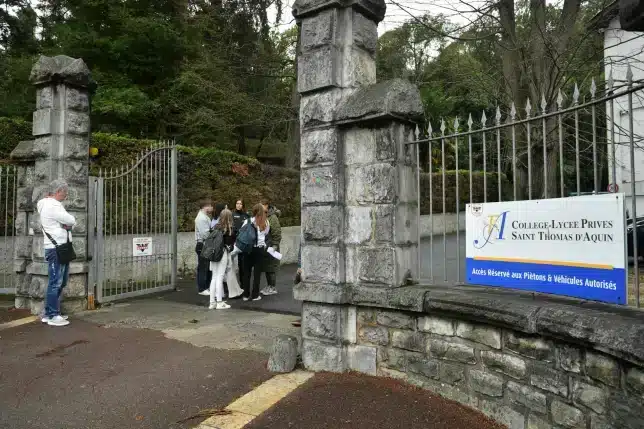
According to reports, the 16-year-old student took the knife out of their bag before stabbing the instructor in the middle of a lecture.
The attack happened at a private school in Saint-Jean-de-Luz, near Bordeaux (Picture: Metro.co.uk)Police outside the private Catholic school (Picture: AP)Police rushed to the scene this morning (Picture: AFP)
While the motive is yet to be established, LeMonde reported they may have been suffering from mental health issues.
Neither the attacker, nor the victim have been named by authorities.
Pap Ndiaye, the French education minister, confirmed he was on his way to Saint-Jean-de-Luz.
He said in a statement on Twitter: ‘Immense emotion following the death today of a teacher at Saint-Thomas-d’Aquin high school in Saint-Jean-de-Luz.
‘My thoughts go to their family, colleagues and students.’
Pyrénées-Atlantiques senator Frédérique Espagnac said she ‘totally condemns this act of violence against a teacher’.
Meanwhile, local prosecutor Jerome Bourrier confirmed a murder enquiry has been opened.
French government spokesperson, Olivier Véran, told reporters during a press conference the government would support educators across the country in the wake of the incident.
‘I can hardly imagine the trauma that this can represent,’ he said.
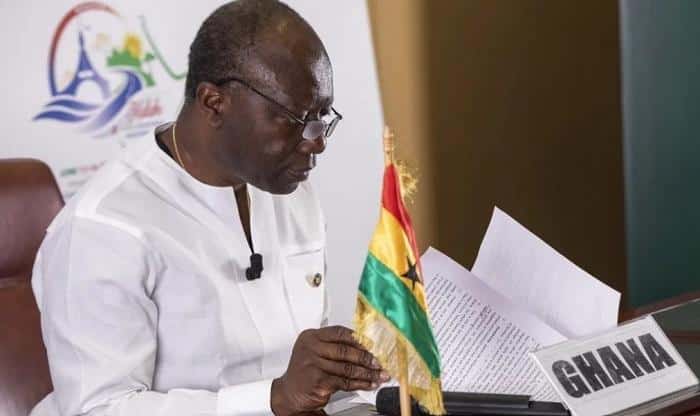
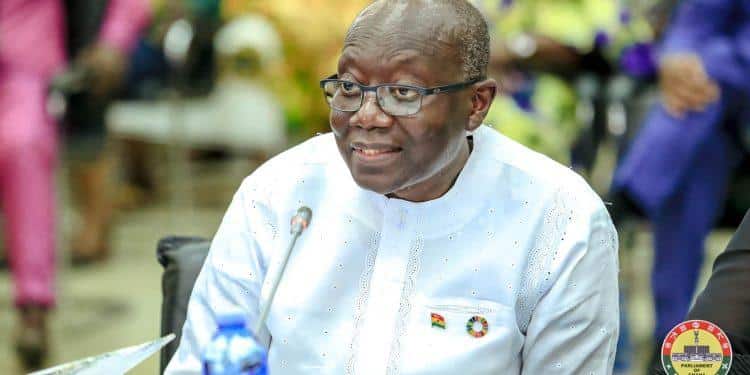
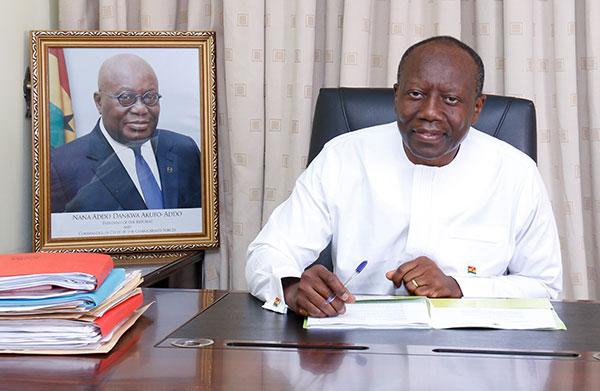
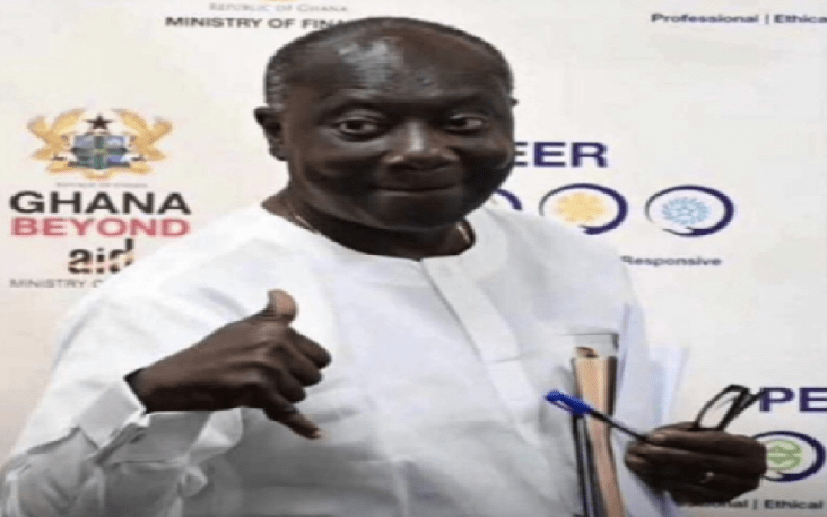
Ghana’s economy will collapse in the coming week should Finance Minister, Ken Ofori-Atta, be unable to restructure the country’s debt to receive a credit facility worth $3 billion from the International Monetary Fund (IMF).
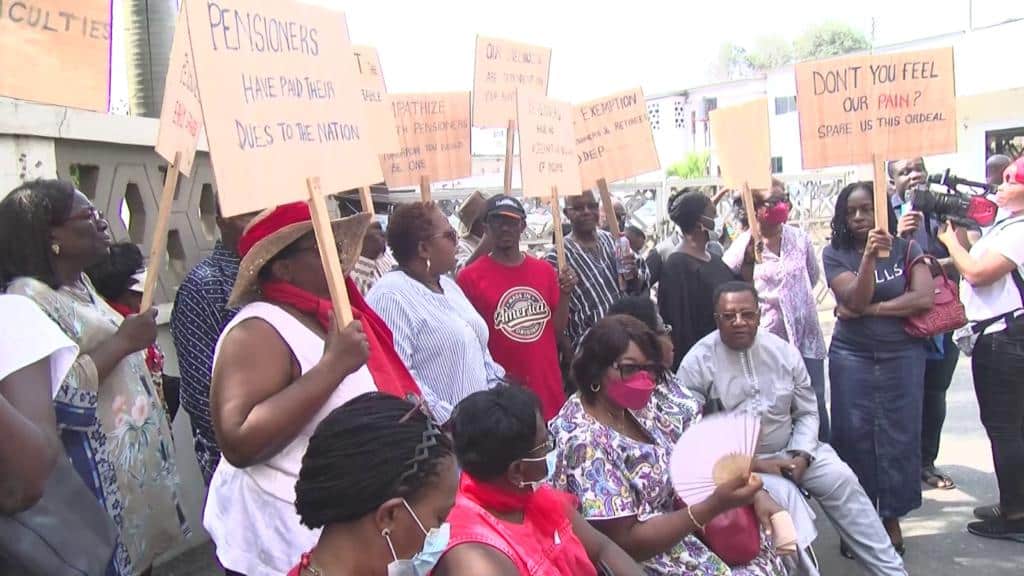
Addressing Pensioner bondholders who were displeased over their inclusion in government’s Domestic Debt Exchange Programme (DDEP) on February 6, 2023, the minister said “We need to be mindful that we really need to be successful in going to the fund by this March to avoid what we all experienced last year which we all don’t want to experience again.”
In 2022, Ghana’s economy was characterised by high inflation, doubled depreciation, hiked fuel prices and transportation fare. The economy has been in crisis since then and government needs to restructure its debt to stabilise the economy.
Government has relatively much to do in order to successfully implement its DDEP launched in December 2022.
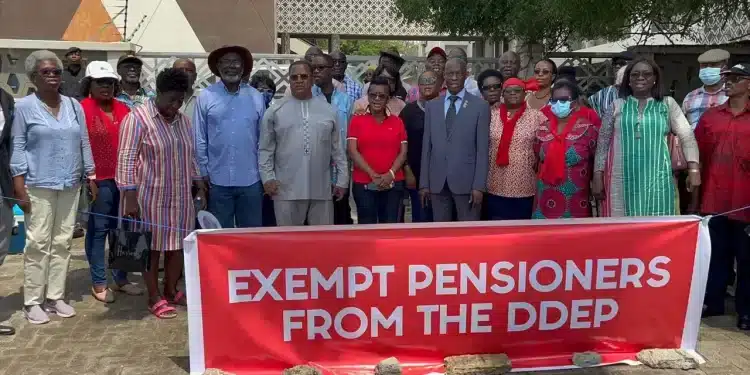
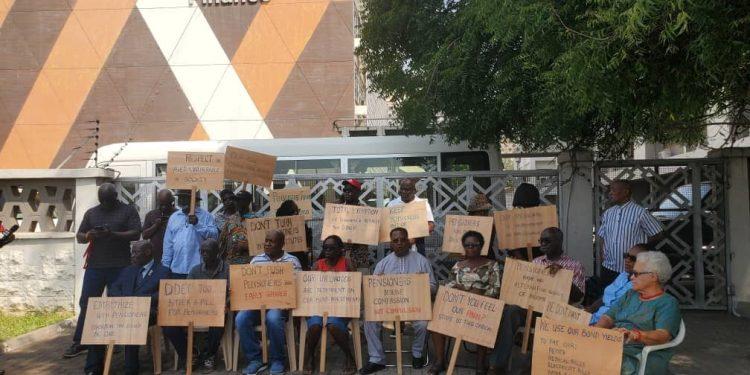
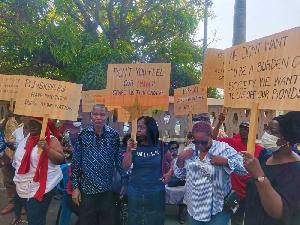
Last week, government managed to address its issues with pensioners, who had been picketing at the Finance Ministry for about two weeks, by excluding them from the programme.
However, government is yet to resolve its challenges with the Individual Bondholders Forum.
According to the forum, the government is yet to pay them over GH¢4 billion in interest and principal on which the government defaulted. These outstanding bonds matured on February 6, 2023.
The forum announced that they would be picketing at the Independent Square from February 20-24, 2023.
As of Monday and Tuesday, members of the Forum were not sighted at the said venue.
It is unknown whether they are making headway in their engagement with the government since Finance Minister, Ken Ofori-Atta, has assured that all outstanding coupons will be paid after February 21, 2023.
Also, it is February 22, and there are no reports of the outstanding matured bond being paid.
In the meantime, the government of Ghana is working on having China cancel its debt.
TheNational Democratic Congress (NDC) Parliamentary Minority has reiterated its call for the dismissal ofKen Ofori-Atta, the Finance Minister, for alleged incompetence in the management of the economy.
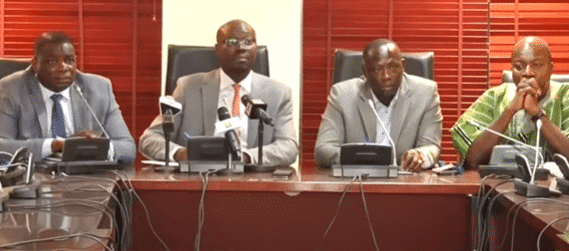
Dr Cassiel Ato Forson, the Minority Leader, speaking at a press conference in Accra, said: “The President must spare Ghanaians the agony of waking up tomorrow to see Ken Ofori-Atta still in charge of the economy.”
The press conference was held on the back of a directive from the NDC that the party’s minority parliamentary caucus should not approve the president’s ministerial nominees.
The party attributed its decision to the economic hardship Ghanaians were facing and the large size government.
Dr Forson said the NDC minority caucus would participate in the vetting of the President’s ministerial nominees but would not subscribe to a consensus vote at the level of the appointments committee.
This, he said, would ensure that the matter was brought before the full House for a vote to be taken in secret.
“We in the Minority wish to make it clear that we remain committed to ensuring greater scrutiny and will spare no effort to protect the public purse,” he said.
“In line with this, we are taking part in the vetting process so that at the very minimum, we can scrutinize the president’s decision in bringing up those nominees.”
Dr Forson said Ghana was currently going through the worst economic times in its history, stating that six years of economic mismanagement by the Akufo-Addo regime had rendered life unbearable, in fact, almost impossible, for millions of Ghanaians who struggle daily to make ends meet.
“Many people struggle to afford even one meal a day. The situation in respect of feeding in Senior High Schools across the country is even more disturbing,” he said. “We are burdened with unsustainable debt. Currently, standing at over GHS 600 billion representing about 103 per cent of our gross domestic product (GDP), this is the highest level of indebtedness in the 4th Republic.”
He said inflation was galloping at hyper levels, and that Ghanaians were confronted with daily price increases beyond the reach of majority of the people.
Touching on the size of Government, Dr Forson urged the President to take immediate steps to reduce the number of political appointees at the Office of the President.
He appealed to the President for reduction in the number of Ministers from the current 86 to 65.
The Minority Leader also advocated the merger of Ministries, citing the merger of Information and Communication, Transport and Railways; Chieftaincy and Tourism; and Sanitation and Local Government.
He also asked for the immediate reduction in the number of political appointees at the Office of the President.
The MinorityCaucus in Parliament has again attacked Finance Minister Ken Ofori-Atta in light of the difficulties he is having trying to revive the Ghana’s economy.
The Minority also reiterated its call for the resignation or removal of the Finance Minister from office.
“We reiterate our call for the dismissal of the Finance Minister, Ken Ofori-Attawhose gross incompetence in managing our economy has assumed legendary status. The President must spare Ghanaians the agony of waking up tomorrow to see Ken Ofori-Atta still in charge of the economy,” the Minority Leader, Dr. Cassiel Ato Forson said.
Mr. Forson took the swipe at Ofori-Atta during a press conference on Monday, February 20, 2023, ahead of the vetting of newly appointed ministerial nominees.
He made the remark while calling on the president to reduce his government size.
The Minority Caucus also called on the President, Nana Addo Dankwa Akufo-Addo, to merge some ministries.
The Minority Caucus wants the Ministry of Food and Agriculture merged with the Fisheries Ministry and the Chieftaincy Ministry merged with the Tourism Ministry. The Minority is also calling for the Sanitation and the Local Government Ministry to be merged to help reduce the size of the government.
The caucus also wants the Information and Communication ministries to be merged and the Transport and Railways ministries also merged.
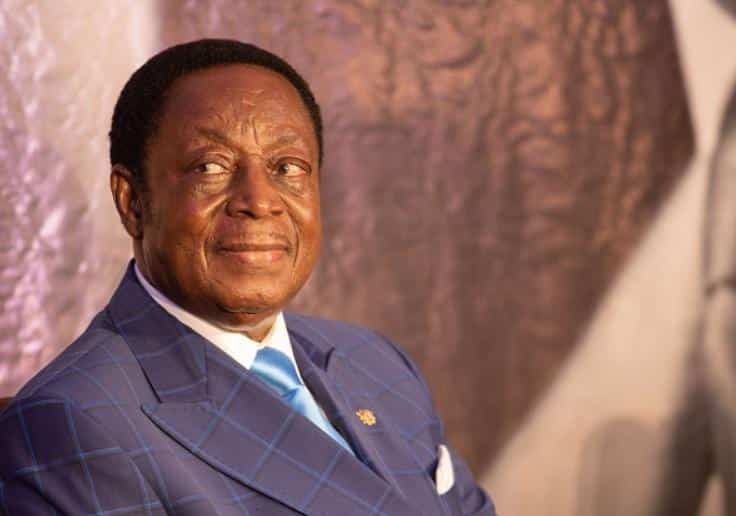
Former Finance Minister, Dr. Kwabena Duffuor wants the government’s economic management team has to be disbanded and reorganised.
The team, led by Vice President Dr. Mahamudu Bawumia with Finance MinisterKen Ofori-Atta as a member, takes crucial decisions on how the Ghanaian economy should be managed.
Dr. Duffuor says government’s handling of the recently concluded domestic debt exchange programme is evidence of the need for new hands to manage affairs.
He argues that the same people he believes are responsible for the current mess cannot fix it. He made these comments in an interview with JoyNews’ Joseph Ackah-Blay.
Dr. Duffuor was responding to a question on whether he agrees with former Chief Justice, Sophia Akuffo that Ken Ofori-Atta’s performance as Finance Minister has not been impressive.
The retired judge had told Joynews’ Raymond Acquah that the current state of Ghana’s coffers is a testament to the Minister’s poor performance.
“For 8 years as a nation, we borrowed over $15 billion. That’s huge money. If this had gone into projects which should pay for themselves, we would have been in a better position now. So the former Chief Justice has a point,” Dr. Duffuor stated.
Asked directly whether he was surprised that Ken Ofori-Atta was still at post, Dr. Duffuor stated that change is necessary.
“No problem can be solved from the same level of consciousness,” he explained.
Dr. Duffuor was further asked whether he thinks the Minister should be sacked.
“The team, not just him, the management team (Economic Management Team), including the Finance Minister, they are the ones who created the problem. Can they solve the problem? Especially when I hear some of them say that, oh but for the fact that we were kicked out of the financial market, we could have gone to borrow 2 or 3 billion.
“This means the same level of consciousness that created the problem, they haven’t seen that we have a problem yet”, he replied.
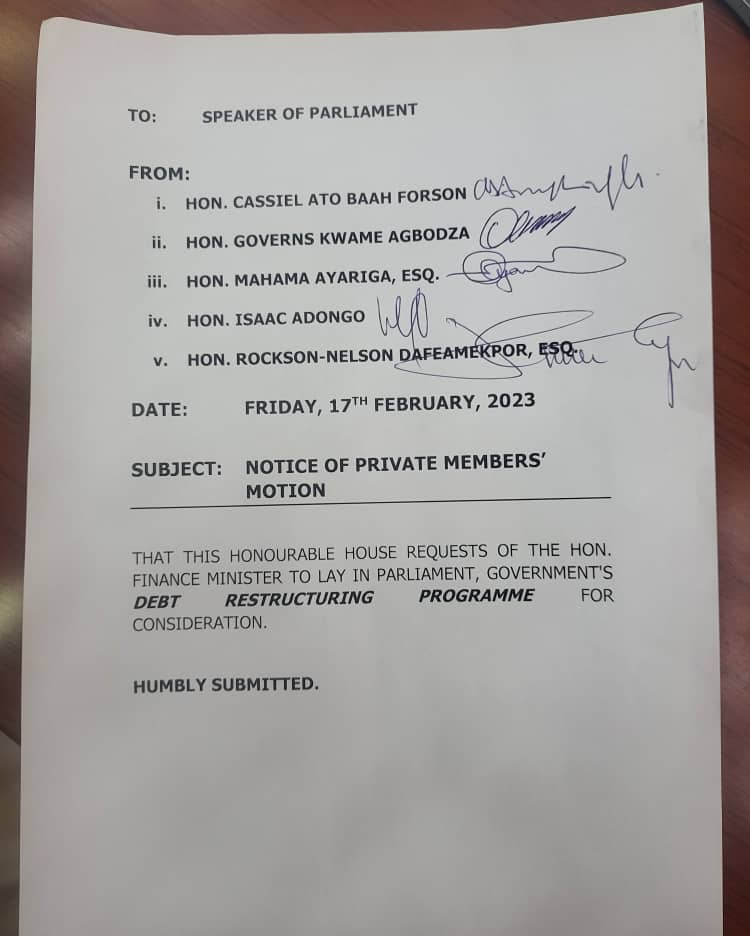
In an effort to push the Finance Minister, Ken Ofori-Atta, to submit the Domestic Debt Exchange Programme (DDEP) for approval to Parliament, the Minority has submitted a private members’ motion.
The NDC MPs are asking that the whole government’s debt restructuring package be brought before the House for additional discussion in a motion filed on Friday, February 17.
They hold the opinion that in their capacity as Ghanaians’ representatives, they must necessarily contribute to the program.
Already, the Minority Leader, Dr Cassiel Ato Forson has said his side will also file a motion to compel government to exempt individual bondholders from the programme.
Speaking in an interview with JoyNews on Thursday, the Ajumako Enyan Essiam legislator said they will do whatever is possible to ensure investors are protected.
“Our intention today was to serve notice that tomorrow the NDC Minority will be filing a motion to compel the government to exempt individual bondholders and pension funds and pensioners from the domestic debt exchange.”
Dr Ato Forson explained that the decision to file the motion is to ensure that an issuer exemption is granted to bondholders who had faith in the NDC government to invest in risk-free bonds.
This, he asserted, is because “the Constitution is clear that before you go for a loan, the terms and conditions must be approved by Parliament.”
Following an economic downturn and difficulties in servicing its debt, the government implemented the domestic debt exchange programme to give itself more time to meet its fiscal obligations.
However, the programme upon its announcement faced stiff opposition from groups and individuals.
Without the debt exchange programme, the government warned that the nation’s economy would collapse.
Ghana is currently requesting a $3 billion bailout from the IMF to bolster the struggling national economy.
Before the Bretton Woods institution’s board would evaluate Ghana’s request, one of the requirements is the domestic debt restructuring scheme.
A staff-level agreement between Ghana and the IMF was achieved in December, opening the door for the $3 billion rescue.
A deadline for paying back outstanding bonds that the government defaulted on which also matured on February 6 has finally been provided by Finance Minister Ken Ofori-Atta.
According to him, all outstanding coupons will be paid after February 21.
“Settlements will be made after Tuesday, February 21 and then we can begin to look at processing everybody’s [bonds],” Finance Ministerassured the pensioner individual bondholders on Friday when they met to thank him for exempting them from the debt exchange programme.
Explaining the reason for the delay in payment, he pointed out that the processing of coupon payments on bonds delayed due to the settlement period for the programme.
He, however, reiterated that the government is working to ensure that every bondholder is paid their dividends upon maturity of their bonds and urged the bondholders to remain calm.
“But let nobody have any inkling that anybody is going to be punished for whatever reason. All coupons will be attended to the same way in which the contracts were signed.
“We are in a difficult situation that is why we are doing the debt exchange programme and so we hope that the percentage of bonds signed onto the programme will bring down our interest on debts and give us the fiscal space to honour whatever commitments we have with our bonds,” he said.
This comes in the wake of Individual bondholders piling pressure on the Finance Ministry to pay the over GH¢4 billion in interest and principal on which the Ministry defaulted.
The Individual Bondholder’s Forum dispatched a letter to the Finance Minister, Ken Ofori-Atta demanding the payment of outstanding bonds that matured on February 6.
The Individual Bondholders Association of Ghana has taken it a step further. A delegation from the association was at the Police Headquarters on Monday to serve a formal notice of an impending 5-day protest.
The protest is expected to start from February 20 to 24.
The Individual bondholders will be picketing at Black Star Square.
Per the agreement, a group of about 30 or 50 individual bondholders will be escorted to the Finance Ministry to present a petition and back to the square.
On his part, a private legal practitioner and convener, Martin Kpebu stated that government should not only honour its promise to bondholders but should also exempt individual bondholders from the Debt Exchange Programme.
According to him, picketing for five days will galvanize more support for the cause of the group to push for an exemption.
The exemption protest, he said is a cause for which individual bondholders must win at all costs.
Former Chief Executive Officer of the defunct UT Bank, Prince Kofi Amoabeng has spoken about what led to the collapse of his bank; the UT Banks, some 6 years after its collapse.
The UT Bank was one of many affected during the New Patriotic Party (NPP)’s banking sector cleanup, leading to the collapse of the bank.
Many blamed the Finance Minister, Ken Ofori-Atta for spearheading the cleanup exercise, leading to the loss of jobs by many.
Speaking in an interview on GTV’s Breakfast show however, Mr. Amoabeng said that Ken Ofori-Atta cannot be blamed for the banking sector cleanup that led to the collapse of his company.
According to him, Ghanaians were the ones who voted for the then government, and the decision was a collective one on the part of government therefore Ghanaians should be the ones to blame.
“When the UT bank went down, or the government collapsed the bank, people came to me and said, [so, your friend is Ken Ofori-Atta and he took your bank] and I said ‘no’.
He was presented with facts and documents and arguments for him to make a decision and that decision I hope, he did in the best interest of Ghanaians even though I doubt it, but because of what information they had given to him.
“I said listen, it is not Ken Ofori-Atta who I refer to as my brother who collapsed the bank, it is Ghanaians who collapsed that bank, because Ghanaians chose the government. Ghanaians chose the government that collapsed the bank and I cannot hate all Ghanaians because I’m a Ghanaian myself. We voted for government, the government came and made a decision,” he added.
He said this while explaining his ideals in life that push him to forgive and pray for persons who may hate him. Mr. Amoabeng noted that he on the contrary hates no one because he is not necessarily privy to the reasons they take actions that they do and what informs certain decisions.
“I don’t even think about it because I don’t know what is behind whatever actions they take,” he stated.
Finance Minister, Ken Ofori-Atta, has reiterated the government’s commitment to protect and support banks operating in the country to aid the economic recovery effort.
“We are determined to protect banks operating in Ghana and strengthen their capacity to finance the economic recovery and growth we see before us,” the minister said when he addressed Parliament on the government’s Domestic Debt Exchange Programme on Thursday, February 16, 2023.
Mr. Offori-Attah said prudential measures are being employed to mitigate further impacts on the financial landscape and importantly on domestic creditors as government seal over 80 percent participation in its Domestic Debt Exchange Programme (DDEP).
“Billions of taxpayer’s monies were used between 2017 and 2019 to rescue the financial sector. We have no intention to imperil that work…Government is mindful of exchanges ramifications on the country’s financial health, as a result the government is developing several prudential measures to mitigate the potential impact on domestic creditors considering the need to preserve financial stability,” he said.
“In addition, a Financial Stability Fund is being established with the help of development partners to provide liquidity and solvency support to banks, fund managers and collective investment schemes to ensure that they are able to meet their obligations to their clients,” the minister added.
The Minister of Finance, Ken Ofori-Atta, has assured of improved economic stability with a successful completion of the Domestic Debt Exchange Programme (DDEP).
The programme, which he says forms part of government’s response strategy to addressing the current economic challenges, will impact positively on inflation, exchange rates, interest rates, as well as bring some relief to businesses and families.
“I am confident that the programme government has set out for this year, supported by parliament, will get us out of the economic crisis that has besieged our economy since COVID-19 reached our shores back in March 2020. I am confident that with conclusion of the Domestic Debt Exchange programme we will experience stability in exchange rates, inflation and interest rates – bringing businesses and families some respite, the minister said in his address to parliament on details of the debt exchange programme.
Outstanding debt
As of December 2022, the total outstanding debt – to eligible and non-eligible bondholders – amounted to approximately GH¢137billion. Subsequent extensions of dates and payment of maturities meant that the remaining stock was reduced from GH¢137billion to GH¢130billion.
However, the finance minister noted that the eligible bonds as per the exchange memorandum meant an exclusion of pension funds and bonds that were subject to swap mechanisms for monetary and exchange rate policy operations.
This then brought the eligible bonds for tendering to GH¢97.75billion. Out of the total eligible bonds for tendering, GH¢83billion was successfully tendered – accounting for about 85 percent of outstanding eligible amounts and meeting the target of 80 percent threshold as expressed in the memorandum of exchange.
Nonetheless, the GH¢83billion bonds that were successfully tendered represent 64 percent of the outstanding debt stock of GH¢130billion at end-December 2022.
“The Domestic Debt Exchange Programme was to alleviate the debt burden while minimising its impact on investors and the financial sector,” he told the parliamentarians.
According to the minister, since the first announcement there have been multiple engagements with stakeholders – leading to a number of amendments to terms of the offer, with a final extension deadline of February 7, 2023 and an administrative extension of February 14, 2023.
The final terms of the DDEP, he said, were designed to address the specific concerns of different bondholder categories: comprising category A, collective investment schemes and natural persons below the age of 59; category B, natural persons 59 years old or older; and general category holders, representing all other holders except those in categories A and B.
The finance minister further noted that category A holders tendered an amount of GH¢5.9billion, representing 6.06 percent of the eligible bonds; with category B tendering GH¢423 million, representing 0.4 percent; and category C tendering an amount of GH¢76.6billion, representing 78 percent.
Mr. Ofori Atta extended government’s gratitude to bond holders who participated in the programme: “We wish to thank everyone who has tendered and supported the domestic debt exchange programme. It is a truly remarkable act of sacrifice in our nation’s history. Your timely support is deeply appreciated.
“We also appreciate the concerns of those who may still be uncertain in these choices, and I trust that we can continue to engage, work together to reset the fundamental issues of the economy and reposition our economy.”
We will not imperil financial sector
Mr. Ofori-Atta also assured of the government’s willingness to protect and support banks and other financial institutions in the country to aid the recovery process.
“We are determined to protect banks operating in Ghana and strengthen their capacity to finance the economic recovery and growth we see before us,” the minister said.
While acknowledging that the economy is in serious crisis, Mr. Ofori-Atta assured that prudential measures are being employed to mitigate further impacts on the financial landscape and most importantly, on domestic creditors.
“Government is mindful of the exchange’s ramifications on the country’s financial health. As a result, the government is developing several prudential measures to mitigate the potential impact on domestic creditors, considering the need to preserve financial stability. Billions of taxpayer’s monies were used between 2017 and 2019 to rescue the financial sector. We have no intention to imperil that work,” he assured.
Financial Stability Fund
Mr. Ofori Atta also informed parliament of a Financial Stability Fund that is being established to cushion banks, pension funds and insurance companies, among others, to shore-up their liquidity.
“In addition, a Financial Stability Fund (FSF) is being established by government with the help of development partners to provide liquidity and solvency support to banks, pension funds, insurance companies, fund managers and collective investment schemes, to ensure that they are able to meet their obligations to clients as they fall due,” he stated.
Finance Minister, Ken Ofori-Atta, said the successful implementation of the Domestic Debt Exchange Programme (DDEP) will close the country’s financing gap and enable the government to meet the debt sustainability target of 55percent of debt-to-GDP in present value terms by 2028.
According to him, the government’s debt exchange programme, which secured over 80percent participation by the time of closure, was part of a broader response strategy for addressing the country’s current economic challenges.
“While we continue to secure an IMF programme to boost confidence in the economy, we are complementing this by enhancing our domestic mobilisation efforts,” Mr. Ofori-Atta said Thursday when he briefed Parliament on the DDEP.
Seeking financing from BoG
Ghana lost access to the International Capital Markets (ICM) at the beginning of 2022. At the same time, the country’s budget implementation was confronted with domestic financing challenges from the auctions as well as lower than estimated domestic revenue mobilization.
“These presented a very challenging macroeconomic environment during 2022, leading to a widened financing gap of the Budget and therefore became necessary for the Bank of Ghana to fund shortfalls at the auction market to avoid a disorderly default and prevent a deeper crisis,” the minister said.
Under these circumstances, Mr. Ofori-Atta told Parliament that it was necessary for the government to seek financing from the Bank of Ghana to augment its fiscal operations for the year.
The Bank of Ghana, last week, concluded work on its financial accounts for 2022 and reports that the total overdraft extended to Government for 2022 was GH¢37,956.82 million.
“Mr Speaker, in line with Section 30 (6) of the Bank of Ghana Act, 2002, (Act 612), we are using this platform to inform the legislature of the financing of the budget by the Bank of Ghana. The Domestic Debt Exchange exercise and the External Debt Restructuring Programme, will make such financing unnecessary, going forward in 2023 and beyond,” he stated.
He added: “Mr. Speaker, all these efforts would be greatly enhanced if the Income Tax (Amendment) Bill, Excise Duty & Excise Tax Stamp (Amendment) Bills as well as the Growth and Sustainability Levy Bill, which are outstanding in this august House could be prioritized and passed.”
Finance Minister Ken Ofori-Atta has revealed that the main source of financing for the 2023 budget are treasury bills and concessional loans.
According to him, this has become the case because of the closure of the international domestic bond market.
He made the comment when he appeared before Parliament on February 16, 2023.
“Mr. Speaker, as the domestic international domestic bond markets are shut, for the financing of government programmes, we are relying on Treasury bills and concessional primary sources of financing for the 2023 budget.
“We, therefore, call on this House to support government financing requests to ensure a full recovery from these economic challenges,” he said.
Meanwhile, Treasury bills saw an oversubscription in their latest auction on February 10, 2023.
According to the auction results from the Central Bank, the government secured GH¢3.35 billion from the 91, 182, and 364-day Treasury bills.
This is GH¢590.49 million away from its GH¢2.759 billion target.
The majority of the subscriptions were from the 91-day bill which secured GH¢2.07 billion and GH¢398 million from the 182-day bill and GH¢875.68 million from the 364-day bill.
The interest rates, however, hovered around 35.8%.
Members of the Pensioner Bondholders Forum, have expressed satisfaction with the announcement of the exemption from government’s domestic debt exchange program.
“I’m happy this is finally over and there will be nobody at the Ministry from tomorrow,” Convener of Pensioner Bondholders Forum, Dr Adu Anane Antwi, told Starr News after the Minister’s announcement in parliament Thursday.
The Finance Minister, Ken Ofori-Atta, has confirmed that all pensioners who refused to subscribe to the domestic debt swap after the deadline have been exempted from the programme.
Addressing Parliament on the state of the Domestic Debt Exchange Programme, Mr Ofori-Atta said the pensioners have nothing to worry about adding that all their coupons and principals will be honoured when maturity is due.
“Mr Speaker, Government remains committed to the well-being and dignity of our Senior Citizens and Pensioners. Indeed, it has personally caused me great distress as a number of them have picketed at the premises of the Ministry of Finance since Monday, 6th February 2023. As I have already indicated in my Press Release dated 14th February 2023, Government will honour their coupon payments and maturing principals, like all Government bonds, in line with Government’s Fiscal commitments.
“Mr Speaker, in seeking to understand the concerns of our Senior Citizens, I have met with them on three occasions. The most recent was yesterday 15th February 2022, where I explained the terms of the new bonds.
“Mr Speaker, I subsequently wrote to their Convener, letting him know that all pensioners who did not participate in the exchange are exempted and therefore there will be no need for our Senior Citizens to picket at the Finance Ministry. Mr Speaker, I would like to thank all those who helped in those discussions.”
The group has for the past few days pitched camp at the Finance Ministry for an hourly picketing exercise.
The protest which witnessed a number of top personalities including former Chief Justice Sophia Akuffo was in demand for total exemption from government’s completed DDEP.
The government has however expressed appreciation to Ghanaians for the success of the program.
“With great relief and immense gratitude, Government is pleased to announce that as of 14th February 2023, approximately 85% of bonds were tendered in the Exchange (as determined by the Central Securities Depository).
“On behalf of H.E. the President of the Republic, Nana Addo Dankwa Akufo-Addo, I wish to express our profound appreciation to the people of Ghana for their patience and support throughout these very challenging times. I also wish to extend our gratitude to the overwhelming number of bondholders who chose to participate in this all-important effort to pull the economy back from crisis,”
The Minister for Finance, Ken Ofori-Atta has stated that he was highly distressed to see pensioner bondholders picketing at the premises of the Finance Minister over a two-week period.
Addressing parliament on Thursday, February 16, 2023, the minister reiterated that government will honour the terms of bonds held by pensioners as it remains committed to the wellbeing and dignity of senior citizens.
“Mr Speaker, government remains committed to the wellbeing and dignity of our senior citizens and pensioners. Indeed Mr Speaker, it has personally caused me great distress as a number of our pensioners have picketed at the premises of the ministry of finance since Monday, February 6, 2023. I have already stated in my press release dated February 14, 2023, that government will honour their coupon payments and all maturing bonds in line with government’s fiscal commitments,” the minister told parliament.
The Pensioner Bondholders Forum have been picketing at the ministry demanding total exemption from the government’s Domestic Debt Exchange Programme.
The picketing witnessed the participation of former Chief Justice, Sophia Akuffo who described the programme as unlawful and disrespectful to senior citizens.
But speaking to parliament on Thursday, the minister disclosed that pensioners who did not participate in the programme have been exempted by government.
“In seeking to understand the concerns of our senior citizens, I have met with them on three occasions; the most recent was 15 February 2023 where I explained the terms of the new bonds.
“Mr Speaker, I subsequently wrote to their convener that all pensioners who did not participate in the bond offering are exempted,” Ofori-Atta added.
The DDEP officially closed on February 10, 2023. According to the ministry of finance, over 80% of individual and institutional bondholders participated in the exercise.
The Executive Director of the Alliance for Social Equity and Public Accountability (ASEPA), Mensah Thompson has taken a swipe at NPP stalwart Gabby Asare Otchere-Darko over his comments concerning the economy and other matters concerning the state.
Mr Thompson says Gabby is a spin doctor for the Nana Addo Dankwa Akufo-Addo government.
Thompson told Metro TV news on February 15 that the New Patriotic Party (NPP) stalwart has serially been helping the government deal with negative publicity by his actions especially on social media.
He described Gabby as “delusional” and averred that the recent attack Gabby launched on former Chief Justice Sophia Akuffo bore the signs of one that had the blessings of the president and the presidency.
“Gabby has always been delusional, we all know, and we know one job he has been doing for this government is (as) a spin doctor. If you follow Gabby on social media, he is a spin doctor.
“What he does is that, he does damage control, political calumny, tries to drive attention from substantive issues, tries to set political agenda and try to dissuade people from taking certain decisions,” he stressed.
Gabby gets served by Sophia Akuffo
Ex-Chief Justice Sophia Akuffo has become topical in the last two weeks after she joined colleague pensioner bondholders who had been picketing at the Ministry of Finance since February 6 demanding total exclusion from the Domestic Debt Exchange Programme (DDEP.)
Mrs. Akuffo’s involvement also saw her slam government’s handling of the programme and the general economic situation of the country.
She received heavy backlash via social media from New Patriotic Party (NPP) stalwart Gabby Asare Otchere-Darko.
In her second appearance at the picket this week, she responded to Gabby’s critique among others by referring to him as a nuisance who did not matter to her and her life.
Meanwhile, government has closed the subscription window for the DDEP announcing an 85% subscription rate.
Minister of Finance Ken Ofori-Atta told picketing pensioners on February 15 that their maturing coupons will be honoured even though they had opted against signing up, as in self-exempted from the programme.
Ofori-Atta appeared before Parliament to answer questions over the programme on February 16, 2023.
The Minister of Finance, Ken Ofori-Atta, has assured pensioner bondholders that government will not shortchange them. Rather, government will honour their coupon payments and maturing principals, like all government bondholders.
He told Parliament yesterday that the government remained committed to the well-being and dignity of the senior citizens and pensioners.
But the convener of the Pensioner Bondholders, Dr Adu Anane Antwi, in an interview with the Daily Graphic, prayed the government to walk the talk by honouring the various maturing dates of each of the bondholders, looking at the precarious financial condition of the country.
To him, the surest way for the government to remain afloat and honour its pledge was to cut down on the size of government to rake in more cash.
The Finance Minister was in Parliament to brief the House on the Domestic Debt Exchange Programme (DDEP) for the first time following the recent picketing at the ministry by protestors who want issuer exemption and not self-exemption.
The pensioners were also in the Public Gallery of Parliament in their numbers but many of them said they were not satisfied with the clarity on the policy. Some of them said the minister’s address appeared more of the presentation of the annual budget and government’s fiscal policy.
Distress
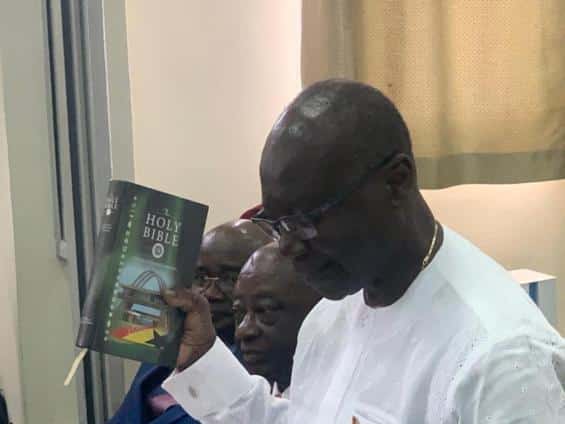
Appearing in his signature all-white apparel with extensive quotes from the Holy Bible, the Finance Minister said: “Indeed, it has personally caused me great distress as a number of them have picketed the premises of the Ministry of Finance since Monday, 6th February, 2023.”
Mr Ofori-Atta said the DDEP would also build momentum for the external restructuring programme, which had also commenced.
“As part of this process, Ghana has officially asked its bilateral creditors for a Debt Treatment initiative under the G-20 Common framework.
“Consequently, Ghana co-hosted a meeting with the Paris Club, including both Paris Club and Non-Paris Club creditors on January 10, 2023. We reiterated the request for expedited treatment under the Common Framework and presented our economic and fiscal outlook as well as the steps undertaken so far with the DDEP,” the Finance Minister said.
Breakdown
Breaking down the terms and the categories of the DDEP, the minister said it was well crafted to address the specific concerns of the different categories of holders under three groups.
Category ‘A’ is made up of Collective Investment Schemes and Natural Persons below the age of 59; Category ‘B’ – Natural persons 59 years old or older; and ‘C’ made up of General Category Holders, representing all other holders except those exempted.
According to Mr Ofori-Atta, the details of the results of the participation rate included Category ‘A’ holders issued 4,109 instructions and tendered an amount of GH¢5.93 billion.
That, he said, represented 6.06 per cent of the eligible bonds.
The minister said Category ‘B’ holders issued 1,340 instructions and tendered an amount of GH¢423.01 million, representing 0.43 per cent of the eligible bonds; while the General Category holders issued 4,489 instructions and tendered an amount of GH¢76.65 billion, representing 78.41 per cent of the eligible bonds.
Ramifications
Mr Ofori-Atta said the government was mindful of the exchange’s ramifications on the country’s financial health.
Mr Ofori-Atta indicated that as a result, the government was developing several prudential measures to mitigate the potential impact on domestic creditors, considering the need to preserve financial stability.
“Billions of taxpayer’s monies were used between 2017 and 2019 to rescue the financial sector. We have no intention to imperil that work and we are determined to protect banks operating in Ghana and strengthen their capacity to finance the economic recovery and growth we see before us,” the minister added.
Recalibration
The minister said the respective regulators had assessed the potential impact of the exchange on the financial sector.
“Working together, Bank of Ghana, the Securities and Exchange Commission, the National Insurance Commission, and the National Pensions Regulatory Authority are recalibrating their regulatory tools to accommodate the necessary forbearances for the respective sectors.
He said in addition, a Financial Stability Fund (FSF) was being established by the government, with the help of development partners to provide liquidity and solvency support to banks, pension funds, insurance companies, fund managers, and collective investment schemes to ensure that they were able to meet their obligations to their clients as they fell due.
Statements
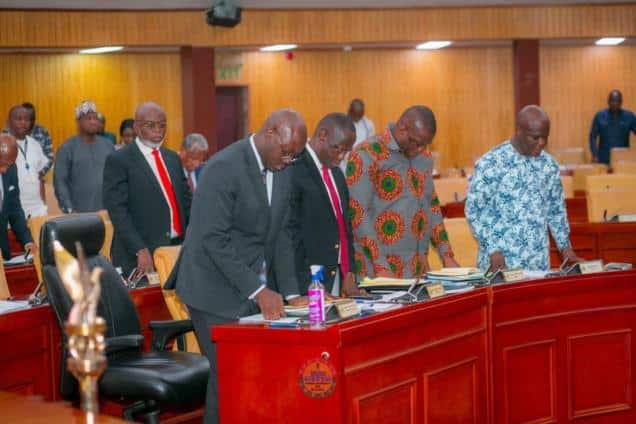
Prior to the Speaker, Alban Sumana Kingsford Bagbin, allowing members to make contributions to the presentation by the Finance Minister, there were arguments between the Majority and the Minority side on the duration to be given each member to speak.
Insisting on going strictly according to Order 72, the Deputy Majority Leader, Alexander Afenyo Markin, said the Order insists on “brief comments” not exceeding one hour.
But the Minority Leader, Dr Cassiel Ato Forson, argued that since it was a monumental national assignment, each member should be given 10 minutes to speak, while the leaders were given 20 minutes.
However, in his ruling, the Speaker varied the rules to give six members from each side of the divide the opportunity to comment for eight minutes each, while the leaders speak for 15 minutes.
From the Majority side, the Leader, Osei Kyei-Mensah-Bonsu; the Deputy Ministers of Finance, Abena Osei Asare and Dr John Kumah, as well as the Deputy Minister designate for Trade and Industry, Dr Stephen Amoah; the Chairman of the Finance Committee, Kweku Kwarteng, and a Deputy Minister of Energy, Andrew Egyapa Mercer, were allowed to comment.
Those who spoke on behalf of the Minority side were the Minority Leader, Dr Forson; MP for Bolgatanga Central, Isaac Adongo; MP for North Tongu, Samuel Okudzeto Ablakwa; MP for Yapei-Kusawgu, John Abu Jinapor; the MP for Asunafo South, Eric Opoku, and the MP for Bawku Central, Mahama Ayariga. Setting the ball rolling from the Minority side, Mr Adongo said he felt very sad for the situation the pensioners were being taken through.
“These are senior citizens who have served our country faithfully to accumulate their pension. And when we are in crisis, the vulnerable are the ones that we prioritise. They are not the ones whose monies we should take,” Mr Adongo said.
The Bolgatanga Central MP said unfortunately, the pensioners were the ones the country was taking money from.
“Mr Speaker, are we no longer a proud nation? Are we suddenly no longer a proud nation that we are all over the place begging people we borrowed money from and telling them we can’t pay?” he asked.
Contributing to the debate, the Chairman of the Finance Committee, Kwaku Kwarteng, said the DDEP deployed by the government was good but was not enough to salvage the economy.
In the view of Mr Kwarteng, the state of the economy now would require more than a debt treatment, saying that “not only should we support the government to cut interest commitment that had burdened our economy, we must pursue an aggressive programme to rein in expenditure and we must do that not just for today but we must do that going forward,” he stated.
In cutting expenditure, he said, charity must begin from home and the Executive and MPs must lead by example.
Reinstate Fiscal Responsibility Regulation
The MP for Yapei Kusawgu, John Jinapor, said the Bank of Ghana, as of 2021, had advanced over GH¢40 billion to the government, a development the central bank issued a statement to claim that the advancement was an overdraft, a short-term debt instrument.
“Immediately the Finance Minister got GH¢40 billion, he announced that he had converted it into bonds,” he said, saying the move by the minister raised concerns about his credibility, Mr Jinapor said.
“That is the women and men who are old do not trust the minister because the President told us that there would be no haircut but it turned out to be false and Mr Ofori-Atta himself promised that individuals would not be part of the domestic debt instrument but on the eve of Christmas he issued a statement that he would exempt pensioners and he is now bringing individuals into the whole fray, which is a serious matter,” he said.
Urging Parliament to pass a resolution to compel the Finance Minister to exempt all pensioners from the DDEP, Mr Jinapor also appealed to the Speaker to reinstate the Fiscal Responsibility Regulation that was suspended to help avoid such economic crisis in future.
Unsustainable debt
Deputy Finance Minister, Abena Osei-Asare said the impression that the government was bent on taking people’s money was wrong. “Mr Speaker, the government is saying that I cannot continue to disburse or redeem the bonds that I have taken from you because of where we are now as our debt has become unsustainable,” she said.
She said the country’s debt became a national debt from the first day Ghana borrowed till date.
“Last year, we were servicing our debt until things started getting difficult, not as a result of domestic issues but also external issues, making Ghana use 70 per cent of our tax revenue to service interest payments alone,” she said.
Economic catastrophe
The MP for North Tongu, Samuel Okudzeto Ablakwa, said today Ghana, once a shining star in Africa, was the brink of “economic catastrophe, Armageddon and disaster” because of a Finance Minister who had betrayed the trust of the Ghanaian people.
He said at a time senior citizens, the aged and the vulnerable were bearing the brunt of economic mismanagement, the Finance Minister was urging the people to “rejoice in the Lord.”
“People who have served this country with distinction and they did not join their colleagues who left for greener pastures but stayed here to sacrifice and toil and reconstruct this nation but their pension are being taken away from them,” Mr Ablakwa said.
“They have to picket for days and the President has not even invited them to listen to them,” the MP said.
Member of Parliament for Bolgatanga Central Constituency Isaac Adongo, has asked the Finance Minister, Ken Ofori-Atta, to resign.
The lawmaker said this while Ken Ofori Atta was speaking on the floor of Parliament, where he had been summoned to explain the Domestic Debt Exchange Programme (DDEP).
Ofori-Atta’s appearance in Parliament comes after Speaker Alban Bagbin directed the Business Committee of the House to drag Ofori-Atta to the House to answer questions on the programme.
Speaking after Ofori-Atta’s address, Isaac Adongo, Member of Parliament for Bolgatanga Central Constituency, demanded the immediate resignation of Mr. Ofori-Atta before going out of the House.
He insisted that Finance Minister has failed woefully in the discharge of his duty.
According to Adongo, the Finance Minister has increased the risk of government bonds while continuing to quote the Holy Bible to conceal his incompetence.
He cautioned Ghanaians to beware of public officers who do not demand payment for their service, alluding to the no-salary arrangement for Mr Ofori-Atta.
Minister for Finance Ken Ofori-Atta also refuted claims that he has neglected the pensioners who have been picketing to protest their inclusion in the Domestic Debt Exchange Programme (DDEP).
“The government is committed to the wellbeing of our senior citizens and pensioners. The government will honour their coupon payments and maturing principles.
“I have met with them on three occasions, where I explained the terms of the new bonds. “I subsequently wrote to their convener to let him know that all pensioners who did not participate in the bond offerings are exempt,” Ken Ofori-Atta told Parliament.
The representative for North Tongu, Samuel Okudzeto Ablakwa, has criticized Finance Minister, Ken Ofori-Atta for urging retirees to participate in the government’s Domestic Debt Exchange Program (DDEP).
Ofori-Atta, while addressing pensioner bondholders who were picketing over the involvement of their bonds in the programme, said to the pensioner in Twi, ‘boa me na meboa wo’ which means ‘help me so that I can help you”.
Reacting to the minister’s remarks on the floor of Parliament, on Thursday, the North Tongu MP said that Ofori-Atta was rather telling the pensioners that they should help him so that he can bury them.
“What is so annoying when the finance minister met then (the pensioners), all he (the finance minister) had to tell was that ‘boa me na me nboa wo’.
“You are actually doing ‘boa me na me nsie wo’ and you are saying ‘boa me na me nboa wo’… you are taking money from them, people’s hard-earned investments and their life savings and then you add insult to injury.
“Apart from quoting wrong scriptures, scriptures that don’t align with the times, you are adding ‘boa me na me nboa wo’. Let the records reflect that what the minister is actually doing is ‘boa me na me nsie wo’,” he said.
The Speaker of Parliament has asked the Finance Minister, Ken Ofori-Atta, not to touch monies belonging to pensioners.
Alban Bagbin said the current economic crisis can be solved without the funds of the pensioner.
Wrapping up on the business of the House on Thursday, February 16, the former Nadowli Kaleo MP said Parliament will resist any attempt to include funds of pensioners in the Domestic Debt Exchange Programme (DDEP).
“…what I can tell you is that leave our pensioners alone. You can solve the problem without touching their small money.”
Already, the Finance Minister has confirmed that all pensioners who failed to tender their old bonds for new ones under the exercise have been exempted from the programme.
Addressing Parliament on the state of the Domestic Debt Exchange Programme, Mr Ofori-Atta said the pensioners have nothing to worry about.
Mr Ofori-Atta added that he has officially written to the pensioner bondholders who did not sign onto the Programme about their exemption from the exercise.
“Mr Speaker, Government remains committed to the well-being and dignity of our Senior Citizens and Pensioners.
“Indeed, it has personally caused me great distress as a number of them have picketed at the premises of the Ministry of Finance since Monday, 6th February 2023.
“As I have already indicated in my Press Release dated 14th February 2023, government will honour their coupon payments and maturing principals, like all Government bonds, in line with Government’s Fiscal commitments.”
Ghana is currently requesting a $3 billion bailout from the IMF to bolster the struggling national economy.
Before the Bretton Woods institution’s board would evaluate Ghana’s request, one of the requirements is the domestic debt restructuring scheme.
A staff-level agreement between Ghana and the IMF was achieved in December, opening the door for the $3 billion rescue.
The Minister for Finance, Ken Ofori-Atta is confident that the successful implementation of the Domestic Debt Exchange Programme (DDEP) will build momentum for the country’s external debt restructuring programme.
In an address to Parliament on Thursday, February 16, 2023, the Minister stated that the completion of the DDEP, which was aimed at alleviating the country’s debt burden in a transparent and efficient manner, would help pave the way for a much-needed external debt restructuring programme.
The DDEP, part of government’s broader fiscal policy to address the country’s current macroeconomic challenges, restore macro-economic stability and put Ghana on a sustainable path to growth and development, has ended with 85 percent participation.
This success, Mr. Ofori-Atta said, “will also build momentum for the external restructuring programme, which has also commenced.”
He said as part of this process, Ghana has officially asked its bilateral creditors for a Debt Treatment initiative under the G-20 Common framework.
Ken Ofori-Atta also stated that negotiations had already begun with commercial creditors, with the establishment of a Creditor Committee to assess Ghana’s request for debt treatment under the Common Framework expected by the end of February.
He further acknowledged the importance of the DDEP in helping the government meet its debt sustainability target of 55% of debt-to-GDP in present value terms by 2028.
“The Government recognises the continued importance of the DDEP in closing the financing gap and enabling the government to meet the debt sustainability target,” said Ofori-Atta.
With the successful completion of the DDEP, Ghana is hoping to make headway in restructuring its external debt and reducing its debt burden in the long term.
Finance Minister Ken Ofori-Atta has noted that the main source of financing for the 2023 budget are treasury bills and concessional loans.
According to him, this has become the case because of the closure of the international domestic bond market.
He made the comment when he appeared before Parliament on February 16, 2023.
“Mr. Speaker, as the domestic international domestic bond markets are shut, for the financing of government programmes, we are relying on Treasury bills and concessional primary sources of financing for the 2023 budget.
“We, therefore, call on this House to support government financing requests to ensure a full recovery from these economic challenges,” he said.
Meanwhile, Treasury bills saw an oversubscription in their latest auction on February 10, 2023.
According to the auction results from the Central Bank, the government secured GH¢3.35 billion from the 91, 182, and 364-day Treasury bills.
This is GH¢590.49 million away from its GH¢2.759 billion target.
The majority of the subscriptions were from the 91-day bill which secured GH¢2.07 billion and GH¢398 million from the 182-day bill and GH¢875.68 million from the 364-day bill.
The interest rates, however, hovered around 35.8%.
The country’s public debt, expressed in present value terms, was 103% of GDP in 2022, according to Mr. Ken Ofori-Atta, the Minister of Finance, as opposed to the debt sustainability ceiling of 55% for nations like Ghana with a medium level of debt-carrying capacity.
The Minister made the disclosure on the floor of Parliament when he briefed the House on Ghana’s Domestic Debt Exchange Programme (DDEP).
The Minister also informed the House that tax to GDP ratio for the same period was “just about 12.6%, woefully below the Sub-Saharan Africa average of 18% and insufficient enough to meet pressures on the public purse.”
Members of Parliament (MPs) from the Upper East Region have condemned the installation of a rival chief for Bawku by the Overlord of the Mamprugu Traditional Area, Naa Bohugu Mahami Abdulai Sherigah II.
According to the MPs, the existing Bawku Naba, Naba Asigri Abugrago Azoka II, is the true king of the Kusawgu Traditional who has been chief of the area for over 30 years.
Speaking on behalf of the Upper East MP, the MP for Zebilla, Cletus Avoka, said that the action of Naa Bohugu Sherigah II was wrong and is likely to aggravate the already precarious situation in Bawku.
“Naa Bohagu Abdulai Mahama Sheriga ll has purported to enskinned a rival chief for Bawku. This is unacceptable and should not come from a person of his stature. Such purported enskinment is null and avoid and will not be recognized by any institution under the 1992 Constitution.
“The Zugurana, Naba Asigri Abugrago Azoka II, who is the Bawku Naba and the president of Kusawgu Traditional Council remains the only recognized paramount chief of the Kusawgu Traditional Area as recognized by law.
“The Government of Ghana must take every step to ensure the maintenance of peace and security and hold perpetrators of this criminal act accountable. Meanwhile, the MPs for the area call on the people of Kusaugu Traditional Area and its environs to remain calm and assure them that this unlawful conduct will not stand,” he said.
He added that the MPs are observing the level of seriousness the Nana Addo Dankwa Akufo-Addo government will attach to help resolve the impasse in Bawku.
The MPs who were six in number included: Cletus Apul Avoka, MP for Zebilla; Mahama Ayariga, MP for Bawku Central; Abanga Abdulai, MP for Binduri; Hajia Laadi Ayii Ayamba, MP for Pusiga; Lydia Lamisi Akanvariba, MP for Tempane and Albert Akuka Alalzuuga, MP for Garu.
Background:
The Overlord of the Mamprugu Traditional Area, Naa Bohugu Mahami Abdulai Sherigah II, enskinned a new chief for Bawku in the early hours of Wednesday, February 15, 2023.
The new chief, who was enskinned at the Nayiri palace in Nalerigu, is called Alhaji Seidu Abagre, GhanaWeb can confirm.
Jubilations were seen all over the forecourt of the Nayiri palace in Nalerigu, the North East Regional capital, as well as the traditional city of Mamprugu.
Meanwhile, soldiers were at Nayiri’s Palace to ensure that there is peace and security while the residents jubilated.
The new chief enskinned, Alhaji Seidu Abagre, is expected to be accompanied by some elders from the Nayiri Palace to Bawku after they perform all the traditional activities in Nalerigu.
The Government of Ghana has, however, condemned the installation of a new chief for Bawku by the Overlord of the Mamprugu Traditional Area, Naa Bohugu Mahami Abdulai Sherigah II.
In a statement issued by the Ministry for Information, Kojo Oppong Nkrumah, on Wednesday, February 15, 2023, the government said that Naba Asigri Abugrago Azoka II is still the Bawku Naba.
It added that the security apparatus in Bawku has been instructed to arrest anybody who holds himself out as Bawku Naba other than Naba Abugrago Azoka II.
There has been heightened tension in Bawku as a result of renewed sporadic gunshots in the outskirts of the Bawku township.
At least 6 people, according to a Joy News report, were killed, and 10 injured in fresh shootings in Bawku on Wednesday, February 8, 2022.
The Overlord of the Mamprugu Traditional Area, Naa Bohagu Abdulai Mahama Sheriga ll, in March 2022, pledged to find a lasting peace to the long-winded Bawku Chieftaincy dispute which has eliminated many lives following the disturbances in the area.
The Member of Parliament for Bolgatanga Central, Isaac Adongo, has taken a swipe at the Finance Minister, Ken Ofori-Atta, over the ongoing economic crisis.
He said what baffles him the most is that, while Ofori-Atta plunges the country into an economic crisis, he keeps quoting the Bible.
The MP, who was reacting to a statement made by Ofori-Atta on the government’s Domestic Debt Exchange Programme (DDEP) in Parliament on Thursday, said that the government was not taking the current mess they have created seriously.
“Mr. Speaker, we are not angry enough. This cannot happen to anybody. And yet you’re wasting our money, taking our money, and you are here reading this boring statement to us.
“Mr. Speaker, this is not a joke, and you are even quoting the Bible; which of the Bibles are you quoting? Quoting the bible and taking our money and making us poor. Denying the poor pensioners money, and you are still quoting the Bible.
“It is the reason some of us don’t go to church because, in the end, this is what we get,” he said.
Ofori-Atta, before addressing Parliament on the DDEP, quoted a scripture from the Book of Psalms in the Bible, urging Ghanaians to rejoice despite the current hardships.
The MP forBolgatanga Central, Isaac Adongo, appears to be tired with the Finance Minister’s constant references to the Bible in his speeches to the country.
Ken Ofori-Atta appeared before Parliament on Thursday to brief the legislators about the government’s Domestic Debt Exchange Programme(DDEP) and as has become the norm, he concluded his statement with a quotation from the Holy Book.
But Mr Adongo would not have that today.
He questioned the moral grounds the Finance Minister had to throw the word of God at Ghanaians while taking their hard-earned money.
“As a country, we are not angry enough. This cannot happen to anybody. You are here reading this boring and underwhelming statement to us and yet you are taking our money.
“This is not a joke, you are even quoting the Bible. Which of the Bibles are you quoting? Quoting the Bible and taking our money? You are denying the poor pensioner his/her money and you are still quoting the Bible?” he quizzed.
The Bolgatanga Central lawmaker subsequently asked the Finance Minister to resign with immediate effect for mismanaging the economy.
“Resign! Resign right here in your statement to Parliament,” he was categorical.
Finance Minister, Ken Ofori-Atta will appear before Parliament today Thursday, February 16, 2023, to respond to concerns from Ghanaians concerning government’s Domestic Debt Exchange Programme (DDEP).
This follows a directive by the Speaker of Parliament, Alban Bagbin to the Business Committee of the House to summon the Finance Minister to give a policy brief on the programme due to the ongoing picketing at the Finance Ministry by pensioner bondholders for an exemption from the programme.
Deputy Majority Leader, Alexander Afenyo-Markin presenting the business statement of Parliament last Friday said it was necessary for the Minister to appear before Parliament to provide answers to questions raised by constituents of members of the House.
“Mr. Speaker, on the issue of the DDEP, pursuant to your directive, we engaged the Finance Minister, and we have his assurance to be here on Thursday, February 16, 2023,” the Deputy Majority Leader said.
The programme has faced stiff opposition from groups and individuals since its announcement.
The Ministry of Finance however said it has achieved 85% of its target under the programme.
Meanwhile, members of the Pensioner Bondholders who are demanding an exemption, say they would be in Parliament to witness proceedings.
“We had information that Parliament was trying to get the minister to Parliament. We have also heard that the meeting was scheduled for Thursday. Because we are not going to converge on the day, we will go to Parliament to see what is happening there,” the Convener for the Pensioner Bondholders, Dr. Adu Anane Antwi said.
The Finance Minister on February 15, 2023, engaged the pensioner bondholders but was cut short as a social activist, Oliver Barker-Vormawor interrupted the meeting.
Talks with pensioners who had gathered at the Ministry of Finance premises ended abruptly following an altercation between the Finance Minister, Ken Ofori-Atta.
Pensioner bondholders who picketed at the Ministry of Finance on Wednesday, February 15, 2023, may have heaved a sigh of relief when the Minister of Finance, Ken Ofori-Atta stepped out to engage them for the second time since they started picketing.
However, the interaction between the minister and the pensioners, who are demanding complete exemption from the government’s just-ended Domestic Debt Exchange Programme (DDEP), ended abruptly due to an exchange between Mr Ofori-Atta and an activist.
A convener of #FIxTheCountryMovement, Oliver Mawuse Barker-Vormawor on the day had showed up to solidarize with the pensioners who had been picketing at the ministry since February 6.
The minister sought to explain to the picketers that they may as well be engaging in a futile enterprise as the exchange programme has already ended. He added that while government remained committed to honour all bonds even though they had opted to self-exempt from the DDEP, which was voluntary.
Midway through his engagement with the pensioners, Barker-Vormawor who was displeased with the minister’s explanation interjected saying that the people of Ghana had lost trust in the minister.
Ken Ofori-Atta in reaction to the interjection questioned the activist about the basis of his statement and reason for joining the picketing.
The minister who was incensed by the actions of the activist subsequently abandoned his interaction with the pensioners and returned to his office.
The #FixTheCountry convener however justified his actions to the media saying “It is important because our conversation has been about building a protest culture. A culture where persons affected by public policy decisions by political officers do not sit aside but raise their voice and match that voice with the determination to show up when it matters.
“When these things are happening, it is also important that persons are inspired by this in the spirit of resilience. So with what these pensioners have shown, it is important that we the young ones also show up for them by mobilizing people to carry forward the message of resistance expressed even with their age”, Barker-Vormawor emphasized the basis for his action.
Meanwhile, the Pensioner Bondholders Forum has condemned the actions of the #FixTheCountry group.
Speaking to the media after the exchange between the minister and the activist, a representative of the pensioners expressed disappointment in Barker-Vormawor.
“I told them that if you want to come and support my course you come and do what I am doing. When you come and I am weeping you don’t come and dance,” he said.
President Nana Addo Dankwa Akufo-Addo nominated Ken Ofori-Atta to be Ghana’s finance minister in 2017. After the ruling New Patriotic Party (NPP) won the 2020 elections, Ofori-Atta was renominated.
On January 27, 2017, Ofori-Atta took over as minister of finance, and she has held that position for almost seven years.
However, the current administration is having economic problems, which have led to calls for the minister’s resignation, citing his responsibility for the suffering Ghanaians are currently going through.
On the other hand, the government has made an argument for why the current economic issues cannot be entirely attributed to poor economic management but rather partly to outside factors that are beyond its control pointing to the COVID-19 outbreak and the conflict between Russia and Ukraine as the key external drivers of the economic crisis.
Calls for the head of the finance minister intensified when the government announced plans to seek an International Monetary Fund (IMF) bailout.
Generally, the opposition party accused the minister of misleading Ghanaians because the latter had stated on various occasions that the government wouldn’t seek the IMF’s assistance, which in their opinion was a sign of incompetence and mistrust on the part of the minister; hence their call for his resignation or dismissal.
Meanwhile, the minister still holds his position despite several requests for his resignation and various attempts to have him removed from office.
GhanaWeb compiles five possible reasons why the minister still remains in office.
1. President Akufo-Addo’s refusal to sack the minister
Akufo-Addo has come under public backlash for his decision to keep the minister in his position.
It may be recalled that some 88 Members of Parliament held a press conference on Tuesday, October 25, 2022, to voice their disquiet and demanded the head of Ken Ofori-Atta and the Minister of State at the Ministry of Finance, Charles Adu Boahen.
The MPs demanded the resignation of Ken Ofori-Atta over the failing economy.
After meeting with the president and the national leadership of the NPP, the rebel MPs agreed to cooperate with the minister to present the 2023 budget, see to its appropriation and to also reach an initial agreement with the IMF.
The stated conditions have since been met and some of the rebel MPs have stated that they are waiting on the president to act on the agreement reached with the MPs.
However, the committee, at the end of their hearing said that they did not make any specific findings at the end of their job.
Presenting the report to parliament on December 8, 2022, co-chairman Kbina Tahir Hammond said: “The committee was not able to come out with any findings.”
Subsequently, the vote of censure failed because the majority caucus left the chamber during the voting and according to the constitution, the destiny of the minister must be decided by two-thirds of the house.
Before walking out, the leader of the majority side, Osei Kyei-Mensah-Bonsu said that his group is washing its hands off the process to remove the finance minister because it did not follow due procedures.
3. The family dynasty
President Akufo-Addo has been accused of feeling reluctant to relieve Ken Ofori-Atta of his post because they are related by blood.
Ofori-Atta is president Akufo-Addo’s cousin and the president is reported to be loyal to his family members hence the unwillingness to sack the embattled minister.
The Member of Parliament for Subin, Eugene Antwi, said in an interview that the president is being blinded by his relations with Ofori-Atta.
“New Patriotic Party, (NPP) is running a democracy and not a family dynasty. I do not think it is too much to ask the President to ask two people to step aside from his government,” he said.
But president Akufo Addo speaking in an interview with OTEC FM on Monday, October 17 2022, said he has full confidence in the Minister.
He insisted that Ofori-Atta cannot be blamed for the current economic woes the country is facing.
“I came to office in 2017 under a stringent IMF programme. This same man was able to manage the affairs of our economy in such a way that in my first term, we were one of the fastest-growing economies in the world.
“An average growth rate of 7% which allowed us to initiate programmes such as Planting for Food and Jobs. So, somebody who has been able to do that. The current difficulties are not his fault. So how do I do it (sack him)? What will be the basis? What will be the rationale,” the president said.
4. IMF deal
President Akufo-Addo is said to have told rebel MPs in a meeting last year to allow Ken Ofori-Atta to seal an IMF bailout for the country before his future is decided.
Reports and media statements by some persons who attended the meeting were that the president is convinced a deal could be reached with the IMF and a decision will be made afterwards.
Even though the MPs insist Ofori-Atta was tasked to deliver an initial agreement (i.e., a staff-level deal that was reached last December), others have interpreted the president’s words as the completion of the IMF talks.
Minister of Finance, Ken Ofori-Atta, will today appear before parliament to answer questions from lawmakers on the Domestic Debt Exchange Programme (DDEP).
His appearance was announced last Friday, February 10 by deputy Majority Leader, Alexander Kwamena Afenyo-Markin, when he presented the Business Statement for this week to the House.
Speaker of Parliament, Alban Bagbin ordered the minister to appear before the House following calls by Minority MPs for Ofori-Atta to furnish the House with details of the programme.
The MPs, argued that it was unacceptable for parliament and the general public not to have been furnished with the full details of the DDEP, a situation they say continues to fuel anxiety about the exercise.
Government announces 85% subscription rate for DDEP
Ghana is currently hoping to secure an International Monetary Fund (IMF) bailout to help save the economy from collapse amid rising inflation, rapid depreciation of the cedi against the US dollar and credit downgrades by international rating agencies.
Government earlier this week announced the conclusion of subscription towards the Domestic Debt Exchange Programme (DDEP) which saw an 85% official subscription rate.
The DDEP is said to be a core condition that could help Ghana get an approval from the IMF board for a US$3 billion facility after a Staff-Level Agreement was reached last December.
The DDEP was dogged by controversies from demands by various groups demanding exemption from the programme.
The ministry is still grappling with pensioner bondholders who are demanding they are formally exempted even though the minister insists they have automatically been exempted and that their coupons will be honoured when due.
Ablakwa champions cause to summon Ofori-Atta
MP for North Tongu, Samuel Okudzeto Ablakwa, had earlier noted that the government is acting contrary to what the finance minister had promised in the 2023 budget, announcing the details of the debt exchange programme before its implementation.
The failure, he said, has led to some challenges in its implementation, including the recent picketing by affected pensioners and individual bondholders at the ministry.
“Ghanaians are genuinely concerned about their life savings and investments, and this House is yet to be briefed. We have not debated this programme and yet the Ministry of Finance is going ahead to implement this debt exchange programme which they say is a condition for the ongoing IMF engagements.
“The Minister of Finance must appear before us and we must debate and agree exactly what should be the nature of this Domestic Debt Exchange Programme, who should be exempted and the implications – what are the full ramifications on the Ghanaian economy and on the affected citizens who are currently living in anguish, in pain and great anxiety,” he said in a social media post.
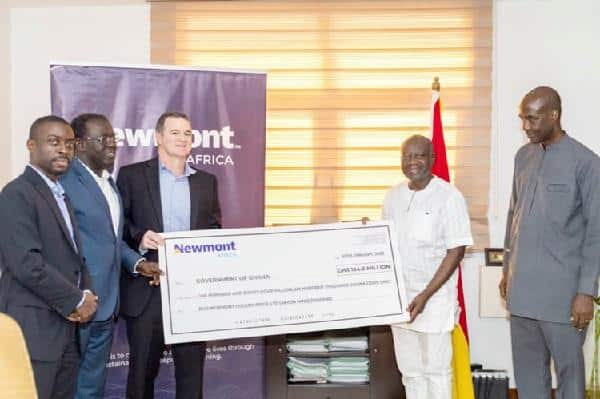
Newmont Golden Ridge Ltd (Akyem Mine) has presented a cheque for GH¢184.6 million to the Government of Ghana, as dividend for the year 2022.
The amount represents the government’s carried interest in the operations of the Akyem mine.
The cheque presentation was made by executives of Newmont Africa, led by the Regional Senior Vice-President – Africa Operations, David Thornton.
Mr Thornton thanked the government for its continuous support to Newmont Africa’s Ahafo and Akyem mines and reiterated the company’s commitment to responsible mining operations, while looking to expand Newmont Africa’s footprint in the country with the Ahafo North project.
“Our Ahafo North project remains a key strategic growth prospect for Newmont Africa, and its successful construction and subsequent operation will have immense benefits to our host communities, the local economy, as well as the broader economy of Ghana, in terms of employment creation, local supply chain opportunities, as well as taxes, royalties, and dividend payments to government,” Mr Thornton said.
On Newmont Africa’s direct support to the Ghanaian economy in the past year, beyond statutory payments, Mr Thornton mentioned the company’s support for the government’s gold buying programme that was meant to shore up the country’s gold reserves and help stabilise the economy.
“In spite of global economic challenges that had negatively impacted businesses globally, Newmont Africa was the first mining company to support the government’s gold buying programme by selling 3,500 ounces of gold to the government, through the Bank of Ghana (BoG) in May 2022.”
“An additional 22,500 ounces of gold was sold to BoG in October and November 2022, making a total of 26,000 ounces of gold sold to government in 2022,” he added.
Newmont commended
Receiving the cheque, the Minister of Finance, Ken Ofori-Atta, commended Newmont Africa for its compliance to tax and other financial payments to the government of Ghana.
The minister also lauded Newmont Africa for its prompt payment of taxes and acknowledged the potential benefits of the Ahafo North project.
He said, “We welcome payments such as these, especially during these challenging times, and we wish to commend you for being prompt with your payments, be they taxes, royalties, or dividends.”
“We are aware that the Ghana Revenue Authority has recognised you, on several occasions, for your tax compliance.
We look forward to the resumption of your Ahafo North project this year, which will bring in even more revenue to the state.”
Through a combination of tax payments in United States dollars, as well as making forex available to the BoG, Newmont Africa has supported and impacted forex availability to the government of Ghana.
The Finance Minister,Ken Ofori-Atta has deemed the continuous protests against government’s Domestic Debt Exchange Programme (DDEP) by pensioners bondholders at the Finance Minstry as inappropriate.
He maintains that the voluntary exercise has concluded and that the government will honour its obligations to bondholders, including retirees who voluntarily opted not to participate in the programme.
For the past eight days, the group has been picketing at the Finance Ministry, demanding that the government excludes them from the domestic debt swap.
Addressing pensioners on Wednesday, February 15, the Finance Minister stated that the picketing is now unnecessary.
“Really, there is no reason for us to be sitting here because that assurance has been given on paper. I want to know what it is that you are afraid of or that you think will not happen. My issue is that now you have very little of the old bonds existing. This means that, in the event of a crisis, your ability to trade your papers is diminished. But that is the choice you made,” Mr Ofori-Atta said.
Meanwhile, chaos erupted as Mr Ofori-Atta was addressing the pensioner bondholders who picketed at the premises.
His engagement was interrupted by Oliver Barker-Vormawor, a convener for pressure group #FixTheCountry who had come to lend support to the picketers accusing the Minister of untrustworthiness.
This interruption infuriated the Minister who was subsequently whisked away by his security.
“It is important because our conversation has been about building a protest culture. A culture where persons affected by public policy decisions by political officers do not sit aside but raise their voice and match that voice with the determination to show up when it matters.”
“When these things are happening, it is also important that persons are inspired by this in the spirit of resilience. So with what these pensioners have shown, it is important that we the young ones also show up for them by mobilizing people to carry forward the message of resistance expressed even with their age”, Barker-Vormawor emphasized.
Today, Wednesday, February, 15, the minister of finance, Ken Ofori-Atta, was interrupted by the convener for pressure group, Oliver Barker-Vormawor when addressing pensioner bondholders at theFinance Ministry.
The Minister was seeking to understand the concerns of the picketers but was interrupted by Oliver Barker-Vormawor, a convener for pressure group #FixTheCountry who had come to lend support to the picketers accusing the minister of untrustworthiness.
This interruption infuriated theMinister who was whisked away by security.
The Minister told the pensioners that following the closure of the programmeand the attainment of the successful participation rate, the continuous picketing by the pensioners was unnecessary.
“Really, there is no reason for us to be sitting here because that assurance has been given on paper. I want to know what it is that you are afraid of or that you think will not happen. My issue is that, that, now you have very little of the old bonds existing. This means that, in the event of a crisis, your ability to trade your papers is diminished. But that is the choice you made.”
Fund’s Executive Board is expected to approve the country’s bailout request by end of first-quarter 2023, with government having already obtained a government-secured staff-level agreement (SLA) three months ago.
Although the deal also hinges on a number of prior actions, key among which is the restructuring of public liabilities through the debt exchange programme – expected to be completed before the request can receive approval, successful closure of the DDEP paves way for government to expedite action toward reaching a full agreement with the Fund.
In addition to the DDEP, government is seeking to restructure its foreign debt and has initiated discussions with bilateral lenders to create an official creditor committee… which is the initial step required to begin negotiations on debt-relief.
If this step is not taken, approval of the IMF programme will be delayed; which could mean that the much-needed disbursements will be hindered.
As much as other countries undergoing the common debt restructuring framework treatment have faced slow progress, government is hopeful of a rapid debt overhaul.
“Ghana stands ready to complete all prior actions before end-March 2023; but more importantly, Ghana is committed to the IMF programme as a whole,” Finance Minister Ken Ofori-Atta said during the announcement of the SLA.
He added that: “We can only get to the IMF Board if we get sufficient commitment from our creditors in support of the debt operation”.
Two weeks ago, German Finance Minister Christian Wolfgang Lindner pledged unwavering support for the creditor committee’s establishment at the Paris Club for Ghana.
“I hope that an international creditors committee under the current framework can be formed soon. I would like to call on all creditors to join the efforts as swiftly as possible, and to be frank I remind China of its responsibilities as a very important bilateral creditor to Ghana – as I did already on the international level on occasion; for example, in the last IMF meeting,” the German Finance Minister said.
According to Reuters, the Paris Club of creditor nations has contacted other bilateral creditors, such as China and India, to engage in forming the committee.
Following Chad, Ethiopia and Zambia, Ghana is the fourth country to request a debt restructuring under the G20 Common Framework, which was established in 2020 to simplify the coordination of creditor governments in restructuring debts of low-income countries after the COVID-19 pandemic.
Data from the Institute of International Finance (IIF) suggest that China is Ghana’s single biggest bilateral creditor with US$1.7billion of debt, while the country owes US$1.9billion to Paris Club members. Chinese lending represents around 80 percent of non-Paris Club debt, as the nation’s total external debt is US$28.4billion.
Calling on all creditors, the German Finance Minister added that it is essential to see a fair sharing among all creditors, saying: “This is why we need the creditor committee as soon as possible, in which China has to participate”.
In December 2022, the main holders of Ghana’s foreign debt established a creditor consortium to negotiate debt restructuring with government after a surprise announcement about the suspension of interest payments on its external debt. Already, data from the financial market data aggregator, Refinitiv, show that Ghana’s dollar-denominated debt ranges from 2023 to 2061, totalling more than US$13billion.
The nation’s Debt Sustainability Analysis (DSA) demonstrates that debt servicing absorbs more than half of total government revenues and almost 70 percent of tax revenues. Additionally, the total public debt stock, including that of state-owned enterprises among others, exceeds 100 percent of the gross domestic product (GDP) and had accelerated to GH¢575.7billion at the end of November 2022, according to official data.
Chris Hughton played a crucial role in establishing the groundwork for the Black Stars’ shift. Hughton has been given the responsibility of advancing the transition after being appointed head coach.
The Black Stars currently feature a mix of youthful, skilled players and a few seasoned veterans who are presently participating in top European leagues.
The manager is expected to make quick or slow modifications in phasing out some players in order to ensure the team’s progress and preserve the transition.
Here are five players who could be casualties of Chris Hughton’s new Black Stars
Andre Ayew
There have been calls to phase out skipper Andre Dede Ayew who is at the tail of his career.
Ayew, 33, has been a key part of the team since 2007 but his time at the Black Stars could be over as Chris Hughton is expected to take Ghana’s transition to another level.
Baba Rahman
Baba Rahman has struggled to hit his best after returning from persistent injuries.
He has been heavily criticized as some believe that the 28-year-old should make a way for Gideon Mensah who has shown real improvement in fewer games.
Rahman could be one of the casualties of Chris Hughton’s next level agenda. The Reading full-back has been the first-choice left-back for the Black Stars since 2015.
Thomas Partey
Thomas Partey is a key member of the current Black Stars. The player’s commitment to the team has however been questioned after inconsistent performances for the team.
There has been the narrative that Partey drop his level when playing in the national colors as compared to when he is playing for Arsenal.
Despite being an important part of the team, a consistent drop in level of his performance could lead to Chris Hughton fading him out.
Wakaso Mubarak
Mubarak Wakaso has recently been on the peripheral and struggling to break into the team currently as the midfield is packed with loads of talents.
The 32-year-old’s 11 years at the national team might be coming to an end as Hughton is enticed to improve the level of the team.
Jordan Ayew
Many believe Jordan Ayew has paid his dues hence the team should count on the young talented forwards in the group.
Ayew has been struggling with goals and is steadily losing his first stop in the line-up as he has started from the bench a couple of times in recent games.
With his game time already reducing, Chris Hughton could maintain the trend as he would look to build Ghana’s blunt attack.
Thegovernment has been urged by the Individual Bondholders’ Forum to honor all coupon and principal payments owing to bondholders of bonds not tendered into the Domestic Debt Exchange Program (DDEP).
In a statement, Convener Senyo Hosi reminded the Finance Minister, Ken Ofori-Atta, that payment of coupons and principal for bonds that matured since the 6th of February to date (herein referred to as ‘Due Bonds’) remain outstanding.
Mr Ofori Atta had earlier promised individual bondholders who refused to tender their bonds into the domestic debt exchange programme will have their existing coupons honoured when the date is due for payment.
Several pensioner Bondholders have also been picketing at the Finance Ministry for six days now to demand the government completely exclude their bonds from the domestic debt exchange programme.
In the letter, the individual bondholders stated that honouring payments on due bonds will re-engineer public and investor confidence and trust in the activities of the Finance Ministry.
Below is the full letter to the Finance Minister
REQUEST FOR OUTSTANDING PAYMENTS ON DUE BONDS
We refer to your affirmation of the Government’s commitment to honour all coupon and principal payments due to individuals with holdings of bonds not tendered into the Domestic Debt Exchange programme (DDE).
We wish to remind you that payment of coupons and principal for bonds that matured since the 6th of February to date (herein referred to as ‘Due Bonds’) remain outstanding. With the DDE deadline of 10th of February over, we trust that Government will be in a clear position to ascertain the total bonds due for payment after the completion of the DDE settlement scheduled for 14th February 2023.
We hereby request your advice of the date for coupon and principal payments due under the ‘Due Bonds’. It is our expectation that Government will seize this opportunity to re-engineer public and investor confidence and trust, by making the payments not later than Friday, 17th February 2023.
We count on your cooperation. Sincerely, Senyo K. Hosi Convener
The government’s attempt to pressure bondholders into accepting a subpar offer through the Domestic Debt Exchange Program (DDEP) has been classified as worrying by investment advisor Harry Yamason.
Speaking on Starr Today with Joshua Kodjo Mensah, Mr. Yamson attacked ministers and government communicators for sending bondholders a signal of uncertainty.
He further noted that it will only require purposeful action by the government and the CST to render their bonds untradeable.
“The government is demanding that the current bondholders surrender their bonds, their rights, their incomes to exchange for very inferior products and a very inferior offer. With no legal guarantees and is suggesting through its spokesperson and Ministers that the value will be destroyed, and tradability will not be one of the value benefits that will accrue any longer.
“I think this is very unfortunate for the government to be promoting these narratives. The bonds as they currently exist are tradable instruments. There is actually no reason for them not to be tradable going forward. There is no legal reason for the bonds not to be tradable,” Mr. Yamson stated.
He continued: “If the offer by the government is so superior then the government should not be worried about what decisions individuals take as to whether to sell or buy the old bonds. The matter should be left to individuals and the government should not intervene.”
Meanwhile, Minority Leader, Cassiel Ato Forson has assured Pensioner Bondholders and others that parliament will move swiftly to address the burning issues related to the ongoing domestic debt exchange program.
Pensioner Bondholders’ meeting with Finance Minister Ken Ofori-Atta on Friday, February 10, 2023, ended inconclusively as the government insists the retirees should consider voluntary exemption.
In a tweet, the leader of the opposition frontbench said the Finance Minister, Ken Ofori-Atta is billed to appear before the House to deal with the concerns of investors in the debt restructuring programme.
“It is disheartening to see our dear pensioners including a former Chief Justice picketing at the MOF over the domestic debt restructuring. I wish to assure her & the rest; parliament is dragging the Finance Minister before us next week and we will represent their interest fully!” a tweet by Ato Forson said.
Ahead of the 66th Independence Anniversary Celebration planned to take place in Ho, the Volta Regional Capital, a delegation led by the Minister for Transport, Kwaku Ofori Asiamah, has visited the Airport to inspect it.
The team paid a working visit to the Airport to examine sections of the airport including the Arrival and Departure halls, Air Traffic Control, Fire Station, and Emergency Operations Center, among other things, with the Volta Regional Minister, Dr. Archibald Letsa.
Kwaku Ofori Asiamah was given the assurance that the airport would be ready to welcome guests and dignitaries who would be passing through the airport for the celebrations.
The Minister was accompanied by Hon. Emmanuel Bossman, Deputy Chief of Staff, Mr Paul Adom-Otchere, Board Chairman of GACL, Board Members of GACL, Mrs. Pamela Djamson – Tettey, Managing Director, GACL, Mr Daniel Acquah, Deputy Director General, Technical, GCAA and other officials of Ghana Airports Company Limited and Ghana Civil Aviation Authority.
The Ho Airport was constructed to boost tourism and trade in the Volta Region.
Dr. Kofi Konadu Apraku, one of the leading members of the New Patriotic Party (NPP) has stated that the finance Minister, Ken Ofori-Atta would have resigned if he was the current president.
According to him, it is enough that there are many disgruntled members of the party, mainly their Members of Parliament, who have expressed their no-confidence in the performance of the Minister of Finance.
He added that were he in the shoes ofPresident Akufo-Addo, what he would have done was to give into their demands and get the finance minister off the job, a report by citinewsroom.com has said.
“If I were the president [Nana Addo Dankwa Akufo-Addo], I would have listened to the MPs and sacked Ofori-Atta,” he is quoted to have said in an interview with GTV.
It will be recalled that there were over 80 MPs on the Majority side of parliament who recently addressed the press, announcing their disaffection with the Minister of Finance.
The MPs then called on the president to sack Ken Ofori-Atta or risk having them no longer participate in any government business that would be brought before parliament.
Although this is yet to happen, as President Akufo-Addo has severally indicated that he finds nothing wrong with the work of his appointee, Dr. Kofi Konadu Apraku has said that there is the need for the president to examine the sentiments of the MPs and those of the general public.
“In politics, you have to be sensitive to public opinion. Sometimes, it may not be the truth, but that is the sentiments, and the sentiments of the people need to be examined, and acted upon if it is possible. It’s a great deal for the NPP MPs to come out there to say they don’t want our finance minister, their own Finance Minister that they have worked with in the past.
“In democracy, we have to be sensitive to the people. Lack of action exacerbates the problem, so you cut it off and cut your losses and I would have cut my losses and said please you have done enough, the environment is hostile to you so go. I would have changed him,” he is quoted to have said.
The race for the top-spot of the NPP party elections is yet to be officially opened but so far, a number of names have popped up, indicating that they are also interested in the spot.
Some of the names that come up have been Alan Kyerematen, the immediate-past Minister of Trade and Industry; Dr Akoto Owusu Afriyie, the former Minister of Food and Agriculture; Francis Addai-Nimoh, a former MP for Ashanti Mampong; and the Vice President, Dr. Mahamudu Bawumia.
The Minister of Tourism, Arts, and Culture, Dr. Ibrahim Awal, has urged African states to use the natural and human resources that the continent is endowed with to further socioeconomic development.
“Africa has so many riches, but reaps so little benefit,” he added. As a result, it’s time to include traditional authorities, religious figures, and civil society groups to promote inclusive and sustainable development.
In this regard, it’s critical to realize the possibilities of the multi-party democracy that most African nations have chosen for peace and advancement on the continent.
Dr Awal made the call in a speech read on his behalf at the 11th edition of the Pan African Leadership, Investment Summit and Honours in Accra, on Friday.
He lamented the insecurity and political upheavals in Sub-Saharan Africa, which was retarding socio-economic progress, and called on the governments to tackle those challenges head-on to ensure peace and development.
Professor Hugh Aryee, the Country Director, of the UNIPGC, Africa, in his welcome remarks, entreated African governments to always factor the views of the masses into decision-making processes to enable the chosen multi-party democracy to thrive.
“The masses at the local and national levels should be involved in the governance processes. The multi-party democracy shouldn’t be about elections alone, but a participatory one where the views of the people are respected,” he said.
Prof. Aryee urged the authorities to develop the political will and commitment to decouple the security services and election management bodies from the political space and manipulations, without which “we cannot build any strong public institutions run on professional values”.
The Global President of the UNIPGC, Ambassador Dr Jonathan Ojadah, took the opportunity to induct the UNIPGC’s regional executives and envoys into office to implement the various development projects.
The United Nations International Peace and Governance Council is a global civil society organisation established to accelerate peace, good governance and eradication of poverty across the world.
It is also to strengthen government’s efforts to handle civil and ethnic conflicts and inter-state wars, as well as the negative impact of civic globalisation, terrorism and human rights abuses.
He said that in honor of its fifth anniversary, the Chamber, which was more inclined toward trade and investments, had moved its emphasis this year to empowering young in agribusiness, education, and ICT.
At the opening of the Chamber’s fifth anniversary celebration in Accra, Dr. Oduro-Antwi said this.
He said: “GITAC will provide scholarships to students including exchange programmes and give support to innovative ideas from the youth. They will also benefit from programmes like the health tourism, technological fair and musical festival.”
The events which would be year-round began with the media launch and between February 22 and 24 there would be an educational fair where about 20 universities from India would be in attendance to share knowledge with the Ghanaian counterparts.
In March, there would be another educational fair where Ghanaian youth and students would apply for Indian scholarships with the requisite qualifications.
Similarly, a Global African Trade Advisory Chamber would be launched in Dubai and in April, the GITAC would engage the media to understand and propagate the Chamber’s events.
Whilst in May there would be the Global Annual Event, there would also be health tourism where technologies used in building clinics in just three days would be exhibited in June with a technological fair taking place in July.
Mr Nazeer A. Khan, a Member of GITAC, said Indian members of the Chamber had investments, including hospitals and polyclinics in Ghana.
He said: “We are ready to help the students with scholarships in India. The education opportunities there are very cheap.”
Reverend Edward Randolph Koranteng, Board Chairman, GITAC, said the events were geared towards developing the human capital that would serve as a business product to be sold and exported to yield profit for the economy.
He said the world was now sustained by the knowledge economy, adding that “the knowledge economy addresses how education and knowledge can serve as a productive asset.”
“This aspect of the economy relies greatly on capabilities instead of natural resources or physical contributions in the knowledge economy,” he said.
According to Cecilia Dapaah, Minister of Sanitation and Water Resources, the government has already contributed close to $1 billion to help with the provision of sustainable water and sanitation needs across the nation.
According to her, the government accomplished this by using a Public Private Partnership (PPP) strategy to address the escalating demand for water and sanitation demands over time.
Mrs. Dapaah made this statement last Friday when Dr. Rashid Mbaziira, the Executive Secretary of the African Ministers’ Council on Water (AMCOW), paid her a courtesy visit in Accra, according to a statement released by the ministry and copied to the Ghanaian Times in Accra.
She noted that the deployment of the PPP approach led to the provision of Integrated Compost and Recycling Plants, Wastewater Treatment Plants, Condominium Sewers, Water intake and treatment plants.
She said that AMCOW was the future of water in Africa as through its summits, African commitment to ensuring the provision of sustainable water solutions to her citizens were renewed.
“The country is open to new proposals and inputs in tapping into Ghana’s 53.2 billion m3 Renewable Water Resources,” she added.
Following the reviewing of the National Sanitation Policy, with focus on open defecation, the Minister of Sanitation and Water Resources indicated that the ministry was fully committed to supporting the activities of AMCOW through data sharing with sister countries for the collective good of Africa.
Mrs Dapaah said it was important to mobilise high-level political buy-in and commitment for the roadmap to formulate the post-2025 Africa Water Vision in implementing continental and global commitments on water and sanitation.
She reiterated Ghana’s full support for the proposal to appoint a United Nations Secretary General’s Special Envoy on Water to strengthen Africa’s voice at the global level in order to accelerate progress towards achieving water and sanitation goals in Africa.
Dr Mbaziira for his part stressed the need for African countries to focus on using the digital elements available to them for data collection in the water sector.
He used the opportunity to commend Ghana for the successful implementation of the Greater Accra Metropolitan Area (GAMA) Water and Sanitation Projects, and the World Bank is considering replicating the project in other African countries.
Dr. John Kwakye, director of research at the Institute of Economic Affairs (IEA), claimed on September 13, 2022, that the government’s move to request financial assistance from the International Monetary Fund (IMF) was only a temporary fix to the nation’s economic problems.
He believed that a long-term fix was necessary to address the economic situation.
The economic expert stated in a tweet that the IMF was only a temporary fix for our economic issues.
In order to promote policies that would change the economy from having a colonial structure to a modern industrial economy, he continued, “the long-term answers demand fiscal discipline and mobilizing our own enormous resources.”
Read the full story originally published on September 13, 2022 by Ghanaiantimes.
The Director of Research at the Institute of Economic Affairs (IEA), Dr John Kwakye, has described the government’s engagement with the International Monetary Fund (IMF) as a short-term solution to the country’s economic challenges.
According to him, the long-term solution required fiscal discipline and mobilising the country’s abundant resources to support policies that would transform the economy.
In a tweet on Saturday, the economic expert said “IMF is a short-term solution to our economic problems.”
“The long-term solutions require fiscal discipline and mobilising our own abundant resources to support policies that would transform the economy from its colonial structure to a modern industrial economy,” he added.
However, some economists and the Ghana Trades Union Congress have expressed their concerns because of the conditions that an IMF programme comes with.
But others are of the view that an economic programme with the Fund is long overdue since the Ghanaian economy has lost credibility following the downgrade of its credit rating by all three rating agencies (Fitch, Moody’s and S&P).
This has denied the country access to the international capital market, whilst inflation and the local currency have been impacted significantly.
Despite all these challenges, the IMF Managing Director, Kristalina Georgieva, has reiterated her outfit’s commitment to reaching an agreement with the government by the end of this year for an economic programme.
According to her, Ghana’s current economic woes are not self-inflicted ones but exogenous shocks such as COVID-19 and the Russian/Ukraine War.
Speaking with Joy News at the Africa Adaptation Summit in Rotterdam, Holland, Madam Georgieva, said the present economic imbalances are not due to bad policies by the government.
Again, the new IMF Mission Chief for Ghana, Stephane Roudet, arrived in the country last week.
Roudet whose appointment took effect from September 1, 2022, paid a visit to the Minister of Finance, Ken Ofori-Atta and his team and the Governor of the Bank of Ghana and his team as well.
Roudet’s visit lays the groundwork for a full mission towards the end of September 2022.
President Nana Addo Dankwa Akufo-Addo pleaded for African nations to stop pleading with the West for favors on December 14, 2022, in order to gain international respect.
“If we stop begging and spend African money on the continent, Africa would not need to beg for recognition from anyone; we will receive the respect we deserve,” he asserted. Respect will come if we restore it to its proper state of prosperity.
In an address at the US-Africa Leaders’ Summit in Washington, DC, President Akufo-Addo made this statement.
Read the entire article, which was first published on December 14, 2022, on www.ghanaweb.com.
President Nana Addo Dankwa Akufo-Addo has called on African countries to absorb themselves from begging from the West to earn global respect and move away from old-aged perceptions of the continent.
Delivering remarks at the ongoing US-Africa Leaders’ Summit in Washington DC, President Akufo-Addo extolled Africa’s skills and manpower which he believes can bring significant change when well harnessed.
“If we stop being beggars and spend African money inside the continent, Africa will not need to ask for respect from anyone, we will get the respect we deserve. If we make it prosperous as it should be, respect will follow,” President Akufo-Addo is quoted by BBC.com.
“Africans are more resilient outside the continent than inside. We must bear in mind that to the outside world, [there’s] nothing like Nigeria, Ghana or Kenya, we are simply Africans. Our destiny as people depends on each other,” he added.
President Akufo-Addo’s remarks come after Ghana on December 13, 2022, secured a Staff-Level Agreement with the International Monetary Fund for US$3 billion under an Extended Credit Facility (ECF).
On December 14, 2021, business tycoon Dr. Kofi Amoah of Ghana lamented the meager wages paid to workers in his country.
“If you look at the salaries for a lot of Ghanaians who are working, their head is below the water they cannot breathe; so, when they come to work you do not have 100% of their focus because at the end of the month the money you give them cannot take care of everything so they have to be thinking of something else to supplement their income,” he said.
He also added: “So, let’s say you are doing fee education which is good. A lot of people are being educated but the teacher’s salary is mind is not, therefore, the quality of education given is not the best.”
Good pay would ensure workers are focused on the job
Paying workers well essential to Ghana’s development
Salary structure in Ghana should be looked at, Economist
Ghanaian business mogul and economist, Kofi Amoah, has said the salaries of most Ghanaian workers including public sector workers were not the best.
Kofi Amoah who said this in an interview on GhanaWeb TV stated that the payment structure in Ghana had to be thoroughly looked at to ensure that employers in Ghana including government pay workers the right salaries.
He said this was so essential because paying workers well would ensure employees focus on their duties at work which would enhance productivity and innovation.
Workers being productive and innovative, he said, would lead to the development of the country.
“For a lot of Ghanaians who are working if you look at the salaries, their head is below the water they cannot breathe; so, when they come to work you do not have 100 percent of their focus because at the end of the month the money you give to them cannot take care of everything so they have to be thinking of something else to supplement their income,” he said.
“So, let say you are doing fee education which is good. A lot of people are being educated but the teacher salary is mind is not, therefore, the quality of education given is not the best,” he added
Dr Amoah explained the work of an individual should not only provide them income but should be an extension of the person as well as his/her adventurism and curiosity adding that this was the reason why employees of huge companies like Facebook are so innovative.
Dr. John Kwakye, the director of research at the Institute of Economic Affairs(IEA), has said that the Bank of Ghana’s reason for financing the budget of the government in 2022 cannot support the amount of loans made to the government.
He claimed that the BoG’s Act required that any temporary advances made to the government by the Central Bank be paid back within three months.
In a statement released last week, the Bank of Ghana defended the funding of the government’s 2022 budget with around GH44.5 billion.
It said financing the government was part of a crisis management tool used in dealing with the difficulties of 2022.
“It must be recognised that the ongoing debt operations are part of the corrective measures designed to address the financing problem of the budget. Bank of Ghana financing was part of a crisis management tool used in dealing with the difficulties of 2022,” it said.
Against this backdrop, the details of theBank of Ghana’s claims on government as of December 2022 were GH¢7.2 billion, representing its purchase of treasury bonds from banks to provide them with liquidity to enable them to meet their obligation to customers and GH¢8.9 billion, representing on-lending facilities granted by the International Monetary Fund (IMF) for onward lending to government.
“It will be important to recall the circumstances under which the Government of Ghana decided to seek IMF support. Ghana has lost access to the International Capital Market, and domestic revenue was significantly underperforming and not realised, pushing the state of government finances into near external and domestic default. With the above, the policy choices were not that of business as usual but rather a more challenged conduct of macroeconomic policy in the context of crisis”.
But in a tweet, Dr Kwakye said lending GH¢44 billion far exceeded the GH¢3.5 billion ceiling.
“Lending ¢44 billion in 2022 far exceeded the GH¢3.5 billion ceilings”.
“BoG’s rejoinder cannot justify the scale of their lending to the government. The Bank can provide temporary advances to the government. But they should be limited and repayable within three months per the Bank’s Act”, it added.
Elsie Addo Awadzi, the Bank of Ghana’s second deputy governor, stated in October 2020 that the country’s central bank was not to blame for the failure of the financial firms.
She claims that the BoG’s duties include regulating and licensing financial institutions, as well as removing failed institutions from the system.
It’s crucial that the media guides the public conversation in a neutral and knowledgeable way.
Headlines like “Bank of Ghana has collapsed companies” are ones we’ve heard far too frequently. Bank of Ghana never lets anything go under. No. We supervise, we license, and when an institution fails, we remove it from the system in a way that doesn’t have an impact on the system, she said.
Second Deputy Governor of the Bank of Ghana (BoG), Elsie Addo Awadzi, has asked the media to use the right terminologies in their reports on the sector to send the right messages to the public.
Speaking at a media sensitization workshop organised by the BoG and associations representing Specialised Deposit-taking Institutions (SDIs), the 2nd Deputy BoG Governor said some headlines distort the salient point in an event within the sector.
“It is important that the media leads the public discourse in a dispassionate and expert manner…We have heard too often, headlines such as ‘Bank of Ghana has collapsed companies’. Bank of Ghana never collapses anything. No. We licence, we supervise and then when an institution has failed, we take it out of the system in a manner that does not affect the system.
“So do not say ‘Bank of Ghana has collapsed anything’. Bank of Ghana does not collapse anything. These institutions are run and governed by their shareholders, who put their Board of Directors and a team of management. So, they collapsed the companies. We don’t collapse the companies. It is important for the media to understand that,” she stressed.
The media sensitisation event brought together key players in the sector and presented a rare opportunity for the SDI associations to better explain their operations to the media.
It also enabled the media to ask appropriate questions of the key players in the sector and provide feedback to SDIs as to what the public thinks of their service.
Elsie Addo Awadzi said it is important that the media grows to become a key partner that understands the financial sector and the regulatory framework within which the financial sector operates.
“[The financial sector] is very different from other types of businesses and it is important that the media, when they engage in discussions related to the financial sector, they do so with an understanding of regulatory environment as well as the policy environment within which the financial sector operates,” she admonished.
The Pensioner Bondholders Forum has announced that on February 14, when Mr. Ken Ofori-Atta, the minister of finance, appears before the House’s Business Committee, it will be present to observe proceedings.
The Domestic Debt Exchange Program (DDEP), which targets the bond holdings of pensioners, was announced by the government after Speaker of the House Mr. Alban Bagbin instructed the Committee to call the Minister to address the House.
On the fourth day of the picketing of the Ministry of Finance premises,Dr. Adu Anane Antwi, the Convener of the Forum, made this claim in an interview with the Ghana News Agency.
He said: “We will be at Parliament, not to picket though, because we don’t have any issue with them (Members of Parliament). We will sit at the public gallery to listen and observe proceedings.”
Pensioner Bondholders started picketing on Monday, February 5th, at the Ministry of Finance to demand total exemption from the Domestic Debt Exchange Programme (DDEP).
Government under the programme is proposing an exchange where maturity period of bonds of 12-15 years could be reduced to 5 years with the reduction of returns on bonds moved from the average of 18 and half per cent to 15 percent.
Pensioners are, however, adamant to the proposal stating that the exchange programme would hurt their livelihoods, saying their lives in retirement were planned around earnings from such bond investments.
Dr Samuel Armah Quaye, a retired 81-year-old private medical Practitioner, said he was in dire need of medical care hence extending his maturity period to 5 years was not proper.
“How can I wait for 5 years? I need money for my dialysis. I need my money, ” he said.
Dr Millicient Cobblah, a pensioner who was a lecturer at the Department of Animal Biology and Animal Conservation Science at the University of Ghana, said government must leave pensioners alone because they had paid their dues to the nation.
Madam Kokui Adu, a member of the Forum, said exempting the contributions of pensioners would not derail the programme because their contribution was marginal, adding “we are not that powerful”.
DDEP: My mouth is no longer gagged from speaking – Sophia Akuffo
A 5-year-old kid in Wisiwisi, in theKwahu West Municipality of the Eastern Region, is on the verge of losing three of his fingers after being stabbed by his uncle’s wife, a nursing mother.
According to a report on Angel FM, the youngster, Akwasi Alex Ofosu, was allegedly caught trying to steal fish from a soup when the breastfeeding mother discovered him.
The victim, according to an eyewitness, had lately lost his mother and was staying with his uncle and his wife.
The report also stated that the Akwasi was taken urgently to the hospital for medical attention.
“Yesterday around 6:30, I heard Kwasi crying loudly, soI asked Sister Ama to enquire why he was crying and what had occurred, she replied that she had slashed off his fingers for stealing fish from her soup. “I followed up by asking her if she had used a knife or a blade, to which she replied, ‘knife’ So I remarked, Sister Ama, you’re wicked. I then called the boy and along with another tenant gave him first aid,” a neighbour recounted.
“What I saw yesterday is that the woman chopped the boy’s fingers with a knife. One of my sisters was braiding her hair at the place and she heard the youngster crying so she asked him to come. “Even though the aunt tried to stop him from coming, the sister insisted and when the boy arrived, we saw that three of his fingers had been cut,” another witness added.
The Dean of the University of Cape Coast Business School,Professor John Gartchie Gatsi, has endorsed the idea of turning to alternative funding sources through ethical finance, particularly Islamic finance.
Prof. Gatsi believes that with a projected global asset value of $4.94 trillion by 2025, Islamic finance could offer a more cost-effective way of lending to businesses and households, as the banking industry’s growth is expected to slow down in the medium-term due to the Domestic Debt Exchange Programme.
Also known as Islamic banking, this type of finance operates on the principle of banks and clients sharing profits and losses. Prof. Gatsi argues that this system could drive infrastructure-focused public-private partnerships, as it prioritizes socially inclusive and development-promoting activities.
“Islamic finance provides almost all the products that traditional finance offers, but with a stronger emphasis on partnerships and joint ventures while promoting financial inclusion,” said Prof. Gatsi. He also called for reforms to the Banks and Specialised Deposit-taking Institutions Act, 2016, to include ethical banking and increase financial inclusion in the country.
Prof. Gatsi warned that without such reforms, the country would miss out on the benefits that ethical finance provides, including a wider choice of financial products. He added that the growth of Islamic finance in non-Muslim countries shows that the benefits of ethical finance transcend religion and should be viewed from a financial inclusion perspective.
“The focus is on development, not religion, and that’s how we should see it – as an opportunity for diversity in funding,” he said.
Developing segment
The Islamic Finance Development Report 2021 projects that the size of the Islamic finance industry will grow from $3.374 trillion across 135 countries in 2020 to $4.94 trillion by 2025, with an average growth rate of 8 percent.
The report also highlights the growth in spending on corporate social responsibility, which reached $1.28 billion. This is in line with the principles of Islamic finance, which prioritize socially responsible investments and ethical business practices.
In addition, the report notes the continued strong demand for low-risk sovereign Sukuk bonds, as evidenced by their oversubscription rates. To meet this demand, several large issuances were carried out in 2020 and the first half of 2021, with notable issuances taking place in countries such as Uganda, Nigeria, and Egypt.