This year, the government allotted GH1.8 billion to the MSWR; however, it will only pay for 8% of that total, with DPs and donors expected to cover the other 90%. This is despite predictions that the global economic crisis will reduce donor financing support for the nation.
Government of Ghana’s (GoG) contribution has therefore reduced from 8.48 percent in 2022 to 8 percent in 2023. The percentage of DP support to the country’s sanitation sector has been increasing in recent years, with 70.26 percent support in 2019, 82.39 percent in 2020, 75.43 percent in 2021 and 73.12 percent in 2022.
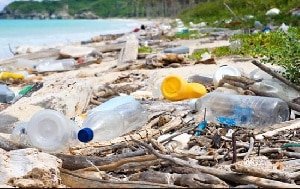
However, should donor commitment fail to materialise there fears that the country could face a huge sanitation funding deficit; especially as plastic and other forms of waste have become a major challenge in most urban settings.
“The allocations are made every year, but delays in the release of funds and reliance on donors have become a problem” Harriet Nuamah, Senior Programmes Officer of SEND Ghana, told the B&FT.
“Government must demonstrate its commitment to the MSWR by releasing all funds allocated to the sector to improve the budget execution rate,” she advised.
Indeed, a performance-report for the last three years, 2019 – 2021, shows that only 6.32 percent of the MSWR approved budget was released in 2019 and 18.9 percent in 2020, before increasing sharply to 86.00 percent in 2021; which according to SEND Ghana was still less than the approved budget.
To avoid serious sanitation challenges as the raining season approaches, SEND Ghana advised government to channel proceeds of the Pollution and Sanitation Levy (PSL) to finance sanitation and water resources initiatives.
The channeling of proceeds from the SPL to finance WASH infrastructure, according to stakeholders, will significantly reduce over-reliance on donors to finance WASH.
Though government projects generating some GH¢522million from PSL this year, the total anticipated GoG contribution to the sector, which is GH¢33million, constitutes just 6.4 percent of the levy.
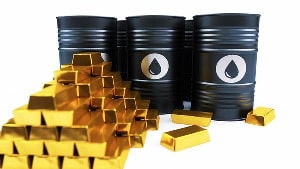
The primary goal of the policy, according to a statement made on February 5 by the National Petroleum Authority (NPA), is to use additional foreign exchange resources from the Bank of Ghana’s Domestic Gold Purchase (DGP) program to provide foreign currency for the country’s importation of petroleum products, which is currently estimated to cost about US$350 million per month.
The statement also outlined the two main channels of supply as: “by way of barter trade where gold is exchanged for oil or via broker channel where the gold is converted into cash and paid to the supplier.”
2. The prime objective of the programme is to use additional foreign exchange resources from the Bank of Ghana’s Domestic Gold Purchase(DGP) programme to provide foreign currency for the importation of petroleum products for the country which currently stands at about US$350 million per month.
3. Payment for oil supply is to be done in two channels: by way of barter trade where gold is exchanged for oil or via broker channel where the gold is converted into cash and paid to the supplier.
4. The first consignment of 40,000 metric tonnes of diesel constitutes about 10 percent of the country’s combined monthly demand for petrol and diesel.
5. The plan is to gradually increase imports under G4O to constitute about 50 percent of the country’s total demand for petrol and diesel by March 2023.
6. The implementation of the G4O will ease pressure on the dollar (the currency used for the importation of petroleum products) and avoid the occasional increases in petroleum prices resulting from the depreciation of the cedi against the dollar.
7. The programme will ensure that the cost of importing the products from international oil traders is comparatively cheaper.
8. The consequent reduction in foreign exchange pressures and premiums charged by international oil traders as well as efficiency gains from the value chain will lead to lower ex-pump prices in the country.
9. To ensure that the price of petroleum products imported under the G4O programme reflects at the pumps to benefit the consumer, the National Petroleum Authority (NPA) will regulate the prices of the products in the interim until the volumes increase significantly.
10. NPA will work with Bulk Oil Storage and Transportation Company Limited (BOST) to negotiate prices with international oil traders to ensure that the landed cost of products procured under the programme are always competitive.
11. The price at which BOST will sell the products to Bulk Import, Distribution, and Export Companies (BIDECs) will be approved by the NPA. The price at which the BIDECs will sell the products to Oil Marketing Companies (OMCs) will also be approved by the NPA.
12. The applicable exchange rate for pricing the products supplied under G4O will be based on the average rate at which the gold was purchased from the licensed gold exporters by BoG. The BoG ordinarily purchases the gold aggregated by the Precious Minerals Marketing Company (PMMC)
13. The NPA will put measures in place to ensure that OMCs that lift products supplied under the G4O programme pass the price on to consumers accordingly. In this respect, BIDECs and OMCs who lift and supply G4O products will sell at the ex-refinery and ex-pump prices that will be determined by the NPA. If there must be a comingling of products supplied under G4O and other sources, the ex-refinery and ex-pump prices will be computed using a weighted average.
14. All BIDECs and OMCs who wish to purchase products under the G4O programme will be required to sign off an undertaking confirming their willingness to comply with the terms and conditions for partaking in the purchase and sale of G4O products.
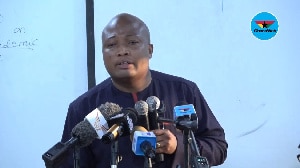
Samuel Okudzeto Ablakwa, a member of parliament for North Tongu, is adamant that his campaign for accountability and openness in the National Cathedral’s construction is not directed against the church.
In a Citi TV interview from December 2022, the Ranking Member of the Foreign Affairs Committee of Parliament stressed the significance of religion (Christianity) in his background and today.
Ablakwa has over the last few months published instances of corporate governance and alleged financial infractions on the part of government and trustees in the building of the Cathedral.
The dogged nature of his advocacy has led people in some quarters to question his real motives, but he insists: “This is not an agenda against the church, I am not seeking to bring down a religion that I will be nobody without.
“I have said time without number that where would I be without Christianity? Belief in the saving power, the salvation grace of Jesus, the Christ,” he stressed.
He recounted how former Speaker of Parliament, Prof Oquaye, had mentored him through his Sunday school days as well as his role in religious groupings during his Senior High School days.
“I am not a pagan, I am not anti-Christ or whatever they say,” he added.
Ablakwa goes after secretary to Board of Trustees of National Cathedral
The Member of Parliament has since January 2023 disclosed statutory documentation purporting to prove that Rev. Victor Kusi Boateng, is operating under the pseudonym Kwabena Adu Gyamfi for criminal purposes.
The MP has so far released a number of passports, drivers’ license, Tax Identification Number data and details of company registration that Kusi Boateng (Adu Gyamfi) has used in the past and some he continues to use.
In the latest installment of his posts, Ablakwa said a statement by the NIA on the Ghana Card status of Kwabena Adu Gyamfi confirmed that in their records, Victor Kusi Boateng did not exist, a claim he made last week.
He has justified his publications of Kusi Boateng’s documents with the view that the clergyman was using two names because he was engaging in criminal activities with one of the identities (i.e. Kwabena Adu Gyamfi.)
Ablakwa has stood by an accusation that the pastor’s company (JNS Talent Center) was paid an unmerited sum from the National Cathedral kitty, even though the secretariat has explained that the GHC2.6 million paid to Rev Kusi Boateng was a loan repayment.
According to Ablakwa, the Board of Trustees never discussed acquiring a loan facility, and at the time the loan was acquired, the Cathedral had about $6 million in its bank accounts.
In addition to other digital services, the index measures, ranks, and provides access to which West African states are putting effective policies into practice.
The expansion of its digital development sectors is also mapped for socioeconomic changes.
Using about 10 variables from mobile money & online transactions to digital infrastructure and policy implementation in this maiden observatory study, Ghana led the Anglophone West Africa while Cote D’Iovire the digital competitive Francophone West Africa with Cabo Verde leading Lusophone West Africa as the most digital competitive country.
Niger, Burkina Faso and Mauritania were the worst digitally competitive West African states.
After the release of the index, activities will be held to engage governments and other stakeholders per country to help in the direction and future of the digital sector.
The West Africa edition is part of a bigger Pan-African digital index, the foundation intends to work from 2023.
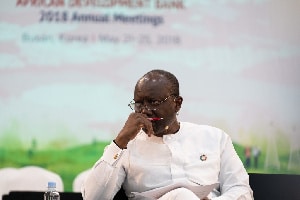
Dr. Clement Apaak claims that since being appointed Finance Minister, Ken Ofori-Atta has never testified before the Public Accounts Committee (PAC).
The congressman who represents Builsa South constituents claimed that he has repeatedly brought up the minister’s disregard for parliament with leadership.
He claimed that the Minister would constantly come up with a reason not to appear before the Committee and that, for some reason, the Committee had entertained him for his lawlessness.
The MP indicated that the Minister has been inconsistent with the actual amount spent on the free senior high school policy and quoted different figures.
Dr. Apaak said the Minister has over the years quoted 3.2 million, 7.2 million, and 5.3 million as costs for the policy.
These figures he noted have been captured by parliament and yet the minister has refused to come before the committee to respond to questions.
“In a functioning democracy, this could be the basis for his removal. Ken Ofori-Atta feels so powerful. He feels powerful because he has no regard for parliament.
“For the period that I have been a member of the public accounts committee, he has never appeared before us to answer questions. I have been a member of the committee since 2017, and the Minister has not appeared in person before the Committee to answer questions,” he said.
“I have raised this with leadership. Who does he think he is? Is he above the law? He has to be compelled to appear before the committee to answer questions. He always sends his deputies and for some strange reasons, the committee has entertained it.
“I don’t see why we cannot compel him to appear before the Public Accounts Committee to answer questions,” the MP added.
The company’s production and free cash flow generation should be aided by investment in Ghana, which will cut net debt and strengthen Tullow’s balance sheet.
More than $100 million of the total will go toward infrastructure.
Tullow stated in an update to investors that the planned expenditure figure represents an increase of US$50 million compared to 2022 after deferrals from 2022, increased equity in Ghana for the entire year, and ongoing infrastructure investment in Jubilee South East, which will account for about 40% of the Ghana capital spend in 2023.
“Capital investment in 2023, particularly in Ghana, is expected to support production growth through to 2025 and free cash flow generation of US$700-800million at US$80/bbl for the two years 2024 and 2025 based on 2P reserves only; which will further reduce net debt and strengthen Tullow’s balance sheet,” the update read in part.
Tullow mentioned that the additional equity in the Jubilee and TEN Fields acquired through the pre-emption transaction in Ghana for US$126million had already been paid back by 31 December 2022.
In 2023, Tullow expects Jubilee oil production to average approximately 95 thousand Barrels of Oil Per Day (kbopd) (about 37 kbopd net), with a total of up to six new wells expected to come online starting from middle of the year. Gross oil production from the Jubilee Field is expected to exceed 100 kbopd once all these wells have been brought online.
“The focus on operational excellence in production, drilling and major project delivery in recent years has yielded appreciable value and will continue to be an area of leverage for Tullow,” the company highlighted.
Production from the Jubilee Field averaged 83.6 kbopd (31.9 kbopd net) in 2022. A good operational efficiency of circa 97 percent was achieved, and production was supported by four new wells (one producer and three water injectors) brought online in early 2022.
Tullow said that two wells were drilled in the Jubilee South East area in the second half of 2022, and a third well is currently being drilled. “First oil from the Jubilee South East project will be a significant milestone, bringing previously undeveloped reserves to production.
“The transition of operatorship to Tullow on the Jubilee FPSO took place in July 2022 and represented a major step in becoming a leading low-cost deep-water operator, realising improvements in safety, reliability and cost. Following the transition, FPSO uptime averaged about 99 percent in the second half of 2022 compared to 95 percent in the first half,” the company said.
TEN Field
In the case of the Tweneboa, Enyenra, Ntomme (TEN) Field, Tullow expects to focus on sustaining the strong operational uptime and improving gas-handling on the FPSO this year.
“Thisis will be implemented during a planned maintenance shutdown scheduled for the year’s third quarter. Increased gas handling capacity will also significantly reduce flaring and increase gas injection to support oil production,” it said.
“The longer-term plan is to monetise the significant remaining TEN resources through infill drilling particularly on Ntomme, phased development of new areas near existing infrastructure, development of the significant gas resources and drilling of prospective resources,” it added.
Tullow expects to submit a plan of development to the government of Ghana later this year.
In 2023, TEN production is expected to average about 20 kbopd (11 kbopd net), including the planned two-week maintenance shutdown. A water injection well (En16) that was brought online in December 2022 is expected to provide pressure support for production from Enyenra in 2023.
However, Tullow indicated that there are no new wells planned to be added in TEN for 2023.
Production from the TEN Field averaged 23.6 kbopd (12.5 kbopd net) in 2022. A good operational efficiency of c.98 percent was achieved with overall production at the lower end of guidance.
The year 2022 has undoubtedly been one of the toughest years economically for Ghana, with many of the country’s economic indicators hitting unprecedented lows.
So basically, the solution to Ghana’s problems was reducing the country’s demand for foreign exchange. But the use of monetary policies by the Bank of Ghana to attain this objective did not work as the cedi continued to depreciate throughout the year.
But not every Ghanaian accepted the Gold-for-Oil policy, with some saying that it is a way the government wants to reintroduce its rejected Agyapa Royalties deal, which sought to collateralise Ghana’s mineral resources.
The article takes a look at what this “Gold for Oil” policy is and why some experts are against it.
The Gold-for-Oil policy
Vice President Mahamudu Bawumia in November 2022 first announced the government’s plan to undertake the Gold-for-Oil initiative. The deal hinged on buying oil products with Ghana’s gold instead of the US dollar.
Dr. Bawumia explained on Facebook that using gold to buy oil would help Ghana’s dwindling foreign reserves while also reducing demand for US dollars from oil importers.
“It will fundamentally change our balance of payments and significantly reduce the persistent depreciation of our currency,” the vice president wrote.
Under the policy, the government believes that using gold to purchase oil products would also bring stability to the exchange rate market and ensure domestic oil operators do not solely depend on foreign exchange to import products.
The government, through the Bank of Ghana (BoG), is expected to purchase gold from mining firms in Ghana. The BoG will then use the gold through 3rd parties to purchase the oil on behalf of bulk oil distributors in the country and thus eliminating the use of foreign currencies by these oil distributors to import their products.
The move is expected to save the nation $400 million which is required by bulk oil distributors to import oil products into the country every month.
Concerns raised on the feasibility of the policy:
Some experts in the oil and gas sector, including the former Deputy Minister for Energy, John Abdulai Jinapor, have raised issues about the feasibility of the policy.
In a Facebook post sighted by GhanaWeb, Jinapor described the government’s Gold-for-Oil policy as nothing less than a farce.
The former deputy energy minister, who is the current Member of Parliament for Yapei Kusawgu, said that the policy, just like the government’s Sinohydro deal, will eventually end up on the nation’s accounting debt.
The current deputy energy minister, Andrew Egyapa Mercer, who is reported to have said that the first consignment of oil the government brought into Ghana under the Gold-for-Oil policy was not paid for with gold as expected, has also raised concerns about the feasibility of the policy.
Egyapa Mercer is reported to have said that the government could not exchange gold for oil because the company it dealt with initially could not exchange gold for oil.
“The policy actually started with an intent to do strict barter for gold and petroleum products, but it became apparent that any of the international oil trading companies that do not have a commodity wing to deal with gold on their behalf will be excluded from the policy.
“We developed the policy such that we were operating two streams; one was direct barter and the second was monetising the gold so we can pay for IOTs that were not other commodity focused but solely petroleum products,” he is quoted as having said on Citi News.
Issues of transparency:
Another concern some experts in the oil and gas sector have raised is the issue of transparency.
Even though Vice President Mahama Mahamudu Bawumia has said that delivery of the first 40,000 batch of oil under the Gold-for-Oil policy shows that it will work, the exact quantum of gold used in the transaction has not been disclosed by the Bank of Ghana.
The Executive Secretary of the Chamber of Petroleum Consumers Ghana (COPEC), Duncan Amoah, has asked the government to be open about the real details of the Gold-for-Oil policy.
According to him, the government must be clear on whether it is using public funds to purchase the fuel or not.
“I think after this revelation, the ministry of energy, ministry of finance, Bank of Ghana, the government itself should come clean and tell Ghanaians that, look we are going to use your public funds to now go into the realm or arena of forex trading… We do think that whatever details or the nitty-gritty of the gold-for-oil policy should be communicated so that we all depart from this gold-for-oil mantra and deal with the reality of the issue,” he was quoted by citinewsroom.com.
Legitimacy of the policy:
The co-chair of the Ghana Extractive Industry Transparency Initiative (GhEITI), Dr Steve Manteaw, has raised issues about the legitimacy of the Gold-for-Oil policy.
According to him, since the government is directly involved in the policy, it should have gotten parliamentary approval before implementing it.
“… we will be trading with a third party, rumours also say that the first tranche of the 40,000 (tonnes) is a Russian company that brought the money, which means that, there’s going to be an agreement between the company and the nation.
“And such an agreement is an international transaction and per the Constitution’s Article 181, such deals need parliamentary approval.
“Also, the person who will be supplying the petroleum product to Ghana will go through some level of agreement and such trading agreement needs parliamentary approval,” he said in an interview on Neat FM monitored by GhanaWeb.
Alex Mould, a former Chief Executive Officer (CEO) of the Ghana National Petroleum Corporation (GNPC), has also raised similar concerns.
Issues of criminality:
Issues of criminality have also been raised regarding the implementation of the policy.
Dr Steve Manteaw questioned the source of the money the government will be using to implement the policy.
According to him, the God-for-Oil policy was not stated in the 2023 budget, therefore, questions must be raised as to how the Bank of Ghana intends to come up with the money to purchase the gold it will be used for the policy.
“I don’t know if parliament is sleeping or what, because parliament needs to invite those leading the process to interrogate them in parliament so that if there are any policy documents, they can take and investigate properly into the deal because we’re tired of corruption activities in this country,” he said.
Numerous individuals who served in a variety of roles under numerous regimes have been completely forgotten as a result of the subpar work they did while in office.
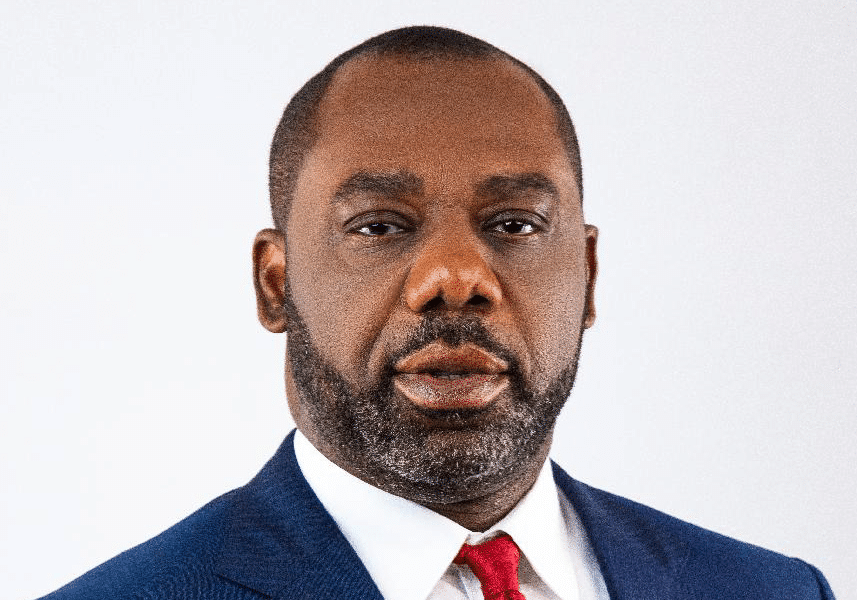
Dr. Matthew Opoku Prempeh, the Energy Minister of Ghana, cannot be unfairly judged by history because of the impact he has had as the person in charge of the vital energy sector of the nation and because he has been able to address the majority of the industry’s early challenges.
The fearsome face of the energy sector made him to devise various strategies with team members of the various agencies under the ministry and set out to work and the results are what Ghanaians are enjoying today.
Dr. Prempeh, who is the Member of Parliament for Manhyia South, in the Ashanti Region, chalked incredible feat in his first year (2021) as the commander-in-charge of the sector and added more feathers in his cup by working extremely hard to achieve the best of results in 2022.
In 2022, the power sector witnessed massive projects that fed into the minister’s agenda of keeping the lights on in every corner of the country.
The power situation from Kumasi in the Ashanti Region to Bolgatanga in the Upper East Region has become best with the commissioning of 330 Kilovolt (KV) transmission line project at Anwomaso. Kumasi and the northern parts of the country now have stable power.
In June 2022, the Volta-Achimota-Mallam lines were improved and upgraded with the commissioning of 161Kv line that has helped to stabilize the power situation in the southern sector of the country.
In that same month in 2022, the Kasoa substation, which is the second largest Bulk Supply Point (BSP) with a productive capacity of 435 Measuring Apparent Power (MVA) was commissioned, resulting in significant power improvement in the reliability of power supply to Kasoa and its environs in the Central Region.
The Ellen Moran Primary Substation located at Kanda in Accra with productive capacity of 78MVA and the Legon Primary Substation with productive capacity of 52MVA, located at the University of Ghana Medical Centre (UGMC), were completed and commissioned in 2022.
With the development and promotion of solar power very dear to the heart of the minister, the Kaleo/Lawra Solar Project, with productive capacity of 19 Mega Watts (MW), was completed and commissioned in August 2022 to add to government’s policy to increase the share of renewables in the national generation mix.
The power sector also witnessed the execution of Power Purchasing Agreements (PPAs) with some existing Volta River Authority (VRA) customers, including Newmont Ghana Limited.
The Energy Transition Framework was given an impetus in 2022, as it was being developed to provide the path to achieving net zero emission by 2070, while ensuring economic growth and utilization of Ghana’s natural resources. The Framework was launched by President Akufo-Addo at the Climate Change Conference-COP27 in Egypt.
With Dr. Prempeh’s aggressive and well-tailored programmes, Ghana’s electricity access has increased from 87.03% in 2021 to 88.54% as at the end of 2022.
Improved Cook Stoves Program saw the distribution of some 92, 552 units of Improved Charcoal Cook Stoves in 2022. The program has led to efficient energy utilization and reduced dependence on wood fuels.
Downstream petroleum activities were seriously attended to by Dr. Prempeh and his team in 2022 with the minister leading the charge for Cabinet to lift the ban on the construction of Liquefied Petroleum Gas (LPG) refilling plants.
The National LPG Promotion Programme (NLPGPP) was properly handled leading to US$17 million in funding support from the World Bank for the implementation of Phase 1 of the NLPGPP.
In addition to that initial 40,000 pieces of cook stoves and related accessories for distribution under the National LPG Promotion Programme (NLPGPP) were procured.
Stakeholder engagements with the Association of LPG Marketing Companies (LPGMCs), Ghana Alliance for Clean Cooking (GHACCO), Ministries of Health, Education, Transport, among others were part of the energy ministry’s preoccupation in 2022.
Dr. Prempeh was focused on the NLPGPP and ensured that an Operation Manual developed for the full implementation of the NLPGPP was developed as well as having the national launch of the programme.
To make the NLPGPP successful, there were reconnaissance activities in 19 Metropolitans, Municipals, and Districts (MMDAs) across Ashanti, Eastern, Western and Northern regions conducted, while 6,000 single burner LPG Cook Stoves and related accessories distributed at Obuasi, Kodie and Fomena.
LPG Behavioural Change and Public Awareness Strategy developed and Nationwide LPG Sensitization Campaign was launched in 2022 by the energy ministry with Steering Committee to provide direction and supervision for the implementation of programmes under the LPG4D instituted with Kintampo Health Research Centre as an Independent Verification Agency for the NLPGPP.
Dr. Prempeh saw the exclusivity agreement between Petroleum Hub Development Corporation (PHDC) and Touchstone Capital Partners (TCP)/UIC Energy Ghana Limited (UIC) for the implementation of Phase 1 of the Petroleum Hub project facilitation in 2022 with the overall importance of the hub as his interest.
There was improved sustainability of the Price Stabilization and Recovery Account with total annual under-recovery payments of GHS153,753,694.94 and GHS240,655,682.57 from the Ministry of Finance for supplied RFO and premix fuel respectively facilitated.
A subsidy capping level for Residual Fuel Oil was introduced and the subsidy was gradually reduced to zero whiles financing the automation of premix fuel distribution to mitigate malfeasances facilitated.
The level of subsidy on premix fuel was also capped at 50% to ensure accumulated under-recoveries due to suppliers of products can be paid to avert the current supply disruption was also on the agenda of Dr. Prempeh in 2022.
Upstream Petroleum activities were well coordinated under the supervision of Dr. Prempeh, as Eni was granted conditional approval to jointly appraise the Akoma-1X and the Eban-1X discoveries in the Cape Three Points Block 4 contract area.
An additional discovery (Aprokuma-1X) has been made in the same contract area and merits appraisal and if these discoveries are proven to be commercial, the country’s reserves will be increased leading to increased oil and gas production and thus revenues. Also, jointly appraising and eventually developing the Akoma and Eban discoveries will reduce petroleum costs as the same infrastructure will be used to produce the two discoveries.
In 2022, there was the establishment of the Institution of Welding was established in the country to train indigenes in welding and fabrication and equip them with international certification for the global oil and gas industry. This enhances indigenes’ chances of employment in the global oil and gas industry.
There is no doubt that the Ministry of Energy in 2022 made giant strides under the competent leadership of Dr, Prempeh, as all sectors were fully attended to.
Apple sales decreased at the end of 2022 as consumers made less purchases due to the pressure of the rising cost of living.
In the three months leading up to December, sales at the industry giant for the iPhone decreased by 5% from the corresponding time in 2021.
The fall was worse than anticipated and the largest since 2019.
The announcement of the update coincided with widespread warnings from businesses of a sudden slowdown in the economy, particularly in the computer industry, which experienced a boom during the pandemic.
Apple boss Tim Cook said the firm was navigating a “challenging environment”.
“As the world continues to face unprecedented circumstances … we know Apple is not immune to it,” he said on a conference call with investors.
Apple said the sales declines occurred throughout the world and hit most of its products.
Sales of its popular iPhones were down more than eight per cent, and sales of Mac computers dropped 29 per cent.
The declines hit the firm’s profits, which fell 13 per cent to $30bn (£24bn).
Paolo Pescatore, analyst at PP Foresight, said the firm, like many electronics makers, is struggling to make the case that users should upgrade given “what is perceived to be incremental improvements on previous models”.
“More so when everyone is tightening their belts,” he added.
Globally the number of smartphones shipped sank 12 per cent last year, according to market analysis firm Canalys.
Apple executives said they expected their services business, which includes Apple Pay and Apple News, to continue to drive growth, noting that there are now more than 2 billion active Apple devices around the world.
“When we look at the behaviour of our installed base, we think it’s very promising,” said chief financial officer Luca Maestri, while warning investors that the firm was expecting sales to continue to decline in the months ahead.
Other big tech companies also said they were feeling pressure in updates to investors.
Amazon, which has been struggling to re-ignite its e-commerce business, said sales at its online stores dropped 2% in the final three months of 2022, compared with a year earlier.
Overall, Amazon’s sales in the three month period rose nine per cent to $149.2bn (£121bn), lifted by stronger growth in its cloud computing business.
But its profits dropped sharply, falling to near zero from $14.3bn (£11bn) a year ago, a change that chief financial officer Brian Olsavsky warned investors was likely to continue in coming months.
At Alphabet, parent company of Google and YouTube, sales were up just one per cent in the three months to December, compared with 2021, as firms cut back on advertising – the company’s main source of revenue – in the face of economic uncertainty.
As the cash-strapped government struggles to gather money and finalize a bailout from the International Monetary Fund, the Ghana Revenue Authority (GRA) is requesting millions of dollars in past taxes from some of the largest corporations in the country (IMF). The largest wireless provider in Africa, MTN Group Ltd., as well as Tullow Oil Plc and Gold Fields Ltd., have all received notices that they owe past taxes.
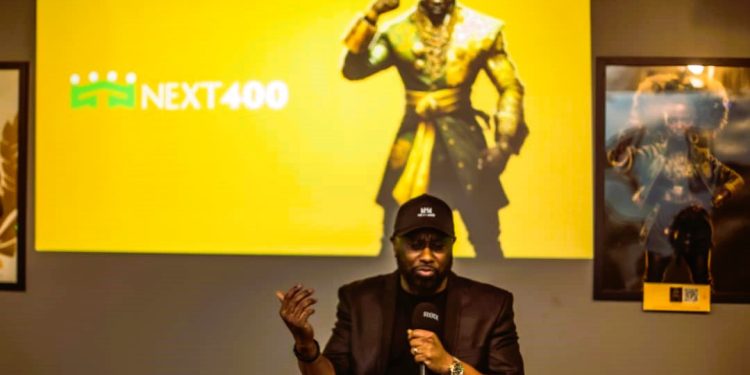
The “Legacy Warriors” Non-Fungible Tokens (NFT) initiative, which honors the 400th anniversary of the first time african people were sold as a commodity, will be a potent and ground-breaking approach to mark this occasion.
Additionally, it will be a window into the african community’s future and a memory of the past.
There are a number of digital paintings in it that show influential african people in a positive and strong light.
In a release issued by the organisation, it said “Non-fungible tokens are pieces of digital content linked to the blockchain, the digital database underpinning cryptocurrency such as bitcoin and ethereum.”
“We are excited to see the impact this project will have and the potential it has to create wealth and opportunities for the black community in Ghana and the world around,” he said.
He said “Each artwork is a one-of-a-kind NFT, allowing collectors to own a piece of history and to support the Next400’s mission.
The project has been launched on the Sutudu.com platform and has unique features such as the ability to split initial sales and royalties at the point of sale and to create royalty options for first-time buyers as an incentive for being an early adopter.”
The US-based Ghanaian entrepreneur believes Ghana has the potential not only to be a leader in the adoption and use of this technology but also a place that sparks innovations with this technology.
According to him, the NFT project will be soon introduced to Ghanaians this year to educate, inspire, and involve them in the Next400 mission.
Commenting on the NFT project during the launch, the CEO of the Sutudu digital platform, Khoa Le, said Sutudu was committed to empowering creators and projects that have the potential to change and positively impact society.
He said the Next400 Legacy Warriors project was a perfect example of that adding that “we are honored to be a part of it.”
“The platform not only facilitates the buying and selling of NFTs but also provides resources and support for projects that aim at positively impacting society.
Sutudu calls this “NFT 2.0” – NFTs with human purpose and true investment capabilities. Next400 serves as a utility that will have a token gating feature to gain access to high-profile people and investors through the Sutudu platform,” Mr Le added.
The release said the launch was attended by artists, entrepreneurs, activists, and community leaders, who came together to support Next400’s mission and vision for the black community.
The AGI also objected to beverage manufacturers being classified as Commercial Bottled Water and Drinks, a new category of water consumers.
Last August, the category was established with a tariff of 316 percent increment, which was eventually reduced to 172 percent last month. Companies that now fall under the new category formerly belonged to the industry class, which increased by 48 percent in the most recent evaluation.
However, with the implementation of the new utility tariffs announced by the Public Utilities Regulatory Commission (PURC) for the first quarter of this year having taken effect on February 1, the AGI said this significant increment is a retrogressive decision with dire consequences for the industry and utilities.
“With the foregoing, AGI is calling on the PURC to maintain its beverage sector companies in their industry category which has seen a 48 percent increment in water tariff. We believe industries are high-revenue customers for Ghana Water Company and deserve equity in the water pricing we see.
“We urge the government to help stem the tide of our macro-economic instability, which is a major trigger for some of the changes in tariffs levels and price hikes,” its president, Seth Twum-Akwaboah, said during a press conference in Accra.
The AGI is an umbrella body of leading domestic manufacturers, and buttressing its call for a fair review said the principle of equity was largely missing in the major tariff review conducted in August last year for water – when a particular customer category was asked to bear a 316 percent increment in a single tariff review.
“The AGI wishes to reiterate that a tariff increment of 316 percent and subsequently 172 percent for its beverage sector under Industry will have dire consequences for Industry and the Ghana Water Company.
“Our Utilities risk losing revenue if this trend ends up collapsing the companies. We think it is unfair for the PURC to demand a significant share of the revenue from the Industry, whose cost of service is cheaper. We urge the PURC to make public the real cost of service for each consumer category to engender transparency and fairness,” Twum-Akwaboah said during a press conference in Accra.
On the reclassification of beverage producers, he said: “We do not think the creation of a new consumer category addresses the challenges in our water distribution system. Such an astronomical tariff increment in a single revision is retrogressive and shows no empathy for Ghana’s ailing Industrial sector. We all need to wake up to the looming collapse of our local industries, which hold the key to job creation and our economic recovery”.
Extra burden
Twum-Akwaboah explained that industries are already under pressure from an unstable business environment and were hoping to see signs of recovery this year.
He, therefore, lamented that the plight of local producers could be further worsened by the utility tariff increment; as well as inflation at 54.1 percent, VAT at 21.9 percent, rising fuel prices and threats of excise duty increments.
All these developments, he bemoaned, pose a serious threat to employment prospects and the survival of businesses. “Again, we have noticed a 48 percent increment in water tariffs for industry effective this February, which is a significant deviation from the 8 percent average increment as announced,” he added.
Indeed, within a period of fewer than six months, electricity tariffs have also shot up significantly on two occasions – 26.6 percent in September 2022 and 29.9 percent for this quarter, totalling a whopping 56.5 percent.
A special police team comprising investigation, intelligence, and operational officers has been deployed to beef up security in the town and surrounding communities.
Pure Fm’s morning show host and sportscaster is Nana Amoako.
According to Nana Amoako, who described his experience to GhanaWeb, he was at the studio on Wednesday afternoon choosing the sports commentary when his producer informed him that two men were looking for him.
“They beat me mercilessly to the point where I could not move, so I pretended as if I was dead. So after some time, they realized that I was dead and they left me,” he added.
According to him, the unknown men took one of his phones away. “I heard one of one of them asking the other, have you taken that phone?” he added.
He noted that these people were after his life because of some critical questions he is been asking on radio that might not be in their favour.
He visited the hospital to receive treatment and subsequently reported the assault to the Tarkwa District police command.
If he is not the party’s official flagbearer, the NPP will struggle to win the 2024 presidential elections, he claims.
“We have two years to significantly impact the growth of society. I believe Ghanaians will give us another chance if we are successful.
“But you know with, me we will break the 8… without Ken Agyapong well it will be tough,” he said during a Good Evening Ghana interview monitored by GhanaWeb on Tuesday, January 31, 2023.
The MP for Assin Central is expected to face stiff competition from the likes of the former Minister of Trade and Industry, Alan Kyerematen Vice President Dr. Mahamudu Bawumia, the former Food and Agriculture Minister, Dr. Owusu Afriyie Akoto and ex- Mampong MP Francis Addai-Nimoh for the flagbearership position of the NPP.
Using its most recent offer to individual bondholders as justification, the government pushed up the deadline for voluntarily participating in the DDEP from January 31, 2023, to February 14, 2023.
Additionally, all retirees (including those retiring in 2023) will be offered instruments with a maximum maturity of 5 years instead of 15 years and a 15% coupon rate.
Reacting to this in an interview on Neat FM monitored by GhanaWeb on Wednesday, lawyer Kpebu said that the individual bondholders will not accept the new deal by the government because it makes them worse off.
He refuted assertions that the government has no money to pay bondholders, saying that the increase in the government’s expenditures in the 2023 budget shows that the government has money.
“We are not happy with the new offer, and we are not going to accept it. If we accept the new deal, it will make us worse off.
“A government that says it does not have money is spending 40 percent more than it spent last year in some sectors and 20 percent more in other sectors. How can a government that says it has no money be spending more? It doesn’t make sense,” he said in Twi.
“The government must reduce its expenditure; it must suspend some projects for at least one year. We live on the interest of our bonds, the government cannot tell us it does not have money to pay us while it is constructing new projects,” the lawyer added.
According to reports, 32-year-old Shadrach Arloo passed away after being assaulted by a police officer in Accra’s West Hills neighborhood.
According to reports, the event occurred on January 30, 2023, on a Monday afternoon. The young man apparently refused to give over his bag to a police officer who requested to check it, which resulted in a dispute at the mall area where he went to withdraw money.
The police officer who is said to have gotten agitated hit and pushed him to the ground, leading to his death.
But in a statement from management of the West Hills Mall, the incident was misreported.
Shadrach, is said to have taken out something from his bag and swallowed it as the policeman approached him.
The mall’s cameras subsequently captured a footage of the officer apprehending the young man together with another he was with as they headed for the main entrance of the mall.
An attempt by the police to handcuff him resulted in a struggle between the parties. The statement further noted that after the police officer succeeded in handcuffing him, the struggle stopped as the man in question appeared to be unwell.
The handcuffs were then removed by the police officer and he was taken to the medical facility on-site but he was pronounced dead on arrival. The Weija District Police have since retrieved the body.
Below is the full statement as sighted on citinewsroom.com
PRESS STATEMENT
Incident at West Hills Mall on Monday, January 30, 2023
The Management of West Hills Mall hereby confirms that an incident occurred on its premises in the afternoon of Monday, January 30, 2023 which unfortunately resulted in a fatality.
By eyewitness and mall security personnel accounts, at approximately 3:15pm on January 30, 2023, a visitor was confronted by a Police Officer and asked to present his bag for examination. The Police Officer ostensibly suspected the customer, a young man between 25 and 30 years, of possessing drugs or banned substances. The accounts indicate that the young man hesitated, removed something from his bag and swallowed it as the policeman approached him.
West Hills Mall’s 24-hour security surveillance system captured footage of the officer apprehending the young man, as well as another man who accompanied him, as they headed for the main entrance of the mall. In an attempt to handcuff the young man, a struggle between the parties ensued while the Police Officer tried to handcuff him.
He was eventually handcuffed but stopped struggling and appeared unwell after that. The Police subsequently removed the cuffs from his hands, and Mall Security arranged for transportation for him to be taken to the medical facility on-site. Sadly, he was pronounced dead by Medics upon arrival.
The Weija District Police have since retrieved the body of the deceased.
The Management of West Hills Mall is shocked by this ill-fated incident. We convey our sincerest condolences to the deceased’s family as we trust that the Police will handle the matter further.
Thank You.
Olympio Agbodza Assiastant Asset Manager, West Africa Asset Management
Sister’s Account:
Sister of the deceased who is a gospel musician, Perpetual Didier, narrating the incident in a viral video said that her brother who was scheduled to travel to Germany the next day had gone to the mall for shopping on the said day of the incident.
He had therefore gone to withdraw money in order to purchase some items intended to be sent to his sister in Germany.
She added that, from what an eyewitness told her, the police demanded that her brother hand over his bag to be searched, but he refused.
This then led to the police officer getting agitated and then hitting and pushing him to the ground.
Perpetual added that her brother fell to the ground and hit his head on the floor, breaking his neck in the process.
He is said to have lost consciousness, at which time the police officer tased the motionless man on the floor.
It is believed that this worsened the state the young man was already in, leading to his death.
While the police have yet to respond officially to these claims, the gospel musician is demanding justice from the IGP.
Her wedding fliers and pre-video advertisements touted a unique royal wedding that would take place at Ahodwo’s opulent and pricey Greenwood Events Center.
The alleged overseas fiancé was in his seventies. A week prior to the wedding, Wilson Dass traveled to Ghana with his family to finally see his sweetheart in person after several months of virtual courtship.
It is, however, unclear why and how the groom Dass; his parents Mr. Bura Dass and Mrs. Dhanti Dass and the rest of the Indian family; bolted the night before the wedding, without a word to the Ghanaian family.
Kasapafmonline.com gathers that the lady’s family only got wind that the wealthy Indian family had returned to India few hours to the wedding which had seen a huge digital and physical publicity awaiting a huge crowd of youth from Shelly’s community.
“Look, I had ironed a jacket and a kente just for this wedding. Several boys were coming but I had to put it on hold. I had to put off my phone because I was overwhelmed with calls asking whether what they had heard was true,” a source told reporter Ivan Heathcote – Fumador.
“We hear this man is a very wealthy man. He sent over 200 thousand cedis for this wedding alone so the preparation was huge. The lady was actually boasting in the community that she is going to hold the biggest-ever wedding in town, another person close to the heartbroken lady explained.
Other sources in the community indicate that the boast was hyped to spite other rival female slay queen groups in the area and to further mock the lady’s x-boyfriend whom she had a child with.
The confusion has led to a series of speculations with some purporting the lady did not show affection and warmth in the presence of Dass whenever they appeared in public in the short time the two met physically.
For now, the lady; her father who is a popular footballer and her mother Gifty Boadu remain indoors, perhaps nursing their wounds and planning how to put themselves together to face the heartbreak and embarrassment caused them by the estranged boyfriend.
He clarified that the government’s propaganda on the situation is untrue.
The veiled implication that there may be difficulties with tradability is one thing I wish to refute. I’m not a member of it. Neither does our technical committee. It is a subjective matter. But for leaders to publicly state this is a complete fabrication. If you invest in the new bond, you won’t ever lose any money.
This was his response to an earlier statement issued by the Finance Ministry that “upon a successful DDEP there will be very few of the ‘old bonds’ in circulation, and likely limit its tradability.”
The government in its revised terms explained that even though individual bondholders are exempted from the programme, it is still voluntary to participate in the programme.
The deadline for the programme has thus been extended for the fourth time to February 7, 2023, with revised terms as follows:
a. An affirmation that all individual bondholders are free not to participate;
b. However, upon a successful DDEP there will be very few of the ‘old bonds’ in circulation, and likely limit its tradability;
c. In this regard, the Government is pleased to make available the following alternative offer to encourage all individual bondholders to participate in the Exchange:
i. All individual bondholders who are below the age of 59 years will be offered instruments with a maximum maturity of 5 years, instead of 12 years, and a 10% coupon rate;
ii. All retirees (including those retiring in 2023) will be offered instruments with a maximum maturity of 5 years, instead of 12 years, and a 15% coupon rate.
“These developments have necessitated the final extension of the deadline from January 31, 2023, to Tuesday, February 7, 2023, and a new settlement date of Tuesday, February 14, 2023, that will be confirmed via the new Exchange Memorandum,” the Finance Ministry added.
Meanwhile, a revised and final Exchange Memorandum will be released by Thursday, February 2, 2023.
The increase, which will be applied to all pensioners on the SSNIT pension payroll as of December 31, 2022, will take effect in January 2023 and was announced by SSNIT Director-General Dr. John Ofori Tenkorang.
After a meeting with the Director-General, the Association expressed its “excitement” on the increase in pensions while urging the government to put its constituents’ wellbeing first.
The Association’s General Secretary, Stephen Boakye said: “If you are given a huge amount today and tomorrow we do not get anything, how will pensions remain sustainable for generations to come?”
He added that SSNIT is committed to being “very prudent” in managing the pension fund; and that the decision to increase pensions was made in consultation with the National Pensions Regulatory Authority (NPRA), in line with Section 80 of the National Pensions Act 2008 (Act 766).
The increase in pensions will be applied as a fixed rate of 19 percent, with an additional redistributed flat amount of GH¢73.58. According to SSNIT, this redistribution is a mechanism applied to the indexation rate to cushion low-earning pensioners in conformity with the solidarity principle of social security. As a result, the effective increase in pensions will range from 19.05 percent for the highest-earning pensioner to 43.53% for the lowest-earning pensioner.
In addition to increasing monthly pensions, SSNIT has also increased the maximum insurable earnings for 2023 to GH¢42,000 from GH¢ 35,000. This increase was made in consultation with the NPRA in accordance with Section 63 (3) of the National Pensions Act 2008 (Act 766). The minimum insurable earnings have also been increased from GH¢365.33 to GH¢ 401.76, following the raise in National Daily Minimum Wage.
Dr. Tenkorang also addressed concerns about sustainability of the pension fund. He acknowledged that while the 25 percent increase in pensions is significant, it is important to also consider the fund’s long-term sustainability.
He also highlighted the redistribution mechanism applied to the indexation rate. He explained that this redistribution results in some pensioners receiving an increase of more than 25 percent, with the highest increase being 43.53 percent for the lowest-earning pensioner.
“We felt the Bank of Ghana should have worked to sustain the gains made by the cedi”, he said, adding: “Unfortunately, we’ve lost focus and are now banking hopes on a certain opaque programme that we titled gold-for-oil “.
“At the very time that the gold-for-oil programme has commenced, for which last week, BOST did put on the market some 41,000 metric tonnes of oil, the reverse is what is rather happening with Ghanaian pump prices, so, clearly, there was a solution we found in November, December to control the cedi depreciation that sort of worked, and for which we had prices drop in November, December and early January”, he explained.
“Unfortunately, we are now banking hopes on a policy or programme whose benefits we are unlikely to derive and that can be attributed to the fact that what was brought in last week made no impact whatsoever in bringing down prices. To the contrary, the prices at the pumps, as of this morning, have gone up by as much as 15 per cent”, he noted.
Ghana has a potential annual soybean producing area of roughly 250,000 hectares, or about 700,000 metric tons, with only about 125,000 hectares actually being cultivated.
The total soybean processing and export shortfall for the nation is 228,000 metric tons, and processed soy meal imports, which accounted for around 200,000 metric tons of grain equivalent, left the market with an unmet need.
The Deputy Food and Agriculture Minister in charge of Crops, addressing a stakeholder meeting on the theme: “Soyabean – A strategic crop for poverty reduction and enhanced food security in Northern Ghana,” said, the main bottleneck was the lack of capacity for medium and smallholder farmers to increase their annual soyabean production with an additional 200,000 metric tonnes.
He said the supply gap provided an opportunity for job creation, poverty reduction and food security in the country, especially in the northern savannas, which produced about 90 per cent of the country’s soyabean and were among the deprived regions of Ghana.
The meeting was part of strategies under the Sustainable Soyabean Production in Northern Ghana (SSPiNG Project) being implemented in 16 districts in the five Northern Regions of Ghana by the International Institute of Tropical Agriculture (IITA), YARA Ghana, Wageningen University, the Netherlands and Felleskjopet Rogaland Agder, Norway, with support from the Ministry of Food and Agriculture, Ghana.
SSPiNG is a four-year project with funding from the Norwegian Agency for Development Cooperation (NORAD).
The project envisions “to materialise the multiple potential benefits of soyabean to smallholder farmers and other value chain actors engaged in the food and feed sectors in Ghana.’’ It is aligned with the Government’s programme, “Investing for Food and Jobs’’.
The primary beneficiary of the project includes 100,000 smallholder farmers (SHFs) who, by year four of the project, will generate a total gross income of $60 million per year with 50 per cent currently on average growing 0.4 hectares of soyabean annually in the 16 districts of Northern Ghana.
With over 300 extension officers and 500 farmer associations and building on existing structures, the project also facilitates Public-Private Partnerships (PPP) around market access, inputs information, mechanisation, finance services, and capacity development demands.
The Deputy Food and Agriculture Minister said the production of soyabean production in Ghana had increased steadily from 113,000 metric tonnes in 2009 to a little over 200,000 metric tonnes in 2020, while demand was more than about 300,000 metric tonnes.
Despite the high production, he said, the processing industry was still confronted with several challenges, including insufficient materials for processing, limited access to credit, and insufficient equipment.
To address the low soyabean yields under smallholder farming conditions, Mr Tufero said, there was the need to facilitate the soya value chain such that smallholder farmers would be linked to input and output markets, finance, equipment, and information through larger commercial farmers and aggregators who had the capacity and incentives to invest in smallholder production.
“These linkages will build the capacity of smallholder farmers to increase the efficiency of their farm businesses with improved production and post-harvest handling practices with an emphasis on processing to meet the ever-increasing demands of the value chain,” he said.
Professor Samuel Adjei-Nsiah, Project Coordinator, in a presentation, said the project was conceptualised around the lack of communication and coordination among soyabean value chain actors in terms of organisation, information management and decision-making tools to ensure that demand for input-output markets and services were efficiently matched with supply.
In an interview with the Ghana News Agency, Prof. Adjei-Nsiah said the challenges with soyabean production was attributable to the lack of policy and strategy on the value chain.
He said: “All the policies that in the value chain currently are ad-hoc policies. For instance, Ghana produces non-GMO soya which creates a niche market for global soyabean and because of this, there is an influx of foreigners to buy soya for export. Some producers are of the view that, the situation is depriving them of their livelihood.”
The Project Coordinator said, there was a need for a comprehensive data on the production of soyabeans in Ghana, and a strategic policy document to guide the industry, explaining that “we need to know the local and export demand, capacity among others to before restrictions are” put on exports.”
According to recent information issued by the Bank of Ghana (BoG) on Monday January 30, 2023, Ghana’s total public debt stock increased dramatically to GH575.7 billion at the end of November 2022.
According to the Central Bank’s most recent debt statistics, Ghana’s debt to Gross Domestic Product (GDP) ratio has increased from 75.9% in September 2022 to 93.5% today.
Also, the country’s debt stock increased by GH¢108.3 billion between September and November 2021.
Commenting on the figures on Starr Today with Joshua Nana Kwame, the economist indicated that the depreciation effect on the cedi can largely be blamed for the surging debt.
“If you look at the dynamics the reality is that since June we haven’t borrowed as a nation. So the surge you are seeing is actually the Exim loan of $750 million and then exchange rate effect or depreciating effect. The external debt, domestic debts even if the external was slightly higher the difference wasn’t much. It was more than 51 percent to about 49 percent between external and domestic.
He added that the debt-to-GDP ratio will definitely cross the 100% mark.
“As the way the IMF is looking at it, we are looking at debts of SOEs, public guarantee debts such as the Sino-hydro, ESLA, COCOBOD and many others will all be added now. These are total government obligations and if you incorporate all of that we are above 110 percent to GDP.”
The Minister pointed out that supporting the growth of mining communities is essential to maintaining the country’s mining businesses’ ethical activities.
The Minerals Development Fund (MDF), created by the Minerals Development Fund Act, 2016, Act 912, is mandated to provide financial resources for mining communities and associated issues.
Given that the Fund was set up, among others, to promote the welfare of the indigenes of mining communities, he contended that the commitment to provide alternative livelihoods, social infrastructure and other interventions across mining areas will continue.
While noting the ongoing work of MDF in the mining areas, he acknowledged this will help mining communities to become direct beneficiaries of the country country’s mining industry.
The minister’s visit also offered MDF a chance to present its action plan for 2023, which Mr. Jinapor later described as ambitious and achievable through concerted and collaborative efforts between the agency and the ministry.
The action plan, according to the minister, contains projects in the areas of health, education, alternative livelihood empowerment and general infrastructure.
“The action plan is such that they are going to roll-out a lot more projects in the mining communities. It is absolutely important that we carry indigenous mining communities with us, because without them we will not have the needed stability to construct the mining industry we so wish for,” he said.
The Administrator of MDF, Dr. Norris Hammah, said his outfit is grateful to the ministry for the support it has been receiving and is willing to team-up with ministry to achieve its set objectives for the 2023 calendar year and beyond.
He mentioned that the MDF is mandated by law to provide financial assistance in various ways to mining communities, and will ensure that the fund executes its mandate to the satisfaction of residents in all mining communities.
The Public Utilities Regulatory Commission (PURC) last month announced new energy and water rates that will take effect on January 1. According to the report, these rates are too high and may make it harder for businesses to operate.
Clement Osei-Amoako, president of the GNCCI, stated in Accra following a meeting with the PURC that “businesses that are into production are collapsing, and others are also relocating their operations out of the country; our concern is that the price spike is so great that we cannot handle it.”
The new tariffs took effect February 1, 2023. End-user electricity tariff has gone up up by 29.96 percent while water increased by 8.3 percent.
“As a chamber we will not wait for all our businesses to collapse before we come back and demand that the tariffs are reduced,” he added.
He explained that the chamber had bought into the government’s decision on import substitution and was subsequently taking steps to boost production and that the tariff decision is a major setback.
“With this increase in tariff, if we are not careful, we will defeat that purpose of import substitution because the cost of production is very high in a manner that businesses cannot break-even anymore and so we need to borrow to survive,” he lamented.
Too little too late
Reacting to GNCCI’s appeal, Executive Secretary of PURC, Dr. Ishmael Ackah, stated that the new tariffs had already been gazetted since January 16, this year and for that reason could not be reviewed.
“The decision on the tariff has been gazetted and so for now nothing can be done on the part of PURC. However, there will be other quarterly adjustments and so we will establish the protocols for engagement,” he noted.
He explained that the new tariffs was supposed to be announced November last year to take effect on December 1, 2022 but was put back because of unfavorable exchange rate at the time.
With the exchange rate being the major driver for the quarterly adjustment, he said the rate for December had risen above 40 percent: “So, we delayed and came out on January 15, this year with an upward review of electricity and water tariffs for the first quarter of 2023.
Meanwhile, following the meeting, the Executive Secretary revealed that the two bodies agreed to regular engagements before future tariffs decisions.
According to reports on myjoyonline.com, Mike Kruninger, a senior country risk analyst at Fitch Solutions, stated that “the first thing I should mention is that the IMF Executive Board approval will come in the next weeks.”
He did note, however, that further postponing the Board’s approval would worsen investor mood given the nation’s present inflation rates and economic downturns.
“So, in the first quarter of 2023, should this not happen, we will be expecting investor confidence to remain rather weak in the coming months which will put additional pressure on the exchange rate. So, in that case, the currency will depreciate furthermore significantly than we currently anticipate,” he explained.
Mr. Kruninger added, “so what will happen in that instance is inflation will remain much higher for much longer. And this will then weigh on incomes, it will weigh on overall private sector activities.”
“So, in this instance, the economic wealth will become much weaker than the 2.9 percent that we are currently forecasting,” he stated.
According to a January 2023 Sub- Saharan Africa Macroeconomic Update, the progress made by the country in the debt exchange programme, a key requirement by the IMF has been lauded and is an indication of the country’s chances of getting the Fund’s support.
After spending several years in the banking industry, Mr. Okine entered the bamboo industry to produce items like toothpicks and other things from bamboo.
Read the entire article as it appeared on www.ghanaweb.com on September 2, 2020.
In his early thirties, Kenneth worked with a blue-chip investment banking firm in Ghana and had opportunities to travel around the world.
That is a great career path that persons with knowledge in banking will not be glad to trade for anything.
But after years of such great opportunities, he was headhunted. Not by another bank, but by his side hustle.
Leaving the security of such a job, to start a company from scratch is hard, but that is exactly what Kenneth did.
His inspiration to become an entrepreneur was born out of a challenge thrown to him while in graduate school in the UK.
He told GhanaWeb that “I was in class and there was this Asian boy who led a presentation. People in the class started mocking his delivery and I joined. He turned to look at me and said, you don’t need to join them in laughing at me. You are from Africa and what do you produce?”
That question got Kenneth thinking even years after graduate school and he challenged himself to entrepreneurship.
He was clueless as to what exactly wanted to do. However, he felt bamboo crafting was just it after realising that Ghana could boast of having abundant bamboo yet imported basic items such as toothpicks.
Knowing the potential of the bamboo industry in Ghana, the ex-banker decided to get crafty with his hands.
In 2016, Kenneth Okine founded the CEO of Pamplo Ghana to produce artefacts from bamboo for the local market.
A switch in career path would normally require some sort of retraining, but not for Kenneth who learned on the job.
He started production from his backyard and gradually moved to a production site which employs some able hands.
In the maiden edition of BizTech, GhanaWeb sits with Kenneth Okine to find out why he quit his high-paying finance job to focus on his side hustle; making products with bamboo.
While just one of those two stories is accurate, did you also know that a blacksmith was the man credited with creating Ghana’s renowned cocoa-producing expertise up to this point?
The real life of Tetteh Quarshie is that of a blacksmith who gave Ghana its most lucrative cash crop.
The 1879 story that has been told without number has somehow also missed the very fine and interesting detail that Ghana’s Tetteh Quarshie was not even the greatest farmer the country has ever had.
This historical correction was shared with GhanaWeb’s Wonder Ami Hagan when she visited the Tetteh Quarshie’s Cocoa Farm at Mampong Akuapem, in the Easter Region, in 2020.
Now, this is the true story.
Tetteh Quarshie was in Fernando Po on a missionary journey, and on his return, just like all others on such pilgrimages, there was the need for him to pass through a checkpoint.
This was to allow for all such travelers to be checked to ensure that, while on return from their respective countries at the time, they were not carrying any foreign items.
Tetteh Quarshie may not have known the effect the decision he was making at the time would have on his home country, Ghana, but he made a smart move.
Being a blacksmith, he kept all his working tools in a toolbox. This box was the last place anyone would have checked for any foreign items or goods, and so that was exactly where he kept them.
But all he could keep in there were six cocoa pods; a plant he had discovered in that country on the west coast of Africa.
It became a well-cooked plan, and over the six-week journey Tetteh Quarshie undertook on the sea in 1879, to the coast of the Gold Coast, his pods remained intact.
In the words of Thomas Awuku, who has been working at the Tetteh Quarshie Farm for years, a job handed down to him by his father, who also took over the management of the farm from Tetteh Quarshie:
“That’s the history we also learnt about him, but when I got to this stage, I realised they were telling us a lot of lies about Tetteh Quarshie. Tetteh Quarshie didn’t swallow cocoa beans before he brought them to Ghana because in the 1870s travelling was difficult. There were no aeroplanes for travelling so we travel by the sea – either with ship or canoe. Tetteh Quarshie went with the ship, and it took him six weeks from Ghana to Fernando Po, which is currently known as Equatorial Guinea.
“Assuming he swallowed the cocoa beans and for six weeks on the ship, are they trying to tell us that the whole six weeks on the sea, he couldn’t visit the washroom? And if he did, it means everything went back straight into the sea so we never got back the beans and returned back to Ghana,” he told GhanaWeb’s Wonder Ami Hagan on People and Places.
Explaining further the story, Thomas said that even on his return to the Gold Coast, Tetteh Quarshie made an unsuccessful attempt at planting the first seed in Accra, as the soil type – mostly sandy and clayey, did not allow the crop to grow.
It was only when another missionary work came and took him to Mampong Akuapem that he found good soil.
He alleged that since the government had the interests of Ghanaian workers at heart, measures had been put in place to protect them from the effects of the worldwide pandemic’s shocks on other countries’ economies.
Read the entire article, which was first published on May 2, 2022 by www.ghanaweb.com.
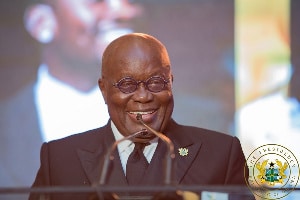
Accusations that President Nana Addo Dankwa Akufo-administration Addo’s is indifferent to the condition of Ghanaian workers have been refuted.
According to him, his government has the Ghanaian worker at heart hence measures were put in place to cushion workers following the emergence of the COVID-19 pandemic which impacted many livelihoods.
“It is important to put on record, at the outset, that when COVID-19 struck, and public sector workers in some countries were either relieved of their jobs or getting reduced salaries, my government continued to pay workers without any reductions, and we ensured that no public sector worker lost his or her job or getting reduced salaries.
“It cannot, therefore, be said that my government does not care about the plight of the Ghanaian worker,” he added.
President Akufo-Addo however admitted to the current living and economic conditions in the country and their impact on the Ghanaian worker and gave the assurance his government is committed to addressing the challenges.
“I will be the first to admit that conditions of service, in the wider public service, need improvement. However, these should be done within the budgetary constraints to ensure that we do not put excessive pressure on our public finances,” the president said.
He continued, “I have also acknowledged on several occasions that we are in difficult times, and the government has not thrown its hands in despair and it is not looking for an easy way out. On the contrary, we are working hard to address the current situation and those that relate to improving the quality of life for all Ghanaians.”
The largest wireless provider in Africa, MTN Group Ltd., as well as Tullow Oil Plc and Gold Fields Ltd., have all received notices that they owe past taxes. The businesses all refute the assertions made by the government. The majority of Ghana’s income must now go toward paying off an estimated 576 billion cedis ($48 billion) in governmental debt.
“Ghana is clearly facing fiscal and economic challenges at the moment,” Gold Fields spokesman Sven Lunsche said in an emailed response to questions. “We are hopeful that the government will not resort to unreasonable fiscal measures that will further imperil the challenges facing the corporate sector.”
Gold Fields is in talks with the country’s tax authority to try and resolve the demand for 2018 to 2020. MTN, which has been ordered to pay $776 million, has until Friday to reach an agreement with the Ghanaian authorities.
Kosmos Energy, headquartered in Dallas, said the authorities claimed the company underpaid certain taxes and other contractual fiscal obligations. The claim is without merit and Kosmos will “vigorously dispute” it if required. Both Gold Fields and Kosmos declined to give financial details.
A spokeswoman for the Ghana Revenue Authority declined to comment when contacted by phone.
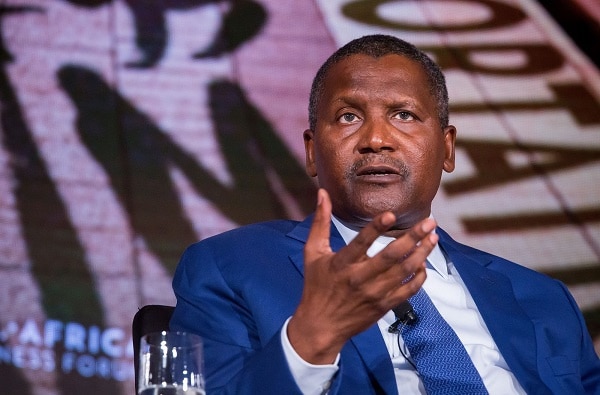
According to a Forbes Magazine compilation of Africa’s billionaires for 2023, Dangote’s achievement makes it twelve years in a row.
Due to the start-up of an oil and petrochemical refinery later this year, Dangote is anticipated to witness an increase in his net worth.
On the African continent, South African luxury goods magnate Johann Rupert took the second position despite recording a $300 million drop in fortune to $10.7 billion.
In third place was Metals and Mining magnate Nicky Oppenheimer who recorded a fortune of $8.4 billion.
In addition, about 19 billionaires from Africa were worth an estimated $81.5 billion, which is a decline from $84.9 billion recorded a year ago, despite one more billionaire listed in the ranks.
Despite recording a 4 percent drop, billionaires on the continent saw their net worth jump about 15 percent in 2022 due to rising stock prices across various regions.
Their fortunes however plummeted on the back of equity values dropping around the world.
For instance, the All Africa Standards and Poor’s index dropped by more than 20 percent in the first nine months of 2022 impacting the net worth of African billionaires.
This was followed by a late-year rally which saw the index decline by 3 percent through January 13, which was the day Forbes Magazine locked in stock prices and exchange rates for the list.
Meanwhile, only seven billionaires from Africa’s 54 countries made it to the rankings.
See the full list below:
Methodology
The Forbes list tracks the wealth of African billionaires who reside in Africa or have their primary business there, thus excluding Sudanese-born billionaire Mo Ibrahim, who is a U.K. citizen, South African Nathan Kirsh, who operates out of London and another billionaire London resident, Mohamed Al-Fayed, an Egyptian citizen. Strive Masiyiwa, a citizen of Zimbabwe and a London resident appears on the list due to his telecom holdings in Africa.
Net worths were calculated using stock prices and currency exchange rates from the close of business on Friday, January 13, 2023. To value privately held businesses, we start with estimates of revenues or profits and apply prevailing price-to-sale or price-to-earnings ratios for similar public companies. Some list members grow richer or poorer within weeks or days of the measurement date.
Announcing the decision in a statement to B&FT, the Registrar of Companies, Jemima Mamaa Oware, said the development leaves the names open to be used by anyone interested in them – and is in line with Section 5A (2) of the Registration of Business Names Act, 1962 (Act 151) on Annual Renewals which states that: “Without prejudice to any other liability prescribed by this Act, a registration which is not renewed in accordance with this section shall lapse and the Registrar may remove from the Register the Business Name of the person whose registration has lapsed after the expiration of the period prescribed for the renewal”.
“Therefore, to avoid such Business Names falling into the public domain, and for anyone of interest to use it after it has been struck off the Business Name Register, all Business Name Owners are entreated to renew their Business Names before the end of April 2023,” she said.
Meanwhile, the OCR is expected – for the very first time from June 1, 2023 – to commence full implementation of section 126(7) of the Companies Act, 2019(Act992) which states that: “Where a company defaults in complying with the filing of annual returns and financial statements, the company and every officer of the company that is in default is liable to pay to the Registrar an administrative penalty of twenty-five penalty units for each day during which the default continues”.
A penalty unit is established by the Fines (Penalty Units) Act 2000 (Act 572), and the current monetary value per penalty unit is GH¢12.
“This means that effective June 1, 2023, an administrative charge of GH¢300 will be charged for each day the default continues against the Company and every officer of the Company until section 126 (7) is complied with,” Mrs. Oware stated.
President Akufo-Addo launched the ORC last year after a 15-year wait, with hopes that the Office would take charge of the administration and registration of companies in the country.
The vacuum created by absence of an ORC contributed to the weak system of supervision for companies in the country; therefore, its setting up is expected to bring dynamism to the business environment.
The Ministry of Works and Housing and other important stakeholders will oversee the management of the NRAS by a private sector property manager.
The initial roll out, with a seed funding of GHC30m, will take place in the Greater Accra, Ashanti, Western, Eastern, Bono East and Northern Regions, where data from the Ghana Statistical Service indicate renters have the greatest challenge with rental accommodation.
“The initial roll out, with a seed funding of Ghc30m, will take place in the Greater Accra, Ashanti, Western, Eastern, Bono East and Northern Regions, where data from the Ghana Statistical Service indicate renters have the greatest challenge with rental accommodation.”
“I don’t think we have even gotten there; he should have engaged parliament first. Because you are telling us that the money is coming from the government but I know it is not coming from the Ministry of Works and Housing because there wasn’t any provision in the budget for that,” Ranking Member on Works and Housing in Parliament, Vincent Oppong Asamoah stated.
He continued: “So, probably you need to count on the office of government machinery. I know there have been a lot of initiatives that are locked up over there and scrutiny of those projects becomes so difficult when it is under the office of government machinery. To scrutinize it is so difficult because if you want to even get the answers, who are you going to call from the office of government.
Mr. Oppong Asamoah stated that if the situation is not checked the initiative will suffer the same fate as others.
“If you call them, they will tell you about the National security issue so we cannot even go into that. That is what will happen to it but if it’s an initiative by the Ministry of Work and Housing there should be a budget allocation. So that we can also follow and see the right things are done. But so far as I have explained to you previously there wasn’t any provision in the budget so I don’t even know where they are going to gather that.”
Government commits GH¢30 million to assist tenants to rent – Asenso-Boakye
The TUC boss underlined the need for such persons to receive preferential treatment in the distribution of such national projects while speaking at the Scheme’s launch in Accra.
Despite the importance of such programs, he emphasized that they have to be carried out across the nation as intended and not only in a select few regions.
“So, we want to urge you to, as quickly as possible, extend this to all the regions because when you do something and you call it National Rental Assistance Scheme and you limit it to regions – not all the 16 regions, it’s a little problematic. It doesn’t matter how many you support in a region; I think you should try and do that,” he said.
Dr. Anthony Baah further added that in the case of single mothers, it becomes a better deal when they are offered such opportunities, more than when it is offered to others who do not necessarily have dependents.
“I also want to appeal to the ministry and all those who access the application, let’s prioritize women, especially mothers with children and without husbands; the single mothers. You see, if you provide accommodation to a single mother who has two children, it’s much better than providing accommodation for others who have no children. I’m saying this because of the experience I’ve gathered,” he added.
The corridor, which connects the five major sub-regional nations of Côte d’Ivoire, Ghana, Togo, Benin, and Nigeria, is in charge of transiting around 78% of West Africa’s trade volumes. Despite this and the adoption of the Africa Continental Free Trade Area (AfCFTA), the route continues to struggle with 37 official checkpoints or barriers that cause cross-border trade to take a lengthy time, sometimes up to 15 days, between the two extreme ends.
The partnership is therefore expected to eliminate barriers impeding the efficiency of trade and causing prolonged turnaround.
He mentioned that the collaboration, which started in December 2021, ensured a thorough corridor assessment that revealed a need for mutually beneficial corporation between the five countries to improve trade facilitation and Customs clearance – at both ports and land borders.
“This MoU captures the vision of African leaders and ambitions of citizens for the transformation of our continent as expressed in agenda 2063, to unleash the prosperity and economic liberalisation of Africa. While each government has put in place initiatives to advance this course, TMA’s initiatives are uniquely placed to ensure better Customs cooperation and facilitation of trade, especially across important trade corridors like this.
“The greatest challenge for our sub-region has remained how to ease the burden of land cross-border trading between Anglophone and Francophone West African countries, especially for micro and small enterprises (MSME). Now we are not far from achieving that,” he said.
He added that AfCFTA puts great responsibility on governments to ensure easy access to cross-border trade without any further delays, especially now that technical and financial support has been secured.
Trademark Africa’s Board Chairperson, Erastus Mwencha, remarked that eliminating barriers to cross-border trade is the surest way to unleash the immense impact that free trade in high-value products can offer individual economies as intended by the AfCFTA.
“As part of the pivot to West Africa, TradeMark Africa will support the secretariat of AfCFTA based in Accra to realise its vision of integrating the US$ 3.4 trillion African market. We will work with member-states to ensure governments and businesses benefit practically from the opportunities presented by these shifts; in particular, along the Lagos-Abidjan corridor.
“Our key aim remains trade facilitation, just like we have always done in the last 12 years in the East and Horn of Africa region – where time for cross-border trade has been slashed by 70 percent on average and businesses can receive certification in a day,” he said.
For his part, the Secretary-General of the AfCFTA secretariat, Wamkele Mene, reiterated that the corridor controls about 78 percent of trade volume in the West African sub-region; hence, the successful elimination of its numerous barriers will bring about efficiency and enhance the interconnection of the sub-region.
“The secretariat sees this MoU today as an important milestone because we know that leveraging on the technical expertise of TMA as an implementing agency – which we do not have, will help us reach our goal. There are pockets of success chalked up by the various blocs on the continent, but the missing link is the integration of these pockets of success on the various corridors like the East African example, and so what we need to do is to interconnect the corridors to ensure collective competitiveness,” he added.
On January 31, 2023, during an interview that GhanaWeb was watching on Good Evening Ghana, Agyapong stated that he would never take part in any endeavors that would make him wealthy at the expense of the citizens of Ghana.
He continued by recounting how he turned down a $3 million bribe from an Indian businessman who was trying to enlist his assistance in obtaining a government project.
“I met an Indian last week and he said there is a project that he thinks I can influence. The actual cost of the project is ($)26 million.
“The guy comes to say that he can do it for $9 (million) and of course as a businessman, he has to make a profit with whoever introduced him, $3 (million), making $12 (million). Then he said to me, I’m going to give you $3 million so I will add it to the $12 (million) to make $15 million and I said no to him.
“I said Ghana first, I don’t want the $3 million if you know you can do the job for $12 million so be it. The young men that come from America with their tickets and everything whatever you want to give to them it is okay but me I will not take any money,” he narrated.
“The Indian man, who was there with his young engineer son, said wow, I have goose pimples. I have worked in Africa for 22 years and I have never seen an African reject $3 million like you did,” he said.
The Ghana Private Road Transport Union (GPRTU) has hinted at a potential increase in transportation costs as a result of the country’s rising cost of gasoline and replacement parts.
The GPRTU claims that since the cost of spare parts and lubricants has not decreased, an increase in transportation costs is necessary.
Abbas Ibrahim Moro, senior industrial relations officer for the GPRTU, said in an interview with Starr News that they keep an eye on market trends before making announcements.
“Currently spare parts have not been reduced, they have been increased. Some items we use in running transport have never been reduced, it has increased. We will compare some of the items that we have identified. Then with the new increased prices we can talk on any increment and any percentage that we want to ride on.
“Spare parts dealers came out and said they’ve reduced their prices and we challenged them of which they’ve not been able to publish what has been reduced. We have even identified some of the items like tyres, its prices have gone up. When we even said they haven’t reduced it, now it has gone up again,” Mr. Moro explained.
He continued: “For now, we don’t have to mention anything. It is expected to come, but it hasn’t come so let’s wait until tomorrow and see. The new fuel price will come. We will make research into some of these things and identify the actual percentage we are to come up with. Let the prices come because nobody is prepared to trade at a loss”.
A litre of gasoline is currently being sold by one of the market leaders, GOIL, for GH15.25 as opposed to GH13.60 previously. In contrast, diesel is now selling for $15.90 a litre, up from $15.52 previously.
Later today, new fuel rates are anticipated to be announced by other OMCs.
A new tier of 1,800 lower paid shift leader positions will take over running its shop floors.
Tesco also announced it will close its counters and hot delis, with staff offered alternative jobs elsewhere.
Britain’s largest supermarket said the axing of its counter and delis from 26 February were due to lack of demand from customers. It is also closing eight pharmacies, moving overnight roles to daytime in 12 stores and reducing hours within some post offices.
Similar changes have already happened at Tesco’s smaller stores, but the grocer is now implementing them at its larger superstores and Tesco Extra shops.
Daniel Adams, national officer of the Usdaw union, which represents Tesco workers, said the announcement would be “especially difficult” for staff in the midst of the rising cost of living.
“We will be doing all we can to support members throughout the process with a view to protecting jobs and, where this is not possible, securing the best possible deal for those affected,” he said.
Jason Tarry, Tesco’s UK and Ireland boss, said the decisions were “difficult”, but added they were “necessary to ensure we remain focused on delivering value for our customers wherever we can, as well as ensuring our store offer reflects what our customers value the most”.
“Our priority is to support those colleagues impacted and help find alternative roles within our business from the vacancies and newly created roles we have available,” he said.
Alongside the planned team manager cuts, a further 350 jobs are at risk in a series of other changes at the company.
It is also cutting some jobs at its head office as well as closing its Maintenance National Operating Centre in Milton Keynes.
Tesco said it was now entering a consultation period with the Usdaw union on the proposals and pointed out that it currently has about 2,000 vacancies across the business.
Bigger supermarkets are having to become more efficient and make savings as they face competition from discounters Aldi and Lidl.
Last week, Asda, Britain’s third largest grocer, said it planned to remove 211 night shift managers and change the hours of 4,137 workers.
It followed similar changes to night time working at Sainsbury’s and Tesco.
The project has faced criticism about the impact it would have on the land the route would take, with campaigners fighting against plans to build on woodland.
The two tunnels, which are between the M25 and South Heath, have five shafts for emergency access and/or ventilation near Chalfont St Peter, Chalfont St Giles, Amersham, Little Missenden and Chesham Road.
The 1.3 million cubic metres of chalk and flint that has been excavated will be used for a chalk grassland restoration project at the south portal of the tunnel.
HS2 Ltd said the project would “see the creation of 127 hectares of new landscaping, wildlife habitat and biodiverse chalk grassland”.
Image caption, Mr Noak said it was “great to be able to celebrate the half-way point” of the tunnel
Mr Noak said: “This tunnel will take HS2 underneath the Chiltern hills, safeguarding the woodlands and wildlife habits above ground as well as significantly reducing disruption to communities during construction and operation.
“Once complete, HS2 will offer low carbon journey options linking London with the major cities of the north and releasing capacity for more freight and local trains on our existing mainlines.”
Penny Gaines, chairwoman of campaign group Stop HS2, previously said the project was “based around saving a few minutes on train journeys, but it’s far more environmentally friendly not to travel at all”.
“We’ve all seen how much business can be done through video-conferencing and other technologies,” she said.
Three years on since the UK left the European Union (EU), a Midlands business owner has described the move as a “complete disaster”.
Nic Laurens, who runs an abrasives supply firm in Shropshire, moved 90% of his company to the Republic of Ireland in order to remain in the EU.
Higher costs and piles of paperwork to export goods left customers with four-week waits for orders, he said.
The government has previously said trade with the EU was “rebounding”.
It said recent data showed “trade to both EU and non-EU countries is above pre-Covid levels”.
However, Mr Laurens, a former Conservative councillor, said Brexit had left his firm facing filling out 24 forms to export goods into the EU.
“Brexit has [caused] barriers to trade and additional costs that you have to pass on to the consumer,” he told the BBC.
“We’ve had to completely rethink our business model.
“The UK hasn’t grown, it has stagnated, but the Irish side of the business has gone from strength to strength.”
Image caption, Mr Laurens’ company supplies abrasive tool parts
All of the products at his company, Severn Diamond Tools and Abrasives, are manufactured abroad.
“We never ship anything from the UK to Ireland anymore. The last time we did, it took four weeks for a parcel to arrive to the customer. Before Brexit it used to take three days,” Mr Laurens said.
“As a business, we have no plans to invest in the UK market because of the uncertainty around the government.”
Nationally, when the British Chambers of Commerce surveyed 500 firms, more than half of them said they were still grappling with the rules for trading within the Union.
The red tape may have deterred some small exporters altogether. A study of customs classifications shows the variety of goods British businesses export has diminished.
Leaving the EU also meant changes to the rules on the free movement of labour and the introduction of a points-based immigration system that has prompted complaints from some unlikely quarters.
Image caption, Ms Husein-Miya says recruitment in the hospitality took a hit after Brexit
Shamim Husein-Miya, the business director of Five Rivers Restaurant, has said the Walsall firm has had to adapt the way it recruits staff. “As a business, we looked at overseas recruitment for many years before Brexit, but now it has been more challenging.”
However, as many around the country struggle to cope with the rising cost-of-living, the restaurateur said it had boosted staffing levels, with many people now seeking second jobs and other means of income.
The International Monetary Fund (IMF) has predicted the UK economy will shrink and perform worse than other advanced economies, including Russia, as the cost of living continues to hit households.
The IMF forecasts the UK economy will contract by 0.6% in 2023, rather than grow slightly as previously predicted.
However, the IMF also said it thought the UK was now “on the right track”.
The UK government has previously said Brexit “opens new opportunities for UK businesses”.
Speaking in December, it said: “Despite difficult global economic headwinds, UK-EU trade is rebounding, with recent data showing that UK trade to both EU and non-EU countries is above pre-Covid levels,” adding exporters had been provided with “practical support” with post-Brexit trading arrangements.
“We’ve also removed 400 trade barriers across 70 countries in the past two years, removed tariffs on £30bn worth of goods and cut £1bn business costs arising from current retained EU law,” a spokesperson added.
Those are the key findings of a new report written by the Confederation of British Industry (CBI).
The drive to reach net zero emissions involves more than 20,000 businesses, it calculates.
Some 840,000 jobs are linked to sectors ranging from renewable energy to waste management, it adds.
Titled Mapping The Net Zero Economy, the report looked at the parts of the UK that have benefited most from policies aimed at curbing greenhouse gas emissions.
Green jobs also pay significantly more, the report says, with the average wage (£42,600) significantly above the national average (£33,400).
“The net zero economy is addressing levelling up and the UK’s productivity problem,” says Peter Chalkley, the director of the Energy and Climate Intelligence Unit (ECIU) who commissioned the research.
“But if the UK doesn’t build on the good work that has already been done, we will lose out and lose jobs.”
The UK has long been seen as a leader in green technology, in particular offshore wind, but this position is at risk.
“Other places (in the world) are really setting out their stalls for how they’re going to capture that investment,” says Tom Thackeray from the CBI who carried out the analysis, adding that there is now a “global competition” for green funding.
The passing last year of landmark legislation in the United States called the Inflation Reduction Act (IRA) has, analysts say, changed the global dynamic for green investment. The Bill puts aside $369bn (£297bn) for action related to tackling climate change and many companies now see America as the best destination for their money.
“There’s an excitement [about the US since the IRA], so the challenge for us is to reignite the excitement back in the UK,” says Chris Stark, the chief executive of the Climate Change Committee, a public body that advises the UK government on its green policies.
The view that the UK is losing momentum was also in Tory MP Chris Skidmore’s Mission Zero report last month in which he said the UK was falling behind in the net zero race.
Restrictive planning regulations for onshore wind and solar, and a lack of consistency in policy were among many issues Mr Skidmore cited as holding back investment from the private sector.
“We need to really speed up planning and consent for renewables and for network connections and for vehicle charging,” says Emma Pinchbeck, the chief executive of trade association Energy UK.
“It takes 12 years to build a wind farm in this country, when it should take one.”
Responding to the report and the criticism of policy, a government spokesman said the UK was leading the world on tackling climate change.
“Our plans will support up to 480,000 jobs by 2030,” they said. “We are driving an unprecedented £100bn of private sector investment by 2030, backed by around £30bn in funding from the government since March 2021 to achieve our aims.”
Which? said consumers should be alert to caffeine levels.
“Our research shows you may be consuming significantly more, or less, caffeine than you bargained for,” said its nutritionist Shefalee Loth.
“Most of the time this shouldn’t be an issue but if you drink a lot of coffee or need to limit your caffeine intake you might want to consider what you’re ordering and where from.”
Image caption, Simon and Sarah
Simon, 64, told the BBC he normally preferred small, independent coffee shops but did sometimes go to Costa and Pret.
“I’m not really strongly affected by caffeine, I can drink coffee in the evening and it doesn’t really affect me that much,” he said.
Guppy Bahtoye, 37, from Wolverhampton told the BBC: “I like my coffee – in fact, I travel that extra bit just go to Costa because I like the way they make their lattes.
“I was a bit surprised by this survey – by the extent of the variation of caffeine content. I had a latte once from McDonalds that gave me this huge caffeine kick…and then I crashed. I had to take a nap afterwards.”
McDonald’s declined to comment.
Caffeine is a natural stimulant that can make you more alert. However, some people are sensitive to it or need to avoid it for health reasons, such as being pregnant.
Which? measured the caffeine levels in drinks like cappuccino and espresso at Caffè Nero, Costa, Greggs, Pret a Manger and Starbucks, and found big differences.
For example, Costa’s cappuccino was strongest, with caffeine equivalent to four cups of tea, while Starbucks’ contained the least at 66mg – less than a single cup of tea.
One factor that can impact caffeine content of drinks is the type of coffee bean. Of the two main types used, Arabica beans contain around half the caffeine of Robusta beans, and there are also variations in taste between the two.
Costa Coffee said the amount of caffeine in its drinks varied depending on size of a drink and the type of coffee used.
“We would encourage customers to be aware of the caffeine content in their favourite Costa coffee to ensure it is right for their dietary requirements or lifestyle choice,” a spokeswoman said.
Pret declined to comment, while the BBC has contacted Caffè Nero, Greggs and Starbucks for comment.
The party says it wants ministers to “come clean” about the impact of keeping the “unfair” status ahead of the Budget on 15 March.
It says scrapping non-dom rules would bring in £3.2bn a year to spend on schools and the NHS.
But a Treasury minister said advice to ministers should remain confidential.
Responding to Labour’s call, Financial Secretary to the Treasury Victoria Atkins added that ministers need to be able to receive “free and frank advice” from officials.
She added the government keeps all taxes under review, and would only announce changes during Budgets.
It announced the policy last year, saying it would replace the rule with a shorter-term scheme for temporary residents.
In November, Chancellor Jeremy Hunt said he had asked officials at the Treasury to “look into” how much scrapping the policy would raise, following claims from Labour.
On Tuesday, Labour used a motion in Parliament to call for the government to publish the findings before 28 February, two weeks before the spring Budget.
However, MPs voted 305 to 229 to reject the motion.
During the Commons debate, shadow Treasury minister James Murray said non-dom status was an “indefensible 200-year-old tax loophole”, and getting rid of it was a “no brainer”.
He added: “Labour believes that if a person makes Britain their home they should pay their taxes here. That patriotic point should be accepted on all sides of the political divide.”
The SNP supported Labour’s proposals, with the party’s economic spokesman Stewart Hosie saying abolishing non-dom status was about “tax fairness”.
But Ms Atkins said: “In developing policy, ministers must be able to have, if you like, a safe space to be advised by officials.
“That process should not play out in public, especially given the issues that Treasury ministers deal with are often highly market sensitive.”
Last year it emerged that now-Prime Minister Rishi Sunak’s wife Akshata Murty had non-dom status.
Ms Murty said she did not want the issue to be a “distraction” for her husband, who was chancellor at the time.
The move comes as Washington moves towards a total ban on the sale of US technology to the Chinese telecom equipment giant, the paper said.
“Working closely with our interagency export controls partners at the Departments of Energy, Defense and State, we continually assess our policies and regulations and communicate regularly with external stakeholders,” a US Commerce Department spokesperson told the BBC.
“We do not comment on conversations with or deliberations about specific companies,” they added.
Huawei declined to comment on the reports.
The Biden Administration has continued to tighten restrictions on Huawei as political tensions between Washington and Beijing increased over Taiwan, where most of the world’s computer chips are made.
In October, US Under Secretary of Commerce for Industry and Security Alan Estevez said “the threat environment is always changing.”
“We are appropriately doing everything in our power to protect our national security and prevent sensitive technologies with military applications from being acquired by the People’s Republic of China’s military, intelligence, and security services,” he added.
For several years the Shenzhen-based Huawei has faced US export restrictions on items for high-speed fifth generation (5G) telecoms equipment and artificial intelligence technology.
In 2019, during the presidency of Donald Trump, US officials added the company to a so-called “entity list.”
It means that US companies need to obtain a licence from the government to export or transfer some technologies, especially over concerns that they will be used by the Chinese military.
However, in that time licences have been granted to some US companies, including Intel and Qualcomm, to supply Huawei with technology that was not related to 5G.
The price for wholesale electricity is set by a bidding process, with each generating company saying what it would be willing to accept to produce a unit of power.
When it’s windy and sunny enough to meet demand for electricity through renewables, the wholesale cost drops to close to zero.
But when it’s not, the wholesale cost is set at the level that all providers will accept – which is the highest bid.
In the past, gas powered generation was among the cheapest ways of producing electricity.
But the cost has soared recently as economies have recovered from the pandemic and Russia’s invasion of Ukraine disrupted supplies.
Charging an average price for wholesale electricity would have made the bill in the two years from 2021-22 £7.2bn lower, the Carbon Tracker Initiative said.
According to BBC calculations that’s about £250 per household.
Due to the current system, firms that make renewable energy have been paid much more for their power than it costs them to generate.
For this reason the government introduced a temporary 45% tax in January on what it calls “extraordinary returns” from low-carbon electricity generators in the UK.
Lower bills
Jonathan Sims, an energy analyst who wrote the CTI report, said the findings showed how the global gas market over the last two years had skewed British power prices.
He said these prices did not reflect the different technology the UK now uses to generate electricity.
The CTI’s report takes into account the need for sources of power that can be fired up immediately such as gas-fired, or provide near constant output such as nuclear, whereas wind power for example is weather-dependent.
The analysis also suggested Europe’s most gas power-dependent countries, the UK and Italy, had consistently paid the highest prices for electricity during the recent period of gas price volatility.
The business department said it was consulting on changes that “would stop volatile gas prices setting the price of electricity produced by much cheaper renewables”.
It also said its windfall tax on renewables generators would “help fund energy bill support for households and businesses”.
PayPal’s announcement follows tens of thousands of layoffs by technology giants in the last month alone.
This year, Google’s parent company Alphabet, Amazon and Microsoft have announced major job cuts.
“We must continue to change as our world, our customers, and our competitive landscape evolve,” PayPal’s chief executive Dan Schulman said in a statement.
Also on Tuesday, Snap – the parent company of social media platform Snapchat – warned that revenue for the three months to the end of March could fall by as much as 10%.
After the announcement Snap’s shares fell by almost 15% in extended trade in New York.
At the start of this year, Amazon announced it planned to cut more than 18,000 jobs because of “the uncertain economy” and rapid hiring during the pandemic.
Also this month, Alphabet said it would shed 12,000 jobs, while Microsoft said up to 10,000 employees would lose their jobs.
Last week, Swedish music-streaming giant Spotify said it would cut 6% of its about 10,000 employees, citing a need to improve efficiency.
In another sign of the technology industry slowdown US computer chip maker Advanced Micro Devices (AMD) on Tuesday reported a 98% fall in net income for the last three months of 2022.
The company also said it expects revenue to drop by as much 10% in the current quarter.
However, the figures were better than many investors had expected and AMD’s shares rose after the announcement.
In Asia on Wednesday, the world’s second-biggest memory chip maker SK Hynix posted its largest quarterly loss on record.
The South Korean company reported a worse-than-expected 1.7tn won ($1.4bn; £1.1bn) loss for the last three months of 2022, as sales fell by 38%.
The firm pointed to falling computer chip prices and joined rival technology giants as it warned that it expects an industry-wide downturn to worsen in the coming months, before recovering later in the year.
It came after rival Samsung Electronics on Tuesday reported its lowest quarterly profit in eight years.
The total was more than double 2021’s figure, and is likely to renew pressure on the industry after some countries, including the UK, imposed special taxes on the profits last year.
Exxon has criticised such measures as counter-productive.
Last month, it sued the European Union over the new windfall tax.
Exxon has also has spoken out against similar proposals in the US, where President Joe Biden has sought to focus blame for last year’s high motor fuel costs on companies failing to spend their profits to boost supply.
“The latest earnings reports make clear that oil companies have everything they need, including record profits and thousands of unused but approved permits, to increase production, but they’re instead choosing to plough those profits into padding the pockets of executives and shareholders,” said White House spokesman Abdullah Hasan.
In an interview with broadcaster CNBC, Exxon boss Darren Woods said the White House needed to “get its facts straight”, noting that the firm had continued to spend money on oil and gas projects despite pressure from investors and others to shift investments to renewable energy.
He told investors on Tuesday that the profits were a vindication of the firm’s strategy.
“Of course, our results clearly benefited from a favourable market but, to take full advantage of the undersupplied market, our work began years ago,” Mr Woods said in a conference call with investors. “We leaned in when others leaned out, bucking conventional wisdom.”
Exxon’s shares sank sharply in 2020, when demand for oil tumbled, leading the firm to report its first loss in decades.
But the price of the shares has soared since 2021, especially since oil prices jumped when the war in Ukraine disrupted energy supplies last year.
The firm said it had been working hard to reduce costs, and profits would have been even higher without the windfall taxes in Europe.
The company said it took a hit of $1.3bn in the final months of 2022, mainly from extra European taxes.
It also reported a $3.4bn charge for the year stemming from the expropriation of its investments in Russia.
Exxon said it increased investment by about 38% last year. In some key areas, such as Guyana and the Permian Basin, production was up more than 30%, offsetting output lost due to divestments and the change in Russia, the company said.
Overall oil production increased about 3% in 2022, to 2,354 thousands of barrels per day from 2,289 thousands of barrels per day in 2021.
Economic Secretary to the Treasury Andrew Griffith said the government remained “steadfast in our commitment to grow the economy and enable technological change and innovation – and this includes crypto-asset technology”.
“But we must also protect consumers who are embracing this new technology – ensuring robust, transparent and fair standards,” he added.
Even when the crypto market was booming, in 2021, calls for regulation were loud.
After the chaos of 2022, the calls for order are now deafening.
Hundreds of billions of pounds were wiped from the crypto landscape and companies and people went bankrupt thanks to scandal after scandal.
The UK’s plan to finally put concrete proposals in place will be welcomed by consumer investors hit in their pockets.
But I expect the consultation to be fiery, with many different groups wading into the debate about how to tame the wild beast of Bitcoin and other digital coins.
Part of the original appeal of cryptocurrency was its independence of traditional financial networks.
Moves to allow establishment control will infuriate a core group of true believers.
But with the right form of regulation, others will argue, the industry could truly blossom.
Last year, Rishi Sunak, then Chancellor, said he wanted to make the UK “a global hub for crypto-asset technology”.
But since then, the industry worldwide has been buffeted by a series of crises – most recently, the collapse of the FTX exchange, which prosecutors have described as “one of the biggest financial frauds in US history”.
The value of crypto assets has also fallen sharply, with Bitcoin now worth less than half of its highest price of more than $67,000.
‘Wild West’
The so-called crypto winter has raised questions about whether the industry can ever be effectively regulated.
Conservative MP Harriett Baldwin, who chairs the Treasury Committee, told BBC News it had heard evidence of “truly Wild West behaviour” but also recognised there was “valuable technological innovation happening that could benefit the UK economy”.
“We are paying close attention to these plans and to the regulators’ plans, because we would not want our constituents to think cryptocurrencies are any less risky if they are regulated,” she said.
Jason Guthrie, European head of digital assets at the financial firm, Wisdom Tree, said the sector had a bright future. The “devil would be in the detail”, he told BBC News, but he “absolutely welcomed” regulators looking at cryptocurrency – and the right regulation would be in the interests of the industry as well as customers.
“Having a solid a regulatory framework, having enforcement capabilities, is really important for consumer confidence,” Mr Guthrie said.
“The sooner we have details around concrete proposals, the easier it is to plan for and build towards.”
‘Open for business’
Jeremy Barnett, a barrister and honorary professor of algorithmic regulation, at University College London, said the UK had much to gain, as entrepreneurs were currently choosing to set up elsewhere.
“If you don’t have a proper regime, you drive people off shore,” he said.
“I want to see people who have cryptocurrency services and products encouraged to open for business in the UK.
“We should be in this space – but it does need to be regulated and policed.”
The government’s consultation on its proposals will close on 30 April, with any responses then considered by ministers.
Once any legislation is put to Parliament, it will be the job of the regulator, the Financial Conduct Authority, to draw up the detailed rules the sector will have to follow.
House prices in the UK fell for the fifth month in a row in January, according to Nationwide Building Society.
The price of the average property last month was £258,297, down by 0.6% on December.
Annual house price growth slowed to 1.1%, down from 2.8% in December.
The country’s biggest building society said it would be “hard for the market to regain much momentum in the near term.”
Robert Gardner, chief economist at Nationwide, said “economic headwinds are set to remain strong, with real earnings likely to fall further and the labour market widely projected to weaken as the economy shrinks”.
He added that the affordability of mortgages would “remain challenging” in the short term due to higher interest rates, while saving for a deposit was “proving a struggle for many given the rising cost of living”.
Mortgage approvals fall
On Tuesday, the Bank of England reported lenders had approved fewer mortgages than expected in December, about 35,000 compared with more than 46,000 in November.
That is the lowest number since January 2009, excluding the pandemic lockdowns.
Andrew Harvey, senior economist at Nationwide, told BBC Radio 4’s Today programme: “The decline [in approvals] wasn’t unexpected, given we have seen a big slowdown in mortgage applications following the mini-budget.”
However, he said there were signs mortgage rates were slowly starting to improve.
These latest figures suggest mortgages are less affordable in all regions compared with 2021, with the cost of servicing the typical mortgage as a share of take-home pay at or above the long-run average.
London and the south of England face the biggest “affordability pressures”, with Scotland and the North remaining the most affordable regions, but mortgage payments there as a share of take-home pay are still at their highest level for more than a decade.