Tag: Ken Ofori-Atta

  • Tiny radioactive capsule goes missing in Western Australia

    Tiny radioactive capsule goes missing in Western Australia


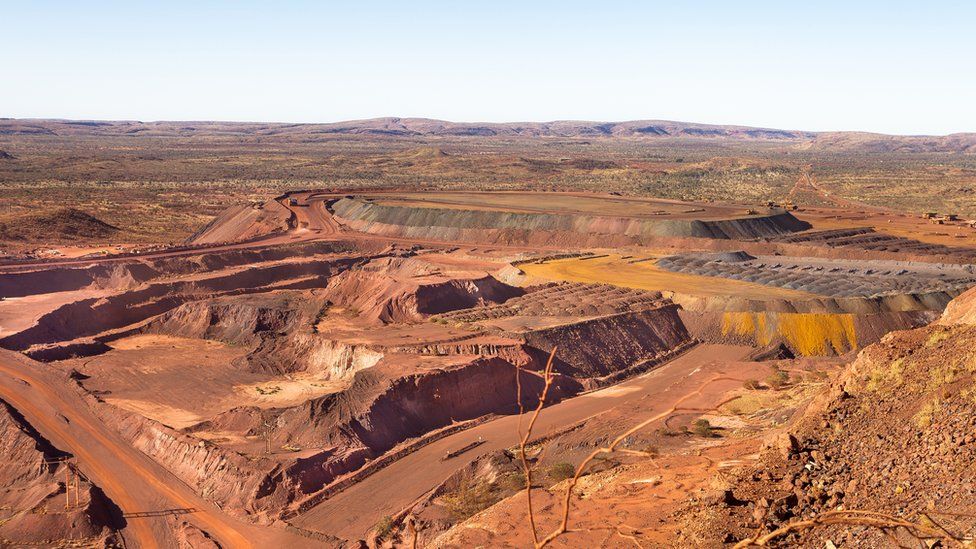
    An iron ore mine at Newman in the outback Pilbara region of Western Australia
    Image caption, The capsule went missing after being transported from a mine near Newman in Western Australia

    An urgent search is under way in Western Australia after a tiny capsule containing a radioactive substance went missing.

    The casing contains a small quantity of radioactive Caesium-137, which could cause serious illness if touched.

    It was lost between the town of Newman and the city of Perth in mid-January – a distance of roughly 1,400km (870 miles).

    The public has been warned to stay away from the capsule if they see it.

    It was being transported on a truck between a mine site north of Newman in the Pilbara region and the north-eastern parts of Perth between 10-16 January when it was mislaid. Caesium-137 is a substance commonly used in mining operations.

    The Department of Fire and Emergency Services (DFES) has said the capsule cannot be weaponised but could cause radiation burns and have other longer-term risks like cancer.

    The object emits a “reasonable” amount of radiation, Dr Andrew Robertson, the state’s chief health officer and Radiological Council chair, said.

    “Our concern is that someone will pick it up, not knowing what it is,” he said. “They may think it is something interesting and keep it, or keep it in their room, keep it in their car, or give it to someone.”

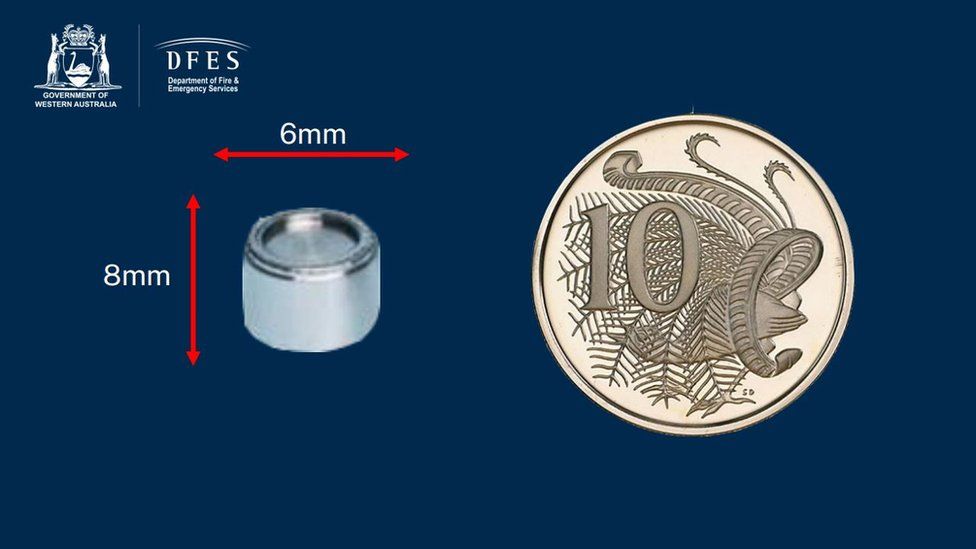
    An illustration showing the size of the capsule
    Image caption, The missing capsule is tiny but said to contain a “reasonable” amount of radiation

    DFES has released an illustration of the object, which measures 6mm by 8mm.

    The sites where the transportation began and ended have been searched and efforts are under way to figure out the exact route and stops that were made to narrow down the field of search.

    Anyone who sees the object is asked to call the DFES and to seek urgent medical assistance if they think they have come into contact with it.

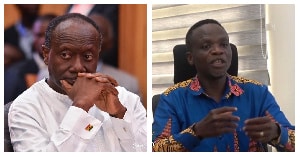
  • “Ofori-Atta ought to have vacated office seven months ago” – Kwbena Agyei Agyapong

    “Ofori-Atta ought to have vacated office seven months ago” – Kwbena Agyei Agyapong

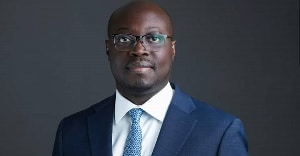
    NPP presidential candidate Kwabena Agyei Agyapong asserts that Ken Ofori Atta should have resigned from his position as finance minister seven months ago.

    This presidential candidate’s remark is consistent with the current economic crisis and the problems with Ghana’s contentious domestic debt swap program.

    The majority caucus in parliament requested Ken Ofori Atta’s dismissal as finance minister in October 2022.
    On Tuesday, October 25, 2022, the majority of MPs in Parliament made the statement to the media.

    The signatures of the legislators of the NPP are backing the call on the president to sack his finance minister and his deputy.

    Addressing the media on the issue, MP for Asante Akyem North, Andy Appiah-Kubi, said they have been compelled to go public with their demands because several appeals to the Presidency through the leadership have failed.

    The 80 NPP MPs who addressed the media disclosed that their position is consistent with those of the colleagues who were not present at the time of the press engagement.

    In an exclusive interview on Atinka, presidential hopeful for the New Patriotic Party (NPP), Kwabena Agyei Agyapong, who reacted to the call for the removal of Ofori Atta from office, mentioned that although he has no personal issues with the finance minister, the economic health of Ghana is paramount.

    He revealed that confidence is an unquantifiable product and that once the public loses trust in the economy, getting it back will be difficult.

    “I have asked the president to do something to stop our currency from going down. Some serious decisions have to be taken. I completely disagree with the president on his position on the finance minister.

    “I have said this before, and it does not mean that I have a personal issue against the finance minister. I think he should have left 7 months ago, in my personal view,” Kwabena Agyei Agyapong told Ama Gyenfa Ofosu Darkwa.

  • DDE for people is still optional – Finance Minister

    DDE for people is still optional – Finance Minister

    The Domestic Debt Exchange (DDE) initiative is voluntary for individuals, the Individual Bondholders Forum (IBF) has emphasized as one of the highlights of its discussions with the Finance Minister, Ken Ofori-Atta.

    The government would honor its duties to anyone who choose to keep their original bonds, the minister said during the IBF meeting.

    This was announced by the IBF in a statement:

    The complete statement, dated Monday, January 30, 2023, and signed by the convener Seny Horsi, is provided below.

    DOMESTIC DEBT EXCHANGE (DDE) UPDATE AND WAY FORWARD INDIVIDUAL BONDHOLDERS AND COLLECTIVE INVESTMENT SCHEMES

    As the deadline for the proposed debt exchange remains set for the 31st of January 2023, we wish to provide an update to individual bondholders and collective investment scheme investors, and fund managers for their guidance.

    A. HIGHLIGHTS OF MOF MEETING WITH IBF ON FRI. 27th JAN, 2023.

    1. The Minister of Finance (FM) welcomed the IBF recommendations from the report and indicated that it was something Ghana needs to consider.

    2. The finance minister iterated the position that the DDE is voluntary for individuals.

    The government will honour its obligations to individuals who opt to retain their original bonds.

    Thus, there will be no punitive action against individuals who opt to retain the bonds.

    3. The MoF has no responsibility for happenings on the secondary market. For this matter, the FM cannot assure market liquidity for the old bonds.

    He believes the benchmark bonds will be more tradable as more of those will be in circulation.

    4. The FM understands the unique position of individuals and collective investment schemes – as enumerated by the IBF leadership – for which reason he is considering presenting a revised DDE offer on Monday, 30th January 2022 for individuals to consider participating if they desire.

    It will remain purely optional and voluntary.

    B. THE IBF POSITION

    1. We welcome the Minister’s affirmation of the rights of individual bondholders to have the benefits of their current investment fully honoured without discrimination or punitive actions against non-DDE individual investors.

    This, in effect, presents individuals with a self-exemption option which bears no negative implications as far as government’s payment obligations are concerned.

    2. The original bonds retain more economic value and provides stronger enforcement rights than the DDE bonds.

    They are also well suited for the investment plans and life goals set by individuals at the time of their investments.

    In our estimation, this makes the original bonds superior and will be more tradable and liquid. We anticipate increased trading between individuals and pension funds who continue to pursue higher and realistic returns.

    3. The IBF remains willing and able to assist government further consider the proposed fiscal adjustments and recommendations captured in the joint technical committee report.

    The report estimates savings or fiscal space in excess of GHS83bn to assist government reduce its DDE indebtedness of GHS138bn.

    4. The IBF as at the publication of this release has not received the MoF’s revised proposal for our consideration, evaluation and advice to members.

    5. Individuals, as responsible citizens, have subjected themselves to all the new tax regimes aimed at boosting government revenue without complain.

    This is a massive contribution to government’s economic turnaround strategy.

    C. RECOMMENDATION TO INDIVIDUALS AND COLLECTIVE INVESTMENT SCHEMES

    1. If you intend to optimise your investments, maintain your superior original/old bonds.

    Hence, do not sign up to the DDE.

    2. Do not harbour any form of fear of being punished for rejecting the DDE.

    The law is in your favour and the Minister of Finance has been categorical in affirming your right by stating that he will honour obligations under the old bonds and will not undertake any action to punish individuals who reject the DDE.

    3. If you feel compelled to support the DDE programme for other reasons, please, do not hesitate to sign on to the DDE.

    4. To support the turnaround of the economy, we encourage all not to lose confidence in Ghana’s financial system.

    The continuous investments and savings of everyone is required to spur the growth of our economy.

    5. We urge every citizen to file their taxes and honestly pay up all obligations due.

    We all owe it to Mother Ghana to make things work.

    We are grateful to the Finance Minister and the Government for the cooperation extended us during this process.

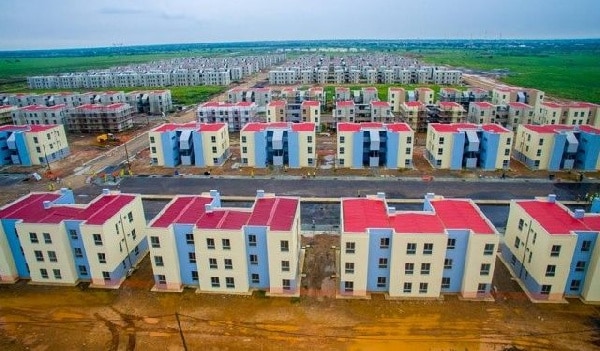
  • RETROSPECT: At the Saglemi project site, equipment valued at approximately $7 million was stolen

    RETROSPECT: At the Saglemi project site, equipment valued at approximately $7 million was stolen

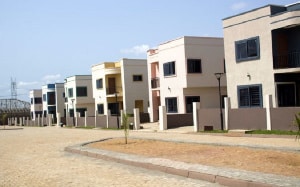
    In May of last year, Dr. Kaminta Baizie, a former consultant for the Saglemi Housing project, claimed that supplies and equipment worth roughly $7 million had been stolen from the project site.

    He said that the incident took place after the construction company left the location.

    Dr. Baizie explained what happened when the NDC left power on GHOne TV: “A lot of political interference went place.
    As a result, security measures were not even taken to protect the supplies and equipment that were on-site.

    “So as we speak, my understanding is that a lot of materials and equipment have been stolen from the site. It is estimated that the value is over US$7million. I think the Minister of Works and Housing should be in the position to tell us why security was not provided at the site when they knew that they were supposed to provide security,” he added.

    Read the full story originally published on May 1, 2021 by Kasapaonline.

    A former consultant for the controversial Saglemi Housing project, Dr. Kaminta Baizie, has revealed that materials and equipment valued at about US$7million have been stolen from the project site.

    According to him, the theft took place when the construction company abandoned the site and left behind some of its materials and equipment, a move that allowed people to take whatever they wanted.

    “When NDC left power, what happened was that a lot of political interference took place. As a result of that even protecting the materials and the equipment that was on-site with security was not done.

    “So as we speak, my understanding is that a lot of materials and equipment have been stolen from the site. It is estimated that the value is over US$7million. I think the Minister of Works and Housing should be in the position to tell us why security was not provided at the site when they knew that they were supposed to provide security,” Kaminta Baizie told Francis Abban host of the ‘State of Affairs’ show on GHONE TV.

    Meanwhile, Minister for Works and Housing Francis Asenso-Boakye says about US$32million is needed to complete the Saglemi Housing project.

    He however says his ministry is taking all necessary measures to get the facility completed for use.

    “The original output target of the Saglemi project of 5,000 units at a total cost of US$200 million as stipulated in the financing agreement presented to, and approved by Parliament had surreptitiously, and drastically, reduced to 1,502, of which 1,389 units had been completed without a commensurate reduction in the overall loan financing. Currently, an amount of approximately, US$197 million representing 98 percent has been expended on 1,502 units as against the planned 5,000 units,” the Minister said at a press conference in Accra Tuesday.

    “Although the financing of the project had largely been exhausted, an initial technical audit by the Ministry revealed the lack of primary infrastructure to the Saglemi project site thus limiting the utility of the development. The key primary infrastructure still outstanding include water supply and electricity.”

    “The Ministry tasked the Ghana Institution of Surveyors to conduct a cost and technical audit of the contract executed by the contractors in the context of the variety of agreements and commitments made by the parties to the project. Upon completion of the audit, the Ghana Institution of Surveyors estimated that an approximate amount of US$32 million would be needed to complete the project”, he added.

    Hon. Asenso Boakye disclosed that “as recent as 18th March 2021, I have personally visited the project site and have acknowledged the urgent need to complete the project, notwithstanding the complexities the project presents. Several ideas and scenarios, including dedicating a section of the housing units to the Armed Forces of Ghana, have been mooted and are being analyzed. A cursory inspection of the current state of development belies the fundamental challenge of the absence of the primary infrastructure the site suffers, for which reason a further investment is required. As the country faces the ravages of the COVID-19 pandemic, public finances are severely constrained, the Ministry acknowledges that completing the development is not an easy or straightforward task.

    “These facts are not information exclusive to the Ministry and could easily be found in the public domain due to the extensive news coverage the issue has garnered over the past four years. For this reason, the Ministry finds this video to be a grandstanding gesture laden with diabolical intent, to say the least.”

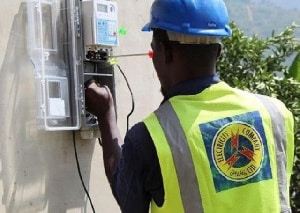
  • On February 1, the first quarter electricity tariff review will go into effect

    On February 1, the first quarter electricity tariff review will go into effect

    According to the Electricity Company of Ghana, ECG, the new electricity pricing issued by the Public Utilities Regulatory Commission, PURC, on January 16th, would go into effect for the first quarter of this year on Wednesday, February 1st 2023.

    This was revealed in a statement released by the company in Accra.

    ECG said in the statement that it had listed every unit usage and the anticipated cost in a “Reckoner” that makes it crystal obvious how the tariff is applied and billed.

    According to the statement, the percentage tariff rise for every one customer would depend on their consumption category and customer categorization.

    The Reckoner will be displayed at all districts and customer service centres nationwide to guide customers on their electricity purchases.

    The company said it has established customer help desks in all our districts and customer service centres to assist and explain to customers as well as reconcile any challenge that they may face.

    While assuring customers and stakeholders of its commitment to ensuring a smooth implementation of the new tariff, ECG advised customers to conserve energy and spend less on electricity.

  • The economic crisis is not our responsibility – George Domfeh

    The economic crisis is not our responsibility – George Domfeh

    Dr. George Domfeh, a development economist and research fellow at the University of Ghana, asserts that the current economic difficulties of the nation cannot be attributed to Finance Minister Ken Ofori-Atta.

    According to George Domfeh, Ghana’s debt to Gross Domestic Product (GDP) ratio, not Ken Ofori-Atta, is to blame for the country’s economic position, contrary to statements made by others.

    According to him, the charges made by former president John Dramani Mahama that the finance minister is to blame for the economic problems citing his reckless borrowing should be ignored since they are unsupported by facts, he claimed in an interview with Neat FM.

    “I’m talking about what former president John Dramani Mahama said, that because of Ken Ofori-Atta’s reckless borrowing, that is why we’re in economic crisis. I don’t agree with him.

    “It is very difficult to believe such an assertion because there’s no data and nothing to support it. Our problem is the debt-to-GDP ratio. Debt to GDP was 182 some years ago,” he said.

    He continued that during Mahama’s administration, the country had to turn to the IMF for a bailout because of debt to GDP, and when asked about it, the former president wouldn’t attribute that to careless borrowing.

    “Kufuor left it at 32 in 2008 and when Mahama was also in government it was 71 and finally 72.6 in 2015 which took us to the IMF for a bailout.
    “I’m sure when you ask him about it, he will never say it is because of reckless borrowing that’s why we went to the IMF at the time.

    “Indeed, when this government came to power we were still in IMF, and since 2016 the debt to GDP ratio was always high. It was in 2017 that things started to change.
    So, if you say it is because of reckless borrowing that is why we’re in an economic crisis then you’re not being fair to the finance minister,” he added.

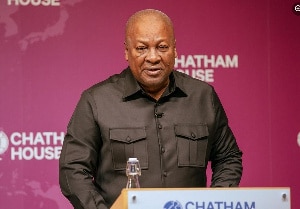
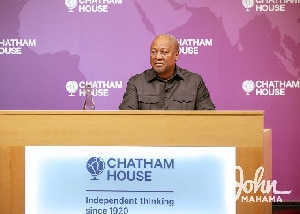
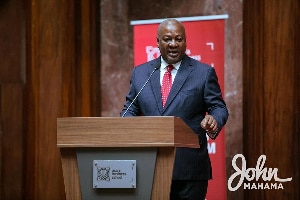
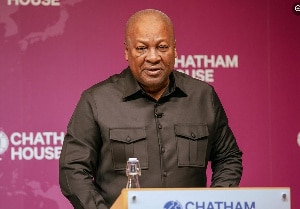
    Former President John Dramani Mahama speaking at the Chatham House in London on Friday, January 27, on the theme “Africa’s Strategic Priorities and Global Role,” blamed government reckless borrowing for the current economic crisis.

    “We had been raising the red flag since 2019 about the government’s reckless borrowing. Going onto the Eurobond market every year for 3 billion dollars and not investing it in the productive sectors of the economy and using most of it for consumption and that is what has ended us where we are,” he said.

  • Provide passengers with a safe and dependable service – Transport Minister

    Provide passengers with a safe and dependable service – Transport Minister

    Kwaku Ofori Asiamah, the minister of transportation, has pleaded with both domestic and foreign airlines to offer dependable services to travelers.

    He contends that while providing excellent customer service to travelers is still a top concern for the airline business, it is essential that they feel secure and at ease while using their facilities or flying.

    Speaking at the 4th Aviation Ghana Stakeholders Meeting in 2023, Mr. Ofori Asiamah emphasized that the government will, on the other hand, provide an atmosphere that will allow indigenous carriers to prosper.

    “Customers Service delivery is very important in the airline industry and I want to entreat all the airlines to provide safe, reliable and comfortable flight to their passengers. They should always remember that the passenger comes first,” he said.

    “Government on its part will continue to create enabling environment to grow the domestic airlines across the nation,” he added.

    Meanwhile, IATA’s Regional Vice President for Africa and Middle East, Kamil Alawadhi, has said airlines worldwide lost a total of US$6.9 billion last year.

    He pointed out that the outbreak of the global pandemic – COVID-19 has proven that resilience is the hallmark of airlines.

  • GRA finds top retailers that are duplicating their e-VAT serial numbers

    GRA finds top retailers that are duplicating their e-VAT serial numbers

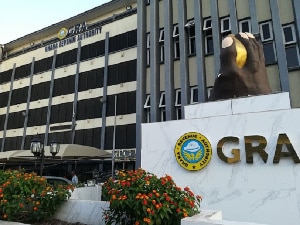
    Some prestigious eateries and retail centers have been found to be copying electronic VAT serial numbers, according to the Ghana Revenue Authority (GRA).

    “Palace Shopping Mall and other suspected businesses are copying e-VAT serial numbers, an act that is tantamount to tax fraud,” stated Joseph Annan, the Head of Accra Central Enforcement Area-GRA, in a statement made to the B&FT in Accra following a visit to some retail department stores.
    Several bills are using the same serial numbers, which is a problem.
    They are undervaluing the state since that is a clear case of duplication.

    “Others, including the Dzorwulo Branch of Second Cup Restaurant and Max Mart East Legon, were not issuing the invoices at all,” Mr. Annan disclosed.

    The culprits are expected to face court action after all necessary investigations are concluded by the Authority. Indeed, the VAT Act 2013, sections 58, 59, stipulate 1,500 penalty units fine or imprisonment of up to five years or a combination of both.

    The Authority has emphasised that it will leverage the first quarter of this year to arrest managers of businesses not complying with the electronic VAT (e-VAT) invoice.

    This specific exercise, according to Mr. Annan, will involve branches of key retail companies including shopping malls, restaurants and other entities.

    Since Monday, management of about six branches of some retail businesses in the capital were arrested for non-compliance with the e-VAT directive.

    The enforcement exercise is currently ongoing, according to the GRA, and will cover some 15 branches of major shopping malls and retail outlets in the capital.

    This year, 2023, the GRA has set a revenue target of GH¢206billion – of which the Customs Division is expected to collect some GH¢28.5billion.

    Background

    The ongoing e-VAT enforcement exercise is aimed at ensuring that some 50 targetted large taxpayers enroll onto the certified invoicing system. The 50 companies are part of a total 600 companies that have been targeted for the first phase of a three-phase project. The Commissioner-General has officially and legally certified the e-VAT per the VAT Act 870 as amended.

    It is worth noting that the 600 companies targeted for the project’s first phase pay 90 percent of total VAT revenue and a total 80 percent of the country’s entire domestic revenue.

    The exercise is aimed at aiding the GRA to monitor live transactions in companies – thus improving revenue monitoring and collection systems. The system will also check the cases of under-invoicing and prevent avoiding the payment of VAT. When successful, this system will increase VAT contributions to tax revenue.

    The project’s second phase will enrol medium tax payers onto the system in 2023, and the third and final phase is expected to enrol the remaining VAT application clients.

  • Economic problems: BoG’s printing of GH50 billion and depletion of reserves are the reasons we are here – MP

    Economic problems: BoG’s printing of GH50 billion and depletion of reserves are the reasons we are here – MP

    The recently appointed head of the minority caucus in parliament, Cassiel Ato Forson, has accused Dr. Ernest Addison, the governor of the Bank of Ghana, of breaking the rules that govern the central bank’s operations.

    He asserts that the central bank’s actions and inactions are to blame for Ghana’s current economic difficulties, which include high inflation and increases in the monetary policy rate.

    “Inflation is currently at 54.1% and MPR is at 28%.
    We are mostly in this situation as a result of BoG printing more than GHC 50 billion in a single year and depleting foreign reserves to record low levels as of the end of 2022, the man said on social media.

    The Minority Leader, however, cautioned that the people whose actions have caused this development will be held responsible for their deeds.

    “Those destroying livelihoods of Ghanaians will soon be held to account,” he added.

    Ato Forson was last week announced by the NDC as its new leader in parliament in a reshuffle of the party’s caucus leadership.

    His appointment according to the party is critical to the fortunes of the NDC in the 2024 elections owing to his economic background.

    Cassiel Ato Forson was a deputy Minister for Finance in the erstwhile administration of President John Dramani Mahama and was previously serving as the Ranking Member on the Finance Committee of Parliament in the current Parliament.

  • Forex bureaus sell $1 at GH¢12.80, GH¢10.80 on interbank market as of February 1

    Forex bureaus sell $1 at GH¢12.80, GH¢10.80 on interbank market as of February 1


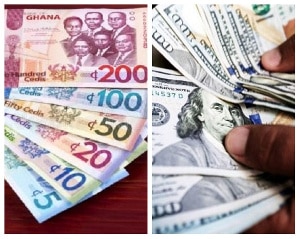
    The Interbank forex rates from the Bank of Ghana today, February 1, 2023, have shown that the Ghana Cedi is trading against the dollar at a buying price of 10.7945 and a selling price of 10.8053.

    As compared to yesterday’s trading of a buying price of 10.7946 and a selling price of 10.8054. At a forex bureau in Accra, the dollar is being bought at a rate of 12.20 and sold at a rate of 12.80.

    Against the Pound Sterling, the Cedi is trading at a buying price of 13.3560 and a selling price of 13.3705 as compared to yesterday’s trading of a buying price of 13.3691 and a selling price of 13.3846.

    At a forex bureau in Accra, the pound sterling is being bought at a rate of 15.00 and sold at a rate of 16.00.

    The Euro is trading at a buying price of 11.7519 and a selling price of 11.7636 as compared to yesterday’s trading of a buying price of 11.7324 and a selling price of 11.7450.

    At a forex bureau in Accra, Euro is being bought at a rate of 12.70 and sold at a rate of 13.60.

    The South African Rand is trading at a buying price of 0.6212 and a selling price of 0.6218 as compared to yesterday’s trading of a buying price of 0.6277 and a selling price of 0.6283.

    At a forex bureau in Accra, South African Rand is being bought at a rate of 0.50 and sold at a rate of 1.10.

    The Nigerian Naira is trading at a buying price of 42.6328 and a selling price of 42.7189 as compared to yesterday’s trading at a buying price of 42.6296 and a selling price of 42.7241.

    At a forex bureau in Accra, Nigerian Naira is being bought at a rate of 14.50 Naira for every 1 Cedi and sold at a rate of 19.50.

    Our forex bureau rates are provided by Afriswap Bureau De Change in Osu, Accra.

  • Treasury bills have a GH705 million oversubscription and a 36% interest rate

    Treasury bills have a GH705 million oversubscription and a 36% interest rate

    Last week, there was a significant oversubscription of Treasury bills because the government didn’t reach its goal at the prior auction.

    The government obtained GHc1.98 billion from the 91, 182, and 364-day Treasury bills, according to the Central Bank‘s auction data.

    The GHc1.278 billion goal has been missed by GHc705.1 million.

    The 91-day bill, which secured GHc1.357.48 billion and GHc491.45 million from the 182-day bill, attracted the majority of subscriptions.

    The 365-day bill, on the other hand, was acquired for GHc135.17 million at a 34%–36% interest rate.

    The increase in subscriptions is an indication of investor confidence, as the government has made some significant progress in the debt exchange programme.

    The government reached an agreement with banks to pay a 5% coupon rate in 2023, a development that has made the government’s aim of attaining an 80% participation rate in the program.

    Individual bondholders are still calling on the government to exclude them from the programme, however, as the deadline for the invitation draws nigh government is yet to announce their exclusion or otherwise.

    Meanwhile, the government expects to raise GHc1.423 billion in its next auction.

  • “Planting for Food and Jobs” is utterly ineffective -Senyo Hosi

    “Planting for Food and Jobs” is utterly ineffective -Senyo Hosi

    Senyo Hosi, a former chief executive officer of the Chamber of Bulk Oil Distributors, has criticized President Nana Akufo-Addo and his administration for the plight of Ghana’s agriculture industry.

    In an interview with Kwami Sefa Kayi on Peace FM’s morning program “Kokrokoo,” Mr. Senyo Hosi emphasized the utter failure of the President’s “Planting for Food and Jobs” policy, which was intended to boost the agricultural industry.

    “After all these years, show me one agriculture sector that has been well-structured. It’s zero,” he exclaimed.

    To him, it shouldn’t be difficult for the government to develop the agriculture infrastructue to assist farmers to be productive and to check the nation’s dependence on foreign imports.

    “How much irrigated fields do we have? Have we invested in our irrigated fields to march our needs as a country? But when you look at the billions we have spent on this Planting for Food and Jobs which we can’t see any particular thing that’s sustaining the industry. I think that it’s a failed project. It’s a totally failed project.”

    Mr. Senyo Hosi asked the government to concentrate more of her efforts on improving the agric sector which he believes is the country’s engine of progress.

    “We have the capacity to progressively grow and then eventually fully supply Ghana. It’s possible for us to feed our own self,” he stated.

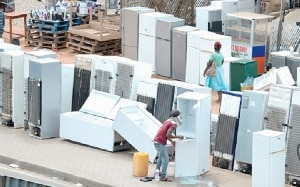
  • See the 19 electrical products that are prohibited from sale and import

    See the 19 electrical products that are prohibited from sale and import

    The government has placed a ban on the import and sale of 19 electrical appliances and renewable energy items through the Energy Commission.

    Groups of secondhand dealers that rely on the importation of goods into the nation for their livelihood have largely opposed the proposal.
    They also claim that the choice will have an effect on the livelihoods of around 20,000 persons involved in the value chain of used electrical appliances.

    However, according to a statement from the Energy Commission, the prohibition is necessary to save Ghana from turning into a landfill for old and subpar equipment.

    It further indicated that the ban aims to conserve high electricity demand which impacts additional power generation thereby impacting the economy.

    “The ban is to protect the environment and safeguard the health of citizens from air pollution caused by increased power generation and to protect the consumer from purchasing unsuitable appliances and the payment of unnecessarily high electricity bills,” a statement issued by the Commission said.

    Meanwhile, some of the products banned from importation and sale by the Energy Commission include Television sets, Rice cookers, and washing machines among others.

    See the full list of items prohibited from importation and sale below:

  • Take on assets rather than liabilities – Investment consultant

    Take on assets rather than liabilities – Investment consultant

    Mr. Victor Tandoh, an investment consultant, has suggested that single people and married couples acquire assets rather than liabilities.

    According to him, many items that people consider to be assets are actually liabilities, and this situation needs to change.

    He defined an asset simply as “everything that gives you money, whereas a liability is anything that takes your money.”

    He added, “If you buy something that doesn’t generate profit to you, then it’s a burden not an asset,” during a counseling session with registered couples for the impending 2023 Happy FM Mass Wedding.
    You should use caution while making purchases since if they result in a profit, they constitute an asset.

    Citing an example, he mentioned that if he buys an expensive phone and it’s doesn’t give him anything in return, it’s a liability but if he’s a photographer or one learning or working with the phone, it becomes an asset because he’s making gains from using it.

    “We need to know the distinction between both and know how to use them accordingly. As individuals, I believe you need to get to the stage where your assets outweigh your liability because whether we like it or not, you’ll come across liabilities but try and make sure your asset is more than that,” he charged.

    He stated some examples of assets as, investments, businesses, stocks and many others.

    The investment consultant added that it is advisable to also consider where you are and find out which asset you are comfortable with and can build for yourself.

  • Government officials are solely interested in procurement since it facilitates their theft – Hosi Senyo

    Government officials are solely interested in procurement since it facilitates their theft – Hosi Senyo

    The failure of the Ministry of Agriculture and other governmental organizations to work with the private sector to create food sufficiency has angered economic analyst Senyo Hosi.

    Senyo Hosi claimed during an appearance on Peace FM’s Kokrokoo morning show that authorities in charge of monitoring the efficiency of the agricultural sector are more interested in procurement, which gives them a way to embezzle money from the government.

    “The thing is not rocket science, it is like seeking to have five children in five years. You need to know that it takes nine months to give birth to a child so you will have to know that you need five years if you have one wife, and you will also need to have five wives if you want to do it in a year.

    “It is simple, I don’t know how to break it down. It is not difficult but you must have love and a heart for what you are doing,” he said.

    “It is all part of my frustrations with this country, people are more interested in procurements because it is what they rely on to steal. Because of that, people are not interested in the actual work that will help the country. That is our challenge,” he added.

    According to Senyo Hosi, the failures of the government and the agric ministry include their inability to create an enabling environment for private investors to thrive.

    “You want one million metric tonnes (of rice) and you know that your yield in this country is 3.4 metric tonnes per hectare. But here is the case the government has secured zero lands for the private sector.

    “You don’t even sit with the private sector to plan, meanwhile you don’t have funding. So how do you do the work?” he questioned.

    Ghana relies heavily on imports to meet its demand for food items such as rice and poultry.

    However, the government of Nana Addo Dankwa Akufo-Addo under its flagship Planting for Food and Jobs says it has done creditably well in growing the country’s agric sector.

    But speaking on Kokrokoo on Monday, January 30, 2023, Senyo Hosi described the policy as a complete failure.

    “How much irrigated fields do we have? Have we invested in our irrigated fields to match our needs as a country? But when you look at the billions we have spent on this Planting for Food and Jobs, which we can’t see any particular thing that’s sustaining the industry. I think that it’s a failed project. It’s a totally failed project,” he stressed.

  • The total amount owed by ECG to Bui Power hit $614 million

    The total amount owed by ECG to Bui Power hit $614 million

    The Electricity Company of Ghana’s debt to the Bui Power Authority has increased significantly from the previous US$386 million at the end of 2019 to a staggering US$ 614 million as of the end of 2022.

    This information was made public when representatives of Bui Power appeared before the Public Accounts Committee, which was reviewing the Auditor General’s Report on the Public Accounts of Ghana-Public Boards, Corporations, and Other Statutory Institutions for the year ending December 31, 2020.

    Deputy CEO, Finance and Service at the Bui Power Authority, Dr. George Tettey told the committee that one of the Authority’s major financial challenges has to do with the collection of receivables from ECG.

    “We have a huge problem with the collection of our receivables. ECG’s indebtedness to Bui Power stood at $386 million as at the end of 2019. And, it is now $614 million,” he stated.

  • US$100 million lost yearly to corruption at ports

    US$100 million lost yearly to corruption at ports

    An estimated US$8.3million in monthly revenue is lost through corrupt practices at the country’s seaports.

    This sum amounts to almost US$50million every six months and US$100million each year, according to Vice President Dr. Mahamudu Bawumia. The losses, he said, are due in part to deception by some importers who, with the aid of some rogue officials, deliberately and wrongly declare contents of imported containers.

    “In an attempt to lessen corruption at the various ports, the country initiated a port paperless system (PPS) in 2017 that allows for a transparent clearing system,” he said.

    He however said there remains a lot to be done to attain a fully corruption-free port.

    “There is therefore a compelling need for maritime sector stakeholders across the continent to formalise actions to combat bribery and corruption, by collaborating and encouraging all stakeholders in the ship/shore interface to ensure compliance with national and international laws prohibiting corruption,” Dr. Bawumia advised.

    Dr. Bawumia said this in a speech read on his behalf by the Minister of Public Enterprises, Joseph Cudjoe, at a Regional Maritime Stakeholders’ Workshop in Accra.

    With Port Tema controlling 70 percent of the country’s seaborne trade and Takoradi Port handling the export of minerals mainly from mines situated in the Western part of the country, Dr. Bawumia maintains that challenges such as bureaucracy and delays in clearing goods have been minimised through the PPS

    Meanwhile, maritime stakeholders have expressed concern that the inability to fully tackle corruption at the various ports could have far-reaching consequences which would be detrimental to shipping operations within the African Continental Free Trade Area.

    Danish Ambassador to Ghana, Tom Norring, disclosed that Denmark has been assisting countries in the sub-region to build a robust, corruption-free shipping industry.

    “Denmark has always been a strong player in the maritime sector globally and in the West African region. We have always encouraged transparency in the sector, as Denmark is a country that frowns on corruption. The Danish maritime industry is known for its efficiency, and we have helped to replicate some of its technologies in the region,” he said.

    Ambassador Norring said the African Continental Free Trade Area presents a historic opportunity to boost intra-African trade through the maritime industry, and thus further reap the sector’s benefits.

    The Regional Maritime Stakeholder Workshop on Global Good Practice in Vessel Clearance was organised by the Maritime Anti-Corruption Network; Convention of Business Integrity-Nigeria; the Danish government and Ghana Maritime Authority

    Source: Ghanaweb

  • Access to savings, credit and investment remains a challenge – BoG charges FinTechs

    Access to savings, credit and investment remains a challenge – BoG charges FinTechs


    Bank of Ghana Governor, Dr. Ernest Addison, has underscored the importance of providing inclusive access to a wide range of financial products and services to all in society.

    He believes that FinTechs have a critical role to play in improving the lives of a segment of the population which are unbanked and underserved although they are experiencing formal fund transfers and payments through mobile money.

    Speaking at the Ghana Fintechs Award 2022 in Accra, Dr Addison commended the efforts made by FinTechs over the years toward increasing financial inclusion and empowering persons economically.

    “However, access to savings, credit, and investment remains a challenge. People must be able to save to take care of future needs, invest and access credit to meet pressing needs or seize opportunities to expand their businesses,” he noted.

    He, therefore, called on FinTechs to take advantage of the challenge to provide innovative solutions to address these besetting constraints to fostering a truly financially inclusive society.

    Touching on the gender dimension of financial inclusion, Dr Addison noted that although there has been a reduction in the gender gap in account ownership across developing countries, the latest 2021 Global Findex Report, paints a deeply concerning picture which needs to be addressed.

    “Women dominate the micro, small and medium-size enterprise segment which constitutes about 90 percent of businesses in Ghana. Consequently, the gender gap has far-reaching implications for output growth, employment generation, societal welfare, and economic and financial empowerment.”

    “This is without a doubt, a fertile ground for FinTech intervention that promises very high dividends. Several types of businesses including agriculture, manufacturing, distribution, transportation, retail, and wholesale are represented in this category and require user-centric solutions to make any meaningful impact,” the BoG Governor explained.

    Source: Ghanaweb

  • BoG, Ministry of Finance to commit to zero financing of 2023 budget and beyond

    BoG, Ministry of Finance to commit to zero financing of 2023 budget and beyond


    Governor of the Central Bank, Dr Ernest Addison, has said the Bank of Ghana and the Ministry of Finance will commit to zero financing of the budget in 2023 and beyond.

    According to him, the move forms part of prudent macroeconomic policies which are expected to trigger a disinflation path and downward trends in the policy rate.

    Speaking at the 60th-anniversary launch of the Institute of Chartered Accountants Ghana (ICAG), Dr Ernest Addison, explained the move will further restore the country’s reserve buffers to at least 3 months of imports cover by the end-2025.

    “Monetary financing of the government deficit, which was pursued to prevent domestic defaults arising from systemic auction failures during 2022 will end under the programme,” he stated.

    “With inflation currently at 54.1 percent, tight monetary policies are expected to contain the persistent price shocks in the economy and ease inflationary pressures,” Dr Addison added.

    The BoG Governor however noted that all these projections hinge strongly on the successful attainment of an IMF programme.

    Touching on government’s Domestic Debt Exchange Programme, Dr Addison said the decision mooted by the IMF, to secure a Board Level Approval for a bailout, will guarantee Ghana’s debt sustainability over the medium term.

    “The core objective of the DDEP is to harness the fiscal consolidation agenda and its successful implementation is expected to improve the debt metrics, complement the current monetary policy stance, and reset the economy to macroeconomic stability,” he concluded.

    Source: Ghanaweb

  • DDEP: Investors cautioned as government is likely to include treasury bills – Joe Jackson projects

    DDEP: Investors cautioned as government is likely to include treasury bills – Joe Jackson projects


    An Economist and Director of Business Operations at Dalex Finance, Joe Jackson, has warned investors to be careful about investing in government’s treasury bills as current uncertainties may result in its inclusion in the debt exchange programme.

    According to Norvan reports, the economist stated that the current high-interest rates on treasury bills show that the government is desperate to borrow more to fund its “profligate lifestyle”.

    “I would advise that investors should be extremely cautious in investing in T-Bills as the government is likely to include it in the domestic debt exchange programme, although the Finance Minister says it won’t. And also, the rates on the T-Bills have gone crazy, they are not sustainable.

    “Investing in T-Bills is investing in a government that is desperate, the government should be reining in expenditure and not be borrowing more. Let’s not help fund their profligate nature and fiscal indiscipline,” he was quoted by norvanreports.com.

    In the same vein, Kenneth Thompson, CEO of Dalex Finance, stated that Treasury bills are at very high risk due to the government’s posture.

    He intimated that Treasury bills have become the government’s main source of borrowing.

    “Government is now borrowing strictly for consumption and not for anything productive that can pay for debts by itself. And by the way, T-Bills are supposed to be used to solve short-term financing challenges and not a main source of financing. The government must learn to live within its means.

    “The interest rates on T-Bills are unsustainable and with the way things are going, it will crash as it has done before,” he stated.

  • Ban on secondhand goods will affect over 20,000 Ghanaians – CSHDA

    Ban on secondhand goods will affect over 20,000 Ghanaians – CSHDA


    The Concerned Second-Hand Dealers Association (CSHDA) under the Ghana Union of Traders Association (GUTA) is accusing the Energy Commission of toying with the lives of over 20,000 people in the second-hand electronic garget dealership sector of the economy.

    According to the association, the commission without any stakeholder engagements has gone ahead to get Parliament to pass a blanket ban on the importation of second-hand goods into the country.

    Mr Daniel Asare, president of the CSHDA made this accusation while discussing the commission’s ban on second-hand goods on the Ghana Yensom morning show on Accra 100.5 FM hosted by Odehyeeba Kofi Essuman on Monday, January 30, 2023.

    He argued that the regulatory commission instead of finding pragmatic ways of having the importation of the second goods regulated is hiding behind an erroneous claim that second goods do not conform with standards.

    He explained that second-hand goods pass tests for standardisation in the country of origin before being imported into the country.

    He stressed that many of the second-hand goods are not obsolete equipment.

    “Many of the products we sell are products that have been replaced by the users in the country of origin,” he said.

    “So someone is using a 3k television (TV) and replacing them with a 4k TV and so if the 3k item is imported into Ghana [it] becomes obsolete?” he wondered.

    He challenged the electronic regulatory commission to develop a better explanation for the ban on second-hand goods.

    “The government had not created any jobs for the teeming unemployed youth and yet the existing ones too you want to ban it?” he asked rhetorically.

    On his part, the Assistant Manager in charge of Energy Efficiency at the Energy Commission, Hubert Nso Zan, contested the claims of the leadership of the association.

    He added that most goods imported into the country have not met the Minimum Performance Standard test.

    He explained that items sold on United Kingdom’s market as second-hand goods were items that were brand new and met standards.

    “Obsolete items are not sold in the European Union zone as second-hand goods,” he corrected.

  • Profitability of banks decline by 18.9% to GH¢3.9 billion in 2022 – BoG

    Profitability of banks decline by 18.9% to GH¢3.9 billion in 2022 – BoG


    Governor of the Bank of Ghana, Dr. Ernest Addison has lamented that the emerging signs of the current macroeconomic conditions in the country are spilling over to the banking sector.

    According to him, profitability levels have declined alongside other financial soundness indicators within the Ghanaian economy.

    “Profitability levels in the banking sector have declined, driven by the mark-to-market losses on investments, higher impairments on loans, and rising operating costs.”

    “Profit-after-tax was GH¢3.9 billion at the end of December 2022, representing 18.9 percent contraction year-on-year, compared to 12.3 percent annual growth recorded in 2021.”

    Dr. Ernest Addison made this known when addressing journalists at the 110th MPC press briefing on January 30, 2023.

    He further pointed out that the latest macro-prudential risk assessments indicated increased pressure on solvency and liquidity of banks ahead of the implementation of the Domestic Debt Exchange Programme.

    “To moderate the potential impact on the sector, the Bank of Ghana has announced some regulatory reliefs for banks to help preserve financial stability.”

    He was however optimistic that the government of Ghana having reached a Staff Level Agreement (SLA) with the IMF will provide measures to put the fiscal on the path of consolidation.

    “The concerns being expressed in the public domain relating to high government expenditures have been addressed in the SLA and reflected in the 2023 Budget,” he added.

    Meanwhile, the Central Bank on January 30, 2023 hiked the monetary policy rate by 100 basis points from 27 to 28 percent.

  • Ghana’s debt has reached GH575 billion, with a debt to GDP ratio of 93.5%.

    Ghana’s debt has reached GH575 billion, with a debt to GDP ratio of 93.5%.

    According to recent information made available by the Bank of Ghana, Ghana’s total public debt stock would reach GH575.7 billion by the end of November 2022.

    Due to the rising debt amount, Ghana’s debt to Gross Domestic Product (GDP) ratio has increased from 75.9% in September 2022 to 93.5% as of today.

    According to a summary of economic and financial data published by the Bank of Ghana in January 2023, the debt stock increased by GH108.3 billion between September and November 2021.

    The external component of the country’s public debt shot up to GH¢382.7 billion in November 2022, equivalent to 62.1% of GDP.

    This was from GH¢271.7 billion in September 2022.

    The Government of Ghana is currently facing serious liquidity challenges and is unable to service its debts.

    In a bid to give it some respite, government announced a domestic debt exchange programme last year and said that an external restructuring was being negotiated with creditors. The IMF has said a comprehensive debt restructuring is a condition of its support.

    The country has been struggling to refinance its debt since the start of 2022 after downgrades by multiple credit rating agencies on concerns it would not be able to issue new Eurobonds.

    According to the Bank of Ghana, the total public debt is defined as Central Government debt excluding State Owned Enterprises/Special Purpose Vehicles Debt.

  • IES anticipates higher fuel prices beginning on February 1

    IES anticipates higher fuel prices beginning on February 1

    Price increases for petroleum products are anticipated to resume on February 1, 2023, for consumers.

    Over the next two weeks, the price of gasoline, diesel, and liquefied petroleum gas is expected to rise by 7 to 13 percent, according to the Institute for Energy Security (IES).

    Petrol prices are anticipated to be adjusted by Oil Marketing Companies to sell for about GH15 per liter, while diesel sells for about GH17 per liter.

    The Institute explained that the possible increase can be attributed to the recent depreciation of the cedi against the major trading currencies, an increase in local fuel prices and international fuel prices soaring on the global market.

    “On the basis of the rising international fuel prices as observed on the global S&P Platts platform, linked with the local currency’s value decline against the greenback, the Institute for Energy Security (IES) estimates a 7% to 13% jump in the prices of Gasoline [petrol], Gasoil [diesel], and LPG over the next two weeks ending February 14, 2023,” the IES said in a statement.

    “The rise in domestic fuel prices would be occasioned in spite of government’s receipt of approximately 41,000 metric tonnes of Gasoil under its “Gold for Oil” programme, and that consumers must be prepared to buy for instance, a litre of Gasoline [petrol] for roughly GH¢15 in the coming days”, it added.

    Meanwhile, government has taken delivery and begun to sell petroleum products under its ‘Gold for Oil’ policy.

  • View employees as capital, not resources – Founder of ICSP

    View employees as capital, not resources – Founder of ICSP

    The Institute of Customer Service Professionals’ (ICSP) founder and principal consultant, Yvonne Ohui MacCarthy, has advised organizations and companies to view their employees as human capital rather than human resources.

    The Ghana Customer Service Index (GCSI) released its fifth press release on January 26, 2023, at the British Council, and Ms. MacCarthy made this statement in an exclusive interview with Prince Benjamin of Class News.

    “I suggested this year that businesses examine the inside-out method as one of my recommendations.

    Simply put, that proves that you are effectively serving your internal clientele.”

    She explained by saying that an organisation’s internal customers “are your employees.”

    The board chair of the West African Association of Customer Service Professionals (WAACSP) illustrated her point by citing the COVID-19 pandemic and how it impacted customer experience negatively.

    “There were a lot of people [internal customers; workers] who suffered burnout,” she recalled. “There were a lot of people who suffered emotionally and that actually went on to affect the experience that they gave the [external] customer.”

    “The idea is for organisations to start looking at the people they have employed as human capital,” she said, arguing that: “Anything you see as capital, you want to nurture and develop but the minute you start seeing it as human resource, it [becomes] something that needs to be consumed or used.”

    “So develop and nurture, instead of use and consume,” she emphasised.

    The GSCI, a yearly survey and analytic publication of customer service performance, launched in 2018, is the brainchild of Yvonne Ohui MacCarthy.

    E-Commerce was revealed as the sector with the best customer service delivery (85.01%) for the year 2022. Ghana as a whole scored a C+ (69.37%) on the customer service front.

  • The government will make a new DDE offer to each bondholder – Finance Minister

    The government will make a new DDE offer to each bondholder – Finance Minister

    On Monday, January 30, 2023, the government is expected to make some changes to the invitation to swap for specific bonds.

    This follows the Finance Minister’s meeting with the Individual Bondholders’ Forum (IBF) on January 27, 2023.

    “The Finance Ministry is aware of the special status of each person listed by the IB leadership.
    On Monday, the Finance Minister will make a revised DDE offer available for everyone who wishes to study it.
    Senyo Hosi, the convener of the IBF, stated in a press release that it is entirely optional.

    It further noted that the government will honour its obligations to individuals who opt to retain their original bonds albeit there will be no responsibility on the part of the government for happenings on the secondary market.

    “For this matter, the Finance Minister cannot assure market liquidity for the old bonds,” the IBF’s statement explained, adding “He believes the benchmark bonds will be more tradable as more will be in circulation.

    But the statement said the IBF technical committee will review the Finance Minister’s position above and advise members accordingly.

    Meanwhile, the Minister of Finance (FM) welcomed the IBF recommendations from its report submitted to the MoF which advises that Debt sustainability should be attained through Fiscal adjustments, revision of the DDE proposal to structured groups, and a committed fight against corruption among others.

  • FLASHBACK: GH¢100, GH¢200 banknotes unnecessary, adds no value to economy – Analyst

    FLASHBACK: GH¢100, GH¢200 banknotes unnecessary, adds no value to economy – Analyst

    In 2018, a Financial Analyst, Joe Jackson, averred that the introduction of GH¢100, GH¢200 banknotes into the system was unnecessary.

    He argued that these higher denominations do not add value to the local economy.

    Joe Jackson continued that the release of the higher cedi notes defeats the cashless society agenda being pushed by the Akufo-Addo led government.

    Read the full story originally published on November 30, 2018 by 3news.

    Financial analyst, Joe Jackson, has described as unnecessary, the introduction of new high-value cedi denominations, arguing it adds no value to the economy.

    The 100 and 200 cedi banknotes announced by the Bank of Ghana Friday, he said, defeats the cashless society agenda the Akufo-Addo government has been pushing.

    BoG in announcing the banknotes explained the 100 and 200 cedis banknotes will ensure customer convenience and bring about efficiency in the printing of currency to generate savings for the country.

    Speaking on the issue on TV3 news analysis programme, The Key Points, Saturday, Mr Jackson who is the Chief Operations Officer of Dalex said “creating new denominations is not going to do anything to the underlining parameters of the economy.”

    He said the move only contradicts government’s talks of creating a cashless society with seamless use of money via digital platforms.

    “…I don’t think it’s appropriate,” he said.

    He said “moving towards cashless and making cash more convenient is at odds with that strategic objective we have”.

    “I want to make people use less cash and more digital forms of money so why would I make cash more convenient?” Mr Jackson quizzed.

    He said government should be more focused on coming up with more ways through which businesses can be transacted without physical cash, and not introduce new cedi notes.

    “There is mobile money…If you want the informal sector to work it’s mobile money. Come out and tell me about how you are making mobile money more secure,” he said.

    The financial analyst said the use of physical cash by informal sector business owners further draws them away from the tax system.

    Contributing to the discussion, Executive Director of the Institute of Development and Economic Research, Felix Larry Esilfie, identified digital and electronic means as one of the mechanisms in expanding the informal sector.

    For his part, Development Economist, Dr. George Domfeh, said although running a cashless society is a good idea, government has a lot to do in terms of educating people on some of the digital payment platforms.

    “You need people to have appreciable level of education in order to appreciate the use of some of these things. Research has indicated it works best in societies where you have considerable level of education. Even though cashless is good, we cannot do it one day, it should be a process.”

    Dr. Domfeh’s suggested he supports the introduction of the new banknotes because it cost less to print the 200 and 100 cedi notes.

    The Dean of School of Graduate Studies at the University of Professional Studies (UPSA), Dr. Kwaku Mensah said BoG should come clear with the amount of money spent on printing the new cedi notes.

    Source: Ghanaweb

  • Ghana secures $696.815 million from oil receipts in second half of 2022 – GPF report

    Ghana secures $696.815 million from oil receipts in second half of 2022 – GPF report


    In the second half of 2022, Ghana accrued an amount of $696.815 million from oil lifting, corporate tax and other income for the period.

    This is according to the Ghana Petroleum Funds (GPF) report which explained that about $492.186 million was secured from oil lifting between July 2022 and December 2022.

    The report disclosed about five liftings in total occurred with the 66th Jubilee recording the highest amount of $119.83 million.

    In addition to this, Ghana received about $202.55 million as corporate tax between July 2022 and December 2022.

    These corporate taxes, the report detailed were paid by Tullow Oil, Kosmos, and PetroSA which operate in some of Ghana’s oil fields.

    In terms of interest income generated from the Petroleum Holding Fund, the figure was estimated at $2.07 million.

    Data released by the Finance Ministry for the period said $191.48 million was allocated as investments.

    Meanwhile, Ghana accrued $1.06 billion as petroleum investments as of December 31, 2022, comprising of the Ghana Heritage Fund and the Ghana Stabilisation Fund.

    The report further said the estimated figure accrued from Ghana Stabilisation Fund was $143.6 million while, $363.76 million has been withdrawn since Ghana commenced commercial oil production in 2011.

    The Ghana Heritage Fund on its part accrued $918.2 million as of December 2022.

    Source: Ghanaweb

  • Analysts are concerned about the GH15 billion Stability Fund’s opacity

    Analysts are concerned about the GH15 billion Stability Fund’s opacity

    According to analysts, the lack of clarity and feasibility of the Ghana Financial Stability Fund (GSFS) to protect sector operators from potential shocks from the Domestic Debt Exchange Programme (DDEP) continues to be a major issue.

    The GSFS, which was announced by the Finance Ministry in collaboration with the Financial Stability Council, has a seed fund value of GH15 billion, but economists doubt that this sum will be adequate to cover any prospective program losses.

    For instance, in its comments on the DDEP, the Institute of Economic Affairs (IEA) stated that the fund is, in theory, a nice notion that will provide some cushion to the affected institutions – particularly banks, which make up a third of the targeted instruments.

    The policy think-tank however expressed concern that the fund’s value falls too short of estimated losses to the sector; the GH¢15billion is only 23 percent of what the banking industry alone might require.

    “The question, however, is whether the seed money of GH¢15billion is adequate, especially when banks alone are reported to expect a financial impact of around GH¢65billion,” the IEA noted.

    The Institute was also critical of the Bank of Ghana’s direct involvement in funding the GSFS, describing it as “concerning”. Its fear stems from the significant expenditure undertaken by the central bank in recent times – including GH¢10billion as its COVID-19 contributions in 2020 and budget support of GH¢42billion in 2022.

    “Printing more money to support the GFSF will not only further heighten the public debt, but also inflation and currency depreciation as well,” it warned.

    According to the IEA, it also remains unknown whether all expected contributions will be received – especially as the nature of contributions from development partners remain a mystery, and whether they will be in grants or loans is unknown.

    “There is no free lunch,” IEA said, as it warns there will likely be trade-offs and that contributors will possibly have specific conditions to be met.

    IEA’s sentiments were corroborated by the Dean of the University of Cape Coast (UCC) Business School, Professor John Gatsi, who told B&FT that the likelihood of interest payments for accessing the fund makes its counterproductive for financial institutions.

    “We must look at this carefully. How can a government that owes these institutions and cannot pay say it is setting up a fund to support those it owes – and will likely charge them interest on the facilities? I find that puzzling,” he remarked.

    In as much as development partners have been touted as major would-be contributors to the GFSF, Prof. Gatsi believes the identity of these partners – beyond the World Bank – and their level of commitment should have been communicated already.

    The BoG has, so far, taken only the first step in providing regulatory forbearance on liquidity and solvency, and standardisation of the accounting treatment to be applied regarding the DDEP.

    Furthermore, the apex bank will apply a reduction of cash reserve requirement ratio to 12 percent on local currency deposits; a reduction in the Capital Conservation Buffer to zero percent from 3 percent; and a slashing of Capital Adequacy Ratio to 10 percent from 13 percent, in addition to suspension of dividend payments and other payouts to shareholders.

    Meanwhile, during the announcement of agreements reached between the Ministry of Finance and Ghana Association of Bankers (GAB) as well as the National Insurance Association (NIA) – regarding the terms of their participation in the DDEP – it was mentioned that clarity on the operational framework and terms of access to the fund had been spelled out.

  • Oil and gas investment must not be avoided by Africa – Energy minister

    Oil and gas investment must not be avoided by Africa – Energy minister

    Dr. Matthew Opoku Prempeh, the energy minister, has said that investing in Africa’s oil and gas resources is something the continent shouldn’t be afraid to do.

    According to him, Africa only accounts for less than 4% of global greenhouse gas (GHG) emissions, and even if the continent consumes all of its available gas, it will still make up less than 4%.

    On the topic of “Energy Transition: Reflections on the State of Ghana’s Oil and Gas Industry,” the Energy Minister was speaking at the University of Ghana.

    He reminded the gathering that the National Energy Transition Framework launched by H.E. the President in Egypt during COP27 has been developed to provide the path to achieving net zero emission by 2070.

    Read his post shared via Facebook below:

    At the first public lecture marking the 75th Anniversary of the University of Ghana on the topic “Energy Transition: Reflections on the State of Ghana’s Oil and Gas Industry.

    I reminded the gathering that the National Energy Transition Framework launched by H.E. the President in Egypt during COP27 has been developed to provide the path to achieving net zero emission by 2070. This is to be pursued while ensuring socio-economic growth and the utilization of natural resources.

    I further rehashed Ghana’s position, which is, to be allowed to use our natural resources to develop our nation, providing jobs and security in the overall context of our economic development.

    I also indicated that what makes the African case much more logical is that we contribute less than 4% of total Green House Gas (GHG) emissions and even if we burn our combined gas resources, we will still contribute less than 4%.

    This, I believe is the more reason we must not shy away from attracting the needed investment for our oil and gas resources.

    I congratulate warmly, the University of Ghana for 75 years of uninterrupted provision of quality education to men and women of our nation, who have contributed to nation building across every spectrum of life. Ayekoo!

  • See a rare image of business magnate J.K Siaw and Otumfuo Opoku Ware II

    See a rare image of business magnate J.K Siaw and Otumfuo Opoku Ware II

    An image showing one of Ghana’s renowned business magnates, Joshua Kwabena Siaw, and the 15th Asantehene, Otumfuo Opoku Ware II, has emerged online.

    The pair were captured having a conversation, as the photo shows. Today, January 30, 2023, who would have been the 100th birthday of J.K Siaw, established the first wholly-owned Ghanaian brewery, Tata Brewery Limited.

    J.K Siaw was instrumental to Ghana’s industrialization drive post-independence. The era saw many business ventures establish their footholds in the country to provide primary services that mainly served the indigenous people.

    His rise and fall story is captured in excerpts from a book by B. Agyeman-Duah titled; ‘General Acheampong: The Life and Times of Ghana’s Head of State.’

    The birth of Tata Brewery Limited began when J.K. Siaw decided to venture into business with a loan of 50 pounds sterling, which he used at the time to set up a cocoa brokerage firm.

    In 1950, J.K. Siaw became a siding clerk who usually transported cocoa from Kwaku Praso in the Eastern Region to Accra. After learning and engaging in the trade for some time, he moved on to work with the Cocoa Purchasing Company and later became a cocoa and timber transporter.

    In addition to the cocoa business, Siaw also supplied enamelware, an item that mainly was imported into the county until it was later banned by the Kwame Nkrumah administration.

    According to the book, J.K. Siaw, in 1967, shifted his interest into the brewery sector which had huge prospects at the time. Prior to this, he applied for a business operating license under the NLC regime which deposed Kwame Nkrumah in February 1966.

    The NLC regime had earlier requested that Siaw become a junior partner to some German investors who would run the company he decided to establish – a demand that did not sit well with him.

    While still unhappy with the proposition, he persisted for a long period until his operational license was approved on July 26, 1969.

    That year, he established the Tata Trading Company which first focused on trading key items. After operating for a while and making significant gains, Tata Brewery Limited was later inaugurated on January 30, 1973, to help provide more jobs and boost the local economy.

    The inauguration ceremony was held on J.K. Siaw’s 50th birthday with then Head of State, Col. Ignatius Kutu Acheampong, present at the event. The former military leader, in his speech, gave his unconditional support to J.K. Siaw to run the wholly Ghanaian-owned company.

    At the time when Ghana shuffled through various military regimes, the new leader, Jerry John Rawlings, upon taking office, confiscated all the assets of J.K. Siaw and his brewery establishment after it was alleged he was evading taxes.

    The move impacted the brewery’s technical and financial operations, leading to J.K. Siaw escaping from Ghana to London to avoid being jailed and tortured under the military regime.

    In what would be a self-imposed exile, J.K. Siaw who was now based in London sent numerous petitions to the PNDC regime of J.J. Rawlings for a return to Ghana without arrest.

    His pleas, however, fell on deaf ears as Tata Brewery Limited was later sold to private foreign investors and was renamed the Achimota Brewery Company (ABC) which today stands as Guinness Ghana Breweries in Accra, a fully foreign-owned entity.

    The PNDC regime labelled J.K. Siaw as a fugitive although there were no charges proffered against him, nor was he invited to stand trial for the alleged crime of tax evasion.

    A few years later, Joshua Kwabena Siaw became indisposed due to ill health and later died while in exile in October 1986.

    Although still a son of the land, the PNDC regime, following his demise, allowed for his remains to be brought home for burial despite still refusing to return J.K. Siaw’s assets to his family.

    Brief profile of JK Siaw

    He was born in 1923 at Obomeng in the Kwahu Mountains of the Eastern Region. He enrolled in school at the age of twelve after working on cocoa farms to support his education.

    J.K. Siaw, as a young boy, learnt how to weave and sell baskets to make a living and support his education. At 19 years old, he became a teacher and later worked with the Bremang Gold Dredging Company near Bogoso in the Western Region.

    His love for teaching and education saw him return to the New Juaben Grammar School which was later set up to be the Christ College in 1946 and then moved to the Ghana Secondary School in Effiduase by 1976.

    Source: Ghanaweb

  • Today in History: ‘Every Ghanaian owes GH¢9,000’ – Mahama on debt stock

    Today in History: ‘Every Ghanaian owes GH¢9,000’ – Mahama on debt stock

    Former President, John Dramani Mahama, in October 2020 averred that every Ghanaian owes GH¢9,000 due to the rising debt stock.

    Expressing concern about the rising debt stock under the Akufo-Addo government, Mahama accused government of showing little for the loans it has taken.

    “The recommended debt to GDP profile for a middle-income country is that we should remain not more than 60 percent debt to GDP. If you pass 60 percent and you go to 70 percent and above, you are becoming highly debt distressed, which is the same as HIPC. If we take that debt and divide it amongst all Ghanaians, including children, everybody owes almost GH¢9000,” he said.

    Read the full story originally published on October 30, 2020 by Dailymailgh.

    The presidential candidate of the National Democratic Congress (NDC), John Mahama, has expressed concern about the rising debt stock under the Akufo-Addo regime, especially as the government has very little to show for the loans it has taken.

    Addressing residents of Kakasunaka in the Kpone Katamanso constituency on Wednesday as part of his campaign tour of the Greater Accra Region, Mr Mahama said the government has since the year 2017 borrowed GH¢157 billion, thereby increasing the debt to GDP ratio to an unprecedented 76.7 percent.

    “The recommended debt to GDP profile for a middle-income country is that we should remain not more than 60 percent debt to GDP. If you pass 60 percent and you go to 70 percent and above, you are becoming highly debt distressed, which is the same as HIPC. If we take that debt and divide it amongst all Ghanaians, including children, everybody owes almost GH¢9000,” he said.

    Mr Mahama was amazed at the ballooning national debt stock inspite of attacks on his tenure and pledges by the then opposition New Patriotic Party (NPP) that it was capable of developing the country without loans.

    He said when the NPP was in opposition, it created the impression that Ghanaians were sitting on money but were hungry as a result of the policies of the Mahama administration.

    “But today we are hungrier than we were in 2016. How many people can eat three square meals a day today? And the question you ask is, where is the money, GH¢ 157 billion, what have you done with it? Show us”, he said.

    Mr Mahama said his government developed the country with the GH¢56 billion it took in loans, adding the evidence can be seen all over the country that his government invested in roads, school blocks, hospitals, water and power expansion projects, among others.

    The NDC’s presidential candidiate said the time for accountability is however near and 7th December 2020 is the opportune time for Ghanaians to make the right decision by voting for the NDC to win the elections and create opportunities and prosperity for all.

    Mr Mahama said, among others, the next NDC governement will focus on job creation, implementation of Free Primary Healthcare to ensure universal access to healthcare, rolling out Free Technical and Vocational Education and Training (T-VET) as well as state-sponsored National Apprenticeship Programme.

    Source: Ghanaweb

  • Nigerian telco billionaire Mike Adenuga gains $600 million so far in 2023 – Report

    Nigerian telco billionaire Mike Adenuga gains $600 million so far in 2023 – Report

    Nigerian telecom billionaire and oil mogul Mike Adenuga has seen his net worth increase by $600 million since the start of the new year as the market value of his private holdings in his telecom business continues to track the performance of its peers on the stock market.

    The Nigerian billionaire businessman, who ended the year 2022 with a total wealth loss of $1.1 billion as his net worth fell from $6.7 billion to $5.6 billion, is off to a strong start just 26 days into the new year, according to data tracked by Billionaires.Africa.

    According to Forbes, Adenuga, Nigeria’s third-wealthiest man, has seen a significant $600 million increase in his net worth, rising from $5.6 billion at the start of the year to a present total of $6.2 billion. The significant growth has offset part of the $1.1 billion loss he experienced in 2022.

    The multimillion-dollar boost in his net worth can be attributed to the market value of his privately held businesses, including his investments in the telecom company Globacom Limited and in the Nigerian oil industry through Conoil Producing and Conpetro Limited.

    Adenuga owns 74.4 percent of Conoil Plc, a leading petroleum marketing company that manufactures and sells lubricants under the “Quarto” brand in addition to founding Globacom, one of Nigeria’s largest telecom service providers.

    Conoil is a major supplier of fuels such as diesel, kerosene, low-pour fuel, aviation fuel, and gasoline. The petroleum marketing company’s retained earnings have increased to more than $45.7 million as a result of its strong performance in recent years.

    In 2022, Adenuga received a substantial payout of $3.1 million in dividends from his significant stake in Conoil. With a net worth of $6.2 billion, Adenuga is ranked as one of the world’s most affluent billionaires, placing him at 409th on Forbes’ global wealth list.

    Source: Ghanaweb

  • Premix fuel shortage is to blame for Tema Newtown’s Fisherfolk’s unemployment

    Premix fuel shortage is to blame for Tema Newtown’s Fisherfolk’s unemployment

    According to fishermen at Tem Canoe Beach, the lack of premix fuel for the past six months has resulted to an increase in youth unemployment in Tema Newtown.

    During a visit, the Ghana News Agency Tema Regional Office saw that the canoe beach was much less crowded than it typically is on a fishing day because so many young men were there loitering and talking the day away.

    A few canoes were also docked since their owners were unable to obtain the premix fuel required to power the sea.

    Nii Adjeirteh Quaye, the Vice President of the Canoe and Fishing Gear Owners Association of Ghana (CaFGOAG), stating the impact of the unavailability of premix on fishing activities said the youth who depended directly and indirectly on fishing were currently unemployed.

    Nii Quaye explained that currently out of the over 1,000 canoes operating from the canoe beach, only about 300 of them engage in fishing activities due to the inability of the state to make the premix fuel available at the various landing beaches.

    He said one canoe, apart from directly employing between 15 and 20 people for its fishing activities, also provided auxiliary jobs to the youth and women who respectively help in removing the fish and selling them.

    According to him, currently, canoe owners have to depend on mixing petrol with engine oil to power their outboard motors adding that due to the cost involved several canoes had to stop operations.

    He disclosed that he has to buy four drums of petrol and engine oil at a cost of GH¢ 3,200 per drum to enable him to continue in business a situation he said would compel him to pass on the cost to the consumer.

    He lamented that due to the hardship and high unemployment in the community, some of the youth have resorted to thievery and snatching of people’s phones especially on the industrial area road in the evenings to make ends meet.

    Nii Ashitey Odametey, Tema Wudum Chief Fisherman, corroborated the unemployment issue saying fisher fishmongersers, and the youth in Tema Newtown were facing serious financial hardship due to supply challenges of the premix fuel.

    Nii Odametey called on the Ministry of Fisheries and Aquaculture to supply the fuel to the landing beaches stressing that their failure to honour their promises to supply it was adversely affecting their survival.

    Source: Ghanaweb

  • Ghana’s public debt stock hits 93.5% of GDP in November 2022 – BoG report

    Ghana’s public debt stock hits 93.5% of GDP in November 2022 – BoG report


    The total public debt stock of Ghana was pegged at GH¢575.7 billion recorded at the end of November 2022.

    The figure, according to the Bank of Ghana’s January 2023 Summary of Economic and Financial Data, represents about 93.5% of Gross Domestic Product for the period.

    The data from Central Bank showed that Ghana’s public debt stock rose by GH¢108.3 billion between September and November 2021, further depicting an unsustainable debt situation.

    The report explained the rise in the debt stock can be attributed to government’s debt restructuring exercise which has an expiration deadline of January 31, 2023 for participation.

    The BoG Summary of Economic and Financial Data however pointed out that the external component of the total public debt increased to $29.2 billion (GH¢382.7 billion) in November 2022 which is equivalent to 62.1 percent of GDP.

    This was from $28.4 billion (GH¢271.7 billion) in September 2022 and $28.3 billion in December 2021.

    The data also showed that the Ghana Cedi depreciated by about 37 percent against the US dollar in 2022 – resulting in a significant rise in the cedi component of the external debt.

    Meanwhile, on the domestic debt front, the figure was pegged at GH¢194.7 billion at the end of December 2022 representing about 31.6 percent of GDP.

    This figure is also against GH¢195.7 billion which was recorded in September 2022 and GH¢193.1 billion in November 2022.

    As part of the government’s Domestic Debt Exchange Programme, about GH¢170 billion of debt is being restructured for a period of 12 years.

    It is important to note the BoG report did not provide figures pertaining to the financial sector resolution debt and other liabilities including the energy sector debt.

    The report futher noted that government’s fiscal deficit in terms of Gross Domestic Product was pegged at 9.8 percent in November 2022 which is more than the 7.4 percent earlier recorded in September 2022.

  • Public sector development key to propel Ghana’s economy – Chief of Staff

    Public sector development key to propel Ghana’s economy – Chief of Staff

    Chief of Staff, Akosua Frema Osei-Opare has said that the development of the public sector is key to propelling the economy if appropriate measures are established.

    Speaking at the presentation of the 2021 Audit Infractions Joint Report, she urged that the public sector to orient strategies by re-evaluating policies and subsequently implementing them to meet best accounting practices.

    According to her, when these policies are put in place, it will help the public sector back on its feet to build the economy.

    “I am confident that with effective collaboration and the implementation of these recommendations, will see the public sector assume its envisaged role as the bedrock of Ghana’s economy even surpassing the envisaged target of contributing 30% of the GDP of this country which is commensurate with the vision of the president.”

    Madam Frema-Opare seized the opportunity to acknowledge the State and Governance Authority (SIGA) for their hard work and diligence in supporting the government.

    “I want to at this stage again acknowledge the hard work and the diligent way you approached the charge by the president to look into these infractions and to ensure that we have recommendations that can be implemented and move these SOEs forward,” she said.

    She pledged the government’s commitment to support SIGA to ensure that it is able to streamline the work of the SOEs to let them make strong contributions to the economy.

    Public sector development key to propel Ghana’s economy – Chief of Staff

    Source: Ghanaweb

  • Top 5 trends in data privacy that will dominate in 2023

    Top 5 trends in data privacy that will dominate in 2023

    Although economies and organisations are getting more vigilant and cautious about data management, your private information is still at risk.
    Data breaches have increased recently despite heightened awareness and a general desire to protect data. This is due to insufficient, unclear, or subpar data security management methods.

    In 2022, the average cost of a data breach reached a record high of US$4.35 million, according to a report by IBM and Ponemon Institute.

    The researchers arrived at the staggering number based on several cost factors such as legal, regulatory, and technical activities, loss of brand equity, customer turnover, and drain on employee productivity. More than financial losses, data privacy breach or non-compliance could have an irreparable toll on an organisation’s reputation and erode stakeholder trust.

    Given the rise in cybercrimes, organisations need a two-pronged strategy. First, however robust your security systems may be, it is imperative to keep updating them.

    More essentially, the leadership should focus on strengthening their defenses by looking ahead, predicting the emergence of future cyber threats, and comprehending the wealth of new defensive capabilities that businesses can use both now and in the future. Here are five industry trends on data privacy this year:

    Greater emphasis on privacy by design:

    In the past, privacy was often an afterthought when it came to the development of new products and services. However, this is beginning to change.

    More and more companies are realising that building privacy into their products and services from genesis is not just the right thing to do, but it can be immensely rewarding for business. As a result, in 2023 we’ll see a shift towards a “privacy by design” approach, where companies prioritise user privacy at every stage of the development process.

    Rise of privacy-focused tech:

    As consumers become more concerned about their online privacy, there will be a surge in demand for technologies that prioritise privacy.

    This includes everything from secure messaging apps and browsers to virtual private networks (VPNs) and encrypted email services. It’s important to note that while these tools can certainly help to protect your data, they’re not a magic bullet. Organisations still need to be vigilant and take steps to secure their information.

    Increase in regulations:

    Governments around the world are taking notice of the growing concern over data privacy and are starting to act. In Ghana, the Data Protection Commission (DPC), an independent statutory body established under the Data Protection Act, 2012 (Act 843), is responsible for protecting the privacy of individual and personal data by regulating the processing of personal information.

    The Commission provides for the process to obtain, hold, use or disclose personal information and for other related issues bordering on the protection of personal data. Thus, now companies must implement stricter data privacy policies and procedures to ensure compliance with these regulations and to protect the personal information of their customers.

    Greater transparency: The trend towards greater transparency in data privacy is driven by the increasing awareness of the importance of protecting personal information and the need for organisations to be more accountable for their data collection and use practices.

    In 2023, organisations will begin to be more transparent about their data practices by providing individuals with more control over their data. This includes giving individuals the ability to access, correct, or delete their personal information, and the ability to opt-out of certain types of data collection. This is a win-win for both consumers and businesses, as it helps to build trust and fosters a sense of transparency and accountability.

    Goodbye Cookies:

    As first-party data becomes more significant and consumers become more conscious of their data, third-party cookies will soon become obsolete. Many companies and organisations are now looking to move towards a cookie-less future by implementing new technologies and methods for tracking and targeting users.

    For example, some companies are exploring the use of browser fingerprints, which are unique identifiers that can be used to track a user without the use of cookies. Other companies are experimenting with the use of privacy-enhancing technologies to provide a more secure and private way of tracking users.

  • We’re transforming appliance market – Energy Commission tells secondhand dealers

    We’re transforming appliance market – Energy Commission tells secondhand dealers


    The Energy Commission of Ghana has cautioned against the dumping of electronic waste into the country from foreign countries.

    Reports suggest that Ghana is largely becoming a dumping ground for electronic waste with the Energy Commission taking serious steps to control that space with the importation of standard goods.

    This follows calls by concerned secondhand dealers demanding reconsideration of the government’s plan in relation to the ban on imported secondhand electrical appliances.

    According to them, the situation is affecting their livelihood, particularly under the current economic situation in the country.

    Commenting on the concerns of dealers with Starr Business, the Energy Efficiency Compliance Officer at Energy Commission, Hubert Nsoh Zan indicated that the Commission has over the years been preaching on the ban on the importation of waste electronics into the country.

    He said the ban includes the importation of used refrigerators/freezers, used air conditions, and incandescent lamps into Ghana.

    “We found out that a lot of the new ones that are coming in are above standard because there is no regulation and there are no standards. In the same light, most of the used ones that are coming in are discarded and meant for recycling back in Europe.

    “What it means is that they have exhausted their life span and are meant to be recycled. And we have our kinsmen who stay abroad importing these products. A lot of research has been done, studies have been done, the impact of used appliances on the environment and the impact of used appliances on consumption, in terms of high data of consumption and we need to look beyond this,” Mr. Nsah Zan stated.

    He continued: “There are more implications, economic implications. What it means to even set up power plants and to be able to meet the high demand from this consumption of appliances.”

    The Enforcement Officers also explained that the move is geared toward protecting consumers and the environment from future danger that these secondhand electronic appliances might have on the environment.

    “Having said this, it is important for us to know, and Ghanaians who are all consumers, that we are only trying to set minimum energy performance of the type of appliances that are coming into the market. The position of the energy commission is very clear that we need to protect the consumers. We are just executing our mandate which is to make sure that the appliance market is transformed.

    “So, to be very fair with you, the energy commission is only executing its mandate. We are trying to transform the appliance market and we are advising importers of appliances, make sure they meet the minimum requirement of what the regulations are saying as passed by parliament,” he stated.

    Source: Ghanaweb

  • If I can’t pay GH $20 million by April, don’t throw me in jail – Ato Essien

    If I can’t pay GH $20 million by April, don’t throw me in jail – Ato Essien

    William Ato Essien, the founder of the now-defunct Capital Bank, has stated that he prefers not to be jailed but rather an opportunity to explain himself in court should he fail to pay the state GH$20,000,000 by April 28, 2023.

    This was stated in a plea document submitted by Mr. Essien’s attorneys in an effort to overturn the High Court ruling from December 13, 2022, which was presided over by Justice Eric Kyei Baffuor, according to a story from myjoyonline.com.

    “We are learning that William Ato Essien has filed an appeal against the decision because he is not happy that will be put into jail or face custodial sentence if he’s not able to pay the sum in the manner that he is required to pay,” Host of Joy News’ Newsfile programme Samson Lardy Anyenini said during the show on January 28, 2023.

    “…As you know he [Ato Essien] is required to pay GH¢90 million although he has paid GH¢30 million and he is required by the 28th of April 2022 to make another GH¢20 million paymentEssien cites the current economic challenges as his reasons should he not deliver on the payment in the time that is required,” the host added.

    In December last year, William Ato Essien pleaded guilty to charges of misappropriation of depositors’ funds and other counts of stealing, abetment to stealing, conspiracy to steal and money laundering among others.

    This was after the court accepted the terms of the agreement reached between the lawyers of Mr. Essien and the prosecution to pay a total of GH¢90 million as a refund to the state.

    Per the judge’s order, he was required to pay an amount of GH¢90 million as restitution and reparation to the state within one year. This would see him pay an initial GH¢30 million (which has been paid) and refund the remaining 60 million in three instalments. The first is due latest by April 28, 2023 while the second is on August 31, 2023.

    Justice Baffuor warned should he default in the payment or it even fell short of the required amount, Mr Essien was to be arrested and produced in court for a custodial sentence to be imposed.

    But Mr. Essien in a “fresh court document however points out that current economic challenges make it imperative for him to be given the opportunity to explain a default before any such move is undertaken,” My joyonline.com stated.

    Background

    Capital Bank was one of the first banks that collapsed after a massive clean-up of financial institutions by the Bank of Ghana started in 2017.

    On August 14, 2017, its licence and that of UT Bank were revoked by the BoG, after the BoG had declared them insolvent.

    The BoG allowed the state-owned bank, the GCB Bank, to acquire the two banks in order to protect depositors’ funds and also enable them to stay afloat.

    The hurricane that swept through the banking sector due to the collapse of the two banks further heightened in August 2018 when the central bank collapsed five other indigenous banks and merged them into one entity — Consolidated Bank, Ghana.

  • Akufo-Addo ruined the thriving economy he inherited – Mahama

    Akufo-Addo ruined the thriving economy he inherited – Mahama

    Former President John Mahama claimed in a presentation on “Africa’s strategic priorities and global position” at Chatham House, London, that President Nana Akufo-government Addo’s has ruined the thriving Ghanaian economy it inherited from the previous administration.

    “Ghana will celebrate 66 years as a nation in a little less than six weeks.
    We shall observe this day under the burden of the worst economic crisis in decades, far from being a time to celebrate independence and the accomplishments of nationhood, he remarked.

    “Today, many of our economic indicators are pointing south. We have in the last month entered the hyperinflation era with an inflation rate of 54%. Our currency has in the past few months been counted among the worst-performing in the world, plummeting by as much as 54% in value within the first ten months of 2022. Widening budget deficits have characterized economic performance since 2018”.

    “A severe cost of living crisis fueled by ever-rising prices of basic goods has imposed extreme hardship on Ghanaians as the government struggles to meet some of its most basic commitments in areas like education and health. Unemployment stood at a staggering 13%, the highest in recent memory”.

    “It would be no hyperbole to assert that our present state bears an uncanny resemblance to the late seventies and eighties”.

    “How was a country with such bright prospects, only a decade ago, brought to its knees so quickly when it should have made far more progress? The present trouble with our economy stems from gross mismanagement and in some instances sheer recklessness”.

    In his view, the “government failed to sustain the gains made after our last IMF programme, which brought stability to the management of the Ghanaian economy. Corruption has also contributed significantly to bring us to this distressing juncture”.

    The government, he said, “has been quick to pass off the COVID pandemic as a reason for this poor economic record. Yet, available data shows that many of our neighbours in West Africa and further afield, posted much better economic performances than we did during and after the pandemic”.

    The World Bank, he noted, “through its Ghana Country Director, has also stated unequivocally that Ghana’s economy was in distress before the pandemic occurred”.

    “The purpose of recounting these failures, driven my mismanagement and corruption, in Ghana is to demonstrate how Africa depletes scarce resources generated from both the continent and development partners. Instead of thinking innovatively to address the fundamental economic problem, many leaders worsen it”, Mr Mahama explained.

    Using the management of the COVID-19 pandemic as a case study, he said: “My own country, Ghana, once a beacon of Africa has come up for mention for dissipating domestic and donor funds”.

    “A recently published audit report by the Auditor General of Ghana into receipts and expenditures on COVID-19 exposes staggering instances of corruption running into billions of Ghana cedis”, he noted.

    “Over GH¢21.8 billion was mobilised to mitigate the impact of the pandemic from the World Bank, IMF, the European Union (EU), the African Development Bank (AfDB), Ghana’s Contingency Fund, and from the sale of Bank of Ghana COVID-19 Bonds”, Mr Mahama added.

    According to him, “hiding under the ‘emergency situation’, the government jettisoned our financial and procurement laws and refused to use the GIFMIS system, which is the agreed budget and accounting digital platform to avoid thorough scrutiny. Such financial malpractices discourage delivery of grants and concessionary loans to Africa”.

    “I have indicated that we need a forensic audit into the receipts and expenditure of the COVID[1]19 funds in Ghana. The forensic audit may be extended to other countries in Africa to restore investor confidence as we build the Africa we want”.

  • Presentation by John Mahama at Chatham House

    Presentation by John Mahama at Chatham House

    He accused the administration of destroying the booming Ghanaian economy that it had taken over from him in 2017.

    At Chatham House in London, Mahama was giving a lecture on “Africa’s Strategic Priorities and Global Role.”

    “Ghana will celebrate 66 years as a nation in a little less than six weeks.
    We shall observe this day under the burden of the worst economic crisis in decades, far from being a time to celebrate independence and the accomplishments of nationhood, he remarked.

    “It would be no hyperbole to assert that our present state bears an uncanny resemblance to the late seventies and eighties”.

    “How was a country with such bright prospects, only a decade ago, brought to its knees so quickly when it should have made far more progress? The present trouble with our economy stems from gross mismanagement and in some instances sheer recklessness”.

    Read Mr Mahama’s full lecture below:

    Africa’s strategic priorities and global role A Chatham House Lecture by H.E. John Dramani Mahama, Former President of the Republic of Ghana

    Thank you, Alex Vines, and Chatham House for the invitation.

    I am happy to have been able to join you from Brussels where I had very productive discussions on the future perspectives in the framework of Africa- EU relations at the invitation of the European Strategic Initiative.

    It is gratifying to be back here at Chatham House, which through the Africa Programme events, has offered a wide array of African Leaders across various fields, a unique platform to discuss our continent in ways not seen elsewhere.

    The discussions here have helped shape international opinion on Africa and offered a useful focus on its most important subjects. I hope to continue in that tradition by sharing some thoughts on the continent’s present outlook and future while dwelling on the situation in my own country, Ghana.

    Africa’s political and governance history is quite well-known. However, on this occasion, it bears brief recollection to set the tone for an informed assessment of Africa’s prospects and future trajectory.

    It helps a bit that I have a bias towards history, which I majored in at the university in my formative years. And as the famous British statesman Winston Churchill opined, “Study history, study history. In history lies all the secrets of statecraft.”

    The African story is one that evokes immediate memories of colonial exploitation and domination with abundant cheap labour to be used for raw material production and export to build the magnificent metropolises of this world.

    Centuries earlier, we were at the short end of the stick in the slave trade as our best and strongest found themselves bound in chains and bundled unto overcrowded slave ships, never to return.

    However, by the middle of the 20th century, there had emerged a young cadre of Pan Africanists, determined to free the continent from its colonial shackles, who worked, at the peril of their freedoms and very lives. They eventually launched a liberation struggle that reverberated across the continent.

    Names like Kwame Nkrumah – under whom my father, E. A. Mahama, served diligently as a Minister of State, Nyerere, Kaunda, Sekou Touré easily roll off my tongue in this regard.

    Soon enough, after a spirited fight, colonialism fell in one country after another, culminating in the exhilarating liberation of South Africa from the worst form of colonial subjugation— apartheid. The result—freedom for Nelson Mandela after 27 years in jail.

    Africa in the post-colonial independent era was awash with hope for a much brighter tomorrow. We were, however, soon to be enmeshed in a contestation over the most suitable development paradigm and ideology.

    Some faced West and others faced East. We in Ghana, as famously declared by our first President, Osagyefo Kwame Nkrumah, faced neither East nor West. We faced forward and experimented along the line with whatever paradigm we deemed exigent at a particular time.

    Not enough time was afforded for these experiments to yield sustainable fruits because a combination of disillusionment and adventurism ushered in military dictatorships and in many cases, wanton misrule.

    By the mid-eighties to early nineties, it had become obvious that democratic governance and economic reform were imperative to overcome the suffering and stagnation that years of poor governance had spawned. Under the aegis of the Bretton Woods institutions and other multilateral partners, several African countries launched economic recovery programmes with varying degrees of success.

    In the case of Ghana, I can say, that through these reforms, we performed what could be likened to an economic miracle. From the throes of bankruptcy, hyperinflation, and years of negative growth in the mid-seventies and early eighties, the economy was restored to the path of growth. Measurable and impactful progress could be seen!

    Thirty years ago, we were even able to seamlessly integrate up to one million of our compatriots who were unceremoniously deported from Nigeria back to Ghana without causing too much of an upset to our economic outcomes. Analysts have suggested the eviction was Nigeria’s retaliation – in 1983 – to the dastardly deportation of other Africans including Nigerians from Ghana under the Aliens Compliance Order of 1969.

    In the decade that followed that period, millions of Ghanaians were lifted out of poverty through progressive policies and interventions. Similar success stories could be recounted for other African countries. Between those heady days and now, the story of Africa has been patchy even though progress has not completely eluded us.

    Civil strife, famine, genocide, and a relapse into bad governance can all be squeezed into the narrative in the last few decades.

    At present, save for a few countries on the continent, our economies are largely still underdeveloped and underpinned by the colonial economic model of raw material export and little manufacturing or industrialisation.

    Fragile governance institutions and corruption remain major bottlenecks. Insecurity, terrorism, and insurgency have all reared their heads across some countries. In the last few years, we have seen a resurrection of what we had believed to be the extinct spectre of military takeovers in some West African countries.

    Mammoth unemployment and limited economic opportunities continue to confront Africa. This has been exacerbated by the youth bulge; and projected to worsen by 2030 if not addressed. Obviously, a threat to the attainment of the Sustainable Development Goals and Africa’s Agenda 2063.

    Africa being demographically the most youthful continent, should have been an opportunity to be harnessed. However, the limited opportunities available to Africa’s youth has created a distressing scenario and culminated in the biggest threat facing the continent and the world now.

    Africa has always been an opportunity. That has never been in contention. What is in debate, is the extent to which Africa has been an opportunity for itself and exploited its advantage for the benefit of itself. The story of the contribution of Africa has always been one of fascination. From its origin as the cradle of humankind, the continent has through the ages left an indelible mark on the pages of history.

    The echoes of the Arab spring, which took place barely a decade ago, still ring in our ears and serve as too clear a reminder of what possible and probable danger the continent faces if the situation does not improve – and quickly so. The prevalence of cybercrimes including internet-based fraud (‘Sakawa’) and other offences spill beyond Africa and affects the rest of the world. This must be addressed head-on!

    The foregoing by no means suggests that there is no positive news from Africa.

    There is a lot to celebrate on the continent.

    There are many thriving democracies in Africa with some well governed countries and strong economies. Information Communication Technology (ICT) uptake is one area where strong growth has been recorded.

    Just before the COVID-19 pandemic, Africa was recording the fastest rate of new broadband connections, and mobile data traffic was projected to rise astronomically between 2017 and 2020 – growing by a CAGR of about 46% according to Statista.

    The E-commerce sector was also experiencing exponential growth as our population attained more awareness and became more reliant on online retailing. That said, there is still much to worry about.

    It is a fact that Africa has suffered historical injustices like slavery, colonialism, and an unjust world economic order –which have held us back for centuries and deprived us of a level playing field to develop rapidly compared to other continents. But it is no longer tenable to continue to blame these events predominantly for our present state. That will be absolving corrupt African leaders of blame for mismanaging the resources of the continent.

    We have had sufficient time and opportunities over the last few decades to change our story and narrative while crafting and implementing visions that would transform the lives of the over a billion people who dwell on the continent.

    Yes, globalisation has inherent disadvantages for Africa. But Africa can and must rise to the occasion by building and working towards continental unity as we strengthen partnerships with the rest of the world. To achieve Africa’s Agenda 2063 goals, we must let the world buy into Africa’s priorities and global role. In most cases, we have simply squandered opportunities.

    Ghana also comes to mind here. In a little under six weeks from today, Ghana will mark sixty-six (66) years of nationhood. Far from being an occasion to celebrate independence and the successes and achievements of nationhood, we will mark this day under the yoke of the worst economic situation in decades.

    We are currently bankrupt and burdened with a national debt we are simply not able to pay. You may have learnt over the past few weeks that the Ghanaian government has defaulted on the servicing of both external and domestic debt.

    There is currently, a huge uproar over a controversial debt restructuring programme under which the middle-class of Ghana could be wiped out if plans to have them forfeit proceeds of government bonds on which they rely for investment and sustenance, are followed through. In absolute terms, up to about six (6) million people could be deprived of their life savings and investments.

    Ghana’s banking and financial sector could also be under threat of insolvency if no suitable adjustments are made to the debt restructuring plans.

    Our present economic situation, underscored by our bankrupt status, sharply contrasts with our fortunes a little over a decade ago. At the time, our economy posted some of the highest growth rates in the world with a robust and fast-growing non-oil sector.

    Today, many of our economic indicators are pointing south. We have in the last month entered the hyperinflation era with an inflation rate of 54%. Our currency has in the past few months been counted among the worst performing in the world, plummeting by as much as 54% in value within the first ten months of 2022. Widening budget deficits have characterized economic performance since 2018.

    A severe cost of living crisis fueled by ever-rising prices of basic goods has imposed extreme hardship on Ghanaians as the government struggles to meet some of its most basic commitments in areas like education and health. Unemployment stood at a staggering 13%, the highest in recent memory.

    It would be no hyperbole to assert that our present state bears an uncanny resemblance to the late seventies and eighties.

    How was a country with such bright prospects, only a decade ago, brought to its knees so quickly when it should have made far more progress? The present trouble with our economy stems from gross mismanagement and in some instances sheer recklessness.

    Government failed to sustain the gains made after our last IMF programme, which brought stability to the management of the Ghanaian economy. Corruption has also contributed significantly to bring us to this distressing juncture.

    Government has been quick to pass off the COVID pandemic as a reason for this poor economic record. Yet, available data shows that many of our neighbours in West Africa and further afield, posted much better economic performances than we did during and after the pandemic.

    The World Bank through its Ghana Country Director has also stated unequivocally that Ghana’s economy was in distress before the pandemic occurred.

    The purpose of recounting these failures, driven my mismanagement and corruption, in Ghana is to demonstrate how Africa depletes scarce resources generated from both the continent and development partners. Instead of thinking innovatively to address the fundamental economic problem, many leaders worsen it.

    Using management of the COVID-19 pandemic as a case study my own country Ghana once a beacon of Africa has come up for mention for dissipating domestic and donor funds.

    A recently published audit report by the Auditor General of Ghana into receipts and expenditures on COVID-19 exposes staggering instances of corruption running into billions of Ghana cedis.

    Over GH¢21.8 billion was mobilised to mitigate the impact of the pandemic from the World Bank, IMF, the European Union (EU), the African Development Bank (AfDB), Ghana’s Contingency Fund, and from the sale of Bank of Ghana COVID-19 Bonds.

    Hiding under the “emergency situation”, government jettisoned ourfinancial and procurement laws and refused to use the GIFMIS system, which is the agreed budget and accounting digital platform to avoid thorough scrutiny. Such financial malpractices discourage delivery of grants and concessionary loans to Africa.

    I have indicated that we need a forensic audit into the receipts and expenditure of the COVID[1]19 funds in Ghana. The forensic audit may be extended to other countries in Africa to restore investor confidence as we build the Africa we want.

    Let me add that, Africa needs to build stronger institutions to address institutional and political decay. In building stronger institutions, Civil Society Organisations (CSOs) in Africa must also be prioritized. On this note, let me commend many CSOs on our Continent that are holding governments accountable.

    Compounding the socio-economic malaise on the continent, is the erosion of public confidence in state institutions. Many of these state institutions set up to be independent arbiters and offer appropriate checks and balance on the executive arms of government, have in recent years served more as extensions of the government.

    In many cases, as it is the case in Ghana, there has been overt efforts by government to weaken these institutions and bend them to its will.

    A case in point was the ouster of the then Chairperson of Ghana’s Electoral Commission and two other senior officials by the President of Ghana over clearly flimsy and contrived reasons. They were then replaced with persons with noticeable leanings towards the incumbent party and whose actions have served to undermine public confidence in their independence and neutrality, two ingredients which are vital prerequisites for the sustenance of Ghana’s acclaimed democracy.

    Relatedly, Ghana’s Judiciary has also come under public scrutiny in recent years for what is widely perceived as bias towards the government. Until the advent of this government, our judiciary had commanded tremendous public respect and confidence for their firmly independent posture. This is arguably no longer the case.

    This is a worry to investors because one of the factors that boosts confidence of investors to place their money in a country, is the faith they have that in event of a business dispute, they can expect the justice system to be a fair and neutral arbiter.

    For Africa to succeed in achieving her strategic priorities, we must strengthen institutions including the judiciary and grant them their deserved independence and freedoms as prescribed by law. I encourage you not to lose hope in Ghana and Africa because it is far more useful to look forward to the future with hope than to brood over the present with despair.

    I am an eternal believer in the potential and positive energies of Africa and her youth.

    In December, next year, what I consider to be the most important elections in Ghana’s history will be held. The electioneering period will offer a scope for deeper discussions about Ghana’s future and what needs to be done to get us out of the current economic quagmire and to avoid a recurrence.

    We in the opposition in Ghana are very clear on our vision for the country and how to build the Ghana that we all want.

    The first order of business for a new NDC administration is to restore macro-economic stability and ensure fiscal prudence while generating employment for many of our young people who are unsure of what the future holds.

    Though the current economic distress is largely self-inflicted, it is very clear that unless we act to insulate ourselves from these factors, whatever gains that are made going forward will unravel because of structural weaknesses.

    The National Democratic Congress therefore commits itself to immediate structural reforms based on a national dialogue and forging a broad national consensus that will lead to the diversification of our economy and its production base; and the attraction of investment into industry, farming, agribusiness, the digital sector, and tourism.

    We are determined to process our natural resources like cocoa, gold, bauxite, oil, copper while we build more robust capacity to respond to global energy shocks.

    I invite you to look favourably at Ghana again because there is hope ahead! I also urge you to partner Africa as we confront the challenges posed by climate change, emerging diseases, terrorism, and cybercrimes to build a safer world.

    Our borders are borderless because of globalization. Therefore, we must stand in support of one another.

    As we look into the near future with optimism, there are instant solutions that must be found to the crippling economic crisis, which has left a dark pall hanging over Ghana now.

    At a continental level, I want to reiterate my international advocacy for a reinstitution and extension of the Debt Service Suspension Initiative (DSSI) to afford our countries some limited fiscal respite. I would similarly call for the expansion of the Common Framework for Debt Treatment Beyond the DSSI to help African countries access debt restructuring tools and mechanisms.

    I have had cause to also state elsewhere, and I would repeat that the time has come for an African version of a Marshal Plan. I note and applaud the Global Gateway Programme of the EU that seeks to mobilize 300 billion Euros over the next seven years for infrastructure in Africa and the rest of the developing world.

    If Africa is to survive and be a source of hope for the rest of the world, then Africa as an imperative must speedily harness the advantages it has to ensure inclusive growth for its people. With the continent boasting the world’s largest free trade area along with an over 1- billion-person market, Africa is prime, as reported by the World Bank, to carve out a new developmental pathway.

    Under the African Continental Free Trade Area (AfCFTA) agreement, 55 countries with a combined GDP of over US$3.4 trillion will work together to present major opportunities for shared growth and prosperity for Africa and the rest of the world.

    I expect AfCFTA not to de-emphasize the prospects of SMEs as we promote new markets and encourage foreign investments. SMEs have sustained Africa and will continue to do so for a long while. I also urge AfCFTA to secure intellectual property rights of Africans as we partner already mature businesses.

    AFCTA will also need the support of the African Union for greater integration to allow for greater labour mobility across Africa to support countries in need of critical human resource.

    And AFCTA must not allow businesses with political connections to be prioritized over real captains or champions of industry. Neither must innovations from the youth suffer because of lack of political connections.

    All hope is not lost for Africa. Africa, including my country Ghana, has strategic priorities and is ready and willing to play its role in the global community.

    To conclude, it is also of critical importance that regional bodies like the ECOWAS, SADC, EAC, CEMAC, the Arab Maghreb Union and African Union must be empowered to have a firmer grip 9 on their member nations to address regional/ continental/ global challenges. Other international bodies like the European Union and the TANA High-Level Forum for Security in Africa, which I chair, must provide the needed support, including oversight and scrutiny of activities likely to lead to serious consequences.

    I stress on this point of oversight because we observe that the laxity in supervision and oversight has given free reins to some leaders on the continent to wreak constitutional tyranny on their people with some changing their country’s constitution so they could run for extended terms.

    No single country in Africa can on its own attain the highest level of development when it is surrounded by neighbouring countries engaging in full scale-conflict. It is therefore important that there is stability and sustainable development in Africa, which will help lead to global security and prosperity.

    With the right steps and visionary leadership as well as a willingness to dig deep and find innovative solutions to the decades-old challenges, we must emerge a stronger force to reckon with.

    I thank you for your kind attention
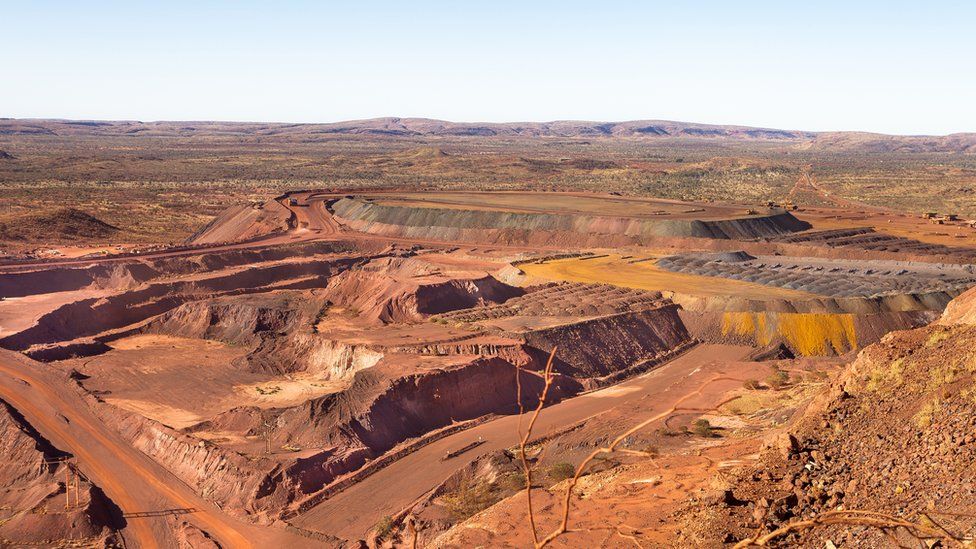
  • Let’s work quickly to ensure economic security and prosperity – Akufo-Addo

    Let’s work quickly to ensure economic security and prosperity – Akufo-Addo

    African countries have been asked to act quickly to ensure their populations’ economic security and prosperity by President Nana Addo Dankwa Akufo-Addo.

    In order to increase intra-African commerce, he urged African political and corporate leaders as well as other important stakeholders to take advantage of the African Continental Free Trade Area (AfCFTA) agreement’s chance.

    Closing the three-day maiden Africa Prosperity Dialogue series at the Peduase Lodge in the Eastern region on Saturday, President Akufo-Addo said the collective desire to transform the African continent necessitated “quick wins as well as concentrated focus” on the steps towards the prosperity of Africa.

    “We in Africa must with a sense of urgency work together to guarantee the economic security and secure the prosperity of our peoples.

    “To accomplish this shared objective, African political and business leaders, as well as other strategic stakeholders should use the opportunities presented by the AfCFTA agreement to boost intra-African trade in order to enhance the productive capacity and strengthen its resilience to external shocks,” he said.

    Dubbed the Kwahu Summit, the first of the annual dialogues, brought together Africa’s political and business leaders to discuss intra-Africa trade, with a focus on the Africa Continental Free Trade Area (AfCFTA)

    The series, an initiative of the Africa Prosperity Network (APN), was on the theme: “AfCFTA: From Ambition to Action, Delivering Prosperity through Continental Trade”.

    The summit deliberated on building a strong and effective single market of Africa’s 1.3 billion people to help create more opportunities for its citizens and build a more prosperous Africa.

    With the AfCFTA targeting the elimination of tariffs on 97 percent of goods traded within the African continent, President Akufo-Addo noted that the offering presented a significant opportunity for businesses to set up and expand in Africa.

    “While we recognize the enormous challenges we may face, it is the smart actions that we take, the investments we make in our people, and the speed and effectiveness in implementing the common African market that will guarantee that the 1.3 billion people who call this continent home can enjoy a prosperous and fulfilling life,” he stressed.

    The President noted however that there was a great deal to be done to realise the full benefits of intra-African trade.

    Africa, he told the gathering needed to invest in productive capacity and physical infrastructure.

    The continent ought to improve its business and investment climate and look to value addition and promotion of economics of scale. It should scale up efforts to mobilise domestic resources to support its development agenda, including the productive sectors.

    President Akufo-Addo noted the need to pay serious attention to and arrest illicit financial outflows from the continent, which are estimated about some 88 billion dollars annually, depriving Africa of significant resources that could be used to support our development agenda.
    “We must urgently and collectively institute comprehensive and unambiguous tax policies to combat tax-motivated illicit financial flows, strengthen legal and law enforcement systems and bring together national agencies to stem such flows.

    “We need concrete measures to stop the systemic impoverishment of our continent and the theft of its resources,” he said.

    The President harped on the need for Africa to invest in and harness technology and innovation to transform economic structures and educational systems.

    He said it is imperative for Africa to build technology and trade policy convergencies and to adopt new approaches to sustain technological and market competitiveness.

    President Akufo-Addo said Africa was an opportunity for the world, and the continent must rise and reclaim its place.

    “We must now with great zeal and fortitude back this great ambition with our collective action to harness fully the benefits of a liberalized single market for goods and services, this must be our solemn and moral obligation to our continent, to our children and future generations.

    “We cannot afford to fail, as African nations, we must join hands with each other and work diligently to pursue this noble cause,” he said.

  • Fiscal readjustments could save Ghana GH$83 billion – Committee Report

    Fiscal readjustments could save Ghana GH$83 billion – Committee Report

    According to a report by the Joint Technical Committee, which was established by the Finance Ministry, Ghana can save around GH 83 billion in fiscal re-adjustments by excluding individual bondholders under the Domestic Debt Exchange Programme (DDEP).

    To contain the current economic issues, the Forum proposed in the Report that the Government review and make some specific modifications to its revenue and expenditure.

    This topic was discussed during a public forum on Ghana’s domestic debt exchange programme titled “Ghana’s Debt Exchange Programme in Context: A Make or Break for an IMF Bailout or Are There Viable Alternatives?”

    It said oil production had dropped from over 200kbpd to below 160kbpd yielding revenue loss more than $300 mill (GH¢3.6 billion).  

    It, therefore, called on the Government to review the regulatory and fiscal environment. 

    The Forum said an estimated GH¢13.9 billion revenue was lost through financial irregularities of Metropolitan, Districts Assemblies per the Auditor-General’s report and the Government must pursue these funds.

    Again, it said GH¢20 billion could be saved by privatising selected State-Owned Enterprises (SOEs) Tier-2 pension funds to drive efficiency and productivity.

    Another recommendation was maintaining the 2022 capital expenditure level by reducing the Annual Budget Funding Amount of Ministries Departments and Agencies and foreign finance Capex provisions by 50 percent, which will save Ghana about GH¢10.7 billion. 

    Professor Godfred A. Bokpin, an Economist at the University of Ghana Business School (UGBS), said the overemphasis on debt restructuring to the detriment of creditors was not the way out. 

    He said the road to debt sustainability involved fiscal and structural adjustments and not solely dependent on debt restructuring.

    “We agree that a certain level of debt restructuring is unavoidable but Ghana’s problem is largely governance. The governance problems manifest explicitly in economic mismanagement.” Prof. Bokpin said. 

    He said the country needed governance reforms in terms of product, market and broad structural reforms, which should be placed higher above fiscal adjustment and debt restructuring.

    With the fiscal adjustment, Prof Bokpin said there was significant room for expenditure-based fiscal consolidation that would not hurt growth.

    Dr Patrick Asuming, an Economist and Senior Lecture at UGBS, said, it was imperative that the government did the fiscal adjustment, otherwise “we will revisit debt restructuring some time to come.”

    “The fiscal is what generates the deficit and accumulates to the debt. If we do the debt operation and the fiscal side is not solved, we would virtually go back for another debt operation,” he added. 

    Dr Asuming said the debt restructuring was about lives that would be affected permanently, therefore, it was important that the citizenry came together and ensured that the right things were done for posterity’s sake. 

  • Let’s take use of AfCFTA prospects to boost Africa’s socioeconomic development – Abu Jinapor

    Let’s take use of AfCFTA prospects to boost Africa’s socioeconomic development – Abu Jinapor

    Samuel Abu Jinapor, the acting minister of trade and industry, has urged regional economic leaders and African ministers to collaborate closely with the private sector to create the necessary institutional and logistical frameworks for successful continental trade.

    According to him, the private sector has always served as the engine that drives the African Continental Free Trade Area (AfCFTA), and as such, the success of the continent’s single market depends in great part on enabling the private sector to expand.

    “We have a unique opportunity through AfCFTA, to develop our continent, with 54 countries strategically combining our forces in trade and business, to create a single continental market, Africa is undoubtedly, ready to emerge as a leader in the global trade market,” Mr Jinapor stated.

    Mr Jinapor made the call at the closing ceremony of a two-day Business and Policy Leaders’ Dialogue of the Africa Prosperity Dialogues held at the Safari Valley Resort, Adukrom, Eastern Region on Friday.

    It was organised by the Government of Ghana, through the Ghana Investment Promotion Centre (GIPC), in collaboration with the African Continental Free Trade Area Secretariat, Africa Prosperity Network and Economic Commission for Africa.

    The dialogue was aimed at proffering actionable solutions to boost intra-African trade and ensuring Africa’s prosperity within the context of the Africa Union’s Agenda 2063 for economic transformation.

    It was held on the theme, “AfCFTA-From Ambition to Action: Delivering Prosperity through Continental Trade”.

    Some key stakeholders in attendance include government representatives across the continent, business leaders, policymakers, heads of Africa Investment Promotion Agencies, academia and the diplomatic community as well as key stakeholders in Africa and international partners.

    The Caretaker Trade minister was of the view that through public-private and multi-sectorial engagements, Africa could unblock the bottlenecks that hamper the full realisation of its single market agenda.

    “I, therefore, respectfully, call on all of us, gathered here, Ministers, policymakers, government representatives, and representatives of regional economic communities, to work with the private sector to institute the requisite institutional and logistical frameworks for the private sector to thrive,” he said.

    “There is no gainsaying that the private sector, which has always been the backbone of the African economy, constitutes the primary driver of the AfCFTA, and the success of this single market depends, largely, on how this sector is empowered and resourced to engage in meaningful trade across the continental market,” Mr Jinapor stressed.

    “While targeting the private sector, we must drill down further to address the needs of micro, small, and medium-sized enterprises in our respective countries, as they contribute more than half of the continent’s gross domestic product (GDP),”he said.

    The International Finance Corporation (IFC) estimates that micro, small, and medium-sized enterprises (MSMEs) account for some 90 per cent of all businesses in Africa and provide some 80 percent of jobs across the continent.

    The Caretaker Trade minister, thus, urged the private sector stakeholders to own the AfCFTA, and continue to work with African governments to ensure its full implementation.

    “For not only will the private sector be the driving force of AfCFTA, but it will also be the primary beneficiary of the single market when we achieve the desired levels of trade between ourselves as a people,” Mr Jinapor stated.

    Mr Jinapor noted that the advancement of intra-continental trade would allow private businesses to expand their markets, and venture into new territories which were previously inaccessible to them.

    “Africa can and will unleash prosperity for its peoples. The Europeans did it, at least beginning from the Industrial Revolution of the eighteenth and nineteenth Centuries, with the mining of coal and the use of steam engines through the development of technology, and the creation of a single market for the movement of goods and people,” the Caretaker Minister pointed out.

    “The Asians have done it, with the Asian Miracle of the Four Asian Tigers fuelled by exports and rapid industrialisation”.

    “Africa can and must do it. The fundamental question is, what does it take to do this? We, therefore, must:

    Firstly, promote a free society, anchored on democratic principles and the rule of law, including an independent judiciary, to adjudicate disputes between the state and private citizens as well as among citizens; for without an independent judiciary, investors will have no confidence to invest in our countries”.

    “Secondly, as articulated earlier, we must promote the private sector as the engine of growth. The development of Japan and the Asian Tigers is enough testimony of the centrality of the private sector to unlock prosperity”.

    “Thirdly, we need well-educated, competent and capable citizens. Europe and America’s technological revolution is attributed, largely, to skilled and educated workforce. We must, therefore, invest in the education of our citizens”.

    Mr Jinapor underscored the need for the promotion of a high sense of consciousness amongst the African youth to be actively involved in every aspect of trading and business activities on the continent.

    “Africans are one people. We share a common history and have common values. As early as the eighth century, and, even before then, we traded without borders on the Trans-Saharan corridors,” the Minister recalled.

    “The youth of our continent are awake and palpably determined not to settle for less. Whether in Accra, Addis Ababa, Cairo, Bamako, Ouagadougou, Jubah, Soweto or Kinshasa, the consciousness of our young men and women is at an all-time high,” Mr Jinapor stated.

  • Tips on how to save money when you buy your fabric online

    Tips on how to save money when you buy your fabric online


    One of the biggest benefits of shopping for fabrics online is the ability to easily compare prices

    Are you a fabric lover looking for ways to save money on your purchases? Shopping for fabrics can be a daunting task but with the rise of online retailers, it’s now easier than ever to find the perfect fabric at the right price. Buying fabrics online can also be a great way to save money compared to shopping at the market. Here, we’ll tell you how you can save money by shopping for fabrics online.

    One of the biggest benefits of shopping for fabrics online is the ability to easily compare prices from different retailers. This allows you to find the best deal without having to physically visit multiple stores.

    Another great advantage of online fabric shopping is the abundance of sales and discounts that many retailers offer. These sales and discounts can help you save money on your purchases, so it’s worth the effort to check back regularly to see what deals are available. In addition, many online retailers offer coupon codes that can help you save even more money.

    Another factor to consider when shopping for fabrics online is shipping or delivery costs. While some retailers charge a premium for delivery or shipping, others may offer free or discounted shipping rates. Be sure to factor in the cost of delivery or shipping when comparing prices from different retailers.

    Lastly, shopping for fabrics online eliminates the need for driving or taking public transportation to the store, saving you both time and money. This can be a huge benefit for those who live in areas that are not near the market or have limited transportation options.

    In summary, the rise of online retailers has made it easier and more cost-effective to shop for fabrics. By taking advantage of these savings opportunities, you can save money on your fabric purchases when you shop online. Just be sure to read reviews and compare prices from different retailers to ensure you are getting the best deal.

    Source: Ghanaweb

  • Is this the beginning of the end of Ghana’s fiscal crisis?

    Is this the beginning of the end of Ghana’s fiscal crisis?

    A flurry of announcements this week was meant to signal that momentum was building towards a successful close of Ghana’s unorthodox domestic debt restructuring program (DDE). Banks, insurance firms and most capital market players have consented to revised terms for the orderly resolution of the country’s unsustainable domestic debt.

    At a plush conference in the Ghanaian hinterlands, at a resort featuring Australian emus and llamas from Argentina, the Finance Minister had a literal spring in his step as he mounted the podium to praise the government’s commitment to “African prosperity”.

    All this flourish might suggest the beginning of the end of the country’s most debilitating fiscal crisis in recent memory. Considering analyst unanimity about how harsh the Ghanaian DDE has been for domestic savers and investors, it is perhaps not too difficult to understand why the mere fact of some traction is enough to lift government’s spirits. Using the framework of its own advisors, Lazard, the government’s DDE offer definitely merits the investor-unfriendly tag.

    And yet, here we are, on the verge of closure. A sober assessment of the situation, as I hope to explain in a second, would however recall Churchill’s famous statement in 1942 after the Allies blocked a massive Nazi incursion into Egypt and secured the vast oil fields of the Gulf in one of the most dramatic turns of World War II:

    “It is not even the beginning of the end. But it is, perhaps, the end of the beginning.”

    The deals agreed between Ghana’s Finance Ministry and the key financial market players, welcome relief from the stress and anxiety of recent weeks though they are, are significantly caveated.

    In addition to the government revising its earlier stance of paying no interest on bonds this year and paying just 5% interest next year, it will instead pay 5% interest in 2023 and an effective rate of 9% (down from the roughly 19% weighted average rate on the old bonds) for the remainder of the term of the new bonds. Significantly, consenting domestic creditors are not getting a concession on the extended maturity of the reprofiled instruments, a major contributor to the Net Present Value (NPV) losses estimated by analysts.

    To understand the provisionality of the agreements reached, one needs to carefully read the latest announcement, the one announcing a deal between the capital market operators (GSIA) and the Finance Ministry.

    Just like the banks and insurance firms, the deal was brokered on the back of a promise by the government to set up a $1 billion Financial Stability Fund (FSF) to cushion any industry player that finds its solvency or liquidity threatened following the restructuring exercise.

    As analysis of similar structures proposed for the European Union, and used in the Greek and Jamaican debt restructuring episodes, attests, a loan-based FSF is indeed the appropriate mechanism to use in these kinds of situations.

    The only problem is that the design of the proposed Ghanaian version of an FSF is entirely in the heads of mandarins at the Finance Ministry. So far, they have studiously refused to share any details about the interest rate, maximum term, collateral requirements, eligibility criteria, or, indeed, any of the major features one needs to know to properly asses a Fund of this nature.

    At one point the Finance Minister even appeared to suggest that the Fund was for mere show because the Jamaican version ended up redundant. He ignored the Greek example, in which a decade after it was set up, the Greek FSF is still dealing with the lingering effects of the bank bailouts partially attributed to the country’s debt saga.

    Worse still, there is no money as yet for the Ghana FSF. The government says it has approached the World Bank to cover 30% of the costs of the FSF. The World Bank operates within its strategic plan for Ghana. Making additional resources available is contingent on satisfactory progress on a whole host of pending issues about already committed resources. The other expected funders of the program, like Germany’s KfW, have elaborate processes for agreeing to new programs and disbursing funds and, at any rate, would also like to see this whole FSF embedded in a detailed economic recovery strategy, of which none has been forthcoming from the government.

    In short, the FSF is pretty much conceptual at this stage. It is thus not clear whether the financial sector players expect incorporation of language concerning the FSF into an amended debt exchange prospectus. The answer will be interesting come Tuesday, the 31st of January, the deadline of the DDE.

    On the GSIA front, the caveats are more striking. A good chunk of the holdings of these capital market operators are in Collective Investment Schemes (like mutual funds and unit trusts). The chains of exposure are quite complex, entangling some corporate treasuries as well as individuals. For example, the country’s fintech industry parks some assets using these and other bank custodianship arrangements. Under the terms of the provisional agreement with GSIA, government bonds owned by the Collective Investment Schemes (CIS), regardless of ultimate beneficial ownership, must be treated on the same terms as those owned by individual bondholders.

    Any contingencies of the CIS kind imply that the creditor group concerned cannot sign a blanket DDE agreement on Tuesday. A revised document meeting legal muster must be prepared and reviewed before any prudent fund manager can proceed to sign.

    But even if such agreements are signed in short order, they will still be subject to a fuller resolution of the caveated matters before actual immolation of the old bonds and issuance of the new bonds can proceed at the depository of the Ghana Fixed Income Market. It will be interesting how all this unfolds in the coming days, considering the government’s rush to have everything done and dusted in the first week of February.

    And that is only in relation to the creditors signing on to the DDE. We can safely project that the vast majority of individual bondholders and offshore investors would not consent to the DDE by the 31st deadline. A significant number of corporate treasuries will also hold out. Taking that fact into account, and considering the earlier exemption of Pension Funds and the contingencies around the CIS holdings, one can also project a participation rate (on principal basis) in the DDE of about 65%, and debt service relief of less than 50% of the original expected amount.

    A 65% participation rate would be the least impressive DDE performance in the world for a program that went to completion. It would certainly fall short of the government’s preferred target of 80%.

    The underwhelming results of the exercise can be entirely traced to the highly unorthodox approach taken by the Finance Ministry to launch consultations only after the debt exchange had commenced instead of before as has been the case with most DDEs undertaken elsewhere over the course of this decade, most of which saw participation rates above 90%.

    When the exercise commenced in early December, this author said the following about certain financial industry players in Ghana:

    Not only are they few in number, and their client base predominantly middle-class, but the government also wields massive regulatory power over banks and funds and expects them to do as they are told.

    True to form, the government’s approach so far has been to ram the DDE down their throat. It was only after humiliating setbacks that it changed tack midway and grudgingly tried to do some co-creation. It goes without saying that launching consultations much earlier and mobilising a national consensus behind the DDE would have resulted in a higher participation rate and more debt relief whilst also spreading the pain more optimally. But even so, a 65% participation rate is comfortably above the 60% this author considers necessary for the program to have minimal viability.

    It is important, moreover, to bear in mind that the resources freed up by the DDE, holdouts and exemptions notwithstanding, sum up to a figure just below the government’s largest revenue lines like Corporate Income Tax, Oil & Gas and Personal Income Tax. The DDE’s expected debt relief amount is considerably larger than proceeds from trade, energy and communications taxes etc. The banks alone may be “sacrificing” income of 15 billion GHS to the benefit of the government’s purse. Imagine attempting to haul that kind of dough through financial sector taxation.

    So, where does all this leave us?

    First, given the significant variance from the initial debt relief expectations, analysts expect some delays in finalising the full contours of the ECF before presentation to the IMF Board, likely straining the relationship between the IMF and the Finance Ministry. The government’s preferred timeline of IMF Board approval of March 2023 looks overly aggressive at this stage. In particular, earlier contentions by analysts that the fiscal consolidation component of the upcoming ECF program isn’t credible will be thrust back into sharp relief. Finance Ministry mandarins should not wait till the last minute before reworking the expenditure spreadsheets.

    The IMF may choose to overlook the fact that the original debt sustainability strategy needs to be fully overhauled in view of the lower than expected debt relief and still present a program where the government only makes fiscal tightening pledges to the Board for approval. But doing this could dash the government’s hopes of the IMF frontloading tranche 1 disbursement, amounting to about $1 billion, to shore up the country’s forex reserves. Ghana’s reserve position is under unprecedented pressure, with gross reserves dipping below $4 billion, from nearly $10 billion a year ago, without even accounting for some not so liquid items on the Bank of Ghana’s balance sheet.

    The IMF may in turn argue that any such disbursement should happen after successful completion of the first review of the ECF program, perhaps about three months after Board approval. It is highly unlikely that the Finance Ministry will consent to any arrangement that delays forex injection.

    Which is why some analysts are beginning to ponder a scenario where government brings forward deferred domestic debt restructuring plans. Because the current DDE only covers 68% of the primary domestic public debt and less than ~56% of total public sector liabilities, the government may be tempted to initiate additional restructuring exercises earlier than planned in pursuit of additional debt relief.

    The recent episode of Cocobod forcing a rollover of maturing debt (after the giant parastatal failed to raise a new facility to refinance expensive bills and the Bank of Ghana refused to step in) offers a clear hint of the government’s posture. Given that the country’s credit rating is already at rock-bottom, few restraints on debt repudiation remain. Apart from treasury bills and Bank of Ghana’s liquidity management tools, like swaps, every public liability in Ghana today is fair game.

    External investors, keenly observing all these developments, are unlikely to agree quickly to total moratoria on debt service, as is the government’s wish. Trying to play total hardball may protract discussions and interfere further with the IMF Board approval timeline. It will be helpful for the government to be strategic this time around unlike in the leadup to the IMF engagement last July. That time, Ghana literally had to make a mad dash to Washington after a desperate attempt to hustle dollars from all manner of institutions between April and June failed to turn up even a dime.

    Since then, everything has been a mad rush. It would be tragic if the government dilly-dallies with the outstanding creditor concerns until mid-March by which time the country’s forex situation would be completely dire before scrambling to pursue options that were obvious from the start (like abandoning zero percent coupon in 2023 during the DDE standoff).

    It would be foolhardy in these circumstances for economic actors, and indeed the general public, to begin acting as though Ghana is nearly out of the woods. The rising chorus of governance reforms and the push for fiscal discipline should now intensify and not abate. The partial success of the current DDE is a mere lull in a storm that is still gathering.

    All eyes should firmly remain on the foredeck, on the crew steering the ship of state, and no voice should stay calm if signs of rudderless maneuvering emerge.

    Source: Ghanaweb

  • Three assets that make Rihanna America’s youngest self-made billionaire

    Three assets that make Rihanna America’s youngest self-made billionaire


    With her undeniable talent, relentless work ethic, and keen business acumen, 34-year-old singer and entrepreneur Robyn “Rihanna” Fenty has cemented her place in history by becoming the youngest self-made billionaire in America, according to Forbes.

    This extraordinary accomplishment is a testament to her unwavering dedication to her craft, her astute understanding of the fashion industry, and her ability to identify and capitalize on emerging opportunities in the market.

    Rihanna’s multi-faceted success can be attributed to her flourishing cosmetics line, Fenty Beauty, her illustrious music career, and her innovative lingerie line, Savage X Fenty. Her net worth stands at $1.4 billion due to a slight decrease from the previous year’s valuation of $1.7 billion.

    Her music career has been a major source of income for Rihanna, with hit albums and sold-out tours generating millions of dollars in revenue. But it’s her forays into the beauty and fashion industries that have truly propelled her to billionaire status.

    Fenty Beauty, which she launched in 2017, has become a global phenomenon, for its inclusivity and wide range of shades for women of all skin tones. The brand has since expanded to include a variety of products, from concealers to lip glosses, and has been a major contributor to her fortune.

    Similarly, her lingerie line Savage X Fenty, launched in 2018, has become a popular destination for women looking for comfortable and sexy undergarments.

    These are the three assets that have helped Rihanna achieve billionaire status:

    #1 Fenty Beauty

    Her stake in the cosmetics company is worth $1.1 billion

    Rihanna, the third R&B and hip-hop artist to become a billionaire, earned the majority of her $1.4-billion fortune from her cosmetics line, Fenty Beauty.

    Launched in 2017 as a partnership with LVMH, the company’s products are available on Sephora shelves and online in over 150 countries, with 2020 revenue exceeding $550 million.

    In 2022, Fenty Beauty launched in eight African countries, including Nigeria, South Africa, Botswana, and Kenya, as part of a strategy to expand the business and capitalize on opportunities on the continent.

    #2 Savage x Fenty

    Her stake in the lingerie line is worth $270 million

    In addition to Fenty Beauty, Rihanna’s lingerie line Savage x Fenty has also achieved billion-dollar success. In February 2021, the brand raised $125 million in a funding round led by Neuberg Berman, valuing the company at $1 billion. This brings its total venture capital funding since its launch to an impressive $310 million.

    The company which is 30-percent owned by Rihanna launched in 2018 in partnership with TechStyle Fashion Group, boasts investors such as Jay-Z’s Marcy Venture Partners and private equity firm L. Catterton, which includes Bernard Arnault as a shareholder.

    #3 Rihanna’s net earnings from her career

    With a successful career spanning across music and acting, Rihanna has amassed a significant fortune, with estimates placing her net earnings at approximately $30 million. However, this figure has yet to be officially confirmed by the artist herself or by reputable sources such as Forbes.

    What you should know

    Rihanna is expanding her Fenty brand even further with the filing of two applications for Fenty Hair with the U.S. Patent and Trademark Office.

    This move signals her intention to launch a comprehensive haircare line that will complement her already successful Fenty Beauty and Savage x Fenty lingerie lines.
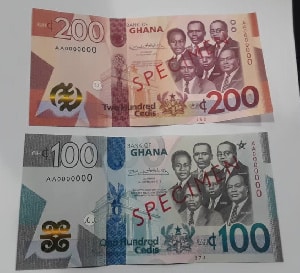
    Fenty Hair collection will encompass a wide array of hair accessories, including hairbands, bows, clips, ribbons, scrunchies, wigs, curlers, pins, brushes, and combs, further solidifying the Fenty brand’s dominance in the fashion and cosmetics industries.

    Source: Ghanaweb

  • Six million Ghanaians’ entire life savings will be destroyed by DDEP – Mahama

    Six million Ghanaians’ entire life savings will be destroyed by DDEP – Mahama

    The Domestic Debt Exchange Programme (DDEP), according to former president John Dramani Mahama, will obliterate Ghanaians‘ life savings as well as the whole banking system.

    Six million Ghanaians could lose their whole life savings, according to John Mahama, if certain changes are not done.

    At the Chatham House in London, he made the comments while discussing “Africa’s Strategic Priorities and Global Role.”

    According to him, Ghana would be celebrating its 66th anniversary as a bankrupt country as a result of the Akufo-Addo-Bawumia administration’s bad economic policies.

    “In a little under six weeks from today, Ghana will mark sixty-six (66) years of nationhood. Far from being an occasion to celebrate independence and the successes and achievements of nationhood, we will mark this day under the yoke of the worst economic situation in decades.

    “We are currently bankrupt and burdened with national debt we are simply not able to pay. You may have learnt over the past few weeks that the Ghanaian government has defaulted on servicing of both external and domestic debt.

    “There is currently a huge uproar over a controversial debt restructuring programme under which the middle class of Ghana could be wiped out if plans to have them forfeit proceeds of government bonds on which they rely for investment and sustenance are followed through.

    “In absolute terms, up to about six (6) million people could be deprived of their life savings and investments. Ghana’s banking and financial sector could also be under threat of insolvency if no suitable adjustments are made to the debt restructuring plans.,” the former President said.

    He also called for dialogue on the debt exchange programme stressing he was not against it.

    “I am not opposed to debt restructuring. What has been the contention is the lack of dialogue and consultation with the debt holders on the domestic side. I know that negotiations are taking place with the bondholders on the external side but not the same treatment on the domestic side.

    “I have been an advocate for dialogue. Before this whole crisis started, I advised the government and said they should hold a national dialogue on the economy, give us the state of the economy and let everybody understand and after that seek broad consensus behind the economic programme. But this was never done and what we expected will happen, happened.”

  • What John Mahama said about Ghana’s debt restructuring programme

    What John Mahama said about Ghana’s debt restructuring programme


    Former President John Dramani Mahama has revealed that he is not against the government’s debt restructuring program but rather against the government’s failure to engage with domestic debt holders.

    According to him, the government ought to have a national dialogue for everyone to understand the state of the economy.

    Speaking at the Chatham House in London on Friday, January 27, on the theme “Africa’s Strategic Priorities and Global Role,” the former President said that he was ignored when he advocated for the government to engage in broad consensus before introducing the program.

    “I am not opposed to debt restructuring. What has been the contention is the lack of dialogue and consultation with the debt holders on the domestic side. I know that negotiations are taking place with the bondholders on the external side but not the same treatment on the domestic side.
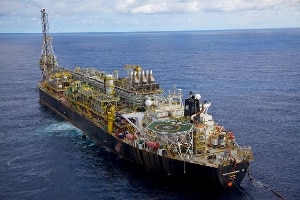
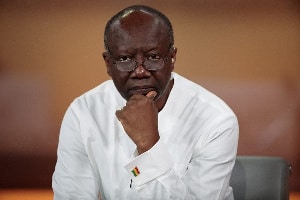
    “I have been an advocate for dialogue. Before this whole crisis started, I advised the government and said they should hold a national dialogue on the economy, give us the state of the economy and let everybody understand and after that seek broad consensus behind the economic programme. But this was never done and what we expected will happen, happened,” he said.

    He blamed government recklessness and borrowing for the current economic crisis.

    “We had been raising the red flag since 2019 about the government’s reckless borrowing. Going onto the Eurobond market every year for 3 billion dollars and not investing it in the productive sectors of the economy and using most of it for consumption and that is what has ended us where we are,” he said.
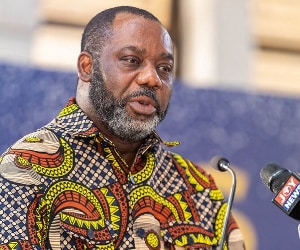
    Source: Ghanaweb

  • Manufacturing is being hampered by 14-taxes on imported raw materials – GFL
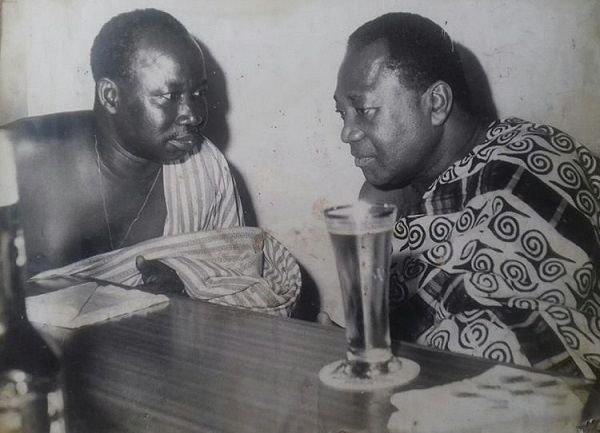
    Manufacturing is being hampered by 14-taxes on imported raw materials – GFL

    According to Mr. Abraham Koomson, General Secretary of the Ghana Federation of Labour (GFL), the manufacturing industry is being severely hampered by the over 14 levies that are levied on the importation of raw materials.

    In order for the manufacturing sector to survive, he has thus urged the government and the Ghana Revenue Authority (GRA) to take into account revisiting the tax structure and abolishing some of the tariffs on the importation of raw materials.

    Speaking at the Ghana News Agency Tema Industrial News Hub Boardroom Dialogue, Mr. Koomson said that the country’s industrial sector was being slowly crippled by the excessive taxes of raw material imports and that immediate action was needed.

    He mentioned the taxes on the raw materials as Import Duty, Import Value Added Tax (VAT), National Health Insurance Levy (NHIL), Covid-19 Levy, GETFund Levy, Net Charges, ECOWAS Levy, and Shippers Levy.

    Others are the Disinfection Fee, Ministry of Trade, and Industry (MOTI) E-One District One Factory Fee, Inspection Fee, African Union Levy, Special Import Levy, and EXIM Levy.

    “How can you produce with such taxes around your neck and suffocating you, that is why all the companies are running down,” he lamented.

    Mr Koomson reminded the Government that with such huge taxations, manufacturing industries could not produce at competitive prices and still breakeven leading to most of them shutting down their operations.

    He indicated that the GFL was in talks with the Association of Ghana Industries (AGI) to jointly tackle the issue; adding that other stakeholders would also be contacted for their inputs on the overburdened taxes on raw materials.

    He disclosed that the Ghana Federation of Labour had already written to the GRA for a meeting to discuss the issue among others adding that they were also considering petitioning Parliament on the taxes to ensure that the industries survived and provided the needed jobs for the large unemployed youth.

    “If nothing is done about it, it will wreck the whole system down and unemployment will continue to increase,” he added.

    Source: Ghanaweb