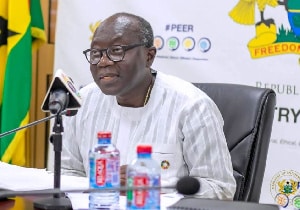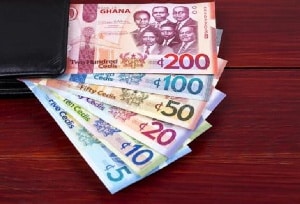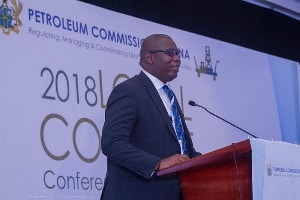
Tag: Ken Ofori-Atta

  • AfCFTA: Countries charged to ratify AU protocol on free movement of persons

    AfCFTA: Countries charged to ratify AU protocol on free movement of persons


    Panelists at the Africa Prosperity Summit in the Eastern Region, Ghana, have pushed for the ratification of the African Union (AU) protocol on free movement of persons.

    The ratification of the protocol, together with the implementation of the policy on trade in goods and services, investment, intellectual property rights and competition, under the African Continental Free Trade Area (AfCFTA), they said would accelerate intra-trade and ensure the prosperity of the continent and its citizens.

    Since the adoption of the protocol by 33 African countries in 2018, only four [Rwanda, Niger, Mali and Sao Tome and Principe] out of the 15 required to make the protocol come into force, have ratified.

    Signatures to the protocol include Ghana, Angola, Bukina Faso, Central African Republic, Chad, Cote d’Ivoire, Comoros, Congo, Djibouti, Democratic Republic of Congo and Equatorial Guinea.

    The rest are Gabon, and Gambia, Guinea, Kenya, Lesotho, Liberia, Malawi, Mozambique, Senegal, Sierra Leone, Somalia, South Sudan, Sudan, Tanzania, Togo, Uganda and Zimbabwe.

    The panelists said this ought to change to enable not only goods, but people move across borders to facilitate trade and the implementation of AfCFTA – the largest free-trade area by number of member states, after the World Trade Organisation.

    Madam Joy Kategekwa, Senior Strategy Advisor, United Nations Development Programme (UNDP), said the movement of people across borders “is what would ultimately put money in the pocket of most Africans.”

    She made a case for the acceleration of the ratification of the AU protocol on free movement of persons, noting that in 2017, about 19 million Africans left their respective countries to other African countries, but received about five million within the same period.

    Mad Kategekwa said: “We’re talking about accelerating the implementation of AfCFTA and we can’t do that when people are not moving. So, free movement is definitely part of the architect of AfCFTA especially for those engaged in trade-in-services.

    “So far, we have four ratifications and it has become important to increase the scale of ratifications, so, can we widen it to investors, traders and business persons in general,” The UNDP Senior Strategy Advisor said.

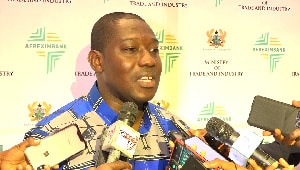
    A Deputy Minister of Trade and Industry, Herbert Krapa, also underscored the essence of accelerating the ratification of the AU protocol on the free movement of persons for the success of AfCFTA and Africa’s prosperity.

    He, therefore, urged the AfCFTA Secretariat to have an intentional agenda that allowed ministries of National Security and Ministries of Foreign Affairs, work together with various regional bodies to ramp up efforts to ratify the protocol.

    Mr Krapa said: “Paying political attention to the ratification of the protocol is very important… and we need a leader who will champion the facilitation of this protocol,” to unleash the potential of the free trade agreement.

    The President of the Ghana Union of Traders (GUTA), Dr Joseph Obeng, in an interview with the Ghana News Agency, called for the removal of all barriers to enable people to trade freely and easily across the continent.

    Dr Obeng, however, urged that the removal of the barriers to trade under AfCFTA including the free movement of persons was done in accordance with the Rules of Origin – the criteria needed to determine the nationality of a product.

    He said: “Free movement of persons is important, but let’s ensure that we don’t just open the borders for people to even trade in goods that are imported from elsewhere. It should be closely monitored and put under the context of AfCFTA.”

    Mad Emily Mburu-Ndaria, the Director of Trade in Services, Investment, Intellectual Property, Rights and Digital Trade, AfCFTA Secretariat, said they were doing the necessary trade facilitation to the trade pact successful.

    “To implement AfCFTA we’re looking at how to enhance even elite passport but our focus business people to be able to train and assist them move across the borders easily and without delays,” Madam Mburu-Ndaria.

    The Comptroller General of the Ghana Immigration Service, Mr Kwame Asuah Takyi, noted that migration policies including the free movement of persons were to ensure development and the alleviation of poverty.

    Nonetheless, he asked that while efforts were being made to ensure free movement of persons across the continent, security implications were made paramount due to some unrest in some countries.

    Source: Ghanaweb

  • Unavailability of premix fuel causing unemployment in Tema Newtown – Fishers

    Unavailability of premix fuel causing unemployment in Tema Newtown – Fishers

    Unemployment among the youth of Tema Newtown is soaring due to the unavailability of premix fuel for the past six months, fishers at the Tema Canoe Beach have revealed.

    The Ghana News Agency Tema Regional Office during a tour observed that the usual busyness seen at the canoe beach on a normal fishing day was missing as numerous young men were seen idling at the place and chatting the day away.

    Several canoes were also docked as their owners could not get the needed premix fuel to power the sea.

    Nii Adjeirteh Quaye, the Vice President of the Canoe and Fishing Gear Owners Association of Ghana (CaFGOAG), stating the impact of the unavailability of premix on fishing activities said the youth who depended directly and indirectly on fishing were currently unemployed.

    Nii Quaye explained that currently out of the over 1,000 canoes operating from the canoe beach, only about 300 of them engage in fishing activities due to the inability of the state to make the premix fuel available at the various landing beaches.

    He said one canoe, apart from directly employing between 15 and 20 people for its fishing activities, also provided auxiliary jobs to the youth and women who respectively help in removing the fish and selling them.

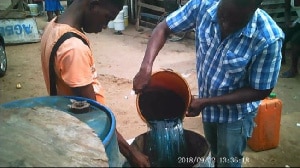
    According to him, currently, canoe owners have to depend on mixing petrol with engine oil to power their outboard motors adding that due to the cost involved several canoes had to stop operations.

    He disclosed that he has to buy four drums of petrol and engine oil at a cost of GH¢ 3,200 per drum to enable him to continue in business a situation he said would compel him to pass on the cost to the consumer.

    He lamented that due to the hardship and high unemployment in the community, some of the youth have resorted to thievery and snatching of people’s phones especially on the industrial area road in the evenings to make ends meet.

    Nii Ashitey Odametey, Tema Wudum Chief Fisherman, corroborated the unemployment issue saying fisher fishmongersers, and the youth in Tema Newtown were facing serious financial hardship due to supply challenges of the premix fuel.

    Nii Odametey called on the Ministry of Fisheries and Aquaculture to supply the fuel to the landing beaches stressing that their failure to honour their promises to supply it was adversely affecting their survival.

    Source: Ghanaweb

  • ECOWAS Trade Promotion Organisations staff schooled on trade promotion tools

    ECOWAS Trade Promotion Organisations staff schooled on trade promotion tools

    The capacity of front-line management staff from ECOWAS Member States is being built to enable them to assist export-ready companies.

    This would enable them to participate in trade promotion events such as trade missions, trade shows, inward trade missions, and Business-to-Business (B2Bs) events.

    Dr Ezra Yakusak, President of the ECOWAS Trade Promotion Organisations (TPO) Network, stated that building the capacity of the front-line management staff also seeks to create an opportunity to strengthen the collaboration among member states and build regional value chains.

    He noted that regional trade flows needed to be improved, particularly through fostering greater participation of regional businesses across value chains.

    Dr Yakusak who is also the Executive Director/Chief Executive Officer of the Nigerian National Export Promotion Council (NEPC) made the statement at a workshop organised in Abuja, Nigeria by the ECOWAS Commission, under the West Africa Competitiveness Programme (WACOMP).

    The workshop, organised in collaboration with the International Trade Centre (ITC) and the European Union (EU) focused on business creation methodology and trade promotion from January 23 to 27, 2023 a statement available to the Ghana News Agency in Tema stated.

    The workshop was also to improve the skills and knowledge of the participants, to better coordinate and manage trade promotion events as well as set up an evaluation mechanism, post-event activities, and learn from international best practices.

    Mr Kolawole Sofola, the Acting Director of Trade ECOWAS Commission speaking on behalf of Mrs. Massandje Toure-Litse, the ECOWAS Commissioner responsible for Economic Affairs and Agriculture highlighted the importance of promoting trade using the right instruments.

    Mr Sofola said: “By learning different ways of supporting export ready companies, Member States would be better positioned to serve the interest of the region and contribute to wealth creation,”

    He expressed hope that the knowledge gained by the trade experts from the training will better equip them to organize trade fairs and events and promote made-in-West Africa branded products.

    Mr Frank Okafor, a Representative of the EU reiterated the commitment of the Union to support TPO activities through WACOM, adding that the workshop provides an opportunity to find areas of collaboration and synergy among the Member States.

    Mr Ben Mohamed Imamo, ITC’s Senior Programme Officer, welcomed the commitment and support of the ECOWAS Commission, the regional partner, and the EU which is the funding partner.

    He stressed that the training would assist the participants to better understand innovative tools in the field of trade such as business matching tools.

    Source: Ghanaweb

  • Caretaker Trade Minister urges private sector to own AfCFTA agenda

    Caretaker Trade Minister urges private sector to own AfCFTA agenda

    The substantive Minister for Lands and Natural Resources and caretaker Minister for Trade and Industry, Samuel A. Jinapor has urged the Private sector in Ghana and in Africa to own the AfCFTA Agenda; to boost Intra-African trade and Africa’s prosperity within the context of the African Union’s Agenda 2063 and continue to work with Governments in achieving its full implementation.

    The Private sector, he said will not only be the driving force of AfCFTA, but will also be the primary beneficiary of the single market when Africa achieves the desired levels of trade between Africans as a people, adding that the advancement of intra-continental trade would mean private businesses can expand their markets, and venture into new territories which were previously inaccessible to them.

    The Caretaker Minister, Samuel Abu Jinapor was speaking at the closing of a two-day Business and Policy Dialogue, dabbed The Kwahu Summit on Africa’s Prosperity, organized by The African Prosperity Network (APN) in collaboration with The Presidency and the AfCFTA Secretariat on January 27, 2023.

    While targeting the private sector, he noted that “we must drill down further to address the needs of Micro, Small, and Medium-Sized Enterprises in our respective countries, as they contribute more than half of the continent’s Gross Domestic Product (GDP).

    Indeed, the International Finance Corporation (IFC) estimates that Micro, Small, and Medium-Sized Enterprises (MSMEs) account for some ninety percent (90%) of all businesses in Africa, and provide for some eighty percent (80%) of jobs across the continent”.

    Closing on the theme“ AfCFTA: From Ambition to Action, Delivering Prosperity Through Continental Trade”, Hon. Jinapor indicated that The quality of presentations, the constructive exchanges, and active participation over the past two days, are clear testimonies of their collective desire to move from ambition to action, and to deliver prosperity through AfCFTA for the “Africa We Want.”

    He added that the discussions over the last two days, have shown that through public-private and multi-sectorial engagements, Africa can unblock the bottlenecks that hamper the full realisation of the single market agenda.

    Samuel Abu Jinapor, therefore, called on Ministers, policymakers, government representatives, and representatives of regional economic communities, to work with the private sector to institute the requisite institutional and logistical frameworks for the private sector to thrive.

    He enlightened participants that Ghana’s Ministry of Trade and Industry, as the lead policy advisor of Government on matters of domestic and international trade and industry, places a lot of premium on the AfCFTA, which is the fulcrum around which most of our trade policies revolve.

    In view of the importance Ghana places on AfCFTA, the Caretaker Minister disclosed a number of initiatives the Ministry has undertaken in collaboration with the AfCFTA Secretariat saying;

    “Since the establishment of the AfCFTA Secretariat in Accra, the Ministry has worked closely with the Secretariat, and has undertaken a number of initiatives aimed at promoting the AfCFTA, including the establishment of the National AfCFTA Coordination Office, the development and implementation of a comprehensive National Policy and Action Plan for AfCFTA, and the implementation of an AfCFTA Facilitation Programme aimed at promoting local companies to produce and export to the AfCFTA market”.

    On behalf of President Nana Addo Dankwa Akufo-Addo, Abu Jinapor appreciated the efforts of the African Prosperity Network (APN), led by its Executive Director, Dr. Eugene Owusu, and all other partners.

    He also commmended the Secretariat of the African Continental Free Trade Area (AfCFTA), led by its Secretary-General, H.E. Wamkele Mene, for facilitating the holding of such a high-level business and policy dialogue on the very consequential issue of the AfCFTA.

    The Africa Prosperity Dialogues, the first of its kind in Ghana, is uniquely designed to offer a strategic and trusted annual platform to drive intra-African trade.

    It offered a platform where the highest political and business decision-makers in Africa, discuss and come up with clear, actionable initiatives to enhance trade and prosperity in Africa, aligned with the AU’s Agenda 2063.

    The two-day event brought together Ministers of State, Members of Parliament, Representatives of Regional Economic Communities, Business Executives and Associates, Technocrats, Women, Young Entrepreneurs, Civil Society Organisations (CSOs), and the media, to dialogue and proffer actionable solutions to boost Intra-African trade and Africa’s prosperity within the context of the African Union’s Agenda 2063.

  • Getting to net zero emissions will cost $562 billion -Amonoo-Neizer

    Getting to net zero emissions will cost $562 billion -Amonoo-Neizer

    According to Oscar Amonoo-Neizer, the Executive Secretary of the Energy Commission, the nation will need more than $562 billion to reach its net zero carbon emission goal by 2070.

    The initiative, according to the head of the Energy Commission, was started in 2020 and has a 50-year target of 200 metric tonnes of carbon dioxide.

    “Considering the sum of money required, the creation of the carbon market will help to ease some of the financial pressures to hasten reaching the target.
    “Most African countries have similar laws,” he said.

    Amonoo-Neizer was addressing colleague industry players at PwC West Africa’s Climate Change & Sustainability webinar, themed ‘Post-COP27: Outcomes and next steps.

    He however explained that fossil fuels, especially natural gas, will continue to be part of Ghana’s energy mix in the short term, adding: “Energy transition could come with challenges, including lower demand in the downstream petroleum sector.

    “It is important for the African continent to focus on innovation and diversification to thrive and mitigate the impact of transition,” he added.

    Dr Muntaqa Umar-Sadiq, Head-Nigeria Energy Transition Office, explained that his country is pitching for an initial US$ 10 billion from international funders to kick-start an energy transition plan.

    According to him, Nigeria aims to put itself on a path to achieve net zero emissions by 2060 with an array of strategies including reliance on gas as a transitional fuel.

    Dr Mutanga said a price tag of US$ 410 billion has been estimated for key strategies to enable Nigeria – a far bigger economy than Ghana – to reach net zero by 2060.

    Net zero refers to the balance between the amount of greenhouse gas produced and that removed from the atmosphere. Net zero is reached when the amount of carbon added is no more than the amount taken away.

    Background

    At the 27th Conference of Parties (COP27), which was held in November 2022 in Egypt, several commitments were made to accelerate corporate and country actions for climate change. The PwC webinar, therefore, brought stakeholders from Nigeria and Ghana to engage around the key takeaways from COP27.

    These included implications of COP27’s commitments and expectations from the public and private sectors in achieving the climate change agenda, especially over the next 12 months.

    Other key speakers at the webinar included Dr Daniel Tutu Benefoh, Ag. Director-Climate Change Unit, Environmental Protection Agency, Ghana; Dr Ndidi Nnoli-Edozien, Member-International Sustainability Standards Board (ISSB); Dr Salisu Mohammed Dahiru, Director-General/Chief Executive Officer, Nigeria’s National Council on Climate Change (NCCC); and Muhammad Wakil, CFA, Country Representative-Global Energy Alliance for People and Planet (GEAPP), Nigeria.

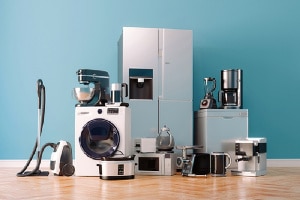
  • Energy Commission’s statement is “full of lies” on the ban on used equipment – Dealers

    Energy Commission’s statement is “full of lies” on the ban on used equipment – Dealers

    The Vice President of the Concerned Second-Hand Dealers Association, Lawrence Adutwum, charged that the Energy Commission’s statement was full of fabrications.

    This is in keeping with the Concerned Second Hand Dealer Association’s determination to oppose government intentions to outlaw the importing of second-hand equipment into the nation.

    The group has stated that the choice is likely to have an impact on their lives, especially given the current economic climate.

    Speaking at a press conference, President of the Association, Asare Daniel, revealed that the ban will take away jobs that feed millions of people, forgetting the contribution of the group to Ghana’s GDP.

    “Now that there is economic hardship all over the world, why would one say they are taking away jobs that feed millions of people in this country, forgetting our contribution to Ghana’s GDP?”, Asare Daniel said.

    Responding to the second-hand dealers in a statement, the Energy Commission said it had a very productive and conclusive meeting with the National Executives of GUTA, of which they are members, on October 6, 2021.

    He added that at the said meeting, the rationale for the ban and the effect of used appliances on the national economy, consumers, the environment, and the appliance market as a whole were explained to them.

    But speaking on Atinka FM’s AM Drive with host Kaakyire Ofori Ayim, Lawrence Adutwum, vice president of the Concerned Second-Hand Dealers Association said the association had an inconclusive meeting with the commission and that the arguments in their statements are lies.

    Hubert Zan, Assistant Manager for Energy Efficiency at the Energy Commission also reacted to the claims.

    He argued that the decision to ban the importation of used appliances is in the best interest of the country.

    “We are interested in brand new appliances, and even with that, the appliance should meet the minimum energy performance standard. We will work with the law to ensure that all imported new appliances meet the standard,” he told Kaakyire Ofori Ayim on Atinka FM’s AM Drive.

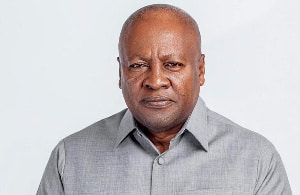
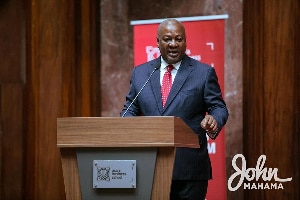
  • Nosedive of Ghana’s economy self inflicted – Mahama tells Chatham House

    Nosedive of Ghana’s economy self inflicted – Mahama tells Chatham House

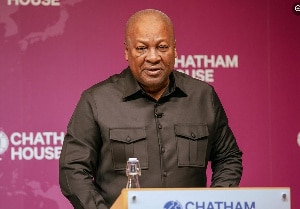
    Former President John Mahama says there is an urgent need for Ghana’s donor partners to pile pressure on the government to heed to calls for forensic audits to trace stolen funds.

    John Mahama who is currently in London, was delivering a lecture on “Africa’s Strategic Priorities and Global Role” at Chatham House, London.

    The former President, who traced historical antecedents, blamed challenges facing the continent on poor government, corruption, blatant abuse of power, impunity and lack of consultation.

    According to him, Ghana’s current crisis is self–inflicted, and unpardonable, especially after bold initiatives that were to put the country on the path of growth before the NPP assumed office.

    Citing Ghana’s economic crisis, he said, a few years ago, the country, held high as the beacon of the sub-region, has been plunged into junk status with serious ramifications on education, health and employment.

    John Mahama, who is tipped to lead the NDC for the 2024 elections noted with concern that, the special audit report on the COVID-19 expenses for example is a stinker.

    He accused Nana Akufo Addo’s government of side-stepping monitoring mechanisms put in place to avoid scrutiny, and went on a borrowing spree in spite of warnings, resulting in today’s crisis.

    Source: Ghanaweb

  • Diasporan investment key to Ghana’s economy – Alex Dadey

    Diasporan investment key to Ghana’s economy – Alex Dadey

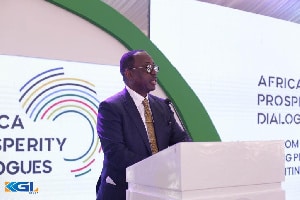
    Executive Chairman of the KGL Group and Board Chairman of the Ghana Investment Promotion Centre, Alex Dadey has called on government to focus on diasporan investment as a solution to Ghana’s economic challenges.

    In his opening address on Day 1 of the maiden Kwahu Summit under the theme- “AfCFTA: From Ambition to Action- Delivering Prosperity through continental Trade”, Alex Dadey recounted his experiences garnered working at the highest corporate levels on both sides of the Atlantic over the past 30 years.

    He explained, “During this period of working in the United Kingdom and over 25 countries around the globe, I have remained passionate about, diaspora socio economic inclusion and harnessing technology to push boundaries for advancement in businesses across Africa. Your Excellency, with all this experience across multiple business landscapes and cultures, I can boldly state, without a shred of doubt that the most successful period of my business life has been at home, in Ghana.

    “The opportunities and rewards have been tremendous, and the environment conducive for business. Ghana, like most developing economies, has its share of peculiar challenges, however, for any entrepreneur – foreign or diaspora, driven enough to look beyond these challenges, opportunities will always be presented.”
    He added, “Ghana is perfectly placed to attract foreign and diaspora investment, to propel growth by leveraging our abundant natural resources, a youthful population of approximately 57% under the age of 25; and a concerted effort backed by the right policies with a sustainable growth strategy. We must be determined to change strategy and focus away from only exporting our abundant natural resources and low-value manufactured products. I believe that the African private sector must be incentivized to invest abroad in developed markets and repatriate profits back home, like our foreign competitors do. This is one the surest ways of shoring up our local currency”.

    Ghana’s diaspora community has always contributed to the development of the Ghanaian economy, but Alex Dadey believes a more concerted plan in terms of policy needs to be the next step in order to tap into the full potential of this hitherto untapped asset.

    He highlighted, “We need to focus on our Diaspora. They are our most valuable resource. Diaspora Engagement Policies will have to be formulated and incentives given to attract them to invest back home. Diaspora Direct Investment should be our preferred option. The benefits of this approach far outweighs the efforts, compared to that of attracting FDI and loans from Multilateral Institutions like the IMF, which comes with stringent conditionality.

    “Moreover, we should introduce Diaspora investment products like Diaspora Direct Investments, Diaspora Portfolio Investments and Diaspora Philanthropic Investments to our Diaspora, linking them with local entrepreneurs. to realize the diaspora investment potential, individual experiences of Diasporans across the continent, presented in a collective narrative and mapped to a diasporan investment policy will be crucial in unearthing a multi-billion-dollar opportunity.

    “As part of our efforts to attract Diaspora Investment, the key will be to leverage the success stories of diasporans like myself, who have returned home to invest and are thriving in businesses across different sectors, presenting them as models to inspire and assist others identify and realize the many amazing opportunities investing back home presents. This is why I always tell the success story of the KGL Group”.

    KGL Group is known for its pioneering advancements in technology, providing state-of-the-art solutions to both private and public sector industry. Most recently, the group has been creating solutions within premix fuel to help support the local fishing industry.

    KGL Group is a wholly owned Ghanaian group of companies, with interests in Technology Innovation, Fin-Tech, Logistics, Trade, Property Development, Gaming and Commerce. The parent company commands a network of specialized business units that promote efficient solutions and effective tech-based related services to customers across Ghana and partner operating regions.

    Source: Ghanaweb

  • US Dollar trades mixed ahead of data release

    US Dollar trades mixed ahead of data release

    The US dollar was mixed against its major trading partners early Friday — up versus the European currencies, down versus the yen and Canadian dollar — before the release of December personal income, spending and price data.

    Market focus will be on the Federal Reserve’s preferred inflation measures, the overall and core PCE price indexes. A further slowdown in the year-over-year rates in these series would go a long way toward confirming widespread expectations for a smaller 25 basis point rate increase at next week’s Federal Open Market Committee meeting.

    The final University of Michigan sentiment index for January will be released, as well as pending home sales data for December, followed by the Kansas City Fed’s monthly services survey for January.

    Federal Reserve officials remain in a quiet period until after the Jan. 31-Feb. 1 FOMC meeting. A quick summary of foreign exchange activity heading into Friday shows that EUR-USD fell to 1.0881 from 1.0891 at the Thursday US close and 1.0902 at the same time Thursday morning.

    EU money supply growth slowed in December, as did the pace of loan growth to businesses, data released earlier Friday showed. The European Central Bank’s monetary policy committee meets on Feb. 2, where it is expected to increase its key interest rate by another 50 basis points.

    GBP-USD fell to 1.2366 from 1.2419 at the Thursday US close and 1.2394 at the same time Thursday morning. There are no UK data on Friday’s schedule. The Bank of England’s monetary policy committee meets on Feb. 2 as well and is also expected to increase its key interest rate by 50 basis points.

    USD-JPY slipped to 129.9418 from 130.2256 at the Thursday US close but remained slightly ahead of the 129.8842 level at the same time Thursday morning.

    The Tokyo consumer price index, a proxy for overall Japanese consumer price data, saw accelerated year-over-year growth in January, data released overnight showed. The next Bank of Japan meeting is scheduled for March 9-10.

    USD-CAD fell to 1.3317 from 1.3322 at the Thursday US close and 1.3384 at the same time Thursday morning. Canadian budget balance data for November are scheduled to be released today. After Wednesday’s Bank of Canada decision to raise its key rate by 25 basis points and then pause, the next BoC meeting is scheduled for March 8.

    Source :Ghanaweb

  • Ghana’s state debt exceeds 93.5% of GDP in November 2022 – BoG

    Ghana’s state debt exceeds 93.5% of GDP in November 2022 – BoG

    At the end of November 2022, the total amount of Ghana’s governmental debt was estimated to be GH575.7 billion.

    According to the Bank of Ghana’s Summary of Economic and Financial Data from January 2023, the amount equals almost 93.5% of the country’s Gross Domestic Product during that time.

    According to figures from the Central Bank, Ghana’s public debt increased by GH108.3 billion between September and November 2021, further illustrating the country’s unsustainable financial predicament.

    According to the research, the government’s exercise to restructure its debt has a participation deadline of January 31, 2023, and can be blamed for the increase in the stock of debt.

    The BoG Summary of Economic and Financial Data however pointed out that the external component of the total public debt increased to $29.2 billion (GH¢382.7 billion) in November 2022 which is equivalent to 62.1 percent of GDP.

    This was from $28.4 billion (GH¢271.7 billion) in September 2022 and $28.3 billion in December 2021.

    The data also showed that the Ghana Cedi depreciated by about 37 percent against the US dollar in 2022 – resulting in a significant rise in the cedi component of the external debt.

    Meanwhile, on the domestic debt front, the figure was pegged at GH¢194.7 billion at the end of December 2022 representing about 31.6 percent of GDP.

    This figure is also against GH¢195.7 billion which was recorded in September 2022 and GH¢193.1 billion in November 2022.

    As part of the government’s Domestic Debt Exchange Programme, about GH¢170 billion of debt is being restructured for a period of 12 years.

    It is important to note the BoG report did not provide figures pertaining to the financial sector resolution debt and other liabilities including the energy sector debt.

    The report futher noted that government’s fiscal deficit in terms of Gross Domestic Product was pegged at 9.8 percent in November 2022 which is more than the 7.4 percent earlier recorded in September 2022.

  • The physically challenged Ghanaian youngster hopes to advance science

    The physically challenged Ghanaian youngster hopes to advance science

    At the age of seven, Veronica Obenewaa began experiencing all she currently deals with.

    She had just awoken from sleep when she became aware of an abnormally severe discomfort in her waist.

    She didn’t know that the agony would eventually render her permanently immobile because she thought it was just something that will go away soon.

    Although she frequently had an outgoing and upbeat attitude on life, Veronica’s infirmity altered the course of her life and forced her to keep to herself and stay inside.

    Years on, Veronica has to come to terms with her new reality. Along the way, she returned to school at the St. Louis Senior High School at Kumasi in the Ashanti Region.

    During her time at the school, her quest to study General Science, although challenging, did not stop her from aspiring to be even more.

    Her perseverance saw her become the protocol prefect of her school.

    From secondary school, Veronica who is now 26-years-old went searching for a university that was disability-friendly. A friend then advised her to inquire about Ashesi University, one of Ghana’s prestigious private tertiary institutions.

    Luck being on her side, she eventually gained admission into the university, where she now reads computer science, even as she aspires to become a cyber security analyst.

    She expects this experience to lead her on a new learning curve.

    As part of efforts to help Veronica navigate her way through campus, the university’s Financial Aid Office acquired a motorised wheelchair for her.

    In her brief remarks about her journey, as captured on the school’s Facebook page, Veronica shared, “I am always looking to improve myself as a person. That way, people would be forced to look beyond my disability and see my capabilities.”

  • Students Loan Trust sets up digital payment platform for loan recovery

    Students Loan Trust sets up digital payment platform for loan recovery

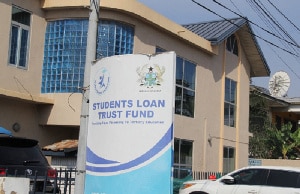
    The Students Loan Trust Fund (SLTF) has set up a new digital payment platform to help recover loans from borrowers living outside the country as part of its diaspora recovery drive.

    Introduced in December last year, the platform named ‘Pay Engine’ would enable borrowers in the United States, United King­dom, Germany and other places, to pay back their loans using their Visa and Master cards.

    The Chief Executive Officer of the SLTF, Nana Kwaku Agyei Yeboah, told the Ghanaian Times that since the addi­tion of the platform to the Funds repayment options, “more people are paying.”

    He said the platform was the latest of measures introduced by the Fund to make loan repayments easier for borrowers irrespective of their location in the world.

    He said the newly introduced “no guarantor” system which makes Ghana Card a requirement for the loan would also make it eas­ier to trace borrowers and recover debts.

    “This is because with the Ghana card, we have their biometric information and the Ghana card is linked to all the major databases. So if, for instance, the student is going in for driver’s license we can track him,” he said.

    Mr Yeboah said while the fund relied on the Controller and Accountant General Department to recover loans from those who work in government institutions, there was a dedicated desk to track those in the private sector.

    Touching on the ongoing call for applications for loans, he said the fund was expecting about 70, 000 students to apply under the “No Guarantor”, system launched last year June.

    “Last year even though the sys­tem was launched in June we have seen a quantum increase. We were anticipating 45,000 students but we paid about 32,000 students,” he said.

    With more applicants expected for this academic year and the loans pegged between GH¢1, 500 to GH¢3, 000, Mr Yeboah encour­aged more students to apply for loans, assuring them of fairness in the selection of beneficiaries.

    “Our system is transparent. There is nothing hidden. All we know is that your application has come and you are a Ghanaian and you have all the requirement for the loan.

    “There is no room for bias because we do not know who are beyond your Ghana card informa­tion. The needs assessment is not to discriminate but to ascertain their vulnerability and the level the quantum of money one qualities for,” he said.

    Mr Yeboah said the guarantor system was changed because it was a big obstacle to students, because they needed a guarantor who should be a contributor to Social Security and National Insurance Trust pensions.

    Under the “no guarantor policy” applicants only need to be Ghana­ians who had gained admission to accredited tertiary institutions and possessed Ghana card to apply to be eligible for selection.

    Source:Ghanaweb

  • GIFF welcomes new freight forwarding rates from GSA

    GIFF welcomes new freight forwarding rates from GSA


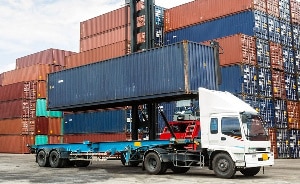
    The Ghana Institute of Freight Forwarders (GIFF) has welcomed the newly agreed rates for freight forwarding services as announced by the Ghana Shippers Authority (GSA) recently.

    Mr Paul Kobina Mensah, GIFF Vice President responding to the announcement of the rates at a forum in Tema, said even though they got a 110 percent increment instead of the 250 percent they fought for, the freight forwarders appreciate it.

    Mr Mensah explained that GIFF requested a 250 percent increment over the last negotiated rate, which was in 2016, due to the exchange rate volatility, inflation, and operational cost, among others.

    He indicated that GIFF settled for the negotiated rates to promote trading activities for shippers who were their primary clients and expressed the hope that they will make up the deficit with the increased volumes of cargo cleared.

    “In 2016, the dollar rate was GH¢3.9 and at the time of the negotiations it was around GH¢11.00; If you look at the margin it is over 300 percent. Inflation was 40.4 as against 17.5 in 2016. Putting these together, the best we could ask for was 250 percent,” he stressed.

    According to him, the new rates would last for two more years, of which economic uncertainties were expected.

    The GIFF Vice President revealed that the 2022 negotiation between GSA and the Committee of Freight Forwarder Associations (CoFFA) was the most hectic negotiation process they were subjected to as it took them six months to do so.

    Mr Fred Asiedu-Dartey, the Head of Freight and Logistics at the Ghana Shippers Authority, said to arrive at satisfactory freight rates it was necessary for the Authority to undergo a rigorous and thorough process as it was important to tackle the various intricacies peculiar to the sea ports, airports, land borders, and transit as well as the various categories of cargo.

    Mr Asiedu-Dartey said, “What happens at the airport is different from what happens at the seaports. When we talk about vehicle categories, alone for example, we are talking about motorcycles, saloon cars, SUVs, and earth-moving equipment.

    “We needed to assess why the various increments for each category were necessary and fair. We needed to be meticulous, so we ensure that we get value for the Ghanaian shipper.”

    He noted that a basket of variables including the exchange rate volatility and inflation were considered in setting the rate.

    He said the GSA has finally dealt with miscellaneous charges that have been subject to debate over the years in the shipping industry, noting that everything has been consolidated in the charge expressing the hope that the freight forwarders would be able to operate within that scope.

    Mr Asiedu-Dartey said its benefit for the shipper was that they could have a receipt that was a true reflection of how much they spent clearing the goods.

    He stated however that GSA was yet to finalize the rates and modalities for the consolidators of cargo, noting that they have to hold a specific meeting with all the consolidators as some of them have their Container Freight Stations whereas others do not have to make their operations different, and therefore same rates could not be applied.

    “We must consider which services and facilities at their disposal can affect the rates.

    “However, the outstanding issue with the consolidators has to do with the shipping line charge which is a component of their charge to the shipper, and because a number of those charges are in dollars, and with the current fluctuations of the dollar rate, fixing a certain rate is difficult,” he explained.

    Mr Asiedu-Dartey said the GSA has developed models that would be tested in live scenarios to arrive at the best outcomes when it comes to the services of consolidators, adding that the case of consolidated cargo to was expected to be finalized by end of January.

    He entreated the various importers and exporters in Ghana to familiarize themselves with the new rates for clearing and freight forwarding services to factor it within their operations.

    The rates to take effect this year would be used for freight services for two years to guide importers and exporters to plan their operations.

    Some of the new rates are conventional general cargo such as steel products, plates, and drums, of up to 100 metric tons, which will cost a maximum charge of GH¢1,200.00 with every additional ton costing GH¢6.00.

    A Saloon car will cost an importer GH¢1,300.00 for the services of a freight forwarder. For containerized cargo, a 40-footer container will cost a shipper GH¢2,800.00 whereas it costs GH¢2,000.00 for a 20-footer container.

  • 18-year-old girl arrested for wearing tempting miniskirt in public

    18-year-old girl arrested for wearing tempting miniskirt in public

    An 18-year-old girl and her 32-year-old aunt were arrested in Lusaka, Zambia on Monday for the girl’s choice of clothing.

    The girl, who recently graduated with high marks, was arrested for wearing a miniskirt that allegedly caused several male police officers to become distracted and nearly led to a traffic accident.

    The aunt was arrested for not advising her niece to dress more modestly.

    The case was set to go to trial on Wednesday, but a state prosecutor informed the court that the prosecution had received instructions from the Director of Public Prosecutions to discontinue the matter.

    Former Non-governmental Gender Organisations’ Coordinating Council (NGOCC) chairperson Sara Longwe spoke out in support of the two women, stating that Zambians are protected by the Constitution to wear whatever they choose.

    “There was no case to start with. Because there is no dress code in Zambia. We have freedom of expression, we are Constitutionally protected. Everybody can wear anything. Miniskirt is not indecent,” she said.

    Source: Ghanaweb

  • National Security operative allegedly beats wife to pulp for chatting man on Facebook

    National Security operative allegedly beats wife to pulp for chatting man on Facebook

    The family of a 44-year-old woman who was allegedly physically assaulted by her husband, a National Security operative, is calling on the Inspector General of Police to come to their aid to ensure that the man is prosecuted.

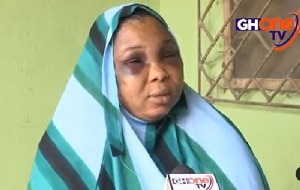
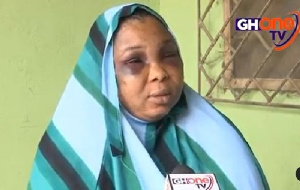
    The woman, Habiba Halid, who is now seeking refuge in her family house at Ablekuma Oduman, explained in an interview with GhOne TV that her husband, Ibrahim Mohammed, alias Figo, beat her up because she was chatting with an online friend.

    She explained that on the day she was assaulted (January 20, 2023), the man walked in on her having a chat on her phone with the said friend on Facebook.

    Confronted, she told him that the person she was chatting with was only a friend she knows on the microblogging site and that he was not even in the country.

    She continued that he actually followed up to chat with the person to confirm but he returned not convinced by the answers he received.

    Habiba, a mother of 4, added that her husband then threatened her life.

    “I’m feeling pains all over my body and my head. My teeth; I can’t chew food properly. I have never cheated on him since we got married; I have never. He was even asking, who is that friend and where did I meet him? I said I just met him on Facebook. And he asked me where is the friend living and I said the friend is not even in Ghana; he’s just a friend.

    “And he confronted the guy and the guy told him that we are just friends. He used a knife to threaten me too, so, he said I should pack my things if I don’t want to be dead in his house,” she narrated.

    According to Habiba, who currently has blood clots in both eyes and on her left shoulder following the severe punching her husband, Ibrahim Mohammed, gave her, the assault started long before their marriage 10 years ago.

    She also accused him of insecurity and non-communication, adding that this compelled her to fall on friends on social media for companionship.

    “Men used to approach me and so he got jealous and then he started doing those things. Even before this one happened, he used to beat me… when people wanted to help me, he scared them away,” she added.

    On the part of her family, where she is currently seeking refuge at, they want the law to take its course.

    They appealed that the police will come in and ensure that they get justice for their sister and relative.

    “Right now, we are only pleading with the IGP; we want him to intervene for us because we don’t know what is going to happen,” one of her relatives told GhOne TV.

    The matter has since been reported to the Amasaman branch of the Domestic Violence and Victim Support Unit (DOVVSU) of the Ghana Police Service for legal action.

    Source: ghanaweb.com

  • Nigerian telco billionaire Mike Adenuga gains $600 million so far in 2023 – Report

    Nigerian telco billionaire Mike Adenuga gains $600 million so far in 2023 – Report

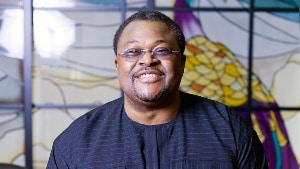
    Nigerian telecom billionaire and oil mogul Mike Adenuga has seen his net worth increase by $600 million since the start of the new year as the market value of his private holdings in his telecom business continues to track the performance of its peers on the stock market.

    The Nigerian billionaire businessman, who ended the year 2022 with a total wealth loss of $1.1 billion as his net worth fell from $6.7 billion to $5.6 billion, is off to a strong start just 26 days into the new year, according to data tracked by Billionaires.Africa.

    According to Forbes, Adenuga, Nigeria’s third-wealthiest man, has seen a significant $600 million increase in his net worth, rising from $5.6 billion at the start of the year to a present total of $6.2 billion. The significant growth has offset part of the $1.1 billion loss he experienced in 2022.

    The multimillion-dollar boost in his net worth can be attributed to the market value of his privately held businesses, including his investments in the telecom company Globacom Limited and in the Nigerian oil industry through Conoil Producing and Conpetro Limited.

    Adenuga owns 74.4 percent of Conoil Plc, a leading petroleum marketing company that manufactures and sells lubricants under the “Quarto” brand in addition to founding Globacom, one of Nigeria’s largest telecom service providers.

    Conoil is a major supplier of fuels such as diesel, kerosene, low-pour fuel, aviation fuel, and gasoline. The petroleum marketing company’s retained earnings have increased to more than $45.7 million as a result of its strong performance in recent years.

    In 2022, Adenuga received a substantial payout of $3.1 million in dividends from his significant stake in Conoil. With a net worth of $6.2 billion, Adenuga is ranked as one of the world’s most affluent billionaires, placing him at 409th on Forbes’ global wealth list.

    Source: Ghanaweb

  • Cedi sells at GH¢12.90 to $1 on forex market, GH¢10.60 on interbank market

    Cedi sells at GH¢12.90 to $1 on forex market, GH¢10.60 on interbank market

    Our forex bureau rates are provided by Afriswap Bureau De Change in Osu, Accra.

    The Interbank forex rates from the Bank of Ghana today, January 27, 2023, have shown that the Ghana Cedi is trading against the dollar at a buying price of 10.5947 and a selling price of 10.6053.

    As compared to yesterday’s trading of a buying price of 10.3998 and a selling price of 10.4102. At a forex bureau in Accra, the dollar is being bought at a rate of 12.30 and sold at a rate of 12.90.

    Against the Pound Sterling, the Cedi is trading at a buying price of 13.1067 and a selling price of 13.1209 as compared to yesterday’s trading of a buying price of 12.8645 and a selling price of 12.8785.

    At a forex bureau in Accra, the pound sterling is being bought at a rate of 15.00 and sold at a rate of 16.00.

    The Euro is trading at a buying price of 11.5345 and a selling price of 11.5460 as compared to yesterday’s trading of a buying price of 11.3464 and a selling price of 11.3567.

    At a forex bureau in Accra, Euro is being bought at a rate of 12.55 and sold at a rate of 13.55.

    The South African Rand is trading at a buying price of 0.6177 and a selling price of 0.6183 as compared to yesterday’s trading of a buying price of 0.6062 and a selling price of 0.6068.

    At a forex bureau in Accra, South African Rand is being bought at a rate of 0.50 and sold at a rate of 1.10.

    The Nigerian Naira is trading at a buying price of 43.4774 and a selling price of 43.5142 as compared to yesterday’s trading at a buying price of 44.2595 and a selling price of 44.3354.

    At a forex bureau in Accra, Nigerian Naira is being bought at a rate of 14.50 Naira for every 1 Cedi and sold at a rate of 19.50.

    Our forex bureau rates are provided by Afriswap Bureau De Change in Osu, Accra.

  • Commercial, private drivers do not see any benefit of vehicle insurance – Report

    Commercial, private drivers do not see any benefit of vehicle insurance – Report

    The report noted that 82% of Ghanaian drivers often did not have an interest in filing complaints

    Majority of drivers both commercial and private do not see any benefit from insurance companies in Ghana due to the perceived unwillingness and refusal of payments of claims.

    The event, which brought together stakeholders from various sectors took place on Wednesday January 25, 2023 in Accra, to launch YAFO “Driver MO” report and to find ways of improving the insurance sector.

    Nathaniel Dwamena, President of YAFO, said that most drivers expressed discontent with comprehensive insurance as it is expensive compared to income levels.

    He said the drivers only showed interest in vehicle insurance because it was mandatory and enforced by the police.

    He said drivers complained about delays in insurance claims and sometimes to the extent of not being paid by the insurance company.

    He said 82 percent of Ghanaian drivers often did not have an interest in filing complaints due to bureaucratic delays in the process.

    The research stated that insurance companies required some documents such as doctors’ report, car papers, police commentary reports, passports, ID card, and witnesses, among others, making drivers reluctant to collect insurance claims.

    After critical evaluation of the research, it was noticed that insurance regulations are generally favourable to insurance companies, the National Insurance Commission and insurance companies needed to do more to provide better and innovative services in response to the needs of the average vehicle owner.

    However, YOFA recommended that insurance companies should abolish the third party and categorize comprehensive insurance, digitise the issuance of insurance stickers and build trust between the insurers and vehicle insurance subscribers.

    It noted that most vehicle insurance policyholders were not aware of the documents needed to access claims.

    Insurance is unlikely to be a factor in good driving behaviour in a situation where insurance is purchased at a fixed rate for all drivers, as is the case in Ghana.

    In contrast, in other countries, vehicle insurance is based on an individual profile rather than a fixed fee. A driver’s insurance premium is determined by the individual’s profile.

    Moreover, concentrating more on individual drivers’ safety measures, and behavioural patterns as a consideration in determining insurance coverage might lead to drivers/vehicle owners placing a higher value on vehicle insurance.

    However, Young Africans for Opportunities (YAFO) is an independent, non-profit, non-commercial organization with the core aim to educate, train, and inspire students, entrepreneurs and young professionals to create, innovate, and promote entrepreneurship through public policy advocacy for a free and prosperous Africa.

    YAFO expressed hope that the transformative dialogue and recommendations will act as a catalyst for the much-needed reform in Ghana’s vehicle insurance market.

    Source: Ghanaweb

  • Investment promotion agencies need to collaborate to promote intra-African trade – Herbert Krapa

    Investment promotion agencies need to collaborate to promote intra-African trade – Herbert Krapa

    Deputy Min­ister of Trade and Industry, Herbert Krapa, has called for institution­al collaboration among the Investment Promotion Agencies (IPAs) in Africa to help promote intra-African trade and attract more investments.

    Mr Krapa made the call in Accra on Wednesday at the maiden annual assembly of the IPAs organised by the Ghana Investment Promotion Centre (GIPC) and the African Investment Promotion Agencies.

    On the theme “The Role of the IPAS in facilitating intra-African Trade”, it was attended by invest­ment promotion agencies from Angola, Ethiopia, Namibia, South Africa, Liberia, Zimbabwe, DR Congo and South Africa.

    The rest are Nigeria, Gambia, United Arab Emirates, Gabon, Botswana, Somalia and Mauritius.

    Other international organisa­tions taking part in the programme are African Continental Free Trade Area Secretariat, African Develop­ment Bank, International Organ­isation for Migration and United Nations Industrial Development Organisation.

    Opening the programme, Mr Krapa stressed the need for IPAs to work with government institu­tions in Africa to harmonise trade rules and regulations.

    “We have to pay attention to how to standardise regulations and rules to attract trade and invest­ments to the region,” he said.

    The Deputy Minister of Trade also emphasised the need for mem­ber countries to focus on infra­structure development to facilitate trade in the African region in order to harness the potentials of the AfCFTA.

    The Chief Executive Officer of GIPC, Mr Yofi Grant, in his re­marks, said the programme was to discuss measures to promote trade and investment in Africa.
    1222
    “Without investment, we cannot develop, build together, add value to numerous resources in Africa and trade among ourselves,” he said.

    Mr Grant said though Africa was rich with resources and having about 50 per cent of the global gold reserves, it citizens were poor.

    That, he said, was because Africa continued to export its natural resources in their raw form without turning them into finished products.

    “African countries must posi­tion themselves to take advantage of AfCFTA with a market of 1.4 billion people and a combined Gross Domestic Product of $3.4 trillion,” Mr Grant said.

    The Secretary-General of AfCFTA Secretariat, Wamkele Mene, in a speech read on his behalf, said the programme was in line with the agenda of AfCFTA Secretariat to promote trade and investment in Africa.

    The Executive Director of the World Association of Investment Promotion Agencies, Mr Ismail Ersahin, stressed that foreign direct investment was a powerful tool to create jobs, transfer skills and to lead to prosperity.

    Source: Ghanaweb

  • Reduce government by canceling pointless initiatives -Togbe Afede XIV

    Reduce government by canceling pointless initiatives -Togbe Afede XIV

    Togbe Afede XIV, the Agbogbomefia of the Asogli State, has stated that before shifting the burden of the current economic crisis onto specific bondholders through a haircut in the domestic debt exchange program, the government of Ghana should first look at reducing its expenditure and closing financial gaps to save the country money.

    When the Individual Bondholders Forum paid him a courtesy call on January 26, 2023, to mobilize opposition to the government including individual bondholders in the debt exchange program, Togbe Afede made the recommendation.

    The Forum, led by Mr. Senyo Hosi, has tabled some proposals before the government through which the country could save GHS83.5 billion.

    Togbe Afede believes the government must first clean house before touching any individual’s bond proceeds.

    “What expenditures can we cut out? Maybe, new and not-very-essential capital projects. What can we suspend? Ongoing, maybe unnecessary capital projects”, the traditional leader noted, as well as turning attention to the “size of government, payments to individuals, ex gratia, all kinds of allowances, monies that we spend on travels, et cetera”. 

    “There is so much room, I believe, for cutting expenditure,”  he stressed, adding: “And that is where, I think, we should be looking at first of all.”

    “If one goes by the estimates that have been put out there with regard to how much the nation loses to corruption annually, it suggests that there is room for trimming down government expenditure,”  Togbe Afede stressed.

    Mr. Hosi, during the call, told the chief: “Togbe, the matter is an eye-red matter, and, for someone who has led the capital market and being one of the players who birthed the capital market—besides your royal place as the Agbogbomefia of the Asogli State—you are a pioneer in this industry.”

    “I do not want to believe this is your voice and the destination you assured us when your voice was heard back then,”  Mr. Hosi noted.

    “So, we are here to petition your office, to petition you, as an individual, and the state of Asogli, not to sit by and watch the lives of 6.5 million people devastated and subjected to shackles of poverty.”

    “So, our plea here is very simple: the steps being taken by the government are unsustainable and very unnecessary.”

    The Forum’s proposed money-saving measures include enforcing property taxation and VAT invigilation; recovering funds lost to financial irregularities as identified by the Auditor-General, divesting loss-making, defunct, and troubled 17 state-owned enterprises, privatising selected SOEs to Tier-2 pension funds to drive efficiency and productivity, and reviewing the Free SHS Programme to make it more efficient through effective targeting and allowing parents who can pay to do so, among others.

    “The measures proposed above, per the estimation of the IBF, yield net savings of GHC83.5bn”, the IBF said in its report, adding: “The above recommendations are competent enough to urgently address the fiscal challenges and enable us to reach the desired 55% debt-to-GDP target proposed to the IMF.”

  • US$562 billion needed to reach net zero emissions

    US$562 billion needed to reach net zero emissions

    The country requires over US$ 562 billion to achieve its net zero carbon emission target by 2070, Executive Secretary of the Energy Commission, Oscar Amonoo-Neizer, has said.

    The Energy Commission Chief said the programme was initiated in 2020 and is a long-term framework with an estimated 200 metric tonnes of carbon dioxide target throughout the 50-year period.

    “Looking at the amount of money needed, the carbon market implementation will help to alleviate some of the financial burdens to accelerate getting to the goal. This is the same in most African countries,” he said.

    Mr. Amonoo-Neizer was addressing colleague industry players at PwC West Africa’s Climate Change & Sustainability webinar, themed ‘Post-COP27: Outcomes and next steps’.

    He however explained that fossil fuels, especially natural gas, will continue to be part of Ghana’s energy mix in the short-term, adding: “Energy transition could come with challenges, including lower demand in the downstream petroleum sector.

    “It is important for the African continent to focus on innovation and diversification to thrive and mitigate the impact of transition,” he added.

    Dr. Muntaqa Umar-Sadiq, Head-Nigeria Energy Transition Office, explained that his country is pitching for an initial US$10billion from international funders to kick-start an energy transition plan.

    According to him, Nigeria aims to put itself on a path to achieve net zero emissions by 2060 with an array of strategies including reliance on gas as transitional fuel.

    Dr. Mutanga said a price-tag of US$410billion has been estimated for key strategies to enable Nigeria – a far bigger economy than Ghana – reach net zero by 2060.

    Net zero refers to the balance between amount of greenhouse gas produced and that removed from the atmosphere. Net zero is reached when the amount of carbon added is no more than the amount taken away.

    Background

    At the 27th Conference of Parties (COP27), which was held in November 2022 in Egypt, several commitments were made to accelerate corporate and country actions for climate change. The PwC webinar, therefore, brought stakeholders from Nigeria and Ghana to engage around the key takeaways from COP27.

    These included implications of COP27’s commitments and expectations from the public and private sectors in achieving the climate change agenda, especially over the next 12 months.

    Other key speakers at the webinar included Dr. Daniel Tutu Benefoh, Ag. Director-Climate Change Unit, Environmental Protection Agency, Ghana; Dr. Ndidi Nnoli-Edozien, Member-International Sustainability Standards Board (ISSB); Dr. Salisu Mohammed Dahiru, Director-General/Chief Executive Officer, Nigeria’s National Council on Climate Change (NCCC); and Muhammad Wakil, CFA, Country Representative-Global Energy Alliance for People and Planet (GEAPP), Nigeria.

  • FLASHBACK: Government will do it again if needed with same approach – Ofori-Atta on banking clean-up

    FLASHBACK: Government will do it again if needed with same approach – Ofori-Atta on banking clean-up

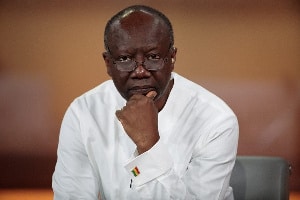
    Finance Minister, Ken Ofori-Atta in 2020 said government would not hesitate to embark on another clean-up exercise if the banking sector faces any new challenges.

    According to him, when a country’s financial sector is weak, it will have dire consequences on the economy and its people.

    The Bank of Ghana swept through the financial sector of the economy between 2017 and 2019 after some banks and financial institutions could not meet their minimum capital requirement.

    Read the full story originally published on October 27, 2020 by 3news

    Finance Minister, Ken Ofori-Atta has said the government will not hesitate to step in to tackle any challenge that may rear its head in the banking sector that can lead to an economic downturn again.

    He told TV3’s Etornam Sey in an exclusive interview on Monday, October 26, 2020, that the financial sector is the heartbeat of every economy globally.

    A weak financial sector, he said, will have dire consequences for the economy and its people, a situation that demands that central authorities step in swiftly to address.

    Therefore, he said, the Government of Ghana will act quickly to address any challenges that may emerge in the sector again after the recent clean-up exercise.

    The Bank Ghana with support from the Finance Ministry swept through the financial sector of the economy between the period 2017 and 2019.

    The central bank first started by revising the minimum paid-up capital for existing banks and new entrants from GH¢120 million to GH¢400 million.

    According to the regulator, this was to test the viability of the banks.

    The banks that were unable to meet this new requirement were either merged or collapsed.

    Following this action, some nine local banks, 23 savings & loans companies, 347 microfinance institutions, 39 finance houses and 53 fund management companies closed down during the exercise.

    In total, the government spent GH¢23billion to undertake this exercise

    UniBank, The Sovereign Bank, The Beige Bank, Premium Bank, The Royal Bank, Heritage Bank, Construction Bank, UT Bank, Capital Bank all collapsed.

    Mr Ofori-Atta said “Once you have the problem, you have to solve it because the financial architecture is the (basis) for any development.

    “So whether we like or not we had to do that. Now that we have done that we move ahead.”
    Asked whether if the situation presents itself the government will do it again in the same manner, he answered “You meet problems as a government that is what they elected you for and so you solve it.

    “And then you begin by commissioning this to give people the sense of hope for the future to say this thing can be done, and they have faith in you so lets us go with them.

    “If the engine is not functioning you can’t build on top of that so you had to solve the problem.

    “Is there a way you improve on what you are doing? Of course yes there is always a way to do that but fundamentally was the approach necessary, no question about that.”
  • Today in History: The government will not be changing the retirement age

    Today in History: The government will not be changing the retirement age

    In July 2020, the Ministry of Employment and Labour Relations (MELR) stated that the government had no plans to change the obligatory retirement age for employees in the public sector.

    Read the entire article, which GNA first published on July 27, 2020.

    The required retirement age for employees of the public sector will not be changed, according to the Ministry of Employment and Labour Relations (MELR).

    Reports that the government has lowered the retirement age from 60 to 50 years old were inaccurate, according to a statement released in Accra by the ministry and copied to the Ghana News Agency (GNA).

    “The Ministry of Employment and Labour Relations wishes to inform the general public that the said publication is untrue and malicious,” it stated.
    It thus entreated the public to disregard the false publication.

    The mandatory retirement for public sector employees is 60 years.

  • Five new toilet roll factories created – Bawumia

    Five new toilet roll factories created – Bawumia

    Five new toilet paper mills were opened in the nation, according to vice president Dr. Mahamudu Bawumia’s 2019 announcement.

    He further stated that the new factories are part of the government’s 1 District, 1 Factory strategy.

    On September 26, 2019, Dr. Bawumia made these remarks while seeing the Nsawam Prisons facility where the Brompton Portfolio makes toilet paper.

    Read the entire article as it appeared in its original form on September 27, 2019 on Laudbusiness.

    According to Vice President Dr. Mahamudu Bawmuia, Ghana can today brag of having fourteen (14) indigenous toilet roll manufacturing businesses operating there.

    He explained that when the Akufo-Addo administration came into office, there were nine of the companies already existing, but under the One District One Factory Programme, five new additions have been made.

    He said these when he toured the Brompton Portfolio’s toilet paper manufacturing factory located at the Nsawam Prisons in the Eastern Region on Thursday, 26th September 2019.

    Addressing the media, Vice President Bawumia indicated that the One District One Factory (1D1F) initiative was launched as one of the pillars for President Nana Akufo-Addo’s industrialisation agenda.

    “We know that in this country we have a huge dependence on imports and so the import bill tends to be very high and we rather export a lot of our primary commodities. The vision of the President is for us to move away from the export of the primary commodities to the manufacturing of these commodities, and this is the background for the One District One Factory initiative. And once we do that we are able to save on scarce foreign exchange, we are able to grow local industries and we’re able to create jobs. These really are three critical advantages of one District one factory,” he said.

    He added: “One of the achievements in this particular one District one factory initiative is in the area of the manufacture of toilet rolls in Ghana.

    “When we came into office there were nine companies existing which dealt with toilet roll manufacturing. Since then in the last two-and-a-half years we’ve added five additional factories. So Ghana’s capacity to produce toilet rolls has increased generally by about 50% which is very significant.

    “Given the success of One District One Factory, Government as we stated in our manifesto, is going to use the power of its procurement to support local industries, and it is for this reason you would have heard yesterday that I announced that Cocoa Board and for that matter the Ministry for Agriculture will have to now purchase locally manufactured fertilizer because we have the factories now under 1D1F to produce that fertilizer.

    “We don’t have to import it anymore, so the Ministry of Agriculture and Cocoa Board will now have to use all the government procurement of fertilizer, source it locally.

    “We are also saying if you look at the 14 manufacturers of toilet roll that we have in Ghana, 1D1F has brought five, we had an existing 9 already, and the capacity of that 14 is able to meet most of our demand for toilet rolls in Ghana, so why import?

    “So we are saying from the next procurement cycle, all government institutions – whether it’s the military or the police or the hospitals or the schools, because the taxpayer funds all government institutions – if you’re going to buy toilet roll, all that toilet roll must be bought from local manufacturing companies. So we are using the taxpayer’s money to support our local industries. This will create jobs, will save foreign exchange, will grow the economy and this is the vision of One District One Factory.”

    The Vice President continued, “This is the policy going forward. We are going to use our taxpayers’ money to support local manufacturing companies in the context of 1D1F. This is not a new policy, it is something that we had in our manifesto before we came into office but now we have built sufficient capacity in certain areas and therefore we can actualize that particular policy.

    “The future is very bright by the grace of God. If we continue to pursue the policies and the vision of Nana Addo Dankwa Akufo-Addo, the One District One Factory will become a reality.”

  • DDEP: Individual Bondholders ask Togbe Afede XIV for help

    DDEP: Individual Bondholders ask Togbe Afede XIV for help

    Individual Bondholders Forum has asked the Agbogbomefia of the Asogli State, Togbe Afede XIV for assistance to convince government to exclude them from the Domestic Debt Exchange Program (DDEP).

    According to forum, Ghana’s financial system and securities market will lose household confidence if it is included in the Domestic Debt Exchange Programme.

    Convener of the Individual Bondholders Forum, Senyo Hosi in his remarks said: “Togbe the matter is an eye red matter and for someone who has led the capital market and being one of the players who birth the capital market, besides your royal place as the Agbogbomefia of the Asogli State, you are a pioneer in this industry, I do not want to believe this is your voice and the destination you assured us when your voice was heard back then.”

    “So we are here to petition your office, to petition you as an individual and the state of Asogli not to sit by and watch the lives of 6.5 million people devastated and subjected to shackles of penury. So our plea here is very simple, the steps being taken by the government are unsustainable and very unnecessary.”

  • “I’m motivated to rescue jobs, livelihoods, and revitalize the economy.” – Akufo-Addo

    “I’m motivated to rescue jobs, livelihoods, and revitalize the economy.” – Akufo-Addo

    After the Coronavirus pandemic rocked the economy in July 2020, President Nana Addo Dankwa Akufo-Addo promised to take steps to protect Ghanaians’ lives.

    On Sunday, July 25, 2020, Mr. Akufo-Addo provided an update on Ghana’s efforts to combat the Coronavirus pandemic. He said: “Three days ago, the Minister for Finance, the hardworking, highly patriotic Ghanaian, Ken Ofori-Atta, went to Parliament, and gave the country a candid view of the state of our economy.”

    Read the full story originally published on July 27, 2020 by laudbusiness

    President Nana Addo Dankwa Akufo-Addo has said that his administration is determined to save lives, jobs, and livelihoods as well as revitalize the economy, and safeguard the future of our country in the wake of the coronavirus pandemic and its impact on the economy.

    Mr. Akufo-Addo said his administration has, to that effect, introduced a lot of measures to ease the burden placed on Ghanaians by the virus.

    Delivering an update on the measures against the Coronavirus pandemic in Ghana on Sunday, July 25, Mr. Akufo-Addo said: Three days ago, the Minister for Finance, the hardworking, highly patriotic Ghanaian, Ken Ofori-Atta, went to Parliament, and gave the country a candid view of the state of affairs of our economy.

    “Not only did he present a compelling review of the efforts put in place over the last three and half years to stabilize and grow our economy, but he was also able to paint a credible picture of hope for the future, despite the ravages caused by COVID-19.

    “It is reassuring to see working in real life the bold decision to implement a Relief, Resilience and Recovery plan, with the overarching aim of providing relief to the ordinary Ghanaian, and being able to find more resources to strengthen the productive sectors of the economy to ensure sustained economic activity.”

    He added: “Government was able to feed thousands of our people during the period of the lockdown. From April to June, Government gave additional allowances to our healthcare workers, ensured free access to water for all households across the country, fully absorbed electricity bills for one million active lifeline customers, and granted a fifty percent (50%) subsidy on electricity bills of all other customers, using the March 2020 bill as the benchmark.

    “Through the Coronavirus Alleviation Programme Business Support Scheme, six hundred million cedis (GH¢600 million) is being disbursed to support micro, small and medium scale enterprises, which have been affected by the economic downturn caused by the pandemic.

    “It bears repeating that some of these incentive packages have been extended for the next three months. In my thirteenth (13th) update to the nation, I announced the extension of incentive packages for health workers by another three (3) months, i.e. July, August, and September.

    “In the Finance Minister’s mid-year budget review, he, again, announced that all Ghanaians are to enjoy free water supply for another three months. I intend to have it reviewed at the end of the period. The government is also extending free electricity supply to lifeline tariff customers until the end of the year. The Communication Service Tax has also been reduced from 9 percent to 5 percent, effective September 2020.”

    Regarding the impending National Unemployment Insurance Scheme, Mr. Akufo-Addo said: “Once approved by Parliament, a National Unemployment Insurance Scheme will be instituted and will provide temporary income support to workers that have lost their jobs.

    “Government is increasing funding, under the CAP Business Support Scheme, with an additional one hundred and fifty million cedis (GH¢150 million), to ensure an increased number of beneficiaries. Furthermore, as indicated by the Minister for Finance, Government is establishing a Guarantee Scheme of some two billion cedis (GH¢2 billion) to enable businesses to access credit at more affordable rates so they can survive, and be better able to retain jobs.

    “All of these reaffirm our determination to save lives, jobs, and livelihoods, revitalize our economy, and safeguard the future of our country. I assure you that, under my watch as President of the Republic, Government will continue to work to create a diversified, transformed economy, fashion a conducive business climate that will deliver development, progress, and prosperity for all Ghanaians. This is my solemn pledge to you.”

  • Minority leadership saga: There were no consultations under 7th Parliament – Ras Mubarak defends NEC

    Minority leadership saga: There were no consultations under 7th Parliament – Ras Mubarak defends NEC

    Former Member of Parliament for Kunbungu Constituency, Ras Mubarak, has stated that the NDC’s national executive board’s recent shuffle of the leadership of the minority in parliament demonstrates how they vary from the NPP.

    Ras Mubarak asserted that nobody was consulted prior to the appointment of the minority leader in the 7th Parliament and that he shudder to understand the criticism that the application of the same principle has generated this time around.

    “In the 7th Parliament, some people wanted Mahama Ayariga to be Minority Leader. Others wanted Muntaka Mubarak while others rooted for Haruna Iddrisu. Who consulted us in the 7th Parliament when that decision was taken? In the end, the party’s wisdom was respected. And the leaders got the very maximum support,” he said.

    In a Facebook post, he stressed the need for party members to respect and accept the judgment of the National Executive Council led by Johnson Asiedu Nketiah.

    “In a time like this, what we require is maturity and not emotions and tantrums. We elected Chairman ASIEDU Nketia believing that he and the team would take some good but tough decisions. They may be doing just that.

    “It is important to give him and the rest of the team the benefit of the doubt, respecting the soundness of their judgment.

    “The signal the National Chairman and his team are sending is that the NDC is different from the NPP. The NPP is the only party where non-performance is rewarded. Have we not had cause to complain about the soundness of the decisions of the previous leaders and a need for changes ahead of 2024?”

    The former Kunbungu member of parliament further questioned the motives of individuals who are opposing the new development.

    “For those who are up in arms against the reshuffle, what moral authority would they have to question the continued stay in office of the likes of Ken Ofori-Atta who’s run the country to the ground through his wrong-headed economic policies, goaded by the President and the economic management team,” he asked.

    He continued by saying that all agitations must be put on hold in order for the party to accept Ato Forson as their new minority leader.

    “We need power. Asking for the decision to be reversed is bizarre. Such flip-flopping would be more fatal, with disastrous consequences to the tenure of the ASIEDU Nketia led Executives. It’s bait to get them to start on a catastrophic note.

    “If we truly want power, we must put this behind us and rally behind the Ato Forson-led Minority group.

    “The NDC is bigger than any individual in the party. We can’t have on our hands a situation where hell breaks loose when seemingly untouchables are reshuffled. It would be disastrous for a future NDC government. We can weather this storm together. Let people come to terms with the fact that the ship has sailed, and use their energies towards kicking out the NPP, whose tenure has been nothing but a calamitous failure,” he added.

    The NDC in a statement signed by the General Secretary, Fifi Kwetey announced that it has made changes to the leadership of the minority in parliament.

    The former Deputy Minister of Finance, Dr Cassiel Ato Forson, has been appointed as the Minority Leader in the 8th Parliament of Ghana’s Fourth Republic.

    Kofi Armah Buah is also the Deputy Minority Chief Whip. Kwame Agbodza takes over as Chief Whip.

    Ahmed Ibrahim, MP for Banda, has been maintained as the First Deputy Minority Chief Whip, while Comfort Doyo Cudjoe-Ghansah, MP for Ada, is the Second Deputy Minority Chief Whip.

  • We have more opportunities in Ghana and Africa than elsewhere – Togbe Afede

    We have more opportunities in Ghana and Africa than elsewhere – Togbe Afede

    Togbe Afede XIV, Agbogbomefia of Asogli State, has rallied University graduates to perceive opportunities within the present economic situation and seek to contribute to the development of Ghana and its parent continent.

    He said University students should be able to lead development efforts of the country and the Continent and should consider that a means to justify the investments in higher education.

    Togbe Afede was addressing the Seventh UHAS Congregation on Saturday as special guest of honour, where he called on graduands to resist the urge to abandon the motherland for perceived better opportunities abroad but take up the responsibility of nation building.

    “There is the temptation to join the exodus to other countries for greener pastures. But you should consider that there are more opportunities in Ghana and Africa than elsewhere. Ghana presents a green field – an environment that gives us the opportunity to make an input and you can distinguish yourself. 

    “This you must not miss. You have a responsibility. The country has invested a lot in your group, and it is your responsibility to help develop your country.”

    Togbe Afede who has dedicated his life to the development of Africa and concentrated his business interests on the Continent, said although the homeland of the black race retained a tag of poverty and underdevelopment, its dominance of the world’s natural resources should be viewed as an opportunity by its budding university population,

    He said Africa’s graduates needed to therefore “think outside the box,” adding “the main essence of University education is to liberate the mind and create astute decision makers”.

    Acknowledging the effects of the global situation on the Ghana and the Continent, the Agbogbomefia said “Change and uncertainty brings opportunity.

    “With liberated minds we should be able to think creatively to change the situation. You should enter the world with courage. The nation is looking up to university students to come and contribute to solving challenges facing the country. With innovation you can work with minimal resources.

    Togbe Afede spent close to an hour mentoring students, calling them to be ambitious, dream big, and aim high.

    He called to eschew greed and corruption, and work hard with the aim of impacting the world positively.

    The Agbogbomefia also advised the graduates to consider planning as an especially important component of human development and asked further to consider strong social values including empathy, respect for one another, and love.

    The 1st session of the 7th Congregation of the University graduated 826, 799 of which were undergraduates.

    The UHAS School of Pharmacy graduated its first batch of 30, and the School of Medical Imaging also passed out the first set of regular students.

    Professor Lydia Aziato, Vice Chancellor (VC), said UHAS continued to show exceptional academic standing, and had registered 7903 students for 2022/23 academic year, and that 864 staff strength was inadequate.

    She said infrastructural expansion within the University also remained minimal although a major need.

    “The infrastructural needs of UHAS are crucial. Several of the schools are not available, and there are more than 3,000 qualified students for where we can only admit 150. Hostel accommodation only takes 2000, so we need support for hostels for our students. We have the land, but we do not have the money.”

    Development of the over 700-acre land for the University’s main campus at Sokode Lokoe is within the second phase, completion of which is expected early next year to provide permanent structures for the School of Nursing and Midwifery and the central administration.

    The University has no library and ICT complex, while a mega central laboratory complex is entering the tenth year of delayed construction amidst growing needs for advanced laboratory facilities for the prime health research institution.

    The ceremony was attended by members of the university community and families of the graduates, and present were past leaders of the University, local and international partners, and members of the nation’s political leadership.

    Togbe Afede said the Asogli State sought to “closely identify with programs of the University,” and there donated 50,000 to support the UHAS Endowment Fund.

  • Africa needs solution driven initiatives to prosper – Dr Bawumia

    Africa needs solution driven initiatives to prosper – Dr Bawumia


    Vice President Dr Mahamudu Bawumia has challenged African political and business leaders to develop solution-driven initiatives to deepen intra-continental trade.

    That, he said, would be critical to transforming Africa from an import-driven continent to one with increased intra-trade for the prosperity of countries and citizens.

    Vice President Bawumia said this at the opening of the maiden Africa Prosperity Summit (Kwahu summit) at Adukrom in the Eastern Region on Thursday.

    The summit, which has attracted many high-profile business executives from across the continent, aims to achieve a deeper economic integration between African states to make the continent self-reliant.

    Dr Bawumia said Africa ought to change the narrative of being a poor and underdeveloped continent, proposing three priority areas to transition countries to prosperity.

    These three priority areas include smart investment in critical infrastructure, unleashing the continent’s productive capacities to make Africa an industrial zone and the mobilization of finance and investment.

    On investment, Dr Bawumia said there was a need for increased funds in the road, rail, energy, and digital infrastructure, as well as data centres to facilitate the digital transformation and financial infrastructure for the integration of markets.

    “As a continent, we need to produce and trade our way out of poverty and underdevelopment, and we cannot do that without investing in smart infrastructure,” he said, noting that such a move would be critical to delivering the success of the African Continental Free Trade Area (AfCFTA).

    The AfCFTA is expected to boost the continent’s income to some $450 billion by 2035 and lift about 30 million people from extreme poverty.

    Dr Bawumia said the AfCFTA was a real game changer and “once fully realized, we can increase intra-Africa trade by some $35 billion and reduce external imports by some $10 billion annually.”

    He urged governments and businesses on the continent to implement concrete strategic actions through the right mix of policies and greater sense of purpose for more robust intra-African trade to support economic diversification.

    The Vice-President also called for the creation of platforms for knowledge brokerage and access to information on critical products and services.

    This will allow some 445 million small businesses across the continent to plug into the value chains of mega industries to leapfrog Africa’s industrialisation and socio-economic development.

    Dr Bawumia noted that Africa’s need for $270 billion annually to bridge its infrastructure gap to generate sustainable growth at five per cent per annum, presented opportunities for private sector investment.

    “As key stakeholders, we must consolidate the successes so far with a sense of urgency, develop the signature solutions needed to deepen intra-Africa trade and spur impactful investments needed and we must do this with fearless determination,” he said.

    Mr Wamkele Mane, the Secretary General of AfCFTA, said Africa must accelerate trade in agriculture by reducing and eliminating both tariff and non-tariff barriers that restrict the movement of agricultural products.

    He said the Secretariat had established the necessary legal instruments required for traders, exporters, and economic operators to take advantage of the AfCFTA.

    Dr Eugene Owusu, the Executive Director of the Africa Prosperity Network, organisers of the event, called for a collective framework to spur impact investment for Africa’s growth.

    Source: Ghanaweb

  • Encourage your intelligent children to pursue TVET – NYA urges

    Encourage your intelligent children to pursue TVET – NYA urges

    The National Youth Authority’s (NYA) Deputy Director, Mr. Nelson Owusu Ansah, has urged parents to permit their kids to enroll in technical and vocational education training (TVET) programs if they so choose in order to build a career for themselves, regardless of their academic standing.

    He lamented the widespread assumption that TVET was only for kids who struggled academically and that TVET was the foundation of the nation’s fast growth goal for job creation.

    “We need to get rid with the misconception that TVET is only for mediocre pupils.
    It is the key to the nation’s development, he remarked.

    “We are determined to disabuse the minds of parents and students to overcome the prejudice and misconceptions they have about TVET to move the nation forward.”

    In an interview with the Ghana News Agency on Wednesday, Mr Ansah advised the youth not to look down on TVET, since it had the potential to equip them with skills to become self-employed after school.

    Countries with embedded systems of TVET such as Australia and Germany had been successful in maintaining low youth unemployment rates, he noted, and that Ghana would reap the benefits soon as it had begun to pursue that path.

    “Skills are important means to increase incomes and sustain livelihoods for the poor. Our economy is largely informal, therefore, it is crucial that skill training is improved to create jobs and shore up revenue.”

    Assuring the youth of support, Mr Ansah re-echoed government’s commitment to injecting more resources into TVET as part of efforts to reduce youth unemployment through training.

    The move is expected to build a solid foundation for robust technological training and boost enrolment of technical students across the country to sustain the government’s industrial revolution agenda.

    Hence the Ghana TVET Service has been introduced to give a new face to technical education to reignite the passion of young men and women in the sector,.

     He said the government had also established the first-ever second-cycle TVET applied technology high schools across the country to offer career-based education and industry participation to make it demand driven.

    “The programmes will be benchmarked against international best practices and standards. Most importantly, the applied technology high school will build strategic alliances with community, industry, development partners and the government to ensure it is responsive to national needs and expectations of socio-economic transformation.”

    Already the Government had designated all new TVET institutions in the country for the programme, Mr Ansah said.

  • Oil was purchased at a premium price rather than a bargain – John Jinapor

    Oil was purchased at a premium price rather than a bargain – John Jinapor

    John Jinapor, the ranking member of the Parliament’s Mines and Energy Committee, claimed that the price paid for the gold in exchange for the oil was not a bargain but a premium.

    He asserts that purchasing at a premium will result in fuel prices that are higher than those that the government has upheld.

    Speaking to Citi News, he said “In fact, the information I have is that the oil they bought is at a premium and not at a discount. So, this narrative that they are going to get cheap oil somewhere is not true. Let me state that there is nothing like cheap oil when it comes to the international oil market. On the contrary, this deal is leading to a premium in terms of pricing.”

    John Jinapor however explained that the fuel being bought by the government is not enough for the Ghanaian market and it may not be a cheap source to be able to deal with the increasing fuel prices.

    “The notion that fuel prices will go down is not true. The other side is that the diesel covers only 25% of our requirement and you see that is not even enough to change the price,” he said.

    John Jinapor also called on the government to halt the programme for broader consultations to be held.

    Meanwhile, the Head of financial markets at the Bank of Ghana, Stephen Opata, has confirmed that the first consignment from the gold for oil policy is already being sold to the bulk oil distributing companies.

    He noted that even though the prices are lower than the ex-pump prices, the impact will not be felt since it is just about 20% of the country’s market needs.

    “The product was cleared from the ports today and I know that BOST has started selling. This is just 20% of our market needs from the numbers I have seen the prices are better than what is at the ex-pump prices right now.

    “Because this is just 20 percent of our needs, it will not make that much impact as it would if we were to be doing 100 percent of our diesel needs,” he was quoted by myjoyonline.com.

    The first consignment of the oil from the gold for oil policy arrived in Ghana on Monday, January 16, 2023.

    The 41,000 metric tons of oil from the United Arab Emirates was however discharged to Bulk Oil Storage and Transportation (BOST).

    The move is part of the government’s efforts to curb high fuel prices and the lack of enough dollars to purchase oil from the international market.

  • Ekumfi Fruits and Juices expands its global reach

    Ekumfi Fruits and Juices expands its global reach

    This is due to the fact that the company, which is based in Ekumfi Abor in the Ekumfi District of the Central Region, has discovered new market potential in those areas.

    The company’s expansion strategy and the demand for pure, unadulterated pineapple juice in those countries, according to Mr. Frederick Kobbyna Acquaah, director of operations at Ekumfi Fruits and Juices Limited, drove the decision.

    “We have done all the prepa­ratory works and are now working on our export documents and by the middle of the year we will begin exporting to those markets,” he stated.

    Mr Acquaah, who took jour­nalists round the pineapple farms of Ekumfi Fruits and Juices Lim­ited to acquaint themselves with the operations and production processes, said the opportunity to enter the US, UK as well as Dubai markets would help sell Ghana internationally.

    He said the company had more than 3000 acres of pineapples in cultivation.

    The farms, which are the company’s own pineapple farms, are located at Obri in the Gomoa West, Ekumfi Sardo near Otu­am and Ekumfi Edumafa in the Ekumfi District.

    The director of operations said the farms were being expanded and the intention was to increase

    The farms to 6,000 acres and subsequently to 12,000 to meet the increasing demand for pineapples for the factory and also for the sustainability of the company.

    “The new market we have found in US, UK, and Dubai have also necessitated the increase of our farms,” Mr Acquaah stated.

    He dismissed some media reports that the company had collapsed.

    Mr Acquaah explained that the company has not shut down, saying the company produced based on demand to maximise economies of scale.

    “Whatever we produced has already been sold,” Mr Acquaah said.

    He said the company current­ly produced five various types of ‘Eku Juice’ and plans were advanced to introduce three addi­tional variants.

    He explained that the factory, established at a cost of $20 million under the One District, One Factory initiative, had the capacity to process ten tonnes of pineapple per hour which translated to four acres of pineapple farm.

    He said the company had more than 1000 workers who mostly were on the farms, adding that the factory had more than 75 profes­sionals.

    The Director of Operations said the company was running a double-shift system and the ex­pansion plan would help triple it.

    He said the establishment of the factory had helped to create jobs and improve the economy of the area in which the factory was established.

    As part of the programme, Mr Acquaah took the journalists round the $10 million Central Citrus Processing Limited at Abura-Asebu in the Abura-Ase­bu-Kwamankese District.

    Mr Acquaah said the Central Citrus Processing Limited was a factory he was “mentoring”.

    He said the factory would pro­cess citrus oil from the peels of oranges for export, while Ekumfi Fruits and Juices Limited used the pulp for citrus juice.

    He said the factory was located in a citrus production enclave and would help address the post-har­vest losses of the citrus produced in the area and boost the econo­mies of towns around the factory.

    On corporate social invest­ment, Mr Acquaah said the company was delivering on its corporate social responsibility by awarding scholarships and provid­ing sanitation facilities to commu­nities in the catchment area of the company.

    The Ekumfi Fruits and Juices Limited was established in 2019, under the One District, One Fac­tory initiative.

  • Finance Ministry is marginalized as an EMT, and Jubilee House insists that individual bondholders be excused – Shiny Simons

    Finance Ministry is marginalized as an EMT, and Jubilee House insists that individual bondholders be excused – Shiny Simons

    How long will the Finance Ministry be able to put up with the Economic Management Team and Cabinet’s reluctance to including individual bondholders in the domestic debt exchange program? is the question asked by Bright Simons, vice president of IMANI Africa.

    Additionally, it is suspected, in his words, that the Jubilee House supports the exclusion of particular bondholders.

    The Finance Ministry appears to be adamant, nevertheless, about the program’s complete inclusion of individual bondholders as well as the 5% coupon in 2023.

    “How long can Finance Ministry hold out against sentiment in Ghana’s Economic Management Team that individuals must be formally exempted from the debt exchange program? And now reports of Jubilee House also moving in that direction. Ministry insists 5% in 2023 is last offer,” Bright Simons wrote on Twitter on January 26, 2023.

    He said “Meanwhile, the Finance Ministry is pretty isolated at Cabinet this afternoon. Will be interesting to see whether their nerves will hold as the rest of the government begins to buckle under pressure.”

    The Finance Ministry announced that an agreement has been reached with the Ghana Association of Bankers to pay a 5% coupon rate in 2023.

    In view of the agreement, the Individual Bondholders Forum reaffirmed its position that they should be exempted from the debt exchange program.

    According to them, this agreement will mean that the government may be able to achieve its 80% participation rate for the programme to be successful.

  • COVID-19 expenses ‘consistent’ with mandate approved by parliament – MoF

    COVID-19 expenses ‘consistent’ with mandate approved by parliament – MoF

    The Ministry of Finance has said the 53.8% and 46.2% spent on direct COVID-19 interventions and for general budget support, respectively were consistent with the mandate approved by parliament.

    In its report, the A-G said the state spent US$607,419.02 out of US$4,049,460.12 for the purchase of 26 ambulances but the vehicles were never delivered.

    Also, it said staff of the Information Ministry were paid an unapproved amount of GH¢151,500 as COVID-19 insurance.

    Furthermore, $81 million worth of vaccines were not delivered.

    The ministry noted that it will continue to apply its best efforts to enforce and enhance expenditure management and accountability to ensure proper utilisation of tax revenue to the full benefit of citizens using established budgetary and accountability systems in government.

    <>Read the full response below:

    RE- AUDIT OF THE GOVERNMENT OF GHANA COVID-19 EXPENDITURE FOR THE PERIOD MARCH 2020 TO JUNE 2022

    The Ministry of Finance takes note of the Auditor General’s report on the government of Ghana’s Covid-19 expenditure for the period March 2020 to June 2022, issued on 30th December 2022.

    2. The Ministry wishes to commend the Auditor General on the publication of the Special Audit Report of the Government of Ghana Covid-19 expenditure which was commissioned by the Minister for Finance on 14th July 2022 and the timely release of the Audit report.

    3. The Ministry wishes to provide the following background and clarifications to some aspects of the report, with the objective of enhancing public appreciation of the issues raised in the report:

    a. The audit report confirms total resources mobilized for the Covid-19 response over the period March 2020 to June 2022 at GH¢21,844,189,185.24.

    b. As indicated on page 7, paragraph 18 of the report, the funds mobilized were to address the following two key interventions:

    i. finance direct Covid-19 intervention expenditures; and

    ii. support the funding gap in the budget which was occasioned by the Covid-19 pandemic and its effects on revenue mobilization.

    c. Hence, as reported on page 11, paragraph 31 of the report, the 53.8% and 46.2% spent on direct Covid-19 interventions and for general budget support respectively were consistent with the mandate approved by Parliament.

    d. The Ministry of Finance coordinated the mobilization and disbursement of funds for the Covid-19 responses by the Government in accordance with the Public Financial Management Act, to ensure the timely release of funds to save lives, livelihoods, and property.

    4. The Ministry welcomes the Auditor General’s report and wishes to assure the public that, steps are being taken to address all issues. The following interventions are currently being pursued by the Ministry:

    a. Meetings are being organised to engage with the implementing Agencies to evaluate actions taken to implement the audit recommendations in the audit report.

    b. Preparation of an Emergency Expenditure Management Guideline. This guideline will provide the government with administrative protocols in times of emergency such as the Covid-19 pandemic to ensure compliance with relevant PFM regulations whiles providing timely responses.

    5. The Ministry of Finance will continue to apply its best efforts to enforce and enhance expenditure management and accountability to ensure proper utilization of tax revenue to the full benefit of citizens using established budgetary and accountability systems in Government.

  • Minister of Energy launches Computer Emergency Response Team

    Minister of Energy launches Computer Emergency Response Team

    The Energy Sector Computer Emergency Response Team (CERT) implementation committee was launched by Energy Minister Dr. Matthew Opoku Prempeh on Friday, January 20, 2023, in accordance with Section 44 of the Cyber Security Act, 2020. (Act 1038).

    In his remarks, Dr. Prempeh made the point that Ghana’s energy sector infrastructure, when viewed in the context of the global energy value chain, is not immune to cyber-attacks. As a result, it is imperative to make conscious efforts to fight these crimes because the crippling and destruction of this infrastructure would have a catastrophic effect on our country’s economy.

    He further indicated his recognition of the need for effective cybersecurity control in the energy sector. “This, I believe will help us quickly detect and prevent potential cyber incidents and minimize their impacts, even when they occur,” he said

    The Minister tasked the committee to among others, harmonise the efforts of all stakeholders to ensure that we have a firm grip over the cyber security space of our sector.

    “As sector Minister, I remain committed to synergizing our efforts with the Cyber Security Authority (CSA) for a smooth implementation process,” he said

    He continued” the cyberspace of the energy sector is one that is very important as far as guarding the sanctity of the work we do is concerned. We are thus, prioritizing it with all the seriousness we can muster”

    The committee is chaired by Deputy Energy Minister, Hon. Andrew Mercer with support from the Director General of the Cyber Security Authority, Dr Albert Antwi Boasiako.

  • Re-engage Secondhand Dealers Association’s leadership on regulation – GUTA

    Re-engage Secondhand Dealers Association’s leadership on regulation – GUTA

    Dr. Joseph Obeng, the president of the Ghana Union of Traders Association (GUTA), has urgently requested that the Energy Commission meet with the executive of the Concerned Secondhand Dealers Association of Ghana to develop suitable regulations for the industry.
    Any policy to outlaw electronic appliances, he claimed, might have disastrous effects on dealers’ livelihoods and the economy as a whole, necessitating a rethink.

    In Accra, Ghana, the Concerned Secondhand Dealers Association of Ghana hosted a media briefing. Dr. Obeng was the speaker.

    The Energy Commission recently hinted at plans to embark on an exercise to tackle the importation of second-hand electrical appliances better known as home-used products, as Ghana has become a dumping ground for second-hand items. But the group says home-used appliances do not pose any form of threat to the country, but rather create jobs for thousands of Ghanaians.

    The News Conference is the second to be organized by the group after what it described as an unsuccessful attempt to meet the Energy Commission for further deliberations. Members of the Association, which include those from Kumasi, joined their counterparts in Accra to register their displeasure over the intention to ban used electronics.

    Members who wore mostly red said a ban on the products will further worsen the economic situation of the country.

    It was a charged atmosphere minutes before the leadership of the group addressed the media.

    Chairperson of the Association, Daniel Asare, said their checks on the sale of a home-used items revealed it is a standard practice the world over and wondered why not Ghana.

    He said a major concern raised by the Energy Commission is regulation and asked the Commission to channel its energies to that area.

    President of GUTA, Dr Joseph Obeng said the newness of a product does not necessarily make it quality, adding that consumers are best placed to make such a determination.

    He was hopeful the second-hand market will continue to thrive even in the face of challenges and encouraged dealers to deal with only quality products.

    The ban on the importation of second-hand products which initially covered two products has been revised to cover 17 other products such as computers, electric kettles, industrial fans, microwave ovens, rice cookers, washing machines, Solar panel television sets and monitors among other products.

    The group said the charge is for all Ghanaians to rise and add their voice to ensure the policy is not implemented.

  • SOEs must prioritize the creation of audit accounts to reduce violations – Chief of Staff

    SOEs must prioritize the creation of audit accounts to reduce violations – Chief of Staff

    However, all State-Owned Enterprises (SOE) must make an effort to make the preparation of Auditor Accounts and Management Reports a critical aspect of their operations to ensure that Audit infractions and malfeasance are eliminated, according to Chief of Staff Akosua Frema Osei-Opare, who claims that the issue of financial non-compliance in Ghana is quite historic.

    Additionally, SOEs must work with the State and Interest and Governance Authority, SIGA, to check for and eventually clear out all backlogs of audits for specific agencies.

    She pleaded with the CEOs to always keep the Assets Register and Land Titles current.

    The Chief of Staff made the point in Accra while she received from SIGA and the Ghana Audit Service the Joint Report Technical Report on the 2021 Audit Infractions, for onward transmission to President Akufo Addo.

    The report came on the heels of a directive by President Akufo Addo after he held a meeting with Boards Chairpersons and CEOs of Specified Entities on October 3, 2022, where he charged SIGA and the Attorney General, AG’s Office to investigate the cause of the infractions of Entities cited in the 2021 Audit Report and make recommendations per the law.

    Infractions amounting to 17.4 billion Cedis were flagged by the Auditor-General in its latest report.

    Ambassador Edward Boateng, Director General of SIGA, in his presentation admonished the Specified Entities to” streamline their work to make SOEs more significant to achieve President Akufo Addo’s vision of Specified Entities contributing significantly to Ghana’s GDP”.

    He disclosed that SIGA intends to work with Governing Bodies of Specified Entities to develop asset revaluation policies for best practices in accounting.

    The Minister for Public Enterprises, Joseph Cudjoe, Deputy Auditor General, Godfred Addison, Frank Mante of the Public Procurement Authority, Mac-Effort Adadey of the Controller and Accountant General’s Department among others were present at the presentation of the Joint Committee Report on the 2021 Audit Infractions.

    Chief of Staff, Akosua Frema Osei-Opare, and Ambassador Edward Boateng, Director General of SIGA later held a closed-door meeting with the CEOs and the Monitoring Agencies to chart the way forward.

    Government hints of possible sanctions meted out to non-compliant Specified Entities

  • Reduce operating expenses, Mireku Duker encourages mining sector organizations

    Reduce operating expenses, Mireku Duker encourages mining sector organizations

    Due to the current economic difficulties, George Mireku Duker, a Deputy Minister of Lands and Natural Resources in charge of Mines, has pleaded with the heads of the mining sector agencies to be efficient in their operations.

    He urged them to cut expenses on allowance payments, fuel consumption, and the number of vehicles in use in order to save money for the government.

    We must make sacrifices and cut costs in our operations and activities this year because of the economic scenario we are in, he said.

    Mr Mireku Duker gave the advice at the opening of a retreat for mining sub-sector agencies in Accra on Thursday.

    Participating agencies include the Minerals Commission, Precious Minerals Marketing Company, Minerals Development Fund, Ghana Integrated Iron and Steel Development Corporation, Ghana Survey Authority, and Ghana Integrated Aluminium Development Corporation.

    Every head of agency is supposed to make a presentation on his/her Action Plan for the year and outline measures put in place to achieving them.

    The retreat will enable the heads to take stock of the previous year’s activities and engage in in-depth discussions on issues pertaining to their sectors, challenges and prospects.

    The feedback received would feed into the Ministry’s main retreat slated at the end of the first quarter of the year.

    The Deputy Minister said the platform would allow the heads to fine-tune the key performance indicators set for them and help them to meet targets.

    He, therefore, entreated them to work closely with one another to achieve the Ministry’s objectives.

    Professor Peter Agbesinyale, the Chief Director of the Ministry, urged the agencies to work towards improving upon last year’s performance and meet their targets for this year.

  • “Protect Amrahia Dairy Farmlands from encroachers.” – Benito Owusu

    “Protect Amrahia Dairy Farmlands from encroachers.” – Benito Owusu

    Deputy Minister of Lands and Natural Resources Benito Owusu-Bio, who is in charge of Lands and Forestry, has instructed the Adenta Divisional Police Command to guard against further encroachment on public lands in the Accra suburb of Amrahia.

    The Lands Ministry of the government has been defending the Adenta Amrahia Dairy Farmlands from encroachers.

    The Ministry is making progress by working with different families to make sure that the lands are transferred to the pre-acquisition owners in a peaceful and legal manner.

    Despite these efforts, some unscrupulous individuals have been erecting unauthorised structures on the land with impunity.

    In view of that, Owusu-Bio tasked the Divisional Police Command to ensure that there was no further encroachment on the lands until it was handed over to the rightful owners.

    “Get bulldozers and demolish all these walls as soon as possible,” the Deputy Lands Minister told the Divisional Police Commander.

    Owusu-Bio gave the directives when he paid a working visit to the Amrahia Dairy Farmlands in the Adenta-Nkwantanang Municipality on Wednesday, to inspect the progress of work in demarcating the Lands and hand them over to the rightful owners.

    “The government wants to ensure that the policy and promise made to hand over some portions of the state-acquired lands to the pre-acquisition owners is followed to the letter,” Owusu-Bio said.

    He urged the Police to protect the surveyors who would demarcate portions of the lands and ensure that no intruder or land guards distract their work.

    Owusu-Bio also instructed the surveyors to commence work as soon as practicable and mount up boundary pillars to properly demarcate the lands, urging them to involve the various families to ensure peaceful work and transparency.

    “Make sure that all pillars mounted are coloured to bring clarity of ownership and boundaries, so that “Family A” does not end up working into “Family B” lands,” the Deputy Minister said.

    The Adenta Divisional Police Commander, Mr Abraham Acquaye, on his part, assured the Deputy Minister that the Police would commence work, and re-assemble the Chiefs to inform them once again about the final leg of creating land boundaries.

    Maxwell Adu-Nsarfoa, Technical Director at the Lands Ministry, took the Police Commander through the map, showing him the areas that would be demarcated and boundaries to serve as a guideline for their work.

    “The surveyor will provide the route for the boundaries and provide bulldozers to open up the boundaries after which the pillars will be mounted to give way for smooth operations,” he stated.

    The Technical Director stated that the government had not officially handed over any portion of the lands to any family and, therefore, after the demarcation exercise, anyone who tried to claim ownership of the lands would be treated as an intruder and dealt with accordingly.

  • By 2050, Africa could feed 9 billion people worldwide  Bawumia

    By 2050, Africa could feed 9 billion people worldwide Bawumia

    Business owners gathered for the ongoing Africa Prosperity Dialogue have been reminded by Vice President Dr. Mahamudu Bawumia that this is the time for businesses to discuss clever ways to take advantage of the opportunities from the agreement for a resilient, sustainable, inclusive, and prosperous Africa.

    He claims that the purpose of this gathering is to accelerate the implementation of the African Continental Free Trade Agreement through a solution-driven approach.

    He claimed that, regrettably, the story of this stunning continent has been one of poverty, conflict, bad government, corruption, and underdevelopment in the majority of the globe.

    “The time has come for Africa and Africans to define our own narrative. We cannot allow poverty and underdevelopment to be the destiny of Africa, a continent so blessed with every natural resource imaginable – oil, gas, minerals, and sunshine.”

    “We have approximately 65% of all available arable land available to feed 9 billion people globally by 2050 and we are home to the most youthful population in the world.”

    “We have everything we need to transform Africa into a global powerhouse of the future,” he said.

    He explained Africa only accounts for about three per cent of global trade and intra-African trade is one of the lowest of any region globally.

    This, he said is largely due to the “colonial” economic model characterised by small individual economies, fragmented and disconnected regional markets, over-reliance and low productive capacities that we have practised for 60 years.

    “As growing economies, we often struggle to attract much-needed investments.

    “However, with the collaborated strength from all 55 Member States, we have a population of 1.2 billion, the majority of whom are young, and a GDP of US$ 2.5 trillion, making Africa the eighth (8th) largest economy in the world,” he said.

    He noted that this positions Africa as an attractive investment destination. “With the right investment, we will be able to sustain economic growth and create the job opportunities that the continent desperately needs,” he added.

    The Vice President admitted that AfCFTA is a real game-changer, and once fully realised: “We can increase intra-African trade by some US$ 35 billion and reduce external imports by some US$ 10 billion annually.

    “This will mean more opportunities for growth for our small businesses and the potential to lift more than three million people out of poverty.”

    He made this call at the Kwahu Summit ongoing at the Safari Valley in the Eastern Region.

    He explained that like the vision of our forebears, the African Continental Free Trade Area has set the stage for Africa’s industrialisation drive, but, it will take concrete, strategic actions by governments and businesses on the continent, the right mix of policies, a greater sense of purpose for more robust intra-African trade to happen to support economic diversification and the much-needed industrialisation of the continent.

    To bring about the transformation needed, he proposed three broad areas that need to be prioritised.

    First is the need for smart investments in critical infrastructure. “As a continent, we need to produce and trade our way out of poverty and underdevelopment, and we cannot do that without investing in smart infrastructure across the continent.

    “While the last decades have seen some positive investments, there is the need for additional resources to finance the ‘arteries for trade’, which include the physical infrastructure such as roads, rail, and energy; digital infrastructure such as data centres to facilitate the digital transformation and financial infrastructure to allow for integrated financial markets.

    “These investments will be critical to delivering the success of the AfCFTA.”

    The second is to unleash productive capacities across the continent.

    With that Dr Bawumia explained that “We must create platforms for knowledge brokerage and access to information on critical products and services on the continent to allow 445 million small businesses across the continent to plug into the value chains of these mega industries.”

    For his part, the founder and Chairman of Africa Prosperity Network, the organisers of the Africa Prosperity Dialogues, Mr Gabby Otchere-Darko thanked all the participants for choosing to be part of this historic gathering.

    According to him, this is historic because Africa is creating the right environment for the private sector to join forces to assert a leading voice and play the leadership role in how best and how fast the continent can build and drive a vibrant, single market in Africa and for the shared prosperity of Africa’s nearly 1.4 billion citizens.

    He revealed that next month, Africa’s political leaders will once again meet in Addis Ababa, to talk about the continent’s common destiny.

    “Our voices here in Adukrom should resonate in Ethiopia. This year, incidentally, marks the 60th anniversary of the Organisation of African Unity, which was set up to promote the unity and solidarity of the African States.”

  • Man allegedly commits suicide over his inability to pay his rent

    Man allegedly commits suicide over his inability to pay his rent


    A man from Amoama in the Ashanti Region is said to have committed suicide.

    According to Rainbow Radio’s Abdul Malik Anokye, the incident has shocked residents.

    He stated that the young man identified as Yaw came to the area with his children and wife to seek greener pastures.

    According to the information he gathered, the young man was asked to vacate his room by his landlord because he had not paid his rent.

    He allegedly sought assistance from friends and close allies, but to no avail.

    His inability to pay his rent is said to have bothered him and may have contributed to his decision to commit suicide.

    Abdul Malik added that before committing suicide, he told his friends that he was thinking about it.

    He was discovered hanging in a bush after leaving home without informing anyone of his whereabouts.

    According to our source, the wife is expecting their third child.

    The deceased worked as a construction worker.

    Source: Rainbowradioonline.com/Ghana

  • Focus on external debt to alleviate the burden of DDEP – Expert

    Focus on external debt to alleviate the burden of DDEP – Expert

    The government has been advised to involve stakeholders in the Domestic Debt Exchange Program while simultaneously paying attention to negotiating a better deal for the country’s external debt.

    Experts who made this judgment claim that it has become important given the ratio of external to domestic debt because the economy could further deteriorate if the nation does not advocate for a cancellation or better restructuring plan to decrease the DDEP burden.

    “I think the domestic sector debt is 42 percent while external debt is 58 percent, which is substantial. I think the government’s attention should be more toward seeking a better deal on the international side while managing the situation domestically; because if we get the domestic one wrong, whatever deal we get externally will not be enough to turn things around,” Tax and Fiscal policy Expert Dr Alex Ampaabeng said.

    He added that debt cancellation “is a very good call by all indications because the reality is that there is no way out of the situation in which the country finds itself”. However, while that is been advocated for, they should not rule out the option of getting a better debt restructuring with the private lenders. “It is either they agree to cancel or agree to a debt restructuring that will favour the current economic environment, or else the country will finally default,” he added.

    For the Country Director of ActionAid Ghana, John Nkaw, the call is to ensure the less privileged are not unjustly affected by the economic crisis.

    “ActionAid views the call for debt cancellation as a rights issue. The resource-poor people in hard-to-reach communities who are already facing the harsh economic impacts should not be unjustly further impacted because of a collective decision by the country,” he said.

    They made these remarks at ActionAid’s virtual discussion that came at the back of a Ghanaian group of civil society organisations’ concerns, calling on international lenders to cancel some of the country’s debt to make it sustainable.

    While the experts – including Vitus Azeem, a tax justice and anti-corruption campaigner, and Bernard Anaba, a policy analyst at Integrated Social Development Centre (ISODEC) – side with the call and spell out other options, they hold that it is about time the country took up the responsibility to stay financially prudent.

    Dr Alex Ampaabeng said loopholes such as poor revenue performance, mismanagement and high expenditure must be sealed to reduce the frequent rate at which the country finds itself in debt, and also to sustain the economy.

    “We are here because of low revenue performance. Crucially, areas that should generate the needed revenue, the government is not tackling. Tax exemptions have been skyrocketing. By the IMF’s estimation, Ghana loses four to five percent of its GDP in tax exemptions. That is equivalent to about US$ 3 billion to US$ 4 billion every year.

    “Property taxation is key, but the government still does not have a better way of raising revenue through properties. The government even went ahead to cancel road tolls when the country was heading toward danger. Also, we are in 2023 and economic activities have been digitalised – but what has been the government’s approach on taxing digital companies as is being done by other countries?” he lamented.

    The experts are of the view that priorities must be given to key sectors of the economy to ensure that such are not deprived of the resources needed to thrive and to also protect the vulnerable in society. They also reiterated the need to cut down the size of government through reshuffling or merging to reduce public expenditure.

  • Forex bureaus sell $1 at GH¢12.90, GH¢10.41 on interbank market as of January 26

    Forex bureaus sell $1 at GH¢12.90, GH¢10.41 on interbank market as of January 26

    The Interbank forex rates from the Bank of Ghana today, January 26, 2023, have shown that the Ghana Cedi is trading against the dollar at a buying price of 10.3998 and a selling price of 10.4102.

    As compared to yesterday’s trading of a buying price of 10.3998 and a selling price of 10.4102. At a forex bureau in Accra, the dollar is being bought at a rate of 12.30 and sold at a rate of 12.90.

    Against the Pound Sterling, the Cedi is trading at a buying price of 12.8645 and a selling price of 12.8785 as compared to yesterday’s trading of a buying price of 12.8042 and a selling price of 12.8181.

    At a forex bureau in Accra, the pound sterling is being bought at a rate of 15.00 and sold at a rate of 16.00.

    The Euro is trading at a buying price of 11.3464 and a selling price of 11.3567 as compared to yesterday’s trading of a buying price of 11.3102 and a selling price of 11.3204.

    At a forex bureau in Accra, Euro is being bought at a rate of 12.55 and sold at a rate of 13.55.

    The South African Rand is trading at a buying price of 0.6062 and a selling price of 0.6068 as compared to yesterday’s trading of a buying price of 0.6037 and a selling price of 0.6041.

    At a forex bureau in Accra, South African Rand is being bought at a rate of 0.50 and sold at a rate of 1.10.

    The Nigerian Naira is trading at a buying price of 44.2595 and a selling price of 44.3354 as compared to yesterday’s trading at a buying price of 44.2979 and a selling price of 44.3479.

    At a forex bureau in Accra, Nigerian Naira is being bought at a rate of 14.50 Naira for every 1 Cedi and sold at a rate of 19.50.

    Our forex bureau rates are provided by Afriswap Bureau De Change in Osu, Accra.

  • Robert Smith remains America’s richest Black billionaire with $11.9 billion net worth

    Robert Smith remains America’s richest Black billionaire with $11.9 billion net worth

    America’s richest Black billionaire Robert Smith, the founder of one of the biggest tech-focused private equity firms in the United States, Vista Equity Partners, has solidified his place as a big name in the global tech industry.

    With a net worth of $11.9 billion, according to the Bloomberg Billionaires Index, Smith is the richest Black billionaire in the United States, and the second-wealthiest Black person in the world, trailing Africa’s richest man Aliko Dangote who is presently worth $19 billion.

    In the past year, Smith’s net worth has increased by $2.95 billion, from $8.9 billion on Jan. 25, 2022, to $11.9 billion at the time of this report, making him the 162nd richest man in the world according to data retrieved by Billionaires.Africa.

    Smith’s fortune is largely linked to his stakes and private investments in Vista Equity Partners, the global technology investment firm he founded in 2000.

    His $11.9-billion fortune is made up of his 50-percent stake in Vista Equity Partners, which is valued at $3.9 billion, and another $8 billion from his personal assets in the private equity firm.

    With more than $50 billion in assets and a yearly return of 22 percent since its inception in 2000, Vista Equity Partners has quickly grown into an industry leader and is one of the most active private equity investors in the technology sector.

    Under Smith’s leadership, the firm continues to leverage its cash holdings and the recent decrease in the valuation of technology companies to take up stakes in companies with enormous economic potential.

    In the first half of 2022, Vista Equity added 11 new portfolio companies and closed 18 add-on transactions across its Flagship, Foundation, Endeavor, and Perennial funds.

    Recently, Vista Equity entered into a definitive agreement to acquire Duck Creek Technologies, an innovative provider of intelligent solutions for the property and casualty insurance industry.

    The all-cash transaction is valued at $2.6 billion and will see Duck Creek shareholders receive $19 per share, representing a 46-percent premium to Duck Creek’s closing stock price on Jan. 6, 2023, the last full trading day prior to the transaction announcement.

    Smith’s success and net worth are a testament to his strategic investments in software and technology companies through Vista Equity Partners. He continues to prove his worth in the industry and is a shining example of the potential for wealth creation in the technology sector.

  • Energy Ministry declares Springfield/ENI unitization complete – Petroleum Commission

    Energy Ministry declares Springfield/ENI unitization complete – Petroleum Commission

    The Chief Executive Officer of the Petroleum Commission, Egbert Faibille Jnr., has revealed the unitization be Springfield and ENI Sankofa field has been completed.

    According to him, the Minister of Energy declared the unitization under the Petroleum Exploration and Production Act 2016.

    Speaking at a public lecture on Energy Transition at the University of Ghana’s 75th anniversary, he stated that, “the Afina discovery which has been made by Springfield, an indigenous Ghanaian company has been declared unitized by the Minister of Energy with ENI-Sankofa Gye Nyame field, pursuant to Section 34, sub-section 1 of the Petroleum Exploration and Production Act 2016.”

    The Springfield and Sankofa Gye Nyame’s unitization has been a legal tussle since 2021. Industry players had urged Ghana to resolve the case to ensure the successful unitization of the fields to derive maximum benefits from the oil and gas sector.

    The Institute for Energy Security (IES), stated that “the country is likely to miss a huge opportunity to rake in billions of Dollars from the upstream petroleum sector” if the deal is prolonged.

    The IES’ projection was due to the delay on the part of Eni Ghana Exploration and Production Limited (ENI) and Springfield E&P (Springfield) to cooperate, to unitise the Afina and Sankofa fields.

    He also commended Springfield for being the first Ghanaian indigenous exploration company to make a discovery in oil and gas.

    “This story proves that the Ghanaian can make it,” he added.

    Source: Ghanaweb

  • Each shop will soon get its own meter – Dan Botwe assures traders at Kejetia market

    Each shop will soon get its own meter – Dan Botwe assures traders at Kejetia market

    Minister for Local Government and Rural Development, Dan Kwaku Botwe has intervened in the quest by the traders at the Kumasi Kejetia Market in the Ashanti region for individual meters.

    All the over 7,000 lockable shops in the market are connected by one meter.

    The traders since the commissioning of the market for business have demanded that separate meters be provided for each store.

    Some of the traders have shut down their stores as more of them are contemplating closing down due to what they describe as exorbitant electricity bills.

    In an interview with Class News’ Elisha Adarkwah, when the Minister toured the second phase of the Central Market project, he said things are being put in place to procure individual meters for the traders.

    He said he had met with the market queens and their followers, the various trader’s associations, and also the Kumasi Mayor and his team as well as the Board of the market on the meter issue.

    The Minister said he will be meeting with the Electricity Company of Ghana (ECG), the Ministry of Energy as well as other stakeholders to deliberate on the procurement of the meters.

    Mr Botwe expressed confidence that the concerns of the traders regarding the individual meters will be resolved very soon as he works with the ECG to procure the meters.

    Source: Ghanaweb

  • ‘My bank says I will get my GH¢106,000 investment in 106 weeks’ – Agyinasare

    ‘My bank says I will get my GH¢106,000 investment in 106 weeks’ – Agyinasare


    Leader of Perez Chapel International, Archbishop Charles Agyinasare has revealed that a financial institution with which he had an investment is unable to pay him his GH¢106,000 accrued money at a go.

    Instead, he said the bank has promised to pay the money in 106 weeks by crediting his account GH¢1,000 every week.

    Leading a prayer for Ghana’s ailing economy on Wednesday, January 25, 2023 at the Perez Dome, Archbishop Agyinasare said: “In Genesis chapter 47: 15, it says: ‘And, when money failed in the land of Egypt and in the land of Canaan, all the Egyptians came to Joseph’”.

    Sharing his personal experience as a testimony, the founder of Perez Chapel International caveated: “I’m going to say something, don’t be political about it. I’m not talking politics; I’m talking Ghana”.

    “We are in a time like that time when our money is failing, if it has not already failed, because our banks cannot even pay people’s bonds – bonds which were risk-free”, he lamented.

    He continued: “I’m going to give you my personal testimony: I have an instrument with a certain financial institution, with a bank, and I’ve done it [for so long] and it’s about GH¢106,000; and I said: ‘I’m taking my money’. They said to me, they are going to pay GH¢1,000 every week. That means that the GH¢106,000 will take me 106 weeks [to get]”.

    “And when I said they should do something about it, they said: ‘It is because it is even you, Archbishop because some people come to our bank and they weep’”, the clergyman narrated.

    Archbishop Agyinasare noted that with the “[debt] restructuring we are doing; some people’s monies will take 30 years to be paid. And, so, I’m not talking politics, I’m talking reality”.

    He stressed: “When money failed in Egypt, they came to Joseph. Joseph represents Jesus, so, you and I are going to the Lord in prayer because with what is happening, very soon people are going to lose their jobs because companies who have monies [with financial institutions] and they can’t take the monies and they can’t pay their staff will have to let them go, if the Lord doesn’t intervene and, so, don’t think politics this time, think Ghana and think what I’m talking about.”

    The debt restructuring programme was launched by Finance Minister, Ken Ofori-Atta late last year.

    Different groups within the financial sector have rejected the programme and called for various amendments and/or exemptions.

    A few days ago, the government said it has, together with the Ghana Association of Banks (GAB), made “significant progress” on the terms of the participation of banks in the domestic debt exchange programme (DDEP).

    This agreement, according to a statement issued on Monday, 23 January 2023 and jointly signed by the two parties, “encompasses final improvements to the terms of the DDEP”.

    It includes “an agreement to pay a 5% coupon for 2023 and a single coupon rate for each of the 12 new bonds resulting in an effective coupon rate of 9%, clarity on the operational framework and terms of access to the Ghana Financial Stability Fund (GFSF) and the removal or amendment of all clauses in the Exchange Memorandum that empowers the Republic to, at its sole discretion, vary the terms of the Exchange”.

    The Ghana Association of Banks “recognises the progress made and notes that participation of its member banks in the DDEP, per the new terms, is subject to each individual bank’s internal governance and approval processes but, in any case, not later than January 30, 2023”.

    “This is a significant milestone toward addressing our economic challenges, and will thus help to restore macro-economic stability and accelerate Ghana’s economic growth,” the statement noted.

    “With this achievement, the government of Ghana reiterates its commitment to concluding the DDEP in time with all other stakeholders”.

  • MSMEs employ 85% of manufacturing workers

    MSMEs employ 85% of manufacturing workers

    Despite accounting for 85 percent of employment in the manufacturing sector, Micro-, Small- and Medium Enterprises (MSMEs) continue to face a myriad of challenges, says the Ghana Enterprise Agency (GEA).

    The MSME space, it lamented, is constrained by lack of finance, access to appropriate technology, lack of technical and managerial skills, weak institutional capacity and limited access to international markets, as well as lacking laws and regulations. These challenges, GEA noted, continue to impede development of the sector and affect the quality and sustainability of jobs.

    The sector is said to also contribute about 70 percent of gross domestic product (GDP), and one would expect it would be given the much-needed support to become robust and continue contributing significantly to the country’s socioeconomic development.

    However, that is not the case – according to Assistant Business Advisor-MSME at GEA, Samira Hussein, who said her outfit believes in the need for interagency collaboration, donor and national support initiatives to help position MSMEs for growth.

    “To achieve rapid economic development, the MSME sector cannot be sidelined. Rather, it should be made robust to support economic growth and development. if our MSMEs become more robust, they will contribute more to job creation and poverty reduction, and this will enhance government revenue generation streams,” she said.

    She made these comments on behalf of GEA’s Chief Executive Officer, Kosi Yankey-Ayeh, during the launch of Africa Street MBA – an initiative by Done By US (DBU), a consultancy.

    Africa Street MBA Programme Chairperson and founder of Done By US, King Adawu Wellington, explained the Africa Street MBA is an entrepreneurial platform that aims to provide integrated business support for start-ups and small businesses – through capacity building, mentorship, business development services and funding for young entrepreneurs with innovative ideas or early-stage ventures.

    He emphasised that for the next three years, the programme will impart young people with world-class business knowledge based on top Master of Business Administration (MBA) curricula and entrepreneurial course content.

    “Africa Street MBA has been designed to bridge the business-knowledge gap and help young people from poor backgrounds, and young people with low education, to also have an opportunity to build a world-class enterprise.

    “This will reduce the start-up failure rate in Africa by providing platforms for entrepreneurs to access business education, technical and business advisory services, funding and markets. We believe in empowering the youth, through entrepreneurship, to be agents of change in reducing the unemployment rate of Africa and beyond,” he said.

    Overall, the Africa Street MBA is expected to impact some 10,000 young people annually. It will be carried out using a fixed-term 12-week start-up accelerator, and a mentorship programme that includes mentorship and educational components based on the MBA curriculum.

    The Chairperson added that the accelerator programme will end with a public pitch event that provides seed funding in the form of a grant for ultimate pitch winners, and potential investments for accelerated businesses.

    The initiative is implemented in partnership with the KGL Foundation.

    Source: Ghanaweb

  • FLASHBACK: Tax all rent collected by landlords – Danquah Institute proposes to government

    FLASHBACK: Tax all rent collected by landlords – Danquah Institute proposes to government

    Danquah Institute in November 2021 proposed to government to tax all rent collected by landlords.

    She said, “building for renting has become a booming business, especially in our major cities Accra and Kumasi.”

    Read the full story originally published on November 26, 2021 by ClassFM.

    The rent paid to landlords in Ghana must be taxed, civil society group Danquah Institute has proposed.

    The Executive Director of DI, Dr Antoinette Tsiboe-Darko, told journalists at a press conference that the government must put in place to make sure landlords and landladies who rent out rooms and houses “pay tax on the rent received”.

    She said “building for renting has become a booming business, especially in our major cities Accra and Kumasi” and “millions of Ghana cedis continue to exchange hands” in that sector.

    “Unfortunately, owners of the houses go to tenants to collect rent directly without paying anything to the government”, she bemoaned.

    “The institute urges the government to set up rent control agencies, if possible, in all major cities to be in charge of rent issues”, she proposed.

    “In other words, owners of rooms or houses will have to register with these agencies while those who need rooms will then go there to make payments for their choice. We are hopeful that through this initiative, rent payment could be taxed”, she added.

    Source: Ghanaweb

  • Regulate our business, stop threats of total ban – Second hand dealers to Energy Commission

    Regulate our business, stop threats of total ban – Second hand dealers to Energy Commission

    Concerned Second Hand Dealers Association (CSHDA) has called on the Energy Commission to do well to regulate their activities and stop the blanket claims of banning the importation of second-hand goods into the country.

    According to the association, the Energy Commission, at one time, admitted that some new items imported into the country are substandard and, thus, wants to regulate these items through the Ghana Standard Authority (GSA), which has also admitted that 80 to 90 per cent of second-hand items meet standards in a meeting with the Ghana Union of Traders Association (GUTA).

    At the said meeting, GSA raised concerns about how to regulate the items that are imported into the country and not a total ban on such items, the association explained.

    “So why is the commission not regulating second-hand items but bent on banning them from entering the country”? the association queried.

    Mr Daniel Asare, Chairperson of CSHDA made this call at a press conference held in Accra to address some of the claims by the Energy Commission on the activities of second-hand dealers.

    He noted that claims that many of the second-hand items are not energy-efficient were not true.

    “We want the whole country to understand that items brought into this country for sale go through rigorous checks before being exported from Europe.”

    He said the association is well informed that the sale of second-hand items cut across the world even in some of the advanced countries.

    “So why are these countries also not banning the sale of such items,” he asked adding that “Europe is on record to have imported the largest number of second- hands items in the year 2022.”

    He appealed to the government to come to the aid of dealers considering the huge number of people who are engaged in this as well as their direct beneficiaries

    Source: Ghanaweb