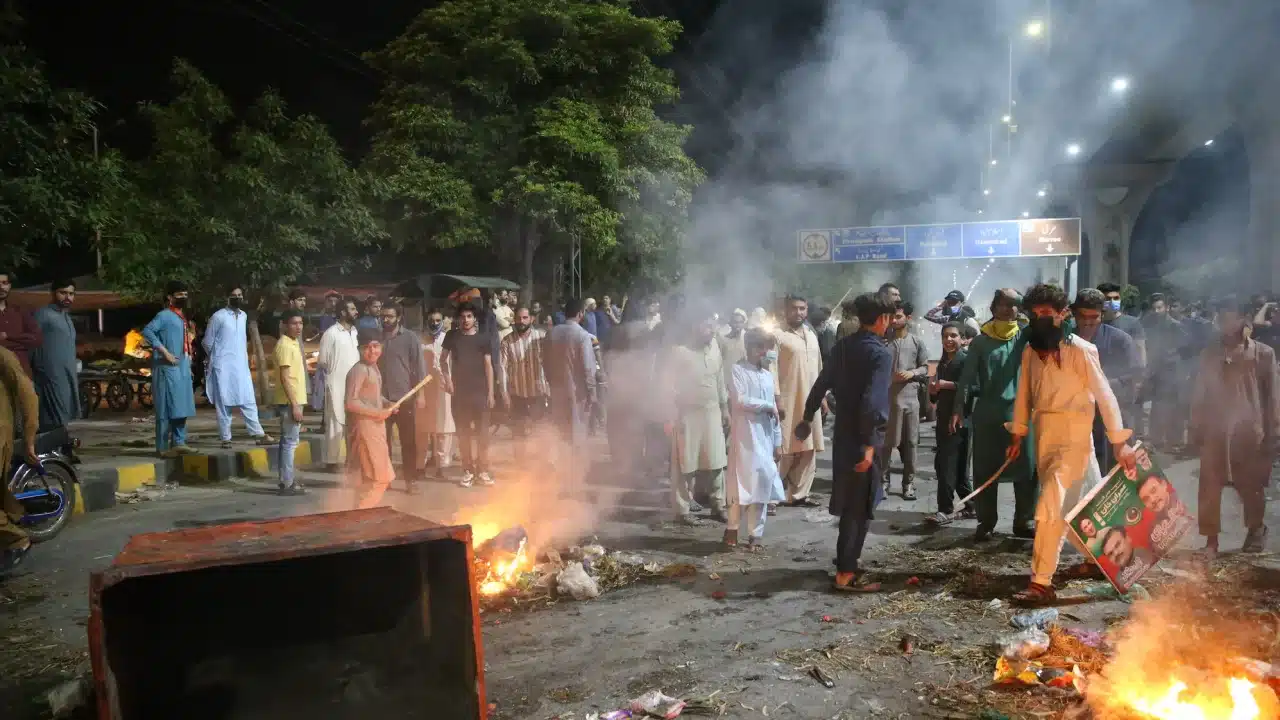
In north-west Pakistan,a tourist was forced out of police station and killed by a mob after being accused of blasphemy.
The incident occurred in the town of Madyan, Swat district, where the police had been attempting to protect the man from the large crowd that had gathered after he was accused of desecrating the Quran on Thursday.
Lynchings are not uncommon in Pakistan following accusations of blasphemy, which can carry the death penalty. Last month, a Christian man was similarly attacked and killed after being accused of burning pages of the Quran.
Video footage of this latest incident has sparked outrage on social media in Pakistan, showing the victim’s body being paraded through the streets before being set on fire. Police confirmed that the tourist was “torched” and reported that 11 people were injured, including eight officers.
https://www.youtube.com/watch?v=sceECS9NhAY
Malakand division’s regional police chief, Mohammad Ali Gandapur, accused a local mosque of inciting the mob after police had initially rescued the man, who was visiting the Swat Valley, a popular summer destination.
Dr. Zahidullah, a police officer in the Swat region, told BBC Urdu that police made significant efforts to clear blocked roads and disperse the angry crowd on Thursday night.
Authorities have opened a case against hundreds of people involved in the incident, some as young as 13, and have deployed additional security forces to the region.
Hotels in the town, previously full, are now seeing tourists scrambling to leave.
Violence fueled by religious accusations has increased in Pakistan since blasphemy was made a crime punishable by death in the 1980s, a law originally established under British rule in the 19th century. Even baseless accusations can provoke protests and mob violence against the alleged offenders.
Human rights critics argue that minorities are often targeted by such accusations.Approximately 96% of Pakistan’s population is Muslim, and other countries like Iran, Brunei, and Mauritania also impose capital punishment for insulting religion.
No one said who did the attack on the girls school in Shawa yet. The school is the only one for girls in the town. The town is in an area near Afghanistan called North Waziristan. The police chief Amjad Wazir shared this information.
UNICEF criticized the bombing as a terrible and cowardly act that could put the future of many young and talented girls at risk.
The police chief said the attackers hurt the school guard and then made bombs explode at the Aafia Islamic Girls Model School, where 150 students go.
People might think that Islamic militants, especially the Pakistani Taliban, are responsible for this. In the past, they have attacked girls’ schools in the province and have said that women should not be educated.
In Pakistan, there were many attacks on girls’ schools until 2019, especially in the Swat Valley and other areas in the northwest that were controlled by the Pakistani Taliban for a long time. In 2012, the bad guys attacked Malala Yousafzai, a young student who was speaking up for girls’ education. Later, she won the Nobel Peace Prize.
The Pakistani Taliban, also called TTP, were forced to leave Swat and other areas in the past few years. The TTP is a different group, but they are friends with the Afghan Taliban, who took over Afghanistan in 2021.
The Pakistani Taliban are feeling more confident because of the Taliban’s recent control in Afghanistan.
In another news, US General Erik Kurilla visited Pakistan to talk with the country’s army chief Gen about something else. Asim Munir on Thursday. Asim Munir was present on Thursday.
The Pakistani military and the US Army talked about working together to make the region safe and peaceful. The US Army praised Pakistan’s efforts to bring peace and stability to the region and cooperation between Pakistani and US forces.
According to a statement from CENTCOM, Kurilla also went to a few places in the northwest that are next to Afghanistan. He met with Pakistani regional commanders to talk about stopping terrorism along the border.
“The Pakistan Armed Forces are very skilled and professional,” Kurilla said.
The Pakistan military said that the suicide bombing in March, which killed five Chinese engineers and a Pakistani driver, was planned in Afghanistan and the bomber was from Afghanistan.
Maj. Gen. Ahmad Sharif, who speaks for Pakistan’s army, said that the army has arrested four men who were responsible for the March 26 attack in Bisham, a district in Khyber Pakhtunkhwa province.
Enayatullah Khawarazmi, who speaks for the Taliban’s Ministry of Defense, said on Wednesday that blaming Afghanistan for these incidents is just a way to distract people from the truth. We don’t agree with that.
“Khawarazmi said that the murder of Chinese people in a secure area in Khyber Pakhtunkhwa shows that the Pakistani security agencies are not strong enough. ”
Sharif said that the Afghan Taliban did not keep their promises to the world before taking control and promised that no one could use Afghanistan to launch attacks on any country.
Khawarazmi said that Islamic state members are coming from Pakistan to Afghanistan, and they are using Pakistan’s land against Afghanistan. Pakistan needs to give an answer for this.
Usually, flight attendants from Pakistan International Airlines (PIA) who come to Toronto stay in a hotel for the night, then meet up with their crew the next day and fly to their next destination.
However, more and more frequently, PIA flight attendants are not showing up, according to the airline. PIA says that at least eight flight attendants have gone missing in the past year and a half.
They left their jobs and are thought to have asked for protection in Canada, according to a spokesperson for the government airline.
More often happening
Abdullah Hafeez Khan said that at least eight flight attendants have disappeared after arriving at Pearson International Airport in Toronto. He said that these things have been happening for the past 10 years, but now they are happening more often.
“From around October 2022, more and more people have been seeking asylum,” Khan said in a video interview with CTVNews. ca from Karachi, Pakistan, where the airline is located.
None of the crew members who went missing in the past year and a half have returned. So they were allowed to stay in a new country for some reason, and that probably made other people want to do the same.
Khan said he could only guess why the flight attendants ran away.
The Canadian government emphasized that Pakistan is a dangerous place to visit. They warned people about the high risk of terrorism, as well as civil unrest, sectarian violence, and kidnapping.
“The security situation is not stable and can change unexpectedly,” says the Canadian travel advisory. “Events usually happen because of extreme beliefs, differences between ethnic groups, conflicts between religious groups, and disagreements between nearby countries like Afghanistan. ”
Many people have been hurt or killed in bombings, shootings, and other terrorist attacks in many different places.
Khan thinks that the missing employees went to Canada to find a better life because he hasn’t heard from them.
“He said he thought they all got permission to live there because he didn’t think they were living there illegally. He also said they might have family in Canada who can help them. ”
‘PR crisis’
Khan said that PIA is having a “PR crisis” because flight attendants are disappearing, and this is bad for business because there aren’t enough crew members.
The airline is talking with Canadian and Pakistani authorities to find a way to prevent flight crew from trying to get asylum.
Erin Kerbel, who speaks for Immigration, Refugees and Citizenship Canada, said they couldn’t talk about the missing PIA flight attendants because of privacy laws.
The CBSA spokesperson said they can’t confirm any information about PIA’s claim of discussions happening.
Maria Ladouceur said the Canada Border Services Agency won’t say anything about specific people or any talks with airline companies because it’s private information protected by the Privacy Act.
“Since the crew members went missing, Khan said the airline has done many things to stop that from happening again. ”
For example, the airline is only having crew members who have family in Pakistan or have worked for the airline for a long time on flights to Toronto.
The airline doesn’t want to send people who are single or don’t have family in Pakistan to Toronto, the man said.
Khan said he and the airline can’t reach the flight attendants anymore because they found out that the flight attendants often change their phone numbers after disappearing in Toronto.
Who went missing.
The PIA flight attendants who went missing in Canada are experienced professionals in their late 30s or 40s. Some of them have been working for the airline for as long as 20 years, according to Khan.
“He said they never showed any indication that they would look for something like that. ” “So, this is something that worries us because it’s unexpected when something happens with people who have been working with us for a long time. ”
In February, the crew members were waiting for the bus to take them from the hotel in Toronto to the airport. But one of the flight attendants didn’t come. Khan said this happened in a recent case.
The airline couldn’t get in touch with the flight attendant on her phone or hotel phone, so they asked the hotel to make sure she was alright.
“Khan said when the crew went to the place, she left her uniform behind with a note that said, ‘Thank you PIA’. He thought it was a real thank you for her 15 years of working with PIA, not a joke. ”
Khan said the missing crew members were good people with successful jobs in Pakistan.
Laws about letting people seek safety in a new country.
People can ask to be refugees in Canada when they arrive at the border or online if they are already in Canada.
Canadian immigration or border officials will decide if the person can have a hearing with the Immigration and Refugee Board. The government says everyone who makes a claim needs to have their health and security checked.
If you are allowed to ask for help in Canada as a refugee, you can get social support, go to school, get health care, find a place to stay in an emergency, and get a lawyer while waiting for the government to decide if you can stay in the country. Many people can get a work permit after a doctor’s appointment.
In northwest Pakistan, a driver deliberately collided their car, which was carrying explosives, into another vehicle on Tuesday.This incident killed five people from China and their driver from Pakistan. This information comes from the police and government officials.
The attack happened in Shangla, a district in Khyber Pakhtunkhwa province. This was confirmed by the local police chief, Bakhat Zahir. He said that the five people who died were construction workers and engineers who were going to the biggest hydropower project in Pakistan, the Dasu Dam, where they worked.
The Khyber Pakhtunkhwa province is next to Afghanistan. The Pakistani Taliban have increased their attacks there in the past few years.
Officials said the dead bodies were taken to a hospital close by, and security teams began a big search in the area to find any other people involved. The police are looking into the attack.
On Tuesday, there was an attack in Baluchistan just a few days after Pakistani forces killed eight militants who were shooting at a convoy of Chinese people near the Gwadar port. This all happened in the Baluchistan province.
The BLA wants to be free from the government in Islamabad.
Pakistan’s leader, Mohsin Naqvi, spoke out against the attack and expressed sympathy for the families of those who died. He said: “China’s friends in Pakistan are being targeted by the enemy,” but he didn’t say who the enemy is. He promised to punish those responsible very severely and hoped the attack would not harm the relationship between Pakistan and China.
Naqvi went to China’s embassy in Islamabad and told the Chinese ambassador, Jiang Zaidong, about the attack. He promised to do a complete investigation, as per the ministry of interior.
Many Chinese people are working in Shangla on big projects like building roads, power plants, and farming, as part of the China-Pakistan Economic Corridor.
The CPEC, also called the One Road Project, is very important for Pakistan’s government, which is running out of money and facing a really bad economic crisis. This is a project in China called the Belt and Road Initiative. It’s a big plan to connect China to other countries in Asia by rebuilding the Silk Road.
In July 2021, a suicide bomber exploded a vehicle near a bus carrying Chinese and Pakistani workers, killing at least 13 people, including 9 Chinese nationals. This caused Chinese companies to stop working for a while.
Pakistan has increased the security for projects related to CPEC.
Both said they didn’t do it and can ask for a new trial.
Aslam Gujar, who is a lawyer, said that the judge in Gujranwala, Punjab, gave a death penalty to his client, Junaid Munir, last week. The trial started because in 2022 Munir was accused of sharing disrespectful content on WhatsApp.
Last week, a 17-year-old boy named Abdul Hanan was found guilty and given a life sentence in another case at the same court. This information comes from the court documents. Hanan’s lawyer and family were not ready to give a comment right away.
Munir’s dad, Munir Hussain, said his son is innocent and he will appeal the charge because it’s not true.
“I can’t tell you where I am because people in my village think I should also be killed because my son insulted Islam’s prophet,” he said. “We follow the religion of Islam. ” We really like our prophet. “He said that his son is innocent and no Muslim would ever insult our prophet. ”
In Pakistan, if someone is found to have insulted the religion or religious figures, they can be put to death. While the government hasn’t executed anyone for saying disrespectful things about god, just accusing someone of it can cause violent protests.
Domestic and global groups that protect people’s rights say accusations of insulting religion are often used to frighten religious people who are not in the majority and to solve personal problems. In August 2023, some Muslims in Jaranwala, a city in eastern Punjab, attacked churches and homes of Christians because they believed a Christian man had disrespected the Quran, their holy book. The angry group destroyed the man’s house, set fire to churches, and damaged many other homes. The government and rights groups criticized their actions.
In December 2021, many people went to a sports equipment factory in Sialkot and killed a man from Sri Lanka. They burned his body in public because they thought he had disrespected their religion.
The police rescued her and escorted her to safety due to the large crowd that had gathered.She later expressed her regret in the presence of others. The dress has the word “sweet” written in Arabic on it.
Speaking or doing something that disrespects a religion is a serious crime in Pakistan and can result in a death penalty. Some people have been attacked and killed before they have a chance to go to court.
The police told the media that they got a call at about 1:10PM on Sunday that a lot of people were gathered around a woman at a restaurant in Lahore, which is in the Pakistani province of Punjab.
Assistant Superintendent Syeda Shehrbano said that about 300 people were waiting outside the restaurant when they arrived.
Videos of the incident were shared on social media. One video showed a frightened woman sitting in the back of the restaurant, covering her face with her hand.
In a different place, she was with police officers who were protecting her from a crowd that wanted her to take off her shirt. In some videos, you can hear people saying that those who insult their religion should be killed by cutting off their heads.
She said no one really understood what was written on the shirt. The important thing was to make sure the woman was safe by getting her out of the area.
Ms Shehrbano says that she had to “talk and discuss” with the crowd.
“We said we would bring the woman with us. We will consider her actions and hold her responsible for any crime she committed according to the law. “
Later, the video showed Ms Shehrbano putting her arm around the woman, who was wearing a black robe and headscarf, and moving through the crowd. Other police officers joined hands to make a pathway as people in the crowd pushed forward.
Ms Shehrbano said that people who support the TLP party were also in the crowd.
The woman was taken to a police station, where a few religious scholars said that the writing on her dress was Arabic calligraphy, and not verses from the Quran.
The police asked the experts to make a video that said what they found and that the woman didn’t do anything wrong.
“I didn’t mean to do it, it was an accident. “”I’m sorry for what happened, and I promise it won’t happen again,” she said. She also said she is a very religious Muslim and would never disrespect her religion.
Officials said she went to Lahore to shop and has already left the city.
Ms Shehrbano said that the authorities have noticed a growing number of similar incidents like the one on Sunday.
“If I didn’t yell and persuade the crowd to help,things would have gotten worse. I’m grateful,” she said. Many people have said good things about her, and the Chief of Punjab police wants her to get an award for being brave.
India’s British rulers created laws against blasphemy, and these laws were made even stricter in the 1980s by the military government.
Last August,many churches and houses were set on fire in Jaranwala, a city in eastern Pakistan. This happened because two men from the city were accused of ruining the Quran.
Mr Bhutto’s political party, the Pakistan People’s Party, said it will support Mr. Sharif’s political party, the Pakistan Muslim League, in choosing a prime minister.
The two groups used to work together to remove Imran Khan from power in 2022. He is currently in prison.
This time, candidates who were not part of any political party but supported by the Pakistan Tehreek-e-Insaf (PTI) won the most seats.
The PML-N said that both groups had agreed to work together for political stability.
The results showed that independent candidates supported by PTI won 93 out of 266 seats. This made voters unsure about which parties would make the next government.
According to a PML-N official, Marriyum Aurangzeb, the leader of the party, Mr. Sharif, wants to choose his brother, Shehbaz, to be the prime minister. Both men were prime ministers before.
Mr Bhutto said his party will support PML-N to elect a prime minister, but he also said his party will not take any positions in the cabinet.
Imran Khan and his party think the elections were unfair and want to protest the results.
Talking to reporters in court for the first time since the vote, Khan said: “I want to caution against the mistake of forming a government with votes that were stolen. ”
“This type of theft will not only disrespect the people but also make the country’s economy even worse. ”
The officials say they did not tamper with the votes.
Independents won 101 seats in the National Assembly. BBC found that 93 of the candidates who won the election were supported by PTI.
This means they have more seats than ex-PM Nawaz Sharif’s party, who won 75 seats. It is not clear who will be the next government.
As the argument continues, independent candidates who lost have filed many court cases accusing vote cheating.
Both the PTI and Mr. Sharif’s PMLN want to be the next government, even though PTI was not allowed to participate in the election.
The result was unexpected because people thought Mr Sharif’s party, which is backed by the powerful military, would win. They believed this because Mr Khan had been jailed for various charges and his party was not allowed to be on the ballot.
To be in charge, a candidate needs to have the support of at least 169 seats in the National Assembly.
Bilawal Bhutto from the PPP, which got the third most votes, said they haven’t talked to Imran Khan’s PTI or Nawaz Sharif’s PMLN. The PMLN said that Mr Bhutto’s father had a casual meeting with Mr Sharif’s brother in Lahore.
Out of the 366 seats in the National Assembly, 266 are chosen by voting and 70 are saved for specific groups – 60 for women and 10 for non-Muslims. These seats are given to parties based on how many seats they already have in the assembly.
On Sunday, the police stopped people from going on some streets near the electoral commission building in Rawalpindi to prevent expected protests. Also, the police in Islamabad said they would do something about the people protesting.
The leader of PTI asked people to protest peacefully outside the offices of the electoral commission because they were worried about fake election results.
On Saturday, Mr Sharif asked other parties to work with him to form a government together because he is popular with the military.
Experts say Pakistan might have a long time without stable politics.
Dr Farzana Shaikh from the Chatham House think tank told the BBC that it’s unlikely for the Khan-linked independent politicians to be allowed to lead the government. Many people are worried that any alliance between Mr. Sharif and the PPP could create a weak and unstable coalition.
Six PTI-supported candidates who did not win their seats are trying to overturn the results by taking legal action in the courts.
One of the candidates is Yasmin Rashid who competed against Mr. Sharif in Lahore. The people asking for something say that there was cheating in changing the election results on some papers.
Officials from Pakistan say that nothing wrong has happened.
Most of the votes are counted, and candidates not affiliated with any political party, but connected to the imprisoned former Prime Minister Imran Khan, have won the majority of the seats.
Nawaz Sharif, a former prime minister who is believed to have the army’s support, has asked others to join him in forming a coalition.
Authorities have also dismissed criticism from Western countries about how the election was conducted.
“Gen Munir said that elections are not just about winning or losing, but about deciding what the people want. ”
Fourteen seats in the National Assembly still need to be decided in Balochistan, a big province with few people. Both Khan and Mr. Sharif claim they have won.
Mr Khan made a computer-generated video saying he doesn’t agree with his rival and asking his supporters to have a party. He was put in jail for sharing government secrets, being corrupt and having an illegal marriage. His PTI party is not allowed to join the elections.
About 100 of the winning candidates don’t belong to any political party and almost all of them have the support of the PTI, according to the Free and Fair Election Network.
Mr Sharif’s PML-N party got 71 seats and Bilawal Bhutto Zardari’s PPP got 53. The smaller parties and independent candidates won the remaining seats.
The PML-N party is talking to other groups about working together. No one has won for sure yet.
Mr Sharif said he doesn’t have enough support to run the government by himself, but thinks he can lead a group of people to help the country during tough times.
On Friday, the United States, United Kingdom, and European Union all said they were worried about whether the election was fair. British Foreign Secretary David Cameron stated that he had big worries about how fair and open the elections were.
But Pakistan’s government said this was not even true.
It said the statements did not consider how complicated the voting process is, or recognize that millions of Pakistanis freely and happily voted.
There were a few times when people said there was fighting during the election. Mohsin Dawar, a former government official and leader of the National Defense Movement Party, was shot and hurt in Miranshah, North Waziristan. Another party member was killed in the same incident.
There were reports of a protest in a city called Gwadar in Balochistan province. Some voters said that there were problems with how the votes were being counted.
Imran Khan, who used to be the Prime Minister and is now in jail, says he has won the election on Thursday. The people who support him have won the most seats in the election.
But another former Prime Minister, Nawaz Sharif, says his party is the biggest and wants others to join him in working together.
There are rumors that Mr. Sharif’s PML-N party is talking to other groups about teaming up.
The final results have not been announced yet.
In a strong video message on X, using AI, Mr Khan said his PTI party won a big victory, even though he said the government has been trying to stop them.
“I want to say congratulations to all of you for winning the 2024 election. ” The message said, “You have done something very important and never done before. ”
Mr Khan is in jail after being found guilty of crimes he believes are related to politics.
The PTI candidates did better than expected. Most experts thought Mr. Sharif, who they believed had support from the military, would win.
However, the PTI cannot participate in the election, so Mr Sharif’s PML-N is the biggest official political party.
The politicians are making deals, so it might take some time before anyone wins for sure.
On Friday, Mr. Sharif said that he admitted he didn’t have enough support to make a government by himself. But when he talked to his supporters outside his party’s office in Lahore, he asked other candidates to come together with him and work as a group. He also said that he can help the country get through tough times.
On Friday, Imran Khan’s ex-special assistant Zulifkar Bukhari told BBC Newsnight that he doesn’t think Imran Khan’s political party PTI will make a coalition or form a government with any of the major parties.
“But, we will work together as a team. ” To be in parliament – not alone, but with a group, in one political party.
When asked if Mr. Khan might be released, Mr. Bukhari said he is very confident that once they go to the high court and supreme court, Mr. Khan will be released and many of the charges against him will be dropped because of legal and procedural reasons.
The third largest party seems to be the Pakistan People’s Party (PPP), led by Bilawal Bhutto, the son of former Prime Minister Benazir Bhutto, who was killed in 2007.
Burzine Waghmar, who works at SOAS University of London, said that the elections could be very divisive and dangerous for the unstable country.
British Foreign Secretary David Cameron wants Pakistan’s leaders to respect important human rights, like the right to information and following the rules.
He said he was sorry that not everyone was allowed to run in the elections.
Meanwhile, a spokesperson for the US State Department named Matthew Miller complained about Pakistan’s election process, saying that there were too many rules limiting freedom of speech, association, and peaceful gatherings.
He said that he is worried about people attacking journalists and limiting access to the internet and phone services, which might interfere with the process.
Many experts believe that this election in Pakistan is not very trustworthy.
People in Lahore said they couldn’t use the internet to book taxis to go vote, and they couldn’t plan with their family when to go to the polling stations.
A person from the interior ministry said the power outages were needed for safety.
Help from the military in Pakistan is important to be successful in politics, and experts think that Mr. Sharif and his party have their support, even though they had disagreements in the past.
Maya Tudor, who is a teacher at the University of Oxford, said that Imran Khan’s PTI leading in the election was surprising considering the country’s history.
Dr Tudor said that if someone else wins the election in Pakistan, it would be very surprising. In the past, the military’s favorite candidate has always won.
Up to 128 million people signed up to vote, and almost half of them were younger than 35. Over 5,000 people ran for 266 seats in the National Assembly, but only 313 of them were women.
Pakistan’s ex-ambassador to the USA, Maleeha Lodhi, said Pakistan really needs a stable government to fix the country’s very bad economic crisis.
However, Ms Lodhi expressed optimism by saying that Pakistan’s high voter turnout indicates a strong belief in the democratic system.
A spokesperson from the government’s interior ministry said the new rule was necessary because of recent terror attacks in the country.
The election is happening nearly two years after the last prime minister, Imran Khan, who used to be a cricketer, was removed from office in a vote.
Nawaz Sharif, who has been Prime Minister three times, is running in an election that many experts think is not very reliable.
Khan went to jail last year for being corrupt and can’t run for office anymore.
Both phone calls and internet have been stopped, but the wifi is still working.
One voter told the media that they were surprised by the decision. They said that instead of facing obstacles, voters should be helped.
Another person said that they thought there would be a complete shutdown.
A lot of people in Lahore couldn’t book a taxi to go vote because the internet was not working. Also, some people couldn’t talk to their family members to plan when to go to the polling stations.
The Ministry of Interior said they moved because people have died in recent terrorist attacks and it’s important to keep people safe. Keeping things safe is very important to make sure everything stays peaceful and to handle any possible dangers.
Two explosions killed 28 people in the Balochistan province on Wednesday.
Bilawal Bhutto Zadari, the son of the late Prime Minister Benazir Bhutto, criticized the shutdown and demanded that services be restored right away. Bhutto, who is also running for the top job, said that his political party, the Pakistan People’s Party (PPP), has asked the election commission and the courts to help restore services.
The country is being very careful and has a lot of police at the voting places. The BBC went to a station in Lahore that had guards with guns at the entrance and army officers walking around.
Pakistan has closed its borders with Afghanistan and Iran to make sure it is safe during the election. No one can cross the border, whether walking or bringing things in, until the election is over.
In the past, the country has stopped people from using the internet to control what information is spread. This has never happened to this extent before, especially during an election.
The first explosion killed 14 people outside the office of a candidate running on their own in Pishin district.
Another blast killed eight people in Qillah Saif Ullah district, which is about 150km (93 miles) away. A lot of people got hurt in the two explosions.
The election was not fair because there was violence and cheating.
Nobody has said they did the attack in Pishin yet. Pishin is about 50km from Quetta and 100km from the Afghan border. The local government said 25 people were also hurt.
Pictures on social media display cars and motorcycles destroyed by the explosion. The incident happened outside the election office of a candidate who was meeting with his assistant at the time.
In the past week, there have been violent fights in Balochistan and Khyber Pakhtunkhwa provinces as the voting day on Thursday gets closer.
The police are trying to find out why the explosions happened and the injured people have been taken to hospitals nearby.
The Balochistan government said the election will happen as scheduled.
“We promise to stop terrorists from ruining this important election process,” said Jan Achakzai, the provincial information minister, on X, which was previously known as Twitter.
Violence has gotten worse before the country’s elections this week.
Terrorists attacked around 03:00 in the morning on Monday in Draban region of Khyber Pakhtunkhwa province. They started with shooting from a distance and then threw grenades, as per the police.
The shooting went on for more than two and a half hours and nine other people got hurt.
We don’t know who did the attack yet, but the area has been attacked by different groups for a long time, including the Pakistan Taliban, Islamic State, and other militant groups targeting the government, security, and civilians.
A person running for government was killed last week in a different area of Khyber Pakhtunkhwa.
Recently in Balochistan, a region in Pakistan’s southwest, a political leader was shot and killed in his party’s election office. Also, a bomb attack after a political rally killed at least four people. The Islamic State said they did the attack.
The army also stopped 24 terrorists in Balochistan last week.
The Election Commission of Pakistan has divided 45,337 polling stations into two categories: “sensitive” and “most sensitive” based on the risk of violence. The categories are determined by how safe the area is and its past experiences with election violence.
Khan, who was removed as the Prime Minister in 2022, is currently in jail for three years because he was found guilty of being corrupt.
He said that all the accusations against him were done to hurt him in politics.
He was found guilty under the secrets act just before the elections, and he is not allowed to run for office.
Shah Mahmood Qureshi, who used to be a foreign minister, and is now the vice-chairman of Imran Khan’s PTI party, was given a 10-year prison sentence by a special court in Adiala Jail in Rawalpindi, where both men are currently held.
The cipher case is about the suspected sharing of secret letters from Pakistan’s ambassador in Washington to the government in Islamabad while Khan was prime minister.
It’s about when he showed up at a big meeting in March 2022, just before he was kicked out of his job as leader in a vote by the parliament. Imran Khan came on stage and showed a paper, claiming it proved that there was a plan from another country to harm him.
He said very clearly that “everything will be forgiven if Imran Khan is no longer in charge”. He didn’t say which country it was, but he had a lot of bad things to say about the United States.
The prosecutor said that the ex-Prime Minister leaked a secret document and harmed relationships with other countries. The second accusation can result in life in prison or even being sentenced to death.
Imran Khan has been in Adiala jail most of the time since he was arrested in August. Foreign reporters were not allowed to go to the court hearings that have been happening for the past few months.
The news said that the judge was asked to speed up the trial. A PTI representative said they will fight the court decision and said it was a joke.
“We don’t agree with this bad choice,” said Naeem Panjutha, a lawyer for the ex-prime minister who has many legal cases. He posted this on X (formerly Twitter).
Another person who works for Khan told the Reuters news agency that his lawyers didn’t get to help him or question the people giving evidence.
The election on 8 February is late, and some people say the PTI party is not getting a fair chance to campaign.
The government says they didn’t attack the PTI, but lots of its leaders are in jail or have left the party. Its candidates have to run for election as independents and some are hiding.
The police arrested many of its supporters after there were protests, some of which were violent, last May when Imran Khan was first taken into custody.
The party cannot use the cricket bat symbol anymore. This symbol is important in a country where many people can’t read, so voters can use it to mark their ballots.
Many are doubting if next Thursday’s vote is fair, because Imran Khan, who is still one of Pakistan’s most popular politicians, and his party have been ignored.
The man expected to win is Nawaz Sharif, who has been Prime Minister three times before and came back from living outside the country. For a long time, he caused problems for the powerful military. He was put in jail for being dishonest before the 2018 election that Imran Khan won.
Now things are different. Nawaz Sharif’s legal problems have disappeared, which makes many people think that the government supports him now. At the same time, his opponent, who was once liked by the military, is not liked anymore.
After the two countries attacked each other’s bases with drones and missiles, this happened.
Because of the back-and-forth attacks, Iran and Pakistan took back their ambassadors from each other’s capitals.
Both ambassadors are going back to their jobs after having discussions.
Iran said that the attacks on Thursday killed nine people in a village near its border, and four of the people who died were children. Pakistan said that on Tuesday an attack from Iran caused the death of two kids.
Iran has not yet said anything about the talks.
Earlier today, Pakistan said it is ready to work with Iran on “all topics” after their foreign ministers talked on the phone.
The Foreign Minister of Pakistan said that they are ready to work with Iran on all issues with trust and cooperation.
“They also agreed to calm down the situation. ” The ambassadors from both countries going back to their home countries was also talked about.
The counterattacks happened while there is a lot of tension in the Middle East because of multiple problems happening at the same time.
At the same time, groups supported by Iran in Iraq and Syria are attacking US forces. The US and UK also attacked the Iran-supported Houthis in Yemen, who have been attacking ships.
On Thursday, Pakistan’s foreign ministry said it attacked near the Iranian city of Saravan because they had good information that there were going to be big terrorist activities.
The ministry said it completely respects Iran’s control over its own land.
Pakistan’s army used drones, rockets, and long-range missiles to attack and target the Balochistan Liberation Army and the Balochistan Liberation Front.
Both groups have been fighting for more control over Balochistan, a faraway area in southwest Pakistan, for many years.
Pakistan said its attacks targeted places where terrorists were hiding in the south-eastern province of Sistan-Baluchestan in Iran.
Iran’s state TV reported that three women, two men, and four children were killed.
The air strikes are happening because there is a lot of tension in the Middle East with many different problems happening at the same time.
Israel is in a battle with Hamas in Gaza and is also exchanging gunfire with Hezbollah in Lebanon. In addition, Iran-backed groups in Iraq and Syria are attacking US forces. The US and UK have also attacked the Iran-backed Houthis in Yemen, who have been attacking ships.
Pakistan and Iran have been blaming each other for supporting terrorist groups that launch attacks from areas near their shared border.
On Thursday, Pakistan’s government said that it had attacked an area near the city of Saravan in Iran.
Pakistan said it had taken action because it had received information that big terrorist attacks were going to happen soon. They also said they killed some of the terrorists.
It said that it respects Iran’s rights as a country but its actions on Thursday show that Pakistan is committed to protecting its national security from any threats.
Pakistan strongly condemned Iran’s attack on Tuesday. The attack hit an area in Pakistan’s Balochistan province near the Iranian border and Islamabad said it killed two children.
Iran said it only attacked Jaish al-Adl, a group from Pakistan, and not the people of Pakistan.
Earlier this week, Iran attacked places in Iraq and Syria. They said they targeted the Islamic State and Israel’s spy agency, Mossad. Iran claimed that these two groups were involved in a bomb attack in the city of Kerman, Iran, which killed 84 people.
Experts said that Pakistan’s reaction was expected and aligned with Iran’s, as both countries characterized the attack as targeting militants.
Pakistan’s response increases the chance of things getting worse, but it also gives a chance to pull back and avoid a bigger problem. “In reality, both sides are equal now,” said Michael Kugelman, the director for South Asia at the Wilson Center.
Islamabad wanted to make sure it could defend itself, especially because Iran was attacking other countries in the area using both direct and indirect methods. Simply put, if Pakistan hadn’t taken action, it would have been at risk of more attacks.
Some people said that the government in Islamabad felt pressure from people in Pakistan to do something about the situation. The country is having an election next month after Imran Khan, its former leader, was removed nearly two years ago.
Many people wanted the government to act, so they did this to show they are strong, according to retired Lt General Asif Yaseen, a former Pakistani defense secretary.
He felt strongly that the conflict would end and both countries could talk again. Pakistan might be able to start talking with Iran now.
Some people are saying that Iran attacked Iraq, Syria, and Pakistan this week because of the problems happening in the Middle East.
Tehran says they don’t want to join in the bigger fight between Israel and Gaza, but the groups they support have been attacking Israel and its allies to support the Palestinians.
Shashank Joshi, who is an expert on defense at The Economist, says he doesn’t think the attacks are because of the Hamas attacks on Israel in October. Those attacks killed around 1,300 people and led to Israel attacking Hamas in Gaza. The Hamas health ministry says about 24,000 people have been killed in the Israeli retaliation.
This is a story about Iran showing its strength, maybe because it was very upset about a serious attack on its country in Kerman on 3 Jan, which is the worst terrorist attack in Iran since the revolution of 1979. Iran is hurt and is striking back. “I don’t believe there is a strong reason to say the bombing was caused by or is a result of 7 October,” Mr. Joshi said on the BBC’s Today program.
He says that there have been border tensions before, but this is the most serious one he can remember.
China, a good friend of both countries, has asked both sides to calm down and not make the situation worse.
Iran’s military, the Islamic Revolution Guard Corps (IRGC), is showing its strength by launching attacks on Iraq, Syria, and Pakistan. This shows that Iran has become a powerful military force in the region.
The IRGC says its missiles can reach US and Israeli bases in the Middle East.
In just one day, it showed how powerful it is by firing missiles and drones at three different countries.
On Tuesday night, the IRGC attacked two places in Pakistan. The strikes destroyed two bases of the militant group Jaish al-Adl. This was in response to the killing of Iranian border guards in the past few weeks.
Jaish al-Adl, a Sunni group, claims it is fighting for the rights of Baloch people in south-eastern Iran. They said two houses where their members’ families were living were hit.
Pakistan said the attacks were very bad and caused the deaths of two children. They also warned that there will be bad results because of this.
Iraq was also against Iran’s actions when they fired 11 missiles at Irbil, the capital of Kurdistan.
The regional government said four civilians died. The Prime Minister called the attack a “crime against the Kurdish people. ”
Fars news agency, which supports the IRGC, said that the place where Israel’s Mossad spy agency worked was destroyed in the attacks. The Kurdistan Region Security Council said it strongly disagreed with the false reason, while Israel didn’t say anything.
Four missiles belonging to the IRGC destroyed the house of the well-known Kurdish businessman Peshraw Dizayee. He died in the attack, along with his 11-month-old daughter.
A person who gives advice to Mr. Barzani said it was completely ridiculous to say that he was involved in spying or worked for Israel. But the Iranian Foreign Minister said that the IRGC did not make a mistake.
Dizayee started two companies called Falcon Group and Empire World after the US took over Iraq in 2003. He was good friends with the important Barzani family, which is led by the father of the prime minister and the leader of the Kurdistan Democratic Party, Massoud Barzani.
The Falcon Group works in different areas like security, building, and oil and gas. The security team helped Western representatives and companies in Iraq.
The attack in Irbil shows that the IRGC can carry out targeted strikes and hit military bases near Irbil’s airport where US and other foreign forces are.
The IRGC said they attacked Israeli buildings in Irbil. This was also meant to help Iran’s politics inside the country, after Israel probably attacked Syria and killed an important commander on 25 December.
On Monday night, the IRGC fired missiles at bases in Syria that it claimed belonged to the Islamic State (IS) and other terrorist groups.
Idlib is the only place left where the Syrian opposition is strong after fighting against President Bashar al-Assad’s government for 12 years. Assad is still in charge because Russia and Iran support him with their armies. The Islamist group Hayat Tahrir al-Sharm (HTS) controls Idlib, but IS and al-Qaeda are also there.
The IRGC said they attacked Idlib in revenge for two IS suicide bombings in Kerman, Iran. The bombings killed 94 people on 3 January. The bombers attacked many people near the tomb of Qasem Soleimani, who was a commander in Iran’s Revolutionary Guards. They did this on the fourth anniversary of his death in a US drone attack.
The IRGC said it used a missile called Kheibar Shekan (Castle Buster) to attack Idlib. This missile can travel up to 1,450km (900 miles).
It also said the missile was launched from the southern province of Khuzestan, but it could have been launched from the western province of Azerbaijan, which is a lot closer to Syria.
Iran wants to show the world that they can reach different parts of Israel from where they are launching missiles. This is because Israel is next to Syria.
Pakistan expert Tilak Devashree has emphasized that Pakistan, grappling with internal insurgency challenges, is pointing fingers at India for the ongoing atrocities in Balochistan. This strategic blame-shifting is seen as an attempt to divert attention from Pakistan’s acknowledged inability to effectively address the escalating situation.
Highlighting a longstanding pattern, Tilak Devashree, a Pakistan expert, emphasized that Pakistan has a historical tendency of deflecting responsibility by not acknowledging its mistakes and externalizing them.
“Pakistan is not able to handle its internal insurgency and has been blaming India and Afghanistan for it,” he told ANI.
While answering the blame Pakistan has put on India for the ongoing situation of Baloch people, he said, “This is just an excuse, and they are not able to tackle the situation, so they are blaming it (India).”
Emphasising that the actual problem is the Pakistan Army, Devashree said that either their army does not have the potential to control the situation or they do not want to do it.
“For the last 2.5 years, the Taliban government has been there and they have been harbouring the Taliban for 20 years now; there is no such influence on them. so how can they blame India for it…? The basic problem is that the army is not able to control this situation. Either they don’t have the potential to do it or they don’t want to do it, neither TTP nor the Baloch,” he said.
This Baloch insurgency has been going on since 2003, and they are not able to control it, he highlighted.
“Pakistan is known for not accepting its own mistakes and will always externalise them,” Devashree emphasised.
Underscoring the deportation of Afghan refugees from Pakistan, he said that as the Taliban is not cooperating with Pakistan, they are pressurizing them.
“They said that the Taliban is not cooperating with us, so to pressure on the Taliban, they have pushed 8.7 million undocumented Afghans out of their country in these harsh winters,” he said, reiterating, “But the problem is with the Pakistani army.”
Moreover, Devashree told ANI that the Pakistan Army wanted to keep this hidden, but it has been exposed now.
On being asked whether the concerns and protests across the world will put any pressure on Pakistan or not, Devahsree replied, “Yes, of course,” adding that the Baloch people who are currently settled abroad are protesting and through their protests, people will get to know the atrocities done to them.
“Baloch people who are currently settled in London, the US, Germany, and New York, whenever they protest, people will get to know what exactly the issue is and why these people are protesting in this bitter cold,” he stressed.
“It will definitely impact Pakistan, but we still have to see how much it will impact the media and the politicians,” he added.
Further talking about the upcoming general elections in Pakistan, scheduled for February 8, he said that the Pakistani army is trying to ensure that Pakistan Tehreek-e-Insaf (PTI) founder Imran Khan does not contest the elections, raising concerns about the credibility of the electoral process.
“The Pakistani army is trying to ensure that Imran Khan does not contest elections and the PTI does not get enough seats; this is one of their strategies,” he said.
Additionally, he said, “Nawaz Sharif PML-N comes as the single largest party but not in a majority of its own. If there is a coalition party or it gets support from smaller parties, then it can be controlled.”
Now, the army has two options to keep Imran Khan out of the elections: “either to hold elections that are not credible, second, or to postpone elections.”
To which he added, “Both of these options are not good…”
Devashree further emphasised that the elections will not be credible at all as they have been harassing PTI.
“Presently, I think the elections will not be credible at all, as they have been harassing PTI… they have disqualified candidates, they are not being allowed to visit polling stations, and a lot of people are behind bars. this shows the elections are not credible,” he added.
The much-awaited general elections will take place on February 8, 2024, with the national poll organising authority finally issuing the schedule following the Supreme Court’s order.
Iran says it bombed a militant group in western Pakistan. This is the third time they have bombed another country this week. They also bombed targets in Iraq and Syria before.
Iranian TV said that the attack targeted two places in Balochistan connected to the militant group Jaish al-Adl.
Pakistani leaders reported that two kids died and three got hurt.
Islamabad said the air strike was an “against the law” and warned it could lead to “bad results”.
The most recent air strike happened when things were very tense in the Middle East. There has been a long war between Israel and the Palestinian group Hamas in Gaza, and the US and UK also launched air strikes on Yemen. This is because the Iran-backed Houthis have been attacking ships in the Red Sea.
On Tuesday, a bomb hit a village in the big border province of Balochistan in Pakistan. Tehran said it was going after Jaish al-Adl, a group of Baloch Sunni people who have done attacks in Iran and on Pakistani government forces.
On Monday night, Iran shot ballistic missiles at targets in the northern city of Irbil in Iraq, and the US condemned the attack.
Iran’s Revolutionary Guards said they attacked an Israeli “spy headquarters” in the Kurdistan Region of Iraq. Four innocent people were killed and six were injured in the attack, according to local authorities.
Iran attacked places in Syria’s northwest Idlib province. This area is the last one where the opposition is strong and not controlled by the Syrian government. It has 2. 9 million displaced people living in bad conditions in camps.
Iran’s Revolutionary Guards attacked Syria in response to a recent bombing that killed 84 people. They did this because it happened on the anniversary of the US killing one of their generals.
Tehran said it doesn’t want to be part of a bigger fight from the war in Gaza. But some groups in the “Axis of Resistance” like the Houthis, Hamas in Gaza, Hezbollah in Lebanon, and groups in Syria and Iraq have been attacking Israel and its friends in support of the Palestinians.
Pakistan is very angry because they say Iran attacked their land without any reason. It’s even more worrying that this illegal act happened even though Pakistan and Iran have ways to talk to each other.
Pakistan and Iran have a complex but friendly relationship. The attack happened on the same day that the leader of Pakistan and the foreign minister of Iran met in Davos, and while the Iranian and Pakistani navies practiced military exercises together in the Gulf.
Both countries have accused each other of sheltering violent groups that launch attacks across the border for many years. In 2017, Pakistan’s foreign ministry said they shot down an Iranian drone that was in their territory. And in 2014, Iranian security forces crossed the border to chase after militants.
Both governments are worried about the safety of their border which is about 900km long.
Tehran says Jaish al-Adl was responsible for last month’s attacks near the border that killed more than a dozen Iranian police officers.
Iran’s interior minister, Ahmad Vahidi, said that the people who did the bad thing came into the country from Pakistan.
China asked Pakistan and Iran to remain calm and not do anything that could make the situation worse. Mao Ning, a spokesperson for the foreign ministry, said that China considers these countries as “close neighbors”.
Jaish al-Adl is the most active and powerful Sunni militant group in Sistan-Baluchestan, according to the US Director of National Intelligence office. Washington and Tehran both call it a terrorist group.
At least 23 soldiers died and many were hurt in Pakistan when militants attacked a police building.
The attack happened early in the morning when a car with explosives crashed into the building in Khyber Pakhtunkhwa province, near the border with Afghanistan.
A group of fighters linked to the Pakistani Taliban has said they are behind the attack on Tuesday.
The compound was being used as a place for the Pakistani army to stay.
Before the car crashed into the area, a few fighters tried to get into the compound in Dera Ismail Khan, but they couldn’t, according to the army.
The group used a truck with explosives to break through the compound’s wall. Then, they set off a bomb that made the building collapse.
Some people are worried that the bullets and bombs kept in the building in Dera Ismail Khan might have blown up too. A person in charge said a lot of people were killed while they were sleeping.
The military said that six people who attacked were killed. It said that 27 fighters were killed in military operations in the area last night.
The Tahreek-e-Jihad Pakistan (TJP), a group that started this year, claimed that its members were responsible for the attack on Tuesday.
Violent groups in Pakistan have been increasing attacks, especially in areas near Afghanistan’s border, after the strict Islamist group Tehrik-i-Taliban Pakistan (TTP) ended a temporary truce last year.
Experts say that the TTP feel braver because the group that controls Afghanistan is back in power.
Islamabad says that rebels work from places on the other side of the border. The Taliban in Afghanistan keeps saying it’s not true.
The TTP, also known as the Pakistan Taliban group, has been fighting against the country’s military and police for a long time. The group has the same strict beliefs as the Afghan Taliban but is not part of it.
The group wants to make its own rules based on Sharia law in the north-west of Pakistan.
In January, a bomb exploded at a mosque in Peshawar and more than 100 people died. At that time, the TTP said they didn’t do the attack. They said a commander from another group did it.
A partially eaten body was found inside a tiger’s cage at a zoo after a person jumped in, according to reports.
Workers saw a torn shoe in the mouth of one of the four large cats in the zoo in Bahawalpur, Punjab, Pakistan.
The dead animals were found on Wednesday morning, and the zoo had to shut down.
Zaheer Anwar, a senior government official in Bahawalpur, said to the media that when they were cleaning the zoo and the animal areas, they found an (animal) with a shoe in its mouth.
‘The workers became wary and then they discovered a dead body inside the cave. ‘
Mr Anwar said a word that can mean tiger or leopard in Pakistan, and both of these animals are thought to be in the zoo.
“He seems crazy because only a crazy person would jump into the den,” he said.
The den is safe and protected. There are stairs behind the room, maybe he jumped from there. All the employees are present.
The first plane carrying Afghan refugees from Pakistan has arrived in the UK.
The airplane departed from Pakistan with 132 individuals onboard, according to officials in the country who spoke to the BBC.
Many people escaped from the Taliban in Afghanistan because they had worked with or for the UK government. These people are now in Pakistan and waiting to be moved to a new place.
The UK government has arranged and hired 12 flights to bring people from Afghanistan to the UK by the end of December, as confirmed by the Civil Aviation Authority.
All the refugees are either in the Afghan citizens resettlement scheme or Afghan Relocations and Assistance Policy.
They were told to go to Pakistan to get their visas, but charities say some people have been waiting there for over a year, and that many of their visas have now become invalid.
Earlier this month, Pakistan announced that it intended to begin sending back people who are in the country illegally starting from 1 November.
After the Taliban took over Afghanistan again in 2021, they said they would forgive and not punish people who helped the international forces. However, many Afghans still feel scared that they will get in trouble for what they did.
Some people told the BBC that they are worried they have put themselves in more danger by following the UK’s instructions to leave Afghanistan.
Qasim, a person using a fake name, was one of the people who helped the UK authorities.
Before we left Afghanistan, our lives were in danger half of the time. “He said that they are in complete danger now. ”
Pakistan has told 1. 7 million people from Afghanistan to leave the country. The UK is requesting assistance to relocate more Afghan people who had been employed by them.
A document shared in court shows that the British authorities in Pakistan believe that people who are waiting for UK visas in Pakistan are likely to be sent back to their home country.
According to information from the government, about 3,250 people, including men, women, and children, are currently staying in guest houses and hotels in the capital city of Pakistan, Islamabad.
While they are there, they cannot work legally and their kids cannot go to school.
A lot of people thought that when they first went to Pakistan, they would only have to wait there for a few weeks.
Court documents revealed that many people had to wait longer to come to the UK and stay in hotels because Prime Minister Rishi Sunak stated that only in very rare situations could they be allowed to do so.
Instead, they had to find a place to stay for a longer period of time before they could move to a new location. An email said that this plan should save the taxpayer money overall.
The government has decided that people on relocation programmes will not have to find suitable housing before they move. The BBC has this information.
Former Pakistani Prime Minister Nawaz Sharif has returned to Pakistan after living abroad by his own choice. He has come back in time for the upcoming general elections.
Not many people would have predicted that someone who has been a constant annoyance to the powerful military throughout their career would experience such a remarkable change of fortune.
When he was recently in Pakistan, Mr. Sharif was in prison for doing something wrong. However, in November 2019, he was allowed to get out of jail because of health reasons.
Now it seems like the military is ready to welcome the person they removed from power in a sudden takeover – and there is a possibility that he might become the Prime Minister once more.
And there’s more – in a surprising change of positions, his opponent Imran Khan, who took his place as prime minister in 2018, is now in prison after having a disagreement with the military.
Even though it feels like we’ve experienced this before, we are not sure about what will happen next.
What will occur when Sharif arrives?
The ex-Prime Minister has been in London for the last four years. He was given permission to leave jail in an air ambulance, supposedly for medical care.
He has been increasing his involvement in politics since 2022, when Imran Khan was removed from power through a parliamentary vote.
MrSharif’s party, PML-N, became the governing party of Pakistan at that time, with his younger brother Shahbaz in control. Now, my older brother is returning home. He is supposed to come from Dubai to Islamabad on Saturday, and then go to our home city Lahore for a public gathering.
He has some unresolved court cases, but he will not worry about being taken to jail because he has been granted bail until the next court hearing, which will take place next week.
Mr Sharif has come back from exile before.
In 2007, he and another opposition leader, Benazir Bhutto, made an important agreement with the military. This allowed them to participate in elections for the first time since he was removed from power in a coup in 1999.
All the main opposing parties agreed then, unlike now – Ms Bhutto’s Pakistan People’s Party (PPP) won by a large margin, weeks after she was killed at a campaign event.
Will Sharif become the Prime Minister again?
His party has stated that he will be their candidate for Prime Minister in elections scheduled for this year but have been postponed until 2024.
However, the 73-year-old man has many problems to deal with – especially a struggling economy, which his political party is mostly held responsible for, and widespread beliefs that the election will not be conducted fairly because his main rival is imprisoned.
The military plays a significant role in governing Pakistan.
When he was overseas, the former Prime Minister spoke out against the military at times. He specifically accused a former leader of the ISI intelligence agency and the previous army chief of staff for causing political unrest, but they denied these claims.
MrSharif claimed that false cases had been filed against him and accused the judges in the country of working together. He said that this had caused a weak democracy in Pakistan where none of the prime ministers have been able to finish their time in office as dictated by the constitution.
People who are against him in politics think that he made an agreement with the military so that he can come back, but they are not completely sure if Nawaz Sharif will win the elections.
Zulfi Bukhari, a member of Imran Khan’s PTI party, said to the BBC: “I don’t think he will be Prime Minister again because there are legal cases against him and he has been banned from participating in politics for the rest of his life as per court orders. ”
But many people believe that things will turn out in Mr. Sharif’s favor
Our political system and the way we govern ourselves have remained the same. “According to political analyst Wajahat Masood, only the people involved in politics are being replaced. ”
In the 2018 elections, Imran Khan received support from powerful individuals or groups to help him win. Currently, the army is occupied with organizing elections for Nawaz Sharif.
The military hasn’t said if it likes Mr. Sharif or not, and both it and Imran Khan have always said they never worked together before disagreeing.
Are the elections going to be fair?
Imran Khan is in jail and his party is not as strong as before, after a crackdown due to violent protests. As a result, people believe that the election will not be conducted fairly.
Before the arrest of its leader, the PTI was doing well in the polls. However, Zulfi Bukhari believes that the situation is now unfair, and most other parties agree with him.
“How can we capture the country’s most famous political leader before elections. ” Bukhari inquired “If people are allowed to vote freely and fairly, it will become clear how many people support Imran Khan. ”
Nawaz Sharif’s political party made similar statements when he was sent to prison before the 2018 election.
Political analysts believe that history is repeating itself, but this time the PML-N is benefiting instead of the PTI.
The most important issue is the economy, and the two parties are blaming each other for the current problems in it. When people get to vote, they will be most concerned about very high inflation and the price of things becoming more expensive.
Although PML-N says that Nawaz Sharif has been in power before and knows how to “fix everything again,” it is not clear how he would accomplish this.
Many Pakistanis are very unhappy with their country’s democracy, which they believe to be very corrupt. Young people, especially nowadays, openly express their disapproval of politicians and the military’s role in politics.
Is Nawaz Sharif someone that the army can trust?
The army in Pakistan has often been involved in the country’s politics and has taken control of the government through several coups. They have had a long and complicated relationship with Nawaz Sharif.
However, Wajahat Masood and other observers think that even though there aren’t many other choices, the military is still willing to give him another chance.
Mr Masood said that at first, the military supported Imran Khan because they believed he was a good option and a safe choice. However, when they felt that their power and control were being questioned, they decided to remove him from his position.
“Now it seems that it is Nawaz Sharif’s chance. ”
He and other analysts have noticed signs that Mr. Sharif and the government are reaching an agreement, even though the former prime minister has criticized the military from London.
They remember that at the beginning of his career, Mr. Sharif was also thought to be influenced by the military and had to defend himself from similar criticisms as Imran Khan.
Since Sharif has had constant conflicts with the military throughout his career, how might he handle the situation at present.
Former MP Nadeem Afzal Chan says he won’t blindly agree with everything.
He recognizes that Mr. Sharif has a history of conflict with the authorities.
“But he understands the limits and knows when to break them and when to stop,” says Mr. Chan, who also acted as a spokesperson for Imran Khan during his time as prime minister.
But Chan and other experts believe that there will be a disagreement eventually – it’s just a matter of when it will happen.
First, there needs to be a chosen day for when the elections will be held. During the campaign, the most important goal will be to prevent the economy from completely failing.
The wife of a well-known Pakistani journalist is taking legal action against the Kenyan government for purposely killing her husband, according to AP news agency.
Javeria Siddique took legal action in Nairobi on Wednesday, claiming that Arshad Sharif was unjustly killed.
A journalist was shot and died one year ago by officers from Kenya’s special police group called the General Service Unit (GSU).
The police officers involved in the situation said they thought they had arrested the wrong person, but the wife of the deceased person disagrees with the police’s statement.
She told the Associated Press that her husband was killed on purpose because he criticized the Pakistani military.
Sharif went to Kenya in August 2022 to avoid being arrested for several crimes and charges related to trying to overthrow the government.
According to AP, Ms Siddique said that the Kenyan government never reached out to her and never showed any kindness. She also said that it is really cruel for a government to be so insensitive.
The lawsuit says that Ms Siddique wants the police officers who killed her husband to be punished and prosecuted by the police, attorney general, and director of public prosecutions.
Ms Siddique also wants the attorney general to say sorry publicly, admit the truth, and take responsibility for Sharif’s death.
In simpler terms, last year, investigators from Pakistan wrote a very long report after Sharif was killed. They found that the Kenyan police gave different and conflicting information about the case.
The Islamabad authorities accused two Pakistani businessmen who live in Kenya of being involved in a murder that happened in December 2022.
Pakistan’s military has said that they were not involved in this.
The government of Pakistan has told around 1. 7 million Afghan people who came to seek safety without permission that they must go back to their own country by November.
There have been more militant attacks this year along the border of the two countries, which has made tensions between them worse.
Pakistan said that attacks at the border were caused by people from Afghanistan, but the Taliban government says this is not true.
However, this action has made people in Islamabad angry. As a result, the government has decided to take strong action against migrants who are living there illegally.
A big explosion happened at a mosque in Mastung city last week. It happened near the border with Afghanistan. At least 50 people were killed during a religious celebration.
Pakistan’s Interior Minister Sarfraz Bugti did not specifically mention the recent attacks in Balochistan province when he announced the crackdown on unauthorized Afghan citizens on Tuesday.
International law supports and guarantees the right to find safety and protection in another country. Pakistan has welcomed many Afghan people who have had to leave their country and seek safety in Pakistan. This has happened especially because the Taliban regained control of Afghanistan in 2021.
According to the UN, there are about 1. 3 million Afghan people who have been recognized as refugees, and an additional 880,000 have been given legal permission to stay in another country.
But Bugti said on Tuesday that there are another 1. 7 million people in the country who are not legally allowed to be there. This might refer to those who have not yet been granted refugee status.
He said those people must go away from the country before the month is over – whether they choose to leave on their own or are made to leave by force.
If they don’t go. He said that if necessary, all the police forces in the provinces or federal government will be used to send them out of the country. He did not give more information about how the operation would happen.
He also said that he will create a group of people who will find and take away the businesses and property of Afghan people who are considered “illegal” in the country.
Afghan officials in Pakistan said local authorities have started rounding up Afghans, including those who have legal permission to stay and those who do not.
In a message on X, which used to be called Twitter, the embassy said that more than 1,000 Afghans had been arrested in the last two weeks.
The area near Pakistan’s border called Balochistan province often experiences attacks from armed groups like Tehrik-e Taliban Pakistan (TTP) or Pakistani Taliban, and the Islamic State militant group.
Earlier this month, a blast happened in the same area that harmed at least 11 individuals, including an important Muslim figure.
The local news source APP said that Islamabad wants all Afghan people, even those who have legal permission to be in Pakistan and residence cards, to eventually leave the country. It used information from the government for its report.
Mr Bugti said that there have been 24 instances of people intentionally exploding themselves in Pakistan’s border area since January. He stated that more than half of these attacks were organized by violent groups based in Afghanistan.
He said that starting from 1 November, only Afghans with visas and passports will be permitted to enter Pakistan, imposing stricter rules.
Afghans coming to Pakistan by land usually use their ID cards as a travel document. There are many Afghans who want to go to Pakistan but they have to wait a long time to get the necessary documents like visas and passports.
The police in eastern Pakistan have caught and stopped an illegal group that was taking organs from people. They arrested eight people who were cutting out kidneys from many patients. These kidneys were then given to rich people who needed a transplant. The authorities gave this information on Monday.
The accused gang leader, called “Dr Fawad,” is believed to have performed 328 surgeries on individuals to take out their kidneys and sold them for up to 10 million Pakistani rupees ($34,000) per kidney, according to Mohsin Naqvi, the head leader of Pakistan’s Punjab province.
Fawad supposedly got help from a car mechanic who gave him the anesthesia, according to Naqvi.
The leader of the government said that a group tricked sick people into coming to different locations and secretly did surgeries on them. These places were in Taxila, Lahore, and Pakistan-controlled Kashmir.
Naqvi said that they were able to do this in Kashmir because there is no law about kidney transplant. This made it easier for them to perform the operations there.
The chief minister has confirmed that three people have died, but the authorities are still making sure of the information.
“He said there are other actions that have been done, but we have only confirmed this number. ”
Fawad was arrested five times before, but he was let go each time and could continue doing what he was doing, Naqvi explained.
Some patients didn’t know that their kidney was taken out.
The police took about two months to investigate the case after a man said that one of the suspected gang members convinced him to get medical treatment done privately.
Afterwards, when he saw another doctor for more help, the chief minister said that he didn’t have a kidney.
Naqvi is helping the Inspector General of Police of Punjab to make the country’s cyber laws stronger. Their goal is to stop illegal kidney transplant advertisements from being shown on the internet.
“He said we are fully dedicated to monitoring other gangs who are operating in a similar way. ”
In 2007, Pakistan made it illegal to buy and sell organs for money. Then, in 2010, they made a stronger law that says anyone who takes organs from people or sells them can go to jail for up to 10 years and have to pay 1 million rupees ($3,400).
Before the law was passed, the country was a hub for foreigners and rich people from Pakistan who were looking to buy organs. Kidneys were bought and sold regularly, and some poor Pakistanis even sold their kidneys to make money for their basic needs.
However, the illegal act of performing kidney transplants without authorization is still happening. Local news outlets have said that this trend of illegal kidney transplants has reemerged in recent times.
The explosion occurred on Friday near a mosque in the country’s southwestern province of Balochistan, as people gathered to celebrate the birth of the Prophet Muhammad.
The Balochistan government has declared a state of emergency. No group has claimed responsibility for the attack.
Meanwhile, another explosion occurred at a mosque near the city of Peshawar in Khyber Pakhtunkhwa province. Footage from the scene in Baloch town of Mastung showed injured people being rescued by rescue workers and residents.
“The bodies were lying on top of each other,” said Saifullah, a local journalist in his 40s.
“The crowd was waiting for the [celebratory] procession to start. I was nearby when the bomb exploded,” he said, adding that 10 to 12 of his relatives were killed.
Haibullah, 22, was injured in the attack. Speaking to the BBC from his hospital bed in Quetta, the capital of Balochistan province, he said: “Everything was ready on stage, the bomb exploded just two minutes after I arrived.
“Everyone was shocked. I broke my leg.”
Sarfaraz Ahmed Sasoli, in his 20s, was a security member of the procession. He said the bomber approached the area as religious leaders were gathering. “My older and younger brothers were all injured, as were my friends. Everyone in our area had an injured brother, father or son,” he said.
Local hospitals were overwhelmed by the number of victims, and local authorities called for blood donations on social media.
Balochistan Police Chief Abdul Khaliq Sheikh confirmed that it was a suicide blast. He said a senior police officer was killed while trying to arrest the attacker. Pakistan’s Interior Minister Sarfraz Bugti said the blast was a “very heinous act” and condemned what he called “terrorist attacks” in both areas. Separately, a Khyber Pakhtunkhwa police spokesman said two suicide bombers and a vehicle packed with explosives were stopped. He said one of the suicide bombers was “neutralized at the gate” while trying to enter the mosque, located within the police precinct in Hangu town.
The number of casualties at the Hangu mosque is unknown, but police said some people may be trapped under rubble after the roof collapsed.
Bordering Afghanistan and Iran, Balochistan is Pakistan’s largest province and is frequently attacked by armed militants, including the Tehrik-e Taliban Pakistan (TTP), or Pakistani Taliban, and the Islamic State group. Earlier this month, at least 11 people – including a prominent Muslim leader – were injured in an explosion in the same neighborhood.
However, the TTP denied any involvement in Friday’s blast, saying in a statement that such an attack was against its policy. The group also “vehemently condemned” the Khyber Pakhtunkhwa attack, saying “mosques, schools and public gatherings do not belong together”. among our goals.”
Pakistan’s Acting Information Minister, Murtaza Solangi, wrote about having “nothing to do with any religion”. ideology and ethics.
The State of Pakistan celebrates the birth of Prophet Muhammad on the 12th day of the third month of the Islamic calendar.
There was a public holiday, which began with gun salutes in Islamabad and provincial capitals, and public spaces were decorated with colorful lights. Scholars from almost all schools of thought agree on commemorating this day. Processions take place, many of them organized by the Barelvi Sunni school of thought to which the majority in Pakistan adhere.
However, some religious movements disagree with the organization of the procession, saying there is no evidence
According to the province’s communications minister Jan Achakzai, the explosion happened while people were celebrating the birthday of the Prophet Mohammed in the Mastung area of the volatile Balochistan province.
Separatists have been fighting for independence from Pakistan for decades in Balochistan, the country’s largest province by size. They blame the government for the exploitation and monopolisation of the area’s mineral wealth.
Atta Ul Munim, the assistant commissioner in charge of Mastung, told CNN that the explosion was a suicide attack. Dr. Abdul Rasheed, the district health officer, later reported that the explosion had injured 50 persons.
The explosion’s cause has not yet been assigned to any one group.
He stated that the attack was intended to kill a senior police officer, who died in the explosion.
According to him, the seriously injured have been taken to hospitals in Quetta, the provincial capital, while others are receiving care at a nearby facility in Mastung.
The victims’ bodies have also been sent to a hospital, according to Achakzai, although he expects the death toll to grow.
Anwar-ul-Haq Kakar, the interim prime minister of Pakistan, issued a statement strongly denouncing the explosion.
According to a statement from his office, “The Prime Minister expressed his condolences to the families of those who died in the blast.” “The Prime Minister’s prayers for mercy towards the families and forgiveness for the deceased.”
According to a statement from the inspector general, police in Karachi, the largest city in Pakistan and located some 600 kilometres (370 miles) from Mastung, have been told to strengthen security and remain on “high alert” in the wake of the incident.
In recent months, there have been a number of attacks in Balochistan.
According to authorities, two militants were killed and the Chinese workers were uninjured when Pakistan’s military repelled an attempt on Chinese engineers in Balochistan last month.
At least nine police officers were killed and 11 others were hurt in an alleged shooting in March of this year.
The blast happened within the Mastung locale of the anxious Balochistan area, as individuals celebrated the birthday of the Prophet Muhammad, the data serve of the territory Jan Achakzai told CNN.
Balochistan, Pakistan’s biggest territory by range, has seen a decades-long radical by separatists who request freedom from the nation, citing what they say is the state’s restraining infrastructure and abuse of the region’s mineral assets.
Mastung’s Collaborator Commissioner, Atta Ul Munim, affirmed to CNN that the blast was a suicide assault which 40 individuals were harmed. There has been no claim of obligation for the blast.
He claimed a senior police officer, who was slaughtered within the blast, was the target of the assault.
The basically harmed have been exchanged to healing centers in Quetta, the province’s capital, whereas others are being treated in a neighborhood healing center in Mastung, he said.
Achakzai said the bodies of the casualties have moreover been moved to a healing center but that he anticipated the number of casualties to rise.
“The Prime Minister expressed his condolences to the families of those who passed on within the blast,” a explanation from his office said. “Prime Minister’s supplications for absolution for the expired and tolerance for the families.”
Police in Karachi, Pakistan’s biggest city a few 600 kilometers (370 miles) from Mastung, have been educating to fix security and stay on “high alert” in wake of the impact, a articulation from the auditor common said.
Balochistan has seen a spate of assaults in later months.
Final month, an assault on Chinese engineers in Balochistan was foiled by Pakistan’s military, taking off two aggressors dead and the Chinese specialists unharmed, agreeing to police.
In Walk this year, at slightest nine police officers were murdered and 11 others harmed in a suspected suicide impact.
Sara Sharif’s grandfather told the BBC that five children who went from the UK to Pakistan with Sara’s father have been taken away from his house, where they were hiding.
The people next door said that many police officers searched the house on Monday.
A 10-year-old girl was found dead in her family’s house in Woking on August 10th. Her father and his partner had left the country the day before.
The tests after Sara’s death showed that she had many severe injuries.
Sara’s grandfather, Muhammad Sharif, said that he hid the children in his home in a city called Jhelum in the north-eastern part of the country. However, he didn’t mention for how long the children stayed there.
On Monday, a little before 4:30 PM local time (11:30 AM GMT), the BBC was informed by neighbors that the police had come to search the house.
People who saw what happened said to the BBC that many police officers gathered outside the building, made the cars stop and didn’t let anyone record videos with their phones.
Mr Sharif said that the police took all five children away.
He said that the officers broke his home’s cameras and gates. He had previously said many times that he didn’t talk to his son or know where the family was.
The police said they have the kids. Sara’s dad, stepmom, and Uncle Faisal Malik were not there with them.
A person who lives nearby told the BBC that the police, including female police officers, went into the house with force. They broke the security camera at the door and went inside. While inside, additional police officers came outside and halted the flow of vehicles. They prevented people from using their mobile phones to film.
On Friday, Muhammad Sharif told the BBC that he had told his son Urfan Sharif to give himself up to the police two or three days ago.
He and his family say that the police have bothered them, held some of them without a reason, and searched their houses without permission. Muhammad Sharif also claimed that the police made up false charges against them to make things even more difficult.
The family members of Sara Sharif‘s dad have been taken by the police in Pakistan for asking them some questions.
Sara’s dad, Urfan Sharif, who is 41 years old, and his partner Beinash Batool, who is 29 years old, left the UK for Pakistan after Sara was discovered dead and by herself at their house in Woking, Surrey, on August 10.
A body examination showed that she had many injuries that were severe and happened for a long time.
A spokesperson from the police in Jehlum, which is a city 108 miles north-west of Lahore, said that Sharif and his wife, Batool, are hiding. The police have also taken 10 of their close relatives into custody for questioning as part of an investigation.
According to the spokesperson, Mohammad Sharif, who is Urfan’s father, along with his brothers and cousins, were among the people who were arrested.
Police in Pakistan frequently arrest the family members of wanted suspects. However, they are not put in jail to prevent a court from getting involved.
On Wednesday, Sara’s stepmother talked to the public for the first time since the little girl was discovered dead.
In a video shared online by Sky, Batool calmly refers to Sara’s death as an “event” and says that she and Sharif are ready to help UK authorities with the situation.
Sharif and Batool, along with their five children, who are between the ages of one and 13, have left Britain. Surrey Police is interested in talking to them about Sara’s death.
Sara’s mom, Olga Sharif, recently talked to a Polish TV show called Uwaga. She shared about the difficult time she had when she went to see her daughter’s body.
She said: ‘One side of her face was puffy and the other side had a bruise. ‘
“Even now, when I close my eyes, I can still picture what my baby looked like. ”
Ms Sharif and her husband stopped living together in 2015. Sara and her older brother lived with Ms. Sharif until 2019. Then, the family court decided that they should live with their father.
Ms Sharif could still see her children and it was initially easy, but it got more difficult as time went on.
Sara’s grandfather told the BBC that the girl’s death was unintentional. He also mentioned that three family members who went to Pakistan will eventually come back to be questioned by the police.
Muhammad Sharif said he saw Sara’s dad shortly after arriving in Jhelum, a city in South Asia. He mentioned that his son left the UK because he was scared.
The police in Surrey are asking for help to understand more about Sara’s life.
A court in Pakistan has stopped former Prime Minister Imran Khan from going to prison and facing corruption charges. However, it’s not sure if he will be released from jail.
The former cricket player who became a politician was sent to jail for three years in August because he was found guilty of being involved in corrupt activities. He lost his position in parliament last year before being sent to prison.
Khan is in jail in Attock. He is accused of many cases of corruption, but he strongly denies the accusations.
Because Khan was found guilty, he cannot participate in elections for five years. Khan says he did not do anything wrong and has asked for a second chance to prove his innocence.
On Tuesday morning, Khan’s lawyer Naeem Panjutha announced on Twitter that our request to delay the punishment has been approved, and the punishment is no longer in effect.
There is some disagreement about whether Khan will be let go after the High Court’s decision because there are other court orders saying he can be arrested in different cases.
It is also not easy to understand how the ban on him running for elections will be impacted.
TheIslamabad High Court made a decision soon after the Supreme Court of Pakistan noticed problems with the way Khan’s trial was carried out.
The PTI of Khan requested banning the authorities from arresting him again.
However, the ex prime minister still has many legal cases against him, such as being accused of helping someone commit murder, sharing confidential government information, and planning and leading violent protests.
He has already been taken into custody because he is suspected of sharing secret information and endangering the safety of our country.
Khan believes that the accusations against him are a result of a plot supported by western countries to take away his position of authority.
Last week, a special court in Lahore gave permission to the police to arrest and question Khan for his involvement in the violence that happened after the opposition leader was briefly detained in May this year.
An immediate rescue mission is happening in Pakistan to save eight kids and two grown-ups who are stuck in a chairlift hanging 1,200 feet above a mountainous area in the northwest part of the country.
The kids were on their way to school in a place called Khyber Pakhtunkhwa when one of the cables holding the chairlift broke at 9 in the morning. According to rescue official Bilal Ahmad Faizi, it was the time in the local area on Tuesday.
Tanveer Ur Rehman, who works in the Battagram district, said that rescue work is happening on the ground because the chairlift system is very high up.
“The chairlift is suspended 1,200 feet (365 meters) in the air,” he said. We can’t rescue people without a helicopter, and we need experienced rescue workers to make sure everything goes well.
The country’s organization in charge of dealing with disasters has asked for helicopters to help save the passengers who are stuck, as CNN has reported.
The chairlift connects two towns and moves with the help of two cables. One of the cables broke, according to Faizi.
Many kids who live far away in the mountains use cable cars to go to school and come back home. Some of these are not regularly taken care of and can be a dangerous way to travel.
This story is still being written and is not yet finished.
In an east Pakistani city, more than 100 people have been detained after tens of thousands of Muslims destroyed homes and set fire to churches.
The allegations that two Christian men had torn pages from the Quran were what started the violence in Jaranwala.
One day after the violence, on Thursday, the historic Salvation Army Church was still engulfed in flames.
The atmosphere is still tense, therefore barbed wire has been installed around the ruins.
Additionally, public gatherings have been prohibited for seven days in Jaranwala’s Faisalabad area.
The two men have been charged with blasphemy, which carries a death sentence in Pakistan, but they haven’t been detained despite being accused of destroying the Quran, the sacred book of Islam.
Even though no one has yet been executed in Pakistan for blasphemy, even the mere accusation can spark large-scale protests that culminate in lynchings and murders.
A man from Sri Lanka was slain and his body was burnt on fire two years ago after he was accused of blasphemy. Six persons were killed and over 60 homes were destroyed by a mob in Punjab’s Gorja area in 2009 after they were accused of disrespecting Islam.
In the nineteenth century, Pakistan took up the British blasphemy law. Islamabad enacted harsher punishments in the 1980s, including the death penalty for insulting Islam.
The majority of people in Pakistan are Muslims—about 96%. Other nations, such as Iran, Brunei, and Mauritania, also execute people for defaming a religion.
Since Pakistan made blasphemy a capital offence, there has been an increase in religious-motivated violence since it “bolsters violent behaviour,” according to Iftekharul Bashar, a researcher at the think tank RSIS who studies political and religious violence in South Asia.
According to Mr. Bashar, “widening economic disparities have caused Pakistani society to become more fragmented, which has resulted in an increase in violence against minority religious groups.”
“The emergence of vigilante and extremist factions within Pakistan, some of which exhibit significant financial backing, also contributed to this trouble trend,” he continued.
According to a local official who spoke to BBC Urdu, after news of the two men reportedly profaning the Quran, the holy book of Islam, went viral on social media early on Wednesday morning, officials began receiving calls about protests and fires.
Authorities reported that they discovered shredded pages of the holy book close to a Christian community that had blasphemous writing on them in red marker.
The reports went viral on social media and in the city, upsetting the Muslim population. Mobs attacked and pillaged Christian homeowners’ homes during the ensuing bloodshed.
The Christian’s belongings were dragged into the streets and burned on fire, according to the police, who spoke to the BBC.
Christian Yassir Bhatti, age 31, was one of many who had to leave their houses.
He told the AFP news agency, “They broke the windows and doors and took out refrigerators, sofas, chairs, and other household objects to pile them up in front of the Church to be burned.
“They were ruthless; they burned and desecrated Bibles as well.”
Social media videos show demonstrators demolishing Christian structures as it appears that cops are looking on.
The alleged blasphemy was denounced by Punjab province’s communications minister, Amir Mir, who also said that thousands of police officers had been dispatched to the scene and that dozens of people had been detained.
A government source told Reuters that the majority of the mob’s members were from the Tehreek-e-Labbaik Pakistan (TLP), an Islamist political organisation. The TLP has denied being concerned.
Anwar ul-Haq Kakar, the acting prime minister, urged prompt prosecution of the violent offenders.
In the adjoining city of Lahore, Pakistani Bishop Azad Marshall expressed that the events had left the Christian community “deeply pained and distressed.”
“We cry out for justice and action from law enforcement and those who dispense justice, and the safety of all citizens to intervene immediately and assure us that our lives are valuable in our own homeland,” he wrote in a post on X, formerly known as Twitter.
Nina, a 19-year-old student from Bangladesh, is clutching her boxing gloves to her face while staring into the mirror at her university dorm room.
She is learning how to defend herself. She says there is no other choice. Nina is one of hundreds of Afghan women who, despite the possibility that they will never be able to return home, have embraced the offer of a Western education.
She says she felt significantly weaker when navigating the Kabul airport a little over a year ago. She recalled that her hands were shaking. She decided against leaving Afghanistan since she was aware of the danger.
She lied when asked by airport officials: “The Taliban don’t allow women to travel alone so I said my mother was sick in Pakistan.”
When they were persuaded, she was relieved, but a more difficult challenge lay ahead.
Nina left her house and her family as she boarded the aircraft. It was so difficult for her that “the day I left, I was crying that I might never see my mother’s face again.”
My younger sister’s heart was broken by it. It hurts to think of them.
“We want to extricate 1,000 women,”
Life has significantly changed for Afghan women since the Taliban seized power in August 2021, two years ago.
They lost the ability to continue their education above the age of 12, dress whichever they like, and travel by themselves for longer than 72 kilometres.
Nina is one of many who was given a chance to escape through educational opportunities provided by the Asian University for Women (AUW) initiatives.
The AUW started getting calls from their female students requesting assistance as soon as the Taliban took power. Kamal Ahmad, the organization’s founder, claims he knew he had to free them.
With the help of AUW students, who spread the word, they were able to rescue 148 women from Kabul as western forces left the nation. Three times in all, seven coaches made the perilous trip to the airport in the city.
On August 26, a suicide bomber whooshed through the crowd outside one of the airport’s gates when the women were in the departures area killed more than 150 people.
“They boarded a flight with the US military and successfully landed in Saudi Arabia after an extremely traumatic journey to the airport,” Mr. Ahmad said. “All 148 ladies are currently enrolled at universities across the country. I’m just happy that the conclusion wasn’t horrible.
Since then, AUW has provided scholarships and coordinated the evacuation of 450 women from Afghanistan, in addition to hundreds more. These students have been transferred to AUW’s own university in Bangladesh or to affiliated institutions in the US and the UK, including Brown University and Oxford and Manchester.
By providing scholarships and a safe escape from Afghanistan, AUW intends to assist more women — the target is 1,000 — in continuing their study.
“I abandoned my husband in Iran.”
Safia, a 20-year-old journalist, is another one of the program’s beneficiaries. The night the Taliban took control, she was on her way to work. Her career and the television studio where she worked were soon closed down.
Due to the increased restrictions put on women, she claims it was challenging for several weeks just to leave her house.
The Taliban tried to kidnap me one day and put me in a box because I wasn’t wearing all black, so I chose to wear red instead. It was frightening.
Safia was told by her captors to enter the post office and turn in her identification, passport and mobile but instead she escaped.
She recalled having a fervent belief that she would be shot from behind. She continued, “Even though I knew that in our society, death is preferable to a Taliban capture, I screamed that I wouldn’t go into the post office and raced with all of my strength.
She claims that while rushing passed moving cars and almost colliding with a number of them, she kept going until she arrived at a store. She claims that she was mute until her spouse discovered her.
She claims that the Taliban never came looking for her, but it was a brief reprieve because she no longer had a job and spent most of her time at home because she was frightened to leave.
She received a scholarship offer at AUW a few months later. She has no clue when she will be reunited with any of her family members, including her husband, but she hopes that by continuing her education, she will be able to support them.
She claims that he assisted her in leaving Afghanistan by misrepresenting their destination to airport security. She claims that in order to even reach the airport, they had to undergo lengthy questioning and provide a marriage licence.
They kept looking for documentation showing that we were a married couple. It was difficult, but eventually they allowed us through. I had to then go through Iran and Dubai before arriving in Chittagong. It was really difficult for me to leave my husband in Iran.
Safia claims she never intended to leave her pre-undergraduate programme, where she is now enrolled. She thinks that journalists must stand up for common people in Afghanistan.
“My family wanted me to leave for my own safety, but I personally wanted to be a voice for the women whose rights had been taken away.”
“The Day I Forever Left My Family,”
Her parents also pushed Nina to visit Bangladesh. She claims, however, that she was concerned about abandoning them and the danger to them. She also had a hard time adjusting to a completely different culture and language.
However, she had founded a boxing club by her second semester. 50 female students currently attend her lesson.
She thinks it’s crucial for women to be strong and capable of self-defense because “I’ve always wanted to be able to protect myself and I want to teach others to do the same.”
She claims that she put in a lot of effort in school for seven years and often boxed at the gym.
But starting in August 2021, I was unable to go to the gym, carry on with my study, or even walk outside.
In Afghanistan, girls beyond the age of 12 are no longer permitted to attend school.
According to her, the Taliban transported Afghanistan 20 years in the past: “I sobbed. The circumstance is terrible.
She now wants to encourage other female students to develop their strength and confidence. All of them, like Nina and Safia, have left their pasts behind and are attempting to forge ahead into their futures, but for the time being, they have had to let go of those they hold dear.
“I want the Afghan women to be free because I know how hard they work to get it. They should all be able to pursue their goals, Nina argues, one day.
These women all claim to have something in common. The woman they left behind will always be on their minds.
Imran Khan, a former Pakistani prime minister, has been barred from running for office for five years, the Election Commission of Pakistan announced on Tuesday.
Khan has been prohibited as a result of his conviction and three-year prison term last week in a corruption trial, according to the statement.
The trial is connected to an investigation by the electoral commission, which concluded that Khan had sold official gifts for an illegal price while he was prime minister from 2018 to 2022.
After the court’s decision on Saturday, Khan was detained at his residence in Lahore and taken to the capital Islamabad.
The populist politician who used to play for the Australian cricket team has repeatedly denied wrongdoing. Over the weekend, his PTI party claimed that the Supreme Court has received an appeal against the ruling.
Prior to being detained on Saturday, Khan urged his supporters to engage in nonviolent demonstrations in order to protect their “freedom and human rights.” He claimed that he was engaged in this “struggle” for the “future of Pakistan’s children.”
The 70-year-old Khan was deposed in a no-confidence vote in the parliament last year and has since led a populist campaign against the current administration of Prime Minister Shehbaz Sharif, claiming that it conspired with senior military figures to depose him and bar him from politics.
The Pakistani authorities claimed that the reason for his arrest was political or an effort to prevent him from voting in elections later this year.
Violent altercations between his fans and police broke out after his arrest and temporary detention on a separate matter in May. Additionally, several prominent party figures were detained.
Imran Khan, a former prime minister, was detained over the weekend on suspicion of corruption, but there was hardly a peep of protest.
No significant protests were reported anywhere in the nation.
In contrast, on May 9, 2016, the 70-year-old was detained and removed from an Islamabad court building. It spurred demonstrations around the nation, some of which became violent as Mr. Khan’s followers fought with law enforcement. A few demonstrators broke into military facilities and even ransacked the residence of the top military official in Lahore.
However, this time, when Mr. Khan was condemned and then sent to a prison in Attock city, officials were prepared. According to rumours, there were several decoy convoys to trick the media, and his location was kept a mystery. In all major cities, police and the military were on high alert, and scores of people were preemptively detained.
The lack of outrage over Mr. Khan’s incarceration, according to Pakistan‘s ruling party and the army, is evidence that the populace no longer supports the former prime minister. However, his Pakistan Tehreek-e Insaf (PTI) party and followers claim that a quick crackdown has silenced them. The BBC is aware that after the May demonstrations, media outlets were instructed not to report on PTI activities or even mention Mr. Khan by name.
Since May, thousands of Mr. Khan’s followers have been detained. Human rights organisations have claimed that the army’s plan to have them tried in military courts violates international law. The PTI has also been brutally destroyed, with many party members and leaders being detained or being charged. About 200 cases still remain for Mr. Khan. Since then, a number of PTI members have defected or given up on politics entirely.
Senior political analyst Ali Akbar argued that this is why Mr. Khan’s appeals for a protest this time were ignored: not only did workers and supporters fear detention, but they also found it difficult to rally support due to the PTI’s lack of leadership.
A PTI fan who prefers to go by Fatima said police actions against party officials had scared her into quiet, even online.
I used to continue to support the party on Twitter, but one day I got a call from an unknown number advising me not to make such messages. I became afraid, and my parents also suggested that I erase my Twitter account because they claimed that if I were caught, nobody would be able to assist me.
Another member of the party claimed that given the police’s apparent readiness to detain anyone who approached to protest, he did not want to place himself in an uncomfortable situation.
The identity of the housewife, Naheed, who lives in the traditionally conservative Khyber Pakhtunkhwa area in northwest Pakistan, has been changed on request. “After so many of their leaders and workers were arrested, my family members are not even allowing me to meet other lady workers of the party,” she adds.
She claims that following their overthrow in April of last year, she started backing Imran Khan and the PTI. However, she continues, because to the severity of the police response to party employees, she is now unable to even leave her residence.
Another group of supporters said that, they did not want to demonstrate this time. Unidentified man stated that while he supported peaceful rallies, he was discouraged when the May protests descended into violence: “I don’t know who was behind it but I cannot support such violence and destruction.”
However, a lot of people also claimed that even if they did not officially support Mr. Khan and the PTI, they still did. This “silent support”‘s” strength is still apparent. Recently, and by a sizable majority, the PTI won a by-election in a region where it had lost the previous year.
Irfan Khan, a political analyst, claims that anti-establishment viewpoints swiftly gain popularity in Pakistan.
“Earlier, when the PTI was in power and the Pakistan Muslim League (PML) took an anti-establishment stance, the PML won by-elections at many seats even in PTI strongholds,” the guy claimed.
When he came to power in 2018, Mr. Khan himself was regarded as an ally of the establishment, and it is widely assumed that he was removed after the alliance deteriorated.
Fatima is one of many PTI fans who promises to continue supporting Mr. Khan and his party in the upcoming general election, which is anticipated to take place later this year.
The PTI will receive Naheed’s vote, she adds, adding, “These activities will not cause us to leave the PTI. We shall keep supporting Imran Khan and the party because they have our undying devotion.
A train derailed in Pakistan on Sunday, leaving at least 30 people dead and 67 hurt, according to Pakistan Railways.
According to a company representative, Babar Raza, relief and rescue operations are under way after the Hazara Express derailed on Sunday in Nawabshah in Pakistan’s southern Sindh province.
It was going to Havelian from Karachi.
Raza claims that survivors are being extricated from the rubble and that two relief trains are in route to the area.
According to Radio Pakistan, the operation is still going on, and the injured passengers will be taken to local hospitals.
The cause of the derailment will be identified “after thorough investigation,” according to Pakistan’s Minister for Railways Khawaja Saad Rafique.
The minister said in a statement to reporters in Lahore that “relevant officials have been directed to ascertain all possibilities.”
A number of fatal accidents in recent years have tragically served as a reminder of Pakistan’s deteriorating safety standards and old infrastructure. Pakistan’s railway system has a dismal safety record.
The local media has reported a tragic train derailment in southern Pakistan has resulted in the deaths of at least 15 people and left dozens injured.
The incident occurred near Sahara railway station in Nawabshah, approximately 275km (171 miles) away from Karachi, the country’s largest city. Several coaches of the Hazara Express overturned, leading to a devastating scene of twisted wreckage.
Wounded passengers have been swiftly transported to nearby hospitals for medical attention, as rescue teams work tirelessly to free people trapped in the overturned coaches. The gravity of the situation has prompted the deployment of army rescue teams to assist in the rescue efforts.
In response to the disaster, an emergency has been declared in the main hospitals in Nawabshah and the surrounding districts of Sindh.
Social media videos captured the aftermath of the accident, showing numerous people gathered at the accident site, with some passengers managing to climb out of the overturned coaches.
Khawaja Saad Rafique, the Federal Minister for Railways and Aviation, stated that the primary focus would be on rescue operations before investigating the cause of the tragic accident.
It is worth noting that accidents on Pakistan’s aging railway system are not uncommon. In the past, there have been several unfortunate incidents, including a train collision in Sindh province in 2021 that claimed the lives of at least 40 people and caused injuries to numerous others.
Over the years between 2013 and 2019, local media reports have recorded the deaths of 150 individuals in similar railway incidents.
Former Pakistan Prime Minister, Imran Khan, who was ousted from his position, has been handed a three-year jail sentence following corruption allegations, which he vehemently denies.
The verdict was delivered by a court in Islamabad, which found him guilty of failing to disclose income obtained from the sale of state gifts.
The presiding judge issued an order for his immediate arrest, and Imran Khan’s lawyer, Intazar Hussain, confirmed that the former PM was taken into custody from his residence in Lahore.
In response to the ruling, Mr. Khan’s team has announced their intention to appeal the decision, continuing their efforts to contest the charges leveled against him.
Khawaja Asif, the defence minister of Pakistan, certainly wasn’t prepared for the intensity of the anger that would occur after he spoke in parliament last week and called female PTI opposition leaders “trash and leftovers” of party leader Imran Khan.
After all, similar sexist statements have been made by Pakistani authors, cricket players, celebrities, and judges. Men have a permission to get away with sexism, as provincial assembly member Sharmila Faruqi stated to the local media.
Additionally, Mr. Asif had previously made similar remarks in parliament. The 73-year-old made a harsh allusion to Sheerin Mazari’s size by calling her a ‘trailer trolley’ in a previous joint session.
Such terminology had been employed in the legislation many times before. The PTI and the PML-N, both led by Mr. Asif, have routinely made discriminatory and misogynistic comments about female lawmakers from other parties.
But this time, there was a strong and widespread uproar against Mr. Asif.
On social media, lawmakers from the PTI and other parties attacked him, and he received harsh criticism for his remarks from numerous media sources. The biggest English-language newspaper in the nation, Dawn, published an editorial in which it was stated that Khawaja Asif, our defence minister, “needs schooling on gender equality.”
Later, Mr. Asif claimed on Twitter that his remarks had been “taken out of context” and that “calling someone ‘trash’ or ‘leftover’ is not gender-specific.” He did not, however, apologise.
However, according to sociologist Nida Kirmani, this was a sign of change.
She claims that if the outcry had not occurred a few years earlier, he wouldn’t have been forced to respond or provide an explanation. The latest backlash to Khawaja Asif’s discriminatory remarks is the result of a protracted battle by women’s rights advocates.
She claims that social media has fundamentally changed the game by giving women a platform to speak out.
And that may also be seen in discussions taking place far from the centre of attention. Recently, a scene from the well-liked on-going drama Baby Baji in which a husband spanks his wife was shared online with several males praising the moment for “finally putting the woman in her place.”
However, females reacted angrily right away.
They included Amina Rehman, who observed: “I saw a number of violent husbands in my community enjoy it with their mistreated women. People exult when the slap finally occurs because of the misguided belief that women are the source of all evil.
Many Pakistani women think that this is due in part to popular entertainment’s frequent use of regressive depictions of women. Sabahat Zakariya, a video blogger, bemoans the fact that plays on TV or streaming services have become more sexist over time. She recalls TV programmes from the 1980s, which were much more progressive and portrayed women who had both work and families.
A fictional, subversive story about female detectives called Churails is one example of a show that has attempted to disrupt this stereotype. But following an outcry, Pakistan’s censors decided it was too audacious and banned it.
Actor and campaigner Adeel Afzal laments that “Pakistani society has not accepted a woman as an individual, a human, or to give her the right to live the way she deserves.”
And every crude thing we read, watch, or hear is based on this idea. Because of this, whenever a woman complains about being mistreated, abused, or harassed, we fight and intervene, and the offender flees.
But occasionally the clamour is loud enough to compel a discussion.
Nabil Gobol of the Pakistan People’s Party caused a stir in April with some of his podcast comments. He stated, in reference to political agreements, “There is an English proverb that says that if rape is inevitable, you might as well enjoy it.”
Many others expressed their displeasure on Facebook and Twitter, tagging Mr. Gobol’s party leader and requesting that something be done. He was eventually asked to apologise by the group. So he did.
According to Ms. Kirmani, “with consistent criticism, politicians and people would stop themselves before saying anything offensive against women.” Hopefully, this day will materialise at some point.
54 people were killed in a suicide attack in Pakistan, and Islamic State has taken responsibility for it.
At a pro-Taliban cleric’s Sunday election gathering, a bomb exploded.
The blast injured close to 200 individuals.
Earlier today, hordes of mourners carried colourfully draped coffins to graveyards.
In a statement posted to its Amaq website, IS, also known as the Islamic State in Khorasan Province, claimed responsibility for the bombing.
It claimed that the attack was a part of the group’s ongoing campaign against democratic ideals that it sees as hostile to Islam.
There were at least five children among those murdered in the explosion.
The attack seems to be a reflection of differences among various Islamist organisations. In the Afghan bordering province of Khyber Pakhtunkhwa, the groups are very active.
The Jamiat Ulema Islam party, which has ties to the Afghan and Pakistani Taliban, was the target of the bombing.
At least 44 people have lost their lives, and more than 100 others injured during an explosion at an Islamist party’s rally in Pakistan’s north-west Bajaur district.
Police suspect the explosion to be a possible suicide attack and have completed a rescue operation, transporting the injured to hospitals.
The motivation behind the attack remains unclear, and security forces have cordoned off the area for investigation.
The incident occurred during the Jamiat Ulema-e-Islam-Fazl (JUI-F) workers’ convention in the town of Khar, near the Afghanistan border.
Pictures showed a large gathering under a canopy when the blast occurred near the stage, causing the tent to collapse and trapping people attempting to escape.
Ambulances were seen transporting the injured to hospitals, with military helicopters aiding those with serious injuries to nearby Peshawar for urgent medical treatment.
A regional JUI-F leader, Maulana Ziaullah, was among the casualties.
Pakistan’s Prime Minister, Shehbaz Sharif, condemned the attackers as terrorists who targeted those advocating for Islam, the Quran, and Pakistan, vowing to eliminate them.
The JUI-F, a significant religious political party and part of the government coalition, had organized the gathering to garner support ahead of an upcoming election.
“The terrorists are enemies of Pakistan, we will eliminate them from the face of existence,” the PM said in a statement.
Although no group has claimed responsibility for the attack, the local branch of the Islamic State group (IS) has been linked to previous attacks in the region, including targeting JUI-F.
Police reported that a suicide bomber struck a political convention hosted by an Islamist party in northwest Pakistan on Sunday, killing at least 44 people.
The attack on Jamiat Ulema-e-Islam-Fazl (JUI-F) party members who had congregated in the town of Khar, Bajaur district, close to the Afghan border, resulted in more than 100 injuries, including 17 critical ones.
According to local authorities, the assailant set off explosives close to the convention’s stage.
The attack’s first perpetrator has not been identified. However, the local ISIS branch has already targeted JUI-F party officials because they view them as heretics.
The incident was “strongly condemned” by Pakistani Prime Minister Shehbaz Sharif, according to a statement issued by his office.
The statement continued, “An investigation is currently being conducted, and the prime minister’s office has asked the Khyber Pakhtunkhwa government and Interior Minister Rana Sanaullah for a report.”
In a statement made public by his press office, Maulana Fazlur Rehman, the party’s head, expressed “deep sorrow and regret” in the wake of the explosion.
“Peace be upon JUI workers,” the message concluded. “The injured should receive the best care possible from the federal and provincial governments.”
More than 500 individuals were reportedly present at the event when the blast took place, according to a witness.
Rahim Shah told Pakistani news agency Dawn, “A strong blast knocked me unconscious.
He claimed that when he turned around, “people were screaming and even shots were fired,” and that there was blood all over the place.
Ahead of elections later this year, Pakistani political groups are starting their campaigns.
Pakistan, currently in the midst of a severe economic crisis, has reached a staff-level agreement with the International Monetary Fund (IMF) for $3 billion (£2.4 billion) in funding.
The agreement is subject to approval by the IMF’s board, following an eight-month delay in the negotiations.
The South Asian nation is confronting its most severe economic crisis since gaining independence from Britain in 1947. In an effort to secure the agreement with the IMF, Pakistan’s central bank raised its primary interest rate to a record high of 22% on Monday.
Pakistan’s economy was already grappling with significant challenges due to years of financial mismanagement. However, it has been further strained by a global energy crisis and the devastating floods that struck the country last year. These factors have pushed Pakistan’s economy to the brink.
“The economy has faced several external shocks such as the catastrophic floods in 2022 that impacted the lives of millions of Pakistanis and an international commodity price spike in the wake of Russia’s war in Ukraine,” Nathan Porter, IMF’s mission chief for Pakistan said.
“As a result of these shocks as well as some policy missteps… economic growth has stalled,” he added.
Once agreed at staff level such deals are usually granted by the IMF’s Executive Board. The board is expected to consider the agreement in the coming weeks.
“This deal gives Pakistan the economic breathing room that it so badly needs,” Michael Kugelman from the US-based Wilson Center think tank told the BBC.
“The question is if it can use this IMF deal as an opportunity to pivot from immediate relief to a long-term recovery,” he added.
In May, Pakistan experienced a staggering annual inflation rate, reaching nearly 38%, setting a new record high. The approved funding of $3 billion, to be disbursed over a span of nine months, exceeds initial expectations.
Pakistan had been anticipating the release of the remaining $2.5 billion from a $6.5 billion bailout package agreed upon in 2019, which expired on Friday.
With a population exceeding 230 million, the nation has been grappling with ongoing challenges to stabilize its economy. This year, foreign exchange reserves fell to a level covering less than three weeks’ worth of imports.
Financial markets were further unsettled by violent clashes between supporters of former Prime Minister Imran Khan and the police. Mr. Khan’s arrest on corruption charges in May was subsequently deemed illegal by the country’s Supreme Court.
Over the past year, the Pakistan rupee has undergone a significant depreciation of approximately 40% against the US dollar.
China and Pakistan agreed to a $4.8 billion contract on Tuesday to construct a 1,200 megawatt nuclear power facility, according to Prime Minister Shehbaz Sharif. Pakistan regards China as its most trusted friend.
Following the signing of the agreement of understanding between China National Nuclear Cooperation and Pakistan Atomic Energy Commission, Sharif announced on state-run news station PTV that work on the Chashma 5 project will start right away.
According to Sharif, China’s $4.8 billion investment in this project “sends a loud and clear message that Pakistan is a place where Chinese companies and investors continue to show their trust and faith.”
The Chashma 5 project will be built in the central province of Punjab. China’s support will help Pakistan make the transition away from reliance on fossil fuels.
Pakistan’s total nuclear energy production capacity rose to 1,400 mw, when the country’s sixth nuclear power plant opened two years ago. Located in the southern port city of Karachi, that 1,100 mw plant was also constructed with Chinese assistance.
Sharif, whose government is desperately struggling to stave off a balance of payments crisis, thanked the Chinese partners for offering a $100-million discount for the latest project.
It is unclear whether the new investment is part of the $65 billion that China has pledged in infrastructure building for Pakistan under its Belt and Road Initiative.
The new project was originally planned to start a couple of years ago, and Sharif expressed thanks to the Chinese side for not rescheduling costs despite the long delay. Instead, he said, the Chinese had disbursed an initial $104.53 million (30 billion Pakistani rupees) to start the project.
A severe cyclone named Biparjoy, meaning “disaster” in Bengali, is approaching India and Pakistan, prompting the evacuation of over 150,000 people in its path.
The cyclone poses a significant threat to homes and crops as it is expected to make landfall in Gujarat, India’s western state, on Thursday evening local time.
Preliminary reports indicate heavy rainfall, rough seas, and high tides along the coastal regions of Gujarat. Cyclone Biparjoy is projected to hit the area between the Jakhau port, situated between Mandvi in Gujarat and Keti Bandar in Pakistan’s Sindh province, sometime between 16:00 and 20:00 local time.
Pakistan’s disaster management agency has issued warnings of storm surges reaching heights of 3-4 meters (10-13 feet) along the coastline from Karachi to Gujarat.
Meanwhile, Alok Pandey, Gujarat’s Relief Commissioner, highlighted that although the cyclone’s speed has decreased, its wind speeds are still expected to be dangerously high at around 110-120 km/h (68-75 mph) during landfall.
India’s meteorological department has cautioned that the cyclone will cause significant damage to roads, thatched houses, and vital infrastructure such as electricity towers and trees along Gujarat’s coast.
Efforts are underway to ensure the safety of residents in the affected areas, with evacuation procedures and emergency measures being implemented. The authorities are closely monitoring the situation and providing updates to the public as the cyclone approaches.
The state’s health minister, Rushikesh Patel, asked people to stay where they were and avoid travelling. “Our aim is to ensure zero casualties,” he said.
At least seven deaths were reported amid heavy rains in India this week.
The victims included two children crushed by a collapsing wall, and a woman hit by a falling tree while riding a motorbike, AFP news agency reported.
In Pakistan, the storm is expected to strike the coast of Sindh province. Authorities have already evacuated 81,000 people from the south-eastern coast and set up 75 relief camps at schools.
Pakistan’s climate change minister Sherry Rehman said that Karachi, the province’s largest city with a population of more than 20 million, was not under immediate threat but emergency measures were being taken.
Meteorologists warned that high tides could inundate low-lying areas along the coasts.
Image caption,More than 150,000 people in India and Pakistan have been evacuated to shelters and temporary camps
Several parts of coastal Gujarat have witnessed heavy rains and high-speed winds since Wednesday.
On Thursday morning, strong winds and rough sea conditions were reported in Mandvi.
The Jakhau Port, usually bustling with activity, wore a deserted look because the entire village near the shoreline has been relocated.
Gujarat state officials said 67,000 people had been evacuated from coastal areas.
Image caption,The cyclone is expected to make landfall on Thursday evening local time
Several train services have been suspended in Gujarat, while the ports of Kandla and Mundra – two of India’s largest – have stopped operations, authorities said.
Fishing has stopped along the Gujarat coast, while fishermen in Pakistan’s coastal region have also been warned to stay off the water.
Six national disaster relief teams have been deployed in key areas in the Kutch region of Gujarat for relief work. They will focus on ensuring that essential services remain unaffected or at least restored soon, depending on the cyclone’s intensity.
The India Meteorological Department expects Biparjoy to “fall in intensity” after crossing.
Cyclones, also known as hurricanes in the North Atlantic and typhoons in the Northwest Pacific, are a regular and deadly phenomenon in the Indian Ocean. Rising surface temperatures across the Arabian Sea in recent years due to climate change have made the surrounding regions even more vulnerable to devastating storms.
Cyclone Tauktae in May 2021 was the last severe cyclone that struck in the same region. It killed 174 people.
The evacuations for Biparjoy have brought back grim memories from 25 years ago when another cyclone hit the Gujarat coast, leaving a trail of death and destruction. Official figures put the death toll at around 4,000 but unofficially, locals say the number is much higher.
“We have seen cyclones in the past, but this time it looks very bad,” says 40-year old Abbas Yakub, a fisherman sheltering at a primary school in Mandvi. He is among 150 people at the temporary shelter.
“Our home is exactly at the coast, waves already touched our house yesterday morning. We don’t know what we will go back to,” he says.
Through Iran and the exclusion of a once-essential Pakistan, India is enhancing its soft influence in Afghanistan by supplying vital supplies.
According to a recent statement made to Nikkei Asia by a representative of the United Nations World Food Programme, an Indian gift of 20,000 metric tonnes of wheat is anticipated to reach Afghanistan in the coming months. This will fulfil a commitment New Delhi made in March to export the wheat through the Chabahar port in Iran. The final destination of the goods is the Afghan province of Herat over the Iranian border.
Hunger in Afghanistan remains widespread, with the WFP estimating that more than 19 million people suffer from acute food insecurity, when a lack of adequate food puts lives or livelihoods in immediate danger. A recent Taliban-imposed ban on female U.N. staff in Afghanistan caused an uproar in the international community and raised additional fears for the country’s future, even prompting hints at a U.N. pullout. But the WFP representative clarified the organization is committed to delivering aid where hunger threatens the lives of millions.
“The humanitarian needs across the country remain very high,” the representative said, “and [India’s] contribution will help us reach hungry families where needs are highest.”
The move not only reinforces India’s position as a key provider of essential aid to Afghanistan but also highlights New Delhi’s efforts to craft positive relations, even though it does not formally recognize the Taliban regime that seized power in August 2021. India reestablished its diplomatic presence in mid-2022 by deploying a “technical team” in the Afghan capital. Experts say the region is simply too important to leave.
In addition, the latest food aid marks a geopolitically significant change in the way India supplies assistance.
In response to the crisis in Afghanistan, India initially suggested trucking 50,000 tonnes of wheat through archrival Pakistan. Following extensive deliberations and prodding from the Afghan Taliban, Pakistan granted approval in November 2021. Consequently, the first shipment of Indian wheat was transported via the Pakistani transit route in February 2022.
However, despite India’s request, Pakistan did not grant an extension to the stipulated period, limiting the shipments to 40,000 tonnes.
Using the port at Chabahar offers substantial advantages over sending wheat through Pakistan, skirting the tense relationship between the nuclear-armed neighbors and allowing India to help Afghans more effectively.
“Use of Chahbahar negates the indispensability of Pakistan in terms of India reaching out to Afghanistan and Central Asia, especially since [Islamabad’s] own relations have gone south with the Taliban and ours have gotten better,” said Ashok Sajjanhar, a former Indian ambassador to Kazakhstan, Sweden and Latvia.
“India has always had a historical and civilizational connect with the people [of Afghanistan],” he added. He also stressed the importance of having Indian officials in Afghanistan: “We want to have a technical presence and not a diplomatic one on Afghan soil,” he said. “We want to ensure that the aid we are going to supply reaches the rightful beneficiaries and not used by the authorities to serve its own people.”
Asked if India’s use of Chahbahar should worry Pakistan, Sajjanhar said it might be “a matter of concern.”
Islamabad’s own relations with the Afghan Taliban have soured, in part over the Kabul rulers’ inability or unwillingness to rein in Pakistani Taliban militants. And now India is tightening ties in a country Islamabad has long considered part of its sphere of influence.
A Pakistani expert, however, downplayed the shift, stressing that India and Afghanistan are sovereign states and their relationship should not be viewed through the prism of Pakistan.
“I think India and Afghanistan are free countries and must pursue autonomous, independent relations with each other,” said Mosharraf Zaidi, senior fellow at the TABADLab think tank and a former policy adviser to Pakistan’s Ministry of Foreign Affairs. “In fact, the more regionally integrated countries are amongst each other, the better it is for Pakistan.”
Afghanistan’s internationally isolated officials have naturally welcomed India’s outreach.
“India is an important country in the region, and Afghanistan values it,” Taliban spokesman Zabiullah Mujahid told Nikkei Asia. “We want to have good, friendly, and strong people-to-people relationships with India. The fact that India has just announced a donation of 20,000 metric tonnes of wheat is a great help to the people of Afghanistan, and we are very thankful to the people and government of India for this support.”
There are other signs of deepening ties, though New Delhi is keeping expectations in check. In mid-March, after India promised the wheat, the Taliban’s Ministry of Foreign Affairs released a memo about a four-day training program for ministry officials through the Indian Embassy. Soon afterward, India clarified in its own local media that the Indian Technical and Economic Cooperation (ITEC) program under the Indian External Affairs Ministry is fully online and does not reflect a change in New Delhi’s policy toward Kabul.
Nevertheless, Mujahid acknowledged the training and thanked the embassy for its engagement.
Zaidi, the Pakistani expert, suggested that ties between Pakistan’s neighbors are inevitable and that the key is to solve the nuclear powers’ own rivalry.
“It’s understandable that eventually the Taliban and India would get along, and Iran and India would get along,” Zaidi said. “I think the question for me is how Pakistan can develop a framework for a normal relationship with India in which key issues are resolved to a point where countries don’t feel threatened by each other.”
Pakistan’s political unrest worsened on Wednesday as Imran Khan‘s followers vented their rage following his dramatic arrest by paramilitary forces, a major escalation of a year-long political deadlock that has alarmed the South Asian nation.
The country’s powerful military and Khan’s followers clashed in the streets on Tuesday, sparking extraordinary scenes as enraged mobs broke into and vandalised the homes of army soldiers. Khan’s arrest on several corruption accusations ratcheted up an already tense standoff.
According to a CNN reporter on the scene, fighting continued on Wednesday as hundreds of Khan’s supporters stormed the Radio Pakistan headquarters in Peshawar.
Photos from Peshawar’s streets showed security forces firing teargas at crowds, some of whom used slingshots.
Police said nearly 1,000 Khan supporters had been arrested in Punjab province after 25 police vehicles and more than 14 government buildings were set on fire, Reuters reported.
Authorities in three of Pakistan’s four provinces have also imposed an emergency order banning all gatherings, Reuters added. Ahsan Iqbal, Pakistan’s minister for planning and development, told reporters on Wednesday that Khan had “chosen a path of spreading anarchy, chaos and destruction” to “protect himself from accountability.”
“I want to assure there is no political vendetta,” he added.
Khan’s supporters and riot police also gathered outside police headquarters in Islamabad on Wednesday, where an impromptu court hearing was set to be held before judges, surrounded by a ring of security forces.
The hearing took place in the police station rather than a court to “keep him away from the public”, police said. Khan’s lawyer Faisal Chaudhry told CNN Wednesday he has had “no contact” with his client.
A lawyer for National Accountability Bureau (NAB) – Pakistan’s anti-corruption watchdog – told CNN they were requesting a fourteen-day remand for Khan.
Video before Khan’s arrest on Tuesday showed paramilitary forces breaking a window to get to the politician as he watched impassively at the unfolding chaos. Khan was then led into a vehicle surrounded by dozens of security officers and escorted away.
In a pre-recorded statement released on YouTube by Khan’s Pakistan Tehreek-e-Insaf (PTI) political party after his arrest, the former prime minister said he was “detained on incorrect charges” and told his supporters “the time has come for all of you to come and struggle for your rights.”
“I have always followed the law. I am being apprehended so that I can’t follow my political path for this country’s fundamental rights and for me to obey this corrupt government of crooks which has been hoisted on us,” he said in the video.
Violent protests broke out in several cities that afternoon.
Khan supporters armed with sticks broke into the military’s headquarters in the city of Rawalpindi, just outside the capital, chanting in support of the former leader.
Protesters also blocked one of the main thoroughfares into Islamabad, throwing stones and pulling down street signs. A police vehicle was set ablaze, resulting in police retaliating with tear gas.
Meanwhile, in the southwestern city of Quetta, a Khan supporter was shot and killed by police at a protest, according to a CNN journalist at the scene.
Authorities blocked mobile internet services shortly after in a bid to quell the chaos, disrupting access to Twitter, Facebook and YouTube in the nation of 270 million. Private schools across the country were ordered shut on Wednesday, according to the Private Schools Association.
At least 43 protesters were arrested in Islamabad Tuesday, the city’s police said on Twitter.
Syed Baqir Sajjad, a Pakistan Fellow at the Wilson Center in Washington, said that although previous Pakistani leaders had faced arrest, and politicians had in the past challenged the military’s dominance, Khan’s significant public support made this situation “unique.”
“The risks faced by Pakistan in this situation are numerous,” he said. “The military’s image as a unifying force and the guardian of the state has been seriously challenged, which has led to a loss of public trust in the institution. This, in turn, could lead to instability and social unrest.”
Khan was ousted in a parliamentary no-confidence vote last year and has since led a popular campaign against the current government led by Prime Minister Shehbaz Sharif, accusing it of colluding with the military to remove him from office.
The former star cricketer turned populist politician denies the charges leveled against him, instead accusing Sharif and the military of playing a political game. The military and Sharif – who was recently in the United Kingdom after attending the coronation of the British monarch – deny Khan’s accusations.
The tensions have brought Pakistan, a nuclear-armed country of some 220 million people that has for decades grappled with political instability, into unknown territory and have often boiled over into violence.
Last November, Khan survived a shooting at a political rally, in what his party called an assassination attempt.
And in March, chaos erupted outside Khan’s Lahore home after hundreds of his supporters challenged police and paramilitary troops who had arrived to escort him away. Officers were forced to suspend the operation after protests turned violent – one of multiple unsuccessful attempts by police to arrest Khan.
Khan’s claims have struck a chord with a young population in a country where anti-establishment feelings are common, and are being fueled by a rising cost of living crisis as soaring inflation makes ordinary goods increasingly unaffordable.
“This has put increased pressure on the military establishment, which is feeling the heat more this time,” said Sajjad, the analyst. “The intensity and consistency of Imran Khan’s attacks on the military, especially after being ousted from office last year, are unprecedented.”
Amid the crisis, the government has so far failed to reach an agreement with the International Monetary Fund to restart a $6.5 billion loan program that has stalled since November, in an effort to keep the economy afloat.
The political upheaval appears to have bolstered Khan’s popularity. Last year, his PTI party won local elections in the country’s most populous Punjab province, seen as a litmus test for national elections.
The political polarization and economic crisis had placed Pakistan at “a critical juncture,” and the situation had the “potential to become a permanent crisis,” Sajjad said.
Pakistan’s future trajectory “will largely depend on how its leaders navigate the ongoing crises and whether they can find a way to address the people’s grievances and restore stability,” he added.
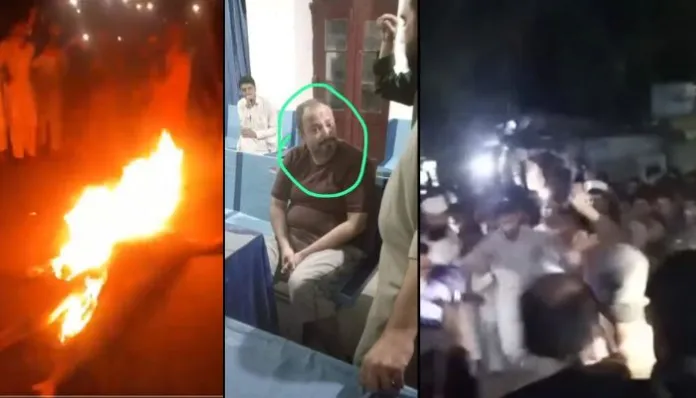
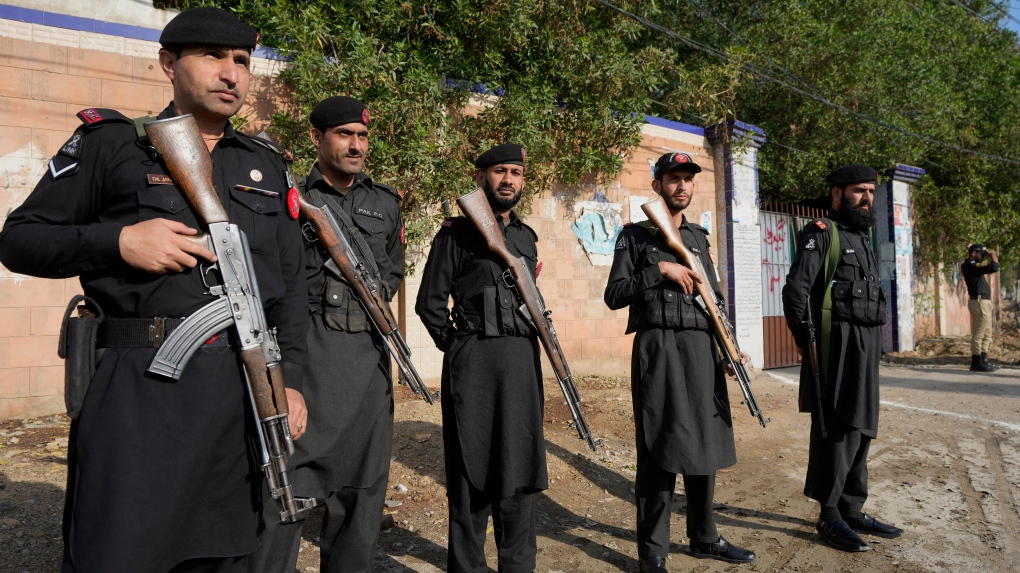


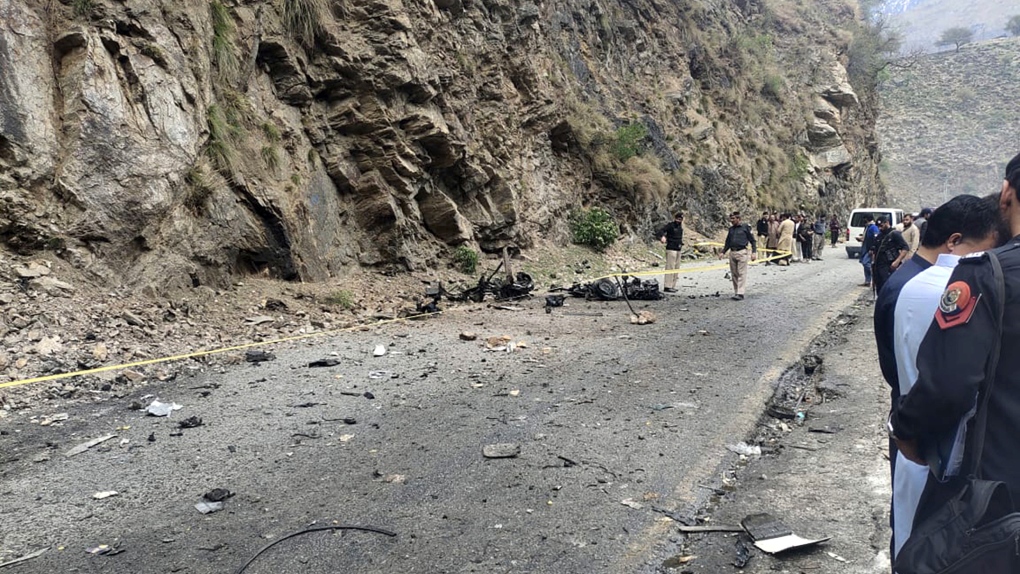


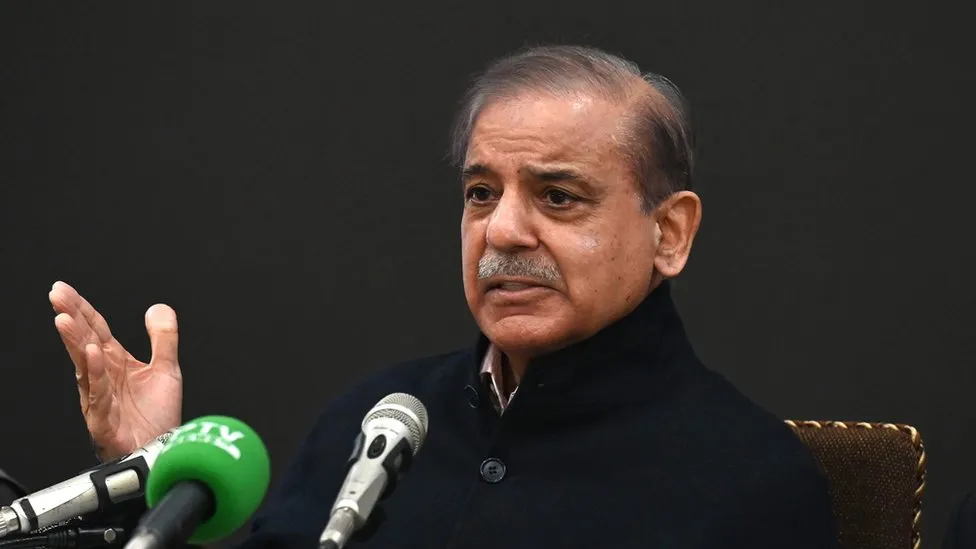
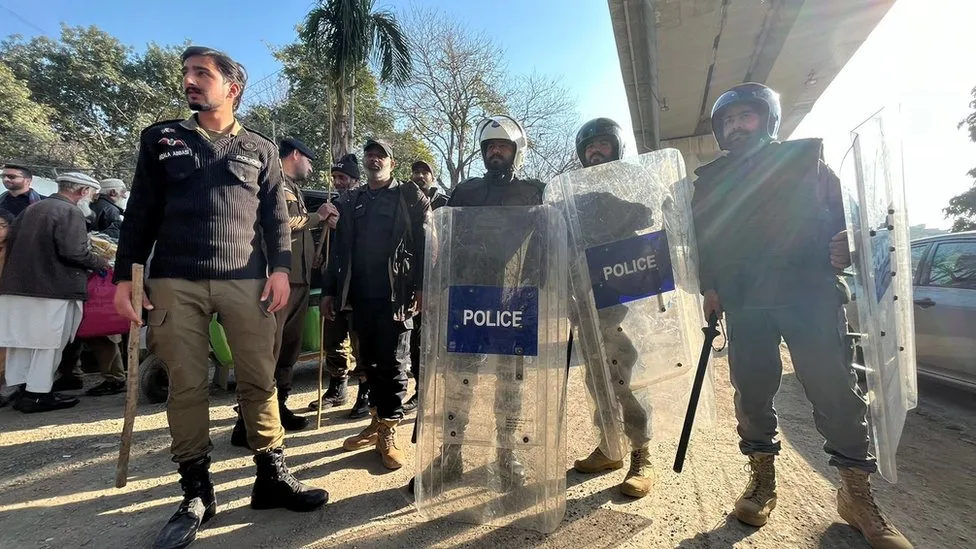
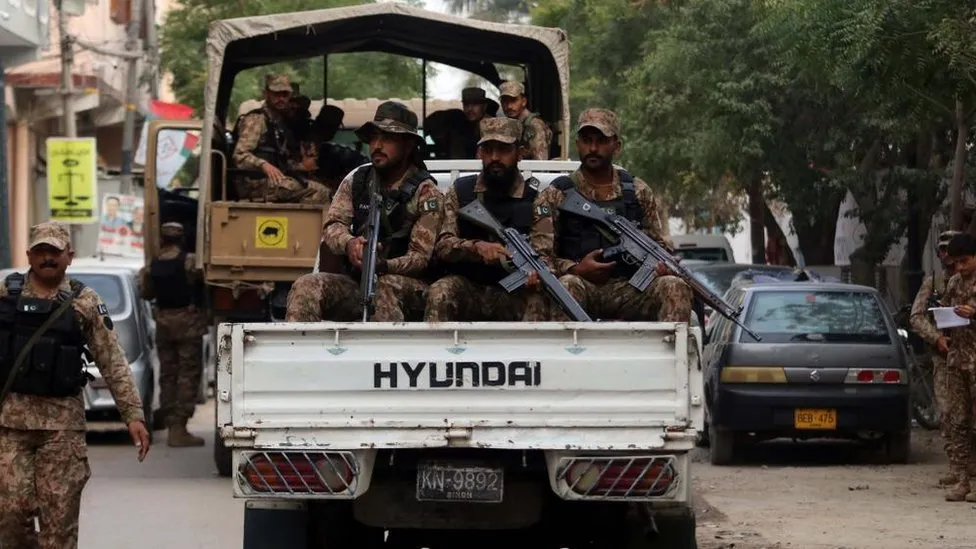
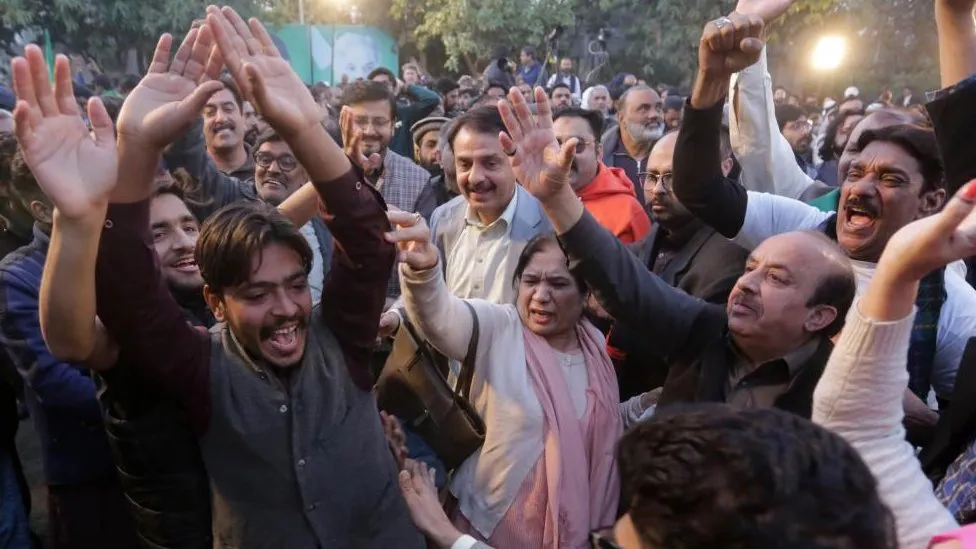
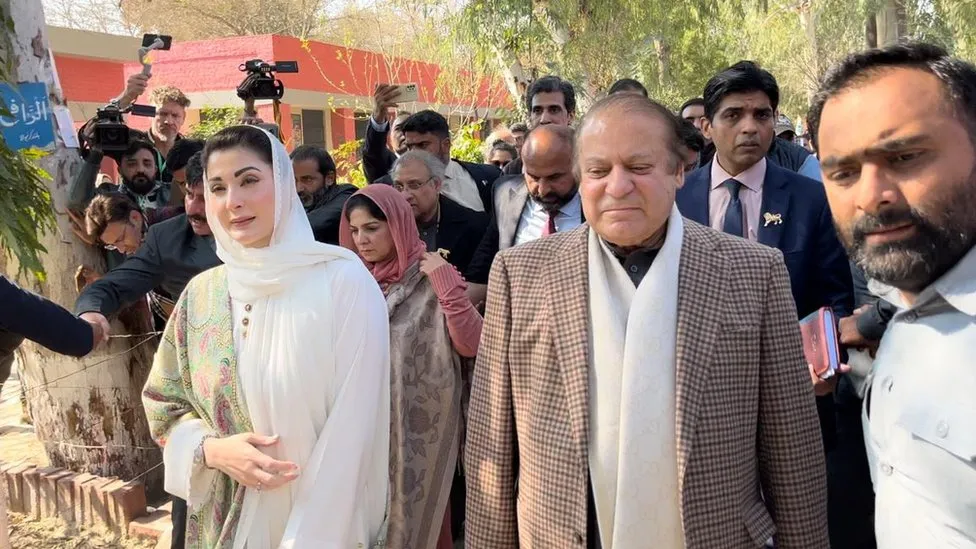
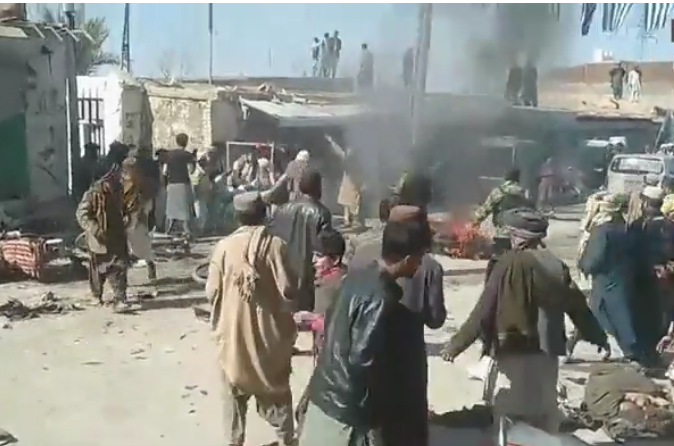

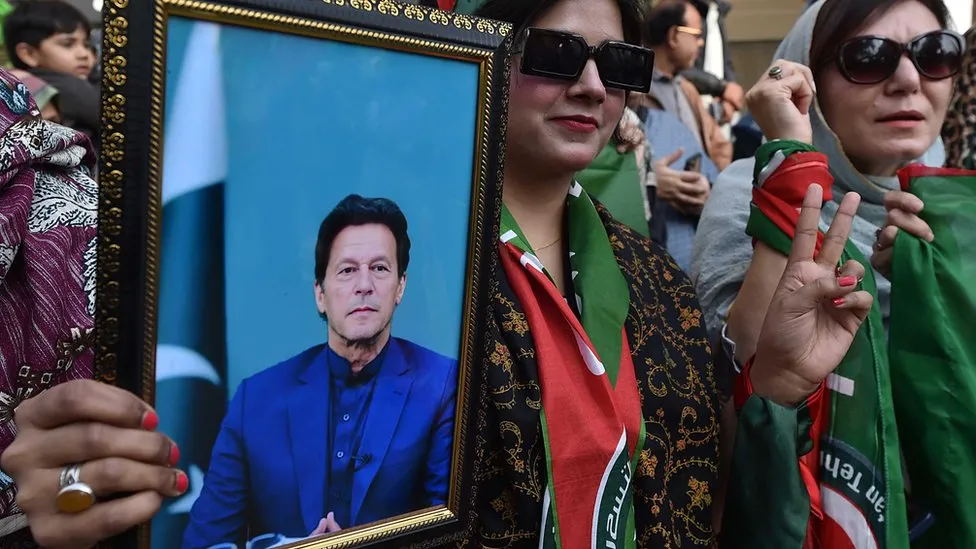

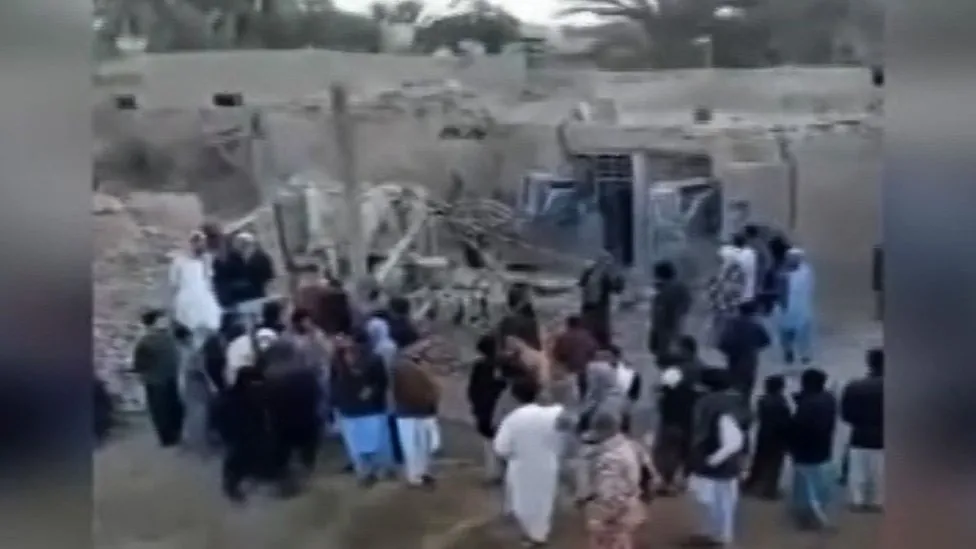

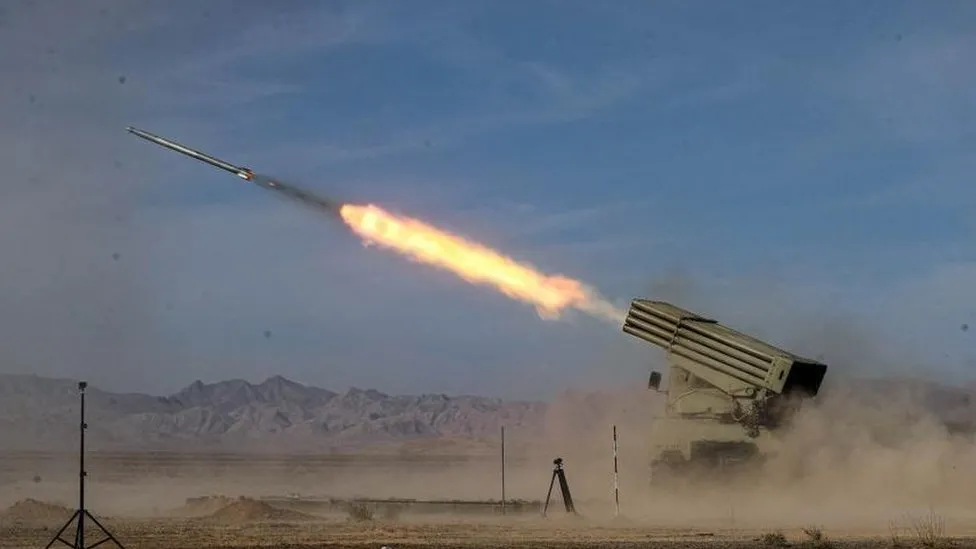
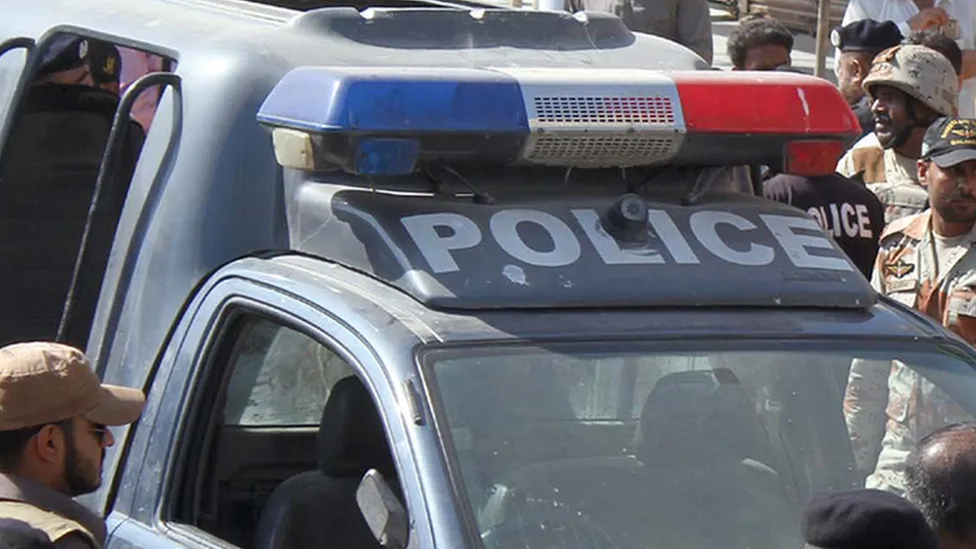
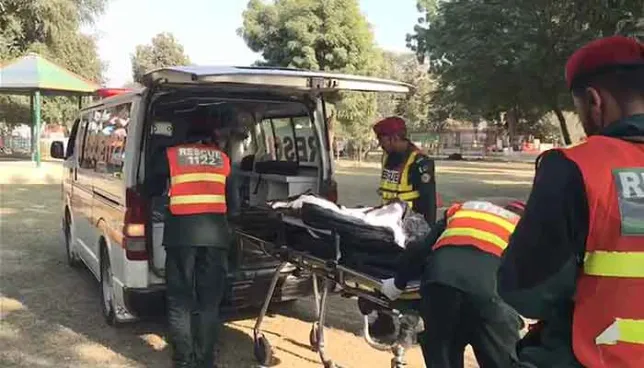
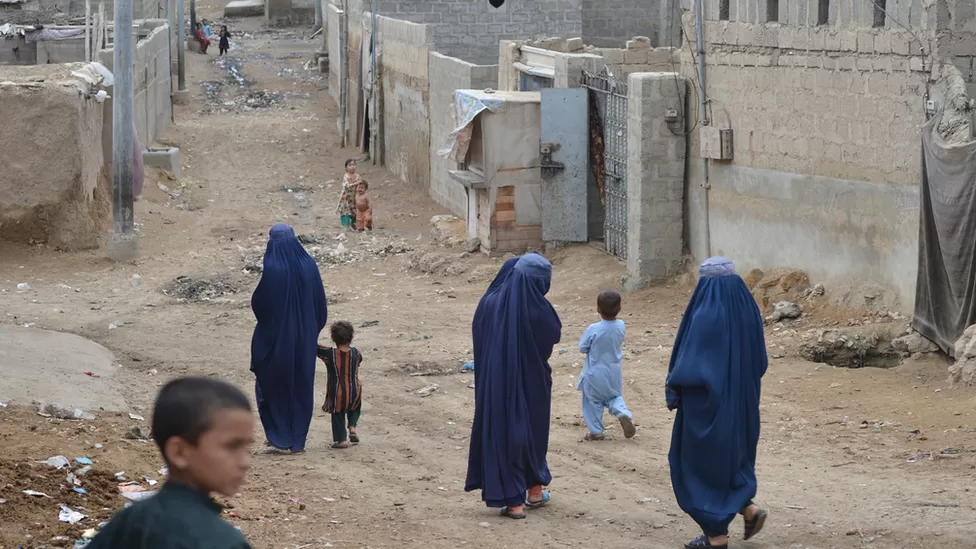
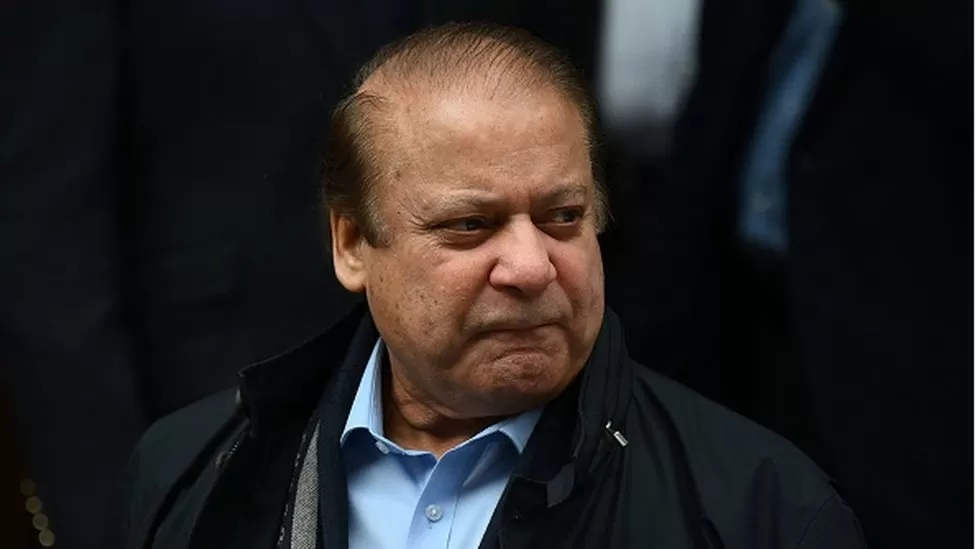

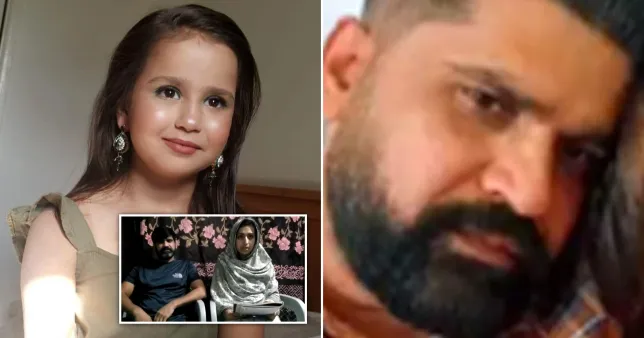
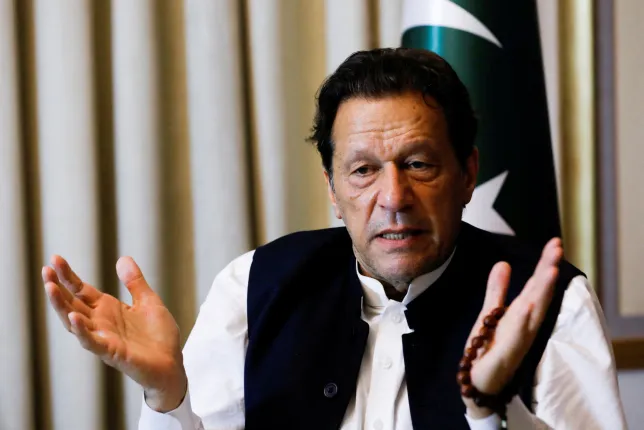
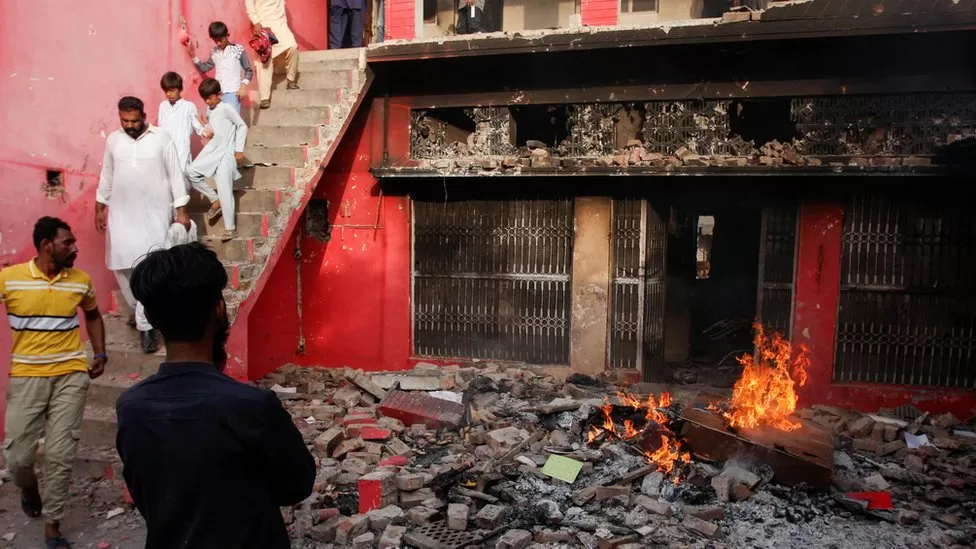
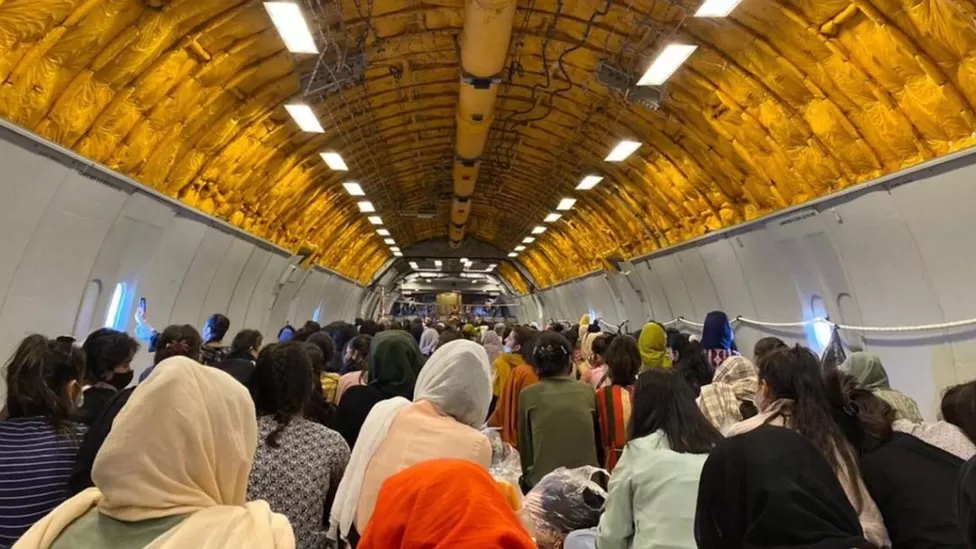
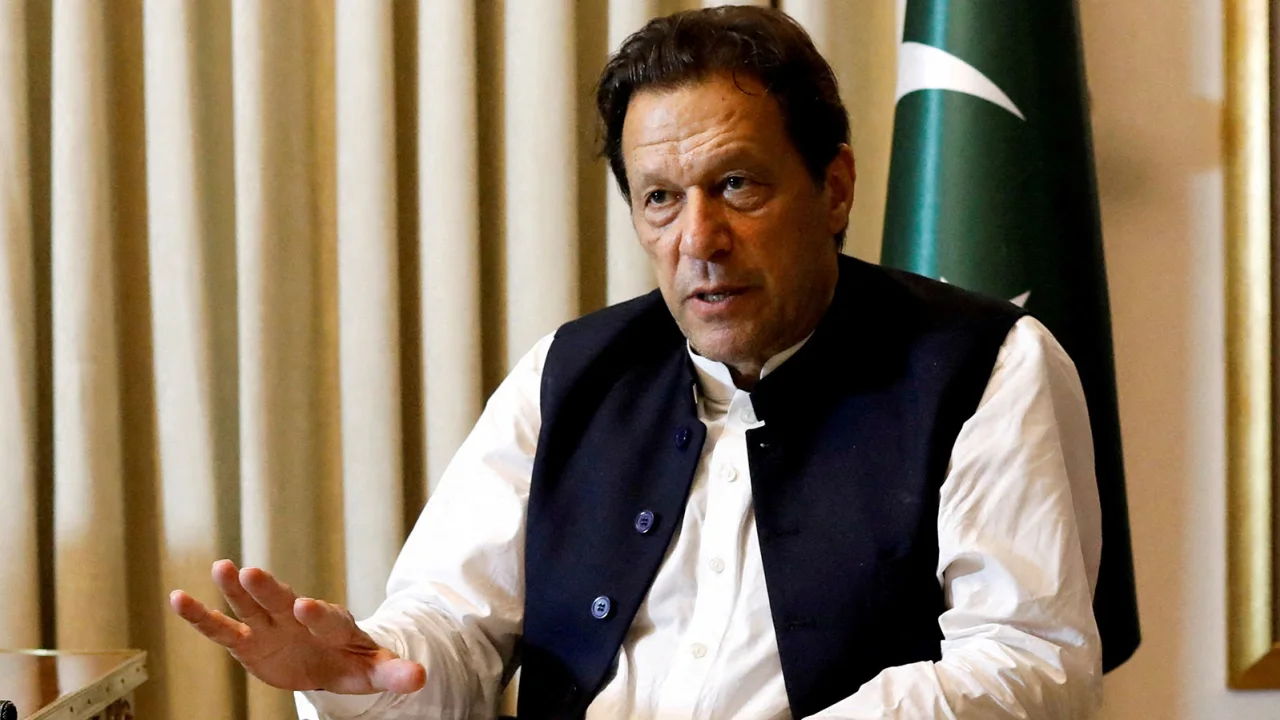

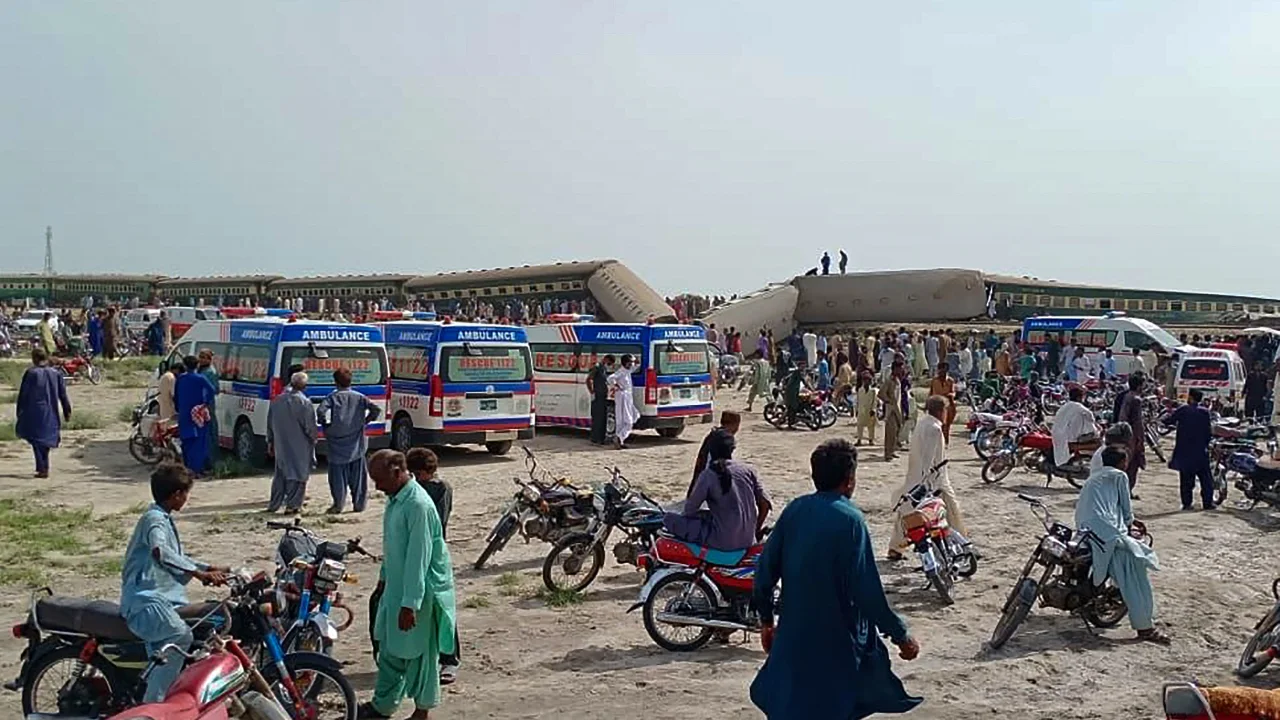
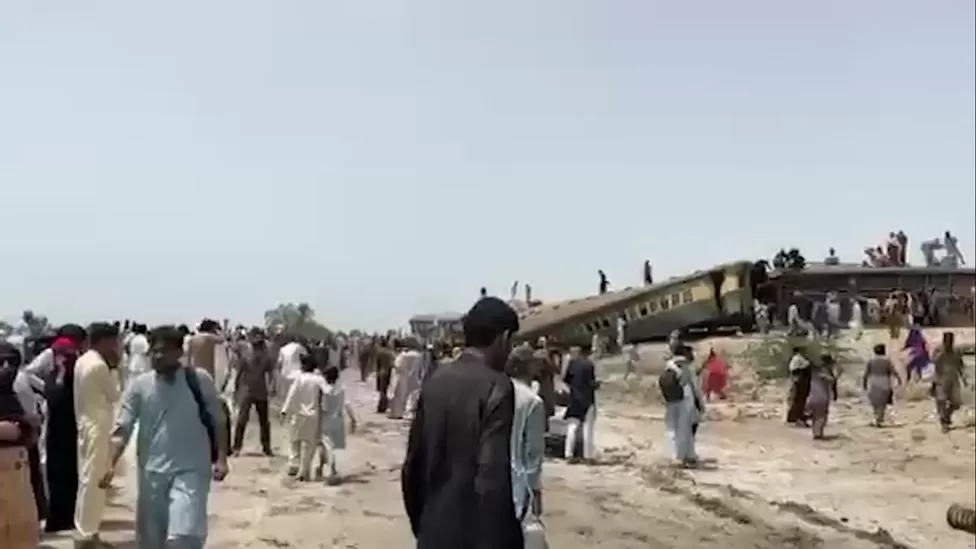

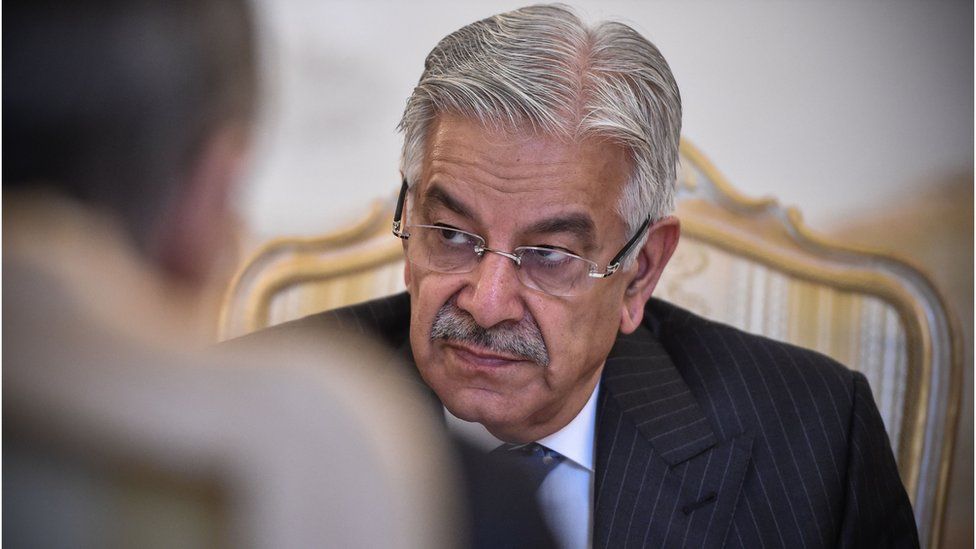
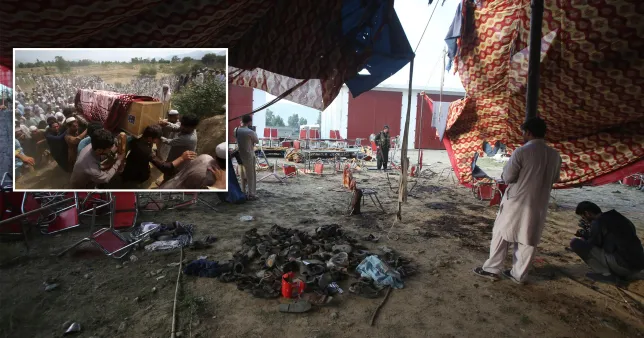
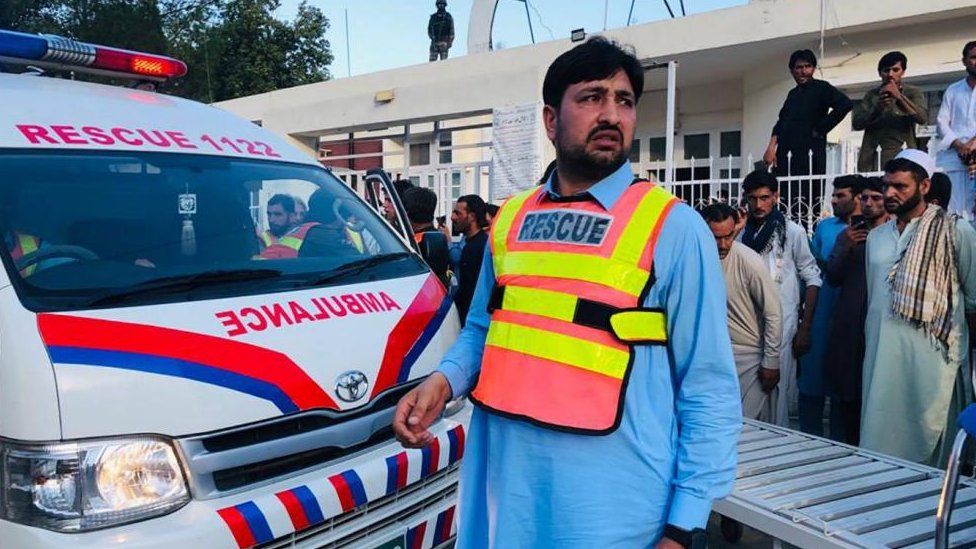
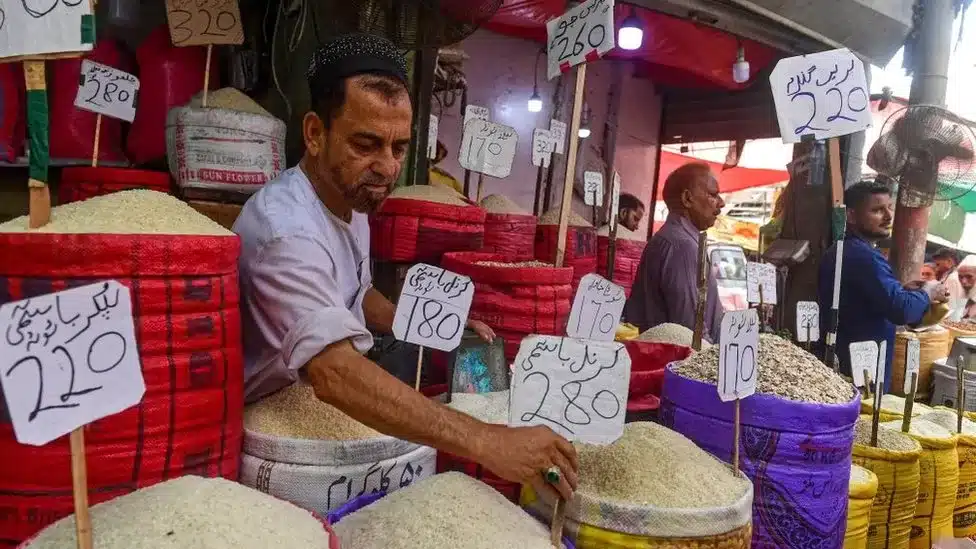
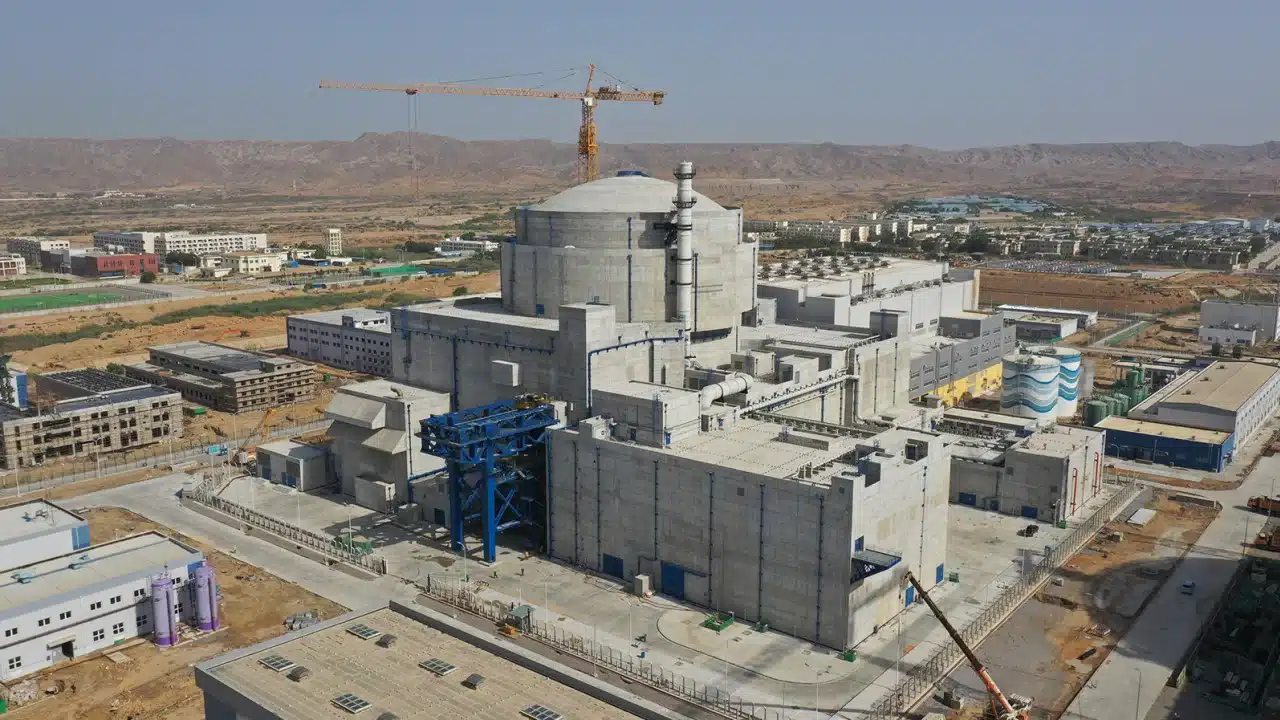
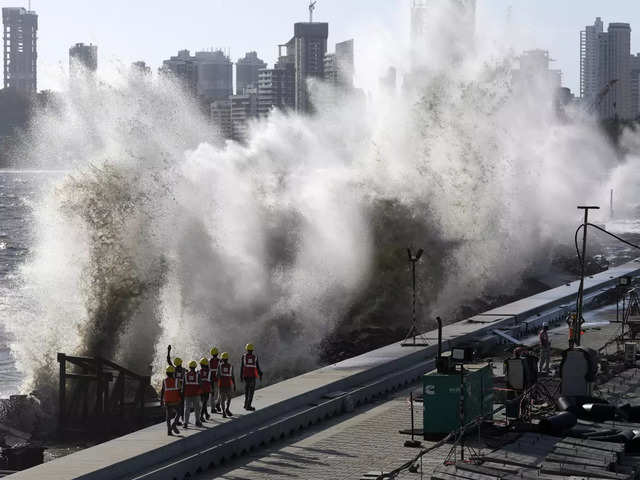
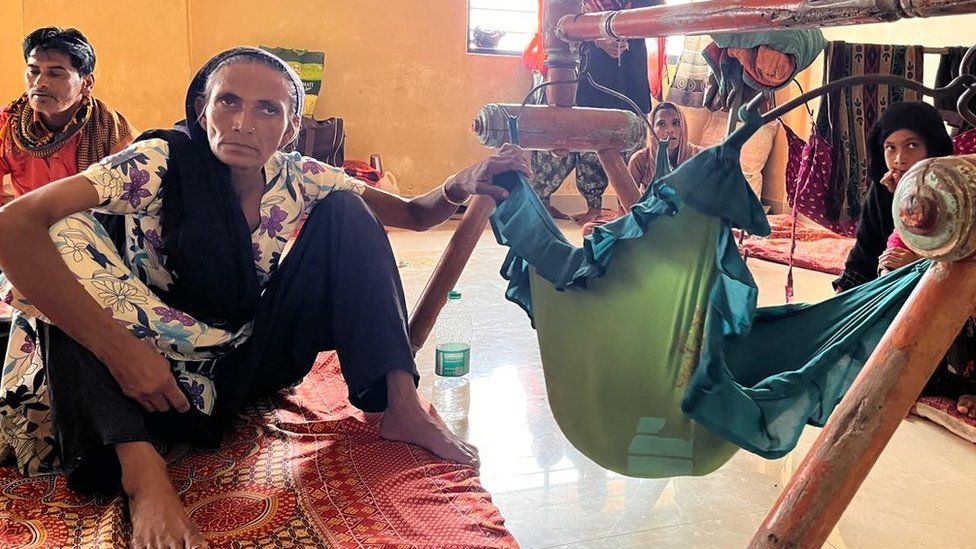
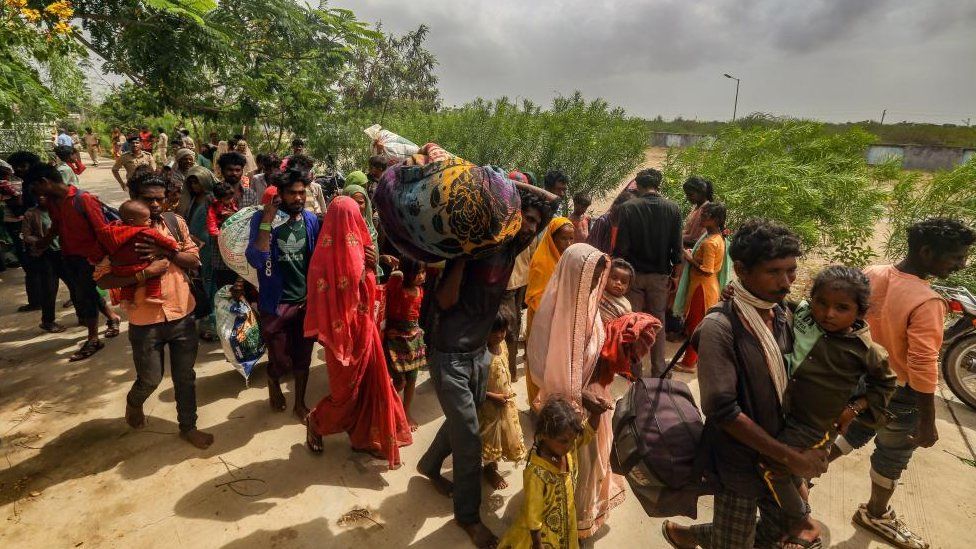


 Afghan women wait to receive food in Kabul. Millions in the country suffer from acute food insecurity. © Reuters