Tag: South Africa

  • South Africa’s government to borrow $7 billion as debt rises

    Finance Minister Tito Mboweni says government will need to borrow US$7 billion from international finance institutions as one of the measures to cover the budget hole brought about by South Africa’s response to the COVID-19 pandemic.

    Also, measures and reforms would need to be implemented to narrow public debt post the pandemic, including a restrain on spending and improving revenue collection.

    Mboweni said this when he tabled the National Treasury’s supplementary budget in the National Assembly on Wednesday.

    He announced a projected total consolidated budget spending, including debt service costs, that will exceed R2 trillion for the first time ever.

    “Our early projection is that gross national debt will be close to R4 trillion, or 81.8 percent of GDP by the end of this fiscal year. This is compared to an estimate of R3.56 trillion or 65.6 percent of GDP projected in February.

    “Without external support, these borrowings will almost entirely consume all of our annual domestic saving, leaving no scope for investment or borrowing by anyone else. For this reason, we need to access new sources of funding.

    “Government intends to borrow about US$7 billion from international finance institutions to support the pandemic response. We must make no mistake, these are still borrowings. They are not a source of revenue. They must be paid back,” he said.

    To respond to the pandemic, President Cyril Ramaphosa announced a R500 billion relief package.

    To limit the impact of the pandemic on the economy, the Reserve Bank has reduced the repurchase rate to 3.75 percent, its lowest level since 1973, providing relief to indebted households and businesses. Banking-sector regulations have been eased to encourage lending. Banks have provided R30 billion of relief to customers.

    According to the Supplementary Budget review, government’s R500 billion fiscal relief package provided significant support to households and businesses.

    “But government’s weak fiscal position going into the crisis means that it cannot afford to fully offset the effects of the pandemic,” the National Treasury said.

    Spending restraint, improved revenue collection to stabilise debt.

    The National Treasury said in its Supplementary Budget Review that narrowing the budget deficit and stabilising the debt-to-GDP ratio require continued spending restraint, economic measures to boost long-term growth and reforms to state-owned companies to reduce their reliance on public funds.

    “Additional tax revenue should come primarily from improved tax collection as enforcement is strengthened to enhance compliance, alongside other revenue measures.

    “In the long term, South Africa needs sustainable public finances to support highly redistributive spending on education, healthcare and social welfare. By increasing confidence and investment, fiscal sustainability promotes,” the National Treasury said.

    Source: allafrica.com

  • South African court cancels Jacob Zuma’s arrest warrant

    The High Court in Pietermaritzburg has cancelled an arrest warrant against South Africa’s former President Jacob Zuma after his lawyer handed in a doctor’s letter confirming his ill-health.

    The arrest warrant was issued in February after Mr Zuma failed to appear in court for a hearing.

    His legal team had said the former president had gone to Cuba for a medical procedure, but the court was not satisfied with the explanation.

    Pre-trial proceedings began on Tuesday regarding the corruption trial in which Mr Zuma is accused of receiving bribes from French arms company Thales 20 years ago.

    The hearing has now been postponed to September.

    Source: bbc.com

  • South Africa’s coronavirus cases exceed 100,000 mark

    19 infections have surpassed the 100,000 mark after 4,288 new cases were reported on Monday, June 22, 2020.

    The positive cases are now sitting at 101,590, while close to 2,000 people have lost their lives.

    Of the new 61 COVID-19 related deaths reported, 39 are from the Western Cape, 18 from the Eastern Cape, three from KwaZulu-Natal and one from Limpopo, bringing the death toll to 1 991.

    “We wish to express our condolences to the loved ones of the departed and thank the health care workers who treated the deceased,” Health Minister, Dr Zweli Mkhize, said.

    According to the department, 1,353,176 tests have been completed, 25,116 of which were done in the last 24 hours.

    While the number of infections is increasing, 53,444 people have recovered from the disease caused by SARS-CoV-2.

    The Western Cape continues to be the worst-hit province, with over 51% of infections and the highest number of deaths.

    The coastal province has 52,554 positive cases, followed by Gauteng with 22,341, Eastern Cape 16,895, KwaZulu-Natal 5,278, North West 2,315, Free State 772, Mpumalanga 596, Limpopo 582, Northern Cape 254 and three are still unknown.

    Source: allafrica.com

  • Eight arrested over notorious South African bank scandal

    Eight men have been arrested in South Africa, accused of involvement in one of the country’s most notorious corruption scandals the looting and eventual collapse of VBS, a provincial bank that served poor communities.

    The VBS scandal is alleged to have involved senior politicians, bankers and government officials in a giant web of corruption.

    The suspects were arrested in a series of co-ordinated, early morning raids and include senior officials at VBS Mutual Bank, and an auditor from the international accounting firm KPMG.

    This is a hugely significant moment for South Africa as it is alleged that bank officials conspired with prominent politicians and local municipalities to steal more than $100m.

    Much of that money belonged to poor rural families saving to buy homes. The bank collapsed in 2018.

    High-level corruption – known here in South Africa as “state capture” – is a huge problem, and prosecutors have been criticised for failing to put powerful figures on trial.

    The eight officials arrested face charges of racketeering and fraud.

    South Africans will now be watching closely to see if any implicated politicians will also be charged.

    Source: bbc.com

  • Tshegofatso Pule killing: South African police make arrest

    South African police have arrested a 31-year-old man for the murder of a woman whose stabbed body was found hanging from a tree last week, triggering a national outcry.

    Twenty-eight-year-old Tshegofatso Pule was eight months pregnant.

    The man is due to appear in court later on Wednesday.

    After her death, South African President Cyril Ramaphosa said the culture of silence around gender-based violence had to end.

    Ms Pule went missing on 4 June and four days later a member of the public found her body in the Johannesburg suburb of Roodepoort.

    She was hanging from a tree and had been stabbed through the chest.

    There was a wave of outrage in South Africa after her death and the hashtag #JusticeForTshego trended on Twitter.

    On Saturday President Ramaphosa released a statement denouncing gender-based violence.

    As many as 51% of women in South Africa had experienced violence at the hands of someone they were in a relationship with, the president’s statement said.

    “Gender-based violence thrives in a climate of silence. With our silence, by looking the other way because we believe it is a personal or family matter, we become complicit in this most insidious of crimes,” President Ramaphosa said.

    Following an outcry over a spate of femicides last year, President Ramaphosa said South Africa was one of “the most unsafe places in the world to be a woman”.

    Source: bbc.com

  • One dead after building collapse in South Africa

    One person has died and several have been injured after part of building collapsed onto a pavement in Durban, South Africa.

    Local media report that several people are still trapped inside.

    The KwaZulu-Natal Emergency Services spokesperson Robert McKenzie told SABC that paramedics were on the scene, and traffic had already started building up because it is near an intersection.

    A journalist tweeted footage from the site:

    Source: bbc.com

  • Thieves dig tunnel into South African liquor shop to steal alcohol

    Thieves in South Africa tunnelled into a liquor shop in Johannesburg, during the ban on the sale of alcohol imposed as part of the coronavirus lockdown restrictions.

    Those restrictions have now been partially lifted.

    The manager of Shoprite LiquorShop only discovered the theft on Friday, when she returned to the shop to prepare to re-open on Monday.

    The thieves used the electrical and storm-water tunnels beneath the Newtown Junction shopping centre and then broke through the solid concrete floor, leaving a hole, as one South African news site showed.

    They then returned a few times to steal whiskey, brandy, gin, cider, vodka and beer with an estimated value of 300,000 South African rand ($17,000; £14,000).

    Source: bbc.com


  • South Africa teachers’ union urges staff to defy return-to-work order

    Union says schools do not have the protective gear to keep educators and pupils safe when the economy reopens on Monday.

    South African teachers’ unions and governing associations urged their staff on Friday to defy a government order to return to school next week, saying schools did not yet have personal protective equipment (PPE) to keep educators and pupils safe.

    Africa’s most industrialized state will reopen its economy on June 1, after two months of lockdown that deepened a recession and left millions jobless. President Cyril Ramaphosa imposed the lockdown to prevent a COVID-19 epidemic on the kind of scale that has devastated Western nations.

    The country has had more than 27,000 confirmed cases but only 577 deaths from COVID-19, the respiratory disease caused by the new coronavirus.

    Basic Education Minister Angie Motshekga said last week that schools would reopen, but only for grades 7 and 12, the last years of primary and secondary school, respectively.

    “The education system … is not ready for the reopening of schools. If the PPE (protective equipment such as masks and hand sanitiser) have not been delivered by now, chances are slim that all schools will have them on Monday,” the joint statement said.

    “We therefore call on all schools … not to reopen until the non-negotiables have been delivered.”

    Motshekga has urged the teachers’ unions not to obstruct those who want to go back to school.

    On Monday, South Africa’s economy will mostly return to full capacity, as it moves to “level three” lockdown, lifting a curfew, a restriction on outdoor exercise and a ban on alcohol sales in addition to partly reopening schools.

    Many of South Africa’s government schools are in poor shape, especially in rural areas, and analysts say a quarter of them have no running water – making handwashing nearly impossible.

    South Africa’s state-run Human Rights Commission on Friday also urged the government to reconsider its decision to start opening schools until they are better prepared.

    Source: Aljazeera

  • ‘Don’t go to church, it’s a trap, you’ll die’ – Malema

    South Africa’s firebrand opposition politician Julius Malema has urged people not to fall for the “trap” of going to church, saying they will die after contracting coronavirus.

    Places of worship are set to reopen from 1 June after President Cyril Ramaphosa announced easing of lockdown restrictions to level three – but only 50 or less people will be allowed inside at any time.

    Mr Malema on Thursday said reopening of churches would expose worshippers to infections and urged religious leaders to keep them closed if they care about the well-being of their people.

    He advised members of his Economic Freedom Fighters party not to attend worship, saying “it’s a set-up”.

    He said restaurants had better hygiene practices but remained closed and so worship places should not reopen.

    Here is part of his speech at a media briefing:

    Source: bbc.com

  • South African Airways cannot afford to pay salaries

    South African Airways (SAA) has said it does not have money to pay its employees their May salaries.

    About 5,000 employees have been on unpaid leave since the beginning of May.

    The only money employees can expect to receive this month is from the unemployment insurance fund, the aviation organiser at the Solidarity trade union, Derek Mans, is quoted by Reuters news agency as saying.

    The team rescuing the struggling airline originally wanted to dismiss the 5,000 staff.

    That was stopped by the labour court but they have now been allowed to appeal that ruling, according to the Independent Online website.

    Source: bbc.com

  • South Africa declares national day of prayer amid coronavirus pandemic

    South African President Cyril Ramaphosa has declared May 31 as the National Day of Prayer to strengthen national unity in fighting COVID-19.

    “On this day, wherever we may be, I call upon you to turn your thoughts to all who have been affected by this pandemic,” the president said in a televised address, adding that the National Day of Prayer is dedicated to the remembrance of those who are working to keep South African safe, and those who are suffering and grieving.

    Ramaphosa also confirmed that the country will ease the current lockdown from level four to level three on June 1, and restrictions on congregational worship will be loosened in a carefully measured way.

    The level-three lockdown will allow 8 million people to return to work with the resumption of most sectors of the economy, following strict health protocols and social distancing rules.

    Places of worship may reopen subject to strict restrictions, Ramaphosa said, adding that social distancing will have to be observed and all worshippers and participants will have to wear face masks in line with the current regulations.

    The social distancing and hygiene measures that are in place under the lockdown will have to continue in the future, and cannot be abandoned or compromised, he noted.

    As of Tuesday afternoon, the country has reported over 23,615 COVID-19 cases and 481 deaths.

    Source: GNA

  • Snow shuts down major roads in Eastern Cape

    Dangerous driving conditions due to consistent snowfall in Eastern Cape, South Africa has forced provincial transport authorities to close parts of major roads in the province.

    Transport department spokesperson Khusela Rantjie announced on Tuesday night that the N9 between Graaff-Reinet and Middelburg, and the R61 between Cradock and the N9 would be closed off with immediate effect.

    This comes as the SA Weather Service in Port Elizabeth warned of disruptive snowfalls on high grounds of the Eastern Cape on Tuesday night.

    Rantjie said an assessment of the conditions on the R63 via Somerset East was being conducted, in order to provide an alternative route. More snow was falling near Graaff-Reinet around the Lootsberg Pass, SA Weather warned on Twitter.

    The weather service also warned that severe frost in the northern interior of the Eastern Cape could be expected on Wednesday morning.

    SA Weather Service meteorologist Lelo Kleinbooi said: “The snowfall is expected to persist until tomorrow early morning (Wednesday) over most of the high-lying areas. Thereafter, due to very cold conditions, frost can be expected over a vast area over the province’s interior for the rest of the morning. Strong winds and a chance of showers are expected along the coastal areas mainly in the morning, with the weather easing off in the afternoon.”

    Kleinbooi said the weather would continue improving from Wednesday afternoon, “with the next chance of showers and rain on Friday, mainly confined over the southern and central parts as another cold will be expected to pass south”.

    The weather authority also warned about heavy rainfall on Tuesday night, leading to flooding at the coastal resort town of Cape St Francis and Woody Cape between 19:20 to 10:00 on Tuesday.

    This should subside by Wednesday morning, Kleinbooi said.

    Source: allafrica.com

  • South African President Ramaphosa says outbreak will get worse

    The president of South Africa has warned that the country’s coronavirus outbreak is going to get much worse, while announcing that lockdown measures are to be eased.

    Cyril Ramaphosa said a third of the country’s more than 22,000 cases had been recorded in the last week.

    Despite that, the president said the current lockdown could not be sustained indefinitely.

    He announced that, from 1 June, more restrictions would be lifted.

    Mr Ramaphosa was speaking after a mining company in South Africa said 164 workers at a gold mine near Johannesburg had tested positive for Coronavirus.

    There have so far been 429 recorded Covid-19 deaths in the country.

    How will the lockdown measures be eased?

    An overnight curfew will no longer be in place, more businesses will be allowed to open and schools will re-start, the president said.

    A controversial ban on alcohol will also end with limited sales allowed for home consumption only. A ban on the sale of cigarettes will remain.

    Source: bbc.com

  • Coronavirus in South Africa: Two-day-old baby dies

    A two-day-old baby has died with coronavirus in South Africa – one of the world’s youngest victims of the virus.

    The mother had tested positive for Covid-19 and the child subsequently tested positive, the health minister said.

    The baby was born prematurely and needed help with breathing, he added.

    The country’s death toll now stands at 339, and the number of confirmed cases has climbed to 18,003.

    The latest modelling predicts that up to 40,000 people might die in South Africa over the next few months.

    “Sadly we have recorded the first neonatal mortality related to Covid-19. The baby was two days old and was born prematurely,” South Africa’s Health Minister Dr Zweli Mkhize said.

    “The baby had lung difficulties which required ventilation support immediately after birth.

    “We extend a special word of comfort to the mother of this child and salute the neonatologists, nurses and all allied and technical personnel who had the difficult task of caring for the neonate to the end,” he added.

    Asked by the BBC whether this was the youngest victim of coronavirus in Africa, the director of the Africa Centre for Disease Control (CDC) Dr John Nkengasong said: “To the best of our knowledge that is the first case that the Africa CDC is aware of.”

    Other young victims of coronavirus, include a three-day-old who died on 5 May in the UK. In that case the mother and baby tested positive for coronavirus after she gave birth.

    The baby was born with a low heart rate and the coroner listed the primary cause of death as severe hypoxic ischaemic encephalopathy, meaning the brain was starved of blood and oxygen, while maternal Covid-19 was listed as a secondary cause.

    Mr Mkhize also said that the two-year-old baby was one of 27 new deaths recorded in South Africa in the last 24 hours.

    The country has the highest number of cases of Covid-19 in Africa. However, Egypt and Algeria have had more fatalities, with 680 and 568 respectively.

    South Africa has had some of the strictest lockdown measures in the world, including a ban on cigarettes and alcohol, but is now easing some restrictions.

    Source: bbc.com

  • Coronavirus: South Africa coronavirus deaths ‘to soar’ in coming months

    At least 40,000 people could die with coronavirus in South Africa by the end of the year, scientists have warned.

    The projections were made by a group of academics and health experts advising the government.

    They assume tough lockdown restrictions will be eased from June, as President Cyril Ramaphosa has announced.

    The curbs – which were introduced in March and include a ban on tobacco and alcohol sales – have been credited with slowing the spread of the virus.

    The country of 57 million people has recorded just 17,200 cases of Covid-19 and 312 deaths linked to the disease so far. Spain, by comparison, has reported about 278,000 cases and almost 28,000 deaths for a population of only 47 million.

    But the projections by the South African Covid-19 Modelling Consortium – set up to help government planning over the outbreak – says the country could experience a sharp rise in cases and deaths over the coming months.

    The report was released during a meeting with Health Minister Dr Zweli Mkhize following criticism of the government’s perceived lack of transparency.

    The predictions are subject to change as more data becomes available, and assume the current restrictions will be relaxed from 1 June.

    Under an “optimistic scenario”, by late August the number of active cases could reach almost 100,000, before declining. The cumulative number of deaths by November would be 40,000.

    Under a “pessimistic scenario” the number of active cases could peak around at 120,000 in August, and a total of 45,000 would die by November.

    The report also suggests there could be 1.2 million Covid-19 cases in total, and intensive care units could be overwhelmed within weeks.

    Source: bbc.com

  • No repatriation flight for Ghanaians in South Africa Ambassador

    The High Commission of Ghana in South Africa has warned Ghanaian nationals in South Africa to ignore some supposed reports that there is a repatriation flight to transport Ghanaian citizens from South Africa to Ghana amidst Coronavirus pandemic.

    According to the mission, there are audio messages circulating on WhatsApp and other social media that the government of Ghana has served noticed to repatriate Ghanaian citizens from South Africa to Ghana.

    In an exclusive interview with thepressradio.com the Ghana High Commissioner to South Africa, Mr. George Ayisi-Boateng stated that the said reports are hoax and should not be tolerated.

    “It has come to the attention of the mission that there is a fake audio message going round on WhatsApp that the Government of Ghana has arranged flight to repatriate Ghanaians citizens from South Africa to Ghana due to coronavirus pandemic but I want to state in categorically that there is no any repatriation arrangement for Ghanaian nationals in South Africa.” He said.

    “The Mission wishes to reiterate that the said information is palpably false and without merit,” Ayisi Boateng added.

    He indicated that South Africa and Ghana borders still remain closed.

    Source: thepressradio.com

  • South Africa health minister fights Covid-19 lockdown criticism

    South African Health Minister Zweli Mkhize on Tuesday fought off criticism against the Covid-19 lockdown, saying the measure has effectively stalled the exponential spread of the coronavirus.

    With the lockdown, South Africa’s healthcare sector has won time to prepare for the rising wave of infections and deaths, Mr Mkhize said.

    “Had we done nothing, estimates show that by this point, as many as 80,000 South Africans would have been infected, and nearly 2,000 of our brothers and sisters would have lost their lives,” the minister said, citing scientific models and estimates.

    CRITICISM

    He was responding to rising criticism from the opposition that some lockdown restrictions are too harsh, nonsensical and not based on scientific principles, and thus should be brought to an end.

    The criticism comes at a time when the Western Cape province accounts for 60 percent of the national cumulative cases, with cases increasing exponentially on a daily basis as compared to the rest of the country, Mr Mkhize said in a statement.

    The Western Cape province is governed by the opposition Democratic Alliance (DA), which is spearheading the campaign to halt the lockdown.

    As of Tuesday, South Africa has recorded 17,200 confirmed Coronavirus cases, up by 767 from Monday, and 312 deaths, an increase of 26, said Mr Mkhize.

    EPICENTRE

    The Western Cape remains the epicentre of the Covid-19 pandemic with 10,639 cases and 187 deaths.

    “Our mortality rate of 1.8 percent remains well below the global average, which is currently 6.6 percent, and our recovery rate is 42.4 percent, which is above the global average,” he said.

    “Had we not traded freedom for time, hospitals would now be overwhelmed, and our concern would have been drawn away from saving lives by the need to excavate mass graves for those we would have lost,” Mr Mkhize said.

    WARNING

    He warned against ending the lockdown abruptly, saying if people are allowed to flood back to the way life was before, infections would surge, effectively undoing everything that has been sacrificed thus far.

    In the weeks to come, different areas will experience different levels of lockdown, according to Mr Mkhize.

    This district-based approach is seen as the most practical and implementable measure to balance the epidemiology of the virus with the economic risks of a continuous hard lockdown, he said.

    Districts with low transmissions will be put on a vigilance programme to maintain low levels of the virus infection while those with high transmissions will be classified as hotspots where restrictions are necessary and strong teams of medical experts will be deployed, the health minister said.

    Source: theeastafrica.co.ke

  • Surnames could dictate who buys alcohol in South Africa

    Government draft plans for relaxing lockdown restrictions in South Africa would allow the alcohol trade to operate from Monday to Wednesday between 08:00 and 12:00.

    However, the Liquor Traders’ Association of South Africa, expecting a boom in demand, has expressed concerns that it will be difficult to maintain social distancing in stores with such a limited schedule.

    It suggests extending opening hours from Monday to Saturday and also a system based on customers’ surnames, with the first letter dictating on which days of the week they are allowed to buy alcohol.

    Under its recommendations, anyone whose surname starts with a letter between A and M could buy alcohol on Mondays and Wednesdays and people whose surnames begin with letters N to Z could do so on Tuesdays and Thursdays.

    There would be no restrictions on Fridays and Saturdays. All customers would have to show identification to prove they meet the criteria.

    But no decision has been made yet.

    Cheers!

    Source: bbc.com

  • South Africa to cautiously ease coronavirus lockdown

    South Africa’s President Cyril Ramaphosa has said in the coming days the lockdown imposed because of the coronavirus pandemic will be eased slightly, with more businesses and shops allowed to operate and fewer restrictions on exercise.

    The country has been the worst hit in Africa with about 12,000 confirmed cases and 219 deaths.

    In a live broadcast on Wednesday, Mr Ramaphosa admitted his government had made mistakes but said the country was in uncharted territory.

    He said had it not been for the almost eight-week lockdown, at least 80,000 people could have contracted the virus.

    Urging caution, he said if the restrictions were lifted too abruptly there would be a risk of a rapid and unmanageable surge in infections.

    Source: bbc.com

  • South Africa robbers demand access to alcohol first

    A hotel manager in South Africa’s North West province has told local eNCA news station that alcohol was the “main priority” of a group of robbers who raided his business at gunpoint.

    “First of all they requested access to the alcohol… and then they wanted access to the rooms to see what valuable items were in the rooms,” Willie Kruger said.

    Alcohol sales are still banned under the lockdown in South Africa, which has been partially relaxed.

    CCTV footage broadcast by eNCA shows the criminals filling up a large bin with the contents of a fridge and then dragging it away.

    The robbery took place just after the night-time curfew began, the TV station reports.

    Source: bbc.com

  • South Africa health workers ‘like soldiers who go to war’

    Two medics in South Africa, a nurse and a doctor, have died after contracting coronavirus, health minister Dr Zweli Mkhize has said.

    He added that overall 511 health workers have tested positive for the virus with 26 receiving treatment in hospital.

    More than 7,500 people have tested positive for conronavirus in South Africa and 148 people have died, the government says.

    He paid tribute to the country’s medics comparing them to “soldiers who go to war”.

    Dr Mkhize added that the role of the lockdown, which is gradually being lifted, was to help the health service prepare for future cases.

    President Cyril Ramaphosa has warned that a spike of infections is now expected

    Source: bbc.com

  • Cuban doctors ruffle feathers in South Africa

    The arrival of more than 200 Cuban medics in South Africa to help battle coronavirus has received mixed reactions, with some of the sharpest criticism coming from the South African Medical Association (Sama).

    The organisation, which represents about 16,000 health workers, says it welcomes extra hands but says unemployed local medics should have been given priority.

    “There are many unemployed doctors in South Africa and many community service medical officers have still not been placed. In addition, many private practitioners have indicated their willingness to assist,” IOL news quotes Sama head Angelique Coetzee as saying.

    There have also been raised eyebrows about a Business Live article saying it is going to cost taxpayers 440m rand ($24m; £19m) to have the Cubans in the country for a year.

    The team of Cuban medics include family physicians, epidemiologists, biotechnology experts and health-care technology engineers who are being deployed across the country.

    Health Minister Zweli Mkhize has sought to play down the concerns, saying no jobs would be threatened.

    “We welcome them and we want to assure everyone that they will not take anyone’s posts and they will be working alongside South Africans. There should not be anyone that feels that they are a threat to [local employment],” Mr Mkhize said.

    He added that the Cuban medics were particularly experienced in community medicine.

    Cuba is also believed to be one of the leaders in using biotechnology in disease prevention and has expertise in handling infectious diseases.

    South African officials say they requested Cuba’s help to try and prevent an escalation of coronavirus infections as has been seen in Europe and the US.

    South Africa currently has nearly 5,000 confirmed cases, the highest in Africa – with 93 deaths – and its health system, particularly state hospitals, is already overstretched.

    Cuba and South Africa have close ties and the Caribbean island was instrumental in the fight against white-minority rule in South Africa, which did not end until 1994 when anti-apartheid leader Nelson Mandela was elected president.

    Since then Cuban doctors been working in some of the most rural parts of South Africa, including at the height of the HIV pandemic.

    Source: bbc.com

  • Cuban doctors land in South Africa to help with COVID-19 treatment

    A team of Cuban medics has arrived in South Africa to help the country limit the spread of coronavirus, South Africa’s department of health has tweeted.

    The Cuban doctors are to be deployed to different provinces by South Africa’s Department of Health, Cuba’s ambassador Rodolfo Benítez Verson has said.

    The two countries have close ties as Cuba was instrumental in the fight against white-minority rule in South Africa, which did not end until 1994 when anti-apartheid leader Nelson Mandela was elected president.

    South Africa, with more than 4,500 Covid-19 cases, is one of the worst-hit African countries, but it appears to have been successful in slowing the spread of the virus.

    Source: bbc.com

  • South African minister pleads guilty to breaking lockdown

    South Africa’s Communication Minister Stella Ndabeni has admitted to failing to follow the lockdown rules and has paid a 1,000 rand ($53;£42) fine as ordered by the senior magistrate in the Tshwane district court.

    The National Prosecuting Authority’s Phindi Mjonondwane said the minister’s court case proves that all citizens are equal and no-one should break the law.

    The minister was pictured at a former colleague’s house having lunch during an ongoing lockdown aimed at reducing the spread of coronavirus.

    The minister was summoned by President Cyril Ramaphosa and was placed on two months special leave.

    She later apologised publicly for undermining lockdown rules.

    Source: bbc.com

  • South African man arrested ‘smuggling girlfriend’ in car boot

    Police in South Africa have arrested a man “smuggling his girlfriend,” in the back of a car amidst a nationwide lockdown to curb the spread of Covid-19, according to an official from the province of Guateng.

    Faith Mazibuko tweeted that the woman was found in the car boot during a security check at a roadblock in the province on Friday.

    She added that the driver, who did not have a permit, was heading to the eastern Mpumalanga province.

    She tweeted that the woman was arrested for “consenting to be smuggled.”

    The couple have not commented on the allegations.

    South Africa imposed a lockdown on 24 March for three weeks but the authorities extended it until the end of April.

    Travel across the country is restricted to only those listed as providing essential services.

    The country has more than 3,000 confirmed cases of Covid-19, the highest in Africa.

    Source: bbc.com

  • South Africa: ‘Our children are dying, but President Ramaphosa doesn’t care’

    In our series of letters from African journalists, South African filmmaker and writer Serusha Govender reports on the growing anger fuelled by a spate of child murders.

    Passing by Cape Town’s Parliament Square earlier this month, I caught sight of Fadiel Adams camped outside on the final days of a hunger strike.

    This was a father making a desperate stand against what he felt was the government’s lack of interest in combating the recent spate of child murders in the Western Cape province.

    The child murder rate has been high for some time in South Africa, but since the beginning of the year, several killings close to Cape Town have drawn nationwide fury and calls for immediate action.

    The murder of seven-year-old Tazne van Wyk in early February was the spark.

    Tazne went missing on 7 February. Her body was found two weeks later after her suspected murderer led police to the storm drain where he said he had disposed of it.

    The suspect, a violent multiple offender had been released on parole. He was in prison for the kidnapping and murder of another child.

    Mr Adams ended his hunger strike after six days, once he had handed a memorandum to President Cyril Ramaphosa’s secretary, but his campaign is far from over.

    ‘We are dying here’

    He is not convinced that the president will do anything. He accused the president of not caring, adding that “this government has failed all of us”.

    “We are dying here, our children are dying,” said Mr Adams.

    “If Ramaphosa really cared he would have made an immediate directive… I don’t condone violence or burning things, but we won’t stop raising this [issue]. If we have to shut down this whole city to make our point next time then we will.”

    President Ramaphosa talking to people

    After Tazne’s body was found, Mr Ramaphosa visited her community in Elsies River and apologised.

    He said that the accused should never have been given parole, adding that he knew how the community felt and that urgent action would be taken.

    His words were reminiscent of his speech to protesting crowds outside parliament after a 19-year-old student, Uyinene Mrwetyana, was murdered by a postal worker last year.

    This triggered nationwide protests against the high levels of violence against women and children, which in turn prompted the president to promise immediate targeted action.

    Then, too, Mr Ramaphosa told the crowds that this should never have happened, that he would take action, and that he knew how they felt.

    But following Tazne’s killing, his audience had had enough of platitudes, with many saying that they wanted less smooth-talking and more real action being taken to keep their children safe.

    And they are right to be concerned as Cape Town does seem to have a high number of child murders, and it appears to be getting worse.

    Crime statistics released last year showed that four children are murdered every week in the Western Cape Province alone and, overall, child murders have increased across the country by almost 30% over a decade.

    On the same day that Tazne went missing, seven-year-old Reagan Gertse disappeared. His body was discovered on a farm in the Western Cape a week later. The man accused of killing Reagan was also a violent criminal released on parole.

    Serusha Govender

    And there have been other cases of people on parole committing murder.

    When the president promises to fix the problem by pouring more money into a criminal justice system that is releasing violent criminals into communities without any warning, the government should not be too surprised when those communities lose faith and lash out.

    When the man accused of killing Tazne appeared in court, community members revolted. They attempted to storm the court building and, when that failed, they torched nearby buildings they said were frequented by neighbourhood criminals, including the accused.

    Community Activist Mr Adams said that no-one wanted to mete out vigilante justice.

    “To be honest their reaction was mild in comparison to the violence this community has already faced… How else did you expect them to express their anger and frustration at what’s been happening?” he asked.

    Source: bbc.com


  • Coronavirus: SA has highest number of cases in Africa after recording 23 new cases in 1 day

    South Africa has recorded 23 new cases of coronavirus in one day, the highest increase of any 24-hour period since the country confirmed its first case.

    Of the new cases, four are children aged under five years.

    The country now has 85 confirmed cases of coronavirus – the highest in sub-Saharan Africa.

    South Africa’s health ministry said eight of the new cases involved local transmissions, the first confirmation of internal transmissions after erroneously reporting a case on 12 March.

    Health Minister Zweli Mkhize admitted there had been a “debate with clinicians, epidemiologists, virologists on when we, as government must release results to the public.” Local media speculate that this debate was why the announcement wasn’t made until Tuesday evening.

    In the same statement, Mr Mkhize also confirmed all 100 South Africans who were repatriated from Wuhan in China have been tested and declared virus-free.

    The group will, however, remain in quarantine at a hotel in Limpopo province.

    South Africa confirmed its first case on 5 March, a man who arrived from Italy with his wife who later tested positive as well on 8 March.

    The country has been reporting additional cases since then, but the highest spike seen so far was reported on Tuesday night.

    President Cyril Ramaphosa last week declared a national disaster and announced a ban on travel from the countries worst hit by the virus.

    Source: www.graphic.com.gh

  • Limpopo residents oppose coronavirus isolation centre

    South Africans living in the northern province of Limpopo have been left outraged by an announcement that citizens being repatriated from China’s Wuan city – the epicentre of coronavirus outbreak – will be quarantined in a resort there from Friday.

    The authorities have explained that all 122 people have been tested and do not have the virus.

    They also said that the resort was selected due to its proximity to the airport.

    But Limpopo residents insist the government is exposing them to the virus, and say their region’s health system cannot handle a potential outbreak.

    Using the hashtag #LimpopoIsNotADumpingSite residents are suggesting a military base should have been used as a quarantine facility instead.

    “Why Limpopo?Take everyone to their respective provinces,” Musa Kgasi tweeted

    .”Our clinics run out of flu medication every month. They run out of testing kits. They run out of all types of Pills. [Six] villages share one clinic. 10 villages share [one] hospitals. Stop trying to be a hero. Whatever they paid you, is not worth our lives,”

    Source: bbc.com

  • South Africa King Dalindyebo arrested after ‘axe rampage’

    A South African king, a nephew of the late Nelson Mandela, has been arrested after allegedly going on the rampage with an axe in the palace.

    Buyelekhaya Dalindyebo, freed from jail on parole in December, broke into the Thembu royal palace in the early hours.

    Witnesses said he was searching for his son, the regent, who was appointed the acting monarch while he was in prison.

    The regent escaped through a window, but his wife has been injured and taken to hospital, a royal spokesman said.

    King Dalindyebo was sentenced to 12 years in jail for kidnapping, assault and arson, but only served four years after the president granted some prisoners early parole last year.

    He was the first monarch to be convicted of a crime in South Africa since white-minority rule ended in 1994.

    The 56-year-old comes from the Thembu clan, to which Mr Mandela, South Africa’s first black president, belonged.

    South Africa has seven officially recognised monarchs representing different ethnic groups and clans.

    People were running for their lives’

    Since King Dalindyebo’s release from jail, there have been tensions in the Thembu royal family and he has refused to see his son, acting King Azenathi Zanelizwe Dalindyebo.

    Last month, the royal household decided that Azenathi should continue on as regent for at least another year, South Africa’s City Press paper reported.

    King Buyelekhaya Dalindyebo flanked by chiefs in 2013

    Royal spokesman Prince Siganyeko Dalindyebo said the king had broken into the palace – Bumbane Great Place, just outside the town of Mthatha in Eastern Cape Province – at around 03:00 local time (01:00 GMT) on Friday morning.

    “He was carrying weapons such as [an] axe, a machete and also a crowbar. He managed to break a window from the sitting room of the main house,” he told public broadcaster SABC.

    “As he was moving up the stairs looking for the acting king, some people managed to distract him and then the acting king managed to jump out of a window, running for safety.”

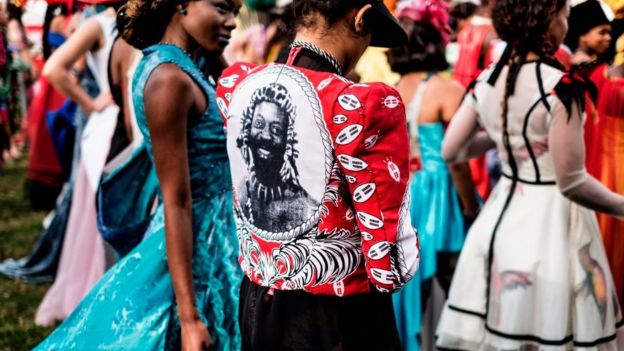
    A model presents a creation by a local designer depicting a portrait of Zulu King Goodwill Zwelithini, during a fashion show at the 2017 Durban July horse race

    Other people were also running for their lives, the prince said.

    “He has wreaked havoc in the palace… he started ransacking the king’s room, all confidential documents – he threw them around.”

    Video footage shows the troubled monarch later standing outside his palace, calmly smoking a cigarette, and daring the police to arrest him, which they eventually did.

    The king was jailed in 2015 after being convicted of assaulting his subjects during a “reign of terror” in the 1990s.

    He had kidnapped a woman and her six children, set their home on fire and beaten up four youths, one of whom died, because one of their relatives had failed to present himself before the king’s traditional court.

    Buyelekhaya Dalindyebo is, to put it mildly, a maverick royal.

    If his behaviour has often proved extreme, it nonetheless poses some fundamental questions about the role of traditional leaders in modern, post-apartheid South Africa: their entitlements, public funding, the feudal nature of their control and, above all in this case, the extent to which their royal titles grant them impunity.

    As well as the formally recognised monarchs, South Africa has thousands of other traditional leaders – headmen and chiefs – who continue to enjoy widespread respect, particularly in rural areas, and who are often called to mediate in civil disputes within their clans.

    During the decades of racial apartheid, the white-minority government sought to strengthen the role of royal families, seeking to play them off against the broader and much more threatening liberation movement led by the African National Congress (ANC).

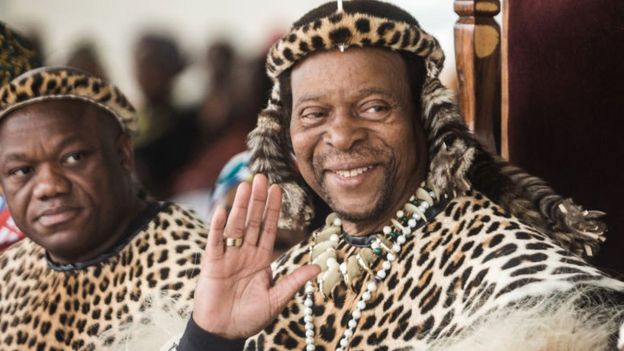
    Zulu King Goodwill Zwelithini waving in 2019

    But in recent years – and after multiple royal scandals – some South Africans have begun to question the sustainability of the traditional system, not least when it comes to issues like the semi-feudal control that Zulu King Goodwill Zwelithini still enjoys over vast areas of land that he rents out to his subjects.

    King Zwelithini – whose outspoken views on immigrants and sex education along with his lavish lifestyle have often been criticised – has, like King Dalindyebo, repeatedly challenged the authority of South Africa’s democratic government.

    The country’s royal families face no immediate challenge to their authority, and many South Africans may shrug off King Dalindyebo as an embarrassing outlier.

    But after this latest incident, plenty of people will be watching closely to see how fairly, or leniently, he will be treated by prosecutors.

    Source: www.bbc.com

  • South Africa to repatriate citizens from virus epicentre

    South Africa’s President Cyril Ramaphosa has ordered the repatriation of some 132 South Africans living in China’s Wuhan city, the epicentre of the coronavirus outbreak.

    The decision was announced on Thursday following a cabinet meeting and after requests from families of South Africans living in the city, the president’s office said.

    No timeframe for the repatriation was given but the government said the 132 citizens – out of a total of 199 South Africans living there – have put in requests to be returned home.

    None of them has been diagnosed with the virus or exhibited any symptom of the disease, but they will be quarantined for 21 days upon arrival in South Africa as a “precautionary measure”, the president’s office announced in a statement.

    “Government has been in constant communication with the families of all affected individuals and relevant departments have made the necessary arrangements to receive them,” it added.

    Health and military personnel will be deployed to provide assistance during the repatriation and quarantine processes.

    The country’s national carrier, South African Airlines, had already cancelled direct flights to China.

    Nigeria on Thursday became the first sub-Saharan country to report a confirmed case of coronavirus. The patient is an Italian citizen who works in Nigeria and flew into the commercial capital Lagos from Milan on 25 February.

    Source: BBC

  • ‘They removed my uterus and I had no idea for 11 years’

    A woman in South Africa has told the BBC how she was sterilised without her consent after she gave birth at the age of 17, and only learned about it 11 years later when she tried to have another child.

    Bongekile Msibi was among 48 women sterilised without consent at state hospitals, the Commission for Gender Equality found.

    Despite being a statutory body, the commission said its inquiry was hampered by the “disappearance” of patients’ files, and its investigators had received a “hostile reception” from hospital staff.

    The commission said its investigators visited 15 hospitals after civil rights groups brought the cases, some dating back to 2011, to its attention.

    South Africa’s health department has not yet given a detailed response to the report, but said its minister, Zweli Mkhize, had requested a meeting with the commission to discuss it.

    Ms Msibi recalled her ordeal to the BBC’s Clare Spencer:

    I woke up after giving birth, looked down and asked: “Why do I have a huge bandage on my stomach?”

    I did not mind. I had just given birth to my baby daughter. She was a big baby and I had been anaesthetised and gone through a Caesarean section.

    Getty Images

    How women are sterilised in SA

    • Hysterectomy:Removal of womb or part of it
    • Tubal ligation:Fallopian tubes blocked or sealed

    Source: South Africa’s Commission for Gender EqualityPresentational white space

    I left hospital five days after giving birth, with a healthy baby daughter and a huge scar across my stomach.

    I did not find out what had really happened for another 11 years.

    Things unravelled when I was trying to conceive again.

    I had been taking the contraceptive pill for that whole time since I had given birth and so it was not strange that I had not had my period.

    But I got engaged and wanted to have another baby so went to the doctor.

    He examined me, sat me down, gave me a glass of water and told me I had no uterus.

    ‘It is very cruel’

    I was devastated and confused. It did not make sense because I was already a mother.

    I worked out my uterus must have been removed and the only time it could have happened was after I had given birth.

    Bongekile MsibiPresentational white space

    It is very cruel what they did to me.

    I went to the press, then the health ministry and eventually ended up back at the hospital where I gave birth with the doctor who said he was there that day.

    He did not say sorry. He told me that he had sterilised me in order to save my life.

    I still do not know what he was trying to save me from. There are no records at the hospital.

    I am not the only one. An inquiry has found there are 47 others. Some were told it was because they had HIV, but I do not. I just don’t know why they did it.

    The doctor told me that I had signed a consent form. I had not. I was a minor at the time so would not have been able to.

    He then said my mother, who was with me at the birth, had signed the consent form. She said she did not.

    The news changed my life.

    In the end I split up with my fiancé. I had to let him go because he really wanted children and I could not give him that.

    When I met the doctor I was asked what I want.

    I want a baby so badly. When I saw a pregnant colleague this week I could not stand it.

    My daughter wants a sibling and when we go past street kids she suggests I bring one up as my own.

    I still have ovaries and so I think the hospital should pay for a surrogate.

    Pregnant woman

    South African law on sterilisation

    • Adultsentitled to it through safe methods
    • Proceduremust be clearly explained, including risks and consequences
    • Consentcan be withdrawn at anytime
    • Formsgiving go-ahead must be understood and signed
    • Separaterules must be followed for those “incapable” of consenting

    Source: South Africa’s Commission for Gender Equality

    I also want somebody to be held accountable.

    We cannot allow doctors to keep on doing this because our rights as women are being violated.

    Doctors need to know that they are under scrutiny, that we know what they get up to when we are lifeless.

    And then I want the doctor who did this to say he is sorry.

    The way this has been handled, you would think they had just removed a finger when actually this is my entire womanhood they have stolen.

    I can never get over that and the scar will always be a reminder.

    Source: BBC

  • Im one of the best goalkeepers in South Africa Richard Ofori

    In-demand Maritzburg United goalkeeper Richard Ofori admits he is “maybe one of the best” but wants to leave matters like end-of-season awards to be decided by those in the stands.

    With the 2019/20 Absa Premiership season approaching the final straight, talk about players who might be in line for the top awards is gaining momentum.

    The Ghanaian keeper says he will let the judges do their work as he focuses on the on-field matters.

    “I cannot say I am the best goalkeeper, maybe one of the best, yes,” Ofori says. “But what I can say is that I am just doing my best trying to make sure I do my best.”

    Richard Ofori has played 20 matches and kept eight clean sheets, and with Itumeleng Khune out of contention for the Goalkeeper of the Season award because of a lack of game-time, the United keeper might find himself competing with the likes of Denis Onyango, Ronwen Williams and Daniel Akpeyi.

    “The presenters and the supporters are the ones that can be left to judge. It is not for me myself to say I am the best whatever, because we have some very good goalkeepers in the country,” he insists.

    “The judging I will leave to the media to analyse and decide who they want to call the best.”

    Source: www.ghanaweb.com

  • Arrest warrant issued for Julius Malema for failure to appear in Court

    A warrant of arrest has been issued for EFF leader Julius Malema for failing to appear in court on five charges related to him allegedly discharging a firearm at an Eastern Cape rally in 2018.

    Malema and co-accused Adrian Snyman faced the charges for allegedly discharging a rifle during the EFF’s fifth-anniversary celebrations at the Sisa Dukashe Stadium in Mdantsane in 2018.

    The East London Magistrate’s Court issued the arrest warrant after Malema failed to appear on Monday, SABC News and JoziFM reported. The State was meant to hand over video evidence to the defence on Monday.

    Malema responded to the news on Twitter by posting a cryptic tweet.

    Source: bbc.com

  • FW de Klerk and the South African row over apartheid and crimes against humanity

    FW de Klerk, the last white man to lead South Africa, has apologised for “quibbling” over whether or not apartheid was a “crime against humanity”, but the row has revealed old wounds, writes the BBC’s Africa correspondent Andrew Harding.

    The past is still raw in South Africa.

    Mr De Klerk’s apology was an attempt to calm a fortnight of increasingly furious debate after he made comments that many interpreted as an attempt to rewrite history and play down the seriousness of apartheid.

    In a statement issued through the De Klerk Foundation, the 83-year-old expressed regret for “the confusion, anger, and hurt” his remarks might have caused.

    Two weeks ago, in an interview with the national broadcaster, SABC, the former president said he was “not fully agreeing” with the presenter who asked him to confirm that apartheid, the legalised discrimination against non-white people, was a crime against humanity.
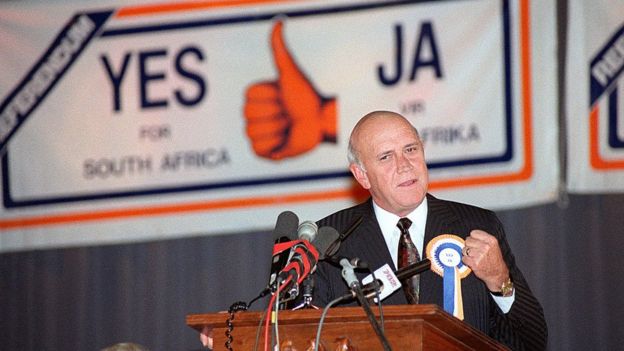
    Souh African President Frederik Willem de Klerk clenches his fist as he addresses a packed hall of mostly students at the normal teachers' training college in Pretoria during his referendum rally, on March 13, 1992
    In 1992, FW de Klerk campaigned in a white-only referendum to get backing for reforms to end apartheid

    Mr De Klerk went on to acknowledge that it was a crime, and to apologise profusely for his role in it, but he insisted that apartheid was responsible for relatively few deaths and that it should not be put in the same category of “genocide” or “crimes against humanity”.

    At first, South Africa seemed to shrug.

    Mr De Klerk, who shared the 1993 Nobel Peace Prize with Nelson Mandela after helping to negotiate an end to apartheid, is a peripheral figure in the country these days, and his potentially polarising comments seem to pass unnoticed.
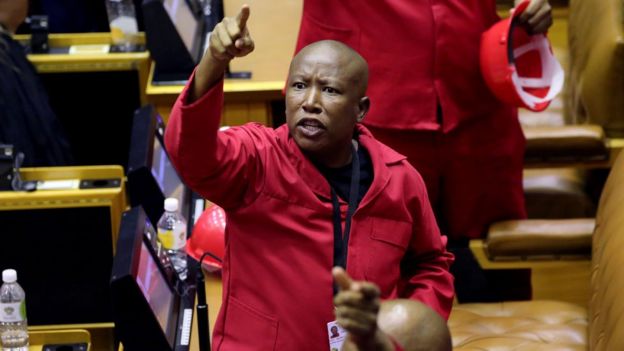
    Opposition Economic Freedom Fighters (EFF) party leader Julius Malema objects as South African President Cyril Ramaphosa attempts to deliver his State of the Nation address at parliament in Cape Town,
    Julius Malema led members of his EFF party to get Mr De Klerk removed from parliament

    But that changed last Thursday when, as a former head of state, he attended parliament for President Cyril Ramaphosa’s annual State of the Nation address.

    Members of the opposition Economic Freedom Fighters (EFF) party interrupted the president and demanded that Mr De Klerk be removed from the chamber.

    “We have a murderer in the House,” said EFF leader Julius Malema. He said that Mr De Klerk was an “apartheid apologist… with blood on his hands”.

    An hour-and-a-half later, President Ramaphosa was finally able to begin his speech, and the EFF’s aggressive delaying tactics were widely condemned – by the governing ANC and other opposition parties – as an outrageous, shameful stunt.

    Once again, it seemed as if Mr De Klerk’s own comments had been more or less sidelined.


    But not for long.

    In the days that followed, the backlash against Mr De Klerk gathered a furious momentum across the country, opening wounds and provoking deep anger. That anger was fuelled – in part – by social media, and by rival political agendas, but also by the former president’s blunt attempts to defend his views.

    His own charitable foundation initially issued a defiant statement explaining why it believed Mr De Klerk was right to insist that apartheid was not a crime against humanity.

    It argued that describing it as such was simply “an agitprop project initiated by the Soviet Union”, and that it was “simplistic” to portray South Africa’s painful history in a “black/white, good/evil framework”.

    Mr de Klerk, his foundation insisted, was an innocent victim of the EFF’s “bully boy tactics… who whip up race hatred and call their leaders ‘Führer, or Duce’”.

    In a BBC interview last Friday, Mr De Klerk said his comment about crimes against humanity was “in line with the (UN) Security Council at that time”.

    This was a reference to the fact that, although the UN General Assembly declared that apartheid was a crime against humanity, the US and the UK (both permanent members of the Security Council) voted against approving this description.

    But this cannot obscure the UN’s repeated condemnation of apartheid and imposition of wide-ranging sanctions against South Africa. Apartheid was also included as a “crime against humanity” in the Rome Statute that set up the International Criminal Court.

    ‘Shock’ at De Klerk’s ignorance

    “It is unarguable and hopeless to claim today that apartheid is not, and has never been, a ‘crime against humanity,’” said Philippe Sands, QC, a professor and expert on international law.

    To push home that same point, another former South African President, Thabo Mbeki, announced that he would send Mr de Klerk a copy of the relevant UN convention, having been shocked to learn from the man himself that his predecessor “actually did not know” about its existence.

    Some voices – particularly, but not exclusively, those of white South Africans – responded to Mr De Klerk’s comments by calling for people to “move on” and to focus on more urgent priorities like fighting corruption, tackling poverty, and reviving a stagnant economy.

    Those same voices suggested that the furore was being deliberately, cynically, exploited by the ANC and others, in order to deflect attention from its own failings, and to shift blame to the white minority.

    There is no doubt that in recent years, under former President Jacob Zuma, and spurred on by the EFF, the political rhetoric in South Africa has become increasingly racialised. White farmers and “white monopoly capital” have frequently been blamed for the country’s slow pace of economic transformation.
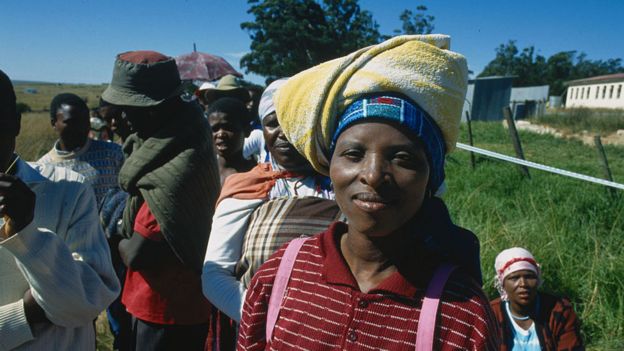
    South Africans Standing in Line to Vote During 1994 Elections
    People queued in their millions to vote in South Africa’s first democratic elections in 1994

    The former leader of the opposition Democratic Alliance, Helen Zille, has regularly bemoaned the growth of racial nationalism, and of “identity politics” which has also caused friction within her own party.

    But to many others here – perhaps even to the majority – Mr De Klerk’s comments appeared to reinforce a wider perception that many white people have never been obliged to confront, properly, the evils of the past. This is in part, perhaps, because apartheid ended through negotiation rather than a military victory.

    “Far too many white South Africans… continue to deny the full horror of apartheid,” wrote constitutional expert Pierre de Vos. “[They] refuse to admit that they or their parents actively, or tacitly, propped up the system and still reap the benefits bestowed on them by that system.”

    ‘De Klerk should repent’

    “Sadly, FW de Klerk, his foundation, and the behaviour of some of our white compatriots of even trying… to justify the systemic destruction of black lives for generations, has opened old wounds at the time when many are questioning the very democracy and its liberation dividends,” wrote political commentator Somadoda Fikeni on Twitter.

    “De Klerk soaked up the glory and the money on the speaking circuit when he should have repented every single day,” tweeted prominent journalist Carol Paton.

    The ANC issued its own statement, condemning Mr De Klerk’s argument as “a blatant whitewash [which]… flies in the face of our commitments to reconciliation and nation building”.

    Soon afterwards, Archbishop Desmond Tutu’s foundation called on the De Klerk Foundation to “withdraw its statement”.

    It angrily chided the former president: “It is incumbent on leaders and former leaders of the white community, in particular, to demonstrate the courage, magnanimity and compassion necessary to contribute to societal healing.”

    This row has surfaced at a particularly difficult time. As Desmond Tutu himself put it in his foundation’s statement, South Africa “is on an economic precipice. It is beset by radical poverty and inequity. Those who suffered most under apartheid continue to suffer most today.”

    Some black South Africans have taken to arguing that Mr Mandela himself was a sell-out, and that the painful and hard-won compromises that led to the emergence of a democratic “rainbow” nation, now need to be re-examined.

    In his second statement, withdrawing his first, Mr De Klerk acknowledged that his comments about apartheid had been “totally unacceptable”.

    Source: BBC

  • Tutu asks De Klerk to withdraw apartheid comments

    Anti-apartheid icon Desmond Tutu has added his voice to the mounting criticism against South Africa’s former President FW de Klerk over his comments that apartheid was not a crime against humanity.

    Last week Mr De Klerk told national broadcaster SABC that he regretted the apartheid policy but did not believe it should be labelled a crime.

    The political system of apartheid governed every aspect of life in South Africa from 1948 to 1991.

    In practice, apartheid enforced a racial hierarchy privileging white South Africans and under this system only they had the vote.

    The Desmond and Leah Tutu Legacy Foundation called on Mr De Klerk to withdraw his comments, adding that those who suffered from apartheid continued to suffer today.

    “It is incumbent on leaders and former leaders of the white community, in particular, to demonstrate the courage, magnanimity and compassion necessary to contribute to societal healing,” a statement from the foundation said.

    His comments also drew the ire of the radical left-wing party EFF, whose members called for him to be removed from parliament during the annual State of the Nation Address, held last week.

    Pule Mabe, the spokesman for the governing African Nation Congress (ANC), said the party should block Mr De Klerk’s future invitations to parliament.

    ?It is expected that our own members of parliament reflect on this and begin to say what do you do with individuals who knowingly go out and spit in the face of our people and want to deny that apartheid was a crime against humanity when an international body like the UN had already spoken”

    Mr. Dr. Klerk was the last leader of the white-minority government which was replaced after the 1994 election which elected Nelson Mandela as the first black president.

    He and Mr Mandela shared the 1993 Nobel Peace Prize for their work to end apartheid.

    SOurce: bbc.com

  • Wealth fund to bolster struggling SA economy

    President Cyril Ramaphosa says South Africa’s economy has stalled and public finances are under severe pressure.

    In his State of the Nation address on Thursday, he blamed persistent power shortages for the faltering economy, and said several state-owned enterprises were in distress.

    He said South Africa would establish a sovereign wealth fund and set up a state bank to extend access to financial services.

    Several state firms, including South African Airways and the power company Eskom, are in crisis, partly due to mismanagement.

  • Government cannot fix SA’s economy on its own – Ramaphosa

    President Cyril Ramaphosa has admitted that government will not be able to fix South Africa’s economic woes on its own.

    This comes as the country faces possible downgrades due to low economic growth, a growing debt burden and upward revision of the fiscal deficit.

    In November last year, ratings agency Moody’s maintained its investment-grade rating on South Africa, but changed the country’s sovereign credit rating outlook from stable to negative.

    Speaking during his State of the Nation Address on Thursday evening in Parliament, Ramaphosa said the country needed to be frank and admit that the government could not solve the country’s economic challenges alone.

    “Even if we were to marshal every single resource at our disposal, and engage on a huge expenditure of public funds, we would not alone be able to guarantee employment to the millions of people who are out of work,” he said.

    Ramaphosa said that, through the Jobs Summit, the government had brought labour, business and communities together to find solutions to the unemployment crisis. He added that all stakeholders would continue to meet at the beginning of every month to remove blockages and drive interventions that would save and create jobs.

    Procurement of emergency power

    Addressing Eskom, he said government would start the procurement of emergency power from projects that could deliver electricity into the grid within three to 12 months from approval. He added that municipalities would be able to procure their own power from independent power producers, to much applause from the DA MPs.

    Last year, the DA in the City of Cape Town went to the courts to seek permission to buy electricity directly from independent power producers (IPPs), due to the ongoing blackouts in the country.

    Acting Mayor Ian Neilson told News24 earlier that the City was seeking permission from the judge president of the Gauteng High Court for an expedited hearing on its energy case, asking the Mineral Resources and Energy Minister Gwede Mantashe and the National Energy Regulator of South Africa (Nersa) to allow it to buy energy from the IPPs.

    Ramaphosa also promised to modernise the Passenger Rail Agency of South Africa’s (Prasa) rail network by investing R1.4bn in the central line in the Western Cape and the Mabopane line in Pretoria.

    He skimmed through intervention measures for the beleaguered South African Airways (SAA) which was placed under business rescue, only saying that the business rescue practitioners were expected to unveil their plans for restructuring the airline in the next few weeks.

    On education, he said government would build nine TVET college campuses in KwaZulu-Natal and the Eastern Cape and a new science and technology university in the City of Ekurhuleni.

    Another great leap for the Department of Education would be the introduction of two new subjects, coding and robotics, he said. These two subjects would be introduced to 200 primary schools, becoming fully implemented in 2022.

    SOurce: new24.com

  • South Africa’s Jacob Zuma takes aim in rifle photo

    South Africa’s embattled former President Jacob Zuma has found himself at the centre of fresh controversy after tweeting a photo of himself taking aim with a rifle.

    Its meaning was unambiguous, and provocative.

    A day after he had learned that a judge had issued an arrest warrant for him for failing to appear in court on corruption charges related to a multi-million dollar arms deal, Mr Zuma tweeted a photograph, on his official account, showing him aiming a rifle at an unknown target.

    For a man who uses social media only rarely, and apparently carefully, the implication was clear to all South Africans.

    It was a display of angry defiance against a judiciary and an “elite” which – Mr Zuma and his supporters have argued for years – is biased against him and involved in a dark conspiracy to undermine him and the “radical economic transformation” agenda that he unveiled towards the end of his corruption-riddled presidency.

    ‘Evil white establishment’

    As the photograph provoked furious exchanges on social media, Mr Zuma’s family and his remaining allies in the governing African National Congress (ANC) have rallied to his defence.

    His son Edward claimed the arrest warrant, issued by a judge but suspended until Mr Zuma’s next scheduled court appearance, had somehow been orchestrated by his political enemies.

    Edward Zuma also said the rifle photo was two years old – a claim that hardly seemed relevant in the context in which it was used.

    The head of the ANC’s Women’s League, Bathabile Dlamini, went further, speaking of “an invisible hand” orchestrating a campaign against the former president on behalf of “an evil white establishment”.

    But many South Africans have reacted with contempt, and wry humour, to this latest incident, and see it as part of a decades-long attempt by Mr Zuma to avoid facing trial for alleged corruption by casting himself as a victim, floating frequent conspiracy theories and seeking endless court delays.

    The arrest warrant issued on Tuesday followed Mr Zuma’s failure to show up in court for a fraud and corruption case that dates back to the 1990s.

    The former president’s lawyer produced a doctor’s “sick note” to explain his client’s absence, but the judge questioned the credibility of the document and warned that Mr Zuma would face arrest if he did not appear for his next court appearance in May.

    Mr Zuma has repeatedly insisted that the corruption charges against him are part of a sophisticated western plot against him.

    He has also claimed, with no evidence produced, that those same, unnamed enemies have sought to poison him. It is almost impossible not to see the “rifle” picture in that context.

    ‘Rampant looting’

    But while Mr Zuma still enjoys some limited support in the ANC, and more generally in his home province of KwaZulu-Natal, his antics and conspiracy theories are increasingly seen by many as a sign of desperation.

    South Africans have watched, for months, as senior officials have given damning evidence of corruption at a judge-led public inquiry into the Zuma presidency – an era which Mr Zuma’s successor, Cyril Ramaphosa, has since acknowledged was a period of rampant looting by state officials.

    Mr Zuma’s behaviour is also seen here in the context of a “fight-back” by an allegedly corrupt faction within the ANC that lost control of the presidency and fears that, under a revived justice system, some of its most prominent members may soon join Mr Zuma in facing criminal charges.

    Source: bbc.com

  • Five biggest scandals of South Africa ex-president Zuma

    An arrest warrant was issued on Tuesday for South Africa’s former president Jacob Zuma after he failed to appear at a pre-trial hearing on fraud, corruption and racketeering charges related to a 1990s arms deal.

    Zuma’s lawyers blamed ill-health for the 77-year-old’s absence, and the execution of the warrant was deferred until May 6, when the long-running case is due to resume.

    It is far from the first scandal to hit Zuma, who reluctantly stepped down under pressure from his ANC party in February 2018 in the face of mounting allegations that his friends, the wealthy Gupta family, had undue influence on his administration.

    Here are five of his biggest scandals:

    Arms deal

    Corruption charges have long loomed over Zuma in relation to a multi-billion-dollar arms deal signed in 1999 when he was deputy president.

    He and other officials are alleged to have accepted bribes from five European arms manufacturers to influence the choice of weaponry bought in the deal.

    But the charges were shelved in 2009 — the year Zuma became president.

    After protracted back-and-forth court cases, in March 2018 — a month after he resigned as president — national prosecutors decided Zuma was liable to face prosecution on 783 counts of corruption, fraud, racketeering and money laundering charges relating to the arms deal.

    Zuma’s advisor, Schabir Shaik, was jailed for 15 years in 2005. He was released on medical parole in 2009 after Zuma became president.

    The former president faces jail for the criminal charges over hundreds of payments he allegedly received, valuing a total of $270,000.

    Zuma denies the charges.

    Nkandla residence upgrades

    South Africa’s graft watchdog in 2014 found Zuma to have “benefited unduly” from so-called security upgrades to his rural Nkandla residence in KwaZulu-Natal province.

    The work, paid for with taxpayers’ money, cost $24 million and included a swimming pool — which was described as a fire-fighting facility — as well as a cattle enclosure, an amphitheatre and a visitors’ centre.

    For two years, Zuma fought the order to repay part of the money. The scandal came to dominate his presidency, with opposition lawmakers chanting “Pay back the money!” every time he appeared in parliament.

    In March 2016 the constitutional court ordered Zuma to pay back the cash, the judges accusing him of failing to respect and uphold the constitution.

    Guptagate

    As the Nkandla debacle built to a climax, its place in the headlines was overtaken by a new scandal, known as Guptagate.

    The scandal involved the president’s allegedly corrupt relationship with a wealthy family of Indian immigrants headed by three brothers — Ajay, Atul and Rajesh Gupta — who built a business empire in mining, media, technology and engineering.

    Smouldering rumours of the family’s undue influence on the president burst into the open in 2016 when evidence emerged that the Guptas had offered key government jobs to those who could help their business interests.

    Former deputy finance minister Mcebisi Jonas revealed that the Guptas had offered him a promotion shortly before Zuma sacked respected finance minister Nhlanhla Nene in December 2015.

    Rape charges and HIV myth

    Before taking office, Zuma was put on trial in 2006 for rape, in a case that dismayed many South Africans.

    Zuma said the sex with the 31-year-old family friend was consensual and he was acquitted.

    But he told the court he had showered to avoid contracting HIV after having unprotected sex with his HIV-positive accuser — a common but dangerous myth.

    Zuma was head of the South African National AIDS Council at the time, and was pilloried for his ignorance.

    Nearly a fifth of South Africans aged between 15 and 49 are HIV-positive.

    Omar al-Bashir

    Then Sudanese president Omar al-Bashir was allowed to attend a meeting of the African Union in Johannesburg in 2015, despite an arrest warrant from the International Criminal Court on charges of war crimes in the conflict in Darfur.

    The government said the fact that he was attending the summit as a head of state meant he had immunity, but the court disagreed.

    Zuma faced an impeachment vote in parliament over the issue in September 2016, but ANC lawmakers voted overwhelmingly against it.

    Source: monitor.co.ug

  • South Africa’s university shutdown threatened

    The South African Union of Students (SAUS) has called for a shutdown of all universities following a breakdown in talks with the Department of Higher Education and Training late last year.

    The talks were attempting to address demands raised by SAUS and Student Representative Council (SRC) representatives from across the country.

    SAUS submitted a list of demands to the department on 16 January. These included: wiping out of all student debt, re-opening of National Student Financial Aid Scheme (NSFAS) applications, free registration for vulnerable, and poor students, and improvement of dilapidated student accommodation and infrastructure.

    According to SAUS, it has held talks at 24 universities and numerous student representative bodies have agreed to join the proposed shutdown.

    On Sunday the Minister of Higher Education Blade Nzimande released a statement addressing SAUS’s demands.

    His statement suggests that NSFAS may be looking into erasing a substantial amount of historic student debt. It has “processed” about R450 million so far, wrote the minister. But he also said that public funds for universities are “constrained” and “there is no possibility for debts of students who are not NSFAS beneficiaries” to be eradicated.

    Nzimande said that all students under NSFAS who are carrying debt from 2019 can sign an acknowledgement of debt form in order to register in 2020 at the university they are returning to.

    Protests started this week at the University of Kwazulu Natal (UKZN), University of South Africa (UNISA) Pietermaritzburg campus and North West University (NWU).

    According to a UKZN statement, in the early hours of Tuesday morning, protesting students set alight the Security Control Centre building on the Westville campus.

    Students at UNISA’s Pietermaritzburg campus blocked Langalibalele Road with burning tyres to protest NSFAS students being excluded.

    NWU spokesperson Louis Jacobs confirmed that the institution has had to close its Mafikeng campus since Monday due to students protesting in solidarity with SAUS’s demands.

    In a statement, the Department of Higher Education and Training “strongly condemned the violent protests… which led to damages at two university campuses”.

    SAUS spokesperson Thabo Shingange said that the organisation “condemns any violence during these protests”. He distanced the organisation “from any acts of criminality that seek to undermine our genuine cause”. But he said the union condemned the recent use of private security guards at universities. He also reported that many SRC members involved in the protests are being threatened with suspension.

    “While some universities are already protesting, we believe that if we all discuss these issues in good faith we can find a way forward before the other universities … join the shutdown,” said Shingange.

    GroundUp is being sued after we exposed dodgy Lottery deals involving millions of rands. Please help fund our defence. You can support us via Givengain, Snapscan, EFT, PayPal or PayFast.

    Source: allafrica.com

  • Floods and power cuts hit South Africa

    Heavy rains have battered parts of South Africa, submerging whole neighbourhoods and flooding coal mines and power stations in a nation already hit by electricity blackouts.

    At least 700 homes have been washed away near the capital, Pretoria, public broadcaster SABC reported.

    Read:Old mortuary in South Africa becomes a home for the living

    The state-run power utility warned of further electricity cuts, saying heavy rains had affected its operations.

    The cuts have halted gold and diamond production at some leading mines.

    Read:South Africa has no energy crisis Energy minister

    Harmony Gold said it had called off underground shifts because of the power cuts, known as load shedding in South Africa.

    Petra Diamonds said it was “removing all people from underground, except those required for essential services, with only pumping to prevent flooding and ventilation for safety being allowed”.

  • Ex-South Africa minister charged with corruption

    A former South African state security minister has appeared in court on allegations of corruption.

    Bongani Bongo – who was seen as close to former President Jacob Zuma – is accused of offering money to a lawyer giving evidence at a parliamentary inquiry into corruption at the state power company, Eskom in 2017.

    Read:Corruption, an embarrassing topic, says Buhari in Saudi Arabia

    Mr Bongo did not enter a plea. He was released on bail and is due back in court in January.

    Mr Zuma appointed him state security minister two weeks after the alleged bribery took place.

    Read:Jacob Zuma to face corruption inquiry

    He lasted only four months in the job.

    Source: bbc.com

  • Prosecutor dies after gun goes off in SA court

    A lawyer has died after she was hit by a bullet when a gun, which was being used in court as evidence, went off by accident in KwaZulu-Natal province in South Africa, police say.

    Adelaide Ferreira-Watt succumbed to her wounds just hours after the bullet from the shotgun hit her in the hip.

    Read:Prisons Officer guns down masked robber

    The gun went off as it was being presented to the court as evidence in a house robbery case.

    Police say they are investigating Ms Ferreira-Watt’s death as a case of manslaughter.

    Read:Gunman in US school shooting dies as police hunt motive

    They will also look into why the gun was loaded and whether appropriate steps had been taken to ensure the gun was safe to carry in a public space

    Source: bbc.com

  • South African man killed dad for reprimanding him about smoking, gets life sentence

    A man who had his father killed because he was fed up of being reprimanded for smoking nyaope and using other substances, has been sentenced to life behind bars in the Gauteng High Court in Johannesburg, South Africa.

    Brutus Mhlanga conspired with Caswell Ntsheula, Hloniphani Ntombela and Patrick Ziqubu to kill his father in August 2017.

    Mhlanga offered his father’s car as a “down payment” to his co-accused and promised to pay them R150 000 once he received his inheritance.

    On December 11 that year, Ntsheula, Ntombela, Ziqubu and a fifth suspect known only as Thando, went to Mhlanga’s parents’ house in Katlehong armed with a gun and a knife.

    There, Ntsheula and Thando shot and stabbed Mhlanga’s father, Shiviti Freddy Mhlanga, killing him. They also shot Mhlanga’s mother, Cokweni Lizzy Mhlanga, but she survived.

    Read:South African mom found guilty of murdering her 4 children

    The men then fled the scene in the deceased’s Toyota Hilux.

    On Tuesday, Judge Seun Moshidi sentenced the men to life imprisonment and multiple years’ imprisonment for conspiracy to commit murder, murder, robbery with aggravating circumstances, the illegal possession of firearm and ammunition, and attempted murder, National Prosecuting Authority (NPA) spokesperson Phindi Mjonondwane said.

    Ntsheula was sentenced to life imprisonment plus 45 years, Ntombela to life plus 51 years, Ziqubu to life plus 63 years and Mhlanga to life plus 51 years.

    They were arrested after a police officer received information that Ntsheula was in possession of a firearm without a licence.

    Searching Ntsheula’s home, police found one round of ammunition. When police asked where the firearm was, he told them that Ntombela had it.

    Police then went to Ntombela’s home and searched it, but no firearm was found. Ntombela informed the police that he had another house which they could search.

    Read:South Africa: Man pleads guilty to raping child in toilet

    Car reported stolen

    Upon arrival at the other property, police found the Toyota Hilux parked in the driveway. When they ran a check on the vehicle, they found that it had been reported stolen and that the owner had been killed.

    “Ntombela was surprised as he was not expecting the vehicle to have been reported stolen as it was a ‘down payment’ [for the killing],” Mjonondwane said.

    When asked about the vehicle’s keys, Ntombela directed police to Ziqubu’s home where a firearm was found.

    When police asked them where the vehicle came from, the men directed them to Mhlanga’s home where they found a murder scene.

    Mhlanga’s mother was taken to hospital because she had a gunshot wound to her chest.

    Police said Mhlanga had his father killed because he was fed up with being reprimanded for smoking nyaope and using other substances.

    Ntombela was arrested on December 12, 2017, and the other three men were arrested the following day.

    “The NPA commends the persistent work by police officers to solve this senseless crime, as well as the commitment and dedication displayed by the prosecutor in securing a successful prosecution,” Mjonondwane said.

    Source: www.news24.com

  • South Africa has no energy crisis – Energy minister

    Just after publishing the wrong version of the Integrated Resource Plan, and with Eskom being forced to admit that more than a third of its infrastructure is broken and cannot be relied on to generate electricity on demand, Mineral Resources and Energy Minister Gwede Mantashe denied South Africa has an energy crisis.

    ‘We have no energy crisis, South Africa has an energy problem that will turn into a disaster if not attended,’ said the minister on the sidelines of the media briefing to announce the IRP.

    Read:South Africa hit by power cuts

    The Integrated Resource Plan (IRP) seems to be an acknowledgement by the government that it does not have the required skills capacity and the balance sheet to continue investing in the electricity-generating infrastructure of any significance.

    Thus it has designed a plan that heavily relies on the simplicity, cost-effectiveness and speed of the private sector to fill the gap. And quickly, by government standards anyway. These seem to be the driving priorities that will inform South Africa’s energy investment plan for the next 20 years.

    Read:South Africa is open for business in African countries Phumla Williams

    The integrated resource plan of 2019, unveiled by Mineral Resources and Energy Minister Gwede Mantashe, shifts focus away from the heavy, complex and expensive baseload infrastructure projects this country.

    Source: www.allafrica.com

  • Xenophobia: 84 Nigerians return from South Africa today

    84 Nigerians evacuated from South Africa is expected to arrive in Nigeria on Wednesday at 2.pm local time via the Murtala Mohammed International Airport, Lagos in company of officials of the Ministry of Foreign Affairs.

    The Ministry of Foreign Affairs, which disclosed this in an update made available to newsmen in Abuja on Wednesday, explained that although 313 Nigerians were confirmed as those to form the first batch of evacuees, only 84 of them would arrive on Wednesday because they were the ones cleared to embark on the flight to Nigeria.

    According to the ministry, 640 Nigerians have indicated the desire to return from South Africa and have registered to do so.

    Read:Xenophobia hub: Over 600 Nigerians head home from South Africa

    The ministry added that the second batch of evacuees would depart Johannesburg for Nigeria on Friday.

    “The Air peace aircraft which was scheduled to take off at 9. a.m local time was delayed due to the fact that checking in and clearance procedures by immigration are very slow.

    “There are complains of system failure and out of the 313 confirmed for first batch of evacuation today, only 84 are cleared so far.

    Read:Successive SA governments have been weak in tackling xenophobic attacks expert

    “The more the Aircraft waits for the passengers, the higher the amount the Aircraft will pay for Parking,” the ministry stated.

    The News Agency of Nigeria reports that following the xenophobic attacks on Nigerians in South Africa, Proprietor of the Airline, Mr Allen Onyeama, volunteered to send an aircraft to evacuate Nigerians willing to return free of charge.

    The process which was earlier scheduled to commence on Sept. 6 had stalled as it was reported that most Nigerians willing to return did not have valid passports or travel documents to complete immigration formalities.

    Source: www.punchng.com

  • Ken Thompson pens thought provoking poem to South African Ambassador

    To the South African ambassador to Ghana, who left school with 2 ‘O’ levels in Art and Afrikaans.

    (more…)

  • South Africa shuts embassy in Nigeria after reprisal attacks

    South Africa has temporarily closed its embassy in Nigeria following violence against South African businesses in reprisal for attacks on foreign-owned stores in Johannesburg, while Nigeria has announced plans to evacuate its nationals from South Africa.

    South African Foreign Affairs Minister Naledi Pandor said on Thursday that the embassy was closed temporarily after threats led to fears for staff safety.

    “There is Afrophobia we are sensing that exists, there is resentment and we need to address that,” Pandor told Reuters news agency.

    Foreign ministry spokesman Lunga Ngqengelele confirmed that the diplomatic missions in the Nigerian cities of Lagos and Abuja have been closed since Wednesday.

    The announcement, which signals worsening diplomatic relations between the two African countries, comes after Nigeria introduced plans to evacuate its nationals from South Africa following a wave of attacks on foreigners, including Nigerians.

    Evacuation offer

    The Nigerian foreign ministry said Air Peace, a commercial airline, had offered to send an aircraft on Friday to evacuate nationals who were willing to return, “free of charge”.

    “The general public is hereby advised to inform their relatives in South Africa to take advantage of this laudable gesture,” Nigerian foreign ministry spokesman Ferdinand Nwonye said on Wednesday.

    Read:Xenophobic attacks: Nigerian airline to evacuate citizens free of charge

    “Interested Nigerians are therefore advised to liaise with the High Commission of Nigeria in Pretoria and the Consulate General of Nigeria in Johannesburg for further necessary arrangement.”

    The statement was made after Foreign Minister Geoffrey Onyeama said Nigeria would not cave to Pretoria.

    “The South African government has to assume its responsibilities and protect Nigerians in South Africa and we have to hold them to account and they have to do that as well as pay full compensation,” he said.

    Tensions rising

    It also came a day after Nigeria pulled out of the World Economic Forum (WEF) gathering in Cape Town, South Africa, casting a cloud over initiatives to boost intra-African trade.

    Nigeria also recalled its High Commissioner to South Africa, Ambassador Kabiru Bala.

    A presidential source told the News Agency of Nigeria (NAN) that Nigeria also demanded full compensation for the loss of life and property of Nigerians affected by the attacks.

    Rioting in South Africa has killed at least five people in Johannesburg and Pretoria in recent days.

    Police in the country has yet to pinpoint what triggered the violence, which began on Sunday, when protesters armed with makeshift weapons roamed the streets of Pretoria’s business district, pelting shops with rocks and petrol bombs and running off with goods.

    Read:Stop tagging South Africans xenophobic South Africa High Commissioner

    Authorities have made almost 300 arrests, while people across the continent have protested and voiced their anger on social media.

    Analysts have noted contributing factors to the latest violence include high unemployment and frustration with limited economic opportunities.

    Reprisal attacks

    On Tuesday, Nigerians launched what appeared to be reprisals against South African businesses in several cities across the country. Police said dozens have been arrested for looting and attacks on South African retail and telecoms firms.

    Abuja has repeatedly condemned the reprisals, which it insisted could only hurt Nigerians working in the affected firms.

    Nigerian police said on Wednesday that security had been strengthened around South African businesses.

    Source: aljazeera.com