South Africa’s Zulu King Misuzulu kaZwelithini, has refuted reports that he was poisoned, insisting in a video that he was in good condition.
It comes amid contradictory worries after the Zulu traditional prime minister announced over the weekend that the king was being hospitalized for possible poisoning in neighboring Eswatini.
According to Chief Mangosuthu Buthelezi, the King was in hospital after the untimely death of one of his senior aides, who died of suspected poisoning. But the king’s official spokesman, says he is in “perfect health.”
However, in the video released to South African media, the monarch stated that he was due to go for his regular medical check-ups, which he chose to undertake in Eswatini.
“[It’s] not because I have been poisoned, I am not poisoned. I am well. I feel 100%.
“I’m happy, everything is well functioning, there is no poison whatsoever. So please people, mostly to the Zulu people, the Zulu royal family also to remind everyone to please don’t listen to everything that people say,” he said.
King Misuzulu is also quoted as telling the AFP news agency over the phone from Eswatini that he was “very fit and sound.”
The 48-year-old monarch succeeded to the throne last year after his father, monarch Goodwill Zwelithini, died in a royal succession dispute.
South Africa’s primary opposition party, the Democratic Alliance (DA), along with six other political parties, has announced their intention to engage in discussions to establish a pact aimed at removing the ANC from government in the upcoming elections next year.
Notably absent from this group is the Economic Freedom Fighters, the country’s third largest political party, which holds a more progressive position compared to the ANC.
The ANC, which played a pivotal role in the fight against apartheid and has held power for nearly three decades, has experienced a gradual decline in its level of support in recent years.
In the last municipal elections held in 2021, which is the most recent nationwide vote, the ANC secured a vote share of less than 50%.
The seven opposition parties hoping to agree on a pact have said in a joint statement that “the incumbent governing party is set to lose its majority when voters go to the polls next year”.
Taking this into consideration, their objective is to present a cohesive and robust alliance that is characterized by stability, viability, and effectiveness. To achieve this, they have scheduled a two-day meeting next month to negotiate and finalize an agreement.
However, the absence of the EFF, which garnered a 10% share in the 2019 general election, poses a significant challenge in their quest to secure over 50% of the votes in the upcoming elections.
South Africa’s Zulu King, Misuzulu kaZwelithini, is reportedly undergoing treatment in a hospital for suspected poisoning, according to Chief Mangosuthu Buthelezi, the traditional prime minister.
Chief Buthelezi stated that the king sought medical attention in Eswatini as he felt uncomfortable receiving treatment in South Africa. The suspicion of poisoning arose following the sudden death of one of the king’s senior advisers.
In his statement, Chief Buthelezi said King Misuzulu’s senior aide, Douglas Xaba who stayed with him, “passed on quite suddenly and that there are suspicions that he was poisoned”.
“When His Majesty began to feel unwell, he suspected that he too may have been poisoned.
“He immediately sought out medical treatment in Eswatini. I am informed that His Majesty felt uncomfortable seeking treatment in South Africa, as his parents had both received treatment in South Africa and subsequently died,” Chief Buthelezi said.
However, the king’s official spokesman, Prince Africa Zulu, refuted the claims and stated that the king was in “perfect health.”
Prince Africa Zulu clarified that the king was not currently hospitalized and urged against creating unnecessary panic, indirectly referring to Chief Buthelezi’s statement.
In his subsequent statement, Prince Africa said there appeared to be an “orchestrated agenda and a desperate narrative to communicate defamatory and baseless claims” about the king’s health.
“Ultimately, this creates unnecessary panic and perceptions of instability in the Royal Crown,” he added.
However, Prince Africa confirmed the monarch had undergone a thorough medical examination in Eswatini while visiting his uncle, King Mswati III.
The checks were carried out because of “our current times of pandemics such as Covid-19 and other dangerous ailments”, and also “to mitigate against any untimely eventuality, given the reports of Mr Xaba’s sudden passing”.
King Misuzulu was crowned in a grand ceremony in October last year. However, a fierce power struggle has unfolded within the royal family over his ascension, and tensions have also emerged between the monarch and Chief Buthelezi.
A suspected poisoning is being treated in a hospital for South Africa‘s Zulu King Misuzulu kaZwelithini, according to his traditional prime minister.
According to Chief Mangosuthu Buthelezi, the monarch chose Eswatini for his medical care because he feels uncomfortable receiving care in South Africa.
This comes after the untimely passing of one of his top advisers who also died of suspected poisoning, according to Chief Buthelezi.
Thousands of his subjects witnessed the coronation of King Misuzulu in October.
But a vicious power struggle has been raging within the royal family over the 48-year-old’s accession.
The Zulu king does not have formal political power and the monarch’s role within broader South African society is largely ceremonial, but he remains hugely influential with a yearly government-funded budget of several million dollars.
A faction within the family is challenging his claim to the throne in court, insisting that he is not the rightful heir of his late father, King Goodwill Zwelithini.
They insist that another son of the late king, Prince Simakade, should be the monarch.
King Zwelithini had six wives and at least 26 children.
King Zwelithini’s will has also been challenged in court by his first wife, Queen Sibongile Dlamini-Zulu, and her two daughters.
A court dismissed their case last year, but they said they would appeal against the ruling.
There is no suggestion that any members of the royal family are behind King Misuzulu’s suspected poisoning.
The South African police have not yet commented on the claims.
In his statement, Chief Buthelezi said a senior aide of King Misuzulu, who stayed with him, “passed on quite suddenly and that there are suspicions that he was poisoned”.
“When His Majesty began to feel unwell, he suspected that he too may have been poisoned.
“He immediately sought out medical treatment in Eswatini. I am informed that His Majesty felt uncomfortable seeking treatment in South Africa, as his parents had both received treatment in South Africa and subsequently died,” Chief Buthelezi said.
Chief Buthelezi added that while the king had recently appointed a head of communications in his office, he, as the traditional prime minister, had an obligation to inform the Zulu nation of “this worrying situation”.
“Our immediate concern is the King’s wellbeing. We as the Zulu nation pray for His Majesty’s full and swift recovery.
“Should there be any reason for further investigations, that will be attended to by the authorities,” Chief Buthelezi said.
King Misuzulu’s accession was sudden and unexpected.
His father died during the Covid pandemic in March 2021 of diabetes-related complications.
He was the Zulu nation’s longest-reigning monarch, having served on the throne for almost 50 years.
King Misuzulu’s mother, Queen Mantfombi Dlamini-Zulu, then became the regent, but she died a month later.
She was the sister of Eswatini’s King Mswati III – Africa’s only absolute monarch.
At the time, Chief Buthelezi dismissed rumours that she had been poisoned.
He had backed King Misuzulu’s accession to the throne, but recent reports suggested that differences had emerged between the two.
It followed a dispute over the chairmanship of the Ingonyama Trust Board, which manages vast tracts of land controlled by the monarch.
The king appointed Chief Thanduyise Mzimela as its chairman, but this was opposed by Chief Buthelezi who felt he was inexperienced for the post, according to local media.
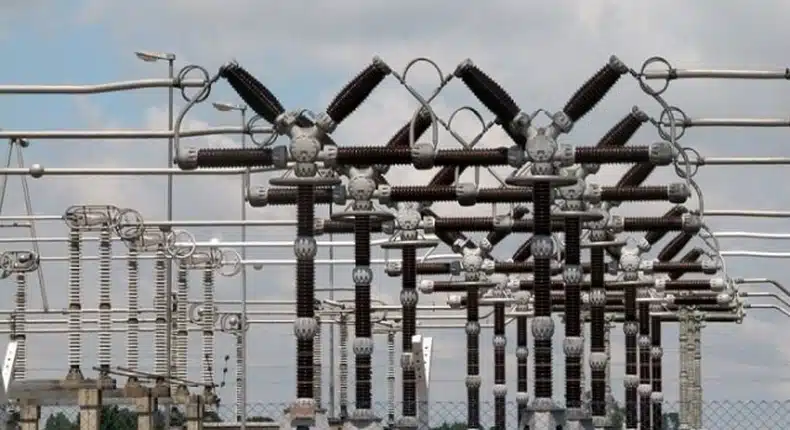
Uganda and South Sudan have come together to strengthen their energy ties and promote socioeconomic development in the border towns of Oraba, Elegu, Kaya, and Nimule through the signing of a crucial power sales agreement (PSA).
The power sales agreement aims to boost electrical commerce between the two neighboring nations and foster economic growth in the region. The Olwiyo substation in northern Uganda, which is already operational at 132kV, will serve as the electricity source for the 400kV Olwiyo-Juba transmission line, facilitating the distribution of power to Juba, the capital city of South Sudan.
The initiative stems from a Memorandum of Understanding (MoU) established in December 2015, focusing on developing transmission and distribution infrastructure to connect Uganda and South Sudan under the Nile Equatorial Lakes Subsidiary Action Plan (Nelsap). To ensure effective implementation, a joint technical committee has been set up to plan and coordinate the project’s development.
As per the agreement, the priority lies in the construction of the 308 km power transmission line, with 138 km located in South Sudan and 170 km in Uganda. Additionally, the substations at Juba, Olwiyo, and Bibia (near the Elegu border post in Uganda) will undergo expansion to facilitate smooth electricity flow.
The momentous power sales agreement was officially signed in Juba on Tuesday by Irene Bateebe, the Permanent Secretary of the Ugandan Energy Ministry, and Beck Awan Deng, the General Manager of the South Sudan Electricity Corporation (SSEC). This collaboration represents a significant step forward in strengthening energy ties and promoting socioeconomic progress between Uganda and South Sudan.
“Today’s signing ceremony marks the beginning of serious cooperation in power trade between Uganda and South Sudan,” energy minister Dr Ruth Nankabirwa Ssentamu, who led the Ugandan delegation said.
Peter Marcello Jelenge, South Sudan representative, added, “We would like to see projects that benefit both the people of Uganda and South Sudan…We will take power from small towns in Uganda, such as Elegu and Oraba.”
The feasibility study, which started in March 2023 and is anticipated to be finished in February of the following year, is being carried out by a consortium made up of the Italian companies CESI S.p.A., ELC Electro Consult S.p.A., Colenco Consulting Ltd., and Colenco Consulting Ltd. of Nigeria.
The African Development Bank (AfDB) has decided to donate money to South Sudan and Uganda for feasibility studies with additional funding by the AfDB.
The death toll from floods in South Africa’s Kwazulu-Natal province has reached at least seven, and it is anticipated to increase further.
Several regions in the southeastern parts of the province are currently undergoing recovery efforts following severe rains and storms earlier this week.
The bodies of a woman in her 20s and a teenage girl were recently recovered from a canal in the city of Durban.
According to provincial authorities, at least 70 homes have been destroyed, leaving over 150 individuals without shelter.
Disaster management teams are continuing to assess the extent of the damage caused by the floods.
Authorities have reported on Thursday that four persons had perished in the southeast province of KwaZulu-Natal of South Africa after it was struck by a tornado and torrential rain.
Powerful winds and rainfall damaged roads and flooded houses and sewer systems, followed by a tornado that struck north of the port city of Durban on Tuesday.
“Regrettably, so far four people have been confirmed to have lost their lives,” the province’s disaster management department said in a statement.
Three people died in Durban and a fourth in wider KwaZulu-Natal, it said, adding that a fifth person was missing and more than 150 were homeless.
Local daily News 24 reported Nonala Ndlovu, a spokesperson for the provincial department of cooperative governance, as saying that public infrastructure, including sewage systems, has also been damaged.
The rainy season in KwaZulu-Natal usually runs from November to March, and exceptional rainfall at this time of year is unusual, it said.
“We are experiencing firsthand the true effects of climate change during the winter season,” the department said.
In April 2022, the province was hit by the worst floods in living memory, suffering the loss of more than 400 lives in Durban and surrounding areas.
Experts have warned that floods and other extreme weather events are becoming more powerful and frequent as the world gets warmer, due to climate change.
German car manufacturer BMW has revealed its plans to invest millions of euros in its South African plant, positioning it as the second facility worldwide to manufacture and export the X3 plug-in hybrid model.
The company will allocate approximately €200 million ($218 million) to upgrade the production capabilities of its factory located in Plant Rosslyn, Pretoria.
Starting next year, “we will manufacture the BMW X3 as a plug-in hybrid for global export in South Africa,” Milan Nedeljkovic, board member for production, said in a statement.
The investment will make the country the second after the US to manufacture and export the X3 hybrid.
The continent’s most industrialised economy began manufacturing the X3, the firm’s best-selling model, in 2018.
South Africa boasts a booming automotive industry — the country’s largest manufacturing sector — which contributed 4.3 percent of the gross domestic product in 2021 according to the International Trade Administration.
BMW’s Pretoria plant has produced over 1.6 million vehicles, the group said, exporting to more than 40 countries globally, including 14 across the continent.
South African authorities have announced the demise of at least 31 suspected illegal miners, believed to be from Lesotho, at an abandoned mine in Free State.
The Department of Mineral Resources in South Africa issued a statement stating that the Lesotho government notified them about the deaths, which occurred on May 18, within a mine ventilation shaft.
The Welkom mine in Free State was last operational in the 1990s, according to the department.
South Africa’s Department of Mineral Resources says three bodies have been recovered from the mine by other illegal miners. It is however is collaborating with relevant stakeholders, including the previous owners of the mine, to recover the remaining bodies.
But inspectors, after conducting an assessment, have deemed the conditions too hazardous to send a team to the site.
The South African presidency has warned people against scammers using President Cyril Ramaphosa’s name to defraud the public.
It said messages purporting to be sent by the president have been circulating.
“The president does not request any funds or endorse any payments or contracts between third parties, whether through websites, adverts, social media, emails, letters, texts or phone conversations,” the alert said.
Anyone who has received communications of this nature from the president or the presidency should terminate all future contact with the scammers, it added.
The presidency has not revealed any further details about the nature of the scams or how long they have been running, but said anyone who had already sent money to the scammers should report to law enforcement authorities.
Cybercrime and cases of impersonation have been on the rise in the country, according to local media reports.
In the South African city of Johannesburg, two children, aged five and seven, perished in a fire that started in a residential building where they had been left unattended and locked inside an apartment.
The blaze, in the inner city area of Hillbrow, began on Wednesday afternoon.
A reporter from South Africa’s Times Live has recently tweeted a video from the scene filmed after firefighters arrived:
Squatters often move into old and abandoned buildings in the area – which colloquially are said to have been “hijacked”.
Mayor Kabelo Gwamanda visited the scene later in the evening, commending firefighters for their efforts and saying Hillbrow’s old buildings did not meet health and safety standards.
“This particular property has been at the centre of the City [of Johannesburg’s] efforts to reclaim hijacked buildings from illegal occupants and crime syndicates,” New24 quoted him as saying.
The city’s emergency services say the children appear to have died from smoke inhalation and their bodies were later found “burnt beyond recognition”.
The cause of the fire is not yet known and the police are conducting investigations.
Residents of a region of the Northern Cape province in South Africa have been admonished to exercise caution and keep an eye out for cheetahs and leopards prowling the streets.
State broadcaster SABC quoted a representative of an organisation cautioning that wildcats are dangerous and had been seen crossing roads close to a nearby town.
“It’s a bit of a concern they are hungry. They can walk 35km [22 miles] in one night. We have warned the community. The police have warned the community. I have been out telling the people,” Michelle Oppernan of Olifantshoek Animals is quoted as saying.
It is not clear if the cats have escaped from a game serve.
This was the case earlier in the year with incidents of wild cats, including tigers, on the loose which triggered safety warnings in areas of Gauteng province and the capital, Pretoria.
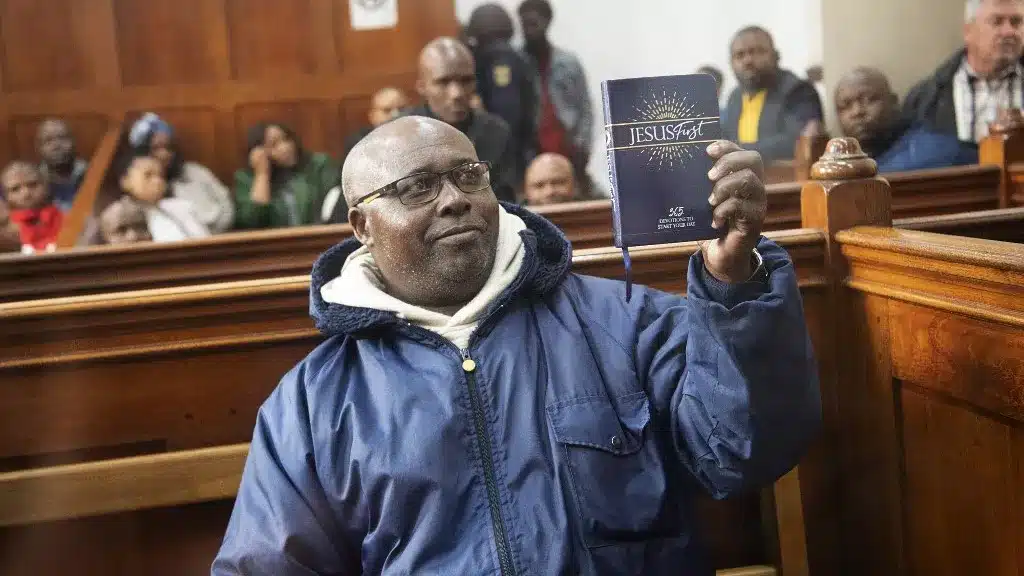
A former member of the Rwandan police, Fulgence Kayishema, is requesting asylum in South Africa after being charged with having a significant involvement in the 1994 genocide.
Arrested last month in Cape Town, the Rwandan has abandoned his application for bail, his lawyer announced on Tuesday before a Cape Town court, who added that his client “fears for his life, if and when, he is extradited”.
The asylum request is likely to delay the legal process in South Africa, where he is currently facing numerous charges linked to his irregular stay in the country.
The state prosecutor indicated that South Africa will oppose any future bail application.
Until his arrest on 24 May, the 62-year-old was one of the last fugitives sought for their role in the genocide in which 800 000 Rwandans died, a majority of whom were Tutsis killed by Hutus.
Church massacre
Kayishema was discovered to be living under a false identity and claimed to be from Burundi. He sought asylum first in 2000, then refugee status in 2004.
At his first court hearing in Cape Town, two days after his arrest, he denied having participated in the genocide. “I didn’t have any role,” he said, in what he described as a “civil war”.
Kayishema was sought under an arrest warrant by the International Residual Mechanism for Criminal Tribunals (MICT) which, since 2015, was charged with completing the work of the International Criminal Tribunal for Rwanda (ICTR), formed by the United Nations following the genocide.
According to UN prosecutors, Kayishema “directly participated in the planning and execution” of the massacre of more than 2000 Tutsi who had sought refuge in a church. He is alleged to have procured and distributed fuel to set the church alight with the refugees inside. When that failed, Kayishema and others allegedly used a bulldozer to demolish the building, killing and burying those inside.
The next hearing will take place in Cape Town on August 18.
Fulgence Kayishema, who is accused of having a significant role in the genocide in Rwanda and was apprehended last month after 22 years on the run in Cape Town, will apply for asylum in South Africa, according to a statement made by his attorney on Tuesday.
“My instructions are to apply for asylum in the republic of South Africa”, Juan Smuts shared at the end of a court hearing in Cape Town.
His client “fears for his life if he is extradited,” he explained.
The request for asylum is likely to delay Kayishema’s trial in South Africa, where he faces numerous charges relating to his illegal stay in South Africa, and will “suspend his extradition”, the lawyer added.
Until his arrest on 24 may, the 62-year-old Rwandan was one of the last four fugitives wanted for their role in the 1994 genocide of 800,000 Rwandans, many of them Tutsi, by Hutu extremists.
A stocky, balding man with round eyes behind thin glasses, the sixty-year-old had admitted to being the man wanted by international justice. A master at assuming false identities, according to investigators, he was most recently using the name Donatien Nibashumba.
It is still unclear how he came to be on the run, but according to the South African prosecutor’s office, he started a family and, using an assumed name and claiming to be Burundian, applied first for asylum in 2000 and then for refugee status in 2004.
The leaders of the Netherlands and Denmark, who are in South Africa on a combined working visit, were welcomed by President Cyril Ramaphosa on Tuesday.
The visit by Prime Minister Mark Rutte and his Danish counterpart Mette Frederiksen is aimed at solidifying the three countries’ relationship in the areas of green hydrogen, renewable energy and a just energy transition, South Africa’s public broadcaster SABC reported.
South Africa and the Netherlands will sign a Memorandum of Understanding on cooperation on green hydrogen.
The European leaders brought with them large business delegations.
A Business Forum under the theme “Green Energy Transition and Green Hydrogen Partnerships for Impact” will focus on key areas in green energy and green hydrogen.
Keen to break their dependence on Russian energy, European countries have been looking to their African counterparts to fill the gap.
The serenity of a typically peaceful suburban road in the vicinity of South Africa’s capital, Pretoria, is being disrupted by the persistent sound of drilling.
However, these drilling activities are not related to prospectors in search of the nation’s mineral riches. Instead, they represent a pursuit of a potentially more valuable resource: water.
In affluent neighborhoods within South Africa’s economic hub, where water supply has become scarce, private boreholes are increasingly appearing. The example of Garsfontein illustrates the trend as workers excavate a borehole to secure access to water.
“I am tired of not knowing when we will have water and when we won’t,” the frustrated homeowner says.
“Having a borehole means we won’t have to depend on the government so much, it’s what’s best for my family.”
Much of the domestic water supply here depends on electricity to pump it from the source to the vast high plain on which the cities of Johannesburg and Pretoria sit.
South Africa’s recent electricity woes – with regular lengthy scheduled blackouts – have had a knock-on effect on the supply of water.
“All of our stations, they need electricity, they need power. You have to pump water everywhere where it is needed,” says Sipho Mosai, the head of state-owned Rand Water, one of the country’s main water providers.
“Electricity is really at the heartbeat of what we do and if we don’t have it externally, at least for now, it becomes a problem.”
“Some days I don’t have both water and electricity, and this can be for days at a time. It makes daily life insufferable,” says Zizi Dlanga, a 35-year-old private wealth manager.
She lives in a two-bedroom apartment in an affluent suburb in the north of Johannesburg with her sister who is a trainee doctor. She now stocks up on water when it is available and goes to a gym to take a shower.
“My water bill stays the same even with all the cuts. I feel frustrated, I don’t have access to water alternatives [like a borehole] that would make this bearable for me,” she adds.
Bottled water is being stored in Hammanskraal after there was a cholera outbreak in the water supply
There are, of course, millions of South Africans who have lived without having water piped into their homes for years. But the intermittent domestic supply is just one aspect of a multi-pronged problem facing the water industry.
“We are in a state of systemic failure, the water sector is collapsing,” expert Prof Anthony Turton tells the BBC.
The lack of electricity has exacerbated issues created by poorly maintained infrastructure, which has led to vast leaks as well as sewage problems, and a supply of water that cannot meet demand.
Seventy million litres of treated, clean, drinkable water are lost every single day because of leaks that are endemic in the crumbling water system.
Most of the water wastage identified has been linked to badly run municipalities that are not investing in maintenance, partly because of corruption and theft.
This has also meant that sewage plants are not cleaning the water in the way that they should.
And this has had public health consequences.
Lawrence Malope has been selling bottled water in Hammanskraal after people became nervous about the piped water
In just a few weeks in Hammanskraal, a township outside Pretoria, 29 people were killed by cholera that had been found in the water supply there. The outbreak has been linked to substandard water purification practices.
Lawrence Malope sells bottled water at the roadside in the township. It is a new business born out of desperate times.
“Most people buy from me because they want safe water to drink, because the water that comes out of the taps is dirty,” he says.
At home, he collects rainwater and then boils it before use.
“Many people are getting sick here because of the water coming out of our taps and some just don’t know how to clean it. We have young children in this community, I’m really worried about our safety,” he says.
But not having clean drinking water is not unique to Hammanskraal – a recent report by the Department of Water Affairs and Sanitation found that of the 155 treatment systems sampled, 41% came back showing bad microbial water quality compliance.
The problem can be found across the country. In the Eastern Cape’s quaint arts town of Makhanda, formerly known as Grahamstown, residents have for years been forced to contend with unsafe drinking water, with recurring bouts of E.coli contamination.
In the Free State province, government investigations found that the majority of wastewater treatment plants are deemed to be “in critical condition”, putting residents at risk of contaminated water.
For Prof Turton, the combination of problems with water and electricity supplies is creating a perfect storm.
“People living all across the country are becoming increasingly concerned and increasingly angry. Part of it is because people are sitting in darkness sometimes.
“With the interrupted water supply…we now have a situation where people are literally dying from disease.”
On the part of the water suppliers, Mr Mosai from Rand Water agrees that more needs to be done. He says that his company is investing in solar power rather than relying on the national grid.
There has been a borehole boom in some of South Africa’s wealthy suburbs
When it comes to solutions, drilling private boreholes is only an option for the very wealthy, as they come with a price tag of $7,000 (£5,000).
It also serves to highlight the huge inequalities in South Africa.
“What it’s doing is widening the gap between those that have and those that don’t have. It creates social injustice,” argues Dr Ferrial Adam from advocacy group WaterCAN.
There are also questions about the environmental impact of boreholes and whether the groundwater is safe to drink. In some parts of the country, harmful metals and dangerous bacteria can be found in the water.
But experts say there are some things that can be done to benefit everyone and help arrest the deterioration of the water supply.
“There are some very quick fixes,” according to Dr Adam.
“One is fix the leaks, spend actual money on infrastructure and maintenance, and test water regularly, so you monitor what people are being made to drink.”
She adds that the national government needs to be better at keeping municipalities in line.
The government acknowledges the problem and says it has taken some municipalities to court over allegations of negligence.
But Dr Adam feels that is not enough.
“A lot of these are failing. That failure places lives at risk.”
The National Assembly of South Africa recently approved a divisive plan to establish national universal health care.
South Africa’s health minister, Joe Phaahla, hailed the approval of the bill as “a historic step” for the legislation that had been in the pipeline for twelve years.
— ANC – African National Congress (@MYANC) June 14, 2023
The opposition fears that the already overburdened public health system will collapse if the new legislation comes into force.
Leading opposition party, the Democratic Alliance (DA), denounced the move saying that nine million of the 60 million South Africans who have medical insurance “would have to be covered by an already overburdened public health system”. In Africa’s leading industrial power, public hospitals are often overcrowded and under-resourced or understaffed. The most privileged often turn to the private sector.
In response to a lack of supply and frequent blackouts, Mozambique has offered to send 100 MW of power to South Africa, which is nearby.
The offer, announced in the South African capital Pretoria on Monday, follows a request by the South African government last month.
Mozambique’s Mineral Resources and Energy Minister Carlos Zacarias said the commercial agreement defining the price and how and when the energy would be channelled to South Africa “should be closed very soon”.
South Africa’s electricity minister, Kgosientsho Ramokgoba, said he was “happy” with the swift response by the Mozambican government, adding that technicians were working to make operations viable.
Mr Zacarias announced that Mozambique would make available, within six months, another 600MW of additional energy.
Ghana experienced a significant 32% surge in gold production last year, allowing it to reclaim its position as the largest gold producer in Africa from South Africa, the president of the mines chamber said on Friday, according to Reuters.
After experiencing a substantial decline in output, Ghana had relinquished the top spot to South Africa in 2021.
However, in 2022, gold production in Ghana rose to 3.7 million ounces, a notable increase from the previous year’s 2.8 million ounces. This growth can be attributed to advancements in both the large-scale and small-scale sectors of gold mining in the country.
“The large-scale gold sub-sector recorded its highest output in the country’s history in 2022,” Joshua Mortoti, the President of the Ghana Chamber of Mines, told members at the annual general meeting.
He said a combination of output and the expansion of production at existing mines drove the large-scale sector’s contribution to national gold output up by 13% to 3.1 million ounces last year from 2.7 million ounces in 2021.
Mortoti said member companies of the mines chamber had sold over 77,620 ounces of gold under the Domestic Gold Purchase Programme, a scheme launched by the Bank of Ghana to boost reserves.
A 3.4% decline in South Africa’s mining production in the second quarter of 2022 was led by a decrease in gold and coal mining – gold production was down by 11.7% and coal by 5.7%, according to reports.
According to Statistics South Africa (StatsSA), the domestic mining production decreased by 8.4% year-on-year in July 2022.
StatsSA said that largest negative contributors were gold (a decline of 19.7%, contributing -3.1 percentage points); platinum group metals (-12.2%, contributing -2.8 percentage points); and iron ore (-20.4%, contributing -2.7 percentage points).
The Bank of Ghana’s interbank forex rates for today, June 9, 2023, show that the Ghana Cedi is trading versus the dollar at a purchasing price of 10.9654 and a selling price of 10.9822.
At a forex bureau in Accra, the dollar is being bought at a rate of 11.50 and sold at a rate of 11.90.
Against the Pound Sterling, the Cedi is trading at a buying price of 13.7689 and a selling price of 13.7837.
At a forex bureau in Accra, the pound sterling is being bought at a rate of 14.20 and sold at a rate of 14.80.
The Euro is trading at a buying price of 11.7622 and a selling price of 11.7739.
At a forex bureau in Accra, Euro is being bought at a rate of 12.10 and sold at a rate of 12.70.
The South African Rand is trading at a buying price of 0.5622 and a selling price of 0.5628.
At a forex bureau in Accra, South African Rand is being bought at a rate of 0.30 and sold at a rate of 0.90.
The Nigerian Naira is trading at a buying price of 42.3119 and a selling price of 42.4250.
At a forex bureau in Accra, Nigerian Naira is being bought at a rate of 12.00 Naira for every 1 Cedi and sold at a rate of 18.00.
For the CFA, it is trading at a buying price of 55.7128 and a selling price of 55.7682.
At a forex bureau in Accra, CFA is being bought at a rate of 17.00 CFA for every 1 Cedi and sold at a rate of 21.00 CFA for every 1 Cedi.
Our forex bureau rates are provided by Afriswap Bureau De Change in Osu, Accra.
Note that these rates may be different at a forex bureau near you. Our forex bureau rates are provided by Afriswap Bureau De Change in Osu, Accra.
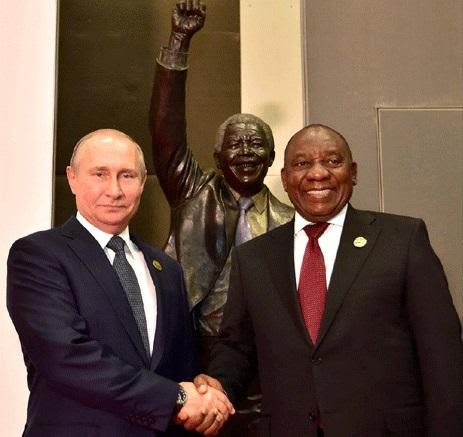
South Africa’s President Cyril Ramaphosa and his Russian counterpart Vladimir Putin have spoken over the phone about the upcoming peace mission by six Africa leaders to Russia and Ukraine.
“President Putin has welcomed the initiative by African heads of state and expressed his desire to receive the peace mission,” a statement from the South African presidency said.
On Tuesday, the African leaders involved had held discussions “exploring ways of bringing an end to the conflict”, it added.
The other leaders in the peace bid are from the Comoros, Egypt, Senegal, Uganda and Senegal – and according to a statement from the presidency on Wednesday all said they were available to travel in mid-June.
“The leaders agreed that they would engage with both President Putin and President [Volodymyr] Zelensky on the elements for a ceasefire and a lasting peace in the region.”
Their foreign ministers were now in the process of finalising the elements of a road-map to peace, it added.
Separately a Russia-Africa summit is scheduled to take place at the end of July in St Petersburg, the presidency said.
South African President Cyril Ramaphosa and his Russian counterpart Vladimir Putin spoke on the phone about the impending peace mission to Russia and Ukraine by six African leaders.
Mr Ramaphosa said the outbreak had caused devastation and government agencies had been working on measures to contain the spread of the disease.
His visit follows the death of at least 26 people, mostly in Hammanskraal, the epicentre of the outbreak.
More than 130 residents have been treated for the waterborne disease.
Figures released on Tuesday by the national statistics office, shows that South Africa has seen moderate growth in the first quarter of 2023, removing the threat of recession.
Africa’s most industrialized country saw its GDP grow by 0.4% in the first three months of the year, following a decline of 1.1% in the last quarter of 2022 (revised figures), StatsSA said in a statement.
“The manufacturing and financial industries were the main drivers of growth on the supply side”, it detailed.
Demand was driven in particular by exports.
Growth exceeded analysts’ expectations, despite the major power cuts that continue to hinder activities.
The electricity crisis in South Africa has worsened since last year, with scheduled load shedding lasting up to 12 hours a day.
Power outages are expected to reach a record 207 days in 2022, compared with 75 days in 2021.
According to estimates by the Minister of Energy, they generate more than $50 million a day in lost production.
Nevertheless, eight out of ten industrial sectors saw their activity increase in the first quarter, with only agriculture, electricity, gas and water sectors declining, according to StatsSA.
The mining sector, for its part, is back on the right foot after a disappointing end to 2022, it added.
The death of one of the principal investigators into Thabo Bester’s audacious prison break has been confirmed by South African police.
Police said they were investigating the circumstances around the apparent death by suicide of 59-year-old Brigadier Jackson Mkhaulesi. He was found dead in his car on Monday.
Earlier in the day, he attended a court hearing where Bester’s girlfriend, celebrity doctor Nandipha Magudumana, lost her application to declare her arrest in Tanzania unlawful.
News of Brigadier Mkhaulesi’s death has sent shockwaves around South Africa.
The police detective with 31 years of service has been described as a hardworking and loyal officer.
Bester is known as the “Facebook rapist” for using social networking sites to lure his victims.
He faked his death to break out of prison last year. He and his girlfriend, who is accused of helping him escape, were arrested in Tanzania in April and brought back to South Africa to face justice.
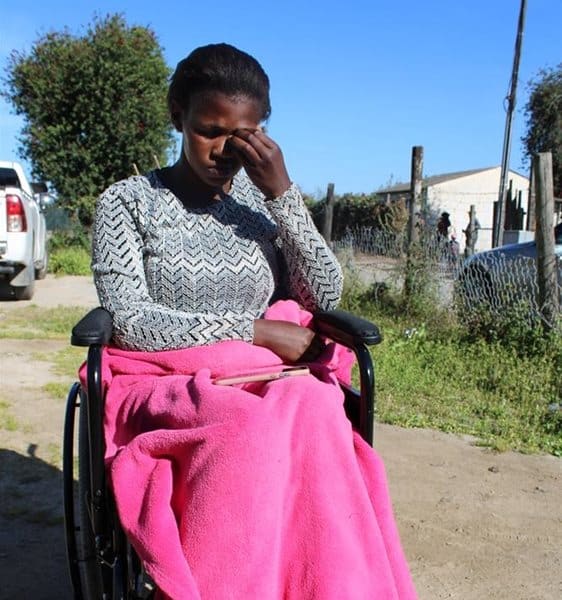
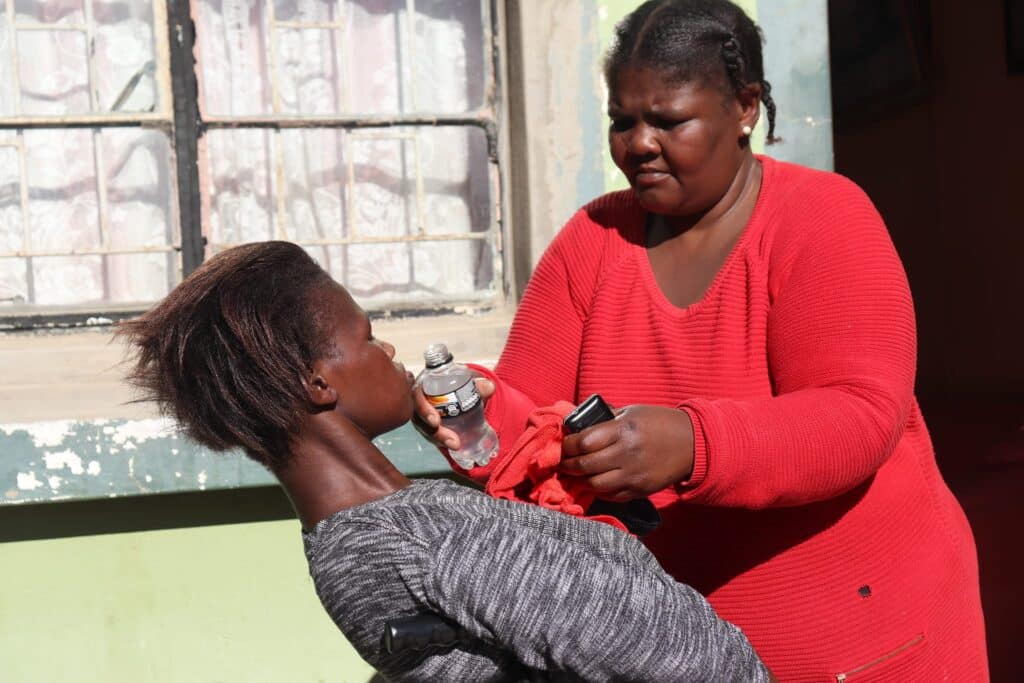
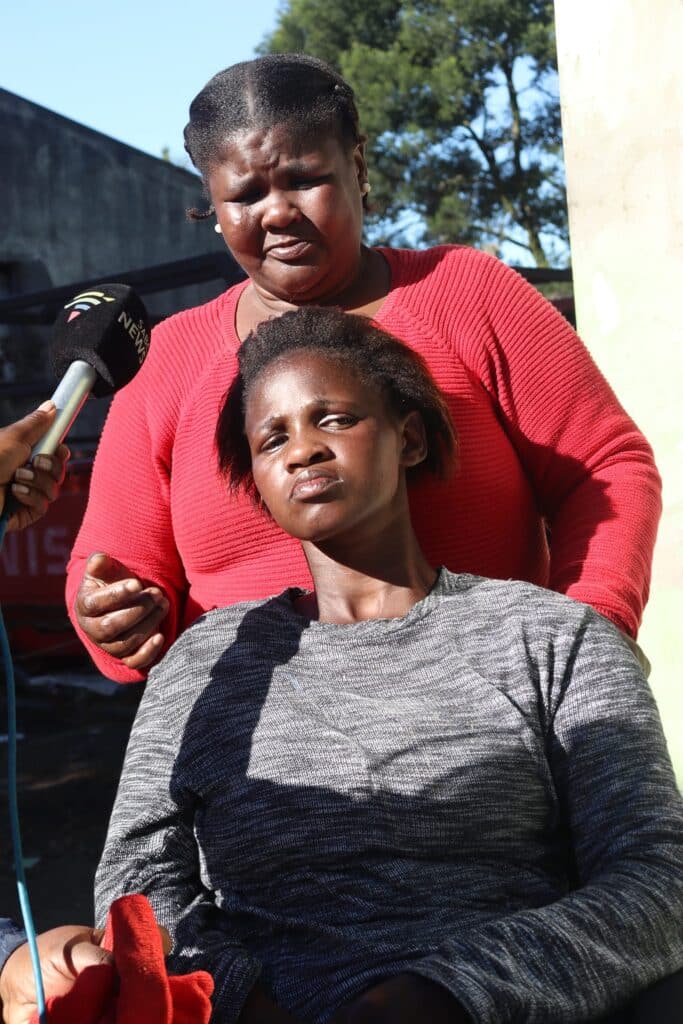
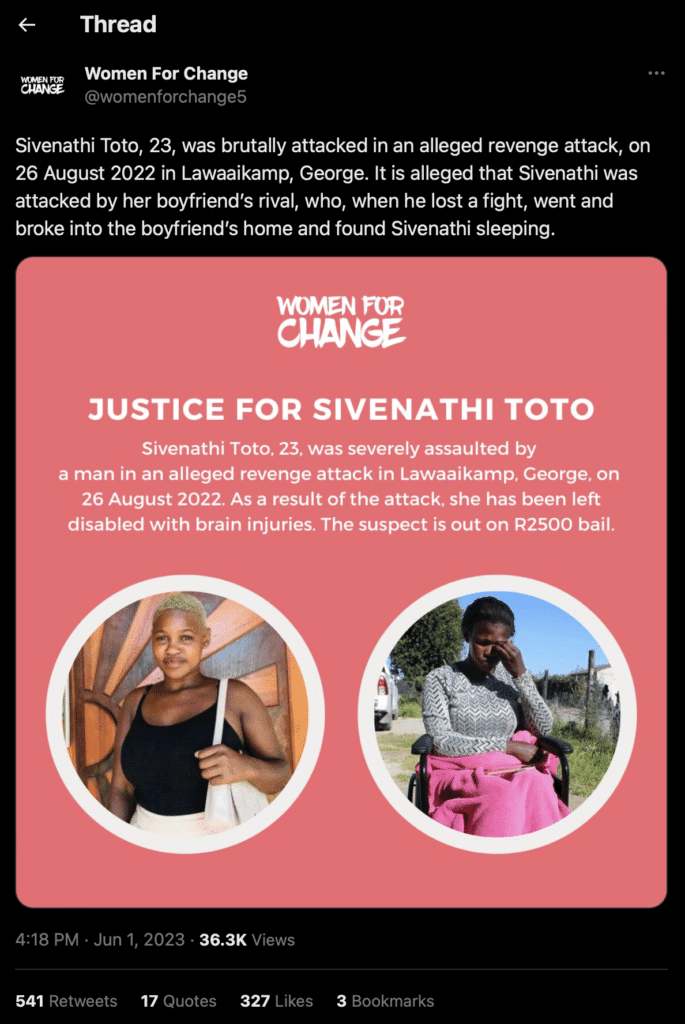
A horrifying incident in Lawaaikamp, South Africa, has left 23-year-old Sivenathi Toto paralyzed and brain damaged following a brutal attack by her boyfriend’s rival.
The suspect, identified as 23-year-old Shaun Madonono, viciously assaulted and left Toto for dead on August 26, 2022, according to Women for Change.
Toto’s cousin, Nosikhumbuzo Mhlaba, revealed that the motive behind the attack was revenge. “Her boyfriend went out and apparently had a fight with the suspect.
After the fight, the suspect allegedly returned to the boyfriend’s house to take revenge,” said Mhlaba.
Tragically, Toto’s boyfriend was not at home when Madonono arrived. Finding Toto sleeping in the outside room, Madonono forcefully broke down the door and dragged her to his own home, where he subjected her to a brutal assault.
Mhlaba explained, “He grabbed her and dragged her to his house two streets away, where he allegedly beat her until she was unconscious.”
After rendering Toto unconscious, Madonono callously loaded her into his pickup truck and abandoned her behind the Total garage on Nelson Mandela Boulevard.
Fortunately, she was discovered by a vigilant petrol attendant during the night.
A concerned neighbor took Toto home and filed a report at the police station, prompting her immediate transfer to the hospital for a medical examination.
Madonono was apprehended on the same day, but he was subsequently released on bail. Presently, he faces charges of assault with the intent to commit grievous bodily harm, kidnapping, and housebreaking.
In the aftermath of the attack, Toto has experienced various health complications. In December 2022, she suffered a stroke due to the trauma and injuries inflicted during the incident. Subsequently, in April 2023, medical examinations revealed blood clots on her brain.
As a result of the attack, Toto has lost some of her cognitive abilities and now requires assistance to walk. She has also lost control of her urinary tract movements, experiences saliva dripping from her mouth, and relies on assistance for feeding.
“She can’t talk and she has night terrors,” expressed her father, Simo Toto. “She only wants to sleep next to me. That is where she feels safe.”
Toto’s family is currently seeking justice for the traumatic ordeal she has endured. The incident has had a devastating and lasting impact on Toto’s life, and her loved ones are determined to hold the perpetrator accountable for his actions.
In a horrifying incident near the eastern city of Durban in South Africa, a group of armed assailants forcefully entered a room at a men’s hostel, resulting in a devastating loss of life.
Tragically, eight individuals were killed, while two others sustained injuries during the violent encounter. This incident marks yet another distressing mass shooting to occur within the country
Seven men were declared dead immediately after the shooting in the pre-dawn hours of Saturday in the Umlazi township. An eighth man died on Sunday, police said.
Two others are hospitalized with injuries, and they include a man who jumped out of the window of the hostel room to escape the gunfire. Police said that 12 men were in the room drinking alcohol when numerous gunmen broke in, shot at them and then fled.
Two of the men in the room were unhurt.
South Africa is among the 10 countries with the highest homicide rates in the world and there has been a spate of mass shootings in recent years. At least two mass shootings were reported earlier this year.
A child was among 10 family members who were killed at a house in April. Eight were shot dead at a birthday party in January.
Last year, 22 people were killed over one weekend in three separate shootings at bars in different parts of the country.
South Africa has reasonably strict gun laws but has serious problems with illegal firearms, police and community activists say.
An average of 30 people a day were killed by firearms in South Africa in the first three months of this year, according to official crime statistics. During the same three months, police recorded more than 4,000 cases of illegal possession of guns or ammunition.
Renowned actor Patrick Ndlovu, a veteran of the stage, has passed away at the age of 85. Ndlovu gained recognition for his portrayal of the formidable principal in the popular series “Yizo Yizo,” which is currently available for streaming on Netflix.
His most recent role was that of Sizwe Moloi on SABC 1’s drama series Zone 14.
Details surrounding Ndlovu’s death are still unclear but his agency confirmed the sad news of his untimely death.
“We are deeply saddened by the passing of legendary actor, Patrick Ndlovu, whose acting career spanned more than four decades. We were proud to represent such a consummate professional and majestic talent. He was a kind and gentle man, always ready with a smile even when times were tough. Our thoughts and prayers go out to his wife, family, and friends,” reads the statement.
He was born in Mohlakeng, outside Randfontein on the West Rand. His first love was not acting as he was a teen jazz musician.
Questioned on whether Russian leader Vladimir Putin will attend the Brics summit in South Africa in August, a Kremlin spokesman has said Russia will take part “at the proper level”, Reuters reports.
The Russian president was invited to the gathering earlier this year, but a warrant subsequently issued by the International Criminal Court (ICC) means South Africa would be expected to arrest him if he attends.
The Brics alliance represents some of the world’s leading emerging economies, including Brazil, Russia, China, India and South Africa.
“Russia attaches enormous importance to the development of this format of integration. And Russia will take part in this summit at the proper level,” Reuters quoted Kremlin spokesman Dmitry Peskov as saying at a briefing.
When pressed further about the arrest warrant, he said: “Of course we count as a bare minimum on partner countries in such an important format not being guided by such illegal decisions.”
South Africa has granted diplomatic immunity to officials attending the summit, but a foreign affairs spokesman added that such immunities were standard for international gatherings and did not override warrants issued by international tribunals.
Numbers released by the police in South Africa on Tuesday May 30 indicates that 3 murder cases are recorded every hour in the first quarter of the year
Every three months, at a press conference broadcast live on television, Police Minister Bheki Cele paints a bleak picture of insecurity in one of the most dangerous countries in the world.
Between January and March, the number of murders rose by 3.4% compared with the same period last year, with 6,289 cases recorded.
But “fewer children were killed than last year”, said Mr. Cele, with child murders down by 20%. “We are gradually making up ground on the criminals“, the minister said.
By way of comparison, South Africa records an average of ten homicides per 100,000 inhabitants, while Japan is close to zero and France one, according to the World Bank.
Sometimes described as the “epicentre of rape” because of the impressive number of complaints, South Africa opened more than 10,500 cases in the first three months of the year. This figure is down for once, with 2.8% fewer cases reported than over the same period last year.
Cash-in-transit attacks, on the other hand, rose by more than 20% and thefts from residences by almost 6%.
Authorities in South Africa are looking into an incident in which newborn babies were placed in cardboard boxes rather than incubators or cribs in North West province.
The incident in Mahikeng Provincial Hospital’s neonatal section came to light on Saturday after a Facebook post showed babies wrapped in purple hospital blankets with nasogastric tubes, and placed in brown boxes, local media said.
North West health chief Madoda Sambatha said they were investigating the matter to establish how long the babies had stayed in the boxes.
Mr Sambatha apologised and called for calm while the matter is being investigated.
He said, as a matter of urgency, arrangements had been made for additional bed cribs to be sent to the hospital.
The nursing manager of the hospital has reportedly been suspended.
Health Minister Joe Phaahla on Monday described the incident as poor management by those in charge of the facility.
Tens of thousands of people are fleeing to South Sudan to escape the conflict between Sudan’s military and a rival militia, which has so far killed at least 863 civilians.
Last Monday a 7-day ceasefire was agreed.
Many took the opportunity to head to the border with the world’s youngest nation.
“We fled because of the war and we came here and there was violence again. We don’t understand what’s happening. We’re hungry and thirsty and the rain is coming and we don’t have plastic sheets. We’re tired and we don’t know how our problems will be solved”, said Alwel Ngok, a South Sudanese who was living in Sudan’s capital, Khartoum, with her family until the violence erupted.
Aid agencies are struggling to cope with the influx of people. Even before this crisis, 70% of the population in Sudan needed humanitarian assistance.
“They are very hungry, and they are thirsty and they are very tired. So they need help, they need food, they need water, they need for healthy, they need everything”, appealed Mary Otwong, a border monitor with the United Nations International Organization for Migration.
United Nations World Food Program regional director for East Africa, Michael Dunford, added:
“My biggest concern is the implications that this crisis in Sudan will have across the region, particularly in South Sudan. Even before this crisis, 70% of the population needed humanitarian assistance and at the moment WFP can’t meet their needs, we’re going to struggle to meet any increased needs at this stage”.
On Friday, Sudan’s army appealed for reservists and retired soldiers to re-enlist and asked the United Nations to change its envoy to the country.
After years on the run, authorities say the most sought fugitive suspected of taking part in the 1994 Rwandan genocide has been captured in Paarl, South Africa.
According to a statement, Fulgence Kayishema was apprehended on Wednesday in a combined operation involving South African law enforcement and a UN team tasked with tracking down the remaining fugitives.
Kayishema initially disputed his identification when he was apprehended in the late afternoon, according to detectives. But by the end of the evening he told them: “I have been waiting a long time to be arrested.”
Investigators said he used multiple identities and forged documents to evade detection.
Kayishema allegedly orchestrated the killing of more than 2,000 Tutsi refugees – women, men, children and the elderly – at Nyange Catholic Church during the genocide. He has been on the run since 2001.
“Fulgence Kayishema was a fugitive for more than 20 years. His arrest ensures that he will finally face justice for his alleged crimes,” said Chief Prosecutor Serge Brammertz of the United Nations’ International Residual Mechanism for Criminal Tribunals (IRMCT).
“Genocide is the most serious crime known to humankind. The international community has committed to ensure that its perpetrators will be prosecuted and punished.
This arrest is a tangible demonstration that this commitment does not fade and that justice will be done, no matter how long it takes,” Brammertz said.
Huge reward offered
In recent years, the IRMCT prosecutor has complained about the lack of cooperation from South African authorities and there have been a series of near misses capturing Kayishema. But on Thursday, Brammertz lauded the cooperation and support of the South African government.
The events in Nyanga,Rwanda, were one of the most brutal of the genocide, in which an estimated 800,000 Tutsis and moderate Hutus were killed over the period of 90 days.
The tribunal alleges that Kayishema directly participated in the “planning and execution of this massacre.” The indictment says he bought and distributed petrol to burn down the church while refugees were inside. Kayishema and others are also accused of using a bulldozer to collapse the church following the fire, while refugees were still inside.
The office of the IRMCT says the investigation spanned multiple countries across Africa and in other regions.
A reward of up to $5,000,000 was offered by the US War Crimes Rewards Program for information on Kayishema and the other fugitives wanted for perpetrating the Rwandan genocide.
Kayishema is due to be arraigned on Friday in a Cape Town court.
The Rwandan genocide saw Hutu militias and civilians alike murder vast numbers of members of the Tutsi ethnic minority: men, women and children, many of whom had been their neighbors before the conflict began.
The killings finally came to an end 100 days later, when Rwandan Patriotic Front (RPF) troops, led by Paul Kagame, defeated the Hutu rebels and took control of the country.
After years on the run, authorities say the most sought fugitive suspected of taking part in the 1994 Rwandangenocide has been captured in Paarl, South Africa.
According to a statement, Fulgence Kayishema was apprehended on Wednesday in a combined operation involving South African law enforcement and a UN team tasked with tracking down the remaining fugitives.
Kayishema initially denied being him when he was apprehended, according to the investigators. At night’s end, he did, however, confess to them, saying, “I have been waiting a long time to be arrested.”
Investigators said he used multiple identities and forged documents to evade detection.
“The arrest was the culmination of an intense, thorough and rigorous investigation,” a senior official at the prosecutor’s office involved in the case told CNN.
“Family members and known associates were exhaustively investigated. That ultimately led to identifying the right location to search and finding the critical intelligence that was needed.”
Kayishema allegedly orchestrated the killing of more than 2,000 Tutsi refugees – women, men, children and the elderly – at Nyange Catholic Church during the genocide. He has been on the run since 2001.
“Fulgence Kayishema was a fugitive for more than 20 years. His arrest ensures that he will finally face justice for his alleged crimes,” said Chief Prosecutor Serge Brammertz of the United Nations’ International Residual Mechanism for Criminal Tribunals (IRMCT).
“Genocide is the most serious crime known to humankind. The international community has committed to ensure that its perpetrators will be prosecuted and punished. This arrest is a tangible demonstration that this commitment does not fade and that justice will be done, no matter how long it takes,” Brammertz said.
In recent years, the IRMCT prosecutor has complained about the lack of cooperation from South African authorities and there have been a series of near misses capturing Kayishema. But on Thursday, Brammertz lauded the cooperation and support of the South African government.
The events in Nyanga, Rwanda, were one of the most brutal of the genocide, in which an estimated 800,000 Tutsis and moderate Hutus were killed over the period of 90 days.
The tribunal alleges that Kayishema directly participated in the “planning and execution of this massacre.” The indictment says he bought and distributed petrol to burn down the church while refugees were inside. Kayishema and others are also accused of using a bulldozer to collapse the church following the fire, while refugees were still inside.
The office of the IRMCT says the investigation spanned multiple countries across Africa and in other regions.
A reward of up to $5,000,000 was offered by the US War Crimes Rewards Program for information on Kayishema and the other fugitives wanted for perpetrating the Rwandan genocide.
Kayishema is due to be arraigned on Friday in a Cape Town court.
The Rwandan genocide saw Hutu militias and civilians alike murder vast numbers of members of the Tutsi ethnic minority: men, women and children, many of whom had been their neighbors before the conflict began.
The killings finally came to an end 100 days later, when Rwandan Patriotic Front (RPF) troops, led by Paul Kagame, defeated the Hutu rebels and took control of the country.
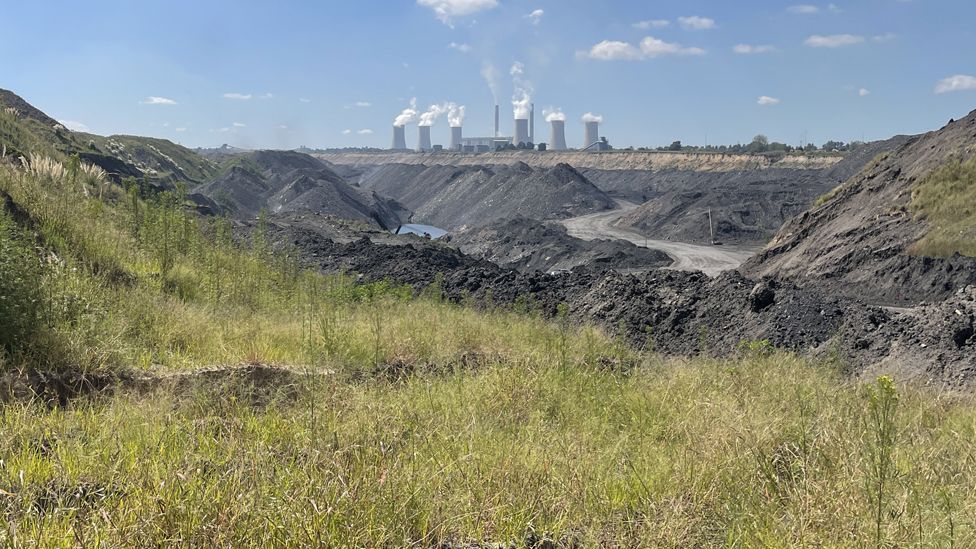
The root cause of South Africa’s worst-ever power outage lasting up to 16 hours each day has been identified as bad management, fraud, and sabotage.
Late one Thursday afternoon, last November, a maintenance contractor reached his hand under a huge rotating shaft at an ageing power station in South Africa.
It took the man just a few seconds to unscrew a steel plug, smaller than a coffee mug.
As he moved away from the scene, precious lubrication oil quickly began seeping from the innards of the shaft. The steel bearings inside overheated and before long the coal mill, and with it one of the station’s eight turbines, ground to a sudden, and expensive, halt.
If you are looking to understand South Africa’s current struggles – its soaring crime and unemployment rates, its stubborn inequality and stagnant economy, its relentless corruption and crippling power cuts, and its broader drift towards what some fear could become “gangster state” or even “failed state” territory – then this one act of industrial sabotage, at a coal-fired power station on the high plains east of Johannesburg, is a good place to start.
The alleged saboteur, Simon Shongwe, 43, was working as a sub-contractor at Camden – a plant that was built back in the 1960s, bombed by anti-apartheid activists in the 1980s, mothballed in the 1990s, and more recently brought out of retirement to help a country now battling to keep the lights on.
There are several theories about the alleged sabotage.
It could have been designed to break the coal mill in order to enable a corrupt repair company to come and fix it at an inflated cost.
It might have been done as a way of threatening Camden’s management in to accepting some other corrupt contract.
Or it may have been part of a broader political conspiracy to damage South Africa’s energy infrastructure and undermine an ANC government increasingly seen as floundering after nearly three decades in power.
What is certain is that the sabotage at Unit 4 was not an isolated event.
Instead, it was one relatively small act in a vast, ongoing, and highly successful criminal enterprise that involves murders, poisoning, fires, cable theft, ruthless cartels and powerful politicians.
It is an enterprise that risks derailing international attempts to nudge South Africa away from its dependence on coal and towards renewable energy sources.
Over the past decade it has brought South Africa’s once-world-class public power utility, Eskom, to the brink of collapse and left most homes around the country in darkness for many hours each day.
Image caption,South Africa relies on coal-fired power stations, some of which have been targeted by saboteurs
One month after the incident at Camden, on a secure floor of a large grey office block on the northern outskirts of Johannesburg, a much smaller machine was causing problems.
The coffee dispenser for the executive management team at Eskom was faulty. Or so it seemed.
When the CEO’s assistant came over to fill her boss’s personalised mug, there was a delay.
She left the mug unattended for a few minutes, and then, once the machine had been serviced, she returned to the CEO’s office with his coffee.
“I detected nothing. The foam consistency was a bit different to normal, but I thought nothing of it,” Andre de Ruyter reflected later, in an explosive interview he gave to the South African broadcaster, eNCA.
But 15 minutes later, the man in charge of South Africa’s power utility suddenly felt off-balance. Before long he was shaking violently, gasping for air, and “extremely nauseous”.
His security guards rushed him to a nearby clinic.
His doctors later confirmed that Mr De Ruyter had been poisoned with cyanide, possibly mixed with rat poison in order to mask the presence of the cyanide in any blood tests.
He was lucky to survive.
“So, this is where the executives serve themselves with coffee,” said Eskom’s head of security, Karen Pillay, showing us around the office one recent afternoon.
“I consider it a dangerous space. I’m still scared for my life, every day. Absolutely.”
Board Chairman of the Ghana National Petroleum Corporation (GNPC), Freddie Blay, has responded to a group ofCivil Society Organizations(CSOs) demanding that President Akufo-Addo urgently replaces him.
Blay, a former New Patriotic Party (NPP) chairman in an interview said he would rather be fired by the appointing authority than to resign.
He also confirmed having held talks with president Akufo-Addo over a May 16 stinging letter Minister of Energy, Matthew Opoku Prempeh wrote in respect of a planned sale of 50% shares of government’s stake in an oil field to South African firm, Petro SA.
“Possibly, I could be fired, but I don’t see any reason why they are saying I should resign about this issue. I have done nothing wrong. I have observed my conscience and I thought I was protecting the interest of the country, and I am convinced about it and if others think otherwise and if those who appointed me are saying otherwise, then so be it.
“I have spoken to the president about it, and we haven’t gotten to where he will ask for his job back. It is not about convincing the president, the law will speak for itself and the law will talk and there are few documents on the agreement.”
Concern of CSOs
A group of 29 CSOs on Extractive Governance on May 23, 2023 called for the immediate dismissal of Freddie Blay and Chief Executive Officer of the Corporation, Opoku Ahweneeh Danquah.
The calls came on the back of recent reports and documents indicating GNPC’s intention to sell 50% stake in Jubilee Holdings Limited (JOHL) in a deal with a South African oil company, PetroSA despite significant revenue potential this interest holds for the state.
Coordinator for the Economic Governance Platform,Abdul Karim Mohammedtold the press that the persistent involvement of such persons associated with such deals pose significant risk to Ghana’s stake and interest in the petroleum sector.
“We demand the immediate removal of GNPC’s CEO, Opoku Ahweneeh Danquah and the Board Chairman, Freddie W. Blay from their respective positions as they have become a threat to Ghana’s interest in the petroleum sector”, he said.
Abdul Mohammed further noted that Energy Minister, Dr Matthew Opoku Prempeh has vehemently opposed the decision by the GNPC Board Chairman [Freddie Blay] in offering interest in Ghana’s stake to PetroSA which is based in South Africa.
“It is a viable field, and it is giving us a lot of money if we allow this to go forward. What it means is that PetroSA will be entitled to 50 percent of the earnings from the field, whereas they have not had any role in developing the field to the point where it is now viable,” he explained.
“The information we have is that the Minister for Energy has objected to this transaction but the Chairman of GNPC Board is pushing this transaction to the extent that the Minister of Energy had written to the Jubilee House over this transaction,” the Coordinator added.
Meanwhile, documents in the media have suggested that Freddie Blay in his capacity as the GNPC Board Chairman is said to have written to PetroSA offering it an equal split in the interest held by GNPC’s subsidiary, Jubilee Oil Holdings Limited.
The move has since resulted in backlash from the CSOs made up of the Africa Centre for Energy Policy (ACEP), Centre for Democratic Development (CDD-Ghana), the Chamber of Petroleum Consumers Ghana (COPEC), Imani Centre for Policy and Education and 25 others.
Health officials have reported that a cholera outbreak in Gauteng, South Africa’s most populous province, has claimed at least 10 lives.
At least 95 people have since last Monday visited hospitals showing cholera symptoms in Hammanskraal, an area north of the capital, Pretoria.
Lab tests on Sunday confirmed at least 19 were cases of cholera, the Gauteng health department said in a statement.
It added that 37 people were admitted in critical condition.
The victims included a three-year-old child and nine adults.
Nomantu Nkomo-Ralehoko, the provincial head for health, has urged the public to take extra precautionary measures and maintain proper hand hygiene.
The city of Tshwane is warning residents of Hammanskraal and surrounding areas not to drink water from their taps, adding that water tankers were being supplied.
The biggest opposition party in South Africa says it has requested an investigation into what it claims are overpriced contracts for maintaining ministers’ opulent houses.
This comes after the ANC government revealed that between 2019 and 2022 it had spent nearly $5m (£4m) maintaining dozens of properties occupied by public servants.
The controversy adds pressure on President Cyril Ramaphosa, who was elected on promises to root out corruption after his predecessor Jacob Zuma’s term was marred by political and financial scandals.
Adding South African spice to an old joke, the opposition Democratic Alliance says “at least we finally can answer the question of how much money it takes for ANC cadres to replace a lightbulb”.
Alleging brazen corruption, it says the bill for bulbs was almost a $1,000 at one ministerial mansion in Pretoria.
Then there was the $70,000 kitchen renovation and $2.5m spent on generators in ministers’ homes – while most have been struggling with South Africa‘s worst power cuts.
It is already the most unequal country in the world. Corruption may be making the chasm between the “haves” and the “have nots” even wider.
South African Deputy President Paul Mashatile stated that the administration is optimistic that its emergency purchase programs would end the country’s energy problem.
State-owned power company Eskom’s board has approved three emergency procurement programmes that now only require the approval of the National Energy Regulator of South Africa, which will host hearings on Friday, local media reported.
“Apart from appointing the minister of electricity, we have announced we are now embarking on procuring emergency power. Government is determined to keep the lights on,” Mr Mashatile said on Thursday.
He said, in some instances, Eskom would use diesel to keep the lights on, adding that the government was still committed to renewable energy.
His remarks came shortly after Eskom issued a statement on Wednesday warning that the country’s power system was severely constrained, with a high likelihood of prolonged power outages during winter.
South Africa is braced for a harsh winter after the state-owned power utility Eskom predicted widespread power outages.
“With the winter season upon us, our power system will be even more constrained…weather forecasters are anticipating a much colder winter and these challenges will result in high electricity demand”, said Eskom chairperson Mpho Makwana on Thursday.
The country is currently experiencing “stage 6” load shedding, where consumers go without electricity for up to 12 hours a day. With “stage 8” load shedding expected this winter, consumers will have up to 16 hours of no electricity every single day.
Stage 8 power cuts would require up to 8,000MW to be shed from the national grid. This is likely to cause more businesses to shut down, further job losses and a high possibility of civil unrest.
Even though officials insist that the risk of a blackout is low, many South Africans are worried that the worst case scenario is very likely.
A trade advocacy group has called for the removal of VAT on chicken in order for families to be able to feed themselves as the country stumbles “into a hunger pandemic.”
Francois Baird of the Fair Play Movement has warned that regular load shedding, or power blackouts, in South Africa was also contributing to the problem.
“The real effect is on the health of the nation,” Mr Baird said, adding that rising inflation and unemployment meant many people could no longer afford to pay for food.
He said that 27% of children under five were stunted in South Africa because mothers don’t get enough protein while pregnant and this carries on after the children are born, adding that the problem was worse in rural areas.
“Everything possible must be done also to assist small farmers.”
He said that reducing the cost of chicken by removing VAT would help address this, as chicken was a major source of protein for many people in South Africa.
He added that food prices were outpacing people’s salaries, warning that an essential basket of food costs more than the minimum wage per month.
Eight out of 10 South African school children struggle to read by the age of ten, an international study has found.
South Africa ranked last out of 57 countries assessed in the Progress in International Reading Literacy Study, which tested the reading ability of 400,000 students globally in 2021.
Illiteracy among South African children rose from 78% in 2016 to 81%.
The country’s education minister blamed the results on school closures during the Covid-19 pandemic.
Describing the results as “disappointingly low”, Angie Motshekga also said the country’s education system was faced with significant historical challenges, including poverty, inequality and inadequate infrastructure.
In many primary schools “reading instruction often focuses solely on oral performance, neglecting reading comprehension and making sense of written words”, she added.
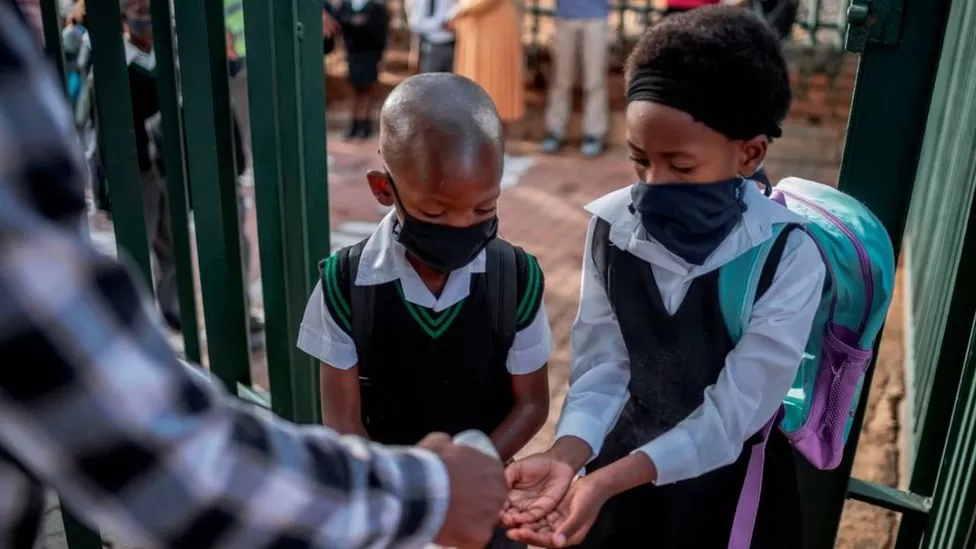
South Africa’s education minister said the disappointing results were a result of school closures during the Covid-19 pandemic
The study showed that 81% of South African children could not read for comprehension in any of the country’s 11 official languages.
Alongside Morocco and Egypt, South Africa was one of only three African countries which participated in the assessments to monitor trends in literacy and reading comprehension of nine- and 10-year-olds.
Based on tests taken every five years at the end of the school year, the new study places countries in a global education league table.
Singapore secured top spot in the rankings with an average score of 587, while South Africa ranked last on 288 points – below second-last Egypt’s average of 378. The scores are benchmarked against an international average of 500.
The study also showed that overall, girls were ahead of boys in their reading achievement in nearly all of the assessed countries, but the gender gap has narrowed in the most recent testing round.
South Africa’s struggles with its education system are longstanding, with significant inequality between black and white students a consequence of the segregation of children under apartheid.
Education is one the single biggest budget expenses for the government, which can lead to disappointment over poor performance in studies like this.
A lack of suitable reading materials and inadequate infrastructure in schools, often things like toilets, have contributed to the crisis.
In meetings held in Moscow, senior military officials from South Africa and Russia agreed to expand their cooperation and improve the combat readiness of their armies, according to a report from Russia’s defense ministry in the state-run Tass news agency.
The high-level talks come days after the US ambassador to Pretoria, Reuben Brigety, accused South Africa of supplying arms and ammunition to Russia, despite its professed neutrality in the Ukraine war.
The commander of South Africa’s land forces, Lieutenant General Lawrence Mbatha, led the talks with his Russian counterpart, Oleg Salyukov, in Moscow, Tass reports.
“The sides discussed issues of military cooperation, and the implementation of projects geared to enhance the combat readiness of the two countries’ armies.
“The meeting between the military commanders yielded agreements on the further expansion of cooperation between the land forces in various areas,” the ministry is quoted as saying.
Last week, South Africa found itself at the centre of a diplomatic storm with the US after Mr Brigety said he was confident that arms and ammunition were loaded on a Russian ship at a naval base in Cape Town in December.
South Africa said it had no record of an arms sale, but President Cyril Ramaphosa has ordered an inquiry to investigate the allegations.
In his weekly newsletter published on Monday, Mr Ramaphosa said South Africa was under “extraordinary pressure” to take sides in the Ukraine war, but it would not do so in what was “in effect a contest between Russia and the West”.
The South African National Defence Force (SANDF) confirmed that senior military officers were currently in Moscow.
“It must be noted that South Africa has military-to-military bilateral relations with various countries in the continent and beyond,” the SANDF said in a statement, adding that the trip to Russia was planned well in advance.
The main opposition Democratic Alliance (DA) said the visit was the latest example of the South African government “unashamedly” showing its support for Russia.
Cyril Ramaphosa, the president of South Africa, has declared that the government has opened a criminal investigation into a documentary about major financial irregularities involving the nation’s banking system.
The four-part documentary titled ‘Gold Mafia’ entailed a number of rogue businessmen who spoke about an extensive money laundering and gold racketeering business across a number of African countries.
Ramaphosa, responding to a question in Parliament said, the government took the allegations very seriously and that even though no arrests have been made, a formal probe had commenced.
“The government takes the allegations made in the Al Jazeera documentary titled Gold Mafia very seriously. We are committed to preserving the integrity of our financial system in the interest of the broader economy and ordinary citizens.
“With respect to actions currently being taken to investigate individuals who are alleged in the documentary to be criminally implicated an inquiry has been registered to investigate these syndicate and individuals,” he stated.
He said no arrests had been made at the time he was speaking but that, “details of steps cannot be divulged,” as the financial action taskforce investigates with the view to prosecute and prevent financial activities as were captured in the film.
Ghana was also mentioned in one sequel of the film, with Alistair Mathias a self-confessed money launderer stating among others that he was friends with president Nana Addo Dankwa Akufo-Addo who was a lawyer of his at a point.
The president told Al Jazeera that he had no recollection of dealing with Mathias before his lawyer also denied that he acted at a point for Mathias or his company. Alistair himself denied knowing Akufo-Addo.
After the documentary was aired, government wrote to Al Jazeera demanding a retraction and apology for some parts of their reportage but the Doha-based channel said it owed the president no apology because it had done due diligence in telling both sides of the story.
A documentary by Al Jazeera that revealed massive financial fraud involving gold and money laundering across several African countries has prompted the South African government to launch a criminal investigation.
The four-part documentary, called‘Gold Mafia’, featured interviews with rogue businessmen who admitted to running a lucrative gold smuggling and money laundering operation that exploited the loopholes in the banking system.
South African president Cyril Ramaphosa said in Parliament that the government was taking the allegations very seriously and that it was determined to protect the integrity of its financial system for the benefit of the economy and the citizens.
He said that an inquiry had been registered to investigate the syndicate and the individuals who were allegedly involved in the criminal activities, as shown in the documentary.
President @CyrilRamaphosa announces an inquiry into our Gold Mafia investigation in South Africa’s parliament. He says authorities will ‘thoroughly investigate’ individuals exposed as ‘criminally implicated’. #GoldMafiapic.twitter.com/9Ow74fnDVr
— Al Jazeera Investigations (@AJIunit) May 12, 2023
He added that no arrests had been made yet and that he could not disclose more details as the financial action taskforce was working on the case.
The documentary also mentioned Ghana, where one of the self-confessed money launderers, Alistair Mathias, claimed to be friends with president Nana Addo Dankwa Akufo-Addo, who had once been his lawyer.
However, Akufo-Addo denied knowing Mathias and his lawyer also refuted that he had ever represented Mathias or his company. Mathias later retracted his claim and said he did not know Akufo-Addo.
The Ghanaian government demanded an apology and a retraction from Al Jazeera for some parts of their reportage, but the Qatar-based channel refused to do so, saying that it had done its due diligence and presented both sides of the story.
The US ambassador to South Africa has “unreservedly apologized,” according to South Africa’s foreign ministry, for saying that the nation sold weapons to Russia.
On Thursday Reuben Brigety alleged a Russian ship was loaded with ammunition and weapons in Cape Town last December.
South Africa says it has no record of an arms sale and President Cyril Ramaphosa has ordered an inquiry.
On Friday the White House national security spokesman would not be drawn on details of the allegations.
But John Kirby said it was a “serious issue” and the US had consistently urged countries not to provide support for Russia’s war in Ukraine.
Writing on social media after meeting the foreign ministry, Mr Brigety said he was “grateful for the opportunity to… correct any misimpressions left by my public remarks”.
He said in the conversation he “re-affirmed the strong partnership between our two countries and the important agenda our presidents have given us”.
Meanwhile a South African cabinet minister hit out at such “megaphone diplomacy”, saying South Africa could not be “bullied by the US”.
“It is the US which has sanctions against Russia… they must not drag us into their issues with Russia,” Khumbudzo Ntshavheni, a minister in the presidency, told public broadcaster SABC.
Her bullish comments followed a Kremlin statement saying President Vladmir Putin had spoken to his South African counterpart by phone and the two had agreed to deepen “mutually beneficial ties”.
There is no dispute that a Russian ship, known as Lady R, docked at a naval base near Cape Town last December – prompting questions from local politicians at the time. Whether the ship was supplied with arms before returning to Russia still needs to be established.
If the accusations are true, South Africa will have violated its own Arms Control Act, which commits to “not trade in conventional arms with states engaged in repression, aggression or terrorism”.
In the same act, South Africa describes itself as a “responsible member of the international community”.
South Africa is one of a handful of countries that has abstained from a number of UN votes on the conflict and has refused to publicly condemn Russia, insisting it is non-aligned on the matter.
For months the regional superpower has been saying it instead supports a mediated settlement to the conflict.
Supplying arms while claiming to be neutral would not only rubbish that stance but would leave South Africa with a lot to answer both to its citizens and the international community.
Some in the governing African National Congress (ANC) appear to have a lingering affection for Russia because of the then-USSR’s support for their fight against white-minority rule. But in present-day South Africa, many have been asking questions about whether this love affair truly serves South Africa’s interests.
Experts say the country has more in common and a much bigger trade relationship with the West. Some are worried about a possible economic impact if ties with the US strain further.
The country’s currency, the rand, which has been struggling for weeks as a result of months of rolling power cuts, weakened even further following the US ambassador’s accusations.
It is an additional problem that South African citizens can scarcely afford.
The investigation into claims that South Africa sent weapons to Russia during the continuing conflict with Ukraine has been welcomed by the country’s defense ministry, according to President Cyril Ramaphosa.
“The inquiry will offer the department an opportunity to ventilate its side of the story with concrete evidence,” a spokesperson from the department said.
This comes as South Africa’s Head of Diplomacy, Clayson Monyela, said the country’s foreign minister will speak to her US counterpart, Anthony Blinken later on Friday.
On Thursday, the US ambassador to South Africa, Reuben Brigety, claimed that a Russian ship was loaded with ammunition and arms in Cape Town last December.
President Ramaphosa’s office said it was disappointed by the claims and said no evidence had been provided to support them.
The country has maintained claims of neutrality over Russia’s invasion of Ukraine.
In the midst of a diplomatic dispute over allegations of arm sales to Russia, South Africa is attempting to mend fences with the US.
US ambassador Reuben Brigety has claimed a Russian ship was loaded with ammunition and weapons in Cape Town last December.
The allegation created a diplomatic storm and South Africa has said it has no record of an approved arms sale.
But the government also said it valued a “cordial, strong, and mutually beneficial” relationship with the US.
An inquiry looking into the claims has been set up, President Cyril Ramaphosa confirmed on Thursday.
South African authorities have expressed disappointment over what one official describes as “megaphone” politics by the US ambassador, referring to Mr Brigety’s news conference on Thursday where he made the scathing accusations.
The BBC understands that behind the scenes the government is more than disappointed – they have been angered by what some see as the US trying to strong-arm South Africa into aligning with it over Russia’s invasion of Ukraine “by any means necessary”.
Officially, the department of international relations has said Foreign Minister Naledi Pandor will be speaking to her US counterpart Antony Blinken on Friday afternoon.
They’ve also said they will be officially issuing a complaint against Mr Brigety through diplomatic channels – a reprimand of sorts.
While the US has provided no evidence of the accusations yet, South Africa’s presidency on Thursday said it would set-up an enquiry which would be chaired by a retired judge to investigate the alleged incident.
The presidency told the BBC that the terms of that inquiry, as well as when it would begin its investigation, would be communicated in due course.
There is no dispute that a Russian ship, known as Lady R, docked off the Cape Town coast last December – prompting questions from local politicians at the time. Whether the ship was supplied with arms before returning to Russia still needs to be established.
But it’s about more than a diplomatic row between old trade partners.
If the accusations are true, South Africa will have violated its own Arms Control Act, which commits to “not trade in conventional arms with states engaged in repression, aggression or terrorism”.
In the same act, South Africa describes itself as a “responsible member of the international community”.
The government said on Friday that they had no record of arms being sold to Russia – and that if this happened – it was done covertly.
Even this possibility does not bode well for South Africa, at best it would speak to a government that does not have a handle of the country’s affairs and at worst, would suggest something far more sinister – complicity in Russia’s aggression against Ukraine.
South Africa is one of a handful of countries that has abstained from a number of UN votes on the conflict and has refused to publicly condemn Russia, insisting it is non-aligned on the matter.
For months the regional super-power has been saying it instead supports a mediated settlement to the conflict.
Supplying arms while claiming to be neutral would not only rubbish that stance but will leave South Africa with a lot to answer both to its citizens and the international community.
Russia seems to stir feelings of nostalgia for some in the governing African National Congress, for the then USSR’s support for their fight against apartheid. But in present day South Africa, many have been asking questions about whether this love affair truly serves South Africa’s interests.
International relations experts have pointed out that South Africa has more in common with some in the West, including the US, on matters of democracy and international law, and a far greater trade relationship with the West than with Russia.
They’ve said it’s a relationship that may have been useful at a time in history for ANC activists, but in a world where Russia is increasingly being viewed as an aggressor and human rights violator following its invasion of Ukraine – are these really the friends South Africa needs?
Some are worried about possible economic implications for South Africa, if relations with the US strain further.
The country’s currency, the rand, which has been struggling for weeks as a result of months of rolling power cuts leaving homes and industries in the dark for up to 12 hours at times, crippling the economy, weakened even further following the US ambassador’s accusations.
It’s an additional problem that South African citizens can scarcely afford.
As reported by the local media, the US ambassador to South Africa accused the South African government on Thursday of supplying weapons and ammunition to a Russian cargo ship that was subject to sanctions in the latter part of last year.
“Among the things we noted was the cargo ship’s docking in Simon’s Town naval base between the 6th and the 8th of December 2022, which we are confident uploaded weapons and ammunition onto that vessel in Simon’s Town as it made its way back to Russian,” Ambassador Reuben Brigety II told regional media, including News24.com.
“We are confident that weapons were loaded onto that vessel, and I would bet my life on the accuracy on that assertion,” the ambassador also said in a video released by Newzroom Afrika, a local news channel that was also at the briefing.
“The arming of the Russians is extremely serious, and we do not consider this issue to be resolved, and we would like SA to [begin] practicing its non-alignment policy,” he said, according to both news outlets.
In response to the ambassador’s claims, South Africa has summoned Brigety to Pretoria. In a statement released on Twitter Friday, Clayson Monyela, the head of public diplomacy for the South African foreign ministry, said it would “demarche the USA Ambassador to South Africa following his remarks yesterday.”
Monyela said a detailed statement would be released following the meeting. South African Foreign Minister Naledi Pandor would also speak to her US counterpart, Secretary Antony Blinken, about the matter, he added.
The presence of the mysterious ‘Lady R’ cargo vessel caused significant speculation when it docked at the naval base in Simon’s Town near Cape Town in December last year. Cargo vessels routinely dock at Cape Town’s civilian harbor, not the naval base.
At the time, opposition member of parliament and shadow Defense Minister Kobus Marais said in a statement that goods were loaded off and onto the ship during the overnight hours and demanded answers from the government.
The US Treasury Office of Foreign Assets Control added the Lady R to its sanctions list in May last year for alleged weapons shipments, along with a host of other Russian-flagged cargo vessels.
The South African presidency called the explosive allegations “disappointing” and warned that the remarks “undermine the spirit of cooperation and partnership” between the US and South African government officials who had been discussing the matter.
President Cyril Ramaphosa’s office said in a statement late Thursday that no evidence had been provided to support these allegations and that the government planned to form an independent inquiry into the matter.
“In recent engagements between the South African delegation and US officials, the Lady R matter was discussed and there was agreement that an investigation will be allowed to run its course and that the US intelligence services will provide whatever evidence in their possession,” the statement read.
CNN asked presidential spokesman Vincent Magwenya why an inquiry was needed for events at South Africa’s own naval base.
“US intelligence services said they had evidence that they would only provide to us via a credible investigation or inquiry. We take the allegations seriously, and we want to have a credible independent voice to state the actual facts of the matter,” he said.
“Otherwise, we risk a back forth series of accusations and denials, which is not going to be helpful in the context of our bilateral relations.”
It is unusual for a US ambassador in South Africa to make such public accusations against the government.
The South African government has come under intense criticism for its stance on Russia’s invasion of Ukraine and has routinely abstained from votes condemning Russia at the United Nations General Assembly.
While South African leadership has repeatedly stated that they are neutral in the conflict and have frequently called for a negotiated settlement, their actions have come under increasing scrutiny from Western powers.
In February of this year, South Africa convened naval war games off its coast including both the Russian and Chinese military.
Later this year, South Africa will host the BRICS summit, a grouping of Brazil, Russia, India, China, and South Africa. Russian President Vladimir Putin was invited to that summit.
South African officials have flip-flopped in their public commitment to the Rome Statute – the treaty that compels signatory nations to arrest individuals indicted by the court – after Putin was indicted for alleged war crimes in March.
While South Africa’s ruling party African National Congress has an ideological history with Russia and the former Soviet Union, the European Union and the United States are far bigger trading partners.
The United States has accused South Africa of sending armaments toRussia in a secret naval operation, creating a foreign policy dilemma for President Cyril Ramaphosa over the country’s links to the Kremlin and its stance on the Ukraine conflict.
Reuben Brigety, US ambassador to South Africa, told local media on Thursday that the US believed weapons and ammunition were loaded on to the Lady R, a Russian vessel under sanctions that docked at Simon’s Town naval dockyard near Cape Town in December.
“Among the things we noted was the docking of the cargo ship . . . which we are confident uploaded weapons and ammunition on to that vessel in Simon’s Town as it made its way back to Russia,” he said, in comments reported by South Africa’s News24.
“The arming of the Russians is extremely serious, and we do not consider this issue to be resolved,” he added.
“The US embassy and South Africa’s foreign ministry did not immediately respond to requests for comment. Ramaphosa’s office said it would respond “in due course”.
The rand dropped 2 per cent to 19.2 to the US dollar on the reports, its weakest level since April 2020.
South Africa has said it is non-aligned in the war, but Ramaphosa’s government is under pressure over signs it is favouring Russia, for example by holding joint naval exercises this year.
Ramaphosa has also extended an invitation for Russian president Vladimir Putin to attend a Brics leaders’ summit in Johannesburg in August — a move that has backfired on Pretoria after the International Criminal Court indicted Putin for war crimes. South Africa, a member of the ICC, would be legally obliged to arrest Putin if he travels there.
Sydney Mufamadi, Ramaphosa’s national security adviser, recently visited the US to explain South Africa’s stance and to try to preserve trade links.
The scandal over the Lady R is likely to overshadow these efforts.
Owned by Transmorflot, a company placed under sanctions by the US last year, the Lady R appeared to switch off its transponder as it made the stop in Cape Town after a voyage down the west coast of Africa.
After the ship left port, South Africa’s defence minister said it had delivered a consignment for the country’s defence forces, but provided no details on what the vessel may have picked up in Cape Town.
The South African government in January officially denied that it had approved any arms sales from South Africa to Russia since Moscow began its full-scale invasion of Ukraine in February last year.