Tag: South Africa

  • South Africa: Ramaphosa arrives at ANC emergency meeting that could seal his fate

    Despite Cyril Ramaphosa’s weekend declaration that he would not step down, the South African president still has to face a parliamentary vote on Tuesday, December 5, 2022 that might result in his impeachment.

    The ruling African National Congress (ANC) will meet Monday to discuss Ramaphosa’s fate after a parliamentary panel’s report last week said he might have acted illegally in covering up a burglary at his farm.

    Despite deep divisions inside the party, there appears to be a majority backing the president.

    There was pressure last week from some quarters for Ramaphosa to quit or be forced from office over what has become known as the Phala Phala affair, after the farm at the centre of the controversy.

    But Ramaphosa looked relaxed and cheerful Sunday as he spoke to journalists outside a conference centre where some ANC delegates were already discussing the case against him.

    With a smile, he explained he had been excluded from the meeting, agreeing that, in the circumstances, it was best for him not to take part.

    He has been accused of having covered up the burglary of more than half a million dollars in cash from his farm in northeastern South Africa.

    Last week’s report said the president “may have committed” serious violations and misconduct.

    – Parliamentary scrutiny –

    The president has been under fire since June, when a former spy boss filed a complaint with the police alleging that Ramaphosa had hidden the February 2020 burglary from the authorities.

    He accused the president of having organised for the robbers to be kidnapped and bribed into silence.

    Ramaphosa said a vast sum of cash stashed at the farm was payment for buffaloes bought by a Sudanese businessman. A police inquiry is ongoing, but he has not so far been charged with any crime.

    And while Ramaphosa insists he is innocent of any wrongdoing his explanations did not convince the parliamentary panel, which consists of three lawyers who were appointed by parliament.

    On Monday, the ANC’s highest body — the National Executive Committee (NEC) — meets to discuss the matter.

    On Tuesday the report will go before parliament to be examined and there will be a vote on whether to launch an impeachment process against the president.

    In South Africa, impeachment means removal from office.

    The scandal, with its colourful details of more than half a million dollars in cash being hidden under sofa cushions, comes at the worst possible time for Ramaphosa.

    On December 16, he will contest elections for the ANC presidency — a position that also holds the key to staying on as the nation’s president.

    – ‘Flawed’ report –

    On Saturday Ramaphosa’s spokesman said the president would challenge the parliamentary report in court.

    “President Ramaphosa is not resigning based on a flawed report, neither is he stepping aside,” said Vincent Magwenya.

    “It is in the long-term interest… of our constitutional democracy, well beyond the Ramaphosa presidency, that such a clearly flawed report is challenged, especially when it’s being used as a point of reference to remove a sitting head of state,” he added.

    A majority is needed to trigger the impeachment procedure — and if it is launched, it would take a two-thirds majority to remove the president from office.

    Despite its divisions, the ANC has a comfortable majority in parliament.

    “Ultimately the decision on impeachment would be a political one in parliament,” said a judicial source who requested anonymity.

    US Presidents Bill Clinton and Donald Trump had “survived their impeachment processes because the necessary majorities couldn’t be found by their challengers”, the source pointed out.

    Nor is it even certain that parliament will vote to launch the procedure.

    As well as Ramaphosa, some legal experts have outlined flaws in the report.

    They argue that without recourse to the ongoing criminal investigation it is based largely on hearsay, Ramaphosa’s statements, and the initial complaint lodged by an opponent of the president.


    Source African News
  • Cyril Ramaphosa: South Africa president’s fate in hands of the ANC

    Leaders of South Africa’s governing party are meeting to discuss President Cyril Ramaphosa’s future amid a corruption scandal that has led to calls for him to resign.

    A panel of legal experts said last week that Mr Ramaphosa may have broken the law by allegedly covering up the theft of a large sum of cash at his farm.

    The president’s spokesman described the report as “flawed”.

    Speaking on Sunday, Mr Ramaphosa said his fate was in his party’s hands.

    The meeting of the African National Congress’ executive committee – its top decision-making body – comes a day after a smaller group of leaders met to discuss the issue, but failed to reach a conclusion.

    Mr Ramaphosa’s legal team is also expected to lodge papers with the country’s Constitutional Court on Monday to undertake a legal review of the report by the panel that was appointed by the speaker of parliament.

    The scandal erupted in June, when a former South African spy boss, Arthur Fraser, filed a complaint with police accusing the president of hiding a theft of $4m (£3.25m) in cash from his Phala Phala game farm in 2020.

    Mr Ramaphosa admitted that some money, which had been hidden in a sofa, had been stolen, but said it was $580,000 not $4m.

    The president said the $580,000 had come from the sale of buffalo, but the panel, headed by a former chief justice, said it had “substantial doubt” about whether a sale took place.

    The panel’s findings have been handed to parliament, which is set to examine them and decide whether or not to launch impeachment proceedings against the president.

    The president is also under pressure from the opposition, as well as rivals within the ANC, to resign.

    But the ANC leaders could instruct its MPs to back Mr Ramaphosa, when the issue is due to be discussed by parliament on Tuesday.

    The scandal is especially damaging for the president because he came to power vowing to clear up the corruption which had dogged the country under his predecessor, Jacob Zuma.

    The ANC remains deeply divided between supporters of Mr Zuma and those who back Mr Ramaphosa.

    Source: myjoyonline.com

  • SKA: Construction of the world’s largest telescope to start soon

    On Monday, the construction phase of one of the great scientific projects of the twenty-first century begins.

    When completed in 2028, the Square Kilometre Array (SKA) will be the world’s largest radio telescope.

    The facility, which will be located in South Africa and Australia and will have its headquarters in the United Kingdom, will address the most pressing questions in astrophysics.

    It will conduct the most exact tests of Einstein’s theories and even look for extraterrestrials.

    Delegations from the project’s eight countries are attending ceremonies in Western Australia’s remote Murchison shire and South Africa’s Northern Cape’s Karoo.

    When the celebrations are over, the bulldozers will arrive.

    “This is the moment it becomes real,” said Prof Phil Diamond, director general of the Square Kilometre Array Organisation.

    “It’s been a 30-year journey. The first 10 years were about developing the concepts and ideas. The second 10 was spent doing the technology development. And then the last decade was about detailed design, securing the sites, getting governments to agree to set up a treaty organisation (SKAO) and provide the funds to start,” he told BBC News.

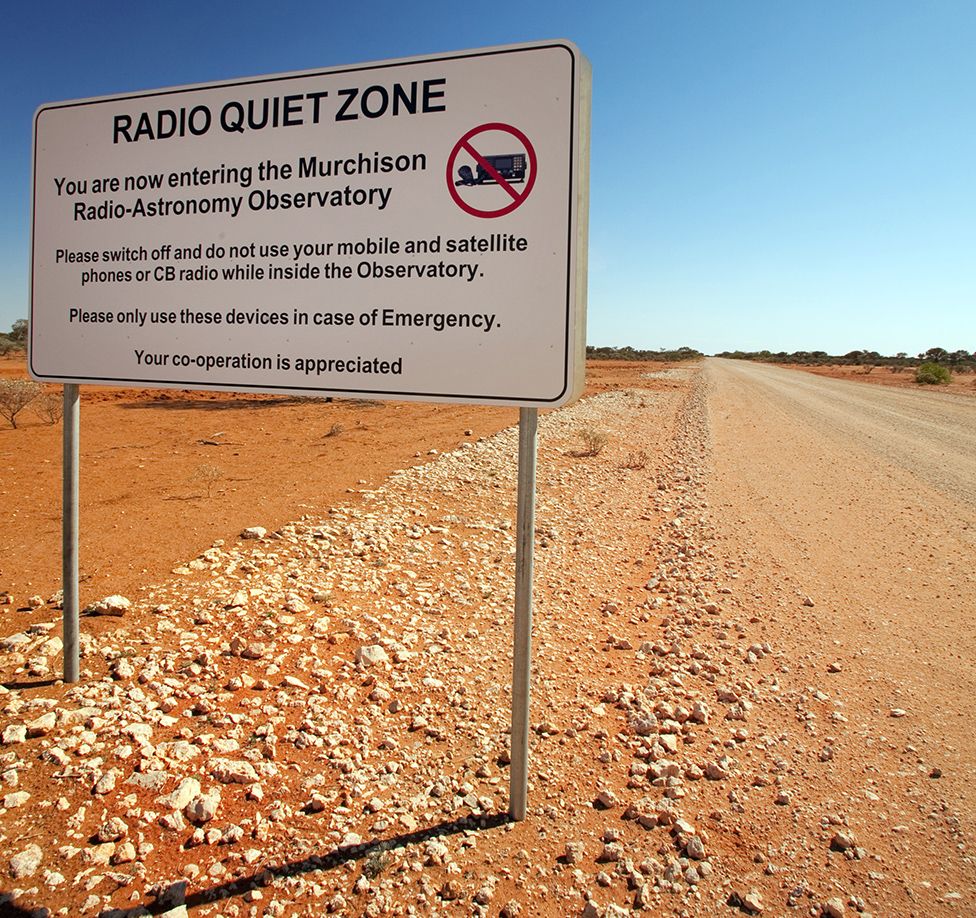
    The Murchison radio quiet zone
    IMAGE SOURCE,SKA Image caption, The telescope is being built in areas already used for radio astronomy

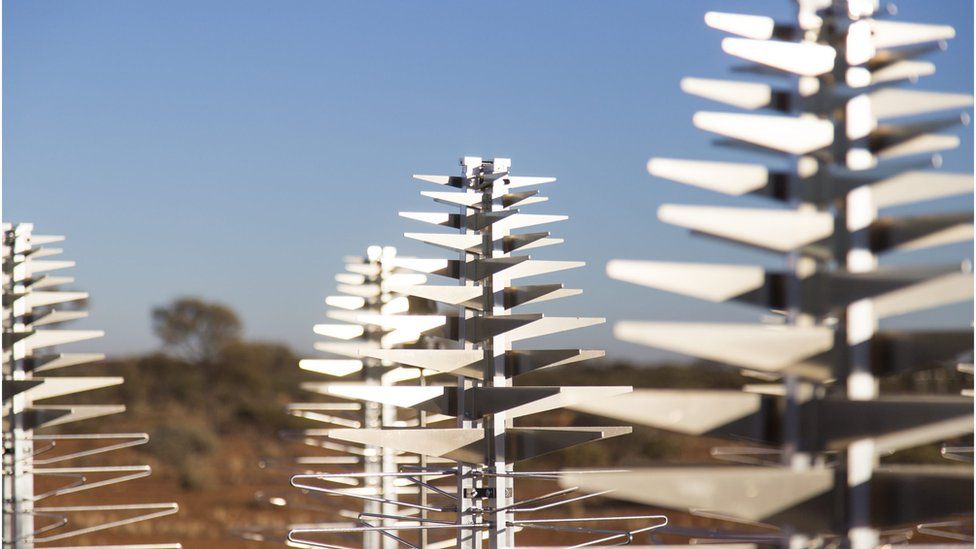
    The initial architecture of the telescope will incorporate just under 200 parabolic antennas, or “dishes”, as well as 131,000 dipole antennas, which look a little like Christmas trees.

    The aim is to construct an effective collecting area measuring hundreds of thousands of square metres.

    This will give the SKA unparalleled sensitivity and resolutions as it probes targets on the sky.

    The system will operate across a frequency range from roughly 50 megahertz to, ultimately, 25 gigahertz. In wavelength terms, this is in the centimetres to metres range.

    This should enable the telescope to detect very faint radio signals coming from cosmic sources billions of light-years from Earth, including those signals emitted in the first few hundred million years after the Big Bang.

    One of the SKA’s great quests will be to trace the full history of hydrogen, the most abundant element in the Universe.

    The telescope should be able to detect hydrogen’s presence even before great clouds of it collapsed to form the first stars.

    “The SKA is going to contribute to so many areas of astronomy,” said Dr Shari Breen, the observatory’s head of science operations.

    “One would be these ‘fast radio bursts’ that have been detected. These things output the equivalent of an entire year’s worth of energy from our Sun in just a fraction of a second. And we have no idea what they are. How is that possible? Hopefully the SKA will have an answer.”

    The telescope is being built in areas already used for radio astronomy on a smaller scale.

    To expand these sites, however, has required various land agreements, with farmers in the Karoo; and with the Wajarri Yamaji, the Aboriginal title holders in the Murchison.

    The Wajarri community have organised Monday’s celebration to inaugurate the SKA.

    Various procurement contracts will be announced around the ceremonies.

    These will take the total financial outlay to date to just under €500m (£430m) – out of an expected final construction budget of €2bn.

    Prototype low-frequency antennas for Australia
    IMAGE SOURCE,SKA Image caption, The low-frequency antennas for Australia look like Christmas trees

    The first major milestone should come in 2024, when four dishes in Australia and six antenna stations in South Africa are made to work seamlessly together as a basic telescope. This proof-of-principle moment will then trigger the array’s full roll-out.

    By 2028, the SKA will have an effective collecting area of just under 500,000 square metres. But the set-up is such that it can continue growing, perhaps up to the much desired one million square metres, or one square kilometre.

    One way this could happen is if more and more countries join the organisation and provide the necessary funds.

    The current members are: South Africa, Australia, the UK, China, Italy, Netherlands, Portugal and Switzerland. These countries have ratified the treaty.

    France, Spain, and most recently Germany, have got themselves on to the accession path.

    Canada, India, Sweden, South Korea and Japan have indicated their intention to join at some point.

    “And we’re actually in the process of talking to other countries as well, to see what interest they might have in joining the observatory,” said Prof Diamond.

  • South Africa rugby player Nkosi reported as missing by club

    South Africa Rugby World Cup winner Sbu Nkosi has been reported to police as a missing person, his club said on Saturday.

    Nkosi has been “absent without leave” for three weeks and hasn’t responded to calls and messages, the Blue Bulls said in a statement.

    The Blue Bulls said they were now concerned for Nkosi’s safety. He last had contact with anyone at the Blue Bulls on Nov. 11 and the team opened a missing person case with police on Nov. 17, it said.

    “This resulted from the grave worry and concern of everyone (at the Blue Bulls),” the team said.

    The Pretoria-based team has sent officials to check for Nkosi at his home four times over the past three weeks and haven’t found him. They are relying on “the expert assistance of the South African Police Services” to locate him.

    The 26-year-old Nkosi played 16 tests for the Springboks and was part of the squad that won the 2019 Rugby World Cup in Japan.

    Source: Africa News

  • South African worshippers swept away in Jukskei river flash flood

    Two people have died in South Africa and 15 others are missing after a flash flood in a river swept away worshippers taking part in a church ceremony.

    Some of the more than 30 congregants were standing on rocks in the river on Saturday when a torrent of water surged through, an eyewitness said.

    The pastor was saved after he clung on to an overhanging tree branch, he added.

    Rescuers resumed the search of Johannesburg’s Jukskei river on Sunday.

    It is notorious for flooding during South Africa’s rainy season.

    The search operation involves the police and fire service as well as specialist aquatic rescue teams, Robert Mulaudzi spokesperson for the City of Johannesburg Emergency Management Services said.

    Victor Ncube, who had been taking part in the church service, told local news station eNCA that he managed to pull out five people from the river who had been swept 100 metres downstream.

    Others had been carried too far down the river for him to try to save them, he said.

    Of the 33 who had been at the service, 15 are still unaccounted for, the authorities say.


    Source: BBC

  •  South Africa leader won’t resign -Spokesman to Ramaphosa


    South Africa’s President Cyril Ramaphosa will not resign despite a scandal over money stolen from his farm, his spokesman says.

    The row centres on claims he kept large sums of cash on his property then covered up its theft.

    A panel of legal experts concluded that he has a case to answer.

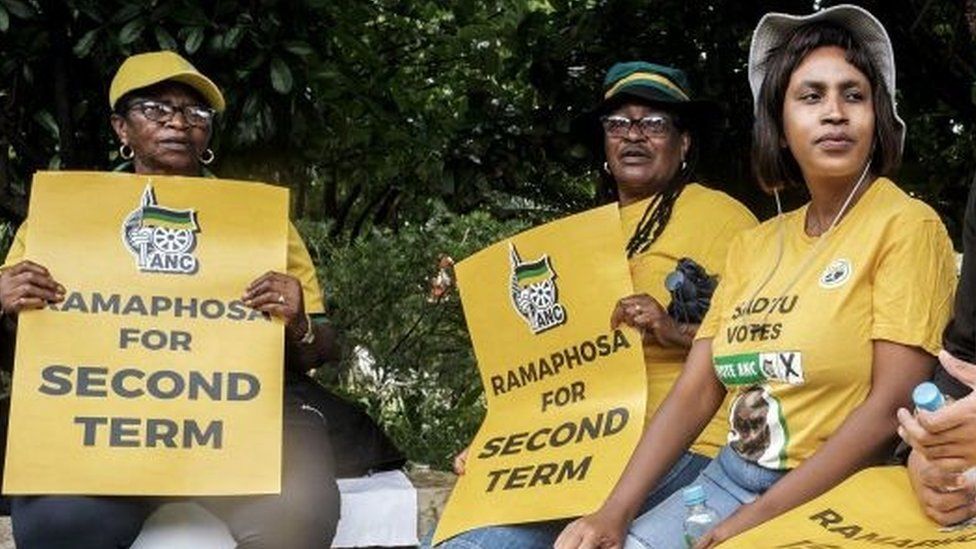
    But Mr Ramaphosa’s spokesman suggested he would fight on, and rather than quit would seek a second term as leader of his African National Congress party.

    “President Ramaphosa is not resigning based on a flawed report, neither is he stepping aside,” Vincent Magwenya said.

    “It may be in the long-term interest and sustainability of our constitutional democracy, well beyond the Ramaphosa presidency, that such a clearly flawed report is challenged,” he added.

    The scandal erupted in June, when a former South African spy boss, Arthur Fraser, filed a complaint with police accusing the president of hiding a theft of $4m (£3.25m) in cash from his Phala Phala game farm in 2020.

    Mr Ramaphosa admitted that money had been stolen, but said it was $580,000, not $4m.

    The president said the $580,000 had come from the sale of buffalo, but the panel, headed by a former chief justice, said it had “substantial doubt” about whether a sale took place.

    The panel’s findings have been handed to parliament, which is set to examine them and decide whether or not to launch impeachment proceedings against the president.

    Mr Ramaphosa is also under pressure from the opposition, as well as rivals from his governing ANC, to resign.

    He is due to meet the ANC’s top leadership bodies on Sunday and Monday after failing to turn up at an earlier meeting.

    The scandal is especially damaging for Mr Ramaphosa because he came to power vowing to clear up the corruption which had dogged the country under his predecessor, Jacob Zuma.

    The ANC remains deeply divided between supporters of Mr Zuma and those who back Mr Ramaphosa.

    Mr Ramaphosa will be challenged for the ANC’s leadership by his former health minister Zweli Mkhize, who has also been accused of corruption. He denies the allegations.


    Source: BBC


  • Anxious wait as ANC meet to decide Ramaphosa’s future

    South Africa is on tenterhooks as the top leadership of the governing ANC party meets behind closed doors, to debate the scandal engulfing President Cyril Ramaphosa over his response to a robbery two years ago.

    There has been intense speculation that he would resign. But ahead of Friday’s meeting, ANC chairman Gwede Mantashe said he didn’t think President Ramaphosa should resign, that he wasn’t a liability to the party, and that the full process must be allowed to unfold at the meeting.

    This comes after a damning report into a burglary at Mr Ramaphosa’s private game farm in 2020 in which at least $580,000 (£470,000), and maybe much more, in foreign currency was stolen.

    The findings of the report suggest that the president may have committed serious misconduct, but he denies any wrongdoing.

    Some in the ANC have been calling for the president’s resignation while those close to him have said he will take a decision that is in the best interest of the country.

    Source: BBC

  • Opposition demand snap polls over Ramaphosa scandal

    As President Cyril Ramaphosa deals with a controversy that could cost him his job, the opposition Democratic Alliance (DA) party in South Africa plans to introduce a motion in parliament calling for an early election.

    The president has been accused of covering up a $4m (£3.3m) theft from his farm in 2020, including kidnapping and bribing the burglars into silence. He denies any wrongdoing.

    The country’s parliament is set to examine a report on the scandal and decide whether or not to launch impeachment proceedings next week.

    DA leader John Steenhuisen said the country cannot leave it up to the ruling party to “choose the future of our country” – referring to the upcoming ANC conference where Mr Ramaphosa will seek a second term as the leader of the ruling party.

    “The party of Nelson Mandela has become a cess pit of corruption, greed and dishonesty from top to bottom,” said Mr Steenhuisen.

    The motion for an early election would need a simple majority of 50% plus one of the national assembly to vote for the dissolution of government, which would then trigger an early election, he added.

    Source: BBC

  • Farmgate: South Africa president faces threat of impeachment

    South African President Cyril Ramaphosa may face impeachment over the “Farmgate” scandal.

    The president is accused of covering up a $4 million (£3.3 million) theft from his farm in 2020, including kidnapping and bribing the burglars.

    According to a leaked report from an independent panel, Mr Ramaphosa abused his position and may have violated an anti-corruption law.

    He has denied wrongdoing and stated that the money was earned by selling buffalo.

    The panel’s findings have been delivered to parliament, which will review them and decide whether to initiate impeachment proceedings next week.

    Mr Ramaphosa is less than a month away from a conference which will decide if he can run for a second term with his party, the African National Congress (ANC), in 2024. The incident could be particularly damaging as Mr Ramaphosa ran for office on an anti-corruption ticket.

    The ANC will hold a meeting with its executive on Thursday, where it is expected that the issue will be discussed.


    The Farmgate scandal erupted in June, when a former South African spy boss, Arthur Fraser, filed a complaint with police accusing the president of hiding a theft of $4m from his Phala Phala farm in the north-east of the country in 2020.

    Mr Fraser, who is a close ally of former President Jacob Zuma, alleged that the money could have been the proceeds of money-laundering and corruption, and accused the president of kidnapping and bribing the burglars.

    Holding such a large amount of money in dollars could violate foreign exchange control laws.

    Mr Ramaphosa has confirmed a robbery, but said the amount stolen was less than that alleged, and denied attempting to cover it up.

    Some $580,000 which had been paid in cash for buffalo was stolen from under sofa cushions in the farmhouse, he said.

    “I did not ‘hunt’ for the perpetrators of the theft, as alleged, nor did I give any instructions for this to take place,” he wrote in a submission to the panel’s report, according to AFP news agency.

    The panel concluded that there were many unanswered questions, calling it a “very serious matter”.

    Little information was kept about the man who supposedly paid the money for buffalo, it said, adding that he had still not collected the animals two and a half years later.

    The panel also said it was strange that the money had been kept hidden in a sofa, rather than in a safe until it could be lodged in a bank account.

    “We think that the president has a case to answer on the origin of the foreign currency that was stolen, as well as the underlying transaction for it,” the report said. It added: “The president abused his position as head of state to have the matter investigated and seeking the assistance of the Namibian president to apprehend a suspect.”

    Namibian president Hage Geingob has previously denied any involvement in the incident.

    Seven things about Cyril Ramaphosa:

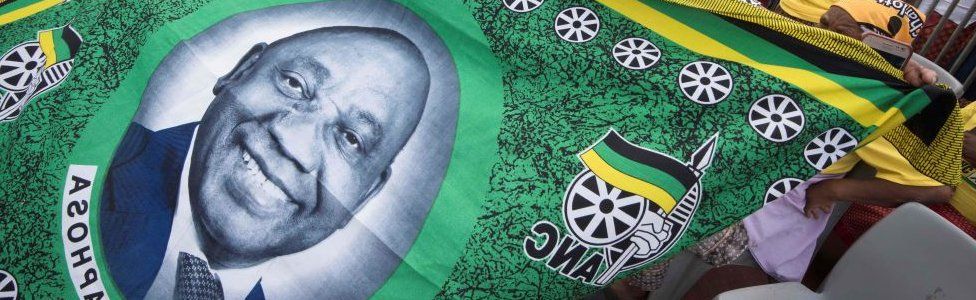
    A cloth being held by African National Congress (ANC) supporters showing the face of South African President and ANC President Cyril Ramaphosa t
    IMAGE SOURCE,AFP
    • Born in Soweto, Johannesburg, in 1952
    • Detained in 1974 and 1976 for anti-apartheid activities and launched the National Union of Mineworkers in 1982
    • Chairman of the National Reception Committee which prepared for Nelson Mandela’s release from prison in 1990
    • Became an MP and chairman of constitutional assembly in 1994
    • Moved full-time into business in 1997, becoming one of South Africa’s richest businessmen
    • On Lonmin board during 2012 Marikana massacre
    • Elected ANC leader in 2017 and on 15 February 2018 became president after the resignation of Jacob Zuma
  • South Africa: Hoodlums hijack an eight-ton truck carrying exam papers

    As a result of the hijacking of an eight-ton truck carrying exam papers at the R21 in Gauteng, some students will have to write replacement papers for two subjects.

    The delivery was intended for Limpopo technical vocational education and training colleges.

    An education official confirmed that engineering question papers were in the vehicle, which was later discovered abandoned in Delmas, Mpumalanga.

    The affected subjects are part of engineering studies. Students sitting their N6 are due to write the technical subject “power machine” on Thursday while those doing their N5 will write “strength of materials and structures” on Friday.

    The truck had left a depot in Kempton Park and was en route to Limpopo through the R21 when it was hijacked at around 2am on Tuesday. Students across the country would have to write replacement papers for the two subjects as a result of the hijacking.

    Mpumalanga police spokesperson Brig Selvy Mohlala said they were verifying with the courier company the consignment that was being carried in the vehicle.

    “I cannot confirm whether the parcels were exam papers. The hijacked truck was recovered with some items and we were told some items were missing. We were told the cargo was destined for Limpopo.”

    DA spokesperson for education in Mpumalanga Jane Sithole said after discovering the suspected hijacked truck, police found it contained exam papers.

    “The police called DA councillors in the area to request contact numbers for the Mpumalanga education department and their counterparts in Gauteng.”

    Sithole said Diana Bath, a councillor in the Victor Khanye local municipality, called the Gauteng education department.

    “She found the truck was from Gauteng and was on its way to deliver exam papers in Limpopo. The DA is concerned that in this technological era, exam papers continue to be transported in trucks, exposing them to hijacking.”

    A spokesperson from higher education department, Ishmael Mnisi confirmed the incident on Tuesday morning. The truck was “carrying some freight, however not only TVET question papers”.

    “The vehicle and some freight was recovered and the matter is with law enforcement agencies.”

    Mnisi who confirmed that the exam papers were destined for Limpopo, said the TVET exams would not be affected by the incident “as alternative measures are in place for Thursday and Friday’s exams”. Mnisi did not indicate what the alternative measures are.


  • South African anti-apartheid hero’s killer stabbed in prison

    Authorities announced on Tuesday that Janusz Walus, the man responsible for the death of South African anti-apartheid leader Chris Hani over three decades ago, was stabbed in prison and is currently being treated.

    This week, the South African Constitutional Court granted parole to Walus, a 69-year-old Polish national who was about to be released. Protests and harsh condemnation of the decision could be heard across the country.

    “Inmate Walus is stable and DCS healthcare officials are providing the necessary care,” the Department of Correctional Services (DCS) said in a statement.

    The agency said that another prisoner from the same housing unit was responsible for stabbing him, but it gave no more information about the incident or the person who did it.

    In 1993, Walus shot Hani outside the home of the anti-apartheid activist, who was a senior member of the then-ruling African National Congress and the head of the South African Communist Party at the time.

    After decades of white minority rule under apartheid, his death sparked widespread unrest that put South Africa’s transition to multiracial democracy in jeopardy.

    In 1981, he left the then-communist Poland and settled in South Africa, where he got involved in far-right activities.

    Aaron Motsoaledi, the minister of home affairs of South Africa, gave Walus permission to live there on Monday so that he may complete his parole there.

  • South African delegation to understudy Ghana’s small-scale mining sector

    Grace Mason, the High Commissioner of South Africa to Ghana, has stated that her nation is willing and interested in researching Ghana’s small-scale mining industry, particularly with regard to the regularization of their small-scale mining operations.

    She called Ghana’s small-scale mining infrastructure “one of the best on the continent” and announced that a group from South Africa’s mining sector would be officially visiting from December 4 to December 9, 2022.

    The group was welcomed by the Minister for Lands and Natural Resources, Hon. Samuel Abu Jinapor, who said that South Africa is a significant partner in Ghana and that it is in the interests of both nations to promote positive relations.

    He said the cordial relations that exist between the President of the Republic H. E Nana Addo Dankwa Akufo-Addo and his South African counterpart President H.E Cyril  Ramaphosa must be maintained and should also propel the two countries to boost trade and investment.

    Abu Jinapor on his part indicated that “South Africa is a major partner for our country and they have a lot of investments here, it is in our interest as well that of South African companies are treated well” he concluded.

    The meeting was also attended by the  South African Deputy High Commissioner Mr. Thando Dalmba, the CEO of Minerals Commission, Mr. Martin Ayisi and the Technical Director, Mines at the Ministry, Mr. Peter Awuah.

  • South African court sentenced a Kruger Park poacher to 11 years in prison

    Isaac Sithlangu, 42, was sentenced to 11 years in prison by the Skukuza regional court on Thursday for poaching-related offences.

    Sithlangu was sentenced for unlawful entry into the Kruger National Park, conspiracy to commit an offence, ammunition possession, firearm possession, and dangerous weapon possession.

    According to National Prosecuting Authority spokesperson Monica Nyuswa, he was initially charged with co-conspirator Abel Manyike, who previously pleaded guilty and was sentenced in October this year.

    She claimed Sithlangu escaped after being granted bail in 2019 but was later apprehended.

    South African Court Sentences Kruger Park Poacher to 11 Years (News Central TV)

    In August 2019, park rangers spotted the accused while doing their daily routine in Stolznek section using a helicopter.

    They were found in possession of a firearm, ammunition and hunting weapons and were arrested.

    In aggravation of sentence, prosecutor Lot Mgiba handed in a ballistics report which revealed the firearm that was found in his possession was meant to poach rhinos.

    Though Sithlangu was sentenced to 14 years for these offences, the court ordered that the terms run concurrently, resulting in an effective 11-year jail term.

  • South Africa pit bull attacks: ‘We can’t live in a world where dogs eat children’

    Residents of Phomolong township in South Africa woke up to horrific screams last Sunday morning.

    They came from a three-year-old boy as he was attacked and then mauled to death by two American pit bull terriers.

    The toddler had been outside with friends in a neighbour’s gated front yard, where the two pit bulls were usually tied up in a cage. But that morning they were loose and roaming around.

    It was as the children were playing that the dogs pounced on Keketso Saule.

    His devastated family say the savage attack lasted for several minutes.

    “Had someone not pulled him away the dogs would have finished [eating] him,” his distraught aunt, Nthabeleng Saule, told the BBC.

    “One side his face was gone and you could see his brain.”

    A video taken during the attack shows horrified relatives and neighbours shouting in shock and looking on at the vicious dogs unsure of what to do and how to intervene.

    It was only when someone poured hot water on the dogs that people were able to drag Keketso’s lifeless body away from them.

    Nthabeleng Saule

    BBC
    Even the child’s mother, grandmother and grandfather witnessed what happened. It’s going to take time for them to understand why they [the dogs] ate the child”
    Nthabeleng Saule, Keketso’s aunt
    1px transparent line

    In a groundswell of anger, the crowd, who had rushed to the scene, turned on the dogs and began throwing things at them.

    They managed to stun and catch one, setting it alight.

    The police then arrived as the community bayed for revenge, and the 21-year-old owner of the dogs, Lebohang Pali, was arrested and charged with keeping dangerous dogs and could face a fine or a jail term of up to two years or both.

    The second dog was taken away and euthanised by the animal welfare group SPCA.

    Mr Pali has since been granted bail – set at 300 rand ($18, £15). It is unclear if he will return to the house that he was renting.

    When we visited the neighbourhood in Free State province, about 250km (155 miles) south-west of Johannesburg, the charred remains on the street outside the Saule family home told of the grisly weekend scenes.

    Rocks, sticks and a burnt-out tyre littered the area where the dog had been burnt. Residents came out to speak of their shock and anger about what they witnessed on Sunday.

    “This incident has broken our hearts,” said Emily Moerane, a young mother carrying her toddler.

    “We don’t want pit bulls any more,” she said, adding that if the owner of the dog did not face justice they would “take the law into our hands”.

    Inside the Saule home, Kekesto’s aunt showed us a photo of the smiling bright-eyed little boy on her phone.

    Battling to hold back the tears, she spoke of the family’s trauma.

    “Things are just not right, not right at all. Even the child’s mother, grandmother and grandfather witnessed what happened,” she said.

    “It’s going to take time for them to understand why they [the dogs] ate the child.”

    Surrendering pit bulls

    One of the onlookers outside told me that there was another pit bull on the street, pointing to a house directly opposite the Saule home.

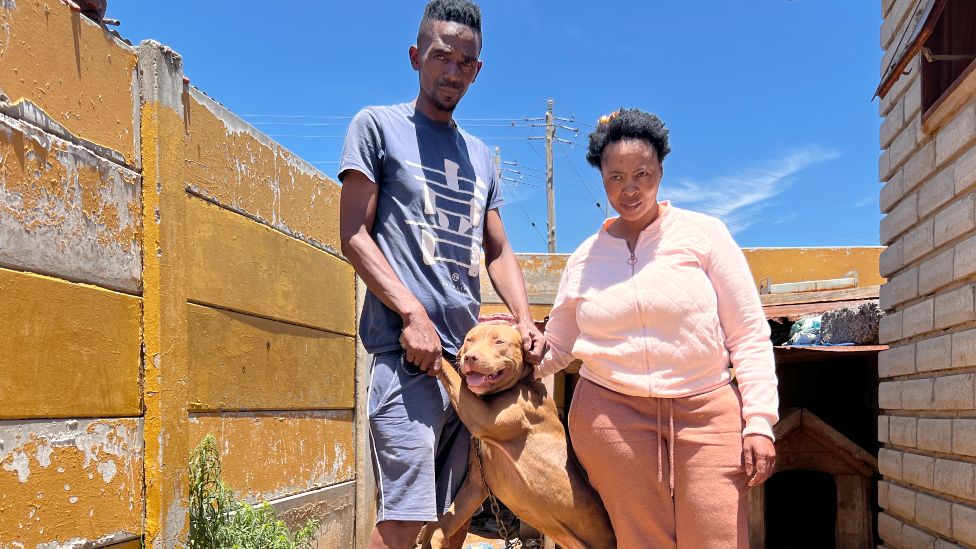
    The dog’s owner, Mokete Selebano, welcomed me and took me out to his back yard, his brown pit bull playfully jumping on him and his wife.

    Mokete Selebano, his wife and dog in Phomolong, South Africa
    Image caption, Mokete Selebano, who lives in Phomolong, has decided to give up his pit bull Junior

    “This is Junior – he’s like my son,” he said.

    But fearful of the community’s animosity towards pit bulls, Mr Selebano said he was going to give up his pet.

    “We can’t live like this in a world where dogs eat children. If the community is angry then there’s nothing that I can do. But seeing him go is very painful to me and my wife.”

    Following a recent spate of deadly pit bull attacks, many people like Mr Selebano have been voluntarily surrendering their dogs.

    Three days after Kekesto’s death, a 15-month-old toddler died in hospital after being attacked by a pit bull in the Eastern Cape province.

    In Bloemfontein, 49 pit pulls were handed over to the SPCA after eight-year-old boy Olebogeng Mosime was killed by one the week before.

    On the same day Kekesto died, a girl was attacked by three pit bulls in Cape Town. She was injured and rushed to hospital, and the community turned on the animals, stoning them and setting them alight.

    The dogs handed over to the SPCA will all be individually assessed and the organisation has appealed to the government for help in dealing with the influx.

    The non-profit group Animals 24-7 has a log of fatal dog attacks reported in the South African media since 2004. With the two deaths this week, which are yet to be included in its list, it will bring its total number of deaths by pit bulls to 37 over the last 18 years.

    Eighteen of the victims were children – five of whom have been killed this year, making it the worst on record for child deaths.

    Four child deaths were reported in 2017, the worst recorded year since 2004 with eight fatalities in total – and since 2016 at least one death by a pit bull has been reported every year.

    According to law firm DSC Attorneys, which handles personal injury cases, incidents involving dogs are on the rise.

    “We have had over 70 dog bite-related queries this year to date – so an average of six per month – and in October alone we had 50% more enquiries than the preceding month,” the firm’s director Kirstie Halsam told the BBC.

    The killing of 10-year-old Storm Nuku by his family’s two pet pit bulls in September prompted the Sizwe Kupelo Foundation to start an online petition calling for the dogs to be banned as pets in South Africa.

    “The defence by pit bull lovers that it is how you raise the dog does not hold water. So many people, including joggers have been attacked and killed by pit bulls,” says the petition, which has more than 129,000 signatures so far.

    “It is time that the South African government takes decisive steps and impose a complete ban on the ownership of pit bulls as domestic animals.”

    Dog-fighting rings

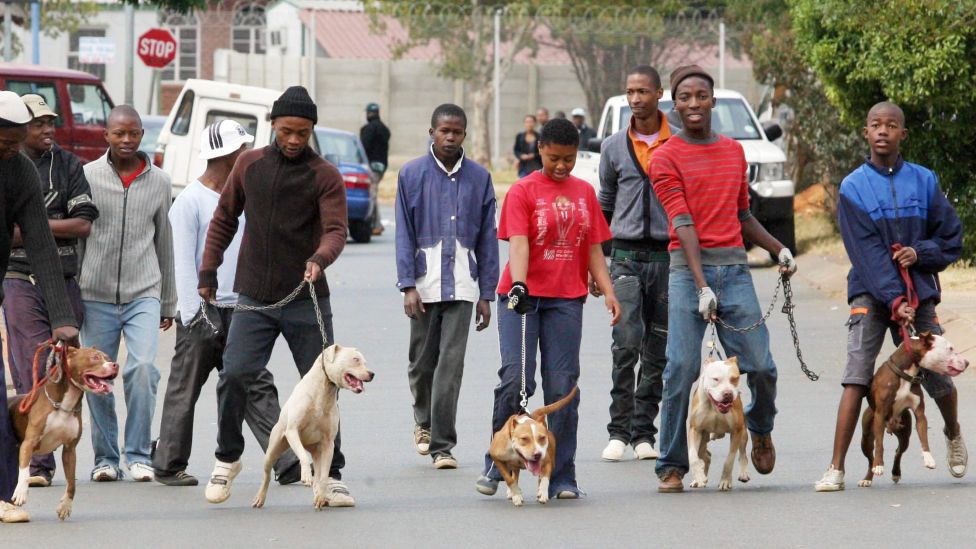
    Fear of crime is felt to be a major factor in training animals like pit bulls to be guard dogs. Mr Selebano, who got Junior as protection for his wife when she was alone at home, says there are many pit bulls in Phomolong township.

    Pit bull owners walking their dogs on a street in Soweto, South Africa - 2009
    IMAGE SOURCE,GETTY IMAGES Image caption, Pit bulls are popular as guard dogs in South Africa – and can often be seen in townships

    The increase in pit bull ownership, particularly in townships, is not only for protection, but for illegal dog fighting.

    The animals are trained to be aggressive, kept in tight enclosures on chains for the sole purpose of fighting and killing each other. Often organised by syndicates, people pay to watch and gamble on the fights.

    In July, the SPCA busted a dog-fighting ring in Cape Town’s Grassy Park, rescuing seven dogs, including three pit bull puppies, after authorities became aware of a video of dogs being encouraged to fight.

    Dog fighting carries a penalty of a $4,700-fine or imprisonment of up to two years or both.

    “Backyard breeding” has also become a problem – with owners cross breeding pit bulls with other breeds like Boerboels for illegal dog fights.

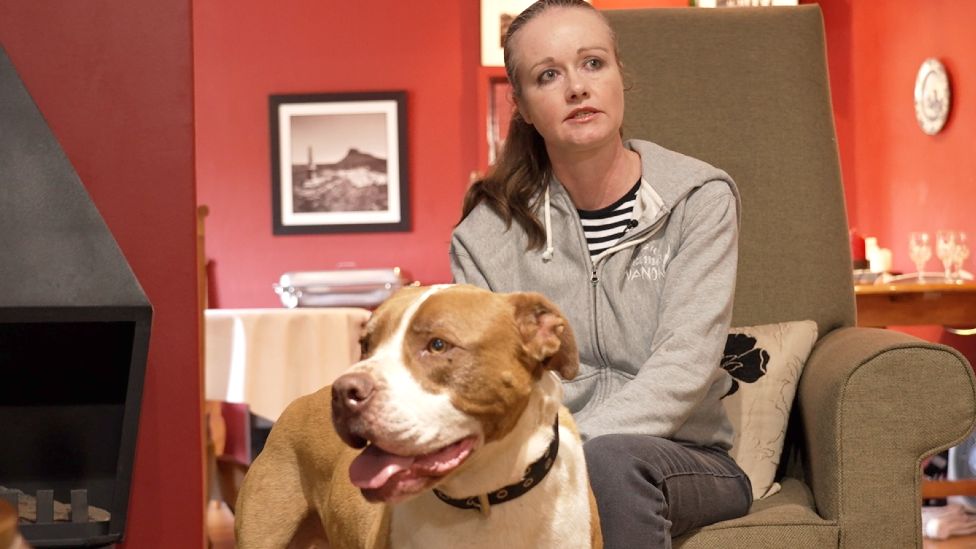
    Lins Rautenbach and her American pit bull terrier
    Image caption, Lins Rautenbach, Pitbull Federation of South Africa, says a dog’s behaviour comes down to its owners

    This means the dogs may look like American pit bull terriers but are more aggressive and more prone to bite people, particularly children.

    Critics of an outright ban on pit bulls say it will not solve the problem of irresponsible ownership.

    “These maulings are nothing short of tragic,” Lins Rautenbach, spokesperson for the Pitbull Federation of South Africa, told the BBC.

    But she put the blame squarely with the dogs’ owners – saying laws need to be put in place to deal with them.

    “Banning the breed means people in South Africa who want to feel safe will move from this to another breed.

    “So we’ll maybe see a drop in pit bull maulings, but we’ll see an increase in say Rottweiler or German Shepherd maulings,” she said.

    Source: BBC.com 

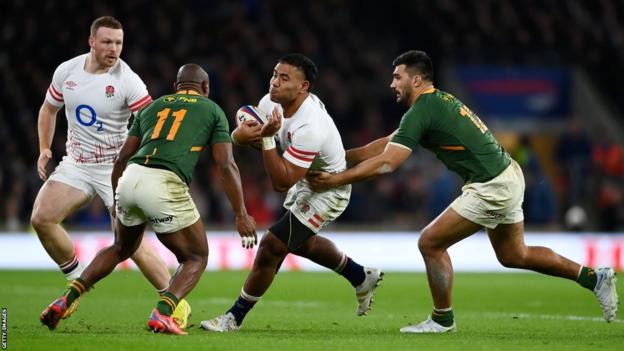
  • England 13-27 South Africa: Eddie Jones says defeat was ‘entirely my fault’

    Eddie Jones said England’s defeat by South Africa was “entirely my fault” but believes they can have a “really good go” at next year’s World Cup.

    The hosts were beaten 27-13 at Twickenham as the world champions dominated the set-piece.

    Head coach Jones apologised for the performance but said his players were still heading in the right direction, 10 months out from the World Cup.

    “We are disappointed we didn’t play how we wanted to,” Jones told Amazon Prime.

    “South Africa do things to you that are some times difficult to deal with.

    “We didn’t land a shot like we wanted to. You have to win contests and we didn’t win in the air or the set-piece, so it’s hard to get in the game.

    “We lost two of the key contests but we will improve in those areas. Results tell you everything and that is what we are judged by but I feel like there is growth in the team, which we have seen, but wasn’t evident today.”

    Jones’ side have lost six of 12 Tests in the calendar year, England’s worst run since 2008.

    Defeat by the Springboks followed a comeback draw against New Zealand, a victory over Japan and a defeat by Argentina in a disappointing autumn schedule.

    Asked if he was still confident in his ability to lead the side into next year’s World Cup in France, Jones said: “I think about where we are going towards a World Cup.

    “Obviously we want to win games and be successful but are we moving in the right direction? Yes we are.

    “I have coached for a number of years and I believe I can coach well. People will say what they say, and there are ups and downs in sport but we didn’t play well today and I apologise for that, it’s entirely my fault.”

    He added: “Obviously on results, we are not happy but I feel like we are building a really good base to have a really good go at the World Cup, a really good go.

    “A number of young players got great experience today and they’ll come back better players for that. We’ve got other players coming back to form, some of our more senior players and we’re not far away.

    “We need to develop consistently. Test match rugby is all about consistency.”

    ‘The plan was clear’

    Manu Tuilagi
    Manu Tuilagi’s 50th cap brought pride but frustration as South Africa thwarted England

    England centre Manu Tuilagi, who won his 50th cap, acknowledged that South Africa forced England into errors.

    “It was a tough game,” Tuilagi told Amazon Prime. “We wanted to come out and attack, which I thought we did at the start but the Springboks were tough and physical and they put a lot of pressure on us. They forced us to make mistakes and they capitalised on it.

    “The plan was clear but South Africa are a quality side and they put us under a lot of pressure. We weren’t good enough today and we have to take it on the chin.

    “We are building nicely. Sometimes it’s hard for people to see that but we definitely believe in that.”

    England captain Owen Farrell, Tuliagi’s midfield partner, said the side would come back stronger.

    “It has not worked out for ourselves today and we were not able to show the best of ourselves but we have put in some good work over the past five weeks and we have to make sure that is not for nothing,” said Farrell.

    “We lacked a bit of accuracy and bite at times. The game was really slow to start which they are very good at. We didn’t get our teeth stuck in much like that Argentina game, we must learn to do better.”

    South Africa ended the year on a high after narrowly losing in Ireland and France before beating Italy last weekend.

    Captain Siya Kolisi, who lifted the World Cup in 2019, said: “It is a big relief for us. We have been working really hard over the past few months.

    “I know some results haven’t gone our way but we are still grateful to get the kind of support we are getting from back home.

    “England were tough at the beginning but we just stuck to our guns and tweaked a few things.”

    Source: BBC 

  • SA prison service opposes Jacob Zuma’s return to jail

    South Africa’s prison service has said it will challenge a court decision that sent former president Jacob Zuma back to jail.

    “Having carefully studied the judgement, Correctional Services is convinced that another court may arrive at a different conclusion,” the Department of Correctional Services (DCS) said in a statement

    The Supreme Court of Appeal had on Monday ordered Mr Zuma to return to prison after upholding an earlier ruling that his medical parole had been unlawful.

    The 80-year-old was given a 15-month sentence last year for contempt of court over his refusal to testify during an investigation into corruption.

    But he was released after two months in jail, after his lawyers argued that he had an undisclosed terminal illness and needed medical care that could not be provided in prison.

    Source: BBC

  • South Africa’s crime stats reveal rape at day care centres

    Eighty-three rape incidents were recorded at South Africa’s educational institutions, including day care centres, in the last three months, according to the latest crime records.

    The youngest victim was only six weeks old, the Minister of Police, Gen Bheki Cele said during a live broadcast.

    “As a ministry, we remain extremely concerned about rapes at educational premises”, he said, adding that the location of the reported rapes, “should not be interpreted to imply that all perpetrators and all victims were pupils or students.”

    He said 68 rapists had been sentenced to life in prison in the last six months, proving that the authorities were “sending a strong message of zero tolerance on rape through steep sentences”.

    The newly-released figures also show an increase in contact crimes – categorised as murder, attempted murder and assault – against women and children, rose by 16.9% and 13%, respectively.

    The murder rate also increased by 10.8% in the same period, marking an average of 76 killings per day.

    • Kidnapping went up all 10 provinces with the rate of incident rocketing in Gauteng by 164.3%
    • Carjacking went down in two provinces but was up overall in the country by 23.6%
    • Robberies at residential premises increased by 8.4%


    Source: BBC

  • A mob in South Africa kills a patient inside an ambulance

    Gauteng province health department has indicated that , a South African mob attacked and killed a patient in an ambulance on suspicion of committing a crime.

    The mob also assaulted paramedics who were treating the patient in the Atteridgeville area, causing damage to the ambulance.

    After the man was injured in a mob attack, paramedics responded to calls for help. They began treatment on the scene and prepared to transport the patient to the nearest hospital.

    “As the ambulance was getting ready to leave the scene, community members started throwing stones and barricaded the road to prevent the ambulance leaving… they demanded justice on the spot,” the health department said in a statement.

    It added: “Unfortunately the patient was further fatally assaulted while on an ambulance stretcher. The ambulance was extensively damaged and medical equipment was stolen.”

  • A South African woman commits suicide after a breakup

    A South African woman has taken her life following a breakup.

    According to a Kanengo Police report shared on social media, 24-year-old Mary Fulu died by suicide after her boyfriend dumped her.

    Fulu had slipped into depression post-breakup and was going to Bwaila Hospital for treatment and counseling.

    However, the breakup took such a heavy toll on her mental health that she decided to give up.

    The police report read, “She silently went into the boy’s quarter where she hanged herself.”

    Source: Bonobology

  • South Africa will to free man who wished to incite racial conflict

    The South African Constitutional Court has ordered that a convicted murderer serving a life sentence for the murder of anti-apartheid activist Chris Hani in 1993 be released on parole in 10 days.

    Janusz Walus, a Polish immigrant who had gained South African citizenship, hoped the assassination would spark a racial war during the final days of the apartheid regime.

    He has been imprisoned for the past 28 years, and parole requests have been strongly opposed.

    On Monday, widow Limpho Hani said the decision to release her husband’s killer was “diabolical”.

    Walus together with his co-defendant Clive Derby-Lewis, who died in 2016, were sentenced to death shortly after Hani’s killing, but the sentence was commuted to life after South Africa abolished the death penalty.

    They both appealed for amnesty during the Truth and Reconciliation Commission (TRC) in 1997, with Walus saying that he was driven by political, anti-communist motives to kill Hani, who was then the secretary-general of the South African Communist Party (SACP), and also a leading figure in the armed wing of the African National Congress.

    Walus’ imprisonment won sympathy and support from far-right groups in Poland.

    Huge banners bearing his portraits and chants calling for his release have been a common feature at some football stadiums in Poland.

    Merchandise like scarves and stickers celebrating Walus have also been sold online.

    In 2016, Walus met Hani’s daughter, Lindiwe, in prison.

    “He told her [that] when he lost his father [in 1997] then he understood that Chris Hani was not only a communist, but he was also a father and husband,” Polish journalist Cezary Lazarewicz told me in 2020.

    “Walus told me that he was very sorry for killing Lindiwe’s father. But he never regretted [killing a] communist leader. He told me, in 1993, there was a war in South Africa and he felt like a soldier… he still believes in the system of racial segregation and that whites and blacks should live apart,” Mr Lazarewicz added.

    In court on Monday Chief Justice Raymond Zondo said “the principle of equality before the law was not just written for those who fought apartheid – but those who actively supported it”, South African journalist Karyn Maughan reports.

    But Limpho Hani, speaking minutes after the judgement was made, reacted angrily, “this judgment is diabolical, totally diabolical”.

  • All about African greeting positions and how they are used

    “What’s for breakfast this morning, I just woke up and I’m hungry.” One may get away with this statement early in the morning after waking up from bed in just about any home, but not African. Greetings are an important aspect of African culture and apart from opening doors to cordial relationships, their meaning goes deeper and beyond being a gateway to cordial relationships.

    In a traditional African home, such a comment might be met with a “Wham!” If you were lucky, you might receive a slap, but even worse, you might endure a tirade and torrent of insults all day long because you failed to extend a hand of greeting.

    Generally, a salute, fist bump, bow and curtsy and others are the way men and women greet each other. Among the French, there’s the exchange of pecks, but in Africa, greetings vary from tribe to tribe and from community to community. In different countries and among different tribes in Africa, prostrating and kneeling are the ways men and women greet respectively and they all have different meanings.

    South Africa

    The most common greeting form in South Africa is a handshake, followed by eye contact and a smile. This is acceptable among the majority of South Africans. Handshakes may be light or firm dependent on the individual you are making small talk with and your relationship with them. Many people in rural villages greet with two hands.

    When shaking hands with people of the opposite gender, it is customary for women to extend their hands first. Usually, men hesitate for women to extend their hands first. If people know each other well, they may greet with a hug. It is polite to engage with people by their titles and last name until they indicate otherwise.

    Baganda tribe

    Kneeling is practiced in a wide variety of contexts in Uganda. It is primarily practiced by the Baganda tribe, the country’s largest. When greeting and serving her husband, a Muganda woman must kneel. Women also get down on their knees to say hello to other men and the elderly. In most cases, this occurs wherever there is an encounter at home, in the garden, on the way to work, and in the bank.

    However, this practice is extremely frowned upon because it is perceived as forced humility and a form of discrimination against women. Women are culturally compelled to kneel during traditional wedding ceremonies in order to place a special identifier (flower) on the lapel of the groom-to-be jacket.

    Yoruba

    Prostrating as a way of greeting is termed Idobale, which means to meet the earth. It is seen as a symbol of planting and fertility. Yoruba men prostate as a way of greeting and it is done before an older person. The custom denotes honoring or giving respect to a higher authority. A young person who bows to an elderly person is regarded as having received good training. Prostrating helps tame the societal ego’s irrational tendency and promotes social humility.

    Idobale is performed in different aspects of culture. A fundamental feature of a Yoruba traditional wedding is Idobale. The groom and his buddies are required to bow before the bride’s family and in-laws at the traditional wedding. This demonstrates the groom’s regard for his future in-laws. Additionally, it shows how much he adores and cherishes his future bride.

    When someone is submitting to a monarch or other authority figure, another aspect of idolatry is revealed. According to the cultural convention, you cannot bow or stand while addressing a crowned monarch. No matter your age or social standing, you must kneel to welcome the king because it is improper to shake his hand or just bend. King’s respect is demonstrated by bowing down to greet him. It is thought that doing so will incur the King’s blessings.

    But all of this is for men, for women, when greeting, kneeling is the right way and it is termed as Ikunle, which means to fill the earth and like Idobale, it is also a symbol of fertility. It signifies harvest too. Women kneel to greet when speaking to their husbands and older people. Again, during traditional Yoruba weddings, women kneel when greeting their in-laws and parents and before they sit with their husbands.

    There is another aspect of Ikunle known as Ikunle Abiyamo. Ikunle Abiyamo is either just the traditional Yoruba act of giving birth while the pregnant mother is on her knees or a combination of acts in the latter stages of labor. Abiyamo means “mother” in the Yoruba language and during childbirth, Ikunle is mostly the preferred position. So for women, the greeting position is not just for greeting, but for childbirth too.


    Source: Face2faceafrica

  • Pit bulls in South Africa burnt to death after attacking a child

    Three pit bull dogs who had attacked a young girl were stoned to death and then burned by members of a community in Cape Town, South Africa.

    The incident occurs as calls to outlaw the breed grow in South Africa.

    A local animal welfare charity reported that the child was mauled in a field in the Gatesville neighbourhood of Cape Town. She “sustained severe injuries and had to be rushed to a nearby hospital for treatment”, the SPCA has said.

    The dogs were then attacked, with people stoning, stabbing and hitting them “before burning them to death”.

    Video of the burning shows people standing around the fire shouting approval, IOL news site reports.

    “We are tired of these people wanting to parade with their pit bulls knowing they are a danger to society. It’s not enough our children are being slaughtered by vicious criminals, and brazen gangsters,” a resident is quoted by IOL as saying.

    Sunday’s attack followed reports of a three-year-old boy dying after being targeted by two dogs in Free State province, IOL reports.

    Source: BBC.com 

  • Former South African President Jacob Zuma has been ordered to return to prison

    South Africa’s Supreme Court of Appeal has ordered former President Jacob Zuma to return to prison after upholding an earlier ruling that his medical parole had been unlawful.

    But it is not clear if he will spend any more time in jail.

    The 80-year-old was given a 15-month sentence last year for contempt of court over his refusal to testify during an investigation into corruption.

    His imprisonment prompted violent protests in KwaZulu Natal province and other parts of South Africa that left more than 300 people dead.

    Zuma was released after two months in jail, after his lawyers argued that he had an undisclosed terminal illness.

    In their unanimous judgement on Monday, the judges said that prison authorities should decide if the time the former president has unlawfully spent out of prison should count towards his sentence or not.

    The former president’s lawyers had argued that Zuma needed medical care that could not be provided in prison and now may take the matter to the Constitutional Court.

    It’s a legal matter but one that has had political implications in the past. There are some concerns that his return to prison may lead to a repeat of the unrest see

  • Ramaphosa’s alleged corruption report to be examined on December 6

    A long-awaited report on an alleged corruption scandal targeted at South African President Cyril Ramaphosa a month before a crucial deadline for his political future, will be examined on December 6, the parliament announced Thursday.

    An independent parliamentary committee was tasked in September with examining President Ramaphosa‘s accountability in the 2020 case and issuing findings that could lead to a possible vote for his impeachment.

    “The parliamentary committee met this morning. The date for the submission of the report was extended to November 30. It was decided that the National Assembly would examine this report on December 6,” ten days before the congress of the historic ruling party, the ANC, parliamentary spokesman Moloto Mothapo told AFP.

    The parliamentary recess that was supposed to start on December 1 has been postponed to consider the report, which was originally due by Thursday.

    The African National Congress (ANC) must meet from December 16 to choose whether or not to invest Mr. Ramaphosa’s candidate for a second term in the presidential election of 2024, re-electing him president of the party.

    The successor to Jacob Zuma, who was forced to resign in 2018 after a series of scandals, the current president is expected to tackle the corruption front that he has vowed to eradicate.

    According to a complaint filed in June by former South African intelligence chief Arthur Fraser, burglars broke into a farm owned by the president in Phala Phala, in the country’s northeast, in February 2020. They found large sums of money in cash.

    Cyril Ramaphosa is accused of concealing the robbery from the police and the money from the tax authorities, organizing the kidnapping and interrogation of the robbers, and then bribing them to keep quiet.

    The President, who was repeatedly attacked on the subject during heated sessions in the Assembly, denied the accusations, questioning the amounts mentioned and maintaining that the money found was in fact from the sale of livestock. He also denounced the political aims of his opponents.

    In South Africa, the impeachment of the head of state is subject to a two-thirds majority vote in the National Assembly. The ANC led by Cyril Ramaphosa holds more than two-thirds of the seats.


    Source: African News

  • Media kicked out of Senzo Meyiwa murder trial after State witness’ face shown on camera

    Claims that a media house broadcasted footage of a State witness in the high-profile Senzo Meyiwa murder trial prompted the judge to clear the courtroom of all members of the media on Wednesday.

    The witness, Tumelo Madlala, was a childhood friend of the slain Bafana Bafana captain.

    He was one of the people who were inside the Vosloorus house where Meyiwa was shot dead eight years ago.

    The court had earlier ruled his face should not be shown on camera or in photos while he is testifying in the murder trial.

    On Wednesday afternoon, Judge Tshifhiwa Maumela refused to let proceedings continue while the person responsible for broadcasting Madlala’s face was still present.

    “That person, whatever the effect and the extent of the footage, that person should leave this courtroom now. If we don’t know who it is, all media are going out now.”

    An outraged Maumela suggested that media houses should “sort it out through the night” and return on Thursday to reveal who revealed Madlala’s face on camera.

    “We are not to sacrifice time for trial because of people who want to go sensational at the expense of the lives of other people. We can’t do that.”

    Initially, prosecutor advocate George Baloyi told the court they had a meeting with various media houses and camera people, then looked at the live feed and found the footage did not appear on the live feed.

    “A possibility has been mentioned that perhaps it is some manipulation or photoshopping,” Baloyi told the court.

    However, footage of Maumela leaving his bench showed Madlala’s face was in fact broadcast briefly.

    The court was supposed to proceed with advocate Zandile Mshololo’s cross-examination of Madlala.

    In September, Maumela reprimanded journalists and issued them with written warnings after they allegedly harassed Madlala at court, chasing him and asking him questions before proceedings.

    News24 reported at the time that Madlala, who was with a woman, repeatedly gestured he did not want to speak to them.

    Source: News24.com 

  • PitBull Federation calls for stricter regulations around breeding of the dog

    The PitBull Federation of South Africa is calling for stricter regulations around the breeding of the dog in the country.

    This comes as calls intensify to ban the breed from being a domestic pet after the latest mauling claimed the life of an 8-year-old boy in Bloemfontein.

    Spokesperson for the Federation Lehanda Rheeder says while they do sympathise with the family, the entire breed cannot be stereotyped and punished.

    She says the influx of dog fighting rings and improper breeding, coupled with bad ownership all contribute to the recent aggressive attacks.

    “At the moment we only have the laws that govern in the instances of pitbull bites or if there is a mauling or a death. Then we have laws that govern that situation which make criminal case. But in terms of owning a power breed and breeding such dogs, there is no legislation and that is one of the things that the Pitbull Dederation is trying to push at government level,” adds Rheeder.

    Calls for castration and sterilisation of all pitbull dogs

    The Sizwe Kupelo Foundation is calling for the castration and sterilisation of all pitbull dogs in the country.

    This is to prevent the future existence of what it calls the vicious breed.

    Source: SABC news

  • Internet in SA could soon be 20% cheaper – thanks to Google’s new undersea cable

    The Equiano subsea internet cable that landed ashore in Melkbosstrand outside Cape Town earlier this year could cut South Africa’s internet costs by around 20%, according to Google.

    Equiano arrived in South Africa in early August, its final destination after already having landed in Togo, Nigeria, and Namibia.

    The submarine internet cable, stretching 15,000km from Portugal to South Africa along the west coast of the continent, features 12 fibre pairs and a design capacity of 150Tbps. Equiano has 20 times more network capacity than the last cable built to serve this region, according to Nitin Gajria, the managing director of Google in Sub-Saharan Africa.

    “There’s a huge positive knock-on effect, in terms of digital economies, job generation… but, at the end of the day, for the end-user, the knock-on effect of this [Equiano] is faster internet and lower cost internet,” said Gajria on Wednesday at the AfricaTech festival held at the Cape Town International Convention Centre.

    “So, depending on which country you’re in, what geography you’re in, and the various partnerships along the way, this would be somewhere in the range of 20% cheaper internet locally.”

    Equiano will start feeding more network capacity through the west coast of Africa – and South Africa – in a phased approach, said Gajria, with the first phase expected to begin in December.

    “What the cable does is it brings in a lot more network capacity to the continent. What we’re now doing is working with partners to bring this capacity further afield. This involves us working with ISPs, telcos, other infrastructure players in the ecosystem to bring this capacity further afield,” said Gajria.

    “One of the objectives for us is to start driving more connectivity and getting more people online and getting faster, cheaper internet into more parts of Africa, including the rural areas.”

    Of the approximately 1.1 billion people living in Sub-Saharan Africa, only 300 million are online, added Gajria. “And even those 300 million people, they don’t really have the full internet experience that many of us do.”

    The problem in getting more people in Africa connected to the internet involves network availability, which is becoming less of an issue as telecommunication providers expand, said Gajria, access to an internet-enabled device, and access to fast, affordable data.

    “So, think of it [Equiano] as bringing in a lot more supply of network capacity into the continent. What that will do is make [internet] speeds faster and make data cheaper, so it works on both sides of the equation,” said Gajria.

    The landing of Equiano in South Africa coincides with the laying of the 2Africa cable, the longest subsea cable in the world, which recently touched down in Marseille, France. The 2Africa cable will connect 33 countries and the continents of Africa, Europe and Asia once live in 2023, further improving capacity in the regions it touches.

    Source: Business insider


  • Ramaphosa ‘to step aside’ if charged over scandal

    South Africa’s President Cyril Ramaphosa will “step aside” if charged over an alleged cover-up of a robbery at his private farm, according to his spokesman.

    “Should the president be charged he would gladly step aside – should it be the case,” presidential spokesman Vincent Magwenya told journalists.

    He added: “But as things stand there are no criminal charges against the president. What you have is a series of investigations that he’s fully co-operating with and he will continue to do so.”

    Dubbed “farmgate”, the controversy surrounds the robbery at Phala Phala farm back in February 2020 and the alleged aftermath.

    The theft was allegedly committed by Namibian nationals who conspired with a domestic worker at the farm.

    The president is accused of kidnapping, bribery and acting unlawfully by allegedly authorising the pursuit of the suspects who stole an estimated $4m (£3.2m) from his farm. He denies any wrongdoing.

    Source: BBC

  • Eight-year-old boy killed by pit bull in South Africa

    There are growing calls in South Africa for pit bull dogs to be banned as domestic pets.

    It comes after an eight-year-old child was reportedly mauled to death last Saturday by a pit bull.

    South Africa has one of the highest incidents of deaths related to dog attacks in the world relative to its population, according to reports.

    In October, a 10-year-old boy was mauled to death by two pit bulls owned by the family.

    More than 50,000 people have signed an online petition to ban pit bulls as domestic pets in South Africa.

    The Sizwe Kupelo Foundation, who are behind the petition, said the push for a ban was “necessitated by the attacks which seem to continue unabated”.

    Source: BBC.com 

  • Ramaphosa ‘to step aside’ if charged over scandal

    Cyril Ramaphosa, the president of South Africa, has stated that he will “step aside” if accused of covering up a robbery that occurred on his private farm.

    “Should the president be charged he would gladly step aside – should it be the case,” presidential spokesman Vincent Magwenya told journalists.

    He added: “But as things stand there are no criminal charges against the president. What you have is a series of investigations that he’s fully co-operating with and he will continue to do so.”

    Source: Afican News

  • Aid deliveries to start in Tigray ‘by end of the week’

    Humanitarian aid will start reaching people who face hunger and disease in the northern Ethiopian region of Tigray by the end of the week, according to the national security adviser to the prime minister of Ethiopia.

    Millions of people in the region are in urgent need of food, medicine, and other basic supplies.

    Redwan Hussien is quoted as saying by the US State Department that “aid would flow unhindered” as was agreed in the peace talks.

    The final round of talks between representatives of Tigray and the government in Addis Ababa are expected to end on Friday in Kenya.

    Both parties have been meeting to discuss the implementation of the peace deal signed last week in South Africa.

    Ethiopia’s government and the Tigray People’s Liberation Front have committed to ending two years of fighting.

    The deal calls for aid deliveries to restart in Tigray and for essential services to be restored. Millions of people there urgently need food and medicine.


    Source: BBC

  • South Africa public sector workers strike over wage demands

    Thousands of public servants began a one-day strike in South Africa on Thursday over wage demands, professional organizations said.

    The work stoppage is being led by one of South Africa’s largest public service unions, the Public Servants Association (PSA), which has some 235,000 members.

    The dispute over public servants’ salaries flared up after Labour Minister Thulas Nxesi announced last week that he would increase salaries by 3 percent, while the unions were demanding 6.5 percent.

    Picket lines were observed during the day around central government offices in Pretoria by strikers in the health, immigration, and police sectors.

    According to the PSA, the strike was expected to have a “serious impact” on the Department of Home Affairs, transport and customs services.

    According to the union, “the minister’s irresponsible attitude has degraded already fragile social relations and deepened the lack of trust” with the social partners.

    South African Finance Minister Enoch Godongwana said in an October budget presentation that the government could only afford a 3.3 percent wage increase, well below the 7.8 percent inflation rate in July.

    South Africa’s economy has already been hit hard by several weeks of strikes in the railways and port services, which have affected mineral and fresh fruit exports.


    Source: African News

  • South Africa civil servants go on strike over wages

    Hundreds of thousands of civil servants in South Africa have embarked on a nationwide strike over wages and working conditions.

    Local media have described it as the first major strike by public servants in the decade.

    It is expected to cause disruptions in some government departments and airports.

    Members of the Public Servants’ Association (PSA) had for weeks staged lunchtime pickets, but have now decided on a full-scale shutdown in major cities across South Africa.

    It follows a breakdown in negotiations between the union and the government.

    The union is holding firm on its demand for a 6% increase in wages, rejecting the government’s final offer of 3%.

    Services such as the issuing of passports, death certificates and driver’s licenses will be affected.

    Meanwhile airport authorities have warned that the industrial action may cause delays at passport control and have warned travellers to arrive for their flights at least four hours before departure time.

    Source: BBC

  • Kenyans to enter South Africa visa-free from January

    The presidents of South Africa and Kenya said Wednesday they have resolved a long-standing visa dispute and Kenyans will be able to visit South Africa visa-free for up to 90 days in a calendar year.

    South Africans already get free visas on arrival in Kenya, while Kenyans were charged and required to provide proof of sufficient funds and return flight tickets.

    The new agreement is set to take effect on Jan. 1.

    South African President Cyril Ramaphosa was in Kenya on his first official trip to the country.

    He and Kenyan President William Ruto praised the Ethiopia peace agreement signed last week in South Africa and brokered by the African Union.

    They appealed to the parties to “ensure full implementation of the agreement to reach a lasting political settlement.”

    The Kenyan and South African leaders also directed their trade ministers to address barriers that limit trade between the two countries.

    The two nations are among the strongest economies on the African continent.


    Source: apnews.com

  • Last apartheid leader De Klerk’s Nobel Prize stolen in South Africa

    The Nobel Peace Prize medal awarded to South Africa’s last apartheid president, Frederik Willem de Klerk, was stolen from his Cape Town home six months ago, his foundation revealed on Wednesday.

    He received the prize in 1993 alongside anti-apartheid icon Nelson Mandela, for his role in ushering South Africa into democracy.

    The 18-carat medal made of recycled gold was stolen from his home in a burglary in April.

    “I can confirm that the Nobel Peace Prize belonging to FW de Klerk was stolen from his home earlier this year,” Brenda Steyn, the foundation’s legacy manager told AFP.

    Source: The East African

  • Climate: 600 million euros released for the transition in South Africa

    France and Germany have released 600 million euros to help the energy transition in South Africa as part of an investment plan approved at COP27 in Egypt for a total of 98 billion dollars.

    “South Africa, France, and Germany have signed loan agreements for the two European nations to provide 300 million euros each in concessional financing to South Africa in support of the country’s efforts to reduce its dependence on coal,” the three countries announced Wednesday in a joint statement.

    South Africa gets 80% of its electricity from coal, a pillar of the economy that employs nearly 100,000 people. Several power plants are to be shut down by the end of 2030. The state-owned company Eskom, which is in debt, is unable to produce enough electricity with its aging installations and is imposing continuous power cuts.

    A $98 billion investment plan for the energy transition of Africa’s leading industrial power was approved earlier this week at the UN climate summit in Sharm el-Sheikh, which opened on Sunday, following an agreement in principle reached last year at COP26 in Glasgow.

    France, Germany, the United Kingdom, the United States, and the European Union had pledged the support of 8.5 billion dollars with the ambition of making South Africa an example of cooperation in the fight against emissions in developing countries.

    The sum released by France and Germany, in the form of loans from the German public investment bank (KfW) and the French development agency (AFD), is the first tranche of this aid. The two countries have pledged one billion euros each to South Africa, which will need at least $500 billion to achieve carbon neutrality by 2050, according to the World Bank.

    South African President Cyril Ramaphosa has repeatedly criticized rich countries for providing aid to the poorest mainly in the form of loans that risk adding to their debt.

    Southern countries will need more than $2 trillion a year by 2030 to finance their climate action, nearly half of it from outside investors, according to a report commissioned by the COP presidency.


    Source: Africa News

  • COP27: Why South Africa will find it difficult to transition away from coal

    South Africa is heavily dependent on coal for energy, but frequent power outages are one of the nation’s largest issues. How then can it increase its electricity supply while using fewer fossil fuels and switching to greener sources?

    The precariousness of South Africa’s national electricity grid was highlighted in a single tweet by the state-owned power company Eskom one morning last month.

    Before many people had even had a chance to eat breakfast, the newsflash read: “Stage four loadshedding was implemented at 05:30 due to breakdowns of five generators at five power stations overnight.”

    Despite being Africa’s most developed economy, the country has been experiencing load-shedding – or an organised series of rolling blackouts – for the past 15 years. But this outage felt like something new.

    Five units at five different power stations simultaneously suffering breakdowns is an indication of the fragility of the electricity infrastructure and shocked many.

    “This is scary because you cannot have five units at five power stations failing overnight. What was happening?” asks energy expert Lungile Mashele.

    “Your units are a reflection of how they are maintained… They tell a story that Eskom is not resilient, that Eskom has not been doing the necessary maintenance and that all interventions that they have been putting in place over the last couple of years have come to nought,” she tells the BBC.

    Eskom has 14 coal-fired power stations, which produce around 80% of the country’s power. Most of them are old, inefficient and prone to breakdowns.

    The two newer coal-fired power stations, whose construction started in 2007, are plagued by cost overruns and design flaws and are still not operating at capacity.

    As a result of all these problems, South Africa has a shortfall of around 4,000-6,000MW of power every day – about 10% of current use.

    The resulting blackouts are a source of deep anger and resentment for many South Africans.

    The power-cuts are a huge problem for businesses, big and small. Roads become gridlocked when traffic lights stop working, people can’t cook when they get home from work and food rots when the fridge has no power.

    And things could get worse as most of the old coal plants are being decommissioned as part of plans to move away from fossil fuels.

    In October, the 1,000MW Komati power station in Mpumalanga province became the first to shut down. On the positive side, Komati will be repurposed into a renewable energy generation site using solar and wind power, and it has already secured funding of nearly $500m (£440m) from the World Bank to finance the project.

    However, much more funding will be needed as more coal-fired power stations are going to be closed down in the coming years. Overall, Eskom plans to decommission half of its 45,000MW installed capacity by 2035.

    The need to find replacement energy sources is urgent.

    Luckily, South Africa is blessed with abundant wind and sunshine but it will require time, and lots of money, to harness their power.

    In 2010, the government established the Independent Power Producer’s Procurement Programme (IPP), which looks for private sector investment into the country’s energy market from renewable sources such as onshore wind, solar power, biomass and small hydroelectric plants.

    Some progress has been made. Speaking at a recent wind energy conference in Cape Town, Energy Minister Gwede Mantashe said that IPP projects had created more than 6,000MW of electricity capacity.

    But that is not nearly enough.

    In 2020, just 7% of the country’s energy came from renewable sources, according to the International Energy Agency.

    South Africa’s energy woes and how to solve them are a global problem.

    The country is among the world’s biggest emitter of greenhouse gases, such as the carbon dioxide produced by coal-fired power stations.

    This is why there is a concerted effort from wealthier countries to help finance the country’s move away from coal.

    The proposed $8.5bn deal announced at the last COP meeting in Glasgow was seen as an important first step in supporting South Africa.

    But a year on, the deal is still subject to negotiations between South Africa and Germany, France, the UK, the US and the European Union, and what exactly happens could have far-reaching ramifications.

    Its success or failure could influence whether or not other developing nations decide to decarbonise their economies.

    But whatever happens, the development of renewable sources is not going to be a quick fix for South Africa’s massive energy shortfall.

    Ahead of this year’s meeting in Egypt, President Cyril Ramaphosa mapped out a five-year plan to move from coal to greener sources of energy, but said it would cost $84bn – an astronomical sum.

    Unveiling the plan, the president highlighted the need to decarbonise, create jobs and generate power at the same time. The aim is that the money will come from private investors as well as grants from donor nations.

    In the meantime, the country is looking at another fossil fuel to answer the immediate problem of not having enough power.

    Located 250km (155 miles) south-west of the buzzing commercial hub of Johannesburg is the quiet old mining town of Virginia. Where miners used to dig up gold, engineers are now sucking up precious helium and methane, even though that is also a greenhouse gas.

    The Virginia Gas Project, owned by Johannesburg Stock Exchange-listed company Renergen, oversees vast gas fields covering some 190,000 hectares.

    “There is gas in pretty much every direction that you look,” Renergen head Stefano Marani says as he walks around the plant, which used to be farmland.

    Methane and helium are plentiful.

    Gas was discovered in the 1950s, but is only now being produced on a commercial scale.

    Climate activists from Extinction Rebellion hold placards outside the Africa Energy Week Conference

    The gas extracted has a number of uses but most crucially for South Africa right now is that it can be used for power generation. Mr Marani believes that it can be added to the energy mix very quickly.

    But it will not be a magic solution for the country’s chronic power problem and goes against moves to decarbonise power production.

    And there is no speedy solution to Eskom’s infrastructure problems.

    “The country is going to go through a tough time,” admitted the public utility’s Jan Oberholzer at a recent conference. “We need another year or year-and-a-half to get out of this.”

    South Africa’s path to a cleaner and more secure energy is not straightforward and requires commitment and money – the success of which will be closely watched around the world.


    Source: BBC

  • Farm scandal: South Africa’s Ramaphosa denies wrongdoing

    The president was speaking to a parliamentary committee formed to investigate the theft of $4 million in cash from his game farm.

    President Cyril Ramaphosa of South Africa has denied wrongdoing in testimony to a parliamentary panel investigating whether he should face impeachment over an alleged cover-up of a heist at his farmhouse, according to his office.

    Ramaphosa “categorically denies that he violated this oath in any way, and denies that he is guilty of any of the allegations made against him,” the presidency said on Monday in written responses provided to the independent panel on Sunday.

    The scandal erupted in June after South Africa’s former national spy boss filed a complaint with the police alleging that robbers broke into Phala Phala, the president’s farm in the northeast of the country, and stole $4m in cash stashed in furniture.

    The complaint alleged that Ramaphosa hid the robbery from the authorities and instead organised for the robbers to be kidnapped and bribed into silence.

    The scandal risks derailing Ramaphosa’s bid for a second term as president of the African National Congress (ANC) as the ruling party heads to hotly contested internal polls in December.

    Ramaphosa’s office said he has always made it a point “to abide by his oath of office and set an example in his respect for the constitution”.

    The independent panel, which was appointed by the National Assembly speaker last month, includes an ex-chief justice, a former prominent high court judge, and a lawyer.

    It was established after a motion tabled by a legislator from The African Transformation Movement, one of the country’s opposition parties, and is set to report its findings in mid-November.

    Impeaching a president requires a two-thirds majority vote in South Africa’s National Assembly, where Ramaphosa’s ANC commands more than two-thirds of the seats. But in June, he was heckled in parliament by opposition legislators.


  • Zuma accuses the South African president of “buying” his way into office

    In a new attack on the country’s impending presidential election, Jacob Zuma, the former president of South Africa, charged Cyril Ramaphosa on Sunday with “buying” his position as leader of the governing ANC party. The election is less than a month away.

    The African National Congress (ANC) is due to meet in mid-December to decide whether or not to invest Mr Ramaphosa as a candidate for a second term in the 2024 presidential election by re-electing him as party president.

    “Cyril Ramaphosa has clearly been accused of spending a lot of money to buy his position as ANC president,” Zuma told supporters in Durban. Dancing on stage and chanting “Amandla!” (“Power!”), he accused the current head of state of having “manipulated the democratic process”.

    The financing of Mr Ramaphosa’s campaign for the ANC leadership in 2017 caused controversy. He was accused of lying to parliament about a 500,000 rand (about 28,000 euros) donation from an industrial group.

    Mr Ramaphosa, 69, was finally cleared by the Constitutional Court and took over the reins of the country after the resignation 2018 of Jacob Zuma, mired in scandal.

    Sentenced to 15 months in prison for stubbornly refusing to answer an anti-corruption commission, Mr Zuma, 80, finished serving his sentence last month. He was on conditional release for health reasons.

    His incarceration in July 2021 triggered a wave of deadly violence and looting in a difficult socio-economic context.

    The former president, who remains Cyril Ramaphosa’s biggest political rival, had already made a violent accusation against him last month, accusing him of “treason” and of being “corrupt”.

    Mr Ramaphosa was elected on a promise to eradicate corruption and has been in turmoil for several months. He is the target of an investigation into mysterious cash found during a break-in at one of his properties.

    An independent commission appointed by parliament is due to report back next week. The results of the enquiry could lead to a possible vote in parliament to remove Ramaphosa from office, who has denounced it as a political move.


    Source: Africa News

  • ‘Made in Africa, produced in Ghana’ will reduce nationalist sourcing mindsets

    Strategic Sourcing and Industrialisation insights with Prof Douglas Boateng

    While the terms ‘Made in Ghana, or South Africa or Kenya or Nigeria’ have become common components of goods and services produced on the continent, a broader focus on ‘Made in Africa’ may be the key to long-term business success and continental wide socio-economic development.

    This is particularly pertinent when it comes to the AfCFTA initiative and strategic sourcing practices on the continent.

    With a potential market of approximately 1.347 billion people, organisations need to begin to think beyond their own communities, national and regional boundaries and start to consider the opportunities available to them throughout the continent.

    Not only will a focus on a ‘Proudly African’ way of doing business increase access to greater markets and suppliers, it will also allow organisations to strategically source continentally produced products and services, thus supporting socio-economic growth, SMME development, AfCFTA and long term industralisation in Africa.

    Price-driven acquisitions an ongoing threat to strategic sourcing and industrialisation

    Current organisational procurement and consumer buying behaviors – which tend to focus on price-driven acquisitions – are hampering long-term industrialisation and socio-economic development in Africa.

    While price is always an important element of sourcing and procurement, organisations and consumers in Africa need to recognise that the cheapest price does not always equate to the best value for money for society as a whole.

    But, how can organisations and individuals alike begin to move away from short-term price-focused sourcing and consuming behaviours, and initiate long-term focused and developmental driven procurement habits? The possibilities vary. But from a strategic industrial and consumer sourcing perspective, the following should be considered.

    Local should mean continental

    To begin with, a mindset change, when it comes to the term ‘local’ needs to be promoted. Instead of understanding the idea of ‘local’ as being related to national, for example, Ghanaian, or South African or Kenyan or Nigerian or Namibian, production and services should instead be viewed as an African (ie continental product).

    This focus on continental instead of national will open up greater opportunities for access to a larger number of products and services, while at the same time allowing for an expansion of potential markets.

    Sourcing must be value driven and not price driven

    Next, when it comes to sourcing, organisations and individuals on the continent need to be value driven and not cost driven. This means that instead of sourcing products and services based on just the ‘best price,’ they should rather take the quality and subsequent long-term value of the goods for industry and society into consideration.

    Cheaper does not always mean better or value for money, and in a market rampant with low-cost, poor quality products, organisations should be weary of the influence that short-term price gains may have on the sustainability and success of their business and in the long term, on society

    Source ‘locally’

    Organisations should be encouraged to first source products produced locally (ie on the continent). If such sourcing attempts are unsuccessful, only then should they turn to the international market.

    This practice of providing African organisations with the opportunity to supply products and services to their peers and continental counterparts, allows for the development, support and growth of SMMEs, long-term industrialisation and socio-economic development on the continent.

    Support ‘Proudly African’

    With the concept of sourcing locally first in mind, there needs to be a movement towards promoting ‘Proudly African’ and ‘Made in Africa’ products.

    Instead of focusing purely on individual countries in which products are produced, a ‘Made in Africa: produced in Ghana, South Africa or Mozambique’ concept needs to be supported.

    This support of African products and services will not only encourage a break in popular trade barriers, but will also enable the continent to tackle supply chain issues and challenges as a collective whole, rather than as individual, separate nations.

    By following the above-mentioned suppositions, organisations on the continent may begin to reverse current short-term industrial and consumer behavior, and as such, prevent mainly price-driven acquisitions from continuing to de-industrialise the continent.

    In addition, by promoting a continental rather than an individual country procurement and sourcing environment, organisations can contribute towards the acceleration of industrialisation, SMME growth, job creation and regional development in Africa.

    In short, large political and socio-economic issues need to be tackled as a collective to break down artificial trade barriers. In time, African economies can move away from country specific initiatives to ‘Proudly African’ initiatives.

    For strategic sourcing to change the economic fortunes of the continent, it is crucial that Africans educate and encourage individuals and organisations to think beyond their own community and national boundaries, and to use strategic sourcing practices to promote continent-wide development. 

    Douglas Boateng, Africa’s first ever appointed Professor Extraordinaire for supply and value chain management (SBL UNISA), is an International Professional certified Chartered Director and an adjunct academic. Independently recognised as one of the vertical specific global strategic thinkers on industrialization, supply and value chain governance and development, he continues to play leading academic and industrial roles in sectorial reforms both in Africa, and around the world.

    He has received independent recognitions and numerous lifetime achievement awards for his extraordinary contribution to the academic and industrial advancement of supply chain management from various international organisations including the Chartered Institute of Procurement and Supply, the Commonwealth Business Council and American multi-national Hewlett Packard (HP).  For more information visit www.douglasboateng.com and www.panavest.com

    Source:  thebftonline.com

  • South Africa: 497 million from World Bank to move away from coal

    The World Bank said in a statement on Friday that South Africa, a significant emitter of greenhouse gases and a country struggling with its energy transition, had been awarded $497 million to convert one of its old coal-fired power plants.

    The continent’s leading industrial power, whose delegation will accompany President Cyril Ramaphosa to COP27, which opens Sunday in Egypt, still gets 80% of its electricity from coal, a pillar of the South African economy employing nearly 100,000 people.

    But the country is plagued by continuous power cuts, with debt-laden state-owned Eskom unable to produce enough electricity with ageing facilities that are on average 41 years old and poorly maintained.

    The World Bank “approves $497 million in financing to reduce greenhouse gas emissions in South Africa and support a just transition,” the institution said.

    The funding, in the form of loans and a grant, will be used to convert the Komati power plant in the northern province of Mpumalanga.

    The plant was shut down on Monday after more than 60 years of operation. The plant, which had nine generating units, consumed up to 12,000 tonnes of coal daily and produced twice as much electricity as all the country’s existing plants when it was completed.

    It is to “serve as an example” for the energy transition of mighty South Africa and be converted into a renewable energy production site powered by 150MW of solar, 70MW of wind and 150MW of battery storage, the World Bank said.

    “Reducing greenhouse gas emissions is a difficult challenge worldwide, particularly in South Africa given the high carbon intensity of the energy sector,” said the organisation’s president, David Malpass, quoted in the statement.

    South Africa last year secured $8.5 billion in loans and grants from a group of rich countries to finance the transition to greener alternatives.

    Tense negotiations on how the money should be spent were due to start ahead of COP27.

    According to the World Bank, the country needs at least $500 billion to achieve carbon neutrality by 2050.


    Source: Africa News

  • Ethiopia, Tigray rebels ink peace deal in South Africa after AU-led talks

    Hanna Tetteh, one-time Minister of Foreign Affairs was part of the high-profile team that mediated peace between Ethiopia’s federal government and rebels in the northern Tigray region.

    Talks ended in South Africa on Wednesday, November 2, 2022 at African Union-led talks led by former Kenyan president Uhuru Kenyatta and AU mediator, Olusegun Obasanjo, the former Nigerian president.

    “Life is a gift to be cherished,” Madam Tetteh, who is UN Under Secretary General & Special Envoy to the Horn of Africa, was quoted to have said after the agreement was signed.

    The deal was reached almost two years to the day that conflict broke out in Ethiopia’s Tigray region, a permanent cessation of hostilities is signed between the two sides was hosted by the South African government.

    Analysts are now keeping an eye on how the implementation phase of the deal will play out.

    Hanna Tetteh has previously served at Special Rep of UN Chief at the UN Office to the AU – between 2019 and 2022. She was Foreign Minister under the John Dramani Mahama government that spanned Jan 2013 -Jan 2017.

    Source: Ghanaweb

  • Police in South Africa discover 21 bodies at the Krugersdorp mine

    Police in South Africa are investigating the discovery of at least 21 bodies of suspected illegal miners near an active mine in Krugersdorp, west of Johannesburg.

    Police say 19 bodies were discovered on Wednesday afternoon, with two more discovered on Thursday morning. Police believe the bodies were moved to the location where they were discovered, which is a privately owned mine.

    “We can confirm that this morning our search and rescue team went back to the scene and, as they were searching, they discovered two more bodies,” police spokeswoman Brenda Muridili said Thursday. “They retrieved them from an open (mine) shaft.”

    The discovery is the latest in a series of incidents related to illegal mining in the Krugersdorp area. In July, eight female members of a film crew were raped and robbed at an abandoned mine in the area, where they were working on a music video shoot. The incident sparked violent protests against illegal miners in surrounding communities.

    Last week, rape and robbery charges against 14 men, who are also suspected of being illegal miners, were withdrawn after police couldn’t link them to the rapes through DNA evidence. The men were among more than 80 people arrested during police raids on the abandoned mine where the rapes took place.

    Illegal mining is rife in South Africa, with miners known locally as “zama zamas” searching for gold at the many disused and abandoned mines in and around the Johannesburg region. Krugersdorp is a mining town on the western edges of Johannesburg.

    Illegal mining gangs, usually armed, are considered dangerous by the police and are known to fight violent turf battles with rival groups. The trade is believed to be dominated by immigrants who enter illegally from neighboring countries Lesotho, Zimbabwe, and Mozambique.

    The 14 men who had rape and robbery charges against them dropped are accused of being in South Africa illegally and have been charged with immigration offenses.

  • AU: Ethiopia’s warring parties reach a “cessation of hostilities” agreement

    The African Union has announced that Ethiopia’s government and Tigrayan forces have formally agreed to end fighting following talks in South Africa.

    The parties in the conflict in Ethiopia’s northern region of Tigray have agreed on a “permanent cessation of hostilities”, the African Union mediator said, just over a week after formal peace talks began in South Africa.

    Former Nigerian President Olesegun Obasanjo, in the first briefing on the peace talks, also said Ethiopia’s government and Tigray authorities have agreed on “orderly, smooth and coordinated disarmament” along with “restoration of law and order,” “restoration of services” and “unhindered access to humanitarian supplies.”

    The agreement marked a new “dawn” for Ethiopia, he said, speaking at a press conference.

    The war, which broke out in November 2020, pits regional forces from Tigray against Ethiopia’s federal army and its allies, who include forces from other regions and from neighbouring Eritrea.

    “It is now for all of us to honor this agreement,” said the lead negotiator for Ethiopia’s government, Redwan Hussein.

    Tigray’s rebels hailed the deal and said they had made “concessions.”

    “We are ready to implement and expedite this agreement,” said the head of their delegation, Getachew Reda.

    “In order to address the pains of our people, we have made concessions because we have to build trust.”

    “Ultimately, the fact that we have reached a point where we have now signed an agreement speaks volumes about the readiness on the part of the two sides to lay the past behind them to chart a new path of peace,” said Reda.

    The conflict, which has at times spilled out of Tigray into the neighbouring regions of Amhara and Afar, has killed thousands of people, displaced millions from their homes and left hundreds of thousands on the brink of famine.

    Urgent need for aid

    Neither Eritrea nor regional forces allied with the Ethiopian army took part in the talks in South Africa and it was unclear whether they would abide by the agreement reached there.

    Eritrean forces have been blamed for some of the conflict’s worst abuses, including gang rapes, and witnesses have described killings and lootings by Eritrean forces even during the peace talks.

    Obasanjo, who has been leading the African Union’s mediation team, said the implementation of the agreement would be supervised and monitored by a high-level African Union panel. He praised the process as an African solution to an African problem and said the agreement would allow humanitarian supplies to Tigray to be restored.

    A critical question is how soon aid can return to Tigray, whose communications and transport links have been largely severed since the conflict began. Doctors have described running out of basic medicines like vaccines, insulin, and therapeutic food while people die of easily preventable diseases and starvation.

    United Nations human rights investigators have said the Ethiopian government was using “starvation of civilians” as a weapon of war.

    “We’re back to 18th-century surgery,” a surgeon at the region’s flagship hospital, Fasika Amdeslasie, told health experts at an online event Wednesday. “It’s like an open-air prison.”

    A humanitarian source said their organization could resume operations almost immediately if unfettered aid access to Tigray is granted.

    “It entirely depends on what the government agrees to … If they genuinely give us access, we can start moving very quickly, in hours, not weeks,” said the source, who spoke on condition of anonymity because they were not authorised to speak publicly.


  • Makaze, the transport hub taking many Mozambicans to South Africa

    Machaze is one of the poorest regions in central Mozambique and that makes this transport hub one of the most important points for those who live here.

    Many men often leave from Makaze in search of El Dorado in the mines and agri-fields of South Africa, Africa’s most industrialized economies.

    The women stay. Waiting for what their husbands bring them once or twice a year. Be it nice clothes, bicycles or drums so they can collect one of the scarcest goods in Machaze.

    “A lot of people from Machaze work in South Africa but without passports. They go to South Africa because these many bicycles that we are seeing here come from South Africa and the jerry cans also to carry water..” Silva Naissone, President of the Transports Association explains.

    The men leave in search of a better life. They face South African xenophobia against foreigners. Some flee never to return, others nurture their dreams, for example Santos João .

    “With jobs that I do here in Mozambique I can have an income, but it wouldn’t be the same. The income I hope to have in South Africa … as those who come from there say, those who have worked with electricity, at some point it comes out more advantageous because the jobs there are more promising.” says João.

    Still single, Fatima Machava, only admits to emigrating if her future husband takes her. “I don’t have dreams of travelling and going to South Africa” she says. “Only maybe if someone comes along. In case someone comes along who wants to marry me. Then I can go to South Africa, yes”.

    The Machaze regional government understands the ambitions of the local youth, but is trying to convince them to stay and help the local economy. Joana Guinda is Machaze’s District Administrator. Guinda wants residents to take up  a government, I would really like to appeal to all young residents in our Machaze district to embrace entrepreneurship.

    “As a government, I would really like to appeal to all young residents in our Machaze district to embrace entrepreneurship. Especially agribusiness and agriculture. We are potential now for sesame production. In the past campaign many made gains from this production. We also produce cashew nuts. Why are the young people not embracing this? Why do we have too much is arable land and so I really advise the youth not to do that (go to South Africa). It is better that they develop their country.”

    The government’s arguments do not seem to alter the trend and in the region housing continues to increase in a community where polygamy is accepted. Migrants’ houses in South Africa are growing in Machaze as the number of wives increases and this is also one of the attractions pulling young people from Machaze to South Africa.


    Source: Africa News

  • Gospel musician Mike of Willie & Mike music group fame ordained as man of God

    Michael Adomako, better known by his stage name Mike of the award-winning gospel duet Willie & Mike, was ordained and consecrated as a minister last Saturday at the Paintsil & Associates School of Ministry at Hyatt Regency, New Jersey, United States.

    Many people in Burkina Faso, South Africa, the Netherlands, Denmark, Germany, Sweden, North America, and other regions of Africa have been moved by his music.

    When asked about what being called into the ministry would mean for his music ministry, the successful musician said he sees it not as a setback but as an opportunity to reach more people for Christ via his songs.

    Mike has served as a minister for 27 years and counting.

    “This honor is humbling to me. Because I know that this is not going to be an easy road, but because I also know that God’s love and mercy will carry me through any difficulty that may arise, I am asking for greater prayers and support and seeking God’s direction.”

    Several well-known gospel artists, such as Rev. Graceman, Mary Agyemang, Nana Yaw de Worshiper, the Lord of No Tribe Group, and many more dignitaries from over the globe attended the coronation basically to show their support for their fellow minister friend.

    The worship leader thanked God for the day, his family, Apostle Dr. Steve Paintsil, his fellow members of the gospel music community, and everyone who had prayed for him and supported him over the years.

    PHOTOS BELOW:

    Source:ghbase.com

  • What is ailing South African football?

    South Africa’s football team offered hope to a divided nation but has struggled to make an impact internationally.

    In the early 1990s, the South African men’s football team carried the hopes of millions, that it would bring together a divided nation at the end of apartheid.

    In July 1992, the team was readmitted to FIFA after a nearly 30-year ban.

    However, Bafana Bafana has failed to make a lasting impact, and observers are divided on the reasons.

    Some former national team greats say its problems come from a lack of consistency, others point to the absence of South Africans in top European leagues as an indicator of player quality.

    Others say the players, and the team, need to develop their own footballing identity instead of imitating the way teams develop in Europe.

    From rising force to flunking out of the group stage

    Following the country’s first democratic elections in 1994, the national team looked like a rising force in African football.

    It won the 1996 African Cup of Nations (AFCON), lifting the trophy on home soil on its tournament debut, reaching an all-time high FIFA ranking of 16 in August that year.

    Things looked promising for Bafana Bafana until the mid-2000s, boasting players such as Benni McCarthy, Steven Pienaar, Quinton Fortune, Lucas Radebe and Fish – all of whom played in the English Premier League. Then the team started to decline.

    In the years to follow, Thulani Serero, Kermit Erasmus, Keagan Dolly, Phakamani Mahlambi, and Luther Singh were hailed as potential saviours of South African football but have not achieved consistency.

    South Africa has not qualified competitively for a World Cup since 2002. The team’s failure to qualify for the 2022 World Cup in Qatar meant it will not feature in a third consecutive World Cup since hosting the 2010 edition where it finished third in Group A.

    That early exit gave them the ignominious title of being the only host nation in World Cup history not to progress beyond the group stage.

    Since 2010, the team has also missed out on qualifying for four of seven AFCON tournaments – most recently the delayed 2021 event held in Cameroon earlier this year.

    Even when Bafana Bafana did qualify for the continental event, the team has not advanced beyond the quarter-finals since 2000.

    Former Charlton Athletic defender Mark Fish, who played for South Africa in the 1998 World Cup and in three AFCON events, believes a major change in the mindset is needed, and not just among the players and coaches, but also fans and the media.

    Katlego Mphela
    Katlego Mphela during the game against Mexico in the World Cup 2010 group stages. South Africa is out of a third consecutive World Cup since hosting the 2010 edition [Jason Cairnduff/Action Images/Reuters]

    “Sometimes we hear about players playing well in three or four games, and then being talked about as though they are the next best player. Even when I coach youngsters, I find that a player is quickly nicknamed Messi. I tell them they need to earn a nickname like that,” Fish told Al Jazeera.

    Strong leagues make better players

    Hans Vonk, who was part of Bafana Bafana’s 1998 and 2002 World Cup squads, believes the lack of South African players in Europe’s top five leagues – England, France, Germany, Italy, and Spain – impacts the national team’s performance.

    “What we are lacking now is players who play in strong leagues,” said Vonk. “The experience makes them better players internationally.”

    Current national team coach Hugo Broos, a Belgian, recently stirred controversy by saying the DSTV Premiership, South Africa’s top league, was not strong enough to equip players for the international stage, and Vonk agrees that the league is well-organized and marketed, but does not meet global standards.

    “There is no good reason why a country of 50 million people is not producing good players regularly,” he said. “The clubs are not focused on youth players but are instead focused first on making money. There is also no structure because the coaches are not educated enough.”

    Vonk spent most of his career playing in the Dutch Eredivisie before ending it in South Africa with the now-defunct Ajax Cape Town in 2011.

    At the 1998 World Cup, where Vonk started all three group matches, South Africa were outplayed by France in their opening game but went on to draw against Denmark and Saudi Arabia, finishing third in Group C.

    In 2002, South Africa started their campaign with a 2-2 draw against Paraguay before claiming their first World Cup win with a 1-0 victory over Slovenia.

    Needing only a draw against Spain, an Andre Arendse goalkeeping error meant South Africa crashed out.

    “In 2002, we could have reached the last 16 if there was more focus,” said Vonk. “I felt like some of the players did not really feel like they were at a World Cup.”

    ‘Must do things our way’

    Masilo Modubi, another former South Africa international, believes the domestic league harms the progress of aspiring players by trying to emulate systems in Europe instead of forming its own unique football identity.

    A former Chelsea youth player, Modubi spent his career in Belgium with Westerlo and Dessel Sport. He currently works as a coach with KESK Leopoldsburg in Belgium.

    Modubi said the age limits in the leagues work in Europe because players start their development from the age of six or seven. In South Africa, however, that development doesn’t start until about the age of 21, he said.

    “Because of the age limits, the development of players is harmed. We can pick out certain things from Europe but we must still do things our own way. Top former players in South Africa like Teko Modise and Siphiwe Tshabalala only peaked in their late 20s,” said Modubi, adding that many of the best players cannot afford to attend academies.

    Hugo Broos, manager of South Africa's national football team
    Former Belgian international Hugo Broos became coach of South Africa’s national team in 2021 [Siphiwe Sibeko/Reuters]

    In addition, South Africa has had 20 different coaches in the 30 years since its readmission to international football in 1992.

    “There is no consistency in the South African national team. We change coaches like we change underwear,” Modubi said.

    “For the public, progress is about winning things. For a coach, progress is taking the team in the direction that he wants. The public in South Africa is less patient than other countries when it comes to coaches.”

    Modubi also said the country was losing out on “many talented players who will prefer to watch TV and play on their gaming console instead of playing the sport”.

    “There are quite a few players who are good but they are too casual and don’t really focus on developing themselves,” he added.

    The South African Football Association (SAFA) refused to comment on what ails the national team.

    Neil Tovey, a former Bafana Bafana captain and SAFA technical director – who led the team to AFCON success in 1996 – believes a lack of leadership “and poor mentality” from players may be a key factor behind the inconsistency and a fall in performance.

    “They have the talent but they do not have leadership as we had in 1996. When things went wrong, we changed it with our own ability. We did not wait until half-time for instruction or for post-match analysis,” said Tovey.

    While many have praised Broos for slamming the state of South African football, Tovey thinks the Belgian “must stop looking for scapegoats and try to find something that will make the team better”, and believes South Africa can qualify for the expanded 48-team World Cup that takes place in 2026.

    Source: Aljazeera.com


  • ‘Our king’: Ramaphosa acknowledges South Africa’s new Zulu ruler

    After a legal battle over succession, South Africa’s president officially recognised King Misuzulu.

    President Cyril Ramaphosa has officially recognised South Africa’s new Zulu king, Misuzulu kaZwelithini, as the head of the country’s most powerful traditional monarchy in the first Zulu coronation since 1971.

    The ceremony recognising the new king, who has promised to unite his country and uphold tradition, brings an end to the legal squabble over his succession to the throne.

    “Our king is indeed officially the king of the Zulu nation and the only king of the Zulu nation,” said Ramaphosa on Saturday.

    The head of South Africa’s largest ethnic group was crowned in August but needed official recognition from Ramaphosa to fully access and use government resources and support.

    In March 2021, former King Zwelithini, Misuzulu’s father, died after reigning since 1971. The coronation was to recognise Misuzulu, 48, as the rightful heir after his late father.

    “This historic moment only comes once in a lifetime, many of us will never see this historic moment again,” said Ramaphosa.

    “You have picked up the mighty spear that has fallen. May your steady hand guide and bring stability to the kingship of AmaZulu,” Ramaphosa said, adding that his government was committed to working with the new king to help transform rural areas into places of prosperity.

    Although the title of king does not bestow executive power, the monarchs wield great moral influence over more than 11 million Zulus, who make up nearly a fifth of South Africa’s population of 60 million.

    King Misuzulu reigns over a divided royal family, with another faction, that includes some of his late father’s wives and some of his siblings from the other palaces, recognising King Zwelithini’s first-born son Prince Simakade as king.

    Misuzulu was chosen as the rightful heir through the will of his mother, the late Queen Mantfombi Dlamini Zulu, who became interim leader after the death of her husband King Zwelithini. The queen passed away almost two months after Zwelithini.

    “I commit to developing the country and the economy and promoting peace and reconciliation first among the Zulus and also among the South Africans and Africans,” King Misuzulu said after taking his oath.

    The king controls vast swaths of land, estimated at about 3 million hectares (7.4 million acres), in KwaZulu-Natal under an entity called the Ingonyama Trust.

    Khaya Ndwandwe, a Zulu historian, said at the stadium that recognition of the new king by the government as “the real king of the Zulu people” means “now the king will be more than protected”.

    “It’s a great day for the Zulu nation. It’s a day of great joy for the Zulu people, for every


  • Ramaphosa should step aside over scandal – Tourism Minister

    South Africa’s tourism minister says President Cyril Ramaphosa should step aside in line with the ruling party’s rule about members linked to corruption scandals.

    President Ramaphosa is embroiled in an corruption scandal dubbed “farmgate”. It is about an alleged cover-up of a robbery that took place at his private farm, Phala Phala, back in February 2020.

    The president denies any wrongdoing.

    In an interview aired on Sunday night by the public broadcaster SABC, Lindiwe Sisulu said she intended to put the scandal on the agenda of the ANC conference in December.

    She said there needed to be a discussion about President Ramaphosa’s fate and the application of the step-aside rule.

    Quote Message: I would propose as we go into the next conference [that] anybody who we feel has serious allegations against them should step aside. For instance, the Phala Phala issue for me would call for that until all of us are quite certain that there is nothing wrong, nothing illegal about that.”

    The ANC is set to pick its presidential candidate for the 2024 election and Mr Ramaphosa is under increasing scrutiny.

    Source: BBC

  • Zulu coronation: South Africa’s obsession with King Misuzulu

    South Africans are not big fans of royalty, but the upcoming official coronation of the new Zulu king has the country captivated – and marks a watershed moment in the country’s history.

    The event will include a number of firsts for the country.

    President Cyril Ramaphosa will formally recognise King Misuzulu ka Zwelithini as monarch, marking the first time a black president has been involved in a Zulu coronation.

    It will be the first Zulu coronation since South Africa became a democracy in 1994. It will also finally put an end to the fierce family feud that dogged his succession to the throne – an embarrassing battle played out in public.

    The last coronation took place on a rainy day back in 1971 under the apartheid government, when King Goodwill Zwelithini ka Bhekuzulu was crowned.

    Then, as now, South Africa’s traditional leadership was regulated by the government. But the white-minority authorities at the time expected the young monarch to wear Western attire.

    He attended the event in a suit – a leopard skin sash the only nod to Zulu couture.

    As the crowds gather at the Mabhida Stadium in the coastal city of Durban on Saturday for his son’s government-backed coronation, they will be hoping for a more ostentatious display of Zulu culture when President Ramaphosa hands over the certificate that endorses Misuzulu as the ninth Zulu king.

    “It’s a joyous occasion, the beginning of a new era,” explains Sihawukele Ngubane, a professor of African languages at the University of KwaZulu-Natal and expert on Zulu culture.

    “The apartheid-era government bestowed the certificate to the king back then. This time we expect our king to wear his traditional garb because we now live in a democracy and there’s absolutely no obligation for his majesty to wear British-inspired clothing.”

    In first, the coronation is going to be broadcast live on national television.

    A fifth of South Africa’s population is Zulu – the country’s largest ethnic group -and its monarchy has a yearly taxpayer-funded budget of more than $3.6 (£3.2m).

    It is the money that tends to put South Africans off royalty – given the country has eight monarchs officially recognised by the government, all funded by taxpayers.

    Many question the seemingly lavish lives that some of the traditional leaders lead, with luxury cars and large properties.

    Saturday’s state coronation comes two months after a traditional one that took place for King Misuzulu at KwaKhangelamankengane Palace in KwaZulu-Natal province – with festivities attended by thousands of people.

    The Zulu royal household receives one of the biggest budget allocations, though KwaZulu-Natal’s provincial government states that this money is not just spent on the family – it also covers staff salaries, maintenance of palaces, and programmes that deal with traditional ceremonies and social cohesion.

    Political parties across the divide have welcomed the new king, including the Economic Freedom Fighters, led by controversial politician Julius Malema. The Zulu Inkatha Freedom Party says it has put aside its difference with the governing African National Congress (ANC) ahead of the event.

    Only the South African Communist Party seems unhappy, its members plan to picket the event to raise awareness about the political situation in neighbouring Eswatini, as its absolute monarch, King Mswati III, is attending the coronation of King Misuzulu, his nephew.

    The media fanfare that followed the succession saga has brought King Misuzulu to the attention of the South African nation – and endeared him to some.

    He trended on social media as young South Africans felt they could identify with him, casually teasing him when he fluffed his first speech.

    He made it a few months after his father had died and before his official succession had been resolved. It was a powerful appeal to people in KwaZulu-Natal to stop the looting and riots that broke out in July 2021 following the arrest of former President Jacob Zuma, a proud Zulu, for contempt of court.

    It was the worst violence the country had witnessed since the end of apartheid, but as he tried to read the speech in Zulu, he struggled and he ended up reading it much more fluently in English.

    For Prof Ngubane, it shows that although King Misuzulu may only hold a ceremonial position, he is considered someone that many look up to as a moral authority.

    “In Zulu, we say: ‘Umlomo ongathethi manga’, which means ‘What the king says goes’.”

    And when he oversaw last month’s Reed Dance – a rite of passage ceremony for teenage girls – the monarch spoke out against gender violence in a country that has one of the world’s highest rates of rapes and sexual assaults.

    Girls at a Zulu Reed Dance ceremony - archive shot
    IMAGE SOURCE,AFP Image caption, The Reed Dance is a rite of passage for young Zulu women and teenage girls

    “Violence against women and children is an embarrassment to our nation. A woman is to be respected and protected. We must do better as men,” he said.

    On the side-lines of those rehearsing for the Durban coronation, some young women tell us why the event means so much to their generation.

    “We are excited to attend to show him that we are 100% behind him as king,” one of them says.

    Who is Misuzulu ka Zwelithini?

    • Born on 23 September 1974 in Kwahlabisa
    • Educated privately at St Charles College in Pietermaritzburg
    • Studied at Jacksonville University in the US, where he lived for several years
    • Married to two wives, with three sons