South Africa’s President Cyril Ramaphosa and visiting Spanish Prime Minister Pedro Sanchez on Thursday agreed to strengthen bilateral relations.
Ramaphosa told reporters at a joint news conference with Sanchez that there was consensus between the two countries about the effects of climate change on the continent.
“South Africa and Spain agree that climate change, the loss of biological diversity and other environmental challenges must be addressed within the context of sustainable development. Particularly, for those who are in areas that are vulnerable and will be negatively affected by the transition that we foresee” said Ramaphosa.
“An important part of our collective responses to climate change is increased support for green, sustainable energy policies and technologies.” added Ramaphosa.
On his part; Spanish Prime Minister Pedro Sánchez called on global leaders to prioritise solutions to the climate change crisis threatening food security in Africa and the effects on the continent of Russia’s invasion of Ukraine.
Sánchez said now more than ever, Spainwas determined to deepen its relations with the African continent as the two shared many common challenges.
“Spain wants to establish strong alliances with African countries to face together the challenges we share,” he said.
“The technological revolution, food security currently affected as a result of the crisis in Ukraine or migratory movements poses the firm determination of the Government of Spain to strengthen our bilateral relations with South Africa, both political and economic and commercial ones,” said Sánchez, speaking through a translator.
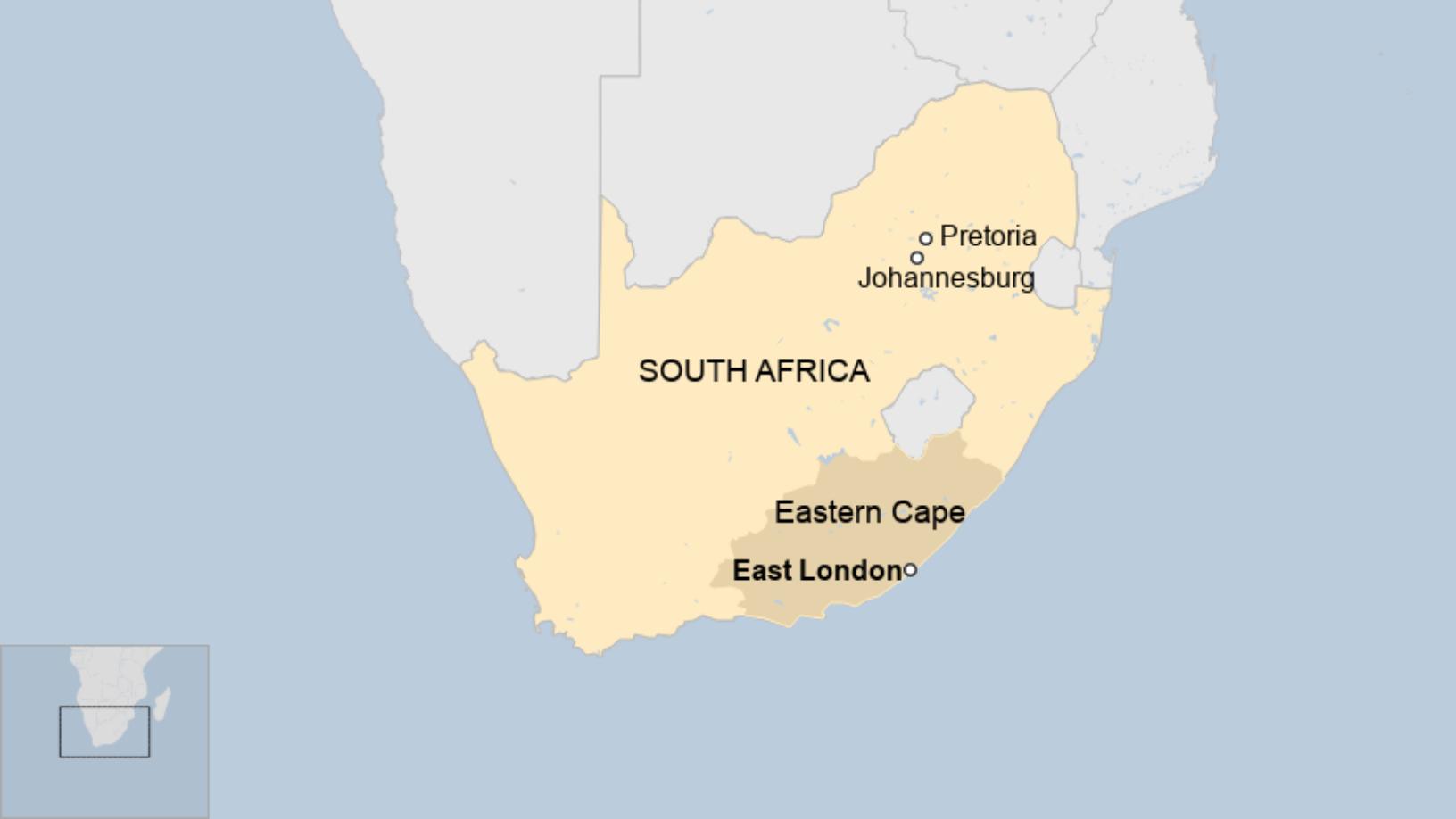
Sánchez was speaking during an official visit to South Africa where he met president Cyril Ramaphosa a day after meeting Kenyan president William Ruto.
Sánchez announced that the Spain would be available funding of up to 2.1 billion euros to South Africa over the next five years, which would be invested in various sectors including the renewable energy.
South Africa has honoured the country’s first black student to graduate with a degree in engineering.
Dr Solomon Boyce Isaac Lefakane studied civil engineering at the University of the Witwatersrand in Johannesburg, and was awarded a degree in 1961 – when the racist apartheid system was in operation.
Now, as part of the university’s centenary, Dr Lefakane, now 84, has been inducted into a brand new hall of fame at the Faculty of Engineering and Built Environment.
Dr Lefakane was the son of a domestic worker and gained a scholarship to pursue his studies.
“I knew I was facing very heavy odds at the time and I worked as hard as I could,” he told the BBC’s Focus on Africa radio programme.
Reflecting on his time there Dr Lefakane said he did not socialise with the white students, but there was a black student residence and “we made our own lives enjoyable”.
After graduation he tried to get with Johannesburg City Council but was offered a far smaller salary than his white counterparts. As a result he left South Africa, eventually ending up in the US.
Fourteen suspects accused of raping and sexually assaulting a group of women in South Africa in July have had those charges dropped.
The National Prosecuting Authority (NPA) said on Thursday that DNA evidence taken from the suspects, described as illegal miners, failed to link them to thecrime.
“Upon consultation with the complainants on the matter and evidence at had it became apparent we cannot proceed with prosecution. We have insufficient evidence to continue with the case,” said the NPA’s spokesperson Phindi Louw Mjonondwane.
The suspects were arrested and charged after some of the victims pointed them out as the alleged rapists during a police identity parade.
Eight women had been filming a music video on 30 July near a disused mine outside Johannesburg when they and the film crew were attacked by a large group of men.
Reports of the gang rape by the so-called Zama Zamas, a colloquial term used for illegal miners, led to violent protests by communities in the area where the mine is located.
It also led to xenophobic rhetoric and threats against undocumented immigrants.
Although the group have been cleared on the sexual violence and robbery charges, the NPA says the suspects will still be charged for allegedly contravening immigration laws.
That matter will be heard on 1 November.
The police have meanwhile told the BBC that they will continue investigating the rape cases and intend to bring the attackers to justice.
The dropped charges will be seen by some as an embarrassment to the country’s police and courts, which are often criticised for failing victims of sexual crimes.
South Africa has one of the highest reported cased of sexual violence in the world.
South Africa says it will allow a sanctioned Russian oligarch to dock his superyacht in Cape Town.
The $521m (£472m) vessel, which belongs to Alexei Mordashov – an ally of Russian leader Vladimir Putin – left Hong Kong earlier this week.
South African opposition leaders had urged the government to seize the 465ft long (141m) yacht called The Nord.
But a spokesman for President Cyril Ramaphosa said he saw “no reason” to comply with Western sanctions.
“South Africa has no legal obligation to abide by sanctions imposed by the US and EU,” Vincent Magwenya told reporters in Pretoria on Tuesday.
“South Africa’s obligations with respect to sanctions relate only to those that are specifically adopted by the United Nations,” Mr Magwenya added, noting that Mr Mordashov is not under any UN-sponsored sanctions.
Western countries and their allies have imposed sanctions on more than 1,000 Russian individuals and businesses in response to Russia’s invasion of Ukraine.
Like many other African countries, Mr Ramaphosa’s government has so far avoided directly criticising Russia, abstaining in several UN votes that have expressly condemned the war. Pretoria has also called for a negotiated settlement to end the conflict.
On Monday, Cape Town Mayor Geordin Hill-Lewis – a member of the opposition Democratic Alliance party – urged officials to block the superyacht’s entry, writing on Twitter that there could be “no place in our city for accomplices to, and enablers of, Putin’s war”.
“It must be said that so far, our country’s foreign policy conduct in relation to Russia’s illegal, imperialist war has been nothing less than shameful,” Mr Hill-Lewis added in a further statement. “Here is an opportunity to correct some of those errors of judgement and stand up for what is clearly right.”
It is unclear whether Mr Mordashov is actually onboard the vessel. Speaking to local media on Sunday, Mr Hill-Lewis suggested that the billionaire was travelling on his yacht.
But last week a spokesperson for the oligarch told Bloomberg News that he had been in Moscow since his yacht arrived in Hong Kong.
Hong Kong’s government recently offered similar justifications when refusing to prevent the entry of the superyacht, with Chief Executive John Lee saying the city would be accountable to UN sanctions but not “unilateral” ones imposed by “individual jurisdictions”.
Prior to the war, Mr Mordashov was Russia’s wealthiest man. The 57-year-old built a fortune of some $29.1bn (£25.92bn) through his steel and mining company Severstal.
Early in the conflict he was targeted by extensive Western sanctions due to his links with Mr Putin. But the billionaire has questioned the value of the moves, saying he had no involvement in Russian politics and maintains little influence with the Kremlin.
Mr Mordashov has already lost one of his smaller vessels, the 215ft Lady M, to Western sanctions after it was seized by Italian police in March.
But The Nord is believed to be his biggest yacht asset. The vessel is larger than a football field and is described as one of the world’s most extravagant boats, according to Forbes.
Shortly after the outbreak of the conflict in Ukraine, the yacht – which features two helicopter pads, a swimming pool and a cinema – left the Seychelles for the far-eastern Russian port of Vladivostok. The move was seen as a bid to avoid the fate of the Lady M.
But experts say owners like Mr Mordashov face serious issues finding international ports capable of maintaining superyachts. Most are in Europe, where the vessels would be instantly seized.
South African President Cyril Ramaphosa has addressed the nation detailing the steps his government will be taking in implementing a commission’s report on state capture.
The six-part report sought to uncover corruption, fraud and the weakening of state institutions under the administration of former president Jacob Zuma.
State capture describes a form of corruption in which businesses and politicians conspire to influence a country’s decision-making process to advance their own interests.
In a bold admission, President Ramaphosa accepted the findings by the commission of inquiry led by Judge Raymond Zondo that state capture did happen.
He announced that the commission made over 300 recommendations, some of which the government was responding to ranging from criminal prosecutions of accused persons, legislative changes, as well the establishment of an anti-corruption commission.
President Ramaphosa however was thin on detailing how his government would be implementing the commissions findings. No mention was made of members of his cabinet implicated in the report.
The corruption and fraud uncovered by the state capture report is estimated to have cost the country over $27bn (£24bn).
Mr Ramaphosa said the stolen money robbed South Africans of their future.
Ethiopian Prime Minister Abiy Ahmed has stated that the conflict in northern Tigray “will end and peace will prevail.”
He made the remarks during the inauguration of a talent development centre in the Oromia regional state on Thursday.
“The situation in northern Ethiopia will come to an end, peace will prevail. We will not continue fighting forever. I believe that in a short period of time, we will stand with our Tigrayan brothers for peace and development,” Mr Abiy said.
He urged Ethiopians to work together for the country’s prosperity and not to be divided along ethnic and religious lines.
On Thursday, the Ethiopian government accepted an invitation by the African Unionto participate in peace talks to be held on 24 October in South Africa to end the war that has killed an unspecified number of people and displaced millions.
It came on the same day Tigrayan rebels accused Ethiopian and Eritrean forces of killing seven youths in a town that was captured by the federal army on Tuesday.
South African President Cyril Ramaphosa is facing a criminal investigation after a revelation that he failed to report the theft of about $4 million in cash from his farm in northern Limpopo province.
An account of the theft is contained in an affidavit by the country’s former head of intelligence Arthur Fraser, who has opened a case against Ramaphosa.
Ramaphosa has not denied the theft but claims that he reported it to the head of his VIP Protection unit, who did not report it to the police.
In South Africa, it is illegal not to report a crime and according to Fraser’s affidavit, Ramaphosa tried to conceal the theft, which happened in February 2020 when he was attending an African Union summit in Addis Ababa, Ethiopia.
Several opposition parties have called for a full investigation into the theft, including whether the amount of foreign currency allegedly stolen had been declared to the South African Revenue Service.
The Democratic Alliance, the country’s biggest opposition party, said Ramaphosa should come clean about the circumstances surrounding the theft and why it was not reported to the police.
“The president is facing a crisis of credibility and cannot hide behind procedural smokescreens to avoid presenting South Africans with the full truth around the money that was stolen from his farm, and the subsequent cover-up,” the opposition party’s leader John Steenhuisen said in a statement.
Another opposition party, the United Democratic Movement, has called on Ramaphosa to take a “leave of absence” while Parliament probes the incident, saying it is not prudent for it to do so while he was in office.
Ramaphosa publicly spoke about the incident for the first time over the weekend since the revelations surfaced, saying the cash was from buying and selling animals on his farm.
“I want to reaffirm that I was not involved in any criminal conduct, and once again I pledge my full cooperation with any form of investigation,” said Ramaphosa on Sunday.
“I would like to say that I’m a farmer. I’m in the cattle business and the game business. And through that business, which has been declared to Parliament and all over, I buy and I sell animals,” he said.
The sales are sometimes through cash and sometimes through transfers, and what is being reported is a clear business transaction of selling animals, said Ramaphosa.
He was addressing the Limpopo provincial conference of the ruling party, the African National Congress, where his political allies were re-elected, boosting his own chances for re-election as the ANC’s president at the party’s national conference in December.
Ramaphosa’s supporters have cried foul, saying the timing of the revelation is part of efforts to derail his efforts to be re-elected party president in December.
The information about the theft was revealed by Fraser, the former head of South Africa’s intelligence, who is known to be loyal to former President Jacob Zuma.
Fraser controversially approved Zuma’s release from prison on medical parole last year, an action that is now being contested in court as illegal. Zuma had been sent to prison last year after he was convicted of defying the Constitutional Court by refusing to testify at a judicial inquiry probing allegations of corruption during his presidential term from 2009 to 2018.
Police in South Africa has initiated a manhunt for seven inmates who escaped from a jail in Grahamstown, a city in the Eastern Cape region.
According to a police statement, an officer who arrived at the Makhanda Correctional Facility at 04:00 local time saw some lights were on and discovered that the detainees had escaped through a window.
“Police are warning the community that these prisoners are dangerous and should not be approached instead police must be contacted,” the statement said.
The escapees include one person charged with murder and five Zimbabwean nationals either imprisoned for or facing rhino-poaching charges.
South Africa’s President Cyril Ramaphosa has withdrawn controversial perks for cabinet ministers and their deputies that saw their homes supplied with free electricity and water.
The benefits caused a public outcry as they were considered insensitive at a time South Africans are struggling with daily power cuts and rising cost of living.
In a press briefing on Monday evening, a spokesman said the president “acknowledges and appreciates the public sentiments on the matter”.
The ministerial handbook, which outlines ministerial benefits, will be “aligned to the realities that many South Africans face”, presidential spokesman Vincent Magwenya said.
He said the intention behind the perks was “not a nefarious one”.
“The intention was to try and find some form of balance between what ministers could afford versus some of the costs that they have,” he is quoted as saying the by the state news agency.
Former British military pilots are allegedly being recruited to China with substantial sums of money in order to pass on their experience to the Chinese military.
Up to 30 former British military pilots are said to have gone to China to teach members of the People’s Liberation Army.
The United Kingdom has issued an intelligence notice warning former military pilots not to serve in the Chinese military.
Attempts to headhunt pilots are ongoing and had been ramping up recently, western officials say.
A spokesperson from the Ministry of Defence said the training and the recruiting of pilots do not breach any current UK law but officials in the UKand other countries are trying to deter the activity.
“It is a lucrative package that is being offered to people,” said one western official. “Money is a strong motivator.” Some of the packages are thought to be as much as £237,911 ($270,000).
The retired British pilots are being used to help understand the way in which Western planes and pilots operate, information that could be vital in the event of any conflict, such as over Taiwan.
“They are a very attractive body of people to then pass on that knowledge,” a Western official said. “It’s taking Western pilots of great experience to help develop Chinese military air force tactics and capabilities.”
The UK first became aware of a small number of cases of former military pilots being recruited in 2019 which were dealt with on a case-by-case basis. The Covid-19 pandemic slowed attempts down when travel to China was almost impossible but the attempts have now increased, leading to this alert.
“We’ve seen it ramp up significantly,” a western official said in a briefing to journalists. “It is an ongoing issue.” Current serving personnel is being targeted but none are thought to have accepted.
The pilots have experience on fast jets and helicopters and come from across the military and not just the Royal Air Force. They have flown Typhoons, Jaguars, Harriers, and Tornados.
F-35 pilots are not thought to be involved although China is thought to be interested in them. Some of the pilots are in their late 50s and left the military some time ago. Pilots of other allied nations have also been targeted.
Officials said they are being recruited through intermediary head-hunters and cited a particular flying academy based in South Africa as being involved.
There is no evidence that any pilots have broken the Official Secrets Act or that they have committed any crime. The aim of the alert is to try and deter activity and inform current staff and industry partners and also remind personnel of their obligations to protect sensitive information.
“We are taking decisive steps to stop Chinese recruitment schemes attempting to headhunt serving and former UK Armed Forces pilots to train People’s Liberation Army personnel in the People’s Republic of China,” an MoD spokesperson said.
“All serving and former personnel are already subject to the Official Secrets Act,and we are reviewing the use of confidentiality contracts and non-disclosure agreements across Defence, while the new National Security Bill will create additional tools to tackle contemporary security challenges – including this one.”
Ghana’s Minister of works and housing, Francis Asenso-Boakye, has given assurance to world leaders that the country is committed to upgrading existing slums, while preventing the emergence of new ones in the country.
He made this known while addressing participants at a high-level meeting to launch the “Global Action Plan Framework on Informal Settlements and Slums” being held in Pretoria, South Africa by the United Nations Human Settlements Programme (UN-Habitat) and the government of South Africa.
Asenso-Boakye said there is the urgent need for a coherent and integrated national urban and housing policies, which prioritises the implementation of national developmental plans, policies, and result-oriented programmes and projects for slums.
“Ghana has taken the bold step in the development of a draft slum upgrading and prevention strategy, following the country’s active participation in the implementation of Phases 1 and 2 of the “Participatory Slum Upgrading Programme (PSUP)” and the emergence of this Global Action Plan will help shape our strategy for effective implementation,” the minister added.
Asenso-Boakye said the importance of the Global Action Plan Framework on Informal Settlements and Slums, cannot be over-emphasised as it will consolidate, and amplify the world’s collective resolve to accelerate the implementation of the Sustainable Development Goals (SDGs), and the New Urban Agenda (NUA).
The Executive director of the UN-Habitat, Maimunah Mohd Sharif, while speaking at the launch lauded various governments for their resolve towards upgrading of existing and prevention of slums.
The high-level meeting also brought together ministers, top government officials, as well as civil societies who continue to play active roles in upgrading and transforming informal settlements.
Global action plan framework
The international meeting will see to the launching of a Global Action Plan Framework to transform Informal Settlements and Slums in the Decade of Action, accelerating the implementation of the Sustainable Development Goals and the New Urban Agenda. The International Meeting leverages the momentum of the Urban October and the preparation process for the UN-Habitat Assembly in June 2023.
The Global Action Plan Framework Initiative is anchored in the Slums and Informal Settlements Network (SiSnet) launched during Habitat III in Quito as part of the global Participatory Slum Upgrading Programme (PSUP), initiated by the Organization of the African, Caribbean and Pacific States (OACPS), financed by the European Commission and implemented by UN-Habitat.
The Global Action Plan Framework is informed by the co-creation of a global publication in search of solutions to the challenges of informal settlements and slums. The publication provides a snapshot of the current global status quo of slums and informal settlements, reflects on lessons learnt in the past 20 years and identifies sustainable and inclusive solutions for transforming informal settlements and slums. The Government of South Africa invites Member States to launch a resolution formulation process shaping commitments and endorsement in support of the Global Action Plan Framework.
The intention of the Global Action Plan Framework is to take coordination, collaboration, commitments and partnerships to the next level. It consolidates and amplifies efforts for accelerating the implementation of the Sustainable Development Goals (SDGs) and the New Urban Agenda (NUA) in the Decade of Action. It provides a joint vision to inform actions framed by partnerships and is the basis for Member States to elevate commitments in form of a resolution to be pledged in the UN-Habitat Assembly process.
Wildlife enthusiasts in South Africa have shared footage of a honey badger fighting off a mother leopard and her two cubs.
The encounter happened at the Kruger National Park.
Outsized and outnumbered, the honey badger lived up to its reputation of being among the most fearless animals.
In the video, it was seen wrestling all the three leopards in turns. Following this, the Honey badger was “trotting off as though nothing had happened”.
Field guide Dan Fiser and business consultant Paola Murguia shared the story with LatestSightings.com – a website that shares footages of wildlife sightings and experiences.
“The honey badger was fighting back, instead of trying to run away, actually turning the tables at times.”
The South African PoliceService (SAPS) say a 21-year-old man will be charged with murder following the discover of six bodies – five of them in an advanced state of decomposition – in a building in the main city, Johannesburg.
Police launched an investigation after complaints of a foul smell coming from one of the rooms in the building.
The body of a woman was discovered in the building, and her clothes matched the description of a woman reported missing earlier this month, a police statement said.
Five more bodies were found outside “where there is a makeshift workshop and rubbish dumpsters”, the statement said.
“Unfortunately, the other five bodies are at the late stage of decomposition. They will be subjected to forensic analysis for identification,” it said.
The 21-year-old man – who is believed to be the last person to have been seen with the woman – had been arrested, the statement added.
He is to be charged with six counts of murder.
Police have not yet given a possible motive for the killings.
South Africa claimed a fourth successive ODI victory over India as they kick-started their three-match series with a nine-run win in Lucknow, despite Sanju Samson’s efforts.
With rain reducing the match to 40 overs per innings, India won the toss and put the tourists into bat on Thursday.
Despite a flurry of wickets between the 13th and 16th overs, with Shardul Thakur (2-35) the pick of India’s bowlers, Heinrich Klaasen and David Miller remained unbeaten on 74 and 75 respectively to guide the Proteas to 249-4.
Quinton de Kock scored 48 from 54 deliveries before being dismissed by Ravi Bishnoi, but Miller and Klaasen combined for a 139-run partnership to see out the innings.
Wayne Parnell and Kagiso Rabada set about damaging India’s response, with Shubman Gill and Shikhar Dhawan falling inside the opening six overs.
More quickfire losses followed for India in the 17th and 18th overs – Ruturaj Gaikwad stumped and Ishan Kishan caught out – but the hosts had won their last seven ODIs and had resistance in them.
Shreyas Iyer’s 50 included eight fours, before he was dismissed by Lungi Ngidi (3-52), yet with Samson, India had hope.
The wicketkeeper struck an unbeaten 86, leading a team flurry of 63 runs off the final five overs. The onslaught ultimately came too late, though.
🚨 RESULT | SOUTH AFRICA WIN BY 9 RUNS
Wickets at regular intervals gave the #Proteas the early momentum but India fought back. A 93-run sixth-wicket stand threatened to steal the win but our bowlers held their nerve to claim the victory#INDvSA#BePartOfItpic.twitter.com/MqRBks42TE
India’s wicketkeeper batted superbly, striking 12 boundaries in a career-best innings and holding firm against South Africa’s deadly attack. He had decent support from Shardul Thakur (33), though in the end could not carry the tail through.
South Africa have not lost to India in a bilateral ODI series since February 2018, and the rest of the hosts batters must show similar levels to Samson if they are to end that run.
Klaasen and Miller the difference
With India’s bowlers failing to perform at their best – Mohammed Siraj failed to take a wicket and Bishnoi was particularly expensive, conceding 69 runs – it still took some fine batting from South Africa’s sixth-wicket pair to clinch victory.
Between them, Klaasen and Miller hit 16 boundaries, including five sixes, to ultimately take the game away from India.
A report by the World Intellectual Property Organization (WIPO) has evaluated innovation levels across 130 economies to determine the most innovative markets in the world in 2022.
The 2022 Global Innovation Index (GII) measured each economy’s innovative capacity and output by focusing on a long list of criteria such as human capital, institutions, technology and creative output, as well as market and business sophistication, among others. The GII ranking is based on performance across seven pillars:
Which are the most innovative economies in 2022?
Switzerland is the most innovative economy in the world in 2022 – for the 12th year in a row – followed by the United States, Sweden, the United Kingdom and the Netherlands. China is nearing the top 10 while Türkiye and India enter the top 40 for the first time, according to the GII 2022.
Mauritius ranks first in Africa in Global Innovation Index 2022
Port Louis, Capital of Mauritius
According to the report, Mauritius emerged the most innovative African country, and climbing seven places to 45th on the Global Innovation Index (GII). Unlike most African countries, the report said Mauritius has a high human development score. Its economy has grown robustly in the last half a century, especially on financial services, tourism and information technology.
Top 10 innovation economies by region
This year, sixteen out of the 25 economies from Sub-Saharan Africa covered this year improved their ranking. Botswana took the biggest leap forward, reaching 86th position, and in so doing overtaking Kenya (88th) among the top 3 for the region. Other notable improvers within the region are Mauritius (45th), Ghana (95th), Namibia (96th) and Senegal (99th). South Africa remains unchanged in 61st place – and continuing to fail to improve consistently over time.
Here are the top 10 most-innovative countries in Africa, according to the 2022 Global Innovation Index
“To be honest, since I was a child, I’ve always loved helping people, I’ve never looked down on others. So what I did was to combine my passion and my skills, and that’s how I founded my company, “said Sibongile Mongadi about starting Uku’hamba.
Her company produces lightweight prosthetics to help amputees get around more easily. Uku’hamba embodies what Mongadi has always stood for; helping the vulnerable in society.
She started the company following a visit to the hospital after a thumb infection, whereupon she chanced on an amputee struggling to access his prosthetic limb at the hospital. She was moved by what she had seen and decided to act, according to IOL.
Related stories
“I put myself in that amputee’s shoes,” said Mongadi, quizzing: “Yes, it may not be me or one of my loved ones, but what if it was?”
“I went and spoke to him, to try to find out what the problem was, and was told that he had been coming to the hospital for five years trying to access a prosthetic limb from the public sector.”
The little investigation she did showed that demand for prostheses far outstripped supply. In addition, the cost is so high and beyond the reach of underprivileged people. She also investigated the use of 3D technology to address the needs of amputees, particularly concerning cost, quality, and the use of environmentally friendly materials, she told IOL.
“I taught myself about 3D printing then a few years later I tried to back it up with a qualification, and that’s how I ended up at the University of Johannesburg,” said Mongadi.
She uses a 3D printing machine to produce prosthetic limbs, and they come in a variety of bright colors and cater to clients’ specifications. They are also lightweight, which helps in easy movement, and also affordable.
According to Mongadi, her prosthetics are 80 percent cheaper than what is available on the market. “The life span of our limbs is on par with what is already on the market. The general lifespan of a prosthetic is five years,” she added.
She also has a partnership deal with some private hospitals for the supply of prosthetics. She is also a recipient of many awards in recognition of her hard work and innovation. She has been recognized as a Global Digital Female Leader in Innovation.
Mongadi hails from Dobsonville, Soweto. She was raised by self-employed parents and from a family of eight siblings. According to the entrepreneur, her parents were uneducated but that did not prevent her from chasing her dreams. Today, she is a role model in her community.
The world of wealth is ever-changing, yet everlasting. High-net-worth individuals are constantly having to keep up with their wealth and the factors that impact it, like the pandemic, rising inflation and the economy’s boom and bust cycles.
Safeguarding their money through volatile markets is of utmost importance.
For the first time in 11 years, FORBES AFRICA is honoring the keepers of these vaults, who have persevered in the toughest of times.
We speak to 10 of south Africa’s experts who specialize in wealth advisory and management services.
A common theme: wealth preservation, not only in South Africa but across the continent, which is key to the growth of any economy, even as times and trends change.
It is cold and dark when 53-year-old factory worker Letta Nkabinde leaves her home in Ivory Park at 5am to begin her hour-long commute to work.
She tucks her handbag beneath her coat to keep it hidden from the thieves who are known to lurk in this working-class Johannesburg neighbourhood, waiting for targets, before walking 10-15 minutes to the nearby taxi stand to catch a 16-seater minibus to the wealthy area where she works in a factory that manufactures cosmetics.
“The morning shift starts at 6am sharp, so I have to get up very early,” says Letta who is wearing a formal red jacket and crimson lipstick. “I know workers that wake up at 3am every day to get to work on time because they have to walk a longer distance to reach taxis. It’s very difficult.”
South Africa is the most unequal country in the world, according to the World Bank, which in a recent report highlighted how the historically unequal distribution of land “undermines rural development and entrepreneurship” and leaves Black South Africans, women-headed households, and unemployed people with the highest rates of poverty and income inequality.
Letta’s community in Ivory Park, a densely populated area where nearly 98 percent of the residents are Black, is one of the poorest in South Africa. Nearly 30 years after the end of apartheid, poorer communities continue to live with the harsh reality of segregated spatial dynamics, which began when apartheid-era laws forced different races to live in different areas, relegating people of colour – especially Black people – to those furthest from the urban centres where they could find employment.
The roads surrounding Ivory Park’s modest homes and corrugated informal dwellings are unpaved; some of them have potholes that have filled with water and sewage, and taxis refuse to pick up commuters from their streets to avoid tire damage.
But Letta does not mind the daily walk from home to reach a minibus taxi, she says, despite the threat of bad weather and crime. “That’s not the worst of it for me, the bigger problem is that public transport has become unaffordable.”
In previous years, the single mother of three used to budget about 900 rand ($51) for transportation every month; she now spends 1,200 rand ($68) per month and worries that the cost will only rise.
“Taxis are always increasing because of the rising cost of fuel. Towards month-end, you are struggling to go to work because you don’t have money for transport,” she explains.
Letta attended a nationwide demonstration against the rising cost of living in August [Courtesy of Letta Nkabinde]
‘Rising cost of living’
Letta works as a production line operator for a global cosmetics manufacturing brand based in the affluent area of Midrand, about 10km (6.2 miles) from Ivory Park. She has spent 25 years working daily eight-hour shiftsat the same factory and earns 70.83 rand ($4) per hour. Her net monthly income is 17,000 rand ($959) but she takes home approximately 13,000 rand ($733) per month after tax deductions. Although this is better than the minimum wage in South Africa (23.19 rand or just more than $1 per hour), she says it “is barely enough to get by”.
The latest news from around the world.Timely. Accurate. Fair.
The rising cost of goods and services has had a particularly harsh impact on workers like Letta, whose salary has remained stagnant for years.
“Companies don’t want to talk about wage increases any more, they just tell you about COVID and its impact,” she says, “As a worker, especially as a single parent, and a woman, it makes life very difficult.”
Letta supports her thee children – aged 30, 21 and 12 – as the family’s main breadwinner. Her two adult children live at home with her while they study and look for employment in South Africa’s dwindling job market. Her youngest daughter, she says with beaming pride, “is smart, she is not like children her age who demand ridiculous things because of what their friends have, she understands that as a single parent, I give them my best, and what I don’t offer them is beyond control”.
“It is difficult to take care of yourself and your children these days. We really can’t afford comfort any more, we are down to basics, and you must make tough choices,” says Letta, with a concerned expression. “Think about the current food inflation price, these days you have to choose between bread and things like [mobile phone] data or entertainment.”
Letta, at work years ago, when she was still a line production assistant at the factory [Courtesy of Letta Nkabinde]
The annual rate of consumer inflation grew from 7.4 percent in June to 7.8 percent in July, the highest rise in 13 years according to Stats SA, the government’s department of statistics. The largest contributors to food inflation, according to the report, are “oils and fats, electricity, fuel, and bread and cereals”.
In June, South African President Cyril Ramaphosa acknowledged the unbearable cost of living in his newsletter, stating, “the most basic foodstuffs cost more now than a year ago.”
He further attributed the price increases, particularly those for fuel and food, to the continuing conflict between Russia and Ukraine and claimed that these developments “are the result of circumstances over which we have little control.”
Since South Africa trades with both Russia and Ukraine, the human cost of the conflict is being felt by the general populace. The deputy minister of finance, David Masondo, told a parliamentary committee in March that, “much of what has been affected is wheat, maize, and oil supplies. The increase in [the] price of these household staples has added to inflation and reduced the disposal income of consumers”.
But Letta believes the government could be “doing more on issues that they can control” such as the price of household electricity.
In South Africa, government municipalities are largely responsible for distributing electricity to households after acquiring it from Eskom, the country’s power utility. The tariffs Eskom charges municipalities are a significant factor in the cost of electricity, according to the most recent research conducted by Stats SA.
The report also claims that since the introduction of rolling national blackouts in 2007, which resulted in a “loss of economic output” of roughly 500 million rand (about $28m) per blackout every day in 2020 and is thought to be a contributing factor in the loss of more than one million job opportunities, electricity rates have risen dramatically.
“I now spend about 500 rand ($28) on electricity every month, half of that used to be enough for me and my family,” says Letta.
“They tell you to save electricity consumption, but as much as we can try to lessen the amount of electricity we use in our homes, it doesn’t work,” she emphatically explains. “We turn off the television when we go to sleep, we even turn off the fridge when we go to sleep to try and save but you’ll wake up the next morning and find less units.”
‘By the grace of God’
Letta had a difficult childhood. She was born during apartheid in what is now Mpumalanga province, to the east of Johannesburg.
Raised by a working single mother, she remembers moving from one home to another, staying with “many families” until her mother got a house in an informal settlement in Johannesburg, but then being forced back to the rural areas when they lost that home.
“I’d say that I grew up like an orphan. I did not have a proper family so really I grew by the grace of God,” says Letta.
She dropped out of school after the 12th grade and started working the same year at just 18 years old. The idea that “when you are a woman, you must fend for yourself because no one will fend for you,” has always been ingrained in her, which forced her to mature quickly.
“I struggled to find a job after I left high school, so I started a small business. I would sell potatoes, oranges, mielies, on some days and then find piece jobs like babysitting, at the same time,” she says.
It wasn’t until she was 28 years old that she managed to get a steady job – working in the factory where she still works today, after almost a decade of experiencing income insecurity as an informal worker.
Members of South Africa’s labour unions carried placards during a nationwide strike over the high cost of living, in Pretoria, on August 24, 2022. Letta also took part in the demonstration [Esa Alexander/Reuters]
Although Letta considers herself a middle-income earner – defined by the South African Department of Human Settlements and Water Sanitation as individuals who earn between 3,501 rand ($197) and 22,000 rand ($1,241) per month – she contends that the country’s middle class is “living from paycheque to paycheque.”
“You know, before you were able to invest, you had money to keep aside, but not any more. It is impossible to save now. How do you save what you don’t have?” Letta laughs.
“We are the non-existent middle class. We do not qualify for government assistance, but we cannot afford many basics,” she says. “But do you know what they say we can afford? Debt.”
Union work
In August, Letta, who doubles as a worker representative in the factory for the grassroots General Industries Workers Union of South Africa (GIWUSA), swapped her factory garments for a red t-shirt and a pair of casual sneakers.
She took part in a national demonstration that was arranged by workers at the Union Buildings in Pretoria, the nation’s capital, with the support of 200 unions and civil society organisations. In major cities around the country, 5,000 protesters marched in support of increased pay, lower fuel prices, and government action to address the skyrocketing prices of basic needs and services.
The high turnout reveals the rising discontent and desperation among the country’s labour force about the cost of living.
“The protest was very important. The government should be aware that workers are suffering. When we are quiet, the government also keeps quiet. They need to understand what we are going through,” says Letta.
She often faces an uphill battle as both an employee and an advocate for workers, she explains, “I act as the middle woman between management and employees. If there’s a problem on the side of employees, I work on those complaints with management. And if the management has a problem, they also come to me.”
Letta acknowledges that the rising cost of living is “challenging to both companies and workers,” but she also thinks that individuals who educate themselves about the value of their labour and demand what they are entitled to may help bring about change.
“I’ve learned that as workers, we don’t know our rights. We don’t know what we are owed for our labour or our value,” she says. “I’m trying to bring awareness. Unions help us exercise our rights and I want to teach workers that.”
Workers at South Africa’s state-owned logistics firm Transnet will go on strike from Thursday over a wage dispute, two labour unions said, in a move that could halt the export of key minerals and other cargo.
Transnet has been operating below capacity due to a shortage of locomotives, poor maintenance and vandalism and theft of its infrastructure, costing miners billions of rand in potential revenue. A strike would paralyse freight rail services and impact South Africa’s ports, also managed by Transnet.
The United National Transport Union (UNTU), the biggest labour union at the company, said it had served notice to begin industrial action on Thursday. The other union at Transnet, South African Transport and Allied Workers Union (SATAWU), said it would join in the strike from Monday.
Both unions said Transnet’s offer of a 1.5 percent pay increase from October 1 fell below their demands.
“Transnet…must provide a salary increase offer that is aligned with the increased cost of living, cost of housing, medical costs, housing and, of course, the consumer price index (CPI) that is currently running at 7.6 percent,” UNTU said in a statement.
In recent years, the cost of living has soared in Africa’s most developed economy, worsened by the COVID-19 pandemic and the increase in prices of items like bread due to global supply chain disruptions since Russia’s invasion of Ukraine.
In July, former President Thabo Mbeki warned that there could be an “Arab Spring-type uprising” in the country due to the situation.
Transnet has said any increase beyond its current wage offer would not be sustainable.
“Transnet has consistently made the point that its wage bill currently makes up over 66 percent of monthly operating costs. This is not sustainable, particularly given the current operational and financial performance,” it said in a statement on Tuesday.
Transnet has applied to the Commission for Conciliation, Mediation and Arbitration (CCMA), a state agency that mediates labour disputes, for further talks with the unions.
Both UNTU and SATAWU said the mediation, which is due to start on October 12, would not affect their plans to go on strike.
Police in South Africa are investigating the killing of a German tourist during an attempted carjacking in the eastern Mpumalanga province.
The victim was part of a group of four German tourists who were waylaid on Monday evening while travelling towards a safari lodge at the Kruger National Park.
The gang is said to have ordered the tourists to open the doors of their vehicle, but when the driver reportedly locked all the doors, one of the suspects shot him through the window, police said.
Local police said the tourist died on the spot and the suspects sped off without taking anything.
“This is really cruel and uncalled for given the economic challenges that our country is facing,” police boss Semakaleng Daphney Manamela said.
David Miller’s stunning century proved to be in vain as India earned a 16-run victory over South Africa to take an unassailable 2-0 lead in their T20I series.
India cruised to an eight-wicket win in the low-scoring opener on Wednesday, but the runs flowed in Guwahati on Sunday as Suryakumar Yadav (61) and KL Rahul (57) helped the hosts post an imposing 237-3.
Suryakumar and Rahul both hit half-centuries in the first match, and they were at it again as South Africa’s bowling attack failed to get control of the match, with only Keshav Maharaj (2-23) picking up wickets as the likes of Kagiso Rabada and Lungi Ngidi struggled.
India’s score was their fourth-highest in T20Is, aided by important innings from captain Rohit Sharma (43) and Virat Kohli’s unbeaten 49. Yadav’s runs, meanwhile, came from just 22 balls, five of which he despatched for six.
South Africa’s chase started woefully, as captain Temba Bavuma and Rilee Rossouw were both dismissed for nought by Arshdeep Singh in the second over.
Quinton de Kock and Miller fought to keep South Africa in the game, as former captain De Kock made a snappy 69 not out while Miller hit 106no from 47 balls.
Despite those efforts, the Proteas never truly threatened to chase the challenging total as they lost the series with a game left to play, finishing on 221-3. The third match takes place on Tuesday in Indore.
Suryakumar became the fastest player to reach 1,000 T20I runs in terms of balls faced, as he hit five fours and as many maximums to post his second half-century in a row.
He reached 1,000 T20I runs in 573 balls, 31 fewer than the previous record-holder Glenn Maxwell required, and helped India to set a huge target as the Proteas bowlers were carted to all parts.
Rabada struggles to make a dent
A key member of South Africa’s pace attack, Rabada failed to make a significant impact as he finished with figures of 0-57 in his four overs.
The most expensive of the visitors’ bowlers, Rabada was hit for 10 boundaries as India stormed to a total out of South Africa’s reach.
Following the sudden death of 63 African penguins inside the Boulders beach colony near Simonstown, South Africa,veterinarians have discovered the cause to be a freak bee attack.
The deaths occurred suddenly sometime between Thursday afternoon and Friday morning.
Officials, expert advisors, and veterinarians from South African National Parks (SANParks), the City of Cape Town, and penguin experts from the Southern African Foundation for the Conservation of Coastal Birds (SANCCOB), started investigating the possible cause of death.
The dead birds were transported to SANCCOB for post-mortems, and biological samples were sent for disease and toxicology testing.
No external physical injuries were observed on any of the birds.
The post-mortems revealed that all the penguins had multiple bee stings, and many dead bees were found at the site where the birds had died.
Preliminary investigations suggest that the penguins died because of being stung by a swarm of Cape honey bees.
On Monday, SANCCOB research manager Katta Ludyia said that the attack was in all likliness a “complete freak accident.”
“We suspect that it is just basically bad luck for the penguins. We don’t expect this to happen more often or that the bees start being a threat to the penguins,” she added.
A dead penguin was also found on Fish Hoek beach yesterday which the SANCCOB vet has confirmed also had multiple bee stings.
However, samples are still being tested for other toxicity possibilities and diseases are still being tested to rule out any other potential cause.
African penguins gather to keep warm as others are fed sardines by staff at the South African Foundation for the Conservation of Coastal Birds, Cape Town, Sept 20, 2012.
Penguin colonies in South Africaare being closely monitored. The H5N1 highly pathogenic avian influenza was detected at the Boulders Penguin Colony Cape Town and South African officials have now raised concerns about the spread of the disease.
The black and white birds are one of the attractions in Western Cape, South Africa’s most developed tourism region. Veterinarians at the Southern African Foundation for the Conservation of Coastal Birds are on the alert.
“At the moment we are talking about the Avian influenza which is a disease that affects a lot of birds but we have an outbreak of a more dangerous variant of the disease and that is the H5N1 high pathogenicity strain”, clinical veterinarian David Roberts says.
“It has been affecting sea birds in South Africa and other countries all over the world for the last year and we have had thousands of birds die. The penguins are not that badly affected but we have had a recent outbreak at the Boulders penguin colony and a few penguins have died there and that’s what we are concerned about”, he adds.
Environmental authorities said on September 16 that the H5N1 strain was similar to that detected last year among wild seabirds. If the outbreak is smaller, the protocol remains the same: identify, isolate and perfom tests on birds.
“For the last year we have lost over 20,000 birds, but just recently at the Boulders (Beach) National Park we have only lost 28 penguins”, Roberts details.
“It is a small outbreak in a community of about 3,000 penguins that live at this colony. Its not terrible there but we are monitoring the situation in case it gets worse.”
Once sick birds are identified, they are euthanised and cremated in an attempt to reduce the spread of the disease. Another concern is if the influenza spreads to commercial poultry.
Europe is facing the largest bird flu outbreak ever. In the Netherlands for example, more than 3,5 million chickens, ducks and other birds had to be culled. A lot of work is being done on a vaccine against the current, highly contagious, variant.
Penguin colonies in South Africa are being closely monitored.
The H5N1 highly pathogenic avian influenza was detected at a Cape Town colony and South African officials have now raised concerns about the spread of the disease.
The black and white birds are one of the attractions in Western Cape, South Africa’s most developed tourism region. Veterinarians at the Southern African Foundation for the Conservation of Coastal Birds are on the alert.
“At the moment we are talking about the Avian influenza which is a disease that affects a lot of birds but we have an outbreak of a more dangerous variant of the disease and that is the H5N1 high pathogenicity strain”, clinical veterinarian David Roberts says.
“It has been affecting sea birds in South Africa and other countries all over the world for the last year and we have had thousands of birds die. The penguins are not that badly affected but we have had a recent outbreak at the Boulders penguin colony and a few penguins have died there and that’s what we are concerned about”, he adds.
South Africa: Preliminary investigation shows penguins killed by bee swarm https://t.co/22OlcQjC9D
Environmental authorities said on September 16 that the H5N1 strain was similar to that detected last year among wild seabirds. If the outbreak is smaller, the protocol remains the same: identify, isolate and perfom tests on birds.
“For the last year we have lost over 20,000 birds, but just recently at the Boulders (Beach) National Park we have only lost 28 penguins”, Roberts details.
“It is a small outbreak in a community of about 3,000 penguins that live at this colony. Its not terrible there but we are monitoring the situation in case it gets worse.”
Once sick birds are identified, they are euthanised and cremated in an attempt to reduce the spread of the disease. Another concern is if the influenza spreads to commercial poultry.
Europe is facing the largest bird flu outbreak ever. In the Netherlands for example, more than 3,5 million chickens, ducks and other birds had to be culled. A lot of work is being done on a vaccine against the current, highly contagious, variant.
King Charles III will welcome South African President Cyril Ramaphosa to the U.K. for three days of high-level talks next month.
This is to celebrate the first state visit of his reign with the leader of a Commonwealth member with close ties to the royal family.
Ramaphosa has accepted Charles’s invitation for a state visit from Nov. 22-24, Buckingham Palace said Monday. The South African leader will be accompanied by his wife, Dr. Tshepo Motsepe.
Charles has visited South Africa on several occasions since 1997. At Nelson Mandela’s funeral in 2013, he said the world would be a “poorer place” without the man who led South Africa’s transition from apartheid to multi-ethnic democracy, adding that Mandela was owed “an enormous debt of gratitude” for his achievements.
The King and Camilla, the queen consort then the Prince of Wales and the Duchess of Cornwall welcomed former South African President Jacob Zuma to the U.K. at the start of a state visit in 2010.
Charles’ sons, Princes William and Harry, have also visited South Africa a number of times.
Next month, King Charles III will host South African President Cyril Ramaphosa for three days of high-level negotiations in the United Kingdom. This will be the first official visit since the king succeeded his late mother Queen Elizabeth II last month.
In a statement on Monday, Buckingham Palace announced that Ramaphosa has accepted Charles’s invitation for a state visit from November 22 to 24.
The South African leader will be accompanied by First Lady Tshepo Motsepe.
South Africa is a member of the Commonwealth, a political association of 56 countries, mostly former British colonies.
Ramaphosa’s predecessors Nelson Mandela, Thabo Mbeki, and Jacob Zuma, the other presidents the country has had since its first multi-ethnic elections in April 1994, have also previously made state visits to the UK.
While still the prince of Wales and the Duchess of Cornwall, Charles, and Camilla, the queen consort, welcomed former South African President Jacob Zuma to the UK at the start of a state visit in 2010.
The new monarch has visited South Africa on several occasions since 1997. At Mandela’s funeral in 2013, he said the world would be a “poorer place” without the man who led South Africa’s transition from apartheid to multi-ethnic democracy, adding that Mandela was owed “an enormous debt of gratitude” for his achievements.
The visit comes as Ramaphosa faces a huge scandal back at home. Arthur Fraser, the former head of the country’s spy agency has accused the president of kidnapping, bribery, money laundering, and “concealing a crime” in relation to the alleged theft of $4m in cash found at his Phala Phala game ranch in northern South Africa.
Fit-again captain Temba Bavuma is not interested in “sideshows” as he prepares to lead South Africa in a three-match Twenty20 International series against India.
Bavuma has not played for his country since suffering an elbow injury during a T20I series in India three months ago which ended 2-2.
The batter has since spoken of feeling “let down” after he was not selected for the inaugural SA20 auction this month.
Questions have been asked over Bavuma’s credentials in the shortest format less than a month before the T20 World Cup in Australia begins.
The Proteas skipper is ignoring such “distractions” ahead of the opening T20I against the top-ranked side in the world at Greenfield Stadium in Thiruvananthapuram on Wednesday.
He said: “I’ve tried to put all those things behind me. My biggest focus is on the role that I have, which is to lead and serve the team as best as I can, make sure that the guys are in the best place possible going into that big World Cup tournament.
“All other distractions, all other sideshows, that’s stuff that I’ll deal with on a personal level, but now, here, being within the team, as long as I’m still wearing that shirt, it will be to lead and serve the team as best as I can.”
Bavuma added: “This is our last series before the World Cup. Obviously we will be looking for this series to fill whatever gaps we feel there are in the team. We have guys who have been playing a lot of cricket and I guess we will be managing their intensity.
“We also have guys who need some cricket under their belts. It will be to give those guys some game time because this is our last preparation in different conditions compared to Australia but still match time nevertheless.
“The last time we were here, we were tested in all departments of our game and I think we answered well.”
South Africa have beaten England and Ireland since drawing with India, who come into this series on the back of a 2-1 triumph over Australia.
The two sides will also meet in Group 2 at the World Cup in Perth on October 30.
Kohli to reach another landmark
Virat Kohli finally ended his long wait for an international hundred against Afghanistan in the Asia Cup this month.
The former skipper is set to bring up another century, as his next T20I innings will be his 100th. Kohli will be only the 10th player to be at the crease 100 times in the shortest format on the international stage.
Kohli has scored 3,660 runs from 99 innings, 684 more than the next best aggregate for any batter in their first 100 innings in men’s T20Is (Martin Guptill – 2,976 runs).
Proteas enjoying life on the road
South Africa have won each of their past four completed T20I games away from home.
The Proteas have been victorious six times on tour in 2022. Only in 2021, when they won 14 times away from home, have they bettered that tally in a calendar year.
A white supremacist who was plotting the genocide of black South Africans and a coup in the country has been jailed for life.
Harry Knoesen, 64, was the leader of a far-right terrorist group and had led plans to overthrow the government on 28 November 2019 using AK-47 rifles, hand grenades and rocket launchers.
Knoesen even wanted to use biological weapons to wipe out black people, the Mpumalanga High Court heard.
“He sought to justify his beliefs on religious grounds, claiming that God had ordained that he should reclaim South Africa for white people,” said National Prosecuting Authority spokeswoman Monica Nyuswa.
In total, Knoesen has been handed two life sentences plus 21 years behind bars for terrorism-related offences.
South Africa’s President Cyril Ramaphosa, who has cut short foreign visits as the country’s electricity crisis worsens, warned on Monday that there was no prospect of improvement “in the short term”.
“Given the uncertain performance of (state-owned Eskom’s) coal-fired power plant fleet, we will not be able to stop load shedding in the short term. This is the sad reality of a long-standing situation,” he wrote in his weekly letter to the nation.
After several weeks of intense load shedding between June and July, in the middle of the southern winter, Africa’s leading industrial powerhouse is plagued by further drastic power cuts, as the national grid is unable to produce enough power after years of mismanagement and corruption.
This has meant several hours of power cuts for individuals and businesses every day for almost two weeks now. This system of load shedding has been in place for the past 15 years.
Mr Ramaphosa, who was on a trip to the United States and London, announced an early return to the system last week in response to the crisis.
“These last two weeks of load shedding have been extremely frustrating and difficult. The public’s anger is justified,” he said, adding that the power shortage was “jeopardising” the economy.
“In the immediate term, our aim is to reduce the frequency and severity of load shedding by addressing the failures at the power stations,” he continued.
The rise in temperatures with the arrival of spring usually leads to a drop in consumption and reduces the pressure on ageing and poorly maintained power stations.
But a high number of outages has led to a dramatic drop in production, which is also suffering from coal supply problems.
South Africa gets 80% of its electricity from coal, creating severe pollution that environmentalists have denounced.
Calling on South Africans to “use electricity sparingly”, the president assured that measures to create new production capacity are progressing “even if the effects are not immediately felt”.
Cyril Ramaphosa announced in July that the sector would be opened up to the private sector. The country, which obtained €7.7 billion for its energy transition at COP26, signed the first agreements for wind energy production last week.
South Africa’s President Cyril Ramaphosa has informed citizens that there is no end in sight to rolling power cuts being experienced in the country.
However, he said things are changing, albeit slowly.
Mr Ramaphosa said in in his weekly newsletter said “We are making progress in the implementation of the additional actions I announced in July, even though the effects may not be immediately felt.”
South Africa is enduring acute energy shortages, with its state energy provider, Eskom, suffering from a lack of investment amid allegations of corruption.
Coal is used to generate 80% of South African electricity but a new deal signed last week will increase the country’s renewable energy output by 10% through private investment in wind and solar projects.
These are not expected to come online until 2024.
As we work with greater urgency to fix the immediate problem of an unreliable power system, we are also busy laying the groundwork for a sustainable, lasting solution to the country’s electricity woes.https://t.co/ILcDTuzKrspic.twitter.com/xKaQU7qElE
South Africa has signed the first three agreements to grow its renewable energy supplies.
This will reduce its reliance on coal-fired power stations.
Mineral Resources and Energy Minister Gwede Mantashe yesterday led the deal-signing event with independent producers to supply wind energy.
Currently, South Africa is facing acute energy shortages, with its state energy provider, Eskom, suffering from a lack of investment amid allegations of corruption.
Coal is used to generate 80% of South African electricity but under Thursday’s deal, energy output will increase by 10% through private investment in wind and solar projects.
These are not expected to come online until 2024.
Official figures released earlier this month confirmed that South Africa’s GDP shrank partly because of daily rolling blackouts affecting both homes and industry.
The #IRP is a framework that propagates the development of mixed energy technologies. We should be able to repurpose some of the old Eskom power stations from coal to gas. We can’t be left behind, & believe that we can switch-off everything else & rely on renewables pic.twitter.com/0q5FIsUQTd
Mpho Tutu van Furth, an Anglican priest in the Diocese of Washington, DC, was requested to preside at Thursday’s burial in Shropshire for her late godfather, Martin Kenyon.
Ms Tutu van Furth told BBC News it “seemed really churlish and hurtful”.
The Diocese of Hereford said it was “a difficult situation”.
The Church of England does not permit its clergy to be in a same-sex marriage because its official teaching is that marriage is only between one man and one woman.
However, its sister Anglican church in the US, The Episcopal Church,does allow clergy to enter into gay marriages.
“Advice was given in line with the House of Bishop’s current guidance on same-sex marriage,” a statement from the Diocese of Hereford said.
The former Bishop of Liverpool, the Right Reverend Paul Bayes, who is a campaigner for the church to change its position on sexuality, said to “plead that things are difficult is not good enough”.
“We urgently need to make space for conscience, space for pastoral care, and space for love,” he said.
After Mr Kenyon’s family was told of the Church’s decision, they moved the funeral service from St Michael and All Angels in Wentnor, near Bishops Castle, to a marquee in the vicarage next door so Ms Tutu van Furth could officiate and preach.
“It’s incredibly sad,” Ms Tutu van Furth told BBC News. “It feels like a bureaucratic response with maybe a lack of compassion.
“It seemed really churlish and hurtful. But as sad as that was, there was the joy of having a celebration of a person who could throw open the door to people who are sometimes excluded.”
Martin Kenyon, then 91, became an internet sensation in December 2020 with his frank answers during a CNN interview after receiving the Covid-19 vaccine.
Asked how it felt to be one of the first people in the world to receive the jab, he said: “I don’t think I feel much at all”. But added he hoped not to have the “bug” now because he had granddaughters.
“There’s no point in dying when I’ve lived this long, is there?” he said.
Mr Kenyon was close friends with the late South African Archbishop, Desmond Tutu.
Ms Tutu van Furth was forced to give her upright to officiate as a priest in South Africa after she married Marceline van Furth, a Dutch academic, in 2015.
Her father Desmond Tutu, who died in December 2021, won the Nobel Peace Prize in 1984 for his struggle against apartheid in South Africa. He also campaigned in favour of gay rights and backed same-sex marriage.
“I would refuse to go to a homophobic heaven. No, I would say sorry, I mean I would much rather go to the other place,” he said in 2013. “I would not worship a God who is homophobic and that is how deeply I feel about this.”
Nigeria’s visit to Algeria will provide a good test for the Super Eagles with Ghana vs Brazil the glamour fixture involving a team from the continent.
Nigeria’s clash with Algeria in Oran headlines a number of high-profile friendly matches involving African countries during this international break.
The Super Eagles will visit Algeria next Tuesday as Jose Peseiro tests a host of players but that will come after Ghana have faced Brazil in France on Friday.
The Black Stars will use the match to prepare for the 2022 World Cup with the Samba Boys set to stretch them to the limit.
Looking at the facts and numbers ahead of Nigeria and South Africa‘s opening match at the 2002 Women Africa Cup of Nations
African champions Senegal have a date with Bolivia on Saturday while South Africa host Sierra Leone in another friendly encounter the same day.
Getty Images | Super Eagles
Algeria vs Nigeria
Nigeria coach Peseiro will seek to make it three straight wins when the Super Eagles take on the Desert Foxes in Oran next Tuesday.
Nigeria beat Sierra Leone 2-1 before thrashing Sao Tome and Principe 10-0 in the 2023 Africa Cup of Nations qualifiers in June but the 2019 African champions will provide a different kind of test.
Nigeria and Algeria have faced each other six times with the Super Eagles winning thrice while the North Africans have managed one victory, the win coming during the 2019 Afcon semi-final when they won 2-1 en route to the final.
Both teams missed out on a ticket to the World Cup in disappointing fashion during the playoffs, Nigeria falling to Ghana on away goals, while Algeria were edged out courtesy of a last-minute goal by Cameroon, having looked like they had sealed their ticket to Qatar.
For Peseiro, it will also be an opportunity to test a host of new players, especially upfront, where captain Ahmed Musa, Samuel Chukwueze and Emmanuel Dennis were the latest to withdraw from the squad due to injuries, joining long-term injury absentees Victor Osimhen and Umar Sadiq.
That leaves Lorient striker Terem Moffi, Cremonese’s Cyriel Dessers, Nottingham Forest forward Taiwo Awoniyi and Kelechi Iheanacho of Leicester City to battle it out for a starting berth.
BlackStars of Ghana
Brazil vs Ghana
The glamour tie involving an African team, the five-time world champions will certainly provide Ghana with the one of their biggest tests in recent years during Friday’s meeting at the Stade Oceane in Le Havre, France.
Brazil lined up with Thiago Silva and Marquinhos at centre-back with Alex Telles (left-back) and Eder Militao (left-back) as Casemiro and Lucas Paqueta were paired in central midfield while Neymar played just behind Richarlison as Vinicius Jr and Raphinha occupied the wings during Tuesday’s training.
That might give Ghana coach Otto Addo a hint on how to line up or where to exploit as he prepares his charges for the high-profile encounter. Ghana have conceded five goals without reply in their three meetings with Brazil, losing 1-0 twice in 2007 and 2011 as well as 3-0 defeat in the 2006 World Cup at the Round of 16.
While history favours the South Americans, Addo has a number of experienced players in his squad who can hold their own against the Selecao such as Thomas Partey, Daniel Amartey and the in-form Mohammed Kudus.
He was also recently boosted by the availability of Inaki Williams, Tariq Lamptey and Mohammed Salisu who switched allegiance to the Black Stars in June.
Ghana have Portugal, Uruguay and South Korea in their World Cup group and after falling to Japan and Chile in their last two matches, Brazil should give them a taste of what to expect in Qatar.
Safa | Bafana Bafana
South Africa vs Sierra Leone
Bafana Bafana coach Hugo Broos can get some of his critics off his back with a victory against Sierra Leone in a friendly match at the FNB Stadium on Saturday.
Broos was criticised for his selection and tactics following South Africa’s 2-1 loss to Morocco in the 2023 Afcon qualifiers in June and had to apologise for saying the PSL’s lack of ‘quality’ was the reason for the national team’s struggles.
The Belgian coach has included Mamelodi Sundowns talisman Themba Zwane into the squad that has several newcomers, among them Melusi Buthelezi (TS Galaxy), Sibongiseni Mthethwa (Stellenbosch FC), Luke le Roux (Varbergs), Cyprus-based Mihlali Mayambela and Orlando Pirates marksman Zakhele Lepasa.
Zwane was among the players Broos was criticised for not including and he will hope the 33-year-old can replicate his good club form with national team against the Leone Stars, whose last game was a 2-1 loss to Nigeria three months ago.
BackpagePix | Sadio Mane
Senegal vs Bolivia
France will also host another top African nation this weekend as Senegal take on Bolivia at the Stade de la Source in Orleans, using the match as a tune up for the World Cup.
Aliou Cisse’s men will face the Netherlands, the hosts and Ecuador in Group A in Qatar and the tactician has called up five new players, including Noah Fadiga, the son of Khalilou Fadiga, and Nottingham Forest defender Moussa Niakhate, as he looks to shake things up.
Eight players from the victorious 2021 Afcon squad are missing due to injuries or a lack of game time with right-back Bouna Sarr out of the World Cup with a knee injury and left-back Saliou Ciss without a club. Spartak Moscow forward Keita Balde has also been handed a three-month ban due to a doping violation.
However, with Chelsea pair Edouard Mendy and Kalidou Koulibaly, Everton’s Idrissa Gueye, Crystal Palace midfielder Cheikhou Kouyate, Watford’s Imaila Sarr and Bayern Munich superstar Sadio Mane available, the Teranga Lions have enough to cause Bolivia problems.
Mane became his country’s top scorer with 33 goals when he scored a hat-trick in the 3-1 win over Benin before his penalty earned a 1-0 over Rwanda in the Afcon qualifiers in June and despite his goal drought at Bayern, he is still the man to watch against the South Americans.
Getty Images | Vincent Aboubakar
Cameroon vs Uzbekistan
The Indomitable Lions are under pressure to improve following their lacklustre 1-0 win over Burundi in June’s 2023 Afcon qualifiers when Fecafoot boss Samuel Eto’o read the riot act to the players for taking their positions in the team for granted.
Rigobert Song’s men can start righting those wrongs against Uzbekistan in South Korea’s northern city of Goyang on Friday with Vincent Aboubakar set to captain the team.
Song has handed Brentford forward Bryan Mbeumo his first call-up after he switched allegiance from France to Cameroon in August and he will likely make his debut against Uzbekistan.
Cameroon are in a race against time to be ready for their return to the World Cup after missing the 2018 edition and have Switzerland, Serbia and Brazil to contend with in their group in Qatar.
Getty Images | Hakim Ziyech
Morocco vs Chile
Another World Cup-bound side taking on a South American team in this window, the Atlas Lions are under new management after former Wydad Casablanca coach Walid Regragui replaced Vahid Halilhodzic this month.
Regragui’s first task was to repair strained relationships between players and the technical bench and that was seen from his selection of Chelsea winger Hakim Ziyech, who had retired from international duty after falling out with Halilhodzic, and the inclusion Bayern Munich full-back Noussair Mazraoui.
Morocco will also have a number of youngsters for Friday’s friendly against Chile in Barcelona in what will be the first meeting between the two countries as the North Africans prepare for the global tournament in Qatar where they have Croatia, Belgium and Canada in their group.
A 40-year-old man has been dubbed ‘South Africa’s dumbest criminal’ after walking into a police station to get a job there despite being on a wanted criminal list.
Thomas Ngcobo had been on the run for the last seven years, after stealing hardware products worth more than $1,200 while working as a delivery man in 2015.
He reportedly diverted deliveries to other addresses without the owner’s consent or knowledge, and went on the run as soon as his manager realized that some invoices were missing and several products had been delivered to the wrong addresses.
Ngcobo’s name was added to the police’s wanted criminal list as soon as his employer filed a complaint against him, but he managed to avoid capture for seven years. And then he walked right into a police station like he didn’t even have a criminal record.
Mpumalanga police spokesperson, Brigadier Selvy Mohlala, told reporters that his colleagues at the local police station were baffled by Thomas Ngcobo’s visit. On August 15, the 40-year-old man reportedly walked into the station to complain that he hadn’t received a reply to his application for a job at the station and ask what the hold-up was.
“The suspect was unexpectedly nabbed on Monday, August 15, 2022, after he visited the Bethal SAPS to make enquiries about his application for a police recruitment drive,” Mohlala said.
According to South African news sources, the provincial law enforcement has been promoting Ngcobo’s arrest as an example of its tireless pursuit of justice, conveniently forgetting to mention that the suspect literally walked into a police station.
“We are working tirelessly day and night, sticking to our mandate of creating a safe environment for all citizens,” Lieutenant General Semakaleng Daphney Manamela said. “We cannot achieve that stage while other suspects are still roaming the streets and terrorising communities. It is just a matter of time before we bring them to justice.”
Ever since news of his arrest went viral online, Thomas Ngcobo has been dubbed ‘South Africa’s dumbest criminal.’
Coca-Cola Beverages Africa (CCBA) is leading extensive beach and river clean-ups across the African continent this month as part of the International Coastal Clean-up initiative to remove plastic waste from the environment and raise awareness of the need to recycle.
Teams of volunteers supported by CCBA have rallied across Ghana, South Africa, Namibia, Mozambique, Zambia, Kenya, Uganda and Ethiopia to collect plastic waste.
Every year, on the third Saturday of September, volunteers around the world take part in the world’s biggest coastal clean-up, International Coastal Cleanup Day.
“Food and beverage packaging is an important part of our modern lives, yet the world has a packaging problem, which we as CCBA, together with the Coca-Cola Company, have a responsibility to help solve,” said Tshidi Ramogase, CCBA Chief Public Affairs, Communication and Sustainability Officer.
“To encourage more people to recycle more often, we’re investing to help people understand what to recycle, how to recycle, and where to recycle. As part of International Coastal Cleanup Day, we are working with local communities and NGOs across Africa to highlight this critical issue.
“These clean-ups help shift attitudes towards littering and recycling, encourage environmentally responsible waste-management habits and motivate communities across the continent to recycle,” Ramogase said.
In Namibia, Coastal Cleanup Day coincides with a national clean-up day so the whole country is involved, as well as the Ministry for the Environment. CCBA will be doing clean-ups over September in Windhoek, Otjiwarongo, Keetmanshoop, Walvis Bay and Oshakati.
In South Africa, there are clean-ups in Enseleni, Richards Bay, Durban, Gqeberha, East London and Port Shepstone.
In Ghana, CCBA subsidiary, Voltic partnered with the University of Ghana Plastic Recycling Project and Miniplast Limited to clean up Laboma Beach.
In Zambia, CCBA partnered with the Siavonga City Council to conduct a clean-up exercise at Lake Kariba.
In Ethiopia, CCBA joined forces with a youth-led organisation called Green Rotaract Concept and cleaned up the Little Akaki River in Addis Ababa.
The team in Mozambique not only held a volunteer clean-up but also had an educational workshop with well-known environmentalist, Carlos Serra, to help increase awareness of the need to develop good recycling habits.
Ramogase added: “While increasing recycling rates and using more recycled content in packaging is key, it is equally important to dramatically increase the collection of post-consumer waste and prevent it from ending up in rivers and oceans.
“This requires a mass awareness campaign to shift consumer behavior. We’re bringing people together through programmes like beach and river cleanups and other ongoing local activities.”
CCBA aims to help make the world’s packaging problem a thing of the past, working in partnership with Coca-Cola Company which launched a sustainable packaging initiative called World Without Waste in 2018.
CCBA aims to help collect a bottle or can for everyone it sells by 2030, to make all its packaging recyclable and have 50% recycled content in its packaging by 2030, and make 25% of its packaging reusable by 2030.
South Africa will bid to stage the 2027 Fifa Women’s World Cup, hoping to bring the event to Africa for the first time.
South Africawas the first – and so far only – country on the continent to host the men’s World Cup, in 2010.
“The NEC (National Executive Committee) has resolved that we must bid to host the World Cup for women in 2027,” South African Football Association (Safa) chief executive Tebogo Motlanthe said.
“We as [an] administration will duly inform Fifa and then start the process of hosting the World Cup.“
In July, South Africa became African champions for the first time after beating hosts Morocco in the final of the Women’s Africa Cup of Nations in Rabat.
Almost two years ago Netherlands, Belgium and Germany launched a joint bid for the 2027 competition, and that will be among the South African proposal’s principle rivals.
A joint Scandinavian bid has also been has been floated, but with Denmark, Norway, Finland and Sweden bidding together to host the 2025 European Championship, the continental tournament could take precedence.
Those four countries had previously explored a bid for the 2027 World Cup alongside Iceland and the Faroe Islands.
Meanwhile, the United States has also indicated a desire to bid for either the 2027 or 2031 World Cups.
Next year’s tournament in Australia and New Zealand will be the first finals with 32 teams, an increase of eight teams from France 2019.
It will also leave Africa and South America as the only populated continents never to have staged the Women’s World Cup.
Safa had been in the running for the 2023 World Cup but pulled out, claiming it wanted to focus on developing the women’s national league.
South Africa’s women’s side, Banyana Banyana, went out in the group stage on their first appearance at the World Cup in 2019.
Ghanaians resident in South Africa have been advised to be vigilant and restrict their movements to safe areas as a result of potential danger arising from imminent protests against foreigners in the country.
The Ghana High Commission in a Travel Advisory to the Ghanaian community said “In the last month, individuals claiming to represent various groups against the presence of foreigners have announced or broadcast plans to attack, rusticate or remove foreigners from their jobs or workplaces and even out of the country from the beginning of September 2022”.
The advisory noted that whilst the move was not a government or state policy of South Africa, “such activities by individuals or groups could degenerate into violence aimed at foreigners or threaten their lives, safety and livelihood”.
“The Mission would thus, like to advise members of the Ghanaian community to be vigilant to any such incidents, restrict their movements to safe areas, avoid mass gatherings and refrain from engaging in activities that could result in conflict, brawls or deterioration in their safety,” the advisory reads.
In a statement, it mentioned that some anti-foreigner groups had made preparations to oust foreigners from their workplaces or occupations starting in September.
“Whilst recognising that this is not a government or state policy, such activities by individualsor groups could degenerate into violence aimed at foreigners or threaten their lives, safety and livelihood,†the statement said.
The violent xenophobia against Africans in South Africa has a recent history.
Foreign Africans have been used as a scapegoat and blamed for crimes, economic instability, and poor governance.
They have been targets of nationwide protests and shutdowns characterised by mob violence, looting, and torching of their businesses.
The Ghana mission urged members of the Ghanaian community to “be vigilant to any such incidents, restrict their movements to safe areas, avoid mass gatherings and refrain from engaging in activities that could result in conflict, brawls or deterioration in their safety.â€
The 41-year-old is the new commissioner of a tournament which will have six franchise teams and get under way on 23 January next year.
The new sides have all been bought owners of clubs in the Indian Premier League (IPL), which is the world’s dominant domestic T20 league.
“I think It’s very difficult to knock the IPL off their perch, but our goal is to be right behind them,” Smith told the BBC World Service’s Stumped podcast.
“The IPL has extracted serious value and done wonders for Indian cricket.
“South African cricket really needed to build a product that it owned and could develop itself. We’ve seen all the other nations do that successfully.
“I think we finally got the model right. This opportunity here is to really lift and elevate the standard of the game.”
England internationals Moeen Ali, Jos Buttler, Sam Curran and Liam Livingstone have already been signed for the SA20, along with West Indians Jason Holder and Kyle Mayers and Afghanistan spinner Rashid Khan.
A player auction to finalise the squads will be held on 19 September.
A new design for coins that will feature inscriptions in all official languages in South Africa has been approved by the cabinet.
The cabinet in a statement revealed how the new design will look like for each denomination.
“The word ‘South Africa’ will be inserted on the one side of the coins and printed in all the official languages. Three languages will be used in the R5 coin; two languages R2; 50c, 20c and 10c coins and the R1 will be in one language,” the cabinet statement read in part.
Zulu, isiXhosa, Afrikaans, Sepedi, Setswana, English, Sesotho, Xitsonga, Siswati, Tshivenda and Ndebele are South Africa’s official languages.
The official languages will be rotated annually over the next 10 years.
The new coins will begin circulating from next year and no sample design has been generated yet.
This is the fourth time South Africa will be changing the design of its coins – the last one being in 1989.
Residents of a South Africantownship near Johannesburg have set ablaze the homes of migrants they believe are illegally working in disused local mines.
There has been widespread anger after a large group of miners were accused of the gang rape of eight women last week.
Dozens of people are being held by police in connection with the assault but none have been charged with rape.
In recent years, poverty has been one of the drivers of xenophobic attacks.
Some believe – whether rightly or wrongly – that foreigners are the cause of many of their difficulties.
People in Kagiso say the foreign miners – known locally as Zama Zamas – are responsible for crime in the area. The sexual assaults last week in nearby Krugersdorp enflamed tensions and residents called for a demonstration.
Explaining the motivation behind the protest, one resident told the BBC: “I’m scared to go to the shops. Our police are not doing anything.”
“Let them stop doing what they are doing,” another woman said, blaming the migrants for violent attacks.
On Thursday morning, police, both on the ground and in helicopters, fired stun grenades and rubber bullets to disperse angry mobs who were chasing the miners.
People armed with garden tools forced them to seek safety in old underground mine ventilation shafts.
A journalist from national TV station eNCA described seeing naked men being marched through the area and then beaten.
The police detained 22 men who had been targets of the violence in a move that may have been to prevent them being lynched.
There are reports that one person has been found dead, but it is unclear if the death is related to the protest.
Rocks, rubble and burning tyres have been used to blockade major roads in the township.
People in Kagiso are now saying they fear reprisal attacks at night time.
IMAGE SOURCE,AFP Image caption, Barricades were set up on some of the roads in Kagiso
Last week, women aged between 19 and 35, who were part of a group reportedly filming a music video near a disused mine, were attacked and raped by dozens of people.
President Cyril Ramaphosa described the attack on the women as the “ugly and dark side of society”.
The high levels of sexual violence in the country have led to frequent calls for more to be done to prosecute the perpetrators.
At least 130 men have been detained following the assault but many are facing charges relating to their immigration status as well as the illegal possession of firearms and explosives.
The police say they are waiting for DNA tests to be concluded before charging people with rape.
The miners – most of whom come from neighbouring countries – work in unsafe and unregulated conditions in the abandoned mineshafts that surround Johannesburg.
Management consultancy Bain has been banned from government contracts for three years over its involvement in a South African corruption scandal.
The government cited “grave professional misconduct” for the move.
The firm said it was “disappointed and surprised” by the decision but acknowledged it had made “mistakes”.
The move follows a probe into allegations of widespread corruption during South Africa’s former President Jacob Zuma nine years in power.
The former president has been accused of placing the interests of corrupt associates ahead of those of his country, in a type of corruption known as “state capture”.
In the South African government’s investigation, Bain was found to have had links with corruption in the country as part of its work for the national tax agency.
The 2018-2022 South African Government Commission, called the Zondo commission, after Raymond Zondo, who currently serves as Chief Justice of South Africa, concluded Bain acted “unlawfully” and, along with other private sector companies, colluded in “the clearest example of state capture”.
A spokesperson from the Cabinet Office said that after reviewing Bain’s role and taking account of the “evidence and conclusions of the South African Government Commission”, the Minister for Government Efficiency, Jacob Rees-Mogg, considered Bain to be “guilty of grave professional misconduct”.
“This decision has been taken in light of Bain’s responsibility as a global brand for its South Africa division and the company’s failure to clarify the facts and circumstances of its involvement,” the spokesperson added.
Bain said it had “apologized for the mistakes” it’s South African office made in its work with Sars and that it had repaid all fees from the work, with interest, in 2018.
But the management consultancy said it had not acted illegally at Sars or elsewhere “and no evidence to the contrary has been put forward.”
Labour peer and veteran anti-apartheid campaigner Peter Hain said he believed that the alleged role Bain played in assisting the damaging of Sars, was “sufficient for precluding Bain from engaging in work at public institutions”.
The US-based firm has been awarded UK government contracts worth up to £63m since 2018 and London is its second-largest office.
Lord Hain said he was pleased by the decision.
Global corporates like Bain, he said, had to “feel the pain for the consequences” of their behavior in South Africa’s “state capture and corruption scandal” under former President Zuma.
“Otherwise other corporates will be tempted to do the same,” Lord Hain told the BBC.
‘Brazenly assisted’ corruption
In a speech to the House of Lords last month, Lord Hain, under parliamentary privilege, said Bain had “brazenly assisted” Mr. Zuma to organize his decade of “shameless looting and corruption”. Lord Hain said the firm had earned fees estimated at £100m from state institutions during this period.
“Bain used its expertise, not to enhance the functioning of a world-renowned tax authority as Sars was acknowledged, but to disable its ability to collect tax and pursue tax evaders, all in the service of their corrupt paymasters.”
“The very company who possessed the expertise to bolster South Africa’s defensesagainst the ravages of state capture, in fact, weakened these defenses and profited from it,” Lord Hain added.
After raising the issue with former Prime Minister Boris Johnson, Lord Hain received a letter from his office in January affirming that the Cabinet Office had been asked to “look into this matter with urgency”.
In another letter also seen by the BBC, the American Ambassador in London promised to share Lord Hain’s concerns with relevant parties in Washington.
Whistleblower formerly employed by Bain welcomes news
Athol Williams, a South African whistleblower formerly employed by Bain, testified at the Zondo Commission’s state inquiry into corruption allegations and left the country saying he feared for his life.
IMAGE SOURCE, ATHOL WILLIAMS
Image caption,
Athol Williams says the killing of another whistle-blower in SA had left him in fear of his life
In response to the decision, Mr. Williams, a former ethics lecturer at the University of Cape Town, said that this external confirmation of Bain’s misconduct “raises the urgency of the Zondo Commission’s recommendation that all Bain’s public sector contracts be investigated with a view to prosecution”.
“SA has taken a big step forward today in our fight against corruption, state capture, and predatory companies, a fight that I consider our new liberation struggle.”
A subdued response to a speech at a major policy conference on Friday indicated that all was not well. He admitted that his party, the governing African National Congress (ANC), was “at its weakest”, but the president himself is in the firing line.
Four years ago, he replaced corruption-tainted Jacob Zuma as president on the promise of being clean.
But now he has his own potentially explosive corruption scandal. Dubbed “farmgate”, the controversy surrounds an alleged cover-up of a robbery that took place at his private farm, Phala Phala, back in February 2020.
This is happening in a year when the ANC is set to pick its presidential candidate for the 2024 election and Mr Ramaphosa is under increasing scrutiny.
After dragging his feet, he finally responded to questions about the incident from the country’s top anti-corruption official, known as the Public Protector.
Kholeka Gcaleka had threatened to subpoena the president after he failed to meet an initial deadline for the answers to be delivered.
The robbery and the alleged aftermath was first brought to light in June by Arthur Fraser, the country’s former head of the State Security Agency.
The ex-spy chief, who is a close ally of Zuma, accused the president of kidnapping, bribery and acting unlawfully by allegedly authorising the pursuit of suspects who stole an estimated $4m (£3.2m) from his farm.
Mr Fraser further alleged that such a large amount of money, which was reportedly stuffed in cushions, could have been the proceeds from money laundering and corruption.
The theft was allegedly committed by Namibian nationals who conspired with a domestic worker on the farm.
‘No criminal conduct’
As the stolen cash was reportedly in foreign currency, it means that exchange control laws could also have been contravened.
In an initial response, the president said that there was “no basis for the claims of criminal conduct”.
Mr Ramaphosa’s office confirmed that there was a robbery at his farm in Limpopo province “in which proceeds from the sale of game were stolen”, but disputed the figure given by Mr Fraser.
Image source, ReutersImage caption, Former South African Presidents Thabo Mbkei (L) and Kgalema Motlanthe (R) shared a platform with Mr Ramaphosa at the ANC policy conference
Some of the questions posed by the Public Protector concerned whether the president violated the code of ethics and the constitution by concealing the break-in at his farm. She also wanted to know what steps the president took to ensure that the theft was thoroughly investigated.
The president has dismissed Mr Fraser’s allegations as a political smear campaign against him by those opposed to his anti-corruption agenda. He also believes that his political opponents inside the ANC do not want him to have a second term in office.
In a speech two weeks ago, Mr Ramaphosa said he had “pledged his full co-operation to the investigation” and he was happy to be held accountable.
In a veiled declaration of an internal war within the ANC, the president also said he “would not allow the [corruption] allegations to deter me from what needs to be done to rebuild our economy, and to deter me and discourage me from the work I have to do”. Mr Ramaphosa was cheered on by his supporters.
According to ANC rules, anyone charged with corruption or other crimes must step down while investigations take place.
Even though the president has not been formally charged with any crimes, supporters of Zuma want him to resign.
Last month, hundreds of them protested at the ANC’s headquarters, demanding his arrest and resignation.
Zuma, whose corruption trial is set to restart this month, enjoys the support of a left-wing ANC faction and his supporters are still smarting from his jailing last year for contempt of court for failing to attend a separate inquiry into corruption during his presidency. He served nearly two months of a 15-month sentence before being released on medical parole.
Their resignation demand was further driven home when some delegates later booed Mr Ramaphosa at a conference in KwaZulu-Natal province – a Zuma stronghold.
‘Damaging country’s image’
The opposition is also turning up the heat on the president.
Bantu Holomisa, the leader of the United Democratic Movement, wrote to the speaker of parliament demanding that the president be suspended pending the outcome of the investigation against him.
“The allegations have been greatly destructive of the country’s image and likely to affect investor confidence negatively, given that President Ramaphosa has acted as a champion of good governance,” Mr Holomisa said.
Even though President Ramaphosa does have questions to answer about the dollars stolen from his farm, Mr Fraser’s timing is widely seen as suspicious in light of the ANC’s leadership contest.
South Africans have grown accustomed to explosive scandals, conspiracies and mudslinging ahead of the brutal race for the ANC’s top position.
Four suspects accused of stealing personal belongings from the bodies of the young people who died in mysterious circumstances at a tavern in East London, South Africa, have made an initial appearance in a Magistrate’s Court.
The male suspects, aged between 16 and 21, were arrested last week.
None of them have yet entered a plea, as police are still investigating.
The four allegedly stole hair weaves, shoes, clothing and a watch in the wake of the deaths of the 21 youngsters.
Cases of theft, possession of stolen property, and defeating the ends of justice have been opened against them for further investigation.
Last month, the 21 young people from Scenery Park, a township outside East London, died in the Enyobeni tavern – the youngest was aged 13.
A recent toxicology report was inconclusive, but initial findings show traces of methanol, which is a common ingredient in cleaning chemicals, were found in the bloodstream of all the victims.
They were celebrating the end of the school term when, according to eye witnesses, the pupils started collapsing.
The tavern owner and two employees appeared last week in court, charged with illegal alcohol sales to underaged people. The legal drinking age in South Africa is 18.
A selection of the week’s best photos from across the continent and beyond:
IMAGE SOURCE,GETTY IMAGES Image caption, The Corona Open J-Bay is an annual competition held at Jeffreys Bay in the Eastern Cape province.
IMAGE SOURCE,GETTY IMAGES Image caption, The next day a woman is pictured in traffic in Ouagadougou, capital of Burkina Faso – a country where reportedly nearly all adults own a motorcycle.
IMAGE SOURCE,AFP Image caption, An army officer in Ivory Coast addresses the media on Wednesday – about a row over the arrest of Ivorian soldiers at the main airport in neighbouring Mali.
IMAGE SOURCE,REUTERS Image caption, Ahead of the Muslim festival of Eid, a goat’s teeth are checked at a livestock market in Somalia’s capital, Mogadishu, on Friday…
IMAGE SOURCE,GETTY IMAGES Image caption, On the same day in Ethiopia’s capital, Addis Ababa, a similar market is busy with those preparing for the festival…
IMAGE SOURCE,REUTERS Image caption, Eid al-Adha means Festival of the Sacrifice – and often involves sacrificing an animal. Here a cockerel is seen at a market on Friday in Nigeria’s capital, Abuja…
IMAGE SOURCE,EPA Image caption, In Nigeria, Eid was marked on Saturday – and in Lagos the heavens open during the morning prayer in the city…
IMAGE SOURCE,GETTY IMAGES Image caption, Mali too celebrated Eid on Saturday – with these children dressed up at prayers held in the village of Djiakaking in the central region of Segou…
IMAGE SOURCE,GETTY IMAGES Image caption, The Eid festivities in Nigeria’s northern city of Kano continued into Monday, with children seen here at an amusement park.
IMAGE SOURCE,GETTY IMAGES Image caption, Performers from Togo – a troupe called Afuma – tower over an audience in Poland on Saturday…
IMAGE SOURCE,GETTY IMAGES Image caption, The men on stilts are taking part in the Ulica Festival – three days of street theatre in the southern Polish city of Kraków.
IMAGE SOURCE,GETTY IMAGES Image caption, On the same day, Ugandan mixed-martial-arts fighter David Onama soaks up the atmosphere at a UFC Fight Night in the US city of Las Vegas, where he defeated Garrett Armfield.
IMAGE SOURCE,AFP Image caption, Children in northern Kenya take a boat to school on Wednesday as the rising water of Lake Turkana has made it impossible for them to go by land…
IMAGE SOURCE,AFP Image caption, However the area is also affected by drought and on Tuesday, people gather under a tree to attend an outreach clinic to help tackle health issues related to the lack of rain.
IMAGE SOURCE,EPA Image caption, On Friday, a scale is monitored at a scrap-metal dealer in Zimbabwe’s capital, Harare, where high levels of unemployment have left many looking for alternatives sources of income.
IMAGE SOURCE,GETTY IMAGES Image caption, On Sunday, the sun is seen setting over the River Nile in Sudan’s capital, Khartoum.
IMAGE SOURCE,GETTY IMAGES Image caption, South Africa’s Donald Ramphadi plays at Wimbledon during the quad wheelchair men’s doubles semi-final on Friday – but a mechanical issue with his wheelchair forced him to retire…
IMAGE SOURCE,REUTERS Image caption, There is also heartbreak for Tunisia’s Ons Jabeur, who was runner-up on Saturday at Wimbledon’s women’s singles final…
IMAGE SOURCE,GETTY IMAGES Image caption, Nonetheless the tennis star is greeted as a hero on her return to Tunisia, posing with fans in Tunis on Wednesday.
IMAGE SOURCE,AFP Image caption, And that evening the supermoon is seen rising over the Tunisian capital.
At least 15 people have been shot dead in a bar in the South African township of Soweto, police say.
Police said gunmen entered the Orlando East tavern in the early hours of Sunday morning and started firing randomly at a group of young people.
They then fled the scene in a white minibus. No motive for the attack has been established, police said.
Several more people are in a critical condition in hospital, the BBC’s Nomsa Maseko reports.
The victims are believed to be between 19 and 35 years old.
“Bodies were on top of each other with blood all over. We were looking for our loved ones, we had to jump over bodies looking for our brothers,” said local resident Ntombikayise Meji.
Gauteng province’s head of police, Lt-Gen Elias Mawela, told the BBC the shooting appears to have been “a cold-blooded attack on innocent tavern patrons”.
A press statement released by his office said the gunmen had been armed with rifles and 9mm pistols when they entered the bar.
Police are searching for the suspects, whose identities remain unknown, it said.
Thaban Moloi, a community leader in Soweto, was angered by the amount of time it took police to arrive at the scene.
“It’s terrible, I’m telling you. People don’t know what to do. If you were there you could see women and children crying,” he said.
Mr Moloi said the attack happened at 23:00 local time (21:00 GMT) on Saturday but police didn’t arrive until 04:00 on Sunday.
“It took five hours for them to come, honestly,” he said.
Relatives of victims have been mourning outside the tavern
Four other people were killed in a separate tavern shooting in the south-eastern province of KwaZulu-Natal, police said on Sunday.
President Cyril Ramaphosa expressed his condolences to the relatives of victims of both shootings.
“As a nation, we cannot allow violent criminals to terrorise us in this way, regardless of where such incidents may occur,” he added.
Shootings are not uncommon in South Africa. They are often linked to gangs or alcohol.
But this is an exceptionally high death toll and comes soon after the death of 21 teenagers thought to have been either gassed or poisoned at another bar in the city of East London.
The youngest victim among the at least 21 people who died at a drinking place at the weekend was 13, police minister Bheki Cele has said.
The cause of the deaths was not immediately clear and the authorities are investigating.
The victims were found strewn across floors and tables at the Enyobeni Tavern in the town of East London.
The bodies were taken to mortuaries, where post-mortem examinations will be carried out.
Mr Cele, who had visited the scene and was briefed by the local police, said those who had died were between the ages of 13 and 17 – but a detailed list of the victims has not yet been produced. The legal minimum drinking age in South Africa is 18.
There are reports that people who had gone to the tavern were celebrating the end of school exams.
South African President Cyril Ramaphosa expressed his “deepest condolences” to families of the victims.
“This tragedy is made even more grave by its occurrence during Youth Month – a time during which we… advocate and advance opportunities for improved socio-economic conditions for the youth of our nation,” he said in a tweet.
Oscar Mabuyane, premier of East Cape Province where the tragedy happened, did not give possible reasons for the deaths, but condemned the “unlimited consumption of liquor”.
Speaking at the scene, he said: “You can’t just trade in the middle of society like this and think that young people are not going to experiment.”
The incident occurred in the early hours of Sunday.
A provincial safety official told AFP news agency that a stampede had been ruled out as the cause of death as there were “no visible wounds”.
“Forensic [investigators] will take samples and test to see if there was any poisoning of any sort,” Unathi Binqose said.
South Africa on Thursday (June 23) announced its first confirmed case of monkeypox.
“The patient is a 30-year-old man from Johannesburg who has no travel history, which means it cannot be attributed to infection outside South Africa,” Health Minister Joe Phaahla told a news conference.
The first symptoms of monkeypox are usually a high fever, swollen lymph nodes and a chickenpox-like rash. The virus usually disappears after two to three weeks.
The WHO said last week that Europe remains the epicentre of the monkeypox epidemic.
The UN health body is due to hold an emergency meeting on Thursday to discuss classifying the global epidemic as a public health emergency of international concern.
The final part of a mammoth report into alleged corruption in South Africa under former President Jacob Zuma has been handed to his successor Cyril Ramaphosa.
The report by Judge Raymond Zondo is more than 5,000 pages long.
It paints a picture of a country whose coffers were looted by its former president and his associates – the prominent Gupta brothers.
It also accuses him of halting an investigation into alleged financial misdeeds by the Guptas. They and Mr Zuma deny wrongdoing.
The Guptas’ influence on the hiring and firing of government ministers has also been laid bare by the report.
It found that Mr Zuma enabled, indirectly, Gupta family members to occupy a place of prominence to the detriment of the country.
The South African authorities are currently working on having the Gupta brothers extradited from the United Arab Emirates to answer for their alleged crimes.
The commission’s chairman has also recommended that election rules be amended to allow for South Africans to directly elect a president instead of using the party system.
This, he says, will prevent the country having another leader such as Mr Zuma.
Mr Ramaphosamust now decide whether further legal action should be taken against his predecessor.



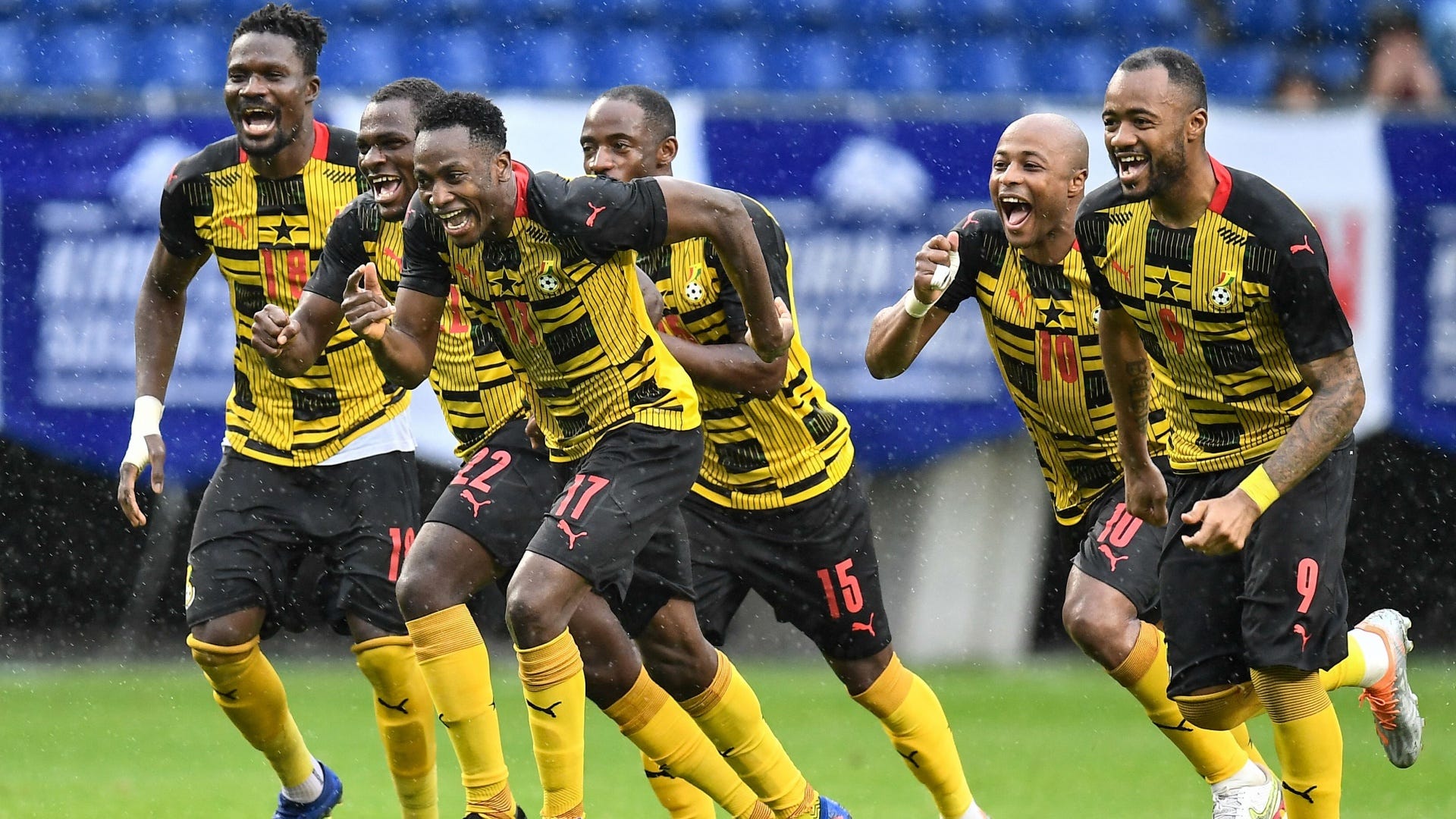
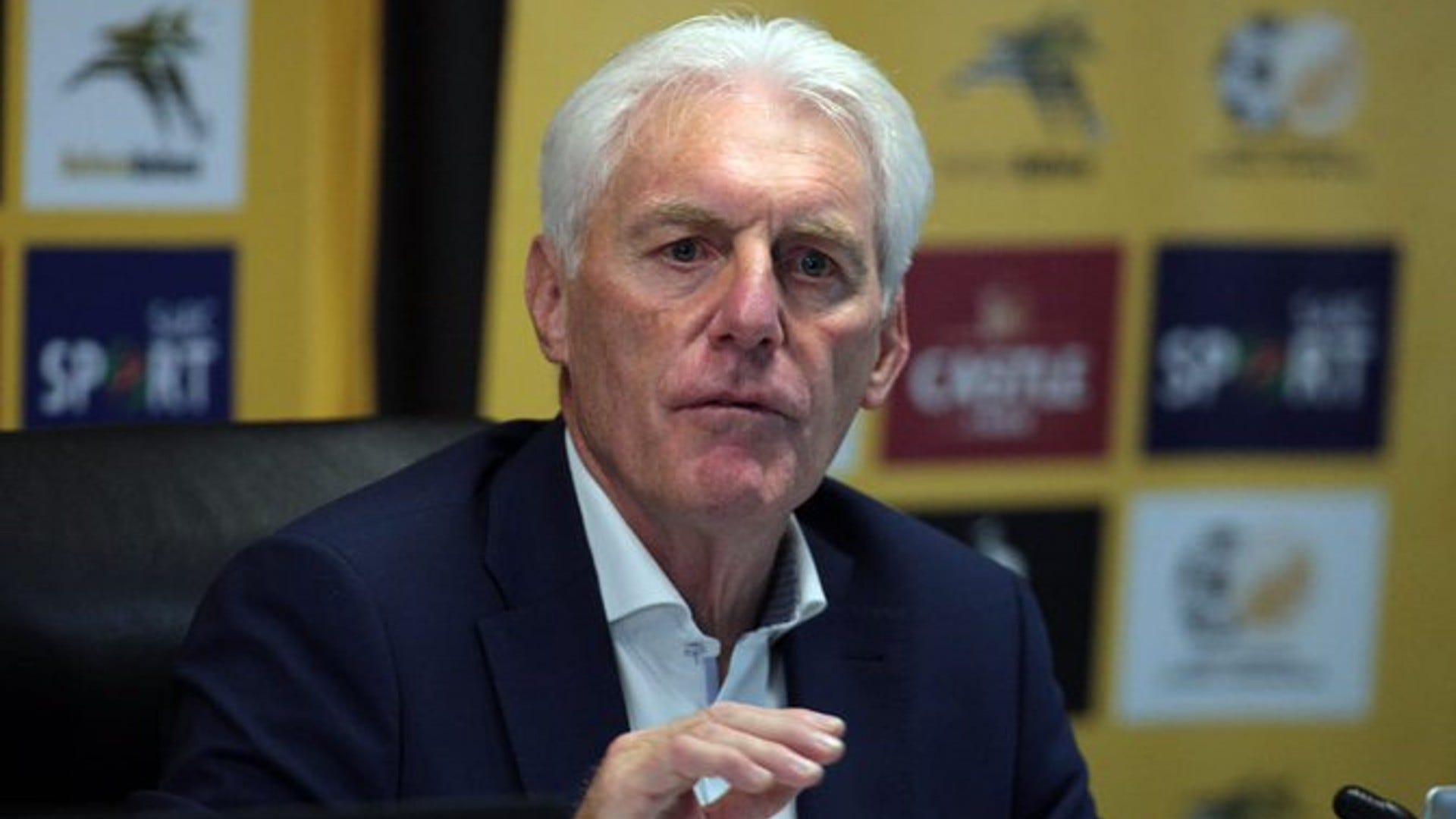
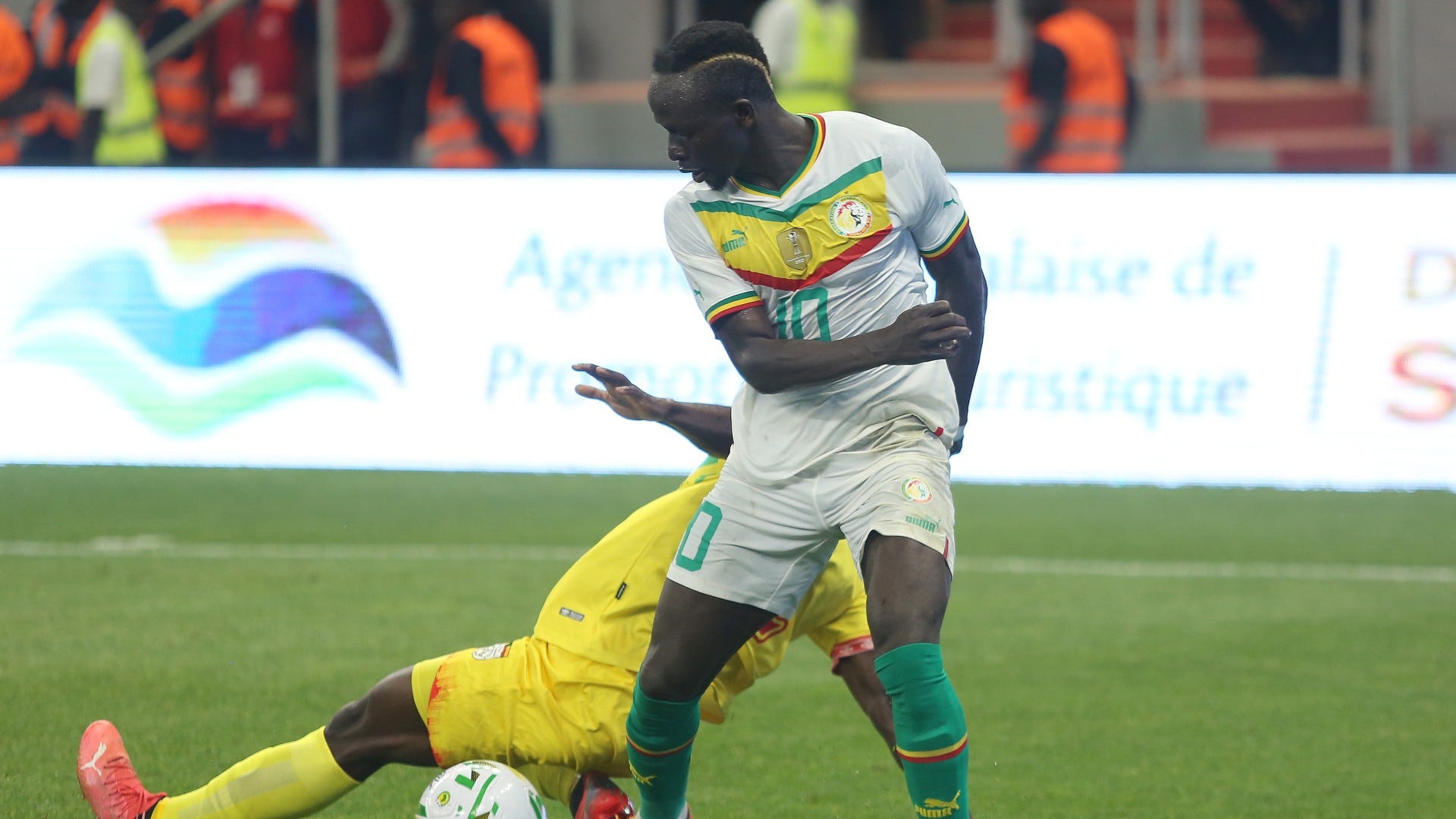
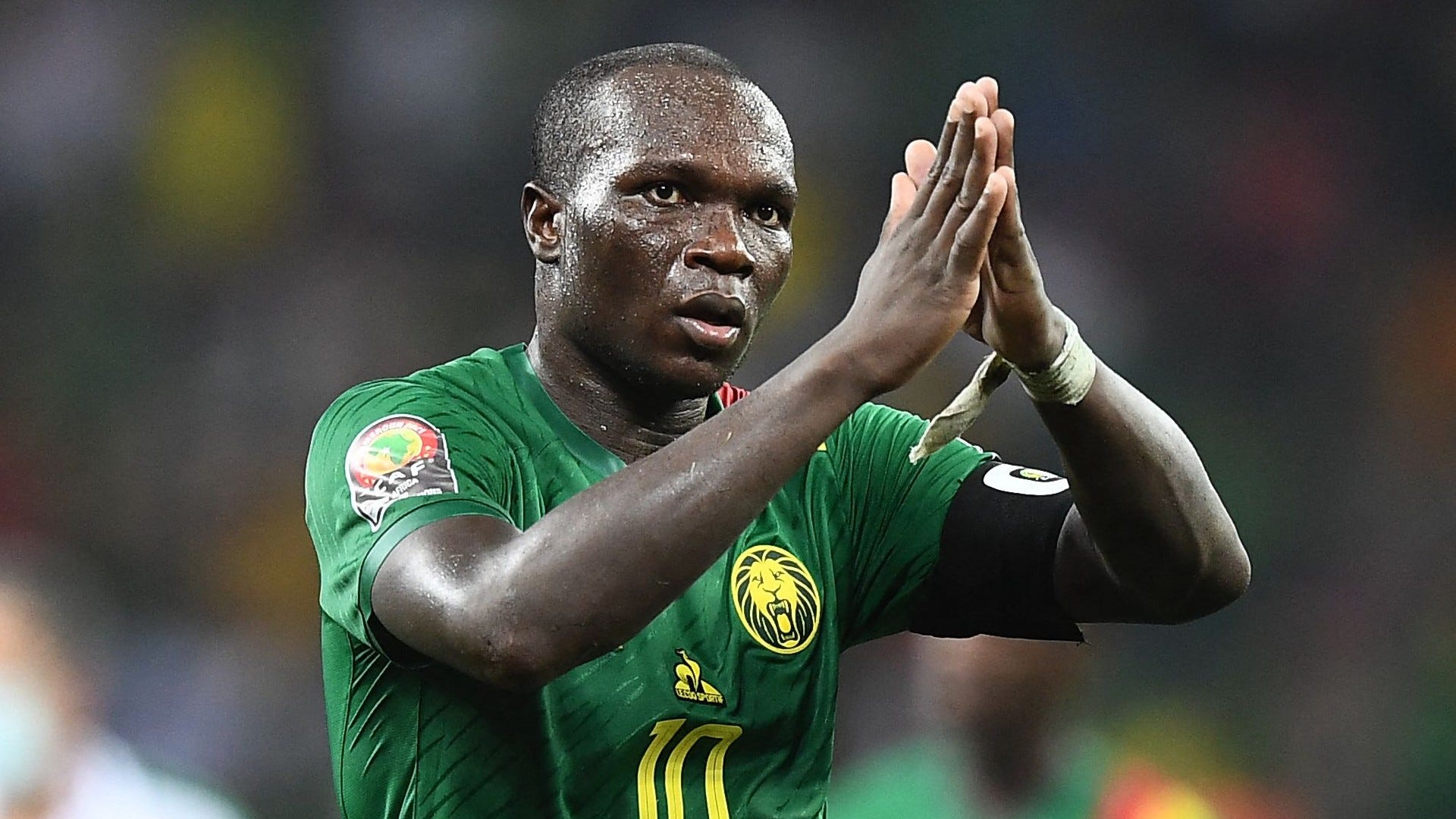
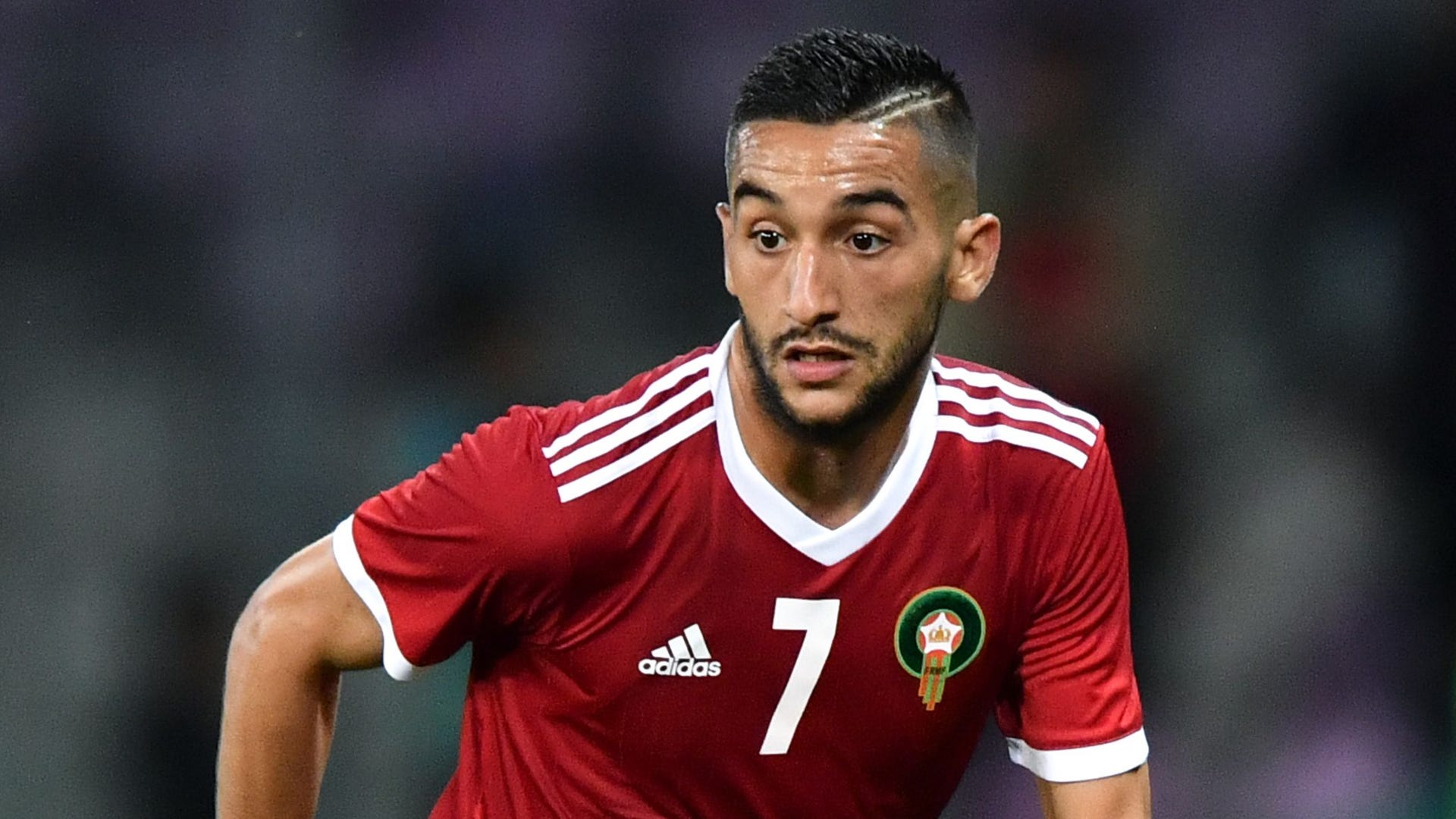


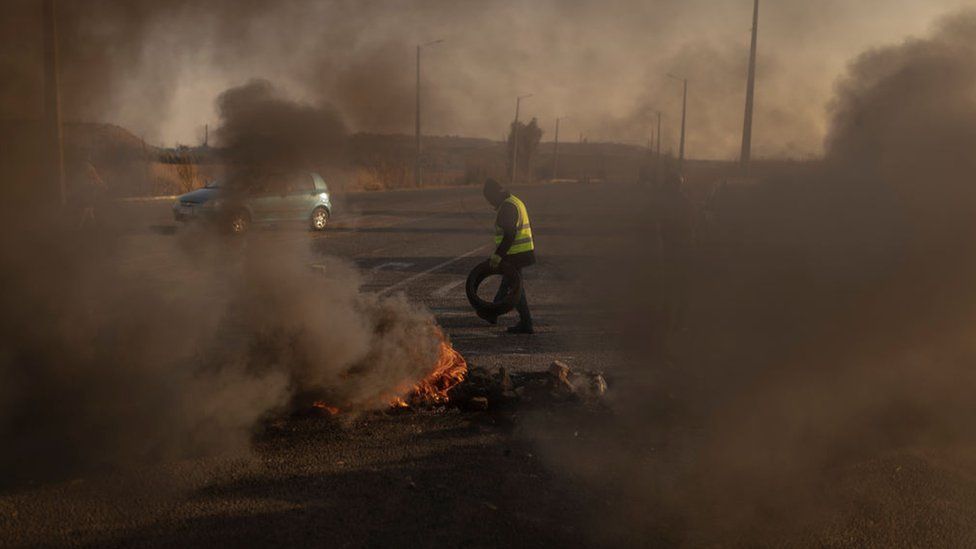
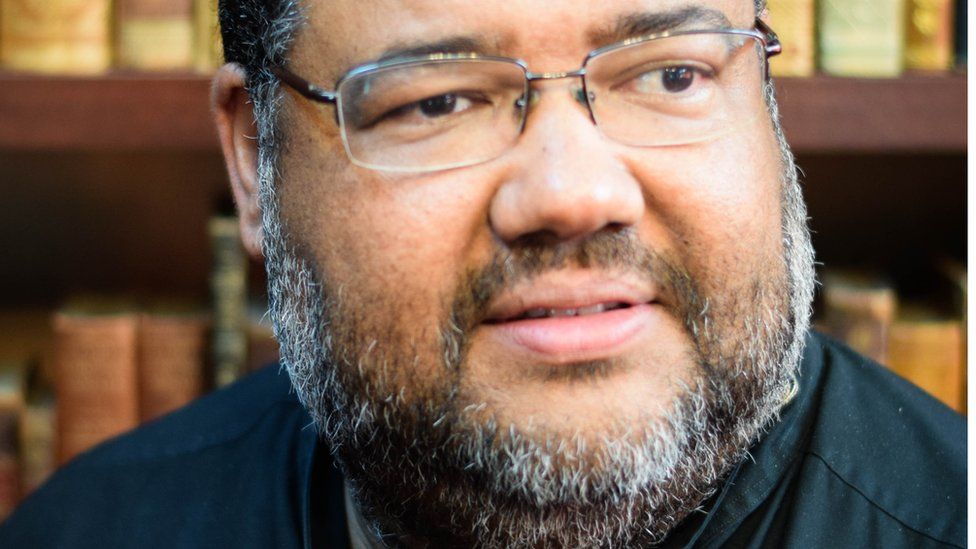
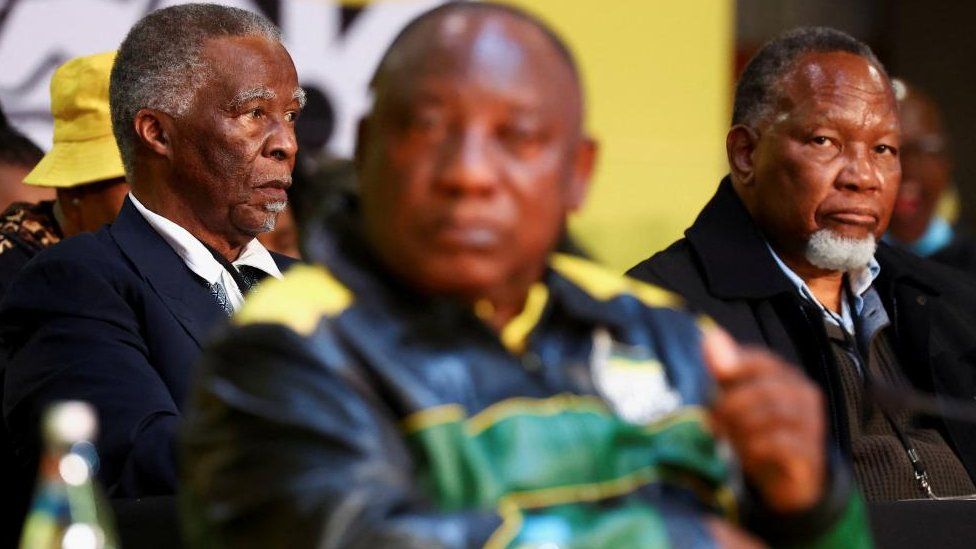
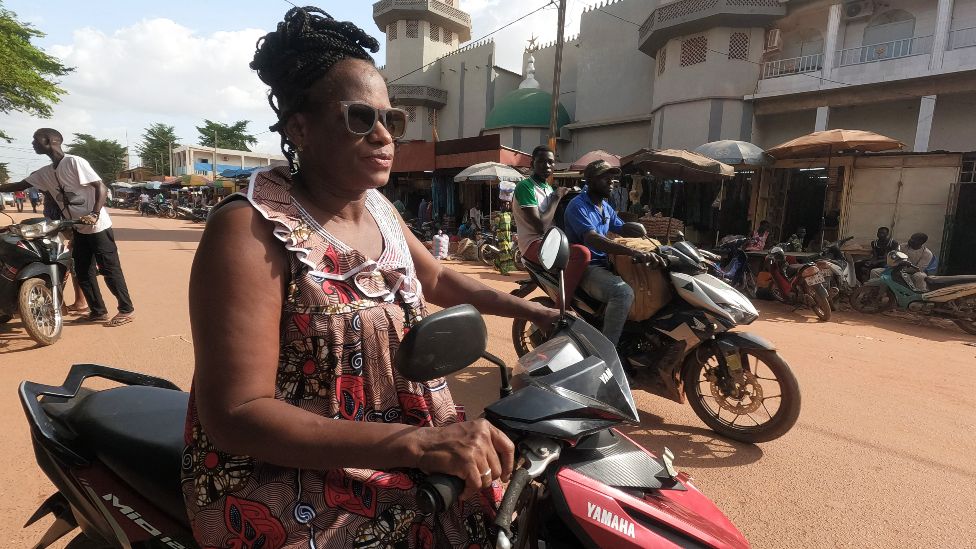
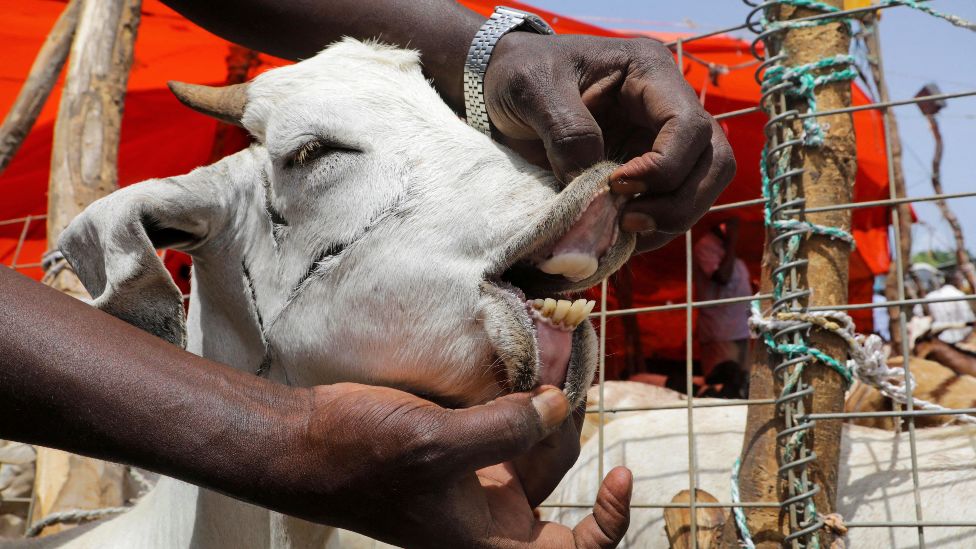
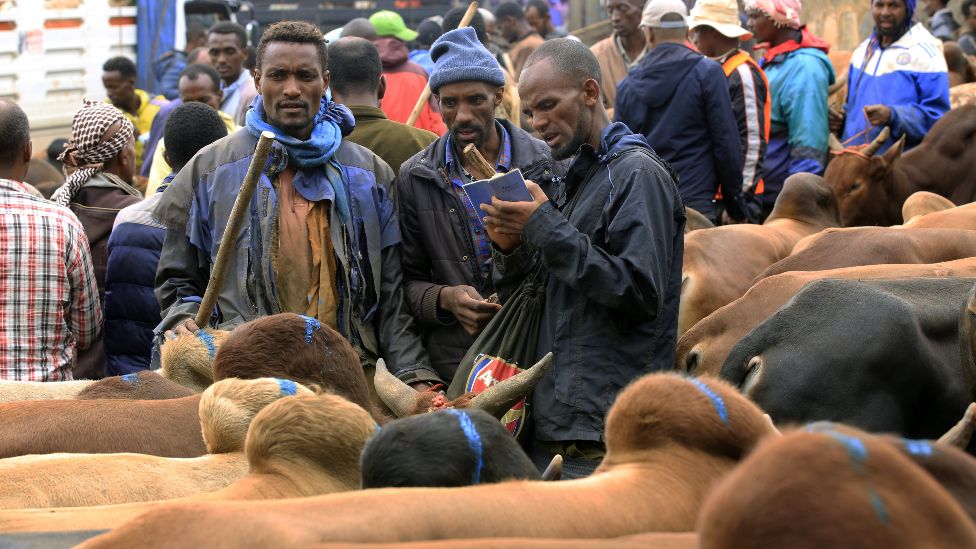
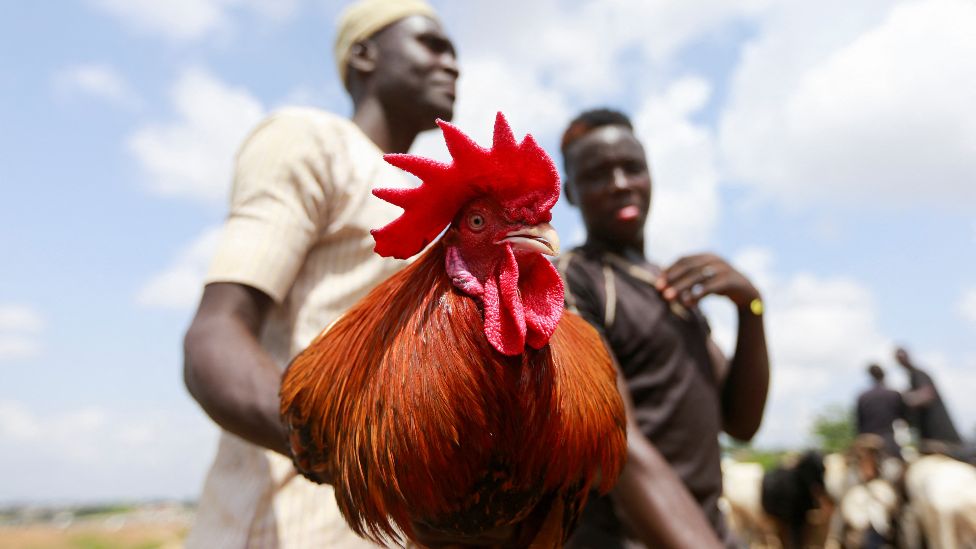
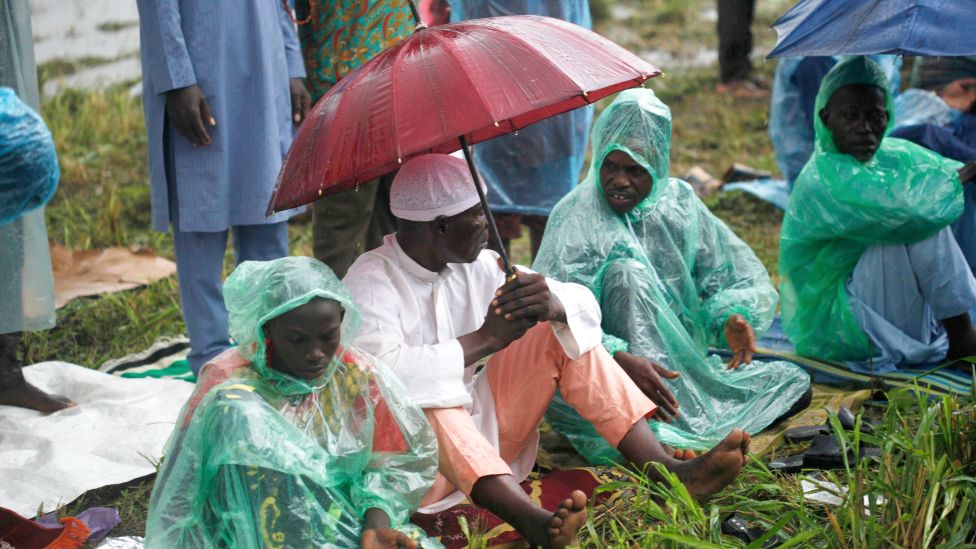
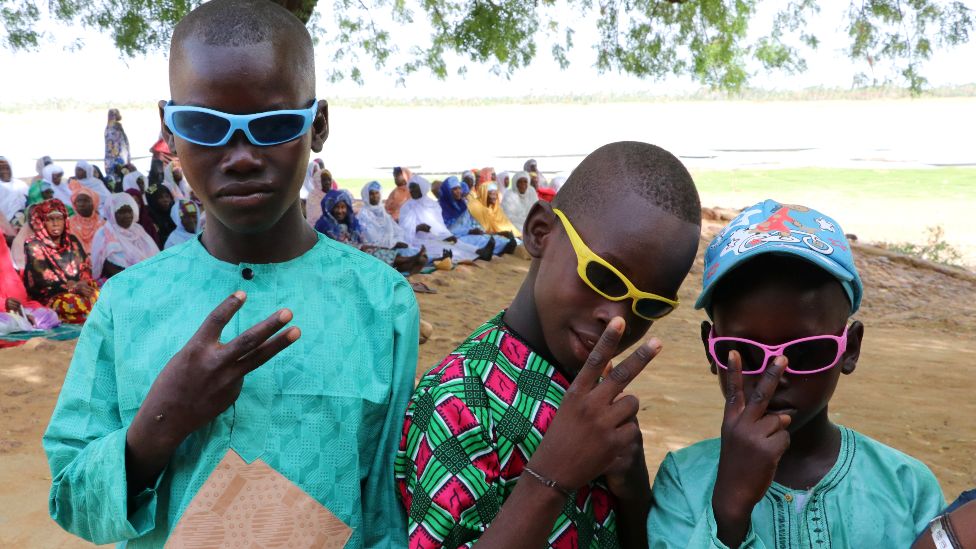
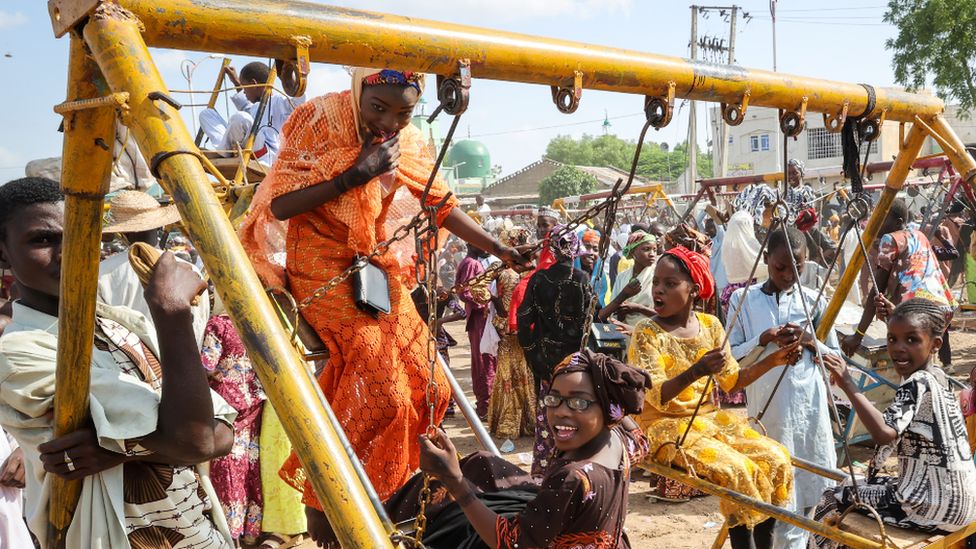
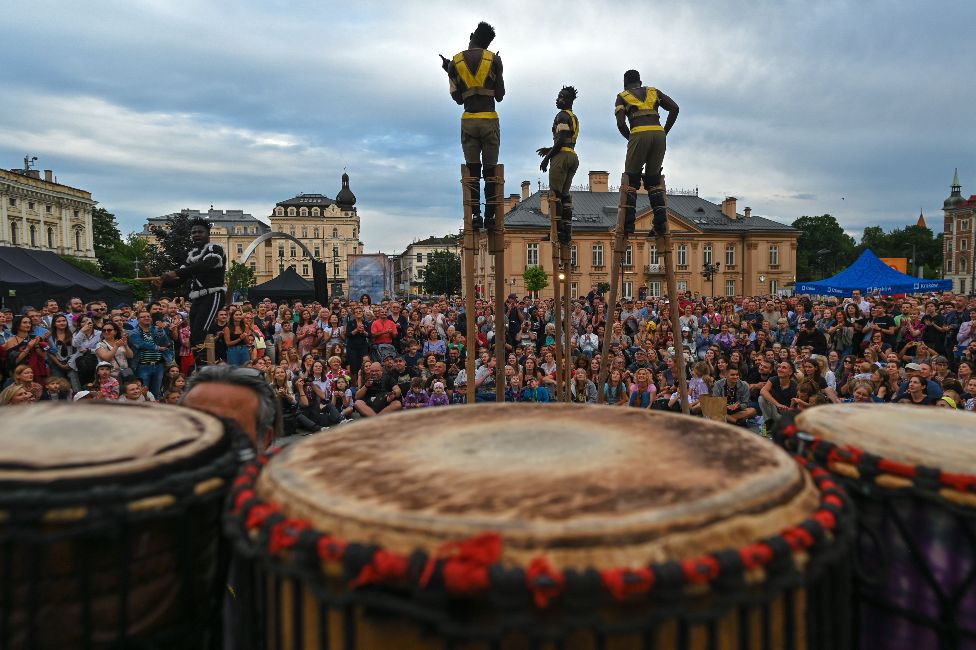
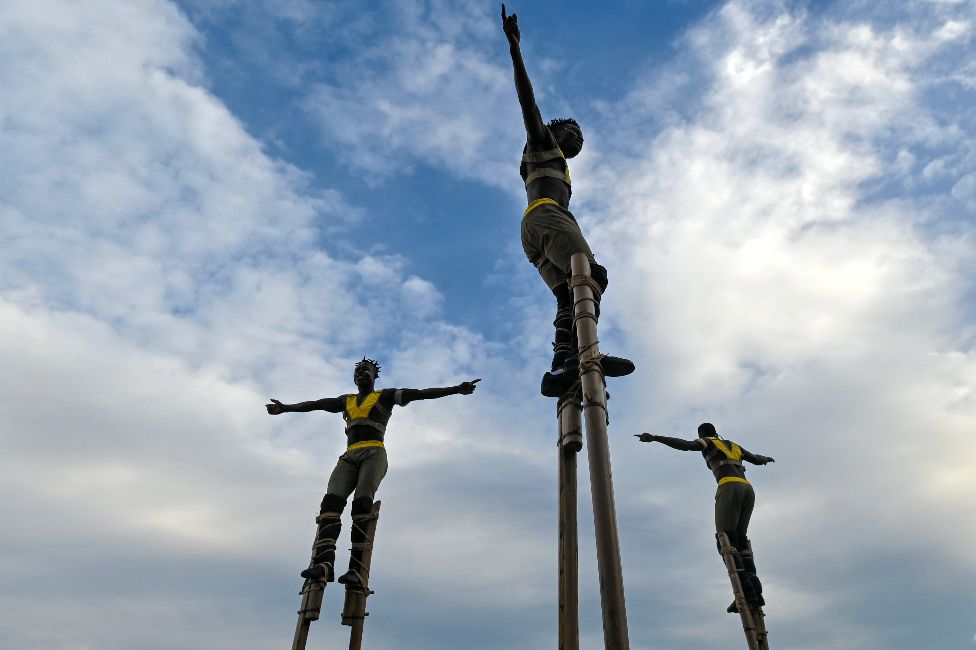
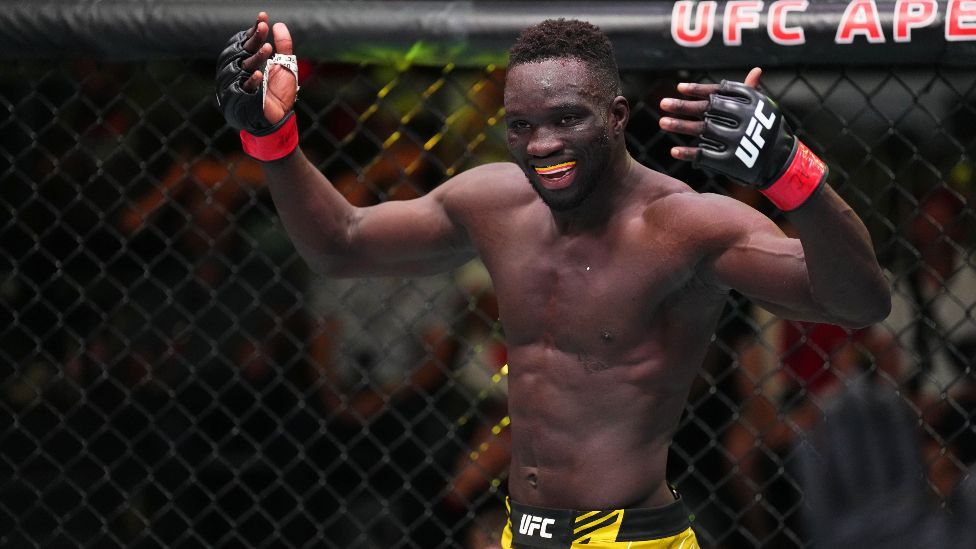
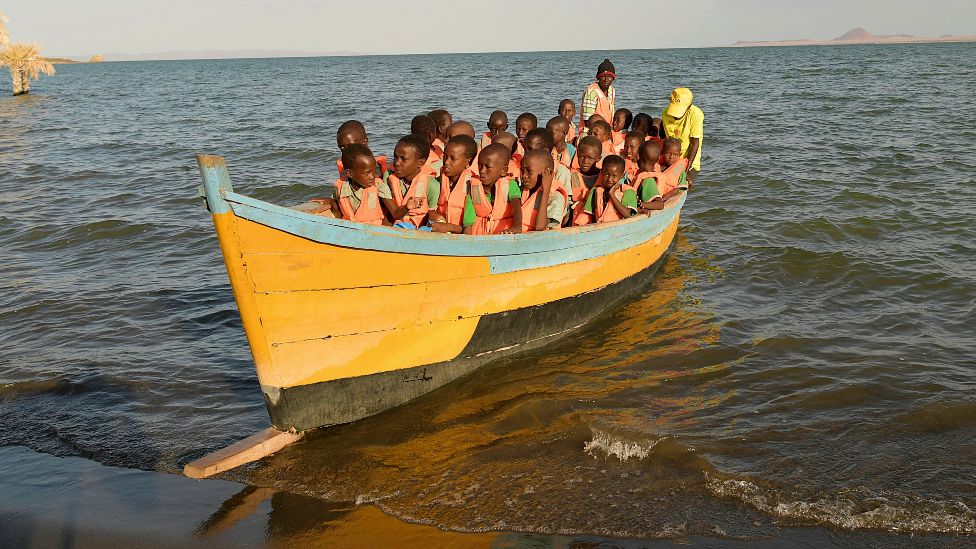
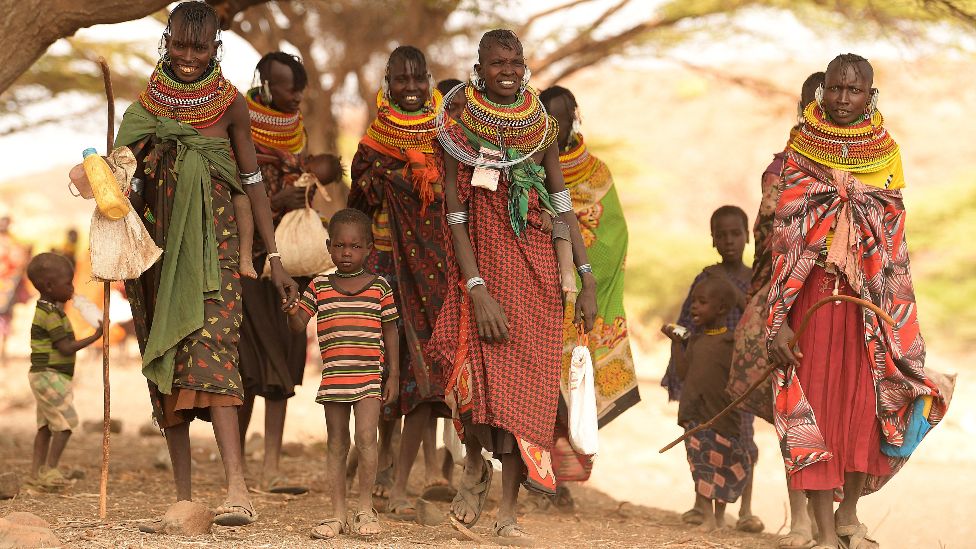
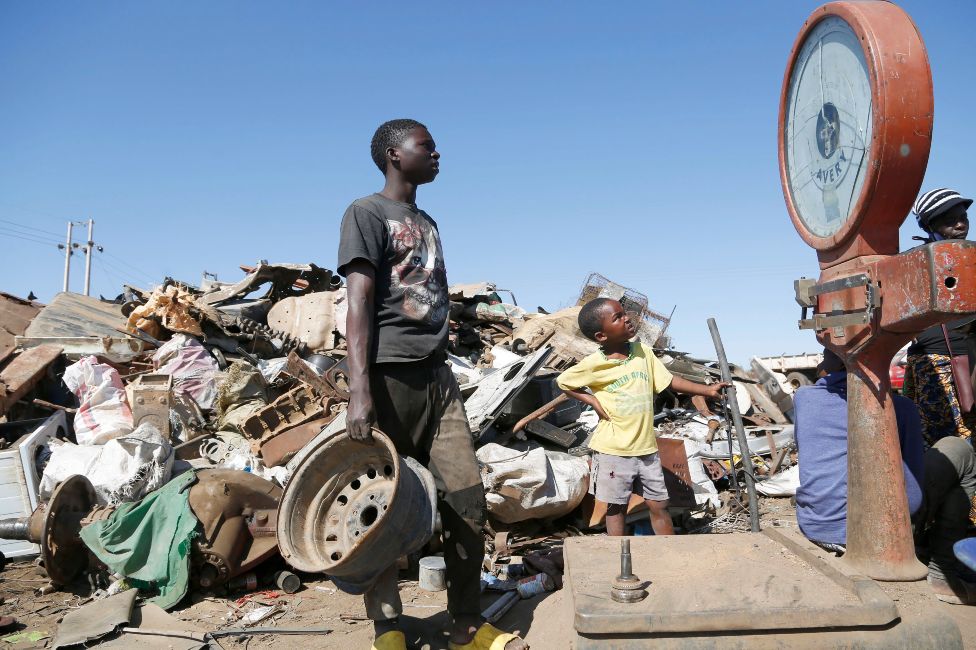
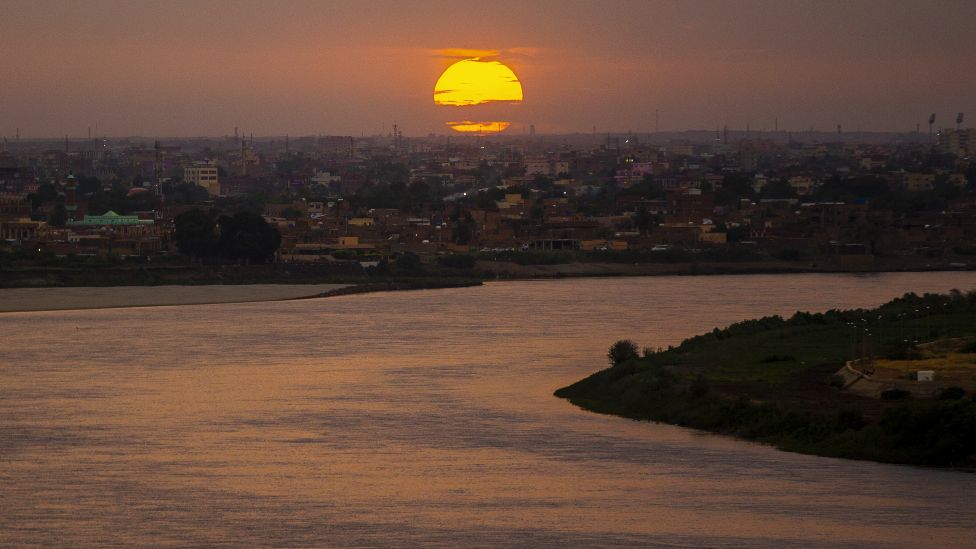
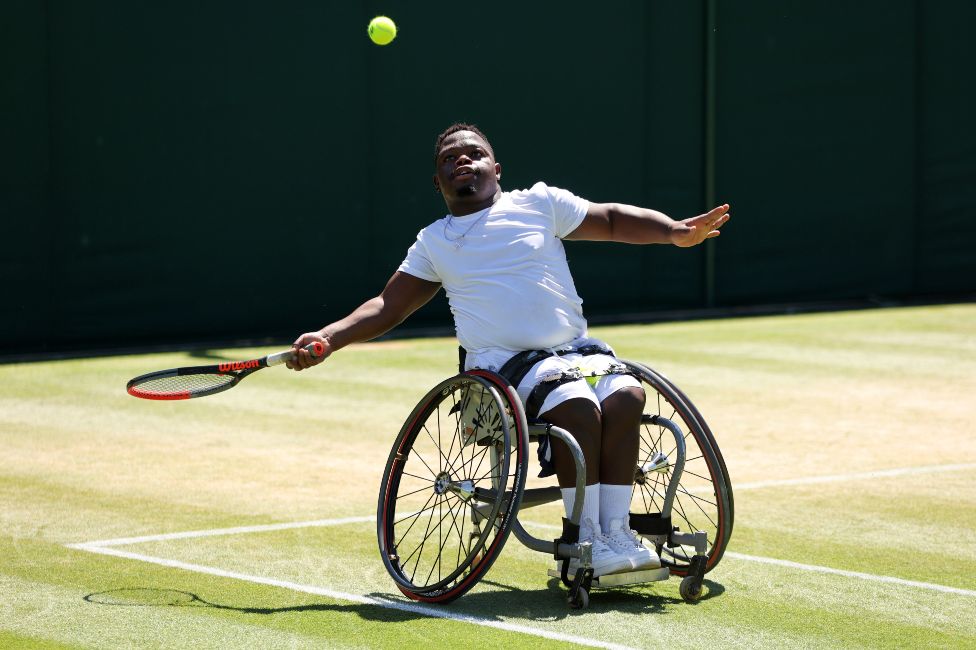
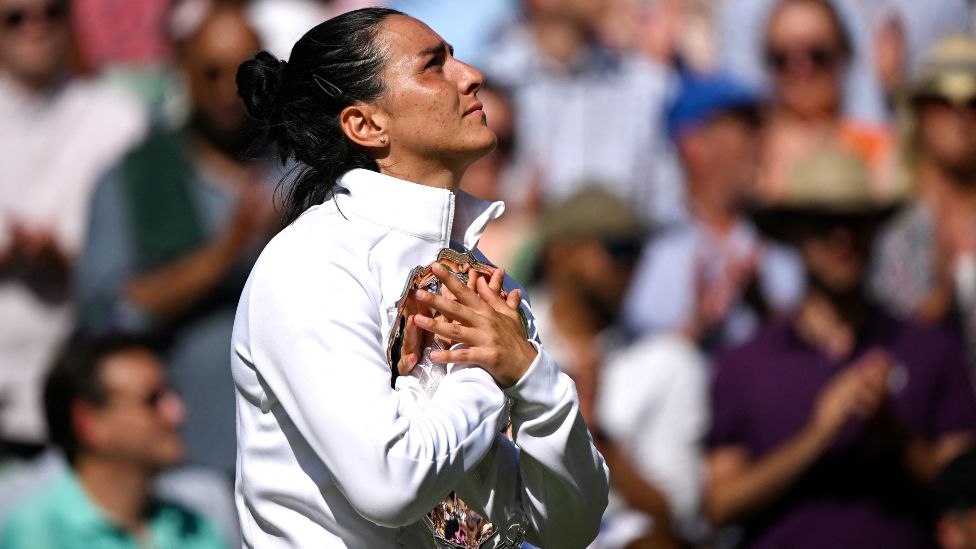
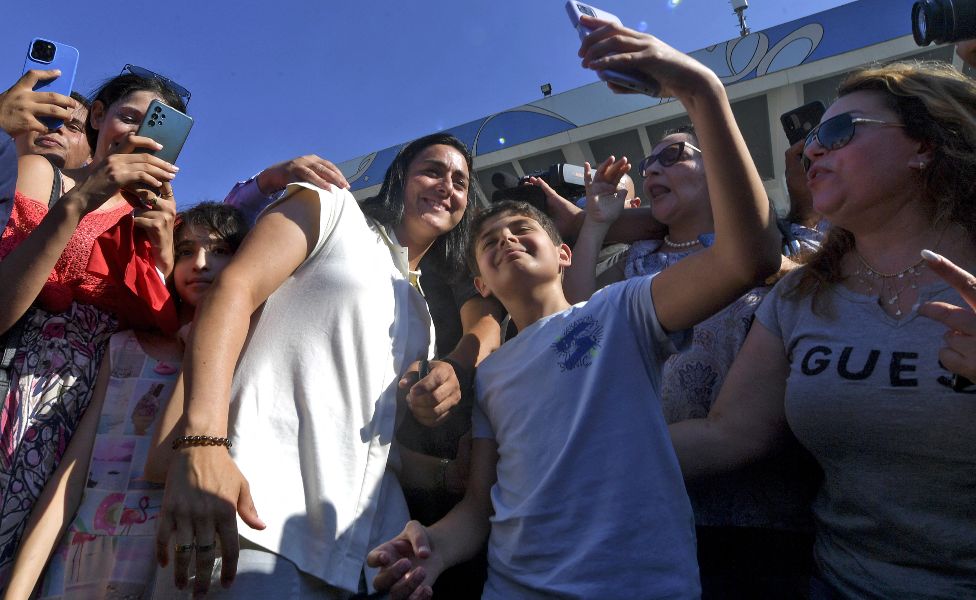

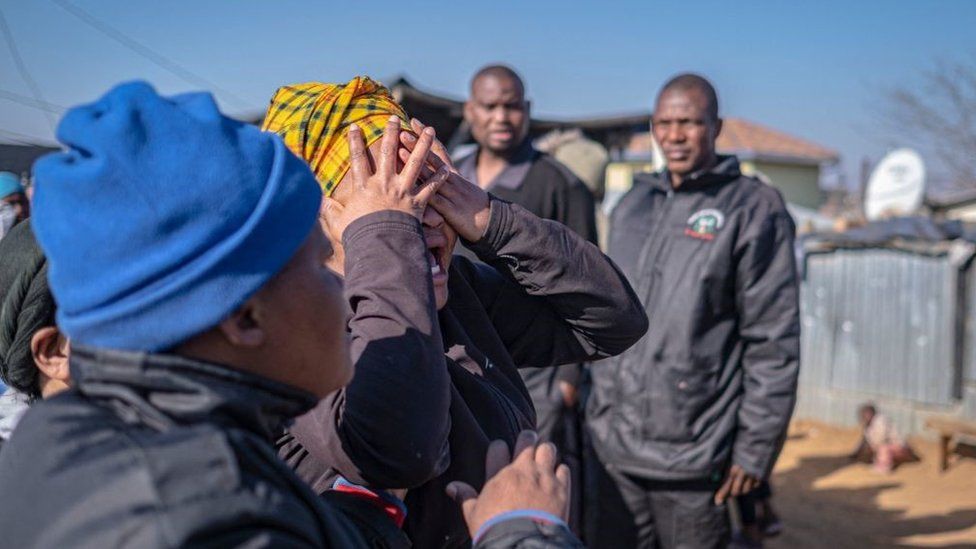 Relatives of victims have been mourning outside the tavern